Source: The Conversation (Au and NZ) – By Karen Malone, Professor, Environmental Sustainability and Childhood Studies, Swinburne University of Technology
Leaders across the country – particularly in the states with the largest outbreaks, New South Wales and Victoria – have designed road maps towards reopening the states after long lockdowns. Safety in childcare, schools and universities is a core component of reopening plans.
Year 12 students in Melbourne go back to school this week, and there are staggered return plans for the rest of the year levels over the coming weeks. All students are set to return to the classroom full-time by November 5.
Regional Victorian students have a different schedule with all students back in the classroom full-time by October 26.
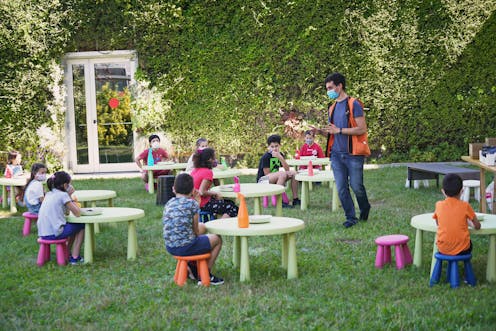
Managing a safe return includes managing indoor classrooms via ventilation, sanitation and social distancing. But the NSW Education Department has said it will also support schools to use “outdoor learning areas”. And the Victorian strategy includes advice for early childhood centres and services to “move to an indoor/outdoor program (shifting to as much outdoor programming as possible)”.
Moving classrooms outside is not a new idea. It has been done in past disease outbreaks such as tuberculosis and the Spanish flu. We can learn lessons from history and take pointers from international schools that have already made moves to learn outside.
A history of outdoor education
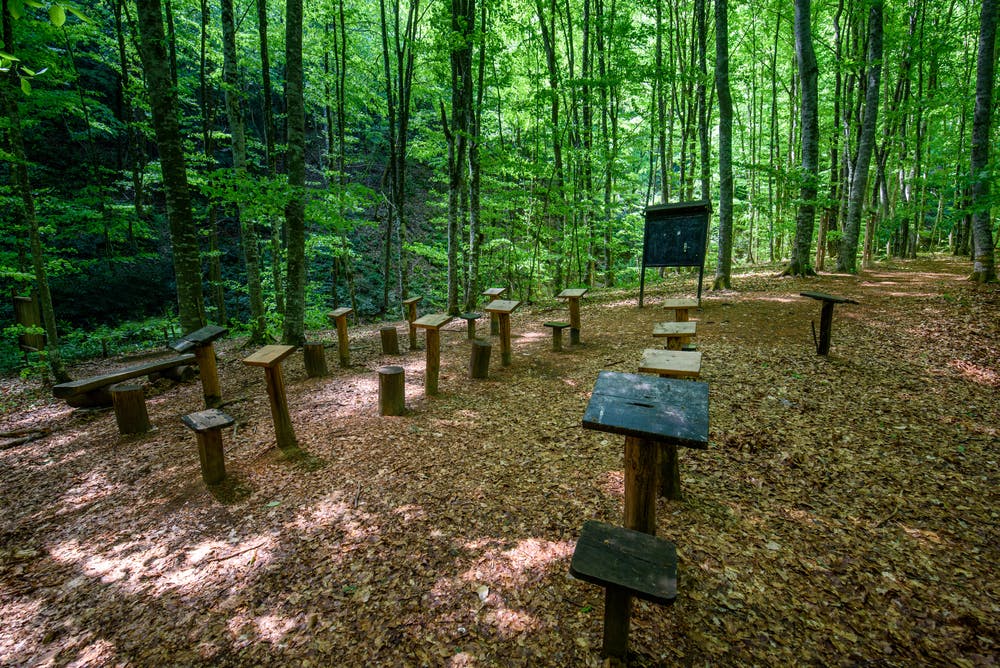
As tuberculosis was spreading and taking a toll on children in the early 1900s, an open-air school movement was launched in Germany. In 1904, the Waldschule (forest school) opened in Berlin. Its success spread, with forest schools opening in Scandinavia and open-air schools in Britain. A nationwide movement for fresh-air schools was launched across the US a few years later.
In 1912 New York, a private school moved classes onto the roof. Another school took up classes in an abandoned ferry and another in Central Park.
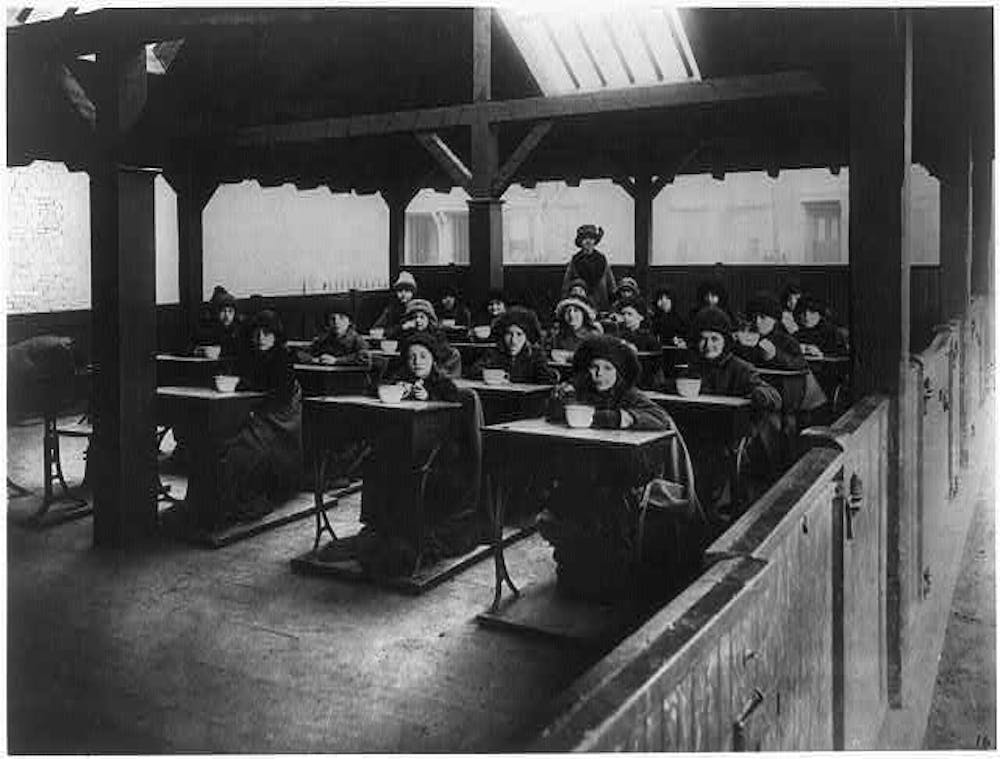
During past disease outbreaks, many classes were held outside. This is an open-air school in South Boston, 1918. PICRYL
Schools around the world are now using outdoor classrooms again as a key strategy to mitigate the risks of COVID while remaining open.
By last October New York City officials alone approved 1,100 proposals for public school students to spend at least part of their day outdoors.
Some wanted to use their school grounds, closed down streets or take students to local parks for lessons. Essex Street Academy, a public secondary school in Lower Manhattan, was one of these schools. Students have been taking multiple classes on the expansive roof. According to the principal of the school, the roof of the vertical schools was designed as a school yard – so nothing needed to be adjusted.
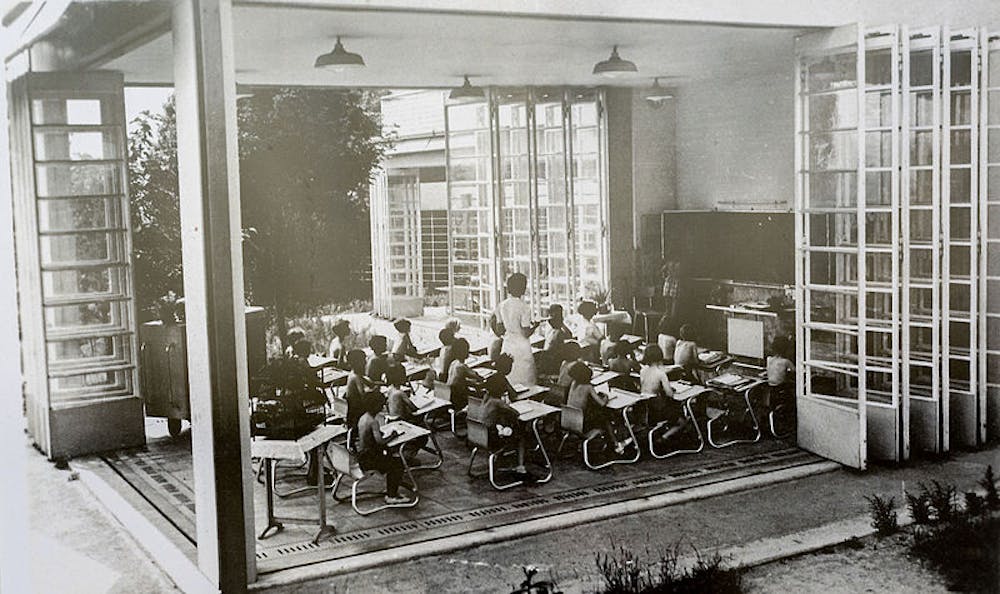
École de plein air de Suresnes: a school near Paris built in a similar internal layout to that used in hospital architecture, with long window-lined hallways. Wikimedia Commons
Without any specific directions, many teachers around Australia have also been heading outdoors. A K-1 primary teacher in NSW told me:
Since the pandemic, on the days I’m onsite, I keep the kids outside most of the day. We go into the garden and read stories, complete writing tasks, art and maths games – using the gardens as stimulus.
A university lecturer in Victoria said:
Last semester, to support social distancing and increase fresh air, I took classes outdoors. Our classroom was the campus grounds, a local park, the botanic gardens and the National Gallery.
Here are seven reasons why schools should be moving classes outside as much as possible.
1. Being outdoors supports students’ health and well-being
Being outside lowers the risk of transmission of the virus by making it easier to socially distance and providing better ventilation and fresh air.
It also supports students’ mental well-being. Research shows being outside has many positive health, social, emotional, ecological and learning benefits for students and staff.
2. Setting up an outdoor classroom is relatively inexpensive and easy
Compared to the other options such as opening up walls or windows in classrooms, installing ventilation systems or rotating home/school attendance to ensure smaller class numbers, moving outdoors can be implemented with limited resources.
Learning outdoors has many health and social benefits. Shutterstock
3. Outdoor classrooms may mean schools stay open
Schools could safely accommodate more students by going outside. Therefore, there is less likelihood of disruption to the lives of students and families. By lowering risks once students return, schools are more reliably able to remain open.
4. What is normally taught indoors can be adapted for outside
For early childhood and primary school everything can be outside. Experiences overseas have shown well-resourced roof spaces or pavilions have overcome issues of special equipment.
The question should be what really can’t be taught outside rather than what can – that is the shorter list.
Permanent outdoor classrooms could be set up. Students could use the outdoors for one-off classes during the day, or schools can stagger class numbers by scheduling small groups inside and out throughout the day.
6. Any space outdoors can be used
Around the world, we’ve seen verandahs or external corridors, decks, courtyards, roof tops, school grounds, gardens, ovals, blocked-off streets on school boundaries, nearby local parks and playgrounds, and a vast array of other local community spaces, such as beaches, forests and village centres, used as outdoor classrooms.
7. Educators from outside the school can be used
Educators from national parks, aquariums, museums, zoos and science centres are already trained in teaching outdoors and many have had limited work due to pandemic closures.
Karen Malone does not work for, consult, own shares in or receive funding from any company or organisation that would benefit from this article, and has disclosed no relevant affiliations beyond their academic appointment.
What’s the difference between tax avoidance and tax evasion?
The difference used to matter. Evasion was illegal. It meant not paying tax that was due. Avoidance meant arranging your affairs so tax wasn’t due.
Australian media mogul Kerry Packer used the distinction as a complete defence when he told a parliamentary committee in 1991 he was
not evading tax in any way, shape or form. Of course, I am minimising my tax. Anybody in this country who does not minimise his tax wants his head read.
The Pandora Papers — the biggest-ever leak of records showing how the rich and powerful use the financial system to maximise their wealth — shows the distinction has lost its meaning.
The dump of almost 12 million documents lays bare the ways in which 35 current or former leaders and 300 high-level public officials in more than 90 countries have used offshore companies and accounts to protect their wealth.
Only in some of the cases could their activities be categorically declared illegal.
Tax havens are legal
Here’s how tax havens are used. Trusts and companies are set up in places with low tax rates and secrecy laws such as the Bahamas, Cayman Islands, Hong Kong, Singapore, Switzerland, the US state of Delaware and the Republic or Ireland.
If, for example, a wealthy celebrity or a politician wants to buy a new yacht or a luxury villa but doesn’t want to pay tax or stamp duty or expose their wealth to scrutiny they can get their lawyer or accountant to do it through such a trust.
For somewhere between US$2,000 and US$20,000 to set up the trust, the name of the real owner or beneficiary can be hidden.
It isn’t illegal for the celebrity or a politician to move their money (so long as it is theirs to begin with). Assets within the trust are subject to local tax laws (sometimes zero tax) and local secrecy laws (sometimes complete secrecy).
Legal, but used by criminals
These legal means of using complex networks of secret entities to move around money are the same as those used by criminals.
Alongside the likes of India’s cricket superstar Sachin Tendulkar, Colombian pop singer Shakira and Elton John in the Panama Papers are Italian crime boss Raffaele Amato, serving a 20-year jail sentence for weapons and drugs trafficking, and the deceased British art dealer Douglas Latchford, suspected of smuggling looted treasures and money laundering.
Colombian singer Shakira is one of the celebrities named in the Pandora Papers as using
offshore companies. Others are Elton John, Ringo Starr, Julio Iglesias and Claudia Schiffer. Gregory Payan/AP
It’s far from clear these arrangements should be legal
The big question raised by the Pandora Papers is why any hiding of private wealth from tax authorities ought to be legal.
The International Monetary Fund estimated in 2019 that tax haven deprived governments globally of US$500 billion to US$600 billion per year.
To put that into perspective, the estimated cost of vaccinating the world against COVID-19 is US$50-70 billion.
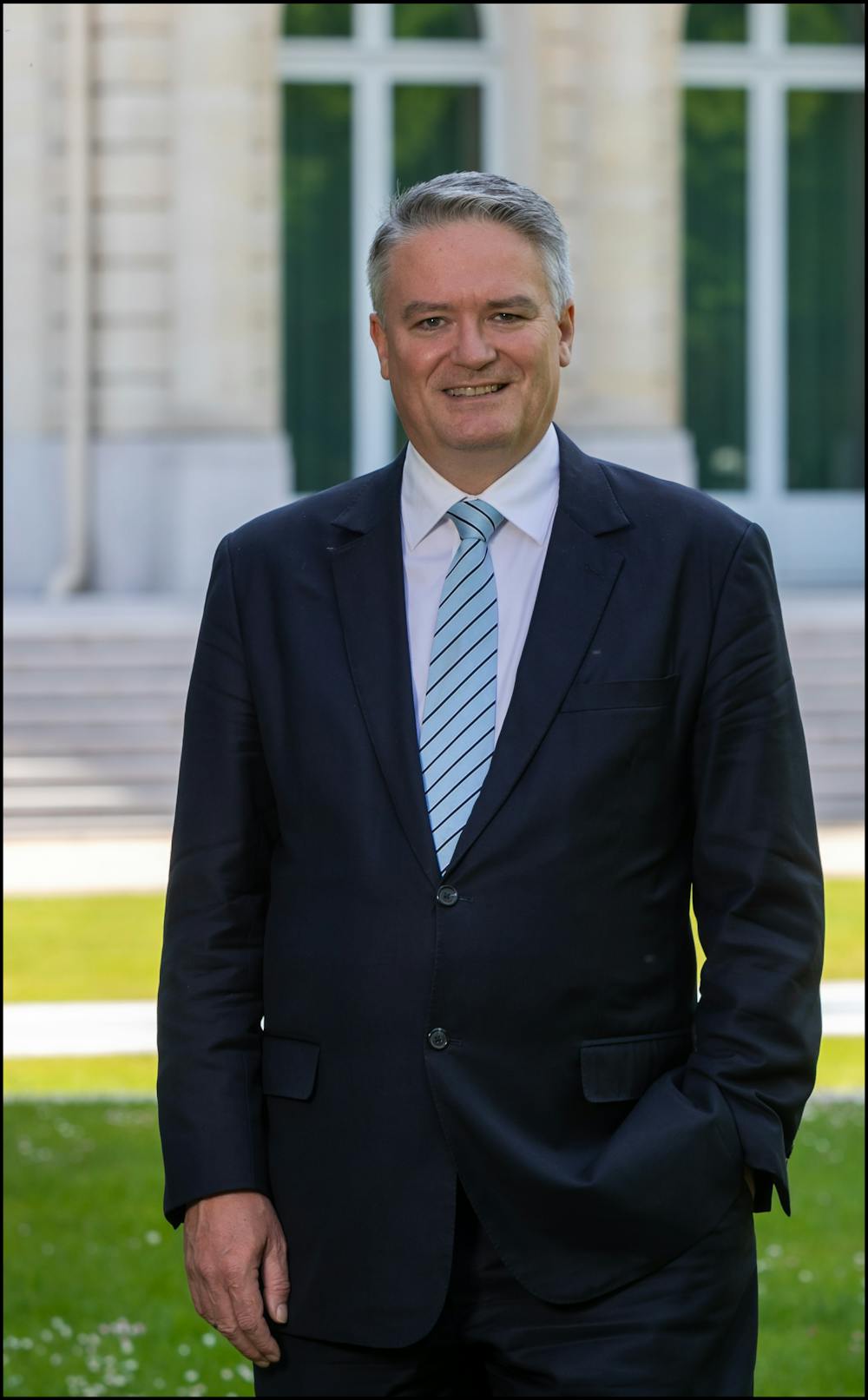
OECD chief Mathias Cormann has brokered a deal for a global minimum corporate tax rate. OECD (CC BY-NC 3.0 IGO)
Some of what’s been uncovered in the Pandora Papers is illegal (“evasion”) but much might not be (“avoidance”, aided by anonimity).
The effect is the same. Dollars that ought to have been paid in tax are withheld and used for the benefit of people who aren’t keen to admit to owning them.
Over the weekend the Organisation for Economic Co-operation and Development, now led by Australian Mathias Cormann, brokered a deal under which 136 countries agreed to charge multinational corporations a tax rate of at least 15%, making tax havens harder to find.
Ireland, previously used as tax haven, signed up.
The nations concerned did this because because, even where legal, the use of tax havens costs billions.
We’ll soon have to consider removing a distinction in law that vanished in practice some time ago.
Alex Simpson has received funding from Economic and Social Research Council, UK.
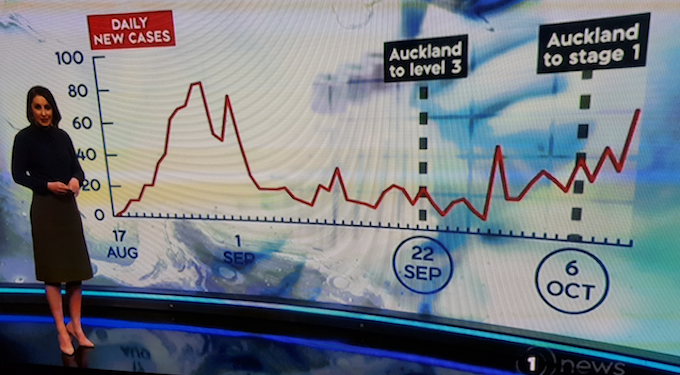
New Zealand’s Ministry of Health today announced 60 new community cases of covid-19, the most in nearly six weeks, while Northland and the Bay of Plenty continued to deal with positive cases visiting their regions.
The ministry said there were 29 infected people in hospital, including seven in intensive care.
The ministry also reported that a person receiving treatment at North Shore Hospital dialysis unit yesterday tested positive for the coronavirus.
The unit closed yesterday afternoon for a deep clean.
There were 20,421 tests carried out in New Zealand yesterday, including 7071 in Auckland.
There have now been 1587 cases in the current delta outbreak, and 4265 covid-19 cases in total in New Zealand.
Positive case region visits Outside of Auckland, officials continued to follow up details of a positive case who visited Northland and the other case revealed in the Bay of Plenty last night.
It is not known if this second woman has covid-19.
The woman who tested positive remains in an Auckland quarantine facility, the ministry said in a media statement.
That woman had not been “forthcoming” in providing information to contact tracers, Prime Minister Jacinda Ardern said, complicating efforts to track down any possible cases.
The infected person was tested in Auckland, but was moving to the Bay and was in the region when the result arrived.
Western Bay of Plenty mayor Garry Webber said Katikati was hoping to prevent further infection. He said the result was a weak positive.
“But regardless of what it is, it is here in one shape or form and we just have to get into preventative mode.”
A steady climb in cases since the drop down from alert level 4 to 3 on September 22. Image: TVNZ screenshot APR
Vaccination push continues Nearly 82,000 doses of the vaccine were administered yesterday.
This includes 18,000 people receiving their first shot, and 65,000 people completing their course of both vaccines.
Prime Minister Ardern continued her visit to East Coast communities to encourage vaccination with a trip to Gisborne this morning.
Turanga Health’s clinic was in high demand, with many people in cars lining up to be vaccinated.
Parts of the city have some of the lowest vaccination rates in the country.
This was the last stop on the Prime Minister’s four-day tour of East coast communities, and she returned to Wellington today. She visited Rotorua, Murupara, Hastings, Wairoa, Gisborne and Ruatōrea.
Ardern said she was trying to support people.
“There’s not too much that’s useful I can do at a vaccination centre, other than distract people when they get injected, or provide a coffee.”
In the last seven days 115,000 people have received their first shot.
Another 9700 Māori were vaccinated, after yesterday’s record of just over 10,000.
Auckland now has 86 percent of people with at least one dose.
This article is republished under a community partnership agreement with RNZ.
The government’s leadership group is due to consider plans for a revised climate policy this week, as Scott Morrison goes all out to land a deal the Nationals will accept.
The stakes are very high for both Morrison and Deputy Prime Minister Barnaby Joyce.
Morrison needs to be able to commit to net zero emissions by 2050 and to improve the government’s medium term ambition, if he is to keep faith with the expectations of Australia’s allies, the United States and Britain.
Joyce has to get a package that is sufficiently acceptable to a majority of the Nationals so that his party room doesn’t feel their restored leader has sold them out.
Morrison and Joyce have been in discussions for some time but with the Glasgow climate conference looming early next month, reaching finality is now becoming urgent.
The leadership group includes, besides the PM and Joyce, treasurer Josh Frydenberg, finance minister Simon Birmingham, attorney-general Michaelia Cash, defence minister Peter Dutton, deputy Nationals leader and agriculture minister David Littleproud, Nationals Senate leader and regionalisation minister Bridget McKenzie, and health minister Greg Hunt.
After the leadership group considers it, the policy will go to the wider cabinet.
The Nationals will meet Monday virtually, but will not have a substantive policy to discuss. They have indicated they want to consider the plan in a face-to-face meeting. The first opportunity for that is when parliament meets next week. The policy would also go to the joint parties room.
Morrison will announce the policy before the Glasgow meeting.
Assuming he lands a satisfactory deal, he is still unclear about whether he will go to Glasgow, and has not sounded enthusiastic. He has pointed to onerous quarantine requirements as a disincentive but the new NSW treasurer Matt Kean indicated to Sky NSW would smooth that problem if need be.
There are other disincentives to the PM’s trip, which would also include the G20 meeting. One is his need to concentrate on domestic politics in the final part of the year.
Another is the prospect of awkward moments on the trip. French president Emmanuel Macron will be at the G20, and it is not certain how an encounter would go, given the tension between the two countries over the cancelled submarines contract. Former PM Malcolm Turnbull will be at Glasgow, which could make for another difficult encounter.
On the other hand, the Glasgow conference is a major international occasion and Morrison would be criticised for not attending.
The Business Council of Australia bought into the climate debate at the weekend, backing net zero for 2050 and a big lift in the 2030 target – to a 46-50% economy-wide range against 2005 levels. The present target is for a reduction of 26-28%.
However the BCA – which represents Australia’s largest companies – immediately came in for some flak.
Some critics homed in on its change of position, because it had derided Labor’s proposal for a 45% reduction target before the last election. The BCA said this would be economy wrecking.
Energy minister Angus Taylor was somewhat dismissive of the BCA report saying it made “a number of recommendations that have concerning impacts for households and businesses”.
For instance, “the BCA’s recommendation to expand the Safeguard Mechanism and bring down baselines would force companies to reduce their emissions, regardless of whether economically viable technologies are available, risking competitiveness and jobs – this is a carbon tax”.
Joyce, speaking to the Western Australian Nationals conference, said: “BCA and those who you represent — you are now on the hook for what you state, the cost is now yours.
“Future governments will say that you asked for this, and if it’s a flop, if it’s a disaster, as the energy crisis now is in the UK, Europe and China, you have to pay to fix it.”
Michelle Grattan does not work for, consult, own shares in or receive funding from any company or organisation that would benefit from this article, and has disclosed no relevant affiliations beyond their academic appointment.
President Joko “Jokowi” Widodo’s visit to Papua last weekend to officially open Indonesia’s National Games (PON XX) and officiate a number of infrastructure projects are ceremonial and will not provide any benefits to the ordinary Papuan people when cases of human rights violations are left unresolved.
This assessment was made by former political prisoner and Papuan activist Ambrosius Mulait in response to Widodo’s visit which he sees as nothing more than “image building” in the eyes of the ordinary people and the international community.
“Jokowi came simply to bolster his image, he didn’t come with the genuine intention of resolving human rights,” Mulait told Suara Papua.
Mulait said that the Indonesian government appeared inconsistent in dealing with the covid-19 pandemic because it wasallowing crowds to gather at National Games events.
“We are questioning the Jokowi administration’s inconsistency, why given the state of the pandemic in Papua are they continuing with PON activities involving thousands of people?” he asked.
“It’s surprising, covid-19 cases are already rising, but all of a sudden the figures are deemed to be falling and the PON can be held.”
The secretary-general of the Papuan Central Highlands Indonesian Student Association (AMPTPI) also criticised the repression and violence by police against Papuan students demonstrating peacefully in front of the United States Embassy in Jakarta on September 30.
“The police are also racist in their handling of Papua mass actions. Meanwhile they weren’t repressive towards a demonstration at the KPK [Corruption Eradication Commission office] several days ago, and instead gave them space [to demonstrate],” he said.
Mulait said the state was truly unfair in its treatment of Papuans.
“The Papuan people continue to be silenced by repressive means, peaceful actions are broken up, protesters are arrested, labeled ‘separatists’, jailed. The way they are handled is very discriminative and racist,” said Mulait.
Papua student activist Semi Gobay also expressed disappointment. He said that President Widodo had already visited Papua nine times but not one case of human rights violations had been addressed let alone resolved.
“At the height of the PON XX, he came down to look at noken [traditional woven baskets and bags] made by mama-mama [traditional Papuan women traders]. But the internally displaced people in Nduga and Maybrat, the shooting cases in Puncak, Intan Jaya and the Star Highlands are not dealt with by the Indonesian government under the authority of President Joko Widodo” he said.
Gobay said this further demonstrated the real face of the government.
“The president comes and visits and buys lots of noken, but the many conflicts in Papua are not resolved. What’s behind all of this?” he asked.
“The Indonesian government has no good intentions towards us. All the best in celebrating the PON on the sorrows of the West Papuan nation.”
Northland will move to alert level 3 restrictions from 11:59pm tonight, New Zealand’s Covid-19 Response Minister has confirmed.
Minister Chris Hipkins held a briefing at Parliament on the situation in Northland this evening.
The new restrictions will remain in place until 11.59pm Tuesday and will be reviewed at Cabinet on Monday.
Hipkins said the move was necessary following new information on the risk presented by a positive case initially tested in Whangārei earlier this week and confirmed in Auckland yesterday. The woman was now in an Auckland managed isolation quarantine facility.
“Updated information provided by the police today shows the case moved extensively around Northland after travelling there on October 2,” Hipkins said.
He said it was believed she did not travel alone and travelled with another woman, who was not yet in MIQ.
“We believe this new information warrants an alert level change decision to keep Northland people safe,” he said.
“It has also been taken because the individual has not been cooperative with contact tracing efforts.”
He said the woman had not supplied the reason for being in Northland.
Watch the news briefing
Video: RNZ News
“It has been very difficult to get information about this particular case,” Hipkins said.
“The first test result we had was what you could describe as an indeterminate test result, so it was quite difficult to locate the person.
“The information that they supplied when they were tested the first time did not provide sufficent information to be able to contact them with the test result and get them back to be tested.
“It took some time to track them down, the police ultimately were able to assist there and did help to track the person down.”
Hipkins said he understood the woman obtained a document by providing false information to leave Auckland but this was yet to be verified. When it was discovered and revoked they were already in Auckland.
They include BP Connect Wylies petrol station and the Z Kensington service station in Whangārei.
Northland vaccination rates low Hipkins said another factor taken into account was that vaccination rates in Northland were low compared to the national average.
“Without placing restrictions on movement there is a possibility that the virus could spread quite rapidly within the community.”
It is one of the least-vaccinated regions – just two thirds of residents have had their first Pfizer dose.
“Cases spreading at alert level 2 are a risk we cannot take, but it’s also further reason why we need to really focus on vaccinations,” said Hipkins. “Without high vaccination rates we will need to continue to use restrictions to stop the virus spreading.
“I have two things to ask of Northlanders. First, if you have any cold and flu like symptoms please come forward and get a test as soon as possible.”
“The second request that I have and I can’t stress this enough, is please get vaccinated. These cases do highlight the risk of Covid-19 to the unvaccinated anywhere in the country.
“Now is the time to be vaccinated.”
Northlanders ‘stay in bubble’ Hipkins reminded Northlanders that alert level 3 meant they had to stay in their bubble and stay at home.
“Don’t go and visit family, friends and neighbours, this is a virus that can spread quite quickly and that is part of the way it spreads.”
Speaking to RNZ Checkpoint after the announcement, Whangārei Mayor Sheryl Mai said she was “actually quite grumpy”.
“We’ve got a person who really has done everything that they should not do. And they’ve impacted on all of Northland as a result.
“I was giving the person the benefit of the doubt earlier today. Now I’m just ropeable.”
Epidemiologist Michael Baker said without full cooperation with contact tracers, public health staff are reliant on swabbing and wastewater results to track the virus’ spread.
Professor Baker said the Te Tai Tokerau situation was “really concerning” and the lockdown “had to be done”.
With Northland entering level 3, Auckland in a level 3 with benefits, and Waikato in level 3 restrictions, he told Checkpoint there needed to be clarity on what strategy New Zealand was pursuing against covid-19.
“We’ve actually had very confused messages this week about a number of things, including what comes after elimination, which we seem to be transitioning out of. That hasn’t been made clear,” he said.
“Also how are we going to use the alert level system? Because Auckland is using a stepped approach, they’re stepping up. The rest of the country’s got alert levels and is stepping down. There’s also a version of a traffic light system that’s been proposed circulating at the moment.
“So I think this week has really been quite poor for clarity of communication and coherence.
“The government really has to sort out where we’re going. And one of the approaches I think we should look at would actually be a regional approach.”
Professor Baker said suppression could be pursued in Auckland while an elimination strategy could work in the South Island.
Twenty three complaints regarding New Zealand doctors spreading anti-vaccination misinformation have been made to the Medical Council as the group says it has “zero tolerance” for anti-vax positions.
Medical Council chairperson Dr Curtis Walker told RNZ Morning Report today: “I can’t speak about individual cases or individual notifications, but what I can say is that we very much exist on behalf of the public to ensure that doctors are practising safely at all times and our first concern to protect public safety.”
The council had “zero tolerance for anti vaccination messages”, he said.
“We will consider all concerns and notifications that are made to council.”
There was no New Zealand media briefing today. In a statement, the ministry said 12 of the new cases were yet to be linked to earlier cases. There were now 26 cases unlinked from the past 14 days.
Director of Public Health Dr Caroline McElnay said the higher number of new cases today was not unexpected “because there have been a number of contacts of new cases and we can expect to get fluctuations from day-to-day”.
The three new cases in Waikato are all linked and contacts of existing cases.
Yesterday, there were 29 new cases in the community. Five of those were in Waikato.
There are 25 people in hospital, including five in intensive care.
There have now been 25 cases in Waikato and 1450 in Auckland in the current outbreak. There has been a total of 1492 cases.
Complaints considered About complaints to the Medical Council, Dr Walker said: “We will examine the circumstances of what a doctor has said or done, carefully consider their responses, for example, if they’re not going to do it again, or not going to post anymore videos or promulgate any further misinformation.
“If that’s the kind of response we sort of take a satisfied or an educative type approach, and a ‘don’t do it again’ approach,” he said.
“If people are going to persist and in disseminating this information, then we will look at taking further action.”
Dr Walker said the council had “received the number of notifications around doctors, including the Northland people”.
The council expected doctors to act in accordance with the expected standards at all times, Walker said.
“Our standard around this is that any advice provided around vaccination has to be evidence based and expert informed and the medical evidence is that the vaccination is safe, effective and overwhelmingly supported by the healthy evidence, and certainly the best way to predict our whānau and communities from this pandemic.
“So that is the evidence-based advice that we expect doctors to give.”
‘Small part’ of medical advice Dr Walker said doctors spreading anti-vax misinformation were a “very small part of the medical profession”.
The council had received notifications about 23 individual doctors.
“I’m pleased to say that despite the noise and distraction and harm that a few doctors can do, it is a very small part of the medical profession – we’ve just received very small number of notifications, in contrast to the many thousands of doctors and health care workers at the frontline vaccinating, delivering health care and leading New Zealand’s public health response,” Dr Walker said.
“Also I note the thousands of doctors who recently stood up publicly to encourage and support vaccination.”
The complaint review process involved reviews called professional conduct committees.
Walker said the council aimed to “get those up running and sorted in around six months – a decision in six months and that decision can involve a charge with the health practitioner practitioners at a disciplinary tribunal”.
When asked if that time frame was too long, Dr Walker said “what I will say is that at all stages the public is protected. So if we see that there’s harm being done by a doctor’s conduct or practice or misinformation, in these cases we will institute measures such as requesting or requiring the doctor to cease doing what it is that they’re doing.
“And that can include suspending a doctor while the investigations take place so that the public is protected as we work our way through the cases.”
This article is republished under a community partnership agreement with RNZ.
Phyonna Silikara Gangloff is a champion Papua New Guinean squash player.
Fit and healthy, the 37-year-old mother of two lived a normal life until 14 days ago.
She was one of those who was vocal against the covid-19 vaccine and admits that she successfully convinced a lot of people in the second-largest city of Lae and family around PNG not to get vaccinated.
But this has changed.
In 14 days she has gone from a strong anti-vaccine campaigner to a vaccine advocate.
The National Control Centre was made aware of her ordeal and her campaign for PNG people to get vaccinated this week.
It was reported that she felt unwell and went for a medical check that turned her life upside down upon discovering that she was covid-19 positive.
Fighting for her life Now fighting for her life, she released a video of her struggle.
“It’s day 14, I am still here.
“The hardest thing is I am struggling to breathe.
“Before it gets you, go get vaccinated,” the strong advocate against covid-19 said after contracting the virus.
Her appeals come as authorities step up the call for Papua New Guineans to get vaccinated against covid-19 before the disease collapses the entire health system, killing more people.
Medical doctors yesterday urged people to ignore the myths and lies surrounding the vaccines and get the shots, to not only protect their lives but also to arrest the escalating situation that is placing a huge stress on the country’s health system.
“We now have a surge in the covid-19 Delta variant in our community,” said Dr Arnold Waine, who runs his own private practice.
Hospital admissions 75pc positive “Daily admissions to Port Moresby General Hospital average 75 percent new admissions with positive covid-19.
“Most of the admissions are those who have not got their vaccines,” he said.
Dr Waine joined other medical experts to say there was no treatment for covid-19 right now, despite few scientific advances, leaving Port Moresby General Hospital and the rest in the country with no standard treatment protocol.
They said what was being done at present throughout the country was “still in experimental stages” and individual choices of treatment and regimes were anecdotal and could not be prescribed for every patient.
“Vaccine helps stop severity and chances of admission into hospital,” Dr Waine said.
“We encourage people to get vaccinated so our hospitals are not exhausted and transmission is lower in our community.”
For a country with more than eight million people, only 61,221 people have been fully vaccinated.
These include 4085 health workers, 21,157 people above 45 years and 814 with morbidity.
These are out of the 133,741 people who have gone in for their first dose.
Three covid vaccines allowed There were three covid-19 vaccines that were allowed by government to be used in the country –– AstraZeneca, Pfizer and Sinopharm.
Currently, PNG is using Sinopharm and AstraZeneca. Both are provided free of charge at the hospital entrance and the public and staff are expected to access these and get vaccinated.
A third vaccine, Johnson & Johnson, setup is coming soon.
“So we will have three sites for free vaccinations,” a medical doctor at Port Moresby General Hospital pointed out.
Most vaccines commonly used around the world exceeded expectations, with efficacy rates as high as 95 per cent, according to studies on the effectiveness of the vaccines.
The Australian Broadcasting Corporation last month quoted a paper published by the US national health agency which looked at how much protection against hospital admissions the vaccines provided.
It found that 14 days after a second doze of AstraZeneca, the vaccine was on average 67 percent effective against hospital admission and death.
WHO efficacy studies According to the World Health Organisation (WHO), studies on the efficacy rate of Sinopharm after the second doses show hospitalisation was 79 percent.
WHO reported that for AstraZeneca vaccine, the efficacy rate was 63.09 per cent against symptomatic covid-19 infection and longer doses interval within 12 weeks range achieve greater efficacy.
The studies also show that covid-19 vaccines did not cause anyone to be magnetic, nor covid-19 vaccine change or interact with a person’s DNA.
“We have the vaccines but are not protecting anybody because we are not vaccinating our people.
“We have to do that to protect our people and also restore some of the freedoms that are being taken away as a result of the restrictions,” the source at Port Moresby General Hospital summed up nicely.
Fiji’s opposition National Federation Party has blamed 1150 pandemic deaths on the Bainimarama government’s “shameful and despicable” ego-driven leadership.
“Stop bragging and taking the Lord’s name in vain when you have presided over the single biggest disaster and loss of lives in our country’s 51 years of independence,” said Dr Biman Prasad, a former professor of economics at the University of the South Pacific.
“Talk about issues like how to alleviate poverty that reached almost 30 percent at the time of the so-called ‘Bainimarama Boom’ but has now escalated to about 50 percent due to economic depression caused by covid-19.”
This is the message to Prime Minister Voreqe Bainimarama from Dr Prasad after a message posted on the Fiji government social media page this week showing the prime minister as saying the battle against covid-19 pandemic was about to end — and declaring he had proved critics wrong and was in firm control.
“This is a national leader who brags about himself and claims he will secure every Fijian from clear and present danger,” Dr Prasad said in a statement.
“The prime minister forgets what he announced at the start of the second wave of the pandemic on April 19.”
“Then, he spoke about a grave and present danger to the lives of our people and the need to comply with strict measures and enforcement of lockdowns to contain and eliminate the virus.
‘1150 citizens’ lose their lives “Almost six months later with the virus out of control due to the PM’s egoistic and ‘My Way or the Highway’ leadership in deciding to open up containment zones, 1150 citizens have lost their lives through no fault of theirs and more than 51,200 people have so far been infected”.
The Johns Hopkins University global covid dashboard (with data supplied by the Fiji government) states 649 deaths and 51,386 confirmed cases in Fiji as at today.
“And in a bid to keep a lid on the death toll and rate of infection, the Health Ministry split the death toll into two categories as well as significantly reduced testing and contact tracing.”
Dr Prasad claimed the ministry was now announcing deaths that occurred in the last three months saying it took time to investigate and determine the cause of death.
“It is shameful and despicable that instead of sympathising with the families who have lost loved ones and offering his genuine and sincere condolences, the PM showers himself with praise for his handling of the crisis,” Dr Prasad said.
“Does he have the courage to go to each individual family, undoubtedly, still grieving the loss of a loved one, and tell them that he is in firm control and protecting them from the grave danger posed by the pandemic?”
‘From containment to containers’ It was the prime minister, his government and their “From containment to containers” policy — allowing the virus to spread freely by opening up containment zones and installing three 12m container freezers as morgues — who must be held responsible for the “needless loss of life of our citizens and heaping pain, suffering and misery on the people”.
“The nation is at the crossroads, at odds with itself, due to failed leadership. Yet, we have a PM who says he is in firm control of the situation,” he said.
“This is symptomatic of a typical dictator who thinks he or she is always right despite the fact that people are dying, poverty is increasing and people are struggling to put food on the table.
“This façade must end at the next elections,” Dr Prasad added.
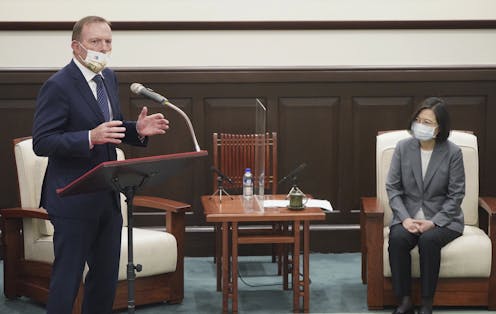
Former prime minister Tony Abbott has warned China could “lash out disastrously” at Taiwan very soon.
In a speech in Taipei, Abbott condemned China’s growing belligerence towards Taiwan and said Australia should not be indifferent to its fate.
Abbott – who as prime minister concluded the free trade agreement with China – recalled the warmer relations between China and Australia in those days.
“Much has changed in just six years, but it’s not Australia’s goodwill towards the people of China, about a million of whom are now Australians and making a fine contribution to our country,” he said.
Australia had no issue with China, Abbott said. “We welcome trade, investment and visits – just not further hectoring about being the chewing gum on China’s boot.”
He said if the “drums of war” could be heard in the region – as home affairs secretary Mike Pezzullo put it in April – “it’s not Australia that’s beating them.
“The only drums we beat are for justice and freedom – freedom for all people, in China and in Taiwan, to make their own decisions about their lives and their futures,” Abbott said.
“But that’s not how China sees it, as its growing belligerence to Taiwan shows. Sensing that its relative power might have peaked, with its population ageing, its economy slowing, and its finances creaking, it’s quite possible that Beijing could lash out disastrously very soon.”
Abbott said that “our challenge is to try and ensure that the unthinkable remains unlikely and that the possible doesn’t become the probable.”
“That’s why Taiwan’s friends are so important now: to stress that Taiwan’s future should be decided by its own people and to let Beijing know that any attempt at coercion would have incalculable consequences.”
Abbott’s visit comes at a time of high tension between China and Taiwan, with China repeatedly sending large numbers of military aircraft into Taiwan’s air defence zone.
Taiwan’s defence minister claimed this week military tensions between China and Taiwan were at their worst in more than 40 years.
Asked earlier this week about the visit, Prime Minister Scott Morrison said it was a private trip and Abbott was not passing on any government messages.
“Tony is in Taiwan as a private citizen, and I didn’t have any conversation with him before that.”
But Abbott has been given VIP treatment during his visit and accorded high-level government meetings.
Australia has a “one China” policy diplomatically but there are close economic relations between Australia and Taiwan, including trade and investment and, before the pandemic, tourism.
In his speech, Abbott said China had created the new Quadrilateral Security Dialogue (between the United States, Australia, Japan and India), “because it’s been so unreasonable”.
“And the more aggressive it becomes, the more opponents it will have,” Abbott said.
The US State Department had just affirmed America’s commitment to Taiwan was “rock solid”, he said.
“I don’t think America could stand by and watch Taiwan swallowed up. I don’t think Australia should be indifferent to the fate of a fellow democracy of almost 25 million people.”
Abbott observed the US Secretary of State, Antony Blinken, had put it well when he said America would be competitive with China when it should be, collaborative when it could be, and adversarial when it must be.
“Provided it’s real, collaboration is still possible and trust could yet be rebuilt. But Taiwan will be the test,” Abbott said.
He said Taiwan should be welcomed into the Trans-Pacific Partnership.
But China, which is seeking to join the trade pact, “could never be admitted to the TPP while engaged in a trade war with Australia, and in predatory trade all-round”.
Michelle Grattan does not work for, consult, own shares in or receive funding from any company or organisation that would benefit from this article, and has disclosed no relevant affiliations beyond their academic appointment.
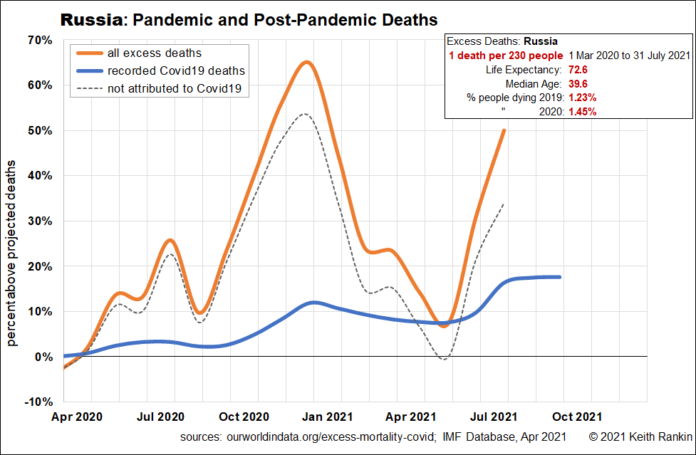
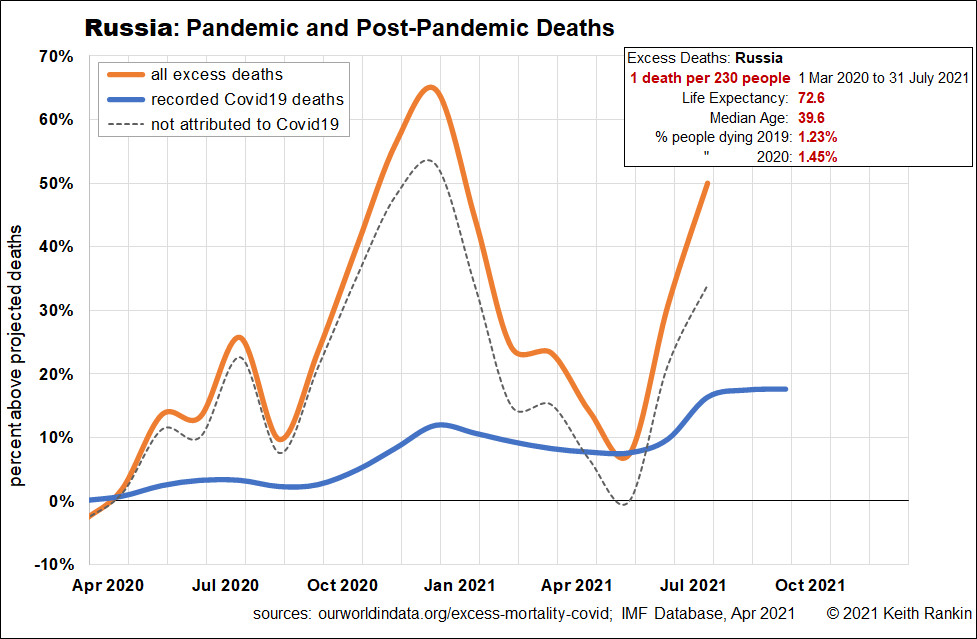
Russia is a former superpower with a long tradition of scientific achievement. It remains the world’s second largest nuclear power. Yet pre-covid life expectancy in Russia was just 72.6, and Russia has a higher median population than New Zealand, despite having comparatively few people aged over 80.
The Russian people have had a tough time with Covid19. Excess deaths from May to July 2020 were much higher than the official Covid19 death toll; there is little sign of public health measures. While August reflected a generally lower Covid19 toll in Europe, the autumn outbreak in Russia (of the Wuhan strain) was huge, peaking at a 65% increase in deaths in December.
While Russia’s alpha-strain outbreak in March 2021 was comparatively muted, the present delta-strain outbreak is massive, and again much higher than Russia’s official summer 2021 death rate. The present delta-strain outbreak has not peaked yet, according to official data. Overall, Russia’s already high death rate has increased by around 25% from March 2020 to July 2021.
By the time the pandemic is over, Russia may lose as many as 1 in 100 of its people either directly from Covid19, or as from resulting disruptions. Big factors here may include the use of a less effective vaccination, though low vaccination rates overall and waning natural and vaccination immunity would all appear to be contributing to Russia’s delta tragedy.
In Russia’s case, almost all of the excess deaths ‘not attributed to Covid19’ are due to Covid19, directly or indirectly. Certainly, to Russia’s credit, at least all deaths (from all causes combined) are registered. This is not the case for some countries in Asia and Africa.
Chart by Keith Rankin.
Serbia is interesting for three reasons. First, it has strong present and historical cultural links with Russia. (Indeed it was the Russia-Serbia defence pact that precipitated World War One – an unfortunate outgrowth of the Third Balkan War – following the assassination of the heir to the Austrian throne by a Serbian ‘freedom fighter’.) Second, Serbia did not show up in my charts earlier in the pandemic, even when other Balkan countries did. And, third, Serbia is now (first week of October) the country outside of the West Indies with the highest number of new reported cases per capita of Covid19.
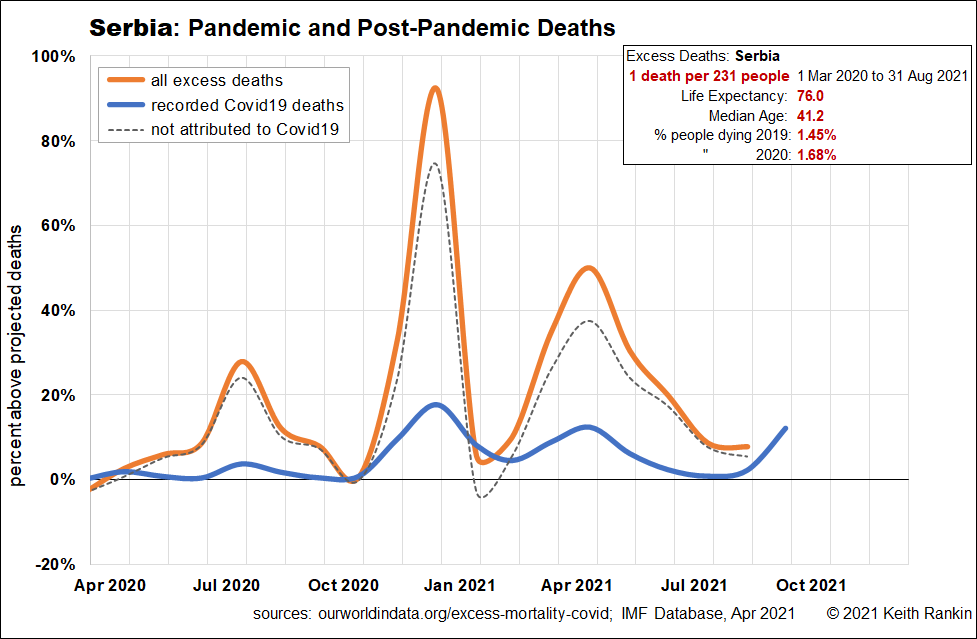
Serbia’s life expectancy is higher than Russia’s; and its median age is older, presumably due to its having proportionately more octogenarians than Russia. Serbia has a similar excess death toll to Russia, though, unlike Russia, Serbia’s charted toll includes August 2021.
Looking at the chart, for Serbia we see similar May and July 2020 mini-peaks, though smaller compared to Russia. Serbia also shows a similar, but taller, December peak. This may be due to some reporting delays at a time that the health and reporting systems will have been overwhelmed. Serbia had a much bigger alpha-strain outbreak, which peaked in April 2021.
If there were any serious public health measures used, then non-Covid19 death rates should have fallen. If that was in fact so, then Covid19 deaths will actually be higher than the excess deaths shown.
Chart by Keith Rankin.
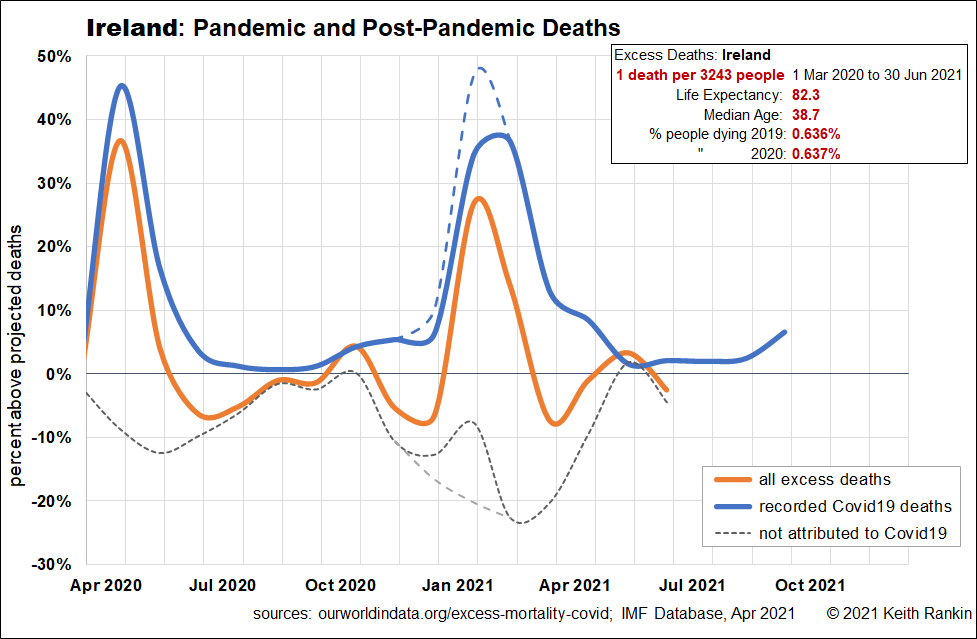
Ireland is interesting in part because its present demographics are all very similar to New Zealand’s. And it’s of interest because it has supplanted New Zealand from the top of Forbes’ list of countries that have best coped with Covid19. Ireland is also present here because it’s the only country in the European Union which publishes deaths monthly rather than weekly. (These countries, shown today, are all ones which report monthly.)
Ireland copped Covid19 very early; it already had a significant number of Covid19 deaths in March 2020. Strict public health measures soon followed, pushing excess deaths into negative territory. Effective emergency public health measures are revealed, in particular, by negative unattributed deaths. Or, put another way, with public health measures and accurate Covid19 death reporting, official Covid19 deaths exceed excess deaths; quite the opposite from Russia and Serbia.
Ireland, appropriately, relaxed its public health measures in its 2020 summer. Then it caught the next (spring) wave of Covid19, and clamped down hard. Nevertheless, Christmas Covid got through, and the clamps came down again. Ireland’s story in 2021 has been one of comprehensive vaccination. The delta-strain has had no impact until September 2021, and deaths will probably stay low this Irish autumn. My main concern here would be waning vaccination immunity, combined with less (and waning) natural immunity compared to Great Britain. I would not be surprised to see another Christmas death spike, though much less serious than last Christmas.
The extra (dashed) lines in the chart for Ireland represent an attempt to estimate the true scale of the January peak. It represents a further attribution of deaths to Covid19 in the context that public health measures were clearly and substantially reducing non-covid mortality. Ireland may see further deaths in 2022, as a result of other life-affecting conditions having been undertreated for much of 2021.
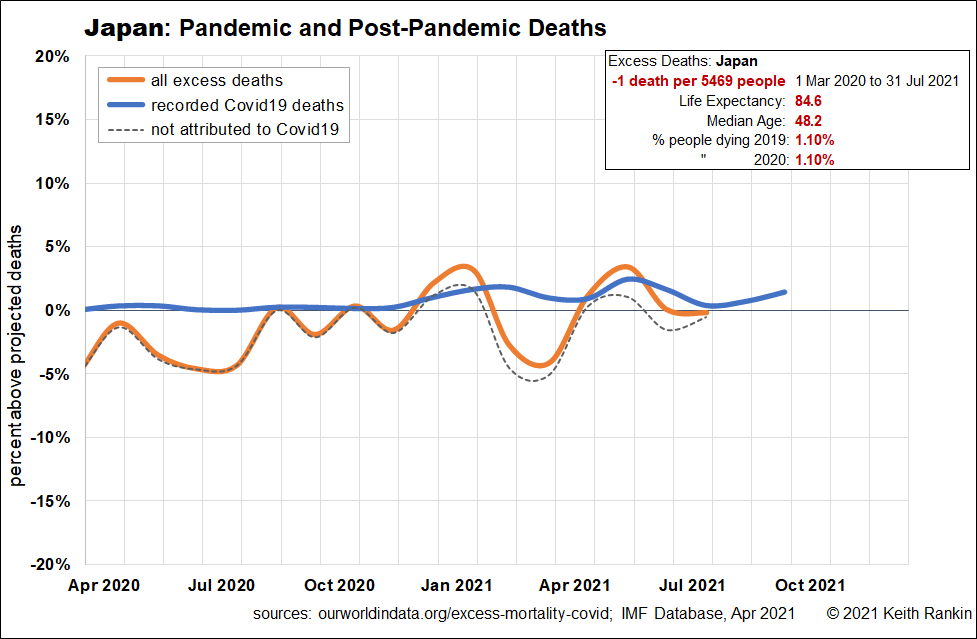
Japan is unusual in that it has a particularly old population. Hence, over one percent of its people die each year; high by New Zealand and Irish standards, but low by Russian and Serbian standards. Its life expectancy is, I understand, the highest in the world. So far, the death impact on Japan of Covid19 has been negative. It may well remain negative.
Japan, like Sweden, is a country of low inequality and marginalisation, and has people with a greater willingness than most to take responsibility for health outcomes. So, again like Sweden, in 2020 Japan introduced comparatively few public health mandates. And, like Ireland, Japan was one of the earliest countries to be affected by Covid19, in particular (but not only) due to the Diamond Princess cruise ship spectacle.
Overall, death rates fell, as Japanese people took their own precautions. Significant subsequent outbreaks occurred in January and May. The delta-strain outbreak in Japan, in July and August – well-known to the world because of the Olympic Games – seems to have had little impact on its death rate. And then, apparently, Covid19 has virtually disappeared, for now at least.
Japan has a good (though belated) vaccination rate. It seems to be that Japan retained high levels of natural immunity to respiratory conditions, mainly through the minimal use of public health mandates. (Interestingly, though many young Japanese wore facemasks when I was there in 2014, my impression from the Rugby World Cup of 2019 was that facemasks were much less fashionable in Japan in recent years.)
As in matters of macroeconomic policy – if anyone could afford a Covid Olympics then Japan could – I think that New Zealand and other countries should properly evaluate what happened (or didn’t happen!) in Japan. Interestingly, Japan is the country with “the world’s highest debt” if we use that expression in the way that the media refer to macroeconomic debt. (In fact, Japanese people have very low debt, but the Japanese government has the world’s highest government debt relative to GDP.) This debt – owed and owned by Japanese – is in fact Japan’s solution, not its problem.
Other Countries
I plan to publish similar charts for a number of other countries in the next few weeks. Getting the numbers correct poses some technical challenges; this will be even more so when charting countries which publish registered deaths weekly rather than monthly. These charts will tell the true story of how Covid19 has impacted on Europe, the Americas, and a few Asian countries.
Keith Rankin (keith at rankin dot nz), trained as an economic historian, is a retired lecturer in Economics and Statistics. He lives in Auckland, New Zealand.
Wireless earphone sales are booming, with Apple alone selling an estimated 100 million sets of AirPods in 2020. Being untethered from our phones or devices means we are likely to wear earphones for longer periods.
As a result, you might notice your ears feeling more sticky or waxy. Is this common? And what happens to our ears when we wear earphones?
Although wireless earphones are fairly new to the market, there is a large amount of research investigating the long-term use of hearing aids, which in many cases, have a similar mechanism. From this research, it appears prolonged use of in-ear devices can cause problems with earwax.
The production of earwax (also known as cerumen) is a normal process in humans and many other mammals. There should always be a thin coating of wax near the opening of the ear canal.
This wax is a waterproof and protective secretion. This acts to moisten the skin of the external ear canal and works as a protective mechanism to prevent infection, providing a barrier for insects, bacteria, and water. Wet earwax is brown and sticky, whereas the dry type is more of a white colour.
In fact, earwax is such a great barrier, in the 1800s there were reports of it being used as an effective balm for chapped lips!
Earwax is a naturally occurring substance produced in the external portion of the ear canal. It is created by the secretions of oil glands and sweat glands released by the hair follicles, which then traps dust, bacteria, fungi, hairs and dead skin cells to form the wax.
The external ear canal can be thought of as an escalator system, with the wax always moving towards the outside, preventing the ears from becoming filled with dead skin cells.
This migration of earwax is also aided by natural jaw movements. Once the earwax reaches the end of the ear, it simply falls out.
We are using earphones more and more each year, but listening for how long is too long? Christian Moro / Author Provided
The ear is self-cleaning and best performs its function without interruption. However, anything that blocks the normal progression of earwax moving outside can cause issues.
The outer ear, where wax is produced, extends inside the body. Shutterstock
Normal use of in-ear devices don’t often cause a problem. But prolonged earphone use, such as if you leave them in all day, could:
compress the earwax, making it less fluid and harder for the body to naturally expel
compact the earwax to the extent the body induces inflammation. This results in white blood cells migrating to the area, increasing the number of cells in the blockage
impact air flow and stop wet earwax drying out. When earwax retains its stickiness for prolonged periods of time, it encourages build-up
trap sweat and moisture in the ears, making them more prone to bacterial and fungal infections
create a barrier to the earwax’s natural expulsion, which ends up stimulating the secretory glands and increasing earwax production
reduce overall ear hygeine, if the pads of the earbuds are not cleaned properly, or contaminated with bacteria or infectious agents
damage your hearing if the volume is set too high.
If the build-up accumulates, excessive earwax can cause hearing problems, along with other symptoms such as pain, dizziness, tinnitus, itching, and vertigo.
If you need to listen for a prolonged period of time, using over-ear headphones may help a little. These offer a small amount of extra airflow compared to the in-ear earphones and earbuds. However, this is not as good as leaving the ears open to the outside air, and an accumulation of earwax can still occur.
As they sit outside the ear canal, over-ear headphones are also less likely to cause any earwax compaction, or introduce bacteria or pathogens to the ear canal.
In most cases, the best way to control earwax is to leave it alone. It is not recommended to use cotton buds frequently, as this can force earwax back into the ear canal. The longstanding advice is not to put anything smaller than your elbow in your ear – in other words, don’t put anything in there!
Some traditional methods, such as olive oil drops or ear candles, may also have adverse effects and are not helpful.
If your have ear wax or related hearing concerns, your family doctor will have a range of treatment options to assist, and can also direct you to the correct health service if it requires longer-term management.
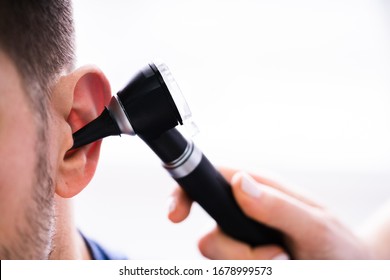
An otoscope helps visualise any wax build up in the ear. Shutterstock
Initially, they will look into your ear with a special instrument (otoscope) and see the extent of any blockage or dysfunction.
In the meantime, the ear has a wonderful process of self-cleaning, and we should do our best to let this occur naturally. In most cases earphones are fine, but it might still be helpful to stay aware of how long you spend wearing them. Finally, be sure to always keep the volume at safe levels.
The authors do not work for, consult, own shares in or receive funding from any company or organisation that would benefit from this article, and have disclosed no relevant affiliations beyond their academic appointment.
Review: Animal Farm, written by Van Badham and directed by Emily McLean, Black Swan State Theatre Company.
In 1937 George Orwell witnessed a boy whipping a horse. This was a catalyst for his novel Animal Farm. Published in 1945, it remains a potent political satire.
A story about the days and months following an animal revolt on a run-of-the-mill English farm, Orwell’s book is an allegory for Stalinist USSR where the ideals of communism were crushed by factionalism, power mongering and a propaganda machine in overdrive.
Severe, harsh and fascist: this is the reality of the overworked and underfed animals of Mr Jones’ Manor Farm. And so the animals rebel, ousting Farmer Jones, establishing Animalism and changing the name to Animal Farm. Still, no creature comforts are afforded the animals.
Except for the pigs – the new power brokers – nothing changes.
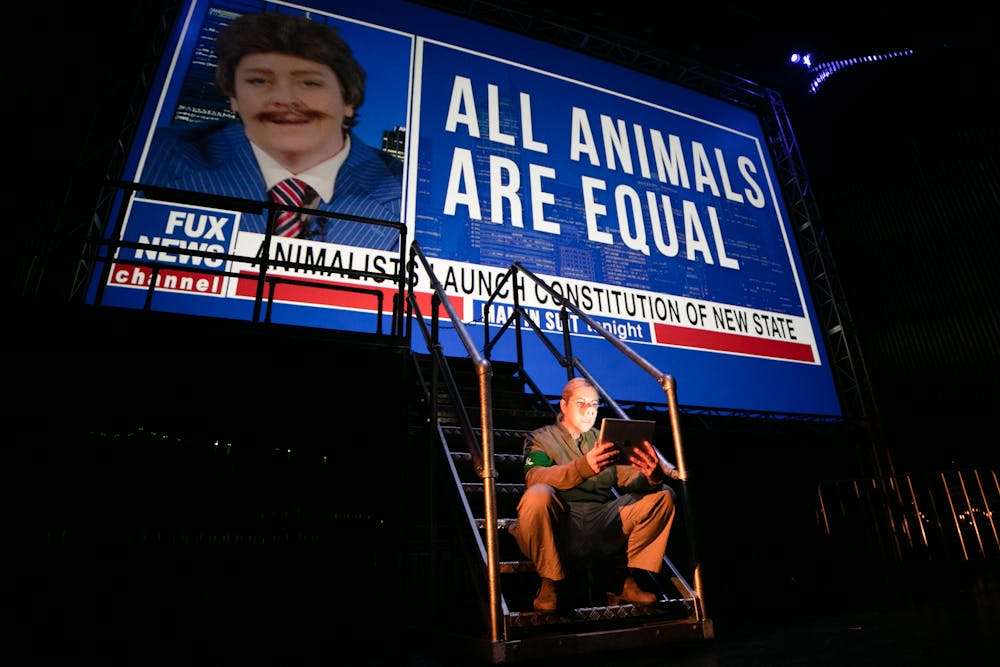
This new production adheres closely to Orwell’s text while simultaneously brimming with contemporary references, including Trumpisms (“Make Animal Farm Great”), tweets, Fox-influenced “Fux News” and a poet pig as a Sia lookalike.
In contrast to the playfulness and farce in Van Badham’s script, Fiona Bruce’s stark set of scaffolding and black corrugated tin suggests a more sinister world. Together with Karen Cook’s chilly lighting design the set is effectively unnerving. Crowd control barriers suggest political rallies or, more disturbingly, the corralling of animals for slaughter.
The production is brimming with contemporary references. Daniel J Grant/Black Swan State Theatre Company
The only colour in the animals’ world is from the massive cinema screen. It dazzles with a pastiche of specially created videos, stock footage and images.
We see in all his power and glory the lead pig Napoleon, the supreme leader played with a nod to Trump by Alison van Reeken. Speaking from the Oval Office, he is resplendent in his all-too-human clothes.
There are appearances from the leader’s press secretary (Squealer) who seems to be channelling Sarah Huckabee Sanders and is played with cheeky irreverence by Megan Wilding as she defends her leader and warns of the proliferation of fake news.
The images just keep on coming, sometimes at such a dizzying rate there is no time to think. This is key to maintaining power. Keep the masses mindlessly occupied and crucially unaware of their oppression.
Distort the truth, brand opposing viewpoints as fake news and lay the propaganda on thick.
Just three actors take on 16 roles. They are the powerhouse of this production. The skill and stamina of the actors (Andrea Gibbs, van Reeken and Wilding) demand audience attention. Immense pleasure is simply had by observing how quickly and seamlessly they transition from one character to another, embodying both animals and humans.
Between them, the actors take on 16 characters. Daniel J Grant/Black Swan State Theatre Company
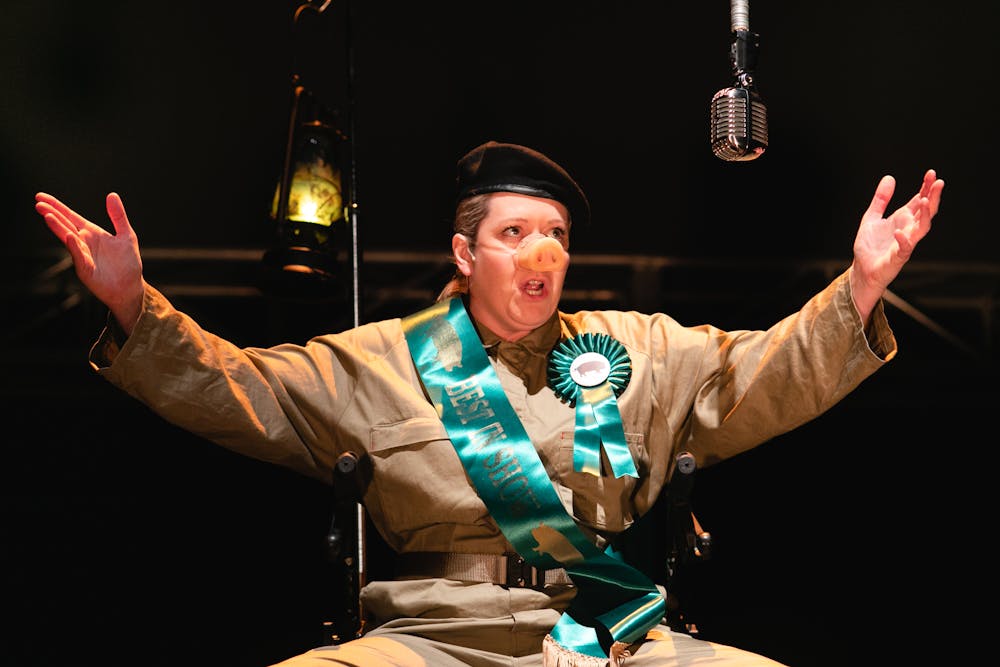
Gibbs’ opening monologue as Old Major is a particular standout. He is a wise boar on his last four legs, now confined to a wheelchair.
This scene could have easily slipped into comedy. For starters, there’s an actor with a pig’s snout and corkscrew tail, evoking Martin Luther King’s “I have a dream” speech as he recalls his own dream of a world void of humans where all animals are free. But Gibbs plays it with dignity and force.
At the end of this speech, Old Major stands to proclaim the tenets of Animalism, among them: “Whatever goes on two legs is an enemy […] And in fighting against men we must never resemble them.”
But there he is, Old Major struggling with all his might to stand, humanlike, on two legs. A terrible omen of what is to come; we know the revolution is doomed to fail.
Slick and fast
Director Emily McLean smoothly orchestrates the shifts between stage and screen, choreographing the numerous entrances and exits with all the precision farce demands.
The performance is slick and fast: you need to strap yourself in. But there are times when you just want the production to slow right down and land.
Andrea Gibbs’s opening monologue is a particular standout. Daniel J Grant/Black Swan State Theatre Company
I wanted to savour moments, space to allow for key events to impact. There were instances I simply needed time to process information, or make sense of who was who – especially given the actors were playing multiple roles.
Adapting a novel for the stage has its challenges. One of the biggest is how to deal with exposition, and unfortunately there were times the play was bogged down by too many words, when what the audience wanted was action and interaction between characters.
Perhaps casting more actors would have achieved this capacity to create more scenes: three actors good, a couple more better.
Animal Farm is at the Heath Ledger Theatre, State Theatre Centre of Western Australia, until 24 October.
Helen Trenos does not work for, consult, own shares in or receive funding from any company or organization that would benefit from this article, and has disclosed no relevant affiliations beyond their academic appointment.
The world’s first mass vaccination program against malaria, announced this week, is set to prevent millions of children from catching malaria and thousands dying from this debilitating disease.
The World Health Organization (WHO) has recommended widespread use of the RTS,S/AS01 (Mosquirix) vaccine in young children who are most at risk of malaria in Africa.
Malaria is a big deal
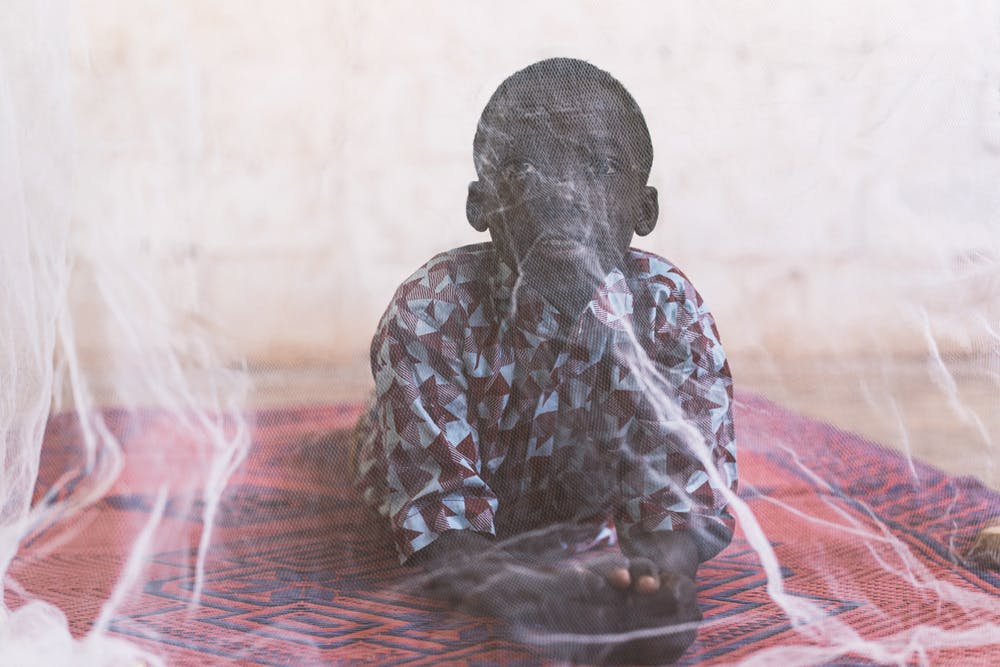
Mosquitoes spread the parasite Plasmodium falciparum from person to person when they bite. So until now, our fight against malaria has involved using mosquito nets to avoid being bitten and spraying insecticide to kill mosquitoes. Then there are drugs to prevent or treat malaria infection.
However, the parasite has developed resistance to antimalarial drugs and mosquitoes have developed resistance to insecticides. Nevertheless existing control measures have resulted in a significant decrease in the number of malaria deaths since 2000.
In recent years, however, progress has stalled. In 2019, malaria infection resulted in 409,000 deaths around the world, mostly in children under five years old, and 229 million new malaria cases.
Mosquito nets only go so far. So other measures are needed to control malaria. Shutterstock
So we need extra tools, such as an effective malaria vaccine, if we are to control the disease globally.
WHO’s recommendation to roll out the Mosquirix vaccine to children at high risk of infection with P. falciparum, which is widespread in Africa, is an important step towards controlling the deadliest of human malaria parasites.
The WHO recommended four doses of the vaccine in children from five months old.
This recommendation follows recent results from a pilot program in Ghana, Kenya and Malawi, involving vaccinating more than 800,000 children since 2019.
The program showed delivering the vaccine is feasible and cost-effective in high-risk areas. It also increased the number of children (to more than 90%) who have access to at least one intervention to prevent malaria.
The vaccine has a good safety profile and reduces cases of clinical and severe malaria, which can be deadly.
Mosquirix is a “subunit” vaccine. This means it only contains a small part of the malaria parasite, which is produced as a synthetic protein.
This protein is coupled with an “adjuvant”, a molecule designed to stimulate a strong immune response.
The vaccine works mainly by stimulating the body to make antibodies against the parasite, neutralising it, and preventing it from entering liver cells. These are the first cells the parasite invades when it enters the body.
The vaccine also works by helping to mount an inflammatory response, when a different part of the immune system responds.
The level of protection the vaccine provides isn’t ideal. Protection varies with the age of the child when vaccinated, with less protection for young infants compared with older children. In the older children (5-17 months old), this averaged at about 36% protection against developing clinical malaria over a four-year period.
Protective immunity also decreases rapidly over time. This means regular booster doses will be required. Alternative immunisation schedules are also being evaluated.
Yet, the vaccine can still make a significant contribution to malaria control when used in areas of high malaria risk and with other control measures.
One modelling study estimated that in sub-Saharan Africa, Mosquirix could prevent up to 5.2 million cases of malaria and 27,000 deaths in young children each year.
Why has it taken so long to get here?
Developing a malaria vaccine is challenging. Technically, it is difficult to develop a vaccine against a parasite that lives in two hosts (mosquitoes and humans).
There has also been limited interest by pharmaceutical companies in developing a malaria vaccine.
Although travellers would benefit from a vaccine when travelling to affected countries, the people who most need a malaria vaccine live in some of the world’s poorest countries. So there is little financial incentive to develop a vaccine.
Mosquirix is the result of more than 30 years of research and was created through a partnership between GlaxoSmithKline (GSK) and the Walter Reed Army Institute of Research in the USA.
This time-frame is not long considering both the antigen design and the adjuvant system were novel.
The Bill & Melinda Gates Foundation and GSK supported further development, including evaluating the vaccine in clinical trials. Over three decades, they invested around US$700,000 million to develop the vaccine.
What next?
This current version of Mosquirix is not expected to be the last. Preliminary results for a new modified vaccine, called R21, are encouraging.
Other malaria vaccines in development include whole parasite vaccines. These use the whole malaria parasite that has been killed or altered so it cannot cause a malaria infection but can still stimulate an immune response.
Passive vaccines are also being investigated. These involve injecting long-lasting antibodies to prevent malaria infection.
In the meantime, WHO’s recommendation presents a new set of challenges.
Malaria-affected countries must decide whether to include Mosquirix as part of their national malaria control strategy.
Critical funding decisions from the global public health community will be needed to enable a broad rollout of the vaccine to the children who will most benefit from it.
Manufacturing capacity for tens of millions of doses each year, global vaccine supply chains and distribution infrastructure in malaria-affected countries will also be needed.
Finally, each country will need to maximise vaccine uptake and ensure completion of the four-dose immunisation schedule to obtain the vaccine’s full benefit.
Danielle Stanisic receives funding from the National Health and Medical Research Council, the Medical Research Future Fund, the National Foundation for Medical Research and Innovation and Rotary for the development of a whole parasite malaria vaccine.
Michael Good receives funding from the National Health and Medical Research Council, the Medical Research Future Fund, the National Foundation for Medical Research and Innovation and Rotary for the development of a whole parasite malaria vaccine.
With states and territories beginning to plan their reopening strategies, questions have been raised about whether vaccination passports or certificates will be required to enter public venues – and who will be checking these documents.
The National Retail Association has said the “onus cannot be on the retailer” to enforce vaccine certificate compliance due to the potential for customer abuse. The group is calling on the police to do this.
In New South Wales, the health minister initially insisted police would be enforcing vaccine certificates. The NSW police commissioner, however, said police will not be doing so unless asked by venue owners.
The police commissioner has reason to be hesitant. The policing of vaccinations is not a criminal justice issue, it is a health issue. So why should we expect the police to enforce vaccine certificates?
If police are asked to take on this role, they would have to navigate their way through a “non-crime issue” being watched and critiqued by politicians, the retail sector, the health sector and the community at large.
This would place unfair expectations and undue pressure on our officers to handle a sensitive – not to mention time-consuming – task they should not be asked to do.
In Switzerland, police will be responsible for ensuring compliance of the vaccine checks at public establishments, but due to lack of resources, this will only amount to spot checks or responding to businesses that ask for help. One canton said it will take a soft approach, with a spokeswoman saying
it is very important for us to proceed in a proportionate manner and with common sense.
In Israel, police will be stepping up enforcement of the country’s “green passes” at public venues. But officers will not be checking people at entrances; rather, they will focus on ensuring venue owners are enforcing the rules.
The constant checking of people’s vaccination status by authorities could be construed as one of the hallmarks of a police state; indeed, this is how China’s digital health code system operates.
If the police universally apply harsh or zero-tolerance policing at the behest of the state without the consent of population, we would in essence be living in a police state. Or worse, a place where police use excessive force under the guise of pandemic social control, such as in the Philippines.
Thankfully, our police have not had to take such a heavy-handed approach to enforce public health restrictions as the vast majority of people have put their trust in institutions and followed the rules.
The problem with using police in this way
But using the police to enforce vaccine certificates for entry into public venues would further shift what is essentially a public health issue into a law-enforcement issue.
The focus will increasingly turn to the police’s ability or inability to manage compliance with public health orders, and police will be on the receiving end of any societal backlash should this enforcement meet with resistance.
Public trust in the police was much higher than that of the government, political parties and the media at the start of the pandemic.
But changing the role of police could erode public confidence in the institution, as police officials have previously warned during the pandemic.
Enforcing vaccine certificates is also not the best use of police resources. This would take away from the ability of police to respond to other crimes that are of concern during the pandemic, such as domestic violence and cyber crime.
Police resources are already stretched thin in both Australia and overseas. In the UK, for instance, police officers have been retrained to become temporary ambulance drivers to make up for staffing shortfalls, taking them away from their daily policing roles.
The police is the only domestic agency that has the social mandate to enforce the law, maintain public order and protect life and, if necessary, use force in this process. (Not even the military can do this.) It is because of this far-reaching mandate that police have been called upon to enforce public health orders.
The ease with which governments can ask or demand police to serve certain roles gives forces little – and in some cases no – room to question these decisions. In this case, officers are being asked to police a disease, not a crime, and we should think twice about putting them in this position.
Vincent Hurley does not work for, consult, own shares in or receive funding from any company or organization that would benefit from this article, and has disclosed no relevant affiliations beyond their academic appointment.
University of Canberra Professional Fellow Michelle Grattan and University of Canberra Associate Professor Caroline Fisher discuss the week in politics
This week they talk about the new NSW Premier Dominic Perrottet – his relationship with Scott Morrison, and his steps to differentiate himself from Gladys Berejiklian, with some changes to the road-map out of lockdown.
Meanwhile the hospital wars are back. All the states want more money from Canberra as they prepare for reopening. Scott Morrison is resisting, insisting they’ve had plenty of time and funding to get ready and targeting Queensland in particular.
After Berejiklian’s resignation, triggered by the NSW Independent Commission Against Corruption’s probity investigation into her conduct, attention has turned to the federal government’s proposed integrity commission. Ahead of the introduction of the legislation, due soon, debate is raging over what should be the extent of its powers.
Michelle Grattan does not work for, consult, own shares in or receive funding from any company or organisation that would benefit from this article, and has disclosed no relevant affiliations beyond their academic appointment.
University of Canberra Professional Fellow Michelle Grattan and University of Canberra Associate Professor Caroline Fisher discuss the week in politics
This week they talk about the new NSW Premier Dominic Perrottet – his relationship with Scott Morrison, and his steps to differentiate himself from Gladys Berejiklian, with some changes to the road-map out of lockdown.
Meanwhile the hospital wars are back. All the states want more money from Canberra as they prepare for reopening. Scott Morrison is resisting, insisting they’ve had plenty of time and funding to get ready and targeting Queensland in particular.
After Berejiklian’s resignation, triggered by the NSW Independent Commission Against Corruption’s probity investigation into her conduct, attention has turned to the federal government’s proposed integrity commission. Ahead of the introduction of the legislation, due soon, debate is raging over what should be the extent of its powers.
Michelle Grattan does not work for, consult, own shares in or receive funding from any company or organisation that would benefit from this article, and has disclosed no relevant affiliations beyond their academic appointment.
Source: The Conversation (Au and NZ) – By David Rowe, Emeritus Professor of Cultural Research, Institute for Culture and Society, Western Sydney University
Although yet to be confirmed officially, men’s Ashes cricket in Australia seems certain to commence in December. A women’s Ashes test and other matches are also scheduled for early 2022 with much less fanfare. The relief of cricket authorities and fans is palpable.
Negotiations over the tour between the England and Wales Cricket Board (ECB), Cricket Australia (CA) and federal and state governments have combined the intricacy of a free trade agreement with the political sensitivities of a submarine contract.
But a sporting contest dating back 140 years is not easily set aside even in the midst of a global pandemic.
Culture and history
An Ashes series is not the biggest thing in world cricket. Any event not involving the Indian superpower is necessarily watched by fewer people and generates less money. The quality of Ashes cricket can be mediocre, such as the 2013-14 tour by England, which the visitors lost 5-0.
But the Ashes retain their worldwide appeal among cricket players and followers because of the weight of history. This is a matter of postcolonialism rather than simple longevity. It explains why in Australia many people who wouldn’t know a “leg before” from a leg of lamb want to beat the English (although Scottish, Welsh and Irish people have all played for England).
While British politicians may claim the romance between the countries is greater than Kylie Minogue’s and Jason Donovan’s in Neighbours, there is no love lost in sport. An England victory over Australia in any sport recovers hurtful memories among a diverse range of people from former British colonies in Europe, Oceania, Asia, Africa and the Americas.
For Australian republicans it is a stark reminder that the apron strings of old Empire are yet to be comprehensively cut. This deep cultural resonance means that while the Ashes are undoubtedly fun for lovers of cricket, they are also significant for many people who are not.
This tiny urn is what the Ashes series is all about. Julian Smith/AAP
Pandemic politics
With millions of Australian residents unable to return home or cross state borders, admitting touring sport teams and their families prompts loud accusations of favouritism. Prime Minister Scott Morrison’s emphatic statement that there would be “no special deals”, despite pleas from British counterpart Boris Johnson, is clear recognition of this “fair go” factor.
So it is really a matter of whether the Ashes are deemed special enough to allow English players to enjoy the limited freedom extended to the Indian men’s cricket team during its recent tour of England. This would mean their families receive the same access to luxury resort quarantine afforded to the AFL in Queensland, where the first Ashes Test is scheduled to be held in December.
The British players have spent long months on the road in sporting bubbles since early last year. Several players threatened to withdraw from the tour unless they could break out and spend time with their families.
Preserving the health and well-being of athletes was of concern long before the coming of COVID-19. The pandemic has exacerbated this problem, and there have been many cases of elite sportspeople withdrawing from competition on mental health grounds, including Naomi Osaka, Simone Biles and leading English cricketer Ben Stokes.
Nostalgia about Ashes tours in simpler days has little practical traction. The almost feudal control of sportspeople by the authorities has waned, with greater attention being paid to the needs and demands of commercial sport’s most prized assets – the people who play it.
Perhaps the most pressing question about the 2021-22 Ashes is this: could they afford not to happen? The financial losses to CA and the ECB would be huge, including likely demands for compensation from the media companies that have already shelled out for the rights to broadcast the series and various associated one-day and Twenty20 matches. Sponsors may also question the value of their investment.
Contemporary sport and media are continuous production global operations that rely on constant live sport action to attract large television audiences. The pandemic first turned the sport screen off, then switched it on again in empty stadiums with images and sounds of fake crowds.
Real stadium spectators, their number often reduced for safety reasons, have begun to resurface. They produce the vivid, noisy spectacle that evokes pre-pandemic golden summers of sport.
The Ashes signal a return to a kind of normality, although a precarious one. England’s last scheduled Test match in Manchester was cancelled because of a COVID outbreak in the Indian camp. We don’t yet know who will show up or how the tour will unfold in a pandemic-afflicted Australia bossed by assertive states.
For now, though, the Ashes show goes on, with exhilaration and consternation co-existing in the shadow of the Delta variant.
David Rowe previously received funding from the Australian Research Council for the Discovery Projects A Nation of ‘Good Sports’? Cultural Citizenship and Sport in Contemporary Australia (DP130104502) and Australian Cultural Fields: National and Transnational Dynamics (DP140101970).
Source: The Conversation (Au and NZ) – By Maximilian de Courten, Professor in Global Public Health and Director of the Mitchell Institute, Victoria University
Sydney’s lockdown ends on Monday and Melbourne follows later this month, with fully vaccinated people gaining a number of social and economic privileges not available to those who are yet to be vaccinated.
Freedoms for those who are double-vaccinated will vary between states, but include greater access to employment, education and other activities, such as having visitors in your home, going shopping or going to the gym.
With vaccination rates generally lower among low socioeconomic groups, this is likely to further increase the inequality between the most and least socioeconomically advantaged Australians.
Australia faces two main COVID challenges: how to increase vaccination rates in priority populations and how to continue to protect these groups.
Vaccination rates, comparison between least (Brimbank, Greater Dandenong and Hume) and most socioeconomically advantaged LGAs (Stonnington, Broondara and Glen Eira) in Metro Melbourne. ABS
Sydney reports a similar distribution between low and high socioeconomic LGAs but is ahead of Melbourne in overall vaccination rates.
Pandemic of the poor and disadvantaged
COVID-19 is quickly becoming a pandemic of the poor and disadvantaged. Four times as many poorer Australians died of COVID in 2020 than those from wealthier backgrounds.
COVID infection rates are higher where there are higher numbers of essential workers, larger family groups under one roof, and people living in shared homes.
This trend is also seen in a range of other countries, including Chile and Israel.
Indigenous Australians have one of the highest risks of dying from COVID-19. At the end of September, just 30% of First Nations Australians were fully vaccinated, despite being a priority population. Currently this rate is at 41%, showing progress but still insufficient protection.
Disability advocates have warned Australia could face a similar situation to the United Kingdom, where 60% of people who died from COVID had a disability.
Disadvantaged groups are much more likely to suffer one or more chronic illness such as diabetes, heart disease and lung disease. These conditions put them at higher risk of severe illness or death if they contract COVID.
These underlying health conditions mean the poorest 20% of Australians die up to 6.4 years earlier than the wealthiest 20%.
Our health and recovery policies must not leave these groups behind. Targeted and bespoke information and services are needed for disadvantaged Australians to overcome these barriers.
So what needs to happen?
COVID cases are expected to rise when restrictions are lifted and public health measures eased. This will leave vulnerable groups at greater risk of COVID.
As other researchers have argued, in addition to high overall vaccination targets, preventing further lockdowns will require a layered plan that includes:
Such a layered plan combined with staggered lifting of restrictions is critical to prevent high case numbers and potential severe illness and deaths in populations already disproportionately affected by other health conditions.
We also need to boost the health literacy of disadvantaged Australians so they can better understand and have greater confidence in the information about their health in general, including in relation to COVID and beyond.
Stella McNamara, research assistant at the Mitchell Institute, co-authored this article
Maximilian de Courten is the director of the Mitchell Institute a Think Tank for Education and Health Policy.
Jora Broerse does not work for, consult, own shares in or receive funding from any company or organisation that would benefit from this article, and has disclosed no relevant affiliations beyond their academic appointment.
The health of many Australian ecosystems is in steep decline. Replanting vast tracts of land with native vegetation will prevent species extinctions and help abate climate change – but which landscapes should be restored, and how much would it cost?
Our latest research sought answers to these questions. We devised a feasible plan to restore 30% of native vegetation cover across almost all degraded ecosystems on Australia’s marginal farming land.
By spending A$2 billion – about 0.1% of Australia’s gross domestic product – each year for about 30 years, we could restore 13 million hectares of degraded land without affecting food production or urban areas.
Such cost-effective solutions must be implemented now if we’re to pull our landscapes back from the brink. This bold vision would transform the way we manage our landscapes, help Australia become a net-zero nation and create jobs in regional communities.
Native vegetation cover must be restored across vast tracts of Australia. Shutterstock
An ambitious agenda
Since European settlement, large areas of Australia’s native vegetation have been progressively cleared for agriculture and urban settlements. Australia’s environment remains under mounting pressure from land clearing, altered fire regimes and invasive species.
Our research shows that about one-fifth of Australia’s ecosystems have less than 30% coverage of healthy native vegetation. Below 30%, ecosystem services and biodiversity sharply declines. We calculate that 13 million hectares of land must be restored to reach the 30% threshold.
Targeted restoration of degraded ecosystems on less profitable agricultural land has enormous potential to alleviate these problems. Farmers can continue to produce valuable crops on their prime land, while rebuilding habitat and sequestering carbon on more marginal land.
Almost half of the land requiring restoration is Eucalypt woodlands and almost a fifth is Acacia forests and woodlands. Areas in most need are:
the Wheatbelt region of Western Australia
Central Queensland
Central West, Tablelands and Riverina areas of New South Wales
Western Victoria
the Eyre Peninsula and southeast South Australia.
Restoring native vegetation at selected sites would involve actions such as fencing to keep livestock away, pest removal, soil preparation and planting.
As well as direct restoration costs, our costings also included compensation payments to farmers and other landholders, for the cost of retiring the land from farming.
We identified the sites across Australia where revegetation would be most cost-effective. These are the places where land requires the least revegetation work and returns the lowest profit to farmers, thus minimising stewardship payments.
In practice, we recommend restoration sites be secured through voluntary arrangements with land holders.
Map showing cost-effective restoration sites in heavily degraded ecosystems across Australia, with examples of possible restoration sites or landscapes. Authors provided
Cost-effective conservation solutions
We estimate the required restoration would cost approximately A$2 billion annually for 30 years. To put this in perspective, it’s about 0.3% of the federal government’s annual spending last financial year and about 6% of what Australia spends annually on defence.
The restoration project would restore habitat and ecosystem services in our most degraded landscapes. It would expand threatened species’ habitat and re-establish ecosystem functions such as pollination and erosion control.
The revegetation would also help tackle climate change by drawing down carbon dioxide from the atmosphere and storing it. We estimate 913 million tonnes of greenhouse gases would be stored over 55 years.
After a decade of vegetation growth, 13 million tonnes would be stored annually – equal to 16% of the emissions reduction required under Australia’s Paris Agreement obligations.
We applied those figures to plausible carbon price scenarios where prices rise 5-10% per year from $15 per tonne, reaching $24-39 per tonne by 2030. If the carbon stored by the project was translated into carbon credits, the potential revenue could be between $12 billion and $46 billion.
The upper end of that estimate would more than cover the costs required to implement the plan. An intensive revegetation effort would also create jobs, mostly in rural areas.
The restoration plan would cost a fraction of Australia’s defence spending. Australian Defence Force
Success is possible
Australia’s environment laws have comprehensively failed to protect nature. This has been compounded by a lack of adequate funding for environmental management, threatened species protection and ecological restoration.
Without doubt, the national project we describe is ambitious. But existing projects are showing the way. In southwest Western Australia, for example, the Gondwana Link program has so far restored 13,500 hectares of marginal farmland, and also aims to connect 100,000 hectares of existing bushland.
Turning around the state of Australia’s environment requires big thinking and an even bigger government and public commitment. But as our research shows, restoring our degraded landscapes is both attainable and affordable.
Bonnie Mappin has received funding from the University of Queensland Research Scholarship and the Wentworth Group of Concerned Scientists.
James Watson has received funding from Australian Research Council and the National Environmental Science Program. He sits on the science committees of BirdLife Australia and Bush Heritage Australia and a long-term science partnership with Wildlife Conservation Society.
Lesley Hughes has received funding from the Australian Research Council. She is a Councillor with the Climate Council of Australia, a Director of WWF-Australia, and a member of the Wentworth Group of Concerned Scientists.
For many of us, uncomfortable feelings can be “natural” responses to a “threat”. Our strong, primitive defence or “threat response” (sometimes called “fight, flight or freeze”) has enabled human beings to survive. This stress response is essential for survival against poisonous snakes, crocodiles and other dangerous situations.
As the pandemic hit last year, we were working on the Healing the Past by Nurturing the Future project, which aims to improve support for Aboriginal and Torres Strait Islander parents experiencing complex trauma.
We asked ourselves whether the public health response to the pandemic can take into account people’s previous trauma.
Taking core concepts from our research and guiding principles, we identified 10 principles that may decrease stress or trauma by fostering a sense of security, well-being, confidence, hope and resilience.
1. Safety
The first priority of any emergency or “trauma-informed response” is to ensure physical safety from the immediate threat (like first aid principles). This includes the safety of people most at risk during lockdowns (for example, those experiencing family violence).
2. Connectedness and collaboration
Humans are social beings and being “connected” is another essential survival strategy that is more helpful to us in the pandemic than “fighting, fleeing, or freezing”.
However, looking after each other is our ticket out of here. We have seen this with the global scientific collaborations in the quest to create COVID-19 vaccines.
3. Compassion and caring
Acts of kindness, compassion and caring are needed more now than ever. Compassion and empathy promote well-being and we know social supports act as a buffer against difficult times.
Understanding stress and distress responses is an important way to “normalise” our feelings, and the actions of others.
4. Trust and transparency
Clear, compassionate action and transparent communication from governments are also important. These things increase a sense of safety and potential for people to follow public health advice.
Hiding information leads to distrust in government and the media. This can contribute to mistrust in COVID-19 responses and lead to non-compliance.
A lack of information and exposure to misinformation can also increase distress, and leave people vulnerable to conspiracists who target marginalised groups most at risk.
Public health approaches and messaging needs to be appropriate and sensitive to local contexts.
Communities need health messaging that draws on cultural strengths to increase trust and access to services, such as the way Aboriginal and Torres Strait Islander community-controlled health organisations quickly mobilised to take control of the local response to COVID-19.
6. Commitment to equity and human rights
COVID-19 has not had the same impact on everyone.
Many people, including Aboriginal and Torres Strait Islander and refugee communities, are affected by historical and intergenerational trauma, racism, and ongoing socio-economic deprivation.
These things can be exacerbated in this current crisis. We must address the socio-cultural determinants that can impact people’s health, such as insecure work and housing, and focus on equity.
7. Good communication
Crisis communicationprinciples say messages are most likely to be effective when they are clear, credible and interactive, shared consistently, and targeted to community groups.
The media play a critical role here. Accessing trustworthy, reliable information through these channels is important so people know what action to take and where they can go for help.
8. Positive leadership
Good governance helps us feel safe.
It’s important for the government to be highly visible, provide regular updates and practical support, and help people understand and manage feelings of stress.
But we don’t just need leadership from politicians and officials. Local leaders also need to support their communities to process fear, grief and loss, and to help people understand the crisis will pass and there is hope.
Individual and community empowerment comes from having choice, voice, and control. This promotes the confidence to respond to an emergency, as well as resilience, hope and the ability to cope.
However, effective emergency responses must be embedded in well-functioning social systems, including emergency social and economic support and high-quality healthcare services everyone can access when needed.
Our next step will be to discuss these 10 principles with community members and public health experts in an October workshop, to develop a culturally responsive, trauma-informed, public health emergency framework for First Nations communities.
This pandemic is far from over and there is now a race to vaccinate communities that have been left behind as states open up. A trauma-informed public health emergency response is possible. And with cases due to rise just as the next bushfire and cyclone seasons arrive, we need one now.
Christina Heris worked with the Healing the Past by Nurturing the Future study on the sub-project “Developing a culturally responsive trauma-informed public health emergency response framework for First Nations families and communities during COVID-19”, funded by the National Health and Medical Research Council Centre for Research Excellence Australian Partnership for Preparedness Research on Infectious Disease Emergencies and Paul Ramsay Foundation: APPRISE Targeted responses to empower First Nations-led research on COVID-19.
Catherine Chamberlain receives funding from the National Health and Medical Research Council (Career Development Fellowship). This research is funded by the National Health and Medical Research Council Centre for Research Excellence Australian Partnership for Preparedness Research on Infectious Disease Emergencies.
Cindy Woods worked with the Healing the Past by Nurturing the Future study and on the sub-project “Developing a culturally responsive trauma-informed public health emergency response framework for First Nations families and communities during COVID-19”, funded by the National Health and Medical Research Council Centre for Research Excellence Australian Partnership for Preparedness Research on Infectious Disease Emergencies and Paul Ramsay Foundation: APPRISE Targeted responses to empower First Nations-led research on COVID-19.
Helen Herrman has received funding from the Australian National Health and Medical Research Council
Janine Mohamed receives funding from the Department of Health
Michelle Kennedy receives funding from the National Health and Medical Research Council (Early Career Research Fellowship). She is affiliated with the Public Health Association Australia.
Shannon Bennetts has worked with the Healing the Past by Nurturing the Future study and is an investigator on the sub-project “Developing a culturally responsive trauma-informed public health emergency response framework for First Nations families and communities during COVID-19”, funded by the National Health and Medical Research Council Centre for Research Excellence Australian Partnership for Preparedness Research on Infectious Disease Emergencies and Paul Ramsay Foundation: APPRISE Targeted responses to empower First Nations-led research on COVID-19.
Simon Graham receives funding from the National Health & Medical Research Council (early career fellowship). The Centre for Research Excellence Australian Partnership for Preparedness Research on Infectious Disease Emergencies (APPRISE) is managed by the Peter Doherty Institute.
The pandemic has fundamentally altered every part of our lives, not least the time we spend on digital devices. For young people in particular, the blurred line between recreational and educational screen time presents new challenges we are only beginning to appreciate.
Even before COVID, there were concerns about screen time for children. A 2019-20 survey found four in five children were exceeding the current Ministry of Health recommendation of two hours’ recreational screen time a day. This was on top of screen time linked to learning.
With lockdowns and social restrictions now a new normal, it is increasingly difficult to disengage from screens. Children are growing up in a digital society, surrounded by a multitude of devices used for everything from social connection to learning and entertainment.
The boundaries between recreation, communication and learning are becoming less distinct. Screen time that may seem on the surface to be purely recreational can in reality be important for learning, supporting mental health and driving awareness of important issues.
YouTube, for example, can be both entertaining and educational. It is increasingly used in classes to supplement teaching. But it is also used in other ways, including to drive social change, as German star Rezo demonstrated with a viral climate change video that prompted sweeping public reforms.
Likewise the popular online game Minecraft has been shown to provide rich educational and social benefits. Even games like Roblox or Fortnite, where those benefits may be less apparent, still provide opportunities for rich social engagement and spaces for problem solving and experiential learning.
Play or education? Online games like Fortnite can be both. Shutterstock
Are official guidelines outdated?
This all presents an interesting dilemma: can we really fit screen time into discrete categories, and should we apply limits to some but not others?
This blurring of boundaries has led researchers from the University of Auckland’s Centre for Informed Futures – Koi Tū – to call for clearer and more detailed official screen time recommendations.
Specifically, they felt the current recommended limits failed to represent the variety of screen time students experience. This was supported by a review of the academic literature covering the impacts of screen time.
While research indicates a broad association between excessive screen time and a range of behavioural, learning and other problems, the results are far from conclusive and can generally be attributed to other factors.
The review also found the type of screen time is important: in many cases, negative effects were driven by passive screen use, whereas interactive use didn’t have the same impacts. In fact, the latter can have positive influences, such as better learning achievement and enhanced cognitive skills.
Getting the balance right
This suggests we need to reorient our views of screen time away from a blunt measure of time spent on screens and towards better understanding what children are really doing on those screens.
While balancing passive and interactive screen time is clearly important, so is finding ways to encourage and prioritise more socially and educationally productive online behaviour.
This should also guide the adoption of technology in schools. Rather than wholesale integration within every aspect of learning, devices should clearly add value or improve teaching and learning, not simply replace traditional practices.
The role of screen devices in classrooms is particularly relevant in light of New Zealand’s 2018 PISA results, which indicated children using devices in subjects like mathematics and science achieved lower scores than those who didn’t.
In August this year, the Ministry of Education responded by saying:
Digital devices have the potential to enhance learning, but there are few situations where this happens currently and many in which learning may be hindered.
Active versus passive time
It’s true there is considerable scepticism about the validity of the PISA tests, and wider research into the influence of screens in classrooms has shown mixed results.
Generally, however, we cannot claim a causal, linear relationship between use of devices and academic outcomes. Rather than assuming the PISA results indicate screen time is detrimental to learning, we need to consider how screens are actually being used in classes.
We need to focus on integrating technology that makes a difference and enhances learning. Students learn best when they are actively engaged and create and drive their own learning.
The same principles can apply to the use of digital devices – limiting passive consumption in favour of students being actively creative. This will open up new learning opportunities and provide students with authentic experiences.
For example, rather than students simply watching a YouTube clip to learn about the solar system, they might create their own augmented reality simulation, requiring them to apply their knowledge to correctly place, size and animate digital objects.
Rebalancing screen time in this way will help avoid the more negative consequences of these ubiquitous devices and highlight some of their unique advantages.
But this will require deeper and more critical thinking about what might be gained or lost in a world where engaging with digital technology is increasingly unavoidable.
Cheryl Brown receives funding from the Ministry of Business, Innovation and Employment
Kathryn MacCallum does not work for, consult, own shares in or receive funding from any company or organisation that would benefit from this article, and has disclosed no relevant affiliations beyond their academic appointment.
New Zealand Parliament Buildings, Wellington, New Zealand.
Editor’s Note: Here below is a list of the main issues currently under discussion in New Zealand and links to media coverage. You can sign up to NZ Politics Daily as well as New Zealand Political Roundup columns for free here.
Source: The Conversation (Au and NZ) – By Vasso Apostolopoulos, Professor of Immunology and Associate Provost, Research Partnerships, Victoria University
As Australia strives to reach its national COVID vaccination targets, there’s unprecedented focus on the biological effects of vaccines.
While there’s an enormous amount of information available online, it’s increasingly difficult to discern truth from falsehood or even conspiracy.
A common myth of vaccines that has appeared in recent months is the accusation they remain active in the body for extended periods of time – a claim which has increased vaccine hesitancy in some people.
However, vaccines are cleared from your body in mere days or weeks. It’s the immune response against the SARS-CoV-2 virus that appears to last for a long time.
This isn’t due to the vaccines themselves remaining in the body. Instead, the vaccines stimulate our immune system and teach it how to respond if we’re ever exposed to the coronavirus.
Let’s explain.
How do vaccines work?
All vaccines, no matter the technology, have the same fundamental goal – to introduce the immune system to an infectious agent, without the risk that comes from disease.
The vaccine needs to follow a similar pathway a virus would have taken to produce an adequate immune response. Viruses enter our cells and use them to replicate themselves. So, the vaccines also need to be delivered in cells where proteins are produced, which mimics a component of the virus itself.
The COVID vaccines all do this by delivering information into our muscle cells, usually in our upper arm. They do this in different ways, such as using mRNA, like Pfizer’s and Moderna’s, or viral vectors, like AstraZeneca’s.
Regardless of the technology, the effect is similar. Our cells use the genetic template in the vaccine to produce the coronavirus’ spike protein, which is a part of the virus that helps it enter our cells. The spike protein is transported to the surface of the cell where it’s detected by the immune cells nearby.
There are also other specialised immune cells nearby, which take up the spike proteins and use them to inform more immune cells – targeting them specifically against COVID.
These immune cells include B cells, which produce antibodies, and T cells, which kill virus-infected cells. They then become long-lasting memory cells, which wait and monitor for the next time it sees a spike protein.
Once they’ve initiated the immune response, the vaccines themselves are rapidly broken down and cleared from the body.
The mRNA vaccines consist of a fatty shell, which encapsulates a group of mRNA particles – the genetic recipe for the spike protein. Once this enters a cell, the shell is degraded to harmless fats, and the mRNA is used by the cells to produce spike proteins.
Once the mRNA has been used to produce proteins, it’s broken down and cleared from the cell along with the rest of the mRNAs produced by the normal function of the cell.
In fact, mRNA is very fragile, with the most long lasting only able to survive for a few days. This is why the Pfizer and Moderna vaccines have to be so carefully preserved at ultra-low temperatures.
The vector virus has all of its infectious components removed, so it’s unable to multiply or cause disease. Then a genetic template for the spike protein is inserted into the vector.
Once the vaccine is injected, the vector virus binds to your cells and inserts its genetic components, before the shell breaks down and is removed.
The viral machinery gets the genetic template into the control room of the cell, the nucleus, where it takes advantage of our normal protein building activity. The vaccine doesn’t cause any alteration to our DNA.
Normally, this would cause the cell to start producing more copies of the virus, but since this was all removed, all that’s produced is the spike protein.
The vaccines also stimulate your immune system to produce memory immune cells. This means even once antibody levels diminish, your immune system is ready to produce more antibodies and other immune cells to tackle the virus if you’re ever exposed to it.
Vasso Apostolopoulos COVID-19 research has received internal funding from Victoria University place-based Planetary Health research grant and from philanthropic donations.
Jack Feehan and Maja Husaric do not work for, consult, own shares in or receive funding from any company or organisation that would benefit from this article, and have disclosed no relevant affiliations beyond their academic appointment.
English is considered the language of international science. But our new research reveals how important scientific knowledge in other languages is going untapped. This oversight squanders opportunities to help improve the plight of the one million species facing extinction.
We reviewed almost 420,000 peer-reviewed papers on biodiversity conservation, published in 16 languages other than English. Many non-English-language papers provided evidence on the effectiveness of conservation measures, but they are often not disseminated to the wider scientific community.
History shows many valuable scientific breakthroughs were originally published in a language other than English. The structure of a Nobel Prize–winning antimalarial drug was first published in 1977 in simplified Chinese, as were many of the earliest papers on COVID-19.
Evidence-based conservation is crucial for tackling the Earth’s biodiversity crisis. Our research shows more effort is needed to transcend language barriers in science, maximising scientific contributions to conservation and helping save life on this planet.
Research findings in non-English papers can provide valuable insights. Shutterstock
Conservation game-changer
Most scientists speak English as a first or second language. And many academic reward programs are skewed towards getting published in international English-language journals.
But important evidence in biodiversity conservation is routinely generated by field conservationists and scientists who are less fluent in English. They often prefer publishing work in their first language – which for many, is not English.
More than one-third of scientific documents on biodiversity conservation are published in languages other than English. However, such knowledge is rarely used at the international level.
Take, for example, the Intergovernmental Science-Policy Platform on Biodiversity and Ecosystem Services (IPBES). Analysis of the IPBES biodiversity assessment reports has found 96% of references cited are written in English.
Clearly, tackling any global challenge, including the biodiversity crisis, hinges on tapping into the best available knowledge, whichever language it’s produced in. Our translatE project aims to overcome the language barriers to improve this information flow.
As part of the project, we screened 419,679 peer-reviewed papers published in 16 non-English languages between 1888 and 2020 across a wide range of fields. These spanned biodiversity, ecology, conservation biology, forestry and agricultural science, to name a few.
We found 1,234 papers across the 16 non-English languages that provided evidence on the effectiveness of biodiversity conservation interventions. To put this in perspective, the Conservation Evidence database, which documents global research into the effectiveness of conservation actions, holds 4,412 English-language papers.
The rate of publication of relevant studies is increasing over years in six non-English languages: French, German, Japanese, Portuguese, Russian and simplified Chinese.
Among the non-English-language studies we found were a Spanish study on alleviating conflicts between livestock farmers and endangered Andean mountain cats in northern Patagonia, and a Japanese study on the relocation of endangered Blakiston’s fish owls.
Such findings might have valuable insights for human-nature conflicts and threatened bird management in other parts of the world.
A Japanese study on Blakiston’s fish owls was among the relevant non-English papers the authors identified. Shutterstock
Most English-language evidence on what works in conservation relates to Europe and North America. In some highly biodiverse regions where conservation is needed most, such as Latin America, evidence is desperately lacking.
Research in languages other than English is especially common in regions where English-language studies are scarce, such as Latin America, Russia and East Asia (see figure below).
Many non-English studies also involve species for which studies in English are few or non-existent. Incorporating non-English studies would expand scientific knowledge into 12-25% more geographic areas and 5-32% more species.
The location of 1,203 non-English-language studies testing the effectiveness of conservation interventions, compared to English-language studies. Amano et al. (2021) Tapping into non-English-language science for the conservation of global biodiversity. PLOS Biology.
Tapping global knowledge
Making the best use of non-English-language science can be a quick, cost-effective way to fill gaps in English-language science.
Our research recommends more effort to synthesise non-English-language studies, and making this knowledge available in English so it can be disseminated to a global audience.
And research projects should seek to involve native speakers of different languages. For our research, we worked with 62 collaborators who, collectively, are native speakers of 17 languages.
To have the best chance of halting Earth’s extinction crisis, we must harness the skills, experience and knowledge of people from around the world.
We also urge wider disciplines to reassess the untapped potential of non-English science to address other global challenges.
Tatsuya Amano receives funding from the Australian Research Council Future Fellowship (FT180100354) and the University of Queensland strategic funding.
The New South Wales government has released a draft plan to deal with feral horses roaming the fragile Kosciuszko National Park. While the plan offers some improvements, it remains seriously inadequate.
Feral horses trample endangered plant communities, destroy threatened species’ habitat and damage Aboriginal cultural heritage — all the while increasing in numbers. The draft plan would keep many horses in the national park, locking in ongoing environmental and cultural degradation.
The number of horses has grown dramatically in recent years under the Wild Horse Heritage Protection Act, which became law in 2018 and was championed by then NSW Deputy Premier John Barilaro. He and others argued the horses were important to Australia’s history of pioneering, pastoralism and horse trapping, and were related to rural legends and literary works.
But the cultural heritage of an introduced species should not override the needs of a highly vulnerable alpine environment. Barilaro quit politics this week – and with the driving political force behind feral horse protection now gone, we have an 11th-hour chance to safeguard this significant national park.
What’s in the draft plan?
On the positive side, the draft plan aims to:
remove feral horses from 21% of the park
reduce feral horse numbers to 3,000 by 2027
prevent feral horses from invading new areas.
These are critical measures. As the draft plan notes, achieving them will need a set of carefully considered control methods, including ground shooting and putting down trapped horses.
Contrary to recent counter-productive management, reproductive-age females will no longer be released back into the park after being trapped.
But on the flip side, the plan will also:
allocate one third (32%) of the national park to feral horses
maintain 3,000 horses within the protected area in perpetuity
attempt to control horse numbers without using the most humane and cost-effective method: aerial shooting.
Aerial shooting is ruled out because of fears around losing social licence to remove horses from the park. But this may make it impossible to achieve effective horse control across rocky, difficult-to-access terrain.
It also means feral horse control will drag out over years. This will result in larger numbers of horses being culled, compared with completing a cull within one year. Maintaining 3,000 feral horses in this reserve means accepting the removal of at least 1,000 animals every two years in perpetuity, based on a conservative rate of population growth.
Over 14,000 horses, and rising
To understand the challenge, it’s important to understand the numbers. The chart below – using population data collected by ecologist Don Fletcher for a Reclaim Kosciuszko report – compares the number of feral horses in Kosciuszko National Park since 2000, with the number removed by trapping.
Error bars are 95% confidence limits. Don Driscoll, Author provided
The number of horses in Kosciuszko was last measured in November 2020 at just over 14,000.
With an the ongoing rate of increase of 18% per year and two years of population growth, numbers will have increased by 5,500. This means there’ll likely be almost 20,000 feral horses before control can start in 2022, under this plan.
The huge, growing number of horses roaming Kosciuszko combined with the likelihood of immigration from outside the park, is also the main reason fertility control cannot work. The draft report is therefore right to reject fertility control as a workable solution.
33 threatened species in greater peril
We are most concerned about the draft plan’s allocation of one third of the park to at least 3,000 feral horses, and likely many more given the limitations on control methods. These areas harbour important ecosystems and threatened species.
The overlapping distribution of feral horse retention areas under this draft plan, and threatened species. Desley Whisson, Author provided
Using publicly accessible data from NSW Bionet and Atlas of Living Australia, we estimate at least 33 threatened species live within the horse retention zone. About half of these are either already known to be impacted by feral horses or we suggest will likely be impacted because they’re vulnerable to trampling, grazing or habitat damage.
For example, the only place the critically endangered stocky galaxias – Australia’s most alpine-adapted fish – occurs is within the horse-retention area.
This hardy fish was recently rescued from bushfires and faces grave risks associated with the Snowy 2.0 scheme. It’s currently protected from feral horses thanks to a stock-exclusion fence, and the draft plan notes fencing is only a short-term solution.
The endangered Riek’s crayfish also has a restricted range within Kosciuszko. If horses are removed in the southern part of the park, as the draft plan outlines, then damage to their habitat will decline by 2027. But horses remain a threat to their habitats in the north.
Alpine sphagnum bogs and associated fens are a nationally threatened plant community with a stronghold in Kosciuszko. It is particularly vulnerable to impacts from feral horses, and we calculate 28% of its distribution in Kosciuszko will be inside the horse-retention zone.
Horses heritage value a non-sequitur
The draft plan’s main reason for keeping feral horses in the national park is to protect heritage values. However, the plan does not explain why heritage must be celebrated by keeping 3,000 feral horses in a national park.
In our view, while the horses have cultural heritage value to some, letting them continue to damage a fragile national park is an unacceptable trade-off.
Consider the recent Aboriginal cultural values report. It noted Indigenous Australians share similar heritage associations as skilled horse riders on farms since early colonial times. However, the report recommends acknowledging this heritage with information in a visitor centre.
Preservation of huts and interpretive signs are another way of acknowledging the heritage values of pastoralists past.
A social license
Research released this month surveyed 2,430 Australians and found 71% accept that feral animals can be culled to protect threatened species. As the researchers write, this sentiment is not fully reflected in existing policy and legislation.
Barilaro’s exit may be an opportunity for NSW politicians to capitalise on this social licence.
This draft plan is one step towards protecting our native species, natural places and Indigenous heritage, and will be open for submissions until November 2.
But if aerial culling was also on the table, those goals could be achieved with fewer horses culled and at lower cost.
Don Driscoll receives funding from the Herman Slade Foundation, OEH NSW Environmental Grants program, DELWP Vic, National Geographic, Rufford Foundation, WWF and Bushfire and Natural Hazards CRC, Australian Government Bushfire Recovery program. He is Director of the Centre of Integrative Ecology and Director of the TechnEcology Research Network at Deakin University. Don is a member of the Ecological Society of Australia and Society for Conservation Biology.
David M Watson receives funding from The Australian Research Council, the Hermon Slade Foundation and philanthropic support from Chris and Gina Grubb. His research is supported by The Australian Research and Data Commons, Charles Sturt University, Bush Heritage Australia, and collaborates with staff from Parks Victoria, Department of Biodiversity, Conservation and Attractions and NSW National Parks and Wildlife Service. Professor of Ecology at Charles Sturt University, he is a member of the Ecology Society of Australia, Birdlife Australia and a founding member of the Slopes to Summit hub of the Great Eastern Ranges Initiative.
Desley Whisson receives funding from WWF, The Australian Government Bushfire Recovery Program, NSW Natural Resources Commission, and CSIRO. She is a member of the Society for Conservation Biology.
Maggie J Watson receives funding from the Institute of Land Water and Society, Charles Sturt University. She is a member of the Ecological Society of Australia and the Australian Society for Fish Biology.
If you’ve watched the Netflix sitcom The Chair you’ll remember the scene in which Professor Joan Hambling burns her student evaluations, after admitting she hadn’t read any of them since the 1980s. Many of us in academia whooped in delight when Professor Hambling lit that match.
We know exactly how she feels. For LGBTIQ+ people in particular, student experience or satisfaction surveys can be a source of distress as they provide students with an anonymous means to discriminate against and harass queer academics. At times, these surveys are little better than university-facilitated hate speech.
Adding salt to the wound is that universities then use these surveys to assess academics’ teaching performance, despite growing evidence they are not fit for this purpose. The University of New South Wales has even proposed to publish these survey results.
Researchshows student evaluations of teaching are not accurate measures of teaching effectiveness. Other research shows these surveys do not lead to higher teaching quality or better learning outcomes and are not trusted by students as a means of giving them a voice. In contrast, such surveys are linked to poorer teaching, grade inflation and to racism, sexism and homophobia.
A number of studies have shown grade satisfaction is a major factor in survey results – the higher the student’s grades the better the feedback they give. Students at prestigious universities are also more likely to positively rate their lecturers because the university and its courses are seen as “world class”. Most damningly, student evaluations are often little more than veiled bias about their lecturer’s personal traits, especially gender, race and sexuality.
Despite what she tells the chair of the department, Professor Joan Hambling has resisted reading her student evaluations.
Sharing the best and worst feedback
I recently asked a dozen academics from universities across Australia to share their worst and best student feedback stories. A common thread in these stories was students using the surveys to voice homophobic and transphobic sentiment. These are real student responses to questions about teaching quality:
I couldn’t concentrate because I couldn’t tell if the teacher was a man or woman.
I found it extremely frustrating that a lot of examples and theories all revolved around sexuality/gender/identification and how it affects him. Speaking to a number of students in this topic, a lot of us felt like it was over the top.
This lecturer has no empathy for students not supporting the LGBTQ ideology.
She looks like a man professor not a woman one.
He made me uncomfortable because gays and lesbianism are against my religion.
There are only two genders, men and women!
Some other comments were so offensive they were unpublishable.
There was also a strong thread of sexism. Research shows women receive lower ratings than male academics for doing the same thing. Women academics were judged harshly for being feminist or not conforming to stereotypical gender norms. One academic copped abuse for both in a single comment:
Question: Do you have any other comments to add about this teacher in this unit? Answer: You look like 13 year old boy but the brain of a woman power bullshit and your (sic) a germ.
The academic in question had a short, Pixie-style haircut at the time. Here we have the student’s perception of her gender non-conformity negatively impacting the academic’s teaching quality score.
These surveys provide two forms of so-called data, a numeric score and qualitative data in the form of student comments. To assess teaching performance, or to decide if an academic will be appointed or promoted, the numeric score alone is normally used. This means an academic given a poor score accompanied by a discriminatory comment is being evaluated without proper context.
That being said, neither the numeric score nor the comments necessarily reveal the student’s true motivation for the feedback. Students are discouraged from openly venting their racism, homophobia and sexism but this does not mean their attitudes change. They are just cleverer about how they express it. Anonymous surveys enable them to rate an academic harshly without having to justify the rating or say why.
Many responses have nothing to do with teaching
Research also shows students are often not even answering the question they are asked, as the comments above show. They often base their scores and comments – both positive and negative – on things outside the classroom and beyond the academic’s control. Here are some examples:
It would’ve been nice not to have to miss so many classes due to public holidays due to the classes being on a Monday.
Library access sometimes confusing – not everything available online.
IT help at this university is terrible, nothing ever works how it should and they never fix it.
One academic I contacted received a positive score and comment because of her wardrobe:
Question: What was good about the course?
Student comment: I like your shirts ?
Another academic received a low teaching quality score because the classroom did not have a nice view and the student found that depressing.
Although academics generally value and respect their students, it would be foolish to pretend that as a group they will give objective feedback with the sole aim of improving teaching. About one in ten students routinely cheats on their assessments. Half of British university students experience assault and harassment on campus from other students. Another UK study showed close to a quarter of LGBTIQ students had been a victim of homophobic harassment or discrimination, including threats of physical violence, at university.
Most students are good people, but enough harbour sexist, racist and homophobic views to distort survey outcomes.
Having positions of relative authority in the university system does not make LGBTIQ academics immune to homophobia on campus. If anything, they may feel like they have targets on their backs that force some back into the closet. Giving students an anonymous means to vent their bias and purposely harm academics’ careers and well-being just makes things worse.
Foregrounding student evaluations of teaching over other ways of assessing teaching performance — such as peer review and actual student learning outcomes — also leads some academics from vulnerable communities to self-censor in classes. Some queer academics, especially those on precarious casual contracts, try to be “less queer”. One non-binary academic adopted a “cisgender-friendly way of dressing” for the classroom after student comments. Having to wear more normative clothing made the academic feel they were “in a form of prison, wearing an inmate’s uniform”.
Obviously, having to hide who we are is not conducive to a productive teaching environment nor to our well-being.
Furthermore, for surveys to be statistically relevant and represent the majority attitudes of any given class the response rates need to be at 60% or higher – a benchmark routinely expected of survey data. Often students participate in these surveys at much lower rates. These low rates give a louder voice to those who wish to use the surveys to punish academics for their non-conformity to hetero-patriarchal values.
We already have better ways of assessing teaching quality and student learning, and ensuring those processes are authentic and fair. They’re called assessment outcomes.
In contrast, student evaluations of teaching are not fit for purpose and commonly discriminate against LGBTIQ+ and women academics. Perhaps Professor Hambling had valid reasons for burning her student feedback evaluations.
Pema Düddul does not work for, consult, own shares in or receive funding from any company or organisation that would benefit from this article, and has disclosed no relevant affiliations beyond their academic appointment.
CNSA Lunar Exploration and Space Engineering Center
Volcanic rocks collected from the Moon last year are about two billion years old — a billion years younger than the samples returned by previous missions. This new discovery means the Moon was volcanically active much more recently than experts had previously thought.
Remote images taken over the past few years had already suggested the Moon is home to much younger rocks than those previously brought back to Earth for direct study. Our research, published today in Science, confirms this fact for the first time.
The rock samples were collected by the Chinese National Space Agency during its Chang’e-5 mission in December 2020 — the first time anyone had collected rocks from the Moon since 1976.
During remote sessions with colleagues in China, our team at Curtin University helped determine the age of the lunar rock samples. The results, although long-expected, were exciting.
Previously, the youngest Moon rocks studied on Earth were samples collected by the Apollo and Luna missions in the 1960s and ‘70s, as well as lunar meteorites. All were at least three billion years old, leading geologists to surmise the Moon has not been volcanically active since then.
But after estimating the age of the new Moon rocks based on the rate of decay of radioactive elements in these samples, we determined these latest samples to be about two billion years old. This makes them the youngest volcanic rocks identified on the Moon so far.
The Chang’e-5 sample return capsule after landing on Earth, carrying the first Moon rocks collected since 1976. CNSA Lunar Exploration and Space Engineering Center
Not only is this the first direct confirmation rocks of this age exist on the Moon, it also confirms that our remote observation techniques work. That’s great news for experts studying other planets, especially Mars.
With China planning another Moon landing in 2024 as part of its Chang’e-6 mission, this research also puts Australia at the heart of the international collaboration to analyse the resulting samples.
The fact the Moon has younger volcanic rocks than we thought also means it must have had a relatively recent bout of internal heating that would have driven this volcanic activity. The challenge now is to explain how it happened.
In general, volcanic rocks (or “basalts”) are similar on various rocky planets and moons. But there are some key differences that make them unique. Lunar basalts probably form under hotter conditions, because water is more scarce on the Moon than here on Earth. The presence of water can change the temperature at which the rocks melt or solidify, and the hotter formation on the Moon can create subtle but crucial variations in the rocks’ chemical composition, relative to similar types of rocks on Earth.
A fragment of volcanic Moon rock, under high magnification. Beijing SHRIMP Center, Institute of Geology, CAGS
Many Moon rocks are very high in titanium, for example, which is never seen on Earth, although the rocks collected by Chang’e-5 have intermediate titanium levels.
Our focus will now turn to analysing more fragments to establish how much they vary in chemical composition. This will hopefully teach us more about the specific conditions under which these rocks formed, initially as volcanic magmas.
We still need to explain what heat source is responsible for the comparatively recent melting of the interior on the Moon, which formed the internal “lake” of magma associated with the volcanic activity, and why it has become cool and inert today.
Ultimately, this will help us improve age dating of the entire Solar system, unlocking more secrets from our cosmic neighbourhood.
Gretchen Benedix receives funding from The Australian Research Council.
Alexander Nemchin does not work for, consult, own shares in or receive funding from any company or organisation that would benefit from this article, and has disclosed no relevant affiliations beyond their academic appointment.
The United States government is scheduled to hit its “debt ceiling” of US$28.4 billion on or around October 18.
The US debt ceiling isn’t like the limit on a credit card, which is imposed by the lender worried about the borrower’s ability to make payments.
Instead, it’s a form of self-delusion: a limit imposed by the borrower itself — the US government in the form of the Congress — in order to limit borrowing largely necessitated by decisions of the Congress.
This statement endorsed by a panel of leading US economists surveyed by the Chicago Booth school in 2013 sums up the absurdity of the requirement
because all federal spending and taxes must be approved by both houses of Congress and the executive branch, a separate debt ceiling that has to be increased periodically creates unneeded uncertainty and can potentially lead to worse fiscal outcomes
No-one knows what would happen if the Congress didn’t approve the regular increases in the debt ceiling made necessary by the programs it legislates. What does happen is that each increase gets approved at the last moment in a largely symbolic high stakes game of chicken.
If each increase wasn’t approved, the US might be unable to borrow to meet the payments on its debt and would default.
Or, and this was the basis of a contingency plan drawn up in 2011, it would delay payments for other things, such as contractors, staff, social security recipients and Medicare providers, in order to meet free up enough cash to ensure it continued to make payments on debts.
Either would scare the heck out of financial markets, as does the fact that both are evoked each time Congress goes through the charade of deciding whether or not to do what it has so far always done.
In an episode of Aaron Sorkin’s brilliant TV show The West Wing, staffer Annabeth Schott asks: “so this debt ceiling thing is routine, or the end of the world?”
White House press secretary Toby Ziegler replies: “Both.”
What would happen if the US breached the debt ceiling? Credit ratings agency Moody’s says if the government defaulted GDP could fall by close to 4%, six million jobs could be lost, mortgage and business interest rates would spike, and US$15 trillion would be wiped off the value of assets markets.
Treasury Secretary Janet Yellen described the sequence as “catastrophic”.
Will the US end up raising the debt ceiling once again? Almost certainly. But even a small probability of a catastrophe is an unnecessary risk.
The politics of the matter are that the Republicans seem to want Democrats to raise the debt ceiling without Republican votes, preserving it as a campaign issue.
Since Democrats only have 50 of the 60 votes in the Senate required to force a vote, it requires a workaround. It’ll probably happen, but it’s a dangerous game.
Down under, Australia flirted with this stupidity, then escaped it.
Australia’s brief debt ceiling
During the financial crisis of 2008-09, Labor introduced a debt ceiling as a way of signalling its seriousness about economic management.
I would have thought its success in saving Australia from a recession did the trick, but I’m just an economist.
In its wisdom Labor set the ceiling at A$75 billion.
Since deficits kept happening and flirting with a debt ceiling was bad news, Labor increased the ceiling to A$200 billion, then to A$250 billion, then A$300 billion.
And, just like the reckless Republicans in the United States, an opportunistic Coalition in Australia opposed each increase.
Then, shortly after the Coalition took office in 2013, newly minted Treasurer Joe Hockey proposed a really big increase, from A$300 billion to A$500 billion, to end the recurring charade.
Labor took the high road, said it wouldn’t oppose the sort of thing it would also have to do in government, and refused to play politics. The debt ceiling was abolished, and everyone lived happily ever after.
Actually, no. I made that up.
With the help of The Greens, Coalition Treasurer Joe Hockey abolished Australia’s debt ceiling. Lukas Coch/AAP
What Labor did was start making noises about opposing the increase. “I don’t believe he’s come anywhere near yet justifying that extraordinary increase to the debt limit,” said Labor’s (otherwise generally sensible) treasury spokesman Chris Bowen.
It was a journalist’s rather bold suggestion that provided the cut through. Peter Martin suggested Hockey bypass Labor and do a deal with the Greens to abolish the ceiling altogether.
Labor, realising its mistake, said it supported the deal and promised to treat sovereign default in the same bipartisan way that the two major parties deal with national security issues.
“Politics must stop at the door of sovereign default” the opposition leader said.
Actually, no. That didn’t happen either. Labor described the deal as “bizarre”.
The broader lesson
One takeaway is that Australia was right to remove a silly constraint that risked blowing up the economy for no good reason.
We should say no to debt ceilings.
But there’s a broader lesson. Politicians in this country should stop playing politics with issues on which they agree.
Labor should stop complaining about “debt and deficits”, given that if it had been in government it would have done much the same.
And the Coalition should knock off the hypocrisy on a range of issues including climate change where it is likely to end up endorsing the sort of policies it ridiculed when they came from Labor.
Electric cars were never going to end the weekend. The targets Australia puts forward at the Glasgow climate talks are likely to implicitly endorse the switch.
Our politics can be better, but only if our politicians are.
Richard Holden is President-elect of the Academy of the Social Sciences in Australia.
Australia’s performing arts sector has long been recognised as an ecosystem. It is a community of artists, arts organisations and institutions, all affected by factors such as education and training, audiences, policy and revenues.
It comprises commercial organisations; not-for-profit, government subsidised companies; independent grassroots ventures and amateur groups making and touring creative works for audiences locally, nationally and internationally.
Every species in this ecology has been affected by the COVID-19 pandemic.
As we transit from crisis to recovery, and the dust settles on a post-COVID terrain, it’s likely we’ll see a mass exodus of despairing freelance workers leaving the sector for good.
The demise of small companies lacking the infrastructure to survive is also on the cards. A decimation of university theatre departments has already happened. Taken together, this paints a bleak future.
The sector has called for extra support for over a year. Theatre Network Australia proposes additional funding of $100 million over four years for the Australia Council and a targeted wage subsidy for workers in the performing arts who continue to suffer due to COVID-19.
For the top tier, hope is to hand. With swiftly rising vaccination rates, theatres in Sydney have been given the green light to open at 75% capacity. Big stage musicals Hamilton and Come from Away will reopen this month. Sydney Theatre Company will return in November with Julius Caesar, and plans to mount an international tour of The Picture of Dorian Gray, starring Eryn Jean Norvill, with commercial producers Michael Cassel Group.
Sydney Theatre Company have announced they will be touring The Picture of Dorian Gray – but the path forward for smaller companies will be much more rocky. Dan Boud/Sydney Theatre Company
Melbourne theatres remain closed until a “pathway” beyond the peak of the pandemic is settled, but there is clear hope theatres will open in the coming months. Melbourne Theatre Company has just announced its 2022 season to start in January.
These companies were able to weather the storms of 2020 and 2021. Many smaller companies and independent artists may not be so fortunate. With state borders still closed and lower vaccination rates in regional areas, the resumption of touring remains a long way off.
The end of the pandemic may be in sight. The pain for Australia’s theatre sector is only just beginning.
‘Caught in a rip’
The COVID-19 Arts Sustainability Fund was established by the federal government in June 2020, three months after COVID closed theatres and venues and halted touring, triggering unemployment – or significantly reduced employment – for the sector’s large base of freelance workers.
The $50 million fund remains open until May 2022 to provide “last resort” assistance to “significant” arts organisations at “imminent risk” of insolvency due to the pandemic.
A $5 million cash grant to the Melbourne Theatre Company is the latest lifeline from the fund to rescue one of our leading cultural organisations from going under. As the company’s executive director, Virgina Lovett, described it, the pandemic has been “like being caught in a rip”.
The term “imminent risk” evokes urgency: a clear and present danger.
Yet this language of pending disaster is a curious metaphor for the government to use, given the changes to Australia’s subsidised performing arts industry across the last seven years.
Melbourne Theatre Company recently received money earmarked for companies at ‘imminent risk’ due to the COVID crisis. Jo Duck/MTC
Federal government funding for the arts is less now than 2013 when the Labor government departed office. Australia lags in the OECD league table for spending on culture per percentage of GDP. In 2019, Australia ranked 25th in a field of 34 countries, spending just 0.9% of GDP on culture.
The reality is that COVID-19 just is another deadly blow to an arts ecology that has been endangered for a long time.
The bulk of the government’s COVID-19 response for the arts sector is its project-based, $200 million competitive grant fund, Restart Investment to Sustain and Expand (RISE).
So far, $160 million has been allocated to a mix of regional and metropolitan organisations; commercial and not-for-profit; touring, events, festivals and exhibitions. It is a much broader church of recipients than the typical roll call of Australia Council funding.
A devil in the detail is support for touring projects and initiatives in the regions: touring funding is of little use if it can’t quickly leverage return through buoyant ticket sales, and vaccination rates in regional areas will remain low for some time to come.
There will be an unmeasured – and perhaps immeasurable impact – on emerging and independent artists. In many cases, COVID has broken trajectories of creative development begun in childhood, developed through teenage years and honed in higher education.
Young emerging artists provide generational renewal to theatre: bringing ideas and energy into the rehearsal room as they find their voices as creators and collaborators.
But pathways for them to hone their craft have been drastically reduced. According to reporting by Julian Meyrick in The Monthly, Monash, Murdoch, La Trobe, Charles Sturt and Newcastle universities have “effectively closed their standalone drama programs”; the drama departments at Flinders and Wollongong have seen cuts to teaching hours and staffing respectively, while Queensland University of Technology and Federation University have seen class sizes increased.
A snapshot from drama at Flinders University
demonstrates the flow of graduates into theatre, TV, and film as writers, presenters, comics, directors, designers, and actors, but importantly, also as founders of new performance groups across the genres of circus, music, youth theatre and more.
Graduates forge diverse paths. Take the careers of Marion Potts, or Rachel Swain,
both graduates of theatre and performance studies at the University of Sydney. Potts is currently CEO at Performing Lines, producing contemporary works by independent artists. Her executive producer role follows a stellar directing career with long stints at STC (1995-99), Bell Shakespeare (2005-2010), and Malthouse Theatre (2010-2015) and as director of theatre at the Australia Council.
By contrast, Swain’s unique career traverses multimedia and intercultural dance theatre. She co-founded innovative physical theatre company Stalker and is now co-artistic director of contemporary dance company Marrugeku .
From our experience, if you teach a student physical theatre they may end up making puppets, starting a theatre company, or acting in television. Teach community cultural development and they are equipped to apply “design thinking” to theatre making or social innovation.
University theatre departments have traditionally been a pathway to the professional schools of acting, directing, and design – VCA, NIDA, WAAPA – but graduates infiltrate all areas of the creative industries because of the broad skills and theory our contemporary departments teach. Importantly, they are also the future generation of teachers.
Vital young and emerging artists will suffer from cuts to these courses, and an increasingly dire funding situation when they do graduate. This will lead to a fracturing of the generational rejuvenation of the theatre.
In July, the Australia Institute’s Creativity in Crisis report estimated over 90% “of artists, creators and businesses” do not receive public funding and so were unable to access arts relief measures.
Many of these artists are freelancers: in theatre this may mean they move between jobs at the major state theatre companies, smaller funded shows, and independent, self-produced productions. Support for these artists is not only crucial for independent theatre, but extends all the way up the food chain.
Shadow arts minister Tony Burke estimated when JobKeeper ended, just one in five arts workers were receiving the payment
A backstop for this pool of skilled workers, the Coronavirus Supplement Income, ended in April when the sector was rebooting. But renewed hard lockdown measures, first in NSW and then Victoria, have left these workers caught in a perfect storm.
For many freelance arts workers, prolonged interruption to their careers since March 2020 means a long absence from rehearsing, practising, collaborating and performing.
To avoid prolonged insecurity and precarity, many artists are establishing alternate income streams – often unconnected to their creative skills.
It is likely many will exit the sector for good.
Touring in a new world
Touring – within Australia and internationally – greatly increases the number of people a work can reach, providing ongoing employment for artists and creative workers.
A national survey in late 2020 found, the touring sector’s capacity was “stretched thin”.
Chris Bendall, the CEO of Critical Stages, a company that tours Australian productions, reports that during July and August,
performances were deferred or cancelled “on a near-daily basis”. The expense was compounded by “uncertainty and anxiety as borders closed mid-flight”, lockdowns occurred while touring parties were finishing bump-ins just hours before showtime, and “travel plans were re-routed … to avoid artists being locked out of their own states or forced into 14 days quarantine”. Most cancelled shows were in regional areas.
This is just one report – small or large, urban festival centre or regional venue –
it’s heartbreaking for everyone involved when the show can’t go on.
The long-term impacts of COVID-19 mean the same level of touring activity that happened before the pandemic cannot and will not resume. Future touring may well need to adopt new models such as hybrid live/digital delivery to increase audiences.
As part of this year’s Adelaide Fringe, for instance, performer Joanne Hartstone
live-streamed her show The Reichstag is Burning to 38 countries via the new digital theatre platform, Black Box Live, she co-developed. In August, Hartstone again streamed her show live to the Hollywood Fringe and the Edinburgh Fringe festivals.
The COVID-induced pivot to live streaming by theatre companies and solo performers is at least, giving rise to new skills development and the capacity for shows to be viewed live or on demand. Other post-COVID touring models include “slow touring”, where artists stay longer in a community to develop exchanges; and multiple casts to avoid border crossings. Both options are likely to incur higher expenses.
Julian Lewis, the artistic director and CEO of NORPA, a theatre company in Lismore, has called on all levels of government – local, state and federal – to develop policy supporting the complex, interconnected ecosystem of touring: those who produce, present, support and experience.
Entrenched neglect of the national performing arts ecology for nearly a decade has merely been compounded by the pandemic and inadequate emergency “lifelines”.
A raft of cultural policy recommendations from the Australia Institute
includes: expanding funding to community art organisations and artists; rebuilding arts education in primary and secondary schools; reversing Commonwealth funding cuts to university creative arts, media and humanities courses; and greatly expanding the number of three-year creative fellowships on offer from around 10 per annum to 300 per annum – mirroring the Australian Research Council’s annual fellowships for researchers.
For theatre this could mean a reset of once-in-a-lifetime magnitude. Improving working conditions for artists, strengthening the flow of new and emerging artists, and taking more theatre to regional and diverse communities.
It shouldn’t be a wishlist. It’s an opportunity to protect and grow our unique theatre culture.
Clare Irvine is currently affiliated with Catapult Choreographic Hub. She has worked for the Australia Council for the Arts and has been employed by a number of small-to-medium arts organisations in New South Wales.
Gillian Arrighi does not work for, consult, own shares in or receive funding from any company or organisation that would benefit from this article, and has disclosed no relevant affiliations beyond their academic appointment.
Bougainville community leader and MP Theonila Roka Matbob has received the Gwynne Skinner Human Rights Award in recognition of her outstanding work to hold mining giant Rio Tinto to account for the legacy of environmental devastation caused by its former Panguna mine.
Matbob, 31, is a traditional landowner from Makosi, just downstream from the mine.
She was one of 156 Bougainville residents, represented by the Human Rights Law Centre, who last year filed a human rights complaint against the company with the Australian government.
The complaint received global media attention and led to Rio Tinto publicly committing in July to fund an independent human rights and environmental impact assessment of the mine.
“I’m deeply honoured to receive this award on behalf of myself and my people,” Matbob said.
“We have been living with the disastrous impacts of Panguna for many years and the situation is getting worse. Our communities live surrounded by the vast mounds of waste left over from the mine, which continue to poison our rivers with copper.
“Kids get sick from the pollution. The farms and villages of communities downstream are being flooded with mine waste.
“Many people lack basic access to clean water.
Years of struggle “Now, after many years of struggle, at last we have an agreement with Rio Tinto to fund a proper investigation of these urgent problems to develop solutions.
“I would like to express my thanks to all those who have supported us to reach this point. But now is not the time to rest. Our work will continue until Rio Tinto has fully dealt with the disaster it left behind.”
Human Rights Law Centre legal director Keren Adams said that Matbob had worked tirelessly over the past few years to brings these issues to world attention and compel Rio Tinto to take responsibility for the devastating consequences.
“It is in large part thanks to her leadership and advocacy that the company has now taken the first important step towards addressing this legacy,” she said.
“At the same time as doing all this, Theonila ran for Parliament and was elected one of Bougainville’s youngest and only female MPs and subsequently made the Minister for Education. She is an inspirational human rights defender and a thoroughly deserving winner of the award.”
Matbob previously worked with the Human Rights Law Centre to document the stories of the communities affected by the mine, including from many inaccessible villages whose stories had rarely been heard.
This work led to the publication of the report After The Mine.
Featured in PJR She also featured in the documentary Ophir about Bougainville and also in the Pacific Journalism Review Frontline investigation by Wendy Bacon and Nicole Gooch published in the research journal last week.
Matbob will be presented with the award at a virtual ceremony on October 22.
Professor Gwynne Skinner was a professor of law at Willamette University in the United States who spent her career working at the forefront of efforts to develop greater accountability by companies for their human rights impacts.
The award was created by the International Corporate Accountability Roundtable to honour her legacy and recognise the work of individuals and organisations that have made significant contribution to corporate accountability.
The calls for New Zealanders to get vaccinated are becoming more urgent by the day as covid-19 embeds itself in the community.
Two people have now died in the latest outbreak, the number of daily cases remains in the double figures and the virus continues to spread outside Auckland.
The government has announced a nationwide immunisation push for October 16 — dubbed Super Saturday — but one of Auckland’s leading Māori vaccinators is questioning what it will achieve.
Te Whānau o Waipareira runs two mass vaccination centres, and has given tens of thousands of Aucklanders their Pfizer shots.
Chief executive John Tamihere said the first he heard of Super Saturday was when Covid-19 Response Minister Chris Hipkins announced it at a media conference, saying it would be like election day, with clinics open all day and into the night
Tamihere said that would not cut it when it came to getting vaccine stragglers.
“They won’t necessarily turn up, the ones they are endeavouring to target. We have to go out into the streets and take each suburb street by street and to do that you’ve got to know where you’re sending and deploying your resources,” Tamihere said.
More resources rather than big show “We would probably put a lot more resource into that campaign as opposed to big show days.”
Speaking at today’s government briefing, Director of Public Health Dr Caroline McElnay said seven of the new cases in Auckland were yet to be linked to earlier cases, all of the Waikato cases were linked.
There have now been 22 cases in Waikato in the current outbreak.
One previous community case has been reclassified as under investigation, bringing the total cases in the outbreak to 1448.
There were also two cases detected in MIQ reported today.
7000 receive drive-through dose But the recent six-day vaccination event at Vodafone Events Centre is being hailed a success after 7000 people received a drive-through dose.
Among them, many church members of the Assemblies of God Church of Sāmoa who know first-hand the harsh reality of the virus.
Church spokesperson Jerome Mika said the community was grieving.
He said many members had been vaccinated at the drive-through event in the past few days which was a success due to the many community groups that had supported it.
“Community willingness to be able to just support and encourage their family members to come and get vaccinated.”
The experts agree.
Māori and Pacific leaders a must Victoria University of Wellington immunologist Diane Sika-Paotonu said to be effective, any vaccination campaign must include Māori and Pacific leaders.
“They’re not just being called in right at the end to help make things work but rather they’re involved right from the outset at the design stage of any activities, events and interventions that are being planned.”
But one group argues they need the right information for that model to work.
Tamihere also heads the North Island’s Whānau Ora Commissioning Agency.
It is taking the Ministry of Health to court for refusing to hand over health data for all Māori that he said was vital to closing the “dangerous gap” in the vaccination rates.
It sits at just over 57 percent for a first dose compared with 81 percent of Pākehā.
“Tai Tokerau is way behind, the Bay of Plenty is way behind. These are Māori communities. It’s not that they’re stupid and dumb, it’s that they’re poorer and their priorities are different and it takes time to reach them.”
The Ministry of Health said it could not share the data because many of the people were not enrolled with Whānau Ora so officials were not authorised to hand it over.
The ministry will release information today on the most and least vaccinated suburbs in the country.
Yesterday 63,000 people were vaccinated as rates climb again after a month long dip.
This article is republished under a community partnership agreement with RNZ.
Brother Frater Anton Syufi of the Papua’s Order of Saint Augustine (OSA) has been arrested by the Jayapura city district police for wearing a banned Morning Star (BK) independence flag T-shirt while watching a soccer match between Papua and East Nusa Tenggara at Indonesia’s National Games at Mandala Stadium.
This was conveyed by Frater Kristianus Sasior, also from the OSA, who assisted Brother Syufi at the Jayapura district police.
Syufi, who was arrested at 4 am last Sunday and detained until 7 pm, was finally released at 10 pm because police did not find any other issues to charge him with.
The Morning Star flag of West Papua … outlawed. Image: SIBC
“The police said he was detained because he wore a BK T-shirt. The police said that he was disturbing the Papua PON XX [20th National Games], said Brother Sasior.
“There is a prohibition on wearing things with the BK design. Brother Frater Anton did not [show] it intentionally because he was wearing two layers of clothing.
“When his favourite team won he jumped up and down and opened his outer shirt so police saw the costume underneath with the BK design.
“He was summoned and taken to Jayapura city district police. The police said they were still waiting for the head of the intelligence unit to arrive so we were [also] still waiting”, explained Sasior when contacted by Suara Papua by phone from Sorong.
A similar story was conveyed by Evenisus Kowawin who said that Syufi was detained for wearing the Morning Star T-shirt while watching the soccer match.
“Frater Anton was arrested because he wore a BK shirt. Police saw the shirt then dragged him out, interrogated him then took him to the district police. He’s currently still at the police [station],” explained Kowawin.
The announcement this week that New Zealand will introduce a vaccination certificate by November is welcome news. Whether by “carrot” or “stick”, vaccination rates must keep climbing, as it is now likely case numbers will climb under alert level 3 conditions in Auckland.
We’ve seen a growing number of mystery cases over the past couple of weeks – people testing positive after going to hospital for non-covid reasons, or from essential worker surveillance testing.
These cases suggest there is a significant amount of undetected community transmission, and that makes it much harder to stamp out.
While the slight easing of restrictions announced on Tuesday may or may not accelerate the growth in cases, it is unlikely to slow it.
To some extent this is a semantic argument. Elimination has been defined as “zero tolerance” for community transmission, as opposed to zero cases. The fact that New Zealand was able to get to zero cases for much of the past 18 months has inevitably come to define what elimination has meant in practice.
Before vaccines were widely available, having zero cases was crucial in allowing us to enjoy level 1 freedoms.
But New Zealand is now transitioning into a new phase of the pandemic, and this was always going to happen. Borders can’t remain closed forever and the virus was always going to arrive sooner or later.
Return to tougher restrictions still a possibility In an ideal world, our border defences would have kept delta out and New Zealand would have been able to stay at alert level 1 until the vaccine rollout was complete.
But the delta outbreak has forced our hand to some extent.
Whether another week or two at level 4 would have been enough to eliminate this outbreak is impossible to know. Given the outbreak is spreading in very difficult-to-reach communities, stamping out every chain of transmission is extremely challenging.
As we shift from an elimination to a suppression strategy, the country will have to tread a very narrow path to avoid overwhelming our hospitals and throwing our at-risk populations under the bus.
We are now relying on a combination of restrictions and immunity through vaccination to prevent cases growing too rapidly. As vaccination rates increase, restrictions can be progressively eased.
But if we relax too much, there is a risk the number of hospitalisations could start to spiral out of control. When the R number is above 1, cases will continue to grow relentlessly until either more immunity or tougher restrictions bring it back under 1.
Getting vaccination rates up is crucial but will take time, so the government may yet be forced to tighten restrictions to protect our healthcare systems.
The vaccination advantage New Zealand was always going to have to grapple with these really tough decisions, though delta has forced us to do this earlier than we would have liked.
But our elimination strategy has given us has an important advantage – almost 70 percent of the total population has had at least one dose of the vaccine before experiencing any large-scale community transmission.
We still have a lot of work ahead, but having access to the vaccine before being exposed to the virus is a luxury people in most countries didn’t have.
Those ICU beds are normally full with patients with conditions other than covid-19.
The implications for the healthcare system are obvious. If New Zealand goes the way of Melbourne, harsher restrictions will probably be inevitable.
Not a white flag The more optimistic scenario is that a combination of restrictions, vaccination and contact tracing is just enough to keep a lid on the case numbers. It’s almost inevitable cases will increase. But if it isn’t too rapid and hospitals can meet the demand, it could tide us over until we have the high vaccine coverage we need.
And while vaccination rates are not yet high enough, they are still helping a lot, cutting the R number to around half what it would be with no vaccine.
The country is in a far better position now than it would have been if the Auckland outbreak had happened in May or June.
Everyone can do their bit by doing two things: help and encourage those around you to get vaccinated, and stick to the rules.
We have to keep community transmission rates low to keep pressure off our hospitals and help us get to the next step of the road map. Moving away from a literal interpretation of elimination does not mean waving a white flag.
It appears we are a nation of selfish malcontents for whom enough is never enough.
That is one of the conclusions I’ve been forced to draw after seven weeks of covid lockdown in Auckland. And, because my isolation has been broken only by a few medical appointments that are valid reasons for leaving my security-guarded community, I gain my impressions through our media and a diet containing a surfeit of opinion, some of it in the guise of news.
I am confronted daily by examples of peevish bleating, whining, and complaining. I hear demands for certainty where there can be none.
I hear commentators crying out for an end to level 4 then level 3 lockdown. They range from predictable nay-saying radio hosts like Mike Hosking, Heather du Plessis-Allan and Kerre McIvor to the unscientific Sir John Key, whose syndicated comments were the product of some yet-to-be-revealed stratagem by the former prime minister.
I see New Zealanders demanding that their right to return to this country be met NOW when it is obvious that the number of intending returnees far exceeds the country’s capacity to safely manage them.
I read of business demanding the ability to trade, and parents demanding to take their children to far-flung spots for the school holidays, when doing so risks undoing the constraint that has been put on the spread of the delta variant.
I am told the government is incompetent or that it has gone too hard, and that the police haven’t gone hard enough on gangs and followers of Brian Tamaki.
Nation of whingers? What else could I conclude but that we are a nation of whingers?
But I have also concluded that some of our news media are exhibiting signs of split personality: While devoting an extraordinary amount of time and space to the malcontents, they are also pursuing positive campaigns to get the eligible population vaccinated.
They also – thank goodness – show a willingness to accommodate the views of members of the medical and scientific community, whose opinions we so desperately need to hear.
The two positions are not, of course, mutually exclusive. Media have a duty to report dissent as well as the positives. However, while front page lead stories supporting efforts to contain the delta variant have far outweighed those that argue against them, I have a sense that this Winter Of Our Discontent emphasis is compromising the vax campaign by legitimising self-entitlement.
In my lockdown musings I have, however, reached one further conclusion that both saddens and frustrates me. It is the realisation that many of those who need to get the message to get vaccinated are beyond the reach of news media.
These are people who do not read newspapers, watch television news programmes, listen to radio news bulletins or access the online services that each provides. They have no idea what a “1pm stand-up” means.
They do not engage with news on any other basis than word-of-mouth or social media and the results are fragmented, selective, and often-as-not wrong. In other words, the commendable media campaigns to raise vaccination levels never reach them.
Getting to the marginalised Ways need to be found to get to this marginalised part of our community. Perhaps the answer is for the media to go on the road. A media roadshow visiting suburbs with which they seldom positively identify might have benefits beyond helping us to get closer to that magic 90 per cent vaccination target.
I was about to say I had reached another conclusion but that’s too strong a word for it. I have a suspicion that the Winter Of Our Discontent is not a reflection of widespread public opinion. I am led to that suspicion by two polls.
These suggest to me a greater level of resilience (and common sense) than negative media stories might indicate. It’s also manifested in the (admittedly limited) interactions I have with people these days.
That also might be reflected in a letter I read in The New Zealand Herald last week. It was in response to a story about a man who feared he would not be allowed to witness his wife giving birth to triplets in Auckland if he returned to Rotorua to work.
M.A. Hume of Mt Roskill, who admitted to being “old enough to remember the Second World War”, recalled a friend whose husband died at El Alamein without ever seeing his daughter and others who had not seen their families for four years and had no certainty of returning to them. “In those days,” the letter writer said, “huge sacrifices were commonplace.”
I would like to think that, today, most of us can muster that same sense of self-sacrifice and resolve. Given the announcements last weekend of rising cases in Auckland and a spread to the Waikato, we’ll need it.
Dr Gavin Ellis holds a PhD in political studies. He is a media consultant and researcher. A former editor-in-chief of The New Zealand Herald, he has a background in journalism and communications – covering both editorial and management roles – that spans more than half a century. Dr Ellis publishes a blog called Knightly Views where this commentary was first published and it is republished by Asia Pacific Report with permission.
Those critiquing the dramatic fall of Gladys Berejiklian, who resigned when the Independent Commission Against Corruption announced it was investigating the probity of her conduct, have divided into two camps.
Some cast ICAC as the ogre that’s brought down a good leader, and a woman at that, over what seem to them relatively small matters.
Others argue propriety is paramount, regardless of the broader qualities of a leader, and Berejiklian’s position as NSW premier became untenable after her revelation last year of her relationship with a dodgy colleague.
Deputy Prime Minister Barnaby Joyce portrayed ICAC as a rogue player that gets in the way of politicians.
“ICAC out of control means that the bureaucracy reigns supreme and politicians are basically terrified to do their job,” Joyce told Channel 7.
“Politicians at times have to make hard decisions. It’s not that they’re corrupt, they’re making decisions. There might be some disagreement with the bureaucracy, but that’s their right. That’s why people go to a ballot box and they see the name of politicians on the ballot paper, not the names of bureaucrats.”
Politicians’ decisions in some cases are made for improper reasons. And without sharp oversight, the voters may not be the wiser when they look at that ballot paper. Remember, it was the auditor-general who documented the egregious sports grants rorting.
With the Morrison government due within weeks to introduce its legislation for a federal integrity commission, Berejiklian’s resignation has brought into even sharper focus the powers and conduct of the bodies charged with investigating integrity in politics.
Morrison was blunt in his view about ICAC. “I’m sure there are millions of people who’ve seen what’s happened to Gladys Berejiklian, they’ll understand that’s a pretty good call not to follow that [ICAC] model,” he said.
Many people, however, will not think that’s such a “good call”.
We haven’t got the final version of the government’s integrity commission legislation. But the draft model put out by then attorney-general Christian Porter was spineless in its provisions relating to politicians and public servants. And it would take a major change of direction for the government to insert a significant spine when it makes its revisions.
The point is this: the government doesn’t really want an integrity commission. It has been dragged to it by political necessity.
In the draft model, the proposed commission has tough provisions covering the scrutiny of law enforcement bodies. But politicians, their staff and bureaucrats would be given heavy protections.
These would make it hard for allegations against them to reach investigators, limit what matters the body could probe, and ban public hearings during inquiries, as well as public reporting.
Under Morrison’s model, Berejiklian’s self-damning evidence of last year would not have been given in an open forum.
In a report released this week the Centre for Public Integrity, an independent think tank with a board of legal heavyweights, compared the government’s planned commission with others around the country and concluded that its public sector division “would be the weakest integrity commission in the country”.
The centre pointed out such a body wouldn’t, for instance, be able to investigate rorting in the sports grants scheme and commuter car parks project, the allegations of conflict of interest involving minister Angus Taylor’s family business, or claims about ex-ministers’ potential breaches of the ministerial code of conduct.
This list, however, does invite a knotty question. Should all alleged integrity breaches by politicians, staff and public servants be examined by the same body?
Gary Sturgess, who as cabinet secretary to the NSW Greiner government designed ICAC, argues for having one body to look at serious “corruption” allegations (with no special protections for the political class), and a separate one to deal with less serious alleged integrity breaches by public figures.
Sturgess warns against confusing corruption involving potential criminality with other (but still important) breaches. “Treat all politicians as crooks, and there is the danger that we will end up with less integrity in public office, not more,” he wrote in The Conversation this week.
In designing its model, the Morrison government has been more concerned about the political damage a robust body could do than about corruption and other integrity issues. It doesn’t want any more opportunity than presently exists for “scandals” to be probed.
Critics of having a federal body at all have in the past argued that “corruption” is found more often at state rather than federal level.
But there’s no doubt federal governments of both complexions, and individual politicians, will often be willing to subvert proper process when it’s expedient to do so – and if they think they can get away with it. And the role of donations in buying access to ministers and their offices involves serious integrity concerns. It doesn’t have to be a matter of cash in a brown paper bag.
Potential exposure of integrity breaches has the dual advantage of serving the public’s right to know and acting as a deterrent to bad behaviour.
But the fear that an integrity commission can be weaponised politically is legitimate. Strong protections are needed for those investigated and witnesses as well as a stringent arrangements for oversight of the commission’s activities.
Labor is promising a more robust model to cover the political class, including public hearings, wider access for those wanting to make allegations, and the ability for the commission to commence its own inquiries.
Retrospectivity is a contested area, with shadow attorney-general Mark Dreyfus saying the commission “has to be able to decide about matters that potentially, even though they occurred in the past, are having a current effect on the government of Australia”. The government says retrospectivity is a question of parameters and it is still working this through.
The government’s legislation may not have been passed by the election, given the tight timetable. Even if it has been, Labor will be committed to revisiting the model.
Either way, the national integrity commission is likely to be still a sharp point of contention when the voters go to the polls.
Michelle Grattan does not work for, consult, own shares in or receive funding from any company or organization that would benefit from this article, and has disclosed no relevant affiliations beyond their academic appointment.
Yesterday a colossal data leak from live streaming platform Twitch.tv was posted on controversial internet forum 4chan by an anonymous user. Twitch hosts millions of users who stream their daily activities to a combined audience of tens of millions of people.
The platform is used primarily to stream computer game-related content, although users can broadcast almost anything — from podcasts, to costume design, to music rehearsals and beach trips.
Although the full impact of the leak remains unclear, it appears to include the earnings of at least the top few thousand streamers, information about new software Twitch was designing, passwords and security data for streamers and viewers, and even the source code for the Twitch platform.
This might well be the largest and most comprehensive data leak on any major internet platform in history — amounting to about 125 gigabytes of data – but what will it mean for streamers, viewers, and Twitch itself?
I have researched Twitch for past six years, looking to understand its streamers, viewers, culture and economics. And although we’ve yet to uncover certain details about the leak — such as who is behind it and how the data was acquired – five potential impacts stand out.
Potential impacts
1) Trust in Twitch will surely be dented, although likely not completely destroyed, by this leak. While some streamers might not publicly express much dismay or frustration, and just change their passwords and move on, many will certainly be more vocal.
Many users will now be alarmed by account security risks. Twitch markets itself on the basis of trust and relative openness, selling the idea that streamers and viewers are not interacting with a company, but rather with friends. With a massive data leak, this message is now seriously challenged.
2) The leak will likely intensify the draw of other streaming platforms. One short-lived competitor to Twitch, Mixer, closed down last year. Mixer had secured a number of superstar streamers but failed to create the sort of community found on Twitch.
But if Twitch no longer seems secure, or if other platforms can offer more attractive terms, how many streamers might decide to make a move to the alternatives, such as YouTube Gaming?
3) The economy of Twitch is based on viewers giving money to streamers. These are mostly donations (one-off payments) or subscriptions (monthly payments). As such, most streamers make much of their money via many small payments from dedicated fans.
Although everyone knew top streamers had substantial incomes, the true scale of this is perhaps only now becoming clear to many viewers. The top dozens of streamers can bring in millions of dollars a year, while at least hundreds of others collect six-figure paychecks.
Twitch fans therefore might reduce their support of those who are already comfortably millionaires. On a large enough scale, the combined economic impacts could be significant. Twitch takes around half of the subscription payments, and a smaller portion of donations, so reduced income for streamers means reduced income for the platform as well.
4) The leak suggests Twitch is, or was, developing a competitor to the dominant gaming platform Steam, owned by Valve Corporation. Steam is currently the hub for most PC gaming, but has been criticised for monopolistic practices and challenged by competitors such as the Epic Games Store and itch.io.
New information in the leak might give Valve a significant advantage in countering Twitch’s offering before it even launches. In turn, might Twitch abandon the project altogether, or do the opposite and accelerate its release since there’s now no time to lose? Either way, this will impact games distribution and consumption in years to come.
Steam is a video game-distribution service that was started in 2003. Shutterstock
5) Lastly, this leak has probably been a serious wake-up call for all major digital platforms. Twitch is owned by Amazon, one of the largest and most influential internet companies on the planet. Yet, it was seemingly taken completely by surprise with this leak.
What went wrong in Amazon or Twitch’s multi-billion dollar systems to allow such an incident? There will likely be a serious reckoning for the company here, and one that comes on the heels of other recent controversies around Facebook, Twitter, OnlyFans and other internet giants, whose growth and profitability are driven by user-created content.
Is all lost?
Despite all of the above, this is far from a knock-out blow for Twitch. The platform dominates the live streaming space in most countries and has already seen off competitors.
Twitch is also rife with systems designed to boost user retention and discourage both streamers and viewers from moving to other websites. So much of (game) live streaming culture and practice is the same as Twitch culture and practice, and this gives the platform a strong incumbent advantage.
Still, precisely because Twitch has become such a central part of gaming culture, it can’t take such an attack lightly. It remains to be seen what the leak will mean for gaming, gamers, live streaming, and digital platforms as a whole in the coming months and years.
What is certain is that as Twitch’s allure takes hit after hit — with sexism, so-called “hate raids” and now a huge data leak — the platform may well have to fight for a future of live streaming dominance that, at one point, appeared quietly assured.
Mark R Johnson had been funded for Twitch and live streaming research by the UK “Digital Crucible” and by the Japanese “Hoso Bunka Foundation”. In neither case did the funder have any control over the direction or progress of the research, the findings, analyses, publications, etc.
This last week I watched Push: The Global Housing Crisis on Al Jazeera, featuring Leilani Farha, Canadian lawyer and former United Nations special rapporteur on adequate housing. She is now leader of The Shift (the global movement to secure the human right to housing).
The central takeaway from this ‘Witness’ documentary is that the housing crisis is a global financial crisis (as opposed to the Global Financial Crisis of 2008).
The problem is essentially the concept of housing (and the real estate that it sits on) as more a form of financial wealth (‘financial wealth’ is an oxymoron, by the way; it means ‘wealth comprised of claims on wealth’) than a human right; as such, whether housing is occupied or not – or whether it is occupied by sojourners rather than residents – is incidental. In this financial view, all that matters is the dollar value attributed to assets, and that wealth is somehow generated through a bidding process that raises that dollar values of financial assets.
Managed Funds, especially Government (or government-mandated) Pension Funds
While we may emphasise the self-perceived entitlement culture of individual speculators in financial assets, the point of emphasised by Leilani Farha was the role of managed funds, which means that – indirectly – many of us, with savings ‘invested’ in these funds, are financial speculators without thinking of ourselves as such.
A particularly important class of managed funds is government funds, including and especially government pension funds. The worst kind of these funds would be the kind such as the New Zealand Superannuation Fund created by Roger Douglas in 1974 and thankfully disestablished by Robert Muldoon in 1976. The Canadian government pension fund is notorious in this regard. And New Zealand does have a smaller-scale government fund of this sort; it came to be known after its establishment in the 2000s as the ‘Cullen Fund’.
We can generalise here, by thinking of Sovereign Wealth Funds, many of which are classed as ‘pension funds’; and we can think of private managed funds – the mainstay of the financial industry – many of which (like KiwiSaver) are government partnerships with that industry. Governments, around the world, have a deep stake in the financialisation of real estate assets; both as governments, and in the private capacity (as speculators) of finance industry and technocratic and bureaucratic and elected elites. In the formal sense, as citizen holders of public equity, we are all speculators when government-directed funds are deployed in the speculative financial marketplace.
Yes, including the homeless and the underhoused among us; the deprivileged among us can still feel good that our unrealisable public equity increases as our housing and other material rights deteriorate. We own notional shares in the lands we are evicted from.
The way around this financialisation approach to ‘wealth management’ is the ‘pay-as-you go’ approach, which was last championed – in New Zealand – by Sir Robert Muldoon. New Zealand Superannuation is still largely funded – as it must be – out of current economic product; and not through the sale of financial assets that we hope can be converted by retirees into goods and services of a certain value. Further, pay-as-you-go is the essence of the Basic Universal Income, an income distribution mechanism based on democratic accounting standards (ie based on basic human rights); a mechanism that can form the basis for the re-engagement of the rapidly marginalising populations of each country in the world.
(The scandal of Covid19 is how the entitled minority of the world’s population has spread this virus to the disentitled – including the disengaged poor – infecting them, and killing them in numbers on a World War scale.)
Pandora Papers
Other stories this week underscore the conjoint problems of financialisation, inequality, and impoverishment. One such story is the release of the Pandora Papers’ leak to global media organisations.
These papers reveal a comprehensive story, not of illegality, but of uber-elite entitlement; of legal theft.
Control of price-appreciating financial assets, as revealed by these papers, is more than ‘mere’ tax avoidance. It is theft in the fullest sense of the word, in that it is increasing the claims of the entitled on the world’s finite economic output, thereby diminishing the claims of the disentitled, and pushing them into unsustainable survival practices. Financialisation is an entitlement mechanism, and it applies to both the demanders and the suppliers of financial products.
Entitlement is not only a problem of the uber-elite. Indeed, through our KiwiSaver accounts and the like, we all come to align ourselves to some degree with the highly entitled. Further, the highly entitled go well beyond the ‘one-percenters’; rather the top nine percent (or even the top nineteen percent) of the ’99-percenters’ tend to have an entitlement mindset towards property values and interest rates, even while blaming the conspicuous ‘one-percent’ for the world’s woes.
One test of entitlement culture is a person’s attitude to interest payments. People who believe that they are entitled to an interest ‘return’ on saved income over and above the inflation rate are people who believe that they are entitled, as a form of self-congratulation, to an increased share of the world’s goods and services. It was in medieval times clearly (and correctly) understood that it was sinful to ‘make money from money’. This is distinct from making a profit from investments, such as planting a crop, irrigating a field, retaining livestock for breeding, or learning a trade.
In reality, the ‘real rate of interest’ is sometimes positive; that’s when lenders (ie savers) are scarce and borrowers (including investors and willing governments) are abundant. Under those conditions – rare in the lifetimes of people alive today – a legitimate premium is payable to people holding rather than spending money. The reverse conditions are much more familiar – an abundance of unspent money, and an aversion to deficit financing – in which, naturally, the real rate of interest should be negative.
Indeed, it was the negative real rates of interest during the global Great Inflation of the 1970s and early 1980s, that rumbled the uber-entitled, and led to the global financialisation coup of the late 1970s and (in New Zealand) the 1980s; the world event that is commonly called the neoliberal revolution. Theft through financial chicanery has prospered ever since.
New Zealand’s Official Cash Rate (OCR)
The first raising of the OCR in New Zealand for several years is indicative of this entitled view that real interest rates (as an indicator of real financial returns) should always be above zero. As such, the management of interest rates is the illiberal intervention in the marketplace that is most used to support economic liberalism.
By and large, the New Zealand public falls for the argument that higher interest rates are needed to slow down the rate of increase of financial asset prices (eg of house prices). There is little evidence for this, and indeed the 2004-08 house price inflation was in large part a result of rising interest rates.
The problem is that genuine economic borrowers are discouraged by high or rising interest rates, and that rising interest rates make very little difference to speculative borrowers. Thus, when interest rates increase, increasing proportions of all borrowed funds are lent to acquire financial assets with a view to making returns through capital gain. (Capital gains’ taxes are rarely sufficient to offset this reality; the main driving force pushing money into speculation is reduced lending to the real economy.) This truth is clearly evident by a cursory inquiry into the behaviour of house prices during periods of rising real interest rates.
In addition to rising interest rates ‘inadvertently’ stimulating financialised markets, the countries which intervene to raise their interest rates the most find that their exchange rates increase, as foreign money increasingly treats domestic money as a speculative asset. While this currency appreciation may dampen inflation in these countries – while exacerbating inflation pressures in the countries with falling exchange rates – it also does much harm to the export industries of these countries. Export industries suffer the double whammy of higher borrowing costs and an appreciating exchange rate. Indeed, the aggressive raising of interest rates to engineer an appreciating exchange rate has all the entitlement hallmarks of a Ponzi scheme. (Just look at New Zealand in years such as 1987, 1995-97, and 2004-08. If you don’t believe me, look at Iceland in the years before 2008.)
We should note that if rising interest rates make any difference at all to the global rate of inflation, they indeed exacerbate rather than diminish inflation. The only proviso to this is that rising global interest rates also create global economic crises, such as 1929-31, 1979-82, 1989-93, 2000-01, 2005-08, and 2010-12. While rising global interest rates are inflationary – they raise business costs, including higher required rates of profit – global recessions are clearly deflationary. Higher interest rates only reduce inflation by creating recessions, an even worse problem.
Basic Principle
Consumption entitlements should be distributed as human rights, and not as greed premiums. They should be paid as we go, and not divvied out from greed funds. As it is, most entitlements are of the greedy, by the greedy, for the greedy. Inasmuch as we are incentivised to contribute to government-sponsored greed funds, most of us are a little bit greedy. We live in a greedocracy, not an economic democracy. A true democracy distributes public equity dividends – as the economy goes – as a human right.
Keith Rankin (keith at rankin dot nz), trained as an economic historian, is a retired lecturer in Economics and Statistics. He lives in Auckland, New Zealand.
“The cities are dead”, Australian Booksellers Association CEO Robbie Egan tells us, “and that has been brutal”.
For bookshops, the experience of the pandemic depends on their location: those in regional towns have flourished, while those in the business districts of our locked down cities have been “decimated” as one bookseller put it late last year.
Love for independent bookshops is a distinctive feature of Australian book culture. Bookshops have withstood many 21st century threats: the ubiquity of Amazon, its proprietary e-book software, divisions within the publishing industry over parallel importation restrictions, and social media’s theft of our precious leisure time from slower practices like reading.
While the number of independent bookshops in the United Kingdom experienced a steep decline in the early 2000s, Australian independent bookshops have proven resilient. In 2020, Australia had approximately 25% more independent bookshops than chain outlets like Dymocks and Collins.
When they closed for lockdowns in 2020, bookshops lost their advantage over their online counterparts. Suddenly, customers could no longer browse, and found it harder to chat to a well-read shop assistant. Still, with more time on our hands, book purchases increased. But reliant on click and collect or home delivery, independent bookshops struggled to compete with Amazon and its Australian equivalent Booktopia, whose sales soared.
COVID restrictions also prevented activities that usually support sales by introducing readers to books, including literary festivals and author-in-schools events.
We interviewed 18 independent booksellers in five states about their experience of the pandemic and their customers. It became clear that Australians love their independent bookshops for five main reasons:
1. Curated book choices
Our research with teenage readers finds that despite an abundance of online recommendations, many struggle to find a good book. Readers often look for novelty, but algorithms that determine online recommendations struggle to accommodate new titles and authors.
Independent booksellers stock books based on what they know about local readers and their own love of good quality books, rather than relying on sales trends. Our interviewees described enjoying “finding the little niche books” that will excite individual customers.
Usually, 50% of customers go into a bookshop “not having a book in mind at all”, says Egan, but wanting to browse. When customers lost this ability during lockdown, one bookseller reported that every sale his bookshop made was based on a personal recommendation.
2. A commitment to the local
Lockdowns saw people valuing and wanting to support their local communities, and independent booksellers return this commitment.
Knowing what books to stock and recommend for their customers, one interviewee told us, involves knowing what the customer is “like as a person, and what would inspire them”.
Some booksellers take pride in meeting a customer for the first time as a baby, and serving them throughout their lives: “our strategy is that we’ll keep ageing with the (young) customers we’ve got”.
Customers browsing at independent bookstore, Readings, in Melbourne’s Carlton pre-lockdown. SniperGirl/flickr, CC BY
3. An introduction to local authors and stories
Readers’ appreciation of local authors and stories has also flourished. Eight of the ten 2020 top-selling titles were by Australian authors.
Australian publishers rely on independent booksellers to connect local authors to readers. Many sales are “hyperlocal”: The F-Team by Punchbowl author Rawah Arja caused excitement at Lost in Books in the neighouring suburb of Fairfield, while Hannah Moloney’s The Good Life is loved by Fullers bookshop customers in Hobart.
4. ‘Slow leisure’
Both the act of browsing in the bookshop and reading are forms of slow leisure — activities that are rich because we invest time in them. One of the best things independent bookshops do for their customers is create a calm, inviting atmosphere for browsing without pressure to purchase.
During lockdowns, sales for the ABC’s Bluey titles boomed because families sought ways for their children to spend their days, out of childcare and schools, and off screens.
The Paperback bookstore. eddieddieddie/flickr, CC BY
5. Outlets for our emotions
Books provide an opportunity for vicarious experience of different kinds of emotion. Bookseller advice helps us find the books through which we can access these emotions.
In our quiet, locked down lives we now miss out on the full range of emotion: we may experience fear or frustration, but lack joy and excitement. Booksellers will recommend books not just based on genre or your previous reading, but also on mood. Lately, this has often meant finding “light reading”.
COVID-19 is an extraordinary disruptor to the book industry, but it isn’t all bad news. The pandemic has helped readers see clearly what it is that we love about our bookshops.
This project is funded by the Copyright Agency Cultural Fund and the Australian Research Council (Project LP180100258).
Bronwyn Reddan receives funding from the Copyright Agency Cultural Fund and the Australian Research Council (Project LP180100258).
Leonie Rutherford receives funding from the Copyright Agency Cultural Fund and the Australian Research Council (Project LP180100258).
The CUAVA-1 satellite departs from the International Space Station.JAXA
The Australian-made space weather satellite CUAVA-1 was deployed into orbit from the International Space Station on Wednesday night. Launched to the space station in August aboard a SpaceX rocket, a major focus of this shoebox-sized CubeSat is to study what radiation from the Sun does to Earth’s atmosphere and electronic devices.
Space weather such as solar flares and changes in the solar wind affects Earth’s ionosphere (a layer of charged particles in the upper atmosphere). This in turn has an impact on long-distance radio communications and the orbits of some satellites, as well as creating fluctuations in the electromagnetic field that can wreak havoc with electronics in space and down to the ground.
The new satellite is the first designed and built by the Australian Research Council Training Centre for Cubesats, UAVs, and their Applications (or CUAVA for short). It carries payloads and technology demonstrators built by collaborators from the University of Sydney, Macquarie University, and UNSW-Sydney.
One of CUAVA-1’s aims is to help improve space weather forecasts, which are currently very limited. As well as its scientific mission, CUAVA-1 also represents a step towards the Australian Space Agency’s goal of growing the local space industry by 20,000 jobs by 2030.
Satellites and space weather
Exploded view of CUAVA-1 and its components and payloads. Tanned labels indicate Australian-made components. Xueliang Bai
While the Australian Space Agency was only formed in 2018, Australia has a long history in satellite research. In 2002, for example, FedSat was one of the first satellites in the world to carry a GPS receiver onboard.
Space-based GPS receivers today make it possible to routinely measure the atmosphere all around the world for weather monitoring and prediction. The Bureau of Meteorology and other weather forecasting agencies rely on space-based GPS data in their forecasting.
Space-based GPS receivers also make it possible to monitor the Earth’s ionosphere. From heights of about 80km to 1,000km, this layer of the atmosphere transitions from a gas of uncharged atoms and molecules to a gas of charged particles, both electrons and ions. (A gas of charged particles is also called a plasma.)
The ionosphere is the location of the beautiful auroral displays that are common at high latitudes during moderate geomagnetic storms, or “bad space weather”, but there is much more to it.
The ionosphere can cause difficulties for satellite positioning and navigation, but it is also sometimes useful, such as when ground-based radar and radio signals can be bounced off it to scan or communicate over the horizon.
Technological and infrastructure affected by space weather events. NASA
Why space weather is so hard to predict
Understanding the ionosphere is an important part of operational space weather forecasting. We know the ionosphere becomes highly irregular during severe geomagnetic storms. It disrupts radio signals that pass through it, and creates surges of electric current in power grids and pipelines.
What is space weather?
During severe geomagnetic storms, a large amount of energy is dumped into the Earth’s upper atmosphere near the north and south poles, while also changing currents and flows in the equatorial ionosphere.
This energy dissipates through the system, causing widespread changes throughout the upper atmosphere and altering high-altitude wind patterns above the equator hours later.
In contrast, X-rays and UV radiation from solar flares directly heat the atmosphere (above the ozone layer) above the equator and middle latitudes. These changes influence the amount of drag experienced in low-Earth orbit, making it difficult to predict the paths of satellites and space debris.
Even outside geomagnetic storms, there are “quiet-time” disturbances that affect GPS and other electronic systems.
At present, we can’t make accurate predictions of bad space weather beyond about three days ahead. And the flow-on effects of bad space weather on the Earth’s upper atmosphere, including GPS and communication disturbances and changes in satellite drag, are even harder to forecast ahead of time.
As a result, most space weather prediction agencies are restricted to “nowcasting”: observing the current state of space weather and projecting for the next few hours.
It will take a lot more science to understand the connection between the Sun and the Earth, how energy from the Sun dissipates through the Earth system, and how these system changes influence the technology we increasingly rely on for everyday life.
This means more research and more satellites, especially for the equatorial to mid-latitudes relevant to Australians (and indeed most people on Earth). We hope CUAVA-1 is a step towards a constellation of Australian space weather satellites that will play a key role in future space weather forecasting.
Brett Carter receives funding from the Australian Reseach Council. He and Iver Cairns acknowledge contributions from the ASPiRE team working on space weather prediction and science.
Iver Cairns receives funding from the Australian Research Council and Investment NSW. He and Brett Carter acknowledge contributions from the ASPiRE team working on space weather prediction and science.