Fiji parents are advised not to send their children to school today if they are not feeling well as the country is rocked by a third wave of the covid-19 pandemic.
That was the advice from the Ministry of Education as the last term for 2021 begins on January 4 for Years 8 to 13 to make up the education gap.
Education Minister Premila Kumar said the students were expected to comply with covid-safe measures introduced in school, including the wearing of masks.
“We must all take the necessary steps to reduce risk of covid-19 in our communities to keep our schools safe,” Kumar said.
The minister said the ministry was also aware that not all students had had regular and reliable access to online learning tools during the long school closure due to covid-19.
As such, she said the return of students to school this month would provide them with the opportunity and resources to work closely with their teachers to successfully complete the requirements of the 2021 academic year before progressing to the next level.
“We know that face-to-face learning is vital for the academic achievement, mental and physical health, and overall well-being of our students.
“By continuing to work together, we can help ensure a positive school experience for everyone.”
Kumar added that the schools would be finalising the provisional enrolments for the 2022 academic year by the end of January 2022, giving parents and guardians ample time to prepare their children for the new school year.
805 new cases in Fiji The Ministry of Health and Medical Services reported 805 new cases of covid-19 in the last three days ending at 8am on Sunday morning.
“Since the last update on 29/12/2021, we have recorded a total of 805 new cases; of which 316 new cases were recorded on 30/12/2021, 223 new cases were recorded on 31/12/2021, and 266 new cases in the last 24 hours ending at 8 am this morning,” stated the ministry in a statement.
The Fiji Times reports that Health Secretary Dr James Fong said plans to amend curfew hours and close Fiji’s international borders were still under discussion.
He said that if a variant was transmissible enough, stringent border and community measures would only delay the inevitable entry and spread of current and future variants of the covid-19 virus.
“We must all get vaccinated when it is our turn and continue to be strict with our covid-19 safe measures,” he said.
The ministry, in a statement, said that from January 1, 2022, travellers from travel partner and non-travel partner countries must produce a negative covid-19 PCR test taken no more than two calendar days before the scheduled day of departure.
Timoci Vulais a Fiji Times reporter. Republished with permission.
In all of the meandering years in the life of Papua New Guinea, 2021, which ended on Friday has to be it.
The colours were there, the love and laughter were there, the sadness, emotions, losses, highs and lows, the bleakness of our long-suffering population and blackness of ethereal poor governance were all intertwined with making 2021 standout.
In a nutshell, 2021 will be remembered as the year that shook PNG to the core.
The biggest and most enduring life changer was covid-19. Like a thief in the night, it descended on our lives. It robbed our children of their innocence. It stopped our businesses dead in their tracks. It stole our bread. It stole the breath of our nation builders.
This year, we will still be waking, walking and wandering with covid-19. It was and is the most tumultuous health issue ever, hovering over the gardener in a remote valley to a bush driver in a town to a business executive in the city.
Big or small, rich or poor, we all face the same anxiety.
Covid-19 was on everyone’s lips and in everyone’s ears. It is a global event that is still unraveling and we cannot predict what it holds for us in 2022.
The Kumul will fly Now you can’t go anywhere without a face mask. But we must rise to the occasion. We must be resilient like our forefathers. We must face it. The Kumul will fly.
So many of our fathers and forefathers left us over the past year. Men, who walked and talked with giants, whose dreams and aspirations – covid-19 or not – we must carry in our hearts and move forward. That is the challenge that awaits our bones in 2022.
Sir Mekere Morauata (2020), Sir Pita Lus, Sir Philip Bouraga, Sir Paulias Matane, Sir Ramon Thurecht, Sir Ronald Tovue and the Chief of Chiefs, GC Sir Michael Thomas Somare.
One could only wonder as we wandered, tearfully from “haus krai” to the next mourning house. Why?
In one swoop, 2021 took our history book and shook the knights of our realm out of its pages.
Men whose colourful and storied existence led to the birth of our nation. How said indeed it is that a country loses its foundation so suddenly. Shaken to the core.
While mainland PNG mourned the loss of Sir Mekere, Kerema MP Richard Mendani, Middle Fly MP Roy Biyama and recently Middle Ramu MP Johnny Alonk, Bougainville was not spared.
The island is reeling from losing its Regional MP Joe Lera and just two weeks ago, Central Bougainville MP Sam Akoitai. Our leadership shaken to the core!
Historic year for PNG This is also a historic year for PNG. Sixty-four years after Sir Michael shook his fist at Australia and demanded: “Let my people go,” Bougainville has done the same, voting overwhelmingly to secede from PNG in a referendum.
Two weeks ago, its president declared: “Let my people go!” Shaken to the core!
Ethnic violence — 1000 tribes in distress with violence becoming an everyday happening, Tari vs Kerema, Kange vs Apo, Kaimo vs Igiri, Goi vs Tari, threatening the very fabric of our unity. Our knights in their freshly dug tombs would be turning in their graves.
Family and Sexual Violence against women and children and the ugly head of sorcery related violence.
I mean, how dare we call ourselves a Christian nation and tolerate such evil? How dare you men accuse our women, mothers, sisters and daughters, and murder them in cold blood?
What more can we, as a newspaper say? We have spent copious amounts of sheet and ink, more than enough on these issues, we have raised our anger, we have commiserated with those in power about these issues. The message is not getting through to the men of this nation. Where have all the good men gone?
Spectre of ‘pirate’ Tommy Baker Law and order wise, the name Tommy Baker raises the spectre of piracy, armed robbery, shootouts with law enforcement and a million kina manhunt that has failed to corner Baker.
Until he was shot dead by police, the self-styled pirate was still out there in Milne Bay, hiding, abiding in time, waiting to strike again.
The Nankina cult group on the Rai Coast and its murderous rampage also shocks us, as a reminder of the Black Jisas uprising gone wrong, two decades before.
Add the consistent and constant power blackouts in the major cities and towns. This is hardly a sign of progress, especially when the management of the major power company PNG Pawa Ltd has been changed three times!
However, yes, we need to remember this too. In our topsy turvy perennial spin, some of the major positive developments need to be mentioned.
The giant Porgera Mine was shut down and promised to be reopened, Ok Tedi, Kumul, BSP and IRC all handed the government a gold card standard in millions of kina dividends.
And the government has signed for a gold refinery in PNG for the first time.
22 billion kina budget The passing of a 22 billion kina (about NZ$9.2 billion) budget. That is, in the finest words of my best friend Lousy, preposterous. Never before has the budget being built around such a humongous money plan.
Spending is easy but raising it sounds very challenging. Therein lies the challenge.
The most important part is to ensure this money plan reaches the unreached, that service delivery will go where the ballot boxes, somehow manage to reach on election days.
One noticeable explosion of knowledge is the awareness of social communications platforms. For better or worse, Facebook has taken a stranglehold of the lives of ordinary Papua New Guineans.
Communication around the country has changed overnight at the touch of a button or dial of a mobile phone.
In sport – the heart of the nation missed a beat when star Justin Olam was overlooked in the Dally M awards. A major uproar in PNG and popularly support down under forced the organisers to realign the stars. Justin easily pocked the Dally M Centre of the Year.
The good book the Holy Bible, says there is a season for everything. Maybe we are in a judgement season, being tried and tested and refined. Only we can come out of that judgement refined and define the course of our country – from Land of the Unexpected to the Land of the Respected!
We will remember the 365 days of you, as the jingle fiddles our imagination, we were “all shook up!”
Patrick Levois a senior PNG Post-Courier journalist. Republished with permission.
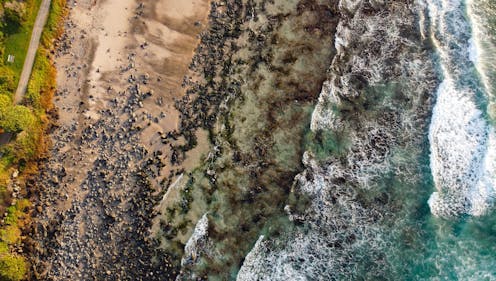
Australia has one of the longest coastlines in the world. And it’s packed with life of all shapes and sizes – from lively dolphins leaping offshore, to tiny crabs scurrying into their holes.
Here is just some of the diverse coastal life you might expect to see this summer, if you spend some time at the water’s edge.
Dolphins and turtles
We’re fortunate to have 15 species of dolphin (and one porpoise!) living in Australian waters. The large bottlenose dolphins (Tursiops spp.) are relatively common and can be spotted all the way around our coast.
You might see them playing in the waves, jumping out of the water, or even surfing among humans.
Bottlenose dolphins are generally grey with a lighter underside and have a pronounced, curved dorsal (upper) fin. Shutterstock
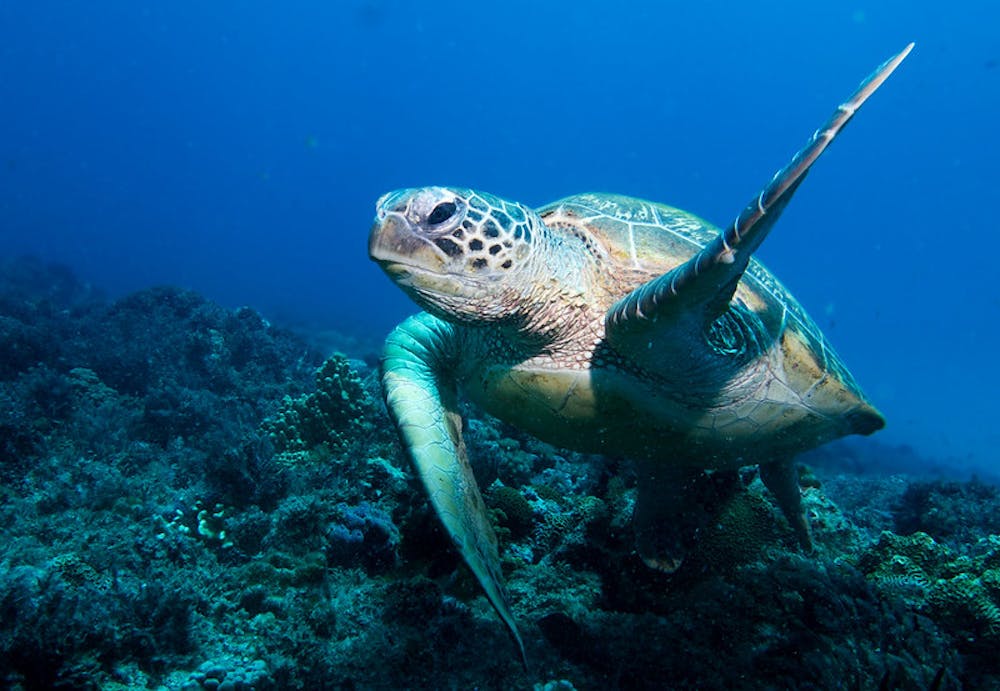
Turtles are less obvious, but can be spotted as they bob their heads out of the water to breathe. Australia’s coasts are home to six of the world’s seven sea turtles (all listed as either vulnerable or endangered).
The more common green turtle (Chelonia mydas) can be found everywhere except in the coldest southern waters. In summer, the turtles travel north to the tropical waters of QLD, NT and WA to reproduce – laying their eggs in the warm sand.
Green turtles often get tangled in discarded fishing gear and nets and can die from ingesting plastics, so don’t litter! John Turnbull/Flickr, Author provided
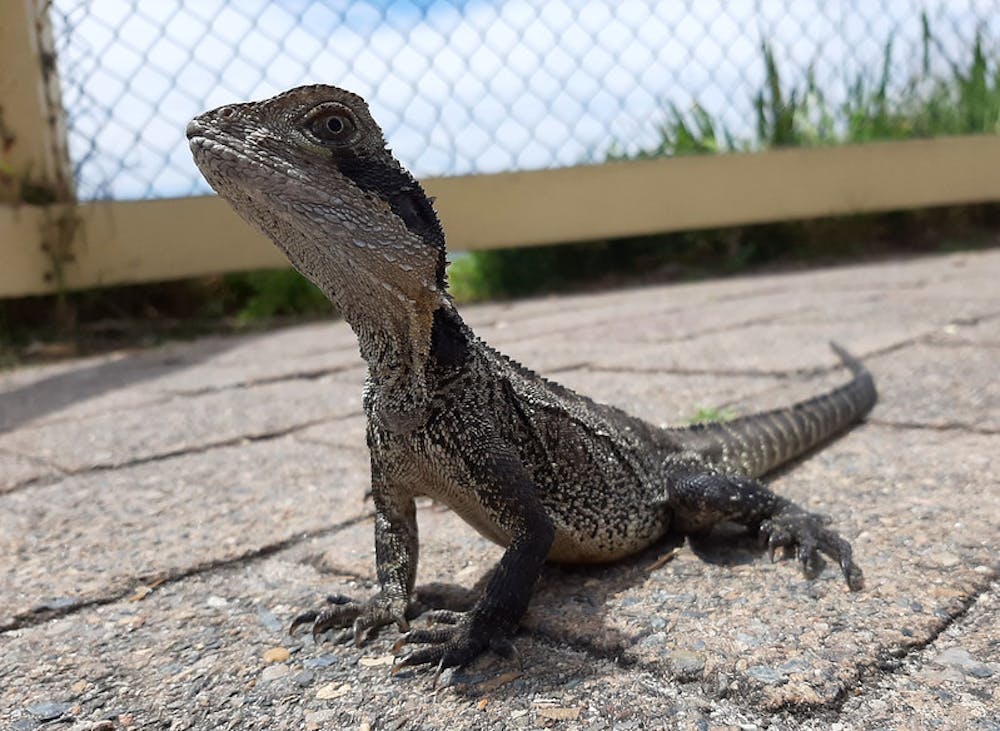
Another reptile you might encounter in the eastern coastal areas is the water dragon (Intellagama lesueurii). You’ll find them hovering around beach-side picnic areas, looking for tasty treats such as flies, ants, bugs, native fruits and flowers. As with all native animals, it’s important not to feed them.
Water dragons are good swimmers and stay near the water. John Turnbull/Flickr, Author provided
Heads in the clouds
If you cast your eyes up, you’ll see many coastal bird species soaring above.
Two of our favourites are the protected white-bellied sea eagle (Haliaeetus leucogaster) and the sooty oystercatcher (Haematopus fuliginosus). Both rely on marine animals for food, and nest in coastal areas right around Australia.
With a wingspan of up to 2m, you can find white-bellied sea eagles soaring above headlands. WikiCommons
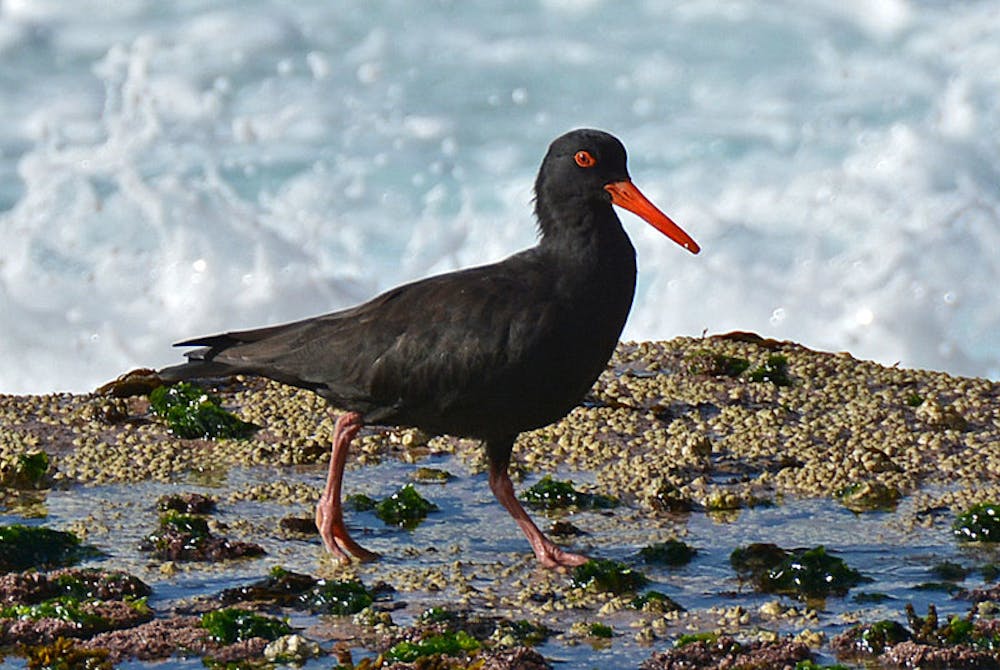
Meanwhile the sooty oystercatcher is, well, all black. It has distinctive bright-orange eyes and a long beak. Sooties can be found strutting among the seaweed and sea squirts on rocky shores.
As the name suggests, these birds enjoy eating molluscs and other invertebrates.
The sooty gives a loud whistling call before taking flight. John Turnbull/Flickr, Author provided
Crawling coastal critters
Many a critter will run for cover as sooties (and humans) approach, including the swift-footed crab (Leptograpsus variegatus). This crab’s mostly purple body is sprinkled with flecks of olive, and sometimes orange.
The species lives among the rocky shores around southern Australia, from WA to QLD, and even Tasmania.
The swift-footed crab can grow to about 5cm in shell width. John Turnbull/Flickr, Author provided
You’re much less likely to see another common crab, the sand bubbler. But you might see the results of its industrious activity on flat, wet and sandy areas.
Sand bubblers live in underground burrows, emerging during the low tide to filter sand through their mouthparts looking for food.
In this process, they end up making little pea-sized sand balls. When the tide starts to rise again, they return to their burrows and wait in a bubble of air, which they use to breathe, until the tide recedes.
Sand bubblers, from the family Dotillidae, are tiny and will quickly hide if they sense danger. John Turnbull/Flickr, Author provided
Magnificent molluscs
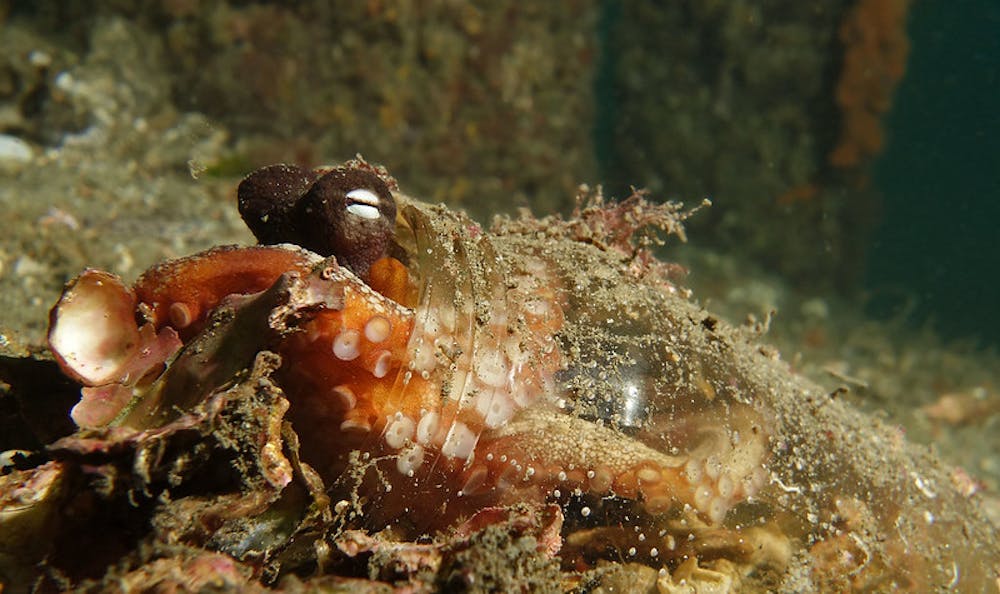
Molluscs are another diverse group of marine animals on our shores, and one of the best known molluscs is the octopus. Along with squid and cuttlefish, this trio of cephalopods is considered to be among the most intelligent invertebrates on Earth.
Near urban areas, octopuses have been known to make homes of bottles, jars and even discarded coffee cups. John Turnbull, Author provided
In the case of the octopus, this may be due to having nine “brains”, including a donut-shaped brain in the head and a mini brain in each tentacle, which allow the tentacles to operate somewhat independently.
Australia has several octopus species, from the gloomy octopus (Octopus tetricus) on the east coast, to the Maori octopus (O. maorum) in the south. The potentially deadly blue-ringed octopus (Hapalochlaena sp.) is found right around Australia.
This gloomy octopus made a move for my camera as I took its photo. John Turnbull/Flickr, Author provided
Octopus forage at night, in shallow waters and to depths exceeding 500 metres. During the day they’ll return to their lair, which may be a hole, a ledge or a crack in a rock. They’ll often decorate their home with the discarded shells of their prey.
You’ve probably seen jellyfish at the beach before, too. Species such as the moon jelly (Aurelia aurita) are harmless. But others can deliver a painful sting; bluebottles (Physalia utriculus) might come to mind here, also called the Pacific man-of-war.
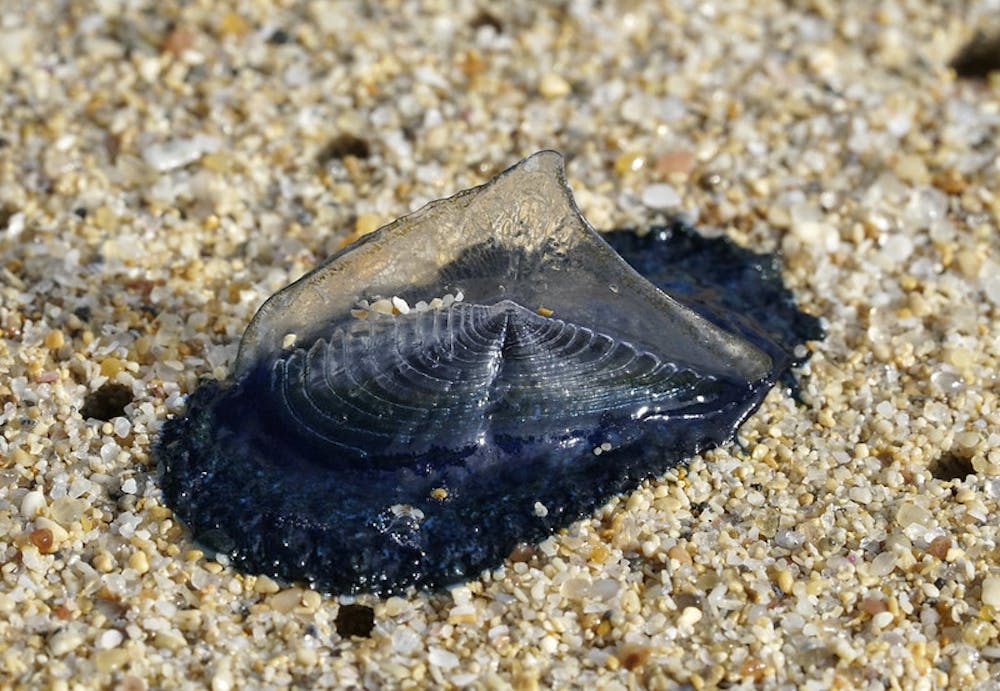
Bluebottles and their relatives, blue buttons (P. porpita) and by-the-wind sailors (V. velella) don’t swim. They float at the ocean’s surface and go where the winds blow, which is how they sometimes get washed onto the beach.
By-the-wind sailors have an angled ‘sail’ which takes advantage of the wind, moving them large distances to catch prey. John Turnbull/Flickr, Author provided
Rather than being one animal, they are made of many polyps or “zooids” living together in a floating colony. Each polyp has a specialised role such as flotation, stinging, catching prey, digestion or reproduction.
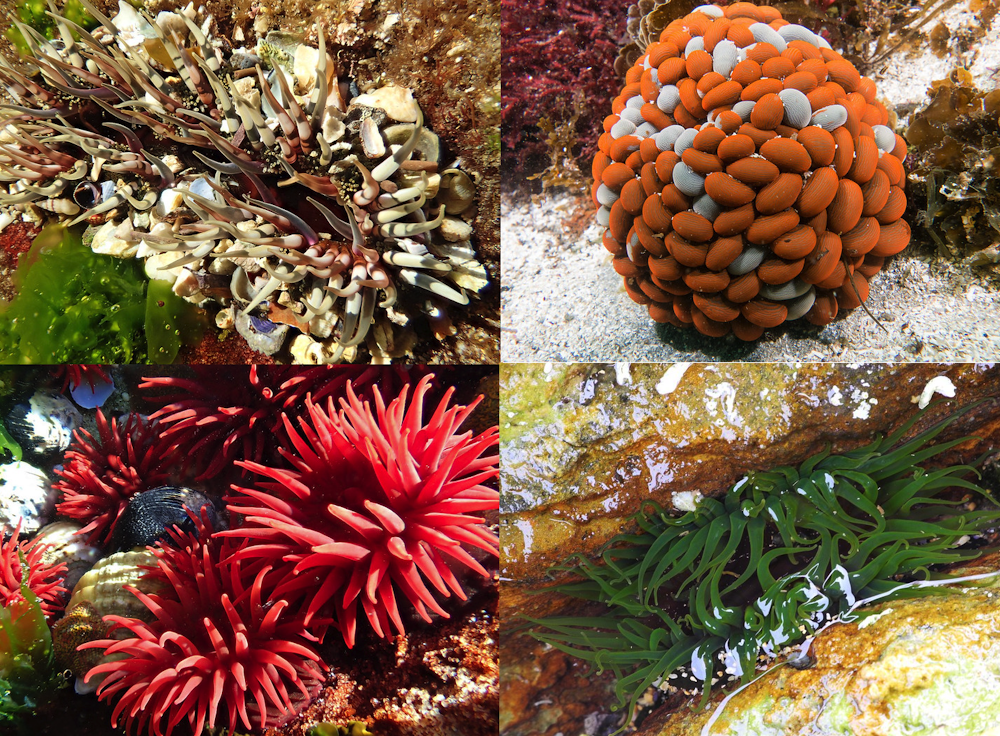
Anemones are also related to jellyfish, and come in many shapes and colours – from the bright red waratah anemone (Actinia tenebrosa) found in all states, to the multi-coloured shellgrit anemone (Oulactis muscosa) found from SA to QLD. They use their tentacles to sting and catch prey, but have no impact on humans.
Many anemones live among the rocks and rock pools in the intertidal area, although some species, such as the swimming anemone (Phlyctenactis tuberculosa), live as deep as 40m underwater.
Top left: shellgrit anemone, top right: swimming anemone, bottom left: red waratah anemone, bottom right: green snakelock anemone (Aulactinia veratra) John Turnbull/Flickr, Author provided
Fancy fishes
Of course there are many fish to be seen along our shores – more than we could possibly mention here! In the shallows, we particularly like to find big-eyed gobies.
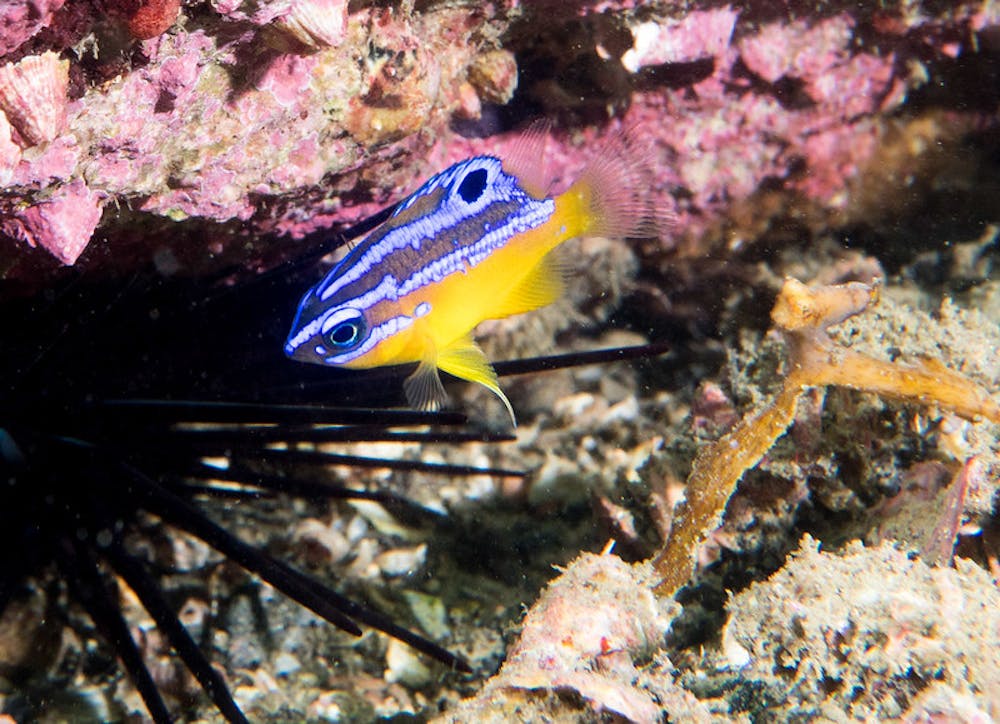
Some of the most colourful fish in this zone are young damselfish. These are most diverse in tropical Australia, but still found in temperate waters. Their juvenile forms can be striped and spotted, with colours ranging from bright yellow to iridescent blue.
Immaculate damsels are endemic to Australian waters. John Turnbull/Flickr, Author provided
If you upload your photos to the iNaturalist website, other users can help you ID them too. Uploading is also a big help to scientists, who then have a record of each sighting.
Finally, the diversity of marine life on our coast isn’t something we can afford to take for granted. So if you hit the beach this summer, make sure you:
do not bring any single-use plastics
never leave anything behind (and preferably pick up any litter you see)
and keep pets and cars away from sensitive habitats, such as dunes and bird nesting areas.
The authors do not work for, consult, own shares in or receive funding from any company or organisation that would benefit from this article, and have disclosed no relevant affiliations beyond their academic appointment.
Source: The Conversation (Au and NZ) – By Chris James, ARC DECRA Fellow, Centre for Hypersonics, School of Mechanical and Mining Engineering, The University of Queensland
Shutterstock
How exactly does a spaceship get into space? – Mathilde, age 5, Sydney
Hello Mathilde, thanks for this great question! It isn’t easy to get to space, and there are a few steps to it. First, let’s think about where “space” itself actually begins.
Well, some time ago, a number of experts decided on one point above us as being the point where “space” begins. They marked it with an invisible line called the Kármán line.
This line goes all around the Earth and is about 100km above us. To help you understand how high that is, a normal aircraft flies only about 10km above the ground.
The Kármán line is very high above us, and wraps all around the Earth. Shutterstock
Could we take a plane to space?
There are many reasons we can’t just use an aircraft to get into space. A major one is that the higher up we go, the less air there is – or specifically the less “oxygen” there is in the air.
The engine is what helps the aircraft fly. And just like car engines, aircraft engines need oxygen to work. Thankfully, the air we breathe is made up of 21% oxygen (although you can’t see it)!
Aircraft suck air in at the front, using big fans on either side. They then mix this air with jet fuel, creating a mixture of fuel and oxygen which is then burned, making the air hotter. The hot air is then shot out the back at a very high speed – pushing the aircraft forward.
The two large fans on the sides of an aircraft help suck in air, which has oxygen. Shutterstock
But an aircraft trying to fly too close to space, where there isn’t enough oxygen, would be like a person trying to breathe in a room with no air in it.
This is why we need rockets to get to space. The big difference between rocket engines and jet engines used in aircraft is rocket engines do not need to get oxygen from the air. Instead, they carry their own oxygen with them.
In some ways this is bad, since rocket engines have to carry something that an aircraft can easily get from all around it. That means there’s less room on a rocket for other cargo, such as passengers and luggage.
But on the bright side, being able to take oxygen along for the journey means rockets can work in space, much higher up than where most aircraft fly.
How does a rocket engine work?
Similar to an aircraft’s jet engine, rocket engines work by shooting very hot gas out from the back of the rocket. As the gas is pushed backwards, the rocket is pushed forward.
This is an example of a rule in science called the Third Law of Motion, first discovered by a famous scientist named Isaac Newton. This law says that every action has an equal and opposite reaction.
You can even make a very basic “rocket” at home with some help from an adult! If you get a balloon, blow it up, and let it go without tying off the end, the air inside will shoot out and send it flying around the room – just like a very badly controlled rocket!
Chris James does not work for, consult, own shares in or receive funding from any company or organisation that would benefit from this article, and has disclosed no relevant affiliations beyond their academic appointment.
The year is 2040 and Aotearoa New Zealand has reduced its greenhouse gas emissions consistent with the commitment to keep global heating below 1.5°C above pre-industrial temperatures.
The economy, society, local government, transport, housing and urban design, energy, land use, food production and water systems have all changed significantly. Fossil fuels have been mostly phased out internationally and import taxes are imposed on high emissions goods.
New Zealand is now a world leader in natural infrastructure, clean hydrogen energy, engineered wood and high quality low emissions food. Despite ongoing challenges, with a prosperous economy, most people think the transition was worth it. Cities are more pleasant places to live, air and water are cleaner, nature is more abundant.
Following the emissions budgets stipulated by the Zero Carbon Act in late 2021, emissions are now properly priced into all economic decisions. The Emissions Trading Scheme has been reinforced and the price of emitting carbon has stabilised at $300 per tonne, after hitting $75 in 2022 and $200 by 2030.
In 2026, New Zealand signed the International Treaty to Phase out Fossil Fuels, which prohibits fossil fuel extraction, phases out use and requires international cooperation on renewable energy.
Carbon import taxes mean many high emissions commercial activities are no longer economically viable. Trade unions have played a major role in the industrial strategy underpinning the transition to a lower emissions economy.
Shutterstock
Local focus
The Māori economy is bigger than any other sector and has benefited from wider international recognition of the long term value of climate and biodiversity work.
New Zealand’s economy is based on productive activity that stays within planetary boundaries – including emissions and pollution of land and water – while respecting social requirements, such as a decent standard of living for all.
Building on their successful response to the COVID pandemic, marae-based organisations are prominent as centres of excellence for climate and economic strategy, health and social services, managed retreat from coastal areas and natural infrastructure development.
Public financing was radically rebalanced in the 2020s, delivering more for local government and a greater partnership between councils, government and Māori organisations. This has enabled far better delivery of local services and much more meaningful connections within communities.
Councils and council organisations laid the groundwork for the climate transition, helping address the unequal impacts of climate change on different groups. Councils and mana whenua collectively administer substantial funds for regional development.
Shutterstock
Rail returns
The government’s 2022 Climate Budget provided the massive injection of funds required to redesign our cities, which are now organised around mass transit, safe and segregated routes for cycling and vibrant pedestrian areas. People can access fast, frequent light rail and dedicated busways with low cost fares. Less road space is required for driving, which is more accessible now for those who need it, including disabled people and service vehicles.
People travel between cities primarily via electric rail, managed by a new national passenger rail agency InterCity, which acquired the InterCity regional bus operator in 2023. Through major reforms in 2024, KiwiRail became a dedicated rail freight operator. A new government agency, OnTrack, oversees maintenance and renewal of tracks and rail infrastructure.
Passenger rail services run across the North Island main trunk line on improved electrified tracks at up to 160kph. South Island rail uses hydrogen trains fuelled by locally produced green hydrogen.
Most of the work to upgrade transport, housing and energy infrastructure has been done by a new Ministry of Green Works set up in 2025. This Ministry partners with local hapū and iwi, as well as councils through regional hubs. It is backed by the government’s expanded Green Investment Finance company.
Shutterstock
Housing for all
Anger at the divide between property owners and renters culminated in a general rent strike in 2024. The government responded with new financial rules ending the treatment of housing as an asset class. Kāinga Ora, Māori organisations and councils have undertaken a massive public housing construction effort.
Most new housing is now public infrastructure rather than private homes built to store individual wealth. Public ownership has expanded, in particular for entities that provide core services such as transport, energy and water.
In 2024, the government worked with councils to focus plans on quality universal design housing. Since the new building code was adopted in 2025, all new homes have high standards for energy efficiency and accessibility. Higher density apartments line public transport routes in the main centres, with terraced homes in smaller towns. Structural timber has replaced concrete and steel in many construction projects.
Changes to housing, transport and urban design have supported improvements in health, well-being and physical activity. Health improved dramatically after universal basic services were introduced in 2024 to cover free visits to the doctor and dentist as well as free childcare and elderly care.
Shutterstock
Energy goes green
Electricity generation has doubled, with a mix of wind, solar and geothermal. Many more energy storage facilities exist, including pumped hydroelectricity. Distributed energy is commonplace. Many councils have helped their communities set up local solar schemes and dozens of towns are completely independent of the national grid.
Green hydrogen is produced at the converted aluminium smelter at Tiwai Point using hydroelectricity. This is used in heavy industry and transport and exported from Southport.
In 2027, after New Zealand blew its first carbon budget, the government replaced MBIE with a new Ministry for Economic Transition. The Ministry oversaw the transition to green jobs via a universal job guarantee scheme.
It also supported a dramatic reduction in energy use in all parts of society and the economy. This effort had a greater impact on emissions reduction than the replacement of energy and fuel with renewable sources.
In 2025 the government established a Natural Infrastructure Commission. The term “natural infrastructure” emerged in the 2020s as a term to include native forests, wetlands, coastal environments and other ecosystems that store and clean water, protect against drought, flooding and storms, boost biodiversity and absorb carbon.
The Commission has supported massive land restoration for carbon sequestration and biodiversity purposes, with an annual budget of NZ$5 billion from emissions revenue. Among other uses, the fund compensates land owners for land use changes that reduce emissions and build up resilience.
Under the new Constitution of Aotearoa adopted in 2040, ownership of the Conservation Estate transferred from Crown ownership to its own status of legal personhood.
International carbon taxes have transformed agriculture. Dairy herds have reduced in size and New Zealand is known for organic, low emissions food and fibre. High quality meat and dairy products, as well as plant-based protein foods, supply international markets.
Seaweed and aquaculture operations have flourished. Along with regenerative agriculture, this transition has reduced pollution and emissions. With native ecosystems regenerated, tōtara and harakeke can now be sustainably harvested for timber and fibre.
In urban and industrial settings water use has dramatically reduced. Every business, home and building stores its own water. Water use is measured and charges are levied for excess water use beyond the needs of the household. No water is ever wasted.
Shutterstock
A better place
The country feels steadier than 20 years ago. There is hope for the future in a world that was full of uncertainty after the pandemic stricken early 2020s.
Many government agencies and councils are now seen as useful and relevant, having been equipped with the money to provide housing, social services, environmental restoration and support for economic and land use change.
Moving away from high emissions exports was more successful than anyone expected, but it took strict rules to make it happen. Some in the business sector opposed more government direction and regulation, but it’s widely accepted that relying on market forces would not have delivered a successful transition.
That approach had driven the country to the brink of failure on climate, biodiversity and social cohesion. Having been leaders in milk powder and tourism, the country now leads on natural infrastructure and the future of food, timber and energy.
In 2040, Aotearoa is a better place to be.
Thomas Nash is a regional councillor for Greater Wellington Regional Council and a member of the Green Party. He is a committee member of New Zealand Alternative, and works as an adviser to Auckland-based social enterprise Big Street Bikers.
Source: The Conversation (Au and NZ) – By Leah Ruppanner, Associate Professor in Sociology and Co-Director of The Policy Lab, The University of Melbourne
The COVID pandemic has made the very private issue of the domestic division of labour – the way housework and childcare are divided – a very public issue.
During lockdowns, the burden of housework and childcare grew significantly for men and women in opposite-sex and same-sex couples both in Australia and elsewhere.
Overnight, homes became offices, childcare centres and makeshift schools and it was mothers who largely stepped into these teaching and caring roles at the expense of their anxiety levels and sleep.
While the pandemic exacerbated the physical demands of care – housework and childcare – it also exacerbated another part of the work that keeps households and families running: the mental load.
A lot has been written about the mental load over the past two years, with many confusing the mental load with household labour – cleaning and cooking or caring after children – or planning tasks involved with childcare. But the mental load is so much more.
In our recently published research, we define the mental load as the combination of two types of work or labour: cognitive labour and emotional labour.
The cognitive aspect of the mental load involves the scheduling, planning, and organising required to support the smooth operating of families. This type of work ranges from organising a play date to planning dinner.
We argue this cognitive work becomes a load or the mental load when it has an emotional element, for example, when there is worry or stress attached to these tasks.
Some have described list-making as the mental load, but list-making isn’t always stressful or emotional and, importantly, list-making has a finite beginning and end.
But, once cognitive tasks like list-making take on an emotional element – like worry about whether Nana will like her present, anxiety about how relatives will get along at holiday dinners and stress about filling stockings while finishing work – then it becomes the mental load.
How does the mental load operate?
We argue the mental load operates in families and societies in three ways.
First it’s invisible – it’s the type of work that is done internally. Unlike housework or childcare, it’s unseen and therefore hard to recognise.
Second, the mental load is boundaryless. Because it’s invisible, it can be performed anywhere or at anytime.
American sociologist Arlie Hochschild termed women’s domestic labour done after work as the “second shift” but the mental load has no shifts – it can be done before, during and after work or even during time that should be spent sleeping.
And lastly, the mental load is enduring, meaning it never ends. Unlike housework such as like cooking or cleaning, thinking and caring about family members never ends, which is why the mental load can be so burdensome and Nana still reminds you to take a jacket.
How can we lessen mental loads in 2022 and beyond?
Individuals and society can do a number of things to decrease the mental load.
1) Make the mental load more visible by quantifying it
We have no robust, standardised and nationally representative measure of the mental load. This means, unlike housework and childcare, we have no idea the volume and consequences of the mental load for Australians.
Recent reports on housework show women do 21 more hours of unpaid work than men. They may also spend the bulk of the day thinking about, planning and worrying about their families.
The mental load can last long after your children have left home. Clem Onojeghuo
Yet, we have no measure of this labour and, importantly, we don’t know how men carry the mental load either.
Quantifying and capturing how much time we spend on the mental load and how this is shared between couples will help lay the groundwork for change.
2) Acknowledge the toll on women
The pandemic has left workers burnt out, stressed and overwhelmed by the intensity of balancing work, homeschooling and full-time care demands while isolated at home.
Mothers are exhausted not only from the physical demands of work and family but also the cognitive labour of holding it all together at work while worrying about torpedoing children’s educational futures from keeping them home, alone and glued to screens.
The mental load, as the unrelenting internal nag, is a drain on well-being with serious consequences for economic productivity and fatigue.
The mental load is a national health emergency and should be treated seriously by workplaces and governments alike.
3) Help families better reconcile work and family demands
Both organisations and governments need to be better at helping families combine their work and care responsibilities. The mental load overloads women (and some men) particularly at work when they are thinking and worrying about their children’s needs.
Workplaces need to improve support for families to lessen the mental load. This may mean more working remotely or concrete programs to support workers’ mental loads. This is also likely to improve workers’ productivity.
At the same time, governments need to provide better care infrastructure to support families, for example more universal affordable childcare, supports for transitioning children to and from school, and better aged care. This will lessen workers’ worries about the experiences of loved ones while they’re engaged in paid work.
Ultimately, the mental load is a mental health issue and companies and governments should treat it as such. This will unburden families, and particularly mothers, from managing the mental load alone.
Leah Ruppanner receives funding from the Australian Research Council.
Brendan Churchill receives funding from the Australian Research Council.
Liz Dean does not work for, consult, own shares in or receive funding from any company or organisation that would benefit from this article, and has disclosed no relevant affiliations beyond their academic appointment.
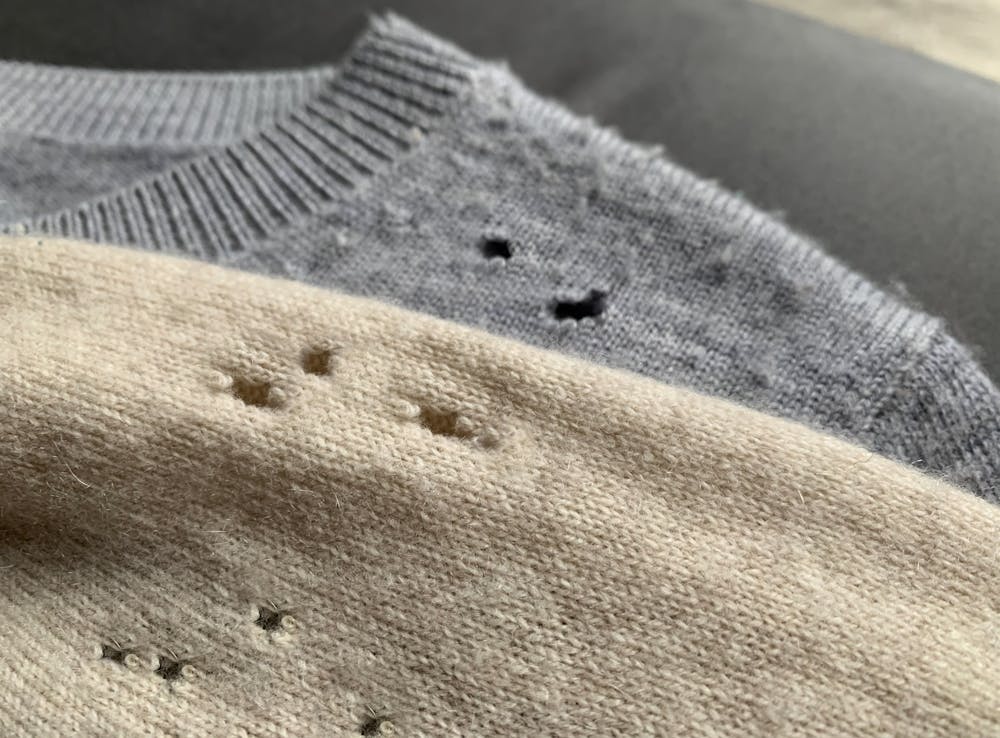
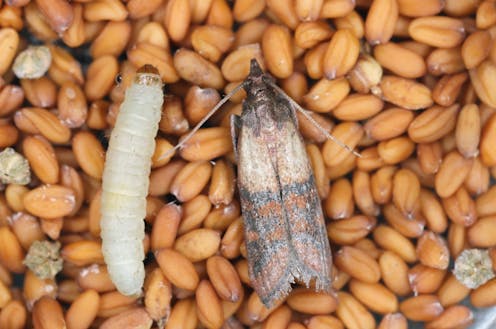
Have you opened your post-lockdown wardrobe, only to discover some of your beautiful summer clothes have holes in them? You’re probably blaming clothes moths but the real culprits are the larvae (caterpillars).
But who are these moths? The fact that they’re feeding on your precious clothes, fabrics and yarn actually reflects an interesting and – for moths – unusual biology.
What can you do to protect your precious clothes, fabrics and yarn from the hungry larvae? Shutterstock
An old foe
Early references to clothes moths in Greek and Roman literature suggest humans have been battling clothes moths for thousands of years. Clothes moths are part of an ancient lineage of moths (Tineidae) and as such have preserved some quirky behaviours and adaptions that have led to a few species becoming pests.
The most well-known species of clothes moths in Australia are the webbing clothes moth (Tineola bisselliella) and the case-making clothes moth (Tinea pellionella). These common names refer to the appearance of silk spun by the caterpillars as shelter.
The adult clothes moth ranges in size from 4mm to 9mm – about the size of a grain of rice. Once the larvae turn into adult moths, they never eat again.
An inconvenient diet
The evolutionary origin of clothes moths diverged from 98% of all other moths a long time ago, so these moths do some things differently from most other moths.
Most tineid species don’t feed on living plants like “normal” caterpillars, but on rotting wood, fungi, lichens, detritus and even bat poo in caves. So it is unsurprising some species even feed on the keratin (a kind of protein) found in natural fibres.
They love to nibble on items derived from animals such as fur, wool and silk. But the synthetics or mixed fibres in your wardrobe aren’t safe either. Clothes moth larvae have been known to feed on synthetic and blended fibres, particularly those stained with sweat or food. The preferred diet of these caterpillars means some species have become unwelcome pests in our homes.
They love to nibble on items derived from animals such as fur, wool and silk. But synthetics or mixed fibres aren’t safe either. Shutterstock
Not all clothes moths are pests!
Fortunately, only a few species from this group containing over 2,600 species are pests. In Australia we have over 190 known species of moths belonging to the clothes moth group, and many more unnamed specimens located at the Australian National Insect Collection are waiting for scientists to formally name them.
Researchers are working to understand more about the diversity and behaviour of moths that feed in unconventional ways, including the authors of this article. One of us (Ying Luo) is currently studying moths whose larvae feed inside a leaf, rather than on the outside of a leaf. Luckily, you won’t find these inside your wardrobe.
Why are they in my house – and how do I get rid of them?
The introduced clothes moths are a well-established pest in Australia and were brought here by accident. But how did they get into your house?
Sadly, you probably brought the eggs or larvae home yourself. They may have been hidden in a piece of clothing thrifted from the op-shop, borrowed from a friend or even bought new from a big brand store.
One of the best methods for keeping on top of clothes moths is to regularly check your clothing. Like their wild cousins, clothes moths enjoy dark, enclosed spaces.
You could try packing your clothes away in plastic tubs or bags, but this may mean you check on your clothes less often. You could risk sealing in some clothes moth larvae with your clothes.
If you haven’t been using certain clothes – the summer clothes packed away during winter for example, or any work or going-out clothes that stayed in the wardrobe during lockdown – then this is the perfect environment for clothes moths larvae to settle in for a nice, undisturbed feast.
Bring them out for washing and airing every now and then, and you could even give your wardrobe a refresh while you’re at it.
If you already have an infestation, you should remove all your clothing from the wardrobe and give the space a good vacuum. Some larvae may even be present in the carpet (if you have it). Wash all clothing before putting it back into the wardrobe.
What about moth balls?
Modern mothballs are a crystallised form of a chemical known as 1,4-dichlorobenzene (C₆H ₄Cl₂).
Over time, it turns (or “sublimates”) into a gas, which produces the strong smell you probably associate with moth balls.
They are used to deter moths – but if you already have an infestation, mothballs will not help.
And you may need quite a high concentration to be effective. At that point, you might not particularly enjoy the strong smell of the mothballs on your clothes.
We use a commercial form of “moth balls” to deter pests, and quarantine incoming specimens to prevent future infestations. But don’t worry about quarantining your clothes, we’ve found that careful observation is also an effective way to stay on top of pesty moths!
If you already have an infestation, mothballs will not help. Shutterstock
Ying Luo’s PhD is funded by an ABRS grant. She is also affiliated with the Research School of Biology at ANU, as her PhD is done through ANU.
Andreas Zwick is a research scientist in the Australian National Insect Collection, CSIRO. He is affiliated with the Australian Entomological Society, the Societas Europaea Lepidopterologica and the Japan Heterocerists’ Society.
This article is part of a series explaining how readers can learn the skills to take part in activities that academics love doing as part of their work.
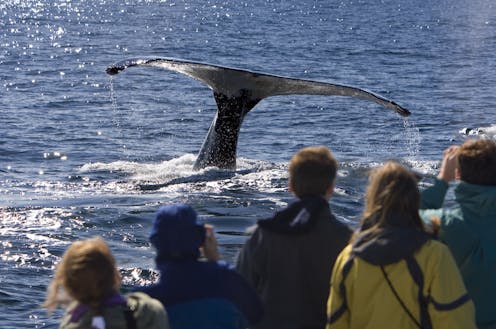
There’s no doubt about it, seeing a whale rise from the depths of the ocean is something special. Whether it’s the first time you’ve seen a whale or you’ve seen many like I have, it’s the thrill of hearing and sometimes smelling whale breath that gets you back for more! It’s time to dust off your binoculars because we’re about to dive into learning to whale watch.
When to see whales
Whale watching is a great outdoors activity we can all enjoy from May to November each year in Australia. Thousands of humpback whales migrate from their feeding waters of Antarctica to the warm northern breeding waters off the Kimberley, Western Australia, and the Great Barrier Reef, Queensland.
These giants traverse the sea and play important ecological roles in our marine environment.
What to look for
Ironically, trying to spot an animal the size of a bus is not always easy.
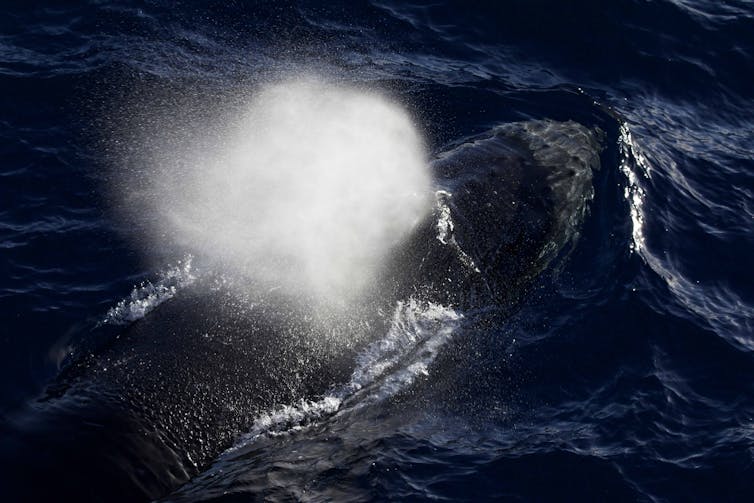
One of the first things to look for is that puffy tell-tail sign of a whale, its blow. Whales are mammals like you and I, which means they breathe air. Their nose is located on top of their head like an in-built snorkel.
A humpback whale takes a breath in the cool waters of Antarctica. Photo: Vanessa Pirotta, Author provided
This allows whales to breathe on the go and without having to raise their heads out of the water. As they breathe out you can see a spout or puffy blow as a combination of water and air is blasted upwards as they exhale. This air comes directly from their lungs and is also known as whale snot.
Whale blow can stick around for longer when weather conditions are ideal such as times with good visibility and low wind. This is a great advantage for spotting a whale.
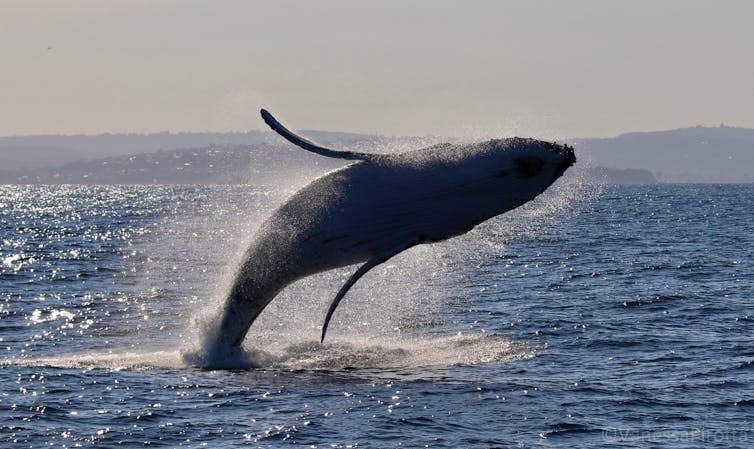
If you’re lucky, you may also be able to spot a whale breaching, which is when they jump out of the water. Humpback whales are most famous for this. We don’t exactly know why whales do this but it most likely serves as a form of communication with other whales.
A humpback whale breaches off Manly, Sydney, Australia. Photo: Vanessa Pirotta, Author provided
You may also be able to see other behaviours such as pec (arm) and tail slapping, resting at the surface and spy hopping – where a whale brings its mouth and eyes out of the water to look around.
After a dive, whales sometimes leave a whale footprint, which is a circular disruption at the surface caused by the whale’s tail. This is where the whale last surfaced. The whale will now likely be further ahead of this location.
After a whale surfaces, they sometimes leave a visible footprint at the surface.
Boat or land-based whale watching, what’s better?
It depends. Some of the best whale watching I’ve ever had has been from land. High land-based viewing platforms such as those in national parks enable you to see further and wider out to sea. This allows you to document a lot more whale action but from a distance.
But if you’re after the salt in your face and the thrill of being on the water, then whale watching with a responsible ecotourism company is your best option. Australia has rules and regulations in place to keep both whales and humans safe from each other. This means humans must keep their distance from whales when on the water.
In some cases, whales may choose to approach your vessel and swim around at close range. This is known as a whale mugging and there is nothing you can do but turn off the boat engines and enjoy the show.
Whale mugging off the New South Wales south coast, Australia.
Tools people can use to whale watch
Whale watching is an outdoors activity so prepare for any type of weather. I always suggest a weatherproof jacket to keep warm and protected from the wind and rain. I also recommend sunglasses, sun screen, a hat and comfy shoes.
If you’re a keen wildlife photographer like me, then pack your camera. Alternatively, a phone can be used to video or take photos.
Finally, don’t forget your binoculars. These can be great for seeing whales a little closer, but don’t worry if you don’t own a pair. I personally prefer spotting whales first with the naked eye.
Tips and tricks for success
It’s important to know whales don’t sit at the surface breathing all the time. Depending on what they are doing, they will likely spend time swimming underwater. This can range from a few minutes to up to 20 minutes for humpback whales. So be patient.
Scanning the horizon from left to right is a great tip when starting, especially from land. Start from one side and move along the horizon slowly. This will increase your chances of picking up anything between you and the horizon.
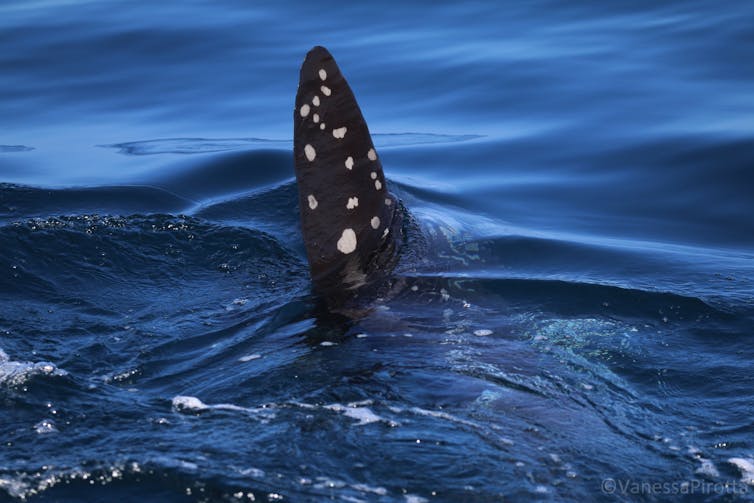
Spotted: a sunfish swims near the surface off Sydney, Australia. Photo: Vanessa Pirotta
If on a boat, be aware that you’re likely moving, so try to use landmarks or other boats as potential navigational markers. Keep an eye out for anything at the surface that moves or pops up suddenly. I’ve seen some amazing things while waiting for whales, such as jumping sharks and sunfish.
Dive in
Whale watching is a great annual outdoor activity anyone can do. Whether you’re watching from land or sea, keep an eye out because you never know when you might spot your next or very first whale.
Vanessa Pirotta does not work for, consult, own shares in or receive funding from any company or organisation that would benefit from this article, and has disclosed no relevant affiliations beyond their academic appointment.
COVID-19 has dramatically changed how businesses and consumers behave. We’ve seen panic buying, the rise of the “homebody economy” and a strong shift towards contactless shopping.
As we emerge from the worst of the pandemic, it seems the right time to reflect on the most important changes in consumer behaviour we’ve seen, and to make some predictions about COVID-19’s lasting and pervasive effects on how we shop.
Pandemic purchasing
One of the first impacts of COVID-19 was supermarket shelves being repeatedly stripped of toilet paper and other products ahead of lockdowns.
One debate this behaviour sparked was about how much it could be considered irrational panic buying – or if it was rational to stockpile in response to the irrational behaviour of others.
It was a real-life lesson in game theory. Decisions that make perfect sense for individuals can add up to a bad outcome for the community.
Spending more money at the supermarket was at least possible.
Consumption patterns changed significantly due to closed borders, restricted shopping, stay-at-home orders and general uncertainty.
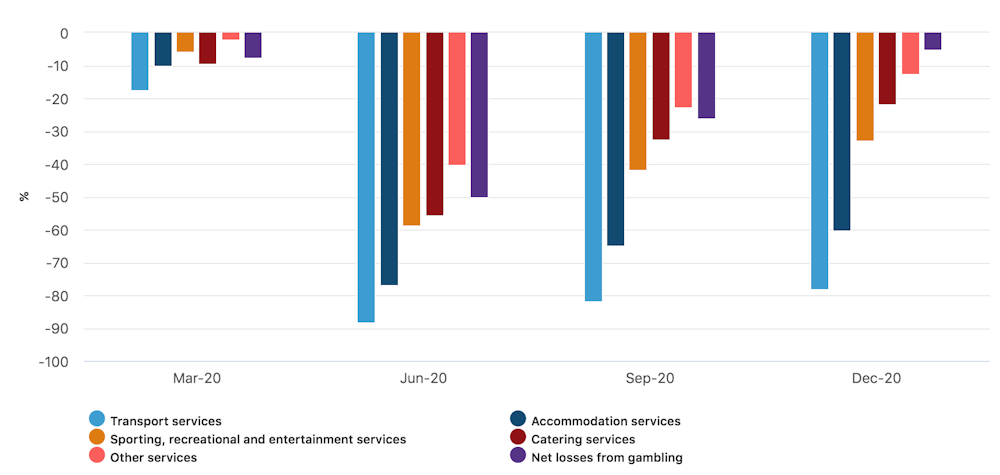
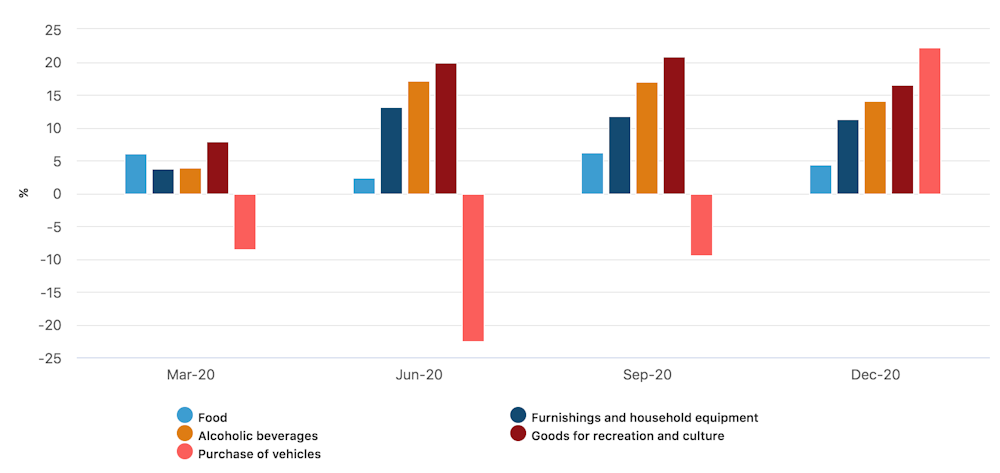
Data from the Australian Bureau of Statistics shows large drops in spending on transport, accommodation, recreation and entertainment services, and catering.
Spending on food increased marginally, and on alcohol even more. The main reasons cited for increased drinking, according to one study, were stress (45.7%), increased alcohol availability (34.4%) and boredom (30.1%).
It is too early to tell to what extent these pandemic-driven shifts will translate into permanent behavioural change. However, research published last month, based on surveying 7,500 households in France, Germany, Italy, the Netherlands and Spain, supports the likelihood of at least some long-term sectoral shifts in consumer behaviour.
Certainly many higher-income households have the money to splash out on a holiday, or new car, or home renovation, with Australians banking an estimated A$140 billion in extra savings during the pandemic.
Other research, such as the National Australia Bank’s quarterly Consumer Sentiment Survey, suggests the pandemic has engendered greater caution. In its most recent survey, 37% said they were mindful or careful of where they spent their money (42% of women and 33% of men). In terms of purchasing influences, 43% nominated supporting local businesses, compared with 15% environmental issues and 14% social concerns such as labour practices.
In NAB’s consumer sentiment survey 43% said their purchases were influenced by the desire to support local business. Shutterstock
Some have wondered if, in the wake of COVID-19, we are about to experience another “Roaring Twenties” – emulating that period of economic prosperity and cultural dynamism in the 1920s following the deprivations of the first world war and the “Spanish flu” epidemic.
The circumstances are not exactly analogous. But new technologies and changes in habits are likely to drive several long-term changes in the way we shop.
Going contactless
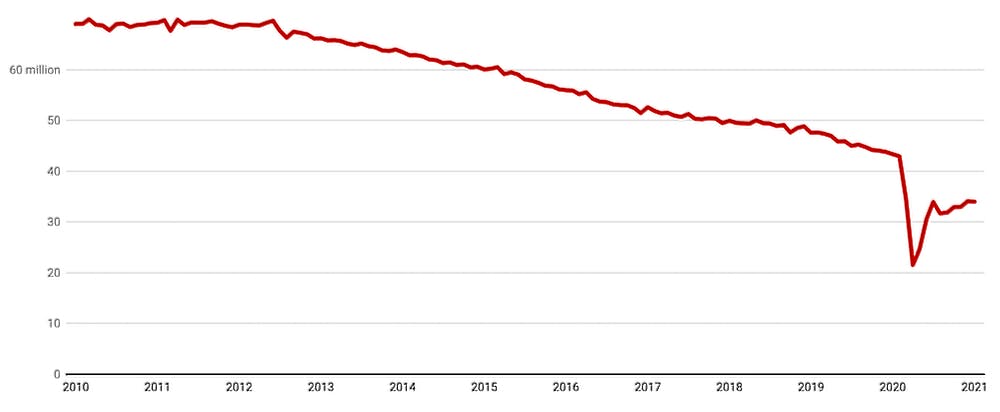
Our desire to reduce physical contact accelerated contactless payment methods. Research (from the Netherlands) suggests this will, for most, be a permanent change, accelerating a steady decline in the use of cash for shopping.
Ways to buy things without ever having to step inside a shop – such as curbside pick-up and home delivery – should also continue. In 2021 we’ve seen a number of startup businesses promising grocery deliveries in 15 minutes.
“Omni” experiences
Increasingly our buying behaviour will be shaped by what marketing experts call omnichannel shopping – a fancy word meaning using a variety of experiences to make a purchase.
You might, for instance, go into a store to try out headphones, then go online to read third-party reviews and compare prices from different retailers.
Technologies such as augmented reality will facilitate this trend. For example, IKEA’s Place app allows you to see how furnishing will into your space.
IKEA’s ‘Place’ app. IKEA
More and more what were once physical experiences will have their digital variants, from attending university to having an appointment with a health professional to taking a tour of the British Museum or exploring the Grand Canyon. Though these cannot replicate the real experience, they will be an increasingly common way to “try before you buy”.
The future of shopping will gradually merge the digital and physical. But whatever changes, some things will remain constant: the human desire to make experiences convenient, fun and meaningful.
Adrian R. Camilleri does not work for, consult, own shares in or receive funding from any company or organisation that would benefit from this article, and has disclosed no relevant affiliations beyond their academic appointment.
Most of the classic New Year resolutions revolve around improving your health and lifestyle. But this year, why not consider cleaning up your passwords too?
We all know the habits to avoid, yet so many of us do them anyway: using predictable passwords, never changing them, or writing them on sticky notes on our monitor. We routinely ignore the recommendations for good passwords in the name of convenience.
What’s wrong with your pa$$w0rd?
Choosing short passwords containing common names or words is likely to lead to trouble. Hackers can often guess a person’s passwords simply by using a computer to work through a long list of commonly used words.
The most popular choices have changed very little over time, and include numerical combinations such as “123456” (the most common password for five years in a row), “love”, keyboard patterns such as “qwerty” and, perhaps most ludicrously, “password” (or its Portuguese translation, “senha”).
2017-2019* list of common passwords from SplashData, 2020-2021# from NordPass.
Experts have long advised against using words, places or names in passwords, although you can strengthen this type of password by jumbling the components into sequences with a mixture of upper- and lowercase characters, as long as you do it thoroughly.
Complex rules often lead users to choose a word or phrase and then substitute letters with numbers and symbols (such as “Pa33w9rd!”), or add digits to a familiar password (“password12”). But so many people do this that these techniques don’t actually make passwords stronger.
It’s better to start with a word or two that isn’t so common, and make sure you mix things up with symbols and special characters in the middle. For example, “wincing giraffe” could be adapted to “W1nc1ng_!G1raff3”
These secure passwords can be harder to remember, to the extent you might end up having to write them down. That’s OK, as long as you keep the note somewhere secure (and definitely not stuck to your monitor).
Passwords on a sticky note are still a bad idea in the workplace.
Reusing passwords is another common error – and one of the biggest. Past data leaks, such as that suffered by LinkedIn in 2012, mean billions of old passwords are now circulating among cyber criminals.
This has given rise to a practice called “credential stuffing” – taking a leaked password from one source and trying it on other sites. If you’re still using the same old password for multiple email, social media or financial accounts, you’re at risk of being compromised.
Pro tip: use a password manager
The simplest and most effective route to good password hygiene is to use a password manager. This lets you use unique strong passwords for all your various logins, without having to remember them yourself.
Password managers allow you to store all of your passwords in one place and to “lock” them away with a strong level of protection. This can be a single (strong) password, but can also include face or fingerprint recognition, depending on the device you are using. Although there is some risk associated with storing your passwords in one place, experts consider this much less risky than using the same password for multiple accounts.
The password manager can automatically create strong, randomised passwords for each different service you use. This means your LinkedIn, Gmail and eBay accounts can no longer be accessed by someone who happens to guess the name of your childhood pet dog.
If one password is leaked, you only have to change that one – none of the others are compromised.
There are many password managers to choose from. Some are free (such as Keepass) or “freemium” (offering the option to upgrade for more functionality like Nordpass), while others charge a one-off fee or recurring subscription (such as 1Password). Most allow you to securely sync your passwords across all your devices, and some let you safely share passwords between family members or work groups.
You can also use the password managers built into most web browsers or operating systems (with many phones offering this functionality in the browser or natively). These tend to have fewer features and may pose compatibility issues if you want to access your password from different browsers or platforms.
Password managers take a bit of getting used to, but don’t be too daunted. When creating a new account on a website, you let the password manager create a unique (complex) password and store it straight away – there’s no need to think of one yourself!
Later, when you want to access that account again, the password manager fills it in automatically. This is either through direct integration with the browser (typically on computers) or through a separate application on your mobile device. Most password managers will automatically “lock” after a period of time, prompting for the master password (or face/finger verification) before allowing access again.
Protect your most important passwords
If you don’t like the sound of a password manager, at the very least change your “critical” account passwords so each one is strong and unique. Financial services, email accounts, government services, and work systems should each have a separate, strong password.
Even if you write them down in a book (kept safely locked away) you will significantly reduce your risk in the event of a data breach on any of those platforms.
Remember, however, that some sites provide delegated access to others. Many e-commerce websites, for example, give you the option of logging in with your Facebook, Google or Apple account. This doesn’t expose your password to greater risk, because the password itself is not shared. But if the password is compromised, using it would grant access to those delegated sites. It is usually best to create unique accounts – and use your password manager to keep them safe.
Adopting a better approach to passwords is a simple way to reduce your cyber-security risks. Ideally that means using a password manager, but if you’re not quite ready for that yet, at least make 2022 the year you ditch the sticky notes and pets’ names.
Lorrie Cranor receives funding from Bosch, Carnegie Corporation of New York, Carnegie Mellon CyLab, DARPA, DuckDuckGo, Facebook, an endowed professorship established by the founders of FORE Systems, Google, Highmark Health, Innovators Network Foundation, NSA, and NSF. She is affiliated with the Computing Research Association, the Future of Privacy Forum, the Aspen Institute Cybersecurity Group, the Center for Cybersecurity Policy and Law, and the Consumer Reports Digital Lab Advisory Council.
Paul Haskell-Dowland does not work for, consult, own shares in or receive funding from any company or organization that would benefit from this article, and has disclosed no relevant affiliations beyond their academic appointment.
New Zealand’s fossil record of land dinosaurs is poor, with just a few bones, but the collection of ancient extinct marine reptiles is remarkable, including shark-like mosasaurs and long-necked plesiosaurs.
Plesiosaurs first appeared in the fossil record around 200 million years ago and died off, alongside dinosaurs, 66 million years ago.
They are best known for the fanciful but appealing idea, suggested by British scientist Sir Peter Scott, that the fabled Loch Ness monster was in fact a plesiosaur that somehow outlasted all other giant reptiles and remained undetected throughout human history.
In a recent research project, we used medical CT imaging to scan plesiosaur fossils collected in New Zealand back in 1872.
The scans reveal a new level of detail, confirming that plesiosaurs swam mostly with their heads down, in contrast to the Loch Ness creature, and showing a close link between the New Zealand fossils and South American specimens from 70 million years ago.
In 1872, the Canterbury Museum director Julius von Haast employed self-taught Scottish geologist Alexander McKay to undertake geological surveys and collect fossils.
Von Haast had heard that explorer and amateur scientist Thomas Cockburn-Hood had discovered significant reptile fossils in the upper Waipara Gorge, in the Canterbury region. Cockburn-Hood described the area as “the saurian beds”, and we now know the marine sediments preserved fossils from 70 million years ago.
McKay went to the Waipara during the winter of 1872, and he was spectacularly successful, collecting several partial skeletons of marine reptiles and hundreds of bones.
Among this material were two rather unimpressive, compressed, semi-spherical groupings of bones. These sat in Canterbury Museum’s storerooms, unidentified and stuck inside the concretions they were excavated in, for over 120 years.
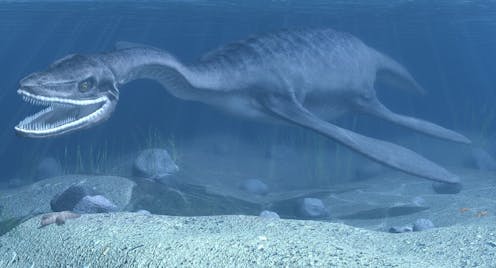
An artist’s impression of an elasmosaur. Flickr/Peter Montgomery, CC BY-ND
South American link
It would take until the late 1990s to realise the importance of the fossil. Museum preparator and famous fossil collector Al Mannering and his colleagues prepared these two unloved fossils, chipping away the stone to reveal the bones contained in the rocks.
Visiting English scientist Arthur Cruickshank believed these fossils were remarkable and possibly similar to plesiosaur material he had seen from South America.
In 2004, Canterbury Museum’s geology curator Norton Hiller and Mannering published a paper, in which they suggested the two groups of bones, the size of soccer balls, were actually the two sides of the skull of the same animal — one remarkably similar to plesiosaurs from South America.
In 2014, internationally renowned marine reptile experts Rodrigo Otero (Universidad de Chile) and Jose O’Gorman (Argentina’s Museo de La Plata) visited New Zealand and examined the specimens. They concluded Hiller and Mannering were correct. The two halves were indeed from the same animal and the Waipara fossil was most similar to a group of plesiosaurs hitherto only known from Chile and Argentina.
They described the Canterbury Museum specimens fully and gave them the scientific name Alexandronectes zealandiensis, Latin for Alexander’s swimmer from Zealandia.
A hospital checkup
Science and technology move on and O’Gorman’s team wanted to confirm the evolutionary relationships of Alexandronectes zealandiensis, using the latest technologies.
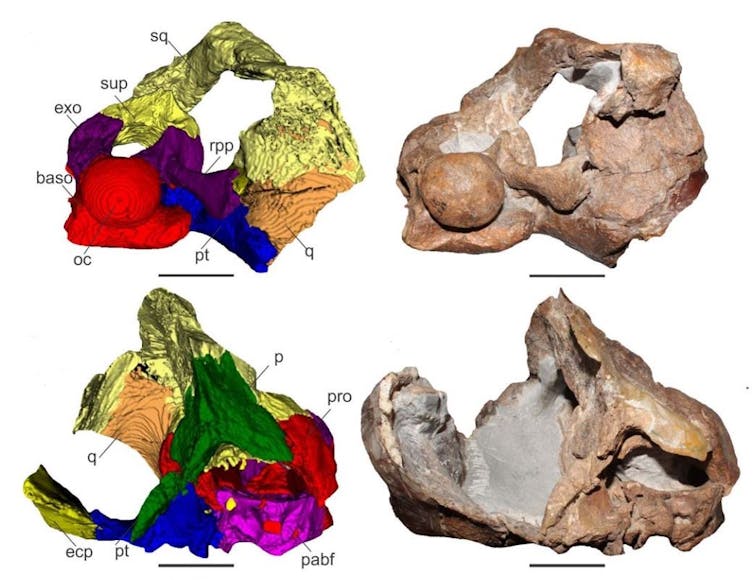
CT scan images of the skull (left) of Alexandronectes zealandiensis (the scale bar is 40mm). Jose P. O’Gorman, CC BY-ND
In 2019, I took the two fossils to hospital to be CT scanned, using the latest dual energy CT scanners at St George’s radiology in Christchurch. The results were extraordinary, showing previously unseen features of the anatomy.
Without the CT scanning technology, these details could only have been seen by destroying the fossil. We examined the creature’s inner ear and concluded, based on the orientation of the ear, that it maintained a posture where its head was habitually held either perpendicular to the body or just slightly below the body (not like Loch Ness monster fans would maintain, up in the air like a sock puppet).
We also saw a feature known as the stapes, also unseen in plesiosaurs up until then. The stapes is a small umbrella-shaped bone in the middle ear which transmits vibrations from the eardrum to the inner ear.
This work allowed us to conclude that Alexandronectes zealandiensis was an unusual plesiosaur.
It belonged to a unique group of southern-hemisphere plesiosaurs now called the Aristonectinae. This group was part of the Plesiosaur family known as elasmosaurs. They were the last experiment in plesiosaur evolution, with the longest necks of all plesiosaurs.
Paul Scofield does not work for, consult, own shares in or receive funding from any company or organization that would benefit from this article, and has disclosed no relevant affiliations beyond their academic appointment.
Working holidaymakers will be one of the first international visitor markets to return to Australia in 2022.
But as global travel slowly resumes and many young people start thinking about working overseas again, global competition for this market will be intense. Australia will need to out-compete other destinations to bring working holidaymakers back, particularly those from Europe.
There were more than 300,000 working holidaymakers in Australia per year before the pandemic. The absence of these workers resulted in a loss of more than A$3.2 billion in visitor spending in 2020. It has also created critical labour shortfalls, particularly in regional Australia.
With borders reopening, the Australian government needs to rethink its working holiday program. It needs not only to make it easier for young travellers to come back, but also have a better understanding of their goals and expectations of a fulfilling working holiday experience.
Working holidaymakers stay longer and spend more
The working holiday visa program was established in 1975 as a cultural exchange initiative. Working holidaymaker visas are available for young people (mostly aged 18 to 30) and typically last for one year, though there can be opportunities to extend this. Australia now has reciprocal agreements with 45 countries.
The program has remained open throughout the pandemic to people from eligible countries. Yet, visa applications declined by an astonishing 99.5% in 2020. People were free to apply for working holiday visas, but the closed borders prevented them from actually coming.
One-third of working holidaymakers come from the UK, Germany and France. However, there is a growing demand in Asia. In 2019, almost 29% of working holidaymakers were from Japan, South Korea and China.
Combining study with a working holiday is particularly attractive for young people from Asia. As such, reactivating this market after the pandemic is critical to rebuilding Australia’s international education sector.
According to Tourism Australia, the most popular jobs for working holidaymakers are waiter, farmhand, construction worker and childcare worker. New South Wales, Victoria and Queensland were the most affected by the absence of these visitors – the three states accounted for 83% of working holiday jobs in 2019.
But this doesn’t mean working holidaymakers stay in capital cities. In fact, they disperse more widely around the country than other international visitors.
These travellers have been sorely missed in regional Australia, which have suffered from crippling labour shortages during the pandemic. Cairns, Port Douglas and other areas in northern Queensland have been the most severely affected.
This year, the Queensland government launched the A$7.5 million “Work in Paradise” scheme, offering a A$1,500 incentive to lure young Australians to work in tourism and hospitality jobs in regional Queensland.
Extending this program to overseas workers could be instrumental in bringing foreign working holidaymakers back to Queensland as borders reopen.
How Australia can bring them back
As a first step to restarting this market, the Australian government has removed the visa application charge for those working holidaymakers who were previously granted a visa but were unable to come to Australia because of the pandemic.
They have also relaxed some visa requirements, such as allowing working holidaymakers to work for one employer for up to 12 months (up from six months previously). This is aimed at encouraging holidaymakers to take jobs in the tourism and hospitality industry.
Negotiations are also underway as part of the Australia-UK free trade agreement to extend the reciprocal working holidaymaker agreement between the countries. This includes increasing the age eligibility from 30 to 35 years, and having no job-specified work requirements. The visa duration could also be extended from one to three years.
But luring working holidaymakers back will require more than just loosening the rules. We need to delve deeper into what motivates these young people to take a working holiday trip, particularly to Australia.
In the past, these travellers have worked in low-skilled, low-paid jobs. This experience has also been seen as a “gap year” between high school and university.
But those in Generation Z have different life aspirations than previous generations. Many are increasingly focused on kick-starting their careers, and taking a year off to travel abroad may be less attractive.
So, for destinations like Australia, it’s important to offer opportunities for young people to use their working holiday to gain critical skills and experience for their careers, not just make money to travel. The Gold Coast-based Global Work and Travel Company, for example, now offers overseas internships so young people can advance their professional skills while gaining international travel experience.
Internships are one way to give young travellers different work experiences. Shutterstock
Some backpacker accommodations have also closed or shifted to other purposes during the pandemic. So, one thing local leaders can do is ensure there is adequate low-cost accommodation to support returning travellers.
The government also needs to make it affordable and easy to travel to Australia. Subsidising airfares to get them here, making it easier to find job vacancies, and providing low-cost or free transport out to the regions would help.
Employers also need to ensure holidaymakers are well-treated and have an enjoyable work experience. This requires stronger mechanisms to ensure employers are complying with the legal requirements around fair pay and adequate workplace conditions for those on temporary visas.
Improving the working holiday experience can have long-term benefits for the country. Research shows that many visitors develop a deep emotional attachment and affinity for Australia during an extending working holiday stay and return multiple times throughout their lives.
They can develop an understanding of Australian society and our economic and business practices during their experience. As such, they can help build future trade and investment opportunities between Australia and other countries.
So, making working holiday travel easy, fun and safe is not only vital to getting Australia’s tourism industry back on track – it’s critical for the country’s long-term engagement with the world. We need to make this a priority in 2022.
Sarah Gardiner is affiliated with Destination Gold Coast.
Summer is a time we associate with love. The longer days and warmer weather can lead to people feeling happier, more relaxed and in the mood for romance. This year in particular, Australians are longing for human connection with the ease of state border restrictions and lockdowns.
Before you head to the bar or the beach or swipe right, here are some things to think about to make the most of summer relationships.
Summer romances
Relationships research tell us the initial stages of a romance are highly influenced by context and social norms.
This means when expressing romantic interest, we tend to go with what makes us feel confident and comfortable. For some, it might mean seeking out someone in a night club, for others it is online dating.
We tend to act differently depending on where we are and who we are with. This explains why you might be willing to engage in a casual romance when holidaying abroad, although this is not something you would normally do at home.
Summer romances or “holiday flings” often occur outside of the routine of everyday life, where normal behaviour is not necessarily followed. Research has found people feel less inhibited on holidays and willing to try new things, including embarking on a “hot romance” with someone they just met or experimenting with sexuality.
Similar to casual relationships such as one-night stands and “friends with benefits”, summer romances tend to be shorter and more intense.
They often have an accelerated timeline, where people will seek to experience important relationship milestones, such as disclosing personal information and having physical intimacy, in a shorter period of time.
Things can move quickly with a summer fling. www.shutterstock.com
There is also more chance of people engaging in risky behaviours, and the expectation that sex (or increased sexual activity) is an inevitable part of the interaction.
But summer romances can also allow us to date without commitment. This is an appealing option if you are looking to minimise the chances of rejection or getting hurt. It is also appealing for those of us who like to flirt for fun.
As there is more than one way to experience romance during the holidays, it is important people know what they are looking for and understand their expectations upfront.
Great expectations
Regardless of whether casual romances can turn into committed relationships, the experience is real and can be treasured as a moment to remember and learn from. For instance, research suggests people might use these experiences as a way to “test drive” partners that might be suitable for a long-term relationship.
Research also suggests women place more importance on the friendship aspects of casual relationships, while men are attracted to casual relationships as a means to have sex without commitment. So, for singles looking for a serious commitment, a casual summer romance might be emotionally risky. I would recommend communicating this expectation with your partner upfront to manage the risk of disappointment.
We also know there is a natural increase in feelings of stress, anxiety, depression and suicidal thoughts during the holiday season, associated with social demands and unmet expectations. So, if you are already feeling emotionally vulnerable, this might not be the best time to embark in new romantic experiences without acknowledging the risk of having your heart broken.
You must talk about sex
Regardless of whether you’re on holiday or not, it’s important for partners to talk about their expectations around casual sex, so it is safe and consensual. This might include telling your partner if you’re also seeing other people, or being upfront about your sexual history and last sexual health check.
Studies report that when engaging in casual sex, partners communicate less about sexually transmitted infections compared to partners in committed relationships. It is also important to be honest if you are just looking to have fun and not considering a serious commitment.
It’s important to talk about your expectations around sex. www.shutterstock.com
Altogether, the holiday season is a time filled with opportunities to experiment with new romantic adventures or experience magical moments with loved ones. But, managing expectations in advance is paramount to experiencing healthy intimate encounters.
This means people should be able to take responsibility for their choices with insight into what they want and need – and most importantly – can emotionally handle at the time.
What about couples?
Holiday romances are not only for singles. It can also be a time to strengthen existing relationships.
The holiday period is also the perfect time to establish relationship rites of passage, such as getting engaged, with Christmas and New Years being a very popular time to pop the question.
For more established relationships, it is also a chance to get out of everyday routines and repair relationships that might have fallen into a bit of a rut during the year.
Summer holidays can be a chance to press ‘reset’ on your relationship. www.shutterstock.com
When managing work and family commitments, it is easy to feel like you might not have enough time to talk to your partner about your needs or your desire to try new things.
A good place to start is by communicating with your partner about your expectations before a holiday. Are you wanting to recreate a special sentimental memory from a past holiday or looking to create new traditions and experiences?
This time of the year can be a chance for people to embark on romantic adventures, create new meanings for the holidays, and reinvent themselves. To make the most of these experiences, open and honest communication is key.
Raquel Peel does not work for, consult, own shares in or receive funding from any company or organisation that would benefit from this article, and has disclosed no relevant affiliations beyond their academic appointment.
First published in 1972, The Joy of Sex styled itself as a sexual cookbook, with positions and predilections presented as loose recipes.
As any good cookbook author knows, however, sometimes people really need a picture to be able to get a sense of the finished dish. The success of the book owes much to its plentiful graphic sketches, as well as its playful and unanxious approach to sex (“unanxious” is a word the book’s author uses a lot).
For many of us born in the 1970s, 80s, and early 90s, The Joy of Sex changed everything. Not in the way it was intended, of course (as a gourmet guide to lovemaking), but rather as the transmitter of the awful realisation that not only did our parents have sex, but they were keen to do it joyfully. So keen, in fact, that they had bought, and presumably read, a 250-page erotic guide.
Such was the popularity of the book (it has sold over 12 million copies worldwide and been translated into more than a dozen languages) that it became relatively commonplace for people to have it on their shelves or even coffee tables.
The book’s cover lists Alex Comfort, a physician, novelist and poet, as its editor. But rather than gently editing the sexual advice and escapades of a happily married couple, Comfort later revealed he had written the book himself, with the help of his long-time mistress (also his wife’s best friend and his subsequent wife). His private polaroids and descriptions of sexual positions served as the basis for many of the sketches in the book, along with photographs taken of colour illustrator Charles Raymond and his wife Edeltraud that Chris Foss used as references for his line drawings.
Today, this backstory of subterfuge and polaroiding adds to what is already a pretty unusual read. There is liberal talk of grope suits, the buttered bun, the goldfish, and railways (not what you think). At the time of publication, the book was revolutionary – perhaps not in its content, but in its popularity. It followed Alfred Kinsey’s books on sexual behaviour in men and women in the late 1940s and early 1950s.
By the early 1970s the sexual revolution was underway, and it is possible that the Joy of Sex both reflected an increased societal focus on sexual pleasure and worked to enhance it.
At its core, the book’s advice is pretty simple. Comfort urges the reader to be open minded about sex, to explore and experiment, and to communicate without judgement. Fifty years on, this is all still good advice.
Qualitative research (focused on themes rather than data) shows that many people see sexual satisfaction as reflecting sexual openness and a willingness to act out desires, as well as the more obvious benchmarks like orgasm and sexual frequency. People who really communicate with their partner about what turns them on (and what doesn’t) and who are ready to talk about the often embarrassing nitty gritty of sex, tend to report having better sex. They also report better relationships overall (perhaps in large part because of the better sex).
And it’s not just that people who are better at communicating in general are also better at communicating about sex – rather, there appears to be something special about talking openly about sexual wants and needs that improves both sexual and overall relationship satisfaction.
It’s not just the hair that’s outdated though
Today, there is a lot in the book that is dated, outmoded, or incorrect. Comfort appears fixated with sexual perfectionism. Although he dismisses some sexual myths (such as the inherent superiority of a “vaginal” versus “clitoral” orgasm) he does seem to believe most sexual encounters can (and perhaps should) be characterised by simultaneous orgasms. Subsequent research demonstrates that when we demand sexual perfectionism (in ourselves, or our partners) we tend to enjoy sex a lot less.
The book is very strongly geared towards heterosexual cisgender sex – a modern reimagining of the book would need an enhanced focus on gender and sexual identity diversity, and the many ways we have sex. (Note there have been revised editions and spin-offs including The Joy of Gay Sex and The Joy of Lesbian Sex.)
The advice in the orginal, however, around open and non-judgemental communication about sex and sexual needs feels relevant to everyone. And Comfort acknowledges there are groups of people for whom other books are needed. Although his language around these issues is awkward under today’s gaze, there is a broad acceptance of same-gender attractions (without citing any evidence Comfort happily claims everyone is bisexual) and aspects of gender fluidity.
There are still more aspects of the book that need revision or updating, but also delightful inclusions in the 1972 edition.
There are the many unusual assumptions. When talking about male turn-ons (termed “releasers”), for example, Comfort confidently declares:
A horse, seen from behind, is a male ‘releaser’ – it has long hair, big buttocks, and a teetering walk. A cow isn’t.
In fact, there is a lot of talk of horses, horse symbolism, and riding play throughout the book.
Comfort rails against deodorant and cautions lovers never to wear it.
Elsewhere he helpfully warns:
[…] the only really disturbing manifestation of love music is when the woman laughs uncontrollably – some do. Don’t be uptight about this.
Today’s scientific support for The Joy of Sex as a whole is mixed, and the book is dated, and cis-heterosexual and male-centred. But is it still joyful? Yes, it is.
The central message – that sex can be a source of pleasure, love, communion, and play – remains as true today as it was in 1972. There are some good tips in there, too, if you can sort the horses from the cows. So excuse me, while I read up on the buttered bun.
You’re not alone. Most people wait until they’re sick to see a GP, so there’s not usually much time in a consultation to also talk about preventative health.
So, should you book a check with your GP just to talk about what you can do to stay well? And if so what should you be discussing?
It depends on your life stage.
Doctors won’t check you for everything
It may surprise you there is no evidence that a “general health check-up” will give you better health outcomes.
Some preventive checks in low-risk and otherwise well patients have shown no benefit, including some blood tests and imaging investigations, such as whole body CTs or MRIs for cancer screening.
As well as being a waste of your time and money, there is another concern with generic health screening: it may lead to overdiagnosis, which results in additional tests, appointments, anxiety, drugs and even operations. Ironically, this can leave you less healthy.
This is why doctors don’t “check you for everything”, but are guided by what you personally would benefit from, based on your individual history, as well as which tests have evidence for their benefits outweighing any harms.
One of your doctor’s key considerations will be your age.
Young adults (20–30s)
The main evidence-based screening check for young adults is the cervical screening test for women. This is a five-yearly cervical swab which looks for the human papillomavirus (HPV) and pre-cancerous cells.
When young women present for their cervical smear test, several other important preventative discussions often take place, including pregnancy prevention or planning.
As young men don’t need an equivalent screening test, they often miss out on the chance to talk about prevention.
Young men might need to be more proactive about seeing a GP in their 20s and 30s. Annie Spratt/Unsplash
Both men and women in this age group should find a GP with whom they feel comfortable discussing STI (sexually transmitted infection) checks, skin cancers, mental health struggles and intimate partner violence.
Even otherwise fit and healthy young adults should consider talking with their GP about what they can do to prevent chronic disease down the track. Health behaviours such as diet, sleep, smoking and exercise levels in young adulthood increase or decrease the risk of developing conditions such as diabetes, heart disease, strokes, and cancer down the track.
Finally, regular checks from dentists and optometrists can pick up problems early.
40–50 year olds
Despite the adage “life begins at 40”, this is the age at which many of the things that can cause an early death are worth screening for.
Current evidence shows benefits in assessing your blood pressure, cholesterol, and risk of heart disease, diabetes, kidney disease and skin cancer.
If you have a higher risk for certain cancers (such as breast or colorectal cancer), then screening for these may start around this age too.
It’s also not too late to improve your longevity with some lifestyle changes so discussing things like losing weight, stopping smoking, and improving your exercise are all important.
As with young adults, women should continue getting a cervical smear test every five years.
And everyone should consider getting checked by a dentist and optometrist.
Mental health may deteriorate around this age too, because the strain from looking after children, ageing parents and demanding careers can all come to a head. Input from a psychologist may be helpful.
50–65 year olds
Patients often comment on the 50th “birthday present” they find in the mail: a stool sample collection kit for colorectal cancer screening. While it’s not the highlight of your 50s, it is effective in saving lives through early detection of this cancer, with checks recommended every two years.
Women will also be invited to start mammograms for breast cancer screening every two years (unless they have already started in their 40s, depending on their individual risk).
Women will be screened for a breast cancer, colorectal cancer and osteoporosis. Shutterstock
The third health issue to start screening for in your 50s is osteoporosis, a condition where bones become fragile and your risk of a fracture increases. Osteoporosis is painless and therefore often not discovered until too late. You can start checking your risk for this at home via an online calculator, such as this one from the Garvan Institute.
Oral health and eye checks remain important in this age group as well.
Over-65s
Several immunisations are recommended from the age of 65, including shingles and influenza, as your immunity starts to wane and your risk of serious illness increases.
Other preventative checks include those for your vision, dental health, hearing, and your risk of falls. These often involve allied health providers who can screen, monitor and treat you as needed.
Some of your other regular screening will stop in your mid-70s, including for colorectal, cervical and breast cancer.
First Nations people
The above age-related recommendations are for those with standard risk factors. First Nations Australians are at higher risk of developing a range of diseases including diabetes, heart disease, kidney disease and certain cancers.
Aboriginal and Torres Strait Islander people may be offered more thorough screening, according to a different timeline, with some checks at earlier ages.
While annual generic “health checks” aren’t recommended, a conversation with your GP will help you work out your specific health risks and screening needs.
Prevention is better than a cure, so make sure you’re accessing evidence-based screening and preventative strategies that are right for you.
When we release a group of endangered animals into the wild, we always hope they will survive. They usually don’t. We find bilby carcasses under bushes, bettongs ripped apart by feral cats, and tufts of rock wallaby fur in fox scats.
Over the last 25 years I’ve seen the devastation caused by introduced foxes and cats firsthand during attempts to conserve our threatened mammals. At one of my research sites, Arid Recovery, we have tried again and again to protect bilbies, bettongs and wallabies outside fences.
Unfortunately, our native animals have not co-evolved with these canny predators and simply don’t have the anti-predator behaviours or physical traits needed to avoid them.
So what to do? After years of discouraging results, we’re trying something new. We want to help our native marsupials evolve to become warier and better at surviving. Not in fenced-off sanctuaries – but in the wild, alongside these extraordinarily clever predators.
Too lethal: A feral cat hunting at night in central Australia. Author provided
Why are our native mammals such easy prey?
If our native marsupials had more time to adapt, we wouldn’t have to do this. But rabbits, foxes and cats operate like an unholy trinity. European settlement brought high rabbit numbers. These animals competed with native marsupials for food and became food for cats and foxes – inflating their numbers in turn. The damage was exacerbated by widespread land clearing and overgrazing.
Our mammal extinctions to date include burrowing or smaller marsupials, including wallabies, bandicoots and rodents mostly within the critical weight range of 35 grams to 5.5 kilograms. Those smaller or larger are safer. Those in the middle? Cat and fox food.
The problem we are faced with in conservation is doubly difficult, because to protect the most vulnerable species – Shark Bay bandicoots, burrowing bettongs, greater stick-nest rats – we have to breed them in islands of safety. They live behind high fences while the predators roam outside.
When you breed animals in captivity, they become even more naive about predators. So what’s the solution? Do we simply keep stocks of these rare marsupials on life support?
Researchers release a burrowing bettong in the Arid Recovery sanctuary in South Australia. Author provided
We spend millions of dollars a year controlling cats and foxes by trapping, shooting and baiting them. Much less effort has gone into improving the responses of prey animals.
If our native mammals are to claw back any part of their previous range, they will eventually need to co-exist with cats and foxes in more places in the wild. And to do that, they need our help.
Can we really speed up adaptation?
To date, most efforts to improve naive prey animals’ responses to predators pair an unpleasant experience with a predator cue. Rubber bands, water pistols, loud noises or physically chasing animals are paired with cues like taxidermied foxes, models, cat odour or vocalisations. Unfortunately, results are generally poor or short lived.
In response to these challenges, we have been testing a more interventionist approach – in situ predator exposure. This is where we expose threatened mammals to low densities of real predators over long time periods to accelerate natural selection and direct learning through real predator encounters.
For the six years we have been running this experiment in South Australia, the approach has yielded some promising results.
We placed bilbies and burrowing bettongs into a fenced paddock and added low numbers of feral cats. Then we waited. Over the next six years, we compared their physical and behavioural traits over time with a control population not exposed to predators.
Greater bilby photographed at the Arid Recovery centre. Alexandra Ross, Author provided
We found cat-exposed bilbies became warier and sought areas of thicker cover within only a couple of years. Not only that, they had higher survival rates than control bilbies when both were reintroduced to an area where cats were present.
Within 18 months, predator-exposed bettongs became significantly harder to approach at night. Remarkably, their hind feet became longer relative to control populations over several years and they had significantly faster reaction times during escapes from predators, though not yet fast enough to show a significant difference in survival between control and cat-exposed populations.
In short, exposing naive prey to predators changed behaviour and in some cases survival after just a few generations. This is positive news.
You might be wondering why this doesn’t just happen naturally in wild populations. In some cases it does. Many native mammals now recognise and respond to dingoes, which have only been in Australia for a few thousand years. The problem is that cat and fox densities are likely too high to enable prey to adapt before local extinction occurs.
Anti-predator behaviour can be lost within only a few generations, studies have shown. It’s heartening to know it can also be regained quickly.
Burrowing bettongs were once extremely common across Australia’s interior. Photo by Andrew Freeman, Author provided
Will these changes endure?
What we need to know is if these changes are due to plasticity or selection. If it’s plasticity, it means the changes and learning experienced by individual bilbies and bettongs may not be passed on to the next generation.
If selection is at work, it means ongoing predator exposure could result in changes to the genetic makeup of the species, with further improvements and adaptations over time.
So which is it? Our initial results suggest selection may be occurring in some traits such as hind foot length. Similar efforts to teach northern quolls to avoid cane toads have found learned behaviour can be inherited.
This kind of assisted evolution is also being trialled in corals to give them the adaptations necessary to survive our warming oceans.
To achieve the dream of successful coexistence between introduced predators and our native mammals, we will need a range of approaches. These include better predator control methods to reduce numbers, improved habitat quality for our mammals, and enhanced prey responses.
We urgently need a better understanding of predator thresholds – the level of predation at which native species can maintain stable or increasing populations while applying enough selective pressure to evolve new behaviours and traits. Under these conditions we could expect some (but not all) native species to eventually adapt to introduced predators.
After spending the last three decades watching our native animals continually decline, we are now at the point where we need to carefully explore new options with an open mind.
Katherine Moseby receives funding from Arid Recovery and The Australian Research Council.
Pacific Island New Zealanders are now 90 percent fully vaccinated against covid-19, and a public health expert is urging them to keep up that momentum in the New Year.
In a daily briefing, the Ministry of Health said 90 percent of eligible Pacific people in New Zealand had now had both vaccines.
Associate Professor Collin Tukuitonga from the University of Auckland said that is a tremendous effort and the threat of omicron is the next challenge.
He hopes the community embraces booster shots to guard against the more infectious variant.
“It looks as if the two doses doesn’t give you enough protection for omicron, and the most important priority now is to get people to get their boosters as soon as that’s possible.”
He hopes as many regions move into lower levels of restrictions in the government’s Framework Protection system people will still stay vigilant, contact trace and get tested.
“There’s a risk that people might have gone back into a lower level of alertness, so I would hope that we maintain that [alertness].
Ramp up once again “In mid-late January I think we’re going to have to ramp up once again in respect of rolling out the vaccine for the young ones.”
Children aged between 5 and 11 become eligible for covid-19 vaccinations in mid-January, and those 12 and older are already eligible.
“Parents are perhaps less certain about the benefits and more concerned about risks. So every effort is going to be needed to get the vaccination rollout in children up to the kind of levels that is needed.”
This article is republished under a community partnership agreement with RNZ.
The Pacific year has closed with growing tensions over sovereignty and self-determination issues and growing stress over the ravages of covid-19 pandemic in a region that was largely virus-free in 2020.
Just two days before the year 2021 wrapped up, Bougainville President Ishmael Toroama took the extraordinary statement of denying any involvement by the people or government of the autonomous region of Papua New Guinea being involved in any “secret plot” to overthrow the Manasseh Sogavare government in Solomon Islands.
Insisting that Bougainville is “neutral” in the conflict in neighbouring Solomon Islands where riots last month were fuelled by anti-Chinese hostilities, Toroama blamed one of PNG’s two daily newspapers for stirring the controversy.
“Contrary to the sensationalised report in the Post-Courier (Thursday, December 30, 2021) we do not have a vested interest in the conflict and Bougainville has nothing to gain from overthrowing a democratically elected leader of a foreign nation,” Toroama said.
The frontpage report in the Post-Courier appeared to be a beat-up just at the time Australia was announcing a wind down of the peacekeeping role in the Solomon Islands. A multilateral Pacific force of more than 200 Australian, Fiji, New Zealand and PNG police and military have been deployed since the riots in a bid to ward off further strife.
PNG Police Commissioner David Manning confirmed to the newspaper having receiving reports of Papua New Guineans allegedly training with Solomon Islanders to overthrow the Sogavare government in the New Year.
According to the Post-Courier’s Gorethy Kenneth, reports reaching Manning had claimed that Bougainvilleans with connections to Solomon Islanders had “joined forces with an illegal group in Malaita to train them and supply arms”.
The Bougainvilleans were also accused of “leading this alleged covert operation” in an effort to cause division in Solomon Islands.
However, Foreign Affairs Minister Soroi Eoe told the newspaper there had been no official information or reports of this alleged operation. The Solomon Islands Foreign Ministry was also cool over the reports.
Warning over ‘sensationalism’
How the PNG Post-Courier reported the “secret plot” Bougainville claim on Thursday. Image: Screenshot PNG Post-Courier
Toroama warned news media against sensationalising national security issues with its Pacific neighbours, saying the Bougainville Peace Agreement “explicitly forbids Bougainville to engage in any foreign relations so it is absurd to assume that Bougainville would jeopardise our own political aspirations by acting in defiance” of these provisions.
This is a highly sensitive time for Bougainville’s political aspirations as it negotiates a path in response the 98 percent nonbinding vote in support of independence during the 2019 referendum.
In contrast, another Melanesian territory’s self-determination aspirations received a setback in the third and final referendum on independence in Kanaky New Caledonia on December 12 where a decisive more than 96 percent voted “non”.
Bougainville President Ishmael Toroama … responding to the PNG Post-Courier. Image: Bougainville Today
However, less than half (43.87 percent) of the electorate voted – far less than the “yes” vote last year – in response to the boycott called by a coalition of seven Kanak independence groups out of respect to the disproportionate number of indigenous people among the 280 who had died in the recent covid-19 outbreak.
The result was a dramatic reversal of the two previous referendums in 2018 and 2020 where there was a growing vote for independence and the flawed nature of the final plebiscite has been condemned by critics undoing three decades of progress in decolonisation and race relations.
In 2018, only 57 percent opposed independence and this dropped to 53 percent in 2020 with every indication that the pro-independence “oui” vote would rise further for this third plebiscite in spite of the demographic odds against the indigenous Kanaks who make up just 40 percent of the territory’s population of 280,000.
Kanaky turbulence in 1980s A turbulent period in the 1980s – known locally as “Les événements” – culminated in a farcical referendum on independence in 1987 which returned a 98 percent rejection of independence. This was boycotted by the pro-independence groups when then President François Mitterrand broke a promise that short-term French residents would not be able to vote.
A Kanak international advocate of the Confédération Nationale du Travail (CNT) trade union and USTKE member, Rock Haocas, says from Paris that the latest referendum is “a betrayal” of the past three decades of progress and jeopardises negotiations for a future statute on the future of Kanaky New Caledonia.
The pro-independence parties have refused to negotiate on the future until after the French presidential elections in April this year. A new political arrangement is due in 18 months.
“The people have made concessions,” Haocas told Asia Pacific Report, referencing the many occasions indigenous Kanaks have done so, such as:
• Concessions to the “two colours, one people” agreement with the Union Caledonian party in 1953; • Recognition of the “victims of history” in Nainville-Les-Roches in 1983; • The Matignon and Oudnot Agreement in 1988; • The Nouméa Accord in 1998; and • The opening of the electoral body (to the native).
‘Getting closer to each other’ “The period of the agreements allowed the different communities to get to know each other, to get closer to each other, to be together in schools, to work together in companies and development projects, to travel in France, the Pacific, and in other countries,” says Haocas.
“It’s also the time of the internet. Colonisation is not hidden in Kanaky anymore; it faces the world. People talk about it more easily. The demand for independence has become more explainable, and more exportable. There has been more talk of interdependence, and no longer of a strict break with France.
“But for the last referendum France banked on the fear of one with the other to preserve its own interests.”
Is this a return to the dark days of 1987 when France conducted the “sham referendum”?
“We’re not really in the same context. We are here in the framework of the Nouméa Accord with three consultations — and for which we asked for the postponement of the last one scheduled for December 12,” says Haocas.
“It was for health reasons with its cultural and societal impacts that made the campaign difficult, it was not fundamentally for political reasons.
“The French state does not discuss, does not seek consensus — it imposes, even if it means going back on its word.”
Haocas says it is now time to reflect and analyse the results of the referendum.
“The result of the ballot box speaks for itself. Note the calm in the pro-independence world. Now there are no longer three actors — the indépendantistes, the anti-independence and the state – but two, the indépendantistes and the state.”
Rock Haocas in a 2018 interview before the the three referendums on independence. Video: CNT union
Comparisons between Kanaky and Palestine In a devastating critique of the failings of the referendum and of the sincerity of France’s about-turn in its three-decade decolonisation policy, Professor Joseph Massad, a specialist in modern Arab politics and intellectual history at Columbia University, New York, made comparisons with Israeli occupation and apartheid in Palestine.
“Its expected result was a defeat for the cause of independence. It seems that European settler-colonies remain beholden to the white colonists, not only in the larger white settler-colonies in the Americas and Oceania, but also in the smaller ones, whether in the South Pacific, Southern Africa, Palestine, or Hawai’i,” wrote Dr Massad in Middle East Eye.
“Just as Palestine is the only intact European settler-colony in the Arab world after the end of Italian settler-colonialism in Libya in the 1940s and 1950s, the end of French settler-colonialism in Morocco and Tunisia in the 1950s, and the liberation of Algeria in 1962 (some of Algeria’s French colonists left for New Caledonia), Kanaky remains the only major country subject to French settler-colonialism after the independence of most of its island neighbours.
“As with the colonised Palestinians, who have less rights than those acquired by the Kanaks in the last half century, and who remain subject to the racialised power of their colonisers, the colonised Kanaks remain subject to the racialised power of the white French colonists and their mother country.
“No wonder [President Emmanuel] Macron is as ebullient and proud as Israel’s leaders.”
Professor Joseph Massad … “European settler-colonies remain beholden to the white colonists.” Image: Screenshot Middle East Eye
West Papuan hopes elusive as violence worsens Hopes for a new United Nations-supervised referendum for West Papua have remained elusive for the Melanesian region colonised by Indonesia in the 1960s and annexed after a sham plebiscite known euphemistically as the “Act of Free Choice” in 1969 when 1025 men and women hand-picked by the Indonesian military voted unanimously in favour of Indonesian control of their former Dutch colony.
Two years ago the United Liberation Movement of West Papua (ULMWP) was formed to step up the international diplomatic effort for Papuan self-determination and independence. However, at the same time armed resistance has grown and Indonesia has responded with a massive build up of more than 20,000 troops in the two Melanesian provinces of Papua and West Papua and an exponential increase on human rights violations and draconian measures by the Jakarta authorities.
As 2021 ended, interim West Papuan president-in-exile Benny Wenda distributed a Christmas message thanking the widespread international support – “our solidarity groups, the International Parliamentarians for West Papua, the International Lawyers for West Papua, all those across the world who continue to tirelessly support us.
“Religious leaders, NGOs, politicians, diplomats, individuals, everyone who has helped us in the Pacific, Caribbean, Africa, America, Europe, UK: thank you.”
Wenda sounded an optimistic note in his message: “Our goal is getting closer. Please help us keep up the momentum in 2022 with your prayers, your actions and your solidarity. You are making history through your support, which will help us achieve independence.”
But Wenda was also frank about the grave situation facing West Papua, which was “getting worse and worse”.
“We continue to demand that the Indonesian government release the eight students arrested on December 1 for peacefully calling for their right to self-determination. We also demand that the military operations, which continue in Intan Jaya, Puncak, Nduga and elsewhere, cease,” he said, adding condemnation of Jakarta for using the covid-19 pandemic as an excuse to prevent the UN High Commissioner for Human Rights visiting West Papua.
New covid-19 wave hits Fiji Fiji, which had already suffered earlier in 2021 along with Guam and French Polynesia as one of the worst hit Pacific countries hit by the covid-19 pandemic, is now in the grip of a third wave of infection with 780 active cases.
Fiji’s Health Ministry has reported one death and 309 new cases of covid-19 in the community since Christmas Day — 194 of them confirmed in the 24 hours just prior to New Year’s Eve. This is another blow to the tourism industry just at a time when it was seeking to rebuild.
Health Secretary Dr Dr Fong is yet to confirm whether these cases were of the delta variant or the more highly contagious omicron mutant. It may just be a resurgence of the endemic delta variant, says Dr Fong, “however we are also working on the assumption that the omicron variant is already here, and is being transmitted within the community.
“We expect that genomic sequencing results of covid-19 positive samples sent overseas will confirm this in due course.”
A DevPolicy blog article at Australian National University earlier in 2021 warned against applying Western notions of public health to the Pacific country. Communal living is widespread across squatter settlements, urban villages, and other residential areas in the Lami-Suva-Nausori containment zone.
“Household sizes are generally bigger than in Western countries, and households often include three generations. This means elderly people are more at risk as they cannot easily isolate. At the same time, identifying a ‘household’ and determining who should be in a ‘bubble’ is difficult.
“‘Stay home’ is equally difficult to define, because the concept of ‘home’ has a broader meaning in the Fijian context compared to Western societies.”
While covid pandemic crises are continuing to wreak havoc in some Pacific communities into 2022, the urgency of climate change still remains the critical issue facing the region. After the lacklustre COP26 global climate summit in Glasgow, Scotland, in November, Pacific leaders — who were mostly unable to attend due to the covid lockdowns — have stepped up their global advocacy.
End of ’empty promises’ on climate Cook Islands Prime Minister Mark Brown appealed in a powerful article that it was time for the major nations producing global warming emissions to shelve their “empty promises” and finally deliver on climate financing.
‘As custodians of these islands, we have a moral duty to protect [them] — for today and the unborn generations of our Pacific anau. Sadly, we are unable to do that because of things beyond our control …
“Sea level rise is alarming. Our food security is at risk, and our way of life that we have known for generations is slowly disappearing. What were ‘once in a lifetime’ extreme events like category 5 cyclones, marine heatwaves and the like are becoming more severe.
“Despite our negligible contribution to global emissions, this is the price we pay. We are talking about homes, lands and precious lives; many are being displaced as we speak.”
Marylou Mahé … ““As a young Kanak woman, my voice is often silenced, but I want to remind the world that … we are acting for our future. Image: PCF
“As a young Kanak woman, my voice is often silenced, but I want to remind the world that we are here, we are standing, and we are acting for our future. The state’s spoken word may die tomorrow, but our right to recognition and self-determination never will.”
National Federation Party leader Professor Biman Prasad has asked if the Fiji government inquiry into the Office of the Auditor-General will be held in public.
Professor Prasad was responding to the announcement this week of a Commission of Inquiry into the OAG “to inquire into and report on: the conduct, operations and performance of the Office of the Auditor-General” and other issues concerning the office.
Prasad, an economist before his political career, said commissions of inquiry were usually held in public.
“So we ask the government if this will be a public inquiry?” he said.
“Will the public hear the allegations against the Auditor-General’s office? Will the Auditor-General be allowed to respond in public to the Government’s complaints?”
“The government refuses to talk about Walesi’s accounts. Even though Walesi’s accounts up to 2017 are ready, the government refuses to release them.”
Petty argument while people in poverty The NFP leader said the government would end 2021 as a “laughing stock”.
He said government “only cares about winning a petty argument even when tens of thousands of people are still living in poverty and despair because of the pandemic”.
“We are once again threatened by the omicron variant,” he said.
“Many families are in isolation because they have tested positive in homes, in villages and settlements on Vanua Levu, are struggling and are in need of help.
“What is the government doing to help? We should be preparing for the cyclone season and ensuring our people are safe.”
Luke Nacei is a Fiji Times reporter. Republished with permission.
Unionists and political activists are among seven prominent women who have brought a lawsuit against the Fiji government challenging new electoral laws requiring them to use their birth certificate names to be registered as voters.
The seven are former government minister Bernadette Rounds Ganilau, politicians Priscilla Singh and Seni Nabou, teacher and community worker Adi Davila Toganivalu, unionists Dr Elizabeth Reade Fong and Salote Qalo and Yasmin Nisha Khan.
They have filed a constitutional redress action against the Attorney-General and the Supervisor of Elections, challenging changes passed by Parliament earlier this year to the Electoral (Registration of Voters) Act and the Interpretation Act.
The seven are challenging the requirement that citizens must only use the name on their birth certificates for voting and other official purposes — including for official identification documents.
Under the new laws, people who wished to use their married or adopted names for these purposes must formally change their names on their birth certificates.
In their action, the applicants say they believe the new laws have a disproportionate, adverse impact upon married women compared with other groups. An estimated 100,000 women are believed to be affected by the law.
The matter was called in the High Court in Suva yesterday before Chief Justice Kamal Kumar.
The Chief Justice gave directions for the filing of affidavits and fixed the case for hearing on February 24.
The applicants are represented by Munro Leys partner and former Supervisor of Elections Jon Apted.
Lawyer Devanesh Sharma, of R Patel and Co, represents the Attorney-General and the SOE.
As some North Island regions moved to the orange traffic light setting at 11.59pm last night, New Zealand has now found two omicron cases that were briefly in the community, and close contacts are urgently being chased up.
As a British DJ outed himself as the omicron community case identified yesterday, Covid-19 Response Minister Chris Hipkins yesterday expressed his disappointment in the musician’s non-compliance with rules.
Robert Etheridge, also known as DJ Dimension, went out into the community on December 26 and 27 after 10 days of isolation but before he received his final covid-19 test result.
As such, he has faced abuse online over the matter.
“I want to reiterate my apologies to those who I have inadvertently put at risk as a result of my misunderstandings,” he wrote in an Instagram post.
“I realise the gravity of the situation and I am deeply regretful to those who have been impacted; including members of the public, event organisers and close contacts.”
Etheridge had tested negative to the virus three times before while in isolation. It was also revealed today that he completed his three-day self-isolation period (after seven days in MIQ) on Waiheke Island.
“We understand they travelled by private car and ferry to the island. While on the ferry they did not leave their vehicle and travelled straight to their accommodation.”
DJ Dimension – Robert Etheridge – tested positive for the omicron variant while in the community. Image: RNZ/Instagram
Race to get to close contacts The DJ was due to play at Wanaka’s Rhythm and Alps festival but had been forced to pull out, along with another DJ known as Friction and artist Lee Matthews, who were considered close contacts.
Fourteen people who dined with Etheridge at Soul restaurant are also considered close contacts.
Eight of those people remain in Auckland, while six flew to Christchurch where they performed at the Hidden Lakes Festival on December 28. But the Canterbury District Health Board considered the risk to be extremely low.
“All identified close contacts are being urgently contacted by contact tracers,” the Ministry of Health said.
But the exact number of contacts is still being confirmed and identified, according to Hipkins.
He told media today that while Etheridge was on Waiheke Island, he had drinks on the beach with neighbours, who have been told to self-isolate.
Epidemiologist Professor Michael Baker said the fact that three of the case’s four Waiheke Island housemates had tested negative so far may suggest he was not infectious at the time.
“But again we will just have to await more of those results.”
However, the source of Etheridge’s infection remains a mystery because his case has not been able to be genomically linked to the other omicron cases that were in MIQ when he was there.
“It’s just really important that we don’t think that seven days [of isolation] is okay and that people are still cautious … After receiving several negative tests, people could still be incubating the virus and that’s what it shows us.”
Five of the international arrivals came from Australia, two from the United Kingdom, two from Singapore, one from United Arab Emirates, and one from Ethiopia.
Surveillance testing on December 27 of an Air New Zealand crew member has returned a positive result, with genome sequencing finding it is the omicron variant.
Their infection has been genomically linked to three other omicron cases from a December 24 flight that the person worked on between Auckland and Sydney.
New Zealand-based international aircrew are mostly exempt from a 14-day isolation or quarantine period as long as they meet certain conditions.
So far for this case, no locations of interest have been identified, but there are eight close contacts — seven of whom have tested negative so far.
The case was immediately transferred to a MIQ facility.
And with positive cases reaching 33 in Rotorua yesterday, iwi-lead health provider Te Arawa Covid-19 Response Hub is stepping up its testing abilities by training more staff.
Meanwhile, across the Tasman two team players and one staff member of the men’s Wellington Phoenix football have tested positive to the virus. The team is currently based in New South Wales, where cases topped 12,000 today.
‘We need to throw everything we can at it’ In light of the cases, the National Party is calling on the government to allow people to get their booster shot sooner, bring forward the timeline for children’s vaccines, and use more rapid antigen testing.
Covid-19 response spokesperson Chris Bishop said there were people who had passed four months since their second dose and had been turned away when they tried to get their booster injection.
Meanwhile, the National Māori Authority said it was not too late to introduce tougher border restrictions.
Chairman Matthew Tukaki said the government should shut the borders to anyone who was not a resident or citizen.
“We can’t afford any more unnecessary prolonged lockdowns, so anything we can do to limit the exposure of Omicron until we can get ahead of this, then I think we need to throw everything we can at it.”
Tukaki said the government should also consider extending the amount of time people from high-risk countries spend in MIQ.
This article is republished under a community partnership agreement with RNZ.
A human rights advocate in Fiji says the country should be ashamed of the exile of the now dead celebrated academic professor Brij Lal and his family.
Professor Lal was expelled from Fiji in 2009 after speaking out against coup leader Prime Minister Voreqe Bainimarama’s FijiFirst government.
Lal died at his home in Brisbane on Christmas Day. Tributes have been pouring in since.
Rights advocate Shamima Ali, coordinator of the Fiji Women’s Crisis Centre, said that while the region mourned Professor Lal’s death, people should not forget the injustice meted out to him and his wife.
Ali said the government disrespected academia and the contributions academics made to Fiji’s development.
In the case of the Lals, Ali said there had been a “miscarriage of justice and a gross violation of their basic human rights — the right to nationality and citizenship and to a fair trial”.
Ali said Lal’s “writings and utterances irked the government” so they banned him from Fiji.
‘Smacks of sexism’ “And Dr Padma Lal, along with her husband, was also banned from Fiji.
“This smacks of sexism and once again disregards Dr Lal’s illustrious career as an ecological economist and her work on the sugar industry and environment.
“I urge the Fiji Human Rights and Anti Discrimination Commission to step up and challenge this draconian decision of arbitrarily banning citizens and taking away their birthright.”
Professor Brij Lal … deported from Fiji in 2009, but tributes have been flowing since his death on Christmas Day. Image: RNZ
Lal’s legacy would live on as an upstanding human being and citizen of our country, Ali said.
“Shame on you, Fiji. Those who violated his and Padma’s rights will surely live in ignominy and infamy.
“There is still time for a change, to amend the wrongs, too late for Brij but not for his family.”
Sad day for Fiji, says Sodelpa Fiji’s main opposition party said the death of Professor Lal in exile was a sad time for Fiji.
The Social Democratic Liberal Party said Lal had hoped that he would one day return to his homeland.
Fiji claimed to have democracy but it still has a very long way to go, said Sodelpa leader Viliame Gavoka.
“The news of Professor Brij Lal’s passing fills me with great pain,” he said.
“We all know about him, a favourite son of Fiji who was refused permission to return home.
“He lived and hoped that he would one day come home and many of us pleaded for his case.”
But Gavoka said now he had died in a foreign land, away from his people and loved ones.
“How can our hearts be so hardened that we denied someone the right to his homeland and all because he expressed views different from those at the helm of leadership.
“Professor Brij Lal was loved by many and his legacy will live on in Fiji.”
Fiji poorer with loss of academic, says NFP Among historians and scholars, Professor Lal stood tall around the world, said the National Federation Party.
From a poor farming family in Tabia, Vanua Levu, NFP leader Professor Biman Prasad said Professor Lal rose to be an emeritus professor of Pacific and Asian history at the Australian National University, one of the world’s highest-ranked places of learning.
“He was an acknowledged expert on the Indian diaspora around the world.
He was recognised as the pre-eminent historian on the history of indenture and Girmitiya.”
In his obituary to Professor Lal, Dr Prasad said Fiji was poorer with the passing of the academic.
“Professor Brij Lal banished from the land of his birth by the Bainimarama government in November 2009 for championing democracy and barred from entering Fiji upon the orders of the prime minister, has died, 12 years after the draconian act of a heartless government,” Dr Prasad said.
“The sudden and shocking death of Professor Brij Lal at the age of 69 should create a moment for all Fiji citizens to pause and reflect, even while we are distracted by our many personal challenges brought on by the pandemic and our other deep national problems.”
Dr Prasad said Lal was “a giant on the international academic stage” who was banned by the Bainimarama and FijiFirst government from returning to the place of his birth.
“But the pettiness of our leaders will not take away Prof Lal’s towering achievements and scholarship, for which he will one day be fully recognised in the place he was born.
“All of us in Fiji are the poorer for his irreplaceable loss.”
Dr Prasad said the NFP had organised a condolence gathering to remember Professor Lal.
This article is republished under a community partnership agreement with RNZ.
New Zealand’s Ministry of Health has confirmed that a border-related case with the omicron variant was briefly active in the community in the Auckland CBD earlier this week.
The case arrived on a flight from the United Kingdom via Doha on December 16 and is fully vaccinated with a mRNA vaccine.
They completed a full 10 days in isolation – seven days in a managed isolation facility and three days in self-isolation.
“They had previously returned three negative tests for covid-19 while completing 7 days of managed isolation at a facility in Auckland,” the ministry said last night.
However, the person went out into the community before getting the results of their day nine test after the self-isolation period was complete, the ministry said.
The day nine test result came out on December 27, by which time the case had already been out in Auckland’s CBD on December 26 and 27.
Risk of transmission As a result, there is risk of transmission to unknown members of the public, the ministry said.
“They were immediately transferred to an Auckland MIQ facility on the same day [December 27].”
Subsquent whole genome sequencing has revealed they have the Omicron variant.
“No other covid-19 infections have been identified from the individual’s flight. Investigations are underway as to the source of the infection.”
A number of close contacts have been identified and those tested have returned negative test results.
Locations of interest include the Impala nightclub on Shortland Street, the Sunny town restaurant, Partridge jewellers, Ahi Restaurant and Soul Bar.
Some attendees have been identified as close contacts and will be contacted by public health.
Taking situation seriously The Ministry of Health said it was taking the situation seriously and taking a precautionary approach.
“However, we do not believe that the individual was highly infectious at the time of the above exposure events.”
It is encouraging all Aucklanders to check the Locations of Interest website regularly and follow the advice provided.
“We have been doing everything we can to prepare for Omicron and to keep it out of the community since the variant was first identified. This has included undertaking whole genome sequencing on every PCR sample taken from Covid-19 cases detected in international arrivals.”
Any further information on the case and next steps will be made available today.
Source: The Conversation (Au and NZ) – By Chris Wallace, Associate Professor, 50/50 By 2030 Foundation, Faculty of Business Government & Law, University of Canberra
David Foote/National Archives of Australia
2001 was the final year of the Howard government’s second term in office.
It began with the government on the political defensive, doing poorly in opinion polls, but ended with a third successive victory in November.
Two epic political developments – the “Tampa crisis”, in which the government ordered Australian troops to board a foreign vessel carrying rescued asylum seekers to stop them landing on Australian soil, and the September 11 terrorist attacks in the United States – were decisive in the government’s re-election.
Tampa and September 11 remained influential factors in Australian politics for the next 20 years. These events drove a decisive turn towards “securitisation” in political discourse and public policy.
In a political context, securitisation refers to the systematic transformation of regular public policy matters into security issues. This in turn is used to justify unusual measures as necessary to the survival of the state and safety of its citizens.
In 2001, Australia pivoted into this new securitised mindset. It was partly driven by events but also, to a significant extent, by political choice.
This pivot is evident in the 2001 Cabinet papers, released today by the National Archives of Australia. In them, domestic submissions, free from a securitisation mindset, dominate until Tampa and the September 11 attacks occur.
The September 11 2001 terrorist attacks, along with the Tampa crisis, would reshape Australian politics for the next two decades. Richard Drew/AP/AAP
The papers show the government developing possible responses to sharply rising asylum-seeker arrivals by sea during the first half of 2001.
This culminated in the so-called “Pacific Solution” of offshore detention, which unfolded over the last week of August.
Shortly afterwards, the September 11 terrorist attacks occurred. Although unrelated, the two events became fused in popular perception by political design as well as chronological proximity.
Strong support for the Beazley-led Labor opposition eroded under the combined weight of the Tampa and the September 11 attacks.
All of this meant the 2001 “khaki election” was conducted against the backdrop of perceived external threat and military action abroad. The government, in electoral trouble earlier in the year, was returned with effectively the same majority after allowing for a two-seat expansion of the House of Representatives.
Strong support for the Labor opposition led by Kim Beazley quickly eroded under the combined weight of Tampa and the September 11 attacks. National Archives of Australia
Five of the 2001 Cabinet papers directly arise in response to the September 11 attacks.
One of these – “Options for defence enhancement for domestic security”, dated October 2 2001 – is historically significant as a window into a government grappling with a sudden shift in perceived domestic security needs. It also addresses questions about the continuing appropriateness of strategic fundamentals decided on just a year earlier in the 2000 Defence White Paper.
Interestingly, there is no “Pacific Solution” Cabinet submission nor decision in the 2001 release.
While asylum-seeker policy and Islamic terrorism dominate memories of federal politics in 2001, they do not dominate the 2001 Cabinet papers.
Two-thirds of a year elapsed before September 11 marked the beginning of the new securitised era in Australian and world politics.
Most of the 2001 papers are concerned with domestic policy across a wide range of areas, including many of continuing concern – notably climate change.
The climate policy and energy policy papers in this release are significant.
They show the Howard government had a far more nuanced view on climate change and its significance than any Coalition government since. These papers, along with last year’s, provide context for the Coalition’s proposal of a carbon trading scheme in the run-up to the 2007 election.
We can see a coalition Cabinet not yet captured by resource sector interests, expressly constraining its resources minister from the untrammelled promotion of those interests.
The government is seen operating in once familiar co-operative frameworks for national actions with the states.
The 2001 papers reveal a far more nuanced view of climate change than any Coalition government since. National Archives of Australia
In preparation for a COAG meeting in June, for example, Cabinet in May settled agenda items including a national energy policy framework, a national action plan on salinity, and a proposed ban on human cloning.
The Reconciliation framework was also on the COAG agenda. Cabinet noted that “some state and territory governments had been actively campaign(ing) for a national apology to indigenous Australians”. Cabinet opposed such an apology.
Another paper states the government’s ongoing opposition to a treaty with Indigenous Australians.
Against the backdrop of the current COVID-19 pandemic, it is interesting to note the government sought state agreement through COAG on:
continued high priority review and revision of national whole-of-government frameworks for the management of a major emergency animal disease outbreak, such as FMD (foot and mouth disease), to be co-ordinated by COAG Senior Officials.
Population policy is another interesting focus in the papers.
The then immigration and multicultural affairs minister, Philip Ruddock, had for some time favoured a higher profile for government-led population policy discussions in Australia. In pursuit of this he meshed discussion of long-term challenges, including an ageing population and declining fertility, with related issues of skilled migration, the workforce participation rate of women and older Australians, and the environmental impact of overall population levels.
While Ruddock was a population policy enthusiast, ministerial colleagues were concerned about the political sensitivities of such discussions. Cabinet decided at the beginning of 2001
to continue to resist the development of a formal population policy or the setting of long-term population targets.
The Coalition’s relative electoral success federally has its roots in political lessons flowing from this pivotal year in contemporary Australian politics. It has continued deriving enormous political dividends from them, while its opponents struggle to come to grips with and negate the potent impact of wedge politics.
Under the Howard government, security and immigration policy were the main, and interrelated, sites for its use.
From Tony Abbott’s ascension to the Liberal leadership onwards, energy policy and climate policy became key additional, interrelated, sites for wedge politics.
The consequences are ongoing.
Chris Wallace has received funding from the Australian Research Council.
At the beginning of each year, many people make vows to either do or not do something to improve their life in some way. The fresh start of a new year is magically equated with a fresh start to life and often imbued with renewed hope that this year things will be better.
As we enter 2022, after two years of living with COVID-19, this hope may be stronger than usual.
The pandemic’s impacts have ranged from deaths and other adverse effects on physical and mental health, to huge changes in employment, income, travel, leisure and the ability to socialise. The effect on individuals has varied considerably, depending on what their life was like beforehand, how much it has affected them personally, and their own resilience.
Based on discussions with colleagues and patients, we may see resolutions driven by loss, guilt and anger, plus a rush on common types of self-improvement resolutions and a greater drive for overall life changes.
Resilience
How we respond to the shocks of the pandemic depends in part on our resilience: the ability to adapt well in the face of adversity, trauma, tragedy, threats or significant sources of stress. It involves “bouncing back” from difficult experiences, and it can also involve personal growth.
People who have lost loved ones to COVID may respond with New Year’s resolutions, but they may take positive or negative forms.
Positive resolutions might be commitments to honour the deceased in some way, or to live well because your loved one cannot. A pact or vow made with or to a deceased loved one to “live life better” can be a powerful, positive motivator to change bad health habits such as smoking, excessive drinking or gambling, although professional help is advisable to ensure safe and lasting change.
Negative resolutions, often driven by strong feelings of anger and despair, might be vows to seek revenge or punish those who may seem responsible for the death of their relative or friend.
“Revenge resolutions” are not usually helpful adaptations and may spring from a sense of guilt arising from not being able to save their loved one or spend time with them.
Guilt-driven resolutions are driven by powerful emotions. They are likely to be realised in some form throughout the year, when hopefully the driving emotions become less intense by the following year.
Personal improvement
Since the virus has posed a major health risk, it would make sense for more people than ever to choose the New Year to resolve to improve their own health.
Quitting smoking is a very common New Year’s resolution, and it seems even more sensible than usual amid a global pandemic of a virus that mainly attacks the respiratory system. However, as many people have found in the past, giving up cigarettes is very difficult and often requires significant planning and help to succeed.
Quitting smoking or other drugs is a very common New Year’s resolution. But while the pandemic may have increased the desire for change, it won’t necessarily make it any easier to achieve. Shutterstock
While the pandemic may have made the desire for change stronger, it does not magically make resolutions any easier to achieve. This applies similarly to resolutions to change the use of alcohol or other drugs, which would also benefit from planning and professional help.
Weight loss is another favourite New Year’s resolution. The famous “COVID kilos” will no doubt drive more people than usual to resolve to lose weight in 2022.
Crash diets are common, but are often abandoned by February. Careful eating and an exercise plan accompanying the resolution will make it more likely to succeed.
Bigger changes
While COVID is likely to give an extra edge to common resolutions, we are also likely to see a surge in resolutions for overall “lifestyle change”. Many people’s attitudes to work and family have changed dramatically over the past two years, due to travel restrictions, work or study from home, and little socialisation with those outside our immediate families.
This hugely significant alteration in our way of life has caused many people to reconsider their futures.
Many have found great enjoyment in spending time with family and are now rethinking their work–home balance. Discovering that working from home is possible has made many people reconsider their career options moving into 2022.
Some experts anticipate a post-pandemic work exodus, dubbed the “great resignation”, in which millions of people, from frontline workers to senior executives, may resign from their jobs.
As working from home has become more common, attitudes to work and family have shifted. Shutterstock
According to recent research by Microsoft, more than 40% of the global workforce are considering leaving their employers. This trend is expected to be replicated in different industries in the USA, UK and Europe. In Australia, this trend is not evident, but nonetheless, a New Year’s resolution may be to determine a different type of employment for 2022 and beyond.
Two paths for 2022
COVID-19 has left most of us drained and wary of the future. Many people believed the pandemic would end in 2020, but 2021 brought more infection, lockdowns and restrictions.
In times of trauma, when the future is uncertain, there can be a polarisation of behaviours. Some people adopt a “devil may care, live for now” attitude to life, with greater risk taking. Others take the opposite attitude, and exercise extreme caution and narrow their existence further.
Both groups may well make New Year’s resolutions to fit their approach to life.
Professor Kulkarni has received research grants in other areas from NHMRC,pharmaceutical industry, Victorian and Federal Governments. This work is unfunded and not influenced by any grants received by the author
At a recent tasting, I was presenting some sparkling wines from the Limoux region of France, a region that produced sparkling wines at least 100 years before wines from the Champagne region were well known.
Towards the end, I commented that if the bottle is not empty, seal it with a sparkling wine stopper and store it in the refrigerator. The response was: “Why bother to seal it? Just put a spoon in the neck.”
I was somewhat surprised. Although I had heard it suggested previously, I did not think anyone took the idea seriously.
The fact is, it’s a myth to say a spoon in an open bottle of sparkling wine keeps it bubbly. You’re better off buying a proper stopper.
If you need to store a partly-used bottle, go and buy a proper sparkling wine stopper. Shutterstock
From my years researching wine chemistry and wine oxidation, I know minimising contact between wine and oxygen is vital for stopping the onset of oxidative spoilage. Sealing the bottle is essential.
The carbon dioxide in sparkling wine is more soluble in wine at a lower temperature, so storing the wine in the refrigerator is also beneficial. In other words, you’ll retain more bubbles if you stick it in the fridge.
Some even claim the teaspoon must be silver, not stainless steel, although the basis for this seems highly speculative.
If you plan to keep your leftover sparkling wine, store it properly. Shutterstock
Bubble behaviour
It is important to note some of the critical features of sparkling wine bubbles.
Pouring into a tilted glass retains more carbon dioxide than pouring into a vertical glass. Using bubble imaging techniques, Liger-Belair was able to track the flow of the bubbles in a glass.
He separately showed the bubbles are in fact aerosols (a suspension of fine solid particles or liquid droplets in air) containing aroma compounds that affect the taster’s impression. The release of bubbles even depends on the inside surface of the glass.
Bubble behaviour is therefore complex. Any study on them needs to be replicated to ensure one is measuring a real effect and a one-off.
The release of bubbles even depends on the inside surface of the glass. Shutterstock
A key study on ‘the myth of the teaspoon’
One such study on champagne by Michel Valade and colleagues was published in the periodical Le Vigneron Champenois in 1994.
The work, titled Le mythe de la petite cuillère – the myth of the teaspoon – was designed to address the claim that a teaspoon, preferably a silver one, could (according to my translation):
defy all the laws of physics and possess some legendary efficiency to protect the bubbles escaping from an open bottle.
These researchers used three strategies to assess the impact of bubble conservation on the wine: the change in pressure, the loss of weight and sensory analysis.
After opening, the wine was decanted, leaving 500 millilitres in one set and 250 millilitres in a second set.
The wines were then stored at 12℃ with four methods to conserve the bubbles: open bottle, silver teaspoon, stainless steel teaspoon, cork stopper (which uses a hermetic seal) and crown seal (a metal lid with crimped edges, like you often see on a beer bottle). Each approach was performed in triplicate.
The researchers then analysed how pressure inside the bottle changed (measured in a unit called atmospheres; 1 atmosphere is about 101 kilopascals). The initial bottle pressure was 6 atmospheres, dropping after decanting to 4 atmospheres when there was 500 millilitres remaining. When only 250 millilitres remained, the pressure was just 2 atmospheres.
After 48 hours storage, the pressure in open bottles and those with a teaspoon inserted in the neck had dropped by a further 50%, indicating a significant loss of bubbles.
Clearly there was no teaspoon effect. Those sealed with a cork stopper or crown seal had a pressure drop of only 10%, demonstrating the significant advantage of using a proper closure.
The source of bubbles in sparkling wine is the carbon dioxide released during the secondary fermentation. Shutterstock
These researchers also measured the change in the weight of bottles stored three different ways: fully open, tightly sealed or with an inserted teaspoon.
No decrease in weight was observed for the tightly sealed bottles. But for the fully open bottles and those with a teaspoon in the neck, the loss in weight was significant.
To finalise the evidence to dispel the myth of the teaspoon, the wines were subjected to sensory analysis by expert champagne tasters.
All wines showed some characteristics of oxidation, due to oxygen getting in during opening. However, those sealed with a hermetic seal were clearly more effervescent and livelier than those unsealed or with an inserted teaspoon.
Clearly, the teaspoon effect is a myth.
So, if you need to store a partly-used bottle, go and buy a proper sparkling wine stopper.
Summer loving happens so fast. One day, you’re sipping quarantinis in locky d. The next, you’re hosting mates for barbies. When we grab that snag, swag or esky, we’re doing more than celebrating summer. We’re celebrating it in Australian ways, and with Australian words.
We don’t always agree on those words. Queenslanders have their togs and Victorians their bathers. And we don’t always agree with each other. The surfieshate the clubbies, and the bushwalkersbristle at hikers.
But when summer hits, many Aussies share a love of the outdoors. So, slip, slop, slap, and don your akubra, cabbage-tree hat or Cunnamulla Cartwheel (our sunburnt history is replete with evolving hat styles). Let’s celebrate Australian summer slang.
Prince William models the iconic Akubra – also known as a ‘Cunnamulla cartwheel’ – in 2011. AAP/Patrick Hamilton
The great Aussie picnic: sangers, splayds and fly-swatting
Australians deal with the summer in a very Australian way – irony, humour and idiom. Sure, an Australian picnic might be a pleasant affair, with sangers (sandwiches), flybog (jam) or splayds (a combined fork, spoon and knife, a proud Aussie invention). But in Australian English a picnic is also a word for “an awkward or disordered occasion”.
To be fair, a picnic might start off pleasant and then turn awkward. Your host might turn the tall poppy and put on jam (“a pretentious display”). Your guests might act strange, too. Australian English abounds in words and idioms for madness or folly. Lexicographer Bruce Moore reckons we Aussies invented the short of x idiom, and more than a few of these are picnic-related:
a sandwich short of a picnic
a few snags short of a barbie
a couple of tinnies short of a slab
a stubbie short of a six pack.
Flies also loom large in the Australian summer, and not surprisingly buzz into our idiom — no flies on you is one we’ve even exported. Blowflies are still those petty bureaucrats who act the stickybeak about trivial issues. Popular (but certainly false) theories even link the Australian accent to flies — we need to speak with our mouths shut to keep them out.
Summertime life revolves around the beach for many Australians. However, beach-going hasn’t always been easy-living.
We talk about tree-changes and sea-changes these days without much fuss. However, just as the 19th-century bush-goers had to worry about bushrangers, the 19th century beach-goers had to worry about beach-rangers or larrikin pushes (“gangs”). The latter could be recognised by their straw nan nan hats. The police feared the larrikins. The larrikins feared the sun.
In the 20th century, beach-going was a battle between conservative types, and those who sought to challenge them. Australian beaches had their fair share of wowsers in the early 20th century, and those who swam on censored beaches wore neck-to-knees or Spooners (named after a politician who opposed briefer costumes).
Surf clubs emerged to guard those swimmers who sought to avoid wowserland by swimming at unusual times or in unusual places. However, as social mores became more permissive, these clubbies ended up as the more conservative forces on the beaches.
Clubbiesfaced off with the surfie subcultures from the 1960s. Clubbies scoffed at the surfers, whom they viewed as gypsies, drifters and bums. Surfies scoffed at almost everyone, and developed an especially rich vocab for the inexperienced surfer. Grommet or grommie was an Australian take on the US gremlin or gremmie.
It is hard to talk about Aussie beach slang without giving a nod to the 1979 book Puberty Blues. Kathy Lette and Gabrielle Carey drew heavily on – and perhaps introduced many Aussies to – words like moll, spunk and rack off. A recent survey shows variations of spunk (for example, spunky and spunkrat) as still the most common way Aussies say “attractive”.
Lette and Carey’s book also introduces readers to distinctive Australian swimwear. They write at one point, “The ultimate disgrace for a surfie was to be seen in his scungies,”, which is fair enough. Scungies– also known as speedos or budgie smugglers– is likely related to Australian scungy (“disagreeable, sordid”).
In more recent years, some Aussies have opted for more conservative swimwear. The burkini is an Australian innovation designed by Lebanese-born Australian Aheda Zanetti. It offers a modest beach alternative for Australian Muslims, and protection from wicked Aussie sun for anyone. Even celebrity cook Nigella Lawson was spotted in a burkini on a 2011 trip to Australia.
We proudly talk of ‘budgie smugglers’ today, but in the 1970s no self-respecting surfie would have been caught dead in them. AAP/Nikki Short
Aussie outdoor life: Swags, billies and bush
Of course, summertime isn’t just about going to the beach. Many Aussies head to the bush.
The mystique this word holds for Australians is obvious in the whopping 200-plus bush compounds we’ve amassed over the years (not even including animal and plant names). Two of them particularly capture this special relationship: bushwalking and bushwalker (as detailed in Melissa Harper’s delightful book, The Ways of the Bushwalker). Australia’s first walking guidebook With Swag and Billy was published in 1906. This book conjured romantic notions of the bush while giving practical advice to contemporary walkers.
Swag is one of those convict-era survivors, although it has come a long way from its convict past — from “a thief’s booty” to the jolly swagman’s kit, to today’s portable bedding.
We might – armed with our swags and billies – take the word bushwalking and bushwalker as givens in Australia. However, bushwalking and bushwalker only entered the Australian lexicon in the 1920s – and not without some controversy.
The first controversy came in the form of people claiming to have invented the term. A Sydney walker by the name of Myles Dunphy was convinced he must have invented bushwalker. In 1923, Dunphy compiled a list of 83 possible names for his walking club – bush walk was on that list. We say poor Dunphy – bush walk in fact appears as far back as 1846.
The second controversy came in asserting what Australians certainly weren’t doing in the bush: hiking. Walking in the bush became very popular during the interwar period (such as the mystery hikes of the 1930s).
But some rejected the use of the word hike, such as this writer in the West Australian newspaper in 1932:
We deplore the use of bad American slang to describe what is eminently English and good.
It was around this time that Australians started voicing their irrits (“feelings of extreme irritation”) at any apparent American incursion into the lingo (even though many had already snuck in undetected — like bush!).
So [waves away flies], with this, we give you a great Aussie salute and [waves away flies again] wish you a good summer — out of those trackie dacks and pandemic pants and into the boardies and cossies.
Howard Manns receives funding from the ARC Special Research Initiative SR200200350 Metaphors and Identities in the Australian Vernacular.
Kate Burridge receives funding from the ARC Special Research Initiative SR200200350 Metaphors and Identities in the Australian Vernacular.
Source: The Conversation (Au and NZ) – By Maggie Brady, Honorary Associate Professor, Centre for Aboriginal Economic Policy Research, Australian National University
Creative Screen
The vast wine-growing region now known as the South Australian Riverland produces more than a quarter of Australia’s wine grapes and developed a reputation for producing large volumes of cheap cask wine – an image it is now attempting to dislodge.
But in a remarkable quirk of fate, the Riverland began its life in the late nineteenth century as an irrigation colony run on principles of temperance, with no sales of alcohol allowed across the thousands of hectares of land used to grow irrigated crops on either side of the River Murray.
And although some time later the Riverland did indeed begin to grow grapes for wine, it retained the spirit of its temperance origins by giving birth to a unique experiment in alcohol control.
In the process, Renmark – a small rural town in the South Australian hinterland – adopted progressive, even faintly socialist, alcohol-control policies that originated in Sweden and were causing a stir across Scandinavia, Britain and America.
In 1887 the colonial government of South Australia granted land for an irrigation colony on the Murray to the Chaffey brothers, two entrepreneurial Canadian engineers fresh from similar arid-land enterprises in California.
The Chaffeys wanted a reliable, industrious and, above all, sober workforce.
They persuaded the government to create a temperance colony, a kind of prohibition zone where there would be no “promiscuous and enticing vending of intoxicating drinks”.
There would nonetheless be “no interference with personal liberty as regards the private consumption of wines and spirits in any way whatever”.
After a year or so though, barrels of grog were being illegally rolled off the paddle steamers that supplied the river settlements and consumed on the spot.
Unconstrained drunkenness ensued, and some citizens became concerned that the prohibition zone seemed not to be working.
A Swedish alternative to going dry
The editor of the Renmark Pioneer, Chris Ashwell, had heard of an alcohol control scheme underway in Sweden that seemed to offer a way out of the impasse between wild drinking on one hand and prohibition on the other.
In June 1895, in an editorial headlined A Hotel Wanted, he argued it was “impossible to legislate people into teetotallers, and many will obtain drink no matter how they have to get it”.
The Swedish port city of Gothenburg had experimented with a system to control the supply of alcohol by creating a local retail monopoly and eliminating the profit motive.
Semi-private trusts of local citizens would supervise the public houses and allow their managers to take a profit only on sales of food and non-alcoholic beverages.
Instead of going to the pub-keeper, profits from the sale of alcohol would go to the council to improve amenities such as parks, theatres and welfare services.
Versions of the system were adopted across Sweden, Norway and Britain. Renmark’s sister city of Mildura, not far along the river in Victoria, had voted in favour of it (although it ended up not adopting it).
Many readers agreed that a “Gothenburg” pub would “civilise” drinking, although others – supporters of prohibition – argued that any pub, even a community-owned one, would be the thin edge of the wedge.
‘The first community hotel in the British empire’
As I have described in an article for the Journal of Australian Studies, after some lobbying the dry area declaration was amended and local householders voted in favour of a licensed business, if it was conducted for and by the community.
A local landowner put up the funds and in March 1897, Renmark opened the first “trust public house” in Australia.
Five approved landholders (all men) were elected to the hotel committee, with the Anglican vicar as chair. None were permitted to have a financial interest in any business associated with alcohol.
Local histories say the sly grog trade was killed off immediately, with one of the Chaffeys observing cautiously two years later that drunkenness had diminished.
Renmark Hotel, circa 1936. State Library of South Australia
After a slow start in terms of profitability, by the 1930s the Renmark Hotel (known as the “first community hotel in the British empire”) was doing well, with expanded premises and an impressive art deco frontage, still to be seen today.
Maids wore black and white pinafores, bellboys wore livery, there were stylish lounges with leather tub chairs, and hotel-sponsored riverside gardens planted with palm trees, roses and geraniums.
Over the following decades, the other four major towns in South Australia’s Riverland – Waikerie, Barmera, Berri and Loxton – followed suit.
By the 1960s citizens in Ceduna, Streaky Bay, Kimba, and Nuriootpa in the Barossa Valley also bought hotels.
Mainly in South Australia
In 1944, a newly-formed Griffith Community Hotel and Liquor Reform Association in NSW organised a public meeting which agreed to petition the government for a community hotel.
The Berri Hotel, one speaker noted admiringly, “had only been in existence seven years and had maintained a park and provided scholarships of several hundreds of pounds”.
But the idea never spread much outside of South Australia, with only isolated examples elsewhere.
This might be something to do with South Australia’s origin as a colony, established by free-settlers as a cradle of experimentation and communalism, with no one religion dominant and dissenting sects open to radical ideas.
South Australia’s Riverland, responsible for a quarter of Australia’s grape crush. Greg Brave/Shutterstock
Another reason might be that NSW, and to a lesser extent Victoria, established private clubs which ended up functioning as community hotels.
In Sweden today, the vestiges of the Gothenberg system can be seen in the state-owned Systembolaget stores, a network of tightly controlled near-monopoly “alcohol supermarkets”, whose profits support health promotion.
In South Australia, the Gothenberg-inspired hotels face competition. But they are still important to their communities as large venues offering meals prepared with local produce and, in some, the original community-funded gardens.
Maggie Brady received funding from the Australian Research Council.
Source: The Conversation (Au and NZ) – By Matthew S. Champion, Senior Research Fellow in Medieval and Early Modern Studies, Australian Catholic University
Wikimedia Commons
For something that’s meant to lend order to our lives, the modern Western calendar has a messy history. The mess, in part, comes about because of the difficulty of co-ordinating the orbits of celestial bodies with the cycles of day and night, and the passage of the seasons.
The year measured by the earth’s orbit around the sun is roughly an unruly 365.2422 days. The moon is likewise not a fan of whole numbers. In the space of a year, there are around 12.3683 lunar months. Societies have traditionally tried to make sure that the same seasons lined up with the same months.
The moon’s orbit around the earth cannot be properly measured in whole numbers. Shutterstock
Ancient calendars from Mesopotamia, for example, co-ordinated months and seasons by adding extra months every now and then, a process called intercalation. In some lunar systems, though, the months can wander through the seasons – this is the case for the Islamic Hijri calendar.
The solar calendar of ancient Rome gives rise to our modern Western calendar. The Julian calendar, named after Julius Caesar’s reforms of 46/45 BCE, approximated the solar year to 365.25 days and inserted an extra day each four years. That left a rather annoying 11 and a bit minutes unaccounted for. More on those minutes later.
The Julian calendar also left us a legacy of months in strange positions. Our eleventh month, November, derives from the Latin for the number nine, a result of moving the start of the year from March to January.
New months and names were juggled and rejigged to match the mechanisms of power. August, for example, is named for the Emperor Augustus. As the great Australian historian Christopher Clark has put it: “as gravity bends light, so power bends time”.
As the Roman empire shifted into the world we now call the middle ages, the power that bent time most successfully was that of the church. But just as in the present, the church was a multiplicity of intersecting powers with local and regional differences, and with a variety of internal identities and struggles. The start of the year, for example, could vary widely across medieval societies.
A manuscript from the calendar Très Riches Heures, reated between c. 1412 and 1416 for John, Duke of Berry, by the Limbourg brothers. Wikimedia Commons
Sometimes it was March 25, the day commemorating the appearance of the angel Gabriel to Mary. Other times it was December 25, the day agreed as Jesus’ birthday (the perfect 9-month gestation period). Sometimes, it was confusingly the moveable date of Easter, making years of changing length.
It was during this period that the problematic 11 and a bit minutes had their revenge. The seasons began to shift, little by little, and this had important implications for Christian time-keeping.
The date of Easter Sunday (another point of contention) was timed to follow the Northern Spring equinox, a natural symbol of light conquering darkness. But as that equinox began to slip back in time, a distinction started to emerge between a “legal” Easter – that decreed by the calendar – and a “natural” equinox, ie the equinox that could be observed.
Calendar of the dates of Easter, for the years 532–632 A.D. (Marble, in Museum of Ravenna Cathedral, Italy). Wikimedia Commons
As the gap widened, scientists and theologians (often the same people) fought it out over proposals to reform the calendar. Should a number of days be omitted from the year, just once, to realign legal and observable time? If so, how many? And who should be in charge of the change?
The question became particularly intense in the 15th century with a number of calendar reform proposals failing the test of pragmatics or political backing from rulers across Europe. One such proposal was discovered recently hidden inside a printed book at the University Library in Cambridge.
It was written in 1488 by a theologian from the University of Louvain named Peter de Rivo and suggested 10 days be removed from the calendar. Peter thought that a celebration known as the jubilee, where crowds of pilgrims travelled from all over Europe to Rome would be the perfect time for making the reform known to the world. The proposal was not the first or last to sink like a stone.
But eventually those 10 days did disappear, when Pope Gregory reformed the calendar in 1582. This new calendar, the Gregorian calendar, jumped from 4 October 1582 to 15 October 1582. It also made a better approximation of the natural length of the year by manipulating leap years over a 400-year cycle.
The 1582 reform landed in a world rent by religious divisions, some old, some new. Protestant England did not adopt the changes till the 18th century. Many Orthodox Christian communities continued to follow the Julian calendar – with later revisions to that calendar proving contentious and provoking further schisms.
Unreasonable nature
It’s easy to feel lost in time. The calendar helps to give us a map to the shifting revolutions of the seasons, the shape of our lives, and the larger arcs of history. But while we are placed in the matrix of calendar time, we also make it: could we do better than the Gregorian calendar?
That question was asked with particular vehemence in the 18th century by so-called enlightened thinkers, and was brought to a head in the French Revolution. In 1793, the revolutionary government regularised the month to a standard 30 days (each with three weeks of ten days), leaving a messy five to six unallocated days a year, and giving workers only three days off each month. The start of the year was shifted to the autumn equinox, because an égalité (equality) of light and dark was a symbol of the new republic’s ideals.
French Republican Calendar of 1794, drawn by Philibert-Louis Debucourt. Wikimedia Commons
The calendar was a victory of reason, if reason is aligned with simplicity, clarity and the number of our fingers. But, as we have seen, in astronomical terms nature is stubbornly unreasonable. The system was short-lived.
Part of the problem with calendar reform is that calendars have to do with our lived experiences of time, our habits, our rhythms, our memories. To make radical changes requires particular fervour (or megalomania).
But the history of calendars can also make us ask if we might modify our ordering of time in more gentle ways. This may not mean altering the calendar at a global or national level. But what about us here in our different regions of Australia? What if we finally acknowledged that we don’t live with a four-season year, adopting the far more interesting and attentive seasonal calendars developed by Indigenous cultures?
Matthew S. Champion receives funding from the Australian Research Council (DE200101479 ‘The Sounds of Time’ and DP210101623 ‘Albrecht Dürer’s Material Worlds’).
With Lana Wachowski’s The Matrix Resurrections about to hit theatres, we’re going to see a lot of criticism interpreting siblings Lana and Lilly Wachowskis’ body of films through a trans lens. I’m really looking forward to it: it’s a great opportunity for trans critics, and there are so few Hollywood movies – or pop culture in general – with openly trans creators for us to talk about.
Lilly Wachowski, quoted in the excellent Cael M. Keegan text The Wachowskis: Sensing Transgender, once said: “There’s a critical eye being cast back on Lana’s and my work through the lens of our transness, and this is a cool thing, because it’s an excellent reminder that art is never static.”
The Matrix, being the Wachowskis’ most popular film, is ripe for a trans reading. Vulture critic Andrea Long Chu summarises it as: “Neo has dysphoria. The Matrix is the gender binary. The agents are transphobia. You get it.”
I would also caution the risk of the Wachowskis’ art becoming “static” as trans art. Identity politics, celebrity culture and the ritualisation of “coming out” all influence our understanding of the Wachowskis and their work.
It would be easy to interpret the Wachowskis’ canon as innately trans, but in doing so, we might be relying too heavily on auteur theory in film.
The Matrix Resurrections, the long-awaited next chapter in the groundbreaking franchise, continues a sci-fi narrative often read as a trans analogy. Murray Close/ Warner Bros. Entertainment Inc
The director is king
Auteur theory was originally coined by filmmaker-critic François Truffaut in 1954: he championed original films by directors with unique stylistic signatures. The theory has been contentious but popular in the English-speaking world since Andrew Sarris adapted the idea for Hollywood in the 1960s, proposing (if tongue-in-cheek) the idea that “the director is king.”
Auteur theory mythologises the director as the singular visionary behind a film. While recognising filmmakers’ signatures can be rewarding, a solid film shouldn’t be contingent on it.
Auteur theory overemphasises a storyteller’s personal life in their public work. When we talk about authentic representation in pop culture, and the historic under-representation of marginalised storytellers, it’s tempting to conflate them as one issue.
On a surface level, it makes sense trans people should tell trans stories, but this quickly becomes an argument that only trans people can tell only trans stories. This is especially troubling with trans identities. Not every trans person comes out before they start sharing their work.
It’s overwhelmingly likely that in Hollywood’s history, plenty of filmmakers were trans: we just didn’t know it. This logic deeply affected the Wachowskis’ first feature, 1996’s Bound: Keegan notes that the film was overlooked as iconic lesbian cinema at the time. The Wachowskis’ success in Hollywood cannot be extricated from their staying in the closet: Lana came out in 2010, between directing her sixth film (Speed Racer) and the seventh (Cloud Atlas). Lilly came out in 2016, after threats from the Daily Mail to out her regardless.
We have to ask: if the Wachowskis had never come out (especially in Lilly’s case, since she was outed against her will) would these films still feel trans? Would their narratives still resonate with the many fans who’ve come out as trans since seeing The Matrix? I think so: it’s not a coincidence so many trans fans identify with narratives about discovering your true self and fighting to free others from the constrictions of normative life.
Could a wildly ambitious and delightfully girlish box-office bomb like Jupiter Ascending have been made without the unique career trajectory of the Wachowskis? Yes, it’s rewarding to retroactively analyse their work as trans – Keegan identifies revisitation as a part of trans meaning-making – but it would be disappointing to stop at two directors’ finite catalogue of films.
The Wachowski film Jupiter Ascending is considered a box office flop. IMDB
This is an opportunity to look at the limits of auteur theory, and how much we should rely on directors’ personal lives to shape the way we interpret media.
Auteur theory risks omitting interesting narratives about gender from directors – and other filmmakers – who aren’t out of the closet, or who simply tell insightful stories without having the personal experience of being trans. We need not uncover a trans crew member behind Guillermo del Toro’s movies to find his metaphors of love and monstrosity resonate powerfully with our own trans experiences – we might just as well watch Alien or Hackers and say “oh, that’s gender.”
At the endpoint of this argument that “only trans creators can tell trans stories” is a very dangerous myth that trans people are innately deceptive if we stay in the closet for safety, privacy, or simply as a preference. We must be allowed to assume anyone can tell an interesting story about gender, whether they’re cis or trans; a director or the key grip.
Looking beyond gender
If we can embrace the idea trans narratives can be made by anyone, we should also embrace the idea trans creators can make narratives about anything. The obsession with what we know about the Wachowskis’ personal lives can overshadow other analyses.
There are troubling racial and colonial themes at work in films like Cloud Atlas that are overlooked through a (white) trans framework, and a fascinating British/Anglican context to V for Vendetta that vanishes with original writer Alan Moore’s disavowal of all film adaptations of his comics. While trans analysis is interesting, and there’s plenty to say, it can mean overlooking other narratives and problems in the Wachowskis’ work.
V for Vendetta is a 2005 dystopian political superhero action film directed by James McTeigue from a screenplay by the Wachowskis. It is based on the 1988 DC Comics limited series of the same name by Alan Moore and David Lloyd. IMDB
The transness in the Wachowskis’ work isn’t nearly so simple as “the red pill is oestrogen.” If we can look past the fad of films-as-ciphers, there’s bigger ways of thinking about gender that don’t require a PhD in Baudrillard.
The Matrix proposes that your self-image is separate from your physical body; that everyone raised in an oppressive system will violently defend that system unless they’re ready to rip themselves free of it; that we all fall on our first jump, but with love and belief from others we can become ourselves; that our duty is to free others after that and to break the entire system so it cannot be rebuilt.
Yes, gender is one of those systems, but films like Cloud Atlas and Jupiter Ascending are more concerned with the exploitation of proletariat bodies to feed a surface of luxury: these themes have more to say about capitalism than a reading that treats gender subtext like crossword clues.
Encrypted autobiographies
The Wachowskis have always strongly branded their films and supplementary material: this, and their distinctive signature themes, make them a great choice for auteur theory.
In highlighting invisible labour in the text, we’re invited to consider the kind of labour that went into making the text. Over-dependence on auteur theory can obscure the creative teamwork it takes to make a film.
Treating their works as encrypted autobiographies risks ignoring the kind of paradigms they seek to destroy, and the potential for all storytellers to challenge systems they’re not publicly oppressed by.
I am sure there will be many fascinating, nuanced, trans-led analyses of The Matrix Resurrections. What I’m hoping for is analysis of The Matrix Resurrections as more than a Wachowski film, as more than a trans film, and for more trans analysis of all films.
Naja Later does not work for, consult, own shares in or receive funding from any company or organisation that would benefit from this article, and has disclosed no relevant affiliations beyond their academic appointment.
New Zealand Parliament Buildings, Wellington, New Zealand.
Editor’s Note: Here below is a list of the main issues currently under discussion in New Zealand and links to media coverage. You can sign up to NZ Politics Daily as well as New Zealand Political Roundup columns for free here.
This article is part of a series explaining how readers can learn the skills to take part in activities that academics love doing as part of their work.
Orchid hunting conjures images from the 1800s – explorers in mud-spattered khaki, traipsing through impenetrable jungle, overloaded with equipment: jars, bottles, bags and boxes, a gun (to shoot down tree-top orchids) and a magnifying glass. Things have changed a bit since then. You don’t need to sail halfway around the world – and all you need is a camera or smartphone.
Leading German orchid collector Wilhelm Micholitz (1854-1932), complete with rifle.
Orchid hunting is like a treasure hunt. You can never be sure what you’ll find. And it can be fun for the whole family – my 74-year-old father and three-year-old son (with the aid of jelly beans) are now avid hunters. I love the challenge of identifying our finds: checking sources, looking for clues, eliminating suspects and the satisfaction of a positive ID.
So how do you get started as an orchid hunter? The following five steps will set you on your way.
To give yourself a head start, check what species have already been found in the area using the Explore Your Area function at the Atlas of Living Australia. It’s a great resource, giving you access to more than a million biodiversity records.
Before you get overwhelmed, narrow your search to “monocots” (plants with one seed leaf) and “Orchidaceae” (the orchid family). Many records have photos attached. These will give you an idea of what you’re looking for.
You’re more likely to find orchids on undisturbed ground in natural vegetation. Australian orchids are mainly terrestrial – most of them grow on or in the ground. In much of the rest of the world, most orchids are epiphytes – species that grow on other plants, often high in rainforest canopies.
Many Australian orchids spend only a short time (days to months) each year above ground, before retreating to an underground tuber. Thanks to the rain this year, orchids that haven’t been seen in years are being found. Other orchids are bigger and in greater numbers than usual.
You can find orchids in flower at almost any time of the year.
Peak flowering is in spring, when you can see colourful Caladenia, Diuris and Thelymitra. Species from these same genera can also be found over summer, along with Dipodium,Gastrodia, Paraprasophyllum and Spiranthes species.
Orchids in the genus Dipodium, also known as hyacinth orchids, flower in summer. Photo: Heidi Zimmer
In autumn, many Pterostylis emerge, as well as Acianthus, Corunastylis and Eriochilos species. Then even in winter some Pterostylis and Corybas species can be found in flower.
The work of documenting and protecting Australia’s biodiversity is far from done. New species of orchid are discovered each year, including by non-experts.
When out in the bush, look carefully and sooner or later you’ll finds orchids. Photo: Heidi Zimmer
Step 4. Take a photo – not a plant
More than 28,000 orchid species have been catalogued across the world, including around 1,600 in Australia. Specimens of each species are kept safely in herbaria, a large proportion of them at the Australian National Herbarium. So there’s no need to take a specimen – we probably have one.
On the other hand, photos are non-destructive and can provide a valuable record. They not only show key features of the plant, but also the precise location in the image data if your phone or camera has location services turned on – or else consider taking a GPS.
Try to photograph the flower from a few different angles. For an expert to identify your find, they’ll need to see details of the petals, especially the labellum (the “pollinator landing pad”). Photos of the stem and leaves can be helpful too.
Orchids in the genus Diuris, including those commonly known as donkey orchids, are found almost exclusively in Australia. Photo: Heidi Zimmer
Step 5. Identify it – and tell us about it, if you want to
You can get help with identification in various ways, which also make your record accessible to others (including people who look at orchids for a job – like me). There are apps for citizen scientists to upload photos of their discoveries. Consider uploading yours to iNaturalist or Wild Orchid Watch.
iNaturalist uses machine learning to help with ID. While it might not always be spot on, it can point you in the right direction.
Experts verify sight records in iNaturalist. The records are then uploaded to the Atlas of Living Australia. There they are available for researchers and decision-makers to use.
You can also join a Facebook group such as Australian Native Orchids where members help with identification.
Books can also help with identification. A good and comprehensive example is the recently published Complete Guide to Native Orchids of Australia. There are many regional guides too.
Caladenia is a genus that includes many species commonly known as spider orchids. Photo: Heidi Zimmer
The focus of my current orchid hunting is a collaborative project led by Dr Katharina Nargar at the Australian Tropical Herbarium. The goal is to sequence the DNA of one representative of every Australian orchid species – 1,200 have been sampled already. This research is improving understanding of Australia’s orchid biodiversity and evolution.
Contributions from citizen scientists are incredibly valuable in orchid research because they can cover much more ground than a handful of experts. Take a photo and enjoy the challenge of trying to identify the orchid. Even if it’s not a new species, it might be a new record for your area – which is pretty special too.
Heidi Zimmer works for the Centre for Australian National Biodiversity Research, a joint venture between Parks Australia’s Australian National Botanic Gardens and the National Research Collections Australia at CSIRO.
Researchers often compare the differences between identical and fraternal twins to better understand health and behaviour.
The first major insight is that genes and environments almost always combine to influence our life trajectory. Sometimes the largest factor is genetics (think genetic disorders). Sometimes it’s environment (think infections). Mostly, it’s somewhere in between.
Such studies have accelerated the search for genes and environmental agents that cause or trigger diseases. This has helped us understand, treat and even prevent diseases. As twin research has matured, it has progressed to addressing important questions about when and how diseases originate.
So what has research from twins taught us about specific diseases and the human body?
Most studies linking environment and disease are complicated by genetic factors. To get around this, we can work with twins who differ in environmental factors.
One such Australian study from 1994 compared 20 pairs of female twins in which only one of each pair was a long-term, heavy smoker.
The researchers found smoking one pack of cigarettes a day for 20 years resulted in sufficient loss in bone density to cause osteoporosis. This doubled the risk of having a bone fracture.
This provided compelling evidence that smoking causes osteoporosis and an increased risk of bone fractures.
2. Events around the time of birth are not a major cause of epilepsy
Epilepsy is a group of disorders where brain activity is abnormal and seizures are the presenting feature. Traditionally, diagnosis was not possible until after a person’s first seizure, which can occur at any stage of life, from babies to the elderly.
Twin studies since the 1960s have shown a mix of genes and environment cause epilepsy. However, until the early 1990s, it was assumed that problems during the birthing process were a major cause of epilepsy.
Identical twins share almost all their DNA. Shutterstock
Obstetricians and midwives were often blamed for causing epilepsy. However, a twin study in 1993 did not support a link between minor problems during birth and the later development of epilepsy.
This information has helped doctors and their patients better understand the causes of epilepsy and not necessarily attribute blame to the birthing process.
3. Identical twins are different under the skin from before birth
Genetically identical twins nearly always look identical. Yet, at birth, they have already accumulated differences in the structure and function of their genes.
These differences are caused by a mix of chance events and individual experiences in the womb.
The location a fertilised egg implants in the womb is random, but some locations are more favourable to growth. For the subset of identical twins who split before they reach the womb, different locations could create different environments in which a baby develops.
As a result of this or other chance events, around one in six twins differ more than 20% in weight at birth, which may be associated with an increased risk of illness at birth, especially for the smaller twin.
Such individual experiences could also help explain Brazilian twin pairs in which only one child was born with Zika virus infection.
4. Leukaemia originates before birth
Changes in the genetic sequence of blood cells can predispose people to develop leukaemia (cancer of the blood).
Such changes are unique to each person but when these changes happened to people used to be a mystery. That was until identical twin children were discovered with leukaemias originating from the same cell.
Lymphocytes (white blood cells) of the immune system shuffle their immune genes at random, making each person genetically unique, even identical twins.
The researchers concluded the leukaemia started in one twin in the womb and spread to the other twin through blood vessels in a shared placenta.
But while the first step towards leukaemia happened before birth, the cancer progression differed among the twins, resulting in leukaemia being diagnosed at different ages.
This provided the first evidence that some leukaemias can lay dormant for years and enabled future research that would pinpoint the events along this process.
5. Many twins don’t know if they’re identical or fraternal
Identical twins start as one fertilised egg that splits after a few days. They share almost 100% of their DNA and are almost always the same sex.
Fraternal twins result from two eggs fertilised around the same time. They’re as genetically different as any pair of siblings and can have the same, or different sex.
Fraternal twins are as genetically different as a pair of siblings. Shutterstock
In 2012, my colleagues and I at Twins Research Australia conducted a study at a national twins festival on pairs who had any uncertainty about their genetic identity. We used “genetic fingerprinting” on DNA from cheek swabs provided by same-sex twins of all ages. This test is the definitive way of discovering whether twins are identical or fraternal.
We compared this with perceptions of the twins themselves before they took the test.
We found almost one-third of the twins we tested had been either incorrect or unsure about their genetic identity. Some had even been misinformed by medical professionals.
The universal sentiment was twins and their families felt better knowing the truth. Our data enabled us to develop better educational resources for twins and their advocates to know more about themselves.
Jeffrey Craig is Deputy Director of Twins Research Australia and President of the International Society for Twin Studies. He receives funding from the IMPACT Institute, Deakin University, the National Health and Medical Research Council, Australia, and the Waterloo Foundation, UK. He is affiliated with the Gene(e)quality Network.
Has your home recently been overrun by tiny grey moths, flapping erratically around your kitchen? Spotted some suspicious webs in a cereal box? You might be sharing your dried food with pantry moths (Plodia interpunctella).
Although several species of moth can live and breed in our homes, the pantry moth (also known as the “Indian meal moth”) is one of the most common unwanted moth-guests.
Pantry moths are found on every continent except Antarctica. They feed on rice, grains, flour, pasta, cereals, dried fruits, spices, seeds, nuts and other dried food. Their fondness for dried foods makes them a major pest in food storage facilities.
So how did they get in your house – and what can you do to get rid of them?
Although they can be annoying, adult moths do not feed at all. The trouble arises when female moths lay their eggs in or around our food. The tiny eggs hatch into barely visible cream-coloured caterpillars small enough to crawl into poorly sealed food containers. There, they begin to feed.
As they grow, caterpillars produce large amounts of silk webbing and faeces, both of which can contaminate food.
Once a caterpillar reaches its full size, it leaves the food in search of a safe space to make a cocoon, usually a crack, container lid, crevice or corner. Sometimes they turn up in the hinges of a pantry door.
A few weeks later, an adult moth emerges from the cocoon, ready to start the cycle again.
Have you found suspicious webbing on your dried foods? Shutterstock
How did pantry moths get in my house? And why are they more common lately?
Unfortunately, it’s likely you brought them home yourself. Although pantry moths can enter via doors and windows, most infestations probably start when we inadvertently bring home eggs and caterpillars in our dried foods.
Kitchens full of unsealed containers and spilled food create an irresistible smorgasbord for female moths looking for the ideal place to lay eggs.
At warmer temperatures, females also lay more eggs and caterpillars are more likely to survive to adulthood.
But prolonged exposure to temperatures above 40℃ are lethal to eggs and caterpillars.
While pantry moths can be found at any time of the year, the warm temperatures of late spring and early summer are often perfect for supporting rapid population growth.
Most infestations probably start when we inadvertently bring home eggs and caterpillars in our dried foods. Shutterstock
How do I get rid of pantry moths?
First, eliminate their sources of food. Dry goods should be stored in sealed, airtight containers with tight-fitting lids.
To prevent eggs and caterpillars from hitchhiking in on purchases, place dried foods in the freezer for three to four days; this should kill any eggs and caterpillars that may be present.
If you already have an infestation, carefully inspect all potential food sources including spices, cereals, grains, dry pet foods, pasta, seeds, nuts, tea, dried flowers and dried fruit.
Pantry moth caterpillars are hard to see; look for the silken webbing they produce, which can cause food grains to clump together. These webbed clumps are often more conspicuous than the caterpillars themselves.
Infested foods should either be discarded or placed in the freezer for three to four days to kill eggs and caterpillars.
Clean up and discard any spilled foods on shelves, under toasters or behind storage containers. Even small amounts of food can support thriving caterpillar populations.
Moth cocoons can be removed from your kitchen cupboards by wiping with a damp cloth or with a vacuum cleaner. Shutterstock
Caterpillars can travel considerable distances to find a safe place to make a cocoon, so make sure to check shelves, walls, crevices and ceilings. Moth cocoons can be removed by wiping with a damp cloth or with a vacuum cleaner.
Cleaning and proper food storage are the best ways to end a pantry moth outbreak. Sticky pantry moth traps are commercially available and can be used to monitor and reduce the moth population.
Pantry moth traps – triangular cardboard covered with a thick sticky glue – are baited with a chemical that mimics the smell of a female pantry moth.
Males are attracted to the trap and become hopelessly stuck to the glue. Since sticky traps only target males, traps are unlikely to stop an outbreak on their own; always use them with proper food storage and careful cleaning.
Insecticide sprays are unlikely to be effective as pantry moth caterpillars and eggs are protected within food containers. Pantry moths are also resistant to a range of insecticides, rendering them ineffective. Insecticides should never be applied on or near food.
What if I ate some pantry moth eggs or larvae?
While it can be disconcerting to find tiny caterpillars in the cereal you’ve been enjoying all week, accidentally eating pantry moth caterpillars is unlikely to cause any health problems.
Given how common they are in stored food, you’ve probably already unknowingly consumed many moth eggs and larvae.
Tanya Latty receives funding from the Australian Research Council and the Hermon Slade Foundation. She has previously received funding from AgriFutures Australia and The Branco Weiss Foundation, . She is affiliated with The Australian Entomological Society and The Australasian Society for the Study of Animal Behaviour.
New Zealand has historically been a suburban land. Famously characterised as a “quarter-acre pavlova paradise”, the domestic ideal has long been a single dwelling on a full section. But that is changing fast.
With soaring house prices and homes in short supply, medium-density development is set to fill urban and suburban horizons. Combined with a growing awareness of ecological sustainability, it seems Kiwis may soon be looking up to those green spaces they once looked at through backyard windows.
So, why not a rooftop revolution? Humans have made use of roof spaces since the invention of housing. Legend has it the Hanging Gardens of Babylon that greened the ancient city were created on roofs and terraces by those yearning for nature within their urban landscape.
These days, rooftop gardens and the “green roofs” movement are trending internationally, both as domestic and commercial spaces. Once useful for solar power and collecting rainwater, roofs are now used for food production, growing mini “forests” to mitigate climate change, “wildlife gardening”, leisure and entertainment.
Friedensreich Hundertwasser’s famous roof garden on the restrooms in Kawakawa. Shutterstock
Rooftops of the world
Examples of rooftop regeneration are everywhere. Thailand’s Thammasat University, for instance, boasts urban farming on its rice terrace-influenced green roof, a multipurpose organic food space, public commons, water management system, energy generator and outdoor classroom.
The rooftop of the Paris Exhibition Centre is now a vegetable garden, aimed at cutting the cost of food miles and feeding locals. With its massive, architectural “supertrees”, Singapore’s Gardens by the Bay invents a lush oasis in the densely populated city-state.
Closer to home, the artist and architect Friedensreich Hundertwasser’s famous roof garden on the restrooms in Kawakawa was a precursor to his remarkable Waldspirale building in Darmstadt, Germany.
Typical of his belief in culturally diverse urban forms that co-exist with nature, the apartment complex includes a forest on its spiral roof. Even more ambitious, Whangārei’s brand-new Hundertwasser Art Centre has a forest rooftop that includes more than 4,000 plants.
Singapore’s Gardens by the Bay. Shutterstock
The green roof
Similar ideas inform the the green roof on the University of Auckland’s engineering building. The project involves six plots containing 3,600 native and succulent plants, chosen for their ability to cope with both drought and flood conditions. Pumice, clay and bark are among the soil substitutes on trial, all part of proving a model for both commercial and domestic buildings.
To the west, the Waitākere Civic Centre green roof was designed to manage rainwater runoff, increase energy efficiency and promote biodiversity. The flat 500sqm garden contains ten types of native plant, iris and sand dune coprosma. The roof provides food and habitat for native insects and birds.
Rooftop development also offers the opportunity to decolonise cities, showcasing local culture and ecology and creating Māori spaces. Part of a renaissance in Māori architecture, Auckland International Airport’s green roof was influenced by korowai and made from flax fibre with geometric patterning.
And to the south, with part of its intention being to absorb noise pollution from the airport, Remarkables Primary School in Queenstown has a green roof that blends into the landscape and can be used as a classroom.
The Press Lounge rooftop bar in New York. Shutterstock
Drinking in the view
If there’s a pioneer of the sky-high lifestyle it’s probably the rooftop bar and restaurant. Kensington Roof Gardens in London opened in 1938, and from 1981 to 2018 was the site of Richard Branson’s appropriately named Babylon restaurant.
But the city rooftop bar is now a staple around the world. Auckland and Wellington boast multiple options, and post-earthquake Christchurch defies the loss of so much of the central city with two bars atop restored heritage buildings.
For those old enough to remember, these rooftop playgrounds might make them nostalgic for the real versions from their childhoods.
Taking their lead from the US, magical department store rooftop playgrounds thrilled generations of Kiwi children while their mothers shopped. On the Farmer’s rooftop in Auckland they could drive model cars, happily caught up in a fairground atmosphere that featured a giant toadstool.
On the Hay’s rooftop in Christchurch there were cheap rides on spaceships and fibreglass dinosaurs to slide down. There was even a popular purpose-built crèche on top of the then new Wellington railway station between 1937 and 1941.
Shutterstock
Embracing Babylon
All of this suggests we might be ready for the rooftop revolution. The question is, however, is there a political and civic commitment to greening the mass of new medium-density roof spaces now being built?
It will likely take a shift in mindset, supportive legislation and perhaps subsidies. In bucolic “God’s Own Country”, where our mental maps are of wide open spaces rather than vertical ones, roofscapes are going to take a bit of getting used to.
Might embracing a Kiwi Babylon mitigate our nostalgia for low-density living and let us re-imagine green spaces in exciting new ways? Let’s hope so. History tells us rooftops can combine utility with pleasure and sustainability. We just need to look up.
Katie Pickles does not work for, consult, own shares in or receive funding from any company or organisation that would benefit from this article, and has disclosed no relevant affiliations beyond their academic appointment.
After its worst two years since the second world war, 2022 is looking brighter for the global airline industry. For passengers, though, the chance to travel at low cost again may prove short-lived.
In 2020 international passenger demand was less than 25% that of 2019, according to the International Air Transport Association. 2021 data isn’t yet available, but the hiccups of the Delta and Omicron variants make the association’s forecasts of 50% of 2019 levels look optimistic.
With international and domestic routes reopening, airlines are offering a range of special deals on airfares. These deals are partly to entice back uncertain travellers and partly to compensate passengers for costs required to travel internationally, such as fees for COVID tests.
But don’t expect the cheap fares to last.
They are likely to have a brief lifespan, as the industry come to grips with post-pandemic realities minus the government support that enabled so many, contrary to predictions, to survive.
Now comes a reckoning, as surviving airlines seek to return to viability, repair their debt-laden balance sheets and future-proof their operations, with no guarantee they’ll get the same government support when the next crisis hits.
What this may mean is abandoning the business model of wafer-thin profit margins that delivered ever cheaper airfares from the 1970s until the beginning of 2020.
Regulation and jumbo jets
Up until the 1970s the airline industry was highly regulated.
Domestically, this was often done by governments to protect state-owned airlines. Australia’s “two-airline policy”, for example, restricted competition on major routes to just two airlines – the government-owned Trans Australia Airlines and a private competitor (Ansett Airlines for most that time).
Internationally, airfares were kept high by price cooperation through the International Air Transport Association (IATA), often described as a cartel. There were two ticket pricing levels – first-class and economy.
Until 1970 the biggest commercial jet aircraft was a Boeing 707, which could accommodate 180 passengers at a squeeze. Airfares had to be high to cover the high cost of operations (especially jet fuel). Most airlines accepted the IATA fare levels. Discounting was rare.
Then in 1970 came the Boeing 747 jumbo jet, which more than doubled flights’ passenger capacity, from 180 to 440.
A Boeing 707-138B alongside a Boeing 747 at the Qantas Founders Outback Museum, Longreach, Queensland. Wal Nelowkin, CC BY-SA
This led to many changes in aviation operations and costs. Jumbo jets also enabled greater seat-pricing flexibility, with the introduction of business and premium economy classes.
Airfares plummet
When I began work as a travel consultant in 1981 the regulation of air fares was beginning to unravel.
The official IATA economy return fare from Sydney to London was about A$3,500. But you could find fares on selected airlines for about A$2,500. (This was still several months’ wages for most, with Australian average weekly full-time earnings in 1981 being A$311 for men and A$241 for women.)
In the 1980s and 1990s, travel agents began to set themselves up as “bucket shops” specialising in offering discounted air fares to fill empty seats on less popular airlines.
This was how Flight Centre started. It opened its first shopfront in Sydney in 1982, followed by stores in Melbourne and Brisbane. (It now has more than 650 shops in Australia, and more than 550 in 10 other countries.)
Lower costs and plummeting air fares made the IATA’s fares increasingly irrelevant. With the global rise of low-cost carriers, many of which were not IATA members, the IATA finally abandoned so-called “YY” fare-setting in 2017.
Government regulation was also unwinding. Australia’s two-airline policy ended in October 1990. Deregulation permitted more competitors, and airfares were driven by the market rather than set by regulatory bodies.
By 2019, a return fare between Sydney and London on a reputable airline could be bought for about A$1,250, less than Australia’s average full-time adult average weekly earnings of A$1,658.
A Sydney-Perth return fare that cost about A$1,100 in 1981 could be bought in 2019 for less than A$300.
Why the cheap fare era may end
These price falls depended on airlines embracing a business model based on lower profits per customer but flying a lot more customers, cutting fixed overheads by using larger-capacity aircraft.
This business model contributed to the number of global tourists increasing from about 166 million in 1970 to 1.5 billion in 2019. But it also meant airlines needed planes full of passengers to make a profit. By 2019 the average pre-COVID profit margin per passenger on a long-haul international return flight was about US$10.
It’s difficult to see how running on razor-thin margins can continue to be the industry model.
During 2022 it is likely we will see consolidation within the industry, with the airlines that survive looking to diversify into other businesses, such as catering or insurance.
Low-cost carriers may still be viable, but only by convincing customers to pay for “ancilliaries” beyond the airline seat, such as in-flight snacks, extra luggage capacity or a booking a hire car.
Although most airlines are committed to limiting price increases, there is no escaping the fact they have two years of massive losses to make up and the continuing extra cost of COVID-related regulations to absorb.
Higher margins with lower passenger volumes looks the more probable model.
David Beirman is a senior lecturer in Tourism and Risk Management at the Univeristy of Technology Sydney and an honorary board member of the Australian Travel Careers Council.
The second half of 2021 is proving to be a peak time for movie musical-goers, with the release of critically acclaimed In the Heights, disastrously received Dear Evan Hansen, and Steven Spielberg’s hotly anticipated West Side Story.
These films lead to reflection on one of the stranger sub-genres of film history — the musical stage-to-screen adaptation. To film a stage show (as in the recent professionally shot films of Hamilton and Come from Away), or merely to create bigger stage sets in a studio (there are many examples of this, from Guys and Dolls to The Producers) is not truly to adapt a musical to film.
Instead, adaptors should use the tools unique to film to re-interpret the musical in this different medium.
To help us through the vicissitudes of adaptation, here is an idiosyncratic list of a few DOs and DON’Ts.
DO use real locations creatively
Location shooting is a frequent tool used to enhance the realism of film musicals, but placing the un-realism of song and dance in a real place can backfire and create an uncanny valley. Locations are best used in a super-realistic way.
A successful recent example of this is In the Heights. Director Jon Chu and his production team shot much of the film in Washington Heights in Manhattan, but in a way that the neighbourhood seems a natural place for music-making: very careful lighting, colour-timing, and the occasional unobtrusive effects shot lift the story out of the mundane.
In The Heights (2021) is a love letter to the Washington Heights area of NYC. IMDB
In the number When the Sun Goes Down, lovers Benny and Nina begin singing naturalistically on a fire escape, but then a set on hydraulics, green screen, and “magic hour” lighting come together to enable a gravity-defying dance across the rooftops and walls of the apartment buildings.
See also: Fiddler on the Roof, Jesus Christ Superstar, On the Town
DON’T ghettoise all of the musical numbers to a stark dreamland covered in artistic scaffolding
Counter to the previous guideline about using real locations for musical numbers, some film musicals go too far in the opposite direction.
Two musicals directed by Rob Marshall, Chicago and Nine, puzzlingly use the same solution to try and hedge their bets: the dialogue scenes happen in realistic locations (1920s Chicago and 1960s Rome, respectively) but the musical numbers are relegated to their characters’ internal fantasies, which in both cases means studio-like settings that allow for dancers to be placed in aesthetically pleasing formations.
Chicago (2002), features musical numbers entirely set within the character’s internal fantasies. IMDB
This strategy gets the filmmakers out of having to bridge the gap between speech time and music time, but the narrative innovations of both shows are smoothed out on screen. That makes for a less interesting filmgoing experience.
The exception that proves the rule here is Cabaret, in which director Bob Fosse removed all of the “book” songs and kept only those performed in the titular cabaret.
Through innovative intercutting and montage the cabaret songs pervade the whole texture of the film, however, resulting in one of the most “musical” of all musicals.
DO fix problems with the dramatic unfolding of the source material
Show Boat was the first stage musical to attempt a truly epic form, covering twenty years of story time and locations all along the Mississippi River.
In 1927, stage mechanics had not caught up with librettist Oscar Hammerstein II and composer Jerome Kern’s ambitions, and the musical, brilliant and groundbreaking as it was, suffered from overlength and a dramatically clumsy second act. The production team fixed these issues in the 1936 film version, as the technologies of montage, dissolve, and cross-cutting that were possible on film allowed for a more effective unfolding of time and place.
The 1965 film version of The Sound of Music similarly fixes problems in the stage version; another epic musical, the stage version feels hemmed-in and stifled.
The Sound of Music (1965) uses film techniques and editing to improve on a ‘stifled’ stage musical. IMDB
It is allowed to breathe on film, and the songs are moved around to better reflect what they are actually about (My Favourite Things on stage is sung by the Mother Abbess to cheer up Maria before she leaves the convent!)
See also: Hair, Hairspray, Tick Tick Boom
DON’T adapt a musical to film that didn’t work on stage
Poor Alan Jay Lerner. After the extraordinary success of the film version of My Fair Lady, Lerner attempted film adaptations of three of his other musicals that had been less successful on stage.
Camelot, which had a healthy run on Broadway because of its star actors (Julie Andrews, Richard Burton, and Robert Goulet), its Oliver Smith production designs, and a few excellent songs, rather more than for its unconvincing storyline and structure, was a natural for screen adaptation. But non-singer stars (Richard Harris, Vanessa Redgrave, and Franco Nero), unconvincing plot revisions, and dull direction by Joshua Logan caused it to be an inert behemoth on screen.
Lerner tried again with Paint Your Wagon in 1969, based on a much earlier stage musical that had been only mildly successful with a few hit songs (notably They Call the Wind Maria). But once more, non-singer stars (Lee Marvin, Clint Eastwood, and Jean Seberg), unconvincing plot revisions, and dull direction by (again!) Joshua Logan resulted in yet another inert behemoth.
Paint Your Wagon (1969) is generally acknowledged as a poor example of a film musical, and a stage musical. IMDB
Third time was not a charm, with On a Clear Day You Can See Forever. This time the stars were singers: Barbra Streisand and Yves Montand. Unfortunately, their talents were hidden by another poorly revised screenplay and, unlike the other two films, this one could have used more of everything, especially music.
Writing this has made me realise that successful stage-to-screen adaptations are quite rare. For every Cabaret there are two Annies and a Man of La Mancha. Spielberg’s new West Side Story will be the first musical he has directed in his long career, and musical-lovers everywhere are optimistic that he will do this classic musical justice.
I merely hope that the only scaffolding to be found is on the fire escapes of 1950s Manhattan!
Gregory Camp does not work for, consult, own shares in or receive funding from any company or organisation that would benefit from this article, and has disclosed no relevant affiliations beyond their academic appointment.
New Zealand Parliament Buildings, Wellington, New Zealand.
Editor’s Note: Here below is a list of the main issues currently under discussion in New Zealand and links to media coverage. You can sign up to NZ Politics Daily as well as New Zealand Political Roundup columns for free here.
Source: The Conversation (Au and NZ) – By Hugh Breakey, Deputy Director, Institute for Ethics, Governance & Law. President, Australian Association for Professional & Applied Ethics., Griffith University
Over the past two years, our lives have changed in unprecedented ways. In the face of the pandemic, we have been required to obey demanding new rules and accept new risks, making enormous changes to our daily lives.
These disruptions can challenge us to think differently about ethics – about what we owe each other.
As we head into the third year of the pandemic, debates continue to rage over the ethics of vaccine mandates, restrictions on civil liberties, the limits of government power and the inequitable distribution of vaccines globally.
With so much disagreement over questions like these, has the pandemic fundamentally changed the way we think about ethics?
Ethics became more visible
In daily life, ethical decision-making often isn’t front of mind. We can often just coast along.
But the pandemic changed all that. It highlighted our human inter-connectedness and the effects of our actions on others. It made us re-litigate the basic rules of life: whether we could work or study, where we could go, who we could visit.
Because the rules were being rewritten, we had to work out where we stood on all manner of questions:
is it OK – or even obligatory – to “dob” on rule-breakers?
At times, politicians tried to downplay these ethically-loaded questions by insisting they were “just following the science”. But there is no such thing. Even where the science is incontrovertible, political decision-making is unavoidably informed by value judgements about fairness, life, rights, safety and freedom.
Ultimately, the pandemic made ethical thinking and discussion more common than ever — a change that might well outlast the virus itself. This might itself be a benefit, encouraging us to think more critically about our moral assumptions.
Who to trust?
Trust has always been morally important. However, the pandemic moved questions of trust to the very centre of everyday decision-making.
One good thing about trustworthiness is that it’s testable. Over time, evidence may confirm or refute the hypothesis that, say, the government is trustworthy about vaccine health advice but untrustworthy about cyber privacy protections in contract tracing apps.
Perhaps more importantly, one common concern throughout the pandemic was the unprecedented speed with which the vaccines were developed and approved. As the evidence for their safety and effectiveness continues to mount, quickly developed vaccines may be more readily trusted when the next health emergency strikes.
Trust in vaccines has varied considerably around the world. Ondrej Deml/AP
Legitimacy, time and executive power
When we’re thinking about the ethics of a law or rule, there are lots of questions we can ask.
Is it fair? Does it work? Were we consulted about it? Can we understand it? Does it treat us like adults? Is it enforced appropriately?
In the context of a pandemic, it turns out that delivering good answers to these questions requires a crucial resource: time.
The development of inclusive, informed, nuanced and fair rules is hard when swift responses are needed. It’s even more challenging when our understanding of the situation – and the situation itself – changes rapidly.
This doesn’t excuse shoddy political decision-making. But it does mean leaders can be forced to make hard decisions where there are no ethically sound alternatives on offer. When they do, the rest of us must cope with living in a deeply imperfect moral world.
All of this raises important questions for the future. Will we have become so inured to executive rule that governments feel confident in restricting our liberties and resist relinquishing their power?
On a different front, given the enormous costs and disruptions governments have imposed on the public to combat the pandemic, is there now a clearer moral obligation to marshal similar resources to combat slow-motion catastrophes like climate change?
Expectations, in the form of predictions about the future, are rarely at the forefront of our ethical thinking.
Yet as the 18th century philosopher Jeremy Bentham argued, disruption is inherently ethically challenging because people build their lives around their expectations. We make decisions, investments and plans based on our expectations, and adapt our preferences around them.
When those expectations are violated, we can experience not only material losses, but losses to our autonomy and “self efficacy” — or our perceived ability to navigate the world.
This plays out in several ways in the context of vaccine mandates.
For example, it’s not a crime to have strange beliefs and odd values, so long as you still follow the relevant rules. But this creates problems when a new type of regulation is imposed on an occupation.
A person with strong anti-vaccination beliefs (or even just vaccine hesitancy) arguably should never become a nurse or doctor. But they may well expect their views to be a non-issue if they are a footballer or a construction worker.
While there are powerful ethical reasons supporting vaccine mandates, the shattering of people’s life expectations nevertheless carries profound costs. Some people may be removed from careers they built their lives around. Others may have lost the sense their future is able to be predicted, and their lives are in their control.
It’s possible current social shifts will “snap back” once the threat recedes. Emergency situations, like pandemics and war, can have their own logic, driven by high stakes and the sacrifices necessary to confront them.
Equally though, learned lessons and ingrained habits of thought can persist beyond the crucibles that forged them. Only time will tell which changes will endure — and whether those changes make our society better or worse.
Hugh Breakey does not work for, consult, own shares in or receive funding from any company or organisation that would benefit from this article, and has disclosed no relevant affiliations beyond their academic appointment.
I waited for hours in emergency last night with this dreadful headache, but eventually gave up and left. Should I have kept waiting at the hospital?
This is a surprisingly common scenario I encounter as a general practitioner. If you’re wondering how bad your headache needs to be to go to hospital, here’s the advice I give my patients.
Go to hospital now
Let’s start with when you definitely should go to hospital for a bad headache.
Serious and urgent causes of headaches include infection, bleeding, clots and tumours. Don’t hesitate to go straight to hospital (via ambulance, or with a trusted driver) if you notice one or more of the following:
sudden onset of the worst headache you’ve ever had
headache that worsens with exercise or sexual intercourse
neck stiffness (new since the headache started)
high fever that doesn’t lower with over-the-counter pain medication
headache after trauma to your head or neck
personality changes and/or strange behaviour
weakness/numbness on one side of your body.
Three specific situations are also urgent:
pregnant or recently pregnant women who develop a sudden severe headache
people who are immunocompromised (such as someone living with HIV or on strong immune-suppressing medications)
Start by making a long appointment to see a GP to discuss your headache and nothing else. Give it the time and attention it deserves.
It’s helpful to take a record of your headaches for your doctor’s appointment: a “headache diary”.
The most important tool doctors have to diagnose headaches is your history. You may feel they are asking a lot of questions, but that’s because there are so many possible causes. Bear with your GP as they try to get you the most accurate diagnosis.
Here are the kinds of questions a doctor may ask, or be asking themselves while they assess you:
Is the pain caused by something straightforward?
Possible common causes include dehydration, eye/neck strain, teeth grinding, lack of sleep or caffeine withdrawal. Even taking regular painkillers can cause “medication overuse” headaches; the cure can become the cause.
Where in your head is the pain?
Sometimes the location of the pain gives a clue. For example, about 35% of headaches are “tension headaches”, which feel like a tight band around both sides of your head. Another 4% are “cluster headaches”, which start behind one eye (which can go red and watery) and are often associated with a stuffy nose.
Do you have any other symptoms accompanying the headache?
A migraine episode may be preceded by an “aura” (such as flashes of light), and often includes symptoms like nausea or vomiting, extreme sensitivity to noise and light, and blurred vision.
Fevers, an altered sense of smell, fatigue and pressure in your ears are features associated with acute sinusitis.
Is there a pattern to your headaches?
Certain headaches, such as migraine episodes or tension headaches, may have triggers that set them off, including certain foods, sleep deprivation, particular smells, or emotional stress.
Hormonal headaches track with menstrual cycles. Once an association is noticed, you may be able to pre-empt and treat headaches early.
Rarely, very high blood pressure (a hypertensive crisis) can cause a headache. However, raised blood pressure during a headache is usually simply your natural response to pain.
It’s essential to have chronic and recurrent headaches diagnosed properly by a doctor. Your GP may send you to another specialist (such as a neurologist or ear, nose and throat surgeon) depending on how complicated your situation appears.
Even if you’re sent for further testing, a specific cause may not be found. If that’s the case, your doctor’s goal will be to help you manage your headaches and lessen their impact on your life.
Many people self-diagnose “migraines” incorrectly. But a bad headache is not the same thing as a migraine attack, and some migraine attacks do not even include a headache!
If you think you have migraine attacks, get them diagnosed and treated properly.
If you can avoid going to hospital unnecessarily when you have a headache, you’ll benefit yourself and Australia’s health-care system.
Every time you present to an emergency department, it costs you hours of your life, and the community an average of A$561.
Seeing your GP is obviously more time-efficient and instead costs the community between A$38 to A$75.
If headaches interfere with your life, please prioritise your health. See a doctor, get a management plan for them – and save yourself a painfully long wait in emergency.