As the West watches appalled at Russia’s brutal attack on Ukraine, attention is increasingly turning to the question of Vladimir Putin’s longer term ambition, and the potential for this conflagration to turn into a wider war.
Matthew Sussex, associate professor at the Griffith Asia Institute at Griffith University and an expert on Russia, believes Putin won’t want to stop at subjugating Ukraine.
“Putin himself seems absolutely personally invested in recreating the footprint at least of the USSR – certainly not its ideology, but its footprint.”
“He has for a long time said that Ukraine doesn’t deserve to exist as a state. That Ukrainians and Russians are just one people driven apart by the West.
“So he has […] achieved some of his aims already.”
“And the worry is, of course, that if Putin gets what he wants in Ukraine, then he will not stop. He will then turn his eyes to Latvia, Lithuania, Estonia – possibly even Poland will be told in a few years time that it doesn’t have the right to exist as a sovereign state.”
On whether there’s a possibility of the war in Ukraine leading to a military conflict with the West, Sussex says: “Absolutely. It is potentially the case that Putin, who is a gambler, will try and up the ante by staging some kind of demonstration of strength against NATO, or perhaps even a provocation directly against NATO troops.
“Many, many wars in history have been started by accident, by overconfidence, by miscalculation. And this is why it’s a very, very dangerous time.”
Michelle Grattan does not work for, consult, own shares in or receive funding from any company or organization that would benefit from this article, and has disclosed no relevant affiliations beyond their academic appointment.
Source: The Conversation (Au and NZ) – By C Raina MacIntyre, Professor of Global Biosecurity, NHMRC Principal Research Fellow, Head, Biosecurity Program, Kirby Institute, UNSW Sydney
Mask mandates in most indoor settings have been dropped in New South Wales, Victoria and the ACT, with Queensland to follow later this week.
Without a mandate, mask use tends to drop, so we can expect only a minority of people to be masked in public indoor spaces.
With thousands of cases a day and just over half (57%) of Australians having received a third COVID vaccine dose and children still under-vaccinated, we may see a surge in infections.
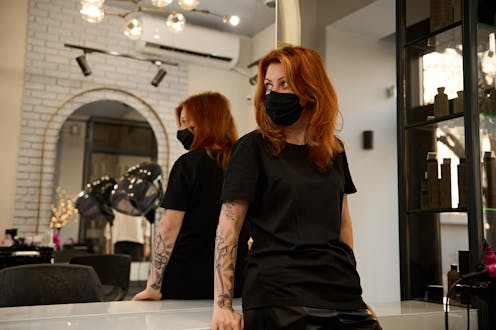
While masks are a small inconvenience, they remain vital in preventing SARS-CoV-2, because the virus spreads through the air we breathe.
Some people will continue to wear masks to stay safe and achieve a more normal life through the pandemic. Here are five reasons to keep wearing yours.
1. Masks reduce your chance of getting COVID
Many studies have shown masks protect against COVID. While N95 respirators offer the greatest protection, even cloth masks are beneficial. N95s respirators lower the odds of testing positive to COVID by 83%, compared with 66% for surgical masks and 56% for cloth masks.
The protection when everyone wears a mask is much greater, because it reduces the likelihood of well people inhaling the virus and prevents infected people from exhaling the virus into the air. If everyone wears a mask, the viral load in the air is much lower.
When we lose the protection of universal masking, it’s a good idea to wear a high protection N95 or P2 respirator.
Transmission of the virus without symptoms is a major driver of spread, and we cannot know who around us is infected.
Infected people may be asymptomatic or may not know they’re infected. This is especially so for Omicron.
Overall, about one in four infections are asymnptomatic. But even people with symptomatic infection are contagious before the symptoms start.
You might not know you’re infectious. Shutterstock
3. Wearing a mask protects others, including those at risk of severe COVID
Wearing a mask protects others, including those at greatest risk of severe COVID: people with disability, chronic illnesses and suppressed immune systems.
COVID disproportionately affects migrants and people from lower socioeconomic groups who are more likely to work in customer-service roles. If you wear a mask, you’re protecting workers, commuters and others you interact with.
Rates of vaccination also lag among Aboriginal and Torres Strait Islander people, leaving them more vulnerable to COVID in the absence of masks.
Masks also protect children who are vulnerable to COVID, with only half of five to 11 year olds partially vaccinated and under-fives not yet eligible for vaccination.
Children who wear masks can also protect their peers. In the United States, the risk of outbreaks was nearly four times higher in schools without mask mandates compared to those with mandates.
Omicron is not the flu or a cold, and has accounted for 17% more deaths than Delta in the United States. While Omicron generally causes less severe disease than Delta, it has claimed more lives because of vastly higher case numbers.
This is a double disadvantage for workers returning to workplaces with fewer protections and facing greater obstacles to workers’ compensation should they get infected.
5. Others might follow your lead
Being one of the few people wearing a mask when others aren’t, such as in a supermarket, is a daunting prospect for those of us who wish to continue masking. There are reports of masked people being abused and bullied.
However a NSW survey showed the majority of people in that state wanted mask mandates to remain. The more we normalise masks and the more we see them, the better protected the community will be.
As much as we wish it so, the pandemic is not over and new variants will likely emerge.
A layered, multi-pronged strategy which includes vaccines, masks, ventilation, testing and tracing is the best way to protect health, the economy and a resumption of normal activities.
C Raina MacIntyre receives funding from NHMRC, MRFF and has consulted for Ascend Performance Materials, Detmold Group and Cleanspace in the last 5 years.
The deluge dumped on southeast Queensland and northern New South Wales this week has been catastrophic. Floodwaters peaked at around 14.4 metres high in Lismore – two metres higher than the city’s previous record.
So how does this compare to Australia’s previous floods, such as in 2011? And can we expect more frequent floods at this scale under climate change? The answers to questions like these aren’t straightforward.
Climate change doesn’t tell the whole story, as extreme rainfall can occur for a variety of reasons. What’s more, it’s too soon to officially state whether this event is directly linked to climate change, as this would require a formal event attribution study. This can take months or years to produce.
In any case, we do know extreme events like this will occur more frequently in a warmer world. And the rising death toll, ongoing evacuations and destroyed homes make this one of the most extreme natural disasters in colonial Australian history.
How this compares to floods in our past
The east coast is a common place for heavy rainfall and flooding. The Yugara and Yugarabul people have traditional stories about great floods in the Brisbane river region long before European colonisation, and sediments from floodplains indicate floods as severe as those in 2010–2011 have occurred at least seven times in the past 1,000 years.
Instrumental records and documentary accounts show severe floods have inundated southern Queensland’s cities and towns in the 1820s, early 1840s and 1890s, 1931, 1974 and, of course, in 2010–2011.
Each of these events have been devastating, and record-breaking, depending on which records you’re interested in.
The floods in 1841 and 1893 are considered highest in terms of water levels recorded in Brisbane city, reaching over 8m. Australia’s wettest day on record was also recorded in 1893, when Crohamhurst in the Glasshouse Mountains measured 907 millimetres in one day.
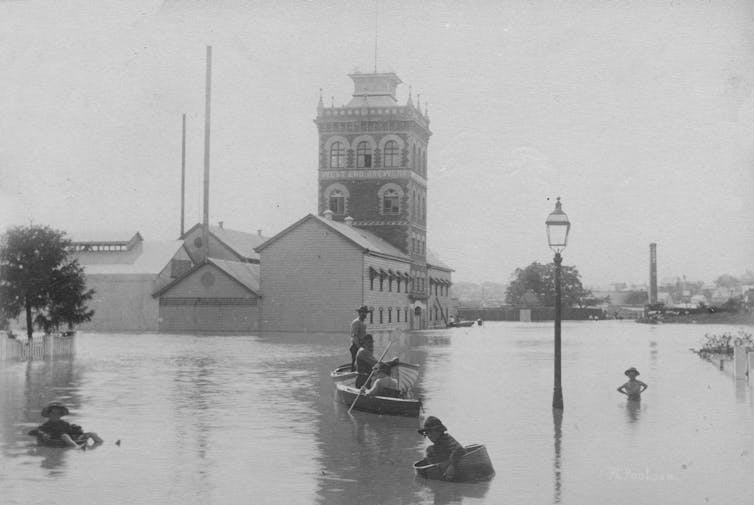
The West End Brewery in Brisbane in 1890. The Brewery building was damaged even further in the 1893 flood, when the Brisbane River rose 10 feet above the 1890 record. John Oxley Library, State Library of Queensland
The 1974 event was associated with extreme rainfall totals in many coastal areas, including 314mm in one day in Brisbane, and more than a metre of rainfall was recorded over three days in places such as Mount Tamborine and the northwest of Surfers Paradise.
The 2010–11 flood, while not as severe in terms of extreme rainfall totals, was notable for its inland extent, and was the final act of Australia’s wettest July to December on record.
The current flood has peaked at 3.85m in Brisbane, below the 2010–2011 levels of 4.46m. But it’s breaking records in other areas such as Lismore in northern NSW. The rainfall statistics associated with this event are also nearing the highest on record for many places, possibly due to the slow-moving nature of the associated weather system.
Four of the top six highest rainfall totals in NSW were recorded on 28 February, and Brisbane has just experienced three days of over 200mm. These aren’t the highest daily totals ever recorded in the city, but the first time three days of such intense falls have been documented, in data that go back to 1841.
Disentangling the role of climate change
When it comes to understanding the role of human-induced climate change in extreme events, there is the temptation to ask the wrong question: “did climate change cause this event?”
Since any extreme event is always a manifestation of climate variability, large weather systems, local-scale weather and climate change, it’s impossible to categorically answer this question with a simple “yes” or “no”.
Instead, the question we should be asking is “did climate change contribute to this event?”
Well, firstly, there has actually been a slight decrease in summer rainfall in southeast Queensland and northeast NSW since the mid-20th century. But, there’s very high variability in rainfall for this region, and La Niña – a natural climate phenonenon associated with wetter weather – often brings flooding to this area, as we saw in 2010/2011 and in the 1970s.
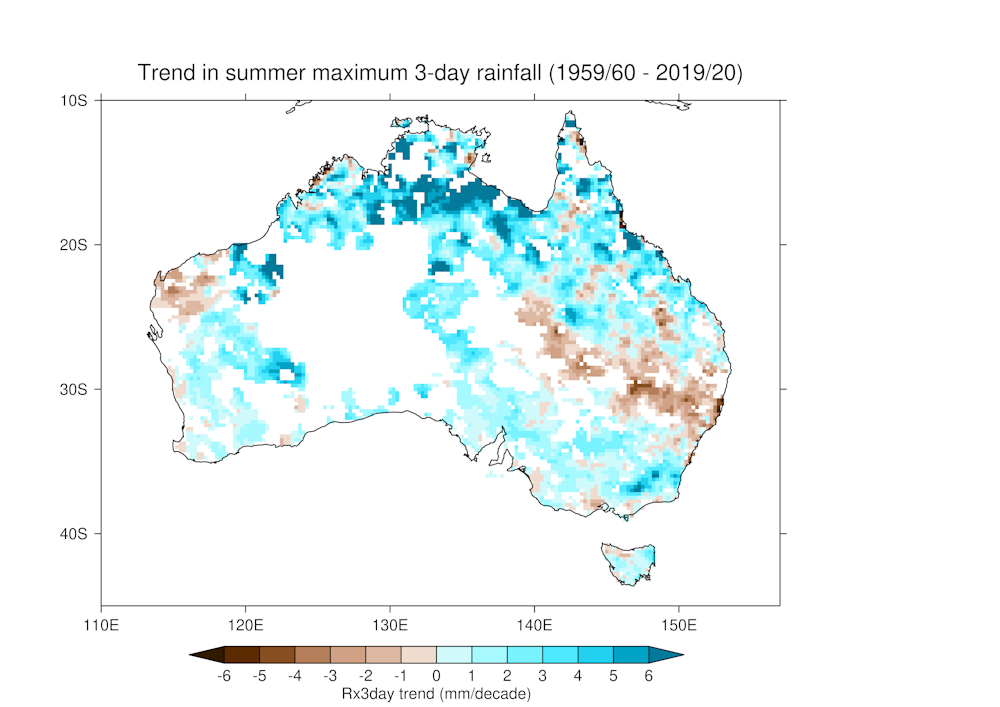
Trends in maximum 3-day rainfall in summer (December-February) from 1959/1960 to 2019/2020 show mixed trends in the flood-affected region. White areas are where station coverage is sparse or the dataset fails a quality control test. Author provided
Indeed, the effect of La Niña (and its counterpart El Niño, associated with drier weather) makes identifying a climate change-related trend more difficult. In other words, while a human-induced climate change signal may be present, the naturally high variability makes it hard to spot.
The atmosphere can hold approximately 7% more moisture for every degree Celsius of global warming. However, we also need the right weather systems in place to trigger the release of moisture from the air and cause extreme rainfall. The climate change effect on these systems is uncertain.
The severity of the flooding in southeast Queensland is partly due to a weather system called an “atmospheric river” sitting over the region for days. To make matters worse, the rain fell on an already sodden ground due to both the higher-than-average rainfall from the current La Niña, and the La Niña in the 2020-2021 summer. This made a huge difference to the scale of the floods.
We don’t fully understand how the persistence of these natural systems will change in future, but recent work shows climate change will cause long-lasting atmospheric rivers over Sydney to occur almost twice as often by the end of the 21st century. We don’t know yet if that’s also true further north of Sydney.
To complicate things further, there’s evidence to suggest climate change may be influencing the frequency, intensity and impacts of El Niño and La Niña events.
Climate change projections also suggest we may see small increases in the number of extreme one-day rainfall events which typically lead to flash flooding, in eastern Australia. But there’s a lot of uncertainty.
And worldwide, Monday’s report from the Intergovernmental Panel on Climate Change projected that global warming of 2℃ this century will bring twice as much flood damage compared to 1.5℃ warming. This jumps to 3.9 times more flood damage at 3℃ warming.
While the role of climate change is hard to pin down in Australia’s biggest floods, we know flooding often strikes our east coast. Building greater resilience to severe flooding would help lessen their impact.
Taking steps like concentrating new housing and infrastructure projects in areas above flood plains would help make us less vulnerable to these events.
The prosecutor of the International Criminal Court, Karim Khan, is opening an investigation into whether war crimes may have been committed in Ukraine. He is urgently seeking to preserve evidence as the fighting rages on.
War crimes are serious violations of international humanitarian law, which seeks to regulate the conduct of war and the treatment of civilians and prisoners during war.
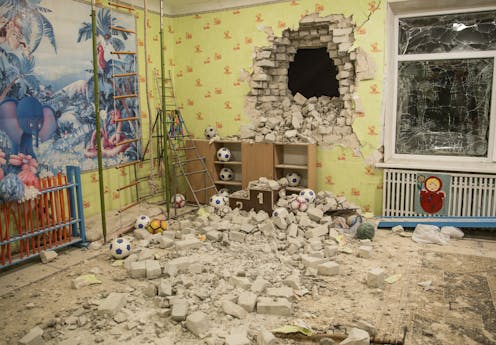
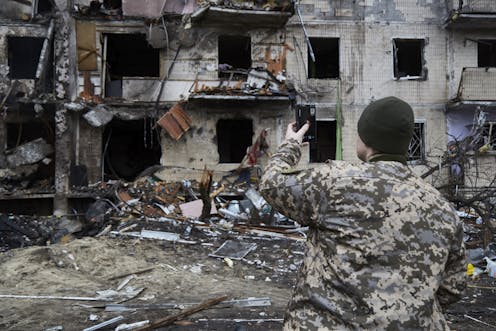
As Russian troops have reached major cities, there have been increasing reports of strikes on civilian objects, such as apartment buildings, schools, kindergartens, hospitals, and oil and electricity facilities.
With the fighting now moving deeper into urban areas – and Russian forces becoming frustrated by Ukrainian resistance – the harm to civilians could become much greater.
Ukraine is not a party to the Rome Statute of the ICC, but it has twice accepted the court’s jurisdiction over any international crimes committed in its territory. This could include offences committed by pro-Russian separatists or Russian or Ukrainian military forces.
It does not matter that Russia is not a member of the court and has not accepted its jurisdiction. But it does mean Russia, like the US, is very unlikely to cooperate with the court.
What is a war crime?
In considering whether war crimes have been committed, the devil is in the legal detail. This is why forensic criminal investigations are so important to uncover the truth and cut through propaganda or the understandable emotion involved in conflicts where civilians are hurt.
International humanitarian law does not absolutely prohibit harm to civilians or their property, and tolerates some collateral damage to civilians.
However, the law is unambiguous when it comes to deliberate attacks on civilians or civilian objects. These are war crimes, unless a civilian object is also being used for military purposes and thus becomes a military target.
Disproportionate attacks are also war crimes. These are attacks that cause excessive civilian casualties relative to the military advantage of attacking a military target. So, for instance, this could include a missile strike on an apartment building that Russian forces knew would cause significant civilian casualties for little military gain.
International law also prohibits indiscriminate attacks. These could include using certain weapons against military targets in dense urban areas, such as artillery, cluster munitions or thermobaric “vacuum” bombs, whose wide effects also risk hitting civilians.
Russian troops have already been accused of using cluster munitions and vacuum bombs in civilian areas in Ukraine. Both were also used by Russian forces in the devastating Chechen wars in the 1990s.
Other war crimes include killing detainees, torture, hostage taking, illegal detention and wanton property destruction.
It is also a war crime to kill or injure anyone when dressed in the military uniform of the other side (such as possible Russian saboteurs wearing Ukrainian uniforms), or when dressed as a civilian without any military insignia (this could potentially include Ukrainian civilians who throw Molotov cocktails).
Crimes likely to have occurred
This is not the first time the ICC has looked into alleged crimes in Ukraine. A preliminary examination by Khan’s predecessor, Fatou Bensouda, in 2020 found “a reasonable basis to believe” war crimes and crimes against humanity had been committed in eastern Ukraine and Crimea since 2014.
Bensouda did not indicate who was responsible, though much of the conduct is likely to have been committed by Russian forces (in Crimea) and pro-Russian separatists (in eastern Ukraine).
The prosecutor’s office had not yet sought permission from judges to open a full-scale investigation. But Khan has now confirmed those findings and wants to launch such a formal investigation, expanded to include the current conflict.
In Crimea, the allegations include everything from wilful killing and torture to the conscription of Ukrainian civilians into the Russian army and forced transfer of civilian prisoners from occupied territory.
In eastern Ukraine, the alleged war crimes include murder, torture, rape and launching attacks causing disproportionate civilian casualties.
Khan is satisfied these alleged crimes are grave enough to justify ICC prosecution, and that Ukraine and Russia are either unable or unwilling to investigate themselves. Ukraine cannot take suspects into custody in areas it does not control, while Russia is uninterested in prosecuting anyone.
However, the ICC does not have jurisdiction over the international crime of aggression – that is, to prosecute Russia’s unlawful attack on Ukraine.
Ukraine has made a claim with the International Court of Justice that Russia is invading on the pretext of stopping genocide by Ukraine, but this is a speculative gambit. And the ICJ does not have jurisdiction to directly hear any claim that Russia is committing aggression.
Challenges make prosecutions unlikely
The ICC investigation sends an important signal to Russia that impunity for international crimes will not be tolerated. It contrasts with the court’s position on Afghanistan, where the investigation into alleged war crimes by the US and other foreign forces was controversially “deprioritised” last year.
But significant hurdles still remain. Once a formal investigation is launched, it will take many years to progress. This is due to the difficulty of obtaining and preserving evidence (both physical and digital) in the middle of live combat and a rife propaganda war. Russia will also be uncooperative.
Even then, realistically, it is unlikely many prosecutions will happen – if any at all. For one, establishing which Russian military or political leaders are responsible for specific crimes will be complex and difficult. Then, arresting them in Russian-occupied territory, or obtaining their extradition from Russia, will be virtually impossible. The ICC has only convicted 10 people in two decades, despite the prevalence of international crimes in many conflicts.
At most, anyone ultimately indicted may think twice about travelling outside Russia or occupied Ukraine, as they could be arrested in 123 countries that are members of the court.
There is also the possibility Putin’s regime will eventually fall and a new Russian government may be more open to seeking justice for its past. Collecting and preserving evidence is therefore essential for any future accountability efforts.
Having failed to prevent the conflict, the least the international community can do now is better resource the prosecutor’s office to undertake its important investigations, and share relevant evidence and intelligence.
Ben Saul is affiliated with Chatham House in London and the International Centre for Counter-terrorism in The Hague.
Source: The Conversation (Au and NZ) – By Rebecca Bentley, Professor of Social Epidemiology, Principal Research Fellow in Social Epidemiology and Director of the Centre for Research Excellence in Healthy Housing in Melbourne School of Population and Global Health, The University of Melbourne
Shutterstock
Recent torrential rain along the east coast of Australia has sparked renewed fears of mould in people’s homes, which can cause dangerous health problems. Many flood-affected residents in northern New South Wales and Queensland will also be contending with mould as part of the post-flood cleanup.
More than just lungs: mould can affect health in other ways
Many of us know someone whose asthma is triggered by exposure to mould. But even non-asthma sufferers are at risk.
Research shows dampness, mould and related airborne particles are associated with a range of adverse health outcomes, including increased risks of asthma, allergies, and respiratory infections and symptoms.
A parliamentary Inquiry into Biotoxin-related Illnesses in Australia noted the need for further research into mould prevalence, mould measurement and the potential health effects of exposure to damp and mould.
Heavy rain and floods lead to excess indoor moisture, and a damp environment is perfect for mould growth. Shutterstock
Mould hot spots in Australia
The World Health Organisation advises no level of exposure to mould can be considered safe for health. It says dampness and mould-related problems should be prevented and remediated early to avoid potentially harmful exposure.
Despite this strong advice, mould is a common problem in Australia. Until recently, not much has been known about mould prevalence, with the official WHO guidelines on indoor air quality estimating 10-50% of Australian homes are affected by dampness and mould.
We can also make an estimate using the large-scale Australian Rental Housing Conditions Dataset, which collates robust data collected from over 14,000 rental households in 2020.
Our analysis of this data set shows 27% of renters say their current home has problems with mould and 21% report problems with dampness.
Mould is often found in the south eastern states of Australia due to a combination of lower temperatures and damp weather. It is also a problem in New South Wales and Queensland, where 39% and 26% of regions respectively have a high prevalence of mould in rental homes. Sydney has more mould than Melbourne.
We have mapped the data for Melbourne, Sydney and Brisbane here:
Data source: the Australian Rental Housing Conditions Dataset. Centre for Research Excellence in Healthy Housing
You’re also more likely to find mould in poorly maintained, low-income housing. These poor housing conditions are more common among people who already experience health issues.
Children are another group at higher risk of living in housing with mould – 33% of people living with two or more children reported mould in the Australian Rental Housing Conditions Dataset (compared to 27% of childfree households).
Other risk factors for mould included roof and plumbing defects, and the need for urgent repairs.
Building codes and rental policy can help
Mandated building standards are important to ensure design, building and maintenance sufficiently address mould growth.
Our current building codes do not focus on preventing damp conditions. In fact Australia’s National Construction Code previously inadvertently promoted moist indoor environments by solely focusing on well-sealed, energy-efficient buildings.
The National Construction Code is to be updated in late 2022. Hopefully, the new code will directly address the mould-promoting condensation problem caused by measures to increase energy efficiency in buildings.
New builds, of course, don’t house the whole population. Almost a third of Australian households rent, and this includes older homes with a range of structural issues. Policies targeting renters and landlords could have a significant impact on population health.
While tenancy regulations vary across Australia, some states and territories have begun to address the issue of mould in rental housing.
For example, the recent Victorian rental reform mandates premises:
must be free from mould and damp caused by or related to the building structure.
It allows tenants to log an urgent repair request where issues, such as leaking roofs or plumbing, lead to mould.
An agreed definition of what level of mould is harmful, and how it can be measured, would allow governments to set cut-offs above which homeowners are compelled to intervene.
What can you do about mould in your home?
Prevention is more efficient than removal. The key is keeping the house dry and free of dust. Make sure you:
fix leaks, including roofs and walls as well as plumbed appliances such as dishwashers
increase ventilation and air circulation with windows and fans
use extractor fans when cooking, bathing or drying laundry
use a dehumidifier
clean condensation from inner windows.
Use extractor fans when cooking, bathing or drying laundry. Shutterstock
Mould remediation is complex and often best undertaken with professional advice. Australian state and territory governments provide advice on dealing with dampness and mould in the home.
Rebecca Bentley receives funding from the National Health and Medical Research Council and the Australian Research Council.
Ang Li receives funding from the University of Melbourne Early Career Researcher Grant Scheme and funding support from the National Health and Medical Research Council.
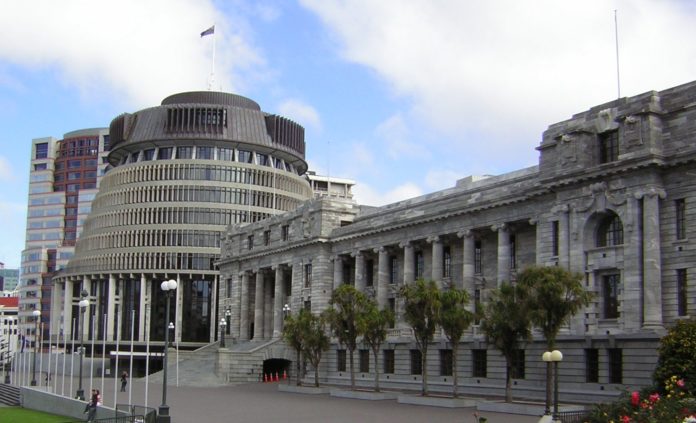
Police have made 60 arrests today as part of a pre-planned operation to remove anti-covid public health protesters from New Zealand’s Parliament grounds.
Police have been descending on Parliament from early this morning on day 23 of the occupation and have also begun towing larger vehicles, including campervans and trucks.
They say they have gained significant ground this morning across the occupation.
Police have asked the public and commuters to avoid the area near Parliament and say they will continue to help those who want to leave the grounds to do so safely.
Hill Street is closed, and many surrounding streets to the protest have been blocked.
Protesters have reacted by throwing cones at police.
Police staff in and around the protest area have sighted protesters in possession of various weapons. These include homemade plywood shields and pitchforks.
One man told RNZ he wanted to move his car because it was all he owned.
There were reports of forklifts on the move, and police were also taking down more tents.
Around 60 people have now been arrested in relation to this morning’s operation at Parliament grounds.
Police continue to tow vehicles that are parked illegally. We have commenced towing larger vehicles, which includes trucks, vans and campervans.
One of the RNZ reporters on the scene said they were being abused by protesters and told to leave.
The Kīngitanga is calling for a peaceful resolution to the occupation at Parliament and other sites across the country.
In a statement, a spokesperson said the Kīngitanga had not given its support to any occupation and claims to the contrary were untrue.
They said Kiingi Tuheitia had been a strong advocate for the covid public health response, while acknowledging the impact on people and their families.
The Kīngitanga said its priority was to get through omicron and start preparing for a life after covid.
The Kīngitanga said it was calling for a peaceful resolution to the occupation at Parliament and other protest sites across the country.
#WATCH Hundreds of police, many in riot gear, are moving in on protesters occupying Parliament and the surrounding streets.
New Zealand Parliament Buildings, Wellington, New Zealand.
Editor’s Note: Here below is a list of the main issues currently under discussion in New Zealand and links to media coverage. You can sign up to NZ Politics Daily as well as New Zealand Political Roundup columns for free here.
Source: The Conversation (Au and NZ) – By Anastasiya Byesyedina, PhD Candidate in the Department of Government and International Relations, Sessional Teacher and Student Writing Fellow, University of Sydney
Brendon Thorne/AAP
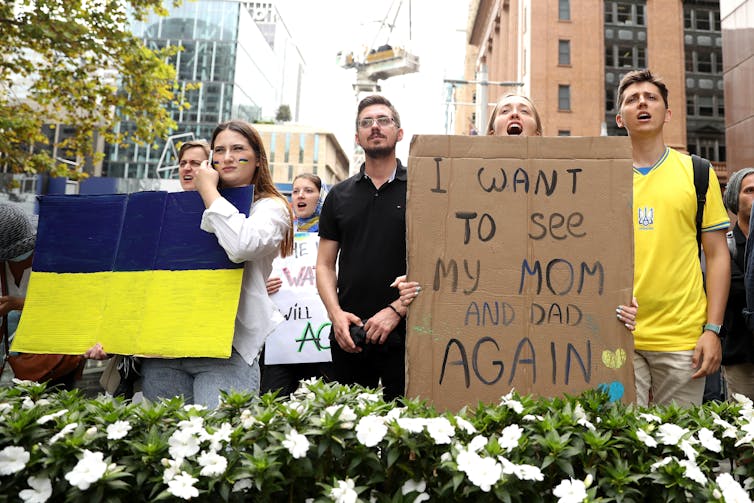
Last Friday afternoon, I received a phone call from my mother in Ukraine. It was 5am Kyiv time and I heard her voice tremble as she told me, “Putin announced an invasion – I can hear bombing!”.
Ukrainians around the world are watching the Russian invasion of their home in horror and distress. As a researcher in Australia, my interests are in the study of Ukrainian revolutions and identity. But before all that, I am Ukrainian.
It is a surreal and gut-wrenching experience to hear the voice of your loved one in crisis when you are oceans apart. Feelings of fear, shock and angst run through every Ukrainian trying to grapple with the reality of war from afar.
So, sleep deprived but hopeful, Ukrainians in Australia are spending their days relentlessly attending rallies and waiting for phone calls from their family.
Ukrainians in Australia
Ukrainians have a long and significant history in Australia. Records show Ukrainians began migrating to Australia as early as 1860, but the largest wave of migration was in 1948 when Ukrainian refugees arrived from displaced persons camps in Europe after the second world war.
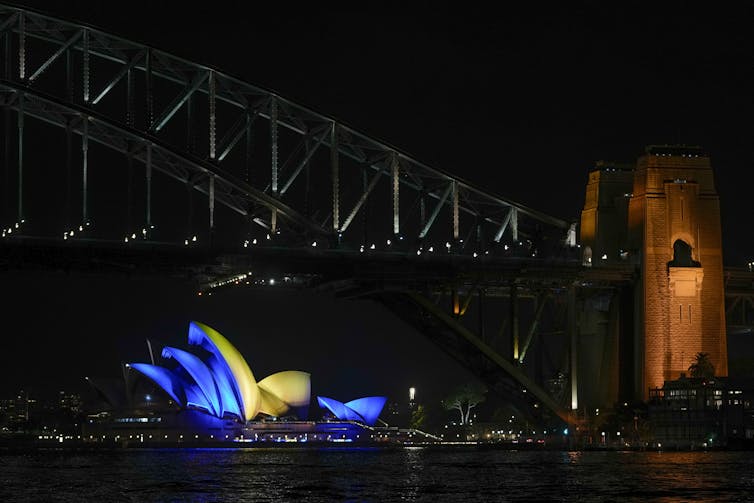
The Opera House sails have been lit with the colours of Ukraine’s national flag in solidarity with the country’s people and government. Mark Baker/AAP
Following Ukraine’s independence in 1991, younger Ukrainian professionals came to Australia on skilled visas.
According to the 2016 Census there were 13,366 Ukraine-born people in Australia. Victoria has the largest number at 5,322, followed by New South Wales (4,830), Queensland (1,248) and South Australia (929). More than 46,000 people reported they had Ukrainian ancestry.
Due to the complex history and geography of the region, some Russians in Australia will also have family in Ukraine or identify as Ukrainian.
Rallying and praying
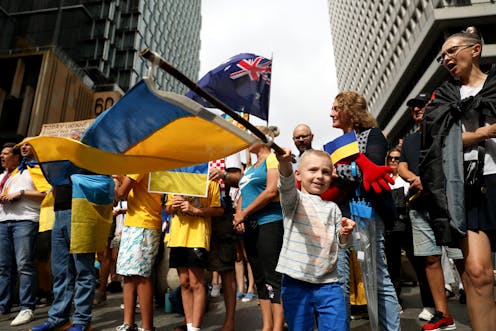
The Ukrainian community in Australia is not just watching the war, they are trying to stop it with rallies.
Whether they are students, couples, families with children, old or young, Ukrainians in Australia have the same goals. They want to raise awareness of Russian atrocities on Ukrainian land and ensure the Australian government provides enough support in the form of military aid, humanitarian relief, migration aid and sanctions.
You will have seen them wearing vyshyvankas – a blouse embroidered with patterns that differ depending on the region of Ukraine someone is from. Waving Ukrainian flags and singing the Ukrainian national anthem have also become a daily ritual. A key line is “Ukraine is not yet dead, nor its glory and freedom”, echoing past and present resilience against Russian aggression.
Community groups, such as the Australian Federation of Ukrainian Organisations, have also been working with the Ukrainian community, sending letters to local MPs and talking to Ukrainian families here and abroad.
Some Ukrainians have also been going to church. The Holy Transfiguration of Our Lord Parish in Sydney’s Blacktown is one of the oldest Ukrainian churches recorded in Australia and has been uniting the Ukrainian diaspora over the past week. As priest Vadym Koreniuk told me:
We are in dark times. Feeling that you are not alone is very reassuring. It helps to keep you sane.
It is encouraging to see Prime Minister Scott Morrison has already agreed to provide Ukraine with military and humanitarian aid. This needs to continue.
Australia – and the rest of the world – must maintain the pressure against Russia. Boycotting Russian products may be another way to do this.
Support from other former Soviet states
Since the invasion of Ukraine, we have also been encouraged by the solidarity among other diaspora communities here in Australia. The rallies have seen Australians, Georgians, Poles, Lithuanians and Russians – to name a few – come out to support the Ukrainian people.
Protests against Russia’s invasion have been organised around Australia. Brendon Thorne/AAP
This is reminiscent of protests in Ukraine in 2013 and 2014, against Russian-backed former president Victor Yanukovych. These were also supported around the world, most notably by neighbouring citizens.
The significance of ethnic groups who were once part of the Soviet empire joining Ukrainian rallies here cannot be overstated. These groups are more than familiar with the repercussions of Soviet and Russian aggression. During Sydney’s Martin Place rally on Saturday, I heard a Russian man say:
I was born Russian, it was not my choice […] But why I am now standing with this flag, the flag of an aggressor, the flag of a colonial empire?
He then burned his Russian passport.
The diaspora’s vital role
The rallies are set to continue. It is vital for the Ukrainian community in Australia to be continuously heard. As a diaspora group, this is the least we can do for our family, friends and Ukrainian National Army back home.
In the meantime, I try to talk to my mother every day, hoping this nightmare ends and that I can see her face again.
Anastasiya Byesyedina does not work for, consult, own shares in or receive funding from any company or organisation that would benefit from this article, and has disclosed no relevant affiliations beyond their academic appointment.
Source: The Conversation (Au and NZ) – By Sanjaya Senanayake, Associate Professor of Medicine, Infectious Diseases Physician, Australian National University
Omicron has more mutations than other strains: 72 in total, the most concerning of which make the virus more transmissible and better able to evade the immune system and vaccines.
So how does Omicron differ to Delta in infectiousness, symptoms, severity and vaccine protection.
The basic reproduction number (R0) is one gauge of the infectiousness of a virus. It tells you how many susceptible people a single infected person will themselves go on to infect.
Danish researchers estimate the effective reproduction number of Omicron is 3.19 times more than that of Delta, which had an average R0 of 5 (ranging from 3.2 to 8).
Similarly, Japanese research concludes Omicron is 4.2 times more transmissible than Delta early on.
So, in a fully susceptible (unvaccinated and uninfected) population, one person with Delta would, on average, infect five other people, while one person with Omicron could transmit the virus to about 20 others.
This makes Omicron one of the most infectious agents known.
Another practical indicator of a virus’s infectiousness is how easily it spreads within households. This is known as the secondary attack rate.
Studies from various countries have consistently shown Omicron has a higher secondary attack rate in households than Delta. In a household with Omicron, householders have a 14-50% chance of getting infected.
Why is Omicron more infectious?
Omicron’s varied mutations allow it to evade the immunity generated by both previous infections and vaccination.
Studies have also shown Omicron infects and multiplies in the upper airways 70 times faster than Delta.
There also seems to be more asymptomatic infections with Omicron. This probably facilitates transmission, as people don’t realise they’re infected and will move around normally.
How long does it take to become sick?
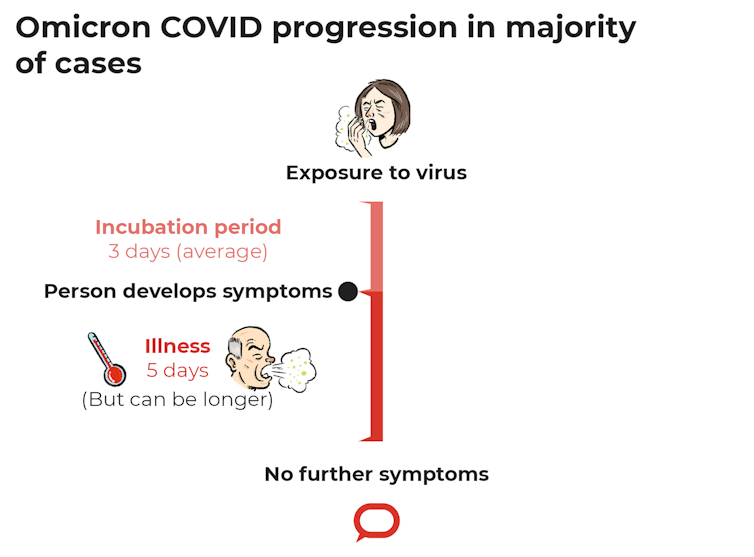
The incubation period of Omicron – the period from being infected to getting symptoms – is around three days, with the person often becoming infectious a day or two before symptoms emerge.
This is shorter than with Delta and earlier variants.
The average duration of illness is shorter with Omicron than Delta: five days compared to six.
With new isolation rules implemented during the Omicron wave, seven days after testing positive to COVID, those who are symptom-free will no longer have to isolate.
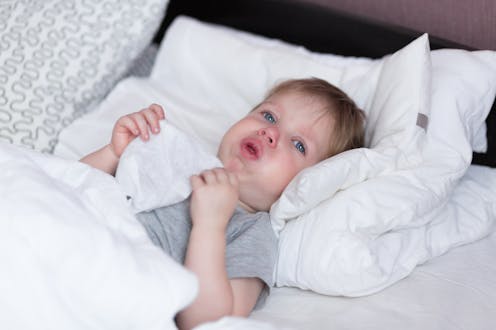
In children, Omicron may be more likely to cause croup, which leads to a distinctive barking cough. Croup is associated with other viruses, but Omicron’s ability to infect the upper airways so efficiently may allow it to cause croup more than previous COVID variants.
The risk of death is about 60% less with Omicron than with Delta.
Yet despite the reduced severity, this wave of Omicron has been associated with higher rates of hospitalisations in many countries because of the sheer numbers of those infected.
The only silver lining has been how the Omicron wave peaked within a few weeks in numerous countries, with hospitalisation and daily case numbers quickly coming down.
Can you be reinfected with COVID?
Yes, people who have previously had COVID from earlier variants are at risk of getting infected with Omicron, particularly in regions with low vaccination rates.
Analysis of 116,683 cases early in the UK’s Omicron wave found 9.5% of Omicron cases were reinfections.
It’s too early to know the risk of a person previously infected with Omicron getting Omicron again.
After 20 weeks, two doses of either mRNA vaccine (Pfizer or Moderna), reduced the risk of infection with Omicron by only around 10%.
By the same point in time, two doses of AstraZeneca essentially provide no protection against infection with Omicron.
However, two doses of vaccine still prevent severe disease, with a vaccine effectiveness against hospitalisation of up to 35% six months later. This is less than half as effective as the protection offered against hospitalisation with Delta.
Protection against symptomatic disease increases too. Vaccine effectiveness is 65-75% two to four weeks after the booster, reducing to 45-50% ten weeks after the booster.
Pfizer and Moderna have also developed an Omicron-specific vaccine which they are about to test in clinical trials and could be available in the second half of 2022.
Sanjaya Senanayake does not work for, consult, own shares in or receive funding from any company or organisation that would benefit from this article, and has disclosed no relevant affiliations beyond their academic appointment.
Schools were thrown into a spin by the COVID-19 pandemic. When children were sent home to learn remotely, teaching methods remained largely the same. Many children, parents and teachers were frustrated by the difficulties they faced when schools tried to transplant face-to-face classroom learning into homes.
Over time, a number of teachers and parents adapted their approach by reducing contact hours and the reliance on lecture-style instruction. Many moved to games and small-group discussion instead. For some students this worked well.
Schools in all states have now reopened and students are required to return to a pre-COVID status quo. But, many cannot or will not, and others feel they are being forced into arrangements they don’t like.
The pandemic has changed some parents’ and children’s expectations and experiences of schooling. For instance, many parents saw benefits for their child working at their own pace and being more active.
Research suggests many parents would keep their children in schools if the system was more flexible – even if it allowed the option of attending school part time while learning remotely the rest of the time.
In December 2021, the ACT held an inquiry into the pandemic’s impact on the community. Many parents sent in submissions requesting the state to continue to allow remote learning for those who elected to do so. One of the recommendations on the pandemic’s impact on schools was for the ACT government to
consider the benefits of remote learning for some children and […] whether to introduce this as an ongoing arrangement for those who are better suited to remote learning.
Vivienne Fox (administrator of an online home school registration support page) told us the NSW registration process:
has blown out to at least 16 weeks from submitting the application to receiving the certificate, which is when they say that you’re recognised as registered […] that’s more than one term.
We have four schools in four states. All are experiencing higher than normal enrolments. One has closed new enrolments for term 1 because of the massive influx of new students.
Rise of illegal pop-up schools
Another, more worrying, change has been the emergence of education services that fall into a legal grey area. Teachers who have been forced out of the school system (often for reasons related to COVID vaccination or the disease itself) are moving into the home education sector.
Facebook groups have been set up to connect families with teachers. Some offer tutoring or classes that parents attend with their children. Others have created pop-up schools where parents can drop children to classes and which provide progress reports.
These pop-up schools are not legally or validly operating and are not a non-government school.
To be classed as a non-government school in Australia, schools must be registered by statutory authorities in their state or territory. In Queensland, for example, it’s NSSAB, the Non-State Schools Accreditation Board.
In all states and territories, these authorities are made up of various representatives of the main non-state school authorities (such as the Catholic Education Commission and independent schools associations). They are convened by education departments to register non-state schools and ensure they are validly operating, including that they are not offering a school service to home educators.
However, these pop-up schools are specifically targeting the home education community and offering a service to them. This is illegal. A spokesperson of the NSW Education Standards Authority (NESA) told us:
It is an offence for a person to conduct, knowingly permit or assist in the conduct of an unregistered school, for the education of school aged children […] Where NESA has information raising concerns that an illegal school may be operating, NESA will conduct an investigation.
What does this mean going forward?
Schools are now a tricky position. They are trying to balance the needs of fearful parents with the needs of those who think mandates, especially banning parents from school grounds if they are un-vaccinated, have gone too far. They are also dealing with parents’ concerns about children bringing the virus home to vulnerable family members.
Some factors pushing families to homeschool and distance education are already well recognised. These include a child having a diagnosis such as autism spectrum disorder, bullying and the family feeling schools are not catering to their children’s needs. We have known for a long time homeschooling is not the first choice for all families.
Schools may have to adapt to a changed mode to meet parent and students’ needs. Flexible delivery, including opening up the distance education schools for broader enrolments, would support those who benefit from being home some of the time and help those who are concerned about risks associated with school attendance.
More options for distance education would minimise the problem of pop-up schools. And it would leave home education for those who want it, not for those who feel they have no other option.
Rebecca English is a member of the Home Education Association.
Chris Krogh is affiliated with Home Education Australia – a national, not-for-profit, membership-based association supporting home educators.
Giuliana Liberto is a member of the Home Education Association, Inc.
Karleen Gribble is a member of the Home Education Association.
Source: The Conversation (Au and NZ) – By Iain Butterworth, Honorary Associate Professor, School of Global, Urban and Social Studies, RMIT University
The John Curtin Hotel in Carlton, another of Melbourne’s cultural landmarks, is set to close. Nearly 150 years old, the pub has long been a haunt of the union movement, Labor leaders, detectives, journalists and the live music scene.
The building will probably be sold to overseas property developers. While the building has some degree of heritage protection, there appears to be nothing to prevent developers from gutting the interior, keeping the façade and then building a further six stories on top of the lobotomised carapace.
There’s no requirement that this site continues to provide a community setting for people to build social ties, both strong and weak.
Once again, Australian planning systems are set to fail the individual and collective identities and biographies of those who live here, and those who came before us.
Once again, residents of a colonial Australian city are experiencing what First Nations, other colonised peoples, asylum seekers and climate refugees have long known: when we are forced to leave a loved place, or when that place changes beyond our control, we experience loss and grief, and our individual and collective identities can be wounded.
Social psychologist Irwin Altman said the loss of buildings and places where we have lived our lives and built community can feel like the loss of a personal relationship which we expected to last indefinitely. Our experience of a change in a place is “both a serious environmental issue and a deeply personal one”.
In Returning to Nothing: the meaning of lost places (1996), historian Peter Read challenged us to not “underestimate the effect which the loss of dead and dying places has on our own self-identity, mental well-being and sense of belonging”.
Read pointed out that, unlike the English language, there’s a word in Spanish, destierra, which describes the psychological trauma of being uprooted, displaced or dispossessed from a loved place.
How would your relationship to Melbourne change if its architecture was lost? Fabian Mardi/Unsplash
Our colonial planning laws, which are steeped in the tradition of terra nullius, give very limited weight to the personal and collective emotions and identities of those who seek to preserve the links between threatened buildings, places and spaces, and their own biographies, ongoing Indigenous presence and community identity.
Liveable cities
With its focus on healthy, liveable neighbourhoods, the Victorian government’s Plan Melbourne has sought to build on the legacy of Melbourne’s claim to be the world’s most liveable city.
Certainly, the Australian Urban Observatory shows that many parts of Melbourne offer easy physical access to diverse affordable housing, local employment, social infrastructure, fresh affordable food, green space, walkable neighbourhoods and efficient public transport.
But liveable places also welcome us. They make it easy for us to feel like we belong and to experience a sense of community.
Buildings are an important part of how we feel like we belong. John Torcasio/Unsplash
The built environment is far more than a backdrop to our lives. Environmental economist and planner Michael Jacobs said “People do not simply look out over a landscape and say, ‘this belongs to me’. They say, ‘I belong to this’”.
Our overtly formal and “rational” planning and heritage laws typically assess the value of buildings and places on their architectural merit alone, rather than how these places and spaces serve as repositories of cultural memory and settings for building community.
While the John Curtin Hotel has never been one of my tribal haunts, its significance resonates.
In 1996, I moved to Melbourne to study. I found a flat in Balaclava, and immediately felt at home. The urban form provided a sense of intimacy that I’d never experienced living elsewhere in Australia.
One of my favourite St Kilda haunts was the Greyhound Hotel.
This raffish, Victorian/art-deco pile had served as a community meeting place for local LGBTQ+ residents and other locals for almost 100 years.
The Greyhound Hotel, photographed in 1937. State Library Victoria
The hotel, and nearby St Kilda Town Hall, each on opposite sides of Brighton Road, served as a symbolic gateway to my local neighbourhood. The Greyhound certainly wasn’t a fancy building, but it was quirky. For 160 years, it had been a vital “third place” for building community: a space we gather in away from home and work.
The Greyhound was integral to the character of the local neighbourhood, and to people’s individual and collective stories.
Because the original Victorian hotel had been remodelled extensively in the 1930s, the council indicated that it could not include the building on its “historic” register, which apparently only recognises buildings that remain largely unchanged. Think about all the historic buildings in Europe that have evolved continuously over the centuries.
Locals mourned the Greyhound’s destruction and took home bricks as mementos. Several years following the hotel’s demolition, the site remains an empty scar: there’s no history there at all. Even now I try to avoid going near it.
May the John Curtin Hotel – and those who identify with it and love it – experience a different fate.
Iain Butterworth is the founder of Iain Butterworth and Associates, which aims to bring planners, policy makers, researchers and citizens together to build more liveable, healthier cities and communities.
It has been interesting to watch media and public commentators come to the realisation – sometimes slowly – that the siege of parliament was not simply an anti-vaccine mandate “protest” but something with more sinister elements.
While researchers and journalists have noted the toxicity of some of the politics on display, as well the presence of extreme fringe activists and groups, it should have come as little surprise.
These politics have been developing for some time, heavily influenced by the rise of a particular form of conspiratorial populism out of Donald Trump’s America, and by the networking and misinformation possibilities of social media.
Internationally, researchers noted a decisive shift in 2015-16 and the subsequent exponential growth of extremist and vitriolic content online.
This intensified with the arrival of conspiracy movement QAnon in 2017 and the appearance of a number of alt-tech platforms that were designed to spread mis- and disinformation, conspiracy theories (old and new), and ultranationalism and racist views.
While local manifestations developed slowly, there was evidence that some groups and activists were beginning to realise the potential. The Dominion Movement and Action Zealandia embraced these new politics – white nationalism, distrust of perceived corrupt elites and media – along with the relatively sophisticated use of social media to influence and recruit.
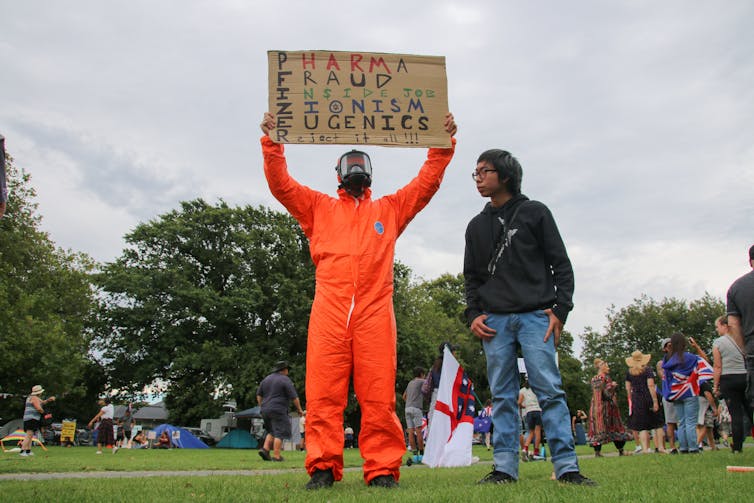
A protester in a bio-hazard suit holds a placard during an anti-mandate protest in Christchurch. GettyImages
COVID and conspiracy theory
These anti-authority, conspiratorial views have been around in New Zealand for some time within the anti-1080, anti-5G and anti-UN movements.
But we began to see the formation of a loose political community around the 2020 general election. It was notable, for instance, that online material from the Advance NZ party had 30,000 followers and their anti-COVID material was viewed 200,000 times.
COVID gave new impetus to these movements, partly because the pandemic fed many of the now well-established tropes of those inclined to believe in conspiracies – the role of China, government “overreach”, the influence of international organisations like the UN or WHO, or the “malign” influence of experts or institutions.
COVID not only encouraged others to be convinced that conspiracies were at work, the lockdowns also meant more were online and more were likely to engage. QAnon proved to be a key influence.
The election saw Advance NZ (and the NZ Public Party), along with the New Conservatives, the Outdoor Party and Vision NZ all peddle versions of COVID scepticism, the distrust of elites or of ethnic and religious “others”.
Combined, they received 2.73% of the party vote and 3.01% of electorate votes. Not large, but related online activity was still troubling.
The alt-right in NZ
By mid-2021, when the Institute for Strategic Dialogue (ISD, a UK-based research organisation) undertook a study for the Department of Internal Affairs of New Zealand’s extreme online activity, things had ramped up yet again.
The ISD looked at 300 local extremist accounts and 600,000 posts. In any given week, 192 extremist accounts were active, with 20,059 posts, 203,807 likes or up-votes and 38,033 reposts/retweets.
When it came to far-right Facebook pages, there were 750 followers per 100,000 internet users in New Zealand, compared to 399 in Australia, 252 in Canada and 233 in the USA.
Those numbers should give us all pause for thought. The volumes, the relatively high density, the extensive use of QAnon and the mobilisation of a not insignificant part of the New Zealand community indicate the alt-right and its fellow travellers were now well and truly established here.
The ‘sovereign citizens’ at parliament
This is reinforced by the Department of Internal Affairs’ digital harm log. Not only are the numbers growing, but the level of hate and threats directed at individuals and institutions remains high.
In this context, it’s not surprising to see these ideologies surface at the occupation of parliament grounds, or the fractious and divided nature of those attending, and that their demands are so diverse and inchoate.
Nor should it come as a surprise that the protesters display a complete unwillingness to trust authorities such as the police or parliament.
For some time, the so-called “sovereign citizens” movement has been apparent in New Zealand, again heavily influenced by similar American politics. Laws and regulations are regarded as irrelevant and illegal, as are the institutions that create or enforce them.
What’s perhaps more surprising is that New Zealanders have generally not known more about these politics and the possibility they would produce the ugly scenes at parliament.
While there has been some excellent media coverage, there has been a sense of playing catch-up. The degree of extremism fuelling the protests and the various demands appeared to catch parliament and the police off guard.
Our security and intelligence agencies are devoting more resources to tracking these politics – but they need to be more public about it. The Combined Threat Assessment Group and the SIS provide updates and risk assessments, but these often lack detailed information about local activists and actions. We need to be better informed.
The police are enhancing existing systems to better record hate crimes and activities (Te Raranga), which should become an important source of information.
And the Department of Prime Minister and Cabinet will be announcing some of the details of the new centre of excellence, He Whenua Taurika, that will provide evidence of local developments.
If many New Zealanders have been surprised and saddened about the extremist politics visible at the parliament protest, there is now little excuse for not understanding their background and momentum. The challenge now is to ensure further hate crimes or violence do not follow.
Paul Spoonley is a member of a New Zealand Police independent advisory panel and has been working with the Department of Prime Minister and Cabinet on the implementation of the Royal Commission of Inquiry recommendations. He is a member of Te Raranga Advisory Group.
As well as her interviews with politicians and experts, Politics with Michelle Grattan now includes “Word from The Hill”, where she discusses the news with members of The Conversation politics team.
This week Michelle and politics + society editor Amanda Dunn discuss Australia’s response to the war in Ukraine which now includes more than $100 million for lethal and non-lethal assistance and humanitarian aid.
They also canvass Peter Dutton’s recent controversial GoFundMe campaign for flood victims.
Michelle Grattan does not work for, consult, own shares in or receive funding from any company or organisation that would benefit from this article, and has disclosed no relevant affiliations beyond their academic appointment.
As economic sanctions on Russia escalate, there has been an attempt to isolate vital energy exports from the mix. This may be wishful thinking.
US President Joe Biden last week said sanctions against Russia, including cutting off Russian banks and individuals from the global SWIFT transaction system, were “specifically designed to allow energy payments to continue”.
But prices on futures contracts for natural gas in Europe soared last week. While they have settled down since, internationally the market is volatile and uncertain.
Russia is both the world’s second-largest exporter of crude oil and refined petrol, and the largest exporter of natural gas, mostly via pipelines to western Europe. The European Union and its allies want to put maximum pressure on Russia, but not set off an energy crisis that hurts their own people and plunges the world economy into recession.
Analysts point out that Russia’s war on Ukraine will likely disrupt its gas exports even without sanctions, with Western countries pulling out of relationships with Russian energy companies and the possibility Moscow could withhold supplies in retaliation for other measures.
Trading, shipping and insurance companies are unlikely to take the risk of dealing with Russian cargoes, fearing either physical attack, payment issues because of financial sanctions, the risk of non-delivery, or public and investor backlash for continuing to do business with Russia.
The extent of the upheaval is demonstrated by BP’s announcement this week to sell its 19.75% stake in Russia’s state-owned oil company Rosneft. Shell followed suit by announcing it will exit its joint ventures with Russian gas giant Gazprom, including its 27.5% stake in the Sakhalin-II liquefied natural gas (LNG) facility in East Asia.
These actions – unprecedented by global energy companies – demonstrate how profound effects may be.
What happens to natural gas supplies prices has consequences for Australia, also a relatively major player in the global gas export market. Unlike with petrol prices, however, Australian gas consumers are largely insulated from international volatility.
Natural gas is traded internationally by pipeline or shipped as LNG. Russia’s exports account for 26% of international pipeline trade and 8% of LNG trade.
About 77% of these exports go to European countries and account for about 40% of Europe’s total natural gas consumption. Dependence varies. Nine countries rely on Russia for more than 90% of their gas imports: Bulgaria, Czech Republic, Estonia, Finland, Hungary, Latvia, Romania, Slovakia and Slovenia.
In 2021 slightly less than 10% of Russian gas exports to Europe was transported via Ukraine (through pipelines).
Australia’s gas capabilities
Australia is the world’s fifth biggest natural gas exporter. It exclusively exports natural gas as LNG, and is now the world’s largest LNG exporter, accounting for 22% of international trade.
In 2021, Australian LNG exports were valued at A$49.1 billion, or more than 10% of Australia’s total export revenues.
Most of these LNG exports are locked into inflexible long-term contracts. About 36% of exports, however, are sold under flexible spot and short-term contracts. To sell this to Europe would mean selling less to existing customers, which would be difficult given contractual and transportation constraints.
In late January the Morrison government offered to provide extra LNG to “friends and allies” in Europe should Russian supplies be cut. Last week foreign minister Marise Payne said she had been talking to European counterparts about this. But most analysts question the feasibility, at least in the near term.
As noted by Graeme Bethune, the head of Adelaide consultancy EnergyQuest, “Australian LNG is produced by private companies, and the government doesn’t decide where it goes”.
According to Credit Suisse analyst Saul Kavonic, there is “precisely zero” capacity for Australia to boost LNG deliveries to Europe in the short term.
Australian LNG could be used in “swaps”. These involve swapping an LNG cargo in one part of the world with one closer to where a buyer wants it delivered. This may allow, for example, American LNG to be diverted to Europe, and Australian LNG replacing it in Asia.
But it is still a zero-sum game for the global economy.
Australian LNG exporters will benefit from higher global prices. The good news for Australian consumers is that those higher prices largely won’t flow through to domestic prices.
Australia’s domestic gas prices are about 70% lower than overseas, due to government measures to quarantine Australian customers from international prices and guarantee secure and affordable gas to the country’s east coast market.
Most Australian gas buyers have long-term supplies locked in.
This is why the head of the Australian Competition and Consumer Commission does not expert gas prices to rise, unlike petrol prices.
Vlado Vivoda does not work for, consult, own shares in or receive funding from any company or organisation that would benefit from this article, and has disclosed no relevant affiliations beyond their academic appointment.
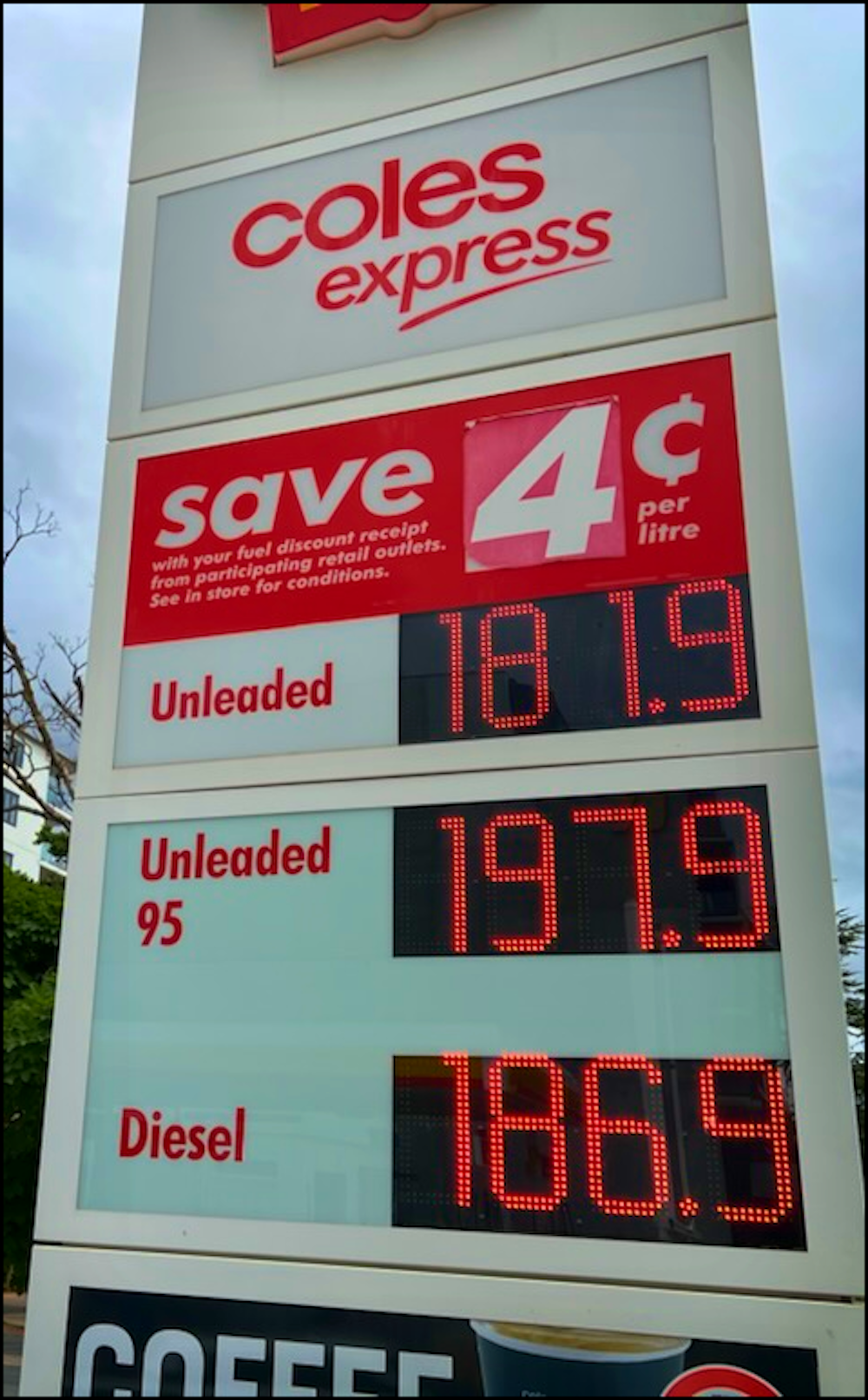
No one likes paying A$1.80 per litre for petrol. But amid forecasts of prices climbing to $2.10 as Russian’s invasion of Ukraine drags on, it’s possible some good could come of that pain – including greater energy independence and a faster path to net-zero emissions.
Two months ago, at the start of 2022, the typical Sydney and Melbourne unleaded price was $1.60 a litre. A year earlier, at the start of 2021, it was $1.20.
That increase – from $1.20 to $1.80 in just 14 months – is a jump of 50%.
Estimates of the price elasticity of demand for petrol prepared by Paul Burke of the Australian National University and Shuhei Nishitateno of Kwansei Gakuin University in Japan come up with the number 0.3. Other estimates are higher.
A price elasticity of 0.3 means that for each 10% a price climbs, demand for the product falls 3%.
In the case of petrol, where the price has climbed a phenomenal 50% in the past 14 months, demand for it should fall 15%, a fall big enough to make a dent in Australia’s greenhouse gas emissions.
There’s been nothing like such a drop, and what drop there has been can be explained by COVID measures such as lockdowns and working from home.
The high price needs to last to have an effect
There hasn’t been a big drop because the elasticity estimates are long term. Those of us who drive cars don’t (and often can’t) react straight away.
Sure, we can delay filling up if the price is high, or drive from one station to another, but in the short term we have no choice but to buy petrol.
Longer term, if we think the price is going to stay high, we will change our behaviour. Burke and Nishitateno’s calculations suggest that each 10% increase in the price of petrol that lasts boosts the average fuel efficiency of new cars by 2%.
It’s an average figure. Some of us will go electric altogether, and be freed of petrol bills, others will do nothing, and others will buy smaller cars or hybrids.
Petrol prices change what we buy
This is how things have played out. When prices shot up in the 1970s we switched to smaller cars, most of which weren’t made in Australia, and helped trigger the decline of the Australian car industry. When prices fell after a spike around 2008 we moved to gas-guzzling SUVs.
Prices that command attention. Ellen Duffy
So what will matter for our demand for petrol (and our emissions) is whether the higher prices last. There’s no doubt we are paying attention.
We spend almost as much on alcohol (2.2% of our budgets) as we do on petrol (2.6%) but we notice petrol prices more. In part this because they are displayed prominently in well-lit letters of a regulated height.
As marketing researcher David Chalke put it, “you have to buy it, and there’s a bloody great big sign always there telling you how much it is”.
In the 1970s and early 1980s, Australia was fairly self-sufficient in petrol. There was a lot of oil in the Bass Strait and Australia refined it locally.
Then the wells ran low. These days 60% of our petrol is imported and most of the 40% that is made here is made from imported oil.
Russia is one the big three suppliers
It means our prices move with international prices, which are determined by how much is needed (COVID and the rise of China have big effects) and how much is supplied.
Supply is partly determined by big oil exporting nations that get together and strike agreements with the aim of keeping prices high, but not so high that buyers buy less. The biggest are Saudi Arabia (17% of exported crude oil), Russia (11%) and Iraq (7.7%).
From time to time they break these agreements, as Russia seemed to in 2009 when it sent far more oil into the market than was expected and helped bring about the biggest price collapse on record, pushing down the price from US$140 per barrel to US$40 per barrel, and helping usher in the era of the SUV.
Australian prices are low
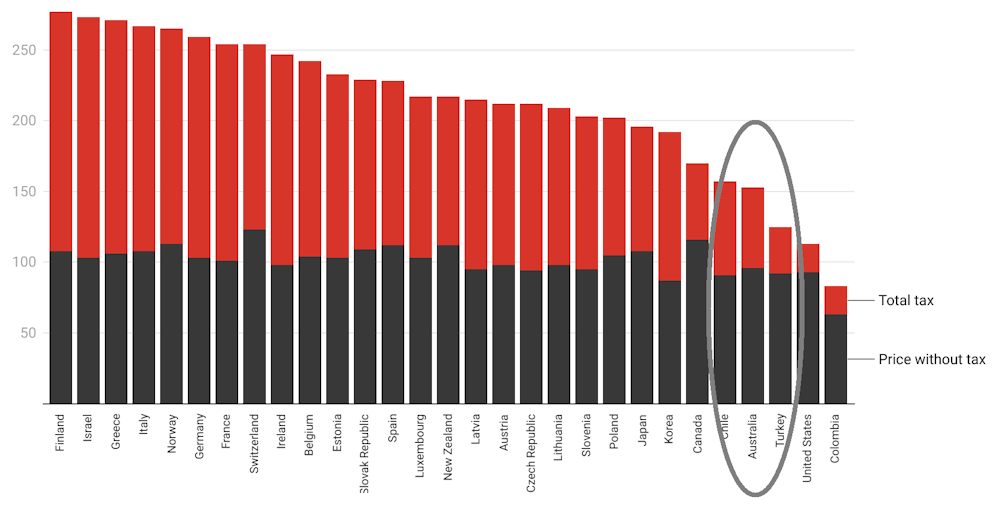
Australian petrol prices are at record highs, but by international standards they are still unusually low; the fourth-lowest among the 31 OECD nations graphed by Australia’s Bureau of Resource & Energy Economics – above only Chile, the United States and Turkey.
The chief reason is tax, In December taxes (fuel excise plus GST) accounted for only 37% of the price of Australian unleaded petrol, compared to 48% of New Zealand petrol and 60% of German and UK petrol.
There are good reasons for taxing Australian motorists more. Higher taxes would better reflect the cost of roads and road repair and the environmental damage wrought by cars.
That’s not likely to happen right now – although in 2014 the Coalition reintroduced indexation in the face of surprising opposition from the Greens, ensuring fuel tax at least increased in line with prices. But it suggests there’s little room to cut taxes.
If access to Russian oil remains difficult and prices don’t return to where they were, we will move away from using petrol faster, either by making adjustments such as working more from home or by buying cars that are more efficient or more electric.
It’ll be a bizarre and largely welcome byproduct of war in Ukraine, perhaps the only one. It’ll increase the value of takeover target AGL, Australia’s largest electricity supplier, and speed us on our path to zero emissions and energy independence. It’ll get us where we are going sooner.
Peter Martin does not work for, consult, own shares in or receive funding from any company or organisation that would benefit from this article, and has disclosed no relevant affiliations beyond their academic appointment.
Scott Morrison has announced A$105 million in a package of military and humanitarian assistance for Ukraine, and flagged he would support Russia being thrown out of the G20.
The Prime Minister has also warned people not to go from Australia to fight for Ukraine, saying this would probably be illegal as well as suicidal.
The assistance package includes $70 million for lethal and non-lethal assistance and $35 million in humanitarian aid.
The military assistance, through NATO, will include missiles and ammunition.
Morrison said he wouldn’t give further details “because I don’t plan to give the Russian government a heads-up about what is coming their way”.
The humanitarian aid will go to international organisations for shelter, food, medical care, water and education support.
“This will be our opening contribution. We expect over time there will be further requests,” Morrison told a news conference after cabinet’s national security committee was briefed on the war and ticked off on the measures.
Asked about Russia’s membership of the G20, Morrison said, “We are seeking to impose maximum cost together with our allies and partners on Russia, and they have self-selected themselves as a pariah state. That’s how they should be known.”
To expel Russia from the G20 would take a consensus of its members guided by the chair which this year is Indonesia. China is a member of the G20 and presumably would oppose the removal of Russia.
Ukraine has urged people from other countries to join its fight against the invading Russians. “Anyone who wants to join the defence of Ukraine, Europe and the world can come and fight side by side with the Ukrainians against the Russian war criminals,” President Volodymyr Zelenskyy has said.
But Morrison said people should not travel from Australia to Ukraine, and especially not to fight.
“The legal position of those who may seek to do that, I think, is very unclear,” he said. This was particularly so as the extent to which the informal militia would be part of the Ukrainian official armed forces would be unclear.
Under Australian law it is not legal to go to fight in another country other than in that country’s official forces.
Morrison said people could not assume going to fight was a legal act. “On the evidence that we have it is unlikely.”
“What I would also argue is anyone seeking to do that would find themselves on the wrong end of some very, very violent attacks,” Morrison said.
“Others have described those sorts of things as suicide missions and that’s not an unreasonable assessment.”
Michelle Grattan does not work for, consult, own shares in or receive funding from any company or organisation that would benefit from this article, and has disclosed no relevant affiliations beyond their academic appointment.
Director-General of Health Dr Ashley Bloomfield says the national health system relies on New Zealanders’ continued cooperation as almost 20,000 cases are announced today.
Dr Bloomfield is resuming his appearance at daily 1pm media briefings amid the omicron outbreak, with peak cases and hospitalisations expected in the next few weeks.
He said it was hard to estimate how many people in hospital with covid-19 were there because of the virus, as opposed to simply having the virus and being there for a different reason.
However, he said Middlemore Hospital’s estimate of about 70 percent to 80 percent presenting because of covid-19 symptoms gives a good gauge.
There are just under 100,000 active cases across the motu, he said.
“I know that such a high daily case number can be concerning for people to hear, and many of us will now have whānau members who now have covid-19, but it’s important to remember that covid-19 now is a very different foe to what it was at the beginning of the pandemic.”
He said what had helped New Zealand so far had been doing the basics well and people should keep doing this — wearing masks, practising good hand hygiene, and avoiding going out if unwell.
“There’s no doubt the next few weeks are going to be tough, the health system can’t do it alone, so thanks in advance to all New Zealanders for continuing to support our efforts to live with the virus on our terms.”
Watch a replay of the briefing here:
The media conference today. Video: RNZ News
He said the high vaccination rate meant for most people omicron would be a milder illness and could be managed safely at home.
Dr Bloomfield says PCR testing had served New Zealand “incredibly well”, but with thousands of cases each day the country reached the point last week where rapid antigen testing became both useful and appropriate.
He said samples were typically pooled earlier on in the outbreak, but a positive test in a batch means each will need to be retested. Higher test positivity rates now, however, mean it becomes less feasible.
He said prior to February 7, none of the labs had ever exceeded 5 percent test positivity, but the swift increase in positive cases has affected that. Labs have also had other difficulties, including vacancies in roles and sickness because some lab workers had contracted the virus.
Apology over test result backlog Dr Bloomfield said he wanted to apologise to people whose tests had been delayed, but said they had committed to completing the test processing.
People are still advised to seek a test, though some people facing a longer delay should also seek a rapid antigen test, he said.
The samples affected by the backlog might be slightly less accurate — they were more likely to show a negative result — but all positive results would be accurate.
Dr Bloomfield said some 9000 tests were sent to Queensland for testing, to help clear the backlog. He said the backlog was clearing, but anyone who had had a test on February 23 or earlier, or who had developed symptoms, should collect a rapid antigen test from their local testing centre or seek advice from Healthline.
He said the problem with delays in PCR testing was less to do with delays in rolling out rapid antigen tests, and more to do with the ministry being “a day or two late” to recognise how quickly the virus was spreading.
“Once the samples were in the lab it’s hard to take them out and redistribute them, so we still had capacity across the network but we didn’t have the opportunity to redistribute them and probably if we’d started to do that a day or two earlier, then we may still have had a backlog but perhaps not such a big one.”
Dr Bloomfield said test processing had got to a much more manageable level in the past 24 to 48 hours.
He said there was strong uptake of RATs for people who had symptoms, or who were household or close contacts, as well as surveillance testing at hospitals and aged care facilities.
If people needed to pick up a rapid antigen test, the Healthpoint website had an increasing list of places where they were available.
Dr Bloomfield said there were good numbers of the tests available now — more than five million had been distributed in the last seven days, there were over 12 million in storage, and more than 16 million were expected to arrive this week.
Self-reporting of test results Bloomfield thanks the more than 40,000 people who have self-reported a rapid antigen test result. He says it is an important measure to give officials a good idea of how far the virus is spreading.
He says people who are unwell will be given enough tests for three tests per eligible person in their household. People who are critical workers can also preorder the tests online from testing centres.
During question time Dr Bloomfield said there was a bit of a lag on whole genome sequencing for those who have been in hospital, and with the short hospital stay times, there is not an accurate picture of how many cases in hospital are omicron versus delta.
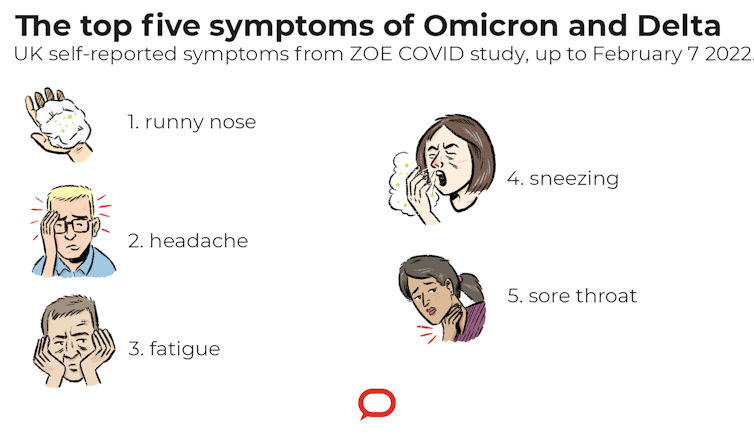
The most common symptoms are cough, sore and scratchy throat, a runny nose, and generally feeling unwell, “that sort of flu-ey feeling, the whole body aches”, but people who are not boosted are far more likely to have more severe symptoms.
Dr Bloomfield said the loss of sense of smell and taste does not appear to be as much of a notable symptom for omicron, but some young people had also been experiencing an upset stomach.
The past twodays have seen daily cases above the 14,000 mark, and hospitalisations have also continued to increase, reaching 344 yesterday.
People who are eligible but have not yet got their booster shot are urged to, as it protects against both transmission and severe illness from the omicron variant.
This article is republished under a community partnership agreement with RNZ.
The Indonesian Independent Journalist Alliance (AJI) has condemned the hacking and disinformation attacks against the group’s general chairperson Sasmito Madrim as a serious threat to media freedom.
In a written release, the AJI stated that the incident was a “serious threat to press freedom and the freedom of expression”.
“This practice is a form of attack against activists and the AJI as an organisation which has struggled for freedom of expression and press freedom,” the group stated.
“The hacking and disinformation attack against AJI chairperson Sasmito Madrim is an attempt to terrorise activists who struggle for freedom of expression and democracy”, the group said.
The AJI stated that the hacking attack began on February 23 and targeted Madrim’s personal WhatsApp, Instagram and Facebook accounts as well as his personal mobile phone number.
All of the posted content on his Instagram account was deleted then the hacker uploaded Madrim’s private mobile number.
Madrim’s mobile number was subsequently unable to receive phone calls or SMS messages.
Pornographic picture hack On his Facebook account, Madrim’s profile photograph was replaced with a pornographic picture.
On February 24, the AJI monitored a disinformation attack which included Madrim’s name and photograph on social media.
The narrative being disseminated was that Madrim supported the government’s 2020 banning of the Islamic Defenders Front (FPI), supports the government’s construction of the Bener Dam in Purworejo regency and has asked the police to arrest Haris Azhar and Fatia Maulidiyanti, two activists who were criminalised by Coordinating Minister for Maritime Affairs and Investment Luhut Binsar Pandjaitan.
The AJI Indonesia asserts that these messages are false and such views have never been expressed by Madrim.
“These three [pieces of] disinformation are clearly an attempt to play AJI Indonesia off against other civil society organisations, including to pit AJI against the residents of Wadas [Village] which is currently fighting against the exploitation of natural restores in its village,” wrote AJI.
AJI Indonesia is asking the public not to believe the narrative of disinformation spreading on social media and to support them in fighting for press freedom, the right to freedom of expression, association, opinion and the right to information.
Papua New Guinea’s Justice Minister Bryan Kramer has confirmed that he has ordered his department — Justice and the Attorney-General (DJAG) — to investigate a complaint against the National Judicial Staff Service (NJSS) hiring highly paid overseas consultants.
Their wages are paid in Australian dollars and deposited in overseas accounts.
Kramer made this statement on the floor of Parliament when answering a series of questions from shadow attorney-general and Rabaul MP Dr Allan Marat during question time.
Dr Marat had asked what the status of the investigations are?
Were there breaches of the relevant laws, and why they are paid in Australian dollars and their salaries paid in overseas accounts?
Kramer said this initial complaint came via a written complaint as chairman of Judicial Legal Commission concerning contracts that were recently awarded within the judiciary to overseas consultants.
The complaint, he said, had a report attached that raised specific issues of amount of money being paid, to foreign contractors and payments being made overseas.
investigations are ongoing The investigations are not complete and are ongoing.
Once complete a decision would be made about course of action would be taken, Kramer said.
“On the issues of public service it is important to note that these contracts were paid for private consultancy services so won’t fall [under] the regulation of public service,” he said.
Kramer explained that there was a query raised with the State Solicitor to seek clearance concerning whether or not these contracts were complied with legally and lawfully under the procurement processes.
“And the advice I understand provided by the State Solicitor is that, they exceeded the threshold within the jurisdiction of the judicial services to execute these contracts and provided an advice [on] whether to re-negotiate the contracts down to the threshold or to call for public tender on those contracts.”
He added that the concern was over the manner in which the contracts had been approved and the amounts involved in the contracts.
“There are specialised skills or experts around the globe that the state may engage from time to time — be it in oil and gas, and in any new legislative areas like in carbon credits,” Kramer said.
Significant fee “These experts will attract a significant fee but justification will be on a short term contract where they may apply to come on a three to six month to provide that expert opinion and advice.
“These contracts were extended over a period of, I think 8 to 9 years,” he said.
“That’s another contentious issue that we are looking at.”
What was the justification;
What were the terms of reference for engagement of these contracts;
What were the specific outcomes of these contracts;
Why were they continually renewed — is it necessary to renew?;
Why were they not advertised for Papua New Guinean experts or other experts, like under the European Union (EU); or
Why did we not engage these consultants under the existing EU [arrangements] where they pay for the contracts and we don’t have to meet the costs.”
Kramer concluded that once the investigations were completed and if it was confirmed that there was non-compliance with legislative procedures, then a decision would be made by DJAG to terminate these contracts.
Republished with permission from the PNG Post-Courier.
Epidemiologist Sir David Skegg, who along with his team has been providing advice to the New Zealand government on the covid-19 response, says more border restrictions may ease soon, as the opposition National Party calls for all visitors to be allowed into the country.
Yesterday, the government announced that from 11.59pm on Wednesday, vaccinated New Zealanders returning to the country and who test negative on pre-departure will no longer have to self-isolate on arrival.
The move brings forward step two of the phased reopening of the border, but the National Party says that does not go far enough and is calling for the border to be open to all visitors, to jump-start the tourism industry.
The government relied on urgent advice from the Strategic Covid-19 Public Health Advisory Group — chaired by Sir David — before making the changes.
Sir David told Morning Report the next few weeks were expected to be very challenging on the health system as the peak of the omicron outbreak evolves, so it was best to wait until then before making decisions about opening to tourists.
“We still don’t know where it’s going to end. The number of people going into hospital every day is increasing, so I’m not surprised that they’re [the government] just going to take a bit of time to decide about that, but I expect that tourists will be welcome to New Zealand earlier than we expected,” he said.
“And it’s funny everyone calls for certainty, but actually this is a case where the uncertainty has been beneficial to those interests because the dates are coming forward.”
Tourism industry planning However, National Party Covid-19 response spokesperson Chris Bishop told Morning Report that the tourism industry needed that certainty from now to plan ahead.
“If you talk to people involved in the tourism industry, they are literally borrowing money on their credit cards, mortgaging their houses to try and get through. And so what we can do for them is reconnect New Zealand to the world, open those borders, and allow tourists to come here,” he said.
“You’re probably not going to see a massive influx of tourists straight away in the next two to three, four weeks, you know, airlines have got to put flights on.
“But it is really important that we send signal to the airlines and to the airport that tourists are going to come and they’re going to come soon because airlines are making those bookings for the next few months and the next year right now so they do need some certainty, they do need that time frame.”
Bishop said while there would be some risk in such a decision, it was about considering the “relative risk”.
“The relative risk of allowing people who are vaccinated, who have passed the pre-departure test, to arrive into New Zealand, going into a country with one of the highest reproduction rates in the world right now and with 15,000 covid cases per day, the relative risk is much lower.
“But you’ve also got to weigh that up against the incredibly tough circumstances that our tourist parts of the economy have been in over the last two years.”
‘Minimal effect’ on NZ On the other hand, Bishop said yesterday’s announcement was undoubtedly good news for the grounded New Zealanders who would be excited to once again be able to see their friends and whānau here.
Sir David said the changes announced yesterday would only have a “minimal effect” on New Zealand’s situation.
“The impact of this on the progress of our epidemic in New Zealand will be very small, really quite slight. The fact is that we’ve got thousands of new cases occurring every day … the number of people turning up at the airport who are infected at the moment it’s an average of about 10 a day.
“That number will go up, of course, with more people coming into New Zealand, but it will have a minimal effect on our epidemic.”
The government has asked the advisory group to now review the role of vaccine passes and mandates for the future.
This article is republished under a community partnership agreement with RNZ.
The entire country would go into lockdown for the first time less than a month later.
As New Zealand marks two years of living with covid-19, 14,633 new community cases of the virus were announced yesterday alone and a total of 56 people have died from it.
In a statement, the Ministry of Health said there were also 344 community cases of the cases in hospital and five in ICU.
Lowest death rate in OECD Epidemiologist Professor Michael Baker of Otago University said this country still had the lowest death rate from covid-19 in the OECD by a large margin.
“The pandemic is now thought to have killed about 20 million people across the globe,” he said.
“And they’re mainly in countries where, obviously, they’ve had limited resources, or they’ve had very poor leadership from the governments.
“It’s interesting to see, in somewhere like Russia, the pandemic has now killed almost 0.8 percent of the entire population.”
The centre reported more than 435 million cases of the virus and 5.9 million deaths globally.
Professor Baker said he was still optimistic about the future, highlighting that life expectancy in New Zealand had risen by about eight months over the course of the pandemic — one of the only countries in which this has happened.
Russian life expectancy dropped By comparison, the life expectancy of Russian residents had dropped by about two years, he said.
“We haven’t seen those kinds of impacts since the Second World War.”
Professor Baker said the outbreak would peak over the next month before declining. He warned that New Zealand would see tens of thousands of new infections every day, and the total number of people with covid-19 was likely to be much higher than the number of people that get tested.
However, he said New Zealand had fared well compared to other countries.
“By delaying the arrival of the omicron variant, it’s given us a good opportunity to get highly vaccinated and boosted. And also, we have what is called peak immunity, because we’ve had our vaccine doses and boosters very recently and that means we’re ready to meet this virus with a lot of antibodies.”
The Ministry of Health said more than two thirds of eligible New Zealanders had now had their booster dose, with 28,836 people receiving their boosters on Saturday.
Four people were arrested at the Parliament grounds anti-covid public health protest overnight — two for breaking bail conditions, one for possessing an offensive weapon and one for trespass.
Police said the number of protesters had shrunk to about 200 people.
This article is republished under a community partnership agreement with RNZ.
New Zealand’s leading daily newspaper today contrasted the “reckless self-expression” of anti-covid mandates protesters and the dangers confronting the people of Ukraine fighting for their survival as an independent nation in the face of a brutal four-day-old invasion by its neighbour Russia.
Critising the rhetoric by protesters against the so-called “draconian” and “authoritarian” covid-19 rules in this country, the New Zealand Herald today mocked the anti-mandates protest in the Parliament grounds in the capital Wellington entering its third week, saying “attacks on people and their freedom are real and dangerous in a country under Russian assault”.
The newspaper said public gatherings carried extra risk in a pandemic. However, while a rally to draw attention to a desperate invasion far away was “at least understandable, the anti-mandate protests [in Wellington and Auckland] seem to be more about reckless self-expression”.
In an editorial, the paper said “noticing contrasts between two different situations” could provide clarity.
“The Russian invasion of Ukraine has instantly put claims from a minority of people opposed to covid-19 restrictions around the world in perspective.
“These people have argued that common coronavirus health requirements during the pandemic are attacks on their personal freedom.
“They have talked and written about oppression, coercion and risks over complying with health measures meant to help people survive a frequently deadly and dangerous coronavirus.”
‘Particularly unpersuasive’ Now, said the Herald, these views “sound particularly unpersuasive”.
“As footage and reporting from Ukraine shows, oppression is having armoured vehicles from a neighbouring country roll down your roads.
“Loss of freedom is having to hide in shelters to avoid military strikes from the air or having to walk with your belongings to the border for safety.
“Risk is potentially dying or being injured when your apartment building is hit by a missile.”
What was happening in Ukraine was also what happened in less publicised conflicts around the globe, said The Herald.
“Its harrowing pictures and eyewitness accounts, its timing in the third year of the pandemic, and its unfolding impact, [have] shaken the world.
“Civilians, who if they were elsewhere might be only fighting off a covid infection, are having to handle improvised weapons in Kyiv or join 120,000 others who have already fled to neighbouring countries, according to United Nations estimates.”
Protests against Moscow’s aggression Protests condemning Moscow’s aggression and expressing support for Ukrainians have taken place in New Zealand and in different countries, including in Russia where almost 3000 people have been arrested.
“In New Zealand, there have been protests against the war at the same time as ongoing demonstrations by people who see vaccination mandates, social distancing, vaccine passports and mask-wearing as an imposition on their rights,” said The Herald.
“There’s been a lot of rhetoric with covid-19 of ‘draconian” and ”authoritarian” rules,” said the newspaper.
“In reality, complying with some restrictions for a period of time, which have involved adjusting goals and behaviours and dealing with economic issues, has meant this country has survived a challenging situation pretty well so far compared with others.
“It has hit harder for some groups in society than others. Yet a lot of people are still finding it fairly easy to cope, with vaccination shots, boosters and masks, even with omicron case numbers soaring to dizzying heights and New Zealand’s death toll rising again.”
“Russian citizens know about authoritarianism. On Friday thousands of Russians bravely took to the streets to denounce their government’s invasion.
“Those citizens in Moscow, St Petersburg and other cities knew the risk they were taking and at least 2700 have reportedly been arrested.
Mass displays of dissent not tolerated “President Vladimir Putin’s government does not tolerate mass displays of dissent. Opponents of the regime have been poisoned and killed. The country’s main opposition leader Alexei Navalny is imprisoned.”
“These rebels on Friday had a cause: objecting to war, the violation of a country’s sovereignty and the deaths, hardship, and displacement being inflicted.”
The newspaper said that anti-war rallies and anti-mandate protests took place in New Zealand on Saturday despite omicron cases hitting 13,000 and deaths from the pandemic reaching 56 — far lower than in most other countries.
“Police said officers outside Parliament were spat on. Protesters have been seen ignoring social distancing and avoiding masks and the Ministry of Health said people attending are coming down with covid.
“Hospitals around the country were reporting visits from people who had been at the Parliament site,” said the newspaper.
A national network of groups supporting freedom and justice for West Papua has called on Foreign Minister Nanaia Mahuta to condemn Indonesian charges of treason against accused West Papuan Victor Yeimo.
They have called for the release of Yeimo, who this week rejected charges against him in a court hearing in the Papuan provincial capital of Jayapura.
Spokesperson Catherine Delahunty, a former Green Party MP, described the charges against West Papua National Committee (KNPB) international spokesperson as “trumped up” and said Yeimo had suffered a “serious health crisis”.
“In addition to taking a strong position in support of Ukraine at this terrible moment we are asking Nanaia Mahuta to stand up for human rights in our neighbourhood,” she said in a statement.
“Last week Victor Yeimo was charged with treason for participating in an antiracism peaceful protest on August 19, 2019.
“He also spoke against the abuse of West Papuan students, which included hours of being harangued and called ‘monkeys’ before being beaten and arrested.
“That is his only ‘crime’, but for that he has been detained for ten months, suffered a serious health crisis and is now in court facing trumped up charges of treason,” Delahunty said.
Yeimo charged with makar In Jayapura, the preliminary court hearing against Yeimo was held at the Jayapura District Court in Abepura, Papua, on last Monday, reports Suara Papua.
During the hearing, the public prosecutor read out the indictment in which he charged Yeimo under the makar (treason, subversion, rebellion) articles.
The defence believes that the charges are excessive because what happened in August 2019 was a response to the racism which was “rooted in the nature of the Indonesian population against Papuans”.
Papuan campaigner Victor Yeimo in handcuffs … he is international spokesperson for the West Papua National Committee (KNPB), a peaceful civil society disobedience organisation. Image: Tribunnews
The prosecution said that during the protest actions which ended in riots on August 29, 2019, there was verbal as well as written involvement of the defendant along with his colleague the chairperson of the KNPB, Agus Kossay, in demonstrations which were facilitated by the chairpeople of the Student Executive Council (BEM) in Jayapura.
“They [the chairpersons of the West Papua National Parliament (PNWP), the Federal Republic of West Papua (NRFPB), the West Papua National Coalition for Liberation (WPNCL) and the Free West Papua Campaign (FWPC), together with the defendant], called for, and took part in committing the act of makar with the maximum [aim] of all or part of the country’s territory [separating from Indonesia],” said prosecutor Andrianus Y. Tomana in reading out the charge sheet in the courtroom.
According to the prosecutor, Yeimo was being indicted for crimes under Article 106 of the Criminal Code (KUHP) in conjunction with Article 55 Paragraph (1) on the crime of makar, Article 110 Paragraph 1 of the KUHP on criminal conspiracy to commit a crime, and Article 110 Paragraph 2 on endeavoring to mobilise people or call on people to commit a crime.
In reply, Yeimo admitted that he had been involved as a participant in the anti-racist demonstration on August 19, 2019. However, the protest happened without problems and after it finished the protesters returned home.
‘I was arrested because of racism’ “I was arrested only because of the racism case, indeed I was involved and it’s true there were speeches.
“But it was not just me that gave speeches, the DPRP [Papua Regional House of Representatives] spoke, the governor spoke, all of the Papuan people spoke at the time. So if I’m being tried, why aren’t they being tried?” he asked.
Yeimo explained that he attended along with other Papuan people in order to oppose and to fight against the racism and this opposition was conveyed peacefully at the Papua governor’s office.
Delahunty said the Yeimo case had attracted a strong response from UN Special Rapporteurs, but in letters to the West Papua Action Network the New Zealand government only said it was “concerned” and that its officials “raise the case”.
The European Union Commission has called for Indonesia to allow their high commissioners to visit West Papua, specifically naming the Victor Yeimo case as a human rights issue.
“Our Foreign Minister needs to support the growing international calls for justice for Victor,” Delahunty said.
“She needs to condemn this outrage and call for the treason charges to be dropped and Victor Yeimo to be immediately released.”
The Auckland Domain remained closed today to vehicles until further notice, because a small number of anti-covid protesters have set up tents there and stayed overnight.
They moved there after thousands of people crossed the harbour bridge on foot yesterday, in a march organised protest against New Zealand’s covid-19 public health measures.
The Ministry of Health reported a record 14,941 new community cases of covid-19 in New Zealand today, with 305 people now in hospital — five of them in intensive care.
Camping is not permitted in the Domain, which lies between the suburbs of Parnell and Grafton.
Auckland Council director of customer and community services Claudia Wyss said it was working with event organisers on a safety-first approach.
She said there was no timeline for reopening at this stage and the council apologised for any inconvenience.
The campers include people who took part in the march over the Harbour Bridge, shutting down southbound traffic for an hour and a half.
The march was organised by Destiny Church’s Freedoms and Rights Coalition. Leaders had been in talks with the Auckland Council and police about their presence late on Saturday, and promised to leave the site by 9pm that night.
A protester in a video has claimed to have mana whenua status, and said they were occupying a pa site at the domain.
Auckland Council said it was continuing to work with police and to engage constructively with the group.
However, it has raised concerns the marchers and protesters risked spreading covid-19 by gathering.
In New Plymouth, about seven tents and about 30 people were at an anti-covid protest beside the Coastal Walkway on Sunday morning.
Fewer people at Wellington anti-covid protest About 300 vehicles remain in the protest area inside cordons at Parliament grounds, however an RNZ reporter said some protesters appeared to be packing up this morning ready to leave.
Police are maintaining a perimeter at access routes to the area amid the sounds of reggae music and the occasional car horn. The protesters are waving flags and shouting the word “freedom”, to passing cars.
Protesters have been camping in tents and in vehicles parked in and around the protest area, which covers grounds belonging to Victoria University as well as parts of Molesworth and Hill streets.
Businesses, schools, the university and residents in the area have reported major disruption since it began on February 7.
About 200 new protesters turned up at the campsite on Saturday, but police said that was far fewer than on previous weekends.
RNZ estimates that by Sunday the number of protesters had halved from last weekend, when more than 1000 people took part.
A group called Farmers for Freedom told followers this morning via social media that a convoy it had organised would reach the protest today with a trailer of food.
This article is republished under a community partnership agreement with RNZ.
A spate of cyber attacks has affected Ukraine’s digital systems since Russia’s invasion began. It soon became clear Russia’s “boots on the ground” approach would be supplemented by a parallel cyber offensive.
Last week Ukraine called on its citizens to take to their keyboards and defend the country against Russia’s cyber threat. At the same time, a campaign was underway among the hacktivist collective Anonymous, calling on its global army of cyber warriors to target Russia.
Who is Anonymous?
Anonymous is a global activist community that has been operating since at least 2008. It brings a potential for significant cyber disruption in the context of Russia’s invasion of Ukraine.
The group has previously claimed responsibility for acts of hacktivism against a wide range of targets, including against big businesses and governments. Anonymous’s activities are often aligned to major events, and the group claims to have an “anti-oppression” agenda.
The collective has no defined structure or leadership. Acts are simply undertaken under the banner “Anonymous”, with some reports of limited rules of engagement being used to guide actions (although these are likely fluid).
As Anonymous is a movement, with no formal legal status or assets, responsibility for actions shifts to individuals. But there remains a fundamental issue of attribution in cyber security incidents, wherein it’s difficult to determine a specific source for any attack.
On February 16, Anonymous TV posted a video message with a series of recommendations and threats. Leaning on the stereotypical “hacker” image, the masked speaker issues a serious warning to Russia:
If tensions continue to worsen in Ukraine, then we can take hostage […] industrial control systems. Sole party to be blamed if we escalate on that will be the same one who started it in the very first place with troop buildups, childish threats and waves of unreasonable ultimatums.
The attacks have leveraged the same distributed denial of service techniques used in many previous cyber attacks, including attacks on Ukrainian banking and government websites. In such attacks, the attacker knocks targeted websites offline by flooding them with bot traffic.
Further incidents have included the theft and publication of Russian Department of Defence data, which may contain sensitive information useful to fighters in Ukraine. Emails from Belarusian weapons manufacturer Tetraedr and data from the Russian Nuclear Institute have also reportedly been accessed.
It’s too early to determine how useful these data may be. Most of the stolen information will be in Russian, which means translators will be needed to help examine it.
Russian TV channels were also attacked and made to play Ukrainian music and display uncensored news of the conflict from news sources outside Russia.
It’s hard to be certain that Anonymous did carry out the cyber attacks for which it has claimed responsibility. The movement is founded on anonymity, and there are no viable means of verification. But the tactics, targets and theatrics on show are consistent with previous attacks claimed by the group.
Also, even if some attacks are not a direct consequence of Anonymous’s actions, one could argue this doesn’t really matter. Anonymous is all about being perceived as having an impact.
Will it make a difference?
It’s unlikely the cyber attacks claimed by Anonymous will have a significant impact on Russia’s intent or military tactics. That said, these actions could provide key intelligence about specific tactics Russia is using, which would be valuable to the Ukrainians and their allies.
A further benefit is that the impact of the invasion on Ukrainian people is getting more publicity – especially within Russia, where news is significantly censored. This could help counter Russia’s domestic propaganda machine, and present a more balanced view of events.
Cyber attacks will likely continue to escalate on both sides, involving both state and non-state actors. Russia’s National Computer Incident Response and Coordination Center has raised its threat level to “critical”, indicating concerns about Russian infrastructure being targeted through cyber attacks.
Alongside Anonymous, large numbers of Ukrainian cyber professionals have volunteered to assist with Ukraine’s cyber defence. The volunteers are being organised through Telegram channels and other encrypted apps.
Their goals include defending Ukraine’s critical infrastructure, helping the government with cyber espionage, taking down Russian disinformation from the web, and targeting Russian infrastructure, banks and government websites.
But despite reports of some 175,000 joining the cyber army’s Telegram channel, its impact so far remains unclear.
The authors do not work for, consult, own shares in or receive funding from any company or organisation that would benefit from this article, and have disclosed no relevant affiliations beyond their academic appointment.
Under intense international pressure, FIFA made an abrupt about-face this week and suspended Russia’s teams from international football. The move means Russia will not have a chance to compete in the 2022 World Cup in Qatar.
For decades, soccer’s global governing body has avowed sporting neutrality, preferring not to politicise sporting events. The federation’s decision to punish Russia for its aggressive war-making represents a small step towards a more politically forward-thinking policy, but its actions fall far short of redressing the harm it has caused in the past.
It also came after international outcry over its initially weak response to Russia, in which it said the team would still be allowed to compete under the name “Football Union of Russia”, at neutral venues and without its flag or anthem.
It took bold steps by countries like Sweden, Poland and the Czech Republic, which flat-out refused to play against any Russian team, for FIFA to change its mind.
What FIFA’s leadership still fails to realise is banning Russia does not introduce politics into sports – it removes the stench of it. FIFA has long allowed dictators – especially Russian President Vladimir Putin – to politicise the game. It now has a responsibility to clean up its own mess.
A long history of Russian sportwashing
FIFA has taken action against belligerent nations before. Following the second world war, both Germany and Japan were prevented from taking part in the 1950 World Cup in Brazil.
FIFA also excluded South Africa from the World Cup during the apartheid era and removed Yugoslavia from qualifying for the 1994 tournament during the war in the Balkans.
But FIFA has had a long history of working alongside Putin and looking the other way when it comes to Russia’s human rights abuses.
The 2018 World Cup, for which FIFA awarded hosting rights to Russia, allowed Putin to trumpet his country’s post-Soviet modernisation. But it came at great cost to soccer’s legitimacy.
After a bribery scandal in the bidding process for the 2018 and 2022 World Cups shook the soccer world, FIFA hired a former US attorney to investigate. He didn’t last long; he resigned in protest and suggested FIFA was incapable of reform.
FIFA refused to move the tournament from Russia even after Russian-backed rebels shot down a Malaysia Airlines plane, the Russian military occupied Crimea, and a former Russian spy was poisoned in the United Kingdom.
FIFA had been perfectly placed to make an important statement about the centrality of human rights to the sport. The Russian soccer world was (and still is) deeply connected to Putin and his oligarch backers. Vitaly Mutko, the deputy prime minister of Russia, for instance, was the former chairman of the Russian Football Union and head of the 2018 World Cup organising committee.
But FIFA failed to act then, and was slow to act again this week.
In the face of Russia’s brutal invasion of Ukraine, FIFA President Gianni Infantino could only offer embarrassingly milquetoast comments when questioned by reporters.
Asked if he regretted allowing Putin to host the 2018 World Cup and whether sport had helped “embolden” the Russian leader, Infantino offered cliches. “I firmly believe in sport to bring people together,” he said.
He offered no condemnation of the Russian invasion and refused to comment on whether he would return the Medal of Friendship that Putin awarded him in 2019.
Other sports move quickly to isolate Russia
While FIFA and Infantino prevaricated, other sporting federations acted to isolate Russia.
And French Football Federation President Noël Le Graët told Le Parisien:
The world of sport, and in particular football, cannot remain neutral.
Even the International Olympic Committee, no stranger to working with dictators accused of human rights violations, strongly condemned Russia for violating the Olympic Truce immediately after the invasion.
The IOC went a step further this week, recommending Russian and Belarusian athletes be banned from all international competitions, although it left itself some wiggle room with the Winter Paralympics about to begin in Beijing.
In fact, the sporting world has been almost completely united in pulling its competitions from Russia. Most didn’t wait to act.
Formula One cancelled the Russian Grand Prix, while the international ski and volleyball federations cancelled or moved competitions to other locations. Even the International Chess Federation shifted the Chess Olympiad from Moscow. It remains to be seen, however, whether these events will ban Russian competitors from taking part.
Should Russian athletes be punished?
Many other organisations are going further by already banning Russian competitors or looking to ban them.
The Norwegian Ski Federation banned all Russian competitors from its competitions, while Sweden is pushing for a total ban on Russian athletes competing in the European Union.
In North America, former NHL stars like Dominik Hasek are arguing for the league to suspend Russian players.
These organisations and players realise that Russian athletes competing under a neutral flag still compete for Russia. The IOC might not play the Russian national anthem at the upcoming Paralympics, but Russian state television still celebrates its athletes’ victories and transforms them into symbols of state power and prestige.
Banning Russian athletes might seem unfair because it will impact people who had no say in the invasion of Ukraine. In fact, many Russian athletes are bravely showing their opposition to the Putin regime. But after years of sporting organisations providing exceptions for Russian athletes to continue to compete, a tougher stance is now needed.
Keith Rathbone does not work for, consult, own shares in or receive funding from any company or organisation that would benefit from this article, and has disclosed no relevant affiliations beyond their academic appointment.
With our summer dominated by wet weather and booming mosquito populations, health authorities have been alert to the threat of mosquito-borne disease.
One such disease is Japanese encephalitis virus, which has been detected for the first time in southeastern Australia. It has been found in pigs at pig farms in Victoria, New South Wales and Queensland, indicating the virus is likely circulating in the local mosquito populations, which could infect humans.
Ongoing rain and flooding ensures suitable conditions for mosquitoes will persist well into Autumn.
What is Japanese encephalitis virus?
Japanese encephalitis virus is part of the flavivirus family, closely related to West Nile, Zika, Murray Valley encephalitis, dengue and yellow fever.
The virus is maintained in a cycle between mosquitoes and waterbirds. Pigs are also an important host, especially where pigs, mosquitoes, waterbirds, and water bodies all occur together.
Outbreaks are more likely to occur during the wet season.
Most infected people have mild illness or no symptoms at all. Symptoms of fever, joint pain, and rash are common but severe cases also experience headache, neck stiffness, confusion, seizures, and sometimes coma and death.
Less than 1% of those infected will develop a severe brain infection, encephalitis, which may be fatal.
The disease is particularly problematic in children, with survivors often left with significant brain injuries.
To confirm infection, cerebrospinal fluid (that surrounds the brain and spinal cord) and blood are tested by specialised public health laboratory.
Culex annulirostris is the most likely mosquito to be transmitting Japanese encephalitis virus in Australia and is widespread and abundant after flooding. Cameron Webb/NSW Health Pathology
Why has Japanese encephalitis virus appeared in Australia?
Outbreaks of Japanese encephalitis virus have occurred in countries neighbouring Australia’s north, including Papua New Guinea and Indonesia.
Concern has often been raised about the potential introduction and spread of the virus onto the Australian mainland, given the high populations of mosquitoes, wild pigs and waterbirds in the north.
Now there is evidence of Japanese encephalitis virus in pigs in multiple pig farms in New South Wales, Victoria and Queensland. And there is a risk of transmission to humans.
How did the virus make its way south?
Investigations are underway to work out how much virus is in the region and assess the ongoing risk to human and animal health. But we will never definitively know how (or when) the virus managed to move south.
It could be linked to overlapping transmission cycles fuelled by favourable weather conditions that bring water to flood plains, wetlands, and other habitats shared by mosquitoes and waterbirds. Or it could be due to migration of infected birds or mosquitoes.
There is little doubt the La Nina-dominated weather patterns that impacted southeastern Australia over the past two years played a role.
The spread of mosquito-borne viruses, such as Murray Valley encephalitis virus, from northern Australia to southeastern Australia has been documented before. We just never expected Japanese encephalitis virus to take this pathway too.
La Nina has brought above average rainfall to much of Australia and flooding has provided ideal conditions for local mosquitoes. Cameron Webb/NSW Health Pathology
How can you avoid catching Japanese encephalitis virus?
Consideration could be given to vaccinating at-risk groups in Australia.
Reducing further transmission of the virus to people will rely on the use of insecticides around high-risk locations, such as piggeries where infections have been identified, and the use of personal protection measures against mosquito bites.
Fortunately, the steps we routinely take to avoid mosquitoes bites during the Australian summer will work just as well against the mosquitoes likely to be carrying the virus. People just need to be more vigilant to protect themselves and family against mosquito bites.
Health authorities are recommending a number of steps to avoid mosquito bites. Minimimse time outdoors when mosquitoes are most active, especially dawn and dusk. Wear a long sleeved shirt, long pants and covered shoes. Apply a topical insect repellent containing Diethyltolumide, picaridin, or oil of lemon eucalyptus.
The weather has clearly contributed to this outbreak but it may also assist ending it. The onset of cooler weather in autumn will slow mosquito population growth and once winter arrives, most of the mosquitoes across southern regions of Australia will disappear. At least for a few months.
Cameron Webb and the Department of Medical Entomology, NSW Health Pathology, have been engaged by a wide range of insect repellent and insecticide manufacturers to provide testing of products and provide expert advice on mosquito biology. Cameron has also received funding from local, state and federal agencies to undertake research into mosquito-borne disease surveillance and management.
Andrew van den Hurk has received funding from local, state and federal agencies to study the ecology of mosquito-borne pathogens, and their surveillance and control. He is an employee of the Department of Health, Queensland Government.
Dominic Dwyer does not work for, consult, own shares in or receive funding from any company or organisation that would benefit from this article, and has disclosed no relevant affiliations beyond their academic appointment.
Lismore and Brisbane’s catastrophic flood emergency has come only a short time after the last flooding disaster.
We know from previous floods that as soon as the water recedes, flood-affected areas will be inundated with well-meaning volunteers wanting to help with the clean-up.
But although this volunteer effort is welcome in some ways, it can also be challenging for flood impacted people to manage and absorb.
As someone who lost pretty much everything in the 2011 Brisbane floods and who then led an ethnographicstudy on community responses to the floods in my suburb in the following year, I have some insights for those eager to help in the days to come.
1. Instead of ‘what can I do?’ ask ‘can I do such-and-such?’
Having a stream of unknown people walking through your property all asking what they can do to help can feel thoroughly overwhelming.
When those questions were asked of me by strangers in 2011, I was still in shock, and often struggled to say anything meaningful at all.
Rather than “What can I do?”, it was much easier if people said things like “Can I do such-and-such for you?”
So, trying not to put the burden of coordination on those you want to help is critically important.
Instead, ask if a particular task would be useful. People will often be grateful for your initiative.
2. A less public approach to assistance can be very valuable
Brisbane’s 2011 Mud Army, as the name suggests, was a team of volunteers often focused on shovelling out mud-soaked belongings that became heaped up on people’s nature strips.
The pace was relentless and for me – and many I interviewed – felt uncontrolled.
We all later lamented the fact we had not tried to save more. Of course, many things are unsalvageable. But for treasured goods it doesn’t hurt to try.
This means a more mundane and less public approach to assistance can be very valuable.
For example, you might offer to:
empty people’s kitchen cupboards
take those items back to your own home (wheelbarrows, if you live close by, or plastic crates are great for these tasks)
wash those things and see what can be saved.
Likewise, you can also suggest people find their favourite clothing items and, again, wash or even dry clean these items for them and see if these can survive.
One of the nicest things someone did for me was to take a couple of tubs of plastic toys and Lego and wash these at home. With a toothbrush, I believe. It meant a lot to my kids.
3. Don’t ‘donate’ your unwanted junk
Please do not “donate” your old junk and expect gratitude in return.
In 2011, I struggled with how much stuff people gave us that was unusable, ranging from rotten food and clothing that did not fit to broken kitchen goods and toys.
This just makes people feel awful generally, as if they have become destitute. It can also make people feel guilty because they are unable to absorb items they know people expect them to be receiving thankfully.
4. Be a good listener
In the longer term, let your flood-affected family and friends talk about this event as long as they need to.
People will be traumatised long after the clean-up ends. They need time, and to share struggles. Some may prefer to keep things to themselves. Others take comfort in talking. If they do, be generous.
One friend complained to me some months later in 2011 that flood-affected people seemed to talk about nothing else.
Many in my neighbourhood had similar responses, which meant we often felt we could only talk amongst ourselves about our experiences and emotions.
So, allow your flood-affected family and friends to continue to reflect on their experiences and losses if that is what they want to do.
And please try not reproach them if this is a recurring theme of conversation in the months or years that follow.
We moved to higher ground a few years back but it has been surprising to me how much I am affected watching this disaster unfold again in the last days.
I will be heading back to our old suburb in coming days to help and will try to practice what I preach here.
Australians of Ukrainian heritage are bearing witness to heartbreaking scenes and ongoing uncertainty about the safety of family and loved ones. European agencies are warning of an impending humanitarian crisis. Although communications can be unreliable, technology makes it possible for us to see and hear war in real time. Ukrainian Australians are experiencing a powerful emotional pull to the Ukraine with friends, family and history there.
Previous research into the impact of global catastrophic events on the diaspora – scattered communities with shared cultural links – tells us much about the push-pull impact on local people of global events. Diaspora migrant groups should not be seen as isolated from their country of origin. Rather, they are subject to global influences over their personal and social life, their health and well-being.
Australians with ancestral linkages to homeland violence and war can identify completely with the pain and anguish they see and hear. The same is true of communities in other parts of the world with Ukrainian ties. But we can support ourselves and others during this time.
How people manage the interplay between homeland events, media reports, cultural identity and mental health issues in Australia is complex.
In what I call “long-distance suffering and devastation”, people are physically and emotionally here, as well as emotionally “over there”. During the Balkan war of 1991–2001, some people with ancestral links to that region living in Australia reported they could not watch television. The coverage made some of them physically ill.
Their experiences fluctuated in response to good and bad news about homeleand events.
Emotions ranged from periods of relief and calm, to unbearable fear, sleeplessness, irritability, inability to concentrate, feelings of frustration, loneliness, sadness, worry, guilt and bouts of extreme emotional exhaustion.
In these past times, people found safety in the comfort of others, and connecting or reconnecting with their cultural identity. Shared meals and social gatherings, alongside cultural and spiritual rituals were found to be helpful.
Being trauma-informed begins with trauma awareness, involves strengths-based approaches, facilitating choice and remaining flexible through trusting engagement.
There have been encouraging signs of a coordinated refugee response. Prime Minister Scott Morrison says Australia has been fast-tracking visa applications from Ukrainians and will support refugees from the region.
Creating a safe haven for refugees fleeing conflict will help those directly affected and reassure those who are concerned about them. Services for children and young people – who may be at increased risk of mental health problems and have greater difficulty accessing mental health care – must be prioritised.
Bearing witness to the loss of life and property in familiar (though distant) surroundings can be devastating.
At an individual level, it’s about remaining aware of what is going on, staying informed and engaged in ways that don’t overwhelm. It can be helpful to calibrate media exposure and rely on trusted sources.
If supporting family in Australia or elsewhere, work towards a situation where the person feels listened to, understood and validated.
Some other supportive ideas include:
recognising distress triggers and encouraging breaks from coverage. If news generates anxiety or worry, counter this with an activity that brings closeness and human connection
doing things that have worked in the past to help bring calm. Mindfulness meditation or mindfulness-based activity can be grounding
seeking out company with trusted others. This may not be to necessarily discuss unfolding events. The company of others could include conversation about non-war topics
ensuring a good night’s sleep.
People will remember your intent longer than your words.
When it all gets too much
If events are making concentration at work difficult or impacting on employment, people should speak with their workplace supervisors.
Research shows exercise-based interventions (from yoga to high-intensity running) and peer-led actions (such as sharing lived experiences) designed to increase social connection, have good potential to address mild-moderate depression. There are a wide range of psychological treatments for anxiety too.
If you are feeling fragile or concerned about your mental health, or the mental health of a loved one, seek support from your health care provider. Getting help early can make it easier to accept help going forward.
Employers should show understanding and suggest practical ways to support people impacted. Given the trajectory of the conflict is also unclear and may involve other countries, there will likely be ongoing collateral effects. In times like these, it’s OK to not be OK.
If this article has raised issues for you, or if you’re concerned about someone you know, call Lifeline on 13 11 14.
Nicholas Procter does not work for, consult, own shares in or receive funding from any company or organization that would benefit from this article, and has disclosed no relevant affiliations beyond their academic appointment.
Coastal cities and settlements are on the climate change frontline. They are our first line of defence, facing some of the highest climate risks. But they are also where transformative climate-resilient development can happen.
This is one of the key findings in the Intergovernmental Panel on Climate Change (IPCC) Sixth Assessment Report on Impacts, Adaptation and Vulnerability, released overnight.
Realising global aspirations for climate resilient development depends on the extent to which coastal cities and settlements […] close the coastal adaptation gap, and take urgent action to mitigate greenhouse gas emissions.
This is especially relevant for Aotearoa New Zealand and Australia because our people, the things we value and our economies and livelihoods are concentrated along the shoreline.
Resilient and sustainable coastal livelihoods depend on maintaining diverse, productive and healthy coastal ecosystems in the face of global change.
Severe disruption to coastal livelihoods is inevitable
A large proportion of the world’s population and critical infrastructure is already concentrated along shorelines. Nearly 11% of the global population, about 896 million people, live on low-elevation coasts directly exposed to climate and non-climate coastal hazards. These cities and settlements are growing rapidly as people move to the coast.
Prospects for climate-resilient development are dismal because of accelerating sea-level rise and rapidly worsening climate-driven risks in a warming world. But coastal settlements nonetheless play a key role in advancing climate-resilient development because they are critical for national economies and global maritime trade.
The IPCC’s earlier report showed that global mean sea level has risen faster since 1900 than during any preceding century in at least the last 3000 years. This latest report reiterates that unavoidable sea-level rise will cause cascading and compounding impacts. This includes the loss of coastal ecosystems and their services, groundwater salinisation, flooding and damage to coastal infrastructure.
Globally, we expect about a billion people will be at risk from coast-specific climate hazards under all emissions scenarios. In coming decades, the risk of coastal flooding will increase rapidly. It could be two to three orders of magnitude greater by 2100, without effective adaptation and mitigation.
Historically rare extreme sea-level events (that occurred once in 100 years in the past) will happen annually by 2100. Some atolls will become uninhabitable by 2050. If global mean sea level rises by 0.15m relative to current levels, the population at risk of a 100-year coastal flood increases by about 20%. This number doubles at 0.75m and triples at 1.4m, assuming present-day population and protection.
Sea-level rise as existential threat
By 2100, the value of global assets within one-in-100-year coastal floodplains is projected to reach US$7.9 to $12.7 trillion under a mid-range emissions scenario. In a high-emissions world, it could rise up to $14.2 trillion.
These impacts will be felt well beyond coastal cities. Damage to ports could severely compromise global supply chains and maritime trade, with potentially major geo-political and economic ramifications.
Sea-level rise constitutes a chronic adaptation challenge. It requires dealing with slow-onset changes in parallel with increasing frequency and magnitude of extreme events that will escalate in coming decades. At centennial timescales, projected sea-level rise constitutes an existential threat for many island nations, low-lying coastal zones and their communities, infrastructure and cultural heritage.
Even if we stabilise global warming at 2–2.5℃ above pre-industrial levels, coastlines will continue to reshape over millennia. This will affect at least 25 megacities and, by 2100, inundate low-lying areas currently home to 0.6–1.3 billion people.
Global aspirations for climate-resilient development
Extensive adaptation planning has taken place since the IPCC’s previous assessment. But widespread implementation is lacking and this has created a pronounced “coastal adaptation gap”.
We need to close this gap quickly. The report finds we already have effective ways to prepare for impacts and to cut emissions, but they must be embedded in development planning to reduce vulnerability and restore ecosystems.
This depends on governments, civil society and the private sector making inclusive choices that prioritise risk reduction, equity and justice. We will also need to integrate decision-making processes, finance and actions across all governance levels and timeframes.
International cooperation will be crucial. We will need to strengthen partnerships with traditionally marginalised groups, including youth, Indigenous peoples, local communities and ethnic minorities.
This will require us to reconcile divergent interests, values and worldviews. We need to reduce structural vulnerabilities to climate change through carefully designed and implemented legal and policy interventions, from the local to global level, that take into account prevailing inequities.
Rights-based approaches that focus on capacity building, meaningful participation of the most vulnerable groups and their access to key resources, including finance, play a crucial role in reducing climate risk and enabling transformative adaptation.
Planning and decision-making processes should identify “low regrets” options that allow us to reduce emissions and prepare for impacts in the face of deep uncertainty and contestation. Governance for climate-resilient development is most effective when supported by formal and informal institutions and practices that remain flexible enough to respond to emergent risks.
As sentinels on the climate change frontline, coastal cities and settlements play a pivotal role in global efforts to adapt to unfolding climate change impacts and to navigate perilous times ahead.
This report deepens the findings of the IPCC’s earlier report about the world’s oceans and icescapes. It identifies five core conditions for coastal cities and settlements to fulfil their role in climate-resilient development.
Take a long-term perspective when making short-term decisions by keeping options open to adjust as sea-level rises and avoiding new development in high-risk locations
enable more effective coordination by establishing networks across different governance levels and policy domains to build trust and legitimise decisions
reduce social and climate injustice by taking historical conditions, including past emissions, and prevailing political realities into account and proactively reducing vulnerability and inequity
strengthen local democracy by facilitating participation, involving stakeholders early and consistently through to implementation, with particular attention to engaging Indigenous people and marginalised and vulnerable groups
develop governance capabilities to tackle complex problems by drawing on multiple knowledge systems, including Indigenous, local and scientific knowledge to co-design more acceptable and effective responses.
Bruce Glavovic receives funding from a variety of bodies that provide academics with research funding usually through contested grant processes.
New Zealand Parliament Buildings, Wellington, New Zealand.
Editor’s Note: Here below is a list of the main issues currently under discussion in New Zealand and links to media coverage. You can sign up to NZ Politics Daily as well as New Zealand Political Roundup columns for free here.
Flies have lived alongside humans since the dawn of history, feeding on our bodily fluids and other organic waste such as meat and vegetable scraps. When an adult female blowfly finds some juicy decaying material – typically a carcass – she may lay hundreds of eggs or tiny maggots in it.
So flies use us, our products, our waste, and even the bodies of our dead. How can we use them in return?
One way is the science of forensic entomology. At a crime scene, flies and maggots can be used to determine how long it has been since a person or animal died, if they have been moved or neglected prior to death – and what drugs or poisons they had in their system.
From flies on a sickle to modern forensics
The first recorded instance of flies helping out in a murder case was during the 13th century.
A Chinese judge named Sung T’zu was sent to investigate a fatal stabbing in a rice field.
At the scene of the murder, he asked all the workers to lay down their sickles. After a short time, several flies swarmed on one of the sickles, attracted by the smell of invisible traces of blood.
Sung T’zu wrote about the case in The Washing Away of Wrongs, the oldest known book on forensic medicine, printed in 1247. He showed how thinking “outside the box” using clues from nature can help in forensic investigations.
It was several more centuries before the scientific method was applied to the use of flies in criminal investigations. The discipline of forensic entomology as we know it was not born until 1894, with the publication of Carrion Fauna: The Application of Entomology to Legal Medicine, by the French army veterinarian and entomologist Jean Pierre Mégnin.
Since then, research on blowfly growth rates, decomposition patterns in different environments and use of blowflies to clean up the wounds (debridement or “maggot” therapy) have gained momentum.
Often flies can help estimate the time of death, as an entomologist can identify the flies or maggots, look at environmental conditions such as temperature, and thereby calculate the amount of time they have been growing.
However, drugs and poisons can also affect how attractive blowflies find the carcass, and how quickly maggots grow on it. This means we often need to identify what drugs or poisons we are dealing with.
This can be found by analysing blood, urine, solid tissue or hairs from the dead body. But in some cases all that remains is a skeleton, so these are unavailable.
In these cases, we need to think outside the box, just like Sung T’zu. The old adage says “you are what you eat”, so insects feeding on a body should take in substances from the body and store them in their own bodies.
Furthermore, insects’ hard external skeleton is made of chitin, a comparable substance to the keratin protein from which hair is made. Similarly to hair keratin, insect chitin stores drugs for a long time, which is helpful for toxicological analyses.
Insect exoskeletons are made of chitin, a protein that stores traces of drugs for a long time. Shutterstock
Insects collected from a carcass can be used as alternative toxicological specimens in situations where traditional sources are not available. Knowing the effect of the toxins on the life cycles of the flies can be used to adjust what we know about their growth rates.
In the early 1970s, the Finnish biologist Pekka Nuorteva showed mercury from a fish carcass could transfer to carrion flies. A few years later a similar analysis was used to determine whether a murder victim had lived in a polluted area. By 1977 the hybrid discipline of entomotoxicology (entomology + toxicology) became a reality.
When tissues and fluids are unavailable, insects are more reliable than hair to detect drug use just before death. They are also easier to analyse than decomposed matter.
What’s more, they are available for a very long time. Empty fly puparial cases (cocoons left in the environment by the adult fly after its metamorphosis) as well as skin of carrion beetles have even been used for toxicological studies of mummified bodies found weeks, months, or even years after death.
My research group is developing ways to detect a range of drugs and other substances commonly found in the suspicious death of humans and animals.
One of these is methamphetamine, a large problem for Australian law enforcement and health authorities. Another is ketamine, a sedative and hallucinogen sometimes used to facilitate sexual assault.
We have also studied the effect of cheap, dangerous, and readily available poisons on blowflies, including
nicotine, which can be lethal if ingested from e-cigarette refills or if passed through the skin via nicotine patches
car antifreeze (ethylene glycol), as it is sometimes used to make home-made alcoholic drinks or consumed by homeless people in winter in the hope to keep themselves warm at night
endosulfan, a pesticide often used to make poison baits to kill animals.
Furthermore, older research often lacks consistency, robust study protocols and method validations. Standard protocols and more sophisticated analytical methods can provide more accurate results that will hold more weight in court.
Paola Magni does not work for, consult, own shares in or receive funding from any company or organization that would benefit from this article, and has disclosed no relevant affiliations beyond their academic appointment.
New Zealand’s official response to Russian aggression and violations of international law have so far been strong – but they could go further.
While no NATO-aligned country can – under any circumstances – put boots on the ground in Ukraine (which could lead to world war), New Zealand must do everything tangibly possible to oppose the Russian invasion.
To that end, New Zealand’s sanctions regime must be nothing less than those of its allies. This should extend to passing legislation under urgency to allow sanctions beyond those mandated by the United Nations (UN).
Avoiding the need for UN approval is essential because of Russia’s Security Council veto. As other like-minded countries provide military hardware to Ukraine, New Zealand should also consider offering logistical support, with non-lethal military aid such as body armour and medical packs being a minimum.
New Zealand should continue to strengthen its relationship with NATO and consider seeking to become an “enhanced opportunity partner” as Australia did in 2014. Finally, the government needs to reflect on whether its current defence spend and strategic focus are adequate for the world we now live in.
In theory, UN member states promise to settle disputes by peaceful means and refrain from the threat or use of force against other sovereign nations. Those commitments are supplemented with bilateral arrangements.
Just such an arrangement underpinned Ukraine’s decision in 1994 to hand its nuclear arsenal over to Russia in return for Russia promising to respect its independence, sovereignty and existing borders.
But two decades of decline lie behind today’s crisis. Since the end of the 1990s we have witnessed the continued destabilisation of the international architecture designed to keep peace.
The UN Security Council failed to adopt a draft resolution on Ukraine on February 25 because of the Russian veto. GettyImages
Erosion of international law
We can trace this decline to the US withdrawal from the Anti-Ballistic Missile Treaty with Russia in 1999. That same year, NATO (whose member states regard an attack on one as an attack on all) began to expand eastward.
The UN’s effectiveness was dealt a serious blow by the unlawful US invasion of Iraq in 2003, while further NATO expansion in 2004 added to Moscow’s anxiety. But Russia appeared to learn by example.
Military interventions in Chechnya and Georgia, and support for the Assad regime in Syria from 2011, were followed by Russian recognition of breakaway eastern regions of Ukraine in 2014 and its illegal annexation of Crimea the next year.
Russia then withdrew from the Treaty on Conventional Armed Forces in Europe and in 2016 quit the jurisdiction of the International Criminal Court (which the US has never even joined).
Meanwhile, then-US president Donald Trump pulled out of the Intermediate Nuclear Range Treaty (which kept intermediate range nuclear weapons out of Europe) and then exited the Open Skies Treaty which gave European and allied nations the ability to verify arms control commitments.
Putin’s impossible demands
The net result is today’s parlous situation. Whether Russia will try to annex all or just some of Ukraine we cannot say. But before the invasion Putin put peace offers on the table in the form of two draft treaties, one for the US and one for the other NATO states.
Essentially, Putin is proposing the removal of collective defence guarantees by NATO in eastern Europe. He believes this is fair, based on the unwritten promises after the Cold War that former Soviet bloc countries would not join NATO.
Those promises were never made into a legally binding treaty, however, and Putin now wants that changed. Specifically, he wants a rollback of NATO forces and weaponry in the former Soviet allies to 1997 levels.
Russia also wants the US to pledge it will prevent further eastward expansion of NATO, and a specific commitment that NATO will never allow Ukraine or other bordering nations (such as Georgia) to join the western alliance.
But the prospect of a nuclear power like Russia dictating what its neighbour states can or can’t join is untenable in 2022. If anything, applications to join NATO are more likely to increase in the wake of the Ukraine invasion.
These are sobering times for small countries like like New Zealand that rely on a rules-based international order for their peace and security.
With the failure of various treaties and the basic principles of international law to deter Putin, and the UN rendered virtually impotent by Russia’s veto power, New Zealand needs other ways to respond to such superpower aggression.
Until a semblance of normality and respect for the UN Charter and international treaties return, small states must focus on their core foreign policy values and finding common ground with friends and allies.
By being part of a united front on sanctions, military aid, humanitarian assistance and defence, New Zealand can leverage its otherwise limited ability to influence events in an increasingly lawless world.
Alexander Gillespie does not work for, consult, own shares in or receive funding from any company or organisation that would benefit from this article, and has disclosed no relevant affiliations beyond their academic appointment.
Source: The Conversation (Au and NZ) – By Nicholas Wood, Associate Professor, Discipline of Childhood and Adolescent Health, University of Sydney
Shutterstock
Public health measures to control COVID, including social distancing, masks, border closures and reduced international travel, have worked to reduce the impact of COVID.
But they’ve also led to a reduction, or changed the pattern, of other respiratory infections such as influenza, whooping cough and respiratory syncytial virus (RSV).
A Productivity Commission report released last month showed whooping cough rates in 2020–21 were the lowest they’d been in years.
Australia also didn’t experience much of a flu season in 2020 or 2021. This is good news as we didn’t want to have both flu and COVID circulating in high numbers.
One concern, though, is these low rates may have lulled us into complacency. It might mean many people haven’t been in any rush to get their flu vaccine.
What’s more, because very few of us have had these infections over the past two years, we have probably experienced less of a boost in any “natural” immunity.
The Australian Technical Advisory Group on Immunisation (ATAGI) last week released advice urging all Australians to get a flu vaccine once available, which is likely to be in March.
Influenza activity is tracked at a global level by the World Health Organisation and used to decide on which flu strains are covered in the vaccine each year.
In Australia it is a “notifiable disease”. This means laboratory-confirmed cases are reported to our National Notifiable Diseases Surveillance System.
In 2020, there were 21,266 notifications of laboratory-confirmed influenza to this system — almost eight times lower than the five-year average, which is 163,015.
It’s important to note some of the reduction in flu cases being notified could be due to fewer people presenting to health-care centres and being tested. This means we may undercount flu cases, especially mild ones.
However, we have also seen a reduction in more severe cases leading to hospitalisations and deaths due to flu, suggesting it’s a real decrease.
Whooping cough is down too
Whooping cough (also called pertussis) is at historically low levels.
We usually experience an upsurge in whooping cough cases every three to five years. This is probably because we get a natural immune boost after exposure, which then tends to limit the spread and so the epidemic ends, however when our natural immune boost wanes we may then get an increase in cases.
It’s also a “notifiable disease”.
Our last big year was 2015–16, and if we followed the normal pattern we should have seen an increase in 2020–21.
In previous years, notifications of whooping cough have been over 100 per 100,000 children, with the highest rates of 287 per 100,000 in 2015–16 and 357 per 100,000 in 2011–12.
But in 2020–21 there were only 116 cases notified in children under 14 years old. That’s a rate of 2.4 per 100,000 children, substantially lower than 2011–12 and 2015–16.
RSV has changed
Respiratory syncytial virus (RSV) is a common viral infection that usually leads to an increase in hospitalisations every year, often before the arrival of flu. It can be particularly severe in infants under one year old.
The COVID pandemic and associated public health measures may be behind a shift in the timing of RSV infections.
In NSW from 2015 to 2019, the peak of infections was in autumn and winter. But in 2020, the peak of infections shifted to early summer.
In 2020, RSV hospitalisations were lower in infants under 12 months and higher in two to four year olds, compared to previous years (2014–19).
Vaccines are important for other diseases, too
The reduction in flu, RSV and whooping cough is likely due to COVID public health measures.
However, for whooping cough, the protection of our youngest infants is probably also due to the impact of maternal whooping cough vaccines during pregnancy.
We don’t have much data on this yet, but one paper from Victoria showed an increase in whooping cough vaccine uptake among pregnant women. It climbed from about 38% to over 80% between 2015 and 2017. Another paper from southeast Queensland showed whooping cough vaccine coverage in pregnant women was approximately 70%.
Real world effectiveness studies have shown a whooping cough vaccine during pregnancy is more than 90% effective in preventing young infant hospitalisations from the disease.
For this reason, health authorities in Australia, the US and UK recommend a whooping cough vaccine be given during every pregnancy.
Australian health authorities also recommend pregnant women get flu and COVID vaccines.
We can’t be complacent
Concerns about visiting health-care providers during COVID may have meant a fall in vaccine coverage for other diseases. This has occurred in some countries and has prompted an alert from the World Health Organization.
Also, it’s clear fewer people have been naturally exposed to flu in the last two years. It’s possible having a flu infection in one year may give you someprotection in subsequent years (though you really don’t want to get the flu).
Both of these factors may mean we have lower protection when we finally get a flu season.
With winter approaching and borders opening up, it’s possible we may see the emergence of flu again this year.
In the meantime talk to your GP about any vaccines – including flu when it’s available – that you and your children may need to catch up on.
Nicholas Wood received funding from the NHMRC for a Career Development Fellowship 2018 to 2021. He holds a Churchill fellowship awarded in 2019
Source: The Conversation (Au and NZ) – By Angela Lehmann, Honorary Lecturer, College of Arts and Social Sciences, Australian National University
The future of Australia’s international education sector is on the drawing board. In the midst of Australia’s COVID-19 surge, the federal government released the Australian Strategy for International Education 2021-2030. It paints a future for the sector built around increased diversification and a focus on student support and well-being.
Looking at Australia’s international education sector through a gendered lens reveals the importance of female students in any recovery strategy. In particular, we need to understand the factors that either attract or dissuade female students from studying abroad. This can help those working in international education to better understand what services and supports these students need.
In a report released today, my analysis of the most recent available data (2020) shows the first year of the pandemic had different impacts on female and male international students.
Female enrolments have grown much faster
International education in Australia is becoming increasingly female. The numbers of female international students rose by 22% between 2016 and 2020 despite the pandemic drop of 2020. In the same period, male enrolments grew by 18%.
This feminising trend is part of a global phenomenon of women increasingly seeking education abroad. Globally, women’s enrolment in higher education has grown almost twice as fast as the male enrolment rate in the past four decades.
The trend is mainly due to increased equity and access for women. As women’s participation in higher education has grown, so has their participation in global student mobility.
What are the trends in source countries?
Several countries send more women than men to study in Australia. Most of these are in North-East and South-East Asia. Each has had rapid economic growth in the past 40 years with women’s participation rising at all levels of domestic education.
Enrolments from female-majority markets were relatively stable in the first year of the pandemic. While all these countries besides Vietnam sent fewer students to Australia in 2020 than in 2019, the gender ratio remained the same. Overall, female students from this group of countries did not choose to delay their studies or study elsewhere at a higher rate than male students.
Female-dominant sending countries were among Australia’s most stable sources of students during the early days of the pandemic.
China has been behind much of the growth in female students arriving in Australia. More than 54% of Chinese students studying at Australian institutions are female.
This mirrors the overall growth in the proportion of women leaving China for study. There was a five-fold increase in the four decades after the economic reforms of the late 1970s. Today 60% of outgoing students from China are female.
Questions about whether Chinese students will return to Australia, in what numbers and how to best support them are largely also questions about gendered aspirations, careers and expectations.
The story from countries that send more males than females to Australia was quite different in the first year of the pandemic. These countries are mostly located in South Asia and the Middle East, rather than the Asia-Pacific region.
Male-majority markets experienced larger drops in overall enrolments in 2020. Student numbers from India, Australia’s second-largest source country, fell by 24% between 2019 and 2020. At the same time, the percentage of female enrolments from all these countries – with the exception of Oman – increased.
These data suggest male students in these countries changed their minds or delayed their Australian studies during the early pandemic months at a greater rate than female students.
With the exception of India, male-majority sending countries send fewer students to Australia than female-majority nations. Take out the two largest markets – China and India – and the disparity is even greater.
The top five female-dominant markets, even without their largest contributor, are still responsible for more than twice as many students enrolled in Australia as the top five male-dominant markets.
A female success story in other ways too
Australia’s female international students are the most successful of all our university student cohorts. They continued to have higher rates of academic success in 2020 than their male counterparts and all domestic students. International female students are traditionally relatively successful in Australian undergraduate courses.
During the rapid digital transformation of our institutions during 2020, international students continued to maintain – and in fact increase – their academic edge.
Female international students are largely resilient, successful and are looking to gain more than qualifications during their time in Australia. Research shows many of them study abroad to experience a new way of life and greater independence, alongside gaining a degree. Understanding this cohort – their ambitions, their drivers and what support they need – will be key to Australia’s international education sector’s recovery.
Source: The Conversation (Au and NZ) – By Miles Pattenden, Senior Research Fellow, Institute for Religion and Critical Inquiry, Australian Catholic University
St.Olga by Mikhail Nesterov.
The past few days have seen a spate of videos showing Ukrainians and their president defying an onslaught of Russian aggression. Who could fail to be moved by the video of a Ukrainian woman confronting an armed and jackbooted soldier, telling him to put sunflower seeds in his pockets so at least sunflowers will grow where he dies.
Or President Zelenskyy’s heroic selfies from Kyiv’s front line, which inspire far more widely than just among his countrymen?
Ukrainians are used to adversity and they have a special medieval role model who personifies their bravery in the face of hardship. The Mongol horde destroyed her tomb in Kyiv in 1240 but a Ukrainian Orthodox cathedral dedicated to her was consecrated there as recently as 2010.
Olga of Kyiv, consort of Igor, second ruler of the Rurikid dynasty, is today recognised as one of Eastern Orthodoxy’s greatest saints. A fierce and proud woman who protected her young son and avenged her husband’s death, she was a crucial figure in the consolidation of the medieval kingdom of Kyivan Rus’ as a political entity and in its peoples’ conversion to Christianity.
Olga was born to Viking parents in Pskov, northern Russia, around the turn of the 10th century. She married Prince Igor young and may have been only 20 when the Drevlians, a neighbouring tribe, rose up against his rule and murdered him.
The Byzantine chronicler Leo the Deacon gives gruesome details of Igor’s killing: he was tied to two tree trunks which were then released so his body was split in two. Leo’s account may have been embellished (the ancient historian Diodorus of Sicily in fact tells a similar tale), but Igor’s death still left his wife and three-year-old son alone and potentially helpless in a particularly dangerous and brutal corner of the medieval world.
Nikolai Bruni’s Saint Grand Duchess Olga (1901)
Burying her enemies
Olga’s legend was born of her actions in the weeks and months that followed. The Drevlians sent her emissaries to suggest she marry their leader Prince Mal. The Primary Chronicle, an 11th-century manuscript which is our main source for what follows, records Olga as greeting them deceptively, apparently to bide for time.
The account may be part-fictitious or at least exaggerated. Yet that is not the point: in medieval hagiography it is the morality of the tale that matters most.
“Your proposal is pleasing to me”, Olga told her interlocutors. “Indeed, my husband cannot rise again from the dead. But I desire to honour you tomorrow in the presence of my people. Return now to your boat, and remain there […] I shall send for you on the morrow […]
The hubristic Drevlian delegation took her at her word gleefully. But what they did not know was that she had arranged for a trench to be dug into which they and their boat were flung.
They were buried alive.
Olga summoned a second Drevlian embassy before the rest of the tribe had had time to learn of the first one’s fate. When they arrived she commanded her people to draw a bath for them.
The Drevlians then entered the bathhouse but Olga ordered the doors to be bolted and the building set ablaze.
Princess Olga meets the body of her husband. A sketch by Vasily Surikov.
For a third reprisal, Olga went to the place where the Drevlians had killed her husband, telling those present she wished to hold a funeral feast to commemorate him. Once the Drevlians were drunk and incapacitated she had her men massacre them.
Finally, she laid siege to the Drevlians’ base at Iskorosten (the modern-day Ukraine city of Korosten). She tricked those inside the city with an offer of peace: all they had to give up were three pigeons and three sparrows from each house.
But when Olga had the birds in her possession she had her men tie a sulphurous cloth to one of each one’s legs. The birds flew back to their nests for the night and the sulphur set every building on fire simultaneously.
Olga ordered her soldiers to catch everyone who fled the burning city so they could be extirpated or taken into slavery.
Her revenge for her husband’s death was at last complete.
Nicholas Roerich’s Saint Olga (1915).
Channelling St Olga’s spirit
Olga lived a further 25 years, residing in her son’s capital of Kyiv. She was instrumental in persuading him not to abandon the Ukrainian lands for “better prospects” further south on the Danube’s bank. Her grandson, Volodymyr the Great (c.958-1015), then expanded the kingdom into what is now seen as the first Russian principality (which Vladimir Putin now views as the forerunner of the imperial Russian state).
Volodymyr too is acknowledged as a saint for his role in completing the Christianisation Olga had started.
Olga’s Mad Max-style ventures ought to grate with us a bit today: the modern world really shouldn’t be a site of such bloodshed. That is why Russia’s sudden large-scale invasion into a peaceful country strike us as so shocking.
Yet Olga’s memory can clearly still provide an important focal point for Ukrainian resolve.
The Eastern Orthodox and Greek Catholic Churches recognise her with the venerable and extraordinary title “Isapóstolos”: Equal to the Apostles. She and Kyiv’s patron saint, St Michael the Archangel, remain key figures of intercession among those who need comfort in an hour of greatest need.
And Olga’s Christian faith, acquired during a visit to Byzantium late in life, can sustain others now just as it sustained her after her own tribulations.
Miles Pattenden has previously received research funding from the British Academy, the European Commission, and the Government of Spain.
Paramatta Road: Omar Sakr’s debut novel gives voice to Arab-Australian Western Sydney.Raph07/Flickr, CC BY-SA
Son of Sin, the debut novel from writer and poet Omar Sakr, tells the tale of Jamal Smith, a young Arab-Australian growing up in Western Sydney. Sakr’s two poetry collections, These Wild Houses (2017) and The Lost Arabs (2019), were widely admired, and the latter won the 2020 Prime Minister’s Literary Award.
Review: Son of Sin – Omar Sakr (Affirm)
Jamal sexually yearns for men, but hides his bisexuality. The asphyxiating expectations of his community, where same-sex desire is forbidden, make him fear real and imagined dangers. He dreads punishment, not only from the supernatural beings known in Arabic as djinn, but from his emotionally explosive and conservative family.
Jamal’s forbidden desires are explored against the backdrop of the Islamic holy month, Ramadan, and its spiritual quest: “No food, no water, no cursing, no violence, no sex, no masturbation.”
His family compete at fasting. No one wants to be the first to succumb to temptation: “to break your fast was to be the split spoiling the family ceramic.” Jamal tries not masturbate or fantasise about sex or food. He doesn’t want to be haunted by the djinn and he doesn’t want to be disowned for being a “faggot”.
Acceptance and abandonment
The tension sets the stage for a darkly comic family saga. Jamal, who desires acceptance, has been abandoned by both his parents. Largely brought up by his Aunty Rania, he has shared a room with his cousins for much of his young life.
His father, Cevdat Khan, a compulsive liar and shonky businessman, is “always going back to Turkey, unable to stay still, unable to hold onto any of his children”. Jamal’s mother, Hala Smith, once a “great beauty”, is always getting high with “her junkie mates”, jaded from a previous forced and violent marriage.
She’s also violent, beating Jamal and his handsome half-brother Moses, who stay clear of her as a result. But Jamal can’t escape her. She has no money and nowhere to live when she arrives “wearing a bumbag with S-L-U-T spelled out in diamantes”, asking Jamal if she can stay at his share house in Stanmore.
The on-again-off-again relationship between Jamal and his mother, and Jamal’s unspoken fear that she had been raped by her own father, are central to the story’s tension.
Challenging macho myths
Sakr has created Jamal to challenge the macho heterosexual myths that pervade Arab-Australian male culture. Son of Sin explores Jamal’s rich inner world: his imagination, his hopes and his hopelessness.
Omar Sakr. Challenging macho myths.
Jamal is someone who “would die for his sensations”. When he finally realises himself sexually, he acts out his fantasies in sudden, pressurised, erotically clumsy encounters with mostly Arab men. “He was a faggot, oh God he was a fag, and he fucking loved it.” While Jamal punishes himself for being a “fuck-up”, enjoys “the lancing pain of anal sex”, escapes into “sweaty underarms” and revels in the smell of “hairy funk”.
But Son of Sin is not all about sex. You don’t need to be an Arab-Australian to recognise the racism, Islamophobia and homophobia that Jamal experiences at the hands of his family, the “cops”, and a society that is awash in post 9/11 fear, white supremacy, and the hatred that culminated in the Cronulla Riots of 2005.
The sociopolitical stresses of post-9/11 Western Sydney are depicted alongside the invisible stresses of the migrant experience. The novel captures the subtle tensions that come with existing between two places, two languages, two cultures, two parents.
Comically, in the opening pages of the book, Jamal’s mother drags him to court to change his surname from Khan to Smith. (I laughed, reminded of how much I dreamt my father would change our surname from Fahd to Ford.)
Sex and violence aside, Jamal’s tenderness for both his parents, and his capacity to forgive them, are heartbreaking. While he describes the precarious lives of his friends and cousins, the criminality and violence of his family, he’s still affectionate towards them, and needs their approval and love. Despite his yearning to escape his family’s troubled life, he never judges them.
A brief stint at university sees him move into Sydney’s inner west. Jamal notes the socioeconomic divide between his Western Sydney life and his new friends from Anglo and Jewish families, who live in more prosperous suburbs. His flatmate Dan has:
wealthy parents. He had no HECS debt, and a mansion he could return to whenever he tired of his pretend independence.
Hypermasculine men and gossiping women
The complexity and warmth of Jamal’s character permeates the book, through his interactions with its cast of hypermasculine men and their gossiping women. The men in Jamal’s family were expected to provide, and to be tough and strong, sexually charged and in charge.
Given how few Arab-Australian voices there are in Australian literature, it’s inevitable that Son of Sin will be compared with Michael Mohammed Ahmad’s The Lebs (2018). Both writers are part of a groundswell of Arab Australian writers representing the lives of Arabic Australian men on their own terms, from their own perspectives.
And there are similarities. An artistic young man must negotiate masculine expectations amid poverty, marginalisation, racism, homophobia and sexism. For example, Jamal is sniffed out as “gay” because of his love of books and reading.
When Jamal had started carrying books everywhere, he got his fair share of shit, but it lessened as he grew taller and his beard came in.
But for Jamal, “books were his shield against the darkness of the world”. Son of Sin is woven with comic details that will resonate with those born into migrant families. “Everyone expected greatness from him because he read books.” While mocked by his peers for reading, his “barely literate family” see the promise of social mobility and an end to their poverty.
Lebanese vernacular is splashed throughout. As an Arab-Australian reader, seeing my language on the pages of an Australian novel was both strangely comforting and disconcerting: I’m not used to seeing it represented in the context of Australian literature.
There’s a beautiful sequence when Jamal escapes his family and the western suburbs for Turkey, saying he wants to meet his father there. Really, though, it’s an excuse to travel, after Canada denies him a visa.
In Turkey, he finally gets to know his estranged father and his kindhearted uncle, Mehmet Khan. He falls in love with the local barber’s son, Kassem, who breaks his heart. Jamal returns to Sydney haunted by dreams of suicide.
Jamal dreads punishment for his forbidden desires from the Arabic supernatural being, the djinn. www.shutterstock.com
Bisexuality ‘offers hope of redemption’
Back home, there is an amusing email exchange after Jamal reveals himself to his father, Cevdat, as bisexual. Cevdat is convinced that being “bi” offers hope of redemption: “As long as you are not a homosexual … that means you can overcome this.” Bisexuality seems less shameful, in his view, than exclusively wanting men.
As a reader, I dreaded Jamal being killed if he came out – or worse, was found out. In one scene, Jamal’s half-brother Moses, through a bathroom window, spots him having anal sex with a moisturiser bottle. Unwittingly, Jamal survives. “The Smiths were a family of unspoken secrets.” Being queer is one thing, publicly acknowledging it is another.
Sakr’s novel, like his poetry, brings attention to the lives of queer Arab-Australian boys and men. Like the playwright James Elazzi, Sakr creates queer stories addressing the taboo of same-sex desire in the cultural context of Western Sydney. He is funny and unapologetic, creating epic, stunningly dirty narratives that should appeal to a new generation of Australians.
A group of academic authors recently asked, “what might a crowdsourced queer-friendly English curriculum look like in Australia?”
Son of Sin would be one book at the top of my list for senior students.
Cherine Fahd does not work for, consult, own shares in or receive funding from any company or organization that would benefit from this article, and has disclosed no relevant affiliations beyond their academic appointment.
Floods are devastating communities in southeast Queensland and northern New South Wales and have pushed emergency services to their limits.
Flood waters in Northern NSW are already at “unprecedented” levels, and are expected to worsen in coming days. The Australian Defence Force has been deployed to assist with emergency rescues.
In southeast Queensland, floods have claimed eight lives, after the equivalent of a year of rainfall fell in a couple of days.
Some people who are flooded in won’t have the option of avoiding contact with flood water and mud. If this is you, try to wear protective clothing like closed-in shoes or boots and gloves.
Try keep cuts or abrasions away from dirty water, and disinfect and cover any wounds you might have with waterproof dressings. Focus on washing your hands with soap afterwards.
But if you’re tempted to wade into flood waters for fun, don’t. It not only risks your immediate safety, it poses a number of health hazards for humans – and dogs aren’t immune.
Health risks from flood water include bacteria and parasites that cause gastroenteritis (gastro), bacteria that infect the skin, physical hazards causing injury, and specific disease-causing pathogens that thrive in mud and water.
Gastroenteritis
Many of the organisms (viruses, bacteria and parasites) that cause gastro in humans happily survive for long periods of time in unchlorinated water.
These organisms originate in human faeces (poo) which can leak into drinking water when flood water inundates or damages septic tanks or sewerage pipes. If this occurs, people will be directed to boil their drinking water before use, a so-called “boil water” alert.
Pathogens that cause gastro need to be swallowed, so it’s less likely people will be exposed while walking in water.
But people can easily contaminate food and drinks if they don’t wash their hands thoroughly after contact with flood water. And those who play “flood water sports”, where they are likely to swallow water, are also at risk.
The most common symptoms of gastro are vomiting, diarrhoea and stomach cramps that begin six to 72 hours after infection. It’s usually not possible to tell which microbe has caused the infection without a laboratory test of the person’s stool. So if you have severe symptoms that aren’t getting better, see your GP.
Leptospirosis is a potentially life-threatening disease associated with flooding worldwide. It’s caused by infection with bacteria (Leprospira) that enter the body through broken skin (wounds) or our mucous membranes (lining of the eyes and mouth).
The bacteria are present throughout the world and can survive in mud and soil for weeks if it’s moist and warm.
In urban areas, rats and mice are the main carriers of Leptospira and in rural areas, cattle add a further source.
Leptospira are washed from soil into flood water with rain, which means anyone walking in water can become infected through cuts and abrasions.
Of particular concern is when the water recedes and the clean-up period begins because the contact with mud is much greater, as is the risk of wounds.
Leptospirosis causes a fever and flu-like symptoms initially, and requires prompt diagnosis via a blood test and treatment with antibiotics. Anyone with a prolonged fever who has had contact with mud and flood water should see their GP.
Leptospirosis is also a risk for suburban dogs and can be fatal.
While there are no reports of cases of dog leptospirosis associated with floods in Australia, the emergence of the disease in dogs in Sydney has raised concerns among veterinarians because they don’t understand why it suddenly became a problem.
Try to keep your dog away from the mud after a flood. Shutterstock
The best advice is to keep the dogs out of flood waters. If you observe listlessness, vomiting and lack of appetite in your dog one to two weeks after exposure to mud or flood water, take them to the vet immediately.
It can be diagnosed with a blood test and treated with antibiotics, in much the same way as for people.
Many types of bacteria can infect a wound including those normally on human skin such as Staphylococcus aureus (golden staph) and those from the environment, such as Aeromonas.
The symptoms include an area of skin that is red, painful, swollen, and warm to touch. If someone with these symptoms develops a fever, chills and nausea, it’s important they get medical attention to ensure they don’t develop a bloodstream infection.
Cellulitis is usually treated at home using antibiotics.
When cleaning up after floods, try to avoid getting wounds by using protective equipment, because even minor wounds are entry points for bacteria.
If you do sustain skin wounds, quickly clean and disinfect them, and seek medical attention, as you may need a tetanus vaccination. Tetanus is a rare, but fatal, condition in Australia because of widespread vaccination. But it’s important to maintain immunity to tetanus through regular boosters.
Seek medical care if you develop any infections after exposure to mud or flood water.
Simon Reid does not work for, consult, own shares in or receive funding from any company or organisation that would benefit from this article, and has disclosed no relevant affiliations beyond their academic appointment.
Floods are devastating communities in southeast Queensland and northern New South Wales and have pushed emergency services to their limits.
Flood waters in Northern NSW are already at “unprecedented” levels, and are expected to worsen in coming days. The Australian Defence Force has been deployed to assist with emergency rescues.
In southeast Queensland, floods have claimed eight lives, after the equivalent of a year of rainfall fell in a couple of days.
Some people who are flooded in won’t have the option of avoiding contact with flood water and mud. If this is you, try to wear protective clothing like closed-in shoes or boots and gloves.
Try keep cuts or abrasions away from dirty water, and disinfect and cover any wounds you might have with waterproof dressings. Focus on washing your hands with soap afterwards.
But if you’re tempted to wade into flood waters for fun, don’t. It not only risks your immediate safety, it poses a number of health hazards for humans – and dogs aren’t immune.
Health risks from flood water include bacteria and parasites that cause gastroenteritis (gastro), bacteria that infect the skin, physical hazards causing injury, and specific disease-causing pathogens that thrive in mud and water.
Gastroenteritis
Many of the organisms (viruses, bacteria and parasites) that cause gastro in humans happily survive for long periods of time in unchlorinated water.
These organisms originate in human faeces (poo) which can leak into drinking water when flood water inundates or damages septic tanks or sewerage pipes. If this occurs, people will be directed to boil their drinking water before use, a so-called “boil water” alert.
Pathogens that cause gastro need to be swallowed, so it’s less likely people will be exposed while walking in water.
But people can easily contaminate food and drinks if they don’t wash their hands thoroughly after contact with flood water. And those who play “flood water sports”, where they are likely to swallow water, are also at risk.
The most common symptoms of gastro are vomiting, diarrhoea and stomach cramps that begin six to 72 hours after infection. It’s usually not possible to tell which microbe has caused the infection without a laboratory test of the person’s stool. So if you have severe symptoms that aren’t getting better, see your GP.
Leptospirosis is a potentially life-threatening disease associated with flooding worldwide. It’s caused by infection with bacteria (Leprospira) that enter the body through broken skin (wounds) or our mucous membranes (lining of the eyes and mouth).
The bacteria are present throughout the world and can survive in mud and soil for weeks if it’s moist and warm.
In urban areas, rats and mice are the main carriers of Leptospira and in rural areas, cattle add a further source.
Leptospira are washed from soil into flood water with rain, which means anyone walking in water can become infected through cuts and abrasions.
Of particular concern is when the water recedes and the clean-up period begins because the contact with mud is much greater, as is the risk of wounds.
Leptospirosis causes a fever and flu-like symptoms initially, and requires prompt diagnosis via a blood test and treatment with antibiotics. Anyone with a prolonged fever who has had contact with mud and flood water should see their GP.
Leptospirosis is also a risk for suburban dogs and can be fatal.
While there are no reports of cases of dog leptospirosis associated with floods in Australia, the emergence of the disease in dogs in Sydney has raised concerns among veterinarians because they don’t understand why it suddenly became a problem.
Try to keep your dog away from the mud after a flood. Shutterstock
The best advice is to keep the dogs out of flood waters. If you observe listlessness, vomiting and lack of appetite in your dog one to two weeks after exposure to mud or flood water, take them to the vet immediately.
It can be diagnosed with a blood test and treated with antibiotics, in much the same way as for people.
Many types of bacteria can infect a wound including those normally on human skin such as Staphylococcus aureus (golden staph) and those from the environment, such as Aeromonas.
The symptoms include an area of skin that is red, painful, swollen, and warm to touch. If someone with these symptoms develops a fever, chills and nausea, it’s important they get medical attention to ensure they don’t develop a bloodstream infection.
Cellulitis is usually treated at home using antibiotics.
When cleaning up after floods, try to avoid getting wounds by using protective equipment, because even minor wounds are entry points for bacteria.
If you do sustain skin wounds, quickly clean and disinfect them, and seek medical attention, as you may need a tetanus vaccination. Tetanus is a rare, but fatal, condition in Australia because of widespread vaccination. But it’s important to maintain immunity to tetanus through regular boosters.
Seek medical care if you develop any infections after exposure to mud or flood water.
Simon Reid does not work for, consult, own shares in or receive funding from any company or organisation that would benefit from this article, and has disclosed no relevant affiliations beyond their academic appointment.
Climatic trends, extreme conditions and sea level rise are already hitting many of Australia’s ecosystems, industries and cities hard.
As climate change intensifies, we are now seeing cascading and compounding impacts and risks, including where extreme events coincide. These are placing even greater pressure on our ability to respond.
While the work of adaptation has begun, we have found the progress is uneven and insufficient, given the risks we face.
These findings are from our work as co-authors of the new Australia and New Zealand chapter in the Intergovernmental Panel on Climate Change 6th Assessment Report on Impacts, Vulnerability and Adaptation, released today.
What does the report mean for Australia?
This new report represents the efforts of over 270 climate change experts to review and synthesise the latest information. These authors collectively examined over 34,000 peer reviewed publications about how climate change is affecting ecosystems and societies, future risks, adaptation enablers and limits, and links to climate resilient development.
Climate change is bringing hotter temperatures, more dangerous fire weather, more droughts and floods, higher sea levels, and drier winter and spring months to southern and eastern Australia, amongst other changes. These changes are increasing the pressure on our natural environment, settlements, infrastructure and economic sectors including agriculture, finance and tourism.
In low-lying areas along our coasts, where so many Australians live, homes, infrastructure and ecosystems will be lost to the rising sea if mitigation and adaptation are inadequate.
For our farmers and the agrifood sector, climate change brings unwelcome stresses and disruptions, making it more challenging to produce food profitably and sustainably. Intensified heat and drought will place yet more stress on our rural communities, particularly in Australia’s south-west, south and east.
Australians will experience more deaths and ill health from heatwaves, as will our wildlife.
Lyle Stewart looks through burned debris at his burned out house at Nerrigundah, Australia on Jan. 13, 2020, after a bushfire raced through the town. Rick Rycroft
The threat of cascading impacts
Unfortunately, that’s not all we have to contend with. We have identified two new types of climate-related risk.
The first are the cascading, compounding and aggregate impacts on our cities and towns, roads, supply-chains and services, emerging from the interaction of disasters like wildfires, floods, droughts, heatwaves, storms and sea-level rise. Think of the rolling impacts from the Black Summer bushfires, which killed people and wildlife, destroyed homes and resulted in major economic losses for tourism, farming and forestry. Or think of the ongoing floods in New South Wales and Queensland.
The second is the slow speed at which governments and institutions are moving to deal with these changing risks, undermining the system-wide adaptation needed. What does this mean in practice? That the scale and scope of what we can expect to see happen may overwhelm our capacity to respond to these impacts – unless we address these risks quickly and strategically.
Climate impacts are powerfully and unevenly amplified by existing stresses affecting our environment and people. For instance, Australia’s coral reefs already face threats from pollution and invasive species. Climate change acts as a threat multiplier.
Climate change will pose more of a threat to vulnerable Australians, such as those with inadequate health care, poor quality housing and unstable employment.
We examined how much the projected damage could be reduced through better adaptation such as changes in policy, more effective planning and technical solutions.
Our ecosystems most at risk are our world-famous coral reefs and the huge biodiversity and ecosystem services they provide. Steadily warming oceans and sudden marine heatwaves have already pushed many areas to the edge.
The Great Barrier Reef is already at a very high risk of crossing a critical threshold where further warming may cause irreversible damage. Between 2016 and 2020, three marine heatwaves struck the Great Barrier Reef, causing major coral bleaching and death. Once the coral is gone, many of the fish and invertebrates do not survive.
In typical conditions, it takes a minimum of a decade for the fastest growing corals to recover from a single bleaching event. We are no longer in typical conditions. Warming beyond 1.5℃ would see marine heatwaves strike more often. Bleaching will go well beyond the reef’s natural ability to regenerate.
Coral reefs have limits to their resilience. Getty Images
What does adaptation look like?
If we fail to address underlying vulnerabilities in our society and fail to reduce climate-related risks, we will make climate change impacts even worse and undermine our capacity to adapt, well into the future.
But if we step up adaptation now, we will see benefits both in the near- and long-term. This includes practicalities like making sure all strategic planning, land use planning and infrastructure developments take complex climate change risks into account – in a systematic, rather than siloed, narrowly focused, way.
On the positive side, Australia’s adaptation efforts have increased in ambition, scope and implementation across governments, non-government organisations, businesses and communities since the last IPCC assessment in 2014.
States and territories have introduced climate adaptation strategies, with some evidence of implementation. Local governments, regions, communities and associated alliances are becoming more active in adaptation. In the private sector, there is some rapid work underway to address climate risk and disclosure.
Laudable though this progress is, we found that progress on adaptation is distinctly uneven. That’s due to implementation barriers as well as limits to adaptive capacity. Barriers we found include competing objectives, divergent risk perceptions and values, knowledge constraints, inconsistent information, fear of litigation, up-front costs, and lack of engagement, trust and resources.
If we are to get better at adaptation, we have to shift from reactive to anticipatory planning, to better plan for and reduce climate-related risks. Systemic risks demand systemic adaptation.
We found there was a great deal to be gained from better integration and coordination between levels of government and sectors through more effective policy alignment and more inclusive and collaborative institutional arrangements.
Australia would benefit from a national risk assessment and a national climate adaptation implementation plan. Other ways to enable more effective adaptation include serious and stable funding and finance mechanisms, and nationally consistent and accessible information and decision-support tools.
The way we go about adaptation is also important. Climate planning that promotes inclusive governance, collective action and mutual support can make the process of change easier, fairer and more effective.
Supporting Aboriginal and Torres Strait Islander peoples and their institutions, knowledge, values and self-determination is especially important. The knowledge, skills and experience held by Aboriginal and Torres Strait Islander peoples is relevant to climate change adaptation across society.
The best time to act is now
If we delay introducing effective adaptation methods and significant global emission reduction, the damage caused will be more expensive and require far greater change. We need robust, timely adaptation, and deep cuts to emissions.
That’s to have our best chance of keeping global warming to 1.5-2℃ and reduce the challenges of adaptation.
Although the climate impacts and risks we face are increasingly severe, it is by no means too late to avert the worst outcomes.
It is still possible to move to a pathway of “climate resilient development” in which we work together to rapidly contain global warming, adapt effectively and help secure a better future for all.
Francis Chiew works in CSIRO and receives funding for projects from government and industry. Francis Chiew received travel funding support from the Australian government for participation in the IPCC process.
Gretta Pecl receives funding from the Australian Research Council, Department of Agriculture Water and the Environment, Department of Primary Industries NSW, Department of Premier and Cabinet (Tasmania), the Fisheries Research & Development Corporation, and received travel funding support from the Australian government for participation in the IPCC process..
Kevin Hennessy received travel funding support from the Australian government for participation in the IPCC process.
Lauren Rickards currently receives funding for climate change related work from the Australian Research Council, Victorian Government, Australian Government (Department of Agriculture, Water and Environment) and has received travel funding support from the Australian Government for participation in the IPCC process.
Mark Howden received travel funding support from the Australian Government to participate in the IPCC process.
Nigel Tapper received travel funding support from the Australian government for participation in the IPCC process.
Nina Lansbury received travel support funding from the Australian Government for participation in the IPCC process.
Uday Nidumolu received travel funding support from the Australian government for participation in the IPCC process
Brendan Mackey does not work for, consult, own shares in or receive funding from any company or organization that would benefit from this article, and has disclosed no relevant affiliations beyond their academic appointment.