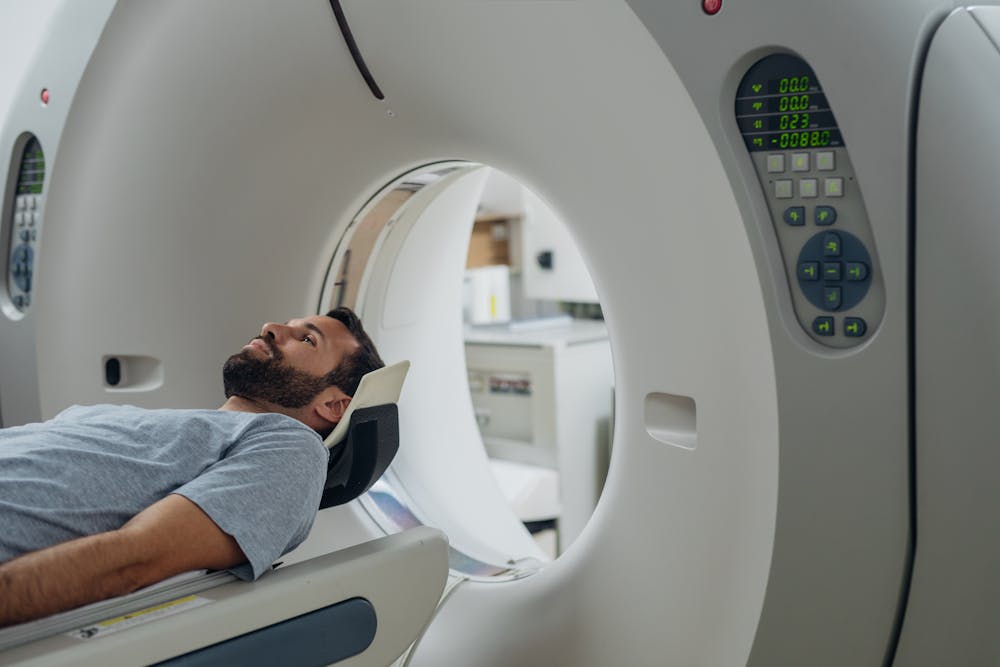
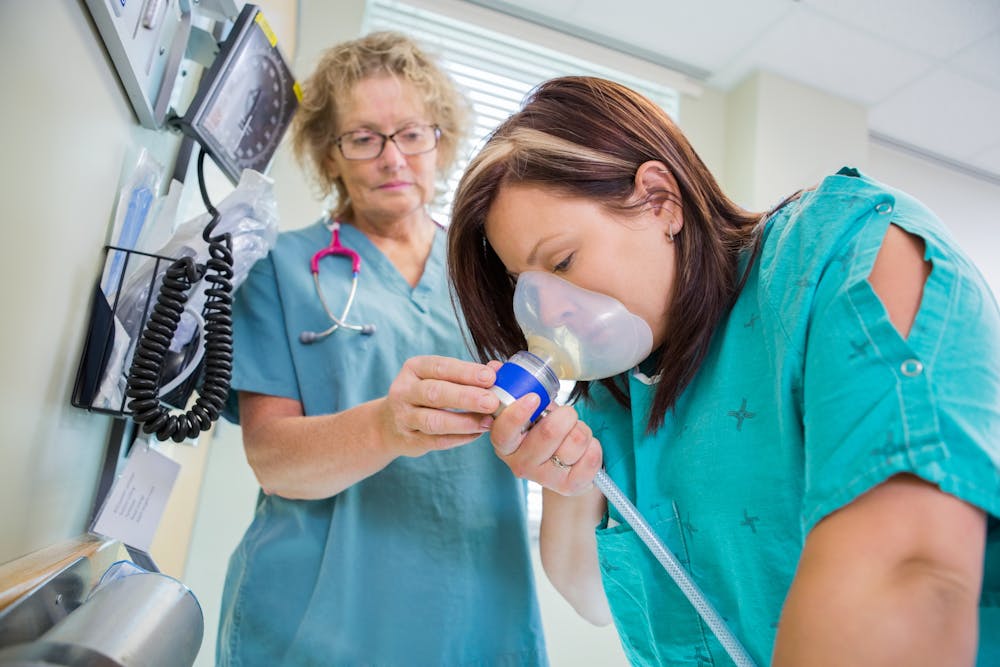
Health authorities in Queensland and New South Wales are racing to prevent COVID outbreaks after one community case was recorded in each state over recent days.
Brisbane’s Princess Alexandra Hospital was put into lockdown on Friday night after a doctor who treated a returned traveller with COVID tested positive.
In Sydney, a security guard who worked at two quarantine hotels returned a positive result yesterday.
Neither state has recorded any further community cases so far, although hundreds of close contacts remain in quarantine. Let’s take a closer look at what’s happened.
The vaccine doesn’t work immediately
The Sydney security guard had received a first dose of the Pfizer vaccine. But this isn’t reason to be concerned about the vaccine’s effectiveness.
Reports indicate the man received his first dose on March 2, and health authorities’ working hypothesis is that he caught the virus during an overnight shift at the Sofitel Wentworth from March 6-7.
Data on the Pfizer vaccine show it only starts to protect 12 days after the first dose. Maximum protection, of course, only comes after the second dose.
So we wouldn’t yet expect this person to be reaping the vaccine’s benefits at the time he was exposed.
It’s possible the first dose may have already conferred some level of protection, and we can hope this person may experience a less severe infection, and be less infectious to other people, than he would have had he not received a single dose days earlier. But we don’t know this will be the case.
A security guard who worked across two NSW quarantine hotels had received one dose of the Pfizer vaccine 4-5 days before contracting COVID-19.Joel Carrett/AAP
We should be more worried about the fact the infected worker was employed at two Sydney quarantine hotels. Reports also indicate he worked a day job in building management.
I’ve previously argued we need to create a model in which hotel quarantine workers only need to work across one site to minimise the risk of transmission.
The Victorian government adopted a recommendation to discourage secondary face-to-face employment for key staff following the hotel quarantine inquiry.
The Queensland case
The doctor who contracted COVID in Queensland, on the other hand, hadn’t received the vaccine. This has raised the question of why a doctor working with COVID-positive patients — irrefutably on the frontline — hadn’t got the jab yet.
The vaccine rollout is still in its early phases, and we can’t expect everyone in the first group (1a) to have already received the vaccine.
However, where a large number of health-care staff have received at least a first dose, it would have been sensible to have a vaccinated doctor treating COVID-positive patients.
Queensland is also now facing a possible outbreak within hotel quarantine, with genomic sequencing linking a second case in the Hotel Grand Chancellor to the returned traveller we understand passed the virus to the doctor. This second guest tested positive on day 12 of their quarantine.
We don’t yet know for sure whether this second guest picked the virus up in quarantine; investigations are continuing. But we’ve seen the virus spread in hotel quarantine before, most recently at the Holiday Inn, which sent Melbourne into a five-day lockdown.
One thing we could be doing better would be to test returned travellers every day, or at least every second day, rather than only at the beginning and towards the end of their 14 days, or if they develop symptoms.
For example, in Victoria, returned travellers are routinely tested on the third and eleventh days, and the policies seem to be similar in other states.
We’re missing a significant window here. Having a more precise idea of when the person became infected would give us a better idea of how they became infected.
For example, if it was closer to the beginning of their stay in hotel quarantine, it may be more likely they contracted the virus overseas or in transit and were still incubating the infection on arrival. Whereas if they did become infected only around day 12, we may be more inclined to explore the possibility they contracted the virus in quarantine.
This would also allow us to manage cases better, because as soon as someone tests positive, they could be moved to a “hot hotel” to minimise transmission risk.
This daily testing could be less invasive than the standard PCR tests, for example saliva testing. Any positive result could be validated with a PCR test.
Vaccines are a very important part of our COVID response. But they can’t reduce the risk to zero.Joel Carrett/AAP
Hopefully we’ll avoid border closures and hard lockdowns
Other Australian states have instructed people who have been at any of the main exposure sites linked to these cases to get tested and quarantine. Victorian health authorities are actively seeking out people who have passed through Sydney to identify anyone who may be at risk.
Being able to trace, test and isolate, without closing borders, is the way the system should ideally work.
These cases in NSW and Queensland remind us leaks are still possible and we have to be prepared. We can never get the risk down to zero, but everything we can do to reduce the risk is critical.
Along with continued infection control measures, the vaccine plays a big role. It can’t eliminate the risk completely, but as more people are vaccinated, the hope is it will reduce the impact of events like these.
We now wait to see the results from the close contacts’ tests in both states. Hopefully, these situations won’t escalate further and we’ll avoid the need for snap lockdowns and border closures.
But even if we’re able to avoid city-wide lockdowns, these events cause significant disruptions in the community. So it’s critical we investigate them thoroughly, and do everything we can to mitigate the risk they will happen again.
During COVID-19 lockdowns, a major concern for LGBTIQ+ communities, mental health professionals and academics was that young lesbian, gay, bisexual, trans, queer and questioning, intersex and asexual+ people may suffer from being stuck in transphobic, biphobic or homophobic households.
But encouragingly, our research found these young people largely managed to navigate these spaces successfully, by increasing their social media use, exploring identity through digital channels and finding safe ways to maintain family relationships.
We spoke to 65 LGBTQIA+ people aged 16–30 from across Australia, with cultural backgrounds including Indigenous, European, South Asian, Middle Eastern and East Asian. For many, isolation provided an opportunity to reflect and build on their identity.
Surfing the web during lockdown
We spoke to queer people who identified as gay, lesbian, bisexual, asexual, pansexual and demisexual — and with various gender identities such as cis male/female, intersex, non-binary, trans, gender-fluid, agender and questioning.
Our respondents expressed having generally increased their social media use during COVID-19 lockdowns, when they were forced to stay home. As a result, they reflected on and explored their gender and sexual identity online more than usual. One interviewee said:
It was definitely a big help just to have a chance to think about it on my own for a bit, instead of having to do other stuff.
The group reported using social mediums such as Instagram, TikTok, Facebook, Snapchat and Discord to find others like them — and to discover language that helped them make sense of their own feelings and desires (which is often absent from classrooms).
During lockdowns, respondents had to actively decide what information to share with family and how to navigate these relationships online and offline.
This generally didn’t impede their identity work, however. Many said they blocked certain individuals, created multiple social media accounts or strategically shared content with only specific people.
Meanwhile, they also found ways to relate to and safely connect with other LGBTQIA+ people online. This is what experts call online “curation”. One young panromanticdemiboy said:
I’m in a lot of private groups that are sort of other people from either Australia or across the world that just describe their experiences […] having a lot of other people around you that are in the same boat is just, you know, just really reassuring.
Online friends helped build an important sense of community, which then created space for discussions on gender and sexuality which may not have been possible with families.
The 43rd annual Gay and Lesbian Mardi Gras parade took place earlier this month in Sydney. Several other cities hosted their own events.Dan Himbrechts/AAP
Some respondents curated their online spaces with family in mind. For example, they would deliberately not be explicit about gender and sexual identity on certain platforms, due to concerns about repercussions for their parents. Thus, concern for loved ones shaped the way they used social media.
And while LGBTQIA+ communities were indeed important, this wasn’t all respondents looked for. Their online communities were made up of LGBTQIA+ people and others who enjoyed cosplay, gaming, art, baking, fandoms and anime.
Young queer people, like all people, are multifaceted and have a variety of interests, so identity work happens alongside hobbies and fun. One queer trans man we interviewed said his circles featured a strong mix of both queer and fandom themes:
I tend to find the queer community within the fandom really, really quickly.
Unfortunately, we found young queer people also dealt with negativity on social media during lockdowns.
They recounted seeing hateful comments that marginalised and denigrated queer people and expressed concern about social media sites censoring queer-related content more harshly than other content.
We know queer online spaces themselves can be prejudicial and have examples of transphobia and discrimination against bisexual individuals.
Our respondents mentioned their experiences teaching others (both straight and LGBTQIA+ people) about gender and sexuality online. Many valued an educative approach for people with prejudicial and discriminatory ideas.
We found the onus of this work often fell on them, while they emphasised it was a balancing act; they didn’t always want to engage with negative material about themselves or similar groups.
Attendees at this year’s Gay and Lesbian Mardi Gras parade at the Sydney Cricket Ground. The event took place in the stadium due to COVID-19 restrictions.Rick Rycroft/AP
Supporting young LGBTQIA+ people
Notwithstanding obvious differences in lived experience, our findings indicate LGBTQIA+ youth know how to find creative, resourceful and intelligent ways to thrive online.
Yet it’s imperative society at large continues to support LGBTQIA+ youth and help make sure their experiences are not negative. There are a few ways this can be done:
Introduce support resources to assist young LGBTQIA+ people with using online spaces to their advantage and as their circumstances require. Our respondents expressed this would be helpful as they frequently deal with stigma and fear online.
Advocate for better social media policies that support inclusion and diversity. Platforms must also be more discerning when LGBTQIA+ content is reported, as people may flag material due to their prejudices and not because something is wrong with it.
More broadly, we should all work to ensure fair representation and widespread acceptance of LGBTQIA+ people in everyday life. This will help reduce day-to-day stigma. For a start, we can all share more diverse LGBTQIA+ content on our own social media profiles.
Thousands of women are gathering in cities across the country, angry about the allegations of rape, sexual abuse and harassment emerging from our parliaments and schools. They’re also furious with a prime minister who’s said he’s too busy to attend a rally in person to hear these concerns and would prefer a private meeting.
In Sydney, thousands of women gathered in crowds outside the town hall, spilling into the surrounding streets. They were dressed in black, waving placards: “What are you afraid of ScoMo?”, one read. “You will be held accountable,” said another. Another: “We shouldn’t need to do this.”
Lawyers were also conspicuous, some bearing the logos of prominent Sydney firms. “Lawyers for equality” their slogans read, and “We fight fair”.
Men of all ages were also there, together with First Nations sisters and members of non-binary, trans and queer communities.
Mounted police were making their presence felt at the edge of the crowd.
The mood was defiant, with the slow burning anger of women who were determined to fight for the long term. “We will not be silenced,” investigative journalist Jess Hill told the crowd. “The time for silence is over.”
“We’re marching for justice,” said another speaker. “We won’t stop marching until we have justice.”
A moment to listen
It shouldn’t be that hard for a prime minister to realise this is a moment to listen.
The powerful words of Grace Tame, Australian of the Year and a child abuse survivor, have been a catalyst for longstanding rage. The rape allegations made by Brittany Higgins demand attention and action. The online petition launched by former Sydney schoolgirl Chanel Contos, which triggered a string of sexual assault allegations against students from elite boys’ schools, underscores the depth of the problem.
Former Liberal staffer Brittany Higgins addressed the March 4 Justice rally in Canberra.AAP Image/Lukas Coch
NSW police are also investigating allegations women as young as 16 were harassed in MP Craig Kelly’s electorate office by an employee (who denies the allegations and remains in his role at Kelly’s office). Allegations of sexual harassment have also been tabled in the South Australian parliament.
The nation’s first law officer, Attorney-General Christian Porter, faces an allegation he raped a 16-year-old girl more than 30 years ago. He has strongly denied the allegation, but many have continued to call for an open inquiry into the claim.
By refusing to step outside the parliament to answer women’s justified concerns, the prime minister has demonstrated callous indifference. It looks like he is prioritising media management — the risk someone will snap an unflattering photograph as he embarks on his next campaign — above humanity.
Minister for Women Marise Payne drew further attention to the government’s contempt by similarly signalling her intention to remain absent today.
This disregard builds on the prime minister’s already very public refusal to read the words of the woman at the centre of the Christian Porter case. Morrison said he discussed the claims with the accused, “who absolutely rejects these allegations”, and spoke to the Australian Federal Police commissioner and various senior public servants. Having done all that, he told reporters, “there are no matters that require attention”.
In responding this way, the prime minister has generated more of the anger he hoped would disappear.
Last week at his media conference, the attorney-general asked the media to imagine “just for a second” that the allegations are not true. The women gathered at the March 4 Justice are answering that we also have a moral obligation to imagine “just for a second” that they are. What then?
I am no longer surprised to hear disclosures of sexual assault and domestic violence from my students or other women. I am only surprised when a woman claims she hasn’t been.
The prime minister has generated more of the anger he hoped would disappear.AAP Image/ ROB BLAKERS
Workplace sexual harassment particularly affects women in their early 20s when they are too young to have gained access to inner circles occupied by slightly older women – the places where discrete warnings against certain male colleagues are issued, but only whispered for fear of defamation suits.
The wrongness of sexual abuse has only recently – and unevenly – been recognised. But there is a terrifying contradiction between the wrongness of rape and sexual assault and harassment, the sheer prevalence with which it occurs, and the inability for women to obtain redress from the courts via the so-called “rule of law” repeatedly invoked by the prime minister.
This moment is a reckoning well beyond the Christian Porter or Brittany Higgins allegations, or the findings made against former High Court Justice Dyson Heydon by a High Court inquiry.
Ending Canberra’s toxic culture is the rallying point, but women are also taking to the streets because these failures are intrinsically connected to a systemic culture of sexism in law, politics and policy-making.
The government’s apparent inability to adequately listen or respond to the serious concerns of women suggests a deep, underlying cultural reason for its policy failures.AAP Image/Dave Hunt
Last week, a Grattan Institute report revealed women took the brunt of job losses generated by the pandemic. It also confirmed that women experienced a disproportionate share of the burden of unpaid work during lockdown, particularly the burden of home schooling. Female casual workers were also disproportionately excluded from government benefits such as JobSeeker. Meanwhile, plans for family law reform due to be tabled this week are likely to have dramatic impacts for survivors of domestic violence and their children.
The government’s apparent inability to adequately listen or respond to the serious concerns of women suggests a deep, underlying cultural reason for its policy failures.
The gains that older women, and women of my own generation thought we had won, seem to be evaporating. Or perhaps the real problem is that at a cultural level, they were never really won at all. And so the fight begins again.
If this article has raised issues for you, or if you’re concerned about someone you know, please call 1800RESPECT on 1800 737 732 or Lifeline on 13 11 14.
Source: The Conversation (Au and NZ) – By Catherine Knight, Senior Research Associate, Institute for Governance and Policy Studies, Te Herenga Waka — Victoria University of Wellington
Time spent in green spaces has been shown to mental and physical well-being.Shutterstock/vsop, CC BY-SA
Even a short walk, an ocean view or a picnic by a river can leave us feeling invigorated and restored. There is now a growing body of evidence establishing the link between such nature encounters and our mental and physical well-being.
In my new book, I explore these nature benefits and put out a challenge to urban planners and decision makers to include more green spaces in our towns and cities.
Nature’s fix
One of the earliest studies to draw a conclusive link between time spent in nature and well-being was published in 1991. It found a 40-minute walk in nature, compared with walking in an urban space or reading a magazine, led to significant improvements in mood, reduced anger and aggression, and better recovery from mental fatigue.
Research also suggests the benefits of growing up with access to lots of green space has a lasting effect into adulthood. A Danish study in 2019 found children who grow up surrounded by green spaces are less likely to develop mental disorders as adults.
Nature exposure has also been shown to boost immunity. Studies found that forest excursions boost the activity of natural killer cells (a type of white blood cell that plays a vital role in the body’s defence system, attacking infections and tumours) and elevate hormones that may be protective against heart disease, obesity and diabetes, at least over the short term.
No exercise required
Researchers have been careful to factor out the beneficial effects of energetic physical activity when designing their studies of nature exposure. They asked participants to sit quietly or take a gentle walk.
This is good news for those of us who prefer a stroll to strenuous exercise. What’s more, researchers have found that just 20-30 minutes in nature delivers optimal benefits. After that, they continue to accrue, but at a slower rate.
Even a gentle stroll delivers health benefits.Shutterstock/Ian Woolcock, CC BY-SA
There’s even better news. To provide these benefits, nature does not need to be remote or pristine. A leafy park, a stream-side walkway, or even a quiet, tree-lined avenue can provide this nature fix.
New Zealand’s lockdowns have made more people appreciate the importance of green spaces for walking, cycling or just getting some fresh, tree-filtered air. During the strictest lockdown in April 2020, citizen science apps such as iNaturalistreported an upsurge in usage, indicating people were getting out into nature in their neighbourhoods.
The nature destruction paradox
Our appreciation of nature at this time of crisis is not without irony, given the destruction of pristine forests, rapid urbanisation and population growth are all at the root of the pandemic, bringing wildlife and people into close contact and making animal-to-human transmission of new diseases increasingly likely.
A recent World Wildlife Fund report describes COVID-19 as a clear warning signal of an environment out of balance.
The report presents strong evidence of the link between humanity’s impacts on ecosystems and biodiversity and the spread of certain diseases:
Along with maintaining our natural systems, action is needed to restore those that have been destroyed or degraded, in a way that benefits people and restores the fundamental functions that biomes such as forests provide.
In Aotearoa New Zealand, we think of ourselves as a country rich in nature, but here too we have managed to destroy large swathes of indigenous forests and ecosystems since the first Polynesian navigators and then European settlers arrived.
Most people live in cities, which often lack green spaces.Shutterstock/krug, CC BY-SA
Most of our surviving forests and pristine waterways are concentrated in our mountains and hill country, preserved not as a result of careful stewardship, but rather an accident of history: it was too hard to develop and economically exploit these rugged, inaccessible places. Our lowland landscapes are largely bereft of any forests, wetlands or any nature in its original form.
Yet, 86% of us live in cities and towns, which are in coastal and lowland areas. So if we are going to ensure that everyone is able to benefit from spending time in nature, we need more nature spaces in our cities.
This does not necessarily mean more parks. With the right care and investment, neglected stream corridors, weed-infested gullies, flood-prone areas unfit for development and even road verges can provide valuable green spaces for people. As an added benefit, they create a network of habitat for insects, birds and reptiles that keep our natural ecosystems functioning.
In my book, I put out a challenge to all New Zealanders, especially urban planners and our decision makers, to strive for a more nature-rich future – an Aotearoa where every New Zealander can benefit from being in nature, every day of their life.
Attorney-General Christian Porter has commenced defamation proceedings in the Federal Court against the ABC and journalist Louise Milligan.
He is suing over an article the ABC published on Friday, February 26, which he says made false allegations against him in relation to a person he met when he was a teenager.
A statement from his lawyer Rebekah Giles says although Porter was not named, the article made allegations against a senior cabinet minister “and the Attorney-General was easily identifiable to many Australians”.
The statement, issued on Monday says, in the last few weeks Porter “has been subjected to trial by media without regard to the presumption of innocence or the rules of evidence and without any proper disclosure of the material said to support the untrue allegations”.
“The trial by media should now end with the commencement of these procedeings,” it says.
“The claims made by the ABC and Ms Milligan will be determined in Court in a procedurally fair process.”
The statement says Porter will give evidence “denying these false allegations on oath.”
The ABC and Milligan have damaged Porter’s reputation by publishing the allegations, the statement says.
“This Court process will allow them to present any relevant evidence and make submissions they believe justifies their conduct in damaging Mr Porter’s reputation.”
The statement points out that under the Defamation Act, it is open to the ABC and Milligan to plead truth in their defence – “and prove the allegations to the lower civil standard”.
Porter’s lawyers include two leading barristers, Sue Chrysanthou SC, and Bret Walker SC, who appeared for Geoffrey Rush when he successfully sued the Daily Telegraph for defamation. Walker also acted for Cardinal George Pell, whose child sex abuse convictions were overturned in an appeal before the High Court.
Science, technology, engineering and mathematics (STEM) professions are still heavily male-dominated. Across all sectors, just over one in four STEM workers are women.
The gender gap is even wider among students in post-secondary STEM courses. The STEM Equity Monitor reports:
When considering university and VET together, in 2018 women comprised only 21% of total STEM course enrolments and 23% of total STEM course completions. In comparison, women comprised 60% of total non-STEM course enrolments and 61% of total non-STEM course completions in 2018.
One explanation commonly offered for this gender gap is a lack of confidence among girls and women in their technical skills and STEM career prospects. However, our research, including a survey of thousands of Australian university students, has found women in STEM courses are often more confident than men.
Our findings counter assumptions that STEM women lack confidence and that this translates into limited career success.
We need to look for other reasons for the failure to attract and retain more women in STEM professions, despite many attempts to do so. A succession of Australian government policies and reviews have aimed to increase the number of STEM-qualified people to meet increasing demand for their skills.
The gender gap in STEM has often been associated with low technical confidence among women. Female school students have been shown to lack confidence about their prospects in fields such as maths and sciences. In the professions, STEM women are more likely to underestimate their abilities despite performing as well as men.
We wanted to find out whether Australian female STEM students are more or less confident in their study and career thinking. We used Bennett’s employABILITY measure to assess the confidence of 12,708 STEM and non-STEM students at an Australian university.
We found the women students in STEM are equally if not more confident than men in their problem-solving and decision-making, goal-directed behaviour, self-esteem, career exploration and career awareness. They were also more likely to have a “plan B” for their careers.
The women in STEM also reported higher confidence than women in non-STEM courses. The female STEM students were more confident in their problem-solving and decision-making, goal-directed behaviour and occupational mobility.
Further to our reported study, we discussed the findings with four final-year STEM and non-STEM students. They voiced what we had suspected: STEM women’s confidence as students could be the result of the challenges they had overcome in choosing a traditionally male profession.
“Women are more confident […] especially in STEM as they know what they are getting into and what they want from the choice they have made.” – Female student
“To be a woman in STEM, they have to be quite strong. There is a special something about them and they believe they are destined to do great things.” – Male student
Key is to maintain confidence into career
Our finding that women in STEM are no less confident than men has implications for education and policy.
Our study suggests women enter STEM programs with a great deal of confidence. And yet neither increased enrolments nor their confidence as students is carried through into the STEM professions.
The confidence women have as STEM students isn’t translating into progress in the workplace.Shutterstock
“What drives those women towards STEM industries? They have passion for it, a motivation to go against the odds.” – Female student
Career theory can help inform the solutions. In particular, self-esteem and self-efficacy predict resilience, goal-setting and persistence. These traits are critical for workers in competitive and gendered environments, and women STEM students are confident in both.
Positive educational and professional experiences, including gender-neutral experiences and role models, bolster students’ motivation and their commitment to study and career.
More student and graduate programs in industry, providing industry experience in each year of study, might reduce gendered attrition. It might also help to explain attrition among students and new professionals.
Raising awareness of gendered behaviour and gender-neutral workplaces among all students can foster generational change. Increased flexibility within science workplaces could help to retain talented women.
The gender gap in STEM careers, the high rate of attrition among STEM career women and the difficulty of attracting women to STEM courses are all well documented. Reducing the gender gap requires a concerted effort from governments, education systems and industry. We emphasise the need to focus on career transition and support prior to, during and beyond the student life cycle so early career confidence translates into longer-term career success.
The Hayne royal commission into misconduct in the banking, superannuation and financial services industry found Australia’s responsible lending requirements were correctly calibrated.
They are set out in the National Consumer Credit Protection Act, which requires lenders to offer credit that is “not unsuitable” for the borrower.
Hayne’s first recommendation (Recommendation 1.1) was that the National Consumer Credit Protection Act “not be amended to alter the obligation to assess unsuitability”.
In September, in the midst of the COVID recession, Frydenberg said he was “reducing the cost and time it takes consumers and businesses to access credit”.
Credit was “the lifeblood of the Australian economy”.
He put forward a plan to remove responsible lending obligations from the Act, with the exception of small amount credit contracts and consumer leases where he would impose heightened obligations.
Allowing lenders to rely on the information provided by borrowers would replace the current practice of “lender beware” with “borrower responsibility”.
‘Borrower responsibility’
Frydenberg introduced the legislation in December. On Friday a Senate committee recommended approving it, finding the current consumer protection framework “potentially overly prescriptive”.
Labor and Greens Senators dissented. The bill faces a Senate vote this week.
We are members of a consortium of 12 academics who conducted an in-depth analysis of the proposed changes and found they should be rejected. This is why.
Even after Hayne, banks are continuing to fight their obligations and have yet to show they have changed their ways.
The drop in lending since COVID was not caused by overly strict lending laws. Indeed, after a win by Westpac in a court case brought by the Securities and Investments Commission the banks said the laws were set appropriately.
Lending standards protect against crises
Consumer protection in the field of finance is important — it contributes to strengthening financial stability.
Not everyone knows what they are signing.Jacob Lund/Shutterstock
The abusive, predatory and irresponsible lending practices that led to the US subprime mortgage crisis make this clear.
The government’s suggestion that it is fair for borrowers to take responsibility for their own circumstances doesn’t hold water.
No matter how diligent their inquiries, consumers frequently lack the expertise to understand their circumstances and what financial products will be best for them.
For many, almost all of the expertise lies with the banks.
Since COVID, their need for this expertise has become greater, not less.
The government says mortgage brokers will fill this gap under a change proposed by Hayne that will require brokers to act in the “best interests” of their clients.
But Hayne’s recommendations were based on the responsible lending requirements being in place.
And Hayne wanted mortgage brokers banned from taking conflicted remuneration, under which they get paid by the banks they steer customers to, a recommendation Frydenberg at first accepted, then backed away from.
Brokers continue to be paid by the banks whose products they recommend.
APRA has no history of consumer protection
Hayne also recommended (Recommendation 6.1) that Australia’s “twin peaks” system of regulation continue.
Under twin peaks, the Prudential Regulation Authority (APRA) regulates in order to ensure financial system stability, and the Securities and Investments Commission (ASIC) regulates to protect consumers.
While in his final report Hayne found that ASIC’s appetite for law enforcement had been limited, he found APRA’s had been non-existent.
The upshot is that, not only are the responsible lending requirements to be relaxed, but what’s left of them is to be handed to an agency (APRA) with no track record in the field, at the expense of ASIC.
Until now, APRA hasn’t done consumer regulation.APRA
But AFCA has to be guided by the law. Without responsible lending laws and regulations, it is unclear what laws AFCA could apply. Thus far, APRA’s standards have been aimed at protecting financial stability rather than consumers.
The Financial Complaints Authority would rely on APRA for guidance.Tashatuvango/Shutterstock
In our assessment the proposed changes fail in every respect.
They ignore the key lesson of the global financial crisis: that it was caused by reckless and predatory lending.
March 15 2019 is a day we must never forget, a defining point in the history of New Zealand. The premeditated attack on the Christchurch Muslim community took the lives of 51 of our fellow citizens and damaged many more. It was also a direct assault on our cherished ideals of multiculturalism.

The question, therefore, is what has changed two years on? There are three responses to that question — not all of them positive or reassuring.
The better news is that the reaction to the attack itself has been impressive. From the prime minister’s empathetic engagement, to the court system ensuring the terrorist was handed an unprecedented life sentence without parole, New Zealand did well.
Changes to firearms laws have now largely prohibited ownership of the types of semi-automatic weapons used in the attacks. Would-be gun owners who show “patterns of behaviour demonstrating a tendency to exhibit, encourage, or promote violence, hatred or extremism” are no longer considered fit and proper.
The government’s “Christchurch Call” aimed to co-ordinate the fight against violent online extremism internationally. At home, the New Zealand Security Intelligence Service (NZSIS) and police have collaborated on a new strategy to “increase the safety, protection and resilience of crowded places”.
The royal commission of inquiry into the terror attack heard harrowing testimony from survivors.GettyImages
The threat has increased
So far, so positive. But, despite these various initiatives, the terrorism threat level in New Zealand has not decreased, but has moved from “low” to “medium” since March 15 2019. That means a terrorist attack is seen as “feasible and could well occur”.
How feasible, and how close we have already come to other attacks, is difficult to gauge. While the failures of security agencies are public, their successes are not. The secrecy around what they do runs deep.
But recent publicly reported incidents suggest a higher-than-desirable level of risk, including:
This suggests security agencies need to be exceptionally vigilant — more so than they have appeared to be recently.
Confronted with the fact that a member of the public, not the police or security agencies, spotted the latest threat on the 4chan website, the NZSIS claimed it cannot monitor “millions of pages of posts made online every day”.
That is not acceptable. The public knows New Zealand is part of the powerful Five Eyes global intelligence network. Expecting a few obvious keyword searches within known extremist online hotspots is hardly unreasonable.
While the police and NZSIS may have largely escaped blame for the original March 15 attack, their defence of difficulty in identifying an attacker in advance cannot be used twice.
Prime Minister Jacinda Ardern unveiling a commemorative plaque at Al Noor Mosque in 2020.GettyImages
Racism and intolerance hard to measure
Finally, and despite initiatives such as the Give Nothing to Racism campaign (launched two years before the Christchurch attack), it is debatable whether racism and intolerance in general have declined at all.
The Christchurch royal commission found “most affected whānau, survivors and witnesses” generally viewed New Zealand and New Zealanders positively before the attacks. At the same time, “nearly everyone we met with had personally suffered racist incidents or discrimination”.
Evidence does suggest we have a real problem. From 2004 to 2012 alone, there were about 100 race-related incidents, ranging from murder and kidnapping to serious assault, threatening and disorderly behaviour, abuse, deliberate damage to property and desecration of sacred sites.
But trying to gauge the real levels of racism and intolerance is difficult. Even the police are unsure of how bad it is: almost half of probable hate crimes are wrongfully downgraded because “the majority of staff do not know how to code them”.
Although racially motivated hostility can be an aggravating factor in sentencing, there is no specific crime of race hatred. Those incidents are commonly mixed in with general public order offences, and the government has no plans to amend this.
The Human Rights Commission reports race-related prejudice remains the commonest complaint. While the trend has improved, the numbers remain high: 426 complaints in 2017-18, 369 in 2018-19 and 383 in 2019-20.
Even these small advances may have been washed away by the anti-Chinese and Asian racism reported during the COVID-19 pandemic.
As for levels of general intolerance, it speaks volumes that the Broadcasting Standards Authority was forced to announce it would no longer hear complaints about everyday use of te reo Māori.
Two years on from the Christchurch terror attack, then, has New Zealand changed? Yes and no. The government dealt with the actual atrocity well. But the risk of further attacks remains — perhaps greater than before. And racism and intolerance remain stubbornly persistent.
If we really want to ensure the horrors of March 15 2019 do not ever recur, we must do better in spotting extremists in advance, and draining out the racist and intolerant ecosystems they emerge from.
New Zealand Parliament Buildings, Wellington, New Zealand.
Editor’s Note: Here below is a list of the main issues currently under discussion in New Zealand and links to media coverage. Click here to subscribe to Bryce Edwards’ Political Roundup and New Zealand Politics Daily.
Today, thousands of Australians are expected to march around the country, angry and fed up at the treatment of women. In Canberra they will form a ring of protest around Parliament House.
This comes after Melbourne academic and entrepreneur Janine Hendry wondered how many “extremely disgruntled” women it would take to link arms around parliament to tell the government “we’ve had enough” (the answer is about 4,000).
It follows Brittany Higgins’ allegation of rape in a minister’s office in 2019 and an allegation Attorney-General Christian Porter raped a 16-year-old in 1988 (which he denies). It also comes amid multiple claims of a toxic work culture at Parliament House.
While Higgins’ case has sparked numerous inquiries, she claims she was not supported in the aftermath of her alleged assault. Regarding Porter, the government is resisting calls for an independent inquiry, with Prime Minister Scott Morrison declaring him an “innocent man under our law”.
As Australia heads into another pre-election season, questions have been raised about the potential impact of recent events.
Women are obviously a significant demographic, and data shows they are already drifting away from the Liberal Party.
So, what’s at stake when it comes to women voters and the Liberals at the next election?
Gender and voting behaviour
The Australian Election Study is a nationally representative survey of voter behaviour that has run after all federal elections since 1987.
In 2019, it showed that although the Liberal-National Coalition won the federal election, the Liberal Party attracted the lowest proportion of women’s votes since 1987.
While 45% of men gave their first preference to the Liberal Party, just 35% of women did so. Parties on the political left also had an advantage among women, with 6% more women than men voting for the Greens, and a smaller margin of 3% more women voting for Labor.
Looking at the gender gap over time, we see it has actually reversed over the past 30 years. Back in the 1990s, women were slightly more likely to vote for the Liberal party, and men were more likely to vote Labor.
This has gradually switched, so men now prefer the Liberal Party and women prefer Labor. The gender gap in voting Liberal is now at its greatest point on record.
This reversal of the gender gap in voting behaviour isn’t unique to Australia, it has also been observed in other democracies including in Europe and North America.
Why are we seeing a gender gap?
There are a number of factors underpinning this transformation of gender and voting in Australia.
This includes tremendous social change, such as women’s increased participation in higher education. Higher education is associated with political ideology that is further to the left.
Women’s increased participation in the labour force is also a factor. The election study shows in 1990, 41% of union members were women, by 2019, that figure had increased to 55%.
But womens’ voting behaviour can also be attributed to major changes in Australia’s major political parties. Back in the early 1990s, women were similarly underrepresented in both the major parties — just 13% of parliamentarians in 1990 were women.
Since then, Labor has dramatically increased its proportion of women in parliament, reaching 47% through party quotas as of the . The Liberal Party on the other hand, has made slower progress, reaching just 23% at the most recent election.
New research published in the journal Electoral Studies shows left-leaning women are more likely to support female candidates.
The Liberal Party’s ‘women problem’
So, even before the current crisis, the Liberal party was losing the electoral support of women.
The Liberal Party’s “women problem” has become a common criticism, not just by political opponents but also prominent Liberal Party figures including former Prime Minister Malcolm Turnbull.
The current crisis has the potential to exacerbate the gender gap in voting behaviour.
That said, election results are often influenced by the most important issues at the time of the election. The salience of different issues — shaped to a large degree by media coverage — can change considerably over time.
Approval ratings of Morrison from the Essential Poll show he lost a lot of support during the bushfires in late 2019 and early 2020, which he was perceived as handling poorly.
Since then, Morrison has benefited from Australia’s relative success in managing the COVID-19 pandemic. As a result of a phenomenon known as “rallying ‘round the flag,” voters have supported him and the government during this time of crisis.
The next election
The election can be held anytime from August this year, although political observers currently expect it to be next year.
The electoral impact of current events will depend not only on the government’s response to the sexual assault allegations (and voter satisfaction with those responses), but also which issues are salient at election time. A historical sexual assault allegation against former Labor leader Bill Shorten was not a major factor in the lead up to the last election (he denies the claims and in 2014, police said they would not proceed with charges).
Interestingly, the Australian Election Study shows trust in government reached its lowest point on record in 2019 with just one in four voters believing that people in government could be trusted. In contrast, three quarters thought those in government were more interested in looking after themselves.
On the issue of sexual assault, recent polling data also suggests the government is similarly perceived as putting itself first. Of those polled, 65% agreed “the government has been more interested in protecting itself than the interests of those who have been assaulted”. This includes half of Coalition voters, and a similar proportion of men and women.
Polls suggest voters don’t like they way the government has handled the Porter and Higgins cases.Jeremy Piper/AAP
Elections are decided on many issues and factors, including what is making headlines closer to election day, and the performance of leaders and parties.
But the growing gender gap in voting will be on the radar of both major parties. The Liberal Party ignores it at its peril.
The horrendous mass murders in New Zealand on March 15 2019 had a strong link with Australia.
The New Zealand royal commission into the attacks found the Australian perpetrator had long subscribed to violent right-wing Islamophobia and had taken this with him to New Zealand. In fact, Muslim communities in New Zealand had reported threats and violence for years, including suspicious behaviour at one of the mosques targeted in Christchurch.
After the Christchurch attack, we surveyed mosques in Australia to gauge the extent of anti-Muslim attacks here. We cannot understand the Christchurch massacre without comprehending the Australian context that at least in part incubated it.
Our research finds the threat of similarly motivated acts of hatred remains widespread. During 2020, we surveyed 75 mosques from five states and two territories of Australia about their experiences of violence in the five years from 2014 to 2018, as well as detailed questions about 2019. About half of the responses were from imams or mosque officials, 15% from volunteers and 35% from other congregation members.
Most concerning is that over half (58.2%) of participating mosques (or worshippers at them) had experienced targeted violence between 2014 and 2019. The threat of an attack increased in cases where there had been public attention. For example, mosques that were reported in the media (100%) or experienced online opposition to the development of the mosque (83%) experienced higher rates of victimisation.
The types of violence suffered by mosque attendees and the mosque buildings included arson, physical assault, graffiti, vandalism, verbal abuse and online abuse and hate mail, including death threats. There were notable geographical differences in these occurrences of violence. Despite being home to more mosques, attacks against Sydney mosques between 2014 and 2018 were proportionally lower (at 41% of the 51 respondent mosques) than for Melbourne (70% of 17 mosques) and Brisbane (89% of nine mosques).
The proportion of attacks against mosques in Australian states and territories was 29% in 2019, in the wake of the Christchurch massacre. Again, these were disproportionately distributed between the states, with a higher proportion of attacks directed at mosques in Brisbane and Melbourne.
In the wake of the Christchurch terror attack, Australian mosques are still being targeted with threats and violence.Mick Tsikas/AAP
In 2019 alone, 30% of respondent mosques had experienced a graffiti attack, with 17% reporting two or more instances. Some 12% had experienced one or more arson attacks, with one mosque reporting six such incidents in that year. Mosques were also vandalised, with 34% of participating mosques experiencing at least one such incident, and three mosques experiencing four to five incidents. Hate mail was received by 17% of the mosques.
Beyond attacks against mosques themselves, their attendees were targeted similarly by Islamophobic violence. Just under 40% of the mosques reported verbal abuse of their attendees in 2019. In addition, 17% had received threats of violence (with one actual physical assault), while 20% experienced objects thrown at them or the mosque.
Mosque attendees in Christchurch before the 2019 attacks reported similar experiences. Some were reported to police, some were shared within the communities. This ripple effect of community knowledge about safety and visibility no doubt shapes all mosque attendees’ experiences of religious observance.
Visibility enhances community connectedness, yet it also means hate crime perpetrators can easily find targets.
Some mosque officials attested anecdotally, during our follow-up, to a higher level of attention by mosque communities to security during 2019 in the aftermath of the Christchurch atrocity. They also said they feared drawing attention to their mosque out of concern for the safety of their attendees. This probably affected our survey’s response rate by making people wary of responding.
This was a pilot study, with a relatively small sample size. A larger survey completed by nominated mosque officials who consistently report incidents will provide more robust data in future studies.
In line with the calls by the Race Commissioner, we suggest a national, independent hate crime reporting system is needed to capture the experiences of targeted communities in Australia. While the Islamophobia Register Australia offers a forum through which some Muslims can report their experiences of Islamophobic violence, a system of reporting these incidents at the mosque in real time may provide us with a better idea of their full impact.
Our findings from this pilot study suggest mosque attacks in Australia are neither new nor rare. Too often, only the most egregious cases of hate-crime violence, of which the Christchurch massacre is one of the worst, come to media and public attention.
This should not lead us to overlook the everyday terror that Muslim clergy and mosque attendees must grapple with when enlivening their faith at their places of worship. A systematic and timely analysis of mosque attack data will enhance long-term security for mosques and their communities.
Since its first case was diagnosed 12 months ago, PNG has avoided a large number of reported cases and corresponding deaths. That situation has changed dramatically over the past fortnight. A crisis is now unfolding with alarming speed and the response must quickly match it.
As good as they are, these plans are unlikely to be fast enough to stop this current surge before enormous damage is done. There’s simply no time to waste in responding.
Why the urgency?
Reported COVID-19 testing rates remain critically low, with just 55,000 taken from an estimated population of nine million people. This means we don’t yet have a precise picture of the scale of the epidemic.
The reported numbers are highly concerning. In the first week of March, 17% of all people who were tested throughout the country were positive to COVID-19, with over 350 newly confirmed cases. This is the highest number of cases in a single week in PNG since the start of the pandemic. Over half of PNG’s 22 provinces reported new COVID-19 cases in that week.
Low testing rates, combined with reports of high daily case numbers, means there are likely many thousands of current cases in Port Moresby and widespread seeding and spreading of infections throughout the country.
PNG’s hospitals and front-line health-care workers remain particularly vulnerable. With limited public health controls in place and an effective vaccination program yet to be initiated, and with last week’s huge commemoration ceremonies for Grand Chief and former Prime Minister Michael Somare, there’s every chance the current outbreak will continue to grow exponentially for some time yet.
The people of PNG now face dual health emergencies: death and disease from COVID-19 itself, and a likely increase in existing major diseases barely held in check by the nation’s already stretched health system. These indirect effects, such as potential rises in malaria, tuberculosis, HIV, cervical cancer, vaccine-preventable diseases and poor maternal and newborn health, are likely to be even worse than the direct impact of COVID-19.
Australia and PNG’s vital partnership
This health crisis should be reason enough for Australia to respond urgently in support of PNG. But there’s another reason too. High levels of circulating SARS-CoV-2 in the Asia-Pacific region are a recipe for generating mutant coronavirus variants that might spread more readily, evade immunity more easily, and/or cause more serious disease. A regionally coordinated effort to combat COVID-19 will help ensure protection for everyone, including going a long way to help preserve Australia’s own vaccine program.
PNG already has a coordinated national and provincial COVID-19 response and a vaccine technical working group that has begun planning for deployment of the first allocation of vaccines to front-line health-care workers.
However, these plans were developed on the basis there was substantially more time for planning, deployment and phased rollout than the current case numbers would suggest.
What action is needed?
Two considerations are now paramount. First, the response needs to be requested by — and, more importantly, led by — PNG itself. Second, the response needs to reflect the urgency and scale of the unfolding emergency.
This “emergency package” could conceivably involve:
immediate provision of masks in the community, appropriate PPE for health-care workers and increased support for widespread testing
a campaign to counter COVID-19 misinformation, which is rampant, and
a significant ramp-up of vaccination across PNG, with an ambitious target — perhaps a million doses before the end of the year, aimed at the most at-risk groups.
Arguably the most important element of this would be immediate vaccination for health-care workers in the most heavily impacted areas of the country. Ideally, all of PNG’s crucial health-sector workforce should be vaccinated within the next fortnight. Australia could provide around 20,000 vaccine doses for health-care workers without putting a significant dent in its own vaccine supplies, potentially making a profoundly important intervention in the course of the epidemic in PNG.
This is the moment for dialogue to occur between the two nations, so PNG can ensure Australia’s help with such an immediate and ambitious response.
PNG is Australia’s closest geographical neighbour, and our countries have a deep shared history of mutual support. An out-of-control COVID-19 epidemic in PNG would be a humanitarian and economic disaster for the nation itself, and a grave threat to the health of the region, particularly with shared borders to Solomon Islands in the east and Indonesia to the west.
Given this pandemic expands at an exponential rate, and with new variants of concern arising regularly in regions of high transmission, it’s the speed of a strong response that matters the most. A rapid public health intervention, to be supported and facilitated at the highest levels of government, would go a long way to mitigating what may well become a public health catastrophe.
Environmental scientists see flora, fauna and phenomena the rest of us rarely do. In this new series, we’ve invited them to share their unique photos from the field.
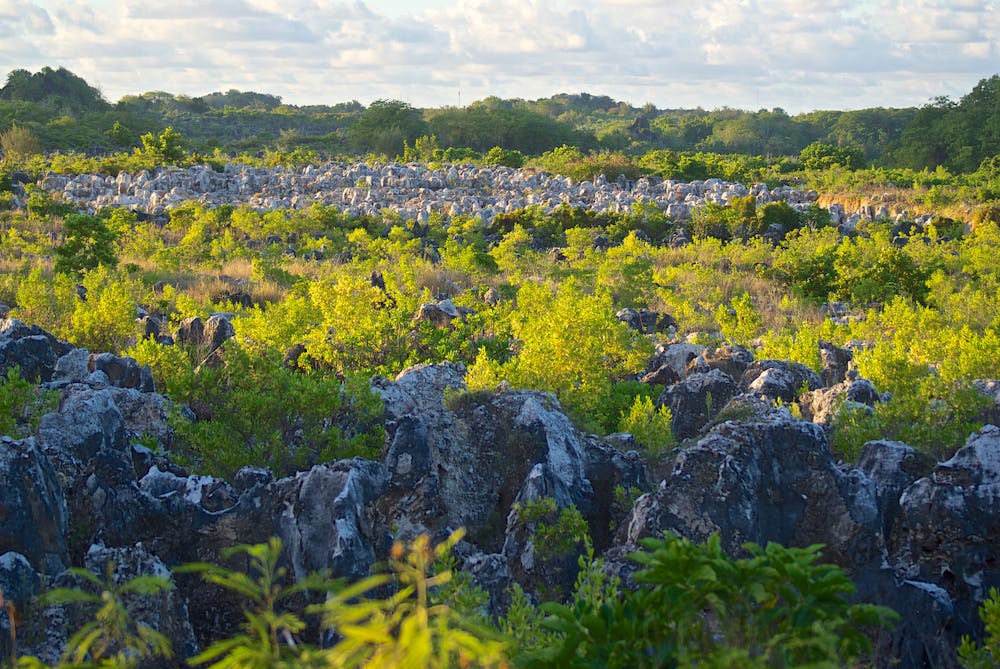
Two weeks ago, I found myself hitting the water on Norfolk Island, complete with a survey reel, slate and camera.
Norfolk Island is a small volcanic outcrop located between New Caledonia and New Zealand, 1,400 kilometres east of Australia’s Gold Coast. It’s surrounded by coral reefs, with a shallow lagoon on the south side that looks out on two smaller islands: Nepean and Phillip.
The island is picturesque, but like marine environments the world over, Norfolk Marine Park is subject to pressures from climate change, fishing pressure, habitat change and pollution.
I was diving in the marine park as a volunteer for Reef Life Survey, a citizen science program where trained SCUBA divers survey marine biodiversity in rocky and coral reefs around the world. We first surveyed Norfolk Island in 2009, then again in 2013, with an eight year hiatus before our return this month.
While the scientific analysis of our data is yet to be done, we can make anecdotal observations to compare this year’s findings with prior records and photographs. This time, our surveys turned up several new sightings and observations.
A red-ringed nudibranch (Ardeadoris rubroannulata). This beautiful little mollusc was a couple of centimetres long, nestled on the side of a wall covered in colourful algae. I had to look twice to notice it, but recognised it as a species I had seen before in Sydney. It had previously only been recorded in the Coral Sea, the east coast of Australia and Lord Howe island, so it was nice to get a record of it even further east in the Pacific.John Turnbull, Author provided
What we saw
Diving under the waves in Norfolk Marine Park takes you into a world of crackling, popping reef sounds through clear blue water, with darting tropical fish, a tapestry of algae and hard and soft corals in pink, green, brown and red.
In these surveys we record fish species including their size and abundance, invertebrates such as urchins and sea stars, and habitat such as coral cover. This allows us to track changes in marine life using standardised scientific methods.
Emily Bay is a sheltered swimming beach at the eastern end of the lagoon, great for snorkelling too thanks to the diverse corals just below the surface.John Turbull, Author providedBanded parma are quite territorial — they charge you as you approach their turf. This one is guarding what it regards as its own personal coral clump.John Turbull, Author provided
Given recent major marine heatwaves and bleaching events in Australia, we were pleased to see healthy corals on many of our survey sites on Norfolk. We even felt there had been increases in coral cover at some sites.
This may be due to Norfolk’s location. The island is further south than most Australian coral reefs, which means it has cooler seas, and it’s surrounded by deeper water. I’m a marine ecologist involved in soft coral monitoring at the University of NSW, so I particularly noticed the wonderful diversity and size of soft corals.
This photo shows the structure corals provide for fish and other animals to shelter in. They are the foundation for the whole tropical marine community. The corals here are a healthy brown — which comes from the symbiotic algae in their tissues – with no signs of bleaching.John Turbull, Author providedThe soft corals on Norfolk Island are some of the largest I’ve seen. Their structure is made up of soft tissue, often inflated by water pressure, rather than hard skeleton.John Turbull, Author providedHard corals come in a diversity of shapes and sizes, including this massive form growing on the side of rock wall.John Turbull, Author provided
I noticed generally low numbers of large fish such as morwong and sharks on our survey sites. Some classes of invertebrate were also rare on this year’s surveys, particularly sea shell animals like tritons and whelks.
Urchins, on the other hand, were common, particularly the red urchin. Some sites also had numerous black long-spined urchins and large sea lamingtons.
These invertebrate observations follow patterns we see in eastern and southern Australia, where there are declines in the numbers of many invertebrate species, and increases in urchin barrens — regions where urchin populations grow unchecked.
The expansion of urchin barrens can threaten biodiversity in a region, as large numbers of a single species of urchin can out-compete multiple species of other invertebrates, over-graze algae and reduce habitat suitable for fish.
The abundant red urchin competes for space with other invertebrates, such as this one encrusting hard coral.John Turbull, Author providedLamingtons are an Australian cake (although there are claims they were invented in NZ!) and I love this descriptive common name for the Tripneustes gratilla urchin. The sea lamingtons on Norfolk appear particularly fat and happy, as they cluster in sheltered grooves during the day to avoid predators. They can also be different colours — I’ve seen them on the east coast of Australia in orange and cream, even with stripes.John Turbull, Author providedA pair of banded cleaner shrimp, which grow to 9cm long. They advertise their fish cleaning services with their distinct banding and white antennae.John Turbull, Author provided
A highlight of any survey dive is when you find an animal you suspect may not have been recorded at a location before, and I had several of those on this trip.
I recorded first sightings for Reef Life Survey of blue mao mao, convict surgeonfish, the blue band glidergoby, sergeant major (a damselfish), chestnut blenny, Susan’s flatworm, red-ringed nudibranch, fine-net peristernia and an undescribed weedfish.
While some of these sightings are yet to be confirmed by specialists, they gave a buzz of excitement each night as we searched the records to confirm our suspicions of a new find.
This big school of drummer circled us for several minutes on our first survey dive at Nepean Island. If you look closely you can see one of the fish is different, in the top right. This is one of a few blue mao mao circulating in the school – and a first sighting for Reef Life Survey at Norfolk. You might also notice another species in the school, the darker spotted sawtail down the bottom of the photo.John Turbull, Author providedSusan’s flatworm is a colourful invertebrate listed as living only in the Indian Ocean and Indonesia. This sighting from Norfolk Island is a new record in the Pacific Ocean. When I first saw this little worm at the end of a survey, I wondered if it was anything special. Just as well I took the photo anyway!John Turbull, Author provided
Recruiting the locals
Other highlights for me included the warm welcome we received from the local community on Norfolk and the great turnout we had at our community seminar. Everyone I spoke to was supportive and encouraging when they heard we were on the island as volunteers doing surveys, and several people expressed interest in getting involved.
This is great news, as the best outcome is for local people to be trained to conduct their own local surveys.
Tyson, Sal, Jamie, Toni and me taking an underwater selfie on the west side of Phillip Island, 10 metres below the surface. It’s harder than on land, with your fins off the ground, everyone moving and bubbles to deal with.John Turbull, Author provided
Ideally we will return for comprehensive surveys of our 17 sites every two years or so, allowing us to plot trends over time. Only then can we hope to understand what is really happening in our marine environment, and make evidence-based conservation decisions. Having a skilled local team would make this easier and more likely to happen.
In any case, our 2021 surveys in Norfolk Marine Park, conducted by our team of five dedicated volunteers and supported by many others, give us one more essential point in time in the Norfolk series, and gave me some great memories to boot.
You can view my full photo album from the Norfolk Island survey here.
We all know what we should do. We should eat well and exercise. But then there’s ice cream and alcohol and the couch …
But what if watching TV could actually be good for you — if your favourite TV show could inspire and support you to be healthier?
In 2012, on 90210 (a reboot of the 90s’ Beverly Hills, 90210), 18-year-old Erin Silver (Jessica Stroup) was confronted with the choice to test for BRCA gene mutations. Her mother died from breast cancer, and if Erin had a mutation she was at elevated risk of cancer herself.
The show’s creators worked with Hollywood, Health & Society, an organisation established to provide the entertainment industry with expert information on health, safety and security.
In getting the health information right, 90210 was able to tell a compelling and dramatic story while engaging viewers with their own health.
After the show aired, a study found 12% of female viewers reported scheduling a doctor’s appointment to discuss their breast cancer risk, 13% talked about the BRCA gene with a woman they knew and 17% searched for more information about breast cancer online.
After the death of her mother, Silver was forced to confront if she should get tested for the BRCA gene.CW
Many non-communicable diseases, such as diabetes, cardiovascular disease and certain cancers can be can be prevented by modifying behaviour such as tobacco use, dietary habits and physical activity. But the rise of such diseases shows current methods of health communication are inadequate.
Television can not only provide you health information, but can also motivate you to do what’s good for you.
A particularly sobering example was seen after the release of 13 Reasons Why, a Netflix series about the aftermath of a suicide. In the month following the first season release in 2017, the suicide rates in Americans between the ages of 10 and 17 increased 28.9% and remained elevated for a further two months.
13 Reasons Why was criticised for not following media guidelines.Beth Dubber/Netflix
13 Reasons Why was criticised for overlooking media guidelines against stories promoting simplistic explanations of suicidal behaviour or depicting suicide as a means of accomplishing a goal.
If the series had followed best practice guidelines in telling this story, the outcomes may not have been so devastating.
The positive power of narrative
But entertainment can also have a powerful positive impact on health.
In 2001, Hollywood, Health & Society worked with The Bold and the Beautiful on a story where Antonio Dominguez (Paulo Benedeti) learned he was HIV positive. An HIV/AIDS hotline was presented at the conclusion of the episode, and calls increased dramatically.
In 2006, the organisation worked with Numbers on an episode where Charlie Eppes (David Krumholtz) changes his position on organ donation, telling his family he would like to be a donor.
In decision making, we naturally give greater weight to narrative evidence than statistical evidence. This is increased in situations of high emotional engagement such as related to health.
By embedding health storylines in popular narratives we can reach audiences where they are. But the spread of contested health information has led to growing public scepticism.
It is important to present accurate information in a way that is responsible and adheres to best practice to build audience confidence.
While Hollywood, Health & Society does important work in providing information to the entertainment industry, viewers don’t know if this content is trustworthy, and there is no method to ensure stories are told in the most impactful way.
If we had a widely used methodology to guide the development of entertainment produced in partnership between the entertainment industry, health and science experts and consumers to promote health, we could make a big difference.
Scripted television and movies could be the next big thing in health promotion. But we need artists, health experts and audiences working together.
Creating a road map
We lack a pathway for health experts, health bodies and people with lived experience to create stories to promote health.
My research team is working on identifying the characteristics of entertainment which can successfully influence health behaviours. This could be having characters key audiences can identify with, and having those characters engage in healthy behaviours related to their well-being.
With a little bit of work, television could be good for you.Shutterstock
We are establishing a consortium of policy makers, health experts, entertainment industry professionals and audiences to guide the production of entertainment-driven content to promote health.
Television episodes and films produced following this method will be certified as scientifically accurate. When you watch it, you will know the information delivered is trustworthy.
It will be produced using the best knowledge about how to support people to take charge of their health. It will impact attitudes and behaviours that can improve health.
And in this, television will improve lives.
If this article has raised issues for you or you’re concerned about someone you know, call Lifeline on 13 11 14.
Labor has hit the front in Newspoll, with a 52-48% two-party lead, as the separate crises engulfing ministers Christian Porter and Linda Reynolds take a toll of the Morrison government.
As the parliament’s fortnight sitting begins, with a big national women’s protest set for Monday, Newspoll has Labor and the Coalition equal on primary votes – 39% each – for the first time this electoral cycle.
The government fell 3 points on primaries, while Labor rose 2 points.
Labor has surged ahead on the two-party vote from the 50-50 results of the last two polls, in January and February.
Scott Morrison has taken a knock in his personal ratings. He fell 5 points on the “better PM” measure, to 56%; Anthony Albanese improved 4 points to 30%.
Satisfaction with Morrison’s performance was down 2 points to 62%; his dissatisfaction rating was up 2 to 34%, for a net approval of plus 28%.
Satisfaction with Albanese rose 4 points to 42%; dissatisfaction with him was down 4 points to 41%. His net satisfaction rating is plus 1.
Publicity around the slow early start to the vaccine rollout may have also fed into the poll.
Handling the March4Justice is fraught for the government given the strength of feelings around the rape allegations, which have morphed into the wider issue of women’s voices being heard.
The Newspoll reverse puts extra pressure on Morrison as he and “March4Justice” organisers on Sunday night were in a face off.
Morrison on Sunday said he would not go outside Parliament House to meet the protesters, but march organisers were waiting until Monday to confirm whether they’d accept his invitation to meet a delegation in his office.
It’s expected they will do so after making their point. The delegation would likely include Brittany Higgins, whose allegation she was raped by a colleague in the office of then defence industry minister Reynolds sparked the series of events that have culminated in Monday’s march.
The Newspoll comes as the Western Australian Liberals suffered a massive rout in the state election, being reduced to two or possibly three seats in the 59-seat lower house.
The Nationals are expected to get four seats, entitling them to become the official opposition. Liberal leader Zak Kirkup lost his seat.
On latest counting, the McGowan government polled nearly 60% primary vote, achieving a two-party swing of nearly 14%.
Morrison – whose government initially supported Clive Palmer’s challenge to the WA hard border but later backed off for political reasons – said Labor’s victory was “a resounding endorsement of Mark McGowan’s leadership, which I didn’t find surprising”.
The PM pointed to the distinction voters make between federal and state elections, citing 2001 when the WA Liberals received a drubbing at state level but John Howard won federally.
While it’s true voters distinguish, Howard’s victory came after not only his making major policy changes but also after the Tampa affair and the September 11 attacks in the United States.
Albanese said many people had voted Labor for the first time. “It shows they’re open to voting Labor and I take great encouragement from it.”
Though the direct federal implications are limited Saturday’s result leaves the WA Liberals with reduced on-the-ground resources and funding for the federal election, in a state which has been important in holding up the Morrison government’s majority. The Liberals currently have 11 of the 16 federal seats.
The federal Liberals in WA are presently mired in problems, with the uncertain futures of Porter and Reynolds who are both from that state.
The Liberals might also lose a seat in the WA redistribution, which threatens Porter’s electorate of Pearce.
The crisis over Porter is worsening for Morrison, who has ruled out an independent inquiry to determine whether he is a fit and proper person to be attorney-general after a deceased woman’s allegation he raped her in 1988, which he strongly denies.
Agitation for an inquiry continues to mount. On Friday a former boyfriend of the woman, business executive James Hooke, said he had had discussions with both the woman and Porter that were relevant. He supported an inquiry and said he was willing to testify if one was set up.
Morrison will face questions this week about Porter, who is on mental health leave. The PM will also have to release the results of an inquiry into who knew what when in his office about Higgins’ allegation.
The March4Justice protest is expected to number more than 100,000 nationally. The organisers anticipate more than 5,000 in Canberra. March4Justice was established “to protest the Australian Parliament’s ongoing abuse and discrimination of women in Australia”, but now has a broad agenda of demands.
Ministers generally are refusing to go outside the building to meet the women. Deputy Prime Minister Michael McCormack told the ABC he would be too busy.
The demonstrators will hand over a petition to Labor’s Tanya Plibersek and the Greens’ Larissa Waters at the protest, which starts at noon.
They invited Marise Payne, who is Minister for Women. Payne’s office on Friday said the women should email the petition. By Sunday she was offering a meeting before the march, but the organisers refused.
A spokesperson said on Sunday night Morrison’s offer of a meeting was being considered.
“Given that so many have come to the steps of Parliament to make their voices heard, the question is, why can’t the Prime Minister take the last few steps through the front door and hear them directly?”
Morrison said, “I haven’t had a habit of going out to do any marches when they’ve come to Canberra, because as Prime Minister, when you’re in Canberra, it’s a very busy day.
“But I’m very happy to receive a delegation and I’ll respectfully receive that, as I’m sure they will respectfully engage with me.”
Liberal fears of a wipeout in the Western Australia state election have been realised, with the Labor party winning about 52 seats in the 59-member Legislative Assembly.
This represents the biggest electoral win in any Australian jurisdiction since the stabilisation of the two-party system over 70 years ago. There is no doubt that the immense popularity of Labor Premier Mark McGowan was a decisive factor in the result. McGowan enjoys rock-star-like status in the state, and this was noted by his political opponents during the count.
For the Liberals it has been a devastating loss: not only have they almost been obliterated from the parliament, but their leader has gone and they are no longer the official opposition – that now goes to the National Party.
One of the earliest seats to call was the seat of Dawesville, held by 34 year old Liberal leader Zak Kirkup. He had already conceded that he could not win the election before a vote had been cast, and his subsequent focus had been on retaining as many Liberal seats as possible.
Another high profile casualty was former Liberal leader Liza Harvey, who lost her seat of Scarborough. Harvey was blamed by some in Liberal circles for the defeat. As opposition leader in 2020 she had called for WA’s hard border to come down, which was followed immediately by the COVID-19 outbreak in Victoria.
At this stage, it looks like the extraordinary support for Labor will translate into an upper house majority for the first time for Labor. It is worth noting that Liberal-National governments in WA have regularly controlled both houses of parliament while in government. While the Nationals occasionally voted differently from the Liberals, being in cabinet meant this was a rarity. Control of both houses should mean government bills will pass into law with little resistance.
While there will be at least six Liberal or National MPs in the 59 seat lower house, and a much higher number of non-government MPs in the upper house, there is no doubt the McGowan government will dominate proceedings in parliament.
Such is the imbalance, though, that it raises questions of accountability. Parliament is the principal body of accountability for governments in our democratic system, and it is critical parliamentary processes that typically hold government to account are maintained. Opposition parties need resources to research contentious issues, investigate complaints, and develop alternative policies.
It is critical oppositions are able to ask questions without notice in question time, put detailed questions on notice to the government in the Legislative Council, and have a presence on parliamentary committees that investigate issues arising in government and in the broader community. Most importantly, they need the resources to scrutinise bills which are introduced into either house.
There are dangers for the government itself in having a large majority. Some Labor members may struggle to have their voices heard in such a large party room. There will be increased competition for all manner of roles in government, starting with positions in the new Labor ministry, and disappointment may lead to discontent and in-fighting within the partyroom.
Governments that control both houses run the risk of passing poorly-structured legislation. Parliamentary scrutiny leads to better governance, a factor that in the long run helps governments as much as oppositions. One factor in the demise of the long-running Howard government was the passage of its “workchoices” legislation, achieved during a rare incidence of government controlling both houses of the federal parliament.
WA Liberals have been all but obliterated in the state election, with leader Zak Kirkup among those who lost their seats.AAP/Richard Wainwright
Federal implications
There will no doubt be some pundits who draw federal implications from Labor’s stunning victory, but it is worth remembering that neither Scott Morrison nor Anthony Albanese featured in the campaigns of either party. Albanese did visit WA during the campaign period, but did not join McGowan on the campaign trail.
Western Australia has long been a traditional heartland for the federal Liberals, and they currently hold 11 of the 16 seats here. Federal Liberals from WA have been punching well above their weight in the federal government. But Morrison has not visited Western Australia since October 2019, and two of his senior ministers from WA are both on leave with their futures under a cloud.
Any suggestion of trying to overlay these results onto federal seats is a fraught exercise. But there is one thing we know for sure: there will be a lot fewer people in WA working for the Liberal party in paid positions than there were before the election. This will affect the ability of Liberals to strategise, and organise on the ground.
The organisational structure of the party has come under scrutiny in recent times, amid fears that the WA branch is dominated by a small group of powerbrokers. Maintaining robust structures for campaigning will be crucial with a federal election due within the next year.
But there are a few positives that the federal government may take out of the campaign. First, WA voters have consistently voted differently at state and federal level. And Morrison, while not enjoying the popularity of McGowan, is more popular than his opponent. The WA election also marks the fourth straight state or territory election during COVID-19 where the incumbent government has been returned. It is clear incumbency and competent management are distinct advantages during a pandemic.
American officials and those representing other parties to a Quadrilateral Security Dialogue (“Quad”) may try to pretend that a summit of Quad leaders was not driven primarily by concerns about a China threat.
The Quad is not a military alliance; it’s not a new NATO, despite some of the propaganda that’s out there.
But the fact is there would be no Quad, and no inaugural summit of the leaders of the US, Japan, India and Australia if it were not for deepening alarm among the US and its allies about how China’s rise might affect peace and stability in the Indo-Pacific.
The leaders’ joint statement leaves no doubt a China preoccupation is driving the elevation of this body to national leader status. In doing so, it invests it with much greater significance. The statement reads:
We strive for a region that is free, open, inclusive, healthy, anchored by democratic values and unconstrained by coercion.
If this is not “fundamentally about China”, it’s not clear what it is about.
It remains to be seen whether the first Quad summit bolsters the group’s ability to counter a rising and increasingly assertive China, or whether differing priorities among its participants expose its limitations.
The Quad is being marketed as a constellation of liberal democracies against an illiberal China. But there is a world of difference between how each of the participants view and interact with China.
In assessing the likely effectiveness of the Quad, it is well to keep in mind that nations do not have permanent friends or permanent enemies – just permanent interests.
Canberra would be foolish to invest too much faith in what is, at this early stage, a consultative body that will meet semi-regularly to discuss regional challenges and conduct military exercises.
Prime Minister Scott Morrison would be advised to contain his exuberance in describing the Quad as the arrival of a “new dawn”.
This is not a “new dawn” in Asia, even if we are witnessing a Chinese sun rising.
In a paper – How Biden can make the Quad endure – the Carnegie Endowment for International Peace argues the body needs to avoid a “China Trap” – becoming a narrowly-defined China-obsessed body – and seek to broaden its scope.
In this regard, it is a positive development that Quad leaders have undertaken to supply up to one billion coronavirus vaccines across Asia by the end of 2022. This is a practical demonstration of the Quad’s potential and one aimed at countering China’s soft power.
The Quad must ensure it doesn’t fall into the ‘China trap’, making everything about Beijing’s rising power.AAP/AP/Andy Wong
A ‘new kind of diplomacy’
History is important to understanding the Quad’s genesis and where it might head. The body owes its start to the establishment in 2004 of an ad hoc grouping formed to deal with the devastating Boxing Day tsunami.
The United States, Japan, India and Australia established what was described then as the “Tsunami Core Group”. This initiative represented a “new type of diplomacy” to face an existential challenge.
In 2007, the first meeting of the Quad was held on the fringes of the ASEAN Regional Forum in Manila. The Quad showed promise as a regional grouping, but the Kevin Rudd government, elected that year, abandoned the Quad dialogue on the grounds it would be perceived as being part of a China containment policy.
This did not align with Labor’s strategic impulse, which was to continue to elevate relations with Beijing.
In 2017, under the Turnbull government, the grouping was revived. It has been described as “Quad 2.0”, to distinguish it from its first iteration.
Since then, participants elevated a dialogue among themselves to defence and foreign minister level. Quad countries have also participated in regular military exercises. However, until last week, when newly-elected President Joe Biden decided that in his first significant foreign policy initiative he would bring together Quad leaders, the body had lacked head-of-government imprimatur, and thus credibility.
This is provided it does not get bogged down in a defensive anti-China mindset in dealing with regional concerns from China’s power to climate change to health challenges.
Helping to put the Quad summit into perspective is the planned meeting late this week in Anchorage, Alaska between US Foreign Secretary Antony Blinken, Sullivan and their Chinese counterparts. This includes Foreign Minister Wang Yi.
This will be the first high-level meeting between senior American and Chinese officials since the inauguration of the Biden administration on January 20. The Anchorage meeting will be critical to Washington’s efforts to establish a better working relationship with Beijing.
Top of the agenda will be discussion about a prospective summit between Biden and Chinese President Xi Jinping.
This is shaping as one of the more important encounters of the modern era.
Testifying last week before the House Committee on Foreign Affairs, Blinken said the Anchorage meeting would be an opportunity
to lay out in very frank terms the many concerns that we have with Beijing’s actions and behaviour.
The Blinken-Sullivan meeting with Chinese counterparts will be framed by a discussion Biden had last month with Xi in which he told the Chinese leader the US intended to challenge China’s “coercive and unfair economic practices” as well as its record on human rights, and its crackdown on Hong Kong.
According to the White House summary of that discussion, Biden also said he hoped to cooperate with Xi on matters like the coronavirus, nuclear proliferation and climate change.
There was no indication from the summary whether Xi had raised with Biden his election description of the Chinese leader as a “thug”.
China’s response to the Quad meeting has been predictable, although less florid than might have been anticipated. This no doubt reflects an understanding in Beijing that attitudes in New Delhi, Tokyo, Washington and Canberra are not identical. This is how Beijing’s mouthpiece the Global Times put it in a commentary:
The Quad is not an alliance of like-minded countries as the US claims. The three countries other than the US would probably take a tactic of coordinating with the US in narrative while sticking to their own approaches to China.
Beijing will seek to wedge Quad members where it believes opportunities arise. Its wedge diplomacy will be a test for the group’s solidarity in its efforts to provide a regional counterweight to China.
Consolidation of the Quad’s importance will depend on self-interest of its various participants and circumstances. Beijing’s willingness to acknowledge the legitimate interests of Quad members will determine whether it proves to be a useful addition to a crowded regional architecture, or another irritant in an increasingly fractious relationship between China and the West.
Source: The Conversation (Au and NZ) – By Adrian Beaumont, Honorary Associate, School of Mathematics and Statistics, The University of Melbourne
With 43% of enrolled voters counted in yesterday’s Western Australian election, the ABC was calling Labor wins in 49 of the 59 lower house seats, to just two for the Liberals and three for the Nationals. Five seats remained in doubt.
The current final outcome prediction is 52 Labor, three Liberals and four Nationals. Since the 2017 election, this would be an 11-seat gain for Labor and a 10-seat loss for the Liberals. Liberal casualties included current leader Zak Kirkup’s seat of Dawesville, and former leader Liza Harvey’s Scarborough.
Statewide primary vote shares were a massive 59.1% for Labor (up 16.9% since 2017), 21.3% Liberals (down 9.9%), 4.5% National (down 0.9%), 7.1% Greens (down 1.8%) and just 1.3% for One Nation (down 3.7%). The Poll Bludger’s statewide two party projection is 69.2-30.8 to Labor, a 13.7% swing to Labor.
With 30.8% of the upper house vote counted, the ABC’s group ticket voting calculators are giving Labor 22 of the 36 seats (up eight), the Liberals six (down three), the Nationals four (steady), Legalise Cannabis two (up two), the Shooters and Fishers one (steady) and the Greens one (down three).
Current results show Labor winning 20 of its 22 seats on raw quotas without requiring preferences. They need a small amount of preferences to win three seats in Agricultural region and four in North Metropolitan. Labor is set to win the heavily malapportioned upper house for the first time in its history.
As I wrote recently, the current 69-31 two party result is probably the most lopsided ever in Australian electoral history for any state or federally. Labor’s primary vote may drop back as more votes are counted, but will be at least roughly level with the combined National and Liberal vote at the Queensland 1974 election.
With the opposite party in power federally, and campaigning for its second term, Labor was likely to win unless they had major stuff-ups. But Premier Mark McGowan’s handling of COVID created this record landslide.
Imposing hard borders to stop the spread was very popular, and with relatively few cases in WA, life remained relatively normal with the exception of a five-day lockdown in early February. In the final pre-election Newspoll, McGowan’s ratings were 88% satisfied and just 10% dissatisfied.
I do not think there are federal implications from this massive Labor victory at the state level. While not at McGowan’s levels, Scott Morrison was still very popular by historical standards at 64% satisfied, 32% dissatisfied in the last federal Newspoll.
If being perceived as dealing well with COVID is a criterion for a successful re-election, the federal Coalition would be likely to win now.
In February 2001, Peter Beattie led Queensland Labor to 66 of the 89 lower house seats, to just 15 for the Coalition parties. But in November 2001, the federal Coalition under John Howard was re-elected, with the Coalition winning 19 of the 27 federal Queeensland seats.
Many people did not believe the 68-32 Newspoll three weeks ago, and the final pre-election Newspoll (66-34) was also hard to believe. But Labor has exceeded both these Newspolls. A YouGov poll of Dawesville had Labor winning by 60-40; it’s currently 64.5-35.5. Expecting outcomes to be narrower than polls indicate can be a big mistake.
Biden’s $US 1.9 trillion stimulus becomes law
To revive the US economy from its COVID-induced recession, President Joe Biden proposed a $US 1.9 trillion stimulus. On March 6, this stimulus passed the US Senate on a 50-49 vote, with all 50 Democrats in support and all Republicans opposed; one Republican missed the vote.
Had the vote been tied at 50-50, Vice President Kamala Harris would have broken the tie. This stimulus vote shows how important the two narrow Democratic wins in the January 5 Georgia Senate runoffs were.
Without those victories, there is no possibility this stimulus would have become law, and Republican Senate leader Mitch McConnell would still control the Senate’s agenda, enabling him to deny votes on items he disliked.
On Wednesday the House of Representatives, which had earlier passed its own version of the stimulus, agreed to the Senate’s amendments by a 220-211 margin. Biden signed the stimulus into law on Thursday. All Republicans who voted in either chamber of Congress opposed the stimulus.
The youngest daughter of the Somare family Dulciana Somare-Brash told mourners the state funeral for Papua New Guinea’s Grand Chief Sir Michael Somare was a bittersweet occasion for her family.
“Today is a bittersweet day for my family, we come here to farewell our patriarch, our protector, and our human shield in a place where he stood to raise our flag [for independence] all those years ago for our new nation,” she said at Friday’s state funeral.
“It was here that he made his mark on this land, a land with plenty, beaming with resources that require our care now.
“Late yesterday [Thursday] afternoon I watched my father the great Grand Chief Sir Michael Somare leave Parliament for the last time.
“From 1982 when the Australian gifted that House, he would proudly walk proudly through its doors.
“Yesterday he was carried into the chamber and as he lay in state I fought back tears, that he had dreamt, then felt, then he had left for us to complete.
Sir Michael Somare … he became Papua New Guinea’s founding prime minister in 1975. Image: RNZ
“I wept bittersweet tears for all that he had left behind and all that he had abruptly left for us to do. Yesterday was a hard day sitting in Parliament, a building so familiar to me and my mother and my siblings.
‘Wonderful tributes’ “I heard wonderful tributes from my father’s peers, papa [Sir Julius] Chan spoke of a lifelong friendship, and papa [Paias] Wingti lamented over a mentor and friend he treasured.
“Prime Minister James Marape referred to my father as a bulldozer yesterday which makes perfect sense actually as we’ve always joked that our mother [Lady Veronica] was the handbrake without ever referring to our father as a bulldozer.”
The state funeral was held at the Sir Hubert Murray stadium in Port Moresby yesterday.
Today, the body of the Grand Chief will be flown to East Sepik ahead of his burial at his property in Wewak.
Thousands of people have converged on both Port Moresby and Wewak for the respective services to pay respects to Sir Michael, reports RNZ Pacific.
A screenshot from yesterday’s EMTV News live streaming on social media. Most news media carried live feeds of the four-hour funeral.
Gorethy Kenneth is a senior PNG Post-Courier reporter.
The Somare family has thanked the people of Papua New Guinea for the “incredible outpouring of love and support” during their time of grief, the PNG Post-Courier reports.
Today marked the final official event on the programme for the National Capital District.
Sir Michael’s funeral mass at the Sir Hubert Murray Stadium was being beamed live on television and via live streaming.
“Given this week’s unprecedented rise in covid-19 infections in the national capital, we appeal to each of you to watch the event from home if you can,” said daughter Betha Somare.
“Please avoid gathering in public spaces and if you feel unwell and stay home to keep others safe. Always wear a mask when you are among others and avoid unnecessary travel.
“We were saddened to hear about patients and staff at the Port Moresby General Hospital testing positive for covod-19. POMGH have always taken excellent care of our parents and our thoughts are with them and all our front line health workers.
“Your messages and warm memories shared about Sir Michael on social media have kept us comforted. His legacy, his kindness and his compassion lives on in all of us.
“Sir Michael would have wanted us all to keep each other safe, especially during these unprecedented times. Stay home if you can and follow the directions of health authorities.”
Passing of a ‘great light’ Rebecca Kuku reports that East Sepik Governor Allan Bird said the country had just witnessed the “passing of a great light in the world”.
“And while this brings us great sorrow, it should also bring us renewed enthusiasm to meet the challenges we face.
“Children are supposed to do better than their parents. Somare and his team of founding fathers did a tremendous job, let’s not leave it there.
“Somare led a group of great men and women. They did their job and now we are here. They tried to be better, they were better, they were the best,” he said.
Bird said that Papua New Guinea should have flown Grand Chief around the country on a farewell tour in 2017, 2018, 2019 or even in 2020.
“We did not. Just like so many other things we should have done but did not do,” he said.
“Just like the cancer wing at the Port Moresby General Hospital. Can we just do it or are we going to not get it done too?”
The Sir Michael Somare state funeral cortège at Waigani in Port Moresby today. Image: PNG Post-Courier screenshot APRSomare family members at the state funeral for Sir Michael today. Image: PNG Post-Courier screenshot APR
A new anti-vaccine publication with links to the Advance New Zealand fringe political party should be ripped up and thrown in the bin, a health expert says.
From Te Puke, Dr Christine Williams discovered the magazine in her work staff room.
It had been brought in by a concerned receptionist, who found it in their letterbox at home and wanted to show their colleagues what was being circulated.
The first and special edition of a magazine claimed to tell the real story about covid-19 and vaccines.
“The danger of it to me is that it’s sitting around. Like you can find something on a Facebook site or something and you see it and it’s gone.
“Whereas this is sitting around. Lots of people can come and read it and it’s not truthful,” Dr Williams said.
The more than 40-page magazine contains conspiracy theories about vaccines, billionaire Bill Gates, herbal cures and lockdown.
Hold editors to account Dr Williams wanted the editors held to account.
“I think it’s dangerous. [They should be] held to account I think … made to defend their views based on science, which they wouldn’t be able to do,” Dr Williams said.
Near the end is a half-page advertisement for the Advance New Zealand Party, formed in 2020 by former National MP Jami-Lee Ross.
The magazine’s website credits Advance NZ for fundraising to print the magazine and inviting members and supporters to get in touch if they want to help with mailbox drops in their area.
It says the party invited members and supporters to touch base if they wanted to help with mailbox drops in their area.
However, the website also states its editors are not members of Advance NZ or any other political party.
Advance NZ has also been promoting the magazine on its website and fundraising to print, post, and package 100,000 copies.
Contact attempts unsuccessful Attempts by RNZ to contact Ross and Advance NZ have been unsuccessful.
The magazine has been cropping up throughout the country, including Wairarapa and Northland.
A Facebook post from Advance NZ in February states some 300 volunteers had received 60,000 copies for distribution.
Masterton resident Katy McClean discovered one in her letterbox last week.
“To me, it’s kind of scaremongering, there’s a lot of stuff in there that doesn’t seem to be very factual,” she said.
Her husband Aiden was equally unimpressed.
“If people don’t have an understanding of how to critically look at publications, they may take this information on face value,” he said.
Undermining covid efforts “And that can really undermine the effort of everybody in order to keep covid suppressed in this country.”
In Kerikeri, Sylvie Dickson found two copies at her local takeaway.
“I didn’t know if they’d left it there for customers or if somebody had just left it there, but I saw the rubbish bin there and I thought I’ll do everyone a favour and put it in there.”
University of Auckland professor of medicine Des Gorman said anyone who received the magazine should “rip it up and throw it away”.
“In the context of encouraging free and open speech, there is a fine line, and this publication crosses that line,” he said.
“There is no merit in this publication, so my advice to people would be not to read it, and to rely upon the advice they get from their family doctor.”
Professor Gorman said if people were genuinely worried about health issues and vaccines they needed to speak with a trusted health professional.
‘Dangerous’ publications He said publications that discouraged masks, basic public health measures and vaccinations were dangerous and should be discouraged.
“I’m not sure, if I read this 20 times, I could find any merit in this,” he said.
“I’m the last person to discourage free speech and freedom of speech but there’s a helluva big difference between an honest opinion well-held and this sort of stuff.”
Professor Gorman told RNZ Morning Report the magazine “dangerously, looks quite professionally done”.
“It has an aura of credibility around it in terms of its construct and that’s one of the many things that worries me. For the people who are vulnerable to these sorts of arguments, and those who are already vaccine hesitant, this may look like a quasi-official or even perhaps a scientifically underpinned piece of writing, which of course it isn’t,” Professor Gorman said.
The magazine gave an impression of a solid body of work – but really, it was a “recitation of a range of conspiracy theories”.
He was concerned it was targeted to disadvantaged communities in terms of healthcare or access to healthcare professionals, or those who felt the health system had not met their needs.
“This magazine violates freedom of expression because it is a litany of lies.”
The editors of the publication said they would not speak with RNZ unless it was in a live broadcast.
This article is republished under a community partnership agreement with RNZ.
Fijians have been urged to register as the government’s covid-19 vaccination campaign got underway this week.
The vaccine rollout started on Wednesday following the arrival of 12,000 doses of the AstraZeneca vaccine last weekend.
Since the vaccine requires two doses, 6000 front-line workers will get the first jabs.
But the government said this could not happen until people registered to get vaccinated.
With the absence of a national identification mechanism and a digital immunisation registry in Fiji, the government said the need to have a credible registration process and an internationally acceptable vaccine passport are paramount.
Prime Minister Voreqe Bainimarama said the vaccine alone would not stop the pandemic or the deaths associated with it.
But he said the vaccine rollout is a start in the fight against covid-19.
Frontline workers first Since the vaccine requires two doses, Bainimarama said 6000 front-line workers would receive the first jab.
He said at least 600,000 Fijians needed to be vaccinated against covid-19.
“We have built an online registration portal that will give us the data we need to ensure a smooth nation-wide rollout.
“I urge every Fijian, it’s important that we all register so that we can roll out the vaccine on the timeline that makes it most effective.”
The government said the vaccine would not stop the pandemic or the deaths associated with it.
Bainimarama said the other important thing to realise was that many travellers would only visit countries whose population was vaccinated “so that is why the registration process is very important”.
He urged community leaders to assist the ministry and government in addressing the misinformation around the vaccine and to discourage those who are spreading the false information and support those who are vulnerable in the community.
Prime Minister Voreqe Bainimarama urges community leaders to assist the ministry and government in addressing the misinformation around the vaccine. Image: Fiji govt/RNZ
Misinformation growing – minister Meanwhile, Health Minister Dr Ifereimi Waqainabete said he was concerned at the increased false claims against the government’s vaccination campaign.
Waqainabete said claims the vaccine was a mark of 666 with a micro-chip placed within it were not true.
The smallest microchip is still too large to insert into an immunisation shot, he said.
Waqainabete said the vaccine also did not contain meat products as falsely claimed.
“The Pfizer and Moderna vaccines are made from mRNA while the AstraZeneca from the DNA strand and contains lipids (fats) and a few other products such as sucrose (a form of sugar), salts, water for injections and amino acids.
“It does not contain any foetal cells, blood products, mercury, egg or latex stoppers, preservatives or pork products.”
Waqainabete also emphasised that it was important for all Fijians to register and get vaccinated once the vaccine procurement program commenced.
Two ways to register There were two ways Fijians could register, he said.
“One is self-registration where they would fill an online form in the comfort of their homes.
“The second form of registration is face-to-face registration, whereby Fijians can visit designated registration centres to register and give the biometrics details at the same time.
“After registration, Fijians will be notified when to go for vaccination by a text.”
The government said the system would be able to capture both vaccine doses as and when it was carried out.
It said phase one of the vaccination rollout would include front-liners such as individual border controllers, sea and air transport, health and hotel workers and their immediate family members.
Phase two would cover vulnerable persons, including but not limited to, those with pre-existing commodity issues and Phase 3 would cover all those about 60 years of age, followed by any other person above the age of 18.
Fiji has had 66 cases of covid-19 with seven active cases in border quarantine.
Two ways for Fijians to register for the vaccine rollout. Image: Fiji govt/RNZ
This article is republished under a community partnership agreement with RNZ.
The multi-billion-dollar NZ Super Fund – New Zealand’s state pension fund – has finally divested from five of Israel’s biggest banks due to their funding of illegal settlement construction in the Occupied Palestinian Territories.
New Zealand Green Party MP Golriz Ghahraman said the party welcomed the decision, telling The Spinoff:
“Our nation’s values and legal obligations have been long in breach by investments facilitating what the United Nations has consistently called an illegal occupation, causing the suffering of the Palestinian people, and leading to a number of other breaches of humanitarian law.”
A Palestine Solidarity Network Aotearoa (PSNA) statement last week said that Palestinian supporters in Aotearoa-New Zealand had frequently complained about these banks to the NZ Super Fund, especially following a 2018 report by Human Rights Watch which identified their active participation in settlement building in breach of international law.
In 2012, the NZ Super Fund ended its investment with three Israeli companies on ethical grounds. These were companies that were directly building illegal settlements on Palestinian land.
Palestine Solidarity Network Aotearoa spokesperson Janfrie Wakim said that the NZ Super Fund had, at last, conducted a thorough investigation and reached a firm conclusion that it would be unethical to continue to invest in these banks.
As documented by @hrw, in a 41 page report, most of Israel’s largest banks are complicit in settler colonialist apartheid as they help support, maintain, and expand illegal settlements by financing their construction in the occupied West Bank.https://t.co/Uq3KNitspC
“There is a wealth of reliable information and law that makes any continuing NZ Super Fund investment with these banks untenable. No New Zealand institution should provide any support to the ongoing dispossession of the Palestinian people in their homeland and the brutal Israeli occupation,” she said.
“The fund still has investments in other Israeli companies, and the fund says it will be paying close attention to any future reports from the United Nations High Commissioner for Human Rights about the culpability of other Israeli companies in illegal settlement construction.”
NZ government ‘lagging behind’ Janfrie Wakim also said that the NZ Super Fund divestment decision – and the evidence it had used – had shown up what she called a “dreadful lagging behind” by the New Zealand government.
“The NZ Super Fund divested in weapons manufacturer Elbit Systems in its first round of Israeli disinvestment in 2012,” Wakim said.
“Yet, the New Zealand government has admitted to buying military equipment, ground tested on Palestinians, from Elbit Systems, which is the very same company which the NZ Super Fund dropped from its portfolio in 2012.”
Roger Fowler is a veteran peace activist and community advocate from Auckland, Aotearoa-New Zealand, and coordinator of Kia Ora Gaza which organises support for international solidarity convoys and the Freedom Flotillas to break Israel’s illegal blockade of Gaza. Fowler is editor of kiaoragaza.net. This article was first published in The Palestine Chronicle and is republished by Asia Pacific Report with permission.
The NZ Super Fund document on the Israeli banks is here.
NZ’s $50b Super Fund is divesting from Israeli banks that fund settlement construction in West Bank and Gaza https://t.co/HwnSkXXlcj
One of the biggest challenges in managing the coronavirus pandemic has been a lack of real-time information about the virus’s spread.
While the goal of well-intentioned governments is clear — to mitigate spread with minimal economic and social impact — it is very difficult to decide on the best policy to achieve this.
In Australia, public health authorities have been consistent in encouraging testing for the virus. The major driver behind this has been the desire to find positive cases and track their contacts.
A by-product is information about how the virus is spreading in the general population, which can be used to inform decisions about measures such as mask-wearing and restrictions on movement.
However, at best, the information provided by testing individuals is partial, biased and delayed. This makes it hard to make real-time decisions about when to impose restrictions, which are arguably the most important tool in the fight against the pandemic.
This graph plots confirmed new coronavirus cases in Victoria last year, alongside the imposition and removal of restrictions.Author provided
To help out, we devised the Safe Blues framework. This is a joint project between researchers from The University of Queensland, The University of Auckland, The University of Melbourne, Cornell University, Columbia University, Massachusetts Institute of Technology, Macquarie University and Delft University of Technology.
In this framework, virus-like tokens are spread between mobile devices via Bluetooth, similarly to how a biological virus spreads between people.
If adopted, a tool like Safe Blues could help public health authorities better control outbreaks by providing data on the general level of contact between people. Our paper published today in the Cell Press journal Patterns summarises the idea.
Last year the Australian government released the COVIDSafe contact-tracing app. It was backed by an extensive government-funded media campaign and initially adopted by millions of users.
COVIDSafe works by using Bluetooth signals to record digital “handshakes” between the smartphone of a user and nearby contacts who also have the app. It stores this information in a form that can be retrospectively accessed if the device’s owner tests positive. Their contacts can then be traced and tested.
While the idea has merit, there have only been a handful of instances where the app was able to pick up confirmed cases more effectively than human contact tracers. So is the marriage between Bluetooth and public health useless?
We don’t think so.
Spreading a Bluetooth-powered virtual virus
Social distancing works on all viruses, not just SARs-CoV-2 (the virus of the COVID-19 pandemic). For example, major COVID-19 lockdowns not only curbed the spread of SARS-CoV-2, but also mitigated the spread of the common cold.
With this in mind, let’s return to the lack of information problem and consider a thought experiment: what if we could create a virtual virus that spreads exactly the same as COVID-19? Although this one would be harmless and traceable in real time.
By studying how this virtual virus evolves, we would be gleaning important insight into how SARs-CoV-2 evolves. This could empower decision makers to devise the best strategies to enforce restrictions and prevent the virus from spreading further.
To implement the framework, the mobile devices of a random subset of the population would be purposefully infected with the safe digital virus, which we call Safe Blues.
Then, based on the measurements of how this “infection” spreads, public health authorities could get a better picture of how the real coronavirus spreads.
Statistically, the number of cases and patterns presented on the Safe Blue app would follow similar trends to the real virus.
Of course, the actual individuals infected with SARs-CoV-2 and those infected with Safe Blues would not be the same. In fact, simulations have shown only a small fraction of the population would need to participate with a Safe Blues app for it to deliver reliable predictions.
How the Safe Blues idea works.
It’s important to note Bluetooth signals don’t propagate like viruses. But if we generated hundreds of variants of Bluetooth-based virtual tokens, this ensemble could capture many of the social movement patterns that drive infection — and thus could be correlated with the real virus.
Where to now with Safe Blues?
Safe Blues’s machine learning methods have been developed and evaluated using mathematical simulation models. Initial results show that an ensemble of Safe Blues token strands can yield powerful estimates of actual epidemic behaviour.
The Safe Blues team is now working towards a system pilot at The University of Auckland. Using an experimental Safe Blues Android app, the aim is to generate and study how the virtual virus spreads in a campus setting.
We believe virtual virus spread techniques such as Safe Blues could greatly contribute to our real-time understanding of this pandemic, as well as future epidemics.
New research published this week in the British Medical Journal found the coronavirus variant originating in the United Kingdom, called B.1.1.7, is substantially more deadly than the original strain of SARS-CoV-2.
The authors say the B.1.1.7 variant is between 32 and 104% deadlier. However, it’s important to recognise these data were only collected from one group of people so more research is needed to see if these numbers hold true in other groups of patients.
The B.1.1.7 variant is becoming the dominant virus in many parts of the world, and is more infectious than the original strain (UK authorities have suggested it’s up to 70% more transmissible). This makes sense because a virus can become more transmissible as it evolves. However, it’s actually a strange thing for a virus to become more deadly over time (more on that later).
The good news is preliminarydata suggest COVID vaccines still perform very well against this variant.
What did the study find?
There are two ways to check if someone has this variant. The first is by doing full genomic sequencing, which takes time and resources. The other, easier way, is to analyse results from the standard PCR test, which normally takes a swab from your nose and throat.
This test targets two viral genes in the swab sample, one of which doesn’t work very well with this variant (it’s called the “S-gene”). So if someone was positive for one of these genes, but negative for the “S-gene”, there’s a good chance they’re infected with the B.1.1.7 variant.
The study authors looked at the S-gene status of 109,812 people with COVID, and looked at how many died. They found S-gene negative people had a higher chance of dying 28 days after testing positive for the virus. The study “matched” patients in the S-gene positive and S-gene negative groups based on various factors (including age) to ensure these factors didn’t confound the results.
This matches a report from the UK government’s New and Emerging Respiratory Virus Threats Advisory Group (NERVTAG), which said in January there’s a “realistic possibility” infection with this strain is linked with a higher chance of death.
With increased death from a variant, you would also expect to see increased hospitalisations and ICU admissions in places where the variant is surging. We’re still waiting for better data on this, but one Danish study suggested an increased risk of hospitalisation from this variant.
But why is it more deadly?
Viruses have a selective advantage (meaning they’re more likely to outcompete other viruses) if they’re able infect more hosts. It’s also advantageous for the virus if they can evade the host’s immune response, because it helps them survive longer and reproduce more.
But it’s actually quite strange for this variant to be more deadly. There’s not a selective advantage for a virus to kill its host, because it might kill its host before they transmit the virus.
Scientists still need to find out why this variant is more deadly, and how it came about.
One possibility is this variant’s increased disease severity is linked to its increased transmissibility. For example, it could be that because it’s more infectious, it’s leading to larger clusters of infection including in places like aged care homes, which we know are linked to more deaths. We don’t know for sure yet.
Vaccines still respond well to this variant
It’s important to note the current crop of vaccines still perform well against the variant.
A slight drop in the numbers of neutralising antibodies responding to the B.1.1.7 virus was recorded after vaccination with vaccines from Novavax and Moderna. But the protection these vaccines offer should still be sufficient to prevent severe disease. This variant also had a negligible impact on the function of T-cells, which can kill virus-infected cells and help control the infection.
Preliminary data suggest people given the AstraZeneca vaccine also experienced a mild decrease in the number of circulating antibodies when infected with the B.1.1.7 variant. But again, the effect was relatively modest, and the authors say the efficacy of the vaccine against this variant is similar to that of the original Wuhan strain of the virus.
In the United States, the states of Florida, Texas and California (among others) are seeing significant increases in the number of cases from this variant.
It’s possible the spread of this variant is even higher than reported. The ability to detect its spread is dependent on how often genomic sequencing is done, and many countries aren’t currently in the position to do regular genomic testing.
There’s a suggestion from some researchers and commentators the variant is linked with a surge in cases among kids. However, this observation remains largely anecdotal and it’s unclear if this simply reflects rising total case numbers in certain places.
On March 2, 2021, Microsoft published information about four critical vulnerabilities in its widely used Exchange email server software that are being actively exploited. It also released security updates for all versions of Exchange back to 2010.
Microsoft has told cybersecurity expert Brian Krebs it was notified of the vulnerabilities in “early January”. The Australian Cyber Security Centre has also issued a notice on the vulnerabilities.
The situation has been widely reported in the general media as well as specialist cybersecurity sites, but often inaccurately. But the situation also highlights a contradiction in government cybersecurity policy.
When governments find flaws in widely used software, they may not publish the details in order to build up their own offensive cybersecurity capabilities, i.e. the ability to target computers and networks for spying, manipulation and disruption. Operations like this often rely on exploiting vulnerabilities in commercial software — thus leaving their own citizens vulnerable to attack as a consequence.
What happened?
Microsoft has issued patches to fix the vulnerabilities and provided advice on how to respond if systems have already been affected.
These vulnerabilities can be really damaging for anybody running their own Exchange mail server. Attackers can run any code on the server and fully compromise a business’s email, allowing them to impersonate anybody in the business. They could also read all email stored on the server and potentially compromise more systems within the businesses’ network.
Who was affected?
It’s important to clear up exactly who the vulnerabilities affected: anybody running their own instance of Exchange, and the risk was higher if web access was turned on.
All of those affected appear to run Web versions of email client Outlook and host them on their own machines, instead of relying on cloud providers.
But using a cloud-hosted version of Exchange wouldn’t necessarily solve the problem, as the vulnerabilities still exist. What’s more, larger enterprises will most probably still choose or be required by regulation to also run a local Exchange server that can be exploited in the same way.
Another open issue with moving mail servers to the cloud is that it also gives the provider access to all unencrypted emails by default. End-to-end encryption would increase security, but this is not currently standard practice.
Questions for Microsoft
As vulnerabilities existed in versions of the software released as long ago as 2010, we can assume more skilled attackers have already used them. This raises a fundamental question about the quality of the software, which Microsoft has been developing since 1996. Why did Microsoft not spot these vulnerabilities earlier?
Another question: if Microsoft knew about the vulnerabilities in early January, why did it take two months to alert its customers?
Questions for cybersecurity policy
We also need to consider the bigger picture of how we deal with vulnerabilities in software that builds the backbone of our computer and network infrastructure. Obviously, these vulnerabilities would have been a great offensive cybersecurity tool for any number of actors.
There is a basic conflict between building offensive cybersecurity capabilities and protecting our own businesses and citizens.
Imagine you are tasked with building offensive cybersecurity capabilities. You discover these vulnerabilities in Microsoft Exchange. Would you alert the vendor, Microsoft in this case, to make sure they are fixed as soon as possible, or would you keep them secret to not to lose your great new cyber weapon? Secretly having access to an organisation’s email could be very valuable for law enforcement or intelligence agencies.
Australia’s Cyber Security Strategy 2020 does not address the contradiction between establishing offensive cybersecurity capabilities and protecting Australians from cybersecurity vulnerabilities.
The establishment of offensive cybersecurity capabilities is explicitly mentioned in the strategy. In contrast, the detection of vulnerabilities with the goal of mitigation is not a clear goal.
Nor is openness about existing vulnerabilities — which would empower Australian citizens to react to them — part of the strategy. Australia has the expertise across the public sector, private sector and civil society to have this important dialogue on how to best protect Australian citizens and businesses.
Review: Slow Burn, Together, choreographed by Emma Fishwick. Emma Fishwick and Performing Lines for Perth Festival.
It goes against the very core of Slow Burn, Together to respond to it so quickly in print. In the program, choreographer Emma Fishwick quotes art historian Ernst Gombrich: “the reading of a picture needs a very long time.”
Slow Burn, Together encourages a dream-like reflection on our relationship with time, especially history and progress, how it shapes us, how we work with it and against it.
Moving through the cavernous stage of Perth’s Her Majesty’s Theatre — on foot, on wheels, on their knees, on a swing — an ensemble of 15 women create an ever-changing series of pictures. Evoking pathways to the past or into an unknown future, the dancers shift between movement and stillness, horizontal and vertical, witnessing and being witnessed.
Against the backdrop of a giant golden sail, with the bare bones of the theatre on display, everything is exposed.
An amorphous sense of time
Slow Burn, Together performs a delicate magic act that manipulates time, slowing down the tempo of the audience.
I am reminded of the words of American theatre director Anne Bogart, who describes this sensation as those moments in the theatre when “the laws of space and time” alter radically and the audience enter “the poetic realm”.
In this realm, time seems “to stop and expand at the same time”.
This sense occurs here in the meditative quality of performers and audience breathing together.
Fishwick places a female gaze upon this mix of ages, bodies and ethnicities.Perth Festival/Christophe Canato
The all-female cast is made up of many different types of women: senior dancers, some of whom have taught, mentored and worked with Fishwick; younger dancers who are new to her practice. Seeing these bodies — old, young, different shapes, sizes and ethnicities — take up space with an aura of persistent stillness, the female gaze replaces the usual male one.
Gradually, an array of objects are introduced into the picture: high heel shoes, random books, coconuts. A gramophone, in conjunction with Tristen Parr’s sound design, draws attention to the ways music cuts across time to meet us in this moment.
Balanced with extended moments of silence, the performers also work in glorious tandem with Chris Donnelly’s evocative lighting design, through which we alternatively glimpse and gape at the kaleidoscopic images.
Women through women’s eyes
The representation of women through art’s male gaze is directly referenced in projected paintings from Baroque and pre-Raphaelite masters.
These images are reconstructed in a number of artfully-composed tableaus where the dancers’ bodies seem to transform from flesh to form before our eyes. Exposing the effort and construct behind these seemingly perfect images, they also deconstruct these paintings in moments of gentle, wry humour.
Contemporary dancers are paired off against women painted by, constructed by, the masters.Perth Festival/Christophe Canato
There are two central duets by Ella-Rose Trew and Francesca Fenton. The second is an exercise in endurance, a sort of aerobics-class-meets-contemporary-dance that moves them from an exquisite, unified precision to an exhausted, deliberately looser partnership.
This gradual loss of finesse exposes us to the effort it takes to appear effortless.
The duration of these duets creates time and space for us to reflect upon our act of witnessing. There is rarely just one focal point; our eyes gaze at the different moments occurring simultaneously around the stage.
There is never just one thing to look upon.Perth Festival/Christophe Canato
Coming back to the duets in our own time, at our own pace, we bring our dreamy associations with us. These multiple worlds evoke a stream of consciousness response: beauty and aging; past and present; our familial and creative ancestors and descendants. Images of the French stage actress Sarah Bernhardt (1844-1923), who once graced this same stage, and Maggi Phillips (1944-2015), the doyen of Australian dance and scholarship, especially in Western Australia, fluttered before my eyes.
Strength in unity
In this week of International Women’s Day, this year where the Australian of the Year is speaking out about sexual assault, this month when we have highly-publicised utterings of what happens to women’s bodies and minds as a result of sexual assault, I was also reminded of the increasing profile and articulation of women’s rage.
These silent women of Slow Burn, Together — across generations, watching each other, watching out for one another — seemed to speak to this moment in Australian history.
Slow Burn, Together takes on a particular resonance this week; this month.Perth Festival/Christophe Canato
The piece culminates in a gorgeous coming together of the ensemble. There is something very satisfying about watching a group of people move in unison after so much asynchronicity.
What’s the collective noun for an ensemble of women dressed in black, performing a delicate choreography with their feet, while their hands remain hooked behind their backs? I suggest a haunting.
There’s an eerie strength in this vignette of unity. Then, just as quickly Bogart’s poetic realm disassembles and we are returned to her “bricks and mortar” of the theatre.
Slow Burn, Together is at His Majesty’s Theatre, Perth, until Sunday March 14.
The Morrison government’s plan to halve the cost of up to 800,000 air tickets for interstate travellers is a rescue package of sorts for Australia’s tourism industry.
But the highly selective list of destinations – 13 were initially announced, though more may be added – suggests a bit of political pork has been included in the menu.
Under the scheme – the centrepiece of a A$1.2 billion “Tourism Aviation Network Support Program” – the government will subsidise tickets for interstate travel to these chosen destinations between April and July.
The government hopes this encouragement to travel interstate will help keep tourism-related businesses afloat while international borders remain closed. The government’s assumption is international travel will start to resume after October. But that will depend on the progress of the national vaccination program.
Targeted support for the tourism sector is certainly warranted to fill the gap left by the JobKeeper program (which will wind down at the end of month). But this package can be fairly criticised for being arbitrary and skewed by a cynical eye on marginal seats.
The general idea of subidising air tickets to encourage more domestic tourism isn’t necessarily bad.
While closing the border has cut off the flow of international tourists, it also means there are as many Australians not taking overseas holidays. Getting them to spend money on a domestic holiday instead would substantially alleviate the tourism sector’s woes.
But the recession has naturally led most of us to tighten our belts, while state border closures have made us cautious about booking interstate holidays. By providing a short window in which flights will be cheap as chips, this package gives Australians an extra push to take a holiday this winter.
But its targeting is questionable
To get a sense of how well targeted the package is, however, we can look at Australian Bureau of Statistics data to get a sense of how local tourism industries have affected.
While the bureau doesn’t count employees in the tourism sector directly, the accommodation and food services industry provides a useful proxy.
The following graph shows changes in the total number of hours worked in the accommodation and food services industry from November 2019 to November 2020 in each subsidised destination compared with the rest of its state. (The three Tasmanian destinations have been rolled into one.)
I’ve used hours worked by region instead of the unemployment rate so as to eliminate the effects of the JobKeeper program, which has kept many workers on payrolls even if they haven’t been getting many shifts.
Fall in hours worked in the accommodation and food services industry
The majority of the chosen destinations have had large falls in hours worked. Hardest hit was Broome in far-north Western Australia, where the total number of hours worked has fallen by more than half – a likely consequence of the Western Australian government closing the border with other states.
Not all make sense
Not all the chosen locations, however, appear to make as much sense. An example is Cairns in far-north Queensland.
As the tourist gateway to the Great Barrier Reef, it might have been expected to have been among the hardest hit by the loss of international tourists. But the statistics show hours worked in the local accommodation and food sector actually increased over 2020. This suggests domestic visitors have more than filled the void left by international visitors.
The same is true, to a lesser degree, for Queensland’s Gold Coast and northern Tasmania (Launceston, Devonport and Burnie). These areas have had decreases in the number of hours worked, but the falls are actually much smaller than the rest of the state has experienced.
So it seems to make little sense to include them in the support package while excluding destinations such as capital cities, whose tourism-related sectors have been among the biggest losers from travel bans.
Marginal interests
So what has been the government’s rationale for what made the list and what hasn’t? Well, far-north Queensland and northern Tasmania are home to marginal seats.
Cairns falls within the electorate of Leichhardt, a “bellwether seat” for most of the past 50 years, having been won by the party of government at 18 of the 19 elections since 1972. Visits to the area may also benefit businesses in neighbouring Kennedy, held by independent Bob Katter.
Devonport and Burnie fall within the electorate of Braddon, held by the Liberal Party since 2019 but which has swapped hands five times in the past 20 years. So too has neighbouring Bass (containing Launceston), which Liberal incumbent Bridget Archer won by just 563 votes at the last federal election. It seems likely that the government has let politics creep into the design of this economic lifeline.
Australia’s tourism sector will continue to need support while travel is restricted, but it would be better for all of us if political pork was kept off the menu.
Victorian Premier Daniel Andrews was injured on Tuesday after slipping and falling on wet stairs at a holiday home on the Mornington Peninsula.
Reports indicate he broke some ribs and fractured his T7 vertebra, and is now receiving treatment at the Alfred Hospital’s trauma centre in Melbourne.
Let’s take a look at what an injury to the T7 vertebra actually means.
The spine
Injuries to the spine can be particularly debilitating because the spine acts as the central pillar on which we stand.
It also protects some of the vital structures in our bodies such as the nerves, blood vessels and spinal cord. These nerves transport impulses from our brains to the muscles, and feed information back to the brain from our limbs. So certain spinal injuries can potentially be very dangerous if they interfere with these functions.
Though we might not think of the spine as readily as we do heart disease or other conditions as reasons for illness, it represents a considerable burden of disease for the Australian health system.
The spine is often describe as consisting of five main areas.Shutterstock
About four million Australians, or one in six, suffer from back problems. Many of these are related to the bones that make up the spine.
Each of the individual bones in this region are called “vertebra”. Your vertebral column (or spine) is composed of five main areas: the cervical spine (neck), the thoracic spine (where your ribs attach), the lumbar spine, and finally the sacrum and coccyx.
There are seven cervical vertebrae (C1-C7), 12 thoracic vertebrae (T1-T12), and five lumbar vertebrae (L1-L5). The area Andrews has injured, the thoracic spine, forms a semi-rigid cage due to its attachment to the ribs. These attachments mean this region of the spine is much stiffer and less flexible than the other areas.
The fracture seen in Andrews’ case appears to involve the seventh thoracic vertebra (T7), which is roughly halfway down the back. As this bone also has a pair of ribs attached, it is not a surprise his reported injuries also include broken ribs.
Vertebral fractures and the road to recovery
Fractures (breaks) of the bones in our spine become more likely as we age, and are more common in womenover 60, whose bones may be weaker as a result of osteoporosis.
In younger patients, spinal fractures are much more likely to be the result of an accident. This is often a car accident, or a high-energy fall such as falling down the stairs. In this group, males are significantly more likely to be injured.
In general, a patient with a fractured T7 would experience pain when moving, and have difficulty standing for long periods. Patients with associated rib fractures may sometimes even have pain with breathing (particularly when taking big breaths).
If there’s no associated spinal cord injury or damage to the nerves in the area, a full recovery is likely, but this can take weeks or months. This process often involves rehabilitation with physiotherapists and other health-care providers.
We’re not familiar with the details of Andrews’ case. But his medical team has likely performed a series of scans and assessments to ascertain the full extent of any damage, and to decide on the most appropriate course of treatment.
Recovery from a spinal injury can take time.Shutterstock
Falls serious enough to take you to hospital are becoming more common in Australia. National data suggest hospital presentations due to falls are increasing by nearly 2% each year. In some specific groups, such as males over 65, the increase in the rate of falls is even higher (3%).
“… a future where certain people think of people as being of value for what they can provide to the dominant class” Jessie Mulligan, ‘Afternoons’ on RNZ (9 March 2021), quoted from “Book Critic” (8:00′)
Historical Background
Keith Rankin.
Societies split into two strata following the post ice age (Neolithic) agricultural revolution. The new split, between ruling ‘beneficiaries’ and subservient ‘workers’, was made possible by the creation of food surpluses. (It did not have to be this way; more equitable distribution mechanisms could have been followed.) Thus exploited farmer labourers would feed the new warlord/landlord/emperor beneficiaries, and their ensuing dynasties. Also, workers came to be able to work on projects other than food production; that is, with increased productivity (yields per farmer), workers came to be able to produce capital goods (eg economic infrastructure) and monuments as vanity projects for their privileged masters. And, increasingly, farmer workers could support armies.
Rulers could command public works projects. To the extent that capital goods were created, the ‘beneficiary class’ became a ‘proto-capitalist’ class as well as a landlord class; the social division between capital and labour was born.
In a few cases in antiquity, a wider beneficiary class became a citizen class with established citizen rights; proto‑democracies were established. The obvious examples in European history were classical Athens and the Roman Republic.
In Athens and Rome, the beneficiary class was made up of households, of which the male head had the status of citizen. All members of those households assumed a status of privileged superiority, even if the formal rights only belonged to those household heads. The working class – labour – was essentially a slave class, the essence of which was people born outside of Athens or Rome (or whose parents, grandparents etc were such outsiders). It was their ‘outsidedness’ which facilitated their identification as denizens rather than citizens, as subservient workers with minimal rights.
Following the collapse of the Roman Empire – which followed the Roman Republic – Europe moved into a system of mainly Christian‑led feudalism; the Orthodox east and the Catholic west. Feudalism was a highly decentralised order, in which the beneficiary class was defined principally by their possession of land, but also by the accumulation of money (‘treasure’). In these feudal times, the equivalent of the slave class were the serfs, who were legally bound to their lands rather than to particular beneficiary lords.
There was also a petit beneficiary class, the rural peasantry, whose allegiance was more to kings and princes – their overlords – than to local lords and bishops. They paid taxes. There was also an emerging uber-peasantry of merchants and financiers (and a few other ‘professions’, such as physicians), and a middle peasantry of urban artisans. Together, these formed a proto middle class, with the uber group in particular forming the basis of a proto ‘bourgeoisie’.
Merchant Capitalism
Capitalism emerged in Europe in the wake of the fourteenth century Black Death, a time when labour gained a high degree of bargaining power (a result of scarcity through mortality), and the landed beneficiary class could not easily enforce rents at the level they had been accustomed to.
This period of turmoil also coincided with diminishing returns in gold and silver mining in Europe, creating substantial monetary shortages just at a time when money became a preferred medium for peasants to meet their established obligations to the beneficiary class. There were already-established merchant capitalist trade routes, the most important being the Silk Road from China, controlled in Europe by Venice; indeed, this was the route that brought the Black Death to Europe.
The conditions for European imperialism were now favoured, and – along with technological breakthroughs in oceanic transport – international capitalism was born. One of these conditions was competition within Europe for the high value commodity trade with Asia, with Portugal in particular challenging and eventually usurping Venice. Another was the need to locate gold and silver – the lubricants of commerce – from further afield than established but depleted sources. A new mercantile European beneficiary class, and a new global labouring class, were progressively established. This order, of commerce and conflict, reached its heyday in the eighteenth century.
The new labour class was most overtly synthesised in the Americas, firstly under the auspices of Spanish imperial control; but also competitively between all the emerging European powers. In this new era of merchant capitalism, slavery in America became more overt and more brutal than ever. While slave denizens were somebody else’s property, their ‘owners’ did have some minimal obligations towards them. The exploitation labour system from that era never really went away, however. It remains with us, and the global ratio of denizens to citizens increased markedly in the 2010s.
Our understanding of socially stratified life in the United States in the century from around 1760 to 1860 gives us the most overt picture of a privileged slave-owning beneficiary class versus a cruelly exploited labour class. The simplicity of this picture was enhanced by the fact that the beneficiary class had white skin and the labouring class had black skin. While both classes had different foreign origins, there was no question about which was which.
Of course, even in that society, it was not so simple. There was a range of privilege among ‘white’ people in the export-focussed south; indeed, stories prominent in the United States today – coming to a head on 6 January this year – hark back to a range of impoverished ‘poor white’ cultures; cultures that have a long history in the United States.
We can think today of a global denizen class, of labouring people who do not have democratic rights. They cannot vote in the countries in which they live; they cannot access social security; and many are perpetually subject to deportation to another country or to their ancestral rohe. Not all denizens are immigrants; many labouring people have no beneficiary rights because the countries they live in and work in are not democratic countries.
Industrialisation and Democracy
The industrial revolution – initially in Great Britain, and soon after in the northern United States’ states – was powered on ‘free’ migrant labour. But how ‘free’ is free? Capitalism in the form of land enclosures created a dispossessed peasantry who had little choice but to migrate to the emerging industrial cities. ‘Citizens’ of Shropshire – and many other shires – became denizens of Manchester and Birmingham and New York.
After the emancipation of the slaves in the United States, and elsewhere in the Americas, because captive labour could no longer be transported to privileged capital, so capital migrated to labour. Thus, the new imperialism in Africa and India and Southeast Asia. Labour conditions in Africa and India in Victorian times were only marginally better than they had previously been in the slave economies of America. Migration was internal to those ‘countries’, as indeed it had become elsewhere. Many descendants of slaves in America migrated en masse to the industrial cities of the north. ‘Liberated’ citizens of Alabama became denizens of Chicago.
Then there were the indentured labourers from China and India, debt-slaves who were taken to employment hotspots all around the world. And not forgetting the Melanesian slaves working the sugar plantations of Queensland; a labour trade that involved New Zealand capital. Chinese labour built the railways in Peru and western United States. Irish workers built the London Underground, and no doubt the Glasgow Underground as well, and the Manchester Ship Canal.
The industrial revolution extended the ‘bourgeoisie’ to ‘captains of industry’, and to further professions, especially that of ‘engineer’. The aristocracy and the bourgeoisie together became the fully-entitled beneficiary class. While the labour force in the classic industrial revolution were all denizens, subsequent democratic reforms – such as those in the United Kingdom in 1832 and 1867 – converted many denizens into second-class citizens; citizens with limited rights to access the benefits of capitalism.
Over the last 100 years, ‘first world’ industrial workers gained a greater degree of effective citizenship, in part as a return for war service. But new rules of denizenship were already emerging in the 1920s; eg Hispanic guest workers in 1920s’ California and dust-bowl refugees from Oklahoma and Texas working there as fruit-pickers in the 1930s.
Living in London in the 1970s showed me first hand just how few of London’s workers were born in London. (Many were born in other parts of the British Isles, and from all over Europe. My close workmates in London – I was an early ‘IT’ worker – included people born in Kenya, Cyprus, Poland, East Germany, Slovakia, Iran, and Yorkshire.) And much of the industrial labour force in the north of England was born in ‘South Asia’; I remember when the English cricket team lost to India at Leeds, the English captain commented about India having home-crowd advantage. Everywhere in the industrialised economies were guest workers; Turks in Germany, Italians in Switzerland, Moluccans in Netherlands, Africans in France, Catalonians in Devonshire, New Zealanders in Australia. And many more.
In the 1970s, most of these migrant workers were on a relatively simple track from denizenship to second class citizenship. This mobility was the first step towards entry into the modern beneficiary class; I note that, in the United Kingdom today, both the Chancellor and the Home Secretary are of South Asian ancestry. Immigrant workers guided their children into professional occupations; ‘careers’ were their passports to privilege.
In the 1960s, John Kenneth Galbraith – in The New Industrial State – had identified the emergence of a clear beneficiary class, which he called the ‘planning system’ (as distinct from the Market System) of big transnational business corporations. The new privileged capitalist lords were distinguished from the petit capitalist peasants. The petit capitalists were second class beneficiaries, whose lives were increasingly constrained by the discipline of market competition. We understand this today when we think of big supermarkets, and the buying power they exert over their suppliers. (Galbraith contrasted the ‘planning system’ with the ‘market system’. Yanis Varoufakis sees this today as essentially a system of ‘techno-feudalism’.)
It was from the neoliberal 1980s that the true outlines of the renewed international labour order started to crystalise. Labour became, unambiguously, a cost. Low wages would facilitate economic growth, allegedly, in the same way that any other reduction of costs would. The new public policy framework represented global coup d’états by the privileged beneficiary class; the first-class citizenry. Labourers came to depend more than ever on a single category of income, and their market power was markedly curtailed by the deunionisation of labour. Second-class citizens were increasingly competing with denizens. The main difference was, for second-class citizens, the presence of a social security safety net. All the world’s workers without access to safety nets can be classed as denizens; they move to wherever there is work. The two principal safety nets are access to social security, and being established property owners. (In the Great Depression of the 1930s, many people survived in large part by tilling their own small landholdings.)
Thus, one of the features of economic citizenship in the decades from the 1940s to the 1970s was access to social security benefits. From the 1980s, these were curtailed, by reductions in the amounts payable, by diminishing eligibility criteria, and by increasingly bureaucratising the processes for accessing such benefits. The overall effect has been to create, for the majority of humanity, an increased dependence on an increasingly precarious income stream; that of wages – low wages.
In these neoliberal times, societies with established social security systems have created an immobile third-class citizenry dependent on access to mediocre and highly targeted benefits. It is quite understandable that employers should favour internationally‑sourced denizen immigrants over these third-class citizens. Most ‘first world’ third class citizens are young people lacking the skills and incentives to travel to find work.
In order to remain in business, peasant capitalists – subject to intense competition – must keep their labour costs low. Whereas in the 1960s and 1970s workers had also been customers for a wide range of products, from 2000 labourers have increasingly been one group of people, and consumers another group. This is how it was in the slave days of the American south; by contrast in the American north industrial businesses depended on workers as customers.
Since 2001, New Zealanders living and working in Australia have become denizens there, workers without any citizenship rights. And subject to deportation, no matter how old they were when they arrived in Australia. This also includes children who arrived in Australia before 2001, but whose parents neglected to apply for citizenship.
Denizenship is increasing in capitalist societies (though is not yet the rule for Australian-born New Zealand residents). In New Zealand it was only during Covid19 that we learned the extent that New Zealand businesses rely for labour on foreign born ‘visa holders’; people earning minimal wages, not eligible for social security benefits, perpetually subject to deportation (including deportation by accident for those denizens who happened not to be in New Zealand on 23 March 2020), and reliant on private charity when unemployed.
Indeed, what we have now are international labour ‘pipelines’, which make it much easier for capitalist employers anywhere to recruit through these pipelines than to recruit from bureaucratically immobilised local labour stocks. Back in the American slave days, the pipeline was the ‘middle passage’, the second leg of the prevailing three-leg North Atlantic trade route.
In India and China, the labour migration pipelines are largely ‘domestic’. With Covid19 lockdowns introduced in India in March 2020, we saw clearly how large India’s denizen workforce is, and how India’s privileged political leaders really had negligent understandings of their own country’s labour system.
Denizen labour is most easily sourced from countries without social security safety nets, though also may be sourced from countries with dilapidated social security systems. Further, many workers recruited through the international labour pipeline must incur substantial debts – eg to ‘agents’ at the reputable end of the spectrum, to ‘traffickers’ at the disreputable end.
The situation today is very comparable to the era of indentured servitude prior to World War One. And the economic circumstances of people in New Zealand – and other labour-importing countries – is not as different from that of slave times as we might think. Employers prefer mobile immigrant denizens to immobile third-class citizens, in part because denizens have agents through which recruitment can take place. And in part because many employers – essentially smaller scale ‘peasant’ employers who are not in the ‘planning system’ – are tightly subject to the cost discipline of competitive market forces; they have small profit margins.
The epitome of the post-1980s’ international system may still be the Arabian Gulf states, which have clearly demarked foreign workers, citizen beneficiaries, and only a very small domestic ‘precariat’.
The Precariat
We can think of a country’s third-class citizens as its precariat. In countries without social security these people are, in reality, domestic denizens, working in places such as Bangladesh’s clothing factories. For perhaps most young people in the world today, the choice is between the precariat at home, and denizenship abroad. At least New Zealanders living and working in Australia are first class denizens. For many in the world today, the choice is between extremely precarious circumstances at home and second-class denizenship abroad. Second-class denizenship means living in a host country as an illegal immigrant, most likely in substantial debt to human traffickers. Or dying in an attempt to emigrate.
Increasingly the first-world precariat is made up of young people living in their parents’ homes in bedroom techno-bubbles, and receiving money through a yo-yoing mix of precarious local service employment and social security transfers.
The capitalist beneficiary class is much larger than the “one percent” as designated by relatively privileged anti-capitalist protesters, and is characterised by access to ‘capital’ income (including home owner-occupier rents). It also includes people in receipt of career incomes, but less so for some careers than others; for example, in academia there are now substantially fewer tenured positions, and an increasingly large denizen workforce.
International capitalism has a substantial but diminishing privileged ‘beneficiary class’, an unprivileged international labouring class disrupted by Covid19, and an expanding young domestic precariat which sits uneasily between the two clearly defined capitalist classes.
We may note that, in the past, the emergence of ‘third class’ citizens has resolved through military employment (and deployment). The returning survivors of military ventures became second-class citizens.
Capitalism need not be like this, with a beneficiary class juxtaposed against a working class. A reimagined capitalism could follow democratic principles, with everyone being a beneficiary, either of their home country’s economy or their host country’s economy. (Host countries could be obligated to provide social security benefits to unemployed or sick immigrant workers at least comparable to those workers’ entitlements in their home countries; an acknowledgment that they are people and not just ‘labour units’.)
Workers are valuable people, not expendable units of livestock who can be cancelled when no longer required. All people should have recourse to citizenship rights.
Keith Rankin, trained as an economic historian, is a retired lecturer in Economics and Statistics. He lives in Auckland.
A coalition of more than 20 disability organisations released a statement yesterday setting out significant concerns over the federal government’s plans to introduce independent assessments to the National Disability Insurance Scheme (NDIS).
The government says this new approach is aimed at making the NDIS fairer. But many people with disability think it is about cost-cutting. They also say an independent assessment is a “nightmare” process that doesn’t produce an accurate picture of people’s lives.
If the government is trying to make the NDIS fairer, there are better ways.
At the moment, applicants submit evidence from experts such as medical professionals and specialists. But this can be expensive, and the government argues this has led to inconsistencies in how individuals are funded.
For instance, NDIS minister Stuart Robert recently shared Tasmanian data showing a 53% difference in the average value of NDIS plans between more and less wealthy towns. So he argues independent assessments would make the process “simpler, fairer and more consistent for participants, and their families and carers”.
Some current NDIS participants have volunteered to have independent assessments as part of a pilot process. However, from the middle of this year, all people over seven years old who meet the initial access requirements will be referred for an independent assessment.
Those currently in the scheme will progressively be required to undergo the same assessment before they receive their next plan, with new legislation to facilitate this process.
One of several organisations privately contracted to the National Disability Insurance Agency (NDIA) will conduct these independent assessments. They will send an allied health professional, who is unknown to the person with disability, to assess the level of support they need.
The assessment will be done using standardised tools (such as a questionnaire the health worker completes). The outcome determines whether the person is eligible for NDIS funding and how much they should receive.
What’s the problem?
The assessment process takes a maximum of three hours. In that time, the assessor needs to get to know an individual, understand how their disability impacts them, and gauge the types of support they have around them.
This isn’t long enough to get to know the complex details of an individual’s life. And people with disabilities that fluctuate (such as multiple sclerosis or mental illness, for example) may happen to be assessed on one of their better or worse days, skewing the picture.
The suite of assessment tools is focused on clinical issues, with different ones used for different age groups. For instance, they can measure medical conditions, mobility, or what people need assistance with. But they were not designed to decide appropriate funding. This is an untested application and no other disability system in the world uses this approach.
There are concerns this process will measure people simply on their medical diagnoses.
There are also concerns the process is not culturally safe for minority groups, such as those with a culturally or linguistically diverse background, LGBTIQA people with disability, and First Nations applicants. Disability advocates say these groups require assessors with specialised expertise.
Some of those who have been through the process describe it as “dehumanising”. They say the short assessments can’t capture all the context around an individual’s life, and the focus on deficit and what individuals can’t do can be traumatic.
The independent assessment decision cannot be appealed, and people with disability won’t get a copy of the full assessment unless they apply to see it. If the process determines you are not eligible for the NDIS or that your plan should be substantially less than it currently is, there is no avenue to challenge this.
There have been concerns that NDIS costs might blow out and it is certainly true the original modelling behind the scheme underestimated demand.
However, many in the disability community are concerned this “tick-a-box” exercise is ultimately about cost-cutting through smaller plans and tighter eligibility criteria.
The NDIA says functional assessments were always central to implementing the NDIS.
The Productivity Commission originally recommended them in 2011. And in 2019, the independent Tune review suggested independent functional assessments could help solve some issues it identified with the NDIS.
However, disability advocates say independent assessments, as currently proposed, are significantly different to those outlined in the Tune review. They say:
the assessments haven’t been designed together with people with disability, which you’d expect with major changes of this nature
any consultation was rushed (which contravenes the NDIS Act) and participants’ concerns ignored
there’s no leeway for individual people’s circumstances to ensure equity, consistent with the NDIS Act
there are no protections, such as a participant’s right to challenge assessment results.
Many in the disability community have also asked why the NDIA has not shared the results of any modelling or testing of the tools and the outcomes of the pilots.
What could we do instead?
Disability advocacy organisations are calling for an immediate halt to the planned rollout of compulsory assessments.
They are not against the idea of assessment processes that make the scheme fairer but believe this is the wrong solution.
Undertaking an independent evaluation of the proposed changes and one that is carefully designed in consultation with people with disability and their families would be a good start.
Michelle Grattan discusses the week in politics with University of Canberra Assistant Professor Caroline Fisher.
This week the pair discuss the government’s most recent round of subsidy packages – for apprentices and the tourism industry, as well as the success of the vaccine rollout so far, the post JobKeeper economy, and the ongoing scrutiny of attorney-general Christian Porter.
If you walk down the supermarket aisle, you may be tempted with foods marketed as being good for your gut. Then there are the multiple health blogs about improving, supporting or maintaining your “gut health”.
But what does “gut health” mean? Is it the absence of disease? Is it no bloating? Or is it something else entirely? And how strong is the evidence “gut health” products actually make a difference?
We know the gut is important for our overall health and well-being. And when we say “gut”, we usually mean the large intestine, the region of the gastrointestinal tract where most of our gut microbiome lives.
Our gut microbiome is our gut’s resident microbes. And evidence is emerging this affects everything from how our body processes sugar in our diet, to our risk of cancer, depression and dementia.
Remind me again, what is the microbiome?
But there’s no clear agreement on what “gut health” actually means. Researchers don’t use the term in the medical literature very much. When they do, they seem to refer to no:
unwanted gastrointestinal symptoms (such as pain or diarrhoea)
disease (such as Crohn’s disease or colon cancer), or
negative gut features (such as inflammation, a deficiency of certain molecules or an imbalance in the microbiome), which are almost impossible to precisely diagnose.
Nowhere do researchers or gastroenterologists (doctors who specialise in the gut) mention any aesthetic perks, such as a smooth, flat belly or glowing skin, despite what magazine articles might suggest.
There are two main problems with products or lists of foods that claim to be good for “gut health”.
First, such claims are not backed by strong scientific evidence. Second, these claims are simplistic.
While a healthy diet is undoubtedly an essential contributor to good health, including of the gastrointestinal system, it’s dietary patterns and overall habits, not individual foods, that shift the dial.
Fibre is one dietary component heralded as a gut health hero. Indeed, there is compelling evidence showing health benefits of a high-fibre diet, for the gastrointestinal tract, and also more broadly (for instance, a reduced risk of heart disease and diabetes).
A bowl of high-fibre breakfast cereal alone is unlikely to help your ‘gut health’ if your overall diet or lifestyle is a problem.www.shutterstock.com
However, the little-told story is foods contain multiple types of dietary fibre, each with different effects on gut function (and its microbiome).
We don’t know if all types of fibre are essential or beneficial. At least in animals, too much of certain fibres might affect the large intestine, causing inflammatory disease.
So yes, eat high-fibre foods (including wholegrain cereals, fruit, vegetables, legumes and nuts). But do so as part of a varied diet, not by overloading on just one or two foods or commercial products claiming to improve your “gut health”.
We are all individuals
The optimal diet for your gut as well as your overall health is likely to be highly individual. What is best for one person may not be so for the next.
Large human studies show the gut microbiome may be the major driver of this individuality, responsible for some of the variability in how different people metabolise food.
However, as we have written about before, it isn’t yet possible to define the perfect microbiome, or how to get one. What is clear is that any one product is unlikely to achieve this anyway.
If we accept the concept of “gut health” has many nuances, what next?
There is good evidence the health of the gastrointestinal tract and its microbiome are important for overall health, and certainly the absence of pain and disease boosts our well-being.
But rather than focusing on one food, the evidence for what’s best for our gut tells us we’d be better off looking at improving our overall diet. National healthy eating guidelines universally include advice to eat a variety of foods, including those high in fibre, and to avoid excessive alcohol.
General principles of a healthy lifestyle apply too: avoid substance abuse (including smoking, off-label prescription drugs and illicit drugs), exercise regularly, take care of your mental well-being and manage your stress.
All these combined are likely to be more helpful for gut health than the latest superfood or boxed cereal.
New Zealand Parliament Buildings, Wellington, New Zealand.
Editor’s Note: Here below is a list of the main issues currently under discussion in New Zealand and links to media coverage. Click here to subscribe to Bryce Edwards’ Political Roundup and New Zealand Politics Daily.
It’s early days in my tenure as Australia’s Chief Scientist but I have already been struck by how central science is to the national policy agenda. I knew this as an observer, but since I took up the post it has become clear how many initiatives are looking to science to lead the way.
As we begin to emerge from the COVID-19 pandemic, Australia is looking to boost its manufacturing capacity in areas such as medical manufacturing and low-emissions technologies including clean hydrogen.
This is good news for Australia’s science and research community. It is an enormous opportunity. It is also a considerable challenge and responsibility.
After the pandemic
One of the first events with which I was involved as Chief Scientist was a US-Australia Dialogue on Medical Innovation in Response to COVID-19. This was an opportunity to share experiences across the United States and Australia, and the conversation touched on some of the topics that will be a focus of my term.
In February, an expert panel explored the exceptional contributions Australian health care companies and experts have made in partnership with the US in response to COVID-19.
Contributing to Australia’s pandemic response is high on my agenda. This includes not only short-term activities such as the vaccine rollout, but also learning the lessons of the past 12 months.
Australia’s interests will be well served by a greater capability in pharmaceutical and medical manufacturing. I was interested to hear the insights from two significant companies in this sphere, ResMed and CSL. Both have played important roles in the pandemic both locally and globally: ResMed in the manufacture of ventilators, and CSL in the development of therapies and vaccines.
The federal government is focused on building Australian capability in medical manufacturing, and I strongly support this work.
The pandemic accelerated global vaccine development, especially in the new field of mRNA vaccines. The technology has potential for other vaccines, including for influenza, and for new treatments for diseases such as diabetes and Alzheimer’s. The Medical Products National Manufacturing Priority road map has identified this area as a growth opportunity.
Beyond medicine
The government’s focus on manufacturing also includes new low-emissions technologies, such as clean hydrogen, and Australian capability in a variety of other sectors. These include resources technology and critical minerals processing, food security, recycling and clean energy, defence and space. I am also deputy chair of Industry Innovation and Science Australia, a board advising the government in this effort.
The government is also strongly focused on encouraging more commercialisation of research and ensuring Australia gets the benefit of the research and innovation that it incubates.
Much of my time in recent weeks has been spent consulting across government, industry and the science and research communities as I bed down a concrete work agenda. It is already clear that research translation — the ability to get the most value from the excellent research being done in our universities and other institutions — will be a key focus. I will have more to say on that when I speak at the National Press Club next week.
From research to commercialisation
I worked at the CSIRO for many years as a researcher in superconducting materials, and was later the organisation’s Chief Scientist. My experience spans the continuum from pure research to commercialisation.
For me, science is where the work starts, but not the whole answer. Science is creative, hard, exciting, sometimes demoralising and immensely fulfilling and fun.
Science can provide the nation with options for the path forward. But we also need engineering, a good business model, user interface and design. Not to mention the social licence to accept, support and pay for the solution.
My job is to ensure the government has access to the best evidence available as it tackles the challenges we face and drives new opportunities for Australian innovation and industry.
I look forward to working with science and research community, industry and business community, government and institutions to make that happen.
Cathy Foley is Australia’s Chief Scientist. She addresses the National Press Club on Wednesday March 17.
Most Muslim Australians do not subscribe to extremist Islamist beliefs. However, according to a recent nationwide survey, significant minorities did indicate support for some key ideological features of Islamism.
According to the survey, which was completed by 1,034 Muslim Australian citizens in late 2019, 23% of respondents agreed that establishing a caliphate (a form of Islamic government) is a religious obligation.
Nearly one in five respondents (19%) said they defined jihad as an “offensive” concept rather than something that is done only in self defence, while 10% agreed that countries with sharia law are more just and fair than Australia.
The findings are part of recent research I conducted with colleagues at Griffith University. The study is one of the most comprehensive attempts to measure Islamist extremism within a population, and is the largest of its kind to deeply examine Islamist extremism in Australia.
We developed the anonymous survey in consultation with Muslim Australians, including religious scholars, community leaders and representatives of various Muslim organisations. It was distributed online with support from Muslim community organisations, groups and individuals, who shared the link with their networks.
Who holds extremist views and why
To better understand our findings, it helps to start with an explanation of Islamism.
Not all Islamists are violent extremists. Some will use the ballot box and institutions of the state to advocate for an Islamic system of government based on sharia. Why non-violent Islamists are still considered concerning is due to how they intend to govern once in power, dispelling notions of a liberal democracy.
Importantly, we must emphasise that a large majority of our fellow Muslim Australians do not agree with an extremist Islamist interpretation of the religion and strongly condemn the use of violence.
For instance, nearly 90% said Islam never allows violence against civilians, while 60% said they believe countries with sharia laws are not more just and fair than Australia and 51.3% would not want to live in countries where sharia laws are in force.
Previous research has contended that factors such as social marginalisation, alienation and isolation are breeding grounds for radicalisation.
Our survey found some evidence of this, but only in relation to the family unit.
Those who broadly supported Islamist views were more likely to feel strongly connected to the local mosque and Muslim community compared to the other respondents. The responses did not indicate social marginalisation or isolation from Australian society — quite the opposite.
However, those who agreed with more extreme views around martyrdom and attacking civilian targets were much more likely to have experienced a loss of connection to family. These respondents, though, still maintained a connection to other areas of society, particularly the local mosque.
When it came to gender, the male participants in our survey were far more likely to agree with Islamist views.
For example, 31.5% of the men we surveyed agreed that a caliphate is a religious obligation.
This number is quite striking, as it explains how a group like Islamic State (IS) was able to use this notion to mobilise tens of thousands of recruits around the globe, including many from Australia in 2014 and 2015.
It also shows continued support for this idea of a caliphate, even though IS has largely been defeated in its Middle East stronghold and lost control of its self-declared caliphate.
While there was sizeable support for the idea of a caliphate in our survey, this didn’t necessarily extend to more extremist views. Just 8% of all respondents expressed support for an Islamic political order and sharia law being implemented by force.
And when we asked whether Islam regards civilians as legitimate targets for armed conflict, only 5% of all respondents indicated it was generally or sometimes permissible.
To better understand where those with extremist views got their ideas, we also asked participants what they considered to be the most influential sources of Islamic knowledge from a lengthy list.
Those with Islamist beliefs were more likely to indicate the Quran and social media than others in the survey. And they were much more likely to indicate imams, the mosque, the hadith and scholarly books as very influential sources of Islamic knowledge.
How do these new findings compare with international research on Islamism?
Sociological research on Islamism is rare. However in 2010, a study was conducted in Denmark that found similar proportions of Muslims expressing broad support towards Islamist ideas (18%) and the most extremist views (5.6%).
We have presented our survey data to Australian law enforcement and Muslim community organisations to help inform policies and programs related to countering violent extremism (CVE).
For example, our survey found the higher the educational achievement of participants, the less likely they were to agree with Islamist views.
Also, those who studied STEM subjects (science, technology, engineering and mathematics) were significantly more likely to agree with Islamist ideas compared to those in the humanities fields.
Importantly, our survey also highlights just how important the family unit is to the radicalisation process. We found a drastic drop in connection to family and friends among those who said the use of violence against civilians was permissible.
As such, both education and connection with family must be critical areas of focus and engagement for our CVE policies moving forward.
Yallourn power station — Australia’s oldest, dirtiest coal plant — will close four years ahead of schedule in 2028. Announcing the move this week, operator Energy Australia said it will build a giant energy storage battery on the site to make room for more renewables. This is a powerful statement about where our energy system is heading.
Yallourn has operated for 47 years burning brown coal. It supplies one-fifth of Victoria’s energy and employs 500 permanent workers and hundreds more contractors. It’s also responsible for 13% of Victoria’s emissions.
In response to the announcement, federal Energy Minister Angus Taylor said:
Our thoughts are with the workers, their families and local business owners who rely on the power station for their livelihoods.
So what, exactly, is the the federal government doing to help the 10,000 domestic coal workers set to lose their jobs when Yallourn and other coal power stations shut down? At the moment, the federal government isn’t offering anything more than platitudes.
Over the next 15 years, the Australian Energy Market Operator (AEMO) projects most of Australia’s 20-odd coal plants will also close. Australia urgently needs investment and policy solutions to manage this inevitable transition. Without it, workers and electricity consumers will be left dangerously exposed.
Yallourn power station is set to shut down in 2028.AAP Image/David Crosling
The inevitable demise of coal
Solar and wind energy are now the cheapest forms of new electricity generation. As the former chief executive of AEMO, Audrey Zibelman, stated last year:
It is inevitable […] we are at a position where the existing coal fleet is coming to the end of its technical life and is going to retire.
Renewable energy has grown to 25-30% of the market, placing enormous pressure on coal-fired generators and lowering their market share. In fact, a recent study estimates that by 2025, as many as five Australian coal power stations could be unprofitable.
At the last federal election, the Morrison government claimed 50% renewable energy by 2030 would be ruinous for our economy.
Now, several expert energy analysts estimate that renewable projects already in the pipeline could see 50% renewables occur as early as 2025.
Australia is not well-prepared for the closure of coal power stations. It has no national climate and energy policy. And unlike nations such as Germany and Spain, there is no timetable for closures or agreements in place to manage the exit of coal power stations.
Under the National Electricity Rules, generators are required to give three years’ notice for a closure. But the penalties for failing to do so are not a significant deterrent relative to the incentive to stay in the market for as long as possible.
A recent Sydney Morning Herald report quoted an energy market source who said coal plant owners are playing a “game of chicken”. They are holding on and hoping another plant closes, which would tighten supply, raise electricity prices and improve the financial viability of remaining generators.
The closure of Yallourn is too far away to change the equation for other coal power stations at risk.
Without effective regulation or policy, regional coal communities are mostly left relying on the owners’ goodwill, or fear of reputational damage, to do the right thing.
Energy Minister Angus Taylor has criticised the Yallourn power station closure.AAP Image/Mick Tsikas
Already, we’ve seen the damage planned and unplanned coal plant closures can have on workers and consumers.
After the Hazelwood power station in the Latrobe Valley closed in 2016 with just a few months’ notice, data presented to the Victorian parliament in 2019 showed just one in three workers had found full-time work and one in four were unemployed.
What’s more, electricity prices spiked once Hazelwood’s supply was pulled from the market – demonstrating the risks to electricity supplies and consumers when coal exits don’t happen in an orderly manner.
Regional coal communities need time to adjust to the energy transition. If a string of Australian coal stations close at short notice, the social and economic impacts could be devastating.
In the case of Yallourn, the Victorian government negotiated an agreement, including seven years’ notice of the closure and support for the workforce, such as re-training.
Some coal plant operators are also taking the lead. In 2017, AGL gave five years’ notice that the Liddell coal plant in the New South Wales Hunter Valley would close in 2022 (the shutdown has since been pushed back to 2023). The company is now investing in transition measures for the site and workforce.
Heavy-handed intervention by the federal government has made attracting investment harder for Liddell and could do the same for Yallourn.
Renewable energy already creates more jobs (just under 30,000) than the domestic coal sector. Most of these jobs are currently in construction, but by the mid-2030s as many as half could be in ongoing operation and maintenance as the fleet of renewable projects grows.
This number will increase further. But while renewables projects will create some new jobs in coal regions, most will be in other regional areas and the capital cities.
These are all important and meaningful initiatives. But without a national policy or a process for coal exits, they’re operating in a vacuum without timeframes.
Loy Yang coal-fired power station in Victoria.Shutterstock
Australia should start looking to overseas experiences, where governments are establishing transition authorities and injecting funds to diversify regional economies and retrain workers. The European Union, for example, has set up a €17.5 billion (A$27 billion) Just Transition Fund. And national agreements between the government, industry, unions and communities to phase out coal have been negotiated in Germany and Spain.
There’s little prospect of this happening any time soon in the current Australian political climate, but a range of models have been advocated here. This includes auctions to stagger closures, or coal owners nominating a closure window and depositing money in a fund as insurance towards that commitment.
Whatever the model, a policy solution for the demise of coal is urgently needed across levels of governments, energy planners and local communities. Otherwise, it’s likely to be a bumpy ride for coal workers and the electricity system.
It’s one year since COVID-19 was declared a global pandemic. While the human and economic toll have been enormous, new findings show the fallout from the virus also seriously damaged nature.
Conservation is often funded by tourism dollars – particularly in developing nations. In many cases, the dramatic tourism downturn brought on by the pandemic meant funds for conservation were cut. Anti-poaching operations and endangered species programs were among those affected.
This dwindling of conservation efforts during COVID is sadly ironic. The destruction of nature is directly linked to zoonotic diseases, and avoiding habitat loss is a cost-effective way to prevent pandemics.
The research papers reveal the inextricable links between the health of humans and the health of the planet. Together, they make one thing abundantly clear: we must learn the hard lessons of COVID-19 to ensure the calamity is not repeated.
Protected areas are a boon for nature, and can help prevent pandemics.Jerome Starkey
A disaster for conservation
The findings are contained in a special issue of PARKS, the peer-reviewed journal of the International Union for the Conservation of Nature, co-edited with Brent Mitchell and Adrian Phillips.
Researchers found between January and May 2020, 45% of global tourism destinations totally or partially closed their borders to tourists. This caused the loss of 174 million direct tourism jobs around the world, and cost the sector US$4.7 trillion.
Over-dependence on tourism to fund conservation is fraught with peril. For example in Namibia, initial estimates suggested communal wildlife conservancies could lose US$10 million in direct tourism revenues. This threatened funding for 700 game guards and 300 conservancy management employees.
It also threatened the viability of 61 joint venture tourism lodges employing 1,400 community members. This forced families to rely more heavily on natural resource extraction to survive.
Around the world, the pandemic forced the closure of national parks – including the Grand Canyon, pictured here.Lani Strange/AP
Emergency funds were raised to cover critical shortfalls. However in April 2020, rhinos were poached in a communal conservancy in Namibia – the first such event in two years. Researchers believe this may have been linked to the pandemic fallout.
More than 70% of African countries reported reduced monitoring of the illegal wildlife trade as a result of the pandemic. More than half reported impacts on the protection of endangered species, conservation education and outreach, regular field patrols and anti-poaching operations.
Rangers have also been hard hit. A global survey of nearly 1,000 rangers found more than one in four had their salaries reduced or delayed due to COVID-related budget cuts. A third of all rangers in Central and South America, Africa and Caribbean countries reported being laid off. Some 90% said vital work with local communities had reduced or ceased.
In more bad news, governments of at least 22 countries used the pandemic as a reason to weaken environmental protections for protected and conserved areas, or cut their budgets.
Many of the changes allowed large-scale infrastructure (such as roads, airports, pipelines, hydropower plants and housing) and extractive activities (such as coal, oil and gas development and industrial fishing). Brazil, India and, until recently, the United States have emerged as hotspots of COVID-era rollbacks.
When poverty strikes, vulnerable people can turn to poaching and other illegal means to survive.James Morgan/AP/WWF-Canon
Humans and animals pushed closer
SARS-COV-2 is very similar to other viruses in bats, and may have been passed to humans via another animal species. The pandemic shows the potentially devastating outcomes when animals and humans are forced into closer contact in shrinking habitats – for example, as a result of forest destruction.
As one paper found, during the last century an average of two new viruses spilled from animals to humans each year. These include Ebola and SARS.
Clearly, investment is needed to preserve the world’s protected and conserved areas, ensuring they act as a buffer against new pandemics. One study puts the required spending at US$67 billion each year – and notes only about one-third of this is currently being spent.
While it’s undoubtedly a large sum, the International Monetary Fund estimated late last year the pandemic would cause US$28 trillion in lost economic output in 2020.
Like many zoonotic epidemics, it appears COVID-19 was caused by the trade in wildlife and wild meat consumption. But diseases caused by uncontrolled land-use change – often for agriculture and livestock production – are just as dangerous.
The greatest risk, according to one group of researchers, is in forested tropical regions where land use is changing and a rich variety of mammal species are present.
Investment is needed in protected areas to ensure important conservation and land management continues.Shutterstock
2021: a crucial year
As the special issue’s co-editors argue, if COVID-19 is not enough to make humanity wake up to the “suicidal consequences” of misguided development, then how will future calamities be avoided?
The cost of effectively maintaining protected and conserved natural areas is a small fraction of the cost of dealing with the pandemic and getting economies moving again. Imagine, for a moment, if the effort put into the development of vaccines were applied in the same measure to addressing the root causes of zoonotic pandemics.
In 2021, a series of international meetings will be held to decide how to stabilise our climate, save biodiversity, secure human health and revive the global economy. Through these events should run a golden thread: learn the lessons of COVID-19 by protecting nature and restoring damaged ecosystems.
If you ever doubted the price of renewable energy was falling so rapidly it would eventually replace fossil fuels, the expedited closure of the Yallourn coal-fired power plant should change that.
Energy Australia announced this week it would close the 47-year-old power station in Victoria’s Latrobe Valley in 2028 – four years earlier than expected – given the low price and high uptake of renewable energy.
This is good news for the environment. Yallourn is the nation’s most carbon-intensive generator. It accounts for 13% of Victoria’s greenhouse gas emissions and almost 5% of Australia’s total emissions.
But it also provides 22% of Victoria’s electricity and directly employs 500 people in a region already struggling with the transition away from fossil fuels. (Hundreds more jobs were lost when another Latrobe Valley coal-fired power station, Hazelwood, closed in 2017.)
Some of the impact may be mitigated by Energy Australia’s plan to build a 350 megawatt battery – 3.5 times the capacity of South Australia’s big battery in Hornsdale, larger than any now existing – near the company’s Jeeralang gas-fired power station in the Latrobe Valley.
Policy hodgepodge
The crucial question in all of this is whether Australia’s coal-fired power stations are being retired too slowly – or potentially even too quickly.
It’s hard to know without a price on carbon to create a level playing field for renewable energy and fossil fuels.
We need a carbon price that reflects the “social cost of carbon”. The best evidence is this is about US$51 per metric ton.
What we have instead is a hodgepodge of clumsy government interventions on both sides of the ledger.
Yes, there are subsidies for renewable generation such as wind and solar.
But there is perhaps as much as A$12 billion a year in implicit subsidies for fossil fuels. These subsidies stem from things such as the fuel tax credit scheme, aviation fuel excise concession, accelerated depreciation through effective life caps on power plants, fringe benefits tax concessions, uplift provisions in the petroleum resources rent tax, and more.
Huge uncertainty
All of this creates huge uncertainty about if and when Australia’s remaining 16 coal-fired power plants will close. When will their workers need transition assistance to begin? Are we sending the right price signals for those considering investing in different forms of power generation? Are we going to have enough reliability in the system to avoid blackouts or brownouts?
These issues about transition of companies, workers and indeed whole communities from fossil fuels to green energy are not limited to power generation plants. Far from it. All sectors of the economy will be affected, though some more than others.
For instance, as electric vehicles replace petrol or diesel-powered vehicles, what will happen to petrol stations? Electric charging stations don’t need the same real estate. How many will be decommissioned, how many will remain as convenience stores? What’s the time line?
The key point is that the weird combination of government policies subsidising both green energy and fossil fuels has no clear connection to the relative price of these energy alternatives. These policies thus provide no clear signal to influence consumer and business decisions. It is impossible to make sensible predictions about how our energy mix will evolve, and hence how to respond to that evolution.
Worse still, government policy is subject to change at any time – even without a change of government. This adds a big slather of political uncertainty on top of the existing economic uncertainty.
The Yallourn closure should be a wake-up call to both sides of politics that a transition to green energy run by government fiat is going to be a very messy affair at best, and a complete disaster at worst.
In fact, the Hazelwood closure in 2017 should have been that wake-up call. Let’s hope politicians at least get the message this time.
Putting a price on carbon has become the ultimate political issue. Labor is scared to death of losing another election by supporting such a price – even though (with the possible exception of Joel Fitzgibbon) it knows it’s the right policy.
Scott Morrison’s Liberal Party is so wedded to using “technology versus taxes” as a political wedge it can’t even see the right policy any more. The parliamentary National Party, meanwhile, can’t appreciate what many of their constituents do know – that a carbon price would provide enormous economic opportunities in rural and regional Australia.
Our energy transition is in disarray. It will only get worse without a price on carbon and an end to subsidies for all forms of energy. Failure to do so will merely sow the seeds for more transition problems in the years to come.
Source: The Conversation (Au and NZ) – By Mridula Nath Chakraborty, Monash Intercultural Lab and National Convenor of the Asian Australian Studies Research Network, Monash University
In 399 CE, Faxian — a monk in China’s Jin Dynasty — went on a pilgrimage to the Indian subcontinent to collect Buddhist scriptures. Returning after 13 years, he spent the rest of his life translating those texts, profoundly altering Chinese worldviews and changing the face of Asian and world history.
Faxian illustrated as visiting the Palace of Asoka in 407 CE, in modern-day Patna, India, in the 19th century English book series, Story of the Nations.archive.org
After Faxian, hundreds of Chinese monks made similar journeys, leading not only to the spread of Buddhism along the Nirvana Route, but also opening up roads to medicine men, merchants and missionaries.
Transcending barriers of language and space, acts of translation touched and transformed every aspect of life: from arts and crafts, to beliefs and customs, to society and politics.
Going by the latest casualty in the heated — but necessary — debates around representation in our creative and cultural arenas, none of this would be possible today.
Last month, Marieke Lucas Rijneveld, the youngest writer ever to win the International Booker Prize for The Discomfort of Evening (with translator Michele Hutchison), was chosen to translate 22-year-old American poet laureate Amanda Gorman’s forthcoming collection, The Hill We Climb, for Dutch publisher Meulenhoff.
Gorman selected Rijneveld herself. But amid backlash that a white prose writer was chosen to translate the work of an unapologetically Black, spoken word poet, Rijneveld resigned saying,
I understand the people who feel hurt by Meulenhoff’s choice to ask me […] I had happily devoted myself to translating Amanda’s work, seeing it as the greatest task to keep her strength, tone and style. However, I realise that I am in a position to think and feel that way, where many are not.
They did not question my abilities, but they were looking for a different profile, which had to be a woman, young, activist and preferably black.
We live in a world rife with controversies around cultural appropriation and identity politics. The power differentials created by the twin forces of colonialism and capitalism are being interrogated in every realm today.
It was only a matter of time before these burning issues ignited the art of translation.
Usually invisible and taken-for-granted, acts of translation take place around us all the time. But in the field of literary translation, questions of authorial voice and speaking position matter.
Marginalised creative practitioners and their growing audiences assume importance in a global publishing regime controlled by a dominant minority wielding majority power over issues of representation.
So it is fitting that some have drawn attention to the myriad spoken word artists eminently qualified to undertake translation in the Netherlands. And Dutch agents, publishers, editors, translators and reviewers could certainly broaden their horizons and embrace diversity.
Nevertheless, if humans only translated the familiar, how would we ever have an inkling of the astonishing world out there that is not familiar?
The task of literary translation entails grappling with profound difference, in terms of language, imagination, context, traditions, worldviews.
None of this would enter our quotidian consciousness but for the translators who step into uncharted waters because they have fallen in love with another tongue, another world.
Translation is resistance
Translators ferry across the meaning, materiality, metaphysics and all the magic that may be unknown in the mediums and conventions of their own tongue. The pull of the strange, the foreign, and the alien are necessary for acts of translation.
It is this essential element of unknowingness that animates the translator’s curiosity and challenges her intellectual mettle and ethical responsibility. Even when translators hail from — or belong to — the same culture as the original author, the art relies on the oppositional traction of difference.
Through opposition and abrasion, a creative translation allows for new meaning and nuance to emerge.
Noaki Sakai, a Japanese historian and translator at Cornell University, writes about the historical complexity of this process. The practices of translation, he says, are “always complicit with the building, transforming and disrupting of power differences.”
Translation is domination
Translation has, however, been a tool for domination in colonisation. La Malinche, for instance, acted as an intermediary and interpreter for the conquistador, Hernán Cortés, in the 16th century Spanish conquest of the Aztec Empire.
In this drawing by an unnamed Tlaxcalan artist c. 1550, La Malinche (far right) is acting as translator between Hernán Cortés and Moctezuma II, the ninth ruler of the Aztec Empire.Bancroft Library, UC Berkley
Patyegarang was Australia’s first teacher of Aboriginal language, to early colonist, William Dawes, and crucial for the survival of the Gamaraigal language in Eora country. At 15, and as an initiated woman, she was Dawes’ intellectual equal, learning English from him and negotiating a relationship of mutual translation while holding on to her own cultural legacy.
In each of these cases, European imperialists learnt how to survive the lands they were conquering through the processes of translation. Moreover, they used the same languages to fabricate the story of their own superior Western civilisation, at the cost of Indigenous cultures.
As translation theorist Tejaswini Niranjana explains, translation:
shapes, and takes shape within, the asymmetrical relations of power that operate under colonialism.
Translation is not a neutral activity. It functions in a complex set of socio-political relations, where parties have vested interests in the production, dissemination and reception of stories and texts.
Academics Sabine Fenton and Paul Moon have written about the deliberate mis-translation of the Treaty of Waitangi, a strategic example of colonial omissions and selections that achieved “the cession of Maori sovereignty to the Crown.”
One egregious interpolation was the replacement of the word mana (sovereignty) with kawanatanga (government), which misled and induced many Maori chiefs to sign the treaty.
In situations of conflict and war — and the displacements that result from them — translation again becomes a weapon privileging the powerful, as seen in the impenetrable bureaucratic paperwork, in the dominant language, governing asylum and refugee seeker decisions.
In this charged context, the case of Gorman and Rijneveld becomes a lightning rod for addressing historical disempowerment and injustices.
Translation is diplomatic
In the absence of a level playing field for writers to have their voices heard in the global publishing market, there does need to be historical awareness and post-colonial sensitivity.
To Rijneveld’s credit, this sensitivity has been demonstrated. After stepping down as Gorman’s translator, they composed a poem:
never lost that resistance, that primal jostling with sorrow and joy,
or given in to pulpit preaching, to the Word that says what is
right or wrong, never been too lazy to stand up, to face
up to all the bullies and fight pigeonholing with your fists
raised, against those riots of not-knowing inside your head
Still, while representation is the moral imperative of the 21st century, it is my modest proposal that in the realm of literary translation, the pull of the unknown and the unfamiliar is one of the most important truisms: Rijneveld’s “riots of not-knowing.”
If humans only translate what is known within their own four walls, or what is familiar to them within the boundaries of their own imaginations, something essential is lost both to translation — and to the profligate tongues that proliferate our humanity.
Translation is activism
We do not live in a post-racial world. We do not live in a borderless world — as brought to the fore powerfully by the COVID-19 pandemic. For translators in transnational times, it is of the essence that we break down ethno-linguistic borders, accepting the challenge of the confronting.
In my own work, I have collaborated on translations of Aboriginal & Torres Strait Islander, and tribal & Dalit Indian poets. This has necessarily involved the hard work of understanding historical incommensurabilities.
Yes, structural inequalities mount by the day in the face of capitalism, which is a faithful handmaiden to the ongoing machinations of colonialism. Translators do not live in a vacuum. We are not immune to the forces of structural racism.
But why is it that Rijneveld had to renounce the commission as an individual? Why does this recent story become about individual actions, rather than the entrenched patterns of operation of publishing houses like Meulenhoff?
To achieve equity, transformation must be structural — it cannot fall on the shoulders of one translator alone, making them a fall guy for the business of books as usual.
The directors and CEOs of dominant global (read: Western) publishing companies are predominantly white. Which begs the familiar question: what if editorial boards reflected the multiplicity of society across the axes of class, gender, race, sexuality and ability?
Imagine the scenario if even one of Australia’s mainstream publishing houses was led by a non-white head and/or board?
It is precisely the duty of heads of publishing houses, literary and review magazines and cultural institutions, to invite a teeming world of translators to take charge of what needs to be done.
The biblical story of the Tower of Babel, painted here by Pieter Bruegel the Elder in 1563, tells of how all of humanity once spoke one language and tried to build a tower to Heaven, before God acted to make the people unable to understand each other, and unable to collaborate.Kunsthistorisches Museum/Wikimedia Commons
Still, a translator must attend to the demands of integrity and imagination as much as the demands of history and society. She must throw herself into the challenging task of being in another time and place, of rubbing against the grain of her own aims and assumptions.
Only in imagining such a Babelian world of difference can a truly radical set of possibilities become alive.
This is not to argue that translators who come from similar backgrounds will not be able to engage in the task of translation in ways that wrestle with the creative resistance entailed in such a task. But the field must remain open to whoever is called to the task.
Literary translation is often a matter of happy accidents and passionate engagements. Han Kang’s The Vegetarian (2007) became a runaway success in the United Kingdom and United States in 2016, when Deborah Smith, who had been learning Korean for only six years, embarked on the task.
Author Han Kang (R) and her translator Deborah Smith (L) won the Man Booker International Prize in 2016 for The Vegetarian.EPA/Hannah McKay
There have been critiques of her translation, but representation is not the issue. Part of the beauty of translation is that texts can be critiqued, and translated again and again.
Translation lore is enriched continually by examples of re-translations, such as the ten translations into English of Tolstoy’s Anna Karenina alone, or the two of Orhan Pamuk’s The Black Book.
The act and the art of translation requires the permission to transcend borders, the permission to make mistakes, and the permission to be repeated, by anyone who feels the tempestuous tug, and the clarion call, of the unfamiliar.
To rein in such liberty through categories and compartments that imprison our creativity is a disservice to the human imagination.
So let a thousand translations bloom: that would be a start and not an end to translation as we know it now.