“Noa’ia ‘e” is a greeting people hear when you meet anyone from the island of Rotuma in Fiji or when they visit the Whānau Community Hub in Auckland’s Mount Roskill.
This doubles as the Rotuman-Fijian Community Centre.
It is run by Rachel Mario and her team for a whole host of purposes — a range of different programmes and activities.
On any day they could be delivering grocery parcels, health and wellbeing classes, or training community elders (Wednesdays), language and financial literacy classes for children (Saturdays), and leadership training,
You name it and they’re probably doing it.
Mario says the centre hasn’t only been hosting the Rotuman whānau, but it’s also a “home” for other stakeholders such as Asia Pacific Media Network, government agencies, and faith communities.
As chair of the Auckland Rotuman Fellowship Group Inc., Mario now wants to throw in her leadership hat for the local board.
Standing for Puketāpapa So she is standing for the Roskill Community Voice team for Puketāpapa Local Board (Mount Roskill).
She loves doing social work and hopes that she and her team will be elected in the October election — and she vows to keep working hard to be the voice of the wider, diverse community in Mount Roskill.
Apart from running the busy programmes at the centre for her Rotuman community and other whānau, Mario has been advocating about issues of social injustice that her community has been facing for years.
Some of these issues include the housing crisis and alleged discrimination on distribution over resources for the Rotuman Language Week celebrations.
“The biggest challenge, which isn’t fair, is the discrimination against us, the Rotuman community. In the Ministry of Pacific Peoples, they want to run a rival language week up against ours,” she says.
“We started in 2018. In 2019, because they didn’t want to list our language week, they didn’t want to list anything we do regarding our endangered indigenous language.
In response to a question from Tagata Pasifika about the allegations of discrimination faced by Mario’s group, the Minister of the Pacific Peoples Aupito William Sio denied this, saying he was disappointed to hear about it.
Successful programme However, in spite of the challenges, the Auckland Rotuman Fellowship Group successfully ran the language programme in May.
Other issues include the cultural identity of children born from intercultural marriages. However, the Auckland Rotuman Fellowship Group has embraced all children who have Rotuman blood.
TeRito Peyroux, a member of Rotuman Congregation at Kingsland Methodist Church, says that for those who could not speak Rotuman, “we are who we are, it’s much bigger than our language fluency.”
“It is about our sense of belonging and the people that are nurturing and supporting and being with us. For me, that means that having the privilege of celebrating language and culture in this foreign land makes me very humble,” she says.
Tupou Tee Kamoe, who is also one of the executive members of the Auckland Rotuman Fellowship Group, cites a quote from Green MP Teanau Tuiono that he had made in his maiden speech in Parliament which she has adapted for bicultural Rotumans:
“People often ask me, ‘am I half Rotuman, half Pacific’, and I say ‘na bro, I am not half anything, I am whole, if anything I am double — if I was a beer I would be double brown, if I was a flavour at the dairy, I would be twice as nice at only half the price.”
Laurens Ikinia is a postgraduate communication studies student at Auckland University of Technology and is a frequent contributor to Asia Pacific Report.
The jobs and skills summit, which concluded on Friday, has been a highly-managed exercise by the Albanese government in maximising policy and political productivity.
The government went into the meeting knowing, broadly, the key initiatives it intended to announce out of it. Most importantly, this included plans for changes to the industrial relations system to try to get wages moving, and for a higher migrant intake to ease the acute labour shortages.
At the end of a day and a half, the government announced 36 measures on which action will be taken this year and around the same number for further work.
One significant announcement, allowing pensioners to earn more, had been recently advocated by the most notable absentee from the summit, Opposition Leader Peter Dutton.
Pensioners will get a temporary upfront “$4000 bank credit” so they can do extra work before they lose some of their pension. At present someone on the aged pension can earn $7800 a year without affecting their pension.
But, despite the drive to get more women working, the government hasn’t given in to pressure to accelerate the start of its child care scheme, arguing to do so would be too expensive and raise operational issues.
To fulfil the prime minister’s commitment to governing by “consensus”, the summit was designed to blunt – though it obviously wasn’t going to eliminate – divisions in the traditionally contested areas of industrial relations and migration.
And that it did – partly through bringing stakeholders together so they could air their views in a forum that constrained aggression, and partly by the government making it clear it wasn’t seeking “unanimity”.
The most significant negotiations, obviously before the event, were between the government and the union movement.
The government delivered on the ACTU demand for the wage-fixing system to open up multi-employer bargaining (at present extremely restricted). The unions, in return, went along with an increase in the cap on permanent migrants from 160,000 to 195,000.
The employers are pleased with the prospect of more migrants, but industrial relations is an uncertain path for most of them.
The government plans to move quickly on IR legislation – to be introduced this year. Its precise content, however, on which consultations start next week, is unclear.
Employers welcome the increased flexibility that is to be put into the Better Off Overall Test for enterprise agreements. The BOOT is there to stop workers going backwards under agreements but has become a tight corset on enterprise bargaining.
Under Scott Morrison, the Albanese opposition opposed planned changed to the BOOT – but that was then.
Multi-employer bargaining is what worries business: it’s as yet unknown how far that will extend, and what provisions for, or limits on, industrial action it will contain.
The series of announcements – including more funding for free TAFE places next year – and the “consensus” reached won’t of themselves fix the critical problems in Australia’s labour market.
Achieving that, even partially, will depend on how decisions are followed through, firstly by putting flesh on their bones and then with effective implementation.
The government prepared extensively for the summit, with more than 100 roundtables, and gave a lot of thought to representation and the occasion’s atmospherics.
It knew the danger of a “talk fest”, and was determined to minimise the risk. It also strove to tap strongly into the themes of inclusion and diversity. (Most speakers, however brief their contribution, started with an acknowledgement of traditional owners.)
One area for immediate action is “improving access to jobs and training pathways for women, First Nations people, regional Australians and culturally and linguistically diverse people”.
To a considerable extent, the summit was all about women, reflected in both the participants and the problems addressed.
Increasing and facilitating Australian women’s participation in the workforce, rewarding them better and advancing their career opportunities were at the heart of much discussion. The plight of low paid, overworked care workers – predominately female – was front of mind.
(At a political level, the emphasis on women brought to mind the Morrison’s government’s failures in women’s areas.)
Many of the major players at the summit were women, including leaders from the union movement (whose membership has become increasingly feminised with the rise of the “care” economy) and business groups, as well as senior female ministers.
One of the biggest “winners” from the meeting was ACTU secretary Sally McManus, whose lobbying for multi-employer bargaining had fallen on open government ears.
At the summit’s close Albanese highlighted its 50-50 gender split. In 1983, 96 of 97 participants were male (the woman was minister Susan Ryan).
Minister for Women Katy Gallagher said: “Women nailed it at this summit”.
“It was no mistake that the panel on gender equality and pay for women was the first thing that we did at this summit. It then fed into every other session.”
For all the hype, as with Bob Hawke’s 1983 summit and Kevin Rudd’s 2008 one, the time to audit the level of success (or otherwise) of this summit will be in several years, or even in four decades.
Michelle Grattan does not work for, consult, own shares in or receive funding from any company or organisation that would benefit from this article, and has disclosed no relevant affiliations beyond their academic appointment.
Review: A Raisin in the Sun, directed by Wesley Enoch for the Sydney Theatre Company.
It is hard to believe the Sydney Theatre Company’s production of Lorraine Hansberry’s award-winning A Raisin in the Sun (1959) is its Australian mainstage premiere – nearly 65 years after it appeared on Broadway with the magnificent Sidney Poitier in one of the lead roles.
The first play on Broadway written by an African American woman, A Raisin in the Sun was nominated for four Tony Awards, including for best play, and went on to win the New York Drama Critics’ Circle Award for Best Play of the Year.
Arguably one of the most compelling narratives of 20th century Black American life, Hansberry’s play remains a stalwart in the American literary canon.
A Raisin in the Sun is a stalwart in the American literary canon. Joseph Mayers/Sydney Theatre Company
Across a compressed several weeks, A Raisin in the Sun traces the hopes and dashed dreams of three generations of the African American Younger family, headed by matriarch, Lena (Gayle Samuels).
Written five years after the Supreme Court’s Brown v. Board of Education ruling, which put an end to legal school segregation, and four years after the Montgomery bus boycott, this just might be, as Black poet Amiri Baraka declared it, the “quintessential civil rights drama”.
Hansberry’s scathing narrative of postwar American race relations stands up well to the test of time, and this production, directed by Wesley Enoch, is superb.
The rapport among the actors, including those in more minor roles, is palpable. This is a true ensemble piece.
Samuels and Zahra Newman (as Ruth Younger) both give particularly compelling performances, and Nancy Denis is hilarious as their nosy neighbour Mrs Johnson.
Together, the cast really succeeds in drawing out Hansberry’s humour, and thus the play’s often jarring shifts between comedy, satire and tragedy.
Designer Mel Page has created an honest rendering of the family’s shabby, rat-infested apartment. Joseph Mayers/Sydney Theatre Company
The play unfolds in the single setting of the family’s shabby, rat-infested apartment on Chicago’s Southside. Mel Page’s smart set design means we can see into its two small bedrooms at all times, giving a real sense of the family’s entrapment, and heightening the escalating conflicts.
As the play opens, the family anxiously awaits the delivery of the recently deceased Mr Younger’s life-insurance cheque, a prospect that provokes each of the family members to disclose their hopes and wishes, embodied in the raggedy pot plant Lena carefully tends throughout.
Lena yearns to provide her family with a home. Her son Walter Lee (Bert Labonté) yearns to join the ranks of the Black middle class. Her daughter, Beneatha (Angela Mahlatjie) yearns to become a medical doctor to “make [people] whole again”.
Yet the aspirations Black Americans like Walter Lee and Beneatha nurtured are impossible in this era of segregation.
Beneatha yearns to become a doctor. Joseph Mayers/Sydney Theatre Company
Lena does succeed in achieving her dream: she purchases a house for her family, but it is in the white neighbourhood of (fictional) Clybourne Park.
This twist generates an encounter between the family and the only white character in the play, Karl Lindner (Jacob Warner), spokesman for the Clybourne Park community, which wants to buy the house from the Youngers to keep the neighbourhood “respectable”.
As Beneatha observes, when Lena asks whether Lindner threatened the family:
they don’t do like that anymore. He talked Brotherhood. He said everybody ought learn how to sit down and hate each other with good Christian fellowship.
Hansberry took the title of her play from Langston Hughes’ 1951 poem, Harlem. Pondering “a dream deferred,” Hughes writes:
Does it dry up
like a raisin in the sun?
Or fester like a sore
Reviewers and critics of A Raisin in the Sun frequently rush to claim the universality of this narrative of postwar Black American life. In such an approach, we risk losing what is specific to the festering sore of Jim Crow America. We also miss the play’s significance in light of our own moment of global racial foment, of Black Lives Matter, and much else.
In a 1959 interview, Hansberry told radio host Studs Terkel:
In order to create the universal, you must pay very great attention to the specific.
This production of A Raisin in the Sun is an enormous achievement – thanks not only to its superb cast, direction and staging, but too, the Sydney Theatre Company’s commitment to attending to the specific, to telling stories we still need to hear.
A Raisin in the Sun is at Wharf 1 Theatre until October 15.
Sarah Gleeson-White does not work for, consult, own shares in or receive funding from any company or organisation that would benefit from this article, and has disclosed no relevant affiliations beyond their academic appointment.
But it’s not just amazing engineering that’s behind rocket science and space exploration. Hidden within, there’s clever chemistry that powers these fantastic feats and sustains our fragile life in space.
To launch a rocket into space, we need a chemical reaction known as combustion. This is where fuels are combined with oxygen, producing energy as a result. In turn, that energy provides the push (or thrust) needed to propel mammoth machines like the SLS into Earth’s upper atmosphere and beyond.
Much like cars on the road and jets in the sky, rockets have engines where combustion takes place. SLS has two engine systems: four core stage RS-25 engines (upgraded space shuttle engines) and two solid rocket boosters. And chemistry is what provides a unique fuel mixture for each engine.
The core stage engines use a mixture of liquid oxygen and liquid hydrogen, whereas the solid rocket boosters, as the name suggests, contain a solid propellant – a hard, rubber-like material called polybutadiene acrylonitrile. In addition to being fuel itself, this material contains fine particles of aluminium metal as fuel, with ammonium perchlorate as the oxygen source.
While fuel for the solid rocket boosters is easily stored at room temperature, the core stage engine fuels need to be stored at -253℃ for liquid hydrogen and -183℃ for liquid oxygen. That’s why you see sheets of ice shearing off rockets upon liftoff – the fuel vessels are so cold, they freeze moisture from the surrounding air.
But there’s another bit of interesting chemistry that happens when we need to light the fuel. Depending on the fuel source, rockets can be ignited electrically through a glorified spark plug… or chemically.
If you’ve ever watched a space launch and heard talk about “TEA-TEB ignition”, that’s referring to triethylaluminium and triethylborane. These two chemicals are pyrophoric – meaning they can catch fire spontaneously when exposed to air.
Sustaining life amongst the stars
It’s not just rockets that are fuelled by chemistry. Life support systems in space rely on chemical processes keeping our astronauts alive and breathing – something we on Earth often take for granted.
We all know the importance of oxygen, but we also exhale carbon dioxide as a toxic waste product when we breathe. So, what happens to carbon dioxide in the sealed environment of a space capsule like the ones in the Apollo Moon missions or on the International Space Station (ISS)?
Remember Tom Hanks trying to fit a square peg into a round hole in the movie Apollo 13? Those were carbon dioxide scrubbers that NASA used for removing this toxic gas from the interior of space capsules.
These scrubbers are expendable filters packed with lithium hydroxide (similar to a chemical you can find in drain-cleaning fluid) that capture carbon dioxide gas through simple acid-base chemistry. While these scrubbers are highly efficient in removing carbon dioxide and allowing astronauts to breathe easy, the filters have a finite capacity. Once saturated, they are no longer effective.
So, for extended space missions, using lithium hydroxide filters is not feasible. Scientists later developed a system that uses a reusable carbon dioxide scrubber made with minerals called zeolites. With zeolite, the captured carbon dioxide can be released into space, and the filters are then free to capture more gas.
But in 2010, scientists found an even better way to manage carbon dioxide, by turning this waste product into another essential component to life: water.
From waste to resource
The Environmental Control and Life Support System on the ISS replaces carbon dioxide scrubbers with the Carbon Dioxide Reduction System, also known as the Sabatier system. It’s named after the chemical reaction central to its function, which in turn is named after its discoverer, 1912 Chemistry Nobel Prize winner Paul Sabatier.
This system combines carbon dioxide with hydrogen gas to form water and methane. The methane gas is vented into space, and through a process called hydrolysis, the water is split into breathable oxygen and hydrogen gas. The latter is then recycled to transform more carbon dioxide into water.
This process is not just useful for space exploration. Closer to home, chemists are researching similar systems to potentially address greenhouse gas emissions – while it’s no panacea, the Sabatier reaction could help us recycle some carbon dioxide here on Earth.
Meanwhile, NASA’s Artemis Moon mission aims to land the first woman and person of colour on the Moon and establish a long-term human presence in a lunar base. The Sabatier reaction and other little-celebrated chemical processes will be key to humankind’s continued space endeavours.
Little remains of the legacy of Mikhail Gorbachev, the last Soviet leader and one of the greatest reformers in Russian history.
In the name of “glasnost” (openness) and “perestroika” (restructuring), Gorbachev dismantled totalitarianism, abolished censorship, freed hundreds of political prisoners, and held competitive elections that inaugurated a decade of democratisation.
By jettisoning the USSR’s ideologically driven foreign policy, he also ended the Cold War and brought humanity back from the brink of nuclear annihilation.
During his presidency, Vladimir Putin has systematically destroyed these historic achievements. On their ruins, his regime is mobilising militants behind a new totalitarian project.
Nothing better illustrates the differences between Gorbachev and Putin than how they treated their adversaries.
In December 1986, Gorbachev phoned Andrei Sakharov, the most vilified dissident in the USSR. Sakharov had been languishing for seven years in internal exile in the closed city of Gorky for his condemnation of the invasion of Afghanistan. In a radical rupture with the etiquette of his predecessors, Gorbachev politely invited Sakharov to return to Moscow to “resume your patriotic work”.
This act of civility was only the beginning of what one liberal intellectual called “the sharp and profound Gorbachev-Sakharov dialogue, a dialogue which became one of the engines of our progress”.
When Gorbachev introduced multi-candidate elections to a new Soviet legislature, the Congress of People’s Deputies, Sakharov became one of 2,250 new parliamentarians.
His voice might have been lost in the tumult of this unwieldy assembly. However, Gorbachev repeatedly intervened to allow Sakharov to take the podium and deliver speeches that set the agenda of Russia’s democratic reforms.
After Sakharov died of a heart attack in December 1989, Gorbachev lamented this “great loss” of “a person with his own ideas and convictions, which he expressed openly and directly”.
Contrast this openness to dialogue with Putin’s strange inability to utter even the name of his principal adversary, Aleksei Navalny, who was subject to a decade of vilification, trumped up criminal prosecutions, and violent attacks by Kremlin proxies before state security agents poisoned him with the nerve agent novichok.
Gorbachev’s restraint
There’s no doubt Gorbachev’s greatest achievement was the relatively peaceful dismantlement of a highly militarised totalitarian regime with the world’s largest arsenal of nuclear weapons.
As his power ebbed during the terminal crisis of the USSR, Gorbachev was unable to prevent excesses by military hardliners in the Baltic states. However, at the decisive moment, he resisted the temptation to wage war to preserve the Soviet empire in Eastern Europe or suppress the nationalist movements that were tearing the Soviet federation apart at its seams.
His reticence earned him the vilification of the neo-Stalinists and radical nationalists who dominated Russian opposition politics in the 1990s.
But it almost certainly saved millions of people from the ethnic cleansing and genocidal massacres that devastated the former Yugoslavia, eastern Europe’s other Leninist federation.
Gorbachev’s restraint also unshackled Russia’s civil society after seven decades of totalitarian regimentation. The early years of perestroika witnessed a proliferation of “informal groups”, small clubs of citizens engaged in the kind of associational life that’s the lifeblood of democratic politics.
The most important of these informals was the Memorial Society, which emerged as a group of activists petitioning for the construction of a monument to the victims of Stalinism. As Memorial grew into a grassroots human rights movement, it was denied legal status by obstructionist bureaucrats. Gorbachev, at the prompting of Sakharov’s widow, ordered its registration.
For the next three decades, Memorial shone a spotlight on atrocities in the flashpoints of the former Soviet space and on repression within Russia. Unsurprisingly, it became a principal target of Putin’s anti-NGO laws and the Kremlin’s small army of anti-Western proxies. Last December, when Memorial was banned, Gorbachev spoke out in its defence.
During his six years in power, Gorbachev evolved from a Leninist true believer into a kind of social democrat. In the end, his political credo revolved around the notion of “universal values”, which repudiated Marxism-Leninism’s division of the world into capitalism and socialism.
For Putin’s propagandists, universal values are an object of derision, a pitiful delusion that blinded naive reformers like Gorbachev to an unfolding national catastrophe.
In its place, they offer “traditional values”, which justify attacks on international human rights norms, domestic repression, and genocidal war in Ukraine. At the same time, these propagandists slander Gorbachev as a criminal who should be tried for treason.
Despite the torrent of hatred directed at him, Gorbachev remained true to universal values. In 1993, while Putin was already mired in the corruption schemes that would make him one of the world’s richest kleptocrats, Gorbachev donated part of the money from his Nobel Prize to the newspaper Novaya Gazeta, a bastion of courageous reportage and liberal values in post-Soviet Russia.
Putin may have levelled Russia’s democratic institutions and pulverised its civic landscape, but he has been unable to extirpate one thing: the memory of the democratic experiment that Gorbachev set in motion.
For decades since the unveiling of glasnost and perestroika, millions of Russians have acted as free citizens, protesting, debating and associating, despite the dangers of an increasingly authoritarian environment. Those experiences cannot be unlived. They are already part of Russia’s democratic tradition. They are Gorbachev’s most enduring legacy.
Robert Horvath receives funding from Australian Research Council.
Political Roundup: Ardern is right to insist on ethical standards, even on chocolate endorsements
Political scientist, Dr Bryce Edwards.
Prime Minister Jacinda Ardern was right to question Marama Davidson’s endorsement of Whittaker’s chocolate. The rule forbidding ministers from endorsing products or services is a basic protection against corruption. It helps maintain the impartiality of ministers who have enormous individual power when it comes to regulations that directly impact businesses.
Davidson, who is Associate Minister of Housing, purchased a bunch of the Whittaker’s “Creamy Milk” chocolate bars – rebranded for Te Wiki o te Reo Māori as “Miraka Kirīmi” – and posed with them on the steps of Parliament, stating that she loved the company.
Ardern asked the Cabinet Office to remind her Minister of the Cabinet Manual rules, which clearly stipulate “no Minister should endorse in any media any product or service”. Davidson was initially defiant, standing her ground, but eventually relented and edited her social media post to remove the company’s name from her endorsement.
Trivial or serious?
Unsurprisingly in a country in which there is often complacency about corruption or the influence of business in politics, there was much scoffing about the pettiness of the PM’s insistence on ethical standards. To many, an endorsement of a chocolate company was too trivial to get the Green Minister in trouble. One political journalist labelled it “Whittakergate” and evaluated it as “the dumbest political scandal of our time”.
Broadcaster Lloyd Burr protested Ardern’s clampdown on endorsements, saying “It’s an outrageous beat-up that makes me so damned cynical of politics.” Burr argued Ardern had completely overreacted and “like she was the Year 6 classroom monitor, and reported to the head teacher that Greens co-leader Marama Davidson had breached the school rules.”
Even National MP Chris Bishop came to Davidson’s defence saying it was only a “very, very technical breach” of the rules, arguing that something of a blind eye should be turned in this case.
But Ardern did actually need to reassert the rules. It may have been a relatively minor breach of the Cabinet Manual, but it is still a breach. The rule that Ministers shouldn’t get too close to business interests is a good one. The power of capital already plays an outsized influence on political decision-makers, and so for the integrity of the political system there need to be clear guidelines and ethical standards to help prevent corruption, bribery, and nepotism in politics.
In this case, a constitutional rule preventing Ministers from endorsing businesses and their products is a small but significant barrier to politicians cosying up to vested interests.
It might have been “only chocolate” – a product that for some reason gets a free pass in the eyes of many – but Davidson’s actions were a deliberate promotion of a business product and she went out of her way to stage the endorsement in front of the Beehive. The episode has no doubt been a useful advertisement for Whittaker’s.
The importance of preventing a slippery slope of unethical behaviour
The problem is one of slippery slopes and grey areas. Once politicians allow small breaches of ethical rules, it can easily evolve into a culture where greater breaches are made.
Some made the same argument of a “trivial” breach back in 2014 when then Justice Minister Judith Collins was photographed with milk from the Oravida dairy exporting company, for which her husband was a director. At the time, Grant Robertson rightly pursued Collins for breaching the Cabinet Manual rules. And Collins gave her defence: “Shock, horror, I drink milk. I promote New Zealand milk anywhere I go. It’s the finest milk in the world”. But the dairy endorsement eventually played a part in her being sacked as a minister by Prime Minister John Key.
Since then, we have continued to have ministers endorsing companies, so Ardern sending a reminder to her colleagues about the rules is not before time. One of the prime offenders is Stuart Nash, who is often seen endorsing businesses in his electorate. For example, he posted this year: “For good health I always start the day with a glass of warm lemon juice from the Limery.” There are plenty of other examples of ministers in recent governments blatantly promoting businesses, and it appears to be on the increase.
It should also be noted that the Prime Minister herself could be seen as sailing close to the wind in her promotion of designer clothing companies, often accepting free clothes to wear on the international stage. And of course, much of the PM’s overseas travel is about promoting particular New Zealand businesses and their products. She even went on the Late Show with Stephen Colbert in the US to endorse the beef products of Silver Fern Farms.
In the end, it’s the role of the Prime Minister to decide what is a breach of the Cabinet Manual rules, and what consequences a minister should face. So don’t expect the PM’s endorsements to stop anytime soon.
Davidson under fire for virtue signalling while failing on homelessness
Some have suggested Davidson’s chocolate antics are a form of virtue signalling – designed to show how progressive she is while doing very little in terms of homelessness, her area of responsibility as minister.
After Davidson’s promotion of Whittaker’s, Newshub looked at her performance in her portfolio, with journalist Imogen Wells reporting, “since getting the role in 2020, Davidson’s issued just eight press releases and presented only three papers to Cabinet – which were joint with others – and introduced zero Bills to parliament to address homelessness.”
When the journalist challenged Davidson on whether she is actually working hard on the homelessness crisis, the politician replied: “Yes. Absolutely. Without a doubt. Every single hour, every single day.”
Commentators have drawn attention to her former co-leader James Shaw being rolled from his position after party activists felt he hadn’t done enough in his portfolio. Davidson is regarded by many to have done much less, but to be safer because new Green Party constitutional rules require a co-leader who is Māori and one that is female, and she ticks both boxes.
As to suggestions that Davidson spends more time on social media than she does working on homelessness, the minister replied that social media such as Instagram “is where many of our people are, our communities and people who want to engage with us, that’s where we do a lot of it.” She also pointed out that she had been working on a prevention of violence strategy, which she argued could be seen as equivalent to “100 press releases”.
Given the crisis in housing, especially the rise in homelessness under Davidson’s watch, some on the political left found her focus on promoting chocolate branded with te reo Māori to be symbolic of the Greens’ direction.
Leftwing political commentator Steven Cowan questioned the priorities of the Minister for Homelessness: “It is incongruous, to say the least, that Davidson who has a ministerial brief to assist some of the poorest people in the country, should be promoting a brand of chocolate. There are tens of thousands of people either living in emergency accommodation, sleeping rough, or living in cars, garages and on couches across New Zealand. A brand of chocolate labelled in te reo is the least of their concerns.”
It’s certainly true that homelessness is getting worse. For example, last month 1News reported that when the Government came to power there were 51 children living in cars, and by June this year it had skyrocketed to 228. It’s hard to imagine that many of those families are excited about a luxury-brand of chocolate.
With only six days left for submissions to the select committee examining the Aotearoa New Zealand Public Media Bill, it is becoming clear this crucial piece of legislation has some significant shortcomings. These will need attention before it passes into law.
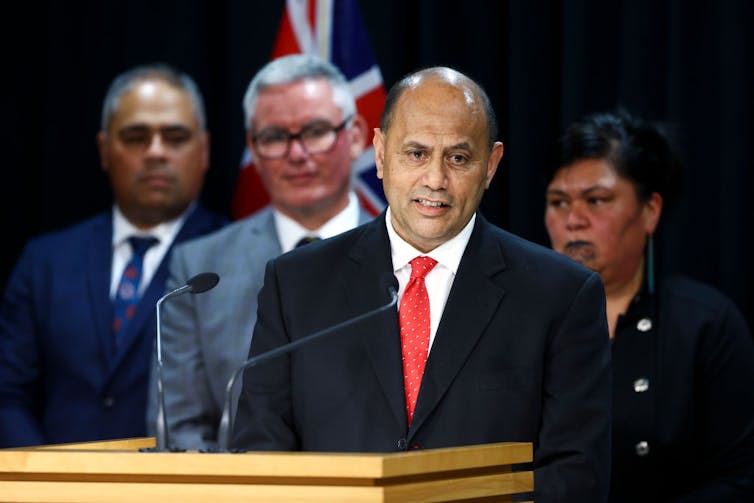
The eventual act of parliament will officially merge Radio New Zealand (RNZ) and Television New Zealand (TVNZ) into a new non-profit, autonomous Crown entity. Supporters, including Broadcasting Minister Willie Jackson, argue the new organisation will help strengthen public media. Others have expressed concerns about the new entity’s likely independence, given its reliance on government funding.
TVNZ chief executive Simon Power echoed those concerns earlier this week. He strongly criticised the bill’s current provisions for statutory and editorial independence:
I am not worried about that kind of influence from this government or the next government. I just think if the legislation is to endure it has to be robust enough to withstand different types of governments over time.
Power is right to warn against complacency about media freedom. While New Zealand still ranks highly in the World Press Freedom Index (11th out of 180 countries), there have been times in the past when governments have manipulated or directly censored local news media to suit their own political agendas.
In the current age of “fake news” and disinformation, we need to be especially vigilant. While there are good aspects to the proposed law, it fails to adequately deal with several pressing contemporary issues.
Broadcasting and Media Minister Willie Jackson says the Aotearoa New Zealand Public Media Bill will strengthen public media. Hagen Hopkins/Getty Images
Trust in government and media
As last year’s Sustaining Aotearoa as a Cohesive Society report highlighted, trust in government and media, and the social cohesion it creates, is a fragile thing. What can take decades to build can fragment if it isn’t nurtured.
According to some global measures, this trust is declining. New Zealand still ranks higher than the OECD average, but distrust is growing here. The Auckland University of Technology’s Journalism, Media and Democracy (JMAD) research centre reports that people’s trust in the news they consume dropped by 10% between 2020 and 2022.
At the same time, the speed and reach of propaganda, misinformation and disinformation have increased dramatically, as witnessed during the COVID pandemic. New Zealand was not immune, as the Disinformation Project has shown. Unreliable and untrustworthy information spread almost as quickly as the virus itself, with an unprecedented spike during the protest at parliament earlier this year.
Finally, journalism continues to be a dangerous profession. Over 1,200 media professionals worldwide were killed for doing their jobs between 2006 and 2020. Online violence against women journalists in particular is on the rise. New Zealand journalists have also found themselves the target of increased levels of animosity.
What the new law needs
Rebuilding trust in the public media starts with firmly enshrining their independence in law. The proposed charter promises the new entity will demonstrate editorial independence, impartiality and balance. This is a good start, but it is only one of ten principles.
This key principle (and ways to measure it) should stand alone in the new law to create a bulwark against any rising fear that governments, either directly or by manipulating budgets and appointments, have undue influence.
The commitment to independence should also be reinforced by ensuring some seats on the proposed entity’s board are reserved for representatives of parliamentary opposition parties. Independent annual review of the entity’s independence and integrity should also be required.
Second, there needs to be a clearer commitment to integrity of information, beyond the existing standards of the news being reliable, accurate, comprehensive, balanced and impartial. Recognising the threat of misinformation and disinformation, and developing ways to counter it, should be a core part of the new entity’s remit. As the bill stands, it is only part of four considerations related to one of several “objectives”.
And thirdly, the law must recognise the independence of journalists and the need to protect them. It’s something of an anomaly that a bill to protect journalists’ sources was put before parliament (although subsequently withdrawn), while journalists themselves don’t enjoy similar protections.
The new public media entity could lead the way in lobbying on behalf of all journalists to ensure those protections, and the tools journalists require to be an effective fourth estate, are consistent with best international practice.
If the law in its final form reflects these fundamental principles, it will go a long way to allaying legitimate concerns about the future independence and integrity of public media in Aotearoa New Zealand.
The authors do not work for, consult, own shares in or receive funding from any company or organisation that would benefit from this article, and have disclosed no relevant affiliations beyond their academic appointment.
Source: The Conversation (Au and NZ) – By Justine Nolan, Professor of Law and Justice and Director of the Australian Human Rights Institute, UNSW Sydney
Mark Schiefelbein/AP
The Chinese regime’s treatment of Uyghurs and other predominantly Muslim groups in the province of Xinjiang may constitute crimes against humanity, says a long-awaited report from the Office of the United Nations High Commissioner for Human Rights.
It describes as “credible” allegations of torture, including rape and sexual violence, discrimination, mass detention, forced labour and widespread surveillance.
Multiple reports over the past five years have documented human rights abuses in the far-western province. These include the arbitrary detention of at least 800,000 people, and possibly millions.
Former detainees have testifed about being forced to work in textile factories, producing goods possibly supplied to foreign companies.
In January 2021 the then US Secretary of State, Mike Pompeo, said he believed the Chinese government was committing genocide in a “systematic attempt to destroy Uyghurs”.
But this latest report, published just minutes before midnight on High Commissioner Michelle Bachelet’s last day in office, comes with the imprimatur of the United Nations.
It is no longer possible for anyone – including the many companies that continue to source products from Xinjiang – to claim plausible deniability.
Xinjiang is China’s largest region. Along with mining resources such as coal, gas, lithium, zinc and lead, it produces about 45% of the world’s polysilicon, a key component in photovoltaic solar panels.
It also produces the vast majority of cotton (84% is a commonly cited number) for China’s textiles and garment manufacturing industry.
A 2018 satellite image shows detention camps built near the Kunshan Industrial Park in China’s Xinjiang region. Planet Labs/AP,
The following month the Chinese government finally acknowledged the existence of what it called “vocational training centres”.
But it justified these as necessary to counter “terrorism” and “extremism”.
The latest UN report leaves no doubt large-scale arbitrary detention has occurred. Attempts to pass off camps as vocational or training centres are simply not credible.
As well the possibility of goods sourced directly from Xinjing being made with slave labour, this new UN report also notes the “labour transfer schemes” that force people from Xinjiang to work elsewhere in China.
These transfers mean goods produced in factories throughout China may be tainted with modern slavery.
A 2020 report by the Australian Strategic Policy Institute identified 83 Chinese and foreign companies that allegedly benefit from the use of Uyghur workers outside Xinjiang.
The list featured Adidas, Amazon, Apple, BMW, Calvin Klein, Dell, Google, H&M, Hisense, Hitachi, Huawei, Lacoste, Mercedes-Benz, Microsoft, Mitsubishi, Nike, Nintendo, Sony, Victoria’s Secret, Volkswagen and Zara.
So where to next?
The UN report calls on the Chinese government to release those who have been arbitrarily detained, and to investigate the allegations of human rights violations. This is like asking a fox to guard the hen house.
What is needed is international action and pressure to force change.
This should also be a catalyst for individual nations to do more to stamp out modern slavery from supply chains, ensuring goods produced with forced labour – in China or elsewhere – cannot be imported.
This is also provides a clear signal for anyone doing business with China (not just Xinjiang) on the need to conduct adequate due diligence to ensure they are not benefiting indirectly from human rights abuses.
This includes technology companies that sell surveillance and security products to China.
Until there is broader access and independent verification of working conditions in Xinjiang, business should now assume that goods connected with this region are tainted with modern slavery.
Justine Nolan does not work for, consult, own shares in or receive funding from any company or organization that would benefit from this article, and has disclosed no relevant affiliations beyond their academic appointment.
Review: Savage River, directed by Jocelyn Moorhouse.
Newly released from prison for a murder she committed in her teens, Miki Anderson (Katherine Langford) has returned to her home town Savage River. She is determined to leave the past behind her, but when another murder occurs just days after Miki returns, the town’s mistrust deepens.
Determined to find out the truth and clear her name, Miki decides to uncover the real killer, unearthing long-hidden secrets along the way.
It might be tempting to assume you know how this story goes, but this new six-part drama from the ABC is not your typical murder mystery.
Savage River explores complex social territory as the town’s class and race tensions emerge as key to the narrative.
Miki is a riveting portrayal of complex, conflicted femininity. Langford is brilliant, bringing a moving combination of toughness and vulnerability to the role, serving up scathing glares and a back-off attitude that belies both Miki’s experience of prison and the way this character remains partially stuck in her teenage identity.
Shiny pink nail polish and sun-drenched memories of bike rides clash against the drab fluorescent dejection of a local pub, and blood pooling on an abattoir floor.
The Australian Gothic
The score (composition by Bryony Marks) creates a haunting, atmospheric quality, and the series works in classic Gothic tropes: a ghostly landscape, an isolated rural setting marked by decay, themes of entrapment and claustrophobia, and an unresolved past intruding on the present.
Australian Gothic has been associated with a colonial gaze that sees horror in the “uncivilised” Australian bush or outback, evocatively rendered in Wake in Fright (1971) and Picnic at Hanging Rock (1975).
This is a contemporary take on Australian Gothic. ABC TV
In the colonial imagination, the Australian landscape has been figured as a source of terror hiding any number of unknown threats to colonisers. In Australian Gothic works, they grapple with alienation, melancholy and isolation, mirroring fears inspired by the colonial experience.
This white, colonial gaze is interrogated rather than replicated in Savage River. While the regional Victorian bush provides an atmospheric setting, the sense of threat and violence centres instead on the town’s abattoir.
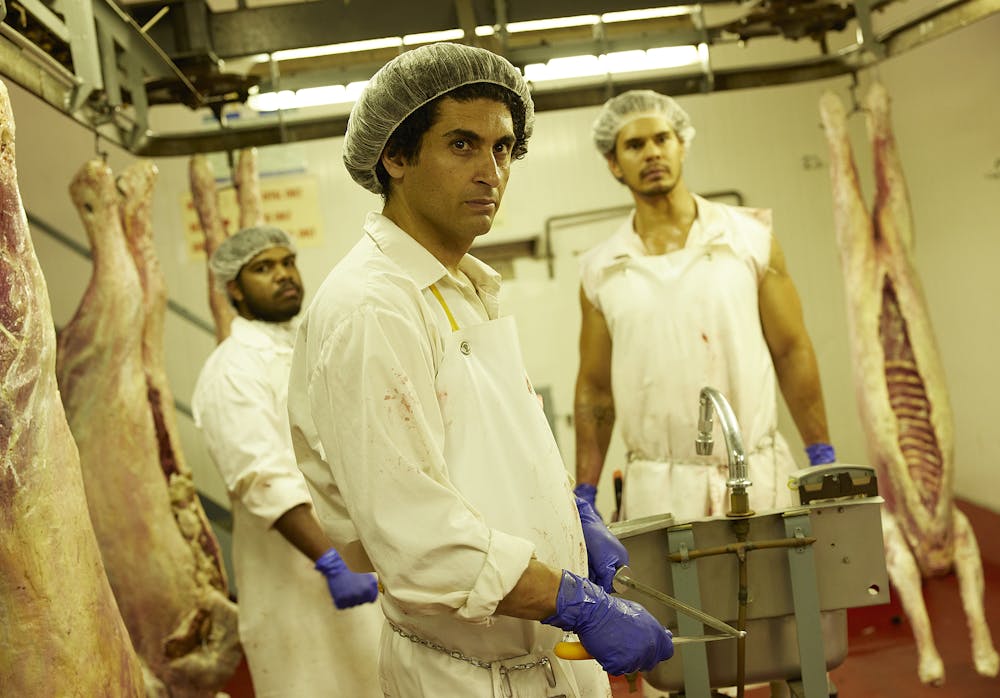
Facing secret financial difficulties, long past its zenith as the economic saviour of the town, the meat works is a site of white patriarchy. It was founded by the ageing mayor’s father, and is owned by the mayor’s son Kevin (Daniel Hensall), keeping the place afloat by exploiting refugees with precarious visa conditions.
When Miki gets a job at the abattoir we see a brutal reality: Savage River is a town built on blood and slaughter, a truth that references the colonial violence at the foundation of modern Australia.
Australian Gothic is not the only genre Savage River plays with. The plot is driven by a murder mystery when, just days after Miki returns home, a white man goes missing and is then found dead.
Parallel to this man’s disappearance, a refugee woman named Laila (Haya Abbas) has been missing for days. As Laila’s sister Jamila (Maia Abbas) tries in vain to get the men around her to take Laila’s disappearance seriously, the show draws attention to the town’s uneven attitudes to the two missing people.
Savage River considers how different lives are valued. ABC TV
In one scene the town’s resident copper and typical “mediocre white man” – Bill Kirby (Robert Grubb), is setting up for the town’s annual celebration.
As Bill sets traffic cones on the grass he is on the phone, reporting the white man missing with a tone of concern in his voice. Jamila approaches him and appeals to him to help her find Laila, who she says is gone, like the man who is missing. Bill is wilfully confused, asking, “Gone where?”.
When Jamila implores him to please look for Laila, Bill gestures around at the preparations with exasperation, and fobs her off saying, “Well I can’t do anything today,” as if his hands are tied.
The town festivities take precedence over Laila’s disappearance.
Attributed to journalist Gwen Ifill, the term “missing white woman syndrome” is used to describe this deeply unequal media coverage and public attention, along racial lines.
Murder mysteries often replicate this syndrome, in blonde screen icons like Laura Palmer in Twin Peaks (1990), as well as more recent adaptations Gone Girl (2014) and The Girl on the Train (2016).
Savage River refuses racist, misogynist and classist tropes. Here, the sense of menace emanates from the town’s patriarchal, capitalist leaders who have made their fortune by slaughtering animals. The apathy and racism of police is problematised, and white, male power is explored as a corrupting influence.
The show has a whole lot of heart, too, with some truly endearing characters. With a ripping plot, the story will sweep you away.
Savage River is on ABC TV and ABC iView from September 4.
Emma Maguire does not work for, consult, own shares in or receive funding from any company or organisation that would benefit from this article, and has disclosed no relevant affiliations beyond their academic appointment.
This article is part of the “Who would win?” series, where wildlife experts dream up hypothetical battles between predators (all in the name of science).
One is the largest animal known to have ever existed. The other is a revered predator at the top of its food chain. But would a blue whale and a great white shark ever find themselves at odds with each other in the wild?
While such observations of sharks attacking whales are few, we know it does occur.
The scars many whales bear throughout their lives resulting from shark attacks are more than sufficient evidence sharks will have a go if an opportunity arises.
Their fight is about survival – a potentially much longed-for next meal for a shark, and the whale’s desperate defence to ensure the next generation’s survival. So, which of these impressive marine giants would win?
White sharks have teeth designed to rip flesh. Marcelo Cidrack/Unsplash, CC BY
A grand banquet
At up to 30 metres long and weighing over 100 tonnes, a blue whale easily outsizes a white shark, which can measure perhaps over 6m and weigh less than a tonne.
But the blue whale didn’t get so big from killing and eating other large animals such as sharks. Rather, they evolved an efficient way of consuming very large amounts of tiny prey: krill.
They lunge through dense patches of thousands, if not millions, of krill, with large, gaping jaws that can open up to around 80 degrees.
The lunge builds enormous water pressure against their mouth, inflating the pleat-like grooved blubber around their mouth cavity to balloon like an accordion’s bellows. With this remarkable device, blue whales can engulf thousands of litres of water in one go.
Instead of teeth, blue whales (along with humpbacks, and many other whale species) have bristle-like baleen, which strain the small organisms from the water when their mouth cavity is compressed. This is how blue whales maximise their energy intake while minimising effort.
A blue whale lunging for krill | National Geographic.
Sharks, on the other hand, are highly specialised apex predators that hunt and capture large animals, such as large fish, seals and sea lions, and sometimes even dolphins.
They are well designed for this, with streamlined bodies designed for ambush-and-chase style hunting. They also have flexible and extensible jaws and sharp teeth designed to grab and rip flesh.
If a shark could successfully capture a large whale, the winnings would be one of a grand banquet. After all, what better meal than the massive source of high energy of the meat and thick, fatty blubber a whale brings!
Indeed, media reports often capture images of sharks lurking around large whale carcasses.
So, have these carcasses resulted from shark predation? Or have these whales died from an otherwise unknown ailment, or human impacts such as fishing gear entanglement?
A white shark taking a bite out of a dead whale. Shutterstock
A formidable defender
Large sharks are not only hunters, but also scavengers. Growing evidence suggests whale carcasses are an important part of the diets of large sharks. In fact, the fat in whale blubber can significantly increase a shark’s metabolism.
With whale meat and blubber an important food for sharks, why might they not also hunt whales while they’re alive? It turns out whales can indeed become a large and highspeed target.
Blue whales’ highly streamlined bodies, however, have evolved to travel as fast as 40 kilometres per hour, for as much as an hour or more. Their speed and endurance make them difficult prey to catch for sharks.
Sharks employ more of a sit and wait strategy to conserve energy, and pursue prey over short, fast bursts of speed of up to at least 11 metres per second.
But the difficulties for a shark in capturing a blue whale don’t end with their limited endurance at high speed. Unless you’re a large shark, say, over several meters long, you simply may not have sufficient power in your jaws to effectively tear off the meat, even if you could keep up with a blue whale.
Some other baleen whales, such as southern right whales that can reach over 16m-long, are less streamlined than blue whales due to their chunkier, but more flexible, bodies. For them, a fight rather than flight defence strategy against predators may be taken.
To defend against killer whales, for example, such whales have been reported to group together and defend themselves with powerful tail, pectoral fin or head blows at their attackers.
Right whales have also been observed taking these strong stances to protect their vulnerable calves. A well-calculated and well-timed tail slap or body slam may be life threatening to a predator.
Orcas attack a blue whale, and the blue whale flees | National Geographic.
But when do the advantages of the predator defence mechanisms that whales have evolved start to wane? The answer is: when the odds are stacked against them.
When a whale is vulnerable – perhaps it’s no older than a few weeks or months, or perhaps it’s unwell or otherwise compromised – it doesn’t have the same speed and defences of a healthy adult whale.
So which species would win?
As true for all things, it is situational. A whale threatened by a white shark could cause damage to its attacker. A blue whale also has the added advantage of high-speed endurance to flee if it prefers.
But if the whale is already vulnerable – such as a worn-out and debilitated whale entangled in fishing nets – then persistent and well-calculated attacks that cause the whale to bleed out can result in the shark winning and whale losing.
There was an interesting case off Massachusetts Bay in the United States in July 2015, when this almost certain destiny was reversed. The brave Marine Animal Entanglement Response team managed to free a severely entangled humpback whale that had sustained injuries from a 5m white shark.
The fact the entanglement made the whale vulnerable leaves food for thought on our own role in putting many whales at greater, unnatural risk of death – including many in endangered populations already struggling under human pressures.
I take this story as testament to the compassionate nature of humanity. But it’s also a sobering reminder of the urgent need for us to transition our current harmful practices to ones that are sustainable.
Chandra Salgado Kent receives funding fromt the National Environmental Science Program and the Australian Research Council for whale research.
In seahorses and pipefish, it is the male that gets pregnant and gives birth. Seahorse fathers incubate their developing embryos in a pouch located on their tail.
The pouch is the equivalent of the uterus of female mammals. It contains a placenta, supporting the growth and development of baby seahorses.
However, when it comes to giving birth, our research shows male seahorses seem to rely on elaborate behaviours and their unique body structure to facilitate labour.
How animals give birth
Labour is a complex biological process that in female pregnant animals is controlled by hormones including oxytocin. In mammals and reptiles, oxytocin induces contractions in the smooth muscles of the uterus.
There are three main types of muscle: smooth muscle, skeletal muscle and cardiac muscle.
Smooth muscle is found in the walls of most internal organs and blood vessels. This muscle type is not under conscious control. For example, your intestines are lined with smooth muscle, which rhythmically contracts to move food through your gut without you having to consciously control it.
A male seahorse with his pouch filled with water in a mating display. Kymberlie R McGuire, CC BY
Skeletal muscle is found throughout your body and attaches to bones via tendons, allowing body movement. This type of muscle is under conscious control. For example, your bicep muscles when contracted allow you to consciously bend your arm.
Cardiac muscle is specific to the heart and is also under involuntary control.
In female mammals the uterine wall contains abundant smooth muscle. Oxytocin stimulates this smooth muscle to contract, helping bring about labour.
These uterine contractions are spontaneous and involuntary. We can measure these uterine contractions in response to oxytocin, and the results are consistent in both mammals and reptiles.
Our genetic data suggested seahorse labour might involve a similar process to labour in female mammals. A study in 1970 also showed that when non-pregnant male seahorses were exposed to the fish version of oxytocin (called isotocin), they expressed labour-like behaviours.
Male seahorses give birth, but they don’t do it the way female animals do. Shutterstock
Therefore, we predicted seahorse males would use oxytocin-family hormones to control the process of giving birth via contracting smooth muscles inside the brood pouch.
What we found
First, we exposed pieces of seahorse pouch to isotocin. While isotocin caused our control tissues (intestine) to contract, surprisingly this hormone produced no contractions in the brood pouch.
The result led us to wonder about the anatomy of the pouch. When we examined the pouch under a microscope, we found it contains only scattered small bundles of smooth muscle, far less than the uterus of female mammals. This explained why the pouch did not contract in our experiments.
In the human uterus (left), the entire outer layer is comprised of smooth muscle. The seahorse pouch (right) only has small smooth muscle bundles scattered throughout the outer layers of the pouch. Jessica Suzanne Dudley / VWR, Author provided
Using 3D imaging techniques combined with microscopy, we then compared the body structure of male and female pot-bellied seahorses.
In males, we found three bones positioned near the pouch opening, associated with large skeletal muscles. These types of bones and muscles control the anal fin in other fish species. In seahorses, the anal fin is miniscule and has little or no function in swimming.
So, the large muscles associated with the tiny seahorse fin are surprising. The anal fin muscles and bones are much larger in male seahorses than in female seahorses, and their orientation suggests they could control the opening of the pouch.
The skeleton of the male seahorse appears to be adapted for giving birth. Jessica Suzanne Dudley, Author provided
Seahorse courtship behaviour provides a clue
Seahorse courtship is an elaborate process. Males open and fill their pouch with water by bending forward and contracting their bodies to force water into the pouch, before “dancing” with the female.
Similarly, during labour, male seahorses bend their body towards the tail, pressing and then relaxing. This “pressing” behaviour is accompanied by brief gaping of the pouch opening, with a series of whole-body jerks. This movement combined with pouch opening allows seawater to flush through the pouch.
Jerking and pressing continues, the pouch opening gets gradually bigger, and groups of seahorse babies are ejected with each movement. Many hundreds of babies are ejected in a short time.
A seahorse father undergoing labour.
Our findings suggest the opening of the pouch for courtship and birth is facilitated by contractions of the large skeletal muscles located near the pouch opening. We propose that these muscles control the opening of the seahorse pouch, allowing seahorse fathers to consciously control the expulsion of their young at the end of pregnancy.
Future biomechanical and electrophysiological studies are needed to examine the force required to contract these muscles and test whether they do control the opening of the pouch.
Our unexpected results suggest male seahorses use different mechanisms to give birth compared to female pregnant animals.
We speculate that oxytocin-family hormones, instead of primarily producing smooth muscle contractions, trigger the cascade of seahorse behaviours that lead to birth.
Despite the similarities that male seahorses share with female mammals and reptiles during pregnancy, it seems seahorse fathers have a unique way of giving birth to their young.
The authors do not work for, consult, own shares in or receive funding from any company or organisation that would benefit from this article, and have disclosed no relevant affiliations beyond their academic appointment.
Soon after a baby is born, it’s getting more common these days for the father or non-birthing parent to be encouraged to put the newborn directly on their chest. This skin-to-skin contact is often termed “kangaroo care”, as it mimics the way kangaroos provide warmth and security to babies.
Mothers have been encouraged to give kangaroo care for decades now and many do so instinctively after giving birth; it has been shown to help mum and baby connect and with breastfeeding.
So what does the evidence say about kangaroo care for other parents?
A growing body of research
A growing body of research shows kangaroo care brings benefits for both baby and parent.
One study that measured cortisol (a stress hormone) levels and blood pressure in new fathers found:
Fathers who held their baby in skin-to-skin contact for the first time showed a significant reduction in physiological stress responses.
Another study in Taiwan involving fathers and neonates (newborn babies) found benefits to bonding and attachment:
These study results confirm the positive effects of skin-to-skin contact interventions on the infant care behaviour of fathers in terms of exploring, talking, touching, and caring and on the enhancing of the father-neonate attachment.
A paper I co-authored with the University of South Australia’s Qiuxia Dong found:
Studies reported several positive kangaroo care benefits for fathers such as reduced stress, promotion of paternal role and enhanced father–infant bond.
Qiuxia Dong also led a study (on which I was a co-author) exploring the experiences of fathers who had a baby in the Neonatal Intensive Care Unit at Women’s and Children’s Hospital in Adelaide.
This study found kangaroo care helps fathers connect and bond with their baby in an intensive care environment. This had a positive impact on fathers’ confidence and self-esteem. As one father told us:
I think after all the stress, when I have skin-to-skin I can actually calm down a little bit. I sit down and relax, I can cuddle my child and it’s just a little bit of a happy place for me as well as him to calm down, not to do any work all the time, not to be stressed out. There’s other things on my mind all the time but it’s time to relax and turn off a little bit.
Another told us:
She nuzzled around a bit, kind of got my smell I guess and then literally fell asleep. It was great. It was very comforting for both I guess for her and myself.
As one father put it:
Of course, they can hear your heartbeat and all that kind of stuff, of course warmth […] it’s being close with your baby, I think that would be the best way of building a relationship early.
However, this study also reported that some dads found giving kangaroo care challenging as it can be time-consuming. It is not always easy to juggle with commitments such as caring for other children and work.
Involving both parents
One study noted dads can sometimes feel like a bystander on the periphery when a newborn arrives.
Encouraging and educating all non-birthing parents, including fathers, to give kangaroo care is a valuable way to get them involved. And if a caesarean birth makes it difficult for the mother to give kangaroo care while still in theatre, the father or non-birthing parent is the next best person to do it while the mother or birthing parent is not able.
A caesarean birth sometimes makes it difficult for the mother to give kangaroo care while still in the theatre. Isaac Hermar/Pexels, CC BY
More research needed
There is a need for broader research on these issues, especially around the experiences of fathers from culturally diverse backgrounds and other non-birthing parents.
But the research literature on kangaroo care shows there is good reason for dads and non-birthing parents to do some kangaroo care when a baby is born. As we concluded in our study, in the challenging neonatal intensive care unit environment, kangaroo care can serve:
as a silent language of love.
Mary Steen does not work for, consult, own shares in or receive funding from any company or organisation that would benefit from this article, and has disclosed no relevant affiliations beyond their academic appointment.
This week, the Australian Energy Market Operator warned gaps in electricity supply are likely within three years.
The reason? Coal plants are quitting the market earlier than expected, as well as becoming less reliable. Russia’s invasion of Ukraine drove coal, gas, petrol and diesel prices to painful highs. Domestic energy bills are soaring too, due in large part to ballooning gas prices. At one stage, outages and fuel shortages at coal and gas plants, coupled with low solar and wind output, very nearly cut power to a third of all east coast customers.
But the good news is there’s a clean energy gold rush under way, now we have a legislated emissions target and strong engagement between state and federal energy ministers. Investors are moving with increased confidence, accelerating their investments in clean energy generation and storage.
Even so, there’s a big task ahead to reach the goal of 82% renewables by 2030. We’ll need rapid deployment – not only to meet grid demand, but also new demand from the move to “electrify everything” in our homes and on our roads.
So what changes can you expect to see?
Solar panels and wind farms will pop up in many more places
The first thing you’re likely to notice is the rapid construction of new clean energy projects.
Over the past year, many of our coal power stations have become less reliable due to old age, heat stress and lack of fuel. There’s going to be a rush to the exit for coal. What’s the point of operators spending money propping up power stations at the end of their service life?
As a result, five coal plants are now expected to shut by the end of the decade – significantly more than anticipated.
What will replace them? Solar and wind farms, as these are the cheapest forms of new generation, supported by energy storage in batteries and pumped hydro.
The market operator conservatively expects 7.3 gigawatts of new generation to be built by the end of 2026-27, with half this again (3.4GW) “anticipated” to be built, meaning AEMO has a good degree of confidence these renewables will be built.
Even so, this is only a tiny fraction of the estimated 45GW of renewable opportunities in Australia readily available to investors and clean energy developers. We’ll need to build all 45GW – and then at least 5GW more – to hit our renewable target of 82%.
Unlike thermal power stations, solar and wind farms are made of simple building blocks that are quicker to scale in manufacturing and deployment.
In particular, you can expect to see solar and wind farms popping up in renewable energy zones like New England and the central west of New South Wales. These zones are designed to share the costs of new grid construction amongst a concentration of clean energy generation in areas with good sun and wind resources.
Batteries to store and transmission lines to move electricity
Further major infrastructure investments will be made into energy storage and transmission lines.
Much of this investment is occurring in coal country, like Victoria’s Gippsland and the Hunter Valley in NSW. Here, companies are vying to place grid-scale batteries at old coal stations. Why? To take advantage of the existing strong connections to the grid.
While our existing transmission infrastructure will host many new renewable power stations and batteries, new transmission lines will need to be built. Especially between states, like EnergyConnect between NSW and South Australia, as well as new grid extensions to connect renewable energy zones to major cities.
In addition to the infrastructure placed in the grid, there will be a new focus on unlocking the value of flexibility in energy demand to better match the variability of when solar and wind plants generate electricity.
Storage is one source of flexibility. Timing our own electricity use is another.
Flexible energy use is far less resource intensive than new infrastructure and offers the greatest benefit to system reliability. But it relies on human behaviour and our willingness to change established habits.
Expect to see strong price incentives for you to use electricity when it’s abundant. The sunniest hours are already the cheapest time to use power in most of Australia – and this will only get cheaper.
Not only that, but you will likely see grid incentives at times of peak demand. Picture notifications offering you a financial incentive to turn off energy-hungry appliances such as electric vehicle chargers, home batteries and heaters use at particular times – and for these functions to be offered through automation.
This focus on the demand-side of electricity use is already well understood by energy-hungry industries. Last year, for the first time, this demand response was enabled for home users as well.
What can you to do prepare?
The long-overdue energy transformation will affect everyone, in how we use energy at home as well as the infrastructure in our communities.
This transition depends on us all for support and direction. Projects will need social licence – support by local communities – political backing, and, in some cases, personal investment in technology and services.
Investments of time will be particularly important if we want to save billions of dollars and millions of tonnes of critical materials through making demand-side flexibility a reality.
So be ready to see change, and to take part in it. While change can be daunting, the energy transition is really about embracing flexible new paths to the same goal, as my children’s book on the energy transition shows. And the benefits are huge: abundant, cheap power, generated locally and in flourishing regions.
Bjorn Sturmberg has received funding from the State and Federal governments, including from the Australian Renewable Energy Agency, for work related to solar, batteries, microgrids, and electric vehicles. He is the author of the illustrated children’s book, Amy’s Balancing Act.
The mission is an exciting step towards returning humans to the Moon for the first time since 1972. But this time it’s not just about putting our footprints on lunar dust: it marks the beginning of a new space race for lunar resources. This time around, everybody wants to mine the Moon.
Return to the Moon
Much about the Artemis program is noble and inspiring.
Artemis I is the program’s first mission, and it will carry out a 42-day uncrewed test flight to orbit the Moon and return to Earth. The trip will use a new launch vehicle, the Space Launch System (SLS), which is the most powerful rocket currently operational in the world.
On board will be three mannequins made of materials replicating male and female biology. NASA will use the mannequins to test the comfort and safety of the launch vehicle and spaceflight capsule for humans.
There are also many other experiments on board, and a series of small satellites will be launched to provide data when the capsule nears the Moon.
The lessons from this mission will be applied to Artemis II, the mission planned for 2024 that will see the first woman and the first person of colour reach the Moon.
A new space race?
However, humanity’s return to the Moon is not all about exploration and the pursuit of knowledge. Just as the 1960s space race was driven by Cold War geopolitics, today’s space programs are underpinned by today’s geopolitics.
Artemis is led by the US, with participation by the European Space Agency and many other friendly nations including Australia.
China and Russia are collaborating on their own Moon program. They plan to land humans in 2026 and construct a Moon base by 2035.
All of these programs are aiming to do more than simply land astronauts for brief visits to the Moon. The longer-term goal of the race is to acquire lunar resources.
Resources on the Moon
Water ice has been found in the southern regions of the Moon, and it is hoped certain gases that can be used for fuels can also be mined.
These resources could be used to support long-term human habitation on and near the Moon in lunar bases, as well as permanent space stations orbiting the Moon, such as NASA’s planned Gateway.
The Australian Space Agency is supporting Australian industry to be part of the Artemis program and America’s planned later voyages to Mars. Australian scientists are also developing lunar rovers to assist lunar mining efforts.
Eventually, what we learn on the Moon will be used to advance to Mars. But, in the near term, the countries and associated commercial entities that get to the best mining sites first will dominate an emerging lunar economy and lunar politics.
What are the rules?
In the next five years or so we can expect to see enormous political tensions rising around this new race to the Moon.
One question that is yet to be answered: what laws will govern activities on the Moon?
The United Nations has a working group that aims to develop a multilateral consensus on legal aspects of space resource activities.
However, in 2020 the US got out in front of the UN process by establishing the Artemis Accords, which state that resource extraction will occur and is lawful. Twenty-one countries, including Australia, have signed these accords with the US, but they are far from universally accepted.
Another relevant treaty is the 1979 Moon Agreement, signed by 18 countries including Australia. This agreement states that no entity can own any part of the Moon, and obliges us to establish a regulatory regime for lunar mining “at such a time as the technology is about to become feasible”.
Australia is therefore between a lunar rock and a hard place as to what role we will play in developing these new laws. But international law-making and consensus-building are slow: most likely actual practice will be established in the next few years, and decisions on how to govern it will come after the fact.
Technical and political challenges
There is some poetic perfection in NASA having chosen the name “Artemis” for this new lunar endeavour. Artemis is the Greek goddess of the Moon, and the twin sister of Apollo (the namesake of NASA’s 1960s Moon spaceflight program).
Even if ownership of the Moon cannot be claimed, we will see competition over whether parts of it can be mined. No doubt scientists and engineers will resolve the technical challenges of the return to the Moon. Resolving the legal and political challenges may prove more difficult.
Cassandra Steer receives funding from Geoscience Australia and the Department of Defence. In the past she has received funding from DFAT, and from the Canadian and US Departments of Defence. She is affiliated with the Space Industry Association of Australia, and is the co-founder of the Australian Centre for Space Governance.
Preparing meals in bulk and reheating is a great way to save time in the kitchen and can also help to reduce food waste. You might have heard the myth that you can only reheat food once before it becomes unsafe to eat.
The origins of food myths are often obscure but some become embedded in our culture and scientists feel compelled to study them, like the “five second rule” or “double-dipping”.
The good news is that by following some simple steps when preparing and storing foods, it is possible to safely reheat foods more than once.
Why can food make us sick?
There are many ways bacteria and viruses can end up in foods. They may occur naturally in environments where food is harvested or contaminate foods during processing or by food handlers.
Viruses won’t grow in foods and will be destroyed by cooking (or proper reheating). On the other hand, bacteria can grow in food. Not all bacteria make us sick. Some are even beneficial, such as probiotics in yoghurt or starter cultures used to make fermented foods.
However, some bacteria are not desirable in foods. These include bacteria which reproduce and cause physical changes making food unpalatable (or spoiled), and pathogens, which cause illness.
Some pathogens grow in our gut and cause symptoms of gastroenteritis, while others produce toxins (poisons) which cause us to become sick. Some bacteria even produce special structures, called endospores, which survive for a long time – even years – until they encounter favourable conditions which allow them to grow and produce toxins.
While cooking and reheating will generally kill pathogenic bacteria in foods, they may not destroy toxins or endospores. When it comes to reheating foods, toxins pose the greatest risk of illness.
The risk increases in foods which have been poorly handled or cooled too slowly after initial cooking or reheating, since these conditions may allow toxin-producing bacteria to grow and proliferate.
The food ‘danger zone’ is between five and 60 degrees. ella olsson/unsplash, CC BY
Bacteria that cause foodborne illness typically grow at temperatures between 5°C and 60°C (the “temperature danger zone”), with fastest growth occurring at around 37°C.
Foods that are best able to support the growth of these bacteria are deemed “potentially hazardous” and include foods or dishes containing meat, dairy, seafood, cooked rice or pasta, eggs or other protein-rich ingredients.
A common culprit of food poisoning linked to reheated foods is Staphylococcus aureus which many people carry in their nose or throat. It produces a heat-stable toxin which causes vomiting and diarrhoea when ingested.
Food handlers can transfer these bacteria from their hands to foods after cooking or reheating. If the contaminated food is kept within the temperature danger zone for an extended period, Staphylococcus aureus will grow and produce toxins. Subsequent reheating will destroy the bacteria but not the toxins.
To limit the growth of bacteria, potentially hazardous foods should be kept outside of the temperature danger zone as much as possible. This means keeping cold foods cold (less than 5°C) and hot foods hot (above 60°C). It also means after cooking, potentially hazardous foods should be cooled to less than 5°C as quickly as possible. This also applies to reheated foods you want to save for later.
When cooling foods, Food Standards Australia New Zealand recommends the temperature should fall from 60°C to 21°C in less than two hours and be reduced to 5°C or colder in the next four hours.
In practice, this means transferring hot foods to shallow containers to cool to room temperature, and then transferring the covered containers to the fridge to continue cooling. It’s not a good idea to put hot foods straight into the fridge. This can cause the fridge temperature to increase above 5°C which may affect the safety of other foods inside.
If food has been hygienically prepared, cooled quickly after cooking (or reheating) and stored cold, reheating more than once should not increase the risk of illness. However, prolonged storage and repeated reheating will affect the taste, texture, and sometimes the nutritional quality of foods.
If food has been hygienically prepared, cooled quickly, and stored cold, reheating more than once should not increase the risk of illness. ello/unsplash, CC BY
When it comes to safely reheating (and re-reheating) foods, there are a few things to consider:
always practice good hygiene when preparing foods
after cooking, cool foods on the bench either in small portions or in shallow containers (increased surface area reduces cooling time) and put in the fridge within two hours. Food should be cold (less than 5°C) within the next four hours
try to reheat only the portion you intend to immediately consume and make sure it is piping hot throughout (or invest in a thermometer to ensure the internal temperature reaches 75°C)
if you don’t consume reheated food immediately, avoid handling it and return it to the fridge within two hours
err on the side of caution if reheating food for vulnerable people including children, elderly, pregnant or immunocompromised people. If in doubt, throw it out.
With the ever-increasing cost of food, buying in bulk, preparing meals in large quantities and storing unused portions is convenient and practical. Following a few simple common sense rules will keep stored food safe and minimise food waste.
Enzo Palombo receives funding from the Fight Food Waste CRC.
Sarah McLean does not work for, consult, own shares in or receive funding from any company or organization that would benefit from this article, and has disclosed no relevant affiliations beyond their academic appointment.
As of 2021, the previous federal government cut nursing student contributions by 40% to just under A$4,000 a year. The Victorian government is going a step further, temporarily covering tuition costs for nursing and midwifery undergraduate degrees. As Premier Daniel Andrews describes the move, it is part of “building an army of homegrown health workers to care for Victorians”.
Neither policy is likely to have much impact on the numbers of students who start nursing courses. But if redesigned as a cash payment, the Victorian policy would make it easier for nursing students to complete their courses.
The Victorian government policy on nursing and midwifery courses
The Victorian government policy will apply to students beginning undergraduate nursing and midwifery courses in 2023 and 2024.
These students will still have to pay, or defer under the HELP loan scheme, some student contributions while they study. The Victorian government will pay $9,000 while the student is enrolled, $3,000 less than the $12,000 total course cost for a three year nursing degree.
Nursing and midwifery graduates who work in the Victorian public health sector for two years after finishing their course will receive an additional $7,500. This could clear their remaining HELP debt.
Thanks to the HELP loan scheme, tuition fees are not a major obstacle to domestic students signing up to higher education.
HELP repayments should be considered in educational decision-making, but in the context of the financial benefits of a degree. It is important to note HELP loans are only repaid on annual earnings above $48,361.
Victorian Premier Daniel Andrews (centre) announced the’free’ nursing studies policy ahead of a state election in November. David Crosling/AAP
Using Census 2016 data, the Grattan Institute calculated a female nursing graduate with mid-range income earned about $650,000 more over her career, after tax, than a woman who finished her education at Year 12.
While other careers are more lucrative than nursing, reducing nursing student contributions to zero cannot make a significant financial difference to the choice between nursing and other courses. It will save nursing graduates about $12,000 – equivalent to two or three months difference in the length of a working life – not the difference in lifetime earnings between occupations.
Living expenses
Although student contributions can be deferred with a HELP loan, most students fund their own living expenses. Student income support payments are low and, apart from a COVID-related spike, the number of students receiving them has trended down.
To finance themselves while studying, most full-time tertiary students – about 70% in recent months – have paid jobs. According to the higher education Student Experience Survey released last week, 37% of students say paid work interferes with their studies.
For nursing students, clinical training requirements create additional living expense issues. They must undertake at least 800 hours of supervised activity in a hospital or another clinical setting.
Clinical training may take place at a location far from the student’s home. Nursing students have often reported this as an issue, as they may not be able to do their normal paid work and they incur additional travel costs.
Scholarships paid in cash would help most
The Victorian government announcement refers directly to tuition costs. But some of it will be paid in cash, as the total value is $16,500 for students who complete their nursing degrees and then spend two years working in the Victorian public sector.
This exceeds the cost of a three-year nursing degree by several thousand dollars.
Either way, a nursing graduate who meets all the program conditions will be $16,500 better off. The timing of this financial benefit is the only difference between paying student contributions and giving the student cash.
If the student has all or most of their student contributions paid while studying the cash benefit comes after graduation in early career, through reduced HELP repayments. This benefits them when their annual income already exceeds $48,361.
If the student is paid while studying, it delivers cash when their income is much lower. Nursing and midwifery students could use their cash scholarship to help manage the cost of clinical training. It could also reduce the number of students who drop out because they cannot afford to keep studying, or who study part-time to fit in with paid work, delaying course completion and the start of their nursing career.
Can the Victorian scheme increase nursing commencements?
If paid in cash, the Victorian nursing and midwifery financial assistance could improve course completion times and rates. But it won’t increase the number of people commencing nursing and midwifery courses.
Demand for nursing courses already exceeds the supply of student places. Universities face two constraints on increasing the number of nursing students – limited capacity for clinical training and the total funding per student they receive, including both Commonwealth and student contributions.
Treasurer Jim Chalmers speaks to a nursing teacher Hazel Rands and student Bethany Gordon at Griffith University in July. Jono Searle/AAP
Ensuring all students can complete the clinical training component of their course is a major practical issue for nursing faculties. In response to the Victorian government announcement, the head of nursing at the Australian Catholic University said they could take another 100 students at their Ballarat campus if professional experience placements were available.
Nursing schools are looking for ways to expand, but for a stretched health system, taking on more students creates additional work before it leads to additional workers.
Another problem for universities is that as part of its Job-ready Graduates policy, the Morrison government cut total funding per nursing student place by 8%.
The new funding rate was based on estimated average teaching and scholarship costs of nursing, but created problems for universities with above-average costs and reduced financial incentives for all universities to enrol more nursing students. The current government is reviewing Job-ready Graduates, but no quick financial fix is likely.
Solving the right problems
For high-profile occupations like nursing, student demand usually mirrors the labour market. COVID-19 increased the need for nurses and demand for nursing courses spiked.
For the higher education system to meet workforce needs, the issues are more often the supply of student places than the demand for them, and course completions rather than commencements.
More clinical placement capacity and scholarships aimed at living expenses should be favoured over cutting student course costs.
Andrew Norton does not work for, consult, own shares in or receive funding from any company or organization that would benefit from this article, and has disclosed no relevant affiliations beyond their academic appointment.
The final, mega stage of the Coalition’s tax cuts, worth more than $240 billion over a decade, are now in the gun sights of many critics, who are calling for Anthony Albanese to dump his promise to deliver them.
This week Greens leader Adam Bandt, releasing an analysis of the distributional impacts prepared by the independent Parliamentary Budget Office, said the tax cuts “cost a fortune, and the wealthiest 20% get close to 80% of the money”.
Bandt said they would “turbocharge inequality” and widen the gender pay gap. The benefit for women is half that for men, because women earn less. Over the decade men would get $160.6 billion, while women would get $82.9 billion.
Independent senator David Pocock, from the ACT, on whose vote Labor is expected often to rely when there is contested legislation, said “things have changed a lot since these [tax cuts] were legislated”, and suggested better ways some or all the money could be used.
But Albanese, answering questions on Labor’s 100 days anniversary on Monday, reaffirmed he had no plans to try to un-legislate the tax cuts – although some commentators felt he was leaving a smidgeon of wriggle room.
The cuts were announced in Scott Morrison’s final budget as treasurer in 2018, and tweaked in 2019, with Stage 3 commencing in mid-2024. The part of Stage 3 that benefits most taxpayers cuts the rate that applies to incomes over $45,000 from 32.5 cents in the dollar to 30 cents. The bigger part extends that 30 cent rate all the way up to $200,000, abolishing an entire rung of the tax ladder.
For high earners, the part of their income that was taxed at 37 cents will be taxed at 30, as will income above $180,000 that was taxed at 45 cents. The 45 cent threshold will cut in above $200,000.
The argument about the cuts is a mishmash of economics and politics. It’s been so since the start, although circumstances have deepened the dilemmas surrounding them.
Labor voted for Stage 3, using as justification that it was part of a package containing relief in earlier years for those on lower incomes, but also for political reasons. The decision was in line with Labor small target strategy. This was underlined by the fact the then-opposition didn’t propose to repeal the cuts or make changes if it won the election. Indeed, quite the opposite.
Although these cuts, legislated before COVID, had many critics at the time, the case against them increased with the budgetary hit imposed by the pandemic. That transformed the landscape.
Independent economist Saul Eslake says: “From the standpoint of economic management, the main argument for abandoning or deferring [them] is that the medium-term budget outlook is now very different from when those tax cuts were proposed and legislated.
“At that time, the budget was projected to be in surplus throughout the 2020s, and net debt reduced to zero by the end of the decade. Now, deficits are projected to continue as far as the eye can see, and net debt to continue growing in dollar terms into the early 2030s.
“It’s understandable that the government feels bound to honour the pledges it made But that would seem to make inevitable that, sooner or later, the government will need to look for other means of raising additional revenues in order both to meet the electorate’s expectations for higher spending in disability, aged and health care, and to put the budget on a more sustainable medium-term path,” Eslake says.
Ditching the tax cuts on the grounds of changed circumstances would have two clear Labor precedents.
Bob Hawke promised tax cuts before the 1983 election. Then, on the basis of discovering an unannounced $9.6 billion deficit when he reached office, the promise was quickly buried.
Years later the Labor government, then under PM Keating. legislated tax relief before the 1993 election. It boasted the cuts were L.A.W. Post election, the second round of these was scrapped.
Hawke, riding a tide of honeymoon popularity and making a convincing case, wasn’t damaged by his broken promise – which was just that, a promise, not something set in law. Keating, who had just enjoyed one of those miracle election wins but was at the fag end of Labor’s term, suffered serious harm.
Since the Hawke and Keating days, voters have become more distrustful of politicians and the political danger in breaking undertakings has increased.
If Albanese wanted to repeal or change the tax cuts, he would have the Senate numbers to do so, with the Greens and Pocock. But trashing an election pledge would have major implications for his credibility.
At the 2025 election, opponents would have the argument that Albanese’s word could not be trusted. With his eye already on a second term, he has to think of the long game.
Treasurer Jim Chalmers made two defences of the tax cuts this week. He challenged the argument they were just for the rich. And he maintained that scrapping them would not address current budgetary problems.
“It’s important to remember that these tax cuts kick in at $45,000. For a lot of Australians with quite modest incomes, they will be getting an additional tax cuts in stage three – we shouldn’t lightly dismiss that,” Chalmers said.
(The benefit accruing to a taxpayer earning between $45,000 and $60,000 is small, no more than $375 a year, which is much less than the recently-abolished tax offset of up to $1,500 – meaning that, taken together, the changes will leave some low to middle earners worse off.)
Chalmers also made the point that “even if a government were to tweak those Stage 3 tax cuts, they don’t come in for another couple of years.
“So they have absolutely no bearing on some of these challenges that we’re dealing with right now.”
Of course the fact the tax cuts don’t start until mid-2024 of itself gives the government latitude to change its position, and allows for sustained lobbying.
In today’s uncertain conditions, that’s an eternity in policy terms.
But the passage of time also imposes constraint. The closer a government gets to an election, the harder it becomes to take risky decisions. Especially decisions that go to the question of trust.
Michelle Grattan does not work for, consult, own shares in or receive funding from any company or organisation that would benefit from this article, and has disclosed no relevant affiliations beyond their academic appointment.
This is an edited extract from Ross Garnaut’s address to the jobs summit on Thursday night. Read other articles in The Conversation’s series about the summit here.
I grew up in the 1940s, in a world of full employment. Workers could leave jobs that didn’t suit them and quickly find others – often moving from lower to higher productivity activities.
Employers put large efforts into training and retaining workers. Labour income was secure and could support a loan to buy a house. Labour was scarce and valuable and not to be wasted on unproductive tasks.
Businesses that could not afford rising wages closed and released their workers into more productive employment. Steadily rising real wages encouraged economisation on labour, which lifted productivity.
The 1945 full-employment white paper discussed risks of inflation, yet the average unemployment rate went lower – to below 2% for two decades – without the high or accelerating inflation the authors had in mind.
Employment keeps people employable
As observed recently in The Conversation, low unemployment creates opportunities for people who long unemployment has made unattractive. Employment makes them employable.
Full employment encourages women who had spent long periods out of the labour force, the infirm and old, the poorly educated, and those with little established engagement with the wage economy.
It is hard work for employers. Many employers prefer unemployment, with easy recruitment at lower wages. Yet full employment has advantages for employers.
Full employment brings larger and more stable demand for the products of businesses selling into Australia. And for employers who identify as Australians, it brings enjoyment of a more cohesive and successful society.
We can take unemployment lower
How low can unemployment go without accelerating inflation? During the decade leading up to COVID, our authorities acted as if the lower limit was 5% or more.
In my book Reset: Restoring Australia After the Pandemic Recession, I said it was possible Australian unemployment could fall to 3.5% without generating accelerating inflation – the pre-pandemic rate in the United States.
The absolute lowest unemployment can fall without accelerating inflation might be lower, or higher. There is no need to guess. We will know when it has fallen to the point that labour market pressures cause inflation to accelerate.
Why aren’t real wages rising? There is no conundrum. It is because we do not yet have full employment. The Reserve Bank abandoned its pursuit of full employment before we knew how low the unemployment rate could go without becoming the source of accelerating inflation.
A wage-price spiral is unlikely
Will we see larger nominal wage increases if global energy and other prices continue to rise strongly? Probably. Would that tell us we have achieved full employment? Probably not. If wages rise more rapidly, but more slowly than average prices, they are not a source of accelerating inflation.
The spectre of a virulent wage-price spiral comes from our memories, and not current conditions.
If immigration increases whenever labour becomes scarce, real wages will not rise however much productivity increases.
Yet immigration can help. It is much more likely to raise, rather than lower, average real wages the more if it is focused on people with genuinely scarce and valuable skills that are bottlenecks to valuable Australian production, and which cannot be provided by training Australians.
Immigration can hurt, and help
Which immigrants are scarce and valuable? In Reset, I suggested a test: admitting skilled migrants only when they earn wages higher than the Australian average.
Ignoring the links between migration and wages can have unwelcome consequences.
Around the time our prime minister was in Fiji talking about recruiting nurses, Western Australia’s premier was trying to recruit nurses in Ireland.
The premier sought a meeting with the Irish minister for health – unsuccessfully, because the minister was in Perth recruiting nurses.
Low wages made Australia a promising recruiting ground. Australian nurses would be great for Ireland. But replacing Australians with Fijian nurses may not be best for Australia or Fiji.
The mix of employment matters
It matters how we get the jobs that take us to full employment. Increased employment comes from both domestic and trade-exposed industries.
Employment in domestic industries is expanded by higher government expenditure, lower taxes and lower interest rates. Employment in exporting or import-competing industries is driven by competitiveness — by currency exchange rates, and Australian productivity and wages relative to overseas.
Too much domestic demand and too little export growth can lead to full employment with unsustainable levels of debt. Strong growth in export industries depends on access to international markets for goods and services, as well as on competitiveness.
Australia’s advantages in a zero-carbon world
Here we face barriers from the breakdown of the global trading system and our relationship with our biggest trading partner, China, and the coming climate change-induced decline of coal and gas.
Fortunately, we have advantages:
the best combinations of solar and wind resources in the developed world, which with good policy and management can give us the lowest energy costs in the post-carbon world
an abundance of the critical minerals required globally to build the machines and infrastructure of the zero-carbon world
the largest endowments per person of land suitable and available for sustainable production of biomass as a zero-carbon industrial input and for sequestering carbon in plants and soils
human skills and infrastructure from the established mining, minerals processing, forestry and agricultural industries, which have a high value in zero emissions industries and processes.
Australian industry gets little competitive advantage from Australia being richly endowed with gas and coal. With the exception of Western Australian gas, these resources are made available to domestic industry at close to international prices.
Our low-cost renewable energy is different. Transport costs mean Australia’s renewable electricity and green hydrogen will be at least twice as expensive in the countries that import them as in Australia. It will make sense to use Australian electricity and hydrogen to process resources here.
Productivity growth needn’t always come from improvements in individual industries and firms. It can come from stronger specialisation in activities in which Australia has a natural advantage: putting a higher proportion of our labour and capital into activities where we have exceptional strengths.
A long period of steady expansion of the zero-carbon industries will see costs falling and Australia’s comparative advantage strengthening. The restructuring of the economy to focus more strongly on these can be the source of sustained productivity, wages and employment growth.
Ross Garnaut is aDirector of ZEN Energy which is a retailer of zero emissions electricity and hydrogen. He is Emeritus Professor in Business and Economics at The University of Melbourne and Emeritus Professor of Economics at The Australian National University.
Source: The Conversation (Au and NZ) – By John Buchanan, Professor, Discipline of Business Information Systems, University of Sydney Business School, University of Sydney
Shutterstock
This article is part of The Conversation’s series looking at Labor’s jobs summit. Read the other articles in the series here.
Australia has more qualified teachers and nurses than at any point in its history. There is no “shortage” of these skills.
The problem is that within five years of gaining their qualification, as many as one in four nurses and a similar proportion of teachers have decided to do something else.
The dropout rate is intensifying. Between 2016 and 2021 the proportion of nurses registered but not working in the profession rose by 63% nationally. In Victoria it was 85%.
Employers desperate for skilled staff in particular want immediate fixes. Many see the problem as lack of supply, because they cannot find the workers they want at the prices they want to pay.
But what if the problem is the nature of what employers are demanding? What if their preoccupations with maximising short-term commercial gains is the root cause of the problem?
Developing “mental wealth” is just as important as material and commercial growth. Without this, solutions such as importing more workers or increasing course numbers are like pouring water into a leaking bucket.
What is mental wealth?
Mental wealth is a relatively new term to express the social and economic value of mental health. It has two dimensions: mental capital and mental wellbeing.
Mental capital is the stock of cognitive and emotional capabilities – things like the ability to reason clearly and successful social functioning. Unlike physical capital (buildings and machinery) that depletes with use, mental capital grows if treated well.
Mental wellbeing derives from life satisfaction, having sufficient physical resources, connection with others and a sense of purpose. High wellbeing deepens mental capital. Low wellbeing depletes it.
Just as mental health affects our ability to cope with life’s ups and down, mental wealth affects a workforce’s ability to adapt to changing circumstances – something crucial for economic development. Such capability is nurtured by empowering workers to master quality, transferable vocational skills.
Apart from the professions and a few skilled trades, Australia offers little in terms of strong, ongoing development of quality transferable skills.
Consider our approach to intermediate-level service work.
Our labour market and vocational education arrangements treat customer service, carers and administrative support roles as entirely separate domains of work.
In reality, however, many people flow between jobs of this nature. It is not uncommon for child-care workers, for example, to move into retail and administrative roles.
We need to build on the reality of these flows to create occupational structures that deepen transferable skills and enable people to move more easily between related areas, as opportunities rise and fall in different parts of the labour market.
Deepening this transferability will require greater cooperation between employers and unions across different sectors – as well as educators.
Renewed interest in multi-employer or sectoral bargaining is a welcome development in this context. Such arrangements could help develop greater communication and trust between all stakeholders.
2. Vocational education
Occupational reform also requires supportive changes in education. We especially need to make non-university education options more attractive.
Since the late 1980s, Australia’s TAFE sector has been run down by failed experiments in outsourcing. Public funds have been wasted on promoting “competition”. It has increasingly become a realm where businesses, manipulating government funding models, can make profits by delivering poor-quality courses.
But arguably the weakest element of our workforce development system is the lack of investment in workplace learning.
Skills development is what economists call a “public good” – the benefits do not accrue just to those who pay for it. In business this contributes to employers’ reticence to invest in skilling up workers lest they be “poached” by rivals who haven’t made the same investment.
To avoid freeloaders, many countries have schemes that pool employer funds for skills development. France, for example, imposes a Contribution to Professional Training on all employers based on their payroll costs (0.55% for small businesses, 1% for large ones and 2% for labour hire firms).
This money goes into sector-based funds, which businesses can then claim back for workplace training. This arrangement ensures all businesses contribute to paying for skills development, and have an incentive to provide it.
No resources to waste
These proposals would not only help Australia address skills shortages but move us onto a trajectory that deepens and does not deplete our mental wealth.
We can’t afford to pour resources into a leaking job bucket.
We need initiatives that address the causes and not just react to the symptoms of our current labour market challenges. The proposal outlined above provide evidence based solutions that must not be ignored.
John Buchanan, Jo Occhipinti and Ian Hickie lead the Mental Wealth Initiative, a joint venture of the Business School and Brain and Mind Centre at the University of Sydney.
Ian Hickie has a 3.2% shareholding in Innowell Pty Ltd. a joint venture of the University of Sydney and PwC Australia, that supports digital technology for enhanced delivery of mental health care. He also leads a research and implementation initiative funded by the BHP Foundation that focuses on delivering better mental health outcomes, including in education and employment, for young Australians.
Jo-An Occhipinti does not work for, consult, own shares in or receive funding from any company or organization that would benefit from this article, and has disclosed no relevant affiliations beyond their academic appointment.
If you’re thinking about a tummy tuck, breast implants or eyelid surgery, you might be looking for reassurance your chosen doctor is qualified and has the right skills for the job.
Today’s release of the much anticipated review of how cosmetic surgery is regulated in Australia goes partway to achieving that.
The review makes several sensible suggestions about how to protect consumers, following allegations around cosmetic surgery practices aired in the media (which prompted the review in the first place).
There’s much to commend. The review is comprehensive, sober, realistic and the product of considerable consultation.
It recommends tightening up how cosmetic surgery is advertised, streamlining how to complain when things go wrong, and improving how complaints are managed.
However, these recommendations and others, which the health professionals’ regulatoraccepts, are unlikely to be implemented right away. Such reforms take time.
Recommendations to identify who has the appropriate education and skills to perform cosmetic surgery – a GP with or without extra surgical qualifications, a specialist plastic surgeon, or doctors with other titles – may take time to finalise and determine.
That’s because plans to identify certain doctors as “endorsed” practitioners – effectively validating their ability to competently perform cosmetic surgery – hinge on the medical board identifying and approving what skills and education will be needed.
Any relevant course or training program would also need to be accepted by the Australian Medical Council (which looks after doctors’ education, training and assessment).
Here’s what needs to happen next to protect health consumers.
Over the past few years, the media has reported on allegations people had undergone inappropriate or unsafe cosmetic surgeries and were turning up to hospitals for remedial surgery.
Critics said people had been enticed by deceptive social media advertising and had trusted “inadequately trained” cosmetic surgeons to care for them. But they were never adequately warned of the risks.
Facing what threatened to become a crisis of regulatory confidence, the Australian Health Practitioner Regulation Agency or AHPRA (and its medical board) was bound to act. It commissioned an independent review of doctors who perform cosmetic surgery in Australia.
The review examined “cosmetic surgeries” in which the skin is cut, such as breast implants and abdominoplasties (tummy tucks). It didn’t cover injections (such as Botox or dermal fillers) or laser skin treatments.
It makes several significant recommendations.
1. Cosmetic surgeons need to be “endorsed”
A new system would see doctors “endorsed” as a cosmetic surgeon with AHPRA. This “blue tick” style of endorsement would only be given to those who had met a yet-to-be determined minimum educational standard.
Once rolled out, however, consumers would be educated to look for this endorsement on the publicly available register of health professionals.
2. Making complaints will be simpler
There are currently several avenues for making complaints about cosmetic surgeons, including to AHPRA itself, to the medical board (within AHPRA), as well as to state-based health-care complaints agencies.
The review recommends new educational materials be produced to show consumers exactly how and when to complain about cosmetic surgeons. It also recommends a special consumer hotline be created to provide further information.
2. Stricter rules on advertising
The review recommends tightening up existing advertising guidelines to strictly control those who promote cosmetic surgery health services, particularly advertising that might:
glamourise or trivialise risky procedures
use models who have not had cosmetic surgery to sell a cosmetic procedure
use social media influencers
suggest cosmetic surgery be used to obtain an “acceptable” or “ideal body type”.
4. More scrutiny, more policing
Finally, the review recommends sharpening policies about how health professionals obtain informed consent for procedures, the importance of postoperative care, and the expected training and education of cosmetic surgeons.
The review also recommends AHPRA create a specific cosmetic surgery enforcement unit to regulate doctors providing these services.
Such an enforcement unit might refer problematic doctors to the medical board, which could then determine whether immediate disciplinary action was necessary. This might mean the immediate suspension of their registration (“medical licence”).
Will these reforms work?
The Royal Australasian College of Surgeons and the Australasian Society of Aesthetic Plastic Surgeons have said the suggested reforms are inadequate and may even lead to some doctors being endorsed when they lack appropriate training.
Another possible reform rejected by the review was to make the title “surgeon” a protected title. This could then only be used by those who have done years of specialist training.
Indeed, Australian health ministers are currently examining this very issue.
Currently, any doctor can call themselves a “cosmetic surgeon”. But since “plastic surgeon” is a protected title, only those with specialist training can use it.
Others doubt whether the enhanced regulation of titles will in fact improve safety. After all, a title is no guarantee of safety, and there may be unintended consequences too, such as the inadvertent creation of a market monopoly.
Today’s review is the latest in a long line of reviews of medical practice involving cosmetic procedures over the past 20 years. Until now, no reforms have been able to sustain long-lasting improvements in outcomes or reduce numbers of complaints.
These recurrent scandals and the regulatory stagnation reflects the fractured nature of Australia’s cosmetic surgery industry – with its longstanding turf wars between plastic surgeons and cosmetic surgeons.
But this is also a multimillion-dollar industry that has historically been unable to agree on a set of standards for education and training.
In the end, for this review to catalyse meaningful reform, the next task will be for AHPRA to reach professional consensus about the standards to be set for cosmetic surgery. With some luck, the endorsement model may have the required impact.
It’s a huge challenge, but an important one. After all, regulators who try to impose standards from above without the support of professional consensus face an incredibly difficult task.
Christopher Rudge was formerly a legal research associate at the Medical Council of New South Wales.
Cameron Stewart is a member of the Medical Council of New South Wales but the views expressed here are his own.
The Conflict group of islands in Papua New Guinea’s Milne Bay province cannot be sold to foreign interests, Parliament has been told.
Deputy Prime Minister and Minister for Lands John Rosso said yesterday the privately-owned controversial islands would instead be turned into an environmental marine conservation area.
Irked by the potential sale of the islands for a substantial amount of money, Rosso has issued a ministerial directive for an immediate investigation into the acquisition of titles and the alleged sale.
The 21 islands have been owned by retired Australian businessman Ian Gowrie-Smith who placed the atolls on the open market.
They include among the named islands Panasesa Island, Madiboiboi, Gabugabutau, Tubinagurm Island, Lutmatavi Island, Panaboal, Ginara Island, Panarakuum Island, Panarakiim Motina, Muniara Island, Auriria Island, Panamaiia, Parapaniian, Panaiiaii, Kisa, Itamarina and Ilai Islands.
The Conflict islands are in PNG which put them closer to the Australian mainland and the potential sale has raised alarm bells in that country, which has been wary of the controversial security pact between Solomon Islands and China — and also China’s rise in the Pacific.
In Parliament yesterday, Kiriwina-Goodenough MP Douglas Tomuriesa took Rosso to task, demanding action from the government to stop the sale of these atolls because of the cultural significance and traditional values they had on the local people.
Traditional hunting grounds “This group of islands is the traditional hunting grounds for our people and our people cannot be allowed into these islands due to the owner being strict,” Tomuriesa said.
“These are traditionally resting and hunting grounds. Today, our people cannot do that.”
It is understood the islands were being sold for substantial amounts, a sale that has not only angered the locals but caused heartbeat to Australia as it poses a national and regional security risk to its sovereignty, given the Chinese conglomerates that have allegedly put up their hands to buy the islands.
Rosso told Parliament that these islands would never be sold under his watch and that the government would make sure they would be kept as conservative and protected areas.
He warned that the investigations could also lead to the revocation of the lease but was subject to the completion once initiated.
“The Conflict islands cannot be sold to non-citizens and that is my stand, and the PNG government stand, there will be an investigation to establish the status and the way the title was awarded in the first instance,” Rosso said.
“The islands will be declared as a conservative and protected area to be administered by special purpose vehicle to protect it for our children to benefit from in the future.
Status of titles probe “I have already asked the Department of Lands to institute an investigation to establish the status of these titles which are freehold and ascertain the way these titles were created and granted to, we believe, a non-citizen.
“I would like to encourage the current titleholder to come forward voluntarily and discuss these issues with me.
“The position of the government of PNG through the Minister for Lands and Physical Planning is that these islands and the sea belong to the broader community because it is part of their marine and sea life to sustain the marine and pristine ecosystem.
“Therefore, PNG as a custodian of these parts of marine eco-system intends to declare the Conflict Islands as a conservation protected area to be administered by a special purpose vehicle that has the same status as Australia Great Barrier Reef, that is my view and I will be pursuing.
“I will be working closely with the Milne Bay provincial government to ensure that this is carried out.
“For the temporary timing, I will not allow the Conflict islands to be sold under my watch.
“I will be pursuing properly talks with the current owner to see a way forward for this but with a very firm view that we will not allow these islands to be sold, likewise other protected areas in PNG.
“The Conflict islands, the sales and transfer can be made only to a PNG citizen.
“How did the titleholder, believed to be [not] a PNG citizen come to own these freehold titles for 20 years.”
Gorethy Kenneth is a PNG Post-Courier reporter. Republished with permission.
This week Education Minister Jason Clare has kicked off what could be a major reset of university research funding in Australia.
He first announced a review of the Australian Research Council (ARC) in July but released the details of how it would work on Tuesday. He also released a strongly worded “letter of expectations” about the ARC’s work for the rest of 2022.
This follows serious concerns about ministerial interference in funding decisions under the Morrison government. It also follows ongoing frustrations and heartache within the academic community over the huge amount of work involved in applying for grants, the low rates of success and long waits for outcomes.
There are both encouraging moves and some worrying signs in the new government’s approach to the ARC.
What is the ARC?
The ARC is the independent body that funds non-medical university research in Australia. It issues about A$800 million in funding each year.
A successful grant is one of the key ways an academic progresses their career. So there is a lot that rides on ARC decisions.
On Tuesday, Clare made public a letter he sent to ARC Chief Executive Officer Judi Zielke last Friday. The letter contains Clare’s “expectations” for the research council in 2022. This includes:
minimising the administrative burden on researchers applying for funding
delivering all future grants rounds on time and to a pre-determined timeframe
keeping the controversial “national interest test”, but making it “clearer”
stopping work on the Excellence in Research for Australia (ERA) 2023 round.
Clare also gave us the details about an independent review of the ARC’s role, purpose, functions and structures. The review will look at whether the 2001 legislation governing the ARC has kept pace with its current responsibilities and compare it to similar bodies internationally.
The review starts next month and will report back by the end of March 2023. It will be lead by Queensland University of Technology Vice Chancellor Professor Margaret Sheil.
The review is on top of an internal ARC review about its processes that is already under way.
What is the good news?
The big surprise is that work stops on the ERA’s 2023 round. ERA assesses the quality of the research universities have published and been funded for, against international benchmarks.
Clare has asked this work to be stopped to reduce the workload on universities – and to prepare for a more “modern data-driven” approach. The news takes some immediate pressure off researchers, which will be welcome in universities still under pressure from COVID disruptions.
Streamlining administrative processes when applying for funding is also a welcome move. Set timeframes for research round outcomes will reduce uncertainty and make planning easier.
Researchers and support teams spend hundreds of hours preparing applications. These are then assessed by expert reviewers, leading to a set of grants recommended to the minister for funding. The process takes many months and involves a huge volume of applications, most of which will be unsuccessful.
It is a bruising, competitive system in which many excellent projects never get funded. Reducing the burden of applying while maintaining quality will be critical.
It is also encouraging that this government is making signals it values a wider scope of research than the previous government. The terms of the ARC review refer to adequate funding for areas of “national significance” that “reap dividends for society” as well as the economy.
What is the bad news?
Academics will be disappointed the much criticised “national interest test”, introduced by former Coalition Education Minister Dan Tehan in 2018 will stay. Here, researchers must write a statement explaining their research in non-academic language, to be judged by small panel that advises whether the research should be funded. This is separate to the assessment by academic experts.
There is no doubt researchers should be accountable for the public funds allocated to their research. But the test has been widely criticised by researchers and university leaders as counter-productive to funding good quality research.
The ministerial veto also remains – at least for now. This has been one of the most controversial aspects of the grants process, with Coalition ministers, including most recently Stuart Robert, rejecting proposals after they have been approved by the ARC.
As the ministerial veto power is part of the legislation it can be considered under the independent review. It has already come under scrutiny from a Senate inquiry in the last parliament.
What is missing?
What isn’t mentioned so far is what this reset could mean for Australia’s national research priorities, which date back to 2015.
Under the Coalition, research priorities were narrowed at the expense of the humanities and social sciences.
We can’t address the complex problems we face as a nation without understanding social factors and experiences – every scientific challenge has a human dimension. This is a chance for the new government to modernise our research priorities as well.
Also not mentioned explicitly is how the system of grant funding is performing on a range of key measures. We need to address gender equality around successful recipients and expand Indigenous-led research. These are wider challenges to building Australia’s research capacity to be more inclusive and the ARC has a key role here.
What does this mean for researchers?
Right now for researchers involved in preparing for ERA 2023 there’s immediate relief, which means more time for other research activities.
More significantly is some restoration of hope that a better, more respectful and fairer system may be on the horizon.
We need a government that appreciates research cannot be expected to deliver quick fixes. It takes many years for research findings to result in tangible benefits for society.
All eyes will be on the review’s report in March 2023.
Sue Bennett receives funding from The Australian Research Council, is a current assessor and past member of the College of Experts.
The government will bring in early legislation for multi-employer bargaining and a range of other changes to the industrial relations system.
Workplace Relations Minister Tony Burke announced the reforms the government will make immediately, at the end of the jobs summit’s Thursday sessions on industrial relations
They include making the Better Off Overall Test (BOOT) simple, flexible and fair.
Burke said consultations on the various reforms would begin next week. He plans to introduce the legislation this year.
The government is taking advantage of the summit’s momentum to launch some major changes to the wage-fixing system, arguing that it looks for “consensus” and co-operation rather than unanimity.
Multi-employer bargaining, which is permitted in only very limited circumstances currently, has been a key ACTU demand in the run-up to the summit. Burke last week indicated the government was sympathetic.
The government has not yet indicated whether it will go to allowing full sectoral bargaining.
Multi-employer bargaining is opposed by large parts of the business community, though it has won conditional support from a section of small business.
The employers are especially concerned it could open the way to industrial action across a sector, such as child care, although it is unclear whether the detail the government is contemplating will allow this.
Innes Willox, chief executive of the Ai Group, told the summit: “There is real concern that such a proposal will risk exposing our community to crippling industrial action across crucial sectors of our economy”.
ACTU secretary Sally McManus said the union movement wanted to see “sustainable pay increases so that working people’s pay keeps up with the cost of living and productivity increases”.
This meant “we have to modernise the collective bargaining system. We need a system that is simple, fair, accessible, does the job of getting wages moving.”
The government has given ground on being willing to make changes to BOOT, which Labor resisted in opposition. The BOOT provides no worker is made worse off when an enterprise agreement is negotiated.
Burke, however, did not spell out how he envisaged the test being altered.
Among other measures Burke said the government would change the Fair Work Act to
Provide better access to flexible working arrangements and unpaid parental leave so families can share work and care responsibilities
Increase protection for workers against all forms of discrimination and harassment
Give the Fair Work Commission the capacity to actively help workers and businesses to reach mutually-beneficial agreements, especially new entrants and small and medium businesses.
Michelle Grattan does not work for, consult, own shares in or receive funding from any company or organisation that would benefit from this article, and has disclosed no relevant affiliations beyond their academic appointment.
The “raise the age” campaign seeks to raise the age of criminal responsibility in Australia so that a person under the age of 14 years isn’t criminally responsible for any act or omission they commit.
Such a move has been mirrored by proposed legislative bills in various states.
But is raising the age of criminal responsibility justified, and what are the implications if we do?
The current state of legislation in Australia
Currently in Australia, the Commonwealth and all states and territories set the minimum age of criminal responsibility at ten.
Separate to this, the “doli incapax” presumption is available in all states and territories. This means a child aged 10-13 isn’t criminally responsible for any offence, unless it can be shown the child had the capacity to know they ought not to commit the offence. This places the onus of proof with the prosecution. So if they charge a 12-year-old, they need to show the child knew their actions were seriously wrong, rather than just naughty or mischievous.
There has been somecriticism of this presumption – that it’s complex and places a high demand on resources. Despite this, case law is clear on how it should be interpreted. In terms of resource demand, that does not indicate the presumption does not work, it merely points to a separate issue in the operation of the courts.
At a November 2021 meeting, state attorneys-general from around Australia supported the development of a proposal to increase the minimum age of criminal responsibility from ten to 12. But this hasn’t yet been enacted anywhere.
Bills have been introduced in the New South Wales and Queensland parliaments to raise the age of responsibility to 14, but these were not supported.
Generally the arguments to support raising the age are grounded in not having young children in custody. But incarceration of youth offenders is a sentencing outcome – it’s a separate issue from whether the child is aware that what they did is wrong and as such, is criminally responsible.
It’s time for the federal, state and territory governments to do what’s right and change the laws to raise the age, so children aged ten to 13 years are not sent to prison.
But what is the reality of children in detention in Australia?
Since 2010, the number of custodial sentences issued by Children’s Courts have declined markedly.
2021 Census data indicates there are 1,588,051 children aged 10-14 in Australia. In 2020-21, the Australian Institute of Health and Welfare reported there were 444 children aged 10-13 in detention (this includes unsentenced and sentenced detention) for the year. This was down from 499 in 2019-20.
Data from the Queensland Police Service indicated the average daily number of children aged 10-13 in police watch-houses was nine in 2019, and five both in 2020 and 2021.
The Australian Bureau of Statistics reported that children aged 10-14 accounted for 16% of Children Court matters finalised with a guilty outcome in 2020-21. Of those defendants, 95% received a non-custodial sentence, meaning they weren’t imprisoned. Only 73 defendants, or 2%, received a custodial sentence, whereby they were sent to a correctional institution such as a prison or youth detention centre.
Victorian Sentencing Council data indicates that custodial sentences for youth offenders were at their lowest level since 2004-05, with just 124 orders in 2020-21.
Queensland Sentencing Advisory Council data showed that between 2005-06 and 2018-19, detention orders accounted for just 2.9% of penalties for youth offenders in Magistrates Court and 17.6% in the higher courts (which hear the more serious matters).
The reality is that the number of children held in custody is exceedingly small.
The impact on victims of crime
Where do victims of crime fit into such a proposal to raise the age?
Instances such as the murder of James Bulger in 1993, for example, would go unpunished. Bulger, who was two years old, was abducted by two ten-year-olds from a shopping centre in the United Kingdom. They then tortured him over several hours before they crushed his skull, inflicting 42 injuries in total. Both were convicted of murder and served eight years in prison.
The James Bulger murder. 60 Minutes Australia.
From a victim’s perspective, it’s difficult to argue there should be no consequences for the perpetrators’ actions. Indeed, the impact on the victim is one of the principles to be considered when sentencing children in Queensland.
If the age of responsibility is raised, what capacity will there be to properly and effectively deal with young people who otherwise would be committing offences? How would victims be empowered under such a regime and community safety be ensured?
Raising the age won’t address the causal effects of crime
Simply changing the criminal law does not reflect the complexity underlying youth offending and why children as young as ten years old commit these offences.
These complex issues include substance abuse, being affected by domestic violence, mental health, being disengaged from education, a lack of suitable accommodation and poor parenting.
Many of these issues were present in the case of an 11-year-old boy found guilty of the manslaughter of Perth man Patrick Slater, who was stabbed to death with a screwdriver in 2016.
He was jailed for four years. The boy was kept in custody prior to his sentencing for almost two years because of an inability to find a responsible person to care for him.
Raising the age will not stop such a crime being committed, nor the causes of it – it just means no one will be held accountable.
We should not be raising the age of criminal responsibility
Raising the age is a response that removes responsibility for poor behaviour, but doesn’t necessarily address any underlying causes of youth crime. Addressing these is what may actually assist young people in not offending.
How we punish young people who transgress is a separate issue. Understanding the consequences of your actions is also a separate issue to knowing if what you did was right or wrong.
We must ensure we don’t weaken our criminal justice system in a way that will ultimately fail our young people by creating a generation with no sense of personal responsibility.
The author formerly served as a Detective Inspector in the Queensland Police Service with 28 years service.
The US midterm elections occur in just over two months, on November 8. All 435 House of Representatives seats and 35 of the 100 senators are up for election. At the 2020 elections, Democrats won the house by a 222-213 margin, and held the Senate on a 50-50 tie with Vice President Kamala Harris’ casting vote.
On June 24, the US Supreme Court reversed its 1973 Roe v Wade ruling, denying a constitutional right to an abortion. This FiveThirtyEight
article says that, relative to a district’s partisan lean, the average federal byelection had given Republicans a two-point gain before this decision. Republicans performed very strongly in two early June byelections.
In four byelections since June 24, Democrats have performed an average of nine points better than the district’s partisan lean. This analysis was published on August 24, and did not include the byelection for Alaska’s at-large district, where preferential voting was used.
Relative to expectations, the best result for Democrats was their August 23 hold in New York’s 19th. Two polls in August had given the Republican leads by three and eight points, but the Democrat won by 51.1-48.7.
In Alaska’s at-large district, the top four candidates from a large field qualified in June for an August 16 preferential vote, but a left-leaning independent withdrew. After preferences were distributed Wednesday, Democrat Mary Peltola defeated Republican Sarah Palin by 51.5-48.5, a gain for the Democrats. Final primary votes were 40.2% Peltola, 31.3% Palin and 28.5% for Nick Begich, another Republican.
Palin’s weakness with other Republican voters explains why she lost. Begich voters split 50% Palin, 29% Peltola and 21% exhaust. At the 2020 presidential election, Alaska voted for Donald Trump by a 52.8-42.8 margin over Joe Biden, so Peltola’s three-point win is a 13-point shift towards Democrats.
Current forecasts and polling for the midterms
In my last US politics article three weeks ago, I wrote that Democrats were benefiting from the Supreme Court’s decision that nullified Roe v Wade.
The FiveThirtyEight forecasts now give Democrats a 67% chance to hold the Senate, up from 60% three weeks ago. Republicans are still considered a 76% chance to gain control of the House, but that’s down from 80% three weeks ago. The national polling of the House now gives Democrats a 0.8% lead, up from 0.1% three weeks ago.
The 35 Senate seats up for election at this year’s midterms are 21 Republicans and 14 Democrats. As Republicans are defending more Senate seats, the FiveThirtyEight forecasts give Democrats a far greater chance to hold the Senate than the House.
The biggest improvement for Democrats is in President Joe Biden’s ratings. In late July, Biden’s net approval in the FiveThirtyEight tracker was close to -20. His ratings are now 53.1% disapprove, 42.4% approve (net -10.7). These ratings are still poor, but the improvement should make it easier for Democrats in close contests.
On August 16, Biden signed the Inflation Reduction Act into law after it had passed the Senate on August 7 and the House of Representatives on August 12. This act prioritised health and climate change spending. I discussed Senate passage in my previous US politics article.
On August 24, Biden announced that the government would forgive up to $US 10,000 per person in student debt, and up to $US 20,000 for Pell Grant recipients.
I believe the Supreme Court decision overturning Roe v Wade, a sense that Democrats are “getting things done” by legislation or executive action and better economic data on inflation, as discussed previously, are all assisting Democrats and Biden.
But there are still over two months before the midterms, and the non-presidential party has convincingly won every House midterm election since 2006.
Liz Cheney’s huge loss in Wyoming Republican primary
Since the January 6 2021 riots at the certification of Biden’s November 2020 election victory, Liz Cheney has been the Republican who has most condemned Trump, over both the riots and the Big Lie that the election was stolen.
On August 16, Cheney was crushed by a 66-29 margin in a Republican primary for Wyoming’s at-large district by the Trump-endorsed Harriet Hageman. US primaries are party preselection contests that are open to a far larger number of voters than in Australia; they are administered by state election authorities.
Cheney’s loss means she will leave Congress when her term expires in January 2023. Trump won Wyoming by 43 points in 2020, so Hageman is certain to win the November general election and replace Cheney.
CNN analyst Harry Enten said Cheney’s loss was the second worst in a primary by a House incumbent in the past 60 years. Her 37.4 point loss is just worse than the 37.2 point loss for a Democratic incumbent in 2000, but better than a Republican incumbent’s loss by 41 points in 2010.
Four of six House Republicans who voted to impeach Trump after the January 6 riots and stood for re-election have been defeated in primaries; this includes Cheney. Only 2% of other House Republican incumbents running for re-election have been defeated.
None of the six who impeached Trump won a majority of the Republican vote in their primaries. Since 1956, House incumbents have averaged over 90% of their party’s primary vote. Trump’s grip on the Republican party remains powerful.
Adrian Beaumont does not work for, consult, own shares in or receive funding from any company or organisation that would benefit from this article, and has disclosed no relevant affiliations beyond their academic appointment.
This is an edited extract from Danielle Wood’s keynote address to the jobs summit. Read other articles in The Conversation’s series about the summit here.
In an economic landscape that is increasingly digital, increasingly focused on services sector work, and increasingly focused on a looming deadline for net zero emissions, I would like to put forward three priorities for future-proofing Australia.
Priority 1: investing in human capital
Microsoft founder and philanthropist Bill Gates has argued that the best leading indicator of a country’s outlook in 20 years’ time is the performance of its education system. Unfortunately, that indicator doesn’t look too crash hot for Australia.
OECD data shows the performance of Australian school students in reading and maths is going backwards, both over time and compared with other countries.
The average year 9 student is more than one year behind in maths compared to where the student of the same age was at the turn of this century. For reading it is around 9 months.
Just as worrying, the learning gap between students from advantaged and disadvantaged backgrounds more than doubles between year 3 and year 9.
If we are going to thrive as a nation, we simply have to turn this around.
There is a growing evidence base around what works in terms of teaching, but we struggle more with how to flow that through to practice on the ground. And we need to do much more to attract and retain high-performing teachers.
There are other aspects of education that will also need to evolve if we are going to remain a leading economy in coming decades:
boosting the vocational education and training system that has been left as the poor cousin to universities
improving links between industry and vocational and higher education institutions to build feedback loops on what’s needed as jobs evolve
acknowledging that education is a lifelong endeavour – for example, through recognition of micro-credentials and support for on-the-job training
attracting the best and brightest to Australia by improving the composition and functioning of our migration program.
Priority 2: making better use of our talent pool
Australian women are some of the world’s most highly educated, yet we rank 38th in the world when it comes to women’s economic opportunities.
Women are often excluded from full-time work, and from the most prestigious high-paid roles, because these so-called “greedy jobs” are incompatible with the load of unpaid care still disproportionately shouldered by women.
I can’t help but reflect that if untapped women’s workforce participation was a massive ore deposit, we would have governments lining up to give tax concessions to get it out of the ground.
High-quality, low-cost early education and care is necessary to unlock participation from women who would like to work more but who are sidelined by substantial cost hurdles.
But generational change will only come if men are also encouraged to participate more in unpaid care. Cultural shifts like this tend to play out over decades rather than years, but policy can shape culture.
It is equally important we tackle the economic and structural barriers to other groups participating to their fullest, including Australians with disabilities, our First Nations people, and older Australians.
Making sure care jobs are good jobs – properly remunerating care work is going to be critical to providing the quality and quantity of health, disability, and aged care services that our older population will need.
Fifty-eight per cent of early childhood workers are paid award wages, which can be as low as $22 an hour. You can certainly understand why an early childhood educator might decide to step away from their important but emotionally taxing role to take up a higher-paid position at Bunnings or McDonalds.
Priority 3: restoring economic dynamism
The Australian economy, like all of us, looks increasingly older, fatter, and slower.
Rates of company startups and exits declined in the years before COVID, impeding the normal flow of resources from lower-productivity to higher-productivity activities.
Not only is Australia not experiencing a “great resignation”, we are experiencing something like the opposite – the proportion of workers switching jobs has been declining for decades.
Lower levels of dynamism and innovation have been linked to a lack of competitive pressure in the economy. In competitive markets, excess profits should be dissipated as new and innovative competitors enter. Increasingly, the most profitable firms are untroubled by new competitors.
Grattan Institute work shows that among the 20% of Australia’s most profitable firms in 2015, almost one-third were among the most profitable a decade previously. Recent research by Australia’s Competition Minister Andrew Leigh finds turnover among our market leaders has slowed.
Being relaxed and comfortable may be profitable, but it is not good for Australia’s long-term economic prospects.
Making sure Australia’s competition laws are fit for purpose would help. The former head of the Australian Competition and Consumer Commission, Rod Sims, has argued the current mergers laws are failing to adequately protect competition. His warnings should prompt serious thought.
Economists have long warned of the productivity-sap from rent-seeking (seeking special favours). We should not be a country where firms see more upside in lobbying to get a better deal from governments than from investing in better products and services.
Grattan Institute’s 2018 report, Who’s in the Room?, suggests this concern is real for Australia. Heavily regulated sectors such as mining, property and construction, and gambling are characterised by remarkably high levels of political donations and lobbying compared to their relative economic contribution.
We need to be bolder
Finally – what of our people? How do we encourage workers to be bold and thrive in a more dynamic economy of the future?
The 2018 international OECD school education survey found 42% of Australian teenage boys and 52% of teenage girls expect to work in one of just ten common jobs by the age of 30, including lawyer, doctor or police officer. This set of aspirations has actually narrowed since the turn of the century.
This lack of awareness of the universe of possible jobs, particularly in fast-growing sectors, diverts young people from career paths that would generate the greatest benefits for them and the country.
High household indebtedness constrains the capacity of young people to change jobs later or take the risk of starting a business.
If we want to genuinely improve worker mobility, we have to also consider the role of the social safety net. Upgrading skills or even changing jobs can be costly and risky, particularly for more vulnerable workers.
The summit comes at an extraordinary time. Unemployment is lower than I’ve experienced in my lifetime, and we are in the early phase of significant structural shifts in jobs and activity as our economy decarbonises and digitises.
We need to lock in full employment as a policy objective, and capitalise on the extraordinary opportunity to give our long-term unemployed, older job-seekers, and people with a disability a chance to participate in paid work.
We need to invest in human capital big time, turning around the slide in our school results, rebuilding vocational education, and improving the quality of the signals we send to our young people about what will be needed in future.
We need to embrace the principle that no one who wants a job or more hours should be held back by structural barriers such as expensive or inaccessible care.
And we need to recognise the importance of boosting innovation, of strong market competition, of better policy design, and of government investment in enablers like cyber security, to become an economy on the technological frontier.
The Grattan Institute began with contributions to its endowment of $15 million from each of the Federal and Victorian Governments, $4 million from BHP Billiton, and $1 million from NAB. In order to safeguard its independence, Grattan Institute’s board controls this endowment. The funds are invested and contribute to funding Grattan Institute’s activities. Grattan Institute also receives funding from corporates, foundations, and individuals to support its general activities, as disclosed on its website.
This article is part of The Conversation’s series looking at Labor’s jobs summit. Read the other articles in the series here.
We are changing jobs less, an observation that has been offered as an explanation for why pay increases remain low.
The proportion of Australians switching jobs per year has fallen from 12.8% in the mid-1990s to 9.5%, after hitting a low of 7.5% in the year to February 2021.
We are unable to say why, but we are able to present new information from the Melbourne Institute’s monthly survey of consumer attitudes, sentiments and expectations on what happens to their pay and their expectations when they change.
Using the full range of survey results from 2009 to 2022 (2022 is for the first eight months) we compared the self-reported changes in total pay over the previous year for those that have stayed in their job with the self-reported changes for those that have changed jobs.
The averaging method we used was the 30% trimmed mean.
One of our findings was expected: the increase in total pay for those who changed jobs was generally significantly bigger.
The other was not: the gap narrowed over time. By 2021 those who changed jobs got a lower increase than those that remained – a pay cut of 1.3% compared to a pay increase of 0.44% for those that stayed.
Even if the 2021 result can be dismissed as a one-off, it is clear that over time the financial reward for switching jobs has shrunk.
Although the financial reward for switching declined across all occupations, we find it declined fastest for trades workers and “para-professionals” such as community and personal service workers who as a group have taken cuts for changing jobs since 2018.
When we asked about expected pay changes over the following 12 months we found the expectations of those who changed their jobs and those who did not to be much more aligned, converging to the same expectation by 2022.
Our findings suggest that pay has become an increasingly unimportant motivator for changing jobs. It might be that since COVID, considerations such as working from home have become more important.
Viet Nguyen does not work for, consult, own shares in or receive funding from any company or organisation that would benefit from this article, and has disclosed no relevant affiliations beyond their academic appointment.
The recent release of 2021 Census data revealed a shocking “one million homes were unoccupied”.
This statistic sent housing commentators, government agencies and policymakers into a spin. At a time of significant housing shortages, this extra million homes would surely make a big difference. They could provide housing for some homeless, ease the rental affordability crisis, and get first-home owners into their first home.
There has been a great deal of speculation about how this has happened. Has it been caused by overseas millionaires buying up housing and leaving it as an empty investment? Is it Airbnb taking up homes that could be used for families? Or are cashed-up Gen-Xers double-consuming by living in one house while renovating another?
So, why were 1,043,776 dwellings empty on census night?
In fact, we’ve got a pretty good idea of what’s going on. First, it’s not a new phenomenon. When we compare 2021 with previous censuses, a slightly smaller percentage of our private dwelling stock was classified as unoccupied – just under 10%, compared with nearly 11% at the previous census in 2016.
Since the release of the data, many journalists have pointed to this startling number of empty homes, portraying them as abandoned or left empty. There is almost certainly a much more ordinary and less startling story to tell. We suspect there are three main explanations.
A big part of the story is how the Australian Bureau of Statistics (ABS) determines whether a dwelling is occupied or not. In short, it does its best by using a variety of methods, but, for the majority of dwellings, occupancy “is determined by the returned census form”. If a form was not returned, and the ABS had no further information, the dwelling was often deemed to be unoccupied.
This is important to our interpretation of the empty homes story. At any one time, lots of things are going on in the housing market, and most of it is a long way from abandoned or empty.
For example, 647,000 dwellings were sold in 2021. This means many thousands of dwellings were unoccupied on census night because they were up for sale or awaiting transfer.
The second and perhaps most important contributor to the empty homes story is holiday homes. Estimates vary, but we know 2 million Australians own one or more properties other than their own home. It’s estimated up to 346,581 of these properties may be listed on just one rental platform, Airbnb.
It’s part of the census design to pick a night of the year when the most Australians are at home. If you think back to Tuesday, August 10 2021, it was a Tuesday night in mid-winter, so many of Australia’s holiday homes would have been empty – and counted as unoccupied.
If we map the distribution of unoccupied dwellings across Australia, two things stand out.
Firstly, unoccupied dwellings tend to be concentrated in sea-change and inner-city holiday spots, such as Victor Harbor in South Australia (as the map below shows) , Lorne in Victoria and Batemans Bay in New South Wales. This reinforces the holiday homes explanation.
Note: Local areas correspond to the Australian Bureau of Statistics’ SA1 geographical areas with populations of 200-800 people. Author provided
It’s also striking how few unoccupied homes are in our major cities. Sydney is a great example. The map below shows a very uniform absence of unused housing across the whole metropolitan area.
Note: Local areas correspond to the Australian Bureau of Statistics’ SA1 geographical areas with populations of 200-800 people. Author provided
You can use the interactive map below to see how many homes were classified as unoccupied in your local area (click and drag map to your area).
iFrames are not supported on this page.
So should we worry about the ‘million unoccupied homes’?
Yes and no. An unknown proportion in that million are not empty, just assumed to be vacant because a census form wasn’t returned. We should regard this as a systematic error in the counting process. No doubt the ABS will be aiming to reduce this in future censuses.
Some of that million are genuinely vacant due to the way the housing market works. This includes, for example, the sales process and the need for vacant possession.
Yet, even if there are substantially fewer than a million vacant dwellings, the reality is that there are too many ways homes in Australia can be left unoccupied for weeks, months, years – and it’s costing all of us. Those who are homeless are paying the highest price. But the rest of us feel the pain through higher rents, increased rates to pay for infrastructure constructed for housing that isn’t occupied, and greater difficulties in getting into the housing market.
We need to find ways to ensure houses are full of people, not left empty as owners wait for investment opportunities to mature, or for absentee owners to go on holiday. We know there are solutions out there. Removing caps on council rates and treating short-term rentals as commercial properties essential to the tourism industry are just two ways we can get better occupancy of our stock. We just need to find the will to implement them.
Emma Baker receives funding from the Australian Research Council, the National Health and Medical Research Council, and the Australian Housing and Urban Research Institute . She currently serves on the board of Habitat SA.
Andrew Beer receives funding from the Australian Research Council, the National Health and Medical Research Council, the iMove CRC, CRC Time and the Department of Infrastructure, Regions, Communications and the Arts.
Marcus Blake is employed at the Universities of Canberra and Adelaide and is presently a consultant with the Australian Bureau of Statistics.
PODCAST: Buchanan + Manning: How Hybrid Warfare and Hostile Tech Surrounds Us All
/
RSS Feed
Share
Link
Embed
A View from Afar – In this podcast, political scientist Paul Buchanan and Selwyn Manning analyse the advent of new technologies and the rise of hybrid warfare.
In this episode, Buchanan and Manning take you on a journey into a world that exists all around us, no matter where we live. But, it’s fair to say, it’s a world few realise exists and few realise how it is effecting them.
With the technologies that surround us, tech that we use every day, it has become easy to conduct indirect or non-attributable warfare using a variety of means.
There’s the grey area phenomena where opponent states undermine adversaries from within, sowing distrust, or fear, where there should not be. The purpose is to weaken public trust and a population’s resolve to support their government.
In an extreme situation, this form of hostilities can escalate into hybrid warfare using indirect and direct means, from cyber offensives to firepower.
To illustrate the issue, we will draw on the build-up to the Russian invasion of Ukraine, and also evaluate other locations around the world where there is evidence of hybrid warfare.
It may surprise you to realise how close to home are real world examples of hybrid warfare.
You can comment on this debate by clicking on one of these social media channels and interacting in the social media’s comment area. Here are the links:
Threat.Technology placed A View from Afar at 9th in its 20 Best Defence Security Podcasts of 2021 category. You can follow A View from Afar via our affiliate syndicators.
An electric cab drives past the White House in Washington DC in 1905.Wikimedia Commons
Electric vehicles, we are often told, are the future. A whole range of carmakers and nations have plans to go electric.
The largest US manufacturer, General Motors, says it will phase out fossil-fuel vehicles by 2035. Norway has set a goal to end sales of new petrol and diesel cars by 2025, the UK by 2030, and France by 2040.
The new federal government has put electric vehicles firmly on the agenda. Industry Minister Chris Bowen did so in a speech at the EV Summit on August 19. As global consultancy McKinsey and Co has declared, “the automotive future is electric”.
What is often overlooked is that electric vehicles have a history as well as a future. If we look back we can see they are not a futuristic dream but a longstanding transport option.
This history also illuminates the barriers that electric vehicles face – and are steadily overcoming. It is a troubled history with particular relevance to Australians, so long attached to internal combustion.
Electric vehicles have been around since car manufacturing began. Robert Davidson built the first practical electric vehicle – a 16-foot (4.9 metre) truck driven by electro-magnetic motors – in Scotland in 1837. This was decades before the internal combustion engine was invented.
As early as 1881, battery-operated buses operated in Paris. They were soon adopted in other cities, including Berlin, London and New York.
In the late 19th and early 20th centuries, electric car makers competed toe-to-toe with their emerging fossil-fuel rivals. Beginning in 1914, for example, the Detroit Taxicab and Transfer Company built and ran a fleet of nearly 100 electric taxis. This was not unusual. A New York Times article observed:
“At the turn of the 20th century, quiet, smooth, pollution-free electric cars were a common sight on the streets of major American cities.”
Made by the Anderson Carriage Company, the Detroit Electric was a mainstream model in the late 1910 and early 1920s. In an era when petrol-powered cars were smelly and greasy, electric cars were popular with women. Even Henry Ford’s wife, Clara, drove a Detroit Electric car until 1930 because she did not like the noise and fumes of the Ford Model T.
Although the internal combustion engine gradually gained the upper hand – partly because of the limited range of electric vehicles – little-known ventures into electric car-making continued. As author Tom Standage has written in his book, A Brief History of Motion, these vehicles have a “lost history” that is important to explore.
After the second world war, a new breed of electric vehicles emerged. Most were modified versions of fossil-fuelled cars. They included the 1959 Henney Kilowatt, which used a Renault Dauphine chassis and body, and the 1979-80 Lectric Leopard, made by the US Electricar Corporation, based on a Renault 5.
One of the most popular was the Citicar, built between 1974 and 1976 by the Sebring-Vanguard Company in Florida. Based in Massachusetts, Solectria later made the Solectria Force, derived from a GM Geo.
Although petrol-powered cars remained dominant, the electric car’s rise was predicted for decades. In the US, automotive writer David Ash saw electric cars as the future as early as 1967. “On a clear day, you will see the electric car,” he wrote, noting that it offered a solution to America’s rising air pollution and dependence on foreign oil. “Produce Electric Cars”, energy expert Edwin F. Shelley advocated in 1980, following the second oil crisis of the 1970s.
In the late 1980s, GM developed the pioneering Impact (or EV1). The EV1 was ultimately killed when California – following sustained industry lobbying – reversed a strict emission mandate. In 2021, however, Automotive News declared the EV1 had “planted the seed for the industry embrace of EVs now”.
Early electric vehicles suffered from limited battery range, a big drawback in large countries such as Australia and the US. The breakthrough came as early as the 1990s, when rechargeable lithium ion batteries emerged. Almost 20 years ago, Tesla was founded to take advantage of this technology.
Between 2008 and 2020, the price of battery packs dropped 80%, to around US$20,000. This made electric vehicles a viable alternative to fossil-fuel-powered cars, especially if government policies encouraged consumers to make the switch. In markets where such policies apply, they are making rapid strides.
History also informs us about the barriers to mass adoption of electric vehicles. The same concerns – range, lack of sound and smell, brand recognition – have been raised for decades. As David Ash wrote in 1967:
“The modern auto is only part transportation. It is also power symbol, magic carpet, toy and companion. Will we buy cars that cannot be made to roar?”
The 1960s production models of electric vehicles included the Henney Kilowatt. Wikimedia Commons
Today, the electric car’s hour seems to have finally come. In an era of climate change, tightening regulations aimed at the internal combustion engine are producing real change. In 2021, road vehicles produced 17% of global carbon dioxide emissions. As a 2017 New York Times editorial declared:
“There is simply no credible way to address climate change without changing the way we get from here to there […].”
The electric vehicle’s environmental credentials – noted by consumers in the early 20th as well as early 21st century – are overcoming the century-long dominance of the fossil-fuel-powered car. Rather than being new, electric cars have played – and are now winning – the long game.
Timothy Minchin receives funding from the Australian Research Council.
As well as her interviews with politicians and experts, Politics with Michelle Grattan includes “Word from The Hill”, where she discusses the news with members of The Conversation’s politics team.
In this podcast, politics and society editor Amanda Dunn and Michelle canvass the start of the jobs summit – at which Anthony Albanese announced a package of more than $1 billion in federal-state funding for TAFF places. They also discuss the government’s continued commitment to the Stage 3 tax cuts, national cabinet’s easing of COVID restrictions, and the inquiry into Scott Morrison’s multi ministries.
Michelle Grattan does not work for, consult, own shares in or receive funding from any company or organization that would benefit from this article, and has disclosed no relevant affiliations beyond their academic appointment.
The native Australian rodent Pseudomys fumeus, named smoky mouse for its colour, was already fighting off extinction when the 2019–20 bushfire season hit.
The Black Summer bushfires, which torched more than 24 million hectares, may have killed an estimated 1 billion animals and put more than 100 threatened species at risk. The fires also destroyed more than 90% of the smoky mouse’s habitat, with nine mice even dying at a captive breeding facility near Canberra from bushfire smoke inhalation.
But all is not lost – a newly sequenced reference genome will now help the ongoing conservation efforts of this native Australian species.
Precious pockets of mice
We haven’t seen wild smoky mice in the Australian Capital Territory since 1987. In Victoria, the species is only around in the Grampians, Central Highlands and alpine regions, and in New South Wales in the alpine regions of Kosciuszko National Park and southeastern forests near Nullica.
An active recovery plan was established for the mouse in 2006. As part of this, conservationists started two captive populations, with releases taking place into southeastern forests near Nullica, and a predator-proof reserve in the ACT.
These little native mice are beyond cute, roughly double the size of the introduced house mouse (Mus musculus). Their charcoal fur is soft and silky, and they smell really nice, too. Males especially smell kind of like smoky burnt vanilla; these animals have lovely, calm temperaments.
In the past 12 months, a Museums Victoria team has been undertaking surveys to search for surviving pockets of the endangered mouse’s population with an eye towards future reintroduction efforts of captive bred mice.
To support these ongoing conservation efforts, DNA Zoo at The University of Western Australia teamed up with Museums Victoria Senior Curator of Mammals Kevin Rowe to sequence a world-first full chromosome-length reference genome for the animal.
Conservationists have been working to save the smoky mouse with an active recovery plan since 2006. David Paul, Museums Victoria, CC BY
Protecting what we have
We can now use this reference genome to inform conservation strategy. Researchers will map 70 individual smoky mouse DNA sequences from across the animal’s habitat range – in the Grampians in western Victoria to southeastern New South Whales.
Increasing our understanding of living wildlife and responsibly stewarding available resources are among the most crucial scientific and social challenges we face today.
Despite great technological advances, there’s much we don’t know about Australia’s native biodiversity. At the same time, it’s increasingly threatened by wildfires, climate change, habitat destruction, species exploitation and other human-related activities.
Thankfully, we can use genomics to help formulate an informed conservation strategy. That’s because sampling genomic diversity can give us a baseline understanding of how well the species is faring (what biologists call “population fitness”). With that knowledge in hand, we can better design conservation programs.
For example, in endangered species with severely reduced populations, we can avoid inbreeding if we use genomic data to help design breeding programs. That way, the animals will have fewer genes that lead to premature death, and have increased disease resistance.
Obtaining the genetic blueprints for Australian wildlife will create a powerful source of discovery for improving and increasing ecosystem services. A well-designed monitoring framework is crucial to the on-ground success of conservation programs.
As part of the recovery plan for the smoky mouse, we have DNA sequences from individuals in the Grampians, as well as historical samples dating back to 1934 from extinct populations in the Otways and Far East Gippsland.
The Grampians samples are of particular interest. That’s because this population is the most isolated, removed by about 350 kilometres from the nearest known population in the Yarra Ranges of the Central Highlands.
Since 2012, Museums Victoria and partners have trapped, marked and collected samples – ear biopsies and poo pellets, neither of which are harmful to the animals – from more than 200 smoky mice in the Grampians. Thanks to this work, we now have the most numerous and continuous record of the species in Victoria.
Some smoky mice have been discovered in the Grampians, far removed from others of their kind. David Paul, Museums Victoria, CC BY
In addition, trapping and wildlife camera surveys at more than 100 sites have revealed smoky mouse populations localised to two areas less than 10km from the Victoria Range and Mt William Range, respectively.
Researchers will now be looking for genetic clues on how these animals persisted despite drought, invasive predators and significant fire.
What’s encouraging is how powerful technology – such as genome sequencing, bioinformatics, and more combined together – is now helping us to understand and preserve biodiversity. For the first time in history, we can fast-track and efficiently sequence the genomes of our unique native Australian species.
Parwinder Kaur does not work for, consult, own shares in or receive funding from any company or organisation that would benefit from this article, and has disclosed no relevant affiliations beyond their academic appointment.
RNZ Pacific has resumed its shortwave analogue service to the Pacific region between the hours of 5 and 9am New Zealand time from today.
Shortwave radio is radio transmission using shortwave (SW) radio frequencies.
RNZ Pacific broadcasts in digital and analogue shortwave to radio stations and individual listeners in the Pacific — the digital service is available via satellite and the analogue shortwave can be accessed by anyone with shortwave radio.
The AM service during the breakfast period was stopped in 2016.
The resumption of the analogue service will allow listeners in remote locations with a domestic shortwave radio to hear RNZ Pacific 24 hours a day, made possible with extra funding from the New Zealand government.
RNZ Pacific will run three different frequencies at various times, at 5am NZT tune in on 7425 kilohertz, at 6am NZT listen on 9700 kilohertz, and at 8am NZT change the dial to 11725.
For the full schedule of shortwave frequencies check out the RNZ Pacific website.
The DRM digital service during breakfast hours will continue on transmitter two for partner stations around the Pacific region.
RNZ Pacific’s flagship daily current affairs programme Pacific Waves is widely listened to across the region and is also broadcast by the BBC Pacific Service.
This article is republished under a community partnership agreement with RNZ.
Papua New Guinea’s new Foreign Minister Justin Tkatchenko has revealed to Australian media his country is moving to negotiate a security treaty with Australia — and potentially New Zealand.
Tkatchenko told the broadcaster he discussed the idea with Australian Foreign Minister Penny Wong during her visit to Port Moresby this week, and both countries were keen to press ahead with negotiations.
“There were discussions of a treaty going forward between our countries to ensure we are all on the same page when it comes to security in the region,” Tkatchenko said.
“And it will also make us connected in all aspects of anything that might arise now or into the future.”
While Australia and Papua New Guinea have strong security links, the two countries have never signed a formal treaty.
Tkatchenko said the treaty “would cover all security aspects in the region”.
It could well take in New Zealand as well — although he did not say whether he had had any discussions with the government in Wellington on the subject.
“I would say New Zealand would be a major part of it as well, in our region. It would be a joint treaty to work on security,” he told the ABC.
PNG’s new Foreign Minister Justin Tkatchenko … “discussions of a treaty going forward between our countries to ensure we are all on the same page when it comes to security in the region.” Image: RNZI
“A treaty between our traditional partners in the region will just help give security to all countries.”
Tkatchenko did not say whether the treaty could be binding, or whether it would be a broader informal agreement, stressing that discussions were at a very early stage.
“[This] has yet to be confirmed and finalised, it still has to go through the appropriate procedures and departments like Defence, like the Prime Ministers’ [department] and others to come to a complete understanding of that arrangement,” he said.
“It’s all not in black and white yet. But it was put on the table and it’s something that will be considered and taken forward into the future.”
Both countries would have more detailed discussions about the proposal at the PNG-Australia Ministerial Forum due to be held in Canberra in November, he said.
Wong plays down potential treaty Tkatchenko’s announcement comes as Australia pours more resources into its military ties with Papua New Guinea.
Australian Foreign Minister Penny Wong … “We obviously … discussed some of the items contemplated under [our partnership], which include discussions about security, but we have a long way to go.” Image: RNZ
The federal government is already pressing ahead with a A$175 million upgrade of the Lombrum Naval Base on PNG’s Manus Island, along with the United States.
The ABC asked Wong about the proposed treaty during an interview in Port Moresby.
She played down the prospect of any security treaty being struck soon, saying she had only had “very, very early discussions” with Tkatchenko and did not want to get ahead of talks with the newly re-elected government under Prime Minister James Marape.
“We obviously … discussed some of the items contemplated under [our partnership], which include discussions about security, but we have a long way to go. It’s a new government, and we want a list of what Papua New Guinea’s priorities are,” she told the ABC.
She also would not be drawn on whether New Zealand might also be invited to join, or what shape the treaty might take.
“Those are matters that will be discussed by Australia and Papua New Guinea. But you wouldn’t be surprised at both countries wanting to continue to work together on security cooperation, we have a long standing defence relationship,” she said.
In New Zealand, Massey University defence and security studies senior lecturer D Anna Powles said Tkatchenko’s declaration about the treaty was “a surprising development”, particularly given Papua New Guinea’s new government had only just taken shape.
She told ABC the move might have been triggered by increasing anxiety in Port Moresby about the implications of the security agreement that China struck with Solomon Islands, saying it “likely reflects Prime Minister Marape’s concerns about the Solomon Islands-China security deal on his doorstep”.
“Australia has sought to establish a ‘hubs-and-spokes’ system of bilateral security treaties in the Pacific, and a security treaty of this nature with PNG would be an obvious extension of that,” she said.
The ship, Oliver Henry, was denied entry into Guadalcanal due to a delay in submitting the required documents, which led the ship to depart the island’s waters before approval was granted on August 20, Sogavare said.
The Oliver Henry was forced to change course and head for Papua New Guinea instead.
This article is republished under a community partnership agreement with RNZ.
Gendered expectations around alcohol are far from equal. Safety suggestions around alcohol and even the way that alcohol is marketed are very much dependent on gendered use and expectations.
Even the perception of the “appropriateness” of drinking is often viewed though a gendered lens. This has been demonstrated recently by reactions to social drinking by two prime ministers: Sanna Marin from Finland and Australia’s Anthony Albanese.
Marin was castigated both within Finland and abroad after a video of her partying with friends was posted online earlier this month. Critics slammed her behaviour as “unfitting of a prime minister” and she was accused of acting like a “ladette”. She subsequently had to take a drug test in what she said was “for her own legal protection” amid calls for her to step down.
In Australia a few days later, Albanese was spotted at a Gang of Youths concert in Sydney drinking a beer.
The reaction to Albanese’s drinking went viral as well – for completely different reasons. He was cheered by the crowd and the harder he chugged the beer, the louder the cheers.
To date, there has been no outrage. No calls for Albanese to do a drug test or to step down.
Why would similar behaviour by two world leaders be treated so differently?
Gender double standards
The wildly disparate reactions have sparked a conversation around gender double standards.
In Australia, drinking alcohol itself has long been a gendered activity. Women were not permitted in pubs in Australia until the 1960s.
Alcoholic beverages are even marketed at men and women differently. Ads for beer drinking emphasise masculinity, while wine drinking is associated with femininity. Studies have shown that middle-aged men and women drink for different reasons, with men more likely to see drinking as a reward for hard work and women more likely to drink in response to stresses or to wind down.
When it comes to young adults and public intoxication, men’s drinking tends to be associated with public disorder, while women’s drinking is often associated with promiscuity and sexual vulnerability.
Alcohol and ‘acceptable’ behaviour
But one of the clearest ways gender is implicated in drinking is in notions of “acceptable behaviour”.
We know that men’s drinking tends to be seen as more acceptable than women’s drinking. This includes greater acceptability of heavy drinking and public drunkenness among men.
Women are also subject to greater criticism for intoxicated images of them on social media. Women drinkers are criticised even more harshly if they are mothers of young children – a double standard that doesn’t seem to carry across to fathers.
In fact, gender expectations can mean that men are judged more harshly if they choose not to drink. That is, men are expected to drink.
Research has shown that men that don’t drink are often penalised. Shutterstock
While drinking is common among both men and women in Australia, men are more likely to drink, and to drink more heavily than women. However, the acceptability of men’s drinking and its association with traditional forms of masculinity creates double standards.
Hegemonic masculinity refers to patterns of behaviour that allow men’s dominance over women to continue. Appropriate femininities refer to traits that are traditionally conceived of as feminine, such as passivity, caring, nurturing and self-control.
These terms are important because differences in the way women and men are represented when drinking reflects broader societal gendered norms.
In our recent research drawing on interviews with young people aged 16-19 in Australia, the UK, Denmark, and Sweden, we reported how drinkers and states of intoxication were described in gendered terms. Examples for men included ‘”predatory”, “violent” and “rowdy”, while for women terms used were “childish”, “bitchy” and “hysterical”. Clearly even among young people, some gendered stereotypes around alcohol persists.
The future of drinking
What is perhaps a silver lining to our research is that the young people in our studies expressed displeasure at displays of drinking that drew on the gendered norms described above. They talked about drinking less than the generations before them and objected to intoxication being linked to “toxic masculinities” or emotional and vulnerable femininities.
They also talked about non-drinking or moderate drinking as a way to reshape and challenge normative gendered drinking practices. Swedish research has shown that young men have new ways of “doing masculinity” (for example, through sport or gaming), putting less pressure on them to drink heavily to fit in.
Although young people are challenging some of the gender double standards and expectations that come with alcohol, mainstream media often punish women’s drinking more than men, as reflected in the disparate treatment of Marin and Alanese’s drinking escapades.
While their drinking practices outside of working hours have no bearing on their professional capabilities, the last few weeks have shown that gendered drinking stereotypes remain and have a significant impact.
Amy Pennay receives funding from the Australian Research Council, the National Health and Medical Research Council, VicHealth, Beyond Blue, the National Drug Law Enforcement Research Fund and the Victorian Responsible Gambling Foundation.
Gabriel Caluzzi receives funding from the Australian Research Council.
Sarah J MacLean is a member of the Australian Greens. She receives funding from the Australian Research Council and the Victorian Responsible Gambling Foundation.
Aboriginal and Torres Strait Islander children experience ear disease – fluid build ups, perforated eardrums and ear infections that can impair hearing – more frequently than most populations in the world. Rates are 8.5 times as high as for non-Indigenous children in Australia.
Early childhood development related to speech, language and learning, relies heavily on being able to hear. The consequences of poor hearing can greatly disadvantage a child in the classroom, in the criminal justice system and cause delays in other medical diagnoses.
While testing for ear disease in the community for two clinical trials, we listened to what the Aboriginal and Torres Strait Islander community had to say about their experiences and committed to sharing their story. We followed Indigenist research principles and interviewed 28 caregivers of Aboriginal and Torres Strait Islander children.
They described how easy it is to mistake ear disease and hearing loss for misbehaviour.
Middle ear disease, known medically as otitis media, is a common childhood condition. Fluid builds up behind the ear drum, usually with a cold of flu. When chronic, this condition is also known as “glue ear”. When fluid prevents the ear drum from responding to sound, the reduction in hearing can be severe.
Treatment options for acute ear infections include careful monitoring or antibiotics (if the body does not heal itself). Glue ear that lasts longer than three months is referred to an ear, nose and throat surgeon who can consider surgically inserting ventillation tubes. Any persistent ear problems are monitored with hearing tests.
Ear disease is often a silent disease and when it develops into a chronic condition, physical symptoms become secondary to the serious social and emotional problems. Changes in behaviour, poor balance and coordination, shorter attention spans and irritability can be signs of ear disease and hearing loss.
The caregivers we spoke to noted common behaviours included children talking loudly, turning up the TV or devices, being distracted, talking in class, “not listening” or not responding. When families, teachers or carers assume this behaviour is deliberate, it causes significant distress for children. They feel like they are always in trouble, misheard and misunderstood, no matter how hard they try.
One caregiver we spoke to, whose family member had chronic glue ear and more than ten infections in two years, told us:
With her behaviour though, she wasn’t herself, but she would play up, would be a bit more than usual, [need] more attention, and [get] very frustrated […] even to this day she still gets so frustrated with us because we don’t understand her, so she cries.
A diagnosis of chronic ear disease (fluid in the middle ear with or without being infected) in a child can be distressing for caregivers, who might experience complex feelings of guilt.
They told us they felt bad because they had misjudged their own child. They experienced self-doubt about their parenting for “not noticing” there was a medical problem or for not sticking to their “gut feeling” something was wrong when their concerns were dismissed by doctors or family members. One parent said:
I just thought that she was just a bit ignorant, you know, when I’d call out to her, she wouldn’t look at me and then I’d take her to the doctor’s, and she’s got glue ear. I felt bad afterwards.
Race adds an additional layer of complexity, with some caregivers feeling too afraid to visit a GP for fear of being reported to authorities for having a sick child.
Other caregivers said they visit the doctors office for even the most minor of concerns, afraid they would be judged and labelled as neglectful if they did not. Both are evidence of systemic racism, which tries to attribute child health disparities to poor parenting rather than the broader structural factors that affect Aboriginal and Torres Strait Islander people.
Caregivers demonstrated resilience against health-care system challenges and sought greater understanding of the disease and its treatment.
Ear disease can be highly variable, with different symptoms presenting at different times. Caregivers described closely monitoring their children to detect changes and know when to seek or change treatment. Many took the time to consider the different possible treatments and advocated for better care by engaging in detailed discussion with their doctors, seeking different opinions or travelling out-of-area to receive timelier treatment (such as surgery).
I would take her to the doctors and they’d just give her antibiotics or drops and send her home. I kept taking her back to the doctors, same thing, day in, day out. I got to the point where I got fed up so, I took her to the hospital.
Our interviews revealed that a strong relationship of respect, collaboration and information-sharing between the caregiver and health professionals is a key component to successfully navigating ear disease.
The best clinical care empowers caregivers to confidently seek medical help to identify and manage ear disease in the long-term. This allows them to support children through ear or hearing problems, instead of focusing on the behavioural symptoms. As researchers and practitioners, we can focus on providing quality care and sharing knowledge – so caregivers can focus on managing their child’s symptoms, rather than managing the health system.
Letitia Campbell received funding from the National Health and Medical Research Council, Centre for Excellence in Ear and Hearing Health of Aboriginal and Torres Strait Islander Children and the National Health and Medical Research Council to conduct this study. She is also an employee of Kalwun Health Service, the Aboriginal and Torres Strait Islander medical service on the Gold Coast.
A battle is brewing in South-East Queensland over water. Despite heavy rains and flooding, the water supply authority, Seqwater, has flagged the need to find more water sources to keep up with urban growth.
Our new book, Cities in a Sunburnt Country, traces the fraught history with recycled water in Australia’s biggest cities. A focus on expanding capacity to extract or produce more potable water has dominated urban water policy in Australia. City residents have come to expect abundant water from sources they perceive as “pure”: dams, aquifers and desalination.
Continuing down this path is not sustainable. Yet once again a state government looks set to pursue the costly, energy-intensive desalination option.
Desalination has been a reassuring project in times of crisis, but has not always proven its value. In response to the impacts on city water supplies of the Millennium Drought (2001–09), desalination plants were built to supply most of the capital cities.
A 2005 poll commissioned by “SCUD” (Sydney Community United against Desalination) found 60% of Sydney residents opposed a desalination plant. The following year a parliamentary inquiry concluded such a plant would not be needed if the government pursued water recycling and reuse strategies. The plant was still built.
The Victorian government also faced a backlash when it announced in 2007 a privately financed plant near Wonthaggi on the Bass Coast. Completed in 2012, the plant was mothballed until 2017.
In 2011 the Productivity Commission found only some desalination infrastructure was justified. Other projects could have been deferred, made smaller, or replaced by lower-cost sources, including recycled water.
During the Millennium Drought, the Beattie government built the Brisbane Water Grid connecting all major dams in South East Queensland. By 2008, the 600km network of pipelines was connected to the A$2.9 billion Western Corridor Recycled Water Scheme. The state-owned desalination plant at Tugun on the Gold Coast was completed a year later.
Queensland had opted for a desal quick fix. The government went for the high-cost, high-energy and high-emissions road, instead of more sustainable approaches to potable water supplies and climate change. Today, while South-East Queensland’s population and water use continue to grow, the recycled water scheme only provides water for industry.
Cities worldwide commonly use recycled wastewater to add to drinking water supplies, including Los Angeles, Singapore and London. Most residents of Australian cities are also drinking some treated wastewater. Hinterland towns discharge treated wastewater into rivers that eventually flow into dams such as Warragamba and Wivenhoe (which supply Sydney and Brisbane respectively).
In 2018, the Productivity Commission’s National Water Reform Report recommended an integrated approach that included reusing urban wastewater and/or stormwater. Implementation has been slow, however. Only one Australian capital has officially overcome the “yuck factor”.
Perth stores treated wastewater in aquifers beneath the suburbs before returning it to the city’s taps. The state-owned Water Corporation’s 50-year plan, Water Forever, includes a 60% increase in wastewater recycling. Even then the state’s main strategy for eliminating the gap between future water demand and supply is desalination, despite strong community support for large-scale recycling.
In Adelaide and Brisbane, wastewater and stormwater are treated and reused only for industry, irrigation and energy production. As the Millennium Drought fades from public memory, state governments have also retreated from attempts to encourage household water tanks.
By 2050 as many as 10 million extra people may live in Australia’s capital cities. All of them will expect a reliable supply of clean water inside and outside their homes.
Our book shows how governments have historically favoured development of new water sources or desalination over recycling or demand management. These approaches do little to help us learn to use water more wisely in our cities and suburbs. Recycled water, education campaigns and demand management must play a greater role in securing future water supplies.
Margaret Cook received receives funding from the Australian Research Council (Discovery Project DP180100807) and this article is based on that research.
Andrea Gaynor receives funding from the Australian Research Council (Discovery Project DP180100807). She is affiliated with the Beeliar Group: Professors for Environmental Responsibility.
Lionel Frost receives funding from the Australian Research Council (Discovery Project DP180100807).
Peter Spearritt received funding from the Australian Research Council (Discovery Project DP180100807).
Ruth Morgan has received funding for this research from the Australian Research Council (DP180100807). She is also funded by the ARC SR200200322.
This article is part of The Conversation’s series looking at Labor’s jobs summit. Read the other articles in the series here.
We are changing jobs less, an observation that has been offered as an explanation for why pay increases remain low.
The proportion of Australians switching jobs per year has fallen from 12.8% in the mid-1990s to 9.5%, after hitting a low of 7.5% in the year to February 2021.
We are unable to say why, but we are able to present new information from the Melbourne Institute’s monthly survey of consumer attitudes, sentiments and expectations on what happens to their pay and their expectations when they change.
Using the full range of survey results from 2009 to 2022 (2022 is for the first eight months) we compared the self-reported changes in total pay over the previous year for those that have stayed in their job with the self-reported changes for those that have changed jobs.
The averaging method we used was the 30% trimmed mean.
One of our findings was expected: the increase in total pay for those who changed jobs was generally significantly bigger.
The other was not: the gap narrowed over time. By 2021 those who changed jobs got a lower increase than those that remained – a pay cut of 1.3% compared to a pay increase of 0.44% for those that stayed.
Even if the 2021 result can be dismissed as a one-off, it is clear that over time the financial reward for switching jobs has shrunk.
Although the financial reward for switching declined across all occupations, we find it declined fastest for trades workers and “para-professionals” such as community and personal service workers who as a group have taken cuts for changing jobs since 2018.
When we asked about expected pay changes over the following 12 months we found the expectations of those who changed their jobs and those who did not to be much more aligned, converging to the same expectation by 2022.
Our findings suggest that pay has become an increasingly unimportant motivator for changing jobs. It might be that since COVID, considerations such as working from home have become more important.
Viet Nguyen does not work for, consult, own shares in or receive funding from any company or organization that would benefit from this article, and has disclosed no relevant affiliations beyond their academic appointment.
This article is part of The Conversation’s series looking at Labor’s jobs summit. Read the other articles in the series here.
With the Albanese government facing difficult challenges on many fronts in the lead-up to the summit, one decision should be straightforward.
It’s axing the so-called Business Investment and Innovation Program, which offers permanent visas to migrants that establish businesses or invest in Australia.
The Business Investment and Innovation Program is one of a number of programs offered in the skilled stream, along with employer-sponsored visas, skilled independent visas, state and territory nominated visas, and global talent and distinguished talent visas.
It accounted for one in seven of the 79,620 skilled visas issued during 2021-22.
Investment is a visa condition
To be accepted, an applicant needs to meet conditions including a minimum level of wealth and a desire to invest in Australia, including by managing a business you own.
Yet we find few of these people finance projects that would not otherwise occur, or provide entrepreneurial acumen that would not otherwise be available.
Instead, the Grattan Institute finds people who get a business investment visa tend to earn very low incomes in Australia, costing the government more in payments and public services than they pay it in taxes.
Residents in Australia in 2016 who arrived on a permanent visa between 2012-2016. Visa class is the first permanent visa granted. Overseas visitors are excluded, as are residents with an invalid year of arrival in Australia. ABS Australian Census and Migrants Integrated Dataset (2016)
They tend to be older, which means they spend fewer years in the workforce (or in business) before they retire, and therefore pay tax for fewer years before they begin to draw heavily on government-provided services.
Residents in Australia in 2016 who arrived on a permanent visa between 2012-2016. Visa class is the first permanent visa granted. Incumbents are residents born in Australia or those who arrived before 2000. Residents with an invalid year of arrival in Australia are.
excluded. ABS Census (2016); ABS Australian Census and Migrants Integrated Dataset (2016).
Australian Treasury calculations suggest a business investment visa holder will cost Australian taxpayers $120,000 more in public services than they pay in taxes over their lifetimes.
That compares to an average positive dividend of $198,000 over the lifetime of other skilled migrants.
Primary applicants only. Treasury model
Only one in ten hold a postgraduate qualification, compared to one in three other recent skilled visa holders. Less than half have a university degree, compared to 80% of other skilled visa holders.
And they generally have lower proficiency in English, which makes it difficult for them to play meaningful managerial roles in growing businesses in Australia.
Little investment
While investment is important for economic growth, there is little sign these visa holders finance projects that would not otherwise occur.
Most business investment visas are not allocated under the “significant investor” stream which requires visa holders to invest at least A$5 million in Australia. Instead, seven out of ten are issued under the “innovation” stream that requires personal wealth of at least $1.25 million and owning a stake in a business with annual turnover of $750,000.
These assets are typically small businesses in retail and accommodation and food services, industries that not likely to assist the stated goal of the program, which is to boost innovation.
Little innovation
The cost of allocating scarce permanent skilled visas to business investment applicants is high: each visa granted through the business investment program is one less visa granted to a skilled worker who could typically be expected to make a larger contribution to the Australian community over their lifetime.
Abolishing the business visa, and reallocating its places to other skilled worker applicants would on our estimate boost the fiscal dividend from Australia’s skilled migration program by A$3 billion over the next decade, and by $119 billion (in today’s dollars) over the next 30 years.
Model projects migrant lifetime wages using wage-age paths from ABS 2016 Survey of Income and Housing; assumes 9,500 BIIP visa places are allocated to independent points tested visa. Tax model includes Stage 3 tax cuts, indexes tax brackets using a 3.5% income growth assumption, and indexes the Medicare levy threshold using a 2.5% CPI assumption. All cash flows deflated using CPI of 2.5%. Assumes three in four points-tested visas visas come from temporary visa holders, one third of which would have left Australia each year in absence of a permanent visa. Grattan analysis of Department of Home Affairs Continuous Survey of Australia’s Migrants and ABS survey of income and housing
The growing saving is driven by the fact that business investment visa holders retire up to 20 years earlier than other skilled migrants and pay less tax and draw on more health, aged care and pension benefits.
Unlike most other changes that would boost the budget bottom line, axing the business investment visa would not require legislation.
The government should act soon. There’s already a wait list of over 30,000 for the business visa. Just clearing it would cost budgets $38 billion in today’s dollars over three decades.
Economists are fond of saying there’s no such thing as a free lunch. We reckon abolishing the business investment visa is a $119 billion free lunch, waiting for the government to tuck into it.
Grattan Institute began with contributions to its endowment of $15 million from each of the Federal and Victorian Governments, $4 million from BHP Billiton, and $1 million from NAB. In order to safeguard its independence, Grattan Institute’s board controls this endowment. The funds are invested and contribute to funding Grattan Institute’s activities. Grattan Institute also receives funding from corporates, foundations, and individuals to support its general activities, as disclosed on its website. We would also like to thank the Scanlon Foundation for its generous support of this project.
Tyler Reysenbach does not work for, consult, own shares in or receive funding from any company or organization that would benefit from this article, and has disclosed no relevant affiliations beyond their academic appointment.
This article is part of The Conversation’s series looking at Labor’s jobs summit. Read the other articles in the series here.
You’ve heard of the gig economy and the portfolio career. Now quite popular terms, they come from the ways artists work. Think musicians gigging across small bars and large arenas, visual artists with portfolios of work in print, in galleries and online, or actors engaged on a range of short-term projects across a given year.
Once celebrated for flexibility and personal choice, these terms are now synonymous with exploitative, casual and precarious employment, or working conditions lacking entitlements, such as superannuation and sick leave.
But there is much to be learnt from the creative industries when it comes to understanding the future of work.
“Innovation”, “disruption” and “agile thinking” are frequently touted as necessary for productivity and economic growth.
Often overlooked by political and business leaders, however, is none of these innovations can be generated without a creative approach.
Developing creative skills requires a sophisticated approach to education and training. You don’t learn critical thinking, ideas generation and problem-solving by rote.
That kind of learning comes from art schools, design studios and humanities degrees. This is education that asks questions, delves deeply and takes time.
Creative minds are needed in all types of professions. Annie Spratt/Unsplash
For artists and arts educators, the outcomes have been devastating.
But it’s not just artists who are impacted by a collapse in creative education. In 2020, leading epidemiologist Michael Osterholm told 7:30 that “the capacity to envision” the pandemic’s consequences would be crucial to saving lives.
When asked why the world was so woefully unprepared for COVID-19, Osterholm declared decision-makers “lack creative imagination”.
The ways our imaginations are trained and supported are vital to the skills and jobs of the future – and indeed, to securing that very future itself.
Working creatively
While more creative jobs and workplaces might be difficult to envision, the pandemic has already normalised the kinds of flexible working arrangements employers would previously have considered damaging to productivity or impossible to implement. Retaining that flexibility is now seen as crucial to retaining staff.
Care must be taken, however, to avoid the exploitative consequences of the gig economy and portfolio career. While it might once have been a bastion of freedom for an artist to have a wide-reaching and variable working life, we are now more aware than ever of how the gig economy can be synonymous with falling wages.
Questions of where and what hours we work are just the basics of workplace flexibility – and this flexibility shouldn’t be offered at the expense of other entitlements. Workers with multiple jobs generally aren’t entitled to the sick pay and leave provisions as someone working the same hours at just the one job. We need to move beyond those basics.
Gigs can be an important part of artistic freedom – but they can also be exploitative. Anton Mislawsky/Unsplash
We need to start taking more adventurous approaches to understanding what work is, what skills are prized and how those skills are developed.
If we don’t, innovation and productivity will continue to suffer, and the most creative employees will continue to frustrate employers by engaging in classic workplace activism such as the work-to-rule or go-slow protests glamorised today as “quiet quitting”.
Worse, we won’t have any means for unlocking unexpected solutions to the unexpected problems we continue to face.
Ours is an era of compound crises – climate change, fires and floods, housing affordability, cost of living, the rapid spread of disease – and we’re not going to get through these by doing what we’ve always done before.
The best way to secure the jobs and skills of the future is to understand how artists train, and invest in the most creative approaches to education and professional development across our working lifetimes.
This means an approach to education that exercises the hands and the body as well as the mind: making, testing, crafting, performing and experimenting.
Arts education balances theory and practice, invites students to be inventive and rewards risk-taking. It trains an artist’s entire body to think differently and prepare for any scenario. And in doing so, it promotes wellbeing, self-esteem and resilience.
Arts Minister Tony Burke – also Minister for Employment and Workplace Relations – held two industry roundtables on Monday to hear from arts leaders who could not attend the jobs summit.
Now, the summit must consider how creative skills can be taught extensively and affordably in Australia – well beyond art, design and humanities programs.
Employers must be trained to recognise and value creative skills, and understand how best to deploy them.
And we need to ensure the working conditions of the future are fair and supportive for everyone.
Only the most creative approaches will secure that future.
Esther Anatolitis heads Test Pattern, an arts and cultural consultancy whose clients have included creative industry and government bodies. The Commonwealth Government is not a current client. Esther is Honorary Associate Professor at RMIT School of Art. Arts and media organisations that she has previously led have received funding from government bodies.