Page 687

Climate explained: rising carbon emissions (probably) won’t make the Earth uninhabitable

Source: The Conversation (Au and NZ) – By Laura Revell, Senior Lecturer in Environmental Physics, University of Canterbury

CC BY-ND

Climate Explained is a collaboration between The Conversation, Stuff and the New Zealand Science Media Centre to answer your questions about climate change.

If you have a question you’d like an expert to answer, please send it to climate.change@stuff.co.nz


Even with all humanity’s carbon emissions to date, there’s a lot less carbon dioxide in Earth’s atmosphere than Venus, and Earth is further away from the Sun. But if carbon emissions continue at the current rate, is there any risk of reaching a tipping point at which a runaway greenhouse effect takes over, making Earth uninhabitable for any form of life?

When sunlight enters the Earth’s atmosphere, some is reflected back to space by clouds, some is reflected by bright surfaces such as ice and snow and some is absorbed by the land surface and ocean.

To maintain a balance, the Earth emits energy back to space in the form of infrared, or longwave, radiation. Some longwave radiation is absorbed in the atmosphere by heat-trapping gases, such as carbon dioxide.

This is the well-known greenhouse effect.


Read more: Climate Explained: what Earth would be like if we hadn’t pumped greenhouse gases into the atmosphere


As is already well established, concentrations of carbon dioxide have increased over the past 250 years, causing the average surface temperature to increase.

One consequence of increasing atmospheric carbon dioxide concentrations is that, as the atmosphere warms, it can contain more water vapour. Since water vapour is itself a greenhouse gas, this can create an amplifying effect.

In general, as surface temperature increases, the Earth emits more longwave radiation to space to maintain the energy balance. But there is a limit to how much longwave radiation can be emitted.

If the atmosphere becomes completely saturated with water vapour, the Earth’s surface and lower atmosphere warm up, but further increases in emission of longwave radiation are not possible.

The runaway greenhouse

This is termed a runaway greenhouse and would mean the Earth would become lethally hot and unable to cool itself by emitting heat to space.

Ultimately, this is the fate of the Earth. In billions of years from now the Sun will become brighter and grow into a Red Dwarf. As the Sun’s luminosity increases, the Earth will become hotter and its oceans will evaporate.

We’re doomed … but not for billions of years.

The hot and steamy atmosphere will ensure the Earth is just as uninhabitable to current life-forms as Venus is today.

But could we bring such a situation about on a shorter timeframe through continued carbon dioxide emissions? The good news is, probably not.

We’re safe, for now

Previous research has found that, due to differences in the properties of water vapour and carbon dioxide as greenhouse gases, adding carbon dioxide to the atmosphere is likely insufficient to trigger a runaway greenhouse.

Atmospheric carbon dioxide is currently around 416 parts per million (ppm) – up from approximately 280 ppm since the first industrial revolution began, some 250 years ago.

In geological terms, this is a very large increase to take place over a short period of time. Yet human emissions of carbon dioxide are considered insufficient to trigger a runaway greenhouse, given the fossil fuel reserves available.

The Earth should be safe from a runaway greenhouse developing for at least another 1.5 billion years.

But then …

The caveat to all the above is that the models scientists use to study future climate are built based on past, known conditions. It is therefore difficult to predict how certain parts of the climate system might operate under extremely high greenhouse gas emissions scenarios.

Clouds hiding the Sun but with rays of light emerging from behind top.
Clouds can reflect sunlight back to space. Flickr/scheendijk, CC BY

For example, clouds can reflect sunlight back to space, or they can trap heat emitted by the Earth. In a warming world, scientists are still unclear on the role clouds will play.


Read more: Expect the new normal for NZ’s temperature to get warmer


While a runaway greenhouse would make Earth completely uninhabitable to life as we know it, the losses that may accrue from just a few degrees Celsius of global warming are serious and must not be discounted.

Sea level rise, increased frequency and intensity of extreme weather events, threats to endangered species and unique ecosystems are just a few of the many reasons we have to be concerned.

The silver lining is we (probably) don’t need to worry about becoming like our neighbour Venus any time soon.

We’re not heading this way just yet.

ref. Climate explained: rising carbon emissions (probably) won’t make the Earth uninhabitable – https://theconversation.com/climate-explained-rising-carbon-emissions-probably-wont-make-the-earth-uninhabitable-155447

What’s the new coronavirus variant in India and how should it change their COVID response?

Source: The Conversation (Au and NZ) – By Prafulla Shriyan, Research Fellow, Public Health Foundation of India, Indian Institute of Public Health, Gandhinagar., Indian Institute of Public Health, Gandhinagar

After genome sequencing of over 10,000 COVID-19 cases in India, researchers have discovered a new variant with two new mutations which may be better at evading the immune system.

In 15-20% of samples from the Indian state of Maharashtra (the state accounting for 62% of cases in the country) a new, double mutation in key areas of the virus has been detected. These are now known as the E484Q and L452R mutations.

What makes the variant different?

Both these mutations are concerning because they are located in a key portion of the virus – the spike protein – that it uses to penetrate human cells. Spike proteins attach via a “receptor binding domain”, meaning the virus can attach to receptors in our cells.

These new mutations include changes to the spike protein that make it a “better fit” for human cells. This means the virus can gain entry more easily and multiply faster. Given what we have seen with other similar mutations, it might also make it harder for our immune system to recognise the virus due to its slightly different shape. This means our immune system may not be able to recognise the virus as something it has to produce antibodies against.

The emergence of these new variants has only been possible because of the continued viral replication in areas with high circulation.

Man being swabbed.
Cases are surging again in India after a drop in February. Channi Anand, AP

Though the Indian government has said the data on the variants circulating in India (including this new Indian variant and others including the UK strain) are not sufficient to link them to the rapid increase in the number of cases in the country, we think it’s the most likely explanation. The country had managed to bring down the rate in February, but a sudden increase in the number of reported cases is now being reported.


Read more: What’s the difference between mutations, variants and strains? A guide to COVID terminology


Implications

The implications of these developments are greatly concerning – not just for India, but for the rest of the world. Mutations can result in 20% more in-hospital deaths, as we witnessed during the second wave in South Africa. This is because some mutant variants have the ability to spread faster, resulting in sudden surges and, therefore, an overburdened health system.

But there’s hope. Places around the world with higher vaccination coverage such as the UK and Israel are witnessing a steady decrease in cases.

Regions with vaccine coverage are seeing a decrease in cases. SANJEEV GUPTA, EPA/AAP

Most of the currently approved vaccines around the world have been found to evoke an immune response to some extent against multiple variants. But no trials have yet been undertaken on the effectiveness of vaccines against these new Indian mutations.

To make it difficult for the mutant strains to develop vaccine resistance, we have to ensure wider and faster vaccine coverage across the world.

What has to happen now?

Apart from vaccine manufacturers’ efforts to update the composition of vaccines to better deal with new strains, it is important to contain transmission across the world. Countries can use the World Health Organisation’s SARS-CoV-2 Risk Monitoring and Evaluation Framework to help identify, monitor and assess variants of concern, swiftly.


Read more: Yes, the coronavirus mutates. But that shouldn’t affect the current crop of vaccines


To establish a direct link between a variant and a steep rise in cases in a short time, it is important to use genomic sequencing to link clusters together. But unless contact tracing is done meticulously, it isn’t easy to do so.

It is also important to understand the mechanisms involved in the infectiousness and virulence of the newer variants. For this, lab models are needed to mimic spread and virulence mechanisms efficiently.

To combat the consequences of mutations in India, its pandemic response will have to incorporate several measures. Genomic surveillance will have to be proactive and coincide with the epidemiological investigation of the cluster of cases for early identification and swift action.

As some variants can escape naturally induced immunity, vaccine manufacturers in India will need to develop better vaccines to cover these new variants. Ongoing surveillance and containment measures need to be strengthened to prevent the emergence of new variants by minimising viral replication.

And finally, swift and rapid vaccine coverage is not only necessary but essential for ensuring any modest levels of success in tackling this pandemic.


Read more: The UK variant is likely deadlier, more infectious and becoming dominant. But the vaccines still work well against it


ref. What’s the new coronavirus variant in India and how should it change their COVID response? – https://theconversation.com/whats-the-new-coronavirus-variant-in-india-and-how-should-it-change-their-covid-response-157957

75 years after nuclear testing in the Pacific began, the fallout continues to wreak havoc

Source: The Conversation (Au and NZ) – By Patricia A. O’Brien, Historian, Visiting Fellow in the School of History, Australian National University and Adjunct Professor in the Asian Studies Program, Georgetown University

This year marks 75 years since the United States launched its immense atomic testing program in the Pacific. The historical fallout from tests carried out over 12 years in the Marshall Islands, then a UN Trust Territory governed by the US, have framed seven decades of US relations with the Pacific nation.

Due to the dramatic effects of climate change, the legacies of this history are shaping the present in myriad ways.

This history has Australian dimensions too, though decades of diplomatic distance between Australia and the Marshall Islands have hidden an entangled atomic past.


Read more: 315 nuclear bombs and ongoing suffering: the shameful history of nuclear testing in Australia and the Pacific


In 1946, the Marshall Islands seemed very close for many Australians. They feared the imminent launch of the US’s atomic testing program on Bikini Atoll might split the earth in two, catastrophically change the earth’s climate, or produce earthquakes and deadly tidal waves.

A map accompanying one report noted Sydney was only 3,100 miles from ground zero. Residents as far away as Perth were warned if their houses shook on July 1, “it may be the atom bomb test”.

Observers on the USS Mount McKinley watch a huge cloud mushroom over Bikini atoll in the Marshall Islands July 1 1946. AAP/AP/Jack Rice

Australia was “included in the tests” as a site for recording blast effects and monitoring for atom bombs detonated anywhere in the world by hostile nations. This Australian site served to keep enemies in check and achieve one of the Pacific testing program’s objectives: to deter future war. The other justification was the advancement of science.

The earth did not split in two after the initial test (unless you were Marshallese) so they continued; 66 others followed over the next 12 years. But the insidious and multiple harms to people and place, regularly covered up or denied publicly, became increasingly hard to hide.

Radiation poisoning, birth defects, leukaemia, thyroid and other cancers became prevalent in exposed Marshallese, at least four islands were “partially or completely vapourised”, the exposed Marshallese “became subjects of a medical research program” and atomic refugees. (Bikinians were allowed to return to their atoll for a decade before the US government removed them again when it was realised a careless error falsely claimed radiation levels were safe in 1968.)

In late 1947, the US moved its operations to Eniwetok Atoll, a decision, it was argued, to ensure additional safety. Eniwetok was more isolated and winds were less likely to carry radioactive particles to populated areas.

Australian reports noted this site was only 3,200 miles from Sydney. Troubling reports of radioactive clouds as far away as the French Alps and the known shocking health effects appeared.

Dissenting voices were initially muted due to the steep escalation of the Cold War and Soviet atomic weapon tests beginning in 1949.

Sir Robert Menzies, who became prime minister again in 1949, kept Australia in lock-step with the US. AAP/AP

Opinion in Australia split along political lines. Conservative Cold War warriors, chief among them Robert Menzies who became prime minister again in 1949, kept Australia in lockstep with the US, and downplayed the ill-effects of testing. Left-wing elements in Australia continued to draw attention to the “horrors” it unleashed.

The atomic question came home in 1952, when the first of 12 British atomic tests began on the Montebello Islands, off Western Australia.

Australia’s involvement in atomic testing expanded again in 1954, when it began supplying South Australian-mined uranium to the US and UK’s joint defence purchasing authority, the Combined Development Agency.

Australia’s economic stake in the atomic age from 1954 collided with the galvanisation of global public opinion against US testing in Eniwetok. The massive “Castle Bravo” hydrogen bomb test in March exposed Marshall Islanders and a Japanese fishing crew on The Lucky Dragon to catastrophic radiation levels “equal to that received by Japanese people less than two miles from ground zero” in the 1945 Hiroshima and Nagasaki atomic blasts. Graphic details of the fishermen’s suffering and deaths and a Marshallese petition to the United Nations followed.

When a UN resolution to halt US testing was voted on in July, Australia voted for its continuation. But the tide of public opinion was turning against testing. The events of 1954 dispelled the notion atomic waste was safe and could be contained. The problem of radioactive fish travelling into Australian waters highlighted these new dangers, which spurred increasing world wide protests until the US finally ceased testing in the Marshalls in 1958.


Read more: Sixty years on, two TV programs revisit Australia’s nuclear history at Maralinga


In the 1970s, US atomic waste was concentrated under the Runit Island dome, part of Enewetak Atoll (about 3,200 miles from Sydney). Recent alarming descriptions of how precarious and dangerous this structure is due to age, sea water inundation and storm damage exacerbated by climate change were contested in a 2020 Trump-era report.

The Biden administration’s current renegotiation of the Compact of Free Association with the Republic of the Marshall Islands, and its prioritisation of action on climate change, will put Runit Island high on the agenda. There is an opportunity for historical redress for the US that is even more urgent given the upsurge in discrimination against US-based Pacific Islander communities devastated by the COVID-19 pandemic. Some are peoples displaced by the tests.

Australia is also embarking on a new level of engagement with the Marshall Islands: it is due to open its first embassy in the capital Majuro in 2021.

It should be remembered this bilateral relationship has an atomic history too. Australia supported the US testing program, assisted with data collection and voted in the UN for its continuation when Marshallese pleaded for it to be stopped. It is also likely Australian-sourced atomic waste lies within Runit Island, cementing Australia in this history.

ref. 75 years after nuclear testing in the Pacific began, the fallout continues to wreak havoc – https://theconversation.com/75-years-after-nuclear-testing-in-the-pacific-began-the-fallout-continues-to-wreak-havoc-158208

The paradox of going contactless is that we’re more in love with cash than ever

Source: The Conversation (Au and NZ) – By Peter Martin, Visiting Fellow, Crawford School of Public Policy, Australian National University

COVID has changed you, right? You use less cash, perhaps a lot less.

In the first two months of the pandemic, cash withdrawals from automatic teller machines halved. Even now they are down 20%.

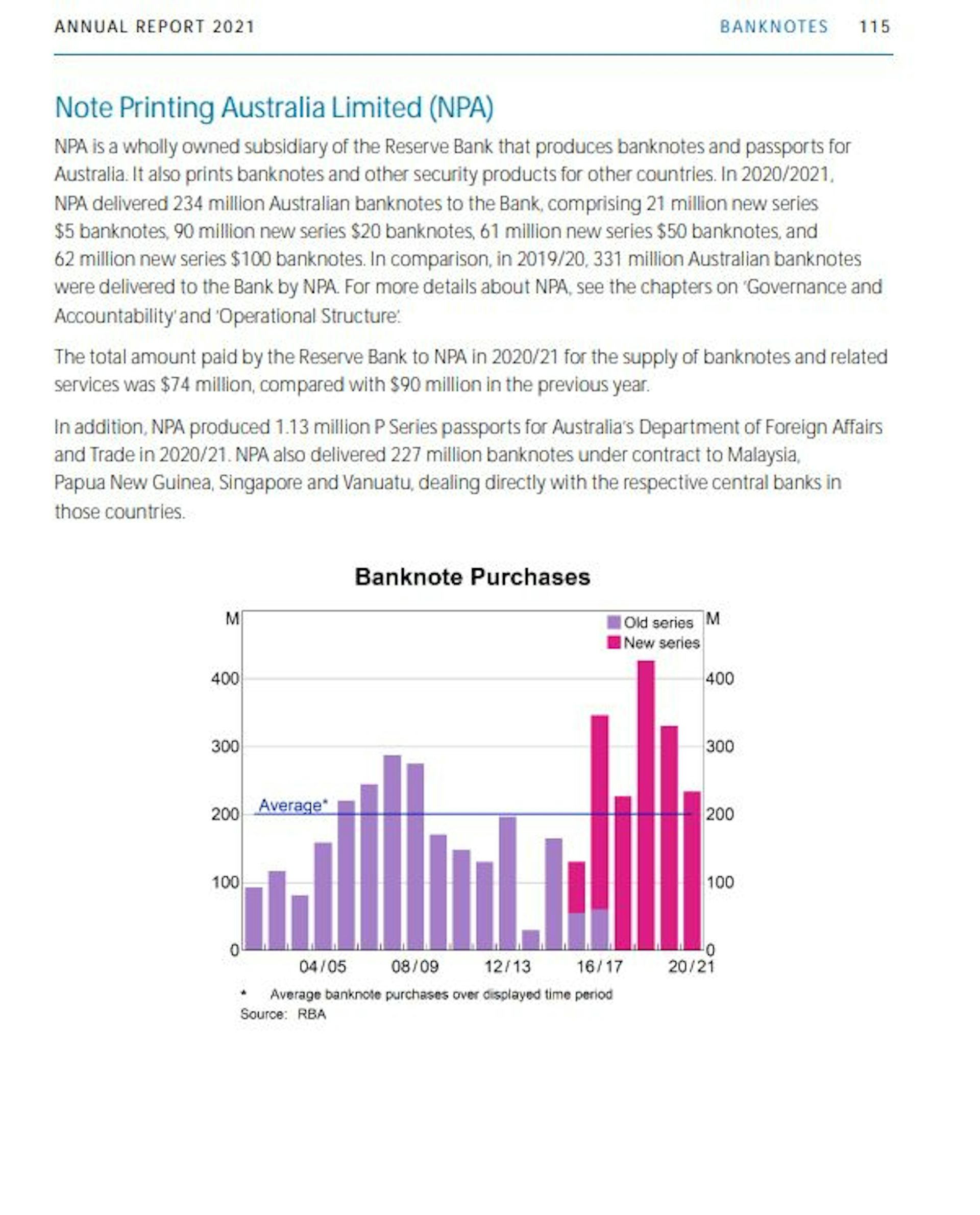
So little-used were the main notes traditionally used for small transactions – $5 and $10 notes – that authorities stopped issuing them in the first half of 2020.

The amount of cash banked by retailers dropped by a third between February and May, and according to a new Reserve Bank study is still much lower than it was.

Only 23% of Australians surveyed in October said they had used cash for their most recent face-to-face purchase, down from more than 30% before.

Of those who said they avoided using cash, 28% said it was unhygienic; 45% had come across a business that wouldn’t take it.

The bank estimates only 4% of businesses refused to accept cash outright, although many more did what they could to discourage it.


ATM cash withdrawals using debit cards

Total number each month, seasonally adjusted. Reserve Bank of Australia

Cafes and pubs offered contact-free ordering via QR codes, shops were given permission to lift the PayWave limit for transactions without a PIN, and banks were given permission to mail out cards to customers who didn’t ask for them.

One in five of us holds no cash

If the switch away from using cash seems like something we took in our stride, it’s because we’ve been slinking away from it for years.

Contactless card transactions accounted for a record 50% of in-person sales in 2019, up from 10% in 2013. More than one in five Australians reported they held no cash in their purses and wallets in 2019, up from one in ten in 2013.

Contactless has become ubiquitous. Square

An even bigger 40% said they held no cash outside their wallets.

Toll roads haven’t accepted cash for years. Transport cards such as Myki, Opal and MyWay have grown to the point where they account for 2% of all transactions. Now 5% of face-to-face transactions are done with mobile phones.

The “threshold” below which cash remains the most common means of payment has been falling for decades. In 2019 it was just $4, down from $41 in 2007.

It means you would be entitled to think (and entitled to be certain) that we are falling out of love with cash. We need it less than ever.

Yet bizarrely (and this is something even the experts can’t make sense of) we are amassing more of it than ever, even more so during the pandemic.

Yet in aggregate, we are holding more than ever

The value of cash out there somewhere (notes issued in excess of those returned) soared 17% during 2020. In each of the previous ten years, while our use of cash dwindled, our holdings climbed by an average of 5%.

So big was demand for cash during the pandemic that the Reserve Bank opened its “contingency” distribution site twice, in March and in July, to get $50 and $100 notes out to banks being asked for them. At the same time the banks held back on returning poor-quality notes in case they needed them.


Read more: Depending on who you are, the benefits of a cashless society are overrated


The paradox is that while many of us are holding absolutely no cash, and many more are holding none outside of their pockets, some are holding bewilderingly large and growing amounts, which they fortified during the recession.

When asked, only one in 200 owns up to holding more than $5,000 in cash, but the amounts some of those people are holding must be staggering.

The latest figures show there were 186 million $20 notes out there in circulation at the end of March — about seven for each woman, man and child in the country.

A clutch of 20s, far more 50s and 100s

Chingfoto/Shutterstock

The count of $20 notes seems about right. Some are in tills, some in wallets.

But for $50 notes (the ones many of us don’t hold as often) there are an improbable 37 per person in circulation — 947 million. For $100 notes – the ones some of us never see – it is 17 per person.

There are far more $50 and $100 notes than there used to be. Twenty years ago we had just six $100 notes per person, alongside about as many $20 notes as now.

Our neighbour across the Tasman Sea is like we used to be. New Zealand still has only five $100 notes per person in circulation.

For Australia, “circulation” is scarcely the right word.

Our high-value notes are exchanged so rarely the Reserve Bank’s best guess is that, on average, each $100 note will last 200 years before being returned damaged or worn out; $20 notes are returned every eight years.


Banknotes in circulation per person

Reserve Bank of Australia, ABS

So big is the mystery about where all the notes are that the Reserve Bank has published a study, Where’s the Money? An Investigation into the Whereabouts and Uses of Australian Banknotes.

Crime, tax and means tests

It finds 5-10% are lost. It gets the estimate from the number of paper notes that were never converted to plastic when we switched over in the 1990s.

Up to 15% are kept overseas. The RBA can tell by the way demand for notes changes with the value of the Australian dollar.

Only a few percent are used to store the proceeds of crime. Criminals “convert a large share of their cash profits into other assets”.


Read more: Limiting cash to $10,000 is more dangerous than you might think


Interestingly, where criminals do store cash, the chemical residues left at the site of drug busts suggests it is as $50 rather than $100 notes.

The rest is hoarding, both in case something goes wrong with the banking system (which explains the spike during COVID) and what appears to be an especially Australian desire to avoid tax and things such as the age pension assets test.

New Zealand doesn’t have a pension asset test.

ref. The paradox of going contactless is that we’re more in love with cash than ever – https://theconversation.com/the-paradox-of-going-contactless-is-that-were-more-in-love-with-cash-than-ever-158383

Hostage to fortune: why Westpac could struggle to find the right buyer for its NZ subsidiary

Source: The Conversation (Au and NZ) – By David Tripe, Associate Professor in School of Economics and Finance, specialising in Banking, Massey University

The recent announcement that Westpac is “reviewing” ownership of its New Zealand business caused some speculation the decision might be due to the bank’s lower profitability. But this would be unlikely grounds for a sale, and was more a consequence of COVID-19’s impact than anything.

In fact, Westpac’s New Zealand profits should be considerably higher this year — close to NZ$1 billion, as opposed to the $550 million in the previous year (to September 30 2020). Based on past experience, a sale price of $10 billion (AU$9 billion) would not be unreasonable, possibly even higher.

More likely, the proposed sale is due to the complex and conflicting regulatory requirements of the Australian and New Zealand banking supervisors. We saw this in the decision of the New Zealand supervisor, the Reserve Bank of New Zealand (RBNZ), to require banks to be positioned for “open bank resolution” (OBR).

OBR, as the RBNZ explains, is “a long-standing Reserve Bank policy aimed at allowing a distressed bank to be kept open for business, while placing the cost of a bank failure primarily on the bank’s shareholders and creditors, rather than the taxpayer.”

In practice, this means a proportion of all the funds lodged with the failing bank would be frozen immediately. These could only be repaid to depositors after the bank was liquidated, if there were sufficient funds.

This could be a real problem for a bank owner, which would likely have substantial amounts outstanding.

Protecting NZ’s financial system

A major reason for the Reserve Bank’s move was to protect the New Zealand financial system from possibly adverse decisions by Australian regulators (the Reserve Bank of Australia and the Australian Prudential Regulatory Authority) in case a major Australian bank got into difficulty.

The Reserve Bank further upset the Australian banks in late 2019 by introducing higher capital ratio requirements for trading banks (to better position them in the rare case of extremely large losses).

Meanwhile, Australian regulatory action has been aimed at countering some of the potential adverse consequences of New Zealand regulation. This included decreasing the amount relative to their own capital that Australian banks were allowed to provide to their offshore (principally New Zealand) subsidiaries.

This would reduce the exposure of Australian banks to their New Zealand subsidiaries in the event of an open bank resolution, protecting the Australian banking system from the risk of illiquidity.

The Reserve Bank’s capital proposals for New Zealand banks were higher for banks classed as systemically important — which happen to be the New Zealand subsidiaries of the major Australian major banks. The Australian banks were worried their exposure to their New Zealand subsidiaries might very easily exceed the 25% threshold for exposure to their offshore subsdiaries.


Read more: It’s not only Westpac. What’s behind the biggest fine in Australian corporate history


The cost of NZ subsidiaries

Those concerns seem to have abated, due to the Reserve Bank agreeing to modify its capital requirements, a longer phasing-in period for the new rules, and continuing action by the Australian banks to increase their levels of equity capital (in response to encouragement from the Australian regulators).

Bank capital has also been increasing in both countries due to the pandemic preventing profits being paid out to shareholders in the form of dividends.

Recent proposals in Australia would, however, exacerbate the parent banks’ problems. Their investments in their New Zealand subsidiaries would be treated as very high risk.

Investment in subsidiaries exceeding 10% would need to be deducted from the parent bank’s capital to comply with regulatory requirements. This substantially increases the relative costs for Australian banks of having a large New Zealand subsidiary.

It may be that all these factors have ultimately led Westpac to conclude it will be better off by selling its New Zealand operation.


Read more: Are banks gouging by not passing on interest rate cut?


Where are the buyers?

Given all this, who might be the prospective buyers for Westpac’s New Zealand division? It is unlikely to be any of the other three major banks, as the resulting merged bank would have an excessively strong position in the New Zealand market. We would expect New Zealand’s Commerce Commission (as the competition regulator) to prevent such a purchase.

Another possibility is a transaction backed by private equity. But because of the generally riskier conduct of private equity owners, the Reserve Bank (as the regulator whose approval would be required) might not be comfortable with this.

The Reserve Bank might also be concerned at a purchase by one of the other Australian majors, which would create a very large bank and expose the financial system to potential risk.

Another prospective buyer might be a large investor such as the New Zealand Superannuation Fund or Accident Compensation Corporation, which in 2016 together bought a shareholding in the formerly wholly government-owned Kiwibank.

Could these two entities combine to buy the bank, and then look to sell down their holding by listing it on the New Zealand Stock Exchange? Their investment in Kiwibank, although originally for less, would be worth around $500 million, whereas a purchase of Westpac might entail an outlay of $10 billion or more.

This would be large compared to those institutions’ balance sheets (with combined total assets of around $100 billion). There would also be concern about an aggregation of risk to the banking sector.

But the Reserve Bank would likely be comfortable with interest from international banks, given Westpac’s New Zealand business would be too big for acquisition by any of the remaining non-Australian, New Zealand-owned banks.

Bank of China building
The Bank of China headquarters on Beijing: already in New Zealand and a possible Westpac buyer.

Value for money

Potentially the most plausible potential purchasers are the four largest formerly state-owned banks in China (also the largest banks in the world), three of which already have operations in New Zealand: Bank of China, China Construction Bank and the Industrial and Commercial Bank of China.

But because of the size of the prospective purchase, and because of the distance of New Zealand from other countries where suitable banks are based, the number of prospective buyers remains relatively small.

This brings us back to a challenge that arose when ANZ bought the National Bank of New Zealand in 2003, and which has persisted since: because of the limited pool of potential acceptable buyers, it will be difficult for any Australian bank to sell out of its New Zealand business for anything like the value reflected in the profitability of its ongoing operations.

It is almost as if the New Zealand subsidiaries of the Australian major banks are hostages, unable to be sold for a reasonable price and thus captives in the New Zealand market.

So it may be the New Zealand and Australian regulators will engage with each other to mitigate the difficulties faced by the Australian banks, or no sale proceeds at all, or Westpac is forced to sell its New Zealand business at a significantly discounted price.

We’re not sure how Westpac’s shareholders would respond to that last option!

ref. Hostage to fortune: why Westpac could struggle to find the right buyer for its NZ subsidiary – https://theconversation.com/hostage-to-fortune-why-westpac-could-struggle-to-find-the-right-buyer-for-its-nz-subsidiary-158224

A batshit experiment: bones cooked in bat poo lift the lid on how archaeological sites are formed

Source: The Conversation (Au and NZ) – By Conor McAdams, Ph.D. candidate, University of Wollongong

Archaeologists in the guano layer at Con Moong Cave in North Vietnam. Conor McAdams, Author provided

Many caves are filled with sediments containing the excrement of birds and bats. This forms phosphate-enriched deposits known as guano — essentially, piles of ancient poo.

At Con Moong Cave in northern Vietnam, we wanted to discover more about the first modern humans (Homo sapiens) to arrive in Southeast Asia. The cave was full of surprises, including a thick layer of soaking wet guano.

We designed a laboratory experiment to better understand whether waterlogged guano destroys bones, stones, charcoal and other organic remains. This has helped us interpret the material we dig out of archaeological sites and to reconstruct what those sites were like in the past.

Archaeology in acidic environments

We’re not sure when people first arrived in Southeast Asia. Because of the region’s hot and humid climate, materials discarded in the landscape rapidly weather away and we are left with very little evidence of past human activity.

In Southeast Asia, caves are the best places to look for evidence of what humans were doing tens of thousands of years ago. Fragmentary remains of modern humans found in caves in Indonesia and Laos have been dated to 63,000 years or older, which is long before people settled in Europe.

Caves provided shelter to people in the past and they also slowed the destruction of the materials left behind. But caves are wet and dynamic spaces, and the sediments they contain often get moved around.

Bats are a further complication. When humans abandon a cave, bats may move in and shower everything on the cave floor with excrement.


Read more: Bat and bird poo can tell you a lot about ancient landscapes in Southeast Asia


Fish bone after burial in warm and wet guano. Conor McAdams, Author provided

Guano breaks down, becoming very acidic and dissolving bones, stones, ashes and clays. But guano is also loaded with phosphates that interact with dissolving materials to form new minerals. In areas where we detect these new minerals, we know any archaeological materials that were there would have been destroyed.

At Con Moong Cave, we found soaking wet guano in sediments deposited more than 50,000 years ago. Its chemical signature was unusual, because waterlogging had prevented the guano from becoming acidic.

We wanted to understand whether the guano layer had always been wet and how this might have affected the preservation of bones, stones, ashes and charcoal. So we made our own guano-filled tropical cave in the laboratory.

archaeological materials laid out on sand in a takeaway container, then buried in wet guano
Before and after: we made experimental samples to recreate the destruction of archaeological materials in a wet guano deposit. Conor McAdams, Author provided

Playing with wet poo

We began our experiment by collecting bags of poo from a cave with a large population of insectivorous bats. We also collected materials similar to what prehistoric humans left in caves, including bones, stones and charcoal.

Two sets of these materials were then placed in 24 takeaway containers. We then piled on top a thick layer of wet guano and put the containers in an oven set at 30℃ to simulate tropical conditions. Now we had 24 hot, wet and smelly analogues of what we thought Con Moong Cave was like tens of thousands of years ago.

Over the course of two years, we excavated the contents of one container every month and recorded the changes that had taken place. Two years is a lot shorter than the many millennia archaeological materials have been buried in Con Moong Cave.

But the processes observed in our experimental samples give an indication of what happens in the early stages of burial, with the changes becoming more pronounced over time. So our findings can help predict what these features might look like in archaeological deposits.

Bone dissolved rapidly. Microscopic techniques helped us understand why. Conor McAdams, Author provided

Surprisingly, the guano did not become acidic, but the buried materials were nonetheless rapidly altered and destroyed. To understand why this was happening, we studied the structure of the guano at very small scales (known as its “micromorphology”).

In our experiment, only half of each container was excavated, with the remaining half soaked in fibreglass to stabilise and solidify the contents. When the fibreglass had set hard, we cut a sliver — just 30 thousandths of a millimetre thick — through all of the buried materials.


Read more: Dishing the dirt: sediments reveal a famous early human cave site was also home to hyenas and wolves


This “thin-section” sample allowed us to examine the materials in detail, using geological light microscopes, to understand how they had changed chemically and been replaced by different kinds of phosphate minerals.

The chemical changes were extremely complex, so we analysed the thin-section samples in a scanning electron microscope to get a better idea of the processes driving these changes.

The images we collected suggested bacteria from the guano were heavily involved, with possible outlines of bacterial cells observed in the newly formed minerals.

Possible outlines of bacteria, preserved in chemically altered limestone. Conor McAdams, Author provided

The minerals detected in our experimental samples are very similar to those we found in the ancient sediment samples from Con Moong Cave. The fact such chemicals can form in very wet guano layers makes them useful markers for identifying periods when archaeological caves were very wet in the past. This provides an important source of environmental information in tropical regions.

These minerals can also help us understand the distribution of archaeological materials at a site. Where we find them, we know the extreme chemical environment would likely have destroyed any ancient bones or ashes.

By providing clues to the missing parts of the archaeological record, these minerals can help us better understand the limitations on reconstructions of the human past based solely on those materials that have survived.

Improving our knowledge of when humans were, or were not, living in the cave is important for understanding when humans first arrived in Southeast Asia, how long they occupied various sites, and what types of activities they engaged in.

Our experiment demonstrates the chemical cocktail formed in waterlogged guano would have destroyed the traces of any human activity in the oldest deposits at Con Moong Cave. To establish the initial time of arrival of people in this region will require further digging in other caves.

Our bat poo experiment might seem like mad science. But it is helping to fill gaps in the story of the peopling of Southeast Asia over the last tens of thousands of years.

ref. A batshit experiment: bones cooked in bat poo lift the lid on how archaeological sites are formed – https://theconversation.com/a-batshit-experiment-bones-cooked-in-bat-poo-lift-the-lid-on-how-archaeological-sites-are-formed-156865

Snooze blues? How using your favourite song as an alarm can help you wake up more alert

Source: The Conversation (Au and NZ) – By Stuart McFarlane, Researcher, Auditory Perception and Cognition, RMIT University

This morning after awakening when the alarm went off, you may have experienced a feeling of grogginess and lack of alertness. This is a physiological phenomenon termed “sleep inertia”. If you experience this, you are not alone. Aboard the International Space Station a NASA astronaut reported:

The morning started disastrously. I slept through two alarms, one set for 0600 and another a half-hour later to remind me to take some CEO (Crew Earth Observation) pictures. My body apparently went on strike for better working conditions.

Astronauts must perform at a high level after waking on the International Space Station.

Good-quality sleep — and feeling alert when we wake up — is vitally important. In Australia, lost productivity due to inadequate sleep has been estimated to cost A$17.9 billion a year. Sleep inertia can last up to four hours, although it can potentially be remedied by caffeine, light, or a nice hot shower.

But here’s another potential tactic to combat morning grogginess. Our new research shows how choosing the right sound to wake up to can reduce sleep inertia.

In an initial study, we found that alarm sounds perceived as “melodic”, irrespective of the specific type or genre, lead to significantly reduced feelings of sleep inertia, when compared with alternative musical variations such as “unmelodic” beeping alarms.

“Melodic” music can be defined as a tune that’s easy to sing or hum along to, such as Madonna’s song Borderline, Midnight Oil’s Wedding Cake Island, or Happy by Pharrell Williams.

Relative frequency of alarm sound type and perceived sleep inertia.

To study this intriguing effect in more depth, we carried out a second study to evaluate the effect of wake-up music on factors such as mental alertness.

We used a custom-designed app to allow participants to wake in their own bed to different alarm sounds on their smart-phone, then immediately perform a game-like task to assess their state of alertness. Similar to the test performed by astronauts on the International Space Station to monitor changes in sustained attention, our participants were required to touch their mobile phone screen as quickly as possible when the colour of a shape changed.

Melodic alarm sounds resulted in participants having faster and more accurate responses, compared with a control group who woke up using classic alarm sounds without melody.


Read more: Morning haze: why it’s time to stop hitting the snooze button


Do other alarm sounds influence how well we wake up?

We don’t always awaken to a preset alarm. Sometimes we have to wake up quickly, perhaps to a smoke alarm, for instance. Some people, such as members of the military or emergency services, have to wake promptly and immediately respond to urgent situations.

To look at these cases, we reviewed all the available research on both sound alarm design and awakening in different age groups. This revealed that in emergency scenarios, children are also receptive to how alarm sound design affects their waking state.

When children awaken in emergency conditions, a low-pitched alarm or even the sound of a human voice seem to be much more effective than conventional higher-frequency alarms at combating the effects of sleep inertia. With the right type of alarm, children demonstrated better response time and memory of events, which is likely to be important in following instructions or action plans in an emergency such as a fire.

Why are these lower-pitched sounds more effective? It might be because there are crucial frequency bandwidths and how sound is processed by the inner ear and then the brain. For example, it has been shown that music does activate certain areas of the brain that control attention, although the exact mechanisms of this effect are still being investigated.

In an emergency, lower-pitched sounds might actually be more useful than traditional high-pitched alarms.

Efficiencies of sound and waking

Given we now know that different alarm sound types can influence how humans wake in normal, residential and emergency scenarios, it is interesting to consider the possibilities presented by modern technology.

Digital audio is now readily accessible and easy to share, meaning that when we go to bed we can set ourselves an alarm consisting of almost any conceivable sound.

What’s more, wearable technology and health monitoring apps are improving so rapidly that they might be able to help us choose the exact best alarm for us. You could even tailor it to different situations: if you have to wake up early and drive kids to school, you might choose a wake-up alarm that leaves you as alert as possible, whereas you might choose something different to wake up for your Saturday morning yoga class.

Vehicles could be fitted with personalised alarms to help drivers stay focused and avoid falling asleep at the wheel. Human space exploration may one day use these types of sound treatments to maximise astronaut well-being and performance.


Read more: Health Check: how can I make it easier to wake up in the morning?


Like the astronauts orbiting above Earth, we all have to live and work in a complex world. Almost all of us sometimes have to wake up before we’re ready, and feel groggy as a result.

But next time you’re setting your alarm, why not try something you can sing or hum along to, or just a favourite melodic song? You might experience a refreshing change.

ref. Snooze blues? How using your favourite song as an alarm can help you wake up more alert – https://theconversation.com/snooze-blues-how-using-your-favourite-song-as-an-alarm-can-help-you-wake-up-more-alert-158233

‘It’s not about you’: how to be a male ally

Source: The Conversation (Au and NZ) – By Meredith Nash, Associate Professor in Sociology, University of Tasmania

As women take to the streets and make their claims of abuse and harassment public, this could be a watershed moment for Australian society and gender equality.

But it is not just women who need to use this moment. We need men on board as well.

White men in particular, have been the focus of these calls because they occupy significant positions of power. Other people (especially other men) are more inclined to pay closer attention to demands for gender equality when they are delivered by men.

Many men may be willing to help or change for the better, but are unsure of where to start.

What is an ally?

The term “ally” is increasingly used in relation to social and political movements. What does it mean?


Read more: Andrew Laming: why empathy training is unlikely to work


Allies are people who work for social justice from positions of dominance. For example, white men working for gender equity.

Effective allies work in solidarity with people from marginalised groups, such as women, LGBTIQ+ people, First Nations people and people with disabilities.

Types of allies

Being an ally takes different forms, and some are more effective than others.

  • Allies for self-interest. This type focuses on the injustice experienced by people they know, such as men who attribute their interest in gender equality to their daughters or wives, as noted by Prime Minister Scott Morrison. Their advocacy is personal rather than systemic.

  • Allies for altruism. This form of ally is aware of injustices experienced by some groups but not necessarily their own role in perpetuating inequality. They see themselves as heroes who want to save others and become defensive if their own behaviours are called out. For example, a white woman working to end racism may understand racism intellectually, but become defensive when a person of colour points out an inappropriate term she used in a meeting.

  • Allies for social justice. This type of ally moves beyond individual action to direct attention to oppressive social systems (like sexism). They work together with people in marginalised groups and don’t need to be in the spotlight. They consistently learn how to do better. For example, a university lecturer actively seeks feedback from his students about his socialisation as a heterosexual white man. He sees this feedback as positive, as it challenges his worldview, makes him less likely to perpetuate racism and sexism in the classroom, and holds him accountable to students from marginalised groups.

Many people who aspire to be allies find it hard to move beyond working on an individual level, as in the first two types, because it is easier and brings more immediate rewards than structural change. It also less risky as it does not disrupt the ally’s position of dominance.

If we are genuinely going to seize this moment to change gender relations for the better, we need more men to become the third type — allies for social justice.

What do men say about being an ally?

We have recently conducted a study on engaging men as gender equity allies in universities. The men in our study wanted to become allies because they noticed gender inequity in their own environment and saw it as the “right thing to do”.

But, they also noticed becoming an ally was confronting for other men who were threatened by the idea of gender equity:

I have a feeling there is still some ice to break […] some older male colleagues are […] maybe feeling “Is it going too far? […] is it all of a sudden discriminating against males?”

At the start of our study, men predominantly saw their ally status through their individual experiences (as self-interested or altruistic allies). Two years later, they had much more nuanced views.

The more time has gone on, the more I’ve realised it is important, as I said, to not just say things, but to actually do things.

By this stage, men did not want to be put on pedestals or congratulated for being allies. Instead, they were actively working to challenge inequities in their universities and experiencing frustration when their efforts were not always successful.

I was asked by my manager to help coordinate the implementation of a strategy for [a marginalised group], so […] I’ve been very active in promoting that, and nothing has changed

I am just embarrassed, because I have tried to push and push this strategy and it’s on the bottom of the list. It’s not even in their consciousness

[I hear] “Oh, it’s up to the Aboriginal people to do it.” “Oh, it’s up to the gay people to do it.” What about the privileged academics, the privileged whites? We just sit here twiddling our thumbs.

Top tips for being a male ally

Being an ally takes work. But there are simple things you can start doing today in your everyday life that will make a difference.

  • Listen to people from marginalised groups and hear their stories — it’s not about you. For example, look for opportunities to hear about women’s experiences in your workplace and seek feedback about how you can “show up” for them as an ally.

  • Recognise there is more than one experience. Transgender women or women of colour, for example, may have different needs.

  • Move beyond helping individuals. Act to disrupt oppressive structures in your environment and the status quo. For instance, if you witness inappropriate language by other men in the room, actively call out the inappropriate language. Don’t just dismiss sexist, ableist, racist, homophobic or transphobic comments or acts as “banter” or jokes.

  • See your situation clearly. This means educating yourself about your privilege, biases and role in (unintentionally) perpetuating systems of discrimination and inequality. Start by doing your homework — read relevant books and articles (like this one!) and attend diversity and inclusion events. Do not rely on people in marginalised groups to educate you.

  • Be prepared to be uncomfortable and learn from your mistakes.

Becoming an effective ally doesn’t happen overnight. But Australia needs more of its men to start the work.

It needs to be done purposefully and people need to be open to thinking about themselves critically. But it has the potential to make a real difference to gender relations and equality.


Read more: How men can be allies to women right now


ref. ‘It’s not about you’: how to be a male ally – https://theconversation.com/its-not-about-you-how-to-be-a-male-ally-158134

The media is overhyping early detection tests, and this may be harming the healthy

Source: The Conversation (Au and NZ) – By Mary O’Keeffe, Postdoctoral Research Fellow, University of Sydney

Do you remember hearing about the simple blood test that could tell if you had any of several different cancers? What about the Apple Watch that promised to catch your hidden heart problems before it was too late? Or the artificial intelligence test to diagnose your dementia years before symptoms appear?

These are not tests for sick people. But the trouble is, testing the healthy can too often wrongly classify them as sick.

Today, in the journal JAMA Internal Medicine, we’ve published the results of a large global study looking at media coverage of these tests.

We found a disturbing pattern of stories hyping benefits, failing to mention potential harms, and ignoring the conflicts of interest of those promoting the new technologies.

Turning people into patients

The idea of catching something early makes a lot of sense, and in some cases can prevent great suffering and extend lives. But the ever earlier detection of disease is causing too much unnecessary diagnosis of many healthy people.

The problem is called overdiagnosis, and it’s increasingly recognised as a threat to both human health and health system sustainability.

Overdiagnosis means making people into patients unnecessarily, by identifying and treating problems that were never destined to cause them harm. It causes anxiety, brings side-effects of unnecessary treatments, and wastes resources that could be better spent on genuine need.

Overdiagnosis is driven by many factors — cultural and commercial — but also by the increasing availability of sensitive new tests that can detect minor “abnormalities” of sometimes uncertain importance.

Often these tests are aggressively promoted before there’s strong evidence of their benefits, sometimes by companies with obvious interests in maximising markets for their products.


Read more: Five warning signs of overdiagnosis


Cancer is an important example of overdiagnosis. Recent estimates suggest around 29,000 cancers may be overdiagnosed in Australia in a single year. These are cancers that either never grow or grow very slowly, and wouldn’t have spread or caused any problems if left untreated.

Perhaps the most powerful example is the popular PSA (prostate-specific antigen) test used to screen healthy men for prostate cancer, with evidence suggesting 40% of prostate cancer may be overdiagnosed.

A man consults with a doctor in a bright office.
Early detection tests can be beneficial — but there are also risks that can lead to overdiagnosis. Shutterstock

Putting the media to the test

We’ve known for some time that media stories tend to overhype the benefits of medical treatments. But until our study today, there was no published, peer-reviewed data about how the media globally is covering early detection tests for healthy people.

Our team of researchers from Bond University and the University of Sydney searched three years’ worth of global English language news media coverage, including print, broadcast, and online. We focused on five early detection tests for healthy people:

  1. liquid biopsy blood tests for multiple cancers

  2. Apple Watch for atrial fibrillation (abnormal heart rhythm)

  3. 3D mammography for breast cancer

  4. blood tests for dementia

  5. artificial intelligence for dementia.

In particular, we wanted to know whether stories reported on the potential benefits of these tests, such as saving lives, and whether there were any mentions of potential harms, such as overdiagnosis.

We also wanted to know whether these stories featured the views of commentators with financial ties to companies that might benefit from widespread use of the test, and if so, how often the media stories disclosed these conflicts of interest.

We established conflicts of interests using resources including the Open Payments database in the United States, DisclosureAustralia, and Disclosure UK.


Read more: Your Apple Watch can now record your ECG – but what does that mean and can you trust it?


Unhealthy reporting

In total we analysed more than 1,100 news stories, most published in the US, Australia, and the United Kingdom. We found 97% of all stories reported on benefits, while only 37% reported any harms, and 27% downplayed harms, for example by describing them as negligible.

In other words, while almost all covered benefits, almost two-thirds of stories failed to make any mention of potential harms, and stories that did mention harms tended to downplay them. Further, only one in 20 stories mentioned overdiagnosis.

A woman controls her Apple watch.
The Apple watch can take an electrocardiogram (ECG) to detect atrial fibrillation. Shutterstock

Hyped headlines raised hopes, with no hint of possible harms. The dementia blood test was described as detecting disease “decades before symptoms”, and the Apple Watch “could save your life”.

We also found more than half (55%) of all stories included the views of commentators with important financial conflicts of interest, but these conflicts were only disclosed in 12% of stories.

The most striking example concerns the Apple Watch. Some 19 of the 22 authors of the trial examining the watch’s ability to detect atrial fibrillation reported grants or personal fees from Apple. While Apple’s funding of the study was mentioned in 30% of the 273 stories we examined on the Apple Watch, no stories mentioned the conflicts of interest of the individual researchers.


Read more: For routine breast screening, you may not need a 3D mammogram


So what can we do?

Clearly, there are many great reporters, and much good-quality coverage, often produced under difficult circumstances. But our findings of misleading media promotion of early detection testing — overstating benefits, downplaying harms, and failing to disclose financial interests — risks harming the healthy through causing more overdiagnosis and unnecessary treatment.

We urgently need strategies to improve reporting on early detection tests that target healthy people. Last year we conducted interviews with 22 Australian journalists, including members of the team of health editors at The Conversation, finding an enthusiasm for enhanced training opportunities.

This year, with colleagues from the National Health and Medical Research Council-funded Wiser Healthcare research collaboration, we’re planning to pilot a suite of interventions including training and tipsheets, which we hope might improve coverage and better inform the public. But perhaps we shouldn’t overstate the potential benefits of our plans.

ref. The media is overhyping early detection tests, and this may be harming the healthy – https://theconversation.com/the-media-is-overhyping-early-detection-tests-and-this-may-be-harming-the-healthy-158229

New COVID variants have changed the game, and vaccines will not be enough. We need global ‘maximum suppression’

Source: The Conversation (Au and NZ) – By Susan Michie, Professor of Health Psychology and Director of the UCL Centre for Behaviour Change, UCL

At the end of 2020, there was a strong hope that high levels of vaccination would see humanity finally gain the upper hand over SARS-CoV-2, the virus that causes COVID-19. In an ideal scenario, the virus would then be contained at very low levels without further societal disruption or significant numbers of deaths.

But since then, new “variants of concern” have emerged and spread worldwide, putting current pandemic control efforts, including vaccination, at risk of being derailed.

Put simply, the game has changed, and a successful global rollout of current vaccines by itself is no longer a guarantee of victory.

No one is truly safe from COVID-19 until everyone is safe. We are in a race against time to get global transmission rates low enough to prevent the emergence and spread of new variants. The danger is that variants will arise that can overcome the immunity conferred by vaccinations or prior infection.

What’s more, many countries lack the capacity to track emerging variants via genomic surveillance. This means the situation may be even more serious than it appears.

As members of the Lancet COVID-19 Commission Taskforce on Public Health, we call for urgent action in response to the new variants. These new variants mean we cannot rely on the vaccines alone to provide protection but must maintain strong public health measures to reduce the risk from these variants. At the same time, we need to accelerate the vaccine program in all countries in an equitable way.

Together, these strategies will deliver “maximum suppression” of the virus.

What are ‘variants of concern’?

Genetic mutations of viruses like SARS-CoV-2 emerge frequently, but some variants are labelled “variants of concern”, because they can reinfect people who have had a previous infection or vaccination, or are more transmissible or can lead to more severe disease.


Read more: UK, South African, Brazilian: a virologist explains each COVID variant and what they mean for the pandemic


There are currently at least three documented SARS-CoV-2 variants of concern:

  • B.1.351, first reported in South Africa in December 2020

  • B.1.1.7, first reported in the United Kingdom in December 2020

  • P.1, first identified in Japan among travellers from Brazil in January 2021.

Similar mutations are arising in different countries simultaneously, meaning not even border controls and high vaccination rates can necessarily protect countries from home-grown variants, including variants of concern, where there is substantial community transmission.

If there are high transmission levels, and hence extensive replication of SARS-CoV-2, anywhere in the world, more variants of concern will inevitably arise and the more infectious variants will dominate. With international mobility, these variants will spread.

Man in Brazil flag cape walks past billboard showing a running total of Brazil's vaccine rollout.
Brazil has vaccinated millions of people, but is also the birthplace of one of the main current variants of concern. Eraldo Peres/AP

South Africa’s experience suggests that past infection with SARS-CoV-2 offers only partial protection against the B.1.351 variant, and it is about 50% more transmissible than pre-existing variants. The B.1.351 variant has already been detected in at least 48 countries as of March 2021.

The impact of the new variants on the effectiveness of vaccines is still not clear. Recent real-world evidence from the UK suggests both the Pfizer and AstraZeneca vaccines provide significant protection against severe disease and hospitalisations from the B.1.1.7 variant.

On the other hand, the B.1.351 variant seems to reduce the efficacy of the AstraZeneca vaccine against mild to moderate illness. We do not yet have clear evidence on whether it also reduces effectiveness against severe disease.

For these reasons, reducing community transmission is vital. No single action is sufficient to prevent the virus’s spread; we must maintain strong public health measures in tandem with vaccination programs in every country.

Why we need maximum suppression

Each time the virus replicates, there is an opportunity for a mutation to occur. And as we are already seeing around the world, some of the resulting variants risk eroding the effectiveness of vaccines.

That’s why we have called for a global strategy of “maximum suppression”.

Public health leaders should focus on efforts that maximally suppress viral infection rates, thus helping to prevent the emergence of mutations that can become new variants of concern.

Prompt vaccine rollouts alone will not be enough to achieve this; continued public health measures, such as face masks and physical distancing, will be vital too. Ventilation of indoor spaces is important, some of which is under people’s control, some of which will require adjustments to buildings.

Fair access to vaccines

Global equity in vaccine access is vital too. High-income countries should support multilateral mechanisms such as the COVAX facility, donate excess vaccines to low- and middle- income countries, and support increased vaccine production.

However, to prevent the emergence of viral variants of concern, it may be necessary to prioritise countries or regions with the highest disease prevalence and transmission levels, where the risk of such variants emerging is greatest.


Read more: 3 ways to vaccinate the world and make sure everyone benefits, rich and poor


Those with control over health-care resources, services and systems should ensure support is available for health professionals to manage increased hospitalisations over shorter periods during surges without reducing care for non-COVID-19 patients.

Health systems must be better prepared against future variants. Suppression efforts should be accompanied by:

  • genomic surveillance programs to identify and quickly characterise emerging variants in as many countries as possible around the world

  • rapid large-scale “second-generation” vaccine programs and increased production capacity that can support equity in vaccine distribution

  • studies of vaccine effectiveness on existing and new variants of concern

  • adapting public health measures (such as double masking) and re-committing to health system arrangements (such as ensuring personal protective equipment for health staff)

  • behavioural, environmental, social and systems interventions, such as enabling ventilation, distancing between people, and an effective find, test, trace, isolate and support system.


Read more: Global weekly COVID cases are falling, WHO says — but ‘if we stop fighting it on any front, it will come roaring back’


COVID-19 variants of concern have changed the game. We need to recognise and act on this if we as a global society are to avoid future waves of infections, yet more lockdowns and restrictions, and avoidable illness and death.

ref. New COVID variants have changed the game, and vaccines will not be enough. We need global ‘maximum suppression’ – https://theconversation.com/new-covid-variants-have-changed-the-game-and-vaccines-will-not-be-enough-we-need-global-maximum-suppression-157870

Doritos, duckies and disembodied feet: how tragedy and luck reveals the ocean’s hidden highways

Source: The Conversation (Au and NZ) – By Shane Keating, Senior Lecturer in Mathematics and Oceanography, UNSW

The grisly discovery in February of a disembodied foot on a New South Wales beach was a tragic twist in the mystery of missing Sydney woman Melissa Caddick.

DNA testing has shown the remains belong to Caddick, who vanished from her Dover Heights home in November 2020 after allegedly stealing more than A$25 million from investors. Corporate regulator ASIC last week withdrew charges against her and will pursue a civil case. In the meantime, broader questions about her fate remain.

Did Caddick take her own life from the cliffs near her home? How did her remains wash up on a remote beach 400 kilometres away? And why was her foot, still clad in a running shoe, the only trace found after more than three months?

We are oceanographers, and cannot speculate about what happened in Caddick’s final hours. However, our experience shows how tragedy – and sometimes luck – can reveal hidden ocean highways that connect every part of the planet.

Homes atop ocean cliff face
The cliffs at Dover Heights, near where Melissa Caddick was last seen. Shutterstock

What is an ocean current?

Ocean currents are found at both the ocean’s surface and in deep water. They are driven by a combination of wind, tides, water density differences and Earth’s rotation. Currents move water horizontally and vertically and occur on both local and global scales.

Monitoring currents is important for understanding how floating objects, marine life, pollutants, and nutrients travel through the ocean. It can also help determine the most efficient shipping routes.

And, as climate change worsens, tracking currents can tell us how heat energy in the ocean is moving around the planet.


Read more: A current affair: the movement of ocean waters around Australia


Ocean whirlpool
It’s important for scientists to understand ocean currents. Shutterstock

The fickle sea

Ocean currents are unpredictable. When someone falls into the water, by accident or otherwise, it can be hard to predict where the current will take them.

This is illustrated by an experiment which, by coincidence, we conducted along the same stretch of coast around the time Caddick is thought to have entered the water. Our research group deployed several satellite-tracked floating buoys, or drifters, off Port Stephens, about 150km north of Sydney. We wanted to study the effects of currents, wind and waves on objects drifting on the ocean surface.

On November 10 – the day before Caddick was last seen alive – we deployed two biodegradable drifters about 40km offshore. We released a third drifter on December 2, in the same patch of ocean.

We then tracked the drifters’ positions until they beached more than a month later – and discovered they took very different paths. One drifter was carried as far as Jervis Bay, 250km southwest. The second travelled 180km southwest to Wollongong. And the third drifter moved north, eventually washing up in Worimi National Park near Newcastle, not far from where it was deployed.

So it’s certainly possible a buoyant object such as a shoe could float several hundred kilometres over several months. And as our experiment shows, it’s hard to predict where it will end up.

Map showing the routes three
Authors supplied, Author provided

The tale of Moby-Duck

Drifting buoys are a rough approximation of a detached foot in a running shoe – often the most buoyant and well-preserved part of a decomposing body.

In one well-publicised case, 21 feet – mostly in running shoes – washed up over a decade on the coasts of British Columbia, in Canada, and the neighbouring US state of Washington. A 2017 inquest ruled out foul play, noting the most likely cause of death in each case was suicide or accident.

Thankfully, drifting objects are not always so gruesome. Bottles (containing messages), adrift sailors, and even thousands of unopened packets of Doritos have washed ashore, sometimes after years at sea.


Read more: For decades, scientists puzzled over the plastic ‘missing’ from our oceans – but now it’s been found


Another famous incident happened in 1992, when a cargo ship in the North Pacific lost a container holding 28,800 yellow rubber ducks and other bath toys. As the map below shows, the colourful toys made their way around the world.

The story, recounted by journalist Donovan Hohn in his book Moby-Duck, has a dark side. The toys form part of an endless river of plastic that flows into our oceans, collecting in giant floating “garbage patches” where currents and winds converge. Much of this plastic persists for decades, making its way into the food chain and ultimately the stomachs of birds, fish, and mammals.

Map showing path taken by floating bath toys
Map showing path taken by floating bath toys. Wikimedia

A surprising ocean odyssey

Our experiment demonstrates another feature of the ocean off Australia’s east coast: the gradual southward drift known as the East Australian Current. The EAC, as it is fondly known, brings warm, tropical water southwards along the coast of Queensland and NSW into the Tasman Sea.

Despite its reputation as a swift, smoothly flowing river of seawater – as depicted in the movie Finding Nemo – the EAC is actually highly variable. It meanders, loops, and sometimes pinches off to form swirling vortices called eddies, hundreds of kilometres across. At times it can flow northwards, or move well offshore. This video shows how variable the EAC can be:

Eastern Australian current over 22 years, sea surface temperature (SST) vs sea level anomaly (SLA).

The combination of current, winds and waves can carry floating debris on surprising voyages. In one recent example, a surfboard lost off the south coast of Tasmania spent nearly two years at sea before being recovered, encrusted with barnacles, by fishermen 2,700km away in northern Queensland.

The surfboard’s journey northward is puzzling because the EAC generally flows in the opposite direction. One theory is the surfboard went “the long way” around New Zealand before drifting back towards Queensland. Alternatively, it could have been carried by winds and waves, which often blow from the south in this region. It could even have been passed from one ocean eddy to another in a sort of oceanic game of pass-the-parcel.

The fishermen were eventually able to reunite the surfboard with its grateful owner after cleaning off the barnacles. That’s slightly unfortunate, because those barnacles were a kind of biological message-in-a-bottle. Analysis of the different species on the board might have enabled scientists to retrace the surfboard’s ocean odyssey.

For now, that too remains a mystery.


If you are having suicidal thoughts, call Lifeline at 13 11 14. If you are worried about a loved one or have lost someone to suicide, find support and information at Beyond Blue.

ref. Doritos, duckies and disembodied feet: how tragedy and luck reveals the ocean’s hidden highways – https://theconversation.com/doritos-duckies-and-disembodied-feet-how-tragedy-and-luck-reveals-the-oceans-hidden-highways-158219

Half of global methane emissions come from aquatic ecosystems – much of this is human-made

Source: The Conversation (Au and NZ) – By Judith Rosentreter, Postdoctoral Research Fellow, Yale University

Methane — a greenhouse gas far more potent than carbon dioxide — plays a major role in controlling the Earth’s climate. But methane concentrations in the atmosphere today are 150% higher than before the industrial revolution.

In our paper published today in Nature Geoscience, we show as much as half of global methane emissions come from aquatic ecosystems. This includes natural, human-created and human-impacted aquatic ecosystems — from flooded rice paddies and aquaculture ponds to wetlands, lakes and salt marshes.

Our findings are significant. Scientists had previously underestimated this global methane contribution due to underaccounting human-created and human-impacted aquatic ecosystems.

It’s critical we use this new information to stop rising methane concentrations derailing our attempts to stabilise the Earth’s temperature.

From underwater sediment to the atmosphere

Most of the methane emitted from aquatic ecosystems is produced by micro-organisms living in deep, oxygen-free sediments. These tiny organisms break down organic matter such as dead algae in a process called “methanogenesis”.

Flooded rice paddies
Rice farming releases more methane per year than the entire open ocean. Shutterstock

This releases methane to the water, where some is consumed by other types of micro-organisms. Some of it also reaches the atmosphere.

Natural systems have always released methane (known as “background” methane). And freshwater ecosystems, such as lakes and wetlands, naturally release more methane than coastal and ocean environments.

Human-made or human-impacted aquatic ecosystems, on the other hand, increase the amount of organic matter available to produce methane, which causes emissions to rise.


Read more: Emissions of methane – a greenhouse gas far more potent than carbon dioxide – are rising dangerously


Significant global contribution

Between 2000 and 2006, global methane emissions stabilised, and scientists are still unsure why. Emissions began steadily rising again in 2007.

There’s active debate in the scientific community about how much of the renewed increase is caused by emissions or by a decline of “methane sinks” (when methane is eliminated, such as from bacteria in soil, or from chemical reactions in the atmosphere).

We looked at inland, coastal and oceanic ecosystems around the world. While we cannot resolve the debate about what causes the renewed increase of atmospheric methane, we found the combined emissions of natural, impacted and human-made aquatic ecosystems are highly variable, but may contribute 41% to 53% of total methane emissions globally.


Read more: Feeding cows a few ounces of seaweed daily could sharply reduce their contribution to climate change


In fact, these combined emissions are a larger source of methane than direct anthropogenic methane sources, such as cows, landfill and waste, and coal mining. This knowledge is important because it can help inform new monitoring and measurements to distinguish where and how methane emissions are produced.

Water is a big part of much of our landscape, from mountain rivers to the coastal ocean. This aerial image shows Himalaya rivers, wetlands, lakes and ponds, and the world’s largest mangrove forest (the Sundarbans) at the coast of the tropical Bay of Bengal. George Allen, Author provided

The alarming human impact

There is an increasing pressure from humans on aquatic ecosystems. This includes increased nutrients (like fertilisers) getting dumped into rivers and lakes, and farm dam building as the climate dries in many places.

In general, we found methane emissions from impacted, polluted and human-made aquatic ecosystems are higher than from more natural sites.

For example, fertiliser runoff from agriculture creates nutrient-rich lakes and reservoirs, which releases more methane than nutrient-poor (oligotrophic) lakes and reservoirs. Similarly, rivers polluted with nutrients also have increased methane emissions.

An aquaculture farm
Coastal aquaculture farms emit up to 430 times more methane per area than coastal habitats. Shutterstock

What’s particularly alarming is the strong methane release from rice cultivation, reservoirs and aquaculture farms.

Globally, rice cultivation releases more methane per year than all coastal wetlands, the continental shelf and open ocean together.

The fluxes in methane emissions per area of coastal aquaculture farms are 7-430 times higher than from coastal habitats such as mangrove forests, salt marshes or seagrasses. And highly disturbed mangroves and salt marsh sites have significantly higher methane fluxes than more natural sites.

So how do we reduce methane emissions?

For aquatic ecosystems, we can effectively reduce methane emissions and help mitigate climate change with the right land use and management choices.

For example, managing aquaculture farms and rice paddies so they alternate between wet and dry conditions can reduce methane emissions.


Read more: Climate explained: methane is short-lived in the atmosphere but leaves long-term damage


Restoring salt marsh and mangrove habitats and the flow of seawater from tides is another promising strategy to further reduce methane emissions from degraded coastal wetlands.

We should also reduce the amount of nutrients coming from fertilisers washing into freshwater wetlands, lakes, reservoirs and rivers as it leads to organic matter production, such as toxic algal blooms. This will help curtail methane emissions from inland waters.

These actions will be most effective if we apply them in the aquatic ecosystems that have the greatest contribution of aquatic methane: freshwater wetlands, lakes, reservoirs, rice paddies and aquaculture farms.

This will be no small effort, and will require knowledge across many disciplines. But with the right choices we can create conditions that bring methane fluxes down while also preserving ecosystems and biodiversity.

ref. Half of global methane emissions come from aquatic ecosystems – much of this is human-made – https://theconversation.com/half-of-global-methane-emissions-come-from-aquatic-ecosystems-much-of-this-is-human-made-156960

Why cities planning to spend billions on light rail should look again at what buses can do

Source: The Conversation (Au and NZ) – By Michael McGreevy, Research Associate, Flinders University

Many cities in Australia and around the world have recently made or proposed investments in new light rail systems. They often do so in the belief this will not only increase public transport use, but also lead urban renewal and improve a city’s global image. However, compared to light rail, my research shows a system of buses running along dedicated corridors, known as bus rapid transit, has many advantages for Adelaide (the focus of my research) and cities like it.

The advantages include:

  • a bus rapid transit system is cheaper to construct and run

  • it takes less time to introduce with less disruption

  • being able to leave designated lanes offers greater flexibility to pick up passengers where and when needed.

In contrast, retrofitting light rail onto arterial roads has proven expensive, slow and highly disruptive. For example, 12.5km of arterial-based light rail in Sydney cost over A$150 million per kilometre and took more than five years to complete. Given these inherent problems, Australian cities such as Adelaide with new light rail systems on the drawing board should first take another look at bus rapid transit.


Read more: Trackless trams v light rail? It’s not a contest – both can improve our cities


Australian cities face hurdles to public transport use

Most Australian state and territory governments have similar transport-related goals. These include to become more environmentally sustainable and reduce traffic congestion, which saps productivity. They typically aim to achieve these goals by increasing public transport use at the expense of cars.

Globally, affluent cities with high levels of public transport use have comprehensive public transport networks. These systems allow people to travel from one place to another anywhere in the city quickly, cheaply and conveniently with minimal interchanges.


Read more: Our new PM wants to ‘bust congestion’ – here are four ways he could do that


In contrast, Australian cities are car-oriented. Their radial “hub and spoke” public transport systems primarily allow people to get to central business districts and occasionally major regional centres quickly, cheaply and conveniently. They struggle to do so for suburb-to-suburb trips.

In Australian cities, 75-90% of jobs and commerce are located in their suburbs. This means the structure of public transport is a major challenge for increasing patronage at the expense of cars. But what if existing arterial roads can be converted for use by rapid bus transit?

Adelaide: a case study

My research looked at the alternative of bus rapid transit along a corridor in metropolitan Adelaide where a new light rail track is proposed. From the CBD, this corridor runs about 7km east to the hills and 9km west to the sea. As an indication of the likely cost, a 1km extension along North Terrace of an existing line cost more than $A120 million in 2018.

The area within 3km of the corridor contains around 40% of metropolitan Adelaide’s jobs, major recreation and shopping facilities, most of its universities, and the airport. Buses running in often highly congested and slow traffic provide the only public transport in the area. As a result, public transport use is very low compared to similar areas in other Australian cities.


Read more: How to avoid cars clogging our cities during coronavirus recovery


Bus rapid transit services run along designated lanes down the centre of arterial roads, as would an arterial-based light rail.

an Adelaide tram travels down the middle of the road
Like Adelaide’s existing tram lines, a bus rapid transit service would run along the middle of existing arterial roads. Morgan Sette/AAP

Stops are spaced at similar intervals to light rail and resemble stations rather than a typical bus stop. Such systems are in place around the globe, one of the most famous being in Curitiba, Brazil.

The advantages of buses add up

The great advantage a bus-based system has over light rail is cost. They can run along existing roads and don’t need expensive tracks and overhead wires.

As a result, bus rapid transit can be built for less than 10% of the cost of light rail. The buses are also cheaper to run per passenger journey and have similar journey speeds to light rail. Bus rapid transit can be established in months rather than years with minimal disruption to surrounding businesses and residents.


Read more: Trees versus light rail: we need to rethink skewed urban planning values


Buses do have some disadvantages compared to light rail. For a start, when diesel buses are used, they cause significant noise and air pollution. Using electric buses can overcome these problems.

Electric bus being charged on a road
Using electric buses overcomes the problems of noise and air pollution. Shutterstock

Read more: Don’t forget buses: six rules for improving city bus services


In addition, individual vehicles normally carry fewer passengers than light rail. However, my research shows low passenger capacity per vehicle is an advantage in low-density suburban areas, such as those along the proposed corridor in Adelaide. That’s because it means the buses have to run more often, making the service more regular, convenient and reliable.

Another advantage over light rail is that in low-density areas, vehicles can leave designated lanes and venture for 2-4km into suburbs to pick up and drop off passengers. This vastly expands the number of households in the system’s catchment and means passengers can get to their destinations with no interchange or just one.


Read more: 1 million rides and counting: on-demand services bring public transport to the suburbs


Finally, the inner and middle suburbs of Adelaide, where most residents live and work, have many wide straight roads suitable for bus rapid transit services. It would be possible to develop around 100km of BRT lanes connecting existing light rail, heavy rail and busway infrastructure. I estimate a comprehensive network could be built for well under a billion dollars in a few years.

A similarly sized light rail network would cost tens of billions of dollars and take decades to complete, if it was to happen at all.

Therefore, if cities want people to switch from cars to public transport, bus rapid transit is the superior option in metropolitan Adelaide and potentially other cities with arterial road networks and low suburban densities.

ref. Why cities planning to spend billions on light rail should look again at what buses can do – https://theconversation.com/why-cities-planning-to-spend-billions-on-light-rail-should-look-again-at-what-buses-can-do-156844

Please, no more questions about how we are going to pay off the COVID debt

Source: The Conversation (Au and NZ) – By Steven Hail, Lecturer in Economics, University of Adelaide

There are many uncertainties about the next federal election, but there is one thing about which you can be almost completely certain. It is the response that both the Prime Minister and the Leader of the Opposition will give when asked this question:

How are we going to pay off our COVID-19 debt?

Scott Morrison and Anthony Albanese disagree on a great many things, but in their answer they will be in perfect harmony.

It will be: “we will need to pay it back in the future by spending less or taxing more — otherwise, we might lack the means to deal with a future crisis”.

They might even talk about “fiscal firepower” — the need to up a budget surplus in order to have something to spend the next time there’s an emergency.

The strange thing is that although this is for them the safest answer to give, and although it is the conventional wisdom, it simply isn’t true.

Consider the following chart. It shows the general government debt as a share of gross domestic product in six countries with similar monetary systems to Australia’s, just prior to the pandemic, and then a year later.


Bank for International Settlements

You cannot help but notice that four of the other five countries had more general government debt than Australia before the COVID crisis, and Japan’s national government had four times as much government debt as Australia.

It made no difference to their ability to spend as needed to support their economies during the pandemic, none whatsoever.

Debt hasn’t hamstrung responses to the crisis

This means it’s wrong to suggest that our government wouldn’t be able to support its economy, even if it didn’t pay back its COVID-related debt.

You might imagine (it’s been said) that more government debt would drive up interest rates, but of late that hasn’t been the case either.

Indeed, the rate of interest on 10-year Japanese government bonds has been close to zero for five years, because it has been held there by the Bank of Japan.

Or perhaps you think that more government debt will lead to higher inflation. In Japan and elsewhere that hasn’t happened either. Japan has had the lowest average inflation rate of these six countries.

And so far it hasn’t stoked inflation

So many myths.

The pivot the Coalition is taking to winding back spending with the end of JobKeeper and the withdrawal of a liveable JobSeeker payment isn’t needed, and is also unwise.

The reluctance of the Labor Party to support a non-poverty unemployment benefit, and its promise to avoid net spending commitments in its election platform, are also unjustified.

Especially in an economy where labour force underutilisation (unemployment plus underemployment) remains over 14%. Nearly two million people are either unemployed or underemployed.


Read more: Josh Frydenberg has the opportunity to transform Australia, permanently lowering unemployment


Many more are in insecure employment, including hundreds of thousands whose jobs are now at risk because of the failure to replace JobKeeper with something such as with a federal job guarantee.

It isn’t as though the Australian Greens are speaking from a fiscal script which is that different. The Greens obsess over costing their policies and finding extra tax from resource companies and billionaires to “pay for” their commitments to full employment, social security, education, healthcare, and investment in renewables.

They may not talk so much about repaying the debt, but they do not want to be accused of adding to it.

The Greens worry like the others

Like the bigger parties, the Greens are reluctant to challenge the narrative of the federal government as a household, with a budget it must manage in order to avoid insolvency.

But the household metaphor is another myth, and it needs to be challenged.

The federal government’s finances have nothing in common with those of a household, however wealthy that household might be, and nothing in common with any business, big or small, or even state and territory governments.

None of these are currency issuers. They have to generate income or borrow before they can spend, and their borrowing puts them at risk of insolvency.


Read more: Australia’s credit rating is irrelevant. Ignore it


Our federal government is different, like the national governments of Japan and the United States. It is the monopoly issuer of the Australian-dollar-denominated currency.

The government does not need to increase taxes in order to increase spending, and it doesn’t even need to borrow. Its Reserve Bank issues currency for it all of the time, every day.

Federal government spending is funded when it is authorised, usually by parliament.

Having spent its currency into existence, the government usually offers savers the opportunity to convert that currency into treasury bonds, which usually offer a better rate of interest than transaction accounts with a bank.


Read more: We’ve just sold $15 billion 31-year bonds. What’s a bond?


Our government chooses to sell treasury bonds – it doesn’t need to.

This means it can’t be held hostage by the bond market. It can’t be forced into insolvency or austerity. The selling of bonds doesn’t constitute borrowing in the normal sense of the term. It is better described as a way of winding back the money supply.

At the end of the life of the bond (when the “loan” comes due) it can pay it off (swapping cash for the bond). Or it can issue a replacement bond if it doesn’t want to inject more money into the economy.

It’s not just me saying that. It is also a senior economist with the US Federal Reserve, David Andolfatto, in December in a paper published by the St Louis Fed.

Together these considerations suggest we might want to look at the national debt from a different perspective. In particular, it seems more accurate to view the national debt less as a form of debt and more as a form of money in circulation.

President Biden is listening to voices like Andolfatto’s. Australian politicians are not. Ours continue to see federal deficits as a burden on future generations, when they are not that at all – they supply financial resources to the present generation.

The national debt is nothing more than the dollars the government has put into the economy and not yet taxed back out. Deficits matter, but not the way Albanese and Morrison seem to imagine. They matter because if they get too big, they might stoke too much inflation.

What if our leaders spoke the truth

In an economy with spare capacity (unemployment and underemployment) and with wage setting institutions that make it difficult to argue that there will be significant persistent inflation in the foreseeable future, there is no reason at the moment to wind back spending, not until unemployment and underemployment are much lower.

For the Greens, there is no need for them to tie themselves in knots, arguing on the one hand that they need to shrink coal mining to address climate change and on the other that they need to raise taxes from the mining industry to pay for government services.

Taxes collected from the mining and other industries (and form individuals) don’t fund federal government spending. It is self-funded. And the limits on spending are not imposed by tax receipts and the ability of the government to borrow. They are imposed by the availability of productive capacity in our economy and our ability to use that capacity without stoking inflation.


Read more: Bernie Sanders’ economic adviser has a message we might just need


When our leaders are next asked, “how are we going to pay off our COVID-19 debt”, they ought to take a deep breath, look the interviewer in the eyes, and say “we don’t need to, because it is not debt in the conventional sense of the term”.

They ought to tell the public the truth. It’s a novel idea, perhaps, but it would lead to a better educated public and a fairer and better-managed economy.

ref. Please, no more questions about how we are going to pay off the COVID debt – https://theconversation.com/please-no-more-questions-about-how-we-are-going-to-pay-off-the-covid-debt-158056

We asked two experts to watch The Father and Supernova. These new films show the fear and loss that come with dementia

Source: The Conversation (Au and NZ) – By Lila Landowski, Neuroscientist, Lecturer, University of Tasmania

Two new films explore the fear of forgetting, loss of control, and other complexities that accompany a dementia diagnosis. The Father and Supernova, both released this month, grapple with the challenges confronting people living with dementia and those who love them.

Dementia is the seventh leading cause of death worldwide, and the second leading cause of death in Australia. The media has an important role in shaping public understanding of poorly understood conditions such as dementia, and it is pleasing to see it considered thoughtfully in both films.

We watched these films through our lenses as a clinician and a neuroscientist. The different causes and conditions that make up the umbrella term of dementia mean the experiences of people living with it — and their loved ones — can differ widely. These films illustrate this well.


Read more: Why people with dementia don’t all behave the same


Marching through the brain

Because different parts of the brain control different functions, the type of dementia is defined by its pathology, origin in the brain and progression.

In Supernova, directed by British filmmaker Harry Macqueen and starring Colin Firth and Stanley Tucci, we see a fairly accurate representation of frontotemporal dementia. Specifically, this is the type where certain language skills are impaired, known as semantic dementia.

The Father, meanwhile, directed by French playwright Florian Zeller and based on his play of the same name, centres on a protagonist, Anthony (played by Anthony Hopkins), with Alzheimer’s disease, the most common cause of dementia.

Owing to the neurodegenerative nature of dementia, people with this diagnosis experience a progressive deterioration of memory, thinking and behaviour, and gradually lose the ability to perform daily tasks and other physical functions, ultimately leading to death.

‘I don’t need her or anyone else. I can manage very well on my own.’

Both films accurately reflect many of the key early features of these forms of dementia and provide insight into the varied presentations and issues associated with the conditions.

Whereas The Father focuses more heavily on the experience of the individual living with dementia, Supernova gives more attention to shared grief and loss.


Read more: Alzheimer’s could be diagnosed and treated before symptoms occur


Caring and sharing

In Supernova, Tusker (Tucci) and Sam (Firth) take a roadtrip through stunning northern England. We soon learn the journey is as much an adventure to visit Sam’s family, as it is an exploration of their own mortality.

“You’re still the same person, Tusker,” says Sam. “No I’m not, I just look like him,” his partner responds.

Unlike many other illnesses, those living with dementia frequently show no outward physical signs of their condition until late in its course, and Tusker appears in good physical health.

We witness Sam’s panic when Tusker and their dog Ruby go missing. Impulsivity and spatial disorientation are common phenomena experienced in dementia. Later, Sam masks his distress (as carers often do), attributing his tears to cutting an onion while preparing dinner.

‘Can you tell? That it’s gotten worse?’

Dementia is a condition that affects the person progressively and globally; we initially only see subtle symptoms of Tusker’s language loss, for example, when he can’t find the word “triangle”. Later we note his loss of instrumental function: needing two hands to guide a glass to his mouth, negotiating which arm goes into which sleeve while dressing. Sam tenderly maintains Tusker’s dignity while helping him dress.

When Sam finds Tusker’s notebook, the writing in it has deteriorated across the pages to an indecipherable scrawl. The last pages are blank.

Tusker declares he is dying — dementia is a terminal illness — but how long he has left is unknown. The median time from dementia diagnosis to death is five years. For a previously high-achieving person like Tusker, the loss of his cognitive ability feels more profound to the viewer.

Frightening experience

While The Father may appear to be an imagined horror story, it masterfully presents the disorientating and frightening reality for a person living with dementia.

Anthony is a powerful and compelling character who draws us into his internal chaos – unaware that he is losing his sense of self in place and time. We learn he has been an engineer and father of two daughters, and lives in a comfortable dwelling in a leafy London suburb. He is by turns irascible and charming. Like Tusker, he appears physically fit, well-groomed and fed.

The early narrative tension revolves around Anthony refusing home help. He denies verbally abusing a recent carer and accuses her of stealing his watch; when this is shown to be false he shows no insight or remorse. Those living with dementia may strive to make sense of things they cannot remember by imaginatively filling in the gaps.

Older man
People with dementia are altered by the disease, but it’s important to remember that who they are as a person still endures. IMDB

Seeing the world through Anthony’s eyes is a masterful plot device as we the viewers are not quite sure of what is “real”. At some early points we wonder if Anthony is being abused or gaslighted as we are drawn into his perceptions; later we learn that the lens through which we see Anthony’s world is distorted, but a terrifying reality to him.

Like all of us, Anthony is capable of harshness and tenderness, of charm and cruelty. Those experiencing dementia often have diminished control over their emotions and behaviours and this can be exacerbated by stress.

A small weakness of the film is that we gain no real sense of Anthony’s earlier life. Anthony’s temper may indeed be an enduring part of his personality, though it’s more likely a consequence of his serious disease. This is an important point for carers to understand. When his son-in-law challenges him to stop “getting on everyone’s tits” we have some sympathy for Anthony, who we begin to realise is behaving fearfully rather than deliberately.

Eventually Anthony is reduced to sobs: “Lost all my leaves. Branches. Wind. Rain”. As he moves from the moderate to advanced stage of dementia, the need for tender and humane care is clear.

Two men stand by lake with campervan.
Dementia means a shared loss for couples like Supernova’s Tusker and Sam. IMDB

Read more: We all hope for a ‘good death’. But many aged-care residents are denied proper end-of-life care


Still inside

A key theme with many films exploring dementia, is the end — not just the end of the story, but the end of life.

In The Father we are drawn into Anthony’s agonising reality, the quiet chaos of tomorrow. In Supernova, we understand that Tusker chooses to write the end of his own story. Individuals living with dementia may be altered by the disease process, but it’s important to remember that who they are as a person endures.

The nihilistic vision of these films, while powerful and thought-provoking, is not the only possible construction of dementia. Though we must come to terms with the fact that dementia is a terminal disease, the end point does not negate the imperative to respond to the needs of the person; indeed, it highlights the need for empathy.


The Father is in cinemas now. Supernova opens in Australian cinemas from 15 April.

ref. We asked two experts to watch The Father and Supernova. These new films show the fear and loss that come with dementia – https://theconversation.com/we-asked-two-experts-to-watch-the-father-and-supernova-these-new-films-show-the-fear-and-loss-that-come-with-dementia-156131

Curious Kids: why do people like to kiss? Do other animals kiss?

Source: The Conversation (Au and NZ) – By Rob Brooks, Scientia Professor of Evolutionary Ecology; Academic Lead of UNSW’s Grand Challenges Program, UNSW

Why do people like to kiss? Do other animals kiss? Why are kisses so gross? — Gracie, age 5.

Gracie, you ask a question that puzzled me too when I was about your age. Why would two people want to smoosh their mouths together?

And I don’t just mean: “why does Aunty insist on kissing me to say hello when we visit for Easter lunch?”

I mean teenagers and adult couples — in real life and on TV — all of whom seemed to love long, sloppy kisses. That must be especially confusing for you now, after everything we’ve been told about social distancing because of the coronavirus.

Romance was definitely different during the pandemic. Shutterstock

For people who enjoy kissing, however, the answer is simple: “it feels good”. And they’re not lying, it often does. But that’s not a very good answer to your question.

If you have a younger sister or brother, you will know what’s coming next: “but why does kissing feel good?”

Well, that’s a question even scientists have found tricky to answer. And I’m not sure the answers so far are very satisfying. But let’s see what you think.

Kissing brings people together

Kissing seems to be important when people are first attracted to one another, like when they’ve got a crush on each other. To get close enough to kiss someone, you have to trust that person a lot and let them into your personal space.

If you don’t like somebody enough to kiss them, that’s a sign to them that they should look somewhere else for a girlfriend or boyfriend.

And, kissing aside, sometimes it might feel wrong just to touch another person’s skin. Or you may not like how they smell.

These are examples of our bodies telling us what we can’t put into words. In this case, they’re telling us we aren’t a good match with that person.

As adults, kissing can help us decide if another person is the right person to start a family with (if this is something both people want). Chances are if two people don’t enjoy kissing, they aren’t attracted enough to stay together long enough to raise a child.


Read more: Curious Kids: how did the first person evolve?


If both people do like and trust each other enough to kiss, they’ll probably kiss quite often. The good shared feelings they get from this makes them like and trust each other even more, and eventually that might lead to starting a family.

Some research has shown that couples benefit from kissing even after they’ve been together for many years. In one study, couples who agreed to kiss each other more often were happier with each another and with their lives than couples who carried on as normal.

Two older men touch foreheads
Kissing is one way people can build trust and closeness, which helps them stay together for a long time. Shutterstock

Back to those germs

When I was in primary school, my friends referred to kissing as “swapping germs”. It’s true that kissing a person exposes you to their germs. But that might actually help explain why we do it.

If you’re going to spend time in a relationship, you’re going to be exposed to another person’s germs. So if we aren’t prepared to kiss somebody because they might make us sick, we surely won’t want to live with them.

And if we do decide to kiss someone we like, the nice feelings we get help us worry less about catching their germs.

Not everybody kisses

Other animals in nature appear to kiss sometimes. Common and bonobo chimpanzees give each other big wet kisses quite often, which look like human romantic kissing.

Chimpanzees kiss in a tree
Aww, isn’t that cute? Shutterstock

But, surprisingly, kissing isn’t something all humans do. Nearly everywhere in the world, there is some kind of loving kiss between parents and children. This is not “romantic”. And not all people kiss romantically.

One big scientific study looked at 168 different groups of people, from small communities that gather and hunt their own food, to bigger and busier cities. These experts found romantic kissing was common in less than half (46%) of the groups.

People from non-kissing cultures who live in sub-Saharan Africa, New Guinea, or the Amazon rainforest find it either funny or disgusting when shown photos of kissing. Then again, they have other ways of touching one another that probably help them build trust and keeps them feeling close.

Romantic kissing is more common in big, complex places where there are many different people living many different lives.

Being able to find and keep a partner is less simple in these settings, which may be why kissing becomes an important part of trying to find a romantic partner.

There are plenty of mysteries wrapped up in a romantic kiss, both for scientists to unravel and for the people doing the kissing to find out. So, if it sounds like I don’t know the exact answer — that’s why.

ref. Curious Kids: why do people like to kiss? Do other animals kiss? – https://theconversation.com/curious-kids-why-do-people-like-to-kiss-do-other-animals-kiss-157322

Why are Australians so accepting of hotel quarantine? A long history of confining threats to the state

Source: The Conversation (Au and NZ) – By Amy Nethery, Senior Lecturer in Politics and Policy Studies, Deakin University

It’s been a year since Australia introduced its policy of mandatory hotel quarantine for returning travellers. In the past year, some 211,000 travellers have been confined for two weeks in hotel rooms, in conditions many have found difficult to endure.

The policy remains one of the main reasons the Australian community has managed to escape the worst of the COVID-19 pandemic. For the most part, it has been accepted without question by the public.

This isn’t to say it’s been perfectly executed. The program has been the focus of much criticism and investigation over the past year — particularly in Victoria, where it has been twice suspended when the virus “leaked” into the community. The state’s program is again about to begin accepting international arrivals, starting on April 8.

Experts continue to advocate for a stronger system, including moving quarantine hotels to regional locations and considering some form of home quarantine.

Quarantining hotel guest near the Melbourne airport earlier this year. LUIS ASCUI/AAP

But the fundamental idea of quarantine – the mandatory removal of a person’s liberties for the benefit of the whole community – remains uncontroversial.

The reaction in other countries has been very different. When the UK introduced an Australian-style quarantine system in February, it was deeply unpopular with travellers. And let’s not forget how tennis players complained bitterly about Australia’s quarantine system in the lead-up to the Australian Open.

So, why is the feeling so different among Australians? We argue that one reason may be Australia’s long history of incarceration of migrants, Indigenous people and anyone considered an “enemy” of the state. Since the early days of colonial settlement, different forms of confinement have been used not only to control the spread of illness, but also to respond to a wide range of perceived social and political problems.

These policies reinforced the imaginary idea of Australia as a clean, strong and healthy nation, a united federation in control of its borders.

As a result, Australians have become somewhat conditioned to accept the idea that liberty — at least the liberty of outsiders — should at times take second priority to the national interest.


Read more: Another day, another hotel quarantine fail. So what can Australia learn from other countries?


Australia as a quarantine nation

Australia’s history of quarantine began in the 1830s, when authorities in NSW first confined all international arrivals to their ships in harbour to prevent the spread of disease.

Soon afterwards, these arrivals were held for an “incubation period” of 14 days (and sometimes, longer) in a system of purpose-built quarantine stations. The program began only to wind down in the 1950s after air travel became popular.

As such, it was the longest-running quarantine program in the modern world, lasting nearly a century after England, France, and other parts of Europe abandoned the practice for overseas arrivals.

Passengers disembark from a Sydney ferry at a quarantine wharf in 1919. Wikimedia Commons

One explanation for the early enthusiasm for quarantine was it allowed the authorities to manage who could enter the colonies. The policy quickly took on a racialised tone and played into the anti-Chinese sentiment brewing in the goldfields.

Australia’s quarantine system ramped up in the 1880s after an outbreak of smallpox in Sydney. While evidence suggests the disease arrived from Britain (where smallpox was endemic), authorities used the opportunity to raid the homes of Sydney’s Chinese community and force them into quarantine. From that time, regardless of the evidence, Chinese people were regarded as the most potent vectors of disease.


Read more: Before coronavirus, China was falsely blamed for spreading smallpox. Racism played a role then, too


According to historians, the Quarantine Act of 1908 is best understood as part of a suite of laws designed to control entry to Australia and entrench a racialised notion of “membership” in society.

Well into the 20th century, returning travellers had very different quarantine experiences, depending on their race and class.

White, first-class arrivals were serviced with good accommodation, food and entertainment, and many enjoyed their time in confinement. Lower-class and non-white passengers suffered poorer conditions, and could be detained far longer than the mandatory 14 days.

Confinement of Indigenous people and refugees

Quarantine was not the only form of confinement practised by colonial — and later, state and federal — governments.

A range of institutions were implemented to respond to perceived social and political problems, creating what we call an “institutional memory” — or template — for administrative confinement.

For each successive challenge over the years, Australian policymakers have reached for the same toolkit.

From the mid-1800s until well into the second half of the 20th century, for instance, governments established a network of protectorates, reserves and missions to confine and isolate First Nations people.


Read more: Enforcing assimilation, dismantling Aboriginal families: a history of police violence in Australia


Their purpose shifted over time, from protecting Indigenous people from frontier violence to “smoothing the dying pillow” (placing First Nations people on reserves where it was believed the elderly would gradually die off and the younger generations would be assimilated into the larger population).

As part of this network, islands became particular sites of horror. Palm Island in Queensland, for example, became known as a place for extra-judicial punishment. Nearby Fantome Island was used for the compulsory isolation of Indigenous leprosy patients at a time when other countries had long abandoned this practice.

Australian policymakers drew on the same confinement toolkit during the two world wars. Australia’s enemy alien internment camps were the most extensive of all allied nations. They were also used, uniquely, to detain prisoners of war on behalf of Australia’s allies.

We would argue that Australian policymakers also relied on this institutional memory when devising a plan to respond to the arrival by boat of 26 Cambodian asylum seekers in 1989. The government fenced in an abandoned mining camp in Port Hedland, Western Australia, and detained the refugees there while their applications for protection were processed.

Australia’s punitive and damaging immigration detention system was introduced soon after. Over the past three decades, refugees have been detained across the breath of the continent (including remote Christmas Island) and in Nauru, Papua New Guinea and Indonesia.

Refugees protesting from hotel detention in Melbourne earlier this year. Erik Anderson/AAP

Hotels have recently been repurposed as “alternative places of detention” for some refugees and asylum seekers in Melbourne and Brisbane, as well.

Though many Australians have protested the mistreatment and lengthy detention of refugees in both onshore and offshore centres, the government has refused to bend to pressure to end the controversial program, despite the cost of over A$1 billion per year.

For now, quarantine hotels are also here to stay. While Australians have enjoyed the freedoms and safety from COVID-19 that they provide, we should remember these hotels are the latest in a long history of administrative confinement, many of which have been sites of pain and despair.

ref. Why are Australians so accepting of hotel quarantine? A long history of confining threats to the state – https://theconversation.com/why-are-australians-so-accepting-of-hotel-quarantine-a-long-history-of-confining-threats-to-the-state-155747

How your doctor describes your medical condition can encourage you to say ‘yes’ to surgery when there are other options

Source: The Conversation (Au and NZ) – By Joshua Zadro, NHMRC Emerging Leader Research Fellow, University of Sydney

There are many factors that influence whether you choose to have surgery for a health condition.

But one you might not have considered is the very name your doctor uses to describe your condition can make you more or less likely to go under the knife, according to a growing body of research.

This is concerning because there are often less invasive options than surgery that are equally effective and safer.

What’s in a name?

Let’s take shoulder pain as an example.

Three of us (Joshua, Mary and Giovanni) published new research last week finding health professionals’ use of certain medical terms might be encouraging patients to say yes to unnecessary shoulder surgery.

Our world-first trial involved 1,308 people from five countries, some with and without shoulder pain, who were randomly allocated to read one of six hypothetical scenarios. The only difference between the scenarios was the medical term used by the health professional to describe the person’s shoulder pain.

In our study, we used the most common type of shoulder pain where people feel pain at the front of one of their shoulders which is made worse by lifting the arm and lying on it.

Man holding is shoulder in pain at the gym
There’s an abundance of terms for common shoulder pain, and it’s often difficult to determine what the specific cause is. Shutterstock

Health professionals use a variety of terms for this pain, including “subacromial impingement syndrome”, “rotator cuff tear”, “bursitis”, and “rotator cuff related shoulder pain”.

The terms doctors use vary so widely because it’s currently impossible to pinpoint the exact cause of most shoulder pain, even with the help of sophisticated technology such as magnetic resonance imaging (MRI).

We found people told they had a “rotator cuff tear” wanted shoulder surgery the most. Those told they had “bursitis” (inflammation of a fluid-filled sac in the shoulder) wanted surgery the least. People told they had a rotator cuff tear had 24% higher perceived need for surgery than those told they had bursitis.

Unnecessary shoulder surgery is a growing problem

The use of surgery for common types of shoulder pain is increasing worldwide, including in Australia.

Yet some shoulder surgery provides limited benefit to patients. One such example is a type of surgery called “subacromial decompression”, which involves reducing pressure on a tendon by removing surrounding tissue. This procedure is no better than placebo surgery (where patients were put to sleep and researchers only conducted a joint examination, rather than surgery).

Other surgeries to repair torn tendons provide little or no benefit compared with non-surgical treatments such as exercise.

Also, there’s no reliable way to determine that a rotator cuff tear is the cause of a patient’s symptoms. Up to 21% of people aged 30-39 years who don’t have any shoulder symptoms have rotator cuff tears when they are scanned.

More than 20,000 potentially unnecessary shoulder surgeries are performed in Australia each year, which we estimate to cost over A$200 million per year.

Use of surgery is also increasing across many other conditions. For example, knee reconstructions for anterior cruciate ligament (ACL) ruptures, and spinal fusions for some spinal conditions. However, evidence suggests surgery is not superior to non-surgical management for either of these surgeries.


Read more: Australians are undergoing unnecessary surgery – here’s what we can do about it


What about other conditions?

Our study adds to increasing evidence showing the name your doctor uses to describe your condition can encourage you to consider unnecessary treatments.

Low-risk “cancer”

There’s a type of abnormal breast cells that can build up in the milk ducts called “ductal carcinoma in situ”. For many people, these cells are low-risk and won’t grow, or grow so slowly they’ll never cause harm.

Using the terms “cancer” or “carcinoma” to describe this condition elicits strong negative reactions from patients, and increases their desire for more aggressive treatments, including surgery.

For patients with these low-risk cells, surgery, radiotherapy and/or hormonal treatments may not improve overall survival. Instead, these interventions may cause harm through surgical complications such as persistent pain or skin burns, as well as financial costs and the psychological impact of being diagnosed with “cancer”.

Acid reflux

One study asked parents to consider a hypothetical scenario in which their otherwise healthy infant cries a lot and “spits up excessively”.

It found parents who were told their child had gastroesophageal reflux disease (commonly known as “acid reflux”) were more interested in medication compared to parents who didn’t receive a diagnosis at all. This was true even when parents were told medication wasn’t beneficial. Medication in babies shows no difference to placebo in reducing these symptoms.

Baby in bed crying
Hearing your baby might have a scary-sounding reflux disease can increase the likelihood you request medication. Shutterstock

‘Pink-eye’

A similar study presented a hypothetical scenario to parents about viral conjunctivitis. One group of parents were told their kids had “pink-eye”, and another were told their kids had an “eye infection”.

Parents told their children had “pink-eye” remained interested in antibiotics despite being told the medications were ineffective. Conversely, parents told their children had an “eye infection” became significantly less interested in antibiotics when told they were ineffective.

Parents given the “pink-eye” label perceived the infection as more contagious than those given the “eye infection” label, even though both are simply other ways of saying conjunctivitis.

Polycystic ovary syndrome

This is a common hormonal condition affecting many women. But symptoms are on a spectrum of severity, with no clear line separating normal from abnormal.

One study found young women told their symptoms indicated “polycystic ovary syndrome” — in a hypothetical scenario of a doctor’s visit — were more likely to want further medical testing than those given the term “hormonal imbalance”. These women also perceived their condition to be more severe and had lower self-esteem.

What should health professionals do?

It’s vital health professionals consider whether the terms they use to describe a condition might be causing unnecessary fear and anxiety, and leading patients to consider unnecessary tests and treatments.

Health professionals may find it challenging to avoid terms they’ve been using for many years. But the potential cost of increasing patient’s fear and anxiety, and making people feel they need surgery when they don’t, cannot be ignored.

Changing how health professionals describe conditions to their patients is a simple strategy that could curb the rise of unnecessary health care.

For patients with shoulder pain not caused by severe trauma, we suggest health professionals avoid telling patients they have rotator cuff tears as this may make some patients think shoulder surgery is needed (which it isn’t).

Health professionals could instead label people with this type of shoulder pain as having bursitis (inflammation), as this was the label that mostly made people think surgery was unnecessary.

ref. How your doctor describes your medical condition can encourage you to say ‘yes’ to surgery when there are other options – https://theconversation.com/how-your-doctor-describes-your-medical-condition-can-encourage-you-to-say-yes-to-surgery-when-there-are-other-options-157958

Floodplains aren’t separate to a river — they’re an extension of it. It’s time to change how we connect with them

Source: The Conversation (Au and NZ) – By Melissa Parsons, Senior Lecturer, Geography and Planning, University of New England

Dramatic scenes of flood damage to homes, infrastructure and livelihoods have been with us on the nightly news in recent weeks. Many will be feeling the pain for years to come, as they contend with property damage, financial catastrophe and trauma.

But what if, for a moment, we removed the humans and their structures from these tragic images — what would we see?

We would see a natural process of river expansion and contraction, of rivers doing exactly what they’re supposed to do from time to time. We’d see them exceeding what we humans have deemed to be their boundaries and depositing sediment across their floodplains. We’d see reproductive opportunities for fish, frogs, birds and trees. The floods would also enrich the soils. Floods can be catastrophic for humans, but they are a natural part of an ecosystem from which we benefit.

These scenes clearly depict the intersection of humans and nature, and it’s not working out well for either side.


Read more: 5 ways the government can clean up the Murray-Darling Basin Plan


We must envision a new way of interacting with floodplains – these brilliant social-ecological systems that are not separate to rivers but rather part of the riverine landscape.

Humans can live on and with floodplains — but the way we do that has to change.

People look at flooded floodplains in NSW.
Humans can live on and with floodplains — but the way we do that has to change. AAP Image/James Gourley

What is a floodplain?

Floodplains are relatively flat stretches of land located next to rivers. It helps to think of them as an extension of the river; it is natural and normal for a river to flood their adjacent plains.

Floodplains are composed of sediment the river has transported and then deposited, which makes them incredibly fertile. Flow and sediment regimes interacting over decades — or millennia — determine the physical and ecological character of floodplains, and the way they flood.

There are more than 15 generic floodplain types in Australia. Each harbours a unique set of evolutionary properties, physical features and ecosystems.

These influence the way floodwaters traverse floodplains, how long water remains on a floodplain, the velocity, turbulence and depth of floodwaters, and ecosystem responses to flooding. Floodplains are complex and highly variable.

Floodplains are also dynamic and ever-changing — and we should expect them to change even more in the coming years. Australian rivers have experienced regular periods of increased flood activity in the past 100 years.

And climate change is predicted to increase flood activity.


Read more: 5 ways the government can clean up the Murray-Darling Basin Plan


A flooded floodplain in NSW
And climate change is predicted to increase flood activity. AAP Image/James Gourley

Humans benefit from floodplains

Floodplains are among the most productive ecosystems on the planet – they are biodiversity hotspots.

That’s in large part due to periodic flooding between different parts of a river-floodplain system; flooding is crucial to the function of floodplains. Without floods, these floodplains wouldn’t “work” — they would not be able to deliver the ecosystem services we benefit from. Those benefits include, but are not limited to:

  • food grown in these fertile soils

  • regulation of a balanced ecosystem

  • cultural heritage

  • transportation (as floodplains are easy to build roads on)

  • the supply of good quality drinking water

  • recreation.

The economic value of floodplain ecosystem services exceed US$25,681 per hectare. Roughly 25% of global terrestrial ecosystem services come from floodplains.

Humans are drawn to live on floodplains because of their productivity. In Australia, the floodplains of the Murray Darling Basin, heavily developed for agriculture, yield more than A$10 billion annually. These floodplain ecosystems provide an estimated A$187 billion per annum from their various ecosystem services.

However, the more we interrupt floodplain processes with development, the more we diminish the supply of ecosystem services.

A flooded floodplain in NSW
The more we interrupt floodplain processes with development, the more we diminish the supply of ecosystem services. AAP/AUSTRALIAN DEFENCE FORCE

The perils of living on floodplains

Putting the people back into the news footage reveals a social picture that is costly, traumatic and disruptive. The events of the past weeks have now brought into focus the perils of living on floodplains.

Humans have come up with ways to contend with this peril. Dams and levees. Land use planning. Building codes. Engineered floodscapes. Insurance. Emergency preparation systems and community engagement.

But if floodplains are a social-ecological system, where society gains great benefits but is also periodically placed at risk, which side should get the greatest policy attention? The humans or the ecosystem?

The answer is: both. But they also need to be better integrated.

Balancing the social with the ecological

Balancing the social and ecological aspects of floodplains requires a mindset change. We must combine community participation with research, resilience and adaptation to make long-term decisions about the future of these complex social-ecological systems.

If society wants to continue to derive the billions of dollars of benefits from floodplains, we need to ensure that flooding continues to occur on floodplains, and adapt to risk in imaginative and innovative ways that also protect the benefits.

Business as usual is not an option. The limitations of technocratic controls such as dams and levees should now be obvious. Time and time again, these have increased flood risk and failed to flood-proof the floodplain.

Rarely do such linear solutions solve complex problems in social-ecological systems. Linear solutions often exacerbate a problem or simply move it on to other parts of the system, creating social inequality, environmental decline and future risk.

The Australian government’s 2018 National Disaster Risk Reduction Framework sets the challenge to join up the built, social, economic and natural environments to address disaster risk in Australia.

Accepting the challenge requires a broader focus on balancing the social-ecological sides of Australia’s vast floodplains. Complexity, not linear thinking, must be embedded in the way we reimagine policy about floodplains and floods.

This requires transformative collaborations between government departments, researchers, business, and community stakeholders.


If this article has raised issues for you, or if you’re concerned about someone you know, call Lifeline on 13 11 14. This story is part of a series The Conversation is running on the nexus between disaster, disadvantage and resilience. You can read the rest of the stories here.

ref. Floodplains aren’t separate to a river — they’re an extension of it. It’s time to change how we connect with them – https://theconversation.com/floodplains-arent-separate-to-a-river-theyre-an-extension-of-it-its-time-to-change-how-we-connect-with-them-157890

As unis eye more ‘Instagram-worthy’ campus experiences, they shouldn’t treat online teaching as a cheap and easy option

Source: The Conversation (Au and NZ) – By Elisa Bone, Senior Lecturer in Higher Education, The University of Melbourne

The times they are a-changin’ for higher education. Or so say a growing number of commentators. They see COVID-19 disruptions as a tipping point for universities, accelerating sweeping changes across institutions. These include not just a shift to online teaching and learning, but also a greater focus on industry links and employability skills, and accompanying campus design upgrades.

Many of these changes are arguably necessary in a world in which digital connectivity is the expected norm. It is crucial to understand what these changes involve for universities themselves, and what they mean for the next generation of students. For instance, online education, if done properly, isn’t necessarily cheaper or easier.

With many still in crisis mode, universities might not be ready for these predicted changes. Despite a touted recovery in Australia as COVID vaccines roll out across the globe, the higher education sector isn’t out of the woods. Some expect the impacts will be even greater in 2021 as job losses persist and international students stay away.


Read more: 2021 is the year Australia’s international student crisis really bites


Universities suffered the double whammy of a huge decrease in international student revenue as borders closed, and a federal government that stubbornly refused to support the higher education sector and its workers. COVID restrictions have forced university teachers to make often radical shifts in their curriculum and teaching practices while implementing broader changes, all with reduced budgets. And that’s if they are lucky enough to keep their jobs.

Collaborative, evidence-based approach is vital

Proposed “Instagram-worthy” campus infrastructure projects aim to provide more flexible learning and study spaces, immersive classrooms equipped for virtual reality experiences and remote teaching, and “industry precincts” that encourage collaborations. These are worthwhile, forward-looking innovations. But these goals cannot be achieved without a deeper, evidence-based conversation about how this will be done in practice.

And this transformative work must be done in partnership with teaching academics. The very real challenges they face must be taken into account.

Some assume online learning and teaching are easier or cheaper, but that isn’t always the case. Teaching well online requires at least as much effort as face-to-face, and potentially more.

Academics require both initial and ongoing support to build their capacity in using online tools and adjusting their teaching practices. If this isn’t done, universities risk students disengaging.

student yawns during an online learning session
Those declaring the death of the in-person lecture need to be aware of the challenges of engaging students online. Shutterstock

Read more: Universities need to train lecturers in online delivery, or they risk students dropping out


Not everything works well online

The online/digital space can adequately replicate only some face-to-face interactions. Others can be difficult to reproduce. These include activities that develop manual and psychomotor skills, such as laboratory and field work in the sciences, and kinesthetic skills in the performing arts.

Even the robustness of tutorial debates might be altered as students move from a shared physical space to one dominated by the “Zoom gaze”.

Teaching academics will likely need extra support to implement such activities online or to find creative solutions. For either approach to be successful, institutions will have to invest more in appropriate technologies.

We are seeing an increase in the use of technology in teaching and learning at Australian universities. By necessity, the pandemic rapidly accelerated this trend. But an increase in online learning does not necessarily equate to a decrease in costs, or in the need for specialist staff.

Staff and students will likely appreciate the flexible learning offered by the predicted digitised future campus. But it is important to remember the benefits of in-person and on-campus interactions.

For students, these include fostering a sense of belonging to the university, which can increase resilience and retention. And the benefits for academic teaching staff include, for example, the fruitful conversations about teaching and learning that so often take place in informal settings.

With universities welcoming staff and students back to campus as COVID restrictions ease, many are seeing the value of the on-campus experience.

group of young academics laughing and chatting
Teaching and learning both benefit from the many informal interactions that come from being on campus together. Shutterstock

Transition will take a lot of time and effort

Digitisation and flexible learning models can help both students and academics collaborate with others across the sector. However, these changes won’t be instantaneous. Nor can they be driven solely by upgrades to campus infrastructure.

We also won’t see, in the near future, a complete shift in academics’ teaching and curriculum design practice. They are already stretched to their capacity in a sector under fire.


Read more: COVID hit casual academics hard. Here are 5 ways to produce a better deal for unis and staff


The continuing destabilisation of budget cuts, workload demands and an uncertain COVID situation mean the transformation of teaching practices may come in fits and starts. It will be an incremental process driven at first more by necessity and opportunity than by long-term strategy.

The challenge then for universities, and for their academic development and engagement units, is to define, validate and advocate for best practice in both online and face-to-face modes. Only then can they expect to meet the immediate, pressing challenges instructors face while building their future capacity to deliver collaborative, flexible and engaging online and blended learning.

ref. As unis eye more ‘Instagram-worthy’ campus experiences, they shouldn’t treat online teaching as a cheap and easy option – https://theconversation.com/as-unis-eye-more-instagram-worthy-campus-experiences-they-shouldnt-treat-online-teaching-as-a-cheap-and-easy-option-156585

Curbs on press freedom come with a cost, new research reveals

Source: The Conversation (Au and NZ) – By Alexandra Wake, Program Manager, Journalism, RMIT University

The importance of a free press to a thriving democracy is well-known. But what is its importance to a thriving economy?

We have found evidence attacks on press freedom – such as jailing journalists, raiding their homes, shutting down printing presses, and using libel laws to thwart reporters – have measurable effects on economic growth.

Our research team – spanning economics, journalism and media – used rankings on press freedom from the US-based Freedom House and data on economic growth to examine 97 countries from 1972 to 2014.

We found countries that recorded a decrease in press freedom also experienced a 1%-2% drop in real gross domestic product (GDP) growth.

Economies may not bounce back

Our findings affirm other economic studies showing the institutions that uphold a “rule of law” are strongly associated with stronger economic performance. Our work took into account education, labour force and physical capital.

Perhaps our most significant – and unexpected – finding is the long-term economic impost of undermining a free press.

Freedom House’s own research suggests “press freedom can rebound from even lengthy stints of repression when given the opportunity”:

The basic desire for democratic liberties, including access to honest and fact-based journalism, can never be extinguished.

But this rebound does not translate to the economy. In nations where freedoms were removed, and then restored, economic growth did not fully recover.

That’s a significant point at a time when economic frustration is contributing to waning enthusiasm for democracy, increasing distrust of legacy media, and the rise of populist and authoritarian governments taking action to control the news media.

Throughout Asia there has been a tightening of press freedoms.

In Hong Kong, new security laws threaten to snuff out independent media. In Myanmar, publications have been silenced and journalists arrested. In Malaysia, journalists have been harassed and jailed for criticising the government. In the Philippines, respected investigative journalist Maria Ressa has been detained ten times in two years and convicted of “cyberlibel” under controversial laws. In India, the world’s largest democracy, the Modi government has curbed press freedoms.


Read more: Press freedom under attack: why Filipino journalist Maria Ressa’s arrest should matter to all of us


Map of press freedom around around the world, rated by Freedom House
Press freedom around around the world, rated by Freedom House. Freedom House

These aren’t just issues for other countries.

Australia might look relatively free, particularly compared with near neighbours. But recent years has seen Australian Federal Police raids on journalists homes and the new restrictive national security laws. The journalists’ union, the Media Entertainment and Arts Alliance, has called the federal government’s actions a “war on journalism”.

Acknowledging limitations

We acknowledge our work is a macro-level study, examining broad statistical associations, finding many relationships that are notable at the 1% level of significance. These cannot, and should not, be a replacement for nuanced analyses of specific contexts, cultures and media models.

We also acknowledge that Freedom House is just one of a number of international bodies that keeps track of people’s access to political rights and civil liberties. The organisation uses a specific US-centred view to look at individual freedoms —including the right to vote, freedom of expression, equality before the law — that can be affected by state or nonstate actors.

But it does factor in the ability of journalists to report freely on matters of public interest, and show the connection with economic prosperity:

A free press can inform citizens of their leaders’ successes or failures, convey the people’s needs and desires to government bodies, and provide a platform for the open exchange of information and ideas. When media freedom is restricted, these vital functions break down, leading to poor decision-making and harmful outcomes for leaders and citizens alike.


Read more: Journalists and security agencies don’t need to be friends. But can they at least talk to each other?


There is more statistical work to be done, but our analysis shows strong evidence press freedom, along with better education, is a key to improving economic performance.

Perhaps this might be motivation enough for the government in Australia – and other countries – to reconsider their approach to press freedom, and provide more financial support for public-service journalism, such as that offered by the ABC and SBS.

ref. Curbs on press freedom come with a cost, new research reveals – https://theconversation.com/curbs-on-press-freedom-come-with-a-cost-new-research-reveals-156297

How Carla Zampatti pioneered wearable yet cosmopolitan clothes for women, and became a fashion icon

Source: The Conversation (Au and NZ) – By Peter McNeil, Distinguished Professor of Design History, UTS, University of Technology Sydney

With the sudden death of Carla Zampatti, Australia has lost perhaps its most successful and loved fashion designer. Zampatti was that rare beast who had inter-generational relevance. She celebrated her 55th year in business before COVID lockdown, in early 2020. She had not retired when she died at 78.

The outpourings of condolence on social media channels since her death (due to injuries sustained in a fall at the Sydney Opera) indicate the high esteem in which she was held nationally. Comments fall into two groups: a much loved designer who made clothes women wanted to wear; and a woman who supported the next generation as well as those who worked for her.

Zampatti arrived as a migrant from northern Italy in Fremantle in 1950. She was proud of her immigrant status. She often spoke of the contribution of Italians to Australian life: their food, culture, enterprise and hard work. She believed Australia had strong vestiges of Italy.

She also spoke of the opportunity that Australia presented for someone like her, interested in designing fashion clothing. Australian fashion markets and also our wider cultural outlook were being transformed in that immediate post-war period when she arrived.

Carla Zampatti migrated from Italy to Australia in 1950, founding an iconic label in her adopted homeland. AAP/Carla Zampatti P/L

Post-war Australian fashion

Vogue magazine launched its first Australian supplement in 1959. The country was becoming more outward looking, casual and fast-fashion oriented.

The household spend on clothing, footwear and drapery climbed dramatically, tripling from 1946–7 to 1959–60. Social change was afoot, too: the number of married women working rose to 38.3% by 1961. It can be assumed that fewer of them had time to make their own clothes, and this created opportunities for ready to wear lines that also could keep pace with the very rapid fashion change after the War.


Read more: Global shift: Australian fashion’s coming of age


By 1968, with higher participation by women in the workforce (about 39%), home sewing was in decline and local manufacturing protected by high tariffs was in full swing. Many of the post-war manufacturers were migrants, including the large European Jewish population, who accelerated the introduction of casual separates, sports clothes for men and women, finer knitted garments, and bright, synthetic materials.

All of this reduced the women’s labour needed to maintain clothes and keep them looking good. Mix and match, modularity, looser fit clothes were more amenable to product standardisation than old-fashioned tight fitted clothes such as suits. The industry favoured those with fashion and style knowledge, and skilled owner-managers who understood both craft skills and production.

Zampatti working behind the scenes at Australian Fashion Week in Sydney, 2013. AAP/Tracey Nearmy

Birth of a fashion icon

Zampatti had these skills. She benefited from and contributed to this cultural and structural change in Australian fashion – and then took it to the next level.

She opened her first wholesale business in Sydney in 1965. Her 1960s work indicates a bold, graphic touch, with a nod to bohemianism, but smarter. Zampatti began displaying her clothes in the window of her Surry Hills workshop, bypassing the division of wholesale and retail. She opened her first boutique in 1972, at a time when manufacturers were unlikely to also be retailers. Eventually, she had about 30 stores and later exclusive arrangements with the department store David Jones.

Zampatti became very successful. By 1980, she was named Business Woman of the Year , and she went beyond fashion to industrial design, designing the Ford Laser car for women in 1985.

Zampatti’s appeal and legacy

Why were her clothes such a hit?

Zampatti’s designs were known for their wearability. AAP/James Ross

Zampatti designed extremely wearable clothes for working women. In the 1980s they had metal zippers instead of fussy openings, and invisible zippers in trousers to keep a good line. She later designed practical jumpsuits that could be dressed up with a jacket. She also designed glamorous evening wear for wedding, red carpet and special occasion. She was aware of the process of maturity: “When you are young you agonise and try to please everyone. Now I don’t”.

Zampatti always stressed that fashion was first and foremost a business, not an artistic practice, although the business would not succeed if aesthetics were neglected. Local production was important to her and her lines continued to be manufactured in Australia. She was cosmopolitan, sophisticated and outward-looking. She was a woman of the world but also believed Australians had no need to be expatriates in the jet age, and had much to contribute at home.

To that end, she funded a scholarship at University of Technology Sydney. The most talented students graduating in Fashion and Textiles with a strong business sense could study a Masters degree in London, Milan or New York, with the hope they would return to Australia and impart their new horizon of experience in developing a successful line.

In an SBS interview with Janice Peterson (who often wore her clothes for TV) she remarked on the impact of Italian art and church frescoes on her as a child. Indeed, you can see the clear, strong colours of Renaissance and Mannerist art translated into crisp tones and looks for Australian women.

In Zampatti’s ethos, women wore the clothes, not the clothes them. AAP/Dan Himbrechts

Zampatti was a modernist. Tailoring for women was paramount in her daywear and women’s bodies were not obscured by elaborate patterns or trimmings. Women ranging from former Governor-General Dame Quentin Bryce, former Prime Minister Julia Gillard, current First Lady Jenny Morrison, former politicians Anna Bligh and Julie Bishop, Ita Buttrose, Susan Renouf, Princess Mary, Nigella Lawson and countless news anchors, journalists as well as stars wore her clothes.

The clothes made them look striking, but they wore the clothes, and not the clothes them.

Zampatti was a skilled businesswoman, a pioneering board member (first female chair at SBS, board member of Westfield Group; Art Gallery of New South Wales, University of Technology Sydney, amongst others) and cultural benefactor (Sydney Dance Company and other cultural and performance groups).

She was primarily a proud, feminist fashion designer, promoting economic independence and agency for women. What she had achieved from the 1960s was remarkable.

Australia is the poorer without Zampatti and her pioneering fashion ethos.

Zampatti was a feminist designer with a pioneering fashion ethos. AAP/Stefan Postles

ref. How Carla Zampatti pioneered wearable yet cosmopolitan clothes for women, and became a fashion icon – https://theconversation.com/how-carla-zampatti-pioneered-wearable-yet-cosmopolitan-clothes-for-women-and-became-a-fashion-icon-158377

Meet the Egyptian spiny mouse: this menstruating rodent may help us understand human pregnancy

Source: The Conversation (Au and NZ) – By Jarrod McKenna, PhD candidate and academic tutor, Monash University

About 8–12% of couples of reproductive age suffer from infertility, and roughly 15% of all pregnancies end in miscarriage.

The underlying mechanisms of human pregnancy are still poorly understood. In part, this is because pregnancy works quite differently in most mammals.


Read more: Miscarriages affect 1 in 6 pregnancies. We need better investigations and treatments


However, recent research indicates the Egyptian spiny mouse, which menstruates like humans do, could offer an excellent model for research. Our new study, published in Scientific Reports, shows the lining of the mouse’s uterus, or endometrium, also grows in a human-like way to prepare for embryo implantation.

Why animal models are important

There are many reasons for miscarriage and other pregnancy complications, ranging from hormonal and vitamin imbalances to failure of placental development and impaired embryo implantation. To understand these conditions, researchers need to do experiments – but doing experiments on humans poses serious ethical, practical and financial challenges.

That’s why researchers try to “model” the conditions in suitable laboratory animals. Animal models (using rodents in particular) have helped explain many aspects of human reproduction, but they are limited by fundamental differences between human reproduction and that of other species.


Read more: We mightn’t like it, but there are ethical reasons to use animals in medical research


Less than 2% of all mammal species menstruate, with most instead having an oestrus cycle (“going on heat”). Aside from humans, most menstruating species are great apes or old-world monkeys.

Non-human primates like these would be the most biologically appropriate animals for modelling human reproduction. But their large size, complex welfare requirements and high costs have prevented their adoption as laboratory animals.

So, to study and manage human pregnancy more effectively, we need a more appropriate menstruating animal model of female reproduction.

The menstruating spiny mouse

The Egyptian spiny mouse (Acomys cahirinus) was recently shown to have human-like menstruation. This had never been seen before in any rodent, and the discovery gives researchers an unprecedented non-primate model for studying menstrual and gynaecological disorders.

Researchers from Monash University have since delved deeper into the mystery of spiny mouse reproductive biology. The researchers have provided an in-depth characterisation of the menstrual cycle, identified PMS-like behaviour and, most recently, early embryo implantation and pregnancy.

Endometrial growth

In our study published in Scientific Reports, we discovered that the lining of the spiny mouse’s uterus displays similar patterns of growth and receptivity to embryo implantation as other menstruating species.

Before an embryo can implant, the uterus lining must more than double in size and begin secreting the required proteins to encourage an embryo to implant correctly. This study demonstrated simultaneous increases in thickness and receptivity of the spiny mouse endometrium before embryo implantation, closely reflecting the events in other menstruating species.

A fluorescent image of the spiny mouse uterus just before embryo implantation. The green chunk at the bottom left is the muscle of the uterus, and the thinner green structures are the uterine arteries. Blue shapes are cell nuclei, and the red dots within the arteries are blood cells, and red outside the arteries is either blood cells or protein. Jarrod McKenna, Author provided

Spiral arteries

In all menstruating species, spiral-shaped arteries grow in the uterine lining.

These spring-like arteries are vital to provide nutrients for a growing placent, and poorly functioning spiral arteries are associated with several pregnancy complications such as pre-eclampsia and intra-uterine growth restriction.


Read more: Explainer: what is pre-eclampsia, and how does it affect mums and babies?


In our study, we observed the growth of spiral arteries prior to embryo implantation, but also changes to their structure and function soon after. This also occurs during early pregnancy in other menstruating species including gorillas, chimpanzees and humans.

Looking to the future

Although our knowledge of spiny mouse reproductive biology is in its infancy, what we do know is very encouraging.

This study is further proof for the unique reproduction of the spiny mouse and adds to the growing list of reproductive traits we share with this fascinating species. Not only do spiny mice have human-like menstruation, but this recent study demonstrates similarities of endometrial growth, receptivity and the critical role of spiral arteries during early pregnancy of menstrual species.

Further research into spiny mouse reproductive biology may reveal new treatment options for pregnancy complications. In turn, this could change how we treat and monitor pregnancy and lead to better outcomes.

ref. Meet the Egyptian spiny mouse: this menstruating rodent may help us understand human pregnancy – https://theconversation.com/meet-the-egyptian-spiny-mouse-this-menstruating-rodent-may-help-us-understand-human-pregnancy-157889

We tracked antisemitic incidents in Australia over four years. This is when they are most likely to occur

Source: The Conversation (Au and NZ) – By Matteo Vergani, Senior research fellow, Deakin University

This is the first in a series of two articles looking at antisemitism in Australia.


Antisemitism — hatred towards Jews — can be expressed in many forms. It often takes the form of a hate crime, such as violence against people (including murder or assault) and damage to property (vandalism).

It can also take the form of an incident regulated by civil law or not regulated at all. For example, antisemitism can be expressed in verbal and non-verbal displays of aggression, threatening posters, stickers, leaflets or other displays of hate.

Recently, for example, a Jewish woman in her 60s was spat at and called “Jewish scum” on the eve of Passover in a Melbourne street.

What if we could predict when antisemitic incidents are most likely to occur? Is it possible to identify patterns linking these incidents to particular dates or events — and therefore be better prepared to counter them?

How we researched antisemitic incidents

In new research under peer review at a scientific journal, we set out to discover more about what triggers these specific acts of hate in Australia.

Our team of researchers analysed 673 incidents of antisemitism across Australia from 2013–17 to determine if they were more likely to occur — or if they were more serious in nature — during specific events.

Among the events we looked at were:

Swastika symbols defacing a bus stop in Bondi Beach, NSW, in 2016. NSW police/PR Handout Image

We used data collected by the Executive Council of Australian Jewry (ECAJ), which include incidents reported to the group or other Jewish state-based organisations across Australia, and published in ECAJ’s annual Report on Antisemitism in Australia.

Data collected by community organisations like ECAJ are usually more detailed and complete than police statistics, due to the under-reporting of antisemitic and other hate crimes to the authorities.

Our data included a wide spectrum of both criminal and non-criminal hate incidents, including physical assault, verbal abuse, graffiti and vandalism, as well as various types of communication like mail, emails, stickers, posters, leaflets and telephone calls.

We then re-coded all the incidents, placed them on a timeline and divided them into categories based on the severity of the incident.

What events were likely to trigger hate?

Our results showed that weeks with Jewish celebrations were more likely to coincide with incidents of hate speech, such as verbal abuse and offensive gestures.

This could be explained by the fact that during the holidays, Jewish people are more identifiable on the street, as many tend to wear religious garments or congregate outside synagogues.

Overseas, Jewish holidays have also been chosen for targeted attacks at synagogues, for example, the 2019 attack in Halle, Germany, on Yom Kippur. In our Australian data set, incidents during Jewish celebrations were less likely to involve physical violence, and more likely to involve hate speech.

The antisemitic incidents we tracked during the 2014 Israel–Gaza conflict, however, were significantly more likely to involve violence towards people (such as throwing objects).


Read more: Antisemitism: how the origins of history’s oldest hatred still hold sway today


And the incidents that occurred after the establishment of Antipodean Resistance were more likely to involve indirect forms of hate speech (such as the neo-Nazi stickers defacing an aged care facility in Melbourne housing Holocaust survivors), and be claimed by the hate group.

Our research builds on what previous studies have found. A study in the US last year, for instance, found that Israeli military operations, as well as the presence of hate groups in certain geographical areas, were associated with an increase in antisemitic incidents.

And a study in Belgium found similar links between waves of antisemitic attacks in that country in 2008–09 and Israel’s offensive against Hamas in Gaza.

Treasurer Josh Frydenberg warned earlier this year that antisemitism was on the rise in Australia. Mick Tsikas/AAP

A sharp increase in incidents in recent years

We believe the same patterns we identified from 2014–17 would also apply to the present day.

The ECAJ Antisemitism Report noted increases in hate incidents during Jewish religious festivals up to 2019.

In 2020, there were fewer opportunities for antisemitic abuse because of the COVID-19 pandemic and the closure of Jewish facilities and synagogues.

Nonetheless, from 2019–20, there was a marked increase in the number of serious incidents in Australia, including physical assaults and verbal abuse.


Read more: Anti-Semitic anti-Zionism on campus – how should universities respond?


Antipodean Resistance has disbanded in recent years, but some of its members have reportedly joined a new group called the National Socialist Network.

The group gained attention for a weekend camping trip in the Grampians earlier this year, during which they burned crosses and chanted racist slogans. This incident coincided with the 76th anniversary of the liberation of the Auschwitz concentration camp.

A major report released recently also noted several neo-Nazi groups banned in Europe and the US were now operating in Australia. Since 2019, they have become more explicitly antisemitic, aggressively racist and white supremacist.

Why this data is important

Our research can be used by both policymakers and community organisations to gain a more nuanced understanding of antisemitism and what drives it.

Studying the relationships between the types of hate incidents and specific trigger events can help improve preparedness and focus critical security resources at times when the Jewish community is at greatest risk.

Currently, hate crime reports are collected by some police forces, human right commissions and civil society organisations.

However, they all use different definitions and criteria, and they usually do not share data with each other. This means that each organisation has a piece of the puzzle, but no one can see the whole picture.


Read more: To shut down far-right extremism in Australia, we must confront the ecosystem of hate


Our research highlights the need for a more comprehensive register of hate crimes and incidents combining data from all of these sources, as well as Facebook and Twitter.

One of the main reasons we don’t have a centralised database is Australia doesn’t have a federal hate crime law similar to the US and UK.

We need to develop a “whole of society” approach that involves civil society organisations, government agencies, law enforcement and scholars.

With this in mind, we developed (together with colleagues from Sydney University, City University of New York and Michigan State University) a website called Tackling Hate. It offers free training modules, videos and resources to help these sectors build the skills to identify and address all forms of hate.

Only then will we be able to develop more targeted, evidence-based policies and practices to better predict when antisemitic incidents are likely to occur and be prepared to counter them.

ref. We tracked antisemitic incidents in Australia over four years. This is when they are most likely to occur – https://theconversation.com/we-tracked-antisemitic-incidents-in-australia-over-four-years-this-is-when-they-are-most-likely-to-occur-154728

Sexuality education can counter what kids learn from porn, but some teachers fear backlash when tackling ‘risky’ topics

Source: The Conversation (Au and NZ) – By Sharon O’Mara, PhD Candidate in Crime, Justice and Legal Studies, La Trobe University

Thousands of women outlined stories of sexual harassment at private school parties in a petition launched by Chanel Contos recently. Contos is calling for better sexuality education at school, which includes more information about consent.

After the March 4 Justice rally demanding better treatment of women in workplaces, schools and society several boys from Melbourne’s private Wesley College made misogynistic comments on a bus.

Wesley’s principal Nick Evans called the behaviour unacceptable and told the ABC pornography was a source of sex education for many students and “has to be a huge part of the conversation” in tackling violence against women.

Better sexuality education which teaches respect can go some way to counter the lessons young people take from pornography.

But our study on the delivery of sexuality education found some teachers were anxious about parental fear, negative media and political hysteria. Unfortunately, the teachers we spoke to considered teaching sexuality “risky”.

Consequently, schools and teachers in our study were watering down content, excluding some material and shutting down conversations.

Pornography and sex education

One of the reasons young people use pornography is to satisfy their curiosity about sex. And much of mainstream pornography models misogynist attitudes and problematic sexual behaviour.

Feminist author Andrea Dworkin made the link between pornography and misogyny in the 1970s. Feminist research continues to demonstrate a connection.

Most recently, sexuality educator Maree Crabbe wrote that porn

communicates a whole range of deeply problematic messages – about sex … gender, power, aggression, bodies, pleasure, sexuality, consent and race.

She wrote:

Porn is an incredibly powerful communicator. It can influence what we like and want without us even realising.

School sexuality programs

Between 2016 and 2017, one of the authors conducted in-depth interviews with nine teachers across nine Victorian government schools to find out how students are taught the skills to develop positive, healthy relationships. She observed the delivery of sexuality education and spoke with five principals about it.

Teachers said sex isn’t being discussed at home with parents. Instead, students are deliberately seeking out information about sex from pornography. This corresponds with the findings of Our Watch that by the age of 13, nearly 50% of boys have viewed pornography.

Teachers expressed concern about students’ reliance on pornography. They talked about students believing what they see to be “the way you should act” or “how you do sex”. This includes questionable negotiations over consent.


Read more: Not as simple as ‘no means no’: what young people need to know about consent


One teacher said: “In pornography you’re seeing something that young people think is consensual.”

Respectful Relationships is a program that constitutes one component of sexuality education in some schools. It has the potential to combat the misogyny of mainstream pornography.

Respectful Relationships is a set of evidence-based resources promoting the development and maintenance of healthy relationships of all kinds. The resources are for use in and beyond sexuality education classes.

All Victorian government schools are mandated to deliver the Respectful Relationships curriculum as recommended by the royal commission into family violence. Although other schools in Australia may use this curriculum resource.


Read more: Let’s make it mandatory to teach respectful relationships in every Australian school


Specifically, there is a unit designed to “address the link between sexualisation, pornography, gender and respectful relationships”.

One teacher said about the program:

Girls can feel empowered by the program […] They may examine their relationship and see if it’s a respectful relationship.

The teachers we spoke with wanted to deliver this curriculum. They were well trained to do so. They knew their students and that the curriculum has the potential to counter what students learn outside the classroom.

Group of young friends laughing about something.
The respectful relationships curriculum can empower girls. Shutterstock

While one teacher talked explicitly about the way the curriculum empowered girls, another described it as filling a gap in knowledge that prevented students from seeking bad information via alternative resources.

For this teacher, Respectful Relationships supported students to talk to her when they were considering having sex for the first time or when they experienced harmful sexual behaviour.

So, what’s the problem?

This curriculum provides tools for students navigating sex and sexuality, and for teachers to counter, even preemptively challenge, problematic ideas.

But with the public controversy over Safe Schools — a program that aims to help schools foster a safe environment supportive and inclusive of LGBTI students — at the forefront of their minds, teachers and principals detailed the many ways they sought to minimise parental fear and negative media associated with sexuality education.

One teacher said:

This is a really loaded subject […] it can really frighten people and they can think, ‘Christ, I have a little year 7 or a year 12 girl at that school’.

Teachers described censoring curriculum to avoid “riskier” content such as non-heterosexual sex and female pleasure. They also removed the words “sex” and “sexuality” from the title of programs, and limited parental knowledge about the programs they deliver.


Read more: Young people are hungry for good sex education. I found a program in Mexico that gets it right


During class observations the author witnessed teachers hesitant to engage with important but complex topics such as consent and same-sex intimacy.

The Respectful Relationships curriculum has the potential to combat the misogyny of porn. By giving teachers the confidence, support and opportunity to do the job they are employed to do, we are likely to see meaningful change.

ref. Sexuality education can counter what kids learn from porn, but some teachers fear backlash when tackling ‘risky’ topics – https://theconversation.com/sexuality-education-can-counter-what-kids-learn-from-porn-but-some-teachers-fear-backlash-when-tackling-risky-topics-158209

Is that a good egg? How chocolate makers rate on social and environmental measures

Source: The Conversation (Au and NZ) – By John Dumay, Professor – Department of Accounting and Corporate Governance, Macquarie University

Easter is the biggest chocolate-buying time of the year. But who’s really paying for the cost of that chocolate?

The second annual report on the social and environmental performance of the world’s major chocolate makers show human exploitation and environmental degradation continue to be key ingredients in many chocolate products.

It is a collaboration between five advocacy groups – Be Slavery Free, German-based social justice organisation INKOTA and US environmental outfits Green America,Mighty Earth and the National Wildlife Federation. (Macquarie Business School has been working with Be Slavery Free on research into issues of modern slavery).

The report sorts 31 major chocolate makers into four bands – industry leaders,
those showing improvement, those needing to do more and the industry laggards – based on their written responses to questions about their polices in six key areas covering social, environmental and governance practices.

Just four of the 31 received the highest “good egg” rating: US-based Alter Eco, Switzerland’s Chocolats Halba/Sunray, Netherlands-based Tony’s Chocolonely, and New Zealand’s Whittakers . These are all relatively small chocolate makers.

Thirteen makers ranked in the second category, includes most of the world’s ten biggest confectionary companies – Mars Wrigley (US), Ferraro Group (Luxembourg/Italy), Mondelēz International (US, owner of the Cadbury, Toblerone and Milka brands), Hershey (US), Nestlé (Switzerland) and Lindt & Sprüngli (Switzerland).

Seven companies were in the third rank. Three were in the fourth – Meiji, Itochu and Morinaga (all Japan-based).


Selected chocolate brands available in Australia, from a full list of 31 makers. Easter Chocolate Shopping Guide, CC BY-ND

Four companies failed to respond to the survey: Valrhona (France); Starbucks (US, a major seller of hot chocolate products); Unilever (UK); and August Storck (Germany, maker of Werther’s, Toffifay and Merci chocolate brands).

The full list of rankings can be found here.


Read more: Sustainable shopping: save the world, one chocolate at a time


Where chocolate comes from

The principle ingredient for making chocolate is cocoa, the powder made from grinding the seeds of the cacao plant. About 70% of cacao is farmed in West Africa, with Côte d’Ivoire and Ghana being the big two producers.

Most cacao farmers make less than US$1 a day (and women even less), well below the global poverty line of $US1.90. An estimated 1.6 million children work in cocoa production in Côte d’Ivoire and Ghana alone.

Most cacao farmers earn less than US$1 a day.
Most cacao farmers earn less than US$1 a day. chomplearn/Shutterstock

Clearing land to farm cacao is estimated to be responsible for about one-third of of the land cleared in Côte d’Ivoire and Ghana over the past 60 years. These countries have now lost more than 80% of rainforest cover. Such deforestation contributes to climate change.

The good news is that most companies and four producer governments (Côte d’Ivoire, Ghana, Colombia and Cameroon) have committed to ending cocoa-driven deforestation through the Cocoa and Forest Initiative.

Some action is taking place through agroforestry, which involves farming a variety of crops while retaining natural vegetation. This has been shown to reduce the need for pesticides, increase carbon sequestration and improve biodiversity. It is also better for farmers’ food and income security, as they can grow diverse crops rather than relying on just one.

Supply chain transparency

Essential to addressing these social and environmental problems is achieving transparency in supply chains. If a company does not trace and track where products have come from, it cannot know if they have been produced through human exploitation or environmental destruction.

The report rates chocolate makers on two measures related to this – due diligence traceability and transparency. These are crucial as the foundation for all other reforms.


Read more: At last, Australia has a Modern Slavery Act. Here’s what you’ll need to know


They are also key to Australia’s modern slavery act, which requires businesses with an annual turnover of A$100 million to publish a “modern slavery statement” reporting on the risks of modern slavery in their operations and supply chains, and on the actions they have taken to address these.

But such transparency alone will not be enough if consumers don’t act on that information, and put pressure on chocolate companies through their purchasing decisions.

So go with the good eggs, and avoid the bad.

ref. Is that a good egg? How chocolate makers rate on social and environmental measures – https://theconversation.com/is-that-a-good-egg-how-chocolate-makers-rate-on-social-and-environmental-measures-158125

Vital Signs: swaps, options and other derivatives aren’t just for the financial elite

Source: The Conversation (Au and NZ) – By Richard Holden, Professor of Economics, UNSW

One of the biggest trends in economics over the past 40 years has been so-called “financialisation” – whereby an increasing proportion of GDP in advanced economies comes from the financial sector.

This has involved the development of ever more sophisticated “financial instruments” such as swaps, options and other derivative securities.

The global mobility of financial capital has also given banks and hedge funds massive piles of money with which to make leveraged bets on everything from stock prices to the fourth derivative of the volatility of South American currencies — which is (I kid you not) a contract on the rate of change on the rate of change on the rate of change in currency value.

As Harvard economists Robin Greenwood and David Scharfstein have noted, in 1980 the financial sector accounted for 4.9% of US GDP. By 2007 it was 7.9%. Since 1980, they note, the financial sector’s share of GDP has increased at 13 basis points a year, compared with 7 basis points a year over the 30 years prior.

The dark side of financialisation

Financialisation’s dark side is known to anyone who has seen the movie The Big Short.

The financial sector went from being “boring” in the 1970s and early 1980s to being a playground for clever, sometimes unscrupulous traders driven by huge incentives and the prospect of paydays in the tens, or hundreds of millions.

Given some of the ugly and venal behaviours we have seen, it is hardly surprising there has been a huge backlash against big banks and hedge funds. Too often these behaviours have brought the global financial system to the brink.

As far back as 1998 a rinky-dink little hedge fund (backed by two Nobel Prize-winning economists, Myron Scholes and Robert Merton, Long-Term Capital Management, believed it had an unbeatable system to play these markets. Instead it turned US$1 billion into US$125 billion of toxic derivatives bets, almost bringing down financial markets around the world.

Then there are the collapses of Bear Stearns and Lehman Brothers due to the subprime mortgage crisis, which precipitated the global financial crisis of 2008.


Read more: Lessons from the 2008 financial crisis for our coronavirus recovery today – Recovery podcast series part six


The bright side of financialisation

But it’s not all bad news. A new paper by MIT economists Felipe Iachan and Alp Simsek with Plamen Nenov at the Norwegian Business School explores the idea that financial innovation can provide investors, small and large, with more choice, with positive results for their savings decisions and investment returns.

Before the advent of mutual funds, it was very hard (and expensive) for small investors to invest in the stock market. The advent of such funds increased stock-market participation in the US from about 10% of households in the 1950s to more than 50% by the end of the 1990s.

In Australia, effective stock-market participation is now even more pervasive due to our superannuation system, whereby almost anyone who has had a full-time job has stock investments.

What does this mean for the amount of savings, and for asset prices?

You might think that increased portfolio choice would decrease savings — and you’d be in good company.

The traditional literature in financial economics predicts just that. The logic is that people save to protect themselves against risks — such as losing their job because the industry in which they are employed is battered by international competition or technological change.

By investing in stocks, they hedge that risk by exposing themselves to other industries and firms. If the industry in which they work turns down their stock market investments might be going up.

As a result of this more efficient saving, households don’t need to do as much saving as if they were holding piles of cash or government bonds. Because those savings aren’t as diversified. So savings should go down and interest rates should go up, all else equal.

Contradicting evidence

But, as the authors of this new paper point out, the evidence is that “while there is a well-known negative trend in saving rates since the 1980s, the trend has been much weaker for participants”.

Put differently, stock-market participants have increased their saving relative to non-participants since the 1980s.

And that’s controlling for wealth, so it’s not about how much people have to invest but in what, and how much, they invest.

They go on to offer a framework in which investors who hold different beliefs about asset returns can express those beliefs more effectively when financial innovation provides them with a greater choice of investment products.

This isn’t just a matter of theory — elegant though the authors’ theory is. The empirical evidence suggests this “choice channel” explains two important facts about investment returns in recent years.

First, stock market participants save more than non-participants. Second, “similar households seem to receive more dispersed portfolio returns in recent years”.

Pros and cons

There has been plenty of justified criticism of the financial sector in recent years. Risky and unseemly things have been done, hurting regular folk a great deal.

But we shouldn’t forget new and better financial products can also help small-time investors. Perhaps the leading example is index funds that allow them to hold a diversified portfolio of the whole stock market at very low cost — a fee of, say, 0.05% a year, rather than the 1% commonly paid stock pickers for inferior performance.

This is why the option of a low-cost index fund should be at the heart of Australia’s superannuation system.

ref. Vital Signs: swaps, options and other derivatives aren’t just for the financial elite – https://theconversation.com/vital-signs-swaps-options-and-other-derivatives-arent-just-for-the-financial-elite-158297

How will our bodies be put back together? What about those eaten by cannibals? A brief history of Christian resurrection beliefs

Source: The Conversation (Au and NZ) – By Philip C. Almond, Emeritus Professor in the History of Religious Thought, The University of Queensland

Easter celebrates the Christian belief that Jesus Christ rose from the dead. In so doing, he overcame sin and death on behalf of all of us. The resurrection of Jesus was a guarantee that, for those who believed in him, they too would do the same. As St. Paul put it, “He who raised Christ from the dead will give life to your mortal bodies also”.

That said, the resurrected body of Jesus was a very ambiguous one. He ate fish and bread, but he could also pass through closed doors. Similarly, there has always been an uncertainty about the nature of our resurrection bodies.

By the end of the second century, Christianity had absorbed the Greek tradition of the immortality of the soul. From that time on, it viewed the human person as consisting of an immortal soul and a mortal body.

This meant that, immediately after death, the individual soul continued its existence. It also meant at the end of history, the individual body would rise from the dead and be reunited with its soul. God would then judge it as worthy of eternal happiness in heaven or eternal punishment in hell.

Christianity shared with Judaism, Zoroastrianism, and later Islam, a belief in the final resurrection of the body.

Luca Signorelli, Resurrection of the Flesh, a fresco painted between 1499 and 1502. Wikimedia Commons

Read more: 5 things to know about the traditional Christian doctrine of hell


What sort of bodies?

What will resurrected bodies be like? Saint Augustine in his work The City of God gave us some clues early in the fifth century. They will be physical bodies but animated by an immortal soul. They will appear to be about 30 years old, the age that Christ reached.

Men will arise in male bodies and women in female bodies. But there will be no sexual desire and hence no marriages in heaven. The “flesh” will serve the “spirit” and not the reverse as happens in the present life.

Critics then, like critics now, thought it a ridiculous idea and panned it mercilessly. Even though Augustine thought the critics were being frivolous, he attempted to give serious answers to their questions. Will aborted foetuses rise? What size will they be? What will the bodies of monstrous births, the disfigured, and the deformed be like? What will be the fate of those devoured by beasts, consumed by fire, drowned, or eaten by cannibals?

By the 13th century, these questions had become matters of serious philosophical discussion within Christianity and not merely responses to critics of it. Thomas Aquinas, the greatest philosopher of Roman Catholicism, for example, picked up where Augustine left off.

On the day of resurrection, he believed, bodies will have the same gender and the same organs as when they were alive. But they won’t have the same uses because there will be no desire to eat, drink, or have sex.

Therefore, there will be no need for food, clothing, transportation, or medicine. There will be no need for heavenly plants nor (pet or meat lovers read no further!) animals. Those in hell would have bodies suitable to their character — ugly, sluggish, black, gross, and capable of suffering.


Read more: Friday essay: what might heaven be like?


But what about the science?

By the 17th century, the new sciences were adding fresh answers to a key problem. How would all the dispersed bits of people get back together? For example, Robert Boyle, the father of modern chemistry, worried about bodies that were eaten by animals, fish or cannibals.

Raphael, The Resurrection of Jesus Christ (Kinnaird Resurrection), from 1499 to 1502. Wikimedia Commons

At least a tiny bit of us, Boyle suggested, will be able to be retrieved from the bodies of animals, sharks, or cannibals — enough for God to work with. Moreover, his own chemical experiments on the long-lasting texture of bones assured him they would still be around on resurrection day. In the end, however, he like many others, was forced to fall back on God’s miraculous powers to get all of our bits and pieces back into one piece.

Vast amounts of theological ink were spilt on the attempt to defend what, at the end of the day, was really rationally indefensible. It is no surprise that, as the feasibility of the miraculous disappeared in the 18th century, so rational defences of the resurrection of the physical body disappeared from intellectual history. They were buried in a forgotten and unmarked theological grave.

These days, at least to more liberal Christians, the resurrection of the body remains a matter of faith rather than reason. It is pretty much ignored. The afterlife in general tends to be thought of as the survival of a spirit immediately after death or even only as a brief period of time in the memories of those still alive.

But whatever Christians believe about our resurrection body, they still believe Jesus rose physically, or perhaps spiritually, from the dead. It is a life and a death that continues to influence 2.3 billion people throughout the world.

ref. How will our bodies be put back together? What about those eaten by cannibals? A brief history of Christian resurrection beliefs – https://theconversation.com/how-will-our-bodies-be-put-back-together-what-about-those-eaten-by-cannibals-a-brief-history-of-christian-resurrection-beliefs-157678

It is risen: the story of resurrection ferns and my late colleague who helped discover them in Australia

Source: The Conversation (Au and NZ) – By Gregory Moore, Doctor of Botany, The University of Melbourne

One afternoon in the late 1970s, my colleague and fellow student Helen Quirk handed me a brown, shrivelled fern frond. It appeared to be dead, and was so dry that when I crushed it between my fingers it disintegrated into a powder.

We placed another piece on a petrie dish and added water. Almost immediately, the piece began to unfold and, as though in time-lapse photography, it appeared to re-green. Within a few hours it looked like a normal, delicate fern.

This was my first encounter with a resurrection fern: remarkable plants that look dead and dry, but when provided with the right conditions — often just the addition of water — rapidly spring back to life.

Helen died a few short years later in 1982, but her botanical legacy of classifying and exploring the ecology of Australian resurrection ferns lives on.

The resurrection fern she showed me turned out to be a new species, and her scientific description of it hooked me immediately. I was fascinated to discover more.

The remarkable ancient history of ferns

Plant enthusiasts often think of ferns as being simple and delicate plants from an earlier evolutionary time. Ferns predate all flowering and cone-bearing plants, often by millions of years.

Rock fern colonies growing beneath eucalypts
Cheilanthes austrotenuifolia colonies growing beneath eucalypts. Gwen & Rodger Elliot/Royal Botanic Gardens Board Victoria 2020, CC BY-NC-SA

Their long evolutionary history has meant similar ferns are found on many continents. This is because they once existed on the supercontinent Pangaea around 300 million years ago, before it broke apart into Gondwana and Laurasia and its various components began the great continental drift to their current positions.

So, while ferns are indeed ancient, they are certainly not simple or delicate.

Many people are entranced by their resilience — just watch how they spring back to full and gloriously green canopies after bushfires.

They also have intricate anatomical and morphological structures, and their evolutionary histories are often complex and poorly understood. This is perhaps, in part, because they have continued to evolve and change right up to the present era.

Time lapse of a resurrection fern growing on an oak tree, where its dried-out fronds unfurl and turn green.

The similarity of ferns in different parts of the world has provided fertile research ground for fern taxonomists trying to accurately distinguish one species from another. Sometimes they discover that ferns on different continents are a single species. On other occasions, ferns that look remarkably alike are distant relatives.

This has been the case with resurrection ferns, members of the genus Cheilanthes. At present there are about 15 known species of Cheilanthes in Australia.

Evolving to tolerate arid environments

There are many plants from unrelated families that fit the description of resurrection plants, which suggests their adaptation has evolved on several separate occasions in response to arid environments.

Some can go without water for up to seven years and return to normal from a fully desiccated state within two days.

The fact that a number of ferns and other primitive plants are resurrection plants is a reminder that the ancient earth they evolved in could be a very inhospitable place. This was long before plants helped make earth the liveable planet we know today.

Three brown, dried plant balls on grass.
The rose of Jericho, Selaginella lepidophylla, is a highly desert tolerant resurrection plant unrelated to ferns that can dry until it looks like a tumbleweed before unfurling beautifully with a little water. Shutterstock

How resurrection plants tolerate such low internal moisture levels has wider biological and medical implications, too.

We’re learning from these plants how to improve drought tolerance in crops. And understanding their tolerance of desiccation has been used to improve methods of storage and transport of vaccines and human blood products.


Read more: Tree ferns are older than dinosaurs. And that’s not even the most interesting thing about them


The notion of a resurrection plant growing under dry desert conditions was not unfamiliar to me in the 1970s.

However, the idea of ferns being a resurrection plant seemed distinctly odd, as they are usually water loving and dependent. Resurrection ferns, on the other hand, can remain in a desiccated state for months or even years before they resume growth.

Re-introducing the rock fern

The specimen of Cheilanthes I got to know came from the Grampians in Victoria. Helen and botanist Professor Carrick Chambers named it Cheilanthes austrotenuifolia, or “rock fern”.

As its common name suggests, these small, delicate-looking ferns grow in exposed rock crevices, often in inaccessible places. They only occur in the southern parts of Australia.

Rock ferns can reach about 45 centimetres high and their fronds will be 25cm or less in length. Like many ferns, such as bracken, they grow from an underground rhizome (stem).

Rock fern growing in a rock crevice
Rock ferns often grow in exposed rock crevices in southern parts of Australia. Loraine Jansen/Royal Botanic Gardens Board Victoria 2020, CC BY-NC-SA

It can be quite disconcerting when the fronds die back and disappear completely over summer, only to reappear again when it rains in autumn.

Rock ferns are among the first plants to recover after severe drought and, while they’re really tough and hardy, they’re quite particular about where they grow.

This can be frustrating for those trying to propagate and grow one. You can grow it from pieces of rhizome and from spores, but it isn’t always easy.

This means opportunities to play with a resurrection fern don’t come along all that often. So, with Helen, a number of us disappeared into the laboratory to investigate further.

Our laboratory tests showed it was already photosynthesising. The transition from powder to getting on with living was complete.

Small fern growing on forest floor
Rock fern, Cheilanthes austrotenuifolia, growing in Black Mountain, Canberra. Tim1357/Wikimedia, CC BY

10 years and counting…

Years ago, I planted a piece of C. austrotenuifolia rhizome with a single frond in the heavy clay soil of our garden, between a couple of sizeable basalt rocks. It was never really happy and over its first summer, it disappeared.

Imagine my surprise when about five years later, a couple of ferny fronds appeared. It was back. I immediately thought of Helen.

Over the summer, the fronds died back again and it was gone, until eight years later when another couple of fronds appeared.

It is now about 10 years since we last glimpsed a frond. I am not hopeful about its survival, but you never know.


Read more: ‘Majestic, stunning, intriguing and bizarre’: New Guinea has 13,634 species of plants, and these are some of our favourites


ref. It is risen: the story of resurrection ferns and my late colleague who helped discover them in Australia – https://theconversation.com/it-is-risen-the-story-of-resurrection-ferns-and-my-late-colleague-who-helped-discover-them-in-australia-157775

Designating OPM as terrorists will ‘increase tension, rights abuses’

By Arjuna Pademme in Jayapura

The Indonesian government appears to be at a loss about how to quell the struggle of the Free Papua Organisation (OPM) with its plan to designate Papuan independence organisations as “terrorist” groups.

Democracy Alliance for Papua (ADP) director Latifah Anum Siregar says that the Counter Terrorism Agency (BNPT) should rethink its proposal to apply the Anti-Terrorism Law before the government makes a decision which will add to tensions in Papua.

“Actually, I think, sorry yeah but perhaps the government is at a loss as to how to handle the TPN [West Papua National Liberation Army] and the OPM,” said Siregar.

“It’s not certain this will bring things under control, it’s not certain that it will make the situation better. So I think that the government has to be more careful in looking at this.

“If the government gives them this definition, it will increase tensions.”

Siregar said there were contradictions in the Anti-Terrorism Law itself.

For example, Article 5 reads, “Terrorist crimes regulated under this law must be considered not to be political crimes”. Meanwhile, what the OPM is doing is fighting for independence politically, not through terrorism.

Amnesty also opposed
Speaking in a similar vein, Amnesty International Indonesia executive director Usman Hamid also opposes the discourse being promoted by BNPT chief Boy Rafli Amar.

According to Hamid, this will not stop human rights violations in Papua.

“Classifying armed groups which are affiliated with the OPM as terrorist organisations will not end the human rights violations being suffered by the Papuan people,” he said in a media release.

“Many of these [violations] are being committed by state security forces, it would be better to continue with a legal approach.”

Hamid is also concerned that giving such groups the “terrorist” label would be used as a pretext to further restrict Papuan’s freedom of expression and assembly through the Anti-Terrorism Law.

Earlier, BNPT chief Boy Rafli Amar said that they would hold discussions with ministries and other agencies on the naming of armed criminal groups (KKB) in Papua.

‘Reasonable’ category
According to Amar, it was reasonable to categorise the activities of these groups as terrorist acts.

“Whether or not they can be categorised as a terrorist organisation because earlier it was conveyed that it is actually appropriate for the KKB’s crimes to be categorised as or to be on par with terrorist acts,” Amar said during a hearing with the House of Representatives (DPR) on March 22.

Amar also said that aside from ministries and other agencies, the BNPT would be holding discussions with the National Human Rights Commission (Komnas HAM) and DPR representatives.

According to Amar, the discussions would be held to reach an “objective understanding” about these groups.

Translated by James Balowski for IndoLeft News. The original title of the article was “Wacana OPM Masuk Kategori Teroris, Aktivis: Akan Meningkatkan Ketegangan”

Print Friendly, PDF & Email

Article by AsiaPacificReport.nz

Grattan on Friday: Vaccine rollout has enough problems without ministers politicking

Source: The Conversation (Au and NZ) – By Michelle Grattan, Professorial Fellow, University of Canberra

COVID-19 has an evil sense of humour. Despite Australia being mostly free of community transmission, it managed to spoil Christmas for quite a few Sydneysiders and their families and now it’s struck just before the Easter holidays.

The Brisbane lockdown was lifted but many people cancelled plans, and the Byron Bay Bluesfest was called off.

The latest disruption, though limited, reinforced the importance of rolling out the vaccine as fast as possible.

If you believe Health Minister Greg Hunt, that’s going fabulously – even though we’re way behind the original targets. If you believe the NSW and Queensland governments, and many people’s lived experience, it’s another story.

NSW reacted furiously to Wednesday’s News Corps tabloid report, sheeted home to Hunt, that focused on states failing to get enough shots into arms. Queensland was riled when senior Nationals minister David Littleproud condemned the states for doing “three-fifths of bugger all”.

Federal “spin” and blame shifting were red rags to the two states; NSW health minister Brad Hazzard declared “I’m as angry as I have ever been in this 15 months of war against this virus”. The federal government was criticised for the lumpy and unpredictable distribution of vaccine supplies.

Hunt and Scott Morrison sought to soothe; things calmed somewhat.

Morrison didn’t hide his anger at Hunt and Littleproud for their provocation.

The feds like to say the rollout is “not a race,” because we don’t have a “burning platform” like many countries.


Read more: 4 ways Australia’s COVID vaccine rollout has been bungled


But – apart from the risk of bigger breakouts – the slower the rollout, the longer we endure spot lockdowns, a closed international border, and a brake on the economy.

In the coming weeks and months, Morrison will be grappling with two very tangible issues and another which is much more elusive and for him, especially difficult. They are the rollout, ensuring the economic settings are optimal, and the “women problem”.

The rollout is basically about administration. It should get better. The vaccine shortages will ease with the ramp up of local production. The efficiency on the ground will presumably improve but how fast and to what extent remain open questions. The job will get done, but the October deadline for jabs all round looks beyond reach.

Behind the scenes, another job is in full swing – work on next month’s budget; like the rollout it is complex, albeit in a completely different and much more familiar way.

This budget, like its October predecessor, is being crafted against a backdrop of high uncertainty.

The Australian economy is recovering remarkably well from the COVID recession, climbing back up that V shape. But with JobKeeper ended, and people on JobSeeker receiving less money than before, there are big unknowns. How many businesses will close? How many workers will lose jobs? What will be the economy-wide effect on spending?

The government gets “real time” information; even so, it is framing the budget in rapidly changing conditions. On the positive side, the latest numbers indicate a better fiscal position than at the December update, which had a deficit forecast of just under $200 billion for this financial year.

Economist Chris Richardson, from Deloitte Access Economics, says in preparing the budget the government will need to consider where more “sticky tape” is required (like that already applied to the aviation and tourism industries), and what should be done about the failed JobMaker scheme (which was designed to encourage the employment of younger people).

Richardson also argues the government needs to move towards the Reserve Bank’s position in what it says about unemployment. It has said it won’t make budget repair a priority until unemployment, presently 5.8%, is “comfortably” under 6%. But the bank wants to see unemployment down to 4.5%, which Richardson maintains is the rate the government should be embracing.


Read more: The true cost of the government’s changes to JobSeeker is incalculable. It’s as if it didn’t learn from Robodebt


The big new spending will be on aged care, with its huge challenges. Hunt took on major responsibility for this in the December reshuffle – the rollout problem must be eating into the attention he can devote to the policy drafting.

The October budget was criticised for not containing enough for women; now Morrison has his new “lens” on them. That comes with the danger of disappointing expectations.

One of Morrison’s many problems in dealing with the women’s issue is that it extends beyond policy although good policies, such as initiatives addressing workplace sexual harassment, are vital.

Since Brittany Higgins’ allegation she was raped by a colleague in a minister’s office, the country has seen the eruption of a social movement that is about feelings, perceptions and attitudes as much as about specific policies.

It is about the behaviour of men – in parliament house, and everywhere else.

While bad behaviour exists on all sides of politics, the recent revelations have mainly been about the Coalition.

Last week saw the spotlight turned on Liberal MP Andrew Laming, accused of trolling constituents and taking an inappropriate photo of a woman. Laming says he won’t seek another term, but Morrison isn’t wanting to banish him to the crossbench, which would wipe out the government’s majority.

Although the allegations against him are far less serious, trenchant critics would say he should follow the example of NSW Nationals MP Michael Johnsen, who has resigned from state parliament after an accusation (which he vehemently denies) that he raped a sex worker.

Another bad week for Morrison could have been worse if parliament had been sitting, when Laming would have been front and centre. But this is only a temporary reprieve: if Laming is still on the government benches come budget week, he’ll be a distraction.

The national debate sparked by Higgins and escalated by the historical rape allegation against Christian Porter – strenuously denied by him – is seeing tough conversations in many Australian households.

It would be fascinating to know what impact it is having on Morrison’s own close-knit family, which is mostly female, including his wife, two young daughters and his mother. We heard early on about Jenny’s advice, but how’s the kitchen table discussion going?


Read more: Yes, politicians need to change the way they treat women. But so, too, do some in the media


ref. Grattan on Friday: Vaccine rollout has enough problems without ministers politicking – https://theconversation.com/grattan-on-friday-vaccine-rollout-has-enough-problems-without-ministers-politicking-158313

Future of AUT’s Pacific Media Centre under spotlight following director’s departure

Report by Dr David Robie – Café Pacific.

AUT City Campus. Image: AUT

One of AUT’s Pacific research centres has been without a director since the end of last year and a lack of clarity around its future is causing division among staff and supporters. Teuila Fuatai reports for The Spinoff.  

SINCE 2007, AUT’s Pacific Media Centre has built a considerable portfolio and solid reputation for its research and reporting on issues throughout the Asia Pacific region, and as a training ground for Pasifika journalists and academics.

However, a month after veteran Pacific correspondent and researcher Professor David Robie retired as director late last year, the centre was packed up without any formal notification or explanation to the remaining AUT staff members associated with it.

The move prompted a social media outcry among supporters and regional journalists, who raised concerns about the centre’s closure and the lack of communication from the university.

A photo of the packed up PMC sent to David Robie. Image: Café Pacific

However, in response to queries raised by The Spinoff, AUT’s head of the School of Communications Dr Rosser Johnson denied that the PMC was being closed, and reiterated that the contents of the PMC office had been packed up and relocated to a new space beside other key departments elsewhere in the AUT’s communications department.

“I made the decision that we were going to get all our staff of Pacific heritage in the same sort of place, which is on this [12th] floor,” Dr Johnson said. “We’ve got five staff of Pacific heritage – one won’t be moving because he’s in a department that’s on another floor. The rest are going to come up to here in the School of Communications.”

Dr Johnson also said the decision to relocate the PMC from the space it had always occupied was made by the school’s “senior leadership team”.

Staff connected to the PMC were only notified via email after it was done. Senior lecturer and PMC research associate Khairiah Rahman, said it “would’ve been nice” to have been notified about the shift beforehand.

An AUT staff member for 15 years, Rahman’s involvement with the PMC spans nearly a decade and she is also a member of its advisory board. She said the lack of information to staff members like herself has fuelled concerns about the school’s intentions for the PMC’s future.

She said too that the absence of a succession plan for Dr Robie’s replacement prior to his retirement had been particularly worrying.

“Ideally, [the transition] should be seamless. But Professor Robie retired at the end of last year… and we didn’t have a ready successor. I think it’s not a matter of blame but of strategic planning. Was it up to him [Dr Robie] or was it up to the university?” 

Former PMC designer Del Abcede, Former PMC director David Robie
and Tagata Pasifika journalist John Pulu. Image: PMC

According to Dr Robie, he had tried several times to engage with the school regarding a transition plan in the past few years, but nothing had happened. Dr Johnson, however, attributed the delays to the impacts of covid-19.

By September last year, a decision had been made by senior leadership staff “that we weren’t going to do anything new before the end of the year,” he said. The process was delayed again by this year’s lockdowns, he added.

An internal advertisement was circulated among AUT staff over the past week seeking “expressions of interest” for the role of PMC director. Those keen to apply had until Friday March 26.

Chair of the PMC’s advisory board and an associate professor at AUT’s School of Social Sciences and Public Policy, Dr Camille Nakhid, said she was disappointed about the lack of information being offered to staff members like herself. Dr Nakhid also believes the role of PMC director should be advertised externally to attract a range of qualified candidates.

“I understand… we may move things in a different direction, but we do not know what that direction is,” Dr Nakhid said. “We [the board] do wish for a reinvigorated PMC but we are concerned that the direction in which they take it will be to the detriment of the Pacific and Pacific communities and other communities with whom the PMC works.”

Dr Robie, who is the founding editor of the research journal Pacific Journalism Review and continues to publish work through various outlets, has been critical of the treatment of the PMC since his departure from AUT. He is adamant those with long-standing links to the centre – like Dr Nakhid and Rahman – not be sidelined in planning for its future.

“On every parameter, the centre’s done incredibly well,” Robie said. “If they follow through with the team they’ve got, I see a great future.”

A multi-disciplinary research unit, the PMC focuses on media and communication narratives in the Asia Pacific region and has a special focus on communities and journalists that have been marginalised or censored by authorities and power structures.

Prior to its move, the centre also housed a range of outlets enabling students and academics to publish and promote their work, including the award winning Pacific Media Watch, which was co-edited by a journalism student every year and helped foster the careers of Pasifika journalist Alistar Kata and RNZ journalist Alex Perrottet.

Dr Robie himself brought considerable experience to the centre, having lived and worked extensively in Papua New Guinea and Fiji, and covered significant human rights and media abuses throughout the region over a 40-year career.

The PMC had been established as an outlet to continue that work and for journalism students to research and cover regional issues largely neglected by New Zealand’s mainstream media, such as West Papuan human rights abuses and electoral corruption in Fiji. 


The PMC Project – a video made by Alistar Star, a former PMC student contributing editor on the Pacific Media Watch internship.

Don Mann, chief executive of the Pacific Media Network which runs 531 PI and Niu FM, said the PMC’s current transition period was an opportunity for AUT to assess other ways it could strengthen Pacific media.

“First and foremost, I think to have an organisation that stands for what PMC was originally set up for – a watchdog organisation that protects the freedom of journalism and its role in the democracy – is very worthy,” he said.

“I think the issue which AUT is possibly facing is whether that’s AUT’s role.”

Moving forward, Mann said a focus on developing Pacific people in media and journalism at AUT would be great to see. The underrepresentation of Pacific people who are experts in their communities in media spaces has been a problem for far too long, he said.

“It would be a really opportune time for AUT to look at a centre of excellence for developing Pacific people in broadcasting, new media, journalism and multimedia.

“You look at where our office, Pacific Media Network, is based in Manukau,” Donn said.

“Within walking distance, we’ve got MIT, AUT and Auckland University. The question I’d be asking if I was in AUT is: What’s our plan to engage with diverse communities? What’s our plan to engage with Pasifika communities? What’s our representation at AUT of Pasifika people? I’d be taking this opportunity to look at all those issues.”

Teuila Fuatai is a freelance journalist specialising in social and cultural issues. This article was first published by The Spinoff and is republished here with the permission of both The Spinoff editor and the author.

This article was first published on Café Pacific.

We know how to cut off the financial valve to Myanmar’s military. The world just needs the resolve to act

Source: The Conversation (Au and NZ) – By Jonathan Liljeblad, Senior Lecturer, Australian National University

Since the coup in Myanmar on February 1, the international community has struggled to agree on coherent action against the military (also known as the Tatmadaw).

Tough action by the UN Security Council has been stymied by China, Russia, India and Vietnam, who see the Myanmar crisis as an internal affair.

Outside the UN, a strong, coordinated response by Myanmar’s neighbours in the Association of Southeast Asian Nations (ASEAN) has also been lacking due to their reluctance to interfere in each other’s affairs. Thai political expert Thitinan Pongsudhirak called it an “existential crisis” for the bloc.


Read more: As killings, beatings and disappearances escalate, what’s the end game in Myanmar?


This reluctance, which has now cost the lives of over 500 civilians, rules out the use of military force to stop the violence, peacekeeping operations or even a humanitarian intervention.

It has left the international community with one remaining option for a coordinated response that could change the military’s behaviour: the imposition of economic sanctions. But even this action has been subject to much debate.

Follow the money

General sanctions that try to change the behaviour of authoritarian regimes by damaging their economies have proven problematic in the past. Many leaders have invariably found ways around the sanctions, meaning civilians have disproportionately borne the costs of isolation.

In contrast, targeted sanctions against the specific financial interests that sustain authoritarian regimes have been more effective. These can impose pressure on regimes without affecting the broader population.


Read more: Ethical minefields: the dirty business of doing deals with Myanmar’s military


This is where the international community has the greatest potential to punish the Tatmadaw.

Since the US and other countries pursued more general sanctions on Myanmar in the 1990s and 2000s — with mixed results — the international community has gained a greater understanding of the Tatmadaw’s transnational revenue streams.

The commander-in-chief of Myanmar’s military, Min Aung Hlaing. Lynn Bo Bo/EPA

In particular, in 2019, the UN Fact-Finding Mission (UNFFM) on Myanmar released a report detailing the diverse Tatmadaw-linked enterprises that funnel revenue from foreign business transactions to the military’s leaders and units.

More recently, this list of potential targets has been expanded by non-government organisations and investigative journalists.

Researchers have also outlined the Tatmadaw’s dealings in illegal trade in drugs, gemstones, timber, wildlife and human trafficking.

The extent of information on the Tatmadaw’s financial flows shows just how vulnerable the military’s leaders are to international pressure.

Tracking the military’s legal and illegal business dealings makes it possible to identify its business partners in other countries. Governments in those countries can then take legal action against these business partners and shut off the flow of money keeping the junta afloat.

To some degree, this is starting to happen with Myanmar. The US and UK recently decided, for instance, to freeze assets and halt corporate trading with two Tatmadaw conglomerates — Myanmar Economic Corporation and Myanma Economic Holdings Limited. Both of these oversee a range of holdings in businesses that divert revenues directly to the Tatmadaw.

Myanmar’s trading partners can do more

This is only a starting point, though. To tighten the pressure on the junta, targeted sanctions need to be imposed against the full suite of entities identified by the UNFFM. These include groups like Justice for Myanmar and journalists.

The sanctions need to be accompanied by broader investigations into the Tatmadaw’s revenues from illicit trade. To counter this, Human Rights Watch has urged governments to enforce anti-money laundering and anti-corruption measures, including the freezing of assets.

Singapore’s central bank has reportedly told financial institutions to be on the look-out for suspicious transactions or money flows between the city-state and Myanmar. Singapore is the largest foreign investor in the country.

Moreover, for maximum impact, targeted sanctions need to be imposed not just by the West, but by Myanmar’s largest trading partners in the region. This includes Singapore, along with China, India, Indonesia, Japan and Thailand.

Business leaders in these countries have historically had the closest ties with Myanmar’s military and business elites. But their participation in a multi-national targeted sanctions strategy is not out of the question. For one, this would not require direct intervention within Myanmar, something they are loath to do. Imposing targeted sanctions would merely entail enforcing their domestic laws regarding appropriate business practices.


Read more: Resistance to military regime in Myanmar mounts as nurses, bankers join protests – despite bloody crackdown


International action is becoming more urgent. Beyond the concerns about the killings of unarmed civilians, there is a larger issue of the violence extending beyond Myanmar’s borders. There are growing fears the crisis could turn Myanmar into a failed state, driving refugee flows capable of destabilising the entire region.

In short, this is no longer an “internal” matter for Myanmar — it is becoming a transnational problem that will affect regional peace and security. The tools are there to stop the financial flows to the Tatmadaw and curtail their operations. It is critical to act before the Myanmar crisis grows into an international disaster.

ref. We know how to cut off the financial valve to Myanmar’s military. The world just needs the resolve to act – https://theconversation.com/we-know-how-to-cut-off-the-financial-valve-to-myanmars-military-the-world-just-needs-the-resolve-to-act-158220

4 ways Australia’s COVID vaccine rollout has been bungled

Source: The Conversation (Au and NZ) – By Stephen Duckett, Director, Health Program, Grattan Institute

Australia’s vaccine rollout has so far been overhyped and under-delivered.

The first announcement, in August last year — that Australia had negotiated vaccine deals — set the tone for the rollout of “announceables”. Within hours, this initial announcement unravelled as it became clear it wasn’t a “deal”, but in fact a letter of intent.

The federal government has made vaccine announcements thick and fast since then, with every minor milestone celebrated with media hype. It was only when vaccine announcements had to become actual vaccinations that the public became aware of the chasm between the rhetoric and the reality.

The vaccine rollout has been characterised by four key mistakes, mainly caused by our leaders giving priority to a good political story over good policy.

Bungle 1: the wrong pace

Australians started the year in the happy position of having essentially eliminated domestic transmission of coronavirus. Australia didn’t have the high daily COVID death tolls of other countries, and so didn’t have the same sense of urgency about the speed of the vaccine rollout.

But this relaxed attitude — which federal health minister Greg Hunt called “a marathon not a sprint” — has continued for too long.

Delays in the rollout come with risks. We know the virus can escape hotel quarantine, and vaccination delays slow border reopenings and economic recovery.


Read more: Where is Australia at with the COVID vaccine rollout? Our interactive shows how we compare with the rest of the world


Bungle 2: the wrong phasing

The first phase of the rollout included three main groups: hotel quarantine workers, health-care workers, and people in residential aged care.

Vaccination of hotel quarantine workers is especially important because it appears the vaccine protects against both severe disease and, to some extent, transmission. In these circumstances, vaccination of all quarantine workers should have been an urgent first priority. Health-care workers, especially those treating patients with COVID, was a logical second priority.

But given there wasn’t widespread community transmission of the virus, there was probably no reason for the federal government to scramble to vaccinate people in residential aged care early, especially as the vaccine was in short supply.

States should have been allocated all the vaccines to roll out first doses as quickly as possible to workers in hotel quarantine and on the health-care frontline.


Read more: Vital Signs: Israel shows how to do vaccinations right. It’s a race, and we’re behind


On March 22 Hunt announced the second phase, which includes more than six million people, and encouraged people to call their GP to organise a vaccination. He made this announcement knowing Australia didn’t have enough vaccines to meet demand.

GPs hadn’t been warned of the impending tsunami of calls, nor did they know how many doses they would get and when. The federal government didn’t have a robust logistics system to ensure the right doses got to the right places at the right times. GPs were, rightly, extremely angry.

The logistics nightmares continue, with the federal government persistently failing to provide clarity about dose distribution to either states or GPs.

Bungle 3: the wrong model

The federal government has seen the vaccine rollout not as a public health program but as a political issue, complete with the Liberal Party logo on a vaccine announcement. The focus has been on announcables and good news stories, with the glory to shine back on the government in the lead-up to an election.

This focus has meant the government’s initial priority was a rollout through GPs and, later, pharmacies.

Involvement of GPs was the right call — it’s good for doctors to provide a comprehensive range of services to their patients. But reliance on GPs was the mistake.

GP clinics rarely have the space for significant numbers of people waiting to be vaccinated and to be observed after being vaccinated. Mass vaccination requires large centres such as sports venues and town halls.

Despite adopting a slow, boutique strategy for rollout, the federal government still set ambitious goals. At one stage, Prime Minister Scott Morrison said the goal was four million people to be vaccinated by the end of March. Here we are in April, and he has delivered less than a fifth of that.

Some of the shortfall is due to problems with international supply chains. The European Union blocked some deliveries to Australia. The federal government should have immediately shared the implications of this with the public, but delayed disclosing the reality until forced to do so at Senate Estimates a week later.

Delivery of vaccines from the warehouses to states or GPs has been a debacle. Neither the states nor GPs knew from one week to the next how many vaccines they were due, which made planning impossible. GPs booked patients expecting hundreds of doses but got a fraction of that, causing massive extra work to cancel appointments.

States ended up with doses on hand that they haven’t been able to distribute to hospitals, and came under political attack from some members of the federal government. The tension mounted and the behind-the-scenes political disputes came out into the public domain as some states defended their performance.

Bungle 4: the wrong messaging

The federal government’s original plan was to “underpromise and overdeliver”, according to Hunt. But the reverse is a better description of what has played out.

A more logical approach would have been to implement more phases, each with smaller numbers, and to make the phasing consistent with local production by CSL, which aims to manufacture about one million doses per week.

The biggest problem with the relentlessly optimistic political messaging is it makes it harder for the government to admit its mistakes, learn from them, and reset the rollout.

The government should engage with the states, not alienate them.

What’s more, it should set realistic targets to get vaccines into arms as quickly as possible and be prepared to admit when it falls short.

ref. 4 ways Australia’s COVID vaccine rollout has been bungled – https://theconversation.com/4-ways-australias-covid-vaccine-rollout-has-been-bungled-158225

‘Easter is good to go’: Brisbane lifts lockdown but we still don’t know how hospital workers were infected

Source: The Conversation (Au and NZ) – By Hassan Vally, Associate Professor, La Trobe University

Today’s announcement that Brisbane’s three-day lockdown will be lifted early, at noon today, shows Queensland authorities are on top of their COVID-19 clusters. But we’re not out of the woods yet, with several restrictions in place for the entire state over the next 14 days.

What’s more, we still don’t know exactly how the clusters that lead to the lockdowns in the first place arose. We know the two separate health workers looking after two separate COVID cases at Brisbane’s Princess Alexandra hospital had yet to be vaccinated at the time they became infected. They went on to infect others, with cases spreading across the border into New South Wales.

But were these health workers wearing the correct PPE? Were they infected via airborne transmission? We don’t have the answers. Once we do, we’ll be in a better position to prevent health workers becoming infected and spreading the virus into the wider community in the future.


Read more: COVID in Brisbane: 3-day lockdown begins as authorities scramble to find missing links


What happened today?

Queensland Premier Annastacia Palaszczuk said Brisbane’s lockdown was lifted because there were:

  • high testing rates (34,711 tests in Queensland in the most recent reporting period)

  • no unlinked cases of community transmission (although there was one case of community transmission linked to a known case, and who was already in quarantine).

So Palaszczuk declared: “Easter is good to go.”

The high rates of testing and absence of unlinked cases are encouraging. But the decision to lift lockdown early also shows how public health decisions are not made purely on the data alone. Easter played a role.

Indeed, Palaszczuk said the decision to lift restructions at noon rather than 5pm was to allow people to get on the road ahead of the Easter long weekend.

Easter church services can now go ahead, albeit with restrictions, and gatherings at home are also permitted, with limits of 30 people.

Today’s ‘pefect case’

Queensland’s single case of community transmission reported today was a nurse; the state’s Chief Health Officer Jeannette Young described her as “the perfect case”.

The nurse acquired her infection at a hen’s party in Byron Bay, NSW, and was a contact of a known case. When she returned to Queensland, Young said the nurse returned a negative test on Monday but was positive when tested again on Wednesday morning. So she was already in quarantine during her infectious period, minimising the risk to the wider community.

Across the border in NSW, there was one new case of community transmission in the 24 hours to 8pm last night, again acquired in Byron Bay.


Read more: Retirees, holidaymakers, alternative lifestyles, the UK strain: why Byron Bay’s COVID situation is so concerning


Some restrictions remain in Qld

Some restrictions remain for the whole of Queensland for the next 14 days. Apart from those already mentioned, people across the state will also have to wear masks in supermarkets and on public transport, and stay seated in restaurants and pubs.

I’d imagine people in Far North Queensland might be put out by some of these restrictions, as cases from these recent clusters had not spread there. But one can understand the adoption of the precautionary principle here, and from a practical perspective a simple, unified set of restrictions for the whole state is easier to implement and manage.

Over the next 14 days, there are also restrictions on visits to aged care (other than for end-of-life care). Young said this would be difficult for residents, and friends and family.

But she said this was necessary, as the consequence of an outbreak in such a vulnerable population would be serious. She also said residents at only 56 of the 186 aged-care facilities in the state had been vaccinated.


Read more: Banning visitors to aged care during coronavirus raises several ethical questions – with no simple answers


Young was also concerned about the amount of virus being detected in patients hospitalised with COVID-19. So the risk of transmitting the virus to others in hospital was “extraordinarily high”.

So she said it would now be compulsory for all front-line workers in contact with COVID patients to be vaccinated. Other states may follow suit. This would go some way towards preventing health workers from becoming seriously ill.

Transmission from COVID cases to health workers just shouldn’t have happened. We all understand you can’t prevent virus transmission all the time in high-risk environments. But the transmission of COVID to two health workers points to specific infection-control issues at one hospital.

I hope authorities are looking very closely at how that transmission occurred, so we can better protect health workers and the wider community in future.

ref. ‘Easter is good to go’: Brisbane lifts lockdown but we still don’t know how hospital workers were infected – https://theconversation.com/easter-is-good-to-go-brisbane-lifts-lockdown-but-we-still-dont-know-how-hospital-workers-were-infected-158293

Myanmar: The student voice as frontliners tackle the junta

SPECIAL REPORT: By Graeme Acton

As the military junta in Myanmar continues its brutal attempt to subdue nationwide protests following February’s coup, New Zealand-based Myanmar students are keeping in contact with family and colleagues back home.

It is a scary period, with internet services cut for many hours every day, and people disappearing from their homes without explanation.

In Myanmar’s major cities of Yangon and Mandalay, students have been in the front line of pitched street battles with the Tatmadaw (Burmese military) units who have been responsible for around 500 deaths since they deposed the elected government on the morning it was due to begin its second term.

The Tatmadaw have always regarded universities as hotbeds of organised resistance , and university authorities in Myanmar estimate roughly a third of those arrested over the past two months have been students, teachers, or academic staff.

Myanmar’s students have fought the army on the streets many times before, including protests against a military government in 1962, and the vicious conflict in 1988.

In the 1980s, the Tatmadaw employed the same tactics we are seeing again play out – hundreds of civilians killed, and protest leaders imprisoned.

Back then the army moved directly against the universities, stripping them of autonomy and moving campuses to the outskirts of major towns .

Higher education unavailable
Many were simply closed altogether and for many years higher education was unavailable in Myanmar.

The country’s immediate future is opaque, but students in New Zealand and Myanmar are determined they will not be heading back to the dark days of the early 1990s.

Zet is a student currently in Mandalay, having completed studies at Victoria University last year, and he is terrified at the way the army is operating.

“There’s been fatalities across the city,” he says, the last few days the military have been on holiday so its been quiet, but the army is like a gang now .. it’s a real struggle between the people and the Tatmadaw.”

“Both sides are standing firm, but the Tatmadaw won’t give up, that’s their history , they don’t give up”…

“The public mood though is very strong, stronger than in the past .. and getting stronger.”

Back in Wellington, Zet’s student colleagues from the Myanmar Students Association are keen to keep up with what is happening on the streets with the protest movement.

Concerned about families
But they are also extremely concerned about their families.

Jacqueline Swe says her family is away from any major protest area, but like everybody they are living with the constant fear the army can simply enter their homes and take anything they want.

“It’s a bit terrifying, and its crazy too, we now have the army attacking the people instead of protecting them.”

“We have no line of defence anymore, and we can’t depend on the police and that’s scary.”

“It’s just a big mess now.”

Wayne is from Yangon , and says he has been hearing about the dire conditions in some parts of the city.

“I’m hearing from my mother that the soldiers are chasing kids into strangers homes, they are looking at people’s cellphones on the street to see what social media accounts you control and what’s on there.

New posts deleted
“So my mother, whenever she goes out she has to delete any new posts she doesn’t want the army seeing.”

Students in New Zealand are doing what they can to support those on the barricades, and while the junta continues its old-school attempts to root out protest organisers they face a uphill battle against a generation of young people who lived and breathed democracy in Myanmar between 2011 and 2020.

Digital access to a globalised world has exposed Myanmar’s students to updated forms of protest organisation and activism using social media.

While the Tatmadaw may use the 1980s playbook to shut the universities, they may find it harder to erase the foundations of democratic politics which have taken root in Myanmar.

With most major figures in the country’s NLD government now under house arrest, a new grouping, the CPRH, has emerged.

Myanmar’s parallel civilian government, the CPRH or Committee Representing Pyidaungsu Hluttaw was formed by legislators who were removed following the coup. Its spokesperson is Mahn Win Khaing Than, former speaker of the house.

In Wellington, Myanmar-born student Peter is among those suggesting the CPRH must be viewed as the country’s legitimate government.

‘Do not recgnise the junta’
“The most important thing New Zealand could do would be to recognise the CPRH as the legitimate government of Myanmar – and not the junta,” says Peter. 

”I know New Zealand has said they won’t work with the junta and I know there are sanctions in place but personally I don’t believe [the sanctions] work in Myanmar.

“I think the primary focus for the [New Zealand] government should be recognising the CPRH.

“ASEAN also plays a role,” says Peter, but South East Asian nations has power in its trade with Myanmar … “those countries need to put more pressure on Myanmar through trade.”

For student Zet in Mandalay, pressure from the outside world still seems to be having a minimal impact on the generals.

“I think it’s quite obvious the Tatamadaw has been relying on China and Russia, partly India as well ..”but international pressure won’t really impact [on] the Tatmadaw I think , unless China would somehow change the game.”

“China is the key to the Tatmadaw, only China can change their behavior.”

What actual change?
But what might be the actual change China could force on the junta, apart from convincing the generals to stop killing their own people? … and can Myanmar move back to some sort of democratic model after all the violence?

Peter is among those who see a future role for the NLD, even if it has been accused of not listening to its voters.

“I know the National League for Democracy can have a role in future if they are more inclusive, if they allow more ethnic groups to have a voice,” he says.

Others, like Zet, feel a change might involve a future move to a federal system, where Myanmar’s states run themselves to a large extent, watched over by a central government in Naypyidaw.

Inside Myanmar, student leaders suggest a major nationwide revolt is a possibility, led first by ethnic armies from Myanmar’s restive provinces, and joined by the protesters and other anti-military groups.

NZ-based members of the Myanmar Students Association, exhibit a quiet determination to prevent their country sliding back into a military-induced coma.

“In NZ mostly it’s the older generation that know about this,” says one. “The younger Kiwis need to know more about this.“

Graeme Acton joined the Asia Media Centre as manager in February 2020, moving from the position of foreign news editor with RNZ in Wellington. His experience in media stretches back to the 1980s, and he has held a series of senior editorial positions with RNZ, as chief reporter, Morning Report deputy editor, and regional editor. The article is republished under a Creative Commons licence.

Print Friendly, PDF & Email

Article by AsiaPacificReport.nz

Don’t rely on Facebook for accurate vaccine info, says PNG leader

RNZ Pacific

Papua New Guinea’s Prime Minister has warned citizens against relying on information on Facebook to guide their approach to vaccines.

James Marape was speaking after becoming the first person to receive the AstraZeneca covid-19 vaccine in his country.

Australia has provided an initial 8000 vaccine doses to PNG where the total number of confirmed covid-19 cases has climbed by hundreds to 5991 – a rise of 371 by midday on Tuesday.

The death toll has now reached 60.

Faced with vaccine hesitancy in PNG, Marape said citizens should be comforted by evidence in Australia and elsewhere that it is safe for populations to get vaccinated.

“Facebook is not a place where you source accurate information. Look into established literature and data available on what vaccines can do, on what is being done globally,” he said.

“For us, Papua New Guinea, we are beneficial to research already conducted elsewhere, based on best evidence available,” the prime minister explained.

Marape reassures the public
After getting the jab himself, Marape sought to assure the public, especially health workers, that the AstraZeneca covid-19 vaccine was safe.

Hundreds of health workers have been infected with covid-19, and Marape said he did not want the country to lose any frontliners.

He said community transmission of the virus was increasingly hampering the health system.

While vaccination was not compulsory, Marape said PNG’s communities must take ownership of fighting the virus.

A nation-wide isolation strategy which commenced this month introduced restrictions on public movement, as well as mandatory mask use and other measures, but adherence had been slack in many areas.

The prime minister indicated that the government could impose further measures to restrict movement of people between villages, towns and provinces,

PNG keeping options open on vaccine access
Marape said the government was looking at all options to ensure that covid-19 vaccines were optionally available for Papua New Guineans.

He told reporters his government was working closely with the Chinese government.

PNG’s medical authorities are considering whether to approve China’s Sinopharm vaccine for use in the country, with an announcement expected in the coming week.

Two months ago China announced a donation of 200-thousand doses of the vaccine to PNG.

Marape said PNG was also expecting another million Astra Zeneca doses from Australia, and is looking into other possibilities through the global Covax network.

The latest numbers from the Pandemic Response Controller
Papua New Guinea recorded four new covid-19 deaths to Tuesday midday, taking the national toll to 60.

All four deaths were reported in the National Capital District.

Two females aged 19 and 63, with the two men aged 44 and 49.

Most of the deaths, 48, have happened in Port Moresby.

The total number of cases is up to 5,991 – a rise of 371.

Again most in the capital, but also 31 in Morobe, 36 in Western Province and 8 in Bougainville.

There are now covid cases in 20 of PNG 22 provinces.

This article is republished under a community partnership agreement with RNZ.

Print Friendly, PDF & Email

Article by AsiaPacificReport.nz

- ADVERT -

MIL PODCASTS
Bookmark
| Follow | Subscribe Listen on Apple Podcasts

Foreign policy + Intel + Security

Subscribe | Follow | Bookmark
and join Buchanan & Manning LIVE Thursdays @ midday

MIL Public Webcast Service


- Advertisement -
- Advertisement -
- Advertisement -
- Advertisement -
- Advertisement -