

Page 67

IT system at Wellington Hospital a ‘constant risk’ to patient safety, says union

Source: Radio New Zealand

There have been performance issues and recurring outages with the IT system at Wellington Hospital. RNZ / REECE BAKER

The union for senior doctors says an IT system introduced this year at Wellington Hospital is a “constant risk” to patient safety.

The system was very slow and crashed all the time, Sarah Dalton – head of the Association Of Salaried Medical Specialists – told Midday Report on Monday.

Health New Zealand said there were “performance and stability issues” but it had safeguards in place to ensure patient information was not lost.

It would “keep pushing until the system is stable and reliable”.

RNZ has seen one email from the hospital front line that said: “Wellington’s IT disaster has become so bad that some specialists are now cancelling/cutting back their clinics as they can’t get through all their patients.”

Dalton said they had been trying for months to get a meeting with Health NZ about this, which they now expected to be in a week or so, as what Health NZ had called “teething” problems got worse.

“We now believe the failure of the system is a constant risk both to efficiency but more concerningly to patient safety,” she said.

It took two to three minutes to load a screen with a patient’s information – for example, what medications a sedated patient was on – then regularly crashed when multiple screens were needed.

“It’s pushing back to paper-based workarounds to try and care safely for patients.”

Health NZ chief information technology officer Darren Douglass said performance problems arose in March, and they set up a team to fix them, including working with the supplier, replacing older hardware and improving remote access.

Dalton said the system would be very useful in linking all sorts of medical specialists, if it worked.

She understood any fixes would likely take months.

This was linked to the government and Health NZ stripping $100m and key roles – mislabelled back office, said Dalton – from data and digital teams.

“We can see here a direct negative impact on patient care.”

The Public Service Association echoed that line: “We warned the government last year that cutting IT staff at Health NZ Te Whatu Ora was playing with fire.”

Health NZ’s Douglass said clinicians had processes in place to ensure critical information was not missed.

“While the system is still working, it can be slow to access functions and open clinical documents, especially during busy times,” he said in a statement on Monday.

“This performance issue and recurring outages have made it harder for clinicians to access patient information quickly.

“While the risk is low, any disruption is taken seriously and safeguards are in place to ensure critical patient information is not lost.”

Patient safety remained the top priority and urgent care was prioritised.

“While these issues can add time to some tasks, we are working hard to minimise any impact on wait times.”

The PSA called on the privacy commissioner to investigate.

“The privacy commissioner refused our request to investigate privacy risks to patient data last year,” national secretary Fleur Fitzsimons said in a statement on Monday.

“We say he needs to think again – before patients are harmed and confidential health information is compromised.”

Sign up for Ngā Pitopito Kōrero, a daily newsletter curated by our editors and delivered straight to your inbox every weekday.

– Published by EveningReport.nz and AsiaPacificReport.nz, see: MIL OSI in partnership with Radio New Zealand

World’s largest indigenous education conference kicks off in Auckland

Source: Radio New Zealand

Pōwhiri for the start of four-day WIPCE 2025 conference. Tamaira Hook

The world’s largest indigenous education conference has kicked off in Auckland, bringing with it thousands of indigenous educators from around the world.

About 3000 people were welcomed by Ngāti Whātua Ōrākei for the World Indigenous Peoples’ Conference on Education 2025 (WIPCE) with a pōwhiri at the city’s waterfront on Sunday.

Around 3800 delegates are expected to attend the conference at the Aotea Centre over the week.

Auckland University of Technology (AUT) is hosting the event which is set to be the largest academic conference hosted in New Zealand this year.

WIPCE 2025 attendees fill out Auckland’s Cloud for the beginning of the conference. Tamaira Hook

WIPCE 2025 Co-Chair and AUT Vice-Chancellor Damon Salesa said it was an honour to host such an extraordinary range of speakers.

“Each kaikōrero brings their unique perspectives and knowledge. This conference is an opportunity to listen, learn and be inspired by those who continue to lead and shape Indigenous education across the world,” he said.

WIPCE 2025 co-chair Damon Salesa (right) at the conference opening. Tamaira Hook

The four-day conference features keynote presentations from a number of Māori academics including educator Professor Linda Tuhiwai Smith, linguistic and cultural revilitalists Professor Leonie Pihama and Raniera Proctor, legal academic Eru Kapa-Kingi and Māori movie star Cliff Curtis.

There are also a number of break out sessions, guest speakers and panels discussions featuring academics from around the world.

Professor Meihana Durie WIPCE 2025

WIPCE 2025 Co-Chair Meihana Durie said the gathering comes at a pivotal time for indigenous education and indigenous rights more broadly.

“We are immensely grateful for the pōwhiri yesterday hosted by iwi manaaki, Ngāti Whātua Ōrākei, which highlighted the sheer importance of those themes within the unique dimensions of Indigenous ceremony, language and ritual.”

“WIPCE is the only educational platform designed specifically for native peoples from around the world to come together to share our stories, our challenges and our successes with each other.” he said.

Tamaira Hook

Outside of the conference is the Te Ao Pūtahi, a free, public festival with live performances from Māori artists inlcluding kapa haka rōpu Ngā Tūmanako, Sons of Zion, Corrella, Jackson Owens and Betty-Anne and a number of food and gift stalls.

Tewnty-one cultural excursions named Te Ao Tirotiro will also be held across the city including an onboard waka sailing demonstration and a hāngi.

The conference ends on Thursday.

Sign up for Ngā Pitopito Kōrero, a daily newsletter curated by our editors and delivered straight to your inbox every weekday.

– Published by EveningReport.nz and AsiaPacificReport.nz, see: MIL OSI in partnership with Radio New Zealand
Heavy rain, humidity and warm nights to hit parts of the country

Source: Radio New Zealand

Heavy rain warnings and watches have been set over parts of the country as a warm air mass approaches the country. MetService/Screenshot

An active warm air mass will be “rung out like a sponge” over parts of the country this week, bringing heavy rain warnings, humidity and warm nights.

MetService issued orange heavy rain warnings for the next two days over parts of the North Island including Tauranga, Rotorua and Coromandel and a heavy rain watch over Hamilton, Taupo and New Plymouth.

Some of the South Island’s West Coast also received orange warnings with parts of Southland including Te Anau being on a strong wind watch.

Most of the warnings are set to be active from Tuesday and continue to Wednesday.

MetService meteorologist Alec Holden said the rain warnings and watches were due to different reasons for each island.

“For the South Island, we have a very large frontal feature that is crossing the island over the next couple of days,” he said.

“Ahead of it, it is directing a large, very moist and warm air mass almost straight from the tropics down over the top of the North Island. . . we’re expecting that to be wrung out like a sponge.”

The Bay of Plenty was a particular area of concern which currently had an orange warning, but there was a moderate chance of it turning into a red warning.

Although there was no warning set in place for Auckland, Holden said that could change as they were monitoring the area closely.

He also said with heavy rain warnings there was the risk of flooding and in parts of the North Island there was also a risk of thunderstorms developing in the “very energetic tropical air mass”.

The warm air mass, which acts similarly to an atmospheric river, would be coming to the North Island from the northeast of the country.

It is set to bring not only rain, but higher humidity and warm temperatures especially at night.

Holden said temperatures during the day would be within the average for this time of year, however, night-time temperatures are expected to be warmer than usual.

“Places like Auckland, for example, they only have like a four degree difference between their maximum daytime temperature and their minimum nighttime temperature over the next couple of days.”

Tuesday and Wednesday are expected to be wet, but as the system starts to move away towards the end of Wednesday, a ridge of high pressure would give most of the country a “reprieve from the wet weather”.

Although heavy rain is forecasted for a majority of the country, Christchurch and the East Coast of the South Island are the places to be.

Holden said warm temperatures would hit those parts of the South Island, but very little rain is expected.

“There’s always the chance of something sneaking over, but it looks like they will, if they get anything, they will be quite unlucky.”

Earth Sciences New Zealand meteorologist Chris Brandolino said the weather activity forecasted over the next couple of days was not uncommon during a La Niña cycle.

“It’s consistent with La Niña, so La Niña has emerged in the pacific and La Niña tends to increase the odds for these types of air flows which increase the odds for impactful rainfall events”

Sign up for Ngā Pitopito Kōrero, a daily newsletter curated by our editors and delivered straight to your inbox every weekday.

– Published by EveningReport.nz and AsiaPacificReport.nz, see: MIL OSI in partnership with Radio New Zealand
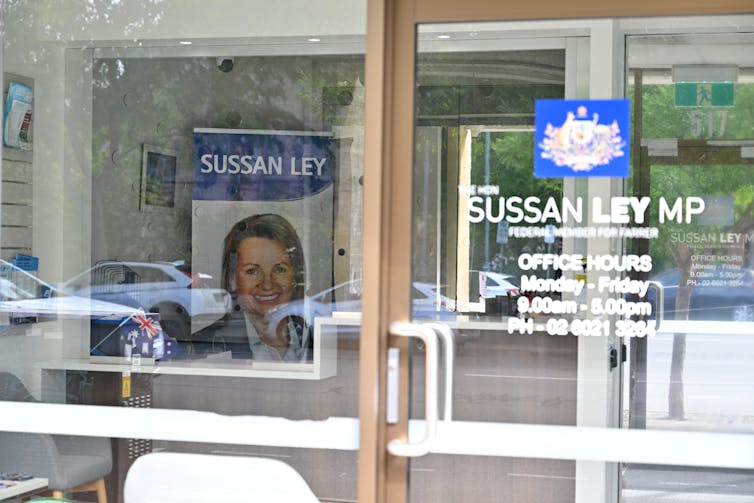
View from The Hill: The Liberals may fell Sussan Ley but she won’t make it easy for Taylor and Hastie

Source: The Conversation (Au and NZ) – By Michelle Grattan, Professorial Fellow, University of Canberra

In 2015, soon after he had rolled Tony Abbott to become prime minister, Malcolm Turnbull was heckled when, with a straight face, he told New South Wales Liberals, “We are not run by factions”.

Once, there had been a contrast, at least in degree, between the factionally-organised Labor party and the Liberals. But those days are long gone.

Today the difference is that factions in the federal Labor Party are externally well behaved – albeit sometimes internally brutal as Ed Husic and Mark Dreyfus can attest – while the Liberal factions are currently creating havoc for their party.

On Monday, Turnbull gave the ABC his latest take on the Liberals’ internals. Ley, he said, was in a fish tank whose occupants “want to eat each other. They have the memory of goldfish and the dining habits of piranhas”.

The conservatives have taken over the party. After being trounced on net zero, moderates are angry with Sussan Ley for mishandling the issue: if she had brought things to a head months or even weeks ago she might have achieved a compromise. On the other hand, if the moderates undermine her they just aid conservatives Angus Taylor or Andrew Hastie to become leader, probably bringing all sorts of other policies they don’t like.

Against this background, Monday’s Australian carried a front page lead claiming: “A growing number of moderate Liberal MPs are pulling their support for Sussan Ley and are backing Andrew Hastie to be the next leader, arguing she has caved to his agenda and he has a better chance of lifting the Coalition’s stocks electorally”.

The story went on to say two senior moderates had said a majority of moderate MPs would vote for Hastie against Ley.

It looked like some in the moderates were having a hissy fit, or declaring they were generally stuffed, or perhaps engaging in some unfathomable plot to stymie Hastie.

As a punchdrunk Ley hit yet another morning media round, other moderates then sought to get the faction back on a more even keel.

Senator Anne Ruston, as close to a leader as the faction has, and Senator Maria Kovacic in a joint statement rejected the media reporting.

“We, along with an overwhelming majority of our moderate colleagues, continue to strongly support Sussan’s leadership. This matter was resolved in the party room six months ago and Sussan will lead us strongly to the next election,” they said.

Ruston then went on Sky News to further defend Ley, days after trenchantly fighting to head off the ditching of net zero.

“I’ve spoken to a lot of my colleagues this morning, and I can confirm that every single one of the moderates I spoke to supports Sussan Ley as the leader of our party,” Ruston said.

Ley’s tactic when on the defensive is to go out and do more and more media, even if it looks like a losing battle.

On the ABC she was asked about her message to future generations, now net zero has been abandoned by the Coalition. “I want to reassure people listening who care about the climate, that I do too.”

On 2GB during her interview, presenter Ben Fordham played talkback calls from September, when people had been asked whether they would prefer Ley or Hastie as leader. Those played all said Hastie.

Fordham then asked Ley, “what’s that like to listen to?” When she fobbed him off, he persisted, “Does that hurt though?”

He went on, rather bizarrely: “Don’t get me wrong, we all have it in our jobs. I have the same thing here, not everyone wants me hosting the breakfast show, but they’re stuck with me, and the Liberal voters are stuck with you.”

Ley said she wasn’t “here for a sense of ego about me”.

Fordham, after inviting her back, presumably to be pummelled again, threw her a final question.

“You’re tough enough to withstand any pressures coming from the likes of Andrew Hastie or Jacinta Price or anyone else who’d like to see you as a former opposition leader, not the current one?”

To which she replied: “Ben, I’ve been underestimated a lot of my life. I remember when a lot of blokes told me I couldn’t fly an aeroplane and did a lot to keep me out of the front seat. I flew an aeroplane, I flew a mustering plane in very small circles, very close to the ground, and that was pretty tough at the time.”

Ley is once again flying very close to the ground. She knows she may not be able to keep herself aloft, but she appears determined to make Taylor and Hastie’s chase for the leadership as difficult as she can.

The Conversation

Michelle Grattan does not work for, consult, own shares in or receive funding from any company or organisation that would benefit from this article, and has disclosed no relevant affiliations beyond their academic appointment.

ref. View from The Hill: The Liberals may fell Sussan Ley but she won’t make it easy for Taylor and Hastie – https://theconversation.com/view-from-the-hill-the-liberals-may-fell-sussan-ley-but-she-wont-make-it-easy-for-taylor-and-hastie-269914

A cancer specialist explains why parents should not be too worried about coloured sand recalls

Source: The Conversation (Au and NZ) – By Anthony Linton, Associate Professor, School of Medicine, University of Sydney

Schools have been shut in the Australian Capital Territory after children’s play sand was recalled due to asbestos fears.

Almost all Canberra primary schools were closed on Monday, with Education Minister Yvette Berry conceding it could take “days” for schools to be declared safe to open again.

The sand has also been used in schools in other states and territories and has been sold nationwide by major retailers. I am a cancer specialist and researcher into asbestos related diseases, should parents be worried?

Coloured sand recall

Last week, the Australian consumer watchdog recalled several types of coloured sand, which children use for art and craft activities or sensory play.

This was because tremolite asbestos (a naturally occurring form of asbestos) had been “detected in some samples after laboratory testing”.

Worksafe ACT says it has also found traces of chrysotile (another type of asbestos) in one product, Kadink decorative sand. It says “the risk of exposure to traces of chrysotile is low”.

All the products came from China and were sold by a wide range of retailers, including Woolworths and Officeworks, between 2020 and 2025.

A blue, yellow and red tub of coloured sand.
Examples of the Kadink coloured sand that have been recalled.
Australian Competition and Consumer Commission


Read more:
Asbestos has been found in children’s coloured sand. What’s the risk to kids?


How worried should parents be?

People should not be overly worried about this as the risk for children and families is going to be very small. The odds of developing an asbestos-related disease from any exposure in this particular scenario are very low.

Our understanding is the asbestos in the sand is not respirable (able to be breathed in) in its current form. Significant mechanical processes (crushing/pulverising) would be required for release of the fibres.

In routine play, the risk of this happening is low.

Why are authorities concerned then?

We still need to make sure these products are adequately and safely removed.

Australia has a long history of asbestos use and deaths and illness related to exposure. About 4,500 Australians die per year from asbestos-related diseases. These deaths happen many years after exposure. For example, lung cancers occur 20–30 years after exposure. Mesothelioma occurs 30–50 years after exposure.

So we can’t be complacent and want to be able to reduce any risks of the exposure to any member of the population – especially children.

When asbestos is removed from homes during a renovation, expert removalists come in with full body coverings, including gloves and masks. Even though the risk is low, the process should be the same for schools.

What should you do if you have coloured sand at home?

If you’ve got these products at home, put unopened containers in a heavy-duty plastic bag and double tape them. Then take them to somewhere that accepts asbestos waste. Do not just throw it in the kitchen or curbside bin.

If there is loose sand, wipe it away with a wet cloth while wearing protective clothing and masks – and then follow the same procedure with heavy-duty plastic bags and tape. If you have any doubts, consult an asbestos removal specialist for further support.

Worksafe ACT has more detailed instructions on disposal here. So does Australia’s asbestos eradication agency.

I’m worried my family has been exposed

Unfortunately, there is no test to determine your disease risk if you have been exposed to asbestos. This means there may be little value in going to your GP.

But we can be reassured by the statements made by authorities so far, and do not expect significant danger to families and other groups exposed to this product at this time.

A timely warning

Australia banned asbestos more than 20 years ago. But there are still countries who mine this deadly substance.


Read more:
From a ‘magic mineral’ to the stuff of nightmares: a 6,700-year history of asbestos


So we need to make sure it does not come across our borders. In 2015, trace elements of asbestos were found in children’s crayons, for example.

We also still have it in our community – asbestos is in about one-third of our houses. It is also in our schools and hospitals because it used to be a standard building material.

Coincidentally, next week is asbestos awareness week. This is a reminder of why we all have to be vigilant about asbestos and continue our efforts to remove it from our community.

The Conversation

Anthony Linton is senior staff specialist in medical oncology at the Concord Cancer Centre in Concord Repatriation General Hospital. He is also the research director at the Asbestos and Dust Diseases Research Institute. He receives funding from iCare and the NSW Dust Diseases Authority.

ref. A cancer specialist explains why parents should not be too worried about coloured sand recalls – https://theconversation.com/a-cancer-specialist-explains-why-parents-should-not-be-too-worried-about-coloured-sand-recalls-269904

Amyl and the Sniffers’ generosity shows what’s missing for Australia’s live music venues

Source: The Conversation (Au and NZ) – By Sam Whiting, Vice-Chancellor’s Senior Research Fellow in Music Industries and Cultural Economy, RMIT University

When the Amyl and the Sniffers’ free show at Federation Square was cancelled on Friday night due to safety concerns, the band worked quickly to turn this disappointment around.

Using their performance fee, they placed A$35,000 across the bars of seven prominent grassroots music venues around Melbourne.

Many celebrated the band giving back to spaces that had nurtured them in their infancy, while providing much needed support to a struggling sector.

However, the gesture raises questions as to why these spaces are not already supported. And why are musicians – rather than governments, audiences or the community at large – the ones that need to step in?

Grassroots venues are struggling

Independent, grassroots music venues have been doing it tough. Australia has lost 1,300 venues and stages in the past five years.

Music venues have always been precarious. But inflation and exorbitant insurance costs have made running a venue exceedingly difficult.

Audience behaviours have also changed. Punters today attend more major events at the cost of attendance for smaller venues.

Audiences are also drinking less. This is an existential challenge for these venues, whose primary revenue stream is alcohol sales.

Despite this significant shift in the market, venues appear reluctant to change their business practices.

James Young of Melbourne’s Cherry Bar recently praised the same large arena tours that often draw punters away from grassroots venues for stimulating increased drinking in CBD venues, revealing the priorities of these spaces.

Meanwhile, owners of The Tote and The Last Chance Rock & Roll Bar have decried the lack of government support, while begging punters to come to more shows.

Such responses do not consider the fundamental ways in which the market for live music has changed, or whether live music should be subject to the market at all.

Is a commercial model fit for purpose?

Australian grassroots music venues largely conform to a market-based model of alcohol consumption that cross-subsidises cultural activities like live performances.

Live music may often attract considerable audiences, and young people are spending more on entertainment and leisure – particularly for major concert events. But grassroots music venues often use music as a “loss leader” to promote increased liquor sales.

Such a business model may have been lucrative in the 1980s and 90s. But as audience behaviours have changed, a rethink is needed.

In much of northern Europe and France, there is a strong precedent of nonprofit venues receiving operational subsidies from municipal governments to avoid reliance on alcohol sales.

These models maintain strong public support thanks to disciplined and professional advocacy from the sector. Advocacy has also increased in the United Kingdom through the work of the UK Music Venue Trust.

Having made significant progress on a big ticket levy aimed at supporting grassroots venues, the Music Venue Trust has also encouraged many small venues in the UK to transition to nonprofit corporate structures. As nonprofits, these venues become eligible for greater public funding and tax exemptions.

France’s Scene de Musiques Actuelles (Contemporary Music Venue) model also promotes engagement with disadvantaged communities, facilitating greater accessibility and diversity in return for public subsidies.

This stands in stark contrast to Australia’s alcohol-dependent, market-based approach, which often attracts a homogeneous audience that may not reflect contemporary, multicultural Australia.

Structural reform

Grassroots music venues require structural reform to reduce their reliance on alcohol sales.

Such reform could involve nonprofit structures, such as Lazy Thinking in Dulwich Hill, soon to be incorporated as a registered charity eligible for tax-deductible donations. Charity status also reduces tax obligations on wages and salaries.

Other reforms involve who owns the building itself.

Commercial rents and overheads are exorbitantly expensive. Insecurity of tenure is a recurring problem for venues, such as in the case of The Curtin Hotel in Melbourne and The Crown & Anchor in Adelaide.

In the UK, Music Venue Properties operates as a collectively-owned community benefit society. Through crowd-sourcing shares and donations from passionate live music fans, the organisation is able to purchase the freeholds to grassroots music venues. Through this, they can protect them in perpetuity and offer long-term cultural leases to their operators.

Apart from some additional top-up funding from government, the scheme requires little regulation or intervention to be successful.

Other successful non-government initiatives include voluntary ticket levies, such as in Germany and Wales.

Such community-led reforms are possible in Australia, but require an acknowledgement of the many important non-market roles venues perform and some (literally) sober thinking about how best to support them.

Musicians save the day, again

Amyl’s act of generosity towards seven of Melbourne’s grassroots music venues might have been unprecedented, but it was not surprising. The band is known for their commitment to crowd safety, community spirit and generosity towards fans.

But should the band have been the ones to make it up to the city? Particularly in a chronically underfunded arts and cultural ecosystem that requires musicians to cope with the rising costs of doing the work they love.

Musicians, venues, governments and other industry stakeholders need to work together to ensure that this ecosystem is valued for what happens on stage, rather than just what’s exchanged over the bar.


Read more:
Civic squares as contested spaces: what history and urban planning can tell us about Fed Square


The Conversation

Sam Whiting receives funding from RMIT University, the Winston Churchill Trust and Sound NSW.

Megan Sharp does not work for, consult, own shares in or receive funding from any company or organisation that would benefit from this article, and has disclosed no relevant affiliations beyond their academic appointment.

ref. Amyl and the Sniffers’ generosity shows what’s missing for Australia’s live music venues – https://theconversation.com/amyl-and-the-sniffers-generosity-shows-whats-missing-for-australias-live-music-venues-269899

Hundreds to commemorate loss of ancestors on Waerenga-A-Hika 160 years ago

Source: Radio New Zealand

Shaan Te Kani

Hundreds of people will this week commemorate the loss, arrest and deportation of their ancestors in a siege that took place 160 years ago on Waerenga-A-Hika near Gisborne.

Over five days, the pā was flattened, 71 Māori living at the pā and 11 government soldiers were killed and many more including elderly, women and children were captured, arrested and deported to the Chatham Islands.

The lands were partitioned and given to soldiers whose families today are sixth generation farmers, orchardists and viticulturists.

Artist, iwi historian and Gisborne District Councillor Nick Tupara’s five times great-grandfather was killed in the battle, he was a carver and teacher of the arts.

“His loss marks the total destruction of that school and the removal of our mātauranga and our knowledge and that weighs very heavily on the family,” he said. “From that point we took the name Kerekere from a reference to te Pōkerekere a deep intense darkness and not only a darkness because of the loss of ancestors land but also the loss of that ancestral knowledge.”

This years commemorations begin on Tuesday evening with the opening of the Waerenga-a-Hika exhibition at the Tairawhiti Museum, it features a collection of historic pieces including taonga from the battle and contemporary artworks.

On Saturday, there will also be a commemoration at the battle site.

Tupara said that by 1865 when the pā was attacked the East Coast was the only area that was untouched by war between the Crown and Māori.

“Colonial settlement was occurring pretty rapidly across the whole of the country and the Tairāwhiti was the last of all of that and eventually war was going to come here in some form or another.”

Waerenga-a-Hika was established where it was because it was a fertile area, whare wānanga that taught carving and weaving were also based there, he said.

“It was a place where people could feel safe and settled… it’s probably the last place I would classify as being a fortress or a place of military action, we have far stronger examples of that in our rohe, but this place was a place to gather, grow kai.”

Waerenga-ā-Hika pā in ruins after it was attacked in 1865. Alexander Turnbull Library Reference: 1/2-008137; F

Tupara said local iwi were well connected with the settler communities, many tīpuna had been baptised in the church and many had also married settlers.

The principle reason given for the attack on Waerenga-a-Hika was a clash between followers of the Pai Mārire religion and Europeans and Māori who opposed the religion, he said.

“My personal view on that is that was a tool to instil fear and anxiety amongst the settlers, to create significant worry to justify the intervention of troops.”

Tupara said another motivating factor was to clear the land for settlement.

With the exile of a large number of people to the Chatham Islands the land was surveyed and parcelled out to settlers, he said.

Tupara said he is hopeful that the commemorations can raise the consciousness of the battle among the local community.

“It’s remembered rather poorly, it’s remembered by the families who lost ancestors, it’s remembered by the hapū and the iwi who lost their land and their resources.”

Sign up for Ngā Pitopito Kōrero, a daily newsletter curated by our editors and delivered straight to your inbox every weekday.

– Published by EveningReport.nz and AsiaPacificReport.nz, see: MIL OSI in partnership with Radio New Zealand

Man jailed after using fake identities to gain NZ residence

Source: Radio New Zealand

He was sentenced to three years in prison. RNZ

A man has been sentenced to three years in prison for using false identities and forged documents to obtains visas and residence in New Zealand.

Immigration NZ said the man, aged 50, and his 44-year-old partner arrived using the identities of Hungarian nationals.

Over the next five years, they submitted a series of fraudulent visa applications, including visitor, work, resident and citizenship applications, using forged documents and false declarations.

The couple admitted 16 charges of immigration and identity fraud when they appeared in the Auckland District Court.

The woman was sentenced to 11 months home detention.

Sign up for Ngā Pitopito Kōrero, a daily newsletter curated by our editors and delivered straight to your inbox every weekday.

– Published by EveningReport.nz and AsiaPacificReport.nz, see: MIL OSI in partnership with Radio New Zealand

Civic squares as contested spaces: what history and urban planning can tell us about Fed Square

Source: The Conversation (Au and NZ) – By Rachel Iampolski, PhD Candidate, Centre for Urban Research RMIT, RMIT University

kevin laminto/Unsplash

On Friday, thousands packed into Melbourne’s Federation Square for a free Amyl and the Sniffers show. Within minutes, fences buckled, the perimeter was breached, and the gig was cancelled over crowd crush fears.

It was gutting for fans – but it’s also the latest episode in a much longer fight over what, or who, Federation Square is really for.

A city that avoided gathering spaces

Melbourne’s uneasy relationship with civic squares goes back to the 1830s, when surveyor Robert Hoddle laid out the city grid without a major central square. This was a deliberate design choice to avoid the open plazas that elsewhere had become magnets for dissent and mass protest.

Map of Melbourne and its suburbs
Early plans of Melbourne and its first suburbs showing a distinct lack of open space, 1855, compiled by James Kearney. Source:
State Library of Victoria

In the 19th and 20th century there were repeated failed attempts to retrofit a proper city square.

Proposals for a grand Parliament forecourt, for example, were abandoned in 1929 amid fears it would be used for protest.

City Square eventually opened in 1968 as a temporary design after the City of Melbourne acquired the land across from Town Hall. However, by 1997 it was carved up and sold off for the Westin hotel development, with much of its original design features (including a small waterfall) razed.

Federation Square, opened in 2002 on decking above rail yards, meant to fix our critical civic space gap. A publicly owned, privately operated space, the square blurred public place and commercial asset.

A focus on tourism and entertainment resulted in a square that often struggled to draw people in outside of events and beyond its surrounding venues, such as ACMI and NGV Australia.

In 2017, Fed Square’s management accepted a bid from Apple to demolish an existing building to erect their own flagship store within the square. This triggered fierce community backlash.

In response, Heritage Victoria listed Fed Square on the state heritage register – the youngest place ever to be listed. This limited development in the square, effectively putting a stop to the demolition plans.

The Heritage Council recognised the square as “the most important public square in Victoria”.

This flashpoint triggered a state government review into the square’s management, after which Fed Square was incorporated into the new Melbourne Arts Precinct Corporation in 2019. This brought a renewed emphasis on cultural programming. The irony, however: it has worked almost too well.

When you truly activate civic space, people show up. The Amyl gig proved relevant, exciting events draw crowds. But even with perfect crowd management, Fed Square – or any of Melbourne’s existing squares – simply couldn’t safely accommodate a crowd that size.

Lessons from Friday night

Fed Square has limited entry points and rigid borders: ideally, civic squares should have porous edges with lots of opportunities for spillover, or surrounding streets that can be closed to absorb crowds.

Melbourne’s rigid grid makes this difficult. As such, much of Melbourne’s public life has long been pushed into edge spaces – laneways, riverbanks, footpaths and markets, the State Library lawn (originally designed as a fenced off ornamental space, now inadvertently our most successful protest space following the removal of the picket fence).

This constraint has bred its own cultural innovation: Melbourne’s famed laneway culture emerged partly from necessity. And these diffuse, in-between spaces are genuinely valuable for everyday public life, not just mass gatherings.

But Friday shows we still need more opportunities for large-scale assembly. Other cities with established grids have managed it: Midtown Manhattan closed parts of Broadway to traffic; Barcelona’s Superilles (superblock) program created pedestrianised networks and new public squares within dense neighbourhoods.

Melbourne needs both large gathering spaces for moments like Friday night, and a diffuse network of everyday public spaces. That means seizing opportunities to create new civic plazas from major transport projects and renewal sites, protecting existing spaces like the State Library lawn and City Square from further privatisation, and challenging car dominance by closing more streets – temporarily or permanently.

If our only response to Friday night is tightening controls at Fed Square without also bolstering this diffuse cultural infrastructure – through planning protections, fairer regulation and investment in small venues (like Amyl and the Sniffers did themselves) – we will have missed the point.

Re-imagining public space

After a vexed history, rooted in a colonial planning logic that wanted to minimise gathering, Fed Square is slowly becoming the vibrant civic space people wanted. But we haven’t built the infrastructure to support that success.

People want to gather, but activating civic space without accommodating for growing demand is setting ourselves up for failure. We can’t just program better events; we need flexible crowd management systems, surrounding streets that can absorb overflow, and more public spaces.

Most importantly, we need to support the entire ecosystem – from Fed Square’s big stages to the small venues that quietly hold up Melbourne’s cultural life every night, and continue to carve out opportunities for public life.

Friday night proved Melburnians are hungry for public gathering. Now we need the civic infrastructure to match that appetite.

The Conversation

Rachel Iampolski received funding from Australian Government’s Research Training Program as part of her PhD. She is affiliated with the Australian Greens Victoria.

ref. Civic squares as contested spaces: what history and urban planning can tell us about Fed Square – https://theconversation.com/civic-squares-as-contested-spaces-what-history-and-urban-planning-can-tell-us-about-fed-square-269920

Finally, Indigenous peoples have an influential voice at COP30. They’re speaking loud and clear.

Source: The Conversation (Au and NZ) – By Danilo Urzedo, Research fellow, The University of Western Australia

Indigenous peoples are on the vanguard of climate action. Longstanding relationships with land means they endure the direct consequences of climate change. And their unique knowledge offers effective solutions to climate problems.

But despite this, international climate policies have fallen short of encouraging Indigenous leadership. With the UN climate summit hosted in the Amazon for the first time, COP30 marks an unprecedented effort to elevate Indigenous voices.

Returning to Brazil again after the 1992 and 2012 Rio conferences, COP30 has the largest Indigenous delegation in the summit’s history. More than 3,000 Indigenous representatives from around the world are in the Amazonian city of Belém.

Inside and outside the negotiation rooms, Indigenous organisations and coalitions have brought an unprecedented agenda to the summit: pressure for climate justice centred on the recognition of land rights and fair financing mechanisms.

Indigenous voices in diplomacy

A new form of climate diplomacy is emerging. This shift marks the creation of space for Indigenous delegates to participate in formal discussions that were previously exclusive to government officials.

Since 2019, the UN’s Local Communities and Indigenous Peoples Platform has expanded the Indigenous role in official negotiations. At this year’s summit, more than 900 Indigenous delegates – a record number – are participating in official debates.

Led by Brazil’s Minister for Indigenous Peoples, Sônia Guajajara, the COP30 presidency has encouraged Indigenous leadership in decision-making. This includes giving Indigenous delegates seats in negotiation rooms and embedding their demands in climate pledges and finance mechanisms.

“Indigenous Peoples want to take part, not just show up”, said Guajajara. “We want to lead and be part of the solution. So far, the investments driven by COP decisions have failed to deliver results – the 1.5°C goal is slipping out of reach”.

But turning community participation into political influence requires more than participation. Initiatives such as Kuntari Katu in Brazil assist Indigenous leaders in connecting their priorities with broader climate policies. Such training provides modules on topics such as carbon market mechanisms and equips Indigenous representatives with tools to communicate their priorities in climate debates.

Indigenous influence at COP30 is not confined to formal diplomacy. Protests inside and outside the COP venue have amplified long-sidelined demands. Under the rallying cry “Our land is not for sale”, one of the demonstrations occupied areas of the COP30 venue with direct confrontation with the security staff.

Thousands of activists also joined a four-kilometre march in the host city of Belém to call for action from leaders to stop environmental destruction. These protests have brought global attention to injustices that climate politics have long tried to contain. They highlight unresolved land-tenure conflicts and the rising violence faced by Indigenous communities on the frontline of climate impacts.

Land rights as climate solutions

Indigenous territories deliver some of the world’s most effective responses to the climate crisis, from curbing deforestation to storing vast amounts of carbon. Yet much Indigenous land remains without formal recognition, leaving it exposed to invasions by illegal mining, agribusiness expansion, and land grabs, including for renewable energy projects.

COP30 has brought commitments to recognising Indigenous territories as climate solutions. During the opening ceremony, Brazil’s President Luiz Inácio Lula da Silva emphasised the centrality of Indigenous territories to promote effective climate action. World leaders pledged to secure 160 million hectares of Indigenous and community lands by 2030.

Indigenous organisations say pledges remain far from sufficient given the threats to their lands. The Munduruku Indigenous community, an indigenous people living in the Amazon River basin, made this clear with a major blockade at COP30. Their action created long queues at the summit entrance, delaying thousands of delegates. The disruption compelled the COP presidency to meet with Munduruku leaders, who pressed for the demarcation of their territories and the right to be consulted on development projects in their territory.

Fair climate finance

One of COP30’s major negotiation challenges is finalising the Baku-Belém Roadmap, which aims to unlock A$1.5 trillion in climate funding. Yet climate finance mechanisms have a long history of undervaluing Indigenous knowledge and governance. Indigenous organisations say that fairness must be central to these pledges.

At the Leaders’ Summit, a multilateral coalition launched the Tropical Forests Forever Fund. This commits A$7.6 billion to protect over one billion hectares of forests. With backing from 53 nations and 19 sovereign investors, the fund earmarks 20% of its finance for Indigenous projects. The Forest Tenure Funders Group also renewed its pledge, with a commitment of A$2.7 billion to secure Indigenous land rights.

Still, Indigenous advocates warn climate finance must go beyond dollar amounts. They want a shift in who controls the funding and how projects are governed. Placing Indigenous leadership at the centre of financing means making sure Indigenous communities can receive funding directly and have fair agreements that protect them from financial risks.

Transformative leadership

UN climate conferences have long been criticised for delivering incremental progress but little systemic change. Yet signs of political transformation are emerging.

Beyond climate debates, significant Indigenous leadership is gaining momentum across other international environmental policies. In 2024, the UN’s meeting to combat desertification formalised a new caucus for Indigenous Peoples, while the Convention on Biological Diversity established a permanent Indigenous subsidiary body.

These growing political shifts reveal that effective environmental actions depend on dismantling power inequalities in decisions. Inclusive leadership in policymaking may not completely address the environmental crisis, but it marks a turning point as historically silenced voices begin to lead from the centre.

Danilo Urzedo receives funding from the Australian Research Council under the Industrial Transformation Training Centre for Healing Country (IC210100034).

Oliver Tester receives funding from the ARC Industrial Transformation Training Centre for Healing Country.

Stephen van Leeuwen receives funding from the ARC Industrial Transformation Training Centre for Healing Country.

ref. Finally, Indigenous peoples have an influential voice at COP30. They’re speaking loud and clear. – https://theconversation.com/finally-indigenous-peoples-have-an-influential-voice-at-cop30-theyre-speaking-loud-and-clear-269403

An AI lab says Chinese-backed bots are running cyber espionage attacks. Experts have questions

Source: The Conversation (Au and NZ) – By Toby Murray, Professor of Cybersecurity, School of Computing and Information Systems, The University of Melbourne

Lone Thomasky & Bits&Bäume / Better Images of AI, CC BY

Over the past weekend, the US AI lab Anthropic published a report about its discovery of the “first reported AI-orchestrated cyber espionage campaign”.

The company says a Chinese government–sponsored hacking group used Anthropic’s own Claude AI tool to automate a significant part of an effort to steal sensitive information from around 30 organisations.

The report has drawn a lot of attention. Some, including respected experts, have warned that AI-automated cyber attacks are the future, urging cyber defenders to invest now before the coming onslaught.

At the same time, many in the cyber security industry have been underwhelmed by Anthropic’s claims, saying the actual role AI played in the attacks is unclear.

What Anthropic says happened

Critics have pointed out what they say is a lack of detail in the report, which means we have to do a certain amount of guesswork to try to piece together what might have happened. With that in mind, it appears the hackers built a framework for carrying out cyber intrusion campaigns mostly automatically.

The grunt work was carried by Anthropic’s Claude Code AI coding agent. Claude Code is designed to automate computer programming tasks, but it can also be used to automate other computer activities.

Claude Code has built-in safety guardrails to prevent it from causing harm. For example, I asked it just now to write me a program that I could use to carry out hacking activities. It bluntly refused.

However, as we have known from the very first days of ChatGPT, one way to bypass guardrails in AI systems is to trick them into engaging in role-play.

Anthropic reports that this is what these hackers did. They tricked Claude Code into believing it was assisting authorised hackers to test the quality of a system’s defences.

Missing details

The information Anthropic has published lacks the fine details that the best cyber incident investigation reports tend to include.

Chief among these are so-called indicators of compromise (or IoCs). When investigators publish a report into a cyber intrusion, they usually include hard evidence that other cyber defenders can use to look for signs of the same attack.

Each attack campaign might use specific attack tools, or might be carried out from specific computers under the attacker’s control. Each of these indicators would form part of the cyber intrusion’s signature.

Somebody else who gets attacked using the same tools, coming from the same attacking computers, can infer that they have also been a victim of this same campaign.

For example, the US government Cybersecurity and Infrastructure Security Agency recently partnered with government cyber agencies worldwide to publish information about ongoing Chinese state-sponsored cyber espionage, including detailed indicators of compromise.

Unfortunately, Anthropic’s report includes no such indicators. As a result, defenders are unable to determine whether they might also have been victims of this AI-powered hacking campaign.

Unsurprising – and with limited success

Another reason many have been underwhelmed by Anthropic’s claims is that, on their face and absent hard details, they are not especially surprising.

Claude Code is widely used by many programmers because it helps them to be more productive.

While not exactly the same as programming tasks, many common tasks performed during a cyber intrusion are similar enough to programming tasks that Claude Code should be able to carry them out, too.

A final reason to be wary of Anthropic’s claims is that they suggest the attackers might have been able to get Claude Code to perform these tasks more reliably than it typically does so.

Generative AI can perform marvellous feats. But getting systems such as ChatGPT or Claude Code to do so reliably remains a major challenge.

In the memorable words of one commentator, too often these tools respond to difficult requests with “ass-kissing, stonewalling, and acid trips”. In plainer language, AI tools are prone to sycophancy, repeated refusal to carry out difficult tasks, and hallucinations.

Indeed, Anthropic’s report notes that Claude Code frequently lied to the attackers, pretending it had carried out a task successfully even when it hadn’t. This is a classic case of AI hallucination.

Perhaps this explain the attack’s low success rate: Anthropic’s own reporting says that while about 30 organisations were targeted, the hackers succeeded against only a few.

What does this mean for the future of cyber security and AI?

Whatever the details of this particular campaign, AI-enabled cyber attacks are here to stay.

Even if one contends that current AI-enabled hacking is lame, it would be foolish for cyber defenders to assume it will stay that way.

If nothing else, Anthropic’s report is a timely reminder for organisations to invest in cyber security. Those who do not may face a future in which their secrets are stolen or operations disrupted by autonomous AI agents.

The Conversation

Toby Murray receives funding from the Department of Defence, and has previously received funding from Google and Facebook. He is Director of the Defence Science Organisation, which receives funding from state and Commonwealth governments.

ref. An AI lab says Chinese-backed bots are running cyber espionage attacks. Experts have questions – https://theconversation.com/an-ai-lab-says-chinese-backed-bots-are-running-cyber-espionage-attacks-experts-have-questions-269815

IT system at Wellngton Hospital a ‘constant risk’ to patient safety, says union

Source: Radio New Zealand

There have been performance issues and recurring outages with the IT system at Wellington Hospital. RNZ / REECE BAKER

The union for senior doctors says an IT system introduced this year at Wellington Hospital is a “constant risk” to patient safety.

The system was very slow and crashed all the time, Sarah Dalton – head of the Association Of Salaried Medical Specialists – told Midday Report on Monday.

Health New Zealand said there were “performance and stability issues” but it had safeguards in place to ensure patient information was not lost.

It would “keep pushing until the system is stable and reliable”.

RNZ has seen one email from the hospital front line that said: “Wellington’s IT disaster has become so bad that some specialists are now cancelling/cutting back their clinics as they can’t get through all their patients.”

Dalton said they had been trying for months to get a meeting with Health NZ about this, which they now expected to be in a week or so, as what Health NZ had called “teething” problems got worse.

“We now believe the failure of the system is a constant risk both to efficiency but more concerningly to patient safety,” she said.

It took two to three minutes to load a screen with a patient’s information – for example, what medications a sedated patient was on – then regularly crashed when multiple screens were needed.

“It’s pushing back to paper-based workarounds to try and care safely for patients.”

Health NZ chief information technology officer Darren Douglass said performance problems arose in March, and they set up a team to fix them, including working with the supplier, replacing older hardware and improving remote access.

Dalton said the system would be very useful in linking all sorts of medical specialists, if it worked.

She understood any fixes would likely take months.

This was linked to the government and Health NZ stripping $100m and key roles – mislabelled back office, said Dalton – from data and digital teams.

“We can see here a direct negative impact on patient care.”

The Public Service Association echoed that line: “We warned the government last year that cutting IT staff at Health NZ Te Whatu Ora was playing with fire.”

Health NZ’s Douglass said clinicians had processes in place to ensure critical information was not missed.

“While the system is still working, it can be slow to access functions and open clinical documents, especially during busy times,” he said in a statement on Monday.

“This performance issue and recurring outages have made it harder for clinicians to access patient information quickly.

“While the risk is low, any disruption is taken seriously and safeguards are in place to ensure critical patient information is not lost.”

Patient safety remained the top priority and urgent care was prioritised.

“While these issues can add time to some tasks, we are working hard to minimise any impact on wait times.”

The PSA called on the privacy commissioner to investigate.

“The privacy commissioner refused our request to investigate privacy risks to patient data last year,” national secretary Fleur Fitzsimons said in a statement on Monday.

“We say he needs to think again – before patients are harmed and confidential health information is compromised.”

Sign up for Ngā Pitopito Kōrero, a daily newsletter curated by our editors and delivered straight to your inbox every weekday.

– Published by EveningReport.nz and AsiaPacificReport.nz, see: MIL OSI in partnership with Radio New Zealand

Soldier facing court martial following accusations of strangling former partner

Source: Radio New Zealand

The accused soldier denies strangling his former partner who was also in the Defense Force at the time. RNZ / Jonathan Mitchell

A soldier is accused of strangling another soldier on two occasions in 2019.

The Army corporal is facing court martial after pleading not guilty to two charges of assaulting his former partner, who was also in the Defence Force at the time.

Both have name suppression.

In his opening address prosecutor Lieutenant Ben Ruback told the court martial that on two occasions the man became angry at the woman while he was drunk and strangled her.

On the first occasion the pair had been at a party outside of Burnham Military Camp and the woman was the sober driver, Ruback said.

In her evidence, the woman said she helped the man to his barracks because he was so intoxicated.

Once back in the barracks, he wanted to leave and continue partying but she wanted him to stay because she thought he was too drunk, the woman told the court.

“I was blocking the door and he got even more angry and he started strangling me towards the door,” she said.

The following morning there were marks on her neck and the accused asked her about them.

She told him he had strangled her and he said he did not remember but apologised, she said.

She did not tell anyone about being strangled because she wanted to protect her partner’s reputation and did not want people to know they were having problems.

Defence lawyer Andrew McCormick said the soldier admitted there were two incidents when he behaved badly but claimed he never strangled the woman.

On the first occasion his client says the woman was the aggressor, McCormick told the court.

On the second occasion the soldier accepted he pushed her against a post, but he claimed he did not put his hands around her throat, McCormick said.

“This isn’t the case of him saying – I didn’t do anything, she is completely lying. This is a case of him saying – yes, there were two flash point confrontations. Yes, I had been drinking. Yes, I have behaved badly. Yes, I have let myself down. Yes, I have treated her badly,” McCormick said.

“But he says I did not put my hands around her throat. I did not try to strangle her. I was not reckless about that either.”

During cross-examination, McCormick put to the woman she had only made the complaints in 2024 because the Defence Force was reviewing her retention in the army.

“You made these complaints because you were upset you were discharged from the Defence Force and he was still there,” McCormick said.

The woman said that was not true.

The court martial at Burnham Military Camp is set down for three days.

Sign up for Ngā Pitopito Kōrero, a daily newsletter curated by our editors and delivered straight to your inbox every weekday.

– Published by EveningReport.nz and AsiaPacificReport.nz, see: MIL OSI in partnership with Radio New Zealand

Kahureremoa Fleur Mantell jailed for more than $120k in false Covid-19 relief claims

Source: Radio New Zealand

File photo. RNZ/Marika Khabazi

An Auckland woman has been jailed for more than three years after she made false claims for more than $120,000 in Covid-19 relief.

Kahureremoa Fleur Mantell was sentenced in the Manukau District Court after she was found guilty of 33 dishonesty charges.

She pretended to run a business and used Small Business Cashflow Scheme and Resurgence Support Payment applications to get Covid-19 relief money.

The applications were made in her name and those of six other people.

Mantell dishonestly attempted to obtain $122,000 in income tax returns and Covid-19 relief money.

The total amount paid out was just under $69,000.

Sign up for Ngā Pitopito Kōrero, a daily newsletter curated by our editors and delivered straight to your inbox every weekday.

– Published by EveningReport.nz and AsiaPacificReport.nz, see: MIL OSI in partnership with Radio New Zealand

Ministry of Education closer to making decision on Gloriavale Christian School’s future

Source: Radio New Zealand

Gloriavale Christian community is small, isolated place in Haupiri, West Coast. Jean Edwards

The Ministry of Education is reviewing Gloriavale Christian School’s response to officials’ concerns as it weighs up the school’s future.

Secretary for Education Ellen MacGregor-Reid wrote to the private school last month advising she was considering cancelling its registration after a second failed Education Review Office audit in as many years.

July’s ERO report found Gloriavale Christian School had not met three of eight registration criteria and was not a physically and emotionally safe space for students.

Gloriavale’s school leadership had five weeks to respond to the secretary’s letter with an initial deadline of 7 November. However, it was extended until Friday after the West Coast Christian community requested more information.

Ministry of Education Te Tai Runga (South) acting hautū (leader) Andrea Williams confirmed the ministry had received a response from Gloriavale.

“The Ministry received a response from the school on Friday and is now carefully reviewing it before making a decision,” she said.

“There is no set timeframe for this process, but the ministry will make sure it moves forward within a reasonable period. The school will be kept informed about when a decision can be expected.”

Education officials met Gloriavale school leaders on 23 July to express concerns about its compliance with registration requirements and issue a second formal “notice to comply”.

In August, Children’s Commissioner Claire Achmad called for the school’s urgent closure, saying she had zero confidence that students were safe.

The Gloriavale Leavers’ Support Trust favoured a special transitional model for the children’s education, if the school closed, saying the community’s hostels were not an appropriate place for homeschooling.

Under the Education and Training Act, the ministry could cancel the registration of a private school, if it no longer met the criteria, including providing suitable premises, staffing, curriculum, or ensuring student safety and wellbeing.

Sign up for Ngā Pitopito Kōrero, a daily newsletter curated by our editors and delivered straight to your inbox every weekday.

– Published by EveningReport.nz and AsiaPacificReport.nz, see: MIL OSI in partnership with Radio New Zealand

Trump’s Gaza peace plan faces a pivotal UN Security Council vote. Can it get across the line?

Source: The Conversation (Au and NZ) – By Michelle Burgis-Kasthala, Professor of International Law, La Trobe University

The UN Security Council is set to vote on a US-proposed draft resolution in New York on Monday that sets the groundwork for the next stage of President Donald Trump’s 20-point peace plan for Gaza to be put into force.

Over the last few weeks, Russia, China and various regional states have been pushing for amendments to a draft that was first circulated in early November. The key contention has centred on a proposed transitional authority – the so-called Board of Peace, chaired by Trump himself – with sweeping governance powers devoid of any Palestinian participation or endorsement.

The latest draft now at least includes notional recognition of Palestinian self-determination, which may be enough to deter a veto by either China or Russia.

While many countries continue to be concerned about the details (or lack thereof) in the resolution, support from a broad coalition of regional states will probably push it over the line.

Neither the Israelis nor Palestinians have been formally included in the negotiations, but Israel has presumably worked closely to shape the text. It has pushed back strongly on language supporting Palestinian statehood and will continue to do so.

The Palestinian Authority leader, Mahmoud Abbas, has given his broad support to the plan.

What’s in the proposed resolution?

While Trump revelled in the success of his ceasefire and peace deal in October, the efforts by his administration to push for UN Security Council resolution since then underscore how fragile the situation is.

The United States has ignored, shunned or actively obstructed the UN’s work in Gaza over the last two years. It has imposed sanctions on Special Rapporteur Francesca Albanese, defunded the UN Relief and Works Agency for Palestine (UNRWA) and vetoed numerous previous resolutions calling for ceasefires in Gaza.

Now, it seems the US is willing to concede a role to the UN. But it envisions this role to be minimal at best and perhaps stretches the limits of standard Security Council mandates to their breaking point.

The draft resolution seeks to build on Trump’s 20-point plan in fundamental ways. One of the key points is the establishment of a transitional authority (the Board of Peace) to oversee the provision of aid and start of reconstruction in Gaza; and an International Stabilisation Force (ISF) to disarm Hamas and oversee security in Gaza for the next two years.

The Board of Peace would include Palestinian technocrats. It would eventually transfer power to the Palestinian Authority, but only once the board is satisfied it is capable of ruling autonomously. Palestinian self-determination is mentioned, but as a platitude without any guarantees.

The ISF would likely comprise troops from Muslim states – such as Indonesia, Egypt, Azerbaijan and Turkey – under the guidance of special forces from Western states. It would maintain border security for Egypt and Israel, though questions remain about how and where it would maintain security within Gaza itself. Disarming Hamas could bring it into direct military confrontation with the group.

Financial details appear at the end of the text. The World Bank and donor states are called on to supply various forms of support, but again, without any concrete policies or parameters.

What’s problematic about it?

It is clear the US is seeking a Chapter 7 mandate under the UN Charter, which authorises the Security Council to take enforcement measures, including military action, to maintain international peace and security. For example, Chapter 7 resolutions authorised action against Iraq in 1990 and Libya in 2011.

While the UN Charter gives the Security Council this power, it still must operate within the framework of international law.

In the absence of explicit Palestinian agreement, the Board of Peace and International Stabilisation Force would likely be classified, in the eyes of legal experts, as occupying powers. And the UN’s highest court, the International Court of Justice, has already declared Israel’s occupation of Palestinian territories as illegal under international law.

As such, any foreign entity governing Gaza and exercising force would also be considered illegal without Palestinian consent, were it to seek to transform the domestic laws in place.

The crux here is Palestinian self-rule. There is no getting around this problem in the long term.

Is there a path forward?

Palestinian buy-in is not only mandatory from a legal sense, it’s also crucial for the Board of Peace to have sufficient legitimacy to address the extremely complex and pressing needs of the Palestinians in Gaza.

Accountability is also vital to ensure the path to peace is genuine and achievable. Yet, the draft resolution ignores the overwhelming evidence put forth by a UN Commission of Inquiry of Israel’s genocidal conduct in Gaza and overlooks the responsibility and accountability of the ISF altogether.

Ultimately, then, the Security Council resolution is reminiscent of the Oslo Peace Accords in the early 1990s. The agreements also promised eventual Palestinian statehood in some vague form, along with a partial Israeli military withdrawal.

However, they did so by abandoning key international legal protections for Palestinians, centred on their right to self-determination and the territorial integrity of the post-1967 occupied Palestinian territories.

If it passes, the UN resolution might provide cover for some semblance of peace, but it won’t have had the direct formal involvement of the Palestinians or Israelis themselves. And it will likely be a peace that only secures Israel’s borders, while dangling the paltry promise of Palestinian statehood to a population already on its knees.

Michelle Burgis-Kasthala does not work for, consult, own shares in or receive funding from any company or organisation that would benefit from this article, and has disclosed no relevant affiliations beyond their academic appointment.

ref. Trump’s Gaza peace plan faces a pivotal UN Security Council vote. Can it get across the line? – https://theconversation.com/trumps-gaza-peace-plan-faces-a-pivotal-un-security-council-vote-can-it-get-across-the-line-269894

FENZ restructure poses ‘tremendous human cost, union says

Source: Radio New Zealand

The proposed changes at FENZ would be the biggest in 8 years. RNZ / Alexander Robertson

The union for volunteer firefighters says a restructure at Fire and Emergency (FENZ) poses a “tremendous human cost”.

FENZ is proposing to cut at least 140 non-firefighter jobs and scrap its regional structure in its biggest overhaul since it was set up in 2017.

The United Fire Brigades’ Association said “We understand there is a tremendous human cost to this proposed change so will be looking carefully at the proposal and will be making a submission through the Fire and Emergency consultation process.”

It encouraged its membership of 14,000 to give feedback, it said in a statement on Monday.

The association last year put out a report calling for more investment in volunteer firefighters, suggesting they were “hidden in plain sight”.

Hundreds of fire brigades are volunteer or hybrid volunteer-paid ones.

A change proposal document sets out to disestablish a raft of positions and set up new ones.

For instance, it showed eight of 13 roles in recruitment, including of volunteers, slated to go, but a new lead role for supporting volunteers coming in.

Training for volunteers would also be separated from that for career firefighters, with three new roles for managing volunteer training proposed.

“Dedicated teams for career and volunteer personnel are proposed to provide focused oversight and ensure consistency in quality,” it said.

Sign up for Ngā Pitopito Kōrero, a daily newsletter curated by our editors and delivered straight to your inbox every weekday.

– Published by EveningReport.nz and AsiaPacificReport.nz, see: MIL OSI in partnership with Radio New Zealand

Watch live: PM Christopher Luxon at post-cab conference

Source: Radio New Zealand

The government is tinkering with the Clean Car Standard – again – saying most importers are unable to meet the targets under the scheme as it currently stands.

It will also fully review the scheme, with recommendations to Cabinet due by June 2026.

The government last year watered down the standard to align CO₂ emissions standards with Australia – saying that change would strike the right balance between reducing transport emissions and ensuring vehicles would be affordable.

The standard charges importers for vehicles that have CO₂ emissions-to-weight ratios above a certain target, with credits for vehicles with ratios below that target.

Transport Minister Chris Bishop said it had helped lift fuel efficiency, but now the market conditions had changed, with a supply shortage of cleaner used vehicles, and a drop in demand for new EVs.

“Most importers are now unable to meet the passenger-vehicle targets. In fact, right now, 86 per cent of importers are facing a net charge rather than net savings from credits. The scheme is so out-of-whack with reality that even some hybrid vehicles will attract charges rather than credits,” he said.

The Clean Car Discount scheme was announced by the previous government in June 2021. 123RF

The targets were set to decrease each year until 2029, while the charges for exceeding them would increase.

Under the new changes, the charges will be slashed by nearly 80 percent – from $67.50 to $15 per gram of CO₂ for new vehicles, and from a top rate of $33.75 to $7.50 for used vehicles, for 2026 and 2027.

Credits will also be protected so that none expire before 31 December 2028, while the standard is reviewed.

Bishop estimated the changes would avoid $264 million in net charges, which could have been passed onto consumers through higher vehicle prices.

The changes will made through an amendment paper to the Land Transport (Clean Vehicle Standard) Amendment Bill (No 2), with the aim of passing it this week and coming into effect on 1 January.

One of the first actions taken by the government upon coming into office was to repeal the Clean Car Discount, which charged fees to buyers of newly imported combustion engine vehicles, with the money going towards rebates for electric cars or plug-in hybrids.

ACC has also increased levies for electric cars.

– more to come

Sign up for Ngā Pitopito Kōrero, a daily newsletter curated by our editors and delivered straight to your inbox every weekday.

– Published by EveningReport.nz and AsiaPacificReport.nz, see: MIL OSI in partnership with Radio New Zealand

Why Pope Leo is making a plea to save our cinemas

Source: The Conversation (Au and NZ) – By Ruari Elkington, Senior Lecturer in Creative Industries & Chief Investigator at QUT Digital Media Research Centre (DMRC), Queensland University of Technology

To the best of my knowledge, Pope Leo XIV has never visited the town of Yass in New South Wales.

Yet efforts by the Yass community to restore the town’s 1930s art deco Liberty Theatre are very much aligned with the Holy Father’s latest pronouncement. The theatre – once a cultural hub for the townspeople – recently screened its first film in more than 50 years.

In Yass, like everywhere else, smart devices provide an opportunity for screen-based entertainment. So, why spend time and money restoring an old cinema when you can watch anything you want on your iPhone at home?

Remarkably, the answer to this question is the same in Vatican City as it is in rural NSW.

A Hollywood audience at the Vatican

On November 15, Pope Leo XIV had something to say to the world about cinema.

For researchers such as myself who study cultures of cinemagoing this is both a welcome and strange development.

We don’t have a long history of popes listing their Letterboxd “top four” films of all time, but on the weekend, we got Leo’s: in case you missed it, they were The Sound of Music (1965), It’s a Wonderful Life (1947), Ordinary People (1980) and Life Is Beautiful (1997).

The pontiff’s decision to invite actors, directors and film executives to the Vatican to make a speech about why cinemas and cinemagoing still matter suddenly placed questions about the value of this practice squarely in front of the world’s 1.4 billion Catholics.

Australia’s Cate Blanchett was there, along with Monica Bellucci, Chris Pine and Adam Scott. So too were the filmmakers Darren Aronofsky, Spike Lee, Judd Apatow and Gaspar Noe. For anyone familiar with Noe’s oeuvre, it’s clear the pontiff wasn’t not playing it safe when it came to his choice of guests. This reflected a key line from his speech:

When cinema is authentic, it does not merely console but challenges.

Why is the pope talking about cinema?

As many of the residents of Yass will tell you, cinema is a powerful way for communities to come together and experience a shared story.

This experience, and the focus and commitment it demands from us, is arguably needed now more than ever.

The commentary in Yass when the Liberty Theatre reopened was not about the latest blockbuster, but the social, emotional and communal benefits the cinema enabled. As one resident explained:

Having a cinema back in Yass means the community can come together, and there’s a sense of pride as well.

In his Saturday address at the Vatican, Pope Leo did not hesitate to hold up cinemagoing as a deeply human and indeed spiritual pursuit that allows us to reflect on our own humanity:

Cinema combines what appears to be mere entertainment with the narrative of the human person’s spiritual adventure. One of cinema’s most valuable contributions is helping audiences consider their own lives, look at the complexity of their experiences with new eyes and examine the world as if for the first time. In doing so, they rediscover a portion of the hope that is essential for humanity to live to the fullest.

My own research has focused on understanding the various reasons cinemagoing is valuable for communities – and how the “social prescribing” of cinemagoing can benefit communities.

In surveys my colleagues and I conducted with industry, 81% of moviegoers said they believe cinemagoing enhances their overall wellbeing – underlining its broader benefits, despite the often reported gap between pre-pandemic attendance and now.

In his speech, Pope Leo homed in on one overlooked but increasingly valued understanding of why cinema matters: we get to focus. In an attention economy where “second screen shows” play alongside other digital distractions, giving ourselves over to a single onscreen story may provide much needed relief. In the pope’s own words:

We live in an age where digital screens are always on. There is a constant flow of information. However, cinema is much more than just a screen; it is an intersection of desires, memories and questions. […] As the plot unfolds, our mind is educated, our imagination broadens, and even pain can find new meaning.

A practical call to action

For anyone who thinks academics read too much into cinemagoing, the notion of going to see Avatar as an “intersection of desires, memories and questions” may seem overblown.

But the speech wasn’t just heavy on the metaphysical, it also spoke to practical issues and solutions. The pope spoke about cinemas’ struggles to sustain audiences, the closure of sites, and the idea the cinematic experience may be in danger.

He urged institutions to cooperate in affirming the social and cultural value of this activity and, like the good people of Yass, pointed squarely at why we should value cinemagoing:

If a city is alive, it is thanks in part to its cultural spaces. We must inhabit these spaces and build relationships within them, day after day.

If Pope Leo ever makes it to Yass, hopefully he will find a community united around its local theatre.

The Conversation

Ruari Elkington has received funding from the Queensland government’s Department of Environment, Tourism, Science and Innovation (DETSI), Screen Queensland, The Embassy of France in Australia, and the Cinema Association Australasia.

ref. Why Pope Leo is making a plea to save our cinemas – https://theconversation.com/why-pope-leo-is-making-a-plea-to-save-our-cinemas-269898

Residents challenge Wellington flight path changes as being unlawful

Source: Radio New Zealand

A judicial review is underway against Airways, the Director of Civil Aviation and Wellington Airport. 123RF

A judicial review is underway at the High Court in Wellington as residents from some northern suburbs challenge a flight path change which they say is unlawful.

A change to flight paths in December 2022 meant fewer departures over Newlands and more over Khandallah and Broadmeadows.

The changes were part of a system called the Divergent Missed Approach Protection System (DMAPS) which were introduced by Airways, New Zealand’s air navigation service provider, and approved by Wellington Airport.

Community group Plane Sense believes the implementation process wasn’t lawful or transparent, and that it didn’t properly consider community health, safety and well-being in the local environment.

Its brought a judicial review against Airways, the Director of Civil Aviation and Wellington Airport.

Committee member Roxy Steel said Plane Sense were asking the court to declare the DMAPS flight path invalid and reinstate the previous departure procedure.

“We’ve got community members who are telling us it’s impacting their sleep, impacting their children,” she said. “We’ve got residents who chose to live in these suburbs due to existing health conditions and this noise is impacting their recovery and their way of living at the moment.”

The group said it wasn’t initially consulted on and were taken by surprise by the changes. Consultation was later undertaken.

“The standard instrument departure tracks for jet aircraft had been in operation for approximately 60 years and residents chose where to live based on that status quo.

The residents in Khandallah, Johnsonville and Broadmeadows were taken by surprise by a radical DMAPS concept which in effect changed the north/south runway vector with adverse effects on their safety, health and wellbeing.

This took place without notice or consultation. Unlike its previous course, the new flight path crosses suburbs located within the Wellington Airport noise abatement area which has been in Civil Aviation Rule Part 93 since 1997,” it said.

The group said jets flew lower over terrain than under the previous procedures, significantly amplifying noise.

According to research from Sapere Research Group homes under the DMAPS flight path were also estimated to have have lost between $20,000 – $28,000 on average, with total property value losses across the affected suburbs estimated to be between $248 million and $453 million.

What is the DMAPS system?

The system introduced a greater separation between departure aircraft flight paths, and arrival go-around/missed approach flight paths when the initial approach to land was abandoned for safety reasons.

“DMAPS is designed to increase safety at Wellington Airport and was implemented after a number of incidents related to missed approaches (which occur when an arrival aircraft is unable to complete its landing),” said Airways GM of People and Partnerships Jamie Gray.

“DMAPS ensures that flight paths followed by departure aircraft diverge from the flight path followed by missed approach aircraft, separating both aircraft by default,” he said.

He said in the time since DMAPS was introduced in 2022, the number of missed approach safety reports at Wellington Airport has reduced significantly, from 27 in 2019 to only five in total over the last three years.

“All safety reports have been investigated and none are directly attributable to DMAPS,” he said.

Safety a priority, status quo most popular option in consultation

Gray said Airways’ role to provide air traffic services was centred on its obligation to ensure the safety and efficiency of air navigation and the air traffic network.

DMAPS is designed in accordance with the Civil Aviation Rules and applicable ICAO standards. It is compliant with these rules and standards.

“In that judicial review, Plane Sense has made a number of statements regarding the safety of the flight paths over Wellington, in particular regarding the Divergent Missed Approach System,” he said. “Airways will fully defend itself against Plane Sense’s allegations.”

“On the issue of safety, Airways wants to reassure the public that DMAPS is and always has been safe.”

Wellington Airport said it supported DMAPS because it was safer, more efficient and was the most popular option from its voluntary public consultation.

“It has reduced delays, travel times and costs, lowered emissions, and affects the fewest number of people with noise,” it said.

It said of the four options publicly consulted on in 2024, the status quo was the most popular choice at nearly 50 percent, more than twice the level of other options.

“We understand this was disappointing for some people. However, the unavoidable challenge for a city like Wellington with an airport relatively close to the CBD is that aircraft must fly over residential areas at times, no matter which flight path option is preferred.”

A CAA spokesperson said flights have historically flown over the northern suburbs, but the changes made three years ago did make small, but noticeable, differences in noise on the ground from some outbound flights.

“While the changes complied with the Wellington noise abatement rules and have also secured environmental improvements, any such change can be worrying. That’s why we’ve worked to reassure Plane Sense and its members that the changes are safe,” the spokesperson said.

“We offered to discuss possible changes to noise control rules and encouraged Plane Sense to take part in the consultation run by Wellington Airport in late 2024. We understand that Plane Sense chose not to take part in these engagement opportunities.”

The spokesperson said it respected the right of community groups like Plane Sense to raise their concerns and had shared a lot of information with them.

“We’ve been talking with Plane Sense for over two years, and we continue to be open to engaging with them.”

The spokesperson said safety is, and always would be, its top priority.

“The flight paths have been operating safely since December 2022. We will continue our focus on maintaining and improving the safe and secure aviation system that benefits everyone in the community, in flight and on the ground.”

Sign up for Ngā Pitopito Kōrero, a daily newsletter curated by our editors and delivered straight to your inbox every weekday.

– Published by EveningReport.nz and AsiaPacificReport.nz, see: MIL OSI in partnership with Radio New Zealand

Person rushed to hospital after medical event at BestStart in Christchurch

Source: Radio New Zealand

ST JOHN NZ

A person was taken to hospital in a serious condition after a medical event at a Christchurch childcare centre this morning.

St John says it sent an ambulance, a rapid response unit and an operations manager to a St Martins address at 11am on Monday.

A BestStart spokesperson confirmed an ambulance had been at its Huntsbury childcare centre due to a medical event.

One patient was taken to hospital in a serious condition.

Sign up for Ngā Pitopito Kōrero, a daily newsletter curated by our editors and delivered straight to your inbox every weekday.

– Published by EveningReport.nz and AsiaPacificReport.nz, see: MIL OSI in partnership with Radio New Zealand

Man drowns at Riversdale Beach in Wairarapa

Source: Radio New Zealand

Police were called to Riversdale Beach at about 4pm on Thursday. captain_andrey

The death of a man who died at a Wairarapa beach has been referred to the Coroner.

Police were called to Riversdale Beach at about 4pm on Thursday when a man, in his 50s, was seen struggling in the water.

Police said he was brought to shore where CPR was performed.

“Despite best efforts by members of the public, the local surf club, and emergency services, sadly he was unable to be revived.”

Sign up for Ngā Pitopito Kōrero, a daily newsletter curated by our editors and delivered straight to your inbox every weekday.

– Published by EveningReport.nz and AsiaPacificReport.nz, see: MIL OSI in partnership with Radio New Zealand

ER Report: A Roundup of Significant Articles on EveningReport.nz for November 17, 2025

ER Report: Here is a summary of significant articles published on EveningReport.nz on November 17, 2025.

School exemptions to discrimination law leave religious LGBTQIA+ teens unprotected
Source: The Conversation (Au and NZ) – By James Gardiner, Research Associate, Western Sydney University It’s a common misconception that religion and gender and sexuality diversity are at odds with one another. There’s good reason for this. Some LGBTQIA+ people have had very difficult experiences in religious settings. But in reality, many LGBTQIA+ people hold

Some women start menopause after surgery or medical treatment. Here’s how it’s different
Source: The Conversation (Au and NZ) – By Carolyn Ee, Senior Research Fellow, NICM Health Research Institute, Western Sydney University MomentoJpeg/Getty Images For most women, menopause occurs naturally around the age of 49. In the lead up to menopause, the quality and quantity of eggs declines over time. Then the ovaries stop releasing eggs completely.

Plane and car crash testing is still designed to keep men safe. That puts women in danger
Source: The Conversation (Au and NZ) – By Natasha Heap, Program Director for the Bachelor of Aviation, University of Southern Queensland Karl Baron/Flickr/Wikimedia Commons, CC BY The next time you board a commercial flight and are told how to sit in the brace position for an emergency landing, consider this: did you know that international

Samoan PM back home as journalist alleges assault outside his residence
RNZ Pacific Samoan Prime Minister La’aulialemalietoa Leuatea Schmidt has returned home after an eight-week absence for medical treatment in New Zealand. La’aulialemalietoa departed Apia for Auckland on a private jet just days after being sworn in as Samoa’s eighth prime minister on September 16. The Samoan government had previously said he was expected to return

Pacific Media: A renewed commitment to research on Pacific media, development and democracy
Pacific Media University of the South Pacific’s Associate Professor Shailendra Singh, who edited the inaugural edition of Pacific Media journal along with co-editor Dr Amit Sarwal, has responded to the publication with a Q and A. The new journal has replaced the Pacific Journalism Review, which was founded by Professor David Robie at the University

By delaying a decision on using Russia’s frozen assets for Ukraine, Europe is quietly hedging its bets
Source: The Conversation (Au and NZ) – By Alexander Korolev, Senior Lecturer in Politics and International Relations, UNSW Sydney As Russia continues its grinding offensive and Ukraine braces for another winter of war, the European Union remains paralysed over a seemingly straightforward decision: whether to use 140 billion euros (A$250 billion) in frozen Russian assets

How do you fire someone into the Sun?
Source: The Conversation (Au and NZ) – By Michael J. I. Brown, Associate Professor in Astronomy, Monash University SpaceX/flickr, CC BY-NC-SA We live in changing times. While we once flippantly threw villains to the lions, now we seek to fire them into the Sun. It sounds easy enough. The Sun is unbelievably massive, with gravity

By delaying decision on using Russia’s frozen assets for Ukraine, Europe is quietly hedging its bets
Source: The Conversation (Au and NZ) – By Alexander Korolev, Senior Lecturer in Politics and International Relations, UNSW Sydney As Russia continues its grinding offensive and Ukraine braces for another winter of war, the European Union remains paralysed over a seemingly straightforward decision: whether to use 140 billion euros (A$250 billion) in frozen Russian assets

Australian drug driving deaths have surpassed drink driving. Here’s how to tackle it
Source: The Conversation (Au and NZ) – By Milad Haghani, Associate Professor and Principal Fellow in Urban Risk and Resilience, The University of Melbourne Australia has made major progress in curbing drink driving. Decades of random breath testing, enforcement and powerful social media campaigns have cut alcohol-related road deaths significantly. Yet new data show more

Parents of neurodivergent kids need support. But those who need it most often wait longer
Source: The Conversation (Au and NZ) – By Kelsie Boulton, Senior Research Fellow in Child Neurodevelopment, Brain and Mind Centre, University of Sydney Parenting any young child is full of highs and lows. In addition to these, parents and caregivers of children with neurodevelopmental conditions such as autism and attention-deficit hyperactivity disorder (ADHD) are more

‘I do get quite anxious’: why so many students are applying for early offers to uni
Source: The Conversation (Au and NZ) – By Ben Edwards, Professor, Child and Youth Development and Longitudinal Studies, Australian National University An increasing number of Australian school students are applying for an early offer to university, before they have their exam results back. Last Thursday, nearly 16,000 students in New South Wales and the Australian

Kraftwerk’s equipment defined electronic music. Now it’s on sale to the highest bidder
Source: The Conversation (Au and NZ) – By Prudence Rees-Lee, PhD Candidate, School of Design, RMIT University Julien’s Auctions On November 18 and 19 in Nashville, United States, auction house Julien’s will auction more than 450 items from the estate of Florian Schneider, the co-founder of German electronic band Kraftwerk. It is difficult to overstate

Just 18 firms won 50% of federal Indigenous procurement spending: new study
Source: The Conversation (Au and NZ) – By Christian Eva, Research Fellow, POLIS: The Centre for Social Research and Policy, Australian National University Australia’s decade-old Indigenous Procurement Policy has been hailed by both sides of politics as a success in Indigenous economic policy. Started in 2015 as a way to address under-investment in Indigenous businesses

The fire is out, but Tongariro is now at risk of losing its unique biological legacy
Source: The Conversation (Au and NZ) – By Julie Deslippe, Senior Lecturer in Plant Ecology, Te Herenga Waka — Victoria University of Wellington Department of Conservation, CC BY-NC-SA The sight of flames tearing across Tongariro National Park last week was heartbreaking for lovers of the landscape. It was also potentially disastrous for a world-renowned alpine

Israeli torture, abuse of Palestinian prisoners, death penalty law – yet NZ remains silent
COMMENTARY: By Gerard Otto Israeli prison guards punish the prisoners “by breaking their thumbs” said a released detainee as lawyers speak out about torture, abuse, rape, starving and killings in a notorious underground Israeli prison facility where detainees are held without sunlight, brutalised. And nobody in New Zealand says a word. Scores of detainees from

View from The Hill: Coalition parties jointly cremate net zero, while leadership contenders circle Sussan Ley
Source: The Conversation (Au and NZ) – By Michelle Grattan, Professorial Fellow, University of Canberra The Coalition parties on Sunday formally endorsed a joint policy on climate and energy that drops the commitment to net zero and gives priority to affordable power. But settling this contentious issue has failed to ease the pressure on Sussan

Crane driver flagged power line danger before his death

Source: Radio New Zealand

The crane truck near the power lines in Greenhithe in August 2023. Supplied/WorkSafe

A crane operator who was killed as he delivered timber had earlier raised concerns with his employer about how close the power lines were.

Wesley Talakai, 38, struck live lines with his truck-mounted crane outside a house building site in Greenhithe, northwest Auckland, in August 2023.

Worksafe says the crane was just 2.5m from the lines, when the legal minimum is four.

“Mr Talakai raised concerns with his employer, NZ Solid, about limited space at the site and proximity to overhead power lines, however the company gave him a gate code to access the site and continue the work,” said the agency on its website. https://www.worksafe.govt.nz/about-us/news-and-media/delivery-death-underscores-power-line-hazards/

“NZ Solid did not obtain consent from the line owner to work within that distance.”

Worksafe quoted from a victim impact statement, in which Natasha Talakai told the court that the time since her husband’s death had been “excruciatingly difficult, exhausting, painful, and lonely”.

Its investigation found serious failures including relying on verbal instructions, an inadequate lifting plan and failing to properly assess the risks.

Planning a job and “never assuming it’ll be fine” were important, said regional manager Brad Duggan.

Judge Fitzgibbon suppressed the amount of reparations ordered.

Sign up for Ngā Pitopito Kōrero, a daily newsletter curated by our editors and delivered straight to your inbox every weekday.

– Published by EveningReport.nz and AsiaPacificReport.nz, see: MIL OSI in partnership with Radio New Zealand

School exemptions to discrimination law leave religious LGBTQIA+ teens unprotected

Source: The Conversation (Au and NZ) – By James Gardiner, Research Associate, Western Sydney University

It’s a common misconception that religion and gender and sexuality diversity are at odds with one another.

There’s good reason for this. Some LGBTQIA+ people have had very difficult experiences in religious settings.

But in reality, many LGBTQIA+ people hold religious and spiritual beliefs. Our new research has interviewed gender and sexuality diverse Australian young people about their experiences, including how they navigate school, faith, family and digital media.

Our findings illustrate the urgent need for legislative changes to federal anti-discrimination law, particularly religious exemptions.

We have heard from LGBTQIA+ youth whose school environments were unsafe because their religious schools were exempt from the Sex Discrimination Act. Under the laws, religious schools can discriminate on the basis of their gender and/or sexuality, leaving LGTBQIA+ teachers and students unprotected.

LGBTQIA+ and religious young people are erased in this legislative environment, because it assumes that religious and LGBTQIA+ communities do not overlap. Our research shows this isn’t the case.

Our research

We spoke to 43 people from across Australia about being religious and LGBTQIA+.

Through interviews we asked questions about identity, attachment, faith, gender and sexuality.

We also asked participants to capture, hand-draw, or take screenshots of images that represent emotionally resonant moments connected to gender, religion and/or sexuality. The resulting photo diaries acted as memory prompts to facilitate discussion.

We discovered digital spaces are crucial for LGBTQIA+ and religious young people. These included social media, online groups, forums, queer media and events websites.

These digital resources support self-esteem and self-discovery, facilitating access to ideas and connections that are inaccessible or unsafe to seek out in their day-to-day life.

Crystal, a 20-year-old Christian lesbian who had experienced discrimination at her childhood church explained:

there’s a Reddit community called Gay Christians and it’s actually quite a big community of people and it’s a lovely place to discuss. Having people who I could say, “Hey, I’m queer and Christian” to and not get absolutely condemned for that, and actually start to discuss things, was really helpful.

Offline too, there is a burgeoning scene of alternative spiritual communities and social groups that explicitly include LGBTQIA+ people.

For example, we spoke to young people who are connected to a rapidly-growing queer Muslims community group. M.A., a bisexual Muslim man in his mid-twenties, told us:

I have so many queer Muslim friends now it’s almost scary. The people I’m surrounded by are queer Muslim people and other queer people of faith as well. I love learning about their history and their connection.

Having a safe place to meet other queer Muslims their age to share struggles, discuss theology and connect provides a much-needed sense of belonging.

Neo, a transgender, non-binary lesbian who grew up Christian experienced this sense of belonging during their Jewish conversion classes:

there were about ten of us, and eight of us were trans […] a very big contrast to what my experience growing up was like. We were allowed to be there and visible in who we were. It wasn’t just “you can be here but be quiet and stay at the back” sort of thing. It wasn’t just about being allowed to ask questions, it was actively encouraged.

While religious and LGBTQIA+ communities are often positioned to be in direct conflict with one another, there is a significant crossover between these two worlds shaped by acceptance and care, rather than conflict or exclusion.

Religion as positive change

A commitment to social justice has been another recurring theme with participants sharing their commitment, determination, and successes in making a positive change in the world. Erin, a bisexual Christian woman in her early 20s, explained:

that’s what I like about religious teachings. The way I’ve been raised has affected me like that because it’s very much about helping the less fortunate.

For some, this looked like working within their religious institution to make it a more supportive space for the LGBTQIA+ community. For Francis, a nonbinary lesbian Catholic, who gives guest sermons at their church, social justice is inherent to their religion. They said:

I think everything I write has got that social justice intent behind it, whether it comes through or not. And I think that is very much grassroots Catholicism as I see it.

Our research adds to broader academic literature by demonstrating the creative strategies that LGBTQIA+ and religious young people use to navigate these spaces.

Invisible in the law

While this cohort has previously been considered rare or non-existent, our research challenges this assumption. This has policy implications.

Presently, the federal Sex Discrimination Act allows religious institutions, including schools, to discriminate on the basis of gender and sexuality.

In 2024, the Australian Law Reform Commission released its review of these laws. It concluded the circumstances in which religious educational institutions can discriminate against their students and staff should be substantially narrowed.

Prime Minister Anthony Albanese promised to protect LGBTQIA+ students and teachers in religious schools during the 2022 election campaign. His Labor government is yet to implement these changes.

At the state level, Victoria removed religious schools’ ability to discriminate on the basis of gender and sexuality diversity in 2021. This conflict between state and federal laws, however, has led to uncertainty and a dispute is currently before the courts.

As it stands, federal law is also in conflict with Tasmania’s anti-discrimination law, while New South Wales is currently reviewing its legislation.

The disconnect between state and federal laws on this issue needs to be resolved federally so LGBTQIA+ students and teachers can exist in all Australian schools without fear of discrimination, harassment or exclusion.

The Conversation

The authors do not work for, consult, own shares in or receive funding from any company or organisation that would benefit from this article, and have disclosed no relevant affiliations beyond their academic appointment.

ref. School exemptions to discrimination law leave religious LGBTQIA+ teens unprotected – https://theconversation.com/school-exemptions-to-discrimination-law-leave-religious-lgbtqia-teens-unprotected-266789

Labour leader Chris Hipkins announces engagement to partner Toni Grace

Source: Radio New Zealand

Labour leader Chris Hipkins has announced his engagement to partner Toni Grace. Instagram/Chris Hipkins MP

Labour leader Chris Hipkins has announced his engagement to partner Toni Grace, saying he feels like he has hit the jackpot.

Hipkins first confirmed the relationship during his concession speech on the evening of the 2023 election.

Announcing the engagement on Instagram, Hipkins said “I didn’t win the Powerball over the weekend but I did hit the jackpot.”

Hipkins, who has often been reluctant to talk about his personal life, said Grace had remained calm, optimistic, and caring through the ups and downs of politics, parenthood, and life.

“You’re my rock, and I’m so excited about our life together. There simply aren’t enough words to express how much I love you and how lucky I am you’ve agreed to marry me,” he said.

Sign up for Ngā Pitopito Kōrero, a daily newsletter curated by our editors and delivered straight to your inbox every weekday.

– Published by EveningReport.nz and AsiaPacificReport.nz, see: MIL OSI in partnership with Radio New Zealand

Some women start menopause after surgery or medical treatment. Here’s how it’s different

Source: The Conversation (Au and NZ) – By Carolyn Ee, Senior Research Fellow, NICM Health Research Institute, Western Sydney University

MomentoJpeg/Getty Images

For most women, menopause occurs naturally around the age of 49. In the lead up to menopause, the quality and quantity of eggs declines over time. Then the ovaries stop releasing eggs completely.

At this time, the ovaries also stop producing the sex hormones oestrogen and progesterone. This causes menstrual periods to end. When you clock 12 months of no periods, you’re in menopause.

But some women will start menopause quickly after having their ovaries removed in surgery. Others will transition to menopause over a longer timeframe if medical treatments, such as chemotherapy or radiotherapy, damage their ovaries.

So what can you expect from menopause due to surgery or medical treatments?

What treatments can cause menopause?

Surgical menopause occurs when women have their ovaries removed to treat conditions such as ovarian cancer.

Some women with a genetic predisposition to ovarian and breast cancer, such as those like Angelina Jolie who carry the BRCA1 gene, may also have their ovaries removed to stop the production of oestrogen. This reduces the risk of ovarian and breast cancers, which are considered oestrogen-dependent cancers.

Other pelvic surgery can damage the ovaries and trigger menopause, such as removal of ovarian cysts or treatment for endometriosis.

Medical treatments that severely damage or are toxic to the ovaries can also trigger menopause. These include chemotherapy or radiotherapy for cancer, and treatment for rheumatological conditions such as lupus.

Whether you become menopausal after medical treatment will depend on your age, underlying ovarian reserve, as well as the type and dose of chemotherapy or radiotherapy. Younger women generally have greater ovarian stores so can withstand more damage.

When does it happen? How is it diagnosed?

Menopause due to medical treatment may occur earlier than the typical age of natural menopause. When menopause occurs between 40 and 45 years, it’s called early menopause. Around 12% of women will have early menopause.

Before 40, early menopause is called “premature ovarian insufficiency”. This is because for women whose periods spontaneously stop, there’s still a chance of their ovarian function returning. But this is less likely if periods stop due to the effect of medical treatments. And it’s impossible after surgical menopause. Around 4% of women have premature ovarian insufficiency.

The diagnosis of surgical menopause is clear. But making a diagnosis of menopause after medical treatments can be more difficult. The diagnosis is based on four months or more of no or irregular menstrual periods, plus a high follicle-stimulating hormone level, which is determined using a blood test.

What are the symptoms? How do they differ?

Symptoms of oestrogen deficiency, such as hot flushes, usually start quickly after surgical menopause. Other symptoms such as vaginal dryness may develop more slowly. Symptoms of surgical menopause are often more severe than natural menopause.

But every person’s experience is different. And symptoms can vary within and between people. It can also be hard to tell what symptoms are due to menopause and what are due to the underlying health problem or treatment, such as the effects of chemotherapy on cognition.

Low oestrogen from premature ovarian insufficiency can cause vaginal dryness, reduced libido, muscle decline and bone loss, and may also impair brain function. It can also increase risk risk of heart disease and stroke, with a higher risk after surgical menopause than spontaneous premature menopause.

Premature ovarian insufficiency can can also result in poorer mental health and quality of life, and can impact your ability to work.

Women with surgical menopause cannot become pregnant, while women with premature ovarian insufficiency are unlikely to fall pregnant naturally.

How is it treated?

Our previous research has shown women with early menopause and premature ovarian insufficiency often receive poor health care. There is a large variation of quality between health providers.

To assist health-care professionals provide best-practice care, in 2024 we updated the evidence-based guidelines with 145 recommendations to treat early menopause and premature ovarian insufficiency.

Hormone-replacement therapy (HRT), which replaces the missing oestrogen (plus progesterone if you still have your uterus), is the mainstay of treatment for women with premature ovarian insufficiency and early menopause.

Women who have undergone surgical menopause or are experiencing premature ovarian insufficiency can consider HRT for symptom relief and bone protection.

However, HRT cannot be used if you have certain health conditions such as hormone-sensitive breast cancers.

It’s important you talk to you health-care provider about the pros and cons of HRT in your situation.

Other treatment options include:

  • vaginal oestrogen, which can be helpful for vaginal dryness

  • cognitive behavioural therapy (CBT), which be helpful for managing hot flushes, sleep and mood.

Although Chinese herbal medicine may alleviate menopausal symptoms in some women, overall there isn’t enough scientific evidence that complementary therapies can effectively manage premature ovarian insufficiency.

Health practitioners should talk to patients about the likely symptoms and risks of surgical menopause and premature ovarian insufficiency before starting any treatments that can cause these conditions.

Options to minimise these risks and preserve fertility should also be discussed and may require a referral to a specialist.

The Conversation

Carolyn Ee is a member of the International and Australasian Menopause Societies, and was a guideline development group member on the 2024 POI guideline, past Chair of the RACGP Integrative Medicine Specific Interest Group and past Program Lead of Western Sydney Integrative Health.

Amanda Vincent has received honoraria from pharma companies Besins, Astellas and Theramex. She receives grant funding from the NHMRC and MRFF. She has received travel support or honoraria from HealthEd Australia, Australian Doctor Group, Australasian Menopause Society and IQ Fertility. She is a current board member of the International Menopause Society and was co-chair of the POI guideline development group.

ref. Some women start menopause after surgery or medical treatment. Here’s how it’s different – https://theconversation.com/some-women-start-menopause-after-surgery-or-medical-treatment-heres-how-its-different-257627

Plane and car crash testing is still designed to keep men safe. That puts women in danger

Source: The Conversation (Au and NZ) – By Natasha Heap, Program Director for the Bachelor of Aviation, University of Southern Queensland

Karl Baron/Flickr/Wikimedia Commons, CC BY

The next time you board a commercial flight and are told how to sit in the brace position for an emergency landing, consider this: did you know that international plane safety testing only requires adult male crash test dummies?

Even with car crashes, male dummies are still used for the majority of crash tests worldwide and in Australia. Bizarrely, until just three years ago, the only supposedly “female” crash test dummies used in car safety tests were just shrunken versions of male dummies.

As a former airline pilot now completing a PhD in aviation safety, I’ve been researching the history of aeroplane and car safety. And I’ve been shocked at how little real-world testing is still being done to keep women safe in the air and on our roads.

The problem with crash test dummies

Crash test dummies, called “anthropomorphic test devices”, were first developed for the military in 1949, then adopted by the automotive industry in the mid-1960s.

One of the most widely used test dummies today for both aeroplanes and cars is the Hybrid III “average” man: 175cm tall, 78kg, first created in 1976. That’s meant to represent a 50th percentile or average-sized man and is even written into US regulations for certification safety testing.

Automotive safety testing does include a “small female” dummy for around 25% of tests. However, the dummy required to be used is not actually shaped like an average biological female.

Supposedly “female” dummies have been made and used over the years, such as the Hybrid HIII-5F.

But at just 149cm tall and 48kg, it’s more like the size of a 12-year-old girl. And
this dummy (widely used in car testing, including in Australia) is actually a scaled down version of the widely used average male Hybrid III – with plastic breasts swapped in for its chest.

It was only three years ago that a team of Swedish engineers led by pioneering researcher Astrid Linder finally unveiled the first dummy built to mimic an “average woman” of 162cm and 62kg.

The creation of a new female dummy is a step forward. But using that more accurate “average” female dummy is not yet a legal requirement for car or plane testing.

Women’s higher risk of serious injuries in cars

In cars, women are more likely to be seriously injured in crashes, even at low speeds.

Women sit further forward than men when driving, even if they are the same height. We need to, as we have different limb proportions than men.

In crashes, women are often labelled “out of position drivers” — simply because car designs are based on the average male. Half the world’s population is not sitting wrong; it’s a design flaw.

Startlingly, some car protection systems designed and tested on male dummies have been shown to increase injury severity in women, while decreasing the injury in men.

Aeroplanes are only required to test with male dummies

When it comes to aeroplanes, all research, testing and aircraft certification – including seat and seat belt design, as well as the brace positions to adopt before a crash – use only “average” male dummies, such as the Hybrid III male dummy modified for aviation.

Aeroplanes get safety certified in the country they’re made. The two big global manufacturers are Boeing and Airbus. Boeing planes are assembled and certified in the United States by the Federal Aviation Administration, while parts of Airbus planes are built across Europe, China and Canada, certified by the European Union Aviation Safety Agency.

The US and the European Union aviation safety agencies largely harmonise their standards for crash-worthiness and safety testing through international agreements. They follow standards and recommended practices set by global engineering association, SAE International.

Other national authorities, such as Australia’s Civil Aviation Safety Authority, rely on those international safety certification standards, rather than each country re-testing aeroplanes.

The lack of aeroplane safety research for women

As just one example, US regulations for testing emergency landings are very clear about what to use in those safety tests: the average male dummy. There is no requirement to use a female dummy.

Though I have been searching for it, there has been no research on the effect this male-centric focus has on female aeroplane passengers or crew safety.

Despite clear evidence that women experience different — and often more severe — injury outcomes in car crashes, there is no publicly-accessible research on this in aviation.

A male crash test dummy slamming into an inflating air bag in the driver seat
Past research has found some car protection systems tested on male dummies decreased injury in men – but could increase injury severity in women.
Getty Images/Caspar Benson

Women are not simply smaller men

Body proportions, muscle mass and limb length differ between the sexes. Research into injuries from car crashes in the United Kingdom has found men possess 8% greater skeletal mass and a different body mass distribution than women.

Women generally have a smaller height and shoulder width, but a larger hip circumference than men. Female sex hormones lead to more lax ligaments, influencing joint stability.

Physiological differences between women and men matter to safety outcomes.

Such differences need to be considered in better future testing for aeroplanes and cars. One design does not fit all when it comes to safety.

The Conversation

Natasha Heap was an airline captain, who flew from 1998 to 2012, including flying for QantasLink, Australia’s largest regional airline. Since 2024 she has been a member of the International Board for Research into Aircraft Crash Events (iBRACE).

ref. Plane and car crash testing is still designed to keep men safe. That puts women in danger – https://theconversation.com/plane-and-car-crash-testing-is-still-designed-to-keep-men-safe-that-puts-women-in-danger-268990

NZ golfer Steven Alker falls just shy of a third Charles Schwab Cup

Source: Radio New Zealand

New Zealand golfer Steven Alker. JONATHAN BACHMAN

A second place finish at the season-ending Charles Schwab Cup Championship in Phoenix, Arizona has cost New Zealand golfer Steven Alker the overall season-long prize.

The Kiwi entered the week No. 1 in the Charles Schwab Cup standings and a win at the tournament would have seen him win the Cup for a second year in a row.

The 54-year old was aiming to become the fourth three-time winner of the 2025 season on PGA TOUR Champions. Alker also won the ultimate prize in 2022.

Alker started the final round with a one shot lead but a mid-round collapse handed the tournament and season prize for the Charles Schwab Cup to American Stewart Cink.

Alker fired a one-under 70 to get to 18-under while Cink carded a bogey-free four-under 67 to finish two clear at 20-under.

In 23 starts this season, Alker won the Cologuard Classic in March, and the Simmons Bank Championship in October this year.

Sign up for Ngā Pitopito Kōrero, a daily newsletter curated by our editors and delivered straight to your inbox every weekday.

– Published by EveningReport.nz and AsiaPacificReport.nz, see: MIL OSI in partnership with Radio New Zealand

Watch: Police discuss murder-suicide of three children and father in Sanson fire

Source: Radio New Zealand

Warning: This story discusses suicide.

Police are revealing more information about the deaths of three children and their father after a house fire being investigated as a murder-suicide.

Manawatū Area Commander Inspector Ross Grantham is speaking to media in Palmerston North at 2.30pm.

The three children killed on Saturday, were identified on a page set up by the loved ones of their mother as August, Hugo and Goldie, aged 7, 5 and 1.

The Givealittle page has since raised more than $158,000 for their mother as she dealt with the “unimaginable loss”.

“They were the light and love of her life, and her entire world has been shattered,” the Givealittle page said.

“In the midst of this unimaginable grief, she also lost her home and everything she owned. She is facing the hardest journey possible, stripped of her physical security, while navigating the deepest emotional pain.”

August, Hugo, and Goldie died in a house fire in Sanson on Saturday. GIVEALITTLE / SUPPLIED

The search for the body of one of the children is still ongoing, police said.

The bodies of two children were recovered on Sunday night and were blessed by the family with karakia.

The body of the adult was removed earlier. Manawatu Area Commander Inspector Ross Grantham confirmed to Morning Report it was the children’s father, which RNZ understood was Dean Field.

He said it was too early to tell yet if the fire was deliberately started.

“It’s pretty risky with the part of the structure still there and the the dust that’s generated from the fire, so it will take us some time just to go through and establish what’s happened.”

Grantham said police were not seeking information from the public at this stage, but if anyone knew anything, they could “reach out”.

He said it was “unusual” for a house fire to begin in the afternoon.

Where to get help:

  • Need to Talk? Free call or text 1737 any time to speak to a trained counsellor, for any reason.
  • Lifeline: 0800 543 354 or text HELP to 4357.
  • Suicide Crisis Helpline: 0508 828 865 / 0508 TAUTOKO. This is a service for people who may be thinking about suicide, or those who are concerned about family or friends.
  • Depression Helpline: 0800 111 757 or text 4202.
  • Samaritans: 0800 726 666.
  • Youthline: 0800 376 633 or text 234 or email talk@youthline.co.nz.
  • What’s Up: 0800 WHATSUP / 0800 9428 787. This is free counselling for 5 to 19-year-olds.
  • Asian Family Services: 0800 862 342 or text 832. Languages spoken: Mandarin, Cantonese, Korean, Vietnamese, Thai, Japanese, Hindi, Gujarati, Marathi, and English.
  • Rural Support Trust Helpline: 0800 787 254.
  • Healthline: 0800 611 116.
  • Rainbow Youth: (09) 376 4155.
  • OUTLine: 0800 688 5463.

If it is an emergency and you feel like you or someone else is at risk, call 111.

Sign up for Ngā Pitopito Kōrero, a daily newsletter curated by our editors and delivered straight to your inbox every weekday.

– Published by EveningReport.nz and AsiaPacificReport.nz, see: MIL OSI in partnership with Radio New Zealand

Samoan PM back home as journalist alleges assault outside his residence

RNZ Pacific

Samoan Prime Minister La’aulialemalietoa Leuatea Schmidt has returned home after an eight-week absence for medical treatment in New Zealand.

La’aulialemalietoa departed Apia for Auckland on a private jet just days after being sworn in as Samoa’s eighth prime minister on September 16.

The Samoan government had previously said he was expected to return to the country in a week after receiving treatment for a leg injury.

The Samoa Observer confirmed his arrival on Saturday after visiting his residence in Siusega.

However, attempts by reporters to seek comment from the prime minister were stopped by his supporters, who told them to leave.

The situation escalated when the Samoa Observer editor was allegedly assaulted by two men in the presence of police officers.

He has since lodged a formal complaint with the police.

La’aulialemalietoa later told reporters to come back on Monday.

This article is republished under a community partnership agreement with RNZ.

Article by AsiaPacificReport.nz

Navy joins search for missing fisherman in Northland

Source: Radio New Zealand

The Coastguard had also aided in the search. NZ Coastguard

The Navy has joined the search for a missing fisherman in Northland.

A boat with two people on board at Pataua South was reported overdue on Friday night and found adrift the next morning with nobody on it.

The body of one fisherman was found a short time later.

There has been a large-scale search by sea and by air for the second fisherman.

Police, the National Dive Squad, Search and Rescue and Navy crews were back on the water on Monday morning.

The public is being urged to call 111 if they see anything unusual in the water.

Sign up for Ngā Pitopito Kōrero, a daily newsletter curated by our editors and delivered straight to your inbox every weekday.

– Published by EveningReport.nz and AsiaPacificReport.nz, see: MIL OSI in partnership with Radio New Zealand

Kiwi Dame Farah Palmer replaces doctor on World Rugby Council

Source: Radio New Zealand

Dame Farah Palmer will replace Dr. Deb Robinson on the World Rugby Council. Photosport

New Zealand rugby icon Dame Farah Palmer has been appointed to the World Rugby Council as the country’s third representative.

A former Black Ferns captain and three-time Rugby World Cup champion, Dame Farah has extensive governance and rugby experience. She was a New Zealand Rugby Board member between 2016 and 2024 and a member of the New Zealand Māori Rugby Board for 17 years.

Dame Farah replaces Dr Deb Robinson, a former All Blacks and Black Ferns doctor, who has served on the World Rugby Council since 2018.

NZR chairperson David Kirk said: “Dame Farah’s contribution to rugby in New Zealand and internationally has been exceptional, both on and off the field. She combines integrity and leadership and will be a strong advocate for the growth of the game worldwide.

“On behalf of the board I would like to thank Dr Deb Robinson for her excellent contribution to the work of the World Rugby Council, in particular as chair of the Anti-Doping Advisory Committee.”

Dame Farah joins NZR Board member Greg Barclay and Bart Campbell as NZR’s representatives on the World Rugby Council.

Sign up for Ngā Pitopito Kōrero, a daily newsletter curated by our editors and delivered straight to your inbox every weekday.

– Published by EveningReport.nz and AsiaPacificReport.nz, see: MIL OSI in partnership with Radio New Zealand

‘Attempted decapitation’: Man on trial for murder of former employee

Source: Radio New Zealand

Rajinder is on trial at the High Court at Dunedin. RNZ / Nate McKinnon

A man is accused of stabbing a former employee more than 40 times in what appears to be an attempted decapitation, a court has heard.

The 35-year-old man accused of the murder, who is listed in court documents only as Rajinder, is on trial at the High Court at Dunedin.

The body of Gurjit Singh, 27, was found covered in blood on the lawn of his Dunedin home in January last year.

The defence claimed Rajinder had no reason to kill his former employee and there was no animosity between them.

Prosecutor Robin Bates said Rajinder left DNA evidence at the scene including hair and multiple blood stains around the house.

“The post mortem indicated that the deceased died from multiple sharp force injuries, at least 46 in total, including a large inevitably fatal wound to the neck which gave the impression of attempted decapitation,” Bates said.

There were wounds to the victim’s head, neck, torso and arms.

The defendant and victim had moved from India to New Zealand some years ago, and ended up working as contractors in Dunedin by 2023.

Singh had originally worked for Rajinder before going out on his own and purchasing one of Rajinder’s vans, Bates said.

In mid-2023, Singh bought his home on Hillary Street and had travelled back to India the same year to get married.

Bates told the court Singh attended a pizza party in Helensburgh on the night of 28 January, 2024.

A witness said he arrived about 9pm.

He stayed about an hour and appeared in a good mood.

When the witness tried to contact him the next morning about a concrete cutter, Singh did not reply.

The witness was contacted by a friend who said Singh’s wife had been trying to contact him for three hours but could not get a hold of him.

Bates said when the friend went to check on him, he found Singh’s body on the front lawn covered in blood with severe cuts to his neck.

He called 111, tried to perform CPR and waited for emergency services to arrive.

The house was examined with blood found in multiple spots across the dining room, lounge, outside steps and on the walls.

A large window was broken with glass shards on the ground.

Bates said some blood samples from the scene indicated it was the defendant’s DNA.

Rajinder first told police he did not know about the death and had taken his wife for a driving lesson about midnight for about an hour on the night in question, Bates said.

The interviewing police officer asked him about a cut on his left hand between his thumb and forefinger and Rajinder said it happened when a chain came loose on a chainsaw.

But a few days later when he was interviewed again, Bates said Rajinder told police he had lied and it was from a bike accident, but he did not go to the hospital because it would take too long and then he got scared he might be connected to the death.

When confronted about blood containing his DNA being found at the scene, he said it was impossible and denied killing Singh, Bates said.

A piece of glove from a pair Rajinder had bought around the time of the murder was also found at the scene, Bates said.

A knife and neck gaiter he had bought from Hunting and Fishing around the same time could not be found.

His clothing from the night was also not found.

Defence lawyer Katy Barker said Rajinder did not kill Singh and there was no enmity or animosity between them.

The defence accepted Singh was murdered and whoever attacked him must have had murderous intent, but it was not Rajinder, Barker said.

There was no grievance between the two and they had a good relationship, she said.

Rajinder had built a good life in Dunedin and it did not make sense for him to blow it up, Barker said.

The trial is set down for three weeks.

Sign up for Ngā Pitopito Kōrero, a daily newsletter curated by our editors and delivered straight to your inbox every weekday.

– Published by EveningReport.nz and AsiaPacificReport.nz, see: MIL OSI in partnership with Radio New Zealand

No arrests after businesses damaged in seaside village of Orewa

Source: Radio New Zealand

Damage to Orewa’s Shoreward Gastrobar in September. Supplied

Four businesses have been ram-raided or fire-damaged in a small seaside village north of Auckland in the past three months, but police say so far no arrests have been made.

Officers launched Operation Governor after a deliberately lit fire at Orewa’s Sunflour Cafe left the interior of the building destroyed.

Several fire crews responded to the blaze at Sunflour shortly before 11.30pm on 1 November.

It was the latest in a series of businesses targeted on the main strip of the coastal town of Orewa, going back to September.

The first was between 21 September and 22 at takeaway business Bossburger. Images posted to social media showed the front of the store smashed in.

It was followed by a burglary and arson reported at the Shoreward Gastrobar in the early hours of 30 September.

It was understood the offenders drove a vehicle into the bar, before setting fire to the premises and fleeing on foot, police said.

Members of the public extinguished the fire before officers arrived at the scene.

“In both incidents, we are not aware of any items being stolen from these businesses,” police said.

Damage to Orewa’s Bossburger in September. Supplied

Police told RNZ the Operation Governor investigation continued, and could not comment further.

Both businesses, and the local business association Destination Orewa, also declined to comment.

Waitematā North area commander Inspector John Thornley said previously attacks on local businesses would not be tolerated.

“These arsons are not only damaging property, but it’s affecting peoples’ livelihoods, and police is open-minded about whether any of these incidents are linked,” he said.

Damage done to the Sunflour cafe in Orewa. Sunflour / supplied

Thornley said they would be engaging with the public over the coming days, and they could expect a larger police presence in the area.

“We want to hear about any suspicious activity that people might have seen on Saturday night.

“I’m asking anyone with dashcam footage around the Ōrewa township, between 10pm and midnight, on Saturday 1 November to make themselves known to the investigation team.”

“No piece of information is too small, so please come forward as soon as possible.”

Sign up for Ngā Pitopito Kōrero, a daily newsletter curated by our editors and delivered straight to your inbox every weekday.

– Published by EveningReport.nz and AsiaPacificReport.nz, see: MIL OSI in partnership with Radio New Zealand

Remand prisoner found after more than a week on the run

Source: Radio New Zealand

Mt Eden Corrections Facility (file image). RNZ/Calvin Samuel

A man on the run for more than a week has been found and charged with escaping custody.

The 42-year-old Mt Eden remand prisoner, who was in handcuffs, got free during a hospital escort on 7 November.

He has now been arrested and will appear in the North Shore District Court on Monday.

The Department of Corrections earlier said that any escape is unacceptable.

A review is underway.

Sign up for Ngā Pitopito Kōrero, a daily newsletter curated by our editors and delivered straight to your inbox every weekday.

– Published by EveningReport.nz and AsiaPacificReport.nz, see: MIL OSI in partnership with Radio New Zealand

Man dies after being pulled unresponsive from water at Takapuna Beach

Source: Radio New Zealand

Takapuna Beach on Auckland’s North Shore.

A man has died at a popular Auckland beach.

Police were alerted at midday on Monday that a person was unresponsive in the water and had been pulled onto Takapuna Beach.

Officers gave medical help but he could not be revived.

The death will be referred to the coroner.

Sign up for Ngā Pitopito Kōrero, a daily newsletter curated by our editors and delivered straight to your inbox every weekday.

– Published by EveningReport.nz and AsiaPacificReport.nz, see: MIL OSI in partnership with Radio New Zealand

Death of three children and father after Sanson fire being treated as murder-suicide

Source: Radio New Zealand

August, Hugo, and Goldie died in a house fire in Sanson on Saturday. GIVEALITTLE / SUPPLIED

Warning: This story discusses suicide.

The deaths of the three children and their father after a fire are being investigated as a murder suicide, RNZ understands.

The three children killed in a Sanson house fire on Saturday, have been identified on a page set up by the loved ones of their mother as August, Hugo and Goldie, aged 7, 5 and 1.

The Givealittle page has since raised more than $158,000 for their mother as she dealt with the “unimaginable loss”.

“They were the light and love of her life, and her entire world has been shattered,” the Givealittle page said.

“In the midst of this unimaginable grief, she also lost her home and everything she owned. She is facing the hardest journey possible, stripped of her physical security, while navigating the deepest emotional pain.”

The creator of the Givealittle page posted a thank you to “what felt like the whole of Aotearoa” on Monday for the donations raised.

“No amount of money will ever be enough to heal the wounds left in her heart and soul, but to have this safety net to rebuild her life, knowing what feels like the whole of Aotearoa is with her, and how you have all contributed to this outpouring of love in so many ways is more than we could’ve ever hoped for.”

The search for the body of one of the children is still ongoing, police said.

The bodies of two children were recovered on Sunday night and were blessed by the family with karakia.

The body of the adult was removed earlier. Manawatu Area Commander Inspector Ross Grantham confirmed to Morning Report it was the children’s father, which RNZ understood was Dean Field.

Outside the scene of a fatal house fire in Sanson, November 2025. RNZ/Mark Papalii

Police had put up emergency tape roping off the entrance to the property. Down the driveway was a police car, and a police branded truck was visible. A couple of flowers look to have been placed near the front of the driveway.

Police said their focus now would be on finding the third child’s body.

“It’s unimaginable, the tragedy for the families going through this,” Grantham told Morning Report. “We are working very carefully through the scene to establish how it started, and that’s still going to take us some time.”

He said it was too early to tell yet if the fire was deliberately started.

“It’s pretty risky with the part of the structure still there and the the dust that’s generated from the fire, so it will take us some time just to go through and establish what’s happened.”

Grantham said police were not seeking information from the public at this stage, but if anyone knew anything, they could “reach out”.

He said it was “unusual” for a house fire to begin in the afternoon.

Outside the scene of a fatal house fire in Sanson, November 2025. RNZ/Mark Papalii

Neighbour describes seeing the fire as it happened

A neighbour told RNZ he was working at his home on Saturday, when someone noticed smoke from the nearby property.

“We all came out to have a look and we saw a horrific amount of smoke coming from about 300 metres away, where the neighbour’s house is – pretty thick black billowing smoke.

“It was a very, very windy day and we knew it wasn’t any kind of controlled fire. We knew it was some sort of what we considered to be a house fire at that stage.”

He said, over an hour, many firefighters turned up, attempting to put the blaze out.

An hour after it started, the blaze and billowing smoke was still visible. He believed it took two hours for firefighters to put the fire out.

“They were still dousing it down and there was just very slight wisps of smoke coming from the property two hours after it started.”

He said State Highway One near the property did not open until 8pm Saturday.

The neighbour said that, during the fire, he was “pretty shocked” at what was happening before his eyes.

“Nothing we could do about it and just a feeling of kind of despair, I guess just watching what was going on.

“Knowing that a young family was potentially losing everything they owned and knowing that is going to be a very, very hard place to come back from.

“Just the thought of not knowing whether everybody was alright or not, and subsequent to that we found out, that isn’t the case, which has made things 10 times worse.”

Manawatū District Councillor Alison Short said the fire was a “huge tragedy” for the community and said the family would need all of the community’s love and support.

“It will be an unimaginable loss, especially for the children’s mother. My heart goes out to them all. It will also be a huge shock for the Sanson community as they come to terms with the loss of so many, especially children.”

“I know they will rally their support and care for those involved and each other.”

Short said she had reached out to see if there was anything she could do to help over the following days and weeks supporting the family or community.

Police are not looking for anyone else in relation to the fire.

Where to get help:

  • Need to Talk? Free call or text 1737 any time to speak to a trained counsellor, for any reason
  • Lifeline: 0800 543 354 or text HELP to 4357
  • Suicide Crisis Helpline: 0508 828 865 / 0508 TAUTOKO. This is a service for people who may be thinking about suicide, or those who are concerned about family or friends
  • Depression Helpline: 0800 111 757 or text 4202
  • Samaritans: 0800 726 666
  • Youthline: 0800 376 633 or text 234 or email talk@youthline.co.nz
  • What’s Up: 0800 WHATSUP / 0800 9428 787. This is free counselling for 5 to 19-year-olds
  • Asian Family Services: 0800 862 342 or text 832. Languages spoken: Mandarin, Cantonese, Korean, Vietnamese, Thai, Japanese, Hindi, and English.
  • Rural Support Trust Helpline: 0800 787 254
  • Healthline: 0800 611 116
  • Rainbow Youth: (09) 376 4155
  • OUTLine: 0800 688 5463
  • Aoake te Rā bereaved by suicide service: or call 0800 000 053

If it is an emergency and you feel like you or someone else is at risk, call 111.

Sign up for Ngā Pitopito Kōrero, a daily newsletter curated by our editors and delivered straight to your inbox every weekday.

– Published by EveningReport.nz and AsiaPacificReport.nz, see: MIL OSI in partnership with Radio New Zealand

Pacific Media: A renewed commitment to research on Pacific media, development and democracy

Pacific Media

University of the South Pacific’s Associate Professor Shailendra Singh, who edited the inaugural edition of Pacific Media journal along with co-editor Dr Amit Sarwal, has responded to the publication with a Q and A.

The new journal has replaced the Pacific Journalism Review, which was founded by Professor David Robie at the University of Papua New Guinea and published for 30 years.

This new publication, supported by Tuwhera Open Access at Auckland University of Technology, was also founded by Dr Robie and the Asia Pacific Media Network and it is hoped that it will offer greater community media access and flexibility.

What does this new publication, Pacific Media, signal?

Dr Shailendra Singh: It signals an ongoing commitment to research on Pacific media, development, and democracy — just when such research is most urgently needed to understand the impact of multiple forces reshaping the region. These include artificial intelligence, misinformation and disinformation, the intensifying geopolitical contest between China and the West, the drugs and HIV epidemic, and the existential threat of climate change. With the world on track for a three-degree Celsius temperature rise, some reports describe this as a “death sentence” for Pacific reefs, food security, and livelihoods.

Yet, even as Pacific media confront one of the most complex and challenging reporting environments in history, they remain financially fragile, due to the impacts of digital disruption and covid-19.

The 2024 Pacific Media International Conference was quite an innovative step — bringing media academics and the industry together. How has that helped the region?

It created greater awareness of the challenges facing Pacific news media and exposed some of the industry’s structural weaknesses. Importantly, it fostered a better understanding — and hopefully, greater empathy — among the public toward the difficult conditions under which Pacific journalists operate. The conference underscored the importance of ongoing research, provided direction for future studies, and demonstrated the power of regional collaboration by amplifying Pacific voices and ideas.

How does the partnership between the USP Journalism Programme and the Pacific Media publishers, Asia Pacific Media Network, contribute to journalism excellence in the region?

Pacific Media – congratulations from USP Journalism. Image: USP

Research on Pacific media is as scarce as it is vital for the development of Pacific journalism. The USP Journalism Programme and the Asia Pacific Media Network are the only two entities consistently conducting dedicated research on Pacific media, democracy, and development. Historically, both have been vocal about threats to media freedom and the welfare of journalists. They have documented the impact of coups and other forms of repression, while advocating for journalist safety, ethical standards, and media independence through awareness and education.

What next?

The next step is to consolidate and expand research, and training and development. This means deepening partnerships between academia and industry, mentoring a new generation of Pacific media researchers and journalists, and securing sustainable funding for long-term studies.

It also involves strengthening regional collaboration so that Pacific voices lead the global conversation about the region — rather than being spoken to and for. Ultimately, the goal is to ensure that Pacific media remain resilient, independent, and equipped to serve their communities in the face of profound social, technological, and environmental change.

The next edition of Pacific Media, edited by Khairiah A Rahman and Dr Rachel Khan, will also be published shortly.

Republished from Pacific Media journal’s website.

Article by AsiaPacificReport.nz

Man suffers fractured eye socket, broken nose after offering help to woman

Source: Radio New Zealand

Police are trying to locate the man and woman involved in the alleged assault. RNZ / Cole Eastham-Farrelly

A man has suffered a fractured eye socket and broken nose after being assaulted in Southland at the weekend.

Police said the man was lured from his Edendale home late on Saturday.

“At around 10.55pm on Saturday a woman knocked on the victim’s door, saying she had a flat tyre and needed help,” police said in a statement.

“The victim – a man in his 50s – walked with the woman to the corner of Melvin Street and Turner Street, where he was accosted by a man and assaulted. During the assault, the offender also attempted to restrain the victim by tying his hands behind his back.”

Police were appealing for information from the public to identify the man and woman involved.

“Following the assault, the victim saw an SUV leaving the area at speed, and we believe it is likely the man and woman were in this SUV,” police said.

“To help us locate this vehicle, we would like to hear from any residents who have street-facing security cameras on Turner Street, Melvin Street, Seawood Road or Ferry Road, and who may have captured footage of the vehicle on Saturday night.

“We would also like to speak to anyone who saw an SUV in the Edendale township between 10pm and midnight, or anyone with other information which could assist our enquiries.”

Anyone with information should contact police on 105, quoting file number 251116/4977. Information could also be provided anonymously via CrimeStoppers on 0800 555 111.

Sign up for Ngā Pitopito Kōrero, a daily newsletter curated by our editors and delivered straight to your inbox every weekday.

– Published by EveningReport.nz and AsiaPacificReport.nz, see: MIL OSI in partnership with Radio New Zealand

- ADVERT -

MIL PODCASTS
Bookmark
| Follow | Subscribe Listen on Apple Podcasts

Foreign policy + Intel + Security

Subscribe | Follow | Bookmark
and join Buchanan & Manning LIVE Thursdays @ midday

MIL Public Webcast Service


- Advertisement -
- Advertisement -
- Advertisement -
- Advertisement -
- Advertisement -