Source: The Conversation (Au and NZ) – By Coral Gartner, Director, NHMRC Centre of Research Excellence on Achieving the Tobacco Endgame, The University of Queensland
This week’s announcement of a raft of new tobacco control measures – including banning menthol products and proposing health warnings on individual cigarettes – are important and welcome.
We applaud Australian Health Minister Mark Butler’s aim to re-establish Australia as a global leader in tobacco control alongside fellow OECD nations, such as New Zealand and Canada.
His announcement comes a decade after Australia implemented world-leading laws that required all tobacco products to be sold in plain packs.
But there is still scope for more comprehensive action to reduce the burden smoking imposes on Australia and particularly on Australia’s Indigenous peoples.
Aotearoa-New Zealand offers a useful comparison. The NZ parliament aims to pass legislation in mid-December that takes a different approach to the measures Butler outlined this week.
The Aotearoa package of measures were developed in close consultation with Māori leaders. These include making cigarettes non-addictive, greatly reducing the number of tobacco retailers, and creating a smoke-free generation.
These policies focus on fundamental drivers of smoking. The measures will also affect everyone in the same way, thus have great potential to reduce pervasive inequities in smoking rates.
Let’s see how Australia’s plans compare with policy reforms under way in New Zealand and Canada.
Graphic images on packets of cigarettes were introduced in Australia 16 years ago, and these warnings have encouraged quitting. But they have lost their initial impact.
New and more varied warnings will refresh this existing policy as will introducing pack inserts providing “how to quit” information, which have been used in Canada since 2012.
In 2023, Canada is set to become the first country to require health warnings to be printed directly on the cigarette stick.
Butler proposes adopting this measure for Australia, but with the addition of making the cigarette paper an unattractive colour, such as slimy green or faecal yellow-brown.
Like plain packaging, this measure will reduce the appeal of smoking and present smoking as unambiguously harmful and unattractive.
Tightening up marketing
Standardising pack size, filters, and banning terms such as “light” and “organic” in brand names will further limit misleading tobacco marketing.
Likewise, measures that eliminate gimmicks – such as flavoured “crushballs” inserted in filters that release a burst of flavour when crushed, or packs that include “bonus” cigarettes to offer a better deal – will further limit how tobacco companies promote their products.
Banning some flavouring additives, particularly menthol, will reduce the appeal of smoking for some consumers.
When Canada banned menthol cigarettes federally in 2017, this measure increased quitting among people who smoked menthol cigarettes.
They will also provide key information about what is in tobacco products, as required by the World Health Organization’s Framework Convention on Tobacco Control.
Vaping ads to be banned
The final measure will apply tobacco advertising bans to vaping products. This policy will reduce inappropriate promotion of these products, including to young people.
This measure is in addition to, and separate from, the current review of Australia’s regulation of nicotine vaping products. Addressing the rising problem of vaping among young people is a key concern and efforts to reduce youth use are urgently needed.
These advances in Australian tobacco control policy align with measures implemented a decade ago in Canada or that are soon to start. We welcome such measures that make smoking less appealing and encourage quitting.
However, bigger jumps are required if Australia is to lead on eradicating the harms smoking causes. These initial measures announced also do not have a clear equity focus, such as the measures being implemented in Aotearoa-New Zealand. These have a bolder ambition of rapidly reducing smoking among both Māori and non-Māori peoples to less than 5% by 2025.
Aotearoa-New Zealand’s proposed law will fundamentally change tobacco products by reducing the nicotine content to non-addictive levels. The law also dramatically reduces tobacco availability by decreasing the number of tobacco retailers by at least 90%, and will make it illegal to sell tobacco to anyone born after December 31 2008.
Modelling indicates that Aotearoa-New Zealand’s package of measures are likely to achieve their goal of rapidly phasing out tobacco smoking.
These measures go far beyond those Butler proposes for Australia. In particular, removing the product’s addictiveness and reducing availability means casual experimentation among young people will not lead to addiction, and quitting will become much easier for people who currently smoke.
The package of measures announced this week will continue declines in smoking following the “tried and tested” strategy of incrementally ratcheting up restrictions on tobacco products.
In contrast, the Aotearoa approach is a “Tobacco Moonshot” that aims to finish the job of ending the tobacco smoking epidemic in Aotearoa-New Zealand.
The authors would like to acknowledge and thank Andrew Waa, University of Otago, for helpful comments and suggestions.
Coral Gartner receives funding from National Health and Medical Research Council and Australian Research Council. She is an editor for Tobacco Control, A BMJ journal.
Janet Hoek receives funding from the Health Research Council of New Zealand and the NZ Cancer Society. She has also received funding from the Royal Society Marsden Fund. She is a member of the Health Coalition Aotearoa’s Smokefree Expert Advisory Group and sits on several other advisory groups whose work supports the NZ Aotearoa Government’s goal of realising a smokefree nation by 2025.
Richard Edwards receives funding from the Health Research Council of New Zealand, the NZ Cancer Society, and from the National Institute of Health (USA). He has also received funding from the Royal Society Marsden Fund. He is a member of the Health Coalition Aotearoa’s Smokefree Expert Advisory Group and sits on several other advisory groups whose work supports the NZ Aotearoa Government’s goal of realising a smokefree nation by 2025.
Source: The Conversation (Au and NZ) – By Sharynne Hamilton, Senior Research Fellow, Co-Head, Aboriginal Health and Wellbeing, Telethon Kids Institute
Shutterstock
The latest Family Matters report reveals a grim lack of progress to eliminate the overrepresentation of Aboriginal and Torres Strait Islander children in out-of-home care.
there are there more than 22,000 Aboriginal and Torres Strait Islander children in out-of-home care
our children are being removed as infants and not being placed with kin
they are staying in care long-term and without reunification plans.
The report notes significant spending at the statutory end of the system (where removals take place). It highlights underspending on family support that could avoid such removals.
And there is inconsistent resourcing and support for Aboriginal community controlled organisations. As a result, we’re not seeing positive outcomes for Aboriginal and Torres Strait Islander children in state care.
The report calls for funding and support for Aboriginal community controlled organisations (sometimes abbreviated as ACCOs). They are best placed to lead reform and to make decisions about the safety and wellbeing of Aboriginal and Torres Strait Islander children.
the over-representation of Aboriginal and Torres Strait Islander children in out-of-home care has continued to increase at a higher rate than the overrepresentation of Aboriginal and Torres Strait Islander children in cases of substantiated child neglect or abuse.
This suggests our children are being removed with insufficient evidence or cause. (A “substantiated” case means authorities found cause for removal after investigating the case).
The report also found that when in care, our children are more likely than their non-Indigenous peers to suffer physical, sexual or emotional abuse. They are equally likely to experience neglect. The very system set up to provide care and protection perpetrates abuse.
Unacceptable, but not new
Repeated inquiries have reported abuse and poor outcomes experienced by children in state care. Despite this, there’s been little to no impact on policy or practice.
Aboriginal and Torres Strait Islander children continue to be removed at a heartbreakingly young ages. Nationally, our children under 12 months are being removed at ten times the rate of non-Indigenous children and there are increasing fears of future “stolen generations”.
The report also found Aboriginal and Torres Strait Islander children spend more time in care on permanent orders and are adopted at high rates. Reunification rates are low.
Thousands of our children are in long-term care arrangements with no identified family reunification goals. But where our children were reunified, more than 84% did not return to care in the first 12 months.
The report found incarcerated Aboriginal and Torres Strait Islander women are at increased risk of infant removal.
We don’t know how many Aboriginal and Torres Strait Islander mothers are involved with both the criminal justice and child protection systems. That information is not collected. But without it, it’s impossible to plan services, programs and facilities to support incarcerated women to maintain connection with their children.
Once removed from their families, our children are disproportionately being placed with non-Indigenous carers.
The report notes Aboriginal community controlled organisations are frequently working to support families while simultaneously navigating “unhelpful government systems”.
Emerging work on the experiences of community workers advocating for families with child protection involvement finds many of these workers are operating in risk-averse environments, and experience marginalisation and oppression.
These barriers hinder the chance of supporting families and must be better understood and avoided.
Reunification rates are low. Shutterstock
A last resort
The removal of our children from their families must only happen as a last resort. The same can be said of incarceration of pregnant Aboriginal women and mothers with children, and the placement of our children with non-Indigenous carers.
Without significant sector reform, the number of Aboriginal and Torres Strait Islander children in out-of-home care will continue to balloon. History tells us they will likely suffer poor life outcomes.
Central to successful reform is supporting and resourcing Aboriginal community controlled organisations, which have a track record of successfully delivering community programs. Community ownership and control over decision-making is key.
The report calls on us not to look away, saying:
We urge you to remember that every number you see is a child with a name and dreams for their future. These children are separated from their families in numbers that have not been in seen history.
It is imperative our children grow up knowing who they are, where they belong, and are immersed in their kin, culture and language.
Sharynne Hamilton does not work for, consult, own shares in or receive funding from any company or organisation that would benefit from this article, and has disclosed no relevant affiliations beyond their academic appointment.
Source: The Conversation (Au and NZ) – By Adrian Beaumont, Election Analyst (Psephologist) at The Conversation; and Honorary Associate, School of Mathematics and Statistics, The University of Melbourne
Con Chronis/AAP
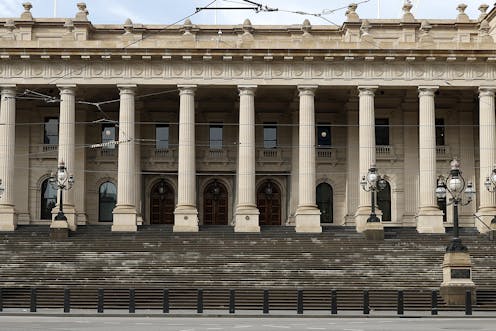
There has been much more counting for the Victorian upper house since Saturday night, when under 30% had been counted in most of the eight regions. Five members are elected per region for a total of 40 seats, with the quota for each region at one-sixth of the vote or 16.7%.
The upper house still uses the group voting ticket (GVT) system, which allows parties to order the preferences of everyone who votes for that party above the line. On these artificial 100% preference flows, parties can win using preference spirals from very low vote shares.
At least 60% of enrolled voters have now been counted in all regions, with a final turnout likely around 90%. Additional votes are more likely to skew left. I expect final results for the upper house by the week after next, when buttons are pressed to electronically distribute preferences.
The ABC’s summary page for the upper house, based on using its upper house calculator, has Labor on 15 of the 40 seats, the Coalition 15, the Greens three, Legalise Cannabis three and one each for Animal Justice, the Shooters, Labour DLP and One Nation. This calculator assumes all votes are above the line; about 10% were below the line.
If these results are the final results, the left parties (Labor, Greens, Legalise Cannabis and Animal Justice) would have 22 of the 40 upper house seats, to 18 for the right. Labor would need both the Greens and Legalise Cannabis to pass legislation opposed by the right. I will look at these results region by region.
In Northeastern Metro (71% counted), Labor has 2.06 quotas, the Liberals 1.86 and the Greens 0.62. After preferences, the Greens win with 1.02 quotas, and their margin would be higher with below the line (BTL) votes factored in.
In Northern Metro (60% counted), Labor has 2.06 quotas, the Liberals 1.13, the Greens 1.10, the Victorian Socialists 0.30, the DLP 0.28 and Fiona Patten 0.23. Left-wing preferences flow to Patten, not the Socialists. Former Labor MP Adem Somyurek, the DLP’s lead candidate, defeats Patten with 1.05 quotas, but Patten would be doing better on BTL votes.
In Southeastern Metro (62% counted), Labor has 2.39 quotas, the Liberals 1.65, the Greens 0.41, and Legalise Cannabis 0.30. On other left preferences, Legalise Cannabis beats both Labor and the Greens, then wins this seat on Labor and Greens preferences. The Liberals are just ahead of the Liberal Democrats for the final seat with 1.01 quotas, thought this lead would be wider with BTLs.
In Southern Metro (68% counted), the Liberals have 2.24 quotas, Labor 1.80 and the Greens 0.90. Both the Greens and Labor reach quota on other left preferences, with Labor well ahead of a Sustainable Australia preference spiral to claim the last seat with 1.08 quotas.
In Western Metro (64% counted), Labor has 2.25 quotas, the Liberals 1.53, the Greens 0.45, the DLP 0.31, Legalise Cannabis 0.25 and the Socialists 0.21. Legalise Cannabis surpasses the Greens on Scoialists and other left preferences and wins on Greens preferences, with the Liberals beating the DLP for the final seat.
In Eastern Victoria (69% counted), the Coalition has 2.22 quotas, Labor 1.60, the Greens 0.47 and Legalise Cannabis 0.24. Labor wins a second seat on Greens preferences, while the Shooters win from 0.18 initial quotas by preference spiral.
In Northern Victoria (71% counted), the Coalition has 2.20 quotas, Labor 1.68, the Greens 0.40, the Shooters 0.31, Legalise Cannabis 0.27 and One Nation 0.22. Both One Nation and Animal Justice (0.09 quotas) surpass Labor to win seats by preference spiral.
In Western Victoria (72% counted), Labor has 2.15 quotas, the Coalition 1.67, the Greens 0.49 and Legalise Cannabis 0.29. On other left preferences, Legalise Cannabis moves 0.05 quotas ahead of the Greens, then wins the final seat on Greens preferences, with the Coalition winning a second seat.
Lower house: Labor could win 56 out of 88 seats
For the lower house, the ABC is currently calling 51 of the 88 seats for Labor, 26 for the Coalition and four Greens, with seven still undecided. Labor is leading in four of the seven undecided seats, and behind by just five votes in Pakenham.
Late counting is favouring Labor, so they could win these five seats and get 56 total in the lower house, an increase of one on their 2018 landslide. The Coalition is likely to win Mornington and Narracan when this deferred election is held.
US Georgia Senate runoff next Wednesday AEDT
The United States November 8 midterm elections are not quite finished, as the Georgia Senate contest has gone to a runoff next Tuesday, with polls closing at 11am Wednesday AEDT.
At the November 8 election, Democrat Raphael Warnock won 49.4% and Republican Herschel Walker 48.5%. A Libertarian, with 2.1%, prevented a majority for either candidate, and so the runoff. Polls for the runoff suggest a close contest.
Democrats currently lead the Senate by 50-49. Even if Warnock loses, they will still control the Senate on Vice President Kamala Harris’ casting vote. But this election is important because Democrats face a very difficult Senate map in the 2024 elections.
Of the 33 Senate seats up for election in 2024, 23 are Democrat-held and just ten Republican-held. Democrat-held seats include three states – West Virginia, Montana and Ohio – that Donald Trump won easily in both 2016 and 2020. Democrats need to win Georgia next week to have a realistic chance of keeping the Senate after the 2024 elections.
Republicans likely won the House of Representatives on November 8 by a margin of 222-213 over Democrats, the exact reverse of Democrats’ 222-213 majority after the 2020 elections. Republicans lead the overall House popular vote by 50.7-47.8 according to the Cook Political Report.
Adrian Beaumont does not work for, consult, own shares in or receive funding from any company or organisation that would benefit from this article, and has disclosed no relevant affiliations beyond their academic appointment.
Now that we’ve hit December, many people looking on their social media feeds will be seeing end-of-year listening roundups like Instafest, Spotify Wrapped and Apple Music Replay. These roundups analyse your music listening for the year to generate a fancy, shareable social media post, and they sometimes have some fascinating insights about our listening.
We increasingly live in a social media world where now is prioritised – with the constant torrent of new posts and tweets and reels and Tiktoks, trying to find something from even a couple of weeks ago can be a challenge – especially because our memories are not so accurate.
This means part of the fascination with these listening roundups is that they’re a stocktake of the year. But also, they have insights into the way that we listen to music that might surprise some people.
The charts have become increasingly static as a result of being based on plays – for example, Heat Waves by Glass Animals is currently at #13 in its 103rd week in the ARIA charts. Because the charts are based on plays, this fairly clearly shows that a lot of people continue to keep Heat Waves on their streaming playlists years later – they’re seemingly not bored of the song yet.
Part of what explains the continued endurance of such songs in people’s playlists is what social psychologist Robert Zajonc dubbed the Mere Exposure Effect. In a research program started in the 1960s, Zajonc has found consistently that our preference for stimuli is influenced by our familiarity with those stimuli – in other words, we are inclined to like what’s familiar. Chances are that, if we know a song fairly well, we like it. And if we like it, we don’t remove it from our playlists.
Of course, this isn’t the whole story. We obviously often get sick of songs, and we’re not purely robots programmed to like things based on familiarity. Mind you, if I look at my listening stats for the year, my top artist – the one I listened to the most – turns out to be the Beatles.
This is a band in some of my earliest musical memories. Surely, decades after I first heard it, I should be very tired indeed of their song I’m So Tired – but it appears that I am not. Which means some people looking at their roundups might be surprised just how long some songs and artists actually have lasted in their playlists.
We love to remember our favourite music from the year
We human beings often don’t remember very much, when it comes down to it. In an 1885 book, German psychologist Hermann Ebbinghaus describes experiments he conducted on his memory, trying to remember a list of nonsense syllables (ZUG or KUS, etc.): he discovered the “forgetting curve”. An hour after learning the syllables, he could remember around 40%. Nine hours later, he could remember about 30%. Six days afterwards, his memory for the nonsense words was at about 20%, which is where it stayed afterwards.
And Ebbinghaus was deliberately trying to remember those nonsense syllables. Most of the time when you listen to music, you’re probably not even paying attention to it, let alone trying to remember it. Personally, my memory of what music I was listening to six days ago is definitely less than 20%! This might be one reason that we genuinely don’t realise that we’ve spent so much of the year listening to that Lizzo song.
In contrast, streaming service algorithms record every second you spend listening to music (not least because counting it up is a neat fact for all the social media posts we’re seeing right now).
We love different music for different situations
Research suggests that when the average person listens to music, they’re mostly wanting background music to accompany various tasks – driving, doing the dishes, exercising, studying, hanging out with friends, etc. However, when we think about the music we listen to, I suspect we often think about music we actively listen to – so sometimes the music that we passively listen to in our earbuds when nobody else can hear can be surprising.
Music is also inherently a social activity – it says something about how we relate to the broader society around us if we choose to listen to metal or to indie rock or K-pop; genres of music are usually related to subcultures and movements within society.
The tension between the two – that the music that is good at accompanying drudgery might not always be the music that expresses who we are – can lead to some interesting insights into other people when we look at their end-of-year roundups.
We love hooks
And of course, sometimes a song transcends social setting, where we can’t resist a hook even if we do find it to be a guilty pleasure. Hooks are those musical moments that stand out and are easily remembered – they’re most likely the bits that get stuck in our head, that we anticipate when we listen to the music, and they’re integral to pop music.
These days, producers like Max Martin carefully structure pop songs like Shake It Off by Taylor Swift to maximise the sheer amount of attention-grabbing musical moments, and we’re often powerless to resist getting them stuck in our heads after a few listens. Of course, if you’re a guy with long hair wearing an Iron Maiden t-shirt, why would anyone suspect that you’re listening to Taylor Swift’s Anti-Hero in your earbuds?
One way to look at it is that “It’s me, hi, I’m the problem, it’s me” – one line in Anti-Hero by Taylor Swift, the current #1 single in Australia – is clearly a memorable hook for a lot of listeners. That hook meant people noticed the song, and they added it to a playlist or two. Where it stayed, becoming familiar, becoming a part of life.
Finally, because of our typically porous human memories, we often don’t realise how often things end up in our ears. And so, when that Iron Maiden t-shirt guy posts his Spotify Wrapped on social media, he’s as surprised as anyone else that Anti-Hero is up amongst his top songs, next to Run To The Hills.
This is perhaps what is interesting about such roundups – they give an insight into the everyday listening habits of our friends, about what they listen to when we’re not looking.
Timothy Byron ne travaille pas, ne conseille pas, ne possède pas de parts, ne reçoit pas de fonds d’une organisation qui pourrait tirer profit de cet article, et n’a déclaré aucune autre affiliation que son organisme de recherche.
Do New Zealand state spies unlawfully surveil the government’s political critics? Do they spy on critical journalists? Unfortunately, the answer is yes. And yesterday the government domestic security agency was forced to apologise for one instance when they were caught spying on investigative journalist Nicky Hager.
The New Zealand Security Intelligence Service (SIS) has paid Hager $66,400 in compensation and legal fees for breaching his privacy, and made an extraordinary apology to him. In return, Hager has agreed not to take the Government to court.
The payment and apology were for unlawfully obtaining two months of Hager’s phone records in an attempt to uncover the sources Hager used in writing his 2011 book Other People’s Wars. The publication was about New Zealand’s involvement in wars in Iraq and Afghanistan. The book focused on the role of New Zealand military and intelligence activity that caused the deaths of civilians in Operation Burnham, and was based on information obtained from confidential sources.
Hager’s win is not just a victory for him personally, but more generally for freedom of the press and the ongoing vigilance against state authoritarianism.
Dirty politics from security services?
It was the NZ Defence Force that sought to discover who had provided Hager with the information for his book. They apparently suspected a particular Defence Force officer, but failed to find any evidence in their search of the employee’s home and mobile phone records. So they then requested that the SIS obtain Hager’s personal phone records on the basis of the journalist being involved in “espionage”.
The SIS obtained Hager’s phone records, but the information proved useless in helping the defence forces find his source. Hager suspected that he was under surveillance, and when he officially requested information about this from SIS director Rebecca Kitteridge she refused to confirm or deny anything.
Hager took the issue to the Inspector-General of Intelligence and Security, which oversees the SIS as well as the Government Communications Security Bureau (GCSB). The SIS was forced to confirm the spying against Hager, but Kitteridge denied any wrongdoing, argued the surveillance was justified on the basis of Hager being involved in potential “espionage” and because he was prejudicing New Zealand’s national security.
The Inspector-General of Intelligence and Security ruled in Hager’s favour. Three years later the SIS has finally agreed to compensation and a proper apology.
The Extraordinary apology from the spies
Yesterday the SIS issued a statement that is worth quoting at length: “Investigative journalists such as Mr Hager play an important role in society, including to provide an additional check on executive functions and powers. The role of Mr Hager is considerably more difficult given his subject matter of expertise and the difficulties of obtaining information which is protected by various and numerous confidentiality mechanisms. NZSIS recognises that its actions in 2012 could have resulted in a chilling effect on such important work. Accordingly, NZSIS apologises unreservedly for breaching Mr Hager’s rights”.
In addition to the apology, the SIS said, “We recognise the important role that journalists play in a free, open and democratic society – the very society the New Zealand intelligence agencies exist to uphold.”
One of Hager’s lawyers, Steven Price, responded to say that “it is nice to see this recognition by the NZSIS of the importance of journalism to our democracy… Journalists need to be able to convey to the public important information from well-placed sources. That process should not be undermined by intelligence officials trying to unlawfully ferret out those sources.”
There is a need to have investigative journalism, and the media in general, as a properly functioning mechanism to hold the powerful to account, including the defence forces. This case shows the SIS have clearly undermined that mechanism.
Hager’s other lawyer, Felix Geiringer rightly said the decision was an “important result for journalism”. He argued that “Our intelligence services are given substantial powers for use to protect New Zealand from harm… Those powers cannot be used to go after a journalist’s sources just because the government does not like what that journalist is saying.”
It should go without saying that journalists depend on being able to assure their sources that they will remain confidential. And the state shouldn’t be allowed to interfere in this by using its immense powers of subterfuge.
Will the state spies reform themselves?
What happened to Hager was dangerous for democracy, and should never have happened. But it’s not clear that it won’t happen again.
The SIS is claiming that it has reformed itself and is now more careful with following the law and will be more transparent. But there are already signs that they are failing to live up to this.
The spy agency claims to have established a new policy for how they deal with the work of journalists. But Hager’s lawyers point out that the SIS is refusing to release that policy. Geiringer says: “The NZSIS needs a clear policy stating when the use of its powers against a journalist would be justified. There also needs to be a rule that only someone sufficiently senior in the organisation can make such a decision. And there is no basis for keeping such a policy secret.”
Hager argues: “The NZSIS needs a clear policy stating when the use of its powers against a journalist would be justified.”
Hager’s lawyers argue that their negotiations with the SIS suggest “that nothing had really changed in the internal culture of the NZSIS”.
They also point out that things might be about to get worse. Geiringer said yesterday that “there is a Bill before Parliament which would prevent our courts from reviewing decisions of intelligence services to withhold documents on national security grounds.” This is a problem, because “External oversight is essential in a democracy”.
Rottenness in the state?
This isn’t the first time Hager has received apologies and compensation from the state. He also got a “substantial” settlement from the Police due to their unlawful raid of his Wellington home after the publication of his book Dirty Politics.
Commenting on the latest state settlement, the chair of the Civil Liberties Council, Thomas Beagle tweeted yesterday, “So now both the Police and SIS have had to apologise to Nicky Hager for misuse of their powers against him. There is something very rotten here.”
Others have commented on the lack of personal accountability from those in the Defence Forces and SIS. The fact that SIS head Rebecca Kitteridge has since received a promotion to become deputy head of the Public Service Commission will also rankle.
There is a concern that some agencies of the state are becoming too politicised. And when these institutions are vested with such strong power, then this can be open to abuse that diminishes democracy. With publicity about the SIS’s abuse of the law, hopefully there will be a greater awareness of the need for more scrutiny of these institutions and this latest incident will serve to create a chilling effect on their propensity to over-reach when dealing with intimidation of the media.
Unfortunately, politicians have so far been entirely silent on the Hager controversy. But there is a need for politicians of all persuasions to come out in condemnation of what has occurred. Regardless of what anyone might think of Hager’s work, reasonable people should be able to see that there is something rotten about the way that the police and the spies have acted in these cases against a journalist. We should all be uncomfortable that someone who is seeking to expose corruption and misuse of authority by the powerful gets treated in this way.
The good news, of course, is that the payout from the SIS will now fund Hager to continue producing his important public interest journalism.
Further reading on SIS unlawful activity and national security
Source: The Conversation (Au and NZ) – By Anna Price, The Erdi Foundation Child Health Equity (COVID-19) Scholar, Centre for Community Child Health | Honorary, Department of Paediatrics, University of Melbourne | Team Leader / Senior Research Officer, Murdoch Children’s Research Institute
Bringing home a new baby can be one of the most exciting and stressful times in your life. A nurse might visit a couple of times, then other than routine check-ups at the nurse’s office, you’re largely on your own.
Some people have a particularly hard time with a new baby because the challenges of parenting come on top of existing adversity, such as financial hardship, or poor physical or mental health.
Experiencing adversity from when a baby is conceived can affect the child’s health and development as they grow older. So rather than stopping nurse visits a week or two after bringing a new baby home, we investigated whether extending these visits from pregnancy until children turned two made a difference.
The nurse visits focused on areas fundamental for children’s development: how a parent cares for and responds to their child, and their home environment.
We found home visits with nurses helps parenting and family relationships, and women’s mental health, wellbeing and confidence.
What happens when the nurse visits?
Sustained nurse home visiting provides intensive services in a family’s home during pregnancy and the first two years of the child’s life. During this time, the child’s brain develops more rapidly than any other time in their life.
International studies of sustained nurse home visiting programs show they can help families with parenting, children’s behaviour and academic skills. However, most have only measured impacts up to when children turn three.
Programs differ depending on how they work to support families. They generally engage highly-trained nurses who can listen without judgement, offer practical, evidence-informed advice, and remind parents they’re doing a good job.
Our study
Our randomised controlled trial of right@home is Australia’s longest and largest trial of nurse home-visiting, starting in 2013.
The program supports parents with evidence-based techniques that promote parenting that responds to the child’s needs, safe homes, regular routines, and children’s learning and language development. The program starts in pregnancy and offers 25 home visits (60-90 minutes each) with a specially trained nurse until the children turn two.
The right@home program was designed for delivery through Australia’s existing child and family health nursing services, which are free for families with children from birth to school age. These existing services typically offer a handful of appointments (of around 20-40 minutes) that mostly take place in local clinics. Some also offer more intensive services.
Existing nurse services only offer a handful of appointments from birth to school age. Unsplash/Stephen Andrews
We invited women into the right@home study if they were experiencing two or more factors that can make it more difficult to parent. These include having low social support, poor physical or emotional health, or no household employment. We found almost 40% of pregnant women experienced at least two of these factors.
In total, 722 women and families living across Victoria and Tasmania took part in the study. Half were randomly allocated (like tossing a coin) to receive the right@home program and half received their local child and family health nursing service.
Researchers who were separate to the nurse teams interviewed the families twice a year (one at home and one by phone) until children started school.
When the right@home program ended (at children’s second birthdays), the evaluation showed it offered benefits over and above the usual services. Parents had more confidence and skills in caring for their children, responding sensitively and providing a nurturing and stimulating home.
This pattern continued. At three years, parents who received the right@home program reported benefits to their mental health, wellbeing, and self-confidence.
Our latest paper, published in PLOS ONE, shows that right@home offered lasting impacts to four and five years, which is two and three years after the program ended.
Some 5-10% more families had regular mealtimes, bedtimes and bedtime routines by the time the children turned five.
Around 9% more women reported very good health and parenting confidence. The proportions of women experiencing stress, and emotional abuse from an intimate partner were 7% and 11% lower, respectively.
There were additional benefits for children’s and women’s mental health, parenting, and women’s wellbeing, quality of life and relationship with their child. These impacts were evident for families regardless of where they lived across the seven regional and metropolitan areas in the two states.
Almost no other public health program delivered during the early years has evidence of such a broad range of gains.
Our economic evaluation of right@home at three years showed delivering these benefits through the right@home program costs A$7,700 extra per family compared with the usual service.
Research from the US shows the benefits of similar programs accrue for families and taxpayers over a child’s lifetime, producing positive returns on investment, from improved mental health and more employment, among other benefits.
Australia is fortunate to have nationwide child and family health nursing services. These are the perfect platform for delivering an extended program like right@home. When so few programs make a difference for families experiencing adversity, we should maximise the reach of those that do.
Diana Harris, Lead for Knowledge Translation at the Australian Research Alliance for Children & Youth, coauthored this article.
right@home is supported by the state governments of Victoria and Tasmania, the Ian Potter Foundation, Sabemo Trust, Sidney Myer fund, the Vincent Fairfax Family Foundation, and the National Health and Medical Research Council (NHMRC, 1079148). The MCRI administered the research grant for the study and provided infrastructural support to its staff but played no role in the conduct or analysis of the trial. Research at the MCRI is supported by the Victorian Government’s Operational Infrastructure Support Program. SG was supported by NHMRC Practitioner Fellowship (1155290).
The “right@home” sustained nurse home visiting trial is a research collaboration between the Australian Research Alliance for Children and Youth (ARACY); the Translational Research and Social Innovation (TReSI) Group at Western Sydney University; and the Centre for Community Child Health (CCCH), which is a department of The Royal Children’s Hospital and a research group of Murdoch Children’s Research Institute. Ownership of the right@home implementation and support license, which is purchased by Australian state governments for roll out for fidelity support, is shared between institutes.
The MECSH home visiting program upon which right@home is based is trademarked and licenced by Western Sydney University and was developed by UNSW Australia. Western Sydney University is a member of the right@home consortium that receives funding from Australian state governments to support the implementation of the program. Western Sydney University also licenses the MECSH program to government and non-government providers of home visiting services in the UK and USA.
Sharon Goldfeld receives funding from ARC and NHMRC.
On the 61st anniversary of the first raising of West Papua’s symbol of independence — 1 December 1961 — the Morning Star flag:
We, the Indigenous caucus of the movement for self-determination, decolonisation, nuclear justice, and demilitarisation of the Pacific, call for coordinated action for key campaigns that impact the human rights, sovereignty, wellbeing and prosperity of Pacific peoples across our region.
As guardians of our Wansolwara (Tok Pisin term meaning “One Salt Water,” or “One Ocean, One People”), we are united in seeking the protection, genuine security and vitality for the spiritual, cultural and economic base for our lives, and we will defend it at all costs. We affirm the kōrero of the late Father Walter Lini, “No one is free, until everyone is free!”
We thank the mana whenua of Ōtepoti, Te Ao o Rongomaraeroa, the National Centre for Peace and Conflict and Kā Rakahau o Te Ao Tūroa Centre for Sustainability at the University of Otago for their hospitality in welcoming us as their Pacific whānau to their unceded and sovereign lands of Aotearoa.
We acknowledge the genealogy of resistance we share with community activists who laid the mat in our shared struggles in the 1970s and 1980s. Our gathering comes 40 years after the first Te Hui Oranga o Te Moana Nui a Kiwa, hosted by the Pacific Peoples Anti Nuclear Action Committee (PPANAC) at Tātai Hono in Tamaki Makaurau.
Self-determination and decolonisation We remain steadfast in our continuing solidarity with our sisters and brothers in West Papua, who are surviving from and resisting against the Indonesian genocidal regime, injustice and oppression. We bear witness for millions of West Papuans murdered by this brutal occupation. We will not be silent until the right to self-determination of West Papua is fully achieved.
We urge our Forum leaders to follow through with Indonesia to finalise the visit from the UN Commissioner for Human Rights to West Papua, as agreed in the Leaders Communiqué 2019 resolution.
We are united in reaffirming the inalienable right of all Indigenous peoples to self-determination and demand the sovereignty of West Papua, Kanaky, Mā’ohi Nui, Bougainville, Hawai’i, Guåhan, the Northern Mariana Islands, Rapa Nui, Aotearoa, and First Nations of the lands now called Australia.
Of priority, we call on the French government to implement the United Nations self-governing protocols in Mā’ohi Nui and Kanaky. We urge France to comply with the resolution set forth on May 17th, 2013 which declared French Polynesia to be a non-self-governing territory, and the successive resolutions from 2013 to 2022. The “empty seat policy” that the administering power has been practising since 2013 and attempts to remove Mā’ohi Nui from the list of countries to be decolonised have to stop. We call on France to immediately resume its participation in the work of the C-24 and the 4th Commission of the United Nations.
Nuclear justice We grieve for the survivors and victims who lost their lives to the nuclear violence caused by over 315 nuclear weapons detonated in Marshall Islands, Australia, Kiribati, Johnston Atoll and Mā’ohi Nui by the United States, United Kingdom/Australia and France. The legacy and ongoing nuclear violence in our region is unfinished business and calls for recognition, reconciliation and reparations to be made by nuclear colonisers are long overdue.
We call for the United States, United Kingdom/Australia and France to deliver fair and just compensation to Indigenous civilians, workers and servicemen for the health and environmental harms, including intergenerational trauma caused by nuclear testing programs (and subsequent illegal medical experiments in the Marshall Islands). The compensation schemes currently in place in all states constitute a grave political failure of these aforementioned nuclear testing states and serve to deceive the world that they are recognising their responsibility to address the nuclear legacy. We call for the United States, United Kingdom/Australia, and France to establish or otherwise significantly improve accessible healthcare systems and develop and fund cancer facilities within the Marshall Islands, Kiribati/Australia and Mā’ohi Nui respectively, where alarming rates of cancers, birth defects and other related diseases continue to claim lives and cause socio-economic distress to those affected. The descendants of the thousands of dead and the thousands of sick are still waiting for real justice to be put in place with the supervision of the international community.
We demand that the French government take full responsibility for the racist genocidal health effects of nuclear testing on generations of Mā’ohi and provide full transparency, rapid assessment and urgent action for nuclear contamination risks. While the President of France boasts on the international stage of his major environmental and ecological transition projects, in the territory of Mā’ohi Nui, the French government’s instructions are to definitively “turn the page of nuclear history.” This is a white-washing and colonial gas-lighting attitude towards the citizens and now the mokopuna of Mā’ohi Nui. It is imperative for France to produce the long-awaited report on the environmental, economic and sanitary consequences of its 193 nuclear tests conducted between 1966 and 1996.
We proclaim our commitment to the abolition of nuclear weapons and call all states of the Pacific region who have not done so to sign and ratify the Treaty on the Prohibition of Nuclear Weapons (TPNW), namely Australia, the Solomon Islands, Tonga, Papua New Guinea, the Federated States of Micronesia and the Marshall Islands. We urge Pacific nations along with the world’s governments to contribute to the international trust fund for victims of nuclear weapons implemented by the TPNW. We urge Aotearoa/New Zealand and other states who have ratified the TPNW to follow through on their commitment to nuclear survivors, and to create a world free from the threat and harm of nuclear weapons through the universalisation of the TPNW. There can be no peace without justice.
We oppose the despicable proposal of Japan and the Tokyo Electric Power Company (TEPCO) to dump 1.3 million tonnes of radioactive wastewater next year in 2023, and support in solidarity with the citizens of Japan, East Asian states and Micronesian states who sit on the frontlines of this crisis. This is an act of trans-boundary harm upon the Pacific. We call on the New Zealand government and others to stay true to its commitment to a Nuclear Free Pacific and bring a case under the international tribunal for the Law of the Sea against the proposed radioactive release from TEPCO’s Fukushima Daiichi planned from 2023 to 2053.
Demilitarisation We condemn the geopolitical order forced upon our nations by imperial powers, who claim to be our friends, yet treat our islands as collateral damage and use financial blackmail to bully us into submission. We demand that the United States remove and remediate all military bases, infrastructure, debris and nuclear and chemical waste from the Pacific. Of priority is the US-owned nuclear waste storage site of Runit Dome on Enewetak Atoll which threatens nuclear contamination of the ocean and marine-life, on which our lives depend. Furthermore, we call for all remaining American UXOs (unexploded ordnances) from World War II in the Solomon Islands, which cause the preventable deaths of more than 20 people every year to be removed immediately!
We support in solidarity with Kānaka Maoli and demand the immediate end to the biennial RIMPAC (Rim of the Pacific) exercises hosted in Honolulu, Hawai’i. We urge all the present participating militaries of RIMPAC to withdraw their participation in the desecration and plunder of Indigenous lands and seas. We support in solidarity with the Marianas and demand an end to munitions testing in the Northern Marianas and the development of new military bases. We rebuke the AUKUS trilateral military pact and the militarisation of unceded Aboriginal lands of the northern arc of Australia and are outraged at Australia’s plans to permit further military bases, six nuclear-capable B52s and eight nuclear-powered submarines to use our Pacific Ocean as a military playground and nuclear highway.
We call on all those committed to ending militarism in the Pacific to gather and organise in Hawai’i between 6-16 June 2024, during the Festival of the Pacific and bring these issues to the forefront to renew our regional solidarity and form a new coalition to build power to oppose all forms of military exercises (RIMPAC also returns in July -August 2024) and instead promote the genuine security of clean water, safe housing, healthcare and generative economies, rather than those of extraction and perpetual readiness for war.
We view colonial powers and their militaries to be the biggest contributors to the climate crisis, the continued extractive mining of our lands and seabeds and the exploitation of our resources. These exacerbate and are exacerbated by unjust structures of colonialism, militarism and geopolitical abuse. This environmental destruction shifts the costs to Pacific and Indigenous communities who are responsible for less than 1 percent of global climate emissions.
As Pacific peoples deeply familiar with the destruction of nuclear imperialism, we strongly disapprove of the new propaganda of nuclear industry lobbyists, attempting to sell nuclear power as the best solution for climate change. Similarly, we oppose the Deep Sea Mining (DSM) industry lobbyists that promote DSM as necessary for green technologies. We call for a Fossil Fuel Non-proliferation Treaty to be implemented by the United Nations Framework Convention on Climate Change and for safe and equitable transition to better energy solutions. We reject any military solution for the climate crisis!
We recognise the urgent need for a regional coordinator to be instituted to strategise collective grassroots movements for self-determination, decolonisation, nuclear justice and demilitarisation.
Our existence is our resistance.
We, the guardians of our Wansolwara, are determined to carry on the legacy and vision for a Nuclear Free and Independent Pacific.
New Zealand law has generally treated agriculture, biodiversity conservation and the protection of Indigenous knowledge (mātauranga Māori) as separate areas.
The red kiwifruit is protected under intellectual property rights. Shutterstock/Tommy Atthi
Plant Variety Rights (PVR) are a form of intellectual property designed to encourage innovation in plant breeding and to reward breeders for these efforts. In Aotearoa, popular examples of plants protected under the PVR system include the red kiwifruit and Honeycrisp apples.
The reform continues to offer this kind of intellectual property to plant breeders, but the law now also extends new protections for the guardian (kaitiaki) relationships Māori have with taonga plant species, as well as for mātauranga Māori. But it stops short of requiring that any benefits from the commercial use of these plants be shared.
What are taonga plants?
The new act defines taonga plants as those Māori have special relationships with, either because they are indigenous to Aotearoa or because they are believed to have been brought to the country before European settlement from other parts of the Pacific region.
Iwi, hapū and whānau have kaitiaki relationships with many plant species, grounded in reciprocal and mutual obligations. Māori consider taonga plants as tūpuna (ancestors) and kaitiaki have direct whakapapa (genealogical) connections to them. Mātauranga Māori forms the basis of these kaitiaki relationships, encompassing inter-generational knowledge about how to care for and sustainably use these plants.
For example, Ngāi Tahu has long used taramea (Aciphylla or speargrass) as a fragrance. Historically, taramea resin was extracted through cuttings or fire, processed and preserved, and rubbed on the hair and body. Taramea was also a valuable item in trade between Ngāi Tahu and northern tribes.
The native speargrass taramea is a traditional source of fragrance. Shutterstock/Molly NZ
The protection of taonga plants, kaitiaki relationships and mātauranga Māori is required under the Treaty of Waitangi, which was signed between the British Crown and Māori rangatira (chiefs) in 1840 and guarantees Māori will retain rangatiratanga (chieftainship) over their taonga.
Throughout the 20th century, it was clear this promise was not being upheld. After the original Plant Variety Rights Act was passed in 1987, claimants representing various iwi and hapū brought a legal action (Wai 262) before the Waitangi Tribunal, alleging the Crown had failed to respect Māori rangatiratanga over indigenous biodiversity.
After 20 years of weighing evidence, the tribunal published a report in 2011, recommending a “whole-of-government” approach to protect taonga flora and fauna, and mātauranga Māori. This law reform is the most significant legal development to date.
Legal issues aside, it is important to protect taonga plants and mātauranga Māori for ethical reasons. For years, kaitiaki relationships have been threatened as non-Māori have benefited from the use of indigenous plants and knowledge.
Kōwhai varieties are sold commercially through nurseries. Shutterstock/patjo
Nurseries and other non-Māori entities have claimed intellectual property rights over improved varieties of taonga species. Examples include harakeke (flax; Phormium tenax), kāpuka (broadleaf; Griselinia littoralis), korokio (wire-netting bush; Corokia cotoneaster), kōwhai (Sophora microphylla), and tī rākau/tī kōuka (cabbage tree; Cordyline australis).
In most (maybe all) cases, kaitiaki do not receive any direct financial or other benefits from the commercialisation and sale of taonga plants where plant variety rights are owned by non-Māori organisations.
Protection under the new act
The reformed act contains several new protections. When plant breeders apply for plant variety rights for taonga plants, they now need to meet certain requirements.
For example, if the breeder is aware that a kaitiaki relationship with the plant has been asserted, the breeder must engage directly with the kaitiaki.
If the kaitiaki finds that granting plant variety rights for the breeder’s variety would have adverse effects on the kaitiaki relationship, the breeder and kaitiaki must agree on how to mitigate these effects.
The law also creates a new Māori plant varieties committee, which holds the power to make binding decisions to nullify or cancel or impose conditions on any grants of plant variety rights for taonga species that may have adverse effects on kaitiaki relationships.
The new protections are commendable, but there are some gaps in the law.
No shared benefits from commercial use
The PVR Act allows plant breeders to bring legal actions against those who infringe their intellectual property rights. But the law does not contain similar enforcement mechanisms where mātauranga Māori is misappropriated.
The act does not require plant breeders who obtain PVR for varieties of taonga plants to share any benefits they receive from commercial uses of these plants with kaitiaki.
Another issue is that the new law adopts the narrow, species-based approach common to intellectual property laws for plant varieties worldwide. The powers of the Māori plant varieties committee only apply to taonga plant species. Kaitiaki have no say over whether exotic plant varieties are introduced into Aotearoa and protected with PVR, which fails to take into account the effects non-taonga plants could have on the whenua (land) and taiao (environment) should they become invasive.
Overall, the reformed PVR Act is an important step in addressing the recommendations of the Waitangi Tribunal on how the Crown should protect taonga plants and mātauranga Māori. But there is still much work to do to ensure that tangata whenua may exercise rangatiratanga over their taonga.
Time will tell whether other proposed changes – such as the development of a stand-alone intellectual property framework for mātauranga Māori and the creation of a bioprospecting regime – are sufficient to fulfil the promises of Te Tiriti.
This research is generously supported by the University of Canterbury Vision Mātauranga Development Fund.
Paul G Buchanan and Selwyn Manning deliver this episode of A View from Afar S03 E23.
A View from Afar
PODCAST: A People's Protest Rises Within the PRC and Iran - Buchanan and Manning
/
RSS Feed
Share
Link
Embed
In this, the 23rd episode of A View from Afar for 2022 political scientist Dr Paul Buchanan and host Selwyn Manning analyse the significance of public protests that have challenged authoritarian rule in both the People’s Republic of China and in the Republic of Iran.
Paul takes us through the causes of the resistance, and how, in each nation, the reasons differ, but the impact is the same.
In 2022, authoritarian leadership is being challenged by the rise of street protest and resistance to centralised control.
Threat.Technology placed A View from Afar at 9th in its 20 Best Defence Security Podcasts of 2021 category. You can follow A View from Afar via our affiliate syndicators.
The night sky is a shared wilderness. On a dark night, away from the city lights, you can see the stars in the same way as your ancestors did centuries ago. You can see the Milky Way and the constellations associated with stories of mythical hunters, sisters and journeys.
But like any wilderness, the night sky can be polluted. Since Sputnik 1 in 1957, thousands of satellites and pieces of space junk have been launched into orbit.
For now, satellites crossing the night sky are largely a curiosity. But with the advent of satellite constellations – containing hundreds or thousands of satellites – this could change.
The recent launch of BlueWalker 3, a prototype for a satellite constellation, raises the prospect of bright satellites contaminating our night skies. At 64 square metres, it’s the largest commercial communications satellite in low Earth orbit – and very bright.
While spotting satellites in the night sky has been a curiosity, the accelerating number of satellites in orbit means pollution of the night sky could become a serious problem.
On a clear night, particularly near twilight, you can see satellites travelling across the night sky. These satellites are in low Earth orbit, just a few hundred kilometres above Earth and travelling almost 8 kilometres every second.
Apps and websites allow you to identify or predict the arrival of particular satellites overhead. And it is genuinely fun to see the International Space Station travelling by, realising that on that speck of light there’s a crew of astronauts.
But in the past few years, the pace of satellite launches has accelerated. SpaceX has made satellite launches cheaper, and it has been launching thousands of Starlink satellites that provide internet services.
Roughly 50 Starlink satellites are launched into orbit by each Falcon 9 rocket, and initially produce a bright train of satellites. These initially produced UFO reports, but are now sufficiently common to not be particularly newsworthy.
Once the Starlink satellites disperse and move to their operational orbits, they are near the limit of what can be seen with the unaided eye.
However, such satellites are bright enough to produce trails in images taken with telescopes. These trails overwrite the stars and galaxies underneath them, which can only be remedied by taking additional images. Short transient phenomena, such as a brief flash from a gamma ray burst, could potentially be lost.
An image from the Blanco 4-meter Telescope with 19 trails from Starlink satellites. CTIO/NOIRLab/NSF/AURA/DECam DELVE Survey
BlueWalker 3
While Starlink is the largest satellite constellation in service, with thousands of satellites in orbit, others are planned.
The recently launched BlueBird prototype, BlueWalker 3, has produced genuine alarm among astronomers.
While BlueWalker 3 was initially quite faint, it unfolded a 64 square metre communications array – roughly the size of a squash court. This vast surface is very good at reflecting sunlight, and BlueWalker 3 is now as bright as some of the brightest stars in the night sky.
It’s possible the operational BlueBird satellites could be even bigger and brighter.
BlueWalker 3 passing over Oukaimeden Observatory on November 16 2022. At its brightest, BlueWalker 3 is brighter than all but a few stars in the night sky. CLEOsat/Oukaimeden Observatory/IAU CPS/A.E. Kaeouach
Large numbers of satellites this bright could be bad – very bad. If there were thousands of satellites this bright, sometimes you would be unable to look at the night sky without seeing bright satellites.
We would lose that sense of wilderness, with an almost constant reminder of technology in our sky.
There could be a big impact on professional astronomy. Brighter satellites do more damage to astronomical images than faint satellites.
Furthermore, many of these satellites broadcast at radio frequencies that could interfere with radio astronomy, transmitting radio waves above remote sites where radio observatories observe the heavens.
However, the approval of satellite constellations by the US Federal Communications Commission has had relatively little consideration of environmental impacts.
This has recently been flagged as a major problem by the US Government Accountability Office, but whether this leads to concrete change is unclear.
We may be on the edge of a precipice. Will the night sky be cluttered with bright artificial satellites for the sake of internet or 5G? Or will we pull back and preserve the night sky as a globally shared wilderness?
For now, under dark skies, we can see the Milky Way and Dark Emu as people have seen them for millennia. cafuego/Flickr, CC BY-SA
Today marks 1 December 1961 when the West Papuan national flag, theMorning Starwas first raised and the date has been honoured across the world ever since. The flag was raised by West Papuan legislators who had been promised independence by then-colonial ruler, the Netherlands, but this hope was dashed by Indonesian annexation in 1969. Today marks the 61st anniversary of that first flag-raising. West Papuans raising the flag risk prison sentences of up to 15 years. The following article from Tabloid Jubi newspaper in the Papuan capital Jayapura is part of a five-part series exposing the cruel and inhumane treatment of flag-raisers by Indonesian authorities.
Seven West Papuan makar — “treason” — convicts who were found guilty of raising the Morning Star flag were released on September 27 this year after completing their prison term of 10 months.
Until today, Papua activist and treason convict Melvin Yobe still does not know the result of his medical check-up at Dian Harapan Hospital earlier this year on February 16.
Maksimus Simon Petrus You also doesn’t know what punishment was given to the prison guard who brutally beat him.
Even more disturbing, however, is the fate of Zode Hilapok. He was unable to stand trial as his health continued to deteriorate due to tuberculosis. Zode Hilapok died while undergoing treatment at Yowari Regional General Hospital in Jayapura Regency on October 22.
Since detaining Zode Hilapok on December 2, 2021, law enforcement officials at all levels failed to provide adequate health services for his recovery and he was never put on trial.
Melvin Yobe and his friends when they were released from Abepura Prison on 27 September 2022. Image: Theo Kelen/Tabloid Jubi
Violating human rights A law faculty lecturer at Cenderawasih University, Melkias Hetharia, says treason charges against Papuan activists violated human rights — namely the right to freedom of speech and expression. He argues the treason law enforced against Melvin Yobe and his seven friends was enacted by the Dutch colonial government to punish coups and revolutions and was based on the experience of the Russian revolution.
Hetharia told Jubi that the enforcement of the Dutch East Indies’ Criminal Code did not consider the social, cultural and philosophical aspects of the Indonesian nation.
“The formation of treason articles in the Criminal Code did not consider aspects of human rights, therefore it is oppressive and injures a sense of justice,” Hetharia said.
He said the term “treason” as regulated in articles 104, 106, 107, 108 and 110 of the Criminal Code had been interpreted very broadly and was not in line with the meaning of aanslag as intended in Dutch, which means “attack”. An attack in that sense was using full force in an attempt to seize power.
“If the term treason in the articles is interpreted not as aanslag or attack, then the articles on treason are indeed contrary to human rights guaranteed and protected in the 1945 Constitution of the Republic of Indonesia,” he said.
In fact, Melvin Yobe, Zode Hilapok, and their six friends are not the only Papuan activists who peacefully protested but have been charged with treason.
An infographic of Papuan activists who were charged with treason at the Jayapura District Court, Central Jakarta District Court, and Balikpapan District Court during 2013-2022. Graphic: Leon/Tabloid Jubi
From 2013 to 2022, at least 44 Papuan activists have been charged with treason. Among them — from Jayapura District Court data — from 2013 to 2022 there were 31 people, while in Balikpapan District Court in 2020 seven people and in the Central Jakarta Court in 2019 six people.
Treason ‘structural criminalisation’ Emanuel Gobay, director of the Papua Legal Aid Institute (LBH Papua), who is also the legal counsel for Melvin Yobe and his friends, believes the treason charges against Papuan activists are part of a systematic and structural criminalisation.
“The majority of those accused of treason are human rights activists and political activists,” Gobay told Jubi.
Gobay said the Morning Star flag was a cultural symbol of the Papuan people. According to Gobay, these cultural symbols are guaranteed under Papua Special Autonomy Law No, 21/2001.
Gobay said the raising of the Morning Star by Melvin Yobe and other Papuan activists was part of the demand for the government to resolve Papua’s political problems.
“They are asking the state to immediately implement the Special Autonomy Law,” said Gobay.
On that basis, Gobay considered the use of the treason article against Papuan activists as a form of criminalisation. He also emphasised that the raising of the Morning Star flag did not automatically make Papua independent from Indonesia, therefore the element of treason was not fulfilled.
Apart from the controversy on the use of treason legal articles for Papuan activists, the discriminative treatment received by prisoners of treason cases is also inappropriate, argues Gobay.
Prisoners treated badly Gobay, who often provides legal assistance to Papuan activists suspected or charged with treason, said his clients were often treated badly.
Zode Hilapok’s health condition was the worst of all, said Gobay. During his detention in Abepura Prison, Hilapok’s health condition deteriorated and he lost weight rapidly.
Gobay said Abepura Prison was not suitable for detainees with a history of tuberculosis, such as Melvin Yobe and Zode Hilapok.
“After we surveyed and compared the condition of the prison with the guidelines on handling tuberculosis patients, the prison is not suitable for accommodating prisoners with tuberculosis,” he said.
Minister of Health Regulation No. 67/2016 on Tuberculosis Patient Treatment Guideline states that the treatment centre for tuberculosis patients must be open and have good air circulation and sunlight.
Gobay said the regulation also stipulated that local health offices and hospitals provide special units to treat tuberculosis patients.
“We hope that judges, prosecutors, and hospitals can implement the regulation,” he said.
This report is supported by Transparency International Indonesia (TII), The European Union and the Alliance of Independent Journalists (AJI) in the Anticorruption Residency programme “Reporting Legal Journalism”. It is the final article in a five-part series in Tabloid Jubi and is republished by Asia Pacific Report with permission.
But among the many victims are also some not-so-innocent parties. For the Democratic People’s Republic of Korea, a country facing heavy sanctions, cryptocurrency theft has been a (relatively) simple way to fund the country’s expanding nuclear arsenal.
But with the general downturn in the crypto market, coupled with the recent FTX collapse and myriad other pitfalls, analysts estimate North Korea has probably lost most of its crypto haul.
Can we expect its nuclear weapons development to come to a halt, or slow down? It seems unlikely.
What North Korea’s hackers have been up to
North Korea sponsors several hacker groups, including Lazarus Group (also called Guardian of Peace and Whois Team) and Advanced Persistent Threat 38 (APT38).
While nobody knows exactly how many North Korea-backed hackers there are, experts have estimated Kim Jong-un has between 6,000 and 7,000 working both inside and outside the country.
North Korea has invested in its national cybercrime arsenal for some 15 years. It’s almost impossible for an organisation to defend itself against an army of this size and calibre once it comes charging.
In 2016, Lazarus hackers came close to stealing US$1 billion from Bangladesh’s national bank – but a typo in the computer code meant they only got away with US$81 million.
Since then, they’ve refined their methods. Lazarus has been accused of stealing US$571 million from cryptocurrency exchanges between January 2017 and September 2018, US$316 million from 2019 to November 2020, and US$840 million in the first five months of 2022.
According to Chainalysis, North Korean hackers have stolen an estimated total of about US$1 billion in cryptocurrency this year. A large chunk of this would have come from Lazarus’ massively lucrative heist against NFT-based online game Axie Infinity. In April, US authorities held the group responsible for stealing US$620 million in cryptocurrency from the game.
For context, it’s estimated North Korea only earned about US$142 million from trade exports in 2020.
Okay, so how much has it now lost?
It’s difficult to say exactly how much cryptocurrency has been stolen (and used) by North Korean hackers – and therefore how much might remain.
In June, blockchain analyst and former FBI analyst Nick Carlsen told Reuters one of North Korea’s crypto caches had lost 80% to 85% of its value in a number of weeks, falling to less than US$10 million.
Losses will have intensified following the FTX collapse. According to a Chainalysis report, in January North Korea held about US$170 million in stolen unlaundered cryptocurrency, taken from 49 hacks conducted from 2017 to 2021. It also claims Ether was the most common cryptocurrency stolen by North Korea in 2021, making up 58% of the total theft.
Ether’s value fell by more than 20% following the FTX crash, and remains low. It’s reasonable to expect North Korea will wait before cashing out. When it does, experts looking on will be in a better place to figure out how much it has.
North Korea’s stolen crypto loots have probably gone down in value, but that’s no reason to think it will stop stealing. KCNA via KNS/AP
Why steal crypto to fund nuclear weapons tests?
The United States, South Korea and Japan have been warning North Korea against conducting a seventh nuclear test. But Kim Jong-un doesn’t seem to be letting up. On Saturday, at the launch of North Korea’s largest ballistic missile yet, he told state media the:
ultimate goal is to possess the world’s most powerful strategic force, the absolute force unprecedented in the century.
International sanctions and border closures due to COVID-19 have made it difficult for North Korea to trade and generate funds through other means – which makes the cryptocurrency market an attractive target.
Cryptocurrency remains unregulated by most countries’ governments. At the same time, transactions can be made quickly, and allow more anonymity than transactions made through traditional banking systems.
It’s also easier to hack a cryptocurrency exchange than it is to hack a bank. The latter are almost always bolstered by advanced security barriers and sometimes require in-person appearances.
The rapid drop in crypto’s value, compounded by the FTX crash, will have certainly left a dent in North Korea’s nuclear military expansion funds. Nonetheless, Kim Jong-un’s cybercriminal army will likely find new sources of illicit income (and will probably keep stealing crypto too).
North Korea has also hadfinancial support from supporters in South Korea who follow the “Juche” ideology – the same Marxist-Leninist-adjacent political philosophy imposed in North Korea.
And in April American crypto expert Virgil Griffith pleaded guilty to helping North Korea evade US sanctions through using cryptocurrency.
Then there’s China – a key player in deciding whether sanctions against North Korea will actually work. In May, China joined Russia in vetoing a draft proposal from the US to tighten sanctions against North Korea, and continues to trade with it.
As long as North Korea can glean financial benefit from China, and other avenues as mentioned above, it’s unlikely to stop its plans.
James Jin Kang does not work for, consult, own shares in or receive funding from any company or organization that would benefit from this article, and has disclosed no relevant affiliations beyond their academic appointment.
People who rely on welfare payments to survive are often required to repeatedly tell stories of their personal hardships.
In a conditional welfare system, many must regularly attend compulsory appointments, job search training courses, and self-development and treatment programs simply to receive their payments.
People in extreme hardship often tell their stories even more frequently as they seek extra relief from non-government charities and community providers.
Those on income support payments below the relative poverty line feel the crunch of inflation and rising living costs most severely. This means many will require extra support from welfare services to meet their basic needs.
Integral to this system is the idea of “performing vulnerability”.
“Performing vulnerability” – a term I borrow from UK-based researcher Kate Brown to update Australian academic Mark Peel’s idea of “performing poverty” – is not just about repeatedly describing personal hardship.
It points to the expectation to describe hardship in particular ways that are recognisable – and hence believable – to support providers.
It can compound the cycle of disadvantage associated with receiving welfare in the long term. It does so by fostering mistrust between welfare users and providers, as well as tainting how people in need of support see themselves and their situation.
For my doctoral research, I spent 18 months speaking to welfare users and workers in culturally and linguistically diverse southwest Sydney. I also observed different aspects of service delivery while volunteering at a community welfare organisation. I interviewed 25 welfare users and 11 community welfare practitioners.
As a researcher of everyday experiences of welfare and poverty, I know all too well what it is like to ask people to tell their stories of hardship yet again.
I also grew up in an impoverished family reliant on welfare to get by. I know firsthand what the impact of retelling stories of hardship can be, particularly when the audience is, as Peel puts it, “someone who has the power to give or deny them something they need”.
One of the community welfare practitioners I interviewed summed it up by saying:
They’re coming again feeling ashamed. They’ve knocked on someone’s door, to tell yet again how shitty their situation is.
Her response was to chat and put them at ease before saying, “Can you tell me your story?” She would follow up by saying, “You’ve given me some insight, let’s formalise your story a little bit.”
Some welfare workers showed more scepticism, particularly when it came to giving out emergency relief.
When someone refused to share more than the minimum information required to be eligible for extra assistance, one welfare worker commented:
That person doesn’t want to take responsibility.
Another practitioner told me, “That woman dramatised her situation,” but quickly added, “That doesn’t mean she wasn’t genuine.”
The willingness of people seeking assistance to disclose personal hardships and do so convincingly impacts on how deserving they may come across to those delivering support. The pressure to perform can overshadow encounters between welfare users and workers even when it doesn’t determine the outcome.
Repeatedly telling stories of hardship is part of the process of receiving welfare. Shutterstock
‘It’s your dignity’
Among the most marginal welfare recipients I spoke to, “performing vulnerability” was another toll of poverty.
Those experiencing the worst hardship frequently told me about having to explain “the ins and outs” and feeling “embarrassed”, “intimidated” or “uncomfortable” when they had to present to welfare agencies.
Two young people (whom I have given fictional names) powerfully conveyed the cost of telling all about their struggles:
Kane: Often if you go to them sorts of people (welfare agencies) you’ve gotta put it all out there, that you’re homeless, that you got nothing, you got no friends, no family – and then they’re gonna go boom “alright” (you get the help you came for)…
Nessa: Yeah, that’s what I had to do to get a house and it’s embarrassing (talking over each other) I think it’s embarrassing.
Kane: You gotta go down to those levels you know – it’s wrong.
Nessa: When you gotta expose everything and don’t want to, it’s, like, your dignity.
Kane: Yeah, it’s everything.
Performing is not pretending
The most marginal welfare users get a great deal of practice performing their hardship. But knowing how to tell their story a certain way is not the same as pretending.
Not only do people at the sharp end of the welfare system have to endure the hardships of poverty, but they must then recite it in a way that registers as genuine, pressing and beyond reprieve.
As a woman living on the disability support pension put it:
You don’t have the flexibility that a rich person has to respond to crisis, so you have to beg for help. That takes time! And you know you’ll be judged like it’s your fault.
A welfare system that demands disclosure of personal hardships – even when geared towards being supportive rather than suspicious – can undermine dignity and hold back those unwilling or unable to tell their story convincingly or in enough detail.
The Albanese government’s Secure Jobs, Better Pay Bill is all set to become law, after Workplace Relations Minister Tony Burke revealed amendments to secure the support of the Greens and ACT independent David Pocock in the Senate.
The government and the trade union movement see the bill as crucial to reinvigorating collective bargaining and lifting wages, especially for lower-paid workers.
Much of the debate has focused on what the bill does with multi-employer agreements – and many of the government’s concessions concern that issue.
While there is much to be said for industry or sector-wide wage agreements, the Fair Work Act does not allow them, and that will not change under the bill. Unrelated employers can choose to make a “multi-enterprise agreement”. But they cannot be required to bargain and few such agreements are made.
The bill offers the option of two new types of multi-enterprise agreement: supported bargaining agreements, and single-interest employer agreements. Both will require authorisation from the Fair Work Commission before formal bargaining can commence.
The supported bargaining system will replace the largely unused provisions for “low-paid bargaining”.
It is intended for industries in which (single) enterprise bargaining has proved difficult, such as child care or aged care. The Fair Work Commission must be satisfied it is appropriate for the nominated employers to bargain together, having regard to existing pay and conditions, and any identifiable common interest (for example, being reliant on government funding).
Single-interest bargaining
The single-interest bargaining stream is potentially broader.
It can apply in any sector other than commercial construction (now specifically excluded from all types of multi-enterprise agreement). However, a combination of the original drafting and subsequent concessions will make it difficult for unions to gain a single-interest authorisation.
Unions will not be able to rope in small business employers (to be defined as those with fewer than 20 regular employees) without their consent.
A larger employer can only be included without their consent if a majority of its affected employees want to bargain.
Employers of any size can only participate if they are sufficiently “comparable” to be regarded as having a common interest.
An employer cannot be included if it has a current single-enterprise agreement, or is negotiating a replacement for one that expired in the previous nine months.
No authorisation will be granted unless the Fair Work Commission is satisfied it is in the public interest.
If a union can gain permission to pursue one of the new types of multi-enterprise agreement, it will be able to draw on supports for bargaining that were not there under the current law.
Employers named in a supported bargaining or single-interest authorisation would be obliged to bargain in good faith.
Employees with a bargaining representative could take industrial action – although only if approved in a ballot of represented employees at their workplace.
The Fair Work Commission could assist the parties to reach agreement. In the case of supported bargaining, that might include requiring the involvement of a head contractor or funding body with a “degree of control” over workers’ pay and conditions.
Most significantly – and as with prolonged negotiations for a single-enterprise agreement – the commission could resolve an “intractable” bargaining dispute by arbitration. Just the threat of such intervention should improve the chances of gaining agreement.
This, arguably, is the biggest reform to bargaining in the bill.
So when do the wage rises happen?
It will take time to test out the new provisions.
Meeting the onerous requirements for a single-interest authorisation will be difficult, except for employers already bargaining together (such as franchisees or faith-based schools).
If a union can secure majority support at a particular enterprise, it can probably already bargain there.
Any attempt to let existing deals expire and then shift to multi-employer bargaining may be met by public-interest objections – unless the employers concerned also see value in a more collective approach.
Supported bargaining has a greater chance of taking off, especially in low-paid industries where employers may support higher pay if assured of not being at a competitive disadvantage.
Other pathways
The bill offers other routes to higher wages, through “work value” adjustments to award rates, and improved access to equal remuneration orders. That focus on pay equity, also evident in the bill’s prohibition of pay secrecy clauses, may prove just as useful in delivering wage rises for feminised sectors.
More generally, the bill seeks to simplify the process of making enterprise agreements and getting them approved.
This includes changes to the “better off overall test”, which ensures negotiated pay and conditions are set above the award minimum, not below. (The government has agreed to fix a drafting problem that might have created a loophole for employers to exploit.)
Overall, the Secure Jobs, Better Pay Bill may speed up some bargaining processes and, over time, help reverse the trend away from agreement-making.
But if real wage rises are to return, it will more likely be because governments are prepared to fund them – and employers are willing to trade some of their profits for economic growth.
Andrew Stewart does not work for, consult, own shares in or receive funding from any company or organisation that would benefit from this article, and has disclosed no relevant affiliations beyond their academic appointment.
LIVE@MIDDAY NZ Time – 6pm USEST – In this, the 23rd episode of A View from Afar for 2022 political scientist Dr Paul Buchanan and host Selwyn Manning will analyse the significance of public protests that have challenged authoritarian rule in both the People’s Republic of China and in the Republic of Iran.
Paul will take us through the causes of the resistance, and how, in each nation, the reasons differ, but the impact is the same.
In 2022, authoritarian leadership is being challenged by the rise of street protest and resistance to centralised control.
Threat.Technology placed A View from Afar at 9th in its 20 Best Defence Security Podcasts of 2021 category. You can follow A View from Afar via our affiliate syndicators.
An unlucky star is torn apart by the strong gravity of a black hole, leading to the launching of a relativistic jet.Carl Knox – OzGrav, ARC Centre of Excellence for Gravitational Wave Discovery, Swinburne University of Technology
Some stars just get unlucky. There are billions of stars within a typical galaxy. Yet once every 100,000 years or so, one of those stars will wander too close to the supermassive black hole lurking at the galaxy’s centre and be torn apart. These cosmic behemoths weigh in at millions to billions of times the mass of our Sun, and their immense gravitational force can destroy an unlucky star.
The stellar debris spirals in towards the black hole, which feeds on the remains. However, black holes are messy eaters. In a small fraction of cases, this stellar destruction can power an energetic jet of material that travels outwards at almost the speed of light. If that jet is pointed directly towards us its brightness will be boosted, in much the same way that a police siren seems louder when the car is travelling towards us.
Modern astronomical surveys discover such stellar spaghettifications (known as tidal disruption events) roughly once or twice every month. However, only three of these had previously been seen to produce powerful jets, most recently in 2011.
Earlier this year we were lucky enough to spot another one of these events, more than halfway across the Universe. As we report today in Nature Astronomy, our team watched it with some of the world’s best telescopes for more than three months, getting the best view yet of the birth and development of a black hole jet.
Black holes and jets
Eating stars is an important way for black holes to grow, even more so in the early Universe. We know the supermassive black holes at the heart of today’s galaxies must have grown extremely rapidly when they were young to reach their current sizes.
These cataclysmic events also provide a unique window to the fastest-feeding black holes. We could never reproduce in a laboratory the high energies and strong gravity involved, so these rare occurrences help us to understand astrophysics at its most extreme.
In particular, they allow us to test how jets form. Jets are a natural byproduct of the infall of gas onto a central object. They transport energy from the central object to its surroundings.
The birth of a jet from a tidal disruption event. Credit: Dheeraj Pasham (MIT), Matteo Lucchini (MIT) and Margaret Trippe.
The most powerful jets known are launched by the supermassive black holes at the centres of galaxies. The matter and energy in these jets can trigger or prevent the formation of stars, and affect the evolution of entire galaxies.
Being so large, supermassive black holes usually change slowly. Tidal disruption events provide an exception to this rule, as a large amount of gas is dumped very close to the black hole.
The black holes then feed rapidly, changing their behaviour over the course of days or months. Dedicated observing campaigns with state-of-the-art telescopes can provide a wealth of data on these exotic phenomena. We can use these data to test our theories for how jets form and evolve.
A burst of light
In February 2022, an optical sky survey discovered a bright burst of light from the centre of a distant galaxy. The light had been travelling to us for over 8.5 billion years – more than half the lifetime of the Universe. Telescopes around the world sprang into action to learn more about this event, which astronomers named AT2022cmc.
A tidal disruption event gives rise to bright emission across the electromagnetic spectrum, from radio to optical and X-ray wavelengths. Zwicky Transient Facility / R. Hurt (Caltech/IPAC)
This event was extremely bright, particularly at X-ray wavelengths. The X-ray emission gave out more energy in 1 second than the Sun emits in 10 million years.
The X-rays were also highly variable, changing in brightness on timescales as short as 15 minutes. Notably, there was also strong emission at radio and millimetre wavelengths, which got brighter over time.
These properties indicated that AT2022cmc was a new tidal disruption event. It is the most distant found to date, and the first seen to launch a powerful jet in 11 years.
X-rays and radio waves
Over the first 100 days after discovery, our team, led by Dheeraj Pasham from MIT, observed the event with a range of telescopes. Our data covered the radio, optical, ultraviolet and X-ray emission, which arise from different parts of the inflowing and outflowing gas.
Our detailed modelling showed that the majority of the emission arose from the powerful jet launched by the rapidly feeding black hole. The unlucky star that met its demise was likely to be a low-mass dwarf star. At its peak, the black hole was devouring gas at a rate that would consume the entire Sun in just a few years.
We found that the jet was moving at 99.993% of the speed of light, with most of the energy carried by the particles (ions) in the jet, rather than the magnetic fields. This was unexpected, since most current theories predict that magnetic fields are critically important in jet formation and should carry much of the energy.
New telescopes, better views
With an upgraded suite of telescopes, and more sophisticated theoretical models than a decade ago, our work has provided the most detailed coverage yet of the birth and evolution of a relativistic jet. We have challenged our theoretical expectations and improved our understanding of physics at its most extreme.
Over the coming few years, new facilities such as the Vera Rubin Observatory in Chile should discover many more such events, reaching further out into the distant Universe. Powerful new radio telescopes such as the SKA will allow even more detailed follow-up and characterisation of the jets.
Our study has demonstrated the exciting science that will flow from these instruments, opening a new window to some of the most energetic events in our Universe.
James Miller-Jones works for ICRAR – Curtin University. He receives funding from the Australian Research Council and the West Australian State Government.
Adelle Goodwin works for ICRAR – Curtin University. She receives funding from the Australian Research Council and the West Australian State Government.
Although they were only two-and-a-half years ago, the first months of the COVID pandemic and ensuing lockdowns seem like a distant past.
We have – perhaps intentionally – let fade our memories of 5 kilometre-radius travel restrictions, long lines at testing locations, work from home mandates, remote schooling, and border closures. We seem to just not talk about it anymore.
Yet, a fresh wave of cases is here, new variants keep emerging, and we find ourselves navigating a constantly shifting “new normal”.
What have we learnt from our emotional responses during the first waves of the pandemic and the way we shared them? And should this shape how we face the future?
We longed for our usual social interaction patterns. Many of us were unwell and/or supporting others who were unwell. These stressors were both acute and ongoing.
It’s no surprise most Australians reported lowered mental wellbeing since the onset of the pandemic.
Evidence of the emotional impact of the pandemic is evident in data from online social networks. Australia saw a 28% increase in Twitter posts expressing anxiety and a 15% increase in posts expressing sadness during the first five weeks of the 2020 outbreak relative to pre-COVID periods.
These broad shifts in emotional tenor were accompanied by “bursts” of emotional activity. For instance, the day of national mourning for COVID victims in China saw a spike in social media language reflecting sadness.
We were also fairly resilient. Tightened restrictions, and the acute effects of the pandemic that drove them, were met with initial stress. But most people showed hedonic adaptation – or a return to baseline emotion levels – over time.
A worker in full PPE inside a residential housing tower in North Melbourne in mid 2020. Unsplash/Chris McLay, CC BY
As people so often do in emotional situations, we talked about our experiences as COVID became a part of our daily lives – even if we couldn’t do it in person.
Once lockdowns and social distancing restrictions happened, we had to get creative. We phoned friends and loved ones and also attended Zoom parties and online game nights. We posted to social media and digital devices became integral to maintaining contact.
Talking about our experiences and feelings – something researchers call the social sharing of emotion – likely had great benefit.
Belgian researcher Bernard Rimé, whose focus is the social psychology of emotion, argues we mostly feel compelled to discuss our emotional experiences. Friends, spouses, and partners are the main targets of sharing among adults. More intense emotions are shared more often and more quickly. We also tend to share pivotal experiences again and again – in the days, weeks, and months after an event.
So even now, years into the pandemic, there’s value in sharing our feelings.
In general, sharing our emotional experiences carries a range of benefits. When we share positive experiences, we relive the event, capitalising on its benefits again into the future. Sharing inherently involves naming our feelings – a process called affect labelling, which itself kicks off processes that, in particular, bring our negative emotional states back to baseline.
But it’s the communal nature of social sharing that’s really important – and how someone responds is key.
For instance, relationships improve when conversation partners react enthusiastically to positive emotion sharing. Further, we feel better, closer to the target, and less lonely, when others respond empathically and help us reframe negative events.
One caveat is worth noting: there are fewer benefits if sharing extensively focuses on negative feelings and problems. Co-rumination, as it’s termed, does bring people together, but fails to bring about emotional recovery.
A ‘wash of emotions’
It’s clear we can gain a lot out of sharing our personal emotional experiences. But some emotional events impact an entire group, community, or indeed the entire world. The COVID pandemic is a prime example.
Collective emotions are converging responses to an event among members of a group. Discussing collective events and engaging with media coverage serve to create a social narrative and collective memory of what happened, ultimately affording a sense of social belonging and shared beliefs in the group.
Analysis over time of Twitter data shows people who posted frequently online about the pandemic came to express less negativity later on, reinforcing the idea that engaging in the collective emotional response facilitated personal emotional recovery.
While mandates have eased, some people are still staying home to protect their health. Unsplash, CC BY
What can we learn from all this about facing an ongoing pandemic and other large-scale stressors? Share how you felt and how you feel, both the good and the bad – particularly with close others. Chances are you and those you share with will benefit.
Not on social media? Not a problem. Social sharing of emotions, and the emergence of collective emotions, certainly happens in face-to-face interaction. Worried about lack of face-to-face opportunities? Also not a problem. Computer-mediated and face-to-face communication are remarkably similar in terms of how much emotion is shared. Find the medium that works for you.
If others are sharing with you – especially negative experiences – go further than providing comfort, validation and understanding. Aim to help them cognitively process the event by thinking differently about it. And of course, avoid co-rumination.
Sharing our feelings and processing our collective emotions can be helpful, especially as we step into an uncertain future.
Lisa A. Williams receives funding from the Australian government (Australian Research Council; Department of Industry, Science, and Resources).
In 1989, distinguished Australian geographer Gerard Ward wrote that the Pacific was emptying out. As people on smaller islands left to seek opportunity elsewhere, the region risked becoming Earth’s empty quarter. He wrote:
Perhaps 100 years hence, almost all of the descendants of today’s Polynesian or Micronesian islanders will live in Auckland, Sydney, San Francisco and Salt Lake City. Occasionally they may recall that their ancestors once lived on tiny Pacific islands … set in an empty ocean.
Ward’s prediction attracted criticism for its doomsday tone. But was he right?
For some countries, he may have been spot on. Populations are now falling in many of the smallest states. On tiny Pitcairn Island, with a population of fewer than 50, it is well over a decade since the last child was born.
But it’s not the same everywhere in the Pacific – while Micronesia and Polynesia are broadly shrinking, Melanesian nations are booming.
Migration isn’t new, of course. What will be new is the prospect of so many people moving that small nations effectively cease to exist. Climate change will only intensify these shifts.
Pitcairn Island is a long way from anywhere – and the population is not getting any larger. Shutterstock
Who’s leaving – and where are they going?
Just in the past six months, populations have declined in two US territories, American Samoa and the Marshall Islands as well as the French overseas collectivity of New Caledonia.
American Samoa’s population has fallen from around 56,000 in 2010 to less than 50,000 in 2020, according to US census data. This is due in part to younger people moving to the US mainland and having children there. Just 6% of the territory’s population were born in the United States, indicating very few people return once they move.
Populations are falling even faster in the Marshall Islands to the north, down 20% between 2011 and 2021 to around 42,000 people. Where are people going? Predominantly to the US, where Marshall Islanders are scattered from Hawaii to Arkansas.
There are good reasons for people to move. The Marshall Islands’ 2021 census found almost half of all families on the islands worried about not having enough to eat. Islanders are moving to escape poverty.
New Caledonia’s population has now fallen below 270,000. Birth rates have fallen, while COVID drove death rates up. When people migrate, they tend to move to France.
Places like Pago Pago, the capital of American Samoa, are farewelling young people overseas. Shutterstock
Is the same trend visible elsewhere?
Longer-term declines are visible in the neighbouring Federated States of Micronesia and Palau, although not at such dramatic rates. Following New Caledonia into decline are the Pacific’s other two French territories, French Polynesia, where the population has plateaued, while the population at the much smaller territory known as Wallis and Futuna is steadily declining.
For other states, the major migration has already happened. More than 90% of all Niue residents live in New Zealand, where they hold citizenship, leaving only around 1,600 living on the islands as of 2017. For the people of this isolated, rocky island, migration has become normal, expected and even necessary.
Tokelau, too, has the lion’s share of its people on New Zealand – 7,000, compared with just 1,500 remaining on the islands. It’s the same for the larger Cook Islands, with more than 60,000 in New Zealand and fewer than 15,000 people on the islands. The populations on all three of these island nations are holding relatively steady.
What about the larger states? Long sandwiched between smaller Polynesian and larger Melanesian states, Fiji’s population growth has now slowed dramatically. Many people are moving internally, leaving smaller islands further out in favour of the two main islands.
Both Tonga and Samoa are steadily losing people, many to New Zealand. These nations still have the majority of their population resident on their islands, for now.
Why do people leave even larger island states, where there are better economic opportunities?
One answer is remittances: the money migrants working overseas send back home to support their families. Remittances were particularly important during COVID lockdown periods when tourism collapsed – and even more so for Tonga after this year’s giant eruption of an undersea volcano. On the world stage, Tonga and Samoa are among the top remittance-receiving countries. The World Bank estimates remittance flows are equivalent to 40% of Tonga’s GDP and 25% of Samoa’s.
What about climate change?
Rising sea levels are affecting the lowest-lying nations first, such as the atoll states of Kiribati and Tuvalu, which are only a few metres above sea level.
Already, storm surges have forced people to move to higher ground, while flooding from the sea has made some farmland too salty for crops. That’s why Kiribati’s former president, Anote Tong, has sought “migration with dignity” – essentially, wholesale relocation of all Kiribati people.
You might expect the populations of these threatened nations to be dropping, but they’ve actually grown in recent years. Despite this, people are moving wherever possible – one by one, household by household. A third of all Tuvaluans now live in Auckland.
There’s not much between Tuvalu and the sea. Shutterstock
The exception: Melanesia
Only the independent Melanesian states of Vanuatu, Solomon Islands and Papua New Guinea are resisting this trend. Here, populations are still growing and few people are leaving permanently.
In part, that’s because their former colonisers aren’t interested in encouraging migration. Australia, which governed Papua New Guinea until 1975, has shown interest mainly in bringing migrants to Australia temporarily, to help with the farm labour shortage.
That means the largest islands in the Pacific – and the islands closest to Australia – will continue to grow, with the attendant pressure on resources.
What does mass emigration do to a country?
Losing skills, farmers and the next generation overseas is not conducive to national development. Remittances are not the same as actual people. Children born overseas often have little interest in “returning” to a home they’ve never seen.
Remarkably, this is happening when the Pacific has become geopolitically crucial, as China and the US vie for influence over a massive and valuable space.
Gerard Ward foresaw what these alarming trends would mean for the blue continent. Even as the world’s population has just shot past eight billion, one part of the world is contracting.
John Connell does not work for, consult, own shares in or receive funding from any company or organisation that would benefit from this article, and has disclosed no relevant affiliations beyond their academic appointment.
The Albanese government’s Secure Jobs, Better Pay Bill is all set to become law, after Workplace Relations Minister Tony Burke revealed amendments to secure the support of the Greens and ACT independent David Pocock in the Senate.
The government and the trade union movement see the bill as crucial to reinvigorating collective bargaining and lifting wages, especially for lower-paid workers.
Much of the debate has focused on what the bill does with multi-employer agreements – and many of the government’s concessions concern that issue.
While there is much to be said for industry or sector-wide wage agreements, the Fair Work Act does not allow them, and that will not change under the bill. Unrelated employers can choose to make a “multi-enterprise agreement”. But they cannot be required to bargain and few such agreements are made.
The bill offers the option of two new types of multi-enterprise agreement: supported bargaining agreements, and single-interest employer agreements. Both will require authorisation from the Fair Work Commission before formal bargaining can commence.
The supported bargaining system will replace the largely unused provisions for “low-paid bargaining”.
It is intended for industries in which (single) enterprise bargaining has proved difficult, such as child care or aged care. The Fair Work Commission must be satisfied it is appropriate for the nominated employers to bargain together, having regard to existing pay and conditions, and any identifiable common interest (for example, being reliant on government funding).
Single-interest bargaining
The single-interest bargaining stream is potentially broader.
It can apply in any sector other than commercial construction (now specifically excluded from all types of multi-enterprise agreement). However, a combination of the original drafting and subsequent concessions will make it difficult for unions to gain a single-interest authorisation.
Unions will not be able to rope in small business employers (to be defined as those with fewer than 20 regular employees) without their consent.
A larger employer can only be included without their consent if a majority of its affected employees want to bargain.
Employers of any size can only participate if they are sufficiently “comparable” to be regarded as having a common interest.
An employer cannot be included if it has a current single-enterprise agreement, or is negotiating a replacement for one that expired in the previous nine months.
No authorisation will be granted unless the Fair Work Commission is satisfied it is in the public interest.
If a union can gain permission to pursue one of the new types of multi-enterprise agreement, it will be able to draw on supports for bargaining that were not there under the current law.
Employers named in a supported bargaining or single-interest authorisation would be obliged to bargain in good faith.
Employees with a bargaining representative could take industrial action – although only if approved in a ballot of represented employees at their workplace.
The Fair Work Commission could assist the parties to reach agreement. In the case of supported bargaining, that might include requiring the involvement of a head contractor or funding body with a “degree of control” over workers’ pay and conditions.
Most significantly – and as with prolonged negotiations for a single-enterprise agreement – the commission could resolve an “intractable” bargaining dispute by arbitration. Just the threat of such intervention should improve the chances of gaining agreement.
This, arguably, is the biggest reform to bargaining in the bill.
So when do the wage rises happen?
It will take time to test out the new provisions.
Meeting the onerous requirements for a single-interest authorisation will be difficult, except for employers already bargaining together (such as franchisees or faith-based schools).
If a union can secure majority support at a particular enterprise, it can probably already bargain there.
Any attempt to let existing deals expire and then shift to multi-employer bargaining may be met by public-interest objections – unless the employers concerned also see value in a more collective approach.
Supported bargaining has a greater chance of taking off, especially in low-paid industries where employers may support higher pay if assured of not being at a competitive disadvantage.
Other pathways
The bill offers other routes to higher wages, through “work value” adjustments to award rates, and improved access to equal remuneration orders. That focus on pay equity, also evident in the bill’s prohibition of pay secrecy clauses, may prove just as useful in delivering wage rises for feminised sectors.
More generally, the bill seeks to simplify the process of making enterprise agreements and getting them approved.
This includes changes to the “better off overall test”, which ensures negotiated pay and conditions are set above the award minimum, not below. (The government has agreed to fix a drafting problem that might have created a loophole for employers to exploit.)
Overall, the Secure Jobs, Better Pay Bill may speed up some bargaining processes and, over time, help reverse the trend away from agreement-making.
But if real wage rises are to return, it will more likely be because governments are prepared to fund them – and employers are willing to trade some of their profits for economic growth.
Andrew Stewart does not work for, consult, own shares in or receive funding from any company or organisation that would benefit from this article, and has disclosed no relevant affiliations beyond their academic appointment.
When I was a kid, my dad Max took me to basketball games at Melbourne’s Entertainment Centre. I’d wait in my plastic bucket chair as the cheerleaders shook their pom poms and the teams did lay ups. The music was loud, and around the time everyone had found their seats, one song would often come on.
It opened with a wailing, single note guitar, followed by a chunky, palm muted riff, driving along until bursting into the chorus when the vocals would demand “Am I ever gonna see your face again?” And as I licked my lemonade icy pole I’d delight as the whole stadium would chant back “No way, get fucked, fuck off.”
I had no idea the band was called The Angels. I didn’t know they were supposed to be the next AC/DC but didn’t quite “make it”. The intense relationships at their core were lost on me. I was just delighted by how wild it felt, this song the audience owned, breaking rules, answering back.
A new documentary, Kickin’ Down the Door chronicles Australian band The Angels across four decades, from suburban Adelaide to the gloss of Albert Studios and beyond.
The classic Oz rock vibe is omnipresent: dudes, riffs, volume.
But this story’s star quality is how hard it works to showcase the band from both front of house and backstage, offering something far more nuanced than the well-thumbed tale of these national music icons.
Finding intensity
The documentary centres on the songwriting team of the Brewster brothers, vocalist Bernard “Doc” Neeson, and a revolving cast of drummers, bass players and producers.
The themes are what you might like in a documentary about Australian rock ‘n’ roll: journeys to adulthood, mateship, resistance, lashings of hope, dollops of luck. Interviews from the band and their nearest and dearest sidle up against archival footage with cute animations bridging scenes.
There’s the ubiquitous drop-in from a couple of international names to provide cred – thankfully a Bono-free endeavour. There’s a slither of pre-hat Molly Meldrum. The eye candy of 70s and 80s Aussie life abounds.
The film uses archival footage and contemporary interviews. Maslow Entertainment
The songs are central to Kickin’ Down the Door, but rock ‘n’ roll has always been about theatre, and front man Doc Neeson’s lead in creating an unsettling intensity at live shows lifted The Angels beyond the meat and potatoes of standard Oz rock.
In one scene, the lighting guy talks about how Doc used silence and darkness as a tool of intensity – the antithesis of rock show bombast.
Like The Angels did with rock ‘n’ roll, Kickin’ Down the Door offers a key change in the way it positions the people behind the scenes. Director Madeleine Parry has brought together a complex web of relationships pivoting on creative jubilation, obligation, devotion and estrangement.
At an early gig, the Brewsters’ mother is recalled as dancing on a table in a “sea of blokes”. These were her boys, who could do no wrong.
Mothers, girlfriends, wives and children are elevated close to the story’s centre, anchored within the nostalgic rhythm of white suburban Australian life to contrast with the band’s sprint – then marathon – to rock ‘n’ roll stardom. Beyond the band bubble, everyone’s sacrifice is apparent.
It’s not just about the band – it’s also about the people around the band. Maslow Entertainment
“We all supplied the stability while they chased the dream,” says Neeson’s then partner.
In bringing women to the front, Parry frames the main players as multi-dimensional, emotional and expressive. The intensity of volume, riffage and flamboyance sits in dialogue with each band members’ reflections to present the way that “performance” seamlessly slides across gender and genre.
This deep thoughtfulness shines through the dizzying foray of complex legal and financial arrangements bands can be thrown into, setting them up with lifelong debt.
This is the persistent myth of “luck” in rock ‘n’ roll. This myth grinds against the power imbalance inherent in an incredibly competitive, brutal and sometimes hedonistic global business culture. For decades, rock ‘n’ roll has relied on the exploitation of artists who sacrifice family, health, economic security and friendships to have sustainable careers.
The film skilfully looks at the dark side of rock ‘n’ roll. Maslow Entertainment
This documentary skilfully weaves the devastation that comes when these pressures evaporate years of work for bands and their teams.
It isn’t so much a story about the big bad music industry swallowing up another Australian wanna be. Rather, it is a well-crafted assemblage of the pervasive way rock ‘n’ roll’s mystique works behind the scenes, prioritising profits over health and wellbeing, and the sustainability of artists and their families.
Undoubtedly the biggest names now in Australian guitar driven music – Amyl and the Sniffers, Courtney Barnett, King Gizzard & the Lizard Wizard, Tame Impala – are part of the sonic legacy of bands like The Angels.
But they also show a marked shift in how they do business when courting international markets, maintaining elements of independence and control that The Angels had no blueprint for.
This current crop of bands also show we are on the road to far better gender representation of what contemporary rock music looks and sounds like. And in other genres, artists like Baker Boy, Genesis Owusu, Barkaa and Jaguar Jonze continue to contest and take ownership of “the sound” of Australian music.
Incidentally, I never went on to play basketball. I picked up an electric guitar instead.
The Angels: Kickin’ Down the Door is in Australian cinemas from today.
Janelle K Johnstone receives funding from the Australia Council and Creative Victoria.
The Niue government has confirmed the country is experiencing covid-19 community transmission for the first time since the virus was recorded at the border in March.
“We don’t have additional resources to be finding sources of infection, previously we haven’t done that before.
“This is the first time we have had community transmission in Niue,” Acting Secretary of Government Gaylene Tasmania said.
Out of the seven cases recorded in the reporting period to November 28 local time, four were listed as covid-19 community transmission.
On November 29, 12 new cases were recorded taking the total number of active cases to 33 and the total number of cases since covid-19 arrived at the border in March 2022 to 136.
Community transmission means a case has not been linked to any other infections, Tasmania said.
“We are unable to link it back and we stopped linking it back because we need to look at containing the spread,” she said.
New Zealand-based public health specialist Sir Collin Tukuitonga said this marked a new chapter in Niue’s covid-19 response,
“You can have a community case that is not from a community transmission, this is a case that is in the community connected to the border but this person is now in the community, that is not community transmission,” Sir Collin said.
What is ‘community transmission’? There has been confusion around what community transmission means with the term being used by the public.
“You have got to be careful, for public health people like myself, we have a very strict definition of what constitutes a community transmission,” Sir Collin said.
Any case that starts in the community and can’t be linked to the border is called a case of community transmission, according to Auckland University.
“A case comes through the border, negative tests and therefore goes into the community but nobody knows they have covid-19 because they are asymptomatic and they test negative but they are carrying the virus with them.
“So that individual could go home and be with family and be the source of infection,” Sir Collin gives an example of how community transmission can occur.
Tasmania said at the moment Niue residents could assume that there were people in the community that were positive that had not yet been identified.
“People are just picking it up just by being around the community,” Tasmania said.
The cases deemed community transmission were not been able to be linked back to any of the positive cases or any of the close contacts, she said.
New phase for Niue covid-19 health response As of Tuesday, 29 November, the government covid-19 website is set to change and will not report “community cases” just “active cases”, Tasmania said.
“It is not an unusual response,” Sir Collin said.
He said New Zealand “gave up”, or placed less emphasis on contact tracing when the covid-19 numbers became high and the system was stretched.
“They have accepted the fact that there will be cases. Why would you persevere with all of that if you have changed your focus,” he said.
“Like us they’ll probably see a blip like increasing cases you are seeing here [in New Zealand] but given the high vax status I expect the peak to be lower and not as many sick people.”
No request has been made to New Zealand for support but Tasmania said there were options if needed.
This article is republished under a community partnership agreement with RNZ.
As well as her interviews with politicians and experts, Politics with Michelle Grattan includes “Word from The Hill”, where she discusses the news with members of The Conversation politics team.
In this podcast Michelle and politics + society editor Amanda Dunn canvass federal parliament’s final sitting week of the year, including the House of Representatives’ censure of Scott Morrison, and the flurry of legislation.
Meanwhile the Nationals have sparked renewed argument about next year’s Voice referendum, and the Liberals’ trouncing in Victoria at the weekend is reigniting that party’s soul-searching about its future.
Michelle Grattan does not work for, consult, own shares in or receive funding from any company or organisation that would benefit from this article, and has disclosed no relevant affiliations beyond their academic appointment.
Among the slew of mostly predictable speeches that culminated in the first-ever House of Representatives censure of a former prime minister, one stood out.
Bridget Archer, Liberal backbencher from Tasmania, was brief and brave, as she told the house she’d vote to censure her former leader.
The point is not diminished by Archer being something of a habitual rebel. This was a situation totally out of the ordinary.
Having “relentlessly advocated for more integrity in politics”, to “sit quietly now would be hypocritical,” Archer said, as the parliament debated Scott Morrison’s unprecedented move to have himself installed, almost entirely in secret, into multiple ministries.
In a few sentences Archer cut to the chase, rejecting Morrison’s actions, explanation and absence of contrition in the speech he had just delivered to the house.
The Australian people had a right to be informed, she said. “What can be more fundamental than this?” She was “deeply disappointed by the lack of genuine apology”. More importantly, by the failure to understand the impact of what he’d done.
This moment sat above the cut and thrust of politics, with the motion going to the system of democracy, Archer said.
“This issue also sits at the heart of the ability of our party to move forward,” she said. “This is a clear opportunity for a line to be drawn and to move in the right direction. We must heed the message sent to us at the May election – learn those lessons, reset and move forward constructively.”
Archer was the only Liberal to vote for the motion. But Karen Andrews, who has previously said Morrison should quit parliament, abstained. Morrison was Andrews’ secret co-partner in home affairs.
Unsurprisingly, the opposition generally did not use this as a moment to reject its former prime minister.
Rather, the Coalition tried to defend – or, more accurately, to at least provide fig leaves for – his indefensible conduct. However, its heart clearly wasn’t in the effort.
Opposition Leader Peter Dutton – who has previously criticised Morrison’s behaviour – didn’t even make a token effort, remaining silent. One can see this as squibbing his duty, condemning Morrison by conspicuous silence, or just finding it all too hard.
The censure condemned Morrison for “failing to disclose his appointments to the House of Representatives, the Australian people and the cabinet, which undermined responsible government and eroded public trust in Australia’s democracy”.
Moving the motion, Leader of the House Tony Burke said the multiple ministries had breached “the absolute core” of responsible government.
“That entire concept of responsible government only works if the parliament and, through the parliament, the Australian people know which members of the executive are responsible for what.
“There is no previous Liberal prime minister where this sort of motion would ever be moved,” Burke said.
Morrison, speaking immediately after Burke, gave a defiant response, repeating many of the arguments he has made previously.
He had no intention of “submitting to the political intimidation of this government using its numbers to impose its retribution on its political opponents”.
He argued: “Just because a minister is sworn to administer a department does not mean they ‘hold the office as minister’ for that portfolio. This means it is a falsehood to state that I was the minister for health or any of the other portfolios that were the subject of the Bell Inquiry.”
This sits at odds with his profile on the official parliamentary website, which indeed now records him as “minister for health”, from March 14 2020 until May 23 2022. His other multi-ministries are also listed, with the relevant dates.
Morrison suggested that if anyone had asked at his “numerous press conferences”, he would have “responded truthfully about the arrangements I had put in place”.
The censure motion was “entirely partisan”, he said, but “I will take the instruction of my faith and turn the other cheek”.
Prime Minister Anthony Albanese positioned himself carefully, leaving ministers – including Attorney-General Mark Dreyfus, who seconded the motion – to carry the debate, but intervening down the list of speakers to deliver an all-round spray against his predecessor.
He said Morrison “owes an apology to the Australian people for the undermining of democracy, and that’s why this motion should be supported by every member of this house”.
There was a note of more-in-sorrow-than-anger in some of the speeches from crossbenchers, but also clear firmness. Integrity had been at the heart of the teal campaigns, a springboard for their arrival in parliament. But, keeping their contributions short, crossbenchers were also aware of the politics being played in this motion, as Labor keeps the spotlight shining on Morrison.
After a three-hour debate the censure was carried 86-50. The Greens voted for it, along with crossbenchers Sophie Scamps, Kylea Tink, Zoe Daniel, Allegra Spender, Monique Ryan, Andrew Wilkie, Helen Haines, Rebekha Sharkie and Zali Steggall.
Morrison’s public trials are far from over. On December 14, the former treasurer and former social services minister will appear before the Robodebt royal commission. As former High Court judge Virginia Bell said in her report, Morrison’s multi-ministry affair had, in practice, limited effect, wrong as his action was. Robodebt, in contrast, had devastating practical implications for a great many people’s lives.
Michelle Grattan does not work for, consult, own shares in or receive funding from any company or organisation that would benefit from this article, and has disclosed no relevant affiliations beyond their academic appointment.
The fifth national survey on sexual harassment in Australian workplaces, published today, shows little has changed since the last survey in 2018 – or indeed since the first survey in 2003.
It points to the importance of the legislative changes being pursued by the Albanese government, including reforms that passed parliament on Monday.
The survey of 10,000 Australians was commissioned by the Australian Human Rights Commission and conducted by Roy Morgan Research in August and September. It shows 33% of workers were sexually harassed at work in the previous five years – 41% of women and 26% of men.
This compares with 39% of women and 26% of men in 2018, and with 15% of women and 6% of men in 2003 (though these results cannot be easily compared with the latest figures due to changes in survey methodology).
The most common form of sexually harassment were:
comments or jokes (40% of women, 14% of men)
intrusive questions about one’s private life or appearance (32% of women, 14% of men)
inappropriate staring (30% of women, 8% of men)
unwelcome touching, hugging, cornering or kissing (28% of women, 10% of men)
inappropriate physical contact (26% of women, 11% of men).
Men were responsible for 91% of harassment of women, and 55% of harassment of men.
Most of those harassed said their harasser also sexually harassed another employee. Just 18% formally reported the harassment. Of those, only 28% said the harassment stopped as a result, while 24% said their harasser faced no consequences.
Slow work on reforms
These results highlight the importance of the reforms now being made by the Albanese government, implementing the recommendations of the Australian Human Rights Commission’s 2020 Respect@Work report.
That report made 55 recommendations. The Morrison government acted on just a handful.
It amended the Fair Work Act to enable individuals to apply to the Fair Work Commission for a “stop sexual harassment” order, and to make it clear sexual harassment is grounds for dismissal.
The Morrison government’s reforms were focused on responses to harassement complaints, rather than prevention. Shutterstock
But it ignored the key recommendation: placing a positive duty on employers to prevent sexual harassment, requiring them to treat harassment like other work health and safety issues.
This was needed, the report argued, because treating sexual harassment as being about aberrant individuals led to a workplace focus on individual complaints. It did little to change structural drivers of such behaviour.
Albanese government commitments
On Monday, the Albanese government finally made this pivotal reform, when parliament passed its Respect@Work bill.
It is now no longer enough for employers to have a policy and act on complaints. They must also take reasonable and proportionate measures to eliminate sex discrimination, sexual harassment and victimisation.
The government has committed to implementing all 55 recommendations. The Respect@Work bill implements seven.
Others should be achieved with the omnibus industrial relations bill now before the Senate. Improving the conditions and bargaining power of those in insecure and low-paid work, and reducing gender inequalities, should lessen the vulnerabilities that enable harassment to flourish.
So far, 22 nations have ratified the treaty. Ratification will oblige Australia to align its laws and regulations with the treaty’s provisions.
This is significant not just because the convention is the first international treaty to enshrine the right to work free from violence and harassment as its focus. It also breaks with the historical framing of sexual harassment as an individual interpersonal conflict.
The convention calls for an integrated approach to eliminating workplace violence and harassment. In Australia’s case, this will require developing approaches that break down the policy and regulatory fences between anti-discrimination measures, and those covering workplace rights and work health and safety.
This could prove challenging – with sexual harassment being only one form of gender-based violence. But implementing all 55 recommendations of the Respect@Work report is a good start.
Hopefully the sixth national workplace survey will have a better story to tell.
Lisa Heap receives scholarship funds from RMIT University and the Commonwealth Government.
What would happen if all animals on Earth were herbivores? – Molly, age 9, Melbourne
Thanks for the great question, Molly!
We hear a lot about how humans eating meat is bad for the planet. That’s because making room for the animals that produce meat leaves less space for us to farm plants, and less natural habitat for wildlife. And when all those farm animals burp, it releases methane into the atmosphere and contributes to climate change.
So it’s natural to wonder if all animals, including humans, should be herbivores – in other words, only eat plants.
To answer this question, we first need to understand a little about animals, and herbivores.
Should every animal be like deer, and eat only plants? Shutterstock
Where do animals fit into life on Earth?
The animal kingdom is one branch of life on Earth, alongside plants, fungi, and two (or three, depending on which textbook you read) types of tiny organisms called bacteria.
Animals can be categorised by the main type of food in their diet. Herbivores eat plants or algae. Carnivores eat other animals. And omnivores eat both plants and animals.
But some omnivores and carnivores would die if they had a completely plant-based diet. For example, cats need meat for the nutrients it contains and because they can’t digest plants well. This is true for all cats, from a terrifying tiger to a teeny tabby cat.
So if all animals on Earth only ate plants, millions of carnivore and omnivore species would die out. That’s a problem, because meat-eating animals play an important role on our planet.
Take, for example, scavengers such as vultures, ravens, dogs and flies. They eat other animals that are already dead – and when they poo it out they put important nutrients into the soil so plants can grow.
Without these scavengers, the job of breaking down dead animals would be left to fungi and bacteria. That would mean a lot of dead animals lying around for a lot longer.
There aren’t many things smellier than dog poo – but a rotting kangaroo is one!
A food web diagram. Energy from the sun is captured by plants which are eaten by herbivores, which in turn are eaten by carnivores. Not pictured are the scavengers and decomposers, which complete the cycle by turning organic matter into healthy soil for plants again. Shutterstock
Carnivores actually help the planet – including humans
The absence of carnivores in an ecosystem can also mean herbivores start taking over an area, making it unlivable for other species. This occurred when wolves were removed from Yellowstone National Park in the United States.
Wolves used to eat deer in the wild. When wolves disappeared, deer populations got too big. They ate too many plants near streams, which caused riverbanks to crumble into the water. Deer also damaged trees used by beavers to build dams. This muddied the water even more, and other animals such as fish couldn’t live there any more.
But the absence of meat-eating animals could also bring benefits.
For example, many native species are endangered because they’re being eaten by introduced predators. Without carnivores, these endangered animals would have more of a chance.
The fate of farm animals is less obvious. If all humans were herbivores then there would be no need to raise animals for meat. That would mean we’d only ever see cows, sheep, chickens and pigs at the zoo.
And what about pets? Cats and dogs need meat to survive. So in a world of herbivores, the biggest animal at the pet shop would probably be a plant-eating guinea pig!
We humans require a few micrograms of vitamin B12 each day, and the best source of this is meat.
If humans only ate plants, we’d need to eat a lot of the primary plant sources of B12 – seaweed, algae and some mushrooms. We’d also probably need to take B12 tablets or other man-made “supplements” containing B12. Making these would require farming a lot more algae and bacteria that naturally produce this essential vitamin.
Of course, many vegans – people who don’t eat animal products – already manage to keep up their B12 levels. But I daresay others would struggle. And a lot of people simply enjoy eating meat. I’d hate to come between a bodybuilder and his or her steak!
Life finds a way
Losing carnivores would clearly have far-reaching consequences. Earth would soon look dramatically different.
But the more I study evolution, the more I realise life finds a way to achieve what seemed impossible.
If all animals on Earth were herbivores, sooner or later a species of herbivore or fungus would evolve into a new form of life that knows how to turn its herbivorous neighbours into a tasty meal.
Keith Rankin, trained as an economic historian, is a retired lecturer in Economics and Statistics. He lives in Auckland, New Zealand.
Analysis by Keith Rankin.
The academic study of history, more than anything else, is about the relationships between social elites and the lower classes.
Keith Rankin, trained as an economic historian, is a retired lecturer in Economics and Statistics. He lives in Auckland, New Zealand.
Yet, when it comes to the present, the relationships between elites and wider society is under-discussed, both popularly and academically. (In academia, it is the province of sociology, a social ‘science’ both arcane and riven by ideology.) This wasn’t always the case; for example, the classic critical text of elite sociology remains ThorsteinVeblen’s 1899 book, The Theory of the Leisure Class. In more recent times, I would include the recently late (2020) David Graeber as a successor to Veblen; Graeber’s titles include Debt, The Utopia of Rules, Bullshit Jobs, and The Dawn of Everything.
Even more than Veblen, the two most renown economic sociologists have been Karl Marx and Joseph Schumpeter; with the relatively contemporary Schumpeter only having died in 1950, just 72 years ago. In addition, more recent than Schumpeter, was John Kenneth Galbraith (1908-2006); a political economist and critic of industrial capitalism still familiar to modern readers, and who regarded Veblen as one of his most important mentors. I still remember Galbraith’s The Age of Uncertainty TV series (BBC, 1977), with its discussion (in episode 2) of the gilded age in American (especially New York) history. (Here we may note the recent HBO TV drama, The Gilded Age a time when the New York ‘old money’ elite going back to Dutch times and the ‘new money’ robber barons’ jostling for status through their mansions in Park Avenue [New York] and Newport [Rhode Island].)
A good metaphor for the relationship between elites and non-elites is the sedan-chair. However, the simple sedan-chair is now too small for the late-modern era in which mankind still lives. Not all elites are ostentatious, and not all elite individuals are one-percenters. Let’s imagine, for now, a sedan chair in 1972, a year fifty years ago when men – especially white men – (and a few dynastic women such as Indira Gandhi) ruled the world; a carriage with four working-class bearers and two male passengers.
Right- versus Left-Wing Elites
Elites are people – indeed classes of people – who have privileged sources of income, and as a result have shared interests and a shared sense of their own societal importance. Elites are the ‘beneficiaries’ (in the original sense of that word) of their economies; if not the only beneficiaries, then at least the predominant beneficiaries. In ancient times distributable economic surpluses tended to be small, so elites were a small proportion of the population. In the modern era of industrial capitalism, however, there is much more distributable wealth; elites are a much larger share of the population, and they split into a variety of sub-elites.
When we think of elites we traditionally think of the long and evolving history of private fortunes, and of conservative ‘right-wing’ ‘Tory’ politics. We may go back to the emergence of tribal chiefs and their loyal henchmen; a ‘warrior-class’, the chiefs being warlords rather than landlords. These chiefs and their acolytes gained their kudos by being prominent in the protection and advancement of their tribes. Ruling elites emerged from such warlords, their dynasties, and their henchmen’s dynasties. Governments are today’s substitute for kings, ruling to a greater or a lesser extent through the consent of their subject non-elites.
The classic form of right-wing elites were aristocrats who owned productive lands, which, on account of their lands, would engender rents; rents payable by serfs as labour-service, or, in capitalist history, payable in money. In many (if not most) cases these aristocrats initially gained their lands as a reward for services rendered to kings. Indeed we may define such ‘public servants’ – vassals of Kings, and of subsequently constituted governments – as left-wing elites. Thus, historically, the route to private dynastic fortunes was, for many, public services. (In more recent times, we understand that the Russian oligarchs got their head-starts in Soviet Union times.)
The ‘new money’ robber barons of the gilded age were an exception; they were never ‘public servants’ in any sense of that phrase. They – through a mix of cunning and good luck – gained considerable ‘economic rents’ by getting into their ‘game’ early. These were the ‘self-made-men’ who created ‘trusts’ (meaning monopolies, cartels, and the like); some of their types – in the present Internet Age – in 2022 are still young men. We also have a right-wing class of ‘financial elites’ – a class with a long and interesting history – who have made (and sometimes lost) fortunes by selling financial services to elites and by trading ‘assets’ (mostly promises and real estate) for ‘capital gain’.
In present societies then, we have mixes of dynastic ‘old money’ elites (right-wing today, though descended initially from public servants), ‘new money’ right-wing elites who made their fortunes selling goods or services to the non-elite masses (and which include today the executives and principals of ‘big business’ corporations), financial elites, and ‘new money’ left-wing elites. The latter owe their elite status to providing public service – services, expertise, narrative advice – to democratic and socialist governments.
Left wing elites are those whose status arises from the patronage of rulers, especially revolutionary or democratically-constituted governments. Right-wing elites are the captains of industry, ‘robber barons’, and people who make their money selling financial and corporate services and assets. Inheritance elites – dynastic elites – can be regarded as ‘right-wing’, even if the founders of those dynasties were servants to democratic or republican governments.
(In public choice theory, which became popular in the 1980s – in New Zealand, think of Eric Crampton, whose mentor was Gordon Tullock – writers such as Mancur Olsonthought of these early warlords as ‘roving bandits’; a kind of necessary evil in early times, an iniquity from which governance and governments ultimately evolved. Following the advent of agriculture, kings and princes emerged from nomadic chieftains; Olson called these and their landed acolytes ‘fixed bandits’! The more usual name for a landlord class is ‘aristocrats’. Olson’s 1982 book, The Rise and Decline of Nations, was influential in New Zealand Treasury circles in the 1980s, becoming an inspiration for Rogernomics; we should note, however, that Roger Douglas was somewhat played, at that time, by Treasury’s rising stars. While the tenor of public choice theory is a critique of left-wing elites, the 1980s’ Treasury in New Zealand was itself very much a left-wing elite. Further, while far from the only target of public choice economics, there was an alleged left-wing ‘aristocracy of labour’, with an emphasis on the monopoly powers that some trade unions may have held; powers which certain politicians such as Margaret Thatcher were able to break.)
What makes the label ‘left-wing’ especially appropriate for privileged servants of today’s states is that, by their very natures, left-wing ideology favours a ‘big state’ – a big apparatus of government service – whereas right-wing ideology favours a ‘small state’.
A complex question here relates to the status of academics. In short, we may note that the management layers of academic institutions are very much a part of the left-wing elite, while untenured teaching staff are clearly not. For tenured research-active scholars, some have a career focus which is not unlike that of their disciplinary colleagues in or close to the public service; others are genuinely independent scholars who ask pertinent (rather than patsy) research questions, and who follow the trail of evidence wherever it takes them, even if they end up ‘biting the hands that feed them’.
Finally, we should note that there is another group of ‘self-made’ men and women – in that sense like the former captains of industry, and like the moguls of the internet age (such as Mark Zuckerberg) – but who should not be categorised as right wing ‘private-property entrepreneurs’, and who do not fit any above definition of left-wing elites. These ephemeral elites are the successful sports stars, media stars, entertainment stars, and lottery-winners who have made fortunes as a result of their popular talents or sheer good luck. (There are also ‘criminal elites’; a complex story in itself, given that ‘criminal’ has both narrow and wide definitions.)
Follow the Money
To understand much of what happens in the human world, the technique to adopt is ‘follow the money’; that is, to observe where the money comes from, and where it circulates to; regardless of what goods or services may or may not be being purchased, or what labels (eg ‘mental health’) may be on the ‘money bags’ dispensed by government.
Government is the biggest single monetary pump in any modern economy. We should note however that, from the early twentieth century, central banks (ie Reserve Banks) have played a partnership role with governments; and that, mainly in the 1990s and in western liberal democracies, this relationship changed.
(The essence of the change is that, before the 1990s, governments were the biggest customers of their countries’ central banks. Central banks would [create and] lend money directly to governments [as well as to client commercial banks] largely at the behest of those governments. Since 1989 (with New Zealand playing a globally leading role that year) the relationship has changed, with the central banks gaining the power to deny finance to governments; though these banks are still owned by governments, and they implement ‘monetary policy’ in accord with contracts dictated by governments. So, if governments want to borrow newly created money, they have to do it indirectly, by borrowing existing money [selling new government bonds] in the [secondary] money markets, and then the central bank [if it so chooses] lending to the money market by buying those ‘bonds’ [or other existing assets]. An alternative situation is that the central bank wants to create money and lend it directly to government, but is not allowed to do so. So the central bank attempts to finance government indirectly, by buying existing (rather than new) government bonds; and hoping that the government will ‘issue new bonds’ [ie borrow from] the money markets. This alternative situation represents what happened in New Zealand in mid-2021; with the [debt-averse] government not taking the bait, ie with the government thwarting the Reserve Bank. The result was that the parties who sold those existing government bonds to the central bank became awash with new money, and interest rates on medium to long-term debt fell lower than the central bank wanted. The government spent too little, barely addressing the issues the people expected to be addressed; and the housing market and sharemarket were pumped up due to that money not going where the RB had wanted it to go.)
Regardless of whether the government should have spent or dispensed more than it did in 2021, the government was still New Zealand’s biggest spender. A government of a democracy exists to purchase ‘collective goods and services’ (such as healthcare, education, defence) which (at least in principle) benefit all New Zealanders; to dispense collective benefits if not in practice equal benefits.
Further, up to a point and generally with the consent of the demos (the people), some of that spending may be targeted towards particular groups – deserving groups – of people with (or allegedly with) specific disadvantages; ie, these deserving groups are (by definition of ‘deserving’) non-elites. (Dispensing benefits to the deserving is called ‘vertical equity’.) In addition to the purchase of services, the government manages direct monetary flows (accounted for as ‘transfers’); either universal (to all equally; or at least to all who meet a criterion other than financial means, such as age or disability), or targeted to deserving members of deserving groups, or means-tested.
In practice, most of this money – even much of the money set aside for ‘transfers’ – is paid directly to specific intermediate destinations (public ministries, or contractee organisations); ie not directly to non-elite people as universal or targeted transfers. We note that the constitutionally intended recipients of universal ‘transfers’ are mostlynon-elite, and the constitutionally intended recipients of targeted transfers are all non-elite; money for non-elites is filtered through organisations managed by elites.
The problem is that much – in some cases, most – of these monies intended to support the well-being of non-elites do not reach their constitutionally intended recipients. (Note above my ‘mental health’ example. Little of the money in the ‘mental health’ moneybag ends up with the mentally unwell – as money, or as consumed services or other palliatives.) My challenge here, however, is to reflect on where the money does go, and not to wail about the failure of much of it to get to the needy and the deserving.
The elite legacy of the Neoliberal Reforms of the late 1980s and early 1990s
During the first term of the Fourth Labour Government (1984-87), the policy emphasis was on financial deregulation, and on boosting elite incomes by establishing positive real interest rates. For most of the time since the 1920s, interest rates on deposits and mortgages had been lower than inflation rates; this was especially true in the 1970s. This policy on interest rates is what the private elites wanted.
At the same time, especially in 1985 and 1986, the public service was boosted both in salaries and in personnel, as that government both aggravated inflation (knowing they could blame the previous government) and received a huge tax windfall in large part as a result of that inflation. New elites were being created, while old elites were being kept happy. (As a diversion for the more conscionable public servants and academics and pressure groups, from 1986 to 1988 we had the super-doorstop, the 1986 Royal Commission on Social Policy, and its soon-to-be-forgotten five-volume report.)
The neoliberal policy process accelerated after 1987. The Treasury prescription was a long ‘public choice’ document called ‘Government Management’, and it sought to thoroughly reform the public service using a process of internal market contracting. The bureaucracy would become like a giant corporate marketplace where all agents and agencies were expected to contract with each other. The non-elites at the ‘coalface’, doing the actual work of healthcare etc., would be the least-well-paid. Many of us still remember the CHIs (pronounced ‘cheese’) and we still have the CRIs (‘cries’) in place of the DSIR (think CSIRO in Australia). Alphabet soups remain today, as agencies populated by left-wing elites. The 1980s was the decade of the rise of ‘managerial economics’; the new assumption that non-elites could not be trusted became to some extent a self-fulfilling prophecy.
These changes were extended in the early 1990s, under National, with the ‘Mother of all Budgets’, the Employment Contracts Act, the swathe of benefit cuts, and later the 1994 Fiscal Responsibility Act. (I remember seeing the ‘burn Shipley burn’ graffiti on the Rakaia Gorge bridge in 1991.) The result was huge cutbacks in the provision and maintenance of public infrastructure, unemployment rates which were in truth vastly higher than the official maximum of twelve percent, and the departure to Australia of many of those now coming back to New Zealand as 501 deportees.
This was the culture of government management and highly rationed services, created between 1984 and 1994; the culture which still exists, thanks in large part to the ongoing workings of the 1989 Reserve Bank Act, the 1994 Fiscal Responsibility Act and the cultural switch from universal to highly targeted (ie highly administered) public charity in lieu of the social safety net. Highly administered systems are inevitably full of cracks through which people fall, while proving lucrative for the executive managers of these systems of rationed welfare.
As a result of this new culture, the level of services to the non-elites became highly compromised. The ‘government management’ nexus, to whom the money-bags were passed, retained too much of this revenue for itself. An extended left-wing elite was delivered; an elite dependent on government patronage. Left-wing elites make their money by retaining it, circulating more within their own contracting and investing communities than is allowed to trickle-down to the non-elites for whom the monies are ostensibly intended.
New-Left Elites as ‘Rationers’
At the bottom layer are the managers who are themselves tightly managed. David Graeber called their income streams “bullshit jobs”. At the higher layers of elitedom there are lots of travel obligations, cultural formalities, symposia, and networking. As in the contrived behavioural norms of the traditional elites we watch in film and television dramas, it is not always much fun to be trapped in an elite regimen.
The essence of the left-wing elites and the reforms which created their neoliberal verson, is the process of rationing. This process is one of systemic underfunding as an elite mechanism.
In the years prior to ‘government management’, Budgeting was a hit-and-miss affair, because social need was (and still is) inherently unpredictable. In those post- World War II ‘old days’ – nowadays lampooned in New Zealand as ‘Muldoonism’ or similar – unexpected needs were met, the safety net worked, there was a social contract that it should. While there were swings and roundabouts, government finances roughly worked out in the medium term.
In those days, public choice economists lambasted public servants and institutionalised pressure groups as “distributional coalitions”. They proposed a mechanism attributed to Joseph Schumpeter – ‘creative destruction’ – as the heavy-handed remedy for the ‘lazy public service elites’ who had supervised New Zealand’s greatest ever quarter-century of expansion.
The remedy was to replace these undermanaged servants with highly managed servants doing the ultimate ‘bullshit job’, rationing public services. The application of the remedy created lazy government ministers. All the new ministers were required to do was to shuffle (and subdivide) labelled money-bags, with the Minister of Finance not only being shuffler-in-chief, but also deciding the aggregate amount of money in those money-bags. This is in essence, ‘bulk-funding’; the critical rationing decisions are devolved, while the rationing servants have no powers other than the power to ration. Whatever the scale of a problem, an already determined bulk fund would have to address it.
As a way of managing the unpredictability of need for the social safety-net, the expectation is that needs will be unmet; that is, that some (maybe many) will miss out on needed goods or services, and will fall through ‘cracks’ in that net. So, with regards to a particular unmet social need, Treasury may grant safety-net support for X people (specified as just enough dollars to treat X), while expecting that Y people will want such support (where Y is unknown, but believed to be more than X). Under this method of social support, there will always be unmet demand for those supports or services.
All the Minister of Finance has to do is to fund a particular kind of support for X people, leaving it to the rationers to decide who among the Y will be supported and who will miss out. And salary increases to ‘coalface’ staff would mean less money to meet clients’ needs When the government is feeling generous, they may increase X by putting more money in that money-bag (possibly transferring it from another bag), though it will still be less money than can meet the level of need that is Y. When the government wants to tighten fiscal policy, it may simply reduce X. Thus, the art of government becomes an exercise in greater- or lesser levels of under-funding. Because funding is pre-ordained (ie not responsive to needs as they arise), the principal task of the public service and its contractees will always be to ration; that means hiring layers of rationers, all of whom ‘clip the ticket’, retaining much of the allocated funds within the government-dependent elite. This is the mechanism of systemic underfunding, which means that the rationing process itself siphons-off a significant proportion of what is from the outset an ‘underfund’. (Think of Pharmac, the New Zealand drug-buying agency, as an exemplar for this process.)
One other key component of the systemic retention of public funds is the whole ‘optical’ industry; the process of managing perceptions; of making it look like governments are doing much of what people expect of them, when in reality much less of that money is trickling down to the people indicated by the labels on the money-bags. This system of public relations becomes like a game played with elite media; this echelon of the left-wing elite is commonly known as the beltway.
A large part of the wider-beltway that constitutes the expanding left-wing elite is the employment sector: ‘professional, scientific, technical, administrative, and support services’. This, in the 2000s and 2010s, was the country’s fastest employment growth-sector; and is a mish-mash of professional occupations. But the key question is, who is buying their services? The answer would appear to be a mix of professional elites, including those elite-employing organisations which depend on government-initiated income streams. This employment sector is largely superstructure; the edifice through which the money retained by the elites circulates.
Marketing
Funding for different projects is not neutral. Elites hustle for funding, for their various ‘good works’ and other projects.
An issue then, that may help to explain some of the career-building within the network of organisations seeking access to government money flows, is the matter of statistical manipulation. While I don’t wish to make any accusations, I am aware that the quality of many of the statistics that make the headlines leaves much to be desired. It is not without reason that the phrase ‘lies, damned lies, and statistics’ retains its popular currency today. So instead, I’ll note an example from the acclaimed Danish political television drama, Borgen (Season 3, episode 5, 39′); while fiction, this drama deals with real contemporary political themes.
Sex-workers’ representative Helena: “The studies they carry out. They manipulate the data … the figures from the shelter are exaggerated.” Katrina: “What would the shelter gain from lying?” Helena: “They get money from each girl they help. We’re not the only ones who get paid by the customer.” … Katrina to her political boss: “It looks like Helena’s right; the shelter accrues its figures year-on-year so the women already in the system are counted again as new entries, 400 double-counted out of 1200 clients. … It’s in their [political] interest to make the problem seem as big as possible; they support a ban [on sex-work]”. The issue here was the conflation, for political purposes, of sex-working with people-trafficking.
The underlying problem is that all sorts of statistics are bandied about to make political points, including to attract public revenue to NGOs (non-governmental-organisations); and there’s usually minimal professional scrutiny of those cited data. Statistical manipulation is a trade with many tricks, which include sample self-selection, leading questions, overly broad definitions, and ways of grouping data so that a small number of serious cases are mixed in with a much larger number of marginal cases.
(In the case of Covid19, the most ubiquitous offence – and repeated by even the most reputable of media networks – was the misleading citation of country-aggregate-data when it was appropriate to cite country-per-capita data. Brazil was not the worst-affected country in South America! Here it may not be marketing, rather it’s a mix of journalistic ignorance and the desire to simplify a story; however, the tactic of simplifying and sensationalising stories is a form of competitive marketing by news media.)
Back to the Sedan Chair
The 1972 cartoon for the growth of left-wing elites should be modified. Rather than four working-class ‘chair’men (the carriers of the chair) and two elite male passengers, our cartoon needs more people in the chair, and more diversity. Say, for the 2020s’ New Zealand version of the cartoon, the ‘chairmen’ could be a man in a black singlet, a westie woman, a Pasifika woman, and a South Asian man. The two Pakeha men in the sedan cabin remain, but they are saying “come on up, we have problems to solve”, dropping a ladder down to a Māori man and a Pakeha woman.
The main point, of course, is not the diversity; it is that the load is getting heavier.
*******
Keith Rankin (keith at rankin dot nz), trained as an economic historian, is a retired lecturer in Economics and Statistics. He lives in Auckland, New Zealand.
The Nationals have declared they will support the No case for the Voice referendum. This position has not been endorsed by all the Nationals, with the Western Australian Nationals and federal MP Andrew Gee confirming their support for the Voice.
The Nationals’ move is unusual, as we do not know yet know what specific constitutional changes will be proposed by the referendum. It seems to be an “in principle” opposition to the general idea of the Voice, and it would appear to be largely driven by Northern Territory Senator Jacinta Nampijinpa Price.
What is the significance of this early decision? And what does it say about the National Party and its relationship to the Liberal Party, which has yet to declare its position on this matter?
The National Party is an independent party that forms a coalition with the Liberal Party. When the two parties are in government together, they would normally agree on policy matters.
In opposition, the Nationals are much freer to diverge from the Liberals on policy. This would seem to be an issue on which they are seeking to assert their independence.
Of course, support by a major political party for a particular case in a referendum matters, because so few referendums have been successful (8 out of 44). It is generally acknowledged that a referendum requires bipartisan support if it is to succeed. This move could be seen as a sort of preemptive strike to bury the referendum.
The reason why it is extremely difficult for a referendum to be successful is because of the double majority; this means both an overall majority of voters and a majority of voters in a majority of states (that is, at least four).
There have been cases in the past where a constitutional amendment received a majority of the votes but majorities in only three, and in one case two, states. This meant it failed.
Referendums are more likely to succeed if they do not have a major impact on the majority of the people voting for them. The major exception to this rule was the 1946 social services referendum that has had an enormous impact, allowing, for example, Commonwealth intervention in educational matters.
The 1967 referendum, when Australians voted 90% in favour of changing the Constitution to allow Aboriginal people to be counted in the census and the government to make decisions for them, falls into this pattern. It did not directly affect most Australians, but was overwhelmingly successful because most people believe it to be the right thing to do.
The referendum that attracted the next highest approval rating was the 1977 referendum that made High Court judges retire at 70. It attracted 80% of the popular vote, thereby embedding a form of age discrimination into the Constitution.
The 1967 parliament referendum on breaking the “nexus” between the size of the House of Representatives and the Senate indicates how difficult getting a referendum up is, even with bipartisan support. The Constitution states that the size of the Senate should be half that of the House of Representatives.
It had been mooted by Robert Menzies in the early 1960s, but ended up being put to the people by the Holt government in 1967. By this stage, the Country Party (which mater changed its name to the National Party) Federal Council had decided the referendum was unnecessary. But as a member of the ruling coalition, the Country Party fell into line supporting the Yes case, with perhaps diminished enthusiasm.
Despite massive support from both the government and the opposition, there was a campaign against the change led largely by the Democratic Labor Party and several dissident Liberal and Country Party members. This small group ran an effective populist campaign based on the need to contain costs and stop an increase in the number of politicians.
The referendum failed miserably, only achieving a majority in New South Wales.
The 1967 Parliament referendum indicates the effect that even a small amount of dissidence in the political class can have on the outcome of a referendum. Initially, the Country Party had supported this referendum, then changed its mind as political circumstances changed.
Moreover, the outcome of the referendum indicates how vulnerable any Yes case is to a strongly argued and populist No case.
All referendums in Australia face considerable obstacles because of the double majority. Significant opposition, especially if it can appeal to populist instincts in the Australian population, can easily derail a Yes case.
The crucial factor in the Voice referendum may not be so much that the National Party has come out in opposition to it, but that that opposition has found a passionate voice in Jacinta Nampijinpa Price. She will no doubt run a strong a No case campaign.
Will this cause problems for the Liberal-Nationals relationship? As they are in opposition the relationship is not as close as it would be if they were in government. Certainly, there are strong supporters of the Voice in the Liberal Party such as Julian Leeser. But he may well have his work cut out countering Price.
Gregory Melleuish receives funding from the Australian Research Council.
Source: The Conversation (Au and NZ) – By Emma Beckett, Senior Lecturer (Food Science and Human Nutrition), School of Environmental and Life Sciences, University of Newcastle
What you might remember about chlorophyll from high-school science might sound pretty healthy.
Chlorophyll is the pigment that gives plants (and some algae and bacteria) their green colour. It is vital for photosynthesis, the process that uses sunlight to produce oxygen and chemical energy stored in the sugar glucose.
Yes, you do remember correctly. Plants need chlorophyll to generate oxygen and energy. Shutterstock
At the heart of most chlorophyll is magnesium – an essential nutrient for humans – needed for healthy nerves and muscles, regulating blood sugar and blood pressure, and building bones, proteins and DNA.
The chemical structure of chlorophyll looks a bit like protoheme. That’s the red part of our haemoglobin, the part of red blood cells that carries oxygen in our blood.
Water plus pigments that keep plants healthy, and that contain nutrients humans need, sounds great. Unfortunately, it’s not so simple.
First, chlorophyll doesn’t dissolve in water. So, what you get in these products isn’t “natural from plants”. It’s the molecule chlorophyllin. Chlorophyllin is made from chlorophyll by a process called saponification.
Essentially, this involves reacting it with sodium hydroxide and making a smaller molecule that is water-friendly. Then, to help it stay bright green, another reaction replaces the magnesium with copper, which is much more stable.
A more accurate name for these products would be “sodium copper chlorophyllin water”. But that’s not quite so marketable.
Is that ‘chlorophyll water’ or ‘sodium copper chlorophyllin water’? One sounds easier to swallow. Shutterstock
Just because it’s been converted from its natural form, doesn’t make it automatically unhealthy. So how do the health claims stack up?
There is lots of evidence about diets high in chlorophyll being healthy. But, since evidence is mostly diets high in green plant foods, this can’t be directly translated into water containing a processed derivative of one little part of green plants.
There is some evidence that comes from the extracted, processed form (chlorophyllin). But that’s mostly from animal or lab studies. These involve very high concentrations that would need you to drink dramatic levels of chlorophyll water to match the doses, or to inject it deep into your cells. To be clear, please don’t do either.
There are also some (mostly very small) studies about its impacts on skin and its use as a deodorant, but most of these are about applying chlorophylls and chlorophyllins directly to the skin. You don’t need to be a scientist to know that’s not the same as drinking it in water.
How about boosting your energy and oxygen? It might make sense on simple logic because this is what it does in plants, and the pigment’s similarities to haemoglobin.
But there is no data to support these claims. We do have a small pilot study of wheatgrass and the blood disorder thalassemia. But wheatgrass is much more complex than just chlorophyll and what helps someone with a disorder doesn’t necessarily make the rest of us healthier.
So why do so many people say they feel better?
First, who’s making the testimonials on social media? Do you trust them? Could it be advertising rather than someone’s own personal experience?
Second, it could be the “placebo effect”, where just taking something that feels like a treatment makes you feel better.
But most importantly, the main ingredient in chlorophyll water is water.
This is definitely an essential nutrient, and definitely something we want to encourage people to drink more of.
By turning to chlorophyll water, people may be simply increasing their water intake, and decreasing their intake of sugary drinks or alcohol. Improving hydration alone could explain their reports.
Excessive consumption (multiple doses a day) could cause some side effects such as nausea, stomach upsets, discolouring your poo and staining your teeth.
Like all supplements, there is a risk chlorophyll water may interact with medications. And there haven’t been big safety studies in at-risk groups, such as people who are pregnant or breastfeeding. So caution is advised.
But, stop and think about the potential indirect downsides of drinking chlorophyll water. It’s expensive. Chlorophyll concentrate, which you’d dilute with water, costs about A$16 for a 500mL bottle. So it could be an expensive way of increasing your water intake if you think you’re not drinking enough, given tap water is safe and cheap.
Even if there are any benefits, you could get these benefits from eating actual plant foods. So the money and time you spend buying chlorophyll water could be taking money and time away from other food and drink choices that could have much bigger health benefits.
The bottom line
If you like it, can afford it, and don’t have any medication risks, the choice is yours.
You could also try other ways to increase your chlorophyll intake, such as eating more green veggies. You could add cheaper things to water to make it appealing, such as mint, fruit or teas.
These options could be cheaper and have even better health impacts, but probably won’t get as many views on TikTok.
Emma Beckett has received funding for research or consulting from Mars Foods, Nutrition Research Australia, NHMRC, ARC, AMP Foundation, Kellogg, and the University of Newcastle. She is a member of committees/working groups related to nutrition or the Australian Academy of Science, the National Health and Medical Research Council and the Nutrition Society of Australia.
Source: The Conversation (Au and NZ) – By A J Brown, Professor of Public Policy & Law, Centre for Governance & Public Policy, Griffith University
Australia’s long-awaited National Anti-Corruption Commission (NACC) has become a legislative reality, after the House of Representatives today accepted a final amendment imposed by the Senate on Tuesday.
It’s the biggest reform to federal public accountability for over 40 years.
It’s also a historic step internationally. Specialist anti-corruption agencies are now widespread across many Asian, eastern European and developing countries, especially since the UN Convention Against Corruption in 2003.
But Australia is one of the first OECD countries to adopt such a far-reaching model at national level. Most others – like the United Kingdom, United States and New Zealand – still rely on traditional law enforcement agencies to root out official corruption, using just the criminal law.
By contrast, Australia has translated its state-based model of standing royal commissions against corruption to the national level.
Instituted in NSW in 1988 and Queensland in 1991, and since repeated everywhere but South Australia, this model differs from overseas approaches by extending strong inquiry powers to serious corruption risks, even if not necessarily criminal.
So after an 18-year gestation, how does this new national agency measure up against expectations, including other international standards?
Some key final debates of the last week provide the answers.
The best news is that the commission has been born with the unanimous support of all political parties. This multi-partisanship was initially reflected in a Senate Select Committee in 2017. But it disappeared after the Morrison Coalition government was pressured into putting forward, and defending, a deeply flawed model.
Forced to reverse this approach after losing the 2022 election, Coalition MPs contributed to six consensus recommendations from the joint select committee that reviewed the new Labor government’s vastly superior bill.
Accepted by the government, five of these led to positive improvements, from respect for media freedom and secrecy exemptions for health care support, to monitoring powers for the proposed parliamentary inspector.
However, against these “lowest common denominator” improvements, four final controversies raise question marks for the future.
4 controversies raise question marks
1. Public hearings
Most prominently, independent and Green members failed in attempts to either remove, or define, a threshold of “exceptional circumstances” before compulsory public hearing powers can be used by the commission.
Added late, in a relatively naked breach of the government’s pre-election promises, the test copies one used in Victoria. Fortunately, that has not proved fatal to the work of that commission. But almost everyone but the government and Coalition agrees the test is unnecessary and either legally or politically dangerous.
Given wide categories of “sensitive” evidence that the commission can never receive in public, it will have the most restrictive public hearing powers of any Australian anti-corruption body, as shown by a Griffith University and Transparency International Australia analysis (barring South Australia which has no such powers at all).
2. Scope of corruption
The government also slightly walked back the scope of corruption that can be tackled. It resisted cross-bench attempts to ensure corrupt non-government actors are fully covered, along with political “pork barrelling”. It also removed a catch-all that the commission could investigate “corruption of any other kind”.
But while less flexible than originally proposed, the scope remains simpler, less legalistic and uncomplicated compared to most state definitions.
3. Role of the inspector
The only area where the government was forced to accept an amendment by the Senate was a proposal by the Greens, supported by the Coalition, to provide clarity and purpose to the roles of the commission’s inspector.
A victim of the haste with which the government prepared its bill after being elected in May, this key safeguard of the legality and propriety of the commission has now been lifted to the standard of national best practice.
4. True independence?
The fourth and final controversy points to the challenges facing every anti-corruption body, but especially Australia’s outdated federal integrity system as it strives to catch up with the rest of the country.
Will the commission be seen as truly independent, financially and politically? This question lies at the heart of international standards, such as the 2012 Jakarta Principles, backed by the United Nations.
The NACC’s financial independence gets some support from a dedicated parliamentary oversight committee, which can review and support its budget.
But the government rejected cross-bench attempts and expert advice to give the commission the same status and budget support as the federal auditor-general. It also failed to heed the emerging best practice in New Zealand, NSW, Victoria and Queensland of a separate parliamentary budget track for core integrity agencies, which in Victoria are even recognised in the Constitution as independent officers of parliament.
Similarly, the government refused to embed a principle that the government of the day cannot just pick the commissioner all by itself. Cross-bench and Coalition amendments for more than just a government majority vote of the committee, to support or reject the recommended appointment, were vigorously opposed by the government.
By contrast, a requirement for bipartisan support is explicitly recognised in Queensland and Western Australia, and assumed in NSW and Victoria’s arrangements. It’s also often followed overseas. For example, the selection committee for the head of India’s Central Vigilance Commission includes the leader of the opposition.
Transparency International Australia recommended entrenching this principle through a two-thirds majority vote of the committee. In the select committee, and in amendments not ultimately put to a vote, the Coalition proposed an even stronger, three-quarters majority.
After reacting apoplectically to that idea on Tuesday morning, the government refused an attempt by the Greens and independent Senator David Pocock to require even one non-government member of the committee to also support the proposed appointment.
The lack of understanding of this important principle, now left out of the bill, is the clearest reminder that the Commonwealth’s integrity system is built on some shaky, out-of-date ground – even if this new commission itself is otherwise strong.
In fact, the government refused to support any amendments proposed by independent Helen Haines, to bring the government’s bill up to the standard of her own ground-breaking proposal.
Attorney-General Mark Dreyfus had told voters before the election the government’s package would be “extremely similar” to Haines’. But it has proved not to be, in significant respects.
The fact that Australia will now have a national anti-corruption commission is testament to the attorney-general’s leadership, over more than five years. And its many strong features promise to be a positive game-changer for public integrity in Australia, and likely beyond.
But as always, question marks remain over whether the new commission has been designed sufficiently to weather the future political storms that go with the job.
A J Brown is a board member of Transparency International, globally and in Australia. He has received funding from the Australian Research Council, all of Australia’s Ombudsman offices, most of Australia’s anti-corruption agencies, other Commonwealth and State regulatory agencies, parliaments and private sector peak bodies for his research on integrity, anti-corruption and public interest whistleblowing relevant to this article, including the Australian Research Council Linkage project ‘Strengthening Australia’s National Integrity System: Priorities for Reform’ (https://transparency.org.au/australias-national-integrity-system/)
Source: The Conversation (Au and NZ) – By Karin Hammarberg, Senior Research Fellow, Global and Women’s Health, School of Public Health & Preventive Medicine, Monash University
Shutterstock
It’s a fact women’s fertility declines as they age. But the common description of fertility decline after age 35 as a “cliff” is more anxiety-provoking than factual.
If you want children, it’s important to understand the biology of fertility. This can help those who have a choice about timing to decide when to start trying for a baby.
And for those who don’t have a choice about timing, knowing what the options are can help make the best possible decisions.
Female ageing, egg numbers and quality
A baby girl is born with about one million eggs in her tiny ovaries, but by the time she reaches puberty there are only about 300,000 eggs left. This is a normal physiological process called atresia.
Of the eggs that remain when a woman starts having periods, only 300-400 will mature and be released in ovulation during the reproductive years. By the time a woman reaches menopause, there are no more functioning eggs in her ovaries.
When a baby girl is born, she has about a million eggs in her ovaries. Christian Bowen/Unsplash, CC BY
While women in their mid- to late forties sometimes have “miracle babies”, the chance of pregnancy is minimal in the five to ten years leading up to menopause.
As women age, egg quality declines too. It’s estimated about 20% of all human eggs are “aneuploid”, which means they have the wrong number of chromosomes. This proportion increases as women age.
When an aneuploid egg is fertilised by a sperm it gives rise to an aneuploid embryo – which in most cases stops developing or ends in an early miscarriage.
What does this mean for the chance of a baby at different ages?
A woman’s most fertile years are between her late teens and late 20s. By around age 30, fertility starts to slowly decline and by mid-30s the decline speeds up.
But the decrease in chance of pregnancy after age 35 is gradual and more like a slope than a cliff, at least until age 40.
A large study that followed women trying for a baby found the chance of pregnancy after 12 months was 87% for women aged 30-31. This dropped to 76% at age 36-37, and 54% at age 40-41.
So up to age 41, most women who try for a baby will be pregnant after trying for up to 12 months. But the proportion who don’t achieve pregnancy increases with age, and the drop in chance is more noticeable after age 35.
Unfortunately, because the number of chromosomally abnormal (aneuploid) eggs increase with age, the risk of miscarriage increases as women age. For women in their early to mid-30s the risk of miscarriage is about one in ten. This increases to about one in three for women aged 40-44 years.
What about men’s age and fertility?
While it happens later in life than for women, men’s age affects the chance of pregnancy too. Sperm quality and fertility decline around age 45 and pregnancies fathered by men aged 45 or older are almost 50% more likely to miscarry than pregnancies fathered by men aged 25-29.
Many men don’t realise their fertility declines with age too. Pexels/Nathan Cowley, CC BY
IVF is not a good plan B
Unfortunately, IVF can’t improve the quality of eggs, and the woman’s age is the biggest determinant of IVF success. Data from Victoria show that after three completed IVF cycles, 61% of women aged 34-35 when they started treatment had a baby.
The chance of a baby after three cycles at age 36-37 was 50% and at age 38-39 it was 38%. But by age 40-41 only 25% of women had a baby after three IVF cycles.
The chance of IVF success is also affected by the male partner’s age. Studies show that live-birth rates are lower in couples where the male partner is aged 45 or older than in couples where the male partner is younger than this.
Life circumstances, including not finding a partner who is willing to commit to parenthood, can prevent people from having children during their most fertile years.
Here are some options if you are worried about how age might affect your chance of having a baby:
going it alone: if you are single, you can consider joining the growing group of women who use donor sperm to become “solo mums by choice”. The safest option for you and your baby is to find a donor through a fertility clinic.
freezing eggs for later: while this might seem an attractive option, it’s costly and there is no guarantee of a baby down the track. To help you decide if this is the right option for you, here are some facts about egg freezing.
having IVF: if you are 35 years or older and have been trying for a baby for six months or more, see your GP for advice and basic fertility tests. Depending on test results, your GP can refer you to a fertility specialist. If you need IVF, sooner is better than later because age affects the chance of IVF success.
using donor eggs: the chance of a baby with IVF is negligible after age 40 unless you use eggs donated by a younger woman. Studies show after age 40, women using donor eggs are five times more likely to have a baby than women using their own eggs.
Finally, a word of caution. Ovarian reserve testing is often promoted as a way for women to find out their fertility and chance of getting pregnant.
The so called “egg timer” test measures the level of anti-mullerian hormone (AMH) in the blood, a hormone produced by reproductive tissues. The thinking is the more eggs present, the more AMH will be present, so it’s marketed as a type of “egg counting”.
However, research shows the test is not a reliable test of a woman’s fertility. On average, women of the same age have the same monthly chance of getting pregnant, regardless of their AMH level.
The Sydney Modern Project had the odds stacked against it since its inception in 2013. It has surely been the most controversial state gallery extension to be built in Australia.
Michael Brand – a Canberra-born, ANU and Harvard trained art historian with an outstanding museum career in Australia and America – was appointed as director of the Art Gallery of New South Wales in 2012. This was on the retirement of Edmund Capon, who held the post for the preceding 33 years.
Brand launched the unfunded plan for a new building in 2013, the Tokyo firm SANAA won the architectural competition in 2015 and construction commenced in 2019 with a budget of A$344 million. The knives were quickly out for Brand and his project.
Some, like Paul Keating, did not like the location and called it a “gigantic spoof”.
Others did not like the design; a book was published by a former gallery employee attacking the project; and the new culture at the gallery. Prominent people in the Sydney art scene lined up to attack the project and the director.
There were some people who simply did not like Brand. He is a reserved, scholarly individual with a brilliant eye, in total contrast with the flamboyant, media savvy Capon.
There were faults with the original architectural design and significant modifications were implemented before construction commenced.
There were also external circumstances that impacted on the project: the murky world of NSW state government politics, bush fires that shrouded Sydney in smoke, COVID-19.
However, Sydney Modern, now that it is open, is a spectacular achievement. The floorspace of the gallery has almost doubled, creating a gallery precinct (Brand prefers to call it a “gallery campus”) with two buildings connected by an art garden.
On one side we have the stately neo-classical building that looks like a traditional 19th century art gallery with a series of extensions by Andrew Anderson, on the other side, a new 21st century structure.
The new building may be described as a three-storey, luminous birdcage with suspended hanging gardens and an extensive crypt below. The main architectural concept is that of three limestone-clad, cascading pavilions leading down towards the water with a huge supporting rammed earth wall.
Below is the crypt, locally called the “tank”, in recognition of its origins as a fuel storage reservoir secretly and speedily constructed at the start of the second world war to store fuel for Allied shipping.
It reminds me of the huge water cisterns in Istanbul constructed by the Byzantines to store water for the city.
The tank is presently occupied by Adrián Villar Rojas’ “time-travelling sculptural forms” dramatically lit by constantly changing light
sources. The smoke and mirrors display is deliberately disorientating, evoking more of a mood than a visual assessment of the artwork.
In the upstairs birdcage, it is very easy to orient yourself and be aware of your location and the various possible exits. In the crypt all is murky and unpredictable as you gradually negotiate the spaces and dodge the pillars and protruding sharp edges of the sculptures.
Indigenous art at the heart
Although there is an emphasis on Indigenous art with the transfer of the Yiribana Gallery from the basement of the old building to the entry gallery of the new one, this is more than simply a symbolic gesture to have Aboriginal and Torres Strait Islander art at the heart of the gallery.
Indigenous art is found at all levels of the new building and is integrated into the display of non-Indigenous Australian and international art.
One of the highlights for me are the newly commissioned woven metal pieces by Lorraine Connelly-Northey. Her huge metal handbags made from discarded, well-weathered metal sheets from the outback have a stark sense of presence and are laced with wit.
Her work looks out onto the most ambitious project, the sprawling art garden by Jonathan Jones scheduled to open mid-2023.
Less a deliberate policy and more as part of the process of what Brand describes as selecting the most interesting new art, women artists make up 53% of the 900 exhibitors in the new building.
The major thematic groupings, or exhibitions, in the new building are Dreamhome: Stories of art and shelter, Making worlds, Outlaw and Rojas’s The end of imagination in the crypt. These will remain in place for the next six months before there is a new set of exhibitions.
Despite the slings and arrows, Sydney Modern (now known somewhat unimaginatively as the North Building of the Art Gallery of NSW) has come to fruition.
Possibly not the most magnificent art gallery in the world, as the NSW premier and his arts minister spruiked at the opening, but an elegant, formidable and very functional new building.
Politicians in Australia have always been very good at throwing money at new buildings, the true test will come if this doubling in size of the gallery will be accompanied by a substantial increase to the operating budget of the institution.
With new gallery spaces projected for Melbourne, Adelaide and possibly Canberra, funding is required for more than rammed earth, glass, bricks and mortar. Australia does not need a stampede of white elephants.
Sasha Grishin does not work for, consult, own shares in or receive funding from any company or organization that would benefit from this article, and has disclosed no relevant affiliations beyond their academic appointment.
People in these areas are finding it harder to insure their properties against these risks. Insurers view the Australian market as sensitive to climate risks, as climate change impacts can trigger large insurance payouts. They are pricing their products accordingly.
Clearly, there is a vast disconnect between the coastal property market and climate change impacts such as increasingly severe storms, tidal surges, coastal erosion and flooding. There is no shortage of reports, studies and analyses confirming the climate risks we are already living with. Yet another alarming State of the Climate report was released last week.
We keep talking about reaching global net-zero emissions. But this “blah blah blah” masks the fact that climate impacts are already with us. Even if we make deeper, faster cuts to emissions, as we must, our world is now warmer. Australians will feel the effects of that warming.
We ultimately cannot afford the price of business as usual, as embodied by so many coastal developments.
Greta Thunberg denounces the ‘blah, blah, blah’ from world leaders in response to the climate emergency.
In Australia, the disasters and the environmental collapse we are experiencing will get worse. While a range of businesses see this as opening up new market and product frontiers, the fact is climate change is creating a fundamentally uncertain, unstable and difficult world.
This costly legacy shows why planning decisions made now must take account of climate change impacts, and not just in the wake of disasters.
The rapidly escalating impacts and risks across sectors demand that we undertake mitigation and adaptation at the same time, urgently and on a large scale. This means reducing emissions to negative levels – not just reaching net zero and transitioning our energy sector, but also actively removing greenhouse gases from the atmosphere.
We must also respond to climate change risks already locked into the system. We have to make substantial changes in how we think about, treat, price and act on these risks.
The consequences of a warming climate, including reaching and crossing tipping points in the Earth’s weather systems, are occurring sooner than anticipated. The required behavioural, institutional and structural changes are vast and challenging.
People are often attached to places based on historical knowledge of them. These lived experiences, while important, inform a worldview based on an understanding of our environment before the rapid onset of climate change. This can skew our climate risk responses, but compounding climate impacts are outpacing our ability to adapt as we might have in the past.
Institutional signalling, such as warnings by the Reserve Bank, support greater public awareness of climate impacts and risks.
When buying a property, people need to consider these factors more seriously than, say, having an extra bathroom. Obligatory disclosure of regional climate change impacts could inform buyers’ decision-making. The data and models used would have to be clear on the validity and limitations of their scenarios.
In recent years there has been an increasing focus on nature-based solutions. This approach uses natural systems and tools for tackling societal issues such as the enormous and complex risks posed by climate change. Indeed, many Indigenous peoples, communities and ways of knowing have long recognised the fundamental role of nature in making good and safe lives possible for people.
Nature-based solutions provide a suite of valuable tools for remedying issues we’re already facing on coasts. For example, in many contexts, building hard seawalls is often a temporary solution, which instils a false sense of security. Planting soft barriers such as mangroves and dense, deep-rooting vegetation can provide a more enduring solution. It also restores fish habitat, purifies water and eases floods.
Acknowledging the well-being of people and nature as interconnected has important implications for decisions about relocating people from high-risk areas. Effective planned retreat strategies must not only get people out of harm’s way, but account for where they will move and how precious ecosystems will be protected as demand for land supply shifts. Nature-based solutions must be built into retreat policies too.
As the Australian Academy of Science’s Strategy for Just Adaptation explains, effective adaptation also embeds equity and justice in the process. Research on historic retreat strategies has shown that a failure to properly consider and respect people’s choices, resources and histories can further entrench inequities. Giving people moving to a new home as much choice as possible helps them work through an emotional and highly political process.
We all need to find the courage to have difficult conversations, to seek information to make prudent choices, and to do all we can to respond to the growing climate risks that confront us. As climate activist Greta Thunburg says:
“Hope is not passive. Hope is not blah blah blah. Hope is telling the truth. Hope is taking action. And hope always comes from the people.”
Acting on this kind of hope can put us on an altogether different and more positive path.
Tayanah O’Donnell has previously received research funding from AMP Foundation, the BHP Foundation, the Lord Mayor’s Charitable Trust, the Institute of Australian Geographers, Western Sydney University, the University of Canberra, and state and federal governments. These grants supported over 13 years of research in climate change adaptation and in sustainable development, including managed retreat, climate policy, and climate risk duties and disclosures. She is a Deloitte Australia Climate and Sustainability Partner where she leads the Canberra climate practice. She is also an honorary Associate Professor at the Australian National University.
Eleanor Robson is a PhD student at Western Sydney University and a Manager in Deloitte’s Risk Advisory practice. Eleanor has formerly worked for a parliamentarian in the Australian Labor Party.
Source: The Conversation (Au and NZ) – By Aaron J. Snoswell, Post-doctoral Research Fellow, Computational Law & AI Accountability, Queensland University of Technology
Tengyart / Unsplash
Earlier this month, Meta announced new AI software called Galactica: “a large language model that can store, combine and reason about scientific knowledge”.
Launched with a public online demo, Galactica lasted only three days before going the way of other AI snafus like Microsoft’s infamous racist chatbot.
So what was Galactica all about, and what went wrong?
What’s special about Galactica?
Galactica is a language model, a type of AI trained to respond to natural language by repeatedly playing a fill-the-blank word-guessing game.
Most modern language models learn from text scraped from the internet. Galactica also used text from scientific papers uploaded to the (Meta-affiliated) website PapersWithCode. The designers highlighted specialised scientific information like citations, maths, code, chemical structures, and the working-out steps for solving scientific problems.
The preprint paper associated with the project (which is yet to undergo peer review) makes some impressive claims. Galactica apparently outperforms other models at problems like reciting famous equations (“Q: What is Albert Einstein’s famous mass-energy equivalence formula? A: E=mc²”), or predicting the products of chemical reactions (“Q: When sulfuric acid reacts with sodium chloride, what does it produce? A: NaHSO₄ + HCl”).
However, once Galactica was opened up for public experimentation, a deluge of criticism followed. Not only did Galactica reproduce many of the problems of bias and toxicity we have seen in other language models, it also specialised in producing authoritative-sounding scientific nonsense.
Authoritative, but subtly wrong bullshit generator
Galactica’s press release promoted its ability to explain technical scientific papers using general language. However, users quickly noticed that, while the explanations it generates sound authoritative, they are often subtly incorrect, biased, or just plain wrong.
We also asked Galactica to explain technical concepts from our own fields of research. We found it would use all the right buzzwords, but get the actual details wrong – for example, mixing up the details of related but different algorithms.
In practice, Galactica was enabling the generation of misinformation – and this is dangerous precisely because it deploys the tone and structure of authoritative scientific information. If a user already needs to be a subject matter expert in order to check the accuracy of Galactica’s “summaries”, then it has no use as an explanatory tool.
At best, it could provide a fancy autocomplete for people who are already fully competent in the area they’re writing about. At worst, it risks further eroding public trust in scientific research.
A galaxy of deep (science) fakes
Galactica could make it easier for bad actors to mass-produce fake, fraudulent or plagiarised scientific papers. This is to say nothing of exacerbating existing concerns about students using AI systems for plagiarism.
Fake scientific papers are nothing new. However, peer reviewers at academic journals and conferences are already time-poor, and this could make it harder than ever to weed out fake science.
Underlying bias and toxicity
Other critics reported that Galactica, like other language models trained on data from the internet, has a tendency to spit out toxic hate speech while unreflectively censoring politically inflected queries. This reflects the biases lurking in the model’s training data, and Meta’s apparent failure to apply appropriate checks around the responsible AI research.
The risks associated with large language models are well understood. Indeed, an influential paper highlighting these risks prompted Google to fire one of the paper’s authors in 2020, and eventually disband its AI ethics team altogether.
Machine-learning systems infamously exacerbate existing societal biases, and Galactica is no exception. For instance, Galactica can recommend possible citations for scientific concepts by mimicking existing citation patterns (“Q: Is there any research on the effect of climate change on the great barrier reef? A: Try the paper ‘Global warming transforms coral reef assemblages’ by Hughes, et al. in Nature 556 (2018)”).
For better or worse, citations are the currency of science – and by reproducing existing citation trends in its recommendations, Galactica risks reinforcing existing patterns of inequality and disadvantage. (Galactica’s developers acknowledge this risk in their paper.)
Citation bias is already a well-known issue in academic fields ranging from feministscholarship to physics. However, tools like Galactica could make the problem worse unless they are used with careful guardrails in place.
A more subtle problem is that the scientific articles on which Galactica is trained are already biased towards certainty and positive results. (This leads to the so-called “replication crisis” and “p-hacking”, where scientists cherry-pick data and analysis techniques to make results appear significant.)
Galactica takes this bias towards certainty, combines it with wrong answers and delivers responses with supreme overconfidence: hardly a recipe for trustworthiness in a scientific information service.
These problems are dramatically heightened when Galactica tries to deal with contentious or harmful social issues, as the screenshot below shows.
Galactica readily generates toxic and nonsensical content dressed up in the measured and authoritative language of science. Tristan Greene / Galactica
Here we go again
Calls for AI research organisations to take the ethical dimensions of their work more seriously are now coming from key research bodies such as the National Academies of Science, Engineering and Medicine. Some AI research organisations, like OpenAI, are being more conscientious (though still imperfect).
Meta dissolved its Responsible Innovation team earlier this year. The team was tasked with addressing “potential harms to society” caused by the company’s products. They might have helped the company avoid this clumsy misstep.
Aaron J. Snoswell receives funding from the Australian Research Council.
Jean Burgess receives funding from the Australian Research Council and the Social Sciences and Humanities Research Council (Canada). She has consulted with Facebook (now Meta) in various academic advisory roles.
A protest image of Mahsa Amani, whose death ignited anti-regime demonstrations across Iran and the world.Getty Images
The ongoing protests in Iran over the death of 22-year-old Mahsa Amini while in the custody of the country’s “Guidance Patrol” (or morality police) have made world headlines. But there is another form of protest that has received less mainstream attention in Western media.
Whereas Amini was arrested for allegedly wearing her hijab “improperly”, thereby violating Iran’s mandatory hijab law, this new protest campaign involves another form of headwear – the amameh, or turban, worn by Shi’a clergy. Protesters have been deliberately knocking amameh off the heads of passing clerics.
The movement, known as “amameh parani”, has spread across Iran since early November. It has become particularly popular with young Iranians. Videos posted on twitter under #TurbanTossing and عمامه_پرانی# show amameh being knocked off in streets, cars, buses, metro stations and almost everywhere clergy appear in public.
In less than a month, amameh parani has become the symbol of a national satirical mockery of Shi’a clergy and their legitimacy in Iran, and another face of the global protests against the death of Mahsa Amini.
Clerical rule
By focusing on the significance, symbolism and function of the amameh, the campaign explicitly targets the hegemony of Shi’a clergy over Iranian politics and society.
Clerical attire is composed of three pieces: the amameh, a turban made of 11 metres of thin white or black cotton material; a long cotton garment called a qabā; and the abā, the long open robe worn over it.
Students at Shi’a seminaries are ceremonially crowned with an amameh upon completing the first stage of their theological studies, which typically take three to five years.
Iranian clergy and their institutions view the amameh as sacred. They even use its colours to signify the lineage of a cleric, creating a class-based system both within and outside the clerical institutions. In its contemporary usage, for instance, a black amameh signifies a cleric’s claim of direct lineage to the prophet.
Because of this, the amameh is the source of religious legitimacy and implies a sense of infallibility inherent in Shi’a theology. The Islamic Republic has translated this theological model systematically into politics.
The amameh is the only source of political authority in the Islamic Republic. The clergy occupy all positions of power and authority. They have established and protected an exclusive political and economic system.
Iran’s parliament, government, judiciary, military, economy and education system are either directly ruled by a cleric or by a clerical assembly. Candidates in Iran’s elections must be approved by the Guardian Council. The council also warrants all laws passed by the parliament in accordance with Shi’a Shari’a law.
The amameh is no longer a mere sign of religious learning or social status. Rather, it is the symbol of a hegemonic political power. Like defrocking in Christian churches, removing an amameh is synonymous with the removal of its associated rights, authority and prestige.
Crisis of legitimacy
Prior to the Mahsa Amini protests, amameh parani was typically a deliberate cross-party attack at a perceived political opponent. It was typically performed by zealous followers of the conservatives, based on an edict from one of Ruhollah Khomeini’s revolutionary sermons in 1969 to toss the turbans of clergy deemed corrupt.
The current amameh parani campaign employs the same tactic for a different end. Dislodging an amameh in public is a sign of great irreverence and ridicule. It attacks what the attire represents: the Islamic Republic regime.
Hand in hand with slogans such as “Clerics get lost!”, it’s a form of resistance against discrimination and exclusion, and represents the rejection of clericalism. It is a symbolic act against the entanglement of religion and politics in Iran.
The campaign is also about gender politics and the violent and discriminatory way clothing is used against women. It is common for clergy to verbally abuse women and girls in public for their “inappropriate” hijab . The death of Mahsa Amini highlighted the kind of gender-based abuse Iranian women have been subject to for more than four decades.
From Iranian clergy in parliament saying that tossing the amameh is “playing with the lion’s tail”, to Iraqi Shi’a Sadrist leader Muqtada al-Sadr warning against the spread of amameh parani across the border, it’s clear the symbolic meaning of the act is being felt.
The reaction to protest in general has been typically harsh and violent, including calls for the execution of protesters. Courts have already imposed the death sentence on some. These threats can extend to those who live outside Iran, including the co-author of this article, who has decided to remain anonymous.
Had any influential cleric opposed the killing of Mahsa Amini or other peaceful protesters, campaigns like amameh parani might not have taken off. But the regime’s demand for more brutality and violence has only further angered the public.
The Iranian clergy face a crisis of legitimacy beyond politics. Their challenge is no longer about maintaining hegemony over the country, but whether they will retain the legitimacy to perform their traditional religious roles.
Negar Partow is affiliated with United Nations Association of New Zealand (volunteer).
New Zealand Parliament Buildings, Wellington, New Zealand.
New Zealand Politics Daily is a collation of the most prominent issues being discussed in New Zealand. It is edited by Dr Bryce Edwards of The Democracy Project.
Armida Salsiah Alisjahbana is the United Nations Under-Secretary-General and Executive Secretary of the Economic and Social Commission for Asia and the Pacific (ESCAP).
OP-ED by Armida Salsiah Alisjahbana, Under-Secretary-General of the United Nations and Executive Secretary of ESCAP.
Armida Salsiah Alisjahbana is the United Nations Under-Secretary-General and Executive Secretary of the Economic and Social Commission for Asia and the Pacific (ESCAP).
The recent climate talks in Egypt have left us with a sobering reality: The window for maintaining global warming to 1.5 degrees is closing fast and what is on the table currently is insufficient to avert some of the worst potential effects of climate change. The Nationally Determined Contribution targets of Asian and Pacific countries will result in a 16 per centincrease in greenhouse gas emissions by 2030 from the 2010 levels.
The Sharm-el Sheikh Implementation Plan and the package of decisions taken at COP27 are a reaffirmation of actions that could deliver the net-zero resilient world our countries aspire to. The historic decision to establish a Loss and Damage Fund is an important step towards climate justice and building trust among countries.
But they are not enough to help us arrive at a better future without, what the UN Secretary General calls, a “giant leap on climate ambition”. Carbon neutrality needs to at the heart of national development strategies and reflected in public and private investment decisions. And it needs to cascade down to the sustainable pathways in each sector of the economy.
Accelerate energy transition
At the Economic and Social Commission for Asia and the Pacific (ESCAP), we are working with regional and national stakeholders on these transformational pathways. Moving away from the brown economy is imperative, not only because emissions are rising but also because dependence on fossil fuels has left economies struggling with price volatility and energy insecurity.
A clear road map is the needed springboard for an inclusive and just energy transition. We have been working with countries to develop scenarios for such a shift through National Roadmaps, demonstrating that a different energy future is possible and viable with the political will and sincere commitment to action of the public and private sectors.
The changeover to renewables also requires concurrent improvements in grid infrastructure, especially cross-border grids. The Regional Road Map on Power System Connectivity provides us the platform to work with member States toward an interconnected grid, including through the development of the necessary regulatory frameworks for to integrate power systems and mobilize investments in grid infrastructure. The future of energy security will be determined by the ability to develop green grids and trade renewable-generated electricity across our borders.
Green the rides
The move to net-zero carbon will not be complete without greening the transport sector. In Asia and the Pacific transport is primarily powered by fossil fuels and as a result accounted for 24 per cent of total carbon emissions by 2018.
Energy efficiency improvements and using more electric vehicles are the most effective measures to reduce carbon emissions by as much as 60 per cent in 2050 compared to 2005 levels. The Regional Action Programme for Sustainable Transport Development allows us to work with countries to implement and cooperate on priorities for low-carbon transport, including electric mobility. Our work with the Framework Agreement on Facilitation of Cross-border Paperless Trade also is helping to make commerce more efficient and climate-smart, a critical element for the transition in the energy and transport sectors.
Adapting to a riskier future
Even with mitigation measures in place, our economy and people will not be safe without a holistic risk management system. And it needs to be one that prevents communities from being blindsided by cascading climate disasters.
We are working with partners to deepen the understanding of such cascading risks and to help develop preparedness strategies for this new reality, such as the implementation of the ASEAN Regional Plan of Action for Adaptation to Drought.
Make finance available where it matters the most
Finance and investment are uniquely placed to propel the transitions needed. The past five years have seen thematic bonds in our region grow tenfold. Private finance is slowly aligning with climate needs. The new Loss and Damage Fund and its operation present new hopes for financing the most vulnerable. However, climate finance is not happening at the speed and scale needed. It needs to be accessible to developing economies in times of need.
Innovative financing instruments need to be developed and scaled up, from debt-for-climate swaps to SDG bonds, some of which ESCAP is helping to develop in the Pacific and in Cambodia. Growing momentum in the business sector will need to be sustained. The Asia-Pacific Green Deal for Business by the ESCAP Sustainable Business Network (ESBN) is important progress. We are also working with the High-level Climate Champions to bring climate-aligned investment opportunities closer to private financiers.
Lock in higher ambition and accelerate implementation
Climate actions in Asia and the Pacific matter for global success and well-being. The past two years has been a grim reminder that conflicts in one continent create hunger in another, and that emissions somewhere push sea levels higher everywhere. Never has our prosperity been more dependent on collective actions and cooperation.
Our countries are taking note. Member States meeting at the seventh session of the Committee on Environment and Development, which opens today (29 November) are seeking consensus on the regional cooperation needed and priorities for climate action such as oceans, ecosystem and air pollution. We hope that the momentum begun at COP27 and the Committee will be continued at the seventy-ninth session of the Commission as it will hone in on the accelerators for climate action.
In this era of heightened risks and shared prosperity, only regional, multilateral solidarity and genuine ambition that match with the new climate reality unfolding around us — along with bold climate action — are the only way to secure a future where the countries of Asia and the Pacific can prosper.
*******
Armida Salsiah Alisjahbana is an Under-Secretary-General of the United Nations and Executive Secretary of the Economic and Social Commission for Asia and the Pacific (ESCAP)
Young people experience mental health difficulties at a higher rate than any other age group.
While there’s ongoing discussion about the formal supports they need, young people say they’re most likely to speak with peers and friends – particularly when mental health care is difficult to access.
Our research included a national survey with 169 young people, as well as focus group discussions with 34 young people from Melbourne and Sydney. We found young people provide on average 3.5 hours per week of support for friends, or about 182 hours each year.
Participants spoke about being there for friends whenever they needed them, and 76% agreed friends provide critical support – often more than mental health professionals and parents or guardians.
Yeah, I think it’s easier and less confrontational talking to friends rather than family or a professional.
– Mackenzie*
This support includes assisting during tough times (such as during a relationship or family breakdown) and support due to health or financial difficulties, exam stress, as well as mental health distress. Almost 95% of young people in our study said they had helped a friend through mental ill-health.
Emotional support means “being there” for a friend, but it includes other assistance too, such as financial help, temporary housing, or connecting friends with professional services.
Young people discussed being able to provide immediate support to each other. This support is ongoing and involves more than just one encounter.
Personalised, dynamic support
All the young people we spoke to said their support changes depending on the friend, time, place and situation. Malis told us:
I think it just depends on the person and sort of like their approach to certain things […] it also just depends on the context.
They emphasised there is not a “one size fits all” approach. As Ari said:
While there is no single approach, there are some common components to how young people support their friends.
A common first step is noticing something is wrong. This might be a mood change observed in person or online.
You know when they’re just not talking as much or they’re not really, you know, interacting with anyone [then] you kind of say ‘Okay, something’s wrong here’.
– Lara
They spoke about carefully and strategically starting conversations to make it easier for their friends to talk. Young people say this requires more than asking “Are you OK?”. Ash told us it was about “being a lot more specific and directing questions with a bit more intent”.
Sometimes friends approach them, and they spoke about being ready for them when and where they were needed; being on “standby”, as Malis put it.
Support takes place in-person and online, and sometimes moves between the two settings. Omar said a friend might start chatting on a train “and then they go online and start talking”.
Young people say providing the right support and response means working out what their friend needs, whether they want advice (or not), and taking into account their cultural background.
finding online resources about the issue a friend was going through and forwarding details to them
finding lists of accessible professionals and supports
taking a friend along to a mental health professional, or organising their visit with a mental health professional
talking to someone in their immediate family or network to get their friend the support they needed, though this was often considered a last resort.
The young people we spoke to said they avoided unnecessary engagements with adults. They felt they’d been entrusted with their friend’s concerns and needs. Adults were frequently seen as not understanding issues around mental health more generally.
However, if they thought a problem was beyond their control or expertise, then they would seek outside help. As Shalani said:
If I feel like it’s out of my area of expertise or something, I would probably think it’s better for them to like go elsewhere.
Adults were frequently viewed as not having a good understanding of mental health issues. Unsplash/Aedrian, CC BY
Young people can sometimes take on too much responsibility for their friends. Young people in the study spoke about how they look after themselves to create healthy boundaries. Celine had learnt this the hard way and said:
Ultimately you can help your friend, but then you’ve got to make sure that you’re okay first to do that.
However, sometimes the lines between being a good friend and supporter and maintaining self-care were difficult. As Sam said:
I have found it difficult when I was having a hard day and had to be their support person for the whole day. It’s also difficult when you are out of the house (with family or other friends) and can tell they need you at that moment but you don’t really have the time, but you make time anyway.
Some young people didn’t provide help to a friend because they were worried about saying the wrong thing or putting the friendship at risk by expressing concern.
This study shows the critical work young people are doing to informally support each other.
We need to recognise the expertise of these young people, particularly when there are difficulties accessing formal mental health support.
We need to think about how we best resource young people in acceptable ways, so they have the tools to continue to support friends and manage feelings of responsibility.
We need to develop services and responses that include friends, and we need to create and foster public and online spaces where young people feel comfortable supporting each other, including on social media.
And ultimately, we need to address many of the underlying fundamental issues that result in tough times for young people – poverty, uncertainty, exclusion and discrimination – the social drivers that lead to and exacerbate tough times.
*Names have been changed to protect participants’ privacy.
If this article has raised issues for you, or if you’re concerned about someone you know, call Lifeline on 13 11 14.
This project was supported by funding from batyr as well as financial support from the Western Sydney University’s Vice-Chancellor’s Research Fellowship program.
Amelia Henry, Erin Dolan, and Jasbeer Musthafa Mamalipurath do not work for, consult, own shares in or receive funding from any company or organisation that would benefit from this article, and have disclosed no relevant affiliations beyond their academic appointment.
Without strong climate action, forests on every continent will be highly flammable for at least 30 extra days per year by the end of the century – and this fire threat is far greater for some forests including the Amazon, according to our new study.
Our research in Nature Communications looked at 20 years of global satellite data to test the link between wildfires and “vapour pressure deficit” – a measure of the atmosphere’s power to suck moisture out of living and dead plants. It can also be thought of as how “thirsty” the air is.
Our results show that forest fire becomes much more likely above a certain threshold of vapour pressure deficit in many regions. This threshold depends on the type of forest.
Alarmingly, climate change is increasing the number of days the planet passes these crucial thresholds. But by urgently bringing global emissions down, we can minimise the number of extra wildfire days.
The Amazon rainforest will become highly flammable for at least 90 extra days per year, even if we bring global emissions down. Shutterstock
fuel: the leaves, branches, twigs and everything else that can catch alight in a forest
fuel moisture: whether fuel is dry enough to burn
ignition: the spark to set things off, such as a lightning strike
weather: conditions such as strong winds and high temperatures, which can aid a fire’s spread.
These four processes act as switches. All must be in the “on” position for a fire to take hold.
The drying out of fuel is particularly crucial for making a forest dangerously flammable. Indeed, manyresearchers are findinglinks between vapour pressure deficit (VPD) and fire activity.
Vapour pressure deficit is lowest when the air is saturated and we see water condensing to form dew, or clouds. Anders Mellerup/Unsplash, CC BY
VPD describes the difference between how much moisture is in the air and how much moisture the air can hold when it’s saturated. Once air becomes saturated, water will condense to form clouds or dew on leaves.
Importantly, warmer air can hold more water, which means VPD increases. We refer to the air being “thirsty” when the gap between full and empty air becomes bigger, meaning there’s a greater demand (thirst) for the water to come out of living and dead plant material, drying it out.
This is a serious issue as climate change leads to rising global temperatures.
We then measured the strength of the relationship between VPD and fire activity for different forest types in each continent. And we showed, for the first time, that in many forests there is a strong link between fire activity and VPD on any given day.
Our results show certain VPD thresholds beyond which forest fire becomes more likely than not.
For example, in boreal forests (predominantly northern European and American coniferous forests), this threshold is 0.7-1.4 kilopascals (a unit of pressure). In subtropical and tropical forests such as the Amazon, the threshold rises dramatically to 1.5-4.0 kilopascals. This means the air must be a lot thirstier to spark fire in the tropical forests of Borneo and Sumatra than in the spruce, pine and larch of Canada.
Climate change is dramatically raising the risk of wildfires. Shutterstock
We looked at both low- and high-emissions scenarios and found the risks are much greater if we fail to curb emissions.
If humanity continues to release greenhouse gas emissions unabated, the planet is expected to warm by around 3.7℃ by the end of the century. Under this high-emissions scenario, our study finds there are forests on every continent that will experience at least 30 extra days per year above critical flammability thresholds.
Under a lower-emissions scenario where global warming is limited to around 1.8℃, each continent will still see at least an extra 15 days per year crossing the threshold.
Parts of tropical South America including the Amazon will see the greatest increases in both scenarios by the end of the century: at least 90 additional days in a low-emissions scenario, and at least 150 extra days in a high-emissions scenario.
Increasing forest fires will have serious consequences. This includes potentially destabilising patterns of fire and regrowth and disrupting the carbon storage we rely on forests for. Indeed, research last year showed the role of the Amazon rainforest as a “carbon sink” (which absorbs more CO₂ that it releases) may already be in decline.
We can also expect increasing harms to human health from wildfire smoke. It is estimated that around the world, more than 330,000 people die each year from smoke inhalation. This number could increase notably by the turn of the century, particularly in the most populated areas of South Asia and East Africa.
Our next research project will explore the links between fire, VPD and climate change in more detail in Australia, our home country. We’re also interested in the forests and regions where VPD doesn’t seem to be the main driver of fire, such as in Japan and Scandinavia.
Our discovery of reliable links between atmospheric dryness and forest fire risk in many regions means we can now develop better fire predictions, at both seasonal and near-term scales. This could bring significant benefits to those on the frontlines of fighting, managing and coexisting with wildfire.
The authors gratefully acknowledge the contributions of Shiva Khanal from Western Sydney University to this article.
Hamish Clarke is funded by a Westpac Research Fellowship. Hamish receives or has previously received funding from Natural Hazards Research Australia, the Bushfire and Natural Hazards Cooperative Research Centre and the NSW Department of Planning, Industry and Environment via the NSW Bushfire Risk Management Research Hub.
Anne Griebel receives funding from an Australian Research Council grant.
Matthias Boer receives funding from the Australian Research Council and the Country Fire Authority in Victoria. In the past, he has received funding from the New South Wales Government via the NSW Bushfire Risk Management Research Hub, and the Research Attraction and Acceleration Program; the Bushfire and Natural Hazards Co-operative Research Centre.
Rachael Helene Nolan receives funding from the NSW Rural Fire Service, the NSW Department of Planning and Environment, and the Australian Research Council.
Víctor Resco de Dios receives funding from MICINN and the European Commission.
A Sydney high school recently introduced fingerprint technology to “help narrow down” students who were vandalising school toilets.
Under the plan, students needed to to scan their fingerprints to get access to the toilets or pick-up a swipe card if they opted out.
Some parents were supportive, but other parents and digital rights advocates raised privacy and security concerns. The NSW Education Department has since noted the school is still considering how it will handle anti-social behaviour and the community will be “consulted”.
While the fingerprint plan appears to have stalled, it shows how easily biometric technology can be introduced into schools.
This debate may seem new to Australian parents but it is set to become an increasing issue, thanks to a rapidly growing education technology (“edtech”) sector.
How is biometric data being used in schools and what questions do parents need to ask?
Biometric data in schools
Biometrics measure a person’s unique physical or behavioural characteristics to identify them. This could be a fingerprint, face, iris, voice, or the way you walk, type, behave, or express an emotion.
Biometric technology was first introduced in schools in the United Kingdom around 2000. It has since become a routine part of school life. Fingerprints and facial recognition are used for things like the canteen payments, library borrowing, door access, photocopying, locker access, vending machines and laptop access.
Biometric technology is used for regular school activities like borrowing books, buying canteen food and registering attendance. Redd F/ Unsplash
It is often argued these technologies save money, time, are efficient and can respond to students’ individual needs.
In the United States, fingerprint technology was introduced in some schools around 2006. Schools also use palm scanning and facial recognition technology, although a small number of states have laws regulating the use of biometric technology in schools and Florida has banned it completely.
We don’t yet have a clear sense about the extent to which biometric data is collected in Australian schools. But in 2018 concerns were raised over trials of facial recognition technology to mark the roll in some Victorian schools. In 2015, parents raised privacy concerns when a South Australian primary school asked students for a fingerprint to “register” for the day.
Harm is already very real […] Further risks to the rights and freedoms, and full and free development of the child, may not be fully realised yet.
This is similar to other calls in France and Sweden. We do not have enough independent research or a broad enough understanding of potential harms, which could range from privacy to security, identity theft, and infringements upon children’s rights and freedoms.
The rise of edtechs
Meanwhile, biometrics are part of a booming edtech sector, which is about using technology to improve teaching and learning outcomes. They can be used for school management as well as in the classroom.
According to PwC, edtech is the second largest startup community in Australia (behind financial technology) and has more than doubled since 2017. Globally it is estimated to be worth US$250 billion (A$376 billion).
But while edtech companies collect information about students, we still don’t have a good understanding of how this is then used. Or adequate regulations to protect this information.
Earlier this year in New York, about 820,000 public school students had personal information exposed after a cyber attack on a company that provides software to track grades and attendance.
Reports by the UK Digital Futures Commission highlight the intense pressures and uncertainties schools, students, and parents/caregivers face in a rapidly expanding edtech system. Many school community members struggle to make informed choices.
10 questions to ask about these issues
Australia lags behind other countries in understanding the short and long-term repercussions of biometrics in schools. But we can catch up.
Going forward we need more community education about different biometric technologies and a public register, so there is transparency about where technologies are being used, introduced and refused.
Parents, teachers and school communities need to be better equipped to scrutinise the potential benefits and harms. In most cases this will also need technical, ethical, policy and legal expertise.
During a recent workshop between universities, industry and advocacy groups, we developed information to help parents, schools and policymakers think about these issues and work together to discuss them. Next year we will release a resource for people to learn about edtech, register specific cases across schools, and critically evaluate technologies.
In the meantime, here are some basic questions parents can ask if a biometric technology is being used or proposed in their child’s school:
1. exactly what information is being collected, when and why?
2. how is the data being stored, processed, and analysed?
3. who has access to the system and how will it be maintained over time?
4. what data privacy and security provisions are in place?
5. what happens if I/my child opts out?
6. what implications are there for the time and expertise of teachers, and other school staff?
7. is there enough independent evidence to support claims a new technology will improve learning or school operations?
8. how will funding this technology impact other school budget and resourcing priorities?
9. is there another way to address this issue, rather than using a biometric solution?
10. has my school community had a meaningful opportunity to learn about and discuss this change?
Kalervo Gulson receives funding from the Australian Research Council
Terry Flew receives funding from the Australian Research Council and the Canadian Social Science and Humanities Research Council.
Fiona Suwana and Teresa Swist do not work for, consult, own shares in or receive funding from any company or organisation that would benefit from this article, and have disclosed no relevant affiliations beyond their academic appointment.
There’s something about the wintry quality of so much Christmas iconography – snow, mistletoe, fireplaces – that just doesn’t gel with the Southern hemisphere. So it’s not really that strange that Australian Christmas films have been so few and far between.
There is, of course, the classic adventure Bush Christmas from 1947, starring Chips Rafferty, its remake from 1983 starring Nicole Kidman, and Crackers from 1998. But until a few years ago, aside from a handful of cartoons and solid Christmas horror thrillers, festive offerings have been rare in Australia.
Derrick Harrington (Matt Okine) is the proprietor of a toy store that has seen better days.
When crooks Nan (Genevieve Lemon) and Shez (Bridie McKim) hold Derrick and his lead employee Pete (Ed Oxenbould) at gunpoint, demanding a ransom from Derrick’s well-heeled sister Terri (Vivienne Awosoga), it is up to pregnant security guard Gladys (Miranda Tapsell) and shoplifters Brady (Tahlia Sturzaker) and Wombat (Evan Stanhope) to foil their evil plans and save the day.
You can tell from the character names how hard Christmas Ransom strains to seem Australian. The opening sequences involve Santa hat wearing koalas and a giant blow up kangaroo Santa, Christmas letters deposited in her pouch.
There are some quirks about Christmas in Australia and, sure, everyone might have a koala ornament or two, but most of the paraphernalia in Australian Christmases is of the generic Northern hemisphere kind. So the effect seems inauthentic, straining too hard.
This is the film’s major weakness – it just tries too hard. It tries too hard to be funny, to be light-hearted, to be Australian and, most of all, to be a cheesy Christmas film. It’s not particularly effective in any of these aspects.
There is something endearingly lame about many of the best Christmas movies. Even critically-acclaimed films like It’s a Wonderful Life and the brilliant 1945 version of Christmas in Connecticut are schmaltzy to a degree that would be seen as a fault in a non-holiday film. The cheesy quality is a major source of their charm.
But it doesn’t work if a film is simultaneously trying to be clever. Christmas Ransom wants to be both a heartfelt cheeseball Christmas film and a witty, knowing take on the Christmas film genre. The mix doesn’t work.
Christmas Ransom wants to be both a heartfelt film and a witty take on the Christmas film genre. Stan
There are numerous “wink-wink” moments to other Christmas films for viewers in the know – Harrington’s father is named Clarence, for example, recalling the angel in the Capra film. But Christmas Ransom feels the need to take things one (irritating) step further, making already obvious references explicit.
At one point, Gladys throws a Santa out the window to get the attention of the fire engine who think they’ve been mistakenly alerted, directly recalling the similar moment in Die Hard. Later, Gladys says “so this is what it means to die hard,” spelling out the reference to the infinitely better Christmas ransom film. It’s hard to understand the point – is this meant to be funny? Clever? Is it being deliberately stupid?
Some of the material would have worked well on paper – it’s Home Alone meets Die Hard with a dash of The Ref, filtered through a daggy Aussie sensibility – and you can understand why the script would have been greenlit.
There are some funny and cute ideas: an assault with a swimming noodle; thieves hiding in a ball pit; hostages tied up with tinsel and Christmas lights. As the camera pulls back to reveal the very ordinary building at the beginning of the film, Gladys’ voiceover tells us Harrington and Sons is “the greatest toy store in the whole wide world – or at least in the greater metropolitan region.”
There are cute ideas, like an assault with a swimming noodle. Stan
Christmas Ransom could appear fresh, engaging, sweet but also clever in its approach to the Christmas movie. There’s romance. There’s action. There’s fractured relationships between partners and siblings overcome by the end. There is a general waning of Christmas spirit that is remedied – a common trope of the genre – with the toy store transformed into the kind of thriving wonderland of movie-world (think the toy store in Home Alone 2) in the final sequences.
But it all seems rather forced. The kind of comedic overacting that works in films like the Hulk Hogan-starring Christmas masterpiece Santa With Muscles doesn’t pay off here. The numerous fart jokes may appeal to very young children, but probably not many others. The music labours to keep us engaged, but also seems deliberately hammy and thus pointless in a film that isn’t quite committed to being a spoof.
The good and the bad
This is not to suggest it’s not worth watching. In fact, I quite enjoyed watching this terrible Aussie Christmas film.
For aficionados of Christmas cinema, the good and the bad, Christmas Ransom is light-hearted and silly enough to be bearable. There are some endearingly daggy zany moments and the lameness of much of it isn’t necessarily a problem for this kind of fare. But it just doesn’t work as well when it tries to be clever, because it’s not.
Christmas Ransom is light hearted and silly enough to be bearable. Stan
And even if its 83 minute run time seems overlong, it compares favourably with much of the other straight-to-streaming Christmas films – next to Santa Girl it looks like Vertigo – and it’s fun watching a bad Christmas film from Australia for a change.
Ari Mattes does not work for, consult, own shares in or receive funding from any company or organisation that would benefit from this article, and has disclosed no relevant affiliations beyond their academic appointment.