Page 643

A wet winter, a soggy spring: what is the negative Indian Ocean Dipole, and why is it so important?

Source: The Conversation (Au and NZ) – By Nicky Wright, Research Fellow, University of Sydney

Shutterstock

This month we’ve seen some crazy, devastating weather. Perth recorded its wettest July in decades, with 18 straight days of relentless rain. Overseas, parts of Europe and China have endured extensive flooding, with hundreds of lives lost and hundreds of thousands of people evacuated.

And last week, Australia’s Bureau of Meteorology officially declared there is a negative Indian Ocean Dipole — the first negative event in five years — known for bringing wet weather.

But what even is the Indian Ocean Dipole, and does it matter? Is it to blame for these events?

What is the Indian Ocean Dipole?

The Indian Ocean Dipole, or IOD, is a natural climate phenomenon that influences rainfall patterns around the Indian Ocean, including Australia. It’s brought about by the interactions between the currents along the sea surface and atmospheric circulation.

It can be thought of as the Indian Ocean’s cousin of the better known El Niño and La Niña in the Pacific. Essentially, for most of Australia, El Niño brings dry weather, while La Niña brings wet weather. The IOD has the same impact through its positive and negative phases, respectively.

Positive IODs are associated with an increased chance for dry weather in southern and southeast Australia. The devastating Black Summer bushfires in 2019–20 were linked to an extreme positive IOD, as well as human-caused climate change which exacerbated these conditions.

Negative IODs tend to be less frequent and not as strong as positive IOD events, but can still bring severe climate conditions, such as heavy rainfall and flooding, to parts of Australia.

The Indian Ocean Dipole (IOD) index, used to track the variability of the Indian Ocean Dipole. An event occurs after the index crosses the threshold for 8 weeks.
Bureau of Meteorology

The IOD is determined by the differences in sea surface temperature on either side of the Indian Ocean.

During a negative phase, waters in the eastern Indian Ocean (near Indonesia) are warmer than normal, and the western Indian Ocean (near Africa) are cooler than normal.


Baca juga:
Explainer: El Niño and La Niña


This causes more moisture-filled air to flow towards Australia, favouring wind pattern changes in a way that promotes more rainfall to southern parts of Australia. This includes parts of Western Australia, South Australia, Victoria, NSW and the ACT.

Generally, IOD events start in late autumn or winter, and can last until the end of spring — abruptly ending with the onset of the northern Australian monsoon.

The negative phase of the Indian Ocean Dipole.
Bureau of Meteorology

Why should we care?

We probably have a wet few months ahead of us.

The negative IOD means the southern regions of Australia are likely to have a wet winter and spring. Indeed, the seasonal outlook indicates above average rainfall for much of the country in the next three months.

In southern Australia, a negative IOD also means we’re more likely to get cooler daytime temperatures and warmer nights. But just because we’re more likely to have a wetter few months doesn’t mean we necessarily will — every negative IOD event is different.

Rainfall outlooks for August–October suggest that large parts of Australia will likely experience above-median rainfall.
Bureau of Meteorology, CC BY

While the prospect of even more rain might dampen some spirits, there are reasons to be happy about this.

First of all, winter rainfall is typically good for farmers growing crops such as grain, and previous negative IOD years have come with record-breaking crop production.

In fact, negative IOD events are so important for Australia that their absence for prolonged periods has been blamed for historical multi-year droughts in the past century over southeast Australia.

Negative IOD years can also bring better snow seasons for Australians. However, the warming trend from human-caused climate change means this signal isn’t as clear as it was in the past.

A negative IOD may mean a better snow season in the High Country.
Shutterstock

It’s not all good news

This is the first official negative IOD event since 2016, a year that saw one of the strongest negative IOD events on record. It resulted in Australia’s second wettest winter on record and flooding in parts of NSW, Victoria, and South Australia.

The 2016 event was also linked to devastating drought in East Africa on the other side of the Indian Ocean, and heavy rainfall in Indonesia.

Thankfully, current forecasts indicate the negative IOD will be a little milder this time, so we hopefully won’t see any devastating events.

The number of Indian Ocean Dipole events (per 30 years) based on climate models.
Modified from Abram et al. (2020)

Is the negative IOD behind the recent wet weather?

It’s too early to tell, but most likely not.

While Perth is experiencing one of its wettest Julys on record, the southwest WA region has historically been weakly influenced by negative IODs.

Negative IODs tend to be associated with moist air flow and lower atmospheric pressure further north and east than Perth, such as Geraldton to Port Hedland.

Outside of Australia, there has been extensive flooding in China and across Germany, Belgium, and The Netherlands.

It’s still early days and more research is needed, but these events look like they might be linked to the Northern Hemisphere’s atmospheric jet stream, rather than the negative IOD.

The jet stream is like a narrow river of strong winds high up in the atmosphere, formed when cool and hot air meet. Changes in this jet stream can lead to extreme weather.

What about climate change?

The IOD — as well as El Niño and La Niña — are natural climate phenomena, and have been occurring for thousands of years, before humans started burning fossil fuels. But that doesn’t mean climate change today isn’t having an effect on the IOD.


Baca juga:
Why drought-busting rain depends on the tropical oceans


Scientific research is showing positive IODs — linked to drier conditions in eastern Australia — have become more common. And this is linked to human-caused climate change influencing ocean temperatures.

Climate models also suggest we may experience more positive IOD events in future, including increased chances of bushfires and drought in Australia, and fewer negative IOD events. This may mean we experience more droughts and less “drought-breaking” rains, but the jury’s still out.

When it comes to the recent, devastating floods overseas, scientists are still assessing how much of a role climate change played.

But in any case, we do know one thing for sure: rising global temperatures from climate change will cause more frequent and severe extreme events, including the short-duration heavy rainfalls associated with flooding, and heatwaves.

To avoid worse disasters in our future, we need to cut emissions drastically and urgently.


Baca juga:
You may have heard the ‘moon wobble’ will intensify coastal floods. Well, here’s what that means for Australia


The Conversation

Nicky Wright receives funding from the Australian Research Council and industry sources.

Andréa S. Taschetto receives funding from the Australian Research Council.

Andrew King receives funding from the Australian Research Council.

ref. A wet winter, a soggy spring: what is the negative Indian Ocean Dipole, and why is it so important? – https://theconversation.com/a-wet-winter-a-soggy-spring-what-is-the-negative-indian-ocean-dipole-and-why-is-it-so-important-164957

Yes adult literacy should be improved. But governments can make their messages easier to read right now

Source: The Conversation (Au and NZ) – By Cath Ferguson, Senior research fellow, Edith Cowan University

Shutterstock

A parliamentary inquiry is looking into how to improve adult literacy in Australia.

Having a low level of literacy is not the same thing as being illiterate. The definition of “illiterate” is the inability to read or write. A low level of literacy is more complex and relates to people’s abilities to read, write and understand a range of information that allows them to fully participation in society.

According to the OECD, 40–50% of adults in Australia have literacy levels below the international standard required for participation in work, education and society.

Together with literacy, the inquiry will also look at numeracy and problem-solving.

While it’s important the inquiry look at ways to improve literacy for those struggling with it, the government could start acting now to make its information and services more accessible. One way is to present information in plain English, and make services like Centrelink easier to navigate.

Why are we having this inquiry?

The inquiry will consider both economic and social aspects of literacy. But its focus is on increased labour market participation, and increased productivity.

It was initiated after a 2020 Productivity Commission report showed Australia’s falling rates of educational achievement, compared to other countries in the OECD, were related to our levels of productivity — particularly as compared to the United States.


Read more:
Josh Frydenberg has the opportunity to transform Australia, permanently lowering unemployment


The OECD numbers show our literacy rates are similar to New Zealand and actually better than in the United Kingdom and US.

In a survey of adult skills conducted by the OECD in Australia from October 2011 to March 2012, Australian adults scored fifth out of participating countries for literacy — after Japan, Finland, the Netherlands and Sweden. The United Kingdom and the US scored at 15th and 17th respectively.
Person reading book with a cup of tea.
A low level of literacy isn’t the same as not being able to read. It is about accessing information in a way that allows a person to participate in society and the economy.
Shutterstock

But for numeracy Australia ranked 14th, the UK 17th and the USA 21st.

Adults with low literacy come from different cultural or language backgrounds. Those born in Australia could have low literacy due to various circumstances including:

  • learning difficulties

  • alternative preferences for learning

  • social circumstances that prevent school attendance or lead to many school changes

  • health issues during childhood

  • childhood trauma (including family/domestic violence)

  • a lack of interest or motivation to learn.

What are we doing to improve the issue?

A number of programs are available to train adults in certain skills to increase labour market participation. One example is the government’s Job Trainer Fund that provides free or low-cost courses as part of its economic response to COVID.

There are government programs too that focus on literacy and numeracy skills. They include

While these program are good to have, there is stigma attached to low literacy and this can inhibit help-seeking at all ages.


Read more:
To lift literacy levels among Indigenous children, their parents’ literacy skills must be improved first


Schools are increasingly recognised as the best place to improve the educational outcomes for adults. Early childhood education is especially important as the earlier in life issues are identified, the better the outcomes.

Kindergarten kids listening intently to the teacher as she reads from book.
A good early learning system can help ensure most people learn the literacy skills they need at a young age.
Shutterstock

Still, people with learning difficulties are often experts at hiding their challenges and some people will slip through the school system without their issues being addressed.

Services can be more accessible

The inquiry has received around 100 submissions from a range of organisations and individuals.

A submission from Read Write Now (where I am a tutor) — a West Australian organisation that provides free one on one support for adults in areas such as filling out forms, or reading aloud to their children — notes new arrivals are more likely to seek literacy help than those born in Australia. This is not always a case of demand, but one of stigma around illiteracy.

Their submission also notes there is little consistency of such services across Australia.

Many of our clients, especially people from Indigenous backgrounds, live a transient lifestyle. We find that often when they move there is no literacy program to link them into at their new location, so they fall out of the system.

A few submissions highlighted the difficulty many adults have filling out forms and navigating government services such as Centrelink. A submission from the NSW Council of Social Service noted the “increased digitisation of government services is a compounding factor”. It points to the need for government agencies to adhere to requirements for plain English and easy access material.

In this, the government can start making changes now.

Our recent analysis of government information on COVID-19 found many documents were written in a way that is inaccessible to struggling readers.


Read more:
Most government information on COVID-19 is too hard for the average Australian to understand


The problem lies in not only helping to improve adults’ literacy but in making services more accessible, as well as reducing unnecessary hurdles. For instance, in one submission, a woman talks of her husband who is a recent migrant with dyslexia. Although he can speak English well, he struggles with complex writing tasks that prevent him from being able to get the kind of jobs he has the skills to do.

She writes:

he could fulfil a handyman role offered recently by our local council — but only if the job were offered to him. He would not be able to provide a written CV and selection criteria responses during an online application process without significant assistance from me.

Organisations need to be aware of such issues, to not prevent skilled people from doing a job due to the application process alone. We also need to encourage those who need support to access the available services.

The House Employment, Education and Training Committee is continuing to hold public hearings for the inquiry into adult literacy.

The Conversation

Dr Cath Ferguson is affiliated with Read Write Now a West Australian organisation that provides free volunteer tutor support for adults who have literacy needs. She has been a volunteer tutor with this organisation since 2004. Read Write Now is funded by the Department of Training and Workforce Development.

ref. Yes adult literacy should be improved. But governments can make their messages easier to read right now – https://theconversation.com/yes-adult-literacy-should-be-improved-but-governments-can-make-their-messages-easier-to-read-right-now-164621

How a new trade deal could make it harder to improve life for Australians in aged care

Source: The Conversation (Au and NZ) – By Patricia Ranald, Honorary research associate, University of Sydney

Prime Minister Morrison and Trade Minister Birmingham sign the Regional Comprehensive Economic Partnership agreement in November 2020, Canberra. Lukas Coch/AAP

The 16-nation Regional Comprehensive Economic Partnership agreement signed in November 2020 between Australia and 14 nations including Singapore, Japan and China could make it harder to tighten the regulations relating to aged care.

This isn’t because of any special provisions the agreement contains, but because of a special provision that is missing.

As is common with trade and investment deals signed by the Australian government, the text was only made public after it was signed.

It will not have legal force until the parliament passes implementing legislation after a recommendation from the parliament’s Joint Standing Committee on Treaties, which will hold public hearings on Tuesday, Wednesday and Friday.

The Regulatory Impact Statement presented to the inquiry by the Department of Foreign Affairs and Trade says the chapter on trade in services contains provisions that would “lock-in” existing regulation and require signatories to “not adversely modify existing regulation in particular services sectors”.

The provisions apply to all services other than those specifically exempted.


Read more:
We’ve just signed the world’s biggest trade deal, but what is the RCEP?


Australia included in an annex to the agreement a list of services that are specifically exempted, being “the specific sectors and sub sectors or activities for which Australia may maintain existing, or adopt new or more restrictive, measures”.

The list includes income security or insurance, social security or insurance, social welfare, public education, public training, health, childcare, public utilities, public transport and public housing. It does not include aged care.

The omission is puzzling, since childcare is included.

The footnotes add “for greater certainty” that the measures listed include
the protection of personal information relating to health and children, and adds “for the avoidance of doubt”, that they include measures relating to the collection of blood and subsidies under Medicare and the Pharmaceutical Benefits Scheme.

There are no footnotes for the avoidance of doubt about aged care.

Protection for aged care not ensured

It might be that the government believes its ability to regulate for improved aged care standards is protected by the exemptions for “health services” and “welfare services”.

But United Nations classifications used in trade agreements code aged care differently from health care and social welfare services.

If the government really does intend to protect its ability to legislate for improved aged care standards, it would be well advised to add in a specific exemption for aged care, for the avoidance of doubt.

The royal commission wants tougher protection


kazoka/Shutterstock

The Royal Commission into Aged Care Quality and Safety exposed multiple scandals caused by a lack of qualified staff and poor quality care, and recommended increases in staffing levels, increases in qualifications of staff and changes to licensing arrangements.

These are the types of tighter regulations the agreement could prevent, unless aged care is specifically exempted.

The Regional Comprehensive Economic Partnership will bind Australia, New Zealand, China, Japan, South Korea, Brunei, Cambodia, Indonesia, Laos, Malaysia, Myanmar, the Philippines, Singapore, Thailand, and Vietnam.

Companies considering investing in industries in those countries that aren’t specifically exempted (as aged care appears not to be in Australia) will be given an assurance that state and federal governments won’t tighten rules relating to

the total number of natural persons that may be employed in a particular service sector or that a service supplier may employ and who are necessary for, and directly related to, the supply of a specific service in the form of numerical quotas or the requirement of an economic needs test

As well, measures relating to qualification and licensing requirements must be “not more burdensome than necessary to ensure the quality of the service”.

The omission of a specific exemption for aged care might be an oversight.

Australia could be placing itself at risk

When negotiations for the Regional Comprehensive Economic Partnership began in 2012, the aged care industry was dominated by local not-for-profits.

The sector is now dominated by for-profit providers, with a jointly-owned Singapore company, Opal, one of the largest.

Singapore is a party to the RCEP, giving it the right to initiate a state-to-state dispute before an international tribunal if it believes Australia has violated the agreement.

If the tribunal found in Singapore’s favour it could ban or tax Australian products. It is a possibility there might be time to avoid.

The Conversation

Patricia Ranald is an honorary research associate at the University of Sydney and the convener of the Australian Fair Trade and Investment Network

ref. How a new trade deal could make it harder to improve life for Australians in aged care – https://theconversation.com/how-a-new-trade-deal-could-make-it-harder-to-improve-life-for-australians-in-aged-care-164947

If I could go anywhere: Greek cake shops, the Athenian countryside and the sanctuary of Artemis at Brauron

Source: The Conversation (Au and NZ) – By Alastair Blanshard, Paul Eliadis Chair of Classics and Ancient History, The University of Queensland

Konstantinos Livadas/Shutterstock

In this series we pay tribute to the art we wish could visit — and hope to see once travel restrictions are lifted.

In Book Two of the Republic, Plato famously describes the “fevered” city, a town bustling with artists, musicians, actors, butchers, barbers, courtesans, and … confectionery!

Plato was clearly talking about the Athens of his day, but, over 2,000 years later, he could have easily been talking about modern Athens.

The city remains just as hectic and sweet treats remain just as much a part of the city’s landscape.

Sweet retreat

There are few words more wonderful in the Greek language than zacharoplasteio, the Greek word for a cake shop.

Literally meaning “a place of sugar sculpture”, these shops treat the subject of cake-making with the seriousness it deserves. How I miss the great piles of silver and gold foil-wrapped chocolates, the baklava and kataifi pastries dripping in syrup, and, most of all, the trays of halvas farsalon caramelized on top and studded with almonds quivering in amber unctuousness.

greek cake shop
Towers of sweet treats on offer in Athens.
Shutterstock

Yet, as much as I love all the chaos of modern Athens, it also a place that can quickly become overwhelming. This is especially the case in summer when crowds clog up the streets and the baking heat extends well into the evening.

Fortunately, a trip to the countryside of Athens allows you to escape the pandemonium. It is also home to a wide variety of fascinating archaeological sites.


Read more:
Unearthing Falerii Novi’s secrets in the hot Italian summer: an archaeologist reports from the dig


Ancient wandering

Within an hour’s drive from the centre of Athens, you can wander among the extensive remains of an ancient town at Rhamnous, or stroll among seas of wild flowers bursting with colour on the plains that witnessed the battle of Marathon.

Nearby you can visit the shrine of the Greek hero Amphiaraos, where Greeks would sleep in the hope that the hero would visit them in their dreams and provide them with oracular visions.

South of Athens you can explore a cave devoted to the wild god Pan and nymphs. The sanctuary was built by a passionate devotee called Archedemus, literally the world’s first nymphomaniac. Alternatively, you can visit one of the oldest surviving stone theatres at Thorikos or watch the sun set into the sea by the ruins of the Temple of Poseidon at Sounion.

One of my favourite sites is the sanctuary of Artemis at Brauron. Like many sanctuaries to Artemis, it is located in a marsh. The Greeks were always fascinated by places where fresh water turned salty. It seemed a great mystery to them why fresh water rivers kept running into the sea, yet the ocean remained permanently undrinkable.

A sunny day to walk the site.


Read more:
If I could go anywhere: Florence’s San Marco Museum, where mystical faith and classical knowledge meet


A goddess of puberty and fertility

Artemis was the virgin goddess of the hunt. Yet, this sanctuary acknowledges another aspect of the deity, her strong connection with childbirth.

statue head of goddess
A statue head thought to depict huntress Artemis at the Brauron archaeological museum.
Wikimedia Commons

Artemis was particularly associated with puberty and the transition to fertility. Women worried about issues of fertility or the dangers of childbirth would make offerings to the goddess. These were particularly grave concerns in a culture where women were primarily valued in terms of their ability to produce children, and where every woman would know someone who had not survived their pregnancy.

The nearby Brauron museum preserves many of the gifts made by these women. These include numerous statues of children. Many survive intact.

The museum also features cases of disembodied children’s marble heads and limbs. Depending on your feelings towards children, it is one of the cutest or creepiest exhibitions on display in Greece.

The sanctuary played an important role in the lives of young Athenian girls. It was here that an important coming of age ritual was staged. At some point, around the age of ten, young girls came to the sanctuary and “became bears”. The precise details of this ritual remain unclear. The most plausible suggestion involves the young girls dressing up in bear costumes or wearing bear masks as well as taking part in naked races and dances.

Scholars looking for a metaphorical explanation of the ritual point to the way that “becoming a bear” symbolises the wild, dangerous, untamed nature of pubescent girls. Parents with teenage daughters might be able to relate.

ancient greek statues
Statues of children in the Archaeological Museum of Brauron.
Wikimedia Commons/tomisti, CC BY


Read more:
If I could go anywhere: Japanese art island Chichu, a meditation and an education


Working up an appetite

Only the foundations of the temple to Artemis survive. The most intact remains are a row of columns associated with dining rooms that would have housed the feasts of visitors to the sanctuary. Standing in an open field, below a rocky outcrop, they make a picturesque sight amongst the reeds, the croaking of the frogs, the humming of the cicadas, and the occasional banging sounds of amorous tortoises.

There is also a shrine to Iphigenia, the daughter of King Agamemnon, who was offered as a human sacrifice to Artemis by her father in order to get fair winds to allow his fleet to sail to Troy and begin the Trojan War. Fortunately, Artemis swapped Iphigenia with a deer at the last moment and whisked the girl to safety.

After a number of adventures, Iphigenia was eventually rescued by her brother Orestes and came to Brauron, where she spent her remaining days as a priestess of Artemis.

The site makes a wonderful day trip from Athens. Close to the sea, the nearby tavernas are replete with local seafood. Perfect for a late lunch of fava, ouzo, and octopus or fried fish and a Horiatiki (Greek) salad or, better yet, horta. Just make sure that you leave room for a slice of karidopita.

Athens view
Sometimes you can have too many cakes and need a retreat from bustling Athens.
Shutterstock

The Conversation

Alastair Blanshard does not work for, consult, own shares in or receive funding from any company or organization that would benefit from this article, and has disclosed no relevant affiliations beyond their academic appointment.

ref. If I could go anywhere: Greek cake shops, the Athenian countryside and the sanctuary of Artemis at Brauron – https://theconversation.com/if-i-could-go-anywhere-greek-cake-shops-the-athenian-countryside-and-the-sanctuary-of-artemis-at-brauron-164357

Samoa’s FAST party gets quickly down to work after court ruling

RNZ Pacific

Samoa’s new FAST Party government has got down to work this morning, meeting with the heads of government departments, more than 100 days after it had won the election.

FAST MPs were forced to swear themselves in because the Head of State had barred them from entering Parliament.

The court ruled that the swearing in complied with the Constitution and so it was legitimate.

The judges wrote “that the swearing in, is in and of itself Constitutional and lawful, and there is no need to consider the doctrine of necessity.”

They also said the Head of State, Afioga Tuimalealiifano Vaaletoa Sualauvi II, had shown a lack of understanding of his constitutional role and an equally basic lack of understanding of the role of the Supreme Court.

The judges said the Supreme Court is “the guardian of the Constitution and it will continue to protect and maintain the rule of law and democracy under the Supreme law.”

While the FAST cabinet has been at work, the HRPP party, which has been reduced to 17 seats to FAST’s 26 through the electoral petition process, is continuing to grumble about the decision.

Local media have reported caretaker prime minister Tuilaepa Sailele Malielegaoi is refusing to concede.

One of the first to congratulate the Prime Minister-elect, Fiame Naomi Mata’afa, on her victory, was New Zealand’s leader, Jacinda Ardern.

This article is republished under a community partnership agreement with RNZ.

Print Friendly, PDF & Email

Article by AsiaPacificReport.nz

John Minto: Ben & Jerry does right thing – will Mahuta agree to UN call?

COMMENT: By John Minto

US ice cream manufacturer Ben and Jerry has announced it will no longer sell icecream in the occupied Palestinian Territories.

This is a welcome development while Israel is continuing to flout international law with their new government approving the building of 31 more illegal Jewish-only settlements in the occupied West Bank alongside the destruction of Palestinian homes and on-going ethnic cleansing of Palestinian families from occupied East Jerusalem to make way for Jewish settlers. 

It appears this move may be linked to last week’s request from the UN Special Rapporteur, Michael Lynk, for countries to recognise Israel’s sponsoring of Israeli settlers on Palestinian land in the Occupied West Bank as “a war crime under the Rome Statute of the International Criminal Court.”

The Special Rapporteur calls these settlers (680,000 across almost 300 illegal settlements) “the engine of Israel’s 54-year-old occupation, the longest in the modern world”. 

This UN report gives the government the opportunity to make public New Zealand’s abhorrence at these ongoing racist policies against Palestinians.  

New Zealand has been silent since 2016 when the last National-led government co-sponsored United Nations Security Council resolution 2334 which declared Israel’s illegal settlements to have “no legal validity” and constitute a “flagrant violation of international law”.  

The next step — as requested by the United Nations last week, is for New Zealand to declare this Israel settler policy as a “war crime”.

Five years of silence is complicity with Israel’s war crimes. It is not acceptable.

Palestine Solidarity Network Aotearoa (PSNA) has written this week to the Minister of Foreign Affairs about this. We are expecting the government to speak out.

John Minto is national chair of the Palestine Solidarity Network Aotearoa (PSNA).

Print Friendly, PDF & Email

Article by AsiaPacificReport.nz

Yes, there’s confusion about ATAGI’s AstraZeneca advice. But it’s in an extremely difficult position

Source: The Conversation (Au and NZ) – By Hassan Vally, Associate Professor, La Trobe University

Daniel Pockett/AAP

One can totally understand the frustration around where the AstraZeneca vaccine fits in our vaccine rollout in Australia.

At a time when we’re grappling with so much uncertainty, we need unambiguous information from the federal government about who should have this vaccine.

Instead, it feels very much like we’re swirling in a murky sea of information that is confusing and, at times, seems to be contradictory.


Read more:
Morrison government orders Pfizer ‘boosters’, while hoping new ATAGI advice will warm people to AstraZeneca


The confusion is compounded by the changing advice from ATAGI. ATAGI, the Australian Technical Advisory Group on Immunisation, is the group of vaccine experts which advises the government.

There is no doubt that for many people, some of its language has been difficult to make sense of, including the use of vague terms like “preferred”. As in, the Pfizer vaccine is the “preferred vaccine” for those under 60 years of age.

How exactly this should be interpreted by someone trying to make the important decision about whether to get the vaccine is unclear, and raises more questions than it answers.

The public commentary from a number of political leaders, including the prime minister, that ATAGI has been too conservative and too risk averse hasn’t helped either, with the implication ATAGI cannot be fully trusted to provide sensible advice.

The reality is, ATAGI is in an extremely difficult position and is grappling with competing concerns, considerable uncertainty, and a constantly changing landscape.

What is ATAGI’s role?

ATAGI can only give general advice to the government for the whole population.

Its task is to think about the whole population as if it were merged into a single person, or in the case of AstraZeneca, a series of people of different age ranges. It then has to formulate advice based on population-based averages of the benefits and risks of getting the AstraZeneca vaccine, which has a number of limitations.

It’s important to understand context plays a key role in formulating this advice to the government. The risk of the blood clotting and bleeding condition, called thrombosis with thrombocytopenia, from the AstraZeneca vaccine is slightly higher for younger people.

This is only part of what’s driven the advice for Pfizer to be the preferred vaccine for those under 60.

In fact, the risk of dying from this condition is incredibly rare whatever your age.


Read more:
Concerned about the latest AstraZeneca news? These 3 graphics help you make sense of the risk


What has been the bigger driver of the advice is the fact you’re less likely to develop severe disease from COVID if you’re younger, which means the corresponding benefits of vaccination are much lower if you take a narrow view of the benefits of the vaccine being solely the prevention of severe disease.

How did ATAGI draw its conclusions on AstraZeneca?

ATAGI initially said Pfizer was the preferred vaccine for under-50s in April, and then changed this to under-60s in June.

There are several assumptions in ATAGI’s advice which need to be understood.

Firstly, it calculated the risks and benefits of AstraZeneca across three scenarios — low, medium and high exposure risk. ATAGI has presented its advice assuming a low amount COVID circulating in the community, which has been the case until Sydney’s latest outbreak.

A low amount of COVID in the community means there’s a low chance of severe COVID, which is even smaller for younger people. This means there’s less of a benefit of being vaccinated for younger people, which is what has driven the advice for the Pfizer vaccine to be preferred for younger people.

However, the problem with this low prevalence assumption is we’re vaccinating to protect us not just right now, but also against the future risk of COVID, and future lockdowns, like the situation we’re seeing in Sydney now.

Once you’re in this situation, even if ATAGI changes its recommendations in response to more COVID circulating, which it did on Saturday, in some sense the horse has already bolted.

Another assumption implicit in ATAGI’s advice that it prefers under-60s get Pfizer, is that Pfizer is available and you have the option to get it now.

However, given the limited supply of Pfizer vaccine, the decision to hold off on the AstraZeneca vaccine is not one to get Pfizer, it is one to hold off on getting vaccinated at all. This leaves you exposed and vulnerable to COVID. This is an important distinction to make, which of course will change as we get more Pfizer vaccine.

Another major limitation in the ATAGI advice is the panel, in dealing with population-level data, takes a very narrow view of the benefits of vaccination: the prevention of severe disease.

It doesn’t take into account other benefits that may be relevant to many people. It doesn’t take into account the prevention of long COVID; the benefits of being vaccinated allowing travel and other freedoms; and, most glaringly, the importance many people place on getting vaccinated to protect their loved ones and the community.

These may weigh heavily on individuals but aren’t taken into account when you look at the risk-benefit calculation from a narrow perspective.

So what’s the bottom line on AstraZeneca?

We must remember the AstraZeneca vaccine is a fantastic vaccine.

It’s safe and effective, and two doses offer almost complete protection against severe disease and death from COVID, including the Delta variant.

It does carry a small risk of the blood clotting and bleeding condition, but this risk is incredibly small. COVID is much more of a threat to your health than the vaccine, as we are seeing in NSW right now.

If you’re under 60 years of age, the decision to have the AstraZeneca vaccine is one only you can make. But if you do make it, you should understand the benefits go beyond just preventing severe disease.

The Conversation

Hassan Vally does not work for, consult, own shares in or receive funding from any company or organisation that would benefit from this article, and has disclosed no relevant affiliations beyond their academic appointment.

ref. Yes, there’s confusion about ATAGI’s AstraZeneca advice. But it’s in an extremely difficult position – https://theconversation.com/yes-theres-confusion-about-atagis-astrazeneca-advice-but-its-in-an-extremely-difficult-position-164633

View from The Hill: Labor wouldn’t disturb tax cuts, negative gearing in ‘small target’ strategy

Source: The Conversation (Au and NZ) – By Michelle Grattan, Professorial Fellow, University of Canberra

After making itself a mega target in 2019, Labor has confirmed it will be a small one in 2022 by promising an Albanese government would keep the 2024 income tax cuts and not disturb negative gearing and capital gains tax.

This decision essentially completes the “de-Shortening” of Labor’s controversial policy pitch. The plan to scrap franking credit cash refunds, which saw a Coalition scare campaign at the last election, was ditched some time ago.

With the Coalition having limited scope to make big promises, and the opposition determined to confine itself to a fairly narrow agenda, the election seems likely to be centrally about the exit from COVID.

A special virtual caucus meeting was held on Monday to approve a shadow cabinet decision on the tax measures. Caucus members were only given a few minutes to read the material.

Some in Labor will be unhappy at the decision, especially as the opposition has consistently criticised the tax cuts as favouring people on higher incomes. The decision also means Labor will have less money to spend on promises.

But with polls showing Prime Minister Scott Morrison in a trough, Labor has become more optimistic about its election prospects and opposition leader Anthony Albanese is determined to ditch any baggage in pursuit of a win.


Read more:
Election surprise. Negative gearing isn’t a rort — but something else is


A focus on the PM’s COVID response

The government will counter with Labor’s past statements on the issues.

At the caucus meeting, shadow Treasurer Jim Chalmers, facing questioning about the likely attitude of Labor party members to the package of tax decisions, said parts of the political spectrum “would not applaud” it. He said it had been an “on balance” decision.

Albanese emphasised Labor’s unity, contrasting it with disunity in the Liberal party, mentioning Campbell Newman, a former Liberal National Party Queensland premier, quitting the party.

The opposition leader told his troops Labor was “cutting through” with its message that Morrison had two jobs – the vaccine rollout and putting in place an effective quarantine system.

Albanese and Chalmers said in a statement that with its decisions, Labor was providing certainty to working families.

When it comes to the economy, the next election will be about the prime minister’s dangerous and costly failures to manage the pandemic.

His failures on vaccines and quarantines have caused lockdowns 18 months into this pandemic, and those lockdowns are causing billions of dollars in damage to the economy.

The cost of the stage three tax cuts is about $17 billion in their first year, and $130 billion over ten years. They come in from mid-2024.

Under the changes, the 32.5% tax rate goes down to 30%, and the 37% rate is scrapped. From July 1, 2024, people earning between $45,000 and $200,000 will face a marginal tax rate of 30%.

Chalmers told a news conference:

an Albanese Labor government will deliver the same legislated tax relief for more than nine million Australians who earn $45,000 a year or more as the Morrison government.

As the tax cuts are already legislated, a Labor government would not necessarily have been able to get their repeal through the Senate anyway.


Read more:
Other Australians earn nothing like what you think. If you’re on $59,538, you’re typical


HIA welcomes Labor stance on negative gearing

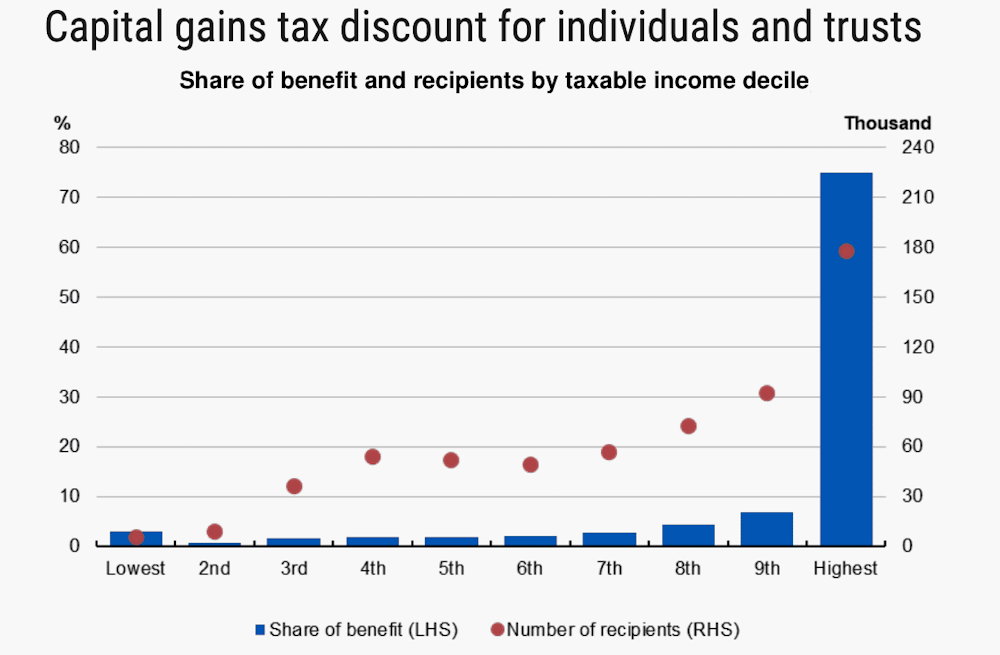
At the last election, Labor proposed removing negative gearing for people who bought existing properties and cutting the capital gains discount from 50% to 25%.

Assistant Treasurer Michael Sukkar said Labor couldn’t be trusted on negative gearing.

In a cynical move that is unashamedly motivated by the pursuit of power, Anthony Albanese is now trying to convince voters that Labor doesn’t want to abolish negative gearing or raise taxes on capital gains.

However, if we are to take the Labor Party at their word, ending negative gearing is an issue that senior Labor figures are deeply committed to.

Sukkar backed up his argument with a bunch of quotes from Labor figures, including Albanese and Chalmers, supporting the old policy.

But the Housing Industry Association welcomed the Labor announcement on negative gearing and capital gains tax, saying it “will provide certainty for the housing industry and for Australians that are looking to invest or rent”.

Albanese also announced Labor would introduce a bill into the Senate “to improve the transparency and accountability of ministerial decisions with grant programs”.

This is to highlight the revelations about the political rorting in the government’s car park program at the last election.

The Conversation

Michelle Grattan does not work for, consult, own shares in or receive funding from any company or organization that would benefit from this article, and has disclosed no relevant affiliations beyond their academic appointment.

ref. View from The Hill: Labor wouldn’t disturb tax cuts, negative gearing in ‘small target’ strategy – https://theconversation.com/view-from-the-hill-labor-wouldnt-disturb-tax-cuts-negative-gearing-in-small-target-strategy-165084

How do Olympic athletes stack up against invertebrates? Not very well

Source: The Conversation (Au and NZ) – By Caitlyn Forster, PhD Candidate, School of Life and Environmental Sciences, University of Sydney

Andreas Karyadi / Shutterstock

Olympians spend years training to be the best of the best. Scientists and sportspeople have spent decades researching the mechanics of the human body to ensure our elite athletes are always reaching higher, faster and stronger.

But how do human athletic skills compare with those of insects and arachnids? Once you take the relative sizes into account, it’s clear invertebrates have the winning edge.

Strength

Weightlifting is a common measure for human strength. Weightlifters can compete in two events at the Olympics: the snatch and the clean and jerk.

The men’s snatch world record of 222 kilograms is held by Lasha Talakhadze from Georgia. Talakhadze weighs around 175kg himself, so he is lifting about 1.25 times his own weight. He is considered the greatest (human) super-heavyweight weightlifter of all time.

If we compare his achievement to what invertebrates do every day, it looks a little less impressive. The tiny moss mite Archegozetes longisetosus, a soil-dwelling arachnid, can produce a gripping force 1,180 times its body weight. The green weaver ant can lift more than 100 times its body weight. Mound ants are even more powerful: engineers have established they have the neck strength to hold up to 5,000 times their body weight.

The formidable strength of ants and other small critters is largely due to the physics of scale. Smaller animals have a higher proportion of muscle than larger animals. Their small bodies present only a small load for the muscles to move, freeing up strength to move much heavier objects.

Larger animals have much more volume and mass, meaning their muscles must be much stronger to maintain the same level of strength relative to body weight. If you scaled an insect up to human size, it would be stronger than a human – but it would also be so heavy it would be unable to hold itself up!

The average dung beetle can shift an astonishing 1141 times its own weight.
Michael Potter / Shutterstock

The strength competition isn’t a complete washout for humans, though. When it comes to pulling heavy things, there’s at least one human who can give the insects a bit of competition. Kevin Fast, a Canadian priest, holds the world record for the heaviest vehicle pull: in 2009 he single-handedly moved a 188-tonne jet plane, a remarkable 1,000 times his own weight.

That’s almost as much as the average dung beetle (Onthophagus taurus), which can move 1,141 times its body weight.

Swimming

Cate Campbell broke the women’s 100-metre freestyle world record in 2017. She was one of the Australian flag-bearers at the Tokyo Olympics opening ceremony and has just taken gold as part of the 100m freestyle relay team. Campbell’s swimming speed is just faster than one body length per second.

In water, as on land, insects have a considerable edge. The fastest swimming insect is the whirligig beetle, which moves at 44.5 body lengths per second.

Whirligig beetles are made for fast swimming, with their egg-shaped stiff bodies that reduce drag, and the greater power-to-weight ratio that small insects have.

The egg-shaped body of the whirligig beetle cuts down on drag for speedy swimming.
Agami Photo Agency / Shutterstock

Human swimmers go to great lengths to reduce their own drag and move faster. Campbell and her fellow Olympians will wear high-tech drag-minimising swimsuits. Manufacturer Speedo took inspiration from the most efficient vertebrate swimmers (sharks and other fish) to design its swimsuits.


Read more:
‘Fast suits’ and Olympic swimming: a tale of reduced drag and broken records


Running

Running is the original Olympic sport, and today’s runners cover distances from the 100-metre sprint to the 42-kilometre haul of the marathon.

The men’s 100m record is held by Jamaica’s Usain Bolt, with a time of 9.58 seconds and a top speed of 44.72km per hour. Bolt is 1.95m tall, so his top speed is almost 6.4 body lengths per second.

The fastest invertebrate puts him to shame. The mite Paratarsotomus macropalpis can cover 322 body lengths per second, which is the equivalent of Bolt running at 2,090km per hour.

The reduced mass of insects is key to their efficient running. They also have the advantage of having six legs, allowing them to be particularly efficient over rough terrain as they can consistently keep three legs on the ground to increase stability.

The Saharan silver ant (Cataglyphis bombycina) zooms along by taking 47 steps per second.
Pavel Krasensky / Shutterstock

Taking a lot of steps is also important to allow for fast movement in many insects. The fastest ant, Cataglyphis bombycina, takes 47 steps per second, in comparison to Usain Bolt’s four.

High jump

Many invertebrates are also great jumpers. Fleas can jump to a height of 150 times their own body length, and locusts up to 10 times theirs. A human high-jumper matching the flea’s achievement could clear the Eiffel Tower.

Even if a human could jump over the Eiffel Tower, they wouldn’t survive the landing. How is this possible for insects? Once again, it’s mainly due to their small size. Because insects have a much lower mass than humans, they hit the ground with far less force.

The current women’s world record for the high jump is held by Italy’s Stefka Kostadinova, who jumped 2.09m in 1987. The current world number one, Mariya Lasitskene, has a personal best of 2.06m, and Olympic hopeful Nicola McDermott became the first Australian woman to clear 2 metres earlier this year.

Jumping ability is complex, involving muscle properties, leg design, and jumping technique. As animals get bigger, the absolute size of their jumps tends to increase. This makes sense: the longer your legs, the higher you can jump. An insect could never clear 2.09m, but in relation to their body size, they are clear winners.

How are insects such great jumpers? To combat drag and the effects of reduced size on muscle shortening velocity, many insects have evolved neat adaptations to use stored energy.

The hind legs of fleas act as multi-jointed levers to catapult them up to 150 times their own body length.
Vera Larina / Shutterstock

Fleas and locusts have evolved mechanisms to catapult themselves into the air using their hind legs as multi-jointed levers. Their muscles store energy in a special protein and when the energy is released it acts as a coiled spring to fling them upwards. Springtails have even evolved their own catapulting body part, the furcula. Its sole purpose is to spring them into the air to avoid predators.

Humans, on the other hand, do not rely on energy stored this way to jump. And without that extra energy boost, we can never reach those heights.

While we won’t see an invertebrate on the podium anytime soon, and a human could never run as fast as a mite, our Olympians are incredible examples of the extremes our bodies can achieve. We look forward to watching the amazing feats of humans at Tokyo.

The Conversation

Caitlyn Forster receives funding from The Australian Research Council. She is affiliated with The Australasian Society for the Study of Animal Behaviour.

Eliza Middleton receives funding from The Australian Research Council.

ref. How do Olympic athletes stack up against invertebrates? Not very well – https://theconversation.com/how-do-olympic-athletes-stack-up-against-invertebrates-not-very-well-164488

Curious Kids: are sugar rushes real?

Source: The Conversation (Au and NZ) – By Lauren Ball, Associate Professor/ Principal Research Fellow, Griffith University

Shutterstock

When I’m happy after eating something sweet mummy and daddy say I am having a “sugar rush”. But I think I’m just happy! Is a sugar rush a real thing? – Rosie, aged 7.

Hi Rosie! We’re so excited you asked this question.

A sugar rush is an old saying for when someone feels happy and energetic after eating sugary foods, like lollies. They’re talked about all the time at school.

And this seems like a good explanation for them.

But you’re right: a “sugar rush” isn’t a real thing. It’s what we call a myth. So what’s going on?

What actually is sugar?

Sugar is something your body uses to make energy.

Sugar is a type of carbohydrate. Carbohydrates are found in lots of foods, like fruits, vegetables, and cereals.

Carbohydrates found in processed foods, like lollies and soft drinks were thought to give you extra energy.

Lollies contain lots of sugar
Lollies contain lots of sugar.
Patrick Fore/Unsplash

Why did people think sugar rushes were real?

Scientists used to think eating sugary foods and having a “sugar rush” meant sugar would give you lots of fuel to break down into energy.

They thought this because people would be happier, and have lots of energy after eating sweet treats.

This is because sugar is taken up into your blood quickly after eating. Your body then transports the sugar in your bloodstream to your muscles and organs, like your heart and brain.

The muscles and organs use the sugar to make energy. All that extra energy might cause someone to do lots of activity like running and jumping.


Read more:
Health Check: how much sugar is it OK to eat?


So why is it a myth?

Your body doesn’t use all the sugar you eat at once, it’s very good at storing sugar for use later.

In fact, your body likes to keep the amount of sugar in your blood steady – not too much and not too little.

This means your muscles and organs can use the right amounts of sugar to make energy when they need it.

How did scientists find this out?

To test if a “sugar rush” is real, scientists have done some experiments.

First the scientists gave some children a snack, but they didn’t tell their parents what they gave them.

Then the parents had to guess if their child was given something sugary, or non-sugary.

After watching their child play, most parents couldn’t tell which snack their child had. Most parents even thought their child had a sugary snack, when they hadn’t!

Children celebrate at a birthday party.
It’s hard to tell if kids have had a sugary snack or something without sugar.
Shutterstock

These experiments helped scientists discover that a “sugar rush” is a myth.

Instead, they think people just get happy and energetic from enjoying a treat, sugary or not.

So if you are at a party and feeling energetic after eating some cake, lollies and soft drink, it might be because you’re having a good time with your friends and having fun!

But a ‘sugar crash’ is a real thing

Some scientists have looked at what happens to your body after eating lots of sugar. They discovered that eating sugary foods can give you a “sugar crash”!

After feeding some people lots of sugar, the people said they felt really tired one hour after eating their sweet treats.

So rather than having a “sugar rush”, the science says people probably feel worse after eating sugar.


Read more:
Yes, too much sugar is bad for our health – here’s what the science says


Hello, curious kids! Have you got a question you’d like an expert to answer? Ask an adult to send your question to curiouskids@theconversation.edu.au

The Conversation

Lauren Ball receives funding from the National Health and Medical Research Council, Queensland Health, VicHealth, and Royal Australian College of General Practitioners. She is an Executive Member of the Australasian Association for Academic Primary Care.

Katelyn Barnes is an Executive Member of the Australasian Association for Academic Primary Care.

Clare Van Dorssen does not work for, consult, own shares in or receive funding from any company or organisation that would benefit from this article, and has disclosed no relevant affiliations beyond their academic appointment.

ref. Curious Kids: are sugar rushes real? – https://theconversation.com/curious-kids-are-sugar-rushes-real-161494

To ensure supply of the top 3 drugs used to treat COVID-19, it’s time to boost domestic medicine manufacturing

Source: The Conversation (Au and NZ) – By Nial Wheate, Associate Professor of the Sydney Pharmacy School, University of Sydney

We now know enough about how COVID works for health authorities to have issued clear guidance on which drugs doctors should use on hospitalised patients. The recommended drugs are dexamethasone, remdesivir, and tocilizumab.

Remdesivir, also known as Veklury, is not manufactured in Australia and the Therapeutic Goods Administration (TGA) has recently issued an alert warning of a shortage of tocilizumab in Australia. And the large dexamethasone manufacturers are based overseas. The website Pharmaoffer, which shows suppliers of active pharmaceutical ingredients, lists the countries that produce the active ingredient in dexamethasone; Australia is not one of them.

More broadly, Australia lacks medicines manufacturing capability and this puts us at significant risk should supplies from overseas continue to be interrupted.

One report released last year described the Australian market for pharmaceuticals as “possibly one of the most vulnerable in the OECD”.

It’s time for Australia to re-invest in domestic medicine manufacturing.

Drugs used to treat COVID-19

Many people diagnosed with COVID-19 experience only mild, or no symptoms at all, and can be managed and monitored at home. Rest is the main treatment, and medicines such as paracetamol and/or ibuprofen can provide symptomatic relief of any mild fevers.

People with moderate to severe COVID-19 are treated in hospital. The medicines doctors will prescribe in hospital depend on a patient’s clinical circumstances, such as whether or not they are receiving oxygen therapy.

The pharmaceutical treatment options include:

  • dexamethasone, a corticosteriod

  • remdesivir, an antiviral and

  • tocilizumab, a monoclonal antibody and immunosuppressive agent (monoclonal antibodies are lab-made proteins that mimic the immune system’s virus-fighting abilities).

Dexamethasone is already used for a wide range of conditions, such as certain forms of cancer and arthritis, and various other disorders. Now, it is used in treatment of COVID-19 to suppress inflammation and immune responses.

Remdesivir works by stopping the replication of viral RNA.

And tocilizumab is sometimes used when COVID-19 patients have signs of systemic inflammation.

Dexamethasone is already used for a wide range of conditions.
Nati Harnik/AP

Where are they made?

Australia is heavily reliant on supply agreements for medicines that come from overseas (and a manufacturing network might include a lot of countries). It’s been reported some of the large dexamethasone manufacturers are in Brazil and India.

To meet growing demand for remdesivir, its company (Gilead) has approved new deals for manufacturing in Egypt, India, and Pakistan. But while the remdesivir manufacturing network now includes more than 40 companies in North America, Europe, and Asia, the medicine is not manufactured in Australia.

Tocilizumab was developed in Japan and is now also licensed for manufacturing by the California-based company Genentech.

Need for Australian manufacturing base

There is an urgent need for Australia to increase local manufacturing of many types of medicines, not just COVID treatments, to secure current and future needs.

In general, Australia does have some medicine manufacturing sites in Australia but several have either closed or are slated for closure.

The Australian government has acknowledged the importance of boosting local production of medicines but it’s unclear what progress has been made.

In March this year, an interim report by the Productivity Commission on vulnerable supply chains again indicated medicines as an area of concern, noting that

the pharmaceutical industry is highly regulated, making entering the market or modifying existing facilities to respond to a crisis a slow and costly process.

The final report from this committee is currently with the government.

Manufacturing of medicines in Australia is regulated by the TGA. According to its website, it can take up to 12 months for an Australian manufacturer to get approval to bring a new manufacturing site online. This means it would take us a long time to act if a supply shortage pops up.

Significant backing from the federal government for local medicine manufacturing would reduce the risk of key medicine shortages in Australia, while also creating many highly skilled jobs.

The Conversation

Associate Professor Wheate in the past has received funding from the ACT Cancer Council, Tenovus Scotland, Medical Research Scotland, Scottish Crucible, and the Scottish Universities Life Sciences Alliance. He is Fellow of the Royal Australian Chemical Institute and a member of the Australasian Pharmaceutical Science Association. Nial is science director of the medicinal cannabis company Canngea Pty Ltd, a board member of the Australian Medicinal Cannabis Association, and a Standards Australia committee member for sunscreen agents.

Elise Schubert is a registered pharmacist at Royal North Shore Hospital, and a PhD Candidate receiving scholarship from the University of Sydney and Canngea Pty Ltd.

Associate Professor Ingrid Gelissen in the past has received grant funding from the NH&MRC and National Heart Foundation. She is a member of the editorial board for several international journals including the BBA-Molecular and Cell Biology of Lipids and the International Journal of Molecular Science.

ref. To ensure supply of the top 3 drugs used to treat COVID-19, it’s time to boost domestic medicine manufacturing – https://theconversation.com/to-ensure-supply-of-the-top-3-drugs-used-to-treat-covid-19-its-time-to-boost-domestic-medicine-manufacturing-164948

How a bee sees: tiny bumps on flower petals give them their intense colour — and help them survive

Source: The Conversation (Au and NZ) – By Adrian Dyer, Associate Professor, RMIT University

Scarlett Howard, Author provided

The intense colours of flowers have inspired us for centuries. They are celebrated through poems and songs praising the red of roses and blue of violets, and have inspired iconic pieces of art such as Vincent Van Gogh’s sunflowers.

Vase with Three Sunflowers by Vincent Van Gough
Vase with Three Sunflowers by Vincent Van Gogh.

But flowers did not evolve their colour for our pleasure. They did so to attract pollinators. Therefore, to understand why flowers produce such vibrant colours, we have to consider how pollinators such as bees perceive colour.

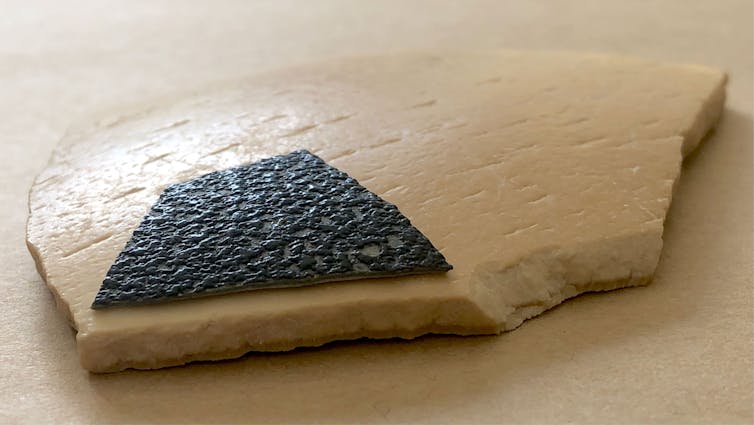
When observed under a powerful microscope, most flower petals show a textured surface made up of crests or “bumps”. Our research, published in the Journal of Pollination Ecology, shows that these structures have frequently evolved to interact with light, to enhance the colour produced by the pigments under the textured surface.

A flower of Tibouchina urvilleana observed under a powerful scanning electron microscope shows a typical bumpy petal surface (left). In comparison, the opposite (abaxial) petal side, rarely seen by an approaching pollinator, shows a less textured surface (right).
Author provided

Sunshiney daze

Bees such as honeybees and bumblebees can perceive flower colours that are invisible to us — such as those produced by reflected ultraviolet radiation.

Plants must invest in producing reliable and noticeable colours to stand out among other plant species. Flowers that do this have a better chance of being visited by bees and pollinating successfully.

However, one problem with flower colours is sunlight may directly reflect off a petal’s surface. This can potentially reduce the quality of the pigment colour, depending on the viewing angle.

You may have experienced this when looking at a smooth coloured surface on a sunny day, where the intensity of the colour is affected by the direction of light striking the surface. We can solve this problem by changing our viewing position, or by taking the object to a more suitable place. Bees, on the other hand, have to view flowers in the place they bloom.

Bumblebee on a smooth blue surface, where the colour is affected by light reflection.

We were interested in whether this visual problem also existed for bees, and if plants have evolved special tricks to help bees find them more easily.


Read more:
Our ‘bee-eye camera’ helps us support bees, grow food and protect the environment


How bees use flower surfaces

It has been known for some time that flowering plants most often have conical-shaped cell structures within the texture of their petal surfaces, and that flat petal surfaces are relatively rare. A single plant gene can manipulate whether a flower has conical-shaped cells within the surface of a petal — but the reason why this evolved has remained unclear.

Past research suggested the conical petal surface acted as a signal to attract pollinators. But experiments with bees have shown this isn’t the case. Other explanations relate to hydrophobicity (the ability to repel water). But again, experiments have revealed this can’t be the only reason.

We investigated how bumblebees use flower surfaces with or without conical petal shapes. Bees are a useful animal for research as they can be trained to collect a reward, and tested to see how they perceive their environment.

Bumblebees can also be housed and tested indoors, where it is easier to precisely mimic a complex flower environment as it might work in nature.

Flowers cater to a bee’s needs

Our colleague in Germany, Saskia Wilmsen, first measured the petal surfaces of a large number of plants and identified the most common conical surfaces.

She then selected some relatively smooth petal or leaf surfaces reflecting light from an artificial source as a comparison. Finally, blue casts were made from these samples, and subsequently displayed to free-flying bees.

In the experiment, conducted with bumblebees in Germany, a sugar solution reward could be collected by bees flying to any of the artificial flowers. They had to choose between flying either towards “sunlight” — which could result in light reflections affecting the flower’s coloration — or with the light source behind the bee.

The experiment found when light came from behind the bees, there was no preference for flower type. But for bees flying towards the light, there was a significant preference for choosing the flower with a more “bumpy” conical surface. This bumpy surface served to diffuse the incoming light, improving the colour signal of the flower.

The results indicate flowers most likely evolved bumpy surfaces to minimise light reflections, and maintain the colour saturation and intensity needed to entice pollinators. Humans are probably just lucky beneficiaries of this solution biology has evolved. We also get to see intense flower colours. And for that, we have pollinators to thank.


Read more:
Plants use advertising-like strategies to attract bees with colour and scent


The Conversation

Adrian Dyer receives funding from The Australian Research Council.

Jair Garcia does not work for, consult, own shares in or receive funding from any company or organization that would benefit from this article, and has disclosed no relevant affiliations beyond their academic appointment.

ref. How a bee sees: tiny bumps on flower petals give them their intense colour — and help them survive – https://theconversation.com/how-a-bee-sees-tiny-bumps-on-flower-petals-give-them-their-intense-colour-and-help-them-survive-164782

For too long, research was done on First Nations peoples, not with them. Universities can change this

Source: The Conversation (Au and NZ) – By Victoria Rawlings, Lecturer, University of Sydney School of Education and Social Work, University of Sydney

Warlpiri person showing a honey ant after hunting. shutterstock

For too long, “research” was an activity done to or on Indigenous people; it was something imposed from the outside. This was especially the case for people who came from communities that were oppressed or marginalised in the colonialism of the 19th and 20th centuries.

Indigenous people throughout the world feel they have been the subjects of endless measurement, recording, and invasion of privacy with little or no apparent benefit except for the scholars who make careers out of it. Māori scholar Linda Tuhiwai Smith calls this approach “research adventures in Indigenous lands” in her book Decolonising Methodologies.

Our collaboratively edited volume, Community-Led Research: Walking New Pathways Together, represents a substantial step towards redressing power imbalances that continue to characterise much academic research.

The book asks how to move research done to and on people towards for and with people. It features both community and academic voices and reflects on research that foregrounds non-academic priorities.


Read more:
Indigenous scholars struggle to be heard in the mainstream. Here’s how journal editors and reviewers can help


Since the global Civil Rights movement of the 1960s and beyond, academic researchers have recognised the political and moral responsibilities we have to those impacted by our studies.

To meet their responsibilities to different communities, researchers have incorporated methodologies such as:

  • participatory action research, in which members of the community affected by the research actively participate in different parts of the project

  • public patient involvement, in which non-academic people work as employees or volunteers in organisations’ high-level work

  • community-based participatory research, which aims to equitably involve community members and others in research projects.

Each of these are slightly different, and are used variously in different disciplines, but their increasing presence affirms that involving communities in research is crucial for good research outcomes.

However, we have found that approaches putting community at the centre of research beyond disciplinary siloes have not yet been documented in a comprehensive way. Our book builds on previous research by bringing together various community-led approaches, including from education and social work, health and medicine, and archaeology.

Stories, not blueprints

The chapters in our book reflect on community-led approaches to research in different spaces. They consider questions of identification of a community, appropriate protocols, and how to build positive collaborations.

The authors do not attempt to provide a template that can be applied in all research situations. Nor should they. As several chapters point out, there is a risk to “community-led” becoming another buzzword that ends up being appropriated for marketing or institutional propaganda.

We found community-led research must be built on a foundation of real relationships, mutual respect, and true reciprocity. We have all come into community-led research from different disciplinary perspectives and research experiences, as well as personal experiences.

As the editors of the volume, we were inspired by working with young people, Pacific Islanders and Aboriginal and Torres Strait Islander communities. Each of us has our own ideas about community-led research because of who we work with and where our interests lie. We reflect on our own work individually below to give a sense of different experiences in the field.

Rawlings: While young people clearly make up a large and important part of our community, they often don’t get a seat at the table, even when research is “about” them. They can be seen as not critical or sophisticated enough to partner in research, or as needing “protection”, where they are seen as too innocent to take part in research about sensitive issues.

Imagine, then, co-designing research with LGBTIQA+ young people about their experiences of self-harm and suicide. While some young people may baulk at participating in this kind of discussion, research shows they benefit from conversations about their distress and trauma, particularly when they feel it might benefit others.

We found this to be the case as we co-designed our research in partnership a youth advisory group. Not only did the young people benefit, but our research was higher quality, too.

Flexner: My first trip to Vanuatu, in 2011, was almost a parody of lost luggage, cultural and linguistic misunderstanding, and geographical disorientation in the remote southern islands of Erromango and Tanna.

However, that initial fieldwork experience proved formative. It taught me how to work with community through the chiefs, elders, and knowledge holders facilitated by the Vanuatu Cultural Centre filwokas (fieldworkers). It set up intellectual engagement with cultural traditions encapsulated by the Melanesian term kastom (which translates as customs or traditions).

After a decade of research in Vanuatu, I still find myself learning new things, and finding new ways to work with the people who call these islands home.

Riley: A huge concern in First Nations communities is in having no control over what research is undertaken or the right to veto the interpretation of data and findings. This is due to the fact much past research has helped to form government policies and practices concerning First Nations lives with little life improvement. This is clearly evidenced in current Closing the Gap statistics.

Often, First Nations peoples find they are called upon when the government and researchers arrive at an impasse and they do not know what else to do. Let us change this approach and ensure First Nations peoples are asked what research they want undertaken first and what benefits they want from the research.

That is, how can research improve First Nations people’s lives and enhance community development?


Read more:
Nigerian academics weigh in on the faults and frustrations of managing COVID-19


New pathways and old limitations

Although we are inspired by the contributions in Community-Led Research: Walking New Pathways Together, we also need to recognise and acknowledge the limits of what we do. Universities remain institutions that many people, especially Indigenous people, associate with colonialism.

Besides our work in the communities, one of our great challenges is how to make the places where we work as academics more welcoming, inclusive, and egalitarian. Further, there are very real differences that regularly map onto differences in class, nation, geographical region, and identities.

It is impossible to dismantle 500 years of history in a single project, no matter how much goodwill the researchers and community establish together. Community-led research is in part about changing academic research, but it is also about changing other kinds of relationships in the world we all live in.

There is great promise in so many new approaches people are taking in their research, and their understandings of the groups of people they work with both inside and outside of academia. Community-led research is, however, a type of research that is still developing and we do not believe our work is finished. Rather, our pathway is just beginning.

The Conversation

Victoria Rawlings receives funding from the Australian Research Council (DE210101619).

James L. Flexner receives funding from the Australian Research Council (DE130101703, DP160103578, LP170100048). He works for the University of Sydney.

Lynette Riley receives funding from NSW Aboriginal Languages Trust and an ARC Linkage Grant for SSESW, Research Centre for Children and Families. Lynette has also received past funding from SSESW, Research Centre for Children and Families.

Lynette is a member for the Labor Party, is a NAIDOC Committee member and is a board member for the Aboriginal Languages Trust.
Lynette is also affiliated with Aboriginal Affairs OCHRE Committee and is the chairperson for Yirigaa.
Yirigaa – Chairperson.

ref. For too long, research was done on First Nations peoples, not with them. Universities can change this – https://theconversation.com/for-too-long-research-was-done-on-first-nations-peoples-not-with-them-universities-can-change-this-163968

The forgotten Australian veterans who opposed National Service and the Vietnam War

Source: The Conversation (Au and NZ) – By Jon Piccini, Lecturer, Australian Catholic University

On July 26 1971, a top secret cabinet meeting ended what was then Australia’s longest conflict. The public would hear about it for the first time in August, when Prime Minister William McMahon announced the withdrawal of Australian forces from Vietnam.

Eighteen months — and a change of government later — Australia’s Vietnam War was over. Alongside untold Vietnamese, some 521 Australians had died in conflict, including 202 national servicemen.

The end of Australia’s war also saw the wrapping up of a novel and now largely forgotten organisation. The Ex-Services Human Rights Association of Australia was founded in October 1966 by former servicemen and women who “oppose militarism” and “believe that National Service […] should not involve conscription for foreign wars”.

The final issue of the group’s newsletter, Conscience, in February 1972 paid special tribute to Martin Leslie (Les) Waddington, a World War II veteran and leather goods manufacturer, and the group’s “spiritual leader, and greatest workhorse”.

Fifty years since Australia officially began withdrawing from Vietnam, my forthcoming article reflects on how Waddington exemplified an undercurrent of anti-war citizen soldiery in Australia.

Australia’s anti-militarist tradition

The Ex-Services Human Rights Association of Australia emerged out of a long Australian tradition of opposition to compulsory national service, perhaps best exemplified in the famous struggle against conscription during the first world war.

Pre-war national service schemes had proven unpopular: 27,000 court cases were filed against non-compliers between 1912 and 1914.

During the war, two plebecistes defeated Prime Minister Billy Hughes’ attempts to conscript Australians for overseas service.


Read more:
It’s time Australia’s conscientious objectors of WW1 were remembered, too


This subversive legacy continued. Ex-serviceman and communist Len Fox used a 1936 pamphlet, The Truth About Anzac, to suggest:

[the] heroism of the Conscientious Objector, the Militant Anti-War Fighter, and the Anti-Conscriptionist, [be] give[n] its place besides the heroism of the Anzacs.

While the Menzies government’s National Service scheme of 1964 was initially widely supported as citizen building, the return of “Nashos” in body bags saw the tide of public opinion slowly turn.

From Sydney to a national movement

The Returned and Services League was established in 1916, and by the 1960s the “political pressure group” used its authority to support anti-communism, national service and the Vietnam war.

Waddington was still an active member of his local Cronulla RSL sub-branch when he spearheaded the Ex-Services Human Rights Association of Australia’s founding meeting in 1966.

Attended by both current and former RSL members, and including doctors, academics and “leading lay churchmen”, the Australia reported the 60 attendees were “well-tailored, well-fed and, to all appearances, essentially middle class”.

The Sydney-based group began actively participating in the city’s anti-war movement, including the December 1966 protests against visiting US President Lyndon B Johnson.

Sign reads 'wanted: President Johnson for crimes against humanity'
Anti-Vietnam War demonstration outside United States Consulate-General, Sydney, New South Wales, February 1966.
Mitchell Library, State Library of New South Wales and Courtesy SEARCH Foundation, CC BY

Waddington believed the Anzac tradition should venerate war resisters as much as battlefield sacrifice. These beliefs saw him expelled by the RSL’s State Executive in late May 1967 for “conduct subversive to the objects and policy of the League”.

The resulting controversy meant “there must be hardly anyone left in this country who has not now heard of our Association”, Waddington happily reported in Conscience. Membership exploded to over 500, with branches across the country.

Fellow RSL members came forward to defend Waddington. One resigned his membership, writing the league displayed “a hardening, intolerant attitude”, while another accused it of “deprivi[ing] members of the right to […] express political opinions”.

An editorial in the Canberra Times stated if the Vietnam war was “the be-all and end-all” of RSL policies, then “there would be great gaps in the ranks”.

Anzac and the heroic resister

Amid the outcry, Waddington was reinstated — but changing the RSL was not the Ex-Services Human Rights Association of Australia’s main priority. Its primary interest was supporting conscientious objectors.

The number of young Australians who refused to serve in Vietnam, while always small, rose quickly after the widely publicised case of Sydney school teacher Bill White in late 1966. The association took on his case, as it did other non-compliers like John Zarb.

Man wears a placard reading 'No Aussie troops for Vietnam'
Anti-Vietnam War demonstrators protest outside Central Police Court, Liverpool Street, Sydney, 1965.
Mitchell Library, State Library of New South Wales and Courtesy SEARCH Foundation, CC BY

What the association had — and the wider anti-war movement lacked — was their status as ex-servicepeople. Members wore service medals conspicuously at demonstrations to undermine the image of protesters as “long haired radicals”.

To refuse service was not an act of cowardice, the association claimed, but rather the highest form of bravery. As Waddington, protesting the ongoing imprisonment of objectors, remarked in a 1971 letter:

Two years in jail is the price for national heroes to pay to avoid murdering on a foreign field.

Waddington and his fellow anti-war veterans were convinced it was as brave to face prison for your beliefs as it was to face death on the battlefield.

This example highlights how, contrary to popular opinion, the ex-service community has always been far from monolithic in its politics. Equally, it shows Anzac is not an uncontestable mantra, but a pliable tradition that could, rhetorically at least, include proud soldiers and brave resisters.

Today, Australia reflects on the withdrawal from Vietnam as we face the aftershocks of another overseas war. Perhaps we should also reflect on those war resisters and their allies who believed, as the Ex-Services Human Rights Association of Australia put it, “war is a crime against humanity”.


Read more:
Anzac Day is also about the right to democratic dissent and those who fought for it


The Conversation

Jon Piccini does not work for, consult, own shares in or receive funding from any company or organisation that would benefit from this article, and has disclosed no relevant affiliations beyond their academic appointment.

ref. The forgotten Australian veterans who opposed National Service and the Vietnam War – https://theconversation.com/the-forgotten-australian-veterans-who-opposed-national-service-and-the-vietnam-war-158958

Australia badly needs earth science skills, but universities are cutting the supply

Source: The Conversation (Au and NZ) – By Kate Selway, Senior Research Fellow, Future Industries Institute, University of South Australia

Earth science is vital to Australia’s economic and environmental future but we are dramatically decreasing our earth science capability. Earth scientists work not only in mining and mineral exploration (which contribute 11% of Australia’s GDP) but also in fields such as environmental science, groundwater monitoring for the agricultural and environmental sectors, geotechnical work for the construction industry, and satellite remote sensing. These skills will be increasingly important to meet the challenges of climate change, particularly as renewable energy sources require new discoveries of minerals for batteries, electric cars and wind turbines.

Already in short supply, geologists, geophysicists and earth science technicians are on the skilled occupation list for immigration. Despite this need, Australian universities have recently made huge cuts to earth science teaching. In the past year, the University of Newcastle and Macquarie University have closed entire earth science departments.


Read more:
‘Devastating’: The Morrison government cuts uni funding for environment courses by almost 30%


Earth science jobs have also been lost at other universities including ANU, UNSW, Tasmania and Melbourne. Almost every university in the eastern states has cut undergraduate courses in earth sciences.

Federal government policies bear significant responsibility for this loss of earth science capability. The lack of JobKeeper support for universities during the pandemic has been widely discussed, but the unhelpful policies run much deeper.

Funding changes hit earth science teaching hard

Despite its importance, earth science undergraduate enrolments in Australia are modest. Most years only about 200 students graduate with an honours degree (the minimum generally required to be employed in the field), while over 15,000 people work as geoscientists in Australia. Commonwealth funding for university teaching is based on student numbers, so earth science departments receive little teaching income.

The stated aim of the 2020 Job-Ready Graduates Package was to address this by “better preparing students for jobs that reflect Australia’s expected economic, industry and employment growth”. The package did reduce fees for earth science students. However, it did not increase funding to cover the resulting fee shortfall.

As a result, university income was reduced by 16% for science students and 29% for environmental science students. At a time when universities are deciding which courses to cut, these suddenly less profitable courses have risen to the top of the list.


Read more:
The government is making ‘job-ready’ degrees cheaper for students – but cutting funding to the same courses


Research lacks funding too

Australia excels in earth science research. In the 2020 QS World University Rankings, nine Australian earth science institutions were in the top 100 in the world, compared to five in biology, three in physics, one in chemistry and none in mathematics. However, research funding policies have hit earth science departments particularly hard.

Most Australian government research funding does not cover the full costs of doing research, including academic salaries and university overheads. This funding system essentially punishes earth science departments for their research excellence because there is no money to cover the required laboratory facilities or academic salaries that come with research success.

Universities had increasingly used international student fees to bridge the research funding gap. But revenue from those fees has been falling since our borders closed to these students. Earth science departments and academics are again on university chopping blocks.


Read more:
Big-spending ‘recovery budget’ leaves universities out in the cold


Research excellence offers little protection

Responsibility also lies with the universities that ultimately decided to cut earth science departments and jobs. Not all these cuts were made in response to COVID-19. For instance, Macquarie University began earth science redundancies in 2019, well before any COVID-19 budgetary crisis.

However, the pandemic has accelerated the loss of earth science teaching. With Macquarie again as an example, in the past year the university has made most academic positions in earth science redundant, while announcing plans to build a A$60 million law school.

Earth science had been an area of research strength at Macquarie University. The department hosted an Australian Research Council (ARC) Centre of Excellence and produced six ARC Future Fellows in the past ten years. The university is clearly making strategic decisions on the basis of undergraduate enrolments rather than research excellence or Australian skills needs.

How can these problems be solved?

A solution to this problem requires Commonwealth funding to be restructured. For a start, research funding should cover the costs of research.

If the Australian government is serious about producing graduates for jobs in areas of need, it should design policies that encourage universities to invest in those areas rather than punishing them for doing so. Universities, as public institutions that seek the support of the public, should commit to supporting areas of importance to Australia, even if these are not the most profitable for the universities themselves.


Read more:
The government linked the cost of university teaching to funding and student fees, but the numbers don’t add up


The immediate problem that must be solved to protect our remaining earth science teaching is low undergraduate student numbers. An easy step for the Australian government would be to boost the small amount of earth science content in the school curriculum. Yet current proposals are to reduce it.

The government should also mount campaigns to show school students the variety of exciting, important and impactful careers they could have as geoscientists. Without immediate changes, the future of earth sciences in Australia looks grim.

The Conversation

Kate Selway receives funding from the Australian Research Council and is on the Federal Executive of the Australian Society of Exploration Geophysicists. Kate took a voluntary redundancy from Macquarie University in February 2021 and currently works at the University of South Australia.

ref. Australia badly needs earth science skills, but universities are cutting the supply – https://theconversation.com/australia-badly-needs-earth-science-skills-but-universities-are-cutting-the-supply-163248

Barnaby Joyce scores dismal ratings in Resolve poll, while Berejiklian government easily in front despite NSW lockdown

Source: The Conversation (Au and NZ) – By Adrian Beaumont, Honorary Associate, School of Mathematics and Statistics, The University of Melbourne

Mick Tsikas/AAP

In the latest Resolve poll for Nine newspapers, the Coalition had 38% of the primary vote (down two since June), Labor 35% (down one), the Greens 12% (up two) and One Nation 4% (up one).

This is based on a sample of 1,607, conducted from July 13 to July 17.

Two party estimates are not provided by Resolve, but The Poll Bludger estimates 51.5-48.5 to Labor from these primary votes, which is a one-point gain for Labor.

Negative ratings for Joyce, Morrison and Albanese

Of those surveyed, 45% said they had a negative view of Nationals leader and Deputy Prime Minister Barnaby Joyce. Just 16% had a positive view, for a net likeability of -29. Former Nationals leader Michael McCormack had a 17% negative, 11% positive rating for a net -6 in June.

This poll suggests the ousting of McCormack in favour of Joyce could hurt the Coalition, as I wrote about last month.


Read more:
Labor regains Newspoll lead as COVID crisis escalates; is Barnaby Joyce an electoral asset?


Also in the Resolve poll, 46% (up six) gave Prime Minister Scott Morrison a poor rating for his performance in recent weeks and 45% (down three) a good rating. Morrison’s net -1 rating is his first negative rating from any pollster since the COVID pandemic began, though Resolve’s ratings are harsher than other pollsters.

Labor leader Anthony Albanese’s net rating fell three points to -16. Morrison continued to lead Albanese by 45-24 as preferred prime minister (46-23 in June).

On COVID, voters thought lockdowns and border restrictions should be gradually eased over the coming months as more people are vaccinated by a margin of 54-19%. By 54-19%, they thought fully vaccinated people should be given more freedom, though they believed (45-34%) this should not occur until everyone has had an opportunity to be vaccinated.

On economic management, the Liberals and Morrison led Labor and Albanese by 41-25% in July (43-20% in June). On COVID management, the Liberals led by 37-25% (40-20% previously).

Essential voting intentions, and anti-vaxxer sentiment

The Essential poll no longer publishes voting intentions with each poll. Instead they release them every few months for all polls they conducted during that period. Essential’s voting intentions numbers include undecided voters.

Last week’s Essential report gave Labor a 47-45% lead with 8% undecided. If undecided voters are removed (as other pollsters do), Labor led by 51-49.


Read more:
Labor gains clear Newspoll lead during Sydney lockdown, but will the economy save the Coalition?


This is a slightly different result from early July when Labor led by 48-44 (52-48 without undecided). They have led by two or four points since April. The Poll Bludger said applying last election preferences instead of respondent preferences to the current poll gives Labor above a 52-48 lead,

With the Sydney and Melbourne lockdowns, anti-vaxxer sentiment has dropped. In Essential, 11% (down five from early July) said they’d never get vaccinated, and 27% (down six) said they’d get vaccinated but not straight away. In Resolve, 21% (down eight since May) said they were unlikely to get vaccinated.

The federal government had a 46-31 good rating for response to COVID in Essential, slightly better than 44-30 in early July, but a long way below the 58-18 rating in late May, before the Victorian and NSW outbreaks. 54% (down three) gave the NSW government a good rating.

Morgan poll and BludgerTrack poll aggregate

A Morgan poll, conducted over July 10-11 and 17-18 from a sample of over 2,700, gave Labor a 52.5-47.5 lead, a 2% gain for Labor since mid-June. Primary votes were 39% Coalition (down 2.5%), 37% Labor (up 2.5%), 11.5% Greens (down 0.5%) and 3% One Nation (down 0.5%).

With polls from Newspoll, Resolve, Essential and Morgan, the Poll Bludger’s BludgerTrack aggregate of recent polls has Labor ahead by 52.0-48.0, from primary votes of Coalition 39.8%, Labor 37.3%, Greens 10.7% and One Nation 2.9%. Labor has been gaining during this year.

NSW Coalition retains large lead in Resolve state poll

In a Resolve NSW poll for The Sydney Morning Herald, Berejiklian’s Coalition had 43% of the primary vote (down just one point since May), Labor 28% (steady), the Greens 12% (steady) and the Shooters, Fishers and Farmers 1% (down three).

This poll was conducted at the same time as the federal June and July Resolve polls from a sample of 1,100. While the July poll was conducted during Sydney’s lockdown, the June poll
occurred after Jodi McKay was ousted in favour of Chris Minns as Labor leader, owing to a disappointing result in the May 22 Upper Hunter byelection.


Read more:
Coalition has large lead in NSW as Nats easily hold Upper Hunter at byelection


The Sydney Morning Herald’s poll article says the Coalition’s position was worse in July than in June. With NSW’s optional preferential voting, the Coalition would lead by around 55-45 from these primary votes. Incumbent Gladys Berejiklian led Minns as preferred premier by 55-16 (compared to 57-17 vs McKay in May).

In questions on the outbreak (only asked of the July sample), 56% thought Sydney was too slow to go into lockdown and 52% said the government should have been more proactive in urging people to get vaccinated. Almost half (46% agreed) the state has handled the outbreak well.

In Essential, 44% of NSW respondents (down seven since early July) thought NSW had moved at about the right speed to enforce lockdown restrictions. But 44% (up five) thought NSW was too slow, and 12% (up two) too quick.

Other states were unsympathetic to NSW, bringing the national figure to 56% for too slow, 34% for about right and 10% for too quick.

Labor easily holds Stretton at byelection

A state byelection for the Queensland Labor-held seat of Stretton occurred on Saturday. It was caused by the death of the previous member, Duncan Pegg.

With 73% of enrolled voters counted, the ABC’s results currently give Labor a 63.8-36.2 win over the LNP, a mere 1.0% swing to the LNP from the 2020 election. Primary votes are 56.6% Labor (no change), 32.7% LNP (up 2.5%) and 6.5% Greens (down 2.2%). The anti-vaxxer Informed Medical Options Party won just 2.5%.

Parties defending seats at byelections normally suffer from the loss of the previous MP’s personal vote. State Labor has held government since 2015, so this is a good result for them. 62% of Queensland respondents in Essential gave their government a good rating on dealing with COVID.

The Conversation

Adrian Beaumont does not work for, consult, own shares in or receive funding from any company or organisation that would benefit from this article, and has disclosed no relevant affiliations beyond their academic appointment.

ref. Barnaby Joyce scores dismal ratings in Resolve poll, while Berejiklian government easily in front despite NSW lockdown – https://theconversation.com/barnaby-joyce-scores-dismal-ratings-in-resolve-poll-while-berejiklian-government-easily-in-front-despite-nsw-lockdown-164936

‘Anorexia coach’: sexual predators online are targeting teens wanting to lose weight. Platforms are looking the other way

Source: The Conversation (Au and NZ) – By Suku Sukunesan, Senior Lecturer in Information Systems, Swinburne University of Technology

Author provided

There’s no shortage of people online looking to exploit and manipulate the vulnerable among us. One such group is anorexia coaches, or “anacoaches”.

They are typically middle-aged, male sexual predators who go online to find impressionable young people to exploit under the guise of providing weight-loss “coaching”.

I have been researching how anacoaches operate. I’ve found they are facilitated by flaws within social media algorithms, as well as large numbers of young people seeking weight-loss help online.

An anacoach message on Tumblr.
Author provided

My ongoing research, coupled with other media reports, indicates opportunity for anacoaches has risen in the past few years. My analysis showed that on Twitter alone there are about 300 unique requests for anacoaches around the world daily.

Anacoaches operate on numerous channels, including established social platforms such as Twitter, TikTok, Tumblr and Kik. Despite this, these platforms haven’t addressed the problem.

Targeting teens

An estimated 4% of Australians, or roughly one million people, are affected by eating disorders. And almost two-thirds (63%) of these people are thought to be female.

Screenshot from TikTok.
Author provided

Teenagers with eating disorders are more likely to experience poor mental health and impaired functioning in social environments — which leaves them more vulnerable to the influence of anacoaches.

Also, research has shown social media use can exacerbate the extent to which teenagers and young adults chase a “thin” ideal.

One study published by a Dutch human rights law group on the predatory behaviours of anacoaches found self-reporting victims had been sexually assaulted and even raped.

And with anacoaching comes the potential for other forms of criminal abuse, such as paedophilia, forced prostitution and even human trafficking.


Read more:
The virtual door to online child sexual grooming is wide open


Social media provides the platform

With the rise of online platforms there has been an emergence of communities pursuing a thin ideal. These networks tend to share content that endorses extreme thinness.

Group identity is formed through interactions and hashtag sharing, with a focus on terms used regularly in the context of eating disorders. Common hashtags include #proana (pro-anorexia), #bonespo (bone inspiration), #edtw (eating disorder trigger warning), #promia (pro bulimia), #bulimia, #thighgap, #uw (ultimate weight), #cw (current weight), #gw (goal weight) and #tw (trigger warning).

As highlighted in my previous research, communication in these communities includes exchanging weight-loss tips, diet plans, extreme exercise plans, imagery of thin bodies and emotional “support”.

Anacoaches lurk in chat forums focused on thin ideals. Each coach will tend to be present in numerous chatrooms, luring teenagers with stories of their past “successes” from coaching.

They market themselves with dubious claims. Some will assign themselves labels such as “strict coach” or “mean coach”. The screenshots below show messages posted on the app Kik.

Screenshot from Kik.
Author provided
Screenshot from Kik.
Author provided

The coaching predominantly involves sharing pictures and videos for nude body checks (or in undergarments), weekly weigh-ins, and enforcing strict rules on what foods to eat and avoid.

Screenshot from Kik.
Author provided

While there’s currently no way to know how long coaching lasts on average, the harms are extensive. Because of the way its content algorithms work, TikTok, which has a massive young following, will start to recommend user accounts centred around eating disorders once such content is initially sought.

Screenshot from TikTok.
Author provided

What is being done?

There are currently not enough regulations in place by platforms to prevent anacoaches from operating, despite an array of reports highlighting the issue.

Best efforts so far have involved Instagram, TikTok and Pinterest filtering out selected words such as “proana” or “thinspo” and banning searches for content that promotes extreme thinness.

A TikTok spokesperson told The Conversation the platform does not allow content depicting, promoting or glorifying eating disorders.

“When a user searches for terms related to eating disorders, we don’t return results and instead we direct them to the Butterfly Foundation and provide them with helpful and appropriate advice. We’ve also introduced permanent public service announcements (PSAs) on related hashtags to help provide support for our community,” the spokesperson said.

Screenshot from TikTok.
Author provided

The spokesperson said accounts found to be engaging in sexual harassment may be banned. Platforms will ban users if they violate user guidelines, but anacoaches will often reappear under a new account name.

According to Twitter, evading account bans is against the rules. Earlier this year Twitter announced it would enable a safety mode that will allow users to turn on the proactive screening of spammy and abusive content. It remains to be seen what role this will play in curbing targeted attacks from anacoaches.

A research-based report released this month by the 5Rights Foundation has detailed how minors online are targeted with sexual and suicide-related content. It references platforms including Twitter, TikTok, Instagram, Snapchat, Facebook, Discord, Twitch, Yubo, YouTube and Omegle.

The research showed children as young as 13 are directly targeted with harmful content online within 24 hours of creating an account online.

Screenshot from TikTok.
Author provided

They may receive unsolicited messages from adults offering pornography, as well as recommendations for eating disorder content, extreme diets, self-harm, suicide and sexualised or distorted body images.

Australia’s policies involving platforms need to be overhauled to ensure platforms adhere to community guidelines and are held accountable when violations occur.

The government should prescribe set rules, informed by the eSafety office, regarding how vulnerable youth online should be helped.

A nuanced intervention approach would generate better outcomes for users with eating disorders as each user would have a different set of circumstances and a different mental health state.

Anacoaches on social media should be considered and dealt with like criminals. And platforms that fail to uphold this should face fines for failing to provide a safe user environment for the vulnerable.

In the past the European Union has fined platforms for allowing terrorist content. Social media giants have also hired contract workers to screen content for examples of terrorism, paedophilia and abuse. This effort should be extended to include anacoaches.

Screenshot taken from Kik.
Author provided

The Conversation approached Tumblr for comment but did not receive replies within the deadline allocated. Popular messaging app Kik was acquired by MediaLab in 2019. The Conversation approached MediaLab for comment but did not receive a response within the allocated timeframe.

The Conversation

Suku Sukunesan receives funding from NHMRC-MRFF examining social media content involving Eating Disorders.

ref. ‘Anorexia coach’: sexual predators online are targeting teens wanting to lose weight. Platforms are looking the other way – https://theconversation.com/anorexia-coach-sexual-predators-online-are-targeting-teens-wanting-to-lose-weight-platforms-are-looking-the-other-way-162938

‘Girls please stay in the kitchen’ — as skateboarding debuts at the Olympics, beware of the lurking misogyny

Source: The Conversation (Au and NZ) – By Brigid McCarthy, Lecturer in Journalism, La Trobe University

Keith Birmingham/AP/AAP

Skateboarding will make its Olympic debut this year at the Tokyo Games.

The women’s and men’s competitions will both involve park and street events. In each, athletes perform optional skill sets within a time limit and are judged based on the combined difficulty and execution shown, similar to diving or gymnastics.

Skateboarding has been included at Tokyo for the first time as part of a bid to make the games “more youthful, more urban [and] include more women”.

But gender equality in sports is not as simple as just scheduling a women’s competition.

My research suggests female athletes in Tokyo are likely to cop sexist abuse online, especially if they are competing in traditionally male events.


Read more:
Alt goes mainstream: how surfing, skateboarding, BMX and sport climbing became Olympic events


My research

In my recently published research, I examined nearly 4,000 comments posted to YouTube about women’s skateboarding competitions. The comments were collected from 14 competition live streams, from 2017 to the end of 2019. The competitions selected were high-profile skateboarding events with large prizes.

Given that YouTube comments can be added, edited or removed at any time, all comments were extracted at the beginning of the study to create a stable data set.

How Olympic skateboarding works.

‘Welcome to womanhoodsville’

Of the comments examined, 17% of those made on street skating competitions contained misogyny or abuse. While recent studies have found sportswomen to be individual targets of online abuse, I also found frequent gender discrimination targeting women skaters collectively. This was often expressed through gendered gate-keeping of both skateboarding and sport.

Girls, please stay in the kitchen.

Many comments used aggressive language that dehumanised and sexualised women.

Give the bitches armor [sic] so they don’t skate like pussies.

There were also frequent anti-feminist sentiments posted, suggesting women were being granted a free ride for the sake of equality.

Welcome to womanhoodsville, where you get 1000x the attention with a 1000th of the effort.

Interestingly — and disturbingly — some of the abusive comments we observed seemed to suggest women’s inclusion comes at the cost of men.

These hoe’s [sic] should be greatful [sic] that men did all the work so they can just go around doing flatground kickflips and missing 5050s for $20,000.

Dude culture

Despite women’s sustained participation, skateboarding has long been perceived as a “dude” culture. The new TV series Betty, based on its actors’ real-life experiences, highlights the macho monopolisation of skate spaces. As creator Crystal Moselle explains:

[…] skateboarding for so long has been set up as a male sport. So even just, like, going to the store to set up a board is intimidating. It’s a lot of intimidation.

A woman competes in a pre-Olympic skateboarding competition.
Women have had to fight to be included in elite skateboarding events.
Riccardo Antimiani /EPA/AAP

Women have also had to fight for competitive opportunities, including the sport’s “Billie Jean King moment”, when women threatened to boycott the 2005 X Games to gain better access to practice time, coverage and prize money.

Meanwhile, some major skate events have only recently included full women’s programs in the course of becoming Olympic qualifying competitions.

Beyond skateboarding

This is not just a skateboarding problem, unfortunately. There is a wider problem with misogyny in sport. The uninhibited online abuse we observed is similar to the explosion of sexist commentary that occurred around the formation of the women’s AFL league.

In 2019, trolls flocked to an image of AFL player Tayla Harris kicking a football. The following year, the Herald Sun attributed their decision to close comments on their coverage to “constant trolling, harassment and disgraceful commentary”.

And of course, sadly, it’s not just athletes — women working in sports journalism face this, too. This year, American sports writer Julie DiCaro published a book, Sidelined, about the online vitriol experienced by women working in the field.

Online abuse is everywhere

Since this research was undertaken, the vilest comments have been slowly removed from the streams. But this is not enough — online abuse of women is ubiquitous.

And while moderation can remove comments calling women skaters “a bunch of broken dishwashers” or a viewer’s bucket list of sexual acts they’d like an athlete to perform, it can’t change attitudes to women’s participation.


Read more:
The Tokyo Olympics are supposed to be a ‘landmark in gender equality’ — are the Games really a win for women?


Abusive, sexist language posted on online spaces where the sport is now consumed by global audiences may also shape perceptions of skateboarding as neither inclusive nor safe for women. And this occurs at a moment when women skaters are poised to become more visible than ever, providing opportunity to inspire further growth at the grassroots level.

My research is yet another example of how social media can reveal the deep entrenchment of misogyny in a society where women are still seen as interlopers and threats to certain areas of public life.

The Conversation

Brigid McCarthy does not work for, consult, own shares in or receive funding from any company or organization that would benefit from this article, and has disclosed no relevant affiliations beyond their academic appointment.

ref. ‘Girls please stay in the kitchen’ — as skateboarding debuts at the Olympics, beware of the lurking misogyny – https://theconversation.com/girls-please-stay-in-the-kitchen-as-skateboarding-debuts-at-the-olympics-beware-of-the-lurking-misogyny-161883

Uniform discontent: how women athletes are taking control of their sporting outfits

Source: The Conversation (Au and NZ) – By Rachael Jefferson-Buchanan, Lecturer in human movement studies (health and PE), Creative Arts, Charles Sturt University

Georgios Kefalas/EPA/AAP

Women’s dress codes in sport are determined by “traditions” that are both outdated and gendered. Their outfits have long tried to reconcile notions of “femininity” with those of “athleticism”, but this process has turned women into objects to be admired rather than being valued for their sporting skills.

However, there is recent rebellion in the ranks. Slowly, female athletes are pushing back on outdated uniform regulations and demanding that athleticism be prioritised over aesthetics.


Read more:
Most expensive, greatest gender parity, most sports: Tokyo Olympics by the numbers


A long history of discomfort

Where now the emphasis seems to be on revealing women’s bodies, the opposite was once the case. In the 19th century, when upper-middle-class women were eventually permitted to engage in games such as lawn tennis, their attire was suitably “feminine”, modest and designed to attract a potential husband rather than enhance their athleticism. Without doubt, their corsets and full-length dresses would have severely restricted their capacity to lunge and leap across the court in the way that today’s female tennis players do.

In 1908, the Danish gymnastics team sported some new ‘leotards’ – athletic attire has come a long way since.
www.olympicleotards.com

By the turn of the 20th century, physical education began to contribute to the reform of female clothing for physical activities. The gymslip and tunic released the body from restraining garments such as corsets and bodices.

While this might seem progressive, the barrel shape of the new uniform carefully concealed young women’s bodies. Any signs of developing sexuality were effectively camouflaged, preserving their modesty for future maternal roles in society.

Women still battling conventions

Sportswomen of today are still navigating dress code conventions, but they are beginning to openly oppose them. Just this month, the Norwegian women’s beach handball team was fined for “improper clothing” during the European Championships in Bulgaria. This was because they were playing in shorts, as opposed to the required skimpy bikini bottoms, which should be “a close fit and cut on an upward angle toward the top of the leg” and have a maximum side width of 10cm, according to the 2014 International Handball Federation regulations.

The men’s beach handball teams have always been permitted to wear shorts. After unsuccessfully petitioning to replace the bikini bottoms with shorts, the Norwegian women’s team took matters into their own hands when they reached the bronze medal game against Spain. Despite being threatened with a fine or disqualification by the European Handball Federation, they opted to make a statement and wear thigh-length elastic shorts.

This resulted in a team fine of 1,500 euros (A$2,393). The Norwegian federation has agreed to pay the fine on behalf of the players in a show of support.

There were similar dress code protests by female athletes at the European Artistic Gymnastics Championships in Switzerland this year. German gymnasts decided to take a stand against their sexualisation, donning full-body suits. It all began with Sarah Voss’s performance, which was promptly followed by two of her teammates.

The decision to cover their entire body was a premeditated one. It received full support from the German federation (DTB), which advised that female athletes should always feel comfortable in their apparel.

The full-body suit, although rarely seen in women’s competitive gymnastics (unless there are religious reasons for wearing it), actually complies with the International Gymnastics Federation (FIG) rules. Competitors are allowed to wear a “unitard (one-piece leotard with full-length legs – hip to ankle)”, as long as it is “of elegant design”.

Flexibility is therefore apparent in some female sporting dress codes, but certainly not in all. Voss and her team embraced the opportunity to compete as elite athletes in a uniform that best complemented their physical prowess.

Their right to choose what they wore no doubt helped them feel more at ease when performing. It should be noted that gymnastics has been a sport riddled with abuse scandals.


Read more:
The Tokyo Olympics are supposed to be a ‘landmark in gender equality’ — are the Games really a win for women?


Changing the focus to sporting prowess

Both the handball and gymnastics examples highlight how women, as insiders within the institution of sport, are beginning to challenge how their bodies are presented and policed by sport federations.

This paves the way for more sportswomen to oppose dress codes that are based on archaic ideas of what women should look like, often through the eyes of men.

Although women’s sporting performances have been historically hampered and sexualised, sportswomen are finally calling the shots in terms of how their bodies are regulated through what they wear.

Perhaps now we can focus on their athleticism and contribution to sport.

The Conversation

Rachael Jefferson-Buchanan does not work for, consult, own shares in or receive funding from any company or organisation that would benefit from this article, and has disclosed no relevant affiliations beyond their academic appointment.

ref. Uniform discontent: how women athletes are taking control of their sporting outfits – https://theconversation.com/uniform-discontent-how-women-athletes-are-taking-control-of-their-sporting-outfits-164946

Australia must get serious about airborne infection transmission. Here’s what we need to do

Source: The Conversation (Au and NZ) – By Lidia Morawska, Professor, Science and Engineering Faculty; Director, International Laboratory for Air Quality and Health (WHO CC for Air Quality and Health); Director – Australia, Australia – China Centre for Air Quality Science and Management (ACC-AQSM), Queensland University of Technology

Shutterstock

Australia is now in the grip of its second winter marred by the pandemic, with crippling lockdowns in multiple cities.

Earlier this month, the federal government announced a four-stage plan to bring the country back to something resembling normality. Acknowledging it will be impossible to eradicate COVID-19 completely, the plan focuses on a variety of steps — most notably vaccination — to enable the country to live with the virus.

However, if we want this plan to work, there’s one crucial control measure yet to be considered: protection against airborne transmission of the infection in public indoor spaces.

We need to modernise our indoor environments to protect Australians from respiratory infections, and more broadly, from all indoor air hazards. This includes indoor exposure to pollution originating from outdoors, such as bushfire smoke.

The evidence is in

The body of scientific evidence pointing to airborne transmission as the key route by which SARS-CoV-2 spreads is now overwhelming.

Put simply, over the past 18 months, we have come to understand most people become infected with the virus that causes COVID-19 by inhaling it from shared air. The risk is predominantly indoors.

Consequently, every public building should have control measures in place to provide adequate ventilation.

But this information hasn’t been communicated to Australians — many of whom remain focused on hand washing and cleaning surfaces. These are good practices, but because SARS-CoV-2 spreads predominantly through the air, they likely provide only a marginal contribution to infection control.

A waiter wipes down a table in a cafe.
Surfaces don’t appear to be a major source of SARS-CoV-2 transmission.
Shutterstock

While the World Health Organization has recently released a roadmap to improve indoor ventilation in the context of COVID-19, many Australian public spaces are significantly under-ventilated.

We don’t know exactly what proportion of infections would be prevented by improving ventilation in public places, but the evidence indicates this could drastically reduce the risk.


Read more:
Australia has a new four-phase plan for a return to normality. Here’s what we know so far


So how do we do it?

Appropriate building engineering controls include sufficient and effective ventilation, possibly enhanced by particle filtration and air disinfection systems. It’s also important to avoid recirculating air, as well as overcrowding.

We have the technology to make these changes, and these are things that can often be implemented at low cost. But for this to happen, Australia must first recognise the significant contribution these measures make to infection control. I propose the following solutions.

1. Establish a national regulatory group for clean indoor air

This is an issue that will require co-operation across various areas of government. The establishment of a national regulatory group — led by the federal government working with the states and territories through the national cabinet — would provide a platform for the relevant ministries to cooperate on this matter.

The key goal should be the explicit inclusion of protection against indoor air hazards (including airborne infection control) in the statements of purpose and definitions of all relevant Australian building design and engineering standards, regulations, and codes.


Read more:
The pressure is on for Australia to accept the coronavirus really can spread in the air we breathe


2. Provide financial support

It will be important to establish a national fund enabling the rollout of indoor environment modernisation measures addressing both immediate emergencies, such as COVID-19, as well as a long-term transition process.

Over a period of years, all new buildings would ideally be designed to ensure good indoor air quality, while existing buildings would be retrofitted with the same objective.

3. Create a communication campaign

The Australian government should set up a communication campaign to educate people on the risks of shared air, and on how to improve ventilation.

Steps people can take themselves to improve ventilation include opening windows, and raising the issue with those responsible for the space if they feel ventilation is inadequate.

A woman sits next to an open window.
Opening windows is one way to improve ventilation.
Shutterstock

Yes, it might sound daunting. But it’s possible

At first, it may appear to be a huge task to ensure clean indoor air to the entire country. Is it possible?

Perhaps the same questions were asked by Britons when in the 19th Century, Sir Edwin Chadwick was tasked by the British government with investigating clean water supply and centralised sewage systems.

His recommendations in 1842 changed the approach to sanitation in Britain, and ultimately the world, creating enormous public health benefits and corresponding economic dividends through health-care savings.

We cannot imagine now what it would be like to live without clean water flowing from our taps.

What we need is a similar “revolution” in Australia regarding clean indoor air — one that future generations will rightly regard as a baseline standard for the built environment.

Australia already has sophisticated building infrastructure and public health regulatory frameworks to support the required advances. These will require modernisation, but it’s far from a case of building from nothing.


Read more:
How does bushfire smoke affect our health? 6 things you need to know


Numerous expert Australian colleagues and myself would be pleased to offer our assistance to make this dream an Australian reality.

Importantly, in this crucial period while we wait for high levels of vaccination, addressing ventilation could be the difference between recurring lockdowns or enjoying a COVID-free life.

The Conversation

Lidia Morawska does not work for, consult, own shares in or receive funding from any company or organization that would benefit from this article, and has disclosed no relevant affiliations beyond their academic appointment.

ref. Australia must get serious about airborne infection transmission. Here’s what we need to do – https://theconversation.com/australia-must-get-serious-about-airborne-infection-transmission-heres-what-we-need-to-do-164622

Thinking of choosing a health or PE subject in years 11 and 12? Here’s what you need to know

Source: The Conversation (Au and NZ) – By Brendon Hyndman, Associate Dean (Research), Charles Sturt University

Shutterstock

This article is part of a series providing school students with evidence-based advice for choosing subjects in their senior years.

From kindergarten to year 10, all Australian students follow the national health and physical education (HPE) curriculum. This expands in years 11 and 12 with a range of health and physical education selection options.

Depending on which state you live in, you may be able to do year 11 and 12 health and physical education subjects such as physical education (by itself), sport science, health studies, personal development, athlete development, food and nutrition, outdoor and environmental studies, and sport and recreation. These subjects include a variety of practical and theoretical options.

When deciding which subjects to do in years 11 and 12, it is important to consider your interests and study load, as well as what you want to do after year 12.

Do you want to embark on university study, enter the workforce, learn a trade or something else? Sport and recreation is a common choice for industry preparation, with ATAR and higher education pathways also available. But there are other options, too.

What subjects can I do?

In recent decades a number of reports have indicated studying health and physical education in year 11-12 is becoming more popular.

In 2016, almost 40% of students aged 16 to 17 across Australia elected to enrol in health and physical education subjects in years 11 and 12. The PE subjects were slightly more popular among males, and health education among females.

Similarly, in New South Wales, trends show the proportion of senior secondary students studying health and physical education rose by almost 10% over the decade from 2008.


Read more:
Choosing your senior school subjects doesn’t have to be scary. Here are 6 things to keep in mind


Many subjects are available under the health and physical education umbrella – depending on where you live. Alongside the combinations of HPE or PE (by itself), these can include:

  • health studies and well-being are available in states such as Western Australia, South Australia, Queensland and Tasmania. Here you will learn about personal care and well-being and about where to find accurate health information. You can explore different dimensions of health such as physical, mental and emotional health — all of which can help you navigate busy and often stressful years at college

  • food and nutrition is available in states such as Tasmania and South Australia. This will teach you how to analyse nutrition and food information, food advertising and dietary trends. You will also explore what influences food choices, analyse how nutrition affects health and consider how secure and sustainable our food supply is

  • sport and recreation studies are available in states such as Queensland, Victoria and NSW. This subject can make you more aware of the many local organisations and experiences you can access for fun. It can also teach you how to get engaged in physical activities with your friends and family, and work with a local council to organise community sporting events

  • athlete development is available in states such as Tasmania. This can allow you to develop in your chosen (team or individual) sport through specialist coaching. You can learn about things like how to train effectively and prevent and recover from injuries

  • outdoor education is available in states such as Victoria, South Australia and Western Australia. This will give you exposure to many different activities, such as rafting, kayaking and climbing, that you probably would not be able to normally access. Experience in adventure activities is useful if you want to work as a recreational guide, with skills to lead and manage outdoor groups

For students who want to continue studying health and physical education at university as part of training to be a teacher, subjects that relate to sport science such as biology, chemistry and physics are highly recommended and scaled well towards ATAR scores in 2020.

They are also a great foundation for courses in exercise science, health promotion, nutritional sciences and physiotherapy.

What else will I learn?

Studying health and physical education in senior secondary school can give you an insight and appreciation of how our psychology, social networks, culture, environments and bodies all connect to influence our activity behaviours and overall physical performance.

For instance, when planning how to get people moving and performing well, you might consider a person’s motivation, the type of people to train with, the types of facilities available and levels of training preparation.

Physiotherapist helping someone do an exercise using a TheraBand.
Doing subjects related to sports science could lead to a career in physiotherapy.
Shutterstock

Many students choose senior secondary health and physical education for future careers relating to movement and the body. These include coaching, teaching, sport science, nutrition and recreation. Others may simply want to better understand how to plan and promote active and healthy lifestyles.


Read more:
Thinking of choosing a science subject in years 11 and 12? Here’s what you need to know


Studying health and physical education can lead to improved confidence in your movement, ability to make decisions and to develop teamwork and leadership skills that will help across life. These skills are transferable across a range of other professions such as management, policing and the defence forces.

Keeping active in the senior years

Across Australia, schools are expected to deliver at least two hours of planned physical activities each week to students until year 10.

But there is no time requirement for schools to deliver physical activity in the senior years.

Global reports indicate physical activity reduces through adolescence and to some extent into adulthood. Researchers suggest the decline is most often due to a lack of time, followed by the amount of resources available and the level of school support to get students moving.

Physical activity is vital to buffer stress in senior schooling. Even a few brief periods of four to eight minutes of intense activity such as push-ups in class each week can help senior students’ mental health, learning engagement and overall fitness.


Read more:
How much physical activity should teenagers do, and how can they get enough?


Although taking health and physical education in years 11 and 12 does not have the same requirements to get you moving regularly as in the earlier stages of school, you will have the opportunity to develop a deeper appreciation of what you need to do to get moving on your own.

If physical education is just not your thing, still make sure you get at least one hour of activity each day that “makes your heart beat faster” to weather the stress of the final years of school and the evolving pandemic and to set up healthy habits for adulthood.

The Conversation

The authors do not work for, consult, own shares in or receive funding from any company or organization that would benefit from this article, and have disclosed no relevant affiliations beyond their academic appointment.

ref. Thinking of choosing a health or PE subject in years 11 and 12? Here’s what you need to know – https://theconversation.com/thinking-of-choosing-a-health-or-pe-subject-in-years-11-and-12-heres-what-you-need-to-know-160188

Morrison government orders Pfizer ‘boosters’, while hoping new ATAGI advice will warm people to AstraZeneca

Source: The Conversation (Au and NZ) – By Michelle Grattan, Professorial Fellow, University of Canberra

While still struggling with a current shortage of Pfizer, the Morrison government announced it has secured 85 million doses of that vaccine for future “booster” shots.

This will be made up of 60 million doses in 2022, and 25 million doses in 2023. Delivery will start in the first quarter of next year.

Scott Morrison said on Sunday this was “prudent future proofing”, although there is still not definitive advice on when boosters wil be needed.

Meanwhile the Australian Technical Advisory Group on Immunisation (ATAGI) has liberalised its advice on AstraZeneca.

It said in a statement on Saturday all people aged 18 and over in greater Sydney, including those under 60, “should strongly consider getting vaccinated with any available vaccine including COVID-19 Vaccine AstraZeneca”.

This was on the basis of the increasing risk of COVID and “ongoing constraints” of Pfizer, the advice said.

Last week Scott Morrison said the government was constantly appealing to ATAGI to review its advice on AZ according to the balance of risk. Many people have shied away from AZ, supplies of which are plentiful, after ATAGI’s caution about it for younger people because of rare blood clots.

Asked about some general practioners being reluctant to give AZ to people under 40, Morrison said he certainly hoped GPs “would be very mindful of the ATAGI advice”.

ATAGI is presently considering whether children between 12 and 15 years old should be vaccinated against COVID, with the government expecting advice in mid-August.

As the crisis continues in Sydney, on Sunday NSW reported 141 new locally acquired cases and two deaths, including a woman in her 30s. This followed Saturday’s report of 163 new cases in the previous 24 hours.

Victoria on Sunday reported 11 new local cases, and is on track to end its lockdown soon, as is South Australia.

Morrison again stressed the lockdown was the primary weapon in fighting the Sydney outbreak.

“There’s not an easy way to bring these cases down. And it’s the lockdown that does that work. The vaccines can provide some assistance, but they are not going to end this lockdown. What’s going to end this lockdown is it being effective.”

But NSW Premier Gladys Berejiklian, who tried unsuccessfully to get the vaccination program refocused on south western Sydney, the centre of the outbreak, has a different emphasis. “Please know that what will get us through this outbreak is a combination of our restrictions, but also of more people being vaccinated”.

Morrison has refused to alter the focus, saying this would “interrupt the rhythm of the national vaccine program”.

The federal government has found 50,000 extra Pfizer doses for NSW. Asked where these came from, Morrison said: “There are small variations in supply and delivery, which from time to time may ensure that there’s tens of thousands of doses that might be free at any given time.”

Morrison condemned Saturday’s Sydney anti-lockdown demonstration attended by thousands of people, which saw violence, dozens of people charged, and more being pursued where they can be identified.

He said it was not just selfish. “It was also self-defeating. It achieves no purpose. It will not end the lockdown sooner, it will only risk the lockdowns running further,” he said.

Asked about Queensland Nationals MP George Christensen, who attended a rally in Mackay, Morrison said: “As for other parts of the country that aren’t in lockdown, well, there is such a thing as free speech, and I’m not about to be imposing those sorts of restrictions on people’s free speech”.

Christensen said on Facebook, “Civil disobedience eventually becomes the only response to laws that restrict freedom. This is what we’ve seen in Melbourne today.”

Pressed on this, Morrison said: “The comments I made before related to an event that took place in Queensland where there are no lockdowns”.

The Prime Minister told the Liberal National Party state council in a virtual address on Sunday: “After a difficult start, the vaccine program is now making up lost ground, and quickly”.

The Conversation

Michelle Grattan does not work for, consult, own shares in or receive funding from any company or organisation that would benefit from this article, and has disclosed no relevant affiliations beyond their academic appointment.

ref. Morrison government orders Pfizer ‘boosters’, while hoping new ATAGI advice will warm people to AstraZeneca – https://theconversation.com/morrison-government-orders-pfizer-boosters-while-hoping-new-atagi-advice-will-warm-people-to-astrazeneca-165069

Not declaring the Great Barrier Reef as ‘in danger’ only postpones the inevitable

Source: The Conversation (Au and NZ) – By Jon C. Day, PSM, Adjunct Senior Research Fellow, ARC Centre of Excellence for Coral Reef Studies, James Cook University

Shutterstock

After much anticipation, the World Heritage Committee on Friday decided against listing the Great Barrier Reef as “in danger”.

The decision ignored the recommendation of the International Union for Conservation of Nature (IUCN) and the UNESCO World Heritage Centre — a recommendation based on analyses by Australian scientific experts of the reef’s declining condition.

In many ways, the outcome from the committee was expected. The Australian government fought very hard against this decision, including lobbying all the committee members, as it has done in previous years.

There was consensus among most of the 21 committee members to not apply the in-danger listing at this time. Instead, Australia has been requested to host a joint UNESCO/IUCN monitoring mission to the reef and provide an updated report by February, 2022.

This decision has only postponed the inevitable. It does not change the irrefutable evidence that dangerous impacts are already occurring on the Great Barrier Reef. Some, such as coral bleaching and death from marine heatwaves, will continue to accelerate.

The reef currently meets the criteria for in-danger listing. That’s unlikely to improve within the next 12 months.


Read more:
The Barrier Reef is not listed as in danger, but the threats remain


Political distractions

Last month, the World Heritage Committee released its draft decision to list the reef as in-danger, noting the values for which the reef was internationally recognised had declined due to a wide range of factors. This includes water pollution and coral bleaching.

The draft decision had expressed concerns that Australia’s progress:

has been largely insufficient in meeting key targets of the Reef 2050 Plan [and the] deterioration of the ecological processes underpinning the [Reef has] been more rapid and widespread than was previously evident.

A photo depicting two threats to the Great Barrier Reef: coal ships anchored near Abbot Point and a flood plume from the Burdekin River (February 2019); such plumes can carry pollutants and debris to the Great Barrier Reef.
Matt Curnock

In response, the government claimed it was “blindsided”, and said the UNESCO Secretariat hadn’t followed due process in recommending the decision. It also suggested there had been undue interference from China in making the draft recommendation.

These were political distractions from the real issues. During last night’s debate, one committee member strongly refuted the claims about interference from China and expressed concerns the dialogue had become unnecessarily politicised.

Following the draft decision, the intense campaign to reverse the decision began, with environment minister Sussan Ley undertaking a whirlwind visit to numerous countries to meet with ambassadors.


Read more:
The Great Barrier Reef is in trouble. There are a whopping 45 reasons why


The government even hosted international ambassadors from 13 countries and the EU, taking them on a snorkelling trip. And it reported an increase in coral cover over the past two years as good news, ignoring the fact the assessment had cautioned the recovery was driven by weedy coral species most vulnerable to future climate impacts.

This wasn’t the first time Australia has undertaken significant levels of diplomatic lobbying of World Heritage Committee members to gain support for its position.

In 1999, Australia also strongly opposed the recommended in-danger listing of Kakadu National Park, following the Jabiluka mine proposal. This led to an extraordinary meeting of the committee being convened in Paris, specifically to discuss this matter.

Turtle
Australia is expected to hand in an updated report on the reef in February 2022.
Shutterstock

More focus on climate change

During its current meeting, the World Heritage Committee approved the draft UNESCO Climate Action Policy, which will guide the protection and conservation of World Heritage sites.

This policy will be ratified at the UN General Assembly later this year, but the fact it’s still a draft was one of several excuses the Australian government made as to why the reef should not be “singled out”.

The reef is one of the most iconic marine protected areas on the planet. Given Australia continues to have one of the highest per capita emission rates in the world, and has more capacity to address climate change than most other countries, it makes sense for the spotlight to be on Australia’s actions.

Aerial photo of part of the reef
Marine heatwaves and water pollution are major threats to the Great Barrier Reef.
Shutterstock

Not surprisingly, climate change was the central issue during the committee’s debate last night. UNESCO is now more focused on climate change than ever before, recognising the “window of opportunity to act” is now.

The delegates broadly agreed climate change remains the most serious threat, not just to the Great Barrier Reef but also to many other iconic World Heritage properties. Venice, for example, also dodged a potential in-danger listing at this meeting.

Rather than making challenging decisions now, it’s clear the committee is simply kicking the can down the road.

Some committee members remarked during the meeting about the need to “maintain the credibility of the Convention” and acknowledged that the world is watching. The spotlight on the reef, and on Australia, will only intensify in coming years.

The government’s own report from 2019 shows many of the values for which the reef was inscribed on the World Heritage list in 1981 have declined in recent decades. Yet every delay weakens Australia’s claim it is doing all it can to protect the reef.

Later this year, the next major international climate summit will be held in Glasgow, Scotland, where even more attention will be placed on Australia’s inadequate actions.

An in-danger listing is not a punishment

It’s important to remember that throughout the meeting, UNESCO and the committee made it clear an in-danger listing is not a sanction or punishment. Rather, it’s a call to the international community that a World Heritage property is under threat, thereby triggering actions to protect it for future generations.

Now, more than ever, it is important to expand efforts to reduce the locally manageable impacts, such as poor water quality, while rapidly accelerating action on climate change.

These efforts must occur locally, nationally and globally. Reducing greenhouse gas emissions is critical to stop the worst of the impacts now unfolding, not just on the reef, but on all the world’s natural and cultural heritage.


Read more:
Is Australia really doing enough for the Great Barrier Reef? Why criticisms of UNESCO’s ‘in danger’ recommendation don’t stack up


The Conversation

Jon Day previously worked for the Great Barrier Reef Marine Park Authority between 1986 and 2014, and was one of the Directors at GBRMPA between 1998 and 2014. He represented Australia as one of the formal delegates to the World Heritage Committee between 2007-2011.

Scott Heron receives funding from Australian Research Council and NASA ROSES Ecological Forecasting.

Terry Hughes does not work for, consult, own shares in or receive funding from any company or organisation that would benefit from this article, and has disclosed no relevant affiliations beyond their academic appointment.

ref. Not declaring the Great Barrier Reef as ‘in danger’ only postpones the inevitable – https://theconversation.com/not-declaring-the-great-barrier-reef-as-in-danger-only-postpones-the-inevitable-164867

Very genki, slightly kitsch, occasionally compelling: the Olympic opening ceremony put humanity in centre frame

Source: The Conversation (Au and NZ) – By Leah Mercer, Associate Professor of Theatre Arts, Curtin University

The Yomiuri Shimbun via AP Images

The rising of the Japanese flag and the singing of the national anthem is the first moment of stillness. Devoid of external commentary, before a sea of empty stadium seats, it is a stark reminder of the pandemic.

More than any of the previous symbols of the “apart but not alone” theme, this image reinforces the optimism (misplaced for some, hopeful for others) of continuing with the games despite the obstacles wrought by the pandemic.

Olympic opening ceremonies come with certain expectations: large-scale choral movement, overhead camera work (Busby Berkeley on steroids) and fireworks. This year’s ceremony ticks all these boxes. According to the commentators, there are 694 fireworks in the opening moment alone.

The Tokyo artistic program is an eclectic mix of animation, live-action and pre-recorded performers. Stylised virtuosic performers combine with regular folk doing regular movement.

Heavy with symbolism, Channel Seven’s commentators leave little room for the viewer’s imagination. From the opening image of a blossoming seed, every symbol is explained.

Unmistakably Japanese

Performed under stadium-spectacular lights and music in front of a giant glowing effigy of Mount Fuji, the program is a series of discrete sequences.

For an “in memoriam” that references both the Israeli delegates murdered at the 1972 Munich games and those lost to COVID, dancer Mirai Moriyama epitomises the power of one individual.

From this sombre reflection we are abruptly transported to a representation of life in Japan’s Edo period. A stylised ensemble routine of building accompanied by a traditional work song morphs into a troupe of tap dancers.

An integration of ancient and contemporary, and the interplay between the individual and the ensemble, reverberates throughout the ceremony. A single violinist tuning up is gradually joined by other musicians to become an orchestra.

It is a fitting parallel to the coming together of the world’s athletes to create the Olympics.


Read more:
Forget the medals, the real game of the Olympics is soft power — and the opening ceremony is key


The parade of athletes is a sweetly shambolic affair. 205 nations later, the artistic programme resumes with its diverse snapshots.

Here’s an ensemble of clowns portraying the world’s media; now here’s some dancing children moving colourful boxes. Look up in the sky, there’s a ball of 1824 drones of light transforming into a rotating globe! Now, here’s some children, representing Asia, singing the Lennon/Ono classic Imagine.

A representation of Japan’s Edo period morphs into tap dancing.
Kyodo via AP Images

But wait, beamed in from some heavenly white void now they’re joined by Angelique Kidjo representing Africa, then Alejandro Sanz for Europe, John Legend for the Americas and finally, Keith Urban for Oceania.

Less of a linear narrative than previous opening ceremonies, this is a series of isolated, discrete sections. Less a celebration of the host country (although it’s unmistakably Japanese in tone and style) this eclectic mishmash of styles and performances becomes a durational performance where you can wander in and out.

Together

The official speeches prior to the formal opening reference “the unifying power of sport”, the inclusion of refugee athletes and the adaption of the International Olympic Committee’s motto “Faster, Higher, Stronger” to include the word “Together”.

“Together” speaks to a world lingering in the residue of COVID-enforced separations. Given the austerity of the times the ceremony is relatively subdued, but the optimism of the speeches is matched by the overriding exuberance of the performers. Not drowning, but waving (and there is lots of waving).

There’s no room for cynicism; only high-pep energy. The ceremony is very genki (a Japanese word without a direct English translation, roughly meaning “energy” or “pep”), slightly kitsch, but presents a surprisingly diverse representation of contemporary Japan.

The brightest spot in the post-parade section is an animated performance of pictograms depicting fifty sports. Moving the pictograms from two to three-dimensions via a kind of human-puppetry meets real-life stop-motion animation, it is equal parts hi and lo-fi and totally camp.

Its complete weirdness makes it un-look-away-able, as minor human errors show it for what it is: real people in real time, operating within a framework of precise choreography smashed up against the reality and vagaries of live performance.

It is completely compelling.

Then, just when you think they couldn’t add any more eclectic ingredients to the mix, enter performers from that most Japanese of ancient art forms Kabuki, paired with an embodied performance from contemporary Japanese jazz pianist Hiromi.

Unexpected and inspired

Beginning with the requisite video collage tracing the journey of the torch from Greece, we watch it enter the stadium and hand over person to person to the sounds of Ravel’s Bolero. There’s a moment’s respite from the slick technology and choreography when it lands with Japanese baseball legend and octogenarian Sadaharu Oh.

In this human moment, we are forced to slow down and experience the world in his tempo, giving a true sense of what it means to be alone together.

If a performance needs a big ending, then this one delivers with the appearance of tennis player Naomi Osaka to light the cauldron.

As explained by Kumi Taguchi in Channel Seven’s commentary, the choice is particularly significant because of Osaka’s hafu status (literally the Japanese word for “half”) as a person of mixed heritage. For this reason, Osaka has not always been accepted in Japan’s notoriously homogenous society.

Another significance ringing in the air around Osaka is the worldwide attention she recently received for speaking about the impact media scrutiny has had on her mental health and the vitriol which she has been subjected to as a result.

Naomi Osaka looks up at the Olympic flame.
The ceremony ends spectacularly with Naomi Osaka lighting the Olympic flame.
The Yomiuri Shimbun via AP Images

These factors all contribute to making Osaka an unexpected and inspired choice.

As the symbolic Mount Fuji opens up and she ascends its internal staircase to the cauldron, Osaka lights the fire around which we can all gather for the next 17 days. And so, with yet another human moment, the games begin.

The Conversation

Leah Mercer does not work for, consult, own shares in or receive funding from any company or organisation that would benefit from this article, and has disclosed no relevant affiliations beyond their academic appointment.

ref. Very genki, slightly kitsch, occasionally compelling: the Olympic opening ceremony put humanity in centre frame – https://theconversation.com/very-genki-slightly-kitsch-occasionally-compelling-the-olympic-opening-ceremony-put-humanity-in-centre-frame-164786

Radicalism mixed with openness: how Desmond Tutu used his gifts to help end Apartheid

Source: The Conversation (Au and NZ) – By Andrew McGowan, Dean and President of Berkeley Divinity School, Yale University

AAP/EPA/Nic Bothma

This piece is part of a new series in collaboration with the ABC’s Saturday Extra program. Each week, the show will have a “who am I” quiz for listeners about influential figures who helped shape the 20th century, and we will publish profiles for each one. You can read the other pieces in the series here.


A court in Colombia has recently been working to uncover the dread secrets of a long and bloody civil war. But rather than identifying perpetrators for death or imprisonment, it seeks reconciliation of the estranged and restoration of a torn social fabric.

Like many similar processes around the world over recent decades, this Special Jurisdiction for Peace was inspired by the most prominent such court, South Africa’s Truth and Reconciliation Commission, headed by Desmond Tutu.

This last public role for the Anglican archbishop embodied what made him the most influential figure of the new South Africa after Nelson Mandela, and a world religious leader comparable only to Mother Teresa, the Dalai Lama and Pope John Paul II in recent times.

Proud of his black African identity and culture, Tutu is an advocate of radical social change and a staunch proponent of non-violence. A pious Christian, he is at home with people of other faiths as well as those of none. His capacity to reconcile opposites and his unflagging hope about the human capacity to change has been influential in his country, his church and the world.


Read more:
Desmond Tutu’s long history of fighting for lesbian and gay rights


Early struggles

Desmond Tutu was born in 1931 to parents from Xhosa and Tswana backgrounds. He grew up in Sophiatown, a slum later demolished to make way for a whites-only suburb near Johannesburg. Their circumstances were not prosperous; his father was a teacher and his mother a laundress and then a cook.

His family were people of faith, but his most important religious influence in childhood was Trevor Huddleston, an Oxford-educated monk and priest then working in the slum. Tutu recalled Huddleston as the first white man he ever saw lifting his hat to his mother; in a place where white boys would taunt his educator father, this was striking. When Desmond came down with tuberculosis at 14, Huddleston brought books and conversation to him for months, which also had a lasting impact. Tutu would name his first child Trevor.

Like his father, Tutu first trained as a teacher, entering college in 1950 just as the National Party’s new apartheid laws were biting. After marrying Leah Shenxane, he began training for the Anglican priesthood in 1956, the same year Huddleston was ordered by his monastic superiors to leave South Africa to avoid arrest. The older priest’s memoir and exposé, Naught For Your Comfort, brought the Apartheid regime to wider international attention the same year.

Tutu with his wife Leah in 2014.
AAP/EPA/Nic Bothma

Tutu had embraced the Anglo-Catholic sacramental ethos and its pastoral heart shown to him, but was not yet drawn into activism or public witness, even as Nelson Mandela was responding to the new racial laws with boycotts.

After a few years of parish work, Tutu was sent for postgraduate study in London, focusing on Islam in Africa. This openness to learn about and from those who differed from him was a hallmark throughout his life. He returned from the UK to teach trainee clergy, but finding racism more markedly expressed in law galvanised his commitments.

He dipped his toe in the waters of protest – in characteristic ways, via prayers and sermon – at the student demonstrations in Fort Hare in 1968, driven by the black consciousness movement of Steve Biko (at whose funeral Tutu would preach in 1977).


Read more:
World politics explainer: the end of Apartheid


After more time away working with the World Council of Churches, where he was exposed both to Latin American Liberation theology and the Black theology emerging in the United States, Tutu became head of South Africa’s peak ecumenical church body, then successively bishop of Johannesburg and archbishop of Cape Town.

His criticism of Apartheid become more voluble and wider-known. He earned the wrath of white leaders for urging sanctions, famously saying in 1983:

If you are neutral in situations of injustice, you have chosen the side of the oppressor. If an elephant has its foot on the tail of a mouse, and you say that you are neutral, the mouse will not appreciate your neutrality.

Desmond Tutu with Nelson Mandela in 1994, two of the towering figures of the anti-Apartheid movement in South Africa.
Jerry Holt/AP/AAP

While his opposition to Apartheid was admired, his insistence on rejection of violence did not satisfy some. The African National Congress found other religious allies like reformed theologian Allan Boesak, yet Tutu’s voice and influence grew stronger, in part because of his distance from the factions of the anti-Apartheid movement. His radicalism had emerged not merely as a religiously modulated version of contemporary politics, but something different.

Tutu was awarded the Nobel Prize in 1984 for his part in ending Apartheid.

After his retirement as archbishop, this same mixture of radicalism and uncompromising openness to others made his contributions to the Truth and Reconciliation Commission controversial as well as effective. He was criticised for conciliatory moves towards both former prime minister P.W. Botha and Winnie Mandela. After the work of the commission concluded, his uncompromising support of gay and lesbian rights in an Anglican Church still globally riven over the issue became his most celebrated cause. Here he has proved similarly inspiring as well as hard to pin down to factional positions.

Tutu’s contribution to the end of Apartheid has been so remarkable in part because of its strong grounding in his faith. Tutu’s work suggests every culture and tradition may dig deep for what it brings to present divisions, and that the way to address oppositions based on identity may be to embrace our own. That way, we can understand that others can be embraced and listened to as well.


Read more:
Do truth and reconciliation commissions heal divided nations?


The Conversation

Andrew McGowan does not work for, consult, own shares in or receive funding from any company or organisation that would benefit from this article, and has disclosed no relevant affiliations beyond their academic appointment.

ref. Radicalism mixed with openness: how Desmond Tutu used his gifts to help end Apartheid – https://theconversation.com/radicalism-mixed-with-openness-how-desmond-tutu-used-his-gifts-to-help-end-apartheid-156499

Pfizer doses to be spaced out in NSW crisis, but state fails to get change in vaccination program

Source: The Conversation (Au and NZ) – By Michelle Grattan, Professorial Fellow, University of Canberra

AAP/Mick Tsikas

Pfizer doses in NSW will be spaced out to enable more first jabs to be administered quickly, as the Berejiklian government on Friday declared the Sydney COVID crisis a “state of emergency”.

But the plea by the state for Pfizer doses to be diverted to Sydney as part of a refocusing of the national vaccine program has fallen on deaf ears.

Scott Morrison indicated if any extra Pfizer supplies became available they would be directed to NSW – but he made clear there would be no change in the national vaccination program.

“Where there is a potential to put more vaccines into NSW, even beyond what we’re already doing, well, of course, we will seek to do that. But we are not going to disrupt the vaccination program around the rest of the country,” he said after a meeting of the national cabinet.

Vaccines are distributed on a population basis, although NSW was recently given a special allocation of 300,000 doses, half AstraZeneca and half Pfizer.

Morrison also said suppression was the key immediate means of stopping community transmission and getting on top of the outbreak that is concentrated in south western Sydney. “Suppression is the primary tool to achieve that, and vaccines can help that.”

Earlier, General JJ Frewen, who is in charge of the vaccine rollout, was dismissive of the suggestion supplies be diverted.

“Vaccines are only one part of a response to the outbreak like this,” Frewen told a Senate committee.

Other states made it clear they would not give up any of their Pfizer supplies.

Morrison said extending the time between Pfizer doses – normally three weeks – to six weeks was within the advice of The Australian Technical Advisory Group on Immunisation (ATAGI). This would be done in NSW vaccination clinics.

He also said there was “agreement amongst the national cabinet that we need to continue to lean in to AstraZeneca, particularly in NSW”.

Australian Medical Association President Dr Omar Khorshid on Friday called on ATAGI to review its advice on AstraZeneca in response to the growing risks posed by the outbreak of the Delta variant in NSW.

“As we don’t have enough Pfizer to use in a targeted rollout, the only option is AstraZeneca. It will save lives and help see life return to some normality in Greater Sydney,” Khorshid said.

ATAGI has preferred Pfizer for those under 60, although it recently qualified its advice in light of the Sydney outbreak.

As NSW on Friday reported136 new cases in the 24 hours to 8pm Thursday, Victorian Premier Daniel Andrews said “Sydney is on fire with this virus and we need a ring of steel put around Sydney”.

But Morrison said that at national cabinet Berejiklian had spelled out “in very specific detail the extensive lockdown” the state had in place.

“There’s nothing light about the lockdown in New South – in Sydney, I can assure you. My family are in it,” he said.

At her news conference on Friday morning, Berejiklian said Chief Health Officer Kerry Chant and her team “advised us that the situation that exists now in NSW, namely around south-western and now western Sydney suburbs, is regarded as a national emergency.”

She appealed for the vaccination strategy to be redirected to south western Sydney, particularly to younger people who had to perform essential work such as the production of food.

She said there was a very young population in the affected communities, “and we need at least more first doses of Pfizer.”

Meanwhile figures given to the Senate COVID committee showed only 47.2% of residential aged care workers had had a first vaccine dose and 27.8% had received their second dose.

The Conversation

Michelle Grattan does not work for, consult, own shares in or receive funding from any company or organization that would benefit from this article, and has disclosed no relevant affiliations beyond their academic appointment.

ref. Pfizer doses to be spaced out in NSW crisis, but state fails to get change in vaccination program – https://theconversation.com/pfizer-doses-to-be-spaced-out-in-nsw-crisis-but-state-fails-to-get-change-in-vaccination-program-165026

Samoa’s highest court declares FAST government legal – impasse ends

By Lanuola Tusani Tupufia-Ah Tong in Apia

Samoa’s Court of Appeal ruled today that the Faatuatua ile Atua Samoa ua Tasi (FAST) party was the country’s new government bringing three months of political stalemate to a close.

The court, the highest in the country, found that a swearing-in ceremony conducted by the party on the lawns of Parliament on May 24 was in fact legally binding, immediately installing FAST as the nation’s new government and declaring it had been so for nearly two months.

The decision apparently brings to an end the 22-year reign of Tuila’epa Dr Sa’ilele Malielegaoi as the nation’s Prime Minister.

Under the court order he will be succeeded by Samoa’s first female Prime Minister, Fiame Naomi Mata’afa.

In their conclusion, the Court of Appeal said to avoid doubt Samoa has had a lawful government since May 24, namely that led by the FAST party.

The decision also ends nearly four decades of uninterrupted political dominance by the Human Rights Protection Party (HRPP), which first won government in 1982.

Fiame is a former member of Tuila’epa’s government and Deputy Prime Minister who quit the ruling party last September over what she said were plans to dismantle the rule of law in the form of three bills that were passed into law in December.

Widespread criticism
The bills drew widespread criticism for their effect on the independence of the courts from legal experts and the nation’s judges.

Fiame led the newly created FAST party to a slender one-seat victory 26-25 following the holding of April 9 national elections.

The impromptu swearing-in was held on May 24 — the last day on which Parliament was obliged to meet after a national election according to a stipulation in the nation’s constitution.

That ceremony, which was boycotted by HRPP members and the Head of State, was conducted before a majority of FAST Members of Parliament and followed a Supreme Court order the day prior ruling that must Parliament convene.

But the ceremony was held outside the Legislative Assembly building after the former Speaker of the Parliament, Leaupepe Toleafoa Faafis, ordered that it be locked down.

While the swearing-in was previously struck down by the Supreme Court, the FAST party argued that it needed to be held out of the “principle of necessity”, namely to stop the breach of that constitutional requirement.

The Chief Justice, Satiu Simativa Perese, alongside Justice Niava Mata Tuatagaloa and Justice Tafaoimalo Leilani Tuala-Warren delivered the decision at 4.30 pm this afternoon.

Legal challenges
Since then the swearing-in HRPP’s numbers on the floor of of Parliament has fallen by seven to reach 18 following successful seat-by-seat post-election legal challenges to its election victories that will result in fresh byelection contests.

The HRPP and the Head of State have ignored decisions instructing them to convene Parliament that they could not do so until all Members of Parliament were represented in the Legislative Assembly, particularly women MPs who are required to make up 10 percent of all legislators under a constitutional mandate.

The panel of justices said it did not recognise the caretaker government being legitimate and said it was unlawfully occupying office.

The court also ruled that the role of the Head of State in swearing-in the Speaker and members of the FAST are ceremonial roles to administer the swearing-in where the oath is to the Almighty God.

The appeal from the Attorney-General’s Office was dismissed and the cross appeal from the FAST party upheld.

The question of whether the courts have the legal right to force Parliament to sit in cases where the constitution had been violated, or whether that power was exclusively vested in the Head of State, lay at the heart of the case, which was held last week.

In that hearing, arguing on behalf of the Samoa Law Society, New Zealand QC Robert Lithgow said something had stood in the way of the Legislative Assembly convening despite the court’s clear power to force Parliament to sit within a day.

Constitution’s ‘higher purpose’
He said the constitution, as the supreme law of the land, could not be “bolted” down by interested parties but it had a broader, higher purpose: protecting the central interests of the Samoan people as expressed by them in their recent election.

Friday’s decision came as a surprise to parties involved in the case, who had previously been under the impression that a decision would not be handed down until Monday next week.

A notification that a decision on the matter had been reached was only sent to involved parties at about five minutes past 4 pm this afternoon with the decision handed down shortly after at about 4.30 pm.

The HRPP was added as a party to the Supreme Court case but no comment has yet been made by Tuila’epa or any of its other representatives.

In late May, Tuila’epa promised to abide by any ruling by Samoa’s highest court on the issue of the validity of the swearing-in.

Lanuola Tusani Tupufia-Ah Tong is a Samoa Observer journalist. Republished with permission.

Print Friendly, PDF & Email

Article by AsiaPacificReport.nz

Reporting Greenpeace to police shows KPK has become authoritarian, says watchdog

By Irfan Kamil in Jakarta

Indonesia Corruption Watch (ICW) has condemned the Corruption Eradication Commission (KPK) under the leadership of Firli Bahuri as an “authoritarian and anti-criticism” institution over the Greenpeace laser protest.

ICW researcher Kurnia Ramadhana said this after the KPK had reported Greenpeace Indonesia to the South Jakarta district police (Polres) for laser painting the KPK’s red and white building on June 28.

“The report against a civil society organisation with the South Jakarta district police by the KPK will become a historical note that the KPK under the command of Firli Bahuri has truly changed into an authoritarian institution which is anti-criticism,” Ramadhana told Kompas.com.

Also, according to ICW the KPK’s move to report Greenpeace to police further demonstrated the KPK’s inability to cover up the scandal surrounding the civics or nationalism test (TWK) for KPK employees.

At the very least, said Ramadhana, there were three things that must be looked at in response to the KPK’s report to the South Jakarta district police.

‘Democratic’ system
First, Indonesia practises a democratic system which is embodied under Article 28 E Paragraph (3) of the 1945 Constitution which reads: “All persons have the right to freedom of expression, association and opinion”.

“So, this report can be seen as an effort to curb democracy,” said Ramadhana.

Second, Article 20 of the KPK Law states that the anti-corruption agency is accountable to the public.

So from this, according to Ramadhana, the laser painting action should be viewed as a response by the public to the problems within the KPK which should be responded to, not instead reported to the police.

Third, the person who made the report — who is strongly suspected to be a KPK employee — has violated the code of ethics, namely Article 7 Paragraph (2) d of KPK Supervisory Board Regulation Number 2/2020.

Meanwhile, it is stated that the Supervisory Boards, “In its implementation of the basic values of professionalism, all Commission members are prohibited from: responding to criticism and suggestions in a negative and excessive manner”.

“Because of this, the Supervisory Board must take immediate action in response to this report,” said Ramadhana.

Police report filed by KPK
Earlier, KPK acting spokesperson Ali Fikri admitted that the police report over the laser painting was submitted by the KPK’s general bureau.

“Correct, the KPK through the general bureau has carried out coordination and made a report with the South Jakarta Polres,” said Fikri in a written release.

“It was in relation to the laser painting incident on the KPK building on June 28, 2021, at around 7.05 pm by an external party,” he said.

The KPK believes that the laser painting had the potential to intentionally disturb the operational order and comfort of the KPK offices. Moreover, the KPK’s red and white building is a vital object.

“We believe that they intentionally disrupted the operational order and comfort of the KPK offices as a vital national object,” said Fikri.

Fikri revealed that KPK security personnel and the South Jakarta district police who were on guard at the time had prohibited and warned the external party not to carry out the action.

The party which carried out the laser painting, however, continued with the action, even changing location.

No police permit
Also, according to Fikri, the action was carried out outside of the times set for protest actions and did not have a permit from police.

Because of this, the KPK is leaving entirely up to the South Jakarta district police to follow up on the report.

“So now, we are leaving it entirely up to the South Jakarta Polres to follow up on it,” said Fikri. “We hope that all parties will always maintain order and comfort at the KPK offices.”

The laser painting action occurred on the evening of Monday, June 28, when protesters used a laser to write messages, one of which was “Brave, Honest, Sacked”. There was also a message which read: “Motion of No Confidence”, and “Save the KPK”.

The messages were part of an action by Greenpeace Indonesia in response to issues related to corruption eradication ranging from the sacking of 51 KPK employees for failing to pass the TWK to efforts to weaken the KPK.

Translated by James Balowski for IndoLeft News. The original title of the article was “Tindakan KPK Laporkan Aksi Tembakan Laser Dinilai Otoriter dan Anti-kritik”.

Print Friendly, PDF & Email

Article by AsiaPacificReport.nz

Nine takeaways from the Mā’ohi Nui Lives Matter solidarity rally in NZ

By Ena Manuireva and Tony Fala

About 35 people joined an Auckland rally last Sunday in solidarity with a Mā’ohi Nui Lives Matter demonstration by thousands of Tahitians happening in Pape’ete, the capital.

In solidarity and in sync with the Pape’ete event, the Mai te Paura Atōmī i te ti’amara’a: From Bomb Contamination to Self-determination rally was organised by Les Tahitiens de Nouvelle-Zélande (Tahitians of New Zealand) and hosted at Auckland University of Technology.

Ena Manuireva and colleague Tony Fala were the main organisers at AUT.

With the live feed from Tahiti in the background, the message was clear to those who attended:

  • French nuclear tests were wrong, killed people, and destroyed the environment; and
  • France must now pay reparations.

The organisers wanted to remind the audience about the important date of July 17, 1974, as the largest radioactive nuclear test named Centaur — a test that contaminated more than 100,00 people which was nearly the entire population of Mā’ohi Nui at the time.

Nine takeaways from the event

  1. This rally is the start of more solidarity action for Mā’ohi Nui people. We hope to engage more members of the Mā’ohi Nui community living in Aotearoa in this work.
  2. It is reassuring to have the support of rally speakers in Auckland who represent different peoples of Oceania.
  3. The nuclear issue in Mā’ohi Nui is being commemorated in other ways in Aotearoa. The Auckland Museum launched an exhibition on Remembering Moruroa and the Christchurch Art Gallery Te Puna o Waiwhetū is celebrating the artistic vision of one of Aotearoa’s most significant artists, the late Ralph Hotere. His collection includes the Moruroa watercolours — which has a fitting title, Ātete! (to resist).
  4. The organisers plan to have further meaningful discussions with the Green MPs concerning the Mā’ohi Nui issues. They hope to work with Green MPs to develop concrete proposals so that the issue of nuclear waste in Mā’ohi Nui can be tabled in Parliament.
  5. The organisers intend to reach out to the Department of Disarmament and Arms Control. They plan to talk to Nuclear Disarmament Minister Phil Twyford about this issue.
  6. In the same vein, the organisers will approach the Ministry of Education to propose changes to the new school curriculum emerging in 2022 — changes that would include the teaching of the history of the anti-nuclear stand that New Zealand took in Oceania.
  7. Rally organisers Ena, David, James, Mua, and Tony acknowledge the support of Greenpeace, former members of NFIP, and Peace Movement Aotearoa.
  8. The organisers thank Mahealani Coxhead, Tasha Dalton, Ma’ara Maeva, Sally Manuireva, and Jos Wheeler for their invaluable contributions to the rally.
  9. The organisers thank the Auckland rally audience and express solidarity to Oscar Temaru over the continuing struggle in Mā’ohi Nui.

The MC and speakers

Reverend Mua Strickson-Pua. Image: Jos Wheeler

Reverend Mua Strickson-Pua is an activist, educator, and poet. He was the master of ceremonies for the rally and event co-organiser. He introduced all the speakers.

Ena Manuireva. Image: Jos Wheeler

Ena Manuireva is a Mangarevan-Tahitian, Mā’ohi Nui activist whose story started back on his native island of Mangareva. Mangarevans were the first people in French-occupied Polynesia to be used as guinea pigs and contaminated during the first so-called “clean” French nuclear tests on July 2, 1966. Ena narrated the personal story of how his mother became sick and vomited as her lips bled after she unknowingly ate contaminated fish; of how his older sister had weak bones as a baby, and how she developed a vulnerable body that forced his family to flee to Tahiti to save her life and find refuge. Manuireva challenged France to restore truth and justice through reparations and to return independence to Mā’ohi Nui.

The generation that paved the path for activism in Aotearoa and around the Moana-Nui-a-Hiva:

Hilda Halkyard-Harawira. Image: Jos Wheeler

Hilda Halkyard-Harawira is a distinguished Māori activist, community worker, educator, and founder of the Nuclear Free and Independent Pacific Movement (NFIP). She shared some rich impressions regarding her work as a Māori activist working in the NFIP movement from 1980. Hilda told the moving story of travelling with Māori activists to Mā’ohi Nui in 1995; of witnessing the vibrant anti-nuclear struggle in Tahiti, and of meeting Mā’ohi anti-nuclear protest leaders Charlie Ching and Oscar Temaru. She read extracts from an important address she presented at a 1995 anti-nuclear activist gathering in Tahiti. Moreover, Hilda spoke of her great friendship with Oscar Temaru while expressing her abiding support for Mā’ohi Nui’s struggle for nuclear justice and for independence from France today. Hilda Halkyard-Harawira’s rich address reminded the audience of the profound whakapapa interlinking Māori activists with Mā’ohi Nui, the wider Pacific, and the NFIP Movement.

Maire Leadbeater. Image: Jos Wheeler

Maire Leadbeater is of Pākehā heritage. She is an activist, former Auckland city councillor, historian, and writer. Maire is a member of West Papua Action Auckland. Maire expressed solidarity with Mā’ohi Nui in her oration. She explained why West Papua is not on the United Nations list of territories to be decolonised. Maire provided an important update on the contemporary West Papua struggle. Maire Leadbeater’s speech allowed the rally audience space to consider the significance of the West Papua struggle alongside that of the noble Mā’ohi Nui resistance in wider Oceania.

David Robie. Image: Jos Wheeler

Dr David Robie is a Pākehā environmental activist, editor of Asia Pacific Report, and retired founding director of the AUT Pacific Media Centre. He sees events during his career around the Pacific, including French-occupied Polynesia, as a “game changer”. Those events include the publication of the book Moruroa Mon Amour in the 1970s by Bengt and Marie-Therese Danielsson, Tahiti-based activists, describing their outrage regarding the use of Moruroa as the testing site, leading up to the recent publication of the book Toxic and its damning revelations about France’s persistent lies over the nuclear tests. He also mentioned his Blood On Their Banner on Pacific independence struggles, first published in Swedish in spite of censorship thanks to the Danielssons’ contacts, and his inspiration from meeting Oscar Temaru which contributed to his commitment to the Mā’ohi Nui cause. David demands compensation for the harm done by the nuclear tests, a formal apology to the Mā’ohi Nui people, and a return of their independence.

Political support to the cause shown by the Greens:

Teanau Tuiono. Image: Jos Wheeler

Teanau Tuiono is of Māori and Atiu heritage. He is a member of parliament for the Green Party and a long time indigenous environmental activist. Teanau articulated the story of the abiding relationships interconnecting the peoples of Atiu and Mā’ohi Nui. He spoke powerfully about the visits of Atiu men to Mā’ohi Nui to work in the phosphate industry in years gone by. Teanau affirmed Oceanian solidarity towards the peoples of Mā’ohi Nui in his korero. Further, he acknowledged that Oceania’s peoples are bound together by the twin whakapapa of both genealogy and shared struggle. Teanau narrated the story of how he marched in support of the Mā’ohi Nui people as a student activist in 1995. Moreover, he spoke of being part of the group who hosted Oscar Temaru at Waipapa Marae at the University of Auckland after the march. Tuiono’s oration provided the audience opportunity to understand the solidarity Māori and Pacific Island peoples have extended to Mā’ohi Nui in Aotearoa since the 1990s.

Golriz Ghahraman. Image: Jos Wheeler

Golriz Ghahraman is of Iranian descent. She is a member of parliament for the Green Party, a lawyer, and a community advocate for migrants and refugees. Speaking as a former refugee to Aotearoa, Golriz extended her solidarity to Oscar and the Mā’ohi Nui people in her speech. She illuminated the connections between Mā’ohi Nui; struggles in the wider Pacific; refugees, and migrants. Golriz spoke of the importance of the Palestinian struggle in her labours. She provided the rally audience with the ability to reflect upon the interconnections between the Mā’ohi Nui struggle — and that of the Palestinian, refugee, and migrant communities within and beyond Oceania.

The emergence of the young generation of activists:

James Hita. Image: Jos Wheeler

James Hita is a Māori Greenpeace activist and coordinator for Greenpeace Deep Sea Mining. His message was unequivocal: nuclear tests are not isolated threats; they are part of the many perils that are directly impacting our Ocean. Climate change, nuclear tests, and deep-sea mining all negatively impact upon our most important natural food supply, Te Moana-Nui-a-Hiva. His message was a constant call to awareness for all of us that we must stand united and fight together against the many wrongdoings inflicted upon our Moana-Nui-a-Hiva.

Anevili. Image: Jos Wheeler

Anevili TS is a Samoan activist and media worker who represents Indigenous Pacific Uprising (IPU) and Te Ara Whatu activist organisations. A link for her oral presentation at the conference can be found here. Anevili critiqued French colonialism in Mā’ohi Nui. Further, she reminded her audience that the climate change and nuclear issues cannot be separated in Mā’ohi Nui or in wider Oceania. Anevili extended solidarity to Oscar and the Mā’ohi Nui people and invited the French to get out of the Pacific. Anevili’s powerful address articulated the message that younger people in the Moana in Aotearoa stand in solidarity with Mā’ohi Nui today.

India Logan-Riley. Image: Jos Wheeler

India Logan-Riley is a Māori climate change activist, an Indigenous rights campaigner, and a member of Te Ara Whatu. She talked about the whakapapa (genealogy) that the Mā’ohi Nui people have with their land and how France is trying to steal and destroy the land. She highlighted the difficult position New Zealand occupies at the UN- New Zealand is in alliance with other colonial powers such as France. However, she commended the resilience of the Mā’ohi Nui population after more than a quarter of a century since the last nuclear tests were done. She reiterated her support for justice and reparations for the Mā’ohi Nui people. India’s talk reminded the audience of the immensely strong relationships between indigenous Pacific peoples and their lands.

The panel of speakers included young activists as the organisers wanted to acknowledge the increasingly vital role that young people will play in the future by standing up to all kinds of challenges — while acknowledging the vital role of our activist elders who have come before us.

Emerging young activists will be the ones to hold the New Zealand government to account for their lack of action on environmental issues.

Younger activists will also have to stand up and reprimand other countries when other nations’ actions threaten the people and the planet.

Acknowledgements
The Auckland rally was only one expression of solidarity for the Mā’ohi Nui people beyond Tahiti: Messages of solidarity from Fiji (Claire Slatter), Micronesia, and the wider ‘Sea of Islands’ were presented to the people of Mā’ohi Nui via video message and social media.

On behalf of all the organisers, Reverend Mua Strickson Pua:

  • Acknowledged the kinship linkages connecting all of the peoples of Oceania.
  • Affirmed the continuing struggles of the indigenous peoples of Aotearoa, Australia, Hawai’i, Kanaky, Mā’ohi Nui, Micronesia, Rapa Nui, West Papua, and others.
  • Upheld the work of tangata whenua protectors and supporters in Aotearoa in the struggles at Aotea Island, Ihumātao, Pūtiki, and Shelly Bay.
  • Affirmed the interconnections between climate change, nuclear issues, and deep-sea mining as oceanic issues requiring collective responses from all peoples of the “Sea of Islands” together.
Ma'ohi Nui Lives Matter solidarity rally in Auckland
Most of the participants at the Auckland solidarity rally for Mā’ohi Nui Lives Matter. Image: Jos Wheeler
Print Friendly, PDF & Email

Article by AsiaPacificReport.nz

Fiji medics save newborn babies – mothers among 21 new covid deaths

By Timoci Vula in Suva

Two Fijian pregnant women are among the 21 covid-19 deaths reported within a seven-day period from July 14.

Their babies, however, were saved via a caesarean operation by the obstetric team.

Health Secretary Dr James Fong revealed this in his covid-19 live update last evening as he announced the country’s 1091 positive cases recorded in the last 24 hours that ended at 8am yesterday.

He said the 21 covid-19 deaths were recorded from July 14-20.

He said both mothers had been unwell with covid symptoms at home before presenting to health facilities in severe respiratory distress.

“In both cases, our physicians made the decision to conduct emergency caesarean operations to rescue the new-borns and assist with the care of the mothers,” Dr Fong said.

“Sadly, despite the best efforts of their attending physicians, both mothers passed away.”

Deaths a tragedy
Dr Fong said maternal deaths at any time were a tragedy and maternal deaths due to covid-19 were a clear indication of the severity of this outbreak.

He said the present outbreak was contained to Viti Levu, and primarily in the Lami-Suva-Nausori corridor.

And over the last week, he added that an increasing number of cases had been reported in the Western Division.

Dr Fong also announced 317 new recoveries with more than 4550 total recoveries from the virus.

“Recovery is possible. In fact, most patients will recover.

“The sooner those most at-risk are identified and treated, the more likely they will be to recover as well. Many of those recoveries will continue to come out of our field hospitals,” he said.

Timoci Vula is a Fiji Times reporter. This article is republished with permission.

Print Friendly, PDF & Email

Article by AsiaPacificReport.nz

‘Pacific Islander’ an insulting umbrella term, researcher tells Royal Commission

By Andrew McRae, RNZ News reporter

The umbrella term Pacific Islander or Polynesian has been criticised as degrading and insensitive.

Researcher Dr Seini Taufa, who is a New Zealand-born Tongan, said the names were not indigenous terms and were insulting.

Dr Taufa is research lead for Moana Research and Senior Pacific Advisor for the Growing up in New Zealand Longitudinal Study.

She has given evidence to the Royal Commission into Abuse in Care’s Pacific inquiry being held in South Auckland.

Dr Taufa quoted author Albert Wendt:

”I am called a Pacific Islander when I arrive at Auckland Airport. Elsewhere I am Samoan.”

Dr Taufa said lumping everyone together robbed people of their true identity.

‘Constructed by palagi’
”We did not name ourselves Pacific Islanders, we did not name ourselves Polynesian. These are terms that were constructed by palagi within a colonial context.”

She said preconceived ideas around being called a Pacific Islander or Polynesian influenced the way Pacific people self identify.

”While the umbrella term Pacific is useful when making global comparisons, it’s futile when applied to actual people and groups of people who consider themselves not Pacific or Polynesian, but Samoan, Tongans, Fijians, Cook Islanders and so on.”

Dr Seini Taufa
Researcher Dr Seini Taufa … preconceived ideas around being called a Pacific Islander or Polynesian. Image: UOA

Dr Taufa said that in a New Zealand context Pacific people had been marked for as long as they had settled in Aotearoa whereby the Pacific embodiment was interpreted differently from context to context.

”On the rugby field and among the All Blacks, Pacific male bodies are celebrated. In a crime and punishment context, Pacific male bodies are associated with racist discourses of violence, rape, gangs, fear and danger,” she said.

”Pacific people thus construct their identities and live their lives at the intersection of positive histories, language and culture and negative and stereotypical ideas and beliefs produced by the dominant group.”

Dr Taufa said many abuse survivors experienced racism and discrimination first hand.

Told he wasn’t Samoan
“One young man asked about his ethnic background responded with Samoan, but was told by someone in authority that he wasn’t, as he was born in New Zealand.

”As a young boy who relates being Samoan to Christianity, to family and to his mother, he is forced to adopt an identity that doesn’t belong to him — a New Zealander — and, with it, the trauma of what he was exposed to in state care as a New Zealander.”

She said it spoke to the power held by a dominant group.

”To label another with little consideration of the detrimental nature of such actions.”

Dr Taufa said the importance of ones ethnicity should never be doubted.

”I hope that it raises questions amongst those in the system to be more cautious of how they record, how they document and the fact that it can and has, through our survivor voices, had an impact on their well being.”

Dr Taufa said there were inadequacies of ethnic classification and data collection in New Zealand, both past and present.

This article is republished under a community partnership agreement with RNZ.

Print Friendly, PDF & Email

Article by AsiaPacificReport.nz

VIDEO: Michelle Grattan on the PM’s apology and Brisbane 2032

Source: The Conversation (Au and NZ) – By Michelle Grattan, Professorial Fellow, University of Canberra

University of Canberra Professorial Fellow Michelle Grattan and University of Canberra Vice-Chancellor and President Professor Paddy Nixon discuss the week in politics.

This week Michelle and Paddy discuss the proposed changes to the vaccine rollout announced by Prime Minister Scott Morrison on Thursday, which would allow regional pharmacies to apply to distribute the AstraZeneca vaccine.

Also discussed is the upcoming vote by the UNESCO World Heritage Commitee to label the Great Barrier Reef as “in danger”, and the Summer Olympics and Paralympics to take place in Brisbane in 2032.

The Conversation

Michelle Grattan does not work for, consult, own shares in or receive funding from any company or organization that would benefit from this article, and has disclosed no relevant affiliations beyond their academic appointment.

ref. VIDEO: Michelle Grattan on the PM’s apology and Brisbane 2032 – https://theconversation.com/video-michelle-grattan-on-the-pms-apology-and-brisbane-2032-165002

Keen to sign up for space tourism? Here are 6 things to consider (besides the price tag)

Source: The Conversation (Au and NZ) – By Steven Freeland, Professorial Fellow, Bond University / Emeritus Professor of International Law, Western Sydney University, Western Sydney University

Blue Origin/AP

It’s been a momentous month for space-faring billionaires. On July 11, British entrepreneur Sir Richard Branson’s Unity “rocket-plane” flew him and five fellow passengers about 85 kilometres above Earth. And this week, Amazon founder Jeff Bezos’ New Shepard capsule reached an altitude of 106km, carrying Bezos, his brother, and the oldest and youngest people ever to reach such a height. Passengers on both flights experienced several minutes of weightlessness and took in breathtaking views of our beautiful and fragile Earth.

Both flights created an avalanche of media coverage and brand recognition for Branson’s Virgin Galactic and Bezos’s Blue Origin. There is renewed anticipation of a lucrative commercial space tourism industry that could eventually see thousands of paying passengers journey into space (or not quite into space, depending on your preferred level of pedantry).

This year marks 60 years since Soviet cosmonaut Yuri Gagarin became the first human in space. Since then, almost 600 trained astronauts have gone into outer space, but very few people have become space tourists.

The first, US engineer Dennis Tito, paid a reported US$20 million to spend six days orbiting Earth in the Russian section of the International Space Station in April 2001, after three months’ training at Russia’s Star City complex. He was followed by a handful of other very wealthy “orbital tourists”, most recently Cirque de Soleil founder Guy Laliberté in 2009, whose ticket reportedly cost US$35 million.

Unlike their predecessors, Branson’s and Bezos’ flights were suborbital – they didn’t reach the velocity needed to orbit Earth. Bezos’s entire flight lasted just over 10 minutes. Suborbital flights are much less technically complex, and in theory cheaper (although one seat on the New Shepard flight was auctioned for US$28 million).

Interior of Blue Origin capsule
You expect a luxurious interior when you pay this much.
Michael Craft/Blue Origin/AP

While they might quibble over billionaire bragging rights, there’s no denying that suborbital “space” flights have the potential to be less eye-wateringly expensive than going into orbital outer space and beyond.

But before you sign up – assuming you’re lucky enough to afford it – here are a few things to consider.

Where does space start, anyway?

Despite assertions to the contrary, there is no legal definition of “outer space”, and thus no official boundary where airspace ends and outer space begins. In the past, the International Aeronautical Federation has looked to the von Karman line, but this does not coincide with the boundary of any of the atmosphere’s scientifically defined layers, and the UN Committee on the Peaceful Uses of Outer Space, which deals with such issues, has not yet resolved the question.

Conveniently for Branson, 80km has been proposed by some experts as an appropriate boundary.

Outer space is undeniably influenced by Earthly geopolitics. Essentially, the larger space-faring countries see no need to legally define a boundary that would clearly demarcate the upper limits of their sovereignty.

Will you be an ‘astronaut’?

The 1967 UN Outer Space Treaty designates astronauts as “envoys of (hu)mankind in outer space”. Certainly, that seemed to be the case as the world watched the historic Apollo 11 Moon landing and prayed for a safe return of the stricken Apollo 13 capsule. However, the 1968 UN Rescue Agreement refers to “personnel of a spacecraft”, which may imply not everyone on board should be considered a fully fledged astronaut.

Of course, these legal niceties won’t deter space tourism companies from awarding “astronaut wings” to their passengers.

What laws apply when things go wrong?

The 1986 Challenger and 2003 Columbia shuttle disasters are stark reminders of the dangers of space travel. Human space travel has always involved determining acceptable levels of risk for trained astronauts. But commercial space tourism is different to state-sponsored space programs, and will need the highest possible safety standards.

Commercial space travel will also require a system of responsibility and liability, for cases in which a space tourist suffers injury, loss or damage.

Space tourists (or their families) can’t claim for compensation under the 1972 UN Liability Convention which, in terms of space, applies only to collisions between space objects such as satellites and space debris. While there may be scope to take legal action under national laws, it is likely space tourists will be asked to sign carefully worded waivers of liability.


Read more:
Want to become a space tourist? You finally can — if you have $250,000 and a will to sign your life away


The same is probably true of international air law, which applies to “aircraft” — a designation space tourism operators will understandably be keen to avoid.

Ultimately, we may need to develop a system of “aerospace law” to govern these suborbital flights as well as “transorbital” transport such as the keenly envisaged flights that might one day take passengers from Sydney to London in just a few hours.

What activities should be allowed in space?

The advent of space tourism will give rise to some interesting ethical questions. Should there be advertising billboards in space? What about casinos, or brothels? On what legal basis should these things be restricted?

How does tourism fit with the underlying philosophy of space law: that the exploration and use of outer space “shall be carried out for the benefit and in the interests of all countries”?

Will space tourism harm the environment?

Space tourism will inevitably put pressure on Earth’s environment – there are claims that space vehicles may one day become the world’s biggest source of carbon dioxide emissions. We will need to manage space traffic carefully to avoid disastrous collisions and steer clear of space debris.


Read more:
It’s not how big your laser is, it’s how you use it: space law is an important part of the fight against space debris


If tourists go to the Moon, they may cause pollution or damage the heritage of earlier exploration, such as Neil Armstrong’s footprints.

Neil Armstrong's lunar footprint
Do not disturb.
NASA

Will tourism workers have to live in space?

If space tourism does become truly widespread, it will need infrastructure and perhaps even staff. People may end up living permanently in space settlements, perhaps having children who will be born as “space citizens”. What legal rights would someone have if they were born at a Moon base? Would they be subject to terrestrial laws, or some version of current international legal rules for outer space?

These are obviously questions for the future. But given the excitement generated by the brief journeys of a couple of wealthy entrepreneurs, we should start contemplating them now. Outer space is the new frontier, but it is not — and must not — be a lawless one.

The Conversation

Steven Freeland is a Director of the International Institute of Space Law

ref. Keen to sign up for space tourism? Here are 6 things to consider (besides the price tag) – https://theconversation.com/keen-to-sign-up-for-space-tourism-here-are-6-things-to-consider-besides-the-price-tag-164940

You may have heard the ‘moon wobble’ will intensify coastal floods. Well, here’s what that means for Australia

Source: The Conversation (Au and NZ) – By Mark Gibbs, Principal Engineer: Reef Restoration, Australian Institute of Marine Science

Shutterstock

Extreme floods this month have been crippling cities worldwide. This week in China’s Henan province, a year’s worth of rain fell in just three days. Last week, catastrophic floods swept across western Germany and parts of Belgium. And at home, rain fell in Perth for 17 days straight, making it the city’s wettest July in 20 years.

But torrential rain isn’t the only cause of floods. Many coastal towns and cities in Australia would already be familiar with what are known as “nuisance” floods, which occur during some high tides.

A recent study from NASA and the University of Hawaii suggests even nuisance floods are set to get worse in the mid-2030s as the moon’s orbit begins another phase, combined with rising sea levels from climate change.

The study was conducted in the US. But what do its findings mean for the vast lengths of coastlines in Australia and the people who live there?

A triple whammy

We know average sea levels are rising from climate change, and we know small rises in average sea levels amplify flooding during storms. From the perspective of coastal communities, it’s not if a major flood will occur, it’s when the next one will arrive, and the next one after that.

But we know from historical and paleontological records of flooding events that in many, if not most, cases the coastal flooding we’ve directly experienced in our lifetimes are simply the entrée in terms of what will occur in future.

Flooding is especially severe when a storm coincides with a high tide. And this is where NASA and the University of Hawaii’s new research identified a further threat.

Researchers looked at the amplification phase of the natural 18.6-year cycle of the “wobble” in the moon’s orbit, first identified in 1728.

The orbit of the moon around the sun is not quite on a flat plane (planar); the actual orbit oscillates up and down a bit. Think of a spinning plate on a stick — the plate spins, but also wobbles up and down.


Read more:
Predators, prey and moonlight singing: how phases of the Moon affect native wildlife


When the moon is at particular parts of its wobbling orbit, it pulls on the water in the oceans a bit more. This means for some years during the 18.6-year cycle, some high tides are higher than they would have otherwise been.

This results in increases to daily tidal rises, and this, in turn, will exacerbate coastal flooding, whether it be nuisance flooding in vulnerable areas, or magnified flooding during a storm.

View of Earth from the Moon
The moon’s orbit isn’t on a flat plane. It oscillates up and down, like a plate would when it spins on a stick.
Shutterstock

A major wobble amplification phase will occur in the mid-2030s, when climate change will make the problem become severe in some cases.

The triple whammy of the wobble in the moon’s orbit, ongoing upwards creep in sea levels from ocean warming, and more intense storms associated with climate change, will bring the impacts of sea-level rise earlier than previously expected — in many locations around the world. This includes in Australia.

So what will happen in Australia?

The locations in Australia where tides have the largest range, and will be most impacted by the wobble, aren’t close to the major population centres. Australia’s largest tides are close to Broad Sound, near Hay Point in central Queensland, and Derby in the Kimberley region of Western Australia.

However, many Australian cities host suburbs that routinely flood during larger high tides. Near my home in Meanjin (Brisbane), the ocean regularly backs up through the storm water drainage system during large high tides. At times, even getting from the front door to the street can be challenging.

Derby, WA, has one of the biggest tidal ranges in Australia.
Shutterstock

Some bayside suburbs in Melbourne are also already exposed to nuisance flooding. But a number of others that are not presently exposed may also become more vulnerable from the combined influence of the moon wobble and climate change — even when the weather is calm. High tide during this lunar phase, occurring during a major rainfall event, will result in even greater risk.


Read more:
High-tide flood risk is accelerating, putting coastal economies at risk


In high-income nations like Australia, sea-level rise means increasing unaffordability of insurance for coastal homes, followed by an inability to seek insurance cover at all and, ultimately, reductions in asset values for those unable or unwilling to adapt.

The prognosis for lower-income coastal communities that aren’t able to adapt to sea-level rise is clear: increasingly frequent and intense flooding will make many aspects of daily life difficult to sustain. In particular, movement around the community will be challenging, homes will often be inundated, unhealthy and untenable, and the provision of basic services problematic.

What do we do about it?

While our hearts and minds continue to be occupied by the pandemic, threats from climate change to our ongoing standard of living, or even future viability on this planet, haven’t slowed. We can pretend to ignore what is happening and what is increasingly unstoppable, or we can proactively manage the increasing threat.

Some coastal communities, such as in Melbourne’s bayside suburbs, may experience flooding, even if they never have before.
Shutterstock

Thankfully, approaches to adapting the built and natural environment to sea-level rise are increasingly being applied around the world. Many major cities have already embarked on major coastal adaptation programs – think London, New York, Rotterdam, and our own Gold Coast.

However, the uptake continues to lag behind the threat. And one of the big challenges is to incentivise coastal adaptation without overly impacting private property rights.


Read more:
For flood-prone cities, seawalls raise as many questions as they answer


Perhaps the best approach to learning to live with water is led by the Netherlands. Rather than relocating entire communities or constructing large barriers like sea walls, this nation is finding ways to reduce the overall impact of flooding. This includes more resilient building design or reducing urban development in specific flood retention basins. This means flooding can occur without damaging infrastructure.

There are lessons here. Australia’s adaptation discussions have often focused on finding the least worst choice between constructing large seawalls or moving entire communities — neither of which are often palatable. This leads to inaction, as both options aren’t often politically acceptable.

The seas are inexorably creeping higher and higher. Once thought to be a problem for our grandchildren, it is becoming increasingly evident this is a challenge for the here and now. The recently released research confirms this conclusion.


Read more:
King tides and rising seas are predictable, and we’re not doing enough about it


The Conversation

Professor Gibbs is a Non-Executive Director of the Gold Coast Waterways Authority, Green Cross Australia, The Moreton Bay Foundation and Reef Check Australia. Mark co-leads the Australian Government and GBRF-funded Reef Resilience and Adaptation Program (RRAP).

ref. You may have heard the ‘moon wobble’ will intensify coastal floods. Well, here’s what that means for Australia – https://theconversation.com/you-may-have-heard-the-moon-wobble-will-intensify-coastal-floods-well-heres-what-that-means-for-australia-164632

Clever cockatoos in southern Sydney have learned to open kerb-side bins — and it has global significance

Source: The Conversation (Au and NZ) – By John Martin, Adjunct lecturer, University of Sydney

Barbara Klump, Author provided

In a small, isolated village in southern Sydney, the local sulphur-crested cockatoos are particularly clever. Once a week, when the neighbours roll their wheelie bins to the kerb, cockies fly over and, with skillful dexterity, open the lids in search of food.

It may seem as though cockatoos opening a curb-side bin lid is a simple action.
But our research, published today in Science, discovered this behaviour is far more significant than you may have first thought.

Sulphur-crested cockatoos are copycats. After one solves the lid-flip puzzle, other birds nearby imitate the new foraging behaviour in a stunning display of “social learning”.

For decades, scientists believed humans were the only animals capable of culture. Now, thanks to the community’s observations, we can add parrots to this small (but growing) list, which also includes chimpanzees, humpback whales and New Caledonian crows.

Clever, mischievous cockies

In Australia, sulphur-crested cockatoos (Cacatua galerita) are often thought of as being in your face, full of attitude and mischief. But if we take the time to observe them, we can see they’re also intelligent, curious and adaptable.

You might have seen a variety of their social interactions, such as play. Have you watched cockies hanging on powerlines like a trapeze artist?

Cockatoos are also highly dexterous, holding food with their foot and manipulating it with their beak and tongue. This includes skillfully eating the seeds from a gardener’s mortal enemy — the bindii weed — and lessor foes, such as onion grass.

Upside down cockatoo on a powerline
Cockatoos love to play, and swing on powerlines like trapeze artists.
Shutterstock

But bin opening is a new foraging behaviour that hadn’t been observed until recently. Thankfully, one member of our research team lives in the local area, and saw cockatoos opening bins firsthand in 2014.

This kicked off our bin-opening survey in 2018, where we asked community members to report if they “have” and, importantly, “have not” observed bin opening across the greater Sydney region and beyond.

Thanks to these reports and our own observations, we soon discovered this behaviour spread to neighbouring suburbs over the following years.


Read more:
Don’t disturb the cockatoos on your lawn, they’re probably doing all your weeding for free


We also found that between suburbs, where the birds’ social networks were separated, there were subtle differences in bin-opening styles, and these became increasingly different between suburbs further apart.

Only around 10% of birds in each flock learned how to open bins. The rest benefit from the behaviours of these pioneers. Interestingly, we found adult males were most likely to know how to open bins. Adult females and juveniles also displayed this behaviour, but to a lesser extent.

Cockatoo opening bin lid
Cockatoos use their feet and beak to lift open the the wheelie bin lid.
Barbara Klump, Author provided

What’s all the fuss about, anyway?

To many of us familiar with the cleverness of cockatoos, it might come as no surprise they can learn by watching each other. So in case you aren’t as fascinated as we are by this discovery, here are a couple of reasons to get excited.

First, it shows we can all make interesting scientific observations in our everyday lives — even in the suburbs where we live.

Second, only 70 odd years ago, humans started questioning the idea only human society was culturally complex. Humans are masters of social learning. From an early age, we copy skills from other children and adults.

But this study helps reaffirm that a range of other animals are also culturally complex.


Read more:
Birds that play with others have the biggest brains – and the same may go for humans


There are three main traits associated with so-called “cultural animals”: larger brain size, living in social groups, and being long lived. This is known to scientists as the “cultural intelligence hypothesis”.

And when lands change, for example, for urban growth or agriculture, it stimulates the emergence and spread of adaptive behaviours. This creates new opportunities for cultures to develop.

Two chimps
Chimpanzees and other primates are among the few animal groups known to be capable of social learning. Now, we can add parrots to this list.
Shutterstock

Cities and urban areas provide fertile grounds for this, as animals that live there often have to change their behaviours to exploit different foods and shelter options, and to survive new threats — think cats, rats, and cars.

It’s likely most of us have observed animals adapting to new environments. A classic example from Sydney is the bin-chicken — aka Australian white ibis. These birds also forage in bins (but not opening the lids) and now nest in urban palm trees rather than their traditional flooded wetland reed beds.

Another fascinating example is grey-headed flying-foxes. Despite being vulnerable to extinction due to population decline and habitat loss, these bats have become more common in urban areas over recent decades. This has required adaptation to lights, noise, humans, and the different flowers and fruits we grow in our gardens, parks and streets.

Adaptive behaviours like these are assumed to be the result of genetic change, or innovations. The challenge is to confirm if these innovations spread via social learning through the population, resulting in new, adaptive cultures emerging.

You may find bin chickens annoying, but they are incredibly resilient, adaptive birds.
Shutterstock

How you can make a difference

Cities are also full of people who can share observations of innovative behaviours, and we encourage you to get involved in citizen science.

A major benefit of community participation in science is increased geographic coverage in a short amount of time. Individual scientists can only survey a small number of sites, but by involving the community, we can cover large parts of a suburb, city, or a country at the same time.

There are dedicated citizen science projects you can participate in, such as our Big City Birds research. We use this app to learn about nesting, foraging, nocturnal roosts, and adaptive behaviours of birds across Australia (and not just in the big cities).


Read more:
Birdwatching increased tenfold last lockdown. Don’t stop, it’s a huge help for bushfire recovery


Other recommended projects include eBird, iNaturalist, DigiVol, FrogID, and Urban Field Naturalist. It even helps to share any interesting observations through social media, an indirect way to inform scientific research. To help us, you can tag @Big_City_Birds or use this hashtag: #BigCityBirds.

With a range of similar studies underway, it’s likely scientists will discover more evidence of culturally complex behaviours in other species, continuing to challenge our idea of what it means to be human.

The Conversation

John Martin receives funding from the ARC.

Barbara Klump receives funding from Max Planck Society (Max Planck Society Group Leader Fellowship to Lucy Aplin), National Geographic Society (Early Career Grant).

Lucy Aplin does not work for, consult, own shares in or receive funding from any company or organisation that would benefit from this article, and has disclosed no relevant affiliations beyond their academic appointment.

ref. Clever cockatoos in southern Sydney have learned to open kerb-side bins — and it has global significance – https://theconversation.com/clever-cockatoos-in-southern-sydney-have-learned-to-open-kerb-side-bins-and-it-has-global-significance-164794

How caring for children can help Aboriginal Elders during lockdown

Source: The Conversation (Au and NZ) – By Susan Collings, Research Fellow, University of Sydney

Quotes in this research are from participants who cannot be named due to research ethics requirements.

Pandemic-induced lockdowns have provided stories of both hardship and resilience. This extends to families in the community caring for children in out-of-home care, a group which has weathered unique challenges as children are physically and sometimes virtually cut off from contact with their biological families.

A team of Aboriginal and non-Aboriginal researchers from the University of Sydney’s Research Centre for Children & Families have launched a new report which sheds light on these experiences and on some unexpected positives that emerged for Aboriginal communities in New South Wales.

The research was focused on organisations working with children placed in foster or relative Kinship care (where a child lives with extended family) across the state. And the researchers heard differing accounts of how carers were faring throughout 2020.

A standout message was that caring for children within Kinship networks kept older Aboriginal people connected during lockdowns, as summed up by one Aboriginal worker:

The government’s telling everyone to isolate away from Elders. Ours was the complete opposite where our families join together. Family is the most important. Family is what keeps us together and keeps us going.


Read more:
Preschool benefits Indigenous children more than other types of early care


Added stress for carers and children in out-of-home care

In general, out-of-home care services painted a grim picture, with over 220 carers contacting the statewide carer support line throughout the year. Many of the state’s accredited out-of-home care service providers reported that carers were struggling to cope with the loss of children’s normal routines like school, therapy and visits with family members.

One organisation explained:

Overall stress levels appear higher for some carer families which has impacted the capacity to deal with existing complex issues.

Having already faced significant trauma and loss, children in out-of-home care need predictability even more than other children.

The uncertainty of COVID-19 often led to increased anxiety levels and emotional imbalance for children and left many foster carers stressed and in desperate need of time out from caring responsibilities.

In contrast, stories emerging from community services working with Aboriginal families in one part of the state suggested that caring for children protected Elders against social isolation during the lockdown.

A young Aboriginal child is playing on a laptop with headphones on, next to an Aboriginal adult.
A standout message was that caring for children within Kinship networks kept older Aboriginal people connected during lockdowns.
Jodie Griggs/Getty Images

Community representatives explained that caring – both for children and for Elders – was a cultural obligation that was mutually beneficial. Kinship not only kept families connected across generations but eased the burden and stress on individuals. A community Elder reflected on this, saying:

I think it was a positive thing with our seniors having the kids because they thought – you know, it was going to be so overwhelming, but they got through it.


Read more:
First Nations people urgently need to get vaccinated, but are not being consulted on the rollout strategy


Pandemic offering learning opportunities

Research shows that Aboriginal families were already doing it tough before the pandemic, with many of their Kinship carers live on the wrong side of the digital divide.

For some carers, there was no working computer at home and they were based outside big cities without reliable internet. Some older carers also have low technology literacy. These factors all had the potential to become critical barriers when the COVID-19 pandemic hit.

Judging from accounts shared with our Aboriginal research team, what happened for many Kinship carers was a far cry from this, as noted by this community worker:

They sort of went into [the lockdown] really nervous, but they’ve come out of it knowing new skills, being better with technology.

Our research showed that trusted, well-connected and localised services rallied to support their most vulnerable families during the lockdown, drawing on the strengths of Kinship networks and resilience in the face of enormous change.

An Aboriginal worker from one such service stated:

We were the only ones that were answering phones and being operational because of the stigma that was put on the COVID and going out.

In some cases, help took the form of delivering art supplies to Kinship carers of younger children or applying for financial aid to purchase a computer so children could learn from home. For others, it involved finding community members who could drive older carers to see doctors if they were not able to access e-health services.

As one community worker explained:

It was then coming up with creative ideas to keep in contact because we didn’t just want to shut the doors and lose those connections that we’ve built up over many years.

As New South Wales is enduring an extended lockdown and the latest COVID-19 outbreak spreads to other states such as Victoria, lessons from Aboriginal communities should be heeded to ensure lockdowns do not cause further harm to our most vulnerable children and families.

This applies not just to statutory out-of-home care services, but to health, education and other state and Commonwealth-funded services. Non-Aboriginal workers and their organisations have much to learn from the cultural protocols and strategies used by Aboriginal workers.

These show that what works is yarning together, doing whatever it takes to stay connected to families, and drawing on local knowledge and community strengths.

The Conversation

Susan Collings receives funding from the New South Wales Department of Communities and Justice.

Irene Wardle is a Board member for Narang Bir-rong and Need a Tutor.

John Gilroy does not work for, consult, own shares in or receive funding from any company or organisation that would benefit from this article, and has disclosed no relevant affiliations beyond their academic appointment.

ref. How caring for children can help Aboriginal Elders during lockdown – https://theconversation.com/how-caring-for-children-can-help-aboriginal-elders-during-lockdown-164628

Forget the medals, the real game of the Olympics is soft power — and the opening ceremony is key

Source: The Conversation (Au and NZ) – By Caitlin Vincent, Lecturer in Creative Industries, The University of Melbourne

The Olympic Games are often hailed as a neutral celebration of athletic achievement. “The Olympic Games are not about politics,” wrote the International Olympic Committee president, Thomas Bach, in the Guardian last year.

In reality, the games have long been a platform for soft power: the use of culture and values to shape people’s opinions in order to achieve political outcomes — particularly internationally.

Regardless of how many medals are won or lost, this is the real game of the Olympics.

And for the host country, the opening ceremony offers an unparalleled platform for building soft power.

The biggest artistic event in the world

Included in the Olympic Games since 1906, the opening ceremony combines pageantry, ritual and performance. With key components mandated by the Olympic Charter, including an artistic program and a parade of nations, the ceremony offers a unique opportunity for the host country to frame a cultural narrative about itself.

No other artistic event in the world offers immediate access to such a large audience of global viewers. In 2016, 3.6 billion viewers watched Rio de Janeiro’s opening ceremony on television.

Accordingly, the opening ceremony has increased in size, scope and expense in recent years. Demonstrations of dance, music and theatre are explicitly designed to dazzle spectators while also presenting a politically strategic image to the world.

Beijing’s opening ceremony in 2008 framed China as a model of spectacle and national collaboration. Directed by filmmaker Zhang Yimou at a cost of US$100 million (A$135 million), the event lasted over four hours and featured 15,000 performers. In one jaw-dropping sequence, 2,008 Chinese drummers performed in perfect unison.

For the 2004 opening ceremony in Athens, Greece endeavoured to highlight its heritage and connection to the Olympic Games of antiquity. The program included projections of the stadium used in the original games, a blazing comet that outlined the Olympic rings in fire, and an abstract reenactment of the progression of Greek civilisation.

At the opening of the 2012 London Games, Britain elected to emphasise its national musical legacy, with performances by Paul McCartney, the Sex Pistols and Arctic Monkeys. In a further nod to British popular culture, Queen Elizabeth II and James Bond actor Daniel Craig appeared to jump from a helicopter.

Broadcasting the perfect image

The last time Japan hosted the Summer Olympics was in 1964, and the stakes were unusually high. After the shame of the second world war and Japan’s subsequent exclusion from the 1948 games, Tokyo 1964 was key to its efforts to re-establish a positive international reputation.

Japanese athletes march at National Stadium during the Tokyo Olympics opening ceremony
The opening ceremony of the 1964 Olympic Games was the first to be live-broadcast around the world.
Kyodo via AP Images

With the development of satellite technology, the 1964 games were also the first to be live broadcast. The opening ceremony was suddenly a chance to showcase Japan at its best to a worldwide audience.

Symbolising Japan’s new era, the Olympic torch was carried into the ceremony by Yoshinori Sakai, born in Hiroshima on the day the city was bombed in 1945.


Read more:
Tokyo Olympiad, Kon Ichikawa’s documentary of the 1964 Games, is still a masterpiece


Because of the opportunity to access millions of international viewers at once, opening ceremonies have become a powerful tool of cultural diplomacy.

But such a public platform also has its risks, and the diplomatic cost of any incident that contradicts a country’s carefully curated image can be extreme.

Consider the dove debacle of Seoul’s opening ceremony in 1988, when dozens of doves were accidentally incinerated by the Olympic flame on live television.

Counting losses

Japan has already faced difficulties that threaten to tarnish its Olympic image. After a one-year postponement, the costs of this year’s games may exceed US$26 billion (A$35 billion).

With significant restrictions on spectators, Japan will not benefit from the typical boost from international tourists. This makes the country’s potential soft power gains from the televised opening ceremony all the more crucial in order to justify the financial investment.


Read more:
As the Tokyo Games begin, the stakes could not be higher for Japan — and the Olympics themselves


But even the televised spectacle will be taking place amid controversy. Only a day before the Opening Ceremony, the event’s director Kentaro Kobayashi was fired over a 1998 video in which he joked about the Holocaust.

Kobayashi is the third high-profile artist associated with the Ceremony to leave. Creative Director Hiroshi Sasaki resigned in March after calling a plus-sized celebrity an “Olympig,” while composer Keigo Oyamada left on Monday over historic bullying.

Japan’s success at building soft power will also be unavoidably lessened by the pandemic. The Opening Ceremony’s artistic program will take place in a largely empty arena — a reminder of the cost of the pandemic in terms of both lives and our ability to come together.

Each smiling team of internationally competitive athletes during the Parade of Nations will similarly be viewed against their nation’s efforts (and failures) to manage COVID-19.

Meanwhile, the Olympic Committee is maintaining a running list of athletes and staff who have been infected while in Japan. Even before the Opening Ceremony, the list stands at over 100.

The Conversation

The authors do not work for, consult, own shares in or receive funding from any company or organisation that would benefit from this article, and have disclosed no relevant affiliations beyond their academic appointment.

ref. Forget the medals, the real game of the Olympics is soft power — and the opening ceremony is key – https://theconversation.com/forget-the-medals-the-real-game-of-the-olympics-is-soft-power-and-the-opening-ceremony-is-key-164791

Eradicating smallpox: the global vaccination push that brought the world ‘arm-to-arm’

Source: The Conversation (Au and NZ) – By Michael Bennett, Professor in School of History and Classics, University of Tasmania

Edward Jenner vaccinating his son, held by Mrs Jenner; a maid rolls up her sleeve, a man stands outside holding a cow. Coloured engraving by C. Manigaud after E Hamman. The Wellcome Collection.

As the roll-out of COVID vaccines proceeds, it’s worth looking back on the challenges and successes of the early global spread of smallpox vaccination.

Smallpox (also known by its scientific name, variola) was a horrible, highly infectious disease, with a case fatality-rate of 30%. In 1798, Edward Jenner, an English country doctor, published data on cowpox (or “vaccine”, a term derived from the Latin for cow and increasingly preferred by Jenner; modern scientific name vaccinia). His data suggested this pustular disease found on dairy cows protected people from smallpox.

He detailed experiments in which he inoculated children with cowpox (usually by nicking the arm and inserting cowpox pus under the skin), and presented the inoculation of cowpox as a safe and effective way to prevent smallpox.

Jenner’s claims were initially met with scepticism. Even in Britain, vaccination was not taken up on any scale until 1800. By this time, though, cowpox samples were being dispatched overseas and attracting great interest as a way to protect people against smallpox. By 1805, at the height of the Napoleonic Wars, people were already being vaccinated all around the world. By 1815, several million people, half of them outside Europe, had been vaccinated.

Sadly, however, the global eradication of smallpox was not achieved until the late 1970s.


Read more:
Four of the most lethal infectious diseases of our time and how we’re overcoming them


The wonder of cowpox

Smallpox was universally feared but people had learned to live with it. It was easy enough to recognise; victims became visibly ill before they became infectious. Crucially, people knew that if they survived the attack, they could be confident of lifelong immunity.

Learning to live with smallpox sometimes involved deliberately exposing children to the disease in the hope of a mild outcome. In Britain, it was found smallpox inoculation — that is, making a light cut in the arm and applying smallpox pus to the wound — resulted in far fewer deaths than in cases of naturally acquired smallpox.

It was as a practitioner of smallpox inoculation (which was also known as variolation) that Jenner found evidence people who had been casually infected with cowpox appeared to be immune to smallpox infection.

He put the theory to the test by inoculating a boy with cowpox lymph — taken not from the cow but from a vesicle or blister on a milkmaid’s hand — and demonstrating his resistance to smallpox by variolation.

Jenner’s presentation of cowpox as a safe and effective substitute for smallpox found corroboration in trials in London in 1799. It wasn’t easy to allay doubts among parents. Still, people were even more scared of smallpox, and recognised smallpox inoculation involved significant risk to the patient and the community. Cowpox was a game-changer.

More diaspora than roll-out

Although hailed as a boon, the new approach got off to a shaky start. Cowpox was rare, appearing only sporadically in dairy farms. The supply of vaccine depended from the outset on its propagation on human bodies. If the vaccine “took” on the child’s arm then, nine or ten days later, the ripe pustule was pricked to provide fresh vaccine.

Children of the poor were immunised at no charge and, on returning to clinics for examination, were put arm-to-arm with the next batch of children. Some vaccine was dried, often on cotton threads, as a future supply. Quality control was a major problem. In 1800, a cowpox institute was set up in London to propagate and distribute vaccine and in 1803 the Royal Jenner Society was established to promote the practice.

Cowpox was a rare disease, appearing only sporadically in dairy farms.
J. Pass, Public domain, via Wikimedia Commons

The spread of the first vaccine was more diaspora than roll-out. Samples of cowpox on cotton threads were sent in the post, in Britain and overseas, rather in the manner of plant seeds.

Many samples proved useless on arrival, but by sending them in some profusion, it proved relatively simple to seed the practice in Europe and North America. Improvements in packaging even made it possible to send vaccine from Vienna to Baghdad, where it was propagated for onward transmission to India in 1802. Viable vaccine was even delivered, after a 154-day voyage, to Sydney in 1804.

The world arm-to-arm

Another approach to conquering the tyranny of distance was to move patients under vaccination. Early in 1802, Tsar Alexander approved an expedition to establish vaccination through Russia in which children vaccinated in one province were escorted to go “arm-to-arm” with children in the next. In 1803, King Carlos of Spain launched an even grander expedition that, by vaccinating a succession of children, delivered live vaccine to Spanish America and then across the Pacific to Manila and Macao.

Vaccination literally brought the world arm-to-arm. The rapid global spread of the vaccine itself owed a lot to the universal dread of smallpox but also to humanitarian enthusiasm and international collaboration.

A range of measures were used to embed the practice. In Berlin, children were given trinkets and medals. Poor mothers in Mexico and India were bribed to have their children vaccinated. In Austria, mothers whose children died of smallpox were named and shamed.

Some states moved rapidly along the road to compulsion. In France, where Napoleon was a great advocate of the practice, vaccination was urged as a civic duty but not made mandatory. In Denmark, a vaccination certificate was rapidly made a requisite for schooling, public employment and even marriage.

Complacency and lack of resolve

Aware of vaccine’s global success, Jenner and his colleagues deplored the loss of momentum in Britain itself. In London, the practice was under challenge from a noisy anti-vaccination lobby led by old-style inoculators.

A smallpox epidemic in 1805, while showing the value of vaccination, disclosed some failures arising from poor early practice. In claiming vaccination was for life, Jenner had set the bar too high. To the end of his life in 1823, he was reluctant to concede the need for periodic re-vaccination.

The major problem in Britain and elsewhere was complacency. The early success in suppressing smallpox, and indeed eliminating it in some places, led parents to neglect vaccination.

Outbreaks in the 1830s were a major shock and pushed the British government to fund vaccination in 1840 and to make it mandatory in 1853. Victoria — though not New South Wales — followed this lead. Although it was controversial and fuelled anti-vaccination sentiment, compulsory vaccination, with some provision for conscientious objection, played a vital role making the practice routine. This kept smallpox at bay, prompted improvements, and helped inspire the development of new vaccines.

From the outset, vaccination was seen as a means of eradicating smallpox. It saved countless lives, kept communities safe for as long as vaccination was maintained, and limited the severity of outbreaks.

The permanent elimination of smallpox required governments to provide the infrastructure and resources, and show the political will to incentivise if not mandate vaccination.

Although the disease was largely brought under control in the West, millions were still dying from smallpox elsewhere in the middle of the twentieth century when the World Health Organization committed itself to the global eradication of smallpox.


Read more:
Four of the most lethal infectious diseases of our time and how we’re overcoming them


The Conversation

Michael Bennett has received support for his work on this topic from the Australian Research Council.

He is the author of War Against Smallpox. Edward Jenner and the Global Spread of Vaccination (Cambridge University Press, 2020).

ref. Eradicating smallpox: the global vaccination push that brought the world ‘arm-to-arm’ – https://theconversation.com/eradicating-smallpox-the-global-vaccination-push-that-brought-the-world-arm-to-arm-162091

To watch or not to watch? The Tokyo Games raises difficult questions for fans

Source: The Conversation (Au and NZ) – By Adam Karg, Associate Professor, Swinburne University of Technology

Sue Ogrocki/AP/AAP

When the 2020 Tokyo Olympic Games officially begin on Friday night, they will do so with the host city under a state of emergency due to COVID-19.

For the first time in history, all Olympic events will take place in empty venues, with recordings of stadium noise from previous games and video celebrations among the innovations in place of crowds.

Meanwhile, sponsors, broadcasters and the host nation are all approaching the Olympics with less than the normal anticipation. What will this mean for fans?

How is this different from other sporting events?

Since COVID, sporting competitions, including European football leagues and the NBA in North America, have seen fans adapt to not being able to be there in person. This has included cardboard cut-outs in stadiums, apps to broadcast fans cheering from home into virtual audience walls, and supportive messages.

Australian fans at the 2000 Olympics.
The 2000 Sydney Olympics were embraced by local and international spectators. Tokyo will be a very different games.
Dean Lewins/AAP

In this sense, fans showed an initial eagerness to participate in new forms of fan engagement and new rituals, embracing their connection to teams and fan identity.

This is something Olympics organisers will be hoping to capitalise on, despite polls showing fans find sport during the pandemic to be less enjoyable.

Normally, visible crowds provide points of connection and community, while crowd noise draws attention to what is happening on field and enhances excitement. Obviously, simulated crowd sounds and cardboard cut-outs are no substitute for the real thing.

The Olympic connection

At least for the Olympics, attendance for fans is the exception. The vast majority of the global audience would expect to rely on broadcast and digital media to experience the games anyway.

We also know sports fans place great importance on the games. This week, a new report by True North Research found of all our national teams, Australians had the highest emotional connection to the Olympic team — above the Matildas, cricket teams and Wallabies.

The Olympics normally stimulate immense levels of national pride and connection.
One argument for those wanting to support the Olympics is that they showcase sports, teams, athletes and nations “who don’t otherwise enjoy the international platform that mega events afford”. They also showcase human achievement — and people striving and sacrificing to chase their dreams and represent their country. It is easy to be drawn to the story of the games.

This year’s team — our second-largest ever, with 472 athletes from 33 sports — provides plenty of scope for fans to connect. Fans may not just feel the usual obligation to support our national athletes, but an extra sense of duty given the with significant challenges and setbacks of a pandemic Olympics.

How can fans support the Olympics in a country that doesn’t want it?

Despite the hype and the history, the Olympics are not an essential service. The lack of atmosphere, ceremony and celebration, alongside the uncomfortable reality of the event occurring in a pandemic, have the potential to complicate how fans enjoy and experience the games.

COVID-19 cases are growing once more in Japan and public sentiment in the host nation has been against the Olympics for months. The country has seen volunteers quit, hospitals display “Stop Olympics” messages on their windows and a petition in protest of the games.


Read more:
Anger in Tokyo over the Summer Olympics is just the latest example of how unpopular hosting the games has become


However, despite many Japanese citizens calling for the cancellation of the games, Tokyo’s hands are tied. Under the terms of the contract, only the International Olympic Committee has the power to terminate the Olympics. If Tokyo cancelled the games, Japan risks lawsuits, financial loss, as well as a damaged reputation.

The instability due to the pandemic has also allowed protesters to draw attention to broader societal, economic and environmental impacts of the games in hopes to shut down the Olympics beyond Tokyo.

There is already an established “NOlympics” campaign against the 2028 Olympics in Los Angeles, arguing the games exacerbate inequality and over-policing.

What does it all mean?

So, does victory in Toyko mean more or less than previous games?

For athletes, victory is victory. After a gruelling five years of training, qualifying and dreaming, it may in fact mean a whole lot more in a pandemic environment.


Read more:
Tokyo Olympics: how hosting the Games disrupts local lives and livelihoods


But for fans, the political distancing of key Japanese officials, citizens and brands and a global health crisis confronts them with a decision. Do they enjoy the Olympics as they usually might have, or do they turn away in support of issues that go well beyond sport?

There are no easy answers, but for fans it means Tokyo may be a more complex — and morally challenging — Olympics than they had anticipated. While Australia’s Seven Network has high expectations for broadcast numbers, it could prompt fans to re-evaluate how they connect with the Olympics beyond the pandemic.

The Conversation

Adam Karg consults to and conducts research for a number of organisation across Australia and globally. His research has received funding from organisations including the Australian Research Council, the Victorian Government, leisure and sport technology companies and professional leagues and/or teams spanning the Australian Football League, Big Bash League, National Rugby League, National Basketball League and the A-League.

Emma Sherry consults to and conducts research for a number of organisation across Australia. Her research has received funding from organisations including the Victorian Government, and national and state sport governing bodies including the Australian Football League and its clubs and the National Rugby League. Emma is a director with Tennis Victoria.

Kasey Symons consults to and conducts research for a number of organisation across Australia. Her research has received funding from organisations including the Victorian Government, and national and state sport governing bodies including the Australian Football League and its clubs and the National Rugby League. Dr Symons is also one of the co-founders of Siren: A Women in Sport Collective.

Sam Duncan does not work for, consult, own shares in or receive funding from any company or organisation that would benefit from this article, and has disclosed no relevant affiliations beyond their academic appointment.

ref. To watch or not to watch? The Tokyo Games raises difficult questions for fans – https://theconversation.com/to-watch-or-not-to-watch-the-tokyo-games-raises-difficult-questions-for-fans-164712

- ADVERT -

MIL PODCASTS
Bookmark
| Follow | Subscribe Listen on Apple Podcasts

Foreign policy + Intel + Security

Subscribe | Follow | Bookmark
and join Buchanan & Manning LIVE Thursdays @ midday

MIL Public Webcast Service


- Advertisement -
- Advertisement -
- Advertisement -
- Advertisement -
- Advertisement -