PNG’s Foreign Minister Justin Tkatchenko steps aside. Video: ABC News
ABC PACIFIC BEAT:By Marian Faa, Prianka Srinivasan and Belinda Kora
Papua New Guinea’s Foreign Minister has stepped aside after a widespread backlash to comments he made in defence of a video his daughter posted on TikTok.
Justin Tkatchenko called critics of the video “primitive animals” during an interview with the ABC on Wednesday.
The comments have been labelled racist and insulting, and sparked protests in PNG throughout the day, as well as calls for him to resign.
In a press conference yesterday afternoon, Tkatchenko said the decision to step aside was not easy.
“I’m stepping aside as foreign minister so that our country can move forward and that I can also clear my name and also clear the doubt and the misinformation that is out there, that is causing great grief to everyone concerned,” Tkatchenko said.
PNG Prime Minister James Marape will take over as foreign minister as the nation prepares for a historic visit by US President Joe Biden and other Pacific leaders on May 22.
Tkatchenko has been closely involved in negotiating major defence and security agreements between PNG and the United States.
‘Clear the air’ He said he wanted to “clear the air” ahead of the visits.
Under fire PNG Foreign Minister Justin Tkatchenko . . . “I’m stepping aside as foreign minister so that our country can move forward and that I can also clear my name.” Image: ABC Pacific Beat
“I do not want to disturb this event. We have done all the hard work already. Now, it’s the finalisation of the leaders arriving in the next coming days,” he said.
“For me to step aside is the right thing to do. So that we can clear the air and make sure that all these issues that arose from misinformation, finally sorted out once and for all.”
Marape thanked Tkatchenko for his decision.
“I want to commend the minister for putting the interest of the country ahead of his own,” he said.
“I will take charge of the foreign affairs ministry and ensure that all the preparations for the upcoming historical visits remain on track in the next few days.”
Foreign Minister Justin Tkatchenko (rear left) made the comments while defending his daughter, Savannah Tkatchenko (rear right). ABC Pacific Beat/FB
Opposition wants to deport Tkatchenko Justin Tkatchenko was born in Australia but has lived in Papua New Guinea for 30 years and is a citizen.
“The last thing is that I’m going to destroy my beautiful home and ruin my reputation at the same time,” he said.
“I have six beautiful children, and a wife who are all Papua New Guinean and the last thing that I would call Papua New Guineans is primitive animals.”
He said the comments were directed at “cyber trolls” who attacked his daughter over a TikTok video she posted while accompanying him on a trip to the coronation of King Charles III.
The video, which was tagged #aussiesinlondon, flaunted cocktails and lavish meals at first-class airport lounges on the 4.3 million kina (NZ$2 million) taxpayer-funded trip.
“The people I made the comments to — individually — were those that were attacking my daughter on social media, putting up disgusting posts against her for doing absolutely nothing wrong,” he said.
‘Frustrated and angry’ “As a father, I was so frustrated and angry with the comments, sexual comments, violent comments, all sorts of comments that you would never want your daughter or any other woman or girl to be treated like to go through.
“To the people of Papua New Guinea, I sincerely apologise if you think that I meant bad to you … It was not intentioned at all for Papua New Guineans.”
In a statement last night, Marape said he was offended by Tkatchenko’s comments but called for forgiveness.
Tkatchenko said he was not the subject of any investigations.
PNG opposition leader Jospeh Lelang welcomed Tkatchenko’s decision to step aside.
“However, [he] will still be referred to the Citizenship Board to determine his citizenship status and be deported. We will have nothing less than that,” he told ABC.
While popular in his electorate of Moresby-South, Tkatchenko attracted controversy as the minister in charge of purchasing 40 custom-made Maserati luxury cars when PNG hosted the APEC summit in 2018, costing taxpayers 20 million kina (NZ$9.2 million).
Michael Kabuni, a former politics lecturer at the University of Papua New Guinea, said online media had played an unprecedented role in placing pressure on him to resign.
“Social media is beginning to shape the politics in ways we’ve never seen in past years,” he said.
Republished from ABC Pacific Beat with permission.
Source: The Conversation (Au and NZ) – By Nicholas R Patton, Postdoctoral Researcher, Integrated Terrain Analysis Program, Desert Research Institute
James Shulmeister, Author provided
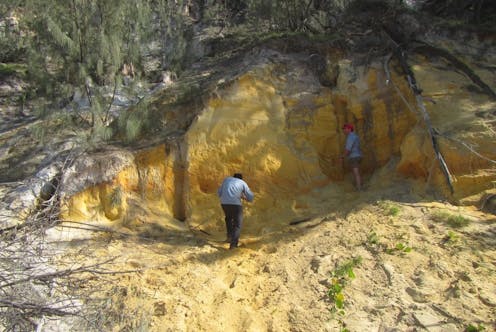
Sand dunes are not an obvious place to find high-quality fire records. For a start, anyone who walks on the forested sand dunes of South-East Queensland will be impressed by the intensity of ant activity at their feet. The ant nests extend at least 2 metres below the surface. As the ants move materials around their nests, any charcoal from past fires that’s preserved in the sand would be severely disturbed.
Somewhat surprisingly, though, soil pits dug at the bottom of the slope of dune front walls (the leading edge of a dune) revealed different sediment layers are preserved there. This shows ant activity is not intense on the foot slopes. It’s possible for undisturbed charcoal records to be recovered from this part of the dune.
Our newly published research focuses on four well-dated sand dunes. Unlike previous studies that extracted fire histories from sediment cores from lakes, bogs and other organic sediments, we extracted fire records from these dunes. We believe this is a breakthrough that will greatly expand the areas for which we can extract fire histories.
Swamps and lakes are typically found in more humid areas and near the coast, whereas sand dunes occur widely across drier areas of Australia, including desert regions. This new source of fire histories can help us broaden our understanding of fire in Australia.
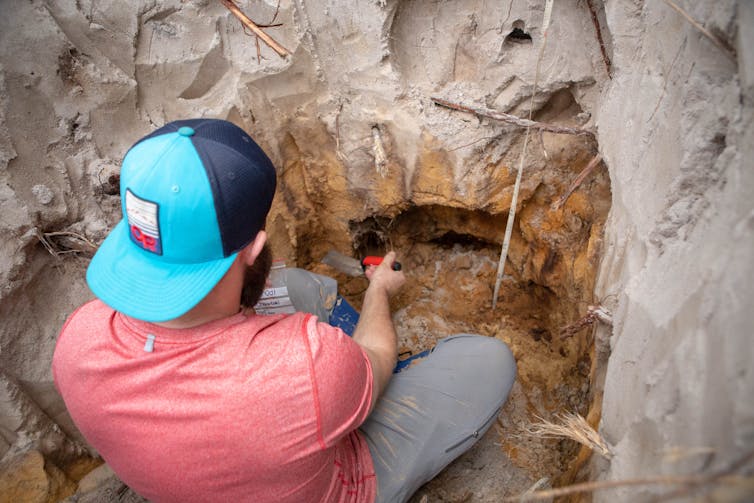
Collecting charcoal samples from the soil profile of a 10,000-year dune for radiocarbon dating. Nick Patton, Author provided
Fire is important in the Australian landscape. Many ecosystems are designed not only to survive fire but need burns to survive and thrive.
In recent years, however, the scale and intensity of bushfires in Australia have increased, culminating in the Black Summer of 2019-20. During that summer, areas that did not normally burn severely were intensely burned. The fires caused long-lasting damage to vegetation and significant loss of both human and animal life and buildings.
There are concerns that if the climate patterns associated with the Black Summer fires become more established, Australia’s ecology could be permanently altered and human activities severely impacted in many regions.
There is an urgent need to better understand the role of fire in the Australian landscape, prompting a surge in research on both modern fire behaviour and extracting fire histories from the landscape. These histories are crucial, because they can help us to identify and quantify the risk of fires. These studies can also highlight where climate and ecological changes have created new fire risk.
Scientists have until now relied on cores from lakes, bogs and other sources of organic sediments to extract fire histories. The gradual accumulation of these sediments preserves charcoal from past fires in layers. The layers can be dated, revealing the age of the charcoal and hence when the fire occurred. This means we can extract continuous records of past fire regimes from these sediments.
However, because of the focus on organic-rich sediments, these fire histories have been limited to humid areas, where swamps and lakes are present. Sediments like these are mostly close to the coast. Fire hazard is much more widely spread in Australia.
(a) Orange areas show world dryland distribution (Sorensen, 2007) and white dots show published paleofire records from the Global Paleofire Database (Harrison et al., 2022). (b) View of Australia and the general locations of coastal (yellow) and continental (orange) dunes (Lees, 2006; Hesse, 2016). Much of Australia and the world is both covered in drylands and lacking fire histories. From Patton et al 2023/Quaternary Research, CC BY
Our study focuses on the fire history of the Cooloola Sand Mass between Noosa and Tin Can Bay in South-East Queensland. We examined four well-dated sand dunes ranging from 500 to 10,000 years old.
In a 2022 study, we showed there are two distinct phases in the sediment records. These match a historic change in slope processes on the dunes.
For the first 1,000 years after the dunes stabilised, frequent but minor flows of sand grains down the front face of the dune slowly built up sediments at the foot of the dune. The sand deposited at the base includes the remnants of charcoal from local fires that deposited on the dune’s surface. This sediment builds up over time, preserving layers of charcoal from fires.
The distinct layers of charcoal in the sand represent individual fire events. These charcoal layers can be reliably identified using radiocarbon dating.
After about 1,000 years, the dune slopes became less steep. Slow soil creep, which is the gradual grain-by-grain movement of sand through the ground under gravity, became the dominant process. Charcoal is dispersed through the sediments. This means individual fires cannot be recognised but overall fire activity is still well recorded.
We compared the fire records from the sand dunes to local and regional fire histories. The records from the dunes matched the other records. Our records show a relationship between fire and stronger El Niño Southern Oscillation (ENSO) periods – associated with more frequent drought conditions – in South-East Queensland.
There are very few fire histories from dryland regions worldwide. And, like Australia, extreme fires are increasing in these regions, which include California and Mediterranean Europe. We should now be able to better define natural fire hazard in these arid zones.
Nicholas R Patton has previously received funding from the Australian Research Council and from the National Science Foundation (USA).
James Shulmeister receives funding from the Australian Research Council and from the Marsden Fund in New Zealand. The work discussed here is from an ARC Discovery grant. He has also previously received support through the National Science Foundation (USA) and the National Science Foundation of China and many other grant providers.
Although long dead, fossil skeletons provide an incredible window into the lifestyle and environment of an extinct animal.
By analysing the various features of fossil bones we can reveal not only the overall size and shape of the animal, but also what kind of movement the animal was capable of, its lifestyle, and the environment in which it lived.
But what if we looked inside fossil bones? What secrets would it reveal about the growth and development of an extinct animal? In a newly published paper in the Journal of Paleontology, we have done just that, using 15 million-year-old skeletons of a giant bear-like marsupial from the world-famous Riversleigh World Heritage Area (Boodjamulla) in Waanyi country of northwest Queensland.
Reconstruction of a mother and baby Nimbadon. They had powerful arms, large hands and feet and huge claws to assist climbing through the rainforest tree tops. Peter Schouten, Author provided
The huge tree-dwelling herbivorous marsupials, known as Nimbadon, weighed about 70kg, making them the largest arboreal (tree dwelling) mammals known from Australia.
Nimbadon belongs to a diverse group of long extinct, large-bodied marsupials known as diprotodontoids, the likes of which include the largest marsupial to have ever lived, the 2.5 tonne megafaunal Diprotodon, and bizarre trunked marsupials reminiscent of modern-day tapirs.
Among living animals, Nimbadon is most closely related to wombats. Yet surprisingly, in terms of body size and lifestyle, they are more comparable to sun bears, which today can be found scaling the rainforest canopies of Southeast Asia.
When we first uncovered jawbones of Nimbadon at Riversleigh in 1993, we thought we were looking at very large leaf-eating marsupials who foraged for food on the forest floor.
Modern-day sun bears climb trees and lounge there much like sloths do. Shutterstock
But like many of the species we’ve unearthed from Riversleigh, the closer we look at these animals, the more bizarre and fascinating they become.
Nimbadon is now known from its complete skeleton, including material representing developmental ages ranging from tiny pouch-young to mature adults. It had strong arms with very mobile shoulder and elbow joints. Its hands and feet had specially adapted opposable thumbs with huge curved claws for climbing, penetrating bark and grasping branches.
These animals were highly specialised climbers and lived vastly different lifestyles compared to their closest living relatives – the land-dwelling, burrowing wombats.
Our initial research showed that Nimbadon was not only a “tree-hugger”, but also a “tree-hanger”, spending some of its time suspended from tree branches like a sloth.
Fossil skeleton of a mature adult Nimbadon. Karen Black, Author provided
Nimbadon lived 15 million years ago in the canopy of lowland Australian rainforests. These biodiverse, lush forests were home to some equally strange animals: flesh-eating kangaroos, tree-climbing crocodiles, ancestral thylacines, cat- to leopard-sized marsupial lions, huge anaconda-like snakes, giant toothed platypuses and mysterious marsupials so strange they have been called “Thingodonta”. It was a very different Australia than the one we see today.
Despite the wealth of information we have gleaned from Nimbadon skeletons, until now we hadn’t fully understood the growth patterns of these ancient marsupials.
Were they affected by seasonality? How long did they take to grow to adult body size in the canopies of the ancient forest? Clues to these questions lay in the bones’ microscopic structure.
To look inside the fossil bones, we needed to select the right material. Long bones, such as the bones of the leg, are known to preserve a good record of growth, so we analysed ten long bones of several different-sized individuals.
Articulated fossilised Nimbadon skeletons in a large slab of limestone recovered from a 15 million year old fossil cave deposit in the Riversleigh World Heritage Area, northwestern Queensland. Anna Gillespie, Author provided
We began by removing a section from the shaft of the bone, and embedded it in resin. Using a diamond-edged blade, we cut our samples into thin sections and polished them further until light could pass through them. These thinned sections were mounted on glass microscope slides to be studied.
Remarkably, even after millions of years of fossilisation, the microscopic structure of the fossil bones had remained intact. We were amazed to discover that Nimbadon grew in periodic spurts. Individuals had fast growth periods, each followed by a slow growth period, often associated with a band of arrested growth.
Seasonal growers
Cyclical growth patterns have previously been documented for marsupials such as in the living western grey kangaroo. However, our results indicate that, overall, the limbs of Nimbadon had a much slower, more extenuated growth than kangaroo limbs.
One individual recorded at least seven to eight growth cycles, which suggests this arboreal giant needed at least this amount of time – and probably more – to become a fully-grown, sexually mature adult.
Based on these alternating cycles of fast and slow growth, Nimbadon may have been affected by seasonal conditions such as food availability. However, exactly how long it took for eight growth cycles to develop remains a mystery. If indeed they represent annual cycles, it would be at least eight years until sexual maturity, which is unusual in the modern marsupial world.
For example, kangaroos are sexually mature at one to two years. That being said, Nimbadon is an unusual beast and a very large one at that, so an extended developmental period (and lifespan) is not unlikely.
Real-life drop bears
We have come to think about these strange arboreal marsupials as real versions of the legendary “drop bears” of Australian folklore – mysterious tree-dwelling creatures that would drop down on unsuspecting animals below.
Reconstruction of Nimbadon’s palaeoenvironment of lush rainforest with underground caves. Karen Black, Author provided
While moving in herds through the rainforest canopy, both young and adult Nimbadon would have occasionally lost their grip before dropping down from the treetops. Sometimes they would end up in forest floor caves, which is where we have been finding their still-articulated skeletons.
Given the constant surprises that research into this extraordinary, extinct Riversleigh mammal has already produced, we are eager and prepared for still more.
Currently we are looking into wear in the enamel microstructure of Nimbadon’s teeth to determine this legendary drop bear’s diet. We expect that what we find down the track will continue to upend our naïve first presumptions about the lifestyles of this and many of the other strange inhabitants of the ancient inland rainforests of Riversleigh.
Anusuya Chinsamy-Turanis is based at the University of Cape Town in South Africa, and receives funding from National Research Foundation, South Africa, grant number, 136510.
Karen Black receives funding for the work at Riversleigh and preparation of the fossils in the University of New South Wales has in the main been provided by the Australian Research Council Discovery and Linkage Grants, as well as funding provided by the Phil Creaser CREATE Fund in UNSW, a grant from the National Geographic Society and donations from private individuals including Ken & Margaret Pettit, Doug & Anne Jeanes and Gary Johnston.
Mike Archer received funding for the work at Riversleigh and preparation of the fossils in the University of New South Wales mainly from the Australian Research Council Discovery and Linkage Grants, as well as funding provided by the Phil Creaser CREATE Fund in UNSW, a grant from the National Geographic Society and donations from private individuals including Ken & Margaret Pettit, Doug & Anne Jeanes and Gary Johnston.
Sue Hand received funding for the work at Riversleigh and preparation of the fossils in the University of New South Wales mainly from the Australian Research Council Discovery and Linkage Grants, as well as funding provided by the Phil Creaser CREATE Fund in UNSW, a grant from the National Geographic Society and donations from private individuals including Ken & Margaret Pettit, Doug & Anne Jeanes and Gary Johnston.
Social media platforms such as Instagram, TikTok and Facebook overwhelmingly show vaping in a positive light. This messaging makes it seem that e-cigarette use is common and socially accepted.
Traditional tobacco advertising has been banned in Australia for decades. However, e-cigarettes are widely promoted on social media, undoing some of the positive work of previous decades.
Most platforms have content policies that expressly prohibit the promotion of tobacco product use, including e-cigarettes. But our new research, published this week, shows these policies are routinely violated with little or no consequences.
Positive social media messages around vaping may particularly impact young people, who are the most frequent users of social media. In some cases, these messages have even been shown to blatantly target teens.
Research shows young people who view social media posts featuring e-cigarettes are more likely to vape and to view e-cigarettes positively. This is true of both e-cigarette advertising and user-generated content, with creators effectively doing the marketing job for e-cigarette companies.
TikTok emphasises tricks and downplays harms
In our recently published study, we looked at the ways e-cigarettes are being advertised and promoted on TikTok. We analysed 264 English language user-generated e-cigarette videos and evaluated them against TikTok’s own content policy in February 2022.
We found most of the videos (98%) portrayed e-cigarettes positively.
More than one-quarter of the videos clearly violated TikTok’s content policy and promoted vaping products for purchase.
Few videos contained health warnings. Only 2% of posts referenced vape or nicotine addiction.
A small number of posts referred to public health professionals or commented on e-cigarette regulation. These posts were comparatively less popular, receiving a smaller proportion of views and likes.
Half the videos referred to a vaping community. These posts were slightly more popular than those that didn’t refer to a shared identity. This may act to shape norms around e-cigarette use and increase the perception that vaping is socially accepted.
Popular posts also included references to vape tricks (such as creating shapes from exhaled aerosol), with early research showing adolescents often identified vaping tricks as the reason they started using e-cigarettes. Posts also used humour, which is an effective tool to reach young social media users.
Videos that violated content policy often provided details on how and where to purchase e-cigarette products. This included providing links to online retailers and to other social media accounts.
The promotion of offers such as giveaways and sale prices were common, in direct violation of content policy. Many posts also provided product reviews.
We can’t rely on platforms to develop and enforce content policy. Social media policies are commonly violated and there are no major consequences – the platforms themselves decide the consequences for breaches.
This is a problem because social media platforms have a clear financial incentive not to punish people who breach their policies.
The federal government’s recent strong position to stamp out recreational vaping among young people through regulations, enforcement, education, plain packaging and a ban on flavourings is welcomed.
However, this did not include clamping down on e-cigarette advertising, promotion and sponsorship on social media, which is also clearly needed.
Emphasis needs to be placed on enforcement of policies. This must include requiring social media platforms to report on how they’re ensuring regulations are being upheld.
Current policies and moderation processes are insufficient in restricting the spread of pro e-cigarette content on TikTok. This is exposing young social media users to e-cigarette use. There needs to be greater regulation of e-cigarette content and its promotion, to prevent future uptake and harm to young people.
Jonine Jancey receives funding from Healthway and is a Board member of the Australian Council on Smoking and Health.
Renee Carey does not work for, consult, own shares in or receive funding from any company or organisation that would benefit from this article, and has disclosed no relevant affiliations beyond their academic appointment.
Papua New Guinea’s opposition has called on Foreign Affairs Minister Justin Tkatchenko to resign after calling critics of his trip to London for King Charles’ coronation “primitive animals”.
Minister Tkatchenko made the comment on ABC when addressing critics of his daughter’s TikTok video about attending the coronation in London last week.
The Prime Minister has waded into the controversy by saying he was offended by the comments, but has asked people to forgive his minister.
Tkatchenko has now reportedly apologised through the PM, James Marape.
The video — tagged #aussiesinengland — showed Savannah Tkatchenko enjoying expensive meals and going to first class airport lounges.
“We did some shopping around Singapore Airport at Hermes and Louis Vuitton, those of you who know, Singapore Airport shopping is honestly so lit,” she said in the video which she has since taken down.
Your just confidently enjoying all the shit your father steals aren’t you? #PNGtwitter come na lukim government sponsored ol influencer blo nau. pic.twitter.com/AlEjf0agjU
Opposition foreign affairs spokesperson Belden Namah said he was “calling on the Foreign Affairs Minister to confirm or deny that he uttered those descriptions of citizens of Papua New Guinea which has been kind enough to offer him naturalised citizenship”.
“If he has indeed uttered those despicable words then I am calling on Justin Tkatchenko to immediately resign as Foreign Affairs Minister and as Member of Parliament and further renounce his citizenship,” Namah said in a written statement.
“The ‘useless people’ and ‘primitive animals’ of this country have ensured he grew his business, gave him a wife, offered him citizenship, elected him into public office, made him a minister and sent him and his daughter to London.”
Tkatchenko is originally from Melbourne and was naturalised as a Papua New Guinean citizen in 2006.
Namah was also critical of the TikTok video and said it revealed the “disregard for Papua New Guineans” that the minister must have “inculcated in his family”.
“The name of the video says it all: #aussiesinengland. Send them to Australia if that is who they are.”
‘Very offensive to many people’ RNZ Pacific’s correspondent Scott Waide said the words “primitive” and “animals” were offensive slurs in PNG.
“They [the public] were annoyed with the TikTok video by his daughter and now the fact that the foreign minister has gone on the media and responded in that manner has been very offensive to many people.”
Waide said there was talk of a protest and pressure was mounting by the hour against Tkatchenko.
He said the video showed Savannah was out of touch with the realities of Papua New Guinea.
“The fact that the foreign minister’s daughter was allowed on an official trip and she was able to flaunt the expenses that were made on that trip has triggered quite a few people.”
The Commonwealth Students Association’s Pacific regional representative, Dr Bradley Yombon, said the comments were “disgusting”.
“He should hang his head in shame, apologise and not only apologise, but hand in his resignation as the Foreign Affairs Minister,” he said.
“He’s just thrown a blanket over all of Papua New Guinea and he’s not a native of Papua New Guinea which makes the situation a lot worse . . . we’ve obviously got him into office, he should be grateful, and represent us to the best of his capacity.”
Minister ‘apologised to PM’ In a written statement Prime Minister Marape said Tkatchenko had apologised to himself and the country.
The Prime Minister said he was also offended by Tkatchenko’s comments but pleaded with the public to forgive him.
“We should not be labelling our citizens as ‘primitive animals’ even if they have wronged us,” he said.
“We are a unique blend of ethnic diversities, and as Christians, we can forgive each other.”
According to Human Rights Watch almost 40 percent of the country lives in poverty.
“Nobody’s come out and said anything about the exact number of people or how much they’ve actually spent,” said Waide.
According to the the Post-Courier, in 2021 the government sent a 62-member delegation to Glasgow to attend the COP26 Climate Change conference at a cost of K5.8 million (NZ$2.6 million).
This article is republished under a community partnership agreement with RNZ.
The first episode of Ten Pound Poms opens onto a bleak scene.
As snow falls against a grey sky in Manchester, Terry Roberts (Warren Brown) works to repair buildings damaged during the second world war. We can barely see him through the smog; the sound of hammering dominates the scene. As it gets louder, it triggers flashbacks to his time as a prisoner of war.
At home, his wife Annie (Faye Marsay) carefully scrapes used tea leaves into a jar, fed up with the sacrifices and depredations of post-war Britain.
That night, while tending to Terry – who has collapsed after another evening at the pub where he has spent their meagre income – Annie seizes on a newspaper advertisement offering her family the opportunity to “build a new life in sunny Australia” for only ten pounds.
Set in 1956, Ten Pound Poms, a co-production between the BBC and Stan, tells the story of British migrants as they struggle to build new lives in a distant and unknown land.
Australia’s post-war migration program
Migration to Australia offers the Roberts family the promise of a fresh start, “a bright future” in a “modern” country with abundant fresh food, and a brand-new whitewashed house and family car.
The “Ten Pound Pom” scheme was launched in 1945 and continued into the early 1970s. It was just one of Australia’s assisted passage schemes of the post-war era. Most of the 1.5 million Britons who came to Australia until 1981 were part of such a scheme.
Australia’s post-war migration program was driven by the imperative to “populate or perish”. The second world war had demonstrated Australia’s vulnerability to foreign invasion, and migrants were needed to fuel its burgeoning post-war industrial development and infrastructure projects.
But until the 1960s, the White Australia Policy was very much in place. Australia was still a British country and a proud member of the British Empire, with a preference for British migrants.
Australia offered the Roberts family an opportunity to “work hard, prosper” and own their own home. But once they arrive in Australia, their dream of a new life is dealt a blow.
As assisted migrants, they are sent straight to a migrant hostel camp, where they will live while earning enough to pay their own way. Their dream of “white washed houses and huge gardens” dissipates as they take their first look at the “squalor” of the Nissen huts, outdoor communal showers and drop toilets.
“They lied to us,” says Annie.
Most assisted migrants who arrived by ship ended up in these camps, where they could stay while they looked for work and resettled. But those who had trouble finding work stayed for many months, if not years.
Instead of new houses and huge gardens, the migrants are sent to a hostel camp. Stan
Terry, a qualified builder, must take any work he is offered as long as no Australians want it. His first job is digging ditches for a gas pipeline.
At work, he is subject to name-calling, ostracism and the threat of violence.
Under the scheme, migrants were obligated to stay and work in Australia for at least two years to repay their subsidised travel. After this, up to 25% chose to return home.
The challenges faced by British migrants were shared by those from many other countries. These migrants were not only subject to the same onerous visa conditions and racist attitudes, but denied the privileges accorded the British: the right to vote, get an Australian passport, and receive social security benefits.
But in the series, these non-British migrants are used only as a backdrop. Their stories could have given us a much richer picture of hostel life. Instead they make only brief appearances, and even then, often as caricatures, such as the lazy and overly-emotional Italian, Maria (Sarah Furnari).
An imperial past
Ten Pound Poms is a pacy, character-driven story grounded in historical research.
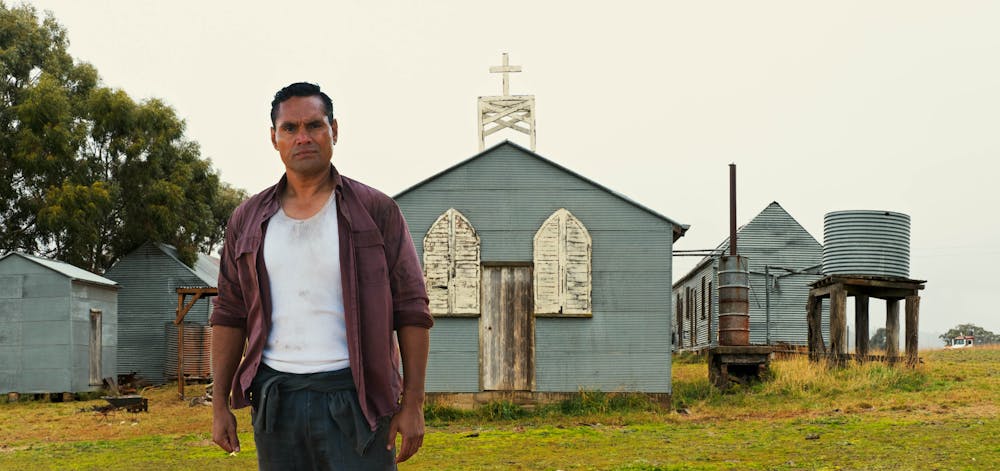
The series is also very interested in examining the experiences of First Nations Peoples, which it does through war veteran Ron Mahoney (Rob Collins) and his community at an old mission station near the hostel.
The series also looks at First Nations experiences. Stan
But Ten Pound Poms gives us an idealised portrayal of the migrants’ relationship with Ron and the other Aboriginal characters. While the local Australian characters exemplify the racist attitudes of white Australia, the Roberts family’s many interactions with Aboriginal people are entirely friendly and enlightened.
“They’re just people,” Annie tells Terry’s racist co-worker. “They were here long before you were.”
The series largely skips over Britain’s role in the history of colonisation.
Series writer, English screenwriter and playwright Danny Brocklehurst, rightly points out these migrant stories are an important aspect of Australia’s past that have received little attention. But equally important is that this remembering takes account of both Britain and Australia’s imperial past.
Despite these flaws, Ten Pound Poms has a cast of characters you’ll want to follow to the end. It will especially appeal to the many British migrants – both “back home” and in Australia – who will see their own family histories reflected in these characters.
Ten Pound Poms is on Stan and the BBC from Sunday.
Carmel Pascale does not work for, consult, own shares in or receive funding from any company or organisation that would benefit from this article, and has disclosed no relevant affiliations beyond their academic appointment.
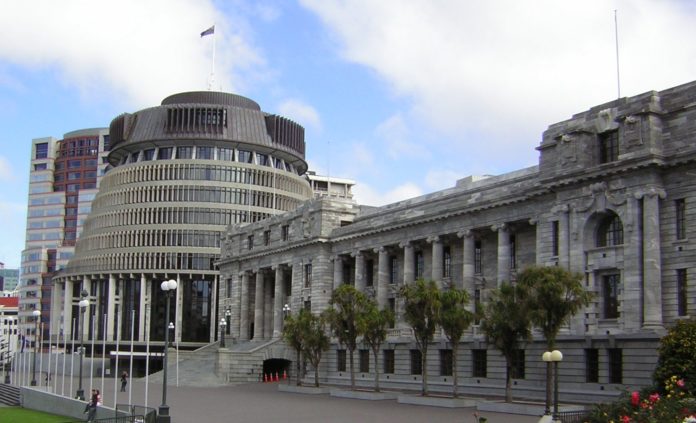
New Zealand Parliament Buildings, Wellington, New Zealand.
New Zealand Politics Daily is a collation of the most prominent issues being discussed in New Zealand. It is edited by Dr Bryce Edwards of The Democracy Project.
How did we get here? Where are we going? And how long will it take? These questions are as old as humanity itself, and, if they’ve already been asked by other species elsewhere in the Universe, potentially very much older than that.
They are also some of the fundamental questions we are trying to answer in the study of the Universe, called cosmology. One cosmological conundrum is how fast the Universe is expanding, which is measured by a number called the Hubble constant. And there is quite a bit of tension around it.
In two new papers led by my colleague Patrick Kelly at the University of Minnesota, we have successfully used a new technique – involving light from an exploding star that arrived at Earth via multiple winding routes through the expanding Universe – to measure the Hubble constant. The papers are published in Science and The Astrophysical Journal.
And if our results don’t quite resolve the tension, they do give us another clue – and more questions to ask.
Standard candles and the expanding Universe
We have known since the 1920s that the Universe is expanding.
Around 1908, US astronomer Henrietta Leavitt found a way to measure the intrinsic brightness of a kind of star called a Cepheid variable – not how bright they appear from Earth, which depends on distance and other factors, but how bright they really are. Cepheids grow brighter and dimmer in a regular cycle, and Leavitt showed the intrinsic brightness was related to the length of this cycle.
Leavitt’s Law, as it is now called, lets scientists use Cepheids as “standard candles”: objects whose intrinsic brightness is known, and therefore, whose distance can be calculated.
The standard candle principle: all of these lights have the same ‘intrinsic brightness’, but the more distant ones appear dimmer. Shutterstock
How does this work? Imagine it is night, and you are standing on a long, dark street with only a few light poles going down the road. Now imagine every light pole has the same type of light bulb, with the same power. You’ll notice the distant ones appear fainter than the nearby ones.
We know that light fades proportionately to its distance, in something called the inverse-square law for light. Now, if you can measure how bright each light appears to you, and if you already know how bright it should be, you can then figure out how far away each light pole is.
In 1929, another US astronomer, Edwin Hubble, was able to find a number of these Cepheid stars in other galaxies and measure their distance – and from those distances and other measurements, he could determine that the Universe was expanding.
Different methods give different results
This standard candle method is a powerful one, allowing us to measure the vast Universe. We are always looking for different candles that can be better measured, and seen at much greater distances.
Some recent efforts to measure the Universe further from Earth, like the SH0ES project I was a part of, led by Nobel laureate Adam Riess, have used Cepheids alongside a type of exploding star called a Type Ia supernova, which can also be used as a standard candle.
There are also other methods to measure Hubble’s constant, such as one that uses the cosmic microwave background – relic light or radiation that began to travel through the Universe shortly after the Big Bang.
The problem is that these two measurements, one nearby using supernovae and Cepheids, and one much farther away using the microwave background, differ by nearly 10%. Astronomers call this difference the Hubble tension, and have been looking for new measurement techniques to resolve it.
A new method: gravitational lensing
Each of the four yellow dots is a separate image of Supernova Refsdal, which lies behind the bright blob of a galaxy cluster in the centre of the picture. NASA / ESA / P Kelly
In our new work, we have successfully used a new technique to measure this expansion rate of the Universe. The work is based on a supernova called Supernova Refsdal.
In 2014, our team spotted multiple images of the same supernova – the first time such a “lensed” supernova had been observed. Instead of the Hubble Space Telescope seeing one supernova, we saw five!
How does this happen? The light from the supernova went out in all directions, but it travelled through space warped by the enormous gravitational fields of a huge cluster of galaxies, which bent some of the light’s path in such a way that it ended up coming to Earth via multiple routes. Each appearance of the supernova had reached us along a different path through the Universe.
Imagine three trains leaving the same station at the same time. However, one goes directly to the next station, the other makes a wide trip through the mountains, and another via the coast. They all leave and arrive at the same stations, but take different trips and so while they leave at the same time, they will arrive at different times.
So our lensed images show the same supernova, that exploded at one certain point in time, but each image has travelled a different path. By looking at the arrival at Earth of each appearance of the supernova – one of which happened in 2015, after the exploding star had been spotted already – we were able to measure their travel time, and therefore how much the Universe had grown while the image was in transit.
Are we there yet?
This gave us a different, but unique measurement of the growth of the Universe. In the papers, we find this measurement is closer to the cosmic microwave background measurement, rather than the nearby Cepheid and supernova measurement. However, based on its location, it should be closer to the Cepheid and supernova measurement.
While this does not settle the debate at all, it gives us another clue to look at. There could be a problem with the supernova value, or our understanding of galaxy clusters and the models to apply to lensing, or something else entirely.
Like the kids in the back of the car on a road trip asking “are we there yet”, we still don’t know.
Brad E Tucker receives funding from the Australian Research Council and Australian Capital Territory government.
Fast radio bursts – intense, milliseconds-long flashes of radio energy from outer space – have puzzled astronomers since they were first spotted in 2007. A single burst can emit as much energy in its brief life as the Sun does in a few days.
The great majority of the short-lived pulses originate outside our Milky Way galaxy. We don’t know what produces most of them, or how.
In new research published in Science, we observed a repeating fast radio burst for more than a year and discovered signs it is surrounded by a strong but highly changeable magnetic field.
Our results suggest the source of this cosmic explosion may be a binary system made up of a neutron star whirling through winds of dense, magnetised plasma produced by a massive companion star or even a black hole.
Changes in the magnetic field around a repeating fast radio burst hint at the nature of its origin. Di Li / ScienceApe / Chinese Academy of Science
A fast radio burst that never stops repeating
The repeating burst known as FRB 20190520B was discovered in 2022 by astronomers at the Five-hundred-meter Aperture Spherical radio Telescope (FAST) in China. Repeating fast radio bursts are rare, but FRB 20190520B is the rarest of all: it is the only one that never rests, producing radio bursts a few times an hour, sometimes at multiple radio frequencies.
After this intriguing object was first found, astronomers rushed to follow up the initial observation using other radio wavelengths.
Further investigation showed FRB 20190520B resides in an extremely dense environment in a dwarf galaxy 3.9 billion light years away. There are also materials surrounding the FRB source that produce strong, persistent radio emissions.
This led to suggestions that the bursting source is a young neutron star in a complex environment.
Powerful magnetic fields
What else can we learn about this intergalactic firecracker and its environment? We carried out observations of FRB 20190520B using CSIRO’s Parkes radio telescope, Murriyang, in New South Wales and the Green Bank Telescope in the United States.
To our surprise, FRB 20190520B turned out to produce strong signals at relatively high radio frequencies. These high-frequency signals turned out to be highly polarised – which means the electromagnetic waves are “waving” much more strongly in one direction than in others.
We found the direction of this polarisation changes at different frequencies. Measuring how much it changes tells us about the strength of the magnetic field the signal has travelled through.
As it turns out, this polarisation measure suggests the environment around FRB 20190520B is highly magnetised. And what’s more, the strength of the magnetic field appeared to vary over the 16 months we observed the source – and even flipped direction entirely twice.
This change in direction of the magnetic field around a fast radio burst has never been observed before.
Filling in the picture
What does this tell us about FRB 20190520B? Most popular theories to explain recent observations of repeating fast radio bursts involve binary systems made up of a neutron star and either another massive star or a black hole.
While we cannot rule out other hypotheses yet, our results favour the massive star scenario.
Massive stars are known to have strong stellar winds with organised magnetic fields around them. If the source of the bursts were moving in and out of the stellar wind region as it travels through its orbit, we would expect the observed magnetic field direction to reverse.
The time scale of the magnetic field reversal, the measured variability in the apparent field strength, and the dense plasma surrounding the burst source all fit into this picture.
What’s next?
Our observations might provide crucial evidence to support the hypothesis that sources of repeating fast radio bursts have a massive companion capable of producing highly magnetised plasma.
More importantly, the binary hypothesis gives us a prediction for the future. If it is correct, the changes in polarisation of the radio signals from FRB 20190520B should rise and fall over longer periods of time.
So we will be watching. Future observations with Murriyang and the Green Bank Telescope will reveal whether FRB 20190520B is truly in a binary system – or whether the Universe will surprise us once again.
Shi Dai receives funding from the Australian Research Council. He is affiliated with CSIRO Space and Astronomy and the National Astronomical Observatory of China.
Reshma Anna-Thomas receives funding from NSF grant AAG-1714897. Reshma Anna-Thomas is affiliated with Department of Physics and Astronomy and Center for Gravitational Waves and Cosmology, West Virginia University, Morgantown, WV, USA.
Di Li and Miroslav Filipovic do not work for, consult, own shares in or receive funding from any company or organisation that would benefit from this article, and have disclosed no relevant affiliations beyond their academic appointment.
It is not surprising that recent acts of vandalism by suspected Sikh separatists in Australia and North America have generated a sense of déjà vu.
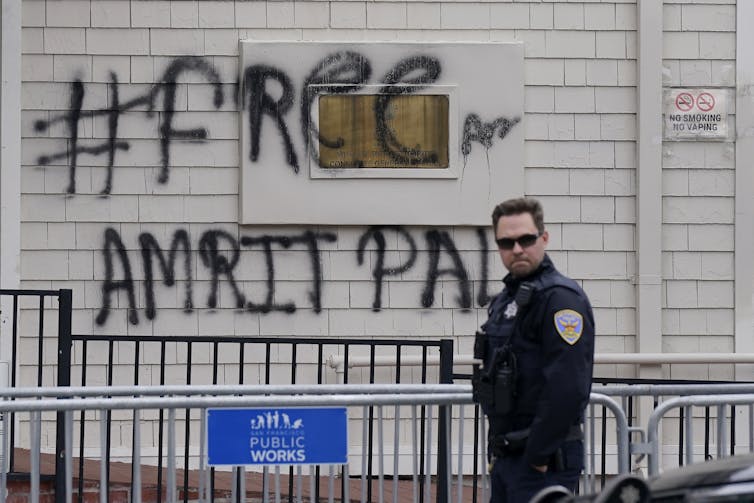
In March, groups of separatists vandalised the Indian consulate in San Francisco. Another group of separatists blocked the entrance to the Indian consulate in Brisbane, forcing it to close temporarily. This followed attacks on three Hindu temples in Australia, allegedly by supporters of a group called Sikhs for Justice.
Graffiti on the Indian consulate in San Francisco last month. Jeff Chiu/AP
Tensions are also rising in India over the same Sikh separatist movement, with sporadic bouts of violence and the recent arrest of a firebrand preacher and independence leader, Amritpal Singh, under India’s National Security Act.
Elsewhere, the alleged military chief of a Sikh separatist group, Paramjit Singh Panjwar, was gunned down in Lahore, Pakistan, last week. There was no immediate claim of responsibility.
The separatists demand the creation of a Sikh state, “Khalistan,” in the north of India. In various cartographic fantasies, this new state would include the Indian capital of New Delhi and Lahore, which which was the capital of the great Sikh leader, Ranjit Singh, in the early 19th century.
Are these recent acts marking the revival of a full-blown Sikh separatist movement like the one India saw in the 1980s?
Nearly four decades ago, the demand for a separate homeland for Sikhs generated widespread terror, particularly in the Indian state of Punjab. It radicalised sections of the overseas Indian diaspora, as well.
A violent history
There was some degree of disaffection within the Sikh community following the split of Punjab between Pakistan and India in the partition of 1947. In later years, Sikhs demanded certain things from the Indian government (for instance, better water-sharing rights and greater linguistic protection). Some also expressed a deeper and more forceful assertion of their religious identity.
This latent sense of alienation and insecurity was hijacked in the 1980s by militant groups backed by Pakistan, especially those sworn to the leadership of the controversial Jarnail Singh Bhindranwale, whose followers occupied the Akal Takht in the Golden Temple Complex in 1984 – the most important religious site for Sikhs.
Sikh separatists shout pro-Khalistan slogans and brandish swords after a memorial in 2019 for those killed during Operation Blue Star in 1984. Raminder Pal Singh
Then-Prime Minister Indira Gandhi ordered the Indian Army to flush out the terrorists, killing many civilians as well. In the aftermath, Gandhi was assassinated by her personal Sikh security guards.
Less than a year later, an Air India plane flying from Montreal to Mumbai was blown up in mid air, killing more than 300 passengers. After serving two decades behind bars, Inderjit Singh Reyat – the only person convicted – was released in February 2017 by Canadian authorities.
However, by the early 1990s, a combination of policies by the government – both carrots and sticks – and the inherent pragmatism of the Sikhs had restored peace in Punjab.
Punjab remains a symbol of India’s growth story. And within India, the Sikhs are seen as a remarkable community: hardworking, resilient and mostly without a strong caste-based social hierarchy. They have traditionally thrived in the security forces and as agriculturalists.
Sikhism was founded in the 15th century, and is based on the spiritual teachings of Guru Nanak. The last of ten gurus to follow him, Gobind Singh, organised the Sikhs into a martial fighting force, the Khalsa.
Today, their teachings are collected in the holy book, Granth Sahib, which serves as the life guide for Sikhs.
The Sikhs have carved out a niche identity abroad as mostly loyal, reliable and law-abiding citizens who have done well, even in times of great adversity. Their temples, called gurdwaras, are open to all faiths and the karah prasad, a simple lunch of sweet pudding, is offered to visitors irrespective of their views or standing.
US President Joe Biden recently nominated a Sikh, Ajay Banga, as the president of the World Bank.
Could the violence of the 1980s be repeated?
There are some similarities between the Punjab of today and that of the 1980s. But this is only at the superficial level.
For one, the problems today are identifiable and manageable. These include unemployment and a lack of opportunities for young people, widespread substance abuse, discontent among farmers over controversial laws that have since been rescinded, and a lack of forward-thinking leadership.
For another, there is only support at the fringes for the separatists, both within Punjab and in the diaspora.
Admittedly, the decline of the traditional political parties in Punjab (Congress and the Akali Dal) has created a power vacuum. This space has been occupied by the upstart Aam Aadmi Party (the Ordinary Man’s Party), which is currently governing Punjab, and groups like Waris Punjab De (Heirs to the Real Punjab), led by the firebrand, Amritpal Singh.
Singh returned to Punjab in 2022 after years of working in Dubai as an ostensible social reformer. He campaigned against drug use and for puritanical Sikihism – but also advocated for a separate Sikh state of Khalistan.
With increasing radicalisation, the situation could potentially worsen in the state. The political vacuum needs to be filled with legitimate, well-organised, politically sound voices. This is even more crucial after the recent death of Prakash Singh Badal, a five-time chief minister of Punjab, who had been a voice of sanity and statesmanship.
The Indian government and key stakeholders in Punjab seem well aware of the dangers of letting the situation worsen once again. There is a deep consciousness they must not let history repeat itself.
The authors do not work for, consult, own shares in or receive funding from any company or organisation that would benefit from this article, and have disclosed no relevant affiliations beyond their academic appointment.
Just over three years ago, then-Prime Minister Scott Morrison said the federal government would finally solve the issue of young people with disability having to live in nursing homes. The government developed a strategy and committed to getting all young people out of aged care facilities by 2025.
This week, NDIS (National Disability Insurance Scheme) Minister Bill Shorten said this remained “absolutely the target”. The 2023–24 budget commitsA$7.3 million to “further reduce the number of people under the age of 65 living in residential aged care”.
Since 2020, the federal government has spent more than $50 million on initiatives that have done little to improve the lives of young people living in aged care or those at risk of entry.
Given the lack of progress to date, the three new initiatives to be funded by this commitment are unlikely to achieve the 2025 target of no younger Australians living in facilities meant for much older people.
Younger people are typically admitted to aged care facilities after a late-onset disability such as a brain injury, or deteriorating with a neurodegenerative condition such as multiple sclerosis.
Two-thirds of younger people enter residential aged care from hospital. They may not be able to return to their previous home because it isn’t wheelchair accessible or they need a high level of paid support.
While Australians under 65 who acquire a severe disability are eligible for the NDIS and funding for housing and support, NDIS processes are slow. Young people can get lost in the gap between the health and disability systems and fall into aged care.
Our recent analysis looked at the pathways into and out of aged care in 2021-22. It shows fewer young people are entering residential aged care each year.
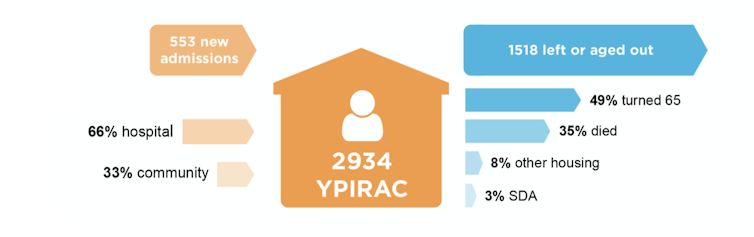
In June 2022, 2,934 younger people were in residential aged care, down from 3,899 in June 2021. During the year, there were 553 new admissions.
Some 1,518 people left. But this was mostly due to people either turning 65 and “ageing out” or dying.
Pathways of the young people in residential aged care cohort 2021-22. Just 3% of people went to SDA, or supported disability accommodation. Summer Foundation
There are an estimated 3,000 vacancies in disability housing across Australia, 1,000 of which are newly built specialist disability accommodation.
Yet last financial year, only 39 young people left residential aged care to go into NDIS-funded specialist disability accommodation. More than 500 NDIS participants aged under 65 remain in residential aged care with a goal to move.
So while the number of young people in residential aged care is diminishing, they’re not necessarily finding alternative accommodation.
What hasn’t done the job so far?
Since 2020, the federal government has implemented a range of ideas with limited success.
A $29.5 million program employed coordinators to support younger people to either move out of, or avoid entering, residential aged care.
This has not delivered on its objectives. Outcomes reported at a recent public forum included supporting two younger people to leave aged care and nearly 80 young people in residential aged care to become NDIS participants.
The National Disability Insurance Agency (the NDIA, which administers the NDIS) has introduced specialist planners and an accommodation matching team.
But this team has had limited success, with fewer than 90 young people in residential aged care moving into their own home or disability housing that meets contemporary standards in 2022.
What’s in the budget?
The federal budget allocates $56.4 million to an NDIA “home and living” panel. This aims to increase the capacity of the NDIA to make timely and consistent decisions for NDIS participants seeking funding for housing and support. This will improve the consistency and timeliness of funding decisions and is urgently needed.
The budget allocation specific to young people in residential aged care includes training ($3.6 million) for the people to support and influence the decision of young people living in residential aged care who don’t have a goal to move.
The other funding is to centralise decision-making for younger people seeking to enter aged care ($2.4 million) and an evaluation of the young people in residential aged care initiative to date ($1.3 million).
What’s missing from the budget?
The federal budget doesn’t address funding for the skilled workforce needed to support this group to transition out of residential aged care.
Currently, young people are given a list of generic NDIS-funded support coordinators who do not have the expertise or skills to support them to make an informed choice about where they live or to support the transition into age-appropriate housing. There are no minimum qualifications for support coordinators.
Each young person in residential aged care requires around 40 hours of expert support from an experienced allied health professional to make an informed choice about housing and support options, and to move into their new accommodation.
Of the 2,153 young people in residential aged care who are NDIS participants, only 26% (556 people) currently have a goal to move. The budget targets the 1,597 people who don’t have a goal to move and not the 556 who do have a goal to move. This is perplexing.
A more logical approach would be to work with both groups and demonstrate great housing outcomes for the 556 people who want to move and share these stories to build the hope and confidence of people who are unsure about moving.
The initiatives announced in the budget do not address the main barrier to young people in aged care getting better housing outcomes: skilled support to explore alternative housing and move out of aged care.
A new approach
The federal government needs to collaborate with organisations with a track record of supporting young people in residential aged care to move out, rather than continue to rely on generic support coordinators with limited expertise.
The NDIA needs to step up and provide timely funding for contemporary disability housing and support for NDIS participants who have put their hand up to move out of aged care.
For young people in residential aged care where there is no suitable disability housing located near family and friends, the NDIA needs to provide the specialist disability accommodation market with detailed demand data so new housing can be built.
The NDIS is failing younger people in, or at risk of entering aged care. A new approach is needed.
Dianne Winkler is the Founder and CEO of the Summer Foundation and a director of Summer Housing
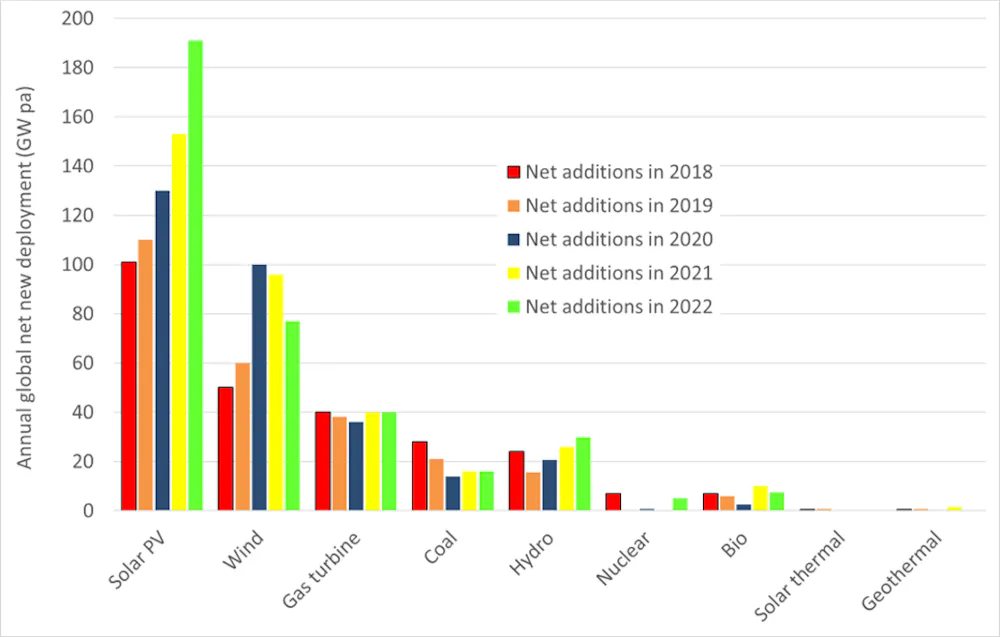
Last year, the world built more new solar capacity than every other power source combined.
Solar is now growing much faster than any other energy technology in history. How fast? Fast enough to completely displace fossil fuels from the entire global economy before 2050.
The rise and rise of cheap solar is our best hope for rapidly mitigating climate change.
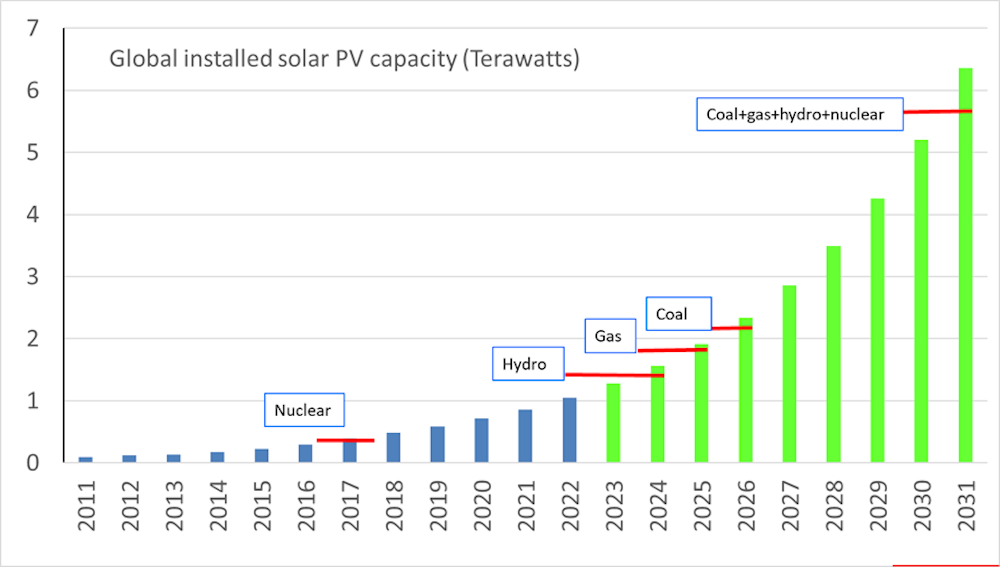
Total solar capacity tipped over 1 terawatt (1,000 gigawatts) for the first time last year. The sector is growing at around 20% a year. If this continues, we’ll hit 6 terawatts around 2031. In capacity terms, that would be larger than the combined total of coal, gas, nuclear and hydro.
As you can see, cheap solar is overtaking all other new-build energy sources. Global generation capacity additions (2018-2022) IRENA, GWEC, WNA, GEM, CC BY
Fewer and fewer new fossil fuel power stations are now being built. As the rest of the global fleet age, most will retire by mid-century.
Australia is finding the path
It might surprise you to learn that Australia is a global renewable energy pathfinder. Most solar panels use Australian-developed PERC technology, for instance.
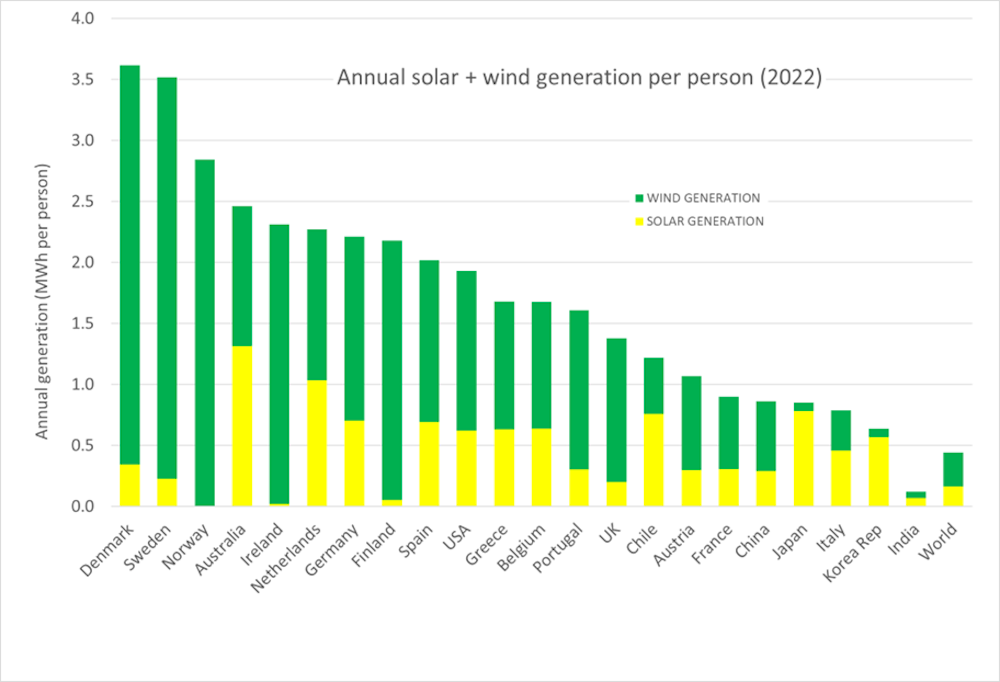
All the leading countries for per capita solar and wind generation are in Europe – except Australia. In Australia, 99% of new generation capacity is now solar and wind because it is cheap.
Highest per capita solar and wind generation in 2022. Ember, CC BY
But unlike European countries, Australia cannot share electricity across national boundaries.
Instead, we have to cope with rapidly increasing levels of solar and wind by sharing it across state boundaries. This is proving to be relatively straightforward. Solar and wind have reached a share of 31% of the national electricity market, while the grid remains stable.
Already, three states or territories are at very high penetration of renewables. The ACT has built or bought enough renewables to cover 100% of its use. Tasmania, too, is at 100% renewable power, thanks to hydro and wind, and is aiming to double this to export to other states. And South Australia will soon become the world’s first gigawatt-scale grid to run on renewables. Currently, it’s sourcing around 70% of its power from solar and wind.
This matters because of Australia’s location. Like 80% of the world’s population, we live at low to moderate latitudes where there is plentiful sunshine, even in winter. That means the methods we pioneer or test can be readily adopted by nearly everyone else.
Global solar generation capacity, assuming continued 20% growth rate in annual deployment. IRENA, GEM, CC BY
Elimination of fossil fuels from the global economy is straightforward: electrify everything using clean electricity from solar and wind. This includes:
electric vehicles replacing conventional vehicles
electric heat pumps replacing gas space and water heaters in homes and businesses
electric furnaces replacing gas burners in factories
electrolysis of water producing green hydrogen for the chemical industry, allowing for clean production of ammonia, metals, plastics and synthetic aviation fuel.
To run our homes, industries and vehicles with electricity, we’ll need to double electricity production. Why not more? Because electricity is usually much more efficient at producing an energy outcome. For example, 85% of the petrol you put into your car is wasted as heat.
In countries with a significant chemical industry, electricity production might need to triple.
If these trends continue, by mid-century we will be in a very different – and better – energy world.
Many developing countries – including population giants such as Indonesia, India, China and Nigeria – could catch up with Europe or Australia for per capita energy consumption. Given electricity consumption is strongly correlated with affluence, access to cheap electricity will be a major boon for many nations.
But is it possible?
By 2050, Earth will have a population of about 10 billion people. To supply everyone with enough electricity to live a good life, we’ll need about 200 billion megawatt-hours per year (equal to 200,000 terawatt-hours per year).
Let’s assume that solar does the heavy lifting for decarbonisation, completing two-thirds of the task with the remaining one-third left to wind, hydro and everything else put together. Is it possible?
Yes. If sustained, solar’s growth rate of 20% per year is easily fast enough to reach 80 terawatts of installed capacity in 2050 – enough to provide 130,000 terawatt-hours per year and (with help from wind) to entirely decarbonise an affluent world.
That would see global electricity consumption reach 20 megawatt-hours per person per year – double Australia’s current consumption per person.
As well as eliminating most greenhouse emissions, we will also get rid of car exhausts, smokestacks, urban smog, coal mines, ash dumps, oil spills, oil-related warfare and gas fracking.
The main short-term bottlenecks are likely to be building enough transmission lines – and ensuring we have enough engineers and installers.
Long term, there are practically no constraints on vast deployment of solar.
The sun will shine for billions more years. Raw materials for solar panels are abundant – silicon from sand and common metals like steel. There are no toxic metals or no critical materials like cobalt in them, and they are highly recyclable. Energy storage is now a solved problem.
Most countries have vastly more solar and wind resources than needed to be energy self-sufficient. This, in turn, will boost their resilience in the face of war, pandemics and the changing climate.
Densely populated regions without much free land such as Japan, Europe and the northeastern United States have enormous offshore wind resources, while Indonesia and west Africa have enormous offshore solar resources – picture solar farms floating on calm tropical seas.
We have plenty of space. Eighty terawatts of solar translates to 8 kilowatts per person. This is the size of a typical Australian rooftop solar system, which is usually shared by a family rather than an individual.
The required area of solar panel is about five square metres per kilowatt (40 square metres total for 8 kilowatts). Some of the panels will be on house roofs. Others will be on ground-mounted solar trackers and operated alongside agriculture. Some crops and grass like the partial shade given by panels. Other options include floating on lakes and seas.
For our energy intensive lives in Australia, we’ll need perhaps 15 kilowatts of solar and wind per person, which run reliably for 30 years and can then be dissembled and recycled.
In the 1950s, nuclear energy advocates talked of a future when energy was too cheap to meter. That didn’t happen with nuclear. But solar offers cheap, unlimited energy, available forever with minimal resource, environmental and social constraints.
Andrew Blakers receives funding from the Australian Renewable Energy Agency and DFAT
If you’ve seen the hit animated film Finding Nemo, you might recall the character Dory singing the catchy tune “Just Keep Swimming” to help her clownfish friend Marlin make the long journey from the Great Barrier Reef to Sydney.
In this case, art imitates life. Marathon swimming performances are a vital part of early life for the vast majority of coral reef fish. Baby (larval) reef fish – smaller than the size of your thumbnail – hatch from eggs laid on the reef and spend a few weeks in the open ocean before swimming back to the reef.
But how does such a small creature make this impressive journey? Our research published today set out to answer this question.
We found larval clownfish dramatically alter their physiology to complete their journey from the ocean back to the reef. In particular, they take in more oxygen per breath and at a faster rate than any other fish species studied to date. Essentially, this makes baby clownfish some of the smallest athletes on the planet.
Mini athletes swimming 10-50 body lengths per second
Reef fish are vital to coral reef ecosystems. They play important roles in the food web, help keep the reef clean and recycle nutrients. Plus, their vibrant colours attract millions of tourists annually.
Adult reef fish keep to a small patch. Their eggs are carried off by wave action into the open ocean, where they hatch and develop.
Within a few weeks the tiny fish larvae must return to the reef. It’s a long, arduous journey that can last weeks to months. Depending on the species, they cover distances as far as 64 kilometres. So how do they do it?
Until the 1990s, scientists believed the development of larval reef fish was like that of other fish such as herring, cod and flatfish. These species “go with the flow”, passively riding ocean currents until they become large and developed enough to actively swim on their own, against the currents.
When paired with well-developed sensory systems such as vision and the sense of smell, such impressive athletic performance enables these babies to “just keep swimming” with or against ocean currents until they find an optimal reef on which to settle.
But 30 years after the discovery, we were still wondering how they manage it. Now we know.
Clownfish eggs begin as tiny orange spots, but they soon start to lengthen and acquire visible eyes. Joe Belanger, Shutterstock
Measuring the traits of an athlete
My colleagues and I measured physiological traits required to be an athletic swimmer across the entire larval phase of a clownfish. These traits included swimming speed, oxygen uptake rates, gene expression patterns, and tolerance to low oxygen (hypoxia).
Why hypoxia? At night, when it’s no longer possible to use sunshine and carbon dioxide to make energy by photosynthesis, corals and plants breathe in oxygen to make energy. This lowers oxygen levels on reefs. Larval reef fish returning home from the open ocean must prepare for such conditions.
We found larval clownfish have the highest oxygen uptake rates of any fish to date. This supports elite swimming, growth and development.
As they develop and swim faster, thousands of genes change. Genes that code for proteins that transport and store oxygen, such as haemoglobin and myoglobin (also found in our bodies), are especially important. They enable oxygen to be transported and stored during intense exercise and help retain oxygen in tissues when the fish experience hypoxia in their reef habitats.
The changes in haemoglobin and myoglobin genes also correspond to when these baby fish start to increase their hypoxia tolerance.
We’ve seen this before, in reverse. Salmon are one of the most studied fish of all time and, as adults, they’re pretty amazing athletes as well. However, baby salmon endure low oxygen conditions in the first few weeks of life, right after hatching, while they are hiding in the gravel of the freshwater riverbeds.
And, sure enough, back in the 1980s, research showed salmon switch their haemoglobin too – right when the baby salmon have to transition from being hypoxia tolerant, to training to become elite swimmers.
Why our research matters
The changes in physiological machinery that we uncovered are key to survival for clownfish. It’s likely other coral reef fish follow similar developmental pathways.
Reef fish – of all shapes, sizes, and colours – are integral for maintaining coral reef health and persistence of future coral reefs. This is crucial as climate change threatens these beautiful, delicate ecosystems.
Adam Downie receives funding from the University of Queensland, and the Goodman Foundation Research Grant Scheme through the Morton Bay Research station. He is a member of the Australian Society for Fish Biology. His past affiliations include the University of New Brunswick (BSc student) and James Cook University (PhD student).
Jodie L. Rummer receives funding from the Australian Research Council and is the Vice President of the Australian Coral Reef Society.
This article is part of our series on big ideas for the Universities Accord. The federal government is calling for ideas to “reshape and reimagine higher education, and set it up for the next decade and beyond”. A review team is due to finish a draft report in June and a final report in December 2023.
Australians with a HECS-HELP debts are facing an estimated 7.1% increase on their debts come the middle of the year, thanks to inflation. Some students have been expressing shock and dismay as their loans are interest-free and they believed they would not grow.
Although it is not “interest”, the effect for borrowers is the same. Decades of low inflation have meant HECS-HELP indexation has been largely ignored – until now.
This comes on top of already-significant HECS-HELP debts. An arts and law undergraduate this year now pay more than A$15,000 per year in fees as a full-time student.
This is why universities should do more to help students better understand their HECS-HELP debt and make financial decisions in general. The Universities Accord is a prime opportunity to initiate this change.
The accord review is looking at how universities can meet the knowledge and skills needs of the future. On top of other generic skills learned at university, such as communication, collaboration, problem-solving and critical thinking, we need to add financial literacy.
Studying is a financial decision
It can be argued universities have a moral obligation to build financial literacy skills and educate students about how course fees are charged and then repaid when they start working.
Universities rely on student fees as a substantial part of their funding. And students accrue significant amounts while studying – often in the tens of thousands of dollars.
The 2021 ANZ Financial Wellbeing Survey found that 18–24 year olds struggle with financial planning, choosing products, understanding online risks and credit-trap awareness.
Young Australians do not have good levels of financial literacy. Shutterstock
What is financial literacy?
Financial literacy is a core life skill. It includes lodging tax returns, managing superannuation and ensuring you have enough money to look after yourself and your family.
It requires you to be competent in many aspects of the financial decision-making process. It includes the person’s knowledge of financial concepts, their ability to gather and sift through information and compare products, and their confidence in making decisions involving money.
Although the concept is broad, there is a set of five questions about interest rates, the stock market and mortgages that are regularly used to measure an individual’s level of financial literacy.
The Household, Income and Labour Dynamics in Australia survey has asked these questions and shows a decline in average correct answers. Between 2016 and 2020 men went from 4.1 to 4.0 and women went from 3.7 to 3.5.
More alarming than the overall decline and increasing gender gap is the decline in financial literacy for those aged 15 to 24. Average scores fell from 3.4 to just 2.9 out of a possible five points for young people.
Nothing substantial is currently being done to address this knowledge gap among young Australians.
In its early iterations, the National Financial Literacy Strategy (later named the Financial Capability Strategy) focused on driving improvement through formal education in schools.
However, the effort has not shifted the dial on school performance in terms of financial literacy and there are issues with the focus on maths in the school curriculum over building specific financial literacy skills.
The US example
Making financial literacy classes compulsory is not an overly ambitious goal. In the United States, 19 states either require or plan to require students to do a personal finance course to graduate from high school.
There are signs this may be mandated in colleges and universities. A 2019 US Treasury Department report recommended universities and colleges “should require mandatory courses to teach students financial concepts and skills”. This would include:
clear, timely and customised information to inform student borrowing
communicating importance of graduation and major on repayment of student loans
preparing students to meet financial obligations upon graduation.
Many US universities already have financial literacy courses. The Ohio State University, for example, runs a financial coaching program to assist thousands of students each year in setting financial goals, budgeting and banking, credit, debt repayment, saving and retirement planning.
Universities could mandate financial literacy courses as part of graduates. Specific information about student debts could also be provided before students take on a loan. Vlada Karpovich/Pexels
There are many opportunities for Australian universities to formalise financial education.
At the strategic level, they should add “developing financially capable students” to the list of graduate attributes.
They could then mandate all students complete a course on managing personal finances as part of graduation requirements. There could be flexibility about how this is done – online and cross-institutional study are both obvious options.
Student services can also provide workshops on tax, budgeting, superannuation, insurance, inflation and the economy and investing.
Finally, if students are electing to defer their fees via HECS-HELP, they should be required to complete a specific non-graded financial literacy module to better understand the implications of accruing the debt.
Tracey West has received funding in the past from Ecstra Foundation, the Financial Basics Foundation and the Financial Planning Association to conduct research.
The Legend of Zelda: Tears of the Kingdom Press kit
Early this morning, millions of people around the world rushed to their Nintendo Switch to play The Legend of Zelda: Tears of the Kingdom and immerse themselves anew in this game’s vast, mythical kingdom of Hyrule.
This fresh release, a sequel to 2017’s The Legend of Zelda: Breath of the Wild, has been long awaited by Zelda fans around the globe, and the subject of breathless coverage in both specialist gaming media and the mainstream press.
So, why is this game such big news – even among those who don’t necessarily see themselves as “gamers”?
I’m a game design researcher focused on creating and developing systems that allow games to be played by anyone – and there cannot be a better example of that than The Legend of Zelda: Tears of the Kingdom.
This game situates itself in the action-adventure genre, but that descriptor only scratches the surface. It offers an unparalleled open world, both in size and detail, and is uniquely able to cater to a huge audience.
Want to explore and discover a breathtakingly beautiful world? This game has you covered. Want to absorb a rich story built up over many years? This game lets you do that. Want to test your mettle and take down tough foes? This game is for you.
From the limited game play footage already released, it’s obvious Tears of the Kingdom allows the player to use their critical thinking skills to overcome puzzles their own way.
Taken together, Tears of the Kingdom and Breath of the Wild suggest Nintendo is pioneering a model focused on inclusivity and approachability. Players can take things at their own pace. The open-world exploration, engaging storytelling, mind-bending challenges and serene atmosphere draw audiences ranging from franchise veterans to those completely new to games.
Accessibility and creativity combine to give players an unparalleled level of freedom. The puzzles around every corner of the kingdom of Hyrule make this game compelling for newcomers and old hands alike.
The Legend of Zelda: Tears of the Kingdom – Official Trailer #3.
What is The Legend of Zelda: Tears of the Kingdom?
Despite the franchise name, the game’s protagonist is the young knight Link (Zelda is the name of the princess he must help to set free). His task is to save the mythical kingdom of Hyrule by ridding it of the tyrannical overlord Ganon. In the previous game, Link must travel across the kingdom, seeking aid from the diverse species and tribes of the lands to uproot and vanquish Ganon.
From the promotional videos and early game play footage of the new game, we know Ganon has returned and Link must embark on a new adventure to defeat him.
To do so, players must navigate and explore new mysterious sky islands high above Hyrule, as well as the familiar sprawling landscapes of the previous game.
With the shift to the skies, Link has also received an updated suite of skills. He can now rewind time, ascend through ceilings, and – most importantly – combine items to create new and exciting weapons or vehicles.
This game allows you to combine real-world and in-game knowledge to literally invent your own solutions.
The Legend of Zelda: Tears of the Kingdom – Official Trailer #2.
Why was Breath of the Wild such a, well, game-changer?
Most open world games at the time featured much more linear narratives, forcing players to experience the world one small area after another. Many blocked players from content until they have progressed further in the story. This denies players from the freedom and choice Breath of the Wild relishes in.
At its core, Breath of the Wild allows you to do what you want, when you want, without forcing you down a particular path. After brief tutorials, you’re off on your quest to find Ganon – but what you do between now and then is completely up to you. You can spend the entire time picking and cooking mushrooms, if you like.
Subtle environmental cues help deliver a gripping narrative, and there are plenty of side quests along the way. Players who want the story can seek it out, while those who’d rather skip it are free to wander around deserts, oceans, forests and plains on their own personal voyage.
Another reason this game garnered such a vast and loyal fanbase is it allows players to do as much or as little as they feel up to that day.
Had a hard week and just want to relax? You can take to the skies with your paraglider and soar around breathtaking landscapes or hop on your horse to explore the nooks and crannies of Hyrule. In the mood for a challenge? Try your hand at one of hundreds of expertly designed puzzles (many of which have more than one solution). Keen for some biffo? Battle one of Ganon’s minions or practise your skills with a new weapon.
Unplanned interactions between game characters, landscapes or puzzles abound. That’s how this game can keep surprising even those players who have sunk hundreds of hours into it.
“What would happen if I do this?” you ask. This game always has an answer.
What do we know so far about Tears of the Kingdom?
Building on the previous game’s focus on discovery, players in The Legend of Zelda: Tears of the Kingdom will be spending a lot of time exploring the mysterious sky islands floating high above the land, bringing both new challenges and stunning scenery.
Players will have a range of new abilities that focus on invention and experimentation. Using the new “fuse” ability, you can combine a weapon with items found throughout the game to create new possibilities. Found a spiky metal ball? Why not stick it to the end of your sword and see what it does?
The Legend of Zelda: Tears of the Kingdom – Mr. Aonuma Gameplay Demonstration.
The new “ultrahand” feature allows you to combine a huge variety of vehicle components and in-game objects to create vehicles. Found a wooden board drifting in the ocean? Attach some fans, a sail and voilà! You’ve got a powerboat.
This allows player to apply knowledge from the real world and the game world to come up with creative solutions.
This game is extremely approachable, yet has the depth to keep players interested for years to come.
Peter Dutton needed to sketch a big picture in his Thursday night budget reply – to look like an alternative prime minister. He failed to do so.
With the Liberals rating parlously among those aged under 40, Dutton should have been speaking especially to these voters. But his address was more of the same from a Coalition that’s unable to refresh and regroup.
The bar was always going to be too high for Dutton. This week’s budget, whatever criticisms can be made of it and however things work out in the months ahead, has been an elusive target for the Liberals.
Dutton pointed to the formidable issues Australia is grappling with – very high inflation, a housing and rental crisis, crippling power bills, millions of people having gone backwards.
But he lacked prescriptions, let alone ones that were any more convincing than the government’s are.
He risked the government’s accusation of “punching down”, dividing those on welfare (who have benefitted from the budget) and working people on low wages. The cost-of-living relief “is targeted at Australians on welfare but at the expense of the many including Labor’s working poor”. The budget “hurts working Australians”, he declared; “worse, it risks creating a generation of working poor Australians”.
Dutton ticked off on budget items the Coalition agrees with or doesn’t oppose. But he left up in the air the fate of the $40 a fortnight rise in JobSeeker, arguing it would be better to raise the amount the unemployed could earn, rather than increasing the base rate. Interviewed later, he would not confirm the Coalition would support the $40 increase, but it is hard to see it opposing it when push comes to shove. Nevertheless, he has left himself vulnerable to obvious attack.
Dutton homed in on concern, which is likely to grow, about the looming large net migration influx (much of it a post pandemic “catch up”). Labor’s “big Australia approach” would worsen Australia’s cost-of-living and inflation problems, he said.
“Over five years, net overseas migration will see our population increase by 1.5 million people,” he said. “It’s the biggest migration surge in our country’s history and it’s occurring amidst a housing and rental crisis.”
Yet Dutton did not say what his alternative would be – his statement a Coalition government would “sensibly manage migration” is a declaration of intent, not a policy.
He had plenty of familiar Coalition lines and sentiments. “Under a Coalition government I lead, your taxes will always be lower.” “Taxation is the killer of aspiration.” “Labor recklessly spends, carelessly cuts and inadequately saves.”
But his policy offerings were small beer: a ban on sports betting during the broadcasting of games; commitments on health; imposing a greater onus on big digital companies to stop scams and financial fraud; the restoration of the cashless debit card. A personal priority was a promise to double the size of the Australian Centre to Counter Child Exploitation.
What was missing was any ambitious initiative on a central issue. While it’s still relatively early in the term, and Anthony Albanese showed the benefit of holding policy back, Dutton is in a different situation.
He is confronting a popular government, not one on the slide. And voters won’t be attracted to an opposition that can’t project what it stands for, or whose values are seeming out of sync with the times.
Notably, Dutton as yet is giving no commitment on one significant tax measure in the budget – the changes to the Petroleum Resource Rent Tax, due to yield $2.4 billion over the forward estimates. The government hopes for opposition support, rather than a haggle with the Greens, whose leader Adam Bandt on Thursday said his party would, if it had the opportunity, fight to make the companies “pay their fair share of tax”.
The Greens’ aggressive response to the budget has underscored the challenge ahead for Labor from an increasingly assertive electoral competitor.
This came in a week when the broader hostility between Greens and Labor exploded in the Senate.
The Greens sided with the Coalition to prevent the government bringing to a vote on Thursday legislation for its $10 billion Housing Australia Future Fund, the interest on which would finance social and affordable houses.
Senate leader Penny Wong lashed out at Greens housing spokesman Max Chandler-Mather (who last year won the Queensland seat of Griffith from Labor), accusing him of “prioritising media attention from stunts and obstruction over housing for women and kids fleeing domestic violence”.
“This man’s ego matters more than housing for women fleeing domestic violence and older women at risk of homelessness. What sort of party are you?” she said.
The Greens and Coalition also teamed up to ensure a longer Senate inquiry on family law legislation.
In response to the budget, predictably the Greens have delivered biting assessments, declaring it hasn’t gone far enough to help the needy.
Ahead of next year’s budget, this pressure from the left will just intensify.
The government’s economic inclusion advisory group, which was a major player in forcing the budget’s across-the-board (modest) rise in JobSeeker will produce another pre-budget report. That will inevitably urge further rises in welfare payments.
Assuming the government fell short of meeting the full recommendations, this would be manna for the Greens. And there’ll be a fresh round in the argument over the Stage 3 tax cuts. If these are not recalibrated, the Greens will have more ammunition.
Framing the 2024 budget, the government could be pulled between delivering more on welfare, keeping its promises on the tax cuts and, with an eye to the election due by May 2025, doing something substantial for middle Australia.
The last election, which added three more seats to the Greens’ lower house representation, bringing them to four, and boosted their Senate numbers from nine to 12, was a sharp reminder to Labor that the threat to it from the left is on the march.
It’s perhaps telling that budget week has seen the government rather complacent in the face of a weak opposition, but agitated by the minor party.
Michelle Grattan does not work for, consult, own shares in or receive funding from any company or organisation that would benefit from this article, and has disclosed no relevant affiliations beyond their academic appointment.
Like most people I check my emails in the morning, wading through a combination of work requests, spam and news alerts peppering my inbox.
But yesterday brought something different and deeply disturbing. I noticed an alert from the American Cybersecurity and Infrastructure Security Agency (CISA) about some very devious malware that had infected a network of computers.
The malware in question is Snake, a cyber espionage tool deployed by Russia’s Federal Security Service.
According to CISA, the Snake implant is the “most sophisticated cyber espionage tool designed and used by Center 16 of Russia’s Federal Security Service for long-term intelligence collection on sensitive targets”.
The stealthy Snake
The Russian Federal Security Service developed the Snake network in 2003 to conduct global cyber espionage operations against NATO, companies, research institutions, media organisations, financial services, government agencies and more.
So far, it has been detected on Windows, Linux and macOS computers in more than 50 countries, including Australia.
Elite Russian cyber espionage teams put the malware on a target’s computer, copy sensitive information of interest and then send it to Russia. It’s a simple concept, cloaked in masterful technical design.
Since its creation, Russian cyber spies have regularly upgraded the Snake malware to avoid detection. The current version is cunning in how it persistently evades detection and protects itself.
Moreover, the Snake network can disrupt critical industrial control systems that manage our buildings, hospitals, energy systems, water and wastewater systems, among others – so the risks went beyond just intelligence collection.
There are warnings that in a couple of years bad actors may gain the capability to hijack critical Australian infrastructure and cause unprecedented harm by interfering with physical operations.
Snake hunting
On May 9, the US Department of Justice announced the Federal Bureau of Investigation had finally disrupted the global Snake peer-to-peer network of infected computers.
The covert network allowed infected computers to collect sensitive information. The Snake malware then disguised the sensitive information through sophisticated encryption, and sent it to the spy masters.
Since the Snake malware used custom communication protocols, its covert operations remained undetected for decades. You can think of custom protocols as a way to transmit information so it can go undetected.
However, with Russia’s war in Ukraine and the rise in cybersecurity activity over the past few years, the FBI has increased its monitoring of Russian cyber threats.
While the Snake malware is an elegantly designed piece of code, it is complex and needs to be precisely deployed to avoid detection. According to the Department of Justice’s press release, Russian cyber spies were careless in more than a few instances and did not deploy it as designed.
As a result, the Americans discovered Snake – and crafted a response.
Snake bites
The FBI received a court order to dismantle Snake as part of an operation code-named MEDUSA.
They developed a tool called PERSEUS that causes the Snake malware to disable itself and stop further infection of other computers. The PERSEUS tool and instructions are freely available to guide detection, patching and remediation.
The Department of Justice advises that PERSEUS only stops this malware on computers that are already infected; it does not patch vulnerabilities on other computers, or search for and remove other malware.
Even though the Snake network has been disrupted, the department warned vulnerabilities may still exist for users, and they should follow safe cybersecurity hygiene practices.
Snake bite treatment
Fortunately, effective cybersecurity hygiene isn’t overly complicated. Microsoft has identified five activities that protect against 98% of cybersecurity attacks, whether you’re at home or work.
Enable multi-factor authentication across all your online accounts and apps. This login process requires multiple steps such as entering your password, followed by a code received through a SMS message – or even a biometric fingerprint or secret question (favourite drummer? Ringo!).
Apply “zero trust” principles. It’s best practice to authenticate, authorise and continuously validate all system users (internal and external) to ensure they have the right to use the systems. The zero trust approach should be applied whether you’re using computer systems at work or home.
Use modern anti-malware programs. Anti-malware, also known as antivirus software, protects and removes malware from our systems, big and small.
Keep up to date. Regular system and software updates not only help keep new applications secure, but also patch vulnerable areas of your system.
Protect your data. Make a copy of your important data, whether it’s a physical printout or on an external device disconnected from your network, such as an external drive or USB.
Like most Australians, I have been a victim of a cyberattack. And between the recent Optus data breach and the Woolworths MyDeal and Medibank attacks, people are catching on to just how dire the consequences of these events can be.
We can expect malicious cyberattacks to increase in the future, and their impact will only become more severe. The Snake malware is a sophisticated piece of software that raises yet another concern. But in this case, we have the antidote and can protect ourselves by proactively following the above steps.
If you have concerns about the Snake malware you can read more here, or speak to the fine folks at your IT service desk.
Selwyn Manning and Paul Buchanan deliver their podcast A View from Afar.
A View from Afar
AUKUS: Should New Zealand and Other APAC Nations Join This Anglophile Security Bloc?
/
RSS Feed
Share
Link
Embed
A View from Afar: Political scientist Paul G. Buchanan and journalist/analyst Selwyn Manning deliver their latest podcast A View from Afar. This episode: AUKUS, should New Zealand and other Asia Pacific nations join this security pact? And if not, why not?
In this the first episode of A View from Afar for 2023 political scientist Dr Paul Buchanan and host Selwyn Manning examine the pros and cons of New Zealand, and other APAC nations, joining the AUKUS security defence pact.
Specifically, Paul and Selwyn examine the following questions:
* What is AUKUS’s purpose?
* What are the risks to New Zealand’s national and public interest?
* What does AUKUS ‘success’ look like? What could its failure look like?
Paul presents the reasons why he believes New Zealand will not join AUKUS, and Selwyn delivers his assessment of why New Zealand must not join the Anglophile security pact.
ALSO, Paul and Selwyn will headline:
* The latest on the US Pentagon leaks. What really is happening here?
* The Global Geopolitical Theatre and how stable is Russian Federation’s president, Vladimir Putin’s regime?
INTERACTION: Paul and Selwyn invite and encourage you to interact with your questions and comments.
Threat.Technology placed A View from Afar at 9th in its 20 Best Defence Security Podcasts of 2021 category. You can follow A View from Afar via our affiliate syndicators.
I always feel like any character from one of my movies could walk into another one of the movies and be at home there.
With the premiere of Asteroid City at the 2023 Cannes Film Festival next week, fans have been doing just that – walking themselves into faux Anderson movies.
TikTokers are creatively “Wes-Andersonifying” their everyday lives: at lunch, at the hotel pool or at the bookstore. The TikToks are all set to a score by Alexandre Desplat from The French Dispatch (2021).
It’s fun to see Anderson’s film style rolled out across diverse cultural and geographic borders. This syncs with the filmmaker’s affinity for global cinema. He draws inspiration from the films of Yasujirō Ozu, Satyajit Ray, Jean Renoir, Jean-Luc Godard, Francois Truffaut and Jacques Rivette – to name just a few.
For Tiktok’s Anderson fans, here’s a “How To” by @andyyongfilms which shows a recipe for the film style: a title card (Futura font, with typewriter effect), symmetrical compositions, bright coloured or pastel outfits, retro props, an overhead shot plus a “whip-pan” camera movement. A few of the TikToks are highly polished, clearly from creators with a film education, such as The British Dispatch.
The Anderson-inspired TikToks are playful ruminations on the question of “film style” today. Stanley Kubrick once said a film director is a “taste machine”, which Anderson revels in to excess.
Symmetry within the frame is perhaps the most obvious element of the Anderson film style and one easy to replicate in the TikToks. With an obsessive devotion to staging scenes in symmetry, Anderson breaks the “rule of thirds” for visual composition. In contrast, he pins his actors dead centre as shown in this video essay by Kogonada.
Working with his regular cinematographer Robert Yeoman, Anderson uses planar compositions to create graphic cinema which shares an affinity with illustration and painting.
His “planar” approach to staging means the camera remains perpendicular to the subject, which the rapid whip-pan camera movements maintain within a shot. Anderson stages his actors across the frame – like garments on a clothesline – and in depth. You can see this in the image from Asteroid City above.
This staging style is a departure from the mainstream visual style of film and television today which situates the camera at oblique angles to the actors, enhancing the layers of foreground, midground and background – closer to the way we see and experience the world.
In contrast, Anderson’s approach calls out the artificiality of cinema. He recalls historical film styles from early cinema theatricality to the pop-art cinema of the late 1960s, for example in the films of the late Jean-Luc Godard.
Colour is another aspect of Wes Anderson’s visual style, which spills across the TikToks. Like a handful of directors today, he still shoots on film (16mm and 35mm) but now uses digital tools to grade the colour of the images. The Euro-pastels from The Grand Budapest Hotel resurface in American shades for Asteroid City.
As a system in and of itself, the film style of Anderson is ripe for TikTok due to its boldness, clarity and repetition of techniques.
Film style operates at the level of the shot. We might recall signature shots such as Hitchcock’s “vertigo effect” (where the camera lens zooms into a subject as the camera moves away), Scorsese’s tracking shots, Nolan’s close-up shots of hands or Tarantino’s point-of-view shots from inside a car boot.
But these are isolated shots rather than Anderson’s obsessive, systematic repetition of stylistic choices within each film and across his oeuvre. On TikTok some shots are easier to craft that others, as @astonmartinf1 details in his analysis of the Wes Anderson Trend, noting the omission of camera movement in many of the videos which is a defining aspect of his film style proper.
In filmmaking, moving the camera is often expensive, separating the amateur from the professional. Anderson’s tracking shots are only feasible within an industrial filmmaking process. While the TikToks may be highly creative, they are made with slim resources a world away from the film budgets of Anderson, who enjoys Medici-like support from US billionaire Steven Rales.
Saying this, there are other aspects of the Wes Anderson style the TikToks could hijack on a budget, such as playfulness with the image aspect ratio and slow-motion photography. Aspect ratio is the relationship between the width and height of an image. TikTok is 9:16, an inverted ratio to our widescreen TVs.
As part of his film style, Anderson uses the Classical Hollywood ratio of 4:3 seen in The French Dispatch. Both ratios are designed for people (all those selfies) over landscapes, so creative opportunities here for TikTokers.
Anderson is also a fan of slow-motion to accentuate key dramatic moments in his films. Today’s smartphones shoot “slo-mo” well, and using TikTok and other basic editing apps the user can apply speed effects to their footage.
And as generative AI representations of film style wash across social media there’s a new set of questions altogether. Here’s Harry Potter as directed by Wes Anderson created by @panoramachannel with AI software Midjourney. But that’s another conversation.
Alex Munt does not work for, consult, own shares in or receive funding from any company or organisation that would benefit from this article, and has disclosed no relevant affiliations beyond their academic appointment.
We’ve just revealed the extent of the close relationship between tobacco lobbyists and government, in the first Australian study of its kind.
Our study, published today, found about half of people involved in tobacco lobbying held positions in Australian governments before or after working for the tobacco industry.
This “revolving door” between tobacco lobbyists and government is a key political lobbying mechanism to influence public health policy.
So we urgently need to strengthen the rules and legislation around lobbying if we are to avoid industry influencing policies on issues such as tobacco control and vaping.
We gathered information from sources including federal, state and territory government lobbyist registers, social networking platform LinkedIn, and Australian news media.
We identified 56 lobbyists representing tobacco companies (via lobbyist registers and archives) and another 73 current and former in-house tobacco lobbyists (via other means).
We found 48% of in-house tobacco company lobbyists and 55% of lobbyists acting on behalf of tobacco companies held positions in Australian state or federal governments before or after working for the tobacco industry.
Senior government roles included members of parliament, senators, chief or deputy chiefs of staff, and senior ministerial advisors.
Around half of the lobbyists had moved into or out of their government roles within a year of working for a tobacco company (56%) or as a lobbyist for one (48%).
We also documented how tobacco companies use third-party allies to indirectly lobby government – a form of lobbying that is poorly recorded on lobbyist registers and is not easily tracked.
For example, the Australian Retail Vaping Industry Association was created with funding from global tobacco company Philip Morris International and lobbied to weaken Australian vaping regulations.
We’ve long suspected there has been a “revolving door” between government and the tobacco industry – whereby tobacco companies recruit people who have previously held senior government roles to lobby for them.
The aim is to learn about upcoming policies affecting their industries, and develop relationships with people of influence, with a view to shaping policy that favours their interests.
Our study, published today in the Sax Institute’s peer-reviewed journal Public Health Research and Practice, systematically catalogues for the first time how widespread this practice is.
The movement of key people between government and tobacco industry roles without adequate transparency provides potential opportunities to influence policymaking out of sight.
This can lead to delayed, weakened, or suppressed implementation of tobacco control and anti-vaping reforms.
In Australia, tobacco industry interference tactics largely hinge on the industry’s new product pipeline – e-cigarettes (vaping products).
There is no suggestion any individual or organisation acted illegally, contravened employment guidelines or principles, or otherwise acted improperly – including in the performance of lobbying duties.
However, the “revolving door” is important for tobacco companies as it provides opportunities to influence policymaking out of public sight.
Examples from overseas suggest the prospect of a lucrative future career in the private sector can be enough to influence decisions that favour industry while still in office.
This can potentially undermine the quality and integrity of Australia’s democratic system.
There needs to be more extensive public disclosure of all tobacco company employees and lobbyists – acting directly or via third-party allies. This information should be added to existing government registers, and also include detailed updates of activities and meetings
2. Enforce ‘cooling off’ periods
We need to extend and enforce “cooling off” periods – the minimum time required between switching from public to the private sector. These range from 12 to 18 months, depending on the role held in government. But our study showed these cooling off periods are not being enforced, and there are no serious sanctions.
3. Update and enforce the law
Transparency and integrity legislation must be updated and enforced. Adopting policies in line with international best practices, such as in Canada, to safeguard against the influence of tobacco companies in Australian policy making.
4. Recognise the ‘revolving door’
We need to recognise “revolving door” tactics as as part of the implementation of the WHO Framework Convention on Tobacco Control. The Australian government is a signator to this convention. It has committed to protecting public health from the vested interests of the tobacco industry by publishing guidance for public officials on interacting with the tobacco industry. However, lobbying through the “revolving door” is not explicitly recognised or outlined in this guidance.
We would like to acknowledge our co-authors on the study, Melissa Jones and Kylie Lindorff.
Becky Freeman is an Expert Advisor to the Cancer Council Tobacco Issues Committee and a member of the Cancer Institute Vaping Communications Advisory Panel. These are unpaid roles. She has received relevant competitive grants that include a focus on e-cigarettes/vaping from the NHMRC, MRFF, NSW Health, the Ian Potter Foundation, VicHealth, and Healthway WA; relevant research contracts from the Cancer Institute NSW and the Cancer Council NSW; relevant personal/consulting fees from the World Health Organization, the Hong Kong Special Administrative Region Department of Health, BMJ Tobacco Control, the Heart Foundation NSW, the US FDA, the NHMRC e-cigarette working committee, NSW Health, and Cancer Council NSW; and relevant travel expenses from the Oceania Tobacco Control Conference and the Australia Public Health Association preventive health conference.
Christina Watts has received funding from the Australian Government Department of Health and Aged Care, NSW Ministry of Health, Cancer Council NSW, Cancer Institute NSW and the Minderoo Foundation.
Source: The Conversation (Au and NZ) – By Amanda Tattersall, Research Lead Sydney Policy Lab, Postdoctoral Fellow Geography, Host of ChangeMakers Podcast, University of Sydney
Sally Fisher, Author provided
While the federal government was announcing its flagship Net Zero Authority, in the Victorian city of Geelong hundreds of people – including community groups, unions, faith organisations and business representatives – were preparing an announcement of their own this week.
Over the past six months Geelong has hosted one of Australia’s largest ever local “listening campaigns” relating to the climate transition. It’s part of the University of Sydney’s Real Deal for Australia project. The aim is to give local communities a real say in the changes they’re facing.
A report on actions to be taken, based on community feedback, was launched on May 10.
So what can this policymaking experiment teach the Net Zero Authority about how to plan Australia’s climate transition?
One clear message is that housing and its role in this transition is an overwhelming concern. Housing quality and security, cost of living and climate change are all linked by the impacts of extreme weather, energy costs and emissions, and unequal access to solar power. Job security is similarly entwined with climate policy.
But if climate is presented as a separate issue disconnected from these other sources of stress in daily life, people withdraw and see action on climate as too much to bear.
Transition works best as a cooperative process
The climate transition to clean energy is just the latest transition for Geelong. HxChester/Flickr, Author provided
The idea of transition is not new to Geelong. The Pyramid Building Society collapse in 1990 and the closures of the Ford factory and Alcoa aluminium smelter in the 2010s brought about big changes. For many, those transitions were done “to” Geelong not “with” Geelong.
Climate change is bringing another transition. How can we ensure people are not left behind this time?
Community-led research is an approach that has gained currency in recent decades. The term covers a wide range of methods, all based on the principle that communities should be at the centre of any research or policy process that is about them. As an editorial in the journal Nature has said:
Knowledge generated in partnership with the public and policymakers is more likely to be useful to society.
Rather than treating people as the subjects of policy, this approach involves communities in designing policy. It asks everyday people to guide the research process. They shape the questions asked, the methods of engagement, the analysis of data and the creation of research and policy outcomes.
The Sydney Policy Lab began the Real Deal for Australia project in 2019, following a period of divisive, polarised climate politics in Australia.
It aims to test whether community-driven policy solutions can provide an alternative strategy amid the uncertainties of the climate crisis. Real Deal projects have also begun in Western Sydney and the Queensland port city of Gladstone.
In the Real Deal approach, “relationships must precede action”. In practice, this process has involved building a network of national climate groups, unions and community organisations. Together, they have produced a distinctive approach to community-led research, outlined in a 2020 Real Deal Report.
Between September 2022 and March 2023, the Real Deal for Geelong team conducted 38 “table talks”. These small-group conversations were held in church halls, community centres, union meeting rooms and even a local pub. Achieving this level of participation wasn’t easy.
It makes time for communities to set the agenda and shape solutions that respond to their needs. In a world focused on quick outcomes, some Geelong leaders were sceptical about a drawn-out listening process. Engagement was complicated by post-lockdown exhaustion and interrupted by the Victorian state election and school holidays.
Despite the challenges, the power of this research involving 238 residents lay in how it was done. Local community members, supported by a team of researchers, led the process. It was unlike traditional “consultation” where so-called experts present pre-packaged policy solutions.
Participants in one of 38 ‘table talks’ held in Geelong, February 2023. Mik Aidt, Author provided
So what are the findings from Geelong?
The listening process found the path to net zero requires more than just creating new industries and new jobs. In Geelong, the biggest issue was anxiety about housing – 92% of participants mentioned it.
Housing was closely connected to climate. Poor housing stock, especially rental homes, was unable to handle increasingly erratic weather. There were stories of flooded homes after extreme weather events. The issue of mould alone was raised in 20% of the table talks. A participant from a local community service said:
In our organisation we have reports of substandard rental properties that experience leaks during extreme weather events and sewage coming up through plumbing as stormwater systems fail in older areas.
Housing is linked to both cost of living and climate change. For instance, people in rental homes couldn’t access cheaper, low-emissions electricity through rooftop solar systems.
Participants talked about a two-tier system: the wealthy could protect themselves with better homes, retrofitting and solar; the less well-off could not (as Tuesday’s federal budget recognised).
The listening process also unearthed the importance of good housing as a source of security in a time of uncertainty. As the climate changes, insecure, expensive, inaccessible, poor-quality housing adds to people’s fear and instability.
In addition to housing, jobs, cost of living and quality care services were seen as vital in the transition to net zero.
How policy is made matters
The findings offer a very useful lesson for the Net Zero Authority. When planning for climate transition was connected to the other daily pressures people face, participants felt more certain of their agency. They became more convinced transformative change was possible.
As Australia steps up its investment in the transition, Geelong’s experience shows it matters how policy is made. When communities have a role in shaping the course of change, climate action can reduce the stresses in their lives instead of adding to them.
Geelong has shown that local and regional community-led approaches can be a powerful way to produce more holistic, just and popular transition policies.
Amanda Tattersall receives funding from Lord Mayors Charitable Foundation.
Homelessness in Australia is getting worse. It’s no longer just city centres where people are forced to sleep rough, live in their cars or rely on temporary shelter. The most recent census shows outer suburbs and regional areas are feeling housing pressures like never before.
More often than not, communities in these areas just don’t know what to do. Increasingly, residents are asking small, stretched local councils to go beyond their traditional responsibilities of rates, roads and rubbish and do more to tackle homelessness.
Yet local government lacks the mandate or the money to do so. Often, the only tool at local councils’ disposal is enforcement of local laws on behaviour in public places.
And when councils do get involved in the problem of homelessness, it’s often too late. They are reacting when homelessness has reached crisis point, instead of working to prevent it.
Now, with the federal government developing Australia’s first National Housing and Homelessness Plan, there is growing recognition that state and federal governments must give their local counterparts a seat at the table. My new report on what local government can do to end homelessness suggests councils — more than 500 of them across the country — could be the missing link in efforts to solve the homelessness crisis.
As the closest level of government to the people, councils have a unique perspective on homelessness that other levels of government are just too far away to see. Executed properly, this national plan could be the biggest opportunity we have ever seen to not only address homelessness, but also for local councils to help prevent the problem at its roots.
The causes and manifestations of homelessness are complex. We know from experience that it can’t be “fixed” by the action of one group. Collaboration in key.
We also know Australia needs more social and affordable housing. As of June 2022, there were 174,624 households on waiting lists for public housing, 13,724 for Indigenous housing and 41,906 for community housing. And the waiting lists don’t include everyone who needs housing.
But houses can’t be built overnight. Even with the best efforts to increase the supply of social housing, we will likely remain in deficit for a long time. This is why we need local government involvement to prevent homelessness in the first place.
Yet too often we see reluctant councils explaining that homelessness is not their issue to solve. But, when we see it on local streets, in public parks and other shared spaces, this is a flimsy argument.
Local councils are often best placed to identify people at risk before they end up sleeping on the streets. Leanne Mitchell, Author provided
Prevention is tricky. It takes many partners and many types of effort to implement, and it is difficult to measure. But, as my report shows, we can learn from the successful efforts of local governments overseas.
For example, in less than ten years, Newcastle City Council in the UK has prevented homelessness in more than 24,000 households. It has achieved this by working with local government workers and services to identify the triggers leading to homelessness and the opportunities to intervene before a person loses their home.
And in US cities, including San Francisco, Washington DC and Baltimore, social workers and people with past experience of homelessness, mental ill-health and drug and alcohol use are successfully working in public libraries to help people at risk access support and services.
Identifying potential homelessness before it turns into crisis is something that well-connected and informed Australian council workers can do too. Working deeply in communities, they often know their customers and can see early warning signs.
Concerted efforts are needed to educate local council workers so they know how to connect into specialist services that might help someone find housing, get emergency funds to cover bills, or access health services. These actions could stop homelessness before it happens.
The federal government seems to have taken on board recommendations from the 2021 parliamentary inquiry into homelessness in Australia and identified local government as an untapped resource and partner.
A national plan that recognises and defines the unique contribution that local councils can make to preventing homelessness, and puts some money behind it, could be a game-changer.
Local government does not have to be the ambulance at the bottom of the cliff, or the cleaning crew.
If councils are truly recognised, ready and resourced to take on this role in preventing homelessness, it might also reduce the amount of social, temporary and emergency housing needed further along the line. It might even bring about an end to homelessness in Australia.
Leanne Mitchell receives funding from the Winston Churchill Trust (Australia)
The Defence Strategic Review – the key planning document for defence policy – recommended more funding for the Department of Foreign Affairs and Trade (DFAT).
It said that national defence requires “the reversal of a long-term reduction in diplomatic resources, increasing our diplomatic efforts in areas of core national interest. Our diplomatic capability must be resourced, directed and focused”.
In Tuesdays’s federal budget, some steps were taken towards this with an increase to DFAT funding of $457 million.
After yearsofdecrying the lack of investment in Australia’s diplomacy and development, it’s a positive to see some improvement.
What will the funding be used for?
The increase in funding will be used for measures like “maintaining support for an effective foreign service” (code for keeping the department running) and increased diplomatic engagement with Southeast Asia. There’s also a special measure for “enhanced strategic capability” in line with DFAT’s Capability Review.
The Capability Review was motivated by a sense that DFAT’s instruments of foreign policy had been “underfunded and, at times, marginalised” by successive governments over decades, according to one of the experts leading the review, Allan Gyngell, who sadly passed away last week.
Reports suggest the review includes recommendations to improve DFAT’s skills, expertise and tradecraft – including specialist knowledge of emerging areas and the ability to anticipate and prepare for future risks. The aim is to “build the high-performing and influential foreign service that Australia needs for the future”, that can “make Australia’s case and seek to avert shocks or conflict”.
The review seems to have led directly to the budget investment in lifting DFAT’s strategic communications capability and improving communications networks. I like to think Allan would be pleased to see growing recognition turning into some improved investment.
This capability gap will be addressed by funding of $36.8m over four years for an “Australian Development Program Fit for Our Times” to strengthen areas such as program design, implementation, evaluation and accountability. It will be used to invest in people, skills and expertise to ensure Australia’s development program can meet the needs of priorities of partner countries. This was apparently a key point from consultations for Australia’s new international development policy. Further details will be available when the policy is released shortly.
This suggests development should be next in line for some love. Australian Council for International Development chief executive Marc Purcell has called for “the government to demonstrate they will rebalance resources in development and diplomacy, in order to create the prosperous and stable region that they speak of wanting to see”.
If the budget were $100, Australia would be spending $7 on defence, 7 cents on development, and a copper coin on diplomacy. So a focus on increasing diplomatic and development capability is welcome.
In a joint statement on Tuesday, Minister for Foreign Affairs Penny Wong said “the Albanese government’s approach in the budget will make Australia more influential in the world, by investing in all elements of our statecraft including diplomatic power, trade and development”.
The hope is that this budget is a step towards putting reality to the rhetoric of respecting and resourcing the different tools of statecraft.
Melissa Conley Tyler is Executive Director of the Asia-Pacific Development, Diplomacy & Defence Dialogue (AP4D), a platform for collaboration between the development, diplomacy and defence communities. It receives funding from the Australian Civil-Military Centre and the Department of Foreign Affairs and Trade and is hosted by the Australian Council for International Development (ACFID).
Phoebe Rook (Aisha Dee) is a 20-something starting work as communications specialist for the Family Violence Legal Service, a state-wide community centre providing free legal assistance for people escaping domestic and family violence in Victoria.
Tasked with raising the centre’s profile amid rumours of funding cuts, Phoebe is quickly confronted with her own assumptions of the policies and services used to protect victim-survivors.
While shadowing prickly lawyer Jenny (Mabel Li) at the magistrate’s court on her first day, Phoebe reads through a list of intervention orders.
“These people should be in jail!” she exclaims.
“Because jail has always worked so well at stopping violent behaviour,” Jenny drily responds.
The centre’s work in advocating on behalf of vulnerable people caught in cycles of abuse is urgent and vital. But as Phoebe settles into this new role, she is haunted by her complex past.
As Phoebe’s complicated relationships threaten to challenge her ethics, a series of gripping events attest to the ways violence is insidious and ingrained in systemic structures of power.
Safe Home, a new television series from SBS, is compelling, at times devastating, but always powerful in its commitment to articulating difficult truths around domestic and family violence with nuance, integrity and care.
Domestic and family violence in Australia
Safe Home offers an important critique of the assumptions and expectations that influence public understanding of domestic and family violence.
These abuses persist on endemic levels in Australia. On average, a woman is killed by an intimate partner every ten days. The Australian Bureau of Statistics estimates one in three women have experienced physical violence since they turned 15. These rates are even higher for Aboriginal and Torres Strait Islander women and women from marginalised groups.
Safe Home makes a timely contribution to a growing body of television that addresses socio-political crises through unflinchingly honest storytelling.
The BBC’s adaptation of NHS doctor Adam Kay’s bestselling memoir This is Going to Hurt engages with the experiences of junior doctors who endure high levels of fatigue and mental health related issues amid a lack of resources and compensation for the difficult and necessary work they do.
Based on Stephanie Land’s memoir, Netflix’s limited series Maid centres on a young mother fleeing an abusive relationship who takes up work cleaning houses and critiques the class and economic structures that enforce social exclusion and poverty.
Safe Home was inspired by creator Anna Barnes’ experience working at community legal centres in Melbourne. The show depicts domestic and family violence with sensitivity and awareness. It is particularly authentic in its portrayal of victim-survivors who must navigate an exceedingly complex and overloaded system.
Safe Home was inspired by creator Anna Barnes’ experience working at community legal centres. SBS
As Jenny explains to Phoebe, looming federal funding cuts threaten to eliminate a fifth of the Family Violence Legal Service’s budget – the equivalent of four lawyers. This would force the centre to decline walk-ins and limit their ability to manage the volume of cases they receive.
Against the backdrop of these precarious conditions, Safe Home deftly weaves stories of victim-survivors to highlight the blind spots, inequities and failures of the sector in providing adequate and urgent intervention.
Diana (Janet Andrewartha) struggles to leave her controlling husband Jon (Mark Mitchinson), a retired teacher well-regarded in their small town.
Ry (Tegan Stimson) falls into an unstable intimate relationship after escaping her mother’s verbal and physical abuse at home.
In perhaps the most heartbreaking story, Cherry (Katlyn Wong) risks losing her children after reporting her husband’s life-threatening violence to authorities because of a language barrier.
We encounter the spectre of strategies used against victim-survivors: physical abuse, economic abuse, verbal threats and put-downs, control and coercion, love bombing and revenge porn.
The diversity of victim-survivors who seek help is powerfully depicted. SBS
We are confronted with perpetrators who evade common stereotypes to appear, on the surface, likeable, friendly, charming and sympathetic.
The situations faced by victim-survivors intersect with – and are exacerbated by – current crises surrounding housing, homelessness and the cost of living. These circumstances can force them to return or remain in dangerous situations.
Contrary to the show’s title, home is not safe for people experiencing domestic and family violence. But for many, it is preferable to being homeless, to losing access to their children, to becoming susceptible to other kinds of violence.
Telling stories is critical to humanise, to engender empathy, to bring awareness to issues often shrouded in silence. As Phoebe puts it, “We tell stories to change minds, to change legislation, and most importantly, to change behaviour”.
In Safe Home, the personal becomes political. The stories behind the case numbers sit in dialogue with the current crisis of domestic and family violence.
These are stories victim-survivors and those who advocate on their behalf know well, but the Australian public still struggles to understand.
Safe Home is on SBS and SBS On Demand from today.
If this article has raised issues for you, or if you’re concerned about someone you know, call 1800RESPECT on 1800 737 732. In immediate danger, call 000.
Shannon Sandford does not work for, consult, own shares in or receive funding from any company or organisation that would benefit from this article, and has disclosed no relevant affiliations beyond their academic appointment.
Amnesty International is calling on Indonesia to release West Papua National Committee (KNPB) international spokesperson Victor Yeimo.
Yeimo was sentenced on Friday to eight months in prison for his involvement in an anti-racism protest in Papua in August 2019.
In a statement, Amnesty International is calling for the immediate and unconditional release of Yeimo and all Papuans imprisoned for peacefully expressing their political opinions.
Amnesty Indonesia executive director Usman Hamid said the arbitrary arrest and detention of Victor Yeimo and many other Papuans was discriminatory and constituted a failure of the Indonesian state to uphold and protect the democractic and human rights of its citizens.
“The fact that he and many Papuans have been arrested and detained for peacefully expressing their political opinion represents the state’s neglect on human rights protection,” he said.
Hamid said data collected between 2019 and 2022 indicates an alarming escalation in efforts to silence and intimidate Papuan activists in Indonesia with at least 78 people facing criminal charges and prosecution for allegedly violating treason articles under the Penal Code.
Carolyn Nash, Asia advocacy director at Amnesty USA, said human rights were under attack in the autonomous region.
‘Escalating efforts to silence Papuans’ “These escalating efforts to silence and intimidate Papuan activists should alarm the US government, which has repeatedly looked to Indonesia as a regional example of democratic norms commitment to human rights principles,” she said.
“But the reality is clear: these human rights principles are under attack.
“The treatment of Papuan activists is the measure by which the US can assess the Indonesian government’s commitment to protect free expression — and the Indonesian government is demonstrating how weak that commitment truly is.”
Previously, West Papua Action Aotearoa spokesperson Catherine Delahunty said Yeimo’s only crime had been to stand up against the abuse of West Papuan students in Indonesia.
Since the launch of ChatGPT in late 2022, academics have expressed concern over the impact the artificial intelligence service could have on student work.
But educational institutions trying to safeguard academic integrity could be looking in the wrong direction. Yes, ChatGPT raises questions about how to assess students’ learning. However, it should be less of a concern than the persistent and pervasive use of ghostwriting services.
Essentially, academic ghostwriting is when a student submits a piece of work as their own which is, in fact, written by someone else. Often dubbed “contract cheating,” the outsourcing of assessment to ghostwriters undermines student learning.
Universities and other institutions have employed plagiarism-detection tools, such as Turnitin, in an effort to combat the more obvious forms of academic misconduct.
But contract cheating is increasingly commonplace as time-poor students juggle jobs to meet the soaring costs of education. And the internet creates the perfect breeding ground for willing ghostwriting entrepreneurs.
In New Zealand, 70-80% of tertiary students engage in some form of cheating. While most of this academic misconduct was collusion with peers or plagiarism, the emergence of artificial intelligence has been described as a battle academia will inevitably lose.
It is time a new approach is taken by universities.
Allowing the use of ChatGPT by students could help reduce the use of contract cheating by doing the heavy lifting of academic work while still giving students the opportunity to learn.
The risky business of ghostwriting
Universities have been cracking down on ghost writing to ensure quality education, to protect their students from blackmail and to even prevent international espionage.
Contract cheating websites store personal data making students unwittingly vulnerable to extortion to avoid exposure and potential expulsion from their institution, or the loss of their qualification.
Some researchers are warning there is an even greater risk – that private student data will fall into the hands of foreign state actors.
Preventing student engagement with contract cheating sites, or at least detecting students who use them, avoids the likelihood of graduates in critical job roles being targeted for nationally sensitive data.
ChatGPT as friend not foe
It is inevitable ChatGPT will increasingly become part of how students complete their assigned work. While changing the way assignments are completed – and assessed – there are a number of reasons why ChatGPT could also be harnessed as an educational tool.
ChatGPT still requires a certain level of engagement from students. They have to guide the AI through various stages of the research and writing process. By meticulously defining their research question, crafting precise prompts, critically assessing generated content and integrating it with their original thoughts, students retain control over their intellectual journey.
Given the underworld associated with ghostwriting, artificial intelligence has the potential to bust the contract cheating economy. This would keep students safer by providing them with free, instant and accessible resources.
Using natural language processing and machine learning algorithms, ChatGPT fosters originality by offering students instant, personalised feedback. By stimulating creativity, broadening vocabulary and enhancing structural coherence, ChatGPT could cultivate an environment where students can flourish and develop their distinct style.
Finally, those who argue that artificial intelligence technologies like ChatGPT may contribute to the erosion of academic integrity overlook the game-changing potential of this sort of technology to refine citation practices. ChatGPT can provide students with style guides and citation generators. These tools can enable students to appropriately credit sources and circumvent plagiarism.
By inputting the relevant context, ChatGPT can assess the author backgrounds, considering cultural, political and ethical biases that may influence their views. In turn, ChatGPT can recommend alternative readings that offer a well-rounded array of viewpoints.
Levelling the playing field
Arguably, the most significant advantage of artificial intelligence tools lie in their potential to level the playing field for students.
Students from diverse backgrounds face several challenges, including navigating uncharted academic terrain, adapting to unfamiliar environments, and grappling with the pressures of independence. These obstacles are amplified for marginalised students and those attending underprivileged schools.
Academic integrity fundamentally hinges on promoting fairness in the educational process. However, ensuring equal access to resources and support for all students is a daunting task, particularly when confronted with large classes or students with varying academic preparedness.
ChatGPT can serve as a valuable tool in advancing academic integrity by granting all students access to the same resource for honing their writing skills and obtaining feedback on their work, irrespective of their backgrounds or academic prowess.
There needs to be more research on the learning opportunities offered by artificial intelligence programmes like ChatGPT. But it is here, and for a variety of reasons students are using it. Rather than banning ChatGPT and programmes like it, we should be using these tools to help students. In doing so, we would reduce the need for students to seek out other – potentially harmful – ways of completing their assessments.
Las personas firmantes no son asalariadas, ni consultoras, ni poseen acciones, ni reciben financiación de ninguna compañía u organización que pueda obtener beneficio de este artículo, y han declarado carecer de vínculos relevantes más allá del cargo académico citado anteriormente.
Journalist, author and media academic David Robie has launched an independent news and current affairs website to complement his long-established Asia Pacific Report.
While Asia Pacific Report will continue to cover regional affairs, the new website — dubbed Café Pacific, the same name as his blog which is being absorbed into the new venture — will focus on more in-depth reports and make available on open access a range of books and articles previously hidden behind paywalls.
Café Pacific will be operated on a Creative Commons licence basis as is APR.
Dr David Robie . . . editor and publisher of Café Pacific. Image: APR
Dr Robie, formerly founding director of AUT’s Pacific Media Centre and a professor of Pacific journalism, described the website project as “innovative”.
The about page says: “Café Pacific : Media freedom and transparency is the Asia-Pacific news articles archive and website of journalist and author David Robie, published with the support of Multimedia Investments Ltd in collaboration with Asia Pacific Report, EveningReport.nz and the Asia Pacific Media Network, and contributing colleagues, academics and freelancers.”
“There is a real need for an outlet such as this — specialist Asia-Pacific websites are rare,” says Dr Robie.
“It will be a rather eclectic website, but will focus on many of the critical issues that are either ignored in mainstream media or underplayed — such as climate justice, decolonisation in ‘French’ Polynesia and Kanaky New Caledonia, digital divide, education equity, environmental integrity, human rights, media freedom, podcasts, sustainable development and the crisis in West Papua.”
The website will also be a repository for Dr Robie’s past journalism, books and academic research, making publications more publicly accessible.
Dr Robie praised EveningReport.nz and Multimedia Investments managing director Selwyn Manning for his “perceptive” role in designing and developing the website.
“Selwyn has a long track record of supporting student and alternative journalism as witnessed with first Pacific Scoop and then Asia Pacific Report. And now we see it again with Café Pacific.”
Selwyn Manning and security analyst Dr Paul Buchanan will resume their popular weekly podcasts, “A View From Afar”, about current issues on EveningReport.nz and social media outlets tomorrow at noon.
New Zealand Parliament Buildings, Wellington, New Zealand.
New Zealand Politics Daily is a collation of the most prominent issues being discussed in New Zealand. It is edited by Dr Bryce Edwards of The Democracy Project.
Source: The Conversation (Au and NZ) – By Marc Cheong, Senior Lecturer of Information Systems, School of Computing and Information Systems; and (Honorary) Senior Fellow, Melbourne Law School, The University of Melbourne
Shutterstock
Whether it’s Facebook’s News Feed or TikTok’s For You page, social media algorithms are constantly making behind-the-scenes decisions to boost certain content – giving rise to the “curated” feeds we’ve all become accustomed to.
But does anyone actually know how these algorithms work? And, more importantly, is there a way to “game” them to see more of the content you want?
Optimising for engagement
In broader computing terms, an algorithm is simply a set of rules that specifies a particular computational procedure.
In a social media context, algorithms (specifically “recommender algorithms”) determine everything from what you’re likely to read, to whom you’re likely to follow, to whether a specific post appears in front of you.
Their main goal is to sustain your attention for as long as possible, in a process called “optimising for engagement”. The more you engage with content on a platform, the more effectively that platform can commodify your attention and target you with ads: its main revenue source.
One of the earliest social media feed algorithms came from Facebook in the mid-2000s. It can be summarised in one sentence:
Sort all of the user’s friend updates – including photos, statuses and more – in reverse chronological order (newer posts first).
Since then, algorithms have become much more powerful and nuanced. They now take myriad factors into consideration to determine how content is promoted. For instance, Twitter’s “For You” recommendation algorithm is based on a neural network that uses about 48 million parameters!
A black box
Imagine a hypothetical user named Basil who follows users and pages that primarily discuss space, dog memes and cooking. Social media algorithms might give Basil recommendations for T-shirts featuring puppies dressed as astronauts.
Although this might seem simple, algorithms are typically “black boxes” that have their inner workings hidden. It’s in the interests of tech companies to keep the recipe for their “secret sauce”, well, a secret.
Trying to “game” an algorithm is like trying to solve a 3D box puzzle without any instructions and without being able to peer inside. You can only use trial-and-error – manipulating the pieces you see on the outside, and gauging the effects on the overall state of the box.
Manipulating social media algorithms isn’t impossible, but it’s still tricky due to how opaque they are. Shutterstock
Even when an algorithm’s code is revealed to the public – such as when Twitter released the source code for its recommender algorithm in March – it’s not enough to bend them to one’s will.
Between the sheer complexity of the code, constant tweaks by developers, and the presence of arbitrary design choices (such as explicitly tracking Elon Musk’s tweets), any claims of being able to perfectly “game” an algorithm should be taken with a pinch of salt.
TikTok’s algorithm, in particular, is notoriously powerful yet opaque. A Wall Street Journal investigation found it uses “subtle cues, such as how long you linger on a video” to predict what you’re likely to engage with.
So what can you do?
That said, there are some ways you can try to curate your social media to serve you better.
Since algorithms are powered by your data and social media habits, a good first step is to change these habits and data – or at least understand how they may be shaping your online experience.
1. Engage with content you trust and want more of
Regardless of the kind of feed you want to create, it’s important to follow reliable sources. Basil, who is fascinated by space, knows they would do well to follow NASA and steer clear of users who believe the Moon is made of cheese.
Think critically about the accounts and pages you follow, asking questions such asWho is the author of this content? Do they have authority in this topic? Might they have a bias, or an agenda?
The higher the quality of the content you engage with, the more likely it is that you’ll be recommended similarly valuable content (rather than fake news or nonsense).
Also, you can play to the ethos of “optimising for engagement” by engaging more (and for longer) with the kind of content you want to be recommended. That means liking and sharing it, and actively seeking out similar posts.
2. Be stingy with your information
Secondly, you can be parsimonious in providing your data to platforms. Social media companies know more about you than you think – from your location, to your perceived interests, to your activities outside the app, and even the activities and interests of your social circle!
If you limit the information you provide about yourself, you limit the extent to which the algorithm can target you. It helps to keep your different social media accounts unlinked, and to avoid using the “Login with Facebook” or “Login with Google” options when signing up for a new account.
The “Off-Facebook Activity” setting allows you to break the link between your Facebook account and your activities outside of Facebook. Similar options exist for TikTok and Twitter.
Ad blockers and privacy-enhancing browser add-ons can also help. These tools, such as the open-source uBlock Origin and Privacy Badger, help prevent cookies and marketing pixels from “following” your browsing habits as you move between social media and other websites.
regularly revising who you follow, and making sure this list coincides with what you want from your feed.
So, hypothetically, could Basil unfollow all users and pages unrelated to space, dog memes and cooking to ultimately starve the recommender algorithm of potential ways to distract them?
Well, not exactly. Even if they do this, the algorithm won’t necessarily “forget” all their data: it might still exist in caches or backups. Because of how complex and pervasive algorithms are, you can’t guarantee control over them.
Nonetheless, you shouldn’t let tech giants’ bottom line dictate how you engage with social media. By being aware of how algorithms work, what they’re capable of and what their purpose is, you can make the shift from being a sitting duck for advertisers to an active curator of your own feeds.
The Conversation is commissioning articles by academics across the world who are researching how society is being shaped by our digital interactions with each other. Read more here
Marc Cheong is a member of the Twitter Moderation Research Consortium, made up of a “global group of experts studying platform governance issues”. He is also part of CrowdTangle’s Academics & Researchers program (Meta owns CrowdTangle).
The 2019-2020 bushfire season was devastating. Vast areas of pristine forest burned, many for the first time in memory. By some estimates, a billion native animals died up and down Australia’s east coast. Dozens of people died.
While Sydney’s skies are blue again, Australia’s Black Summer has kept scientists around the globe busy. The sheer size of these megafires produced startling effects. Recently, researchers found the huge volumes of smoke ate away at our protective ozone layer.
Now, new research by American scientists suggests the Black Summer fires were massive enough to influence the El Niño Southern Oscillation cycle. It’s one of the most important drivers of unusual weather over the entire globe – and one which Australians know intimately.
The three successive years of La Niña we just had? They could have been made more likely by the Black Summer fires. The reason, strangely enough, is the smoke.
But it’s important not to say the link is proven. While groundbreaking, this research relies on a single model. It’s too early to clearly say bushfire smoke can trigger La Niña.
Where there’s fire, there’s smoke
We’ve long known that the huge volume of ash blown high into the upper atmosphere by a big volcanic eruption can cool Earth’s surface for many months, or even years.
We also know volcanoes can influence the tropical Pacific, and thus affect whether an El Niño or a La Niña phase develops.
How? By blocking light. Particles of ash reduce how much light gets to the surface.
Volcanic ash gets blown high into the stratosphere, the part of the atmosphere just above the clouds where long-haul airplanes fly. Then, sunlight gets reflected before it reaches the ground, thus cooling the surface much like an umbrella can.
Is bushfire smoke the same as volcanic ash?
It’s tempting to equate smoke with ash, and assume a large enough bushfire would have similar effects to a volcano.
But there are important differences. Most obviously, a bushfire does not smell of rotten eggs.
That might sound unimportant, but the rotten egg smell – which comes from sulfur – indicates major differences in the composition of volcanic ash and bushfire smoke.
Different chemicals could mean very different responses to sunlight once in the atmosphere, which in turn could affect how much light is reflected.
Second, bushfires don’t explode.
A decent volcano erupts with enough force to blast smoke high into the stratosphere. Bushfires don’t have the same propulsive force.
Bushfire smoke is hot, though, and hot smoke rises well. Some of the smoke from the Black Summer fires reached the stratosphere, although after a much longer interval than for volcanic eruptions.
So, does a large bushfire have the same effect on climate as a volcano?
The American researchers begin by checking the similarities using climate model simulations. They found bushfire smoke does indeed shade the surface from sunlight in these simulations.
How much? Over a region of the south-eastern Pacific, about 150 terawatts of sunlight bounced back to space – the equivalent of about 100,000 coal power plants.
Clouds matter
The surprising finding is how it happens. In contrast to eruptions, bushfire smoke didn’t reflect the sunlight directly. Instead, clouds were responsible.
How does that work? This is where the magic of the climate system kicks in. Our atmosphere, oceans and lands are constantly interacting with each other.
Whiter, thicker clouds make the surface of the ocean cooler. Shutterstock
In their simulations, Black Summer smoke was first blown eastward by strong winds in the atmosphere. Under specific conditions, some smoke particles can interact with droplets in clouds and make clouds thicker and brighter. One region where this can happen is the subtropical south-eastern Pacific.
The researchers were able to show the brightness of the clouds over this area increased considerably just around the time when the smoke particles arrived.
These brighter, whiter clouds reflected more sunlight back into space and shaded the surface underneath. The net effect: cooler seawater.
The effect was particularly important because of the timing. Smoke-whitened clouds emerged around our summer solstice in late December, which is the same time of year when the strength of the incoming sunlight peaks in the southern hemisphere.
How is this linked to La Niña?
Follow the chain: huge volumes of smoke blow east where they whiten clouds, cool the seawater, and cause less water to evaporate.
Surface winds carried this cooler, drier air over the tropical Pacific, where it cooled the ocean surface again, and made it harder for tropical storms to form.
A cooler sea surface in the tropical Pacific is a hallmark of La Niña, the cold phase of the El Niño Southern Oscillation cycle.
That’s how this research was able to trace a link between Black Summer smoke and the rare back-to-back La Niña events in 2019-20 and 2020-21. As you know, we ended up having an even rarer triple La Niña in 2021-22, though the research period ends before this.
Is the link now proven? Not quite
This study offers a consistent physical explanation for how bushfires might influence the El Niño cycle.
It’s yet another example of how complex climate science can be, and how much we can still be surprised and challenged by what mother nature presents us.
But there are a few caveats to keep in mind.
For one, the ENSO cycle in the simulation was heading for a double La Niña even without the impact of the smoke. The simulation stops in the winter of 2021, which is before the real-world ENSO tipped into a third La Niña.
What does that mean? In short, we can’t know for sure if the effect of the bushfire smoke really did cause the triple La Niña.
Another caveat is the fact the study relied on a single climate model, and relies heavily on the representation of clouds in that model.
That’s a potential problem, because we know clouds – and especially their interactions with aerosols like smoke – are still the largest source of uncertainties and model errors.
To prove or disprove the link, we’ll have to simulate the impact of ballooning Black Summer smoke plumes across many different models.
Martin Jucker does not work for, consult, own shares in or receive funding from any company or organisation that would benefit from this article, and has disclosed no relevant affiliations beyond their academic appointment.
One of the key findings of the Intergovernmental Panel on Climate Change’s (IPCC) Synthesis Report is that there are solutions available right now, across all sectors of the economy, that could at least halve greenhouse gas emissions by 2030.
“The problem is getting worse,” explains Greg Nemet, a Canadian renewable policy expert and IPCC author. “But we’ve got solutions now that are so much more affordable than they were.”
After studying advances in solar technology, which has seen rapid expansion and price reductions, he’s optimistic about our capacity to avert the worst possible climate outcomes.
In this week’s episode of our climate podcast Fear and Wonder, we speak to Greg about the pace of change in the solar industry and whether it can be replicated for other technologies.
We also hear from fellow IPCC author and Algerian energy policy expert Yamina Saheb, about the emission reductions that are possible by adopting age-old sustainability concepts. She explains the idea of “sufficiency”, which aims to reduce the overall demand for energy, materials, land and water, while still delivering human wellbeing for all.
Finally, we ask Greg and Yamina about carbon dioxide removal, one of the most controversial technologies assessed by the IPCC. Is it the silver bullet solution we’ve all been waiting for, or should we be supporting the policy and technology options that are here with us now?
To listen and subscribe, click here, or click the icon for your favourite podcast app in the graphic above.
Fear and Wonder is sponsored by the Climate Council, an independent, evidence-based organisation working on climate science, impacts and solutions.
Dr Joelle Gergis has received funding from the Australian Research Council and the Australian Government’s Department of Industry, Science, Energy and Resources in the past. She currently receives funding from the Australian National University.
Michael Green does not work for, consult, own shares in or receive funding from any company or organisation that would benefit from this article, and has disclosed no relevant affiliations beyond their academic appointment.
A key part of the 2023 budget was a pledge to “achieve a better future” for Indigenous Australians through measures that would make a “practical difference”.
This included a particular focus on the Northern Territory, with a A$250 million commitment for Central Australia. Of this, more than $40 million was set aside to improve school attendance in these local communities.
While the emphasis on Indigenous students is welcome, it is important to acknowledge there has been no quick fix for Indigenous education to date, and the focus would be better placed on the education system as a whole.
“Indigenous deficit” – where Indigenous issues are framed as a “problem” that needs fixing – is a thriving industry. Here we see a lot of government money spent, but not enough long-term change or improvement for Indigenous Australians.
The budget papers
The budget papers included a glossy Empowering Aboriginal and Torres Strait Islander people booklet. This eight-page document emphasises key principles, such as the need to work in partnership with the local community, the need for system-wide change of government organisations and an elevated First Nations voice in decision-making.
But actions speak louder than words. While local community partnership and an elevated voice may be achievable with substantial effort, system-wide change of any government organisation is very unlikely without a paradigm shift within the organisation.
The booklet also includes a section on Central Australia, which has been a national focus in recent months, with the reporting of a youth crime wave.
This has indubitably prompted the government’s budget announcement of $40.4 million for On-Country Learning “to improve school attendance, engagement and learning outcomes” for students in Central Australian schools.
On-Country Learning is an approach to teaching that incorporates Indigenous knowledges, confirms ties to Country and Indigenous sovereignty, and implies more of a remote focus.
Culturally appropriate education
In a separate measure – included under “economic empowerment” – there is $38.4 million to support “culturally appropriate” education for First Nations children, “with a focus on remote areas”.
The idea that Indigenous students in remote areas struggle compared to their urban counterparts has been an ongoing issue – as reported annually in NAPLAN results. The more remote the students are, the greater difficulty there is with meeting the minimum literacy and numeracy standards of our westernised education system.
Often these debates fail to take into consideration how assessments can be culturally biased and how students in remote areas may not speak English as their first language.
Teachers need to be better educated
Both of the funding measures announced require teachers, the majority of who are non-Indigenous, to be educated about Indigenous Australia. Expert teachers who are confident and capable are needed to teach Indigenous content and in Indigenous contexts such as On-Country.
Unfortunately, many teachers feel under-confident and under-prepared. It could be argued perhaps Indigenous voices in education have not been heard or listened to. Indigenous academics have been striving for many years to change this.
The Australian Institute for Teaching and School Leadership has also recently produced cultural competency resources for teachers.
Teachers need more training and support and there needs to be accountability within the education system. In other words, there must be ways of ensuring teachers achieve these skills, as required in the Australian Professional Standards for Teachers.
Urban vs remote
We also need to consider how Alice Springs, where the crime wave was reported, is categorised as “urban”.
So, where is the specific funding to support Indigenous education in urban settings? Much of the funding and research focuses on remote Indigenous issues and assumes Indigenous people living in cities are catered for by so-called mainstream systems in place for non-Indigenous people.
If events in Alice Springs are anything to go by, obviously this is not the case. More funding and research should be used to investigate and understand the Indigenous urban experience and improve Indigenous educational outcomes across all regions.
Another issue to consider is the lack of Indigenous teachers. These teachers already have Indigenous cultural understandings and perspectives required. The federal government-funded More Aboriginal and Torres Strait Islander Teacher Initiative attempted to increase Indigenous teacher numbers but funding stopped in 2016.
The significance of these statistics changes for Northern Territory contexts where approximately 32% of the population identify as Indigenous. It is understood the proportion of Indigenous teachers in the NT is slightly higher than the rest of the country, but there are no publicly available official figures.
The NT Department of Education has a Remote Aboriginal Teacher Education program to increase teacher numbers in remote schools. There should also be focus on increasing Indigenous teacher numbers in urban areas.
More funds do not guarantee change
It is wonderful the federal government understands change is needed in Indigenous education and this can only be done with strategy and funding.
But success is not the provision of more funds.
This will depend on the the way this is used to make effective change. And this will not happen without deeper cross-cultural understandings and engagement.
In the article, the terms Aboriginal and Torres Strait Islander, Indigenous, and First Nations have been used interchangeably.
Dr Tracy Woodroffe is an employee of Charles Darwin University. She was employed prior to that by the NT Department of Education and is currently a member of the Teacher Registration Board Quality Teaching Committee.
Dr Tracy Woodroffe, as a CDU employee, has received funding from the NT Department of Education for work associated with the RATE program.
Source: The Conversation (Au and NZ) – By John Hawkins, Senior Lecturer, Canberra School of Politics, Economics and Society, University of Canberra
Inflation, as Prime Minister Anthony Albanese has said, is “a tax on the poor”.
The great budget challenge for him and Treasurer Jim Chalmers has been to deliver help to Australians struggling with cost-of-living pressures without adding to inflation.
So has the government achieved that aim? While it’s too soon to be certain, given the vagaries that have beset economic forecasting in recent years, in my view the measures announced do not add to the prospect of the Reserve Bank of Australia raising interest rates further.
The RBA’s latest forecasts, published last week after it raised rates for the 11th time in 12 months, now assume no further rate rises will be needed for inflation to fall back to the central bank’s 2-3% target range by mid-2025. (RBA Governor Lowe has said taking this length of time is better than forcing inflation down quicker at the expense of job losses.)
This suggests the RBA will only raise interest rates in June or July if there’s new evidence that inflation is staying higher than expected.
How the budget may change the RBA’s view
The only price rises resulting from the budget are higher prices for smokers, with the tobacco excise to be increased by 5% a year over three years.
To avoid adding to inflation, the government has focused on budget measures that directly reduce costs of essential goods and services for those on lower incomes, notably household energy bills (some households will save $500 a year) and medical expenses (increasing bulk-billing incentives and reducing the cost of some medicines).
Treasury estimates these measures will directly reduce inflation by 0.75 of a percentage point in 2023–24.
What matters most is how they affect the Consumer Price Index’s “trimmed mean” measure of underlying inflation. This excludes the 15% of prices that climb the most and the 15% of prices that climb the least (or fall). The RBA often pays more attention to the trimmed mean than the headline CPI figure because it is less influenced by temporary factors.
Energy and medical prices may end up among the prices that fall and thus get excluded from the measure. So the trimmed mean measure may be less reduced than the headline number.
On a more positive note, the high profile of these price reductions may contribute more to moderating inflationary expectations. Because inflation, as Lowe has indicated with all his warnings about stagflation, is a lot about psychology.
What about those payments?
Households receiving higher support payments such as unemployment benefits, single parenting payment, youth allowance and rental assistance will have more money to spend.
But not much, and the measures are tightly targeted to those most in need. This contrasts with the cost-of-living relief measures of the previous government, whose temporary cuts to petrol excise and so-called “low and medium tax offset” provided greater benefits to the affluent.
Treasury expects these measures to only add modestly to aggregate demand. Total household spending is forecast to grow by 1.5% in 2023–24. This will not be a significant source of inflationary pressure.
The budget papers’ forecast for inflation by June 2024 is 3.25%, slightly less than the RBA’s forecast of 3.5%. The forecast by June 2025 is 2.75%, compared to the RBA’s 3%.
It remains to be seen if the RBA’s next set of forecasts will be closer to those of Treasury. These will be published in August, though the the bank may be guided by them before then.
If they are, then further rate rises will be less likely.
John Hawkins was formerly a senior economist at both the Reserve Bank and Treasury.
Source: The Conversation (Au and NZ) – By Kate Lycett, NHMRC Early Career Fellow, Centre for Social and Early Emotional Development, Deakin University
Australians’ satisfaction with life as a whole is at its lowest level in 21 years, according to the latest Australian Unity Wellbeing Index survey, a collaboration between Deakin University and mutual company Australian Unity.
Each year since 2001, we survey a geographically representative sample of 2,000 Australians about how satisfied they are with their lives as a whole, along with their satisfaction with seven key life areas to compile an overall measure: the Personal Wellbeing Index.
Our survey was conducted in May and June of 2022, by which time inflation was exceeding 6% and the Reserve Bank of Australia had delivered the first two of ten consecutive interest rate rises. There have now been 11 since May 2022.
In 2020, at the start of the pandemic, we actually saw an improvement in satisfaction with life as a whole. The decline since likely reflects pressures like cost of living but also conforms with a longer-term trend since 2010.
Measuring personal wellbeing
Our composite measure, the Personal Wellbeing Index, incorporates seven life areas: standard of living, relationships, purpose in life, community connectedness, safety, health and future security. We combine these using an internationally regarded method to generate an index score out of 100.
This composite has been pretty stable over the survey’s 21 years, with average scores ranging between 74 and 77.
But small shifts are significant because we do not expect to ever see big ones. This is due, principally, to a type of “psychological homeostasis” whereby most people will ride out the highs and lows of their lives and maintain a relatively positive outlook regardless of the circumstances.
Also, as an average, different factors can counterbalance each other. You can get a better sense of this from the following graph, which shows the constituent elements of the Personal Wellbeing Index.
This shows a long-term increase in feelings of personal safety but long-term declines in the average measures of health and purpose in life, with relatively steep declines since 2021 in standard of living, future security and community connectedness.
Wellbeing and low incomes
For Australia’s poor, 2020 unexpectedly had a silver lining when the federal government temporarily doubled JobSeeker payments. This likely explains the jump in wellbeing scores recorded in 2020 for those with household incomes of less than $30,000. But with those extra payments ending (in March 2021) and the increases in living costs since, the average wellbeing score for poor people has plummeted.
Differences by age
Those aged 76 and older reported the highest average wellbeing (78.7 out of 100), and those aged 18-25 the lowest – though not by much, with their score (72.5) being just below those aged 46-55 years (73.2).
The average wellbeing score for 18- to 25-year-olds was the lowest in 21 years. It likely reflects higher feelings of anxiety, stress, depression and climate worry (also measured in our survey) among this age group.
Creating a wellbeing economy
Given the ongoing uncertainties and cost-of-living pressures that we now face, there’s every reason to expect Australians’ wellbeing to now be even lower than when our survey was conducted.
It underscores the importance of considering wellbeing in policy decisions, particularly for groups that are struggling the most.
As Treasurer Jim Chalmers noted in his lengthy essay in The Monthly in February, we must “build something better” in the face of ongoing crises.
Kate Lycett receives research funding from NHMRC, The Victorian State Government and Australian Unity.
Georgie Frykberg, Mallery Crowe, and Tanja Capic do not work for, consult, own shares in or receive funding from any company or organisation that would benefit from this article, and have disclosed no relevant affiliations beyond their academic appointment.
The original Minecraft was first released in 2011, giving players a vast and open world constructed from cubes of various sorts in which to explore and build. The eponymous mining is central to the game, with players acquiring resources to craft into buildings and goods. Other parts of the game offer combat, secrets and even constructing complex programming-like mechanisms.
Minecraft is generally regarded as one of the most successful computer games ever made. Originally created by a handful of independent game developers, it was sold to Microsoft for US$2.5 billion (A$3.7 billion) in 2014. Since then, the game has continued to exert a massive force on gaming.
Minecraft has particular popularity among children and young people, although people of all ages enjoy the game.
It has also led to massive amounts of video content on sites like YouTube and Twitch. The Minecraft players who create these videos of their own play are sometimes so successful that they make full-time livings from it.
Minecraft spinoffs
The new Minecraft Legends is not the first additional Minecraft game we’ve seen. It is nothing new for massively successful media items to be “spun off” into others, and Minecraft is no exception.
Games like Minecraft: Story Mode and Minecraft Dungeons have also come to market in recent years. However, where the original game was critically acclaimed and is regarded as massively influential, these spin-offs receive mixed reviews. They have rarely been panned, but never come close to achieving the success, nor the regard, of the original.
Minecraft: Story Mode and Minecraft Dungeons sought to take the Minecraft world and the Minecraft fandom into new kinds of gameplay (narrative and “dungeon crawling”).
Minecraft Legends is another entry in this wider program. It represents another attempt to take a stunningly successful game and find new ways to engage players – and of course, make profit – from the existing popularity of a game world.
The Minecraft universe gained such a strong following and culture from the possibilities of its foundational ideas and what they offered players. Legends is trying to place these inside another game altogether. There is no doubt some will buy and play it purely because of the Minecraft label. Yet, this is not the same thing as creating something as enduring and influential as the original.
Diverging from the mines
These games struggle to capture high interest from Minecraft players precisely because they diverge so significantly from the original game.
They are also unable to capture new fans interested in the genre, but not the setting, precisely because of their Minecraft association. This is one of the difficult binds faced by a company trying to spin-off games in this way. Neither the original crowd, nor an imagined future body of consumers, are overly interested in what’s on offer. It’s too different from the original Minecraft for many of its players, and too much like it to bring new players onboard.
This struggle is not new. Many spin-off media properties that change in significant ways from the original find it difficult to find an audience.
Comparing the success of the 2004-2009 action-packed, space opera Battlestar Galactica to the general lack of interest in its 2010 urban-based and intrigue-focused spinoff, Caprica, is a classic example.
Prequels, sequels, “sidequels” and spin-offs are challenging things to handle. Trying to bring back existing audiences, and bring in new audiences, can be conflicting desires. So can trying to repeat a huge success while not repeating the exact content of the original.
Beyond the mines
Yet none of this inherently means the Minecraft world, setting and visuals cannot be usefully applied elsewhere.
The success of the competition in recent years has shown the suitability of Minecraft for projects far beyond its original intentions, or even beyond the game’s expanded scope in more recent years. Minecraft’s open “sandbox” world offers a fascinating area for exploring artificial intelligence techniques. This is especially true for the competition’s focus on building settlements and imagined societies.
Minecraft Legends is not going to recapture the impact of Minecraft nor, most likely, anything else close to it. What it does show is another iteration of a massive industrial and economic juggernaut attempting, with mixed success, to find new ways to profit from gamers already invested in the Minecraft world.
My own research and others’ have explored the increasingly profit-motivated nature of the “blockbuster” games industry. A game like Minecraft Legends demonstrates once again the increasing emphasis on trying to safely repeat past wins instead of innovating.
It is possible the impact of the original is so great that nothing like it can ever be replicated by Microsoft’s game developers – but that won’t stop them from trying.
Mark R Johnson does not work for, consult, own shares in or receive funding from any company or organisation that would benefit from this article, and has disclosed no relevant affiliations beyond their academic appointment.
Will the budget make inflation worse? Are its boosts to welfare payments just the first step for the Labor government? Could the projected one-off surplus be followed by another one or more? What (if any) of the budget measures will the Coalition oppose? There’s quite a bit about this budget that, as the saying goes, “only time will tell”.
In this podcast, Treasurer Jim Chalmers defends his budget from those economists who claim it will be inflationary, and strongly rejects suggestions it doesn’t have much for middle income Australians struggling with rising mortgage payments. Chalmers also promises that, given the current tight labour market, a priority in coming months will be finding ways to help more of the long-term unemployed into jobs.
Shadow treasurer Angus Taylor lists some of the measures the opposition supports but will not commit on the changes to the Petroleum Resource Rent Tax, despite the sector’s benign attitude to the cautious revamp.
Michelle Grattan does not work for, consult, own shares in or receive funding from any company or organization that would benefit from this article, and has disclosed no relevant affiliations beyond their academic appointment.
Papua New Guinea’s foreign minister has vehemently defended his daughter against a furious backlash to a Tik Tok video she posted as part of PNG’s official delegation to King Charles III’s coronation.
The video posted by Savannah Tkatchenko flaunts extravagant meals in first class airport lounges and “elite” shopping experiences at luxury brands on the taxpayer-funded trip.
“We did some shopping around Singapore airport at Hermes and Louis Vuitton. For those of you that don’t know, Singapore airport shopping is so elite,” she said in the clip.
Savannah Tkatchenko attended the coronation in London alongside her father, Foreign Minister Justin Tkatchenko, and two other officials.
The video has garnered widespread criticism in PNG, with commentators saying money for the trip should have been spent on improving healthcare, education and other services in the impoverished county.
Speaking to ABC’s Pacific Beat, Minister Tkatchenko said critics of the video were “primitive animals” with “nothing better to do”.
He said his daughter did not actually purchase anything at some shops featured in the video.
Speaking to ABC’s Pacific Beat, Mr Tkachenko said critics of the video were “primitive animals” with “nothing better to do” 😳 https://t.co/lO1wEpBJkd
‘My daughter is devastated’ “My daughter now is totally devastated. She is traumatised by some of the most ridiculous and useless comments that I’ve seen,” he said.
“Jealousy is a curse. And, you know, these people clearly show that they have got nothing to do in their lives.”
About 40 percent of Papua New Guineans live below the basic needs poverty line, according to World Bank data published in 2020.
Tkatchenko said his daughter was selected to attend the coronation in the place of his wife, who could not make the event.
“The best next person in my family was my eldest daughter, who is a qualified lawyer by profession,” he said.
“We went to London, we attended all the meetings and events, and she represented her country without fear or favour to the highest degree and honour.”
PNG social justice advocate and former election candidate Tania Bale said the minister’s response was “tone deaf”.
Fuuurious online backlash in PNG after FM Justin Tkachenko’s daughter posted a TikTok video of her (taxpayer funded) trip to London to attend the King’s Coronation. FM has responded angrily, saying his daughter has copped online abuse from “useless” people and “primitive animals” https://t.co/e6f7GCswOJ
— Stephen Dziedzic (@stephendziedzic) May 10, 2023
‘Completely offensive’ “It’s completely offensive to the people of Papua New Guinea and the suffering that we’re going through. It shows complete contempt for us,” she said.
“There’s just a big disconnect with what I’m seeing in this video of super luxury . . . and you contrast that with how our people actually live.”
According to local media, the coronation cost PNG taxpayers 6 million kina (NZ$2.7 million) — half of which was spent on an in-country celebration attended by Prime Minister James Marape.
Tkatchenko said he could not confirm reports that PNG Governor-General Bob Dadae also took a delegation of between 10 and 30 people to the coronation, saying the trips were “completely separate”.
“We attended the coronation because of our connection with the monarchy, the connection with the Commonwealth. It’s very straightforward. It’s nothing to hide,” he said.
Lae resident Laurence, who did not want to use his last name out of fear of reprisal for speaking out, said the spending did not seem justified.
Facing ‘a lot of issues’ “The country is facing a lot of issues and that sort of money should be spent on other services in a country instead of for just a single event or trip,” he said.
The video has now been removed from Tik Tok and Savannah Tkatchenko appears to have deleted her account.
Minister Tkatchenko said the coronation visit was a success for PNG.
“I hold my head up high. We had a fantastic coronation. Papua New Guinea was represented at the highest order. The King was so impressed,” he said.
The ABC has contacted Savannah Tkatchenko for comment.
Republished from ABC Pacific Beat with permission.
A View from Afar, with Paul G. Buchanan and Selwyn Manning. S4 E01 2023.
INTERACTIVE WEBCAST: Join the LIVE recording of Paul G. Buchanan and Selwyn Manning’s podcast A View from Afar at midday Thursday (New Zealand time) and Wednesday 8pm (US EDT).
LIVE@MIDDAY NZ Time – 8pm US EDT – In this the first episode of A View from Afar for 2023 political scientist Dr Paul Buchanan and host Selwyn Manning will examine the pros and cons of New Zealand, and other APAC nations, joining the AUKUS security defence pact.
Specifically, Paul and Selwyn will examine the following questions:
* What is AUKUS’s purpose?
* What are the risks to New Zealand’s national and public interest?
* What does AUKUS ‘success’ look like? What could its failure look like?
ALSO, Paul and Selwyn will headline:
* The latest on the US Pentagon leaks. What really is happening here?
* The Global Geopolitical Theatre and how stable is Russian Federation’s president, Vladimir Putin’s regime?
INTERACTION WHILE LIVE: Paul and Selwyn invite and encourage you to interact while they are live with questions and comments.
Threat.Technology placed A View from Afar at 9th in its 20 Best Defence Security Podcasts of 2021 category. You can follow A View from Afar via our affiliate syndicators.
The arrest this week of former Pakistan prime minister and cricket legend Imran Khan has triggered nationwide protests targeting military and other institutions, some of which have turned violent.
Pakistan’s political crisis has worsened significantly since Khan lost a no-confidence motion in parliament and was ousted from power last April. Since then, Khan’s populist rhetoric has stoked divisions in society, leading to extreme polarisation and the violent reactions we’ve seen this week.
Khan takes on the military
Khan began sowing these divisions even before he left office. Before his ouster, he had blamed Pakistan’s one-time close ally, the United States, for conspiring against his government and trying to push him from power.
His party, the Pakistan Tehrik-e-Insaf, has a long history of labelling its political opponents as Western slaves, so this narrative reverberated among his supporters.
Khan then shifted his anger towards the army and its then-chief, General Qamar Bajwa, claiming they were trying to bring down his government.
Khan and the military were once close. Soon after he rose to power in 2018, many of the leaders in his party claimed it was perhaps the first time a civilian government and the military establishment were on the same page in Pakistan.
But the relationship started to fray over the appointment of a new head of Inter-Services Intelligence, Pakistan’s powerful intelligence agency, in 2021. Khan wanted the then-chief of the agency, General Faiz Hameed, to continue in the role, while the military wanted someone else.
Then, last November, Khan survived an assassination attempt at a political rally in Punjab province. A day later, he pointed the finger at three senior government figures as being behind the attack – the new prime minister, the interior minister and a senior intelligence official.
The military establishment issued a statement accusing Khan of fabricating the allegations. Khan responded immediately by saying that he stood by his allegations.
Khan’s supporters march through the streets after he was targeted in the assassination attempt. Mohammad Ramiz/AP
While political violence has a long history in Pakistan, it has certainly increased in the wake of Khan’s populist attacks on the military and other institutions and the political polarisation that has ensued. The new government’s pursuit of Khan has also sparked anger among his supporters.
After removing Khan’s party from power last year, the Pakistan Democratic Alliance – an alliance of several other parties, including the Pakistan Muslim League (Nawaz) and Pakistan People’s Party – formed a government and immediately began targeting Khan and his party officials in whatever ways possible.
In the so-called “Toshakhana case”, the government accused Khan and his wife of corruption for illegally keeping gifts given to them by other countries. The case refers to the Toshakhana department in the government responsible for storing expensive gifts given to public officials. Just last week, the Islamabad High Court found the case to be illegal and dismissed it.
Khan has faced a flood of other allegations, however, ranging from corruption to sedition. By some counts, he faces more than 100 cases around the country. There are elements of revenge politics here because Khan’s government had also targeted rival political leaders through corruption charges when it was in power.
The new government has made several attempts to arrest him in recent months. A small team from the federal police was sent to his house in Lahore in March, but faced heavy resistance from Khan supporters. A popular slogan emerged among Khan’s supporters:
“Khan is our red line”. It was a warning to the state not to arrest him.
Although the government has tightly controlled the mainstream media, Khan’s party has reached its supporters through social media to stoke dissent. And despite crackdowns on Pakistan Tehrik-e-Insaf leaders, party workers and Khan sympathisers for speaking out against the state on social media, the government hasn’t been able to control the simmering anger across the country.
Khan’s arrest sparks violence
This week, Khan was finally arrested on corruption charges related to another case involving the Al-Qadir University Trust. Khan is accused of using state funds to compensate a real estate giant, Malik Riaz, for land that would be used to build a new university called Al-Qadir.
Khan’s lawyers challenged the legality of the arrest, but the High Court upheld it. Doubts have remained over whether the authorities followed the proper procedures, however, so it was not surprising that Khan’s supporters reacted the way they have. Within hours of the arrest, party workers and supporters gathered in many major cities and began openly attacking key military buildings.
The headquarters of Pakistan’s army was attacked by a mob in Rawalpindi, as was the house of a corps commander in Lahore. This is unprecedented – the army headquarters have only ever been targeted by terrorists before.
The military was singled out due to Khan’s earlier allegations the army conspired to oust him from power and also the fact he was arrested by rangers and not the police.
So far, no one knows Khan’s exact location or whether he is under civilian or military custody. It is very likely the protests will continue – and with that, increasing levels of violence – until Khan is released.
Zahid Shahab Ahmed is a chief investigator in a research project called ‘Religious populism, emotions and political mobilisation’, funded by the Australian Research Council.
Source: The Conversation (Au and NZ) – By Sarah Bekessy, Professor in Sustainability and Urban Planning, Leader, Interdisciplinary Conservation Science Research Group (ICON Science), RMIT University
The Albanese government has made bold environmental promises over the last year. Given the parlous state of nature in Australia, these commitments are important.
The promises include ending new extinctions, fixing national nature laws and protecting 30% of our land and waters. Achieving these goals requires a lot of money. So how does last night’s federal budget stack up?
Our collective expertise spans biodiversity conservation science and policy. In our view, the budget takes very small steps towards making good on the many government’s promises, but falls well short of what is needed.
Australia’s threatened species and ecosystems will not survive more funding neglect. It’s time to question our national priorities, and start funding the environment that sustains us.
A suite of big promises
First, let’s take a closer look at what the federal government said, ahead of the budget, it would achieve for Australia’s environment.
The government has promised to prevent any further species from becoming extinct. In the words of the government’s own report, “the challenges to the existence of the plants and animals that define Australia are bigger than ever”.
It will also strengthen national nature laws, otherwise known as the Environment Protection and Biodiversity Conservation (EPBC) Act. It follows a scathing independent review of the act in 2020.
As part of those reforms, the government pledged to establish a new national environmental watchdog to enforce the law and decide on project approvals and conditions.
And the Australian government has also promised to protect 30% of land and water by 2030, as well as restore 30% of degraded ecosystems, as part of a United Nations agreement it signed last year. This includes pledges to create ten new Indigenous Protected Areas and double the number of Indigenous Rangers.
So how far does the federal budget go to achieving the government’s ambitious conservation agenda?
The most promising budget announcement was A$121 million over four years to set up the new watchdog agency, to be known as Environment Protection Australia. A further $34 million will be spent on implementing national law reform and delivering a needed overhaul of conservation planning.
The new agency is sorely needed to address the national crisis of threatened species habitat loss in Australia. Research has found 93% of this destruction occurs without formal federal approval.
This is a good start, but the agency will need much greater funding, as well as independence, to function fearlessly as is intended. And it will only be effective if new environmental laws – currently being negotiated – give it the powers to prevent further biodiversity loss.
The budget also promises $51 million to create another new agency, Environment Information Australia. This body would provide high quality environmental data to support environmental regulation, planning and reporting.
This function is sorely needed to guide effective regulatory assessments and investments. There is also growing demand for biodiversity data for environmental accounting, business disclosures and the proposed Nature Repair Market.
However, the funding promised will only provide a basic data management and storage system. Far more is needed to fund the data collection necessary to fill the immense gaps in our biodiversity mapping and monitoring systems.
The new agency is sorely needed to address the national crisis of threatened species habitat loss in Australia. Shutterstock
What else for nature?
The budget allocates $262 million over four years to Commonwealth national parks and marine reserves. A significant portion will be spent maintaining and upgrading infrastructure.
Many of Australia’s existing protected areas are badly damaged by feral pests such as weeds, foxes and feral cats, as well as inappropriate fire regimes and more. The budget commitment is tepid relative to the scale of these challenges.
Our current Commonwealth reserve system is already under-managed and many species and ecosystems are being neglected. It’s crucial that expanding the reserve system does not exacerbate these existing problems.
The lack of funding for Commonwealth reserves means Indigenous Protected Areas must take on an even greater share of the burden when it comes to improving biodiversity. However, this will require a dramatic increase in resourcing.
The budget includes significant commitments to climate action, funding for the Australian Institute of Marine Sciences, a review of the Murray Darling Basin Plan, and further investment to improve water quality flowing into the Great Barrier Reef. All of these should deliver some benefits for biodiversity.
The budget also contains $28 million to develop a much-needed national climate risk assessment, which includes risks to biodiversity. But a far greater investment will be needed to adapt to these risks.
And $439.2 million was committed over five years to support programs that repair World Heritage properties, restore Ramsar wetlands and conserve threatened species and habitats. This is a continuation of existing funding for natural resource management.
Feral animals such as foxes can damage ecosystems in protected areas. Shutterstock
Getting our priorities straight
Overall, the budget spending does not represent the substantial increase to existing funding needed to halt biodiversity declines or recover threatened species.
Research suggests Australia must spend $2 billion a year to save its 1,900 most imperilled species. And an additional $2 billion a year for 30 years could also restore 13 million hectares of Australia’s degraded land.
Meanwhile, the cost of adequately conserving our World Heritage areas and Ramsar wetlands is not yet known.
In light of this, the federal government’s budget investment is way off the mark.
The federal government could have scrapped the Stage 3 tax cuts, and redeployed the many billions of dollars a year to conserving species and ecosystems and properly funding Indigenous Protected Areas and ranger groups.
If it did that, Australia could recover all its threatened species by 2030 and have plenty left over for meeting national commitments to protecting and restoring degraded lands, and ensuring Indigenous people have more of a say over how Country is managed.
We endorse the government’s plans to strengthen Australia’s environment protection laws. But it must increase, by an order of magnitude, spending on threatened species and damaged ecosystems.
This is not a trade-off between the environment and the economy. Roughly half our GDP relies on natural systems. And nature has enormous benefits for the health and wellbeing of people and communities.
We must seriously examine our national priorities, and demand that Australian governments invest our national wealth in the species and ecosystems we depend on.
Sarah Bekessy receives funding from the Australian Research Council, the National Health and Medical Research Council, the Ian Potter Foundation and the European Commission. She is a Lead Councillor of the Biodiversity Council, a Board Member of Bush Heritage Australia, a member of WWF’s Eminent Scientists Group and a member of the Advisory Group for Wood for Good.
Brendan Wintle has received funding from The Australian Research Council, the Victorian State Government, the NSW State Government, the Queensland State Government, the Commonwealth National Environmental Science Program, the Ian Potter Foundation, the Hermon Slade Foundation, and the Australian Conservation Foundation. Wintle is a Board Director of Zoos Victoria and a lead councillor of the Biodiversity Council.
Rachel Morgain receives funding from the Australian Research Council, the Ian Potter Foundation, the Hermon Slade Foundation, the Ross Trust, the Australian Government, the Victorian Government, the Nature Conservancy and the Australian Conservation Foundation. She works and consults with NRM Regions Australia.