

Page 61

No suspicious circumstances for woman’s death in Ōtāhuhu

Source: Radio New Zealand

123RF

Police have confirmed there were no suspicious circumstances relating to the death of a woman in Ōtāhuhu on Monday.

Emergency services were called to the Atkinson Avenue property at about 1.50am, and the woman was pronounced dead at the scene.

Cordons were in place along a section of the street and members of the public were asked to avoid the area.

Detective Senior Sergeant Mike Hayward, of the Counties Manukau CIB, said inquiries have been carried out.

Police have now determined her death was not suspicious.

Her death will be referred to the Coroner.

Police have extended their sympathies to the woman’s whānau.

Sign up for Ngā Pitopito Kōrero, a daily newsletter curated by our editors and delivered straight to your inbox every weekday.

– Published by EveningReport.nz and AsiaPacificReport.nz, see: MIL OSI in partnership with Radio New Zealand
Exercising in mid and later life can reduce dementia risk – new study

Source: The Conversation (Au and NZ) – By Joyce Siette, Associate Professor | Deputy Director, The MARCS Institute for Brain, Behaviour and Development, Western Sydney University

Centre for Ageing Better/Unsplash

For years, scientists have known that moving our bodies can sharpen our minds. Physical activity boosts blood flow to the brain, enhances neuroplasticity and reduces chronic inflammation. These processes are believed to protect against cognitive decline, including dementia.

Yet despite decades of research, major questions have remained unresolved.

Does exercising at any age help reduce your risk of dementia? Or only when you’re young? And what if you have a higher genetic risk – can exercising still make a difference?

New research from the long-running Framingham Heart Study in the United States, published today, offers some of the clearest answers to date. Their findings support what many clinicians already tell patients: exercise helps.

But the study also offers new insight into the potentially protective effect of staying active at the age of 45 and over – even for those with a certain genetic predisposition to dementia.

What did the study examine?

The new research draws on data from 4,290 participants enrolled in the Framingham Heart Study Offspring cohort. This study began in 1948, when researchers recruited more than 5,000 adults aged 30 and over from the town of Framingham, Massachusetts, to investigate long-term risk factors for cardiovascular disease.

In 1971, a second generation (more than 5,000 adult children of the original cohort, and their spouses) were enrolled, forming the Offspring cohort. This generation then had regular health and medical assessments every four to eight years.

In the new study, participants self-reported their physical activity. This included incidental activity such as climbing stairs as well as vigorous exercise.

Participants first reported these activities in 1971, and then again over several decades. Based on the age at which each participant was first evaluated, they were grouped into three categories:

  • young adulthood (26–44 years): assessed in the late 1970s

  • midlife (45–64 years): assessed during the late 1980s and 1990s

  • older adulthood (65 years and over): assessed in the late 1990s and early 2000s.

To examine how physical activity influences dementia risk, the researchers looked at how many people developed dementia in each age group and at what age they were diagnosed.

Then they considered physical activity patterns within age groups (low, moderate, high) to see if there was any link between how much exercise people did and whether they developed dementia.

They also looked at who had a known genetic risk factor for Alzheimer’s disease, the APOE ε4 allele.

Man doing freestyle in a pool.
Research has long shown moving our bodies can sharpen our minds.
Jonathan Borba/Unsplash

What did they find?

Over the follow-up period, 13.2% (567) of the 4,290 participants developed dementia, mostly in the older age group.

This is quite high compared with other long-term longitudinal dementia studies and with Australian rates (one in 12 or 8.3% Australians over 65 currently have dementia).

When researchers examined physical activity levels, the pattern was striking. Those with the highest levels of activity in midlife and later life were 41–45% less likely to develop dementia than those who had the lowest levels of activity.

This was the case even after adjusting for demographic factors that increase dementia risk (such as age and education) and other chronic health factors (such as high blood pressure and diabetes).

Interestingly, being physically active during early adulthood did not influence dementia risk.

A key innovation of this study was its examination of the genetic risk factor, the APOE ε4 allele. This analysis suggests something new:

  • in midlife, higher physical activity lowered dementia risk only in people who didn’t carry this genetic predisposition

  • but in later life, higher physical activity lowered dementia risk in both carriers and non-carriers.

This means for people genetically predisposed to dementia, staying active later in life may still offer meaningful protection.

How significant are these results?

The findings largely reinforce what scientists already know: exercise is good for the brain.

What sets this study apart is its large sample, multi-decade follow-up, and its genetic analysis across different life periods.

The suggestion that midlife activity benefits some individuals differently depending on their genetic risk, while late-life activity benefits nearly everyone, may also add a new layer to public health messaging.

But there were some limitations

Physical activity was largely self-reported in this study, so there is a possibility of recall bias. We also do not know what type of exercise brings the best benefits.

Dementia cases in the youngest age group were rather rare too, so the small sample limits how definitively we can make conclusions about early adulthood.

The cohort is also predominantly of European ancestry and share environmental factors as they come from the same town, so this limits how much we can generalise the findings to more diverse populations.

This is particularly important given global inequities in dementia risk and diagnosis. Knowledge about dementia and risk factors also remains low in ethnically diverse groups, where it is often still seen as a “normal” part of ageing.


Read more:
For migrants, dementia can mean losing a language – and a whole world


What does this mean for us?

The takeaway is refreshingly simple though: move more, at any age. At this stage we know there are more benefits than harm.

The Conversation

Joyce Siette receives funding from the National Health and Medical Research Council.

ref. Exercising in mid and later life can reduce dementia risk – new study – https://theconversation.com/exercising-in-mid-and-later-life-can-reduce-dementia-risk-new-study-270074

Perfectly preserved rock art site reveals 1700 years of Aboriginal string craft

Source: The Conversation (Au and NZ) – By Lynley Wallis, Professor, School of Humanities, Languages and Social Science, Griffith University

Imagine you’re in south-east Cape York Peninsula, heading north from the tiny town of Laura – population 133. You’re in a dusty four wheel drive, bumping over a rough gravel road to a remote location known only to traditional Kuku Warra custodians.

All too soon, the road becomes a station track winding through the woodland, leaving signs of civilisation behind.

You exit the vehicle, and start hiking up the rugged and spectacularly beautiful landscape in the heart of the National Heritage-listed Quinkan Country. Your final destination is a fascinating archaeological site that preserves more than 1700 years of unbroken Aboriginal traditions.

The perfect conditions

The most common archaeological objects in Australia are stone artefacts. These weren’t necessarily the things Aboriginal people made and used most often, but simply the ones that are preserved the best in most circumstances.

In reality, more than 90% of the artefacts Aboriginal people used in daily life were made from plant and animal materials that are unlikely to survive in archaeological sites.

But sometimes, very rarely, the environmental conditions align, allowing the survival of objects you would normally only find in a museum.

The site of Windmill Way is one place where the conditions for organic preservation are “just right”. Excavated in 2022, this fascinating rock shelter has revealed more than 500 fragments of string and string objects made from plant fibres.

After several years of detailed study as part of the Agayrr Bamangay Milbi Project, our team of researchers has published our findings on this remarkable assemblage.

How old are the objects?

The presence of a hooked piece of thick wire, and a strip of red cloth – both of which are European objects – shows Aboriginal people were still using the Windmill Way site in the so-called “contact period” after 1873. This was the year explorer William Hann discovered gold on the Palmer River. About 20,000 miners flooded in to the area over the following two decades.

Direct radiocarbon dating of 13 of the strings shows the oldest pieces were made 1700 years ago, and the most recent during the contact period. Dated fragments of charcoal from campfires at the site are even older, extending back 2100 years.

Following the contact period, a combination of Native Mounted Police, miners, pastoralists, disease and government policies decimated the local population in this region and forced most survivors into missions elsewhere or a fringe camp located just outside Laura.


Read more:
How unearthing Queensland’s ‘native police’ camps gives us a window onto colonial violence


String – such a useful thing

While most of the objects are now fragmented (as even the best preservation conditions haven’t allowed them to fully withstand the passage of time), it is still possible to identify what many of them once were.

To do this, we compared our archaeological specimens to fibrecraft objects from the same region held in the Queensland Museum.

Such items were typically collected in the late 19th and early 20th centuries, before traditional Aboriginal ways of living were disrupted and cheap, mass-produced consumer goods replaced handcrafted items.

Queensland Museum’s acting Senior Curator of Archaeology, Nicholas Hadnutt (also a coauthor of this research) said:

This project enabled us to leverage the museum’s extensive collections to support Traditional Owners in telling their generations-old stories. In this way we were able to connect ancient artefacts with complete objects collected far more recently.

Many of the pieces of string clearly derive from dillybags, which often combine fibres from different plant species to create coloured stripes without the need for natural dyes. Dillybags were the equivalent of today’s backpacks, used by Aboriginal men, women and children to carry and store items.

Other pieces appear to be fragments of nets. While these were likely used for catching fish in the nearby Laura River, the presence of bird feathers caught up in many of them suggests they may have also been used for netting birds.

Rarer pieces are probably fragments of tassel string belts. Such objects were worn by adult men or women during ceremonies, or as ordinary pubic coverings. Young boys would occasionally also wear string belts as they went through various initiation stages.

Some fragments may be from mourning necklaces, which were traditionally worn by men and women as a part of traditional ceremonies after a death.

The form of the string – as well as the knots, mesh, gauge and loops created from it – changed little over time, showing how this craft was passed down through generations.

Objects from earlier stages of string production were also preserved, such as bundles of bark stripped into different components, which would have later been twisted into string.

These findings have led our team to think of the site as a kind of “string manufacturing” workshop.

Rock art also tells the story

Surprisingly, the walls of Windmill Way also reveal snippets of information about ancient string use. The shelter’s rock surfaces are adorned with vivid painted motifs, some of which show dillybags.

Other pictures depict women wearing tassel string belts, with mourning strings draped across their chests, and headbands decorating their foreheads. These images are typical of the Quinkan style, featuring solid bright-coloured interiors, white outlines and decorative infill.

With large swathes of the remote Cape York Peninsula now preserved in national parks, and potentially destined for World Heritage status, these unique finds from Windmill Way are an excellent example of exactly why this part of Australia deserves to be treasured by all.

The Conversation

Lynley Wallis receives funding from the Australia Research Council. She is affiliated with the Australian Association of Consulting Archaeologists Inc. and Wallis Heritage Consulting Pty Ltd.

Christine Musgrave is a Laura Land and Sea Ranger, Laura Custodian and Kuku Warra Native Title holder.

Heather Burke receives funding from the Australian Research Council.

Roseanne George is a Laura Custodian and Kuku Warra Native Title holder.

ref. Perfectly preserved rock art site reveals 1700 years of Aboriginal string craft – https://theconversation.com/perfectly-preserved-rock-art-site-reveals-1700-years-of-aboriginal-string-craft-270079

Cheap fruit and vegetable imports put pressure on New Zealand production

Source: Radio New Zealand

Wattie’s tomatoes from Hawke’s Bay. RNZ/Monique Steele

The hunt for the cheapest fruit and vegetables by both supermarkets and shoppers is putting pressure on locally produced crops in New Zealand.

Over the past few months, well-known brand Wattie’s New Zealand of Hawke’s Bay made a series of cuts to local production, firstly of [https://www.rnz.co.nz/news/country/573533/wattie-s-says-slicing-peach-production-in-hawke-s-bay-not-related-to-owner-s-split

canned peaches], then tomatoes, beetroot and corn.

A spokesperson for the brand, owned by American food giant Kraft Heinz, said it annually reviewed its crop intake to respond to market demand, increased competition from imported goods and rising input costs.

David Hadfield, chairman of grower group Process Vegetables (representing processors McCains, Wattie’s and Talley’s) said food quality and safety regulations on New Zealand farms were generally higher than in other countries.

But he said shoppers, supermarket buyers and others like rest home meal providers were instead buying based on price.

“I think the downswing at the moment is just a blip, really.”

He said when demand increased, which he was hopeful it would, so too would the area of crops grown locally.

“But as far as local fresh vegetables go, it seems to be a changing trend that there’s less and less going into shopping carts, that is a worrying trend.”

Hadfield said imported produce may be cheaper, but local growers needed to be viable to keep growing and support food security, in the face of high input and labour costs.

“I suspect it’s quite a lot cheaper than New Zealand-grown,” he said.

“In supermarkets, they’re looking to make money, so if they can buy something cheaper somewhere else, they will.

“Not to say that it’s as good as what they can buy locally, but the consumer doesn’t know that, so they push it through their home brands.”

Supermarkets importing for own brands

Supermarkets Foodstuffs and Woolworths imported fruit and vegetables for some of their canned homebrands, including Pams and Woolworths essentials.

Generally, they imported peaches from South Africa or China, beetroot from China, corn from Thailand and tomatoes from Italy.

Hadfield said production standards varied country by country, the use of labour in harvest times and safety measures on farm.

“You can understand why they do it, but quality wise, the New Zealand produce is probably better.”

A spokesperson for Foodstuffs said it sourced locally “wherever possible”, but international supplies helped keep prices affordable and supplies consistently available for shoppers.

“Wherever possible, we source from New Zealand producers, but in some categories, particularly canned fruit and vegetables, global sourcing allows us to maintain quality and price stability year-round,” it said.

“When local supply can’t meet the volumes we need, or when sourcing internationally helps us keep prices affordable without compromising quality, we’ll explore overseas options.”

A Woolworths spokesperson said it sourced canned fruit and vegetables from both the Northern and Southern hemisphere, following the seasonal harvests to ensure year-round supply.

“New Zealand has a limited number of manufacturers canning vegetable and fruit products, but we do stock branded options.”

It said its canned tomatoes were sourced from Italy for authenticity.

“We only source products that meet our quality and responsible sourcing requirements and we have established, long-standing and trusted relationships with our current global suppliers.”

Pams canned peaches from South Africa, spotted in a Christchurch Pak’n Save supermarket. RNZ/Monique Steele

Both supermarkets held their own responsible sourcing policies and rules for suppliers, who must also comply with rules and regulations from their own country.

Foodstuffs prohibited child labour, forced labour or modern slavery from suppliers, and also audited them by external firm Sedex.

These included suppliers identified as international “high-risk” sites – of which, 163 out of 165 had completed a recent “social audit”.

One of Woolworths New Zealand’s responsible sourcing rules was that suppliers must uphold worker rights.

“We take a risk-based approach to managing risk in our trade supply chain,” a spokesperson said.

“All trade suppliers, including those of vendor branded goods, are expected to have established arrangements and processes consistent with our commitment to upholding human rights, outlined in the Responsible Sourcing Policy.

“Sites in scope of our Responsible Sourcing Standards are subject to risk assessment, and their risk profile drives their due diligence requirements. These requirements may include self assessment questionnaires and third party Social compliance audits.”

Read more:

‘Exceptionally high’ amounts of risky imports into NZ

Social development and Christian not-for-profit organisation, Tearfund New Zealand warned that companies would not scrutinise their food import supply chains for modern slavery, until it was made into law.

Head of advocacy Claire Gray said globally, horticultural products were considered “risky goods” largely due to labour concerns and the industry’s reliance on migrant workers, however New Zealand employment standards were higher than in other countries.

She said there were historical reports of forced labour in some food exports from China, and organised crime connected to tomatoes from Italy.

“A few red flags on that list, for sure,” she said.

“The level of risky goods being imported into New Zealand is exceptionally high, and it’s getting worse because as other countries have this modern slavery reporting legislation.

“And so then a country like New Zealand runs the risk of becoming a dumping ground for all of those risky goods that can’t get into other markets where there are tighter regulations.”

Gray said other markets like the United Kingdom and the European Union had anti-slavery or forced labour legislation in force, while New Zealand did not.

The previous [https://www.rnz.co.nz/news/political/494653/government-begins-drafting-modern-slavery-supply-chain-register-law

Labour Government] committed to introducing modern slavery legislation, but she said it never got over the line, though she remained hopeful it would.

“I think New Zealanders are being put in a really difficult position because at the moment, the responsibility to make an ethical choice, if you will, is falling completely on the shoulders of consumers because we don’t have a law requiring businesses to take action in this space.”

Gray said polling research showed it was not price that was the biggest inhibitor for New Zealand shoppers buying more ethically, but a lack of available information on how to.

Pams beetroot made in China at a Pak’n Save supermarket in Christchurch. RNZ/Monique Steele

Choices ‘limited’ for NZ ‘eaters’

Shoppers of canned or frozen fruit and vege were encouraged to learn where the product came from.

Angela Clifford of not-for-profit organisation, Eat New Zealand, said the situation with Wattie’s pulling back local production was the result of a consolidated horticulture industry, driven by profit.

“[Kraft Heinz’] purpose is to maximise profits for their shareholders, their purpose is not to support New Zealand food growers or eaters,” she said.

“So I think it’s an indictment on where our food system is up to.

“Our choices are being really significantly limited more and more now.”

Clifford said a short, local food supply chain would better support local farmers and empower “eaters”.

“There are a whole lot of other reasons that you might choose local food, like the food is being produced in a way that the workers who are producing the food are being looked after, better environmental credentials,” she said.

“Even if you’re after the best value, then I’d really encourage people to understand about how much their local food costs.”

She said people should do their homework when shopping around.

“And don’t believe the hype that food in supermarkets from elsewhere is necessarily the cheapest food.”

Sign up for Ngā Pitopito Kōrero, a daily newsletter curated by our editors and delivered straight to your inbox every weekday.

– Published by EveningReport.nz and AsiaPacificReport.nz, see: MIL OSI in partnership with Radio New Zealand

Live: Silver Ferns v England

Source: Radio New Zealand

The Silver Ferns take on England for their final test in Manchester to decide the series.

It is the Silver Ferns 12th test in the space of two months.

Sign up for Ngā Pitopito Kōrero, a daily newsletter curated by our editors and delivered straight to your inbox every weekday.

The test is the Silver Ferns 12th in the space of two months. AAP / Photosport

– Published by EveningReport.nz and AsiaPacificReport.nz, see: MIL OSI in partnership with Radio New Zealand

Resident describes hearing gunshots in neighbourhood on Kāpiti Coast

Source: Radio New Zealand

Emergency services at the scene. Supplied

A Waikanae resident has described hearing raised voices and what sounded like gunshots before the street was flooded with police.

Emergency services were called to a property on Kakariki Grove just before 3.30pm on Wednesday.

A neighbour told RNZ police were still at a house on Thursday morning, and a street cordon remains in place.

They said they were outside yesterday afternoon when they heard loud voices and what “appeared to be a gunshot”.

“Then the screaming got louder and there was a second shot, I think.”

A police car on Kakariki Grove in Waikanae. Supplied

They said the commotion was followed by the sound of cars “taking off down the street”.

The street remained closed for several hours yesterday the neighbour said, but has since opened to residents only.

They said neighbours were a little bit nervous and shaken up.

Wellington Free Ambulance confirmed it attended an incident on Kakariki Grove.

RNZ has contacted police for comment.

Sign up for Ngā Pitopito Kōrero, a daily newsletter curated by our editors and delivered straight to your inbox every weekday.

– Published by EveningReport.nz and AsiaPacificReport.nz, see: MIL OSI in partnership with Radio New Zealand

Water fluoridation does not hinder brain development, 40-year study finds

Source: Radio New Zealand

AFP

A New Zealand dental surgeon says a 40-year study shows water fluoridation doesn’t hinder brain development.

Researchers in the US surveyed tens-of-thousands of people on maths and language skills from teenagerhood until the age of 60.

“The discussion has been that fluoridation of domestic water supply has been associated with cognitive impairment in young people,” Dr Justin Wall said.

“The good thing with this new study is it’s a much larger group of people, and they are followed right through until age 60.”

The findings of this latest study showed people in water fluoridation areas didn’t have a decline in their cognitive abilities, compared to areas without fluoride.

Dr Wall says the study clearly shows fluoridation is safe for people of all ages.

He says fluoridation is particularly vital in protecting the oral care of New Zealand’s ageing population.

Sign up for Ngā Pitopito Kōrero, a daily newsletter curated by our editors and delivered straight to your inbox every weekday.

– Published by EveningReport.nz and AsiaPacificReport.nz, see: MIL OSI in partnership with Radio New Zealand

Review: Metallica fans finally get their spiritual experience at Eden Park

Source: Radio New Zealand

Cathartic head-banging and fist-raising made for a spiritual experience at Auckland’s Eden Park on Wednesday night when heavy metal titans Metallica made their long-awaited return to Aotearoa.

More than 55,000 fans filled the stadium to worship the thrash pioneers on their M72 world tour, featuring goth rockers Evanescence and skate-core punks Suicidal Tendencies.

Endless crowds of thirsty, tattoo-clad misfits wearing black rock t-shirts sang faithfully with gleeful grins for hours through clouds of smoke and vape.

Over 55,000 fans packed Auckland’s Eden Park for Metallica.

Tom Grut

– Published by EveningReport.nz and AsiaPacificReport.nz, see: MIL OSI in partnership with Radio New Zealand

Morning Report live: Casey Costello faces questions over smoking rates

Source: Radio New Zealand

Associate health minister Casey Costello says getting through longer term smokers was the most challenging part of the process. RNZ

Smoking is on the decline in New Zealand, but the Ministry of Health’s most recent health survey shows the government is unlikely to meet its SmokeFree 2025 target.

New Zealand was https://www.rnz.co.nz/news/political/578576/most-deteriorated-nz-plummets-in-global-tobacco-control-ranking recently labelled “most deteriorated”] in an international study assessing the interference of the tobacco industry.

New Zealand’s smoking rate has been dipping throughout the last decade, but has somewhat stagnated the last three years and is sitting at 6.8 percent, just above the 5 percent target.

In 2024, the government scrapped laws which would have slashed tobacco retailers from 6000 to 600, removed 95 percent of the nicotine from cigarettes and banned sales of cigarettes to anyone born after 2009.

The prevalence of daily vaping had increased slightly from 11.1 percent last year to 11.7 percent this year.

Associate health minister Casey Costello said getting through longer term smokers was the most challenging part of the process.

She recently told RNZ the data was only to the end of June 2025, so the entirety of the year’s data wouldn’t be known until the next survey.

She noted that under 25s were already a “smoke-free generation” with smoking rates of around 3 percent.

The country plummeted from second in the world in 2023 to 53rd in the 2025 Global Tobacco Industry Interference Index.

The main factors damaging New Zealand’s standing are the repeal of the smokefree generation laws, the tax break benefiting tobacco giant Philip Morris and the movement of staff between politics and the lobbying industry.

In July 2024, the government cut the tax on HTPs in half, in what it said would be a one-year trial subject to an evaluation.

But Costello told RNZ the evaluation would now be done in July 2027 and the reduced tax rate would apply to HTPs at least until then.

Sign up for Ngā Pitopito Kōrero, a daily newsletter curated by our editors and delivered straight to your inbox every weekday.

– Published by EveningReport.nz and AsiaPacificReport.nz, see: MIL OSI in partnership with Radio New Zealand

Developer unveils plans for luxury apartments at site of Eastbourne fruit shop

Source: Radio New Zealand

The second-generation owners of the Eastbourne Fruit Supply are shutting up shop next June, after 65 years of operation. RNZ / MARK PAPALII

A developer taking over the site of an iconic Wellington fruit shop has unveiled his plans to transform the building into luxury apartments.

The second-generation owners of the Eastbourne Fruit Supply are shutting up shop next June, after 65 years of operation.

Locals have been disappointed to learn the Lai family is moving on, but developer Sam Faisandier is also aware of the speculation about what’s next – and notably, how high?

The director of family-run business, the Faisandier Group, said after almost a decade of residential builds in Lower Hutt, he’s excited for the challenge ahead, not to mention the site.

“Corner sites are quite special to get your hands on, every block there’s only four of those in there, and this is probably one of one – it’s got that north-west aspect and it’s in the centre of the village, which is very tightly held.”

Sam Faisandier, director of family-run business, the Faisandier Group. RNZ / Mark Papalii

The final plans were still underwraps, but he had the vision – 8-10 luxury apartments above 200 square metres of commercial space – including (hopefully) a new green-grocer. Car parks were also on the cards.

The target demographic? The downsizer who wanted to stay in the area.

Faisandier said the size and location meant they’d have to be smart about the build.

“Building up in Wellington has always been challenging. There’s been a lot of under-development. So, I think fitting in with the area – four to five levels is probably where it sits best.”

But best was up for debate, with local of 38 years Margs Mills adamant the new construction shouldn’t be too high.

“Eastbourne is quite an iconic little village that we’re very lucky to live in. To be frank, two storeys high, three at a push, would be more than enough.”

Local of 38 years, Margs Mills. RNZ / Mark Papalii

The village centre had only one building higher, Rona House – a seven-floor apartment block. Mills said people love living there, but it hasn’t been without controversy.

“The plan was to have two of them, but once the first one was built – and this was years ago – everyone went nuts and said, it causes a terrible wind funnel.

“We don’t want anything very tall.”

Mills said change was inevitable but it had to be in keeping with the flavour of the village.

As for the commercial spaces below the apartments, she had some ideas.

“Certainly another green-grocer because we’re going to miss the Lais terribly.

“Some kind of gift shop would be really nice. Maybe a nice restaurant would be fantastic, a nice family restaurant.”

Margs Mills says another green-grocer would be nice. RNZ / Mark Papalii

Eastbourne Community Board member Bruce Spedding, said he did his best to keep his finger on the pulse of the tight-knit community.

With regard to a new development, he felt the biggest concern was that it wouldn’t fit with the village character.

“Four storeys sounds fairly dramatic for Eastbourne, so it would depend on the impact that that has on the village. How the design fits in with what’s already here.”

He said there was nothing wrong with apartments, but reserved further judgment until he’d seen the plans.

Eastbourne Community Board member Bruce Spedding. RNZ / Mark Papalii

Spedding said a revamped retail strip (in the ground-floor commercial space) would be pretty important, and could see it tying in with a future visitor boom brought about by a new ferry and cycleway into Wellington city.

“So all that will involve a lot more outside people coming into Eastbourne, so we want to be able to cater for that as well. It’s quite exciting, there’s a lot going to happen next year, I think.”

He said ultimately anything that supported Eastbourne businesses was a good thing.

“These things that are happening could in fact be sort of revitalising.

“Basically, what we want to do is just make it viable for what we’ve got to remain here.

“In a lot of other places, businesses are closing down and moving out and communities are losing local resources … so it’s quite a positive thing in that regard.”

Bruce Spedding says anything that supports Eastbourne businesses is a good thing. RNZ / Mark Papalii

Spedding said although it was no longer required in the district plan, he encouraged a community meeting so the developer could share plans and hear feedback – a proposition Faisandier was open to, once plans firmed up.

Faisandier said the company wasn’t in a rush – there were projects to finish first – and they wanted to get it right.

“Our challenge will be to blend it into the surroundings and use the right type of materials and look.

“There is a bit of special flair … I want to reuse some of the exisiting brick. So, there’s a little bit of a cherry … we’ll try and incorporate some of the materials and recycle them into the construction.”

He said all going well, the timeframe to begin work was 2027.

Sign up for Ngā Pitopito Kōrero, a daily newsletter curated by our editors and delivered straight to your inbox every weekday.

– Published by EveningReport.nz and AsiaPacificReport.nz, see: MIL OSI in partnership with Radio New Zealand

Behind every COP is a global data project that predicts Earth’s future. Here’s how it works

Source: The Conversation (Au and NZ) – By Andy Hogg, Professor and Director of ACCESS-NRI, Australian National University

Arash Hedieh/Unspalsh

Over the past week we’ve witnessed the many political discussions that go with the territory of a COP – or, more verbosely, the “Conference of the Parties to the United Nations Framework Convention on Climate Change”.

COP30 is the latest event in annual meetings aiming to reach global agreement on how to address climate change. But political events such as COP base the need for action on available science – to understand recent changes and to predict the magnitude and impact of future change.

This information is provided through other international activities – such as regular assessment reports that are written by the Intergovernmental Panel on Climate Change (IPCC). These reports are based on the best available scientific knowledge.

But how exactly do they evaluate what will happen in the future?

Climate futures

Predictions of future climate change are based on several key planks of evidence. These include the fundamental physics of radiation in our atmosphere, the trends in observed climate and longer-term records of ancient climates.

But there is only one way to incorporate the complex feedbacks and dynamics required to make quantitative predictions. And that is by using climate models. Climate models use supercomputers to solve the complex equations needed to make climate projections.

The most sophisticated climate models are known as Earth system models. They ingest our knowledge of climate physics, radiation, chemistry, biology and fluid dynamics to simulate the evolution of the entire Earth system.

Climate centres from many different nations develop Earth system models, and contribute to a global data project known as CMIP – the Coupled Model Intercomparison Project. This data is then used by scientists worldwide to better understand the possible trajectories of, and to study the reasons for, future change.

Regional climate changes

Data from Earth system models cover the whole globe, but there is a catch. The computational expense of these models means that we run them at low resolution – that is, aggregating information onto grid boxes that are about 100 kilometres across. This puts the entirety of Melbourne, for example, within a single grid box.

But the climate information that we need to guide future adaptation needs more detailed information. For this, scientists use tools known as “downscaling”, or regional climate projections. These take the global projections and produce higher resolution information over a limited region.

This high-resolution information feeds into products such as the recently released National Climate Risk Assessment from the Australian Climate Service. Similar climate information is used by local governments, businesses and industry to understand their exposure to climate risk.

We’re doing it all again

Each iteration of CMIP, which began in 1995, has brought about improvements which have helped us to better understand our global climate.

For example, CMIP5 (from the late 2000s) helped us to understand carbon feedbacks and the predictability of the climate system. The CMIP6 generation of climate models (from the late 2010s) provided more accurate simulation of clouds and aerosols, and a wider set of possible future scenarios.

Now we are doing it all again – to create what will be known as CMIP7. Why would we do this?

The first reason is that more climate information has become available since CMIP6. CMIP simulations use “scenarios” to look at the range of plausible futures of climate change under different socio-economic and policy pathways.

For CMIP6, the “future” scenarios were started from the year 2015, using the information available at the time. We now have an extra decade of information to refine our projections.

The second reason is that CMIP7 shifts more to emissions-driven simulations for carbon dioxide, allowing models to calculate atmospheric concentrations on the fly.

Simulating how atmospheric carbon dioxide and other greenhouse gases interact with the land and ocean (known as the carbon cycle) allows feedbacks and potential tipping points to be calculated. However, this also requires a more complex Earth system model.

Australia’s CMIP7 contribution aims to incorporate new science and knowledge with a refined carbon cycle which includes Australian vegetation, bushfires, land use change and improved ocean biology.

Thirdly, this time around we aim to run models at higher resolution – such as having 16 grid boxes over Melbourne, instead of one. This is possible thanks to advances in computational capability and modelling software.

We’ve started the process

This week, Australia’s newest Earth system model version – known as ACCESS-ESM1.6 – is initiating the first phase in the CMIP7 contribution process, which is supported through the National Environmental Science Program Climate Systems Hub.

This includes a long “preindustrial spinup”, where we run the model for about 1,000 virtual years using greenhouse gas levels from before the industrial revolution until the stable conditions are reached and available observations are matched. The spinup is required to ensure that all subsequent simulations start from a physically consistent state.

In the next phase we’ll run a “historical” simulation that emulates the last 200 years of civilisation. Only then can we implement a range of future scenarios and complete our climate projections.

This work is a partnership between CSIRO and Australia’s climate simulator (ACCESS-NRI), with support from university-based scientists and the Bureau of Meteorology. It’s an exercise that will take multiple years, consume hundreds of millions of compute hours on high performance supercomputers of the National Computational Infrastructure, and will produce about 8 petabytes of data – or 8 million gigabytes – to be processed and submitted to CMIP7.

As the only Southern Hemisphere nation submitting to past CMIPs, Australia has a unique and crucial perspective.

This data will also be used for higher resolution regional climate projections, which will then be used for future climate risk assessments and adaptation plans. It will also inform IPCC’s next assessment report.

Ultimately, a future COP will translate this evidence into global action to further refine our climate targets.


The authors acknowledge the work of Christine Chung and Sugata Narsey from the Bureau of Meteorology in preparing this article

The Conversation

Andy Hogg works for Australia’s Climate Simulator (ACCESS-NRI), based at the Australian National University. He receives funding for ACCESS-NRI from the Department of Education through the National Collaborative Research Infrastructure Strategy, and receives research funding from the Australian Research Council. He is a member of the Australian Meteorological and Oceanographic Society.

Tilo Ziehn receives funding from the National Environmental Science Program.

ref. Behind every COP is a global data project that predicts Earth’s future. Here’s how it works – https://theconversation.com/behind-every-cop-is-a-global-data-project-that-predicts-earths-future-heres-how-it-works-269893

Is the UK headed for a new prime minister?

Source: The Conversation (Au and NZ) – By Rob Manwaring, Associate Professor, Politics and Public Policy, Flinders University

These are troubled times for British Labour Prime Minister Keir Starmer. In July 2024, Starmer’s government swept to power on the back on a landslide win.

Labour won 411/650 seats in the parliament, and had a commanding 174 seat majority. Starmer was elected on a platform for “change”, but the most likely change at the moment is that he’ll be cast aside as prime minister.

Where has it all gone so wrong?

First, Starmer’s majority was both thin and created a paradox. While he has a strong majority of MPs, Labour only secured a record low of 33.7% of the popular vote (the Conservatives received a dreadful 23.7%, a resurgent Reform secured 14.3%, and the Lib Dems 12.2%). In short, British politics fragmented.

The paradox for Starmer is despite the majority, he was gifted a multitude of MPs who sit on very thin majorities, and on current polls, face electoral oblivion. Labour could be reduced to just over 100 seats. Many have nothing to lose, except their seats.

Second, Starmer and his government have made a series of mistakes, missteps and u-turns, which have eroded public confidence. Controversially, his government pledged a series of welfare cuts targeting the Personal Income Payments (PiP), which led to over 120 MPs signing a “wrecking amendment” to his flagship welfare bill.

In the context of pledges to increase defence spending, this was seen to be at the expense of some of the most vulnerable Britons. Likewise, Rachel Reeves, who casts herself as something of an iron chancellor (equivalent to the Australian treasurer), was forced to reverse her decision to cut winter fuel payments to pensioners.

Labour pledged not to increase a number of key taxes when elected in 2024. But Reeves is now suggesting she’ll have to break the tax pledge for the imminent budget.

Labour has also had to shift positions on a suite of other issues, including gender identity and the controversial issue of “grooming gangs” in the UK, which involves allegations of group-based child sexual abuse and exploitation that mostly occurred between the 1990s and 2010s.

Third, there have been personnel changes and issues. The resignation of popular deputy leader Angela Rayner was damaging, and her successor Lucy Powell was not the leader’s chosen replacement. Starmer has been drawing on New Labour stalwarts to steady his ship, but his pick of Peter Mandelson as US ambassador backfired spectacularly with his links to paedophile financier Jeffrey Epstein.

Fourth, the Labour prime minister has faced a series of structural economic problems that requires low and patient re-calibration. To give a sense of the challenge, when Tony Blair became prime minister in 1997, government debt as a share of GDP was a healthy 35%. By 2004 it was 96%.

Yet, critics argue that part of this is a problem of Starmer’s and Reeves’ own making, because their fiscal conservatism is seen to be overreaching. By accepting the National Insurance tax cuts of her Conservative predecessor, Jeremy Hunt, Reeves gave herself no wriggle room for spending commitments.

What would it take to depose Starmer?

Labour party rules stipulate a leadership contest can be triggered if 20% of Labour MPs back an alternative leader, up from 10% before 2021. Currently, this would require 81 MPs. Further rule changes mean the Labour leader can now be challenged at any time. To date, no sitting Labour prime minister has been removed as party leader.

Experienced British Labour MPs will be aware of the Australian experience, where Labor experienced particular turbulence from 2007-2013, with the change from Kevin Rudd to Julia Gillard and back to Rudd.

Rudd then introduced leadership rule changes to tighten up the process for changing the leader. For Australian Labor, the threshold is high, with a spill requiring 75% of caucus members when in government, and 60% when in opposition.

Risks and challengers

Any potential challenger to Starmer will be frantically weighing up the costs and benefits of forcing a change. While a new leader might enjoy a honeymoon period in the polls, they would quickly need to show deeper results if Labour is to have any chance of re-election at the 2029 general election.

Moreover, unless the leader wants to shift the current fiscal orthodoxy and engage in deeper structural reform, they’ll only present as a new face to the same problems Starmer is facing. Starmer has driven Labour to the centre, and the cohort of left and “soft-left” MPs are the ones most ill-at-ease with how the party is tracking.

Westminster politics is awash with rumours of manoeuvres from both the left and right of the party.

What seems to have backfired for Starmer are the background briefings against Health Secretary Wes Streeting. Streeting would have the backing of the right of the party, and is articulate where Starmer is not. Former deputy leader Angela Rayner has been lauded as a potential “stop Wes” candidate.

In the run up to the recent party conference, popular Manchester mayor Andy Burnham was routinely cited as a potential leader, but will need to find a parliamentary seat.

A “stalking horse” candidate might emerge, with Home Secretary Shabana Mahmood touted. Yet, the rise of Nigel Farage’s Reform Party and the prospect of a one-term government might be worth the risk for any challenger. For Starmer to hold on, he’ll need Reeves to deliver a strong budget, sort out discipline within Number 10, and hope for better local election results in May 2026.

The Conversation

The authors do not work for, consult, own shares in or receive funding from any company or organisation that would benefit from this article, and have disclosed no relevant affiliations beyond their academic appointment.

ref. Is the UK headed for a new prime minister? – https://theconversation.com/is-the-uk-headed-for-a-new-prime-minister-269698

Australia’s algal bloom catastrophe has left more than 87,000 animals dead, and summer’s approaching

Source: The Conversation (Au and NZ) – By Jochen Kaempf, Associate Professor of Natural Sciences (Oceanography), Flinders University

An underwater bloom of toxic algae has wreaked havoc off the coast of South Australia since mid-March 2025. After eight months, this harmful algal bloom is the longest and one of the most environmentally devastating events ever recorded in Australian waters.

The algal bloom is predominantly in Gulf St. Vincent and has affected 30% of South Australia’s coastline. The bloom has affected more than 390 species, with more than 87,000 dead animals reported to the iNaturalist database.

There is still no end in sight for this environmental disaster. It’s impossible to know exactly what might happen to this vast toxic bloom this summer, as the ocean heats up.

But we have models and scientific knowledge to guide our predictions.

Algal rollercoaster

The algal bloom has led to troubling times in South Australia. The commercial and recreational fishing sectors, tourist industry, the public and even politicians have suffered from its detrimental effects.

The algal bloom saga is full of surprise twists and turns, including the initial identification of the algae as Karenia mikimotoi, government speculation about its causes (frequently aired in television ads), and the resignation of South Australia’s Environment Minister Susan Close.

This was followed by a statement from South Australia’s Premier, Peter Malinauskas, that the algal bloom was not toxic (it is). Then came the dangerous relocation of algae-affected oysters that could have introduced the algae to other pristine waters.

The saga continued, with Malinauskas announcing in late October that the algal bloom may eventually disappear, which turned out to be overly optimistic and incorrect.

Then came the recent discovery of a novel brevetoxin-producing species, K. cristata that appears to have dominated the algal bloom since July. Recently, the algal bloom reappeared near Victor Harbor, while the worst fish kill since the bloom started occurred along Adelaide’s beaches.

There have been federal and state senate inquiries into the algal bloom, and now important research on the algal bloom won’t be able to continue as six researchers in this space, including myself, have lost their positions at Flinders University in a restructure.

A surfer walks into foamy water affected by the algal bloom.
A surfer in the seafoam of the algal bloom at Christies Beach (Adelaide), October 22 2025.
Troy Rigney, CC BY-ND

The turning point

From the beginning, state authorities were optimistic about the algal bloom. They said storms and colder waters would make it soon disappear and downplayed potential public health impacts, claiming the algae did not produce a toxin.

The release of my modelling was a turning point.

In the worst-case scenario, the model predicted the algal bloom would initially weaken and shrink over the cooler winter months but intensify and affect new areas, including Spencer Gulf, the following summer.

My modelling predictions, based on the known growth characteristics of K. mikimotoi, were the first science-based research suggesting the algae may become an ongoing problem.

The game changer

Shauna Murray, a marine biologist at the University of Technology Sydney, and her colleagues eventually unravelled several Karenia species that were previously prematurely grouped as K. mikimotoi. This discovery, which was made public in a pre-print article that has not yet been peer-reviewed, was another significant game changer for two reasons.

First, unlike K. mikimotoi, three species in the mix of algae – K. cristata, K. brevisulacata and K. papilionacea – produce toxins that affect human health. These include brevetoxins, which cause illness.

For instance, K. brevisulcata featured in a devastating toxic algal bloom in Wellington Harbour, New Zealand, in 1998. It caused long-term ecological damage and respiratory distress in harbour bystanders.

The growth characteristics of these species may also differ from that of K. mikimotoi. Unlike K. mikimotoi, K. cristata may grow better in colder water, which could could extend the life of the algal bloom mix.

A new hope?

Cell counts of Karenia species are published on the state government’s algal bloom water testing open data dashboard. Over the entire measurement period, K. cristata, which dominates the algal bloom mix, showed very high concentrations of several million cells per litre in Gulf St. Vincent.

Such high algal concentrations are different to my modelling predictions. Based on the growth characteristics of K. mikimotoi, these suggested a decrease in algal levels over the winter months.

In comparison, Spencer Gulf and the northwest marine region had low toxic algal concentrations during the entire period, which my model predicted. Relatively high levels (>100,000 cells per litre) near the Arno Bay jetty, which could be due to human influences rather than current, are still concerning.

Recent declines in algal cell counts of K. cristata along South Australian metropolitan beaches gave the state government a new reason to believe the algal bloom may eventually disppear. But could this be false hope?

Possible future scenarios

It is not possible to predict the future development of toxic algal bloom in South Australian waters with any certainty. However, it seems the worst-case scenario of my predictions still holds. This suggests the algal bloom will remain a permanent feature of the two gulfs for many years.

The important difference could be that K. cristata (not included in the model yet) will flare up during the colder months, when it may grow best. And other Karenia species such as K. mikimotoi may dominate the algal bloom during the warmer months, in a never ending cycle. Only good scientific monitoring and high-quality research can verify this hypothesis.

It’s difficult for me to imagine the scientific mechanisms that would see the algal bloom disappear. While the bloom cannot be controlled by human intervention, continued scientific studies are required to understand how it functions. Like many others, I too hope the algal bloom will eventually disappear.

The Conversation

Jochen Kaempf does not work for, consult, own shares in or receive funding from any company or organisation that would benefit from this article, and has disclosed no relevant affiliations beyond their academic appointment.

ref. Australia’s algal bloom catastrophe has left more than 87,000 animals dead, and summer’s approaching – https://theconversation.com/australias-algal-bloom-catastrophe-has-left-more-than-87-000-animals-dead-and-summers-approaching-269609

Brazil is trying to stop fossil fuel interests derailing COP30 with one simple measure

Source: The Conversation (Au and NZ) – By Christian Downie, Professor of Political Science, School of Regulation and Global Governance, Australian National University

Pablo Porciuncula/Getty

In recent years, more and more lobbyists from the oil, gas and coal industries have taken part in international climate negotiations. Estimates of lobbyist numbers have risen sharply, from 503 at the 2021 Glasgow talks to 1,773 at last year’s talks in Azerbaijan’s capital Baku.

Ahead of this year’s climate talks, host nation Brazil moved to tackle climate disinformation and delay tactics with a simple but clear approach: asking participants to publicly disclose who funded them to attend.

Even so, around 1,600 fossil fuel lobbyists arrived at the COP30 climate talks in Belém, Brazil. If taken as a bloc, they would outnumber every national delegation other than the host nation.

This shows the size of the challenge Brazil took on as the first COP host in 30 years to push back against the tide of fossil fuel lobbying and climate misinformation. If this isn’t tackled head on, climate negotiations will keep avoiding the core issue: phasing out oil, gas and coal, the commodities doing most damage.

Lobbying and disinformation in the spotlight

The reason lobbyists are sent is to protect existing revenue streams. Fossil fuel companies invest in lobbying because it works – and not just on climate. In August, the UN talks on plastic pollution collapsed for the second time. Hundreds of fossil fuel and chemical industry lobbyists had registered to attend. Many lobbied to expand recycling rather than reducing the production of new plastics.

This year, Brazil launched the Global Initiative for Information Integrity on Climate Change. The aim is to foster:

concrete solutions to address disinformation and related tactics seeking to delay and derail climate action.

It’s the first time lobbying and disinformation have been targeted in this way. The UN has launched new guidelines asking participants to disclose funding for their attendance – and to sign a pledge confirming their objectives align with the Paris Agreement goals of holding climate change to 1.5°C.

The guidelines are optional and don’t include lobbyists participating as part of a national delegation. But it’s an encouraging sign the UN recognises the need to improve transparency and accountability.

On the first day of the talks, UN experts drew on the influential recent findings by the International Court of Justice that states and companies could be held legally liable for damage caused by extraction of fossil fuels. They called for a ban on fossil lobbyists and more transparency.

How fossil fuel lobbying corrupts climate negotiations

Brazil’s efforts to draw attention to the problem comes after decades of obstructionist tactics.

In 1988, big companies created the Global Climate Coalition to represent the oil, gas, coal, utility and agriculture industries. The group had a clear goal: block or delay efforts by the United States government to limit the use of fossil fuels. It worked.

Researchers have shown these lobbying efforts were instrumental in then US President George W. Bush’s 2001 decision to pull out of the Kyoto Protocol. The move influenced Australian Prime Minister John Howard’s decision not to ratify Kyoto a year later. The decision set back the negotiations for years, as US support for climate negotiations became increasingly uncertain.

The names of these obstructionist coalitions have changed over the years. But as my colleagues and I describe in our recent book, many of the original companies paying to block climate action are still supporting similar groups.

At international forums such as the UN climate talks, lobbyists funded by these companies can play a double game. They can point to a lack of international action as a reason for not acting on climate change at home, while using diplomatic strategies to obstruct progress at the same international talks.

An oil rig at sea.
Many fossil fuel companies see climate action as a threat to their revenue streams.
Arvind Vallabh/Unsplash, CC BY-NC-ND

The petrostate problem

It’s not just corporations seeking to blunt climate ambition. Nations do too.

According to the Carbon Tracker Initiative, 13 nations derive more than 50% of their GDP from fossil fuels. Alongside highly-dependent petrostates are other major fossil fuel exporters such as Russia and the US.

Not all petrostates lobby to block climate action. But many do. For example, one of the world’s largest oil producers, Saudi Arabia, has repeatedly worked to undermine the science on climate change at international negotiations.

At the 2023 climate talks in the United Arab Emirates, the Climate Action Network NGO coalition gave its Fossil of the Day award to Saudi Arabia for “repeated blocking across negotiation tracks”.

At these talks, the COP President, Sultan Al Jaber, claimed there was “no science” supporting a fossil fuel phase out to meet Paris Agreement goals, though he later walked this back. Al Jaber also heads up Abu Dhabi’s national oil company.

Over the years, many countries have switched between advancing and derailing negotiations. A US-China deal helped get the historic Paris Agreement over the line in 2015 under President Barack Obama. But under President Donald Trump, the US has withdrawn twice from the Paris Agreement.

What can we expect next?

Many of these issues have not been solved. As the US retreats from international environmental agreements, fossil fuel lobbyists from companies and countries are still showing up in numbers in environmental negotiations to try to get favourable outcomes.

Brazil’s effort to tackle climate misinformation and lobbying begins the work to rebuild integrity and public trust in these negotiations.

If Australia’s bid to co-host COP31 alongside Pacific nations is successful, the government would be well-advised to build on Brazil’s work.

For weeks, an Australian parliamentary inquiry into climate misinformation has heard of sophisticated political campaigns designed to obstruct climate action at home.

The time is ripe to tackle this problem abroad as well.

The Conversation

Christian Downie receives funding from the Australian Research Council.

ref. Brazil is trying to stop fossil fuel interests derailing COP30 with one simple measure – https://theconversation.com/brazil-is-trying-to-stop-fossil-fuel-interests-derailing-cop30-with-one-simple-measure-268190

Tory Whanau says move to Melbourne isn’t ‘a permanent goodbye’

Source: Radio New Zealand

Former Wellington mayor Tory Whanau RNZ / Mark Papalii

Wellington’s former mayor says her plan to move across the ditch isn’t an abandonment of the city.

In a social media post, Tory Whanau said a combination of economic, professional, and personal reasons have prompted the decision to move to Melbourne.

She said public service cuts have reduced job opportunities, and she was aware her public profile created “political risk” for some organisations.

A large international environment will remove those constraints, she said.

Whanau also said she wanted to remove herself from the increasingly personal and ongoing scrutiny that came with political life and public office.

She said she genuinely loved Melbourne – where she has lived before – and it was a place she could “simply enjoy life again”.

“Importantly, my move isn’t an abandonment of Wellington or Aotearoa.”

Whanau said she would continue to support causes from afar and fully expected to return.

“This is not a permanent goodbye – it’s an intentional step toward growth, opportunity, and sustainability.”

Whanau, who won the mayoralty in 2022 as an independent and had secured the Green Party’s backing for re-election, quit the mayoral race in April, saying she backed Andrew Little’s bid.

She ran for the council’s Māori Ward but was unsuccessful at the local body elections in October.

When he was elected mayor, Little said Whanau had faced “toxic behaviour that no one should ever have to endure” during her time in office.

Sign up for Ngā Pitopito Kōrero, a daily newsletter curated by our editors and delivered straight to your inbox every weekday.

– Published by EveningReport.nz and AsiaPacificReport.nz, see: MIL OSI in partnership with Radio New Zealand

Economic recovery a tale of two islands

Source: Radio New Zealand

123rf

It’s tough for shoppers buying meat and dairy at the checkout but strong dairy payouts and higher returns for sheep and beef farmers are fuelling the early days of economic recovery.

The latest look at the state of regional economies by consultancy Infometrics confirms the recovery is underway but is still patchy with South Island regions outpacing growth seen in their North Island counterparts in the September quarter.

Nationally, economic activity rose 0.9 percent in the quarter but has not yet returned to the level it was at this time last year.

Infometrics principal economist and lead demographer Nick Brunsdon says the growth story remains a tale of two islands with all South Island regions growing faster than the national average, boosted by the strength of the primary sector.

“Encouragingly, even metro areas are starting to recover, collectively gaining 0.7 percent per annum in the September quarter, although this recovery remains slower than provincial and rural areas,” he said.

“Fonterra continues to forecast a strong dairy payout midpoint of $10 per kg of milk solids and if this figure falls, as the latest Global Dairy Trade auctions imply, farmers would still wind up with the second-highest payout on record.

“Returns for beef and lamb have increased too – at the expense of consumers buying mince – but boosting returns for dry stock farmers.

“Kiwifruit and apple growers are also earning a higher return on elevated export volumes.”

The warming of regional economies has yet to translate through to an increase in spending, he said.

Households were carefully guarding their wallets with a backdrop of continued job losses.

“Businesses are going ‘cool, orders are up, but we’re not quite at the point where we need to hire more staff’ and so they’re generally going to hold off until that order book solidifies and they get the confidence that they actually do need to add to their roster.”

On the jobs front, five South Island regions saw growth in the number of filled roles during the quarter. The West Coast led the pack with 1.6 employment percent growth.

Nationally, employment went backwards, falling 0.6 percent, with metro areas even worse off with a 0.8 percent decline.

Sign up for Ngā Pitopito Kōrero, a daily newsletter curated by our editors and delivered straight to your inbox every weekday.

– Published by EveningReport.nz and AsiaPacificReport.nz, see: MIL OSI in partnership with Radio New Zealand

Kākāpō might not be the bird of the year, but this is the year of the kākāpō

Source: Radio New Zealand

Kākāpō chicks Marian-A2 and Marian-A3. They belong to the Fiordland dynasty of kākāpō. Their mother Marian is 5 years old and 2022 is the first time she has bred. Alison Ballance

Next year – 2026 – could be the year that the kākāpō breeding programme takes such a big leap forward that conservationists can finally take a step back

Kākāpō numbers are so thin that all 327 of them have a name and a transmitter.

The funny little tree-climbing, owl-like parrot has had intensive management over the last several decades, and its numbers have come back from the brink to give conservationists hope.

And after a four year wait, they’re preparing for what could be the biggest boom in kākāpō chicks yet, because next year is a mast year.

That means rimu trees on the predator-free islands where the birds live are about to burst with seeds, the bumper year that kākāpō wait for.

“You have to wait around to get a good thing from kākāpō, but this year all the stars are in alignment,” says Alison Ballance, who will be continuing her Kākāpō Files podcast series from December 16.

It will also mark the first time that conservationists take a step back from such intensive methods of rescuing the critically endangered population.

Those methods are resource-heavy and not sustainable. So instead of incubating every egg, encouraging the females to lay more than one clutch, and providing supplementary feed, attention is turning to making sure the birds have enough room to spread their wings.

The ultimate prize would be to turn Stewart Island/Rakiura into a pest-free haven.

“That’s why we’re looking with great interest at the Predator Free Rakiura programme,” says Ballance, “where the community down there alongside DoC, and Zero Invasive Predators and Ngāi Tahu are starting to begin a programme where [they’re asking] can they get rid of things like feral cats and rats on Stewart Island.

“And if that was the case, then we could move kākāpō back to Rakiura and just stand back and let them be kākāpō in their own time frame, without the risk of predation.”

Conservationists know that the risk of taking their eye off every egg and chick means they may lose more than they have in the past.

They say while it’s nerve-wracking, it’s essential. There will be fewer chick checks this season, more eggs hatching in nests rather than in incubators, and generally a move towards minimal intervention.

The last mast years were in 2019 and 2022, so the big crop of chicks that arrived in 2019 will now be ready to breed. The females start from age five but it’s possible some four-year-olds may also lay eggs.

“There should be lots of new, young female kākāpō trying to breed this year which will be really exciting. The Department of Conservation’s kākāpō recovery team tell me there’s a bit of a wild card. There’s 24 young females who are four years old and basically they [DoC] haven’t had experience in the last 30 years of intensive kākāpō management of a breeding season that was four years apart.

“So they’re wondering … maybe some of those precocious four-year-olds … will they breed?”

Thirty years ago there were 51 known kākāpō; 21 female and 30 male. Now we’ve got 84 females of breeding age, so that’s about a 400 percent increase in potential chicks.

Kākāpō are a long-lived species, although we don’t know exactly how long-lived. There are definitely some birds in their late 40s and early 50s and there’s speculation they could live up to 80 or even 100 – and they keep laying until the end.

Check out how to listen to and follow The Detail here.

You can also stay up-to-date by liking us on Facebook or following us on Twitter.

– Published by EveningReport.nz and AsiaPacificReport.nz, see: MIL OSI in partnership with Radio New Zealand

New Zealand’s Daryl Mitchell named world’s best ODI batter

Source: Radio New Zealand

Daryl Mitchell of the Black Caps celebrates 100 runs during the 1st ODI cricket match against West Indies, 2025. © Photosport Ltd 2025 www.photosport.nz

The Black Caps’ Daryl Mitchell is the new world number one ranked ODI batter.

It is just the second time a New Zealander has occupied the top spot, following Glenn Turner in 1979.

Mitchell replaces Rohit Sharma of India after scoring his seventh ODI century against West Indies in Christchurch on Sunday.

He climbed two spots with Sharma now second and Ibrahim Zadran of Afghanistan third.

Mitchell was injured in the Christchurch game and will miss the rest of the ODI series.

Rachin Ravindra is the next highest New Zealand batter at 13 in the ODI rankings.

Meanwhile, Jacob Duffy, who was the top wicket-taker in the T20 series against West Indies, has moved up to number two in the T20 bowling rankings.

India’s Varun Chakaravarthy remains number one.

New Zealand is number two in the ODI team rankings, fourth in T20 rankings and fifth in the Test rankings.

Sign up for Ngā Pitopito Kōrero, a daily newsletter curated by our editors and delivered straight to your inbox every weekday.

– Published by EveningReport.nz and AsiaPacificReport.nz, see: MIL OSI in partnership with Radio New Zealand

Work Christmas parties are coming – how to smash small talk

Source: Radio New Zealand

This time of year we’re forced into even more small talk situations than normal, as Christmas events are added to the calendar with family, friends and end-of-year office mixers.

Robert Poynton reckons feeling awkward about breaking ice and making chit-chat is totally normal. The University of Oxford associate fellow helps leaders have fruitful conversations and has written the book, Do Conversations: There is no such thing as small talk.

But there are ways to take the edge off, and audience warm-up guy Sam Smith has some skills in this area. He’s been chatting with crowds of strangers for about nine years in his role as a live audience warm-up person for TV shows like 7 Days, Jono and Ben at Ten and New Zealand’s version of Family Feud. But even he admits “sometimes it’s horrifically awkward”.

If we embrace small talk, we can move into meaningful relationships with people. (file image)

123RF / Mandic Jovan

– Published by EveningReport.nz and AsiaPacificReport.nz, see: MIL OSI in partnership with Radio New Zealand

NZ silent so far on climate summit push for a ‘fossil fuels’ roadmap

Source: Radio New Zealand

New Zealand’s four electricity gentailers were recently given permission to stockpile coal at Huntly power station to improve security of supply. RNZ

New Zealand is yet to join a group of countries pushing for a ‘road map’ to phase out fossil fuels at this year’s global climate summit.

Formal negotiations are due to end today at COP30, in Belém in Brazil’s Amazon region.

However, government ministers and other negotiators were still thrashing out the detail late into the night yesterday, including on a possible ‘mutirão decision’ that would cover several major issues not on the formal agenda.

One of the biggest sticking points is whether countries should agree to work together on a ‘road map’ to globally phase out fossil fuels.

Countries committed to a landmark deal at COP28 two years ago to “transition away from fossil fuels” – the first time the main cause of climate change had even been formally acknowledged at the summit.

Since then, attempts to flesh out what that might mean have been blocked by petro-states.

On Wednesday (Tuesday evening in Brazil), a group of about 80 countries, including the UK and Pacific Island nations, joined the call to put a ‘road map’ on the table.

New Zealand was not among them so far.

New Zealand’s chief negotiator at COP Todd Croad referred RNZ to climate change minister Simon Watts when asked if New Zealand supported the concept.

A spokesperson for Watts said it was “currently being considered”.

A national statement the minister delivered at the summit yesterday said New Zealand was “accelerating the deployment of renewable energy” but did not mention the future of fossil fuels.

Earlier this year, New Zealand withdrew from the Beyond Oil and Gas Alliance after the government decided to reverse the oil and gas exploration ban and announced a $200 million ‘co-investment’ to finance new fossil fuel drilling.

Croad said this year’s summit differed from the past few COPs, which had focused on a single issue or outcome – a $300 billion climate finance deal for poorer countries was the big one last year.

“This time around, that focus is being spread out across a range of issues, from mitigation to adaptation to finance and everything else,”

Unlike the acrimony of COP29 in Baku, there was “a general willingness to work and move forward”, he said.

“There’s still a lot of work ahead, and the pace of that work has picked up a lot in the last two days.”

Long hours for Kiwi attendees

As well as the official New Zealand negotiators, dozens of other Kiwis were among the thousands of delegates at COP30.

New Zealand advocate David Tong, who works as a campaigner for Oil Change International, said attendees were now running on very little sleep.

“Negotiations have been extended through to midnight for the remainder of the time, though within days, that will convert from until midnight to 24/7.”

Nearly half of countries attending the summit have not yet submitted their new targets, or NDCs, towards the Paris agreement goal of limiting global warming to 1.5°C above pre-industrial levels,

In his national statement to other delegates, Simon Watts urged them to do so.

“All parties must submit NDCs that reflect the urgency of the movement, and all parties with the capacity to do so must provide support to those who need it most,” the minister said.

“We recognise economies are under strain, but every step of progress helps us maintain momentum.”

Tong said many of the targets that had been submitted – including New Zealand’s – were unambitious, and the main Paris Agreement goal was under threat.

“There are still pathways where we can temporarily overshoot 1.5°C and return to 1.5°C by the end of the century, as is the general interpretation of the Paris target. That’s still possible, but every year it gets harder.”

Aaria Rolleston (Ngāi Tahu, Ngāi Te Rangi) was among a group of rangatahi Māori who were endorsed by the Iwi Chairs Forum to go to COP.

It had been a privilege to present a Māori perspective at COP for the first time, but she was frustrated by what she heard in the negotiation rooms.

“There’s a lot of contradiction. Nations come here wanting climate progress, but still so many countries are protecting the same extractive systems driving the crisis,” she said.

Her disillusion extended to New Zealand, which she said had pushed other nations for change at COP while rolling back climate policies at home.

“When it comes to emissions and fresh water, decisions seem to favour agricultural interests rather than the well-being of the environment and the people,” Rolleston said.

“A lot of experts have made it very clear that New Zealand’s current emission trajectory is not aligned with the level of ambition that is expected by a developed nation like ours.”

It was disheartening, “but there’s progress still being made and there is still hope”, she said.

COP30 officially ends on Saturday morning NZT but the summit has a history of running overtime.

A sweepstake being run by some attendees predicted it would last well into the weekend.

Sign up for Ngā Pitopito Kōrero, a daily newsletter curated by our editors and delivered straight to your inbox every weekday.

– Published by EveningReport.nz and AsiaPacificReport.nz, see: MIL OSI in partnership with Radio New Zealand

How the government plans to save $2b on new Cook Strait ferries

Source: Radio New Zealand

Rail Minister Winston Peters. RNZ / Samuel Rillstone

The Rail Minister has lifted the lid on how the government plans to save cash on the new Cook Strait ferries.

The costings have been revealed for the project which will see two new ships sail into New Zealand in 2029 with new port infrastructure.

When Finance Minister Nicola Willis pulled the plug on iReX, the previous government’s mega ferry project, she said at the time costs had quadrupled since 2018 to $3 billion.

Willis stated the spiralling costs were largely due to the port side infrastructure in Wellington and Picton.

The iReX project included new terminal buildings on both sides of the Cook Strait, an upgraded rail yard in Wellington and significant flood protection work.

The new plan strips back those costs by reusing much of the existing infrastructure – with the taxpayer expected to pay less than $1.7 billion.

Rail Minister Winston Peters said at a press conference on Wednesday they were saving billions.

“In fact, we have saved the taxpayer $2.3 billion… one more time we have saved the taxpayer $2.3 billion.”

That calculation was based on the iReX project blowing out to $4 billion, a figure he has said in the past Treasury warned the previous government it could cost.

Wellington Mayor and former cabinet minister Andrew Little said it was good they have been able to find a fix to the huge port costs.

“I think they have got a different solution on infrastructure; something had to happen because the infrastructure costs were going to be astronomical.”

Marlborough Mayor Nadine Taylor said it provided direction for the community.

“We have been through the iReX iteration, now we are into the new project and today’s announcement gives us that level of certainty.”

She accepted that Picton would not get the new terminal pitched as part of iReX.

“I think that it is in line with the government’s pragmatic reuse policy, and you know as a country we have to be sensible about these things.”

Peters would travel to China next week with Ferry Holdings Limited to acknowledge the contracts with Guangzhou Shipyard International.

Sign up for Ngā Pitopito Kōrero, a daily newsletter curated by our editors and delivered straight to your inbox every weekday.

– Published by EveningReport.nz and AsiaPacificReport.nz, see: MIL OSI in partnership with Radio New Zealand

Accusations of ‘green washing’ after tests find no contamination at Paritūtū Dow chemicals plant

Source: Radio New Zealand

The DOW Agroscience plant in Paritutu, New Plymouth pictured on 15 February, 2001. Getty Images / David Hallett

Soil tests done as part of a remediation project at a controversial former chemicals plant in New Plymouth have given a large section of the site a clean bill of health.

However, dioxins researcher and community advocate Andrew Gibbs has questioned why the area tested – the least likely contaminated section of the 16 hectare site – was chosen, and said the results amount to “green washing”.

Ivon Watkins – later Ivon Watkins-Dow – made the herbicides 2,4,5-T and 2,4-D at Paritūtū from 1962 through to 1987.

The herbicides 4,5-T and 2,4-D, which contained toxic dioxins, were a key component of Agent Orange – the defoliant used by the US military in the Vietnam War – which had been linked to cancers and birth defects.

The Paritūtū plant was demolished in 2022, and a five-stage clean-up process was expected to take several years.

Dow Chemicals which bought back the site in 2023 has partnered with New Zealand firm Tonkin & Taylor to undertake the remediation programme.

Paritūtū Remediation Project field staff took soil samples in November 2024 from 61 locations across a 2.6 hectare grassed area in the southwest corner of the site, known as Zone 1, which borders residential housing and Centennial Park.

An aerial view of the Paritūtū site showing the different zones. Supplied / Tonkin+Taylor

They were then independently analysed.

The analysis – which has been summarised on the Paritūtū Remediation Project website – found the main soil types were interbedded sands and clay.

“[There was] some evidence of fill material was found in two sample locations; however, these were tested for specific analytes (chemical entities) and there was no evidence of contamination.”

Dioxins levels “were all well below the relevant New Zealand Soil Contaminant Standards”.

Zinc at above typical levels was found in samples taken from an area near the site boundary, but they appeared to be unrelated to Dow operations, the summary said.

Area tested had low contamination – dioxin researcher

Dioxins researcher Andrew Gibbs questioned why the Paritūtū Remediation Project team had decided to test Zone 1 first.

“They haven’t tested the most contaminated sites that were identified in 1985 and the late 90s. They’ve gone straight to an area where contamination was low, which makes for a good soundbite for them, but it doesn’t really look at the core problem.

“You would have thought they would have tested where they found the highest contamination in ’85 where the extracted dioxin and waste was stored, which is just north of Zone 1.

“And underneath the two soak ponds, one of which has never been tested, the northern one, and the western one that straddled both sides of the boundary fence, where extremely high levels of contamination were found.”

The Ivon Watkins Dow site at Paritūtū with red dots indicating locations of test bores 39 and 42. The test bore 42 is adjacent to the waste ponds across the road at the foot of Paritūtū Rock. Supplied

Gibbs said while it was good news for Zone 1, publishing these test results smacked of “green washing”.

Paritūtū Remediation Project said it was a deliberate choice to first test in Zone 1.

“This area was chosen for the first phase because it was expected to have low contamination levels and presented a good opportunity to test investigation methods before moving on to other areas of the site.”

This logical sequence of investigation was agreed with the independent peer reviewer before work commenced in November 2024, the project team said.

Testing in Zone 1 would help refine the plan for the next stages of the site investigation.

Last year, the Paritūtū Remediation Project team completed a desktop Preliminary Site Investigation which acknowledged the potential for contamination to still exist at Paritūtū which could affect human health and/or the environment.

It had since divided the site into 10 zones as part of a Sampling and Analysis Plan.

The new bore samples taken in Zone 1 were part of Phase 1 of that plan and field staff drilled to depths varying from 1m to 3m.

A further round of soil sampling was completed in June 2025 focused on grassed areas, with a limited number collected in the hardstand (paved) area on the west of the site.

According to the project website, 68 soil samples were taken from 31 locations which had been analysed by an independent laboratory for future reporting.

Process too slow, says mayor

Meanwhile, New Plymouth mayor Max Brough was disappointed with how long the remediation process was taking.

“It seems to be taking a very long time and I question whether we have enough will being applied to getting through this process fast enough.”

New Plymouth mayor Max Brough. ROBIN MARTIN / RNZ

Brough’s predecessor Neil Holdom was adamant the site was contaminated.

“I absolutely believe that site is full of some of the most toxic materials that you can imagine in New Zealand and at very high levels of concentration and that they pose a real risk to human health and to the environment, particularly the neighbouring marine park,” he told RNZ last year.

He declined to comment on the latest test results deferring to New Plymouth’s current leaders.

Iwi monitors accompanied field staff during the testing, but were not it a position to comment on its results at this stage.

Brough said he was happy to take up the baton from Holdom.

“So my predecessor, as you know, has had some very strong opinions around that site. He’s probably come off a much greater level of knowledge than what I’ve walked into here in the first few weeks, but actually one of the organisations that’s on my list of people to set up a meeting with is the owner of that site from the early days.

“I’m happy to pick it up and take it on where Neil left off. Actually, that’s part of what we need to do in this city is clean up that site.”

Brough said he did not know whether to feel optimistic or not about the latest test results.

“I understand process can take a long time, but this is, this has been going on for far too long now already. Get on with it. That’s my message to the owners of that site. The people undertaking [the] job, get on with it.”

Paritūtū Remediation Project said the Taranaki Regional Council had scheduled a briefing for New Plymouth district councillors in early December.

“This will provide a comprehensive update of the Paritūtū project, including a high-level overview of the timeline and long-term outlook.”

According to the project website, results from the Sampling and Analysis Plan would feed into a more complex Detailed Site Investigation (DSI) which would evolve as data became available.

“The DSI will be completed and submitted to the Regulators (Taranaki Regional Council) in due course, once the whole site has been investigated and the full report has been independently reviewed by the Council-appointed independent peer reviewer.”

A detailed remediation progress report, including an overview of the process being undertaken, was scheduled to be presented at Taranaki Regional Council in December.

Sign up for Ngā Pitopito Kōrero, a daily newsletter curated by our editors and delivered straight to your inbox every weekday.

– Published by EveningReport.nz and AsiaPacificReport.nz, see: MIL OSI in partnership with Radio New Zealand

Formula 1 is more than a sport – it’s a style

Source: Radio New Zealand

What images does Formula One fashion in the days of yore conjure up? Or even Formula One 15 years ago ago?

Scantily dressed “grid girls” on display before a race? Stands of sunburnt men on boys weekends in their best dad jeans topped with a Ferrari red polo shirt? Drivers walking the paddock – the working “backstage” area behind the track – in logos, logos, and more logos? The occasional bored, but well-heeled, mistress of an oligarch?

Well, scrap those images if you want to understand the current intersection of Formula One and Fashion (Ferrari red and the odd logo remains).

Lewis Hamilton arrives in the Paddock during previews ahead of the F1 Grand Prix in Canada.

MINAS PANAGIOTAKIS

– Published by EveningReport.nz and AsiaPacificReport.nz, see: MIL OSI in partnership with Radio New Zealand

All Blacks v Wales: Main selection talking points

Source: Radio New Zealand

Scott Robertson will make changes for the test against Wales. Graphic: Liam K. Swiggs ActionPress

Wales v All Blacks

Kick-off: 4:10am Sunday 23 November

Principality Stadium, Cardiff

Live blog updates on RNZ

While it feels as though the All Blacks’ season came to a shuddering halt last weekend at Twickenham, there is still one test to play. Scott Robertson’s side now finds itself in Cardiff in what was going to be the victory lap of a Grand Slam, except England had other ideas.

Read more:

Judgement Day: Why just winning in Cardiff won’t cut it for the All Blacks

‘There’s no excuses from us’: Robertson on All Blacks’ inability to maintain pressure

All Blacks: Scott Robertson, Scott Barrett reflect on big loss to England

Grand slammed – what went wrong for the All Blacks against England

All Blacks crash to defeat against England

Robertson has already signalled the team will change for this last test, however, it’s bad news for one player who was definitely getting a run at Principality Stadium. Tevita Mafileo is out injured, so we know that much, but what else is going to be revealed once Robertson names his side at 9pm tonight?

All you need is Love?

Du’Plessis Kirifi celebrates with Ruben Love. Brett Phibbs / www.photosport.nz

This is a given, since Robertson explicitly stated Ruben Love was playing when interviewed on Monday. So he will start at fullback, which means the Will Jordan may shift to the wing or even back to the bench.

Caleb Clarke is back from his concussion so should start on the wing – unless Robertson really wants Leicester Fainga’anuku out there again. Sevu Reece is back in contention after a game for the All Blacks XV as well.

Front row rotation, surely

Tamaiti Williams. Jeremy Ward / www.photosport.nz

Ethan de Groot and Fletcher Newell have had heavy workloads this season and are due a rest, so expect the monster propping duo of Tamaiti Williams and Pasilio Tosi to start. George Bower hasn’t been used all tour so should come onto the bench, while Mafileo’s misfortune means Newell will need to back up as well.

The scrum has a bit of a point to prove after a rather low output since the win over Ireland, so whatever the combo is will be hungry for penalties and field position.

A Bell will ring

George Bell of Canterbury against the Southland Stags in the Ranfurly Shield Robyn Edie / www.photosport.nz

Samisoni Taukei’aho will start at hooker and Bell will come off the bench, after his highly unusual dropping then recall to the most unused role in the All Blacks as the third hooker. However, Bell richly deserves some gametime after great form in the NPC, ironically his call up meant he missed the glory of being in the victorious Canterbury side that took out the final.

Another new midfield?

Rieko Ioane scores against France. Masanori Udagawa/Photosport

Quinn Tupaea and Billy Proctor’s combination against England was somewhat exploited in the big loss, especially for Fraser Dingwall’s try that gave the home side the lead. Does Robertson move Fainga’anuku back to centre or go with some tested defensive options in Rieko Ioane or Anton Lienert-Brown.

Ioane hasn’t been used at all on the tour and must be feeling pretty determined to prove a point, in what might be his last game before a stint playing for Leinster.

Does Ardie finally get a rest?

Ardie Savea. Kerry Marshall / www.photosport.nz

Unlikely, because the All Blacks are down to the last reserves of loose forwards and leadership. Savea has been an absolute workhorse from start to finish in 2025, so it’s fitting that he should finish the season at the forefront of an All Black win. It’s just a case of what combination of Peter Lakai, Wallace Sititi, Simon Parker and Du’Plessis Kirifi joins him.

Does it mean he’ll be captain, though? The second row is banged up too, but there is room for Scott Barrett to take the weekend off due to the good form of Josh Lord and Fabian Holland, plus Sam Darry being available after a very good NPC season of his own.

Sign up for Ngā Pitopito Kōrero, a daily newsletter curated by our editors and delivered straight to your inbox every weekday.

– Published by EveningReport.nz and AsiaPacificReport.nz, see: MIL OSI in partnership with Radio New Zealand

Review finds school phone ban is working, could smartwatches be next?

Source: Radio New Zealand

RNZ / Quin Tauetau

The Education Review Office says the government should consider taking its mobile phone ban a step further and block children’s access to social media during school hours.

In a report published on Thursday, Do not disturb: A review of removing cell phones from New Zealand’s classrooms, the review office said the ‘phones away for the day’ policy was working, though parents undermined it with phonecalls and messages and many schools allowed some use of phones for educational purposes.

The report said 90 percent of schools had banned students from using phones at any time during the school day and most teachers it surveyed said the policy improved student behaviour and achievement.

However, it found a lot of secondary students did not comply with the policy – nearly half said they had sometimes used their phone in class and more than a third said they used their phones during breaks, in places that were out of teachers’ sight, or during class-time breaks.

“Older students told us that they often find covert ways to continue using their cell phones, especially if they feel the rules are unreasonable or poorly enforced. Students expressed that the presence of ‘rules’ means that some will automatically want to rebel, showing an increased desire to bring the ‘prohibited item’ to school as a form of resistance. They are also more sensitive to how rules are enforced and more likely to push back if they feel they’re being treated unfairly or being patronised,” the report said.

It also found that where students were breaking the rules, it was likely because parents were contacting them during school hours.

The report found that where students were breaking the rules, it was likely because parents were contacting them during school hours. RNZ Insight/Tess Brunton

In addition, 76 percent of secondary schools and 35 percent of primary schools allowed students to use their phones in class for specific purposes, such as if they did not have a laptop or needed to take photographs.

However, 61 percent of teachers surveyed for the report said student achievement had improved since the ‘phones away for the day’ policy was introduced last year and 77 percent said student behaviour had improved.

Fifty-nine percent of secondary teachers said bullying had improved since the policy’s introduction and 63 percent said students’ mental health had improved.

Half the students who said they used their phones during school time said they did so to stay connected with family, and 37 percent said they were connecting with friends.

“More work needs to be done to ensure that both parents and students understand and are complying with the new rules. Compliance is more difficult with older students, and additional mechanisms to ensure compliance are required (such as enforcement). We are seeing that parents may be undermining compliance,” the report said.

The report recommended continuing the policy and said secondary schools should enforce it with consequences because that was the most effective approach.

It also recommended the government consider further action to remove other digital devices such as smartwatches and “consider ways to further reduce digital distractions by limiting or removing student access to social media during school hours”.

The report was based on survey responses from nearly 2000 teachers and principals and 3691 students, as well as focus groups with more than 65 participants.

ERO evaluation centre head, Ruth Shinoda, told RNZ it would be difficult to directly attribute any changes in achievement rates to the phone ban because there were many other changes happening in schools but it was clearly beneficial.

ERO evaluation centre head Ruth Shinoda. Supplied / ERO

“Teachers are a really reliable source so if they say that it’s leading to focus and improved achievement we do expect that to flow through into the data,” she said.

Shinoda said schools with strong enforcement had the best results in terms of student compliance with the rules.

“We’ll have even better results if we have more students complying,” she said.

“Only half of secondary students comply and half don’t and the main reason for that is contacting or being contacted by their parents.”

Shionda said students were twice as likely to break the rules if they attended schools where there was parental resistance to the rules.

What teachers and students had to say

Teachers reported inconsistency in their application of the rules, with some being relaxed and others strict, and some said enforcing the rules could damage their relationships with students.

“Students don’t like rules around their phones. They try to beat the system all the time. They also get angry and sometimes aggressive when challenged to hand it in,” one teacher said.

The report said “the few teachers and leaders who saw no change in student engagement or focus” reported other sources of distraction such as smartwatches and laptops.

“They just use their laptops to message now instead of cell phone. Simply moved the problem,” one teacher said.

However, others said the policy had improved behaviour, bullying and students’ focus on their work.

“This has been one of the best policies the school could have implemented. The cyber bullying was at an all-time high before the policy was put in place. Now students talk to each other, and our students play,” a secondary school leader said.

“My teaching time has slightly improved because I’m not managing phone use in class,” a teacher said.

“For a bulk of them who we would normally just see sitting against a wall on their phones, they’re actually out there talking and doing stuff. And even if it is our Year 11s and 12s, so they actually end up wrestling half the time. It’s still blowing off steam, which is more constructive than just standing there,” said another.

Some students reported ignoring the rules and some resented them. RNZ Insight/Teresa Cowie

Students acknowledged the phone rule was good for them.

“I think so far [the rules are] positive. There’s no more of me looking at my phone in my pocket no more, neglecting my learning in the middle of classes,” a senior secondary student said.

“I love using my phone. It has everything on it. It’s efficient. But with this ban, it taught me some restraint and I would say that I am able to focus better because I can’t use it. I got to do my work now. It just taught me how to prioritise things better,” said another.

But others told the report they sometimes ignored the rules and some resented them.

“The students are sneaky, they use their phones all the time, like in bathrooms and in class time, but the teachers never catch them,” a student told the review office.

“Teachers use their phones right in front of us and when we use them we get them taken off instantly. Also I find it extremely unfair we can’t use them during our break time,” said another.

One student warned that socially-isolated students were worse off because of the ban.

“I think the extremes have gotten worse. For example, the lonelier kids are getting lonelier. Especially students who don’t connect to people in real life. They don’t have that access to social media where that might be a safe space for them. And so now they’re just kind of sitting in the corner on their laptop,” they said.

Sign up for Ngā Pitopito Kōrero, a daily newsletter curated by our editors and delivered straight to your inbox every weekday.

– Published by EveningReport.nz and AsiaPacificReport.nz, see: MIL OSI in partnership with Radio New Zealand
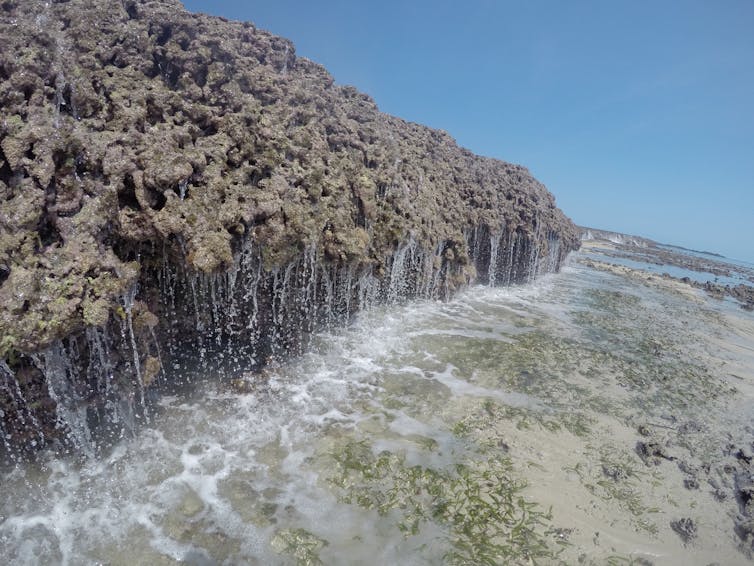
Kelston Boys’ board hopes no other school will face unwanted charter bid

Source: Radio New Zealand

A push to convert Kelston Boys’ High School in Auckland into a charter school was against the wishes of the school and its board. SUPPLIED/GOOGLE MAPS

The board of the school at the centre of an unwanted outside bid to turn it into a charter school says it hopes the same doesn’t happen anywhere else.

It was revealed on Wednesday that Bangerz Education and Wellbeing Trust (BEWT), and an ex board member co-sponsor, had abandoned their application.

Their push to convert Kelston Boys’ High School in Auckland was against the wishes of the school and its board.

After the development, the school board said the application being halted was “wonderful news”.

“We sincerely hope no other school in New Zealand will have to experience what our community has endured,” presiding member Sanalio Kaihau said.

“However, should such a situation arise, we stand ready to support others by sharing our learnings and processes.”

Kaihau said the board recognised that charter schools had a place in communities where they were needed.

He said the school’s community had shown unity and resilience and a commitment to protect its mana.

The school first took to social media last month opposing the charter school conversion bid.

“Our senior leaders and staff do NOT believe that becoming a charter school is in the best interests of our students or community, especially when it would involve so much change with a different staff, management and Board, along with a different philosophy and curriculum,” it said in a letter posted to social media.

The trust then ended its own consultation about the move, saying the school had drawn battle-lines by going public with its opposition.

It had argued a change to a charter school would solve a continuing fall in education attainment and that Ministry of Education intervention “has been ineffective”.

BEWT said Kelston Boys’ High was violent, had low achievement and attendance rates and had lost community confidence.

Kelston Boys’ High said it was a school with long-standing traditions and all-round excellence in developing exemplary young men.

Local MP Carmel Sepuloni was critical of the move, making reference to what she called “cowboy organisations” able to make charter school applications.

“It’s been done in the most unusual way, in a way where the schools have felt quite threatened, it’s been relentless,” the senior Labour MP said last month.

The Charter School Agency confirmed on Wednesday it had dropped its application.

It said it would now work with both sides to close the process.

The school board said its students “can now finish the year with confidence” and that it was getting ready for next year with renewed energy and purpose.

Siaosi Gavet, the former presiding board member co-sponsoring the bid with BEWT, did not respond to RNZ’s request for comment.

Sign up for Ngā Pitopito Kōrero, a daily newsletter curated by our editors and delivered straight to your inbox every weekday.

– Published by EveningReport.nz and AsiaPacificReport.nz, see: MIL OSI in partnership with Radio New Zealand

AI scribe tool rolled out to emergency departments, promises to slash clinicians’ admin

Source: Radio New Zealand

An AI scribe tool is being rolled out across the country’s emergency departments. 123RF

An AI scribe tool is being rolled out across the country’s emergency departments following trials in Hawke’s Bay and Whanganui.

However, while some clinicians were heralding the Heidi AI Scribe technology as “the way of the future”, others said more effective evaluation was needed to ensure benefits touted by its designers translated to the pressures of the emergency medicine.

Late last month, Health Minister Simeon Brown said trials in Hawke’s Bay and Whanganui had shown the system slashed the time clinicians spent on administrative duties.

“Doctors using the AI tool were able to see, on average, one additional patient per shift because of the time saved. That means faster care for patients and less waiting time in emergency departments.

“Based on this success, Health NZ has purchased an initial 1000 licences for frontline staff in emergency departments, enabling its nationwide rollout,” Brown said.

Health Minister Simeon Brown. RNZ / Mark Papalii

Tool slashes time spent on patient notes

The creator of the tool, Heidi Health, said the trials reduced the average time spent on documenting patient notes from 17 minutes to 4 minutes.

Created in Australia, the system was currently used in two million consultations each week across 116 countries, and had been adapted to work with the clinical language and systems used in New Zealand hospitals.

Co-founder of Heidi Health, Dr Thomas Kelly said reducing the administrative burden would allow staff more time to focus on the needs of their patients.

“Healthcare professionals should never have to choose between providing quality patient care and their own wellbeing. Yet the realities of an ED, with complex cases, heavy patient demand, and workforce shortages, can make that a difficult balance.

“Heidi’s ability to allow emergency staff to focus more on patient care, whilst providing much-needed relief from administrative burden, we hope will go some way to making that balance easier,” Kelly said.

Risk of catastrophic error higher in ED settings

However, Otago University Professor of bio-ethics Angela Ballantyne said ongoing work would be needed to evaluate the effectiveness of the tool in the high pressure environment of the country’s emergency departments.

“In ED you’ve got a team-based environment, multiple people contributing to the notes and, obviously, you’ve got critically unwell patients. So the risk of an error in those notes having a really catastrophic impact on patient safety and care is much higher,” Ballantyne said.

Otago University Professor of bio-ethics Angela Ballantyne. Supplied

She said she had spoken to one doctor using a similar tool where a slight change in how a patient’s response had been recorded could have had serious implications for their treatment.

“The tool made a very subtle error. The patient had said they experienced this symptom for the first time ‘in the morning’ and the tool had changed it to ‘every morning’. So a very subtle difference but [it] has really significant clinical implications if someone else comes along and reads and tries to interpret that note.

“This doctor said it was only on the second read through that they realised that the error had been made,” she said.

Ballantyne said she was concerned that the Hawke’s Bay trial – which reviewed the experience of eight clinicians using the tools – had not gone into enough depth ahead of being implemented through the country’s hospitals.

“If this was a drug that was being rolled out there’s very set stages and processes for evaluating the safety and efficacy of those kind of products. Part of what’s tricky about the AI tools is that there’s not a clear regulatory pathway.

“So I would really encourage the government – at this point – to put in place mechanisms to evaluate and monitor this roll out and to be really publicly transparent about those details.

“I’m not saying don’t do it but, I think, do it carefully and evaluate,” Ballantyne said.

AI tool supports doctors in high pressure environment

Chair of the New Zealand faculty of the Australasian College for Emergency Medicine Dr Kate Allan has worked with the tool.

She said the technology acted as a silent assistant, listening to doctor’s and patient’s conversations and writing the clinical notes as they occurred.

She found it allowed doctors to deal with interruptions and changing situations without losing track of information.

“If I’ve just been to see a patient and I get pulled very quickly to go and see another patient – and you’re multi-tasking like that – I feel it’s much safer because the memory is there. Whereas if you’re going from A to B to C you could lose track when you’re writing your notes,” Allan said.

The technology was trialled at Hawke’s Bay Hospital (pictured) and Whanganui Hospital. RNZ / Peter Fowler

She was impressed by the technology’s ability to hear in noisy environments and cut out discussion during a consultation, which might be irrelevant.

“It’s incredible how it’s able to collate and summarise what [patients] say to us and putting it into the context of the consultation. It’s pretty amazing what it can do,” Allan said.

The time freed up by the tool allowed her to be more detailed in the information she used in notes – but it was still necessary to review the information.

“You have to check it. We all know that AI – at this stage – hallucinates and we need to ensure that’s not happening,” Allan said.

She had encountered some reluctance from patients to divulge personal information using the tool but said she was not concerned about any potential for privacy breaches.

“We know that all of the patient information that we are collecting gets deleted after it’s been used and we know that none of it’s been used as an AI learning tool, so the AI is not learning off what’s going into it. Every patient has to be consented to use it and they can decline it, so that’s fine.

“It’s like recording a telephone call – you can’t do it with getting pre-approval,” Allan said.

Sign up for Ngā Pitopito Kōrero, a daily newsletter curated by our editors and delivered straight to your inbox every weekday.

– Published by EveningReport.nz and AsiaPacificReport.nz, see: MIL OSI in partnership with Radio New Zealand

Authorities test other sand products for asbestos after three brands recalled

Source: Radio New Zealand

The recalled sand products. Supplied

The Ministry of Business, Innovation and Employment (MBIE) is widening its net to test products similar to play sand currently being recalled.

Quartz-based sand from Education Colours, Creatistics and Anko have been found to be contaminated with tremolite, a naturally occurring type of asbestos.

About 40 schools and early childcare centres have closed, or planned to, because of the contamination fears.

MBIE’s product safety spokesperson Ian Caplin said the ministry and other agencies were proactively testing samples from other similar products available in New Zealand.

“We are expecting to receive further results later this week and will update our partners and New Zealanders as they are received,” he said.

“In the meantime, our advice is that when in doubt, take a cautious approach and dispose of sand in accordance with the guidance on Health NZ and WorkSafe’s websites.”

Caplin said anyone who found sand products positive with asbestos after independent testing should send copies of the test report to recalls@mbie.govt.nz so the ministry could begin the recall process.

It comes after a West Auckland school notified families its play sand had tested positive, after previously saying they did not have any of the products on the recall list.

Matipo School in Te Atatu Peninsula wrote to parents saying it was testing other types of sand used for art activities as a precaution.

The school set out steps including independent testing, isolating and temporarily closing affected class rooms, and ensuring there was no access to the sand until it was confirmed safe.

However, Principal Jonnie Black wrote to members of the school community to say a small number of samples tested had returned positive results.

“I want to reassure our community that there is no immediate risk, and we are following all recommended Ministry of Education and health and safety procedures,” he said.

“Affected classrooms have been temporarily relocated while we complete air-quality testing and arrange professional decontamination of those spaces.”

Students were safe, well supervised and settled in alternative learning areas, he said.

Black said they had asked the families of specific classes to seal and return any sand-based artwork, so it could be disposed of safely and appropriately.

“This step is part of the national precautionary process to ensure full compliance with safety guidelines.”

Sign up for Ngā Pitopito Kōrero, a daily newsletter curated by our editors and delivered straight to your inbox every weekday.

– Published by EveningReport.nz and AsiaPacificReport.nz, see: MIL OSI in partnership with Radio New Zealand

Firearms Safety Authority review finds conflict of interest risks

Source: Radio New Zealand

The Firearms Safety Authority was established following the Christchurch mosque attacks in 2019. 123rf.com

A comprehensive review of Te Tari Pūreke Firearms Safety Authority found risks for the authority and police in relation to financial oversight and conflict-of-interest management across police.

RNZ earlier revealed a “health check” of the police agency had begun following concerns over its workplace culture, including intimate relationships as well as financial practices.

The review came after an “internal employment process” at the firearms regulator which was established following the Christchurch mosque attacks in 2019.

  • Do you know more? Email sam.sherwood@rnz.co.nz

Police’s Chief Assurance Officer Mike Webb told RNZ the health check of the Firearms Safety Authority (FSA) was completed last month.

“It sought to identify whether disciplines around corporate hygiene and internal controls are widely understood and consistently applied in the FSA,” Webb said.

“The FSA was found to have operated in accordance with police policies in almost all cases sampled from December 2022 to June 2025 and the review identified a number of strengths in its corporate practices and controls.”

The review also made recommendations to “support improved police policy and practice”.

Three recommendations related to the FSA and 19 relate to wider police.

“Of note, the health check report highlighted some operational and governance risks for FSA and Police in the areas of financial oversight, lack of specificity in the sensitive expenditure policy at the time, and conflict-of-interest management across wider police.”

Webb said the FSA’s executive director, Angela Brazier, had accepted the findings and recommendations in the report and “acknowledged there is always opportunity for improvement”.

The report was considered by the police’s Senior Leadership Team (SLT) in late-October, as well as the independent Assurance and Risk Committee in mid-November.

“The Police SLT endorsed action to address the report’s non-FSA-specific recommendations, as well as tracking work on the recommendations.

“Several recommendations have already been actioned – for example, making updates to the sensitive expenditure policy, which are due to take effect from 1 December 2025.”

Brazier was one of several senior leaders within police criticised by the Independent Police Conduct Authority in its scathing report in relation to how police responded to allegations of sexual offending by McSkimming.

The IPCA said Brazier told them she had known McSkimming for about 20 years.

When the Public Service Commission approached her for a reference check on McSkimming in the appointment process for interim commissioner in October last year, she knew McSkimming had an affair, that he was being “harassed” with emails from the woman and that Deputy Police Commissioner Tania Kura had informed McSkimming that she had to investigate him as part of the police response.

However, Brazier told the PSC she had nothing relevant to disclose. She told the IPCA she did not think her knowledge was relevant to PSC’s question.

“Ms G’s disclosure was inadequate in light of her knowledge at the time,” the IPCA said.

A lawyer for Brazier earlier said she was challenging the IPCA’s findings in relation to her.

The lawyer confirmed to RNZ on Tuesday that Brazier was currently on “pre-planned leave”.

Last week, the government announced a new specialist firearms regulatory agency will be created, replacing the FSA. It will be headed by an independent chief executive appointed by the governor-general who would report solely to the firearms minister.

The new regulator would continue to sit within police, but without sworn police officers involved.

Sign up for Ngā Pitopito Kōrero, a daily newsletter curated by our editors and delivered straight to your inbox every weekday.

– Published by EveningReport.nz and AsiaPacificReport.nz, see: MIL OSI in partnership with Radio New Zealand

Meeting with govt ‘complete waste of time’, Pike River families say

Source: Radio New Zealand

Anna Osborne and Sonya Rockhouse. RNZ / Rebekah Parsons-King

Pike River families say their meeting with the Workplace Safety Minister was “a complete waste of time”.

Anna Osborne and Sonya Rockhouse sat down with Workplace Safety Minister Brooke van Velden at Parliament on the 15th anniversary of the Pike River disaster.

“I don’t know, I’ve come out of there still feeling really unhappy because there’s just no guarantees that people who go to work are going to return home safely,” Obsorne said.

“She seemed to be focusing all the time on the employers and I sat and listened to it for a little while and then I just couldn’t stand it,” Rockhouse said.

Both women went into the meeting wanting to share their concerns that the minister’s workplace reforms were weakening safety laws and risking another disaster.

Rockhouse said she doesn’t feel reassured.

“She gave a slip service, she listened, but didn’t really say anything. You know, that sort of thing when somebody’s talking but they’re not really saying much? That’s how it felt,” she said.

“I walked out of there thinking man that was just a complete waste of time.”

Workplace Safety Minister Brooke van Velden. Marika Khabazi

The pair support the introduction of a corporate manslaughter charge and said they had found support for the idea with opposition parties and New Zealand First.

“In New Zealand, it’s real easy to pass the buck. It’s not not one person’s fault, it’s another’s, you know,” Osborne said.

“So, we just need somebody with some balls who’s prepared to really put their heart and soul into getting this health and safety legislation and the reforms working properly for all New Zealanders,”

New Zealand First leader Winston Peters on Wednesday described the Pike River mine as “a murder scene” and hinted at his dissatisfaction with relevant workplace safety settings.

He met with Osborne and Rockhouse and promised to advocate for progress on what he described as “the most unsatisfactory circumstance”.

“[The meeting went] very, very well. We laid out a plan of action and work for us to do privately, myself and my team,” Peters said.

“We were the ones that demanded an inquiry, the only party that did at the time. We think we were dramatically let down by the way the inquiry was run and we don’t give up on this. We think this is a murder scene.”

Peters would not disclose any details of his plan but his office later confirmed he was working with Pike River families on the idea of introducing a corporate manslaughter charge.

Asked if he was happy with the current workplace safety settings, he said no.

“Not on this matter, most definitely not. And I intend to make that known.”

Van Velden has been overhauling workplace safety with a mind to shift WorkSafe’s focus from enforcement, to advice and guidance.

She said there were too many people dying at work and helping businesses follow the law – as well as backing a record number of workplace inspectors – was the best way to tackle this.

She didn’t accept Osborne and Rockhouse’s concerns history may repeat itself, despite having no evidence her approach will result in fewer workplace deaths.

“You can’t really point to any particular one industry or group or bit of evidence to say this is what would end up happening in the future.

“What we have as a health and safety system, is a lot of individuals getting up every day, providing jobs and doing a lot of actions on the ground.

“There are accidents that will happen. What I’m wanting to focus on is, how do I improve the overall economy and the situation that businesses and workers find themselves in?”

Van Velden said she did not support introducing a corporate manslaughter charge, instead preferring to focus on “upfront guidance” for businesses.

“I’m asking all businesses, workers and the regulator to focus on critical risk, which is actions that could lead to death and serious injury and illness, and to stamp those out and focus our efforts there, rather than sweating a lot of small stuff.

“We know there are a lot of companies out there really fearful of what it means to comply with the law but they’re ticking boxes and I’d like people across the country to focus on action on the ground to reduce deaths on the ground.”

Justice Minster Paul Goldsmith said there were no current plans to introduce a corporate manslaughter charge as the government had a very busy legislative agenda in the justice space.

Labour, the Greens and Te Pāti Māori all support a corporate manslaughter charge.

Sign up for Ngā Pitopito Kōrero, a daily newsletter curated by our editors and delivered straight to your inbox every weekday.

– Published by EveningReport.nz and AsiaPacificReport.nz, see: MIL OSI in partnership with Radio New Zealand

Māori business leaders feeling upbeat about performance after primary sector strengthens

Source: Radio New Zealand

Māori business leaders are feeling upbeat about their performance. RNZ

Māori business leaders are feeling upbeat about performance, driven by a stronger primary sector.

The latest edition of accounting firm BDO’s Pūrongo Pakihi Māori, the Māori Business Sector Report, showed nearly two thirds of Māori business leaders were positive about current overall business performance – second only to the agricultural sector.

BDO Māori business sector leader Solomon Dalton said the upbeat sentiment reflected the strong presence of primary sector firms amongst Māori businesses.

“A lot of our businesses are in the primary industry, which has had strong performance over the last few years,” Dalton said.

However, beyond the primary sector, Māori businesses faced challenging conditions.

“Managing cash flow remains a key priority for Māori business leaders,” Dalton said. “However, we’re seeing cautious optimism about the future.”

“What will be key over the next six months is more certainty around economic conditions in helping unlock potential business growth by encouraging more Māori business leaders to invest in their people and resources – helping stimulate the wider economy.”

Dalton encouraged firms to look at cash flow as they navigate challenging periods and work in 12 week cycles.

He said firms could also look to make investments that could save money long-term.

“Our BDO Pakihi Māori team are seeing a growing adoption of solar technology and the transitioning of business fleets to EV vehicles, not only bringing cost efficiencies for Māori businesses but also supporting their climate responsibilities,” Dalton said.

Māori business leaders felt least positive about external economic factors, followed by financial performance and climate risk.

Sign up for Ngā Pitopito Kōrero, a daily newsletter curated by our editors and delivered straight to your inbox every weekday.

– Published by EveningReport.nz and AsiaPacificReport.nz, see: MIL OSI in partnership with Radio New Zealand

The difference in investing strategies between over-60s and under-30s

Source: Radio New Zealand

The third quarter ASB Investor Confidence Survey indicates a clear divergence of strategies between investors over 60 and those under 30 years of age. RNZ

Investor confidence is improving, with a clear divergence of strategies between investors over 60 and those under 30 years of age.

The third quarter ASB Investor Confidence Survey indicates an overall 9 percent improvement in confidence, with a net positive investor confidence rate of 10 percent, compared with 1 percent in the last quarter.

“While confidence has edged up, the underlying drivers of uncertainty, like global events, policy changes, and a sluggish property market, remain, ” ASB senior economist Chris Tennent-Brown said.

“Looking ahead, the overall message is one of cautious optimism.

Markets have recovered since the volatility we had earlier in the year, and that’s impacting sentiment positively now, but the flat housing market and lower term deposit rates continue to weigh on the mood.”

He said investor confidence was highest in Auckland at more than 16 percent, compared with the rest of New Zealand at 7 percent, with the South Island was at 8 percent and Lower North Island at the bottom with just 3 percent.

“Perceptions about housing being the place to generate the most wealth are very low for under 30s, who may still be trying to work out how to get into the property market, a stark but understandable contrast to the over 60 participants, whose wealth may be tied up in property,” Tennent-Brown said.

He said there was a clear difference between the investment strategies of young and old.

Perceptions of a home as the best returning investment had dropped to the lowest level since first measured in 2015, with under 30s driving the shift to other investments.

“We expect the older age brackets, 60 plus, to have more exposure to property, more exposure to term deposits. They still feel downbeat about term deposits, upbeat about housing,” he said.

“It’s a really diverse bunch of answers when we split it by age and stage of life.”

He said the under 30s surveyed were focussed on other investments, particularly the share market, where confidence had lifted significantly over the past quarter, jumping to 21 percent compared with 13 percent in the previous quarter.

Overall, managed investments were steady at 14 percent and just under KiwiSaver, which had overtaken rental property and term deposits in perceived return.

Public shares were also gaining favour, with perceptions increasing to 12 percent.

Other options such as rental property, term deposits, and bank savings accounts remained stable, but were no longer seen as the stand-out choices they once were.

Global outlook

Global political instability or uncertainty remained the top concern for investors, with 90 percent citing it as a key factor, though there had been a notable drop in those ‘very or extremely concerned’, with fewer investors looking to adjustment their portfolios.

“Investors are adapting to a constantly changing global backdrop, and while the mood is more positive than last quarter, it is far from buoyant,” he said.

“In fact, 53 percent of those with concerns are now choosing not to make any changes – an improvement from last quarter.

“What we’re seeing is that investors are becoming more accustomed to uncertainty. Based on our customers’ behaviour, most are choosing to stay the course and not make changes to their portfolios, even as global headlines continue to shift.”

Sign up for Ngā Pitopito Kōrero, a daily newsletter curated by our editors and delivered straight to your inbox every weekday.

– Published by EveningReport.nz and AsiaPacificReport.nz, see: MIL OSI in partnership with Radio New Zealand

View from The Hill: Former Liberal senator accuses ‘the boys’ of using women to undermine Sussan Ley

Source: The Conversation (Au and NZ) – By Michelle Grattan, Professorial Fellow, University of Canberra

Former senator Hollie Hughes has gone on a verbal rampage to defend Opposition leader Sussan Ley, accusing “the boys” who want her job of using prominent female colleagues in their efforts to undermine her.

Hughes this week resigned from the Liberal Party, saying as she no longer had the ability to support Ley in the party room, she believed she could best support her from outside the party.

She lashed out at Ley’s critics. “To be honest, I threw up in my mouth a little bit when I saw that big right-wing conservative group walking into the net zero meeting together [on Wednesday last week].

“And they shove [forward] three women, one who no one’s ever heard of, and two who are being used, quite frankly, by the boys who want a challenge but don’t have the gumption to go out and say anything themselves.

“So [they] are pushing Sarah and Jacinta out there to make these undermining comments to Sussan and I just, I think it’s disgusting.”

The three women who headed the conservative group going into the meeting were Sarah Henderson, Jacinta Nampijinpa Price and Jessica Collins. Angus Taylor and Andrew Hastie, who both aspire to the leadership, were directly behind them.

Hughes is a long time friend of Ley. She is also a fierce opponent of Taylor, who successfully promoted Collins in a NSW preselection battle before the last election. Hughes was relegated to an unwinnable position on the Liberal Senate ticket.

Price hit back at the suggestion she was being used,

“It’s always been the argument by raging lefties […] that I can’t think for myself, that I have to be used by others,” she said.

“Just because we were walking down the hallway, in front of our colleagues, somehow we’re being used”. It was a “ridiculous notion,” she said, adding that Hughes was “clearly bitter”.

Ley described Hughes as “a dear friend” but sought to avoid being drawn further into the controversy.

Meanwhile Ley, while on a round of selling the opposition’s energy policy, is continuing to try to get ahead of her critics by flagging positions on other issues. She has said she will soon release an immigration policy. On Thursday she will deliver an address on defence.

In the speech, released ahead of delivery, Ley says there needs to be immediate investment in defence capabilities in three areas. These are

  • an integrated air and missile defence system

  • a greater ability to rapidly build, deploy and resupply unmanned and autonomous weapons systems – whether aerial drones or undersea weapons systems, or systems to defend against them

  • a greater sovereign capability for satellite connectivity.

Ley warns that Australia’s fuel security “is so poor that we don’t even need to be directly involved in a regional crisis or conflict to be dangerously impacted.

“All that needs to occur is for regular shipping to be disrupted from reliably flowing to Australia, and the normal functioning of our society will grind to a halt,” Ley says.

“What a responsible government needs to do is make sure we have sufficient access to essential fuels to get us through the initial shock to ‘normal’ supply chains so that society continues to function.

“This is why the previous Coalition government passed the Fuel Security Act in 2021 to begin introducing minimum stockholding obligations that will eventually bring us closer to our 90-day supply obligations.”

She accuses the Albanese government of letting momentum fall away on this.

“Most importantly, we need the government to send positive demand and regulatory signals to stimulate more investment in the domestic production of fuel here in Australia.

“This should include biofuels and efuels which can help diversify our liquid fuel supply whilst also being low emissions.”

Michelle Grattan does not work for, consult, own shares in or receive funding from any company or organisation that would benefit from this article, and has disclosed no relevant affiliations beyond their academic appointment.

ref. View from The Hill: Former Liberal senator accuses ‘the boys’ of using women to undermine Sussan Ley – https://theconversation.com/view-from-the-hill-former-liberal-senator-accuses-the-boys-of-using-women-to-undermine-sussan-ley-269913

A shameful mandate for force: What the UNSC’s Gaza resolution means in practice

The UN Security Council passed a regime change resolution against Gaza on Monday, effectively issuing a mandate for an invasion force to enter the besieged coastal enclave and install a US-led ruling authority by force.

ANALYSIS: By Robert Inlakesh

Passing with 13 votes in favour and none in defiance, the new UN Security Council (UNSC) resolution has given the United States a mandate to create what it calls an “International Stabilisation Force” (ISF) and “Board of Peace” committee to seize power in Gaza.

US President Donald Trump has hailed the resolution as historic, as Israeli Prime Minister Benjamin Netanyahu’s government has stood in opposition to an element of the resolution that mentions “Palestinian Statehood”.

In order to understand what has just occurred, it requires a breakdown of the resolution itself and the broader context surrounding the ceasefire deal.

When these elements are combined, it becomes clear that this resolution is perhaps one of the most shameful to have passed in the history of the United Nations, casting shame on it and undermining the very basis on which it was formed to begin with.

An illegal regime change resolution
In September 2025, a United Nations commission of inquiry found Israel to have committed the crime of genocide in the Gaza Strip.

For further context, the International Court of Justice (ICJ), the most powerful international legal entity and organ of the UN, ruled that Israel is plausibly committing genocide and thus issued orders for Tel Aviv to end specific violations of international law in Gaza, which were subsequently ignored.

Taking this into consideration, the UN itself cannot claim ignorance of the conditions suffered by the people of Gaza, nor could it credibly posit that the United States is a neutral actor capable of enforcing a balanced resolution of what its own experts have found to be a genocide.

This resolution itself is not a peace plan and robs Palestinians of their autonomy entirely; thus, it is anti-democratic in its nature.

It was also passed due in large part to threats from the United States against both Russia and China, that if they vetoed it, the ceasefire would end and the genocide would resume. Therefore, both Beijing and Moscow abstained from the vote, despite the Russian counterproposal and initial opposition to the resolution.

It also gives a green light to what the US calls a “Board of Peace”, which will work to preside over governing Gaza during the ceasefire period. The head of this board is none other than US President Trump himself, who says he will be joined by other world leaders.

Former British Prime Minister, Tony Blair, who launched the illegal invasion of Iraq, has been floated as a potential “Board of Peace” leader also.

Vowed a ‘Gaza Riviera’
On February 4 of this year, President Trump vowed to “take over” and “own” the Gaza Strip. The American President later sought to impose a plan for a new Gaza, which he even called the “Gaza Riviera”, which was drawn up by Zionist economist Joseph Pelzman.

Part of Pelzman’s recommendations to Trump was that “you have to destroy the whole place, restart from scratch”.

As it became clear that the US alone could not justify an invasion force and simply take over Gaza by force, on behalf of Israel, in order to build “Trump Gaza”, a casino beach land for fellow Jeffrey Epstein-connected billionaires, a new answer was desperately sought.

Then came a range of meetings between Trump administration officials and regional leaderships, aimed at working out a strategy to achieve their desired goals in Gaza.

After the ceasefire was violated in March by the Israelis, leading to the mass murder of around 17,000 more Palestinians, a number of schemes were being hatched and proposals set forth.

The US backed and helped to create the now-defunct so-called “Gaza Humanitarian Foundation” (GHF) programme, which was used to privatise the distribution of aid in the territory amidst a total blockade of all food for three months.

Starving Palestinians, who were rapidly falling into famine, flocked to these GHF sites, where they were fired upon by US private military contractors and Israeli occupation forces, murdering more than 1000 civilians.

The ‘New York Declaration’
Meanwhile, Saudi Arabia and France were busy putting together what would become the “New York Declaration” proposal for ending the war and bringing Western nations to recognise the State of Palestine at the UN.

Suddenly, seemingly out of nowhere, here came Trump’s so-called “peace plan” that was announced at the White House in October. This plan appeared at first to be calling for a total end to the war, a mutual prisoner exchange and the withdrawal of Israeli forces from Gaza in a phased approach.

From the outset, Trump’s “20-point plan” was vague and impractical. Israel immediately violated the ceasefire from the very first day and has murdered nearly 300 Palestinians since then. The first phase of the ceasefire deal was supposed to end quickly, ideally within five days, but the deal has stalled for over a month.

Throughout this time, it has become increasingly clear that the Israelis are not going to respect the “Yellow Line” separation zone and have violated the agreement through operating deeper into Gaza than they had originally agreed to.

The Israeli-occupied zone was supposed to be 53 percent of Gaza; it has turned out to be closer to 58 percent. Aid is also not entering at a sufficient rate, despite US and Israeli denials; this has been confirmed by leading rights groups and humanitarian organisations.

In the background, the US team dealing with the ceasefire deal that is headed by Jared Kushner and Steve Witkoff has been juggling countless insidious proposals for the future of Gaza.

Even publicly stating that reconstruction will only take place in the Israeli-controlled portion of the territory, also floating the idea that aid points will be set up there in order to force the population out of the territory under de facto Hamas control. This has often been referred to as the “new Gaza plan”.

The disastrous GHF
As this has all been in the works, including discussions about bringing back the disastrous GHF, the Israelis have been working alongside four ISIS-linked collaborator death squads that it controls and who operate behind the Yellow Line in Gaza.

No mechanisms have been put in place to punish the Israelis for their daily violations of the ceasefire, including the continuation of demolition operations against Gaza’s remaining civilian infrastructure. This appears to be directly in line with Joseph Pelzman’s plan earlier this year to “destroy the whole place”.

The UNSC resolution not only makes Donald Trump the effective leader of the new administrative force that will be imposed upon the Gaza Strip, but also greenlights what it calls its International Stabilisation Force. This ISF is explicitly stated to be a multinational military force that will be tasked with disarming Hamas and all Palestinian armed groups in the Gaza Strip.

The US claims it will not be directly involved in the fighting with “boots on the ground”; it has already deployed hundreds of soldiers and has been reportedly building a military facility, which they deny is a base, but for all intents and purposes will be one.

Although it may not be American soldiers killing and dying while battling Palestinian resistance groups, they will be in charge of this force.

This is not a “UN peacekeeping force” and is not an equivalent to UNIFIL in southern Lebanon; it is there to carry out the task of completing Israel’s war goal of defeating the Palestinian resistance through force.

In other words, foreign soldiers will be sent from around the world to die for Israel and taxpayers from those nations will be footing the bill.

‘Self-determination’ reservation
The only reason why Israel has reservations about this plan is because it included a statement claiming that if the Palestinian Authority (PA) — that does not control Gaza and is opposed by the majority of the Palestinian people — undergoes reforms that the West and Israel demand, then conditions “may finally be in place for a credible pathway to Palestinian self-determination and statehood”.

A keyword here is “may”, in other words, it is not binding and was simply added in to give corrupted Arab leaderships the excuse to vote yes.

Hamas and every other Palestinian political party, with the exception of the mainstream branch of Fatah that answers to Israel and the US, have opposed this UNSC resolution.

Hamas even called upon Algeria to vote against it; instead, the Algerian leadership praised Donald Trump and voted in favour. Typical of Arab and Muslim-majority regimes that don’t represent the will of their people, they all fell in line and bent over backwards to please Washington.

It won’t likely work
As has been the story with every conspiracy hatched against the people of Gaza, this is again destined to fail. Not only will it fail, but it will likely backfire enormously and lead to desperate moves.

To begin with, the invasion force, or ISF, will be a military endeavour that will have to bring together tens of thousands of soldiers who speak different languages and have nothing in common, in order to somehow achieve victory where Israel failed.

It is a logistical nightmare to even think about.

How long would it take to deploy these soldiers? At the very least, it’s going to take months. Then, how long would this process take? Nobody has any clear answers here.

Also, what happens if Israel begins bombing again at any point, for example, if there is a clash that kills Israeli soldiers? What would these nations do if Israeli airstrikes killed their soldiers or put them in harm’s way?

Also, tens of thousands of soldiers may not cut it; if the goal is to destroy all the territory’s military infrastructure, they may need hundreds of thousands. Or if that isn’t an option, will they work alongside the Israeli military?

It is additionally clear that nobody knows where all the tunnels and fighters are; if Israel couldn’t find them, then how can anyone else?

After all, the US, UK, and various others have helped the Israelis with intelligence sharing and reconnaissance for more than two years to get these answers.

How do regimes justify this?
Finally, when Arab, European, or Southeast Asian soldiers return to their nations in body bags, how do their regimes justify this? Will the president or prime minister of these nations have to stand up and tell their people . . .  “sorry guys, your sons and daughters are now in coffins because Israel needed a military force capable of doing what they failed to do, so we had to help them complete their genocidal project”.

Also, how many Palestinian civilians are going to be slaughtered by these foreign invaders?

As for the plan to overthrow Hamas rule in Gaza, the people of the territory will not accept foreign invaders as their occupiers any more than they will accept Israelis. They are not going to accept ISIS-linked collaborators as any kind of security force either.

Already, the situation is chaotic inside Gaza, and that is while its own people, who are experienced and understand their conditions, are in control of managing security and some administrative issues; this includes both Hamas and others who are operating independently of it, but inside the territory under its de facto control.

Just as the Israeli military claimed it was going to occupy Gaza City, laying out countless plans to do this, to ethnically cleanse the territory and “crush Hamas”, the US has been coordinating alongside it throughout the entirety of the last two years. Every scheme has collapsed and ended in failure.

It has been nearly a month and a half, yet there are still no clear answers as to how this Trump “peace plan” is supposed to work and it is clear that the Israelis are coming up with new proposals on a daily basis.

There is no permanent mechanism for aid transfers, which the Israelis are blocking. There is no clear vision for governance.

How a US plan envisages Gaza being permanently split into two sections – a green zone and a red zone. Image: Guardian/IDF/X

‘Two Gazas’ plan incoherent
The “two Gazas” plan is not even part of the ceasefire or Trump plan, yet it is being pursued in an incoherent way. The ISF makes no sense and appears as poorly planned as the GHF.

Hamas and the other Palestinian factions will not give up their weapons. There is no real plan for reconstruction. The Israelis are adamant that there will be no Palestinian State and won’t allow any independent Palestinian rule of Gaza, and the list of problems goes on and on.

What it really looks like here is that this entire ceasefire scheme is a stab in the dark attempt to achieve Israel’s goals while also giving its forces a break and redirecting their focus on other fronts, understanding that there is no clear solution to the Gaza question for now.

The United Nations has shown itself over the past two years to be nothing more than a platform for political theatre. It is incapable of punishing, preventing, or even stopping the crime of all crimes.

Now that international law has suffocated to death under the rubble of Gaza, next to the thousands of children who still lie underneath it, the future of this conflict will transform.

This UNSC vote demonstrates that there is no international law, no international community, and that the UN is simply a bunch of fancy offices, which are only allowed to work under the confines of gangster rule.

If the Palestinian resistance groups feel as if their backs are against the wall and an opportunity, such as another Israeli war on Lebanon, presents them the opportunity, then there is a high likelihood that a major military decision will be made.

In the event that this occurs, it will be this UNSC resolution that is in large part responsible.

When the suffering in Gaza finally ends, whether that is because Israel obliterates all of its regional opposition and exterminates countless other civilians in its way, or Israel is militarily shattered, the UN should be disbanded as was the League of Nations. It is a failed project just as that which preceded it.

Something new must take over from it.

Robert Inlakesh is a journalist, writer, and documentary filmmaker. He focuses on the Middle East, specialising in Palestine. He contributed this article to The Palestine Chronicle and it is republished with permission.

Article by AsiaPacificReport.nz

Regional Pacific student journalists condemn Samoa PM’s ban as ‘deeply troubling’

Pacific Media Watch

Regional student journalists at the University of the South Pacific have condemned the Samoan Prime Minister’s ban on the Samoa Observer newspaper, branding it as a “deliberate and systemic attempt to restrict public scrutiny”.

The Journalism Students’ Association (JSA) at USP said in a statement today it was “deeply
concerned” about Samoan Prime Minister La’aulialemalietoa Leuatea Schmidt’s ban on the Samoa Observer from his press conferences and his directive that cabinet ministers avoid responding to the newspaper’s questions.

“The recently imposed suspension signals not merely a rebuke of one newspaper, but a more deliberate and systemic attempt to restrict robust public scrutiny,” the statement said.

“The JSA is especially concerned that these attacks are eroding youth confidence in the [journalism] profession.” Image: JSA logo

“It raises serious concerns about citizens’ right to information, as well as the erosion of transparency, accountability, and public trust.”

The statement, signed by JSA president Riya Bhagwan and regional representative Jean–Marc ‘Ake, said that equally worrying was a public declaration by the Journalists Association of Samoa’s (JAWS) executive who wished the Samoa Observer editor’s face “had been disfigured” during an assault outside the Prime Minister’s residence last Sunday.

“We also note reports of physical confrontations involving journalists outside the Prime Minister’s residence, which are deeply troubling. This is an alarming trend and signals a reverse, if not decline in media rights and freedom of speech, unless it is dealt with immediately,” the JSA said.

“With its long-standing dedication to reporting on governance, human rights, and social
accountability issues, the ban on the Samoa Observer strikes at the heart of public discourse and places journalists in a precarious position.

Not an isolated case
“It risks undermining their ability to report freely and without the fear of reprisal.”

Sadly, said the JSA statement, this was not an isolated case.

“Earlier this year, the JAWS president Lagi Keresoma faced defamation charges under Samoa’s libel laws over an article about a former police officer’s appeal to the Head of State.

“Samoa’s steep decline in the 2025 World Press Freedom Index further highlights the ongoing challenges confronting Samoan media.”

JAWS’ recent statement highlighting government attempts to control press conferences through a proposed guide, further added to the growing pattern of restrictions on press freedom in Samoa.

“These recent incidents, coupled with the exclusion of the Samoa Observer, send a chilling
warning to Samoan journalists and establish a dangerous precedent for media subservience at the highest levels,” said JSA.

“Journalists must be able to perform their work safely, without intimidation or assault,
as they carry out their responsibilities to the public. These incidents raise serious
questions about the treatment of media professionals and respect for journalistic work.

“As a journalism student association with many of our journalists and alumni working in
the region, we are committed to empowering the next generation of journalists.

“The JSA is especially concerned that these attacks are eroding youth confidence in the
profession.

“We believe strongly in defending a space where young people can enter a field that is critical to democratic accountability, public oversight, and civic engagement.”

Article by AsiaPacificReport.nz

Will social workers in schools stop young people committing violent crimes?

Source: The Conversation (Au and NZ) – By Rosemary Sheehan, Professor of Social Work, Monash University

The Victorian government has announced it will send social workers to 20 of the state’s schools to try to reduce violent youth crime.

It will spend A$5.6 million on “targeted” schools next year. The aim is to “intervene early in the lives of children who are heading down the wrong path […] drifting towards violence, crime and anti-social behaviour”.

This is a positive idea, but it requires careful implementation. And will need support from police, teachers and health professionals to work.

What has been announced?

The government says the social workers – called “early intervention officers” – would work within schools and help teachers, principals, wellbeing coordinators and school nurses. They would:

  • identify children who are most at risk of drifting towards anti-social behaviour and violent crime

  • keep a constant eye on troubled children, supporting them through a case management approach

  • focus on improving their school attendance and sense of belonging, and their relationships with peers

  • support schools in monitoring the status and movements of students who are suspended.

The social workers will not work with what the government terms “the worst youth offenders”. They will target children most likely to become youth offenders if there’s no intervention.


Read more:
We tracked 72,000 NSW public school students over a decade and found 19% had been suspended or expelled


What’s the justification?

In support of the social workers plan, the state government reported new data from Victoria’s Council on Bail, Rehabilitation and Accountability which shows 70% of Victoria’s worst alleged youth offenders were chronically absent from school before they turned to crime. Attorney-General Sonya Kilkenny said the data shows

disengagement from school to be a big factor pushing children, particularly those with limited support at home, down a pathway towards violent crime.

This is supported by other studies, which emphasise the importance of education in crime prevention.

The social workers announcement also follows more punitive recent policies aimed at reducing violent crime in Victoria. This includes adult sentences for young people committing violent crimes, such as home invasions. This approach has been criticised by legal experts and advocates as unlikely to reduce offending.


Read more:
Victoria’s ‘adult time for violent crime’ reforms will not solve the youth crime problem


Do we already have social workers in schools?

Victoria already has social workers in schools as part of “student support services”. They work with kids, families and teachers to address barriers to learning and wellbeing.

But they are area-based. They might be spread across a number of schools so their capacity to be on the ground with teachers can be limited.

On the face of it, Wednesday’s announcement is a good idea. We can see this as a positive, proactive attempt to help children’s wellbeing and socialisation. We know young people need to have enough education to be employable and included in our society.

How could children be identified?

Teachers are generally able to identify children who are at risk.

These will be children who are not regularly coming to school (provided there is no illness or other reason invovled), who are chronically late, tired, hungry, not producing homework and not engaged in the classroom. Perhaps they are also disruptive and getting into fights.

What is missing?

The Victorian government says it is borrowing from a Scottish model, which set up a “Violence Reduction Unit” in Glasgow in 2005.

However there are a couple of key differences with the Scottish system. The first is, Scotland is dealing with children who had already been referred to the justice system for offending behaviour. It is trying to divert children from prosecution.

So, working with social workers is required for Scottish children and their families. If they did not, they faced sanctions, such as supervision measures. In extreme circumstances, the child might be placed in alternative care, if the parents lacked capacity to care for their child.

At this stage, the Victorian model does not talk about what it expects from children. If it’s all voluntary, there’s no compulsion on the part of the child or family to really engage with it.

Are we looking at the root causes?

The Scottish system also sees social workers as part of a broader team of health professionals, teachers and police, all of whom had expertise with children and youth justice. It takes a broad perspective – to understand the root causes of a child’s behaviour and needs.

This is why we should be careful not to just plonk social workers into schools with no further supports.

Perhaps there are issues around poverty, homelessness, family dysfunction, mental health or learning disabilities that make it difficult – or impossible – for a child to attend school. Perhaps a child has low literacy levels or needs speech or hearing support.

We have to widen our scope beyond school attendance to why a child isn’t able to engage with school.

Don’t forget role models

Research also tells us children need positive role models in their lives. They need to be able to see what going to school could look like, and what that might mean for their lives.

As well as positive peer relationships, they need to have adults closely involved who can mentor the child and show them there are other ways to behave than being dysfunctional or disruptive.

Ultimately it’s about ensuring children and young people feel like they are part of the community.

The Conversation

Rosemary Sheehan receives funding from Australian Research Council.

ref. Will social workers in schools stop young people committing violent crimes? – https://theconversation.com/will-social-workers-in-schools-stop-young-people-committing-violent-crimes-270158

Central New Plymouth street closed by police

Source: Radio New Zealand

File photo. RNZ / Alexander Robertson

Members of the public are being urged to avoid part of St Aubyn Street in New Plymouth this evening as police descend on the area.

Hato Hone St John were called just before 7pm, and sent one ambulance and a rapid response vehicle.

Police said St Aubyn Street was closed near Egmont Street.

They have advised the public to stay away from the area.

– more to come

Sign up for Ngā Pitopito Kōrero, a daily newsletter curated by our editors and delivered straight to your inbox every weekday.

– Published by EveningReport.nz and AsiaPacificReport.nz, see: MIL OSI in partnership with Radio New Zealand

Wellington bars went into lockdown after ‘suspicious item’ found

Source: Radio New Zealand

File photo. RNZ / Nate McKinnon

Police cordons have been lifted in the Wellington suburb of Newtown following reports of a suspicious item.

A cordon was in place on Riddiford Street near Constable Street on Wednesday evening.

Moon Pizza Music and Beer Bar on Riddiford Street was put into lockdown for about half an hour.

Manager Leroy Paton-Goldsbury said it had since reopened.

Police said the package was removed and would be destroyed.

Sign up for Ngā Pitopito Kōrero, a daily newsletter curated by our editors and delivered straight to your inbox every weekday.

– Published by EveningReport.nz and AsiaPacificReport.nz, see: MIL OSI in partnership with Radio New Zealand

Real wages have grown – just – over the past year. But they’re still down near 2011 levels

Source: The Conversation (Au and NZ) – By Janine Dixon, Director, Centre of Policy Studies, Victoria University

New data show wages have risen by a bit more than inflation, but overall real wages are still languishing near 2011 levels.

Over the year to September, wages rose 3.4% in seasonally adjusted terms. That’s according to the latest wage price index data from the Australian Bureau of Statistics (ABS), released on Wednesday.

That’s slightly more than the rate of inflation over the same period – 3.2% – meaning real wages are up by 0.2% over the year to September.

For the Reserve Bank of Australia, it means an interest rate cut in the near term remains unlikely. However, overall wages growth is nowhere near enough to make up for the huge decline in real wages over the past five years.

What is the wage price index?

The wage price index measures the average change in Australian wages and salaries every quarter. To do this, it tracks a fixed “basket” of jobs across a wide range of industries in both the public and private sector.

It doesn’t include bonuses, and it doesn’t include wage growth that comes about from people getting promoted, switching to better-paid occupations, or moving to other regions.


To illustrate, imagine a world where half of all workers were labourers and the other half were managers.

If the labourers’ hourly wage increased from $30 to $33 (a 10% increase), and the managers’ hourly wage increased from $80 to $84 (a 5% increase), the wage price index would increase by 7.5%. That is the average of 5% and 10%.

It’s an important index, but it doesn’t tell us everything. For example, it doesn’t give us the full story on wage growth, because many people grow their incomes by moving to better-paid jobs or occupations.

In our example, if an individual labourer became a manager, their wage would increase from $30 to $84 – an obvious improvement. But this change is not counted in the index.

It doesn’t tell the full story

The wage price index doesn’t give us the full story on labour costs either.

The Reserve Bank is tasked with setting interest rates to keep annual consumer inflation in a target range of 2–3%, as measured by the consumer price index.

Labour costs aren’t directly included in the consumer price index. But the Reserve Bank still keeps a close eye on wage growth, because higher wages can lead to higher costs for employers and create inflation.

But productivity growth – the continual improvement in our ability to produce more output from the same inputs – reduces labour costs relative to the amount of income a business can generate.

The chart below shows over most of the past three decades, labour costs have fallen, because productivity growth has been stronger than wage growth. The uptick in labour costs since 2023 shows wage growth has been stronger than productivity growth for the past two years.

Have we really had a pay rise?

It feels good to get a pay rise, and governments and employers enjoy the optics.

A joint statement from Treasurer Jim Chalmers and Employment Minister Amanda Rishworth noted annual real wages have now grown for eight quarters in a row:

the longest period of consecutive annual real wage growth in almost a decade.

But how healthy are Australians’ earnings really?

When wages grow faster than consumer prices, wage earners are able to get more bang for their buck. Until June 2020, this was the case over most of the past few decades.

But when consumer prices grow faster than wages, even if wages are rising, consumer purchasing power goes backwards. This has been the case from mid-2020 until very recently.

As the above chart shows, after accounting for inflation, Australians’ wages have roughly the same purchasing power now as they did back in 2011 – when the iPhone 4 was state-of-the-art and a Donald Trump presidency was a mere thought bubble.

The post-COVID decline in real wages is by far the largest in recent history, but it’s not the only one. In 2000, when the goods and services tax (GST) was introduced in Australia, a jump of almost 4% in the CPI led to a steep dip in real wages, which took about four years to unwind.

A lost decade

A horror stretch starting in 2020 saw an entire decade of real wage growth reversed in just three years. Today’s result consolidates a cautious return to real wages growth.

We will need to wait until the gross domestic product (GDP) figures come out next month to see whether the growth is supported by productivity gains.

While workers will welcome growth in real wages, we must be careful about what we wish for. When wage growth is not supported by productivity growth, employers will often reduce costs by laying off workers.

The seasonally adjusted unemployment rate is currently 4.3%, a low level historically, but it is trending upwards. Ongoing modest wage growth and low unemployment will help workers win back the lost decade.

The Conversation

Janine Dixon does not work for, consult, own shares in or receive funding from any company or organisation that would benefit from this article, and has disclosed no relevant affiliations beyond their academic appointment.

ref. Real wages have grown – just – over the past year. But they’re still down near 2011 levels – https://theconversation.com/real-wages-have-grown-just-over-the-past-year-but-theyre-still-down-near-2011-levels-270141

High school volleyball team in crash that left 12 injured

Source: Radio New Zealand

The volleyball players had been competing at Stadium Southland before the crash. File photo. © Photosport Ltd 2021 www.photosport.nz

A Queenstown high school volleyball team is recovering from a crash last night that left a dozen people injured in Invercargill.

All 12 patients were taken to Southland Hospital as a result of the three-vehicle crash at the intersection of Yarrow and Isabella Streets just after 8pm on Tuesday night.

One person was seriously hurt, one person suffered moderate injuries and 10 others were treated for minor injuries.

Wakatipu High School confirmed that 10 players in one of its boy’s volleyball teams and a coach were in a van involved in the crash, as part of their trip to Volleyball New Zealand’s South Island junior championships.

Principal Oded Nathan said the crash happened near Stadium Southland, where the boys had just finished their games for the evening.

“They’re broadly well, obviously a bit shaken and so we’ve been working with students and families, and students have returned back to Queenstown,” he said.

“Whilst all 11 went to hospital that was primarily for precautionary reasons. Nine of them were released very quickly, one had I believe a broken thumb and the other one had some glass that needed to be removed so those two stayed in hospital for a little bit longer.”

On the Spot Yarrow Street owner Visha Patel said he was working in the shop when the crash happened at the intersection outside.

“I heard a big noise. The van flipped over to another car and there were around 10 kids inside,” he said.

“They were like screaming because the whole van flipped over and they were inside.”

The children, who he estimated to be aged about 12 to 13 years-old, were trapped, he said.

“We tried to get them out. I just ran from my shop and tried to open the door. The customers, they came and tried to help me out to pull the van up but we weren’t able to because there were many kids inside and all the doors were locked and everything,” he said.

Patel said emergency services helped the shaken children out of the van.

“They were very quick over here, that’s a good thing. The police were here to clear up everything last night because they were investigating, taking photographs of the scene.”

Patel said the children stayed at his store to keep warm before an ambulance took them to hospital.

Fire and Emergency said three crews were sent to the scene and helped everyone out of the vehicles.

Police said officers were continuing to investigate the crash on Wednesday.

Sign up for Ngā Pitopito Kōrero, a daily newsletter curated by our editors and delivered straight to your inbox every weekday.

– Published by EveningReport.nz and AsiaPacificReport.nz, see: MIL OSI in partnership with Radio New Zealand

- ADVERT -

MIL PODCASTS
Bookmark
| Follow | Subscribe Listen on Apple Podcasts

Foreign policy + Intel + Security

Subscribe | Follow | Bookmark
and join Buchanan & Manning LIVE Thursdays @ midday

MIL Public Webcast Service


- Advertisement -
- Advertisement -
- Advertisement -
- Advertisement -
- Advertisement -