Page 599

Word from The Hill: Scott Morrison has decided electric cars won’t threaten Aussie weekends

Source: The Conversation (Au and NZ) – By Michelle Grattan, Professorial Fellow, University of Canberra

As well as Michelle Grattan’s usual interviews with experts and politicians about the news of the day, Politics with Michelle Grattan now includes “Word from The Hill”, where all things political will be discussed with members of The Conversation’s politics team.

Scott Morrison is gearing up for the election in the first half of 2022. As the country emerges from COVID constraints, the PM is trying to make up for lost time on the ground, travelling in NSW and Victoria this week. He’s selling some of the nitty gritty of his emissions reduction policy, including a plan to encourage the take up of electric cars.

But in Melbourne he was confronted by his own embarrassing quotes from 2019, when he laid into Labor’s policy on these vehicles, claiming they would “end the weekend” and that people who lived in apartments would have to dangle an extension cord out of their windows to charge their cars.

Michelle and Amanda also canvass the latest developments in the allegations, involving federal MPs, of branch stacking activities in the Victorian Liberal and Labor parties, and the slow grind in the quest for a federal integrity commission.

The Conversation

Michelle Grattan does not work for, consult, own shares in or receive funding from any company or organization that would benefit from this article, and has disclosed no relevant affiliations beyond their academic appointment.

ref. Word from The Hill: Scott Morrison has decided electric cars won’t threaten Aussie weekends – https://theconversation.com/word-from-the-hill-scott-morrison-has-decided-electric-cars-wont-threaten-aussie-weekends-171493

We revisited Parramatta’s archaeological past to reveal the deep-time history of the heart of Sydney

Source: The Conversation (Au and NZ) – By Alan N Williams, Associate Investigator, ARC Centre of Excellence for Australian Biodiversity and Heritage, UNSW

Australian paintings by J.W. Lewin, G.P. Harris, G.W. Evans and others, 1796-1809; State Library of NSW, Author provided

We know quite a lot about the past 200 years of history in Parramatta. Located in Sydney’s geographical centre, on the Parramatta River, it was the first township to be established outside Sydney Cove’s penal colony after the First Fleet arrived at Port Jackson in 1788.

Parramatta became the breadbasket of the early European colony, with land clearing and farming dispossessing the Darug people of the Cumberland Plain. This formed the focus of Aboriginal resistance, culminating in the 1797 Battle of Parramatta led by the great freedom fighter Pemulwuy.

Parramatta’s European history is evident to those who wander through it today — with the remains of old buildings and signs of historical events on almost every corner.

But what about before 1788?

Parramatta has seen intensified development in recent years. High-rise buildings, light rail, road upgrades and landscaping have all impacted the remaining archaeological record of both its deep history and more recent colonial past.

New South Wales’s current state planning laws require each new development to have an archaeological investigation conducted before it proceeds. The aim is to identify archaeological evidence before development starts, and make sure it is managed appropriately.

Where sites are of high cultural or scientific significance, there is an emphasis on protection. Otherwise, the evidence is recorded and recovered before development proceeds. There have been more than 40 such studies in the past 15 or so years.

In our article published today we review these studies to provide a definitive understanding of their results, and reiterate the importance of Parramatta’s culturally significant deep-time history.

14,000 years of Indigenous history

Paramatta’s urban centre has grown upon a more than 3-metre-thick layer of sand. This sand began to be deposited by the Parramatta River 50,000-60,000 years ago as a result of massive floods and other extreme environmental conditions. It continued to be deposited sporadically until about 5,000 years ago.

It’s estimated about 800,000 tonnes of sand were deposited across two kilometres of the CBD, where it is still found today. This is all the more impressive when you consider the Parramatta River is fed by only a relatively small catchment upstream.

The Parramatta River has been subject to significant flooding in the past, with nearly a million tonnes of sand having been deposited below the CBD.
Laressa Barry

This sand was blown around during the last Ice Age (or the “Last Glacial Maximum”) between 20,000 and 30,000 years ago. Ultimately this reworking resulted in a sand sheet of about 70 hectares, or roughly 100 football fields. Unfortunately, our study found some 29% of these deposits have been destroyed through development over the past 15 years or so.

A map showing the distribution of the sand body, and areas where sand deposits have been disturbed or removed (in red).

This sand body has been in place since the First Nations people arrived on the continent 50,000 (or more) years ago. It retains an amazing archive of evidence that reveals their use of the landscape in deep time, and also records major climatic changes.


Read more:
When did Aboriginal people first arrive in Australia?


So far, our earliest evidence for Aboriginal people in the Sydney region is from along the Hawkesbury-Nepean River around 36,000 years ago.

While the Parramatta sand sheet does provide glimmers of evidence for people using it back then, our analyses show they mostly visited this part of the Parramatta River after the Ice Age, which is supported by layers of artefacts in the area dated to this time.

An excavation at the corner of Charles and George Street revealed Indigenous and historic remains survived the construction of a factory here in the 1950s. The site has now been destroyed by subterranean car parking for apartments.
Jo McDonald CHM 2005 report

Moving with the tide

Specifically, our paper explores three archaeological projects on the sand sheet at George Street, Hassall and Wigram Streets, and in the grounds of the Bayanami School. All of these sites show increased human use at a time of significant sea-level change.

About 14,000 years ago, the large ice sheets that characterised the glacial period began to melt rapidly. By 9,000 years ago, the sea level in Australia went from 125 metres below current levels to current levels.

This inundation of more than 2 million square kilometres drove people off the continental shelf all around Australia, including from the Sydney Basin. We find fewer sites in Sydney, or indeed the entire southeast corner of Australia, that date to before this sea-level rise.


Read more:
Australia’s coastal living is at risk from sea level rise, but it’s happened before


A previous study of one of these key archaeological sites showed people were highly mobile as a result of this sea-level rise beginning 14,000 years ago.
One stone artefact dated to 14,000 years ago was sourced from the Megalong Valley, west of the Blue Mountains, 70km from Parramatta. Most earlier artefacts were sourced from the Hawkesbury River gravels, about 40km away.

An andalusite hornfels stone tool found on the north side of Parramatta River was dated to 14,000 years ago, more than 70km away from the CBD.
Laressa Barry

Then, over the past 10,000 years, we see a massive increase in local site use and visitation. People used a different stone material for artefacts sourced widely from across the Cumberland Plain
(western Sydney), reflecting greater local knowledge of stone resources, longer occupations and likely different trade and exchange networks.

A range of tools have also been found, including grindstones, axe-heads, backed artefacts (such as spear barbs), hearths with heat retainers and heat-treated raw materials — all of which indicate repeated residence over long periods.

Similarly, parts of the sand body with more artefacts also show evidence of camping sites which have retained their structure, demonstrating repeated use. One rare finding at the corner of Charles and George Streets was a pierced shark tooth that was probably used as a hair decoration.

Sharks tooth ornament overlain on an image painted at Port Jackson of an Aboriginal man with fishing gear and fish teeth hair ornaments.
Excerpt from a work by the Port Jackson Painter 1788-1792.

Our analysis fills an important gap in the Indigenous past of one of the oldest townships in Australia. It reinforces the importance of undertaking heritage assessments in areas which are thought to already be “disturbed”.

It also provides a timely reminder these archaeological and cultural landscapes are finite, and are being lost at an unprecedented rate.


Read more:
The last ice age tells us why we need to care about a 2℃ change in temperature


The Conversation

Alan N Williams is an associate director and the National Technical Leader, Aboriginal heritage for EMM Consulting Pty Ltd, an international employee owned company specialising in environmental investigation and assessment

Jo McDonald does not work for, consult, own shares in or receive funding from any company or organisation that would benefit from this article, and has disclosed no relevant affiliations beyond their academic appointment.

ref. We revisited Parramatta’s archaeological past to reveal the deep-time history of the heart of Sydney – https://theconversation.com/we-revisited-parramattas-archaeological-past-to-reveal-the-deep-time-history-of-the-heart-of-sydney-169827

How Māori knowledge could help New Zealanders turn their concern for the environment into action

Source: The Conversation (Au and NZ) – By Scott Burnett, Research assistant, Massey University

Guo Lei/Xinhua via Getty Images

As world leaders continue negotiations at the COP26 climate summit in Glasgow, several agreements reached so far have acknowledged the connection between climate change and the global loss of biodiversity.

Half a world away, we might feel somewhat smug. Almost a third of Aotearoa New Zealand is protected as conservation land, but we nevertheless have the highest number of threatened species worldwide, with 79% of birds, bats, reptiles and frogs at risk of or threatened with extinction.

The threat to wildlife is entirely due to human impacts, including the introduction of mammal predators and land-use practices that threaten Indigenous biodiversity.

Despite more than 40,000 people in 600 community conservation groups working throughout the country, these efforts and gains are tenuous, not yet arresting the decline in biodiversity.

Surveys show New Zealanders are increasingly aware of the state of our environment, but knowledge on its own does not spur action.

We suggest mātauranga Māori, a traditional system of understanding the natural world, could help take people from awareness to action.

Conservation status of native species in New Zealand.
Stats NZ, CC BY-ND

Te Mana o te Taiao is New Zealand’s national biodiversity strategy and lays out conservation priorities for the next three decades. It promotes the braiding of Western science and mātauranga Māori and emphasises a focus on people as much as the environment.

Regular surveys show a marked shift in public perception of the state of New Zealand’s environment. Twenty years ago, a majority believed the environment was in good health, but today, most people believe it is in poor health.

The survey also asks if respondents had participated in environmental advocacy or volunteer work, but the percentage of people who have has remained steady over two decades.


Read more:
Why Indigenous knowledge should be an essential part of how we govern the world’s oceans


From awareness to action

People feel increasingly disconnected from the natural world for a few key reasons, including:

  • a rise of individualism and the erosion of community

  • distraction by technology and entertainment

  • increasing urbanisation and inequality leading to an “extinction of experience”

  • poorer urban populations with fewer opportunities to connect with nature.

Awareness alone does not spur action, but research shows people who feel more connected with nature have a stronger sense of environmental responsibility.

If we wish to ensure the survival of our Indigenous biodiversity, we need to ask how we get from awareness to action. Indigenous peoples have played a strong role in conserving biodiversity over many centuries, and mātauranga Māori could hold some answers.


Read more:
Indigenous knowledge and the persistence of the ‘wilderness’ myth


There are three main strands to how mātauranga Māori can turn knowledge into action.

  1. Ecological science has increased our understanding of the inter-connectedness of ecosystems and has brought us closer to a mātauranga Māori concept of human relationships with the natural world. Within this concept, if the environment is not in good health, people can’t be in good health either. Seeing ourselves as inter-connected and inter-dependent with the natural world engenders reciprocity and care for the natural world.

  2. By embedding values and beliefs into facts, knowledge becomes more memorable, meaningful and relatable. This helps people to form an identity of belonging within the natural world and a connection to place. We are far more likely to care for a place if we feel a connection to it.

  3. Awareness of our inter-connections and dependence on the natural world helps us see the dissonance between stewardship and practices that threaten other species.

Community conservation as the answer

Community conservation groups could play a central role in achieving New Zealand’s national biodiversity strategy through use of mātauranga Māori concepts.

Ecosanctuaries like Zealandia already provide opportunities to connect with the natural world, through education and volunteering. There are more than 80 sanctuaries throughout the country, providing opportunities for people to acquaint themselves with the natural world and become involved in conservation activities.

Ecosanctuaries demonstrate environmental restoration is possible and conservation is everyone’s responsibility, not just the role of the state. They effectively build a constituency for conservation within the community.

A conservation volunteer releases South Island saddlebacks, or tīeke in an ecosanctuary.
A conservation volunteer releases South Island saddlebacks, or tīeke – one of New Zealand’s endangered native birds – in an ecosanctuary.
Andrew MacDonald/Getty Images, CC BY-ND

Zealandia identifies its role as an enabler of transformation in the way people engage with the natural world. Their 20-year strategy emphasises mātauranga Māori and inspiring change through shared passion.

The biodiversity strategy is fundamentally about people […] the task that we have in front of us is fundamentally about changing the way people value the natural world.

Māori continually straddle two worlds, navigating the Māori world view and the Tauiwi (Western) world. Non-Māori rarely step into the Māori world, and its unfamiliarity can cause discomfort.

Incorporating mātauranga Māori should not mean appropriating knowledge from Māori or glossing over legitimate Māori grievances. Instead, being able to hold two world views can be likened to gaining binocular vision – people discern more depth and detail than by seeing the world through a single lens.

To maintain and improve our biodiversity, we need to practise conservation everywhere rather than only in conservation spaces. Embracing mātauranga Māori concepts could help New Zealanders to develop an identity of ecological belonging to become better kaitiaki (guardians) of our biodiversity.


This article is based on a presentation given at a Sanctuaries of New Zealand workshop earlier this year on the theme of iwi and conservation.

The Conversation

The authors do not work for, consult, own shares in or receive funding from any company or organisation that would benefit from this article, and have disclosed no relevant affiliations beyond their academic appointment.

ref. How Māori knowledge could help New Zealanders turn their concern for the environment into action – https://theconversation.com/how-maori-knowledge-could-help-new-zealanders-turn-their-concern-for-the-environment-into-action-168831

COP26: why education for girls is crucial in the fight against climate change

Source: The Conversation (Au and NZ) – By Betty Barkha, PhD Candidate, Monash University

carryingwater

The Glasgow climate change conference is in its second week, with Tuesday November 9 dedicated to recognising gender equality, and the empowerment of women and girls in climate policy and action.

Gender inequality means women and girls will experience climate change in unique and different ways. They are more likely to die in extreme weather events than men. And as climate change brings about forced migration, loss of housing and income, they are vulnerable to gender-based violence.

Child marriage is a common coping mechanism for many families facing climate stress. For example, in 2016 a 15-year-old girl in Mozambique was married in exchange for 2,000 Mozambican Metical (approximately A$42) to forestall her family’s climate-induced poverty.

There is also strong evidence regarding the impact of climate change on girls’ education. In particular, it will exacerbate the already existing barriers girls face. These include learning disruptions due to inadequate funds for school fees, as well as food, water and menstrual hygiene products. During natural disasters girls experience an increase in care work and disruptions due to forced displacement or migration.


Read more:
COVID is forcing millions of girls out of school in South-east Asia and the Pacific


The Malala Fund estimates the climate events of 2021 will prevent at least 4 million girls from completing their education. Similarly, a new report from NGO Plan International shows if current trends continue, by 2025 climate change will be a contributing factor in preventing at least 12.5 million girls each year from completing their education. The report states:

Even though girls are significantly impacted by climate change, they are also powerful agents of change, capable of strengthening a country’s response to climate change.

Why education for girls is crucial

In describing the COP26 summit as “a two-week long celebration of business as usual and blah, blah, blah,” activist Greta Thunberg summed up the attitude of many young people protesting around the world. That is, political leaders are protecting their own interests at the expense of future generations.

The growing youth activism is acknowledgement this damaged planet is theirs to inherit and fix. Young people in our region will endure an increase in severe weather events, a rise in food insecurity, challenges to their health from poorer air quality and pollution, and the impact of species’ extinction and biodiversity change.

In the face of these challenges, education for all young people is crucial. But in particular, education, empowerment and leadership of girls and young women is the key to climate resilience.

Project Drawdown, a global research project which identifies and assesses solutions to climate change, notes that education

shores up resilience and equips girls and women to face the impacts of climate change. They can be more effective stewards of food, soil, trees, and water, even as nature’s cycles change.

Young people in our region will endure an increase in severe weather events, and girls are particularly vulnerable. (Children in a school in Papua New Guinea)
Shutterstock

Education for girls can be a pathway for fighting the climate crisis in three key ways:

  1. education in both the sciences and social sciences is necessary to address climate change. Girls’ participation in these fields will drive innovation in green technologies as well as a social approach to resilience built on equality

  2. formal education can build on women and girls’ existing community-based knowledge regarding disaster risk reduction and help them respond to climate emergencies

  3. education creates pathways to more independent decision-making for women and girls around work, family planning and community engagement. It also creates opportunities for leadership and participation in formal decision-making.

Girls and young women are already leading the way in climate responses in the region. For example, 17-year-old Anjali Sharma led a landmark class action – with seven other teenagers – in the Australian Federal Court against Australia’s environment minister Sussan Ley. The group was seeking an injunction to prevent Ley approving a coal mine expansion, arguing it would contribute to climate change which endangers their future.


Read more:
These Aussie teens have launched a landmark climate case against the government. Win or lose, it’ll make a difference


The Malala Fund also iterates the importance of investing in girls’ education in the fight against climate change. It argues such investment increases social resilience and strengthens adaption and mitigation efforts.

Australia can do more

The Plan International report shows that in 2019, Australia spent A$516 million of its official development assistance on projects which targeted action against climate change.

That represents just 25% of Australia’s development assistance, putting Australia in 12th place among the OECD’s 30 development committee donors.

Plan International’s report also shows climate education is absent in Australia’s recent development policies and education strategies. For instance, Australia’s Partnerships for Recovery: Australia’s COVID-19 Development Response’ policy — launched in May 2020 — fails to mention climate change among the three pillars of Australia’s Department of Foreign Affairs and Trade.


Read more:
Ever wondered what our curriculum teaches kids about climate change? The answer is ‘not much’


Young people are demanding change from those in power, organising in their communities to educate one another, engaging in activities to protect the environment and adapt to its changes, and demanding to be heard.

Australia must be more ambitious in ensuring youth and young women are prepared for the challenges ahead. By prioritising girls’ education in its funding and partnerships for regional development, Australia can promote gender equitable climate leadership.

Political leaders have a responsibility not only to engage and respond to young people, but also to build their capacity to face climate change, now and in the future.

The Conversation

Betty Barkha is currently the co-chair of the International Women’s Development Agency (IWDA) and serves as an advisor to FRIDA Young Feminist Fund and the Global Resilience Fund.

Katrina Lee-Koo has engaged in research partnerships with the World YWCA, Plan International Australia and the International Women’s Development Agency on issues designed to advocate for the inclusion of young women and girls in global issues.

ref. COP26: why education for girls is crucial in the fight against climate change – https://theconversation.com/cop26-why-education-for-girls-is-crucial-in-the-fight-against-climate-change-171394

NZ Parliament on high security as anti-vaxxer protesters gather

RNZ News

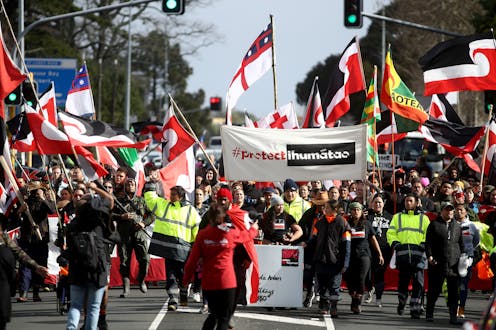
New Zealand’s Parliament was on high security today as thousands marched through the capital Wellington for an anti-lockdown and anti-vaccination protest.

Thousands of people gathered at Civic Square for an anti-lockdown and anti vaccination protest this morning.

The group intended to march to Parliament for what they are describing as a “freedom protest”.

Significant disruptions to the bus services in the capital were expected as buses detoured away from the central business distruct (CBD) to avoid the protest.

Protester ‘bites’ police officer
Meanwhile in Auckland, a police officer was bitten by a protester at the northern boundary as a group blocked traffic for more than an hour.

About 50 protesters arrived from the northern side of the boundary on State Highway 1 at Te Hana.

Traffic in both directions was brought to a halt by the group and some of their vehicles.

Police said they attempted to engage with the group and a number of vehicles were towed in order to clear the roadway.

Officers physically intervened to move protesters off the road and in the process one was bitten by an “as yet unidentified protester”, police said.

“Actions like this are totally avoidable and poses unnecessary risk to our staff who are simply trying do their part in preventing the spread of covid-19,” Waitematā District Commander Superintendent Naila Hassan said in a statement.

Protesters have dispersed and police will keep monitoring the site.

Protest ‘interferes with vaccination efforts’
Te Rūnanga ō Ngāti Whātua uri and chief operating officer Antony Thompson said trucks carrying food and medical supplies were being held up unnecessarily, “creating major risks to our communities and whānau of the North”.

He said thoughtless moves like this put whānau in danger and urged members of these groups to think about the impact they were having on those they believed they were trying to protect.

Thompson said protesters were using this as an opportunity to “grandstand their issue”.

This article is republished under a community partnership agreement with RNZ.

Print Friendly, PDF & Email

Article by AsiaPacificReport.nz

Parents of Papuan rights defender Koman attacked in Jakarta

RNZ Pacific

Advocacy groups in Indonesia have condemned an attack on the parents of human rights lawyer Veronica Yoman, who speaks out for West Papuan justice issues.

A number of packages were delivered to the couple’s house in Jakarta on Sunday morning.

According to Amnesty International Indonesia, two of the packages exploded, scattering bits of paper and red paint in the garage.

Another package contained a message threatening to attack Koman and her supporters.

Amnesty International Indonesia’s executive director Usman Hamid described it as “an unconscionable attack that has frightened and traumatised two older people”.

“The authorities must immediately carry out a thorough, transparent, impartial and independent investigation of the incident and ensure the safety of Veronica Koman’s parents,” he said.

Koman, who has became a prominent voice in advocating for Papuan human rights since 2015, has been based in Australia since 2019.

UN plea for protection
That year, UN human rights experts issued a statement calling on the Indonesian government to protect the rights of Koman and other activists after she was subjected to online harassment, threats and abuse following her reporting on alleged human rights violations in Papua province.

The latest incident comes only weeks after two unidentified men on a motorcycle left an explosive package on the fence of Koman’s parents’ house.

Andreas Harsono of Human Rights Watch said the incident marked “a serious escalation in the threats and intimidation that Koman and her family have faced for years due to her peaceful activism on Papua”.

“Indonesian human rights defenders should be able to express themselves even on sensitive subjects without having a target painted on their backs.”

As well as a police investigation, Harsono said Indonesia’s Witness and Victim Protection Agency should also assist Koman’s parents with protection and psychosocial support.

This article is republished under a community partnership agreement with RNZ.

Print Friendly, PDF & Email

Article by AsiaPacificReport.nz

Wadan Narsey: Between a rock and a not so hard place in Fiji

ANALYSIS: By Wadan Narsey in Suva

The opinion polls about voting intentions for Fiji’s 2022 General Election suggests that voters face the horrible challenge of choosing as their next Prime Minister one of two former military officers.

Both of these former soldiers have carried out military coups removing lawfully elected governments.

Is Fiji genuinely between, as the saying goes, “a rock and a hard place”? I suggest that today’s young voters, who have only known the 14 years of governance by the Voreqe Bainimarama government, need to think also about how Sitiveni Rabuka governed Fiji after his 1987 coup.

Both coup leaders may have coup skeletons in their cupboards.

But only one is being very selectively focused on by the current Republic of Fiji Military Force (RFMF) commander, writing (appropriately) in the other daily newspaper, Fiji Sun.

Fiji’s voters ought to focus on historical facts by answering the following difficult questions about the two coup leaders:

  • Who were really behind the coups of 1987, 2000 and 2006?
  • How did each coup leader change Fiji’s constitution and Fiji’s governance?
  • How did each coup leader change the powerful institutions of state, such as police, prisons and judiciary?
  • How did each coup leader influence the media?
  • Were our coup leaders collective decision-makers or dictators?
  • Were the coup leaders accountable to the voters or to “powers behind the throne”?

Perhaps Fiji is more accurately “between a rock and a softer place” with political and economic progress only possible if there is a change in government.

Behind the 1987 coup?
The world knows that Sitiveni Rabuka, the third in command in the RFMF, implemented the first 1987 coup.

But anyone watching the very public protests against the 1987 NFP/FLP government would have known that the former Prime Minister (the late Ratu Sir Kamisese Mara) and the Governor-General and later President (the late Ratu Sir Penaia Ganilau), and all their entourages, would have had their ears very close to the ground and, possibly, their fingers in the pie.

But importantly, what did Rabuka do afterwards as coup leader?

Rabuka became multiracial
Victor Lal and Fijileaks rightly remind readers about the trauma that Rabuka’s 1987 coup caused the Indo-Fiji community.

But what needs also to be discussed is Rabuka’s reform of the racist 1990 Constitution and his support of the revolutionary 1997 Constitution.

Rabuka, in partnership with Jai Ram Reddy (Leader of the National Federation Party) agreed to the appointment of the three-person Reeves Constitution Commission (Sir Paul Reeves, Tomasi Vakatora Snr and Dr Brij Lal).

Their report was the basis of the 1997 Constitution, with one valuable addition not in the report.

It is sadly often forgotten today that the 1997 Constitution included a “multiparty government” provision.

This ensured that any party with at least 10 percent of the seats in Parliament had to be invited to join the cabinet and share in the governance of Fiji.

Of course, there was one huge defect in its electoral system, which I had explained even as I (as a NFP Member of Parliament then) voted to pass the 1997 Constitution. (“The Constitution Review Commission Report: sound principles but weak advice on electoral system”, The Fiji Times, November 1, 1996).

But we in the NFP were in a hurry to approve the progressive constitutional change agreed to by Rabuka.

We knew he had to convince some very reluctant colleagues, and we fully co-operated for the 1999 Elections.

I remember accompanying Ratu Inoke Kubuabola in his election campaigns in the Yasawas and Ratu Sakiusa Makutu in Nadroga.

Sadly, both Indo-Fijian and indigenous Fijian voters rejected the multiracial stance of Rabuka and Reddy.

Nevertheless, it is to Rabuka’s credit that he accepted the results of the election and humbly offered his services to Mahendra Chaudhry as the incoming PM (on the phone in my presence on the Vatuwaqa Golf Course).

Unfortunately, for reasons that historians can explore till the cows come home, Chaudhry did not accept that humble offer from Rabuka, who soon after lost the leadership of SVT to Ratu Inoke Kubuabola.

Ignored today are the following:

  • the historical opportunity to implement a multiracial multiparty government (of the Fiji Labour Party and Mr Rabuka’s Soqosoqo Vakavulewa ni Taukei (SVT) party went begging. Thus the cogs of the 2000 coup were set in motion;
  • the 1997 Constitution had an upper house — the Senate which was a solid “checks and balances” mechanism of national leaders, and which could officially hold the decisions of the elected House of Representatives to account; and
  • by and large the institutions of government were relatively independent of the government of the day. Less clear are the events of 2000.

Behind the 2000 coup?
It is a real tragedy that while George Speight is seen as the leader of the 2000 coup, the truth has never been revealed about who else, including military officers, might have had more than just a sticky hand in it.

It is a real tragedy that Fiji has forgotten the names of a few honest RFMF officers who were very ethically opposed to the 2000 coup. From personal communications to me, I list the following: Ilaisa Kacisolomone, George Kadavulevu, Vilame Seruvakoula, Akuila Buadromo and several others.

But also conveniently forgotten are the names of RFMF officers who were at least initially behind the 2000 coup, many revealed by the Evans Board of Inquiry Report (which can be freely downloaded from the TruthForFiji website).

What is historically indisputable is that after RFMF gained control of the situation  Bainimarama chose not to restore the lawful Chaudhry government to power but appointed the interim Qarase government, thereby effecting the real coup.

It is said that some of the CRW soldiers involved in the November 2000 mutiny did so because they felt betrayed by some in the RFMF hierarchy.

It is not disputed that a number of CRW soldiers (not necessarily involved in the mutiny) ended up dead after the mutiny in circumstances not known to this day.

It is not in dispute that Rabuka, with his uniform, appeared at Queen Elizabeth Barracks at the time of the mutiny.

But while one newspaper is focusing on his actions, the roles of several other senior RFMF officers during the 2000 coup are not being similarly examined.

2006 and governance since then
Now we come to the 2006 coup.

In contrast to those which went before, there is no doubt whatsoever that the then RFMF commander, Voreqe Bainimarama, was the sole leader of the 2006 coup and totally controlled the government thereafter, while still controlling the RFMF.

Given what have I sketched above, the sheer contrasts of the Bainimarama coup with the Rabuka coup are all too obvious.

It is tragically forgotten that the 2006 coup did not just depose Qarase’s SDL government.

It deposed a multi-party government — a government of Qarase’s Soqosqo Duavata ni Lewenivanua (SDL) Party and FLP.

One can understand why Chaudhry as FLP leader has never emphasised that point.

Soon after the 2006 coup, he joined Bainimarama’s government as Minister of Finance.

It is indisputable that Bainimarama ruled Fiji for eight years as the head of a military government which was not democratically accountable to the Fiji public.

A “People’s Charter” exercise was carried out under the leadership of John Samy and the late Archbishop Mataca but rejected without explanation.

Professor Yash Ghai’s Constitutional Commission was appointed by Bainimarama and Attorney-General Aiyaz Sayed-Khaiyum.

It produced a comprehensive draft constitution, but Professor Ghai and his Commission were also were sent packing for reasons never clarified.

A 2013 Constitution with little popular input was imposed on Fiji without the approval of any elected Parliament.

The Senate was abolished.

Parliament has become a rubber stamp for the legislative changes the current government wants.

Many important institutions of government were allowed by the Constitution to come under the direct or indirect control of the politicians who controlled the government.

Large sections of the media (with the painful exception of The Fiji Times) and the Media Industry Development Authority came under government influence or control.

Undermining the Ministry of Information, a massive amount of money was spent annually on American propaganda machine Qorvis.

One government minister, not the Prime Minister, clearly became all powerful while others toed the line or were ejected from Parliament.

To fund the ruling party’s electioneering, the owners of some of Fiji’s largest businesses have worked their way around the annual political donation limit of $10,000 by using family members and even in some cases staff, contributing hundreds of thousands in cash.

A distorted electoral system
Under the 2013 Constitution an electoral system was imposed, supposedly proportional, but designed to elect a President type “leader” with the bulk of the votes, while the rest of his MPs and ministers had pitifully small numbers.

There was an outrageous ballot paper for one national constituency without names, faces, or party symbols, just one number among more than 200 from which Fiji’s largely undereducated voters were to select one number.

Voters were not allowed the help of even a “voter assistance card” (common in all democratic countries) which was astonishingly made illegal with heavy fines.

This utterly contrived electoral system was given the stamp of approval by many authoritative figures such as the Catholic cleric Reverend David Arms and even self-censoring USP academics whose academic journal covering the 2014 elections blazoned “ENDORSED” on their cover.

That system was perpetuated through the 2018 Elections and is now in full swing for the 2022 elections.

The outcome of those elections will be interesting to say the least, given that under the Constitution the RFMF can claim legal responsibility for safeguarding the welfare of Fiji, which may be what they decide themselves.

Between a rock and a softer place?
Of course, Fiji’s voters might also want to examine the impact of the two coup leaders on the public debt, FNPF and the economic welfare (and poverty) of ordinary people of Fiji.

But even the very simple comparisons and contrasts that I have drawn above between Rabuka and Bainimarama in their governance of Fiji, would suggest that Fiji is not between “the rock and a hard place” but “between a rock and a softer place”.

I am sure that The Fiji Times readers are intelligent enough to decide who is the “rock” and who is the “softer place” — regardless of the skeletons rattling in both their cupboards.

Professor Wadan Narsey is a former professor of economics at The University of the South Pacific and a leading Fiji economist and statistician. The views expressed in this article are not necessarily those of The Fiji Times. Republished with permission.

Print Friendly, PDF & Email

Article by AsiaPacificReport.nz

As the Beijing Winter Olympics countdown begins, calls to boycott the ‘Genocide Games’ grow

Source: The Conversation (Au and NZ) – By Richard Baka, Adjunct Fellow, Olympic Scholar and Co-Director of the Olympic Research Network, Institute for Health and Sport, Victoria University

Mark Schiefelbein/AP/AAP

Beijing is about to become the first city to host both a winter and summer Olympics. However, this comes amid growing calls to boycott Beijing 2022, with critics labelling them the “Genocide Games”.

With less than 100 days to go, athletes, politicians and human rights activists are among those who want to see the games cancelled or boycotted for human rights reasons. The playbooks – outlining how the games will run – have just been released, but will the games go ahead as planned?

Boycott calls

The Tokyo games and the concerns around COVID distracted people from the 2022 Winter Olympics for the better part of 2021.

But recently discontent with the Beijing games going ahead has reemerged in a major way. NBA basketballer and outspoken human rights advocate Enes Kanter is one of the latest high-profile voices to call for a boycott.

A group of US senators is also calling for a diplomatic boycott, which would entail world leaders refusing to attend the games.

This comes on top of calls from the Inter-Parliamentary Alliance on China – including more than 100 MPs from 19 countries – for Beijing to be stripped of the games. The United Kingdom foreign secretary, Dominic Raab, has said it is “unlikely” he will attend.

‘Using the Games’

Concerns about Beijing hosting the games coalesce around severe human rights abuses. These are longstanding, and played into China losing the hosting rights to Sydney in 2000 (although they did host the summer games in 2008).

As a coalition of 200 global campaign groups wrote in September:

At least two million Muslims – including Uyghurs, Kazakhs, and Uzbeks – are locked in “re-education camps” […] The situation in occupied Tibet has dramatically deteriorated and in 2021 […] In Hong Kong […] freedom and democracy are under attack, and youth activists are being rounded up and imprisoned en masse. In mainland China, the Chinese authorities routinely disappear government critics […] At the same time, Beijing has intensified its decades-long tactics of geopolitical bullying and intimidation of democratic Taiwan.

Human Rights Watch says the Chinese government is using the games to “hide their abuses and to imply that the world approves”.

Historical precedents

There is a precedence for not going ahead with an Olympic Games, despite the huge level of organisation and planning involved. The most recent example was the delay to the Tokyo games over the coronavirus pandemic.

The summer games have been cancelled on three occasions due to war – 1916 (Berlin), 1940 (Tokyo), and 1944 (London), while the winter games were cancelled twice – 1940 (Sapporo) and 1944 (Cortina D’Ampezzo).

Under different circumstances, the citizens of Colorado voted to withhold funding for the 1976 Denver Winter games and the International Olympic Committee (IOC) subsequently awarded them to Innsbruck. This followed a public backlash against the ecological and economic costs of running the games.

Take the games away?

The IOC could conceivably strip the games from Beijing and give it to another city – although realistically (and logistically) it is probably too late to do this. Any relocated games would logically have to go to a recent host city such as PyeongChang (2018) or Vancouver (2010), since they have the infrastructure and experience. There could also be an opportunity to postpone the games until 2023.

But the IOC will do its utmost not to cancel, move or have a widespread boycott of the 2022 games. It needs to protect its bottom line and prestige. Officially, the IOC is also at pains to keep politics out of the games. As president Thomas Bach says:

The Olympic Games are not about politics. The International Olympic Committee, as a civil, non-governmental organisation is strictly politically neutral at all times.

If it took the games away, China would then likely withdraw from the Olympics – as it did from 1956 to 1984. This would have a huge impact on the Olympic movement, as China has finished in the top four in the past seven summer games and sitting sixth on the all-time medal tally for the summer and winter games.

A political boycott?

But beyond the IOC, there can still be significant boycotts of the Beijing games.

The United States hotly debated a boycott in the lead up to the 1936 Berlin Olympics in Nazi Germany, while a “counter-Olympics” was planned for Barcelona (it was overtaken by the Spanish Civil War).

Six Olympic boycotts in 1956 (Melbourne), 1964 (Tokyo), 1976 (Montreal), 1980 (Moscow), 1984 (Los Angeles) and 1988 (Seoul) saw the games proceed with reduced participation. The reasons for these boycotts included war, invasions and apartheid.


Read more:
How to protest China’s human rights violations without boycotting the 2022 Olympics


There have not been any boycotts of previous Winter Olympics. But a boycott could prove very powerful. The winter games are not as “global” as the summer event. Most of the athletes and medal winners come from a small list of affluent western nations, such as the United States, Germany, Norway and Canada. So, if they were to collectively support a boycott, it could seriously undermine the competition and force IOC action.

However, most national Olympic committees, especially those in western democracies, are independent bodies and could ignore a government-led boycott. This is what happened with the Moscow games (1980) when Prime Minister Malcolm Fraser supported the US-led boycott but the Australian Olympic Committee allowed its athletes to compete.

What about business boycotts?

Despite heavy lobbying by human rights groups, Olympic sponsors such as Coca Cola, Samsung and Toyota are trying to ignore the politics.

Chinese police patrol an Olympic venue in October 2021.
Preparations continue for the Beijing Games, despite protests and calls for boycotts.
Kydl Kyodo/AP/AAP

Major sponsors have not made any statements so far about changing their hefty investments (estimated to be about a US$110 billion) linked to the Beijing games. Meanwhile, a broadcast boycott, which would also be very powerful, also seems unlikely.

Athlete protests

As the games get underway, athlete activism could surface. Former Canadian Olympian and scholar Bruce Kidd has made a plea for athletes not to boycott the games and instead be allowed to protest without contravening the IOC Charter.

It is fair to assume neither China nor the IOC will encourage overt athlete protests over China’s human rights record.

However, the rules preventing political protests from Olympic athletes were relaxed slightly ahead of the Tokyo games. This means athletes can “express their views” as long as they do not do so during competition or official ceremonies and do not do so against particular countries.

As we head towards the opening ceremony on February 4, all indications are these games will take place. But Beijing 2022 is on track to be one of the most politically-charged games ever.

The Conversation

Richard Baka does not work for, consult, own shares in or receive funding from any company or organisation that would benefit from this article, and has disclosed no relevant affiliations beyond their academic appointment.

ref. As the Beijing Winter Olympics countdown begins, calls to boycott the ‘Genocide Games’ grow – https://theconversation.com/as-the-beijing-winter-olympics-countdown-begins-calls-to-boycott-the-genocide-games-grow-147352

As the world surges ahead on electric vehicle policy, the Morrison government’s new strategy leaves Australia idling in the garage

Source: The Conversation (Au and NZ) – By Jake Whitehead, Tritum E-Mobility Fellow & Advance Queensland Industry Research Fellow, The University of Queensland

Shutterstock

The Morrison government will today announce its long-awaited electric vehicle strategy, coinciding with COP26 climate change talks underway in Glasgow. The new policy contains some welcome new funding, but is largely notable for what it omits.

In a welcome move, the government has allocated an additional A$250 million for electric vehicles, primarily aimed at charging infrastructure. But unlike every leading electric vehicle market globally, the plan delivers no financial or tax support to help Australian motorists make the switch to a cleaner car.

And the government has failed to explain how the policy will help Australia achieve net-zero emissions by 2050, just as it failed to do when releasing its economy-wide emissions reduction plan last month.

It’s encouraging to see the Morrison government move past its claim of a few years ago that electric vehicles would “end the weekend”. But the new plan is not the national electric vehicle strategy Australia deserves, and badly needs.

man in orangne vest looks at steering wheel
Prime Minister Scott Morrison sitting in an electric vehicle at an engineering facility this month.
Mick Tsikas/AAP

Falling short

Transport produces almost 20% of Australia’s greenhouse gas emissions – 60% of which is from cars. And the rate of transport emissions is fast increasing.

The government says the policy, titled the Future Fuels and Vehicles Strategy, will lead to 30% of all new car sales being electric by 2030 – which would mean 1.7 million electric cars on Australian roads.

But in 2019, government modelling predicted electric vehicles would comprise 27% of new sales by 2030. So the new measures announced will lead only to a 3% increase in what would have happened anyway.

At COP26 last week, Australia signed a global agreement to make electric vehicles the “new normal” by 2030. One in three cars being electric vehicles hardly meets this goal.

Most concerningly, the government’s plan is inconsistent with global targets to achieve net zero emissions by 2050. The United States, for example, is aiming for at least 50% electric vehicle sales by 2030.

Oddly, it appears the government would prefer Australian motorists remain dependent on expensive, foreign fuel for transport. Its investment in July of $260 million to increase diesel reserves – notably more than the new electric vehicle funding – supports this theory.


Read more:
Clean, green machines: the truth about electric vehicle emissions


Blue electric car drives on bush-lined road
The government’s plan is inconsistent with global climate efforts.
Mazda

Australia’s token effort

Globally, about 5% of all new cars sold are electric and this is rapidly increasing. Yet in Australia, the figure is about 1%.

So what measures does the new strategy contain to shift the needle? In two words, not much. It includes:

  • $250 million to support public charging infrastructure, fleet infrastructure, vehicle trials and smart charging infrastructure in households

  • continued low-interest financing support for fleets via the Clean Energy Finance Corporation

  • an overdue update to the Green Vehicle Guide.

It’s better than nothing. But the government has claimed electric vehicles will deliver around 15% of national emission reductions required by 2050. It’s hard to see how the measures released today will get us there.

The government has also claimed high international demand for electric vehicles could constrain global supply and slow deployment in Australia.

But as carmakers have pointed out, they have little reason to send new, cheaper electric models to Australia because it lacks the policies to stimulate electric vehicle demand.


Read more:
The US jumps on board the electric vehicle revolution, leaving Australia in the dust


The plan Australia deserves

The Morrison government must go back to the drawing board and produce a national electric vehicle strategy consistent with global climate efforts.

That would mean aiming for at least half of new car sales being electric by 2030, and 100% by 2035. This translates to about one million electric vehicles sold in Australia by 2027 and at least 2.5 million by 2030.

It’s a massive increase from the 30,000 or so electric vehicles sold over the past five years, and at least 50% higher than what’s forecast under today’s strategy.

Forecast of new electric car sales in Australia by 2050: Australian government’s business-as-usual BITRE forecast (https://www.bitre.gov.au/sites/default/files/bitre-report-151.pdf) compared to what is required to reach 100% EV fleet by 2050.
Dr Jake Whitehead/The University of Queensland

Australia can learn much from overseas jurisdictions on how to boost electric vehicle sales. Until electric vehicle targets are met, the following state and federal policies are needed:

  • increase supply by introducing a national sales mandate for electric vehicles, and penalise manufacturers that don’t meet them

  • reduce upfront costs by making electric vehicles exempt from GST, stamp duty and registration fees (as is done in Norway)

  • support fleet adoption by making electric vehicles exempt from fringe benefits tax

  • fund infrastructure by committing to support the rollout of 100,000 public charging points by 2027 (in line with the European Union’s target.

  • Penalise states that go it alone on taxing electric vehicle usage. Instead, focus on road charges that address Australia’s multi-billion dollar city congestion problem rather than unfairly taxing rural and regional electric vehicle drivers due to the longer distances they have to drive.


Read more:
Here’s why electric cars have plenty of grunt, oomph and torque


electric vehicle charger bearing Australian flag
Australia should aim for all new car sales in 2035 being electric vehicles to support net zero emissions by 2050.
Shutterstock

Why Australia must act

The benefits of electric vehicles go far beyond tackling climate change.

We estimate Australians spend more than A$30 billion each year on imported fuel. This alone should be enough to spur governments to support electric vehicle adoption and keep this money in Australia.

Recent analysis by the Australian Conservation Foundation also found maintaining the current approach to transport emissions could cost Australia up to A$865 billion between 2022 and 2050.

Aside from greenhouse gas emissions, the costs were attributed to air, noise and water pollution. But better zero-emission transport policies could enable Australia to reduce these costs by up to A$492 billion.

Clearly, electric vehicles deliver a net economic benefit, even after accounting for the cost of incentives and loss of fuel tax revenue.

As the rest of the world charges ahead, the Morrison government’s new strategy looks ever more foolish.


Read more:
Wrong way, go back: a proposed new tax on electric vehicles is a bad idea


The Conversation

Dr Jake Whitehead is the Tritium e-Mobility Fellow at the Dow Centre for Sustainable Engineering Innovation at The University of Queensland, holds an Advance Queensland Industry Research Fellowship focussed on how electric vehicles can deliver co-benefits to the energy sector, is a Member of the International Electric Vehicle Policy Council, is a Lead Author of the AR6 Transport Chapter for The Intergovernmental Panel on Climate Change (IPCC), and Director of Transmobility Consulting. He has previously received government funding for several sustainable transport projects, including research on both hydrogen and electric vehicles. His UQ position is not funded by Tritium, and he does not recieve any income from the company. His position is named in recognition of the advanced manufacturing company being founded by former engineering graduates at The University of Queensland.

Kai Li Lim is the inaugural St Baker E-Mobility Research Fellow at The University of Queensland’s Dow Centre for Sustainable Engineering Innovation. His position is endowed through the St Baker Energy Innovation Fund, but he does not receive any income from any of its portfolio companies.

Jessica Whitehead does not work for, consult, own shares in or receive funding from any company or organization that would benefit from this article, and has disclosed no relevant affiliations beyond their academic appointment.

ref. As the world surges ahead on electric vehicle policy, the Morrison government’s new strategy leaves Australia idling in the garage – https://theconversation.com/as-the-world-surges-ahead-on-electric-vehicle-policy-the-morrison-governments-new-strategy-leaves-australia-idling-in-the-garage-169824

Australian journalism needs more than better protection, it needs better standards

Source: The Conversation (Au and NZ) – By Andrew Podger, Honorary Professor of Public Policy, Australian National University

Australia may be leading the world in measures to protect public interest journalism from the threats arising from media restructuring and news aggregators such as Google and Facebook, but it has yet to properly address the related need for firm professional standards.

At the moment the Australian Press Council deals with complaints about the print and online content of the newspapers, magazines and journals that fund it.

Among those publishers are the two biggest: Nine and News Corp.

Other big publishers are not or cannot be members, among them Guardian Australia, The Conversation and the ABC.

A separate Independent Media Council deals with complaints against newspapers operated by Seven-West media, which funds it. The Independent Council handles about 30 complaints a year, whereas the Press Council handles more than 1,000.

Complaints against the news content of licensed radio and television stations are handled by the government’s Australian Communications and Media Authority.

There have been attempts to lift standards

It is nearly a decade since

  • the government’s Finkelstein Review recommended a government-funded statutory body take over the role and functions of the Australian Press Council and the news-related functions of the Communications and Media Authority

  • the government’s subsequent Convergence Review recommended an industry-led body with some government funding to oversee journalistic standards for news and comment regardless of the platform on which it is posted

Neither recommendation was implemented, though the threat of government regulation did lead to significant reforms to the Press Council on which I served between 2012 and 2021.

The reforms the Council Chair Julian Disney drove strengthened its independence from the organisations that funded it, and its ability to not only to consider complaints but also to review its general principles, develop new standards and guidelines and to establish education and promotion activities.


Read more:
10 years after Finkelstein, media accountability has gone backwards


Publisher members agreed to double their fees and to enter into contracts requiring them to give four years’ notice should they leave. A more rigorous approach was introduced for handling complaints with adjudications being made by panels of members representing the pubic and journalists only.

The government is inching towards more

The government has raised the possibility of trying again, its green paper last year on broadcasting promising to “implement a staged program of reform towards ‘platform neutral’ media regulation”.

The legislation that set up this year’s mandatory bargaining code with platforms including Facebook edged down this path by requiring news organisations that wanted to use the code to pass a “professional standards test”.

But the test required little more than that they be subject to one of the existing bodies or have internal standards.


Treasury Laws Amendment (News Media and Digital Platforms Mandatory Bargaining Code) Act 2021

At best the requirement is weak. At worst it might deepen fragmentation.

Another step is the Code of Practice on Disinformation and Misinformation issued by the Digital Industry Group Inc in February in response to a discussion paper issued by the Australian Communications and Media Authority.

Despite its title, the code focuses only on disinformation not “misinformation and news quality” and “empowering users to identify the quality of news and information” as asked for by the authority.


Read more:
Press Council chief fires parting shot at News Corp


Last year’s green paper also suggested the establishment of a Public Interest News Gathering (PING) Trust which would issue grants funded by proceeds from the sale of broadcast spectrum.

There is also a parliamentary inquiry into media diversity which is yet to report.

Meantime, the Press Council has had to freeze its fees in response to the financial positions of the publishers that fund it. It is financially dependent on just two big ones. News Corp alone provides more than half of its revenue.

The journalists union, the Media, Entertainment and Arts Alliance, gave notice of its intention to withdraw from the Council.

It said “despite media convergence being a lived reality for journalists and the public for a decade, the regulatory framework had failed to keep up to date”.

Here’s how better regulation could work

The Council has its critics, whether related to slowness in handling complaints (a legitimate concern) or seeming insufficiently independent or insufficiently (or overly) critical of the work it examines. But its work is important.

One way a platform-neutral regulatory framework could work would be to separate the media into three categories, applying different standards to each:

  • The vast majority of individuals and organisations who communicate publicly, exercising their freedom of speech limited only by the laws of defamation and anti-discrimination etc.

  • Non-government organisations providing public interest journalism, expected to meet professional standards including “accuracy, fairness and balance”

  • government-funded media organisations such as the ABC and SBS, expected not only to be “accurate, fair and balanced” but also politically neutral overall in their news coverage

Radio and television broadcasters licensed to use spectrum could be included in the second category, though some might argue they should have the higher standards of the third category.

Nine would have its television stations regulated like its newspapers.
Dean Lewins/AAP

The obvious starting point for the second category is to replace or restructure the Press Council.

The ambit of the new or expanded body would include the news and current affairs responsibilities of the Australian Communications and Media Authority.

That way Nine would have its television stations regulated in the same way as its newspapers.

There was a good reason for rejecting the Finkelstein inquiry’s idea of a government-funded statutory authority to replace the council: self-regulation is more consistent with press freedom.

But government funding is almost certainly needed (on top of industry funding) if the council or a body like it is able to do its job properly.

Using spectrum revenue for funding as is proposed for the PING Trust would be one way to providing government funding without government interference.


Read more:
The TV networks holding back the future


Regulating digital publishing is more difficult because much of it is international, although there is a strong case for some form of independent oversight of algorithms to limit the risk of social harm.

One thing that could be done in Australia is for digital platforms and publishers to voluntarily adopt an improved version of the Digital Industry Group’s code.

Users would be able to better assess the quality of information on platforms or sites if they knew whether the source was a member of the Press Council or its replacement and how they could take part in its complaints-handling processes.

The Conversation

Andrew Podger is affiliated with the Australian Press Council. I was a Public Member of the Press Council until July 2021 (mentioned in the article), and I still occasionally sit on its adjudication panels.

ref. Australian journalism needs more than better protection, it needs better standards – https://theconversation.com/australian-journalism-needs-more-than-better-protection-it-needs-better-standards-171117

Land ahoy: study shows the first continents bobbed to the surface more than 3 billion years ago

Source: The Conversation (Au and NZ) – By Priyadarshi Chowdhury, Postdoctoral research fellow, Monash University

Author provided

Most people know that the land masses on which we all live represent just 30% of Earth’s surface, and the rest is covered by oceans.

The emergence of the continents was a pivotal moment in the history of life on Earth, not least because they are the humble abode of most humans. But it’s still not clear exactly when these continental landmasses first appeared on Earth, and what tectonic processes built them.

Our research, published in Proceedings of the National Academy of Sciences, estimates the age of rocks from the most ancient continental fragments (called cratons) in India, Australia and South Africa. The sand that created these rocks would once have formed some of the world’s first beaches.

We conclude that the first large continents were making their way above sea level around 3 billion years ago – much earlier than the 2.5 billion years estimated by previous research.

A 3-billion-year-old beach

When continents rise above the oceans they start to erode. Wind and rain break rocks down into grains of sand, which are transported downstream by rivers and accumulate along coastlines to form beaches.

These processes, which we can observe in action during a trip to the beach today, have been operating for billions of years. By scouring the rock record for signs of ancient beach deposits, geologists can study episodes of continent formation that happened in the distant past.

The Singhbhum craton, an ancient piece of continental crust that makes up the eastern parts of the Indian subcontinent, contains several formations of ancient sandstone. These layers were originally formed from sand deposited in beaches, estuaries and rivers, which was then buried and compressed into rock.

We determined the age of these deposits by studying microscopic grains of a mineral called zircon, which is preserved within these sandstones. This mineral contains tiny amounts of uranium, which very slowly turns into lead via radioactive decay. This allows us to estimate the age of these zircon grains, using a technique called uranium-lead dating, which is well suited to dating very old rocks.

Sandstone and zircon grains
Left: sandstone formations (with ruler for scale); right: microscopic images of zircon grains.
Author provided

The zircon grains reveal that the Singhbhum sandstones were deposited around 3 billion years ago, making them some of the oldest beach deposits in the world. This also suggests a continental landmass had emerged in what is now India by at least 3 billion years ago.

Interestingly, sedimentary rocks of roughly this age are also present in the oldest cratons of Australia (the Pilbara and Yilgarn cratons) and South Africa (the Kaapvaal Craton), suggesting multiple continental landmasses may have emerged around the globe at this time.


Read more:
What’s Australia made of? Geologically, it depends on the state you’re in


Rise above it

How did rocky continents manage to rise above the oceans? A unique feature of continents is their thick, buoyant crust, which allows them to float on top of Earth’s mantle, just like a cork in water. Like icebergs, the top of continents with thick crust (typically more than 45km thick) sticks out above the water, whereas continental blocks with crusts thinner than about 40km remain submerged.

So if the secret of the continents’ rise is due to their thickness, we need to understand how and why they began to grow thicker in the first place.

Most ancient continents, including the Singhbhum Craton, are made of granites, which formed through the melting of pre-existing rocks at the base of the crust. In our research, we found the granites in the Singhbhum Craton formed at increasingly greater depths between about 3.5 billion and 3 billion years ago, implying the crust was becoming thicker during this time window.

Granite formation with pen for scale.
Granites are some of the least dense and most buoyant types of rock (pen included for scale).
Author provided

Because granites are one of the least dense types of rock, the ancient crust of the Singhbhum Craton would have become progressively more buoyant as it grew thicker. We calculate that by around 3 billion years ago, the continental crust of the Singhbhum Craton had grown to be about 50km thick, making it buoyant enough to begin rising above sea level.

The rise of continents had a profound influence on the climate, atmosphere and oceans of the early Earth. And the erosion of these continents would have provided chemical nutrients to coastal environments in which early photosynthetic life was flourishing, leading to a boom in oxygen production and ultimately helping to create the oxygen-rich atmosphere in which we thrive today.


Read more:
The floor is lava: after 1.5 billion years in flux, here’s how a new, stronger crust set the stage for life on Earth


Erosion of the early continents would have also helped in sequestering carbon dioxide from the atmosphere, leading to global cooling of the early Earth. Indeed, the earliest glacial deposits also happen to appear in the geological record around 3 billion years ago, shortly after the first continents emerged from the oceans.

The Conversation

Priyadarshi Chowdhury receives funding from Australian Research Council Grant No FL160100168.

Jack Mulder receives funding from Australian Research Council grant FL160100168

Oliver Nebel receives funding from the Australian Research Council Grant No DP180100580.

Peter Cawood receives funding from Australian Research Council grant FL160100168

ref. Land ahoy: study shows the first continents bobbed to the surface more than 3 billion years ago – https://theconversation.com/land-ahoy-study-shows-the-first-continents-bobbed-to-the-surface-more-than-3-billion-years-ago-171391

Post-Courier: PNG presence must reflect climate change solutions

EDITORIAL: By the Post-Courier editors

Prime Minister James Marape has defended the massive cost of sending a 62-strong delegation to the COP26 Climate Summit in Scotland as “justified”. However, following a controversy over the K5.8 million (NZ$2.03 million) bill for the travel late last week, the Post-Courier responds with this editorial. 


Prime Minister James Marape told the media yesterday that the gains from the country’s attendance at the current COP26 Climate Summit in Glasgow, Scotland, will far outweigh the cost of attending.

But if we are being true to the essence of COP, are we really there to find solutions to climate change?

PNG Post-Courier
PNG POST-COURIER

Marape said “the benefits from COP26 will outweigh the cost” in direct response to this newspaper questioning the decision to send a 62-member delegation to the current 26th United Nations Climate Change Conference — that is the long version of COP26 for those who have been wondering.

COP26 GLASGOW 2021

The Post-Courier, through sources it considers reliable, found that the trip while regionally and globally important, involved sending one of the largest delegations ever assembled by this or any other country to a global climate meet.

Also disconcerting was the fact that this would no doubt have to have cost a fortune – this is after taking into account the usual accommodation, logistics, travelling allowances and all the other bells and whistles that go with such grand displays of Papua New Guinean interest.

Now, Marape has come back with a rather lengthy statement informing the media and thus our consumers of the reasons why the large delegation to Scotland was warranted.

His firm assurance to us is basically that PNG will reap the harvest from this COP26 meet and that naysayers and soothsayers alike should not worry about the costs involved in the country’s participation at the climate event.

PM’s stand on COP26 meeting
That is our Prime Minister’s stand on the matter and for all intents and purposes we are bound to accept it for what it is and give him and our government the benefit of the doubt.

Marape has told us that a COP26 outcomes report and correlating implementation matrix shall be made known to the public in the near future and we shall hold him to his word.

But what concerns us as a newspaper for the people, is the fact that the international community is abuzz with disdain towards the current and on-going COP26 climate meet that PNG seems so interested in.

It would seem while we as a country are in Glasgow for the good of the nation, we are missing the very essence of what the climate meeting is all about.

All major news agencies around the world have reported that COP26 cannot in good conscience hold any real representative climate change talks because most countries that are most affected by climate change remain absent this year.

CNN reported over the weekend that the “Most Affected People and Areas regions” (MAPA), have a distinct lack of advocacy at this COP26.

A third of Pacific islands have announced they are unable to send senior delegations for the first time in COP history.

Small nations least responsible
These nations, Small Island Developing States (SIDS), are the least responsible for climate change — but are some of the most impacted on.

And their voices are missing in Glasgow.

Only four Pacific island nations are sending their leaders, Fiji, Tuvalu, Palau and good old PNG.

The rest either have limited or no representation, largely due to COVID-19 restrictions in the region.

It is important that as one of only four Pacific island nations at COP26, we speak for the good of all our neighbours who we are sure would have liked to be at COP26 but could not make it.

As our delegation concludes its climate talks and pushes for innovative ways to help combat the adverse effects of climate change, let us hope our good PM, the government and our delegation remain true to what COP26 is all about.

And that they actually push for ways to mitigate our drowning islands and ever increasing loss of animal habitats.

We say this because at the moment it seems like PNG has again sent another rather large sales and marketing team abroad to garner interest in our country in the hopes of improving our financial and economic situation rather than actually finding climate change solutions.

Post-Courier editorial published on 8 November 2021 with permission.

Print Friendly, PDF & Email

Article by AsiaPacificReport.nz

NZ covid restrictions ease for Auckland and Northland – 190 new cases

RNZ News

Prime Minister Jacinda Ardern announced today that the New Zealand cabinet agreed to loosen restrictions for Auckland and upper Northland this week, while 190 new cases were reported and the deaths of two people who had covid-19 are under investigation.

Ardern said at the 4pm post-cabinet press conference that last week’s in principle decision to move Auckland to alert level 3, step 2, had been confirmed by cabinet.

Auckland will move to the new step from 11.59pm tomorrow, which means retail businesses and public facilities like libraries, museums and zoos can reopen.

Outdoor gathering limits increase to 25 people and the two-household restriction is removed.

“While we’re getting those rates higher still, we are easing into our reopening,” she said.

Ardern said that it’s hoped Auckland will reach 90 percent double-vaccination rates by the end of November, when the city will then change to the new traffic light framework.

A further 190 new community cases were reported in New Zealand today, with 182 in Auckland, seven in Waikato and one in Northland.

81 covid people now in hospital
There is now an increase to 81 people in hospital with covid-19.

Two deaths were reported today of people who were positive for covid-19, but their causes of death will be determined by the coroner.

One person in their late 60s died in Auckland City Hospital on Saturday. The patient was admitted to hospital on October 23 for a trauma incident and tested positive for covid-19 on admission, the Ministry of Health said.

Another death was reported in a managed isolation facility this morning. In a statement the ministry said the returnee arrived on November 3 and tested positive during a routine day three test.

The cause of that person’s death will be determined by the coroner, including whether it may have been covid-19 related.

Vaccination rates were key in determining if Auckland could relax restrictions, Ardern said.

All three of Auckland’s district health boards (DHBs) had hit the 90 percent milestone for first doses of vaccinations late yesterday.

89% of NZers had first dose
To date, 89 percent of New Zealanders have had their first dose and 78 percent are fully vaccinated.

There were 14,280 vaccine doses administered yesterday, including 3272 first doses and 11,008 second doses.

Medsafe has also approved a booster dose of Pfizer vaccines for people aged over 18, at least six months after the second dose. The next step is for the technical advisory group to inform ministers about this, Ardern said.

She said there was a “strong expectation” that Auckland would move to the new “traffic light” system after a November 29 cabinet meeting.

“Moving to the new framework at that time will mean certainty for Auckland. It will mean all businesses can be open and operate, it will mean we will manage covid safely, but differently,” she said.

Deputy Prime Minister Grant Robertson told RNZ Checkpoint the push will now be on to meet that second dose target.

“We know that people now understand the importance of getting the second dose, we’re going to be working doubly hard to make sure that everybody over the next three weeks … comes forward.”

This article is republished under a community partnership agreement with RNZ.

Print Friendly, PDF & Email

Article by AsiaPacificReport.nz

Can the world avert mass starvation in Afghanistan without emboldening the Taliban?

Source: The Conversation (Au and NZ) – By Safiullah Taye, Researcher and Academic, Deakin University

The fall of the Afghanistan government to the Taliban has presented the world with some stark choices. In recent weeks, the international community has raised alarm about the rapidly escalating humanitarian emergency in the country, calling for an influx of aid to reach millions of Afghans ahead of the winter.

In the meantime, the new Taliban regime has systematically disenfranchised the Afghan people and severely restricted their fundamental human rights – most notably those of women and girls to education.

In the short term, the failure of the Taliban and the international community to respond adequately to the country’s urgent humanitarian needs is likely to lead to famine.

Already, the UN estimates nearly half the country’s population – or about 23 million people – is facing acute hunger in the coming months. And 3.2 million children under the age of five are expected to suffer from acute malnutrition by the end of the year.

A baby in a hospital malnourished ward.
A woman changes her baby’s clothes in the malnourished ward at a hospital in Wardak province.
Felipe Dana/AP

However, the long-term needs of the country cannot be so easily disentangled from these more acute concerns.

The international community must find a way to address the humanitarian emergency without emboldening the Taliban or neglecting its appalling human rights record. The threats of ethnic cleansing and gender apartheid are real – and will be just as detrimental to the future of the civilian population of Afghanistan.

Mounting humanitarian emergency

Afghanistan was facing a major humanitarian crisis before the Taliban took control in August. Nearly half the population was living below the national poverty line last year. This was due to a combination of years of insurgent violence, a severe drought in parts of the country and the disruptions caused by the pandemic.


Read more:
How ethnic and religious divides in Afghanistan are contributing to violence against minorities


The crisis was accelerated by the fall of the government to the Taliban. Afghanistan’s foreign assets – amounting to nearly US$9.5 billion (A$12.8 billion) – were immediately frozen in the United States. This led to a near-complete breakdown of the country’s financial and public sectors.

According to the International Monetary Fund, the country’s economy is expected to contract by 30% this year, further plunging people into poverty. The UN estimates 97% of Afghans could fall into poverty by mid-2022.

Concerns over allowing the Taliban to distribute aid

The Taliban has demanded recognition by the international community and the unfreezing of Afghanistan’s financial reserves held in the United States.

The European Union has also cut off its development funding to the country, while the IMF suspended access to more than US$400 million (A$540 million) in funds and the World Bank froze its disbursements of US$800 million (A$1.08 billion) in pledged aid this year.

Even with Afghanistan on the precipice of a humanitarian disaster, there are major concerns about whether emergency aid could be distributed in a transparent and impartial manner without strengthening the Taliban’s repressive and exclusionary regime.

Contrary to its earlier promises of forming an “inclusive” government, the Taliban’s all-male caretaker cabinet is dominated by hardline and radical factions. The leader of the Haqqani militant network, Sirajuddin Haqqani, is the new minister of interior, while his uncle, Khalil Haqqani, is the minister for Afghan refugees.

As such, the IMF warns any funds going to Afghanistan may be used to finance terrorism and launder money.

The Taliban’s blatant disregard for human rights also calls into question its ability to distribute aid fairly.

The group’s aims for gender segregation, for instance, have effectively pushed women out of the workforce. Except for some essential roles in primary education and health care, most women have been forced out of public sector jobs, depriving countless families of their income. Millions of Afghan girls have also been banned from attending schools and universities.

These policies are affecting the most marginalised sections of society, which are also the most likely to be in greatest need of humanitarian assistance.

The Taliban’s severe restrictions on female aid workers have also limited the reach of aid to women across much of the country.

Furthermore, the Taliban is engaging in mass land grabs by forcibly evicting members of the Hazara minority from their homes and farms. Human Rights Watch says other people associated with the former government have also been targeted as a form of “collective punishment”.


Read more:
With catastrophe looming, the world cannot turn its back on Afghanistan’s children


Many observers have raised alarms that these incidents of mass dispossession, as well as gruesome attacks on the minority group by the local affiliate of the Islamic State, may amount to genocide.

There are also multiple reports of summary executions and torture of groups and individuals who supported the previous government across Afghanistan. In Panjshir province, where the Taliban faced fierce resistance, for instance, the group is accused of killing and torturing civilians.

Preparing to bury victims of a bomb blast.
Preparing to bury victims of a bomb blast at a mosque in Kandahar last month, which targeted the Hazara minority.
Stringer/EPA

What can be done to help?

In the short term, it is vital international donors respond to the humanitarian crisis by immediately providing life-saving support ahead of the long and cold winter. But the world must do this without offering the Taliban the recognition and legitimacy it desires, or allowing the group to directly control the funds.

The G20 countries are currently exploring ways to do this. It would require an agreement with the Taliban to allow aid to be delivered without going through the group’s direct authority, although it remains unclear how this would work.

As Italian Prime Minister Mario Draghi said last month,

It’s very hard to see how one can help the Afghan people […] without some sort of involvement of the Taliban government.

While Taliban cooperation is necessary for delivering some emergency aid, donor countries and institutions must understand the limits of aid as a leverage in encouraging moderation.

UNICEF has negotiated an agreement with the Taliban in which the UN agency pays teachers’ salaries directly, without the funds going through Taliban-controlled institutions. If successful, this can potentially offer a model for other sectors to replicate, such as health and agriculture.

For the delivery of humanitarian assistance, donors and NGOs can also use many existing community networks. The European Union has pledged 1 billion euros (A$1.5 billion) in immediate aid to Afghanistan, with about half to be channelled through international organisations working in the country.


Read more:
What did billions in aid to Afghanistan accomplish? 5 questions answered


Western countries have made clear that any influx of cash would not lead to recognition of the Taliban government.

While the diplomatic recognition of states under international law is not always conditioned on the respect for human rights, the Taliban must not be allowed to use the humanitarian emergency as a bargaining chip to achieve international recognition.

In the absence of a genuine commitment by the Taliban to address the growing international concerns, the world must engage with the group on purely pragmatic and humanitarian grounds, without extending formal recognition.

The Conversation

The authors do not work for, consult, own shares in or receive funding from any company or organisation that would benefit from this article, and have disclosed no relevant affiliations beyond their academic appointment.

ref. Can the world avert mass starvation in Afghanistan without emboldening the Taliban? – https://theconversation.com/can-the-world-avert-mass-starvation-in-afghanistan-without-emboldening-the-taliban-170709

Nose sprays, needle-free patches, durable immunity: towards the next generation of COVID vaccines

Source: The Conversation (Au and NZ) – By Kylie Quinn, Vice-Chancellor’s Research Fellow, School of Health and Biomedical Sciences, RMIT University

John Cairns, University of Oxford via AP

The past 20 months has seen an explosion of vaccine development, with COVID vaccine testing and rollout happening at an unprecedented pace in the face of a global pandemic. There have been absolute triumphs – the fact we have multiple safe, effective vaccines is remarkable – but there have also been challenges.

We’ve seen storage and delivery issues, vaccine hesitancy, breakthrough infections and the beginnings of waning immunity.

Vaccine innovators around the world have these challenges in their sights. They are already working on the next generation of COVID vaccines.


Read more:
COVID vaccines for 5 to 11 year olds are inching closer. Here’s what we know so far


Tweaking current vaccines

After hundreds of millions of doses, we have a good handle on how current vaccines are performing and where they can be improved. As more data is gathered, a modified dose, time between doses, and/or using different vaccines together in mix-and-match strategies may become the preferred approach.

We could also improve vaccines that aren’t performing at their best.

Inactivated vaccines have been used in many parts of the world but their early protection has waned, particularly in older people, with the World Health Organisation now recommending a third dose.

One way to improve this could be to add an adjuvant – something that fires up the immune system. One such vaccine, called Valneva, has early results that suggest including an adjuvant improves immunity.

vial of vaccine in gloved hand
New vaccines and new modes of delivery are on the way.
Unsplash/mika baumeister, CC BY

Making vaccination easier

As we have seen, vaccinating large numbers of people is not easy. Innovations to make this easier will be welcome.

Needle-free approaches would be ideal. One approach, known as a nanopatch vaccine, coats the vaccine onto tiny spikes on a small patch.

The patch is applied to the skin and the spikes deliver the vaccine to a dense barrier of immune cells sitting just under the top layers of our skin. A nanopatch COVID vaccine developed by Vaxxas and researchers in Queensland has been shown to trigger strong immune responses in animal models, with trials underway in humans.

Another approach, known as an intranasal vaccine, sprays a vaccine up the nose. This would be easier to deliver and it could also build immunity in the right location in our body.

The coronavirus infects us through the lining of the nose, mouth, throat and lungs – a type of sticky tissue that lines body cavities and some organs called mucosa.

Currently, COVID vaccines are delivered into our arm muscle and build antibody levels in our blood and tissue, with some antibody spilling out into the mucosa. Delivering the vaccine directly to the mucosa might be a better approach for preventing COVID infection. This is being trialled with a number of vaccines, including the AstraZeneca vaccine.

If yearly COVID boosters are recommended for some or even all of the population, it would be easier to deliver them together with the yearly flu vaccine. These “multipathogen” vaccines are being tested with current flu vaccine or even new types of flu vaccine.

More durable immunity

With two doses of the current vaccines, immunity is seen to decline and poor responses are seen in certain groups such as the severely immune-compromised and older people. COVID vaccines that can induce more durable immunity, more consistently across vulnerable populations would be a major innovation.

This could require completely new vaccines. Protein subunit vaccines – which use purified protein from the surface of the virus as a target – are still working their way through approvals around the world.

One example is the Novavax vaccine, but there are a large number of other protein subunit vaccines also development that often use new adjuvants – again, the vaccine ingredient that fires up your immune system. These new adjuvants could support more durable immunity but this remains to be tested.

older woman gets injection
Vaccine protection is more likely to wane in immunocompromised and older people.
Shutterstock


Read more:
Australians will soon receive COVID booster vaccines. Why do we need them, and how effective are they?


Protection against future variants

We can also update the current vaccines by changing their target. All current COVID vaccines use a target from the original strain of the coronavirus to train the immune system.

This is okay for vaccinating against the Delta strain, as this new virus still looks pretty similar to the original virus to your immune system. But new viruses could emerge that the immune system struggles to recognise.

We could simply use a new target from a new virus. Some vaccines have been updated to target the Beta strain, which is relatively hard for our immune system to recognise. Trials are being run with these Beta-targeted vaccines as a dry run, to make sure that we can update vaccines if we need to.

A more ambitious approach would be to focus the immune response on a target/s common to all coronaviruses. This “pan-coronavirus” vaccine would hopefully provide protection from all or most coronaviruses. Again, early data from animal models are promising.

Working out if vaccines are working

An important innovation for COVID vaccines would be an immune correlate.

An immune correlate is something that can be measured in an immune response to indicate if someone will be protected against infection or not. For rubella and hepatitis B virus, we measure the amount of antibody targeting these viruses in our blood. If antibody is absent or too low, a booster dose of the vaccine is recommended.

An immune correlate for COVID could similarly allow us to identify people that need a booster.

Some researchers, including Australian teams, are sorting through data from around the world to see if there is something we can measure in our immune response to use as a correlate for COVID.

Research around the world is driving us towards the next generation of COVID vaccines. Innovations for COVID vaccines will lead to better vaccines for other infections too – those that currently afflict humanity and those that are yet to emerge.

The Conversation

Kylie Quinn receives funding from the Rebecca L. Cooper Foundation, CASS Foundation and the Medical Research Future Fund.

ref. Nose sprays, needle-free patches, durable immunity: towards the next generation of COVID vaccines – https://theconversation.com/nose-sprays-needle-free-patches-durable-immunity-towards-the-next-generation-of-covid-vaccines-170861

How can Australia get cracking on emissions? The know-how we need is in our universities

Source: The Conversation (Au and NZ) – By Kim Rasmussen, Deputy Dean and Associate Dean, Research, Faculty of Engineering, University of Sydney

Australian Centre for Field Robotics/University of Sydney

Australia has been slow to join the global shift towards decarbonisation and lower emissions. Now, ready or not, the world is on the verge of a climate action crescendo. Australia can choose what to do next: act meaningfully and with determination; dither and have its hand forced; or, at worst, face punishing measures such as tariffs.

Despite our lumbering start, we are in a fortunate position. We do not need to start from scratch to green our economy and participate wholly in the decarbonisation revolution. While Australia debates “where to from here” as world leaders come together for COP26 in Glasgow, university researchers have long been heads down developing the very research, talent and technology we’ll need for this transformation.


Read more:
Scott Morrison is hiding behind future technologies, when we should just deploy what already exists


With the right mix of industry and government support, these university-developed resources will allow us to pivot to a decarbonised economy. Australia can emerge as a green export and research and development leader.

Across engineering and science, we’re witnessing a research and technology explosion. The once unimaginable is being made possible. We are seeing advances in many fields, including:

  • renewable and low-emission technologies

  • energy generation, utilisation and storage

  • electrification and network hybridisation

  • power fuels, including hydrogen.

With our abundant natural and mineral resources and agricultural industry, these are all areas in which Australia can and should lead to become a research and development exporter. Aside from helping to transition our economy and lower emissions, this would attract further overseas talent and investment.

Australia has an untapped opportunity to switch from being an exporter of carbon fuels to an exporter of green fuels. We can do this by converting solar and wind energy to stored energy like hydrogen. For domestic consumption, there is a wider range of energy-storage options including batteries and Snowy 2.0.

Infographic showing renewables-powered production of hydrogen as an export fuel

ARENA, CC BY


Read more:
Australia’s clean hydrogen revolution is a path to prosperity – but it must be powered by renewable energy


Federal support for developing a green fuel export industry is growing slowly. However, industry and financial consortia have been investing rapidly in green technologies and plants.

Scale of challenge demands collaboration

Tackling climate change requires a collective approach. That’s because it affects every sector and part of society.

Universities were once considered somewhat siloed. Now they are working more closely with other institutions. Formerly disparate areas of expertise are being connected to develop research and technology to tackle and adapt to climate change.

Examples of collaboration range from historians and engineers working together to better understand how climate change led to the demise of Angkor through to using data analytics to better understand the impacts of the resource sector on the environment. Increased collaboration between disciplines and institutes makes universities an attractive resource and “one-stop shop” for companies looking to decarbonise or expand their offerings to compete in the green economy.


Read more:
How universities and professions are preparing to meet the climate challenge


Campuses too are being transformed into high-impact, industrial research hubs. They are gearing up for greater industry collaboration, testing and rapid prototyping.

These campus facilities include state-of-the-art infrastructure, ranging from nano technology and foundries to advanced manufacturing and microanalysis. They are helping to develop scalable and translatable research for both large existing companies and start-ups.

Research is already paying off

Universities are also increasingly commercialising their research and technology. In the process, they are developing companies with the potential to rewrite Australia’s climate change fate.

One such company is agri-robotics start-up Agerris. It’s commercialising technology developed over the past 15 years from the University of Sydney’s Australian Centre for Field Robotics, a source of several successful start-ups. Agerris’s robotics solutions to optimise farming have the potential to control emissions in agriculture and related areas including forestation and oceanography.

Another example is zinc-bromide battery developer Gelion. This spin-off from the University of Sydney Nano Institute is disrupting the solar energy industry with its safe, cost-effective products.

Researchers at work in Gelion's laboratory where a zinc-bromine battery is being developed.
Gelion’s zinc-bromine battery is an example of how R&D can pave the way for manufacturing jobs to be created in the transition to a low-emissions economy.
Gelion/University of Sydney

Snowy Mountains Hydro, while one of the most ambitious feats of engineering ever achieved, should not remain our nation’s industrial magnum opus. It’s vital Australia embarks on an ambitious plan to lower emissions and decarbonise our economy. If we want the next big thing, we can bet universities are already developing the thinking and technology behind it.


Read more:
Climate change is the most important mission for universities of the 21st century


All academics know that often the best students are the ones who work diligently and consistently over a long period. Others may wait until the last minute, with some bright, creative minds somehow always pulling through with distinction.

We are now at the 11th hour. Let’s hope Australia is that precocious student who can pull it all off in the nick of time.

The Conversation

The authors do not work for, consult, own shares in or receive funding from any company or organisation that would benefit from this article, and have disclosed no relevant affiliations beyond their academic appointment.

ref. How can Australia get cracking on emissions? The know-how we need is in our universities – https://theconversation.com/how-can-australia-get-cracking-on-emissions-the-know-how-we-need-is-in-our-universities-170374

Scott Morrison spruiks electric vehicles – but rules out subsidies and an end-date for petrol cars

Source: The Conversation (Au and NZ) – By Michelle Grattan, Professorial Fellow, University of Canberra

After demonising Labor’s policy on electric cars before the 2019 election, the federal government has put electric vehicles at the centre of a “future fuels and vehicles strategy” that Prime Minister Scott Morrison will release on Tuesday.

The policy puts another A$178 million into the government’s future fuels fund, bringing it to $250 million, for investment to encourage low emissions vehicles.

The expanded fund will focus on four areas of investment: public electric vehicle charging and hydrogen refuelling infrastructure; heavy and long-distance vehicle technologies; commercial fleets, and household smart charging.

The government estimates its strategy will result in more than $500 million combined private and public co-investment for the uptake of future fuels and involve the creation of more than 2600 new jobs.

But the policy is minimalist, ruling out consumer subsidies and concessions or mandating a phase out of new petrol and diesel-powered vehicles.

In 2019 Morrison was scathing about the ALP electric vehicle policy – which set a target of 50% of all new car sales being electric vehicles by 2030.

While saying the government didn’t have a problem with electric vehicles per se, Morrison in 2019 claimed “Bill Shorten wants to end the weekend when it comes to his policy on electric vehicles where you’ve got Australians who love being out there in their four-wheel drives”.

Morrison says in his Tuesday announcement with emissions reduction minister Angus Taylor, “Australians love their family sedan, farmers rely on their trusted ute and our economy counts on trucks and trains to deliver goods from coast to coast.


Read more:
COP26: here’s what it would take to end coal power worldwide


“We will not be forcing Australians out of the car they want to drive or penalising those who can least afford it through bans or taxes. Instead, the strategy will work to drive down the cost of low and zero emission vehicles, and enhance consumer choice.

“We will do this by creating the right environment for industry co-investment.”

Sales of new technology vehicles are increasing quickly: battery electric and plug-in hybrid vehicles were a record 8,688 sales in the first half of this year, representing 1.57% of the total light vehicle market. This compared to 6,900 in 2020.

But the rise is coming off a low base. About 1% of new vehicles sold in Australia are electric – which lags behind the global average of 5%.

The government policy says by 2030 battery electric and plug-in hybrid electric vehicles are projected to make up 30% of annual new passenger and light commercial vehicle sales. This would translate into more than 1.7 million battery electric and plug-in vehicles on Australian roads by 2030.

The government says it will promote and bring forward priority market reforms to state and territory ministers “to ensure the electricity grid is EV-ready”.

In its electric vehicle policy released earlier this year Labor promised to deliver a discount to cut the cost of non-luxury electric cars and install community batteries. Its policy was costed at $400 million over several years.

The government says that in its consultation process there were some calls for subsidies or tax concessions to reduce the price difference between conventional and low emission vehicles. But, it argues, “reducing the total cost of ownership through subsidies would not represent value for the taxpayer, particularly as industry is rapidly working through technological developments to make battery electric vehicles cheaper.


Read more:
Scott Morrison is hiding behind future technologies, when we should just deploy what already exists


“The Australian Taxation Office will investigate issuing updated guidance for businesses on the tax measures of low emission vehicles to provide clarity for fleet purchasing.”

The government’s position on subsidies is at odds with industry experts, who say the measure is important to encourage motorists to make the switch to clean vehicles.

An exclusive poll of 62 of Australia’s preeminent economists, published by The Conversation in June, found they overwhelmingly backed subsidies for all-electric vehicles and for public charging stations.

The majority also backed setting a date to ban the import of traditionally-powered cars – a move adopted by many other nations including China, the United Kingdom and France.

Back from Glasgow and out on the campaign trail this week, Morrison is promoting aspects of his net zero by 2050 technology policy. On Monday he was in Newcastle announcing a $1.5 million grant through the Australian Renewable Energy Agency (ARENA) as part of a study to to assess the feasibility of a green hydrogen hub at the Port of Newcastle.

The Conversation

Michelle Grattan does not work for, consult, own shares in or receive funding from any company or organisation that would benefit from this article, and has disclosed no relevant affiliations beyond their academic appointment.

ref. Scott Morrison spruiks electric vehicles – but rules out subsidies and an end-date for petrol cars – https://theconversation.com/scott-morrison-spruiks-electric-vehicles-but-rules-out-subsidies-and-an-end-date-for-petrol-cars-171429

Astroworld tragedy: here’s how music festival organisers can stop big crowds turning deadly

Source: The Conversation (Au and NZ) – By Alison Hutton, Professor , University of Newcastle

A fatal crowd surge during a performance by US rapper Travis Scott on Friday night has become one of the deadliest live music incidents in recent years. Crowd crushes during the Houston show, which was part of the Astroworld Music Festival, led to eight deaths and dozens of injuries.

The incident is still being investigated, with criminal investigations also underway. How does such catastrophe emerge in a space where people are supposed to be enjoying themselves?

I have been working in the area of crowd safety for several years. My expertise focuses on ways of boosting safety at large events such as Schoolies, outdoor music festivals and sporting tournaments. Based on reports, it seems several factors — compounded by mismanagement — led to an environment that was not conducive to what we call “cooperative crowding”.


Read more:
Friday essay: the sound of fear


An unsettled start

In a successfully managed event, organisers will create an atmosphere in which people are relaxed and feel part of a collective. Reports of early pushing and shoving at Scott’s show are a bad sign.

Adding to this, several witnesses reported they were unable to persuade event organisers to take action once the disaster was unfolding. It may be the music was too loud, although such details won’t be known until investigations finish.

According to the New York Times and several other outlets, Scott’s show continued for 40 minutes after city officials reported on the “mass casualty event” — with the show finishing just half an hour earlier than planned.

It’s all about event control

Event managers will often turn the lights up, or play music with a slower tempo, to help tame a rowdy audience. Lighting conditions and music are both important psychosocial considerations.

In fact, there are several ways organisers and performers on stage can attempt to settle a crowd — even among audiences of high-intensity musical acts.

For instance, German heavy-metal band Rammstein can attract intense and sometimes aggressive crowds. When the band played the 2011 Big Day Out festival in Sydney, managers put on a pyrotechnic display and ambient music between sets to helps shift and control the crowd’s mood.

Rammstein played in Sydney in 2001 for the Big Day Out music festival.

It’s about knowing your audience and the environment they are likely to create. The genre will determine the demographic and the expectation of the crowd’s behaviour. If it’s expected a particular show will attract a high-energy demographic, this needs to be prepared for in advance. Effective crowd control is preemptive, not reactive.

At music festivals, the acts in the lineup can also have a direct influence on the audience’s behaviour. Festival-goers can be persuaded to participate in activities and behaviours at the performer(s) request, abandoning safety restrictions put in place by event management.

As such, performers can create a calming environment through their interaction with the audience and have a positive influence on the crowd.

What measures are in place?

Despite widespread coverage of the Astroworld incident, the reality is that deadly crowd crushes are not common. Australia’s most recent crowd-related music festival fatality was during a Limp Bizkit performance, during the Big Day Out event in 2001.

On the whole, event managers put a lot of work into making sure crowds are looked after. Investment in crowd care can come through venue “chill-out spaces”, and granting different levels of access such as ground level versus stalls, or VIP seating. This is because events both in Australia and internationally are heavily legislated.

On-the-ground security guards matter a lot, as they help ensure the crowd is sufficiently spread out and safe. The layout and design of the venue is also crucial, and the space should be able to handle the expected number of attendees.

The 2010 Love Parade disaster in Germany is one example of a chaotic crowd crush in which there were several systemic issues. The events communications system went down and there was only only one entry and exit – a catastrophic situation that culminated in 21 deaths in a crush inside a tunnel.

Closer to home, in 2016 attendees at the Falls Festival had to rush from one stage to another, which resulted in about 80 people being injured, including 20 hospital admissions.

On the other hand, there are plenty of well-organised events that manage to accommodate hundreds of thousands of people, such as the Glastonbury festival.

What can I do in this situation?

As concerts and shows start to resume, you may wonder how you can stay safe in a volatile crowd. The reality is, there is not much someone can do if they find themselves stuck deep in a dense mosh pit which is out of control, and the risk in this scenario is great.

The best way to avoid danger is to stay on the fringes, well away from the most congested sections of the crowd. If you have concert plans, ask yourself: what kind of people might I expect? Will people be drinking? Will it be family-friendly? Common sense will go a long way.

If, despite your planning, you find yourself in a crowd situation where you don’t feel safe, you should immediately report to security if you can. If you’re near the stage, you might also be able to get the performer’s attention. The performer has lot of power and, as several incidents in the past have shown us, they can shut things down until the crowd starts to cooperate.


Read more:
Computing the chances of Olympic crowd chaos


The Conversation

Alison Hutton does not work for, consult, own shares in or receive funding from any company or organisation that would benefit from this article, and has disclosed no relevant affiliations beyond their academic appointment.

ref. Astroworld tragedy: here’s how music festival organisers can stop big crowds turning deadly – https://theconversation.com/astroworld-tragedy-heres-how-music-festival-organisers-can-stop-big-crowds-turning-deadly-171397

Why happiness is becoming more expensive and out of reach for many Australians

Source: The Conversation (Au and NZ) – By Richard Morris, Research scientist, University of Sydney

Shutterstock

One of the most well-known findings in the economic study of happiness is that, on average, happiness increases with income, but at a certain point diminishing returns set in.

In other words, money can only buy a fixed level of happiness, after which extra income and wealth doesn’t make much difference. Presumably after this point, happiness depends on other things, such as health, leisure time, quality of friendships and close family.

Our new study, published in October, found the income level required to be happy in Australia has been increasing and moving out of reach of most Australians.

The happiness of increasing numbers of Australians has become more dependent on income than ever this millennium.


Read more:
Can money buy happiness?


Happiness increases with income, to a point

Nobel prize winning psychologist Daniel Kahneman first described the change point where extra income begins to matter less for happiness. He found this change point in the United States was US$75,000 in 2008.

This was substantially more than the US median income of $52,000 in the same year.

The difference revealed an unacknowledged inequity in the distribution of well-being in the US economy. The happiness of the poorest majority of the US population (68%) was tied to marginal changes in income, while that of a richer minority (32%) wasn’t.


Read more:
The paradox of happiness: the more you chase it the more elusive it becomes


But what about fairer, more egalitarian countries with a strong middle-class, like Australia? Since the start of the millennium, Australia has enjoyed a growing household real income and stable levels of income inequality, better than the US and on par with the OECD average.

And the average level of life-satisfaction in Australia has been reliably higher than the OECD average, as well as the US.

In terms of real income, income inequality and overall life satisfaction, Australia has a stable and solid record.

However, life satisfaction isn’t the same as happiness.

What did we study?

We used data from the influential Household, Income and Labour Dynamics in Australia (HILDA) survey, provided by the Melbourne Institute.

This data show Australia’s average happiness has been declining since 2009.

The annual HILDA survey asks Australians to recall how often they felt happy, joyful, sad, tired or depressed in the last month, in each year since 2001.

The frequency of these feelings is quite different from a single rating of how satisfied you are with your life.

In our study, we combined each person’s frequencies into a single happiness score to see how it changed between 2001 and 2019 in relation to household income.

When people were asked to consider how often they experienced different emotions in the past month, rather than how satisfied they are with their life in general, the average happiness score peaked in 2009 and has declined every year since 2012.

Household income and life satisfaction have been stable in Australia since 2009, while happiness has been decreasing.
HILDA survey

What did we find?

The change point at which the happiness of most Australians no longer strongly depends on income has almost doubled from A$43,000 to A$74,000.

At the same time, the median income has lingered at less than A$50,000 per year since 2009.

The number of Australians on an income below this change point has increased from around 60% to 74%.

These changes have taken place after adjusting for inflation and cost-of-living increases.

Average happiness has declined as the population below the income change point has increased.
HILDA survey

So what does this trend over time mean?

Our work shows someone living in the average Australian household earning A$50,000 in 2001 and the equivalent amount in 2019 (adjusted for inflation) has become much less happy over the past two decades.

On the other hand, the happiness of people living in a wealthier household (for example, $80,000 per household) has been largely preserved.

Over the first two decades of this millennium, more and more Australians’ happiness has become dependent on their income, despite high life satisfaction ratings and stable income inequality across households.

These measures of economic well-being and equity, typically published by economic wonks and government policy-makers, aren’t revealing potentially important changes in the underlying marginal return on income across the Australian economy.


Read more:
So many in the West are depressed because they’re expected not to be


Income by itself doesn’t explain a large proportion of the variance in happiness, only around 5% (ranging between 1.6% to 14.8% in our study). But it’s still concerning because across the entire population these small changes can be expected to accumulate.

Australians’ happiness is becoming more sensitive to income as the change point has increased. At the same time, incomes are stagnating and happiness levels are declining, which is likely to drive further inequities in well-being between the rich and poor in Australia.

As Australia heads into a post-COVID world and deals with the economic after-effects of the pandemic, our government and its advisers need to pay attention to more than GDP and growth, and ask whether the distribution of well-being and happiness is improving for everyone.

The Conversation

Nick Glozier receives funding from the Australian Research Council’s Centre of Excellence for Children and Families over the Life Course (Project ID CE200100025).

Richard Morris does not work for, consult, own shares in or receive funding from any company or organisation that would benefit from this article, and has disclosed no relevant affiliations beyond their academic appointment.

ref. Why happiness is becoming more expensive and out of reach for many Australians – https://theconversation.com/why-happiness-is-becoming-more-expensive-and-out-of-reach-for-many-australians-170877

Burning is the slickest film about climate change since An Inconvenient Truth – and that’s its problem

Source: The Conversation (Au and NZ) – By Ari Mattes, Lecturer in Communications and Media, University of Notre Dame Australia

Amazon Prime

Review: Burning, directed by Eva Orner.

The word “crisis” comes from the Greek krinein, which means to decide. You’re stuck in the middle of a burning fire: you need to decide whether you are going to stay and perish; whether you are going to fight to put it out; or whether you are going to leave and let it burn.

Burning, Eva Orner’s new documentary, is about the climate crisis, and the Australian government’s decision to (metaphorically) let the fires burn.

It is quite explicit in its claims, and this makes it effective as a kind of cinematic essay. It carefully presents – via the words of interviewee Greg Mullins, former New South Wales fire commissioner – the history of bushfires in Australia.

While acknowledging, as the refrain goes, there have always been fires in Australia, the film presents evidence and analysis showing fires have massively worsened in recent years in frequency and severity in line with the forecasts of climate scientists regarding global warming.

Burning goes on to argue the 2019-2020 “Black Summer” bushfires, its ostensible subject, could have been headed off by a well-conceived response to global warming.


Read more:
A staggering 1.8 million hectares burned in ‘high-severity’ fires during Australia’s Black Summer


Past and present

Through a series of talking head interviews, Burning convincingly argues the severity of the devastation of the Black Summer bushfires is largely the fault of the Morrison government (and preceding conservative governments) in refusing to recognise climate change is real, and to enact policies addressing this.

Mullins’ commentary is joined by, among others, scientist Tim Flannery, young activist Daisy Jeffrey, writer Bruce Pascoe and residents affected by the bushfires who talk about the devastation their communities faced.

Through meticulously curated and assembled archival footage, we also hear from a list of the usual suspects: Tony Abbott, Malcolm Roberts, Barnaby Joyce, Alan Jones, and of course, Prime Minister Scott Morrison.

The film is careful to tie this back to much earlier conservative discourse, with an interview with Alexander Downer in which he contests the reality of global warming.

A charred landscape
Burning argues the Black Summer bushfires could have been averted if climate action had been taken.
Amazon Prime

It also – again, convincingly – demonstrates the role of the Murdoch media in propagating climate change denialism, with snippets from Sky News as recent as 2020 casting doubt on the reality of global warming.

The film is at pains to point out this is not only historical, but current – we see Morrison recently bagging out electric cars (“It’s not gonna tow your trailer. It’s not going to tow your boat. It’s not going to get you out to your favourite camping spot with your family.”) and proselytising about the future role of gas in Australia’s economy.

Too polished

It’s a very well-made documentary, full of stunning images of Australian geography and flora and fauna – beautiful bokeh, slow tracking shots around leaves, etc – interspersed with dramatic meteorological charts, and some shocking footage of the bushfires burning across the country.

It is, I would suggest, the slickest film about climate change since An Inconvenient Truth (2006), and, like that film, its polish plays against it as a documentary film experience.


Read more:
Ten years on: how Al Gore’s An Inconvenient Truth made its mark


This is the annoying thing about the film: it’s so right at the level of content, but formally it falls short. Apart from a few select moments – harrowing images of charred animals, a koala trying to escape a fire, and a devastating interview with a young mother whose baby was born prematurely with a dying placenta because of smoke inhalation – the actual material centred on the bushfires is peculiarly uninvolving.

We watch interviews with Cobargo residents that, given the subject, seem surprisingly run of the mill.

It’s like the film mentions the smoke, but doesn’t capture its eerie apocalyptic quality. It mentions the intense heartbreak and brutality of the fires for towns like Cobargo, but doesn’t put us in the middle of it. It tells us things more than it makes us feel things, and this is seldom beneficial in the medium.


Read more:
Fires review: new ABC drama helps teach important lessons about the realities of bushfires in Australia


Even much of the footage captured by residents seems strangely contained by the film, with what surely was a surreal, infernal nightmare presented instead in a thoroughly digestible, middlebrow fashion.

A firefighter
Burning gets so much right in regards to its content, but is let down by its form.
Amazon Prime

Burning clearly examines climate change as a political weapon in Australia – and leaves no doubt about the connections between global warming and the recent bushfires. The message of the film is spot on, the logic of its argument faultless.

There are striking moments – footage of dead animals; listening to Daisy Jeffrey; Bruce Pascoe’s closing words about the stewardship of the land. And yet it doesn’t work as well as it could as a piece of cinema. It lacks the edge of eco docos like Wild Things (2020) partly because it’s too slick.


Read more:
Film review: Wild Things packs passionate climate activism into an overly polite documentary


We want a hot and sweaty, intense film from within the belly of the bushfires and the horrors of Australian climate policy – instead we get a polished and well-mannered one.

It is a really good, well-made doco essay – primed for streaming (produced for Amazon, this is probably its primary intended medium, so it’s no surprise it isn’t very cinematic).

Its material is compelling – it certainly stokes our indignation – but it is unlikely to teach a climate change believer anything they don’t already know, and a sceptic won’t watch or listen to it anyway.

Burning is at Sydney Film Festival until Monday November 8 and will be streaming on Amazon Prime from November 26.

The Conversation

Ari Mattes does not work for, consult, own shares in or receive funding from any company or organisation that would benefit from this article, and has disclosed no relevant affiliations beyond their academic appointment.

ref. Burning is the slickest film about climate change since An Inconvenient Truth – and that’s its problem – https://theconversation.com/burning-is-the-slickest-film-about-climate-change-since-an-inconvenient-truth-and-thats-its-problem-171385

Schools need to know classrooms’ air quality to protect against COVID. But governments aren’t measuring it properly

Source: The Conversation (Au and NZ) – By Geoff Hanmer, Honorary Professional Fellow, Faculty of Design, Architecture and Building, University of Technology Sydney

Shutterstock

Students have returned to school in New South Wales and Victoria after weeks of lockdowns. Along with vaccination and masks, experts have flagged good ventilation as one of the key factors in reducing the probability of COVID infection in schools.

COVID is rarely transmitted outside. The US Centers for Disease Control in the US say the chance of transmission outside is much less than being inside a building. Some have estimated the risk of transmission outside is as low as 0.1% of the risk inside.

The risk of transmission reduces as the amount of fresh air ventilation increases. This is why adequate ventilation is a crucial factor in mitigating transmission risk, and why governments are encouraging people to meet and eat outside.

On October 12, NSW Education Minister Sarah Mitchell said:

Parents can be assured that everything is being done to ensure schools are safe for students […]

But hundreds of schools and day care centres in NSW have recorded a positive case since face-to-face learning resumed a few weeks ago. In Victoria, more than 400 schools have recorded a positive case. This suggests that mitigation measures are not working as well as they could.

Field measurements taken by my colleagues and I show some naturally ventilated classrooms and staff rooms in NSW and Victoria will be low risk on most days. But others will be high risk on any day without the operation of a HEPA air purifier to remove virus particles if an infected person is present.

But without adequate monitoring of air quality, schools will not know what kinds of measures they need to take.

The important of measuring air quality

People breathe out carbon dioxide (CO2). This means the amount of CO2 in a room compared to outside air gives a good guide to the room’s level of ventilation. CO2 in outside air is about 400 parts per million (ppm) and a well-ventilated room will be no more than 800 ppm.

CO2 concentration can be measured using a CO2 meter. An adequate CO2 meter can be purchased for less than $100. (Most devices with a non dispersive infra-red sensor will be accurate enough to measure ventilation levels.)

Governments in Victoria and NSW have announced a number of initiatives to improve ventilation and make air purifiers available.


Read more:
From vaccination to ventilation: 5 ways to keep kids safe from COVID when schools reopen


In September, Victoria announced a $190 million program to improve ventilation in government and low fee, non-government schools. The program included the roll out of 51,000 air purifiers during term 4, ventilation monitoring using CO2 meters and $25,000 grants for each school to fund the construction of shade structures to facilitate outdoor learning.

Around the same time, the NSW government announced a review of ventilation in 2,200 schools in the public system prior to the return of students. It also announced it would provide 10,000 air purifiers to schools in need.

Since then, the NSW education department ad minister have been actively dissuading parent groups from checking CO2 levels or buying air purifiers. Mitchell told Parliament on October 19 that parents did not need to buy purifiers. She said:

We will be buying the purifiers that we need for classrooms, based on what is needed, based on what the evidence shows us.

But safe ventilation in naturally ventilated school rooms can only be established by CO2 monitoring on site, preferably in real time, as changes in occupancy, weather conditions and wind speed can drastically impact ventilation.

Windows in most classrooms aren’t enough

Under the National Construction Code (NCC), buildings can be either naturally ventilated or mechanically ventilated. Nearly all schools in Australia are naturally ventilated with only 40 of the 2,200 government schools in NSW relying on mechanical ventilation.

To comply with the code’s natural ventilation provisions, a room must be provided with:

[…] a ventilating area not less than 5% of the floor area of the room required to be ventilated […]

The term “ventilating area” is in practice taken to mean the area of the window pane that can be opened, not the actual area of the opening. For example, an awning window opens outwards with a top hinge.

Awning window.
An awning window opens from the bottom.
Wikimedia Commons

Its bottom and side openings are often substantially blocked by the surrounding wall and window sill. In a 65 square metre classroom, four awning windows complying with the NCC will have a maximum opening area of 0.932 sq m – far less than the 3.25 sq m that a literal reading of the NCC might imply.

Double hung sash windows (that can be opened by sliding the window up) or horizontally sliding windows in the same classroom will in many cases deliver only 0.450 sq m of open area. This is because another requirement of the NCC often restricts window openings to a maximum of 125 mm to stop children falling out, or getting their head stuck in the opening.

Double hung sash windows slide upwards.
Wikimedia Commons

Schools need CO2 monitors

On October 7, Schools Infrastructure NSW issued a report by consultants providing an assessment of ventilation in NSW classrooms based on a “worst case” model of a 65 sq m naturally ventilated classroom.

The model predicts that between 1.733 sq m and up to 2.802 sq m of open area will be required to provide adequate ventilation. Unfortunately, most classrooms will only provide between 0.450 and 0.932 sq m of open window area, significantly less than the model predicts will be required.

Instead of proving classroom ventilation in NSW is adequate, the model suggests that it isn’t.


Read more:
Australian children are learning in classrooms with very poor air quality


Because the NSW government doesn’t appear to have used CO2 monitors to measure air quality, it is impossible to determine which of the 56,000 occupied rooms in government schools will need to be equipped with one of the 10,000 air purifiers that have been procured.

OzSAGE, an organisation of scientists providing independent advice to the government, advises that:

  • CO2 reading below 800 ppm indicates a low risk of infection

  • CO2 reading between 800 ppm to 1,500 ppm indicates a moderate risk of infection. Improvements should be made where practicable to increase ventilation, by opening more windows, encouraging cross ventilation, the flow of air from one side of a building to the other or operating an HEPA air purifier that will remove virus particles from the air

  • CO2 reading above 1,500 ppm indicates a high risk of infection. Immediate improvements must be made to increase ventilation or air purifiers must be operational. If this is not possible, the activity should be promptly relocated.

Without CO2 monitors and with a flawed ventilation model, there is no evidence that all school spaces in NSW are safe. Either the government needs to promptly provide every school with a CO2 monitor or parent and community groups should buy their own.

The Conversation

Professor Geoff Hanmer is a member of OzSAGE and the chair of the ventilation group. He has reviewed and tested products produced by a number of manufacturers of air monitoring, ventilation and air purification devices including Aranet, Renson, Honeywell, Kaiterra, Samsung and Radic8. This work has been solely to establish the performance of equipment. Geoff Hanmer has no commercial or financial interest in any companies manufacturing or supplying any of this equipment.

ref. Schools need to know classrooms’ air quality to protect against COVID. But governments aren’t measuring it properly – https://theconversation.com/schools-need-to-know-classrooms-air-quality-to-protect-against-covid-but-governments-arent-measuring-it-properly-171107

To reach net zero, we must decarbonise shipping. But two big problems are getting in the way

Source: The Conversation (Au and NZ) – By Peter van Duyn, Maritime Logistics Expert, Centre for Supply Chain and Logistics (CSCL), Deakin University

Ian Taylor/Unsplash, CC BY-SA

Shipping, which transports 90% of the world’s trade, contributes nearly 3% of global emissions – a little more than the carbon footprint of Germany. If gone unchecked, this share could increase to 17% by 2050 as the world’s GDP keeps growing.

Curbing shipping emissions has been a hot topic at the international climate summit in Glasgow, with 14 nations signing a declaration last week to bring shipping emissions down to net zero by 2050.

On Saturday, shipping industry heavyweights and senior government representatives met to iron out details of this lofty promise, ahead of the key transportation talks at COP26. Important differences emerged in whether market or regulatory rules will be most effective to push the industry towards net zero.

Shipping and aviation are notoriously difficult industries to decarbonise. They require vast amounts of fuel for international travel, and the questions of which country is responsible for emissions makes reaching agreements a mammoth and glacial task.

Growing momentum

Shipping’s total emissions are set to increase this year for the first time since the global financial crisis of 2008.

If left unregulated, shipping and aviation will be responsible for almost 40% of all carbon dioxide emissions in 2050, according to a study published by the European Parliament.

With so much at stake, we’re finally starting to see change, with businesses (and their customers) placing more emphasis on shipping’s contribution to climate change. In October this year, nine big companies – including Amazon, Ikea, and Unilever – pledged to move their cargo only on ships using zero-carbon fuel by 2040.

What’s more, three of the world’s largest container shipping lines – Maersk, CMA CGM, and MSC – are actively pursuing the use of alternative fuels and aim to be net-zero compliant by 2050 or before.

If left unchecked, global shipping is expected to contribute 17% of emissions by 2050, as international trade increases and other sectors decarbonise.
Dominik Luckmann/Unsplash, CC BY

A lack of technology

Most ship engines use a low-grade, carbon-heavy fuel oil, which creates significant air pollution. So some shipowners are moving to build new ships or convert existing ships to run on liquefied natural gas (LNG) instead.

While this presents a 25% reduction in CO₂ emissions compared to the current low-grade fuel, LNG still releases methane into the atmosphere – a heat-trapping gas roughly 30 times more potent than CO₂.

This points to a big problem getting in the way of decarbonising shipping: zero-carbon technologies that can be applied at scale to large ocean-going ships do not yet exist.


Read more:
Shipping emissions must fall by a third by 2030 and reach zero before 2050 – new research


Commercially viable technologies that create alternative, zero-emissions fuels, such as hydrogen and ammonia, are still in development by ship engine manufacturers.

A significant challenge is the requirement for vast fuel storage on board ships, and replenishing these fuels in port, especially after long voyages. Battery power using renewable sources can only be used on short voyages such as ferries or on coastal trips.

Nuclear propulsion has also been considered, but there are associated risks and it doesn’t have the support of the general public.

The IMO’s target to halve emissions by 2050 is not in line with Paris Agreement.
Chuttersnap/Unsplash, CC BY

Global disunity

In October, shipping was under fire from United Nations Secretary General Antonio de Guterres, who accused the industry of not doing enough to stop global warming. So, is he right?

One of the difficulties in cutting emissions in shipping is that it’s hard to decide which country the emissions should be assigned to.

Should it be based on where the ship’s fuel is sold, where a ship is registered, or the origins or destinations of the ship’s cargo? Each option would lead to radically different emissions responsibilities and associated costs for individual countries.


Read more:
Cargo ships are emitting boatloads of carbon, and nobody wants to take the blame


The International Maritime Organization (IMO) is the UN body that addresses emissions from ships engaged in international trade. It’s currently coordinating measures to curb maritime emissions among its more than 170 member states. And each state has competing interests.

In April 2018, the IMO set a goal of halving greenhouse gas emissions by 2050 from 2008 levels. This has been met with fierce criticism from environmental organisations, who call it weak and unambitious.

This target falls well short of the net-zero by 2050 target declared by nations last week at COP26. The declaration was led by Denmark and includes the US. Notably, it was not signed by countries with big maritime shipping sectors, such as Japan and Greece.

The IMO has agreed, after collecting more data, to revisit their target in 2023. Given growing public interest in climate change and large companies demanding zero emissions in shipping their goods, I believe it’s likely the IMO will bolster its target, and start working towards net-zero emissions by 2050.

So what needs to happen now?

At Saturday’s conference, it became clear most shipowners present were in favour using the market to solve the emissions problem, and suggested using a carbon price.

This echoes the calls of trade groups, representing more than 90% of the world’s merchant fleet. They have asked the IMO to prioritise a carbon tax for the industry to encourage shipowners to invest in alternative fuel technologies.

On the other hand, the representative for Japanese shipowners was in favour of letting politicians come up with the rules, saying the shipping industry would comply with them.

And shipowners that recently invested in ships fuelled by LNG were, understandably, advocating its use, saying no zero-carbon alternative fuels are currently available, and are still a long way off.


Read more:
Ships moved more than 11 billion tonnes of our stuff around the globe last year, and it’s killing the climate. This week is a chance to change


But before we can make any real headway to decarbonise shipping, we must have global unity. It is imperative more member states get on board with the net zero by 2050 declaration.

The IMO needs to set international standards around who’s responsible for emissions. Countries with large shipping fleets such as Japan and Greece need to come on board to expedite the process. IMO resolutions take years to develop and even longer to be ratified by its member countries.

A well-funded research and development program, which the industry has agreed to pay for within a global regulatory framework, needs to commence immediately under the supervision of the IMO.

The heightened interest we’re seeing across the supply chains and at COP26 is an important opportunity for the shipping industry to be on the front foot, and reduce their emissions sooner rather than later.


COP26: the world's biggest climate talks

This story is part of The Conversation’s coverage of COP26, the Glasgow climate conference, by experts from around the world.

Amid a rising tide of climate news and stories, The Conversation is here to clear the air and make sure you get information you can trust. Read more.

The Conversation

Peter van Duyn does not work for, consult, own shares in or receive funding from any company or organisation that would benefit from this article, and has disclosed no relevant affiliations beyond their academic appointment.

ref. To reach net zero, we must decarbonise shipping. But two big problems are getting in the way – https://theconversation.com/to-reach-net-zero-we-must-decarbonise-shipping-but-two-big-problems-are-getting-in-the-way-170464

Cervical cancer screening in New Zealand: self-testing at home will improve equity of outcomes for non-European women

Source: The Conversation (Au and NZ) – By John Donne Potter, Professor, Research Centre for Hauora and Health, Massey University

Shutterstock/Siriluk ok

Despite New Zealand’s national cervical screening programme (NCSP), Māori women are more than twice as likely as European women to be diagnosed with, and die from, cervical cancer.

Similarly, the screening programme has not been equitable for Pasifika and Asian women. Like Māori women, Pasifika women have lower screening rates and higher rates of cervical cancer incidence and mortality than European women. Asian women also have lower screening rates but lower incidence and similar mortality to European women.

Women who don’t access the screening programme are often referred to as “hard-to-reach” or “disengaged” but, in reality, the inequities are a systems issue. These groups are under-served and suffer the majority of cases of cervical cancer.

Our study explored whether self-testing would help the least-served groups. We show self-testing, particularly at home, raises screening rates among women who have never or rarely accessed the screening programme and experience the most barriers.

Clear preference for home testing

This is the first evaluation of the effectiveness of mailed self-testing kits for cervical cancer screening in Aotearoa New Zealand.

We invited Māori, Pasifika and Asian women between the ages of 30 and 69, who had never been screened or were more than five years overdue, to take part in a community-based, randomised controlled trial with three different tracks.

Our aim was to assess whether two invitation methods for self-testing improved screening participation over usual care (the third track). Women were either invited to take a self-test at their usual general practice or were mailed a kit to take a self-test at home.

We compared participation rates with the usual care process of an invitation to come to the GP clinic for collection of a standard Pap smear.


Read more:
Self-collected cervical screening is a great way to prevent cervical cancer. How can we get more people doing it?


There were 3,553 women in the study. Although the absolute level of participation was modest, we showed that participation was statistically significantly higher for self-testing at home, compared to the usual Pap smear at the GP clinic.

Māori were 9.7 times more likely to agree to self-test at home. For Pasifika women, participation was six times more likely; for Asian women it was 5.1 times more likely.

Self-testing at the clinic was preferred, respectively 4.1, 3.3 and 1.6 times over the Pap smear. Overall, our results show access to screening at home is much preferred over other options.

A brief history of cervical cancer screening

Our understanding of cervical cancer goes back to the 1928 discovery by George Papanicolaou (hence Pap smear) of profound abnormalities in cervical cells. He realised this could be used as a method of early cancer diagnosis.

The process was subsequently refined in the 1950s after which the Pap smear was increasingly used for screening and early diagnosis.

By the 1970s, there was clear circumstantial evidence that cervical cancer was caused by a sexually transmitted agent, which was later identified as the human papillomavirus (HPV). This has allowed two crucial developments in the control of cervical cancer: effective vaccines with increasing coverage against high-risk HPVs and reliable screening using a vaginal swab.


Read more:
HPV vaccine cuts cervical cancer cases by almost 90% – but one in ten girls still haven’t been vaccinated


From 2015, and increasingly around the world, vaginal samples (collected using a swab by women themselves or by healthcare professionals) have been used to identify the presence of HPVs with a high degree of reliability.

This screening approach does not need to involve any other person and has a number of advantages over a standard clinically obtained Pap smear. It allows collection at home and caters to those who prefer greater privacy or have less time. It is empowering because it places health management in a woman’s own hands.

This is an exact parallel with self-collected swabs for sexually transmitted infections (STIs), which are well accepted as standard of care. Self-testing for cervical cancer screening is increasingly available around the world.

The accuracy of HPV self-testing is similar to professionally taken samples and it improves participation. However, most studies have not targeted Indigenous or ethnic minority women. They remain under-served essentially everywhere.

How to ensure equity

Aotearoa New Zealand already has extensive experience with free mail-out screening for bowel cancer. Giving women the opportunity to self-test at home at no cost will result in the greatest impact toward improving equity of access to cervical cancer screening.

However, the National Cervical Screening Programme indicated that self-testing at home is not an option in their initial rollout of screening based on the detection of human papillomavirus (HPV), the leading cause of cervical cancer.

This will be a serious missed opportunity to improve equity. The key to achieving equity is for all women to access screening, including those who may agree only to testing at home.

The Conversation

John Donne Potter received funding from the Health Research Council of New Zealand for this work.

Naomi Brewer does not work for, consult, own shares in or receive funding from any company or organisation that would benefit from this article, and has disclosed no relevant affiliations beyond their academic appointment.

ref. Cervical cancer screening in New Zealand: self-testing at home will improve equity of outcomes for non-European women – https://theconversation.com/cervical-cancer-screening-in-new-zealand-self-testing-at-home-will-improve-equity-of-outcomes-for-non-european-women-169628

Graham Davis: Fiji misses another COP26 chance – linking with Greta

COMMENTARY: By Graham Davis

One of the great failures of Fiji’s climate action campaign has been the missed opportunity of not linking up with arguably the world’s foremost climate crusader and inarguably the biggest star at COP26 — the young Swedish activist, Greta Thunberg.

And the blame for that rests squarely with Fiji’s Permanent Representative at the United Nations, Dr Satyendra Prasad.

As part of the communications team at the UN Climate Summit in New York in September 2019, we put a lot of effort into developing close ties with Greta Thunberg and her team to try to link her with Fiji’s overall campaign and benefit from her immense appeal with young people the world over, including Fiji.

COP26 GLASGOW 2021

One of our team members spent several weeks getting close to the Thunberg camp with a view to setting up a meeting and photo call between her and Prime Minister Voreqe Bainimarama — the former COP23 president — and Thunberg’s people were keen for this to proceed.

A time and place were set — in the forecourt of the UN headquarters building by the East River– and everything was set to proceed.

But then on the eve of the meeting, Satyendra Prasad used his influence with the Prime Minister to shut it down.

We sat there stunned as he dismissively said: “We don’t need Greta Thunberg. We have our own youth climate champions.”

While that was true, Thunberg was already a global star whose celebrity could have added lustre to our young Fijian campaigners and Fiji’s overall campaign. But Dr Prasad ( the “Dr” is a PhD in sociology) had other ideas and we were forced to go back to Thunberg’s people with an apology and the excuse that Voreqe Bainimarama didn’t have time in his busy schedule to meet her.

He did but she wasn’t important enough for the PM or Dr Prasad.

A lost opportunity that ought to niggle both of them at COP26 now that Greta Thunberg is an even bigger star and bigger than either of them will ever be.

But as strangers to shame — and with barely a passing acquaintance with self awareness — don’t bet on it.

Australian-Fijian journalist Graham Davis publishes the blog Grubsheet Feejee as a commentary on the national interest; the strengthening of Fiji’s ties with democracies; upholding equal rights for all citizens; government that is genuinely transparent and free of corruption and nepotism; and upholding Fiji’s service to the world in climate and oceans advocacy and UN Peacekeeping. He was a member of the Fiji government’s climate delegation at COP23.

Print Friendly, PDF & Email

Article by AsiaPacificReport.nz

‘You never forget the knock at the door’: why families of child sex abuse material offenders need more help

Source: The Conversation (Au and NZ) – By Michael Salter, Scientia Associate Professor of Criminology, UNSW

www.shutterstock.com

Child sexual abuse material is widely available online, thanks to technological progress and a lack of effective action by internet companies and governments.

Last year, authorities in the United States received a record-breaking 21.7 million reports of child abuse material.

This year, similar reports to Australia’s eSafety Commissioner were the highest ever recorded, and arrests and charges by the Australian Federal Police for child sexual exploitation offences increased by almost 70%.


Read more:
What’s in a name? Online child abuse material is not ‘pornography’


In the recently launched national strategy to prevent and respond to child sexual abuse, the federal government committed A$24.1 million to enhance the Commonwealth’s capacity to investigate and prosecute child sexual abusers, with additional funds targeting offenders who use technology to exploit children.

As arrest figures swell, so do the numbers of partners and families of people charged with these offences. Up to 65% of offenders in treatment have an intimate partner and up to 47% have at least one child, according to the Australian Institute of Criminology.

The partners, families and children of offenders have been described as “secondary victims”. However, this group is not well recognised or supported, despite their significant needs for psychological and practical help.

Our study

In 2020, we conducted an evaluation of PartnerSPEAK, a non-governmnet organisation in Victoria providing peer support and advocacy for the (non-offending) family members of people who access child sex abuse material.

A computer keyboard.
With growing arrests for child sex abuse material, more families are being caught up in the fallout of this abuse.
www.shutterstock.com

This is the only specialist support service in Australia.

As part of the study, we surveyed 53 PartnerSPEAK clients and interviewed seven clients. This provided important insights into the needs of this often ignored group.

‘The knock on the door’

For 83% of our research participants, the person in their life who accessed child abuse material was a partner or ex-partner. For others, the offender was a parent, child or sibling. Most of these offenders had viewed or accessed abuse material, but some had also committed other offences, including sexually abusing children and producing and distributing material.


Read more:
New research shows parents are major producers of child sexual abuse material


Needless to say, the discovery of a loved one’s offending was life-changing, bewildering and profoundly traumatic. One interviewee discovered her partner’s offending when the police came to search their house:

[…] something you’re never going to forget or put out of your mind, is the knock on the door […] The way they [the police] presented and when they spoke to me initially, I had no idea. And then when they said the warrant was for – I thought it was for fraud, initially, I just couldn’t put the two together. And the fear was that they would label me the same, as colluding with him.

This quote also highlights the intersecting crises that begin with the discovery of a partner’s offending. This includes the shock of investigation, and the potentially ruinous implication that she may be a co-offender.

Where to turn to?

For the majority of participants, the discovery of the offending was the beginning of a frightening journey. This included police investigations into their partner and home life, while managing the emotional and practical fallout of separating in sudden and shocking circumstances.

Participants felt as though they were judged by others in the community for their partner’s behaviour. They spoke of feeling isolated, even if friends tried to help, they had no “frame of reference”.

A lot of my friends – because it’s uncharted territory for many of
my peer group – just didn’t get what I was going through […] I didn’t want a pity party, but I wanted to talk to other people that have had similar experiences to me.

Other interviewees also spoke of the difficulty of working out what to do next and how to get help.

We all have that confusion and hurt and dire need to look after our children. And where to from here, what do I do next? […] There are lots of things that initially you don’t even think of for yourself because you’re so worried about your children and where you’re going to live and what you’re going to do.

The similarities with domestic and family violence

Our study showed a significant overlap with domestic and family violence. In interviews, participants described their relationships with the child sex abuse material offender as characterised by control, secrecy and domestic abuse.


Read more:
Does the government’s new national plan to combat child sexual abuse go far enough?


This could include physical assault but also financial abuse and coercive control. One interviewee described how difficult it was to leave the relationship:

I did not know how controlling a marriage I was in until I went to try and open a bank account […] I was hysterical. I was in the car just screaming in fear. And you go, where is this fear coming from? I don’t understand.

At present, child sex abuse material offending is not recognised as a form of abuse against the non-offending partner, despite associated patterns of manipulation and control, as well as physical violence in some cases.

Many women did not identify they had been in an abusive relationship until after the child abuse offending came to light, and did not know where to turn to for assistance with housing, child support or paid leave to attend court matters.

Our recommendations

As the number of non-offending partners and family members of child sex abuse offenders continues to grow, our study made three key recommendations:

  1. Specialist support for non-offending partners and families of child sex offenders needs to be properly funded and nationally available. The recent national strategy has set aside A$10.2 million for the next four years for just such a support service. This is a good start but mainstream services also need to build their capacity to support this group.

  2. Child abuse material offending represents an area in which domestic and family violence services could expand their current offerings, including by clearly identifying themselves as points of contact for non-offending partners.

  3. There is a clear need for public education and awareness raising about the scale and impacts of child abuse material. Our interviewees often felt misunderstood and isolated, which obviously has a big impact on their ability to move on with their lives.

Christian Jones contributed to the research study in this piece.


For support or advice about someone you know using online child sexual abuse material, you can contact PartnerSPEAK.org.au or call the PartnerSPEAK Peerline 1300 590 589.

The Blue Knot Foundation provides telephone counselling for survivors of childhood trauma on 1300 657 380.

If this article has raised any issues for you, please contact 1800 RESPECT through their national counselling hotline 1800 737 732. If you believe you are in immediate danger call 000.

The Conversation

The authors do not work for, consult, own shares in or receive funding from any company or organisation that would benefit from this article, and have disclosed no relevant affiliations beyond their academic appointment.

ref. ‘You never forget the knock at the door’: why families of child sex abuse material offenders need more help – https://theconversation.com/you-never-forget-the-knock-at-the-door-why-families-of-child-sex-abuse-material-offenders-need-more-help-171004

Why voter ID requirements could exclude the most vulnerable citizens, especially First Nations people

Source: The Conversation (Au and NZ) – By Dr Dani Larkin, Lecturer/Deputy Director of the Indigenous Law Centre, UNSW

On Tuesday October 26, the Guardian Australia revealed the Morrison government intends to make further changes to Australian federal electoral legislation.

These proposed changes include the requirement for registered voters to show ID prior to casting their vote at the polling booth on election day.

The proposed changes state the appropriate forms of ID would include:

  • drivers licence
  • passport
  • medicare card
  • power bill
  • debit or credit card
  • an enrolment letter from the Australian Electoral Commission (AEC).
  • a document from a Land Council or similar agency.

If a voter is unable to produce ID on election day, there is an option for a fellow voter (who has their own ID) to vouch for them. Potential voters could also sign a declaration for their ID, which is then attached to their ballot.

If this bill becomes law, it would potentially further disenfranchise vulnerable people of society who don’t have access to the ID documents required, particularly First Nations people.


Read more:
Voter ID is a bad idea. Here’s why


Why have these changes been proposed?

The Morrison government has stated these measures are necessary to ensure federal elections aren’t at risk of electoral fraud. This also ensures potential voters aren’t excluded from casting their vote at federal elections. This position was reaffirmed recently by Liberal Senator James McGrath on RN Breakfast.

Previous Australian elections have not required voters to produce ID on election day. This is because electoral fraud has rarely been an issue in Australian elections. In fact, the Australian Electoral Commission estimates the rate of multiple voting at the 2019 Federal election was 0.03%.

This proposed change from the Morrison government has been met with criticism and outrage from Labor, the Greens and others. They argue not only is multiple voting not a problem that needs solving, this proposed change risks doing harm to the electoral system.

The people who would suffer most from this proposed bill are Australia’s most vulnerable voters. They include those living in financial poverty, living in remote communities with minimal access to support services and homeless people. Indigenous people occupy alarming rates of each of those vulnerable positions in society.

Further disenfranchisement for vulnerable people

Barriers of this kind are part of a history of undemocratic attitudes towards how Australian elections should be conducted. Women and Aboriginal people of Australia were excluded from providing input during the drafting of the Australian Constitution. The only people who were included in that process were non-Indigenous male delegates from each colony except Queensland.

In addition, women and Aboriginal people were granted the right to vote in federal elections much later than white men. Women were granted the right to vote in 1902, Aboriginal people in 1962. However, with Indigenous people, there still remains ongoing issues with increasingly high and disproportionate incarceration rates and low literacy and numeracy rates. Those issues are yet to be settled in Australia and contribute significantly to Indigenous marginalisation.

It seems as though the Morrison government’s position on voter ID requirements doesn’t consider the issues Indigenous people face and how to combat them. For example, research conducted from the AEC in 2016 suggests approximately 58% of Indigenous people (both Aboriginal and Torres Strait Islander people) were enrolled to vote. However, this was viewed as a generous estimate of Indigenous voter engagement – a more realistic enrolment figure is about 50%.

Further, a private assessment conducted by Indigenous leaders, non-government and government agencies found approximately 25 – 30% of Indigenous people who are enrolled actually cast a formal vote. These figures, I’d suggest, are indicative of broader systemic challenges facing Indigenous political participation in Australia.

Senator Patrick Dodson recently said:

the government knows full well that First Nations people have always struggled to obtain identification documents as basic as a birth certificate, because of an absence of records or because of difficulties in accessing and navigating official services – difficulties that are often exacerbated because of remoteness and language and communication disadvantages.

Indigenous people and communities must rely on the limited resources of the AEC, which coordinates educational outreach programs to engage and assist Indigenous voters. However, past funding for these initiatives has been limited.

The Indigenous enrolment rate of 79.3% still lags behind the enrolment rate for all eligible voters of 96.3%. Those figures are not inclusive of Indigenous voter turnout rates, Indigenous votes cast and the rates at which those votes are actually counted as formal votes.

What do these proposed changes mean for other vulnerable voters?

The Morrison government’s proposed voter ID changes add additional red tape to the voting process. This does not provide incentive for those who are already oppressed to participate in voting. Instead, such electoral changes could make for a less fair and less transparent democracy.

There should be as few barriers to Australian citizens casting their vote as possible.

At an international level, the government’s position conflicts with internationally recognised standards of universal suffrage. In general terms, it should only be limited if there are substantial reasons to justify the limitation of the privileges of adult citizens.


Read more:
From dispossession to massacres, the Yoo-rrook Justice Commission sets a new standard for truth-telling


Voting should be easier than this

The Morrison government’s position on electoral fraud is not a substantial reason to further exclude Australia’s most vulnerable people from voting at elections.

Rather, given the evidence of Indigenous and other vulnerable people’s disenfranchisement and as the Australian Human Rights Commission has recommended in its submission to a Senate inquiry in September, the voter ID requirement bill should be blocked.

The proposed electoral voter ID requirements are precisely why Indigenous people need a constitutionally protected Voice to Parliament, given their means of representation within it is so limited.

The government should adopt a new strategy for electoral reform that commits to empowering and including Indigenous people and other vulnerable voters of society.

A new strategy would require new ways to ensure Australia’s most vulnerable, marginalised and unrepresented people have a seat at the table in federal electoral decision-making processes. Most importantly, this must include those who are first peoples to this land.

The Conversation

Dr Dani Larkin does not work for, consult, own shares in or receive funding from any company or organization that would benefit from this article, and has disclosed no relevant affiliations beyond their academic appointment.

ref. Why voter ID requirements could exclude the most vulnerable citizens, especially First Nations people – https://theconversation.com/why-voter-id-requirements-could-exclude-the-most-vulnerable-citizens-especially-first-nations-people-170797

Labour makes it easier to change leaders, but Jacinda Ardern has no reason to go – yet

Source: The Conversation (Au and NZ) – By Grant Duncan, Associate Professor, School of People, Environment and Planning, Massey University

GettyImages

Might Jacinda Ardern stand down?

Despite a landslide 50% election victory in October 2020, the New Zealand Labour Party annual conference last weekend – apparently incongruously – made it easier for the party’s leader to be replaced.

The “main focus” of the conference agenda was a remit that allows the party’s parliamentary caucus to elect a new leader (if two-thirds or more are in favour), bypassing a party-wide election process.

This got journalists speculating that it was about “replacing” Ardern as party leader and prime minister, probably with her present deputy and minister of finance, Grant Robertson.

Ardern took over the party leadership just seven weeks before the 2017 election when it looked like Labour would hit another embarrassing low. That switch didn’t require a party-wide primary as it was so close to a general election. Labour’s rules allowed an exemption for caucus to decide on that occasion.

The results were remarkable. Ardern lifted Labour to 37% at the 2017 election, and then formed a governing coalition with New Zealand First, with support from the Greens. In 2020, having brought COVID-19 to a standstill, Labour won 50% and a parliamentary majority.

Delta politics

But no government gets away lightly in this pandemic. The delta variant has proven unbeatable and case numbers have risen.

Difficult policy choices have been made about vaccinations, vaccine mandates, travel, quarantine, lockdowns and the enforcement of emergency rules. The government is now a target for protests and Ardern has been hassled by small but “aggressive” groups.


Baca juga:
Protesting during a pandemic: New Zealand’s balancing act between a long tradition of protests and COVID rules


Polling, however, suggests she and the Labour Party are holding up well. Ardern is still close to 50% in preferred prime minister polls, well ahead of rivals, and the Labour Party is safely in the low 40s.

It’s worth noting, too, that polls in the final pre-election fortnight in 2020 were under-estimating Labour by 3.7 percentage points on average, outside their margins of error, and there’s no proof they’ve improved. Labour’s likely coalition partner, the Green Party, is also polling well.

Grant Robertson and Jacinda Ardern speaking to media
Grant Robertson, deputy prime minister and Labour’s likeliest successor as leader, watches Jacinda Ardern address media after the weekend’s Labour Party conference.
GettyImages

Changing the rules

But the government’s approval rating is in decline. Could that help explain why the Labour Party made a mid-term leadership change easier?

In 2012, Labour introduced an internal primary election for the leadership. This involves a preferential vote, weighted 20% for caucus, 20% for affiliated trade unions and 40% for party members.

This process has been conducted twice. In 2013, it resulted in David Cunliffe being elected leader. He was backed by only one-third of caucus, but members and unions strongly supported him. Cunliffe led Labour to a dismal defeat in the 2014 general election with 25% of the vote.


Baca juga:
New Zealand’s mass vaccination event lifts uptake but highlights dangerous inequities as the country prepares to open up


After he stood down, the next internal primary was won by Andrew Little who narrowly defeated Grant Robertson on a third round of preferences thanks to strong union support for Little. It was Little – backed by caucus – who persuaded Ardern to take the reins in 2017.

On past performance, then, the primary hasn’t delivered the most effective party leadership. The new amended rule doesn’t repeal the party-wide election, however, it just allows the caucus to switch leaders without it if two-thirds or more are in favour.

The party has now given back to the caucus the power to decide who leads in parliament – which sometimes may decide who’ll be prime minister.


Baca juga:
‘If you want summer, get vaccinated’ – Jacinda Ardern sets the target for re-opening New Zealand


Given her electoral success, though, why on earth would Ardern stand down (let alone be rolled) as leader? One can only speculate, but that hasn’t prevented comparisons being made with former National prime minister John Key who stood down unexpectedly in December 2016.

Key’s situation differs from Ardern’s, but it does hint that quitting mid-term may not do your party any favours. In the 2017 election, National won the most seats but was unable to form a government.

No easy way out

The tough decisions taken by Ardern to deal effectively with the pandemic are compromising her social democratic ideals and her ethics of kindness, empathy and inclusiveness.

As the emotional and financial costs and the social divisions mount up daily in people’s lives, many turn their anger and frustration on the country’s leader. On the other hand, a sudden relaxation of restrictions and a rise in cases would also produce a public backlash and would do most harm to Māori.


Baca juga:
Why Jacinda Ardern’s ‘clumsy’ leadership response to Delta could still be the right approach


The state is obliged, and has the legal powers, to protect the population from deadly diseases. But there’s no simple or popular way to balance the public health, economic and political risks at the moment.

These tensions could become so glaring that a refreshed leadership is necessary in the interests of the party’s future election chances. The opinion polls suggest there’s no need for that – yet. In the meantime there’s a pandemic to deal with, and the next election is late 2023.

Thinking optimistically, when the pandemic subsides, surely Ardern would want to take the credit. Either way, she has said with typical political caution that, for the time being at least, “I have no plans to change what I am doing.”

The Conversation

Grant Duncan tidak bekerja, menjadi konsultan, memiliki saham, atau menerima dana dari perusahaan atau organisasi mana pun yang akan mengambil untung dari artikel ini, dan telah mengungkapkan bahwa ia tidak memiliki afiliasi selain yang telah disebut di atas.

ref. Labour makes it easier to change leaders, but Jacinda Ardern has no reason to go – yet – https://theconversation.com/labour-makes-it-easier-to-change-leaders-but-jacinda-ardern-has-no-reason-to-go-yet-171381

Just 1.7% of people in PNG are vaccinated against COVID. Why is resistance so fierce?

Source: The Conversation (Au and NZ) – By Fraser Macdonald, Senior Lecturer in Anthropology, University of Waikato

Papua New Guinea National Department of Health/Facebook

Only 1.7% of Papua New Guineans have been fully vaccinated against COVID-19. This has been a cause of concern for the international community, who are watching the virus spread through an exposed population with high rates of co-morbidities and minimal access to healthcare.

The mood within the country, however, is very different. No doubt there is abundant fear, but this has centred on the vaccine itself.

Many Papua New Guineans have access to the vaccine, even in some of the remotest corners of the country. They are also fully familiar with injected medicines and vaccinations against diseases like polio and measles.

But millions of Papua New Guineans are not getting vaccinated against COVID because they are terrified of this specific vaccine. This is not “vaccine hesitancy”, but full-blown opposition, a genuine antipathy.

Community vaccine rollouts have been targeted with death threats, attacked by furious crowds, and castigated as a “campaign of terror”.

The recently introduced “no jab, no job” policy, meanwhile, has met with lawsuits, mass resignations and the fraudulent acquisition of vaccination certificates to circumvent the dreaded vaccine.

So, why is there such a fierce resistance to the COVID vaccine? The key difference, as any good anthropologist will tell you, is cultural context.

Spiritual sickness

Any attempt to understand local views on the COVID vaccine must first appreciate that, within Melanesian societies, physicality is intimately connected to morality and spirituality. Because of this, biomedical explanations for disease are usually secondary to other causes or irrelevant.

This is mainly due to the small, sometimes non-existent role played by government education in the lives of most Papua New Guineans, especially the roughly 80% that live in rural villages.

For example, should an otherwise healthy person suddenly become ill and die, sorcery or witchcraft may be deemed the cause. Accusations are linked to interpersonal conflicts and jealousies that may have precipitated the mystical assault.

Such interpretations usually occur with individual misfortunes – not much larger events like a global pandemic. This is where Christianity becomes hugely important, making sense of broader problems like this.

The role of Christianity

Nearly all Papua New Guineans (99.2%) are Christian. And the religious landscape in the country is powerfully influenced by Pentecostal and evangelical churches.

In PNG, Christianity provides not only the promise of eternal salvation, but biblically inscribed frameworks and prophetic ideas that inform how people live and view the world around them.

Many Christians, especially those believing in the Pentecostal and evangelical traditions, have a strong interest in the end of the world, as this signals the return of Jesus Christ.

Crucially, the imminent return of Christ is heralded by the world’s rapid moral decline and humanity being branded with the mark of the beast — a process mandated by Satan. As such, many Papua New Guinea Christians continuously and fearfully scan the horizon for this definitive sign.


Read more:
No, the COVID-19 vaccine is not linked to the mark of the beast – but a first-century Roman tyrant probably is


Years ago, some Papua New Guinean friends declared barcodes were the mark. More recently, they insisted it was the government’s national ID card initiative. Now, in a completely different order of magnitude and intensity, it is the COVID vaccine.

As one group protesting a vaccine drive recently chanted, “Karim 666 chip goh!”, or “Get out of here with Satan’s microchip”.

From this perspective, the vaccine is a vehicle for much larger forces of global and cosmic tyranny. The speed with which the vaccine was developed, its global reach, and the apparent coercion of vaccine mandates all further strengthen suspicions of its evil origins.

However, Christianity is not the sole factor spurring anti-vaccination sentiment. Indeed, powerful misinformation on social media has also been influential, such as rumours the vaccine carries a microchip or commonly causes death. People also have a well-founded distrust of outsiders, and they view both the virus and vaccine as foreign assaults on PNG’s sovereignty.

In the absence of Western biomedical knowledge or a lack of faith in its validity, these theories flourish. Those with more sustained exposure to Western culture often try in vain to convince their compatriots against this kind of thinking.

A member of the public voicing concerns about COVID vaccines.
A member of the public voicing concerns about COVID vaccines during the launch of the Johnson & Johnson vaccine in Madang.
Papua New Guinea National Department of Health/Facebook

Alternative treatments

While defiantly resisting vaccination, many Papua New Guineans nonetheless acknowledge COVID-19 is real and that it causes sickness.

With infection rates, hospital admissions, and deaths now surging, it would be hard to ignore this reality. The rising COVID-19 mortality across the country has scared some into receiving the vaccine, but even those open to vaccination are easily spooked by rumours of subsequent death.

In the absence of vaccinations, Papua New Guineans have turned to three main methods of treatment: prayer and healing, organic remedies, and reliance on a claimed strong natural immunity to disease.


Read more:
PNG and Fiji were both facing COVID catastrophes. Why has one vaccine rollout surged and the other stalled?


As Christians strongly influenced by the evangelical and Pentecostal traditions, many people pray to God, Jesus, and the Holy Spirit to not just mitigate, but annihilate, the evil sickness.

In addition, many are turning to organic traditional remedies to ward off illness. This mainly consists of spices and leaves used in drinks and steaming.

Finally, there is a strongly held belief that Papua New Guineans possess an intrinsically strong immune system, buttressed by a diet of garden food, which makes them more resistant to the incursion of the COVID virus.

What can the authorities do?

For most westerners, vaccines are an obvious and intrinsic good. For many Papua New Guineans, vaccines are a dangerous, unknown, and sinister threat. This is due to a combination of forces – governmental neglect, strong religiosity, and a justified distrust of outsiders.

This local position needs to be very sensitively understood and respected, not dismissed or criticised.

Vaccine campaign message featuring Cardinal John Ribat of PNG.
Papua New Guinea National Department of Health/Facebook

At the same time, deaths must be prevented and the thick fog of opposition surrounding the vaccine must be dissipated. But how?

Detailed information about the vaccine, including its creation, contents, efficacy, and potential side effects, must be made fully known to people before asking them to be vaccinated. Insisting a population with minimal information be vaccinated is not ethical or fair.

Likely in response to the widespread apocalyptic interpretations of the vaccine, the PNG Council of Churches is now actively promoting its safety and benefits. The government also needs to step up its efforts and commit to a nationwide educational campaign if hopes for substantial vaccine uptake are ever to be realised.

The success of the whole endeavour – and steering Papua New Guinea away from a public health catastrophe – will likely turn on persuading ordinary people the vaccine is a divine blessing and not a Satanic curse.


Read more:
The Pacific went a year without COVID. Now, it’s all under threat


The Conversation

Fraser Macdonald does not work for, consult, own shares in or receive funding from any company or organization that would benefit from this article, and has disclosed no relevant affiliations beyond their academic appointment.

ref. Just 1.7% of people in PNG are vaccinated against COVID. Why is resistance so fierce? – https://theconversation.com/just-1-7-of-people-in-png-are-vaccinated-against-covid-why-is-resistance-so-fierce-170876

As Papua New Guinea struggles with COVID, Australia must step up its ‘vaccine diplomacy’

Source: The Conversation (Au and NZ) – By Tony Walker, Vice-chancellor’s fellow, La Trobe University

As our nearest neighbour, Papua New Guinea, struggles to contain a rampaging COVID outbreak, the question arises of how much Australia is doing to help. Is the emergency assistance Australia offers enough in a country whose health infrastructure was already under siege before the pandemic?

An ancillary question is whether Canberra’s “vaccine diplomacy” in the Indo-Pacific is losing ground against an aggressive Chinese push to make available its Sinovac and Sinopharm vaccines across the region.

This is a classic case of a health emergency meeting soft diplomatic power in Australia’s own strategic backyard.

China has distributed more than 1 billion doses of its vaccines to some 100 countries, with a particular focus on Asia and the Pacific. Something like 400 million doses have been distributed in Southeast Asia and around 300,000 in the Pacific.
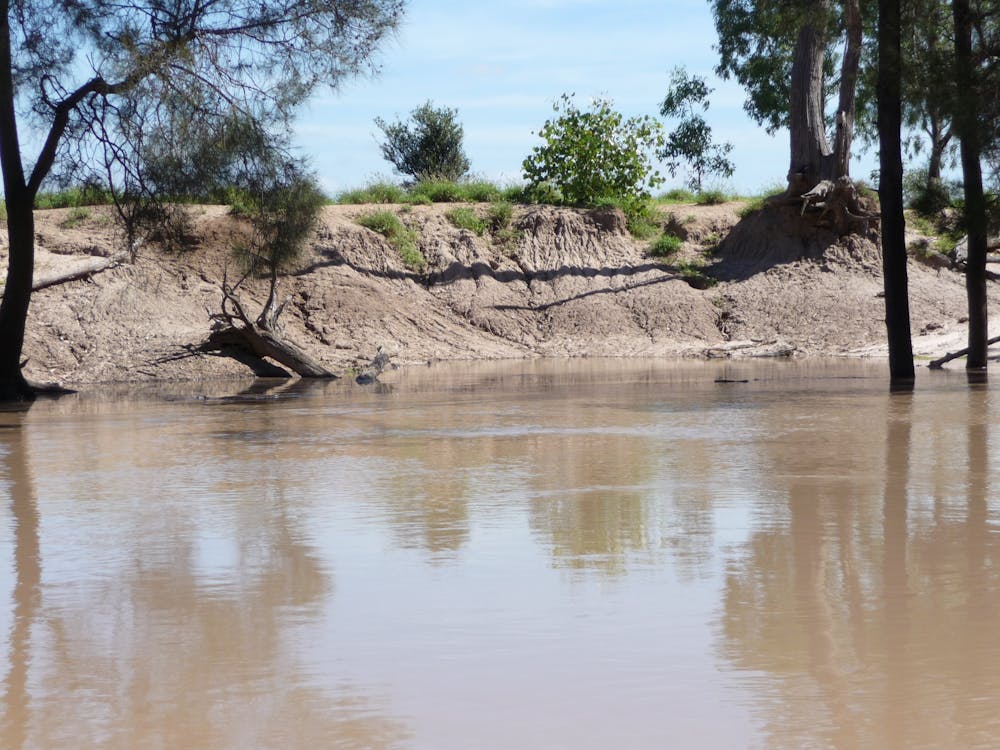
Australia’s contribution in its own region stands at about 6 million doses of its AstraZeneca stockpile. But there is much work to be done:
just 1.7% of adults in PNG are fully vaccinated.


Read more:
The Pacific went a year without COVID. Now, it’s all under threat


The Morrison government insists it is doing all it reasonably can to help its neighbour in what are dire circumstances for a country beset with development issues.

Zed Seselja, minister for international development and the Pacific, says in an interview that Australia has been “moving heaven and earth” to assist PNG with the supply of vaccines and has deployed Australian Medical Assistance Teams (AUSMAT) to help on the ground.

Late last month, Canberra despatched its sixth AUSMAT to PNG since the COVID-19 crisis began, to help lift the flagging vaccination rates.

Minister Zed Seselja says Australia has ‘moved heaven and earth’ to assist PNG with COVID vaccines.
Darren England/AAP

This contrasts with Fiji where more than 80% of the eligible population – those over 18 – has been fully vaccinated with Australian assistance.

While the comparison between Fiji (population 900,00) and PNG (8 million) may not be fair, in the sense that the former is facing nowhere near the development problems and geographical constraints of the latter, the contrast between the two could hardly be more telling.


Read more:
PNG and Fiji were both facing COVID catastrophes. Why has one vaccine rollout surged and the other stalled?


No-one pretends getting vaccines to remote areas in PNG, wide swathes of which lack electricity and, therefore, refrigeration for vaccine storage, is anything but a huge challenge. However, overlaying the PNG situation is the problem of vaccine hesitancy – perhaps better described as “vaccine phobia”.

According to a survey among university students, just 6% believed they needed to get vaccinated. One explanation for the level of vaccine hesitancy among educated Papua New Guineans is a low level of confidence in PNG’s public institutions, according to former Australian ambassador to Port Moresby Ian Kemish.

Perhaps most troubling of all is that many Papua New Guineans have developed a fatalistic belief that COVID is just another health challenge to add to the litany of other serious problems facing the country, including maternal mortality, malaria and tuberculosis.

Health professionals on PNG’s COVID-19 front line paint a disturbing picture of the challenges they are facing.

Dr Glen Liddell Mola, professor of medicine and a veteran gynaecologist and obstetrician in PNG, describes an overflow of patients into “tent wards” in the car park of Port Moresby General Hospital as medical facilities struggle to cope with the influx of COVID-19 sufferers. He told me:

I am 50 years into medical practice and not many illness scenarios challenge or frighten me anymore; but watching young people die from severe COVID disease had a very big impact on me. They literally die from laboured breathing respiratory failure: they just do not have the strength to take another breath.

Seselja says the government is mindful of the huge health challenges facing PNG, but levels of vaccine hesitancy are “very, very high”.

Sejelsa defends the government against suggestions it could have done more. He points out that since the COVID-19 crisis hit in early 2020, Australia has allocated $532.2 million to the countries of the Indo-Pacific to access and roll out vaccines.

It has made a $130 million contribution to the global World Health Organisation-managed COVAX facility as its share of a vaccine procurement program for less developed countries. Australia has pledged $100 million under the Quad Vaccine Partnership with the US, Japan and India to support vaccine delivery in Southeast Asia. Australia is also sharing 40 million vaccine doses with the region from its own AstraZeneca stockpile.

Fiji and PNG faced a similar catastrophic problem with COVID, but have gone in opposite directions in terms of vaccinating the population: in Fiji, over 80% have had two doses.
Aileen Torres-Bennett/AP/AAP

Of that 40 million stockpile, 2.2 million has gone to Indonesia, 1.5 to Vietnam, 861,000 to Fiji, 577,850 to Timor-Leste, 213,000 to the Solomon Islands and 144,970 to PNG, among others.

Asked why more vaccines had not gone to PNG, given its proximity to Australia and Australia’s own historical responsibilities, Seselja replied:

PNG’s absorptive capacity for vaccines is just not there.

He would seem to have a point. PNG recently “re-gifted” 30,000 doses to Vietnam because it could not deploy them before their use-by date.

Diplomatic competition in the Pacific has been reflected in testy moments between Canberra and Beijing. At one stage, China accused Australia of interfering with its attempts to supply vaccines to the region.

In July, China’s nationalist Global Times berated Canberra for “sabotaging” China’s aid programs with Pacific nations using “political manipulation” to interfere in vaccine rollouts.

The newspaper said Australia had been “planting” consultants in PNG to obstruct the authorisation of Chinese-supplied vaccines. A Chinese Foreign Ministry spokesman said:

Some people in Australia use the vaccine issue to engage in political manipulation and bullying, which is a disregard for the life and health of Papua New Guinea people, goes against the basic humanitarian spirit, seriously interferes with the overall situation of global co-operation against the pandemic.

Seselja rejects China’s claims, saying it is “absolutely not the case”.

All that said, vaccine diplomacy competition between Canberra and Beijing is evident in efforts by the former to counter China’s attempts to increase its influence among Pacific nations.


Read more:
China’s push into PNG has been surprisingly slow and ineffective. Why has Beijing found the going so tough?


Finally, Australia’s COVID assistance program should be set against its annual aid allocations to PNG and the Pacific more generally as part of its Pacific “Step-Up” policy.

In 2020-21, Australia allocated $491.1 million in aid to PNG, or more than 10% of its total $4 billion aid budget. This was slightly less than Port Moresby received in 2019-20 due to completion of work on an undersea cable between PNG and the Solomon Islands.

PNG’s allocation accounts for about half of funds provided to Pacific island countries. On top of the annual aid budget, Canberra set aside $304.7 million over two years for what it called the COVID-19 Response Package for the Pacific and Timor-Leste.

These funds are being deployed, but it is in Australia’s interests to do more to help PNG.

The Conversation

Tony Walker does not work for, consult, own shares in or receive funding from any company or organisation that would benefit from this article, and has disclosed no relevant affiliations beyond their academic appointment.

ref. As Papua New Guinea struggles with COVID, Australia must step up its ‘vaccine diplomacy’ – https://theconversation.com/as-papua-new-guinea-struggles-with-covid-australia-must-step-up-its-vaccine-diplomacy-170773

We can expect more colds and flu as COVID restrictions lift. 5 germs to look out for

Source: The Conversation (Au and NZ) – By Natasha Yates, Assistant Professor, General Practice, Bond University

Shutterstock

Australia is opening up, people are mixing and mingling, and schools are back. But there’s a downside. Sharing our lives with each other again also means sharing our germs.

When we look at trends of illnesses in cities coming out of lockdown internationally, one thing is clear. We can expect to see more colds and flu. But what’s actually causing these?

Here are five germs I expect we’ll see more of in the coming months.


Read more:
Curious Kids: Why does my snot turn green when I have a cold?


1. Influenza

Usually seasonal influenza kills 290,000 to 650,000 people
a year worldwide. But since COVID hit, it has practically vanished.

The most likely reason for such a dramatic drop is the reduction in international travel. Public health interventions designed to curb COVID (such as mask wearing, hand washing, physical distancing) have also likely contributed.

With global travel opening up again, influenza will likely travel too. So we anticipate seeing a lot more of it around.


Read more:
Health Check: when is ‘the flu’ really a cold?


2. Streptococcus pneumoniae

Pandemic response measures have also curbed some bacteria, such as Streptococcus pneumoniae.

A study was conducted on data from 26 countries across six continents in the first half of 2020. It found S. pneumoniae infections decreased by 82% after eight weeks of restricted population movement, such as lockdown.

This bacteria causes pneumonia (which is how it got its name). It can also cause a range of other illnesses from ear infections and sinusitis to life-threatening infections of the bloodstream (sepsis), and central nervous system (meningitis).

Young children, older people and people with impaired immune systems are most at risk.

Young child in pain, clutching ear
This bacteria can cause everything from ear infections to meningitis.
Shutterstock

Thankfully, we have vaccines (known as pneumococcal vaccines) to help prevent the nastier diseases you can get from this bacteria.

These are already part of the Australian vaccination schedule. So if you have been vaccinated according to routine recommendations, you should already be protected.

If you catch S. pneumoniae, it does respond to antibiotics. However, it’s resistant to at least one antibiotic in three out of every ten cases.

Prevention (with vaccines and hygiene) is definitely the better option. So as a community, we must carefully steward our use of antibiotics to make sure they actually work when we really need them.


Read more:
Why resistance is common in antibiotics, but rare in vaccines


3. Neisseria meningitidis

This is another nasty bacteria. You may have already guessed from its name that it can cause meningococcal meningitis, a serious infection of the central nervous system.

The same international study that found a reduction in S. pneumoniae during lockdowns also found rates of Neisseria meningitidis greatly reduced.

This is not surprising as N. meningitidis also lives in the nose and throat and can be transmitted from person to person via droplets as people cough and sneeze.

Meningitis outbreaks have occurred worldwide over the years, and a high proportion of people who become sick with it die. Survivors sometimes have severe, lifelong disability.

Like with S. pneumoniae, there is both prevention (via a vaccine) and treatment (with antibiotics) for N. meningitidis infections. But there is also growing antibiotic resistance.

So getting vaccinated, and avoiding antibiotic overuse, are important ways to reduce the risk of being seriously impacted by this bacteria.


Read more:
What is meningococcal disease and what are the options for vaccination?


4. Respiratory syncytial virus

Respiratory syncytial virus (or RSV) is a common virus causing a flu-like lung infection called bronchiolitis. This mostly seriously affects children under the age of two.

Although RSV infections usually cause mild cold symptoms, they are also responsible for a significant number of deaths in children under five worldwide.

Young child in hospital with nebuliser to help breathing
RSV can be particularly serious in toddlers.
Shutterstock

During COVID lockdowns around the world, RSV infections were at a historic low for a year. But they started rising again in April 2021 even in the Northern Hemisphere (for example, in the United States and the United Kingdom) where countries were entering summer.

Doctors usually expect to see spikes of RSV in winter months, and before COVID many assumed this was because it survived and replicated better in colder weather.

However, we now realise RSV is less dependent on colder temperatures in winter and more dependent on our hygiene behaviours.

So for the sake of our little ones we should not lose all the good habits we developed to combat COVID, such as staying home when sick, washing our hands, covering our coughs/sneezes and wearing masks in higher risk settings.

5. Rhinovirus

Rhinovirus continued to spread throughout the pandemic and infections even shot up in some countries. But I am including it in this list as its prevalence holds some fascinating potential in our fight against COVID.

Rhinovirus, like RSV, is a major cause of the common cold, particularly in infants. Both rhinovirus and RSV show the same symptoms. So without doing a diagnostic test it is impossible to tell which of these someone has. They require the same acute treatment anyway.

However, recently there has been interest in distinguishing between them for two reasons.

First, if a child has a rhinovirus infection in early childhood they may have a higher risk of recurrent respiratory symptoms and a higher risk of developing recurrent wheezing and childhood asthma.

Second, there is the exciting potential for rhinovirus infections to actually train our immune system to block other viruses, such as the coronavirus and influenza. This is still in the early stages of research but is something to watch.


Read more:
Health Check: what’s the right way to blow your nose?


What about COVID testing?

We can reduce the impact of these five germs by keeping up simple hygiene habits, getting immunised where possible, and making sure we only use antibiotics when absolutely necessary.

However, if you do have respiratory symptoms as restrictions ease, and as symptoms do overlap with COVID, you should get a COVID test.

The Conversation

Natasha Yates is affiliated with the RACGP

ref. We can expect more colds and flu as COVID restrictions lift. 5 germs to look out for – https://theconversation.com/we-can-expect-more-colds-and-flu-as-covid-restrictions-lift-5-germs-to-look-out-for-170263

Scott Morrison is hiding behind future technologies, when we should just deploy what already exists

Source: The Conversation (Au and NZ) – By Simon Holmes à Court, Senior advisor, Climate and Energy College, The University of Melbourne

AP

At the United Nations climate summit in Glasgow last week, more than 40 countries pledged to phase out coal-fired power. Some were big coal-using countries such as Poland, Canada and Vietnam – however Australia was not among them. Australia was similarly absent for a methane reduction pledge.

Achieving the Paris Agreement — limiting global warming to well below 2℃ and preferably 1.5℃ — requires the rapid phase out of coal, oil and fossil gas. Failure to do so will spell the end of the Great Barrier Reef and make a large swathe of Australia virtually unlivable.

Yet the Morrison government’s technology-driven net-zero “plan” contains no concrete measures to end this fossil fuel addiction. It’s more a placeholder than a strategy, fulfilling the government’s need to have a document to wave around. Meanwhile, the government seems intent on sitting back and letting the future happen, rather than creating it.

I’ve spent 25 years working and investing in technology commercialisation, focusing over the past 15 years on clean technologies. I know Australia doesn’t need to wait for new technology before committing to and achieving deep emissions cuts. Most technologies we need already exist – they just need to be deployed, rapidly and at massive scale. And that requires an actual plan.

wind farm in field
Australia has the technology for a net-zero future – now it must be deployed.
Mick Tsikas/AAP

We have the technology

The Morrison government’s path to reach net-zero by 2050 relies primarily on technology, but fails to even remotely outline what that would mean in practice.

A total of 70% of the emissions cuts would purportedly be achieved by technology “investment”, “trends” and “breakthroughs”. But it’s not technology per se that reduces emissions, it’s deploying it.

The government missed the opportunity to explain decarbonisation at its simplest: electrify everything we can, and power it with renewables.

Some 84% of Australia’s emissions come from activities related to the energy sector. Recent overseas analysis shows electrification could replace 78% of energy emissions using established technologies. Add technologies being developed, and the figure rises to 99%.

Hydrogen, one of the government’s technologies du jour, is likely to play a modest but important role in domestic decarbonisation. And if we don’t get left behind, it could become a significant export earner.

But what’s required in the near term is much more boring: build lots of wind, solar and storage, retire coal and gas as soon as possible, and electrify transport and heating.

Carbon capture and storage (CCS), a favourite of Australian governments for decades, remains a distraction. First, since CCS adds significant cost but no benefit to a process, it will always require either a carbon price or regulations to be viable. Second, while CCS may play a role at the margins in areas where emissions are hard to abate, such as cement production, its only significant role for coal and gas is as a fig leaf for inaction.

Green steel could be a significant opportunity for Australia, given our abundance of iron ore and access to low-cost clean energy. But while Australia dips a toe in the water, overseas companies like SSAB and Volvo are demonstrating that the days of metalurgical coal — one of Australia’s biggest exports — are numbered.

Clearly, the technologies are here. What we need is deployment.

a mining vehicle made from fossil-free steel
Volvo recently produced the first vehicle made from fossil-free or ‘green’ steel.
SSAB

Learn from Henry Ford

A decade ago, energy from wind are solar was significantly more expensive than from coal and gas. But renewables are now the cheapest form of new energy, even including additional costs such as energy storage and transmission.

Renewable energy’s fast fall in price was due to a mix of well-designed government policies and massive private investment, both here and around the world.

The Commonwealth’s Renewable Energy Target, for example, required electricity retailers to purchase a small but increasing amount of renewable energy each year, in a way that did not significantly affect energy affordability. With renewables now at a lower cost than new coal and gas, that early investment is paying dividends.

The experience showed we don’t have to wait until technology is cheap and perfect before deploying it. In fact, the only way to make it cheap and perfect is to deploy it, again and again.

When Henry Ford released the Model T in 1908 his horseless carriage was imperfect and expensive. Yet it kicked off a process of technological improvement in which each successive generation of cars has learnt lessons from those which came before.

If federal Energy Minister Angus Taylor time-travelled back to 1908, would he advise Ford not to release the Model T until it resembled the Tesla Model S?

man stands between two vintage cars
Henry Ford didn’t wait until the Model T ran like a Tesla before deploying the technology.
Ford Motor Co

Seizing opportunities

Most economists agree the most efficient way to reduce emissions is to put a price on carbon and let the market respond. More than a decade of toxic Australian politics has poisoned that well. It leaves policymakers with few tools, and politicians with even fewer ideas.

In the absence of an explicit carbon pricing scheme, the federal government should set clear emissions reduction targets in each sector of the economy.

Monash University’s ClimateWorks has developed a plan for doing so. Such a plan, with an added combination of policy “carrots” (subsidies or incentives) and “sticks” (regulations or taxes) would ensure emissions reduction targets are met.

Our lowest hanging fruit would include a carefully managed coal phase-out and policies to rapidly electrify transport and heating, using existing technologies. This would help us hit meaningful 2030 emissions reduction targets consistent with the Paris Agreement.

Meanwhile, we sit on the cusp of what is almost certainly Australia’s biggest ever investment opportunity. Our wide brown land is chock full of the critical minerals needed in a decarbonising world — lithium, nickel, cobalt, rare earth metals and silicon. Moreover, our windswept and sun-drenched plains are ready to produce the low-cost energy required to locally transform these raw minerals into valuable refined materials.

Our state governments, some having committed to net-zero five years ago, are making progress – particularly in electricity. But complementary and coordinated policies at the federal level would almost certainly make progress faster — and cheaper.

The coal and methane pledges at COP26 shows many of the world’s most emissions-intensive economies are ready to make the transition. Meanwhile, the federal government’s so-called “plan” prevents Australia from claiming our place in the sun, and wind.


Read more:
Australia’s top economists back carbon price, say benefits of net-zero outweigh cost


The Conversation

Simon Holmes à Court has indirect stockholdings in numerous domestic and international clean tech and clean infrastructure companies. He is a director of the Smart Energy Council, a peak body for solar, storage, smart-grids and hydrogen. He is also the convenor of Climate 200, a non-profit supporting pro-climate, pro-integrity and pro-gender equity political candidates.

ref. Scott Morrison is hiding behind future technologies, when we should just deploy what already exists – https://theconversation.com/scott-morrison-is-hiding-behind-future-technologies-when-we-should-just-deploy-what-already-exists-169016

Feel alone in your eco-anxiety? Don’t – it’s remarkably common to feel dread about environmental decline

Source: The Conversation (Au and NZ) – By Teaghan Hogg, PhD student, Clinical Psychology, University of Canberra

Feeling anxious about the ecological crises we face is entirely understandable, given the enormity of the threats.

Eco-anxiety is sometimes described as a mental health problem. It’s not. Eco-anxiety is a rational psychological and emotional response to the overlapping ecological crises we now face.

If you feel this way, you are not alone. We have found eco-anxiety is remarkably common. Almost two-thirds of Australian participants in our recent surveys reported feeling eco-anxiety at least “some of the time”.

The response can be triggered by media stories on environmental and climate crises as well as human efforts to combat them. This includes the barrage of media from the United Nations climate conference, or COP26, now underway in Glasgow.

In this age of ecological reckoning, eco-anxiety is not going to go away. That means we must learn how to cope with it – and perhaps even harness it to drive us to find solutions

Cleared area of rainforest
Awareness of environmental crises like deforestation can provoke anxiety.
Shutterstock

Dwelling on problems we contribute to

Our study found four key features of eco-anxiety:

  1. affective symptoms, such as feelings of anxiety and worry
  2. rumination, meaning persistent thoughts which can keep you up at night
  3. behavioural symptoms, such as difficulty sleeping, working, studying or socialising
  4. anxiety about your personal impact on the planet.

We found similar levels of eco-anxiety in our surveys of 334 Australians and 735 New Zealanders, with people affected in similar ways in both countries. This supports emerging research, which found more than half of young people surveyed across ten countries experienced climate anxiety. Feeling anxious about the state of the planet is likely to be universal.

When we asked Australians how it affected them, they told us eco-anxiety affected everything from their mood to their daily routine to their relationships. It even affected their ability to concentrate, work or study. For some, eco-anxiety made them feel restless, tense and agitated. New Zealanders reported similar impacts.


Read more:
The rise of ‘eco-anxiety’: climate change affects our mental health, too


Our study found people were also anxious about their personal contribution to the deteriorating state of the planet. Some participants noted the state of the planet made them “extremely anxious”, so much so they “find it hard to think about anything else”.

Other research shows many people are anxious about how their personal behaviours impact the earth, such as consumerism or flying. Some young adults are choosing to have fewer children, or none at all, out of concern their children will contribute to the climate crisis or will inherit a degraded world.

These fears appeared in our study too, with one parent participant noting:

My biggest worry is that climate change will affect my child in their lifetime, and I get very upset that I won’t be able to protect him from the effects of it.

Is eco-anxiety different to generalised anxiety?

Eco-anxiety has similarities with generalised anxiety and stress, but we found important differences, such as the focus on environmental issues and our contribution to the problem.

We also found people experience eco-anxiety independent of depression, anxiety and stress, suggesting it’s a unique experience.

While it is possible to experience eco-anxiety as someone who is otherwise mentally well, many people experience it on top of existing mental health issues.

What we need to do now is understand what eco-anxiety means for individual (and planetary) well-being, and provide support to people with varying degrees of this anxiety.


Read more:
Australians are 3 times more worried about climate change than COVID. A mental health crisis is looming


School students carrying posters calling for climate action
School students marching for climate action in the UK, 2019.
Shutterstock

Four ways to cope with your eco-anxiety

Eco-anxiety is not going to go away as an issue, given the range of environmental issues the world is confronting. To stop these feelings becoming overwhelming or debilitating, there are a range of behavioural, cognitive and emotional strategies people can use to cope.

Here are four techniques:

  1. validation One part of managing your own anxiety is to validate it, by acknowledging it makes sense to feel anxious and distressed

  2. time out Another technique is to take mental breaks and avoid your 24/7 news feed to give yourself time to restore a sense of balance

  3. seek hope Cultivating a realistic sense of hope about the future can also reduce anxiety emerging from our awareness of ecological threats. That means appreciating the complexity of the problem, while also searching for alternative visions of the future and trusting that we, as a collective, will eventually resolve the crisis before it’s too late

  4. take action Many of us struggle with a sense of overwhelming powerlessness in the face of a deteriorating climate. This can be self-reinforcing. To combat this, you can try action – whether changing your own behaviour or getting involved in campaigns.

As climate campaigner Greta Thunberg has said, “no one is too small to make a difference”.

Climate change has been described as the greatest collective action problem we have ever faced. That means the necessary changes will have to come from the collective action of all individuals, industries and governments. We all must act together now, just as we have in combating the COVID pandemic.

Eco-anxiety is increasingly common. But being concerned about environmental crises does not need to come at the cost of your health and wellbeing.

After all, psychological, emotional and behavioural burnout is not helpful for you – or the planet.

The Conversation

The authors do not work for, consult, own shares in or receive funding from any company or organization that would benefit from this article, and have disclosed no relevant affiliations beyond their academic appointment.

ref. Feel alone in your eco-anxiety? Don’t – it’s remarkably common to feel dread about environmental decline – https://theconversation.com/feel-alone-in-your-eco-anxiety-dont-its-remarkably-common-to-feel-dread-about-environmental-decline-170789

Lots of schools are moving to ‘hot desking’. Is there any benefit for my child?

Source: The Conversation (Au and NZ) – By Leon Benade, Associate Professor, School of Education, Auckland University of Technology

Shutterstock

Some schools around Australia, and elsewhere, have replaced individual desks with circular booths and shared tables for collaborative work.

But what does the evidence actually say? Do flexible learning spaces improve students’ ability to work together, as well as their learning overall?

The evolution of the classroom

For many parents, the schools their children attend are markedly different in design to the schools of their own childhood. This is because school design in Australia and New Zealand (and internationally) is challenging the traditional classroom housing one teacher and 30 students seated in static, uniform desks and chairs.

This arrangement is being replaced by open-plan spaces accommodating several teachers working collaboratively with perhaps 100 students.

These new classrooms include include a profusion of colour, arrangements, styles and types of furnishing such as shared tables, mobile chairs, ottomans and beanbags.

The aim is to encourage students to move freely and collaborate. The arrangement also provides options for students to work individually if they please.

A colourful classroom with ottomans
Modern classroom design in Hobsonville Point Primary School, Auckland.
Leon Benade, Author provided

What’s the reason for these changes?

In its 2018 report The Future of Jobs, the World Economic Forum pointed to the importance of “human” skills such as “creativity, originality and initiative, critical thinking, persuasion and negotiation” as workplaces change with technology.

The obvious place to begin acquiring these skills is school. In its 2013 Innovative Learning Environments report, the OECD marked creativity, collaboration and digital literacy as of greater importance to a 21st-century workforce than traditional knowledge acquisition.

For at least the past two decades, teachers have focused increasingly on developing “21st-century skills”. They have learnt to accommodate the learning needs and styles of 21st-century children, while also learning to accommodate and embrace the development of technology. The result is teaching has shifted from teacher-centred instruction to student-centred and student-led learning.

Does non-traditional school furniture improve learning?

One of the arguments for a non-traditional furniture set-up is its design and flexibility enhance student engagement. A 2020 study of ten classrooms in Texas with 206 elementary students in third and fourth grades reported the students experienced higher levels of enjoyment, comfort and attentiveness when using flexible furniture options.


Read more:
Group tables, ottomans and gym balls: kids told us why flexible furniture helps them learn


The study found flexible furniture afforded opportunities for collaboration and developing student autonomy. Importantly, this study also showed flexible furniture can positively influence teachers’ behaviour, given appropriate professional development support. This is because it liberates them from controlling students, who are allowed to move freely around the classroom.

Children using laptops in a classroom.
If students are more engaged when moving around the classroom, that can’t be a bad thing.
Shutterstock.

Some local studies have made similar findings. A 2018 University of Wollongong study found several factors enhanced student engagement and motivation, including students’ autonomous use of flexible furniture.

And a New Zealand study recently found students made considered use of furniture choices in ways that reflected their conscious awareness of how the different kinds of furniture could support various learning activities.

There are possible negatives

Both Australasian studies reported, however, distractions and increased noise due to the sociability aspects of the range and type of furniture. These distractions led to off-task behaviour and lowered concentration levels in some cases.

Designers of modern school furniture claim a range of physical and psychological health benefits for students. These include breaking the cycle of sedentary seated behaviour common in traditional school settings. Some parents hotly contest this position and argue, for example, that options such as beanbags compromise children’s postures.


Read more:
Classroom design should follow evidence, not architectural fads


Similarly, the Wollongong and New Zealand studies questioned the health benefits of students sitting hunched over low tables or at backless ottomans. But both concluded free and frequent student movement reduced any postural concerns.

While inconclusive, the evidence does indicate 21st-century students of all ages prefer the option of being able to move around freely, to sit, slouch or lie wherever they are most comfortable, and to work with their peers on collaborative tasks.

Whether this leads to better academic outcomes than being seated at more traditional tables and chairs arranged in straight lines is yet to be researched. For the moment, the more permissive environment of modern and flexible learning spaces is making students more engaged, and that can’t be a bad thing.

The Conversation

Leon Benade does not work for, consult, own shares in or receive funding from any company or organisation that would benefit from this article, and has disclosed no relevant affiliations beyond their academic appointment.

ref. Lots of schools are moving to ‘hot desking’. Is there any benefit for my child? – https://theconversation.com/lots-of-schools-are-moving-to-hot-desking-is-there-any-benefit-for-my-child-167043

Australian companies are facing more climate-focused ESG resolutions than ever before, and they are paying quiet dividends

Source: The Conversation (Au and NZ) – By Ian Ramsay, Emeritus Professor, Melbourne Law School, The University of Melbourne

In 2020, for the first time in Australia, more than half the shareholders of a public company voted in support of a climate change resolution put forward by shareholders in the face of opposition from the company’s board of directors.

The resolution, advanced at Woodside Petroleum’s annual general meeting, called for the company to establish hard targets to bring its own emissions and the emissions caused by the use of its products globally in line with the Paris Agreement to keep global warming below two degrees.

A similar resolution followed at this year’s AGL annual general meeting, gaining the support of 52% of the shareholders.

Although the Woodside vote was described as a “breakthrough moment”, it is part of an increase in shareholder activism around environmental, social and governance (ESG) issues that’s been building for several years.

Our analysis of shareholder ESG resolutions put forward in listed Australian companies between 2002 and 2019 finds they have increased in number, prominence and impact.


Shareholder ESG Resolutions per year


Freeburn and Ramsay 2021

A record 36 shareholder ESG resolutions were put forward in 2020. So far in 2021 a further 20 have been put forward, with more foreshadowed.

The resolutions have been concentrated in a small number of companies and industries.

Four industries – energy, banking, insurance and materials – accounted for 83.5% of the resolutions, with the 139 resolutions recorded between 2002 and the first part of 2021 concentrated in only 28 companies.

They were generally the companies most exposed to the risk of climate change or which provide finance to these companies.

More climate resolutions are succeeding

Several have been subjected to more than one campaign a year. The company with the most is Origin Energy, facing 24 resolutions in the last six years.

Of the 83 shareholder ESG resolutions advanced between 2002 and 2019, 48 concerned climate change. A further 26 notionally related to governance, but the governance resolutions were often the ones needed to enable consideration of issues such as climate change.

The others related to workers’ rights, human rights, obtaining the consent of Aboriginal native title holders to fracking activities, and gambling.


Read more:
Rio Tinto’s climate resolution marks a significant shift in investor culture


Almost all were proposed by just two groups: the Australasian Centre for Corporate Responsibility and Market Forces.

Until last year the level of support garnered by shareholder ESG resolutions was small, averaging 9.7%. In 2020, support jumped to 14.7%.

In 2021 to date it has climbed to 28%, bolstered by two resolutions of Rio Tinto shareholders that attracted 99% after winning the support of Rio Tinto’s board.

Success needn’t mean being put to a vote

Our study sought input from proponents of ESG resolutions, institutional shareholders, company directors, governance professionals and the Australian Securities and Investments Commission.

We found that winning votes isn’t the only objective of those who propose these resolutions.

Another is to get companies to respond positively even though the resolutions will be defeated, and sometimes in return for the resolutions being withdrawn before the annual general meeting.

As an example, the Australasian Centre for Corporate Responsibility submitted a resolution for this year’s Woodside annual general meeting calling on the company to prepare an annual climate report that would include Woodside’s strategy to reduce its greenhouse gas emissions and put the report to a shareholder advisory vote.

It withdrew the resolution after Woodside announced it would put climate reporting to an advisory vote of shareholders at its 2022 annual general meeting.

Some of those we interviewed said shareholder ESG resolutions distracted the companies from what they should be doing.

Others said they ran the risk of blurring the distinct roles of directors and shareholders. Many said the process for getting shareholder ESG resolutions on the agenda for annual general meetings is cumbersome.

However, almost all of those interviewed – and not just the proponents of the resolutions – saw them as a valuable way of letting companies know what their shareholders really think about how they should respond to the challenges of climate change and other issues.

The Conversation

The authors do not work for, consult, own shares in or receive funding from any company or organisation that would benefit from this article, and have disclosed no relevant affiliations beyond their academic appointment.

ref. Australian companies are facing more climate-focused ESG resolutions than ever before, and they are paying quiet dividends – https://theconversation.com/australian-companies-are-facing-more-climate-focused-esg-resolutions-than-ever-before-and-they-are-paying-quiet-dividends-170466

On the intimate and character-revealing photographs of Linda McCartney – Paul’s wife, and a stunning artist

Source: The Conversation (Au and NZ) – By Lisa French, Professor & Dean, School of Media and Communication, RMIT University

Linda McCartney, Brian Jones and Mick Jagger, Hudson River, New York, 1966. BIFB

Review: The Linda McCartney Retrospective, Ballarat International Foto Biennale

The Linda McCartney Retrospective has toured the world, taking on a new life in each location, morphing and connecting to the local milieu. It morphs again here for Ballarat’s International Foto Biennale. The 200 works included are curated from the artist’s vast archive of half a million photographs by her famous husband Sir Paul McCartney and their daughters, photographer Mary and fashion designer Stella.

Linda by Paul Sussex.
BIFB

The show contains work across 30 years, from her earliest images of rock stars such as the Beatles and Janis Joplin in the 1960s, through to images of the everyday, self-portraits, experiments with form and commentary on causes dear to her heart, especially animal liberation.

Before meeting Paul McCartney in 1967, Linda Eastman (no relation to the Kodak-Eastman family) aleady enjoyed a successful career. She was named US Female Photographer of the Year in 1967. In 1968, she became the first female photographer to shoot the cover of Rolling Stone with an acclaimed portrait of Eric Clapton.

Despite her credentials, she was best known as Paul’s wife rather than an artist in her own right. It is widely reported he often joked that he ruined his wife’s career, but since her death in 1998, Paul has ensured her legacy with books and international retrospectives.

This retrospective includes never before exhibited material, including photographs captured during the McCartney family’s Australian visits for the 1975 Wings and 1993 New World tours.

For local audiences, this provides a connection with images of down-time, press scrums and press conferences (including one with Norman Gunston), landmarks, crew, fans, sunsets and Greenpeace activists. Whether it is the quality of the light or the openness of the faces, these images stand out as quintessentially Australian.

Photo by Linda McCartney, Self Portrait with Paul and Mary, London, 1969.
BIFB

From the shadows

McCartney achieves a direct sense of connection and intimacy with her subjects. The images speak of the moment shared, often unposed and character-revealing.

This idea also occurs in her self-portraits – often mirror reflections – reminding the viewer this is her life and her experience. Direct quotes are framing banners: “Looking out from deep below my eyes, I capture moments of my life … .”

In a video she says: “you’ve got to click on the moment, not before and not after”. This sense gives her work a spontaneity and lightness.

Photo by Linda McCartney, Stella and James with horse, Scotland, 1982.
BIFB

Other images enable fleeting glimpses, such as Mick Jagger 1966. Looking back, framed by a curtain as he moves through a doorway, he just registers her. I wondered if there is something female about this approach, that women might be able to just “be there” so quietly.

Perhaps this could be related to gender relations, where women are imperceivable, non-threatening, only just there in a man’s world. Alternatively, it could show her ability to step into the shadows, to better observe.

There are also portraits of McCartney taken by others. Two taken by Jim Morrison stand out, particularly one very sensual one on a bed taken in 1967. Both photographs reflect a sense that the tables are turned, and it is she who is being looked at.

Linda McCartney, Jimi Hendrix, London, 1967.
BIFB

Many of McCartney’s family images depict Paul at play with their children. In the photograph Paul and James Los Angles 1983, father and son are in a bubble bath and Paul hams up the scene of being sucked under the water with an open-mouthed scream, evocative of Edvard Munch.

In another, Paul and Children East Hampton New York 1975, he is depicted with them all trailing behind him like the Pied Piper of Hamelin. In Self Portrait with Paul London 1970, Paul and Linda face the mirror in a bathroom. She holds a camera, slightly angled to him, and he holds an imaginary one.

In all this, you get the sense of his collaboration with her theatrical agenda.

Artistic conversations

Photographs by the Australian artist Rhonda Senbergs line the laneway to the McCartney show, highlighting the synergy between the women. Senbergs photographed the Australian artworld, her family, Prime Ministers and ordinary people with a similar approach and style to McCarthy. They were both self-taught, and, tragically, they both died of breast cancer in 1998 at 57 years old.

Both photographers share an approach characterised by humour and playfulness bordering on theatricality. This is an example of the important work of a curator, how one show illuminates another, and vice versa.


Read more:
Remembering Rhonda Senbergs: friend, art-world insider, unsung star


The Art Gallery of Ballarat is supported by an army of volunteers. This is also the case for the entire Biennale, operating seven days a week over four months. The core program has 12 indoor and 16 outdoor exhibits and there are 120 shows in all with the Open Program straddling the city’s cafes, streetscapes and buildings.

The Ballarat International Foto Biennale helps to sustain the cultural heart of this city.
Lisa French

One volunteer, Sarah Masters, tells me she volunteers because of “reciprocity – if you want a vibrant art culture, it is about supporting that where you live”.

I find the volunteers offer interesting snippets of information about the show, or the building, or can identify an obscure object that catches your eye. They are the heroes of this regional arts scene and a key to nurturing and sustaining the cultural heart of this city.

The Linda McCartney Retrospective and The Ballarat International Foto Biennale run until 9 January 2022. Bookings are advised.

The Conversation

Lisa French does not work for, consult, own shares in or receive funding from any company or organisation that would benefit from this article, and has disclosed no relevant affiliations beyond their academic appointment.

ref. On the intimate and character-revealing photographs of Linda McCartney – Paul’s wife, and a stunning artist – https://theconversation.com/on-the-intimate-and-character-revealing-photographs-of-linda-mccartney-pauls-wife-and-a-stunning-artist-170957

Covid-19 patient home isolation failing Māori, Pasifika, says Fa’anana

RNZ Pacific

An Auckland councillor says he is astounded by the lack of cultural awareness shown by the authorities towards Māori and Pacific communities this far into the pandemic.

Manukau ward councillor Fa’anana Efeso Collins said covid-19 has become a Māori and Pacific outbreak, and South Auckland in particular is bearing the brunt.

He said calls over the past year for Māori and Pacific representatives to be at the decision-making table had been largely ignored.

Collins said those designing the response seem to have little knowledge of the communities, and it was showing.

Fa'anana Efeso Collins
Fa’anana Efeso Collins … “decisions are so far detached and disconnected from the realities on the ground.” Image: RNZ

“[We should have] people who are on the ground who understand our communities — right from the very beginning our request was that they be around the table that makes the decisions.

“And so these decisions are so far detached and disconnected from the realities on the ground.”

Covid ethnicity in NZ
A breakdown of covid ethnicity statistics in NZ. Source: Ministry of Health

Fa’anana said the fact the government’s process for dealing with people in self-isolation was not practical was a glaring example.

Two patients died at home
This week two patients with covid-19 died while isolating at home.

On Friday a man in his fifties died in a Mount Eden apartment block after discharging himself from hospital on Wednesday.

And a 40-year-old man died while self-isolating in Manukau on Wednesday.

The cause of death has not been determined in either case, but the Health Ministry said the deaths were being considered as part of a wider systemic review it was carrying out with Auckland district health boards (DHBs).

Fa’anana said authorities were warned self-isolation would not work, and that for many families in South Auckland, it’s next to impossible.

“You know, the Ministry of Health says everyone gets sent an email. I think it’s time to get real — none of us read emails.

“And so I think that’s the level of lack of intelligence that perhaps we’re seeing from the Ministry of Health because they’re not on the ground, they don’t understand our communities.”

Battling the Health Ministry
“Fa’anana said health reforms cannot come soon enough.

Fa’anana’s criticisms come as Whānau Ora is battling the Health Ministry in court to try get access to personal data on unvaccinated Māori released to them.

The organisation wants to use the data for directing campaigns to increase vaccination rates among Māori.

The ministry has agreed to provide some of the data sought. It agreed to supply individual’s vaccination status for previous clients of Whānau Ora services, and anonymous vaccination status data to street level, to show unvaccinated areas in communities.

While the ministry has so far refused to hand over the full personalised data, after a High Court ruling this week it agreed to work with Whānau Ora to identify places where “outreach to Māori is most needed”, and to identify what data sharing was needed in those cases.

South Auckland health workers going door-to-door
Manurewa-Papakura ward councillor Daniel Newman said the ministry’s vaccination campaign had fallen short and left too many people vulnerable to the virus.

He said the government’s failure to set vaccine targets for Māori was already having consequences, and that is showing in hospitalisation statistics.

In his ward, frontline healthcare workers have resorted to door-to-door visits in an effort to reach vulnerable and vaccine-hesitant residents.

However, that could potentially expose them to people who are infectious with the virus and are isolating at home, he said.

He called on the government to protect healthworkers by letting them know where people are isolating at home with covid-19.

“It’s really important that we stay safe, because not only do we need to protect our own health, but we can’t become conduits for covid-19 ourself.

“The important thing for us is that we have enough scale that we have the ability to get to enough people as soon as possible.”

He said the door-to-door approach was necessary: “We’re in a race against covid-19 which is seeding in those streets, we need to get people protected before they become unwell.”

This article is republished under a community partnership agreement with RNZ.

Print Friendly, PDF & Email

Article by AsiaPacificReport.nz

- ADVERT -

MIL PODCASTS
Bookmark
| Follow | Subscribe Listen on Apple Podcasts

Foreign policy + Intel + Security

Subscribe | Follow | Bookmark
and join Buchanan & Manning LIVE Thursdays @ midday

MIL Public Webcast Service


- Advertisement -
- Advertisement -
- Advertisement -
- Advertisement -
- Advertisement -