Page 595

Grattan on Friday: Morrison gives religious discrimination bill priority over national integrity commission

Source: The Conversation (Au and NZ) – By Michelle Grattan, Professorial Fellow, University of Canberra

Since he returned from overseas, Scott Morrison has been where he’s most comfortable – on the campaign trail, in high-vis gear where possible.

Making up for time lost to lockdown and quarantine, last week the prime minister took in some ten seats in NSW and Victoria, including Labor seats being targeted and Liberal electorates being defended. This week he was out and about in NSW. He can’t get into Western Australia and Queensland, both crucial for the Coalition.

Morrison dropped various bits and pieces of policy along the way, and road-tested scares against Labor, conjuring up the spectre of higher petrol prices, interest rates and electricity charges.

Whether he can make anti-Labor “scares” believable remains to be seen. Labor’s small-target strategy and Morrison’s own credibility issues raise the bar for him. Newspoll this week brought some bad news in what has become the public debate about the PM’s character.

His ratings on various attributes have taken big tumbles since April. On trustworthines, he fell from 57% to 42%, losing his lead over Anthony Albanese, who scored 44%.

After his revitalising time on the hustings, Morrison is about to enter a special sort of “lockdown”. Parliament is returning for its last two weeks of the year and it’s likely to be a pressure cooker.

Two key pieces of legislation have been in the frame for this fortnight: the religious discrimination bill and a bill for the long-awaited integrity commission, both under Attorney-General Michaelia Cash.

The government is giving priority to the religious discrimination legislation, an odd choice when integrity is resonating strongly with many voters. And it is now leaving open the timing of the integrity bill.

Action on religious discrimination has its genesis in Malcolm Turnbull’s gesture to the conservatives who lost in the marriage equality vote. It has dogged the government ever since, with earlier iterations of the legislation unacceptable to various stakeholders.

In the latter days of Christian Porter’s attorney-generalship the bill appeared likely dead. There’s no obvious need for it, and conservative and small-l liberal critics have been worried, for different reasons, about unintended consequences.

But Morrison has revived the push, backbenchers have been briefed and a bill is set to go to the joint parties meeting next week.

The legislation, yet to be released, has been considerably watered down.


Read more:
Politics with Michelle Grattan: On Morrison’s character ratings


After the sacking of rugby player Israel Folau for his Bible-based attack on homosexuals, adulterers, drunks, liars and others, the earlier version would have curbed the rights of big businesses to take such action. This has now been dropped. As has a provision that would have allowed medicos to refuse to provide services on the grounds of their religion.

The bill will preserve and reinforce the right of religious schools when hiring to prefer staff who accord with their religious beliefs and principles.

For Morrison, putting up this legislation is fulfilling an election promise. But he would also see it as a possible wedge against Labor.

While for many voters this issue would be neither here nor there, it could be a different story in western Sydney, with its ethnic communities.

Labor’s Chris Bowen, who holds the western Sydney seat of McMahon, warned his party after the last election “how often it has been raised with me that people of faith no longer feel that progressive politics cares about them”.

Labor is also under pressure from the National Catholic Education Commission, whose executive director is former ALP senator Jacinta Collins.

Collins would like to see the federal bill through on a bipartisan basis before Christmas. The commission wants the federal legislation (which would override state laws) in place quickly because of its concern about proposed changes to the Victorian equal opportunity law, which it says “could curb the ability of Catholic schools to act in accordance with their ethos”.

Federal Education Minister Alan Tudge, also referencing the Victorian move, says the aim is to get the bill through this year.

Labor isn’t committing itself on the bill without seeing it, but Albanese will be extremely anxious to avoid a wedge.

For its part, the government’s challenge is to avoid wedging itself. Both moderates and conservatives in its own ranks have had gripes with the legislation and have to be reassured.

The government had consistently said it intended to introduce the integrity commission bill before Christmas, until a red flag went up when Cash dodged at Senate estimates last month. Asked by Labor, “are we going to see the legislation this year”, Cash said, “that will be a decision for the cabinet”.


Read more:
View from The Hill: Scott Morrison caught in catch-22 over the issue of his integrity


On Thursday Deputy Prime Minister Barnaby Joyce and Employment Minister Stuart Robert left the timing in doubt in interviews on Sky. If the introduction is delayed the government will hand ammunition to the opposition and other critics.

Whenever it comes, the legislation will be under fire from many who will argue that, despite whatever changes the government has made to its original model, it doesn’t go far enough. Its fate would be problematic.

One bill, already in parliament, that the government will pull out all stops to have dealt with before Christmas would require people to produce ID when voting. Although the Christmas timetable isn’t vital if the election is not until May, the government won’t want to take chances. Anyway, the Australian Electoral Commission would presumably want plenty of leeway to sort out the practicalities of such a change.

This bill is highly contentious, with Labor arguing it would discourage voting by vulnerable people – including some in Indigenous communities and the homeless.

Labor will oppose the bill, which would therefore need crossbench support to get through. The situation is further complicated by a couple of rebel Coalition senators, Gerard Rennick and Alex Antic, who are threatening to withhold their vote on government legislation because of a dispute over vaccine mandates, and Pauline Hanson’s threat to cause disruption over the same issue.

For the Morrison government, parliament is more often to be endured than enjoyed. Parliament usually plays better for the opposition. The PM will be relieved when he can get out of the place and back into his high-vis uniform.

The Conversation

Michelle Grattan does not work for, consult, own shares in or receive funding from any company or organization that would benefit from this article, and has disclosed no relevant affiliations beyond their academic appointment.

ref. Grattan on Friday: Morrison gives religious discrimination bill priority over national integrity commission – https://theconversation.com/grattan-on-friday-morrison-gives-religious-discrimination-bill-priority-over-national-integrity-commission-172166

‘Sextortion’ problem for Pacific states – but lower for Fiji, says report

By Anish Chand in Suva

Of 1000 Fijians surveyed by Transparency International, 11 percent claimed they were asked for sexual favours in exchange for government services or benefits at least once in the past five years.

The survey titled, “Global Corruption Barometer — Pacific Report”, was based on data collected by Tebbutt Research in Fiji between February and March this year.

The report said on the issue of sexual extortion or “sextortion”, sex became the currency of the bribe and people were coerced into engaging in sexual acts in exchange for essential services — including health care and education.

Respondents were asked if an official in Fiji made requests of a sexual nature in exchange for a government service or benefits.

However, Fiji’s 11 percent sextortion rate was much lower than other Pacific states, including French Polynesia, which has a 92 percent rate.

“Despite these findings, respondents across the Pacific appear to have difficulty assessing the extent of the problem,” the report read.

“It is worth noting that around a fifth of respondents (17 percent) say that they do not know how often sextortion occurs in their countries.

“It could point to a need for further investigation and community dialogue to better understand and address this heinous form of corruption.”

Survey merely confirms public perception, says Chaudhry

Chaudhry says poll ‘no surprise’
Wanshika Kumar reports that Fiji Labour Party Leader Mahendra Chaudhry said the Transparency International survey merely confirmed a widespread public perception that corruption had become endemic in the country.

Chaudhry said it was no surprise that the poll showed that the majority of the people believed there were high levels of corruption in government and the business sector.

“What else can one expect when the FijiFirst government refuses to enact constitutionally mandated legislation intended to curb corruption in high public office,” Chaudhry said.

“Section 149 of the imposed 2013 Constitution calls for a Code of Conduct for the President, Speaker, Prime Minister and other government ministers, members of Parliament and other high public officeholders.

“Likewise, Section 150 mandates the enactment of a Freedom of Information legislation to give members of the public the right to access official information and government documents.

“Section 121 calls for an independent Accountability and Transparency Commission with the jurisdiction, authority and powers to receive and investigate complaints against all persons holding a public office.

“Yet, in the past eight years, the government has ignored repeated calls to enact these laws to curb corruption in high public office and the business sector.

“What conclusions can be drawn from its failure to do so? If it were genuinely interested in tackling corrupt practices, it would have introduced these measures long ago.”

Lack of accountability
Chaudhry said another reason for high levels of corruption in public office was a worrying lack of accountability and transparency in the government’s handling of public funds.

“Contracts are either awarded without tenders being called or more often than not, are awarded without due disclosure of the details,” he said.

“We have received reports from several companies to say that they have stopped bidding for public tenders because of the lack of transparency in the handling of contracts.”

He said the appointment of executives of large businesses to the boards of government commercial companies or statutory authorities in situations of conflict of interest was also of serious concern.

“Indeed, some big wigs in government are seen to be too close to top guns in the corporate sector,” he said.

“It is no wonder that more than two-thirds of our people believe corruption is high in government circles.”

Anish Chand and Wanshika Kumar are Fiji Times reporters. This report is republished with permission.

Print Friendly, PDF & Email

Article by AsiaPacificReport.nz

Three new noble MPs elected in Tonga as preliminary results trickle in

RNZ Pacific

Tonga has new noble MPs and at least one returning MP among the people’s representatives, according to preliminary election results.

The polls have closed in the kingdom and counting is underway. However, results for the kingdom’s nobles was announced this afternoon by the Supervisor of Elections, Pita Vuki.

About 60,000 Tongan voters have been taking part in election.

They will be electing 17 People’s Representatives for the 26-member legislature.

The 33 noble families elected their nine representatives from within their own ranks.

Results for the nobles was announced this afternoon by the Supervisor of Elections, Pita Vuki.

For Tongatapu, the noble MPs are Lord Vaea, who makes a return to Parliament after being voted out in 2014, Lord Tu’ivakanō, who was prime minister in the first government after the reform and Lord Fohe who is a first time MP.

Vava’u seats retained
Vava’u has seen both noble MPs retain their seats Lord Tu’i’afitu and Lord Tu’ilakepa.

The same for Ha’apai, with Lord Fakafānua who was the speaker of the last Parliament, and Lord Tu’iha’angana both retaining their seats.

For ‘Eua, Lord Nuku is the elected noble representative and for the Niuas, the most northern islands, Prince Fotofili, who is himself a first time MP.

RNZ Pacific’s correspondent in Tonga, Kalafi Moala, said that having three new MPs among the nobles did not indicate much politically as two out of the three new seats were held by MPs that have been out of the country for medical reasons.

At the closing of the polls at 6pm local time, among the people’s representatives the only clear front runner was Siaosi Sovaleni, a possible candidate for the prime ministership who had registered an almost unassailable lead in Tongatapu 3.

Print Friendly, PDF & Email

Article by AsiaPacificReport.nz

Politics with Michelle Grattan: Liberal Dave Sharma on 2030 target

Source: The Conversation (Au and NZ) – By Michelle Grattan, Professorial Fellow, University of Canberra

Liberal backbencher Dave Sharma, a former diplomat, is an up-and-comer in his party and one of its moderate voices.

Holding the progressive electorate of Wentworth, where formerly Malcolm Turnbull was the member and climate change is a significant issue, Sharma was among those Liberal MPs who pressed Scott Morrison on the 2050 target before Glasgow.

In this podcast Sharma discusses climate policy, the religious discrimination legislation, a national integrity commission, voter ID, China, and the Liberal party.

Asked whether the government should improve its medium-term target at next years climate conference – which the government is not disposed to do – he argues for leaving options open.

“I wouldn’t be ruling it out, but nor do I think we necessarily need to be ruling it in. I think we need to maintain our options.

“I think we always need to be mindful of where the international environment is at on this, and that’s very much shaped our attitude towards adopting net zero by 2050.

“Australia has always been a country that doesn’t seek to be an outlier in the world. It seeks to move with the major currents of world opinion and world developments.”

With the government’s religious discrimination legislation due to be introduced next week, Sharma says: “My concern is that what should be a shield only does not, is not allowed to become a sword.

“People should be protected against discrimination on the basis of their religion. But someone’s religion or faith should not give them a positive right to discriminate against other people.”

On China, he’s encouraged by the recent joint US-China statement on climate and this week’s talks between President Joe Biden and President Xi Jinping, and urges efforts to improve Australia-China relations.

“We live in the same region together. There’s a remarkable degree of common interests that we share. We’re well integrated trading and economic partners. It’s too important a relationship [..] not to be striving every day to ensure that it works better.”

The Conversation

Michelle Grattan does not work for, consult, own shares in or receive funding from any company or organisation that would benefit from this article, and has disclosed no relevant affiliations beyond their academic appointment.

ref. Politics with Michelle Grattan: Liberal Dave Sharma on 2030 target – https://theconversation.com/politics-with-michelle-grattan-liberal-dave-sharma-on-2030-target-172147

First Nations kids make up about 20% of missing children, but get a fraction of the media coverage

Source: The Conversation (Au and NZ) – By Silke Meyer, Associate Professor in Crimninology; Deputy Dircetor Monash Gender and Family Violence Prevention Centre, Monash University

In Australia, on average, 48 young people under the age of 18 go missing every day.

While First Nations young people make up less than 6% of the Australian population under the age of 18, they comprise around 20% of missing children.

In reality, this rate is likely higher, with information on cultural identity often missing in national missing persons data.

Despite this over-representation in missing person cases, these cases rarely make national, let alone international, headlines.

News coverage of police and community coming together to solve the disappearances and deaths of white children, however, frequently make the front pages and capture the nation. We have been reminded of this again in recent weeks.


Read more:
The discovery of Indigenous children’s bodies in Canada is horrific, but Australia has similar tragedies it’s yet to reckon with


The silence on missing First Nations children

The disappearance of William Tyrrell garnered national attention in 2014, and is dominating the news once again at the moment.

The recent disappearance of Cleo Smith in Western Australia also dominated news coverage for weeks. Cleo was found alive after 18 days of dedicated police work and media coverage, the offering of a $1 million reward and over a thousand community calls to Crime Stoppers. These are ideal responses to missing children reports.

Eight years earlier, 10-month-old First Nations boy Charles Mullaley was abducted and killed in Western Australia. He is affectionately known as “Baby Charlie”. His abduction and his family’s journey for justice have received very little police commitment. The family is still waiting for the government’s commitment to a public inquest.

The Bowraville murders of three First Nations children received the same lack of urgency in media coverage and police response. The Bowraville case has remained unsolved since 1991.

This raises the question, has anything changed in the last 30 years?

It should not be the responsibility of a grieving family to seek justice and answers when law enforcement fails. It is a community and government responsibility to award the same attention, empathy and mobilisation of resources to bring home all missing children, or at the very least bring closure to their families, regardless of their cultural identity.

First Nations children are also over-represented in assault and homicide cases in Australia, along with suicides. Yet, these also rarely make headlines or generate public outcry.

Missing women also receive little attention

Like children, First Nations women are far more likely to experience violence-related injuries and deaths than non-Indigenous women.

First Nations women are also over-represented in missing persons statistics, yet their disappearances receive little media attention compared to the disappearances and deaths of white women. This discrepancy was coined the “missing white woman syndrome” by American journalist Gwen Ifill in 2004.

This phenomenon has repeatedly been raised as an issue requiring national attention in Australia, Canada, and the United States.


Read more:
We just Black matter: Australia’s indifference to Aboriginal lives and land


A bigger social problem at hand

All of this points to a persistent, broader societal problem of who is perceived to be an ideal victim.

Police, media and community responses frequently reinforce negative stereotypes of First Nations peoples.

For example, the media occasionally cover community unrest arising from lack of justice for missing or killed First Nations children. This further fuels negative stereotypes of Indigenous people as unruly. However, there remains a lack of coverage about the missing children themselves, which would provide context for why community unrest happens to begin with.

The stereotypical representation of First Nations people as the “ideal offender”, rather than the “ideal victim”, also creates a lack of empathy for victims of violence. This is particularly true for those with complex issues, including mental health problems, being intoxicated at the time of police contact, or being known to authorities for past police or child protection contact.

As a result, their experiences are “othered” and their credibility as a victim or family worthy of empathy and support is diminished.

Their interactions with police are frequently met with disbelief or blame for causing the situation, such as when seeking help for family violence and other welfare concerns.

This means their calls for help to police are at times dismissed, as was experienced first-hand by Baby Charlie’s family when WA police did not assist with ensuring his safety. Advocates have raised other examples of missing First Nations children being dismissed by police or police refusing to intervene

Instead, First Nations communities often have to be the ones to call for justice, as has been done with this petition calling for an inquest and investigation into Baby Charlie’s death.


Read more:
Cleo Smith has been gone almost a week. Why missing children cases grip the nation


What needs to happen?

It is time for an independent national inquiry similar to the one launched into missing and murdered Indigenous women and girls in Canada.

It is time for Australia to treat the disappearances and deaths of First Nations children (and adults) with the same priority and urgency we see for cases involving white children.

The first step towards greater equality and humanity in the treatment of First Nations deaths and disappearances – by the media, police and general public – is to address our subconscious and actual biases around who is an ideal victim worthy of our attention.

We need to stop othering the experiences of First Nations people and families. Only then will we ensure that Black lives matter – not just the lives of those who manage to present well during times of crises.

The Conversation

Silke Meyer currently receives funding from Australia’s National Research Organisation for Women’s Safety (ANROWS), the Australian Institute of Criminology, the Victorian Law Foundation and the Department of Social Services. She is a former non-government member of the Queensland Domestic ad Family Violence Death Review and Advisory Board.

Samantha Wild receives funding from Department of Justice and Attorney General.

Wynetta Dewis receives government funding for Queensland Indigenous Family Violence Legal Service (QIFVLS).

Eugene Hyman does not work for, consult, own shares in or receive funding from any company or organisation that would benefit from this article, and has disclosed no relevant affiliations beyond their academic appointment.

ref. First Nations kids make up about 20% of missing children, but get a fraction of the media coverage – https://theconversation.com/first-nations-kids-make-up-about-20-of-missing-children-but-get-a-fraction-of-the-media-coverage-171666

Free-range vs helicopter: Channel Nine’s Parental Guidance and the quest to find the ‘best’ way to bring up kids

Source: The Conversation (Au and NZ) – By Miranda Francis, PhD Candidate in History, La Trobe University

Channel Nine

If you believe the promos, there has just been a “groundbreaking” new program on Channel Nine. This is Parental Guidance, a reality program promising to “change the conversation about parenting”.

The show, hosted by parenting expert Justin Coulson and Today presenter Ally Langdon, involved ten sets of Australian parents with different parenting styles. They were put through a series of challenges to decide whose style is “best”.

The show, which finished on Tuesday, was a ratings success, amid episodes dealing with screen time and smacking. But is it helpful?

Parents have always been ‘told’

If we look back at the history of parenting approaches, we see the idea there is a “right” way to raise children is not new.

Child expert Benjamin Spock with his baby granddaughter.
Child expert Benjamin Spock, with his baby granddaughter, advised parents to give affection to their kids.
Wikimedia Commons

In the 1920s and 1930s, experts such as Frederic and Mary Truby King and John B Watson devised routine-based, authoritarian approaches. Amid a push to reduce infant mortality, they emphasised nutrition, fresh-air and discipline. They warned against the “dangers of too much mother love” and encouraged parents to trust the experts and focus on meeting developmental milestones, rather than bonding.

Then, in the aftermath of the second world war, Benjamin Spock broke from the ideas that children need schedules and little affection. Rather than disciplining children, he advocated understanding and paying attention to children at each stage of their development. Spock, such as other prominent experts like Mary Ainsworth and John Bowlby, emphasised the emotional needs of children and the importance of physical parental affection.

Advice in the late 20th century

Between the 1970s and the end of the 20th century, the trend towards a “child-centred” parenting style continued, led by British psychologist Penelope Leach and attachment-parenting experts Bill and Martha Sears.


Read more:
From tiger to free-range parents – what research says about pros and cons of popular parenting styles


But by the end of the 20th century, there was a dramatic growth and variety of child-rearing advice – and no one overriding group of experts. Perhaps this reflected changing families, different family structures, more mothers in paid work and more fathers involved in childcare.

However, the advice was often contradictory. On the one hand, there was Gina Ford with her strict routine for producing a “contented little baby”, while Hollywood nanny Tracy Hogg emphasised listening to a babies cries and “tuning in to their body language”.

Modern parenting debates

Parental Guidance reflects the growing complexity around modern parenting, featuring contrasting parenting approaches such as:

  • Attachment parenting – which recommends early skin-to-skin contact after birth, breastfeeding, keeping the baby close in a sling and co-sleeping.

  • “French” – emphasises clear boundaries between adults and children.

  • Tiger parenting – this method was popularised by Chinese-American author Amy Chua. It is an authoritarian style, where parents invest highly in their children’s success.

  • Helicopter – this approach sees parents over-protect or hover over their children to keep them safe.

  • Free-range – this argues over-protection is not good for development and children should be encouraged to roam freely and engage in outdoor play unattended.

So much advice – but you can ignore it

In Parental Guidance, the parenting styles were tested or compared by experiments like, whether kids will go with a (pretend) stranger. Or how will they cope in a fancy restaurant. But it also looked at “how do you encourage them to set high goals?”

There has always been pressure, especially on mothers, to produce a perfect outcome for their children. But parenting advice today has moved from simply feeding, clothing and disciplining a child to creating well-rounded and “successful” adults. This shift in focus from the child to parent is reflected in language: child-rearing advice is now “parenting” advice.

But does the plethora of often-complex advice today increase the pressure on parents? My own research suggests it does not.

I have interviewed 28 women who raised children between the 1950s to the 1990s.

While many women owned a copy of Spock – or were at least aware of its message – they didn’t necessarily use it. Some did say they used it “until the pages fell out,” others declared “it was a load of rubbish” and described how they listened more closely to the advice of friends and relatives.

That is, parents – and mothers in particular – are able to draw a distinction between “expert advice” and their own, individual family situations.

How do you really know?

Where does that leave television programs like Parental Guidance, which seem to suggest there is a “best” way to raise your children?

It may make for compelling TV, but parents need information not pressure to conform to an idealised parenting method. And it’s not as though we know for sure what is “best” anyway.
One woman I interviewed for my research, is in her 80s and raised four children in the 1950s. As she told me after a four-hour interview:

you hope that they’re good adults, and that you’ve done your work with them, but how do you know, how do you really know?

Ideas about how we should parent come at a period when parents are vulnerable and looking for guidance. They shape the parent as well as the child and the emotional impact of these powerful messages can last a lifetime.

Rather than competing for “Australia’s best parenting style”, Spock offers gentler advice for parents of any era:

Trust Yourself. You know more than you think you do.


Read more:
Dr. Spock’s timeless lessons in parenting


The Conversation

Miranda Francis receives funding from the philanthropic Transition to Contemporary Parenthood program at La Trobe University.

ref. Free-range vs helicopter: Channel Nine’s Parental Guidance and the quest to find the ‘best’ way to bring up kids – https://theconversation.com/free-range-vs-helicopter-channel-nines-parental-guidance-and-the-quest-to-find-the-best-way-to-bring-up-kids-170798

How do police forensic scientists investigate a case? A clandestine gravesite recovery expert explains

Source: The Conversation (Au and NZ) – By Brendan Chapman, Senior Lecturer in Forensic Science, Murdoch University

Brendan Chapman, Author provided

Recent high-profile missing persons cases, including that of William Tyrrell – who went missing in Kendall, New South Wales, at the age of three in 2014 – have focused public attention on the forensic practices involved in crime scene investigations.

As a forensic scientist who has worked at thousands of homicide, sexual assault and serious crime scenes, I can tell you this process is not as straightforward as depicted on popular true crime shows.

I research and teach forensic science at Murdoch University and specialise in cold-case techniques and clandestine gravesite recovery. Here’s what typically happens behind the lines of police tape when forensic teams are at work.


Read more:
‘This is going to affect how we determine time since death’: how studying body donors in the bush is changing forensic science


The author teaches students clandestine grave site evidence collection techniques to Murdoch University students.
Brendan Chapman, Author provided

The crucial first moments

In the first moments after a major crime, what has happened is often a mystery.

Like a scene from a painting, it’s as if time stood still; many regular household items sit as they did before the violent event took place. Investigators take great care not to disturb the initial scene, lest valuable evidence be lost.

The first task is to record everything as it appears in incredible detail – by video, photo and in written notes. Even items that may first appear innocuous can later take on new significance.

This stage is vital; years later, this may be the only way cold-case teams can virtually revisit the scene to identify new clues.

The first task, before anything in the scene is disturbed, is to record everything as it appears.
Brendan Chapman, Author provided

Evidence testing and collection

As the forensic investigation unfolds, information and evidence are gathered and given to investigators at the crime scene. This helps provide context to guide the search for evidence.

The crime scene team works meticulously to identify and “field-test” items (meaning tests are done in situ) before securing them in bags.

In some cases, that’s by using chemicals and testing kits to identify body fluids or other traces associated with the crime.

We also use some very high-tech torches that can emit a specific type to light to help us see otherwise invisible clues. This works a bit like the lighting in nightclubs that might expose lint on your black outfit.

At this stage, the best crime scene examiners invoke the scientific method, proposing hypotheses as to what has happened, and then searching for evidence that may refute their suggestion.

Theories are presented and then ruled out in place of new theories as new evidence emerges.

The crime scene team works meticulously to identify and field test items of evidence before securing them in bags.
Shutterstock

Testing for traces of blood, semen and other body fluids

On the scene, forensic investigators have a suite of tools to help identify body fluids such as semen and blood.

The Kastle–Meyer test, deployed to test for the possible presence of blood, has been used since the early 20th century.

A chemical called phenolophthalin is dropped onto the suspected sample, followed quickly by a drop of hydrogen peroxide. These chemicals can detect the blood ingredient haemoglobin. If it rapidly turns pink, there’s a good chance there’s blood in the sample.

A different method called the acid phosphatase test, which can detect an enzyme secreted from the prostate gland, is used to identify the presence of semen. A prepared chemical is dropped onto a sample of the suspected stain; a colour change from clear to dark purple suggests the likely presence of semen.

You may also have heard of investigators using luminol, which can detect old blood stains or traces a person has tried to scrub away. The investigator sprays luminol and other chemicals on a darkened area; a blue glow suggests traces of blood may be present.

For all these tests, and everything we do as forensic investigators, meticulous records are kept about both observations and ideas. These notes will eventually become part of the huge case file that goes to court.

Different types of forensic experts work together

There are many different types of specialist crime scene investigators, such as:

  • fingerprint specialists, who use chemicals and powders to visualise fingerprints invisible to the naked eye and determine if they’re good enough to compare with prints on a database

  • bloodstain pattern analysis experts who, like Dexter from the eponymous crime show, observe the shape of blood droplets or marks in an effort to reconstruct a bloodshed scenario

  • physical evidence comparison experts, who record evidence such as shoe impressions or tool marks to compare with objects at the scene (for example, was this screwdriver used to create that mark on a window frame?)

  • ballistics and firearms experts, who identify and analyse evidence such as gunshot residues and fired bullets. They can also reconstruct shooting events to determine trajectories and distances

  • clandestine grave recovery experts (like me!), whose knowledge of the natural processes after death can help locate and exhume grave sites using painstakingly careful archaeological approaches.

Other specialised forensic practitioners include pathologists, insect experts, anthropologists, biologists and chemists.

Forensic investigations are most successful with a multidisciplinary team, which allows for many different opinions and ideas.

Specialists must work together to ensure one person’s evidence-collection method doesn’t ruin another specialist’s chance to use their own techniques.


Read more:
Trust Me, I’m An Expert: forensic entomology, or what bugs can tell police about when someone died


Clandestine gravesites

Outdoor scenes present extra challenges, as evidence can be damaged or destroyed by weather, wildlife and the landscape itself. Clandestine gravesites, however, can help preserve clues underground.

It’s not easy to find a hidden burial site; even a freshly dug gravesite, if done well, can be difficult to identify in an expansive bush scene.

Investigators will be looking for areas where the ground looks disturbed or spots where vegetation has grown unusually lushly (caused by the decomposition of a body underneath).

Investigators may also deploy cadaver dogs to search for human remains, or ground-penetrating radar, which uses radio waves to identify changes in the soil underground.

Once a grave is identified, you can’t just roughly dig it up; the grave fill must be gradually removed using small brushes and shovels, like those used on archaeological dig sites.

All removed soil is sifted and searched for tiny pieces of evidence; even a tiny fibre or hair could connect the grave to a suspect.

Even the sidewalls of the grave can offer clues about the type or shape of the shovel used to dig it.

Layer by layer, we work down until we reveal the deceased person at the bottom of the grave. Utmost care is taken here, as repatriation of the remains to loved ones is a pivotal part of the process of gaining closure.

It’s not easy to find a hidden burial site; even a freshly dug gravesite, if done well, can be very difficult to identify in an expansive bush scene.
Brendan Chapman, Author provided

Time is of the essence

All evidence has a life span. The sooner forensic scientists can identify and analyse a piece of evidence, the better the chances are of it producing a result.

This can be one of the greatest challenges in a cold case, where a crime scene has been changed by the elements over many years.

The Conversation

Brendan Chapman does not work for, consult, own shares in or receive funding from any company or organisation that would benefit from this article, and has disclosed no relevant affiliations beyond their academic appointment.

ref. How do police forensic scientists investigate a case? A clandestine gravesite recovery expert explains – https://theconversation.com/how-do-police-forensic-scientists-investigate-a-case-a-clandestine-gravesite-recovery-expert-explains-171959

It might be uncomfortable to talk about. But obesity puts children at risk of severe COVID

Source: The Conversation (Au and NZ) – By Philip Britton, Senior lecturer, Child and Adolescent Health, University of Sydney

World Obesity Federation

Vaccinating children against COVID-19 is on parents’ minds, now Australia’s rollout is open to those aged 12 and over, and regulators are actively considering vaccination for five to 11 year olds. Many parents will be thinking about the pros and cons of their children being vaccinated.

Excess weight seems to be an important factor that increases the chance of COVID-19 progressing to severe disease, including in children.

Yet the benefits of vaccines for children with excess weight or obesity hasn’t received much attention.


Read more:
These 3 factors predict a child’s chance of obesity in adolescence (and no, it’s not just their weight)


What does the evidence say?

Defining excess weight and obesity in a child is based on their weight and height (their body mass index or BMI). Like most aspects of health in children, that is expected to change as they grow and develop.

Many studies have shown children and young people with excess weight and obesity are more likely to go to hospital or become severely unwell with COVID-19.

A large study of more than 43,000 hospital presentations of children under 18 years in the United States showed the main background health conditions that increased the chance a child would need admission to hospital with COVID were diabetes and obesity.

If admitted to hospital with COVID, having diabetes, obesity or heart disease increased the risk of severe disease requiring intensive care.

A recent study of more than 400 COVID admissions in children from Canada, Iran and Costa Rica showed obesity was associated with severe COVID-19, particularly among those aged over 12. Obesity was the only background health condition that increased the risk (three-fold) of severe COVID-19 in this age group.

Doctor listens to a child's back with a stethoscope.
One study showed obesity was the only existing health condition that increased the risk of severe COVID in adolescents.
Shutterstock

In Australia, two-thirds of children who needed ICU-level care for COVID have excess weight (weight above the 95th percentile for their age), which is at least twice the proportion of children with excess weight in the general population.

Why does weight seem to matter so much?

It is not absolutely clear, but it seems excess weight and obesity particularly affect how well our immune system can control the virus early on in the infection.

It also seems to predispose us to a poorly regulated immune response later in the infection, leading to too much inflammation.

This so-called hyper-inflammation is a key cause of severe COVID-19.

How blood vessels respond to stress and inflammation may also be compromised in people with excess weight and obesity, leading to complications such as kidney injury, blood clotting, stroke and heart attacks.

In adults, obesity is a major risk factor for severe COVID-19too. It frequently occurs alongside diabetes, high blood pressure and other diseases in the so-called metabolic syndrome. All of these diseases have been associated with more severe COVID and similarly are linked to poorly regulated immune responses.


Read more:
Multisystem inflammatory syndrome after COVID in children is rare but makes the body fight itself


There may also be a mechanical effect, with obesity restricting chest wall movement reducing lung volumes and airway size under stress.

Obesity is also a leading risk factor for severe influenza, potentially through some similar mechanisms.

What can we do about it?

Vaccines offer the best protection from COVID.
Shutterstock

Parents need to be aware their child’s weight can affect their risk of severe COVID. These resources can help determine where your child sits in terms of their weight.

Parents should also factor their and their children’s weight into their family decisions about COVID prevention, including vaccination. If you or they are overweight, vaccines offer the best protection from COVID.

If you think your child might have excess weight, talk to your GP and consider making some changes to the family’s physical activity, screen time, sleep and eating behaviours. The Eight Health Habits fact sheet provides some starting points for families.

Obesity also needs to be factored into national decision-making around vaccination priorities. When vaccines were first made available for children aged 12-15 years, a number of health conditions were listed as “conditions associated with increased risk of severe COVID-19”. Severe obesity was on this list, but the list wasn’t ranked, so weight received very little focus.

Among all the recommended groups that should be vaccinated, people with obesity should be a top priority given it’s one of the highest risk factors for severe COVID.


Read more:
Do kids get long COVID? And how often? A paediatrician looks at the data


Parents need to be aware of their and their children’s weight as an important issue in making decisions about vaccination.

Health practitioners and policymakers should prioritise excess weight and obesity as health conditions in current and future vaccine programs.

It might be uncomfortable to talk about, but weight is a key factor that makes COVID worse, even in children. We need to talk about it so parents can make informed decisions about their child’s risk and the benefits of vaccination.

The Conversation

Philip Britton receives funding from the National Health and Medical Research Council and the Commonwealth Department and NSW Ministry of Health

Louise Baur is Director of the NHMRC Centre of Research Excellence in the Early Prevention of Obesity in Childhood. She has an NHMRC Leadership Fellowship (2022-2026) which supports research in the prevention and treatment of paediatric obesity. In 2020 and 2022 she received honoraria from Novo Nordisk for educational sessions on the management of adolescent obesity (funding to her institutional research cost centre).

Nicholas Wood receives funding from the National Health and Medical Research Council for a Career Development Fellowship. He holds a Churchill Fellowship.

ref. It might be uncomfortable to talk about. But obesity puts children at risk of severe COVID – https://theconversation.com/it-might-be-uncomfortable-to-talk-about-but-obesity-puts-children-at-risk-of-severe-covid-171116

NZ medical specialist describes ‘a health system overwhelmed’

RNZ Checkpoint

A New Zealand emergency medical specialist has written about their experience working at an Auckland hospital, issuing a warning ahead of yesterday’s Auckland border announcement.

Auckland’s border will reopen on December 15 for fully-vaccinated travellers or those who test negative for covid-19 within 72 hours of departure.

The new rules will apply until January 17.

The medical specialist’s warning:

A health system overwhelmed

I head into my shift in charge as an Emergency Medicine Specialist. I park and walk past the ambulance bay, noting all the ambulances parked, I speak with some tired but cheerful paramedics even though it has been 30 minutes since they arrived with their patient — the triage nurse hasn’t got to them yet.

I see my colleagues, busy caring for patients, contacting specialties, arranging tests, performing procedures, talking with families. I see police lining the corridor. I call for security when I hear someone screaming profanities at one of our nurses. I note that our isolation rooms are already full.

I see that we have one resuscitation room available, the rest are already full. There are three people mentally unwell who need care in a mental health unit, one of who is suicidal and has been in the busy and bright emergency department for over a day. 

There is no room available in any mental health unit in Auckland. We try our very best to provide them with care, but we are not a mental health inpatient unit. There are multiple patients waiting for admission to a ward; I am told that no beds will be available until the next morning. The charge nurse and I sigh. Another evening of balancing emergency care with providing ward care to those we’ve already seen and admitted with hardly any room in the emergency department. The nurses bear the brunt of this burden.

That was in early August, before the current outbreak.

Now, I head into my shift in charge as an Emergency Medicine Specialist. Before I’ve left [home] I have to shave so the N95 mask seals. I ready a box for my clothes (when I get home I strip naked before entering and beeline to the shower, I don’t want to infect my family).

The ambulance bay is packed. Everyone is in PPE, I can’t recognise people. The paramedics look tired. I don my N95 mask, check the seal and enter the department. Inside, all my colleagues are in full PPE. I see all the negative pressure isolation rooms are already full. The pregnant patients wait alongside the suicidal patients and the elderly breathless patients.

I am told the hospital has run out of negative pressure rooms on the ward, but that one might be freed up in an hour. There is no plan in place for what to do if there are no negative pressure rooms available. 

The charge nurse and I make one up. It is not ideal and has some risk. We inform management of the situation, but they can’t magic up new wards. A call from microbiology, “another covid positive result”. I quickly confirm that the patient is in a negative pressure room rather than in our makeshift four bedded very unlikely but theoretically possible covid space. They are. A relief — I would feel responsible for causing extra infections.

I hear security being called. I walk behind them and see someone in a negative pressure room throwing medical equipment around the room. They are covid positive and are thought to be high on methamphetamine. We can’t calm them down, the situation escalates. The security guards have to restrain them, risking covid infection.

A covid outbreak brings so many new incremental tasks and barriers to care and the new addition of significantly increased risk to the personal health and wellbeing of healthcare providers and patients. Paramedics, nurses, health care assistants, doctors, security and cleaners take an extra 3 minutes to don and doff PPE for every interaction. 

If I interact with 20 patients during an in-charge shift – that’s an hour of the shift that I am spending donning and doffing PPE that I could be using to provide care. Rooms need extra cleaning. Wards want to wait for negative covid swabs before admitting people even though they aren’t supposed to — I get it, they don’t want to be infected either. 

Our Emergency Department is more and more frequently overflowing. Ambulances might wait over 30 minutes to transfer their patients to our care leaving them unavailable for 111 dispatches. People can wait half a day for an ambulance transfer between hospitals — there are none available.

We hear a lot about ICU beds. It is absolutely true that we have half the number we should have even in the absence of a pandemic. But this issue is only one part of the problem.

If the number of unvaccinated covid cases increases significantly the problem will be that the entire health system will be overwhelmed — what will that look like?

How many ambulances, emergency department rooms, and ward rooms will there be, and, crucially, will there be enough healthcare workers?

When wards and EDs are full, ambulances cannot hand over care of their acutely unwell patients and so they wait in the ambulance bay for hours and days. When that happens, there will be no ambulances available. When an ambulance is called for my friend’s baby that is born early at home, for my uncle’s chest pain, for my cousin’s car crash, for my grandmother’s fall, my child’s nut allergy or my neighbour’s child with asthma — they may be queued at the hospital ambulance bay and unable to attend.

When wards are full, patients wait in the ED and when the ED is full, they wait in the waiting room and the corridors.

This is in Auckland, where there are more ambulances, more ED beds and more ward beds than Whanganui, or Taupō, or Greymouth.

Everyone has their reasons for or against the vaccine. These are my reasons for the vaccine:

  • Vaccination decreases the rate of infection and therefore decreases the number of people who become unwell with covid.
  • The Pfizer vaccine provides around 95 percent protection from symptomatic viral infection after two doses, which means 95 people out of 100 exposed to the virus will not develop symptomatic covid. Face coverings and social distancing help to further decrease the risk of infection on exposure. As there is active community transmission, we are all exposed. 
  • Those vaccinated individuals who do become infected have very mild symptoms and so are less likely to pass it on. Fully immunised individuals rarely become unwell enough to require hospital level care, so they rarely need to come to hospital. This then decreases the risk of infection for health care workers.
  • Every infection in a health care worker has flow-on effects, it is at least 10 patients per shift per clinician that have to be cared for by someone else in the place I work.

As the cases in the community grow, and contact tracing struggles to keep up, more cases become infectious in the community. The capacity to follow-up patients with Healthline also becomes exceeded while GPs are taking on more care for covid patients in the community.

GP practices are already overloaded, and people with chronic disease may not be able to get timely care or may feel uncomfortable seeking care — becoming acutely unwell as a result, needing hospital care.

Except when they need it there may be no bed for them, and, no ambulance.

That is a health system overwhelmed.

  • This article is republished under a community partnership agreement with RNZ.
Print Friendly, PDF & Email

Article by AsiaPacificReport.nz

PNG police throw out Kokopo business students after drunken parties

By Poreni Umau and Phoebe Gwangilo in Kokopo

Kokopo Business College in Papua New Guinea’s East New Britain province has evicted male students by force from its dormitories and dumped them onto the streets after a spate of school disturbances on Monday.

Police brutality against male students is alleged and female students were also reportedly kicked out in the heat of the moment.

School principal John Karis told the PNG Post-Courier yesterday that the removal was an extreme reaction to “extremely disturbing actions” carried out by students within the past week.

Karis used the police and Guard Dog Security to move into the school’s boys dormitory at midday on Monday, forcing male students, mostly self-sponsored, out of the school’s boarding area.

They were moved onto the streets with their luggage.

Karis branded the action as “a move to save school property”, especially dormitories and lives.

He said the students brought it on themselves following post-exam continuous drinking, loud noise from music, drunken dancing and the burning of beds, the tearing down of interior walls, and ripping out of cupboards, doors and windows in the dormitories.

‘Education is a right’
“Education is a right but the dormitory is not a right. It is a privilege and as self-sponsored students boarding is not your right,” Karis said.

He said the school had the right to look after students under the HECAS programme while those under self-sponsorships were immediately sent off campus.

“I feel sorry for them but the property of the school belongs to the people of PNG and I must protect the buildings,” Karis said.

The students claimed that there was no written warning from the school advising them of such action, saying that some policemen punched male students, verbally abusing them and forcing them to pack up and leave the school.

They also claimed that they were victims of the attitude of fellow students under the HECAS programme who were leaving early. The fellow students were said to have celebrated under the influence of alcohol before damaging school property leaving them to take the blame.

“We were surprised when police approached us and told us to pack our belongings and immediately leave the dormitory,” second year student Josh Bobai told the Post-Courier.

“There were about 50 to 60 of us, male students who were forced out of the campus.”

Female students ordered out
A female student who did not want to be named corroborated the male student accounts by stating police had also approached female students, ordering them to vacate the girl’s dormitory.

“It was around midday when police approached us. I argued with the policeman telling him that we are students from outside provinces and that we had nowhere to go,” she said.

“He threatened to forcefully move us if we did not listen to orders. So we moved out but later the school administration called us back in.

“There was no notice advising us to leave the school so that we could prepare and leave.”

Karis, however, rejected the male students’ account saying thde statements were “lies”.

The students stated that the school had advised the final year students that graduation was set for November 19, 2021.

Due to this set date, many had booked home journeys after this date and now had nowhere to go.

However, Karis said he had advised the students on November 10, 2021 that graduation hasd been deferred to next year as diploma awards came from Port Moresby and they were not ready in time for graduation.

Poreni Umau and Phoebe Gwangilo report for the PNG Post-Courier. Republished with permission.

Print Friendly, PDF & Email

Article by AsiaPacificReport.nz

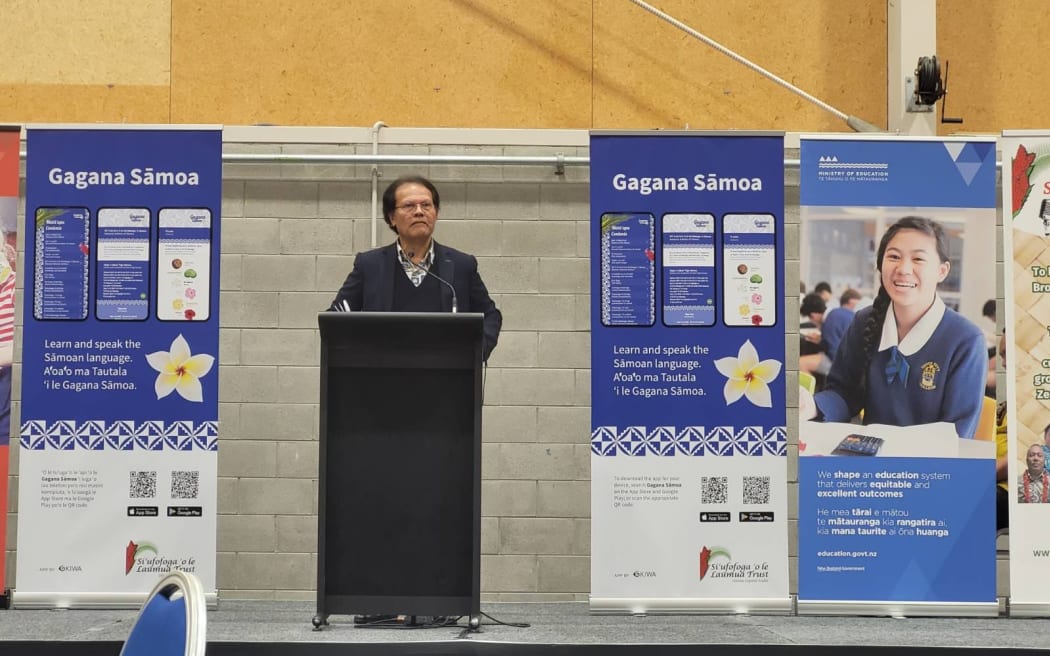
‘Transform lives’ with education, new vice-chancellor for AUT tells Pasifika

RNZ Pacific

The new vice-chancellor of the Auckland University of Technology is calling on young Pasifika peoples pursuing their education to stay the course.

Toeolesulusulu Dr Damon Salesa, who is currently a pro vice-chancellor at the University of Auckland takes up his new role at AUT in March.

He is the first person of Pacific descent to head a university in New Zealand.

Toeolesulusulu said the past two years of the covid-19 pandemic have been the most difficult for education in a long time.

He said part of the reason he chose to take up the new role was that AUT provides a pathway to education for people of all ages, backgrounds and races, regardless of the life stage or academic credentials.

“The pressures of the pandemic have forced many young people to have to choose between furthering their education or providing for their families, and institutions like AUT can help.

“Now is a great time to just leave school and get a job,” Toeolesulusulu said.

“But in terms of the future that students’ families need, that our city and our communities need, education still remains the single most powerful way to transform the lives of you and your family and through them our communities.”

This article is republished under a community partnership agreement with RNZ.

Print Friendly, PDF & Email

Article by AsiaPacificReport.nz

COVID disinformation and extremism are on the rise in New Zealand. What are the risks of it turning violent?

Source: The Conversation (Au and NZ) – By Alexander Gillespie, Professor of Law, University of Waikato

GettyImages

Last week’s COVID protest outside parliament served as a warning that New Zealand is not immune to the kinds of anger seen overseas. As Labour Party whip Kieran McAnulty put it, “I think everyone needs to be aware that things are starting to escalate.”

McAnulty himself had been abused by some with strong anti-vaccination views, and there has been increasingly violent rhetoric directed at government politicians and Prime Minister Jacinda Ardern. As a result, security for MPs has been stepped up.

As the recent report from research centre Te Pūnaha Matatini showed, there has been a sharp increase in the “popularity and intensity of COVID-19 specific disinformation and other forms of ‘dangerous speech’ and disinformation, related to far-right ideologies”.

The analysis noted a broader threat: “that COVID-19 and vaccination are being used as a kind of Trojan Horse for norm-setting and norm-entrenchment of far-right ideologies in Aotearoa New Zealand.”

Terror threat: medium

Last year, New Zealand’s Security Intelligence Service (SIS) warned of the “realistic possibility” that continued COVID restrictions or further vaccination requirements could trigger an act of violent extremism.

The country is not alone in this, of course. COVID-19 has seen dissent and angry protest rise globally, with inevitable concern over an increased risk of terrorism or violent extremism.


Read more:
Protesting during a pandemic: New Zealand’s balancing act between a long tradition of protests and COVID rules


Right now, New Zealand’s official terror threat level is assessed as “medium”, meaning an attack is deemed “feasible and could well occur”.

By contrast, Australia’s threat level is set at “probable” and Britain’s at “severe”. According to its Department of Homeland Security, the US “continues to face a diverse and challenging threat environment as it approaches several religious holidays and associated mass gatherings”.

Riot police were deployed in Melbourne in September when protests over mandatory vaccination for construction workers turned violent.
GettyImages

The lone actor problem

An SIS terrorism threat assessment from February this year, coupled with a “Threat Insight” from the Combined Threat Assessment Group in November 2020, divided potential terrorists in New Zealand into three groups based on faith, identity and politics. What they share is a willingness to use violence to achieve their goals.

The most likely scenario involves a lone actor, inspired by any ideology and probably using an unsophisticated means of attack, without any intelligence warning. However, a small anti-government cell was also considered a realistic possibility.


Read more:
Treating NZ’s far right groups as terrorist organisations could make monitoring extremists even harder


The SIS assessment noted there are almost certainly individuals who advocate the use of violence to promote racial or ethnic identity beliefs, as well as individuals potentially prone to faith-based violent extremism. As for politically motivated actors, the SIS was more reassuring:

While some individuals and groups have lawfully advocated for signicant change to current political and social systems, there continues to be little indication of any serious intent to engage in violence to acheive that change.

The February report is heavily redacted, so needs to be placed next to the November “Threat Insight”. That report noted a “realistic possibility” of terrorist acts depending on how COVID-19 and the associated economic and social impacts unfolded, and how individual extremists might be affected. It concluded:

The situation in New Zealand over the next 12 months is likely to remain dynamic. There is a realistic possibility further restrictions or potential vaccination programmes […] could be triggers for New Zealand-based violent extremists to conduct an act of terrorist violence.

Still a peaceful place?

If there is any comfort to take, it might be that New Zealand has risen in the 2021 Global Peace Index, putting the country second only to Iceland.

This represents a return to relative normality after the 2019 Christchurch terror attack saw New Zealand drop 79 places in the Global Terrorism Index in 2020 (ranking 42nd, just behind Russia, Israel and South Africa).

But while there are other reasons to be hopeful – notably New Zealand’s comparatively low and apparently reducing homicide numbers – there remain reasons for concern. From the Lynn Mall terror attack through to the murder of a police officer or the tragic shooting of an innocent teenager, serious violence is not uncommon.


Read more:
Vaccine mandates for NZ’s health and education workers are now in force – but has the law got the balance right?


There has also been an increase in firearms injuries, many (but not all) gang-related. Figures released under the Official Information Act show the police are facing increased risks: between March 2019 and July 2021, officers had firearms pointed or discharged at them 46 times.

New Zealanders can have some faith the system, however. Two potential shooting events, one involving a school, were foiled by police. The New Lynn extremist was already subject to monitoring so tight he was shot within 60 seconds of launching his attack.

Security intelligence also detected espionage in the military, and was instrumental in New Zealand Cricket calling off its tour of Pakistan due to a plausible terror threat.


Read more:
COVID vaccines don’t violate the Nuremberg Code. Here’s how to convince the doubters


A ‘see something, say something’ culture

All of this underscores the need for everyone to do what they can to combat alienation and misinformation in the community, anchored by tolerance, respect and civil behaviour. And it also requires that people be prepared to report acts of suspicious activity or threats of violence (online or not).

As the Royal Commission on the Christchurch terror attacks noted, the likeliest thing to have prevented the tragedy would have been a “see something, say something” culture — one where people could safely raise their concerns with the appropriate authorities.

“Such reporting,” the commission concluded, “would have provided the best chance of disrupting the terrorist attack.”

As the pandemic stretches into the next year, with likely ongoing restrictions and unforeseeable complications, this remarkable sentence is worth remembering. It suggests the best defence against extremism is to be found within ourselves, and in the robust and safe communities we must create.

The Conversation

Alexander Gillespie does not work for, consult, own shares in or receive funding from any company or organisation that would benefit from this article, and has disclosed no relevant affiliations beyond their academic appointment.

ref. COVID disinformation and extremism are on the rise in New Zealand. What are the risks of it turning violent? – https://theconversation.com/covid-disinformation-and-extremism-are-on-the-rise-in-new-zealand-what-are-the-risks-of-it-turning-violent-172049

With a federal election looming, is there new hope for leadership on integrity and transparency?

Source: The Conversation (Au and NZ) – By A J Brown, Professor of Public Policy & Law, Centre for Governance & Public Policy, Griffith University

As we head into a federal election campaign next year, the focus on whether government – and which party – can be trusted to govern openly and honestly for the public good is looming larger than at any time in living memory.

Plans to overhaul Commonwealth whistleblower protection laws were revealed last week by Assistant Attorney-General Amanda Stoker.

The Coalition government’s legislation for a federal integrity commission (or ICAC) is also imminent, following feedback on the extensive problems with its draft bill last year.

And a plethora of other accountability issues are awaiting action.

All these provide a reminder, heading into the election, that trust in government hinges not only on “performance” in a direct, hip-pocket sense. It also depends on who can be trusted to protect public decision-making from becoming a self-serving gravy train for leaders and their friends.

Healthy political competition on integrity issues is long overdue. Historically, both major parties have been slow to initiate the reforms needed to reverse Australia’s slide on Transparency International’s Corruption Perceptions Index or global press freedom rankings.

Whistleblower protections at a turning point?

The Morrison government’s proposed reforms to the Australia’s Public Interest Disclosure Act – the law that protects federal public service whistleblowers – show that when we do catch up, we can leapfrog to being a world leader.

Building on major corporate whistleblower reforms in 2019, the new proposal includes world-first rights to compensation where a person with a duty to protect a whistleblower fails to do so.

A new whistleblower protection bill in NSW, just introduced by the Perrottet government, is a step in the same, right direction.


Read more:
From Richard Boyle and Witness K to media raids: it’s time whistleblowers had better protection


The public has long been in favour of effective whistleblower protection. In 2012, our research first showed that over 80% of Australians believed insiders who reveal wrongdoing should be protected, even if they break official secrecy rules.

But the slow pace of reform stands out as a big integrity problem.

While Labor did finally introduce the federal whistleblower protection law in 2013, it was a full six years after it was promised – and almost didn’t happen at all.

That was two decades after a Senate select committee, led by a Liberal senator, recommended that Australia needed national whistleblower protection laws.

For many, the pace of reform is still too slow. Independent Senator Rex Patrick last week described it as a “big failure” that the government has “basically run out of time” to get the new changes into law before the election.

Indeed, the urgency is clear. Inadequacies in the law continue to allow long, damaging prosecutions against whistleblowers such as Witness K, David McBride and Richard Boyle.

And our new research shows that across a wide range of organisations, less than half of clearly deserving whistleblowers who suffered serious consequences got any remedies at all.

There remain unknowns in the government’s plan, such as when we will see a federal Whistleblower Protection Authority. This was a bipartisan recommendation of a 2017 joint parliamentary committee, strongly supported by stakeholders such as the Law Council of Australia.

Labor has also committed to move ahead with reform. But its own plan for a Whistleblower Protection Authority at the 2019 election was weak and under-resourced. This reinforces that for all parties, better progress on integrity issues relies not just on pace, but also on substance.


Read more:
As a NSW premier falls and SA guts its anti-corruption commission, what are the lessons for integrity bodies in Australia?


A federal integrity commission with teeth

Whistleblower protection is also a key test for an even bigger reform – the government’s long-awaited federal integrity commission bill.

Last week, Minister Stoker gave the clearest indication yet that when the government’s bill is revealed, at least one of its major flaws – the inability of whistleblowers to take corruption concerns directly to the new ICAC – has been understood and presumably fixed.

It’s a promising sign, even if falling short of the fully-equipped Whistleblower Protection Authority built into all of the private members’ integrity commission bills introduced by crossbenchers Cathy McGowan, Helen Haines, Rex Patrick and the Greens since 2018.

The next question will be if other, equally important, issues have been addressed.

One is whether a federal ICAC will really have “all the powers of a royal commission”, as twice promised by Communications Minister Paul Fletcher, among other government figures. This means having the power to hold public hearings when justified, and for all federal public officials including parliamentarians – not just some.

Another issue is whether a federal ICAC will meet public expectations by being able to investigate and make recommendations on “grey area” corruption allegations, such as the recent “sports rorts” and “car park rorts” affairs.

Again, the path to reform has been dogged by issues of pace and substance.

The federal ICAC legislation will come three years after the Coalition initially promised it. But it also took Labor over a decade to make the same promise after Transparency International Australia first called for such an agency in 2005. And when it did make the move, Labor’s original budget (since upgraded) was less than half the amount now committed under the Coalition’s proposal.


Read more:
Accountability is under threat. Parliament must urgently reset the balance


Less secretive government is needed now more than ever

Global fears over governments becoming more secretive and less trustworthy should sound a warning to the Coalition and Labor alike – they need to pick up the pace.

The pandemic has brought new highs and lows in public trust. We can thank our underlying trust in institutions for Australians getting vaccinated against COVID-19 at a world-leading rate. Yet, at the same time, fears about the trustworthiness of our leaders are growing.

Even in Australia, governments have used public health to rule increasingly through ministerial regulation and executive decree, rather than the democratic process.

The federal government is even trying to keep National Cabinet’s minutes secret, despite our federation plainly belonging to all Australian governments and citizens.

Beyond these issues, other accountability priorities have languished under successive federal governments, as our integrity assessments again show.

One by one, Australia’s states are moving to reform political donation and lobbying laws, and even outlaw deceptive political campaigning. But federal politics remains a wild west of under-regulation.

Australia’s poor showing in controlling money laundering has been highlighted by the recent allegations against Crown Casino. But we are slow to act in many other areas, like our entire real estate sector.

Stronger laws against foreign bribery by Australian companies remain stuck in the federal parliament. Promises to end the secret shell companies which facilitate corruption have been on “go slow” ever since Australia led the charge as G20 host in 2014.

In a time of uncertainty, the federal election provides the moment for both major parties to put teeth into their commitments to bolster public trust and finally pick up the pace of reform. Hopefully, promised whistleblower protections and a strong integrity commission will be the crucial first steps.

The Conversation

A J Brown is a boardmember of Transparency International Australia. He has received funding from the Australian Research Council, all of Australia’s Ombudsman offices, most of Australia’s anti-corruption agencies, various other Commonwealth and State regulatory agencies and private sector peak bodies, and the Victorian Parliament for his past research on whistleblower protection and integrity systems relevant to this article.

ref. With a federal election looming, is there new hope for leadership on integrity and transparency? – https://theconversation.com/with-a-federal-election-looming-is-there-new-hope-for-leadership-on-integrity-and-transparency-170452

No, vaccinated people are not ‘just as infectious’ as unvaccinated people if they get COVID

Source: The Conversation (Au and NZ) – By Jack Feehan, Research Officer – Immunology and Translational Research, Victoria University

Some recent studies have shown similar peak viral loads in vaccinated people compared to unvaccinated people who contract COVID. This has raised concerns for the efficacy of vaccines for preventing transmission.

How concerned should we be? Are vaccinated people just as contagious as unvaccinated? What does this mean for future plans for reopening?

These studies only show a similar peak viral load, which is the highest amount of virus in the system over the course of the study.

But vaccinated people clear the virus faster, with lower levels of virus overall, and have less time with very high levels of virus present.

Therefore, vaccinated people are, on average, likely to be less contagious.

Let us explain.

Similar peak viral loads

A study in medical journal The Lancet followed 602 primary close contacts of 471 people with COVID. It documented transmission and viral load in the group.

It found there were no differences in peak viral loads between vaccinated and unvaccinated individuals. It also showed only a small decrease in the number of infections in household members between vaccinated and unvaccinated people, suggesting a similar level of infectiousness.

Another unpublished pre-print, which is yet to be reviewed by other scientists, suggests a similar trend in viral load between vaccinated and unvaccinated people, as does a CDC report in the US from July which analysed outbreak data from Massachusetts.

The Massachusetts data came from a number of large public events over a two-week period in July in Barnstable County, Massachusetts. From 469 COVID cases, 346 (74%) occurred in fully vaccinated people. Viral load was similar in both vaccinated and non-vaccinated groups.

However, we shouldn’t fear this analysis too much. The data reported is an imperfect representation of the population, and the measures they used – a single swab and PCR test – don’t provide information about overall viral load over time.


Read more:
Why are we seeing more COVID cases in fully vaccinated people? An expert explains


What is viral load?

Viral load refers to the amount of virus present in someone’s bodily fluids at a given point in time. Scientists can measure this by looking at your blood, or more commonly in COVID, swabs of your nose and throat.

Generally, higher viral loads are thought to correspond to a more contagious individual.

However, this isn’t always clear in reality. For example, some people with COVID who don’t have symptoms and have low viral loads transmit more, as they are less likely to follow social distancing, mask wearing, and stay at home.

The evidence on how viral load relates to severity of disease is mixed. Some studies find no relationship between the amount of virus in swabs and poorer outcomes, but others find an increased death rate with increasing viral load.

Vaccinated people clear the virus quicker

The results of the Lancet study suggest similarities in terms of viral load between vaccinated and unvaccinated people. But the study doesn’t provide strong evidence that vaccines don’t work to prevent transmission through the population.

While the peak load may be similar, vaccinated people are likely to have lower viral load overall, and therefore be less contagious.

Given vaccines speed the clearance of COVID from the body, vaccinated people have less opportunity to spread the virus overall.

This appears to be the case even with the more infectious Delta variant.

While the Lancet study specifically collected an even number of vaccinated and unvaccinated infections in order to compare them, this isn’t a true representation of the community in Australia. We know being fully vaccinated reduces the likelihood of catching COVID even if the vaccines aren’t perfect (none are) and there are breakthrough infections.

While it’s difficult to estimate the rate of breakthrough infections accurately, studies have estimated they occur in 0.2% to 4% of people. In reality, this means that for every 100 vaccinated people, somewhere between 0.2 and 4 of them would get COVID.

So, while in the rare instance where a breakthrough infection occurs, there may be a similar viral load, and possibly a similar infectiousness, there remain much fewer vaccinated people getting COVID.

Importantly, while the Lancet study also showed a similar rate of household transmission between the vaccinated and unvaccinated, there are a number of other studies in different contexts showing decreased transmission through vaccinated people.


Read more:
Your unvaccinated friend is roughly 20 times more likely to give you COVID


So what does it mean for us?

If you’re one of the unlucky few vaccinated people who get a breakthrough infection, it does mean you have to follow the health advice given to you.

Even though you may not feel sick, you still have the capacity to spread the virus to a vulnerable person around you. Though if the people in your home are also fully vaccinated, then the risk of transmission drops even further again.

However, a vaccinated person is less likely to get COVID in the first instance, is less contagious, and is contagious for a shorter time, resulting in significantly less spread of the virus through a highly vaccinated community.

This, combined with the well-known ability of vaccines to keep people out of hospital and ICU, makes them the most important part of the health response in the near future.

As the vaccine rollout continues, and there are fewer people without protection, the decreased rate of breakthrough infection will help ensure a future where COVID no longer dominates the news, society, and our minds.

The Conversation

Vasso Apostolopoulos COVID-19 research has received internal funding from Victoria University place-based Planetary Health research grant and from philanthropic donations.

Jack Feehan does not work for, consult, own shares in or receive funding from any company or organisation that would benefit from this article, and has disclosed no relevant affiliations beyond their academic appointment.

ref. No, vaccinated people are not ‘just as infectious’ as unvaccinated people if they get COVID – https://theconversation.com/no-vaccinated-people-are-not-just-as-infectious-as-unvaccinated-people-if-they-get-covid-171302

We’ve smelted a billion tonnes of recyclable aluminium. Do we need to make more?

Source: The Conversation (Au and NZ) – By Guy Keulemans, Faculty Research Fellow, UNSW

Shutterstock

Aluminium is light and versatile, but massively energy-intensive to produce, requiring 10% of Australia’s entire electricity output . Recycling it uses just a fraction of the energy. Why aren’t we closing the loop?

This metal – the most abundant in the Earth’s crust – is used in everything from kitchen utensils to soft drink cans, buildings and plane parts.

Since we discovered how to extract it in the 19th century, around one billion tonnes of aluminium has been smelted. Of that, three quarters is accessible for recycling.

Unfortunately, aluminium’s energy-intensive production has major consequences for climate change. We must power aluminium production with renewables, and find better ways to recycle this most useful metal.

To provoke thought about aluminium and its energy needs, I collaborated with designer Kyoko Hashimoto to produce new works of design using aluminium. These mirrors and vases are currently on display as part of the National Gallery of Victoria’s Sampling the Future exhibition.

As critical designers, we hope to communicate the waste problem created by mixing aluminium into unrecoverable composites, and reframe the perception of the metal’s value, which has diminished since its discovery.

aluminium cans crushed
Trash – or treasure? Valuing aluminium more highly could boost recycling rates.
Shutterstock

From precious metal to common disposable

When aluminium was first extracted and purified, it was more expensive than gold. Napoleon III famously had his son’s baby rattle made from aluminium. In 1884, as the most exotic metal of its day, it was used for the pyramid cap on the Washington monument.

Now, aluminium is plentiful and cheap. Australia is the world’s leading producer of the main ore, bauxite, and we export most of it for processing overseas.

Impressively large amounts of energy are needed to break the tight bonds of the metal from its oxides. In Australia, making new aluminium represents 6.5% of our greenhouse gas emissions. The intense chemical process also creates toxic byproducts and pollution.

Over the past few years, aluminium production has shifted to countries such as Iceland, with cheap and sustainable energy from geothermal sources.

Unfortunately, the lion’s share of production takes place in countries such as China, and often relies on Australian coal. Australia also ranks high in CO₂ emissions from alumina refining, an intermediate stage of processing.

Recycling aluminium requires only around 5%of the energy of smelting, the highest recycling energy saving for any major material.

Global aluminium recycling rates range from 34% to 70%. In Australia, recycling rates for aluminium packaging are between 44% to 66%, but likely lower across industrial and consumer products.


Read more:
Australian aluminium outgunned by cheap, coal-free global rivals


Why don’t we recycle all our aluminium?

There is scope to boost recycling, but product design and waste streams pose challenges.

For example, the aluminium we used in our designs is newly milled “5083”, a high grade, corrosion-resistant magnesium alloy with traces of manganese and chromium. Such trace metals are used to improve rigidity, corrosion resistance or welding capacity.

While our supplier sends offcuts and scrap for recycling, the mix of different alloys means these are ‘downcycled’ into lower-grade products. Most of Australia’s aluminium scrap is exported, so increasing our local recycling would decrease the emissions from shipping this scrap offshore.

There are losses across industrial and consumer waste streams alike, despite new sorting technologies. Magnetic eddy current technologies can sort metal objects from non-metal objects and even non-ferrous metal objects from each other.

The job gets harder when you encounter multi-material objects. Metal fasteners like screws, rivets and pins, as well as bonded adhesives, are leading causes of impurities in aluminium recycling.

Many aluminium products are designed also as “monstrous hybrid” composites using materials unable to be easily separated. Coffee pods are the most famous example.

These problems have to be fixed at the design stage. Such issues mean aluminium is steadily lost to human use, ending up in landfill and back into the environment.

While aluminium ores are readily found across the world, the metal is curiously absent from biological systems. It has had little role in plant or animal evolution and biologically available aluminium can be toxic. We do not know if this will have long-term consequences in nature.

We drew attention to these hidden issues in the design of our “metalloplastiglomerate” vases. They were made by crumpling and hammering aluminium sheet around organic fibre, plastic and soft metal waste.

In these works, we speculate about what will happen to aluminium as it is ejected from collapsing cities and transforms back into geological rock in the far future.

Metalloplastiglomerate vase, detail by Guy Keulemans and Kyoko Hashimoto. Photo by Traianos Pakioufakis.

Could we pioneer a circular economy with aluminium?

Even as the world fights to stave off dangerous climate change, demand for new aluminium is estimated to double or triple by 2050. If Australia’s aluminium recycling improves, we’re likely to keep making new aluminium to supply increasing international demand.

Australia exports most of its new aluminium, despite our smelters relying on heavy government subsidies. These smelters have been used by politicians to justify power from fossil fuels for their baseload output.

This is a furphy. Hydroelectric power works well with smelters too. Aluminium production using renewable energy may be justified in Australia, if we can manage its other environmental impacts.

Australia should also stop exporting bauxite or alumina to countries with fossil fuel powered smelters.


Read more:
Five ways the arts could help solve the plastics crisis


It’s entirely possible to end the need for new aluminium. Since we discovered the metal, we have produced around 1 billion tonnes of it. Around 75% is in current use, and available for recycling as it becomes necessary. Planning to stop producing new aluminium would create an incentive to better care for the metal we have and reduce waste.

And while aluminium is prized as a light and strong material, there are other materials with potential to replace it, including those that capture carbon instead of release it.

Slowing and eventually stopping new aluminium production would demonstrate how the world’s economy can thrive under degrowth – a controlled contraction of production to stem climate change and function within the planet’s ecological limits.

We considered this idea in the design of our aluminium and bauxite mirrors. They contain roughly the amount of aluminium able to be produced from the bauxite rocks that hold them. To communicate a sense of conservation, we modified the rock as little as possible. We made one cut to expose its beautiful pebble-like internal structure, and a second to hold the mirror.

Round Aluminium and Bauxite Mirror by Guy Keulemans and Kyoko Hashimoto. Photo by Traianos Pakioufakis.

In our designs, we hope to show the technological beauty of aluminium production, as well as the care with which we should approach it.

Aluminium’s unique properties drive ever greater production. But a growth at all costs mentality for resource extraction is perilous – especially when we can use what we already have.

The Conversation

Guy Keulemans receives funding from the Australian Research Council.

ref. We’ve smelted a billion tonnes of recyclable aluminium. Do we need to make more? – https://theconversation.com/weve-smelted-a-billion-tonnes-of-recyclable-aluminium-do-we-need-to-make-more-166784

Bridging programs transform students’ lives – they even go on to outperform others at uni

Source: The Conversation (Au and NZ) – By Thomas Roche, Pro Vice-Chancellor (Academic Quality), Southern Cross University

Shutterstock

“I remember how hard the words hit me – ‘you’re not smart enough’.”

Dylan, a proud Bundjalung man in his 30s from northern New South Wales with South Sea Island heritage, shared with us what high school staff had told him during year 12.

“My childhood dream was crushed. My grades were terrible and my future was not looking bright. I hit rock bottom with no university acceptance, no career trajectory and no plan. I entered the workforce and bounced around.”

Years later, Dylan is publishing research on coral reefs while completing a PhD, thanks to completing the Preparing for Success (PSP) program at Southern Cross University.

PSP is an award-winning, fee-free bridging or enabling program that provides an entry pathway into a wide range of undergraduate degrees. Our recent research, which included comparing academic achievements over six years, shows students who completed the PSP are more successful in their studies than students who gained admission by other means such as an ATAR score. They are also more likely to complete their undergraduate studies.

How do these programs work?

University enabling programs such as PSP are offered across Australia. These programs are designed to equip students who don’t meet standard university entry requirements with the key academic literacy skills. By preparing students for successful transition into university study they can open the way to exciting careers and brighter futures.

Anyone who has completed year 10 of school can apply for Southern Cross’s PSP. Other universities offer versions of bridging programs to students without year 10.

These programs are typically fee-free across Australia. At Southern Cross, there are three intakes a year in March, July and November.

Students can complete PSP full-time in 12 weeks over two six-week terms, or part-time over a year. They can study completely online or on campus.

A shorter six-week version, Transition to Uni, is now available for students who have completed year 12 with an ATAR. Both programs are delivered in the new Southern Cross Model, which delivers a deeper, more focused learning experience in six-week terms. Transition to Uni has a January intake so students can start their undergraduate degrees with their peers in March.

The empowering teaching style engages students in an active learning experience. Active and empowering learning experiences encourage and reward students who are actively contributing, questioning and stretching their thinking. It allows them to develop independent learning and critical thinking skills. These skills ensure later success in degree study.

The approach is very different from most of the students’ previous experiences. In school, students often felt they had to follow teachers’ directions – sit, listen and learn, instead of question information.

Programs like PSP achieve the government’s aim of increasing participation in higher education of people from targeted equity groups, including Aboriginal and Torres Strait Islanders, regional and remote students. They also help produce more job-ready graduates.

5 reasons to protect enabling education

Despite its successes, enabling education is facing challenges in Australia. The Job-Ready Graduates legislation has changed the higher education funding landscape in 2021.

Dedicated funding for enabling programs was removed from legislation and from universities. Despite growth in enrolments in many institutions, enabling funding has not substantially increased since 2017.

It is now up to the universities to decide how they will allocate their limited funding. Our research, including interviews with former PSP students, identifies five good reasons to support enabling education.

1. It provides access to higher education for students who would otherwise miss out due to disadvantage or past schooling attainment.

Ella, a first-in-family student who dropped out of school in year 11, described her experience of the enabling program.

“It just really switched that light bulb for me. I’m about to graduate my Bachelors in Midwifery and I’ll be the only person in my entire family ever to graduate from university.”

2. It prepares students to succeed and complete their undergraduate studies.

Aimee, now studying to be a teacher, thought she would go no further than being a cleaner.

“It was amazing to be using my brain again after four years of mindlessly scrubbing toilets. I gained enough confidence and enough understanding of what being at uni is like.”

3. It contributes to the government’s goals of increasing national participation in higher education and producing more job-ready graduates.

Neve was offered multiple interviews for graduate midwifery positions. This is a scenario she had not previously considered possible.

“If it wasn’t for the enabling program I couldn’t see myself being in the position I am now, doing all these interviews and completing my degree.”

Mother and daughter sitting at a table as they study
When a parent succeeds at university it can transform their children’s attitudes to education.
Shutterstock

4. It promotes inter-generational changes in attitudes to education.

Leanne’s progress in an Indigenous Studies degree helped give her daughter the courage to pursue a university education.

“My youngest daughter said she was definitely not going to uni. She just was too scared.  And having seen me do it, she’s now in the middle of session 2 . So that was a direct effect of me doing it and gaining confidence.”

5. It develops students’ critical thinking skills in a world of misinformation.

Wade saw just how much he had developed as a person. He uses the skills he learnt in the enabling program to analyse information and support his views in an informed way.

“Rather than just listen to one person’s opinion on a topic, I can actually go and find different evidence.”

Enabling education opens up a much-needed academic pathway. It allows students from a diverse range of backgrounds to get into and succeed in higher education. It equips them with the skills and confidence they need to fulfil their academic potential and achieve previously unimaginable careers.

The Conversation

The authors do not work for, consult, own shares in or receive funding from any company or organisation that would benefit from this article, and have disclosed no relevant affiliations beyond their academic appointment.

ref. Bridging programs transform students’ lives – they even go on to outperform others at uni – https://theconversation.com/bridging-programs-transform-students-lives-they-even-go-on-to-outperform-others-at-uni-171721

COVID vaccines don’t violate the Nuremberg Code. Here’s how to convince the doubters

Source: The Conversation (Au and NZ) – By Holly Seale, Associate professor, UNSW

People opposing vaccine mandates, or COVID vaccines more broadly, have claimed the vaccines violate the Nuremberg Code.

They say COVID vaccines are experimental and people have been coerced into vaccination. They say this breaches the ethical code drawn up after the second world war to guide medical research and human clinical trials.

But this argument is flawed. Here’s why the Nuremberg Code doesn’t apply, and how to correct this misunderstanding.


À lire aussi :
No, that’s not the law: the danger of using pseudolegal arguments against COVID-19 rules


What is the Nuremberg Code?

The Nuremberg Code was a direct response to atrocities Nazi doctors performed in concentration camps during WWII. They perpetrated this so-called medical experimentation on people with no capacity to consent, and this frequently led to lifelong disability, or death.

The doctors who performed these experiments were tried in Nuremberg in 1947.

The doctors’ defence argued their experiments were not significantly different to other research practices. So two American doctors working for the prosecution produced a document that aimed to draw together what made for ethical research.

This document identified three ethical, legal, and scientific requirements for conducting human experiments, which were later expanded to ten. This ten-point document became known as the Nuremburg Code.

It details the process of seeking legally valid voluntary consent, covers the need to establish the humanitarian nature and purpose of the experiment, as well as ensuring the scientific integrity and obligations of the investigator to the subjects’ welfare.

However, the Nuremberg Code is no longer used to guide research ethics. The World Medical Association’s Declaration of Helsinki replaced it in 1964. And there’s been more ethical guidance since.


À lire aussi :
Two steps forward, one step back: how World War II changed how we do human research


No, COVID vaccines are not experimental

Online commentary says COVID vaccines are “experimental”.

But COVID vaccines have been thoroughly tested, and they have been shown to work. Their side-effects have been extensively examined. They have been approved for use around the world and have been credited for saving many lives.


À lire aussi :
How well do COVID vaccines work in the real world?


So COVID vaccines are not “experimental”. Now COVID vaccines are part of standard public health response, it is not appropriate to refer to codes or documents developed to guide clinical trials and other research studies.

How do you convince someone?

If you come across someone claiming COVID vaccines are experimental, you can try the “truth sandwich” to try to myth bust.

If you imagine two pieces of bread, then the filling in the middle, you are on your way to using the truth sandwich.

First, we take a piece of bread, where we state the truth:

COVID vaccines have been tested in pre-clinical and clinical trials, and their efficacy and effectiveness has been proven, and their side effects profiles have been extensively examined.

Then we come to the filling in the middle, where we talk about a false claim and how it relates to the truth:

You may have heard someone suggest the COVID-19 vaccine program infringes people’s rights under the Nuremberg Code. But the claim that COVID-19 vaccines are experimental is simply not true. Regulatory authorities have approved these vaccines nationally and internationally. Safety monitoring is ongoing, but these processes are routine and commonly used for other vaccines or drugs. Check out AusVaxSafety.

Our final piece of bread comes next, repeating the truth:

The Nuremberg Code focuses on clinical research on humans. Therefore, it is no longer relevant once a vaccine moves beyond the clinical trial phase and has been authorised or approved for use globally.

The issue of informed consent

Online commentary usually cites the first clause of the Nuremberg Code about the need for informed consent in human experiments:

The voluntary consent of the human subject is absolutely essential.

This argument is used as evidence there’s something unethical about using COVID vaccines or introducing mandates.

Indeed, voluntary informed consent is an ethical bedrock for clinical research. Any form of compulsion is unacceptable because clinical research has inherent risks and can’t be quantified precisely. Research also may not have any direct benefit for participants, which again requires consent.

To be ethical, therefore, researchers must ensure participants in clinical trials understand potential risks and benefits, and give voluntarily consent to participate.

How do you convince someone?

Again, we can use the “truth sandwich” to myth bust.

Take your first piece of bread, stating the truth (the facts):

The Nuremberg Code relates to research, where the emphasis of informed consent is on “preventing research participants from being used as a means to an end”. The need for informed consent is still required for receiving a COVID-19 vaccine (or any vaccine) but the need does not stem from the Nuremberg Code.

Here’s the filling (the false claim and how it relates to the truth):

The introduction of a vaccine mandate is not medical research but rather a public health intervention. In every setting where COVID vaccines are mandated, no-one is being forced to be vaccinated against their will or consent. Informed consent is still sought before vaccination, and people retain the right to choose whether to be vaccinated.

However, in these settings, the public health goal of COVID-19 vaccination is seen as outweighing the rights of the individual to remain un-vaccinated. Other people in these settings have a right to health and security. Therefore there are outcomes for those who don’t comply. Exemptions are provided for those who cannot receive the vaccine for medical reasons.

If you want to expand further:

Mandates of this nature have previously been used in occupational settings to reduce the risk from vaccine preventable diseases for the employee and for the people they come into contact with, whether they be hospital patients or aged care residents. Beyond these settings, we have accepted vaccines as requirements of travel (such as yellow fever) both to protect ourselves and to reduce any risk of bringing this infection back to Australia.

Final piece of bread (repeating the truth):

There has been misinformation about linking COVID-19 vaccination, and/or the requirements within some occupations to the Nuremberg Code. The code relates to research and claims that mandates violate it are not accurate.

Why is this important?

This type of misinformation often thrives in situations where feelings are manipulated. And emotional posts on social media referring to Nazi doctors and Nuremberg are more likely to be shared.

We can keep fact checking. But it’s also time for every one of us to get out there with our truth sandwiches.

The Conversation

Holly Seale is an investigator on research studies funded by NHMRC and has previously received funding for investigator driven research from NSW Ministry of Health, as well as from Sanofi Pasteur and Seqirus. She is the Deputy Chair of the Collaboration on Social Science and Immunisation.

Ben Harris-Roxas is an investigator on projects funded by the Cancer Institute NSW, the National Health and Medical Research Council (NHMRC), the Sydney Partnership for Health Education Research & Enterprise (SPHERE), and NSW Health. In the past he has received funding from the Australian Research Council, the World Health Organization, the Australian Government Department of Health, the Public Health Agency of Canada, the Heart Foundation, NPS MedicineWise, the Sax Institute, and the City of Gold Coast.

Bridget Haire has received funding from National Health and Medical Research Council (NHMRC)

ref. COVID vaccines don’t violate the Nuremberg Code. Here’s how to convince the doubters – https://theconversation.com/covid-vaccines-dont-violate-the-nuremberg-code-heres-how-to-convince-the-doubters-171217

Stemming methane leaks from oil fields, pipelines and landfills could help us slow global warming quickly

Source: The Conversation (Au and NZ) – By Kevin Trenberth, Distinguished Scholar, National Center for Atmospheric Research

David McNew/Getty Images

Climate change is happening, and it’s mostly due to human activities that change the composition of the atmosphere, which in turn interferes with the natural flow of energy through the climate system.

Two greenhouse gases contribute most to this problem: carbon dioxide and methane. The result is global heating. The repercussions of rising temperatures include heavier rains, stronger storms, more intense droughts, heatwaves and wildfires.

Methane, which is more potent than carbon dioxide but has a shorter lifespan, reached record levels in the atmosphere last year, at about 2.5 times above those during the pre-industrial era.

Reducing methane emissions offers a way to rein in climate change quickly, at least to some extent, and to buy time while the world drastically reduces fossil fuel use.

The COP26 climate summit recognised this when more than 100 nations, representing 70% of the global economy, joined the Global Methane Pledge to cut methane emissions by 30% by 2030.

New Zealand joined, but Australia didn’t. Nearly all of the pledges relate to cuts in “fugitive emissions” of methane through leaks in the oil and gas sector, especially from fracking operations during the drilling of new wells and from old, abandoned wells that have not been sealed properly.


Read more:
The new Global Methane Pledge can buy time while the world drastically reduces fossil fuel use


Methane on the rise again

Methane is a primary component of natural gas. It is emitted into the atmosphere from oil and natural gas wells and landfills. Surplus methane is often burned or vented into the atmosphere.

Coal mining, sewage ponds and various industrial processes contribute lesser amounts.

This figure shows the global rise in methane emissions (shown in monthly values in parts per billion by volume in red, with a 12-month rolling average in black.
Adapted from NOAA, CC BY-ND

Globally, oil and gas operations account for 26% of methane emissions. Methane concentrations levelled off between 2000 and 2008, suggesting the short average lifetime of the gas depleted it from the atmosphere at about the rate of emissions.

But since then, methane levels have increased again, and this appears to be largely due to fracking and related activities in the oil and gas industry.

Reducing fugitive emissions makes economic sense

In a recent study, climate scientist Ilissa Ocko and colleagues suggest rapidly cutting methane can slow global warming quickly, and cuts can be made at a profit because they reduce leaks.

The research team considered all sectors and found 85% of methane emissions from the oil and gas industry could be readily abated by 2030 (50% are economically feasible, further 35% are technically feasible). For landfills, the respective numbers are 80% (16% and 64%).

In New Zealand, livestock is the main source of methane emissions, known as biogenic methane. The above research found only 32% of biogenic methane emissions could be cut readily (and only 2% are economically feasible, 30% technically possible). Livestock emissions are more manageable in feedlots, used in the northern hemisphere in winter, but more difficult for free-range cattle and sheep.

There are some optimistic reports about how biogenic methane emissions could be cut by changing the feed of cows, treating effluent ponds and using methane from landfills to generate electricity.

Tracking emissions

Under the UN Framework Convention on Climate Change (UNFCCC), countries have to report their emissions. But a recent report revealed a gap between countries’ reported emissions and observed increases in concentrations in the atmosphere. This also applies to methane emissions, although natural emissions also play a role.


Read more:
Countries may be under-reporting their greenhouse gas emissions – that’s why accurate monitoring is crucial


Recent technology on satellites has enabled large emissions to be detected from space, and from next year MethaneSat is expected to be able to pinpoint even smaller emission sources. A US team will use the MethaneSat programme to focus on methane emissions from the oil and gas industry, while New Zealand will be mission control for the space-based tracking of agricultural emissions.

Spurious methane emissions were recently especially prominent in Russia, where 164 tonnes of methane leaked into the atmosphere during a single hour of repairs on a pipeline owned by state-controlled gas giant Gazprom, and in Australia.

While most methane emissions in New Zealand and Australia come from agriculture, Australia’s fugitive emissions from various mines are large, more than all of New Zealand’s contributions combined.

This figure shows 2016 methane emissions for Australia (AU) and New Zealand (NZ), from different sectors (in million tonnes of carbon dioxide equivalent emissions).
Adapted from Our World in Data, CC BY-ND

Recent and future prospects

Since 2016, Australia has made a modest reduction in fugitive emissions because of increased use of renewable energy and slightly reduced coal production. The COVID pandemic has also played a role.

Ilissa Ocko’s team concluded that rapid deployment of available technologies and strategies could cut anticipated global methane emissions by 57% in 2030, if action is taken promptly.

In New Zealand, many changes are desirable for other reasons, including land use and biodiversity protection. But it does not make sense to get out of step with other countries, which aren’t reducing methane from livestock, as that could put New Zealand farmers at a disadvantage.

In particular, New Zealand should not be too far out of step with Australia. Instead, the New Zealand government should step up its efforts to call the Australian government to account to substantively reduce all greenhouse gas emissions, especially fugitive methane emissions.

A price on carbon, created through a tax or carbon markets and designed to capture the cost of damages through climate change, may be enforced internationally through tariffs. This could be particularly critical for power generators and energy-intensive industries.

New Zealand has an Emissions Trading Scheme, but agricultural emissions are excluded.

Australian industry is especially vulnerable. Although many companies are making serious plans to adapt, their timeline is too long, with no prospect for containing global warming to 1.5℃ (above pre-industrial average temperatures).

While much more could be done with respect to methane emissions, notably in some countries, the longer term challenge remains the need to make substantial cuts to carbon dioxide emissions.

The Conversation

Kevin Trenberth does not work for, consult, own shares in or receive funding from any company or organisation that would benefit from this article, and has disclosed no relevant affiliations beyond their academic appointment.

ref. Stemming methane leaks from oil fields, pipelines and landfills could help us slow global warming quickly – https://theconversation.com/stemming-methane-leaks-from-oil-fields-pipelines-and-landfills-could-help-us-slow-global-warming-quickly-171839

Are our phones really designed to slow down over time? Experts look at the evidence

Source: The Conversation (Au and NZ) – By Michael Cowling, Associate Professor – Information & Communication Technology (ICT), CQUniversity Australia

Shutterstock

It’s usually around this time of year you hear people complain about their phones slowing down. Apple and Google release new versions of their operating systems (OS) and suddenly there’s a slew of people claiming their old devices have started to lag – conveniently just before Christmas.

But do manufacturers really slow down our phones on purpose to nudge us towards shiny new ones, as has been claimed?

The answer to this, as usual, is complicated. Let’s take a look at the evidence.

The ol’ operating system shuffle

Every year, usually around May and June, tech companies announce their new OS updates. The main news surrounding the releases is often new system features such as Facetime enhancements, improvements to voice assistants, or a fancier system design.

Apple introduces a new design with iOS 7.

But did you know these features are optimised for the new hardware traditionally released during the summer, and the chips that come with it?

As such, system updates have to be programmed to work towards two goals. The first is to support the new hardware and chip, which deliver the newest features.

The second is to continue to work with existing hardware that won’t support the new features. And this means coding the OS so it’s not reliant on the new features having to work.

This challenge exists for desktop OSs as well, as evidenced by the recent removal of old systems from the Windows 11 compatibility list. Microsoft decided coding around new features was an insurmountable challenge in some instances.

Hardships with hardware

So your old smartphone won’t support new features – fair enough. But why does it feel like the new OS update is making existing features slower? To understand this, you need to first understand some of the mechanics of chip design.

Apple used to use other manufacturers’ chips for its devices, but for the past few years has made its own custom silicon. This is referred to as a “system on a chip (SoC), as the entire system exists on a single chip designed and manufactured by Apple.

But even if manufacturers design their own chips, it can be hard to predict what consumers will want in the future, and thus which upgrades will come with future iterations of a device.

Manufacturers have to write OS updates to suit the latest hardware, so consumers who purchase it can take advantage of the latest features. In doing so, they must work around the fact that older hardware doesn’t have the same capacity.

These workarounds mean older devices will run more slowly with the new OS installed, even for tasks the system had done for years. The latest OS is not written to make your old device slower, but because it’s written for the latest device, it can’t help but run more slowly on old hardware.

Examples of this abound in the industry, with many articles written about a newly released OS version running slow on older devices until the manufacturer optimises it (if they ever do).

You might be wondering: if a new OS will slow down old phones, why install the update at all?

Well, it’s because people don’t like being told to stick with old features. Apple recently allowed users of its latest devices to keep the old system, but this is unusual. There is usually a push for users to install new OS versions.

It’s all business

The truth is device manufacturers are in the business to make money. And this means being able to sell new devices.

While there is often an implied expectation from consumers that manufacturers will commit to maintaining old products, at the same time they need to write updates that will work for their latest hardware.

Meanwhile, tech companies aren’t doing enough to educate users on how to adjust their settings to get the best out of their phones, or how to manage software bloat which might contribute to a phone slowing down.

Compounding this are other factors such as network connection issues, like when the 3G mobile network was stopped.


Read more:
Upgrade rage: why you may have to buy a new device whether you want to or not


Burden of proof

There’s something else to consider, too. If an OS update was designed to intentionally slow down a phone over time, this would be very difficult to prove.

The system codes are “closed source”, so experts can’t look into them. The best we can do is run timers on different processes and see if they are slowing down over time.

But even if they are, is it because of a system update that can’t be supported by old hardware, or is it malicious conduct from the manufacturer? Could the code be written to force the device to sleep for half a second, every ten seconds, with a sleep command?

It’s hard to say for sure, although our personal opinion is this is highly unlikely.

An iPhone and airpods on a dark surface
Apple has had multiple lawsuits filed against it in the past, for which it has paid hundreds of millions in settlements. The company has admitted to slowing down some older phone models, but claimed this was done to reduce stress on the battery and prevent accidental shutdowns as the battery aged.
Shutterstock

Choose not to play

Ultimately, the issue comes down to how device manufacturers sell their products.

The best option for their bottom line is to deliver OS updates and features that work with the latest hardware, even if this leaves old devices behind. The evidence suggests manufacturers are not intentionally slowing phones down, but are prioritising the latest release so you’ll buy it.

In the meantime, if your slow device is getting you down, the best option is to resist the urge to upgrade. You might get prompts directing you to install the latest OS version (and the frequency of these will depend on the company) but you can ignore them.

There may be auto-updates which you can’t avoid, but in most cases these are for security purposes and don’t include major changes or new features. It’s only once these security updates stop coming that you should upgrade.

Until then, a phone running on its original OS should, in theory, run well for a long time.


Read more:
Yes, the global microchip shortage is COVID’s fault. No, it won’t end any time soon


The Conversation

The authors do not work for, consult, own shares in or receive funding from any company or organisation that would benefit from this article, and have disclosed no relevant affiliations beyond their academic appointment.

ref. Are our phones really designed to slow down over time? Experts look at the evidence – https://theconversation.com/are-our-phones-really-designed-to-slow-down-over-time-experts-look-at-the-evidence-170962

If there was “fraud” in Nicaragua’s elections, where is the proof?

Source: Council on Hemispheric Affairs – Analysis-Reportage

Print Friendly, PDF & Email

By John Perry
From Masaya, Nicaragua

Official results from Nicaragua’s elections on November 7 showed Daniel Ortega re-elected as president with 75% of the vote. On the same day, President Joe Biden dismissed the ballot as a “pantomime election”[1] and within 48 hours the Organization of American States (OAS) had produced a 16-page report setting out its criticisms.[2] It demanded the annulment of the elections and the holding of new ones, disregarding international and OAS rules that require respect for the sovereignty of nations. Yet it contained no evidence of problems on election day itself that would substantiate its objections. Nevertheless, local and international media were quick to endorse the accusations that widespread fraud had taken place.

This article tries to identify the basis of these accusations, examines the evidence offered to support them and shows why, in practice, the massive fraud being alleged was very unlikely to have happened.

The electoral process – in brief

Before addressing the allegations, let’s look briefly at the process. Nicaragua has developed an electoral system which is probably one of the most secure and tamper-proof in Latin America, with multiple checks on the identity of voters and the validity of ballots.[3] There were 13,459 polling stations covering up to 400 voters each, in an operation involving about 245,000 volunteers and officials across the country.

Jill Clark-Gollub has described at COHA how this worked on the day.[4] Briefly, each voter must:

  1. Go to vote in person (there are no postal or proxy votes).
  2. Have a valid identity card that carries their photo and signature.
  3. Be entered on the electoral register for the polling station, where their name is ticked off (in most cases this is computerized).
  4. Have their ID checked against a print-out which has a small version of their photo and their signature: they sign on top of this to certify that they are going to use their vote.
  5. Be given a ballot paper, which is stamped and initialed by an official before being handed over (see photo).
  6. Make their vote in secret and put the paper in a ballot box.
  7. Retrieve their ID card, and have their right thumb marked with indelible ink to show they have voted.
A ballot paper is stamped and authorized before being handed to the voter (Photo credit: Lauren Smith)

Each polling station has representatives of the political parties (in the U.S. they would be called party poll watchers). The poll watchers are there from the time the polling station opens until it closes – they watch everything – and at the end of the day they also sign the record of the polling. The numbers of votes, in total and for each party, are counted when polling closes and the results certified by the party representatives. The ballot boxes are then taken to a central counting center, accompanied by police or army officers, with each box tagged to ensure that it cannot be tampered with or replaced. The count at the center must match the count in the polling station, and this is again monitored by the poll watchers. Counting starts as the boxes are received and continues non-stop until every vote has been dealt with.

Despite these precautions, the international media and the opposition groups who were not represented on the ballot have not hesitated to condemn the process. For example, William Robinson, writing for NACLA, claims there was “a total absence of safeguards against fraud.”[5] The different critics make one or more of these accusations:

  1. That opponents who would have entered the election were prevented from running, and their participation would have secured Ortega’s defeat.
  2. That the size of the registered electorate was manipulated in the government’s favor.
  3. That polls showed that the government was deeply unpopular, therefore the election result must have been a fake.
  4. That the high proportion of spoiled ballots was a concerted “protest vote.”
  5. That, after the opposition called on its supporters to abstain, most people did so.
  6. That the government “added” one million votes in its favor.

Here we show the plentiful evidence to contest these allegations.

  1. Potential election winners were excluded

“After methodically choking off competition and dissent, Mr. Ortega has all but ensured his victory in presidential elections on Sunday, representing a turn toward an openly dictatorial model that could set an example for other leaders across Latin America.” (New York Times, November 7)[6]

Most of the international media ignored who was on the ballot and focused instead on the arrests of opposition figures earlier this year, which allegedly removed all effective opposition. The reasons for the arrests have been dealt with by Yader Lanuza and Peter Bolton,[7] but briefly they were for violations of laws relating to improper use of money sent to non-profit organizations, receiving money from a foreign power intended to undermine the Nicaraguan state and influence its elections, and seeking international sanctions against Nicaragua.

But in fact, the ballot included five candidates challenging Daniel Ortega for the presidency (see photo). The NYT said, wrongly, that all “are little-known members of parties aligned with his Sandinista government”). However, these are historic parties – two of them (the PLC and PLI) had formed governments in the years 1990-2006, and in the case of the PLC in particular enjoy strong traditional support. The Sandinista front itself won as part of an alliance of nine legal parties.

A ballot paper from León.

Regardless of the arguments about the validity of the arrests, there is no plausible scenario where, if one of those arrested had been eligible to stand, they would have amassed sufficient votes to win. Not only was this unlikely because of the math (see below), but also because not a single one of those arrested had then been chosen as a candidate, the newer opposition parties that might have chosen them were unable to agree on how to stand or who to choose, and none had any program other than vague calls to re-establish “democracy” and “release political prisoners.”

Nevertheless, according to a CID-Gallup poll in October,[8] the most popular opposition figure, Juan Sebastián Chamorro, had 63% popular support. Let us take a look at a possible scenario, assuming he had been allowed to stand for one of the newer parties:

  • Suppose that, as a consequence of his participation, electoral turnout had increased, reaching its highest in recent elections (73.9% in 2011). This would have produced a total of 3,309,000 valid votes, an increase of around 400,000.
  • Assume for the moment that the Ortega vote remained the same, and that Chamorro had gained all the non-Ortega votes, including all those won by the other opposition parties:

Chamorro’s total vote would have been about 1,200,000.

  • However, it would still have fallen short of Ortega’s by more than 800,000 votes.
  • So to have won, Chamorro would have needed to persuade over a fifth of Ortega voters (almost 440,000) to swap sides, despite the deep hostility towards the Chamorros shown by most Sandinistas.

In practice, of course, it was highly unlikely that Chamorro would have stood as the sole opposition candidate, not only because he had rivals from the “traditional” opposition parties such as the PLC, but also because even as the election approached the newer opposition was divided into different groups backing different potential candidates. A divided opposition would have had an even smaller chance of winning.

  1. The size of the registered electorate was manipulated

“In order to put Ortega’s electoral victory cards on the table, the CSE [Electoral Council] proceeded to increase the registration of the number of people eligible to vote.” (Confidencial)

“…experts estimated that this year’s roll should be at least 5.5 million.” (La Prensa)

The second accusation is that the electoral register of 4,478,334 potential voters was manipulated in the government’s favor, although critics can’t agree on whether the register was inflated or deliberately shrunk.

Opposition website Confidencial argued that the growth since 2016 of around 600,000 in the total numbers eligible to vote was implausible, and it was also implausible that 97% of those eligible were actually registered.[9] However, when opposition newspaper La Prensa assessed the size of the registered electorate, their complaint was that it was too small.[10] According to their analysis, the register should have had approximately 5.5 million voters, so the government was presumably intent on cutting out voters in areas where it has low support.

Either accusation is easily answered. The natural growth in the tranche of the population aged over 16 (those eligible to vote) accounts for about half the increase in the size of the register.[11] Both Confidencial and La Prensa deliberately ignore the huge improvement in the registry of citizenship since 2016, so that almost all the adult population now have identity cards, needed for many everyday transactions, and which automatically enter the holder on the electoral register. Rather than being implausible that 97% of citizens are registered, as Confidencial claimed, it is an intended outcome of the modernized system, which aims for 100% registration. This means that the register has gained in accuracy as the campaign to extend ID cards to the whole population nears its goal.

  1. The government is deeply unpopular, contradicting the election result

“A recent poll showed that 78 percent of Nicaraguans see the possible re-election of Mr. Ortega as illegitimate and that just 9 percent support the governing party.” (New York Times, November 7)[12]

The official election results give the ruling Sandinista Front 71.67% of the votes, if spoiled ballots are included (75.87% if they are excluded). This is similar to the 72.44% vote share obtained in the 2016 election. The second party, the PLC, gained 14% of the vote, similar to its 15% share in 2016.

Opinion polls cited by the international media and the opposition purport to tell an entirely different story. According to a poll by Costa Rican firm CID Gallup (not part of the internationally known Gallup organization), in September-October only 19% of adults would have voted for Ortega had the election been held then, while 65% would support an opposition candidate. In a slightly later CID Gallup survey, paid for by Confidencial, 76% of adults questioned said that Ortega’s re-election would be “illegitimate;” his party’s level of support had by then fallen to only 9% (i.e. about 400,000 potential votes).

The CID Gallup poll’s findings on levels of support for different political parties are rather baffling. While some 68% of those questioned said they were likely to vote, the vast majority (77%) claimed to favor no particular party. Levels of support for individual parties were therefore tiny: the Sandinista Front was judged to have most support, but favored by only 8% of voters, while others had even smaller followings. Those questioned had the option of choosing one of the supposedly popular parties that were prevented from running, but these also received miniscule support: 5% for the CxL (Ciudadanos por la Libertad) and just 2% for the UNAB (Unidad Azul y Blanco). Had these parties been allowed to take part in the election, their candidates might have been one of the supposedly popular figures arrested beforehand, such as Juan Sebastián Chamorro.

CID Gallup survey results from “Confidencial”.

None of the international media who cite the CID Gallup poll question the credibility and consistency of these findings. Nor do they ever mention the more regular and more extensive opinion polls conducted by Nicaragua-based M&R Consultores, which gave a much different picture (see chart). Their results show Daniel Ortega with a 70% share of the vote, a percentage which had increased steadily as the polls approached. M&R claims its surveys are more rigorous, covering more of the country, with 4,282 face-to-face interviews while CID Gallup relies on cell phone calls for its 1,200 responses.

M&R Consultores’ last opinion poll before the election.

Adding to the implausibility of the CID Gallup poll findings is the fact that some 2.1 million Nicaraguans, slightly under half the adult population, are card-carrying members (militantes) of the Sandinista Front, following a membership drive over the last two years. That less than a quarter of these would vote for the party of which they are members seems, at best, highly unlikely. CID Gallup’s findings would also of course imply that no one who was not a party member would support the government, which is also highly unlikely. Nevertheless, even on election day, opposition leaders such as Kitty Monterrey (herself prevented from standing) hubristically claimed that more than 90% of voters would cast their ballot against Ortega.[13]

  1. Invalid votes “won”

“Null votes confirm Daniel Ortega’s re-election farce” (headline in El Faro)

Because the CID Gallup poll appeared to show a high proportion of voters having no party allegiance, there have been a couple of attempts to argue that a protest vote, ie. people spoiling their ballots, “won” the election. There is some very limited truth in this, in that the proportion of ballots spoiled was notably higher than usual, at about 5%, rather than a more typical 1-2%, and these additional spoiled ballots may have represented a “protest vote.”

The El Salvadoran website El Faro, which regularly gives a platform to Nicaragua’s opposition, tried to show “the strength of the invalid votes.” After claiming that abstentions reflected a “third force,” El Faro published a graphic (below) showing how spoiled ballots “outvoted” the opposition parties.[14]

Chart by El Faro.
Source: Author calculations based on official results.

However, a proper comparison between the percentage of invalid votes and those gained by the different parties puts this in perspective (see pie chart). As can be seen, the partial graphic displayed by El Faro gives the votos nulos far more importance than they merit: yes, there were more spoilt ballots than votes for some of the minor parties, but the proportion was well below that gained by the PLC and, of course, by the FSLN. The 161,687 spoiled votes hardly show the electoral “farce,” depicted by El Faro. They were presumably hoping that their readers, glancing at the story and the graphic, would get the impression that the protest vote had “won.” Inadvertently, El Faro’s story also undermines the accusation (see below) that abstentions “won.” If it were really true that only 850,000 people voted, as the abstention camp claims, the 161,687 spoiled votes would have formed an improbably high proportion (19%) of the total.

Another approach to exaggerating the importance of votos nulos was pursued by La Prensa.[15] On each ballot paper there were four voting options so, according to La Prensa, the protest vote was four times the actual total of invalid votes, therefore reaching 666,866, rather than 161,687. This suggests a degree of desperation on La Prensa’s part in its search for ways to discredit the election.

  1. Abstentions “won”

“Once polls opened early on Sunday morning, some polling stations had lines as Nicaraguans turned out to cast their ballots. But as the day progressed, many of the stations were largely empty. The streets of the capital, Managua, were also quiet, with little to show that a significant election was underway.” (New York Times, November 7)[16]

Official results show 66% of registered voters took part in the election, a level within the range (61-74%) of the previous three elections. It is also a level of participation similar to the last elections in the U.S. and the U.K. (which were both higher than normal) and in the middle of the range of participation in other countries’ recent elections.[17]

The international media largely ignore this and cite the opposition website Urnas Abiertas (“Open ballot boxes”) which claims that 81.5% of voters abstained (see graphic).[18] In other words, while officially 2,921,430 voted (including spoiled ballots), Urnas Abiertas say the real figure was more like 850,000.

Urnas Abiertas do not, however, provide any evidence of it other than their claimed survey of attendance at a sample of polling stations, which is only briefly described in a few lines of their four-page report.[19] It offers no technical details of their work or examples of polling stations which they surveyed. Described as “independent” by right-wing newspaper La Prensa,[20] Ben Norton shows how Urnas Abiertas is an obscure organization with few followers and is operated by known opposition supporters.[21]

Various opposition media, such as 100% Noticias, published pictures of “empty streets” or empty polling stations” on November 7, presumably as evidence that the opposition’s campaign to boycott the elections had been successful.[22] In typical fashion, international media picked up the story and, of course, opposition supporters were busy phoning their contacts in the U.S. and elsewhere to give the story credence.

The local media had conveniently forgotten a story they covered earlier in the year. In July, the electoral authorities published a provisional electoral register, and invited voters to verify their entries and check they were allocated to the correct polling station. This exercise was massively supported, by 2.82 million voters out of a possible 4.34 million then registered (the registered total has since increased by about 130,000 as entries were updated).[23] The opposition media, intent on showing supposed anomalies in this process, inadvertently also showed the scale of the response it received from the public, with videos of queues of people waiting to verify their vote.[24] The likelihood is that, having turned up at the polling station to check their right to vote, people turned up again on November 7 to use it, and the similarity in numbers who did both confirms that this was the case.

The photos of “empty streets” and “empty polling stations” were in any case highly misleading: it is easy to take such shots, especially on a Sunday when businesses and schools are closed, and especially at the hottest time of day. Furthermore, a simple calculation of the likely attendance at each polling station, open for 11 hours with (on average) 333 potential voters and 216 who actually voted, shows that roughly 20 people an hour would have passed through each one. Given that each person needs only a few minutes to vote, it is obvious why queues occurred only when groups of voters arrived simultaneously.

  1. The Sandinistas added at least one million votes

“To the amount of votes reported in favor of Ortega, the CSE [Electoral Council] fraud added about one million extra votes.” (Confidencial)

Table comparing the 2021 election results with previous elections and with alternative analyses of the 2021 results by Urnas Abiertas and Confidencial. Note that the 2017 elections were for municipalities, where turnout was lower and people were more likely to vote for diverse parties.

Critics argue that massive abstentions mean that fake votes were created, but they can’t agree how many. Confidencial suggests that it was 1,069,225, while the implication of the “survey” by Urnas Abiertas is that false votes totaled 2,032,067. Confidencial helpfully produced a table (see above) comparing the official (CSE) result with its own and those from Urnas Abiertas, adding for comparison the official results from previous elections.[25] (As with many of the other opposition graphics, one suspects that spurious accuracy is given to their data to make them appear more authentic.)

An attempt was made to substantiate the fraud accusation when a false image of a “manipulated” electoral scrutiny form was circulated by the opposition ahead of the election, suggesting that exaggerated vote totals were being prepared in readiness for November 7.[26] It proved to be a copy of a sample document circulated openly in its briefing materials by the Electoral Council.

In practice, the obstacles to the organization of this scale of fraud can be seen from the brief description already given of how votes were verified on polling day. Clearly, creating 1 to 2 million false votes would require a large proportion of the 13,459 polling stations and 245,000 officials to be engaged in the process. This is because the fraud would have to start at the points where votes were cast, because if the false votes had been created centrally the discrepancy with local voting tallies would be blatantly obvious.

Is it really feasible that every polling station (or most of them) created up to 200 false votes from entries on their register using blank ballot forms, stamped as authorized by officials, at the risk that real people with those votes would turn up and find they had already “voted”? Or, if it was done after polls closed, would there have been no complaint from poll watchers from rival parties, and would none of the 245,000 people involved have leaked the truth about what really happened, in a country as chismoso (gossipy) as Nicaragua? The whole notion is absurd.

As I write this, it is one week since the election took place. I have been unable to find any evidence of actual fraud (as opposed to speculation about fraud) in any of the main media which support the main opposition groups.

The real response to the accusations

While this article has exposed the implausibility of the various accusations, the real response to them was the scenes on the streets on election day and during the celebrations when the results were announced officially on November 8. While some of the media portrayed empty streets and deserted polling stations, there were hundreds of photos (see below, from Bilwí) which showed the opposite.

People queuing to vote in Bilwí (photo credit: Gerry Condon).

Many international representatives who acted as election “accompaniers” confirm that the polls were well attended and that people talked freely and often enthusiastically about the process, even those opposed to the government (see reports by, for example, Roger Harris, Rick Sterling and Margaret Kimberley).[27]

Living in Masaya, which had been a stronghold of opposition support in the violence of 2018, I was amazed by the response to the president’s speech after the result was announced: tens of thousands of people poured onto the streets on Monday November 8, especially in poorer barrios, waving Sandinista flags and even holding up portraits of Daniel Ortega. While clearly a minority opposed his re-election, it was equally clear that the majority supported it.

John Perry is a writer living in Masaya, Nicaragua.

[Main Photo: People waiting in line to vote. Credit photo: El 19 Digital)


Sources

[1] “Statement by President Joseph R. Biden, Jr. on Nicaragua’s Sham Elections,” https://www.whitehouse.gov/briefing-room/statements-releases/2021/11/07/statement-by-president-joseph-r-biden-jr-on-nicaraguas-sham-elections/

[2] See https://twitter.com/OAS_official/status/1458059374077911051?s=20

[3] Nan McCurdy provides a detailed description here: http://www.tortillaconsal.com/tortilla/node/13116

[4] “Despite US led Dirty Campaign, Nicaraguans Came Out in Force in Support of the FSLN,” https://www.coha.org/despite-us-led-dirty-campaign-nicaraguans-came-out-in-force-in-support-of-the-fsln/

[5] “Nicaragua: Chronicle of an Election Foretold,” https://nacla.org/news/2021/11/08/nicaragua-election-ortega

[6] “Nicaragua Descends Into Autocratic Rule as Ortega Crushes Dissent,” https://www.nytimes.com/2021/11/07/world/americas/nicaragua-election-ortega.html

[7] “United States Once Again Attacking Government of Nicaragua,” https://afgj.org/nicanotes-09-23-2021; “Here’s what the corporate-owned media won’t tell you about the arrests in Nicaragua,” https://www.thecanary.co/global/2021/06/18/heres-what-the-corporate-owned-media-wont-tell-you-about-the-arrests-in-nicaragua/

[8] “CID-Gallup: Candidato opositor barrería a Ortega el 7 de noviembre: 65% vs. 19%,” https://www.confidencial.com.ni/politica/cid-gallup-candidato-opositor-barreria-a-ortega-el-7-de-noviembre-65-vs-19/

[9] “Chronicle of a massive and premeditated electoral fraud on November 7,” https://www.confidencial.com.ni/english/chronicle-of-a-massive-and-premeditated-electoral-fraud-on-november-7/

[10] “CSE publica Padrón Electoral definitivo que usará en la votación del 7 de noviembre,” https://www.laprensa.com.ni/2021/09/26/politica/2885887-cse-publica-padron-electoral-definitivo-que-usara-en-la-votacion-del-7-de-noviembre

[11] Data on the age-ranges of the Nicaraguan population can be found at https://datosmacro.expansion.com/demografia/estructura-poblacion/nicaragua

[12] “Nicaragua Descends Into Autocratic Rule as Ortega Crushes Dissent,” https://www.nytimes.com/2021/11/07/world/americas/nicaragua-election-ortega.html

[13] “Más del 90% va a votar en contra de Ortega en las elecciones en Nicaragua, asegura opositora,” https://www.vozdeamerica.com/a/mas-del-90-de-la-poblaci%C3%B3n-esta-en-contra-de-ortega-kitty-monterrey/6303518.html

[14] “Los votos nulos confirman la farsa en la reelección de Daniel Ortega,” https://elfaro.net/es/202111/centroamerica/25834/Los-votos-nulos-confirman-la-farsa-en-la-reelecci%C3%B3n-de-Daniel-Ortega.htm

[15] “El voto nulo y el abstencionismo, los dos grandes ganadores en las votaciones,” https://nicaraguainvestiga.com/politica/65446-no-voto-abstencionismo-grandes-ganadores-votaciones/

[16] “Nicaragua Descends Into Autocratic Rule as Ortega Crushes Dissent,” https://www.nytimes.com/2021/11/07/world/americas/nicaragua-election-ortega.html

[17] “In past elections, U.S. trailed most developed countries in voter turnout,” https://www.pewresearch.org/fact-tank/2020/11/03/in-past-elections-u-s-trailed-most-developed-countries-in-voter-turnout/

[18] “Urnas Abiertas estima 81.5% de abstención en votaciones,” https://www.confidencial.com.ni/politica/votacion-plagada-de-violencia-politica-irregularidades-y-coaccion-del-voto-denuncia-urnas-abiertas/

[19] Downloadable at https://urnasabiertas.com/wp-content/uploads/2021/11/ENG-Nicaragua-2021_Election-Day.pdf

[20] “¿Qué hay detrás del 75 por ciento que se recetó Ortega como resultado electoral?,” https://www.laprensa.com.ni/2021/11/13/politica/2909124-que-hay-detras-del-75-por-ciento-que-se-receto-ortega-como-resultado-electoral

[21] “Debunking Myths About Nicaragua’s 2021 Election,” https://thegrayzone.com/2021/11/11/nicaragua-2021-elections/

[22] “Calles vacías en Managua, ante inicio de proceso de votaciones electorales,” https://100noticias.com.ni/galerias/18537/

[23] “Casi tres millones se verificaron para votar en Nicaragua, según Electoral,” https://www.swissinfo.ch/spa/nicaragua-elecciones_casi-tres-millones-se-verificaron-para-votar-en-nicaragua–seg%C3%BAn-electoral/46818586

[24] “Padrón con personas fallecidas, asedio y control del FSLN marcan verificación ciudadana en Nicaragua,” https://www.expedientepublico.org/padron-con-personas-fallecidas-asedio-y-control-del-fsln-marcan-verificacion-ciudadana-en-nicaragua/

[25] “Crónica de un fraude electoral masivo (y premeditado) el 7 de noviembre,” https://www.confidencial.com.ni/opinion/cronica-de-un-fraude-electoral-masivo-y-premeditado-el-7-de-noviembre/

[26] “La foto que muestra una acta de escrutinio electoral de Jalapa, Nueva Segovia, es falsa,” https://www.despacho505.com/la-foto-que-muestra-una-acta-de-escrutinio-electoral-de-jalapa-nueva-segovia-es-falsa/

[27] See respectively: https://popularresistance.org/nicaragua-celebrates-democracy-election-day-report/; https://www.laprogressive.com/election-day-in-nicaragua/; https://www.blackagendareport.com/us-threatens-regime-change-nicaragua

Is the Belarus migrant crisis a ‘new type of war’? A conflict expert explains

Source: The Conversation (Au and NZ) – By Sascha-Dominik (Dov) Bachmann, Professor in Law and Co-Convener National Security Hub (University of Canberra), University of Canberra

LEONID SCHEGLOV/ BELTA / HANDOUT / EPA

For months, Belarusian President Alexander Lukashenko has been accused of using illegal migrants as a tool to punish the European Union for imposing sanctions on his regime.

In July, Belarus loosened its restrictions on visas and increased flights on its state-run airline from the Middle East, allowing thousands of would-be migrants to arrive from Iraq, Syria and other countries. Belarusian security forces then funnelled the migrants to the borders with Poland, Lithuania and Latvia – all members of the European Union – and even gave them wire cutters to breach the fences.

In recent weeks, the situation has grown dire, with thousands of migrants now trapped in tents in freezing conditions and nowhere to go. At least 11 migrants have died.

Belarus has been accused by the EU of manufacturing the crisis in revenge for sanctions imposed in June. The EU has not backed down, adopting fresh sanctions on Belarus this week.

European officials have stepped up their use of war-like rhetoric, as well.

Polish Prime Minister Mateusz Morawiecki accused Lukashenko of “using civilians as weapons for a modern hybrid war”. Charles Michel, the European Council president, called the crisis a “brutal, hybrid attack on our EU borders”. And NATO has blasted the “irregular migration artificially created by Belarus as part of hybrid actions” to target the EU.

So, is the world seeing a “new type of war”, and if so, what does this mean and who stands to gain?

What is hybrid warfare and ‘lawfare’?

As I wrote in an earlier article for The Conversation with Andrew Dowse, “hybrid warfare” is an emerging concept in war and conflict studies.

It refers to the use of unconventional methods to disrupt or disable an opponent’s actions to achieve strategic objectives without engaging in open hostilities. Russia’s use of cyber attacks against the west are a good example of this.


Read more:
Explainer: what is ‘hybrid warfare’ and what is meant by the ‘grey zone’?


“Grey-zone” operations are related to hybrid warfare. These are types of coercive actions that are meant to intimidate an opponent, but also fall short of physical conflict. Grey-zone operations are difficult to categorise due to the ambiguity of the actions (and who’s committing them) and the ambiguity of international law about those actions. Sometimes, the actions don’t even justify a response.

For example, Taiwan has accused China of using grey-zone tactics by repeatedly sending fighter jets near its territory to wear down its military capabilities and influence Taiwanese public opinion.

Hybrid warfare and grey-zone operations are often opportunistic and situational in response to a particular vulnerability.

There’s also a third notion that’s relevant in this context called “lawfare”, which refers to using the law itself as a weapon.

Migrants gathered at a checkpoint at the Belarus-Poland border.
Leonid Shcheglov/AP

Is Belarus guilty of these things?

So, how is this all playing out on the Belarus-EU border?

In short, the crisis could be considered an act of hybrid warfare because Belarus is using migration strategically to put pressure on the EU and create discord within the bloc. This amounts to state-sponsored human trafficking aimed at creating a humanitarian crisis to force the EU and its member states to accede to Belarus’s demands, namely ending their sanctions.

Any concessions to Belarus could further embolden the rise of right-wing parties in Europe and widen existing divisions within the EU. There were already fears Poland might be heading for a “Polexit” from the bloc over migration and other issues.


Read more:
Belarus: Lukashenko threatens to turn off the gas to western Europe as migrant crisis deepens


Belarus is also engaging in “lawfare” by coercing EU states to break international and EU law by stopping migrants and returning them to Belarus. This is a violation of the principle of non-refoulement under international law, which prohibits the sending of refugees back to countries where they might get harmed.

Poland passed legislation last month allowing migrants who enter the country illegally to be pushed back and for their asylum claims to be ignored. This week, Polish forces have used tear gas and water cannons against migrants trying to cross the border.

Polish forces using water cannons against migrants.
Belarus has released photos like this showing Polish forces using water cannons to repel migrants at a checkpoint on the border.
The State Border Committee of the Republic of Belarus GPK.GOV.BY/AP

What is Russia’s role in all of this?

Lukashenko seems to have borrowed from Russian President Vladimir Putin’s playbook when it comes to hybrid and grey-zone operations against the west. In fact, Russia has been accused of using illegal migration to push its political agenda before.

In late 2015 and early 2016, thousands of refugees and migrants made their way to Norway and Finland from northern Russia, with the help of Russian guides in convoys of old cars. Then, suddenly, the stream of people stopped.

European officials suspected Russia might be facilitating the migrant flows in response to EU sanctions for Moscow’s annexation of Crimea and its hybrid warfare actions in Ukraine in 2014.

Russia was also accused of fomenting the massive exodus of 500,000 Syrian refugees in 2015 to overwhelm neighbouring Turkey and EU countries. Then-US Senator John McCain said Russia was seeking

to exacerbate the refugee crisis and use it as a weapon to divide the transatlantic alliance and undermine the European project.

Because of the ambiguous nature of hybrid warfare and grey-zone operations, it was difficult to prove Russia’s involvement or intent. But experts said Russian and Syrian forces targeted hospitals and used barrel bombs to push civilians to move.

While Russia is blaming the west for the current crisis, Poland’s prime minister says it is actually being masterminded by Putin.

Russia has recently conducted joint military manoeuvres with Belarus and dispatched bombers to patrol Belarusian airspace. Belarus’s EU neighbours are now warning of a possible military escalation.


Read more:
Belarus: whether or not Putin is behind the border crisis, it plays into Kremlin hands


What would Russia have to gain from this? Russia could be seeking to exploit the crisis as part of its “reflexive control” grey-zone approach. This refers to using a combination of military, political and economic pressures to weaken the west and cement its own role as a still-relevant global player and potential mediator.

If this is Russia’s aim, it’s cynical statecraft at its best by Putin, who will emerge as the only “winner” from this humanitarian and geopolitical crisis.

The Conversation

Sascha-Dominik (Dov) Bachmann has received and is receiving funding from the Australian Department of Defence for research regarding grey zone and information operations targeting Australia. Sascha Dov is a Research Fellow with The Security Institute for Governance and Leadership in Africa, Faculty of Military Science, Stellenbosch University.

ref. Is the Belarus migrant crisis a ‘new type of war’? A conflict expert explains – https://theconversation.com/is-the-belarus-migrant-crisis-a-new-type-of-war-a-conflict-expert-explains-171739

Xi-Biden meeting is cordial, but will anything change between the superpowers?

PRC President Xi Jinping and US President Joe Biden. Image; Wikimedia.org.

Source: The Conversation (Au and NZ) – By Tony Walker, Vice-chancellor’s fellow, La Trobe University

AAP/AP/Susan Walsh

American-Chinese summit diplomacy comes and goes, but there will not be a much more consequential meeting between two leaders than the latest of Joe Biden and Xi Jinping’s consultations.

If a measure was needed of how transformational the relationship between the US and China has become, one only needs go back to the first post-revolution summit between Richard Nixon and an ailing Mao Zedong in 1972.

Then, no-one could have predicted that within a generation the two countries would be locked in strategic competition. Nor would they have foreseen China surging forward economically to become the world’s second largest economy.

They also would not have forecast the leaders of the world’s most powerful countries meeting virtually, in contrast to the staged audience Mao conducted with Nixon in Beijing’s fortified leadership compound a half century ago.

As always, US-China summits are framed by the Shanghai Communique signed in 1972 by Nixon and then Premier Zhou Enlai. This acknowledged a “one-China” policy and set aside the issue of Taiwan.

Nixon and Mao meet during Nixon’s historic trip to China in 1972.
AAP/AP

In his virtual discussions with Xi, Biden reiterated America’s acceptance of “one China”, while re-stating Washington’s insistence the status quo in the Taiwan Strait not be altered by force.

While it is much too soon to talk about a reset in US-China relations, a reasonable conclusion is that Biden and Xi have at least got the relationship more or less back on track after the chaotic Trump era.


Read more:
Xi Jinping sends message to US on China’s rising power in Boao address


Comments from the two sides on the encounter, which stretched over three-and-a-half hours, indicate that not much was off the table. Both emphasised the need for ongoing dialogue.

A White House readout indicated that Biden emphasised strong US opposition to China’s attempt to throw its weight around.

President Biden underscored the United States will continue to stand up for its interests and values and together with our allies and partners, ensure the rules of the road for the 21st century advances an international system that is free, open, and fair.

From an Australian perspective, given the bad state of relations between Canberra and Beijing, these expressions of support for “allies and partners” will be welcome,

In another significant intervention, Biden called for greater cooperation to avoid possible conflict.

President Biden also underscored the importance of managing strategic risks. He noted the need for commonsense guardrails to ensure that competition does not veer into conflict […]

The Chinese “readout” came via Foreign Ministry spokesperson Hua Chunying, who said the meeting was “wide-ranging, in-depth, candid, constructive, substantive and productive”.

Chinese state media quoted Xi as describing the talks as a “new era” in which the principles of “mutual respect, peaceful coexistence and win-win cooperation should be followed”.

Both Biden’s and Xi’s words indicated a wish to improve the relationship through more frequent communication.

Biden’s remarks before the two leaders began the talks suggested he was keen to establish a less combative relationship. He said

It seems to be our responsibility as the leaders of China and the United States to ensure that the competition between our countries does not veer into conflict whether intended or unintended, rather than simple, straightforward competition.

Xi responded by calling Biden an “old friend” and expressed the wish to “work with you, Mr President, to build consensus, take active steps and move China-US relations forward in a positive direction”.

The above sentiments expressed by both sides could be regarded as nothing more nor less than what might be expected in exchanges between US and Chinese leaders in a summit setting. But there is at least a chance that a more constructive relationship will emerge from these talks.

In a complex world in which both the US and China are facing immense challenges domestically, it is in neither’s interest for relations to spiral.

Indeed, it is in their collective interest for a more workable relationship to emerge. Agreement between Washington and Beijing at the recent COP26 climate summit to work constructively towards climate targets is an example of the sort of collaboration that serves each other’s interests.

However, it would be extremely naïve to believe the world is about to enter a new and more benign phase following the Biden-Xi talks. Multiple structural differences between the competing powers are such that it is inevitable the two will continue to be at odds on a range of issues.


Read more:
China’s global diplomatic approach is shifting, and Australia would do well to pay attention to it


Most concerning for America and its friends, one of those issues is China’s continuing military build-up. This includes additions to its nuclear arsenal and the development of space-enabled hypersonic missiles that would pose a serious threat to US military supremacy in the Indo-Pacific.

China’s military buildup in the East and South China Seas, despite assurances provided by Xi to President Barack Obama that Beijing’s intentions were benign, represents a significant concern for the US and its allies. This includes Australia.


Read more:
What would a Biden presidency mean for Australia?


China’s use of its cyber capabilities in a provocative manner is another cause for concern. Its intellectual property theft weighs heavily on relations with Washington. Its human rights abuses represent another serious drag on the relationship.

All that said, personal diplomacy between Xi and Biden may serve to smooth off some of the rougher edges of a relationship that will continue to be tested. This is because of the simple reality that China, as a rising power, will continue to disrupt the US and its allies on many different fronts.

The question that should be asked about this latest attempt to restore a level of equilibrium to the relationship is whether there is reasonable expectation a more constructive partnership will develop.

There are reasons why relations might become less contentious. On the other hand, there are compelling arguments for why deep and aggravating differences are such that a dysfunctional relationship remains likely.

The Conversation

Tony Walker does not work for, consult, own shares in or receive funding from any company or organization that would benefit from this article, and has disclosed no relevant affiliations beyond their academic appointment.

ref. Xi-Biden meeting is cordial, but will anything change between the superpowers? – https://theconversation.com/xi-biden-meeting-is-cordial-but-will-anything-change-between-the-superpowers-171926

Does batting second in T20 world cup cricket offer a crucial advantage? A statistics professor explains

Source: The Conversation (Au and NZ) – By Christopher Drovandi, Professor of Statistics, Queensland University of Technology

AP Photo/Aijaz Rahi

While Australian cricket fans celebrate their team’s triumph at the 2021 ICC Men’s T20 World Cup, the tournament’s results have sparked a debate over whether the team that bats second has a potentially match-winning advantage before a ball is even bowled.

Of the 45 matches played at the tournament, 29 (around 64%) were won by the team batting second. Put another way, teams batting second won almost twice as many matches as teams batting first.

Some critics have gone as far as to suggest teams can “win on a coin toss” when deciding which side will bat first.

There are a range of suggested advantages to batting second, particularly in shorter forms of cricket. Perhaps chief among them is knowing exactly what score will win the game, and being able to plan the innings accordingly. As the afternoon or evening progresses, dew can also form on the ground, making it harder for bowlers to grip the ball and for fielders to retrieve it, and easier for batters to hit balls that “skid onto the bat” rather than changing direction.

But what do the stats actually say? Does the coin toss really confer a crucial advantage? Let’s have a look at the numbers.

Time for some stats

The first question to ask is whether the pattern of results seen during the world cup could have arisen purely by chance. We do this by using statistical tests to calculate the “p-value”, which tells us the probability of obtaining 29 or more “batting second” wins out of 45 matches if the true winning chance were 50-50.

In this case, we arrive at a “p-value” of around 0.04, or 4%. This probability is reasonably small, suggesting there is indeed some evidence that batting second was beneficial at this world cup, and that the pattern of results may not have arisen by chance.

But given our data set contains only 45 matches, our test does not have much statistical power, which means this evidence is far from overwhelming.

In other words, there is a non-negligible probability (4%) that this pattern of results arose by chance, and that batting second doesn’t confer a crucial advantage after all.


Read more:
Can the Big Bash League’s backyard cricket bat flip truly be fair?


What other factors are at play?

What’s more, looking at the overall results in this way fails to consider other factors that might influence the outcome, such as the specific pitch, the time of the day at which the game was played, and the relative strength of the teams.

To examine this in more detail, I created a statistical model to examine how these various factors affected the probability of winning when batting second in these 45 matches.

Matches at the 2021 world cup were played at four different venues, and at two different times of day (afternoon and evening). I also factored in the teams’ ICC T20 rankings, as a measure of the difference in overall quality between the two teams in any given match.

My analysis found that the timing of the match did not statistically influence the winning probability of the team batting second. In other words, the advantage of batting first or second did not depend on whether the match was staged during the afternoon or the evening.

That leaves two variables that might conceivably influence the situation: the venue hosting the match, and whether the team batting second has a higher or lower ranking than its opponent. That gives eight possible combinations (four venues times two possibilities for batting order) for which the statistical model can generate results.

Because there is just a handful of matches in each category, we can strengthen our statistical analysis using a concept called the “95% confidence interval”. Rather than generating only a single probability estimate, we can also calculate an upper and lower limit to our estimate, between which we can be 95% confident that the true probability is found.

What do the results say?

The results are shown below. The most striking result is the very high estimated probability of winning when batting second in Dubai (where Australia triumphed in the tournament’s final). Even when the batting-second team was ranked lower than its opponent, there still was a high estimated probability of victory.

Graph of statistical model results
The Dubai cricket ground seems to have offered the strongest boost to teams batting second.
Christopher Drovandi, Author provided

But notice there is a lot of uncertainty in this estimate, with a 95% interval that still includes 0.5 (which represents random chance). Going back to the raw data, out of 11 matches in Dubai, the team batting second won 10. The final and one of the semi-finals were played in Dubai, where the team batting second won both times.

The other three pitches produced results more like what we might expect: teams were more likely to win batting second if they were the higher-ranked team, and more likely to lose batting second if they were the lower-ranked team.

While the Abu Dhabi pitch also seemed to slightly favour teams batting second, my analysis reveals it was the results from Dubai that skewed the overall results.

This suggests the specific conditions in Dubai might be better suited to batting second. But it’s also possible the Dubai results were just a statistical anomaly.


Read more:
What the stats say: is Steve Smith the second-best Australian cricket batsman ever?


The analysis revealed some evidence that it was beneficial to bat second in this world cup, but this is likely to depend greatly on the conditions. If we assume a match is played on a randomly selected pitch from the four venues used, and there is a 50% chance the higher-ranked team bats second, my model estimates the probability of winning when batting second is around 0.6, with a 95% confidence interval of 0.48 to 0.71.

So there is a likely benefit to batting second, but it’s far from a foregone conclusion.

My analysis only included data from the 2021 World Cup, but T20 cricket is played in all kinds of conditions all over the world. A more rigorous analysis would include data from many tournaments, and consider more information such as the winning margin, the size of the difference between the teams’ rankings, their recent form, weather conditions, and the stage of the tournament.

The possible factors and permutations are almost endless, which is one of the reasons people love cricket. Of course, it doesn’t hurt if their team is winning too.

The Conversation

Christopher Drovandi is a Professor of Statistics at the Queensland University of Technology (QUT), and is a Program Director in the QUT Centre for Data Science. He is an Associate Investigator of the Australian Research Centre of Excellence for Mathematical and Statistical Frontiers (ACEMS). He receives funding from the Australian Research Council.

ref. Does batting second in T20 world cup cricket offer a crucial advantage? A statistics professor explains – https://theconversation.com/does-batting-second-in-t20-world-cup-cricket-offer-a-crucial-advantage-a-statistics-professor-explains-171944

On politics as performance, Morrison’s advantage is ebbing – and that could make a difference at the next election

Source: The Conversation (Au and NZ) – By Chris Wallace, Associate Professor, 50/50 By 2030 Foundation, Faculty of Business Government & Law, University of Canberra

A key to winning elections is performing better than your opponent in the theatre as well as the substance of politics. It’s central to getting voter attention, without which messages about vote-enticing policy offerings won’t be heard.

In recent weeks we have seen a nascent shift in the balance of theatrical advantage between Prime Minister Scott Morrison and Opposition Leader Anthony Albanese. It has been a shift in Albanese’s favour, with potential significance for the 2022 federal election.

As prime minister, Morrison has, until this month, been considered a master of the theatre of politics relative to his Labor rivals. He knows politics is not just about the words you use, but how you use them, what you look like when you use them, the dramatic context of their use and, as a consequence, the emotions they invoke.

He has grabbed attention through preconceived drama and action, spurring emotion in voters that has welded them to the Coalition’s political purpose in sufficient numbers to keep him in power.

At the last election, in May 2019, Morrison’s winning edge over Albanese’s predecessor as opposition leader, Bill Shorten, was one critical factor in the surprise Liberal-National Coalition win.

Morrison relentlessly toured his self-conjured, trucker-capped “daggy dad” persona across Australia during the campaign, generating daily vision of him enthusiastically engaging with voters who radiated enthusiasm back.

This repeated enactment of Morrison’s energetic, mutually positive interaction with voters contrasted favourably to Shorten’s more wooden, lower energy, self-focused performance.

On the job: Scott Morrison has long had a good understanding of the ‘theatre’ of politics.
Dean Lewins/AAP

If there is a golden rule in politics, it’s that your pitch has to at least appear to be all about voters, not about you. Morrison achieved this in the 2019 campaign. Shorten did not.

Morrison’s particular strength was being able to do this through pictures more than words – vastly more effective in reaching more voters, more viscerally, and in a shorter time than the alternatives. Annika Smethurst’s new biography, The Accidental Prime Minister, provides interesting detail on the roots of this skill: intense family involvement by Morrison’s parents and him in community theatre during his youth.

Assessments of Albanese’s capacity for political thespianism have been relatively negative. His fondness for retelling his origin story since becoming opposition leader has been emblematic. While Albanese is talking about himself, he’s not talking about voters – and voters are interested in themselves, not politicians.

Unlike the Morrison operation, and unfortunately in common with Shorten’s before him, the Albanese operation does not think visually. There’s an over-reliance on words to do a job that evocative pictures, supported by appropriate words, can do so much more powerfully.

Some improvement is evident. A recent interview coinciding with the COP26 climate conference had Albanese at a wind farm, the pictures reinforcing his renewable energy message. That was good. Him squinting at the camera because of sun glare was not.

Now the Albanese operation is starting to think “pictures”, it needs to make sure the candidate looks the best he possibly can in them. No squinting. Labor would be smart to attach a television producer with a good eye to the campaign to make compelling, politically persuasive vision of the alternative prime minister the daily norm, not a hit-and-miss achievement.

This is not least because Morrison’s thespian edge is relative and, recent events suggest, vulnerable.

A subtle deterioration in the optics of Morrison’s performance has been evident since his return from this month’s G20 and COP26 meetings, where he was under pressure on both the policy and character fronts. His announcement of new policy on electric vehicles (EVs) upon return is a case in point.

The Morrison who love-bombed voters so convincingly in the 2019 election campaign had disappeared. In his place was a hectoring politician trying to impose his version of his historical statements on EVs – at odds with the facts – through sheer rhetorical force.

It provided a public glimpse of Morrison’s overbearing private persona described by credible Coalition insiders such as former Liberal MP Julia Banks in her book Power Play.

Once glimpsed it may be hard to forget, particularly against the backdrop of sustained public discussion of Morrison’s truthfulness.


Read more:
View from The Hill: Scott Morrison caught in catch-22 over the issue of his integrity


Further, the prime minister’s frustration that his assertions, long uncritically accepted, are no longer unquestioned could feed into further deterioration in his voter-friendly persona.

It coincides with Morrison becoming a net liability for the government according to recent opinion polls. The latest Newspoll showed his approval falling to 44 (-2) and his disapproval rising to 52 (+2), for a net approval rating of -8.

This remains marginally better than Albanese’s net -11 approval rating. However, compared to Morrison’s soaring net approval advantage earlier in the year, it’s a significant shift, negating one of the Coalition’s big advantages over Labor.


Read more:
How to win an election? Do the substance as well as the theatre of politics


Every election is there for the winning. The theatre of politics is neither a substitute for, nor the antithesis of, good policy: it is what makes winning government, and getting to implement good policy, possible.

If Morrison’s advantage in the theatre of politics cannot be revived, and if Albanese can build on modest recent improvements to further lift his, a change of government at the 2022 election will be more likely.

The Conversation

Chris Wallace has received funding from the Australian Research Council.

ref. On politics as performance, Morrison’s advantage is ebbing – and that could make a difference at the next election – https://theconversation.com/on-politics-as-performance-morrisons-advantage-is-ebbing-and-that-could-make-a-difference-at-the-next-election-171815

Why did Sydney’s COVID case numbers fall faster than Melbourne’s? Climate may offer clues

Source: The Conversation (Au and NZ) – By James Trauer, Associate Professor, Monash University

New daily COVID cases in New South Wales decreased rapidly from a peak of over 1,600 in early September, and are now hovering at about 200–250 new cases per day.

They’ve remained low even since lockdown restrictions were eased on October 11.

By contrast, new daily cases in Victoria have dropped from a peak of over 2,200 on October 13 to plateau around 1,000 – though they have dropped a little further to around 800 in the last few days.

So how come NSW’s cases dropped so much quicker and further than Victoria’s?

The easy answer is that it’s all just luck, good or bad. But if we look hard enough, we can usually find reasons that are likely to provide at least some of the explanation.

Overwhelmed contact tracing and lockdown fatigue affected both states, so it’s unlikely either of these accounted for a major part of the difference between the states’ cases.

It’s more likely structural factors are playing a major role in driving Australia’s diverse epidemic. These include climate and the connectedness of populations.


Read more:
Why has Victoria struggled more than NSW with COVID? To a demographer, they’re not that different


Both states’ COVID waves had similarities

The COVID outbreaks in NSW and Victoria had several similarities. Both quickly took root in the suburbs of each state’s capital city with higher population densities and proportions of essential workers.

These regions were also generally younger and so had lower vaccine coverage because our vaccination policy was to gradually progress from older to younger ages.

As the outbreaks spread across both states, populations with lower coverage were often the most severely affected, with outbreaks often affecting suburbs and towns with lagging vaccination rates.

There were also important differences. Sydney’s wave started earlier, when the national rollout was less advanced. But targeted vaccination of high-risk suburbs was key to stabilising case numbers.

Strict lockdown measures were implemented earlier in the course of the epidemic in Victoria, and yet were insufficient to achieve a quick return to elimination.

Although contact tracing in NSW has previously been lauded as the country’s “gold-standard”, the effectiveness of any state’s contact tracing rapidly declines as daily case numbers rise through the hundreds. So, differences between the states’ contact tracing is a less likely explanation for the differences in case numbers.

Similarly, lockdown fatigue was a factor in both states. Melbourne has spent more days locked down in total, but Sydney’s recent lockdown had started earlier.

Ultimately, both epidemics were controlled through vaccination. Although this has involved both carrot and stick, this can nevertheless be attributed to unprecedented engagement by the public in the vaccination program. Australians have shown how highly motivated they are to get vaccinated once the supply issues were finally resolved, with obvious pay-offs.

So, it’s hard to find a single reason for why the outbreaks played out differently in the two states. While there are several similarities between the two cities’ epidemics, there are also differences, which push in both directions.


Read more:
Mapping COVID-19 spread in Melbourne shows link to job types and ability to stay home


Weather seems to be involved

In Australia and elsewhere, scientists have frequently proposed climatic factors as one explanation for markedly different COVID waves across the world.

This has been difficult to fully define, there are exceptions to any rule, and several analyses have suggested no effect.

Nevertheless, the following factors appear to make COVID outbreaks harder to control:

  • higher population density

  • higher latitude

  • colder and drier weather.

Since the first explosive epidemics of 2020 in Europe and North America, major high-income cities in winter in temperate regions have often been hit the hardest. For example, New York, Paris and London.

This is consistent with the cyclical pattern of non-COVID coronaviruses, which are responsible for large waves of common cold symptoms each winter.

Several respiratory infections appear to transmit more efficiently in cold, dry climates.

This international pattern appears to have played out similarly in Australia.

Melbourne is a significantly colder and drier city than Sydney, and has needed more restrictions than Sydney to achieve control of COVID. Sydney is colder and drier than Brisbane, and similarly needed more restrictions to gain control.

There are biological reasons why respiratory viruses might transmit more efficiently in cold weather. However, given the importance of indoor transmission to COVID, human behaviour and where we choose to associate at different times of the year may be much of the explanation.

Outside of our major cities on the eastern seaboard, population density and connectedness are likely the dominant factors.

Although we don’t fully understand the contribution of each of these elements, it seems clear structural factors, such as population density, city size, socio-economic status and climate are crucial to how COVID spreads.

We now know vaccination doesn’t just protect against disease and death, but also has a substantial effect on transmission – such that we have the ability to slow COVID outbreaks without necessarily resorting to lockdown.

How will COVID spread in Australia going forward?

In our wide, diverse land, we’ll inevitably continue to see different COVID outbreaks in different regions.

Our large cities will likely remain at, or close to, herd immunity through some combination of transmission and vaccination.

Outbreaks will likely occur sporadically in remote areas less connected to major urban centres. Such rural and remote regions may go for months without cases, even with moderate vaccination coverage. However, outbreaks will occur in these communities, particularly as vaccine-induced immunity wanes and long periods without cases lead to complacency about the need for vaccination.

The Conversation

The Epidemiological Modelling Unit at the School of Public Health and Preventive Medicine (led by James Trauer) receives funding from the Victorian Government Department of Health and the World Health Organization.

ref. Why did Sydney’s COVID case numbers fall faster than Melbourne’s? Climate may offer clues – https://theconversation.com/why-did-sydneys-covid-case-numbers-fall-faster-than-melbournes-climate-may-offer-clues-171592

I’m an expert in what makes good policy, and the Morrison government’s net-zero plan fails on 6 crucial counts

Source: The Conversation (Au and NZ) – By Dr Nadeem Samnakay, Research fellow, Australian National University

The Morrison government’s recent plan to reach net-zero emissions by 2050 has been widely criticised by scientists, environmental organisations, journalists, politicians and more.

Critics say the plan fails to deliver on its ambitions, including weaknesses in cuts to fossil fuel extraction and an absence of legislation to drive reforms.

But does it deserve such widespread condemnation?

Released just days before the international climate change summit in Glasgow, the plan sees Australia adopt a target of net-zero emissions by 2050, with a focus on technological solutions and only voluntary efforts by emissions-heavy sectors such as manufacturing and mining.

We can evaluate the plan’s sincerity through a lens of good practice policy making. In my recently published paper, I developed a policy evaluation framework, based on an extensive review of past national environment and sustainability policies over the last 30 years. This includes in national water, forest, biodiversity, fisheries and land use policies.

Good practice policy making is more likely to achieve tangible outcomes than bad policy processes. So how does the government’s net-zero plan rate?

If we assess the plan against six high-level policy design criteria, we can understand why the plan, as a document, is superficial and will fail to deliver on the emission reductions outcomes it promises.

1. Is there a legitimate reason for the federal government to be involved?

This is not well argued.

Under Australia’s constitution, powers to manage natural resource use and extraction are largely vested in the states. The federal government’s powers lie predominantly in giving effect to international agreements (which climate change is squarely in scope) and in regulating international trade.

The export of fossil fuels could certainly be an area the government can exercise restrictions on, should it choose to take a strong stance on emissions reduction – but it isn’t. It has used such powers in the past to manage logging of native forests, for example.

That the plan is marketed as being “uniquely Australian” is, in itself, damning because climate change requires cooperative global effort. Doing things “the Australian way” isn’t credible because if the Australian way was truly effective, it would soon become the “global way”.


Read more:
View from The Hill: Morrison’s net-zero plan is built more on politics than detailed policy


2. Was there a concerted effort to engage with stakeholders?

No.

On face value, it seems the plan was drafted by a single government department and released once the National Party was appeased.

Good policy processes should include widespread consultation with state and federal government representatives (including opposition parties and independents), and industry stakeholders (including the renewables sector and environment groups). This would deliver a clearer understanding of what the problem is, and promote buy-in from stakeholders to solve the problem.

Clear objectives and principles can help drive collaborative effort, while a lack of broad consensus on the plan will inevitably see it fail.

3. Are the policy objectives clear and achievable?

No.

A good plan should outline what success would look like and how it will be achieved. But a significant failing of the plan is the lack of well-defined objectives. While net zero by 2050 is a clear goal, we need more detail about how we’d get there, including timelines and targets.

A national plan should also identify meaningful principles. An example of a principle could be “incentivise investments in renewables and eliminate subsidies for fossil fuels”. This would guide the action of the plan’s signatories.

Most importantly, the plan should outline a clear case for change, but it does the opposite – it largely assumes business as usual can prevail.

4. How will implementation occur?

If the objective is to reduce emissions, there should be a clear pathway to the end point with clearly identifiable actions, responsibilities and timelines. But these are lacking.

The plan should identify who is responsible for delivering which actions and by when. The absence of a climate change lead agency (or agencies) at the national level, for example, means effective implementation Australia-wide cannot occur.

An effective plan would build partnerships with states as a bare minimum. This would include new commitments of shared funding, long timeframes for implementation given the scale and nature of the problem, and permit subsidiary plans and policies to be developed.

In fact, in absence of real leadership from the federal government, the states are leading by example by forging their own inter-governmental agreements to reach net zero.

Coal station
The plan makes it clear the government will not mandate any actions.
Shutterstock

5. Does the plan incorporate diverse policy instruments?

No.

The plan makes it clear the government will not mandate any actions to reduce emissions – Australian households and businesses can choose whether they engage with the policy. But change doesn’t occur merely because a document gets published.

Good policy outcomes require a combination of incentives (subsidies, grants), penalties (taxes, fines) and soft powers (education campaigns), as has occurred with the management of Australian marine fisheries , for example.

The federal government can contribute substantial funds to drive change. While it allocates A$20 billion, presumably to 2030, this is woefully inadequate given the scale of the problem. After all, the government is prepared to spend at least A$90 billion on submarines which won’t be fully delivered until well after 2050.

Surely addressing an existential crisis deserves large and ongoing investments in reform? The lack of funding commitment will inevitably lead to ineffective implementation.


Read more:
​The government’s net-zero modelling shows winners, we’ve found losers as well


6. Can the policy be evaluated to measure its effectiveness?

No.

The plan involves a review of its progress every five years. But the lack of well-specified objectives means there are no clear metrics to measure policy effectiveness.

And the absence of a clear agency (or agencies) to put the plan into practice increases the likelihood that reporting will be ad hoc, unstructured and inconsistent between reporting schedules.

What’s more, an over-reliance on technological advancements, some yet to be conceived and with no obligations for uptake, suggests data sources will be vague and unlikely to inform progress.

The government should make at least some elements of emissions reduction mandatory, as it would require compliance measures to be in place. It should also identify signposts of what success would look like to offer reference points from which to evaluate the policy’s effectiveness.

Students at climate protest
The government should make at least some elements of emissions reduction mandatory.
Shutterstock

More hot air in a warming climate

A rudimentary evaluation of the plan shows the governments intentions are spin. The plan assumes emissions reduction will occur while we continue with business as usual.

The many critiques of the plan are well justified, and the absence of good policy processes substantiate these.

After years of dismissing climate science and global warming, it would be quite a rapid awakening for the Coalition government to be truly responsive to its citizens’ concerns on climate change. Adopting good practice policy-making processes would show it’s now taking the matter seriously.


Read more:
COP26: experts react to the UN climate summit and Glasgow Pact


The Conversation

Dr Nadeem Samnakay does not work for, consult, own shares in or receive funding from any company or organisation that would benefit from this article, and has disclosed no relevant affiliations beyond their academic appointment.

ref. I’m an expert in what makes good policy, and the Morrison government’s net-zero plan fails on 6 crucial counts – https://theconversation.com/im-an-expert-in-what-makes-good-policy-and-the-morrison-governments-net-zero-plan-fails-on-6-crucial-counts-171595

Fair access to university depends on much more than making students ‘job-ready’

Source: The Conversation (Au and NZ) – By Sally Patfield, Postdoctoral Fellow, Teachers and Teaching Research Centre, University of Newcastle

Shutterstock

Today is World Access to Higher Education Day, but Australia is still a long way off fair access for students from all backgrounds.

The enrolment share of students from low socio-economic, regional and non-English-speaking backgrounds fell in 2019. And that was before the COVID-19 pandemic hit these students hard, affecting both their expectations and pathways to higher education. Access rates of other equity groups, such as students from remote areas, remain low.

Achieving equitable access is a complex challenge. Our longitudinal study of school student aspirations shows we need to think more broadly about how young people see the meaning and value of higher education.

Of course they see its value for getting a job. But they also value higher education for intellectual enquiry, social interaction, personal growth and the desire to just experience “university life”. And students from equity groups in particular valued these last four aspects the most.

Higher education policy has often focused on the economic goals of participation. However, our research suggests that policies to support fair access need to do more than funnel students into degrees and aim to make them “job-ready”.

To appeal to a more diverse range of young people, equity policy must take heed of what higher education actually represents to prospective applicants.


Read more:
Pandemic widens gap between government and Australians’ view of education


Equity and ‘Job-Ready Graduates’

The federal government has long had policies targeted at widening participation, including measures in the 2020 Job-Ready Graduates Package. Australian universities have also long had a vocational focus.

The “Job-Ready Graduates” reforms include new funding supports for students from equity groups. For example, there is a Tertiary Access Payment for regional and remote students and a new Indigenous, Regional and Low SES Attainment Fund.

To influence course choice, fees have been reduced in “national priority” areas and increased in areas deemed to not directly benefit the labour market.

This particular change, however, is not about equity. It’s about meeting perceived workforce needs. It may well decrease diversity in certain degrees. The impacts on the workforce profiles of different industries could have wide-ranging consequences.


Read more:
3 flaws in Job-Ready Graduates package will add to the turmoil in Australian higher education


What matters to prospective students

Our longitudinal study of young people’s post-school aspirations looked at the way school students start to form ideas about university during late primary and secondary school. The study drew on focus groups with 310 university aspirants from 30 government schools in New South Wales.

We found young people were interested in higher education for many reasons. But there were important differences in their interest depending on background.

A way to get a job

While students did value higher education for employment, these students tended to match the profile of the “traditional” university applicant – high-achieving and from a higher socio-economic background.

Young people who mentioned employment often focused on the need for a qualification in today’s job market. This view reduced the experience of university to the degree awarded at the end. As one student put it:

“I would definitely go to uni because you can’t really get a job without a piece of paper.”

Line of graduates holding their degree certificates
That ‘piece of paper’ needed to get a job tends to be important for the sort of students who traditionally have dominated university enrolments.
Shutterstock


Read more:
Students’ choice of university has no effect on new graduate pay, and a small impact later on. What they study matters more


Its inherent value

Students from a wide range of backgrounds saw inherent value in higher education. But those living in lower socio-economic circumstances tended to focus on this intrinsic value rather than employment. For example, one student told us:

“I’ll definitely go to university, that’s the thing – the top of the list. And that’s the thing with university […] there’s so much that’s being offered to attract more students, it ticks all your interests […] I adore history and geography, and all sorts of things that are not going to be focused on my career, but I’ll still do them anyway.”

Many of these students saw university as an opportunity to meet people who share similar interests and passions. This was particularly the case for young people attending relatively disadvantaged schools:

“It’s going to be a lot of learning opportunities with like-minded people that are open-minded […] They care and they want to do something, not be with people that don’t care and don’t want to do anything.”

Group of university students enjoying a discussion around a table
Many young people saw university as an opportunity to meet people with similar interests and passions.
Shutterstock


Read more:
In this ‘job-ready’ era, it’s worth looking at how a US-style broader education can benefit uni students


Equity is much more than being ‘job-ready’

The social justice and economic goals of higher education have long been in tension within policy. Employability agendas, such as “Job-Ready Graduates”, narrowly link the value of higher education to economic objectives. In doing so, they obscure important philosophical questions about the purpose of higher education, particularly for those from equity groups.

Other research has similarly shown that university students link the purpose of higher education to employment, personal growth and societal change. University students from equity target groups can also have much more expansive views of “success” than what is portrayed in policy.


Read more:
What’s the purpose of university? Your answer may depend on how much it costs you


There is a clear need, therefore, for the intrinsic value of higher education – not just its economic value – to be more widely promoted in equity policy and practice.

Universities often use outreach activities such as campus visits and mentoring programs to spark interest among young people from equity groups. Such activities should not just narrowly focus on degrees and jobs.

We also need to continue to ask questions about the nature of higher education today, and what young people from equity groups are being asked to participate in, rather than just the outcome of participation.

A more equitable higher education sector can play a critical role in creating a more just society. Again, this is not just in terms of economic value, but in terms of how students see themselves and society. On World Access to Higher Education Day, our research challenges the sector to think more genuinely about fair access.

The Conversation

The Aspirations Longitudinal Study was funded by the NSW Department of Education and the Australian Research Council.

ref. Fair access to university depends on much more than making students ‘job-ready’ – https://theconversation.com/fair-access-to-university-depends-on-much-more-than-making-students-job-ready-171674

5 unmissable films from the Sydney Film Festival

Source: The Conversation (Au and NZ) – By Ari Mattes, Lecturer in Communications and Media, University of Notre Dame Australia

Sydney Film Festival

In his announcement as spokesperson for the jury of the Sydney Film Festival, film director David Michôd pointed out that judging films at film festivals is like comparing apples and oranges.

And he’s right – there’s such an assortment of films from a variety of genres, that it becomes difficult to lay out clear judgements. The best we can hope to do is articulate the strengths and weaknesses of particular films on their own terms, and then hold these evaluations in relation to one another.

With this caveat in mind, my pick for the top five films of the Sydney Film Festival follows, in no particular order.


Read more:
ShoPaapaa, a film about COVID lockdowns, is long and excruciatingly dull – but weren’t lockdowns, too?


The Hand of God

Paolo Sorrentino’s latest film is his best to date, and I wouldn’t hesitate to suggest that this will endure as a masterpiece of cinema. In some respects, it’s a simple coming of age film, following adolescent Fabietto (Filippo Scotti) and his family as they live their lives in Naples in the 1980s, anchored around the event of Maradona coming to play soccer for Napoli.

But it’s a far more complex film than its simple narrative would suggest, and where other films of this type chart the course of the main character’s life purely through narrative, with events marking their education about the reality of the world, The Hand of God embodies this transformation at a formal cinematic level in the film’s transition from kitschy Italian comedy in the first part to devastating urban drama in the second.

It begins like a tourist advertisement for Italy. We are presented with a colourful, sun-drenched Naples bound by the usual cliches: buxom women, sexist men, yearning boys, bad driving, and bounteous food. It’s good natured and funny, and so beautifully shot that we are sucked into the world despite all the silliness.

Hand of God is set in Naples in the 1980s, anchored around the event of superstar player Maradona coming to play soccer for Napoli.
Sydney Film Festival

However, midway through a completely random tragic event befalls Fabietto, and the film’s whole tenor is transformed in a way that forces us to re-imagine what we have just been watching. All of the clichés are suddenly redrawn as the product of Fabietto’s (and the cinematic viewer’s) fantasies about Italy and the world at large, as realised with the simplicity of caricature.

The second half moves more clearly into the “true” consciousness of Fabietto as he finds himself deracinated, bereft, wondering around Naples without a clue what to do. His formerly adored Naples soccer team no longer holds any interest for him, and the hand of God, rather than referring to his idol Maradona, now seems to suggest, merely, the cruelty and arbitrariness of the world.

The Hand of God is a haunting, miraculous film about the power – and lack thereof – of our illusions to comfort us. Despite its appearance, it is hard edged and unsentimental, forcing us to think about our positions as subjects in the cinema.

Pleasure

Like many of the best films about America, Pleasure is made by a European, Swedish writer-director Ninja Thyberg. It is a thoroughly formulaic film, following an ingenue’s rise to stardom in an American tradition stretching from Paul Verhoven’s Showgirls back to Theodore Dreiser’s novel Sister Carrie. But this makes Pleasure no less pleasurable.

The narrative is centred on Bella Cherry (Sofia Kappel) as she arrives in LA to try to become, as she puts it early in the film, the best porn star in the world. We follow her from shoot to shoot, on her way to becoming a “Spiegler girl” (played by real-life talent agent Mark Spiegler, with all of the cast of the film, except Kappel, coming from the porn industry).

Much of the action is comical, and one of the key comedic tropes of the film is the contrast between the fantasy when the cameras are rolling and the reality when the cameras stop. Brutal, tattooed men become attentive and sensitive coworkers.

Pleasure follows Bella Cherry (Sofia Kappel) as she arrives in LA to try to become, as she puts it early in the film, ‘the best porn star in the world’.
Sydney Film Festival

But it’s not all hugs and jokes. In a particularly disturbing sequence, the boundaries between reality and fantasy are blurred during a “rough sex” shoot. Bella finds herself harassed and abused by two men on camera, demands they stop, and when she tries to get out of it the director and actors pressure her to continue. When she later confronts her agent, claiming that she was “raped,” he replies “Don’t throw that word around just because you had a bad day at work.”

The inconsistency of Bella’s experience across different “rough sex” sets – rather than the morality of the acts themselves – is critically scrutinised by the film as a reflection of a general lack of regulation in the industry.

Kappel is absolutely mesmerising as Bella, star-struck ingenue-come-Machiavellian player, and she performs the part with confident understatement, surprising for an actress in her first film. The supporting cast are equally brilliant, including newcomer Revika Anne Reustle as Joy, and porn actors Chris Cock and Kendra Spade in non-porn roles as Bella’s friends Bear and Kimberly.

Pleasure is an intense experience, raucous, but terrifying at times too. It is beautifully shot by Sophie Winqvist, capturing the neon lights of party LA with electric intensity, while visually connecting this to the other LA – the LA of the sprawling, post-industrial wasteland. This is a film that truly revels in its own pleasure, amoral and sublime.

Television Event

Television Event is an extremely well-made documentary that follows the difficulties of the (American) ABC network producing and then exhibiting the nuclear apocalypse telemovie, The Day After, which aired in 1983 and became the most-watched TV movie to this day.

Director Jeff Daniels skilfully assembles a plethora of archival material, interspersing this with talking head interviews with the main figures behind the television event. This includes director of The Day After, Nicholas Meyer, and his nemesis at ABC, executive Stu Samuels, who still mostly have only negative stuff to say about each other.

Television event is a documentary about the Cold War nuclear apocalypse telemovie, The Day After, which aired in 1983 and became the most-watched TV movie to this day.
Sydney Film Festival

While it taps into a certain nostalgia for the period, evident in the hilariously outdated network promos and talk shows featured in the film, the story of the conception, filming and screening of the movie is carefully contextualised by Daniels in terms of the Reagan-era Cold War, with the anti-nuke message of the film changing, the film suggests, America’s nuclear policy.

And this is the ultimate claim of the film – that mass media does have the potential to positively effect the world for most of the population, not just the powerful who control the networks – even if one’s cynicism regarding the military-media-industrial complex is usually warranted.

The Story of My Wife

In a seemingly inconsequential piece of dialogue in Ildikó Enyedi’s The Story of My Wife, protagonist Jakob (Gijs Naber) challenges the astrological obsession of his landlord Herr Blume (Josef Hader). Why not a carrot?, he asks him – the miracle of the world is in a carrot, not in the stars, in the simplicity of being-as-it-is, not in the attempt to decipher some underlying mystery.

In this moment, the film articulates its vision of the world – the mystery is in the play of light across surfaces, not in the attempt to render depth where there is none. And the film performs this truth: it is an epic-scale production, a period film featuring meticulous design in every aspect – and yet the whole thing seems effortless, breezing along for nearly 3 hours with the lightest of touches propelled by two amazing actors in the lead roles.

After sea captain Jakob is advised to get a wife by his vessel’s cook, he promises his colleague that he will marry the next woman who enters the café in Paris where they are drinking. It happens to be Lizzy (Léa Seydoux), and, charmed by his combination of bravado and frankness, she agrees to his proposal.

The Story of My Wife is epic in length, a massive-scale production shot in multiple languages.
Sydney Film Festival.

Once they are married, suspicions regarding his wife’s motives immediately begin to emerge. He cannot believe she has married him – she is a social butterfly type, he is a stodgy sea captain. He is unable to follow his own advice, to find beauty in the present, in the simple appearance, in the being of the carrot.

It sounds tragic and dramatic, but it’s not really, with the film adopting the easygoing attitude of Lizzy, at the same time romantic, whimsical and profoundly melancholic. Its three hours passes like a flash of light on a Parisian street, and it is rare to see such a light touch in a film today.

Pompo the Cinéphile

Pompo: The Cinéphile, an animated work from writer-director Hirao Takayuki, is an incredibly joyful film. The title character is a hotshot producer in “Nyallywood”, renowned for her exciting but trashy blockbusters, the kind of stuff involving bikini-clad beauties fighting giant octopi with machine guns. Pompo, despite her status, acts and looks like a kid, with her temper tantrums, one suspects, poking fun at some of the more eccentric Hollywood producers.

Pompo the Cinéphile is set in ‘Nyallywood’, a fictional Hollywood analogue.
Sydney Film Festival

When Pompo develops an idea for a more serious dramatic film – a corny but completely believable Oscar-bid type film about an ageing conductor’s path to redemption – she enlists her assistant, film nerd Gene, to direct it. We follow Gene as he flourishes into a star director, with his rise paralleling the rise to stardom of the leading actress in the film, Nathalie.

The whole thing plays like a weird and delightful fantasy. It’s of the funny and sweet rather than violent and mean school of anime, but this does not make its barbs about the film industry any less incisive. This film will not be for everyone – maybe not even for most – but it makes my top five as an exercise in pure cinematic joy, full of stunningly drawn images and a pleasurably escapist narrative.

Other hits

Many other brilliant films screened, like Eddie Martin’s stunning documentary The Kids, which looks at the aftermath of career and life of those who participated in Larry Clarke/Harmony Korine’s famous 1990s film Kids, and received virtually nothing for their efforts. Or Paul Schrader’s brooding exercise in minimalistic noir, The Card Counter, about an ex-torture specialist soldier who now spends his life travelling from casino to casino.

Then there were the standouts from the Freak Me Out section of the festival, The Spine of God, a fantasy film made by rotoscope animation that played like an R-rated, ultraviolent version of the Masters of the Universe cartoon, and Censor, a grim, beautifully made horror film set in the UK video nasties era, about a censor who finds herself swept into her own horror story.

The two strongest films not in the above five are A Hero, an Iranian film from Asghar Farhadi that skilfully dissects the effects of social media when a prisoner’s return of a bag of gold becomes a local media event, and Compartment Number 6, a beautifully shot film from director Juho Kuosmanen that follows the budding friendship between pretentious Irina (Dinara Drukarova) and macho Vadim (Yuriy Borisov) as they share a compartment while travelling across Russia by train.

A frequent refrain during this film festival was that “Sydney needs the festival now more than ever.” It sounds corny, but having sat in the dark with masses of potentially germ-bearing strangers over the past twelve days, collectively participating in an absolute feast of cinema, I can at least confirm this for myself.

The Conversation

Ari Mattes does not work for, consult, own shares in or receive funding from any company or organization that would benefit from this article, and has disclosed no relevant affiliations beyond their academic appointment.

ref. 5 unmissable films from the Sydney Film Festival – https://theconversation.com/5-unmissable-films-from-the-sydney-film-festival-171814

Electric cars alone won’t save the planet. We’ll need to design cities so people can walk and cycle safely

Source: The Conversation (Au and NZ) – By Timothy Welch, Senior Lecturer in Urban Planning, University of Auckland

EV

At the COP26 climate summit, world politicians patted themselves on their backs for coming to a last-minute agreement. Humanity now waits with bated breath to see if countries implement the commitments they made, and if those commitments help the planet.

If the rest of our climate progress mirrors the policies around transportation, we’re in for a difficult future.

COP26 may have been one of the last chances to head off devastating climate change, and yet, the best and boldest action our leaders could envision for transportation was the universal adoption of electric vehicles (EVs) — with a vague nod to active and public transport.

EVs are exciting for politicians, many businesses and a few drivers. They give us the illusion we are dramatically reducing our environmental impact while changing virtually nothing about our lifestyles.

But EVs do what cars with internal combustion engines (ICE) have always done to our urban areas. They make it possible to put greater distances between the places we live, work and shop. But ever expanding cities are unsustainable.

Building endlessly into greenfield areas and swapping forests or agricultural land for low-density housing uses exorbitant amounts of limited resources. The further out our cities grow, the less interest there is in building up to achieve the scale our urban areas need for the efficient use of infrastructures like water, sewerage, electricity and public transport.

Electric cars are still cars

Electric cars make our cities less attractive and less efficient for more sustainable modes of transport. No matter the type of propulsion, people driving cars kill 1.35 million people globally, including more than 300 in New Zealand, every year.

More cars in cities mean more space taken for parking, less room and more danger for active modes and less efficient public transport. Plugging in a car doesn’t stop it from being a lethal machine or causing congestion.

There is still no clear and sustainable pathway to manage the e-waste generated by EVs. Electric cars are not “green”. They still use tyres which create massive waste streams. Tyre wear produces microplastics that end up in our waterways and oceans.

Although EVs use regenerative braking, which is better than traditional internal-combustion cars, they still use brake pads when the brakes are applied. Braking generates toxic dust composed of heavy metals like mercury, lead, cadmium and chromium. These heavy metals make their way to our streams and rivers, embedding themselves in these waterways forever.

Driving less, switching to active transport

Even if EVs were great for the planet, we may not get to a level of use in New Zealand to meaningfully reduce transport emissions to merit our climate goals.

New Zealand introduced subsidies in July this year, but at this point less than 0.5% of the vehicle fleet is fully electric. At the current rate of EV adoption, it will take many decades before enough electric motors propel our vehicle fleet to reduce greenhouse gas emissions.

According to the Climate Change Commission’s advice to the government, to achieve New Zealand’s 2050 net zero target, at least 50% of imported light vehicles would need to be fully electric by 2029, with no light internal-combustion vehicle imports from the early 2030s. The report goes on to concede that:

Even with the rapid switch to EVs, roughly 80% of the vehicles entering the fleet this decade would still be ICE vehicles.

The current rates of EV adoption reflect uptake by the wealthiest in our society. Once those with the greatest disposable income purchase electric cars, we can expect the adoption curve to flatten.


Read more:
Seven reasons global transport is so hard to decarbonise


It is unfair to expect middle and lower-income people to replace their current vehicles with more expensive electric cars. Mitigating emissions through consumerism is highly inequitable. We are placing the most significant burden on the most vulnerable groups.

Those who push technology like EVs make big promises that lull us into a false sense that we can live our lives in virtually the same way we do now and not worry about the planet. In reality, our lifestyles need to undergo significant changes to make a meaningful impact.

Despite all this, there is good news. The changes needed to move us closer to a sustainable future are many of the things a lot of us love about living in a community. It’s about bringing different land uses closer together to make it possible to live, work and shop in your neighbourhood. It’s about connecting communities with cycling and public transport infrastructure for longer trips.


Read more:
COVID-19 cyclists: Expanding bike lane network can lead to more inclusive cities


Life as we know it will have to change, but that change could be for the better. We don’t need to ditch the more than three million fossil fuel cars we already have, but we should drive them a lot less. Though it sounds nice, buying a new electric car won’t save the planet.

The Conversation

Timothy Welch does not work for, consult, own shares in or receive funding from any company or organisation that would benefit from this article, and has disclosed no relevant affiliations beyond their academic appointment.

ref. Electric cars alone won’t save the planet. We’ll need to design cities so people can walk and cycle safely – https://theconversation.com/electric-cars-alone-wont-save-the-planet-well-need-to-design-cities-so-people-can-walk-and-cycle-safely-171818

Labor $2.4 billion plan to expand suburban and regional access to full-fibre NBN

Source: The Conversation (Au and NZ) – By Michelle Grattan, Professorial Fellow, University of Canberra

Anthony Albanese is promising a Labor government would invest $2.4 billion to boost the NBN, expanding full-fibre access to 1.5 million homes and businesses.

With the faux election campaign in full swing, although the election isn’t until next year, Albanese on Wednesday will release a policy designed to push fibre deeper into the suburbs and regional areas.

Labor will pledge that more than 90% of premises across Australia in the fixed line footprint – more than 10 million premises – would have access to “world-class gigabit speeds” by 2025.

“Labor will also keep the NBN in public hands, keeping internet costs for families affordable while ensuring improvements in the network,” Albanese and shadow communications minister Michelle Rowland say in a statement.

The opposition says its proposed investment would be funded by a combination of Commonwealth loans, free cash flows and equity if deemed appropriate. The mix would be determined in government.

The plan would run fibre into the street, giving those relying on copper wire the choice of having fibre connected by NBN without extra cost to their premises to get faster speed.

“Owners of these properties, mainly in the outer suburbs of our cities and in regional areas, were dudded by the Coalition when it took an axe to Labor’s original NBN design in 2013,” the policy says.


Read more:
It’s time for Anthony Albanese to get angry


“It is estimated 660,000 premises in the regions will benefit under this plan, and 840,000 in the suburbs.”

The policy says 7.5 million households and businesses would be on a full-fibre connection or have access to one, and nearly seven in eight premises in the fibre to the node footprint would have fibre access.

Labor says its plan would create 12,000 jobs for construction workers, engineers and project managers in the regions and suburbs.

Albanese and Rowland condemn the Coalition’s oversight of the NBN as “a masterclass in technological incompetence and mismanagement causing Australia to trail behind other developed countries, slipping to 59th in the world on average broadband speeds”.

They say this has been “a drag on our economy. It has undermined the competitiveness of small businesses and left our health care and education sectors reliant on patchy, outdated technology”.


Read more:
Coalition improves but Morrison’s slide continues in Newspoll; Liberals in danger in Kooyong


Under Labor’s original plan, unveiled by the Rudd government in 2009, the NBN was set to install fibre-optic cables to 93% of Australian homes and businesses, as part of a wholesale replacement of the existing copper network.

This “fibre to the premises” network would have delivered speeds of 100 megabits per second and above to almost the entire population, with wireless and satellite internet connections covering the remote areas not covered by the new network.

But the plan was significantly scaled back by the Abbott government in response to concerns the $37.4 billion price tag, including $30.4 billion of public funding, was too high.

The replacement NBN plan involved a mixed approach in which , while others would make do with “fibre to the node” – optical cables to a central hub from which the existing copper network would service individual premises.


Read more:
Why does my internet connection feel slow and jumpy, even when my internet speed is high?


The rollout of the revised plan was beset with technical problems in many areas, while some experts decried the mixed-technology plan as short-sighted (see https://theconversation.com/expert-panel-the-state-of-the-national-broadband-network-56073).

While other nations have uniform 100Mbps broadband, Australia has languished in the international league tables, offering speeds of 25Mbps across much of the NBN. Telecommunications firms such as AT&T in the United States have begun designing networks capable of delivering 1 gigabit per second (1,000Mbps) as part of efforts to future-proof their infrastructure for the coming decades.

The Conversation

Michelle Grattan does not work for, consult, own shares in or receive funding from any company or organisation that would benefit from this article, and has disclosed no relevant affiliations beyond their academic appointment.

ref. Labor $2.4 billion plan to expand suburban and regional access to full-fibre NBN – https://theconversation.com/labor-2-4-billion-plan-to-expand-suburban-and-regional-access-to-full-fibre-nbn-171963

Morrison spruiks Australia’s potential in quantum technology

Source: The Conversation (Au and NZ) – By Michelle Grattan, Professorial Fellow, University of Canberra

Support for a quantum commercialisation hub is part of a plan for “critical technologies” that Scott Morrison will unveil on Wednesday.

The government will invest more than $100 million in quantum technology, including $70 million over a decade for the hub to pursue partnerships with “likeminded” countries to commercialise Australia’s quantum research and help businesses find markets and investors.

The government has already signed a co-operation agreement with the United States.

Chief Scientist Cathy Foley will lead the development of a quantum strategy.

Quantum technology has vast potential in computing, defence, and cryptography.

The government’s “blueprint” says critical technologies – which can be digital, such as artificial intelligence or non-digital, such as synthetic biology – are those able “to significantly enhance or pose risk to our national interest”.

“They are fundamental to Australia’s economic prosperity, social cohesion and national security, and are increasingly the focus of international geopolitical competition,” the document says.

Although the blueprint does not spell it out, it is clear that the danger posed by China is one central consideration in the government’s thinking about the need to both advance and protect Australia’s critical technologies.

“Critical technologies confer a strategic edge, and at a time of intensifying geostrategic competition, this can be used to threaten our values, interests and way of life,” the blueprint says.

The critical technologies plan includes a list of 63 technologies but the government is focusing on nine.

These are critical minerals extraction and processing; advanced communications (including 5G and 6G); artificial intelligence; cyber security technologies; genomics and genetic engineering; novel antibiotics, antivirals and vaccines; low emission alternative fuels; quantum technologies; and autonomous vehicles, drones, swarming and collaborative robotics.


Read more:
View from The Hill: Scott Morrison caught in catch-22 over the issue of his integrity


In a speech to the Australian Strategic Policy Institute, released ahead of delivery, Morrison says one goal in the government’s blueprint is to “maintain the integrity of our research, science, ideas, information and capabilities – to enable Australian industries to thrive and maximise our sovereign IP”.

Morrison says “quantum science and technology has the potential to revolutionise a whole range of industries, including finance, communications, energy, health, agriculture, manufacturing, transport, and mining.

“Quantum sensors, for example, could improve the discovery of valuable ore deposits and make groundwater monitoring more efficient; and quantum communications could provide for secure exchange of information to better secure financial transactions.

“Quantum technologies will also have defence applications, like enabling navigation in GPS denied environments and helping to protect us from advanced cyber attacks.”

Morrison says Australia leads globally in several aspects of quantum technology, and has a foundation for a thriving quantum industry. The national quantum strategy would better integrate the activities of industry and government.

“I’m confident the new strategy will help position Australia as a quantum technology leader in the Indo-Pacific.”

Morrison says technology reflects the values of the society that creates and uses it.

“We want technology to protect our citizens’ autonomy, privacy and data.

“Australia, like the United States, is committed to playing our part so that rules and norms around technology reflect the values of our open societies.


Read more:
Is Morrison gaining a reputation for untrustworthiness? The answer could have serious implications for the election


“But … not all governments see technology the same way,” he says.

“We cannot shy away from the ethical implications of new technologies.

“We need to be asking ourselves what should be done with technology — not just what can be done.

“Ensuring our citizens understand that technologies are safe and secure and working in their interest is fundamental in providing the enabling environment necessary to support deployment.”

The Conversation

Michelle Grattan does not work for, consult, own shares in or receive funding from any company or organisation that would benefit from this article, and has disclosed no relevant affiliations beyond their academic appointment.

ref. Morrison spruiks Australia’s potential in quantum technology – https://theconversation.com/morrison-spruiks-australias-potential-in-quantum-technology-171975

Corruption in Pacific big problem – and it’s getting worse, says report

Asia Pacific Report newsdesk

Pacific Islanders believe corruption is a big problem in both their governments and the business sector, says a new report.

About one third of 6000 interviewees across the region believe that most or all members of parliament and staff in heads of government’s offices are involved in corruption, says Transparency International’s Global Corruption Barometer – Pacific 2021.

The survey subjects across 10 countries and territories were asked what they thought about corruption, if they have directly experienced it, and whether things could change.

Transparency International says the result is the most extensive public opinion data on corruption ever gathered in the region.

Corruption was perceived to be worst in Solomon Islands (97 percent) and Papua New Guinea (96 percent), followed closely by the Federated States of Micronesia (80 percent). It is also bad in Vanuatu (73 percent), Fiji (68 percent) and Tonga (62 percent).

Despite more than half of respondents reporting a “fair amount” or a “great deal” of trust in their government to do a good job and treat people fairly, 61 percent believe corruption is a significant problem in their government and 56 percent think it is getting worse.

Impunity also appears to be a problem, with less than a fifth of respondents (18 percent) believing that corrupt officials frequently face appropriate consequences for their actions.

Added to this, only 14 percent believe their government regularly considers them when making decisions.

Bribery common
About one in three paid a bribe

“One of the most significant results was how often ordinary people in the Pacific directly encounter corruption in their daily lives,” says the report.

“Thirty-two percent of interviewees recently paid a bribe to receive public services – a higher rate than any other region surveyed by Transparency International.”

However, rates differ widely by country.

The most common reason given across the region for bribery is to receive a quicker or better public service.

Bribery appears to be a problem across a range of government services, from applying for official government documents to dealing with the police.

Only 13 per cent of those who paid a bribe for a public service reported it. This rises to around 30 percent in Fiji and Kiribati.

‘Sextortion’ also a problem
“Even more worrying is that 38 percent of respondents say they or someone they know have personally experienced ‘sextortion’, where an official requests sexual acts in exchange for an essential government service,” says the report.

About a quarter of respondents have been offered a bribe for their votes. This has serious consequences for the integrity of national and local elections.

In addition, 15 percent of people have received threats of retaliation if they do not vote in a specific way.

It is not only their governments which Pacific Islanders are concerned about. A majority of people interviewed feel that corruption is a big problem in business, too.

“A corruption ‘hotspot’ appears to be government contracts, which more than two thirds of respondents believe businesses secure through bribes and connections,” the report says.

“Almost half of the people we surveyed think there is little control over companies [which] extract natural resources, which is of particular concern given that this is one of the largest industries in the region.”

The good news, says Transparency International, is that “more than 70 percent of respondents say that ordinary people can help to fight corruption”.

“More than 60 percent also think their government is doing a good job at combating corruption”

Transparency International Pacific corruption perceptions
How Pacific Islanders in the 10 surveyed countries perceive corruption … French Pacific believed to have the least corruption. Graph: Transparency International
Print Friendly, PDF & Email

Article by AsiaPacificReport.nz

COP26 climate trip branded ‘junket’ – Prasad slams 36-strong Fiji team

By Luke Nacei in Suva

Opposition National Federation Party leader Professor Biman Prasad has hit out at the Fiji government, calling on Prime Minister Voreqe Bainimarama and Attorney-General Aiyaz Sayed-Khaiyum to tell the Fijian people who funded the 36-member Fiji delegation to the Glasgow COP26 climate summit.

Professor Prasad said Fiji’s failure to achieve anything tangible from its agenda at COP26 proved that the donor-funded trip was a “junket”.

He said human rights activist Shamima Ali was right to ask the government to tell Fiji’s people who funded the delegation to Glasgow.

COP26 GLASGOW 2021

“Bigger countries than Fiji, such as New Zealand, sent fewer than 10 people,” he said.

“The Marshall Islands made a bigger impact than Fiji at COP26. It had a delegation of just five.

“But instead of sending a small, effective delegation that Fiji could afford — and lowering Fiji’s own carbon footprint — Fiji put out the begging bowl for three dozen people to travel.

“But which donors donated the money? Were these donors aligned with Fiji’s interests at COP26? Or were they big polluters such as China or Australia?

“Was the Fiji government compromised? Whose tune were the Prime Minister and Aiyaz Sayed-Khaiyum dancing to in Glasgow?

Fiji Times 16-11-2021
How The Fiji Times reported the COP26 funding controversy today. Image: Fiji Times screenshot APR

“And regardless of who was paying, the Prime Minister Voreqe Bainimarama and Attorney-General Aiyaz Sayed-Khaiyum should tell the people of Fiji what per diem allowances they collected for the duration of the trip?”

Professor Prasad said tens of thousands of people had had their jobs and lives ruined by covid-19 and could barely keep their families fed.

“Perhaps our elected leaders are too ashamed to tell us what money they have been able to receive in their two weeks away from the country.”

Questions sent to Bainimarama and Sayed-Khaiyum by The Fiji Times remained unanswered when it went to press last night.

Luke Nacei is a Fiji Times reporter. Republished with permission.

Fiji Prime Minister Voreqe Bainimarama being briefed at COP26
Fiji Prime Minister Voreqe Bainimarama being briefed on Pacific priority areas at COP26. Image: FT/Fiji govt
Print Friendly, PDF & Email

Article by AsiaPacificReport.nz

Record 222 new community cases of covid-19, one death in NZ

New Zealand reported a record 222 new community cases of covid-19 and one virus-related death today.

There are now 91 people in hospital and seven in ICU across the country, reports the Ministry of Health.

More than 21,000 doses of vaccine were administered yesterday.

Of today’s official cases, 197 cases are in Auckland, 20 are in Waikato, two are in Taupō, two are in Wairarapa, and one is in Northland.

Public health officials said they were investigating a common link between cases reported in Taupō, Tararua and Masterton.

Patient in 70s dies
In a statement this afternoon, the ministry confirmed a patient in her late 70s had died at Auckland City Hospital after she was admitted on November 11 and had subsequently tested positive for the virus.

This takes the total of deaths from covid-19 in New Zealand to 35.

Public health staff in Auckland are now supporting 4416 people to isolate at home around Auckland. This includes 2023 covid-19 cases.

There are 18 community testing centres available across Auckland today.

The ministry said 21 residents and four staff members of Edmonton Meadows Care Home in Henderson had tested positive since the start of the outbreak.

Five residents who tested positive are receiving appropriate ward-level care at Auckland hospitals, it added.

This article is republished under a community partnership agreement with RNZ.

Article by AsiaPacificReport.nz

Hundreds of NZ health workers unvaccinated facing deadline

By Rowan Quinn, RNZ News health correspondent

About 2000 New Zealand district health board workers had not been vaccinated 15 hours before the deadline to lose their jobs.

From today no one can work in healthcare unless they have had at least one dose of the covid-19 vaccine or are exempt from the government mandate.

Unite Union’s Gerard Hehir represents six Waikato Hospital orderlies who have decided to quit.

They had a last minute meeting with the district health board (DHB) yesterday, one of a series over the past few weeks.

“People have been given the opportunity to think about it, respond, have some time, offered more information,” he said.

Even though they could not work from today, they would have one more meeting this week, a chance to change their minds before their contracts were terminated, he said.

Other DHBs also met with workers yesterday, with most offering the chance for last minute vaccinations.

Numbers unclear
It was still unclear how many people have made the same choice as the Waikato orderlies.

A spokesperson representing all district health boards said at 9am yesterday they estimated there were about 2 percent or 3 percent of their 80,000 staff nationally who were unvaccinated — between 1600 and 2400 people.

But it would be a few days before they knew the final number, she said.

That estimate did not count the tens of thousands of contractors who worked at hospitals, doing jobs like carpentry, food preparation or patient transport.

Counties Manukau DHB managers have been told they are responsible for checking every contractor who is coming on site to do work for their team.

The mandate went beyond DHBs to people working in the community – GPs, physiotherapists, psychologists, midwives, chiropractors and more.

The College of GPs medical director Dr Bryan Betty said it was also trying to get a gauge on how many of the country’s 5000 GPs were not vaccinated.

He knew of about 20, but also of nurses and receptionists who would lose their jobs.

Awaiting DHB figures
Nurse and midwife organisations were also waiting on DHB figures to find out how their professions were impacted.

Nurses Organisation Kaiwhakahaere Kerri Nuku said there was a small number out of the roughly 50,000 nurses working around the country.

She knew personally of six who were still holding out but also of some who had been reluctant then realised their jobs were more important and got vaccinated.

College of Midwives chief executive Alison Eddy said she worried about losing any midwife from the workforce, because it was already so stretched.

Hehir said the union was supporting its workers but it did back the mandate.

When it surveyed its DHB workers, for every vaccine hesitant response, there were many more from those who said they would be uncomfortable working with unvaccinated people.

“It is a real serious issue with people losing their jobs but it is also a very serious issue for people concerned about their health and the health of their families,” he said.

This article is republished under a community partnership agreement with RNZ.

Print Friendly, PDF & Email

Article by AsiaPacificReport.nz

- ADVERT -

MIL PODCASTS
Bookmark
| Follow | Subscribe Listen on Apple Podcasts

Foreign policy + Intel + Security

Subscribe | Follow | Bookmark
and join Buchanan & Manning LIVE Thursdays @ midday

MIL Public Webcast Service


- Advertisement -
- Advertisement -
- Advertisement -
- Advertisement -
- Advertisement -