One of the world’s top leaders and G7 member French President Emmanuel Macron had his one-on–one bilateral talks with PNG leaders at a forest lookout in Central Province today.
Prime Minister James Marape told media at APEC Haus yesterday that Macron himself wanted a walk through the famous Varirata Park in Sogeri and spend a few minutes at the lookout before heading back for more bilateral talks.
With his interest in climate change, Papua New Guinea will seek France’s support for an ultimate climate financing — a suggestion for a “Green Bond”.
Prime Minister Marape presented a ceremonial eagle wood spear with PNG totems to President Macron as a symbol of friendship with a message — “this spear will go with you all over the world and back to your country”.
“It may be just a piece of wood but this is a historical symbol of you taking a piece of PNG with you PM,” Marape said.
“Long live our friendship.”
Marape told media yesterday security and other details for Macron’s visit were all in place.
Forest nation identity ‘amplified’ “Everything is set, police and every security personnel are on standby,” Marape said.
“He himself said he wants to go to a forest. Papua New Guinea is a forest nation, with heaps of tuna, oil and gas.
“We are a forest nation so our identity as a forest nation will be amplified.
“The French President is a big leader in his own right — [leader of] a G7 member country, so him coming here is a privilege for us.
“There are conversations we cannot converse in terms of our forest conservation.”
France is member of the Group of Seven (G7) which is an informal grouping of seven of the world’s most advanced economies, including Canada, Germany, Italy, Japan, United Kingdom and the United States, as well as the European Union.
“I had asked him in our Gabon meeting for him to be a forest advocate for the global nations so that’s why we going to Varirata is symbolic,” Marape said.
“We will have a 30-minute walk in the forest and then instead of having a one-on-one meeting here (APEC Haus), we set the Varirata Park and at the Lookout Point,” he said.
“Then much of these will be, you know, for me as a nation, forest is a resource. If we have to conserve, people must pay especially those with big carbon footprints, they must pay for the conservation of our forest.”
President Macron is also visiting Fiji, New Caledonia and Vanuatu on his historic Pacific tour.
Gorethy Kenneth is a PNG Post-Courier reporter. Republished with permission.
French President Emmanuel Macron and Vanuatu Prime Minister Ishmael Kalsakau have reached an agreement to settle the “land problem” in the southern region of Vanuatu before the end of this year.
Prime Minister Kalsakau made this declaration during his speech at the 7th Melanesian Arts and Cultural Festival (MACFEST) in Saralana Park yesterday afternoon, coinciding with President Macron’s visit to the festival.
“We have talked about a topic that is important to the people of Vanuatu in relation to the problem for us in the Southern Islands. The President has said that we will resolve the land problem between now and December,” he said.
President Macron of France and Vanuatu Prime Minister Ishmael Kalsakau at MACFEST 2023 at Saralana Park yesterday afternoon. Image: Doddy Morris/Vanuatu Daily Post
Though not explicitly naming them, it is evident that the southern land problem mentioned refers to the islands of Matthew and Hunter, located in the southern portion of Vanuatu, over which significant demands have been made.
In addition to this issue, the boundary between New Caledonia and Vanuatu remains unresolved.
The hope was that during President Macron’s visit, Prime Minister Kalsakau — carried in a traditional basket by Aneityum bearers during the opening of MACFEST 2023 — would address the Matthew and Hunter issue with the French leader.
As part of Vanuatu’s traditional practice, Kalsakau and President Macron participated in a kava-drinking ceremony, expressing their wish for the fruitful resolution of the discussed matters.
Matthew and Hunter are two small and uninhabited volcanic islands in the South Pacific, located 300 kilometres east of New Caledonia and south-east of Vanuatu.
Both islands are claimed by Vanuatu as part of Tafea province, and considered by the people of Aneityum to be part of their custom ownership. However, since 2007 they had also been claimed by France as part of New Caledonia.
Elation over statement The announcement of the two leaders’ commitment to resolving the southern land issue was met with elation among the people of Vanuatu, particularly in the Tafea province.
“France has come back to Vanuatu; President Macron has told me that it has been a long time, but he has come back today with huge support to help us more,” said Prime Minister Kalsakau, expressing gratitude.
The Vanuatu government head revealed that France had allocated a “substantial sum” of money to be signed-off soon, which would lead to significant development in Vanuatu.
This would include the reconstruction of French schools and hospitals, such as the Melsisi Hospital in Pentecost, which had been damaged by past cyclones.
In response to the requests made by PM Kalsakau and President Macron, the chiefs of the Tafea province conducted another customary ceremony to acknowledge and honour the visiting leaders.
President Macron at MACFEST 2023 More than 4000 people gathered yesterday at Saralana Park to witness the presence of President Macron and warmly welcome him to MACFEST 2023.
He delighted the crowd by delivering a speech in Bislama language, noting the significance of Vanuatu’s relationship with France and highlighting its special and historical nature.
“Let me tell you how pleased I am to be with you, not only as a foreign head of state but as a neighbour, coming directly from Noumea,” President Macron said.
He praised Prime Minister Kalsakau for fostering a strong bond between the two countries amid “various challenges and foreign interactions”, emphasising that their connection went beyond bilateral relations, rooted in their shared history.
President Macron further shared his satisfaction with the discussions he had with Kalsakau, expressing joy that his day could culminate with the celebration of MACFEST, symbolising the exchange between himself and Vanuatu’s PM.
“My delegation is thrilled to participate in the dances and demonstrations that bring together delegations from across the region, celebrating the strength and vitality of Melanesia and the spirit of exchange and sharing,” he said.
The President expressed his pride in being part of the region, particularly in New Caledonia, and witnessing the young teenagers of Melanesia coming together, dancing, and singing, driven by the belief that they will overcome the challenges of today and tomorrow.
Last night, President Macron departed for Papua New Guinea to continue his historic Pacific visit. He expressed his happiness in meeting members from PNG, Solomon Islands, Fiji, and other participating nations during MACFEST.
Doddy Morrisis a Vanuatu Daily Post journalist. Republished with permission.
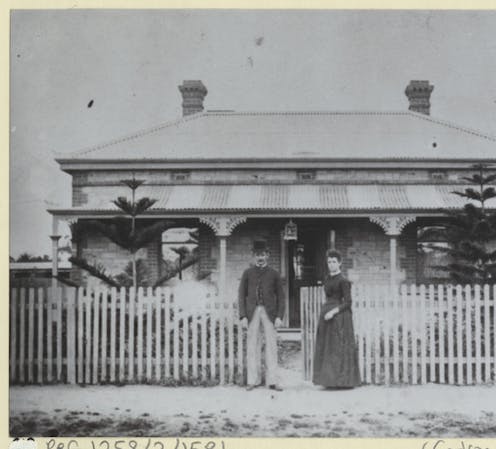
A couple outside a police station on the river flats at Morgan, South Australia, c 1890.State Library of South Australia
This year marks a significant milestone for women in policing: the 125th anniversary of the first official recognition of a police matron in Australia.
However, women worked in this role for at least 50 years before receiving official recognition.
Known as “police matrons”, these women opened the door for other women to move into the police force as officers, yet their role is still unrecognised or dismissed as an extension of her husband’s policing duties.
While many Australians will have never heard of them, they were trailblazers for women in law enforcement.
During the Victorian era, it was considered inappropriate for men to touch a woman who was not their wife or an immediate family member. This made men policing women (at least of certain social classes) difficult, particularly if they needed to search a female suspect. To get around this, police began to call on women to search arrestees for them.
Initially, these might have been whoever was nearby – a woman living near the police station, for example. But quickly it was recognised that a “female touch” was also helpful for comforting lost children, talking to female victims of crime, and occasionally soothing an unruly male arrestee. Neighbourhood women were not viewed as entirely suited for these more complex roles, but the wives of police officers were.
In Australia, the United States and the United Kingdom, early police stations had both temporary holding cells (a lock-up) and a residence for a police officer. The officer living on site was frequently married – these women became police matrons.
Police matrons in the Victorian era searched female offenders, were responsible for lost or arrested children, kept watch over mentally unwell inmates, and occasionally allowed families facing violence at home to stay in the station.
They also performed tasks we would not generally associate with the work of a police officer. They cleaned and maintained the cells, mended clothes, and hosted clothing drives for the poor. The police stations sometimes doubled as neighbourhood medical centres. These were all tasks that fell to the police matron. They fit within assumptions of the period regarding the natural, nurturing role of women.
Discrimination leading to innovation
Because these tasks were viewed as “naturally” women’s work, questions regarding compensation were skirted. For decades, these were not formal appointments. The matrons were not sworn in, they did not have access to a police pension, and they did not have any authority over male inmates (or male officers).
A few received a modest stipend based on the number of searches they conducted or if they performed an extended psychiatric watch. These matrons would be on-call 24 hours a day, and diaries kept by early matrons show the long hours they kept. Yet their activities were viewed as an extension of their husband’s role, not requiring separate pay.
These women did not go on patrol or have powers to arrest. But there is evidence that police matrons performed tasks that align with current approaches to policing.
For example, a key role of male police in the early Victorian era was to prevent crime by being out in the community: an officer’s presence alone would often deter offending.
Police matrons rarely worked outside of the station, but they did get to know the needs of their community and tried to identify causes of crime. They became advocates, trying to address what they saw as the root causes of crime: excessive consumption of alcohol leading to the violent breakdown of families. Matrons advocated for increased regulation of alcohol and for stations to provide sanctuary for domestic violence victims.
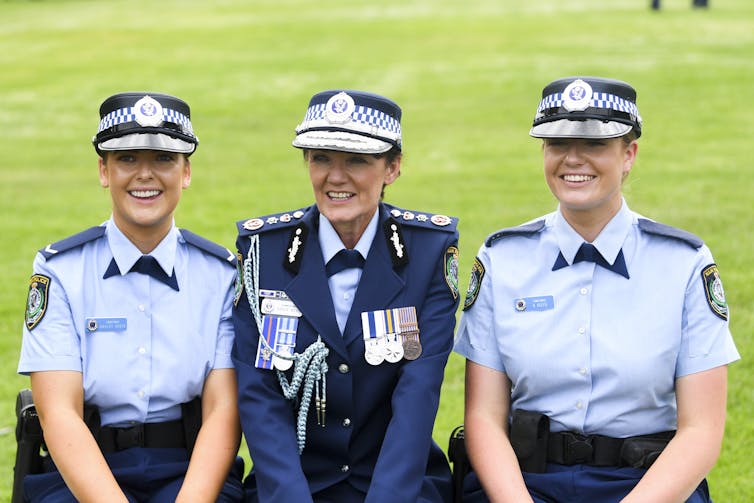
Police matrons paved the way for women to become police officers, and eventually achieve the highest ranks. Lukas Coch/AAP
Today, these efforts would be understood as forms of problem-orientated policing: identifying a problem in a community and working with the community to devise solutions for the underlying causes of crime. We cannot go as far as claiming that police matrons started the movement towards problem-orientated policing. But we can recognise that they predated today’s “best practice in policing” model by roughly 150 years.
Though we know police matrons were working in this field in the mid-1800s, and gained a degree of official recognition in the 1890s, it was not until 1915 that the New South Wales Police Department advertised two positions for women police officers.
These two positions attracted nearly 500 applications. The first two female police officers in NSW were not allowed to wear a uniform and had to sign a waiver releasing the police department of any responsibility for their safety. Their tasks were similar to police matrons – they were responsible for women and children that came in contact with the criminal justice system. It wasn’t until 1979 that female officers in Australia could carry a firearm, though they were required to keep it in their handbag.
Today, women make up over 30% of police in Australia and have reached the highest ranks as police commissioners. Although Australians may not know much about the early police matrons, it was they who, more than 100 years ago, paved the way for all this to happen.
Alice Neikirk does not work for, consult, own shares in or receive funding from any company or organisation that would benefit from this article, and has disclosed no relevant affiliations beyond their academic appointment.
“Baby shark doo-doo doo-doo doo-doo, baby shark doo-doo doo-doo doo-doo …” If you’re the parent of a young child, you’re probably painfully familiar with this infectious song, which now has more than 13 billion views on YouTube.
The Baby Shark song, released in 2016, has got hordes of us singing along, but how much do you really know about baby sharks? Do you know how a baby shark is born, or how it survives to become an apex predator?
I study coastal marine ecology. I believe baby sharks are truly fascinating, and I hope greater public knowledge about these creatures will help protect them in the wild.
So sink your teeth into this Q&A on the weird and wonderful world of baby sharks.
How are baby sharks conceived and born?
To the human eye, shark courtship practices may seem barbaric. Males typically attract the attention of a female by biting her. If successful, this is generally followed by even toothier bites to hold on during copulation. Females can carry the scars of these encounters long after the mating season is over.
The act of copulation itself is comparable to that of humans. The male inserts its sexual organ, known as a “clasper”, into the female and releases sperm to fertilise the eggs.
However, in extremely rare cases, sharks can reproduce asexually – in other words, embryos develop without being fertilised. This occurred at a Queensland aquarium in 2016, when a zebra shark gave birth to a litter of pups despite not having had the chance to mate in several years.
Sharks give birth in a variety of ways. Some species produce live pups, which swim away to fend for themselves as soon as they’re born. Others hatch from eggs outside the mother’s body. Remnants of these egg cases have been found washed up on beaches across the world.
How big is a litter of shark pups?
Litter size across sharks varies considerably. For example, the grey nurse shark starts with several embryos but only two are born. This is because the embryos actually eat each other while in utero! This leaves only one survivor in each of the mother’s two uteruses.
Intrauterine cannibalism may seem disturbing but is nature’s way of ensuring that the strongest pups get the best chance of survival.
In contrast, other species such as the whale shark use a completely different strategy to ensure some of their offspring survive: having hundreds of pups in a single litter.
Where do baby sharks live?
The open ocean is a dangerous place. That’s why pregnant female sharks often give birth in shallow coastal waters known as “nurseries”. There, baby sharks are better protected from harsh environmental conditions and roaming predators, including other sharks.
Sites for shark nurseries include river mouths, estuaries, mangrove forests and coral reef flats.
For example, the white shark has established nursery grounds along the east coast of Australia, where babies may remain for several years before moving to deeper waters.
Although most types of sharks are confined to saltwater, the bull shark can live in freshwater habitats. Bull shark pups born near river mouths and estuaries often migrate upstream (sometimes vast distances inland) to escape being preyed upon.
Baby sharks are often born in ‘nurseries’ – shallow coastal waters where food is plentiful and ocean predators are less likely. Shutterstock
When are baby sharks born?
Sharks, like most animals in the wild, generally give birth during periods that provide favourable conditions for their offspring.
In Australia, for example, scalloped hammerheads and bull sharks tend to breed in the wet summer months when nursery grounds are warmer and there are rich feeding opportunities.
How long do baby sharks take to grow up?
Sharks grow remarkably slowly compared to other fish and remain juveniles for a long time. Although some species mature in a few years, most take considerably longer.
Take the Greenland shark – the world’s longest living shark. It can live to at least 250 years and according to recent research, it’s thought to take more than a century to reach sexual maturity.
While small, sharks must eat or be eaten – all the while enduring the elements and finding enough food to survive and grow.
Yet there is another challenge: humans. In fact, we are the greatest threat to sharks.
Shark nurseries are heavily concentrated in coastal zones, and often overlap with human activities such as fishing, boating and coastal development. And because sharks grow so slowly, they are particularly to vulnerable to overfishing because when populations decline, they can take a long time to bounce back.
Much more to learn
Scientists are still working to understand the life cycles of the 500-plus species of sharks in our oceans. Each time I hear the song Baby Shark, it reminds me there’s a lot more work to do.
It’s crucial to keep monitoring and studying these baby wonders of the deep, to ensure shark populations survive and we maintain the delicate balance of our underwater ecosystems.
Jaelen Nicole Myers receives funding from James Cook University, the Ecological Society of Australia, and the Royal Zoological Society of New South Wales.
Documentary photographers have traditionally aspired to tell other people’s stories. For 15 years, artist Raphaela Rosella and the women close to her have forged their own complex visual narratives, despite frequent interventions by the criminal justice system.
Rosella is an Italian-Australian documentary artist devoted to long-term, socially engaged collaborative projects made with participants from Nimbin, Casino, Lismore and Moree in regional New South Wales.
Aware that photographs can enable stereotypes and mislead viewers, she decided early in her career the people she photographed should be given ongoing control of their representation. This means active collaboration in making images and a body of work, as well as continually seeking consent if sharing it with an audience.
Rosella and her co-creators have sought to reclaim and counteract the narratives formed by state records, instead telling stories of the love they feel for family and the challenges they’ve faced: both together and when separated by the geography of prison custody.
Rosella is close to the women she works with, and knows they have been routinely marginalised and denied freedoms.
Some of the audio-visual archive was produced by participants while imprisoned, in response to a legal system that confronted them at a young age. The women see their collaborative work as a “site of resistance” where they can detach their identities from the procedures and labels imposed by bureaucracy.
Rather than granting sole storytelling agency to one artist or organisation, these women take a central role in communicating their own histories and perspectives.
The show feels like being welcomed into someone’s home: there are fabric curtains, handwritten cards, family photos, the reassuring sound of nearby voices.
This warm familiarity contrasts with the dehumanising language of the official documents on display: “At no time are photographs to be taken of the inmate”.
Each section of the exhibition is accompanied by a short text that reads like the opening lines of a personal letter. We’re entrusted with intimate moments and heartfelt correspondence. There are no image titles or dates on most of the photographs or videos, as if in defiance of the classificatory legal papers interwoven throughout.
The first image we see as we enter is a portrait coauthored by Kamilaroi/Biripi woman Nunjul Townsend. She meets our gaze with an intensity of emotion that reflects the profound bond she has with friend and artistic partner Rosella.
Next to it, a tenderly made photograph of Nunjul and her young son embracing is placed inside a sterile grid of blank “statement of truth” court documents.
The juxtaposition is moving: love between mother and son can’t be reduced to written transcripts – or even captured by a camera. But throughout the show the kinship that connects the group is palpable.
Crucial questions
Each participant has an individual curated space within the gallery, including Rosella and her identical twin. Rosella doesn’t shy away from revealing her own story to the viewer in self-portaits, video and wall text, or reflecting critically on her process (“the camera was enabling your addiction”).
Many of the people whose lives we engage with in the show are Aboriginal, and all have been impacted by violence.
One participant, Tammara, was killed in 2020 after the pair had been working together for a decade. An image of an empty Jim Beam bottle embedded in a wall speaks of the terror of domestic violence that is so sickeningly incessant in Australia.
The space dedicated to Kathleen “Rowrow” Duncan is one of the most affecting. Wall text and a small, handwritten note from mother to her newborn baby tell us that Rowrow is under prison guard. She has given birth and will soon return to a cell.
The majority of this space, from floor to wall, is filled by a transcript that maps Rowrow’s transfers from prison to prison over four years. I counted 30 relocations. It’s hard to imagine the effect this would have on a person’s sense of home; or hope.
In a note Rosella has written to co-creator Tricia, Rosella laments how Tricia’s partner had only “spent three of his birthdays on the outside since he was nine”.
One large wall in the exhibition is filled from floor to ceiling with a mosaic of photos, contact sheets, handwritten notes, drawings, redacted documents and letters (many of them posted from behind bars). Formal portraits are assembled alongside childrens’ drawings and intimate correspondence.
There is no visual hierarchy in the installation: each element speaks of a life, a shared experience, a human connection.
Documentary photographers have historically sought to reveal problems and inequalities in the world, fuelled by a desire to provoke change.
Lewis Hine famously played a role in reforming child labour laws in the USA through his images of young children at work. Visual storytellers are documenting the effects of climate change.
But documentary practice has been criticised by scholars for benefiting privileged photographers and institutions too often, advancing careers under the guise of concerned activism at the expense of their subjects.
Rosella, by contrast, engages in a genuine collaborative dialogue. Exhibition and publication are not the driving force.
This project is a rare example of artwork catalysing practical change. These photographs have been used to influence legal outcomes like the length of jail sentences and granting of parole. The voices of participants are heard and preserved.
The final room of the exhibition contains HOMEtruths, an immersive three channel video installation that intercuts home movies from the collaborators with cinematic depictions of family and Country.
It is an absorbing, hope-affirming work that highlights connection to loved ones and significant places across generations. We experience the ancient landscape the artists are part of. Newborn lives engender fresh optimism.
You’ll Know It When You Feel It is at the Institute of Modern Art, Brisbane, until August 19.
Tom Williams does not work for, consult, own shares in or receive funding from any company or organisation that would benefit from this article, and has disclosed no relevant affiliations beyond their academic appointment.
Source: The Conversation (Au and NZ) – By Catherine Ordway, Associate Professor Sport Management and Sport Integrity Lead, University of Canberra
As the Women’s World Cup grows in size and stature, it’s not surprising concerns are also being raised about match-fixing and the integrity of the sport.
Women’s sport has traditionally not been considered high risk when it comes to match-fixing for a few reasons, including the few gambling options available to punters.
For example, when Australia hosted the men’s AFC Asian Cup and Cricket World Cup in 2015, the Australian Federal Police laid out plans for countering the risk of organised crime infiltration and match-fixing. The women’s Netball World Cup, which also took place in Australia that year, did not feature in its preparations because it was deemed “low risk”.
By the time the FIFA Women’s World Cup was held in France in 2019, however, the football governing body was not taking any chances. It established a monitoring hub for the tournament and worked with Interpol, the French police, France’s betting regulator and financial crime prosecutors to develop the best strategies for preventing any match-fixing incidents.
A similar task force has been set up for this year’s Women’s World Cup in Australia and New Zealand, including the FBI, Interpol, the UN Office on Drugs and Crime, Sport Integrity Australia, the New Zealand Police and Sportradar, a sport betting data provider.
As sports lawyer Laura Douglas warned in a 2016 analysis on match-fixing, the increasing commercialisation and globalisation of women’s sport – coupled with the poor pay and lack of other support services offered to players – has created a powder keg waiting to explode.
Gambling companies are not only increasingly taking bets on women’s professional sports – millions were wagered on matches at the 2019 Women’s World Cup – but also in community-level sporting events and competitions involving minors.
Sportradar, which provides betting data to bookmakers and analyses the betting markets for potential match-fixing, found that half the suspicious cases it identified in domestic leagues in 2021 came from third-tier leagues or lower, including regional and youth football. The report said:
Many of these competitions lack key integrity protections like bet monitoring and athlete education, making them vulnerable targets for match-fixers.
Pay disputes in women’s football
The most vulnerable athletes are those who are not paid a fair wage or in a timely manner. Unfortunately, in women’s football, this is a major problem.
For this year’s World Cup, several members of the Nigerian women’s team, the Super Falcons, were contemplating a boycott of their first match due to a pay dispute.
The team had previously protested at the 2019 Women’s World Cup and last year’s Africa Cup of Nations over payments the players said they were owed by the federation.
The coach, Randy Waldrum, had also accused the Nigerian Football Federation of not properly supporting the team and interfering in his squad selections.
Nigeria’s opponent in its opening game, Canada, was also involved in a pay dispute with its federation, as were Jamaica and South Africa.
Why collective bargaining agreements are key
In 2015, the Australian women’s team, the Matildas, went on strike in an effort to increase the minimum wage they were paid and improve conditions for the national team (and later national league players).
It took another four years before the Professional Footballers Australia, the players’ union, and Football Australia were able to sign a new collective bargaining agreement, which would guarantee an equal split of all commercial revenue between the men’s and women’s national teams.
However, the Professional Footballers Australia has chosen not to follow the US model of pooling the prize money offered at the World Cup and dividing it equally among the men’s and women’s teams. The union believes this won’t address the inequity created by FIFA, which it could right with a stroke of the pen. (Prize money at the current Women’s World Cup has increased substantially, but is still a quarter what the men received at the 2022 men’s World Cup.)
Changing the culture within FIFA might be a challenge. One high-ranking football official, FIFA vice president Alejandro Dominguez, is quoted as saying he “doesn’t believe in equal pay” at the Women’s World Cup.
There was some progress at this year’s World Cup, though, with FIFA agreeing to pay all players at least US$30,000 individually.
The Matildas, together with the Australian players’ union, are now calling on FIFA to increase its resourcing for women’s football around the globe. They have particularly highlighted the need for union representation and collective bargaining agreements that guarantee minimum standards and pay.
And for its part, FIFA should be demanding accountability from its member federations on how the money it gives each country is used to support women’s football.
Nearly a decade ago, I argued that creating a stronger culture around integrity in sport will produce a better product on the field. Players will be less vulnerable to bribery, removing the temptation to deliberately throw a game.
Teams need to take a “winning well” approach, similar to the one adopted by the Australian Institute of Sport, which replaces the purely economic devaluation of athletes as “assets” with a more humanistic and inclusive approach that focuses on wellbeing and ethics of care.
If these recommendations are implemented internationally, it will go a long way to supporting the women’s game and strengthening integrity.
Catherine Ordway has previously held voluntary roles with Capital Football and Women Onside, helping to draft submissions as part of the Congress Review Working Group. She has also advised Football Australia in a legal capacity.
Respiratory viruses like influenza virus (flu), SARS-CoV-2 (which causes COVID) and respiratory syncytial virus (RSV) can make us sick by infecting our respiratory system, including the nose, upper airways and lungs.
They spread from person to person through respiratory droplets when someone coughs, sneezes, or talks and can cause death in serious cases.
But what happens in our body when we first encounter these viruses? Our immune system uses a number of strategies to fight off viral infections. Let’s look at how it does this.
First line of defence
When we encounter respiratory viruses, the first line of defence is the physical and chemical barriers in our nose, upper airways, and lungs. Barriers like the mucus lining and hair-like structures on the surface of cells, work together to trap and remove viruses before they can reach deeper into our respiratory system.
Our defence also includes our behaviours such as coughing or sneezing. When we blow our nose, the mucus, viruses, and any other pathogens that are caught within it are expelled.
But sometimes, viruses manage to evade these initial barriers and sneak into our respiratory system. This activates the cells of our innate immune system.
Sneezing and blowing our nose can help expel the virus. Shutterstock
Patrolling for potential invaders
While our acquired immune system develops over time, our innate immune system is present at birth. It generates “non-specific” immunity by identifying what’s foreign. The cells of innate immunity act like a patrol system, searching for any invaders. These innate cells patrol almost every part of our body, from our skin to our nose, lungs and even internal organs.
Our respiratory system has different type of innate cells such – as macrophages, neutrophils and natural killer cells – which patrol in our body looking for intruders. If they recognise anything foreign, in this case a virus, they will initiate an attack response.
Each cell type plays a slightly different role. Macrophages, for example, will not only engulf and digest viruses (phagocytosis) but also release a cocktail of different molecules (cytokines) that will warn and recruit other cells to fight against the danger.
In the meantime, natural killer cells, aptly named, attack infected cells, and stop viruses from multiplying and invading our body further.
Natural killer cells also promote inflammation, a crucial part of the immune response. It helps to recruit more immune cells to the site of infection, enhances blood flow, and increases the permeability of blood vessels, allowing immune cells to reach the infected tissues.
At this stage, our immune system is fighting a war against viruses and the result can cause inflammation, fevers, coughs and congestion.
Launching a specific attack
As the innate immune response begins, another branch of the immune system called the adaptive immune system is activated.
The adaptive immune system is more specific than the innate immune system, and it decides on the correct tools and strategy to fight off the viral invaders. This system plays a vital role in eliminating the virus and providing long-term protection against future infections.
Specialised cells called T cells and B cells are key players in acquired immunity.
T cells (specifically, helper T cells and cytotoxic T cells) recognise viral proteins on the surface of infected cells:
B cells produce antibodies, which are proteins that can bind to viruses, neutralise them, and mark them for destruction by other immune cells.
B cells are a critical part of memory in our immune system. They will remember what happened and won’t forget for years. When the same virus attacks again, B cells will be ready to fight it off and will neutralise it faster and better.
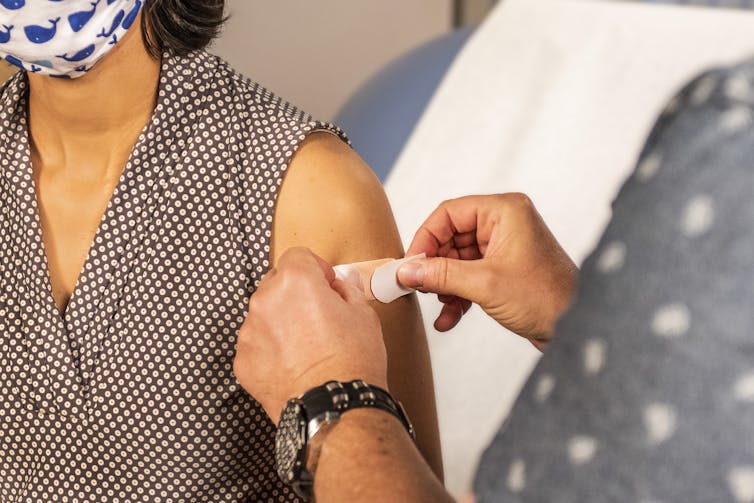
Thanks to the adaptive immune system, vaccines for respiratory viruses such as the COVID mRNA vaccine keep us protected from being sick or severely ill. However, if the same virus became mutated, our immune system will act as if it was a new virus and will have to fight in a war again.
Vaccines help us generate an immune response to viruses we’re immunised against. CDC/Unsplash
Neutralising the threat
As the immune response progresses, the combined efforts of the innate and adaptive immune systems helps control the virus. Infected cells are cleared, and the virus is neutralised and eliminated from the body.
As the infection subsides, symptoms gradually improve, and we begin to feel better and to recover.
But recovery varies depending on the specific virus and us as individuals. Some respiratory viruses, like rhinoviruses which cause the common cold, may cause relatively mild symptoms and a quick recovery. Others, like the flu, SARS-CoV-2 or severe cases of RSV, may lead to more severe symptoms and a longer recovery time.
Some viruses are very strong and too fast sometimes so that our immune system does not have the time to develop a proper immune response to fight them off.
Wesley Freppel does not work for, consult, own shares in or receive funding from any company or organisation that would benefit from this article, and has disclosed no relevant affiliations beyond their academic appointment.
Australians are living and working longer, but a longer working life doesn’t always come with equivalent gains in healthy life.
Our analysis of change in life expectancy, health transitions and working patterns of more than 10,000 middle-aged Australians over the past two decades shows divergences in the number of years they can expect be in good health at work and in retirement.
In particular, education matters.
Those who left school before year 12 are losing years of healthy life, with their extra years in the workforce mainly comprising years of poor health. This is opposite to the trend among people who completed high school.
And while men and women experienced improvements in life expectancy, on average women are not gaining extra healthy life years.
Australians are being encouraged to extend their working life. For this to be sustainable and equitable, government and workplaces policies will need to make allowances for the health capacity of mature-age workers.
How we found our results
We’ve calculated healthy working life expectancies – the average number of years a person can expect to work in good health – for 50-year-olds using data from the Household, Income and Labour Dynamics in Australia (HILDA) survey. This is a longitudinal survey, meaning it seeks to interview the same households every year (about 17,000 people), enabling researchers to track life trajectories.
We identified two age groups within HILDA’s survey sample and followed each cohort for 10 years. The first group was 4,951 people aged 50 years and older in 2001. The second group was 6,589 people aged 50 years and older in 2011.
To estimate a healthy working life expectancy, we looked at how people transitioned in and out of good health and employment each year (based on survey data about their paid employment and long-term health conditions that limited participation in everyday activities).
By combining this with deaths data, we have calculated the average duration spent (i) working in good health, (ii) working in poor health, (iii) retired in good health, and (iv) retired in poor health.
The following graphs show our results, based on expectancies at age 50.
We show our data in this way, rather than total healthy life and working life expectancies from birth, because we followed people from age 50 and is this is the time from which workers start to plan for and transition into retirement.
Typically we understand life expectancies to be calculated from birth, but they can be estimated for any age. If you live to 50, your life expectancy is greater than when you were born.
Our first graph shows healthy life expectancies according to school completion. These estimates reflect the cumulative number of years a person will, on average, be healthy or unhealthy from age 50.
Across the two cohorts, those with low education lose 0.8 years of healthy life, while those with high education gain 0.8 years of healthy life.
As with all statistics, there is uncertainty in these estimates. (Our original analysis includes 95% confidence intervals but we do not show them here.)
These inequities are amplified in working-life expectancies, as the next graph shows. Among early school leavers, at age 50 healthy work years rose from 7.9 to 8.4 years, an increase of six months. But their years working in poor health rose from 2.7 to 3.6 years, a difference of 11 months.
In contrast, for those who completed year 12, at age 50 healthy work years rose from 9.6 to 10.5 years, an increase of 11 months. Their years working in poor health rose from 3.1 to 3.5 years, a difference of five months.
The next graph illustrates what this means in proportional terms.
The next graph shows working life expectancies by sex. Men, on average, will spend 25% of their remaining working years in poor health, and women 24%. These percentages have not changed over time.
These findings are consistent with previous analyses demonstrating social inequalities in health expectancies to have been maintained over time, and possibly widened in some circumstances. In that study, women with low educational attainment appeared to have had negligible improvements in life expectancy and lost healthy life years.
Implications for governments and employers
Australia has this month raised the age at which people qualify for the age pension to 67.
When the pension was introduced in 1908, the qualifying age was 65 for men and 60 for women. At the time, average life expectancy for Australians at birth was about 55 for men and 59 for women. Now it exceeds 81 for men and 85 for women (though is considerably lower for some groups, notably Indigenous Australians).
There’s an obvious rationale to prolong people’s working lives – to meet the challenges posed by population ageing and sustain the social security system. Nevertheless, consideration should be made for inequalities in life expectancy and health expectancy. For many ageing workers, health limitations constrain their capacity and opportunity to work.
To achieve longer working lives, workplaces will be need become more supportive of mature-age workers, including accommodating long-term health conditions.
This will likely involve addressing ageism in the workplace, increasing employer demand for older workers, creating appropriate work roles to fit the capacities and preferences of older workers, and providing pathways to lifelong education and training.
We may also need to rethink our idea of flexible work, which has largely centred around the needs of parents and younger workers. Many older workers will have expectations for an independent and active retirement period, and it should be possible for flexible work arrangements to accommodate this.
Finally, we should not discount the unpaid contributions made by many older adults through community service and providing care to loved ones.
Kim Kiely receives funding from the Australian Research Council (ARC) and the National Health and Medical Research Council (NHMRC). He is also a member of the Australian Association of Gerontology
Mitiku Hambisa is a member of several global and local public health and ageing-related organisations, including the Australian Association of Gerontology (AAG), the International Epidemiological Association (IEA), and the Global Burden of Disease (GBD) study network collaborator. He is also a life member of the Ethiopian Public Health Association (EPHA).
Sinéad O’Connor was well known for her deeply emotional voice, her outspoken stance on political issues – especially her critique of the Catholic Church – and her explorations of spiritualism and religion, but what I want to talk about, mostly, was her extraordinary songwriting.
O’Connor’s first two albums The Lion and the Cobra (1987) and I Do Not Want What I Have Not Got (1990) made a huge impression on me when I was just starting to get into music and songwriting in my last year of high school.
I cottoned onto these records a bit late (I was in Year 12 in 1993) but sometimes quality things take a while to filter through to suburban teenage Australian minds. Those records cut right through the other stuff I was listening to: guitar bands with men mostly.
O’Connor’s music was different.
Here was music that focused right in on the voice and the lyrics. Music that told stories full of detail and delivered with sadness and tenderness and anger.
O’Connor was a visionary and a truth-teller. But she was also an important songwriter. She was a highly thoughtful and supple artist who was able to craft songs that combined observational detail, emotional heft and an ethical conscience.
Her songs always felt personal, rather than preachy.
I think I probably first heard O’Connor because a girl at my school would play the song Troy on guitar and it was amazing. Troy was the first single from the first album, but did not become a huge hit.
But it was always a cult favourite – a six minute micro-opus about the end of a relationship – with the kind of opening that put you right there in the moment:
I remember it
Dublin in a rainstorm
Sitting in a long grass in summer
Keeping warm.
And then the allusion to epic Greek myth. What was this!?
On Troy, O’Connor’s amazing voice was so apparent. Tender and lilting at the beginning with shades of traditional Irish folk singing, and then, out of the blue, shockingly angry.
I don’t think any other singer-songwriter performed anger so well. It was captivating and cathartic.
I suppose I must have seen the video for Nothing Compares 2 U around this time – it was everywhere – but really it was some of the other songs on her second album that connected with me. Especially the songwriting.
The Last Day of Our Acquaintance was just such vivid, plain writing:
This is the last day of our acquaintance
I’ll meet you later in somebody’s office
Very adult stuff for a 17-year-old, but I think that was also part of the appeal. This seemed like serious, grown-up songwriting, full of a particular kind of passion.
Also, it was just two chords so I could learn how to play it.
Black Boys on Mopeds managed to weave political commentary into something much more personal. The song addressed police brutality aimed at black British youth, but connected this to both global politics and issues closer to home in Ireland.
Margaret Thatcher on TV
Shocked by the deaths that took place in Beijing
It seems strange that she should be offended
The same orders are given by her.
O’Connor’s ability to contrast the personal detail with big picture politics was second to none and such a fine feature of her songwriting.
Emperor’s New Clothes rocked more, and became one of her better-known, radio-friendly songs, but was still full of great observant songwriting that resonated so much. “How could I possibly know what I want when I was only 21?” she sang.
I learnt to play these songs, and would play them all the time. They were an amazing education.
What connects these songs as a whole is their attention to detail and their compelling combination of fury and sadness, something that runs through the early period of her music.
Courage and insight
It was later, as I grew older, that I realised how extra-remarkable O’Connor’s achievements were given that she was an outspoken woman and an original thinker dealing with oppressive double standards and sexism.
She was so often dismissed by commentators as mad, rather than respected for her courage and insight.
As we know now, she was completely right about the things she spoke up about. In 1992 on Saturday Night Live she tore up a photo of the Pope in protest of the sexual abuse perpetrated and protected by the Catholic Church. It was highly prescient.
Watching that SNL video now, it is so striking how brave she is. Her critique of religion and politics and her later explorations of Islam and Rastafarianism showed her seeking, questioning mind. Just as her songs do.
O’Connor went on to make eight more very diverse albums, including interpretations of traditional Irish folk music and classic roots reggae music. Her singing voice and her political voice should be remembered and celebrated, as should her peerless songwriting.
In a way to process this heartbreaking news, I am spinning her records today and revelling in the power and magic of her songs and singing.
Toby Martin does not work for, consult, own shares in or receive funding from any company or organisation that would benefit from this article, and has disclosed no relevant affiliations beyond their academic appointment.
New Zealand Parliament Buildings, Wellington, New Zealand.
New Zealand Politics Daily is a collation of the most prominent issues being discussed in New Zealand. It is edited by Dr Bryce Edwards of The Democracy Project.
Image Credit: Giovanni Strona and Oksana Dobrovolska 2023 CC-BY-SA
Source: The Conversation (Au and NZ) – By Corey J. A. Bradshaw, Matthew Flinders Professor of Global Ecology and Models Theme Leader for the ARC Centre of Excellence for Australian Biodiversity and Heritage, Flinders University.
Science fiction is rife with fanciful tales of deadly organisms emerging from the ice and wreaking havoc on unsuspecting human victims.
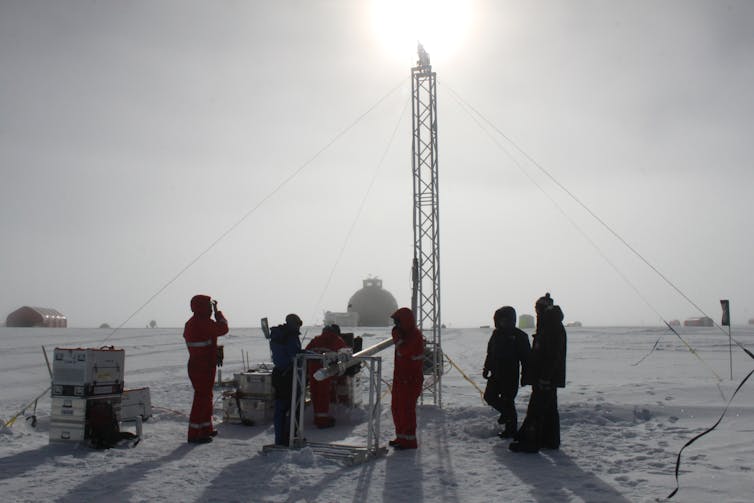
But just how far-fetched is it? Could pathogens that were once common on Earth – but frozen for millennia in glaciers, ice caps and permafrost – emerge from the melting ice to lay waste to modern ecosystems? The potential is, in fact, quite real.
In 2014, a giant “zombie” Pithovirus sibericum virus was revived from 30,000-year-old Siberian permafrost.
And in 2016, an outbreak of anthrax (a disease caused by the bacterium Bacillus anthracis) in western Siberia was attributed to the rapid thawing of B. anthracis spores in permafrost. It killed thousands of reindeer and affected dozens of people.
Bacillus anthracis is a soil bacterium that causes anthrax. William A. Clark/USCDCP
More recently, scientists found remarkable genetic compatibility between viruses isolated from lake sediments in the high Arctic and potential living hosts.
Earth’s climate is warming at a spectacular rate, and up to four times faster in colder regions such as the Arctic. Estimates suggest we can expect four sextillion (4,000,000,000,000,000,000,000) microorganisms to be released from ice melt each year. This is about the same as the estimated number of stars in the universe.
However, despite the unfathomably large number of microorganisms being released from melting ice (including pathogens that can potentially infect modern species), no one has been able to estimate the risk this poses to modern ecosystems.
In a new study published today in the journal PLOS Computational Biology, we calculated the ecological risks posed by the release of unpredictable ancient viruses.
Our simulations show that 1% of simulated releases of just one dormant pathogen could cause major environmental damage and the widespread loss of host organisms around the world.
Melt water carving a glacier in the Himalayas of India. Sharada Prasad
Digital worlds
We used a software called Avida to run experiments that simulated the release of one type of ancient pathogen into modern biological communities.
We then measured the impacts of this invading pathogen on the diversity of modern host bacteria in thousands of simulations, and compared these to simulations where no invasion occurred.
The invading pathogens often survived and evolved in the simulated modern world. About 3% of the time the pathogen became dominant in the new environment, in which case they were very likely to cause losses to modern host diversity.
In the worst- (but still entirely plausible) case scenario, the invasion reduced the size of its host community by 30% when compared to controls.
The risk from this small fraction of pathogens might seem small, but keep in mind these are the results of releasing just one particular pathogen in simulated environments. With the sheer number of ancient microbes being released in the real world, such outbreaks represent a substantial danger.
Our findings suggest this unpredictable threat which has so far been confined to science fiction could become a powerful driver of ecological change.
While we didn’t model the potential risk to humans, the fact that “time-travelling” pathogens could become established and severely degrade a host community is already worrisome.
Drilling ice cores in Greenland. Helle Astrid Kjær
We highlight yet another source of potential species extinction in the modern era – one which even our worst-case extinction models do not include. As a society, we need to understand the potential risks so we can prepare for them.
Notable viruses such as SARS-CoV-2, Ebola and HIV were likely transmitted to humans via contact with other animal hosts. So it is plausible that a once ice-bound virus could enter the human population via a zoonotic pathway.
While the likelihood of a pathogen emerging from melting ice and causing catastrophic extinctions is low, our results show this is no longer a fantasy for which we shouldn’t prepare.
Corey J. A. Bradshaw receives funding from the Australian Research Council.
Giovanni Strona does not work for, consult, own shares in or receive funding from any company or organisation that would benefit from this article, and has disclosed no relevant affiliations beyond their academic appointment.
Source: The Conversation (Au and NZ) – By Galyna Piskorska, Honorary Senior Fellow at the Advanced Centre for Journalism, University of Melbourne,Associate Professor, Department of Advertising and Public Relations, Faculty of Journalism, Borys Grinchenko Kyiv University (Ukraine), The University of Melbourne
I was running from my home in Kyiv as the Russian army occupied Bucha, Gostomel and Irpin in the early stages of its invasion of Ukraine in 2022.
By accident, I was leaving in a bus that a nearby international school was using to evacuate its students and staff. We drove for a long time, spending nights in bomb shelters with young people and their kids from China, the Middle East and India who had been studying and working in Ukraine.
When the war broke out, Ukraine was hosting tens of thousands of students from the Global South and was generally viewed as a partner in many countries.
But the war disrupted everything, including public opinion in many of these same countries. Now, Ukraine is struggling to gain support in the Global South, which has shown ambivalence about the invasion and been reticent to cut off ties with Russia.
Differences of opinion
After the February 2022 invasion, Ukraine’s leaders tried to rally the world’s support by focusing on a narrative of fighting for democracy and decolonisation.
As Ukrainians, we see our country as a bastion of democratic values and oppose the totalitarianism taking root in Russia. At the same time, Ukraine perceives the war as a national liberation effort – freedom from centuries of colonial oppression by Russia and the Soviet Union and the enforced dominance of the Russian language.
While the democratic narrative continues to resonate strongly with Ukraine’s western allies, the decolonisation narrative appears to have made little impact outside Ukraine – particularly in the Global South.
Most countries in the Global South, which includes Africa, Latin America and much of Asia and Oceania, used to be ruled by colonial powers. But it is clear there is not much solidarity with Ukraine’s goal of decisively ending Russia’s colonial influence in the former Soviet republic.
In fact, Ukrainian researchers monitoring the news in the Global South have found many media outlets are instead broadcasting manipulative pro-Kremlin messages.
For instance, the researchers found the Russian claim that Ukraine was being run by Nazis had gained popularity in some countries.
Specifically, there were reports in the Brazilian media that the CIA had organised a “Nazi coup” in Ukraine in 2014, referring to the country’s Revolution of Dignity. One Indian publication went even further, spreading the message that “descendants of the Nazis” came to power in Ukraine after the Orange Revolution in 2004.
These messages are helping to drive public opinion. A global survey conducted one year into the war revealed a large gap between the West and “the rest” when it comes to views of Russia and how the war should end.
As foreign policy analyst Bobo Lo writes, few countries in the Global South are keen to see a “triumphant West”, even if they have misgivings about Russian President Vladimir Putin’s actions.
They would much rather a world where US and Western power is counterbalanced by other centres of influence. Smaller players would retain agency, preserve their political autonomy, and perhaps leverage great power rivalry to their advantage.
Why does so much of the Global South support Russia?
To be clear, attitudes toward the devastating war vary considerably across the Global South – the region is no monolith of public opinion. And most countries maintain the importance of safeguarding Ukraine’s existing borders.
However, opinion polls in places like China, India and Turkey show a clear preference for the war to end now – even if that means Ukraine having to give up territory.
Clear majorities in Indonesia, Turkey and India also favour maintaining diplomatic relations with Russia.
Many countries of the Global South have a deep-seated “non-aligned” tradition dating back to the Cold War. Their colonial history reinforces a skepticism about the West. Some have also pointed out the West’s hypocrisy in criticising Russia’s invasion of Ukraine, given the US and its allies waged disastrous wars in Iraq, Afghanistan and elsewhere.
The war in Ukraine has also widened the gap between the Global North and South and exposed their different priorities.
While Western leaders are concerned about Russia’s disruption of the liberal democratic order and the rise of China, much of the Global South is focused on economic and development challenges, such as debt relief, food security and climate mitigation.
Even when emerging powers agree with the West, they often maintain good relations with Russia and China. This is what Brazil is currently doing: President Luiz Inácio “Lula” da Silva advocates maintaining his country’s neutrality towards Ukraine and Russia in order to avoid “any involvement, even indirect” in the war. He has, however, acknowledged Russia “has been wrong” to invade a neighbouring country.
Many countries have also pursued their own interests in the face of geopolitical polarisation. Some depend on Russia for wheat, energy and military hardware, or on China for investment, credit and trade.
Specifically, Russia has established a significant presence in parts of Africa. The private military contractor Wagner is operating across the continent, and the Russian and Chinese militaries recently held joint exercises with South Africa.
African leaders are also meeting with Putin this week in St. Petersburg as part of the second Russia-Africa Summit. The first edition, held in 2019, resulted in 92 agreements and contracts worth over US$11 billion.
Ukraine is aware that its relationship with the Global South is weak. Kyiv has struggled to get its message across to countries on the African continent, in particular, where it has only 10 embassies – a mere quarter of the Russian presence.
Ukraine is now working on opening more embassies and appointing ambassadors across Africa.
Ukrainian President Volodymyr Zelensky has also identified the Global South as a priority in international relations. For instance, his foreign minister, Dmytro Kuleba, embarked this week on his third tour of African countries. The trip was seen as pivotal, with Russia pulling out of a deal to allow Ukraine to export its grain, which is hugely important to many African countries.
Last month, Zelensky also met with seven African leaders in Ukraine, where he stressed the need for “real peace” in the conflict and a complete withdrawal of Russian troops from Ukraine.
Zelensky has promised to do more to ensure food security in the Global South, for example, through the creation of grain hubs. He also noted Ukraine is ready to significantly expand educational programs for students from Africa.
But will this be enough to persuade the Global South to do more to support Ukraine in the war?
There was once a street in Kyiv named after the Congolese freedom fighter Patrice Lumumba. Lumumba was vital to Africa’s struggle for independence and the end of the colonial rule. Before he was brutally murdered, he wrote:
What we wanted for our country — its right to an honourable life, to perfect dignity, to independence with no restrictions.
Ukrainians can only hope other countries can see their shared aspirations for a fully decolonised world.
Galyna Piskorska does not work for, consult, own shares in or receive funding from any company or organisation that would benefit from this article, and has disclosed no relevant affiliations beyond their academic appointment.
J. Robert Oppenheimer – the great nuclear physicist, “father of the atomic bomb”, and now subject of a blockbuster biopic – always despaired about the nuclear arms race triggered by his creation.
So the approaching 78th anniversary of the Hiroshima bombing invites us to ask how far we’ve come – or haven’t come – since his death in 1967.
The Cold War represented all that Oppenheimer had feared. But at its end, then-US president George H.W. Bush spoke of a “peace dividend” that would see money saved from reduced defence budgets transferred into more socially productive enterprises.
Long-term benefits and rises in gross domestic product could have been substantial, according to modelling by the International Monetary Fund, especially for developing nations. Given the cost of global sustainable development – currently estimated at US$5 trillion to $7 trillion annually – this made perfect sense.
Unfortunately, that peace dividend is disappearing. The world is now spending at least $2.2 trillion annually on weapons and defence. Estimates are far from perfectly accurate, but it appears overall defence spending increased by 3.7% in real terms in 2022.
J. Robert Oppenheimer. Getty Images
The US alone spent $877 billion on defence in 2022 – 39% of the world total. With Russia ($86.4 billion) and China ($292 billion), the top three spenders account for 56% of global defence spending.
Military expenditure in Europe saw its steepest annual increase in at least 30 years. NATO countries and partners are all accelerating towards, or are already past, the 2% of GDP military spending target. The global arms bazaar is busier than ever.
Aside from the opportunity cost represented by these alarming figures, weak international law in crucial areas means current military spending is largely immune to effective regulation.
The new nuclear arms race
Although the world’s nuclear powers agree “a nuclear war cannot be won and must never be fought”, there are still about 12,500 nuclear warheads on the planet. This number is growing, and the power of those bombs is infinitely greater than the ones dropped on Hiroshima and Nagasaki.
According to the United Nations’ disarmament chief, the risk of nuclear war is greater than at any time since the end of the Cold War. The nine nuclear-armed states (Britain, France, India, Pakistan, North Korea and Israel, as well as the big three) all appear to be modernising their arsenals. Several deployed new nuclear-armed or nuclear-capable weapons systems in 2022.
The US is upgrading its “triad” of ground, air and submarine launched nukes, while Russia is reportedly working on submarine delivery of “doomsday” nuclear torpedoes capable of causing destructive tidal waves.
While Russia and the US possess about 90% of the world’s nuclear weapons, other countries are expanding quickly. China’s arsenal is projected to grow from 410 warheads in 2023 to maybe 1,000 by the end of this decade.
Only Russia and the US were subject to bilateral controls over the buildup of such weapons, but Russian president Vladimir Putin suspended the arrangement. Beyond the promise of non-proliferation, the other nuclear-armed countries are not subject to any other international controls, including relatively simple measures to prevent accidental nuclear war.
Other nations – those with hostile, belligerent and nuclear-armed neighbours showing no signs of disarming – must increasingly wonder why they should continue to show restraint and not develop their own nuclear deterrent capacities.
The threat of autonomous weaponry
Meanwhile, other potential military threats are also emerging – arguably with even less scrutiny or regulation than the world’s nuclear arsenals. In particular, artificial intelligence (AI) is sounding alarm bells.
AI is not without its benefits, but it also presents many risks when applied to weapons systems. There have been numerous warnings from developers about the unforeseeable consequences and potential existential threat posed by true digital intelligence. As the Centre for AI Safety put it:
Mitigating the risk of extinction from AI should be a global priority alongside other societal-scale risks such as pandemics and nuclear war.
More than 90 countries have called for a legally binding instrument to regulate AI technology, a position supported by the UN Secretary General, the International Committee of the Red Cross and many non-governmental organisations.
Similarly, there is a fundamental lack of regulation governing the growing number of laboratories capable of holding or making (accidentally or intentionally) harmful or fatal biological materials.
There are 51 known biosafety level-4 (BSL-4) labs in 27 countries – double the number that existed a decade ago. Another 18 BSL-4 labs are due to open in the next few years.
While these labs, and those at the next level down, generally maintain high safety standards, there is no mandatory obligation that they meet international standards or allow routine compliance inspections.
Finally, there are fears the World Health Organization’s new pandemic preparedness treaty, based on lessons from the COVID-19 disaster, is being watered down.
As with every potential future threat, it seems, international law and regulation are left scrambling to catch up with the march of technology – to govern what Oppenheimer called “the relations between science and common sense”.
Alexander Gillespie does not work for, consult, own shares in or receive funding from any company or organisation that would benefit from this article, and has disclosed no relevant affiliations beyond their academic appointment.
Many people know exercise reduces the risk of cancers, including liver, lung, breast and kidney. But structured exercise is time-consuming, requires significant commitment and often financial outlay or travel to a gym. These practicalities can make it infeasible for most adults.
There is very little research on the potential of incidental physical activity for reducing the risk of cancer. Incidental activities can include doing errands on foot, work-related activity or housework as part of daily routines. As such they do not require an extra time commitment, special equipment or any particular practical arrangements.
In our study out today, we explored the health potential of brief bursts of vigorous physical activities embedded into daily life. These could be short power walks to get to the bus or tram stop, stair climbing, carrying heavy shopping, active housework or energetic play with children.
Our new study included 22,398 UK Biobank participants who had never been diagnosed with cancer before and did not do any structured exercise in their leisure time. Around 55% of participants were female, with an average age of 62. Participants wore wrist activity trackers for a week. Such trackers monitor activity levels continuously and with a high level of detail throughout the day, allowing us to calculate how hard and exactly for how long people in the study were moving.
Participants’ activity and other information was then linked to future cancer registrations and other cancer-related health records for the next 6.7 years. This meant we could estimate the overall risk of cancer by different levels of what we call “vigorous intermittent lifestyle physical activity”, the incidental bursts of activity in everyday life. We also analysed separately a group of 13 cancer sites in the body with more established links to exercise, such such as breast, lung, liver, and bowel cancers.
Our analyses took into account other factors that influence cancer risk, such as age, smoking, diet, and alcohol habits.
What we found out
Even though study participants were not doing any structured exercise, about 94% recorded short bursts of vigorous activity. Some 92% of all bouts were done in very short bursts lasting up to one minute.
A minimum of around 3.5 minutes each day was associated with a 17–18% reduction in total cancer risk compared with not doing any such activity.
Half the participants did at least 4.5 minutes a day, associated with a 20–21% reduction in total cancer risk.
For cancers such as breast, lung and bowel cancers, which we know are impacted by the amount of exercise people do, the results were stronger and the risk reduction sharper. For example, a minimum of 3.5 minutes per a day of vigorous incidental activity reduced the risk of these cancers by 28–29%. At 4.5 minutes a day, these risks were reduced by 31–32%.
For both total cancer and those known to be linked to exercise, the results clearly show the benefits of doing day-to-day activities with gusto that makes you huff and puff.
Lots of people find it tough to make time for structured exercise. Shutterstock
The study is observational, meaning we looked at a group of people and their outcomes retrospectively and did not test new interventions. That means it cannot directly explore cause and effect with certainty.
However, we took several statistical measures to minimise the possibility those with the lowest levels of activity were not the unhealthiest, and hence the most likely to get cancer – a phenomenon called “reverse causation”.
Our study can’t explain the biological mechanisms of how vigorous intensity activity may reduce cancer risk. Previous early-stage trials show this type of activity leads to rapid improvements in heart and lung fitness.
There is very little research on incidental physical activity and cancer in general, because most of the scientific evidence on lifestyle health behaviours and cancer is based on questionnaires. This method doesn’t capture short bursts of activity and is very inaccurate for measuring the incidental activities of daily life.
So the field of vigorous intensity activity and cancer risk is at its infancy, despite some very promising recent findings that vigorous activity in short bouts across the week could cut health risks. In another recent study of ours, we found benefits from daily vigorous intermittent lifestyle activity on the risk of death overall and death from cancer or cardiovascular causes.
In a nutshell: get moving in your daily routine
Our study found 3 to 4 minutes of vigorous incidental activity each day is linked with decreased cancer risk. This is a very small amount of activity compared to current recommendations of 150–300 minutes of moderate intensity or 75–150 minutes of vigorous intensity activity a week.
Vigorous incidental physical activity is a promising avenue for cancer prevention among people unable or unmotivated to exercise in their leisure time.
Our study also highlights the potential of technology. These results are just a glimpse how wearables combined with machine learning – which our study used to identify brief bursts of vigorous activity – can reveal health benefits of unexplored aspects of our lives. The future potential impact of such technologies to prevent cancer and possibly a host of other conditions could be very large.
The authors do not work for, consult, own shares in or receive funding from any company or organisation that would benefit from this article, and have disclosed no relevant affiliations beyond their academic appointment.
Source: The Conversation (Au and NZ) – By Gregory Michael McCarthy, Emeritus Professor, School of Social Sciences, The University of Western Australia
When he released the Universities Accord interim report last week, Education Minister Jason Clare drew attention to the echidna on the front cover.
As he explained, he had asked the review team to be bold.
To offer up a few big spiky ideas. They took me at my word, hence the echidna on the front page.
Clare also says he wants the ideas in the report to the “pulled apart” as they are digested and debated. One of the spiky ideas he is referring to is a levy on international student fees.
But overhanging the whole accord debate is the spikiest question of all: increasing public funding for universities and academic research in a cost-of-living crisis.
What does the report say?
The report acknowledges many stakeholders have been arguing that research funding needs to be “put on a sounder and more predictable footing”. It also notes the current research grant system does not cover the full cost of research, with universities having to pick up the rest of the bill.
It says more consideration should be given to “moving over time” to ensure National Competitive Grants (funding via the Australian Research Council) cover the full cost of undertaking research.
Despite these signals, some stakeholders were disappointed the review did not come out with a clear position when the problems are already well known. For example, Science and Technology Australia branded the report an “epic fail,” saying it had “disastrously missed an historic moment to recommend a ramp up of Australia’s research investment”.
The last major review of higher education in Australia was the 2008 Bradley review. This recommended more taxpayer funds for university teaching and research. Instead, in 2013 Labour made a A$2.3 billion cut to the higher education sector to help pay for the Gonski school reforms.
Since then, all governments have expected universities to fend for themselves.
The basic political reason is no education minister (even if they wanted to and most have not wanted too) can convince their colleagues there are votes in university funding. Or as former University of Melbourne vice-chancellor and current head of the Prime Minister’s Department Glyn Davis noted in 2015:
all recent governments have cut university funding per student in real terms. There is no evidence that any paid a political price for doing so.
But this continues to be a problem
This is a simple way to understand university funding in Australia.
In 1998, federal funding for university research was 0.3% of GDP. As of 2021 it was 0.17%.
Australian National University vice-chancellor Brian Schmidt has also noted, Australian government expenditure on academic research as a percentage of GDP is the lowest among the world’s advanced economies.
How unis have responded so far
To meet their funding needs, the university sector upped both domestic and international student enrolments. Consequently, non-government sources of university revenue increased from 21.7% 1995 to 43% in 2019.
About $6 billion came from the government while $6 billion came from universities’ own funds, of which $3 billion was from overseas student fees.
So international students are absolutely crucial to research funding in Australian universities.
An international student levy
But rather than demand more public funds for research, at this stage, the interim report turns the issue back onto universities. It does so by floating a levy on international student fees.
[to] provide insurance against future economic, policy or other shocks, or fund national and sector priorities such as infrastructure and research.
Admittedly the review notes “further examination” needs to be given to this idea, “including consideration of some level of investment from governments”.
The levy has already been met with scepticism from the sector. The University of Melbourne’s vice-chancellor Duncan Maskell said he believes the levy is “likely to undermine Australia’s global reputation”.
Students would effectively be taxed for studying in Australia, when they already pay high up front fees to do so.
Despite the levy, the review couches international students in diplomatic terms. It says it sees international education
less as an industry and more as a crucial element of Australia’s soft diplomacy, regional prosperity and development.
The idea that international students will also be imbued with Australian values when they return home takes us back to the Cold War-era Colombo Plan to train up anticommunist leaders throughout Asia.
And it is not likely to work. International students today have a lot of choice as to where to study, and Western values rank low on their list of priorities. If there are political tensions, they are more likely to support their home country anyway.
The student levy also seems unhelpful (and unworkable) from a domestic perspective.
Monash University vice-chancellor Margaret Gardner has noted there are only seven universities whose research income amount to 20% or more of total operating revenue and nine whose share of postgraduate research students amount to more than 5% of total enrolments.
Given this research intensity in less than ten universities out of more than 40 in Australia, the likelihood of redistributing the international student tax across the sector would be messy. And may see Australia take from research strong to give to the research weak at the expense of the whole sector.
It could also see funds diverted into projects like student housing instead of research.
When the Universities Accord is finalised in December, the federal government wants a document that will drive social equity, increase the number of qualified people for jobs and keep Australian universities in the top rankings worldwide.
We cannot do this by simply rearranging the system. More government funding is needed. As COVID showed us, we cannot reply on international students to fund research indefinitely.
We need a target to increase university funding in line with other OECD countries. For example, the United Kingdom has full funding for competitive research grants.
In 2022, the Australian Institute estimated it would cost and extra $2.6 billion per year restore university research funding back to 1998 levels (of 0.3% of GDP).
But to do this, difficult political discussions need to be had – and cabinet needs to be convinced to put funds where they are needed, but not necessarily where they will win votes.
Gregory Michael McCarthy does not work for, consult, own shares in or receive funding from any company or organisation that would benefit from this article, and has disclosed no relevant affiliations beyond their academic appointment.
Source: The Conversation (Au and NZ) – By Alan McKee, Head of School of Art, Communication and English, Faculty of Arts and Social Sciences, University of Sydney
We recently saw yet another controversy about sexual representation in Australia. Melissa Kang and Yumi Stynes’ book Welcome to Sex was attacked by the conservative group Australian Women’s Forum, leading to the book being removed from the shelves of Big W – and shooting to the top of the Amazon sales charts.
As a researcher on pornography, I was particularly interested to see that Stynes defended our need for sex education books by saying:
“Many of the discussions around … the putrid effects of porn on real-world sex … come back to teaching about sex and consent and starting that teaching young”.
This is interesting because the book’s critics also feel the same way – Women’s Forum Australia says that it is “deeply concerned about the damaging impact of pornography on women, as well as on men, children and society”.
It seems that wherever you sit politically, there is consensus that pornography is unhealthy.
But not all pornography is the same. Digital production and distribution has lowered the barriers to entry, whereas previously the “means of production” (as Marx would put it) required producers to be able to afford expensive cameras, lights, editing equipment, the ability to reproduce material, the ability to advertise it and stock it to adult stores or a mail order business.
Nowadays literally anybody with a phone has the ability to create and distribute sexually explicit material. That’s resulted in an explosion in the variety of pornography you can consume. There still exists – although less – expensive glossy mainstream pornography. Alongside it sits a huge range catering to niche sexual interests – people who are interested in feet, balloons, clowns, or in baths full of baked beans.
There is a continuum now of how interactive sexually explicit material can be – from the traditional archives of videos and photographs (nowadays often accessed through “tube sites” like Pornhub) through to fully interactive “camming”, with media like OnlyFans sitting somewhere in the middle.
In this new world of digital pornography, how might we work out what’s healthy?
To answer this question I worked with a team, including Welcome to Sex author Melissa Kang, to establish an expert panel of sexual health experts, adolescent health experts, sex educators, pornography researchers and pornography producers.
We asked them to give us some examples of pornography they thought could support healthy sexual development – and then to reflect on the criteria they had used as they came up with these suggestions. This research was published in full in the International Journal of Sexual Health.
A different kind of pornography
The experts identified four explicit websites that potentially supported healthy sexual development, all of which feature a slightly different kind of pornography.
PinkLabel.TV favours queer indie materials which are often slightly punk in their orientation, with a range of different sexualities, genders and body types, presenting their sex in unashamed ways.
Sex School distributes pornography with a stated educational aim, naming videos with instructional titles, and providing sexually explicit materials that show viewers how to have sex, and provide information about topics such as “consent” and Squirting.
Lust Cinema takes a feminist approach to pornography, paying explicit attention to women’s pleasure and sometimes drawing on the aesthetics of groundbreaking feminist pornographers such as Candida Royalle, with high-quality lighting, better acting, more focus on story, and attractive male actors.
MakeLoveNotPorn favours an amateur aesthetic, with people who are not professional porn actors, often with bodies that would be considered more ordinary than professional pornography performers, presenting a relaxed and ordinary performance of sexuality, often with their own partners in their own homes.
In terms of the criteria the experts used to identify these examples, six of them had broad agreement. It is important, they said, to know pornography is ethically produced. The experts also agreed on the importance of showing a variety of body types, abilities, genders, races and ethnicities.
Both of these points match well with non-expert critiques of pornography.
Diversity and realism
There was also strong agreement among the group that pornography that showed a variety of sexual practices and pleasures – not just penis-in-vagina sex – had the potential to be healthy. This is an interesting finding because unlike the first two it doesn’t match up so well with non-expert critiques.
A lot of discussions about “porn literacy” at the moment critique pornography for being “unrealistic” – and when you dig down into the details often they mean pornography shows too much variety in sex – group sex, anal sex, kinky sex – rather than vanilla, monogamous loving sex.
The experts here are disagreeing with popular narratives about what should count as healthy sexuality.
Negotiation of consent
A fourth criterion on which the experts agreed was the value of showing the negotiation of consent on screen.
This is also an interesting one because most pornography doesn’t show the negotiation of consent. That’s not to say it’s non-consensual – the only pornography you can find on the internet (as opposed to the dark web) is consensually produced. However it doesn’t often show negotiation of consent – pornography is set in a world of fantasy where everybody enjoys everything they do sexually, all the time.
This means most pornography is not a great place to learn how to negotiate consent – that’s simply not what it’s designed for. Ironically the one genre of porn that often does show consent negotiation is BDSM – a form of porn that popular narratives about porn rejects as being particularly unhealthy.
Experts also noted pornography that focused on pleasure for all participants could contribute to healthy sexual development – important when we live in patriarchies that focus on men’s pleasure more than women’s.
Navigating pornography
In this world where so many different kinds of people are producing different kinds of pornography, don’t assume it’s all the same. If you want to find healthy pornography – or you want to advise young adults in your life about how to find healthy pornography – then here are some of the questions you should be asking.
Does it show a variety of body types, genders and sexual acts? Does it pay attention to the sexual pleasure of everyone involved? And does it show consent? If you pay attention to these issues, you can be more comfortable the pornography you’re consuming is helping you to have a happy and healthy sex life.
Alan McKee has previously received funding from the Australian Research Council. He is a member of the Society of Australian Sexologists. He is an expert on entertainment and healthy sexual development. His new book (with Paul Byron, Katerina Litsou and Roger Ingham) – called What Do We Know About the Effects of Pornography After Fifty Years of Academic Research? – emerges from an Australian Research Council Discovery grant entitled ‘Pornography’s effects on audiences: explaining contradictory research data’. He also worked on an ARC Linkage grant with True (previously Family Planning Queensland) to investigate the use of vulgar comedy to reach young men with information about healthy sexual development. He was co-editor of the Girlfriend Guide to Life and co-author of Objectification: on the difference between sex and sexism (2020). He has published on healthy sexual development, and entertainment education for healthy sexuality in journals including the Archives of Sexual Behavior, the International Journal of Sexual Health, the Journal of Sex Research and Sex Education.
CIVICUS, representing some 15,000 members in 75 countries, says the harassment is putting the defenders “at great risk”.
It has also condemned the “draconian” Republic Act No. 11479 — the Anti-Terrorism Act — for its “weaponisation’ against political dissent and human rights work and advocacy in the Philippines.
The CIVICUS open letter said there were “dire implications on the rights to due process and against warrantless arrests, among others”.
The letter called on the Philippine authorities to:
Immediately end the judicial harassment against 10 human rights defenders by withdrawing the petition in the Quezon City Regional Trial Court Branch 84;
Repeal Resolution No. 35 (2022) designating the six human rights defenders as terrorist individuals and unfreeze their property and funds immediately and unconditionally;
Drop all charges under the ATA against activists in the Southern Tagalog region; and
Halt all forms of intimidation and attacks on human rights defenders, ensure an enabling environment for human rights defenders and enact a law for their protection.
The full letter states:
President of the Republic of the Philippines Malacañang Palace Compound P. Laurel St., San Miguel, Manila The Philippines.
Dear President Marcos, Jr.,
Philippines: Halt harassment against human rights defenders
CIVICUS: World Alliance for Citizen Participation is a global alliance of civil society organisations (CSOs) and activists dedicated to strengthening citizen action and civil society worldwide. Founded in 1993, CIVICUS has over 15,000 members in 175 countries.
We are writing to you regarding a number of cases where human rights defenders are facing judicial harassment or have been designated as terrorists, putting them at great risk.
Judicial harassment against previously acquitted human rights defenders CIVICUS is concerned about renewed judicial harassment against ten human rights defenders that had been previously acquitted for perjury. In March 2023, a petition was filed by prosecutors from the Quezon City Office of the Prosecutor, with General Esperon and current NSA General Eduardo Ano seeking a review of a lower court’s decision against the ten human rights defenders. They include Karapatan National Council members Elisa Tita Lubi, Cristina Palabay, Roneo Clamor, Gabriela Krista Dalena, Dr. Edita Burgos, Jose Mari Callueng and Fr. Wilfredo Ruazol as well as Joan May Salvador and Gertrudes Libang of GABRIELA and Sr Elenita Belardo of the Rural Missionaries of the Philippines (RMP).
The petition also includes the judge that presided over the case Judge Aimee Marie B. Alcera. They alleged that Judge Alcera committed “grave abuse of discretion” in acquitting the defenders. The petition is now pending before the Quezon City Regional Trial Court Branch 84 Presiding Judge Luisito Galvez Cortez, who has asked the respondents to comment on Esperon’s motion this July and has scheduled a hearing on 29 August 2023.
Human rights defenders designated as terrorists CIVICUS is also concerned that on 7 June 2023, the Anti-Terrorism Council (ATC) signed Resolution No. 41 (2022) designating five indigenous peoples’ leaders and advocates – Sarah Abellon Alikes, Jennifer R. Awingan, Windel Bolinget, Stephen Tauli, and May Casilao – as terrorist individuals. The resolution also freezes their property and funds, including related accounts.
The four indigenous peoples’ human rights defenders – Alikes, Awingan, Bolinget and Tauli — are leaders of the Cordillera People’s Alliance (CPA). May Casilao has been active in Panalipdan! Mindanao (Defend Mindanao), a Mindanao-wide interfaith network of various sectoral organizations and individuals focused on providing education on, and conducting campaigns against, threats to the environment and people of the island, especially the Lumad. Previously, on 7 December 2022, the ATC signed Resolution No. 35 (2022) designating indigenous peoples’ rights defender Ma. Natividad “Doc Naty” Castro, former National Council member of Karapatan and a community-based health worker, as a “terrorist individual.”
The arbitrary and baseless designation of these human rights defenders highlights the concerns of human rights organizations against Republic Act No. 11479 or the Anti-Terrorism Act, particularly on the weaponization of the draconian law against political dissent and human rights work and advocacy in the Philippines and the dire implications on the rights to due process and against warrantless arrests, among others.
Anti-terrorism law deployed against activists in the Southern Tagalog region We are also concerned about reports that the Anti-Terrorism Act (ATA) has been deployed to suppress and persecute human rights defenders in the Southern Tagalog region, which has the most number of human rights defenders and other political activists criminalised by this law. As of July 2023, up to 13 human rights defenders from Southern Tagalog face trumped-up criminal complaints citing violations under the ATA. Among those targeted include Rev. Glofie Baluntong, Hailey Pecayo, Kenneth Rementilla and Jasmin Rubio.
International human rights obligations The Philippines government has made repeated assurances to other states that it will protect human rights defenders including most recently during its Universal Periodic Review in November 2022. However, the cases above highlight that an ongoing and unchanging pattern of the government targeting human rights defenders.
These actions are also inconsistent with Philippines’ international human rights obligations, including those under the International Covenant on Civil and Political Rights (ICCPR) which Philippines ratified in 1986. These include obligations to respect and protect fundamental freedoms which are also guaranteed in the Philippines Constitution. The Philippines government also has an obligation to protect human rights defenders as provided for in the UN Declaration on Human Rights Defenders and to prevent any reprisals against them for their activism.
Therefore, we call on the Philippines authorities to:
Immediately end the judicial harassment against the ten human rights defenders by withdrawing the petition in the Quezon City Regional Trial Court Branch 84;
Repeal Resolution No. 35 (2022) designating the six human rights defenders as terrorist individuals and unfreeze their property and funds immediately and unconditionally;Drop all charges under the ATA against activists in the Southern Tagalog region;
Halt all forms of intimidation and attacks on human rights defenders, ensure an enabling environment for human rights defenders and enact a law for their protection.
We urge your government to look into these concerns as a matter of priority and we hope to hear from you regarding our inquiries as soon as possible.
Regards,
Sincerely,
David Kode Advocacy & Campaigns Lead CIVICUS: World Alliance for Citizen Participation
Cc:Eduardo Año, National Security Adviser and Director General of the National Security Council Jesus Crispin C. Remulla, Secretary, Department of Justice of the Philippines Atty. Richard Palpal-latoc, Chairperson, Commission on Human Rights of the Philippines
Victorian Premier Dan Andrews’ decision to back out of a commitment to host the 2026 Commonwealth Games because it might cost A$6 billion to $7 billion that did “not represent value for money” raises the question: is it even possible to work out the costs and benefits of such major events?
It’s a question still hanging over Brisbane’s plans for the 2032 Olympics.
Except in extreme cases – such as the 1976 Montreal Olympics, which is widely regarded as a financial disaster – comparing the costs and benefits of events such as the Commonwealth and Olympic Games is anything but straightforward.
Often economic studies are carried out before the events to build the case for hosting them. In the lead-up to the 2000 Sydney Olympics, a study prepared for the New South Wales government by the consulting firm KPMG pointed to benefits topping $7 billion.
But after the event, when much more information is in, official studies are rare.
The Sydney Olympics’ $3.7 billion cost
A decade after the Sydney Olympics, James Giesecke and I attempted to fill the gap using an economic model developed by the Centre of Policy Studies and the data that arrived in the subsequent years to examine what the games changed.
Our study found the 2000 Olympics reduced Australia’s real private and public consumption by about $3.7 billion (adjusted to 2023 dollars) over the nine years in which the Olympics impacted the economy.
It is often claimed that hosting the Olympics brings intangible benefits to the host nation – things such as national pride and social cohesion.
Our modelling didn’t take these into account. There’s no doubt there were some, but they came at a substantial price.
How to calculate the value of a mega event
If you want to disentangle the effects of an event from the effects of all the other forces acting upon an economy, an economic model is required.
It’s important to use a model equipped for the task, and to properly simulate the effect of the event.
In the past, major event studies – such as KPMG’s pre-Sydney Olympics study – used input-output models.
But they have limitations. These include assuming there is unlimited labour and capital available at fixed prices – meaning they often generate unrealistically large benefits.
A better way to assess the economy-wide effects of an event is to use a computable general equilibrium (CGE) model of the kind we used to study the Olympics after it was over.
The Sydney Olympics didn’t boost international tourism. Mick Tsikas/AAP
Central to CGE modelling are supply constraints and price-responsive behaviour, features missing from input-output models.
Modern CGE models track deviations from what would have otherwise happened, as the effects of an event work their way through the economy.
Correctly setting up a simulation to properly capture the economics of an event is important. For instance, past studies have often failed to include all of the costs of the event, such as diverting public services away from their usual uses.
Studies undertaken before the event often include predicted legacies, such as a large boost to tourism following the event.
These are rarely supported by post-event studies. Our study found no evidence the Sydney Olympics produced a boost in post-event international tourism.
Feelings aside, the Sydney Games had a net cost
The net direct cost of the Sydney Olympics (Olympic costs not funded by Olympics revenue), when updated to 2023 prices, was $4.5 billion.
But our post-event modelling showed that once the direct effects of the Olympics worked their way through the economy, they caused a reduction of about $3.7 billion (again in 2023 dollars) in Australia’s real private and public consumption, relative to the base-case forecast over the nine years from 1997-98 to 2005-06.
A frequent claim by proponents of big events is that the demand stimulus from the event will far offset its net direct cost. But our real consumption result indicates the demand stimulus offset only about a fifth of the net direct cost.
Unsurprisingly, the loss fell almost entirely on NSW households.
But while hosting the Olympics cut real consumption in NSW, that doesn’t automatically mean it wasn’t value for money.
Feelings and other intangible benefits
Hosting the Olympics clearly brought enjoyment, for which many people would have been willing to pay a price. The question is: how big a price?
The loss in real consumption (including forgone public services) of $3.7 billion works out at about $1,440 per NSW household at today’s prices, given the population at the time.
That is a sizeable figure to pay for the intangible benefits not already counted in the prices of tickets, broadcasting rights and other organising committee sales.
However, those intangible benefits – including national and sporting pride, a feelgood atmosphere and inspiring children – might also be sizeable.
There are no estimates for the value of intangible benefits from the Sydney Olympics. However, a 2008 UK study found Britons would have been willing to pay almost £2 billion for the net intangible benefits thought to arise from hosting the 2012 Olympics.
Converting to 2023 Australian dollars, that’s A$230 per UK household. Londoners were found to be willing to pay a higher amount, about A$440 per household.
It may be that NSW households were willing to pay as much as their London counterparts for intangible benefits from hosting a Summer Olympics – maybe much more.
However, it’s difficult to see NSW households willing to pay enough to match what we worked out to be the real consumption cost of $1,440 per head.
The UK study showed households outside London also perceived intangible benefits, though only half as much per household as their London counterparts.
This suggests some greater spreading of the financing burden across Australia might be fairer, which would reduce the average cost to NSW households – but not enough to bring it down to the willingness to pay.
And in any event, assessing how to spread costs in line with the geographical diversity in willingness to pay would be extremely problematic.
Lessons for future mega events
In all of the work that’s been done to date on the economics of hosting mega events, a few lessons stand out.
For an event to have the best chance of representing value for money for the host, it should require little government support, generate large foreign interest and have large intangible benefits.
Events with wide appeal can generate enough revenue to cover their operating costs – and this was the case for the Sydney Olympics. But they still have to rely on sizeable government support for infrastructure.
Hosts using suitable existing venues therefore have an advantage. New venues are unlikely to provide a post-event legacy and often require substantial ongoing government support to continue to operate.
The most important lesson is that bidders for such events ought to conduct a rigorous analysis of the event’s expected net value before submitting their bids.
Ideally, this would involve an independent expert CGE study. If intangible benefits are to be considered, a separate study should be undertaken to properly estimate the intangibles’ value to residents of the host city and the rest of the nation.
Moreover, bidders ought to make all of the costs known, with no part of arrangements shielded from scrutiny under the veil of “commercial-in-confidence”.
Some mega events might pay their way, when intangibles such as the feelings they engender are taken into account. But the existence of intangibles doesn’t automatically mean they will. The evidence so far suggests they are unlikely to.
John Madden is a past recipient of ARC funding. In the 1990s, the New South Wales Treasury and Arthur Andersen funded the University of Tasmania for research studies, undertaken by John, estimating the economic effects of the Sydney 2000 Summer Olympics.
A report this week from the Productivity Commission has exposed – without spelling it out – an odd shortcoming in the Albanese government’s sales pitch for its Voice proposal.
The commission examined the progress of the National Agreement on Closing the Gap that all governments and the Coalition of Aboriginal and Torres Strait Islander Peak Organisations reached in 2020.
This agreement aimed to accelerate reducing disadvantage by having Aboriginal and Torres Strait Islander people as partners in decision-making. The assessment in the PC’s report (still in draft form) is depressingly predictable.
By documenting the continuing lack of agency First Australians have, the commission has strengthened the case for the Voice.
But it has also provided a reminder that a comprehensive framework is there for involving Indigenous people in decisions affecting them.
The impression we often get from the Albanese government is of a total void the Voice will fill.
Of course the constitutional status being sought for the Voice makes it distinct, and that has raised its own issues. It would also be a representative and advisory body, while Indigenous bodies in the national agreement’s processes are supposed to be making decisions and implementing policies.
But given the government says the Voice will be vital in helping to close the gap, its case surely would be strengthened by casting it as a major – albeit different – additional building block that would help the current agreement work more effectively. It would be filling a hole, rather than a void.
This would put the Voice into a wider, more structured context, which could reassure some undecided or sceptical voters. They would still not know as much as they wished about it, but they could have a clearer view of where it might fit.
The Calma-Langton report on the Voice said it would “complement existing arrangements such as the National Agreement, building on the strengths of what is in place”.
The PC report also carries a salutary message for anyone who might think the Voice would change everything quickly.
It spells out how hard it is to reform bureaucracies, and how much inertia comes from governments, even when they’ve signed up with presumably good intentions. The Voice, if it comes to pass, potentially could run into many of the problems the agreement has.
And, as with the agreement, how much change the Voice had achieved would inevitably be judged a few years on, reflecting well or ill on the Albanese government.
Under the national agreement governments are committed “to building and strengthening structures that empower Aboriginal and Torres Strait Islander people to share decision-making authority with governments”. This is through “place-based partnerships, policy partnerships and plans for strengthening key sectors (initially covering the priority policy areas of justice, social and emotional wellbeing, health, housing, early childhood care and development, disability and languages)”.
The review found it “too easy to find examples of government decisions that contradict commitments in the agreement, that do not reflect Aboriginal and Torres Strait Islander people’s priorities and perspectives and that exacerbate, rather than remedy, disadvantage and discrimination”. It points to youth justice systems as a particular example.
The commission asks whether “governments have fully grasped the scale of change required to their systems, operations and ways of working to deliver the unprecedented shift they have committed to”.
Such questions are relevant to the Voice. Critics fear it could clog government. Supporters emphasise it would have no veto. Charting a course through these rocks, the Voice would need to be selective (as the government has said) and well-informed (for which it would require adequate resources) about the issues on which it advised and the initiatives it pushed.
Those receiving the representations, politicians and bureaucrats, would have to be both open-minded and judicious in dealing with them.
Of all policy areas, none is more replete with what political scientists term “wicked problems” than Indigenous affairs. And (as the PC highlights) these cover not just what is done, but how it’s done. Ceding power, sharing decision-making in true partnerships with the central stakeholders, is extremely difficult for government organisations.
Then there are the decisions themselves. Take the issue of bail laws for example, where the desperate need to reduce the incarceration of young Indigenous people rubs up against the expressed demand for community protection.
Or think of the conflicting pulls in trying to provide equality of educational opportunity for young Aboriginal people: how do you deliver advanced learning for those in very remote communities?
Pat Turner is lead convenor of the Coalition of Peaks (comprising more than 80 Aboriginal and Torres Strait Islander community-controlled peak and member bodies) and she stood beside Morrison when the 2020 agreement was announced. Turner was unsurprised by the PC’s findings.
We’ve been telling governments this from the start, but they are very slow to understand the changes needed. It’s really hard for people to change their mindset from ‘business as usual’.
Turner, who has been involved in both bureaucracy and activism for decades, wants all agreements between the federal and state governments (on hospitals, schools and the like) to reflect the Closing the Gap commitments.
She’s also pressing for the annual federal budget to include a statement on spending and programs in Indigenous affairs. This should be attractive to Treasurer Jim Chalmers, who is preoccupied with the interface between budgetary and social policy. Indeed it is surprising it has not been done already, given the budget has its women’s statement.
Turner has direct experience of an area of successful Indigenous decision-making, in her role of CEO of the National Aboriginal Community Controlled Health Organisation (NACCHO). During the pandemic, “we drove the response in Aboriginal Australia,” she says. “The government took our advice.” Communities were closed; the Indigenous death rate were much lower than initial fears.
The PC is still collecting information for its final report, presented late this year, after we know the referendum’s outcome. If the Voice gets up, potentially it could deliver heft to the national agreement, through tapping into what Indigenous communities are saying and needing, and by having a national stage to amplify the messages.
Regardless of the result, however, it is vital governments step up efforts on the national agreement. A “no” vote would bring a period of disillusionment and anger among Indigenous people. It would simply add disaster to defeat if that turned the spotlight away from the pursuit of progress in dealing with the problems Aboriginal Australians face.
Michelle Grattan does not work for, consult, own shares in or receive funding from any company or organisation that would benefit from this article, and has disclosed no relevant affiliations beyond their academic appointment.
Source: The Conversation (Au and NZ) – By Nicholas Biddle, Professor of Economics and Public Policy, ANU College of Arts and Social Sciences, Australian National University
August 2026 may seem like a long way away. Between now and then, there will be at least one federal election, the 2024 Paris Olympics will have been and gone, another Ashes cricket series will have taken place, and the 2026 FIFA Men’s World Cup will have just finished.
Planning for the August 2026 census is, however, well under way at the Australian Bureau of Statistics (ABS).
On Thursday, the ABS released results from the first round of consultations, and gave an indication of likely directions for the 2026 census. It received 260 submissions in this phase, and some of the proposed changes are quite exciting for better understanding the nation as we enter the second quarter of the 21st century.
While the model won’t “fundamentally change”, the big decisions for the ABS are whether to add new questions to the survey, whether to take some away, and whether some of the questions need to be adapted.
The ABS flagged there could be changes to topics such as income, ethnic identity, gender and sexual orientation. The ABS is also considering dropping some questions on fertility, owner-managers, motor vehicles and unpaid work.
Balancing act
Governments, researchers, the media and community organisations all rely on data from the census, so changes don’t happen lightly.
Dropping a question from the census can have serious impacts on our ability to track changes in outcomes and leave a gap in what we know about our nation.
At the same time though, adding too many questions is risky. If the ABS made the census too long, the burden on the community would be unsustainable, and people may stop completing it. This poses a devilishly difficult tradeoff.
Potential removals
The ABS is considering removing the question on income from the census, and instead linking to “administrative data”. What that would mean is a census record would be supplemented with tax and social security data.
Data linkage to the census is done routinely in other countries, and has a certain appeal. Income is one of the questions that has historically had a high non-response rate, and it takes up a lot of space on the form. Plus, there’s more and more administrative data on income that can be linked to the census, which is increasingly being used in research.
But tax and social security data on income isn’t perfect and can miss people. Plus, there’s no guarantee the social licence to keep using linked administrative data will continue as people become more concerned about data privacy on the back of high profile data breaches. It’s an idea worth exploring, but not without risks.
There are four further topics considered for removal:
number of children ever born
number of employees (employed by owner-managers)
number of motor vehicles in the household
and level of unpaid work on domestic activities.
It isn’t that these topics aren’t interesting, but the ABS thinks there are alternative data sources available. There will undoubtedly be people who see the census as still the best method of collection for these topics, but they’re going to have to make a strong case for their retention.
What about additions?
There are 12 new topics the ABS is considering for inclusion.
In a year in which Australia will vote on the Voice to parliament, the ABS continues to consider additional questions on Aboriginal and Torres Strait Islander cultural identity.
The ABS is also considering adding a topic on ethnic identity, which could be used in addition to many existing questions (like ancestry, language, country of birth) to get a richer picture of Australia’s cultural diversity.
However, the ABS is concerned there are differences in how people interpret the term “ethnicity”. It’s seeking feedback on whether to add an additional question, or whether to replace ancestry with ethnic identity.
The ABS is also exploring whether and how to ask questions on gender, sexual orientation, and variations of sex characteristics. The census hasn’t included these questions in the past so we are reliant on survey data with much smaller samples to know how many LGBTQI+ people there are in the country.
For the first time, in 2021, the ABS made available the option for non-binary when people were asked about their sex. However, the ABS’ review of responses concluded it “did not yield meaningful data”.
There’s limited information on sexual orientation in the census, mainly by looking at someone’s relationship status and the sex of their partner. However, that misses those who are lesbian, gay, bisexual (or use a different term) and aren’t in a relationship with someone in their household.
The ABS recognises the importance of such a question, but one of its concerns with this topic is privacy, and answering the question with other member of the household present. Although this is understandable, it’s unclear whether this is a strong enough argument for not including it, and how attitudes on the topic will have continued to shift by 2026.
As the next phase of consultation is open, people are encouraged to identify whether the potential new topics might be helpful, and what the risks might be in dropping or changing existing topics.
All Australians benefit from having a robust and relevant census. The more Australians able to give their views to the ABS, the better the census will be, and the better the decisions that will flow from the data.
Nicholas Biddle is a member the Australian Bureau of Statistics’ Australian Statistics Advisory Council.
Australians relish being at the top of international league tables in sport. But few would know we’re a global champion when it comes to using the courts to hold governments and companies to account on climate change.
A new report from the United Nations Environment Programme found a staggering 127 climate lawsuits in Australia. We’re second only to the United States on the number of cases and slightly ahead on a per capita basis. The count started in the 1990s and runs through to December 2022.
The report says “climate litigation represents a frontier solution to change the dynamics of this fight” against climate change. And Australia, with our many cases and innovative tactics, is on the frontlines. But the report does not capture wins or losses. So while the case load is certainly growing and the field of law is maturing, it’s not yet clear what difference it will make in the long run.
Climate litigation describes a broad range of legal interventions brought to address climate change. The goal is generally to reduce emissions of climate-harming greenhouse gases (mitigation) or improve resilience in the face of climate impacts (adaptation).
These cases have become more common as the climate crisis has worsened and the gap grows between needed action and what governments and companies are actually delivering.
As the report states:
Climate change litigation provides civil society, individuals and others with one possible avenue to address inadequate responses by governments and the private sector to the climate crisis.
It’s an avenue that’s widely available. It can be accessed by many different groups including some of the most vulnerable. And it can be initiated using a wide range of laws, such as those protecting human rights, preventing misleading greenwashing, requiring corporate disclosures of climate risk or regulating the obligations of countries to reduce greenhouse gas emissions.
This could make climate litigation a powerful tool for those disproportionately affected to demand and secure climate justice.
Anjali Sharma was 16 when she became the lead litigant in Sharma vs Environment Minister.
The US tops the climate litigation charts with 1,522 lawsuits filed. Australia comes second with 127.
But we’re in front on a per capita basis. The US figure works out to about 4.6 lawsuits per million people, compared to 4.8 lawsuits per million in Australia.
Australia’s status has been driven by several factors. These include our carbon-intensive economy and significant fossil fuel exports. Until recently, the dearth of climate policy nationally also encouraged some to resort to the courts for solutions. Australia also has a very active and engaged civil society which has tried a range of innovative legal arguments.
A key example in the report is the case brought by eight Torres Strait Islanders and six of their children to the UN Human Rights Committee.
In 2022, the committee delivered a landmark decision, finding the Australian government was violating its human rights obligations to Torres Strait Islanders through climate inaction. The decision delivered a number of legal world-firsts including the first time a country had been held responsible for its greenhouse gas emissions under international human rights law.
Australia has also been a pioneer in climate litigation against private sector entities, starting a wave of cases now building to a tsunami globally. Leading this trend are anti-greenwashing complaints.
The report singles out a case brought by the Australasian Centre for Corporate Responsibility against oil and gas company Santos. It alleges the company’s pledge of net zero emissions by 2040 is misleading and deceptive in violation of Australia’s consumer protection laws. This case is before the courts.
More where that came from
The report acknowledges it applies a “narrow approach” to defining climate litigation by excluding cases not sent to courts or quasi-judicial bodies, or which don’t feature climate change as a central issue.
In previous research we found most Australian cases do not yield court wins. For example, there have been many cases against coal mines but only a handful have actually stopped the mine going ahead.
How do lawsuits help fight the climate crisis?
Litigation is an important tool for advancing climate action and accountability. A report last year by the Intergovernmental Panel on Climate Change considered climate litigation for the first time, finding some cases influenced the outcome and ambition of climate governance.
The latest report spells out ways individuals, communities and groups are using litigation to drive action. This includes efforts to:
enforce existing climate laws
ensure climate issues are widely integrated into planning and economic decision-making
force governments and companies to raise the ambition of their emissions reduction commitments
establish a link between climate change and human rights violations, and
seek compensation for climate harms.
Many cases put forward innovative legal arguments but are ultimately unsuccessful in getting the remedy they seek. One example is the 2021 Australian litigation by teenage climate activist Anjali Sharma and other young people against the federal environment minister, then Sussan Ley. Even where lawsuits do deliver a legal win, the report highlights potential “implementation challenges” when it comes to putting those judgements into action.
It also forecasts more cases brought by vulnerable groups, a trend we are already seeing in Australia. In the last year, several cases were brought by First Nations people and Indigenous youth. These challenged coal mines and gas projects impacting their traditional lands, or fought for greater government action to prevent islands in the Torres Strait being overwhelmed by sea level rise.
As demands for climate justice increase, further growth and worldwide spread of climate litigation now seems a given.
Jacqueline Peel receives funding from the Australian Research Council (ARC) for research on advancing investor action to address climate change and the clean energy transition. She has previously received funding from the ARC for a project on Australian and US climate litigation which led to the founding of the Australian and Pacific Climate Change Litigation database mentioned in the article.
On Tuesday night, a pod of almost 100 long-finned pilot whales stranded itself on a beach on Western Australia’s south coast. Over the course of Wednesday, more than 100 parks and wildlife staff and 250 registered volunteers worked tirelessly to try to keep alive the 45 animals surviving the night.
They used small boats and surf skis to try to get the pilot whales into deeper water. Volunteers helped keep the animals’ blowholes above water to prevent them drowning, and poured water on them to cool them down.
Our rescue efforts were, sadly, unsuccessful. The animals (actually large ocean-going dolphins) able to be towed or helped out to deeper water turned around and stranded themselves again, further down the beach. Sadly, they had to be euthanised.
Unfortunately, towing whales and dolphins is not simple. It can work and work well, as we saw in Tasmania last year, when dozens of pilot whales were rescued. But rescuers have to have good conditions and a fair dash of luck for it to succeed.
Rescuing beached whales is hard
When we try to rescue stranded whales and dolphins, the goal is to get them off the sandbars or beach, and back into deep water.
Why is it so difficult? Consider the problem. First, you have to know that a pod has beached itself. Then, you have to be able to get there in time, with people skilled in wildlife rescue.
These animals are generally too big and heavy to rely on muscle power alone. To get them out far enough, you need boats and sometimes tractors. That means the sea conditions and the slope of the beach have to be suitable.
Often, one of the first things rescuers might do is look for those individuals who might be good candidates to be refloated. Generally, these are individuals still alive, and not completely exhausted.
If rescuers have boats and good conditions, they may use slings. The boats need to be able to tow the animals well out to sea.
Trained people must always be there to oversee the operation. That’s because these large, stressed animals could seriously injure humans just by moving their bodies on the beach.
There are extra challenges. Dolphins and whales are slippery and extremely heavy. Long-finned pilot whales can weigh up to 2.3 tonnes. They may have never seen humans before and won’t necessarily know humans are there to help.
They’re out of their element, under the sun and extremely stressed. Out of the water, their sheer weight begins to crush their organs. They can also become sunburnt. Because they are so efficient at keeping a comfortable temperature in the sea, they can overheat and die on land. Often, as we saw yesterday, they can’t always keep themselves upright in the shallow water.
And to add to the problem, pilot whales are highly social. They want to be with each other. If you tow a single animal back out to sea, it may try to get back to its family and friends or remain disorientated and strand once again.
Because of these reasons – and probably others – it wasn’t possible to save the pilot whales yesterday. Those that didn’t die naturally were euthanised to minimise their suffering.
Successful rescues do happen
Despite the remarkable effort from authorities and local communities, we couldn’t save this pod. Every single person working around the clock to help these animals did an amazing job, from experts to volunteers in the cold water to those making cups of tea.
But sometimes, we get luckier. Last year, 230 pilot whales beached themselves at Macquarie Harbour, on Tasmania’s west coast. By the time rescuers could get there, most were dead. But dozens were still alive. This time, conditions were different and towing worked.
Rescuers were able to bring boats close to shore. Surviving pilot whales were helped into a sling, and then the boat took them far out to sea. Taking them to the same location prevented them from beaching again.
Every stranding lets us learn more
Unfortunately, we don’t really know why whales and dolphins strand at all. Has something gone wrong with how toothed whales and dolphins navigate? Are they following a sick leader? Are human-made undersea sounds making it too loud? Are they avoiding predators such as killer whales? We don’t know.
We do know there are stranding hotspots. Macquarie Harbour is one. In 2020, it was the site of one of the worst-ever strandings, with up to 470 pilot whales stranded. Authorities were able to save 94, drawing on trained rescue experts.
We will need more research to find out why they do this. What we do know suggests navigational problems play a role.
That’s because we can divide whales and dolphins into two types: toothed and toothless. Whales and dolphins with teeth – such as pilot whales – appear to beach a lot more. These animals use echolocation (biological sonar) to find prey with high-pitched clicks bouncing off objects. But toothless baleen whales like humpbacks (there are no dolphins with baleen) don’t use this technique. They use low-frequency sounds, but to communicate, not hunt.
So – it is possible to save beached whales and dolphins. But it’s not as easy as towing them straight back to sea, alas.
The Conversation thanks 10-year-old reader Grace Thornton from Canberra for suggesting the question that gave rise to this article.
Vanessa Pirotta does not work for, consult, own shares in or receive funding from any company or organisation that would benefit from this article, and has disclosed no relevant affiliations beyond their academic appointment.
Australia’s inflation moderated somewhat this week. But in economic terms, there will be more tough months ahead for households and for businesses.
Meanwhile, the relationship between business and the Albanese government is somewhat scratchy. From the point of view of business, the Government is delivering to the unions. Business is particularly critical of the Government’s industrial relations changes those already made and those to come.
In this weeks podcast, our guest is Andrew McKellar, the chief executive of the Australian Chamber of Commerce and Industry (ACCI). He joins us to give a business take on the economy, issues concerning business and relations with the Albanese Government.
ACCI describes itself as Australia’s largest and most representative business network, saying it covers businesses “of all shapes and sizes”.
With the news that Australia is finally seeing inflation fall, McKellar believes that further interest rate rises could do more harm to the economy than good.
it’s not clear that further interest rate increases at this point in time are really going to help. In fact, they could risk going the other way.
This week workplace relations minister Tony Burke announced new changes to casual employment laws, to make it easier for casuals to become permanent employees. Business has reacted sharply. McKellar says:
Firstly, there is already a pathway for conversion from casual to permanent employment, if that’s what suits the employee and what suits the business. We think there is an issue around the change in the test to that, and particularly the uncertainty that that can create for smaller businesses.
So whether it be on labour hire, service, contracting, the ability for companies, for employers to engage labour in those circumstances […] There’s a broad range of concerns that business has and we’re obviously trying to work through those issues with government behind the scenes.
Treasurer Jim Chalmers announced the new head of the Productivity Commission this week, appointing Chris Barrett from the Victorian Department of Finance and Treasury to the role. Australia’s productivity growth per annum is at its worst in 60 years, and McKellar believes Barrett has a mammoth task ahead of him:
I think we’ve seen a period where there hasn’t been a strong reform agenda. This government has to make a choice. It can make a difference. When you look back at some of the positive things that have been done by governments of either persuasion in the past, whether it be Hawke and Keating, whether it be Howard and Costello, then I think having that strong impartial advice, looking at taking on some of those challenges, making some unpopular decisions at times, but trying to build a consensus around what will drive productivity growth [and] that’s sorely needed in Australian public policy.
With the sweeping industrial relations changes being implemented by the government, McKellar says business, big and small, needs to be measured:
We don’t want to diminish our credibility as business advocates by ‘overegging the omelette’ – and we’ve got to be careful on that point.
But where we see risks and where we see things that are taking us potentially in the wrong direction on policy, then I think it’s quite legitimate to have that debate in a pretty robust way, and I don’t think anyone’s shying away from that.
Michelle Grattan does not work for, consult, own shares in or receive funding from any company or organization that would benefit from this article, and has disclosed no relevant affiliations beyond their academic appointment.
To most of us, a dog showing its teeth is a pretty clear signal of threat. In 1872, Charles Darwin first suggested animals showed emotions similar to ours in their body language, and we might be able to use this to better understand their behaviour and motivations.
There is perhaps no better species for investigating this idea than the domestic dog. We live alongside them, yet they have teeth that can inflict significant damage on a human. So we ought to be invested in knowing when they are happy, neutral or angry, at the very least.
A new study published in PLOS ONE, by University of Helsinki animal cognition researcher Heini Törnqvist and colleagues, has sought to identify when children start to develop dog-reading skills and what role their experience with dogs may play in this.
Young children are the most likely age group to suffer serious injuries from interacting with dogs. Shutterstock
Rating dog faces
It is certainly useful to know when children become as good as an adult at reading dog body language. It helps us to make decisions about the level of supervision children need around dogs. It can also help to anticipate them making choices that we as adults would think are an obviously terrible idea when interacting with a dog.
However, dogs are also special. They have been with us for so long, we have influenced their evolution, and maybe they have influenced ours as well. This co-domestication hypothesis raises the possibility our long association with dogs may have led to both species being particularly quick to bridge the species divide and manage to communicate effectively with each other.
In the new study, 34 adults, 34 four-year-olds and 31 six-year-olds were presented with a series of photos of dog faces and human faces. They were asked to report how excited each dog or person was, how good or bad their mood was, and whether they were happy, neutral or angry.
The results revealed that four-year-old children rated angry dogs to be in a more positive mood than the older children and adults did, even if these youngest kids were experienced with dogs. The six-year-olds, if experienced with dogs, were as good as adults at identifying dog emotions from photos.
An example of the test stimulus presented to the adults and children participating in the study. PLOS ONE, CC BY
Adults were equally likely to correctly identify dog emotions whether they were experienced or inexperienced with dogs. Meanwhile, children were equally good at identifying human emotions from photos regardless of age.
These results show that age may indeed affect how accurately children can identify dog emotions from the animals’ facial expressions, with experience factoring into how early they develop these skills.
Children under the age of five are likely to interpret dog expressions by looking for similarities to human expressions. This is particularly troublesome when angry dogs show their teeth, as children may interpret this as a friendly smile.
By the age of six, children who have lived with a dog may have learned exposed teeth are an angry expression in dogs, whereas children who haven’t spent much time around dogs may continue to make interpretation errors.
Additionally, participants were considered “experienced” with dogs only if they had lived with one, whereas “inexperienced” individuals may have spent a lot of time with dogs in other contexts that was not captured.
What does this mean for the co-domestication hypothesis? The jury is still out. The results suggest children learn to read dogs through experience, but this is occurring at a young age. It’s difficult to tell whether children are primed to learn to read dogs, or if it is simply a species they have the most experience with from an early age.
But you likely do want to watch closely when your children interact with the family dog, even if they grew up together. Older children can make mistakes with dogs as well, and we shouldn’t rely on our dogs to always be highly tolerant of provocative things children may do.
Melissa Starling does not work for, consult, own shares in or receive funding from any company or organisation that would benefit from this article, and has disclosed no relevant affiliations beyond their academic appointment.
It feels like there is a high-profile liquidation every other week. Media coverage has included stories on the collapse of tiny homecompanies, construction firms and homeware retailers, among many others. In just the past week, a failed pool company was under the spotlight.
When businesses enter liquidation they usually leave a trail of destruction – unpaid suppliers and employees as well as customers who do not receive what they have paid for.
There are things we can do as individuals to minimise the risk associated with choosing a business to work with. For instance, you can obtain a business credit report which offers a snapshot of a company’s creditworthiness. But this comes with an added cost of at least NZ$49.
But my research shows Inland Revenue is doing less to share information about failing businesses than other comparable government agencies overseas. This needs to change to give New Zealanders greater transparency about businesses on the brink.
Early warning signs to watch for
Inland Revenue initiates more than 60% of liquidations in most years in Aotearoa. But this move often comes after a long period of non-payment.
Early recognition of uncollected tax debt can signal to potential customers or business partners that a company has problems.
The taxes that are likely to point to larger business issues are non-payment of goods and services tax (GST) and employment related withholding taxes, such as KiwiSaver contributions and pay-as-you-earn (PAYE).
These taxes are withheld on behalf of the state. There are relatively short periods between when these funds are collected and when they should be paid to Inland Revenue. Therefore, non-payment provides an early signal of trouble.
Over half of the Inland Revenue tax debt as of 2021 was made up of GST and employment related taxes, totalling $2.4 billion. And it is well established that the longer debts are unpaid the less likely they are to be collected.
My research – soon to be published in the Australian Tax Review – suggests that the non-payment of certain taxes can function as an early warning sign and minimise the knock-on impact on customers and other businesses when a company is no longer viable.
What Inland Revenue can learn from overseas
Other countries approach failing businesses more proactively than we do in New Zealand. Here are three ways New Zealand can improve how it deals with companies heavily in debt.
1. Publish details of tax defaulters
Many European countries do this. For example, the Irish Tax and Customs publishes a quarterly list of tax defaulters. This includes their name, address, occupation, unpaid tax, interest, penalties and the type of tax.
There are some criteria for publication, such as that debts must exceed €50,000 (around NZ$90,000). But a press release is written and sent out with each list.
2. Tell credit ratings agencies about business tax debts
In Australia, this can happen when the tax debt is above A$100,000, is more than 90 days overdue, and the taxpayer is not engaging with the tax authority on repayment. This visibility is intended to inform others who are in business with, or looking to do business with, the defaulting company.
Again in Australia, company directors can be personally responsible for certain business tax liabilities – specifically pay-as-you-go (PAYG) withholding, GST and the superannuation (Australia’s main type of retirement fund) guarantee charge.
When this happens, the Australian Tax Office issues a “director penalty notice”. After this is issued, it can only be remitted by full payment of the debt within 21 days, appointing an administrator, appointing a small business restructuring practitioner, or commencing winding up proceedings. If one of these actions isn’t taken within 21 days, the director becomes personally liable for the debt.
There is an argument that directors need protection from personal liability for tax debt incurred by their company, to ensure they are willing to engage in some level of risk taking.
However, the Australian director penalty regime is intended to minimise any incentive to engage in excessive risk taking, such as trading while insolvent.
Quick and direct action
Quicker – and more transparent – action by Inland Revenue is likely to better contain the contagion of a failed or failing business. This would ensure that current and potential suppliers, current and potential employees, and other stakeholders are aware of the business’ financial situation.
While being more proactive in responding to failing businesses, Inland Revenue needs to support taxpayers to meet their tax obligations. There is nothing to be gained from forcing viable entities into liquidation when they have a short-term trading or cash flow problem.
But allowing unviable businesses to continue to operate with unpaid withheld tax obligations for long periods is likely to increase the negative impact on the wider community. In many cases, Inland Revenue has the potential to reduce this impact.
Lisa Marriott does not work for, consult, own shares in or receive funding from any company or organisation that would benefit from this article, and has disclosed no relevant affiliations beyond their academic appointment.
Ten years ago, the Australian Taxation Office (ATO) created the “myTax” portal, an easy way to lodge your tax return online.
There was an “e-Tax” filing option before the 2015-16 tax year, but this was quite complicated and barely better than filling out a form online.
In comparison, myTax is simpler and more automated. It’s available 24 hours a day, is free to use, and you will typically get your refund within two weeks.
But the chances are you won’t be using it.
In fact, slightly less than 36% of Australia’s 15 million taxpayers used the myTax portal in 2020-21 – the most recent tax year for which the tax office has published data.
So why have Australians – who have quickly embraced the internet for everything from shopping to dating – been so slow to embrace myTax?
For some, particularly older people, it’s about being intimidated by the technology. Others may be concerned with cybersecurity risk.
But for most it’s about the perceived complexity of the tax system and the process, regardless of the technology. They see using a tax agent as easier and the way to maximise their tax refund.
While in some cases this may be true, in many instances it’s simply a perception – but one the tax office will need to address if it wants to promote use of myTax.
Reasons for the low uptake of myTax
Our research suggests most people who have used the myTax portal think it is easy to use.
We surveyed 193 taxpayers who have used the system. About three-quarters agreed the system was clear and understandable, and said they would keep using it.
But of course these are people who have chosen to use the system, so their responses don’t shed much light on the reasons people don’t use myTax.
Answers to that come from other published research, in particular from the Inspector-General of Taxation (the independent office investigating complaints about the tax system) as well as the House of Representatives’ Standing Committee on Tax and Revenue.
Evidence submitted to these bodies indicate that Australians prefer tax agents to avoid errors in claiming deductions.
The parliamentary committee’s 2018 inquiry into the tax system was told the use of tax agents ballooned from about 20% in the 1980s, peaking at about 74% of all taxpayers:
The Tax Commissioner considered that the size of the TaxPack had probably
contributed to that rise, driving many people with simple tax affairs to a tax
agent because it looked daunting.
Australians’ use of tax agents spiked during the 1980s and has remained high ever since. Shutterstock
In short, habits are hard to break. Having come to rely on tax agents, most Australians keep using them, despite the system being vastly improved.
For example, the myTax system now simplifies the process by pre-filling data from government agencies, health funds, financial institutions and your own employer. About 80% of our survey respondents said this was helpful.
Taking care of the digital divide
This suggests the main barrier to increasing use of the myTax system is mostly habit and the perception the tax system is too complicated to navigate without an expert.
There is also a small percentage of people who feel uncomfortable with computers. This is reflected in the minority of respondents in our study who said they were unlikely to use myTax again, as well as the tax office’s data showing some people continue to stick with paper lodgement.
Those more likely to find the system daunting are the elderly, those with low English skills, people with disabilities and those with low educational attainment.
These people’s needs should not be forgotten as the Australian Digital Government Strategy aims to making Australia a “world-leading” digital government by 2025, delivering “simple, secure and connected public services”.
Even with the greatest online system in the world, it’s unlikely there will ever be a complete transition.
Jawad Harb receives funding for related research from RMIT University. He is affiliated with RMIT University as a PhD candidate.
He also receives a Research Stipend Scholarship (RSS-SC) funding from the Australian Federal Government to complete his PhD degree.
Jawad is affiliated with St John Ambulance Victoria as a volunteer.
Elizabeth Morton is contracted to co-facilitate a short-term training contract for tax and crypto facilitated by UNSW for the ATO. This is not related to the topic of this article. Elizabeth has not received grant funding for research in relation to the content of this article; however, does undertake research in this space.
The Australian Tax Office (ATO) paid out more than half a billion dollars to cyber criminals between July 2021 and February 2023, according to an ABC report.
Most of the payments were for small amounts (less than A$5,000) and were not flagged by the ATO’s own monitoring systems.
The fraudsters exploited a weakness in the identification system used by the myGov online portal to redirect other people’s tax refunds to their own bank accounts.
The good news is there’s plenty the federal government can do to crack down on this kind of fraud – and that you can do to keep your own payments secure.
How these scams work
Setting up a myGov account or a myGov ID requires proof of identity in the form of “100 points of ID”. It usually means either a passport and a driver’s licence or a driver’s licence, a Medicare card, and a bank statement.
Once a myGov account is created, linking it to your tax records requires two of the following: an ATO assessment, bank account details, a payslip, a Centrelink payment, or a super account.
These documents were precisely the ones targeted in three large data breaches in the past year: at Optus, at Medibank, and at Latitude Financial.
In this scam, the cyber criminal creates a fake myGov account using the stolen documents. If they can also get enough information to link to the ATO or your Tax File Number, they can then change bank account details to have your tax rebate paid to their account.
It is a sadly simple scam.
How government can improve
One of the issues here is quite astounding. The ATO knows where salaries are paid, via the “single touch” payroll system. This ensures salaries, tax and superannuation contributions are all paid at once.
Most people who have received a tax refund will have provided bank account details where that payment can be made. Indeed, many people use precisely those bank account details to identify themselves to myGov.
At present, those bank details can be changed within myGov without any further ado. If the ATO simply checked with the individual via another channel when bank account details are changed, this fraud could be prevented. It might be sensible to check with the individual’s employer as well.
Part of the problem is the ATO has not been very transparent about the risks. If these risks were clearly set out, then calls for changes to ATO procedures would have been loud and clear from the cyber security community.
The ATO is usually good at identifying when a cyber security incident may lead to fraud. For example, when the recruitment software company PageUp was hacked in 2018, the ATO required people who may have been affected to reconfirm their identities. This was done without public commentary and represents sound practice.
Sadly, the millions of records stolen in the Optus, Medibank and Latitude Financial breaches have not led to a similar level of vigilance.
Another action the ATO could take would be to check when a single set of bank account details is associated with more than one myGov account.
A national digital identity would also help. However, this system has been in development for years, is not universally popular, and may well be delayed until after the federal election due in 2024.
The most important thing to do is make sure the ATO does not use a bank account number other than yours. As long as the ATO only has your bank account number to transfer your tax rebate, this scam does not work.
It also helps to protect your Tax File Number. There are only four groups that ever need this number.
The first is the ATO itself. The second is your employer. However, remember you do not need to give your TFN to a prospective employer, and your employer only needs your TFN after you have started work.
Your super fund and your bank may ask for your TFN. However, providing your TFN to your super fund or bank is optional – it just makes things easier, as otherwise they will withhold tax which you will need to claim back later.
Of course, all the usual data safety issues still apply. Don’t share your driver’s licence details without good reason. Take similar care with your passport. Your Medicare card is for health services and does not need to be shared widely.
Don’t open emails from people you do not know. Never click links in messages unless you are sure they are safe. Most importantly, know your bank will not send you emails containing links, nor will the ATO.
Rob Nicholls receives funding from each of Google, Meta, and the Australian Research Council.
Dandruff can be dry, like snowflakes, or greasy, with yellow clumps. Up to half of all adults have had this scalp condition at one point, so you’ll no doubt know about these skin flakes and the itchiness.
Dandruff can be embarrassing. It can affect many aspects of people’s lives, such as how they socialise, how they style their hair, and what clothes they wear.
Dandruff is not a modern problem. In fact, it has been around for millennia and was described by Greek physicians. We don’t know for sure whether our ancestors were as bothered by it as much as we are today. But they were interested in what causes it.
Dandruff is mainly caused by the yeast Malassezia. The yeast lives on most people’s skin, either on the surface or in the opening of the hair follicle, the structure that surrounds a hair’s root and strand.
The yeast feeds on sebum, the natural moisturiser secreted by your sebaceous glands to stop your skin drying out. These glands are attached to every hair follicle and the hair provides a dark, sheltered micro-environment ideal for the yeast to flourish.
The yeast that causes dandruff lives on the skin surface and in the opening of the hair follicle. Shutterstock
As the yeast grows, it releases molecules that irritate the skin and disrupts how the skin normally renews itself. This causes the cells to cluster together, appearing as white flakes. When there is excess sebum, this can mix with the cells and cause the dandruff to appear yellow.
The link between dandruff and yeast was made nearly 150 years ago. The person who first identified and described this yeast in 1874 was Louis-Charles Malassez (the yeast’s namesake).
As Malassezia is found on most people, why do some people get dandruff and others don’t? This depends on a range of factors.
These include the quality of your skin barrier. This may mean yeast can penetrate deeper if the skin is damaged in some way, for example, if it’s sunburnt. Other factors include your immunity, and external factors, such which hair-care products you use.
How Malassezia grows also depends on the balance of other microorganisms that live on your skin, such as bacteria.
How do I get rid of dandruff?
Dandruff is mostly treated with anti-fungal shampoos and scalp treatments to dampen down growth of Malassezia. The shampoos most commonly contain the anti-fungal agent zinc pyrithione (ZnPT for short). Other common anti-fungals in shampoos include selenium sulfide, ketoconazole and coal tar.
You can also treat dandruff with scalp masks and scrubs that help restore the scalp barrier, by reducing inflammation and irritation. But as these may not have any anti-fungal action, your dandruff is likely to return.
Home remedies include tea tree oil, coconut or other oils, and honey. There is some evidence to support their use, mostly from studies that show extracts from botanical ingredients can reduce growth of the yeast in the lab. But there is great variation in the quality and composition of these ingredients.
There is also the risk of making the problem worse by providing more oils that the yeast will enjoy, causing more imbalance to the scalp micro-organisms and leading to more irritation.
Your dandruff is likely to return unless the active ingredients in your shampoo can reach the right spot, at the right concentration, for the right amount of time needed to kill the yeast.
Our research focussing on zinc pyrithione-based products showed these shampoos reached the skin surface. But they less-reliably ended up in the harder-to-reach hair follicles.
We found the zinc pythione seemed to target the top of the follicles rather than deep into the follicles.
So this may explain why dandruff keeps on coming back. Your shampoo’s active ingredient may not reach the yeast that causes your dandruff.
We don’t yet know how we can encourage existing formulations to penetrate deeper into the follicles.
We’ll likely see new formulations of dandruff shampoos and scalp treatments that better deliver the active ingredient to where it’s needed – deeper into the hair follicles.
We can also expect new active ingredients, such as carbonic anhydrase enzymes. These might target how the yeast grows in a different way to current active ingredients.
We are also beginning to see the development of creams and lotions that aim to boost the health balance of flora of the skin, much like we see with similar products for the gut. These include pre-biotics (supplements or food for skin flora) or pro-biotics (products that contain skin flora). However we have much to learn about these types of formulations.
Dandruff is annoying, treatment helps, but you may need to repeat it. Hopefully, we can develop improved shampoos that better deliver the active ingredient to where it’s needed.
But we need to strike a balance. We don’t want to eliminate all micro-organisms from our skin.
These are important for our immunity, including preventing more disease-causing microbes (pathogens) from moving in. They also help the skin produce antimicrobial peptides (short proteins) that protect us from pathogens.
Sean Mangion is also a medical student at The University of Sydney.
Lorraine Mackenzie does not work for, consult, own shares in or receive funding from any company or organisation that would benefit from this article, and has disclosed no relevant affiliations beyond their academic appointment.
New photographic technology has allowed scientists to dive beneath the ocean’s surface and peer into the hidden world of baby corals, to learn how these tiny organisms survive and grow in their crucial first year of life.
In a study just published, researchers from Southern Cross University and CSIRO describe how advanced imaging techniques offer new ways to monitor baby corals.
Corals provide vital habitat for a large variety of marine life. So it’s useful to better understand how baby corals select and attach to reefs, establish themselves and grow into adult corals.
This knowledge is particularly important if we want to help reefs recover from devastating events such as mass bleaching and cyclones.
3D animation of a 6-month old coral recruit approximately 2.1 mm in size.
The secret life of corals
The life of a coral begins in an annual, synchronised spawning event. Coral colonies release millions of tiny eggs and sperm into the water at the same time. They all rise to the surface where the eggs are fertilised, developing into embryos and then later, into larvae.
Over days or weeks, the millions of larvae disperse with ocean currents. If things go according to nature’s plan, the larvae eventually fall through the water, attach to a reef and grow into adult corals. This process is known as coral “recruitment”.
In healthy coral reefs, this recruitment occurs naturally. But as coral reefs become more degraded – such as through coral bleaching brought on by climate change – fewer coral larvae are produced. This often means recruitment slows down or stops, and natural recovery weakens.
Scientists are working on ways to ensure coral larvae attach to and grow on reefs. This includes collecting coral spawn from the ocean, rearing embryos in floating nurseries and releasing larvae onto damaged reefs.
Coral larvae are less than one millimetre in size, so recruitment occurs on a tiny scale, invisible to the human eye. To better understand the process, researchers traditionally attach artificial plates to the reef. Once corals have established themselves, the plates are taken back to the lab to be inspected under a microscope.
This method can provide valuable insights, but it does not replicate the natural reef environment. That’s where our research comes in. Essentially, we brought the lab to the reef.
Mass bleaching and other damaging events is limiting the establishment of baby corals. Shutterstock
Capturing the reef in incredible 3D detail
Our new study explores the development and application of an innovative imaging approach known as underwater “macrophotogrammetry”.
The technology combines macrophotography – photographing small objects close-up, at very high resolution – and photogrammetry – taking measurements from photos. In this case, we used photogrammetry to “stitch” photos together to recreate three-dimensional models, such as the one below.
The three round objects in the model are “targets” we placed to help the software stitch the photos together. Look closely, and you’ll see a nail head to the left of each target. To give you an idea of the scale of the model, the nail head is 2.8mm in diameter.
A 3D animation of approximately 400 cm² of the reef at micrometre resolution.
Reef-scale photogrammetry can be a valuable tool to track changes in coral cover and growth over time. However, it does not provide the detailed resolution needed to identify and observe tiny new corals.
Macrophotography provides this incredibly detailed scale. The coupling of the technologies also enables a comprehensive understanding of the entire ecosystem, from the smallest processes to the largest.
We conducted macrophotogrammetry surveys near Lizard Island on the Great Barrier Reef. We marked several 25cm x 25cm locations on the reef. We then captured hundreds of photographs taken at different angles using high-resolution cameras.
Photogrammetry software was used to process the photos, creating precise 3D models that represent the small sections of reef at very high resolution.
The models were examined to find where baby corals settle, to mark their location and measure their size. They reveal the complexity in the reef micro-structure, including tiny crevices, where coral larvae often settle.
The models also reveal diverse micro-organisms such as small turf algae or invertebrates, which interact with corals during the recruitment process.
Macrophotogrammetry surveys can be conducted at the same reef locations over time. This allows us to monitor the survival and growth of baby corals, and observe changes in the organisms living near them.
The researchers monitor coral recruitment on a reef slope at Lizard Island. Lauren Hardiman CSIRO
Looking ahead
Complementary techniques may increase the potential of macrophotogrammetry even further. For example, coral larvae can be dyed various colours before release, making them more visible when they swim to and settle on the reef. This could be captured in 3D models to allow even better tracking of larval restoration efforts.
The use of macrophotogrammetry will deepen our understandings of why some larvae settle and survive on reefs, and others do not. This knowledge can help support our efforts to improve the overall conservation and recovery of coral reefs.
Its application need not be limited to coral reef ecosystems. We are excited about the potential of the technology to drive marine research more broadly.
Marine Gouezo works as a Postdoctoral researcher at Southern Cross University and CSIRO and is involved with the Moving Corals subprogram of the Reef Restoration and Adaptation Program, funded by the partnership between the Australian Government’s Reef Trust and the Great Barrier Reef Foundation
Christopher Doropoulos is a Research Scientist at CSIRO. He co-leads the Moving Corals and EcoRRAP Subprograms as part of the Reef Restoration and Adaptation Program (RRAP). RRAP is funded by the partnership between the Australian Government’s Reef Trust and the Great Barrier Reef Foundation.
Media outlets across Australia have carried headlines about a “youth crime crisis” in recent months. While drawn from actual events, often involving serious criminality and antisocial behaviour, these often sensational reports have the same narrative subtext. The story is one of “bad kids” doing bad things in otherwise “good communities”.
Our understanding, as a society, of who we are is informed in part by the media. What the youth crime crisis is and who we understand young offenders to be corresponds with media framings of these individuals and their actions.
More often than not, the reports present a “good-bad” binary: where “bad” young people who do bad things should be locked up to protect “good” people. It’s a basic, albeit understandable, reaction that makes sense in terms of a logic of punishment and retribution.
For the Youth Community Futures research project, we have been working with groups of young people to explore how they engage with the community and how they feel about it. Our young people have said they are increasingly fearful and are conscious of being perceived negatively. They do not feel accepted by others or their communities.
In short, these young people feel they are viewed as “bad” because they are young. And when young people feel marginalised, the outcomes include withdrawing and becoming socially isolated. It also increases the potential for problematic anti-social behaviour – including crime.
The front page of the Courier Mail on February 21 2023, when the newspaper launched its ‘Enough is Enough’ campaign.
There is, of course, far more to the situation. Research shows young people who engage in criminal activity are likely to have been victims themselves. The lives of many young offenders are complicated. Yet rarely are these situations and backgrounds factored into the media reports.
Beyond the circumstances of young offenders themselves, a further problem exists. When young people, as a defined social category, are presented in the media in such narrow terms, it becomes difficult to see them as anything other than threatening and dangerous.
Stanley Cohen’s seminal sociology of British youth from the 1960s demonstrates the ways that public sentiment often divorces from the facts of situations to create “folk devils”. When portrayals of young people, including those in the media, present them as threatening and menacing, it follows that public sentiment will be cast in similar ways.
The challenge then is that it becomes difficult to understand the complexities of the situation and show empathy. This applies not only to “bad” young people, but to others who aren’t engaged in such problematic behaviour but who are caught within the narrow perceptions of who young people are.
This forms the central claim in our argument: the current youth crime crisis is as much a media-generated problem as it is a criminological problem. The way we understand and position young people as “folk devils” runs the risk of invoking fear and trepidation. Such fears lead the public to categorise all young people in problematic ways while failing to understand the complex challenges young people encounter.
More complex social narratives are required if we are to avoid a situation in which young people feel marginalised.
We need to develop deeper and more accurate understandings of who our young people are. This applies particularly to those who are caught up in criminality and anti-social behaviour.
Most young people do not set out in life to be “bad”. Their problematic behaviours are likely to be the result of complex challenges. Once we accept that, we have a responsibility to seek deeper understandings of the situations our young people face.
Sensationalist headlines that feed on public fears are not helpful. These might sell newspapers, but they do not make us stronger as a society. They create folk devils out of young people who probably require support, and they produce a fearful community.
We need to move beyond easy explanations and simple distinctions. While it is horrendous that homes are being broken into and cars stolen, understanding that the young people engaged in these activities are likely also victims themselves is important for realising that we, as a society, have an obligation to all individuals.
We need to ask why young offenders are in this situation. Once we acknowledge the importance of a better understanding of their circumstances, we can start to meaningfully resolve these social problems before they occur.
Andrew Hickey receives funding from the Queensland government. The authors acknowledge the contributions to the research by Stewart Riddle, Alarnah McKee, Danika Skye and Celmara Pocock.
Rachael Wallis receives funding from the Queensland government.
New Zealand Parliament Buildings, Wellington, New Zealand.
New Zealand Politics Daily is a collation of the most prominent issues being discussed in New Zealand. It is edited by Dr Bryce Edwards of The Democracy Project.
This week’s appointment of Wayne Swan’s former chief of staff Chris Barrett to head the Productivity Commission puts the annual Trade and Assistance Review it released this month under a more searching spotlight than usual.
Remarkably, the Commission used the review to target one of the key policies on which the Albanese government was elected. With Chalmers signalling plans for a “new focus”, it might turn out to have been one of the last chances for the “old” Productivity Commission to say (again) what it thinks.
The Commission doesn’t like (and has never liked) industrial policy – the idea of governments supporting industries in order to help them grow, and where possible to participate in global markets and value chains.
Its Trade and Assistance Review suggests it regards the government’s approach to tackling climate change and the energy transition as an industrial policy in all but name. It wants it subject to its gold standard scrutiny for any misallocation of resources.
Climate change and energy sticking points
How disappointing it must have been to have nothing as ambitious to scrutinise under the previous government. Except of course for the $7.9 billion a year diesel fuel tax rebate, primarily for mining companies, which the Commission’s review studiously omits to treat as support.
The Commission takes particular issue with the government’s intention to promote battery manufacturing in Australia, an idea with merit given Australia produces 50% of the world’s lithium, has abundant energy to process it, exports almost all of it, and captures as little as 0.53% of its final value.
The thinking is that Australian industry might for once move up the value chain and begin the task of diversifying our narrow trade and industrial structure, based as it is on the export of unprocessed raw materials.
In a world where the biggest gains from trade are in knowledge-driven goods and services, a resources dependent industrial structure lacks the economic complexity to achieve these gains, and is increasingly vulnerable to supply chain shocks.
Australia has fallen to 91 out of 133 countries in the Harvard economic complexity ranking, which measures the diversity and research intensity of a nation’s export mix, just ahead of Namibia.
Australia’s economic complexity is sinking
Countries improve their economic complexity ranking by increasing the number and complexity of the products they successfully export. Source: Harvard Economic Complexity Index
The problem is that while successive commodity booms made Australians richer through appreciation of the dollar, the higher dollar also made a good deal of Australian manufacturing uncompetitive, both domestically and globally.
This is what’s known as “Dutch disease”, a term coined to represent the impact of North Sea gas on Dutch manufacturing in the 1970s, and later, the impact of the UK’s discovery of North Sea oil.
Australia’s de-industrialisation is not as much a case of “market failure”, a possibility the Productivity Commission occasionally acknowledges, as one of abject policy failure.
Norway did things differently
In contrast, Norway took a public stake in its North Sea oil and gas, imposed a 76% resource rent tax and created the world’s biggest sovereign wealth fund.
Norway is now able to take part in global manufacturing supply chains in a way Australia is not, and is able to build a net zero emissions economy using world-leading research and innovation.
Such an idea is heresy in the parallel universe of the Productivity Commission, which appears to believe Australia should double down on its status as the world’s most efficient quarry and repudiate efforts to add value, as they would supposedly cost more than the benefits they produced.
The remarkable feature of this Productivity Commission approach is that it appears not to be based on evidence.
Battery manuafcture is worth investing in
In the case of batteries, experts have calculated that domestic manufacturing would boost gross domestic product by $55 billion a year, for a total investment of $35 billion through to 2035, and produce a tax take over two years of $30 billion.
Batteries are an example of how to turn a comparative advantage based on natural endowments into a “competitive advantage”, based on knowledge and ingenuity.
The fundamental problem with the Commission’s approach comes back to reliance on a “static equilibrium” model of the economy, where the assumptions themselves give rise to predictable winners and losers.
The fact productivity growth has stalled in Australia for two decades, and is now accompanied by wage stagnation, might not be due to governments ignoring the Commission’s recommendations, as some like to argue, but rather due to it implementing them.
Meanwhile, industrial policy elsewhere around the world is devised as part of a dynamic model of growth and innovation, preparing nations for the industries and technologies of the future.
As it is, the Productivity Commission is ill-equipped for the challenges Australia is about to face. Barrett’s task is a formidable one.
Roy Green does not work for, consult, own shares in or receive funding from any company or organisation that would benefit from this article, and has disclosed no relevant affiliations beyond their academic appointment.
The reburied remains of the ‘founding father’. Photograph by S. Rottier., Author provided
From the remains of nearly 100 ancient individuals, we have reconstructed two extensive prehistoric family trees from a 6,700-year-old cemetery in France, revealing fresh insights into a Stone Age community.
Our new results, published today in Nature, show a group of prehistoric farmers who lived within a network of other communities. This group even brought with them the bones of a “founding father”, establishing a lasting, male-dominated lineage.
Difficulties looking into the past
Around 9,000 years ago, during the late Stone Age period, the “Neolithic way of life” spread from Anatolia (the large peninsula made up mostly of today’s Türkiye) into Western Europe.
Instead of hunting and gathering, people began farming. With the ability to produce and store extra food, Neolithic people developed new social customs built on wealth, land ownership and access to resources, therefore forming social hierarchies.
Ancient burials can tell us a lot about how prehistoric people treated their dead. But figuring out how these societies behaved on a day-to-day basis has always been challenging for researchers. These challenges are due to a lack of written records, and physical data that can be hard to interpret.
These problems are even more complicated during the Neolithic in the Paris Basin in Northern France, where the French cemetery site of Gurgy “les Noisats” was discovered.
Why? The Paris Basin is well known for its massive Stone Age funerary monuments (large objects celebrating important people after their death). These grand monuments functioned like the ancient Egyptian pyramids or the Taj Mahal of their day, in that they were built for the “elite” people in society.
But only a few, much smaller burials have been found that would likely represent the everyday people of the region. Studying these “normal” burials might be the only way to understand the “non-elite”, regular people of the time.
Using new methods for obtaining and comparing ancient DNA, and by sampling nearly every individual from this non-monumental cemetery, our new results reveal two large family trees which open a window into the lives of the people of this prehistoric community.
At the cemetery of Gurgy, graves didn’t overlap, meaning there may have been some markings on top of the ground (perhaps like gravestones are used today). This also suggests closely related individuals knew where people were buried.
Using specialised ancient DNA techniques and several sources of evidence from the burials, we reconstructed two of the largest ever family trees from a prehistoric cemetery. One family tree connected 63 individuals over seven generations, while another connected ten individuals over four generations.
The reconstructed family tree for the largest genetically-related group at Gurgy. The painted portraits are an artist’s reconstruction of two of the individuals based on physical traits estimated from DNA (when available). Dashed squares (genetically male) and circles (genetically female) represent individuals who were not found at the site, or did not yield enough DNA for analysis. Images painted by E. Plain; reproduced here with permission from the University of Bordeaux.
Exploring these family trees revealed a strong pattern of descent through the male line (called patrilineality). This is a practice where each generation is almost exclusively linked to the previous generation through their biological father.
Our results also suggested the practice of virilocality at Gurgy. This means the sons stayed where they were born, and produced children with women from outside of Gurgy.
Using strontium isotope analyses we confirmed these results by analysing the chemicals in the teeth of these individuals. Interestingly, some of the “new incoming” female individuals were distantly related to each other, meaning they may have come from a network of nearby communities, and even from the same communities.
Lastly, we also observed the adult daughters from Gurgy were not buried at the site, meaning they had likely left Gurgy to join other nearby communities themselves (once they had reached a certain age).
A founding father
We also discovered the grave of the “founding father” at the cemetery: a male individual from whom everyone in the largest family tree was descended.
We noticed this individual was actually brought from wherever he had originally died and was reburied at Gurgy (alongside a female individual we could not get DNA from). Only his long bones – thigh, leg, arm and forearm bones – were brought, and he must have represented an important ancestor to the founders of the new burial place of the community.
We observed an entire group, made up of several generations (children, parents and grandparents), arrived at Gurgy together from the beginning. This group must have left a previous site, leaving behind any previously deceased children (but yet still brought and reburied the founding father).
Similarly, in the final generations of Gurgy we observed many children without parents buried there. Hence, like the founding group, these last generations abruptly departed Gurgy together, leaving behind their own buried children. Hence, Gurgy was probably only used for three or four generations, or approximately 84–112 years.
This research represents a starting point for multidisciplinary studies of the social organisation of prehistoric societies, as these large family trees allow for new interpretations of the lives and practices of ordinary people from prehistoric communities.
As we discover and analyse more and more of these cemeteries, we may be able to compare and contrast social practices across regions and time periods, truly opening the window into our ancient past.
Maïté Rivollat is affiliated with the MPI-EVA in Leipzig (Germany), Bordeaux University (France), Ghent University (Belgium) and Durham University (UK).
Adam “Ben” Rohrlach does not work for, consult, own shares in or receive funding from any company or organisation that would benefit from this article, and has disclosed no relevant affiliations beyond their academic appointment.
Standing atop the mountains in the southern highlands of Peru is the 15th-century marvel of the Inca empire, Machu Picchu. Today, the citadel is a global tourist attraction and an icon of precolonial Latin American history – but it was once the royal palace of an emperor.
Our international team of researchers has uncovered the incredible genetic diversity hidden within the ancient remains of those who once called Machu Picchu home. We detail our findings in a study published today in Science Advances.
The puzzling remnants of a royal site
The Inca empire once ruled a vast 2 million square km across the breathtaking Andes mountain range in South America. It was formed in 1438 by the first ruler, Pachacuti Inca Yupanqui, and reached its height in 1533, before colonisation by the Spanish.
At the heart of the empire was the capital city of Cusco, and nearby was Pachacuti’s majestic palace, Machu Picchu.
Machu Picchu was visited by the royal family and guests during the dry season of May to October as a place to feast, dance, sing and hunt. Although these elite Incas were buried in Cusco upon their death, the palace was maintained year-round by a few hundred servants who lived on site. These servants were buried in cemeteries outside the palace walls.
Following Spanish colonisation, knowledge of Machu Picchu was lost to the Western world – only to be rediscovered by adventurers in the early 20th century.
In 1912, the Yale Peruvian Scientific Expedition documented a staggering count of 174 individuals buried on site. These burials were often shallow graves, or were concealed under large boulders or natural rocky overhangs.
While many lacked grave goods, ceramic artefacts were discovered buried alongside some people. These paint a vivid picture of cultural diversity, with styles from coastal and northern regions of Peru, as well as from the highlands of Bolivia near Lake Titicaca.
This was the first clue that Machu Picchu drew people from all reaches of the Inca empire. It suggested the servants who lived at Machu Picchu came from a variety of places, bringing ceramics from their homelands.
However, the artefacts could have also ended up in the area through trade. To find out where these people had come from, we would have to analyse their DNA.
New findings from ancient DNA
We sequenced ancient DNA from the remains of 68 individuals – 34 buried at Machu Picchu and 34 buried in Cusco. Using carbon dating, we dated the remains and found some of these people were buried before the rise of Pachacuti and the Inca empire.
We then compared their DNA with that of Indigenous peoples living in the Andes today (past research has found these genetic lines have continued undisturbed forthepast2,000years) – as well as to ancestries from more distant regions of South America.
It’s worth noting these “ancestries” are based on DNA and don’t necessarily overlap with the peoples’ cultural identities, although they sometimes would.
We sequenced ancient DNA from the remains of 68 individuals buried at Machu Picchu and Cusco. The Australian Centre for Ancient DNA/The University of Adelaide, Author provided
Were the people buried at Machu Picchu genetically similar to those who had lived in the area since before Pachacuti’s reign? Or were they related to ancestries from more distant regions?
If the latter was true, we could safely assume they (or their parents) had come to Machu Picchu from faraway lands.
Journeying to a life of servitude
Of all the DNA samples we analysed, we found 17 individuals had ancestry from one of the distant sources tested (coloured on the map below). These included all regions of the Peruvian coast and highlands, as well as the Amazon regions of Peru, Ecuador and Colombia.
This map of South America shows different genetic ancestries represented in different regions. The black line shows the full extent of the Inca Empire, while the inset shows Machu Picchu and other royal sites. Salazar et al., 2023, Author provided
Only seven of the buried individuals had ancestry that could be linked to Peru’s vast southern highlands where Machu Picchu and Cusco reside. However, we can’t confirm they were local to Machu Picchu itself.
The remaining 13 individuals had blended ancestry, including from as far away as Brazil and Paraguay. They might have been the offspring of individuals from different lands who met at Machu Picchu – or could be linked to yet unknown South American ancestries.
As for close family relationships, we only discovered one pair: a mother and daughter.
Remarkably, all the individuals were buried together in the major cemeteries, irrespective of their ancestry. This could imply they were considered equal in status to one another, which in turn would suggest they were born elsewhere and arrived at Machu Picchu independently, occasionally forming relationships and having children.
It’s likely these people were from a class of “chosen women” called acllacona, and a similar class of men called yanacona. Individuals in these groups were selected from their homes at a young age and permanently assigned to state, aristocratic or religious service.
After arriving at Machu Picchu, they would have spent the rest of their lives serving the royal estate.
Although we don’t know how much (if any) coercion was involved in the process of these people coming to Machu Picchu, analyses of the bones suggest they lived comfortable lives. Many lived to old age and showed no signs of malnutrition, disease, or injury from warfare or heavy labour.
A diversity hotspot
Importantly, the human remains we found that predated the Inca empire did not exhibit high levels of diversity. This suggests it was indeed the establishment of the Inca empire that led people from far and wide to Machu Picchu.
Further, our examination of individuals from Cusco showed less diversity than at Machu Picchu, but more than other regional sites. This is probably because the extensive highland area had a long history of interactions between different peoples before the rise of the Inca empire.
Our findings paint a captivating picture of Machu Picchu as a true hotspot of diversity within the Inca imperial realm – setting it apart as a culturally rich hub within the ancient landscape.
Roberta Davidson does not work for, consult, own shares in or receive funding from any company or organisation that would benefit from this article, and has disclosed no relevant affiliations beyond their academic appointment.
Many Australians believe the nation is more politically polarised and divided today than in the past. It’s a divide that has long plagued the United States, but new data show it is increasingly eroding nations’ unity, shared goals, and wellbeing all over the world, including in Australia.
Our research suggests the spread of misinformation on social media is part of the problem. For example, we showed participants misinformation claiming that the “Biden administration lost 20 million COVID vaccines”. In fact, the Biden administration searched for these vaccines because the distribution system established by the Trump administration failed to track the full route they travelled. But this didn’t matter: seeing this misinformation made people angry and polarised their attitudes towards the government.
Surprisingly, responses of anger and polarised attitudes occurred regardless of whether individuals were supporting or opposing the Biden administration and its response to COVID. We found similar results when exposing people to information that may be accurate, but contains extreme partisan viewpoints.
One might assume people would simply dismiss such information as baseless and avoid engaging with it. But our research has revealed a disconcerting trend: these misleading narratives can attract even more attention and interaction than accurate and less extreme information.
Data on the role of misinformation in driving political polarisation remains scarce. However, our findings might not be surprising given the growing awareness of misinformation’s pervasive impact on society. As misinformation continues to shape public debate, the repercussions of a highly polarised society, including
political gridlock and social unrest are increasingly felt.
It is a complex problem that needs a multifaceted solution that includes changing how we engage with information.
So, what do we need to look out for?
Misinformation from political elites
Although misinformation often originates from individuals and private citizens, public figures and political elites also spread misinformation and fuel political polarisation.
Public figures and political elites may wield even greater influence as they are often perceived as trusted sources. Research has demonstrated that the “who” behind a social media post can sometimes hold more significance than the “what” in determining our engagement with content.
During the COVID crisis, many false claims and rumours originated from public figures. More recently, One Nation Senator Pauline Hanson claimed the Indigenous Voice was “Australia’s version of apartheid”.
Information from partisan media outlets might not be strictly false, but these outlets often skew their reports to disparage opposing viewpoints. In the United States, extreme partisan viewpoints are expressed by media outlets such as Breitbart and AlterNet. In Australia, many media outlets overwhelmingly express conservative or liberal viewpoints too.
For example, instead of discussing the Voice to Parliament referendum in a neutral manner that shows the strength and weaknesses of the “yes” and “no” campaign, these outlets mainly focus on one side. Often they not only report in a partisan manner but also support false claims from political elites.
Although fact-checking could assist journalists in identifying false claims, many tend to concentrate solely on whether the statements made by political elites align with the views of their audiences. In this way, they facilitate an even wider spread of misinformation leading to further political polarisation.
Our research focused on sources of misinformation and extreme partisan information in the United States. However, the findings also have important implications for public political debate in Australia.
With the looming Voice referendum, the significance of this matter cannot be overstated. Indeed, Prime Minister Anthony Albanese has argued the referendum comes at a time of increasing polarisation, when democracy needs to be protected.
The choices made by citizens during this referendum could be heavily swayed by the information they consume on social media platforms. This means awareness around these dynamics and fundamental change in how we consume information has never been more important.
What next, then?
Curbing political polarisation needs to come from a variety of stakeholders, including social media platforms, policymakers, and educators. Social media platforms have implemented many changes throughout the years.
However, it appears that sensationalism is still prioritised over accuracy. While content moderation can be a dangerous tool, deprioritising potentially damaging content can serve as a first line of defence against misinformation and political polarisation.
It’s important that social media users do their part too. Social media users need to use their greater awareness around misinformation to change how they consume and engage with information. This change can include consuming less content but engaging more critically with it and relying on multiple sources.
Especially when dealing with highly emotional content, users should step back and take some time before making a decision to share or otherwise engage with it. Using the tools that social media platforms provide is just as crucial. Such tools include, for example, X’s community notes feature, which allows users to see or provide additional context to information they encounter.
Social media platforms can facilitate the spread of misinformation and a resulting increase in political polarisation. But the power to fuel this vicious cycle lies firmly in the palms of their users.
The authors do not work for, consult, own shares in or receive funding from any company or organisation that would benefit from this article, and have disclosed no relevant affiliations beyond their academic appointment.
New Zealand’s national security was strengthened this month when the Royal New Zealand Air Force’s newest Boeing P-8A Poseidon aircraft became operational.
A cutting-edge maritime surveillance aircraft, the P-8A is also operated by Australia, India, Norway, South Korea, the United Kingdom and the United States. It is now the New Zealand Airborne Surveillance and Response Force’s primary asset.
The NZ$2.436 billion order of four P-8As allowed the retirement of six ageing turbo-prop P-3K Orions. The P-8A’s cruising speed of 470 knots (903km per hour) is 40% better than the P-3K’s, and its 1,200 nautical mile (2,222km) range nearly double.
With a crew of nine (pilots, flight engineers, and air warfare and ordinance specialists), it carries a suite of sensors, satellite communications, data links, and self-protection systems.
As well as search and rescue, the aircraft will conduct maritime surveillance and intelligence gathering, and are capable of anti-submarine and anti-surface warfare.
Air Vice-Marshal Andrew Clark describes the plane as “the modern standard in technology” for maritime surveillance. The question is, will it still be enough for the country’s future maritime security needs?
Defence and military priorities
We think of New Zealand as a small country, but geographically it is a large maritime nation. Its exclusive economic zone (EEZ) covers 4.4 million square km of ocean, a staggering 15 times larger than the land mass.
Intelligence, border security and resources agencies monitor commercial shipping and recreational boating in the EEZs of New Zealand, Niue and Raratonga. They also help other South Pacific neighbours secure their own EEZs.
Maritime conventions also make New Zealand responsible for search and rescue over an extraordinary 4.5 million square nautical miles (15.4 million square km) of the South Pacific and Southern Ocean.
P-8As will be able to conduct searches and drop life rafts and survival equipment – but they were ordered to meet future defence and security challenges.
The 2018 Strategic Defence Policy Statement warned of military, cybersecurity, transnational crime and terrorism threats. Regional insecurity is also an issue, as rising waters and adverse weather events from global warming threaten Pacific countries. This year’s Strategic Foreign Policy Assessment warns:
In the short to medium term the future looks grim. The global strategic outlook will become more complex, while the Pacific and Indo-Pacific regions will be more contested and less stable.
Best use of resources
The P-8A will be in service for six or seven decades. We are already witnessing increasing need for maritime surveillance with rising geopolitical tensions in the Asia-Pacific region, as foreign investment in submarines and warships increases.
Australian P-8As are currently monitoring two Chinese “spy ships” loitering near naval exercises off Australia.
New Zealand’s area of interest is vast, including to the south, where the Antarctic Treaty system is faltering. Several states are stepping up activities on a warming continent that is strategically situated and potentially rich in mineral resources.
New Zealand needs to exert its claim to territorial sovereignty in the Ross Dependency, and monitor and protect the Ross Sea Marine Protected Area.
But the Airborne Surveillance and Response Force is potentially burdened by two past decisions. First, the government approved only four P-8As. Despite its enhanced capabilities, this is still a one-third reduction in aircraft numbers.
Four is a bare minimum, given how servicing or overseas deployment could leave only two locally based functioning aircraft. A future government may need to consider whether the current fleet is enough.
Second, in 2001, the Labour government’s Maritime Patrol Review found it “hard to justify the retention of a comprehensive military maritime surveillance capability in New Zealand’s sea areas”.
The response was to pare back fighting capabilities and use the P-3K Orions as multi-agency assets. As well as search and rescue and humanitarian duties, they mainly monitored shipping, fisheries and conservation areas. This was seen as value for money for an expensive military aircraft.
One of Australia’s 12 P-8A aircraft under construction in the US in 2016. AAP
Time for a maritime patrol review
Military capabilities were restored after 9/11, with the old Orions deployed to the Middle East and Japan (supporting UN sanctions against North Korea). But multi-agency tasks remain a legacy requirement for the P-8A – a specialised military aircraft with highly trained crews that could be focusing on honing war fighting capabilities.
Given the emerging threat environment, using these expensive aircraft for routine monitoring of shipping, fisheries and conservation areas may not represent value for money in the long term.
Other air forces don’t divert as many P-8A flying hours to non-military tasks. Australia has 12 P-8As, supplemented by MQ-4C Triton unmanned drones. Its Border Force agency contracts a commercial organisation, Surveillance Australia, to patrol the Australian EEZ for illegal fishing, immigration and quarantine breaches, and human, drug and arms trafficking.
Border Force’s Future Maritime Surveillance Capability Project seeks to update Australian maritime surveillance to be cost-effective, while also meeting the challenges of an evolving and complex national security environment.
New Zealand could also benefit from a fresh review to consider whether the modest fleet of P-8As should continue to be viewed as a multi-agency asset. The 2019 Defence Capability Plan signalled “an advanced air surveillance capability” that could include drones for multi-agency surveillance.
Monitoring the EEZ is important to combat transnational crime and fisheries poaching. In the future we may also encounter refugee boats fleeing regional conflict or environmental catastrophe.
But freeing up the P-8As from routine monitoring might actually be more cost-effective, using smaller aircraft, satellites and drones. Drones are cheaper to operate and can enhance flexibility with long-range and long-duration patrols.
This would ensure best-practice military employment of the P-8A in response to national, regional and international defence challenges.
John Moremon does not work for, consult, own shares in or receive funding from any company or organisation that would benefit from this article, and has disclosed no relevant affiliations beyond their academic appointment.
The daily use of low dose aspirin has been a mainstay of preventing strokes for decades. While there has always been a risk of bleeding associated with aspirin use, the benefits were thought to outweigh the risk.
Now new research led by Monash University has shown daily, low-dose aspirin doesn’t prevent strokes in relatively healthy people aged over 70. And it increases their risk of bleeding on the brain after falls or other injuries.
But if you’re taking aspirin, it doesn’t mean you should abruptly stop. It may still have a role to play in treating people at high risk of stroke. Or, after talking to your doctor, there might be better options available.
Aspirin is an anti-platelet medicine, which is commonly known as a blood-thinner. Platelets are the component of blood primarily responsible for its clotting action. They are what stop you from continuously bleeding any time you have a cut or scrape on your skin.
A stroke is when oxygen can’t get into the brain because of a burst or blocked blood vessel. A blockage can occur when platelets in the bloodstream form a clot and it gets stuck in the artery.
Because aspirin acts on platelets, it can help prevent the clots that can lead to a stroke.
But because aspirin acts on platelets, it can also increase the risk of unwanted bleeding, usually in the stomach. It can also increase your risk of bleeding more when you have another injury, like hitting your head.
Aspirin isn’t just used for the prevention of strokes. It is also the first aid treatment for someone undergoing a heart attack.
The researchers examined the protective use of daily low-dose aspirin (100 mg) in nearly 2,000 people who were aged 70 years and older and had no history of heart disease or stroke and whose blood pressure and cholesterol were well managed.
When compared with placebo, aspirin didn’t reduce or increase the risk of stroke. Of the participants who took the aspirin, 195 or 4.6% had a stroke. Of those who took the placebo, 203 people or 4.7% had a stroke.
But it did statistically increase the rate of non-stroke bleeding in the participants’ brains, for example when they injured their head. Those on aspirin showed a rate of bleeding in the brain of 1.1% (108 participants) compared with 0.8% (79 people) for those on placebo. This is a relatively, low but serious, risk.
These findings are not entirely new. Research published five years ago based on the same ASPREE trial showed a similar result: a higher rate of bleeding among those taking low-dose aspirin compared with placebo.
However as the study authors note, aspirin continues to be widely used for the prevention of stroke.
What are the study’s limitations?
The researchers examined aspirin in mostly people of white European heritage.
So we don’t know whether the results are translatable to people with different ethnic backgrounds. Genetics and ethnicity can significantly impact the efficacy and safety of some drugs.
The clinical trial only included people who were not significantly at risk of a stroke, and had no history of heart disease.
Younger age groups were not studied either, so we cannot make any conclusions about their use of low dose aspirin to prevent stroke.
It’s also possible the potential benefits and risks are different for those who have underlying heart problems or who have previously had a stroke and are therefore at higher risk of another stroke.
People who have previously had a stroke are at higher risk of another stroke. Shutterstock
I’m taking aspirin, what should I do?
If you’re taking daily low-dose aspirin and are concerned by the results of the study, it’s important you don’t just stop taking your medicine. Speak to your doctor or pharmacist.
For people who are at high risk of having a stroke, or have previously had one, low-dose aspirin may remain their treatment of choice despite the slight bleeding risk.
If you’re at high risk of bleeding, for example because of falls and other accidents due to advanced age, frailty, or another underlying condition, your doctor may be able to reduce the amount of aspirin you take by adding in dipyridamole or prescribing a different medicine completely, such as clopidogrel.
Associate Professor Nial Wheate in the past has received funding from the ACT Cancer Council, Tenovus Scotland, Medical Research Scotland, Scottish Crucible, and the Scottish Universities Life Sciences Alliance. He is a Fellow of the Royal Australian Chemical Institute, a member of the Australasian Pharmaceutical Science Association, and a member of the Australian Institute of Company Directors. Nial is the chief scientific officer of Vaihea Skincare LLC, a director of SetDose Pty Ltd a medical device company, and a Standards Australia panel member for sunscreen agents. Nial regularly consults to industry on issues to do with medicine risk assessments, manufacturing, design, and testing.
Associate Professor Tina Hinton has previously received funding from the Schizophrenia Research Institute (formerly Neuroscience Institute of Schizophrenia and Allied Disorders). She is currently a Board member of the Australasian Society of Clinical and Experimental Pharmacologists and Toxicologists.
Aboriginal man playing violin to a group outside a tin shack, Moore River Native Settlement, Western Australia, ca. 1920.State Library of Western Australia
Aboriginal and Torres Strait Islander readers are advised this article contains names and images of deceased people.
The European violin was initially an imposition on Indigenous culture. But Aboriginal engagement with the violin cannot be exclusively seen as a means of cultural loss.
To only report the brutality and destruction of the British empire in Australia is to miss seeing how Indigenous people engaged, influenced, rejected and survived the forces of empire.
As my new research shows, Indigenous violin playing throughout 20th century Australia saw Aboriginal people adapting the European violin to fit within ongoing cultural practices.
As an Aboriginal violinist, I have always been fascinated by the way Western instruments have been adapted to become an expression of culture and Indigenous identity.
By studying the ways Aboriginal people of this era played the violin, we can better understand how Aboriginal people have responded to interventions in their lives with varying degrees of accommodation and resistance.
Cultural continuation
As colonial governments made more concerted efforts to “civilise” Aboriginal people in 20th century Australia, many were segregated from society on missions or reserves.
Missionaries taught European activities and regularly forbade Aboriginal people from practising traditional customs. Western music was often taught to Aboriginal people as a means of demonstrating civility and as preparation for assimilation into white Australian society.
One of the first missions to explicitly use the violin in attempts to “civilise” Aboriginal people was on the New Norcia Mission, north of Perth, in operation from 1848 until 1974.
A Spanish teacher and his Aboriginal pupils at the Mission at New Norcia, West Australia, 1896. Trove
Aboriginal people continued to play the violin even when not prescribed. This does not mean the “civilising” mission was a success. Aboriginal people used music in the creation and preservation of individual, cultural and collective identities.
The violin was used on their own terms.
Peter Jetta was a Nyungar man born around 1872 who lived on the New Norcia Mission. Jetta used the violin as a hybrid expression of his own traditional culture.
Peter Jetta, photographed for the Western Mail, 1933. Trove
As historian Anna Haebich writes, Jetta played the violin for local dances, weddings and Nyungar-only campfire gatherings in the bush.
“Old and new songs and dances mingled together reviving flagging spirits with the healing joy of being together as they had for millennia,” she says.
With this fusion of music, Jetta used the violin to enhance and maintain a sense of community.
The need for community would have been particularly acute on missions where many aspects of traditional life had been removed. Community and connection is an intrinsic element of Indigenous culture and its continuity.
In 1933, the Singleton Argus published a story on the wedding of Robert Silva and Mildred Bartholomew. The couple were living at Yellow Rock, a reserve at the base of the Blue Mountains near Sydney.
Music was provided by an Aboriginal jazz band playing locally made violins, banjos, steel guitars and gum leaves.
This couple walking down the aisle as these musicians played the Wedding March provides a rich evocation of the way western instruments were incorporated into Aboriginal music and events on their own terms.
Violins at a corroboree
An article from the Northern Champion in 1934 recounts a concert and corroboree that occurred in Purfleet, New South Wales, for the local “townspeople”. We can assume many in the audience were white.
The first part of the program was devoted to songs and native dances, followed by a corroboree which illustrated elements of native lore. A gumleaf band and orchestra concluded the program. Each instrument was homemade and included single-string fiddles, violins and ukuleles made from tea chests.
These musicians combined their familiar traditions and cultures with European instruments. They were not only keeping cultural practices alive and carrying traditional knowledge forward, but also educating the broader population.
Band from Purfleet, NSW, about 1909. Bert Marr, violin; Fred Dumas , accordion; Bob Bungie, Banjo; Minnie and Hazel Dungie, vocals; Harry Dumas , auto-harp. Australian Aboriginal Studies
While some performances by Aboriginal people were organised to protest the repressive governmental policies of 20th century Australia, other performances were organised as a willingness to share cultural diversity to both educate and engage non-Indigenous audiences.
These performances acted as a channel for cultural continuation within changing social and political agendas.
Indigenous players today
These historical violinists are the predecessors of creative and innovative Indigenous string players who enrich our contemporary cultural life today.
Noongar violist, composer and conductor Aaron Wyatt made history in 2022 as the first Indigenous conductor of a state orchestra.
Wyatt’s compositions draw on the tone colour of Western string instruments and Didgeridoo to reflect the beauty of Australian landscapes and convey an Indigenous connection to Country.
Ngiyampaa, Yuin, Bandjalang and Gumbangirr violinist Eric Avery creates starkly original pieces for voice and violin that evoke a powerful connection to his ancestors, culture and identity.
Both Wyatt and Avery exceed and surpass the archetype of classical string playing to create immensely original and modern compositions.
Around the world, today – July 26 — is commemorated as the International Day for the Conservation of the Mangrove Ecosystem.
In 2015, the United Nations Educational, Scientific and Cultural Organisation (UNESCO) during its General Conference proclaimed the day, also known as the World Mangrove Day.
It was first commemorated in 2016.
Mangrove forest conservation is crucial for global strategies on climate change mitigation as it is one of the most carbon-rich ecosystems in the world today.
According to the Department of Forestry, Fiji has more than 46,600 ha of mangrove forests which is approximately 4 percent of Fiji’s forest cover.
The ecosystem goods and services provided by mangroves include the provision of firewood, saltwater resistant building materials, traditional medicines and natural dyes.
Mangrove forests are productive fishing grounds and fulfil an important role as nurseries and habitat for a wide range of fish and invertebrate species which is crucial for food security and coastal livelihoods.
From masi to erosion defence From the use of mangrove as a main ingredient for masi printing dyes to its role as a defence against soil erosion, mangroves are indeed plants with multiple benefits and their significance goes beyond just carbon storage.
However, despite the many benefits of the mangrove ecosystem, it continues to encounter challenges, including new infrastructure and development, pollution, and over-use.
In her Mangrove Day address, UNESCO Director-General Audrey Azoulay warned that mangroves were in danger.
“Mangroves are in danger — it has been estimated that more than three quarters of mangroves in the world are now threatened and with them all the aquatic and terrestrial organisms that depend on them,” she said.
“In the face of the climate emergency, we must go even further, for mangroves also serve as key carbon sinks that we cannot allow to disappear.
“Beyond protection and restoration, we also need global awareness. This means educating and alerting the public, not only in schools, but wherever possible.”
Around the Pacific, the project on the Management of Blue Carbon Ecosystems (MACBLUE project) focusing on conservation and management of mangrove ecosystems and seagrass meadows is being implemented in four countries: Fiji, Papua New Guinea, Solomon Islands and Vanuatu.
Close collaboration “The project is implemented by the German Agency for International Cooperation (GIZ Pacific) together with the South Pacific Regional Environment Programme (SPREP) and the Pacific Community (SPC) as regional partners.
The project in close collaboration with the four governments will utilize remote sensing approaches to map the extent of seagrass and mangrove ecosystems, assess if the areas in the partner countries are increasing or decreasing, and model related carbon storage capacity and ecosystem services.
The resulting data will support government partners in their efforts to strategically develop and implement conservation, management, and rehabilitation efforts.
The integration of traditional use and ownership rights in national blue economy and ocean governance approaches is seen as a key priority.
MACBLUE Project director Raphael Linzatti said the implementation of the project would see support provided towards the four countries with mangrove conservation and management.
“The support will follow a demand-driven approach and tailored to address the needs and priorities of each partner country,” Linzatti said.
“The MACBLUE project will also allow for closer regional and international collaboration and building regional capacity through training activities and knowledge exchange, supporting long-term expertise within the region.”
The project will be implemented until December 2025 and is commissioned by the German Federal Ministry for the Environment, Nature Conservation, Nuclear Safety and Consumer Protection under its International Climate Initiative.
Joeli Bili works for the German Agency for International Cooperation (GIZ Pacific). The views expressed are the author’s alone.
The medicinal value and potent antimicrobial activity of honey has been a topic of considerable interest in recent years, particularly in light of the alarming rise in antibiotic resistance.
While most honey comes from honey bees (Apis mellifera), other insects such as stingless bees, wasps and even ants can produce honey-like products from plant nectar.
One of these insects is the honeypot ant Camponotus inflatus, found throughout the central desert region of Australia. We set out to determine whether its honey might be medically useful.
Our results, published in PeerJ, show the honey has powerful anti-microbial effects, particularly against certain heat-tolerant yeasts and moulds which resist most current antifungal drugs.
Pots of gold
Honeypot ants are social ant species that develop large nests in the soil. Within these colonies, certain worker ants known as “repletes” serve as living food stores.
The repletes are fed by other members of the colony, who forage for nectar and honeydew in the environment. The repletes accumulate a golden honey-like substance in their flexible abdomens.
The repletes become so engorged with honey they are rendered almost immobile. They hang together from the ceiling of the nest, forming a sort of ant pantry.
Honeypot ant ‘repletes’ store honey for the nest. Andrew Dong, Author provided
In times of need, other worker ants visit the repletes and stroke their antennae. The repletes cough up some honey in response, and the other workers then distribute it throughout the colony.
Most honeypot ants live in very dry environments. Their unusual lifestyle has been so successful it has evolved multiple times.
Honeypot ants in First Nations culture
Digging for honeypot ants. Danny Ulrich, Author provided
In Australia, Camponotus inflatus is found throughout the central desert region and holds cultural and nutritional significance to local Indigenous people.
Danny Ulrich of the Tjupan language group, operator of Goldfields Honey Ant Tours in Kalgoorlie, Western Australia, says
For our people, honey ants are more than just a food source. Digging for them is a very enjoyable way of life. It’s a way of bringing the family together, to connect with each other and nature.
There are also reports of traditional use of honeypot ant honey for treating ailments like colds and sore throats, and possibly as a topical ointment to help keep infections at bay, suggesting potential antimicrobial properties.
Not your usual honey activity
To investigate further, we obtained honeypot ant repletes from Goldfields Honey Ant Tours, collected and pooled the honey from the ants and tested its ability to inhibit various pathogenic bacteria, yeasts and moulds.
We compared this to two well-studied bee honeys with anti-microbial properties: manuka honey from New Zealand, and jarrah honey from Western Australia.
Our results revealed striking differences between the honeypot ant honey and the bee honeys.
Both bee honeys showed broad activity and were able to inhibit every pathogen tested at similar levels. However, the honeypot ant honey showed remarkable potency against certain microbes, but little against others.
Important factors that contribute to the antimicrobial power of bee honey are its high sugar and low water content, which sucks the water out of microbial invaders.
We found honeypot ant honey to have a much higher moisture content than the bee honeys, however, putting it in a range that could support the growth of some microorganisms.
Most bee honeys also contain enzymes that produce hydrogen peroxide, a known antimicrobial compound. However, honeypot ant honey retained most of its activity even after we removed all the hydrogen peroxide.
Finally, some honeys contain antimicrobial proteins and peptides that are derived from the honey bee. These can be destroyed by heat, and when we heated the honeypot ant honey to 90℃ for 10 minutes it lost most of its antimicrobial activity.
We therefore think this unique antimicrobial activity is likely due to proteins or peptides, and these are probably derived from the honeypot ant.
Evolution of antimicrobial activity in the insect world
In the natural environment, animals, plants, and the products they make are exposed to a huge range of microorganisms looking for their next meal. Sweet, nutritious honey is an enticing food source for these microbial scavengers and must be vigorously protected, both to prevent its spoilage and to stop invasion of the hive or nest by rapidly growing moulds.
Intriguingly, we found honeypot ant honey was particularly effective against some pathogens we consider to be quite “tough”. These pathogens are well adapted to living in soils and dry conditions, and can also cause very serious infections in people with severely weakened immune systems.
In particular, the ant honey was able to inhibit heat-tolerant yeasts and moulds that are likely to be present in the honey ant nest and surrounding environment. Importantly, these can be very difficult to kill with most currently available antifungal drugs.
We suggest the evolutionary pressure imposed by these soil microorganisms has resulted in the potent, selective antimicrobial activity of honeypot ant honey.
Science catches up with Indigenous knowledge
Our results clearly support the medicinal use of honeypot ant honey by Australian Indigenous communities and provide a new understanding of the intricate relationship between honeypot ants, their environment, and the remarkable antimicrobial activity exhibited by their honey.
Due to the cultural significance of the ants, and challenges with rearing them at a commercial scale, it is not feasible to domesticate honeypot ants for honey production.
However, honeypot ant honey may provide valuable insights for the development of useful new antimicrobial peptides. These may help expand our arsenal of effective antibacterial and antifungal treatments, which are increasingly needed to combat emerging challenges in healthcare.
Dee Carter has received funding to support work on honey bee honey from The Rural Industries Research and Development Corporation, AgriFutures, the Australian Research Council (Linkage program), and the NSW Government under the Bushfire Industry Recovery Package.
Danny Ulrich is the operator of Goldfields Honey Ant Tours.
Kenya Fernandes conducts research on honey bees and medicinal honey supported by the NSW Government under the Bushfire Industry Recovery Package.
Nural Cokcetin has received funding to support research on honey bees and medicinal honey from AgriFutures Australia and the NSW Government under the Bushfire Industry Recovery Package. She is a member of the NSW Apiarists’ Association.
Andrew Dong does not work for, consult, own shares in or receive funding from any company or organization that would benefit from this article, and has disclosed no relevant affiliations beyond their academic appointment.