Page 585

Shark bites are rare. Here are 8 things to avoid to make them even rarer.

Source: The Conversation (Au and NZ) – By Adam Smith, Adjunct Associate Professor, James Cook University

Shutterstock

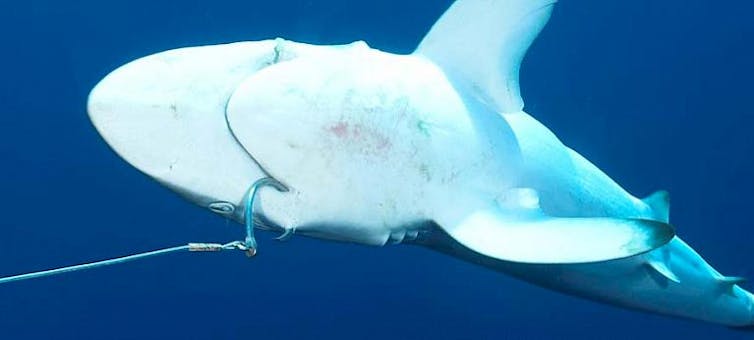
Shark bite incidents are rare but traumatic. They’re usually followed by calls for mitigation strategies, some of which are dangerous or lethal to sharks – despite the fact most sharks are timid and actively avoid people.

The “SharkSmart” approach, adopted by the Queensland government, aims to educate and urge people to take responsibility for reducing the risk of shark bites by changing their own behaviour. But can humans change?

To find out, we teamed up with three companies in the sailing charter industry in the Whitsundays area to better understand how people were using the environment, their knowledge of shark smart behaviours and to see if promoting SharkSmart behaviours led to change.

We found people can and do change behaviour as a result of education – but for some, unfortunately, a “she’ll be right” attitude still prevails.

Sharks swim in clear waters.
People must take responsibility for reducing the risk of shark bites by changing their own behaviour.
Shutterstock

Doing your part to be SharkSmart

Previous surveys had shown many water-users were already aware of many ways to reduce shark risk but there was room for improvement.

Many SharkSmart behaviours are well known, such as not swimming at dusk or dawn when sharks may be more prevalent.

But we wanted to find out what else people were doing in the water and see if some key SharkSmart interventions made a difference. The interventions included:

  • showing people a short video before they went out on the water
  • putting stickers on boats to remind people how to reduce shark risk
  • making SharkSmart brochures available to guests on boats
  • dedicated waste disposal bags were given to two of the charter boat operators, with the third acting as a control group.

We did surveys before and after these SharkSmart tools were introduced to see what changed.

We particularly wanted to know whether people were less likely to do eight things linked to higher shark risk in the Whitsundays area:

1. splashing in the water

2. swimming alone

3. swimming near fishers

4. swimming at spots where shark bites have occurred in the past (in this case, in Cid Harbour)

5. throwing fish scraps in the water

6. throwing burley (a type of bait, sometimes known as chum) in the water

7. fishing near swimmers

8. throwing food in the water.

Research suggests that by not doing these eight things, we can make shark bites even rarer than they already are.

As well as the before-and-after surveys, we captured a sample of rubbish coming back on shore. This was so we could get an idea of whether fish and meat were being stored or thrown overboard.

We also wanted to see where and when risk might be higher. For example, snorkelling in a busy anchorage or where people are fishing may increase unnecessary dangers. The warmer months of September to December were mapped as potential higher risk for shark bites.

Our findings

We surveyed 228 tourists (92 pre- and 136 post-intervention) and found:

  • a 8.9% reduction in splashing or making noise when swimming or snorkelling
  • a 4.1% reduction in throwing fish scraps overboard and
  • a 3.8% reduction in people fishing near people swimming.
A poster shows SharkSmart behaviours.
Queensland Government, Author provided

We found most people were aware of these six behaviours:

  • following local signage
  • having a buddy when swimming, diving or snorkelling
  • avoiding swimming at dawn or dusk
  • swimming in clear water
  • keeping fish waste and food scraps out of the water where people swim
  • avoiding swimming with schools of bait fish or diving birds.

The lowest awareness was for the last one, but after our intervention we saw a 4.7% increase in knowledge of this behaviour.

Although 100% of people were aware of the need to keep fish waste and food scraps out of the water, our pre-surveys between August and October last year found about one-third of tourists still disposed of fish scraps into the water. After the intervention, the share of people doing this dropped to 4-8%.

Shifting the ‘she’ll be right’ attitude

The good news is there is very high awareness of SharkSmart behaviours and most times, people didn’t throw burley in the water, fish near swimmers or swim in Cid Harbour.

Unfortunately, some people continued to splash, swim alone and throw fish waste and food scraps in the water. Changing these norms among swimmers and boaties will take time.

An attitude of “she’ll be right” still exists among some water users and this group may be the toughest to influence; it’s hard to shift attitudes about dangers among people with such a relaxed attitude to risk.

In the Whitsundays and wider Australia, we are lucky to have some of the most incredible beaches, islands and reefs in the world. Most of us are willing to take a small calculated risk to swim in the ocean. Shark bite incidents are extremely rare in Australia but by making small changes, we can drive down the danger even further.


Katie Frisch and Gemma Molinaro from Reef Ecologic contributed to this article.

The Conversation

Adam Smith has received funding from Fisheries Queensland.

ref. Shark bites are rare. Here are 8 things to avoid to make them even rarer. – https://theconversation.com/shark-bites-are-rare-here-are-8-things-to-avoid-to-make-them-even-rarer-173746

Top teaching tips in 2 minutes – how videos can spread better practices through our unis

Source: The Conversation (Au and NZ) – By Merlin Crossley, Deputy Vice-Chancellor Academic and Professor of Molecular Biology, UNSW

Shutterstock

Academics around the world have experimented with technology as the COVID-driven need to teach remotely accelerates the shift to digitally supported education. Part of the challenge has been to match their approaches to individual teaching styles and to the needs of students in their disciplines. Some experiments worked brilliantly first time, while others failed or required a series of refinements.

The trick is to share swiftly and efficiently what’s worked. How do we do that?

In scientific research, carefully controlled experiments are conducted and the results are peer-reviewed before being published. But tips and tricks are shared informally at conferences. It’s time to share teaching tips more broadly.

So how do we do this?

A UNSW professor, Peter Heslin, together with colleagues in our Scientia Education Academy, has created a simple strategy for quickly sharing useful tips via two-minute videos – Teaching News You Can Use (TNYCU).

To build up a repository of videos, he held an Exemplary Teaching Practice competition. It attracted well over 100 entries across six categories, such as inspiring students, building student communities, and leveraging student diversity. A panel evaluated the entries in terms of their usefulness, breadth of applicability, and clarity.

The panel selected winners and two runners-up in each category. The winners were shown at the end of the week-long UNSW Education Festival. All finalists and submissions that received an honourable mention will soon feature in an online TNYCU repository.

Many of the tips are simple. Some spread existing knowledge – novelty and originality were not criteria!

We need to identify and spread useful tips, not just add new ideas when many of us are already overwhelmed by all the options. As Heslin said:

“There’s little new under the sun. We just need fresh ways to see, frame and productively deploy the relevant options before us.”

What were some of the best tips?

The tips I liked best were so simple. One video showed us how we can build connections by positioning ourselves in front of the slides. Why? “No one was ever inspired by a slide. People inspire other people.”

Inspiring students by building connection – Steven Most.

It’s obvious I guess, but this nugget inspired me to reconsider how I might adapt my own online slide presentation format so that, at least at times, I won’t be hiding in the corner!

Another academic explained how and why she gave recorded audio feedback to students on their work rather than written comments. Again, that may not be new, but it was new to me – I’ve never done it. Recently, though, I’ve heard from students that this feedback makes them feel individually seen, heard and valued in a world of educational massification.

The power of audio feedback – Jenny Richmond.

Then there was a video about how to set up a system whereby students discover how much they can learn from each other. This helps build a learning community.

No, you can’t choose your own teammates – Bradley Hastings.

Another of my favourites underscored the merit of having students conduct a quick “sanity check” to see if their conclusions are in the realms of what’s reasonable.

Using ‘sanity checks’ – Tim Trudgian.

Other two-minute video topics included using digital approaches to build student communities, foster collaborative learning, or simulate an academic conference online.

The videos showed how the different platforms could be used in different disciplinary contexts to convey information, promote productive and focused interactions, and generally support stimulating and enjoyable student communities.

Using video intros to build student communities in online classrooms – Emma Jane.

Putting the focus back on good teaching

Which brings me to my main point. These videos don’t just spread good ideas. They also help build an academic community that recognises good teaching practice.

The two-minute videos may help foster identity and pride in striving to be an excellent, student-focused university teacher. Imagine having a colleague you’ve never met approach you in the coffee line on campus to say they loved your video and plan to try out your strategy.

The status associated with being a great university teacher, the pride our academics rightly derive from their work, the recognition via inclusion in an online repository, and the future connections and comments will all help strengthen the academic community.

The videos will also provide evidence of achievement and good teaching practice in future promotion, award or job applications.

Our education festival was held in person and online. I found it very easy to mingle at the event by talking with people who had featured in their videos. Many people are a little shy at conferences, but short videos act as easy ice-breakers and prompt interactions between teachers.

Creating an authentic virtual conference for students – Michael Stevens.

In research conferences, one gets a mixture of long talks, shorter talks and sometimes rapid-fire, poster presentations. A few years back the University of Queensland introduced three-minute thesis presentations, an idea that has gone global.

Activities like these spread knowledge and help build discipline-specific research communities. The TNYCU repository will provide peer-reviewed, curated tips on how to tackle particular teaching challenges. It will grow year by year.

Helping to manage information overload

Learning to thrive in the digital age takes time. Information mounts up faster than anyone can absorb it. New ways are needed to sift through all the data to identify the most relevant, useful options.

When I began my career as an academic, I walked into a lecture theatre, found a piece of chalk and a blackboard, and got to work teaching in the way I’d been taught. I hammed things up a bit and engaged the class as best I could, but it was impromptu theatre that required little preparation. I also directed students to specific chapters in one main textbook in case they (or I) missed any key points. It was relatively easy.

Nowadays there are almost too many mechanisms for engaging students, building learning communities and providing digital support that helps students gain essential knowledge and skills. This is a profound change. We need to work together to efficiently identify which digital platforms and strategies might work best for each of us.

Jamboards & Pear Deck: online tools to increase student engagement – Lana Ly.

The two-minute video repository may turn out to be one great new way of sharing what’s possible, initiating explorations and celebrating the achievements of academics who are flourishing as teachers. And they are fun to watch.

The Teaching News You Can Use website is under development. Dozens more videos will be added over coming weeks and months.

The Conversation

Merlin Crossley receives research funding from the Australian Research Council and National Health and Medical Research Council. He is on the Board of The Conversation and the Australian Science Media Centre. He is an Honorary Associate of the Australian Museum.

ref. Top teaching tips in 2 minutes – how videos can spread better practices through our unis – https://theconversation.com/top-teaching-tips-in-2-minutes-how-videos-can-spread-better-practices-through-our-unis-172855

30 years since The Addams Family hit the big screen, it is still the perfect blend of horror and comedy

Source: The Conversation (Au and NZ) – By Daryl Sparkes, Senior Lecturer (Media Studies and Production), University of Southern Queensland

IMDB

The dark side of films has always had a strong relationship with the light side. Mixing comedy with horror often ensured a hit even in the early days of cinema –comedian Harold Lloyd was making such films as early as the 1920s.

This combination of light hearted horror worked on the small screen as well.

In the 1950s and 1960s, family sitcoms The Andy Griffith Show, My Three Sons, The Beverley Hillbillies and Leave it to Beaver were all hugely popular. But the 60s were also a time of the counter-culture revolution. Beatniks, hippies and a general anti-establishment youth culture progressively dismissed the conforming stereotypes of the wholesome family.

From this a TV show, based on a long running New Yorker cartoon by Charles Addams, was launched: The Addams Family, based around a family who, while not outright monsters, definitely played on the dark side of life.

The series itself only ran for two seasons and was dropped for poor ratings. But in the intervening years the show’s status grew.

Children of the 1960s to the 1980s discovered the reruns and grew in love with the weirdness and offbeat humour. These children grew into adults who never lost interest in one of the strangest shows ever made.

In 1991 this nostalgia culminated with the release of The Addams Family Movie.

Set around a family of oddballs whose pastimes include grave digging, cutting the heads off roses (because the thorns are far more precious) and stealing stop signs to revel in the sound of cars crashing, 30 years on the film has not lost any of its eccentric charm or quirky sensibilities.

A plot for the madness

The Addams Family Movie starts with the dilemma of attempting to contact Gomez’s brother, Fester (who has been in the afterlife for 25 years) and constantly failing. When someone claiming to be Fester turns up (the ever-versatile Christopher Lloyd), he is quickly embraced by the Addams’s as the long-lost Uncle. What they don’t know is the fake Fester is just there to find and steal their hidden riches.

But this whole story is just a flimsy backdrop to all the crazy jokes, one-liners and sight-gags that each member of the family gets up to throughout the film.

The parents, Gomez and Morticia Addams are difficult to describe. Gomez is somewhere between a 1930s gangster and a wide eyed man-child who finds wonder at everything. But he is definitely a Renaissance man: just as skilled with a rapier sword as he is with a golf club, his dance moves are unparalleled. The late Raul Julia plays Gomez to perfection – arguably even better than John Astin who played the TV original.

Angelica Huston steals the show as his wife Morticia. Wistful, sublime and ethereal, Huston mixes eroticism with playful innocence. She also gets many of the best lines.

When Gomez asks Morticia if she is “Unhappy, darling?”, Morticia smoothly supines with a smile “Oh yes, yes completely” – as though that is the ultimate state of ecstasy. Gomez looks on her with constant adoring eyes, and cannot control his unbridled lust whenever Morticia speaks French.


Read more:
Halloween films: the good, the bad and the truly scary


It is a love fuelled by constant romance. As Morticia says, “Gomez, last night you were unhinged. You were like some desperate, howling demon. You frightened me … Do it again!”. And when Gomez is racked by angst Morticia tells him “Don’t torture yourself, Gomez … that’s my job”.

Every horror movie needs a creepy kid. And the Addams children, daughter Wednesday (Christina Ricci) and son Pugsley (Jimmy Workman), fit the bill nicely. Wednesday is like a mini version of her mother, but in a much more dour mood, with an intense interest in instruments of torture and execution. Pugsley is more playful, always following Wednesday’s lead – to the point of climbing into her electric chair to play her game of “Is there a God?”.

Ghoulish with heart

Horror is supposed to make you frightened; comedy is supposed to make you laugh. They’re genre polar opposites. Then why do horror-comedies work? The Addams Family is so accessible to a wide audience because, while it plays with the dark side of life, it’s a horror film without any of the horror. The darkness is very low level, and it isn’t represented as being real.

This is why children and people who don’t like real horror films love it. They can dip their toes in the horror genre but it is played for laughs, not scares.

In a way, it has a been a gateway film for when children grow older and watch real horror films. The Addams Family introduces them to the dark world, but there’s nothing to fear. For now, it’s just fun.

Overall, though, the one thing The Addams Family movie teaches audiences is regardless if you’re a witch, or a ghoul, or even just a hand, the most important thing in life is family.

The Conversation

Daryl Sparkes does not work for, consult, own shares in or receive funding from any company or organization that would benefit from this article, and has disclosed no relevant affiliations beyond their academic appointment.

ref. 30 years since The Addams Family hit the big screen, it is still the perfect blend of horror and comedy – https://theconversation.com/30-years-since-the-addams-family-hit-the-big-screen-it-is-still-the-perfect-blend-of-horror-and-comedy-172042

Pacific civil society groups slam New Caledonia ballot as ‘unjust … unfair’

Asia Pacific Report newsdesk

The French government’s decision to press ahead with the third and final referendum vote for self-determination in Kanaky New Caledonia was “unjust and unfair” for the Indigenous Kanak people, says a coalition of nine pan-Pacific civil society groups.

The groups have also accused the French state of “colonial manoeuvring in the middle of a health crisis” to gain a “premeditated outcome”.

“This process has been unjust, culturally insensitive, disingenuous and falls completely short of the spirit of the Noumea Accord. This referendum is clearly null and void,” said a statement by the Pacific Civil Society Organisations (CSO).

“Despite numerous calls from state and non-state actors to postpone the referendum to 2022, the French government used its colonial manoeuvring in the middle of a health crisis — where almost half the population has tested positive for covid-19 — to arrive at a premeditated outcome.”

The statement said the referendum was not consultative and it did not serve the “common good of the Kanaky population, who exercised their right to not participate in the pseudo-referendum”.

“This non-participation of pro-independence indigenous people should have been a clear signal to France of the public mood, recognising that the poll results cannot be received as the genuine resolve of the Kanak people.

“Unfortunately, it appears that there is a blindspot in Paris, where the results of the referendum are being celebrated as the legitimate will of the Kanaky New Caledonia population – although over 103,480 or more than 56 percent of the registered did not participate in the vote.

Call for UN to ‘void’ referendum
“We join the Indigenous people of Kanaky and other pro-independence activists and organisations in the region, such as the Melanesian Spearhead Group, in calling for the United Nations to declare the outcome of the referendum null and void.

“We also call on the Pacific Islands Forum Ministerial Committee as observers to New Caledonia to ensure an independent, candid and just observation report of the referendum vote is made public.”

The civil society coalition statement is enorsed by the Diverse Voices and Action (DIVA) for Equality, Fiji; Fiji Council of Social Services; Fiji Women’s Rights Movement; Global Partnership for the Prevention of Armed Conflict–Pacific; Melanesian Indigenous Land Defence Alliance; Pacific Conference of Churches; Pacific Network on Globalisation (PANG); Peace Movement Aotearoa; and Youngsolwara Pacific.

Print Friendly, PDF & Email

Article by AsiaPacificReport.nz

Budget update forecasts unemployment falling to 4.25% by mid-2023

Source: The Conversation (Au and NZ) – By Michelle Grattan, Professorial Fellow, University of Canberra

Thursday’s budget update will forecast one million jobs will be created over the next four years and unemployment will fall to 4.25% by June 2023.

In an upbeat economic assessment, the Mid-Year Economic and Fiscal Outlook will estimate that more than 13.8 million people will be employed by June 2025. This is 150,000 more people employed across the economy than the May budget estimated.

Unemployment – 5.2% in October – is forecast to be 4.5% in the June quarter next year. The 2023 June quarter 4.25% level would be the lowest since September 2008.

Strong employment growth is expected to see the employment to population ratio reach a record high of 63.1% by the September 2022 quarter, compared to 61.5% when the Coalition was elected.

The update will show a reduced deficit figure compared to the $342 billion across the forward estimates that was forecast in the budget.

But the government this week leaked details of a blow out in the cost of the National Disability Insurance Scheme to counter the suggestion by Deloitte Access Economics that the deficit figure could have improved by more than $100 billion.

One feature of prime interest in the update will be the amount set aside for decisions taken but not yet announced, which will be the government’s war chest for the run up to the election, to be held by May.

Among the election sweeteners, tax cuts are expected to be provided for low and middle income earners.

The government has a budget scheduled for March 29, for a May election. But the option of going to the polls in March also remains open.

Treasurer Josh Frydenberg said while Australia had avoided the labour market “scarring” that resulted from recessions in the 1980s and 1990s, “there are still many more new jobs to create,” and the government had the economic plan to do this.

“We have been working to a clear fiscal strategy to drive down the unemployment rate to historically low levels as we emerge from the greatest economic shock since the great depression,” Frydenberg said.

“It’s not that long ago that the Treasury was contemplating a collapse in GDP of more than 20% and feared the unemployment rate could rise to as high as 15%.”

“The Labor Party has repeatedly said ‘the biggest test of this government’s management of the recession and its aftermath will be what happens to jobs’ and ‘whether or not unemployment stays too high for too long’.”

“Not only is the unemployment rate today lower than when Labor left office, despite being in the middle of pandemic, we are now are poised to see the unemployment rate fall to 4¼% and sustained below 5% for only the second time in more than half a century.”

“Now our tax cuts and business investment incentives are helping to create a new wave of economic activity as the baton is passed to the private sector helping to create more jobs and secure the recovery.”

The Conversation

Michelle Grattan does not work for, consult, own shares in or receive funding from any company or organization that would benefit from this article, and has disclosed no relevant affiliations beyond their academic appointment.

ref. Budget update forecasts unemployment falling to 4.25% by mid-2023 – https://theconversation.com/budget-update-forecasts-unemployment-falling-to-4-25-by-mid-2023-173851

Education minister Sovaleni elected as Tonga’s new prime minister

Kaniva News

Tonga’s Parliament has elected a new prime minister to replace Dr Pōhiva Tu’i’onetoa.

Siaosi Sovaleni, 51, the current Minister of Education, has won convincingly with 16 votes, against former Minister of Finance and MP Dr ‘Aisake Eke, who got 10 votes.

The Interim Speaker, Lord Tangi, announced the results this afternoon after he first informed King Tupou VI about the winner.

The results showed what appeared to be the nobility MPs’ votes being split with apparently four of them supporting Sovaleni while the remaining five voted for Dr Eke.

Sovaleni, who was a minister in good standing in the Tu’i’onetoa government, recently crossed the floor to form his new bloc and gain the support from a united group of independent MPs and PTOA Party MPs.

Three other MPs who were part of Tu’i’onetoa’s PAK party, also crossed the floor and joined Sovaleni.

The only People’s MP and interim cabinet minister who supported Dr Tu’i’onetoa was the Niua MP Vātau Hui.

The defection of the four members meant Dr Tu’i’onetoa was forced to withdraw his candidacy for the premiership election because he did not have the number of MPs required by law to support and nominate him as a candidate.

As Kaniva News reported this week, Dr Tu’i’onetoa complained about being dumped by his own interim cabinet ministers, saying he just found out after the general elections on November 18 that his unity with his interim ministers in the past four months had been “fake”.

Education, health and climate among priorities
In his speech before the election today, Sovaleni said people, the chiefs and the king lived under what he described as one house. He said people had to learn to know how to live together.

He said education, health, economic developments, e-government, climate change, war on illicit drugs, natural disasters, youths and women initiatives and good governance were some of his priorities.

In his vote of thanks after he was declared the winner this afternoon, Sovaleni was emotional and congratulated his supporters and all MPs.

He also thanked his unsuccessful rival candidate Dr Eke and said they had previously worked together in the Ministry of Finance.

Republished with permission as part of a collaboration between Kaniva News and Asia Pacific Report.

Print Friendly, PDF & Email

Article by AsiaPacificReport.nz

France’s New Caledonia policy labelled a ‘catastrophe’ by left leader

RNZ Pacific

A leftwing candidate in the French presidential race, Jean-Luc Melenchon, says the outcome of New Caledonia’s independence referendum is a catastrophe.

He held a news conference after several leading French politicians welcomed Sunday’s overwhelming rejection of independence, with just 3.5 percent voting for it.

Melenchon, leader of the France Unbowed (La France Insoumise) party, said the government had destroyed the consensus process of the 1998 Noumea Accord by imposing a referendum date and triggering a huge abstention by the pro-independence side.

The third and last vote was marked by a turnout of 43 percent, which was about half of last year’s figure and meant an illegitimate outcome of a meticulous, decades-long decolonisation process.

He said he now hoped the government would not go from what he described as one “brutality” to the next and warned against imposing change.

Melenchon said President Emmanuel Macron was wrong to claim right after the plebiscite that the accord was no longer legally valid.

“The current statute of New Caledonia is in the French constitution. it cannot be changed without changing the constitution. Therefore the territory’s government and assembly remain the legitimate institutions,” he said.

Melenchon said by pushing through the referendum, the government made a serious error and had returned the territory to the rifts of the late 1980s.

“We are now in what is being considered a conflict zone by the Anglosaxon alliance of New Zealanders, Americans and Australians. If the French government thought it could get rid of a problem by being more present and quicker in the Cold War it wants to have with China, it has made a big mistake,” he said.

Lecornu acknowledges divisions
French Overseas Minister Sebastien Lecornu said the binary dimension of New Caledonia’s politics, as seen after Sunday’s independence referendum, satisfied no-one.

Speaking in Noumea, he said the legal validity of the vote could not be questioned because under the Noumea Accord, there was no obligation to vote and no quorom.

However, he said politically speaking, the abstention by the pro-independence camp showed a division.

The minister, who had set the referendum date despite objections by pro-independence leaders, said the vote was a historic moment.

Lecornu planned to meet the New Caledonian government and Congress this week to discuss the government’s financial situation.

This article is republished under a community partnership agreement with RNZ.

Print Friendly, PDF & Email

Article by AsiaPacificReport.nz

Auckland lockdown boundary lifts as thousands make exodus

RNZ News

Aucklanders are travelling out of New Zealand’s largest city today as the border around Tāmaki Makaurau opens for the first time in 120 days.

Police said traffic was flowing freely early this morning.

Waka Kotahi and the police removed checkpoints to the north and south of the region since the midnight change in restrictions.

Spot checks are happening on roads out of the city, at the airport, and at two new checkpoints in Northland.

The new checkpoints were set at Uretiti on SH1 and on SH12 at Maungaturoto, for northbound traffic only.

Anyone can leave Auckland with proof they are double vaccinated or have recently tested negative for covid-19.

Transport operators will also be checking on passengers’ status.

Even with border restrictions in place, more than 2 million cars have passed through the northern and southern boundaries since the end of August, mostly carrying essential workers.

News reports said that 12,000 people were booked on Air New Zealand flights out of the city today.

80 new community cases
The Ministry of Health reported 80 new community cases of covid-19 yesterday with two new cases identified at the border.

In a statement, the ministry also reported that several members of a flight crew had been identified as close contacts of a omicron variant case in Australia.

“These crew members arrived in New Zealand last night and are in a MIQ facility, as per standard international air crew arrival procedure,” the statement said.

Of the new community cases today, 51 are in Auckland, 21 in Waikato, seven in Bay of Plenty and one in the Taupō district.

The ministry also announced an additional case in Canterbury today, which will be officially counted in today’s case numbers.

There are now 9890 community cases in the current outbreak. The number of active cases is 6863.

This article is republished under a community partnership agreement with RNZ.

Print Friendly, PDF & Email

Article by AsiaPacificReport.nz

Garden Hills squatters evicted in Port Moresby crackdown on church land

By Marjorie Finkeo in Port Moresby

Hundreds of settlers from the controversial Garden Hills settlement along Waigani Drive in Papua New Guinea’s National Capital District (NCD) have been thrown out of their homes after a court order enforced by police.

Their homes on church-owned land were razed by bulldozers yesterday.

Policemen deployed at the eviction site told news media that they were acting on a 30-day eviction notice that had been given to the settlers to move out, but they had stayed on.

“We were given an order from the NCD-Central Command to provide security while the authorities carried out the eviction exercise,” a senior officer at the eviction site said.

Mothers and children sat on the road with their belongings, watching helplessly as their homes for more than 30 years was torn down by machines while armed policemen stood guard.

A few people were sorry to see the settlers kicked out and their homes torn down, but most city residents have been complaining over many years about “general lawlessness” caused by the settlers.

‘Crime hotspot’
Police have identified the settlement as a “crime hotspot”, with NCD Governor Powes Parkop vowing to remove the settlers.

In the most recent law and order situation in the settlement, two people were killed in a drunken brawl that got out of hand, with the settlers running amok in the Garden Hills estate, threatening and attacking residents.

Residents in the estate have lived in fear of being attacked or mugged by youths.

According to deputy commander of NCD-Central Command, Laimo Asi, the land belongs to the Assembly of God (AoG) church.

Garden Hills eviction POM 2
A bulldozer at work in the Garden Hills estate eviction yesterday. Image: PNG Post-Courier

Laimo said an eviction order was given 30 days ago to the settlers living there.

“But they did not move so the church got an eviction order and police just enforced the order,” he said.

“Units were sent in to enforce the eviction order; there was a bit of resistance in the morning, but the situation is now under control.

“Police will continue to patrol the area.”

The settlement is one of the biggest and most notorious in NCD.

Governor promised squatters
Attempts to get comments from Governor Parkop yesterday were not successful.

Governor Parkop had promised squatters at Garden Hills a year ago that they would be relocated to Fareya behind the air transport squadron (ATS) at Eight Mile.

On December 15, 2020, the Post-Courier published an article quoting Parkop regarding the future of the squatters following mounting pressure by residents who fall victim daily to petty crimes by youths from the settlement.

After 12 months, the squatters were finally evicted in a massive eviction carried out yesterday.

Marjorie Finkeo is a PNG Post-Courier reporter. Republished with permission.

Print Friendly, PDF & Email

Article by AsiaPacificReport.nz

That reverse mortgage scheme the government is about to re-announce, how does it work?

Source: The Conversation (Au and NZ) – By Colin Zhang, Lecturer, Department of Actuarial Studies and Business Analytics, Macquarie University

Shutterstock

Many Australians have never heard of the Pension Loans Scheme, and many more assume it’s just for pensioners, which is understandable given its name.

That’s why the government is poised to rename it the Home Equity Access Scheme and make the interest rate it charges more reasonable, in the mid-year budget update on Thursday.

The soon to be renamed scheme is best thought of as a reverse mortgage where instead of paying down a home loan each month, the homeowner borrows more against the home each month, paying off what’s borrowed when the home is eventually sold.

Although reverse mortgages have been provided commercially for some time, the number of providers has shrunk as large banks have left the field in the face of increased scrutiny and compliance costs.

The government version is misleadingly named the Pension Loans Scheme (PLS), even though it is available to all retirees with homes and not just pensioners. It was introduced by the Hawke government in 1985.

The maximum amount that can be made available under the scheme and the age pension combined is 150% of the full pension. This means a retiree who is on the pension can get extra fortnightly payments from the scheme to bring their total payment up to 150% of the full pension.

If the retiree is not on the pension they can get the entire amount of 150% of the pension via the PLS.


Read more:
Is it worth selling my house if I’m going into aged care?


The payments stop when the loan balance reaches a ceiling which climbs each year the retiree gets older and climbs with increases in the value of the home.

The ceiling for a 70-year old with a home worth $1,000,000 is $308,000.

The key difference between the PLS and commercial reverse mortgages is that the size of its lump sum payments is limited. Payments under the PLS have no impact on the pension, whereas commercial reverse mortgages can trigger the means test.


Colin Zhang, Macquarie Business School

As attractive as the PLS might appear, hardly any of the four million or so Australians aged 65 and over have taken it up, perhaps as few as 5,000 – one in every 800.

So in this year’s May budget the government announced two changes to make it more attractive.

One was a “no negative equity guarantee”. Users would never be asked repay more than the value of their property, even if the property fell in value.

The other was the ability to take out up to two lump sums per year totalling up to 50% of the full pension in addition to fortnightly payments.

Total government payments would remain capped at 150% of the pension.

New brand, same scheme

That second change won’t begin until July 1, 2022 and is likely to be re-announced in Thursday’s mid-year budget update.

Also announced in the budget was a decision to raise awareness of the scheme “through improved public messaging and branding” something which is also likely to be re-announced on Thursday along with the new name.

The other change expected on Thursday is a lower interest rate charged on the sums borrowed. In January 2020, the rate was cut from 5.25% to 4.5% in accordance with cuts in other rates. From January next year it should reduce further to 3.95%.

Attractive, but not riskless

There remain risks associated with taking advantage of the scheme.

One is that if you live long enough you are likely to eventually hit the ceiling and be unable to take out any more money, suffering a loss of income.

If you chose to sell your home and move to an aged care service, you need to use a big part of your sale proceedings to pay what’s owed.

Other risks are that neither the interest rate nor home prices are fixed.

Just as the government has cut the rate charged in line with cuts to lower general interest rates it might well lift it when interest rates climb. And home prices can go down as well as up, meaning that at worst all of the value of your home (although no more) can be gobbled up in repayments.

The Conversation

The authors do not work for, consult, own shares in or receive funding from any company or organisation that would benefit from this article, and have disclosed no relevant affiliations beyond their academic appointment.

ref. That reverse mortgage scheme the government is about to re-announce, how does it work? – https://theconversation.com/that-reverse-mortgage-scheme-the-government-is-about-to-re-announce-how-does-it-work-171671

That reverse mortage scheme the government is about to re-announce, how does it work?

Source: The Conversation (Au and NZ) – By Colin Zhang, Lecturer, Department of Actuarial Studies and Business Analytics, Macquarie University

Shutterstock

Many Australians have never heard of the Pension Loans Scheme, and many more assume it’s just for pensioners, which is understandable given its name.

That’s why the government is reportedly poised to give it a new name and make the interest rate it charges more reasonable, in the mid-year budget update on Thursday.

The soon-to-be-renamed scheme is best thought of as a reverse mortgage where instead of paying down a home loan each month, the homeowner borrows more against the home each month, paying off what’s borrowed when the home is eventually sold.

Although reverse mortgages have been provided commercially for some time, the number of providers has shrunk as large banks have left the field in the face of increased scrutiny and compliance costs.

The government version is misleadingly named the Pension Loans Scheme (PLS), even though it is available to all retirees with homes and not just pensioners. It was introduced by the Hawke government in 1985.

The maximum amount that can be made available under the scheme and the age pension combined is 150% of the full pension. This means a retiree who is on the pension can get extra fortnightly payments from the scheme to bring their total payment up to 150% of the full pension.

If the retiree is not on the pension they can get the entire amount of 150% of the pension via the PLS.


Read more:
Is it worth selling my house if I’m going into aged care?


The payments stop when the loan balance reaches a ceiling which climbs each year the retiree gets older and climbs with increases in the value of the home.

The ceiling for a 70-year old with a home worth $1,000,000 is $308,000.

The key difference between the PLS and commercial reverse mortgages is that the size of its lump sum payments is limited. Payments under the PLS have no impact on the pension, whereas commercial reverse mortgages can trigger the means test.


Colin Zhang, Macquarie Business School

As attractive as the PLS might appear, hardly any of the four million or so Australians aged 65 and over have taken it up, perhaps as few as 5,000 – one in every 800.

So in this year’s May budget the government announced two changes to make it more attractive.

One was a “no negative equity guarantee”. Users would never be asked repay more than the value of their property, even if the property fell in value.

The other was the ability to take out up to two lump sums per year totalling up to 50% of the full pension in addition to fortnightly payments.

Total government payments would remain capped at 150% of the pension.

New brand, same scheme

That second change won’t begin until July 1, 2022 and is likely to be re-announced in Thursday’s mid-year budget update.

Also announced in the budget was a decision to raise awareness of the scheme “through improved public messaging and branding” something which is also likely to be re-announced on Thursday along with the new brand-name.

The other change expected on Thursday is a lower interest rate charged on the sums borrowed. In January 2020, the rate was cut from 5.25% to 4.5% in accordance with cuts in other rates. From January next year it should reduce further to 3.95%.

Attractive, but not riskless

There remain risks associated with taking advantage of the scheme.

One is that if you live long enough you are likely to eventually hit the ceiling and be unable to take out any more money, suffering a loss of income.

If you chose to sell your home and move to an aged care service, you need to use a big part of your sale proceedings to pay what’s owed.

Other risks are that neither the interest rate nor home prices are fixed.

Just as the government has cut the rate charged in line with cuts to lower general interest rates it might well lift it when interest rates climb. And home prices can go down as well as up, meaning that at worst all of the value of your home (although no more) can be gobbled up in repayments.

The Conversation

The authors do not work for, consult, own shares in or receive funding from any company or organisation that would benefit from this article, and have disclosed no relevant affiliations beyond their academic appointment.

ref. That reverse mortage scheme the government is about to re-announce, how does it work? – https://theconversation.com/that-reverse-mortage-scheme-the-government-is-about-to-re-announce-how-does-it-work-171671

Information is key to public support for police use of facial recognition technology

Source: The Conversation (Au and NZ) – By Kelly Hine, Lecturer in Criminology, University of the Sunshine Coast

Last week, it was announced police in South Wales and Gwent would be the first in the UK to deploy real-time facial recognition technology (FRT) in a mobile app.

The app allows police officers to rapidly identify a person of interest – even if the individual provides false or misleading information. This in turn reduces the risk of mistaken identity and unnecessary trips to the police station to confirm an individual’s identity.


Read more:
Facial recognition technology is expanding rapidly across Australia. Are our laws keeping pace?


Police around the world are using FRT

Globally, police agencies are either adopting or trialling various forms of FRT to assist in law enforcement.

In the US, the FBI has used facial recognition technologies to identify individuals involved in the 2021 Capitol riots. In the UK, London’s Metropolitan Police are using FRT in real-time (or live) CCTV cameras to identify people on police “wanted” lists.

In Australia, there has been a lack of transparency about which agencies are using facial recognition technologies and how these are being used. While all Australian policing agencies are reportedly using or trialling these technologies, New South Wales Police officially acknowledge it on their web page. They have reportedly used the technology to help identify lawbreaking protesters.

The Northern Territory Police have even won an award for their face recognition project, which reportedly identifies suspects in under ten seconds at their watchhouse.

The FBI have used facial recognition to identify rioters in the Capitol attacks of January 2021.
AAP/AP/ zz/STRF/STAR MAX/IPx

Why do police need this technology?

Facial recognition technology offers police a quick, efficient and less subjective way of identifying persons of interest. Police capture a person’s image using devices such as CCTV cameras, body-worn cameras, or smart glasses.

Once your image is captured, the unique biometric features of your face can be matched to an existing police database. These databases are usually created from mug shots and publicly available data (such as social media posts).

The technology allows for individuals to be tracked across multiple locations and times. Interestingly, the technology can also correctly identify a single person in a large crowd.

Taking the human perspective out of the equation also helps to reduce the potential for inaccuracies in memory and misidentification that can occur in more traditional ways of identifying persons of interest.

However, the technology is not always accurate. Indeed, an independent study found the FRT used in a trial by Metropolitan Police was inaccurate 81% of the time.

The police use of FRT also raises consent and privacy issues. One study found over 60% of the public valued being able to go about their business and run errands without always being photographed.


Read more:
Why the government’s proposed facial recognition database is causing such alarm


What do Australians think about police use of FRT?

Most Australians do not often come into direct contact with police and, therefore, have little first-hand knowledge of policing practices. Consequently, the main source of information about police comes from the media, and social media in particular. How the media frame a story can shape our opinions of the topic.

Our study of 203 YouTube videos examined how YouTubers were discussing police use of facial recognition technology and the emotions evoked by the language being used in the posts.

It found the majority (61%) of posts were positive about both the technology and the police.

When the sentiment was negative, it was focused on corporations supplying the technology to police, rather than the police themselves.

In our other study, we dug deeper to examine the public commentary posted to the YouTube videos. Despite the positive message being delivered, we found viewers were raising a number of concerns.

They tended to be sceptical of police using the technology before a crime has been committed (for example, surveilling crowds in public spaces). More specifically, they worried this could lead to police overreaching into private citizens’ rights and freedoms.

On the other hand, viewers were mostly supportive of police using facial recognition technology after a crime has occurred (for example, to identify offenders in the Capitol riots or to find missing persons). They talked about this in terms of the technology’s ability to protect public safety.

Overall, the public tend to be wary of any new technology introduced by the police, and facial recognition is no exception.

However, police and authorities can easily address some of these concerns by being transparent and accountable when using facial recognition technologies and communicate policing practices to the public as part of this transparency.

The Conversation

The authors do not work for, consult, own shares in or receive funding from any company or organisation that would benefit from this article, and have disclosed no relevant affiliations beyond their academic appointment.

ref. Information is key to public support for police use of facial recognition technology – https://theconversation.com/information-is-key-to-public-support-for-police-use-of-facial-recognition-technology-173584

Early intervention for psychosis might cost more initially but delivers a greater return on investment

Source: The Conversation (Au and NZ) – By Pat McGorry, Professor of Psychiatry, The University of Melbourne

Keagan Henman/Unsplash

Psychotic illnesses such as schizophrenia cause severe distress and suffering for people who experience them and for their families.

All too often, these illnesses prevent those affected from completing education, starting work or keeping a job, and participating in their communities.

This can lead to impoverished lives and premature death, from suicide or preventable physical health conditions. People with psychotic illnesses die up to two decades earlier than those unaffected by these conditions.


Read more:
Physical health ignored in people with mental illness


These poor outcomes aren’t just part and parcel of the illness. Applying the strategies used to treat other diseases – such as early diagnosis and intensive early-stage care – can prevent psychotic illnesses from progressing or becoming life-long conditions.

Such care may be more costly than standard, delayed mental health care. But when you consider the economic gains from lower levels of disability, early intervention for psychosis delivers a substantial return on investment.

Fixing an outdated system

Mental health care reforms for psychosis started in Melbourne more than 30 years ago.

At the time, standard care for those experiencing their first episode of a psychotic illness started late and often resulted in traumatic experiences for the young person, demoralisation and increased risk of suicide.

Standard mental health services were dominated by middle-aged patients with long-term illness. Treatments were crude and limited, focusing on managing symptoms.

What were the goals of early intervention?

Early intervention for young people with psychosis offered hope for recovery through early diagnosis, combined with comprehensive multi-disciplinary team-based care. This included psychiatrists, psychologists, social workers, occupational therapists and others.

These services would be sustained during the critical period of the early years after diagnosis.

Young person in pink shoes sits in a waiting room.
Early intervention aimed to provide sustained early care, rather than just treating symptoms after they emerged.
Shutterstock

Early intervention offered a number of potential advantages over standard care, including:

  • early diagnosis before the illness produces entrenched harm and disability
  • being treated with greater care and respect
  • being exposed to a hopeful and optimistic culture
  • having family included and supported
  • prioritising finding and maintaining work
  • experiencing less stigma and treatment-related trauma.


Read more:
Welfare to work: a different approach for people with mental illness


Meanwhile, early intervention research created a scientific process to identify those at risk of developing psychosis and intervening before the full onset of the illness.

The goal was to prevent the development of psychosis or, if it did emerge, delay or mitigate its impact.

That was the idea, how has it worked in practice?

Over the decades since, hundreds of early psychosis programs around the world and an array of clinical trials have scientifically evaluated the effectiveness of early intervention for psychosis.

Woman makes coffee at a cafe.
One of the goals of early intervention is to help young people find and stay in work.
Yasamine June/Unsplash

The programs target the early stages of illness and produce marked benefits in most patients.

This approach has shown:

Importantly, these programs are extremely popular with young people and families.

But interventions can’t just stop suddenly

The recovery achieved through early intervention must be sustained by continuing care throughout the critical early years of illness.

The first wave of research and reform in early intervention created programs that only offered this enhanced care for two years. When people were discharged and started receiving standard care, some of the gains were lost.

More recent research has shown if the high quality of care provided by early psychosis programs is extended by a further three years (so five years in total), the gains are maintained.

Some critics argue achieving these functional outcomes in early psychosis isn’t worthwhile if it requires effort to sustain it.

This is like arguing it’s not worthwhile to secure remission from cancer because if the treatment is withdrawn or downgraded too soon, relapse occurs.

Young people in a boardroom put sticky notes on a white board.
Early psychosis care requires effort to sustain the outcomes.
Jason Goodman/Unsplash

The better way of interpreting the evidence is to recognise that for a substantial subset of patients, the illness is persistent or recurrent. Therefore, having achieved a positive early outcome through early intervention it is essential to make every effort to sustain it.

Most patients require more prolonged intervention than the original two-year window of early psychosis care.

Early intervention saves money as well as futures

More than 20 economic analyses of early intervention in psychosis have shown a substantial return on investment.

While early psychosis care naturally costs more than substandard delayed care in generic settings, the clinical outcomes are substantially better than standard care, as studies from Denmark, the United States and Australia show.


Read more:
Youth anxiety and depression are at record levels. Mental health hubs could be the answer


And when accounting for the cost-savings from reduced rates of functional and social disability – which impairs family and social relationships – the overall economic outcomes are better, too.

This is due to a reduction in welfare dependence, greater tax receipts through employment, and reduced costs from suicide, offending and incarceration.

A recent evaluation of the Australian Early Psychosis Youth Services (EPYS) concluded these health services were not cost-effective.

However, it did not actually conduct a cost-effectiveness study, merely listing costs alone. It also failed to take into account the economic benefits seen from employment, education and justice – and the authors acknowledged this shortcoming.

When considering the economics of early intervention, it’s important functional and social recovery is included – meaning a person can work or study and participate more fully in society – rather than just symptom recovery and direct health care costs.

Crucially, the evaluation found young people with psychosis and their families highly valued the early intervention approach, which helps them pursue their hopes and dreams of a meaningful and fulfilled life.


If this article has raised issues for you, or if you’re concerned about someone you know, call Lifeline on 13 11 14.

The Conversation

Pat McGorry works for Orygen which originally developed and jointly led with international colleagues the scaling up of early intervention for psychosis paradigm. Orygen now provides expert clinical support and supervision to the national EPYS system of early psychosis with support from the Australian Government.
I have received substantial funding from NHMRC, NIMH, Wellcome Trust and State and Federal governments to support my research and clinical work in early psychosis and youth mental health.
I am a Founding Director of headspace and of Australians for Mental Health.
I was the Founding President and now Treasurer of the IEPA: Early Intervention in Mental Health, which is the global organisation which has fostered early intervention in psychosis and other mental illnesses since 1997.
I am Editor in Chief of Early Intervention in Psychiatry.

Andrew Thompson is a Professor of Youth Mental Health at the Centre for Youth Mental Health at the University of Melbourne and Director of Specialist Services at Orygen clinical program and has conducted some of the studies in this article. He receives research funding in grants from NHMRC, NIHR, NIMH, the Wellcome Trust and the Victorian State Government. He has previously had support from the University of Melbourne, the MRC, the MQ foundation, Neuroscience Research Grants, the Telematics Trust and the Royal Melbourne Hospital.

Ellie Brown has received funding from the Department of Health, the Wellcome Trust (UK), Western Victoria PHN, and the University of Melbourne. She is a Research Fellow at Orygen and has conducted some of the studies referenced in this article.
Eóin Killackey receives funding from NHMRC, Norwegian Research Council and Wellcome Trust, and has in the past received funding from ARC and Australian Rotary Health. He is the Director of Research at Orygen and has conducted some of the studies referenced in the article. He is currently President of IEPA:Early Intervention in Mental Health

ref. Early intervention for psychosis might cost more initially but delivers a greater return on investment – https://theconversation.com/early-intervention-for-psychosis-might-cost-more-initially-but-delivers-a-greater-return-on-investment-173729

Headspace services for early psychosis have some benefits but aren’t cost-effective

Source: The Conversation (Au and NZ) – By Anthony Jorm, Professor emeritus, The University of Melbourne

Shutterstock

Adolescence and early adulthood is a time for people to become more independent, complete their education, enter the workforce, form key relationships and develop lifelong health habits.

It’s also a period where mental health problems often first appear, which can disrupt the person’s development and potentially have a life-long impact.

Many experts argue early intervention for emerging mental health problems can prevent or reduce these disruptions.

But while the concept of early intervention during youth makes a lot of sense, the mental health outcomes from young people accessing Australia’s Headspace centres have been disappointing.

Remind me, what is Headspace?

Funded by the Commonwealth government, Headspace began in 2006 with ten centres, which are described as:

a one-stop shop for young people who need help with mental health, physical health (including sexual health), alcohol and other drugs or work and study support.

It has since expanded to more than 100 centres nationally and has been influential internationally.

What do the evaluations say?

An independent evaluation in 2015 found the effects on mental health were “relatively weak”.

One of the explanations for this was many Headspace clients received only one to two sessions of treatment, which was too little to be effective.


Read more:
Is ‘headspace’ really improving young people’s mental health?


However, a more recent study looked at the outcomes for young people who received two years of early intervention from Headspace.

This study found most of these young people showed no or only temporary improvement, suggesting other approaches are needed.

Another layer of services for more complex problems?

Headspace services appear insufficient for young people with complex mental health problems. So one suggestion is to add a layer of more intensive mental health services for such young people.

These services would be modelled on early intervention services for young people with psychosis: a more severe mental illness in which the person loses contact with reality.


Read more:
Budget funding for Beyond Blue and Headspace is welcome. But it may not help those who need it most


But the Commonwealth government has already set up a number of Headspace early psychosis youth services.

So the outcomes of these services need to be examined before youth services are expanded in this direction.

Although an independent evaluation of these services was completed in August 2020, it has only recently been released to the public under a Freedom of Information request.

What did the review find?

The Headspace early psychosis program started in 2014 and has provided care in six locations across Australia to young people aged 12–25 who were experiencing a first episode of psychosis or were at very high risk of becoming psychotic.

The services are more intensive than provided to regular Headspace clients. They include a mobile assessment and treatment team, a continuing care team, a functional recovery program, group and family programs, and a peer support program.

The evaluation found the early psychosis youth program “was effective in achieving improved outcomes for some young people”. However, the services were not cost-effective.

Young man sits with a therapist.
The Headspace early psychosis program improved outcomes for some young people.
Shutterstock

To assess cost-effectiveness, health economists often estimate the cost of giving a client an additional year of good quality life – a Quality Adjusted Life Year (or QALY).

A cost of up to A$50,000 to A$70,000 per QALY gained is generally considered a “good buy”. However, the Headspace program cost A$318,954 per QALY gained, which is way above this threshold.

The Headspace early psychosis services were also found to be less cost-effective than mental health services provided by state governments, where case managers link young people with psychosis to services and provide support.

Benefits appear short-lived

It was hoped intensive early intervention programs might “bend the curve” and change the lifetime trajectory of illnesses such as schizophrenia.

The peak disability for schizophrenia occurs in mid-life. If intensive youth programs changed the trajectory of the illness, it was expected they might substantially improve mid-life outcomes and reduce the lifetime health and social costs.


Read more:
What causes schizophrenia? What we know, don’t know and suspect


It is becoming clearer these early hopes were misplaced. The benefits of early intervention for psychosis are mostly short-lived. The long-term follow-up studies reveal a dilution of the beneficial impact after the early intervention service ends, usually at two years.

After this time, young people who received the more expensive early intervention program fare no better than those who received “treatment as usual”, for example, the care provided by state governments for people with psychosis.

Studies are underway comparing longer treatment (up to five years) with standard treatment (up to three years) by early intervention teams, to find out if the early gains are maintained.

So far, these trials have not found an improvement in the numbers of people who recover, nor a reduction in hospitalisation. But more trials are needed.

Where to next?

If the outcomes of the Headspace early psychosis program are no better than state government mental services after a couple of years, and the costs of the Headspace program are proving unsustainable, the program will likely be wound back at some point in the future.

In the meantime, Commonwealth and state governments must develop a sustainable model of care that still achieves the best possible long-term outcomes.

This could mean integrating Headspace services into existing state-based hospital mental health services, to provide more coordinated care and case management, as Alfred Health in Melbourne has done, with great success.


Read more:
Youth anxiety and depression are at record levels. Mental health hubs could be the answer


The Conversation

Anthony Jorm receives funding from the National Health and Medical Research Council. He is a Director of Mental Health First Aid International. He is Editor-in-Chief of Mental Health & Prevention. It is a member of the Alliance for the Prevention of Mental Disorders and the Association for Psychological Science. Anthony Jorm worked at Orygen Youth Health Research Centre from 2005-2012.

Stephen Allison is a past clinical director of a state government regional child and youth mental health service.

ref. Headspace services for early psychosis have some benefits but aren’t cost-effective – https://theconversation.com/headspace-services-for-early-psychosis-have-some-benefits-but-arent-cost-effective-172980

Weakening Australia’s illegal logging laws would undermine the global push to halt forest loss

Source: The Conversation (Au and NZ) – By Margaret Young, Professor, The University of Melbourne

Suzanne Plunkett/AP

One success from this year’s United Nations climate conference in Glasgow was an agreement to halt forest loss by 2030. The Morrison government signed the agreement, and this commitment is now being put to the test as it reviews Australia’s rules on illegal logging imports.

Australia’s Illegal Logging Prohibition Act and associated regulations are up for periodic review. The rules were designed to ensure timber produced overseas and imported to Australia was not logged illegally. Some changes under discussion would water down the rules by reducing the regulatory burden on businesses.

According to Interpol, the illegal timber industry is worth almost US$152 billion a year. In some countries, it also accounts for up to 90% of tropical deforestation, which is a major driver of climate change. Illegal logging and associated tax fraud has other devastating environmental, social and economic harms.

Australia would be acting inconsistently with the Glasgow agreement if it weakened illegal logging laws. Any loosening of the rules could also threaten the confidence of Australian consumers that the timber they’re buying is legally harvested.

logged hill in front of green landscape
Australia would be acting inconsistently with the Glasgow agreement if it weakened illegal logging laws.
Barbara Walton

Due diligence matters

Under the deal inked at COP26, 141 countries agreed to a range of measures to end deforestation this decade, including to:

facilitate trade and development policies, internationally and domestically, that promote sustainable development, and sustainable commodity production and consumption, that work to countries’ mutual benefit, and that do not drive deforestation and land degradation.

As it currently stands, Australian law regulating timber imports supports this goal. It prohibits a person from importing or processing timber harvested in a way that contravenes the laws of the jurisdiction from which it was harvested.

People in Australia importing and processing timber are required to conduct due diligence to ensure imported timber was legally logged. Failure to do so can result in criminal or civil penalties.

Due diligence requires a business to gather information about the timber product being imported and assess and mitigate the risk it was logged illegally.

Similar laws exist in other jurisdictions, including the United States, the European Union, South Korea, Malaysia and Vietnam.

The restrictions are consistent with established principles of international trade law, which recognise as necessary some trade restrictions to conserve exhaustible natural resources or protect human, animal or plant life.


Read more:
Australian forests will store less carbon as climate change worsens and severe fires become more common


timber frame of home
Australian timber importers must ensure the product was legally logged.
MARIA ZSOLDOS/AAP

A push for ‘efficiency’

The Department of Agriculture, Water and the Environment is currently conducting a scheduled ten-year review of the Illegal Logging Prohibition Regulation 2012.

The department’s consultation paper asks, among other things, how the regulation’s efficiency could be enhanced. The proposed changes could include, among other things:

  • removing the requirement to establish a due diligence system, for those who import and process foreign timber infrequently. The department says establishing the system may be “unnecessarily burdensome”, however these importers would still be required to undertake a risk assessment.

  • reducing requirements and allowing exemptions for low-volume and low-value importers and processors.

  • reducing due diligence requirements for repeated imports. So, for example, if timber products were from the same supplier, made from the same timber species and harvested from the same area, only one due diligence assessment would be required in a year. However, importers may be required to check no pertinent elements of the supply chain have changed ahead of each repeat import.

  • removing the requirement for companies to undertake due diligence on timber imports if they instead use third-party frameworks, such as that established by the Forest Stewardship Council, to assess risks associated with a regulated timber product. This would be known as a “deemed to comply” arrangement.

The department has proposed measures to compensate for the loosening of some rules, including stronger requirements for frequent importers and processors of foreign timber, and third-party auditing of due diligence systems.

It also says risks would need careful management, including ensuring claims relating to timber species and harvest origins were underpinned by authentic documentation.


Read more:
Organized crime is a top driver of global deforestation – along with beef, soy, palm oil and wood products


people carry timber at port
Claims relating to timber species and harvest origins should come with authentic documentation, the department says.
Bagus Indahono/AP

We must stay vigilant

As the department prepares its final recommendations to the federal government, it must factor in the need for increased vigilance of global logging practices. This need was clearly recognised by nations signatory to the COP26 deforestation deal.

What’s more, overseas experience has shown some mooted changes have the potential to be problematic.

Indeed, in foreign timber markets, “deemed to comply” arrangements have been exposed as vulnerable to fraud. The European Union, for example, has pointed to misuse of certification and questions around transparency.

Australia has a way to go if it wants to satisfy the COP26 agreement to halt and reverse forest loss and land degradation – not least by tightening domestic policy on deforestation within our borders.

It could also embrace efforts to address the other major driver of deforestation – agricultural expansion – through the joint statement on forests, agriculture and commodity trade which other countries progressed at Glasgow.

But it must also ensure foreign timber entering Australia is not the product of illegal logging. While due diligence requirements may present a regulatory burden for some operators, this must be weighed against the pressing global imperative to halt forest loss.


Read more:
Tropical forests can recover surprisingly quickly on deforested lands – and letting them regrow naturally is an effective and low-cost way to slow climate change


The Conversation

Professor Margaret Young was a co-investigator on the Australian Research Council-funded Discovery Project, ‘Climate Change Law and Mitigation: Forest Carbon Sequestration and Indigenous and Local Community Rights’ (DP110100259) (2011-2017).

Catherine E. Gascoigne does not work for, consult, own shares in or receive funding from any company or organisation that would benefit from this article, and has disclosed no relevant affiliations beyond their academic appointment.

ref. Weakening Australia’s illegal logging laws would undermine the global push to halt forest loss – https://theconversation.com/weakening-australias-illegal-logging-laws-would-undermine-the-global-push-to-halt-forest-loss-172770

‘They’re really keen for us to do better than they did’: how refugee parents motivate their kids’ learning

Source: The Conversation (Au and NZ) – By Hannah Soong, Senior Lecturer and Socio-cultural researcher, UniSA Education Futures, University of South Australia

Shutterstock

Refugees struggle to find meaningful employment in Australia. In 2010, the Refugee Council of Australia found people who came to Australia on refugee or humanitarian visas remained “the worst off of the migrant visa groups” when it came to employment. Around 12% were unemployed 18 months after arrival, compared to 8% of those who came on family visas.

Education – and particularly opportunities for university education – gives people with a refugee background the means to significantly improve their lives and socioeconomic status. People with refugee backgrounds hope for a better life for their children than the one they had, and they see education as crucial step in this journey.

But we know little about the role refugee parents play in influencing their children’s educational and long-term success.

My research focused on refugee families whose children performed well in school and university. We interviewed 50 refugee parents, children and their teachers to find out whether particular values of refugee families influenced the children educationally.

We found parents who took the refugee journey to secure a good life for their family indirectly influenced their children to work hard like they did, and to strive for the kind of life denied to them.

‘They wanted us to make something of ourselves’

The parents who participated in the research varied in their levels of education – from no formal schooling to having a PhD. Most parents did the interview in their first language with either a professional interpreter, a bilingual school services officer or an adult child interpreting.


Read more:
Refugee students struggle with displacement and trauma. Here are 3 ways schools can help them belong


Their cultural backgrounds varied widely too: interviewees included refugees from Afghanistan, Nepal, Rwanda, Syria, Vietnam and Bhutan. While all parents were first-generation refugees, the time their children had spent in Australia varied too: some had been born here, others came here as a child, while some arrived more recently as an adolescent.

Girl taking care of baby sister at refugee camp in Bangladesh.
Refugee families have the shared understanding they can’t take their life in Australia for granted.
Shutterstock

The refugee parents generally had high hopes for the opportunities education could provide for their children because they were denied the right to it in their home country or in refugee camps. From the interviews with the children, we found the parents’ high values around education motivated their children to put more effort into learning.

Interpreter for Afghanistan-born parent Ahmad told us:

The main inspiration for [the parent] is that no one in his family had an opportunity to have a higher education. So, his children will be the first one in his family that […] will be educated enough […] with a higher qualification […] They can’t help them with their [child’s] learning, but the only thing that they provide is to care about them. They advise them about their education, how you can be successful through education […]

The children, both at a younger age and as adults, were very aware of their parents’ impact on their ability to achieve well academically. But the parental motivation didn’t cross over into pressure.

Alayna, who is 12 years old, was born in Iran to Hazara parents. She said she was confident her parents would still be proud of her chasing her own dreams, even if they didn’t align with theirs.

My mum really wants me to be a doctor because doctor is a good job, and […] if I don’t choose to be a dentist or a doctor or a teacher (I can still be) a useful person for the world, they will be totally proud of me.

Shipa in her 20s, born in Nepal to Bhutanese parents of Nepalese ethnicity, told us:

A strong message from my family that I have to study (because) without education, there’s nothing […] but they also have trust (that) I can do it. It’s really positive and very exciting to be […] at the university as a refugee with uneducated parents […] I just wanted to be an educated girl.

Ester, who is 18 years old, was born in Tanzania to Burundian parents. She said:

They just wanted us to focus on school […] they’re really keen for us to do better than they did […] because we’ve got an opportunity to come to Australia […] they didn’t want us to waste it. They wanted us to […] make something of ourselves.

Parents don’t need to be directly involved

Refugee parents have barriers to getting involved in their child’s education in the same way local parents do. For instance, some local parents volunteer in learning activities or attend informal meetings about school-related issues. They may help with homework and regularly meet with their child’s teacher.

Refugee parents often face cultural and language barriers when it comes to these ways of offering support. But they act as indirect influences in their children’s lives. They do so through raising a child in a family with a history of taking risks for a more secure and better life, and one that regularly communicates this shared history and the aspirations that come from it with their children.


Read more:
Why some migrant school students do better than their local peers (they’re not ‘just smarter’)


In this way, children are more likely to confidently pursue their own aspirations while valuing those of their parents. They are intrinsically self-motivated with a strong belief in their own abilities.

The Conversation

Hannah Soong receives funding from Channel 7 Children’s Research Foundation.

ref. ‘They’re really keen for us to do better than they did’: how refugee parents motivate their kids’ learning – https://theconversation.com/theyre-really-keen-for-us-to-do-better-than-they-did-how-refugee-parents-motivate-their-kids-learning-172308

30–50 feral hogs? Why Twitter memes are more positive (and much faster) than you might think

Source: The Conversation (Au and NZ) – By Naomi Smith, Lecturer in Sociology, Federation University Australia

Have you ever checked your Twitter timeline and wondered what on Earth everyone was talking about? You step away for a few hours and suddenly your timeline is filled with people swapping memes about an event you’ve completely missed.

We studied these “memetic moments” to understand how memes emerge quickly and spontaneously in response to key social events. We found they move even faster than we had thought, sometimes emerging, spreading wildly, and beginning to dissolve in less than a day.

While Twitter and other social media are notorious as sites of abuse, racism, trolling and other toxic content, we found very little of this material in our study of fast-moving memes.

We think the speed of movement itself may provide less opportunity for negative engagement. Memes like these may be an underappreciated element of a positive social media culture – and give hints of how social media platforms can improve.

Feral hogs

We look closely at two memetic moments in particular. The most popular was the “30–50 feral hogs” meme, which started after a weekend of mass shootings in the United States in August 2019.

In response to the shootings, and in particular the role of automatic assault rifles in the events, the musician Jason Isbell tweeted:

If you’re on here arguing the definition of “assault weapon” today you are part of the problem. You know what an assault weapon is, and you know you don’t need one.

The tweet was popular, being liked and retweeted thousands of times.

Among the replies, one stood out. William McNabb, who was not a high-profile user at the time, responded:

Legit question for rural Americans – How do I kill the 30–50 feral hogs that run into my yard within 3–5 mins while my small kids play?

The seeming absurdity of the response, along with the format of the tweet, made for ideal meme material. The jokes soon began, and the meme quickly evolved and began referencing other Twitter memes.

For example, it could be remixed as song lyrics, or as alternative movie titles. While very funny, the meme highlighted the flimsy nature of some arguments for high-powered, rapid-fire weapons, and also led to discussion of other serious issues, such as the ecological destruction caused by feral hogs in many parts of rural America. Feral pigs destroy crops, and damage delicate native vegetation.

As researchers, we had both watched memes like this appear and quickly disappear on our respective feeds many times. We wanted to understand how these memes functioned in the way they did.

How to study a Twitter meme?

To begin untangling the dynamics of these “memetic moments” we had to take a slightly different approach to gather Twitter data. In the past memes were often organised by hashtags, but as that is now rarely the case we conducted searches of words associated with popular Twitter memes.


Read more:
Explainer: what are memes?


For instance, we collected tweets containing the term “30–50 feral hogs”, finding a total of 54,086 tweets in the week after it first appeared.

We then graphed these tweets over time to study the dynamics. What we found was striking – the memes appeared sharply and with immense speed, and were then followed by a quick decline.

In the case of the 30–50 feral hogs meme, the initial peak only lasted 12 hours – less than one day – before it quickly dissipated.

The peak of the 30-50 feral hogs meme lasted less than a day.

Some memes are driven by high-profile users who create a “template” that is copied by other users, but the 30–50 feral hogs meme was the opposite. While Jason Isbell was (unwittingly) involved, the vast majority of the initial popular tweets were by users with small followings.

The most popular of the early tweets was from user @BarbiturateCat. It replicated a dating site template, in which users can pick between being “male”, “female” or “30–50 feral hogs”, and seeking “male”, “female” or “a yard with unsupervised small children to run into within 3–5 minutes”.

Another popular tweet was from the user @nomiddlesliders who, riffing off the song Paradise City by Guns N’ Roses, tweeted: “take me down to the paradise city where the hogs are feral and there’s 30–50”.

From here, the meme developed in a range of different directions.

Why study Twitter memes?

So why does studying memes on Twitter matter? Often we think of memes as trivial or mundane parts of online platforms, less important than pressing social issues.

The conditions of social media that produce virality, such as speed, are often blamed for many of its more toxic elements, such as the spread of misinformation.


Read more:
Is it actually false, or do you just disagree? Why Twitter’s user-driven experiment to tackle misinformation is complicated


Our research provides a different perspective on how speed functions in digital cultures. The speed at which the two memes we studied grew and “burst” seemed to create a space for low-stakes, humorous and wholesome engagement that is often argued to be lacking on social media platforms.

These memetic moments also show how social media spaces like Twitter can be “networked publics”. These are online spaces generated by user engagement with their own rules and ways of surfacing and responding that do not always play by the rules of the platform’s algorithms.

Memetic moments also serve as a springboard for deeper discussion across other forms of media, underscoring the political and cultural power of memes.

Learning from memes

The harms of social media and the internet more broadly get a lot of attention, but it is also important to focus on how social media can produce genuine engagement and conversation.

Social media isn’t all toxic all the time. By empirically examining some of the instances where social media functions positively (as it does in our research), we can find potential ways to design social media platforms that amplify positive social engagement.


Read more:
Twitter’s design stokes hostility and controversy. Here’s why, and how it might change


This would entail changes to how algorithms arrange content, and refining them to better distinguish between positive and negative engagement. Twitter is already attempting to do this.

Changes to the design of platforms may provide a way out of endlessly and unsuccessfully attempting to moderate the damaging aspects of social media.

The Conversation

The authors do not work for, consult, own shares in or receive funding from any company or organization that would benefit from this article, and have disclosed no relevant affiliations beyond their academic appointment.

ref. 30–50 feral hogs? Why Twitter memes are more positive (and much faster) than you might think – https://theconversation.com/30-50-feral-hogs-why-twitter-memes-are-more-positive-and-much-faster-than-you-might-think-173582

On the elegance and wry observations of Jeffrey Smart, one of Australia’s favourite painters

Source: The Conversation (Au and NZ) – By Joanna Mendelssohn, Principal Fellow (Hon), Victorian College of the Arts, University of Melbourne. Editor in Chief, Design and Art of Australia Online, The University of Melbourne

Jeffrey Smart, Margaret Olley in the Louvre Museum
1994–95 Tuscany, Italy. Oil on canvas 67 x 110 cm
Art Gallery of New South Wales, Sydney. Bequest of Ian Whalland 1997. 85.1997

Review: Jeffrey Smart, National Gallery of Australia

Although I never met him, Jeffrey Smart (1921-2013) was my first art teacher. As “Phideas” on the ABC Radio’s Argonauts program he told stories of art and artists, explaining ways of seeing to children across Australia.

Two things I remember from my childhood listening. The first was the marvel of the Golden Mean, the magical geometric ratio that governs the western tradition of art. The second was a story of Rembrandt who took his own path as an artist, even though that led to criticism by his peers.

After I discovered Phidias’s identity I could see the Golden Mean writ large in his carefully constructed paintings. But Rembrandt? Jeffrey Smart’s painting surfaces meticulously honour the Italian Renaissance and his composition at times has echoes of the metaphysical works of Giorgio de Chirico. They have nothing in common with Rembrandt’s painterly approach.

Jeffrey Smart, Waiting for the train, 1969-70.
National Gallery of Australia, Canberra, purchased 1969, gift of Alcoa World Alumina Australia 2005, © The Estate of Jeffrey Smart.

But that wasn’t the point of the story. Smart was speaking in Sydney in about 1960, a time and place when artists were expected to be hard drinking heterosexual men performing painterly abstraction. Smart was not a part of that culture. He had a lifelong allegiance to the classical forms of the Italian quattrocento, especially the exquisite formal geometry of Piero della Francesca. His love of structure, smooth surface, fine detail and his sexuality put him at odds with Australia.

Jeffrey Smart, Morning at Savona, 1976, University Art Collection, Chau Chak Wing Museum, University of Sydney, Donated through the Alan Richard Renshaw Bequest 1976.
© The Estate of Jeffrey Smart.

It was only later, years after he retreated to Italy, that his home country came to fully appreciate the elegance of his wry observations. In his old age, this artist once out of tune with his peers, became one of Australia’s most favoured sons.

Now, on the centenary of his birth, the National Gallery’s Deborah Hart and Rebecca Edwards have curated a thoughtful and generous reassessment linking Smart to the places and people who nourished him.

Shape, line and colour

It begins in his home town of Adelaide: a city with a well planned urban centre and (back then) a culture of Protestant conformity.

The young Smart painted buildings and industrial waste; the way light and shade makes patterns on surfaces; the contrast between clear constructed shapes and fluid humanity.

Jeffrey Smart, Corrugated Gioconda, 1976.
National Gallery of Australia, Canberra, purchased 1976, © The Estate of Jeffrey Smart.

Local cinemas introduced him to Alfred Hitchcock, whose films use visual clues to imply tension. Hitchcock was famous for inserting himself as an incidental figure into his narratives. I have always wondered if that solitary of a watching man in so many of Smart’s paintings is in part a tribute to the original master of visual suspense.

Smart would only ever discuss his work in terms of their formal relationship between shape, line and colour. This insistence on formalism goes back to his early studies in Adelaide and the influence of the modernist painter Dorrit Black (1891-1951), who had returned to Adelaide after some years in France. The curators have included her House-roofs and flowers which hangs beside Smart’s early structured Seated Nude. It is easy to see the connection.

Jeffrey Smart, Keswick siding, 1945. Tarntanya/Adelaide. Oil on canvas. 62 x 72.1 cm.
Art Gallery of New South Wales, Sydney Gift of Charles B Moses 1982 193.1982

There is a sense of wanting to escape in some paintings of his Adelaide period, such as Keswick Siding. This is less so after he moved to Sydney where he found, despite his unfashionable devotion to precision and classical form, his art was accepted as being a part of the Charm School, which it was not. Living and working in Sydney, he also became greatly admired as a teacher at the National Art School and a broadcaster.

Humour and friends

Even the most structured works of Smart’s maturity include visual jokes and a human touch. In Holiday, 1971, a relentless pattern of balconies and windows is disrupted by the small figure of a woman, lazing in the sun. He always claimed he introduced people in his paintings of buildings to give a sense of scale, an old artist’s trick. I am not sure how that works in the Portrait of Clive James, unless it was to remind the subject of his significance in the scheme of things.

Jeffrey Smart. Portrait of Clive James. 1991–92 Tuscany, Italy. Oil on canvas. 109 x 90.4 cm.
Art Gallery of New South Wales, Sydney Purchased with funds provided by the Art Gallery Society of New South Wales 1992 © The Estate of Jeffrey Smart Photo: AGNSW 276.1992

Smart’s relocation to Italy in 1963 saw a lightening of his palette, and a joyous celebration of light with the contrasting geometry of the blocky shapes of the modern world and the human scale of the old. There is a running theme of visual wit, but only for those who notice. Waiting for the train (1969-70) has echoes of compositions by Piero della Francesca, albeit in gloomy tones.

His portrait of Germaine Greer places her against an impastoed wall, a surprising rough painterly texture which could either be a comment on the subject’s character or a riposte to those who considered he was lacking in technical skill as a painter.

Jeffrey Smart. Portrait of Germaine Greer. 1984 Tuscany, Italy. Oil and synthetic polymer paint on canvas. 96 x 120 cm.
Private collection

Some of the most satisfying works are Smart’s portraits of friends, and here his humour comes into play. The scholarly writer David Malouf is depicted as a workman in overalls, holding a twisting orange pipe. Margaret Olley is at the Louvre, a place she loved, but placed in front of a row of anonymous wooden screens.

Jeffrey Smart. Portrait of David Malouf. 1980 Tuscany, Italy. Oil and synthetic polymer paint on canvas. 100 x 100 cm.
The State Art Collection, The Art Gallery of Western Australia, Perth. Purchased 1983 © The Estate of Jeffrey Smart 1983/0P13

Most fascinating of all is The listeners, 1965 where a young man lies in a field of grass, overseen by a surveilling radar. The head is a portrait of Smart’s friend, the art critic Paul Haefliger who had retreated from Australia to Majorca.

Jeffrey Smart. The listeners. 1965 Rome, Italy. Oil on canvas. 91.5 x 71 cm.
Art Gallery of Ballarat, Ballarat. The William, Rene and Blair Ritchie Collection. Bequest of Blair Ritchie 1998 © The Estate of Jeffrey Smart 1998.23

It shows visual contrasts between modern technology and nature, between the golden grass, red radar and dark sky and (for those in the know) between the young body of the model and the head of the ageing Haefliger.

Smart’s portraits rarely focus on their subject. The one exception is The two-up game (Portrait of Ermes), 2008, who became Smart’s life partner in 1975. His calm face is backgrounded by the solid geometry of containers on one side and the fluidity of people playing a game of chance, on the other.

In formal terms, his image in the foreground balances the composition. This also seems to be the meaning, the reason for it all.

Jeffrey Smart. The two-up game (Portrait of Ermes). 2006 Tuscany, Italy. Oil on canvas.
86.8 x 158.4 cm.

TarraWarra Museum of Art, Healesville. Purchased 2006 2006.011

Jeffrey Smart is at the National Gallery of Australia until May 15 2022

The Conversation

Joanna Mendelssohn has received funding from The Australian Research Commission

ref. On the elegance and wry observations of Jeffrey Smart, one of Australia’s favourite painters – https://theconversation.com/on-the-elegance-and-wry-observations-of-jeffrey-smart-one-of-australias-favourite-painters-171109

Fossil find reveals giant prehistoric ‘thunder birds’ were riddled with bone disease

Source: The Conversation (Au and NZ) – By Phoebe McInerney, PhD Candidate in Avian Palaeontology, Vertebrate Palaeontology Group, Flinders University

Phoebe McInerney/@phoebyornis, Author provided

Until around 45,000 years ago, Australia was home to Genyornis newtoni, a fearsomely huge bird weighing roughly 230kg – almost six times as much as an emu – and standing 2 metres tall.

This giant, from a unique group of Australian flightless birds called the dromornithids or “thunder birds”, was among the largest birds that have ever lived. And then, along with many of Australia’s other “megafaunal” species, it disappeared, for reasons that still remain debated.


Read more:
New research reveals the origin of Australia’s extinct flightless giants, the mihirung birds


Fossils of Genyornis are mainly found at the famous South Australian fossil site of Lake Callabonna, which was first studied in 1893. This exceptional site preserves hundreds of megafaunal fossils, in the same location and in many cases the same exact body position in which they died after becoming stuck in the muddy lake bed.

New research, published in the journal Papers in Palaeontology, shows that getting stuck in the mud was not the birds’ only concern. Bone infections also seem to have been common in this population – highlighting the challenges these birds were facing as their species began to die out.

The sickness

Infection on the sternum or chest plate with images of the internal structures associated with the infection.
Credit: PL McInerney

As we worked on the fossils in the Flinders University’s palaeontology lab, we noticed several of the bones just didn’t look quite right. They showed unusual distortions, cavities, and a “frothy” surface texture – all clear signs of abnormal bone infections.

We next looked inside the affected bones with the help of CT scans, which confirmed they had suffered abnormal development, distortion and destruction of their internal structure. Investigation into the type of illness that could cause such pathologies led to their diagnosis as osteomyelitis.

Infection on the leg of Genyornis newtoni and a life reconstruction of the injured bird.
Credit: PL McInerney

Osteomyelitis is a chronic bacterial infection of bone tissue, which can be caused either by trauma that lets microbes directly enter bone tissue, or via transmission from infected soft tissues nearby. It can cause serious damage.

Of the 34 partial skeletons of Genyornis, four showed signs of bone infections. But the real number is likely higher, because we couldn’t assess all bones from all 34 individuals.

With the chest, leg and foot regions afflicted, individuals would have suffered pain and restricted mobility. As a result, finding enough water and food around the muddy lake beds of Lake Callabonna would have become an arduous task.


Read more:
A case of mistaken identity for Australia’s extinct big bird


Disease and drought

These birds seem to have suffered an unusually high rate of bone disease, compared with today’s birds. This suggests the disease was not random, but instead was associated with a particular environmental cause – but what?

One way to help answer this question is to date the fossils accurately, and then to compare their plight with what we know was happening to the environment at Lake Callabonna at the time.

Calculating the age of these intriguing fossils is not necessarily straightforward because, like many of Australia’s extinct megafauna, they are too old for the classic radiocarbon dating method to work.

So we used an alternative dating technique called single-grain optically stimulated luminescence, which reveals when sand grains in the surrounding lake sediments were deposited. This provides a useful estimate of when the birds became mired in the mud.

The dating of the Lake Callabonna sediments.
Photos supplied by Lee Arnold

As this dating technique applies to sediments rather than bones, it can also be used to reveal the lake history. In particular, it can distinguish between times when the lake was full of water and was accumulating mud on the lake floor, and times when it was much drier and was accumulating wind-blown sands.

Our study revealed that the beleaguered Genyornis population met its demise getting stuck in sediments laid down between 54,200 and 50,400 years ago. Sediments dated from Lake Callabonna and nearby lake systems reveal that a protracted drought phase began around 50,000-46,000 years ago. After this time, the permanent and extensive water body was transformed into the dry lake bed seen today.

This suggests the birds’ fate was sealed once the lake began to dry up. The population became trapped in the freshly exposed lake floor muds as they searched for ever-diminishing water supplies.

Researchers excavating the Lake Callabonna salt lakes.
Photo supplied by Phoebe McInerney

A role in their extinction?

The rare preservation of Genyornis fossils at Lake Callabonna offers an extraordinary opportunity to investigate the impact of environmental change on this now-extinct population.

When resources are limited, as they would have been during these severe droughts, birds can initiate a stress response that helps them survive until the next time of plenty. But in the long term, this stress response directs resources away from the immune system, ultimately increasing the birds’ susceptibility to infection and disease.

Thus, it is perhaps no surprise the Genyornis bones bear the hallmarks of severe disease.

There is no conclusive evidence that Genyornis survived for long beyond this time. The drying-out of the lakes they called home may have ultimately sealed their extinction fate.

The Conversation

Phoebe McInerney receives funding from Australian Government Research Training Program Scholarship.

Lee Arnold receives funding from The Australian Research Council.

Trevor H. Worthy receives funding from The Australian Research Council.

ref. Fossil find reveals giant prehistoric ‘thunder birds’ were riddled with bone disease – https://theconversation.com/fossil-find-reveals-giant-prehistoric-thunder-birds-were-riddled-with-bone-disease-173745

Testing embryos before IVF doesn’t increase the chance of a baby

Source: The Conversation (Au and NZ) – By Karin Hammarberg, Senior Research Fellow, Global and Women’s Health, School of Public Health & Preventive Medicine, Monash University

Shutterstock

In the past two decades there has been a significant rise in IVF clinics worldwide offering costly testing of embryos to make sure they have the right number of chromosomes.

The theory is this will improve the chance of a baby by ensuring only chromosomally normal embryos are transferred.

But a recently published study shows pre-implantation genetic testing for aneuploidy (PGT-A), as the test is called, doesn’t increase the odds of having a baby, at least not in women under the age of 38.


Read more:
Half of women over 35 who want a child don’t end up having one, or have fewer than they planned


What is pre-implantation genetic testing?

Normal human cells have 46 chromosomes. Aneuploidy describes cells that have either too many or too few chromosomes.

PGT-A is used to screen out embryos with the “wrong” number of chromosomes so that they are not transferred.

PGT-A is done as part of an IVF cycle. IVF involves the woman having a course of hormones to stimulate the ovaries to produce many eggs which are retrieved and mixed with sperm to form embryos.

Scientist in blue gloves does control check of the IVF process using a microscope.
Pre-implantation genetic testing for aneuploidy (PGT-A) detects embryos with the ‘wrong’ number of chromosomes.
Shutterstock

For PGT-A, five days later a few cells from the part of the embryo that makes up the placenta are removed and tested.

If one or more embryos are classified as “normal” after testing, one is transferred to the woman’s uterus and any others are saved for later transfers.

PGT-A is distinct from tests used to help people reduce their risk of having a child with a known inherited disorder. These include testing for monogenic/single gene defects (PGT-M) and testing for structural chromosomal rearrangements (PGT-SR).

What does the evidence say?

Over the years, many studies have been conducted to evaluate the usefulness of PGT-A.

A review of all the 13 trials comparing the chance of success with and without PGT-A concluded:

Women need to be aware that it is uncertain whether PGT‐A with the use of genome‐wide analyses is an effective addition to IVF, especially in view of the invasiveness and costs involved in PGT‐A.

This conclusion was made because most of the trials had limitations in the way they had been done, which made the evidence about the possible benefits of PGT-A inconclusive.

Many scientists and clinicians have warned about the limitations of PGT-A and questioned its benefits.

Others argue it improves the chance of a live birth per embryo transferred and reduces the risk of miscarriage and the time it takes for women to become pregnant.

Woman holding negative pregnancy test.
Pregnancy loss is slightly lower among women who had pre-implantation genetic testing.
Shutterstock

This debate might now be settled, considering the findings of a study published in the prestigious New England Journal of Medicine.

In this study, 1,212 women aged 20 to 37 years with three or more good-quality embryos were randomly assigned to having their embryos tested with PGT-A or transferred without testing.

The end-point was the overall chance of a live birth after transfer of up to three embryos from one IVF cycle over a period of one year.

At the end of the study period, 468 women (77.2%) in the PGT-A group and 496 women (81.8%) in the untested group had a live birth.

While PGT-A didn’t improve the chance of a baby after up to three embryo transfers, the risk of pregnancy loss after one of the embryo transfers was slightly lower among women who had had PGT-A than those who had untested embryos (8.7% and 12.6%).

Considering the out-of-pocket cost of PGT-A is around A$700 per embryo, testing adds a significant financial cost to IVF.


Read more:
People are using their super to pay for IVF, with their fertility clinic’s blessing. That’s a conflict of interest


What are the risks?

In addition to the small risk of damaging the embryo during testing, there is a risk embryos that might have developed into a healthy baby are discarded because the test showed it had the wrong number of chromosomes.

This is because many early-stage embryos are mosaic, meaning they have a mixture of normal and abnormal cells.

So, if the cells that happen to be selected for PGT-A testing are abnormal, it will be presumed that the whole embryo is abnormal.

But some mosaic embryos can self-correct. Studies that show many healthy babies are born from mosaic embryos.

Patients need transparent information

In a review of the content on Australian and New Zealand IVF clinic websites, we found 63% of clinics offer PGT-A. Most claim it improves chance of success without providing evidence to support the claim.

And in a national survey of almost 1,600 women in Australia who had undergone IVF, more than one quarter (27.6%) reported they had used PGT-A.

A mother playing with adorable little baby in a white bedroom.
With transparent information, women might choose to pay for another IVF cycle rather than PGT-A.
Shutterstock

To make the best decisions they can about treatment, patients need transparent and evidence-based information about the options they are offered. Discussions about whether to use PGT-A should include the possible risks it entails and the fact it’s unlikely to improve the chance of having a baby.

Patients should also be aware the money they spend on PGT-A might be the equivalent of the out-of-pocket cost for an additional treatment cycle.

Since most people don’t strike luck on their first treatment cycle, a second or third attempt would seem more likely to make the dream of a baby come true than using PGT-A.


Read more:
Fertility miracle or fake news? Understanding which IVF ‘add-ons’ really work


The Conversation

Karin Hammarberg receives funding from the Australian Government and works for the Victorian Assisted Reproductive Treatment Authority.

Robert Norman receives funding from NHMRC Australia

Sarah Lensen receives funding from NHMRC, Norman Beischer Medical Research Foundation, Royal Women’s Hospital and the University of Melbourne. She is affiliated with the University of Melbourne, University of Auckland and Cochrane.

ref. Testing embryos before IVF doesn’t increase the chance of a baby – https://theconversation.com/testing-embryos-before-ivf-doesnt-increase-the-chance-of-a-baby-172981

Trees get sunburnt too – but there are easy ways to protect them, from tree ‘sunscreen’ to hydration

Source: The Conversation (Au and NZ) – By Gregory Moore, Doctor of Botany, The University of Melbourne

Shutterstock

We all know how hot and damaging the summer sun can be in Australia and most of us are only too willing to take sensible precautions, and slop on sunscreen.

It’s not only humans that suffer from sunburn and its consequences. Some pets, such as cats and dogs, can get sunburnt in some of their less furry places, and pig farmers have long known the damage sun can do to their prized stock.

But have you ever wondered about sun damage to plants? Can trees be sunburnt? It may surprise you to know the answer is actually yes!

Tree sunburn tends to occur during hot spring days or in early summer, when trees are full of moisture. So let’s explore why it happens, and the easy ways you can protect your trees from damage.

Sun scorch on leaves

Many of you may be thinking of sun scorch, which occurs on the leaves of some of our favourite garden plants on a hot summer’s day: the brown, wilted hydrangea leaves or the large blotchy brown patches that appear on camellia leaves that weren’t there at the beginning of the day. This is sun damage, but is not the same as sunburn on trees.

Leaf scorch can occur because leaves are exposed to high levels of solar radiation. The damage is often exacerbated by a low level of soil moisture, which reduces the cooling effect of transpiration (when water evaporates from leaves).

Sun damage on leaves is more likely to occur if the plant isn’t well hydrated.
Shutterstock

One popular and widely published cause of sun scorch on leaves is water droplets on the surface acting as a lens that focuses the sun’s rays and intensifies the heat – a bit like a magnifying glass. But this is a myth. There is little evidence it occurs and considerable evidence that it doesn’t.

So what does cause leaf scorch? Well, we’re not sure. However, it’s possible and perhaps likely very high levels of radiation increase temperatures within some of the leaf cells. This damages the cells’ metabolic processes and limits the ability to photosynthesise in a process called “photoinhibition”. If enough cells are damaged, you can get general brown or dead leaf tissue.

Sunscald and sunburn

When dealing with trees, sunburn is also referred to as “sunscald” – which is unfortunate as there are two different processes at work, but even scientists often use the terms sunburn and sunscald interchangeably.

In the northern hemisphere, sunscald usually occurs towards the end of winter, when a warm day is followed by a freezing night. The cells in the bark of the trunk or branches have become active during the warm day, and are then badly damaged as they rupture during the cold night.

A sunburnt tree trunk.
Shutterstock

Damage can be extensive, or even fatal, for some young trees and is nearly always greatest on the south and southwest facing tissue.

Short term temperature differences in Australia aren’t usually as extreme, so this sort of sunscald rarely occurs here. However, we do come across sunburn in trees when the sun causes serious damage to the bark of the trunk or branches.

If the damage is severe enough, sunburn kills the bark causing necrosis – the death of cells or tissue.

It’s usually a problem for trees with smooth and thin bark, such as several fruit tree species (stone fruits like apricot, plum and peach), birches, plane trees and some eucalypts. Trees with thick, fibrous or rough bark, such as oaks, elms, conifers and thick, rough barked eucalypts are usually insulated and protected.

A sunburnt plane tree.
Greg Moore, Author provided

In Australia, sunburn nearly always occurs on trunks facing north or northwest, where exposure to the sun is hottest. Sunburn can also occur on the upward facing side of branches of a tree directly exposed to the sun, and is common after pruning exposes previously shaded branches, such as on thin-barked street trees pruned for powerline clearance.

Why does it happen?

Sunburn tends to occur in late spring and early summer, when bark tissues are full of moisture and actively growing.

Cells in the bark are damaged or killed by high levels of radiation and high temperatures. While high temperature can directly kill plant tissues, photoinhibition is another probable contributor.

Oak tree
Trees like oak, with thick rough bark aren’t vulnerable to sunburn.
Shutterstock

Sunburn damage may take time to manifest, but in smooth-barked trees, lesions may be over 1.5 metres in length, and over 100 millimetres wide. The tree tissue browns, dies, dries and splits, with the bark peeling back to expose the wood below. The wound can give access to pests and diseases, and slow growth in young trees.

Likewise, sunburn damage to fruit is common and often causes it to rot. In younger trees, it may prove fatal.

How to slip slop, slap for trees

The risk of both sunscald and sunburn has left an enduring legacy in Australia, as many post-war migrants to Australia from the Mediterranean region – particularly those from Italy and Greece – would routinely whitewash the base of their fruit trees.

Fruit trees with painted trunks
Whitewashing tree trunks and branches can help keep your tree feel and look cool.
Shutterstock

Sunscald may not have been much of a problem in their new home, but the whitewash was, and remains, a protection against sunburn – a literal slip slop, slap for trees! The whitewash shields the bark from the sun, reflects radiation and keeps darker coloured bark cooler.

Other ways of protecting trees from sunburn include wrapping them in light coloured paper, cardboard or cloth, planting susceptible trees in shadier parts of the garden and, for some trees, retaining lower branches that will naturally shade the trunk.

But one of the best ways to avoid tree sunburn is to make sure your trees are properly irrigated ahead of very hot days as transpiration, like sweating, keeps tissues cooler. And of course, a good mulch around the base of the trees maximises efficient water use and keeps soils cooler.

So while you protect yourself from the sun this summer, remember to take care of your trees, too, and keep them well hydrated.

The Conversation

Gregory Moore does not work for, consult, own shares in or receive funding from any company or organisation that would benefit from this article, and has disclosed no relevant affiliations beyond their academic appointment.

ref. Trees get sunburnt too – but there are easy ways to protect them, from tree ‘sunscreen’ to hydration – https://theconversation.com/trees-get-sunburnt-too-but-there-are-easy-ways-to-protect-them-from-tree-sunscreen-to-hydration-172953

First, it’s not an instruction manual: 3 things education ministers need to know about the Australian Curriculum

Source: The Conversation (Au and NZ) – By Emily Ross, Lecturer, Curriculum and Pedagogy, University of the Sunshine Coast

Shutterstock

For the last 18 months, the Australian Curriculum, Assessment and Reporting Authority (ACARA) have been revising the foundation to year 10 curriculum. A draft version of the document released in April, sparked fierce debate about what should and should not be included.

Education ministers across the country will likely consider approving version 9.0 of the curriculum in early 2022. States and territories will then have the task of negotiating timelines for implementing the revised curriculum into their systems and structures.

There are three things education ministers should remember about the curriculum’s purpose that should underpin their decisions.

1. It is not a set of instructions

The purpose of a curriculum is not to ensure all teachers across Australia are teaching the same thing at the same time. Instead, a curriculum provides a map for teachers to make choices about what will engage their students. It gives teachers the broad boundaries of the learning that should occur across the year in each subject.

In 2008, then Education Minister Julia Gillard promised a curriculum that would assure families moving interstate their education would not be impacted, as a national curriculum would mean consistency in each state, region and school. Many denounced this justification for the curriculum, recognising there are no assurances a school’s approach would be identical. They were right.


Read more:
Why do Australian states need a national curriculum, and do teachers even use it?


Every child receiving an identical curriculum education is not possible, nor is it fair. A lock-step curriculum doesn’t consider the learning needs and prior knowledge of the students in the classroom. Our students are not identical, nor is what they need from a curriculum.

Teachers need to be trusted as professionals. They are best placed to determine what their students need at different times. What they need from the curriculum is the flexibility to make those choices.

2. It can’t ‘fix’ every social issue

One of the aims of the curriculum review was to

refine and reduce the amount of content across all eight learning areas […] to focus on essential content or core concepts

But there have still been criticisms the proposed draft remains dense and unwieldy. The curriculum is a collection of content defining each subject’s important knowledge and skills. It outlines the essential knowledge all students need to know in a subject, in dense policy language.

The curriculum also includes a number of general skills, known as the General Capabilities. Some of these enable learning, such as literacy, numeracy, information and communications technology ability, and critical and creative thinking. Other general capabilities support students to learn how to live with others. This includes ethical behaviour, personal and social skills and intercultural understanding.

These general skills provide an avenue to cover a wide array of topics and ideas that help students in their personal development. Rather than telling our children how to think, these capabilities empower students to interpret their world, allowing them to consider how to engage with others and react appropriately.

However, as issues arise in our society, we hear the cry for them to be added to the curriculum taught in schools. Domestic violence programs, bullying programs, bushfire education – all of these are worthwhile and should be taught. However, locking them into the curriculum would mean teachers do not have the flexibility to respond to them in a timely way, or to new issues that emerge.


Read more:
Teaching a ‘hatred’ of Australia? No, minister, here’s why a democracy has critical curriculum content


The general capabilities provide a curriculum with flexibility to allow teachers to respond to the social issues affecting students in front of them. Programs developed to teach important topics such as bullying should support the curriculum, not be added to it.

But by continuing to wedge in and tack on to the curriculum, we simply overwhelm teachers with areas they may not have time to cover appropriately.

3. Students need more than numeracy and literacy to flourish

The Australian Curriculum review in 2014 proposed narrowing curriculum offerings. This means focusing on literacy and numeracy alone in the early years, and adding three or four subjects in upper primary before reintroducing the array of learning areas in high school.

These recommendations weren’t adopted, and the current proposed curriculum doesn’t reflect these ideas either. But there are still calls to focus on the so-called “basics” of literacy and numeracy in the early years.


Read more:
Proposed new curriculum acknowledges First Nations’ view of British ‘invasion’ and a multicultural Australia


These are misguided. Every learning area can expand students’ literacy and numeracy, but a timetable should not be English and maths alone. As well as being valuable for their own sake, subjects like music and languages provide students with cognitive benefits that can flow to other learning areas. Design technologies encourage critical and creative thinking, while humanities and social sciences help students understand their place in the world and develop empathy for others.

Music can give students cognitive benefits that flow to other areas of learning.
Music can teach kids.
Shutterstock

All of these things are just as important in the early years as they are in secondary school.

Learning needs to be engaging and challenging, broadening student horizons. In April 2021, CEO of ACARA, David de Carvalho, wrote the authority was “giving the national curriculum the ‘Marie Kondo’ treatment”. While he meant a move towards minimalism, it’s more important for ministers and their advisors to ask themselves “does this curriculum bring students joy?” For Australian kids, that is the most important question.

The Conversation

The authors do not work for, consult, own shares in or receive funding from any company or organisation that would benefit from this article, and have disclosed no relevant affiliations beyond their academic appointment.

ref. First, it’s not an instruction manual: 3 things education ministers need to know about the Australian Curriculum – https://theconversation.com/first-its-not-an-instruction-manual-3-things-education-ministers-need-to-know-about-the-australian-curriculum-173058

Forget calls for a royal commission into Australia’s big media players – this is the inquiry we really need

Source: The Conversation (Au and NZ) – By Andrew Podger, Honorary Professor of Public Policy, Australian National University

shutterstock

The deeply partisan report of the Senate Inquiry into Media Diversity, tabled on December 9, is a disappointment.

The main report by the Greens and Labor endorsed the campaign by former prime ministers Kevin Rudd and Malcolm Turnbull for a royal commission into media diversity and ownership, which they want to examine the influence of News Corporation and its owner, Rupert Murdoch.

The dissenting reports by Coalition senators Andrew Bragg and Sam McMahon opposed any inquiry and recommended the Australian Press Council reform itself and that the ABC be subject to stronger regulation.

Among these predictable and largely unhelpful proposals, the report identified genuine problems I have placed in three groups and grappled towards solutions.

Getting enough public interest journalism

The bargaining code proposed by the Australian Competition and Consumer Commission has the Government has enacted goes some way to address the excessive power of digital platforms, ensuring they make a financial contribution towards the production of public interest journalism.

The government has also taken some initial steps to fund local and regional news gathering and the AAP wire service.

As the ACCC has argued – and the behaviour of media giants News and Nine has shown – there is market failure that limits the production of news about local courts, local government and other local and regional activities.

AAP needs government support.
Dean Lewins

Some ongoing government support would lower the cost for new entrants into the news business, allowing them to compete with the larger organisations.

The Australian Communications and Media Authority’s suggestion that proceeds from the sale of broadcast spectrum be used to finance an independent trust might help, but first we need an assessment of how much is needed.

There is also a case for concessional rates of tax for new ventures investing in public interest journalism, and for extending deductible gift recipient status for appropriate philanthropic ventures, as suggested by the Public Interest Journalism Initiative and recommended by the committee.

Notwithstanding the Coalition senators’ attacks on the ABC and SBS, those media outlets play an important role in the collection and dissemination of news, including in local and regional areas.

Regulation of professional standards

In a previous article I argued that more needs to be done to ensure adequate and consistent regulation of the media. As the Finkelstein and convergence reviews a decade ago revealed, the current fragmented arrangements are no longer fit for purpose.

While the 2012 Finkelstein review’s proposal for a statutory authority goes too far, relying solely on industry self-funding is a recipe for continued weak regulation and insufficient capacity to update and promote standards.

The Senate report’s proposal for an independent and permanent trust to assist emerging news ventures might be a suitable vehicle for such funding, avoiding any risk of government interference.


Read more:
More than protection, Australian journalism needs better standards


In focusing on a couple of Press Council judgements, the report fails to acknowledge the challenges involved and the need to invest resources into reviewing and updating standards. The council revised its general principles some years ago, partly in recognition of the increased blurring of news and comment.

It strengthened its Principle 1 concerning accuracy to ensure it applied to “factual material” wherever it occurs, even if it is in commentaries.

It retains a requirement that factual material be distinguishable from opinion, but that is increasingly problematic: many online publications are nothing but commentary.

Other challenges for the council (and for any organisation that replaces it) include regulating “fairness and balance”, and whether it should consider patterns of articles rather than simply each article complained of in turn.

Commentary and reporting are getting blurred.

Societal developments also need to be considered, as the council has done by introducing new guidelines for reporting sexual identification.

The ABC and SBS face additional challenges because of their need to be “impartial”.

It will be interesting to see how the inquiry into the ABC’s complaints process – conducted by former commonwealth and New South Wales ombudsman John McMillan and former SBS news and commercial news director Jim Carroll – addresses the issue.

Perhaps the thorniest issue is the regulation of the digital platforms. As the Australian Communications and Media Authority indicated last year, they need more than a disinformation code.

Media diversity

Action on the first two issues should enhance the production and quality of public interest journalism and the range of voices involved.

Ownership controls are no longer central, although proposed mergers should be examined carefully to ensure they are in the public interest as former ACCC Chairman Allan Fels suggested to the committee.

For the foreseeable future, the ABC and SBS also remain essential to an informed public and to avoiding reliance on sources that push only certain views.

What would be better than a royal commission?

That News Corporation has campaigned vigorously for political purposes is clear. In doing so, its publications have at times breached Press Council standards, and at times condemned council adjudications.

The best way to address such behaviour is to address the three issues mentioned in order to shift the environment in which that company (and the others) operate.


Read more:
Press Council chief fires parting shot at News Corp


There are better options than a royal commission led by lawyers and established by politicians wanting to pursue Murdoch and News Corporation, or having no inquiry at all.

The best approach would be have an inquiry into how to build on the new bargaining code, led by the Productivity Commission or another independent body reporting to the treasurer and minister for communications.

Such an inquiry ought to be able to come up with improvements that promote freedom of speech rather than constrain it, and promote media responsibility.


Andrew Podger was a public member of the Australian Press Council from 2012 until 2021 and continues to sit on some council adjudication panels.

The Conversation

Andrew Podger was a Public Member of the Press Council until July 2021 and still occasionally sits on its adjudication panels.

ref. Forget calls for a royal commission into Australia’s big media players – this is the inquiry we really need – https://theconversation.com/forget-calls-for-a-royal-commission-into-australias-big-media-players-this-is-the-inquiry-we-really-need-171842

How we can use the law to make the fashion industry fairer to women and the earth

Source: The Conversation (Au and NZ) – By Mark Liu, Visiting Scholar: School of Architecture and School of Engineering, University of Technology Sydney

In March 1911, in a garment factory in Manhattan, over 100 people, mostly Jewish and Italian women migrants, some as young as 14, were trapped inside and died as the factory burnt to the floor. Management had locked the doors.

In the following years, women workers mobilised. Their protests catalysed major law reforms in the US which are still enjoyed today – social security, unemployment insurance, the abolition of child labour, minimum wages and the right to unionise.

Yet the Triangle Shirtwaist Factory Fire is alarmingly reminiscent of the 2013 collapse of the Rana Plaza in the Savar Upazila district of Dhaka, Bangladesh, which saw the death of 1,134 people, mostly young women, and over 2,500 injured.

Rana Plaza was home to factories manufacturing garments for renowned global brands, but the spotlight on this tragedy is now dimming. Years on, accountability for the resulting safety accords remains insufficient and many factories continue to escape scrutiny.

Consumers are increasingly looking for sustainable and ethical fashion. We believe these goals are inseparable from an industry which embraces gender justice. But gender justice cannot be achieved by consumer demand and boycotts alone. Instead, we need gender-responsive law reform.

Our new research sets out six ways to cut a more gender-just and sustainable fashion sector.

1. Accountability

The fashion sector’s gendered hierarchy is ingrained. Workers on the floor are largely female, while floor managers, security and factory owners are largely male.

Female workers are vulnerable to harassment, violence and exploitation. There is an absence of adequate complaint mechanisms and women often risk retaliation.

Accountability is needed not only in the countries producing garments, but also in countries where the garments are sold, and through all stages of the supply chain.

Modern Slavery Acts, including Australia’s 2018 law, establish reporting obligations for businesses, requiring them to
report on the due diligence they have conducted with respect to potential risks of exploitation in their supply chains.

But accountability has to go beyond the current “naming and shaming” provisions.

Penalties should be imposed and used to fund victim compensation, not just for workplace injuries but also for workers who suffer gender-based harms.


Read more:
Senate’s vote to ban slave-made imports shows the weakness of Australia’s Modern Slavery Act


2. A living wage

Minimum wages rarely equate to a living wage, one that affords a decent standard of living for the worker and her family.

The United Nations’ Sustainable Development Goals call for full and productive employment and decent work for all.

In factories, this would mean acknowledging a living wage is needed for workers to be able to afford food, water, housing, education, health care, transportation, clothing and other essential needs. This needs to be coupled with an appreciation of how workers are impacted when rental prices outpace annual increases in the minimum wage.

Sustainable economic growth also requires financing the social security of workers including maternity leave, unemployment and disability insurance.


Read more:
It would cost you 20 cents more per T-shirt to pay an Indian worker a living wage


3. Community

Workers are often migrants who leave their children behind in the care of families.

Many garment-producing countries lack sufficient gender-responsive public services needed by women workers: decent public housing, street lighting and healthcare in close proximity to factories.

The Sustainable Development Goals ask for the recognition of the unequal share of unpaid care work borne by women. This impacts women workers’ lives outside the factory floor. Without this recognition, gendered labour will continue to sustain the global economy.

Women also face gender-based violence on and off the factory floor. Legislation is needed to protect workers from such violence in all the spaces in which they move, including the commute to and from work.

4. Taxation

Potential tax revenue is lost by governments in garment-producing countries through regulatory loopholes.

Rather than directly owning production factories, some companies claim to buy their products from “independent suppliers”. This arms-length principle eradicates the need for major retail brands to pay corporate tax in these countries.

This lost revenue has a disproportionate impact on women, including undermining the provision of gender-responsive public services. Comprehensive social protection schemes remain underfunded.

Reforms to eradicate these tax loopholes may see a notable increase in government revenue for garment-supply countries to fund these much needed services.

5. Representation and voice

Women make up the majority of garment workers, but their influence over corporate and government decision-making remains marginal.

Trade unions have improved representation, but frequently their approach to gender equality is piecemeal. Many women fashion workers remain un-unionised. As a result, fundamental concerns of women workers are often given inadequate attention.

The implementation of labour standards from the International Labour Organization could see more spaces carved out for women worker’s interests to be voiced and heard.


Read more:
Shocking Bangladesh reality for workers highlights key role for labour unions


6. Responsible consumption

Consumer choice is often presented as the key to transforming the fashion industry. Consumers need persuading to make human rights-based decisions, in the same way they are persuaded by brand, quality and price.

Consumers may look for clothing labelled as “ethical fashion”, “organic” or “eco”, but shoppers are also wary of “greenwashing”.


Read more:
‘I can only do so much’: we asked fast-fashion shoppers how ethical concerns shape their choices


While imperfect, the European Union’s proposal to make transparent the environmental footprint of clothing should enable stronger transparency on the environmental impact of fashion labels.

This transparency must also extend to human rights issues looking at how the clothing is produced.

Clearly law and fashion have much to gain from each other. But there has to be a more robust and effective solution than shifting accountability from corporations to the individual. A simple boycott may not be the best choice: instead contact your local MP and encourage them to care about and demand gender-responsive law reform.

The Conversation

The authors do not work for, consult, own shares in or receive funding from any company or organisation that would benefit from this article, and have disclosed no relevant affiliations beyond their academic appointment.

ref. How we can use the law to make the fashion industry fairer to women and the earth – https://theconversation.com/how-we-can-use-the-law-to-make-the-fashion-industry-fairer-to-women-and-the-earth-173235

NZ report card 2021: from COVID to housing and happiness, it was a tale of two countries

Source: The Conversation (Au and NZ) – By Alexander Gillespie, Professor of Law, University of Waikato

Shutterstock

As school and university students ponder their end-of-year results, it’s only fair we cast a critical eye over the country, too. Using international and domestic indices and figures, it’s possible to get an idea of how well – or poorly – New Zealand has done in 2021.

It’s not definitive or exhaustive, of course, but it might help provide a bit of perspective after what has been, most people will surely agree, a trying and tiring year of social, political and economic self-analysis.

The global good news

When it came to being corruption-free, New Zealand was equal top of the class (with Denmark), according to Transparency International. The Index for Economic Freedom (which covers everything from property rights to financial freedom) puts NZ second (behind Singapore but up from third last year).

The Global Peace Index ranked NZ third for safety and security, domestic and international conflict, and degree of militarisation (down one place). Watchdog Freedom House scored NZ 99 out of 100 – three Scandinavian countries scored a perfect 100.

The Global Gender Gap Report recorded a rise from sixth to the fourth most gender-equal country. The World Justice Project’s Rule of Law Index has NZ at seventh-best in the world. The Reporters Without Borders Press Freedom Index ranked NZ eighth.

NZ was the ninth-most-cheerful country, according to the World Happiness Report, behind eight European and Scandinavian nations, and we were equal sixth (down from second) for internet affordability, availability, readiness and relevance, according to the Economist Intelligence Unit.

National progress

Domestically, New Zealand recorded better-than-expected results on four fronts:

  • unemployment continued to fall, hitting 3.4% in September, better than most comparable OECD countries

  • by mid-year, median weekly earnings from wages and salaries had increased by NZ$32 (3%) to $1,093 compared to the previous year

  • while still comparatively (and unacceptably) high, suicides decreased in the year to July 2021, down to from 628 the year before

  • the most up-to-date police reports suggested crimes against people and property had declined by 6.6% over the whole of 2020.


Read more:
Over 300,000 New Zealanders owe more than they own – is this a problem?


On the other hand, those crime statistics still represent a total of 265,162 “victimisations” (73% against property, 27% against people), still too high.

Similarly, improvements to wages and salaries are being offset by rising inflation, now at an annual rate of 4.9%.

But despite increased social tensions due to pandemic restrictions and mandates, the country’s official terrorism threat level remained “medium” in 2021. And incarceration rates seem to be dropping, with a prisoner population of 8,034 (as of September 2021), a drop of more than 1,400 on the year before.


Read more:
COVID disinformation and extremism are on the rise in New Zealand. What are the risks of it turning violent?


The not-so-good news

For life expectancy, education and income, NZ comes in 14th according to the latest Human Development Index. We fell a spot to 20th in the 2021 Global Competitiveness Report, but stayed at 26th place on the Global Innovation Index.

According to the latest (2020) Yale Environmental Performance Index, which measures environmental health and ecosystem vitality, NZ ranks 19th – which is at least higher than our ratings on climate change.


Read more:
NZ’s unemployment insurance scheme will be the biggest welfare shakeup in generations – is it justified?


The Climate Action Tracker, an independent scientific analysis that measures 39 countries plus the EU, gave NZ an overall (pre-COP 26) assessment of “highly insufficient”. The Climate Change Performance Index pegged us at 35th place (down seven). Maybe New Zealand’s COP 26 pledges will reverse this poor showing.

Finally, having set a global gold standard for its COVID-19 response, NZ struggled to equitably roll out vaccination to Māori and also dipped in the Bloomberg COVID resilience index to 32nd.

But these rankings have been highly volatile, and we may find our accelerated vaccination rate, combined with still-stringent border restrictions as the Omicron variant spreads, propel us back up the charts.

Must do better

Undeniably, the most negative trends involved housing and poverty. In the year to June, average house price growth (already high by international standards) was clocked at 25.9%. Good for some, maybe many, but terrible for the young and others locked out of the housing market by extreme prices.

An estimated 102,000 people are now living in severe housing deprivation, including 3,624 without shelter, 7,929 in temporary accommodation, 31,171 in severely crowded dwellings and 60,000 in sub-standard housing (lacking one of six basic amenities such as tap water or a toilet).

New Zealand’s child poverty rate remains above the OECD average. While the numbers have decreased according to the various measures used, this still meant 18.4% of all children – around 210,500, or one in five – were living in households with less than 50% of the median disposable income.


Read more:
Courts around the world have made strong climate rulings – not so in New Zealand


Slight improvements in the numbers living with material hardship were also recorded. But this may well have reversed due to the impact of the pandemic, with estimates of up to 18,000 more children ending up in poverty in the 12 months to March 2021.

At the other end of the scale, someone in the wealthiest 1% of adults (about 40,000 citizens) now has a net worth 68 times that of the typical (median) New Zealander. Wealth inequality remains stubbornly high.

In short, while New Zealand can claim some bragging rights in important areas, there is less to celebrate when it comes to the lives and fortunes of many of its citizens. As ever, the final verdict has to be: room for improvement.

The Conversation

Alexander Gillespie does not work for, consult, own shares in or receive funding from any company or organisation that would benefit from this article, and has disclosed no relevant affiliations beyond their academic appointment.

ref. NZ report card 2021: from COVID to housing and happiness, it was a tale of two countries – https://theconversation.com/nz-report-card-2021-from-covid-to-housing-and-happiness-it-was-a-tale-of-two-countries-173726

Word from The Hill: Government and Labor end 2021 on tenterhooks

Source: The Conversation (Au and NZ) – By Michelle Grattan, Professorial Fellow, University of Canberra

As well as Michelle Grattan’s usual interviews with experts and politicians about the news of the day, Politics with Michelle Grattan now includes “Word from The Hill”, where all things political will be discussed with members of The Conversation’s politics team.

This week they look back at 2021 and forward to 2022, which will see an election by May. They discuss how the government and opposition are ending the year, the mutual nervousness about what lies ahead, the women’s vote, and the flurry around the batch of strong independent candidates.

The Conversation

Michelle Grattan does not work for, consult, own shares in or receive funding from any company or organisation that would benefit from this article, and has disclosed no relevant affiliations beyond their academic appointment.

ref. Word from The Hill: Government and Labor end 2021 on tenterhooks – https://theconversation.com/word-from-the-hill-government-and-labor-end-2021-on-tenterhooks-173748

Technology-facilitated abuse of Aboriginal and Torres Strait Islander women is rife in regional and remote areas

Source: The Conversation (Au and NZ) – By Chay Brown, Research and Partnerships Manager, The Equality Institute, & Postdoctoral fellow, Australian National University

GettyImages

For many First Nations women living in remote and regional areas, the internet, mobile smartphones and social media platforms are a lifeline for connection and support.

However our research, funded by the Commonwealth e-Safety Commissioner, has found First Nations women in regional and remote areas often experience technology-facilitated abuse.

Technology-facilitated abuse refers to abusive behaviour using phones and other devices, as well as social media and online accounts. This form of violence remains relatively unexplored.

First Nations women in regional and remote areas experience technology-facilitated abuse in different ways to other women. For example, First Nations women also experience racialised sexism online.

Being in regional and remote areas means there are further barriers to accessing help, and fewer resources and available support services.

First Nations women in regional and remote areas in the study experienced technology-facilitated abuse in a range of ways. These included intimate partner violence, online racist abuse, family violence, and lateral violence (violence perpetrated between oppressed groups).

These acts of abuse took the form of impersonation, verbal abuse, threats, and emotional abuse – and often escalated to physical violence.


Read more:
97% of Indigenous people report seeing negative social media content weekly. Here’s how platforms can help


What is technology-facilitated abuse?

We conducted yarnings with Aboriginal and Torres Strait Islander women and interviews with frontline services in three regional and remote areas in Australia (NSW, NT and WA) earlier this year.

Our research found the impacts of technology-facilitated abuse towards First Nations women are serious and long-lasting. We also identified a general lack of awareness among community, First Nations women and frontline workers about technology-facilitated abuse; of what it is, its legality, how to identify it, and how to reduce the risk and impact of it.

First Nations women reported experiencing technology-facilitated abuse through different means and platforms such as:

  • text messaging and phone calls: often abuse would begin with
    messages and then escalate over time. This included threats to harm or to kill

  • online banking and government websites: accessing women’s online banking or other personal details in order to take out loans in their name, or as a means to contact them and further the abuse

  • social media: the use of social media accounts to harass, threaten and humiliate women. This often included image-based abuse, such as sharing private images without the woman’s consent. Also racist threatening comments in open Facebook groups from non-Indigenous people. Social media was also used to impersonate women in order to create backlash against them, which often escalated into physical violence.


Read more:
Technology-enabled abuse: how ‘safety by design’ can reduce stalking and domestic violence


First Nations women most commonly reported experiencing technology-facilitated abuse from a current or former male partner. This would involve threats, monitoring, stalking and image-based abuse. Both First Nations men and non-Indigenous men were reported to be perpetrators in this way.

Our research found there were also varying experiences of technology-facilitated abuse across different age groups. While younger women were more likely to report experiencing image-based abuse and stalking, Elders were more likely to experience technology-facilitated financial abuse.


Read more:
There is a long history of racist and predatory advertising in Australia. This is why targeted ads could be a problem


A person lies on their bed with a laptop.
First Nations women are disproportionately more likely to be targets of online abuse.
GettyImages

The impacts of technology-facilitated abuse

The women who participated in this study reported how technology-facilitated abuse impacted them and their children. The most commonly reported impacts were fear, financial impacts and isolation.

Isolation was often twofold, where an intimate partner cutting off a woman’s access to communication technology reduced the woman’s access to support. Some women often responded to abuse by further disconnecting themselves, which would reinforce isolation, impacting their existing relationships and networks.

One participant reflected:

You know, obviously, he was an abusive person, period, but to go to that extent. In the end, I just didn’t have a phone because he would take it from me. He didn’t want anyone to talk to me at all in the end. Just the behaviour of control, it’s all about control.

Because of the nature of technology-facilitated abuse, women often feel exposed to abuse even when they are physically safe. Several women in the study reported feeling fearful long after abuse, some for years after the incident. This was the fear of always being watched, being “found” by the perpetrator, and that they could always be accessed and re-contacted by the perpetrator through technology.

This led to long-term trauma and in some cases resulted in behavioural changes. These changes involved deactivating social media accounts, being triggered by mobile phone notifications, moving towns or even states, and looking for their abuser in public spaces long after the abuse had ended.

In addition to the social and emotional impacts of technology-facilitated abuse, women also reported the financial cost of abuse, both direct and indirect. This included having to change mobile phones and numbers multiple times, having to move homes, and loss of employment.

This also included perpetrators accessing and controlling their bank account, monitoring their transactions and creating debt in their name, among others. Financial impacts of technology-facilitated abuse make it harder for women to access help, leave the relationship, and can impact the victim long after the abuse has ended.


Read more:
No public outrage, no vigils: Australia’s silence at violence against Indigenous women


How can platforms improve safety of First Nations women?

In this study, women reported it wasn’t just the technology-facilitated abuse that impacted them, but the response – or sometimes lack thereof – to this abuse. Some women felt supported by response services, but many women described how difficult it was to report abuse to police. Many times they were disbelieved or their experiences dismissed as trivial, which left them feeling powerless.

Rather than focusing on the perpetrator’s use of violence, more often the burden was placed on the woman to respond to and end the technology-facilitated abuse she was experiencing. Either by relocating, ending the relationship, blocking numbers and social media accounts, or seeking an intervention order.

While some First Nations women reported a positive experience with police, police’s relationships with First Nations communities needs to be improved. First Nations women would then have the confidence and trust to report their experiences.

The study makes several recommendations to improve safety of First Nations women in regional and remote areas, and hold perpetrators to account.

Firstly, social media and technology companies, as well as banks and financial institutions must have more accountability and take a more active role in preventing technology-facilitated abuse on their platforms. These companies must raise their awareness internally about how their platforms can be used to perpetrate abuse, and how additional safeguards can be put in place to prevent further harm.

Secondly, service providers must be supported and resourced to educate communities about women’s rights and online safety and privacy. These providers can also aim to increase digital literacy in regional and remote First Nations communities.

This would be best done through culturally appropriate and accessible resources and services, available in local Indigenous languages.

Technology-facilitated abuse needs to be taken seriously – there must be clear and consistent laws to address it.

Reports of technology-facilitated abuse must be responded to consistently in ways that hold perpetrators to account for their behaviour.

The Conversation

Chay Brown receives funding from ANROWS, the Office of the eSafety Commission, and the Gender Institute.

Annick Thomassin received funding for this project from the eSafety Commissioner (2020-2021). She is a Research Fellow at the Centre for Aboriginal Economic Policy Research (CAEPR), Australian National University.

Eunice Yu receives funding for this project from the Safety Commissioner.

Mandy Yap received funding for this project from the eSafety Commission. She is also an Discovery Early Career Researcher funded through the Australian Research Council (2021 – 2024).

Minda Murray receives funding from Office of the e-Safety Commission. Minda is a researcher and phd candidate at Center for Aboriginal Economic Policy and Research, ANU.

ref. Technology-facilitated abuse of Aboriginal and Torres Strait Islander women is rife in regional and remote areas – https://theconversation.com/technology-facilitated-abuse-of-aboriginal-and-torres-strait-islander-women-is-rife-in-regional-and-remote-areas-171727

New Caledonian referendum result rejected – not wish of ‘silent majority’

RNZ Pacific

New Caledonia’s pro-independence umbrella organisation says it does not recognise the legitimacy and validity of the third and final referendum on independence from France.

The statement by the organisation grouping seven parties and unions — the Strategic Independence Committee of Non-Particioation (CSIMP) — is the first since 96.5 percent of voters rejected independence from France on Sunday.

Sunday’s vote was boycotted because of France’s refusal to postpone it until next year to consider the impact of the covid-19 pandemic on the Kanak population.

The statement said the referendum was not in the spirit of the 1998 Noumea Accord and the United Nations resolutions on the territory’s decolonisation.

It said the path of dialogue had been broken by the stubbornness of the French government, which was unable to reconcile its geostrategic interests in the Pacific with its obligation to decolonise New Caledonia.

The statement said President Emmanuel Macron’s speech to validate the result bestowed no honour on France.

It said the calendar drawn up by Overseas Minister Sebastien Lecornu for post-referendum talks had been turned upside down.

The pro-independence side said the 18-month transition period for a new New Caledonia statute could not begin with a French government at the end of its mandate.

The CSIMP represents the Front de Libération National Kanak et Socialiste (FLNKS), Parti Travailliste (PT), Nationalistes du MNSK, Dynamique Unitaire Sud (DUS), Union Syndicale des Travailleurs Kanak et Exploités (USTKE), Confédération Nationale des Travailleurs du Pacifique (CNTP) and the Front de Luttes Sociales (FLS).

MSG doubts referendum’s legitimacy
Melanesian countries said the outcome of New Caledonia’s independence referendum could not be taken as the legitimate wish of the “silent majority”.

Following a call for abstention, only 43 percent of voters went to the polls, with turnout as low as 0.6 percent in some mainly Kanak areas.

The Secretariat of the Melanesian Spearhead Group said it firmly supported a call by New Caledonia’s FLNKS for the United Nations to declare Sunday’s result null and void.

Last week, the secretariat called on MSG member states not to recognise the impending referendum after France refused to postpone it.

Forum calls for consideration of Kanak stance
The Pacific Islands Forum said the non-participation stance of New Caledonia’s pro-independence camp in Sunday’s referendum should be taken into the “contextual consideration” and analysis of the result.

The forum’s Ministerial Committee observed the plebiscite, which was the third and last under the Noumea Accord.

It said it was pleased with the overall arrangements made for polling day, which it said was peaceful, orderly and well organised.

Its statement said the spirit in which the referendum was conducted weighs heavily on the Noumea Accord and New Caledonia’s self-determination process.

It added that civic participation was an integral component of any democracy and critical to the interpretation and implications of Sunday’s poll.

This article is republished under a community partnership agreement with RNZ.

Print Friendly, PDF & Email

Article by AsiaPacificReport.nz

French nuclear experts offer reassuring but contradictory ‘clear answers’ to investigative book Toxic

ANALYSIS: By Ena Manuireva

Following the publication of the book Toxic some 9 months ago and President Emmanuel Macron’s visit to French Polynesia last July, the response from the French administration has been to send French nuclear experts to Tahiti.

Their mission was to give clear and transparent answers about the state of former nuclear test sites among other topics. It was a way to counter the book’s anti-official version of the CEA’s (Centre d’Experimentation Atomique) claim of “clean and non-contaminating radioactivity” on both atolls.

The Commission of information created for those former sites of nuclear tests of the Pacific, was made up of 3 French civil servants involved in the controversial Paris roundtable — also called Reko Tika — organised by President Macron last July.

French nuclear experts
French nuclear experts … “proving” their case of an independent and transparent study. Image: Tahiti Infos

In a media conference, they talked about radiological and geo-mechanical surveillance of the Moruroa and Fangataufa atolls. They came with more scientific expertise and data that seemed to dispel the original idea of “clear and transparent answers”.

As far as the environment was concerned around those former nuclear sites, the conclusion was that the sites were much safer now after the presence of caesium-137 (a radioactive isotope of caesium formed as one of the more common products of nuclear fission) was noticed to be less year by year in all parts of the environment.

To “prove” their case of an independent and transparent study, they took samples of beef meat, whole milk or coconut juice from both atolls and are readily available to the population and analysed those samples.

Their results showed that the levels of radioactive concentration were far less than the “maximum levels admissible” — or whatever that means for the Ma’ohi who are not versed in the scientific jargon.

Artificial radioactive fallout level ‘low’
As for the health of the population, they reassured the people from the atolls that the level of toxicity of artificial radioactive fallout measured from 2019 to 2020 was extremely low, according to the data collected by the Institute of Radioprotection and Nuclear Safety (IRNS).

They established that the overall efficient dose (external exposition, internal exposition by ingestion and inhalation) of radioactivity was evaluated at 1,4 mSv (the measure of radiation exposure) in Mā’ohi Nui — which is two times lower than in France.

An even stronger reassurance was offered to the media when the question of a possible collapse of the northern part of the atoll of Moruroa was mentioned. The French experts replied that such a disastrous scenario was extremely unlikely, because the geo-mechanical system Telsite 2 put in place in 2000, would detect signs of unusual activities weeks beforehand.

Notwithstanding their initial answer, they added that even in the worst-case scenario, preventative measures would be taken to evacuate the population of Moruroa, and Tureia would not be hit by this improbable landslide.

A reassurance that clearly leaves doubt on whether Moruroa is at all safe.

When asked by one of the local journalists, Vaite Pambrun, why the atolls were not “retroceded” (ceded back) to their people now that it is “safe”, the delegate to Nuclear Safety M. Bugault was at pains to explain that it was not possible because plutonium was not buried deep enough under the coral layer, and for safety reasons the French state still needed to monitor the atolls.

A somehow contradictory response that does not surprise the people who are used to the rhetoric used by the French state for the last 50 years.

France seems to offer very reassuring measures and answers, but the populations have learnt in the past that the word of the French state must be taken with a lot of mistrust and scepticism especially when it comes to nuclear matters.

France trying to wipe out nuclear traces from Polynesian memory

Mayor of Fa'aa Oscar Temaru
Mayor of Fa’aa Oscar Temaru … criticised the conclusions reached by the French nuclear experts. Image: Tahiti Infos

Independence leader Oscar Temaru, and former president of Tahiti, was quick to organise a press conference where he criticised the conclusions reached by the nuclear experts who seemed to contradict their findings about the safety of the atolls that still needed more monitoring, hence the refusal to retrocede.

After the last Paris roundtable, Temaru accused the French state and the local government — which he calls the local “collabos” (alluding to the French who collaborated with the Germans during the Second World War) to try “to wipe out the last evidence and vestiges that constitute the history of nuclear colonisation by the army and the money”.

According to Temaru, there is a trust crisis against the local government of territorial President Eduard Fritch and the French state that is going to last for a long time.

Those strong words also came after the decision was taken to completely destroy the last nuclear concrete shelter on the atoll of Tureia, wiping out for ever any traces of nuclear presence.

This decision is reminiscent of the one taken by the same French state to raze to the ground the two nuclear shelters used by the army on Mangareva.

By the same occasion, the hangar with the flimsy protection of corrugated iron used for the local population during the nuclear tests was also demolished. All those structures were pulled down in the early 2000s.

Father Auguste Ube Carlson, president of the anti-nuclear lobby Association 193, has also denounced the rhetoric used by the French state which “pretends’ to bring some new answers that have a “sound of deja-vu and that do not fool any of the populations who have suffered through the nuclear era”.

According to one of the Association 193 spokespeople, France is telling local populations that all is well in the best of worlds and there is nothing to worry about.

A more mitigated reaction

Local historian Jean-Marc Regnault
Local historian Jean-Marc Regnault … dedicated to writing the history of the nuclear era. Image: Tahiti Infos

Local historian Jean-Marc Regnault conceded that it has been a struggle to get the French state to give access to files that at one point were declassified and then re-classified to now be reopened to the public which he considers a victory.

He does not share the same stance taken by Oscar Temaru regarding the wiping out of the last atomic shelter in Tureia. According to the historian, the shelter is a hazard to the population of Tureia as it contains asbestos and therefore needs to be destroyed.

Regnault positions himself as a researcher who, like any other member of the public, will be able to write the history of the nuclear era thanks to all those thousands of documents now available to be consulted, unless classified as state secrets.

He sees the history of a nation not in terms of buildings but in terms of what can be written and taught to the younger generations. The destruction of the building does not equal the wiping-out of a nation’s memory.

He finds it remarkable that teachers will have the material to teach the history of the atomic tests in Mā’ohi Nui, which was one the tenants of the Tavini party when they were at the helm of the country in 2004.

It is up to the women and men of Ma’ohi Nui to realise their dreams of writing the history of their islands by consulting those archives, especially the military ones and not be forced to only hear one narrative, that of the French state.

There is a movement toward more transparency, according to Regnault.

What about the conclusions drawn by the book Toxic?
The Delegate to Nuclear Safety M. Bugault, has been particularly dismissive of the book Toxic. He says that it is clear that the calculations based on the simulations are wrong and he rejected the deductions made by the book that the French state have played down the impacts of nuclear tests fallout on the Polynesians.

However, he admitted that 6 nuclear tests did not have favourable weather forecasts and generated radioactive fallout that led to doses “below the limit accepted by those working on the nuclear sites” but “higher than the doses accepted by the public”.

This is the reason why it is absolutely legitimate for people who have been contaminated to seek compensation.

He tells the press that the calculations and the investigation by Disclose wrongly contradict those made by the CEA in 2006 where the data and the mode of calculations were extremely technical and scientific and 450 pages long.

He suggested that those who were involved in the research and the publishing of Toxic were not versed enough in the technical jargon of the final document released by the CEA.
It is not enough to tell the truth but it must be accessible to the public, according to Bugault.

The book Toxic fails to explain in a clear and simple way how its calculations were carried out and achieved. He promised that in April 2022 the anti-Toxic book will be published by the CEA on Tahiti.

Ena Manuireva, born in Mangareva (Gambier islands) in Ma’ohi Nui (French Polynesia), is a language revitalisation researcher at Auckland University of Technology and is currently completing his doctorate on the Mangarevan language. He is also a campaigner for nuclear reparations justice from France over the 193 tests staged in Polynesia over three decades and a contributor to Asia Pacific Report.

Print Friendly, PDF & Email

Article by AsiaPacificReport.nz

NZ nurse referred to Nursing Council over online threats to attack vax buses

RNZ News

A New Zealand nurse has been referred to a professional conduct committee by the Nursing Council after posting threats online against medical professionals involved in the national covid-19 vaccine rollout.

Multiple agencies are investigating after the registered Dunedin nurse posted a video to social media “declaring war” against covid-19 vaccinators and calling medical professionals taking part in the vaccine rollout her “enemies”.

Under the pseudonym Lauren Hill, the nurse posted a message to an anti-vax group on social media app Telegram.

In the video she said she was in a rage and called on the Prime Minister, the Covid-19 Response Minister and the Director-General of Health to “cease and desist” in the rollout of the vaccine to five to 11-year-olds.

RNZ can confirm the woman in the video is Dunedin nurse Lauren Bransgrove, who has been taking part in Voices for Freedom anti vax events in the southern city.

The Ministry of Health is aware of the matter and has said they were concerned.

Police, ACC and the Nursing Council are also aware of the post.

‘Resistance’ to monitor schools
In the message, Bransgrove called on fellow antivaxxers — referring to them as “the resistance” — to organise and prepare to monitor schools every day so they could attack vaccination buses when they turned up.

“We do everything we can to stand in the way of you injecting this poison into our children. We will rip the bribes from your hands, we will slash your tyres, and we will remove the poison from the truck. This is not inciting violence, this is inciting self-defence, especially for our youngest people,” she said during the two minute and 23 second long rant.

“So cease and desist now, because this is war. And to the doctors and nurses that are still allowing this to happen, that have seen what is happening in the hospitals and refuse to speak out, I do not consider you a colleague, I consider you an enemy.”

Screengrab of Dunedin nurse Lauren Bransgrove's antivax rant on Telegram
Screengrab of Lauren Bransgrove’s antivax rant on Telegram . Image: RNZ

Medsafe is currently assessing an application to administer Pfizer’s covid-19 vaccine to children aged 5-11.

The vaccine would be one-third of the dose of that administered to those 12 and older, of which more than 7.8 million doses have been given in New Zealand.

The vaccine has been deemed safe and effective by the vast majority of experts, both in New Zealand and globally.

‘Long covid’ symptoms
While the risk of serious covid-19 infection is far lower among children, covid-19 has been one of the top 10 causes of death of children aged five-11 in the US over the past 12 months.

A large study of children in the UK aged 11-17 also found as many as one in seven might still show symptoms of the illness three months after infection, commonly known as “long covid”.

So far, millions of doses of the vaccine have been administered to children aged 5-11 in the US.

Medsafe says it has completed its initial assessment of the application and has received a response to its request for additional information from Pfizer.

It intends to make a decision regarding approval this month.

Bransgrove lists her occupation as a clinical advisor for ACC.

Before that she spent 15 years working as a nurse, including a role as a theatre nurse in a private hospital for seven years.

She completed her training through Otago Polytechnic.

Multiple agencies investigating
A Ministry of Health spokesperson confirmed multiple agencies were investigating the video and its contents.

“The Ministry of Health is very concerned about this and is looking into this as part of a multi-agency approach,” the spokesperson said.

Police also confirmed they were making inquiries into the matter.

The Nursing Council confirmed it had referred the matter to a professional conduct committee.

Lauren Brangrove’s poster visible in the distance
Lauren Brangrove’s poster is visible in the right distance of an anti-lockdown protest in Dunedin’s Octagon on November 9 – with the slogan “Nurse of 20 Years My Body/Choice” written on it. Image: Tim Brown/RNZ

When a few thousand people marched onto Parliament grounds on November 9 with a mish-mash of gripes with government, Bransgrove took part in a similar but much smaller gathering in the Octagon in Dunedin.

Carrying a sign which read “Nurse of 20 years My Body/Choice”, she spoke to RNZ, but refused to provide her last name.

“I am a nurse who went to Otago Polytechnic, I spent many years in the operating theatre helping the people of New Zealand, I now work for a public agency which I will not name,” she told RNZ.

‘Many vaccine injuries’ claim
She went on to claim many vaccine injuries were being reported to ACC.

When asked how many vaccine injuries had been reported, she responded: “Well I don’t know exactly, but I know they’re being accepted”.

By November 27 ACC had received 1179 claims stemming from covid-19 vaccination treatment injuries.

Of those, 448 had been accepted and 260 declined with 471 yet to be decided.

Allergic reaction accounted for nearly half of the claims, with bruises and sprains the next most common injuries.

No deaths had been lodged with ACC.

To date Medsafe has said one death is likely linked to the covid-19 vaccine and has been referred to the coroner.

‘More going online’
When provided treatment injury numbers as these stood at the time, Bransgrove responded: “I don’t know the number but there’s a lot more going on online.”

“When you go on these groups online, because you can’t see any of this on the news because it is not reported, when you see real people with real injuries and real deaths, you’re going to have to start to wake up.

“This is not about health, this is about control, this is about totalitarianism,” she said.

She claimed she did not care if she lost her job as she believed she would look back on the time and find herself on the right side of history.

When asked why countries with high vaccination rates had low death rates from covid-19, she responded: “Tell me about Israel”.

At the time of the conversation, Israel’s daily case count was less than 10 percent of the peak of the delta outbreak (when 10,000 new cases were reported a day).

That decline in case numbers followed a successful and widespread booster programme in the country.

Israel now has a seven-day average of about 600 cases a day, while the average of daily deaths has been less than 10 since late October and now sits at about two deaths per day.

Many others ‘concerned’
Bransgrove told RNZ there were many others similarly concerned by the vaccine and terrified to speak out.

ACC moved this evening to distance itself from Bransgrove.

“We are urgently investigating this matter,” ACC chief executive Megan Main said in a statement.

“ACC in no way condones threats of violence under any circumstances.

“We have encouraged all of our staff to get vaccinated as the best measure to protect themselves and others against Covid-19. We have instituted a policy requiring all our staff to be vaccinated in order to be on any ACC site from 15 December.

“The opinions expressed in no way represent the views of ACC.”

Anti-vaccine posts removed
Bransgrove earlier told RNZ she worked from home five days a week and so would not be subject to the vaccination policy.

ACC would not comment on whether Bransgrove had been suspended.

Earlier today she removed anti-vaccine posts — including a threat against the Deputy Prime Minister — from her social media accounts.

Anti-vaccine group New Zealand Doctors Speaking Out with Science claimed it had the support of 105 doctors.

In contrast an open letter from doctors supporting covid-19 vaccination had more than 6500 signatures.

This article is republished under a community partnership agreement with RNZ.

Print Friendly, PDF & Email

Article by AsiaPacificReport.nz

New Caledonia votes to stay with France, but it’s a hollow victory that will only ratchet up tensions

ANALYSIS: By David Robie

“Loyalist” New Caledonians handed France the decisive victory in the third and final referendum on independence it wanted in Sunday’s vote.

But it was a hollow victory, with pro-independence Kanaks delivering Paris a massive rebuke for its three-decade decolonisation strategy.

The referendum is likely to be seen as a failure, a capture of the vote by settlers without the meaningful participation of the Indigenous Kanak people. Pacific nations are unlikely to accept this disenfranchising of Indigenous self-determination.

In the final results on Sunday night, 96.49 percent said “non” to independence and just 3.51 percent “oui”. This was a dramatic reversal of the narrow defeats in the two previous plebiscites in 2018 and 2020.

However, the negative vote in this final round was based on 43.9 percent turnout, in contrast to record 80 percent-plus turnouts in the two earlier votes. This casts the legitimacy of the vote in doubt, and is likely to inflame tensions.

A Jean-Marie Tjibaou portrait at Tiendanite
A Jean-Marie Tjibaou portrait in the background at Tiendanite village polling station. Image: Caledonia TV screenshot APR

One of the telling results in the referendum was in Tiendanite, the traditional home village of celebrated Kanak independence leader Jean-Marie Tjibaou. He negotiated the original Matignon Accord in 1988, which put an end to the bloodshed that erupted during the 1980s after a similar failed referendum on independence. In his village, it was apparently a total boycott, with not a single vote registered.

In the remote northern Belep islands, only 0.6 percent of residents cast a vote. On the island of Lifou in the mainly Kanak Loyalty Islands, some of the polling stations had no votes. In the Kanak strongholds of Canala and Hiènghene on the main island of Grande Terre, less than 2 percent of the population cast a vote.

Macron criticised for pressing ahead with vote
The result will no doubt be a huge headache for French President Emmanuel Macron, just months away from the French presidential elections next April. Critics are suggesting his insistence on pressing ahead with the referendum in defiance of the wide-ranging opposition could damage him politically.

Electoral posters in Noumea
Electoral posters advocating a “no” vote in the referendum in the capital Noumea. Image: Clotilde Richalet/AP

However, Macron hailed the result in Paris, saying,

Tonight, France is more beautiful because New Caledonia has decided to stay part of it.

He said a “period of transition” would begin to build a common project “respecting the dignity of everyone”.

Pro-independence Kanak parties had urged postponement of the referendum due to the COVID crisis in New Caledonia, and the fact the vote was not due until October 2022. The customary Kanak Senate, comprising traditional chiefs, had declared a mourning period of one year for the mainly Indigenous victims of the COVID surge in September that had infected more than 12,000 people and caused 280 deaths.

While neighbouring Vanuatu also called for the referendum to be postponed, the Pacific Islands Forum (PIF) provided a ministerial monitoring team. The influential Melanesian Spearhead Group (comprised of Papua New Guinea, Vanuatu, Fiji, Solomon Islands and New Caledonia’s independence coalition), refused to recognise the “unilateral” referendum, saying this was

a crucial time for Melanesian people in New Caledonia to decide their own future.

A coalition of Pacific civil society organisations and movement leaders joined the opposition and condemned Paris for “ignoring” the impact the health crisis had

on the ability of Kanaks to participate in the referendum and exercise their basic human right to self-determination.

"Kanaky: "Racist vote - don't vote"
“Racist vote – don’t vote” banners in a Kanak boycott protest. Image: Caledonia TV screenshot APR

A trio of pro-independence advocates had also travelled to New York last week with New Caledonia Congress president Roch Wamytan and declared at the United Nations that a plebiscite without Kanak participation had no legitimacy and the independence parties would not recognise the result.

Pro-independence leaders insist they will not negotiate with Paris until after the French presidential elections. They have also refused to see French Overseas Minister Sebastien Lecornu, who arrived in Noumea at the weekend. They regard the minister as pandering to the anti-independence leaders in the territory.

Why is New Caledonia so important to France?
Another referendum is now likely in mid-2023 to determine the territory’s future status within France, but with independence off the table.

Some of France’s overseas territories, such as French Polynesia, have considerably devolved local powers. It is believed New Caledonia may now be offered more local autonomy than it has.

New Caledonia is critically important to France’s projection of its Indo-Pacific economic and military power in the region, especially as a counterbalance to growing Chinese influence among independent Pacific countries. Its nickel mining industry and reserves, important for manufacturing stainless steel, batteries and mobile phones, and its maritime economic zone are important to Paris.

Ironically, France’s controversial loss of a lucrative submarine deal with Australia in favour of a nuclear sub partnership with the US and UK enhanced New Caledonia’s importance to Paris.

The governments in Australia and New Zealand have been cautious about the referendum, not commenting publicly on the vote. But a young Kanak feminist artist, Marylou Mahé, wrote an article widely published in New Zealand last weekend explaining why she and many others refused to take part in a vote considered “undemocratic and disrespectful” of Kanak culture.

As a young Kanak woman, my voice is often silenced, but I want to remind the world that we are here, we are standing, and we are acting for our future. The state’s spoken word may die tomorrow, but our right to recognition and self-determination never will.The Conversation

This article is republished from The Conversation under a Creative Commons licence. Read the original article.

Print Friendly, PDF & Email

Article by AsiaPacificReport.nz

New Caledonia faced with uncertainty over Noumea Accord legacy

RNZ Pacific

A law professor in Noumea says New Caledonia is now faced with a period of high uncertainty — be it political, economic or institutional.

Mathias Chauchat said referendum voters were made to believe that with yesterday’s no vote, the provisions of the 1998 Noumea Accord had become void.

The Noumea Accord lapsed with yesterday’s third referendum on full sovereignty.

However, Chauchat told Caledonia TV even after three no votes, the structures created by the Noumea Accord remained in place because their irreversibility was enshrined in the French constitution.

He said the no campaign was selling its supporters a dream of being able to change them like an organic law as it was possible in all other French overseas departments and territories.

But Chauchat said that to change accord provisions, there first needed to be a 60 percent majority in both the National Assembly and the Senate to alter the constitution, which in the current political situation was difficult.

He said the provisions cover the entire political construct, including the make-up of the electoral roll, of the assemblies and the collegial government as well as the economic re-balancing within the territory.

Chauchat said the French government may claim that the end of the Accord makes it obsolete, but he said this would end up in France’s Constitutional Court, where the pro-independence parties would continue their fight for respect of the accord.

As a result, he said, New Caledonia was now faced with instability, particularly over plans to open the electoral roll to more recent arrivals from France, who under the Noumea Accord cannot vote in provincial elections.

Referendum result confirmed
The French supervisor of New Caledonia’s third and last independence referendum said the high level of abstention had had no impact on the “sincerity of the vote”.

Presenting the official result, Francis Lamy said the rules don’t make voting mandatory and there was no minimum participation required.

Turnout was 43.9 percent, down from almost 86 percent last year, following a boycott by the pro-independence camp.

A total of 96.5 percent voted against independence.

Lamy also said there had been no significant irregularity and polling was calm.

His assessment was based on reports from more than 250 magistrates and officials deployed to polling stations territory-wide.

This article is republished under a community partnership agreement with RNZ.

Print Friendly, PDF & Email

Article by AsiaPacificReport.nz

Paris delighted at New Caledonia result, but Kanaks dismiss it

RNZ Pacific

Leading French politicians have welcomed New Caledonia’s rejection of independence, but pro-independence leaders have dismissed the result.

More than 96 percent voted against independence in a poll boycotted by the pro-independence camp.

Senate president Gerard Larcher said the challenge now was to make New Caledonia a land of harmony and progress, respectful of its plural identities, and sure of its economic potential.

French President Emmanuel Macron has welcomed the result, saying France is “more beautiful” because New Caledonia decided to remain part of it.

He said that with the end of the Noumea Accord, the territory was free of the binary choice between yes and no.

Macron said a new common project must now be built while recognising and respecting the dignity of everyone.

Valerie Pecresse, who is presidential candidate of the centre-right Republicans, said there was a choice, a clear choice, and a massive choice, and obviously New Caledonia, as other overseas territories, is also France.

Work needed on unity
Marine Le Pen of the far-right National Rally said New Caledonia remained French, adding that work now needed to be done to restore unity.

A new right-wing presidential candidate, Eric Zemmour, has hailed the outcome, saying the New Caledonians’ will is final and they will remain French.

But left-wing presidential candidate Jean-Luc Melenchon, who had backed calls for a postponement, said the result was not legitimate.

The president of New Caledonia’s Southern Province Sonia Backes said that after the referendum victory, the question of whether New Caledonia belonged to France no longer arose.

Backes said the sad dreams of independence at the “cost of ruin, exclusion and misery” had been shattered on the loyalists’ pioneer soul, resilience and love for New Caledonia.

Philippe Michel, a Congress member since 1999, said the voters’ verdict was indisputable.

Gil Brial, who heads MPC, said the victory was not only a legal one but also a political one because it was the pro-independence parties which had demanded the third referendum.

Nina Julie of Generations NC said this victory meant that New Caledonians would keep their French passports.

‘Illegitimate and bogus’
A leading New Caledonian pro-independence leader, Roch Wamytan, who was a signatory for the 1998 Noumea Accord which provided for three referendums by 2022, said his side would not recognise the referendum result, describing it as illegitimate and bogus.

The pro-independence parties wanted the third referendum to be postponed until next year, due to the impact of covid-19 which has mainly affected the Kanak people. But Paris ruled it had to be held this month.

Speaking in Paris after a visit to the UN Decolonisation Committee in New York, Wamytan said the vote should have been about the Kanak people, who have been colonised since 1853.

“It’s a travesty. It’s the referendum of Mr Macron and Mr Lecornu and their allies in New Caledonia. It’s not a referendum that concerns the Kanak people,” he said.

Wamytan has confirmed that the pro-independence side would not sit down for talks with the French government before next year’s election.

New Caledonia has been on the UN decolonisation list since 1986.

This article is republished under a community partnership agreement with RNZ.

Print Friendly, PDF & Email

Article by AsiaPacificReport.nz

In a changing region, Australia’s relationship with South Korea has been ignored for too long

Source: The Conversation (Au and NZ) – By Jeffrey Robertson, Associate Professor of Diplomatic Studies, Yonsei University

South Korean President Moon Jae-in’s visit to Australia this week comes at a critical point in the relationship between the countries.

Moon is the first world leader to visit Australia since the COVID pandemic began and the federal government shut the country’s borders.

The two countries have signed a billion-dollar weapons contract, which has dominated the headlines in Australia. But while this contract is significant, it is only a very small step – there is much more to do.

A relationship on the back burner

Australia and South Korea haven’t really paid attention to the relationship in recent years. It’s basically been ignored for at least a decade, if not longer.

The problem is, the relationship is a victim of its own success. Australia and South Korea have a highly complimentary trade relationship and there are no major problems. As a result, they’ve just let it linger.

This means they are starting from an empty chair in terms of improving the relationship, so this visit is an important first step.

In South Korea, not many people think about Australia. There isn’t an option for students to focus on Australia in high school or university and see Australia as a place to invest their time and efforts for future careers.

As a result, there are cohorts of students going into government and business with absolutely no knowledge of, or interest in, Australia.

If you compare this to Australia, there are students who are studying Korean or are focused on Korean studies for business, defence, and pop culture, of course. But Australia isn’t doing anything to promote itself in South Korea.


Read more:
Tensions rise on the Korean peninsula – and they are unlikely to recede any time soon


Finding common ground

There are some commonalities on which to build a stronger relationship. Both Australia and South Korea are mid-sized, secondary powers. This is important, as they are both facing similar challenges negotiating between major powers and with other regional powers.

They are also both advanced societies facing similar challenges on health care, the environment and governance. So, there are lots of areas where they can work together.

On strategic issues, the major defence contract announced this week is going to the South Korean defence giant Hanwha to build 30 self-propelled howitzers and 15 armoured ammunition resupply vehicles for the Australian army.

It’s part of a new memorandum of understanding on defence industry and materials cooperation, which comes after the previous agreement between the two nations lapsed a decade ago.

The Hanwha contract is certainly large, but there’s a big difference in the way South Koreans and Australians see the deal.

Australians believe it’s of great strategic consequence, tied to regional tensions and China’s rising influence. But South Koreans don’t see it that way. They are viewing it as a commercial transaction that has nothing to do with China at all.

In fact, if you look at the South Korean press – and particularly the Korean language press – it doesn’t mention China in relation to Moon’s trip to Australia. Rather, it is focused on securing resources – in particular urea – and maintaining those resource supplies.

South Korea’s future role in the region

This shows the countries are on fundamentally different pages when it comes to regional security, and this is going to become more of an issue in the future.

A lot of it depends on what happens in the South Korean presidential elections next year. If a conservative leader is elected, South Korea will be more willing to cooperate with Australia and the US, and play a larger role alongside the two of them (to a degree). This won’t happen if there’s a progressive administration.

But even if there’s a conservative leader, South Korea will never go as far as Australia in condemning China’s actions. It’s not in South Korea’s interests to do that. Not only does Seoul need China to help in its negotiations with North Korea, but South Korea’s largest businesses are heavily invested in China, and they won’t want to damage the relationship.

So, the long-term trend of South Korea’s position is not towards lining up with Australia and the US.

However, South Korea will be making some major decisions over the next ten years or so, and these include reassessing its relationship with both the US and China and potentially securing its own independent nuclear weapons capacity.

South Korea has been reassessing its relationship with the US for some time. One issue, for instance, is returning wartime operational command of South Korean troops from the United States Forces Korea to the South Korean military. This is a small step towards South Korea becoming more independent from the US.

There’s even talk in security circles of South Korea aiming for a neutral role in the region, becoming the Switzerland of North Asia. Ten years ago, this wasn’t even talked about.


Read more:
How a century-old dispute between Japan and South Korea threatens the global supply of smartphones


Where Australia fits in

South Korea doesn’t view Australia as an important actor in its decisions. But there’s an important role for them to play together in the region, which is why these strategic discussions are so vital. Australia needs to increase its voice in South Korean policy circles and make its opinions heard.

This problem goes back to the Howard years, when Australian foreign policy decisions basically just followed the US. During the Rudd years, there was some good collaboration between Australia and South Korea, but at the end of those administrations, this deteriorated somewhat.

Now, there’s an opportunity for Australia to do much more. For instance, it should open a formal Australian Studies Institute in South Korea, similar to the ones it has in China and Japan, and try to establish more joint university degrees programs between the countries.

The Australian Strategic Policy Institute could also do more work on South Korea and translate this into Korean. These sorts of things can raise the profile of Australia as an independent thinker and actor in the region. Importantly, it could also make it more visible in South Korean policy circles.

The Conversation

Jeffrey Robertson does not work for, consult, own shares in or receive funding from any company or organisation that would benefit from this article, and has disclosed no relevant affiliations beyond their academic appointment.

ref. In a changing region, Australia’s relationship with South Korea has been ignored for too long – https://theconversation.com/in-a-changing-region-australias-relationship-with-south-korea-has-been-ignored-for-too-long-173737

‘Brain fog’ during menopause is real – it can disrupt women’s work and spark dementia fears

Source: The Conversation (Au and NZ) – By Caroline Gurvich, Associate professor and Clinical Neuropsychologist, Monash University

Unsplash/Gantas Vaiciulenas, CC BY

For nearly two-thirds of women, menopause comes with an undesirable change in memory.

Despite great progress in understanding the medical aspects of menopause – a natural part of life that occurs when a woman has not had a menstrual period for 12 months – we are only beginning to recognise the experience and impact of cognitive changes during menopause.

In most cases, it appears cognitive changes – that is, problems with thinking, reasoning or remembering – during menopause are subtle and possibly temporary. But for some women, these difficulties can negatively impact work productivity. And for others, they can raise concerns about developing dementia.

The Big M

Menopause marks the end of reproductive years. It can happen naturally, at an average age of 49 years, when the hairlike follicles in the ovaries are exhausted. Menopause can also happen surgically, with the removal of both ovaries (for example to reduce the risk of ovarian cancer).

The change from reproductive to postmenopausal years, referred to as “perimenopause” usually lasts four to ten years.

The symptoms of menopause, which can include vasomotor symptoms (hot flashes and night sweats), vaginal dryness, sleep disturbance, depression, anxiety and “brain fog” can span perimenopause and last for up to ten years.

What kind of foggy thinking?

Just over 60% of women report cognitive difficulties during their menopause transition.

Women describe difficulties remembering people’s names or finding the right word in conversation. Some describe difficulties with concentrating or making decisions. As discussed in our recent review, these “subjective cognitive difficulties” appear to be linked to performance on tests of memory, recall and processing.

Difficulties on tests of verbal memory (learning and remembering information new words you have heard), verbal fluency (quickly retrieving words from your memory) and attention are seen in perimenopausal women.

Women at work

While the degree of cognitive decline is subtle and performance generally remains within the normal limits of functioning, the symptoms can be bothersome for the individual. For many women, menopause coincides with the prime of their productive lives, when the load of caring for young children has eased and they’ve garnered experience and seniority in the workplace.

Woman in glasses
Women might be hitting their professional peak just as menopause affects their cognition.
Unsplash/Maria Lupan, CC BY

There is growing interest in the impact of menopausal symptoms in the workplace. Research suggests menopause symptoms can adversely affect work productivity and work satisfaction.

Contributing factors include poor concentration and poor memory. The retention of menopausal female workers is important, for women themselves, but also to ensure we continue to strive for workforce diversity within our modern workforce.


Read more:
Balancing work and fertility demands is not easy – but reproductive leave can help


What causes menopausal brain fog?

“Brain fog” is not a medical or psychological term, but a lay term that aptly describes the fogginess in thought experienced by many women during menopause.

Menopause related cognitive changes are not just age-related cognitive decline. Rather, fluctuating and eventual decline of ovarian hormone production associated with menopause is likely to play a key role.

Hormones produced by the ovaries, estradiol (a type of estrogen) and progesterone, are potent brain chemicals that are thought to protect the brain and enhance thinking and memory. The fluctuations and eventual loss of estradiol has been suggested to contribute to cognitive difficulties.

Cognitive symptoms can occur in the absence of other menopausal symptoms. This means other menopausal symptoms are not responsible for cognitive symptoms. However, menopause related depressive and anxiety symptoms, sleep disturbance and vasomotor symptoms may make cognitive symptoms worse.

Working women share coffee
More research is needed to determine if lifestyle changes could buffer cognitive problems related to menopause.
Unsplash, CC BY

Is there a link with Alzheimer’s disease?

Alzheimer’s disease is the most common form of dementia and being female is a risk factor. The greater longevity of women does not explain this increased risk.

Instead, the loss of estradiol associated with menopause has been suggested to play a role. Early menopause, such as surgical menopause before the age of 45 years, has been associated with an increased risk of dementia later in life as well as a faster rate of cognitive decline.

Because similar symptoms may present during menopause and the early stages of Alzheimer’s disease (forgetfulness and word-finding difficulties) perimenopausal women can become concerned about dementia.

Women should be reassured that dementia that begins before age 65 – called young onset dementia – is not common (unless there is a family history of early-onset dementia). Forgetfulness and other cognitive difficulties during the menopausal transition are common and a normal part of menopause.


Read more:
How to beat weight gain at menopause


What can help?

Although fluctuations and an eventual decline in estrogen play a role in cognitive difficulties, the use of hormone therapy does not appear to have a clear benefit on cognitive function (but evidence remains limited).

More research is needed to determine whether lifestyle factors can help menopausal brain fog. We do know exercise can improve cognition during midlife, mindfulness and meditation may be helpful.

At Monash University, we are currently conducting an online survey for women aged 45 to 60 to better understand cognitive symptoms during menopause.

Avoiding illicit drugs, prescription medication overuse, smoking and excessive alcohol may be protective. A diet that includes plant-based unprocessed foods (such as a Mediterranean diet), close social bonds and engagement, and a higher level of education have been broadly linked to better cognitive functioning during later life.

The Conversation

Caroline Gurvich receives funding from the NHMRC, Women’s Health Research Translation Network – Australian Health Research Alliance and the Rebecca Cooper Foundation.

Shalini Arunogiri receives funding from the NHMRC, and has previously received speaking honoraria from Gilead, Janssen, Servier and Camurus unrelated to this work.

Chen Zhu does not work for, consult, own shares in or receive funding from any company or organisation that would benefit from this article, and has disclosed no relevant affiliations beyond their academic appointment.

ref. ‘Brain fog’ during menopause is real – it can disrupt women’s work and spark dementia fears – https://theconversation.com/brain-fog-during-menopause-is-real-it-can-disrupt-womens-work-and-spark-dementia-fears-173150

Back so soon, La Niña? Here’s why we’re copping two soggy summers in a row

Source: The Conversation (Au and NZ) – By Andréa S. Taschetto, Associate Professor, UNSW

Last month was Australia’s wettest November on record, and summer in Queensland and parts of New South Wales is also expected to be soggy for the second consecutive year. So why is our summer parade being rained on yet again?

Weather systems bring rain all the time. And from November to March, the monsoon occurs in northern Australia which adds to the wet conditions.

But this year, three climate phenomena also converged to drive the Big Wet over Australia’s eastern seaboard: a negative Indian Ocean Dipole, a positive Southern Annular Mode, and a La Niña.

So will this summer be the wettest and wildest on record for Australia’s southeast? It’s too early to say, but the prospect can’t be discounted.

man in front of flood waters and flood warning sign
Three climate phenomena have converged to bring the current wet conditions.
Stuart Walmsley/AAP

La Niña: the sequel

You’ve probably heard about the La Niña that’s emerged in the Pacific Ocean for the second year in a row. This event often brings overcast conditions, above-average rainfall and cooler temperatures.

A La Niña occurs when the central and eastern tropical Pacific Ocean become cooler than normal, due to an interaction between the atmosphere and the ocean.


Read more:
Explainer: El Niño and La Niña


During La Niña, atmospheric pressure increases in the east of the Pacific and lowers in the west. This pressure difference causes trade winds to strengthen. The Pacific waters north of Australia become warmer than normal, as the central and eastern Pacific cools.

The warm ocean around Australia increases moisture in the atmosphere and enhances the chance of rainfall for the northern and eastern parts of the country. It also increases the likelihood of tropical cyclones.

A schematic showing interactions between the atmosphere and ocean that produce a La Niña.
Bureau of Meteorology.

La Niña and its opposite drying phenomenon, El Niño, are together known as the El Niño–Southern Oscillation (ENSO). When each occur, they generally develop during winter and spring, mature in early summer and finish by autumn.

We saw that autumn finish in March this year, when the tail end of the last La Niña brought extreme rain and floods to the NSW coast and other regions.

So why are we seeing it back so soon? It’s actually not uncommon for La Niña to occur in two consecutive years. In fact, since 1958, about half of La Niña events reoccurred the following year, as the below graph shows.

Graph showing La Niña events since 1950.
Authors provided. Data at https://origin.cpc.ncep.noaa.gov/products/analysis_monitoring/ensostuff/ONI_v5.php

These repeat events are far more common for La Niña than El Niño. That’s because after an El Niño, strong air-sea interactions cause the equatorial waters of the Pacific to rapidly lose heat. These interactions are weaker during La Niña, meaning the Pacific sometimes retains cool water which enables a second La Niña to occur.

We saw this in the consecutive La Niña events of 2010-11 and 2011-12. The first of these was an extreme La Niña, bringing heavy rain and the devastating Brisbane floods.

La Niña is not acting alone

La Niña is not the only phenomenon driving the wet conditions. This year, after the wet autumn in NSW, an event known as a negative “Indian Ocean Dipole” (IOD) developed.

An active negative IOD tends to change wind patterns and rainfall conditions over Australia’s southeast during spring, setting the scene for more wet conditions in summer.

Adding to this, the Southern Annular Mode (SAM) has been in its positive phase for a few months. The SAM refers to the position of westerly winds in the mid-latitudes of the southern hemisphere.

When the SAM is in a positive phase, mid-latitude storms move poleward, away from Australia, as onshore winds to eastern Australia enhance. This increases moisture and rain to the continent’s southeast.


Read more:
La Niña will give us a wet summer. That’s great weather for mozzies


cars and pedestrian traverse wet road
The negative phase of an IOD typically brings wet weather from Western Australia to southeast Australia.
Dean Lewis/AAP

What about next year?

The Bureau of Meteorology’s seasonal outlook shows an increased chance of rain this summer (January to March) over parts of Queensland and the NSW coast, but not much for the rest of Australia.

So while it’s unlikely to be the wettest ever summer in Australia overall, we can’t yet rule that out for the east coast. Safe to say, the climate conditions are ripe for extreme wet weather over the next few months.

But rest assured that a third consecutive La Niña, while possible next year, is unlikely. Since 1950, three consecutive La Niñas have occurred only twice: in 1973-75 and 1998-2000. These were preceded by extreme El Niño events, which tend to induce La Niña events.

And while the rain might disrupt your summer plans, it’s worth remembering that just three years ago southeast Australia was in the midst of severe drought. The successive La Niñas have brought water and soil moisture back to the Murray Darling Basin – and in that sense that’s a very good thing.


Read more:
Do La Niña’s rains mean boom or bust for Australian farmers?


The Conversation

Andréa S. Taschetto receives funding from the Australian Research Council. Andréa is a Chief Investigator of the ARC Centre of Excellence for Climate Extremes and is affiliated with the Australian Government’s National Environmental Science Program.

Agus Santoso receives funding from CSIRO. Agus Santoso is a CSIRO adjunct science leader, co-project leader at the Centre for Southern Hemisphere Oceans Research, associate investigator at the ARC Centre of Excellence for Climate Extremes, and is affiliated with the Australian Government’s National Environmental Science Program.

ref. Back so soon, La Niña? Here’s why we’re copping two soggy summers in a row – https://theconversation.com/back-so-soon-la-nina-heres-why-were-copping-two-soggy-summers-in-a-row-173684

- ADVERT -

MIL PODCASTS
Bookmark
| Follow | Subscribe Listen on Apple Podcasts

Foreign policy + Intel + Security

Subscribe | Follow | Bookmark
and join Buchanan & Manning LIVE Thursdays @ midday

MIL Public Webcast Service


- Advertisement -
- Advertisement -
- Advertisement -
- Advertisement -
- Advertisement -