Japan’s release of more than one million tonnes of treated Fukushima nuclear wastewater into the Pacific is officially underway.
Tokyo Electric Power Company Holdings has confirmed that the disposal started at 1pm local time today.
“This is a big step and punctuating moment in the process of decommissioning,” TEPCO spokesperson Junichi Matsumoto told news media.
“We will have 30 years or so [to release the water], we will ensure safety and quality.
“We will accomplish this discharge, we have to buckle down ourselves and we have to do it with an intense attitude,” he said.
TEPCO said it was an important step towards decommissioning the destroyed Fukushima power plant after it was hit by a tsunami 12 years ago.
“Per day 460 tonnes is the amount of discharge. So if there are no troubles in about 17 days, 7800 cubic metres of water will be successfully discharged,” Matsumoto said.
Assurances given Assurances were given in TEPCO’s latest media briefing that if unsafe levels of tritium were detected, the operation would stop until the water has been re-treated through its ALPS processing system and was safe.
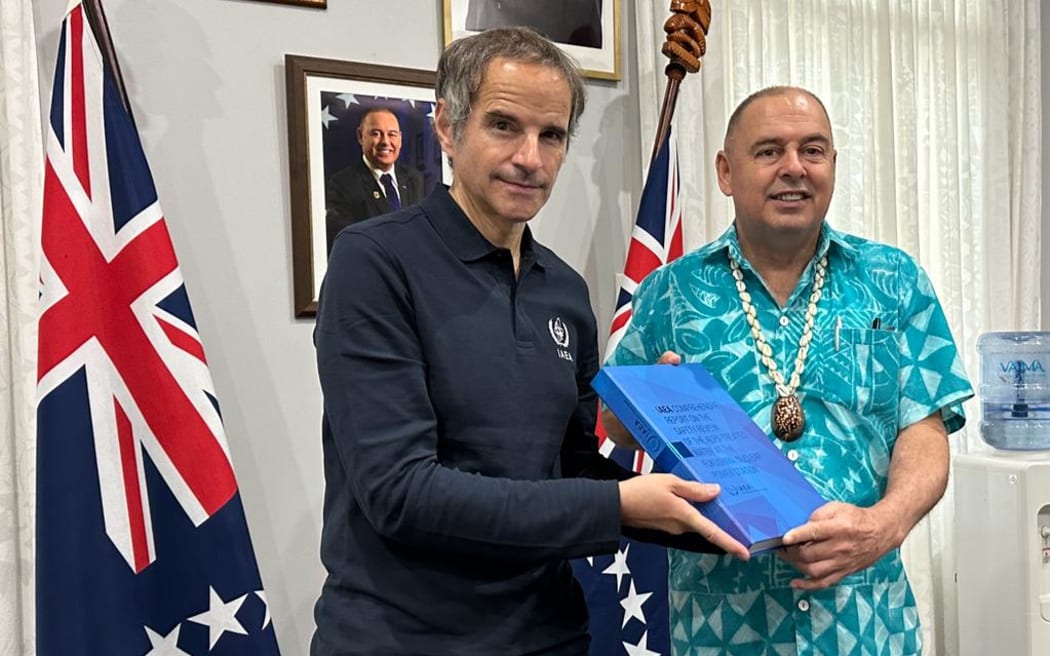
Daily monitoring has begun and the International Atomic Energy Agency (IAEA) is also independently monitoring the process on site.
“So, after a sea water pump is operated regarding the vertical shaft, the monitoring will become in service,” Junichi Matsumoto said.
The treated water is being discharged “continuously”, he added.
Pacific Islands Forum Secretary-General Henry Puna . . . “We’ve done our best to get Japan not to commence the discharge.” Image: RNZ/Samuel Rillstone
Holding Japan ‘fully accountable’ Pacific leaders are committed to holding Japan accountable should anything go wrong, the Pacific Islands Forum Secretary-General Henry Puna said.
“We’ve done our best to get Japan not to commence the discharge, until there is full agreement that it’s verifiably safe to do so. But Japan has taken a sovereign decision.
“And you know that point is now past. What we need to focus on now is to hold Japan to account,” he said.
SHAME JAPAN!
NO FUKUSHIMA NUCLEAR WASTE WATER IN THE PACIFIC OCEAN!
YOU CREATED THE PROBLEM, SOLVE IT PROPERLY ON YOUR OWN TERRITORY.
— Pacific Feminist Community of Practice (@pacfemcop) August 15, 2023
Puna said Japan had made a guarantee that it would comply with international standards and the Pacific would be watching keenly to make sure it stayed that way.
“Since the announcement of the discharge in April 2021, our leaders have been busy engaging with Japan,” Puna said.
“The statements are very clear. Their collective statements expressing our concerns given our nuclear legacy issues and that position has never changed.”
Pacific leaders are to discuss the issue face-to-face in Rarotonga in November at the Pacific Islands Forum leaders’ meeting.
This article is republished under a community partnership agreement with RNZ.
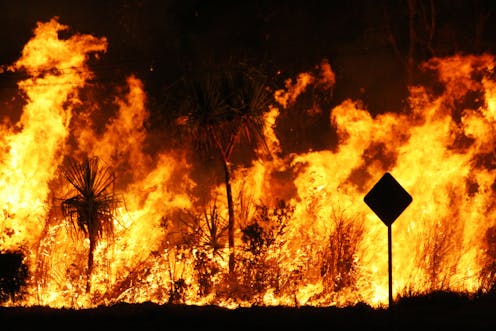
Our new research explores the connection between extreme weather events in Australia and public interest in climate change or global warming between 2009 and 2020. We found that bushfires, storms and floods tended to focus attention on climate change. But, crucially, the effect was short-lived and varied depending on the type of weather event.
In between extreme events, the level of interest in climate change does not appear to be increasing over time. This is despite developments in the science attributing extreme weather events to climate change, and the growing tendency of the media to make these connections.
Climate activists and policymakers may be able to use these “focusing events” to raise awareness and harness support for stronger action.
Here’s how climate change is affecting Australian weather.
We concentrated on the bushfires, storms and floods that occurred in Australia between 2008 and 2020.
Using the Google Trends intensity index to measure people’s attention, we analysed the use of the search terms “climate change” and “global warming” in the months following each event.
We found more searches for climate change and global warming during the month of, and immediately after, an extreme weather event.
However, such heightened attention was rather short-lived. And there were differences in the intensity and duration of this attention, depending on the type of weather event.
Major bushfires generated intense and sustained interest. During the month of a major bushfire, attention to climate change increased. The level of attention was higher still one month after the bushfire, and remained elevated for about four months.
Extreme storms prompted the most intense search activity but the effect did not last long. Attention to climate change dissipated one month after the storm.
Major flooding events did not appear to generate significant attention to climate change. This suggests Australians are more likely to think of climate change in terms of its tendency to cause hotter, drier weather, and less inclined to appreciate how it can cause wetter weather as well.
Although there is a growing trend within the media to underscore the connection between extreme weather events and climate change over the past decade, this does not seem to be generating more climate attention. For instance, while the Black Summer bushfires drove an exceptional uptick in climate attention, the same occurred during the Black Saturday bushfires a decade earlier.
Australia has been described as “the petri-dish of climate change”. Our continent is prone to a variety of severe climate impacts such as droughts, floods, fires, storms and coral bleaching, and yet we’re also one of the world’s worst climate laggards.
Understanding how Australians respond to extreme weather events could serve as a much-needed catalyst for national climate progress.
But increased climate ambition is not guaranteed to flow from these destructive events. That’s because climate attention is quite short-lived, and not always as intense as one might hope.
We believe our research can help activists and policymakers capitalise on the increased intensity and duration of public interest in climate change following extreme events and translate that attention into a sustained appetite for climate policy action.
Christopher Crellin receives funding from Fonds de la Recherche Scientifique.
Robert MacNeil does not work for, consult, own shares in or receive funding from any company or organisation that would benefit from this article, and has disclosed no relevant affiliations beyond their academic appointment.
The Y chromosome is a never-ending source of fascination (particularly to men) because it bears genes that determine maleness and make sperm. It’s also small and seriously weird; it carries few genes and is full of junk DNA that makes it horrendous to sequence.
However, new “long-read” sequencing techniques have finally provided a reliable sequence from one end of the Y to the other. The paper describing this Herculean effort has been published in Nature.
The findings provide a solid base to explore how genes for sex and sperm work, how the Y chromosome evolved, and whether – as predicted – it will disappear in a few million years.
Making baby boys
We have known for about 60 years that specialised chromosomes determine birth sex in humans and other mammals. Females have a pair of X chromosomes, whereas males have a single X and a much smaller Y chromosome.
The Y chromosome is male-determining because it bears a gene called SRY, which directs the development of a ridge of cells into a testis in the embryo. The embryonic testes make male hormones, and these hormones direct the development of male features in a baby boy.
Without a Y chromosome and a SRY gene, the same ridge of cells develops into an ovary in XX embryos. Female hormones then direct the development of female features in the baby girl.
A DNA junkyard
The Y chromosome is very different from X and the 22 other chromosomes of the human genome. It is smaller and bears few genes (only 27 compared to about 1,000 on the X).
These include SRY, a few genes required to make sperm, and several genes that seem to be critical for life – many of which have partners on the X.
Many Y genes (including the sperm genes RBMY and DAZ) are present in multiple copies. Some occur in weird loops in which the sequence is inverted and genetic accidents that duplicate or delete genes are common.
The Y also has a lot of DNA sequences that don’t seem to contribute to traits. This “junk DNA” is comprised of highly repetitive sequences that derive from bits and pieces of old viruses, dead genes and very simple runs of a few bases repeated over and over.
This last DNA class occupies big chunks of the Y that literally glow in the dark; you can see it down the microscope because it preferentially binds fluorescent dyes.
We have a lot of evidence that 150 million years ago the X and Y were just a pair of ordinary chromosomes (they still are in birds and platypuses). There were two copies – one from each parent – as there are for all chromosomes.
Then SRY evolved (from an ancient gene with another function) on one of these two chromosomes, defining a new proto-Y. This proto-Y was forever confined to a testis, by definition, and subject to a barrage of mutations as a result of a lot of cell division and little repair.
The proto-Y degenerated fast, losing about 10 active genes per million years, reducing the number from its original 1,000 to just 27. A small “pseudoautosomal” region at one end retains its original form and is identical to its erstwhile partner, the X.
There has been great debate about whether this degradation continues, because at this rate the whole human Y would disappear in a few million years (as it already has in some rodents).
The first draft of the human genome was completed in 1999. Since then, scientists have managed to sequence all the ordinary chromosomes, including the X, with just a few gaps.
They’ve done this using short-read sequencing, which involves chopping the DNA into little bits of a hundred or so bases and reassembling them like a jigsaw.
But it’s only recently that new technology has allowed sequencing of bases along individual long DNA molecules, producing long-reads of thousands of bases. These longer reads are easier to distinguish and can therefore be assembled more easily, handling the confusing repetitions and loops of the Y chromosome.
The Y is the last human chromosome to have been sequenced end-to-end, or T2T (telomere-to-telomere). Even with long-read technology, assembling the DNA bits was often ambiguous, and researchers had to make several attempts at difficult regions – particularly the highly repetitive region.
So what’s new on the Y?
Spoiler alert – the Y turns out to be just as weird as we expected from decades of gene mapping and the previous sequencing.
A few new genes have been discovered, but these are extra copies of genes that were already known to exist in multiple copies. The border of the pseudoautosomal region (which is shared with the X) has been pushed a bit further toward the tip of the Y chromosome.
We now know the structure of the centromere (a region of the chromosome that pulls copies apart when the cell divides), and have a complete readout of the complex mixture of repetitive sequences in the fluorescent end of the Y.
But perhaps the most important outcome is how useful the findings will be for scientists all over the world.
Some groups will now examine the details of Y genes. They will look for sequences that might control how SRY and the sperm genes are expressed, and to see whether genes that have X partners have retained the same functions or evolved new ones.
Others will closely examine the repeated sequences to determine where and how they originated, and why they were amplified. Many groups will also analyse the Y chromosomes of men from different corners of the world to detect signs of degeneration, or recent evolution of function.
It’s a new era for the poor old Y.
Jenny Graves receives funding from the Australian Research Council.
Source: The Conversation (Au and NZ) – By Kate Fitz-Gibbon, Director, Monash Gender and Family Violence Prevention Centre; Professor of Social Sciences, Faculty of Arts, Monash University
Shutterstock
There is increasing attention on the lack of progress around sexual harassment and assault on Australian university campuses. On Wednesday, Education Minister Jason Clare acknowledged community concerns, saying “we’re just not doing enough”.
Much of the focus so far has been on students. A 2022 report found one in 20 students had been sexually assaulted, and one in six had been sexually harassed, in a university context since starting their studies.
But staff are also at risk.
Last month, the Universities Accord interim report said sexual assault and harassment on campus are “affecting the wellbeing of students and staff, and their ability to succeed”.
Earlier this week, the National Tertiary Education Union launched a national survey of university staff experiences of workplace sexual harassment.
Our research on workplace sexual harassment in Australia sheds light on university staff experiences of harassment and the inadequacy of responses.
Within this, there were 100 respondents who had experienced workplace sexual harassment while working at an Australian university.
University staff experiences of workplace sexual harassment
Our survey included responses from 100 victim-survivors who had been sexually harassed as university employees. Polina Zimmerman/Pexels
Almost all (90%) of the victim-survivors in our survey identified as a woman or female, with 7% identifying as a man or male and 3% as non-binary.
This reflects the gendered nature of workplace sexual harassment.
Almost 80% of our respondents believed their gender contributed to the harassment, while 47% believed their age was a contributor. Revealing well-known patterns of power and control, 40% of perpetrators were identified as being more than 55 years old, and were often in more senior positions compared with the victim-survivor.
No victim-survivors were harassed by a more junior colleague.
Workplace sexual harassment is frequent and ongoing
We invited victim-survivors to detail the frequency and duration of their experience of workplace sexual harassment. Among university staff, we found:
23% experienced sexual harassment on a weekly basis
21% experienced sexual harassment on a monthly basis
31% experienced sexual harassment for more than a year.
These findings point to the ongoing nature of this abuse. Few victim-survivors experienced workplace sexual harassment as a one-off incident.
Witnesses rarely intervene
Almost one third of respondents said they had been harassed for more than a year. Rodolfo Quiros/Pexels
Among these victim-survivors, incidents of sexual harassment were well known in the university and often involved the same perpetrators. Almost half (46%) said there were witnesses to their experience, with 18% noting four or more people had witnessed the incident. Of those whose victimisation was witnessed, in only 15% of cases did a witness intervene.
Of those surveyed, 71% of the victim-survivors knew someone else who had experienced sexual harassment in the same workplace. And 72% of those also knew their harasser had harassed someone else in that workplace.
This highlights the importance of improving bystanders’ responses, and tackling the underlying culture of silence.
But our research suggests any type of university employee can be at risk.
Half of the university staff who responded to our survey felt their employment was insecure at the time they were sexually harassed. These respondents were not just casual staff, but had both fixed-term and full-time positions.
Of those surveyed, 24% of victim-survivors had lodged a formal report or complaint with their university. More than 80% of those victim-survivors were dissatisfied with the response received, and more than 70% said the university did not change anything in an attempt to detect, prevent or better respond to future workplace sexual harassment.
Numerous victim-survivors said they were not aware of any consequences for the perpetrator. But to manage their own safety or as a result of the impacts of the experience, they left the university.
What now?
The union’s survey will increase transparency of the problem, which is a key step. But it is crucial this issue does not become politicised. We have a national plan with a target of eliminating gender-based violence in one generation. Tackling gender-based violence in workplaces will be key to achieving this.
Clare has appointed a working group to provide advice on how universities can “create safer campuses” for students and staff. State and federal education ministers are expecting recommendations before the end of the year. The final Universities Accord report is also due in December.
Peak body Universities Australia has also noted “much more is required of us collectively” when it comes to sexual harm on campuses.
Universities need to take the lead on this issue. They need to create cultures of accountability for perpetrators and processes that support and validate victim-survivors’ experiences. They also need to implement clear actions to prevent sexual harassment and drive cultural change to ensure universities are safe and respectful places for staff and students.
Kate has received funding for family violence related research from the Australian Research Council, Australian Institute of Criminology, Australia’s National Research Organisation for Women’s Safety, the Victorian Government and the Department of Social Services. This piece is written by Kate Fitz-Gibbon in her capacity as Director of the Monash Gender and Family Violence Prevention Centre and is wholly independent of Kate Fitz-Gibbon’s role as Chair of Respect Victoria.
Nicola Helps currently receives funding for family violence related research from the Victorian Government.
Stefani Vasil has received funding from Respect Victoria and the Department of Foreign Affairs and Trade.
The 22nd Melanesian Spearhead Group (MSG) Leaders’ Summit was declared open at the National Convention Centre in Port Vila yesterday with host Prime Minister Ishmael Kalsakau hailing opportunities to “galvanise our efforts as a United Melanesia”.
Prime Minister Kalsakau welcomed all the delegations and said how happy and privileged the people of Vanuatu were to have the MSG leaders visit Port Vila after the recent successful Melanesian Arts and Cultural Festival.
“It gives me enormous pleasure, to welcome you all to Port Vila on the occasion of the official opening of the 22nd MSG Leaders’ Summit,” he said.
“Fifteen years since Vanuatu last hosted in 2008, this gathering of all leaders of our distinctive and noble organization is for history to behold.
“Let me at the outset take this opportunity on behalf of the government and people of Vanuatu to convey our sincere appreciation for your commitment and respect.
“This is not only for honouring the call to attend the Leaders’ Summit and related meetings here in Port Vila but more importantly for your leadership and wisdom to collectively harness opportunities to revitalise and galvanise our efforts as a United Melanesia.”
Prime Minister Kalsakau said a united Melanesia was not just for the developmental goals, dreams, and aspirations of the Melanesian area, which stretches from West Papua in the Southwest Pacific to Fiji to the East.
Duty of care He said Melanesian countries had a duty of care and obligation to the remainder of Oceania, particularly the Pacific Small Island Developing States, as custodians of 90 percent of the landmass, population, and natural resources.
“As Prime Minister, chair, and host, I take this opportunity once again on behalf of the Vanuatu government and people, to reiterate Vanuatu’s privilege to take on the mantle and challenge of leadership of the MSG, and in furthering our sub-regional organisation’s common agendas and aspirations, for the betterment of the group and our peoples,” Kalsakau said.
“Many political observers derided our subregional efforts in cooperation, as divisive and destructive to regional cooperation.
“Also in the yesteryear, foreign sceptics with zero understanding of Melanesia and its nucleus referred to us as the ‘Arc of Instability’. They drove this agenda for us to fail as nation states.
“Today I stand proud, to say that we have proven these critics wrong on more than one account. We have proven to be resilient collectively building on the fundamentals that bound us together as One People, that inheritance bestowed on us by our Creator, God Almighty.”
Kalsakau said the MSG today remained more vibrant and viable than ever, as the countries forged ahead in their collective pursuit of common social, political, economic, and security interests, underscoring the resoluteness, tenacity, and resilience of Melanesia.
“MSG, Being Relevant and Influential” as the theme of the 22nd MSG Leaders’ Summit, is therefore a fitting and timely reminder,” he said.
Melanesian Spearhead group leaders . . . Fiji’s PM Sitiveni Ligamamanda Rabuka (from left), Solomon Islands PM Manasseh Sogovare, Vanuatu PM Kalsakau, PM of PNG James Marape, and Kanaky New Caledonia’s Victor Tutugoro, spokesperson of the FLNKS. Image: Vanuatu Daily Post
‘Conquered the colonial past’ “For the independent states we have conquered that colonial past and now as a collective have transformed the ‘Arc’ into one of Responsibility and Prosperity. This indispensable Arc of Melanesia is moving forward,” said the Prime Minister.
“And we are reminded that among our peoples are those who continue to be deprived of taking up their rightful place among the global union of nations. The MSG platform, therefore, provides unique opportunities in solidifying expressions of hope for all of Melanesia.”
MSG was the largest grouping in the Pacific Islands Forum family, Prime Minister Kalsakau said. MSG must continue to assert a leadership role, and in spearheading initiatives, as the name denoted.
He said that MSG was the only subregional grouping that had a permanent secretariat, and perhaps had the only active and functioning free trade agreement in Oceania.
“This is a marked feat, as we commemorate 35 years of MSG’s existence as our august organisation, an achievement we all should be proud of,” Kalsakau said.
“Our subregionalism is no longer frowned upon but is regarded as the building block for stronger regional cooperation in the wider regional architecture, as we provide added cooperation impetus for the Blue Pacific Continent, of which we are an integral part.”
The MSG subregionalism had therefore been vindicated and would continue to grow in prominence and relevance going forward.
Fundamental principles “As chair, I would like to assert that as a group, we must not lose sight of fundamental principles espoused by the MSG,” Kalsakau said. This included:
encouraging sub-regional diplomacy and friendly relations,
maintaining peace and harmony,
encouraging free and open trade, boosting economic and technical cooperation, and
promoting our unique Melanesian traditions and cultures.
However, during his tenure as chair, Prime Minister Kalsakau wants the secretariat to assist the members in bringing to closure many of the outstanding issues leaders had agreed to.
Under the tutelage of the high-performing Director-General, he expected the committed secretariat to implement the main recommendations of the Implementation Strategy for the 2038 Prosperity for All Plan.
“The third-revised MSG Free Trade Agreement 2017 must be brought into operation quickly so we can all benefit from its provisions on trade in services and investments,” he said.
“On that note, I wish to assure you all of my government’s commitment to signing and ratifying the MFTA by November of this year. The Skills Movement Scheme must be promoted widely so our people can fully take advantage of it.”
The Prime Minister announced that, through representatives, the governments of Australia and China were also participating in the Leaders’ Summit as special guests.
He commended the secretariat for its facilitation and revitalisation of the first edition of the MSG PM’s Cup last year.
Doddy Morrisis a Vanuatu Daily Post reporter. Republished with permission.
Papua New Guineans engaged in tribal fights will face life imprisonment once Parliament has its way with the amendment of the Tribal Fights Act in October.
And the PNG government is looking at amending laws to also give police additional powers and immunity under special operations to protect the lives of policemen and women.
The “restlessness” in Enga over the last couple of days has been labelled as “domestic terrorism”, which the security forces will be addressing under the special police unit and force that has been instructed to be set up.
Prime Minister James Marape enroute to Wabag, Enga Province and then onto Port Vila, Vanuatu, fpor the Melanesian Spearhead Group leaders’ summit yesterday said the October Parliament Session would deal with amending the Tribal Fights Act to stop these “horrific fights” throughout the country.
Under he PNG Constitution there is an Inter-group Fighting Act 1977 with a purpose to discourage fighting between groups of Papua New Guineans by providing for:
The creation of offences in relation to such fighting;
The imposition of severe penalties for such offences;
The collective punishment of the leaders of groups involved in fighting; and
The imprisonment of group leaders for non-payment of penalties imposed on them as a result of their group’s participation in such fighting.
Severe penalties The Tribal Fights Act, now under a policy directive to be enacted, will be severe and is expected to deal specifically with life imprisonment among other punishments.
“Next October when we go to Parliament, we will be amending the Tribal Fights Act,” Marape said.
“Those who start tribal fights will be receiving life imprisonment, not just for Enga but right across the country.
“We don’t want people to get engaged in tribal fights, those who cause tribal fights we will give them life imprisonment and that is the policy direction my government has given with the necessary legal change happening and being drafted as we speak.
“For now, police have been instructed to look into stepping up their operations.”
Police Commissioner David Manning had put in place an operational order and re-structure to enable the military and police to cooperate — “we try to get a specific command, a high-ranking police officer,” Marape said.
“I will be stepping into Wabag today and will address our people out there . . . and will be appealing to the people out there.
It was not the entire Enga Province involved, it was about four tribal fights based on police intelligence.
“We know who the ring leaders of the tribal fights are,” Marape said.
“In respect to restlessness in our country we are labelling this restlessness as domestic terrorism and so a special police unit being organised will go in full power to specific hotspot areas.”
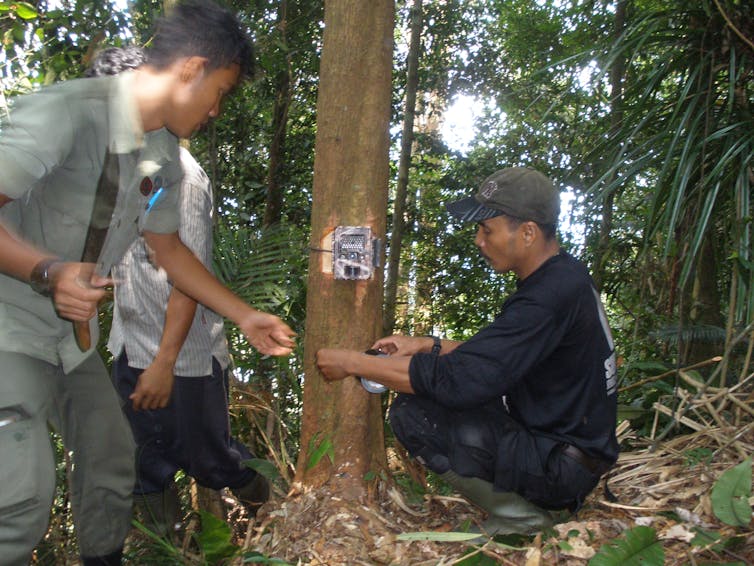
A Southern Red Muntjac deer peering at a camera trap.Authors
It’s easy to assume protected areas such as national parks conserve wildlife – that seems obvious. But what is the proof? And how does park success vary across different ecosystems – in deserts versus tropical rainforests, or wetlands versus oceans?
While we can use satellite imagery to measure the effect of protected areas in reducing human impacts such as logging, you can’t see the animals from space. In particularly dense tropical rainforests, it was nearly impossible to accurately monitor wildlife, until remotely triggered camera traps became available in the past decade.
There is a longstanding conservation debate on the benefits that protected areas such as national parks have for biodiversity.
Some scientists have argued that conservation success inside park boundaries may come at the expense of neighbouring unprotected habitats. Essentially, they suggest parks displace impacts such as hunting and logging to other nearby areas. The technical term for this is leakage.
On the other hand, marine parks have often reported higher biodiversity nearby. Fish reproduce successfully inside park boundaries and their offspring disperse, benefiting surrounding habitats in a “spillover” effect.
We set out to see which of those effects actually prevails in protected land areas and their surrounds. Our new study, published today in Nature, shows parks do enhance bird diversity inside their borders. Large parks also support higher diversity of both birds and mammals in nearby unprotected areas.
Rare rainforest species captured by camera traps used by the research team in protected areas across South-East Asia.
We recruited an international team of scientists to conduct a comprehensive analysis of bird and mammal diversity inside and outside parks across South-East Asia. We used more than 2,000 cameras and bird surveys across the region.
South-East Asia is one of the most biodiverse regions on Earth, but hunting is a key concern. It’s a prime suspect for why diversity has often been assumed to decline outside protected park areas.
Members of the research team set up a camera trap in Sumatra. Authors A Silver Pheasant eyes the camera. Authors
Hunters are mobile, so hunting bans within park boundaries may only displace these activities to nearby unprotected areas, undermining their net benefit. To be honest, we were surprised mammal diversity was higher outside large parks. It’s common to see hunters both inside and outside parks in many countries.
We expected hunters’ removal of game animals would reduce diversity outside parks. However, it appears large parks limit the impacts of hunting so it does not completely remove these animals. Specifically, when comparing unprotected areas near large reserves to unprotected areas that didn’t border large reserves, we found large reserves boosted mammal diversity in unprotected areas by up to 194%.
However, a sad note from our study was the finding that only larger parks significantly enhanced mammal diversity, casting doubt on the effectiveness of smaller parks for mammal conservation. Recent work in the region suggests many large mammals persist in small parks, but our study shows the presence of a few resilient animals in small parks doesn’t scale up to higher biodiversity overall.
These findings are especially timely for the United Nations, which recently announced more ambitious biodiversity targets, including significant expansions of global protected areas. The UN strategy is to conserve 30% of Earth’s lands and waters by 2030 – the so-called “30 by 30 goal”. Massive expansions of the global area of protected land will be difficult and expensive, but our results support this approach.
The work provides a clear case for park design to consider size. Larger parks routinely had higher bird diversity. Large mammals such as tigers and elephants travel huge distances and don’t see park boundaries drawn on maps. Larger parks support these wide-ranging animals that move across entire landscapes.
Considering the UN’s goal of increasing protected area to 30% of the world’s surface, our findings support the creation of fewer larger parks, rather than many smaller ones.
A Thai elephant captured by the camera trap moments before destroying it. Authors
Our findings also provide a much-needed conservation “win” for South-East Asia. Despite being a biodiversity hotspot, the region suffers from high rates of forest loss and hunting, which pose threats to birds and mammals.
Our team built a collaborative network and massive database to conduct the analysis, and this can also be used to answer other questions. Our next project will quantify shifts in abundance – the numbers of animals rather than numbers of species – inside and outside parks. We suspect parks will support increased mammal and bird abundances, even more than increased in wildlife diversity.
Based on the success of the Asian collaborative network project, a related team is now building a domestic collaborative network and database to conduct similar analyses, called Wildlife Observatory of Australia. Key questions will include the impact of fire and climate change on Australia’s wildlife diversity and abundance.
The research discussed in this article was supported by the United Nations Development Programme, NASA grants NNL15AA03C and 80NSSC21K0189, the National Geographic Society’s Committee for the Research and Exploration award #9384–13, the Australian Research Council Discovery Early Career Researcher Award DECRA #DE210101440, the Universiti Malaysia Sarawak, the Ministry of Higher Education Malaysia, Nanyang Technological University Singapore, the Darwin Initiative, Liebniz-IZW, and the Universities of Aberdeen, British Columbia, Montana and Queensland. Mammal data collection in one study area (out of 65) was funded by Sarawak Energy Berhad; no personnel from that agency participated in the data collection or analysis or reviewed the manuscript before it was submitted.
The Australia of the 2060s will be very different from the one we know today. It will be older, with slower economic growth, a big “care” economy, and an export sector that is radically transformed due to the imperatives of climate change.
The Intergenerational Report, released by Treasurer Jim Chalmers, says five main forces will shape Australia’s economy over the coming four decades.
They are:
population ageing
expanded use of digital and data technology
climate change and the net zero transformation
rising demand for care and support services
increased geopolitical risk and fragmentation.
These forces will “change how Australians live, work, and engage with the world”.
The economy will be about two and a half times as big, and real incomes are expected to be 50% higher by 2062-63. On the downside, economic growth will be slow – growing at an average pace of 2.2% over the coming four decades, from an average of 3.1% over the previous four decades.
Average annual growth
Population will also increase more slowly than previously – by an average of just 1.1% annually. The report projects 40.5 million people in the early 2060s. Migration is projected to fall as a share of the population. While the number of people 65 and over will double, Australia is still expected to have a younger population than most advanced countries.
With an ageing population, the rate of participation in the workforce is expected to fall gradually – from 66.6% to 63.8%. Average hours worked would also fall slightly, from about 32 to about 31. The gender pay gap would continue to narrow.
Productivity growth will remain in the slow lane, although its future path is
not a foregone conclusion and will be influenced by decisions taken by government, business, and investors, and by the big shifts underway in the global and domestic economy.
Changes in Australia’s industrial base will be driven by technology, climate change and the energy transformation, and the growing demand for care and support services, as well as geopolitical uncertainty.
The net zero transformation will hit coal exports, but boost the export of so-called critical minerals.
“Climate change and the net zero transformation will have a significant impact on the structure of the economy and the choices Australian consumers and businesses make,” the report says.
Australia is in a strong position to benefit with some of the world’s largest reserves of critical minerals such as lithium, cobalt and rare earth elements, which are key inputs to clean energy technologies. With abundant wind, sun and open spaces Australia also has the potential to generate green energy more cheaply than many countries.
The report warns that domestically, climate change will affect how we live and work, as well as food and energy security, and the environment.
The ageing population will strengthen the trend towards a service-based economy, with the care and support sector potentially doubling over the coming four decades.
Components of real income growth per capita
The budget in 40 years will see already-familiar spending pressures – in health, aged care, the National Disability Insurance Scheme, defence, and debt interest.
Collectively, these are projected to increase from about a third to about a half of all government spending.
Total government spending is projected to rise by 3.8 percentage points of GDP over the next 40 years. About 40% of this increase is caused by ageing.
Total income support and education payments are expected to continue to rise in real terms per person but fall as a share of GDP as Australia ages. Spending on age and service pensions will fall as a share of GDP, with superannuation increasingly funding retirement.
Increase in payments across the five main spending pressures Per cent of GDP, 2022–23 to 2062–63
There will be pressure in the coming 40 years on the revenue base, which will be eroded by the decarbonisation of transport and also a hit to tobacco excise.
Australia’s gross debt as a share of GDP is set to decline over coming decades, but there will be deficits. The budget is currently in surplus but the report says “deficits are projected to remain over the long term”. Initially narrow. they will widen from the 2040s because of spending pressures.
Launching the report at the National press Club Chalmers said the government’s immediate obligation was to do what it could to ease cost-of-living pressures without adding to inflation.
“But the critics out there who say that we need to wait before engaging with our long-term prospects just don’t seem to get it,” he said.
“There will never be a quiet time to think about the future. There will always be competing pressures and urgent calls on our attention.
“The best leaders can focus on more than one thing, more than one horizon, more than one set of opportunities.”
Michelle Grattan does not work for, consult, own shares in or receive funding from any company or organisation that would benefit from this article, and has disclosed no relevant affiliations beyond their academic appointment.
On social media and in wellbeing circles, people have been talking about the vagus nerve a lot. In fact, we have two vagus nerves – a left and a right – and their optimal functioning is essential for good physical and mental health.
Many social media posts describe ways to reset the vagus nerves to reduce stress and increase calm. These mostly focus on yoga, meditation, deep breathing and cold plunges.
But the vagus nerves also play a part in why socialising, sex and sports are good for our health and wellbeing.
The sympathetic nervous system produces our fight-or-flight response to perceived threats. The vagus nerves are part of the parasympathetic nervous system, which does the opposite: rest, digest and restore.
The sympathetic nervous system increases heart and breathing rates, slows down digestion and lowers the immune response. Stimulation of the vagus nerves reduces heart rate, promotes healthy digestion and metabolism, increases blood flow to organs and reduces inflammation.
It is healthy to activate our sympathetic nervous system during exercise and short-term stress. But ongoing stimulation of the sympathetic nervous system is not healthy.
The parasympathetic nervous system via the vagus nerves is the counterbalance to our stress response. It makes us more calm, relaxed and sociable.
The vasovagal response is an over-reaction of the vagus nerves to counterbalance a stress. This is when an excessive drop in blood pressure and heart rate causes a person to feel dizzy or faint.
The wandering nerve
Vagus means wandering in Latin and is where the words vagrant, vagabond and vague come from. The name reflects the long pathway and extensive branching of our vagus nerves. These are the tenth cranial nerves, the longest of the 12 pairs of cranial nerves that connect the brainstem and the body.
The vagus nerves run down the neck where they are about 5mm in diameter. They travel into the thoracic (chest) cavity and send branches to the heart and lungs, then pass through the diaphragm to innervate nearly all the abdominal organs.
We mostly hear of the effects of the vagus nerves on our organs, such as reducing heart rate. However, about 80% of vagus nerve fibres carry information from organs back to our brain. This forms part of the bidirectional gut-brain axis. This can explain the “butterflies in your stomach” when you feel nervous, and why gastrointestinal problems can cause anxiety and depression.
It is not possible to directly measure vagal tone (the level of activity in the nerves). Instead, heart-rate variability is used as a surrogate measure of vagus nerve activity. This is the slight beat-to-beat differences in heart rate that occur naturally, related to breathing. When you inhale, your heart rate speeds up. When you slowly exhale, it slows down.
Vagus-nerve stimulation slows the heart rate but increases heart-rate variability. These are both healthy because they indicate higher parasympathetic and lower sympathetic activation. A lower heart rate indicates the heart is working efficiently. Higher heart rate variability suggests the body is more relaxed.
Many wearable devices measure heart rate and heart-rate variability and can be a useful way to monitor vagal tone.
The vagus nerves are the longest of the cranial nerves. Shutterstock
So is there any science to back the vagal nerve hacks online?
Singing and humming can increase our vagal tone because the vagus nerve innervates our larynx (voicebox).
There are also claims simple eye movements can reset the vagus nerve. This has not been tested scientifically. But there is an oculocardiac reflex where activation of the eye muscles stimulates the vagus nerves. Pressure on the eyes also stimulates this reflex. This might be why one natural reaction when we feel stressed is to press our eyes.
Carotid sinus massage can also be used clinically to increase vagus nerve activation and lower a high heart rate. Light massage of the carotid artery in the neck stimulates blood pressure receptors, which causes reflex activation of the vagus nerves to reduce heart rate. This should only be done by a clinician or with professional advice, for 5 to 10 seconds and never both sides at once, which can cause fainting.
Social connection and feeling safe
Polyvagal theory suggests positive social communication and feeling safe increases vagus nerve activity. This promotes healthy growth and restoration activities in our body and increases positive emotions.
The vagus nerves have a role in social communication because they are linked with our facial expressions and voice. Smiling and being smiled at can stimulate our vagus nerves.
Even just receiving a smile can have an effect on our vagus nerve. Unsplash
Sport, sex and slowing down
Sports and sex are both associated with high sympathetic nervous system activation. When intimacy or competitive sport happen in a safe, social and supportive environment, the vagus nerves are also stimulated. Having a short-term stress response followed by the counterbalancing recovery effects of vagus nerves is healthy.
Slowing down with others, such as lying down next to a friend on a picnic blanket and looking at the clouds, also stimulates the vagus nerves. This is a safe way to reduce our energy requirements and rest while also being socially connected.
Whether it’s through mindfulness, paced breathing, sports, sex or simply smiling, increased vagal tone is important for good health and wellbeing. There is a lot of hype online and some of it may be over the top. But reduced stress and greater relaxation are safe for everyone and have positive effects for our body and brain.
Theresa Larkin does not work for, consult, own shares in or receive funding from any company or organisation that would benefit from this article, and has disclosed no relevant affiliations beyond their academic appointment.
New Zealand Parliament Buildings, Wellington, New Zealand.
New Zealand Politics Daily is a collation of the most prominent issues being discussed in New Zealand. It is edited by Dr Bryce Edwards of The Democracy Project.
Interventions designed to limit the spread of COVID have been rolled back around the world. In New Zealand, the government removed all remaining public health measures last week.
But although the emergency is over and the disease is rapidly becoming endemic, the risk of new variants remains. COVID is still causing a significant health burden.
Is there more we could be doing to prevent infections?
We lack quality evidence about how effective different interventions are. But simple maths shows that, in the long term, the prevalence of a highly infectious endemic virus like SARS-CoV-2 is quite difficult to budge.
The basic reproduction number
Back in 2020, we heard a lot about the basic reproduction number or R0. This is the average number of people someone infects when the whole population is susceptible to the disease. With a susceptible population, if R0 is above 1 the disease spreads exponentially.
This situation prompted governments around the world to implement intensive response measures, including lockdowns, to prevent health systems from becoming completely overwhelmed.
The situation in 2023 is vastly different. Almost everyone has some form of immunity, acquired either from vaccination, previous infection, or both. However, people will eventually become susceptible again because of waning immunity and new variants.
This in turn means the virus won’t disappear altogether. Instead, the prevalence of infection will eventually reach what mathematicians call an endemic equilibrium. This is a state of balance: the loss of immunity due to its waning (and the cycle of births and deaths) is balanced by new immunity due to infections and vaccinations.
We don’t expect infection rates to be perfectly steady. Prevalence will rise and fall, influenced by seasons, school holidays and new subvariants, but it will always be pulled back towards the equilibrium level.
Unlike measles or polio, it’s impossible to eliminate COVID with the tools currently available. But that doesn’t mean we can’t reduce its impacts. Effective control measures should reduce the number of contacts infectious people have, or the risk of infection per contact. And this should lower the level of the endemic equilibrium, meaning there are fewer infections.
That’s certainly true, but how much effect do control measures realistically have for a virus like SARS-CoV-2?
R0 for the Omicron variant has been estimated between 6 and 10. But the effective reproduction number – the average number of people someone infects at the present time – is much closer to 1. In New Zealand, this number has hovered between 0.8 and 1.2 for the past year.
This tells us something about the amount of immunity in the population. If an average person would infect six people in a fully susceptible population, but only infects one person in reality, that means five out of six people must be immune. If R0=10, then nine out of ten people must be immune, and so on.
The maths of immunity
People may have acquired immunity through vaccination, but the protection vaccines provide against infection with current Omicron variants is relatively low and short-lived.
The majority of immunity comes from previous infections, including infections in vaccinated people. This is called “hybrid immunity” and it provides better protection than infection or vaccination alone. (This doesn’t mean that getting infected to get immunity should ever be a goal, but it is an important side effect).
A consequence of this is that the fraction of the population that is immune at a given point in time is proportional to the number of infections per year. It turns out this allows us to estimate the benefit of interventions.
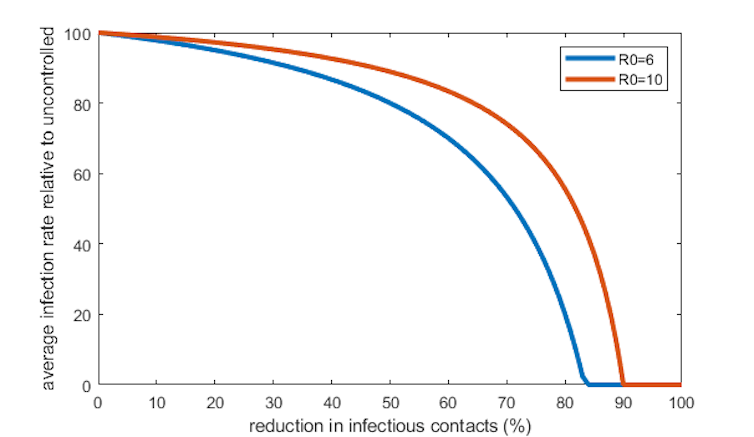
For example, suppose R0=6 and a control measure, such as isolation of all confirmed cases, reduces infectious contacts by 20%. That’s equivalent to reducing R0 to 4.8, which means the immune fraction is reduced from 83% of the population to 79%. That’s only a 5% relative reduction in the number of yearly infections, even though the transmission rate was reduced by 20%.
If R0=10, the maths is even more dismal: the same control measure only gives a 3% reduction in infections.
This graph shows the relative reduction in infections as a result of a control measure to limit infectious contacts. For highly infectious diseases with a large R0, the curves are relatively flat on the left side of the graph, which means a moderate reduction in infectious contacts has a relatively small effect on disease prevalence. Author provided, CC BY-SA
What’s the reason for this surprising finding? To begin with, the intervention reduces the number of infections, which is good. But an unfortunate side effect is that fewer people become immune, which means infections start to increase again.
Things eventually balance out at a lower level than without the intervention, but most of the benefit is sucked up by compensating for the lost immunity in the population.
For pathogens that are much less infectious than SARS-CoV-2, the opposite can be true. If R0=1.2, then a 20% reduction in infectious contacts would be enough to set the disease on a trajectory towards total elimination.
Targeted protection
The arguments above come from a mathematical model that captures the processes behind disease transmission in a simple way. Reality is more complicated. The susceptible-immune binary is a simplification because immunity is not black and white but shades of grey.
And populations are highly varied, not homogeneous. Infections will be more frequent in groups with high contact rates, which typically means younger people. Mathematically, that means infection rates will be harder to budge in younger groups and relatively easier to bring down in older groups.
Interventions targeted towards vulnerable groups are likely to be more effective than blanket measures. Importantly, although reducing infection rates in the long term is difficult, vaccines provide direct protection for those who take them and continue to be highly effective at preventing severe disease.
None of this is an argument that we shouldn’t try to reduce the prevalence of endemic diseases like COVID. But it does mean we can’t assume that a reduction in the number of infectious contacts will translate to an equivalent reduction in infection rates.
Decreasing the number of SARS-CoV-2 infections would be highly beneficial. It would reduce the acute health burden, the incidence of long COVID, and the level of risk for vulnerable groups.
But it’s not a goal we can afford to pursue at any cost. There is a range of healthcare needs competing for limited resources, so any measures need to be cost effective. And that means being realistic about the size of the benefits they’re likely to deliver.
Michael Plank receives funding from the New Zealand Ministry of Health for research related to mathematical modelling of COVID-19.
Freya Shearer receives funding from the Australian National Health and Medical Research Council and the Australian Government Department of Health and Aged Care.
James McCaw receives funding from the Australian Government Departments of Health and Foreign Affairs and Trade, the Australian Research Council and the National Health and Medical Research Council. He is an invited expert member of the Communicable Disease Network of Australia and between January 2020 and May 2022 was an invited expert member of the Australian Health Protection Principal Committee.
James Wood receives funding the National Health and Medical Research Council for projects on COVID-19. He previously received funding from NSW Health (2021-23) the federal government (2020-21) and from WHO Western Pacific Regional Office (2020) as part of COVID responses. He is a current member of the Australian Technical Advisory Committee on Immunisation.
People are living longer and with more chronic health conditions – including heart disease, diabetes, arthritis and dementia – than ever before. As societies continue to grow older, one pressing concern is the use of multiple medications, a phenomenon known as polypharmacy.
About 1 million older Australians experience polypharmacy and this group is increasing. They may wake up in the morning and pop a pill for their heart, then another one or two to control blood pressure, a couple more if they have diabetes, a vitamin pill and maybe one for joint pain.
Polypharmacy is usually defined as taking five or more different medications daily. In aged care homes, 90% of residents take at least five regular medications every single day. That can put their health at risk with increased costs for them and the health system.
As people age, the effects of medications can change. Some medications, which were once beneficial, might start to do more harm than good or might not be needed anymore. About half of older Australians are taking a medication where the likely harms outweigh the potential benefits.
While polypharmacy is sometimes necessary and helpful in managing multiple health conditions, it can lead to unintended consequences.
Prescription costs can quickly add up. Taking multiple medications can be difficult to manage particularly when there are specific instructions to crush them or take them with food, or when extra monitoring is needed. There is also a risk of drug interactions.
Medications bought “over the counter” without a prescription, such as vitamins, herbal medications or pain relievers, can also cause problems. Some people might take an over-the-counter medication each day due to previous advice, but they might not need it anymore. Just like prescription medications, over-the-counter medications add to the overall burden and cost of polypharmacy as well as drug interactions and side effects.
Unfortunately, the more medications you take, the more likely you are to have problems with your medications, a reduced quality of life and increased risk of falls, hospitalisation and death. Each year, 250,000 Australians are admitted to hospital due to medication-related harms, many of which are preventable. For example, use of multiple medications like sleeping pills, strong pain relievers and some blood pressure medications can cause drowsiness and dizziness, potentially resulting in a fall and broken bones.
Ensuring safe and effective use of medications involves both prescribing, and deprescribing them.
Deprescribing is a process of stopping (or reducing the dose of) medications that are no longer required, or for which the risk of harm outweighs the benefits for the person taking them.
The process involves reviewing all the medications a person takes with a health-care professional to identify medications that should be stopped.
Think of deprescribing as spring cleaning your medicine cabinet. Just like how you tidy up your house and get rid of objects that are causing clutter without being useful, deprescribing tidies up your medication list to keep only the ones truly required.
Deprescribing is the process of stopping or stepping down medications that are no longer needed. Shutterstock
But care is needed
The process of deprescribing requires close monitoring and, for many medications, slow reductions in dose (tapering).
This helps the body adjust gradually and can prevent sudden, unpleasant changes. Deprescribing is often done on a trial basis and medication can be restarted if symptoms come back. Alternatively, a safer medication, or non-drug treatment may be started in its place.
Studies show deprescribing is a safe process when managed by a health-care professional, both for people living at home and those in residential aged care. You should always talk with your care team before stopping any medications.
Deprescribing needs to be a team effort involving the person, their health-care team and possibly family or other carers. Shared decision-making throughout the process empowers the person taking medications to have a say in their health care. The team can work together to clarify treatment goals and decide which medications are still serving the person well and which can be safely discontinued.
If you or a loved one take multiple medications you might be eligible for a free visit from a pharmacist (a Home Medicines Review) to help you get the best out of your medications.
Health care has traditionally focused on prescribing medications, with little focus on when to stop them. Deprescribing is not happening as often as it should. Researchers are working hard to develop tools, resources and service models to support deprescribing in the community.
Health-care professionals may think older adults are not open to deprescribing, but about eight out of ten people are willing to stop one or more of their medications. That said, of course some people may have concerns. If you have been taking a medication for a long time, you might wonder why you should stop or whether your health could get worse if you do. These are important questions to ask a doctor or pharmacist.
We need more public awareness about polypharmacy and deprescribing to turn the tide of increasing medication use and related harms.
In the past five years, Emily Reeve has received funding from the National Health and Medical Research Council (NHMRC), Australian Association of Gerontology, Nova Scotia Health Research Foundation, Canadian Frailty Network, United States NIH, Australian Commission On Safety And Quality In Health Care, and US Agency for Healthcare Research and Quality. She has also received honorarium for writing and presentations from the US Deprescribing Research Network, Encyclopedia of Pharmacy Practice and Clinical Pharmacy (Elsevier), UpToDate (Wolters Kluwer), and Society of Hospital Pharmacists of Australia. She is Chair of the Australian Deprescribing Network (ADeN).
Jacinta Lee Johnson is senior pharmacist for research within SA Pharmacy and Board Director for the Society of Hospital Pharmacists of Australia. In the last five years, she has received research funding or consultancy funds (for development and delivery of educational materials) from SA Health, the Medical Research Future Fund, the Hospital Research Foundation – Parkinson’s, the Pharmaceutical Society of Australia, the Pharmacy Guild of Australia, the Society of Hospital Pharmacists of Australia, Mundipharma Pty Ltd, Aspen Pharmacare Australia Pty Ltd and Viatris Pty Ltd.
In the last five years, Janet Sluggett has received research funding, prizes or consultancy funds from the National Health and Medical Research Council, Medical Research Future Fund, Australian Association of Consultant Pharmacy, Dementia Centre for Research Collaboration and various professional societies. In addition to her research appointments, she is a non-executive director of the Australian MedicAlert Foundation and Southern Cross Care SA, NT, Victoria. She is a registered pharmacist who is accredited to perform Home Medicines Reviews.
Kate O’Hara is affiliated with the Society of Hospital Pharmacists of Australia (SHPA).
After a rare three-year La Niña event brought heavy rain and flooding to eastern Australia in 2020-22, we’re now bracing for the heat and drought of El Niño at the opposite end of the spectrum.
But while the World Meteorological Organisation has declared an El Niño event is underway, Australia’s Bureau of Meteorology is yet to make a similar declaration. Instead, the Bureau remains on “El Niño alert”.
The reason for this discrepancy is what’s called the Pacific Walker Circulation. The pattern and strength of air flows over the Pacific Ocean, combined with sea surface temperatures, determines whether Australia experiences El Niño or La Niña events.
In our new research, published today in the journal Nature, we asked whether the buildup of greenhouse gases in the atmosphere had affected the Walker Circulation. We found the overall strength hasn’t changed yet, but instead, the year-to-year behaviour is different.
Switching between El Niño and La Niña conditions has slowed over the industrial era. That means in the future we could see more of these multi-year La Niña or El Niño type events. So we need to prepare for greater risks of floods, drought and fire.
What is the Pacific Walker Circulation? An explainer.
La Niña and its counterpart El Niño are the two extremes of the El Niño Southern Oscillation — a coupled ocean-atmosphere system that plays a major role in global climate variability.
The Walker Circulation is the atmospheric part. Air rises over the Indo-Pacific Warm Pool (a region of the ocean that stays warm year-round) and flows eastward high in the atmosphere. Then it sinks back to the surface over the eastern equatorial Pacific and flows back to the west along the surface, forming the Pacific trade winds. In short, it loops in an east-west direction across the equatorial Pacific Ocean.
But the Walker Circulation doesn’t always flow with the same intensity — sometimes it is stronger, and sometimes it is weaker.
Periods of stronger or weaker Walker Circulation have major impacts on Australian climate. A stronger Walker Circulation means stronger-than-average trade winds, and generally La Niña-like ocean conditions. This often brings wetter weather to eastern Australia.
On the flip side, a weaker Walker Circulation brings weaker-than-average trade winds, and El Niño-like ocean conditions. A weak Walker Circulation is often associated with drier weather across northern and eastern Australia.
So far, the Walker Circulation is what’s missing from the current El Niño event developing in the Pacific Ocean: it has not weakened enough for the Bureau to declare an El Niño event.
In the Pacific Walker Circulation, warm air rises above the western Pacific Ocean, cools down and sinks over the east of the Pacific Ocean, circling back and continuing an important atmospheric cycle for the entire planet. The ARC Centre of Excellence for Climate Extremes via Canva.com
What’s happening to the Walker Circulation?
The Walker Circulation is a major influence on weather and climate in many places around the world, not just Australia.
A stronger-than-usual Walker Circulation even contributed to the “global warming slowdown” of the early 2000s. This is because a stronger Walker Circulation is often associated with slightly cooler global temperature.
So we need to know how it is going to behave in the future. To do that, we first need to know if — and if so, how — the Walker Circulation’s behaviour has changed due to human activities. And to do that, we need information about how the Walker Circulation behaved before humans started affecting the climate system.
We reconstructed Walker Circulation variability over the past millennium. We used global data from ice cores, trees, lakes, corals and caves to build a picture of how the Walker Circulation changed over time.
We found that on average, there has not yet been any industrial-era change in the strength of the Walker Circulation. This was surprising, because computer simulations of Earth’s climate generally suggest global warming will ultimately cause a weaker, or more El Niño-like, Walker Circulation.
There are a few possible reasons for this. One is that a buildup of fine particles in the air, such as smoke or industrial pollution, may be driving a stronger Walker Circulation, hence “cancelling out” the weakening effect of global warming.
Another is there may have been some weakening, but so far it is too small to be detectable among the Walker Circulation’s large year-to-year variability.
Our research also does not rule out the possibility that with future increases in global temperature, the Walker Circulation will indeed weaken, in a trend to more El Niño-like conditions. In that scenario, Australians might expect decreased rainfall in the north and east, as well as warmer temperatures across the continent, and less snow in the Australian Alps.
Even though the average strength of the Walker Circulation has not changed in the industrial era, there has been a subtle change in the length of time taken for the Walker Circulation to switch from one state to the next.
The Walker Circulation now switches more slowly between weak and strong phases, and we suspect this is influenced by climate change. This has potentially important implications for climate extremes, as El Niño and La Niña conditions could hang around for longer.
Our research also found that major explosive volcanic eruptions — at least as big as the 1982 eruption of El Chichón — can trigger an El Niño-like weakening of the Walker Circulation one to three years after the eruption. Unfortunately, volcanic eruptions remain extremely difficult to predict, so this doesn’t help our long-term climate predictions.
What is the message for Australians?
In terms of predicting how the Walker Circulation will change in the future, we can now focus attention on the particular climate models whose outputs most closely match what we discovered from our reconstruction.
That is, models that show no industrial-era weakening trend. This approach might help us get more accurate predictions of future Walker Circulation change.
The other thing we can do is to be prepared for more consecutive-year El Niño and La Niña events, and the sustained wet or dry spells they could bring to Australia.
And if there is a major volcanic eruption? Be prepared for a couple of years of weak Walker Circulation, and the warm, dry weather that can bring.
Georgina Falster receives funding from the Australian Research Council Centre of Excellence for Climate Extremes. This research was funded by the US National Science Foundation.
It is a universally acknowledged truth that interest-rate rises are always a bad thing for the average Australian household.
They are just a punitive form of economic medicine we have to take from time to time, on the say-so of the Reserve Bank of Australia – but nobody enjoys it. Except perhaps the sadistic central bankers.
And this is probably true for anybody with a mortgage. That might describe the majority of economic commentators, but it is not true of all Australians.
While higher interest rates are bad for borrowers, and therefore good for savers, there are in fact many ways higher interest rates directly help (a subset of) Australian households.
Higher cash rates means lower house prices
One of the most direct effects of the higher cash rate is its impact on households’ ability to finance the purchase of a new house. Whether you are a first home buyer, a repeat buyer or an investor, a higher interest rate will limit what you can borrow and therefore the amount you’re able to pay.
Accordingly, a higher cash rate leads to lower house prices. This is great news for young Australians yet to buy their first home.
Buying into the property market is especially hard in Australia these days, and lower housing prices is great news for these households who have up until now been locked out of owning a home.
A higher cash rate means they will pay more on their mortgage if they are successful. But the Reserve Bank’s calculations suggest that in the medium term home buyers are better off when higher rates lower house prices.
The higher the rate, the healthier the returns
Whether you are saving to buy a car, a house or just for retirement, a higher interest rate will mean you get more bang for your buck on your deposits at the bank. For anyone who has yet to take on a mortgage or has already paid theirs off, higher interest rates mean they will be better placed to build their savings.
Analysis of HILDA data by the Reserve Bank suggests these net-savers are less likely to own a home, less likely to be employed, and consume far less than their debt-ridden cousins.
While there is a lot of heterogeneity in the broad category of “savers”, we should welcome the extra income to young households who haven’t yet been fortunate enough to be burdened with a million-dollar mortgage.
While a lot of Australians invest their savings in the stock market either directly or indirectly via their superannuation funds, many retirees transfer their assets to less volatile forms of savings such as term deposits or cash savings. A higher interest rate greatly increases the return that retirees and pensioners receive on both these sources of savings.
Rate rises haven’t received nearly as much press as the increase in mortgage rates, but interest rates for savings accounts have also risen over the past year.
Higher interest rates are great for travellers
Whenever the Reserve Bank increases the cash rate, the dollar is directly affected. A higher interest rate means a stronger Australian dollar. This is a boon to anybody who wants to travel overseas.
The stronger Australian dollar means that whether you are buying a pint of beer in London or a piña colada in Puerto Rico, it will be cheaper for you to spend your money overseas, and your holidays will be more affordable as a result.
The combination of a strong Australian dollar and a weak pound means there has never been a better time to visit the United Kingdom and enjoy some warm beer and mushy peas!
High interest rates are great for anyone who drives
Just as a stronger Australian dollar makes overseas travel cheaper, it also keeps the price of imports down. And Australia imports a lot of important goods.
Our biggest single import is cars. Australia imports all its cars, ever since the demise of the local car manufacturing industry. The second biggest import is refined petroleum. Given that cars, and the fuel that runs them, is a non-discretionary good for most households, keeping their price low is important for most consumers.
Higher interest rates help do exactly that, keeping our dollar strong and the price of new cars and petrol down.
But what about my mortgage?
This is not to say that the conventional wisdom – that higher rates are a net negative for the modal household – is wrong. Obviously anyone who is paying off a mortgage debt of hundreds of thousands of dollars is going to be financially disadvantaged by higher interest rates.
But it’s important to keep in mind that not all Australian households are net-borrowers, and that there is nothing inherently evil about higher interest rates.
There are many reasons why a higher interest rate is a good outcome, far better than a world in which rates are trapped at 0 per cent forever. High interest rates may not be here forever. We should enjoy them while we can.
Isaac Gross does not work for, consult, own shares in or receive funding from any company or organisation that would benefit from this article, and has disclosed no relevant affiliations beyond their academic appointment.
Our new study, published today, shines a new light on rock art of Sarawak (a state of Malaysia on the island of Borneo). The rock art we have dated records resistance to colonial forces in Malaysian Borneo during the 17th to 19th centuries.
The two rock art drawings that were dated and interpreted by our new research. Digital tracing and design by Lucas Huntley., CC BY-ND
Gua Sireh is one of the region’s best-known rock art sites, attracting hundreds of visitors each year. The cave is about 55 kilometres south-east of Sarawak’s capital, Kuching.
Hundreds of charcoal drawings cover the walls of Gua Sireh. People are shown wearing headdresses. Some are armed with shields, knives and spears in scenes of hunting, butchering, fishing, fighting and dancing.
Excavations in the 1950s, 1970s and 1980s revealed people intermittently used Gua Sireh for around 20,000 years, before abandoning the site around 1900. The Indigenous people who used the cave were the ancestors of the contemporary Bidayuh (inland tribal people), also known as “Land Dayaks” in early ethnographic accounts.
Malayo-Polynesian Austronesian speakers (whose language originates in Taiwan) spread across Island South-East Asia and the Pacific starting around 3,000 to 4,000 years ago. Austronesian influence at Gua Sireh dates from about 4,000 years ago, indicated by the first appearance of charred rice and pottery.
The presence of Austronesian communities at Gua Sireh is a part of broader evidence for dynamic human migrations in the region over thousands of years.
Further cultural interactions at the site occurred around 2,000 years ago, with grave goods, such as glass beads, showing contact between the Bidayuh and coastal traders.
In the 17th to 19th centuries, there was a period of increasing conflict when Malay elites controlling the region exacted heavy tolls on local Indigenous tribes. Using radiocarbon dating, we have been able to date two large, elaborate human figures to this period. They were drawn between 1670 and 1830.
We interpreted our results informed by the oral histories of the Bidayuh, who have continuing custodial responsibilities over the site today.
In addition to radiocarbon dating and oral history, another strand of evidence we used to interpret these new dates were the images themselves.
One figure we looked at in our carbon dating brandishes two short-bladed Parang Ilang, the principal weapon used during the warfare that marked the first decades of white rule in Borneo. We have dated this figure as drawn between 1670 and 1710 when Malay elites dominated the Bidayuh.
Bidayuh descendant Mohammad Sherman Sauffi William (Sarawak Museum Department) and Jillian Huntley harvesting a sample from the rock art. Paul S.C. Taçon, CC BY-ND
In another image we studied, large human figures are shown holding distinctive weapons such as a Pandat – the war sword of Land Dayaks, including the Bidayuh. Pandat were used exclusively for fighting and protection, never in agriculture or handicrafts, suggesting the drawing relates to conflict.
We have dated this figure to between 1790 and 1830. This was a period of increasing conflict between the Bidayuh and Iban (Indigenous peoples from the coast, also known as Sea Dayaks) and Brunei Malay rulers.
The Pandat in this rock art was used exclusively for fighting and protection, suggesting the drawing relates to conflict. Andrea Jalandoni, CC BY-ND
During this period many Indigenous Sarawakians moved into the upland interior, including the Gua Sireh area, to escape persecution.
Brunei rulers were known to not only bully and enslave people but also allowed expeditions of Ibans to attack the Bidayuh. The Ibans were said to keep the heads of the people they slaughtered and handed over the “slaves” they captured to the Brunei authority.
An example from Bidayuh oral histories of the cave being used as a refuge during territorial violence comes from 1855. The British diplomat Spenser St John was shown a skeleton in Gua Sireh. A local tribesman said he had shot this man years earlier, before the rule of James Brooke, which began in 1839.
The shooting resulted from a skirmish with a very harsh Malay chief who had demanded the Bidayuh hand over their children. They refused and retreated to Gua Sireh where they held off a force of 300 armed men.
Suffering some losses (two Bidayuh were shot, and seven were taken prisoner and enslaved), most of the tribe escaped through the far side of the cave complex, saving their children.
Oral histories combined with the figures holding weapons of warfare contextualise the ages we now have for the rock art.
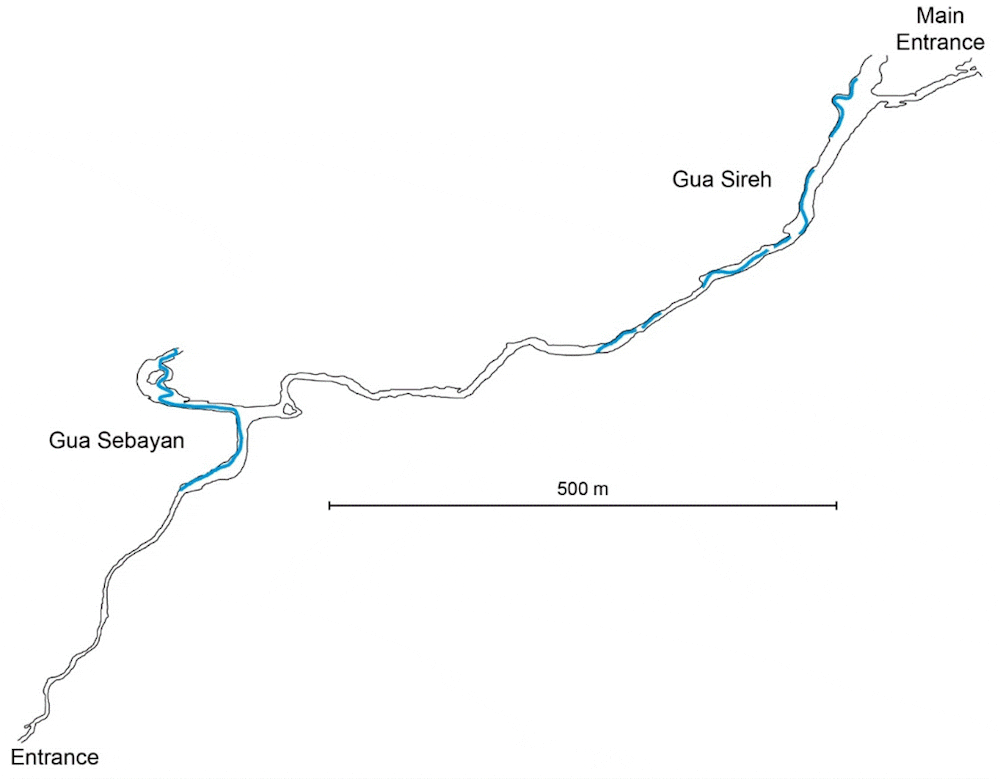
Plan of the Gua Sireh cave system showing passage through Gunung Nambi (limestone hill) via the connecting passage between Gua Sireh and Gua Sebayan. Blue indicates water. CC BY-ND
The direct dates we have produced demonstrate distinct periods of drawing can be identified.
The ubiquity of black drawings across the region and their probable links to the migrations of Austronesian and Malay peoples opens exciting possibilities for further understanding the complexities of rock art production in Island South-East Asia.
This article was coauthored with Mohammad Sherman Sauffi William from the Sarawak Museum Department.
Jillian Huntley receives funding from the Australian Research Council and the National Scientific Foundation of America.
Andrea Jalandoni receives funding from the Australian Research Council.
Emilie Dotte-Sarout receives funding from the Australian Research Council and the Academy of the Social Sciences in Australia.
Paul S.C.Taçon receives funding from the Australian Research Council.
Fiona Petchey does not work for, consult, own shares in or receive funding from any company or organisation that would benefit from this article, and has disclosed no relevant affiliations beyond their academic appointment.
Global warning threatens to have major impacts on Australia’s labour productivity, agriculture and tourism over coming decades, according to the Intergenerational Report, which makes climate change a major focus of its projections for the early 2060s.
Climate change and the international energy transition will also have extensive implications for Australia’s resources sector, with demand for thermal coal falling dramatically and that for critical minerals increasing substantially.
The report, which projects four decade ahead, stresses the need for effective mitigation of further temperature increases and targeted investment in adaptation.
Under the Paris Agreement, countries have committed to hold the increase in the global average temperature to well below 2°C above preindustrial levels and pursue efforts to limit the increase to 1.5°C.
The report, to be released by Treasurer Jim Chalmers on Thursday, says over the next 40 years, under a scenario where global temperatures increase by up to 3°C by 2100, Australia’s average temperature is projected to rise by 1.7°C. But there would be regional variations.
The average temperature in parts of central and northern Western Australia is projected to rise by 1.8°C, but only a 1.3°C increase is projected for Tasmania.
“This suggests Western Australia could be more directly affected by the labour productivity impacts of higher temperatures than some other Australian states and territories,” the report says.
“Similarly, some regional and remote communities, including Aboriginal and Torres Strait Islander communities, are expected to be particularly exposed to higher temperatures.”
If global temperatures were to increase by up to 3°C or more than 4°C, without changes to present ways of working, Australia’s aggregate labour productivity levels could decrease by 0.2%-0.8% by 2063.
This would reduce economic output over this period by $135 billion – $423 billion (in today’s dollars), through the direct impacts of higher temperatures on labour productivity.
In contrast, if global action limits temperature increases to 2°C, Australia could benefit from up to an extra $155 billion in GDP, compared with a scenario where temperatures increase up to 3°C. This is equal to 26 to 41 million more hours of work in 2063, the report says.
It notes that investing in measures to limit worker heat exposure, such as tree planting or altering building designs to enhance passive cooling, can also mitigate to some extent the impacts on labour productivity of higher temperatures.
If global action limits temperature increases to 1.5°C, reduced demand for thermal coal could cut Australia’s exports of it to less than 1% of present levels by 2063.
But if temperature increases are limited to 2°C this century, Australia’s thermal coal exports are estimated to fall by 50% by 2063.
The fall in international demand for Australia’s thermal coal would be slower if global action fails to deliver on the Paris Agreement, resulting in warming above 2°C this century, the report says.
Without adaptation measures Australian crop yields could be up to 4% lower by 2063 if global action fails to keep temperature rises below 3°C this century. These reductions could be largely avoided if global temperatures rise less than 2°C.
The report says some impacts on crop yields could be mitigated by measures such as changing the crops planted in particular areas and improving water efficiency.
It says other countries in our region might be even more affected than Australia by climate change, which could result in more demand for Australian agricultural exports.
Australia’s services sector will also be affected by rising temperatures, with tourists adjusting where and when they decide to travel.
“Australia has a large number of natural attractions at risk of environmental degradation which may attract fewer tourists in a world of higher global temperatures. At least 50% of Australia’s sandy coastline, a major drawcard for tourism, is under threat of erosion due to climate change.
“Many of Australia’s top attractions are also in regions likely to be increasingly susceptible to natural disasters, risking travel disruption and reputational harm. For example, in the immediate aftermath of the 2019–20 bushfires, an estimated 80,000 tourists cancelled or postponed activities,” the report says.
Michelle Grattan does not work for, consult, own shares in or receive funding from any company or organisation that would benefit from this article, and has disclosed no relevant affiliations beyond their academic appointment.
Hundreds of scientists from across the country have gathered at the Australian Museum in Sydney for the presentation of the Eureka Prizes. Awarded annually since 1990, the prizes recognise outstanding contributions to science and the public understanding of science.
Some highlights from this year’s ceremony were awards for one of the world’s biggest wildlife monitoring programs, a rescue project for endangered orchids, and research on how our bodies fight COVID-19. Also honoured were software for sustainable energy and mining, a method for turning waste carbon dioxide into useful molecular building blocks, and an open-source tool for linking DNA sequences to the evolution of life.
In a statement, Australian Museum chief executive Kim McKay said:
As the world faces unprecedented challenges such as accelerating climate change, Australian scientists continue to lead, innovate and inspire. Scientific knowledge and innovation is key to progress. Researchers and scientists help us understand how our universe works and how we can protect it.
Waterbirds, orchids and immune responses
The prize for applied environmental research went to the Waterbirds Aerial Survey Team from UNSW and the New South Wales Department of Planning and Environment. This team has carried out one of the world’s largest and longest-running wildlife surveys. Their work has had a significant influence on the Murray-Darling Basin Plan as well as the management of wetlands and national parks.
Noushka Reiter from the Royal Botanic Gardens Victoria was awarded the prize for excellence in botanical science. Reiter leads an orchid conservation program that has propagated more than 20,000 plants from 80 endangered species. Fourteen of these species have been reintroduced to the wild, with populations increasing by as much as 260%.
A team of three researchers from the University of Melbourne and the Peter Doherty Institute for Infection and Immunity took home the prize for infectious diseases research. The Corona Queens – Katherine Kedzierska, Louise Rowntree and Oanh Nguyen – were recognised for their work on the immune response to COVID-19 in high-risk groups, such as children, older people and cancer patients.
Getting to net zero, transforming CO₂ and mapping evolution
The prize for innovative research in sustainability went to the Economic Fairways Mapper Team from Monash University and Geoscience Australia. They have built a set of open-source tools to identify the most sustainable locations for renewable energy and mining projects, to aid the transition to net zero emissions.
Fengwang Li at the University of Sydney received the prize for outstanding early career researcher. He has developed a more efficient process to make ethylene – a basic chemical component of plastic – from waste carbon dioxide captured from industrial processes.
The prize for excellence in research software was awarded to Minh Bui and Robert Lanfear from the Australian National University. They created open-source software that analyses DNA data to map evolution. It has been used by life scientists around the world to everything from ancient life to the development of the SARS-COV-2 virus.
Research, leadership and communication
There were plenty of other prizes given out as well. A full list is below.
Emerging leader in science: Stephanie Partridge from the University of Sydney
Leadership in science and innovation: Michael Kassiou, University of Sydney
Outstanding mentor of young researchers: Renae Ryan, University of Sydney
Excellence in interdisciplinary scientific research: Cystic Fibrosis Lung Health Imaging, University of Adelaide; Women’s and Children’s Hospital, Adelaide; 4D Medical Pty Ltd; and Monash University
Innovative use of technology: IMAGENDO, University of Adelaide; and OMNI Ultrasound and Gynaecological Care
Outstanding science in safeguarding Australia: MetaSteerers Team, University of Technology Sydney; Defence Science and Technology Group; and Macquarie University
Scientific research: Tim Thomas and Anne Voss, WEHI
Innovation in citizen science: 1 Million Turtles, Western Sydney University; La Trobe University and University of New England
Promoting understanding of science: Toby Walsh, UNSW
A Japanese government spokesperson says it is “not wilfully trying to divide the Pacific” over the Fukushima treated nuclear wastewater release.
Japan is set to start discharging more than one million tonnes of treated nuclear wastewater into the Pacific Ocean tomorrow (local time).
This comes 12 years after a tsunami slammed the Fukushima Daiichi nuclear power plant resulting in what has been labelled as the largest civil nuclear energy disaster since Chernobyl.
Palau, Papua New Guinea, Cook Islands and the Federated States of Micronesia have publicly backed the plan or at least placed their faith in Japan’s word that it will be safe.
The release is forecast to take 30 to 40 years to complete.
IAEA Director-General Rafael Grossi (left) delivers a report on Japan’s ALPS-treated wastewater plans to the Pacific Islands Forum chair, Cook Islands Prime Minister Mark Brown, in Rarotonga. Image: IAEA/RNZ Pacific
Fiji’s Prime Minister Sitiveni Rabuka is the most recent Pacific leader to speak out in defence of Japan.
He said he is satisfied their plan is safe after reading the UN nuclear agency’s report.
Rabuka’s voice is important because he is in the Pacific Islands Forum leadership team — known as the Troika — as the past chair of the Forum. The other two are current chair Cook Islands Prime Minister Mark Brown and future chair, the Tongan Prime Minister Hu’akavameiliku Siaosi Sovaleni.
Since making that statement Rabuka has apologised for speaking ahead of the recent Troika meeting, but he has not backtracked on his view.
Fiji Prime Minister Sitiveni Rabuka . . . “Comparisons between the nuclear legacy in the Pacific and Japan’s nuclear wastewater release is fear-mongering.” Image: RNZ/Samuel Rillstone
‘Discharged’ into Japan’s own backyard Rabuka has taken to social media in response to criticism of his statement of support.
“Comparisons between the nuclear legacy in the Pacific and Japan’s nuclear wastewater release is fear-mongering,” he wrote.
He also said the wastewater was not being dumped but discharged into Japan’s “own backyard”, over 7000km from Fiji.
1/3 One of my critics at the weekend appeared to be somehow connecting the wastewater discharge with the cataclysmic power of the nuclear bombs dropped in the Pacific as part of weapons testing.
Pacific leaders meet with IAEA in July 2023 following release of the agency’s comprehensive report on Japan’s plans. Image: IAEA/RNZ Pacific
But the International Atomic Energy Agency has gone to great lengths — even travelling to New Zealand and Rarotonga — to explain why this is not a dump.
Director-General Rafael Grossi told RNZ Pacific earlier this year that he condemned dumping which he said had happened in the past and was not the case for Japan’s plan.
Against and on the fence Vanuatu’s Foreign Minister has drafted a declaration urging Japan to stop the discharge.
He wants the leaders of the Melanesian Spearhead Group (MSG) meeting in Port Vila today to support the declaration.
Tuvalu has also spoken out, expressing opposition to Rabuka’s stance.
Tuvalu’s Minister for Finance, Seve Paeniu told FBC News that if Japan was genuinely confident, why did it not consider disposing of it within its own lakes and waters.
TEPCO assures the Pacific Tokyo Electric Power Company Holdings (TEPCO) spokesperson Junichi Matsumoto told the first media briefing today that his team was “moving quickly” to prepare the release which would depend on the conditions.
“The final decision will be made on the morning of the [August] 24 based on the climate conditions or weather conditions,” he said.
“A very small amount will be carefully discharged using a two-step process.”
Tokyo Electric Power Company Holdings (TEPCO) spokesperson Junichi Matsumoto briefs media online today. Image: RNZ Pacific/Lydia Lewis
RNZ asked TEPCO about the nuclear legacy in the Pacific.
“To the members of the PIF, we have been providing explanations on the discharge into the sea,” Matsumoto said.
“So we would like to continue to provide the explanation on our initiative.
“And in terms of assurance, it may be a bit different in terms of nuance, but the result of sea area monitoring will be communicated.
Matsumoto said anyone wishing to could check the results of the sea area monitoring on the TEPCO website.
When questioned about when Pacific nations would see the effects of the release, he said that according to dispersion models particles would arrive on the shores of Papua New Guinea and Fiji in “a few years’ time or a few decades”.
“It will be impossible to distinguish that [discharged] tritium [in the Pacific Ocean] from that already existing in nature,” Matsumoto said.
A Japan government spokesperson said Tokyo was not wilfully trying to divide the Pacific and no compensation would be given to Pacific nations for potential reputational damage.
“The Japanese government has been taking opportunities at international conferences and at bilateral meetings to thoroughly and meticulously explain and disseminate information to the world through its website, as well as through social network media including X [formerly Twitter],” the spokesperson said.
The Cook Islands Prime Minister and incoming Forum chair Mark Brown in Japan with PIF Secretary-General Henry Puna to meet Prime Minister Fumio Kishida. Image: PIF/RNZ Pacific
This article is republished under a community partnership agreement with RNZ.
Upon this big boat rests prayers, hopes, longings, struggles, dreams, and ideals with a profound sense of justice, peace, and dignity.
According to Reverend Dr Yoman, the ULMWP is a symbol of unity among the Papuan people. It is a representation of their collective desires and relentless pursuit of justice.
Reverend Dr Socratez Yoman . . . a Papuan public figure, leader, academic, church leader, prolific writer, and media commentator. Image: Yamin Kogoya/APR
Therefore, West Papuans living in the Land of West Papua, including those living abroad, all pray, hope, and support ULMWP. It is the responsibility of the nation of West Papua and its people to safeguard, maintain, care for, and protect ULMWP as their common home.
Because ULMWP provides a collective shelter for many tears, blood droplets, bones, and the suffering of West Papua.
Reverend Dr Yoman says in his message to me that I have translated that the ULMWP carries the spirits of our ancestors, fallen heroes, and comrades. The ULMWP is the home of their spirits, and he wrote some of their names as follows:
Johan Ariks
Lodewijk Mandacan
Barens Mandacan
Ferry Awom
Permenas Awom
Aser Demotekay
Bernandus Tanggahma
Seth Jafet Rumkorem
Jacob Prai
Herman Womsiwor
Markus Kaisiepo
Eliezer Bonay
Nicolaas Jouwe
F. Torrey,
Nicolass Tanggahma
Dick Kereway
Melky Solossa
Samuel Asmuruf
Mapia Mote
James Nyaro
Lambert Wakur
S.B. Hindom,
Louis Wajoi
Tadius Yogi
Martin Tabu
Arnold Clemens Ap
Eduard Mofu
Willem Onde
Moses Weror
Clemens Runaweri
Andy Ayamiseba
John Octo Ondowame
Thomas Wapay Wanggai
Wim Zonggonauw
Yawan Wayeni
Kelly Kwalik
Justin Morip
Beatrix Watofa
Agus Alue Alua
Frans Wospakrik
Theodorus Hiyo Eluay
Aristotle Masoka
Tom Beanal
Neles Tebay
Mako Tabuni
Leoni Tanggahma
Samuel Filep Karma
Prisila Jakadewa
Babarina Ikari
Vonny Jakadewa
Mery Yarona and Reny Jakadewa (the courageous female spirits who raised the Morning Star flag at the Governor’s Office on August 4, 1980).
Also, the spirit of Josephin Gewab/Rumawak, the tailor who created the Morning Star flag.
In honour of these fallen Papuan heroes and leaders, Reverend Yoman says:
“It is you, the young generation, who carry forward the baton left by the names and spirits of these fighters, as well as the hundreds and thousands of others who have not been named.
“If there is someone who fights and opposes the political platform of the ULMWP, that individual is questionable and is damaging the big house and the big boat, which contains the tears, blood, bones, and suffering of the People and Nation of Papua as well as the spirits of our ancestors and leaders.
“The eyes and faces of the LORD, the spirits of our ancestors, and the spirits of our leaders who have passed on always guard, protect, and nurture the honest, humble, and respectful members of the ULMWP.”
By this message, he urges the ULMWP to never forget these names and stand bravely with courage on their shoulders.
Reverend Yoman’s letter: a brief comment Indigenous people view life as a system of interconnected relationships between beings, spirits, deities, humans, animals, plants, and the celestial heavens.
Their holistic cosmology is held together by this interconnectedness — a sacred passageway to multidimensional realities. Although Indigenous cosmologies differ, most, if not all, subscribe to the tenet of interconnectedness.
Having a strong connection to one’s ancestors’ roots is an integral part of being Indigenous.
During times of need, rituals, and grief, ancestral and fallen heroes are mentioned and invoked. A specific ancestor’s name may be mentioned in response to a specific situation, such as grief, conflict, sacred ceremonies, or rituals.
This helps to connect modern generations to the ancestral spirits, providing a source of strength and guidance while honouring the legacy of those who have gone before.
Those who adhere to original cultural values understand why Reverend Dr Yoman mentioned some of these Papuans.
In the chronicle of Papuans’ liberation story, these names are mentioned.
There were some who suffered martyrdom, some who became traitors, who died of old age, and others who died from disease. However, they all have stories connected to West Papua’s Liberation.
Mentioning these names is intended to invoke a specific energy within the consciousness of West Papua’s independence leaders. Inviting the new generation of fighters to take up the cause of their fallen comrades.
It is important to encourage Papuans to see the greater picture of a nation’s liberation struggle — which spans generations. Calling on them to revive their minds, spirits, and bodies through the spirit of fallen Papuans and the spirit of Divine during times of turmoil.
Who is Rev Dr Yoman and why did he mention these names? Most people are familiar with Reverend Dr Yoman. He is everywhere — on television, on the news, known in churches, involved in human rights activism, mentioned in public speeches, appears in seminars, and lectures and so on.
He is well known, or at least heard of, by the Papuan and Indonesian communities, as well as the broader community.
Reverend Dr Socratez Sofyan Yoman is a public figure, leader, academic, church leader, prolific writer, and media commentator. He is a descendant of the Lani people of Papua.
He is one of the seeds of the civilisation project launched by Christian missionaries in the Highlands between the 1930s and 1960s. His life has been shaped by four significant events in his homeland — the teachings of his elders, the arrival of Christianity, Indonesian invasions, and the resistance of the Papuans.
He rose to become an exceptionally accomplished thinker, speaker, writer, and critic of injustice, oppression, and upholds humanity’s values as taught by the Judeo-Christian worldview within these collusions of worlds.
Growing up among Lani village elders taught him many sacred teachings of the original ways — centred around Wone’s teachings. This is one of the most important aspects of his story.
Wone is the cornerstone of life for the Lani people. Wone is the principle of life and the foundation for analysing, interpreting, evaluating, debating, understanding, and exchanging life.
As with many other Lani, Papuan, Melanesian, and Indigenous leaders, Wone is the reason for his birth, survival, and leadership. He has thus a deep sense of duty and responsibility to serve and fight for his people, as well as other marginalised and oppressed members of society.
Reverend Dr Yoman stands firmly in his beliefs in the face of grief, tragedies, and death in his ancestral homeland. His commitment is unwavering, as he continually strives to stand up for and protect the rights of those who are most vulnerable and in need of a voice.
Wone has inspired him to lead a life of purpose and integrity, making him a pillar of strength and an example to others. In a dying forest, he becomes the voice of the falling leaves.
Among his greatest contributions to West Papua, Indonesia, and the world, will be his writings. Generations to come will remember his research and writings regarding history and the fate of his people.
West Papua will be high on the agenda at the Melanesian Spearhead Group Leaders’ Summit in Vanuatu this week.
West Papua’s United Liberation Movement for West Papua (ULMWP) is also present in Vanuatu. Other factions have arrived and are on their way to witness MSG’s decision on West Papua’s fate as well as their own leaders’ summit.
A feeling of anxiety pervades Reverend Dr Yoman as he prays — prompting him to write this letter as he recognises the many challenges ULMWP faces and warns them that they cannot afford even the slightest misstep.
This is the time inspiring Papuans and the ULWMP leadership must remember their fallen comrades, heroes and ancestors.
Yamin Kogoya is a West Papuan academic who has a Master of Applied Anthropology and Participatory Development from the Australian National University and who contributes to Asia Pacific Report. From the Lani tribe in the Papuan Highlands, he is currently living in Brisbane, Queensland, Australia.
The “problem” of Australia’s ageing population has been a concern for decades. Indeed, I have aged along with it.
The first official report on the subject was produced in a report of the National Population Council entitled Greying Australia: Future Impacts of Population Ageing, which came out as I entered my 30s, sporting a full head of dark hair.
The latest Intergenerational Report, to be released on Thursday, comes weeks after – with thinner and greyer hair – I celebrated reaching the official pension age of 67 (raised from 60 for women and 65 for men).
John Quiggin, 1990s. ANU
While ageing brings with it some regrets it is, as French actor Maurice Chevalier is supposed to have said: not so bad, when you consider the alternative.
But while individual Australians continue to age at a rate of one year per year, discussion of population ageing seems stuck in a 1980s timewarp.
The 2021 Intergenerational Report contained an extensive, and gloomy, discussion of the change in what it called the “old-age dependency ratio” – which it defined as the ratio of Australians of “working age”, which it said was 15–64, to those over 65.
But it seems to have escaped the notice of the authors in the treasury that the school leaving age has climbed to 17, and the pension age has climbed to 67.
This reflects a much bigger problem. Projections of “population ageing” usually produce a future society that is exactly like the one we have at present except that there are more old people and fewer young people.
In particular, it is usually assumed people of every given age will have much the same characteristics and live in much the same way as do at present.
The idea is wrong for at least three reasons.
First, lifetime patterns of work have changed radically, and will continue to do so.
In practice, most young people are dependent on their parents into their early 20s, sometimes beyond.
Some are dependent on their 65+ grandparents, meaning they are supported by rather than supporting the age group the treasury regards as dependants.
Older Australians are twice as likely to be employed as before. 40 years ago, in 1983, only 5% of Australians aged 65 and over were employed. Now it’s 11.4%.
With an increased pension age and the end of defined-benefit superannuation (which rewarded early retirement), we can expect that trend to continue.
While the 2021 Intergenerational Report noted these trends, it seemed to ignore them in arriving at its conclusions.
Longer lives are good things
There’s a second reason why it isn’t right to assume that older people in the future will be much like older Australians have always been (except more numerous).
Those older Australians will be living longer precisely because they are healthier.
Today, the typical 65-year-old can expect to live 21 more years. In the 1950s it was only 14 more years. Medical progress, along with improvements in work safety and lifestyle changes, have made it possible to remain healthy for longer (though COVID might undermine this).
Drug treatments are now available for chronic conditions like arthritis that used to go untreated. Even dementia, where there has been little if any advance in treatment, appears to be declining in its age-specific prevalence.
This decline is a byproduct of improved cardiovascular health and (more speculatively) increased education levels among the middle-aged and old.
As before, the really big costs in the medical system are incurred in the last year of life. By definition, the last year comes only once in each lifetime, meaning more years than before are healthy.
Working different, working longer
And there’s a third reason why it’s wrong to assume that older people in the future will be much like those today: technological progress has largely eliminated many unskilled jobs.
Two things flow from this. One is that young people need to spend more time than before in education in order to acquire skills.
The other is that the decline in unskilled jobs involving hard physical labour makes it easier for people to work much longer should they want to.
Yet talk about population ageing nearly always presents it as a near-catastrophe. Treasurer Joe Hockey didn’t help, introducing the 2015 Intergenerational Report by saying Australians would “fall off their chairs” when they read it.
As it happens, we are facing a catastrophe, and it has scarcely been mentioned in the five intergenerational reports to date. It’s catastrophic climate change.
We are living in a world of near-continuous wildfire emergencies and other climatic disasters. Even with determined action, things are only likely to get worse for the next generation.
In these circumstances, worrying about the need to raise taxes by a few percentage points over 40 years to pay for things like more aged care shows an astonishing lack of concern about the future.
John Quiggin is 67 and hopes to continue aging for some decades to come
As well as her interviews with politicians and experts, Politics with Michelle Grattan includes “Word from The Hill”, where she discusses the news with members of The Conversation’s politics team.
In this podcast Michelle and politics + society editor Amanda Dunn discuss the news that the Prime Minister next Wednesday will reveal the date for the Voice referendum. They also canvass the Intergenerational Report, which gazes into the 2060s, as well as Labor’s national conference, that endorsed AUKUS. During the conference Anthony Albanese emphasised the importance of the party staying in office to bed down a long term agenda, with the message to the rank and file not to rock the boat.
Michelle Grattan does not work for, consult, own shares in or receive funding from any company or organisation that would benefit from this article, and has disclosed no relevant affiliations beyond their academic appointment.
More than three months after Thailand’s national elections – and many anti-democratic manoeuvres in parliament – the country finally has a new prime minister, Srettha Thavisin. But, given the chaotic nature of Thai politics, this was perhaps not even the biggest news of the week.
Hours before the partially military-appointed Thai parliament elected Srettha to the post, one of the country’s most prominent political figures, former Prime Minister Thaksin Shinawatra, returned from his self-imposed exile of more than 15 years and surrendered to authorities over longstanding corruption charges.
There are now many questions about what this blockbuster day for Thai politics means for the country’s future – and what it means for democracy.
Thaksin became prime minister in 2001 after a thumping election win and remained the country’s most popular politician, even through his long years of exile.
Pheu Thai is the latest incarnation of various Thaksin-aligned parties, which have won the most seats in parliament in every competitive national election since 2001 – until this year when it finished second to the reformist Move Forward party.
Thaksin’s extraordinary popularity as prime minister challenged the primacy of the monarchy and the military in the country. This led to a decade of protests and conflict between, essentially, the so-called “red shirts” in Thai society who supported Thaksin and the “yellow shirts” who supported the monarchy and military elites.
The conflict resulted in two military coups, in 2006 and 2014. The first removed Thaksin from power, prompting him to go into exile to avoid prosecution. The second, led by General Prayuth Chan-ocha, deposed Thaksin’s sister, Yingluck Shinawatra, as prime minister. (She was later convicted of criminal negligence in Thailand’s pliant courts and sentenced in absentia to five years in prison. She remains in exile.)
Prayuth was then elected prime minister by the parliament in 2019 under the country’s anti-democratic, military-authored constitution following a compromised national poll. He remained in power until this week.
After Thaksin touched down at Bangkok’s airport this week, he was taken to the Supreme Court for a hearing and transferred to prison. The Supreme Court announced he would serve eight years.
How did Srettha become PM?
Having consistently opposed the military, Pheu Thai made a commitment before this year’s election not to form a coalition with the military-aligned parties.
Following the election, Pheu Thai initially supported Move Forward in its attempt to form a government, but after its leader, Pita Limjaroenrat, was blocked by the military-appointed Senate from becoming prime minister, Pheu Thai changed its tune.
The party nominated its own prime ministerial candidate, Srettha, a wealthy property developer and political newcomer, and formed a new coalition with two military-aligned parties, the Palang Pracharath Party and Ruam Thai Sang Chart Party, and a range of others. This gave Srettha the support he needed from the military-appointed senators to win the prime ministership.
Both Move Forward and Pheu Thai had been vocal critics of the former military-led government.
However, the two parties had different stances on one main issue: Thailand’s strict lèse-majesté law, which punishes anyone who criticises the king or other senior royals with up to 15 years in prison. Move Forward pledged to reform it, while Pheu Thai committed not to change it.
This difference was likely a key determinant in Move Forward’s electoral victory, but also the reason why military and conservative parties have now been willing to support Pheu Thai.
The only significant party to vote against Srettha in the parliament election was Move Forward and its 149 MPs.
The secretary-general of Move Forward said the party opposed the new coalition because it refused to be complicit in returning military-aligned parties to government, even one led by Pheu Thai. He argued this would perpetuate the notion that Thailand’s “ultimate power” belonged in the unelected Senate rather than in the hands of the people.
What happens now?
It is no coincidence that Thaksin arrived on the day his party returned to power, and the foundations are already being set for his early release.
After a medical check-up, the Department of Corrections said Thaksin had five medical conditions, including an ischemic heart muscle, chronic pulmonary inflammation, high blood pressure, degenerated spine and abnormal posture.
There are numerous routes for Thaksin to be released from prison, but the most obvious one, due to his age of 74 and these reported health conditions, is on medical grounds.
Despite Thaksin’s protestations over almost two decades that he didn’t want to return to politics, there is little doubt he will be the key figure operating behind the scenes in the Pheu Thai party, and therefore the government.
As such, we may see a tussle between Srettha and Thaksin for influence in the party. Srettha may very well attempt to project the image that he is his own man and not beholden to anyone.
Despite being years away, the next election could also be fraught for Pheu Thai. The party has not only betrayed Move Forward voters with its actions this week, it has also betrayed its own supporters who believed its commitment to keep the military-aligned parties out of power.
If Pheu Thai can hold the unwieldy 11-party coalition together for the next four years, however, it has plenty of time to convince voters to stick with it at the next election. It may also deliver enough sweeteners to remain in power.
Nevertheless, Move Forward’s supporters are angry. In a potentially ominous sign for Pheu Thai, within hours of Srettha’s election to prime minister, #NotMyPM was trending on Thailand’s social media.
Once again, the anti-democratic forces within Thailand’s elites have stifled the will of the people and we may be entering another volatile era in Thai politics.
Adam Simpson does not work for, consult, own shares in or receive funding from any company or organisation that would benefit from this article, and has disclosed no relevant affiliations beyond their academic appointment.
Source: The Conversation (Au and NZ) – By Jessica Holloway, Senior Research DECRA Fellow, Institute for Learning Sciences and Teacher Education, Australian Catholic University
The headlines are everything we would expect them to be – full of panic. Most reporting is focused on the number of Australian students not meeting the new proficiency standards, with talk of “failure” and “debacles”.
The numbers certainly don’t look great, but should we be worried?
Changes to NAPLAN
NAPLAN was introduced in 2008 and is an annual test of all Australian students in years 3, 5, 7 and 9. It aims to see whether students are developing basic skills in literacy and numeracy.
On Wednesday, we saw the overall results released. Individual student reports will go home during term 3, via schools.
Earlier this year, NAPLAN underwent significant changes. These changes included a shift to online testing, moving the testing dates forward and new proficiency standards.
At the time of the announcement, many education experts warned that 2023 results might be lower than usual.
Many pointed to the shift from ten proficiency bands to four achievement levels (“needs additional support,” “developing,” “strong” and “exceeding”). This likely explains a lot of what we’re seeing today. It also means we cannot compare this year’s results with previous results.
The shift to online testing
The shift to online testing may also have had a significant impact on results.
Disparities in access to technology can impact how students perform on the test. Students who regularly use computers and the internet at home are likely to feel more confident while taking an online test. Students without might struggle with basic computer skills. This can lead to more mistakes that have nothing to do with numeracy and literacy.
Changes to the testing window from May to March also means schools had less time to prepare students for NAPLAN in 2023. Theoretically, this might have a positive impact on education in the long run. Less time can be devoted to “test prep” or “teaching to the test”. This can free up time to spend on more authentic learning activities. But for this year, the change caught schools off guard, which may have impacted student performance.
We also shouldn’t forget about the impact of COVID. It is hard to estimate all the ways students have been affected by the pandemic. We can assume these effects will be felt for years to come, and we should continue to interpret NAPLAN results with this in mind.
Disparities and funding
What we should be worried about is the clear disparity between Australia’s most vulnerable students and their peers.
Like every other year, NAPLAN results show significant gaps between Indigenous students and their peers. About one-third of Indigenous students “need additional support”, compared to one-tenth of students overall. Some 50% of students in the most remote regions of Australia also “need additional support”.
This is not a new concern, and one experts have been worried about for many years. While politicians often blame schools and teachers, the real problem is with equitable funding. Public schools are responsible for teaching most students who require additional support, yet they are not adequately funded to do so.
We must interpret this year’s NAPLAN results with caution. Our instinct might be to panic, but the reality is significant changes to the test have led to these results. It might take a few years before we can make any meaningful sense about overall progress and change.
We can also look to some experts’ optimism about the changes. They say the new achievement levels and earlier testing dates will eventually lead to simpler and more useful results. They hope this means better communication between schools and families, as well as more time for schools to act.
Importantly, we should not interpret this year’s results as an indictment on schools. Rather, we should force governments to fully fund schools to the level they have said is necessary. This year’s results leave no question about the urgency of equitable funding.
International music press has reported this week that Queen’s song Fat Bottomed Girls has not been included in a greatest hits compilation aimed at children.
While there was no formal justification given, presumably lyrics “fat bottomed” and “big fat fatty” were the problem, and even the very singable hook, “Oh, won’t you take me home tonight”.
Predictably, The Daily Mail and similar outlets used it as an excuse to bemoan cancel culture, political correctness and the like, with the headline “We Will Woke You” quickly out of the gate.
Joke headlines aside, should children be exposed to music with questionable themes or lyrics?
The answer is not a hard yes or no. My colleague Shelley Brunt and I studied a range of factors and practices relating to Popular Music and Parenting, and we found that more important than individual songs or concerts is the support children are given when they’re listening or participating.
A parent or caregiver should always be part of a conversation and some sort of relationship when engaging with music. This can involve practical things like making sure developing ears aren’t exposed to too harsh a volume or that they know how to find a trusted adult at a concert. But this also extends to the basics of media and cultural literacy, like what images and stories are being presented in popular music, and how we want to consider those in our own lives.
In the same way you’d hope someone would talk to a child to remind them that superheroes can’t actually fly (and subsequently if you’re dressed as a superhero for book week don’t go leaping off tall buildings!), popular music of all types needs to be contextualised.
Should we censor, or change, the way popular music is presented for kids?
There is certainly a long tradition of amending popular songs to make them child or family friendly. On television, this has happened as long as the medium has been around, with some lyrics and dance moves toned down to appease concerned parents and tastemakers about the potential evils of pop.
In Australia, the local TV version of Bandstand from the 1970s featured local artists singing clean versions of international pop songs while wearing modest hems and neck lines.
This continued with actual children also re-performing pop music, from the Mickey Mouse Club versions of songs from the US to our own wonderful star factory that was Young Talent Time. The tradition continues today with family-friendly, popular music-based programming like The Voice and The Masked Singer.
In America, there is a huge industry for children’s versions of pop music via the Kidz Bop franchise. Its formula of child performers covering current hits has been wildly successful for over 20 years. Some perhaps obvious substitutions are made – the cover of Lizzo’s About Damn Time is now “About That Time”, with the opening lyric changed to “Kidz Bop O’Clock” rather than “Bad Bitch O’Clock”.
Other longer-standing children’s franchises have also made amendments to pop lyrics, but arguably with a bit more creativity and fun. The Muppets’ cover of Bohemian Rhapsody, replacing the original murder with a rant from Animal, is divine.
Should music ever just be for kids?
Context is key when deciding what is for children or for adults. And hopefully we’re always listening (in some way) together.
Caregivers should be able to make an informed decision about whether a particular song is appropriate for their child, however they consider that in terms of context. By the same token, the resurgence of millennial love for The Wiggles has shown us no one should be considered “too old” for Hot Potato or Fruit Salad.
When considering potential harm for younger listeners, factors like volume and tone can be more dangerous than whether or not there’s a questionable lyric. Let’s remember, too, lots of “nursery rhymes” aimed at children are also quite violent if you listen to their words closely.
French writer Jacques José Attali famously argued the relationship between music, noise and harm is politics and power – even your most beloved song can become just noise if played too loudly or somewhere where you shouldn’t be hearing it.
As an academic, parent and fat-bottomed girl myself, my advice is to keep having conversations with the children in your life about what you and they are listening to. Just like reminding your little superhero to only pretend to fly rather than to actually jump – when we sing along to Queen, we remember that using a word like “fat” and even “girl” isn’t how everyone likes to be treated these days.
Liz Giuffre does not work for, consult, own shares in or receive funding from any company or organization that would benefit from this article, and has disclosed no relevant affiliations beyond their academic appointment.
We wanted to understand the experiences of young people in north Queensland who were involved in the juvenile justice system, or at imminent risk of becoming so, through their own eyes, and use the findings to improve local services.
We worked with a partner organisation that runs an after-hours diversionary service for young people 10-17 years old. This service supports those who are engaged in crime or are at high risk of doing so, by engaging them in activities such as educational sessions, sports, arts and craft, and outings to the park.
We found young people using this service often felt under heavy surveillance in public spaces, felt excluded from the community, and felt physically, emotionally and culturally unsafe on public streets.
These young people wanted to feel safe and included in the community, but often felt the opposite.
Diversion is better than harsher punishment
Evidence in countries including Australia, New Zealand and Canada has linked youth crime to troubled home environments, trauma, poverty, violence and disrupted education. But such young offenders also often experience marginalisation, over-surveillance, structural bias and racism.
In Australia, Aboriginal and Torres Strait Islander children are over-represented in child protection services, and there’s a damaging drift from child protection and out-of-home care into youth justice services.
Frustrated and fearful communities have often called for stronger punitive measures to deal with youth crime, but these are unhelpful in the longer term. Harsher punishment doesn’t divert young people away from offending. Rather, it tends to lead to a pattern of reoffending (called recidivism).
Evidence suggests approaches that divert young people away from entering the justice system, and reengage and reintegrate offenders into the community, have greater success in reducing youth crime.
What we studied
We undertook three studies. First, we reviewed relevant national and international publications and reports that looked at perceptions of at risk children and youth about social services provided to them.
Next, we undertook a “photovoice” project, in which young people took photos that conveyed how they felt about culture, community and the services they accessed.
The Victorian Koori Youth Council’s Report Ngaga-Dji in 2018 identified that children’s voices can be the missing piece in meeting the needs of young people in the juvenile justice system.
In our third study, we gave young people the role of peer researchers, working with staff from the partner service and university researchers to document their own and their friends’ experiences of using the local diversionary service and broader youth services.
The service aims to build young people’s capacities. It helps support relationships between the young people and their families/carers, providing meals and overnight accommodation when they are in crisis.
The service also encourages them to resume their schooling, helps them feel included, supported, accepted, to have their say, and make positive choices about their lives. It encourages young people to come to the diversionary service in the evening instead of roaming the streets.
What young people at risk of offending told us
One young person involved in the photography project said:
Us kids can’t go to shopping centres without, you know, police coming.
Another young person added:
They are too racist against the Black people.
Others wanted to feel included:
The community is not private; a community is for everyone.
Pointing to fears about being unsafe on the streets, one young person said the diversionary service staff “keep us safe from vigilantes”.
Media reports suggest there’s been growing vigilante behaviour in north Queensland. In one example, a vigilante group put up flyers in Mackay in May this year announcing plans to enforce their own 10pm curfew for children “due to the large number of unpunished break-ins and car thefts”.
Fearing similar vigilantes, one participant in our study said:
Young people told us the diversionary service provided a safe, supportive space. Specifically talking about the staff, the young people recognised “how they support you” to “control [your] anger” and taught them to respect culture, themselves and others.
Another said that “no-one can grab us off the streets” at the diversionary service.
Pointing to life circumstances sometimes overwhelming them, one young person added:
you can’t always keep the grief to yourself, you can talk to an adult.
These findings provide a unique view of youth offending through the eyes of young people, which can contribute to improving services that divert young people away from crime and can help to connect alienated young people with the community.
We acknowledge the vital work of the partner organisation and thank the staff and young people who participated in the research, including key partner researchers Nikkola Savuro and Sara O’Reilly.
Susan Gair is an Adjunct Associate Professor at James Cook University. Nothing to Disclose
Ines Zuchowski does not work for, consult, own shares in or receive funding from any company or organisation that would benefit from this article, and has disclosed no relevant affiliations beyond their academic appointment.
Ita Buttrose has announced she will not seek a second term as ABC chair, which means her term will expire in March 2024.
Buttrose’s appointment as chair of the ABC in February 2019 was tainted by being a “captain’s pick” on the part of then Prime Minister Scott Morrison, yet at crucial moments she was to prove a strong defender of the ABC’s independence against the predations of his government.
It was the issue that came to define her tenure. It had also brought down her predecessor, Justin Milne. The manner of her appointment continued the Coalition’s contemptuous disregard of the independent merit-based selection process for ABC board appointments, and she inherited a board stained by political patronage.
Four of the seven non-executive directors already there had been appointed outside the merit system by Mitch Fifield as minister for communication.
Buttrose herself put ABC independence at the centre of her commitments. In a sharp departure from Milne’s temporising approach to government pressure, Buttrose stated soon after her appointment:
I will fight any attempts to muzzle the national broadcaster or interfere with its obligations to the Australian public. Independence is not exercised by degrees. It is absolute.
Within months, this declaration was put to the test when the Australian Federal Police raided the ABC headquarters in Sydney as part of an investigation into who had leaked information about alleged war crimes by Australian soldiers in Afghanistan. Buttrose attacked the police raid as a clear attempt to intimidate journalists.
In November 2020, it was put to the test again. Four Corners broadcast a program called Inside the Canberra Bubble. In it Rachelle Miller, a former staffer to acting Immigration Minister Alan Tudge, said she had had an affair with him. She also alleged that Christian Porter, who was to become attorney-general, had been seen cuddling a staffer of another minister in a Canberra bar in 2017. Porter denied the claim.
On November 30, Minister for Communications Paul Fletcher wrote to Buttrose demanding answers within 14 days to 15 questions mostly about the program’s impartiality.
On the 14th day, December 14 2020, Buttrose sent him a reply, hitting back hard. She dismissed the 15 questions and accused the government of a pattern of behaviour that “smacks of political interference”.
The ABC’s managing director, David Anderson, subsequently told a Senate estimates committee hearing that Buttrose had seen the program before it went to air and had supported the decision to broadcast it.
Then in late February 2021, Four Corners broke a related story saying the Australian Federal Police had been notified of a letter sent to Scott Morrison detailing an alleged historical rape by a cabinet minister in the federal government.
In early March, Christian Porter outed himself as the cabinet minister referred to, and strongly denied the allegation.
He sued the ABC for defamation but the ABC defended it vigorously and he discontinued the action.
In late 2021, Buttrose went on the attack again, this time over an attempt by Liberal Senator Andrew Bragg to launch a Senate inquiry into the ABC’s complaints process, while an internal inquiry into the same issue was already on foot. She called it out as a “partisan political exercise” and Bragg’s effort foundered.
It is clear that far from behaving like a Liberal Party stooge, Buttrose has stood up courageously for the ABC’s independence, as she said she would. That will be an important part of her legacy.
Yet she has not been able to imbue the organisation’s editorial leadership with the same spirit. This was shown in two recent cases where editorial independence was again under attack.
The first concerned the coverage of King Charles III’s coronation in May. For about 45 minutes in the lead-up to the ceremony, the ABC ran a panel discussion about the contemporary relevance of the British monarchy to Australian lives. The nine guests on the program included Stan Grant, a Wiradjuri man and celebrated ABC journalist.
The panel discussion provoked a backlash and drew about 1,800 complaints to the ABC. After investigating these, the ABC ombudsman found the program had not breached the ABC’s editorial policies.
Much of the backlash focused on Grant, and in late May he stepped aside from his role as moderator of Q+A on ABC television, writing in his ABC column:
No one at the ABC — whose producers invited me onto their coronation coverage as a guest — has uttered one word of public support. Not one ABC executive has publicly refuted the lies written or spoken about me. I don’t hold any individual responsible; this is an institutional failure.
He has since left the ABC and taken up a position at Monash University.
It was not until Grant announced his decision to step back from Q+A that the head of the ABC’s news division, Justin Stevens, finally made a public statement in Grant’s defence, apologising for not having done so “ten days earlier”. Anderson’s apology to Grant in a staff email had come only one day sooner.
The second case concerns Nicole Chvastek, an experienced journalist who, until March, had presented ABC Radio Victoria’s Statewide Drive program for almost a decade.
Her career ended abruptly in July after a 17-month saga set in motion by a complaint from a National Party politician, Darren Chester, telephoned directly to a senior ABC executive in Sydney. It concerned the way Chvastek had covered the Morrison government’s handling of flood relief payments to victims in northern NSW: those who lived in the National seat of Page got more, initially, than those in the neighbouring Labor-held seat of Richmond.
The details of Chvastek’s case have been traversed elsewhere. It remains only for me to declare that for eight and a half years I was a guest on her program discussing media issues, and the charge of misconduct arising from Chester’s complaint was not upheld.
In both cases, at the most senior levels of ABC editorial leadership there was a failure of an editor’s first responsibility, which is to provide a safe environment within which staff can do good journalism.
There have been many analyses of how nine years of Coalition government attacks demoralised the ABC. But with Buttrose’s departure now on the horizon, it is time for others at the top to stand up.
I was a guest on Nicole Chvastek’s ABC Radio Victoria Statewide Drive program for eight and a half years discussing media issues. I declare this in the article itself.
You see a fantastic offer, like a hotel room. You decide to book. Then it turns out there is a service fee. Then a cleaning fee. Then a few other extra costs. By the time you pay the final price, it is no longer the fantastic offer you thought.
Welcome to the world of drip pricing – the practice of advertising something at an attractive headline price and then, once you’ve committed to the purchase process, hitting you with unavoidable extra fees that are incrementally disclosed, or “dripped”.
Drip pricing – a type of “junk fee” – is notorious in event and travel ticketing, and is creeping into other areas, such as movie tickets. My daughter, for example, was surprised to find her ticket to the Barbie movie had a “booking fee”, increasing the cost of her ticket by 13%.
It seems like such an annoying trick that you may wonder why sellers do it. The reason is because it works, due to two fundamental cognitive biases: the way we value the present over the future; and the way we hate losses more than we love gains.
Present bias preference: why starting over feels too costly
In the case of booking that hotel room, you could abandon the transaction and look for something cheaper once the extra charges become apparent. But there’s a good chance you won’t, due to the effort and time involved.
This is where the trap lies.
Resistance to the idea of starting the search all over again is not simply a matter of laziness or indecision. There’s a profound psychological mechanism at play here, called a present-bias preference – that we value things immediately in front of us more than things more distant in the future.
In their seminal 1999 paper, Doing it now or later, economists Mathew Rabin and Ted O’Donoghue define present-biased preference as “the human tendency to grab immediate rewards and to avoid immediate costs”.
They give the example of choosing between doing seven hours of unpleasant activity on April 1 or eight hours two weeks later. If asked about this a few months beforehand, most people will choose the earlier option. “But come April 1, given the same choice, most of us are apt to put of work till April 15.”
A present-biased preference is the human tendency to grab immediate rewards and to avoid immediate costs. Shutterstock
In simple terms, the inconvenience and effort of doing something “right now” often feels disproportionately large.
Drip pricing exploits this cognitive bias by getting you to make a decision and commit to the transaction process. When you’re far into a complicated booking process and extra prices get added, starting all over again feels like a burden.
Often enough, this means you’ll settle for the higher-priced hotel room.
Beyond the challenge of starting over, there’s another subtle force at work when it comes to our spending decisions. Drip pricing doesn’t just capitalise on our desire for immediate rewards; it also plays on our innate fear of losing out.
This second psychological phenomenon that drip pricing exploits is known as loss aversion – that we feel more pain from losing something than pleasure from gaining the same thing.
The concept of loss aversion was first outlined by economists Daniel Kahneman and Amos Tversky in a 1979 paper that is the third most-cited article in economics.
How economists Daniel Kahneman and Amos Tversky graphically represented loss aversion. The pain from losing a good or service is greater than the pleasure from gaining the same good or service. Daniel Kahneman and Amos Tversky, Prospect Theory: An Analysis of Decision under Risk, Econometrica, Vol. 47, No. 2
Drip pricing exploits this tendency, by dragging us away from more “rational” choices.
Imagine you’re booking tickets for a show. Initially attracted by the observed headline price, you are now presented with different seating categories. Seeing the “VIP” are within your budget, you decide to splurge.
But then, during the checkout process, the drip of extra costs begins. You realise you could have opted for lower-category seats and stayed within your budget. But by this stage you’ve already changed your expectation and imagined yourself enjoying the show from those nice seats.
Going back and booking cheaper seats will feel like a loss.
Empirical evidence supports the above theoretical predictions about the impact of drop pricing on consumers.
A 2020 study quantified how much consumers dislike the lack of transparency in drip pricing (based on tracking the reactions of 225 undergraduates using fictional airline and hotel-booking websites). The authors liken the practice to the “taximeter effect” – the discomfort consumers feel watching costs accumulate.
But drip pricing’s effectiveness from a seller’s perspective is undeniable. A experimental study published in 2020 found drip pricing generates higher profits while lowering the “consumer surplus” (the benefit derived from buying a product or service). A 2021 analysis of data from StubHub, a US website for reselling tickets, calculated drip pricing increased revenue by 20%.
Which is why the tactic remains attractive to businesses despite customers disliking it.
Buyers would benefit from a ban of drip pricing. Many countries are taking steps to protect consumers from drip pricing.
The UK government, for example, announced a review of drip pricing in June, with Prime Minister Rishi Sunak flagging the possibility of measures to curb the practice. The US government is also considering new regulations, with President Joe Biden denouncing “junk fees” in his 2023 State of the Union address. Proposed changes include requiring airlines and online booking services to disclose the full ticket price upfront, inclusive of baggage and other fees.
In the meantime, your principal protection is making a more informed decision, by understanding why the tactic works. Bargains may attract you, but you can learn to not fall for hidden costs and align your choices with your budget and values.
Ralf Steinhauser does not work for, consult, own shares in or receive funding from any company or organisation that would benefit from this article, and has disclosed no relevant affiliations beyond their academic appointment.
Source: The Conversation (Au and NZ) – By Richard de Grijs, Professor of Astrophysics / Executive Director, International Space Science Institute-Beijing, Macquarie University
This week, the Russian space agency Roscosmos had hoped to return to the Moon after an absence of nearly 50 years. Instead, on Saturday it lost control of its Luna-25 lander. The agency explained the spacecraft “switched to an off-design orbit and ceased to exist as a result of a collision with the lunar surface”.
Yet, in an interview aired on state television, the agency’s chief, Yuri Borisov, pledged his nation’s unwavering commitment to lunar exploration:
This is not just about the prestige of the country and the achievement of some geopolitical goals. This is about ensuring defensive capabilities and achieving technological sovereignty.
Roscosmos had been keen to beat a rival Indian spacecraft, Chandrayaan-3, to achieve a soft landing near the lunar south pole. The Indian mission remains on schedule for a soft landing today (around 9pm AEST).
Despite the Luna-25 failure, the head of Russia’s space agency also declared a “new race to exploit the Moon’s resources has begun”, and there would be a potential crewed Russian-Chinese mission in the future, as reported by Reuters. His statement sounds like it is less about the scientific exploration of the lunar surface, and more about geopolitical posturing.
I recently spent the better part of a decade as a senior academic at Peking University, and in July 2023 was appointed as Executive Director of the International Space Science Institute–Beijing. These appointments have allowed me to gain unique insights into the processes driving China’s space science program.
The lunar south pole region is thought to contain significant water reservoirs locked in grains of ice. That makes the area interesting as a potential staging post for future missions to Mars and beyond, as lunar explorers can use the water for survival.
In early 2021, Roscosmos and the China National Space Administration signed a memorandum of understanding to jointly establish an International Lunar Research Station by the mid-2030s.
The lunar south pole may well be a prime site for such a robotic base, which might also involve the European Space Agency and other international partners.
Yet human involvement in Sino-Russian space missions is not anticipated any time soon. Therefore, Borisov’s assertion that Russia would explore a joint crewed mission came as an unlikely surprise. He may well have been speaking to a domestic audience, in an attempt to salvage his agency’s credentials.
Despite an impressive number of collaboration agreements, high-profile Sino-Russian space projects remain few and far between. If joint human exploration of the Moon is not currently on the cards, it is highly unlikely the Chinese space authorities will take the bait.
No need for a space race
China has always carefully planned its approach to Solar System exploration and human spaceflight, navigating a succession of clearly defined technological benchmarks. China will unlikely be coerced into rushing its planned milestones. As such, the notion of a “space race” involving China seems a moot point.
Chinese scientists and engineers have become highly adept at developing homegrown capabilities. They no longer require international assistance. If anything, in the Sino-Russian relationship, Russia is now well and truly the junior partner. Its ageing technology pales in comparison with the leaps of modernisation we have witnessed in relation to China’s progress in space.
Although the country only joined the league of space-faring nations in 1970 with the launch of its first satellite, Dong Fang Hong 1 (The East is Red 1), it has since made massive strides in technology readiness.
China’s lunar exploration program has gradually built on proven capabilities, from entering the Moon’s orbit on its first lunar missions (Chang’e 1 and Chang’e 2; named after the Chinese Moon goddess) to achieving soft landings (Chang’e 3 and Chang’e 4) and a successful sample return mission, Chang’e 5.
Venturing out to the planets
Solar System exploration is now firmly on China’s agenda, not least because of the recent Tianwen 1 (Heavenly Questions) mission to Mars. That mission successfully deployed the Zhurong rover (named after a Chinese mythological god of fire), a major technological feat in its own right.
Similarly, China’s human spaceflight program is starting to yield impressive results. As the country’s scientists and engineers are banned from collaborating with their federally funded US counterparts by the 2011 Wolf Amendment, the China Manned Space program has been pursuing construction of a sovereign space station, Tiangong (Heavenly Palace).
Future plans include the development of a next-generation crewed spacecraft to replace the workhorse Shenzhou (Divine Vessel on the Heavenly River) series. We are told it will be capable of carrying taikonauts to the Moon, but that does not mean Russian cosmonauts will be invited to come along.
Although China can no longer boast the economic successes of the past and external cash injections might be seen as helpful, Russia’s financial losses due to its ongoing war in Ukraine may well make any such overtures merely wishful thinking.
Russia’s prowess in space appears to have become just a dim reflection of its Soviet precursor.
Richard de Grijs is the Executive Director of the International Space Science Institute–Beijing (ISSI-BJ). ISSI-BJ is an international, politically neutral platform for the exploitation of space science data and the preparation for future space-borne scientific missions.
Strategy, as the great military thinker Carl von Clausewitz once observed, is the process of effectively applying means to achieve clearly defined ends. But good strategy in global politics has proved easier said than done.
The post-Cold War era is replete with examples of poor strategy, be it the US invasion of Iraq, China’s claim to 90% of the South China Sea, or the Russian invasion of Ukraine.
So does the formation of AUKUS – the tripartite security partnership established by the US, UK and Australia in 2021 – offer the prospect of a coherent strategy in the Indo-Pacific region?
More to the point, would New Zealand’s involvement advance its national interests? It’s an urgent question the next government will need to think about very carefully before deciding.
The means and ends of AUKUS
AUKUS consists of two key pillars. The first involves Australia acquiring eight to ten nuclear-powered submarines from the US and the UK over the next three decades, at an estimated cost of between A$268 billion and A$368 billion.
The second pillar involves the sharing of information in new cutting-edge defence technologies, such as artificial intelligence, quantum computing and cyber capabilities.
It is claimed AUKUS will help defend “a shared commitment to the international rules-based order” in the Indo-Pacific region, and promote stability and prosperity by motivating other regional states to enhance their defence (on their own or jointly with the AUKUS governments).
But, to date, AUKUS leaders have failed to make a sustained public case for how the means and ends of this security pact fit together. The arrangement seems to be based on the assumption it will deter or counter China’s assertiveness in the Indo-Pacific region.
New Zealand and AUKUS
Initially, non-nuclear New Zealand was not involved in AUKUS. But in March, Minister of Defence Andrew Little revealed the country was exploring an invitation from the US to join pillar two.
In late July, US Secretary of State Antony Blinken reaffirmed the “door is open” for New Zealand to engage with AUKUS. To date, the Labour government has not made a clear decision either way.
However, the Ministry of Defence has indicated that national security decisions start from the premise that “we take the world as it is, not how we would like it to be”.
In that case, New Zealand must carefully weigh trends at the global, regional and national levels to determine its relationship with an AUKUS pact that has yet to clearly define its strategic purpose.
A complex global picture
New Zealand’s recently released “roadmap for the future of defence and national security” emphasised a serious decline in the global security environment.
This is characterised by intensifying rivalry between the US and China, and what is seen as a growing Chinese threat to the international rules-based order New Zealand depends on.
But this is an incomplete picture. China is an authoritarian state with global ambitions, but these should not be overblown.
The country’s rise to superpower status has been built on an outstanding trade performance in the global capitalist economy. And Beijing’s one-party state remains too heavily dependent on Western export markets to be a “systemic” threat to liberal democracies.
While China rejected a ruling by the Hague Tribunal in 2016 on its territorial claim in the South China Sea, its revisionist ambitions pale in comparison with those of Vladimir Putin.
Russia illegally annexed Crimea in 2014, and then ripped up the UN Charter in February 2022 with a full-scale invasion of Ukraine, which contravened the core legal principles of state sovereignty and territorial integrity.
Moreover, the threat to the international rules-based order has not been confined to authoritarian states. As US president, Donald Trump publicly opposed multilateral institutions like the WTO, launched a trade war with China, and then refused to accept his election defeat in 2020.
And increased globalisation means many of the political, economic and environmental challenges facing nations – including superpowers – transcend borders and cannot be resolved alone.
Nuclear politics
A major problem facing AUKUS lies in its implicit assumption that the 40 or so countries comprising the vast Indo-Pacific region lack the agency and capacity to counter China’s domination.
To be sure, Chinese regional and global assertiveness is real. But while those Indo-Pacific states remain wary of China, many do not see themselves as pawns in a global strategic contest between Beijing and the AUKUS partners.
They question whether the Anglosphere represents a credible security response in a region containing 60% of the world’s population, significant economic powers like Japan and South Korea, and fast-growing economies such as Vietnam and India.
Given New Zealand’s independent foreign policy based on non-nuclear security and closer ties with the Pacific, joining pillar two of AUKUS presents significant risks to its standing in the world.
New Zealand shares a great deal politically with Australia, the UK and US, and it is important Wellington boosts its defence capabilities.
But its distinctive worldview does not sit comfortably with an implicit AUKUS framing of China as the only major threat to the liberal order, and that the destiny of the Indo-Pacific will be decided by great power competition.
Involvement in AUKUS pillar two looks like a poor strategy for New Zealand. It does little to advance its independent foreign policy interests, including a core commitment to strengthen the international rules-based order. And it could be interpreted in the Indo-Pacific as a retreat back to the Anglosphere.
While the issue is unlikely to be decided before the October election, a new government will soon face the prospect of making a potentially momentous decision about New Zealand’s foreign policy direction.
Robert G. Patman does not work for, consult, own shares in or receive funding from any company or organisation that would benefit from this article, and has disclosed no relevant affiliations beyond their academic appointment.
But what happens when our pursuit of the perfect selfie starts damaging nature – or even ourselves? Many people have been severely injured or killed by taking risky selfies and photos in dangerous locations. Indian researchers catalogued 259 selfie-related deaths worldwide as of 2018.
And the search for the perfect selfie can injure animals like quokkas, crayfish and glow-worms, protected plants and even First Nations rock art. Selfies have even become a biosecurity threat.
Spare a thought for our land managers, tasked with caring for the natural places sometimes despoiled for a photo and emergency workers entrusted with rescuing selfie-seekers. As our new research has found, Australia’s land managers are often at their wit’s end trying to keep people safe in nature.
The problem? Fences and warning signs don’t work well. Hardcore selfie-seekers jump the fence and perch on the edge of the cliff to get the shot. We may well need selfie educational campaigns.
Social media tourism is drastically changing who and how many of us go to places such as Figure Eight Pools in Sydney’s Royal National Park or Josephine Falls not far from Cairns.
As one land manager told us:
We noticed a massive increase in the number of people, and the kind of visitor that we were getting. We’re getting a lot more people who are maybe urban based, didn’t spend a lot of time in national parks, weren’t particularly familiar with the concept of bushwalking
Land managers told us these new kinds of tourist were motivated to seek out photos and selfies. The problem was, many were willing to ignore warning signs or bans on drones to get their photos.
You know, it’s all just to get that photo, really. That’s it. People definitely, more so now than ever, I think, are coming for the photo. They’re not coming for a bushwalk and to look around at the trees and to experience nature.
Drone use is common, even when it is banned.
They break the Civil Aviation Safety Authority (CASA) rules [on drones], every flipping day, they annoy the people, the guests, the wildlife […] I’ve got eight crashed drones in the park currently [risking] environmental harm to the park if they catch fire or the batteries leak in the World Heritage area, in the creeks where the rare crayfish are.
For other land managers, the challenge is the damage to the environment. Plants get trampled, wildlife disturbed, and in some cases, delicate ecosystems suffer long-term damage.
Someone goes swimming, puts it on social media and suddenly there’s 100 people a day coming to go wild swimming where the platypus and the glow-worms live. And in a wet year, suddenly all the vegetation around the rock pool is trampled, it turns into a muddy mess
Mainstream tourism bodies can make the problem worse by promoting social media hotspot locations.
I was horrified the other day noticing promotions for these Figure Eight pools. I just thought, “You’ve gotta be kidding me. How many times have we told the tourism industry to stop it?”
Safe selfies?
Perhaps the thorniest challenge for land managers is accommodating increased interest while keeping people safe. That’s because selfie-seekers sometimes deliberately avoid safety measures like fences. As one land manager told us:
They want to get a photo without a fence in it. Look at me with my toes over the edge of the crumbly sandstone cliff.
Other land managers are working to assist this new demand by reshaping nature to make better scenery – and keep visitors safer. At Moran Falls in Queensland’s Lamington National Park, a famous view across the gorge had been obscured by vegetation. That drove some visitors to jump the fence at the viewing platform and stand directly on top of a very tall cliff.
As a solution, land managers got an arborist to trim the trees blocking the view and then use the fallen limbs to hide the goat track made by selfie-seekers.
Once we improved the view and the photo shot, people were happy to take the photo from the platform. But when the view was impeded from the platform, they would undertake risky behaviour and stand on top of a 300ft cliff, right on the edge, to get the photo.
Why do traditional measures like signs and warnings often prove ineffective? The answer may lie in social validation. For many, the risk seems worth the reward if it means garnering admiration on social media.
Nature-based content on platforms like Instagram and TikTok often performs very well, giving other would-be influencers the incentive to seek out new locations.
What can we do?
Land managers have repeatedly told us signs aren’t working for these new tourists. As a result, there’s an urgent need to communicate risk and safety information in novel ways which resonate.
The tools land managers have are often preventive – barriers, boardwalks and signs, coupled with punitive measures such as fines. But this isn’t working.
Better risk communication, as New South Wales authorities are doing with time-sensitive risk warnings for Figure Eight Pools, may help.
Figure Eight Pools are on a rock platform which is inundated at high tide. This risk communication approach has promise. NSW National Parks and Wildlife
Our research points to the need for fresh strategies to tackle social media hotspots and selfie-seeking by understanding what drives social-media tourists, improving risk communication and developing partnerships.
This problem has been created by the confluence of social media and human psychology. It may well be that the solution lies in the same intersection.
Responsible selfie and tourism campaigns on platforms like TikTok and Instagram could be a start.
After all, it’s not that national parks shouldn’t have visitors. It’s finding ways to deal with this spurt of interest which doesn’t harm people – or nature.
Samuel Cornell receives funding from Meta Platforms, Inc. His research is also supported by a UNSW Sydney, University Postgraduate Award, as well as project funding from the Royal Life Saving Society – Australia. He is affiliated with Surf Life Saving Australia and Surf Life Saving NSW.
Amy Peden receives funding from the National Health and Medical Research Council. She maintains an honorary affiliation with Royal Life Saving – Australia as a Senior Research Fellow. This project receives funding from Meta Platforms, Royal Life Saving Society – Australia and Surf Life Saving Australia.
The worlds of pop culture and advanced imaging technology intersected recently when Kim Kardashian promoted a commercial whole-body magnetic resonance imaging (MRI) service on social media as a tool to detect cancer and aneurysms.
The post attracted criticism from members of the medical community, who expressed concern about the lack of evidence for widespread use of this technology in people who are disease free.
Despite these concerns, the information provided by whole-body MRI scanning for mapping anatomy and function has great potential for helping us understand how changes in the brain and body are associated with health outcomes over the human lifespan.
Not new, but improved
Whole-body MRI scanning has been available for a decade or more. MRI uses strong magnetic fields to coax a signal from water molecules. Given our body is approximately 60% water by volume, MRI scans can be used to generate images over the length of our body. In a clinical setting, scans are then studied by radiologists who look for potential abnormalities.
Recent technical improvements mean detailed images of the body from head to toe can now be obtained in less than half an hour. This technique has been primarily used for cancer detection.
In Australia, whole-body MRI was recently added to the Medicare Benefits Schedule for people with a high genetic risk of cancer.
Despite the usefulness of whole-body MRI for cancer detection for high-risk people, there are concerns around widespread use of this technology in the general population without appropriate oversight by trained medical practitioners.
If an abnormality is detected in an otherwise healthy person, the significance of the abnormality is often unclear and treatment options may be limited. Anatomy can vary significantly between people and there is no guarantee an unusual imaging finding has negative implications for an individual, particularly if the person does not have any symptoms of poor health.
The anxiety and potentially invasive investigations triggered by an MRI finding may have a negative effect on the person’s overall wellbeing. In many cases, the stress may outweigh the health value of the discovery.
The scans are not cheap either. The whole-body MRI offered by Prenuvo in the United States and promoted by Kardashian costs almost A$4,000.
Despite these concerns, it is highly likely whole-body imaging will add to our understanding of how changes in the body contribute to healthy ageing and the development of disease.
One potential application of whole-body MRI is to inform our understanding of the interactions between the brain and the rest of the body.
A multitude of studies demonstrate how the health of our brain and other organs are intimately linked. Body systems that interact with the brain include the gut and heart. The brain also partners with our musculoskeletal system and fat distribution in the body.
A number of Australian studies have used MRI to investigate brain-body connections, including work from the Personality and Total Health (PATH) Through Life study that shows optimal blood pressure is linked with healthy brain ageing.
University of Melbourne research published earlier this year shows a number of chronic diseases are associated with accelerated ageing of the brain and other organs. The study used artificial intelligence to predict the age of participants based on assessments of brain and body structure and function, and found an increased gap between a subject’s brain or body age and their chronological age was associated with a range of poor health outcomes. They further identified networks of advanced ageing patterns that spread from affected organs into other body systems.
The latter study is notable because it used data from the UK Biobank, a large-scale population study collecting health information from half a million participants aged 40 and over, including MRI scans of the brain, heart and abdomen in 100,000 subjects.
Other large prospective imaging studies include the Adolescent Brain Cognitive Development (ABCD) study which uses brain imaging and other assessments to track the development of more than 10,000 children in the United States beginning at age nine, and the German Rhineland study with a planned enrolment of 30,000 participants aged 30 or older.
A substantial number of people who will participate in these studies are healthy. Over time, some of the study participants will develop health issues. So these studies offer a unique opportunity to use imaging to identify markers for poor health outcomes. Investigation could lead to ways to prevent these issues.
One of the key challenges in these large-scale imaging studies is how to identify relevant changes on MRI scans. The standard approach of using a radiologist to visually review scans does not scale when studies recruit thousands of participants. Artificial intelligence methods are very well suited to the task of tagging brain and body structures on MRI scans, and one important use of these large studies is to develop AI-based image labelling.
An Australian-based study of similar scale would have the potential to deliver similar benefits for our population. And such large-scale research could help develop an evidence base to support or debunk the use of advanced technologies such as whole-body MRI scans for helping people maintain good health and identifying health issues as early as possible.
For the time being, more research is needed to fully explore the potential of whole-body MRI scanning. Meanwhile, there is a growing demand for a personalised approach to health care. And once something shows up in our social media feed it can be surprising how soon it’s widely available.
Labour appears to be in something of an electoral death spiral. The four-point drop in last night’s 1News Verian poll to just 29 per cent – together with National’s bump up to 37 per cent – suggests that the gulf between the left and right blocs is now opening up, and will be difficult to reverse.
Perception is going to be a big part of Labour’s problem. When a party in government drops into the 20s just weeks out from voting, the psychological effect can be huge. It will affect both voters and politicians. Increasingly, the public will not believe that Labour can win this election. Such a mood will risk becoming a self-fulfilling factor in the campaign.
Just as “success begets success”, for Labour a poll result like this will threaten to fuel a further deterioration in support below 29 per cent. It shapes the whole mood of the campaign, sapping momentum and motivation for those on the Government side. What’s more, when a party is losing, the despair can cause infighting and panic, which just makes everything much worse.
In this regard, Herald political editor Claire Trevett says today: “Hipkins’ trouble is that once the polling starts to slide, it is very difficult to reverse it. It is also very difficult to hold on to the discipline, unity and enthusiasm that are needed to reverse it.”
A devastating blow to Labour’s chances
The 1News poll isn’t the first to put the Labour Government into the 20s during the election campaign. In the last month, the Roy Morgan poll put Labour on 26 per cent, the Guardian-Essential poll said Labour was on 29 per cent, and Curia put Labour on 27 per cent.
Labour was able to dismiss these poor polls as being less robust, and they could point to their own poll company, Talbot-Mills, putting Labour on 32 per cent support.
But the 1News poll is the big one that gets taken most seriously – mostly because it’s seen by more of the public than any other. And unfortunately for Labour its result can’t be painted as an aberration – this is the fifth 1News poll in row showing Labour going downwards. There’s no mistaking that the pattern in this poll, together with most of the others, is to show an overall and steep downward slope.
The race had been looking close for much of the year. When Hipkins took over as PM in January his party was at 38 per cent, and ahead of National. But since then, he’s haemorrhaged about a third of that support, making the race look lost.
This latest poll, like other recent ones, shows National being able to easily form a government with Act. NZ First is also rising in the polls – at four per cent last night – providing National with potential other options for forming a government. Winston Peters has ruled out helping Labour form a government, and so if his party is returned to power, it’s going to be extremely unlikely that Labour will be able to govern.
Should Labour replace Hipkins?
Much of the commentary on the 1News poll points out that Labour has dropped to the point where leaders are normally replaced. Attention has been drawn to the fact the 1News poll puts Labour at the lowest level since 2017 when the leader Andrew Little stepped down, leading to massive recovery of support under new leader Jacinda Ardern. Others point to Simon Bridges being rolled as National leader in 2020 when support dropped this low.
But Chris Hipkins is not in the same situation – commentators generally acknowledge that he’s still the best option for Labour in 2023. Toby Manhire says that even if Labour wanted to replace Hipkins, there is no one capable of doing so, as the only two real candidates for doing better, Michael Wood and Kiritapu Allan, have been removed from Cabinet. Deputy Prime Minister Grant Robertson is probably the only option, and he also looks increasingly tired and uninspiring.
It is a problem, however, that the latest 1News poll puts Hipkins’ support as preferred PM at only 21 per cent, having dropped 3 points. This is neck-and-neck with Christopher Luxon on 20 per cent. Previously, Labour campaign strategists had been relying on Hipkins’ significantly greater popularity over Luxon. That lost advantage means that Labour can only really rely on policy to try to win the election.
Is policy to blame for Labour’s decline?
The latest poor poll for Labour is being widely viewed as negative verdict from voters on the party’s GST-off fresh food policy. Claire Trevett argues the poll “indicates the GST policy was seen as an attempt to offer something that looked more generous than it was, purely for the sake of votes.”
The 29 per cent result might also be seen as a verdict on Labour’s lack of inspiring policy in general. In the last week or so, the party has suddenly put out a flood of policies – most of which have either been underwhelming, or appeared to be an attempt to shift into National-lite territory: an end to Covid restrictions, financial literacy education, standardised teaching of the basics in schools, transport spending, increased parental leave, and vaping regulation.
Stuff political editor Luke Malpass says today, “A flurry of policies to hug the centre and try to convince voters to back the centre-left party again appear to not be working.” Trying to outflank National on key issues is always dangerous, risking losing Labour’s differentiation. The polls also suggest that jettisoning traditional progressive policies like capital gains and wealth taxes is also not working for the party. If anything, this approach has just enraged traditional supporters.
Of course, some on the left will just move over the Greens. At the moment, the Greens are indeed picking up some of the disillusioned Labour vote, but much of it seems to be shifting elsewhere. One analysis of poll respondents preferences shows that for every voter lost to the Greens, one is going to National as well. Nearly as many are shifting to be “undecided”.
So what does Labour do now? The Spinoff’s Toby Manhire asks today why Labour won’t announce anything bold and big. His own suggestion – free dental care for all.
However, even if Labour manages to fight back with bolder and more inspiring policies over the next few weeks, it might just be too late. After six years of being in government, Labour has developed a reputation for not being able to deliver, even to its own supporters. Hence, more promises on the campaign trail aren’t exactly going to be fully believed and embraced, even by those on the progressive side of politics.
Voters are gloomy
There is no doubt that the economic recession and the rising cost of living have played a significant part in Labour’s declining popularity. The 1News poll asked voters which issues were most likely to influence their voting choice, and 48 per cent pointed to the cost of living. The next biggest issues were a long way off – Crime at 14 per cent, and Healthcare at 13 per cent.
If you take one of the cost of living issues – rising mortgage rates – there is some sign that voters blame the government for this. A poll undertaken this month by Curia Research for corporate clients – they also poll for the National Party – asked whether or not voters blamed the Government for higher mortgage rates.
About two-thirds (64 per cent) said the Government had either contributed “a great deal” or “a fair amount” to the problem, compared to only 22 per cent who thought the Government’s contribution to increasing mortgage rates was either “Not very much” or “Not at all”. The poll showed that the public also blamed other factors such as the global economy and the Reserve Bank.
Curia, who also polls for the Taxpayers Union, also surveyed recently on levels of satisfaction with public services. As reported by Stuff’s Luke Malpass, dissatisfaction with government services appears to be skyrocketing. According to the survey, voters say public services have got worse since 2020 in the following key areas: Health (70 per cent say it’s worse), Criminal Justice (64 per cent), Education (57 per cent), Transport (47 per cent), and Welfare (37 per cent). Notably, most Labour voters also say things have got worse.
It is in this context that we can better understand Labour’s current electoral doldrums. Regardless of whether it is fair or not, there is a perception that things are getting worse, and that the current government is at least partly to blame.
Could Labour’s support collapse?
Chris Hipkins is talking today about turning the tide around over the next few weeks and beating National. Few will be convinced that he can do this. In fact, there’s every chance it will only get worse. Labour might well struggle to mobilise and motivate its activists and voters.
A low voter turnout at the election is therefore Labour’s nightmare. Supporters are probably starting to tune out. Therefore, it’s vital that the party brings forward anything it’s holding back to give their chances a boost. They desperately need to show the public that they are still competitive, and that the election result is not now a foregone conclusion.
We’ve seen in other elections what happens when parties start tanking, and a death spiral occurs. In 2002 the Bill English-led National Party dropped below 21 per cent in the final vote. And last election Judith Collins crashed National to only 25 per cent.
Of course, the big differences is that those failing parties were in opposition, up against extremely popular prime ministers. That isn’t the case at the moment – Hipkins is taking Labour into a campaign defending a 50 per cent win at the last election, up against a National leader that is relatively inexperienced, unpopular and uninspiring.
Despite having the biggest caucus in political history, there is every sign that a big defeat is coming for Labour. Labour’s support from 2020 could even halve in this election – which would be something for the record books. It would also be a bloodbath for the Labour caucus, with senior MPs on the party list out of Parliament.
You can even bet on this. Although in New Zealand gambling on politics is illegal, the Australian TAB is offering bets on our election outcome, and the odds they are offering are quite instructive about what might happen.
At the last election, the bookies gave National very long odds – paying about $5 for every $1 bet on National winning, whereas they were only offering Labour bets $1.16. This time around, bets on National winning the election and forming a government are paying out $1.25 for a $1 bet, while the TAB is offering $3.75 for a Labour win.
It’s hard to disagree with those odds. Although the Australian TAB is promising a big payout to anyone successfully backing a Labour win, it’s unlikely that you’d find many in Labour willing to take that gambling bet.
The money will go towards improving sporting facilities and equipment for women, making women’s sport available on free-to-air television and supporting grassroots initiatives to recruit and retain women and girls in sport.
There is much to celebrate in funding commitments dedicated specifically to women and girl’s sport. Modernising facilities can provide a short-term excitement and uplift, but it’s their management over the long term that will influence whether women and girls participate.
The framework for distributing the $200 million has not yet been drawn up. While the government has indicated there will be grant opportunities for grassroots initiatives, we wonder how much money will be left – after facility builds and the free-to-air policy implementation – to deliver on such initiatives.
To achieve sustainable change and meaningful outcomes at the grassroots, government policy needs to encourage community sport clubs to look at what they have already got and think about doing sport differently to make facilities and club culture safe and inclusive for women and girls.
Women and girls encounter a range of barriers to sport participation, including:
lack of access to safe and convenient facilities
a poor perception of skill and fitness levels and experiences of enjoyment among adolescent girls
sporting codes and clubs not allowing culturally appropriate clothing
unsupportive community values and attitudes
lack of women-only environments for culturally and linguistically diverse women.
Many girls drop out of sport during their teen years. Building facilities and ensuring elite women’s sport is on free-to-air TV will go some way to normalising women in sport, but all of these barriers must be addressed to recruit and retain young and amateur female players.
Coaches and volunteers need to recognise the motivations of their players. They must also bring parents along on the journey. Some young women may be motivated by competitive sport, but others might be interested in the social aspects.
Any new funding for women’s sports should embrace the teenage girls who are there for fun, as much as the teenagers who are interested in the competition.
Social, flexible and fun sports offerings are the most effective way to attract and engage women and girls.
One standout example is Football Victoria’s Go Soccer Mums. Mothers are invited to an introductory football skills and fitness program running at the same time and place their children train.
The program builds confidence and social networks to re-engage women in sport. It provides a new pathway into sport and a foundation for women to transition into competitive offerings if they choose.
The mothers who progressed through Go Soccer Mums had an opportunity to take on leadership roles typically dominated by men. When more women are in leadership positions in grassroots sport, their interests are more likely to be reflected in decision-making.
Policy and funding should be directed to encourage strong representation of women and girls in coaching, officiating and leadership roles in sport at the grassroots.
In traditionally male-dominated sports, there continues to be a gender bias. Boys’ and men’s participation is privileged over women’s and girls’.
Men dominate leadership positions. Men’s and boys’ fixtures often get scheduled first on preferred fields and with the top officials. There’s often an expectation women and girls take on organising and support roles.
In this, the issue is not about the provision of facilities but about lack of equitable use of these facilities.
Women’s teams are often given the less desirable time slots at shared facilities. John Torcasio on Unsplash, CC BY
These practices go unquestioned and unchallenged in many communities across Australia.
If clubs focused on equitable use of existing facilities – with shared access to facilities and time slots – then funding for women’s sport could be targeted at other areas of need.
The equitable use of facilities is a target area for the Victorian government under the Fair Access Policy Roadmap. Under this policy, to access infrastructure funding, local councils and sport clubs will need to demonstrate their fair access plans for equitable use of facilities.
Implementing this nationally would ensure investment is going towards sport clubs making progress towards gender equity.
Better coaching practices
We also need initiatives that upskill coaches, committee members and volunteers to support women and girls.
Women’s and girls’ sport is different to men’s and boys’ sport. These players sometimes need nuanced approaches to coaching to acknowledge and address those differences.
Many coach development courses are based on what we know from coaching men and boys. They often overlook the need for awareness and recognition of female-specific considerations when coaching and training athletes.
A key success factor in coaching women is the ability for coaches to empower and support female athletes. However, many coaches – who are often men – have reported not feeling confident to address things such as body image concerns.
Updating coaching courses to integrate specific training for supporting female athletes is an important area the federal government funding should target.
Alana Thomson has been providing in-kind advice to Football Victoria to assist local clubs secure participation legacies as a result of the recent FIFA Women’s World Cup.
Meghan Casey has been a member of a working party to improve women and girls’ participation in a soccer association and has previously received research funds to explore women and girls’ sport participation.
New Zealand Parliament Buildings, Wellington, New Zealand.
New Zealand Politics Daily is a collation of the most prominent issues being discussed in New Zealand. It is edited by Dr Bryce Edwards of The Democracy Project.
The COVID-19 pandemic triggered population growth in regions at the expense of capital cities. Regional migration has since stabilised, but the pandemic has left its mark. Australians reassessed where they wanted to live and work.
Our research released today shows Australian cities and regions are continuing to change beyond the initial pandemic impacts. It’s likely there will be a long-term effect on where we choose to live and work.
We found the pandemic has increased the attractiveness of regional cities that are large, coastal and close to a major capital city. Our research found most Australian households would prefer to live in such a regional city if they could find comparable work there. These preferences are likely to lead to two waves of decentralisation that drive growth in these cities.
We also predict the long-term impacts of the pandemic will be limited for regional cities that are either small, inland or far away from a capital city.
Most households would prefer to live in a large regional coastal city, such as Geelong, if they can find suitable work there. Shutterstock
To discover the impacts of the pandemic on residential and business location choices, we surveyed over 2,900 households and 900 businesses Australia-wide in 2022 and 2023. We coupled this with extensive interviews and focus groups. We also examined multiple datasets.
We found businesses still want CBD locations in the largest capital cities. They believe regional centres lack access to the high-quality premises, labour and markets they need to succeed.
Businesses are willing to pay an extra $700 per square metre a year to be in a capital city CBD rather than a suburb in the same city. (This is significantly higher than current differentials in market rents).
The short-term impacts of the pandemic and lockdowns were especially harmful for businesses in capital city CBDs. Some 11% of these businesses reported downsizing, compared to 4% in regional cities.
However, we predict high levels of CBD vacancies that occurred through the pandemic won’t last. We found the underlying demand for commercial real estate in CBDs is still strong.
While predictions that Melbourne and Sydney will remain our most populous cities are strong, we have evidence that the pandemic has eroded their relative attractiveness. Brisbane has emerged as the most attractive destination for businesses. Adelaide and Perth have held steady, compared to pre-pandemic trends, and Melbourne and Sydney are now less favoured than before.
Brisbane is emerging as a preferred location for businesses. Shutterstock
I’m working from home. Where will I get my coffee?
In terms of where people prefer their homes to be, the pandemic has increased the relative long-term popularity of middle and outer suburbs, at the expense of inner-city neighbourhoods. Workers strongly prefer suburban locations roughly 10km from the CBD. People not in the workforce want much more distance between them and the CBD – they prefer around 20-35km.
Our research shows uptake of remote work has stabilised at 20-25%. This is much higher than the pre-pandemic levels of 2-8%.
With more people working from home, and more preferring suburban neighbourhoods and the quality of life they offer, our dependence on the retail shops and restaurants associated with inner-city life will be reduced. In the long term, this is likely to change the composition of CBDs and move some of these supporting services to the suburbs. In other words, the more time we spend at home, the more services we need nearby, including a range of local choices in barista coffee.
While Melbourne and Sydney remain our most populous cities, since the pandemic, Brisbane, Adelaide and Perth have become Australia’s most popular capital city destinations for residents. With these cities being attractive to both residents and businesses, we are likely to see growth in Brisbane, Adelaide and Perth.
Conceptual framework of pandemic-related long-term changes that are likely to affect business and residential location patterns. Source: Authors
The combined effect of residential and business preferences means there are likely to be two waves of population decentralisation. Large coastal cities near the capitals are likely to benefit most from this.
In the short term, people not in the workforce and those with fully remote jobs will lead the first wave of population decentralisation. Without being tied to a work site, they are free to pursue the benefits of living in a regional location.
Then, as people move, jobs and businesses will follow. The result will be a second wave that includes a broad range of people, including those with jobs that cannot be done remotely.
These two waves of decentralisation will lead to population movement out of inner-city addresses, and growth in the suburbs. Large urban areas such as Sydney and Melbourne will continue to expand. Capital cities will swallow up surrounding smaller cities such as Wollongong and Newcastle.
And what about the wide verandas of our small, remote inland cities? Without industry diversification and government intervention, these places are unlikely to benefit from the predicted population and economic growth.
Akshay Vij receives funding from the Commonwealth of Australia as represented by the Department of
Infrastructure, Transport, Regional Development, Communications and the Arts (DITRDCA); and the
iMOVE Cooperative Research Centre (CRC)
Lynette Washington does not work for, consult, own shares in or receive funding from any company or organisation that would benefit from this article, and has disclosed no relevant affiliations beyond their academic appointment.
More than 80% of Australian mammals are found nowhere else in the world. Many of these unique, iconic creatures are under threat.
The most important and well-known threats are invasive species (such as cats and foxes) and human-driven changes to the environment (such as land clearing and climate change).
Invasive pathogens – parasites, viruses, bacteria, fungi – often attract less attention, but they too can pose a significant threat to native animals.
Take sarcoptic mange, a parasitic disease that affects mammals around the world. In a new study published in the journal Biology Letters, we report on a sarcoptic mange outbreak in a population of bare-nosed wombats in central Tasmania, which caused a population decline of more than 80%.
What is sarcoptic mange, and where did it come from?
Sarcoptic mange is caused by the parasitic mite Sarcoptes scabiei, which burrows into the skin. These mites are happy to infest many mammals, including humans (in which case the disease is called scabies).
Research suggests the spread of the mites around the world is associated with European colonialism, although where they originally evolved is uncertain. In Australia, the mites were likely introduced multiple times over the past 230 years.
In southern Australia, sarcoptic mange is mostly a concern for wildlife health. It can be deadly to bare-nosed wombats, as well as some other species including koalas and quenda (also known as western brown bandicoots). In tropical northern Australia, scabies is a significant (although rarely life-threatening) human health issue.
How does sarcoptic mange spread among solitary wombats?
In some animals, the mange-causing mites move directly from one animal to another when the animals come into direct contact. However, wombats are relatively solitary. It is rare for them to touch one another outside of mating.
Nevertheless, the mites still spread via “environmental transmission”. Wombats change burrows quite frequently, usually staying in one burrow for somewhere between one and nine days before changing.
When a mite-infested wombat stays in a burrow, it leaves some mites behind. Research shows mites can survive in the cool, humid soil of the burrow for between five and 16 days. If another wombat comes along during this period, the mites have found themselves a new host.
The ratio of wombats to burrows may be the key
When scientists study how pathogens are transmitted among animals, we often assume it will depend on the population density of the animals in question. At higher densities, individual animals come into contact more often so the pathogen is more likely to spread. And if population density is too low, a pathogen may “die out”.
However, it’s a different story for environmentally transmitted pathogens like S. scabiei. In our research, we found individual wombats continued to be infected and diseased even when population density declined.
Our research suggests the number of burrows per wombat likely influences how often they can encounter mites in the environment.
Because infested burrows are the likely source of the infections, the number of available burrows per wombat should be a more important determinant of whether a population decline from sarcoptic mange occurs.
How big a problem is sarcoptic mange?
Our study is the third formally documented decline in a bare-nosed wombat population from a sarcoptic mange outbreak.
Does this mean bare-nosed wombat populations are threatened everywhere by this invasive pathogen – or even worse, at risk of going extinct? This does not appear to be the case.
There is no doubt mange causes immense suffering to wombats and is a serious wildlife health issue. However, a combination of factors such as wombat-to-burrow ratios and environmental conditions mean declines appear to be occasional events.
Understanding the spread and effect of the disease is not simple, but a growingbody of research is revealing why some wombat populations are free of sarcoptic mange, some have disease but don’t decline, and why occasionally some do decline.
Another finding of our study was a potential indicator of the risk of population decline from sarcoptic mange. When more than 25% of a population show signs of the disease, based on systematic population surveys from multiple studies, it may mean population decline is possible.
What can be done?
Can anything be done to help wombats and other wildlife affected by sarcoptic mange? The answer is yes for individual wombats and sub-populations, but not yet for larger scales.
Across southeast Australia a significant number of wildlife carers, rehabilitators, and rescue organisations make important contributions to the welfare of bare-nosed wombats. A small number of researchers also work on the issue, and the health of wombats has increasingly been supported by investments from state governments and industry, particularly over the past decade.
Help for wombats is predominantly through the use of treatments delivered to captive and wild individuals.
There are significant practical challenges in treating free-living wombats. To improve the chances of success, decisions must be made based on data and with collaboration among all stakeholders. Indeed, the last decade has seen significant advances through collaboration, research and engagement that are benefiting wombats.
There are also challenges that persist, such as confirmation-biases leading some well intended wildlife groups to treat sarcoptic mange in wombats with drug doses many times higher than the needed or recommended amount. This can have unintended results, such as toxicity to the wombat, pharmaceuticals entering the environment, and mites developing a resistance to the drugs.
The Australian Pesticide and Veterinary Management Authority makes important decisions about granting permits for management of mange in wombats. The authority must be astute in interpreting the strengths and limitations of evidence when making these decisions, and seek input where additional expertise is needed.
Scott Carver has received funding toward understanding and managing the impacts of sarcoptic mange in wombats from the Australian Research Council, state governments in Tasmania, ACT and NSW, local government in Tasmania, wildlife organisations, private industry, and philanthropic donations.
The leader of the United Liberation Movement for West Papua (ULMWP), Benny Wenda, has expressed confidence that the leaders’ meeting in Vanuatu will grant the ULMWP full membership of the Melanesian Spearhead Group.
Wenda is in Port Vila for the 22nd MSG Leaders’ Summit, the first full in-person MSG Leaders’ Summit since 2018.
“I’m really confident,” he said, adding “the whole world is watching and this is a test for the leaders to see whether they will save West Papua.”
MSG chair and Vanuatu Prime Minister Alatoi Ishmael Kalsakau has confirmed the ULMWP’s application to become a full member will be a top priority for the leaders.
Wenda told RNZ Pacific the West Papua liberation movement has been lobbying to be part of the MSG’s agenda for more than a decade, without success. The movement currently has observer status within the MSG.
However, he believes this year they are finally getting their chance.
Wenda said all branches of the ULMWP were in Port Vila, including the West Papua Council of Churches and tribal chiefs, and “we are looking forward to becoming a full member”.
“That’s our dream, our desire. By blood, and by race, we’re entitled to become a full member,” he said.
Indonesia, an MSG associate member, is also present, with the largest delegation of all countries in attendance at the meeting.
ULMWP leader Benny Wenda (left) with the ULMWP interim prime minister at the 22nd Melanesian Spearhead Group Leaders’ Summit in Port Vila yesterday. Image: RNZ Pacific/Kelvin Anthony
RNZ Pacific has been in contact with an Indonesian official for an interview in Port Vila.
Benny Wenda said they were not asking for independence, but to become a full member of MSG.
“We’ve been killed, we’ve been tortured, we’ve been imprisoned [by Indonesian security forces],” he said.
Members of the Indonesian delegation at the Melanesian Leaders’ Summit pre-meeting of the Foreign Ministers in Port Vila this week. Image: RNZ Pacific/Kelvin Anthony
‘No hope’ in Indonesia “So, it’s live with Indonesia for 60 years and there is no hope. We’re not safe. That’s why it is time for the [Melanesian Leaders’ Summit] to make a right decision.”
Wenda said it was “unusual” for Indonesia to bring “up to 15 people” as part of its delegation.
Melanesian leaders, he said, were capable of dealing with their regional issues on their own.
“Why are [Indonesia] here — [what] are they scared about,” he asked.
“When we become full members we are ready to engage [with Indonesia] and find a solution, that is our aim. This is a part of a peaceful solution.”
This article is republished under a community partnership agreement with RNZ.
West Papuan rallies in support of membership Meanwhile, an ULMWP statement reports that thousands of POapuans held peaceful rallies throughout the territory of West Papua yesterday in support of the ULMWP application for full MSG membership.
“This action was held in order to support the full membership agenda of the United Liberation Movement for West Papua (ULMWP) in the Melanesian Spearhead Group (MSG),” the statement said.
The rallies were held simultaneously in all the seven regions of the West Papua government.
In the Lapago Region, thousands of Papuans took to the streets of Wamena City and gathered at the Sinapuk-Wamena field to deliver a statement.
“The masses came down wearing various traditional clothes and dyed their bodies with the Morning Star flag pattern and the five permanent member flags of the MSG.
“They also carried and waved a number of flags from the Melanesian member countries — Fiji, Solomon Islands, Vanuatu, PNG and Kanaky (FLNKS), including the flag MSG flag.”
Support rallies also took place in the Lapago region in several districts such as Puncak Jaya, Tolikara, Gunung Bintang and Lani Jaya regencies.
Source: The Conversation (Au and NZ) – By Cassandra Cross, Associate Dean (Learning & Teaching) Faculty of Creative Industries, Education and Social Justice, Queensland University of Technology
You’ve done it. You’ve finally bought that new sofa you wanted so much. The old one is still perfectly good to sit on, so you jump online to try and get a little bit of cash for it.
Every day, thousands of Australians list their unwanted things on online trading sites such as Facebook Marketplace and Gumtree. It’s a fast and convenient option, not to mention it helps us to divert goods from landfill.
Unfortunately, scammers constantly target unsuspecting buyers and sellers. More than A$45 million was reported lost through fraudulent buying and selling schemes in 2022.
The popularity of online marketplaces has made them a fertile ground for fraudsters. There have been recent reports of offenders using these platforms to physically attack those selling goods.
However, it is more likely scammers will try to gain money through payment methods. The PayID scam is a popular example of this, with Australians losing more than $260,000 through this specific approach in 2022.
What is PayID?
PayID is a legitimate form of electronic payment introduced in Australia in 2018 to overcome incorrect payments as well as reduce fraud – by showing the recipient’s name to the person making the transaction. It aims to simplify the transfer of money. Importantly, PayID reduces the need to remember bank account and BSB numbers, and overcomes the issue when these are entered incorrectly.
To set up a PayID, consumers can use their phone number, email address or ABN as a form of identification. The bank will verify the person owns this information, and then link the person’s bank account to this unique identifier.
Screenshot of the official PayID website. PayID, CC BY-SA
To transfer money using PayID, most online banking systems will ask for the PayID of the recipient. By simply typing in the phone number, email address or ABN, it will show the name of the intended recipient. If it is correct, the customer can authorise payment to be made. If the name shown is incorrect, the customer can easily cancel the transaction.
If you’re advertising an item online, a scammer will make contact to purchase the item. They usually will not question the price, and they are unlikely to even want to view the item. In many cases, they will say a family member or friend will collect it from you.
The offender will then urge you to accept payment through PayID. Once you’ve shared your PayID (usually phone number or email address) and the scammer has this information, a few things may happen.
Examples of PayID scam messages received via Facebook Marketplace. The Conversation, CC BY-SA
The offender will say they have made the payment, but it cannot be processed because you don’t have a suitable PayID account. You will be told you either need to “upgrade” the account and/or make an additional payment to release the funds.
The offender will then say they have paid the extra amount required and ask you to reimburse the additional funds they have spent. If you do transfer any money, it will go straight to the scammer and be lost.
As part of this, offenders will create text messages and emails that appear to be from PayID, confirming payments or advising of problems. Scarily, such messages may even appear in an existing SMS thread with your bank. You may think they are genuine, but they are fake, designed to deceive you into transferring money to the offender.
There are several warning signs to look out for when selling goods online:
PayID is a free service. There are no costs associated with using it, and therefore no fees will ever need to be paid
PayID is administered through individual banks. PayID will never communicate directly with customers through texts, emails, or phone calls. Any correspondence which says it is “from PayID” is fake
a genuine buyer will usually inspect and collect any goods. A buyer who says they will send a family member or friend to collect the item is a red flag, especially if they are unwilling to pay in cash.
What to do if you have been scammed?
If you think you have been a victim of a PayID scam, you should contact your bank or financial institution immediately. The quicker you can do this, the better.
You can report any financial losses to ReportCyber, an online police reporting portal for cyber incidents.
In 2023 so far, Australians have reported more than $32 million lost to buying and selling schemes, including the PayID scam. Stay vigilant when buying or selling goods online, and consult the Scamwatch website for details on other types of scams.
Season two of the series Heartstopper on Netflix brings out an issue that is often hidden – male eating disorders. Centred on two teenage boys in love, the show helps bust the common perception that eating disorders are only seen in girls and women.
In one episode of the series, based on a series of graphic novels, Nick asks Charlie about his eating because he is becoming worried about him. Charlie responds, saying
Some days I’m fine and other days I control it. I used to do it a lot last year when everything at school was really bad. Sometimes it feels like the only thing I can control in my life.
Although under represented in research, statistics indicate one third of people with an eating disorder are male and body image in boys is a major concern. Eating disorders affect mental and physical health. Shame and stigma are among the reasons people who identify as male don’t seek help.
An eating disorder is an unhealthy relationship with one’s body and eating and includes such disorders as anorexia nervosa (fear of weight gain and deprivation of food), bulimia nervosa (which typically involves eating large amounts and then purging) and binge-eating disorder.
Binge-eating disorder is the most common of these for both males and females. It involves a preoccupation with eating, often rapidly, an amount of food much greater than someone would eat in a short amount of time, to the point of feeling uncomfortable. Disgust with oneself often follows in the aftermath.
What drives it
This obsession with one’s body and its perceived faults comes from our society’s obsession with appearance particularly around a person’s weight, size and shape.
Male media images promote an idealised body that is often unattainable. Seeing one’s own body as inferior in comparison can lead to attempts to change it.
Over half those diagnosed with an eating disorder also receive a diagnosis for at least one psychiatric disorder such as depression, anxiety disorders (including obsessive-compulsive disorder), post-traumatic stress disorder and personality disorders. This makes treatment even more complex.
Other factors involved in the development of an eating disorder can be parental or peer teasing about appearance, especially about weight. Poor self esteem, a need for control (as articulated by Heartstopper character Charlie), experiencing sexual trauma and identity disturbance are also drivers. Eating disorders are more common for LGBTIQ+ people.
Boys and men may engage in dieting and other weight-loss methods to try and change or control their body. They may also exercise excessively. Some may even turn to drugs to try and alter their body.
They can become consumed by thoughts about their body to the detriment of their schooling, socialising, work, family life and physical health, not to mention the financial impact.
Eating disorders are detrimental to a person’s physical health with increased risk of injury due to over exercising, rotting teeth due to purging, osteoporosis due to calcium loss and unstable hormones. They can be deadly, causing heart attack, malnourishment, liver and kidney issues, gastrointestinal disturbances, loss of fingers and toes due to poor circulation, as well as death by suicide.
Getting help early
Early intervention is the key to fostering a positive body image and self-esteem in young males. This involves recognition by parents, teachers and peers of unhealthy talk about and behaviour towards one’s body and eating.
Warning signs might include skipping meals, excessive time spent on grooming, social avoidance, body consciousness and appearing sad and anxious. Education in schools about eating disorders helps young people understand what eating disorders are and normalises help-seeking.
As adults, we need to be aware our talk about dieting and comments about people’s bodies is influential. So is modelling healthy eating and exercising behaviour.
Doctors and health professionals need to be better educated on warning signs and what to look out for in their male patients and clients. Teachers and parents can learn more and be on the look out for signs too.
Early intervention is backed by evidence but help often comes too late. People who get help early, particularly in their adolescent years when eating disorders often first start, have a good success rate with the right treating team. This usually consists of a doctor, psychologist, dietitian and psychiatrist.
Families and people with eating disorders can find treatments and support in both the public and private sectors. Enhanced cognitive behavioural therapy is usually used. It involves changing destructive behaviours and thoughts around the body, self and eating so a person can become healthier and happier. Family-based approaches for children and adolescents are also used to counter behaviour such as food refusal. Of course, as with many mental health conditions, more funding for more support services is needed.
If you or someone you know may be suffering from an eating disorder getting help fast is important before the eating disorder really takes hold. If you are worried about a friend, talk to an adult, such as a teacher or school counsellor. Starting a conversation with someone to ask them if they’re OK, how they are feeling and showing a non-judgmental attitude is also key. The character of Nick models this well on Heartstopper.
Education about and becoming more aware of this issue and knowing how to get help is critical. As is reducing the stigma often associated with male eating disorders.
If this article has raised issues for you, consider contacting the Butterfly Foundation on 1800 33 4673 or Lifeline on 13 11 14.
Vivienne Lewis is a Clinical Psychologist working with people of both genders with eating disorders. She has recently written a book to assist health professionals and trainees working in this field called Eating Disorders – A practitioner’s guide to psychological care.
Source: The Conversation (Au and NZ) – By Jason Alexandra, Senior research fellow, Institute for Climate, Energy and Disaster Solutions, Australian National University
The national cabinet has announced plans to build an extra 1.2 million homes by July 1 2029. The construction, operation and maintenance of buildings accounts for almost a quarter of greenhouse gas emissions in Australia. If these new homes are built in a business-as-usual fashion, they will significantly increase national greenhouse gas emissions.
What if we committed to building homes that produced net negative emissions?
Put simply, such buildings remove more carbon dioxide (CO₂) from the atmosphere than are emitted during their lifecycle. This includes emissions from producing building materials and construction through to the end of building life and demolition.
Building these homes in Australia would do much more than reduce national emissions. It would be a tangible symbol of our commitment to integrated problem-solving, in this case involving both housing and a climate-friendly future. We could produce houses that are part of the climate solution, not a big part of the problem.
Building homes that reduce rather than add to CO₂ emissions will require different planning, design, materials and construction methods.
For a start, the orientation of the buildings will have to be improved. In southern Australia, for example, ensuring living areas face north will reduce the need for heating by achieving greater sun exposure in winter. In summer, shade from the eaves of rooftops or awnings will help keep the home cool.
The design would use passive house principles. These require much better insulation to keep heat in during winter, and out during summer. Building airtight homes – known as a tight building envelope – avoids unwelcome heat gain or loss.
Using materials such as low-emission concrete and negative-emission plasterboard, which absorbs CO₂ from the air, can reduce the emissions associated with construction. Homes with solar panels or solar tiles, integrated with batteries and all-electric appliances, can produce more energy than they use during their operation. They’re budget-friendly too.
At the end of the building’s life, recycling the materials in a circular economy will reduce waste. Currently, building activity accounts for 40% of our landfill waste.
Have we the capacity to do most of this right now? Yes. Examples of buildings with low, zero or negative net emissions already exist in the United Kingdom and the European Union.
And more options are coming online every day. There are so many opportunities to demonstrate best practice and produce houses of the future efficiently.
Even now, sustainable buildings cost little more upfront. The premium for sustainability ranges from -0.4% to 21% compared to a conventional building. And they save from 24% to 28% on running costs over their lifetime.
In the 116-hectare Bahnstadt development in Germany, every building complies with passive design principles – from apartments and laboratories to shops, daycare facilities and schools, even the fire station and cinema. HDValentin/Wikimedia Commons, CC BY-SA
And what is the role of government?
The benefits of aiming for net-negative-emissions housing are many. It would reskill the building sector, generate new industries, build confidence in public policy, boost national pride and show that governments can solve problems in ways that tackle social equity, health and environmental concerns.
However, realising such ambitions requires action on several fronts.
First, it requires political will to take ambitious action on climate change. Implementation calls for skilful execution and sharing of risks between government and industry. This can be done by, for example, subsidising training and certification in the use of new building materials and approaches and supporting the industry to make these changes.
Climate-friendly building technology is now demonstrated in buildings across Australia. Building 1.2 million homes that use such technology would scale it up, driving down costs. Building this many climate-friendly homes would be good for developing future-ready trade and professional skills and the capacity of the local building industry supply chain.
Second, the Commonwealth would need to adopt clear targets and criteria. The states, territories and building industry should then be left to work out how best to meet them in different local circumstances.
Third, any national housing programs should be a catalyst for good design and innovation in construction. This includes mandating emission and energy targets for the promised new housing stock. For example, New Zealand mandates that new buildings are constructed to provide thermal resistance.
New housing programs should also promote innovative designs. This could include sponsoring prizes for excellence in sustainable housing.
Fourth, new housing programs should deliver system-wide solutions integrated with energy and water networks. Progress has begun on updating urban systems in line with climate-friendly design principles for water and energy.
For example, Hornsby Shire Council has been applying water-sensitive urban design principles since the 1990s through the use of rainwater tanks, biofilters and raingardens, stormwater harvesting and wastewater recycling and reuse. The ACT government has adopted these principles in its Territory Plan.
As anyone with a mortgage knows, houses are long-term commitments. Building all of the promised 1.2 million homes in a future-friendly way would show our governments recognise both the long-term imperative of climate action and this immediate opportunity.
The authors do not work for, consult, own shares in or receive funding from any company or organization that would benefit from this article, and have disclosed no relevant affiliations beyond their academic appointment.