In its 2017 final report, the Royal Commission into Institutional Responses to Child Sexual Abuse identified that there was no large-scale national early intervention service in Australia for people worried about their sexual thoughts or behaviours in relation to children. Among the Commission’s final recommendations was the implementation of such a service to help stop people from committing such abuse.
In September 2022, Stop it Now! Australia
was launched, an anonymous service for people worried about their own or someone else’s sexual thoughts and behaviours in relation to children. The aim of the service is to provide help to callers in order to keep children safe from abuse.
The program, operated by Jesuit Social Services’ The Men’s Project, includes a phoneline and live chat service, as well as a website containing self-help resources. It is modelled on Stop it Now! services that have worked effectively overseas for decades, including in the United Kingdom and Ireland.
Research demonstrates there can be a ten-year gap between someone first realising they have sexual thoughts about children, and first coming to the attention of police. Stop it Now! aims to intervene during that gap.
The need for an evidence-based service such as this is clear. Research shows one in three girls and one in five boys in Australia are victims of child sexual abuse. Over the 2021-22 financial year, the Australian Centre to Counter Child Exploitation reported it received more than 36,000 reports of child sexual exploitation, with each report containing images and videos of children being sexually abused or exploited.
We know that working with potential perpetrators is challenging and confronting work. But real and lasting progress in decreasing child sexual abuse will only occur when we work with (potential) perpetrators to prevent harm. Stop it Now! is built on the assumption that as a community, we cannot simply shun (potential) perpetrators and hope they go away, or leave them in the hands of police. We need to work with these individuals to prevent child sexual abuse occurring in the first place.
Collaborating with victim-survivor groups such as Bravehearts is a key part of the Stop it Now! Australia operation. Our research with victim-survivors shows they are supportive of Stop it Now! Australia as long as certain conditions are met, such as loud public health messaging about child sexual abuse being illegal and wrong. They felt that if the service saves just one child from sexual abuse, it is worthwhile.
Stop it Now! Australia’s phoneline is staffed by experienced practitioners who engage callers to explore their concerns, address any immediate child protection considerations, provide information and discuss next steps. The aim is that at the end of every call, an individual leaves with actions they can take, such as implementing child protection measures, undertaking psychoeducation, or accessing self-help modules.
We have built relationships with Google, Apple, the E-safety Commission, Helplinks and Australian Centre to Counter Child Exploitation to develop innovative approaches to reaching potential offenders, such as warnings with contact details for Stop it Now! Australia when a user searches for child sexual abuse material online.
Stop it Now! Australia aims to intervene in potential child abuse before it actually happens. Shutterstock
The service also takes referrals from Victoria Police, Queensland Police and Western Australia Police. A Queensland Police officer who has actively referred to the service describes having the service as a referral option for (potential) perpetrators as “an enormous relief”, as the time that police become involved presents a high risk of perpetrators taking their own lives.
While Stop it Now! Australia is new, the model isn’t. Stop it Now! UK and Ireland, which collaborated closely with the Australian team ahead of the local service, has operated for more than 20 years. Close to half the calls the UK and Ireland service receives (47%) are from adults worried about their own thoughts and behaviours in relation to children.
Over its first year, Stop it Now! Australia has received more than 200 calls and live chats and its website has been accessed by over 12,000 people. The service was established with funding by a Westpac Safer Children, Safer Communities grant. The relatively small amount of funding for such a large endeavour, and the fact it has not received any government funding to date, means its hours are very limited. Currently, Stop it Now! Australia’s phoneline is only open for 14 hours a week between Mondays and Thursdays.
Early intervention is key
Close to 70% of adult callers to the Australian service, who have self-identified concerns about their own sexual thoughts or behaviours, are unknown to police. This indicates the service is reaching people before they come to the attention of authorities, and in this way is providing early intervention.
People often ask us why someone would call the service – during our first year of operation, we’ve heard from callers who feel like they have nowhere else to go. They talk about struggling with problem thoughts or behaviours for years and wanting to change, but not knowing how. Simply, Stop it Now! Australia offers an anonymous space for individuals to manage and change their thoughts or behaviours, and this helps prevent child sexual abuse.
Stop it Now! Australia is currently being evaluated by the University of Melbourne, and the preliminary findings indicate the service is having its intended effect of reducing risk factors and increasing protective factors for people concerned about their own thoughts and behaviours.
Additionally, the service is supporting friends and family and potential perpetrators to keep children safe. One family member said:
[The clinicians being] non-judgmental and trauma-informed makes me feel safer to be able to talk about difficult subjects and at the same time know that they’re not negotiating on children’s safety.
The service’s limited opening hours has been identified as a barrier for some people being able to access the program. Jesuit Social Services has been exploring a Stop it Now! Australia service since publishing a scoping study in 2019. The National Strategy to Prevent and Respond to Child Sexual Abuse, handed down in September 2021, recommended an offender prevention service for adults who have sexual thoughts about children or young people and look forward to this type of work being federally funded in the near future.
Fundamentally, Stop it Now! Australia is focused on putting the responsibility for child sexual abuse prevention on adults and (potential) perpetrators. By supporting individuals who are concerned about themselves or another adult to seek guidance to make behaviour changes and build an offence-free life, we can keep children safer from child sexual abuse.
This article was co-authored with Georgia Naldrett, Stop it Now! Australia manager.
Gemma McKibbin receives funding from the Australian Research Council, the Daniel Morcombe Foundation, the National Centre for Action on Child Sexual Abuse, Jesuit Social Services and MacKillop Family Services.
Jacqueline Kuruppu receives funding from Jesuit Social Services and the National Centre for Action on Child Sexual Abuse.
Source: The Conversation (Au and NZ) – By Adrian Beaumont, Election Analyst (Psephologist) at The Conversation; and Honorary Associate, School of Mathematics and Statistics, The University of Melbourne
The referendum on the Indigenous Voice to parliament will be held on October 14. A national Essential poll, conducted September 27 to October 1 from a sample of 1,125, gave “no” to the Voice a 49–43 lead, a narrowing from a 51–41 “no” lead a fortnight ago.
This is the first time since June that “yes” has gained ground between two separate polls by the same pollster. On voter strength, 42% were hard “no” (steady), 30% hard “yes” (up two), 13% soft “yes” (up one) and 7% soft “no” (down one).
The graph below has been updated with additional results from Freshwater and Morgan (see below) as well as Essential. The Essential and Morgan polls are the best pollsters for “yes”, but it is still behind with these polls. “Yes” is much further behind with other polls, including a 20-point deficit in last week’s Newspoll.
There was a large difference between Resolve and Essential’s Voice polls in June, when Essential gave “yes” a 60–40 lead but Resolve had “no” ahead by 51–49. I thought that Resolve was more likely to be right, and this opinion hasn’t changed.
In other Essential questions on the Voice, 42% of those who were “no” or undecided said their main reason for voting “no” was that the Voice would divide Australia in the constitution on the basis of race, 26% said there is not enough detail, 18% said it won’t make a difference to the lives of ordinary Indigenous Australians and 14% said it will give Indigenous Australians rights that other Australians don’t have.
By 49–26, respondents expected the referendum to be defeated.
Labor recovers in Essential voting intentions
In Essential’s two party estimate that includes undecided, Labor led by 50–45, after reaching a low for this term of 49–45 last fortnight. Primary votes were 33% Labor (up two), 32% Coalition (steady), 14% Greens (up one), 6% One Nation (down two), 2% UAP (steady), 7% for all Others (down one) and 5% undecided (down one).
The gains for Labor and the Greens on primary votes suggest that respondent preferences were better for the Coalition and cost Labor a larger lead.
Respondents were asked to look back at the response to COVID. By 42–30, they gave the federal government a good rating. Western Australia was the best state government with a 59% good rating, while South Australia and New South Wales were tied at 50% good. Queensland was 42% good, with Victoria trailing on 39% good.
By 62–11, voters agreed that the recently announced COVID inquiry should examine actions by all levels of government during the pandemic. On the death toll of around 23,800, 46% thought we had done well to keep it that low, 38% thought it was too high and 16% thought COVID was overstated and didn’t believe the numbers.
By 40–37, voters in this national poll thought Daniel Andrews had made a poor contribution to Victoria rather than a good one.
Freshwater poll: Labor only ahead by 51–49
A Freshwater poll for The Financial Review, conducted September 22–24 from a sample of 1,003, gave Labor just a 51–49 lead, a one-point gain for the Coalition since May. Primary votes were 37% Coalition (steady), 33% Labor (down one), 13% Greens (up one) and 17% for all Others (steady).
The two most recent Freshwater polls have favoured the Coalition relative to other recent polls, with last week’s Newspoll giving Labor a 54–46 lead.
Albanese’s ratings were 41% unfavourable and 38% favourable for a net approval of -3, down eight points since May. Dutton’s net approval improved two points to -10. Albanese led Dutton by 46–37 as preferred PM, down from 51–33 in May.
The Liberals led Labor by 38–29 on economic management and by 32–30 on cost of living.
On the Voice referendum, “no” led by 50–33 (50–35 in a Freshwater poll in early September). With undecided excluded, “no” led by 60–40.
Morgan poll has best result for ‘yes’ since August
A national Morgan poll, conducted September 18–24 from a sample of 1,511, gave “no” just a 44–39 lead. While this is a reversal of the 46–36 “yes” lead in the previous Morgan Voice poll in May, it’s the best result for “yes” from any pollster since an early August Essential poll gave “no” a four-point lead.
This poll was conducted using online methods, whereas previous Morgan Voice polls used SMS. The pollster expects a bigger win for “no” than the 53–47 “no” lead after excluding undecided voters as undecided are expected to break for “no”.
Morgan’s weekly federal poll last week gave Labor a 54–46 lead, unchanged on the previous week. This poll was conducted September 18–24 from a sample of 1,393. Primary votes were 35% Coalition, 32.5% Labor, 14% Greens and 18.5% for all Others.
Jacinta Allan replaces Daniel Andrews as Victorian Premier
Daniel Andrews resigned as Victorian Labor Premier and Member for Mulgrave on September 27. Former deputy Premier Jacinta Allan was elected Labor leader and premier unopposed at a September 27 Labor caucus, and former Public Transport Minister Ben Carroll deputy premier.
Had the leadership been contested, a postal ballot of the Labor membership would have been required, and this was expected to take at least a month. Allan was in Andrews’ left faction, while Carroll is on the right.
A byelection will be required in Mulgrave, which Andrews won by a 60.2–39.8 margin against the Liberals in 2022. An independent, Ian Cook, beat the Liberals but lost to Andrews by 60.8–39.2.
Andrews became Victorian premier after winning the November 2014 state election. In his nearly nine years in power, he did nothing to reform the Victorian upper house’s electoral system. The Victorian upper house is the only parliamentary chamber in Australia that still uses the group voting ticket system for its elections.
Adrian Beaumont does not work for, consult, own shares in or receive funding from any company or organisation that would benefit from this article, and has disclosed no relevant affiliations beyond their academic appointment.
Director Latifah Anum Siregar of the Democracy Alliance for Papua (ALDP) has emphasised the importance of raising awareness about human rights violations in Papua during a discussion at the launch of five Jubi Documentary films.
The event took place at the St. Nicholaus Ambassador of Peace Study House in Jayapura City last Wednesday.
Jubi Documentary released five new films about Papua at the end of last month — When the Microphone Turns On; Pepera 1969: Democratic Integration?; Black Pearl of the Field General; My Name is Pengungsi; and Voices from the Grime Valley.
They were launched in three cities at once in Jayapura, Yogyakarta, and Jakarta.
Siregar said these documentaries were not meant for mere entertainment but should serve as a platform for everyone, especially young students, to speak out against human rights violations in Papua.
Former football giant Persipura captain Fernando Fairyo, who was also present at the launch event, said how emotionally impactful the documentary Black Pearl of the Field General was for him.
He shed tears while watching the film, which highlighted the history of Persipura’s journey and invoked mixed emotions of joy and sadness.
Creative funding search Fairyo said there was a need for Persipura to focus on strengthening the team, and he urged creative management to find funds beyond sponsorship from PT Freeport Indonesia and Bank Papua.
The five documentaries were produced over two years by Jubi Documentary, a branch of Jubi media based in Jayapura City. These films share a common theme of humanity and the repercussions of human rights violations in Papua.
Watchdoc, an audio-visual production house founded by Andhy Panca Kurniawan and Dandhy Dwi Laksono in 2009, supervised the production of the films.
Watchdoc is renowned for its social justice-themed documentaries and received the 2021 Ramon Magsaysay Award in the “Emergent Leadership” category.
Voices from the Grime Valley, directed by Angela Flassy, explores the social consequences of forest clearing for oil palm plantations in Keerom Regency and Jayapura Regency, both located in Papua Province.
Black Pearl of the Field General, directed by Maurids Yansip, narrates the story of the Persipura football team as a symbol of pride and identity for Papuans, its achievements, and its current struggle to regain a spot in League 1.
The launch event included discussions with the filmmakers and experts, providing a platform for in-depth exploration of the documentary topics.
In new research, my colleagues and I determined how much energy minibus-sized dinosaurs called Maiasaura used while growing to adulthood.
Our results, published in the journal Paleobiology, show Maiasaura was capable of taking in huge amounts of energy and nutrients and using them for rapid growth and levels of activity comparable to those of modern mammals.
How bones heal and grow
Living an active lifestyle can leave traces in the skeleton. Locomotion and weight-bearing activity cause stresses and strains that result in microfractures in the bones. If these tiny cracks build up, the outcome can be a catastrophic fracture.
Fortunately, the leg bones of dinosaurs – like those of birds, mammals and varanid lizards such as the Komodo dragon – repair themselves in a process known as bone remodelling.
This occurs by blood capillaries growing through old bone, which is dissolved and replaced by new bone. Under the microscope, the new bone can be seen as column-like structures called “secondary osteons”.
Many palaeontologists have looked for and found these secondary osteons in dinosaur bones as evidence for the bone remodelling that is characteristic of warm-blooded animals.
However, little attention has been given to the bones of juvenile dinosaurs, in which primary bone is being laid down in a process called bone modelling.
The main impediment to this research is the shortage of collections of bones from a single dinosaur species at different stages of growth.
‘Good mother reptile’
Possibly the best growth series of dinosaur bones in the world comes from the fossil beds of the Two Medicine Formation in the US state of Montana.
Fossils from this formation have yielded much information about the eggs, hatchlings and early lives of a dinosaur named Maiasaura (meaning “good mother reptile”).
This herbivorous hadrosaur apparently tended her eggs and raised her offspring for more than a year after hatching.
Maiasaura tended their eggs and raised offspring for more than a year after they hatched. N. Tamura, CC BY-NC-ND
Young Maiasaura grew astonishingly fast, reaching 200-400 kilograms by their second year, and over 3,000kg by their teens.
In comparison, cold-blooded saltwater crocodiles today weigh only about 6kg at the age of two, and reach adulthood at between ten and 16 years old, when females weigh about 34kg and males about 115kg.
Such high growth rates in Maiasaura involved rapid lengthening and thickening of their long bones, and the process doubtlessly required much oxygen and nutrients from the blood.
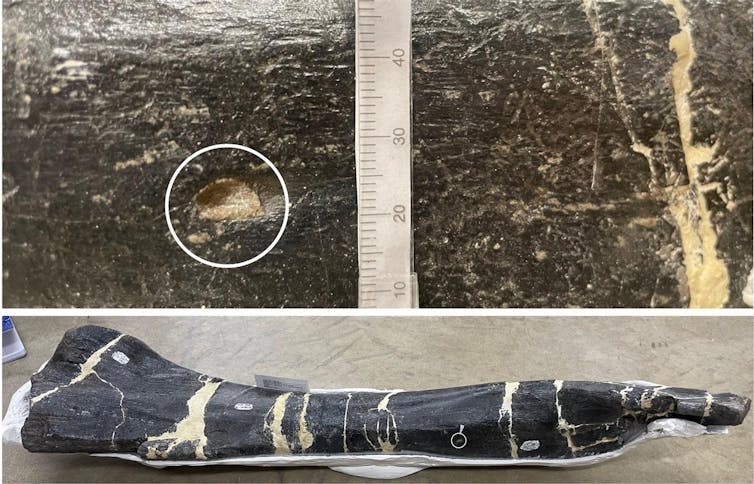
The shafts of long bones of the leg, such as the femur (thigh bone) and tibia (shin bone), are supplied with blood by the principal nutrient artery, which enters the bone through a hole (called a foramen) that is visible on the surface.
How to measure blood flow from bones
A decade ago, I wondered whether the size of the foramen could be an indirect measurement of the rate of blood flow to a bone.
This turned out to be true, and since then the “foramen technique” has been used on fossils to estimate blood flow rate and hence how much energy and nutrients were used in the bones of adult dinosaurs.
A fossilised Maiasaura shin bone, showing the foramen – the hole which allows an artery to supply blood to the bone. Photos by Heath Caldwell of a specimen in the Museum of the Rockies., CC BY
To apply the foramen technique to the fast-growing juvenile Maiasaura, I teamed up with Heath Caldwell, a student at Montana State University, who searched for the tiny foramina among the fossil collection at the Museum of the Rockies in Bozeman, Montana.
Holly Woodward of Oklahoma State University had previously determined the ages of the animals when they died. Qiaohui Hu at Adelaide University used the best techniques for measuring foramen size and relating it to nutrient artery size.
Rapid growth doesn’t come cheap
Our work produced clear results. Blood flow rates calculated from foramen size were similar in one-year-old dinosaurs weighing between 189kg and 455kg and in six- to 11-year-old adults weighing between 1,680kg and 3,200kg.
In other words, a one-year-old had about four times as much blood flowing to each gram of its shinbone as a full-grown adult did. The flow rate per gram in the femur of a two kilogram hatchling Maiasaura was 15 times higher than that of the adults.
These differences reveal how much more energy and nutrients it took to build bones in the early rapid growth stages of a Maiasaura’s life than it did to maintain the bones in adulthood.
The size of the foramen in adults was also comparable to those in mammals alive today, and much larger than in most modern reptiles. These findings support the view that dinosaurs were not cold-blooded and sluggish, but warm-blooded, very active, fast-growing animals that dominated the Mesozoic landscape.
Roger S. Seymour receives funding from The Australian Research Council.
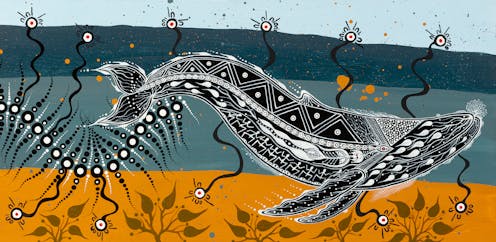
For saltwater people of Australia’s east and west coasts, humpback whales hold important lore in the form of stories.
For the Yuin people of the east coast, this story is one of a binding promise between whales (Gurawal) and people, as our old mentor and Elder, Uncle Max Harrison taught us.
The ancestors of the whales lived on Country with our old people. One day, Gurawal went to the Elders and asked to be allowed to live in Gadu, the ocean. The Elders agreed on the condition that Gurawal would hold the lore of the ocean, returning it to the land when required, just as the people would hold the lore of the land.
When Gadu rose up and covered significant parts of Country – when Bass Strait flooded and Tasmania became an island – Yuin people were confused and fearful. But, as Gadu engulfed the plains and swept up toward the mountains, Gurawul came to their aid, blowing bubbles to show a clear path. In this way, Gurawul led the people to safety on the higher grounds of Country, keeping the promise that had been made to the Elders.
This species and its story are of special significance to Yuin people. It’s similar to how dingoes are held in high regard for many mobs who consider them to be spiritual relatives. That’s why those mobs have called for an end to the routine killing of dingoes.
But to date, the ability to list species of cultural significance is not possible under Australian law. It’s time for that to change.
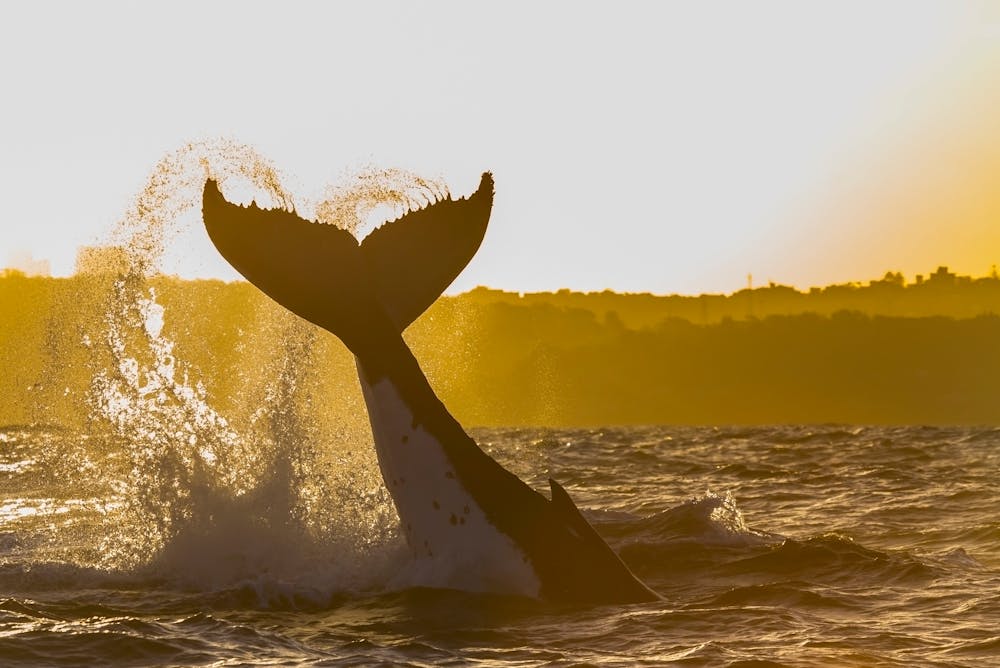
Humpback migration paths are part of an ancient and sacred songline. Shutterstock
Why should we recognise culturally significant species?
Last month, Australia marked Threatened Species Day by adding 48 more species to the list threatened with extinction. The government has pointed to these listings as a commitment to ensuring there are no more extinctions.
It’s important to acknowledge the clear threats to our native species and plan for their protection and survival. Extinctions make a poorer world for us and for future generations.
However, as three Indigenous ecologists, we argue this approach of affording species greater protection only when they become threatened, falls short of our cultural obligation to care for Country when applied to species of cultural significance.
As Traditional Custodians we have a complex relationship with Country which extends to kinship with plants, animals and ecological communities.
This binds us to follow lore through reciprocal care. Furthermore, additional responsibilities for some species require greater recognition of their significance. Waiting for these species to decline in order to show them care represents a failure to uphold lore.
Humpback numbers are recovering after industrial whaling of the species ended in 1963. As a result, they have been taken off the list of threatened species. But that doesn’t mean they aren’t at risk.
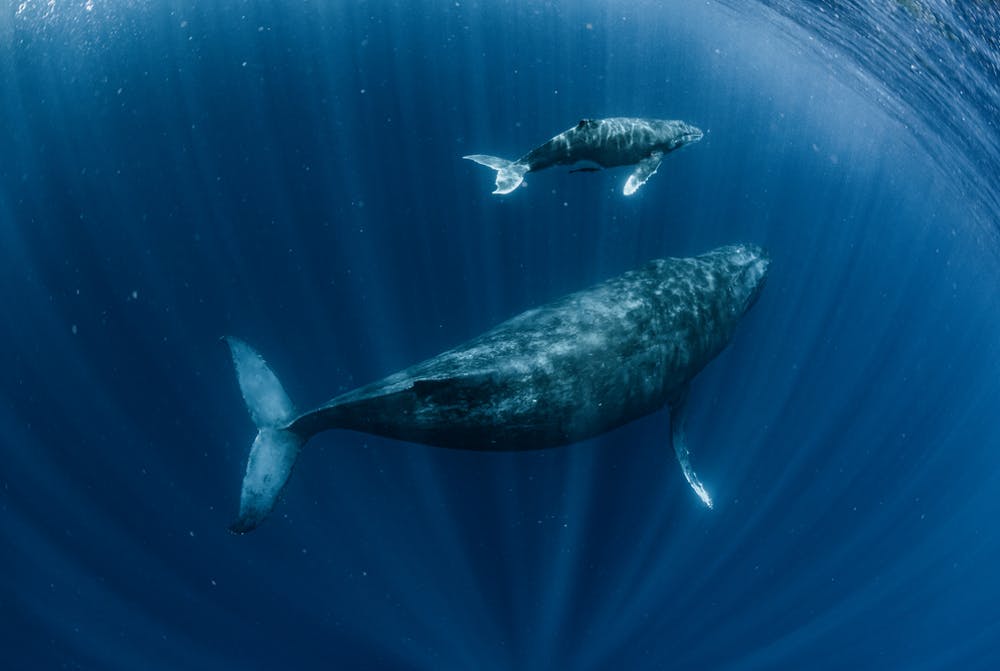
Humpback whales have migrated along Australia’s coastlines for millennia. Shutterstock
For instance, ghost nets and ship strikes can hurt or kill whales. And when gas companies use seismic blasting to find gas reservoirs under the sea bed, the soundwaves can disrupt how whales communicate or migrate. This can mean whales are unable to follow their ancient songlines or migratory paths, teach their young and share their songs.
For the Yuin people, like many saltwater peoples, whales are Elders of the sea and their loss to human misconduct cannot be tolerated. The loss of an Elder of the sea reduces the collective memory of Gurawul and their ability to hold the lore of the ocean.
If we allocate funding and research based only on whether a species is threatened or not, we risk losing the tangible and intangible elements of cultural heritage and the First Nations knowledge of a species.
Right now, Australia’s government is reforming our biodiversity laws – widely seen as not fit for purpose. First Nations heritage protection laws are also likely to be updated.
That means we have a singular chance to embed species of cultural significance into law. We cannot let this opportunity slip past.
Our research calls for the ability to recognise culturally significant entities in law, which could include species, ecosystems, seascapes and landscapes.
If Traditional Custodians can formally list entities of cultural significance, we could improve their care and ensure ongoing connection with them for future generations.
For saltwater people like the Yuin, the importance of the ocean and its inhabitants was laid down in lore. Shutterstock
Laws are the start
Changes to legislation alone will not guarantee greater consideration of Indigenous Knowledge and the value of species.
For instance, Canada’s Species of Risk act has a mandated requirement to consult Indigenous peoples. But less than half of its recovery and management plans include Indigenous Knowledge and values. So while tailored legislation sets a clear mandate, it’s just the first step.
Another step is to realign policy and practice to make possible traditional management of culturally significant species. This could achieve much, even without a change to the laws.
For this to work, the management of culturally significant entities must be guided by Traditional Custodians.
Will we Australians – known lovers of the ocean – take up the challenge of caring for the entities that live in Gadu Country, under the guidance of Traditional Custodians?
The Labour Government was elected with 50 per cent of the vote three years ago, but current opinion polls show their vote could halve in this year’s election, which would be one of the biggest plunges in political history.
Most polls have Labour on about 26 per cent. And the downward trajectory is clear – 1News has reported Labour dropping seven times in a row in their poll. And it’s not just the polls showing Labour is in serious trouble. The Australian TAB takes bets on the New Zealand election, and for each $1 dollar bet they are currently paying out $4.50 for a Labour win, and only $1.18 for a National win.
Newshub political editor Jenna Lynch has predicted “absolute carnage and political armageddon” for Labour – pointing out the party risks losing senior MPs like David Parker, Willie Jackson, Adrian Rurawhe, and Ayesha Verrall. And if things go really badly, even Finance Minister Grant Robertson could be chucked out.
Labour could be headed for an even bigger defeat than in 1931 when Gordon Coates’ governing Reform Party plunged to just 26.6 per cent.
So why has Labour gone from such highs to such lows so quickly? The answer to this question will be discussed for a long time after 14 October, but we are already seeing some early explanations for why Labour has become so unpopular.
1) Labour’s handling of Covid
Labour won its 50 per cent vote in 2020 in response to its successful handling of the first wave of Covid. The public was extremely grateful that Jacinda Ardern’s government prioritised protecting public health until vaccines became widely available, and ensured workers and businesses were supported. But subsequent Covid waves made it into the country, and various aspects of Labour’s management of Covid were found wanting.
Last week former Cabinet Minister Peter Dunne said the main damage to Labour’s re-election prospects can be traced back to the middle of 2021 when Covid hit the country: “the government’s perceived slowness in winding back pandemic restrictions, alongside the mounting cost-of-living crisis brought about rising levels of public discontent. Compounding that was the second Auckland lockdown, which Ardern promised would be ‘short and sharp’, but which went on for over four months.”
Labour’s Covid story is now seen by many as negative rather than positive, and the Government is barely mentioning it in their re-election campaign. As Stuff political editor Luke Malpass has reported, “Voters just don’t seem to want to hear about it any more. They don’t want the Government crowing about how good it was – because it doesn’t feel that way now. And all the privations and disruption seem best forgotten.”
2) Failure to deliver the promised transformation, or even the basics
Labour came to power in 2017 promising transformational reform. They were largely judged to have failed to deliver on their promises after their first term, and it was only their handling of Covid in 2020 that saved Labour from being turfed out that year. Since then, the narrative that Labour hasn’t delivered has only grown stronger.
Labour’s flagship KiwiBuild programme, with its promise of 100,000 affordable new houses, still exists but has become something of a joke. Auckland’s Light Rail project was supposed to be complete by 2021, but hasn’t even begun, typifying Labour’s general weakness on infrastructure.
In the Listener last week, Duncan Garner argued Labour over-promised and leaned on slogans and gimmicks such as KiwiBuild and, as a result, the Government’s record of achievement is very slight.
Unsurprisingly, Labour is not running its election campaign based on what it has achieved. Malpass notes: “It’s remarkable that a Government of six years doesn’t appear to be running much on its record.”
Crucially, it also means the public are far less inclined to believe Labour’s latest promises. As TVNZ’s Jack Tame says: “what good are new promises if a government didn’t deliver on its previous ones?”
He has pointed to all the areas Labour has failed to deliver on – especially housing, mental health, and child poverty. In all these areas, Labour can point to progress, but there’s too much evidence of things going backwards. Even on climate change, some progress has been made, but ultimately “the most difficult emission reductions decisions have been deferred to future governments”, including how to deal with New Zealand’s largest gas-emitting industry.
Billions have been poured into the mental health system, but there’s a lack of clarity on where it’s all gone and why it hasn’t fixed the crisis. As the Mental Health Foundation says, the promised transformation hasn’t occurred, and “Things are overall getting worse, not better.”
Tame says, “there is no escaping the transformational void” under Labour, and its current campaign is a pale version of what got them into government in 2017.
In September, the research company Ipsos asked the public to rate the Government’s performance out of ten – with the result being 4.5/10, down from 7.2/10 three years ago. On all the issues voters consider most important at the moment, survey respondents rate Labour as inferior to National in terms of competence. This includes Health, Education and Housing – areas which Labour have traditionally dominated.
3) It’s the economy, stupid
Many voters will essentially ask themselves whether life has materially improved or worsened since Labour took power in 2017. Unfortunately for the Government, on many measures it seems to have worsened, particularly with record high inflation and interests rates. The housing crisis, in particular, has worsened significantly since Labour came to power, meaning people are struggling more than ever to pay skyrocketing rent or buy their first home.
Political journalist Henry Cooke sums it up like this: “New Zealanders are rightly upset about their falling real incomes, with high food costs in our uncompetitive grocery sector, high rents in major cities, and high interest rates for those who bought houses while they were severely overvalued… In New Zealand the government is not so squarely seen as the source of everyone’s economic pain, but it is hardly seen as the solution either”.
A common complaint is Labour has spent too much money, and has too little to show for it. Duncan Garner writes in last week’s Listener that “$48b more is spent annually than in 2017. What do we have to show for it? New motorways, trains, light rail and hospitals? No chance.”
Even on the left there is a feeling that the $48b extra spend per year under Labour – and especially the extra $60bn that was spent due to Covid – could have been targeted at transformational change, but has been frittered away on pet projects and more bureaucracy.
Some of this money has been put into expensive structural changes – centralising healthcare (Te Whatu Ora) and polytechnics (Te Pūkenga), but these have become lightning rods for discontent.
4) Broken New Zealand
For the last fourteen years polling companies have asked the public about whether New Zealand is headed in the right or wrong direction, and until recently the majority have always given a positive response. According to polling in 2020 over two-thirds of the population thought the country was headed in the right direction, with few dissenting. By 2023 this has entirely reversed – the vast majority of those polled believe New Zealand is on the wrong track.
A big part of this discontent is with key public services, which are increasingly criticised as dysfunctional, overly-bureaucratic, and under-performing. Stuff’s Luke Malpass reported that dissatisfaction with government services appears to be skyrocketing. According to a Curia survey, voters say public services have got worse since 2020 in the following key areas: Health (70 per cent say it’s worse), Criminal Justice (64 per cent), Education (57 per cent), Transport (47 per cent), and Welfare (37 per cent).
The term “polycrisis” is being used to describe the inter-connected nature of the various crises in the country. It all adds to a sense of anger and frustration with the status quo, creating a mood for change that Chris Hipkins’ government is struggling to turn around.
According to the Listener’s Danyl McLauchlan, Hipkins hasn’t been able to connect with voter dissatisfaction: “he never spoke to the very sour mood of the nation after three years of post-covid disappointment, high prices and political failure.” McLauchlan says that when this year’s Budget came out, voters could see that Labour had no plan or vision for how to fix all the problems in New Zealand: “I suspect they wanted Hipkins to signal that he had a plan to send it in the right direction. A diagnosis of our problems and a plan to solve them. The budget and now the campaign have revealed that there’s no such scheme.”
5) Failure on tax reform
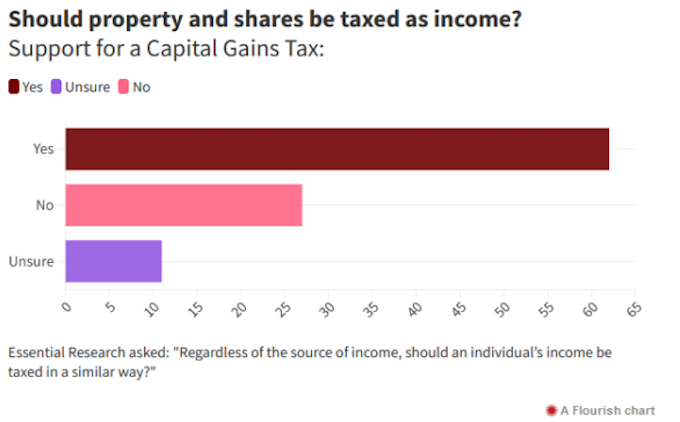
New Zealanders are particularly dissatisfied with the tax system. Experts and the wider public are in agreement about the need for change – it’s only the Labour Government that seems wedded to the status quo, ruling out change. Survey after survey shows the public is open to significant reform of taxes, including introducing capital gains and particularly wealth taxes.
The Labour Government came to power promising tax reform and especially to investigate a capital gains tax. However, Jacinda Ardern went on to rule out a capital gains tax from being implemented under her watch. Under Chris Hipkins, Labour once again ruled out any new progressive taxes.
Some in the Labour Party wanted a wealth tax brought in, and Revenue Minister David Parker worked on a tax that could’ve been implemented this year, only to be overruled by the more conservative Hipkins. A Newshub Reid-Research poll recently asked voters whether he was right to rule this out – with 47 per cent disagreeing with Hipkins’ decision, and only 39 per cent agreeing.
6) Perception that Labour is arrogant and out-of-touch
Winning 50 per cent of the vote in 2020 was both a blessing and a curse for Labour. It meant that Labour had the largest number of MPs any party has ever had, and the ability to push through reform. Labour has been judged to have squandered that historic opportunity, falling into complacency and arrogance.
Labour ministers felt they could implement unsignalled projects – from Three Waters to a social insurance scheme – without the pressure to take the public along with them. As Duncan Garner said last week, “The majority vote meant no one was acting as a gatekeeper.”
Labour is perceived as out of touch with the public, which always leads to electoral death. Recently, Newshub’s Reid-Research poll asked voters whether they thought the Government was concerned with the issues that matter to Kiwis, and only 29.8 per cent thought they were, with the majority – 62.1 per cent – saying the Government isn’t.
7) Lack of clarity about what Labour believe in
Labour’s popularity declined significantly while Ardern was leader, which led her to hand over to Hipkins. Hipkins was initially able to restore a strong degree of public support, mostly through jettisoning many of the pet projects of the Ardern era. He took the party back up to about 38 per cent support after his “policy bonfire”, which signalled to the public that Labour was re-orientating to more traditional concerns.
The problem was Hipkins wasn’t willing or able to replace the jettisoned policies with anything, and it made it look like the party had no vision or plan for fixing the big problems in New Zealand. Instead, it started to look opportunistic. Leftwing political commentator Chris Trotter reflected: “My view is that Hipkins ‘policy bonfire’ was a mistake for Labour as it’s looking now like the Party has burnt down its own house by abandoning its principles. Hipkins has deserted the party’s core support base in his lust for power.”
Peter Dunne explained last week that: “when it became clear that the bonfire was simply about getting unpopular policies off the table, without replacing them with more popular alternatives, the freefall in Labour’s support resumed. The various policy announcements Hipkins has made during the election campaign have simply raised the retort that why is Labour only promoting these policies now, when it has had the best part of six years in office to have implemented them.”
Policies like GST off fresh fruit and vegetables looked cynical, which was reflected in opinion polls showing the public was largely unmoved by the new policy. As Herald political editor Claire Trevett explained, “the GST policy was seen as an attempt to offer something that looked more generous than it was, purely for the sake of votes.”
Labour’s justice policy announcements show how the party has swung between two radically different approaches in a way that lacks authenticity. In the campaign Labour has been banging the law and order drum – something political commentator Janet Wilson describes as “hypocritical” because they are shedding “what they stand for in a hasty grab for the centre vote.” By promising a crackdown on youth offenders and ram-raiders, Labour has simply appeared to be “National-lite” – and failing to convince liberals or conservatives.
In emulating National on many policies, Labour has allowed its opponents to set the agenda. Financial journalist Bernard Hickey has characterised Chris Hipkins’ pitch to voters as: “Labour’s version of tweaking the status quo in Aotearoa’s political economy is better than National’s.”
8) Labour’s focus on woke politics instead of working class politics
Under Jacinda Ardern’s leadership, Labour morphed more into a more middle-class-orientated party than ever before. Instead of focusing on the issues that working class voters care most about – such as living standards and public services, Labour became more associated with social issues, gender, ethnicity, and what some call “woke” politics. Social justice rather than economic justice became the characteristic of this Labour Government.
On taking over, Hipkins promised to ditch the more liberal focus and go with a “bread and butter” agenda. But despite the rhetoric, Hipkins was never able to deliver on this.
Josie Pagani argued this week that Labour has continued to pander to higher socio-economic voters with many of its policies. The example she uses is Labour’s environmental policies: “You see the symptoms in Labour’s priorities designed to please wealthier, urban, middle classes more than their working-class supporters, from subsidising heat pumps and EVs to planetary-scale ‘light rail’.”
This shift away from policies that might help Labour’s traditional working class constituency went hand in hand with enabling the “professional managerial class”, especially within the state sector. A big part of Labour’s approach has been to grow the bureaucracy and give more power to consultants. As Duncan Garner has explained, “The recession was biting, cost of living had already increased and yet still Labour insisted on setting up the hugely costly Health NZ and Māori Health Authority. We employed consultants not nurses.”
Others in the professional managerial class, from lobbyists to law firms, have been looked after well by Labour. Transport projects were entrusted to consultants to carry out. For example, Michael Wood sunk $50m into an Auckland Harbour cycle bridge that was never built. Likewise, $140m was spent on consultants for the Auckland Light Rail project, which still isn’t anywhere near getting off the ground.
A number of controversial government department scandals also created a perception of extravagance and profligacy. Most recently, spending by the Ministry for Pacific Peoples hit the headlines with its $40,000 farewell for its outgoing chief executive who was shifting to another government department.
9) Labour’s radical reinterpretation of the Treaty
Labour’s most radical and unpopular agenda during the last three years has been its adoption of co-governance in public services and especially the Three Waters reforms. The Treaty of Waitangi has been radically reinterpreted, and new bi-cultural governance policies have been advanced as a result, which have been perceived as separatist.
This approach was very different to that taken in Labour’s first term. Back in 2018 both Jacinda Ardern and Grant Robertson stated an intention to work with a traditional social democratic orientation that would deliver to Māori as part of a universalistic strategy to lift the fortunes of everyone in need, rather than specifically targeting Māori. Ardern strongly emphasised the need to deal with the long list of social ills that have disproportionately impacted Māori, but said that race-based methods were not the best way of doing so.
However this universal approach was out of favour with Labour’s Māori caucus. After the 2020 election when it came to the much-needed reform of water infrastructure, an attempt was made to do so in a way that would empower iwi leaders.
Chris Trotter has recently explained how Three Waters prevailed within the Government: “The Māori Caucus wanted it because Iwi leaders wanted it, and if they didn’t get it, they might start knocking on Te Pāti Māori’s door. No one else in the Labour caucus proper felt strongly enough about the issue to organise any kind of serious resistance. So, Hipkins allowed Three Waters to be tweaked and re-named, and hoped that the public would be satisfied with a ludicrous name change. They weren’t.”
Very little of this approach has been debated or communicated with the public, leading to suspicions that it’s being implemented by fiat in an elitist and undemocratic way because the public won’t agree with it. And ultimately the public hasn’t felt convinced by it all.
Public surveys show unhappiness with co-governance. Stuff reports that the recent Freshwater poll has 48 per cent of people agreeing with the statement that there “should be a referendum on Māori co-governance, to end the confusion and let every New Zealander have a say”. Only 17 per cent disagreed with the referendum.
Similarly, when asked if there should be more co-governance with Māori in government decision-making, 45 per cent disagreed, and only 28 per cent agreed. And in terms of the state’s use of te reo Māori, 49 per cent said that government departments should be known by their English, not their Māori name (and only 26 per cent disagreed).
10) Integrity scandals
When the history of Labour’s 2023 poll dive is written in the future, much is likely to be made of the fact that four Cabinet ministers were lost in controversial circumstances in quick succession after Hipkins took over as PM. The loss of Stuart Nash, Michael Wood, Meka Whaitiri and Kiri Allan will be seen as the final nail in the coffin of the Sixth Labour Government.
Three out of the four ministers left due to integrity failures. Nash went after he committed a string of integrity violations, the last being breaking Cabinet Responsibility rules by passing on confidential information to political donors. Wood left after his continued inability to deal with conflicts of interest over his share portfolio ownership. And Allan spectacularly resigned when she was charged after crashing her ministerial car into a parked ute. Being the first Cabinet minister to be arrested in New Zealand history, was a damning indictment, especially for a Minister of Justice during a period of heightened concern about law and order.
After these scandals Labour’s popularity fell decisively, pushing the party below 30 per cent in the polls. Earlier scandals didn’t cause too much damage, but according to Danyl McLauchlan, once Wood and Allen left in spectacular disgrace, it was “a slow decline that turned into a dramatic loss of public support.”
Taken together, the departure of five ministers in the same number of months, gave the impression of a government in crisis. Nothing in the election campaign has turned around that reputation.
Labour needs honest soul-searching about its defeat
The Labour government of 2017 to 2023 have achieved plenty of good things, and during this election campaign they’ve had a chance to highlight their achievements. There will still be at least a quarter of the electorate who will vote for them. But half of Labour’s 2020 supporters are obviously less than impressed. For too many, Labour’s achievements are overshadowed by the factors raised above.
After 14 October there must be some honest soul-searching about what went wrong. There will be some temptation to put the blame on Covid or ill economic winds. Those factors are part of the story of Labour’s decline, but if Labour doesn’t look at some of the more difficult factors in their fall from favour, they could face a very long road back to power.
However, these lauded advances in our basic understanding of the world often have very real, practical consequences for society.
To take just a few examples, Nobel-winning physics has given us portable computers, efficient LED lighting, climate modelling and radiation treatment of cancer.
Thin magnets and portable computers
In 2007, the physics Nobel was awarded jointly to Peter Grünberg and Albert Fert for the discovery of “giant magnetoresistance”.
In the late 1980s, Grünberg and Fert (and their research groups) were independently studying very thin layers of magnets. They both noticed that electricity flowed through the layers differently depending on the direction of the magnetic fields.
These teams were looking to understand fundamental properties of very thin magnets. However, their findings led to something we now take for granted: portable computers.
The ‘giant magnetoresistance’ effect won its discoverers the 2007 Nobel Prize in Physics – and made portable hard drives possible. Shutterstock
At the time, most computers stored information on a hard disk drive made of a magnetic material. To read the information from the drive, a very small and very accurate magnetic field sensor is needed.
The discovery of giant magnetoresistance allowed for the development of far more sensitive sensors, which in turn made hard disk drives and computers smaller. (Today, magnetic hard disk drives are being overtaken by even smaller solid state drives.)
In short, we would not have laptops without the discovery that won the 2007 Nobel Prize in Physics.
The effect of this research – like that of so much fundamental research – was completely unanticipated.
A light bulb moment
Sometimes, however, physics research does have a practical goal all along. One such example is the quest for energy-efficient lighting.
Old-fashioned incandescent light bulbs are highly inefficient. Because they work by heating a wire until it glows, they waste a lot of energy as heat. In fact, less than 10% of the energy they consume goes to producing light.
In the 1980s, scientists realised light emitting diodes, or LEDs – small electronic components that emit light of a specific colour – would make more efficient light sources. But there was a problem. Although red and green LEDs had been developed in the middle of the twentieth century, nobody knew how to make a blue LED.
LEDs are thin sandwiches of materials that respond to electricity in a very particular way. When an electron moves from one energy level to another inside the material, it emits light of a specific colour.
All three colours of light (red, green and blue) would be needed to produce the kind of white light people want in their homes and workplaces.
The invention of blue LEDs made it possible to create white light far more efficiently than with incandescent bulbs. Shutterstock
In the early 1990s, in the culmination of almost 30 years of work by many groups, the missing blue LEDs were found. In 2014, Isamu Akasaki, Hiroshi Amano and Shuji Nakamura received the physics Nobel for the discovery.
The layers of material chosen to make up the sandwich, plus the quality of each layer, had to be refined in order to make the first blue LED. Since the initial discovery, materials scientists have continued to improve the design and manufacture to make blue LEDs more efficient.
Lighting accounts for up to 20% of total electricity consumption. LEDs use roughly one sixth as much energy as incandescent light bulbs. They also last much longer, with a lifetime of around 25,000 hours.
Climate models, radiation and beyond
Environmental endeavours are probably not what springs to mind when you think of the Nobel Prize in Physics. Yet another example also comes to mind, the study of a chaotic and complex system with great importance to us all: Earth’s climate.
Half of the 2021 Nobel Prize in Physics was given to Syukuro Manabe and Klaus Hasselmann, scientists who developed early models for Earth’s weather and climate. Their work also linked global warming to human activity.
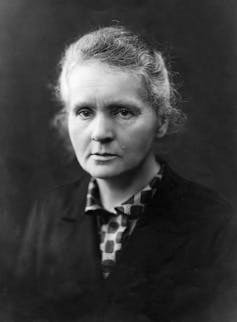
Marie Curie was awarded the Nobel Prize in Physics in 1903 for her work on radioactivity. Wikimedia
Of the 222 people awarded the physics Nobel since 1901, only three have been women. The most famous of those three is perhaps Marie Curie, who took home one quarter of the prize in 1903.
Curie’s work on understanding how atoms can decay into other kinds of atoms, producing nuclear radiation, profoundly changed life in the twentieth century.
The study of nuclear radiation led to the development of nuclear weapons, but also to radiation treatment for cancer. And further, it has led to carbon dating to determine the age of artefacts, allowing us to better understand ancient civilisations.
So when we find out who is awarded the 2023 Nobel Prize in Physics, no matter what it’s for – and prospects include research on quantum computing, “slow light” and “self-assembling matter” – we can be sure of one thing. The awarded research will likely end up affecting our lives in extraordinary ways that may not at first be apparent.
Karen Livesey does not work for, consult, own shares in or receive funding from any company or organization that would benefit from this article, and has disclosed no relevant affiliations beyond their academic appointment.
Source: The Conversation (Au and NZ) – By Graham Dwyer, Course Director, Centre for Social Impact, Swinburne University of Technology, Swinburne University of Technology
Shutterstock
Last year, campers had to evacuate because of floods. This year, they’re evacuating because of fire. Over Victoria’s long weekend, campers and residents in Gippsland had to flee fast-moving fires, driven by high winds.
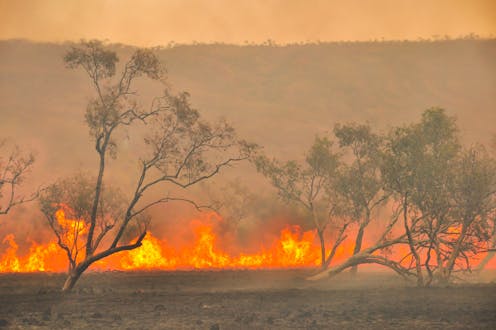
The megafires of the 2019–2020 Black Summer came off the back of an earlier El Niño climate cycle. Now, after three years of rain and floods, El Niño is arriving on Australian shores again. With it comes fire weather – hot, dry and windy.
Last week, emergency management minister Murray Watt moved to reassure an anxious country. “Australia is much better prepared for this season than we were heading into Black Summer,” he said, speaking after a national summit on disaster preparedness.
Yes, authorities are better prepared. But by and large, we as individuals are not. Far too often, Australians think it’s the job of the authorities to be ready, which breeds a false sense of security.
This fire season may pack a punch
The Black Summer bushfires of the 2019–20 summer were a stark reminder of how fire prone Australia is. But they were more than that – they were not normal. Around 20% of all of our forests went up in flame.
2019 was the hottest and driest year on record for Australia. But 2023 may break that record, as climate records topple around the world and extreme weather events multiply. This year is likely to be the hottest on record globally, and next year the record may well fall again.
Sustained rain from three successive La Niña years has driven widespread vegetation growth across Australia’s 125 million hectares of forest, bush and grasslands. Over the coming weeks, many areas could dry out quickly and become tinder for bushfires.
Australia’s wet-dry climate cycles have one benefit – during wet years, fire authorities get a reprieve. That lets governments, emergency services and the community coordinate, plan and prepare for bushfire seasons ahead.
That’s why Minister Watt can accurately claim Australia is better prepared. The capacity and capability of our emergency services to predict the spread of fires and issue timely warnings to communities is better than it has ever been. In planning and preparedness for natural hazards such as bushfires and floods, we have seen better integration between government, emergency services, civil and private sector organisations.
Planned burning is still a challenge. It’s tough to find the right weather conditions to burn off fuel loads at low intensity, without risking the blaze spreading or threatening property.
But these burns are done much more strategically these days. Rather than simply aim to hit a target of hectares burned, authorities are now focused on burning fuel in areas where it could endanger lives and damage critical infrastructure during bushfire season.
These advances give us good reason for confidence. But not for complacency.
Why? Decades of bushfires have shown even the best preparation can be found wanting on days of severe bushfire danger when firestorms can develop quickly and behave unpredictably.
For Australia to be ready, you need to be ready
While megafires happen – and draw the most headlines – most bushfires are local rather than national events.
That means we must prepare at a local level.
If you’re faced with a bushfire threat, you have only two options.
You can stay and defend your property – as long as you are physically and mentally prepared, have adequate firefighting resources, and your property is prepared and defensible.
Or you can leave early, which means making a judgement call about the best time to go in a calm manner. That doesn’t mean panic – if there is time, it can be possible to do things like clear fuels from around the home and dampen the surrounds to give your house a better chance of surviving undefended.
Which should you choose? It depends, in part, on where you live and your personal circumstances. Remember too that most Australians will never experience a bushfire firsthand.
Every community has a different risk profile and people and communities vary considerably in their levels of preparedness and planning.
If a fire does start and head towards your house, you could be taken entirely by surprise if you have no bushfire plan.
To be clear, this is arguably the largest gap in Australia’s fire preparedness.
Which way out? Planning ahead could save your life. Shutterstock
Planning is easy – if done ahead
The question of whether Australia is ready for the fire season should be reframed. The better question is: are Australians ready?
The good news is, it’s easier than you think to make a fire plan. As a household, it might take just 10 minutes. Your state or territory government has a website showing you how:
Why plan ahead? Because it is vastly better to have a clear plan at your fingertips rather than frantically trying to figure out where your loved ones are, whether it’s too late to leave and whether you could realistically fight the fire – when the fire is on your doorstep. Faced by the reality of fire, many of us can freeze.
What firefighters want us to learn is that the critical decisions and actions which save lives and property in a bushfire are taken by us and our communities, not by politicians or agencies.
John Schauble contributed significantly to this article. He has worked extensively in bushfire policy and research at state level and has volunteered for over 40 years as a firefighter.
Graham Dwyer receives funding from Natural Hazards Research Australia and the Australian Research Council.
But many temporary graduate visa holders struggle to pursue their chosen careers in Australia, with
only half securing full-time employment
most working in low-skilled jobs
and half earning less than A$53,300 a year, compared to just one-third of all graduates.
Outcomes are often not matching the effort
More than half of these visa holders work in jobs that don’t even require a tertiary qualification. In fact, the incomes of temporary graduate visa holders look more like those of working holiday makers, most of whom come to Australia to travel.
A new Grattan Institute survey of employers shows many are reluctant to hire international graduates, especially because of uncertainty about whether they can stay and work in Australia once their temporary graduate visa expires.
Other evidence suggests that poor English language skills, the poor education some students receive and discrimination are also important factors.
Fewer international graduates now get permanent visas
A growing number of international graduates are stuck in visa limbo in Australia, with less than one-third of temporary graduate visa holders now transitioning to permanent residency when their visa expires, down from two-thirds in 2014.
One in three return to further study here once their visa expires, mostly in cheaper vocational courses, to prolong their stay in Australia.
Encouraging so many international graduates to stay and struggle in Australia is in no one’s interests. It damages the reputation of our international higher education sector and erodes public trust in our migration program.
It hurts the long-term prospects of those graduates who do stay permanently. It adds to population pressures and housing prices. And it’s unfair to those graduates who invest years in Australia with little prospect of securing permanent residency.
And recent policy changes will only make this problem worse.
The Albanese government’s decision at last year’s Jobs and Skills Summit to extend the length of temporary visas for international graduates is a big reason why we should expect their numbers to nearly double to about 370,000 by 2030.
Some students studying in the regions can now stay and work in Australia on a temporary visa for up to eight years after they graduate.
Unless the number of permanent visas on offer each year rises, which seems unlikely, many more graduates will be left in limbo in the future.
And that’s despite the government pledging to reduce the number of migrants in Australia in “permanently temporary limbo”.
The government needs to reverse course, and quickly. Here’s what it should do.
Stop offering false hope
First, Australia should offer shorter post-study work visas to international graduates: just long enough to identify which graduates would make good prospects for permanent residency.
Visa extensions currently on offer for graduates with degrees in nominated areas of shortage, and for those living in the regions, should be scrapped.
Instead, graduates should be eligible for an extension to their visa only if they earn at least $70,000 a year – a good sign that they’ll eventually secure a permanent skilled visa.
Grattan Institute modelling shows that these reforms could result in the number of international graduates on temporary visas in Australia growing only modestly, to 260,000 by 2030. That’s 110,000 fewer than if current policies remain in place.
Fix visa pathways for talented graduates
Second, Australia should fix the pathways for talented graduates after they finish their temporary graduate visa.
The current system rewards persistence, encouraging students to make education and career decisions to secure permanent residency rather than making decisions that benefit their careers in the long-term.
We need to make it easier for employers to sponsor migrants if they earn a high wage, rather than the current system of restricting sponsorship to an outdated list of nominated occupations.
Do more to help international graduates find good jobs
And last, Australia should do more to help international graduates to thrive here.
The government should launch a campaign designed to change employer attitudes about new graduates, and public sector graduate programs should accept international graduates.
The federal government should publish detailed league tables of the employment outcomes of international graduates, including their earnings, to shame universities into supporting international graduates to build careers in Australia.
The price of policy inaction is clear: Australia will host an ever-larger pool of international graduates living in limbo.
Grattan Institute began with contributions to its endowment of $15 million from each of the Federal and Victorian Governments, $4 million from BHP Billiton, and $1 million from NAB. In order to safeguard its independence, Grattan Institute’s board controls this endowment. The funds are invested and contribute to funding Grattan Institute’s activities. Grattan Institute also receives funding from corporates, foundations, and individuals to support its general activities, as disclosed on its website. We would also like to thank the Scanlon Foundation for its generous support of our migration research.
Trent Wiltshire and Tyler Reysenbach do not work for, consult, own shares in or receive funding from any company or organization that would benefit from this article, and have disclosed no relevant affiliations beyond their academic appointment.
The promise to “get tough on youth crime” is a New Zealand election perennial. This year, parties on both the left and right have pledged to crack down on young offenders – despite a lot of evidence that such approaches do not work in the long term.
Already, the Ram Raid Offending and Related Measures Amendment Bill is working through the legislative process. If passed, it would create a new offence within the Crimes Act, allowing the prosecution of children as young as 12, and prison sentences of up to ten years.
National is proposing a new “young serious offender” justice category, as well as the creation of “youth offender military academies”. ACT wants 200 new youth justice beds and responsibility for youth justice to move from children’s ministry Oranga Tamariki to the Department of Corrections.
According to current polling, parties on the right may be in a position to form the next government. If so, it seems New Zealand’s youth justice system may take a more punitive turn.
Treating symptoms not causes
The country’s youth justice system established a “new paradigm” in the early 1990s, after the Oranga Tamariki Act 1989 became law. This offered a homegrown approach to families and their young people unique to New Zealand. The model of family empowerment, restorative justice, diversion from court prosecution and reintegration in society became known internationally.
While there was a turn towards more punitive adult criminal justice in Europe and the United States, New Zealand’s system stayed relatively stable until 2008, when a National-led coalition government took power.
Youth justice was a central facet of National’s election campaign to end three terms of Labour-led government. Announcing his party’s “youth plan”, National leader John Key said part of it was about “rolling up our sleeves to prevent New Zealand’s youth crime problem from becoming tomorrow’s crisis”.
This included the now familiar election promise to introduce youth “boot camps”, and to reduce the age of criminal prosecution to 12.
But as critics have long argued, a focus on “crime control” and “risk management” has seen punishment prioritised over addressing the root causes of crime and the best interests of young people.
This can be seen in the disproportionate impact of the criminal justice system on Māori and Pacific youth. According to 2021 data, Māori make up 67% of those in youth detention. Pacific youth account for 7%, and those who identify as both Māori and Pacific account for 13%. Young people who identify as neither Māori nor Pacific comprise only 13% of that population.
Failing to address the complex developmental and social drivers of youth crime means those statistics are unlikely to change.
What is working?
There is also considerable evidence of the influence young people’s gradual cognitive and social development can have on criminal behaviour.
These age-related factors include reduced impulse control, difficulty with future planning, greater risk taking and susceptibility to peer influence. At the same time, age also offers an increased potential for positive change.
Importantly, offending by children and young people is also often related to challenges at home and in communities, including poverty, housing instability, and poor physical or mental health.
The current evidence supports a less punitive approach to youth offending, through diversion or the use of specialist courts, based on promoting welfare and addressing the underlying causes of offending.
There is evidence in New Zealand that
restorative justice reduces reoffending. Family group conferences have been shown to reduce the “frequency and seriousness” of offending for 70% of participants, with Rangatahi Courts also helping reduce reoffending and promote other positive outcomes.
While these developments are encouraging, the investigation into “baby uplifts” by Oranga Tamariki, testimonies to the Abuse in Care Royal Commission, and reports of abuse in Oranga Tamariki residences, all raise serious questions about placing more young people in institutions.
Furthermore, New Zealand’s rate of youth offending has been decreasing for some time. But there is a disproportionately high number of youth justice beds here relative to other comparable countries, especially considering the system struggles with mental health support.
The United Nations has already identified the human rights concerns with New Zealand’s low age of criminal responsibility, punitive practices like “spit hoods”, and the disproportionate numbers of rangatahi Māori in the criminal justice system.
An evidence-led approach to youth justice would involve Māori and see the expansion of specialist courts throughout the country. Rather than lowering the age of criminal responsibility, the eligible age for appearing in the youth courts would be raised.
Overall, the goal would be to minimise the imprisonment of young people, including remand in police cells and youth or adult detention facilities. And there would be much greater investment in iwi partnerships to provide wrap-around community services that are whanau-focused and culturally appropriate.
As the former chief science adviser to the prime minister reported in 2018, more resources directed at mental health, trauma, substance abuse and inadequate housing should be the basis of preventing more youth offending. A more punitive response may win votes but it will not solve the problem.
Jessica Niurangi Maclean provides services to Ara Poutama/Department of Corrections, including writing s27 cultural reports. She receives funding from Ara Poutama to develop and deliver Mana Wahine programmes at Christchurch Women’s Prison.
Linda Mussell does not work for, consult, own shares in or receive funding from any company or organisation that would benefit from this article, and has disclosed no relevant affiliations beyond their academic appointment.
Kia ora koutou. Ko Ngāpuhi tōku iwi. Ko Ngāti Manu toku hapu. Ko Karetu tōku marae. Ko Myles Thomas toku ingoa.
I grew up with David Beatson, on the telly. Back in the 1970s, he read the late news which I watched in bed with my parents. Later, David and I worked together to save TVNZ 7 and also regional TV stations.
The Better Public Media (BPM) trust honours David each year with our memorial address, because his fight for non-commercial TV was an honourable one. He wasn’t doing it for himself.
He wasn’t doing it so he could get a job or because it would benefit him. He fought for public media because he knew it was good for Aotearoa NZ.
Like us at Better Public Media, he recognised the benefits to our country from locally produced public media.
David knew, from a long career in media, including as editor of The Listener and as Jim Bolger’s press secretary, that NZ’s media plays an important role in our nation’s culture, social cohesion, and democracy.
NZ culture is very important. NZ culture is so unique and special, yet it has always been at risk of being swamped by content from overseas. The US especially with its crackpot conspiracies, extreme racial tensions, and extreme tensions about everything to be honest.
Local content the antidote Local content is the antidote to this. It reflects us, it portrays us, it defines New Zealand, and whether we like it or not, it defines us. But it’s important to remember that what we see reflected back to us comes through a filter.
This speech is coming to you through a filter, called Myles Thomas.
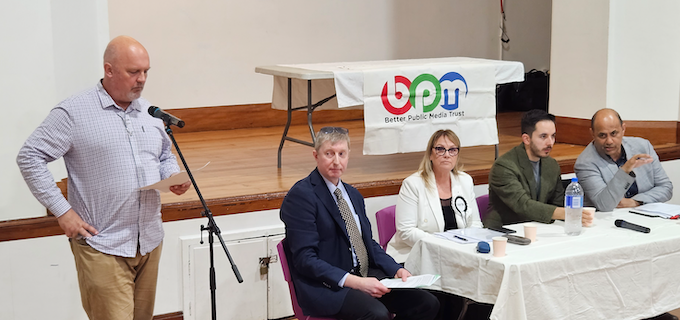
Better Public Media trustee Myles Thomas speaking beside the panel moderator and BPM chair Dr Peter Thompson (seated from left); Jenny Marcroft, NZ First candidate for Kaipara ki Mahurangi; Ricardo Menéndez March, Green Party candidate for Mt Albert; and Willie Jackson, Labour Party list candidate and Minister for Broadcasting and Media. Image: David Robie/APR
Commercial news reflects our world through a filter of sensation and danger to hold our attention. That makes NZ seem more shallow, greedy, fearful and dangerous.
The social media filter makes the world seem more angry, reactive and complaining. RNZ’s filter is, I don’t know, thoughtful, a bit smug, middle class.
The New Zealand Herald filter makes us think every dairy is being ram-raided every night.
And The Spinoff filter suggests NZ is hip, urban and mildly infatuated with Winston Peters.
These cultural reflections are very important actually because they influence us, how we see NZ and its people.
It is not a commodity That makes content, cultural content, special. It is not a commodity. It’s not milk powder.
We don’t drink milk and think about flooding in Queenstown, drinking milk doesn’t make us laugh about the Koiwoi accent, we don’t drink milk and identify with a young family living in poverty.
Local content is rich and powerful, and important to our society.
When the government supports the local media production industry it is actually supporting the audiences and our culture. Whether it is Te Mangai Paho, or NZ On Air or the NZ Film Commission, and the screen production rebate, these organisations fund New Zealand’s identity and culture, and success.
Don’t ask Treasury how to fund culture. Accountants don’t understand it, they can’t count it and put it in a spreadsheet, like they can milk solids. Of course they’ll say such subsidies or rebates distort the “market”, that’s the whole point. The market doesn’t work for culture.
Moreover, public funding of films and other content fosters a more stable long-term industry, rather than trashy short-termism that is completely vulnerable to outside pressures, like the US writer’s strike.
We have a celebrated content production industry. Our films, video, audio, games etc. More local content brings stability to this industry, which by the way also brings money into the country and fosters tourism.
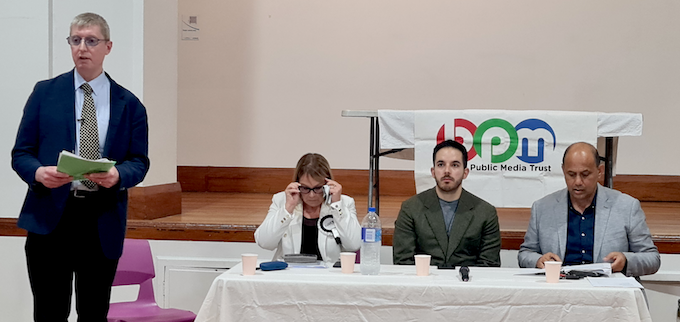
BPM trust chair Dr Peter Thompson, senior lecturer in media studies at Victoria University, welcomes the panel and audience for the 2023 media policy debate at Grey Lynn Library Hall in Auckland last night. Image: Del Abcede/Asia Pacific Report
We cannot use quota New Zealand needs more local content.
And what’s more, it needs to be accessible to audiences, on the platforms that they use.
But in NZ we do have one problem. Unlike Australia, we can’t use a quota because our GATT agreement does not include a carve out for local music or media quotas.
In the 1990s when GATT was being negotiated, the Aussies added an exception to their GATT agreement allowing a quota for Aussie cultural content. So they can require radio stations to play a certain amount of local music. Now they’re able to introduce a Netflix quota for up to 20 percent of all revenue generated in Aussie.
We can’t do that. Why? Because back in the 1990s the Bolger government and MFAT decided against putting the same exception into NZ’s GATT agreement.
But there is another way of doing it, if we take a lead from Denmark and many European states. Which I’ll get to in a minute.
The second important benefit of locally produced public media is social cohesion, how society works, the peace and harmony and respect that we show each other in public, depends heavily on the “public sphere”, of which, media is a big part.
Power of media to polarise Extensive research in Europe and North America shows the power of media to polarise society, which can lead to misunderstanding, mistrust and hatred.
But media can also strengthen social cohesion, particularly for minority communities, and that same research showed that public media, otherwise known as public service media, is widely regarded to be an important contributor to tolerance in society, promoting social cohesion and integrating all communities and generations.
The third benefit is democracy. Very topical at the moment. I’ve already touched on how newsmedia affect our culture. More directly, our newsmedia influences the public dialogue over issues of the day.
It defines that dialogue. It is that dialogue.
So if our newsmedia is shallow and vacuous ignoring policies and focussing on the polls and the horse-race, then politicians who want to be elected, tailor their messages accordingly.
There’s plenty of examples of this such as National’s bootcamp policy, or Labour’s removing GST on food. As policies, neither is effective. But in the simplified 30 seconds of commercial news and headlines, these policies resonate.
Is that a good thing, that policies that are known to fail are nonetheless followed because our newsmedia cater to our base instincts and short attention spans?
Disaster for democracy In my view, commercial media is actually disaster for democracy. All over the world.
But of course, we can’t control commercial media. No-one’s suggesting that.
The only rational reaction is to provide stronger locally produced public media.
And unfortunately, NZ lacks public media.
Obviously Australia, the UK, Canada have more public media than us, they have more people, they can afford it. But what about countries our size, Ireland? Smaller population, much more public media.
Denmark, Norway, Finland, all with roughly 5 million people, and all have significantly better public media than us. Even after the recent increases from Willie Jackson, NZ still spends just $44 per person on public media. $44 each year.
When we had a licence fee it was $110. Jim Bolger’s government got rid of that and replaced it with funding from general taxation — which means every year the Minister of Finance, working closely with Treasury, decides how much to spend on public media for that year.
This is what I call the curse of annual funding, because it makes funding public media a very political decision.
National, let us be honest, the National Party hates public media, maybe because they get nicer treatment on commercial news. We see this around the world — the Daily Mail, Sky News Australia, Newstalk ZB . . . most commercial media quite openly favours the right.
Systemic bias This is a systemic bias. Because right-wing newsmedia gets more clicks.
Right-wing politicians are quite happy about that. Why fund public to get in the way? Even if it it benefits our culture, social cohesion, and democracy.
New Zealand is the same, the last National government froze RNZ funding for nine years.
National Party spokesperson on broadcasting Melissa Lee fought against the ANZPM merger, and now she’s fighting the News Bargaining Bill. As minister she could cut RNZ and NZ On Air’s budget.
But it wouldn’t just be cost-cutting. It would actually be political interference in our newsmedia, an attempt to skew the national conversation in favour of the National Party, by favouring commercial media.
So Aotearoa NZ needs two things. More money to be spent on public media, and less control by the politicians. Sustainable funding basically.
The best way to achieve it is a media levy.
Highly targeted tax For those who don’t know, a levy is a tax that is highly targeted, and we have a lot of them, like the Telecommunications Development Levy (or TDL) which currently gathers $10 million a year from internet service providers like Spark and 2 Degrees to pay for rural broadband.
We’re all paying for better internet for farmers basically. When first introduced by the previous National government it collected $50 million but it’s dropped down a bit lately.
This is one of many levies that we live with and barely notice. Like the levy we pay on our insurance to cover the Earthquake Commission and the Fire and Emergency Levy. There are maritime levies, energy levies to fund EECA and Waka Kotahi, levies on building consents for MBIE, a levy on advertising pays for the ASA, the BSA is funded by a levy.
Lots of levies and they’re very effective.
So who could the media levy, levy?
ISPs like the TDL? Sure, raise the TDL back up to $50 million or perhaps higher, and it only adds a dollar onto everyone’s internet bill. There’s $50 million.
But the real target should be Big Tech, social media and large streaming services. I’m talking about Facebook, Google, Netflix, YouTube and so on. These are the companies that have really profited from the advent of online media, and at the expense of locally produced public media.
Funding content creation We need a way to get these companies to make, or at least fund, content creation here in Aotearoa. Denmark recently proposed a solution to this problem with an innovative levy of 2 percent on the revenue of streaming services like Netflix, Amazon Prime and Disney.
But that 2 percent rises to 5 percent if the streaming company doesn’t spend at least 5 percent of their revenue on making local Danish content. Denmark joins many other European countries already doing this — Germany, Poland, Spain, Italy, the Netherlands, France and even Romania are all about to levy the streamers to fund local production.
Australia is planning to do so as well.
But that’s just online streaming companies. There’s also social media and search engines which contribute nothing and take almost all the commercial revenue. The Fair Digital News Bargaining Bill will address that to a degree but it’s not open and we won’t know if the amounts are fair.
Another problem is that it’s only for news publishers — not drama or comedy producers, not on-demand video, not documentary makers or podcasters. Social media and search engines frequently feature and put advertising around these forms of content, and hoover up the digital advertising that would otherwise help fund them, so they should also contribute to them.
A Media Levy can best be seen as a levy on those companies that benefit from media on the internet, but don’t contribute to the public benefits of media — culture, social cohesion and democracy. And that’s why the Media Levy can include internet service providers, and large companies that sell digital advertising and subscriptions.
Note, this would target large companies over a certain size and revenue, and exclude smaller platforms, like most levies do.
Separate from annual budget The huge benefit of a levy is that it is separate from the annual budget, so it’s fiscally neutral, and politicians can’t get their mits on it. It removes the curse of annual funding.
It creates a funding stream derived from the actual commercial media activities which produce the distribution gaps in the first place, for which public media compensates. That’s why the proceeds would go to the non-commercial platform and the funding agencies — Te Mangai Paho, NZ On Air and the Film Commission.
One final point. This wouldn’t conflict with the new Digital Services Tax proposed by the government because that’s a replacement for Income Tax. A Media Levy, like all levies, sits over and above income tax.
So there we go. I’ve mentioned Jim Bolger three times! I’ve also outlined some quite straight-forward methods to fund public media sustainably, and to fund a significant increase in local content production, video, film, audio and journalism.
None of it needs to be within the grasp of Melissa Lee or Willie Jackson, or David Seymour.
All of it can be used to create local content that improves democracy, social cohesion and Kiwi culture.
Myles Thomas is a trustee of the Better Public Media Trust (BPM). He is a former television producer and director who in 2012 established the Save TVNZ 7 campaign. Thomas is now studying law.This commentary was this year’s David Beatson Memorial Address at a public meeting in Grey Lynn last night on broadcast policy for the NZ election 2023.
The simple answer to this contradiction is that people vote against governments rather than for them and Labour are being punished for failure — a party in policy paralysis — unable to get out of its own way and get anything meaningful done.
Spelling this out is a recent poll conducted by Essential Research for the lobby group Better Taxes for a Better Future which shows the big majority of voters want a capital gains tax, a wealth tax, a windfall profits tax and want the wealthy to pay at least the same tax rates as the rest of us. (A survey conducted by IRD earlier this year found the uber rich pay less than half the tax rates the rest of us pay)
Here are the figures:
Support for a capital gains tax in New Zealand.Support for a windfall profits tax in New Zealand.
Support for the wealthy to pay a fairer share of tax in New Zealand. Image: Essential Research
Wealth tax A TVNZ poll released last week shows overwhelming support for a wealth tax in line with Green Party policy.
The poll asked eligible voters if they would support or oppose a wealth tax on the assets of New Zealanders with more than $2 million in assets if having the wealth tax meant everyone got free dental care.
A majority — 63 percent — said they would be in support of it, while 28 percent were opposed. The rest did not know or refused to say.
The polls show the ground has shifted dramatically in recent times and has opened the way for Labour’s traditional values (if they have any life left in them) to flourish. The electorate is wanting fairer taxes and have the free-loading rich pay much more.
But Labour under its current and former leaders has been looking the other way. It is out of touch and faces its heaviest electoral defeat in my lifetime.
National and ACT are doing well not because voters want them but because voters are voting against Labour.
The same thing happened in the 1990 election. After six years of brutal Labour policies under David Lange and Roger Douglas the electorate had had a gutsful. They wanted to stop featherbedding the rich at the expense of the rest of us.
National policies even worse Labour was thrown out and National came in with policies that were even worse than those proposed by Labour.
The same thing will happen this election.
There is a pervasive belief among self-interested politicians that when they are interviewed for opinion polls people will say they are prepared to pay higher taxes but when they get into the ballot box they vote against tax increases.
But this argument can only apply when the individual voter faces paying more tax. In these recent polls the call is for the undertaxed rich to pay a much fairer share. These tax changes the electorate wants will not impact on the 99 percent of voters who go to the polls.
Even National and Act voters want these taxes — but the Labour leadership remain lost in the neoliberal wilderness. They haven’t got the message.
Labour’s failure means we will have to face three years of awful National/Act policies which will deepen the problems we face.
I haven’t kept count but I have personally heard from dozens of Labour members and voters who have told me they have left the party this year and won’t be voting Labour this year — disgust is the dominant theme.
Only hope is reshaped party After this election Labour’s only hope is to reshape the party around the changed public attitudes to tax and find its roots once more. That is easier said than done for many reasons.
Labour’s activist base is irredeemably middle class and it only has tenuous links with organised workers (less than 10 percent of private sector workers are in unions) who are a small part of the voting public.
Labour leader Chris Hipkins has shown no sign he is capable of leading the rejuvenation policy, thrust and direction the party needs. He is still in the politics of the late 20th century.
All the indications are that the job of Labour renaissance is beyond him.
Hopefully there will be enough good people left in Labour to do what’s needed.
The Royal Commission into Violence, Abuse, Neglect and Exploitation of People with Disability delivered 222 recommendations on Friday after four and a half years of investigation and deliberation. In its 32 hearings and nearly 8,000 submissions, people with disability shared difficult stories of personal and systemic violence. The commission’s final report showed Australians of all ages with disability continue to experience injustice that must be addressed.
But the commissioners passed down divided recommendations that will continue education segregation for Australia’s young people for at least a generation and possibly longer.
Many disability advocacy organisations hoped the commission report would call for an end to segregation of people with disability across education, housing and employment. Yet the final report found the commissioners split on this issue.
Commissioners Barbara Bennett, Rhonda Galbally and Alastair McEwin believe “the deliberate and systematic separation of people based on disability constitutes segregation”. The remaining commissioners disagreed.
Two contrasting sets of education recommendations emerged from this split.
One seeks to phase out “special” or segregated education by 2051. Commissioners Galbally and McEwin – who are the only disabled commissioners and have close relationships with the disability community – support this approach, along with Bennett.
This proposal has still come under fire. West Australian senator Jordon Steele-John argues a 30-year phase out process is too long. He says it would mean disabled children entering school today would likely be separated from their age peers for the duration of their school life.
Organisations such as the Australian Coalition for Inclusive Education have set out roadmaps to this end within a decade.
The alternative recommendation proposed by commissioners Andrea Mason and John Ryan seeks to maintain special schools but, where practicable, locate these close to mainstream schools. This could create partnerships so students can participate in activities together. Critics of this approach say it does not suggest a time when segregated schooling might cease.
And bringing mainstream and special schools together would not necessarily achieve inclusion. The suggestion of scheduling in partial participation could send a message to students and teachers that not everyone belongs in all learning spaces.
The recommendations did not mention the private education sector, referring only to a future possibility of inclusion within state schooling.
Why inclusive education is important
Education is not just about academic outcomes and future employment. It is about creating tomorrow’s Australian communities, society and citizens.
The disability royal commission’s recommendations represent progress in terms of understanding diversity, listening to the voices of young people, capacity building, leadership and governance, and employment opportunities. But they lack insight into the importance of inclusive education in achieving all of these goals.
The very establishment of the commission was a commitment to addressing the violence and discrimination people with disability experience. But the lack of a firm commitment to a fully inclusive education system denies the opportunity for all young people to grow and understand their diversity of experiences.
All children and young people in a community need to play, grow and develop together. This means they can learn how to develop social-emotional skills and empathy for each other’s strengths and differences.
Why some see segregated education as necessary
Not everyone within the disability community sees segregated education as problematic. There are a number of reasons why special settings for students with disability have been established and chosen by families and students.
Schools are under-resourced and teachers in mainstream settings are often undertrained for working with students with disability in inclusive ways.
Many schools lack the facilities and adjustments required to keep some students with disability safe and included alongside their peers. There are concerns about bullying and meeting personal needs in some cases. Staff in specialist education settings may be more experienced with these needs.
The royal commission recommendation that teaching standards should include inclusive education training across the careers of teachers is important. But teachers cannot achieve this without the time or resources to develop the meaningful meetings and planning of Individual Education Plans (IEP) with students, carers and other professionals, including classroom assistants.
Much of the expertise in meeting the needs of students with disability are located in specialist schools, with little opportunity for skill and strategy sharing with mainstream teachers. Continuing to segregate these skills will make inclusive education unachievable.
Where to next?
The commission’s final report identifies the need for better data collection and analysis to make decisions. Existing mechanisms including the Disability Standards for Education, the Australian Curriculum, the Nationally Consistent Collection of Data on School Students with Disability, and an additional monitoring of progress through IEP reporting will be an important step in identifying where additional supports may be required at the school and student level.
Many within the disability community will not be heartened by the disability royal commission’s recommendations because they leave an option for segregation on the table. And this may set up the next generation of disabled children and young people for a life of being excluded from mainstream society.
Dozens of Pacific Islanders and Palagi defied the bitterly cold wind and rain for a peaceful “remember the Dawn Raids” march along Auckland’s Ponsonby Road at the weekend.
The Savali ole Filemu march recognised the anxiety which currently faces overstayers, and the pain still felt from the Dawn Raids.
Tongan community leader Pakilau Manase Lua said coming to New Zealand to improve their lives should not be a crime.
“They took a risk, OK, they broke the law, but so is breaking the speed limit. It’s not a criminal act to come here and try and find a life,” he said.
Holding a photo frame of his late father, Siosifa Lua, Pakilau said they would remember those who had never got justice for how they were treated.
“We came to build this country, and we’re still building this country, and how are we treated? Like dogs!”, he shouted.
Reverend Mua Strickson-Pua offering a prayer at the Savali ole Filemu march in Ponsonby on Saturday. Image: David Robie/APR
‘Those days are over’ “Those days are over. Our children are here. The generations that build this country are here.”
Labour’s Papakura candidate ‘Anahila Kanongata’a-Suisuiki says being an overstayer had personal consequences when her grandfather died in 1977.
“My mother was still an overstayer here, and she had to make a decision … return to Tonga to say farewell to her father, or remain here, for the betterment of the future of her children.”
The government apologised for the Dawn Raids in 2021, and the Labour Party is now promising an amnesty for overstayers of more than ten years, if elected.
But Polynesian Panther activist Will ‘Ilolahia says these political promises are too little, too late.
“We’ve got a deputy prime minister that’s a Pacific Islander, and now they’re bribing our people to vote for them so they can stay in. Sorry, you’ve missed the bus.”
Pacific Media Network news reporter Khalia Strong covering the Savali ole Filemu march in Ponsonby on Saturday. Image: David Robie/APR
Green Party candidate Teanau Tuiono agrees more should have been done.
“Healing takes time, it takes discussion, and it’s not just something that you can just apologise for and then it ends.
“Yes, the Dawn Raids apology was a good thing, but we also need to have an amnesty for overstayers and pathways for residency. Because let’s be clear, that amnesty could have happened last year.”
Mesepa Edwards says they are continuing the legacy of the Polynesian Panthers’ original members.
“I’m a 21st Century Panther. What they fought for, back in the 70s and 60s, we’re still fighting for today.”
Australia has seen a surge in vitamin D testing of children, with similar trends reported for adults around the world. GPs are now being urged not to test for vitamin D unnecessarily.
So when is low vitamin D a potential concern? And when might you need to get your levels tested?
How much vitamin D do we need?
Vitamin D is not only a nutrient – when metabolised in the body it acts as a hormone. We have receptors for this hormone all around our body and it helps regulate the metabolism of calcium and phosphorus.
Vitamin D also has many other roles, including helping our immune defences and contributing to DNA repair and cell differentiation.
We can thank the sun for most of our vitamin D. A chemical in our skin called 7-dehydrocholesterol is converted to vitamin D after contact with UVB radiation from the sun.
While we get some vitamin D also through our diet, this makes a relatively small contribution. It’s difficult to get much more than one-third of our daily vitamin D requirement from diet without supplementation.
Nutritional vitamin D status is typically measured via a blood test. This checks the calcidiol (calcifediol, 25-hydroxyvitamin D) concentrations, which reflect the average intakes from the sun and diet over the past three to four weeks.
The current recommendation is that we should all aim to have at least 50nmol/L (20ng/mL) at the end of winter.
However, one problem with vitamin D tests is that there is variation in measured concentrations between the laboratories and between the assays, and whether you’re deemed to have a deficiency can depend on the testing method used.
Doctors do not always agree with what is deficiency. While very low concentrations are likely to prompt doctors to recommend a supplement (and, potentially, follow-up testing), some may consider even relatively high concentrations as inadequate.
This is all understandable as research in this space is still evolving, and we know low concentrations do not always cause any symptoms.
Why avoid vitamin D deficiency?
Prolonged, severe vitamin D deficiency will lead to softening of bone tissue and cause diseases such as rickets (children) and osteomalacia (adults).
However, avoiding low concentrations is likely to be good for many aspects of health, with consistent evidence suggesting benefits for infectious diseases and autoimmune conditions such as multiple sclerosis.
Randomised trials have also provided evidence for lower cancer and all cause mortality by daily supplementation, although any benefit is likely to be restricted to those who otherwise have insufficient intakes.
Who is at risk of deficiency?
Most of us do not need tests to have a relatively good idea whether we might be at risk of a clinically important deficiency.
If it’s not late winter, we spend regularly at least some time outside with skin exposed to the sun, and we do not belong to a specific high-risk group, it is unlikely that our levels would be very low.
The two main reasons for vitamin D deficiency typically relate to:
1. not getting (enough) vitamin D through sun exposure. Deficiency risk can be high for anyone who is housebound, such as older or disabled people in residential care. The risk of deficiency increases if we always cover our skin carefully by modest cultural dress, and also dark skin pigmentation is known to reduce vitamin D synthesis.
2. having a chronic disease that alters your requirement. Medications such as anticonvulsants used to treat epilepsy, and conditions such as liver and kidney diseases can interfere with vitamin D metabolism. Some digestive diseases can reduce vitamin D absorption from your diet, while obesity will increase your vitamin D requirement and make it more difficult to raise your blood levels.
Am I getting enough sun exposure?
In Australia, it is possible to get enough vitamin D from the sun throughout the year. This isn’t so for many people living in the northern hemisphere.
For those who live in the top half of Australia – and for all of us during summer – we only need to have skin exposed to the sun a few minutes on most days.
The body can only produce a certain amount of vitamin D at the time, so staying in the sun any longer than needed is not going to help increase your vitamin D levels, while it will increase your risk of skin cancer.
During winter, catching enough sun can be difficult, especially if you spend your days confined indoors. Typically, the required exposure increases to two to three hours per week in winter. This is because sunlight exposure can only help produce vitamin D if the UVB rays reach us at the correct angle. So in winter we should regularly spend time outside in the middle of the day to get our dose of vitamin D.
If you are concerned, you have very dark skin, or are otherwise in a high-risk group, you may want to talk to your GP.
In any case, taking a modest daily dose of vitamin D (1,000-2,000 IU) during the darker winter months is unlikely to cause harm and it may be beneficial.
Excessive testing is also a waste of health-care resources, with one single test costing about the same as a years’ worth of vitamin D supplementation.
Very often, we can make relatively small changes to our lifestyles to reduce the risks of vitamin D deficiency.
Elina Hypponen receives funding from the National Health and Medical Research Council, Australian Research Council, Medical Research Future Fund Australia, and Arthritis Australia. She is affiliated with Multicultural Communities Council South Australia.
Source: The Conversation (Au and NZ) – By Euan Ritchie, Professor in Wildlife Ecology and Conservation, School of Life & Environmental Sciences, Deakin University
Aside from humans, dingoes are Australia’s largest land-based predator. They are arguably our most maligned, misunderstood, and mismanaged native species.
Since colonisation, Australian governments and land managers have trapped, shot, poisoned and excluded dingoes from large parts of their Country. Policy and practices have frequently overlooked First Nations’ perspectives.
It doesn’t have to be this way. We can hear the diverse voices and values of First Nations peoples, livestock producers, ecologists, and others as we shape future policy and practices. By collaborating and drawing from both Indigenous and Western knowledge, we can find ways to live in harmony with our apex predator.
Dingoes keep kangaroo numbers in check, benefiting vegetation, other wildlife, and livestock graziers. Angus Emmott
Under federal environmental law, any species present in Australia before AD 1400, such as the dingo, is classified as native. However, dingoes are not listed nationally as a threatened species. So individual state governments make their own decisions about how to treat them.
In the Northern Territory, Queensland and Victoria, dingoes are managed as protected wildlife in National Parks and conservation areas but they’re unprotected on private land.
In Western Australia, South Australia, the Australian Capital Territory and New South Wales, dingoes are unprotected wildlife. That means they are afforded no protection, even in conservation areas.
But state governments also list “wild dogs” as a priority pest species. That allows – even requires – them to be killed on public and private land.
The state definitions of “wild dogs” includes dingoes and dingo-dog hybrids. This is based on the mistaken belief that interbreeding between dingoes and dogs was widespread across Australia.
Stretching more than 5,600km across Australia, the dingo barrier fence is the longest continuous artificial environmental barrier in the world. It was designed to keep dingoes out of the more productive sheep grazing areas in southeastern Australia.
In South Australia, dingoes south of the “dingo fence” are declared “wild dogs” and subject to an eradication policy. North of the “dingo fence” they are unprotected wildlife.
While the Victorian population is partially protected in the Big Desert-Wyperfeld conservation reserve complex, the South Australian wilkerr population is poisoned four times a year inside Ngarkat Conservation Area.
Dingoes are regarded as pests by some and ecologically essential by others. Angus Emmott
Dingoes hold strong cultural significance for First Nations peoples across Australia. They are considered loved and respected family members that have always been by their sides. A healthy dingo population is seen as essential for healthy Country and healthy people.
Despite the harms of colonisation on dingoes and First Nations, Indigenous people continue to feel and nurture this connection to dingoes. Maintaining their culture means fulfilling the general cultural obligation and rights of First Nations peoples to protect this sacred animal.
This was reinforced at the National Inaugural First Nations Dingo Forum in Cairns last month (September 15–16). The forum produced a powerful statement signed by more than 20 Nations.
The national dingo declaration is clear: First Nations peoples want an immediate end to the “genocide” (deliberate killing) of dingoes on Country. Lethal control of dingoes is not acceptable, nor justified.
We join the call for an end to the use of the term “wild dog”, because it’s misleading and disrespectful. Pure dingoes, not feral or hybrid wild dogs, are predominately being killed.
First Nations people want to see the dingo reinstated as “the boss of Country”. They call on governments at all levels to involve First Nations peoples in decisions relating to dingo management, to implement and support educational programs across a variety of platforms and organisations, and to see dingoes protected under legislation.
Firstly, these methods have not been consistently effective in eliminating livestock losses. In some cases they have exacerbated the problem, possibly due to killing and loss of older individuals, which changes the social cohesion of dingo populations, their movements, how territorial they are. It may also alter how successful they are at hunting kangaroos, causing more attacks on livestock.
Secondly, they have been associated with adverse consequences for biodiversity. In some cases, having dingoes around can be beneficial for graziers by reducing the total grazing pressure of kangaroos, feral goats, and other herbivores, and in some cases the impacts of feral pigs too. Increasing numbers of landholders are recognising this.
Lastly, there is growing consensus these lethal approaches are not aligned with the values of the general public, particularly First Nations peoples.
Healthy Country and people requires dingoes. Angus Emmott
Non-lethal approaches to managing dingoes are gaining prominence as they are more environmentally sustainable and compassionate. These approaches prioritise coexistence by reducing conflict between dingoes and human interests while allowing dingoes to persist in landscapes.
One of the most promising non-lethal methods involves guardian animals, such as livestock-guarding dogs, llamas, and donkeys. These guardian animals establish protective bonds with livestock and effectively deter dingoes from approaching, reducing livestock losses for graziers.
Additionally, there is growing interest in developing innovative dingo deterrents, such as electric fencing and devices that emit loud noises, smells or visual stimuli, to discourage interaction between livestock and dingoes.
Initiatives promoting best practices for animal husbandry, including secure fencing, corralling, shepherding, and reducing access to resources (such as water and carcasses), play a crucial role in diminishing the attractiveness of livestock as prey to dingoes.
Working and walking together
By promoting coexistence and exploring and investing in innovative non-lethal solutions, we can strike a balance between safeguarding human interests, preserving the vital ecological role that dingoes perform, and respecting First Nations’ culture. In doing so, it is our hope that communities will be more united than divided.
We would like to acknowledge retired graziers Angus and Karen Emmott and family from far North Queensland. Their personal story about dingoes at Noonbah Station in Queensland’s Channel Country helped inform our article, and we consider Angus a co-author.
Euan Ritchie receives funding from the Australian Research Council and the Department of Energy, Environment, and Climate Action. Euan is a Councillor within the Biodiversity Council, and a member of the Ecological Society of Australia and the Australian Mammal Society.
Bradley Smith is an unpaid director of the Australian Dingo Foundation, a non-profit environmental charity that advocates for dingo conservation. He also serves as a member of the International Union for the Conservation of Nature (IUCN) dingo working group, which is part of their Species Survival Commission (Canids Specialist Group).
Kylie M Cairns receives funding from the Australian Dingo Foundation, New Guinea Singing Dog Conservation Society, NSW Koala Strategy and Australia and Pacific Science Foundation. She is a scientific advisor to the Australian Dingo Foundation, the New Guinea Highland Wild Dog Foundation and serves as co-chair of the International Union for the Conservation of Nature (IUCN) dingo working group which is part of their Species Survival Commission (SSC) Canid Specialist Group.
Sonya Takau is the founder of Dingo Culture, a digital media platform for her own personal advocacy work for the Dingo that also provides the Aboriginal perspective about the Dingo.
Sonya also holds the following positions:
Director – Defend the Wild (Not for Profit organisation that advocates for wildlife)
Director – Mamu Health Service Limited (Not for Proft organisation based in Innisfail, North Queensland)
Committee Member – IRAC (Indigenous Reef Advisory Committee) which acts in an advisory capacity to the Great Barrier Reef Marine Park Authority Board.
Whitney Rassip does not work for, consult, own shares in or receive funding from any company or organisation that would benefit from this article, and has disclosed no relevant affiliations beyond their academic appointment.
The brain is an evolutionary marvel. By shifting the control of sensing and behaviour to this central organ, animals (including us) are able to flexibly respond and flourish in unpredictable environments. One skill above all – learning – has proven key to the good life.
But what of all the organisms that lack this precious organ? From jellyfish and corals to our plant, fungi and single-celled neighbours (such as bacteria), the pressure to live and reproduce is no less intense, and the value of learning is undiminished.
Recent research on the brainless has probed the murky origins and inner workings of cognition itself, and is forcing us to rethink what it means to learn.
Learning about learning
Learning is any change in behaviour as a result of experience, and it comes in many forms. At one end of the spectrum sits non-associative learning. Familiar to anyone who has “tuned out” the background noise of traffic or television, it involves turning up (sensitising) or dialling down (habituating) one’s response with repeated exposure.
Further along is associative learning, in which a cue is reliably tied to a behaviour. Just as the crinkling of a chip packet brings my dog running, so too the smell of nectar invites pollinators to forage for a sweet reward.
Higher still are forms like conceptual, linguistic and musical learning, which demand complex coordination and the ability to reflect on one’s own thinking. They also require specialised structures within the brain, and a large number of connections between them. So, to our knowledge, these types of learning are limited to organisms with sufficient “computing power” – that is, with sufficiently complex brains.
The presumed relationship between brain complexity and cognitive ability, however, is anything but straightforward when viewed across the tree of life.
This is especially true of the fundamental forms of learning, with recent examples reshaping our understanding of what was thought possible.
The beadlet anemone (Actinia equina) doesn’t have a brain, but can be more friendly to nearby clones. Shutterstock
Who needs a brain?
Jellyfish, jelly-combs, and sea anemones stand among the earliest ancestors of animals, and share the common feature of lacking a centralised brain.
Nonetheless, the beadlet anemone (Actinia equina) is able to habituate to the presence of nearby clones. Under normal circumstances it violently opposes any encroachment on its territory by other anemones. When the intruders are exact genetic copies of itself, however, it learns to recognise them over repeated interactions, and contain its usual aggression.
A recent study has now shown box jellyfish too are avid learners, and in an even more sophisticated manner. Though they possess only a few thousand neurons (nerve cells) clustered around their four eyes, they are able to associate changes in light intensity with tactile (touch) feedback and adjust their swimming accordingly.
This allows for more precise navigation of their mangrove-dominated habitats, and so improves their odds as venomous predators.
The highly venomous box jellyfish have recently joined the ranks of brainless organisms that demonstrate an ability to learn. Shutterstock
No neurons, no problem
Stretching our instincts further, evidence now abounds for learning in organisms that lack even the neuronal building blocks of a brain.
Slime moulds are single-celled organisms that belong to the protist group. They bear a passing resemblance to fungi, despite being unrelated. Recently (and innacurately) popularised on TV as zombie-making parasites, they also offer a striking case study in what the brainless can achieve.
Plants too can be counted among the brainless thinkers. Venus flytraps use clever sensors to remember and tally up the touches of living prey. This allows them to close their traps and begin digestion only when they’re sure of a nutritious meal.
In less gruesome examples, the shameplant (Mimosa pudica) curls and droops its leaves to protect itself from physical disturbance. This is an energetically costly activity, however, which is why it can habituate and learn to ignore repeated false alarms. Meanwhile, the garden pea can seemingly learn to associate a gentle breeze, itself uninteresting, with the presence of essential sunlight (though this finding has not gone unchallenged).
These results have driven calls to consider plants as cognitive and intelligent agents, with the ensuing debate spanning science and philosophy.
If you touch the leaves of a shameplant, they will close and droop, reopening a few minutes later. Shutterstock
Thinking big
Learning, then, is not the sole province of those with a brain, or even the rudiments of one. As evidence of cognitive prowess in the brainless continues to accumulate, it challenges deep intuitions about the biology of sensation, thought, and behaviour more generally.
The implications also reach beyond science into ethics, as with recent advances in our understanding of nociception, or pain perception. Do fish, for example, feel pain, despite not having the requisite brain structures like those of primates? Yes. What about insects, with an even simpler arrangement of an order-of-magnitude fewer neurons? Probably.
And if such organisms can learn and feel, albeit in ways unfamiliar to us, what does it say about how we treat them in our recreational, research and culinary pursuits?
Above all else, these curious and diverse forms of life are a testament to the creative power of adaptive evolution. They invite us to reflect on our often-assumed seat at the apex of the tree of life, and remind us of the inherent value in studying, appreciating and conserving lives very different from our own.
Thomas White is a scientific advisor for the environmental charity Invertebrates Australia, and receives funding from The Australian Research Council.
The Indonesia Art Movement has collaborated with the Monj Hen Wani Community and environmental advocates in Papua to organise the “Arumbay Tonotwiyat” — the Women’s Forest People’s Party.
The event took place beneath the lush canopy of Enggros village’s mangrove forest Abepura District, Jayapura City last weekend.
Arumbay Tonotwiyat was a multifaceted celebration that blended art, culture and environmental conservation.
This gathering was a tribute to nature and the preservation of cultural heritage.
It was also a commitment to fostering harmony between humanity and the natural world.
Rumah Bakau Jayapura, Kampung Dongeng Jayapura, Forum Indonesia Muda Jayapura, Sangga Uniyap, and representatives from Cenderawasih University and ISBI Tanah Papua, and Papua Natural Resources Conservation Agency (BKSDA) supported the event.
The “forest party” engaged a wide range of participants, including children, teenagers, and adults.
Beach clean-up The event started with a beach clean-up initiative at Cibery Beach, organised by Petronela.
This cleanup effort was a “demonstration of environmental love”, said the organisers.
It acknowledged the persistent issue of marine debris washing ashore during the rainy season.
Children who participated in the Arumbay Tonotwiyat cultural and environmental event in Jayapura. Image: Jubi News
Following the cleanup, participants were treated to a tour of Youtefa Bay, where they witnessed a performance by children from Tobati-Enggros village.
This performance depicted the story of a mangrove forest tainted by garbage and waste originating from Nafri Village, Hamadi Beach, and the Acai River.
Subsequently, the participants were guided to the Women’s Forest in Enggros, an area accessible only to women.
Here, women sought food sources to meet their household needs while also sharing their domestic concerns.
Women’s Forest ‘off-limits’ The Women’s Forest is off-limits to men and any breach of this custom incurs penalties, typically in the form of jewelry or other items.
Mama Ani — “Mother Ani” — explained that men were not permitted to enter the forest while women were foraging for food, as women in the forest swam naked.
Within the mangrove forest, women typically gathered clams, crabs, shrimps, and fish as sources of sustenance.
However, men can enter the forest in the absence of women, usually in search of dried mangrove wood for firewood.
Orgenes Meraudje, the former head of Enggros Village and a prominent community leader, said women also visited the Women’s Forest to share their domestic experiences.
However, these stories remained within the forest, not to be brought back home.
For the women of Enggros-Tobati beach, the forest holds sacred significance, and they foraged unclothed for their household necessities.
Protecting Women’s Forest Yehuda Hamokwarong, a lecturer at Cenderawasih University who attended the event, stressed the importance of protecting the Women’s Forest.
“The forest served as an educational hub, imparting knowledge and survival skills to Enggros-Tobati women, encompassing practical skills, ethics, and morals,” she said.
“The Women’s Forest represented not only the lungs of the world but also a profound emblem of feminine identity.”
In addition to the Women’s Forest, there is a designated area called “para-para”, a sort of hall exclusive for men, and women were prohibited from entering.
Any woman entering this area would face customary fines.
Abysmal wage growth, rapidly rising living costs, a housing affordability crisis and the fastest tightening of interest rates in 30 years have been putting us under the most financial pressure in years, and (given known associations) quite likely harming our mental health.
However, two changes this year mean our refunds are likely to either be much smaller than before, or to vanish altogether and be replaced with tax bills.
One of the changes is to rules governing how working-from-home expenses are calculated. You can read about it here.
The other, the focus of this piece – and it applies to many more people – is the end of the A$11 billion Low and Middle Income Tax Offset, known as LMITO.
LMITO was for higher rather than lower earners
Worth up to $1,500 per taxpayer in 2022, and paid or part-paid to taxpayers who earned between $37,000 and $126,000, LMITO was introduced in 2018 as a temporary measure by then treasurer Scott Morrison to “increase disposable incomes to help relieve household budget pressures”.
Taxpayers earning between $48,000 and $90,000 got the maximum, which began at $1,080 in 2019 and climbed to $1,500 in 2022.
“Low and Middle Income Tax Offset” was a misnomer. The benefit wasn’t available to really low earners (who were eligible for a separate offset) and it was available to people who earned a good deal more than middle incomes.
The median (middle) income in tax returns filed for 2020-21 was $62,600.
A taxpayer on $90,000 and eligible for full LMITO would be in the top 28% of earners. A taxpayer on $126,000 and partly eligible would be in the top 13%.
‘Temporary’, then extended, then extended again
Morrison always intended LMITO to be temporary because it was to be replaced in 2022 by measures in Stage 2 of his tax cut plan that would have the same effect.
But in the 2020 budget, Treasurer Josh Frydenberg brought forward Stage 2 from 2022 to 2020 and kept LMITO in place to provide an “additional benefit”.
In 2021 Frydenberg extended LMITO for yet another year to give recipients what he called a “further benefit” that would help secure the economic recovery.
In 2022 Frydenberg stopped. The benefit for 2021-22 to be paid out in 2022 would be the last, although it would be boosted from $1,080 to $1,500 as a “temporary, targeted and responsible way to reduce cost of living pressures”.
Now its gone, tax bills are $1,500 higher
The benefit’s design, being paid out at the end of each tax year rather than through the year, meant that when it went, it would be noticed.
Refunds up to $1,5000 smaller. Shutterstock
If there would have otherwise been a tax bill, it would be up to $1,500 bigger. If there would have otherwise been a tax refund it would be up to $1,500 smaller – enough to turn many tax refunds into tax bills.
That’s what’s happening now. More than 10 million Australians received LMITO in its final year, most of them the full LMITO.
That means millions who have submitted their forms this year are getting bills in place of refunds, and millions more are getting refunds that are smaller or bills that are bigger.
Treasurer Jim Chalmers could have saved the benefit – in April Shadow Treasurer Angus Taylor accused him of trying to hide a decision to axe it “under the cover of Easter”.
But the decision to end it was taken a year earlier in Frydenberg’s budget for the 2022-23 tax year, meaning it is only now being felt.
A flawed idea, at odds with advice
Offsets aren’t an ideal way to deliver tax support. Those that are means-tested (like LMITO) distort effective marginal tax rates. Those that are paid out at the end of each tax year (like LMITO) withhold support at the time it is needed.
The 2009 Henry Tax Review wanted most offsets removed and replaced with either direct payments or changes to the tax scales.
Its preferred model was a fairly flat tax scale with a high tax-free threshold of $25,000, meaning an extra 10% of taxpayers would pay no tax. At today’s wage rates that would be a tax-free threshold of $36,000, freeing 1.3 million taxpayers from the need to pay tax.
Where to from here?
Assuming your income stays roughly the same, your refund is likely to be lower than it has been over the past few years or to turn into a tax bill.
But please, don’t let this deter you from doing your tax.
Don’t get behind on your tax. Shutterstock
If you’re behind, it might seem daunting to get back on track, especially if you think you’ll have to pay extra tax this year instead of getting a refund.
But not lodging your returns will backfire. Like avoiding a trip to the doctor to get a skin check, the longer you wait, the more the problem will grow.
Reaching out to the Tax Office is the key because they have tools to support you, including payment plans.
Getting in touch rather than waiting for the Tax Office to chase you shows you are willing to comply.
Ultimately, being up to date will save you fines, interest and penalties.
It can help to reach out to a registered tax agent if you need help to get back on track.
If you are one of the 80,000 Australians in serious hardship who need but can’t afford professional help to complete and lodge overdue returns, the government-funded National Tax Clinics Program can help with pro bono tax advice.
Ann Kayis-Kumar receives funding from the Australian Government’s Australian Taxation Office National Tax Clinic Program, the Ecstra Foundation’s Financial Capability Program, and the NSW Department of Communities & Justice’s Investing in Women Funding Program.
The long-term future looks bleak for Emperor penguins, but our new research shows some birds may be able to survive in certain conditions, depending on where they live, at least for the next few decades.
Over the past two years, Antarctic sea ice has declined dramatically, prompting scientists to suggest it could reach a “new state”.
A study based on satellite images shows that sea ice broke out early in Antarctica’s Bellingshausen Sea in 2022, potentially resulting in breeding failures across several Emperor penguin colonies in that region.
Our research shows Emperors form colonies in surprisingly diverse environmental conditions that vary depending on location around the continent. Within each of these regions, there is little difference between where birds make their homes and other sites, suggesting they could shift if they had to. This provides a ray of hope in an otherwise bleak outlook.
Emperor penguins may be the only birds to rarely set foot on land. They are unique among penguin species in that they breed on sea ice during the harsh Antarctic winter.
Male Emperor penguins incubate eggs and raise the chicks on sea ice during the Antarctic winter. Sara Labrousse/French Polar Institute, CC BY-SA
We know that they need “fast ice” – the coastal sea ice attached to the Antarctic continent or ice shelves. But they actually inhabit a range of fast-ice locations that differ in the timing of ice formation, how much ice forms and breaks, and even how close they get to other penguin species.
Depending on where they are along the Antarctic coast, Emperors make use of the habitat available to them. Their behaviour may be flexible enough to allow some colonies to cope better in a warming world.
Emperor penguins rely on fast ice as a stable platform for their breeding season. Female Emperors lay their eggs and the males incubate them for about two and a half months.
Even though Antarctica’s sea ice is diminishing, this refers to a measure known as “sea ice extent”, which includes all sea ice covering the polar ocean, whether it is fast ice or drifting pack ice.
A decrease in sea ice extent is not necessary linearly linked to a drop in the area covered by fast ice (although the reverse is true).
If fast ice were to disappear, we would expect more than 90% of Emperor colonies to become functionally extinct by the end of the century. However, our study suggests that in the short to medium term, we should consider the differences in the penguins’ breeding habitats when we think about ways to protect them.
Emperors are unlikely to move far
By looking a little closer at different fast-ice habitats, we found Emperor penguins have certain preferences. The persistence of the ice (how long it lasts into the summer) was important because chicks had more time to develop their water-proof swimming feathers.
In some cases, being close to Adélie penguins made a difference. In other cases, Emperors preferred sites with shallow ocean depths below the colony.
Our results suggest that two of these habitat conditions support larger colonies: stable fast ice that lasts throughout the breeding season (with only small changes in the growth and retreat seasonal cycle) and a good balance between a fast-ice platform that is wide enough to raise chicks but close enough to the ocean to get food for them.
Emperor penguins need access to the ocean to feed their chicks during the breeding season. Sara Labrousse/French Polar Institute, CC BY-SA
We need further studies to clarify these links and the relationship between population size and habitat quality. In our study, we weren’t able to consider prey availability and there may be other factors that play an important role.
Previous research has already shown that Emperor penguins have limited capacity to disperse to find more suitable climate refuges. This is supported by the genetic partitioning among the penguin populations in different Antarctic regions we studied.
It is therefore unlikely Emperors would move far to avoid more severe climate impacts, even if “better” habitats existed and could host larger colonies.
Emperors don’t easily move to other breeding sites, even if the conditions are better. Sara Labrousse/French Polar Institute, CC BY-SA
Protecting penguin habitat
Climate change is currently one of the main pressures driving Emperor penguins closer to extinction.
However, the latest global assessment by the Intergovernmental Science-Policy Platform on Biodiversity and Ecosystem Services (IPBES) clearly identified fishing activities as historic and current drivers of the erosion of marine biodiversity worldwide.
This is also true for Antarctica. While fishing pressure there is limited to a fraction of the global fishing fleet, some of the largest vessels target krill, a tiny shrimp-like crustacean consumed by many Antarctic predators, including Emperor penguins.
With climate models predicting further reductions in sea ice extent, new fishing grounds could open and amplify pressure on other Antarctic wildlife.
If we want to live in a world with Emperor penguins, the most important thing to do would be to cut greenhouse gas emissions steeply. Another key action could be to prevent fishing in areas where climate change will have the most impact.
In this respect, truly protected areas are one conservation tool at our disposal. Now that our research provides more detailed information about penguin habitats, we can begin the process of more careful planning for conservation.
The world’s largest marine protected area exists in the Ross Sea, which is home to about 25% of the world’s Emperor penguins. Lessons we learn from protection there could help mitigate future declines of Emperors around Antarctica.
Sara Labrousse is affiliated with LOCEAN/CNRS.
Michelle LaRue receives funding from the National Science Foundation and NASA.
An award-winning website with an archive of thousands of Pacific news reports, videos, images and research abstracts regarded as a pioneering initiative for a university based media programme has “disappeared” from its cyberspace location.
The PMC Online website . . . disappeared. Image: Screenshot/PMW
Pacific Media Centre Online, founded in 2007, was the website of the research and publication centre established at Auckland University of Technology as a component of the Creative Industries Research Institute.
It was a platform for student journalists and independent media contributors from other media schools and institutions across the Oceania region such as the University of the South Pacific as well as at AUT.
One of it PMC Online’s components, Pacific Media Watch, was awarded the faculty “Critic and Conscience of Society” award in 2014 and contributing student journalists won 11 prizes in the annual Ossie journalism awards of the Journalism Education and Research Association of Australia (JERAA).
The new default page for http://pmc.aut.ac.nz Image: Screenshot PMW
However, suddenly the website vanished earlier this month with pmc.aut.ac.nz defaulting to the university’s Journalism Department with no explanation from campus authorities.
Founding director of the Pacific Media Centre and retired professor of Pacific journalism Dr David Robie called it a disappointing reflection on the decline of independent journalism and lack of respect for history at media schools, saying: “Yet another example of cancel culture.”
Jemima Garrett, co-convenor of the Australia Asia Pacific Media Initiative (AAPMI), described it as an “appalling waste and disrespectful”.
The Google directory for the Pacific Media Centre – all files have now disappeared. Image: Screenshot/PMW
Investigative journalist and Gold Walkley winner Peter Cronau, who is co-publisher of Declassified Australia, wrote: “That’s disgraceful censorship of Pacific stories — disturbing it’s been done by AUT, who should be devoted to openness and free speech. What avenues exist for appeal?”
Another investigative journalist and former journalism professor Wendy Bacon said: “This is very bad and very glad that you archived all this valuable work. Unfortunately the same thing happened to an enormous amount of valuable files of Australian Centre for Independent Journalism at UTS [University of Technology Sydney].”
The Pacific affairs adviser of the Pacific Islands Forum, Lisa Leilani Williams-Lahari, said: “Sad!”
Pacific Media Centre student contributors filed more than 50 reports for the Australian journalism school collaborative platform The Junction and they can be read here.
Source: The Conversation (Au and NZ) – By John Hawkins, Senior Lecturer, Canberra School of Politics, Economics and Society, University of Canberra
Shutterstock
Non-fungible tokens (NFTs) are in dire straits. With the market in a severe downturn, it’s safe to assume the NFT bubble has well and truly burst.
It was never clear why these digital collectables traded for such large amounts of money. Now they mostly do not. What’s behind their turn of fate? And is there any hope for their future?
What are NFTs?
Non-fungible tokens are a blockchain-based means to claim unique “ownership” of digital assets. “Non-fungible” means unique, as opposed to a “fungible” item such as a five-dollar bill, which is the same as every other five-dollar bill.
But just because an item is unique that doesn’t make it valuable. Digital assets are easily copied, so an NFT is essentially a receipt showing you have paid for something that other people can get for free. This is a pretty dubious basis for value.
The two most traded sets of NFTs are the Bored Apes collection created in April 2021 and the CryptoPunks collection launched in June 2017.
Both sets consist of 10,000 similar-looking but unique figures, distinguished by differing hairstyles, hats, skin colours and so forth. The Bored Ape character seems derivative of the drawings of Jamie Hewlett, the artist who drew Tank Girl and Damon Albarn’s virtual band Gorillaz. The CryptoPunks are even less interesting.
The CryptoPunk NFTs are basic computer-drawn faces. Wikimedia
Why did people buy NFTs?
Although the first NFTs emerged around a decade ago, the trend really started to take off in 2021. And for a time NFTs were very fashionable.
Even the venerable auction house Sotheby’s, founded in 1744, jumped on the NFT bandwagon. Sotheby’s sold 101 Bored Ape NFTs for more than US$20 million in September 2021. They’re now facing a lawsuit from a disgruntled buyer.
As with Bitcoin and similar speculative tokens, the primary driver for buying NFTs was greed. Seeing the initial price rises, people hoped they too could make huge profits. NFTs are essentially a superficially sophisticated form of gambling. Like Bitcoin, they have no fundamental value.
Generally, one would only profit from buying an NFT by finding a “greater fool” willing to pay even more for it. So there was never a shortage of people – including some quitefamous ones – talking them up and hoping to instil a fear of missing out.
Eminem bought a Bored Ape that looked a bit like him. Rapper KSI boasted on Twitter about his Bored Ape rising in price.
For a while there were large increases in the prices of many NFTs. But like all speculative bubbles, it was likely to end in tears. Although it’s almost impossible to predict when a bubble for a speculative asset will burst, we have seen this process play out before.
Punters now seem to be as bored with NFTs as the apes. Google searches for “NFT” – which grew rapidly through 2021 – have fallen away dramatically. Trading volumes have collapsed.
Google searches for ‘NFT’ reached an all-time high around early 2022. Author provided/Data from Google Trends
Prices in the NFT market have also seen huge falls. The prices of Bored Ape NFTs are down about 90% from their peak. The CryptoPunks have done slightly better by losing only 80%.
The value of Bored Ape NFTs has fallen dramatically since March of last year. Author provided/Data from Coingecko.com
A recent report covering about 73,000 NFTs estimated 70,000 are now valued at zero. This leaves 23 million people holding a worthless “asset”.
One high-profile example is an NFT of the first tweet by then-Twitter CEO Jack Dorsey. Crypto entrepreneur Sina Estavi bought this NFT for US$2.9 million in March 2021. When he tried to sell it a year later the top bid was US$6,800.
What drove the NFT collapse? As well as losing their novelty, the market was hurt by the large falls in the price of Bitcoin and other cryptocurrency, as well as the collapse of the FTX exchange and publicity given to scams.
Beyond that, the lifting of COVID lockdowns meant people who began trading NFTs now had other ways to pass their time. And higher interest rates from mid-2022 made most speculative assets seem less attractive.
Collectively, all of these factors made NFTs seem like a riskier proposition. Prominent people started jumping off the bandwagon. Some of KSI’s later tweets lament the losses he suffered from his gambles.
Last year, British Prime Minister Rishi Sunak announced, when he was chancellor of the exchequer (their equivalent of treasurer), the Royal Mint would produce an NFT. The plan has now been abandoned.
Some foolish people had even taken out loans using the “value” of their NFTs as collateral. When the lenders wanted the money back, they were in trouble: forced to sell their NFTs, they got back much less than they’d paid. Fortunately, there weren’t enough people like this to lead to a systemic problem in the financial sector.
NFTs probably won’t completely disappear. Some subjects of past bubbles are still around. Tulips are still grown in the Netherlands. Poseidon shares, which ran up from 80 cents in September 1969 to $280 in February 1970, are still listed (and currently trading for 2 cents).
But unless some actual use is found for them, NFTs are likely to fade further from public discussion, with their prices increasingly trending down (although the occasional blip up may give die-hard fans some hope).
They will probably join the Dutch tulips and dotcoms in the history of speculative follies.
John Hawkins does not work for, consult, own shares in or receive funding from any company or organisation that would benefit from this article, and has disclosed no relevant affiliations beyond their academic appointment.
It was Robert Menzies, father of the modern Liberal Party, who famously remarked: “to get an affirmative vote from the Australian people on a referendum proposal is the labour of Hercules”.
Menzies knew this from bitter experience. The politician with the electoral Midas touch was the sponsor of three unsuccessful referendums. Most notable was Menzies’ (thankfully) failed 1951 attempt to win public support for amending the Constitution to grant his government the power to outlaw the Communist Party of Australia.
On the Labor side of politics, the feat of constitutional change has been an even more unfulfilling exercise. The party has been responsible for 25 amendment proposals and only one has been successful. It has been a truly Sisyphean quest.
If the opinion polls are to be believed, history is repeating itself with the impending Aboriginal and Torres Strait Islander Voice referendum. Since the middle of the year, those polls have been relentlessly moving in the wrong direction for the “yes” case. On the current trajectory, the Voice will secure less than 40% of the national vote and also fail to win the support of a majority of states. The frontier states of Queensland and Western Australia in particular are lost causes.
As it must, the “yes” camp continues to evince optimism. Its advocates point, for example, to the relatively high number of undecided voters, hoping they break heavily in their favour. I fervently pray this optimism is well placed. Yet a prudent government would now be wargaming what to do in the scenario that the Voice is defeated on October 14.
For Anthony Albanese, a “no” vote will present diabolically difficult challenges. As prime minister, he will be tasked with making sense of that result. His response will need to be finely calibrated, modulating the message to different audiences.
First, and most importantly, he will have to devise a formula of words to console and soothe the Indigenous population, the majority of whom will likely feel that the rejection of the Voice is another in a long line of acts of dispossession and exclusion by settler Australia. Albanese has often likened the Uluru Statement from the Heart to a generous outstretched hand. He will not only need to explain why that hand has been spurned, but give cause why First Nations people should continue to keep faith with non-Indigenous Australia. He will have to provide reassurance that reconciliation endures as a genuine project.
Both at home and abroad there will be those who view a “no” vote as having exposed a dark streak of racism in Australia’s soul. Albanese will feel obliged to seek to absolve the nation of that stigma. But given some of the more noxious attitudes aired during the referendum campaign, airbrushing racism out of the picture will not be easy.
On election nights, leaders are typically magnanimous in victory and gracious in defeat. There is a convenient myth about election results: that the punters always get it right. Albanese will no doubt have to publicly give lip service to that notion if the referendum fails. He will avoid recriminations, despite the sophistry and mendacity that has characterised the “no” side of the debate. In this way, he will play the role of healer-in-chief after the bitter divisions of the referendum campaign. What attacks there are on Peter Dutton for being a wrecker will probably be left to be made by other government members, but even these will have to be carefully framed so as to not indict all those who fell in behind the “no” cause.
The larger dilemma Albanese and his government will face if the referendum is lost is where to next with the Uluru Statement agenda, to which the prime minister signed up lock stock and barrel on election night in May 2022.
Most pressing will be the question of what happens to the idea of an Indigenous Voice to parliament. The most obvious fallback position will be a legislated rather than constitutionally enshrined Voice. The complication is that Dutton has claimed some of that space and Indigenous leaders have rightly portrayed a legislated Voice as a poor substitute because it can be repealed by a future government. Somehow a legislated Voice will have to be transformed into a palatable alternative.
The Voice was the low hanging fruit of the Uluru statement when compared to treaty-making. The realpolitik takeout from the rejection of the Voice referendum will be that there is next to no chance of delivering on a national treaty in the short to medium term, especially if that were to involve some form of constitutional amendment. It would provoke an even more shrill scare campaign than the one we have endured over the Voice. In the absence of progress at the national level, it will be left to the states to advance treaty making and truth telling.
The defeat of the Voice referendum may set back other elements of Labor’s vision for the nation. When he won office, Albanese appointed an assistant minister for the republic in a clear signal that a move to a republic would be a feature of his government’s longer term reform program.
With the Australian public’s profound reluctance to embrace constitutional change demonstrated yet again, it will likely douse enthusiasm within the government for proceeding to a referendum on a republic in its second term. The idea will continue to drift, as it has since 1999.
Another probable consequence of the loss of the referendum will be a narrowing of the priorities of the government. Labor hardheads will read that result and opinion polls showing a dip in the government’s support as evidence that voters are growing frustrated by what they regard as a straying from bread and butter issues.
So, we are likely to see a less expansive government as it steers towards focussing chiefly on matters such as the economy, cost of living pressures and housing shortages. These, of course, are vital issues, but they will not stir the soul or etch themselves into history as would a Voice, treaty and republic.
All of this seems a desperate shame. But it is the Australia we will wake up to the morning after October 14, if indeed the referendum goes down.
Paul Strangio received funding from the Australian Research Council in the past.
When we think of spring, we might imagine rebirth and renewal that comes with the warmer weather and longer days. It’s usually a time to celebrate, flock to spring flower festivals and spend more time in nature.
But this year, with an early start to the bushfire season, and the promise of long, hot months ahead, we may see our views about the warmer months start to shift.
For some people, the coming months are not a celebration. They are something to fear, or feel sad about.
In particular, communities and emergency responders who have experienced bushfires or drought in the past may see rising levels of stress and anxiety as they face the months ahead.
In recent weeks, the Australian Bureau of Meteorology has declared two climate events are now under way: El Niño and a positive Indian Ocean Dipole.
These events predict warmer, drier conditions through to summer, as well as more intense heatwaves, bushfires and droughts.
In temperate and subtropical regions, our summers are on average becoming hotter and longer, and winters are becoming warmer and shorter. Climate change is the primary driver of these shifts.
What happens to our mood as the temperature rises?
Hotter temperatures and prolonged heat is linked to aggression and higher rates of emergency hospital admissions due to health conditions, heat-related injuries, and mental health concerns.
After an extreme weather event or disaster, rates of anxiety, depression and post-traumatic stress rise.
Many Australians have already experienced the psychological and physical impacts of bushfires, droughts, floods and heatwaves.
For some communities and individuals, experiencing these types of events may mean they are more resilient or prepared for the future. For others, the anticipation of rising heat or other climatic threats may cause concern. They may also prompt pre-traumatic stress – the stress that comes ahead of expected loss or trauma.
As climate-related events become more widespread, people may also become increasingly affected by feelings such as anxiety, anger and sadness.
Climate anxiety refers to the fear, dread and worry about climate change. Anxiety can be a helpful response as it allows us to prepare and respond to future threats. For instance, climate anxiety may help prompt pro-environmental behaviour and climate action, such as attending a protest. But this type of anxiety can also become overwhelming.
The loss of wildlife and nature due to bushfires can leave people feeling grief over what’s lost, and anger about the lack of action to prevent these losses.
Losses could also be more personal, including damage to health, livelihoods, homes, or even the ability to do enjoyable outdoor activities, such as playing sports or exercising outside.
Another experience, solastalgia, is the “homesickness you have when you are still at home”. Researchers suggest solastalgia is a type of distress when someone perceives negative changes and gradual deterioration to their own home environment. These feelings could arise when we notice seasonal and environmental changes to the places we love and call home.
Heading into the hotter months, strong community support, cohesion and preparedness may be especially important. There are also things you can do to maintain and manage your mental health and wellbeing. Though more research is needed to understand which strategies work best, health professionals suggest:
connecting with others, especially people you trust and who support your wellbeing
finding ways to connect with your community either in person (for example, through community gardening) or online (for example, via discussion groups)
being mindful of your physical and psychological safety (for instance, especially during climate-related events) and, if you need it, seeking professional support
taking a break from distressing media content when needed.
Understandably, people may continue to be anxious about the seasons to come with the ongoing threat of climate change.
To avoid becoming overwhelmed, you can also respond to and channel your distressing feelings. You can take part in community-led climate action projects, and spend time outdoors and in nature (even for short bursts of time).
These actions might help uphold the positive links between wellbeing and nature, no matter the season.
If this article has raised issues for you, or if you’re concerned about someone you know, call Lifeline on 13 11 14.
Tara Crandon receives funding from the Child and Youth Mental Health group at QIMR Berghofer Medical Research Institute.
This article is part of a series by The Conversation, Getting to Zero, examining Australia’s energy transition.
The marks of industry have forever changed the Hunter Valley in New South Wales, edged by the Blue Mountains to the south and ancient rainforests to the north. Coal has been mined here for more than 200 years, providing generations of people with good livelihoods and lives. But the end of coal in the Hunter does not spell the end of communities. Quite the opposite.
The Hunter is developing a clean manufacturing precinct, and state and federal governments are investing heavily in the effort. Projects to create hydrogen and renewable energy to replace coal and gas are underway.
At Kooragang Island, just north of Newcastle, Orica and the Australian government are working together to change what the exhaust stacks at three nitric acid manufacturing plants put into the air. Nitrous oxide, a greenhouse gas now released directly into the atmosphere, is being converted into nitrogen and oxygen, and emissions at these plants are set to halve.
In the Hunter-Central Coast Renewable Energy Zone around Muswellbrook and Newcastle, the Waratah Super Battery, likely to be the Southern Hemisphere’s largest standby network battery, is among the renewable energy projects that will replace the Eraring coal-fired power station when it closes in 2025. Even in the Hunter, with its long fossil fuel history, change is in the air.
Pessimism abounds about the world’s capacity to solve climate change, but as chief executive of Climateworks Centre, which works with governments, companies, regulators and investors to create pathways to net zero emissions, I see evidence every day of people doing hard practical work to bring their organisations into line with our national and global climate goals.
The road is long and time is short, but our pace is quickening. The price of renewables is falling, coal-fired power plants are sunsetting sooner, hydrogen technology is progressing. And as industries and economies change, so too will minds.
The ambition of climate action must continue to aim at a global temperature increase of no more than 1.5℃ because every tenth of a degree of warming brings exponentially worse outcomes. Last week, the US Treasury advised that financial institutions’ net zero plans should be in line with a 1.5℃ pathway.
In 2020 when my organisation’s climate modelling with CSIRO showed the first 1.5℃-aligned path to net zero for Australia, the Paris Agreement, which committed the world to strive for such a pathway, was five years old. The progress in technology in that time demonstrated potential to bring emissions to net zero over a decade faster than previously shown. Today, our modelling consistently identifies a 1.5℃-aligned pathway. But implementation needs to pick up speed.
Australia’s emissions are roughly a third from electricity, a third from mining, manufacturing, construction and buildings, and a third from transport and agriculture. So the path is clear.
Switch anything that runs on fossil fuels to electricity or, in a few cases, to a zero-emissions substitute such as green hydrogen or biofuel. Generate all electricity from renewable sources, and sequester emissions that can’t be eliminated. In short, it’s a technology upgrade across the economy plus investment in nature-based solutions that protect and restore ecosystems and sustainably manage agricultural land and forests.
At the same time, improve energy efficiency, a stealthy superpower at our disposal. Already, digitalisation is making everything from home thermostats to long-haul trucking more efficient. More stars are cropping up on home appliance energy rating labels.
Building standards are improving home energy performance. Victoria has said all new homes will be fully electric from next year. With a clear view of what is needed to bring homes to net zero, other states and the federal government can follow its lead.
As for electrification, even some of the trickiest switches from fossil fuels to renewable energy are underway. The Australian Industrial Energy Transitions Initiative, a group of heavy industry and business leaders co-convened by Climateworks Centre, shows iron and steel, aluminium and chemical supply chains, home to many of Australia’s “hard-to-abate” emissions, can cut between 96% and 99% of emissions by 2050, while increasing production to meet the needs of a net-zero global economy.
Until recently, electric and renewable processes simply could not generate as much heat as fossil fuels to power these industries. Take aluminium, which begins as bauxite, a reddish-brown rock very common in Australia.
To be transformed into aluminium, bauxite must undergo a process called digestion at around 200℃, followed by calcination at around 1,000℃, before it’s smelted into its final silvery state.
For a long time, no renewable process could get anywhere near 1,000℃. But near Gladstone earlier this year the world’s first hydrogen calcination demonstration pilot was announced at Rio Tinto’s Yarwun Alumina Refinery in Queensland. The pilot, funded by the Australian Renewable Energy Agency, aims to prove hydrogen calcination is viable for industrial use at scale.
Success would be no small thing; this one industrial process alone is responsible for 1% of Australia’s greenhouse gas emissions. Decarbonising both calcination and digestion would cut up to three times that amount.
Yet we are out of time to work on all this incrementally. A few big changes are needed now. One is to deploy technologies across entire supply chains and across new, net zero precincts, with companies and sectors pulling together to achieve more than they can on their own.
Over the next year the federal government is also developing net zero plans for six sectors: electricity and energy, industry, resources, the built environment, agriculture, and land transport. Done properly, they will be a big deal in getting us to net zero.
A holistic approach can solve multiple goals at once: electrify, build renewable power, support communities and protect nature. This must occur in the industrial regions that power Australia’s economy. Five of them – the Pilbara, Kwinana, Hunter, Illawarra and Gladstone – contribute more than $160 billion to Australia’s gross domestic product (GDP), the equivalent of nearly half the value of Australia’s exported goods.
Industrial facilities in these regions can be brought together within a renewable energy industrial precinct. The idea is simple – supercharge industrial areas with plenty of renewable energy, green hydrogen, shared infrastructure, labour and knowledge. Coordinate the public policy and investment that will attract further private sector investment, supporting the transition of the existing and creation of the new at the same time.
These precincts will provide a path to prosperity for workers and industries, built on demand for the renewable energy that will underpin Australia’s ambitions to be an energy superpower produces green iron, green hydrogen and other products the world urgently wants.
The Net Zero Authority – created in July to help “seize the opportunities of Australia’s net zero transformation” – is the layer of connective tissue that will help these precincts succeed. The Authority will coordinate policies to support regions and communities to attract clean energy industries, and help investors and companies to take up net zero opportunities.
Beyond industry, all Australians have a role to play, in our actions and in our minds. At Climateworks we say, “start at the end goal”. Imagine a prosperous net zero society 30 years from now.
Huge industrial regions feature battery blocks, not exhaust stacks. Cities hum, more quietly than today, with electric vehicles. Homes are warmed and cooled by the power of the sun, and we breathe fresh air.
Once we put ourselves in that future, and look around at the infrastructure and relationships needed to create it, the rest of the equation can – and I believe will – be solved.
We are still far from that ideal, but the turning point, when it comes, will be swift. Australia has an enormous opportunity in decarbonising quickly, in a world that we know wants the same.
Anna Skarbek is CEO of Climateworks Centre which receives funding from philanthropy and project-specific financial support from a range of private and public entities including federal, state and local government and private sector organisations and international and local non-profit organisations. Climateworks Centre works within Monash University’s Sustainable Development Institute. Anna is on the board of the Centre for New Energy Technologies, the Green Building Council of Australia, Sentient Impact Group and the Asia-Pacific Advisory Board of the Glasgow Financial Alliance on Net Zero. She is a member of the Net Zero Economy Agency Advisory Board, the SEC Expert Advisory Panel, Grattan Institute’s energy program reference panel and the Blueprint Institute’s strategic advisory council.
This article is part of a series by The Conversation, Getting to Zero, examining Australia’s energy transition.
When I was first asked to write an opening piece in The Conversation’s series on climate change and the energy transition, I wanted to say no. I didn’t want to think about what I and anyone else who has been paying attention knows is coming; not just next summer, which is likely to be a scorcher like the one the northern hemisphere has just endured, but in the summers after that for centuries to come.
It may already be too late to save the world as we know it. Coral reefs, low-lying atolls and coastal strips, glaciers, Arctic summer sea ice, will all likely be gone in the near future with predictable and unpredictable consequences for the life that depends on them, including ours.
Or should I write “be under threat” instead of “likely be gone”, to soften the story? No, already there has been too much softening and taking comfort in uncertainty. The focus on rising temperatures itself makes the future seem more benign than it’s likely to be. What is a degree or two warmer here or there on a linear graph? But linear graphs are not the main story.
The main story is Earth’s complex climate systems, and the risk that the continuing burning of fossil fuels is pushing some systems towards tipping points, including the way ocean and atmospheric currents move heat and moisture around the globe, with unpredictable cascades of non-linear consequences.
The climate scientist, the late Will Steffen explained there is a point at which Earth’s cascading feedbacks drive it past a global threshold and irreversibly into a much hotter state. This is the biggest risk, and it is existential.
The Albanese government’s softly-softly response
The Albanese Labor government is not denying the risk. In his 2023 Intergenerational Report Treasurer Jim Chalmers included climate change as one of the five major forces affecting future wellbeing. It’s one among many, and the emphasis is on the economic opportunities and jobs offered by the energy transformation.
Climate dwarfs everything else in this report. If we don’t fix it, nothing else matters.
Media commentary, however, has been mostly about the consequences of an ageing population.
Soon after it assumed office, the new Labor government ordered a climate and security risk analysis. This has now happened, undertaken by the Office of National Assessments (ONI) and delivered to the government in late 2022. But you wouldn’t know it. The analysis has not been released, and there is no indication it will be.
Since then the government has barely said a word about the ONI findings or about climate security risks, although it has said plenty about the risk we face if, as seems likely, China supplants the United States as the dominant power in our region.
Responding to this risk, our government is allocating hundreds of billions of dollars of defence spending to buy submarines. The Greens have called for the immediate release of ONI’s assessment, as has former Chief of Australia’s Defence Forces Admiral Chris Barrie.
The think tank Breakthrough, the National Centre for Climate Restoration, has made some shrewd guesses at what’s in the report: that the world is unlikely to meet the Paris agreement goals and that the risks are compounding fast; that in the Asia-Pacific region some states will fail and political conflict increase as other states retreat into authoritarian and hyper-nationalist politics; that there will be refugee and climate-forced displacement crises of greater magnitude than ever.
In The New Daily, Michael Pascoe asked, “What is Albanese hiding? Maybe it’s the experts’ view of the climate hell ahead”. Perhaps, he speculates, the report canvasses the idea that our new best friend India with its burgeoning population may be a greater future security risk than China whose population is in decline.
The Labor government’s response to the greatest emergency we face seems set on slow, as if we have time for an incremental response with little disruption to daily life and it’s OK to keep subsidising fossil fuels and approving new gas and coal projects. So it’s not surprising it’s keeping the seriousness of the crisis under wraps.
Government can and must act
Government is our ultimate risk manager and as extreme weather events proliferate, calls increase for it to bail people out – from floods, fire and drought, as well as from increased food and energy prices. All this after four decades of neoliberalism in which both the federal and state governments have surrendered capacity to the private sector.
But as the COVID crisis showed us, when faced with an emergency our governments can act decisively and put the lives of people ahead of the interests of business. Assumptions that had guided monetary policy for three decades or more were overturned as both state and federal governments borrowed heavily to support people through the lockdowns and to buy and administer vaccines. If the political will is there, governments can find a way.
We have to convince reluctant governments to listen to the science, as they did with COVID, so people know the seriousness of the crisis we are facing. Here our federal political system is both a curse and a blessing: a curse because it can hamper federal initiatives, but a blessing because it multiplies potential sources of action.
There are some signs Labor knows effective state capacity needs to be re-built, but none yet that the Coalition does, nor that it has thrown off its climate denialism. How, when Shadow Treasurer Angus Taylor berated Chalmers and the Intergenerational Report for worrying about what might happen in 40 years rather than 40 days, can we expect it to respond effectively to climate change?
But there is hope here too. Support for the temporally challenged Coalition is in freefall among younger voters and there is no indication the Liberal Party yet has a clue about how to regain wealthy urban seats lost to the teals.
A report from the Centre for Independent Studies claimed voters born after 1996 were the most progressive since the Second World War. As the electoral weight shifts away from the old baby boomers Labor’s federal future is likely to be as a minority government with support from Greens and independents who will demand bolder action.
Why we struggle to face facts
Frogs in boiling water and lemmings going over the cliff are frequently used to describe humanity’s current predicament of living as usual in the face of looming disasters. More apt I think are these lines of T.S. Elliot from “Burnt Norton”, the first of his “Four Quartets”:
Go, go, go, said the bird: human kind
Cannot bear very much reality.
Time past and time future
What might have been and what has been
Point to one end, which is always present.
As governments around the world, not just ours, are failing to reduce carbon emissions fast enough to prevent catastrophic climate change, we still have to live from day to day, week to week and year to year.
I don’t want to live in dread of a dystopian future, or consumed with anger at go-slow governments, or in a state of depressed apathy because of my powerlessness, so I go about my generally enjoyable life accompanied by the drone of doom in the pit of my stomach.
Judith Brett does not work for, consult, own shares in or receive funding from any company or organisation that would benefit from this article, and has disclosed no relevant affiliations beyond their academic appointment.
However, not everyone is happy with the change. “I just don’t feel warm,” said some people we interviewed after they switched to reverse-cycle air conditioning.
How can different people have such varied experiences with the same technology? Our computer modelling of air flows in the home offers an answer: the quality of the building’s insulation makes a big difference to how people feel with reverse-cycle heating.
Reverse-cycle air conditioners are different from traditional gas or electric heaters. They produce warm, not hot, air, and the unit is usually mounted high on a wall. This is a suitable position for cooling but not so effective for heating.
When cooling, output air cools the hot air near the ceiling and the air movement provides a complementary cool breeze.
In heating mode, the warm outlet air cools down as it flows along surfaces such as the ceiling, external walls, windows and floor and mixes with cool air. It is then drawn back to the air conditioner where it is reheated.
If the building is poorly insulated and has single-glazed windows, the surface temperatures in the home are low and heat losses and temperature drops are high. The cooled air flowing close to the floor creates a “wind chill” effect – it feels like a cold draught.
Also, our warm bodies radiate heat to the cold surfaces of the walls and windows. This means we tend to feel even colder when we are near them.
In contrast, the surfaces of insulated walls, ceilings, floors and windows stay warmer and allow much less heat loss. When the heated air touches them, it stays relatively warm as it flows back to the air conditioner to be reheated. The air circulating in the room is warmer, which reduces the “wind chill” effect.
Because the surfaces of insulated walls and windows are much warmer, our bodies also radiate much less heat to them, so we feel warmer.
We modelled the heating energy and temperature distributions in a living room of a 1960s home. It had large areas of glazing on two side walls, an internal end wall and a reverse-cycle air conditioner mounted high on the external end wall.
Case 1 was uninsulated with single glazing. Case 2 had insulated walls, ceiling and floor and double glazing.
The temperature distributions are shown below.
Case 1: temperature distribution in uninsulated room with single glazing. Authors Case 2: temperature distribution in insulated room with double glazing. Authors
For both scenarios, the outdoor temperature was 10℃. The air conditioner delivered 287 litres of heated air per second at a constant 30℃. This meant average room air temperatures were higher than if the thermostat was set at a typical 20–22℃ with heat output varying.
This simplification showed how different the temperatures were in the two cases for the same amount of heat supply.
In case 1, as the heated output air contacted the cold, uninsulated surfaces, its temperature dropped so the average room temperature was 23.5℃. Air returning to the air conditioner was 24.7℃, 5.3℃ lower than the outlet air.
Case 2 had a higher average room temperature of 26.5℃ with a return air temperature of 26.4℃. The surfaces of the walls, ceiling and floor were warmer, which increased comfort by reducing radiant heat loss from occupants. Since the return air was warmer, about 30% less energy was used to reheat it to the 30℃ outlet temperature.
What does this mean for home heating?
These modelling results seem to explain people’s experiences of discomfort. The policy and technology implications are significant.
If reverse-cycle air conditioning is to deliver improved comfort, it should be combined with upgrading the building’s thermal performance. Programs that subsidise reverse-cycle air conditioners and heat pumps should be linked to retrofitting adequate insulation and draught sealing.
Occupants will not only be more comfortable, but the air conditioner can be smaller and cheaper. Carbon emissions and energy costs will be lower too.
Further research is needed to explore a wider range of situations. There can be different combinations of insulation, varying areas of glazing and window coverings, and other appliance-related options such as floor-mounted reverse-cycle air conditioners and ceiling fans.
If we want people to embrace heat pumps and reverse-cycle air conditioners as the new normal, we must ensure they provide the comfortable temperatures people want and need. Push-back due to feelings of discomfort may undermine progress towards a zero-emission future.
We need to understand the interactions between heating and cooling technologies and real-world buildings much better. We also need to make sure policy does not lock in certain technologies without fully understanding their impacts.
Alan Pears consults to industry organisations such as the Australian Alliance for Energy Productivity and energy efficiency industry groups. He has received funding from the RACE for 2030 CRC and government agencies. He is affiliated with several community organisations including Renew and Climate Council.
Nicola Willand receives or has received funding for research from various organisations, including the Australian Research Council, the Victorian State Government, the Lord Mayor’s Charitable Foundation, the Australian Housing and Urban Research Institute, the Future Fuels Collaborative Research Centre, the Australian National Health and Medical Research Centre and the British Academy. She is affiliated with the Australian Institute of Architects.
Trivess Moore has received funding from various organisations including the Australian Research Council, Australian Housing and Urban Research Institute, Victorian Government and various industry partners. He is a trustee of the Fuel Poverty Research Network.
Sara Vihaji does not work for, consult, own shares in or receive funding from any company or organisation that would benefit from this article, and has disclosed no relevant affiliations beyond their academic appointment.
Source: The Conversation (Au and NZ) – By Penny Van Bergen, Head of School of Education and Professor of Educational Psychology, University of Wollongong
With school and university exams looming, students will be thinking about how they can maximise their learning.
Memory is a key part of how we learn.
If students understand how memory works, they can prioritise effective study habits. This will help for exams as well as their learning in the longer term.
According to cognitive psychology (the study of our mental processes), there are three distinct types of memory. Each plays a different role in effective study:
sensory memory temporarily holds vast amounts of new information from our senses. This includes everything we have just seen, heard, touched or tasted. If we pay attention to that information, it moves into working memory for processing. If we don’t pay attention, it is discarded.
working memory is our brain’s control centre. All conscious cognitive activity, including remembering, calculating, planning, problem-solving, decision-making and critical thinking happens in our working memory. However, if we have too much on our minds, working memory can easily become overloaded. This makes it important to offload knowledge and skills to long-term memory.
long-term memory is our brain’s library. When new knowledge or skills are well practised, they are “encoded” from working memory and into long-term memory. Here they are stored in vast networks called schemas. To use those knowledge and skills again, we retrieve those schemas back into working memory. The more we encode and retrieve knowledge and skills, the stronger those memory pathways become. Well-learned schemas can be retrieved automatically, which creates space in working memory for new thinking and learning.
How to help your memory when preparing for exams
Not everyone likes exams and educators often debate their advantages and disadvantages.
But if you are a student who is studying for exams right now, here are some tips to help you use your time well:
create the conditions for attention: put your phone away and remove distractions. Remember, your attention is needed to bring information into working memory and keep it there. Loss of attention, or mind wandering, can result in poorer learning. Harvard professor of psychology Dan Schachter calls absent-mindedness one of the “seven sins of memory”.
consider your subject area: different disciplines ask different kinds of questions and you should study with these in mind. In a Year 12 English exam, for example, you might be asked to write a response about your interpretation of a particular text. So don’t just re-read the text; effective study involves drawing out themes and insights, practising your arguments and seeking feedback.
minimise “shallow” study: most students report re-reading and highlighting text when studying. But these are less effective than other study techniques. Shallow study or encoding focuses more on surface features and less on meaning. This encourages rote recall over genuine understanding and leads to poorer learning. In one study, re-reading a textbook twice in a row offered no advantage over reading it for the first time.
Just highlighting bits of text is unlikely to lead to deep understanding of a topic. Lum3n/Pexels
maximise “deep” study: this involves actively using the information you are studying. Depending on your discipline, this might include answering practice questions, constructing your own questions, summarising, identifying themes, evaluating existing arguments, making decisions, or explaining concepts to others. This deep encoding results in stronger schematic networks, which are more easily reactivated when you need them.
move beyond worked examples: worked examples are step-by-step illustrations of the processes to solve a problem. They can be powerful starting points because they show you how to use a particular strategy. They also help to reduce working memory load. But as you become more expert, it is more effective to draw those strategies from long-term memory yourself.
take breaks: research with Australian university students shows even a five-minute rest break can support attention – the gateway to learning. Research using brain scans also shows rest can help you consolidate memories.
don’t cram: the so-called “spacing effect” shows memory and conceptual understanding both benefit from distributed rather than massed learning. This means six half-hour sessions are better for learning than one three hour block.
mix up your study: this could mean varying questions and activities, so your brain is forced to compare, contrast, refine, and draw distinctions between concepts and approaches. This is known as “interleaving”, and has been shown to boost learning in subjects such as maths, music and medicine.
don’t skip sleep: sleep is crucial for the consolidation of memory or solidifying new connections or insights you have made.
give yourself enough time: unfortunately, there are no shortcuts here! Each time you practise drawing specific knowledge and skills from long-term memory into working memory, you are etching a memory super-highway. The more you do this, the better and quicker you become – which is what you will need come exam time.
Penny Van Bergen receives funding from the Australian Research Council, the Association for Psychological Science, and the NSW Department of Education.
If you’ve made your way through our September picks and are looking for something new, this month’s streaming picks have something for everyone.
There is a classic romantic comedy, some British crime drama and even some contemporary dance. The weather might be turning, and the sun might be shining – but these picks will have you wanting to spend some more time on the couch.
Yellowjackets season two
Paramount+ (Australia), Neon (New Zealand)
While the second season of Yellowjackets is not necessarily a new series, given it was released across April and May, I have only recently caught up on this excellent show, whose buzz this year seems to have been overshadowed by both Succession and White Lotus.
In season one, a high-school girls’ soccer team survive a plane crash in the Canadian wilderness. The narrative constantly switches between attempts at survival in the past and the survivors 25 years on as they cope with their trauma. The cast is incredibly strong, featuring Melanie Lynskey, Christina Ricci and Juliette Lewis. Season two introduces Lauren Ambrose and Elijah Wood to the cast.
Season two continues to follow the depths of how dire the situation becomes for the survivors in the early timeline, as they lean into their belief of the occult.
Central to this season is the power Lottie (Courtney Eaton/Simone Kessell) has over the group. In the wilderness, the survivors slowly believe in her spiritual connection to the wild, relying on her instincts for survival. In the present day, Lottie now runs a cult, loosely disguised as a wellness retreat. One by one, the survivors are drawn to Lottie, once again needing guidance.
Yellowjackets reminds me of Lost, with its jumping between timelines and several mysteries remaining unanswered. The show balances the heartbreak faced by the young girls (episode six Qui is a season standout) and the dark humour, particularly Ricci’s sociopathic Misty, and Lynskey’s Shauna, who is trying to get away with murder.
If you missed Yellowjackets earlier this year, I highly recommend catching up.
If you’ve finished the latest season of Sweet Magnolias and Virgin River and are looking for some more small-town sincerity, then check out The Way Home.
Starring Andie MacDowell and Chyler Leigh as mother and daughter, this new series tackles grief, friendship and growing up across generations and time, thanks to a pond-base portal to the past.
The Way Home tells the story of three generations of women coming to terms with their trauma and how it has shaped their past and present. The series joins Chesapeake Shores and When the Heart Calls as part of Hallmark’s stable of beloved, brightly lit family dramas about, and for, women.
If you enjoy Christmas movies where a pretty, white heterosexual woman returns home to be conveniently reunited with a lost love, then The Way Home is for you. It is light on plot and heavy on feelings. However, the inclusion of non-white and queer supporting characters reflects Hallmark’s increasing attempts to appeal to a wider audience and reflect more contemporary and diverse values.
Ultimately, The Way Home is more enjoyable than the sum of its parts.
Shaun Parker & Company’s 2014 work Am I is part of The Sydney Opera House’s 50 days of streaming, celebrating its 50th birthday, taking us on a journey into the who-am-I of the human condition.
The narrator, Shantala Shivalingappa, guides us with answers from physics, biology, chemistry, mathematics and sociology as we move through scenes exploring important elements of existence such as the Big Bang, chromosomes, reproduction, the number pi and religion.
The dancers are all in black with only their feet, arms and faces visible, accentuating the shapes made by their upper bodies. The backdrop is a wall of golden white light bulbs, which light in different patterns: at times a pixelated digital screen, other times an exploding sun.
The dancers interact geometrically like the nuts and bolts of units of matter. They move through sequences using silver rods to produce line drawings in two dimensions, then three-dimensional clusters and networks.
They become less mechanised and breathier and airier as they shift from depicting the microcellular to the macro-whole of the human in an investigation of ideas, such as tribe (in its broadest sense) and consumption.
The music and song are loud, abstract and powerful.
Am I is a hypnotic and visually-engaging 80-minute piece of dance theatre which works spectacularly on film. I’ll be watching it again.
– Yvette Grant
While the Men Are Away
SBS OnDemand (Australia)
This eight-part dramedy is a queer reimagining of Australia’s World War Two history.
Set in rural New South Wales, when most men are away at war, Italian-Australian Frankie (Michela De Rossi) recruits two Women’s Land Army girls, Gwen (Max McKenna) and Esther (Jana Zvedeniuk), to work on her apple farm, alongside Indigenous domestic servant Kathleen (Phoebe Grainer) and conscientious objector Robert (Matt Testro). Well-meaning Gwen falls instantly for Frankie; the intense Esther is soon exchanging meaningful looks with Robert.
Overheated, melodramatic hijinks ensue.
The series is full of deliberate anachronism, with contemporary dialogue and a rock soundtrack. The costumes and production design have a soft-focus, Women’s Weekly glamour – a far cry from rationing and making do.
While the Men Are Away is a fantasy of queer visibility and acceptance, but the uneven script, churning plot and the often-didactic tone undermine its ambitions. The casting of Asian-Australian actors as Land Army girls and internment camp guards reveals the limitations of fantasy as a mode for telling historical stories: it effectively erases Australia’s history of anti-Asian racism.
The series is a playful – but not entirely successful – experiment.
Neon (New Zealand); season one is available in Australia on iView and BritBox
The second season of offbeat BBC police procedural Annika stands apart in a genre that usually veers towards silliness or misanthropy.
Droll Detective Inspector Annika Strandhed (national treasure Nicola Walker) is a Norwegian-born homicide detective with a penchant for bad puns, a stack of sensible wet weather gear, and a tendency to break the fourth wall with literary digressions that flesh out each episode’s themes.
Season one followed the establishment of Glasgow’s specialist Maritime Homicide Unit, a small and unflappable team, which spends its time fishing bodies out of Scottish waterways and solving odd coastal crimes. This is all while Annika navigated the prickly relationship with her teen daughter Morgan.
This season’s crimes are just as unconventional. A man is found frozen in a giant block of ice; a woman is drowned in a dog cage; a millionaire is discovered dead in his own shark tank. The season’s domestic B plot centres on Annika’s family life, particularly the newly-disclosed identity of Morgan’s father, which Annika has long kept secret. Although the narrative integration of home and work feels a little clumsier this time round.
Nonetheless, Annika remains a worthy comfort watch full of smart scripting, lush coastal landscapes, and charmingly wry cops who rarely raise their voices.
Michelle Arrow receives funding from the Australian Research Council.
Erin Harrington, Jessica Ford, Stuart Richards, and Yvette Grant do not work for, consult, own shares in or receive funding from any company or organisation that would benefit from this article, and have disclosed no relevant affiliations beyond their academic appointment.
Green Party co-leader James Shaw has compared the language of New Zealand First leader Winston Peters to former US president Donald Trump, saying it may be emboldening violence against candidates in Aotearoa NZ’s election campaign.
Te Pāti Māori candidate Hana-Rāwhiti Maipi-Clarke, whose home was ram raided and invaded, put the blame on what she called race-baiting from right-wing parties.
Peters told Newshub Nation that notion was wrong, and accused Te Pāti Māori of being a racist party.
New Zealand First leader Winston Peters . . . believes candidates faced worse times during the Rogernomics privatisation period of the 1980s. Image: RNZ/Samuel Rillstone
But Shaw — who himself was assaulted in 2019 — suggested Peters could be empowering and emboldening extremists.
“It makes me really angry. Because political leaders, through the things we say create an air of permissiveness for that kind of extreme language and now physical violence to take place and it’s not too dissimilar to what we saw in the United States under Donald Trump,” he said.
“Half of the argument about Trump was whether he personally intervened to make those things happen and at one level it doesn’t matter, he created an atmosphere where these extremists felt empowered and emboldened to kind of enact their kind of crazy, racist, misogynist fantasies.
Lead to physical violence “And that did lead to physical violence there and it’s leading to physical violence here too.”
However, Shaw told RNZ he was not surprised given the “misogynist and racist rhetoric”, which he said had been at least in part been given permission by political parties in this election campaign.
Green Party co-leader James Shaw and Te Pāti Māori co-leader Debbie Ngarewa-Packer . . . calling out “misogynist and racist rhetoric” in the election campaign. Image: RNZ News/Cole Eastham-Farrelly/Samuel Rillstone
“[It] has created a situation where that kind of online hate and violent language is only one or two steps from actual acts of physical violence and now you’re starting to see those manifest. It is really worrying.
“I think all of us have a responsibility to try and create an atmosphere for democracy to take place, which is respectful, where people can have different opinions and for that to be okay.
“And I think that at the moment we’re seeing a rise in this kind of culture or language which is imported from overseas, that is not just unhelpful but downright dangerous.”
Te Pāti Māori said the break-in at Maipi-Clarke’s house was yet another example of political extremism in New Zealand.
Co-leader Debbie Ngarewa-Packer said some right-wing politicians were emboldening racist behaviour and needed to take responsibility.
‘Harmful inciting’ “We have seen a harmful inciting, a very harmful emboldening of extremism, this is an example of that.
“We’ve had it with our billboards – they’ve been so destroyed that we haven’t been able to afford to replace a lot of them now. It’s just been disgusting, the extent of racism.”
This year’s election had brought some of the worst abuse Te Pāti Māori had ever experienced, she said.
New Zealand First leader Winston Peters claimed of Maipi-Clarke’s incident that “it couldn’t have been a home invasion” and he would answer more questions about the case when he knew all the facts.
“As for the first one [alleged assault on Labour’s Angela Roberts], violence of that sort is just not acceptable, full stop.”
He believed the time for candidates was worse was during the Rogernomics period of the 1980s.
“With respect, I can recall during the period of Rogernomics, there was a full scale fight going on inside the Labour Party convention.”
Labour leader Chris Hipkins in Mount Eden today . . . assaulting candidates or threatening their safety “shows total contempt for the very principle of democracy”. Image: RNZ/Giles Dexter
Minorities persecuted Labour Party leader Chris Hipkins — who has vowed to call out racism — said a number of parties were deliberately trying to persecute minorities and it was reprehensible.
Assaulting candidates or threatening their safety “shows total contempt for the very principle of democracy”, he said.
He had made it clear to all Labour’s candidates that if they thought their physical safety might be at risk, they should not do that activity, Hipkins said.
“I think there has been more racism and misogyny in this election than we’ve seen in previous elections.”
Hipkins said he had respect for women and Māori who put themselves forward in elected office, but they should never have to put up with the level of abuse that they have had to in this campaign.
National Party leader Christopher Luxon told reporters his party had referred several incidents to the police too.
Luxon said he condemned threats and violence on political candidates, or their family and property, as well as all forms of racism.
Number of serious incidents “It’s entirely wrong. We’ve had a number of serious incidents that we’ve referred to the police as well, over the course of this campaign.
“I think it’s important for all New Zealanders to understand that politicians are putting themselves forward, you may disagree with their politics, you may disagree with their policies, but we can disagree without being disagreeable in this country.”
He would not detail the complaints his party had made to police.
He said political leaders had a responsibility not to fearmonger during the campaign.
“Running fearmongering campaigns and negative campaigns just amps it up, and I think actually what we need to do is actually everyone needs to respect each other. We have differences of opinion about how to take the country forward, we are unique in New Zealand in that we can maintain our political civility, we don’t need to go down the pathway we’ve seen in other countries.
“It’s just about leadership, right, it’s about a leader modelling out the behaviour and treating people that they expect to treated.”
Asked if National had a hand in being responsible for fearmongering, he said it did not, and their campaign was positive and focused on what mattered most to New Zealanders.
Worry over online abuse Shaw was worried for his candidates, having seen the online abuse they were subjected to.
“It’s vile, it is really extreme and it is stronger now than it has been in previous election campaigns and like I said I don’t think it takes much for a particularly unhinged individual from whacking their keyboard to whacking a person.”
But it was worse for female candidates and Māori, he said.
“Not just a little bit, not just an increment, but orders in magnitude, from what I’ve seen my colleagues be exposed to. It is just unhinged.”
There has been increased police participation in this campaign, Shaw said.
“Parliamentary security have got new protocols that we are observing. We have changed, for example, the way we campaign, the way we do public meetings, or when we’re out and about, we’re observing new security protocols that we haven’t had in previous years.”
Hipkins said where there might be additional risk, they have worked with Parliamentary Service on a cross-party basis to ensure there was additional support available for some MPs.
All parties have an interest in ensuring the election campaign was conducted safely, he said.
What has happened? This week, Te Pāti Māori candidate Hana-Rāwhiti Maipi-Clarke’s home was ram raided and invaded, with a threatening note left.
Police said they were investigating the burglary of a Huntly home, which was reported to them on Monday.
Te Pāti Māori candidate Hana-Rāwhiti Maipi-Clarke . . . her home was ram raided and invaded and she blames what she called race-baiting from right-wing parties. Image: 1News screenshot/APR
Te Pāti Māori issued a statement saying it was the third incident to take place at Maipi-Clarke’s home this week.
Also this week, Labour candidate for Taranaki-King Country Angela Roberts said she had laid a complaint with the police about being assaulted at an election debate in Inglewood.
Hipkins said he had great respect for Roberts, and he told her she could take any time off if she needed to, but she has chosen not to.
“She’s an incredibly staunch and energetic campaigner and I know it knocked the wind out of her sails a little bit, but I know that she’s bouncing back.”
On Thursday, Labour candidate for Northland Willow-Jean Prime told reporters she has faced the “worst comments and vitriol” in the seven campaigns she has been through – two in local government and five in central government.
“I was being shouted down every time I went to answer a question by supporters of other candidates primarily, there were not many of the general public in there,” she said of a Taxpayers Union debate in Kerikeri.
“Whenever I said a te reo Māori word, like puku, for full tummies, lunches in schools, I was shouted at.
“When I said Aotearoa, the crowd responded ‘It’s New Zealand!’. When I said rangatahi, ‘stop speaking that lanugage!’ that is racism coming from the audience, that’s not disagreeing with the gains I’m explaining that we’ve made in government.”
She said she noticed that type of “dog-whistling” in other candidate debates, but not whilst out and about with the general public.
“What is really worrying is that they feel so emboldened to be able to come out and say this stuff publicly, they don’t care that other people that might be in the audience, that might be listening or the impact that has on us as candidates.”
The New Zealand general election is on October 14, but early voting begins on October 2.
This article is republished under a community partnership agreement with RNZ.
One in 50 Fijian children could have rheumatic heart disease and children between the ages of five to 15 years are the most at risk of rheumatic fever.
While revealing these alarming statistics, Health Secretary Dr James Fong revealed the high figures indicated the high screening conducted by the ministry, which was a positive sign in terms of early detection and early mitigation.
Speaking at the World Heart Day celebration in Suva yesterday, he said the ministry was focused on dedicating the best care to those diagnosed with rheumatic heart disease (RHD).
It had been proven that with the best medical care, patients of the disease lived a long life.
Dr Fong highlighted the ministry’s advocacy and early detection awareness in the community remained the focus of the ministry, as it saw an opportunity to reach many Fijians as possible.
Meanwhile, Maca Tikoicina, the grandmother of young Jaydee Tikocina who was diagnosed with RHD last year, shared the painful experience their family had endured in the past 12 months.
She stated Jaydee was diagnosed in September 2022 and had to drop out of school as he became too weak and unable to carry out normal duties.
She highlighted that following through with doctors’ consultations, taking the prescribed medicines on time and following the strict injection schedule of one injection after every 21 days resulted in significant improvement in her grandchild’s life.
“When the doctors screened him in March, they noted some improvements in his heart at the recent check earlier this month, we were told Jaydee can play sports again,” she said.
According to Tikocina, sports and other physical activities were some of the many activities and joys that Jaydee was barred from when he was initially diagnosed.
Tikocina urged parents and guidance to get their children checked early and if they are diagnosed, the key was following medical advice.
She also encouraged Fijians to take advantage of the free screening programmes and outreaches organised by the Ministry of Health.
Pauliasi Matebotois a Fiji Times reporter. Republished with permission.
They said the burglary of a Huntly home was reported to police on Monday.
On Friday, Te Pāti Māori issued a statement saying it was the third incident to take place at Maipi-Clarke’s home this week.
The candidate for Hauraki-Waikato said the attack was premeditated and targeted, and politically motivated.
Danger on the campaign trail had increased because of race baiting and fearmongering from right-wing parties, Maipi-Clarke said.
Despite the attack, she was not scared, she told The Hui’s Hauraki-Waikato debate.
However, New Zealand First leader Winston Peters has dismissed claims his party was race baiting, and increasing danger for candidates on the campaign trail.
‘Not responsible’ Peters told Newshub Nation that notion was wrong, adding that he was not responsible for the actions of other people.
He said he would never work with Te Pāti Māori.
Te Pāti Māori said it was working with police to find a person who broke into their youngest candidate’s home.
Co-leader Debbie Ngarewa-Packer said the party was outraged and it was seeing more abusive behaviour in this election than ever before.
“You go at one of our mokopuna, you go at all of us. And it doesn’t matter how different we think, when we see our mokopuna being abused, we will unite and it will have the absolute contrary affect of what I think perpetrators are trying to do when they’re individually picking off on our youngest, on one of our babies … it’s disgusting,” she said.
The party was looking into improving security for candidates to prevent future attacks, she said.
This article is republished under a community partnership agreement with RNZ.
Barely a day passes without a story in the British or Australian media that ramps up fear about the rulers in Beijing, reports the investigative website Declassified Australia.
According to an analysis by co-editors Antony Loewenstein and Peter Cronau, the Australian and British media are ramping up public fear, aiding a major military build-up — and perhaps conflict — by the United States and its allies.
The article is a warning to New Zealand and Pacific media too.
Citing a recent article in the Telegraph newspaper in Britain headlined, “A war-winning missile will knock China out of Taiwan – fast”, says the introduction.
“Written by David Axe, who contributes regularly to the outlet, he detailed a war game last year that was organised by the US think-tank, the Centre for Strategic and International Studies (CSIS).
“It examined a Chinese invasion of Taiwan and concluded that the US Navy would be nearly entirely obliterated. However, Axe wrote, the US Air Force ‘could almost single-handedly destroy the Chinese invasion force’.
“‘How? With the use of a Lockheed Martin-made Joint Air-to-Surface Strike Missile (JASSM).
“‘It’s a stealthy and highly accurate cruise missile that can range hundreds of miles from its launching warplane,’ Axe explained.
“‘There are long-range versions of the JASSM and a specialised anti-ship version, too — and the USAF [US Air Force] and its sister services are buying thousands of the missiles for billions of dollars.’
“Missing from this analysis was the fact that Lockheed Martin is a major sponsor of the CSIS. The editors of The Telegraph either didn’t know or care about this crucial detail.
“One week after this story, Axe wrote another one for the paper, titled, ‘The US Navy should build a robot armada to fight the battle of Taiwan.’
“‘The US Navy is shrinking,’ the story begins. ‘The Chinese navy is growing. The implications, for a free and prosperous Pacific region, are enormous.’”
Branding the situation as “propaganda by think tank”, the authors argue that some sections of the news media are framing a massive military build-up by the US and its allies as necessary in the face of Chinese aggression.
“These repetitive media reports condition the public and so allow, or force, the political class to up the ante on China,” Loewenstein and Cronau write.
Members of Indonesia’s Nduga District Police and the Damai Cartenz Police Task Force have raided a residential house and the local head office of the Papuan Tabernacle Church (Kingmi Papua) in the town of Kenyam, Nduga Regency, Papua Pegunungan Province, reports Human Rights Monitor.
Before raiding the Kingmi Papua office on September 17, the police officers arbitrarily arrested Melince Wandikbo, Indinwiridnak Arabo, and Gira Gwijangge in their home in Kenyam.
They were tortured and forced to reveal the names of people who had attended a recent burial of several members of the West Papua National Liberation Army (TPNPB).
After one of the suspects mentioned the name of Reverend Urbanus Kogeya, the police officers searched the Kingmi Papua Office in Kenyam.
They arrested three other Papuans without showing a warrant. Police officers reportedly beat them during arrest and subsequent detention at the Nduga District police headquarters.
Everybody detained were later released due to lack of evidence.
Local Kingmi Papua church leaders and congregation members slept inside the Kingmi head office that night because they were preparing for a church event.
Around 11:30 pm, the police officers forcefully entered the office, breaking the entrance door.
Excessive force According to the church leaders, the officers used excessive force against the suspects and the office facilities during the raid. Nine people suffered injuries as a result of police violence during the raid at the Kingmi Papua office — including an 85-year-old man and four women.
The local head office of the Papuan Tabernacle Church (Kingmi Papua) in the town of Kenyam . . . raided by police who have been accused of torture and excessive force. Image: Kingmi Papua/Human Rights Monitor
As Reverend Nataniel Tabuni asked the officers why they had come at night and broken the entrance door, a police officer approached him and punched him three times in the face.
According to Reverend Tabuni, one of the police officers ssaid: “You are the Church of Satan, the Church of Terrorists! You are supporting Egianus Kogeya [TPNPB Commander in Nduga] under the pretext of praying.”
The acts of torture were witnessed by the head of Nduga Parliament (DPRD), Ikabus Gwijangge.
He reached the Kingmi Papua Office around 11:45 pm after hearing people shouting for help.
As Gwijangge saw the police officers beating and kicking suspects, he protested the use of excessive force and called on the officers to follow procedure.
‘I’ll come after you’ A Damai Cartenz officer reportedly pointed his finger at Gwijangge and threatened him, saying: “Stupid parliamentarian. I’ll come after you! Wherever you go, I will find out where you are. I’ll chase you!”
Another police officer pushed Gwijangge outside the building to prevent him from witnessing the police operation. After that, the police officers searched all the office rooms and broke another office door.
The Nduga police chief (Kapolres), Commissioner Vinsensius Jimmy, has apologised to the local church leaders for the misconduct of his men.
The victims demanded that the perpetrators be processed according to the law.
Congregation members in Kenyam carried out a spontaneous peaceful protest against the police raid and violence against four Kingmi Papua pastors.
The Human Rights Monitor (HRM) is an independent, international non-profit project promoting human rights through documentation and evidence-based advocacy. HRM is based in the European Union and active since 2022.
The bite mark on Ashlee’s cheek, her broken teeth and other photos of injuries from assaults in disability housing are some of the haunting images emerging from the Royal Commission into Violence, Abuse, Neglect and Exploitation of People with Disability. It’s hard to fathom how someone could commit these brutal crimes, let alone how they were not stopped or reported by a registered National Disability Insurance Scheme (NDIS) provider.
After more than four years and many traumatic stories, the disability royal commission’s final report was released this morning. Included in its 6,845 pages are 222 recommendations.
The scope of the A$600 million disability royal commission included school, work, housing, hospitals and the criminal justice system.
The recommendations include the introduction of an Australian disability rights act, a new disability government portfolio, a minister for disability inclusion, and a department of disability equality and inclusion. There should be an independent national disability commission and major reforms to dismantle barriers to inclusive education, open employment, and accessible, appropriate and safe housing, the report says.
Rather than respond to specific recommendations, the government announced it would establish a taskforce for a staged response. But there is an urgent need to ensure NDIS participants with the highest level of support need – who are often the most vulnerable – have access to safe and adequate housing.
The horrific treatment documented by the commission is not new. People with disability have long experienced violence, abuse and neglect at much higher rates than the rest of the community. Still, a decade after the introduction of the NDIS, the prevalence of assaults, abuse and neglect and the squalid living conditions in some disability housing remains shocking.
The commission heard that some 17,000 people with disability living in group homes are at significant risk.
Early this year a separate government report revealed thousands of incidents of serious injury, abuse and neglect of people with disability living in group homes including unlawful sexual conduct and death.
The problem with group homes
All the commissioners agreed major improvements are needed when it comes to group homes. But they differed in their views about the future role of such settings.
There is little evidence to indicate group home are cost effective, provide quality support or deliver good outcomes for people living there.
The annual cost of NDIS-funded support within disability housing is $8.8 billion. There is also a significant cost that results from poor-quality support. The yearly cost of violence, abuse, neglect and exploitation of Australians with disability is estimated to be $46 billion.
Many group homes in Australia fail to keep people safe and deny their basic rights. The commission affirmed a commitment to make the Convention on the Rights of Persons with Disabilities a reality in Australian law.
The root cause of neglect and abuse is that many people with disability are segregated from the rest of society. Although commissioners were divided on the topic of segregation, they regarded the “inherent dignity, individual autonomy and independence of all people with disability as fundamental to Australia becoming a more inclusive society”.
Inclusive housing recommendations
The commission began its housing recommendations by acknowledging people with disability are “conspicuously absent” from national housing and homelessness policy frameworks.
The commission listed 11 recommendations for more inclusive housing. The recommendation (from four commissioners) to phase out group homes within the next 15 years is both pragmatic and feasible.
Both the human cost evidenced in the commission’s final report and the economic cost demand a transition to more contemporary housing.
The commission made some recommendations with the potential for more immediate improvement. These included addressing the practice of “third line forcing”, which means a single organisation can be both the landlord and the support provider in group homes. Stopping this will help prevent the “commodification” of some of the most vulnerable NDIS participants.
People who live in closed settings, who only engage with paid staff and other people with disability, are the most at risk of abuse and exploitation. Implementing the recommendations to make mainstream services more inclusive will help keep people living in disability housing safe.
The commission also recommended the introduction of minimum service standards, monitoring and oversight for boarding houses around Australia. If acted upon, these could fix some of the worst living conditions and extreme cases of exploitation, described as “human trafficking” with hundreds of people reportedly “missing” in the system.
The recommendations go on to highlight the urgent need to develop alternative housing options for people with disability. Rather than a standardised model of support, frameworks and principles need to be co-designed to increase the agency of people living in disability housing and develop bespoke models.
Real solutions start by working with people with disability. They need support to understand their rights, understand their housing and support options and exercise real choice about where they live and who they live with.
Only 6% of NDIS participants are eligible for disability specific housing called Specialist Disability Accommodation. So mainstream housing needs to be more inclusive and accessible.
Given the evidence about the impact of unsuitable housing on the lives of people with disability, the commission’s recommendation for national minimum accessibility standards in all new housing as soon as possible is critical too. The New South Wales and Western Australia governments have not yet committed to implement mandatory accessible design standards.
Some of the most marginalised people in Australia were heard for the first time during the disability royal commission. Almost 10,000 people shared their stories via public hearings, submissions or private sessions. They represent thousands of others who were not heard. Many took risks to speak out. Over four years of tears and recounting trauma cannot be for nothing.
People with disability have given a lot to the commission and expectations are high for a comprehensive response and tangible action from the government. This needs to be balanced with adding layers of regulation that will do little to improve the lives of people with disability.
But the final report is momentous and the current NDIS review (due to report in October) will add to this momentum. There is scope to build on existing work and evidence to co-design, demonstrate and evaluate more contemporary models of housing and the way that support is provided within the home.
We all have a role to play in creating belonging, changing attitudes and recognising people’s shared humanity. Living free of violence, abuse, neglect and exploitation is not a big ask.
Di Winkler is the CEO and Founder of Summer Foundation and a director of Liverty Housing
Tax cuts, crime, the cost of living, potholes and co-governance … these and various other issues are now familiar to most voters. But there has been one major election area missing the serious debate it needs: foreign policy.
Whichever parties form the next government, and whoever becomes prime minister, they will also be charged with negotiating New Zealand’s place in a dynamic and changing world.
Military and security alliances, trade, climate change and foreign aid are all presenting significant challenges. So here are some of the questions any incoming administration should be able to answer to the satisfaction of voters.
Defence and security
Having recently deepened military relationships with Australia and Japan, New Zealand needs to be clear about whether it will join “pillar two” of the AUKUS security pact between the US, UK and Australia.
Directly related to the AUKUS question are the hard military implications: who or what would New Zealand fight for? Were the US and China to square off over Taiwan, with Australia (New Zealand’s only formal ally) drawn into such a conflict, would New Zealand send military help?
Less speculatively, will New Zealand continue to send naval assets to support exercises aimed at defending freedom of the seas, given the very recent history of Chinese military confrontation in the disputed South China Sea?
The Pacific is also in a state of geopolitical flux. New Zealand has upgraded its military relationship with Fiji, and the US has secured “unimpeded access” to strategic ports and airports in Papua New Guinea. But how does New Zealand respond to the “comprehensive partnership” just announced between China and Timor-Leste covering military exchanges, training and exercises?
The war in the Ukraine will also demand attention. While New Zealand is not directly involved, it provides military training, financial, legal and humanitarian assistance. Does this continue or ramp up, or does the level of aid depend on what New Zealand’s allies do?
Further to that, what is New Zealand’s official position on what peace would look like for Ukraine? Would New Zealand support a peace deal that involved territory trade-offs or did not include the prosecution of war crimes?
Related to that is the uncertainty over US commitment to supporting Ukraine, given some Republican resistance. New Zealand’s next government will face potentially very unpredictable outcomes from the US presidential election in November 2024. What happens if Donald Trump returns to power?
Many of New Zealand’s key allies (including NATO countries) are spending or aiming to spend 2% of GDP (or more) on their militaries. New Zealand currently only spends about 1.5% of GDP. Ideally, voters would know whether that will increase, by how much, and by when.
More specifically, would any extra spending see the New Zealand Defence Force adopt militarised artificial intelligence technologies?
Trade and sanctions
An open, predictable and rules-based global economy can no longer be taken for granted. Regional trade integration has been disrupted, with a shift towards unilateral trade policies and agreements.
What is New Zealand’s response, and will local exporters be encouraged and helped to diversify their markets?
Beyond the simple mantras of negotiating new trade agreements with India or the US, how will that diversification and continued growth be achieved?
Will New Zealand support China’s application to join the Comprehensive and Progressive Agreement for the Trans-Pacific Partnership – or would it back Taiwan’s?
Will New Zealand continue to support the use of sanctions outside the United Nations’ system (such as those imposed on Russia), and will it consider extending sanctions to countries for grievous human rights abuses (such as those imposed on Iran)?
Climate change presents extreme challenges domestically and internationally. New Zealand’s overall performance is rated “highly insufficient” by the independent Climate Action Tracker. So what will the next government do at a global level?
Where does New Zealand stand on mechanisms such as the Green Climate Fund, the world’s largest multilateral fund dedicated to helping developing countries address the climate crisis, and will it increase pledged funding for it?
And will New Zealand continue to believe in and support the Global Methane Pledge, a joint US-European Union initiative to reduce global methane emissions by at least 30% from 2020 levels by 2030?
The UN sets a target for all developed nations to give 0.7% of their gross national income as aid to developing countries, but New Zealand only manages to give 0.23% – well below the OECD average. Will the next government seek to increase or even decrease this? And would it support the creation of a regional development bank or cooperative aid projects with China?
Finally, New Zealand will need to confirm if it will keep taking 1,500 refugees annually.
These are not easy questions. But the New Zealand public should know the answers before they vote – and before the next government positions the country in an increasingly turbulent global order.
Alexander Gillespie does not work for, consult, own shares in or receive funding from any company or organisation that would benefit from this article, and has disclosed no relevant affiliations beyond their academic appointment.
Australia’s plan to achieve net zero greenhouse gas emissions by 2050 relies heavily on carbon credits.
These credits are awarded to projects that avoid the release of greenhouse gases or remove and “sequester” (store) carbon so it’s no longer warming the atmosphere.
Farmers can be awarded credits for increasing soil carbon content. The federal government or companies can then purchase these credits to offset their carbon emissions.
These credits must represent genuine carbon sequestration if they are to mitigate climate change.
As Australian agricultural and soil scientists, we have serious concerns about the way credits are awarded for soil carbon sequestration under the Australian carbon credit unit scheme. There are four main issues with the method that must be addressed as a matter of urgency.
Soil organic carbon is the treasure beneath our feet (Food and Agriculture Organization of the United Nations)
Much like water, carbon cycles through the environment, moving between plants, the earth and the atmosphere.
Plants take in carbon dioxide from the atmosphere as they grow. The carbon is stored in the plant tissue. When plants die, or drop leaves, this carbon-rich organic matter enters the soil. Then it decomposes, releasing carbon dioxide back into the atmosphere.
When carbon inputs from plants exceed losses from the decomposition of organic matter, the amount of soil carbon increases. That means soil organic carbon is more likely to increase during good seasons when there’s plenty of rainfall available to support plant growth – such as during the recent three-year period of consecutive La Niña events.
The carbon cycle. Richard Eckard, University of Melbourne
Increases need to be due to management
The recent tranche of credits awarded to soil carbon projects raises similar concerns to those that have been raised by experts about credits awarded to trees. Namely, carbon credits are being awarded for changes associated with seasonal conditions (changes that would have happened anyway) rather than human actions.
The current soil carbon method awards credits when an increase in soil organic carbon is detected between two points in time. This is problematic because it can award credits to projects that report increases during relatively wet periods.
This is the case for projects sampled in 2021, directly after a period where conditions were unusually favourable for plant growth. That means credits were awarded for sequestration that had more to do with the weather than good management.
Where crediting occurs due to seasonal conditions, the scheme is not providing any true (additional) climate change mitigation.
Soil carbon can be lost
Where soil carbon losses are greater than inputs, soil carbon stocks decline and sequestered carbon is released back to the atmosphere. The emissions can be rapid and considerable.
Furthermore, modelling indicates it’s likely soil carbon could be lost under the warmer and drier conditions of future climates.
Where a project loses soil carbon, the legislation does not require excess credits to be returned. Rather, a scheme-wide buffer generated from all sequestration projects covers such losses.
This approach is inequitable because all projects share the same burden of maintaining the buffer, irrespective of the risk of reversal of individual projects.
Overinflated sequestration rates
Based on a comprehensive global analysis, the number of carbon credits generated by some Australian projects appears unrealistically high. The most likely reason for these large values is high rainfall, but the way the method works makes it impossible to know for sure because the impacts of management are not identified.
This is not the first time a soil carbon project has made unrealistic claims.
In addition, one project saw 44% of the increase in soil carbon at depths below 30cm. This is an issue because published studies show soil carbon changes in deeper soil are relatively small and happen slowly. We are concerned the reported changes may have more to do with the way they were calculated.
Currently, data used to calculate credits are not released by the scheme regulator so cannot be scientifically verified. The release of data under strict non-disclosure arrangements would allow scientists to assess the implementation of the method. This would provide confidence credits generated represent real climate change mitigation.
Australia’s emissions are reported annually to the United Nations in the national greenhouse gas inventory. These annual inventories show progress towards our declared emissions reduction targets.
The current inventory method used to account for changes in soil carbon uses coarse regional-level statistics. Changes to practices at farm level, such as grazing management, are not detected and will not be reflected in our national greenhouse gas accounts. Further, Australia reports changes in soil carbon for the top 30cm of the soil only whereas carbon credits are also awarded for changes that occur deeper in the soil.
This means some soil carbon credits the Australian government purchases do not count toward our emissions targets. It calls into question the effectiveness of using taxpayer funds to purchase soil carbon credits as a policy tool.
To address the issues we have identified, the measurement-based soil carbon method needs to be revised to only credit increases due to management. For instance, the Verra scheme in the international voluntary carbon market uses a method that minimises crediting for increases associated with rainfall.
To support revision of Australia’s scheme, scientists should be granted access to project data. Data could to be used to improve models in order to distinguish between climate and management effects. This would ensure the method is fit for purpose.
There also needs to be greater focus on monitoring changes in soil carbon. For a start, Australia’s Terrestrial Ecosystem Research Network should be extended to include agricultural land. This would provide data to increase transparency, independence and rigour of soil carbon estimates.
The revisions we propose would help ensure investment in carbon credits contributes to our national emissions reduction targets and addresses the urgent challenge of climate change.
Aaron Simmons is a Senior Research Scientist with the NSW Department of Primary Industries. Aaron has received funding from the Commonwealth and NSW governments for soil carbon research and policy development.
Annette Cowie is a Senior Principal Research Scientist in the Climate Branch at the NSW Department of Primary Industries, and Adjunct Professor in the School of Environmental and Rural Science at the University of New England. She has received funding for soil carbon research from NSW and Commonwealth government programs. Annette is a member of Soil Science Australia, a not-for-profit, professional association for soil scientists, and on the Advisory Board of Australia New Zealand Biochar Industry Group.
Dr Beverley Henry is an Adjunct Associate Professor at Queensland University of Technology. She has previously worked for, and received funding from, the Commonwealth and Queensland Governments, and has, or has previously held, science consulting and advisory roles with Australian and international government and agricultural organisations.
Brian Wilson is a Professor in Terrestrial Carbon Management at the University of New England. He has received funding from the Commonwealth and State Government and from the Cotton Research and Development Corporation for research relevant to soil carbon.
David Pannell is a professor in environmental economics and agricultural economics at the University of Western Australia. He has received funding from the Commonwealth Government and from Grains Research and Development Corporation for research relevant to soil carbon.
David Rowlings is a Professor in Sustainable Agriculture at Queensland University of Technology. He receives funding from Meat and Livestock Australia and Department Agriculture, Forestry and Fisheries for soil carbon research.
Elaine Mitchell is a Research Fellow at the Queensland University of Technology. She has received funding from the Commonwealth Government for soil carbon research. She is also the founder of Ecometric, which provides advisory services in the natural capital space, including advice to carbon project developers on approaches to stratification, soil sampling and soil carbon modelling.
Matthew Tom Harrison is an Associate Professor at the University of Tasmania. He has been awarded funding from State and Commonwealth Governments, as well as Research Development Corporations to research practices, skills and technologies for improving soil organic carbon sequestration.
Peter Grace is Professor Global Change at Queensland University of Technology. He currently receives funding from the Grains Research and Development Corporation, Meat and Livestock Australia, the Dept of Climate Change Energy Environment and Water, National Collaborative Research Infrastructure Scheme – Terrestrial Ecosystem Research Network, AgriFutures, and AgriMix. He has previously received funding from the Clean Energy Regulator, the Dept of Agriculture Fisheries and Forestry, and Cotton Research and Development Corporation.
Raphael Viscarra Rossel is a Professor of Soil and Landscape Science at Curtin University. Previously, he was a Senior Principal Research Scientist at CSIRO, where he received funding from the Commonwealth Government for developing innovative soil carbon measurement methods that aided the formulation of the soil carbon methodology.
Richard Eckard receives funding from Meat and Livestock Australia and the Commonwealth of Australia on greenhouse gas emissions from agriculture and carbon farming. His science contributed to six Australian carbon credit methods.
Warwick Badgery is a Research Leader with the NSW Department of Primary Industries and is an Honorary Senior Fellow at Melbourne University. He receives funding from Meat and Livestock Australia, the NSW and Federal Governments for research on climate mitigation and soil carbon.
Source: The Conversation (Au and NZ) – By Eric Howell, OzGrav Associate Investigator; Adjunct Research Fellow in Astrophysics, The University of Western Australia
Every so often, astronomers glimpse an intense flash of radio waves from space – a flash that lasts only instants but puts out as much energy in a millisecond as the Sun does in a few years. The origin of these “fast radio bursts” is one of the greatest mysteries in astronomy today.
There is no shortage of ideas to explain the cause of the bursts: a catalogue of current theories shows more than 50 potential scenarios. You can take your pick from highly magnetised neutron stars, collisions of incredibly dense stars or many more extreme or exotic phenomena.
How can we figure out which theory is correct? One way is to look for more information about the bursts, using other channels: specifically, using ripples in the fabric of the universe called gravitational waves.
In a new study published in The Astrophysical Journal, we cross-referenced dozens of fast radio burst observations with data from gravitational wave telescopes to see if we could find any links.
Gravitational wave astronomy
If you think of telescopes, you probably think of ones that look for electromagnetic signals such as light, radio waves or x-rays. Lots of stars and other things in the cosmos produce these signals. But dust and gas abundant in the galaxies in which star systems reside can dim or block these signals.
Gravitational waves are different: they pass straight through matter, so nothing can really get in their way.
Researchers looked for gravitational waves from colliding pairs of neutron stars, as well as those from neutron stars and black holes, around the time and sky position of known fast radio bursts. Carl Knox / OzGrav, CC BY
Astronomers have so far detected gravitational waves from colliding systems of compact stars such as black holes and neutron stars, as well as discovering the engines behind gamma-ray bursts.
We also have reason to think fast radio bursts may produce gravitational wave signals.
What produces fast radio bursts?
Some fast radio bursts have been seen to repeat, but most are seen as single events.
For the repeating bursts, a recent simultaneous observation of x-rays and a radio burst from a highly magnetised neutron star in our own Milky Way galaxy proves this type of star can produce fast radio bursts. No source has so far been identified for the non-repeaters.
However, some theories involve astronomical objects and events we know produce strong gravitational waves. So if we have an idea of where in the sky a fast radio burst occurs, and when, we can do a targeted, sensitive search for gravitational waves over the same patch of sky.
The CHIME radio telescope
To look for new evidence on what causes fast radio bursts I co-led a targeted search using fast radio bursts detected by a radio telescope called CHIME in Canada.
As the CHIME/FRB project has detected hundreds of fast radio bursts, there’s a good chance of catching one close enough to Earth to be observed by a gravitational wave telescope. This is important as fast radio bursts are so bright they can be seen from billions of light years away – much farther than present gravitational wave observatories can see.
So what did we do and how did we do it? The project team gave us the data for a few hundred fast radio bursts. As much of this data is still not publicly available, we signed a special agreement that we would not share the details outside the search teams.
We then estimated the distance to each fast radio burst, and searched for gravitational wave data around the 40 closest events (which had evidence of being within gravitational wave detector range).
Our search team was a small group of scientists from the LIGO gravitational wave observatory in the United States, the Virgo observatory in Italy, and collaborators from the fast radio burst team CHIME/FRB.
The CHIME radio telescope has detected hundreds of fast radio bursts. The CHIME Collaboration, CC BY
We looked for gravitational wave signals around the sky position of each non-repeating fast radio burst around the time each occurred. For these non-repeaters, we did two kinds of search: one that looked for known gravitational wave signals, like those from colliding black holes or neutrons, and another that essentially looked for any burst of energy that was out of the ordinary.
For the repeating bursts, because we know that at least one such source is associated with a magnetised neutron star, we looked for the kind of gravitational wave signals we might expect from an isolated neutron star.
What did we find out?
Did we discover anything? Well, not this time.
It was not such a surprise, as we think fast radio bursts are much more common than detectable gravitational wave signals. In other words, gravitational wave sources would only account for a small fraction of fast radio bursts.
However, the closest fast radio burst in our sample was almost close enough for us to rule out the possibility it was caused by a collision between a neutron star and a black hole. Uncertainty in the distance to the burst means we can’t rule it out conclusively, but we are encourage by the fact the sensitive range of gravitational wave detectors is closing in on the distance to fast radio bursts.
What next?
Despite no definitive results this time, future searches could be a vital stepping stone to understanding fast radio bursts.
Gravitational wave detectors have become more sensitive than when we conducted this search, and will continue to improve in the coming years. This means they will allow a greater reach throughout the cosmos, so we can test a much larger sample of fast radio bursts.
We are also targeting future fast radio bursts from the known repeating source in our own galaxy mentioned above.
Eric Howell would like to acknowledge the contribution towards this work by the other FRB-GW search co-chair Ryan Fisher; the other members of the paper writing team Kara Merfeld, Iara Tosta e Melo, Michael Patel; and the CHIME/FRB collaborators Shriharsh Tendulkar, Mohit Bhardwaj, Andrew Zwaniga, Adam Dong and Victoria Kaspi. The LIGO-Virgo GW analysts included Michael Patel, Patrick Sutton, Teresa Slaven-Blair, Amin Boumerdassi, Grace Johns, Nathan Ormsby, Max Elias Trevor, Adrian Helmling-Cornell, Hannah Griggs, Brandon Piotrzkowski, Benjamin Mannix, Kaemon Watada, Jacob Buchanan; the LIGO-Virgo review team were Tito Dal Canton, Marco Drag, Om Sharan Salafia, Ronaldas Macas and Michal Was.
Eric Howell does not work for, consult, own shares in or receive funding from any company or organisation that would benefit from this article, and has disclosed no relevant affiliations beyond their academic appointment.
Saturday’s premiership tussle between Collingwood and Brisbane features the two top-ranked teams from 2023. Hopefully, unlike last year’s final, it will be a gripping match. The 2023 finals series has so far featured edge-of-the-seat contests, as reflected in media audiences: some 13.3 million eyeballs tuning in, at an average of 1.66 million per game.
Perhaps most importantly, after lean years during COVID, there has also been bountiful spectator interest this season. The finals matches have attracted an average of 70,595 fans, with an expected 100,000 set to attend on Saturday.
All this follows a bumper season for the AFL, with 36,110 attendees per game, the league’s highest average since 2010.
The premiership contestants, Brisbane and Collingwood, are meeting for the third time since the AFL was formulated as a national competition in 1990. No other two clubs have faced each other more in an AFL grand final.
The Magpies lost to the Lions in 2002 and 2003, so they will be especially keen to soar against their Queensland rivals. Collingwood boasts 15 VFA/VFL/AFL titles since its inception in 1892, but only two have come in the past 65 years (1990 and 2010).
Despite a lack of recent success, the black and white Magpie “army” is the biggest fan base for a club in any Australian sport, with an average of 63,723 fans attending home matches during the season and the two finals matches averaging 95,151 fans.
As with last week’s preliminary final, Collingwood will have the advantage of playing in Melbourne against an interstate rival. This means greater familiarity with the hallowed turf of the Melbourne Cricket Ground and, without a doubt, a much larger fan base inside the stadium.
Brisbane, meanwhile, has not featured in a grand final for nearly 20 years. The Lions pulled off an incredible three premierships in a row from 2001-3, then fell to Port Adelaide in the 2004 final.
The Lions are reborn
Those three flags marked a rise from ignominy for a club that began in 1987 as the Brisbane Bears but played at Carrara Stadium on the Gold Coast. The Bears finished regularly near the bottom of the ladder in these foundational years, capturing the wooden spoon in 1990 and 1991. Little wonder they averaged a modest 10,000 spectators per game.
In 1996, the Brisbane Bears were reinvented as the Brisbane Lions following an AFL-managed merger with the financially distraught Fitzroy Lions. For Fitzroy players and fans, the amalgamation with Brisbane was effectively a takeover. A move from the Gold Coast’s Carrara Stadium to Brisbane’s Gabba embedded the newly branded Lions in Queensland’s capital. Significant crowds soon followed, buttressed by vastly improved on-field success.
That said, after the heady three-peat of 2000-3, the Lions endured some very lean years, making the finals only once between 2005 and 2018.
Since 2019, the club has been part of September action again, but until this year, not on grand final day.
In 2020, Brisbane superstar Lachie Neale remarked that he “would gladly swap his Brownlow Medal for a premiership”. That year, the Lions were eliminated in the preliminary final, so it was a metaphorical opportunity lost.
This week, Neale claimed his second Brownlow Medal. And in keeping with his team-first approach, again said he would “gladly swap both of his Brownlow triumphs for premiership glory at the MCG this weekend”.
If only it were that easy. Since 1993, only six players have achieved the Brownlow/premiership double.
Collingwood’s transformation
A common refrain among footy fans is that those who don’t support Collingwood inevitably “hate” them. This speaks largely to football rivalries, particularly Collingwood’s traditional foes like Carlton and Essendon. But sport is not simply about winning or losing; it’s also about how you play the game – both on and off the field.
In that respect, Collingwood is undergoing a renaissance that could not have been imagined just two years ago. Under fire from First Nations and other Black players, who claimed they experienced racism throughout their careers with the club, Collingwood was dragged into supporting an independent investigation of its culture. This led to the 2021 release of the “Do Better” report, which found evidence of systemic racism at the club.
Soon after, the club president, Eddie McGuire, stepped down – though, to critics, this ought to have happened years ago after several unseemly incidents. While governance has remained challenging at Collingwood, and not all former players are satisfied with how the club handled the racism allegations, the public relations disasters under McGuire have at least disappeared.
The other key change at Collingwood was a new coach. Club legend Nathan Buckley exited after ten years at the helm, having made the finals five times. He quit midway through the 2021 season after which the Magpies stumbled to near the bottom of the ladder.
Enter the former Brisbane player Craig McRae in 2022. Nicknamed “Fly”, McRae brought a brazen attacking game style to Collingwood, with stunning results. Midway through the 2022 season, the longtime AFL reporter Damien Barrett reckoned that McRae had made the “hated” Magpies “likeable again” and provided compelling viewing.
The Pies eventually lost by a single point to the Swans in the 2022 preliminary final, but McRae was recognised as the AFL coach of the year.
Fast forward to 2023 and the “love affair” with Collingwood’s adventurous playing style has continued. The journalist John Stensholt reported that, contrary to conventional wisdom, this Magpies team is no longer so polarising.
It is now led by a “fly” with a positive psychology mindset, a captain (Darcy Moore) who speaks with humility and grace, and father-son greats in Josh and Nick Daicos. Even Jordan De Goey, a serial off-field offender in previous years, has seemingly discovered inner peace after working with a sports psychologist.
A premiership would cap a remarkable revival story for either club – and with another enormous grand final crowd, it will mark a continuing resurgence for the league itself from the lows of the pandemic years.
Daryl Adair does not work for, consult, own shares in or receive funding from any company or organisation that would benefit from this article, and has disclosed no relevant affiliations beyond their academic appointment.
Source: The Conversation (Au and NZ) – By Mark Patrick Taylor, Chief Environmental Scientist, EPA Victoria; Honorary Professor, School of Natural Sciences, Macquarie University
Maybe you have hay fever, COVID, a cold or the flu, and are reaching for a tissue or handkerchief.
But which one’s better at stopping infections spreading? Which has a smaller environmental impact? Is it the hanky, which has been with us since at least Roman times? Or the more recent and widely-used paper tissue?
Today, we think of hankies as something to wipe noses, and catch coughs and sneezes. But such a simple square of cloth has a complex history.
In the first century, the Romans used a sudarium (Latin for sweat cloth) to wipe off sweat, or to mask the mouth and face.
Over time, people have used what we now call a handkerchief or hanky, as a head covering, as a veil and for disguise, to clean hands, for wounds and to staunch blood.
Wealthy people have used them to signify class and manners, and for discretely wiping away phlegm rather than smearing snot on sleeves or down skirts. Royalty have used them to indicate wealth and power through their gifts of fine linen and silk handkerchiefs to favoured subjects. Henry VIII owned an extensive collection, some embossed with gold and silver.
The handkerchief was once a token of love, such as between this lady and the soldier. Wellcome Collection
Handkerchiefs have also been markers of love, fidelity and sexual preferences. In the late 19th century the “handkerchief code” was a system of colour coding and handkerchief placement used to indicate sexual preferences, which is still active in LGBTQ+ communities today.
We can trace the origins of paper tissue to China in the 2nd century BC. But it wasn’t until the 1920s that tissue as we know it today was developed to remove make-up and wipe
runny noses from hay fever.
More than 100 years ago, a cloth hanky was considered a “little flag of Death” because of the germs it carried and how it contaminated pockets it was left in. Later, we were urged to use a hanky as “coughs and sneezes spread diseases”.
Today, we know nasal secretions harbour cold-type viruses that can be transferred to a range of surfaces – hands, handkerchiefs, tissues, door knobs, keyboards – sometimes surviving long after the initial exposure.
So blowing your nose into a reusable cotton hanky, then touching another object, means these viruses can spread. Even if you put your cotton hanky in the wash immediately, you’d likely contaminate surfaces on the way, such as doorknobs, and use your infected hands to operate the washing machine.
Viruses don’t tend to survive so long on tissues. As long as you throw tissues away after using them, and don’t leave them lying around for others to pick up, the chance of passing germs to others from a used tissue is far lower.
Then there’s the question of whether hankies or tissues are effective barriers to coughing and respiratory spray.
Surely, cotton hankies are better for the planet than tissues? Let’s see. Shutterstock
If you want to look at environmental considerations, US company Ecosystem Analytics compared resusable cotton hankies to disposable paper tissues using a lifecycle analysis. It considered four measures of environmental impacts associated with production, transport, use and disposal:
climate change (sum of greenhouse gases: carbon dioxide, methane, water vapour, nitrous oxide and CFCs)
ecosystem quality (chemical pollution of land and water)
human health (carcinogenic and non‐carcinogenic toxicity to humans)
resources (total energy requirements of non‐renewable energy and mineral extraction).
The verdict? Across the four measures, a cotton hanky had five to seven times greater impact than an equivalent tissue.
And, by far, the greatest impacts were related to the production of each of these products, rather than using or disposing of them.
If you’re still keen to use a cotton hanky, you could opt for organic cotton, which has a lower ecological footprint compared to standard cotton produced in the same location. But organic cotton production has lower yields than its conventional equivalent, meaning more land is needed to produce an equivalent amount, compounding the total environmental impact.
If you want to feel better about using tissues, ones made from recycled material may be a better option. Their manufacture leads to fewer greenhouse gas emissions compared with making regular tissues.
Wiping our noses with paper tissues we dispose of properly after use (and don’t store in our pocket), made from recycled material, is preferable from both a health and environmental perspective.
But tissues don’t quite have the same panache as the historic and versatile cloth hanky.
Mark Patrick Taylor is a full-time employee of EPA Victoria, appointed to the statutory role of Chief Environmental Scientist. He is also an Honorary Professor at Macquarie University, Sydney.
Hester Joyce does not work for, consult, own shares in or receive funding from any company or organisation that would benefit from this article, and has disclosed no relevant affiliations beyond their academic appointment.