Page 524

‘Bet you’re on the list’: how criticising ‘smart weapons’ got me banned from Russia

Source: The Conversation (Au and NZ) – By Toby Walsh, Professor of AI at UNSW, Research Group Leader, UNSW Sydney

Pavel Nemecek / AP

I woke up on Friday morning a pawn in a Kafka-esque story. Except I hadn’t been transformed into a chess piece but was a diplomatic pawn, a small player in a much larger international story. I read the news that I and 119 other “prominent” Australians were banned from travelling to Russia “indefinitely”.

The Russian sanctions were a response to Western sanctions and the “spreading of false information about Russia”. The Russian Foreign Ministry announced 121 people had been sanctioned but, in a beautifully Russian bureaucratic bungle, Air Vice-Marshal Darren Goldie was banned twice, making it just 120 of us on the list.

As usual, I was the second person in my family to know. My wife had woken before me and was listening to the news. “Russia has banned a bunch more Australians,” she told me. “Bet you’re on the list.”

The rest of the list was made up of journalists, business people, army officials, politicians and the odd academic like myself. What unites us is our outspoken criticism of Russia’s actions in Ukraine.

No more trips to Russia

This is one club of which I am proud to be a member.

And rather than silence the critics, Russia’s actions only give our concerns more exposure. After all, you wouldn’t be reading this if Russia hadn’t banned me.

I have a number of Russian friends and colleagues that I am saddened now not to be able to visit. I was at a conference in Moscow a few years ago and had a great time. I promised then to return to see the delights of St Petersburg.

And I always imagined one day I’d follow Paul Theroux’s footsteps on the trans-Siberian express. But it seems I will now only ever read about such adventures from the comfort of my armchair.

AI-powered landmines

This brings me to my outspoken criticism of Russia’s actions in Ukraine.

At the start of last week, I had the pleasure to speak about artificial intelligence (AI) at DevFest Ukraine, an online charity event put on by the tech community that raised over US$100,000 for those impacted by Russia’s invasion. And, in acknowledging the ownership of the land on which I was speaking, I acknowledged the ownership of all lands illegally occupied including those in Ukraine.

But I am sure it was another act that was the cause of my sanction: casting doubt on Russia’s claims about AI. In April, I was interviewed for a story about Russian weaponry in the Australian – and as the author is the only tech journalist who made the Russian list, I’m confident that article is to blame.

I can just imagine the Russian official in some non-descript office in bowels of the Foreign Ministry reading the Australian and pulling out the file to which my name was added.

The article reported my significant concerns about Russia’s use of the “smart” AI-enabled POM-3 anti-personnel mine in Ukraine.

Such mines are banned by the 1997 Convention on the Prohibition of the Use, Stockpiling, Production and Transfer of Anti-Personnel Mines (informally known as the Ottawa Treaty or the Anti-Personnel Mine Ban Convention). Russia is not a party to this treaty but 164 states are parties to it, including Australia and every country in Europe including Ukraine.

A barbaric weapon

The POM-3 is a particularly barbaric mine, designed to cause maximum damage to humans. It’s a descendant of the German “Bouncing Betty” mine used in World War II.

When the mine is triggered, an expelling charge projects the warhead roughly one metre above ground level, at which point the warhead detonates. The warhead is packed with toothed rings designed to harm vital organs in a target’s body many metres away.

The mine is triggered by a seismic sensor that detects approaching footsteps.

Russia claims the mine is equipped with AI that can recognise friendly soldiers, thus minimising the risk of collateral damage.

This is an absurd claim. The footsteps of Ukrainian and Russian soldiers will produce the same seismic footprint. No AI can tell them apart.

Not too late to limit AI weapons

Russia’s wild claim illustrates a worrying trend where states will say weapons use “AI” to target combatants rather than civilians. Handing over battlefield decision-making to AI is a hugely dangerous proposition.


Read more:
Lethal autonomous weapons and World War III: it’s not too late to stop the rise of ‘killer robots’


And this is just one the many dangers of AI in warfare. Others include the lowering of the barriers to war, and the development of new weapons of mass destruction.

Fortunately, it’s not too late to regulate this space. Indeed, the increasing use of hi-tech drones in the conflict in Ukraine has been a wake-up call to militaries around the world that technologies like this are fundamentally changing how we fight wars.

Discussions are moving slowly at the United Nations to limit the use of lethal autonomous weapons.


Read more:
UN fails to agree on ‘killer robot’ ban as nations pour billions into autonomous weapons research


Australia has an opportunity to take leadership in this area. Australia has long been at the forefront of international efforts to combat the spread of chemical and biological weapons but has taken a back seat in the diplomatic efforts around autonomous weapons.

It’s time we took up the cause of regulating weapons that use AI to identify, track and target humans. I could then get back to reading about the wonderful history of Russia from my armchair.

The Conversation

Toby Walsh receives funding from the Australian Research Council as an ARC Laureate Fellow.

ref. ‘Bet you’re on the list’: how criticising ‘smart weapons’ got me banned from Russia – https://theconversation.com/bet-youre-on-the-list-how-criticising-smart-weapons-got-me-banned-from-russia-185399

How the early childhood learning and care system works (and doesn’t work) – it will take some fixing

Source: The Conversation (Au and NZ) – By Peter Hurley, Policy Fellow, Mitchell Institute, Victoria University

Shutterstock

Recent Victorian and New South Wales government announcements may signal the first steps in a profound change to Australia’s early childhood sector.

And it’s been a long time coming. Over the past 30 years there has been a big increase in the use of early learning. There are more parents in the workforce and more children in formal care than ever before.

And our current system is struggling to cope. Access to childcare can depend on where you live.

Low pay and poor conditions have led to major problems with attracting and retaining the skilled workforce we need to deliver early learning and care services.

The state governments’ promises are significant. They follow the new federal Labor government’s promise to investigate how to introduce universal high-quality childcare.

But a lot of work needs to be done for Australia’s early childhood sector to live up to the promises being made by governments.


Read more:
A $15 billion promise of universal access to preschool: is this the game-changer for Aussie kids?


How does the current system work?

Australia’s early childhood sector is better thought of as several systems operating under a single national quality framework.

Services funded by the Child Care Subsidy (CCS) are the largest part of the system. These include what is traditionally thought of as “childcare”.


Read more:
High childcare fees, low pay for staff and a lack of places pose a huge policy challenge


These services use a subsidy-based funding model where providers set their price and charge parents a fee.

The federal government supports the cost through a subsidy, based on family income and paid directly to the childcare service.

A major part of the NSW and Victorian government announcements is an expansion of preschool programs.

Whereas childcare can cater for children aged 0 to 5 years, preschool is more focused on the year or two years before school. Preschool involves structured play-based learning in a range of settings. These include schools, standalone centres and, increasingly, alongside childcare services in centre-based day care.

By expanding access to preschools, the state governments are offering to create more places, particularly for children aged 3 to 5.

Like the school sector, they will use a direct funding model. This is where governments pay a pre-determined amount directly to a centre based on enrolments.

The NSW and Victorian government also announced measures focusing on the supply-side of childcare.

The Victorian government is promising to establish 50 government-operated childcare centres, bucking a trend of relying on non-government providers to deliver childcare.

NSW will create a fund to support an increase of 47,000 childcare places at non-government providers.


Read more:
More diversity can help solve twin problems of early childhood staff shortages and families missing out


What are the problems with the system?

The current early childhood system has strengths, but many weaknesses too.

The total amount of subsidies provided is large – about A$8.5 billion per year. But so is the cost to parents. Estimates based on federal government data suggest the current average out-of-pocket cost for the first child in centre-based day care is A$5,000 per year.

Access is another big issue. Recent Mitchell Institute research highlights the extent of the problem of “childcare deserts”. These are areas where there are more than three children vying for every available place.

About 35% of Australians live in a childcare desert. And 1.1 million Australians do not have access to a childcare centre at all.


Read more:
More than 1 million Australians have no access to childcare in their area


Unlike the school system, governments do not have an obligation to provide access to childcare. Instead, providers choose where to operate. Price plays a central role in the system’s design, and weak or unstable demand means it can be too risky to operate in certain locations.

Providers can be encouraged to go where there is more demand and where they can charge more.

Finding the workforce to enable increased supply will be a further challenge to the proposed expansion. The sector is experiencing record workforce shortages.

A high-quality workforce is a major component of a quality system. Attracting skilled workers and retaining them will be very important.


Read more:
‘Greatest transformation of early education in a generation’? Well, that depends on qualified, supported and thriving staff


What’s driving the need for change?

Behind the flurry of announcements are long-term demographic shifts. The proportion of children in formal childcare has increased by 75% since 1996. About 66% of three-year-olds were in a subsidised service in the July 2021 quarter. Nearly 90% of eligible children were enrolled in a preschool program in the year before they started school.

If home is where we start from, some form of early learning is where most children will end up next.

Making sure that families are supported in a way that meets their needs and matches a child’s stage of development is vitally important.

The early childhood sector is only part of the response. Meeting the needs of families and children also requires reform of parental leave, maternal and child health services, and other wraparound services.

The announcements made by the federal, NSW and Victorian governments set the scene for the next stage of reform in the early childhood sector.

Designing a system that delivers affordable, accessible, high-quality early childhood education and care will require a lot more work, and a lot more resources than what has just been announced.

The Conversation

Peter Hurley works for the Mitchell Institute who receive funding from Minderoo’s Thrive By Five to undertake research into early childhood education and care.

ref. How the early childhood learning and care system works (and doesn’t work) – it will take some fixing – https://theconversation.com/how-the-early-childhood-learning-and-care-system-works-and-doesnt-work-it-will-take-some-fixing-185299

Final Senate results: Labor, the Greens and David Pocock will have a majority of senators

Source: The Conversation (Au and NZ) – By Adrian Beaumont, Election Analyst (Psephologist), The Conversation

AAP/Mick Tsikas

The final buttons to electronically distribute preferences for the Senate were pressed in NSW, Victoria and Western Australia on Monday. I wrote about the distribution of preferences in Queensland, South Australia and Tasmania on Saturday, and the climate activist’s David Pocock’s ACT Senate victory on Tuesday.


Read more:
More Senate results: Hanson wins easily, but Labor still on track for a friendly Senate


All states have 12 senators, with six up for election at half-Senate elections. A quota is one-seventh of the vote, or 14.3%. State senators are elected for six-year terms beginning July 1, barring a double dissolution.

Final primary votes in WA were Labor 2.42 quotas, the Liberals 2.22, the Greens 1.00, One Nation 0.24, Legalise Cannabis 0.24, the Christians 0.15 and UAP 0.15. The outcome was three Labor, two Liberals and one Green, with Labor gaining from the Liberals.

This was a crucial victory for Labor, because it means Labor, the Greens and Pocock will have 39 of the 76 senators, enough to pass legislation opposed by the Coalition.

The preference distribution shows that One Nation was well ahead of the third Liberal when the Liberals were excluded: 0.71 quotas for Labor’s third candidate, Fatima Payman, 0.61 One Nation and 0.46 Liberals.

Had Liberal preferences heavily favoured One Nation, Payman would have lost, but non-exhausting Liberals were about 50-50, with Payman defeating One Nation by 0.85 to 0.75 quotas.

In Victoria, final primary votes were Coalition 2.26 quotas, Labor 2.20, the Greens 0.97, UAP 0.28, Legalise Cannabis 0.21 and One Nation 0.20. Two Coalition, two Labor and one Green were elected, with the UAP’s Ralph Babet defeating the Coalition’s Greg Mirabella for the final seat to gain this seat from the Coalition.

ABC election analyst Antony Green said Babet led One Nation by 0.44 quotas to 0.40 when One Nation was excluded, and gained over 50% of their preferences. Had Mirabella beaten Labor into third, he may have benefited from Labor preferences.

But he trailed Labor by 0.50 quotas to 0.55 with Babet on 0.64. Babet extended his lead on Mirabella’s preferences to win by 0.83 quotas to 0.69 for Labor.

Final primary votes in NSW were 2.57 quotas for the Coalition, 2.13 Labor, 0.80 Greens, 0.29 One Nation and 0.24 UAP. Three Coalition, two Labor and one Green were elected. This was a Greens gain from Labor.

Analyst Kevin Bonham said the third Liberal, Jim Molan, defeated One Nation by 2.4%, down from a 4.0% primary vote gap.

Overall Senate results

The outcome of this half-Senate election is 15 Coalition out of 40 (down three including a gain from a defector), 15 Labor (steady), six Greens (up three), one One Nation (steady), one Jacqui Lambie Network (JLN) (up one), one UAP (up one) and one Pocock (up one). The defector from the Coalition in the NT and two Centre Alliance in SA (one a defector) all lost their seats.

Other than the states listed above, the JLN gained from the Liberals in Tasmania, the Greens gained from the LNP in Queensland, the Liberals and Greens gained from two Centre Alliance in SA, David Pocock gained from the Liberals in the ACT and the NT Country Liberals gained from a defector.

The overall Senate is 32 Coalition out of 76, 26 Labor, 12 Greens, two One Nation, two JLN, one UAP and one Pocock. On legislation opposed by the Coalition, Labor will need the Greens and one of the six Others, most likely Pocock or the JLN.

It’s the highest Senate representation for the Greens, reflecting their wins in all states at the last two half-Senate elections.

The table below shows the results for this election by state and nationally. ONP is One Nation and Others are UAP in Victoria and Pocock in the ACT.

2022 Senate results.

The JLN won one seat on just 0.2% of the national vote. They only contested Tasmania, which is easily the least populous Australian state, but all states have 12 senators.

There are many Other parties, but their voters don’t usually like each other, so they struggle to win seats. Left-wing Others prefer Labor and the Greens ahead of right-wing Others, and right-wing Others prefer the Coalition and One Nation.

Senate primary vote swings were different from House of Representatives swings

Antony Green has a table of the final national Senate vote. The Coalition won 34.2% (down 3.8% since 2019), Labor 30.1% (up 1.3%), the Greens 12.7% (up 2.5%), One Nation 4.3% (down 1.1%), UAP 3.5% (up 1.1%) and Legalise Cannabis 3.3% (up 1.5%).

House of Representatives national votes were 35.7% Coalition (down 5.7%), 32.6% Labor (down 0.8%), 12.2% Greens (up 1.8%), 5.0% One Nation (up 1.9%), 4.1% UAP (up 0.7%) and 5.3% independents (up 1.9%).

The reason for the swing to One Nation in the House, but a swing against in the Senate was that One Nation contested 149 of the 151 house seats, up from 59 in 2019. In the Senate, One Nation contested all states, as they had in 2019. So the Senate swing is a better guide to One Nation’s overall support.

As One Nation is a right-wing party, they took votes away from the Coalition by contesting almost every House seat. Labor’s House vote was down due to the teal independents, who were not factors in the Senate apart from Pocock in the ACT.

Senators up at next half-Senate election

These are the senators who will be up for election if the next election is a normal half-Senate election. That election would need to be held by May 2025.

senators up.

The four ACT and NT senators only have three year terms, while the state senators up are the ones who were elected in 2019. In every state except Tasmania, the Coalition will be defending three seats. Another bad election for the Coalition would be costly in the Senate.

The Greens will be defending their seats in every state, while Pocock will be defending his ACT Senate seat.

LNP easily holds Callide at Queensland state byelection

At Saturday’s Queensland state byelection for Callide, the LNP crushed Labor by 71.4-28.6, a 5.6% swing to the LNP since the 2020 state election. Primary votes were 49.8% LNP (down 7.4%), 19.6% Labor (down 6.1%), 14.4% One Nation (did not contest previously) and 9.8% Katter’s Australian Party (up 1.4%). The Greens did not contest the byelection.

This byelection was caused by the resignation of LNP member Colin Boyce to contest the federal seat of Flynn, which he won.

Macron’s coalition loses majority in French legislative elections

I covered Sunday’s French legislative elections for The Poll Bludger. President Emmanuel Macron’s Ensemble coalition lost its majority, and will probably depend on the conservative alliance to pass legislation. Both the left and the far-right made big gains.

Also covered: two Conservative-held UK byelections that occur this Thursday, and US President Joe Biden’s ratings are now worse than Donald Trump’s at this point in both their presidencies.

The Conversation

Adrian Beaumont does not work for, consult, own shares in or receive funding from any company or organization that would benefit from this article, and has disclosed no relevant affiliations beyond their academic appointment.

ref. Final Senate results: Labor, the Greens and David Pocock will have a majority of senators – https://theconversation.com/final-senate-results-labor-the-greens-and-david-pocock-will-have-a-majority-of-senators-185365

At Ngununggula, the Southern Highlands new regional gallery, audiences come face-to-face with uneasy contemporary art

Source: The Conversation (Au and NZ) – By Joanna Mendelssohn, Principal Fellow (Hon), Victorian College of the Arts, University of Melbourne. Editor in Chief, Design and Art of Australia Online, The University of Melbourne

Zan Wimberley/Ngununggula

Review: Land Abounds, Ngununggula

Ngununggula (pronounced Nun-uhn-goola), in the Southern Highlands of New South Wales, at first appears to be the most contradictory of contemporary art spaces. The reconfigured dairy is a part of Retford Park, the grand estate bequeathed by James Fairfax to the National Trust.

The gallery, designed by Brian Zulaikha, places the new so that it sits gracefully with the old.

The entrance pavilion shows Quandamooka artist Megan Cope who worked with the local Aboriginal community to create an installation to celebrate their language and culture.

Director Megan Monte aims to embed connections between land, place and people into all Ngununggula’s activities. These are not limited to art. People come for Yoga and Tai Chi classes, and stay for coffee and art. Children are welcome both as participants in Saturday art classes and to visit on school excursions.

Local artist Ben Quilty was involved in the considerable networking and fundraising to get a gallery of this scale built. One of his original motivations was realising his children had to travel to Canberra or Sydney to see art exhibitions.

The exhibition program ranges from a survey of the local artist John Olsen, to the intellectual and emotional challenge of the current exhibition, Land Abounds.

A place for new and old art

James Fairfax is rightly remembered as the visionary chair of John Fairfax & Sons, the man who presided over The Sydney Morning Herald, The Age, The National Times and the Australian Financial Review when they published some of the best journalism this country has seen.

In 2011, Fairfax commissioned a heritage assessment of Retford Park, originally built as the country estate of Samuel Hordern. After he had bought it in 1964, Fairfax had restored the house and landscaped the gardens, but paid no attention to the dairy.

The gallery is housed in an old dairy.
Tamara Dean/Ngununggula

For over 30 years local residents had been agitating for a regional gallery, a place to show new art, as well as old.

Local artist Ben Quilty may be best known for his art, but he has another talent – networking. He knows how connections between people work, and with a disarming smile, can convince people of the reasonable nature of his vision.

The National Trust was persuaded the old dairy and veterinary clinic, at risk of deterioration, was the ideal site for a functioning art gallery. The local Wingecarribee Shire Council and the state government were persuaded to join the partnership. The distinguished heritage architects Tonkin Zulaikha Greer undertook a feasibility study to show all was possible.Private donors, including the James Fairfax Foundation, completed the picture.


Read more:
Friday essay: 10 photography exhibitions that defined Australia


Artists as outsiders

Two artist brothers: Abdul Abdullah and Abdul-Rahman Abdullah, living on opposite sides of the country, have bounced their work against that of one of their most admired artists, Tracey Moffatt, in particular the movie montages she made in conjunction with Gary Hillberg.

Abdul-Rahman has described the exhibition as “an ongoing conversation between the practices of my brother and I, brought to bear on the enduring legacy of Tracey Moffatt.”

They see their work as being profoundly influenced by the way she elegantly confronts the big questions of race and cultural difference mainstream society prefers to ignore.

Abdul Abdullah has said, “I have felt that my entire practice was influenced by seeing her work Other at the 2011 Singapore Biennale.”

The exhibition sees the work of Abdul Abdullah and Abdul-Rahman Abdullah in conversation with the art of Tracey Moffatt.
Zan Wimberley/Ngununggula

The brothers first met Moffatt in 2014, participating in her work Art Calls, and as Abdul Abdullah describes it, they “have been friends ever since”.

Visitors to the exhibition can see video conversations with the brothers, next to a screening of Moffatt’s Doomed (2007), reworking catastrophe.

The sense of unease is accelerated in Abdul-Rahman’s The Dogs, where a pack of black carved animals appear to race toward the viewer, teeth bared, their savagery emphasised by the glittering chandeliers that hang above them, telling the viewer to go away.

Although the Abdullah brothers are the seventh generation of their family to be Australians, their Muslim faith and names continue place them as perpetual outsiders.

There is a sense of unease throughout the works on display.
Zan Wimberley/Ngununggula

Abdul-Rahman Abdullah’s carved animals have a frightening reality. His Dead Horse lying on the hard gallery floor, evokes pity for its state. The artist sees its many possibilities:

A horse is many things; a trophy, a companion, a resource.
A dead horse is many things; a tragic failure, a half tonne of pet food, a senseless repetition.

The horse’s isolation is emphasised by being placed in front Abdul Abdullah’s epic work, Legacy assets, a ten metres long painted panorama of the pastoral ideal. This classic landscape of the Southern Highlands, fields and trees with a river running through it, is countered by the stark white printing of the artist’s message:

WHAT WOULD OUR PUBLIC COLLECTIONS LOOK LIKE IF WE DIVESTED THEM OF SEX PESTS AND PAEDOPHILES?

There is no comfort here. Abdullah has long been concerned that “the projection of genius on deeply flawed individuals was used to justify and obfuscate abhorrent behaviour”.

This is a painting to make us ask whether the aesthetic ends ever justify the means. Can the price of beauty be too high? Is the language of art a “language of entitlement”?

On the opposite wall Tracey Moffatt screens Other (2009), wittily mocking the exploitation of people of colour in popular American cinema.

The name Ngununggula, in the language of the local Gundungurra people, translates as “belonging”. It works.

Land Abounds is at Ngununggula until July 24.


Read more:
In Abdul-Rahman Abdullah’s Pretty Beach, a fever of stingrays becomes a meditation on suffering


The Conversation

Joanna Mendelssohn has received funding from the Australian Research Council

ref. At Ngununggula, the Southern Highlands new regional gallery, audiences come face-to-face with uneasy contemporary art – https://theconversation.com/at-ngununggula-the-southern-highlands-new-regional-gallery-audiences-come-face-to-face-with-uneasy-contemporary-art-183822

Australia should not overstate the ‘threat’ of China in the Pacific, and mend relationships in the region

Source: The Conversation (Au and NZ) – By Melissa Conley Tyler, Honorary Fellow, Asia Institute, The University of Melbourne

AAP/AP

The signing of a security agreement between Solomon Islands and China in April 2022 brought geopolitical competition and militarisation in the Pacific to the fore of public discussion.

Australian policymakers and the public are concerned about the potential for a Chinese military base in the Pacific region. They harbour wider concerns that China’s influence is becoming sharper and more destructive.

At a time of intensifying geostrategic competition, Australia may feel pressure to take a short-term and transactional approach towards the Pacific. Such crisis thinking would be unnecessary and counterproductive.

Australia should frame its relationship with the Pacific in terms of long-term, generational partnership. It should be responsive to the Pacific’s priorities for development with a clear eye on a shared, long-term future.

The Pacific will always be of great strategic significance for Australia. Peace and stability in Pacific island countries goes to the heart of Australia’s security, prosperity and national interest.

This means Australia’s interest in the region, and the attention it pays to it, should remain clear, consistent and coherent, irrespective of whether there are crises or not. Genuine, consistent Australian engagement should address each Pacific island country’s unique needs through both bilateral and regional Pacific-led initiatives.


Read more:
As Wong makes her mark in the Pacific, the Albanese government should look to history on mending ties with China


There is a danger that a focus on China could overtake other priorities. This would undermine trust and lead to Australia’s diplomatic intentions not always being well-received. If Australia privileges its own institutional requirements and solutions above local agency and solutions, it can feed negative perceptions about Australia’s intent.

Foreign Minister Penny Wong has spent much time in the Pacific since Labor won office.
AAP/AP/Department of Foreign Affairs

When Pacific leaders look at regional security they have an expanded view, which includes climate change, human security, gender equality, environmental and resource security, transnational crime and cybersecurity. This reflects insecurity in the Pacific at multiple levels:

  • globally, as a warming planet presents ecological and civilisational threats
  • regionally, as players and relationships change
  • nationally, as countries respond to the effects of COVID-19, natural disasters, illegal fishing, transnational crime and other threats, compounded by gender inequality
  • locally, where community leaders and security agencies struggle to control violence and conflicts in several countries. In some areas, law and order challenges and the proliferation of firearms mean the risks to individual safety and tribal and political violence are extremely real.

These shared challenges and mutual threats require the long-term attention of Australia and Pacific island countries. We need to move beyond paying lip service to each others’ security concerns and develop a common security framework that responds to the full set of peace and security challenges in the Pacific. This requires deepening relationships and making sure shared concerns are not lost along the way.

The good news is there are strong foundations to work on in Australia-Pacific co-operation. Australia has security co-operation arrangements with most Pacific Island states. These include police-to-police co-operation, defence capacity-building and joint military exercises.


Read more:
Amplifying narratives about the ‘China threat’ in the Pacific may help China achieve its broader aims


There are development programs designed to address drivers of fragility such as inequality and inclusive economic growth. There has been co-operation on climate science, sustainable fisheries and preserving maritime boundaries in the face of sea-level rise. Australia has goodwill in the region to draw on.

There is a risk that Australia’s concerns about geopolitical change lead it to overstate differences with Pacific island countries. There will always be areas where views and interests align, and others where they do not.

Australia needs to envisage Pacific island countries as a network of interaction, trade, exchange, communication and influence reaching across much of the Pacific Ocean. Strong relationships are not made up only of defence and security ties, and do not come into play only in situations of threat. They are the product of long-term, consistent and multifaceted engagement, genuine partnership with and respect for countries that are equally sovereign, and exchange that takes seriously all parties’ priorities, concerns and values.

The opportunity exists for a rhetorical reset framing Australia as a generational partner for Pacific societies. Faced with a challenge to its profile and influence, Australia should pursue a long-term approach. The focus should be on economic integration, reciprocity and sustained commitment to generational progress.

Australians should accept that Pacific island countries will engage with other countries, and work towards bridging the gaps in our defence, development and diplomatic relationships with the region.

The Conversation

Melissa Conley Tyler is Program Lead at the Asia-Pacific Development, Diplomacy & Defence Dialogue (AP4D). This research is based on a report “What does it look like for Australia to be a Partner in Climate Leadership in Southeast Asia?” funded by the Australian Civil-Military Centre. Thanks to all those involved in consultations to produce this report.

ref. Australia should not overstate the ‘threat’ of China in the Pacific, and mend relationships in the region – https://theconversation.com/australia-should-not-overstate-the-threat-of-china-in-the-pacific-and-mend-relationships-in-the-region-185293

‘Getting onto the wait list is a battle in itself’: insiders on what it takes to get social housing

Source: The Conversation (Au and NZ) – By Alan Morris, Professor, Institute of Public Policy and Governance, University of Technology Sydney

Social housing has become extremely difficult to access; in 2021 around 160,000 households were on the waiting list.

To have any chance of getting a social housing spot in a reasonable time frame, applicants must be on the priority waiting list; people on the general waiting list may never get social housing.

However, to get on the priority list, applicants need to

  • have complex needs
  • not be in a position to rent privately and
  • be in danger of becoming homeless
  • show they have tried to find private rental accommodation.

In short, they have to prove they are massively disadvantaged.

To find out more, we interviewed 43 people involved in the social housing application process in NSW, Tasmania and Queensland. This included assessment workers, support workers and government staff.

Our study, published in the journal Housing, Theory and Society, found an applicant’s chances of getting on the priority waiting list are much greater if they have help from advocates who know what arguments to make and how.

Success can depend on whether advocates can invest a significant amount of emotional effort to help the applicant and connect them to professionals who can track down supporting documentation.


Read more:
As one gets out, another gets in: thousands of students are ‘hot-bedding’


‘An overwhelming process’

The application form for social housing is demanding.

In NSW it requires answering 31 questions and – depending on the applicant’s situation – up to 18 supporting documents.

Completing the form optimally requires a fair amount of literacy and “cultural capital” – things such as presenting and speaking “well” or being able to draw on the benefits of a good education.

Claire (all names used are pseudonyms), a NSW community housing provider worker, said even understanding the application form is challenging:

I think sometimes it’s the interpretation of what is actually required. What are they asking in this question? And if you don’t have the context of why that question is being asked, sometimes it can be very difficult to know how much information to put [in]. Do I just skip it or […] what do I do with that [question], or what does that even mean?

Jess, an assessment team manager in Tasmania, said:

… [the] majority would need assistance and do get help from supports, family and advocates, as it is onerous. Also literacy, language interpretation would be an issue, especially for lower socio-economic cohorts.

James, an assessment worker in NSW, said some applicants simply abandon the process:

It’s really an overwhelming process […] Sometimes people will say, “You know […] this is too much. Forget about it.”

Marie, a Queensland homelessness worker, said:

It’s more common that they won’t know how to do the process, and so I’ll go through it with them. I assist them with identifying well-being barriers, complete the application with them, get it, and then when it’s approved, also do community housing applications with them if they wish.

The challenge of gathering ‘evidence’

Producing evidence of clients’ vulnerabilities is potentially challenging.

Karim, a homelessness support worker in Queensland, said:

So, getting onto the wait list, that is a battle in itself, right? [Part of that is] getting people document ready […] So, say someone is on the streets, we know they are very, very unwell, but they don’t have documents to prove that. We have done the housing application, it’s gone to department of housing and they’re waiting for further information, because this person’s checked that they have chronic health issues. So [the department] want medical documents or confidential medical report from the GP. This person does not have a GP. What do we do? We try and link them in with the GP, take them there […]

Lots of people, their stuff’s stolen. They’re more worried about where the next meal is coming from instead of worrying about IDs. So getting ID documents, medical documents to go along with the housing application, to get it approved, is the first battle.

Susan, a women’s refuge worker in Sydney, said:

Every question has […] evidence requirements […] and they have to gather all of that and you know obviously just gathering all of that is a challenge […] But that’s definitely something that we support them with; to get all the support letters and stuff in order.

In Queensland and NSW, an applicant who needs social housing because they are fleeing domestic violence needs to provide substantiation.

Susan told us:

The types of documents people would have to collect for this question are copies of AVOs (apprehended violence orders), police event numbers, doctor reports (GP or psychiatrist), support letters from social services. So, as you can imagine, these are quite onerous as many people don’t report to police or perhaps their doctor doesn’t record the injuries as resulting from violence. On top of that, if they’ve just experienced violence they might not feel like running around.

To get on the priority list, applicants need to be in danger of becoming homeless.
Shutterstock

Emotional capital: care, empathy and compassion

Working with vulnerable people requires empathy and compassion.

Avril, an assessment worker in Tasmania, said:

So much of it is about rapport. These people who are often really sick of systems, really sick of them and they don’t want to divulge their entire life to someone that they’ve just met once. They don’t want to sit still in a small room for an hour and a half.

What we’ve found is that by having Pat, she’s our specialist rough sleeper front door worker, [and] is based in services that they know and frequent. She’s known to them and they do tend to [open up] bit by bit.

Jill, an ex-manager in a community housing provider in NSW, explained:

Also refugees or people who are trauma, torture survivors, DFV (domestic and family violence) survivors […] experience additional layers and complexities in applying.

Whilst the system aims to only ask a client to tell their story once and not multiple times, this is not always possible. So it adds further challenges to these applicants and brings up the trauma again, especially if not handled well by untrained staff.

Applying for social housing is fraught, onerous and competitive; applicants have to “prove” their vulnerability is greater than others.

Assistance from skilled advocates clearly helps get you on the priority wait list, which begs the question: what hope do others have?


Read more:
Giving ex-prisoners public housing cuts crime and re-incarceration – and saves money


The Conversation

Alan Morris has received funding from the ARC. This story is part of The Conversation’s Breaking the Cycle series, which is about escaping cycles of disadvantage. It is supported by a philanthropic grant from the Paul Ramsay Foundation.

Andrew Clarke receives funding from the Australian Research Council.

Cameron Parsell receives funding from the ARC

Catherine Robinson receives funding from the ARC and would like to acknowledge the particular contribution of Anglicare Tasmania, a partner organisation supporting this research.

Jan Idle receives funding from the ARC.

ref. ‘Getting onto the wait list is a battle in itself’: insiders on what it takes to get social housing – https://theconversation.com/getting-onto-the-wait-list-is-a-battle-in-itself-insiders-on-what-it-takes-to-get-social-housing-184838

Growing up in a disadvantaged neighbourhood can change kids’ brains – and their reactions

Source: The Conversation (Au and NZ) – By Sarah Hellewell, Research Fellow, Faculty of Health Sciences, Curtin University, and The Perron Institute for Neurological and Translational Science, Curtin University

Unsplash/Caleb Woods, CC BY

Understanding the facial expressions of others is an important development stage. It helps us learn non-verbal communication and to recognise when someone is angry or scared and primes us to react to threats or show empathy for others’ feelings. A growing body of evidence suggests our neighbourhood environment shapes this response in children’s brains in different ways, depending on the dynamics of the neighbourhood itself.

The amygdala is an important brain structure for recognising and reacting to facial expressions. It is responsible for our “fight or flight” response and is sensitive to emotional facial expressions, especially those related to threats.

While this primitive alert system is useful to keep us safe, the amygdala can’t differentiate between real threats and emotions like stress, aggression, anger or fear. This means we often have the same “fight or flight” response to different situations.

A recent study examined the link between neighbourhood disadvantage and amygdala reactivity to emotional faces in kids. The researchers wanted to understand whether positive or negative social aspects of the neighbourhood could influence amygdala reactivity in childhood.

outline of brain with two small red dots highlighted
The right and left amygdala drive responses to emotional stimuli, real or imagined.
Shutterstock


Read more:
Why children need protection from toxic stress at an early age


Making connections

The amygdala is particularly responsive to our environment, especially as children when our brains are developing.

Kids exposed to extreme trauma growing up – such as living in a warzone or experiencing physical or emotional abuse – show altered brain pathways for fear and anger processing, with new brain connections allowing faster and more intense emotional responses. This means that kids may be more “on guard” and quick to react to negative emotions.

People who grow up in disadvantaged neighbourhoods may have an enlarged amygdala, which is related to increased fearfulness.
They are more likely to show heightened sensitivity to emotional stimuli. Neighbourhood disadvantage and amygdala reactivity are also linked to antisocial child and youth behaviours.

What is less known is how the environment and social processes of neighbourhoods can shape the developing brain, for better or worse. Positive social processes of neighbourhoods might include shared beliefs about what behaviour is appropriate, community support and trust, and willingness of neighbours to intervene for the common good.

To understand how neighbourhood environments could influence brains, researchers examined 700 children from different neighbourhoods in Michigan, United States. To get accurate information about neighbourhoods, they used census information to rate neighbourhood disadvantage based on employment rates, education, home ownership, and income.

Researchers then used birth records to locate families with twins. Twins are helpful for this kind of research because they live in the same environment so should have the same brain responses. The study included twin families living above and below the poverty line to specifically examine effects of disadvantaged neighbourhoods.

Twins underwent task-based Magnetic Resonance Imaging (MRI) scans. They were shown faces for two seconds and matched faces based on whether they were angry, fearful, happy, or neutral (no expression). The MRI scans detected reactivity of the amygdala in their scans in real-time when viewing the faces.

The study also included adults from the same neighbourhoods as the twins. These adult neighbours provided an independent rating of the neighbourhood. There were about four neighbours to each twin family.

Neighbours filled out questionnaires about social processes such as community support (e.g. how willing people are to help their neighbours); informal social order (e.g. what someone in the neighbourhood might do if a child was left home alone at night); and behavioural norms (e.g. how people in the neighbourhood might intervene if a child was doing something dangerous, even if it was not their child).


Neighbourhood disadvantage, over-active brains

The study found experiences of neighbourhood disadvantage resulted in over-activity of the right amygdala, with kids from these neighbourhoods being more reactive to facial expressions of anger and fear.

Likewise, if neighbours scored the neighbourhood social processes low and thought neighbours did not look out for one another, kids from these neighbourhoods were more likely to have a highly reactive amygdala response to emotional faces.

However, researchers also found positive neighbourhood social processes could mediate, or lessen, the relationship between neighbourhood disadvantage and amygdala reactivity.

When neighbours said the neighbourhood worked together cooperatively and was supportive – there was no effect of neighbourhood adversity on amygdala reactivity. The kids from these neighbourhoods had the same response to expressions of anger and fear as kids from less disadvantaged neighbourhoods.

housing commission flats in Melbourne
In communities where neighbours report strong social support and interpersonal connections, researchers found less effect on brain reactivity.
Shutterstock


Read more:
Even mild COVID can cause brain shrinkage and affect mental function, new study shows


Social connections matter

Neighbourhood environments and social connections are critically important for shaping emotional recognition in kid’s brains. This influence can be positive or negative, depending on the social dynamics of the neighbourhood.

This fresh research shows no matter how disadvantaged a neighbourhood is, the actions, attitudes and behaviour of the people who live there are highly important influences on how growing children understand and process threats around them.

Growing up in a positive and connected neighbourhood where people look out for one another and act in the best interests of the community is one of the best things we can do to give our kids a stable start in life.


Read more:
Pandemic babies: how COVID-19 has affected child development


The Conversation

This story is part of The Conversation’s Breaking the Cycle series, which is about escaping cycles of disadvantage. It is supported by a philanthropic grant from the Paul Ramsay Foundation.

ref. Growing up in a disadvantaged neighbourhood can change kids’ brains – and their reactions – https://theconversation.com/growing-up-in-a-disadvantaged-neighbourhood-can-change-kids-brains-and-their-reactions-184145

Is Migaloo… dead? As climate change transforms the ocean, the iconic white humpback has been missing for two years

Source: The Conversation (Au and NZ) – By Vanessa Pirotta, Postdoctoral Researcher and Wildlife Scientist, Macquarie University

It’s that time of year again, when the humpback highway is about to hit peak blubber to blubber as humpback whales migrate up Australia’s east and west coasts from Antarctic waters.

They’re headed to the whale disco – warm breeding waters where males will sing their whale song to attract female company, and pregnant females will birth their calves.

Already this season we’ve seen dolphins dancing with whales, dwarf minke whales with their calves, killer whales and a re-sighting of Curly, the humpback with an unusual curved tail. That’s only just the beginning.

Curly the humpback whale with the unique tail. Photo: Dr Vanessa Pirotta.

We expect more than 40,000 humpback whales to make this annual journey. I’ll be joining the ABC for their special tonight, Southern Ocean Live, to explore the science around this glorious migration first hand.

But as excitement for the whale season builds, there’s just one whale on the minds of many: the famous white humpback whale named Migaloo.

Who is Migaloo?

Migaloo is by far one of the world’s most recognisable whales, because he is completely white. Thanks to genetic sampling of Migaloo’s skin, scientists have identified that he’s male, and his albino appearance is a result of a variation in the gene responsible for the colour of his skin.

Simply by looking different, Migaloo has become an icon within Australia’s east coast humpback whale population. Indeed, Migaloo has his own Twitter account with over 10,000 followers, and website where fans can lodge sightings and learn more about humpback whales.

Migaloo is an all white humpback whale.
Jodie Lowe, Author provided

He was first discovered in 1991 off Byron Bay, Australia, and has since played hide and seek for many years, with many not knowing where or when he’ll show up next. He’s even surprised Kiwi fans by showing up in New Zealand waters.

With the last official sighting two years ago, the time has once again come for us to ask: where is Migaloo?

Already this year there have been false sightings, such as a near all white whale spotted off New South Wales. To make things more confusing, regular-looking humpbacks can trick whale watchers when they flip upside down, due to their white bellies.

Not Migaloo: a northward migrating whale upside down photographed during whale snot drone collection, Sydney, Australia.
Macquarie University/Heliguy Scientific, Scientific Licence 101743, Author provided

Migaloo as a flagship whale

The annual search for Migaloo connects people with the ocean during the colder months, and is an opportunity to learn more about the important ecological role whales play in the sea.

Migaloo’s popularity has also help drive modern marine citizen science. For example, the Cape Solander Whale Migration study records sightings of Migaloo as part of their 20 year data set. His presence was always a highlight for citizen scientists in the team.

Migaloo also represents the connection whales play between two extreme environments: the Antarctic and the tropics, both of which are vulnerable to climate change.

Humpback whales are the connection between two extreme environments: Antarctica and the tropics.
Dr Vanessa Pirotta, Author provided

Earlier this year humpbacks were removed from Australia’s list of threatened species, as populations bounced back significantly after whaling ceased. But climate change poses a new threat, with a paper this year suggesting rising sea surface temperatures may make humpback whale breeding areas too warm.

Other changes to the ocean – such as ocean currents and the distribution of prey – may change where whales are found are when they migrate.

In Australia, for example, we’re already seeing many whales dine out on their migration south. Humpback whales are known to primarily feed once they’re back in Antarctic waters, so scientists are closely watching any new feeding areas off Australia.

Feeding in Australian waters might even become an annual event, and may mean southern NSW waters become an area of importance for migrating humpback whales. This behaviour encourages us to ask more about what’s going on below the surface, and the potential changes in the broader marine ecosystem we just don’t yet know about.

Humpback whales feed on krill in the Southern Ocean, before they travel northwards to breed.
Shutterstock

So where is he now? Could he be dead?

Migaloo’s presence – or lack thereof – highlights the variations in whale migration. Some whales may choose to migrate early or late, or even elsewhere such as in New Zealand. Others might choose not to migrate at all and remain in the Southern Ocean.

Migaloo’s presence may be driven by several factors. This includes social circumstances, such as interactions with other whales (including moving between different pods) or biological needs (the desire to head north the reproduce).

Environmental conditions, such as currents and water temperature, may also impact when and where Migaloo chooses to swim.


Read more:
I measure whales with drones to find out if they’re fat enough to breed


Unfortunately, Migaloo and other whales do face a number of human-caused threats in the ocean every day, such as entanglement in fishing gear or collisions with ships. They also face natural threats, such as predation by killer whales.

Fortunately, Migaloo’s sighting history has shown us he can turn up when we least expect it, or not. So, there’s still hope we might see him yet. After all, being in his mid 30s, he’s likely in the prime of his whale life.

How to get involved

The continuing search for Migaloo shows how marine citizen science has become a powerful way to learn about wildlife. Many eyes make science work, as a network of citizen scientists can cover vast areas scientists can’t alone.

A team of 200 citizen science scuba divers, for example, surveyed 2,406 ocean sites in 44 countries over a decade to track how warming oceans impact marine life. They found fish may expand their habitat, pushing out other sea creatures.

But participating in marine citizen science is often as easy as recording wildlife observations on your phone next time you’re at the beach. Opportunities include Happy Whale, RedMap, Wild Sydney Harbour and INaturalist.

People taking photos of humpback whales from the side of a boat.
It’s peak season for whale watching in Australia.
Shutterstock

This year’s annual migration will last until October or November, so here’s hoping we’ll see Migaloo once again. The power of this unique whale to generate discussion, despite not being seen for years, is true testament to just how curious we are about the mysteries of the deep.


Read more:
Humpback whales have been spotted in a Kakadu river. So in a fight with a crocodile, who would win?


The Conversation

Vanessa Pirotta does not work for, consult, own shares in or receive funding from any company or organization that would benefit from this article, and has disclosed no relevant affiliations beyond their academic appointment.

ref. Is Migaloo… dead? As climate change transforms the ocean, the iconic white humpback has been missing for two years – https://theconversation.com/is-migaloo-dead-as-climate-change-transforms-the-ocean-the-iconic-white-humpback-has-been-missing-for-two-years-184256

In an energy crisis, every watt counts. So yes, turning off your dishwasher can make a difference

Source: The Conversation (Au and NZ) – By Anna Malos, Australia – Country Lead, Climateworks Centre

Shutterstock

Australia’s east coast energy market has been on a rocky road for the past few weeks. It begs the question: how could the market change to avoid the next crisis?

To date, discussion has largely focused on the need to generate more energy. But there’s another way to ease strain on the system – by using less energy.

Last week, New South Wales residents were asked to find safe ways to consume less power during the evening peak, such as not running dishwashers until after they went to bed. Such actions, when deployed at scale, can make a big difference to shoring up short-term supplies.

But Australia has only scratched the surface of what’s possible when it comes to managing energy demand. As the transition away from fossil fuels continues, we should scrutinise every bit of electricity consumption to make sure it’s needed. It’s not about going without, but making the best use of what’s available.

city skyline lit up at night
Demand management is not about going without energy, but doing more with what we have.
Jono Searle/AAP

Getting smart about energy use

Asking people to reduce electricity use is known in energy circles as “demand management”.

Sometimes it involves paying consumers to use less electricity. That’s because offering financial rewards is far cheaper than blackouts or bringing more emergency reserve supply onto the market.

The current system of demand management is currently geared towards major energy consumers, such as industrial plants. AEMO has several mechanisms through which it pays big energy users to power down when the system is struggling.

But more can be done to encourage households to reduce their electricity demand.

Some energy retailers offer incentives to encourage households to reduce their use at given times. It might mean people turning down the heater, using appliances outside peak times or tapping into rooftop solar power stored in home batteries instead of taking power from the grid.


Read more:
Australia’s National Electricity Market was just suspended. Here’s why and what happens next


Householders signed up to the scheme are sent a text message asking them to propose a reduction in energy use ahead of an expected supply shortage. Credits are paid if the household achieves the reduction.

Reducing household electricity demand will become easier as home appliances become increasingly internet-enabled and remotely controlled. This allows people to, for example, turn off a home appliance while they’re at work.

In future, it could even allow people to opt into a scheme where a retailer temporarily turns off appliances in thousands of homes when they’re unoccupied.

Currently, only a small number of households take part in schemes – but retailers see much greater potential. For instance, over the next four years Origin Energy proposes to scale up their scheme to 2,000 megawatts – capacity similar to a large power station such as Loy Yang A in Victoria.

person turns off light switch
There’s huge potential to better manage household energy demand.
Shutterstock

Net-zero and beyond

There are many ways to improve the way we currently manage demand – and many of them can lead to lower bills for consumers.

Time-of-use tariffs, which offer cheaper electricity outside peak times, are a key potential measure. Some homes already use the lower overnight electricity rates to heat their hot water. But big energy users have traditionally made most use of these incentives.

As householders increasingly use smart meters – devices that digitally measure energy use – opting into these tariffs will become easier.

Appliances, lighting and heating connected to the internet can dramatically increase the broader power of demand management. Businesses could offer services to, for instance, monitor the wholesale electricity market and remotely turn on electric hot water heaters when prices are cheapest.

Managing energy demand is crucial for the longer-term transition to net-zero emissions. As sectors such as transport and industry become electrified or move to green hydrogen (produced by renewable energy), new supply challenges will emerge.

For heavy industry, reduced energy use – as part of a broader shift away from fossil fuels – will reduce business costs and increase competitiveness. A new report, which we contributed to, shows a coordinated transition could also lead to wider benefits such as thousands of new jobs and cuts to greenhouse gas emissions.

The challenge for AEMO is to integrate renewable energy generation and storage, and a far greater use of demand management, into its next plan for the national electricity market.

And much can be done at a household level. Millions of Australian homes are costly to heat or cool because they’re poorly insulated and designed. All levels of government could support the proposed revision of the National Construction Code to increase energy performance standards.


Read more:
Keen to retrofit your home to lower its carbon footprint and save energy? Consider these 3 things


homes under construction
Proposed standards for new homes could improve household energy efficiency.
Russell Freeman/AAP

Looking ahead

Managing demand makes sense well beyond a crisis. Doing it well will go a long way to creating the clean, affordable and reliable energy system Australians need.

The potential for demand management only grows as renewable energy makes the electricity system more decentralised, and technology enables consumers to participate more actively.

The Energy Security Board is taking the right steps by working on issues such as flexible demand and consumer technology choices. The next test is how well the nation’s energy ministers embrace the power of managing energy demand.


Read more:
If you’re renting, chances are your home is cold. With power prices soaring, here’s what you can do to keep warm


The Conversation

Anna Malos is part of Climateworks Centre which receives funding from philanthropy and project-specific financial support from a range of private and public entities including federal, state and local government and private sector organisations and international and local non-profit organisations. Climateworks Centre works within Monash University’s Sustainable Development Institute.

Emi Minghui Gui is part of Climateworks Centre which receives funding from philanthropy and project-specific financial support from a range of private and public entities including federal, state and local government and private sector organisations and international and local non-profit organisations. Climateworks Centre works within Monash University’s Sustainable Development Institute. Emi previously worked for AEMO from 2010-2012.

ref. In an energy crisis, every watt counts. So yes, turning off your dishwasher can make a difference – https://theconversation.com/in-an-energy-crisis-every-watt-counts-so-yes-turning-off-your-dishwasher-can-make-a-difference-185247

‘Greatest transformation of early education in a generation’? Well, that depends on qualified, supported and thriving staff

Source: The Conversation (Au and NZ) – By Karen Thorpe, Professor, Queensland Brain Institute, The University of Queensland

Shutterstock

Australia’s two most populous states, New South Wales and Victoria, have set the target of delivering an extra year of learning for all children before they start school. Billed as “the greatest transformation of early education in a generation”, last Thursday’s announcement follows close on the heels of the new federal government’s legacy vision for childcare, with an extended childcare subsidy to increase access.

These moves are well justified. There is compelling evidence that such investments could lift productivity by increasing parent employment and children’s development gains and improving life chances for the most disadvantaged.

Realising the promise of these gains, however, depends entirely on the availability of a qualified, supported and thriving workforce. We can’t deliver high-quality learning without them. Developing such a workforce must be an urgent priority given Victoria’s target date for the new program is 2025 and NSW’s is 2030.


Read more:
A $15 billion promise of universal access to preschool: is this the game-changer for Aussie kids?


What do we mean by high quality?

Not all early education programs deliver on the promise of promoting children’s development and learning. “Cheaper childcare” may enable parent workforce participation. But it is unlikely to deliver the long-term benefits of promoting children’s learning and closing equity gaps.

Quality matters. The first five years of life are a critical period in human brain development. The quality of experiences in these years lays the foundations for lifetime achievement and well-being.

For this reason, research seeks to identify the essential components that go beyond child-minding to delivering high-quality early childhood education and care.

More than two decades of research has shown the interactions between educators and children are the critical element of optimal child learning. Policy-regulated features, such as physical resources and staff qualifications, help support higher-quality learning. Yet they alone are not enough to deliver on the promise of improving children’s life chances and reducing the stark inequities among children starting school, as documented by the 2021 Australian Early Development Census.


Read more:
Preschool benefits Indigenous children more than other types of early care


What really matters for early learning?

For this reason, researchers in this field focus on identifying the qualities of educator-child interactions that best support children’s learning and well-being. Our Australian research has examined the long-term effects of instructional, organisational and emotional qualities of interactions.

Instructional qualities are focused on teaching content and language interactions. Organisational interactions are focused on setting behavioural expectations and maintaining predictability. Emotional interactions are focused on relationships between child and educator, including regard for the child’s perspective.

Analysing data from E4Kids, Australia’s largest study of early childhood education and care quality, the emotional qualities of interactions emerge as the critical factor. Our study published last week in Child Development, tracked 1,128 children across three years of early education to ask how change in instructional, organisational and emotional qualities of educator-child interactions was associated with each child’s rate of learning.

We found instructional and organisational aspects of interaction did not reliably predict child learning. Changes in the emotional environment did predict language development.

Further, in a study for the Queensland government, we linked the qualities of the early learning environment at age four to the subsequent school achievements (maths, science, English, NAPLAN) of the children participating in E4Kids. Again, the emotional quality of interactions was the key predictor of outcomes. We could still see the effects in secondary school.


Read more:
More diversity can help solve twin problems of early childhood staff shortages and families missing out


It all depends on a stable and supported workforce

Emotionally positive early childhood education and care environments require a stable and supported workforce. Globally, there is a shortage of qualified early childhood educators. Australia is no exception.

Our workforce study included a national survey and detailed study of services in metropolitan, regional and remote locations. We found one in five educators intended to leave the sector in the next year. In tracking a cohort of educators, each year one in three left their service. In remote settings the attrition rate was one in two.

This represents a serious loss of relationships for children and their parents. As educators leave, they take with them their depth of knowledge of each child and family.

Our research, and a 2021 survey by the United Workers Union, found those who stay are often stressed. They feel unable to deliver the optimal emotionally supportive environment.

Early childhood workers are paid well below average weekly earnings. Many struggle financially or depend on spouses or family members for financial support to continue in the job they love. Those studying for a degree are often doing so to move to the school sector where pay, conditions and status are better.

Need to boost workforce is urgent

Without significant investment in the workforce, the new early education strategies will lack solid foundations and may well fall short on the promise they offer.

A workforce strategy for the next decade, Shaping Our Future, was published in September 2021. It acknowledges the need for better pay, conditions and professional recognition to grow and sustain the workforce. The strategy also recognises their well-being as important, though it emphasises individualised supports for well-being, not systemic change.

However, the stated strategy to remedy the crisis is to “investigate options” for improving pay and conditions and well-being supports by 2025. That’s when the extra year of preschool learning is due to begin in Victoria. Our research, and the timing of the announced changes, suggests an urgent need to move from investigation to immediate action to stem the exodus of qualified early childhood educators and enable those who stay to thrive.


This article is part of The Conversation’s Breaking the Cycle series, which is supported by a philanthropic grant from the Paul Ramsay Foundation.

The Conversation

Karen Thorpe receives funding from the Australian Research Council as a chief investigator on the Centre of Excellence for Children and Families across the Life Course ( CE200100025) , the Centre of Excellence for the Digital Child (CE200100022) and a current Discovery Project (DP190102981). She has also been funded by the Queensland Government and Commonwealth Departments of Social Services, Education and Health to undertake studies of early child development. This article is part of The Conversation’s Breaking the Cycle series, which is about escaping cycles of disadvantage. The series is supported by a philanthropic grant from the Paul Ramsay Foundation.

Azhar Potia’s research is supported partially by the Australian Government through the Australian Research Council’s Centre of Excellence for Children and Families over the Life Course (Project ID CE200100025). He has also received funding from Government departments such as the Queensland Department of Education and the Department of Health, and NGOs such as the Former Origin Greats, Social Ventures Australia and Beyond the Broncos.

Peter Rankin’s research was supported (partially or fully) by the Australian Government through the Australian Research Council’s Centre of Excellence for Children and Families over the Life Course (Project ID CE200100025). He has also been funded by the Queensland Government and Commonwealth Departments of Social Services and Education.

Sally Staton has previously received research funding from the Australian Government through the Australian Research Council and the National Health and Medical Research Council, from the Queensland Government Department of Education, and from NGOs including Social Ventures Australia and Early Childhood Australia.

Dr Sandy Houen’s research is partially supported by the Australian Government through the Australian Research Council Centre of Excellence for Children and Families over the Life Course (project ID CD 200100025) and the Australian Research
Council Centre of Excellence for the Digital Child (project ID CE200100022). She has previously received funding from the Queensland Government Department of Education and Social Ventures Australia.

ref. ‘Greatest transformation of early education in a generation’? Well, that depends on qualified, supported and thriving staff – https://theconversation.com/greatest-transformation-of-early-education-in-a-generation-well-that-depends-on-qualified-supported-and-thriving-staff-185210

Timber shortages look set to delay home building into 2023. These 4 graphs show why

Source: The Conversation (Au and NZ) – By Flavio Macau, Associate Dean – School of Business and Law, Edith Cowan University

Shutterstock

If you’re building or renovating a home, and frustrated with huge delays, you’re not alone.

Australia’s builders are struggling to find timber. For items such as laminated veneer lumber – used for frames and beams – they’ve reported waiting up to four months. For trusses – used to build walls and roofs – up to nine months.

Fears these shortages could send builders bust have been exaggerated, but the pain of delays and escalating price is real enough for tradies and clients.

There’s no easy fix to this crisis. It has been caused by the confluence of four factors: government stimulus for the building industry; increasing reliance on imported lumber; the pressure placed on global shipping by the pandemic; and the effect of Russia’s invasion of Ukraine on the world market.

Government (over)stimulus

If one had to choose a specific date for when the crisis began, it would be June 3 2020 – the day the Morrison government announced its A$688 million Homebuilder scheme.

This scheme provided up to $25,000 towards building a new home or renovating an existing one. State governments also subsequently offered building grants.


Read more:
Government to give $25,000 grants to people building or renovating homes


There were reasons to fear the pandemic would devastate home construction. The Master Builders Association in 2019 had forecast new-dwelling starts would decline 3.5% in 2020/21. In April 2020, during the initial phase of the COVID panic spiral, it tipped the decline would be 40%.

The following graph shows what actually happened. Approvals for all new dwellings increased more than 25% in 2020-21. Approvals for new houses rose more than 40%.


Obviously there were multiple factors driving these increases. The Reserve Bank of Australia cut interest rates from 0.75% to 0.25% in March, and again in November to 0.1%. Billions of dollars were being pumped into the economy in other ways.

Higher demand, lower supply

Higher housing starts means higher demand for lumber.

Freestanding houses in particular use larges quantities of lumber – softwoods for roof and lightweight framing, hardwoods for joinery and flooring. Carpentry typically represents about 20% of the cost of the average new home.

However, domestic lumber supply in Australia is going the other way. Logging of native forests is in decline while domestic plantation production has plateaued.

The following graphs shows trends in the volume of wood logged from Australia’s native forests or harvested from plantations.


You can see hardwoods (shown in dark green and dark blue) overwhelmingly come from native forests. These volumes have been falling in line with action to conserve what’s left of native forests. Supply will fall further when Queensland and Western Australia end native logging in 2024, and Victoria in 2030.

Softwoods mostly come from commercial plantations. The volume of softwood harvested has increased by about 40% over the past 20 years, but the amount of land plantations has been stable for about a decade.

Minimal new plantations have been established in recent years. Eastern Australia’s 2019-20 bushfires also affected about 130,000 hectares of commercial plantations.

Waiting for costlier imports

This means Australian builders are more reliant on imported timber – at a time most global supply chains are strained and energy prices are driving up transportation costs.


Wood products are typically shipped in containers, which have been in short supply during the pandemic (due to extra demand). If you can actually find a container, the transport cost may still be more than double than before COVID-19.

Another issue is that Russia is a major wood exporter – second to Canada in all sawn-wood exports, but the top exporter of softwood lumber. While a relatively unimportant source for Australia overall, it dominates in specific products such as laminated veneer lumber.


Australia will impose a 35% tariff on “conflict timber” from Russia (and Belarus) in October.


Read more:
Weakening Australia’s illegal logging laws would undermine the global push to halt forest loss


What next?

Should Australia do more to become self-sufficient? This is a hard question to answer.

Even if you think yes, bear in mind even the fastest-growing softwood tree takes at least 20 years to grow.

Bringing forward production is complicated. Forestry businesses must forecast demand and lock in production for decades to come. They cannot be expected to respond to short-term crises in the same way as an oil producer or toilet paper manufacturer can.

The hard truth is that the construction industry will have to weather the storm the best it can – likely until at least 2023. By then the home-building boom should be at an end, with higher interest rates likely to slow the pace of housing construction.

The Conversation

Flavio Macau is affiliated with the Australasian Supply Chain Institute (ASCI)

ref. Timber shortages look set to delay home building into 2023. These 4 graphs show why – https://theconversation.com/timber-shortages-look-set-to-delay-home-building-into-2023-these-4-graphs-show-why-185197

The RBA’s pre-COVID failure to cut interest rates faster may have cost as much as 270,000 jobs

Source: The Conversation (Au and NZ) – By Isaac Gross, Lecturer in Economics, Monash University

Shutterstock

The Reserve Bank of Australia is about to be put under the microscope in the first major review of its performance in at least 30 years, and perhaps forever.

In research published this month in the Economic Record, Australian Labor member of parliament Andrew Leigh and myself analyse how the bank has set interest rates over the past two decades and grade its performance.

To do this we use the RBA‘s own model (called MARTIN) to evaluate how well it has achieved its two key goals of full employment and price stability.

We examine the bank’s performance across three periods:

  1. The global downturn that began in 2001

  2. The global financial crisis that began in 2008

  3. The four pre-pandemic years from 2016 to 2019, in which inflation was below the bank’s 2-3% target band.

Top marks for the first two crises

We find that in each of the first two crises the bank did a good job. In the face of large economic shocks it cut interest rates to save jobs.

Low interest rates make it easier for businesses and households to borrow and spend. From 2001 the rate cuts lowered unemployment from 7% to less than 6%.

During the global financial crisis the bank again aggressively cut interest rates.

The bank’s model suggests that had it not decreased rates unemployment would have climbed to almost 8%. Instead, it fell to 5%, never even climbing as high as 6%.

The mark we assign to the bank for each of these two periods is a solid “A”.

A pre-COVID failure that cost people work

But we find that between 2016 and 2019 the bank dramatically under-performed.

During this period the economy entered a slump. Economic growth sank, wage growth was anaemic and inflation hovered below the bank’s target band.

The bank did cut its cash rate, but not by much, from 1.75% to 0.75%.

This relative inaction meant unemployment was kept higher than was necessary.

Relative to the optimal path identified by the RBA‘s model, we find this cost the equivalent of 270,000 people being out of work for one year.

The high cost of high interest rates

270,000 jobs is a big deal. By way of comparison, Melbourne’s suburban rail loop is estimated to create only 8,000 jobs when construction starts on the first stage, while the national inland rail project is estimated to create around 20,000 jobs. Closing Australia’s border is estimated to have cost 72,000 jobs.

Each of these is a massive public project or decision, but they are dwarfed by the bank’s decision to run the economy to slow over that four year period.

The stance taken by the bank under Governor Philip Lowe during those four years amounts to a substantial error. Such an error warrants a grade of “C-” at best.

Too much concern about home prices?

One explanation for this error might be that the bank didn’t want to boost house prices.

Governor Lowe told a business audience in 2017 that while he would like the economy to grow a bit more,

if we were to try to achieve that through monetary policy that would encourage people to borrow more and it would probably put upward pressure on housing prices. At the moment I don’t think those two things are in the national interest.

More recently he has backed away from the idea, telling the National Press Club in 2022 he did not think the idea of making the bank responsible for home prices made sense.

Using interest rates to restrain house prices is known as “leaning against the wind”. The Reserve Bank’s own researchers have found the costs of leaning against the wind are three to eight times larger than the benefit of avoiding financial crises.


Read more:
The RBA has got a lot right, but there’s still a case for an inquiry


We have been in a very different situation since. During COVID, the bank cut rates further than it once thought possible and helped push unemployment down to a 48-year low of 3.9%. And now it has begun to push rates back up.

But the best way to avoid repeating mistakes is to acknowledge and diagnose them. Hopefully the review can help illuminate where such errors have occurred so that the bank can do better in the future.

The Conversation

Isaac Gross does not work for, consult, own shares in or receive funding from any company or organisation that would benefit from this article, and has disclosed no relevant affiliations beyond their academic appointment.

ref. The RBA’s pre-COVID failure to cut interest rates faster may have cost as much as 270,000 jobs – https://theconversation.com/the-rbas-pre-covid-failure-to-cut-interest-rates-faster-may-have-cost-as-much-as-270-000-jobs-185381

No justifications, excuses or box-ticking: the art of a successful celebrity apology

Source: The Conversation (Au and NZ) – By Sarah Scales, PhD Candidate, Swinburne University of Technology

Chris Pizzello/Invision

Less than a week ago, American singer and rapper Lizzo set a new bar for celebrity apologies. Lizzo re-released her latest single GRRRLS after receiving criticism online, due to the first verse in the song containing an ableist slur.

Fans and disability advocates shared their disappointment and hurt over the lyric. On Twitter and TikTok the use of the term and its history as offensive was discussed and dissected. Lizzo tweeted an apologetic statement three days later, receiving high praise.

A celebrity apology acts as a turning point, influencing if and how fans will continue to support them. Done well, a celebrity apology allows their fans to see behind the constructed persona, understand their motivations and view them as genuine.

From Ariana Grande licking a donut and claiming she “hated America”, and Will Smith’s infamous Oscars slap, to offensive comments and criminal allegations, we want celebrities to show they are sorry. We demand these statements so frequently that Chris Pratt made a “heartfelt apology for whatever it is he would end up accidentally saying”.

So, why was Lizzo’s apology so effective?

Acknowledge the mistake

An apology is made up of two parts, the first being an acknowledgement. Hugh Grant admitting “[he] did a bad thing and there you have it” is widely considered one of the best, as he owned his arrest and affair.

Lizzo’s reads:

“It’s been brought to my attention there is a harmful word in my new song ‘GRRRLS’. Let me make one thing clear: I never want to promote derogatory language.”

She addresses and admits to her mistake and the hurt caused, in a clear and explicit way. The second sentence of her acknowledgement acts to set the record straight ensuring what we knew of her persona to be true: Lizzo champions acceptance and self-love.

Show you’re sorry

The second part of an apology is showing remorse. It indicates the apology is not performative or a box-ticking exercise and communicates genuine regret. For example, Kristen Stewart was “deeply sorry for the hurt and embarrassment [she] caused” over her affair, and Chris Evans “rightfully angered some fans” over his use of offensive language.

Social and political philosopher, Alice MacLachlan argues there are many emotions which can signify remorse. An apology could express “sorrow, shame, or anger […] guilt, sheepish[ness], heartbreak, despair [or] hope”. The emotion conveyed should be suitable to the scandal.

Lizzo shows remorse as empathetic:

“As a fat Black woman in America, I’ve had many hurtful words used against me so I overstand the power words can have (whether intentionally or in my case, unintentionally)”.

Lizzo outlines her motivations were “unintentional”, indicating she was not aware of the words offensive meaning. The lack in knowledge could have been used as an excuse, justification, or a way to avoid blame and responsibility. However Lizzo demonstrated accountability for the hurt she caused fans.

Justifications and excuses are considered a non-apology. Celebrities who use passive and vague language, generate further criticism on top of the scandal. The common phrase, “to anyone who I’ve offended”, implies no remorse and suggests the celebrity does not understand or care about what they are apologising for.

Non-apologies have been uttered by Jennifer Lawrence (“the way it was perceived was not funny”), Jeremy Renner (“it was not meant to be serious”), and Gina Rodriguez to name a few.


Read more:
Revisiting Will Smith’s slap and what it means to protect a loved one


Make amends

If action does not follow an apology, it can be considered “cheap talk”. Lizzo showcased immediate amends:

I’m proud to say there’s a new version of GRRRLS with a lyric change. This is the result of me listening and taking action.

By re-releasing the single, Lizzo amended her mistake, decreased negative reactions to the original lyric, and maintained her relationship with her fans.

Lizzo then summarised her intentions behind why she apologised stating:

As an influential artist I’m dedicated to being part of the change I’ve been waiting to see in the world.

The reasoning behind her apology aligns with her public values. It appears her intentions were pure, rather than only seeking forgiveness without any growth, learning or making amends.

Finally, Lizzo responded in a timely manner, delivering her apologetic statement three days after offence was caused. Timing an apology correctly and appropriately is a delicate balance. Too soon and the victims have not had enough time to process their hurt, and too late the apology will lose value and meaning.

A good celebrity apology is rare. We are consistently expecting apologies in the hope one day we might see one and this time, Lizzo delivered.

The Conversation

Sarah Scales does not work for, consult, own shares in or receive funding from any company or organisation that would benefit from this article, and has disclosed no relevant affiliations beyond their academic appointment.

ref. No justifications, excuses or box-ticking: the art of a successful celebrity apology – https://theconversation.com/no-justifications-excuses-or-box-ticking-the-art-of-a-successful-celebrity-apology-185366

Shovel-ready but not shovel-worthy: how COVID-19 infrastructure projects missed the opportunity to transform the way we live

Source: The Conversation (Au and NZ) – By Iain White, Professor of Environmental Planning, University of Waikato

GettyImages

When it comes to infrastructure planning, there are plenty of promises, especially in times of crisis.

COVID-19 brought with it severe economic impacts and many governments quickly announced major infrastructure stimulus packages alongside legal reforms to fast track delivery.

The promise was that these emergency infrastructure investments would “build back better”, responding to the immediate economic challenges of COVID-19, as well as spur societal transformation.

The possibilities sparked plenty of hope. There was no shortage of public opinion pieces calling for things like a “green recovery” or a reduction in the geographical inequalities in jobs and well-being the pandemic helped reveal.

Transformational possibilities

Our research investigated the substance and the politics of these much vaunted transformational promises in Australia, New Zealand and the United Kingdom.

Each country had its own high profile crises, as well as existing social, economic, spatial, ecological and intergenerational challenges.

While an increase in infrastructure spending was promoted as a universal solution, the urgent timescale meant there was little focus on the details.


Read more:
Infrastructure spending has always involved social engineering


The urgency also limited any public debate and scrutiny of the proposed projects. Questions about their value, their purposes, and what communities would be affected and how, faced little examination.

Before the pandemic, all three countries had similar debates on infrastructure “deficits” and the need to reduce “red tape” from planning and public consultation.

Recognising infrastructure projects can become toxic and lead to electoral backlashes, politicians had also sought to depoliticise aspects of the decision-making process.

Each country established “independent” infrastructure commissions to develop national strategies and advise on priorities. Inevitably perhaps, these commissions confirmed the need for more infrastructure spending and for faster processes.

With the need for emergency response at the forefront, these preexisting arguments for reforms were quickly revived as the pandemic hit. Most of the decision-making power was given to technical experts and politicians.

In New Zealand, the Infrastructure Industry Reference Group was established to help select projects and bidders. Interested parties were given just two weeks to make submissions.

In the UK, Project Speed was set up and led by the Treasury, again with urgency very much to the fore.

Men working on a road in high visibility clothing.
Shovel-ready projects were pushed forward as part of COVID-19 related stimulus packages.
Getty Images

The usual strategies in an unusual crisis

In the end, the economic impact of the pandemic was comparable to previous crises in terms of, for example, contractions in gross domestic product. The societal impact, on the other hand, was like no other crisis we have seen.

In hindsight, insufficient time was given to understanding how the pandemic was reshaping the way we live.

Profound changes to how work is done, whether working from home, commuting less, or moving out of the major urban centres, ultimately had little influence on the stimulus plans.

There was some progress in more transformational infrastructure investments, but this was limited by challenges over public acceptance. Initiatives to pursue low traffic neighbourhoods and cycle lanes met with significant local opposition in some areas, for example.


Read more:
Putting stimulus spending to the test: 4 ways a smart government can create jobs and cut emissions


Urgency played a role here too.

The short timescale limited space for public consultation, high quality designs, or to position these as part of a city-wide strategy.

As research for the UK’s Local Government Association found, more stakeholder engagement was needed for these schemes, not less, to help identify and address community concerns.

In stark contrast to such faltering progress, much more headway was apparent in introducing reforms to speed up decision making on large infrastructure projects, not least by reducing opportunities for public feedback.

Businessman on cycle path
As governments announced shovel-ready infrastructure projects, the opportunity to implement real societal change may have been missed.
Getty Images

The shift towards centralised and expert-led decision making facilitated a rapid “pipeline” of investment. Yet this pipeline curtailed the space for the necessary politics typically associated with more transformative futures.

So rather than allowing a major rethink of infrastructure priorities, existing reforms, narratives and projects all became entrenched, some of which were fast-tracked.

Promises unrealised

While well intentioned, the promises of building back better did not constitute the radical rupture initially promised. This failure is in part due to the urgent, expert-led processes which were ill-suited to more transformative futures.

A key message is that if we really want to be transformative in future crisis we must hold those making promises accountable.

Accountability can be achieved by resisting the closure of political space that typically accompanies emergency claims and asking the question: “what infrastructure ought to be built, for whom, where and why?”

This invites us to question the normalisation of new infrastructure as a solution – almost regardless of the problem – and instead challenges us to unpick the existing assumptions of promoting high growth and productivity, not least where these negatively affect climate change mitigation.

Towards ‘shovel-worthy’ projects

There seems to be growing acknowledgement, from Australia’s Grattan Institute, the OECD and others, that rapidly building infrastructure is not the answer to the complex crises we face.

Additionally, the infrastructure we do build should be limited in scale and localised – focusing on creating coherent networks of smaller infrastructure projects as much as headline-grabbing mega-projects.


Read more:
Putting stimulus spending to the test: 4 ways a smart government can create jobs and cut emissions


This two-pronged approach would better reflect the more local ways in which life has been conducted in cities since the early years of the pandemic.

We argue that to chart a different pathway, politicians will need to spend more time actively identifying “shovel worthy” alternatives – projects that cultivate more equitable and climate-friendly cities and regions of the future.

“Shovel-worthy” means working with local communities and planning for infrastructure in an integrated way that centres climate justice and moves away from mega-projects.

Engaging with local knowledge and allowing open public scrutiny will greatly assist policy makers in identifying the kinds of infrastructure that can better address current inequalities and facilitate the societal transitions that cities and regions desperately need.

The Conversation

Iain White receives funding from the Aotearoa New Zealand Government National Science Challenge: Resilience to Nature’s Challenges – Kia manawaroa – Ngā Ākina o Te Ao Tūroa. Iain White also receives funding from the Ministry of Business, Innovation and Employment’s Endeavour Fund to research issues connected to flood risk mapping and better decision making.

Crystal Legacy receives funding from the Australian Research Council, the Social Sciences and Humanities Research Council and the Henry Halloran Trust.

Graham Haughton does not work for, consult, own shares in or receive funding from any company or organisation that would benefit from this article, and has disclosed no relevant affiliations beyond their academic appointment.

ref. Shovel-ready but not shovel-worthy: how COVID-19 infrastructure projects missed the opportunity to transform the way we live – https://theconversation.com/shovel-ready-but-not-shovel-worthy-how-covid-19-infrastructure-projects-missed-the-opportunity-to-transform-the-way-we-live-184640

Albanese government mobilises diplomacy and aid in effort to counter Sri Lanka people smugglers

Source: The Conversation (Au and NZ) – By Michelle Grattan, Professorial Fellow, University of Canberra

The Albanese government has launched a concerted effort to nip in the bud a threatened resumption of the people smuggling trade, with a visit by Home Affairs Minister Clare O’Neil to Sri Lanka and a $50 million aid package for that economically-beleaguered country.

Several boats have set out from Sri Lanka in recent weeks. Mostly, the boats are being intercepted by the Sri Lankan authorities. Any making it into Australian waters have the passengers returned.

The Australian government is not currently providing details of boat activity.

The people smugglers started to look to a resumption of their trade just before the election, when a change of government looked likely. The Morrison government had text messages sent out on election day about the interception of a boat, hoping to sway some voters.

O’Neil is meeting Sri Lankan President Gotabaya Rajapaksa, Prime Minister Ranil Wickremesinghe and Foreign Minister, G. L. Peiris.

Early last week O’Neil and Peiris spoke by phone. The visit has been planned for a few days and coincides with the 75th anniversary of diplomatic relations between the two countries.

A statement from O’Neil said her Sri Lankan discussions would cover “how Australia can deepen cooperation and assist Sri Lanka as the country faces very difficult economic times, as well as strengthening engagement on transnational crime, including people smuggling”.

The Australian aid is directed to food and health needs. Announcing the package, Foreign Minister Penny Wong said the country faced “its worst economic crisis in 70 years, leading to shortages of food, medicine and fuel”.

She said Australia would contribute an immediate $22 million to the World Food Programme for emergency food assistance to help three million people in Sri Lanka meet their daily needs.

The government will also provide $23 million in development assistance to Sri Lanka in 2022-23. “This will support health services, and economic recovery, with a strong emphasis on protecting those at risk, especially women and girls,” Wong said.

The money is in addition to the $5 million Australia recently provided to United Nations agencies for Sri Lanka.

“Australia has a close and long-standing relationship with Sri Lanka. Not only do we want to help the people of Sri Lanka in its time of need, there are also deeper consequences for the region,” Wong said.

Asked what message the government hoped to send to people smugglers and the Sri Lankan government during O’Neil’s visit, Prime Minister Albanese said: “That people who arrive by boat will not be settled here.

“People smugglers seek to trade in misery. They seek to mislead, [they are] often run by criminal syndicates.

“We will be strong when it comes to our borders. […] We will look after our international obligations to do the right thing. But the right thing is not having a free-for-all whereby people who turn up will be settled.

“We understand that there are issues in Sri Lanka and that the wrong messages are being given by people smugglers. Our message will be very clear,” Albanese said.

One of the first acts of the Albanese government was to allow the Sri Lankan “Biloela” family to return to the Queensland town. Albanese was subsequently pictured with the family, a photo some fear could be used by people smugglers as part of their advertising pitch.

The Conversation

Michelle Grattan does not work for, consult, own shares in or receive funding from any company or organisation that would benefit from this article, and has disclosed no relevant affiliations beyond their academic appointment.

ref. Albanese government mobilises diplomacy and aid in effort to counter Sri Lanka people smugglers – https://theconversation.com/albanese-government-mobilises-diplomacy-and-aid-in-effort-to-counter-sri-lanka-people-smugglers-185403

Should Australian governments nationalise the electricity sector? It’s not that simple

Source: The Conversation (Au and NZ) – By Rabindra Nepal, Associate Professor of Economics, University of Wollongong

The shock suspension last week of Australia’s wholesale electricity market rekindled an age-old debate about whether the energy sector should be nationalised – in other words, owned and controlled by government.

The calls came after electricity prices spiked and supply tightened along Australia’s east coat, triggering a chain of events which eventually forced the Australian Energy Market Operator (AEMO) to suspend the national electricity market.

So should the flow of energy in Australia come under public control? And even if it’s feasible, would it prevent crises like the one we’ve just seen?

I’m an academic in energy economics with a special interest in electricity network privatisation. As my work has revealed, nationalising electricity is not a silver bullet. To operate most effectively, the sector needs to balance the roles of private competition and government regulation.

What’s caused the energy crisis?

A recent cold snap meant more people were turning on their heaters, so using more electricity. Compounding that, prices on the wholesale electricity market – where generators are paid for the power they produce – surged for two reasons.

First, Russia’s invasion of Ukraine has driven up global coal and gas prices.

Second, about a quarter of coal power stations feeding the national grid were offline due to unplanned outages or maintenance. At times, renewable energy outputs also fell.

All this caused wholesale electricity prices to surge, which prompted AEMO to impose a cap on prices. The capped price was less than it costs some plants to generate power, prompting them to withdraw their capacity from the market. The situation became impossible for AEMO to manage so it stepped in to suspend the market indefinitely to prevent disastrous blackouts.

Generators must now supply the market with electricity and will be compensated for losses.

Public vs private

The national electricity market was created in 1998, and comprises electricity generation, transmission, distribution and retailers. It covers all states and territories except Western Australia and the Northern Territory, and delivers around 80% of the nation’s electricity.

Since the 1990s, state governments have tended to sell off power assets to private operators. The system is now privatised to varying degrees.

In Western Australia, Tasmania and the Northern Territory, electricity supply is fully owned by state governments. In Queensland, the state government owns most of the electricity supply system and only the retail market has been privatised.

The electricity system is mostly privatised in Victoria and South Australia, and partially privatised in New South Wales. However, governments still regulate electricity prices in Victoria, the Australian Capital Territory, Tasmania and regional Queensland.

The energy market suspension isn’t the only energy crisis Australia has faced in recent times. In 2016, the South Australian power market – a mostly privatised system – was suspended for 13 days.
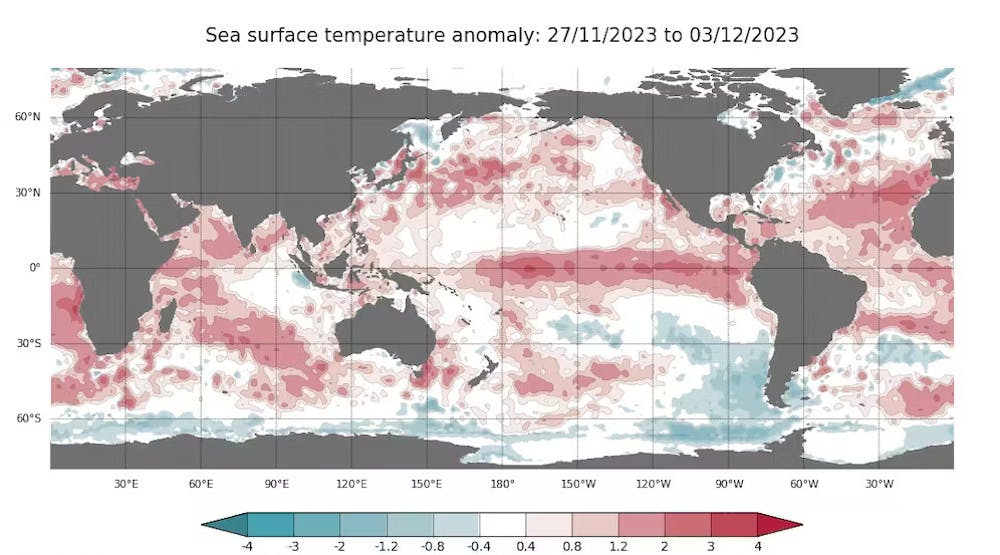
Energy supply and affordability crises in the national electricity market have increasingly coincided with growing private ownership.

Western Australia, which isn’t part of the national market and has a system featuring significant state intervention in gas supply, has avoided the energy crisis currently gripping the eastern states.

My research found privatisation can lead to improved energy market efficiency, but only if coupled with strong regulation of the sector. This suggests states with fully privatised energy markets should shift to more government involvement. It also suggests public-owned states should privatise some assets.

Nationalising isn’t a silver bullet. That’s because market outcomes are the best outcomes for consumers if the market is functioning well. Having competition is the best way to bring retail and wholesale costs down.

But if electricity prices are so high that some consumers can’t afford it, it’s the responsibility of government to provide electricity to them – through subsidies, for instance.


Read more:
What’s a grid, anyway? Making sense of the complex beast that is Australia’s electricity network


Markets and government should co-exist

Experience from energy markets overseas shows that for a complicated industry like electricity to work, markets and government policies should co-exist.

Chile’s power supplies were state-owned until 1982. Then, it became the first country in the world to adopt a competitive power sector by establishing a wholesale electricity market. Today, that market is well-functioning because energy prices tend to reflect the long-term costs of producing electricity.

The success of this privately owned system is due to strong government-initiated reforms. They include effective regulation of transmission and distribution networks, strengthening sector institutions and modifying auction rules in the wholesale market to encourage new bidders.

Chile has also become a renewable energy champion while having a privatised electricity system, because market reforms were supported by policies to promote clean energy.

Other Latin American countries with market-based electricity systems, such as Argentina, also allowed for varying degrees of government involvement to make the market work.

As climate change worsens and countries struggle to reduce their greenhouse gas emissions, market-based electricity systems will become more difficult.

Everyone pays the cost of emissions in the form of global warming. But these costs aren’t factored into the costs of generating electricity. So without a carbon price, there’s little incentive for generators in an entirely privatised market to reduce their emissions.

The United Kingdom has recognised this. It has significantly intervened in the electricity market by introducing a mechanism to keep prices stable for consumers, and guaranteeing extra capacity in times of tight supply.

This helps to meet its climate change objectives by preventing supply shortfalls during the transition to renewables.

What lies ahead?

Australia’s National Electricity Market lacks the right balance between state and market.

The strong push towards the market that began in the early 1990s in Victoria, South Australia and New South Wales now needs to be clawed back somewhat. And in Queensland and Tasmania where markets can be established, this should be done – with policies to support energy security and environmental sustainability.

The experience of the UK and Latin America with partly state-owned electricity systems suggests Australia should not be sceptical of such reforms.

Active government involvement in the electricity sector is necessary for Australia to meet its ambitious climate targets, but this doesn’t mean totally abandoning the power of market forces.

The Conversation

Rabindra Nepal does not work for, consult, own shares in or receive funding from any company or organisation that would benefit from this article, and has disclosed no relevant affiliations beyond their academic appointment.

ref. Should Australian governments nationalise the electricity sector? It’s not that simple – https://theconversation.com/should-australian-governments-nationalise-the-electricity-sector-its-not-that-simple-185203

Why can you still get influenza if you’ve had a flu shot?

Source: The Conversation (Au and NZ) – By Nathan Bartlett, Associate Professor, School of Biomedical Sciences and Pharmacy, University of Newcastle

Shutterstock

Restrictions have eased, international borders are open and influenza is back in Australia after a two-year absence.

Suddenly, major flu outbreaks are occurring across the country, catching many off guard.

Flu vaccinations aim to protect against four influenza viruses that cause disease in humans (two subtypes from influenza A and two from influenza B).

But vaccine-mediated protection varies each year depending on how well the vaccine matches the disease-causing influenza viruses that are circulating at a given time. Vaccine effectiveness – a real-world measure based on the proportion of vaccinated people who still develop the flu – ranges from 16% to 60%.

However, it’s still important to get your flu shot. If you’ve been vaccinated and still get the flu, you’re less likely to get as sick.

Why it’s difficult to predict which subtypes will dominate

Of the four types of influenza viruses that exist in nature, two cause significant disease in humans: influenza A and influenza B.

The 2022 influenza vaccine is quadrivalent (targets four distinct viruses): two influenza A viruses (subtypes H3N2 and H1N1) and two influenza B viruses from distinct lineages.

Within each flu A subtype further genetic variation can arise, with mutations (known as genetic drift) generating many viral variants that are classified into “clades” and sub-clades.

H3N2 is particularly good at generating lots of diversity in this way. So predicting exactly which H3N2 virus to target in the vaccine is especially difficult.


Read more:
Should I get the 2022 flu vaccine? And how effective is it?


A key challenge for flu vaccines is the decision for which virus to target has to be made months ahead of time. The the H3N2 virus in the Australian flu vaccine (A/Darwin/9/2021) was chosen in September 2021 to enable the vaccine to be manufactured and distributed in time for the 2022 winter.

There is no guarantee a different H3N2 virus that isn’t so well targeted by the vaccine won’t arrive in the country in the months leading into winter and start causing disease.

Nurse vaccinate older woman
The subtypes contained in the seasonal flu vaccine are selected months in advance.
Shutterstock

Another factor that has made predicting which H3N2 virus to target in the vaccine uniquely difficult for 2022 is the lack of data on which viruses were dominant in the preceding flu seasons, both in Australia and on the other side of the Equator.

With travel restrictions easing towards the end of 2021, flu cases did start to reappear during the northern hemisphere 2021-22 winter. But the lack of flu cases during the preceding seasons (due to COVID) meant the data used to predict which viruses to target was inadequate.

The US Centers for Disease Control (CDC) analysed data from more than 3,000 children and found a vaccine effectiveness of just 16% protection from mild to moderate disease from H3N2. Protection from more severe disease was just 14%.

We don’t know which subtypes will circulate in Australia

Data about flu vaccine effectiveness in the southern hemisphere 2022 winter isn’t yet available, and it’s unclear how protective the current vaccine is against the currently circulating disease-causing subtypes.

While H3N2 viruses appears to be driving some disease now, other flu viruses may become more prevalent later in the season.

The flu vaccine is a quadrivalent vaccine, so in addition to influenza A H3N2, it will protect against another influenza A subtype (H1N1) and two distinct lineages of influenza B virus. These viruses don’t change as rapidly as H3N2, so it’s more likely the vaccine will give better protection against these other influenza viruses.

Even if vaccine protection against H3N2 is lower than usual this year, the vaccine could make the difference between recovering at home versus ending up in hospital.


Read more:
Which flu shot should I choose? And what are cell-based and ‘adjuvanted’ vaccines?


So who should get a flu shot and when?

The flu vaccine offers the highest level of protection in the first three to four months months after vaccination. The season generally peaks between June and September – although this year we have seen a much earlier than usual start to the flu season. It’s unclear whether this early start will mean a longer flu season or an early finish. So it’s not too late to get vaccinated.

Flu vaccines are recommended for everyone aged six months and over, but are particularly important for people who are more at risk of complications from influenza, including:

  • Aboriginal and Torres Strait Islander people aged six months and over
  • children aged six months to five years
  • pregnant women
  • people aged 65 years or over
  • people aged six months or over who have medical conditions that mean they have a higher risk of getting serious disease.

What if you still get the flu?

If you develop flu symptoms, isolate and see your GP for an influenza PCR test to determine whether you are indeed infected with influenza, particularly if you’re in the higher-risk groups.

Specific antivirals for influenza can help, if given early. To ensure rapid access to particularly vulnerable aged-care residents, aged-care facilities are being stocked with the flu antiviral drug Tamiflu.

In New South Wales, free drive-through clinics now offer testing for influenza, respiratory syncytial virus (RSV) and SARS-CoV-2, the virus that causes COVID. Other states and territories may follow.

The Conversation

Nathan Bartlett does not work for, consult, own shares in or receive funding from any company or organisation that would benefit from this article, and has disclosed no relevant affiliations beyond their academic appointment.

ref. Why can you still get influenza if you’ve had a flu shot? – https://theconversation.com/why-can-you-still-get-influenza-if-youve-had-a-flu-shot-184327

Changes in the jet stream are steering autumn rain away from southeast Australia

Source: The Conversation (Au and NZ) – By Milton Speer, Visiting Fellow, School of Mathematical and Physical Sciences, University of Technology Sydney

NASA

You wouldn’t know it from the torrential rains that have inundated large parts of New South Wales and Queensland this year, but average late-autumn rainfall over southeast Australia has declined significantly since the 1990s.

Less rain in these areas is an expected consequence of global warming. In both the northern and southern hemispheres, the paths of the weather systems that bring rain in the middle latitudes have been moving away from the equator and towards the poles.


Read more:
Australia’s dry June is a sign of what’s to come


We studied in detail the drop in rainfall during April and May in southeast Australia, and found it is just one consequence of far-reaching changes in the behaviour of high-altitude winds over Australia.

Jet streams

These high-altitude winds are called jet streams: narrow bands of rapidly flowing air that typically occur at altitudes around the cruising height of commercial passenger aircraft. In April and May, the westerly jet stream over southeast Australia normally splits into a northern branch (called the subtropical jet) and a southern branch (called the polar-front jet).

Four maps showing conditions in the jet stream over southern Australia and New Zealand at different times of year.
The jet stream over southern Australian latitudes splits in two over autumn and winter.
Speer, Leslie & Hartigan, Climate (2022), Author provided

Since the mid 1990s, the location of this split has moved and the speeds of the winds involved have also changed. We found these changes, which are related to global warming, are responsible for a decrease in the number of low-pressure systems bringing rain to southeast Australia.

The maps you might see on weather apps or TV forecasts usually show what’s going on at ground level: high- and low-pressure systems, cold fronts, and so on. However, these ground-level systems are largely driven by the jet streams and related atmospheric processes.

Humidity and rotation

As well as the changes in the jet stream, there are two other important changes reducing rainfall in the early cool season.

First, the air over parts of inland southeast Australia has become significantly drier since the 1990s.

A map of Australia and New Zealand showing how humidity has changed since the 1990s.
Humidity over parts of southeast Australia has declined significantly since the 1990s.
Speer, Leslie & Hartigan, Climate (2022), Author provided

And second, areas of strongly rotating air have moved further east and south, over the Tasman Sea.

Both humidity and air rotation are important contributors to the development of low-pressure areas that bring rain. As a result of these changes, there has been a significant decrease in late autumn rainfall in southeast Australia.

The bigger picture

Much of the variation in rainfall from year to year depends on the phase of El Niño–Southern Oscillation (ENSO), a large-scale climate phenomenon over the Pacific Ocean. When this is in one phase, called La Niña, eastern Australia experiences lower temperatures and higher rainfall – in the opposite phase, El Niño, it’s the other way around.

In the absence of La Niña years, and particularly groups of repeat La Niña events such as those of 2010–12 and 2020–22, we have seen extreme droughts following dry summers and dry late-autumn periods.


Read more:
Droughts and flooding rains: it takes three oceans to explain Australia’s wild 21st-century weather


Changes in the atmospheric circulation, especially in the jet stream location and strength, have contributed to the multiple-year droughts we have seen since the 1990s, namely, the periods 1997–2007 and 2017–2019. For example, rain-bearing “east coast lows” are often forming further south, and there are fewer cut-off low pressure systems over inland southeast Australia.

Unfavourable winds

The effects of drought at ground level are easy to see.

The drought periods since 1997 have killed huge numbers of river fish, reduced the viability of broad acre and pastoral farming and other economic industries, and reduced river flows and sustainable access to water in many areas. In a future warming climate, these drought periods are expected to continue.

However, changes to the jet stream also have less obvious effects at higher altitudes. In particular, these changes have implications for air transport.

Changes in speed, location and structure of jet streams will mean planes will use more fuel on many routes, including in Australia. Less favourable winds, and an increase in sudden “clear-air turbulence”, will increase aviation fuel consumption.

The Conversation

The authors do not work for, consult, own shares in or receive funding from any company or organization that would benefit from this article, and have disclosed no relevant affiliations beyond their academic appointment.

ref. Changes in the jet stream are steering autumn rain away from southeast Australia – https://theconversation.com/changes-in-the-jet-stream-are-steering-autumn-rain-away-from-southeast-australia-184649

Religious women set up some of Australia’s first schools, but their history remains veiled

Source: The Conversation (Au and NZ) – By Odhran O’Brien, PhD Candidate in History, The University of Western Australia

St John’s Pro-Cathedral, the Convent of Mercy and the girls’ school in Perth circa 1862. State Library of Western Australia

In a wealthy country like Australia, a time with no government schools seems unimaginable. But back in the 1840s, when the Sisters of Mercy opened the first seconadary school in Western Australia, there were only a few tiny private schools. Many children, particularly girls, received no formal education.

Women religious, or nuns, made education more accessible. Their way of life also offered one of few leadership opportunities for women.

These women demonstrated entrepreneurial and diplomatic skill while developing education in Australia. Their work required them to navigate hostile male hierarchies, religious discrimination, class struggles and complex relationships with Aboriginal peoples.

Historians have documented part of this story, but there is a way to go. In a country enamoured with egalitarianism, the lives of women religious speak of the broader historical reality of inequality.

Where did these women come from?

Religious orders consist of people living apart from society but as a community in accordance with the spiritual rule of their founder. Catherine McAuley (1778-1841) founded the Sisters of Mercy in Dublin when she opened the first House of Mercy dedicated to serving the poor, sick and uneducated.

Catherine’s approach to assisting Ireland’s burgeoning poor was radical. The community consisted of two classes of sisters. Choir sisters were educated, middle-class women and generally served as teachers. Lay sisters were poor and working class and operated the kitchen or laundry.

Ursula Frayne (1816-1885), who opened the first secondary school in Western Australia as well as schools in Victoria in the mid-19th century, had trained with McAuley. In 1845 Bishop John Brady visited the sisters’ Dublin convent and requested the mother superior send six sisters to Western Australia with Frayne as the leader.

While sailing to Western Australia aboard The Elizabeth, a member of the missionary group travelling with Bishop Brady was a young French monk, Leandre Fonteinne, who ominously noted:

“His Lordship is only concerned […] for the six women religious that he is bringing along with us. They are and for quite a number of years to come will be a burden to the mission.”

What did they do in Australia?

After arriving in Perth, in 1846 the sisters became the first female religious teaching order to establish a school in Australia. Having navigated sectarism in Ireland, they decided to offer a general education to all Christians. The sisters prioritised Aboriginal people, immigrant Irish orphan girls, the poor and the uneducated. The sisters established a fee-paying school, benevolent institution and Western Australia’s first high school.

Coming from a prosperous Dublin family, Frayne was class-conscious but the distinction between choir and lay nuns was unsustainable in colonial Perth. Relying on the bishop was not an option that would allow them to progress their enterprise.

For these women to be self-sufficient, everyone had to do domestic duties. Frayne herself became a baker.

Although Bishop Brady promised financial support, in 1850 Frayne travelled to Colombo, Malta, Rome, Florence, Paris, England and Ireland to raise funds. In March 1851, she returned to Perth with £450. She gave £157 to the bishop, who was broke.

By 1853 the nuns could afford a new £800 school building. As the sisters’ workload increased, they applied to Dublin for “strong” lay sisters.

Two of the longest-serving lay sisters sent from Dublin were Catherine O’Reilly and Catherine Strahan. O’Reilly filled multiple roles, including carpenter. She was eventually promoted to choir sister and helped to establish schools at locations such as Geraldton.

Strahan’s trajectory was different. Strahan was a lay sister at 30 and provided essential services to the convent kitchen and laundry until she died at 67.

In 1857, Frayne moved to Melbourne to establish a new school as Brady’s replacement as bishop, Joseph Serra, frequently interfered in the order’s leadership. Frayne felt much of his interference unneccessary. Such interference peaked in Queensland, where the Sisters of Mercy had established the state’s first secondary school for girls. The local bishop withheld part of their government salary and exposed them to undernourishment and an early death.

Drawing of senior nun
Ursula Frayne was a pioneer of education in both Perth and Melbourne.

Undeniably important yet curiously anonymous

Women religious operated significant educational enterprises. Historian Stephanie Burley considers female Irish teaching orders as an empire within the British Empire. Their classes bridged the political, religious and cultural norms of the Irish Catholic Church and the British Empire, acting as a pacifying force between the two spheres.

Unfortunately, as historian Colin Barr notes:

“Unfortunately, historians have too often seen these women as an undifferentiated mass, undeniably important yet curiously anonymous. Yet [they] were not merely the passive transmitters of male ideas or initiatives.”

As a leader, Frayne has been the subject of biographies. However, Catherine O’Reilly and Catherine Strahan remained cloistered.

The women who laboured in domestic roles in religious communities deserve greater attention. Although historians are increasingly showing interest in the broader role of women religious in Australian society, aspects of their influence remain opaque.

The Conversation

Odhran O’Brien is affiliated with the Catholic Archdiocese of Perth as the archivist.

ref. Religious women set up some of Australia’s first schools, but their history remains veiled – https://theconversation.com/religious-women-set-up-some-of-australias-first-schools-but-their-history-remains-veiled-177135

Australia has a once in a lifetime opportunity to break the stranglehold fossil fuels have on our politics

Source: The Conversation (Au and NZ) – By Fergus Green, Lecturer in Political Theory and Public Policy, UCL

Shutterstock

In the wake of the Green and teal wave that crashed through the federal Parliament, attention has inevitably turned to what the new cross-benchers will say and do about climate policy. So far, attention has focused on Australia’s 2030 emissions reduction target, and whether they will pressure the new Labor Government to increase its relatively unambitious) target, to which it has now formally committed.

There’s a much more important question to ask. That is, how will any new target actually be reached. The history of Australian climate policy — under both Labor and Coalition governments — shows us very clearly that our large and powerful fossil fuel industry and its political clients are adept at devising “innovative” ways to ensure targets are achieved without obstructing the Lemming-like march toward ever more coal and gas production.

Cynical? Hardly. We’ve met previous targets not by shrinking the fossil fuel industry, but through accounting tricks using inscrutable “land sector abatement”. The Morrison Government took this to new levels, allowing its signature “Emissions Reduction Fund” to become a super-generator of dodgy offsets and a figleaf for the expansion of the gas industry. Our previous government even projected it would meet its 2050 net zero emissions target through a combination of business as usual and unspecified “technological breakthroughs”. Australians are now paying the price in not only climatic terms, but also financial terms, for being too dependent on polluting methane gas and on electricity produced from ageing, unreliable and even-more-polluting coal-fired power generators.

Both teal independents and Greens have built their reputations on restoring integrity to politics. This gives them a mandate to scrutinise accounting rules, offset methodologies and assumptions behind whatever target Labor sets. That’s a start. But to foster climate politics based on integrity, they’ll have to go much further to get to the root of the problem.

We need a reckoning

First, we need an honest conversation about the extent to which the fossil fuel industry has captured Australian politics and wider society, and how this has crippled our response to the climate crisis.

To expose the depth of our gas, oil and coal industry’s influence on public perceptions and elite institutions such as political parties, the media, and virtually every aspect of government — from international diplomacy to the school curriculum – would require something like a royal commission.


Read more:
The teal independents want to hold government to account. That starts with high-quality information


In recent years, investigations have been launched into the fossil fuel industry’s knowledge and practices around climate change by investigative bodies ranging from the Massachusetts Attorney General to the Philippines Human Rights Commission. In the Massachusetts case, the Attorney-General’s three-year investigation of oil giant Exxon Mobil was followed by a lawsuit against the company, which is ongoing.

Investigating the practices and influence of Australia’s fossil fuel industry would lead naturally into a discussion of what can and must be done to restore integrity to our democracy — from bans on fossil fuel advertising and sponsorship to restrictions on lobbying, donations, and revolving-door and “golden escalator” relationships.

We could look to Victoria’s pioneering approach to tobacco in the 1980s, including banning tobacco advertising and promotion and buying out tobacco sponsorships from sports and arts bodies.

Power station at night
Australians are now paying the price for being dependant on on electricity produced from ageing, unreliable coal-fired power generators.
Shutterstock

A principled phase-out

Integrity is not only about honesty but also upholding moral principles. A principled approach to fossil fuel production is sorely needed. Australia is among the world’s largest exporters of fossil fuels.

The emissions burned overseas from the coal and methane gas we export dwarf the emissions produced within our borders. Our political leaders have long hidden behind claims that these exported emissions are the responsibility of the importing country. Never mind that we put the weight of our foreign and trade policy behind cultivating overseas demand for our fossil fuels. You might have also heard the drug dealer’s defence of “if we don’t export the coal and gas, someone else will.” All of these are hypocritical and opportunistic excuses – the opposite of adhering to moral principles.

Taking a principled stand means taking responsibility for problems to which we contribute, or that we have the power to redress, regardless of whether others are acting wrongfully. It’s not beyond us. In other areas, successive Australian governments have performed admirably in taking a stand on issues from nuclear disarmament to the mining of asbestos. We stopped doing dangerous things like mining asbestos because they were wrong, and we used our diplomatic weight to persuade other countries to follow suit.

If Australia was to regain its moral compass on fossil fuels, we wouldn’t be acting alone. A number of governments recently formed the Beyond Oil & Gas Alliance, which commits them to stop issuing new oil and gas exploration and production licences and to phase out existing oil and gas production on a timeframe aligned with the objectives of the Paris Agreement. Other governments, including New Zealand and California, have taken significant steps in that direction.

In this spirit, I hope the teal independents join the Greens in championing an end to fossil fuel subsidies and a ban on new coal and gas projects. Not only is a ban the principled thing to do, but it will help protect existing fossil fuel jobs for a transition period while governments plan a managed phase-out of the industry.

Phasing out this industry must happen while putting communities first and while amplifying the voices of those in the community already working to forge a future beyond fossil fuels. Fortuitously, the teal independents know a thing or two about community-building.


Read more:
The ultra-polluting Scarborough-Pluto gas project could blow through Labor’s climate target – and it just got the green light


The Conversation

Fergus Green receives funding for some of his research from the Economic and Social Research Council (UK). He is a member of the Just Transition Taskforce of the Powering Past Coal Alliance, an intergovernmental body.

ref. Australia has a once in a lifetime opportunity to break the stranglehold fossil fuels have on our politics – https://theconversation.com/australia-has-a-once-in-a-lifetime-opportunity-to-break-the-stranglehold-fossil-fuels-have-on-our-politics-184748

A New Pacific Reset? Why NZ must prioritise climate change and labour mobility

Source: The Conversation (Au and NZ) – By Robert Scollay, Honorary Associate Professor of Economics, University of Auckland

Australia’s minister for foreign affairs, Penny Wong, discussed Pacific affairs with her New Zealand counterpart, Nanaia Mahuta, in Wellington, June 16. Getty Images

The frequent use of the term “shared values” to describe developments in the Pacific tends to obscure a distinct shift in New Zealand and Australian relations with their Pacific partners over the past two decades.

This shift has seen a move away from ready acceptance by Pacific nations of policy prescriptions reflecting “developed country” priorities, towards a greater insistence on New Zealand and Australian support for policies generated by those Pacific partners themselves.

This shift has now been recognised by New Zealand’s foreign minister, Nanaia Mahuta, and more recently by Australia’s new foreign minister, Penny Wong, during her visit to New Zealand last week, giving credibility to a renewed Australian focus on the “Pacific family”.

Perhaps the most obvious expression of those Pacific priorities and values relates to climate change. This existential challenge to island nations has been given the highest priority by Pacific governments, but has also been by far the most divisive factor in recent Australia and New Zealand relations with the Pacific.

Successive Australian leaders have refused to consider commitments to climate change policies that Pacific countries see as critical to their long-term survival. Australian officials have worked to weaken the outcomes of international climate change conferences.

Frustrated by Australia’s resistance to using the Pacific Islands Forum to demand more meaningful action on climate change, Pacific countries have felt compelled to seek participation in other international groups and forums where their priorities could be unambiguously advanced.

Against this background, Wong’s post-election dash to Fiji was a necessary and timely “save”. Her catch-cry of “we have heard you and we are listening” crucially signalled a coming change in Australia’s climate change stance.

A new regional convergence on climate change policy will remove a major irritant from Pacific relations and create a solid foundation for the partnership’s future. But ongoing commitment by Australia and New Zealand to climate change policies that are fit for purpose will be essential for its durability.

Fiji’s growing influence

Fiji’s evolving position has been an important factor in the widening of Pacific states’ international relations.

Following the 2006 coup, Fiji reacted to tensions with Australia and New Zealand by aggressively pursuing a “Look North” policy. It intensified trade and development partnerships with East Asian and other non-Western states (including China) and pressured other Pacific governments to follow its lead.


Read more:
Pacific Island nations will no longer stand for Australia’s inaction on climate change


While Fiji eventually moved away from its adversarial stance towards Australia and New Zealand, the legacy of that policy remains, in expanded connections with China and other non-Western countries.

In recent years, relations between New Zealand and Fiji have been progressively normalised. This is reflected, for example, in Fiji’s participation along with New Zealand and other partners in the proposed Agreement on Climate Change Trade and Sustainability (ACCTS). It was further cemented by New Zealand’s support for Fiji’s COVID vaccine rollout.


Read more:
After many false dawns, Australians finally voted for stronger climate action. Here’s why this election was different


In the meantime, Fiji has engaged energetically in international climate change diplomacy, positioning itself as a global champion of the Pacific’s priorities. This has enhanced its leadership credentials among Pacific Island Forum members, further amplified this year by its status as forum chair.

The visits to Fiji earlier this year by New Zealand cabinet ministers Peeni Henare and Nanaia Mahuta, and the resulting Duavata Declaration, reflected both the realities of the renewed partnership and the modern regional role of both countries.

Understanding China’s misstep

China’s recent failure to secure Pacific nations’ support for its proposed agreement on regional governance and security was greeted with relief by observers in New Zealand.


Read more:
To meet the Chinese challenge in the Pacific, NZ needs to put its money where its mouth is


But it’s important to recognise that failure was also a salutary demonstration of Pacific governments’ insistence that policies affecting the region must be based on decisions by those governments themselves, reflecting their own priorities.

New Zealand has been wise to recognise this and allow space for regional governments to build consensus on relevant issues ahead of the coming meeting of Pacific Island Forum leaders.


Read more:
Labor’s proposed Pacific labour scheme reforms might be good soft diplomacy but will it address worker exploitation?


Progress needed on labour mobility

Looking to the future, the greatest potential contribution New Zealand can make to Pacific development lies in the expansion and broadening of labour mobility arrangements with Pacific partners. This has the added advantage that China will not realistically be able to match such arrangements.

The impact of Pacific seasonal workers’ absence during the pandemic highlighted their importance to the New Zealand economy.

Consultation should now take place both internally and with Pacific partners to design and implement an expanded range of labour mobility arrangements that both support Pacific development aspirations and deliver an economic benefit to New Zealand.

During the recent Australian election campaign, both major parties indicated their intention to move ahead on this issue. It’s one area – among others – where New Zealand should not be seen to lag behind.

The Conversation

Robert Scollay does not work for, consult, own shares in or receive funding from any company or organization that would benefit from this article, and has disclosed no relevant affiliations beyond their academic appointment.

ref. A New Pacific Reset? Why NZ must prioritise climate change and labour mobility – https://theconversation.com/a-new-pacific-reset-why-nz-must-prioritise-climate-change-and-labour-mobility-185204

Swapping stamp duty for land tax would push down house prices but push up apartment prices, new modelling finds

Source: The Conversation (Au and NZ) – By Jason Nassios, Associate Professor, Centre of Policy Studies, Victoria University

Shutterstock

In Tuesday’s budget, NSW will announce a switch from stamp duty to land tax.

It will become the second Australian jurisdiction to do so, with the ACT halfway through a 20-year switchover.

Homebuyers who accept the offer will be taxed annually on the value of their land, instead of hit with an upfront fee (that averaged $50,000 for Sydney in 2018) when they buy.

Once they have accepted, their property will be out of the stamp duty system and subject only to land tax for future owners.

It’s become conventional wisdom to say that such a revenue-neutral switch would boost productivity.

Why? Moving house sets in motion a chain of transactions: residents engage lawyers to transfer titles, real estate agents to manage the property sale, removalists to transport possessions, and so on.

Stamp duties compound these costs, by adding a significant, additional layer of taxation, which in some states makes up 80% of the total cost of moving house.

Land tax, in contrast, is one of the least-damaging taxes. It encourages land owners to put land to its highest-value use.


Read more:
Abolish stamp duty. The ACT shows the rest of us how to tax property


In a landmark modelling exercise completed this month, my team at the Victoria University Centre of Policy Studies finds that the productivity gains are large by the standards of tax swaps.

After 20 years, replacing stamp duty with a land tax would boost national income by A$0.30 for each dollar of revenue swapped, or up to $720 per household if implemented Australia-wide, about 0.34% of annual gross domestic product.

Of greater interest for homeowners and buyers is what it would do to prices.

Houses versus apartments

Broadly, we find that the switch would put downward pressure on prices, but not for every type of home.

Apartments are different.
Shutterstock

Across the market as a whole, we expect downward pressure on the price paid by buyers of about 4.7%, and downward pressure on the price received by sellers of about 0.1%.

But for houses, we expect much stronger downward pressure than the average suggests.

We expect the price paid by house buyers to fall by about 7.6%, and the price received by sellers to fall 3%.

Interestingly, for apartments we expect movements in the other direction, pushing up the price paid by buyers by 2%, and pushing up the price received by sellers by 6.4%.

What’s so different about apartments?

Why would the switch put downward pressure on the price of houses but upward pressure on the price of apartments?

It is because of how two offsetting effects play out.

One is that higher land taxes depress land prices. Buyers who know they will be lumbered with future bills find their purchases less valuable. This effect is much bigger on house prices than apartment prices, because houses occupy more land on average.


Read more:
Axing stamp duty is a great idea, but NSW is doing it wrong


The other effect is that removing stamp duty not only removes an impost on the current buyer, but also removes an impost that will have to be paid when the current buyer sells, and when the subsequent buyer sells, and so on, making resale more valuable to the current buyer than it would have been.

For properties that aren’t turned over often this effect isn’t very important, but for properties that are turned over frequently, it becomes significant.

Apartments are turned over twice as frequently as houses, meaning that for apartments the upward effect on prices from removing stamp duty overwhelms the downward effect from imposing land tax.

Much depends on exactly what’s proposed

It would be possible to lessen this upward pressure on apartment prices by imposing higher land taxes on higher density housing, an idea canvassed by the Henry Tax Review in 2010. Planning and zoning rules could also play a role.

Other policy design decisions could have other effects on prices. Our modelling is based on an immediate swap of stamp duty for land tax.

This is not the same as the NSW government’s opt-in proposal, which could have different price consequences to the policy we modelled.


Read more:
Finding the losers (and surprising winners) from phasing out stamp duty


The NSW government is also reported to be considering excluding the most expensive 20% of properties from the switchover, so it can continue to collect stamp duties on high-value transfers.

In future work we plan to extend our modelling beyond a simple swap of stamp duty and land tax.

The Conversation

The authors do not work for, consult, own shares in or receive funding from any company or organisation that would benefit from this article, and have disclosed no relevant affiliations beyond their academic appointment.

ref. Swapping stamp duty for land tax would push down house prices but push up apartment prices, new modelling finds – https://theconversation.com/swapping-stamp-duty-for-land-tax-would-push-down-house-prices-but-push-up-apartment-prices-new-modelling-finds-184381

Insurance firms can skim your online data to price your insurance — and there’s little in the law to stop this

Source: The Conversation (Au and NZ) – By Zofia Bednarz, Lecturer in Commercial Law, University of Sydney

Shutterstock

What if your insurer was tracking your online data to price your car insurance? Seems far-fetched, right?

Yet there is predictive value in the digital traces we leave online. And insurers may use data collection and analytics tools to find our data and use it to price insurance services.

For instance, some studies have found a correlation between whether an individual uses an Apple or Android phone and their likelihood of exhibiting certain personality traits.

In one example, US insurance broker Jerry analysed the driving behaviour of some 20,000 people to conclude Android users are safer drivers than iPhone users. What’s stopping insurers from referring to such reports to price their insurance?

Our latest research shows Australian consumers have no real control over how data about them, and posted by them, might be collected and used by insurers.

Looking at several examples from customer loyalty schemes and social media, we found insurers can access vast amounts of consumer data under Australia’s weak privacy laws.

A person's hands are visible holding an Apple phone on the left (screen facing forward), and a generic Android on the right.
How would you feel if a detail as menial as the brand of your phone was used to price your car insurance?
Shutterstock

Your data is already out there

Insurers are already using big data to price consumer insurance through personalised pricing, according to evidence gathered by industry regulators in the United Kingdom, European Union and United States.

Consumers often “agree” to all kinds of data collection and privacy policies, such as those used in loyalty schemes (who doesn’t like freebies?) and by social media companies. But they have no control over how their data are used once it’s handed over.

There are far-reaching inferences that can be drawn from data collected through loyalty programs and social media platforms – and these may be uncomfortable, or even highly sensitive.

Researchers using data analytics and machine learning have claimed to build models that can guess a person’s sexual orientation from pictures of their face, or their suicidal tendencies from posts on Twitter.

Think about all the details revealed from a grocery shopping history alone: diet, household size, addictions, health conditions and social background, among others. In the case of social media, a user’s posts, pictures, likes, and links to various groups can be used to draw a precise picture of that individual.

What’s more is Australia has a Consumer Data Right which already requires banks to share consumers’ banking data (at the consumer’s request) with another bank or app, such as to access a new service or offer.

The regime is actively being expanded to other parts of the economy including the energy sector, with the idea being competitors could use information on energy usage to make competitive offers.

The Consumer Data Right is advertised as empowering for consumers – enabling access to new services and offers, and providing people with choice, convenience and control over their data.

In practice, however, it means insurance firms accredited under the program can require you to share your banking data in exchange for insurance services.

The previous Coalition government also proposed “open finance”, which would expand the Consumer Data Right to include access to your insurance and superannuation data. This hasn’t happened yet, but it’s likely the new Albanese government will look into it.


À lire aussi :
Soft terms like ‘open’ and ‘sharing’ don’t tell the true story of your data


Why more data in insurers’ hands may be bad news

There are plenty of reasons to be concerned about insurers collecting and using increasingly detailed data about people for insurance pricing and claims management.

For one, large-scale data collection provides incentives for cyber attacks. Even if data is held in anonymised form, it can be re-identified with the right tools.

Also, insurers may be able to infer (or at least think they can infer) facts about an individual which they want to keep private, such as their sexual orientation, pregnancy status or religious beliefs.

There’s plenty of evidence the outputs of artificial intelligence tools employed in mass data analytics can be inaccurate and discriminatory. Insurers’ decisions may then be based on misleading or untrue data. And these tools are so complex it’s often difficult to work out if, or where, errors or bias are present.

A magnifying glass hovers over a Facebook post's likes
Each day, people post personal information online. And much of it can be easily accessed by others.
Shutterstock

Although insurers are meant to pool risk and compensate the unlucky, some might use data to only offer affordable insurance to very low-risk people. Vulnerable consumers may face exclusion.

A more widespread use of data, especially via the Consumer Data Right, will especially disadvantage those who are unable or unwilling to share data with insurers. These people may be low risk, but if they can’t or won’t prove this, they’ll have to pay more than a fair price for their insurance cover.

They may even pay more than what they would have in a pre-Consumer Data Right world. So insurance may move further from a fair price when more personal data are available to insurance firms.

We need immediate action

Our previous research demonstrated that apart from anti-discrimination laws, there are inadequate constraints on how insurers are allowed to use consumers’ data, such as those taken from online sources.

The more insurers base their assessments on data a consumer didn’t directly provide, the harder it will be for that person to understand how their “riskiness” is being assessed. If an insurer requests your transaction history from the last five years, would you know what they are looking for? Such problems will be exacerbated by the expansion of the Consumer Data Right.

Interestingly, insurance firms themselves might not know how collected data translates into risk for a specific consumer. If their approach is to simply feed data into a complex and opaque artificial intelligence system, all they’ll know is they’re getting a supposedly “better” risk assessment with more data.

Recent reports of retailers collecting shopper data for facial recognition have highlighted how important it is for the Albanese government to urgently reform our privacy laws, and take a close look at other data laws, including proposals to expand the Consumer Data Right.


À lire aussi :
Hidden costs, manipulation, forced continuity: report reveals how Australian consumers are being duped online


The Conversation

Zofia Bednarz receives funding from the Australian Research Council Centre of Excellence on Automated Decision-Making and Society.

Kayleen Manwaring receives funding from the UNSW Allens Hub for Technology, Law & Innovation.

Kimberlee Weatherall receives funding from the Australian Research Council. She is a Chief Investigator with the ARC Centre of Excellence on Automated Decision-Making and Society, and a Fellow with the Gradient Institute.

ref. Insurance firms can skim your online data to price your insurance — and there’s little in the law to stop this – https://theconversation.com/insurance-firms-can-skim-your-online-data-to-price-your-insurance-and-theres-little-in-the-law-to-stop-this-185038

In the Solomon Islands, Wong takes first tentative steps in repairing a strained relationship

Source: The Conversation (Au and NZ) – By Patricia A. O’Brien, Faculty Member, Asian Studies Program, Georgetown University; Visiting Fellow, Department of Pacific Affairs, Australian National University; Adjunct Fellow, Center for Strategic and International Studies, Washington DC., Georgetown University

AAP/Department of Defence/Julia Whitwell

Foreign Minister Penny Wong was no doubt expecting a cooler reception than her three previous visits to the Pacific when she touched down in Honiara last Friday.
The Solomon Islands government website had not even listed the Australian minister’s visit – but it did note the first visit of a Saudi Arabian tourism minister, happening the same day. With this visit, Wong walked a diplomatic tightrope that no senior minister in the previous government appeared willing to.

Solomon Islands leaders have had a very crowded schedule of late, as highlighted by the Solomon Star newspaper. It said Wong was the latest foreign figure to arrive on Solomon Island shores after a number of “high-level visits from USA, Japan and China recently, before and after the signing of the security pact”.

The security pact in question is the one signed on April 20 between China’s foreign minister, Wang Yi, and Solomon Islands’ foreign minister, Jeremiah Manele. Solomon Islands Prime Minister Manasseh Sogavare explained the riots of November 2021 left his government with “no option” but to enter into such a security agreement to “plug the gaps that exist in our security agreement with Australia”. What these “gaps” are, he did not say.

Since that signing, the entire Pacific has shifted in myriad ways. Wong has been very busy in her first month in office trying to reduce its impact.


Read more:
Saying China ‘bought’ a military base in the Solomons is simplistic and shows how little Australia understands power in the Pacific


She has had some wins with Fiji, Samoa and Tonga. Also, Australia assisted with the rapprochement at the Pacific Islands Forum, which has emerged reinvigorated after the stress test of the past year, when one-third of the members threatened to leave. This was averted with a special meeting in Suva on June 7, with Micronesian leaders transported to it on Australian planes.

The biggest win so far, for which Wong can take some credit, was for her work in advance of the Pacific Islands Forum meeting on May 30. Here, the ten nations that recognise China did not collectively sign on to become “China-Pacific Island countries”. (Federated States of Micronesia President David Panuleo rallied the region with a stirring letter that instantly became a classic text.)

A whirlwind multi-nation visit by Wang before and after the May 30 meeting added inducements for working more closely with China through numerous bilateral agreements.

Wang spent the most time on his trip in the Solomon Islands. The effect of his effusive welcome by Sogavare, encapsulated in the photograph of the pair linking arms, denoted the “iron-clad” ties the two leaders were cementing between their nations.

Chinese Foreign Minister Wang Yi and Solomon Islands Prime Minister Manasseh Sogavare link arms in Honiara after making their security pact.
Xinhua/AP/AAP

In addition to the game-changing Framework Security Agreement, the Solomon Islands and China “achieved eight-point consensus” during Wang’s visit.

This is a template agreement Wang has already shopped around Asia in 2021, tweaked for national specificities and concerns. In the case of the Solomon Islands, it mentions working together on “climate change” and “marine protection”.

Given all that China has offered Sogavare and his political allies – to the great detriment of the nation according to Opposition Leader Matthew Wale, who has charged the security deal is “a personal deal to protect the prime minister” – what could Penny Wong offer?


Read more:
On the Pacific, the new government must be bold and go big. Here’s how the repair work could begin


On her visits to Fiji, Samoa and Tonga, not being a member of the Morrison government that clung to its coal power and climate policies gave Wong a lot of mileage. This is the most important issue facing the region, recently reiterated in an impassioned speech at the Shangri-La Dialogue by Fiji’s minister for defence and policing, Inia Bakikoto Seruiratu. The Solomon Islands is no exception.

That said, not being a Morrison government minister did not get Wong very far in Honiara. As she had signalled she would), Wong announced more vaccines donations and an expansion of the very popular (and desperately needed) labour scheme, the topic on which she got the most questions at her press conference.

She also visited a school and lunched with women leaders), who would have raised the dire need for improved medical facilities). Notably, it seems Wong did not meet Wale and other Sogavare opponents.

Very subtly, Wong presented an alternative to the China path. Unlike Wang’s visit, which greatly restricted press coverage, Wong encouraged it, no doubt hoping word would spread as it reportedly) had in other parts of the Pacific.

But what about “our shared security interests”, as Wong termed it? This got little traction in Honiara as Sogavare will not walk back from the China-Solomon Islands agreement. On the election campaign trail, Wong described the pact as “the worst foreign policy blunder since world war two”.

Many anticipate China will build a naval base, as appears to be happening in Cambodia). However, Sogavare has assured Wong, and others, this will not occur. What may happen is that maritime militias appearing as fishing vessels, which China has used to great effect in the South China Sea, will slowly build a China military presence if there is not a change of leadership and direction in the Solomon Islands.

The recent “dangerous” confrontation between a Chinese fighter jet and an Australian airforce plane in the South China Sea on May 26, the day Wong began her visit to Fiji, is another sobering instance of tactics that might move south.

While Wong’s visit did not deliver big wins, it did not make things worse. She got reassurances, but given what Sogavare has signed onto with China of late, there is a clear lack of connection between words and deeds. What Wong did do is signal another way forward for Sogavare’s considerable opposition.

In the coming week, a multilateral Pacific Islands effort will be announced in Washington DC that involves the US, Australia, New Zealand, Japan and France.

Given this, it is almost certain that the tempo of visits to the Solomon Islands and other Pacific nations is going to rise.

The Conversation

Patricia A. O’Brien received funding from the Australian Research Council as a Future Fellow, the Jay I. Kislak Fellowship at the John W. Kluge Center, Library of Congress, Washington D.C. and New Zealand’s JD Stout Trust.

ref. In the Solomon Islands, Wong takes first tentative steps in repairing a strained relationship – https://theconversation.com/in-the-solomon-islands-wong-takes-first-tentative-steps-in-repairing-a-strained-relationship-185200

First, COVID hit disadvantaged communities harder. Now, long COVID delivers them a further blow

Source: The Conversation (Au and NZ) – By Danielle Hitch, Senior Lecturer in Occupational Therapy, Deakin University

Shutterstock

Disadvantaged communities not only suffer disproportionately from COVID, they are even more likely to be impacted by the cascading effects of long COVID.

With a new federal government, now is the time to engage in transformative planning to address a range of societal issues, including the impact of the pandemic on the most disadvantaged Australians.

We outline three policy areas to address the impact of long COVID on disadvantaged communities.


À lire aussi :
Australia is failing marginalised people, and it shows in COVID death rates


Disadvantaged communities already at risk

The greater impact of pandemics on disadvantaged communities was recognised before COVID.

Along with medical risks such as obesity, these communities already contended with social risks such as poverty, unhealthy environments and disability.

The interaction between these risks produces sustained and multiplied disadvantage, compounding existing barriers to health care and other supports.


À lire aussi :
Pandemic pain remains as Australia’s economic recovery leaves the poor behind


Then came COVID

While the pandemic has taken a toll on everyone, there is growing international evidence of greater effects on disadvantaged communities.

Communities with greater insecure employment, housing density and linguistic diversity recorded a higher incidence of COVID infections.

Risk factors for poorer clinical outcomes from COVID – such as hypertension (high blood pressure), diabetes and respiratory disorders – are also more common in disadvantaged communities.

While many developed countries achieved good vaccine uptake, studies report greater vaccine inequity and hesitancy in these communities.

Mechanic booking in a car for service
Not everyone can work from home.
Shutterstock

Low-paid, precarious, essential and manual workers also struggled to adhere to stay-at-home orders and social distancing in the face of food and financial insecurity.

All these factors – some in place before COVID, some new – contribute to a higher risk of COVID for disadvantaged communities. That’s even before we start considering the impact of long COVID.


À lire aussi :
As lockdowns ease, vaccination disparities risk further entrenching disadvantage


How about long COVID?

Most people with COVID make a full recovery. But for some, symptoms linger. The World Health Organization defines long COVID as new, persistent or fluctuating symptoms present three months after COVID infection, lasting at least two months, and not attributable to other diagnoses.

Globally, 43% of people with COVID have ongoing symptoms affecting daily life six months after infection. Fatigue and memory problems are the most commonly reported of the diverse symptoms linked to long COVID. However, an Australian study of long COVID estimated 5% of people have symptoms after three months.

So we need to learn more why these percentages differ.


À lire aussi :
Fatigue after COVID is way more than just feeling tired. 5 tips on what to do about it


Long COVID hits disadvantaged communities harder

In addition to the higher risk of exposure to COVID in the first place, disadvantaged communities lack accessible services and resources to support full recovery.

You can see how issues such as the rising cost of living and the lack of sick pay for casual workers can have a disproportionate impact on disadvantaged people who need to
return to work before they are fully recovered.

Women rubbing side of head at work computer
Not everyone can afford to take time off with lingering COVID symptoms.
Shutterstock

In disadvantaged communities, there are also more barriers to accessing health care, excluding people already experiencing disadvantage.

For example, we know asylum seekers and undocumented migrants have experienced worse mental health, social isolation and access to health care than other groups during the pandemic.

While telehealth has opened up access for some, it increases barriers for others.

Geographical location is also a barrier for many Australians with long COVID, with most specialist clinics in metropolitan health services.


À lire aussi :
Five tips for young people dealing with long COVID – from a GP


A growing problem

The human and financial costs associated with the complex disadvantage resulting from COVID (and long COVID) are vast.

One analysis estimated there would be up to 60,000–133,000 long COVID cases as Australia eased restrictions.

Analyses by the Bank of England and the United States Brookings Institute flag long COVID as a significant factor in future labour shortages.

However, we have few mechanisms to measure and track any impacts. Even putting an accurate figure on the number of COVID cases is difficult due to the greater reliance on rapid antigen tests, rather than PCR tests.


À lire aussi :
We calculated the impact of ‘long COVID’ as Australia opens up. Even without Omicron, we’re worried


What needs to happen next?

The relationship between long COVID and disadvantage is a collision between two highly complex issues. With new variants and reinfections, long COVID will be with us for years, further increasing an already complex (or “wicked”) problem.

However, we are yet to see leadership from local, state and territory, and federal governments on this issue.

Disadvantaged communities (particularly those most affected) are yet to be mobilised, to identify and tackle the local problems most affecting their recovery from COVID. Policies to tackle the disproportionate impact on them are yet to be developed.

These three actions would make a meaningful impact on health equity for everyone with long COVID.

1. Measure and track the issue

We urgently need high-quality data on long COVID to understand the trajectory and duration of recovery, and its interdependence with social determinants of health, for example, living in rural/remote Australia or being unemployed.

Investment in nationwide standardised data collection would enable targeted support for the communities that need it most.

2. Acknowledge diversity and intersectionality

A reductionist approach to long COVID or disadvantage that targets single aspects of someone’s identity will not work.

That’s because long COVID symptoms can be multiple and diverse, affecting all body systems. People may also experience multiple layers of disadvantage. So an “intersectional” approach acknowledges how various factors – such as health, poverty, gender or visa status – interplay.

3. Work with disadvantaged communities

Disadvantaged communities are the ones most affected by long COVID. So
any policy needs to be developed with their meaningful involvement.

People know what tangible outcomes would work best (or fail) in their community. So it’s crucial to have this input if we are to make real improvements.

The Conversation

This story is part of The Conversation’s Breaking the Cycle series, which is about escaping cycles of disadvantage. It is supported by a philanthropic grant from the Paul Ramsay Foundation.

Evelyne de Leeuw receives funding from CIHR (the Canadian Institute of Health Research, the equivalent of NHMRC) for research into financial strain during the pandemic. The relevant resources have not paid her personally.

Aryati Yashadhana ne travaille pas, ne conseille pas, ne possède pas de parts, ne reçoit pas de fonds d’une organisation qui pourrait tirer profit de cet article, et n’a déclaré aucune autre affiliation que son organisme de recherche.

ref. First, COVID hit disadvantaged communities harder. Now, long COVID delivers them a further blow – https://theconversation.com/first-covid-hit-disadvantaged-communities-harder-now-long-covid-delivers-them-a-further-blow-183908

A new farming proposal to reduce carbon emissions involves a lot of trust – and a lot of uncertainty

Source: The Conversation (Au and NZ) – By Ralph Sims, Emeritus Professor, Energy and Climate Mitigation, Massey University

Shutterstock

After decades of avoiding inclusion in the Emissions Trading Scheme (ETS), New Zealand’s primary production sector has begrudgingly acknowledged that reducing on-farm emissions of greenhouse gases is an imperative.

Charged by the government with developing a pricing mechanism and strategy as an acceptable alternative to joining the ETS in 2025 under the Climate Change Response (Zero Carbon) Amendment Act, the sector finally released its proposal earlier this month.

Called He Waka Eke Noa, the partnership involves Federated Farmers, Dairy NZ, Sheep and Beef NZ, Horticulture NZ, the Foundation for Arable Research and the Federation of Māori Authorities.

Their recommendations have now been submitted to the government, which has until the end of this year to consider its options. However, numerous uncertainties surround the scheme, which will need to be addressed if it’s to work properly.

Farm emissions still rising

Since opposing a previous Labour government’s so-called “fart tax” in 2003, many farmers and their representative organisations have resisted inclusion in the ETS while also calling for government assistance to help cope with the impacts of climate change.

In 2015, Federated Farmers claimed voluntary levies had reduced emissions per unit of meat and milk produced by 1.3% a year since 1990 (achieving similar objectives to those of the loathed “fart tax”).

Regardless of these industry and government initiatives, however, annual agricultural emissions have risen 15%, from 34.1 million tonnes of carbon dioxide equivalent (emissions of all greenhouse gas added together) in 1990 to 39.4 million tonnes in 2020 (the latest available data) with no signs of decline.


Read more:
Air of compromise: NZ’s Emissions Reduction Plan reveals a climate budget that’s long on planning, short on strategy


He Waka Eke Noa recommends all agriculture and horticulture businesses above a certain size should be registered and encouraged to calculate their annual emissions. This will include both short-lived biogenic methane from ruminants and long-lived nitrous oxide from soils, as well as carbon dioxide from fertiliser manufacture (though fossil fuel emissions aren’t included).

A split-gas levy will then be charged, but at a much lower price per tonne than all other sectors are being charged under the ETS. The levy would increase each year, with its price determined by a “systems oversight board”.

Typically the annual levy, as proposed for a large dairy, sheep or beef farm, could exceed NZ$30,000, whereas it might be only $100 for an orchard, based on synthetic fertiliser use.

Fossil fuel inputs are excluded from the partnership, reducing incentives for improving efficiencies.
Shutterstock

Doubts and uncertainties

In order to reduce their annual emissions and hence the levy paid, the intention is that farm businesses will have an incentive to use carbon mitigation technologies and introduce forest sinks on their property.

Fossil fuel energy inputs are already covered under the ETS so have been excluded. Unfortunately, this prohibits any incentives being applied for reducing diesel consumption by improving the efficiency of machinery, displacing coal and gas used for heating, or even generating renewable electricity from solar, wind, micro-hydro, crop residues or animal waste resources available on the farm.

He Waka Eke Noa analysis points to a reduction of agricultural emissions of just a few percent by 2030 from both the uptake of new technologies and farm forest sequestration.


Read more:
11,000 litres of water to make one litre of milk? New questions about the freshwater impact of NZ dairy farming


Assumed total administration costs of around $120 million to $130 million will be necessary to achieve an annual emissions reduction of about two million tonnes of carbon dioxide equivalent by 2030 if successful. Such an annual reduction should be ongoing, although the levy prices charged are yet to be determined.

Therefore the overall cost measured in terms of dollars per tonne of carbon dioxide avoided, and the revenue to be obtained from the levy for investment in research and development, are not known.

There are numerous other uncertainties. What percentage of farm businesses will register, calculate their emissions and then dutifully pay the levy? What happens to those who don’t wish to take part? Who will monitor the accuracy of their annual submissions and using what methods?

It has been acknowledged that much trust in the farming community will be involved.

A 2003 protest in Auckland against the government’s proposed ‘fart tax’.
Getty Images

Unanswered questions

Furthermore, what happens when no more suitable, low-grade land is available for forest sequestration? Planting trees can only be a short-term measure to buy time before having to reduce domestic carbon emissions more stringently.

Under the ETS, the minimum land area for registering a forest sink is one hectare, so the carbon uptake can be measured and monitored. How will numerous small areas of trees on thousands of farms be monitored, and future carbon loss from harvesting, storm damage or fire accounted for?


Read more:
How NZ could become a world leader in decarbonisation using forestry and geothermal technology


Areas of mature indigenous forest are in carbon balance so they cannot sequester more carbon. However, if the trees have been damaged by stock or pests whose removal allows some regrowth, how will this be measured in practice?

Perhaps the main question to ask is, given the relatively low prices likely to be applied per tonne of emissions, how many mitigation technologies will prove economic to implement?

For example, if the 2030 levy price on methane is $15 per tonne of carbon dioxide equivalent, whereas the cost of mitigation strategies (such as using seaweed additives in cow feed) comes in at $20, then why would a dairy farmer bother?


Read more:
The Groundswell protest claimed regulation and taxes are unfair to farmers – the economic numbers tell a different story


‘Dead rats’ to swallow

Ultimately for a farm business it will be a balancing act between costs and achieving emission reduction goals. As the Climate Change Commissioner has said:

Agricultural emissions pricing needs to achieve emissions reductions – but if implemented poorly it also has the potential to create financial hardship for farmers as they transition to low emissions.

And in the words of the president of Federated Farmers:

Like all of these types of agreements with many parties involved, there’s always going to be a couple of dead rats you have to swallow.

So whether the ministers of climate change and agriculture will swallow a dead rat or two and accept these industry recommendations – with all their uncertainties and lack of high ambition – remains to be seen.

Or will the primary sector be made to join the ETS after all? If so, the fart tax might have been a better outcome for farmers in the first place.

The Conversation

Ralph Sims does not work for, consult, own shares in or receive funding from any company or organisation that would benefit from this article, and has disclosed no relevant affiliations beyond their academic appointment.

ref. A new farming proposal to reduce carbon emissions involves a lot of trust – and a lot of uncertainty – https://theconversation.com/a-new-farming-proposal-to-reduce-carbon-emissions-involves-a-lot-of-trust-and-a-lot-of-uncertainty-185121

The world’s affluent must start eating local food to tackle the climate crisis, new research shows

Source: The Conversation (Au and NZ) – By Arunima Malik, Senior Lecturer in Sustainability, University of Sydney

Shutterstock

The desire by people in richer countries for a diverse range of out-of-season produce imported from overseas is driving up global greenhouse gas emissions, our new research has found.

It reveals how transporting food across and between countries generates almost one-fifth of greenhouse gas emissions from the food sector – and affluent countries make a disproportionately large contribution to the problem.

Although carbon emissions associated with food production are well documented, this is the most detailed study of its kind. We estimated the carbon footprint of the global trade of food, tracking a range of food commodities along millions of supply chains.

Since 1995, worldwide agricultural and food trade has more than doubled and internationally traded food provides 19% of calories consumed globally. It’s never been clearer that eating local produce is a powerful way to take action on climate change.

A web of food journeys

The concept of “food miles” is used to measure the distance a food item travels from where it’s produced to where it’s consumed. From that, we can assess the associated environmental impact or “carbon footprint”.

Globally, food is responsible for about 16 billion tonnes of greenhouse gas emissions each year – or about 30% of total human-produced carbon emissions. The sources of food emissions include transport, land-use change (such as cutting down trees) and the production process.

Our study used an accounting framework we devised in an innovative platform called the FoodLab. It involved an unprecedented level of detail, spanning:

  • 74 countries or regions
  • 37 economic sectors
  • four transport modes – water, rail, road and air
  • more than 30 million trade connections: journeys of a single food from one place to another.


Read more:
Australia’s agriculture sector sorely needs more insights from First Nations people. Here’s how we get there


aerial view of container ship on ocean
Food miles measure the distance a food item travels from where it’s produced to where it’s consumed.
Shutterstock

Our results

We found global food miles emissions were about 3 billion tonnes each year, or 19% of total food emissions. This is up to 7.5 times higher than previous estimates.

Some 36% of food transport emissions were caused by the global freight of fruit and vegetables – almost twice the emissions released during their production. Vegetables and fruit require temperature-controlled transport which pushes their food miles emissions higher.

Overall, high-income countries were disproportionate contributors to food miles emissions. They constitute 12.5% of the world’s population yet generate 46% of international food miles emissions.

A number of large and emerging economies dominate the world food trade. China, Japan, the United States and Eastern Europe are large net importers of food miles and emissions – showing food demand there is noticeably higher than what’s produced domestically.

The largest net exporter of food miles was Brazil, followed by Australia, India and Argentina. Australia is a primary producer of a range of fruits and vegetables that are exported to the rest of the world.

In contrast, low-income countries with about half the global population cause only 20% of food transport emissions.

woman giving bag to customer at food stall
Low-income countries contribute far less to the problem of emissions from food transport.
Shutterstock

Where to now?

To date, sustainable food research has largely focused on the emissions associated with meat and other animal-derived foods compared with plant-based foods. But our results indicate that eating food grown and produced locally is also important for mitigating emissions associated with food transport.

Eating locally is generally taken to mean eating food grown within a 161km radius of one’s home.

We acknowledge that some parts of the world cannot be self-sufficient in food supply. International trade can play an important role in providing access to nutritious food and mitigating food insecurity for vulnerable people in low-income countries.


Read more:
How Australia can boost the production of grains, while lowering its carbon footprint


And food miles should not be considered the only indicator of environmental impact. For example, an imported food produced sustainably may have a lower environmental impact than an emissions-intensive local food.

But there is much scope to reduce food transport emissions, especially in richer countries. Potential measures include:

  • carbon pricing and import duties
  • investing in less-polluting vehicles
  • encouraging businesses to cut emissions in their production and distribution chains
  • planning laws that allow more urban agriculture projects.

Consumers also have the power to reduce food transport emissions by adopting a more sustainable diet. For instance, next time you go to buy fruit out of season – which may have been grown overseas or on the other side of the country – perhaps consider whether a local alternative might do.

The problem of food transport emissions will only worsen as the global population grows. Governments, corporations and everyday people must work together to ensure the production and consumption of food does not make climate change worse.

The Conversation

The authors do not work for, consult, own shares in or receive funding from any company or organisation that would benefit from this article, and have disclosed no relevant affiliations beyond their academic appointment.

ref. The world’s affluent must start eating local food to tackle the climate crisis, new research shows – https://theconversation.com/the-worlds-affluent-must-start-eating-local-food-to-tackle-the-climate-crisis-new-research-shows-185251

How are PhD students meant to survive on two-thirds of the minimum wage?

Source: The Conversation (Au and NZ) – By Nathan Garland, Lecturer in Applied Mathematics and Physics, Griffith University

Shutterstock

Over the decades, supportive parents of Australian students on the cusp of graduating from their undergraduate studies have occasionally been struck by a bewildering decision by their pride and joy. Instead of pursuing an appetising salary in a prestigious company, their student has instead decided to do the unthinkable: they’re going to do a PhD. Where’s the money in that? What will we tell the neighbours?

A PhD program is foremost a training experience. A PhD student works a full-time apprenticeship (38 hours a week on average) in their chosen research field, guided by expert mentors along the way. While the choice to enter a PhD program is primarily based on a student wanting to upskill and learn, much like the choice to pursue an undergraduate degree, the starting point, method of study and outputs of a PhD are very different.

In Australia, the standard scheme to fund the living costs of PhD candidates is a tax-free stipend from their university. The university is allocated the funds via the Research Training Program (RTP).

This stipend is now $28,854 a year (indexed annually against inflation). That’s only two-thirds of the national minimum wage after last week’s increase to $42,246.88.


À lire aussi :
This 5.2% decision on the minimum wage could shift the trajectory for all


In weekly terms an income of $554.88 puts PhD candidates well below the poverty line of $608.96 for a single person if they have to pay for housing. Further, it’s close to an all-time low of 30% as a proportion of average full-time earnings.

In 2017 a sliding scale of stipends was introduced. Looking at the websites of the 39 members of Universities Australia in June 2022, it is encouraging to see a few universities offer higher rates than the required minimum for their PhD programs. However, most universities still mandate the lowest base rate.

Advertised annual PhD stipend at 39 Universities Australia member institutions.

A fair shake of the sauce bottle

This funding arrangement has been in place for some time, serving the community reasonably well. However, in the current economic climate of uncertainty, rising costs of living, skyrocketing rents and the Fair Work Commission’s decision to increase the minimum wage by 5.2%, it is worth comparing historical stipend rates, dating back to 1959, with other relevant yardsticks of income.

To make a fair comparison, we could scale up historically recorded weekly average, median and minimum wages over a 52-week year, noting that most Australian PhD programs permit 20 days of paid personal leave per year. Below, we see how these annual incomes have evolved over time since the inception of the PhD stipend.

Historical PhD stipend rates in Australia, compared to average full-time earnings, minimum wage and median full-time earnings (where available) [Sources: ABS, OECD]

Alternately, we can plot the PhD base rate and minimum wage as proportions of the average full-time income. Also shown is the consumer price index (CPI) as a standard measure of inflation, to give us some context – especially at this time of soaring living costs.

On the left hand axis, ratios of the PhD base rate and minimum wage against the average full-time income. On the right hand axis we show consumer price index (CPI) as a measure of inflation context. [Sources: ABS, OECD, World Bank]

At present, PhD stipends languish far below the minimum wage, even allowing for tax on the minimum wage (take off roughly $4,600 for the new minimum wage). The PhD stipend is at a near historical low when compared to the average full-time annual income.

Clearly, from the historical trends in the above graphs, things weren’t always this bad. The minimum wage and PhD stipend values have been comparable, but now they are well and truly detached.


À lire aussi :
Is it a good time to be getting a PhD? We asked those who’ve done it


Most PhD candidates have already done four or five years of university studies and have advanced, valuable skill sets. Being asked to live far below minimum wage seems a little unfair.

It’s also worth considering the overall benefits and impacts of knowledge generated a PhD student generates. They produce journal articles throughout their PhD project. Being told to survive well below minimum wage, while making valuable contributions to society and the future of Australia, doesn’t sound like a fair go for those who have a go, as a former prime minister once said.


À lire aussi :
1 in 5 PhD students could drop out. Here are some tips for how to keep going


But there is hope

While these trends and current situations don’t make for happy reading, there is hope, and precedent for change. The above graphs show the Rudd-Gillard Labor governments arrested the free-fall in PhD stipend value around 2009. This happened in response to a proposal by the Council of Australian Postgraduate Associations after PhD students fell below the poverty line for the first time.

Looking abroad to Europe, countries like the UK, Germany and Italy show us it is possible to value the hard work of research students at universities.

Average PhD student salaries against average full-time salary in some European countries. [Source: Informatics Europe]


À lire aussi :
Australia can get a better return on its investment in PhD graduates


The COVID-19 pandemic allowed us to consider the immediate relevance of cutting-edge science, technology and medical research. As the world waited for an end to lockdowns and uncertainty, PhD students were making vital contributions to help find a way out of our global predicament. Although usually in a supporting capacity, their role required a significantly advanced and niche skill set.

Some of these PhD students across Australia probably could have made a bit more money working fewer hours if they did run off and join the circus instead, but we’re lucky they didn’t.

The Conversation

Nathan Garland has previously received funding from an Australian Postgraduate Award.

Shaun Belward works for James Cook University. He received an Australian Postgraduate Research Award to study a PhD in the 1990s and has also benefitted from federally funded learning and teaching grants.

ref. How are PhD students meant to survive on two-thirds of the minimum wage? – https://theconversation.com/how-are-phd-students-meant-to-survive-on-two-thirds-of-the-minimum-wage-185138

Age and education key demographics in government’s election loss: ANU study

Source: The Conversation (Au and NZ) – By Michelle Grattan, Professorial Fellow, University of Canberra

Age and education levels were the most important demographic variables in the Coalition’s loss of support between the 2019 and 2022 elections, according to an Australian National University analysis released on Monday.

“These two factors were much stronger predictors than sex, country of birth, location, and even household income,” the study found.

The analysis, titled Explaining the 2022 Australian Federal Election Result, authored by Nicholas Biddle and Ian McAllister, is based on an ANUpoll/Comparative Study of Electoral Systems survey of more than 3500 voters.

It compared people’s voting intentions in April and their actual vote in May, as well as how people voted in 2019.

The study found that in general 2022 Coalition voters tended to be older, indigenous, with low education, living outside the capitals and with household income that put them outside the bottom quintile.

Labor voters tended to have higher education levels, lived in the capitals, and had low incomes.

Greens voters tended to be women, young, born in Australia or another English-speaking country, and without a trade qualification.

Biddle said more than one in three voters under 55 (34.9%) who voted Coalition in 2019 voted for someone else this year. But only about one in five (21.1%) aged 55 and over did so.

The Coalition also lost more votes among the better educated, he said. Some 31% of those who had completed year 12 and voted for the government in 2019 changed their vote in 2022. In contrast only 14.8% of Coalition voters who had not finished year 12 changed their vote .

“Education, and particularly high school education, really matters when it comes to understanding this election result,” Biddle said.

The Coalition also lost more voters in capital cities compared to outside the capitals.

The analysis said the results suggested the change in government was mainly driven by “younger, urban and more well educated” Coalition voters moving away from the government, while Labor was able to maintain its support across most demographic groups, apart from those outside capital cities.

The study found women were less likely to vote for the Coalition compared to men. But the largest gender difference related to the Greens with 22.5% of women voting for them but only 16.4% of men.

Some 13.6% of voters made up their minds how to vote on election day.

Most people voted in May the way they had indicated in April that they would – but more than a fifth (21.9%) changed their mind in the campaign. The most common reason people gave was because their views about the local candidate changed.

The data on those who voted for candidates and parties other than the Coalition, Labor and the Greens has not been fully analysed yet, so there is no information specifically on the “teal” vote.

The survey found voter volatility in 2022 was similar to 2019. “A similar proportion of Australians voted for a different party across those two elections as between the 2016 and 2019 election, and there was a remarkably similar proportion across the two elections of Australians who voted for a different party to that which they had intended to vote in the last survey prior to the election.”

The proportion of people splitting their lower house and Senate vote was low in both elections but appeared to have declined in 2022.

The survey also found a strong post-election increase in people’s satisfaction with the direction the country is going in, from 62.4% in April to 73.3% in May. Biddle said this was one of the highest levels of satisfaction since the 2019-20 bushfires and the pandemic’s start.

But satisfaction did vary according to how people had voted. While satisfaction jumped among Labor and Green voters it went down among Coalition voters.

Most people thought the election had been conducted fairly.

The Conversation

Michelle Grattan does not work for, consult, own shares in or receive funding from any company or organisation that would benefit from this article, and has disclosed no relevant affiliations beyond their academic appointment.

ref. Age and education key demographics in government’s election loss: ANU study – https://theconversation.com/age-and-education-key-demographics-in-governments-election-loss-anu-study-185374

UK government orders the extradition of Julian Assange to the US, but that is not the end of the matter

Source: The Conversation (Au and NZ) – By Holly Cullen, Adjunct professor, The University of Western Australia

AAP/AP/Matt Dunham

On June 17 2022, UK Home Secretary Priti Patel issued a statement confirming she had approved the US government’s request to extradite Julian Assange. The Australian founder of Wikileaks faces 18 criminal charges of computer misuse and espionage.

This decision means Assange is one step closer to extradition, but has not yet reached the final stage in what has been a years-long process. Patel’s decision follows a March decision to deny leave to appeal by the UK Supreme Court, affirming the High Court decision that accepted assurances provided by the US government and concluded there were no remaining legal bars to Assange’s extradition.

The High Court decision overruled an earlier decision by a District Court that extraditing Assange to the US would be “unjust and oppressive” because the prison conditions he was likely to experience would make him a high risk for suicide. In the High Court’s view, the American government’s assurances sufficiently reduced the risk.


Read more:
Julian Assange’s extradition case is finally heading to court – here’s what to expect


Another appeal ahead

Wikileaks has already announced Assange will appeal the home secretary’s decision in the UK courts. He can appeal on an issue of law or fact, but must obtain leave of the High Court to launch an appeal. This is a fresh legal process rather than a continuation of the judicial stage of extradition that followed his arrest in 2019.

Assange’s brother has stated the appeal will include new information, including reports of plots to assassinate Assange.

Several legal issues argued before the District Court in 2020 are also likely to be raised in the next appeal. In particular, the District Court decided the question of whether the charges were political offences, and therefore not extraditable crimes, could only be considered by the home secretary. The question of whether and how the home secretary decided on this issue could now be ripe for argument.

Assange’s next appeal will also seek to re-litigate whether US government assurances regarding the prison conditions Assange will face are adequate or reliable. His lawyers will also again demand the UK courts consider the role of role of freedom of expression in determining whether to extradite Assange.

Assange will remain detained in Belmarsh prison while his appeal is underway. The decision of the High Court on his appeal against the home secretary’s decision may potentially be appealed to the Supreme Court.

If, after all legal avenues are exhausted in the UK, the order to extradite stands, Assange could take a human rights action to the European Court of Human Rights.

However, the European Court has rarely declared extradition to be contrary to the European Convention on Human Rights, except in cases involving the death penalty or whole-life sentences. It has not yet considered freedom of expression in an extradition case.

Further appeals could add years more to the saga of Assange’s detention.

Responses from the Assange family and human rights advocates

Assange’s wife, Stella Moris, called Patel’s decision a ‘“travesty”. His brother Gabriel Shipton called it “shameful”. They have vowed to fight his extradition through every legal means available.

According to Secretary General of Amnesty International Agnes Callamard:

Assange faces a high risk of prolonged solitary confinement, which would violate the prohibition on torture or other ill treatment. Diplomatic assurances provided by the US that Assange will not be kept in solitary confinement cannot be taken on face value given previous history.

What role for the Australian government?

Australian Foreign Minister Penny Wong and Attorney-General Mark Dreyfus responded to the latest development last night. They confirmed Australia would continue to provide consular assistance to Assange:

The Australian government has been clear in our view that Mr Assange’s case has dragged on for too long and that it should be brought to a close. We will continue to express this view to the governments of the United Kingdom and United States.

However, it remains unclear exactly what form Australia’s diplomatic or political advocacy is taking.

In December 2021, Anthony Albanese said he could not see what purpose was served by the ongoing pursuit of Assange. He is a signatory to a petition to free Assange. Since he was sworn in as prime minister, though, Albanese has resisted calls to demand publicly that the US drop its criminal charges against Assange.

In contrast, Albanese recently made a public call for the release of Sean Turnell from prison in Myanmar.


Read more:
A new book argues Julian Assange is being tortured. Will our new PM do anything about it?


In a way, Patel’s decision this week closes a window for stronger advocacy between Australia and the UK. While the matter sat with the UK Home Secretary, the Australian government might have sought to intervene with it as a political issue. Now it seems possible Australia may revert to its long established position of non-interference in an ongoing court process.

Some commentators argue this is insufficient and that Australia must, finally, do more for Assange. Tasmanian MP Andrew Wilkie said it was high time Australia treated this as the political matter it is, and demand from its allies in London and Washington that the matter be brought to an end.

Barrister Greg Barns likened Assange’s situation to that of David Hicks, who was imprisoned at Guantanamo Bay:

The Howard government at the time brought him back to Australia. This is not unprecedented. It is important that Australia is able to use the great relationship it has with Washington to ensure the safety of Australians.

These comments suggest that Australia ought to focus any advocacy towards the US government, making a case for the criminal charges and extradition request to be abandoned. At this stage it is impossible to say if the Albanese government has the will to take a stronger stand on Assange’s liberty. The prime minister and foreign minister have certainly invested heavily in foreign relations in the early weeks of their government, with emphasis on the significance of the US alliance.

Perhaps strong advocacy on Assange’s behalf at this time might be regarded as unsettling and risky. The US has had plenty of opportunity, and its own change of government, and yet it has not changed its determination to prosecute Assange. This is despite former President Barack Obama’s decision to commute the sentence of Chelsea Manning, the whistleblower who provided classified material to Assange for publication through Wikileaks.

Stronger Australian advocacy may well be negatively received. Assange’s supporters will continue to demand that Albanese act regardless, banking on the strength of the Australia-US alliance as capable of tolerating a point of disagreement.

The Conversation

Holly Cullen has done occasional volunteer work with the Australian Labor Party..

Amy Maguire does not work for, consult, own shares in or receive funding from any company or organisation that would benefit from this article, and has disclosed no relevant affiliations beyond their academic appointment.

ref. UK government orders the extradition of Julian Assange to the US, but that is not the end of the matter – https://theconversation.com/uk-government-orders-the-extradition-of-julian-assange-to-the-us-but-that-is-not-the-end-of-the-matter-185363

Vanuatu PM fails to push through constitutional changes – again

RNZ Pacific

The Vanuatu Prime Minister has again failed to push through controversial constitutional changes.

These include extending the term of Parliament, changing the definition of a Vanuatu citizen, and increasing the size of cabinet by nearly a third.

A second session of Parliament yesterday was adjourned because of a lack of MPs.

Vanuatu Prime Minister Bob Loughman
Vanuatu Prime Minister Bob Loughman … facing opposition – even from his own Vanua’aku Pati – over proposed constitutional amendments. Image: RNZ

Prime Minister Bob Loughman wants to push through at least 15 constitutional changes which the opposition and some MPs in both his coalition and his own Vanua’aku Pati oppose.

On Friday there were only 31 of the 52 MPs present.

For a constitutional change a minimum of 34 MPs is needed.

On Thursday, lawyers in Port Vila published a statement strongly criticising one of the planned constitutional amendments.

They say the government’s plan to put the Chief Justice’s position on a fixed-term contract undermines the credibility of that judicial office.

Costly process
The adjournment of the Vanuatu Parliament over the seven days to Friday cost the country’s taxpayers more than 3.7 million vatu (US$32,000).

This is because MPs and cabinet ministers each get daily allowances when the Parliament is in session.

But on Friday a week ago the session was adjourned because many MPs had boycotted over government plans to push through the sweeping constitutional changes.

Ati George Sokomanu, who was the country’s first president, is calling for more communication among the leaders and respect for the procedures required under the constitution to avoid wasting taxpayers’ money.

This article is republished under a community partnership agreement with RNZ.

The Vanuatu Parliament in Port Vila
The Vanuatu Parliament in Port Vila … many MPs have boycotted the house over government plans to push through the sweeping constitutional changes. Image: Sally Round/RNZ
Print Friendly, PDF & Email

Article by AsiaPacificReport.nz

Jacinda Ardern first New Zealander to be invited to speak at NATO Leaders Summit

By Katie Scotcher, RNZ News political reporter

Prime Minister Jacinda Ardern is expected to participate in the upcoming NATO Leaders Summit, becoming the first New Zealand leader to do so.

NATO’s Secretary-General, Jens Stoltenberg, has invited the leaders of Australia, Japan, South Korea and New Zealand to attend the military alliance’s meeting in Spain held on June 28-30.

Anthony Albanese, Fumio Kishida and Yoon Suk-yeol have already accepted the invitation.

Ardern is expected to participate in a session focused on the Asia-Pacific region and meet with a range of foreign leaders.

While ministers, including Foreign Affairs Minister Nanaia Mahuta, have attended previous NATO meetings, this is the first time New Zealand has been invited to the Leaders Summit.

Stoltenberg said the invitation is a “strong demonstration” of NATO’s “close partnership” with like-minded countries in the Asia Pacific.

NATO will set its strategy for the next decade at the summit and define the security challenges the alliance is facing and what it will do to address them.

‘Strengthened’ defence talks
Leaders will also discuss “strengthened” defence, further support for Ukraine, and Finland and Sweden’s applications for membership.

Otago University professor of politics and international studies Robert Patman said the invitation is significant and “reflects the gravity of the international situation at the moment.”

The invitation has come at a “critical” time in Europe, he said.

“We live in such an interconnected world. We’ve seen in New Zealand how events far away from us, such as transnational terrorism, can impact on our own society…

“We live in a world in which increasingly all states, big and small, are confronted by problems which don’t respect borders.

“There’s a recognition among NATO that although New Zealand and Australia and South Korea and Japan are geographically a long way from NATO, they share a lot in common in terms of values and in their approach to international order.

“So I think that’s probably why, given the dramatic backdrop of the war in Ukraine, that we’ve been invited to NATO.”

At the summit, Ardern will likely want NATO leaders to “reaffirm the importance of a rules-based international order, on which this country critically depends,” Patman said.

Ardern also recently returned from a trip to the United States where she met with US President Joe Biden, and a trip to Singapore and Japan.

This article is republished under a community partnership agreement with RNZ.

Print Friendly, PDF & Email

Article by AsiaPacificReport.nz

More Senate results: Hanson wins easily, but Labor still on track for a friendly Senate

Source: The Conversation (Au and NZ) – By Adrian Beaumont, Honorary Associate, School of Mathematics and Statistics, The University of Melbourne

AAP/Darren England

Buttons have now been pressed to electronically distribute preferences for the May 21 federal election in the Senate for South Australia, Tasmania and Queensland. I discussed the ACT and NT results that elected David Pocock to the Senate on Tuesday.


Read more:
ACT Senate result: Pocock defeats Liberals in first time Liberals have not won one ACT Senate seat


All states have 12 senators, with six up for election at half-Senate elections. A quota is one-seventh of the vote, or 14.3%. State senators are elected for six-year terms beginning July 1, barring a double dissolution.

Final primary votes in Queensland were 2.47 quotas for the LNP, 1.73 Labor, 0.87 Greens, 0.52 One Nation, 0.38 Legalise Cannabis and 0.29 UAP. The result was two LNP, two Labor, one Green and one One Nation. The change from the previous parliament was the Greens winning a seat from the LNP.

Preferences were distributed on Friday. ABC election analyst Antony Green said after the exclusion of Clive Palmer (UAP), 57% of his preferences flowed to One Nation’s Pauline Hanson, putting Hanson ahead of Labor’s second candidate, Anthony Chisholm.

Final results were 0.996 quotas for Hanson, 0.974 Labor and 0.720 for the LNP’s third candidate, Amanda Stoker. Hanson was elected fifth, Chisholm sixth and Stoker was defeated.

Final primary votes in South Australia were 2.37 quotas for the Liberals, 2.26 Labor, 0.84 Greens, 0.28 One Nation, 0.21 UAP and 0.21 Nick Xenophon. Rex Patrick, who defected from Xenophon’s Centre Alliance, won just 0.15 quotas.

Preferences were distributed on Wednesday. The Poll Bludger said the third Liberal won the final seat over One Nation by 0.87 quotas to 0.67. At the previous count, Labor was excluded behind One Nation, with 0.56 quotas to 0.61 for One Nation and 0.67 for the Liberals. The Liberals would have won even if Labor had made the final two.

At the 2016 double dissolution election, Xenophon won three seats with two getting long terms that expire on June 30. Labor and the Liberals were each defending two seats. So the Greens and Liberals each gained a seat with Centre Alliance losing their two seats (one a defector).

Final primary votes in Tasmania gave the Liberals 2.24 quotas, Labor 1.89, the Greens 1.08, the Jacqui Lambie Network (JLN) 0.61 and One Nation 0.27.

Preferences were distributed Thursday. The second Labor candidate and the JLN’s Tammy Tyrrell reached quota, with Tyrrell joining Lambie and increasing the JLN’s Senate representation from one to two. This was a gain for the JLN from the Liberals. At the final count, Tyrrell had 1.05 quotas and One Nation 0.63, with the third Liberal excluded before One Nation.

The third Liberal was Eric Abetz, who has been a senator since 1994. At this election, he was demoted to third on the Liberal Tasmanian ticket. Analyst Kevin Bonham said Abetz easily won the biggest share of 39s (last preference) out of all below the line voters who numbered every box.

Remaining states

Twenty-two of the 40 Senate seats up for election have now been formally decided, and have gone as expected. I expect the remaining states early next week. Primary votes in NSW are 2.57 quotas for the Coalition, 2.13 Labor, 0.80 Greens, 0.29 One Nation and 0.24 UAP. This will result in three Coalition, two Labor and one Green.

The Coalition has 2.26 quotas in Victoria, Labor 2.20, the Greens 0.97, UAP 0.28, Legalise Cannabis 0.21 and One Nation 0.20. Complete data files on every vote cast in Senate contests are available soon after the distributions. From this data, the Poll Bludger said One Nation preferences flowed far better to the UAP in SA than in 2019.

If this pattern is repeated in Victoria, he said UAP has a much better chance of winning the final seat than 2019 preference flows would suggest. So Victoria will be two Coalition, two Labor, one Green, with the final seat leaning to the UAP instead of the Coalition.

Labor has 2.42 quotas in WA, the Liberals 2.22, the Greens 1.00, One Nation 0.24, Legalise Cannabis 0.24 and the Christians 0.15. Labor is likely to win three senators in WA, the Liberals two and the Greens one, but it’s still possible Labor loses the last WA seat to either the Liberals or One Nation.

If results in the remaining states are as expected, the outcome of this half-Senate election would be 15 Coalition out of 40, 15 Labor, six Greens and one each for One Nation, UAP, JLN and David Pocock.

The Coalition would hold 32 of the 76 total senators, Labor 26, the Greens 12, One Nation two, the JLN two and Pocock and UAP one each. To pass legislation opposed by the Coalition, Labor would need support from the Greens and any one of the six others.

If Labor loses the final WA seat, their path to legislation is more difficult. They would then need the Greens and two of the six others, and would likely depend on the JLN.

Liberal Eric Abetz has lost his place in the senate.
AAP/Mick Tsikas

House: independent in Groom makes final two on just 8.3% primary vote

In the House of Representatives, primary votes in Groom were 43.7% LNP, 18.7% Labor, 9.6% One Nation, 8.3% for independent Suzie Holt, 7.1% for another independent, 5.9% Greens and 5.1% UAP. After a distribution of preferences, Holt jumped over both One Nation and Labor to make the final two, but she still lost decisively to the LNP.

Analyst Peter Brent said Holt had the third lowest primary vote percentage, and the lowest when both major parties contested, to make it to the final two at a federal election or byelection, and is the first to make the final two from fourth or lower on primary votes.

In Australia the two top candidates on primary votes are not guaranteed to be the final two. The distribution of preferences starts by excluding the lowest polling candidate, and their votes are distributed to all remaining candidates. This is followed until there are two candidates remaining.

In past elections, the Australian Electoral Commission has not released the full distribution of preferences for all seats until months after the election.

Essential poll: Albanese surges to 59% approval

Essential is the first Australian pollster to poll Anthony Albanese’s ratings since the election. In this week’s poll, he had a 59% approval for his performance as prime minister, and just an 18% disapproval (net +41). In Essential’s final poll before the election, Albanese was at +1 net approval for his performance as opposition leader (42-41 approval).

By 44-34, voters supported Australia becoming a republic, down from a 49-28 margin in March 2021.

The Conversation

Adrian Beaumont does not work for, consult, own shares in or receive funding from any company or organisation that would benefit from this article, and has disclosed no relevant affiliations beyond their academic appointment.

ref. More Senate results: Hanson wins easily, but Labor still on track for a friendly Senate – https://theconversation.com/more-senate-results-hanson-wins-easily-but-labor-still-on-track-for-a-friendly-senate-185051

Assange extradition order a ‘dangerous assault on international journalism’, says MEAA

Pacific Media Watch newsdesk

The UK government’s decision to uphold the application by the US Department of Justice to extradite Australian publisher Julian Assange imperils journalists everywhere, says the union for Australia’s journalists.

The Media, Entertainment and Arts Alliance calls on the Australian government to take urgent steps to lobby the US and UK governments to drop all charges against Assange and to allow him to be with his wife and children.

Assange, a MEAA member since 2007, may only have a slim chance of challenging extradition to face espionage charges for releasing US government records that revealed the US military committed war crimes against civilians in Afghanistan and Iraq, including the killing of two Reuters journalists.

If found guilty, Assange faces a jail term of up to 175 years.

MEAA media section federal president Karen Percy said it was a dangerous assault on international journalism.

“We urge the new Australian government to act on Julian Assange’s behalf and lobby for his release,” she said.

“The actions of the US are a warning sign to journalists and whistleblowers everywhere and undermine the importance of uncovering wrongdoing.

“Our thoughts are with Julian and his family at this difficult time.”

In 2011, WikiLeaks was awarded the Walkley Award for Most Outstanding Contribution to Journalism in recognition of the impact WikiLeaks’ actions had on public interest journalism by assisting whistleblowers to tell their stories.

At the time the Walkley judges said WikiLeaks applied new technology to “penetrate the inner workings of government to reveal an avalanche of inconvenient truths in a global publishing coup”.

This type of publishing partnership has been repeated by other media outlets since, using whistleblowers’ leaks to expose global tax avoidance schemes, among other stories.

In the WikiLeaks example, only Assange has been charged.

None of WikiLeaks media partners have been cited in any US government legal actions because of their collaboration with Assange.

#FreeJulianAssange


Background on the Julian Assange case. Video: Al Jazeera

Print Friendly, PDF & Email

Article by AsiaPacificReport.nz

Australia gifts PNG with vests and helmets ahead of elections

By Gorethy Kenneth in Port Moresby

Australia has gifted Papua New Guinea with 3000 ballistic vests and 3000 helmets which arrived at Jackson’s International Airport in Port Moresby today.

They were flown in on a Royal Australian Airforce C17 Globemaster inbound from the United States.

The ballistic vests and helmets are a gift from Australia to the Royal Papua New Guinea Constabulary (RPNGC) in response to Papua New Guinea’s request for additional protective equipment for the police force.

At a ceremony yesterday, Australian High Commissioner Jon Philp and Australian Federal Police Commander Jamie Strauss formally signed over the equipment to Police Commissioner David Manning.

“Australia is pleased to deliver these ballistic vests and helmets ahead of the 2022 National Elections. PNG and Australia share a tradition of representative democracy reflecting our broader shared values and Australia is proud to be able to support PNG through this gift and through our broader Supporting Elections Programme,” said High Commissioner Philp.

The protective equipment that Australia delivered today will allow the RPNGC to safely carry out their duties — not only during the national election, but in the critical operations the RPNGC undertake every day.

AFP Commander Jamie Strauss highlighted that “the provision of this equipment is a demonstration of the maturing cooperation between the RPNGC and the AFP under the PNG-Australia Policing Partnership”.

The partnership between Australia and PNG was strengthened by our close cooperation during the covid-19 response and Australia looks forward to further deepening the cooperation.

Papua New Guinea goes to the polls on July 2-22.

Gorethy Kenneth is a PNG Post-Courier reporter. Republished with permission.

Print Friendly, PDF & Email

Article by AsiaPacificReport.nz

Vanuatu opposition plans new boycott of ‘dangerous’ changes special sitting

Kizzy Kalsakau and Anita Roberts in Port Vila

Vanuatu’s opposition leader Ralph Regenvanu said Members of Parliament from the Opposition bloc would boycott the special Parliament sitting again today.

“We think there are a number of amendments that are very bad for the country, and very dangerous for the Parliament to be considering,” he said.

“We will not be turning up to Parliament in the hope that we can contribute to not having a quorum to pass the amendment.

“We hope that RMC (Reunification Movement of Change) MPs will also absent themselves tomorrow. I also called on other MPs and parties in the government to boycott too, so that the required quorum would not be met.

“I hope that will force the government to do what it should do or [have] done in the first place, to follow the proper process of consultation and setting up of the Constitutional Review Committee to consider any amendment on the Constitution that it want to bring to Parliament.”

Regenvanu said yesterday’s Vanuatu Daily Post front page on “VP against proposed review to Chief Justice’s tenure” was a perfect example of why such a constitutional amendment has to go through the proper process of consultation and consideration by a committee.

“Just six days ago, the government headed by Vanua’aku Pati (VP) proposed this new amendment,” he said. “We don’t know where this amendment came from. There has never been any review or study suggesting that this should happen.

Careful consideration needed
“The VP-led government itself tabled this amendment in Parliament and six days later it came out in the media saying it is not going to support.

“This is why we are advocating such important affairs, such as trying to change the constitution of the country. It requires careful consideration and there is a process to follow before making amendments.”

The special sitting on the proposed constitutional amendment scheduled last Friday was adjourned to today, due to lack of quorum.

The government needs 34 votes to pass the amendment.

Kizzy Kalsakau and Anita Roberts are Vanuatu Daily Post reporters. Republished with permission.

Print Friendly, PDF & Email

Article by AsiaPacificReport.nz

Hospital funding deal sets a tight deadline for real reform, and the clock’s ticking

Source: The Conversation (Au and NZ) – By Peter Breadon, Program Director, Health and Aged Care, Grattan Institute

Shutterstock

At the urging of the premiers, Prime Minister Anthony Albanese on Friday agreed to extend current public hospital funding until the end of the year.

The federal government will keep paying for 50% of new costs, up from the usual 45% in pre-pandemic times. The limit on how much costs can go up each year has also been suspended. The extension will cost A$760 million.

The premiers have long argued for a permanent 50:50 share of new, public hospital costs. They have pointed to growing demand for hospital care, new costs from the pandemic, and the fact that states only get about one third of the nation’s taxes.

The decision kicks the can down the road. In the next few months, the prime minister and premiers will need to forge a new deal for health reform that breaks a long-standing stalemate.


À lire aussi :
VIDEO: Albanese holds his first National Cabinet


New funding should reshape the system

The states need help to meet rising costs, but this shouldn’t just mean shifting more of the financial burden onto the federal government while ignoring the underlying causes.

Instead, any further extension of funding should reshape the health-care system, shifting care out of hospitals and keeping people well so they don’t need hospital care in the first place.

Activity-based funding for public hospitals was introduced nation-wide a decade ago. It funds hospitals based on the number and mix of patients they treat, using the average cost of care. That gives hospitals an incentive to bring their costs down, and it has worked well.

But demand for care is rising as the population grows bigger, older and sicker. That means new funding must help keep people out of hospital, not just tamp down hospital costs once they get in the door.


À lire aussi :
Remind me, how are hospitals funded in Australia?


We need to shift care away from hospitals

The quickest way to do this is to move care, providing it at home, and virtually, when it is safe to do so, in a hospital-in-the-home model.

Evidence shows there’s no place like home when it comes to hospital care: patients prefer it, it improves outcomes, frees up beds and slashes brick-and-mortar spending.

Other countries and some states in Australia are expanding in-home care. The federal government should push this further by tying a significant share of new funding to these models.

Older couple sitting on sofa during telehealth appointment with doctor or screen
Care can be provided at home and virtually, when it is safe to do so.
Shutterstock

Knee replacements are a good example. In other countries, patients increasingly have a one-day hospital stay for their surgery, with preparation and recovery supported at home. The results are much better than staying in hospital for multiple days, which remains the standard in Australia.

Some emergency department care can also be moved out of hospitals. The Albanese government’s promised investment in urgent care centres is a welcome step in this direction. Once these urgent care centres are established, new funding for growing hospital demand could be used to refine the model and set up more clinics.


À lire aussi :
Labor’s urgent care centres are a step in the right direction – but not a panacea


We need to keep people healthy

The harder way to keep people out of hospital is to keep them healthy. New hospital funding can help here too, by paying for hospital staff to spend more time supporting GP clinics.

Waiting times to see a public hospital specialist were long before the pandemic and have blown out since. Many GP referrals to specialists, and many emergency departments visits, could be avoided by hospital specialists advising GPs, helping them to keep patients well.

These changes won’t help the bottom line immediately, but ultimately, freeing up hospital beds and better management of chronic disease will cut costs, waiting times and pressure on the health-care workforce. More importantly, it will mean a healthier population.


À lire aussi :
Waiting for better care: why Australia’s hospitals and health care are failing


The clock is ticking on broader reform

Public hospital funding is just one piece of the health reform puzzle that the Commonwealth and states will have to solve together under a new health reform agreement.

Equity remains a burning problem, with big gaps in care access and outcomes for people who are poorer, live in rural areas, or for Aboriginal and Torres Strait Islander people. Closing these gaps – and explicit funding and accountability for them – should be a key focus.


À lire aussi :
First Nations people in the NT receive just 16% of the Medicare funding of an average Australian


Solving health worker shortages will take a shared plan that brings together training places, clinical placements, migration and new workforce models.

Since preventing disease is a shared responsibility, all governments should agree how they will align their work with Labor’s proposed
centre for disease control.


À lire aussi :
How should an Australian ‘centre for disease control’ prepare us for the next pandemic?


Perhaps most importantly, the new agreement should be clear on the overarching goals of the health system and how we will measure progress and value as a nation.

Striking a new funding and reform deal by the end of the year is a big challenge, but these reforms are long overdue, so a sense of urgency is welcome.

Too much of the federal-state health-care debate is about how much each side should spend. It would be a wasted opportunity if our political leaders came back again in six months without a long-term plan about how to fund and improve the system.

The Conversation

Peter Breadon ne travaille pas, ne conseille pas, ne possède pas de parts, ne reçoit pas de fonds d’une organisation qui pourrait tirer profit de cet article, et n’a déclaré aucune autre affiliation que son organisme de recherche.

ref. Hospital funding deal sets a tight deadline for real reform, and the clock’s ticking – https://theconversation.com/hospital-funding-deal-sets-a-tight-deadline-for-real-reform-and-the-clocks-ticking-185296

NSW’s biggest coal mine to close in 2030. Now what about the workers?

Source: The Conversation (Au and NZ) – By Liam Phelan, Senior Lecturer, School of Environmental and Life Sciences, University of Newcastle

Shutterstock

The clock is now ticking on New South Wales’ largest coal mine. BHP has announced it will close its Mount Arthur mine in the Hunter Valley in 2030 – 15 years ahead of its scheduled end of life.

This decision comes after two years attempting to sell the mine, in keeping with BHP’s strategy to divest itself of thermal coal operations.


Read more:
BHP’s offloading of oil and gas assets shows the global market has turned on fossil fuels


Given the collapsing market for coal assets, the lack of interested buyers is not a huge shock. But this announcement is still significant. The end is no longer speculative. There’s a firm deadline for the thousands of workers employed at the mine, and for the surrounding communities.

This use-by date should focus the attention of the local, state and federal governments on the much talked-about need for a just transition for coal communities.

How to assist those communities to survive (and prosper) after coal has been talked about for decades? Now with less than a decade to go, that talk must turn into concrete plans and action.

End of the line for 2,000 workers

The Mount Arthur mine is the one of the biggest coal mines in the world by estimated reserves. Mining began in 2002, extending on existing mining in the area dating back to the late 1960s. Up to 20 million tonnes of thermal coal a year have been extracted. About 2,000 workers are employed at the site.

It’s worth noting BHP only has permits from the NSW government to operate the mine until 2026. So it will need to seek an short extension to keep to its schedule. The NSW government can be expected grant that extension.

The NSW government will probably be glad for the extra time to plan on the transition. It has already been caught off-guard once this year, by Origin Energy’s February announcement of the early closure of its Eraring coal-fired power station in Lake Macquarie, also in the NSW Hunter region.

Federal government planning on just transitions for coal communities, meanwhile, has been stymied by the Coalition’s focus over the past decade on prolonging coal mining as long as possible.

What Labor will do is yet to be seen, though new federal member for the electorate of Hunter, Dan Repacholi, has said his key concern is the welfare of workers.


Read more:
Australia’s next government must start talking about a ‘just transition’ from coal. Here’s where to begin


Three community priorities

Communities in NSW’s Hunter Valley are more than aware that time is running out for coal mining. Last year community workshops were held around the region to discuss what is needed for a just transition to occur. Three priorities emerged from those discussions:

  • a local authority to coordinate transition efforts
  • funding for a “flagship” job-creation project
  • more resources for technical and vocational education.


Read more:
3 local solutions to replace coal jobs and ensure a just transition for mining communities


The first priority has been somewhat met by the NSW government creating a Royalties For Rejuvenation Fund and Expert Panel, which has $25 million a year to spend on mining communities.

But compare that to the $660 million the Western Australian government has allocated to fund the coal transition of a single town, Collie.

Lessons from the past

Research shows the best transitions are those that are equitable, just, and well-planned.

The good thing is that the Hunter Valley has experience with transition, from when BHP shuttered its Newcastle steelworks in 1999. While not a perfect case study, it does provides lessons for today.


Read more:
‘We want to be part of that movement’: residents embrace renewable energy but worry how their towns will change


Particularly important is a collaborative approach between unions and management. This ensured workers had support for redundancy, retraining, financial planning and finding new employment. A Hunter Valley alliance between unions and environmental groups is pushing for the same level of collaborative planning.

Without a co-operative and inclusive approach, drawing on local knowledge, no transition plan is likely to succeed.

The Conversation

Kimberley receives an Australian Government Research Training Program Stipend as part of her PhD programme with the University of Technology, Sydney. She is affiliated with Hunter Renewal and Hunter Jobs Alliance as a volunteer

Liam Phelan does not work for, consult, own shares in or receive funding from any company or organization that would benefit from this article, and has disclosed no relevant affiliations beyond their academic appointment.

ref. NSW’s biggest coal mine to close in 2030. Now what about the workers? – https://theconversation.com/nsws-biggest-coal-mine-to-close-in-2030-now-what-about-the-workers-185292

What’s a grid, anyway? Making sense of the complex beast that is Australia’s electricity network

Source: The Conversation (Au and NZ) – By Katja Ignatieva, Associate Professor, UNSW Sydney

Shutterstock

News about the energy crisis engulfing Australia’s east coast seems inescapable. Terms such as “grid”, the “National Electricity Market” and “transmission” are being tossed around alongside the frightening prospect of soaring power bills – but what does it all mean?

Here, I break down a few of the terms and ideas underpinning this unprecedented event to help you make sense of it.


Read more:
Why did gas prices go from $10 a gigajoule to $800 a gigajoule? An expert on the energy crisis engulfing Australia


What is the electricity grid and how does it work?

An electricity grid doesn’t refer to any specific location, but is a network that delivers electricity from producers to consumers through a series of poles and wires spanning the continent.

The National Electricity Market is one such interconnected grid. Contrary to its name, it doesn’t cover the entire nation, only Australia’s east and south: New South Wales, the Australian Capital Territory, Queensland, South Australia, Victoria and Tasmania.

Each time you switch on the light, heater, or toaster, you’re using electricity that arrives to your home via this network.

Power is carried from electricity generators (coal-fired power stations, gas plants, wind and solar farms) to retailers (the company charging your power bills) to your home or business via “inter-connectors” (high voltage towers, undersea cable).

Inter-connectors are particularly important when the demand for electricity in a region is higher than what a local generator can supply, such as during cold snaps or heatwaves. Then, a supplier in a neighbouring region can step in to fill demand using the inter-connectors.

Neighbouring suppliers can also step in if their electricity prices are lower than local suppliers’.


Read more:
Want a solution for the energy crisis gripping Australia’s east? Look west


Why do energy prices fluctuate throughout the day?

Energy prices rely heavily on demand. The more electricity is needed, the more expensive it is. And clearly, demand fluctuates throughout the day.

During cold winter months electricity demand is expected to increase as people switch on their heaters. During hot summer months, switching on air conditioners also leads to increased electricity demand.

The winter demand typically experiences two daily peaks: in the cold morning and evening hours, when most people use their heaters. The demand during the day, when the outside temperatures are relatively high, drops to a lower level.

Likewise, the summer demand usually peaks during hot afternoon hours, when most people use their coolers and air-conditioners.

Energy prices are higher in the morning and evening in winter when more people use their heaters.
Shutterstock

How are energy supply and prices determined?

The National Electricity Market is not only a physical grid, but also plays the role of a wholesale market which facilities the exchange of energy between generators and retailers.

Because electricity can’t be stored easily, energy supply and demand is matched instantaneously, in real time.

Generators submit their offers to supply the market with a certain amount of energy for a certain period of time. The Australian Energy Market Operator then decides which generators to deploy, starting with the cheapest.


Read more:
Australia’s National Electricity Market was just suspended. Here’s why and what happens next


Retailers buy energy from generators at a wholesale price, which is extremely volatile because of sharp unpredictable increases in energy demand and, therefore, price.

Retailers then resell the electricity to businesses and households. Consumers pay a more-or-less fixed price for power. But since retailers need to mitigate their risks related to the extremely volatile wholesale prices, they incorporate this risk into consumers bills.

Indeed, wholesale prices have historically represented around 35% of the final bill for households.

But retailers can’t go overboard – energy prices in the National Electricity Market are regulated by state and federal laws. Though, retailers are allowed to make a reasonable margin.

I have rooftop solar. How am I affected by the current price spikes and shortages?

By installing a rooftop solar, households are expected to escape any sharp increases to their energy bills, and even save around 30% to 60%.

This results in return on investment into rooftop solar system in three to seven years, depending on the location, and usage time, shading, roof direction and inclination.

So it’s not surprising soaring power prices have led to increasing demand for solar panels.

Households can make the most of their solar panel system by adding battery storage – technology that allows you to store any extra electricity your rooftop solar generates – to maintain electricity supply during grid blackouts. Batteries, however, are expensive, which means this option might not be very cost-effective just yet.

Installing rooftop solar can offset the price hikes in electricity bills.
Shutterstock

Could price gouging be impacting energy prices?

The increase in energy prices is mainly driven by the increasing global cost of fossil fuels, inflation, and supply chain disruption. But it’s also likely electricity generators are taking further advantage of the situation by price gouging in the National Electricity Market.

This is a situation when generators try to withhold some supply to get higher payments later, making so-called “windfall” profits. It is the energy regulator’s responsibility to look closely into this issue.


Read more:
Australia already has a UK-style windfall profits tax on gas – but we’ll give away tens of billions of dollars unless we fix it soon


Can electricity prices in Australia go down in the short term?

The outlook isn’t very optimistic and we probably won’t see electricity prices decline in the next few weeks or months.

The challenging global environment (largely due to Russia’s invasion of Ukraine), the shutdown of coal-fired power plants in Australia, limited generating capacity, and the colder than usual start to winter, are creating extreme demand conditions.

These challenges aren’t going away any time soon, and will likely result in even larger price spikes in the future.

Fortunately, the Australian Energy Market Operator has taken the extraordinary measure to bring some stability to the energy sector by temporary suspending the normal market operations.

This will reduce the risks of blackouts or supply shortfalls. It will also provide transparency on how generators operate, preventing them from price gouging.

Once we reach some stability, ensuring uninterrupted power supply to Australians, ways to reduce energy cost should be explored. This will take a number of months.

Transmission towers at sunset
Transmission towers carry electricity around the country.
Shutterstock

Would having more renewable energy help?

The Labor government plans to significantly increase the share of renewables in the National Electricity Market, to 82% by 2030.

More renewable energy in the grid could certainly reduce energy prices in the medium to long term – it’s the most cost-effective way to generate electricity, and as Australia’s produces its own renewable energy, we’ll be better shielded from global market issues.

But transitioning from fossil-fuel generation to renewables will be difficult, as it requires building significant new infrastructure, which takes time.

So while Australia transitions to clean energy, it’s imperative to set up a short-term strategy to ensure the sector is sustainable. This could include government investment in dispatchable generation – energy that can be dispatched to consumers on demand.


Read more:
5 policy decisions from recent history that led to today’s energy crisis


The Conversation

Katja Ignatieva does not work for, consult, own shares in or receive funding from any company or organisation that would benefit from this article, and has disclosed no relevant affiliations beyond their academic appointment.

ref. What’s a grid, anyway? Making sense of the complex beast that is Australia’s electricity network – https://theconversation.com/whats-a-grid-anyway-making-sense-of-the-complex-beast-that-is-australias-electricity-network-185127

- ADVERT -

MIL PODCASTS
Bookmark
| Follow | Subscribe Listen on Apple Podcasts

Foreign policy + Intel + Security

Subscribe | Follow | Bookmark
and join Buchanan & Manning LIVE Thursdays @ midday

MIL Public Webcast Service


- Advertisement -
- Advertisement -
- Advertisement -
- Advertisement -
- Advertisement -