Page 507

Olivier Newton-John gave a voice to those with cancer and shifted the focus to the life of survivors

Source: The Conversation (Au and NZ) – By Alex Broom, Professor of Sociology & Director, Sydney Centre for Healthy Societies, The University of Sydney., University of Sydney

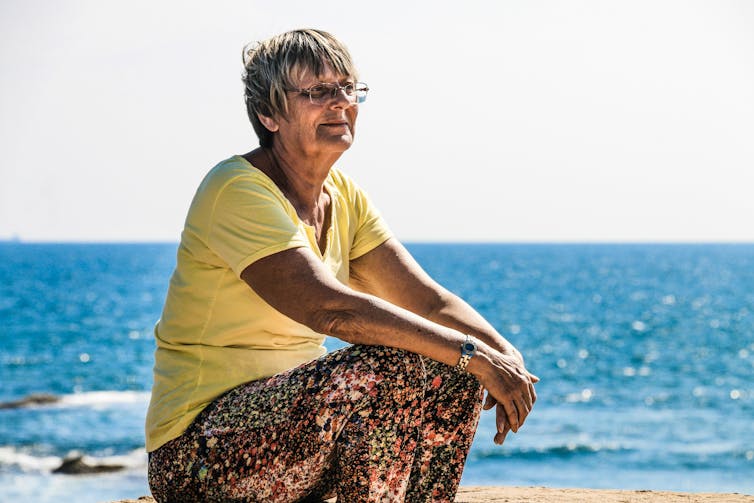
Since news of Olivia Newton-John’s death this week, many have paid tribute to her character, humble nature and cultural significance.

She also made a significant contribution to cancer survivorship and the ideal of treating the whole person, not just their disease.

Newton-John was diagnosed with breast cancer in 1992 and underwent a partial mastectomy and chemotherapy and breast reconstruction. Her cancer journey spanned three decades, and as she explained:

The whole experience has given me much understanding and compassion, so much so that I wanted to help others going through the same journey.

Bringing our attention to cancer

Getting the community mobilised around difficult topics like cancer can be tough. Celebrities – and their experience of illness and healing – has become one of the most powerful means for mobilising action.

Olivia Newton-John was one of the first to share her experience of breast cancer with a wide audience and her advocacy opened the door for others such as Kylie Minogue and Angelina Jolie to share theirs.

Stories like theirs have mobilised cancer screening and research, prompting reflection and normalised the experience of living with cancer.


Read more:
Angelina Jolie has had a double mastectomy, so what is BRCA1?


The ‘alternative’ voices of cancer survivorship

The diverse approach Newton-John took to cancer treatment was a distinguishing part of her legacy. As she explained when establishing the Olivia Newton-John Cancer Wellness & Research Centre:

I did herbal formulas, meditation and focused on a vision of complete wellness.

Explaining her “pro cannabis” stance on 60 minutes in 2019, she reflected a growing recognition of community interest in diverse approaches to pain and symptom management, and how such community views often rub up against legal and regulatory constraints. Australia only legalised medicinal cannabis in 2016, and many reservations persist among the Australian medical community.

Being open about her experience, Newton-John gave voice to things which many many Australian cancer patients try, and believe in, but many in the medical community continue to push back on. In Australia, more than half of people living with cancer use alternative treatments over the course of their cancer journeys. Yet, alternative practices, including herbal products and medicinal cannabis, remain largely absent from mainstream cancer care. This risks putting mainstream medicine out of step with community beliefs.

As regularly noted, managing patient interest in “alternative” cancer care is a tricky area, but what is clear is that openness and frank discussions serve everyone best. A harm-reduction approach, which discusses and detects any dangerous side-effects or interactions, is safer than silencing what people living with cancer are doing or believe in.


Read more:
Physician heal thyself? After 4 years of treatment for stage 4 cancer I just wanted some encouraging words from my oncologist


Challenges to unhelpful cancer narratives

Cancer has suffered from a wide range misconceptions and misrepresentations. Ranging from ideas about cancer as a “death sentence”, or the idea that you either beat it or succumb to it. People often feel this does them a disservice.

People with cancer are so much more than a “cancer patient”, and they don’t want to be trapped in that frame. They can live well with cancer, without focusing entirely on trying to be cancer-free to the exclusion of all else. Newton-John emphasised this idea regularly.

Likewise, the expectation of “cancer heroics” is an all-consuming and regularly unhelpful cultural ideal. Sometimes “fighting” works and is needed, but in many contexts and particularly for long-term survivors, focusing on quality of life and wellness is critical.

This is likely why various alternative practices have gained traction, despite the slim evidence base for many. The world of “alternative terhapies” has tended to present to the community a more person-centred approach, regardless of whether this is actually achieved by many practitioners in practice.

Towards ‘survivorship’

Cancer “survivorship”, in its broadest sense, denotes a broad focus, inclusive of the mind, body and the social life of the person living with cancer, not merely their disease, symptoms or treatment side-effects.

Even two decades ago, with the almost exclusive emphasis placed on curative cancer treatment, treatment discovery, or post curative experiences. This overly disease-centred focus tended to marginalise the many people who will continue to live on with cancer, rather than beyond it.

Person-centred approaches, in their many forms, show considerable benefit, although there continues to be a diverse set of understandings about what it actually means. The broad principle of person-centredness is that we are much more than disease and this matters throughout all aspects of care. Our care needs to be structured around our beliefs, psychological and social needs and life experiences. This may sound simple, but it is often not a central part of the picture.

While we are making progress, as Newton-John was acutely aware, there is so much more to do in this realm. Based on our most recent estimates more than one million Australians alive today are either currently living with cancer or have lived with it. Strategies which help all of us touched by cancer to live well, whether cured or not, should be the priority moving forward.

While we must be careful not to push too far in the other direction – a cruel optimism which threatens to sideline the hard, sad and often difficult experiences of cancer – a balance is needed which we have not quite reached.

Olivia Newton-John’s death will likely be difficult for some living with cancer. Important survivorship stories, when they come to a close, are difficult. So, let’s not pretend. Endings are hard, but a life well lived it also something to celebrate.

The Conversation

Alex Broom receives funding from the ARC.

ref. Olivier Newton-John gave a voice to those with cancer and shifted the focus to the life of survivors – https://theconversation.com/olivier-newton-john-gave-a-voice-to-those-with-cancer-and-shifted-the-focus-to-the-life-of-survivors-188444

Part of the Japanese revolution in fashion, Issey Miyake changed the way we saw, wore and made fashion

Source: The Conversation (Au and NZ) – By Peter McNeil, Distinguished Professor of Design History, UTS, University of Technology Sydney

Throughout his career, Japanese fashion designer Issey Miyake, who has died of cancer at 84, rejected terms like “fashion”.

But his work allowed much of the world to reimagine itself through clothing.

Born in Hiroshima in 1938, Miyake studied graphic design in Tokyo where he was influenced by the Japanese-American sculptor Isamu Noguchi and the black and white photography of Irving Penn.

As soon as the post-war restrictions barring Japanese nationals from travelling abroad were lifted, he headed to Paris, arriving in 1964.

There, the young designer apprenticed for eminent haute couture fashion houses Guy Laroche and Hubert de Givenchy. Such houses made expensive clothes that conformed to prevailing standards of etiquette. Miyake was to go well beyond that.

Miyake was there for the Paris student revolt of 1968 and was galvanised by the youth quake shaking all rules of society.

The ready-to-wear concept by a couturier had been launched just a few years earlier when Yves Saint Laurent created Saint Laurent Rive Gauche in late 1966.

The fashion system was changing and Miyake rose to the challenge.

Japanese fashion revolution

Miyake arrived in Paris shortly after Kenzo’s “Jungle Jap” clothes had made waves, with their bright colours and unexpected patterns based partly on Japanese artistic traditions.

The Japanese revolution in fashion was commencing.

Japanese designers including Rei Kawakubo for Comme des Garçons, Yohji Yamamoto and Issey – all born in the 1930s and 40s – rose to prominence in the 70s and showed in Paris.

All questioned Eurocentric views of fashion and beauty. The Japanese designers reversed the Western focus on symmetry and tidiness and adopted aspects of Japanese aesthetic systems, such as Yamamoto’s use of black with colours such as red, purple, cerise, brown and dark blue.

Thigh high laced suede boots worn over cotton pants and woven with a quilted look are worn with a full-sleeved lamb wool jacket
An early creation by Issey Miyake presented in New York City in 1972.
AP Photo

Miyake held his first show in New York in 1971 and in Paris in 1973. He integrated technology with tradition, exploring Japanese aesthetics and the uncut, untailored garment. He also commissioned high-tech textiles that influenced fashion around the world.

Miyake’s BODY series included the famous bustiers of plastic, rattan and resin in which the female body was re-imagined as a type of armour.

In February 1982 the prominent journal Artforum photographed a Miyake bustier on its cover.

It was the first time a contemporary art journal had featured fashion.

Covering the body

Throughout his career Miyake completely re-imagined the potential of textiles.

Working with his textile director Makiko Minagawa and Japanese textile mills, he began to create the famous Pleats collections: using thermally processed polyester textiles that are not pleated before sewing (the regular practice), but manufactured much larger, and then pleated in machines.

The Rhythm Pleats collection from 1989 was inspired by the French artist Henri Rousseau: Miyake took elements of the colour palette and the strange sculptural shells surrounding women in these paintings, a good example of how his influences were always abstract and suggestive.

His very commercial collection Pleats Please was launched in 1993.

The A-POC (A Piece of Cloth) collection (in collaboration with Dai Fujiwara, 1998) revolutionised clothing design and prefigured anxieties around the unsustainability of fashion and its attendant waste. Clothes were knitted in three dimensions in a continuous tube using computerised knitting technology as a whole and from a single thread.

The garment came in a cylinder and was later cut out by the wearer – there was no waste, as leftover sections became mittens, for example.


Read more:
Four clothing businesses that could lead us away from the horrors of fast fashion


Miyake and men

Miyake’s pneumatic collection in 1991 included knickerbocker trousers for men with plastic bladders and straws – men could inflate or deflate the clothes to suit.

It was the age of the AIDS crisis and attendant body wasting. Calvin Klein had responded with hyper-masculine underwear and hyper-masculine advertising. Miyake, on the other hand, tested the zeitgeist by suggesting we use clothes to make our bodies and appearances suit our needs.

Having worn his clothes myself for some time, I can testify for the liberation they provide. The jackets are unlined and embrace the body in unexpected ways. Sleeves might be manufactured so they create a pagoda shape on your arm and add dynamism to the body.

The colour palette is extraordinary and so different from a diet of sensible woollens or tweeds.

Computer-generated jacquard weaving creates subtle patterns only truly registered by closer looking. The textiles have an unexpected tactility next to the skin. Some of the garments are provided literally rolled in a ball. They weigh virtually nothing, meaning they liberate the traveller. Once unrolled and put on the body, they spring back to life.

There is a real sense that you, the wearer, animate these lifeless things: dressing is a performance and the clothes generate a reality that is both theatrical and practical. Although widely worn (there is a cliche all gallerists once lived in Miyake) people remain intrigued by them, wanting to touch them for themselves.

At the Issey Miyake Retrospective in Tokyo in 2016, I saw Miyake and very much wanted to go over and thank him for transforming the potential of fashion for women and men around the world, its material possibility and imaginative possibility.

I’d very much like to thank him for that now.


Read more:
How Japanese avant-garde ceramicists have tested the limits of clay


The Conversation

Peter McNeil does not work for, consult, own shares in or receive funding from any company or organisation that would benefit from this article, and has disclosed no relevant affiliations beyond their academic appointment.

ref. Part of the Japanese revolution in fashion, Issey Miyake changed the way we saw, wore and made fashion – https://theconversation.com/part-of-the-japanese-revolution-in-fashion-issey-miyake-changed-the-way-we-saw-wore-and-made-fashion-188523

Marape continues his leadership in PNG with unanimous majority

By Gorethy Kenneth of the PNG Post-Courier in Port Moresby

In a historic first, the Papua New Guinea Parliament has installed Pangu Pati leader and Tari-Pori MP James Marape by a unanimous majority as the country’s ninth Prime Minister.

Immediately, in his address to the House and streamed live to the nation, Marape stuck to his belief in the mantra “Take Back PNG” and his vision to make every Papua New Guinean rich in the “richest black Christian nation on earth”.

While Marape was making his rambling victory speech to the nation, a rousing message filtered through that a second woman had successfully been elected to Parliament.

Kessy Sawang was declared winner of the Rai Coast seat and she joins Central Governor Rufina Peter in Parliament.

Marape was elected unopposed by 97 MPs in the House which included eight opposition MPs, becoming the first Prime Minister to be voted in unopposed since 1975 — the year of independence.

Only his sworn adversary and former PM Peter O’Neill abstained from voting by walking out of the chamber before the vote was taken.

O’Neill later said it was a matter of “conscience” that forced him to walk out the chamber.

Elevated to top job
The first time Marape became Prime Minister was on May 30, 2019, when, through a serious of twists and turns — including instigating a vote of no confidence which forced O’Neill to resign as PM — Marape was elevated to the top post by a parliamentary majority of 10-8, another historic moment in PNG’s oft-times fractured Parliament.

The nine MPs of O’Neill’s People’s National Congress (PNC) party who voted for Marape were: Pomio MP Elias Kapavore, Milne Bay Governor Gordon Wesley, Alotau MP Ricky Morris, Aitape Lumi MP Anderson Mise, Ambunti Drekikir MP Johnson Wapunai, Central Governor Rufina Peter, Ijivitari MP David Arore, Kiriwina-Goodenough Douglas Tomuriesa and Kandrian Gloucester MP Joseph Lelang.

After a slight mix up of the standing orders on the person nominating a PM, East Sepik Governor Allan Bird’s nomination was superseded by Manus Governor Charlie Benjamin and seconded by Western Governor Toboi Yoto.

The PNG Post-Courier front page today 10082022
The PNG Post-Courier front page today. Image: PNGPC screenshot APR

PNC party leader Peter O’Neill walked out of the chamber as Speaker Job Pomat read out the notice and calling for nominations for Prime Minister.

Marape said that his election was for the people and that “whatever happened yesterday, Pangu would always put the country’s interest first”.

“I seek to anchor my statement on the remarks [made on 30 May 2019]. I wanted Papua New Guinea in the next decade to be a K200 billion (NZ$90 billion) economy.

“I wanted Papua New Guinea to be the Richest Black Christian Nation on Earth. My statement recognised that our political forebears have ushered in political independence in 1975,” he said.

‘Crafted legislation’
“They crafted legislation, built institutions, wrote policies and established relationships to deliver us political independence.”

But Marape’s speech failed to hit home with ordinary Papua New Guineans, leaving the population pondering what to expect in the country reeling from high unemployment, huge law and order issues and rising prices of basic store goods.

As Pangu and its coalition hunker down to prepare their 100-day plan, Papua New Guineans are taking to social media to raise simple questions like “when will our children return safely back to school?”, “a bag of five kilograms of rice is now K20? (NZ$9)”, and “when will the minimum wage of K3.50 (NZ$1.60 an hour) be raised to correspond with the costs of living which has spiked as a result of inflation?”.

Some are venting their anger at the lack of medicines in the biggest referral hospitals in the country — including Port Moresby General Hospital, where patients have to fork out their own money to buy panadol.

Marape continued: “This generation of leaders must deliver economic independence to Papua New Guinea.

“That Pangu has secured the mandate from Papua New Guinea can only mean that our people in the length and breadth of this country support this intention.

“It is my humble privilege to address this house as the Prime Minister. In 2019, I secured the mandate to be Prime Minister on the floor of Parliament.

‘Three very hard years’
“I served for three very hard years with the support of a lot of you.

“Today, I have secured the mandate from the people of Papua New Guinea.

“They have empowered, emboldened, and mandated me and the party to lead to be in government.

“I am privileged to lead a coalition of likeminded leaders to be your government.

“The 2022 national general election brings our country to the cusp of 50 years of nationhood.

“hree years before we turn 50 years old as a nation, Pangu gets a further opportunity to deal with some fundamental issues confronting our country.

‘Fair, healthy, happy society’
“The onus and responsibility now rest on each member of Parliament to rise up to the occasion and renew our commitment to pass on a better Papua New Guinea to the next generation.

“We are consistent with the Vision 2050 on the development phases of our country to be smart, wise, fair, healthy, and a happy society by 2050.

“It aligns nicely in that we are called to deliver economic enablers to fast-track development.

“Fastrack we must, as we do not have the luxury of time to wait around for things to happen at their pace.”

Gorethy Kenneth is a senior journalist with the PNG Post-Courier. Republished with permission.

Print Friendly, PDF & Email

Article by AsiaPacificReport.nz

Journalism training and development vital for better Fiji elections reporting

By Geraldine Panapasa, editor-in-chief of Wansolwara News in Suva

Addressing the training development deficit in the Fiji media industry can stem journalist attrition and improve coverage of election reporting in the country, says University of the South Pacific journalism coordinator Dr Shailendra Singh.

Speaking during last week’s launch of the National Media Reporting of the 2018 Fijian General Elections study in Suva, Dr Singh said media watch groups regarded Fiji’s controversial media law as having a “chilling effect on journalism” and “fostered a culture of media self-censorship”.

Dr Singh, who co-authored the report with Dialogue Fiji executive director Nilesh Lal, said scrapping or reforming the 2010 Media Industry Development Authority Act was crucial to “professionalising journalism”.

“The Act does nothing for training and development or journalist attrition. In fact, the Act may have exacerbated attrition,” he said.

This situation, Dr Singh said, highlighted the importance of training and development and staff retention, which were longstanding structural problems in Fiji and Pacific media.

“This underlines the role of financial viability and newsroom professional capacity in news coverage.”

He said two core media responsibilities in elections were creating a level playing field and acting as a public watchdog.

“It seems doubtful that these functions were adequately fulfilled by all media during reporting of the 2018 Fijian general elections.”

Advertising spread
Dr Singh said the research also recommended the even distribution of state advertising among media organisations as well as the allocation of public service broadcasting grants fairly among broadcasters to minimise financial incentives to report overly positively on any government.

According to the report, the FijiFirst Party received the most media coverage during the 2018 Fiji general elections and this was expected given its ruling party status.

However, variance in coverage tone and quantity appeared too high.

“The largely positive coverage of the ruling FijiFirst party could be deemed irregular. It questions certain media’s ability to hold power to account,” Dr Singh said.

“Under a stronger watchdog mandate, ruling parties face greater scrutiny, especially in election time. Instead, media coverage put challenger parties more on the defensive which is curious.”

He said challenger parties were forced to respond to allegations in news stories and were grilled more than the incumbent during debates.

“It should be other way around. In such situations the natural conclusion is journalist bias but only to a certain extent,” he said.

Direct political alignment
While the report found that certain media outlets in Fiji seemed to privilege some political parties and issues over others, distinguished political sociologist and Pacific scholar Professor Steven Ratuva said this could be due to several reasons such as direct political and ideological alignment of the media company to a political party or conscious and subconscious bias of journalists and editors.

Professor Steven Ratuva
Professor Steven Ratuva … “Bias is part of human consciousness and sometimes it is explicit and sometimes it is implicit and unconscious.” Image: University of Canterbury

“Bias is part of human consciousness and sometimes it is explicit and sometimes it is implicit and unconscious. This deeper sociological exploration is beyond the mandate of this report,” Professor Ratuva said in the foreword to the report.

“Election stories sell, especially when spiced with intrigue, scandals, mysteries, conspiracies and warring narratives.

“The more sensational the story the more sellable it is. The media can feed into election frenzies, inflame passion and at times encourage boisterous political behaviour and prejudice which can be socially destructive.

“The media can also be used as a means of sensible, intellectual and calm engagement to enlighten the ignorant and unite people across cultures, religions and political ideologies.”

He said keeping an eye on what the media did required an open, analytical and independent approach and this was what the report attempted to do.

Research findings
The research found that after FijiFirst, the larger and more established opposition parties SODELPA and NFP, were next in terms of the quantity of coverage, but were more likely to receive a lesser amount of positive coverage and at times found themselves on the defensive in responding to FijiFirst allegations, rather than being principles in the stories.

The smaller, newer parties had to content themselves with marginal news attention and this was generally consistent across four of the five national media that were surveyed — the Fiji Sun, FBC (TV and radio), Fiji Television Limited and Fiji Village.

“The only exception was The Fiji Times, whose coverage could be deemed to be comparatively less approving of the ruling party and also less critical of the challenger parties,” the report found.

“Besides comparatively extensive and favourable coverage in the Fiji Sun, FijiFirst made more appearances on the major national television stations, FBC and Fiji One, as well as on the CFL radio stations and news website.”

The report noted that even in special information programmes where news media allowed candidates extended time/space to have their say, the FijiFirst representatives enjoyed a distinct advantage over their opposition counterparts in the two national debates, with regards to the number of questions asked, the nature of the questions, and the opportunity to respond.

“When the two major opposition parties were in the media, it was often in order to respond to allegations by the ruling party, or to defend themselves against negative questions,” the report noted.

“The results could explain why the government accuses The Fiji Times of anti-government bias, and the opposition blame the Fiji Sun and FBC TV of favouring the government.”

However, there were other factors other than media/journalist bias that could be attributed to the lack of critical reporting.

“These could range from the news organisation’s and/or newsroom’s partiality towards the ruling party politicians and its policies. The reporting could also be affected by the inexperience in the national journalists corps to report the elections in a critical manner.”

This observation, the report highlighted, was supported by “issues balance” results indicating that key national issues, such as the economy, were understated.

The focus was instead on election processes, procedures and conduct. Another factor in the reporting could be news media’s financial links to the government.

Election reporting
As Fiji prepares for its next general election, Dialogue Fiji’s Nilesh Lal said it was important to put the spotlight on factors that impinged on an even electoral playing field.

“Given the importance of news media in disseminating electoral information and shaping public opinion, it can profoundly influence electoral outcomes, and therefore needs to come under scrutiny,” he said.

“There may also be imperatives to consider safeguards against the negative impacts of unequal coverage of electoral contestants through legislating as other countries, like the US, for instance, have done.

“Alternatively, media organisations can self-regulate by instituting internal guidelines for election reporting. A good example is the BBC’s Guidelines on election coverage. Another alternate could be the formation of an independent commission/committee made up of media organisation representatives and political parties representatives that can set rules and quotas for election coverage.

“For example, in the UK, a committee of broadcasters and political parties reviews the formula for allocation of broadcasting time, at every election.”

Lal said the purpose of the report was not to accuse any media organisation of having biases but rather to show that inequitable coverage of electoral contestants was a problem in Fiji that required redress at some level if “we are sincere about improving the quality of democracy in Fiji”.

He said the co-authors hoped the report would initiate some much-needed public discourse on the issue of equitable coverage of elections by media organisations.

Wansolwara is the student journalist newspaper of the University of the South Pacific. It collaborates with Asia Pacific Report, which prioritises student journalism.

Print Friendly, PDF & Email

Article by AsiaPacificReport.nz

How complex is your life? Computer scientists found a way to measure it

Source: The Conversation (Au and NZ) – By Karlo Doroc, PhD Candidate in Decision Science, Centre for Brain, Mind and Markets, The University of Melbourne

Unsplash/Susan Q Yin

Nobel laureate economist Richard Thaler famously quipped:

People aren’t dumb, the world is hard.

Indeed, we routinely encounter problems in our everyday lives that feel complex – from choosing the best electricity plan, to deciding how to effectively spend our money.

Australian pay hundreds of millions of dollars each year to comparison websites and consumer-focused groups such as CHOICE to help them make decisions about products and services.

But how can we objectively measure how “complex” our decisions really are? Our recently published research offers one potential way to do this, by drawing on concepts from computer and systems science.

Why bother measuring complexity?

There are several factors when it comes to measuring complexity in any scenario. For instance, there may be a number of options to choose from and each option may have several different features to consider.

Suppose you want to buy jam. This will be easy if there are only two flavours available, but difficult if there are dozens. Yet choosing an electricity plan would be much harder even with just two options.

In other words, you can’t isolate one particular factor when trying to determine the complexity of something. You have to consider the problem as a whole – and this requires a lot more work.

The ability to accurately measure complexity could have a wide range of practical applications, including informing the design of:

  • regulation on how complex products should be

  • easy to navigate digital systems including websites, apps and smart device programs

  • easy to understand products. These may be financial products (superannuation and insurance plans, credit card schemes), physical products (devices) or virtual products (software)

  • artificial intelligence (AI) that offers advice when problems are too complex for humans. For example, a scheduler AI may let you book meetings yourself, before jumping in to suggest optimal meeting times and locations based on your history.

How we study human decision-making

Computer science can help us solve problems: information goes in and one (or more) solutions come out. However, the amount of computation needed for this can vary a lot, depending on the problem.

We and our colleagues used a precise mathematical framework, called “computational complexity theory”, that quantifies how much computation is needed to solve any given problem.

The idea behind it is to measure the amount of computational resources (such as time or memory) a computer algorithm needs when problem-solving. The more time or memory it needs, the more complex the problem is.

Once this is established, problems can be categorised into “classes” based on their complexity.

In our work, we were particularly interested in how complexity (as determined through computational complexity theory) corresponds with the actual amount of effort people must put into solving certain problems.

We wanted to know whether computational complexity theory could accurately predict how much humans would struggle in a certain situation and how accurate their problem-solving would be.

Testing our hypothesis

We focused on three types of experimental tasks, for which you can see examples below. All of these task types sit within a broader class of complex problems called “NP-complete” problems.

Here are example cases for the three experimental tasks, each of which required a yes or no answer from our research participants.
Juan Pablo Franco Ulloa/Karlo Doroc/Nitin Yadav

Each task type requires a different ability to perform well in. Specifically:

  • “satisfiability” tasks require abstract logic
  • “travelling salesperson” tasks require spatial navigation skills and
  • “knapsack” tasks require arithmetic.

All three are ubiquitous in real life and reflect day-to-day problems such as software testing (satisfiability), planning a road trip (travelling salesperson), and shopping or investing (knapsack).

We recruited 67 people, split them into three groups, and made each group solve between 64-72 different variations of one of the three types of task.

We also used computational complexity theory and computer algorithms to figure out which tasks were “high complexity” for a computer, before comparing these with the results from our human problem solvers.

We expected – assuming computational complexity theory is congruent with how real people solve problems – that our participants would spend more time on tasks identified as being “high complexity” for a computer. We also expected lower problem-solving accuracy on these tasks.

In both cases that’s exactly what we found. On average, people did twice as well on the lowest complexity cases compared to the highest complexity cases.

Computer science can measure ‘complexity’ for humans

Our results suggest effort alone is not enough to ensure someone does well on a complex problem. Some problems will be hard no matter what – and these are the spaces in which advanced decision aids and AI can shine.

In practical terms, being able to gauge the complexity of a wide range of tasks could help provide people with the necessary support they need to tackle these tasks day-to-day.

The most important result was that our computational complexity theory-based predictions about which tasks humans would find harder were consistent across all three types of task – despite each requiring different abilities to solve.

Moreover, if we can predict how hard humans will find tasks within these three problems, then it should be able to do the same for the more than 3,000 other NP-complete problems.

These include similarly common hurdles such as task scheduling, shopping, circuit design and gameplay.

Now, to put research into practice

While our results are exciting, there’s still a long way to go. For one, our research used quick and abstract tasks in a controlled laboratory environment. These tasks can model real-life choices, but they’re not representative of actual real-life choices.

The next step is to apply similar techniques to tasks that more closely resemble real-life choices. For instance, can we use computational complexity theory to measure the complexity of choosing between different credit cards?

Progress in this space could help us unlock new ways to aid people in making better choices, every day, across various facets of life.


Read more:
We’ve crunched the numbers in McDonald’s Monopoly challenge to find your chance of winning


The Conversation

Karlo Doroc receives funding from a University of Melbourne Graduate Research Scholarship from the Faculty of Business and Economics, a Kinsman Scholarship, and Australian Government Research Training Program.

ref. How complex is your life? Computer scientists found a way to measure it – https://theconversation.com/how-complex-is-your-life-computer-scientists-found-a-way-to-measure-it-187997

Southern conifers: meet this vast group of ancient trees with mysteries still unsolved

Source: The Conversation (Au and NZ) – By Gregory Moore, Senior Research Associate, School of Ecosystem and Forest Sciences, The University of Melbourne

Huon pine in Tasmania Shutterstock

When you think of “conifers”, tall, conical shaped trees often found in public parks or front yards may spring to mind. But these impressive trees are far more fascinating than you may have realised, as they represent just one piece of an unsolved botanical puzzle.

These popular garden trees are from the northern hemisphere. But we also have conifers in the southern hemisphere, called “southern conifers”, found largely in Australia, South America, New Zealand and New Caledonia.

A little detective work reveals that southern conifers evolved in Gondwana, and long ago separated from coniferous relatives in the northern hemisphere.

They appeared around 200 million years ago, before the first flowering plants evolved, sharing land with the dinosaurs. One example is the Wollemi pine, which was famously saved in a secret firefighting operation during the 2019-2020 bushfires.

Unlike the introduced conifer garden trees, southern conifers are neither as well-known nor as popular with Australians as they should be. So let me help you get to know them a little better.

These conical trees may be what spring to mind when you think of ‘conifer’
Shutterstock

Famous ‘living fossils’

Northern conifers are mostly evergreen, woody trees with needle-like leaves, while southern conifers tend to have broad leaves like flowering trees.

Trees in the genus Araucaria, including the monkey puzzle, bunya bunya, hoop pine and Norfolk Island pine, are southern conifers. As are most members of the Podocarp family (Huon pine, celery top pine and plum pine) and 22 species of Agathis (including the majestic Queensland and New Zealand Kauri trees).

Southern conifers often possess cones, such as the Araucaria and Agathis species. Sometimes, these cones are very large and heavy that can cause serious injury if they fall from high in the tree onto an unsuspecting passerby.


Read more:
Backyard gardeners around the world are helping to save Australia’s deeply ancient Wollemi pine


Some southern conifers can be over 30 metres high. Others, such as the Kauri and Huon pine, are renowned for their longevity. They can live for centuries or, for the Huon pine, perhaps over an astonishing ten millennia.

While all species of southern conifers are of ancient origin, the Wollemi pine is famous for its status as a “living fossil”. Of course, this is a contradiction in terms – a fossil is any evidence of past life.

But in this context, the term refers to organisms that appeared in the fossil record long ago, were then thought to be extinct, before a living version was discovered. We are curious as to how they successfully hid for so long and may imagine a link with a distant, different past.

Monkey Puzzle tree, Araucaria Araucana
Wikimedia Commons, CC BY-SA

So, the question botanists have yet to answer is: how distant are the north and south relatives?

When flowering plants evolved

Many southern conifers show little resemblance to the “true conifers” of the northern hemisphere, such as pine, cedar, spruce and juniper.

All conifers are gymnosperms, which means they have naked seeds and cones. They evolved from an ancient group of seed ferns, before the fragmentation of the super continent Pangaea.

These seed ferns were a diverse group. As Pangaea divided into Gondwana in the south and Laurasia in the north, the seed ferns began to diversify, giving rise to northern and southern seed ferns.

Botanists have long known that northern conifers and other gymnosperms evolved from these northern seed ferns. But what of the southern seed ferns? They remained a bit of a mystery until the 1970s.

Cones of a spruce tree.
Shutterstock

One group of southern seed ferns constituted what’s now called the Glossopteris flora, which was of Gondwanan origin. From this diverse group of Glossopterids, flowering plants in all their variety evolved.

This solved one of the great riddles of botany – the origin of the flowering plants which had puzzled scientists, particularly in the northern hemisphere until the early 1980s.


Read more:
Where the old things are: Australia’s most ancient trees


It’s likely southern conifers also evolved from these southern seed ferns. Some may have arisen from other members of the Glossopteris group, too, or perhaps their relatives.

If this was the case, then the southern conifers would be more closely related to flowering plants than to the true conifers of the north.

When the trees were in fashion

After millions of years of evolution, southern conifers became fashionable with gardeners in the 1800s.

Their novelty and striking form captured the interest of the educated and wealthy landowners of Europe and they were planted as status symbols on estates and in public gardens.

In Australia they were planted in large private gardens and in many public parks from the mid 1800s to World War 1, after which their popularity waned.

You can see many of these fine trees growing still in large gardens and public parks across Australia, such as botanic gardens in most Australian states, as well as in smaller public parks and gardens of older suburbs and inland towns. Their striking, almost geometrical, form catches the eye.

Southern conifers are known for their resilience, are rarely affected by pests or disease and, despite their large size, cause few problems with paths, roads, buildings and other urban infrastructure. Probably because they were given plenty of space to grow when first planted.

We still have much to learn

It takes time to solve some of these botanical puzzles. Evolution is a sophisticated process that has led to very complex relationships between plant groups.

In future we may well recognise that southern conifers are not really conifers at all. Perhaps, the links between the two groups go so far back in time, the relationship is too distant for both southern and true conifers to be called conifers at all.

In any case, these mysterious trees have persisted through vast periods of time and changing environments – they have much to teach us about plant responses to climate change.


Read more:
Dinosaur food and Hiroshima bomb survivors: maidenhair trees are ‘living fossils’ and your new favourite plant


The Conversation

Gregory Moore does not work for, consult, own shares in or receive funding from any company or organization that would benefit from this article, and has disclosed no relevant affiliations beyond their academic appointment.

ref. Southern conifers: meet this vast group of ancient trees with mysteries still unsolved – https://theconversation.com/southern-conifers-meet-this-vast-group-of-ancient-trees-with-mysteries-still-unsolved-182600

How ‘fast’ politics has left the NSW government staring into the electoral abyss

Source: The Conversation (Au and NZ) – By Andy Marks, Pro Vice-Chancellor, Strategy, Government and Alliances, Western Sydney University

The 1973 Watergate Committee hearings ran for 51 days. The televised revelations drew a huge audience. The pressure built with slow, devastating intensity, devouring then US President Richard Nixon’s agenda, eventually leaving him no option but to fall on his sword.

While not quite a Watergate moment, it is hard to see how the current NSW parliamentary inquiry into the appointment of the New York trade commissioner will end. Approaching day 49 of proceedings, the inquiry has already prompted the resignation of NSW Liberal deputy leader Stuart Ayres, with more fallout a distinct possibility.

Internal Liberal-National Coalition critics of Dominic Perrottet’s management of the issue are reportedly “furious”. Their wrath centres on two issues. First, the premier’s inability to anticipate public reaction to the appointment. Second, his incapacity to put an end to the controversy.

The latter point is telling, as it goes to heart of the most prized skill in modern politics: tempo.

Regaining control of political tempo is possibly Perrottet’s only chance of securing another term for his 12-year-old government at the March 2023 election against a reinvigorated Labor opposition. Finding your rhythm, let alone dictating it, is not as easy as it sounds. Trust me. In a former life I was a drummer of mild renown.

Political tempo is an interesting phenomenon. Elected officials do everything they can to control it, but it is a dark and fleeting art. In Australian politics of old, slowing down the media and parliamentary agenda was a virtue; a marker of reasoned, deliberative and informed leadership.


Read more:
NSW government slides further into trouble as Perrottet struggles for clear air


Asked on an airport tarmac in 1965 by a clamouring media pack whether Labor would back then Prime Minister Robert Menzies’s commitment of Australian troops to Vietnam, Labor leader Arthur Calwell calmly refused to answer.

Days later, on the floor of parliament, he articulated Labor’s prescient rejection of the decision. It was a moment that restored his party’s moral compass and set a tempo towards eventual electoral victory eight years later under Whitlam.

The art of slow politics has been lost. In recent decades, controlling the daily media agenda has become the goal. The timing of press releases, the staging of doorstop interviews, speaking points, three-word slogans and zingers have become the hallmark of fast politics. Perrottet, like other contemporary leaders, is compelled to move, and accordingly be judged, at this speed.

A protracted inquiry is kryptonite to fast politics.

With no end in sight to the upper house inquiry, the NSW Coalition is contending with daily, relatively unpredictable attacks on its integrity. This comes in the wake of the electoral defeat of its federal colleagues, largely over questions of integrity and trust.

For Premier Dominic Perrottet, the looming NSW election means he desperately needs to wrest back control of the political agenda.
Dan Himbrechts/AAP

The premier has attempted to counter this perception by initiating his own inquiry – by former public service commissioner Graeme Head – to “ensure the utmost independence and public confidence in the process”. Public confidence is indeed the critical factor.

But the concurrent upper house inquiry has no patience for slow politics. It makes its own case for the public’s confidence. It marches on, drowning out the premier’s internal inquiry, with a cavalcade of political and “private citizen” appearances setting their own tempo, making their own claims, and marking out their own versions of events.

In this scenario, the premier’s attempts at process and transparency are countered by the unpredictable and meandering events of hearings he can neither predict nor counter.

The political agenda has been lost, and tempo – of any discernible rhythm – seems impossible to restore.


Read more:
View from The Hill: Barilaro keeps Nationals in the tent; koalas stay in limbo


It is a dire position for any government to find itself in, particularly at this late stage of the electoral cycle. It may be that an abandonment of prior positions is the only option. A reset.

To a degree, the NSW Labor opposition has beaten the Coalition on the reset front. Opposition Leader Chris Minns has vowed to “abolish” the controversial trade postings should Labor win office. It is not too late for the premier to make the same commitment.

Matching Labor’s political tempo on this issue would seem anathema to many Coalition strategists, and their Labor counterparts. Careers in modern politics have been forged through steadfast political differentiation, conflict, and dogged combat.

The federal poll tells us voters might be tiring of political cacophony. Truly “new” politics in NSW might just be found in synchronicity.

The Conversation

Andy Marks does not work for, consult, own shares in or receive funding from any company or organisation that would benefit from this article, and has disclosed no relevant affiliations beyond their academic appointment.

ref. How ‘fast’ politics has left the NSW government staring into the electoral abyss – https://theconversation.com/how-fast-politics-has-left-the-nsw-government-staring-into-the-electoral-abyss-188429

Thinking about freezing your eggs to have a baby later? Here are 3 numbers to help you decide

Source: The Conversation (Au and NZ) – By Karin Hammarberg, Senior Research Fellow, Global and Women’s Health, School of Public Health & Preventive Medicine, Monash University

Jeffery Erhunse/Unsplash

Egg freezing is promoted as an empowering option for women who want to stop the biological clock and improve their chance of having a baby later in life. But they need to know it’s more like a lottery than an insurance policy.

Fertility declines with age. To avoid age-related infertility, women increasingly turn to elective egg freezing. Advertising on IVF clinic websites and social media promote this as an insurance policy that allows women to start a family when the time is right for them.

But the reality is there’s no guarantee of a baby. The procedure is expensive and not risk-free. Most women need more than one egg collection for a reasonable chance of having a baby down the track. And, for a range of reasons, many women won’t use their stored eggs.

Typically, women who freeze their eggs are well educated, financially secure single women in their mid to late 30s. And contrary to the common stereotype that women freeze their eggs to advance their career or for other reasons to do with their personal fulfilment, the most common reason is they don’t have a partner or have a partner who is unwilling to commit to parenthood or is “not ready” to have children.


Read more:
Why women choose to freeze their eggs – new research


Quality of information on clinic websites

An assessment of the quality of the information about elective egg freezing on 21 Australian and New Zealand IVF clinic websites showed poor quality overall and a lot of room for improvement.

Only one clinic addressed the question about whether the data presented on the website were based on the clinic’s own experience or on published data from other clinics.

None of the clinics clarified if the data they gave related specifically to elective egg freezing, where most women are in their mid to late 30s, or if the data related to egg freezing in the context of egg donation, where eggs are retrieved from younger women with greater fertility potential.

Only two websites quoted the chance of having a baby as a result of elective egg freezing and only six websites provided information about cost.

Woman searches the internet on a laptop
The data provided about elective egg freezing is often poor quality.
Christin Hume/Unsplash

Since we know people’s first port of call for health information is the internet, it’s possible this poor quality information – combined with the often upbeat and emotive images on clinic websites – can give women a false impression of what is possible with elective egg freezing.


Read more:
Egg freezing is on the up – but new research raises questions about how clinics advertise


Chances of success

So, what is the chance of having a baby with frozen eggs? These three numbers will largely determine your chance.

1) Your age when you freeze your eggs

To help women decide if and when to freeze their eggs, American scientists developed a prediction model which shows that for a 50%, 80% or 95% chance of a baby from frozen eggs a woman aged 35 or less needs to freeze six, 14, and 30 eggs respectively.

But for a woman aged 39, this goes up to 15 eggs for a 50% chance, 33 eggs for an 80% chance and 70 eggs for a 95% chance.

2) The number of eggs stored

Egg freezing involves a course of hormone injections to stimulate the ovaries to produce multiple eggs, ultrasound and blood tests to monitor the progress, and when the eggs are mature, retrieving them in a transvaginal ultrasound-guided procedure under light anesthetic.

The retrieved eggs are stored in liquid nitrogen until the woman returns to use them.

So, how many eggs can women expect from each egg retrieval?

According to data from all IVF clinics on Victoria in 2020, the average number of eggs collected per egg retrieval was 13 for women aged less than 35 years and ten for women aged 35-39 years.

If we apply these numbers to the model, women in their mid to late 30s will likely need at least three egg retrievals for an 80% chance of having a baby from frozen eggs.

Woman in mask reads while in a medical waiting room
Older women generally have fewer eggs retrieved.
Shutterstock

3) How many cycles you can afford?

Each egg retrieval process costs between A$7,000 and $8,000 and unlike IVF, there is no Medicare rebate.

Based on the data above, an average 35-year-old woman can expect to pay $14,000-$16,000 and an average 38-year-old woman $21,000-$24,000 to store enough eggs for an 80% chance of a baby.

And if you return to use those eggs, you will need to pay to thaw them and inseminate them to create embryos. That process will add thousands to the overall cost.

What happens after freezing?

The longest follow-up study so far looked at the return rate among women who had stored their eggs for more than a decade. It found less than 40% had returned to use their eggs.

The most comprehensive data on what happens when eggs are thawed comes from the United States, where researchers calculated that for women under the age of 35, 41 eggs needed to be thawed for one live birth. This increased to 99 eggs for women aged between 38 and 40.


Read more:
Half of women over 35 who want a child don’t end up having one, or have fewer than they planned


Women need the facts to make informed decisions

Elective egg freezing is taking off as a reproductive choice, which women are increasingly turning to for a range of reasons. They deserve:

  • comprehensive information about all the pros and cons of elective egg freezing
  • knowledge about the potential risks, including ovarian hyperstimulation syndrome (OHSS), a potentially serious condition caused by an excessive physical response to the hormone stimulation
  • transparency around the clinic’s own experience and track record
  • personalised estimates of how many eggs they need to freeze to have a reasonable chance of having a baby down the track.

Women need factual and realistic information about what is possible with elective egg freezing to make informed decisions and manage their expectations.

The Conversation

Karin Hammarberg works for the Victorian Assisted Reproductive Treatment Authority

ref. Thinking about freezing your eggs to have a baby later? Here are 3 numbers to help you decide – https://theconversation.com/thinking-about-freezing-your-eggs-to-have-a-baby-later-here-are-3-numbers-to-help-you-decide-187845

‘Unacceptable costs’: savanna burning under Australia’s carbon credit scheme is harming human health

Source: The Conversation (Au and NZ) – By Penelope Jones, Research Fellow in Environmental Health, University of Tasmania

Shutterstock

Savanna burning projects in northern Australia provide economic benefits to Indigenous communities and claim to reduce greenhouse gas emissions. But our research suggests smoke from these projects is harming human health.

Northern Australia’s savannas cover about 25% of Australia’s land mass. They’re among the most flammable regions in the world and comprise 70% of Australia’s fire-affected area each year.

Savanna fire management involves strategically burning grasslands early in the dry season, purportedly to reduce the chance of large, intense, more carbon-intensive fires later in the season. Under Australia’s Emissions Reduction Fund, land managers who undertake savanna burning receive financial rewards in the form of carbon credits.

But our research, focused on Darwin, has shown savanna burning under the fund is making air pollution worse. A review of the fund now underway must consider these unacceptable costs to human health.

aerial view of Darwin showing apartment buildings, trees and roads
The research focused on air pollution in Darwin.
Shutterstock

The Top End’s smoke problem

Savanna fire management is currently a topic of substantial global interest – much of it stemming from its potential to reduce carbon emissions.

The underlying premise is that early dry season burning releases fewer emissions than late dry season burning. This is because the fuel is moister and weather conditions milder — hence fires will be less extensive, less fuel will combust and less carbon will be released.

In Australia, savanna burning programs for carbon abatement were developed in the mid-2000s and integrated into the carbon market. Land managers are offered financial incentives to burn large amounts of savanna before the end of July each year.

The scheme has proved popular: registered projects now cover some 25% of Australia’s 1.2 million km² tropical savannas, including 55% of land within 500km of Darwin.

Australia now touts itself as a world leader in savanna burning. We are sharing the practice with other regions around the world, and savanna burning programs linked to carbon markets have been proposed elsewhere.

Yet the smoke pollution consequences of such programs are rarely considered. In Australia’s Top End, for example, thick and prolonged smoke blankets communities every dry season. Darwin, a city of 158,000 people, regularly exceeds the Australian air quality standard for particulate matter.

In Darwin, smoky days bring more hospital admissions for lung and heart disease, and more emergency department presentations for asthma. These impacts disproportionately affect Indigenous people.

Almost all Darwin’s particulate pollution is caused by landscape fires. In the early dry season, almost all of this is generated by prescribed burning – and there’s been a marked increase in burning in recent years linked to carbon abatement schemes.


Read more:
We blew the whistle on Australia’s central climate policy. Here’s what a new federal government probe must fix


sky filled with black smoke above grass and flames
Almost all Darwin’s particulate pollution is caused by landscape fires.
Dean Lewins/AAP

What our research found

Our research considered the relationship between prescribed burning and smoke pollution in Darwin from 2004 to 2019.

We first assessed the very small particles found in smoke known as PM2.5. We then analysed fire activity within a 500km radius, and assessed the links between pollution, weather and fire.

The results showed air quality worsened in Darwin in the early dry season (particularly in June and July), with an increase in the annual number of severely polluted days.

Perhaps surprisingly, air quality did not change substantially in other seasons. In other words, shifting savanna burning to the early dry season did not appear to lead to better air quality later in the season.

Our findings highlight a complex story. Despite a substantial expansion of savanna burning for carbon abatement over our study period, net annual PM2.5 concentrations in Darwin did not decline. In fact, there was an increase in the number of times the national air quality standard was exceeded.

So what’s driving these results? One important factor involves large areas of savanna burned for carbon abatement to the southeast of Darwin in the early dry season. At that time of year, a steady south-easterly trade wind hits Darwin, bringing much of the smoke from these fires with it.

Fuel dynamics may also be at play. Native and non-native grasses which are highly flammable in the early dry season have been expanding on frequently burned savannas. Higher temperatures may be drying fuel out earlier in the dry season. These factors may make early dry season fires as extensive and intense as savannas burnt later in the season.

Our research comes with caveats. For example, we drew only broad inferences about the geographic sources of smoke over Darwin. Notwithstanding this, our results clearly demonstrate Darwin’s already significant air quality problem is worsening, rather than improving, in association with increased early dry season burning.


Read more:
Air pollution causes more than 3 million premature deaths a year worldwide


people sit and walk through leafy shopping street
Darwin’s already significant air quality problem is worsening, rather than improving.
Shutterstock

A balancing act

None of this means savanna burning should cease, nor that traditional owners should not be paid to manage fire on country. But it does mean policies should be designed so unintended harm is minimised and the benefits are maximised.

Policymakers must consider how to regulate burning to avoid smoke pollution exposure. In Darwin, particular attention may be needed in locations southeast of the city. One solution may be to regulate how much smoke can be released in a specific area on a given day.

Other factors should be considered too. For example, savanna burning in Australia may risk harming biodiversity.

But the Emissions Reduction Fund is a blunt tool which doesn’t consider these hidden costs and other nuances.

The new Labor government has ordered an independent review of the fund. For this review to fulfil its brief, all unintended harms must be taken into account.


Read more:
Australia’s central climate policy pays people to grow trees that already existed. Taxpayers – and the environment – deserve better


The Conversation

Penelope Jones receives funding from the Northern Territory Department of Health and has previously received funding from the Northern Territory Environment Protection Authority. She also receives funding from ACT Health, the Tasmanian Department of Health, and the Commonwealth Department of Home Affairs, Asthma Australia and the Tasmanian Natural Disaster Risk Reduction Program.

David Bowman has received funding to study fire ecology and management from the Australian Research Council (ARC), the NSW Bushfire Risk Management Research Hub, Bushfire and Natural Hazard CRC, Australian Nuclear Science and Technology Organisation (ANSTO) and Natural Resources and Environment Tasmania.

Fay Johnston receives funding from the National Health and Medical Research Council, the National Environment Science Program, the Health Departments of the Northern Territory, Australian Capital Territory and Tasmania, and the Tasmania Natural Disaster Risk Reduction Program.

ref. ‘Unacceptable costs’: savanna burning under Australia’s carbon credit scheme is harming human health – https://theconversation.com/unacceptable-costs-savanna-burning-under-australias-carbon-credit-scheme-is-harming-human-health-186778

How can you support kids with ADHD to learn? Parents said these 3 things help

Source: The Conversation (Au and NZ) – By Emma Sciberras, Associate Professor, Deakin University

Simeon Frank/Unsplash

COVID lockdowns and home schooling seemed never-ending for a lot of families. But there were some silver linings.

Our new research published in two papers looked at children with attention-deficit/hyperactivity disorder (ADHD) during lockdowns to understand what home learning was like for them.

We surveyed more than 100 Australian parents of children with ADHD, asking them about the benefits, challenges and strategies they used.

While this provided insights into into pandemic schooling, there are lessons here for learning beyond lockdowns.

As COVID cases remain high, so too does the potential for more home learning. But parents can also use our findings to help with homework and teachers can apply them in their primary and high school classrooms.

This comes amid calls from parents to better support children with ADHD at school.

Remind me, what is ADHD?

ADHD begins in childhood and occurs in about 5% of children and adolescents worldwide.

Symptoms can include difficulty maintaining concentration, controlling impulses (including being able to pause and think), planning and organising tasks, and managing time and belongings.


Read more:
ADHD looks different in adults. Here are 4 signs to watch for


Children with ADHD experience greater school and learning difficulties, compared to their peers without ADHD.

Medication can help with reducing inattention and hyperactivity/impulsivity difficulties. But to succeed at school, children with ADHD also require other supports.

Our findings

Our research found Australian parents experienced challenges during lockdowns.

Of those surveyed, 25% reported difficulty keeping children on task during home learning. Similar numbers also reported children lacking motivation (22%) and difficulty with the format, structure, and delivery of online learning (19%). If a child had trouble paying attention and anxiety symptoms, these were most likely to make home learning difficult.

But there were also benefits.

Of those surveyed, 20% of parents reported their child had lower anxiety and stress. Similar numbers also reported they got a better understanding of their child’s learning style and needs (20%) and greater flexibility around how and when their child did school work (19%).

These benefits may be due to children receiving more one-on-one support and more ability to personalise learning for their child.

What strategies helped?

According to our study, the most common helpful strategies used during home learning for Australian children with ADHD were:

  1. having routines/organisation and time management, including waking up at a set time each day and then following a schedule

  2. parents being actively involved in their child’s work – keeping track of what work needed to be done and what work had been done

  3. having a suitable space for children to work, that was quiet and free from distractions.

Tips for parents of children with ADHD

Our suggestions can be used during any future home learning or for parents helping their children with homework. They can also be easily adapted by classroom teachers.

The key thing to remember is children with ADHD are not intentionally trying to be naughty, impulsive or distracted. For that reason, discipline will not be effective but the following strategies may help:

  • focus on your child’s strengths and positive attributes – this is essential for them to build and maintain self-esteem

  • give plenty of praise and encouragement

  • ask your child about their struggles and then listen to their responses, acknowledge their feelings and don’t judge or just leap to give advice. You could say, “I can see that you’re really upset. Do you feel like talking about it?” Recent research shows children with ADHD want to have positive social connections.

  • provide gentle redirection if your child gets distracted – you could say, “Wow! What a great job you’ve done so far. Keep going!”, instead of “Back to work!”

  • limit distractions – turn off TVs, silence phones and have siblings work or play elsewhere

  • work with your child from the start of an activity to ensure they understand it and to help them plan the next steps

  • give your child one to two instructions at a time

  • provide time management assistance – this could include a visual schedule of the steps/tasks required

  • enable your child to expend energy whilst listening – this could include fidgets, doodling or bouncing on a Pilates ball – to assist with their concentration

  • ensure your child takes regular learning breaks. The frequency of these will depend on your child, it could be helpful to start with more frequent breaks, then adjust as needed.


Read more:
Popping toys, the latest fidget craze, might reduce stress for adults and children alike


The Conversation

Emma Sciberras receives funding from the National Health and Medical Research Council, the Medical Research Future Fund, veski, the Waterloo Foundation, and internal research funding from Deakin University. Emma Sciberras is affiliated with the Australian ADHD Professionals Association.

Glenn Melvin receives funding from Australian Research Council, National Health & Medical Research Council, Medical Research Future Fund, Beyond Blue, Suicide Prevention Australia, Economic & Social Research Council (UK), & the Sax Institute. Glenn is affiliated with the International Network for School Attendance.

Louise Brown is affiliated with the Australian ADHD Professionals Association.

Anna Jackson does not work for, consult, own shares in or receive funding from any company or organisation that would benefit from this article, and has disclosed no relevant affiliations beyond their academic appointment.

ref. How can you support kids with ADHD to learn? Parents said these 3 things help – https://theconversation.com/how-can-you-support-kids-with-adhd-to-learn-parents-said-these-3-things-help-187012

Never made, destroyed, in a locked safe for 100 years: with Batgirl cancelled, here are 5 other films we will never get to see

Source: The Conversation (Au and NZ) – By Sian Mitchell, Lecturer, Film, Television and Animation, Deakin University

Warner Bros

Batgirl has become the latest film to be added to a growing list of movies we will never get to see. The US$90 million film had been shot and largely edited, but now the whole thing will be consigned to the cutting room floor.

Warner Brothers CEO David Zaslav stated the decision to cancel the film was due to a redirection of the company strategic vision – a discouraging, but often used corporate rationale when Hollywood studios believe they will make a better financial return on a film by writing it off as a loss instead of releasing it .

Batgirl isn’t the first film to be scrapped in the history of the movie business.

Infamous examples include Terry Gilliam’s The Man Who Killed Don Quixote and Alejandro Jodorowsky’s plan for a 14-hour version of Dune.

Here are five other films that didn’t make it onto our screens … at least not yet.

1. Superman Lives

Starring Nicholas Cage as the “man of steel”, Superman Lives also met its untimely end at Warner Brothers.

Kevin Smith (of Clerks fame) was commissioned to rewrite a Superman script in the mid-90s.

It seemed to be doomed from the beginning with producer Jon Peters reportedly suggesting this Superman shouldn’t fly or wear his famous suit. Smith then got ousted from the project once Tim Burton signed on to direct, with Burton insisting on making his own version of the story.

Three drafts later and with a budget that had almost doubled to around US$200 million the studio put the film on hold.

Both Burton and Cage eventually pulled out of the project, although Cage stated this Superman film would have been the best one ever.


Read more:
Nicolas Cage is the most fascinating and exciting actor working today


2. Revenge of the Jedi

Imagine if Star Wars Episode VI: Return of the Jedi opened with a family of Ewoks sitting silently in a retro lounge room, or a scene where Jabba the Hutt and Bib Fortuna merge bodies in a grotesque sarlacc pit accident.

This is what could have been if Revenge of the Jedi were made.

Both David Lynch and David Cronenberg were listed as potential directors for the third instalment of George Lucas’ saga.

Some accounts of the story suggest Lynch turned it down to do Dune, while Cronenberg cited his youthful arrogance and lack of interest in doing other people’s material.

Richard Marquand went on to direct the retitled film, so we are left to wonder what surreal nightmare it could have been.

3. Uncle Tom’s Fairy Tales

This 1968 film, directed by then film student Penelope Spheeris (Wayne’s World) and starring Richard Pryor, told the story of a wealthy white man abducted and put on trial by the Black Panthers for all the racial crimes that occurred throughout US history.

With the film near complete, Pryor and his then wife, Shelley Bonus, got into a heated argument where she reportedly accused him of being more interested in the film than in her. Pryor responded by destroying the only negative of the film .

Fragments of the film remained, which Spheeris screened at a 2005 retrospective tribute to Pryor. The fragments became the subject of a lawsuit filed by Pryor’s seventh wife, Jennifer Lee, arguing Spheeris and Pryor’s daughter had together stolen the negative.

As of 2021, the lawsuit was still pending.

4. Who Killed Bambi?

Named after their song Who Killed Bambi?, the Sex Pistols were the subject of a feature film set for release in 1978. Written by Roger Ebert and directed by Russ Meyer, the film was to be a vehicle for the Pistols to break through into the US market.

Fox Studios shut down production after the first day of shooting, with executives and Fox shareholder, Princess Grace of Monaco, concerned about making another Meyer sexploitation film. There were also issues with a lack of funding and infighting between the band, filmmakers and band manager, Malcolm McLaren.

The film was no more, but the screenplay can still be found on Ebert’s website.

5. 100 Years

Robert Rodriguez’s 100 Years makes the list for a different reason. Intriguingly, the film has a planned release date of 2115 – 100 years after its completion.

Perhaps not so intriguingly the film is said to have been “inspired by the century of careful craftsmanship it takes to create each decanter of Louis XIII Cognac” – making it seem more like a marketing gimmick than an experiment in exhibition.

The only copy of the physical film was displayed in a custom made safe at the 2016 Cannes Film Festival, due to open automatically on November 18 2115.

Written by and starring John Malkovich, the film imagines Earth in 100 years. Secrecy surrounds further details on the film’s story and whether the filmmakers’ have predicted an authentic vision of the future.

We can safely assume cognac will make a cameo, but most of us will never know.


Read more:
Holy birthday, Batman! Sizing up the Caped Crusader at 75


The Conversation

Sian Mitchell does not work for, consult, own shares in or receive funding from any company or organisation that would benefit from this article, and has disclosed no relevant affiliations beyond their academic appointment.

ref. Never made, destroyed, in a locked safe for 100 years: with Batgirl cancelled, here are 5 other films we will never get to see – https://theconversation.com/never-made-destroyed-in-a-locked-safe-for-100-years-with-batgirl-cancelled-here-are-5-other-films-we-will-never-get-to-see-188232

NZ children face a ‘perfect storm’ of dangerous diseases as immunisation rates fall

Source: The Conversation (Au and NZ) – By Anna Howe, Research Fellow, University of Auckland

Getty Images

Routine childhood immunisations have dropped so dramatically globally during the COVID-19 pandemic that the World Health Organization and UNICEF are raising the alarm.

Internationally, 25 million children in 2021 alone have missed out on life-saving vaccinations. This is the largest sustained drop in childhood immunisation in a generation.

In Aotearoa New Zealand, we are seeing a similarly concerning trend. The decline in childhood immunisation resulting in low overall coverage is now putting our tamariki (children) at real risk of preventable disease, especially with national borders open again.

The country is not alone in suffering collateral damage to normal childhood immunisation programmes due to the COVID-19 pandemic. But while the decline may be worrying, all is not lost.

Risk of disease outbreaks

Immunisation coverage at six months of age has fallen in New Zealand from a high of around 80% in early 2020 to 67% by June 2022, and as low as 45% for Māori.

This is important because immunisation coverage at six months is used as a marker for timely receipt of lifesaving government-funded vaccines, including for whooping cough (pertussis), diphtheria, polio, pneumococcal disease and rotavirus.

For example, whooping cough (pertussis), a particularly serious illness for babies, is a very real concern. Aotearoa has seen a pertussis resurgence every three to four years, meaning we are due an increase in cases at a time when we also have low vaccine coverage.

Additionally, these declines in immunisation coverage and subsequent risk of infection are especially important to consider now, as international travel picks up.


NZ Ministry of Health, CC BY-ND

The return of ‘old’ diseases

Polio, a viral disease that can cause paralysis, disappeared from Aotearoa thanks to immunisation, with the Western Pacific region declared polio free in 2000. As some parts of the world have yet to eradicate it, however, we still vaccinate children against polio.

A recent case in an unvaccinated young man in New York shows how the virus can travel and re-emerge – even in developed, polio-free countries.


Read more:
Diphtheria is back in Australia, here’s why – and how vaccines can prevent its spread


Likewise, diphtheria is a rare but serious disease that causes breathing problems and can also lead to nerve paralysis and heart failure, with 5% to 10% of people with the disease dying.

Until widespread immunisation after the 1940s, diphtheria was a common cause of childhood death, and we haven’t seen it in Aotearoa for decades. But diphtheria has recently been detected in Australia in two unvaccinated children.

With New Zealand’s borders fully open since July 31, we run the risk of both these “old” diseases being imported and causing problems for our under-immunised tamariki and their whānau.

A perfect measles storm

The significant measles outbreak of 2019 serves as a warning. More than 2,000 people were infected and 700 hospitalised, with the largest case numbers in Auckland.

Fiji, Tonga and Samoa also saw outbreaks, with Samoa particularly devastated by more than 5,000 cases and more than 80 deaths, mostly in young children.

The severity of this outbreak could have been prevented because the combined measles, mumps and rubella (MMR) vaccine is highly effective.


Read more:
The most challenging phase of the Omicron outbreak is yet to come, but New Zealand may be better prepared than other countries


But childhood coverage of MMR was not high enough at the time (nor has it been historically), leaving a known immunity gap of susceptible teens and young adults.

Significant efforts have since been made to close this gap in MMR coverage, although these have been dwarfed by the COVID-19 vaccination campaign.

The upshot is a potential perfect storm for another measles outbreak, with low MMR coverage worldwide and locally. Measles could “walk” through New Zealand airports and meet under-immunised tamariki and rangatahi (youth).

Prevention as cure

There is some good news, however. This year we’ve seen the introduction of new initiatives to help manage surges of winter ills, including the government funding influenza vaccines for children aged three to 12.

This is welcome, as influenza crosses our border every year (with the exception of 2020 when COVID-19 public health measures, including quarantine and mask wearing, were in force). Because children are often considered super-spreaders, vaccination of children can reduce influenza-like illness and related costs in both tamariki and their whānau.

But the message from World Health Organization Director-General Tedros Adhanom Ghebreyesus remains urgent:

Planning and tackling COVID-19 should also go hand-in-hand with vaccinating for killer diseases like measles, pneumonia and diarrhoea.

In Aotearoa New Zealand, the COVID-19 vaccination experience has also shown how Māori and Pacific community health providers can help reach high vaccination targets – especially when combined with good outreach services, increasing vaccination providers beyond GP clinics, and building the vaccination workforce.

But right now the statistics paint a concerning picture. Low childhood immunisation coverage puts tamariki at risk of many preventable and serious diseases and adds a major burden to the already strained healthcare system.

Prevention must be our top priority. It is better than the best cure, and will protect the health system from overload so it is available for those who need urgent care.

The Conversation

Anna Howe receives funding from the Health Research Council. While not the principal investigator she has been involved in research projects funded by GSK and was the first KPS Research Fellow. She works with the Immunisation Advisory Centre as their Research and Policy Analyst.

Emma Best is as a member of anti-infectives Subcommittee of PHARMAC and holds research grants Health and Research Council. She works as a medical advisor for the Immunisation Advisory Centre

Dr. Matthew Hobbs receives funding from the New Zealand Health Research Council, Cure Kids/A Better Start National Science Challenge and IStar. He was also previously funded as a researcher by the New Zealand Ministry of Health.

ref. NZ children face a ‘perfect storm’ of dangerous diseases as immunisation rates fall – https://theconversation.com/nz-children-face-a-perfect-storm-of-dangerous-diseases-as-immunisation-rates-fall-188157

Marape has the numbers to keep PNG’s top post as prime minister

Asia Pacific Report newsdesk

Papua New Guinea’s incumbent leader, James Marape, has been returned to the top job as the country’s ninth prime minister, reports the ABC’s Port Moresby correspondent Natalie Whiting.

“Marape was voted in as prime minister unopposed, with unanimous support from all MPs present in the first parliamentary sitting following the country’s controversial, and at times violent, national election,” she reported today.

Both the NBC state broadcaster and the independent news website Inside PNG reported live streams of today’s election and the swearing in.

Pangu Pati’s Marape is expected to be leading at least 17 parties in a coalition government.

The Prime Minister ousted his predecessor Peter O’Neill after a controversial walkout in Parliament three years ago, and has survived attempts to unseat him.

The PNG Post-Courier’s Miriam Zarriga reported today that Pangu, the party that had led PNG to independence in 1975, had been formally invited to form government in Parliament.

The invitation by the Governor-General, Sir Bob Dadae, as prescribed in the Constitution, was issued at 10.20am yesterday.

Pangu Pati invited
Sir Bob said in his address: “I have been advised to invite Pangu Pati to form the next government.

“It is an honour to formally announce this message.

Pangu's Prime Minister James Marape
Pangu’s Prime Minister James Marape in Parliament today … re-elected to the top post. Image: NBC TV live stream screen shot

“By virtuous [sic] of the powers conveyed by Section 63 of the Organic Law on the Integrity of Political Parties and Candidates of Papua New Guinea and all other powers, acting in and in accordance with the advice of the Electoral Commissioner, hereby invite Pangu Party incorporated which has endorsed the greatest number of candidates elected in the 2022 National Elections to form the Government.”

As the formal invitation had been handed over to Pangu, the next step was to ensure that the party had the numbers in the 111-seat Parliament — with counting still going on in 13 seats — and the nominee for prime minister was ready today.

The Pangu-led coalition last week announced James Marape as their nominee with 15 parties signing an MOU to work with Pangu to form government.

Many commentators have described the election as the “worst in living memory” — and the most violent.

Two women are understood to have been elected to Parliament for the first time in a decade.

Pangu's James Marape
Pangu’s James Marape … sworn in as PNG’s ninth prime minister. Image: Inside PNG screenshot
Print Friendly, PDF & Email

Article by AsiaPacificReport.nz

Māori and Pacific students ‘battle racism and tokenism’ at university

RNZ News

New research details the extent of racism, othering and tokenism faced by Māori and Pacific postgraduate students in Aotearoa New Zealand.

The paper, published in the Journal of the Royal Society of New Zealand, was based off responses of 43 Māori and Pacific students in science, technology, engineering, and maths (STEM) subjects.

Many of the respondents detailed being made to feel out of place, having their place at university questioned, or being made a token representative for funding applications.

In one instance, one Māori student’s name was added to a funding application by the faculty despite them expressly saying “no”.

“My name (my mana and reputation) was used against my will to secure funding for a project that I refused multiple times to be part of,” one participant said.

Lead researcher Dr Tara McAllister of the University of Auckland told RNZ Nine to Noon there were a lot of shocking stories.

“Every time I read people’s responses to the question I had to kind of mentally prepare myself for reading, you know, really horrific experiences of racism and all the kind of other things that go with that,” she said.

Students felt alienated
The survey results pointed to students who often felt alienated by the assumptions of colleagues, or isolated as the only Māori or Pacific student in the building; students whose very place in the university was often questioned.

“Sometimes … people make comments that we are only where we are because we are Pacific people,” another participant said.

Māori and Pacific academics make up less than 5 percent and 2 percent respectively of all academics.

To combat this, many universities have been trying to increase the number of Māori and Pacific students in the institutions.

But another of the researchers, Dr Sereana Naepi, said that would do little to keep those students in academia, and the very structure of the academy needed to change to be more culturally accommodating.

“We haven’t taken on the structures that make people leave the system and so that’s really what we’re talking about: how do these different experiences help us to understand how the structures at play make Māori and Pacific choose not to enter the academy or enter the research workforce,” she said.

Dr McAllister said many rangatahi surveyed said they felt alone and isolated, but all the responses showed that their experiences were not isolated.

“I hope they read our paper and feel less isolated knowing that we’re doing this work to try and change things and knowing their negative experience may have been less isolated.”

This article is republished under a community partnership agreement with RNZ.

Print Friendly, PDF & Email

Article by AsiaPacificReport.nz

Pacific takes impressive Games haul of 13 medals in Birmingham

RNZ Pacific

Pacific athletes have won a total of 13 medals at the Commonwealth Games in Birmingham, split among six nations.

Samoa won the region’s only gold, through weightlifter Don Opolenge and the nation’s lifters also won three silver medals.

They also gained a silver in boxing.

Fiji won four medals overall, two of them in the rugby sevens, but there will be some disappointment that neither team could win their respective finals.

Weightlifting brought the only medals for Papua New Guinea and Nauru.

Vanuatu gained a bronze from beach volleyball, and Niue gained its first-ever Games medal since being able to compete since 2002, with a boxing bronze.

Full list of Pacific medals:

Fiji (4)
Silver: Fiji men’s rugby sevens team

Silver: Fiji women’s rugby sevens team

Bronze: Taniela Rainibogi, weightlifting men’s 96 kg

Bronze: Naibili Vatunisolo, women’s discus throw F44/64

Nauru (1)
Bronze: Maximina Uepa, weightlifting women’s 76 kg

Niue (1)
Bronze: Duken Tutakitoa-Williams, boxing men’s heavyweight

PNG (1)
Silver: Morea Baru, weightlifting men’s 61 kg

Samoa (5)
Gold:Don Opeloge, weightlifting men’s 96 kg

Silver: Vaipava Ioane, weightlifting men’s 67 kg

Silver: Jack Opeloge, weightlifting men’s 109 kg

Silver: Feagaiga Stowers, weightlifting women’s +87 kg

Silver: Ato Plodzicki-Faoagali, boxing heavyweight

Vanuatu (1)
Bronze: Miller Pata/Sherysyn, Toko Beach volleyball women’s

This article is republished under a community partnership agreement with RNZ.

Print Friendly, PDF & Email

Article by AsiaPacificReport.nz

Three lessons Olivia Newton-John taught me about music – and life

Source: The Conversation (Au and NZ) – By John Encarnacao, Musician, lecturer, Western Sydney University

Photo by Roger Allston/Daily Express/Hulton Archive/Getty Images

My default mental image of Olivia Newton-John is from the mid-1970s: long, flowing floral dresses; long, centre-parted light brown hair; big inquisitive eyes; and, when called for, an irresistible smile perfect for the cover of TV Week.

It seemed like the counterculture had passed her by.

But even in the heights of my hippie and punk-inspired (imagined, toothless) rejections of society and a perceived mainstream, I respected Olivia, a figure so ubiquitous in popular culture during my first 20 years on the planet it feels natural to call her by her first name.

There was something about her voice, her way with a song. Through her phrasing and timbre, there was always a personal appeal to her singing.

Like heatstroke in December-through-February, Olivia was part of the Australian landscape. The country felt a little less hostile for her being in it – or beamed into it from the northern hemisphere, while we claimed her as “ours”.

There was a big sister who understood and sympathised.


Read more:
Pop icon Olivia Newton-John was the rare performer whose career flourished through different phases


1. What she taught me about murder

Despite all this, Olivia did contribute to a certain loss of innocence.

Some of us are unlucky enough to encounter death personally as children; for the rest it will be a song or a TV show, a passing remark or a news item.

Newton-John’s recording of the folk ballad Banks of the Ohio was released in 1971. It concerns the protagonist luring their loved one down to the river to stab them through the heart.

I held a knife against his breast
As into my arms he pressed
He cried: My love! Don’t you murder me
I’m not prepared for eternity.

I can’t think of an earlier exposure to the idea of death, let alone murder. I associate it with the tinny sound of a portable AM radio. I have the honeyed tones of ONJ forever linked to the visceral realisation one human being could wilfully kill another.

Heavy metal and hip hop are the traditional punching bags of parents worried about harmful content. But people let their guards down around ONJ.

2. What she taught me through a cover band

Shaggin’ Wagon, a cover band of mine instigated around 1993, did what it said on the label: rocked the hell out of songs from the 1970s.

We combined relatively obscure minor chart hits – say, Silver Lady by David Soul, or Ebony Eyes by Bob Welch – with what we thought of as a classic lineage of power pop by the likes of Big Star, The Soft Boys, The dB’s, The Sweet and Abba.

There was always a smattering of hard rock – Kiss, Alice Cooper – and Australian artists like The Numbers, Models and Dragon. Though the repertoire was always changing, there were a few big crowd pleasers to bring the house down.

One of mine, as part-time singer, was Hopelessly Devoted to You. What started as half a joke I took to with gusto. It is a great song, with a fantastic key change from A major in the verses to F major in the chorus via a devastating G minor chord.

“There’s nowhere to hide”, wallows the protagonist on that pitiful chord, harmonically so removed from the plaintive longing of comfortable A major we’ve swooned through thus far.

I started to search for other Olivia songs. I picked up a 45 of A Little More Love and realised it was a kind of masterpiece; like Hopelessly it was composed by longtime Newton-John collaborator John Farrar.

It is another beautifully structured song, somewhat labyrinthine. Even now I find it a thrill to play on the guitar.

Despite my party trick of (usually) being able to hit the high F at the end of Hopelessly, sustaining the upper octave required for the choruses of A Little More Love was beyond me.

The attempt further educated me about the technical demands Olivia shrugged off. The range is so wide that no matter how I transposed it, I could not pull off both low verses and high choruses.

I already knew she was good – and I’d never claim to be anywhere near ONJ’s league – but this was further proof being learned by my body.

3. What she taught me about the girl-next-door

Olivia wasn’t entirely convinced about Physical. She loved the song but wondered: could she get away with it?

Tired of the flirtation and game-playing, the protagonist wants to get down to it: “There’s nothin’ left to talk about unless it’s horizontally”.

The record was banned in Utah and South Africa due to its explicit content (!). The video further fanned the flames, with its closing “gay scene” (two guys leaving the gym holding hands).

Every bit of controversy just further hyped what was a superlative pop record. Physical topped the US charts for 10 weeks in 1981 and was one of the biggest songs of the decade. And if Physical wasn’t enough, the follow up single was Make a Move On Me.

You’d be forgiven for sensing a theme.

Physical, the album, is about more than a seasoned pop star trying on a slightly more risqué persona. None of the six images of Newton-John on the cover feature her looking at the camera, or even with her eyes open.

She does not challenge the camera or voyeur with her direct gaze, and so may be seen to be offering herself as an object to be consumed; the assumption along this line of reasoning is she avails herself of the male gaze.

I find it more compelling to consider her lost in her body. The viewer, the whole world outside her physical sensation, is irrelevant.

Despite the fact the music remains eminently accessible, she is not looking to her audience for approval.

Physical is the definitive statement of independence – from country music radio, from her pre-1978 image as girl-next-door, from a certain level of conservatism in her audience.

She even cut her hair.

The Conversation

John Encarnacao does not work for, consult, own shares in or receive funding from any company or organisation that would benefit from this article, and has disclosed no relevant affiliations beyond their academic appointment.

ref. Three lessons Olivia Newton-John taught me about music – and life – https://theconversation.com/three-lessons-olivia-newton-john-taught-me-about-music-and-life-188446

As the FBI raids Mar-A-Lago, Donald Trump reaches for unconvincing historical parallels

Source: The Conversation (Au and NZ) – By Rodney Tiffen, Emeritus Professor, Department of Government and International Relations, University of Sydney

Police direct traffic outside an entrance to Donald Trump’s Mar-a-Lago estate after the former president said the FBI was conducting a search.

Terry Renna/AP

“These are dark times for our nation”, former US President Donald Trump declared when he announced his mansion at Mar-A-Lago had been raided by FBI agents on Monday night Florida time. An assault like this “could only take place in broken, Third World countries […] corrupt at a level not seen before”.

“They even broke into my safe!” he went on, comparing the FBI action to Watergate:

What is the difference between this and Watergate, where operatives broke into the Democrat National Committee? Here, in reverse, Democrats broke into the home of the 45th President of the United States.

Watergate was the hotel–office complex in Washington, home to the Democratic Party national headquarters, which was famously burgled in June 1972 by political operatives working for the re-election of Richard Nixon. After more than two years of tortuous judicial and political inquiries, Nixon became the first – and still the only – American president to resign.

The differences between the raid on Trump’s mansion and Watergate are obvious. Trump’s mansion was raided by law officers executing a legally issued search warrant. They entered by the front door and searched openly. Watergate was an illegal break in by political operatives acting secretly.

And where Trump, playing to his shrinking base, claimed last night’s raid was undertaken by “Democrats”, it was in fact conducted by a group of FBI agents. The Florida raid took place to enforce the law; the Watergate action broke the law.


Read more:
The January 6 hearings have been spectacular TV, but will they have any consequences for Trump?


Speculation intense

As of late Monday night Washington time, neither the FBI nor the Justice Department had made an official announcement about the raid. However, on the basis of background comments by various officials, most media reports agree that its purpose was to secure various documents, including classified material, from Trump’s presidency. Some reports said the FBI officers left with 15 boxes of documents.

Trump had failed to meet the requirements of the innocuous-sounding national Archives Act, which exists to minimise the scope for corruption and abuse of process. Trump has treated these legal obligations, and any accountability provisions, with contempt. Indeed, a soon to be published book by New York Times political correspondent, Maggie Haberman, includes photos showing Trump used to flush unwanted documents down the toilet.

Protesters in Florida
Trump supporters gathered near Mar-a-Lago on Monday night.
Andres Leiva/The Palm Beach Post via AP

The FBI raid follows the recent critical scrutiny of Trump’s actions in inciting a riot against the Capitol on January 6 2021, when the congressional vote for the presidential election was declared. While politically humiliating to Trump, it is not clear that any legal action will follow from those hearings. Congress has no power to initiate such action, and some speculate that Attorney-General Merrick Garland is reluctant to be seen to be undertaking politically motivated prosecutions.

Trump, speaking of himself in the third person, asserted in his statement on the FBI raid that “the political persecution of President Donald J. Trump has been going on for years.”


Read more:
Watergate at 50: the burglary that launched a thousand scandals


Loyalty or else

More than anything, that response is testimony to Trump’s paranoid worldview, which demands the loyalty of those around him despite any inconvenient principle or evidence to the contrary. In another soon-to-be published book, Trump’s former White House chief of staff, John Kelly, a retired marine general, recounts how Trump said he wanted his generals to be loyal to him the way Hitler’s were loyal to him under Nazi rule.

One of the Watergate reporters, Bob Woodward, wrote a series of books about Trump and interviewed him several times. He reported an episode where Trump went through the faces of various Democratic congressional figures watching him deliver his State of the Union address, most of whom – according to Woodward – looked bland, bored or unemotional. After each of them, Trump exclaimed to Woodward “look at the hate” – “they hate me”.

“It was a remarkable moment,” Woodward commented.

A psychiatrist might say it was a projection of his own hatred of Democrats. But it was so intense that it did not resemble the subdued reaction of the Democrats. His insistence that it was “Hate!” was unsupported by the images […] This Trump spectacle was unforgettable and bizarre.

From the Roe v. Wade anti-abortion and anti-gun control rulings of the Supreme Court, to charges against Trump’s supporters for violence on January 6, to the various dubious activities of Trump himself, much in American politics looks likely to be played out in the courts over the next year or two – far more than is healthy in a democracy.


Read more:
US Supreme Court overturns Roe v. Wade – but for abortion opponents, this is just the beginning


But when Trump has slashed and burnt his way through many political conventions, recourse to legal sanction may be the only means of protecting democracy. These are dark times for the American nation, but for precisely the opposite reason Trump asserted.

The Conversation

Rodney Tiffen does not work for, consult, own shares in or receive funding from any company or organisation that would benefit from this article, and has disclosed no relevant affiliations beyond their academic appointment.

ref. As the FBI raids Mar-A-Lago, Donald Trump reaches for unconvincing historical parallels – https://theconversation.com/as-the-fbi-raids-mar-a-lago-donald-trump-reaches-for-unconvincing-historical-parallels-188455

A new Australian supercomputer has already delivered a stunning supernova remnant pic

Source: The Conversation (Au and NZ) – By Wasim Raja, Research scientist, CSIRO

CSIRO ASKAP Science Data Processing/Pawsey Supercomputing Research Centre, Author provided

Within 24 hours of accessing the first stage of Australia’s newest supercomputing system, researchers have processed a series of radio telescope observations, including a highly detailed image of a supernova remnant.

The very high data rates and the enormous data volumes from new-generation radio telescopes such as ASKAP (Australian Square Kilometre Array Pathfinder) need highly capable software running on supercomputers. This is where the Pawsey Supercomputing Research Centre comes into play, with a newly launched supercomputer called Setonix – named after Western Australia’s favourite animal, the quokka (Setonix brachyurus).

ASKAP, which consists of 36 dish antennas that work together as one telescope, is operated by Australia’s national science agency CSIRO; the observational data it gathers are transferred via high-speed optical fibres to the Pawsey Centre for processing and converting into science-ready images.

In a major milestone on the path to full deployment, we have now demonstrated the integration of our processing software ASKAPsoft on Setonix, complete with stunning visuals.

A bubbling red ball hangs in a dark background surrounded by points of light

CSIRO ASKAP Science Data Processing/Pawsey Supercomputing Research Centre, Author provided

Traces of a dying star

An exciting outcome of this exercise has been a fantastic image of a cosmic object known as a supernova remnant, G261.9+5.5.

Estimated to be more than a million years old, and located 10,000-15,000 light-years away from us, this object in our galaxy was first classified as a supernova remnant by CSIRO radio astronomer Eric R. Hill in 1967, using observations from CSIRO’s Parkes Radio Telescope, Murriyang.

Supernova remnants (SNRs) are the remains of powerful explosions from dying stars. The ejected material from the explosion ploughs outwards into the surrounding interstellar medium at supersonic speeds, sweeping up gas and any material it encounters along the way, compressing and heating them up in the process.


Read more:
Curious Kids: If a star explodes, will it destroy Earth?


Additionally, the shockwave would also compress the interstellar magnetic fields. The emissions we see in our radio image of G261.9+5.5 are from highly energetic electrons trapped in these compressed fields. They bear information about the history of the exploded star and aspects of the surrounding interstellar medium.

The structure of this remnant revealed in the deep ASKAP radio image opens up the possibility of studying this remnant and the physical properties (such as magnetic fields and high-energy electron densities) of the interstellar medium in unprecedented detail.

A cut, grey-brown marsupial curiously looking at the camera
The new supercomputer is named after the iconic quokka.
Chia Chuin Wong/Shutterstock

Putting a supercomputer through its paces

The image of SNR G261.9+05.5 might be beautiful to look at, but the processing of data from ASKAP’s astronomy surveys is also a great way to stress-test the supercomputer system, including the hardware and the processing software.

We included the supernova remnant’s dataset for our initial tests because its complex features would increase the processing challenges.

Data processing even with a supercomputer is a complex exercise, with different processing modes triggering various potential issues. For example, the image of the SNR was made by combining data gathered at hundreds of different frequencies (or colours, if you like), allowing us to get a composite view of the object.

But there is a treasure trove of information hidden in the individual frequencies as well. Extracting that information often requires making images at each frequency, requiring more computing resources and more digital space to store.

While Setonix has adequate resources for such intense processing, a key challenge would be to establish the stability of the supercomputer when lashed with such enormous amounts of data day in and day out.

Key to this quick first demonstration was the close collaboration between the Pawsey Centre and the ASKAP science data processing team members. Our teamwork enabled all of us to better understand these challenges and quickly find solutions.

These results mean we will be able to unearth more from the ASKAP data, for example.


Read more:
How Australia’s supercomputers crunched the numbers to guide our bushfire and pandemic response


More to come

But this is only the first of two installation stages for Setonix, with the second expected to be completed later this year.

This will allow data teams to process more of the vast amounts of data coming in from many projects in a fraction of the time. In turn, it will not only enable researchers to better understand our Universe but will undoubtedly uncover new objects hidden in the radio sky. The variety of scientific questions that Setonix will allow us to explore in shorter time-frames opens up so many possibilities.

This increase in computational capacity benefits not just ASKAP, but all Australia-based researchers in all fields of science and engineering that can access Setonix.

While the supercomputer is ramping up to full operations, so is ASKAP, which is currently wrapping up a series of pilot surveys and will soon undertake even larger and deeper surveys of the sky.

The supernova remnant is just one of many features we’ve now revealed, and we can expect many more stunning images, and the discovery of many new celestial objects, to come soon.

The Conversation

The authors do not work for, consult, own shares in or receive funding from any company or organisation that would benefit from this article, and have disclosed no relevant affiliations beyond their academic appointment.

ref. A new Australian supercomputer has already delivered a stunning supernova remnant pic – https://theconversation.com/a-new-australian-supercomputer-has-already-delivered-a-stunning-supernova-remnant-pic-188375

iRobot’s Roomba will soon be owned by Amazon, which raises privacy questions

Source: The Conversation (Au and NZ) – By Paul Haskell-Dowland, Professor of Cyber Security Practice, Edith Cowan University

stocker193/Shutterstock

Less than two weeks after the announcement of its acquisition of US healthcare company One Medical, Amazon is continuing its expansion with a US$1.7 billion offer for iRobot, the manufacturer of Roomba automated vacuum cleaners.

The acquisition will bolster Amazon’s line of smart home products and add to the retail giant’s vast store of consumer data. The move also raises a number of questions.

Why is Amazon doing this? Should we, as consumers, be concerned? What will Amazon do with yet another product that generates large volumes of data about its users?


Read more:
Amazon just took over a primary healthcare company for a lot of money. Should we be worried?


What has happened?

The purchase seems like a natural fit for Amazon’s apparent plan to conquer the home. The tech giant already has a foothold in houses around the world, through the Alexa voice assistant system and products such as Echo smart speakers, Ring surveillance cameras, and drones.

Amazon already produces a “home monitoring” robot called Astro, although it is only sold “by invitation”.

Amazon’s Astro Home Robot.

However, the purchase of iRobot may be less about products and more about data. That US$1.7 billion price tag may seem a lot, but Amazon gains not only iRobot’s trove of consumer data, but also access to its existing fleet of constantly scanning robots.

Mapping our homes

Roombas gather a particular kind of data about customers – or, to be precise, about their homes. While the original robot vacuum cleaners bumbled around, avoiding obstacles as best they could, the latest models map users’ homes in great detail.

This is great if you want your vacuum cleaner to autonomously clean your house and avoid falling down the stairs – but it raises a number of privacy concerns.

iRobot's Braava jet m6 smart mapping
iRobot’s Braava can use smart mapping to understand your home’s layout.
iRobot

What about privacy?

A vacuum cleaner storing the layout of your home is not of great concern in itself – it simply makes it more efficient. But when the map data are stored in the cloud, we lose some control over them.

At present, Roomba maps are, in theory, only accessible by iRobot. But under Amazon’s ownership, we can’t be sure who will have access to the data or how the data will be used.

When asked about the potential use and storage of map data, an Amazon spokesperson noted that the deal hasn’t yet been closed with iRobot, so they do not have the details to share.

They added that the company doesn’t sell customer data to third parties or use customer data for purposes to which customers haven’t consented.

In the recent One Medical takeover, Amazon made very clear that medical data would be “handled separately from all other Amazon businesses as required by law”. However, it added:

Amazon will never share One Medical customers’ personal health information outside of One Medical for advertising or marketing purposes of other Amazon products and services without clear permission from the customer.

“Clear permission” sounds good, but in practice consumers routinely give “permission” to all kinds of activities explained only in lengthy and rarely read terms and conditions. In practice, this means permission is often ill-informed.

So it should come as no surprise if Roomba users are one day asked to agree to an update to the terms and conditions in which they grant permission for Amazon to use their in-home location data to enable greater optimisation of products and services. In essence, to sell more stuff, or make other products work “better”.

The future?

While Roomba owners are unlikely to see any significant change in the coming months, it is very likely they will soon have updated user agreements hitting their email inboxes and apps.

While these will initially simply reflect the change in ownership and associated legal responsibilities, at some point we may also see data sharing requests.

Amazon offers a range of smart and intelligent devices
Amazon offers a range of smart and intelligent devices.
Amazon

Where could this take us? Well, smart homes might actually becomes a little bit smart (yes, there are some positives).

If Roomba integrates with in-home cameras, for instance, it might automatically detect and clean up spills. Using location data, the Roomba could make sure it finishes cleaning before its owner arrives home from work.

Even home security systems could use future Roomba devices with cameras as a sentry. (It’s probably for the best that iRobot sold off its military division in 2016.)

While gun-toting robots are probably not on the Amazon product road map just yet, the Roomba maps may give the company an even more detailed view of customers.

Where is all this going?

With smart speakers and cameras already listening and watching, vast amounts of consumer purchasing behaviour monitored through its website and partners, and security systems integrated into our homes, Amazon already knows a lot about us.

In a Black Mirror-style extrapolation of the tech giant’s recent moves, you can imagine a future where Amazon health insurance (discounted for Prime subscribers, naturally) uses Ring cameras and Roomba to study your living conditions and behaviour patterns, and suggest interventions and set prices accordingly.

Amazon Care (this already exists) might inform you that it knows you haven’t taken a recommended trip to the gym because you’ve been at home all day. Or perhaps it’s a question of diet – and the ever-dutiful Amazon Robot Mower has reported a pile of empty pizza boxes and beer bottles outside by the bins.

iRobot Terra
iRobot Terra extends the mapping of your home outside.
iRobot

For now, this is just a fantasy – but Amazon is in possession of most of the technology and data to make it reality.

The Conversation

Paul Haskell-Dowland does not work for, consult, own shares in or receive funding from any company or organisation that would benefit from this article, and has disclosed no relevant affiliations beyond their academic appointment.

ref. iRobot’s Roomba will soon be owned by Amazon, which raises privacy questions – https://theconversation.com/irobots-roomba-will-soon-be-owned-by-amazon-which-raises-privacy-questions-188355

Today’s Google outage was brief but disconcerting

Source: The Conversation (Au and NZ) – By Paul Haskell-Dowland, Professor of Cyber Security Practice, Edith Cowan University

Earlier today, reports began emerging Google was down.

While it has since returned, it once again highlights our dependence on technology service providers and shows how reliant many people are on a single operator for daily functions.

There are few things we completely rely upon in our modern lives, but for many people, Google is one.

Its brief disappearance from the internet felt, for many, like an almost-apocalyptic moment – underscoring how deeply “googling” has been integrated into our lives.

As I wrote when the cloud computing firm Fastly had an outage last year,

It’s disconcerting when the sites we rely on suddenly become inaccessible, and even more so when it happens on such a vast scale.


Read more:
Fastly global internet outage: why did so many sites go down — and what is a CDN, anyway?


What happened?

We don’t know yet. Google has so far not commented publicly on the outage.

According to Downdetector there was a significant spike in outage reports for Google earlier today. The news wire Reuters reported:

There were more than 40,000 incidents of people reporting issues with the world’s largest search engine, according to Downdetector, which tracks outages by collating status reports from a number of sources including user-submitted errors on its platform.

According to the website Downdetector, a significant spike in outage reports was seen for Google.
Down Detector

Downdetector also reported people had experienced problems accessing Google Maps, while The Guardian reported problems with Gmail and Google images, too.

The outage affected a wide range of Google sites, with internet monitoring website ThousandEyes reporting over a thousand servers being impacted.

Despite the scale of the incident, it seems to have only lasted for around 30–40 minutes before services started to return to normal.

Not an isolated occurrence

Google, like all technology providers, is vulnerable to a wide range of potential service failures.

This is not the first Google outage – other outages occurred in 2020 (including a very large one in December reportedly caused by lack of capacity in their authentication systems).

But outages such as these, however brief, do underscore how dependent we have become on “googling” for many aspects of life.

It’s not all bad news

Although any outage at Google becomes major news around the world, today’s incident was short lived – as were all previous cases.

Google certainly has the capacity and capability to act swiftly to resolve service problems when they do occur.

And, as many people noted, you can still search online even when Google is down – you might just have to use a different search provider, such as Bing or DuckDuckGo.

It would seem that even when an almost unthinkable outage occurs, our capacity to search for cat photos will not be impacted.


Read more:
Goodbye Internet Explorer. You won’t be missed (but your legacy will be remembered)


The Conversation

Paul Haskell-Dowland does not work for, consult, own shares in or receive funding from any company or organization that would benefit from this article, and has disclosed no relevant affiliations beyond their academic appointment.

ref. Today’s Google outage was brief but disconcerting – https://theconversation.com/todays-google-outage-was-brief-but-disconcerting-188452

Monkeypox can be transmitted to babies during and after pregnancy. We should be watchful but not alarmed

Source: The Conversation (Au and NZ) – By Angela Brown, Midwifery Program Director , University of South Australia

Shutterstock

So far, there have been 57 confirmed and probable cases of monkeypox reported by Australian authorities.

In July, the Australian government issued a health alert for monkeypox as a communicable disease following the World Health Organization’s declaration of it as a public health emergency.

The disease has been reported at higher rates among men who have sex with other men. But this does not mean it can’t be spread to anyone. In fact, it has been seen in pregnant and birthing women and their newborn babies in some Western countries.

What do we know about monkeypox?

Monkeypox is a viral disease spread between animals and people.

The UK government guidance described the first case of “Monkey Pox” in 1958, when it was found in monkeys used for research purposes.

It was 1970 when it was first reported in human populations in the African country, Democratic Republic of the Congo. The disease is now endemic in some African countries including Nigeria, Liberia, Sierra Leone and the Democratic Republic of the Congo.


Read more:
How does monkeypox spread? An epidemiologist explains why it isn’t an STI and what counts as close contact


What does this mean for pregnant women?

Fortunately, monkeypox does not spread easily. The infection is spread by close physical contact, and so far there is limited information available about the impact on pregnancy, particularly in high income countries.

The virus can enter the body via broken skin, the respiratory tract or mucous membranes (the moist inner lining of cavities and some organs in the body).

The US Centers for Disease Control and Prevention advises the virus can be transmitted to a baby before birth via the placenta, and after the baby is born by close physical contact.

It also recommends pregnant, postnatal and breastfeeding women should be prioritised for medical treatment as there is a significant risk to the baby.

The Australian government’s treatment guidelines identify pregnant and breastfeeding women at high risk of severe disease from monkeypox infection. They also identify these groups as eligible for treatment and encourage health care providers to consult infectious disease specialists.

What symptoms should you watch for?

Symptoms of monkeypox can include headaches and fever, muscle and joint pain, tiredness, swollen lymph glands and a telltale rash with lesions that develop anywhere on the body.

The lesions change and will eventually burst, scab over and heal. The amount and location of the lesions can vary from lots all over the body to only a few that are isolated to one or two areas.

microscopic cells
Under the microscope, you can see mature, oval-shaped monkeypox virions, left, and spherical immature virions, right.
Cynthia S. Goldsmith, Russell Regner/CDC via AP


Read more:
Monkeypox in Australia: should you be worried? And who can get the vaccine?


Deadly for some

The European Centre for Disease Prevention and Control has said most people (who are not pregnant) have mild disease with recovery within a few weeks, but that the Nigerian cases have had a fatality rate of roughly 3%. Mortality is likely higher in vulnerable groups such as newborn babies and pregnant or breastfeeding women.

A recent paper published in medical journal The Lancet provides guidelines for doctors and midwives on the management of monkeypox infection during pregnancy. These guidelines include increased fetal monitoring and increased surveillance of the mother in hospital isolation rooms if necessary, depending on her symptoms.

If the woman has genital lesions at the time of birth, she may be offered a caesarean. The newborn baby will need careful monitoring and precautions to reduce the risk of transmission from the mother. Consultation with a specialist infectious diseases paediatrician is recommended in these cases.

The Australian government has supplies of a monkeypox vaccine called Jynneos, and this may be considered in cases in which a woman has had close physical contact with an infected person or meets other criteria. The safety profile of this medication in pregnancy is unknown, but it is thought to be able to be used following a risk and benefit analysis by the medical practitioner. Women should not seek vaccination without risk factors being present.


Read more:
Australia secures 450,000 new monkeypox vaccines. What are they and who can have them?


Known cases

Several cases of monkeypox infection were reported in the Democratic Republic of the Congo as a part of a larger study. The study wasn’t specifically looking at pregnant women, but four women were found to be pregnant in the study of more than 200 people with monkeypox infection.

Of the four women with monkeypox infection in pregnancy, two experienced miscarriage, one gave birth to a stillborn baby, and one gave birth to a living full-term baby. The three women who had fetal losses all experienced moderate to severe disease and lost their babies either in the first or second trimester of pregnancy.

Australian women shouldn’t be overly concerned at this stage given the low numbers of infected people in Australia. Women are highly unlikely to catch monkeypox unless they have had close contact with someone already infected with the disease or they have visited countries where the disease is endemic.

There are no known cases of women infected in pregnancy within Australia to date but there are such cases in the UK and US.

Avoiding contact with infected people and seeking early medical care if exposure is suspected is the best strategy as we watch the monkeypox situation evolve. Women can also monitor monkeypox advice from Australian authorities and speak with their midwife or obstetrician if they have any concerns.

The Conversation

Angela Brown does not work for, consult, own shares in or receive funding from any company or organisation that would benefit from this article, and has disclosed no relevant affiliations beyond their academic appointment.

ref. Monkeypox can be transmitted to babies during and after pregnancy. We should be watchful but not alarmed – https://theconversation.com/monkeypox-can-be-transmitted-to-babies-during-and-after-pregnancy-we-should-be-watchful-but-not-alarmed-188283

Once the fish factories and ‘kidneys’ of colder seas, Australia’s decimated shellfish reefs are coming back

Source: The Conversation (Au and NZ) – By Dominic McAfee, Postdoctoral researcher, marine ecology, University of Adelaide

Author provided

Australia once had vast oyster and mussel reefs, which anchored marine ecosystems and provided a key food source for coastal First Nations people. But after colonisation, Europeans harvested them for their meat and shells and pushed oyster and mussel reefs almost to extinction. Because the damage was done early – and largely underwater – the destruction of these reefs was all but forgotten.

No longer. We have learned how to restore these vital reef systems. After a successful pilot in 2015, there are now 46 shellfish reef restorations underway – Australia’s largest marine restoration program ever undertaken. It’s not a moment too soon. There’s just one natural reef remaining for the Australian flat oyster, which is teetering on extinction.

How did shellfish reefs go from forgotten to frontline? Our new research shows how this historical amnesia was overcome through a national community of researchers, conservationists, and government and fisheries managers.

This matters, because oysters and mussels are ecological superheroes. As we restore these reefs, we give local marine life a real boost and support human livelihoods reliant on healthy seas. These cold-water reefs play a similar role to coral in tropical seas. They give hiding places and food to baby fish, filter seawater and defend coastlines against erosion from waves.

Large-scale shellfish reef restoration projects began with a single pilot in 2015 and soared to 46 projects nationwide by 2022.

What killed our original shellfish reefs?

Just 200 years ago, shellfish reefs carpeted Australia’s temperate regions, filling up sheltered bays and estuaries around over 7,000 kilometres of coastline.

Archaeological research from Queensland shows First Nations people were sustainably harvesting local shellfish reefs over at least 5,000 years, replenishing oyster populations by building reefs with stone and shell.

This ended as Europeans took the lands and waters from Traditional Owners. Shellfish became one of colonial Australia’s first fisheries. Oysters were fished extensively for food, while their shells were burnt to manufacture lime for fertiliser and cement. If you walk past a colonial-era building, look at the mortar. Chances are, a lot of oyster shells went into it.


Read more:
The world’s most degraded marine ecosystem could be about to make a comeback


Even though the wild fishery ended a century ago, these shellfish weren’t able to return. That’s because they can’t just grow on bare sand. Their preferred substrate are the shells of their ancestors, left behind on the sea bottom. Once the substrate was scraped by dredge or smothered by sediment, there was nowhere for baby oysters and mussels to settle and grow.

Today, there’s just one small natural flat oyster reef (Ostrea angasi) and six remnant Sydney Rock oyster (Saccostrea glomerata) reefs remaining, across all Australian waters.

Colonial oyster fishers used oyster dredges, rakes, and shovels to scrape oysters from the seafloor.
State Library of South Australia

How to kick-start shellfish reef restoration

Shellfish can’t recover by themselves. But it turns out with a little human help, they can. Think of it as making up for our unsustainable use.

For a decade before the first large-scale restoration, recreational fishing groups and community groups worked on smaller projects, sometimes with government backing.

To begin larger-scale restoration work, we first had to remember how it used to be.
Because the ecological collapse of Australia’s shellfish reefs was so profound, they were almost lost to human memory. Historical records guided us as to what a restored ecosystem should look like, and where these reefs used to be.

Australia’s only surviving native flat oyster reef (Ostrea angasi) is in eastern Tasmania. Flat oyster reefs were dredged to obliteration over thousands of kilometres of southern Australian coastline.

Our job was made easier because of the huge benefits shellfish reefs provide to marine life. Intact oyster and mussel reefs are natural fish factories providing nursery habitats for economically important fish species like bream and whiting.


Read more:
The surprising benefits of oysters (and no, it’s not what you’re thinking)


Even better, these filter-feeding shellfish are the kidneys of the coast, cleaning water cloudy with sediment or overloaded with nutrients. A single oyster can filter 100 litres of water a day. Shellfish reefs also act as living defences against the energy of waves, store carbon in their shells and help protect intertidal communities from the warming climate through shade and moisture at low tide.

People working on reef restoration turned to our thriving oyster and mussel farming industry to understand their life cycles and what they needed to thrive. The fact these farms are successful indicated many areas remained suitable for shellfish reefs.

Environmental NGO The Nature Conservancy connected the emerging reef restoration community as well as bringing practical experience from longer-running shellfish restoration projects in America. Reef restoration work is now being led by conservation NGOs, local and state governments, and, increasingly, by community groups.

So does it work? Yes. It’s as if the oysters have been waiting for this opportunity. Many human-made reefs have been settled by millions of baby oysters within months of construction, such as the largest project to date, the 20 hectare Windara Reef in South Australia. Some restored reefs are closing in on oyster densities in line with natural reefs.

Looking forward

We hope the rapid rise of shellfish reef restoration is the beginning of a new era for large-scale marine restoration in Australia.

Today, community-led restorations are growing in scale and number, and public support for shellfish restoration is widespread.

It is an impressive story. This is a national program of recovery showing significant successes with a relatively modest investment. These restoration efforts show large-scale action to repair nature can work – and work quickly – when experts from a range of disciplines work with communities towards a common goal.

As the restored oyster and mussel reefs mature, we will see more fish in our seas and more recreation and tourism opportunities emerging. That, in turn, could give more communities the idea to restore their own shellfish reefs. Together, we can bring back the reefs which lived in our cooler seas for millennia.


Read more:
Huge restored reef aims to bring South Australia’s oysters back from the brink


The Conversation

Dominic McAfee receives funding from the Australian Research Council.

Christine Crawford receives funding from The Nature Conservancy for short-term contracts.

Ian McLeod received funding from the National Environmental Science Program Marine Biodiversity Hub.

Sean Connell receives funding from the Australian Research Council.

Chris Gillies does not work for, consult, own shares in or receive funding from any company or organization that would benefit from this article, and has disclosed no relevant affiliations beyond their academic appointment.

ref. Once the fish factories and ‘kidneys’ of colder seas, Australia’s decimated shellfish reefs are coming back – https://theconversation.com/once-the-fish-factories-and-kidneys-of-colder-seas-australias-decimated-shellfish-reefs-are-coming-back-184063

Australia has been crying out for a national housing plan, and new council is a big step towards having one

Source: The Conversation (Au and NZ) – By Emma Baker, Professor of Housing Research, University of Adelaide

The federal government’s confirmation on Monday that it will set up a National Housing Supply and Affordability Council has not received much media or public attention. But, dollar for dollar, it might be the year’s most important and impactful housing announcement.

The announcement by the minister for housing and homelessness, Julie Collins, at this week’s National Homeless Conference is a major step towards a considered and long-overdue national plan for housing.

Australia’s approach to the challenges of housing supply and affordability over the past decade could easily be described as “ramshackle”. This has meant policies, interests and outcomes have clashed.

Reliable, trusted data have not existed. Booms and busts have crept up on us unseen, making house prices difficult to predict. And housing affordability has become an “intractable” problem.

A National Housing Supply and Affordability Council (NHSAC) promises to provide a shared resource on national targets, achievements and milestones. It will be able to systematically report on these over time.

The council will bring together a transparent advisory panel of experts to advise governments.

It might surprise some people, but Australia hasn’t been doing any of this.


Read more:
‘I left with the kids and ended up homeless with them’: the nightmare of housing wait lists for people fleeing domestic violence


Housing crisis has been years in the making

What we do know, though, is that Australia has a much-debated housing supply crisis. Though estimates vary, it’s widely acknowledged there is a chronic shortfall of new housing, and of affordable social housing for rent in particular.

Even before COVID-19, modelling for the Australian Housing and Urban Research Institute (AHURI) suggested more than 1.5 million Australian households – or about one in seven households – were in housing need. That is, these households are unable to access market-provided housing or require some form of rent assistance to afford housing.

This predicted shortfall has grown through the pandemic. Yet there is now a sustained downturn in dwelling completions, according to the Australian Bureau of Statistics.

It’s a massive structural problem for our nation. Housing affects our economy, our quality of life, the shape of our cities, and our health and welfare sectors.

It’s also a problem we should have seen coming. Houses aren’t invisible, and they’re pretty easy to count.


Read more:
Australia’s social housing system is critically stressed. Many eligible applicants simply give up


What many of us don’t realise, is that a great majority of the housing statistics discussed in the media and used by policymakers are produced by advocacy groups, industry, governments and think tanks – each with their own agendas.

Furthermore, in the absence of reliable data and forecasts, the housing development industry simply delays new development until a boom kicks off, then jumps in as quickly as possible. This just fuels house price inflation.

Our current arrangements are ad hoc at best, and overly influenced by vested interests at worst.


Read more:
After COVID, we’ll need a rethink to repair Australia’s housing system and the economy


What difference can the council make?

The new housing council can cut through all this by providing the nation with a single, authoritative voice to advise, interpret and monitor change over time. It is a positive development because it will formalise the way advice is developed, and build on the transparency and independence of shared data.

Yes, this will lead to a series of seemingly boring outcomes, such as setting construction targets, being a national resource for quality data, and providing advice to governments. Yet the impact of this reform will be enormous. It promises to provide order, evidence and centralised leadership to Australia’s chaotic housing system.

It will provide the reliable, trusted housing data and evidence Australia has long needed. It will enable us all to sing from the same song sheet when it comes to urban development and new construction. No longer will we rely on a largely haphazard combination of privately commissioned, government-provided and self-collected data.

Australia’s housing crisis is finally getting the serious policy attention it deserves. Collins told the conference the Albanese government was committed to a comprehensive reform agenda and a national housing and homelessness plan, guided by Cabinet.

This commitment to action and better, more up-to-date insights is an important first step towards delivering the housing future we all deserve.

The Conversation

Emma Baker receives funding from the Australian Research Council, the National Health and Medical Research Council, and the Australian Housing and Urban Research Institute. She serves on the SA Board of Habitat for Humanity.

Andrew Beer receives funding from the Australian Research Council, the Australian Housing and Urban Research Institute and the National Health and Medical Research Centre.

ref. Australia has been crying out for a national housing plan, and new council is a big step towards having one – https://theconversation.com/australia-has-been-crying-out-for-a-national-housing-plan-and-new-council-is-a-big-step-towards-having-one-188365

Pop icon Olivia Newton-John was the rare performer whose career flourished through different phases

Source: The Conversation (Au and NZ) – By Catherine Strong, Associate professor, Music Industry, RMIT University

Olivia Newton-John was a versatile artist with an appeal that spanned generations, and who played an important role in claiming a space for Australian popular culture on the world stage.

She was the rare performer whose career flourished through different phases, and who found success exploring many facets of her talent.

Born in Cambridge in 1948, Newton-John moved to Melbourne at age 6 (becoming one of a myriad of non-Australian celebrities wholeheartedly claimed by this country).

In her teens she started to build up her profile on the local performing circuits, also appearing on pop music television program The Go!! Show.

In the 1960s, Australian musical acts saw moving to the UK as a vital part of their career progression. Newton-John became part of the steady stream of expats pursuing their music in “the mother country” after winning a talent competition that provided her with tickets.

When her friend Pat Carroll joined her, the two found success touring as a pop duo, before visa troubles meant Carroll had to return to Australia.

This led to new opportunities for Newton-John as a solo artist. Her first album If Not For You (1971) was a success in the UK and Australia, establishing her as a household name in those countries – and leading to opportunities such as a performance at Eurovision representing the UK in 1974 (she lost to ABBA).

Her break in the US market came as she found a niche in the country music genre. Country/pop crossover songs such as Let Me Be There were huge hits, and in 1972 she won a Grammy for Best Country Female – the first of four Grammys she would win across her career.

Her move to the US in the mid-1970s was accompanied by a string of number one hits in that country, establishing her as an international superstar.

Life on the silver screen

Her star continued to rise with the release of the musical Grease in 1978.

Sandy established her as a genuinely iconic pop culture figure.

Grease was a huge box-office success, and produced a multi-million copy selling soundtrack. Tracks such as You’re the One That I Want and Summer Loving were not only hits in their own right at the time but have become embedded in our cultural memory, transcending generations with their appeal.

Grease was the peak of her movie career. Attempts to re-create the on-screen magic between herself and co-star John Travolta in Two of a Kind and the fantastical Xanadu (a personal childhood favourite) failed to gain traction with audiences or critics.

But her contributions to the soundtracks of these films – including Magic and Twist of Fate – still charted highly as her musical career stayed strong.


Read more:
Conversing with the divine – why we still need our muses


Away from the spotlight

In the early 1980s she was seen as part of the “Australian invasion”, a period where Oz culture was particularly prominent on the international stage through acts such as Air Supply and the Little River Band.

Newton-John leaned into the moment. In 1983, she launched her Koala Blue boutique selling Australian fashion and cultural items, in collaboration with her previous singing partner Pat Carroll. The boutique lasted a little over a decade, during which time Newton-John had a family and put less focus on her music career.

A planned comeback in 1992 had to be put on hold when Newton-John was diagnosed with breast cancer shortly before beginning her tour.

Her journey with the disease inspired her to take up advocacy and fundraising work in this area. The Olivia Newton-John Cancer Wellness and Research Centre fundraises in various ways, including through events such as the annual Wellness Walk.

The return of Newton-John’s cancer in 2017, which would eventually lead to her death, also spelled the end of her touring career.

A lasting legacy

Newton-John leaves a legacy as a sweet girl-next-door type with a sublime voice, who embraced the country that claimed her as its own, but who also at times showed a more risqué side, such as in Sandy’s leather jumpsuit, or the cheeky video to the unapologetically sexual Physical.

She has already been recognised through awards and honours.

She has been inducted into the ARIA Hall of Fame. In 2020 she was appointed a Dame in the Queen’s New Year honours list. She has also been a continuing part of the cultural conversation through appearances on pop culture staples such as Drag Race.

She remained down-to-earth and friendly, regularly turning up to events like the Wellness Walks to chat to participants and encourage them on.

Like many Australians, ONJ has been part of the soundtrack to my life – from arranging my own little performances to Xanadu in kindergarten, to singing along to the Grease megamix at school discos, to discovering her earlier work through my research much later in life – and many have benefitted from her non-musical work, too.

She will be missed but never forgotten.


Read more:
The Australian Music Vault moves the canon beyond pub rock


The Conversation

Catherine Strong does not work for, consult, own shares in or receive funding from any company or organization that would benefit from this article, and has disclosed no relevant affiliations beyond their academic appointment.

ref. Pop icon Olivia Newton-John was the rare performer whose career flourished through different phases – https://theconversation.com/pop-icon-olivia-newton-john-was-the-rare-performer-whose-career-flourished-through-different-phases-188428

Indigenous people with disabilities face racism and ableism. What’s needed is action not another report

Source: The Conversation (Au and NZ) – By John Gilroy, ARC Research Fellow in Indigenous Health, Disability and Community Development, University of Sydney

Shutterstock

The Royal Commission into Violence, Abuse, Neglect and Exploitation of People with Disability continues. Its terms of reference acknowledge “the particular situation of Aboriginal and Torres Strait Islander people and culturally and linguistically diverse people with disability”.

Recent public hearings aired the experiences of Aboriginal and Torres Strait Islander people with disabilities and their engagement with the National Disability Insurance Scheme (NDIS) in remote communities.

According to the 2015 Survey of Disability, Ageing, and Carers (the most reliable survey of disability prevalence in Australia) there were around 38,000 Aboriginal and Torres Strait Islander people with disability living in outer-regional and remote regions.

As an Aboriginal disability scholar, I know governments have long been aware of the key issues affecting us mob living in remote communities but have continually failed us.

The art of political distraction

Like the old Roman breads and circuses, it seems that when government wants to delay action on a social or political problem, they call an inquiry. We’ve seen this with child protection and the stolen generations, education and employment.

As far back as the early 1980s, the Grimes report informed the development of 1986’s Disability Services Act and 1985’s Home and Community Care Act. But the Grimes report only mentioned Aboriginal and Torres Strait Islander people with disability living in remote communities in a few hundred words.

My research and that of others shows the challenges faced by this group were always characterised as a “specialised field”. This means governments were aware of the issues but still failed to properly engage with Aboriginal and Torres Strait Islander people with disability in remote regions.


Read more:
Why Aboriginal voices need to be front and centre in the disability Royal Commission


Defining disability in language

Many people and government agencies state “there is no Aboriginal definition of disability”. This statement has the effect of scuttling debate and unjustifiably throwing the blame or responsibility on us mob.

Firstly, it’s true that so far we haven’t found a word equivalent to the English collective noun “disability” in any Aboriginal or Torres Strait Islander language.

However, many Aboriginal and Torres Strait Islander languages around the country have traditional words for disability types, such as deafness and physical disabilities. There are examples from the NPY Women’s Council and recorded as far back as Edward Curr’s 1886 colonial reports in the Australian Race. If disability service providers claim to be person-centred they should be able to tailor disability services in a culturally and linguistically respectful way.

Secondly, government has never had a consistent concept of disability for their funded and administered disability services and programs.

The Disability Support Pension has a different definition to that of the NDIS. ABS census surveys use different definitions of disability among their data collection instruments and methodologies.

The research I’ve done with colleagues shows people and government authorities have incorrectly stated that around 40% of the Aboriginal population experiences disability. This figure is taken from the National Aboriginal and Torres Strait Islander Social Survey (NATSISS). If this statistic was true, then official population projections mean over 350,000 Aboriginal and Torres strait Islander people would be experiencing disability today.

The NATSISS blends disability and identified health conditions into one category. As such, the Royal Commission has situated and justified itself on incorrect and poorly understood statistics.

Staying in your own community is incredibly important for people with disability.

Acknowledging the experience of ‘racial-ableism’

The Commission has captured and acknowledged experiences of racism and ableism. I coined the term “racial-ableism” to capture the intersectionality of these experiences at the cultural interface. Separating the two is impossible.

This intersection has been noted in other parts of the world too. Racism and ableism have been described as “parallel systems of oppression” that ignore the experience of people of colour/ethnicity with disabilities and also how their circumstances may be pathologised in racist and colonial ways. In simplest terms, I experienced this as a child as playground insults that referred to my speech and hearing impairment in the same phrase as a racial slur about my skin colour.

I continue to fight and observe this form of discrimination everyday, at both the personal and policy level. The Commission must place more emphasis on racial-ableism as this oppresses Aboriginal and Torres Strait Islander people with disability to the lowest classes of Australia at a systemic level from childhood to adulthood. The existence of racial-ableism in Australia contravenes the United Nations Convention on the Rights of Disabled Persons to which it is a signatory. The UN convention cites “full and effective participation and inclusion in society” as a core principle.


Read more:
Here’s why the planned NDIS reforms discriminate against Aboriginal and Torres Strait Islander people


Toxic foundations

The Royal Commission has not properly focused on the ideological foundations of the NDIS for Aboriginal and Torres Strait Islander people living in remote communities. Instead, government has been heavily focused on actuarial studies of the “market” to ascertain where disability service gaps exist in these regions.

The NDIS is a model that attempts to blend the “for profit” values of the business sector with the “not for profit” values of the charity sector. Business profits are only achieved where there exists a “supply” and “demand”. Reports have repeatedly shown the NDIS has not yet fairly benefited Aboriginal and Torres Strait Islander people living in remote, rural, and regional communities because the absence of local services. This is because there is no “business market” compared to the metropolitan regions and can be seen in provider shrinkage in areas such as East Arnhem land. This is geographic discrimination and racial-ablism.

All of the money spent on the Royal Commission should have been spent on grounded community initiatives under the NDIS in regional, rural, and remote communities. These could have included advocacy programs, secondary and tertiary education programs, long-term government service funding agreements, training of NDIA and allied health staff, Aboriginal employment in the NDIA, and Aboriginal-owned and operated disability support programs.

It is not time for another inquiry and another report. It’s time for action.


Read more:
First Nations people in the NT receive just 16% of the Medicare funding of an average Australian


The Conversation

John Gilroy receives funding from the ARC.

ref. Indigenous people with disabilities face racism and ableism. What’s needed is action not another report – https://theconversation.com/indigenous-people-with-disabilities-face-racism-and-ableism-whats-needed-is-action-not-another-report-187528

Marshall Islands loses ‘covid-free’ status with 6 cases confirmed

By Giff Johnson, editor of the Marshall Islands Journal in Majuro

The Marshall Islands lost its covid-free status yesterday when tests confirmed six positive cases in the capital, the first known community transmission since the pandemic started in early 2020.

It was not immediately clear the source of the covid-19 spread as Marshall Islands borders have been closed since March 2020 and rules currently require 10 days of government-managed quarantine prior to release.

The six people who tested positive Monday had “no travel history, no contact with anyone who was in quarantine,” said Health Secretary Jack Niedenthal.

The government moved quickly last night to announce a halt to the start of the new school year with all island schools scheduled to open this week.

President David Kabua delivered a brief 90-second statement to the nation via an online live stream in which he announced that the Ministry of Health and Human Services had confirmed six people positive in the capital of Majuro.

The President’s short speech was the first official notice of news that in the fashion of a small island had spread several hours prior to his speech.

“I advise people to remain calm and follow the protocols to prevent covid,” Kabua said.

Wearing facemasks advice
President Kabua advised the country to follow established protocols of wearing facemasks when in public. Kabua wore a facemask while delivering his speech.

Notices on social media went viral in the minutes and hours after people learned of the first-ever covid community spread in this isolated north Pacific nation.

Although there were no rules except for school closure announced by government, within minutes of the official confirmation of the cases, a national basketball tournament game was halted mid-way through the contest Monday night, and some restaurants began shutting their doors.

The Office of the Chief Secretary said that the start of the new school year, which opened yesterday at some public schools and was scheduled to open later this week in private schools, would now be postponed for two months.

While businesses and government offices can continue as usual, hospital services will be modified and masks will be required in public for the next two months, said a statement issued by the government.

Marshall Islands President David Kabua in a file photo from 2021.
Marshall Islands President David Kabua … he wore a facemask in his live stream broadcast. Image: Wilmer Joel/File/RNZ

The government also announced a halt to travel by plane or ship to remote outer islands in hopes of restricting spread of covid to islands that have only rudimentary medical care services available.

“The most important lesson learned from Palau’s experience with a wave of covid starting in January is to protect the hospital during the initial stages of a covid outbreak,” said Niedenthal.

Protecting patients
“This is to protect both the patients already in hospital from being infected by incoming covid patients and, of equal importance, minimising the exposure of hospital staff so they can remain functional and on the job.”

The Ministry of Health and Human Services moved quickly last night to set up previously planned “test and treat” facilities in designated locations in the community.

Niedenthal said the number one lesson learned from watching other nations respond to their covid waves was the priority of “protecting the hospital”.

The goal, he said, is to have people use community test and treat facilities where health officials will perform tests and determine treatment needed.

The entire Marshall Islands has a population estimated at only 42,000 scattered on dozens of atolls and single islands. The two urban centers of Majuro and Ebeye, however, contain three-quarters of the population and many people live in overcrowded conditions ripe for the spread of covid.

Laboratory tests of people who were positive for covid while in managed quarantine last month showed they were all BA.5 variant. And ministry officials said they were proceeding on the basis that BA.5 is what they are seeing.

One local resident said that he was aware of a church member who was confirmed with covid yesterday.

“That means spreading already since yesterday was a busy day at church,” said the person.

Giff Johnson is editor of the Marshall islands Journal and the RNZ Pacific correspondent in Majuro. This article is republished under a community partnership agreement with RNZ.

Article by AsiaPacificReport.nz

Philippine police arrest ex-VP social justice candidate Bello for cyber libel

By Jairo Bolledo of Rappler in Manila

Former Philippines vice-presidential candidate and Laban ng Masa chairperson Walden Bello has been arrested for two counts of alleged cyber libel by the police.

Bello, 76, is a globally renowned environmental and social justice activist and academic.

Bello’s arrest yesterday was confirmed by his executive secretary and Laban ng Masa spokesperson Leomar Doctolero.

The former VP candidate was brought to the Quezon City Police District (QCPD) Station 8 in Project 4, Quezon City.

“Walden has just been arrested for cyber libel by officers of the QCPD. He is currently being taken to QC Police Station 8, P. Tuazon,” Doctolero said.

It was Davao City Regional Trial Court (RTC) Branch 10 Judge Retrina Espe Fuentes who issued the arrest warrant yesterday. Bello’s counsels said they will move for the suspension of proceedings at RTC 10 after Bello posts bail.

Two counts of cyber libel
Bello faces two counts of cyber libel for which bail has been set at P48,000 (NZ$4000) each.

Police Lieutenant-Colonel Gilmore Wasin confirmed Bello’s arrest to Rappler. He added Bello would be transferred to Camp Karingal in Quezon City, QCPD’s headquarters.

Doctolero said they had been anticipating the arrest because Bello had already been indicted for the cases last month.

“We have been anticipating the arrest warrant because of the indictment of the Davao Prosecutor. It’s a bailable offence and counsel is on the way to assist him.”

Walden Bello in handcuffs
Walden Bello in detention displays his handcuffs in a post on his Facebook account. Image: Walden Bello

Bello’s camp filed a motion for reconsideration before the Davao prosecutor’s office but it was denied, Doctolero explained.

“The resolution for his indictment was released last June 9. We filed for a motion for reconsideration with the Prosecutors’ Office which was subsequently denied.”

‘Dangerous precedent’

Under the Philippine laws, cyber libel is a bailable offence. Based on the guidelines for bail for cybercrime offences, the bail for cyber libel is typically set at P10,000 (NZ$790).

In a message to reporters, Leody de Guzman’s team said the ex-presidential candidate and Bello’s running mate was headed to QCPD Station 8 to show support for Bello.

At the height of the campaign period early this year, Jefry Tupas, Vice-President Sara Duterte’s former information officer, filed a cyber libel complaint against Bello.

She is seeking P10 million (NZ$790,000) in damages after Bello allegedly accused her on social media of being a drug addict and dealer.

Bello earlier labeled Tupas’ act as “clearly a politically-motivated move”.

In a petition for review filed on July 29, Bello’s camp argued that the position of Tupas in government “is very relevant” as the Facebook post would not have highlighted the drug raid if it weren’t for her being a public official.

Infringement on free speech
The prosecutor’s dismissal of their argument that the post merely poses a question sets “a dangerous precedent,” the petition also pointed out.

“Just imagine the severe infringement on free speech that would ensue if our jurisdiction would limit what questions people can ask!” the petition said.

Bello’s camp also argued that the post was written by his communications team, not by the former vice-presidential candidate himself, and that there is still no proof that he personally published it on Facebook.

“[Bello] does not even have administrator or moderator status in the said Facebook page,” it said.

Pacific Media Watch reports: Walden Bello posted this on his Facebook page from detention at Camp Karingal:

Seventy seven years ago today, Aug 9, 1945, the second atom bomb was dropped on Nagasaki, Japan, three days after the first blasted Hiroshima. Up to 80,000 people were killed in an act of genocide that had absolutely no military value and merely served to warn the Soviet Union of the US’ capacity to blast it to bits. The world must never forget Hiroshima and Nagasaki, especially now that the war in the Ukraine drags on, with the constant possibility of uncontrolled escalation, and Washington provokes China on Taiwan.

By Jairo Bolledo is a Rappler journalist. Republished with permission.

Print Friendly, PDF & Email

Article by AsiaPacificReport.nz

Hope for women in PNG elections – Peter becomes lone female governor

By Gorethy Kenneth of the PNG Post-Courier in Port Moresby

If there is a glimmer of hope in Papua New Guinea’s violence marred national general elections, then it has to be the elevation of a lone woman to the National Parliament.

It took the People’s National Congress (PNC) Governor-elect of Central Province, Rufina Peter, three attempts to wrest power away from Pangu’s Robert Agarobe at the close of counting last week.

The contest went down to the wire and Peter won on the weight of second and third preferential votes from eliminated candidates to unseat Agarobe.

She becomes the second woman to win the Central regional seat –– the first being vocal Papua Besena MP Dame Josephine Abaijah. And she is the eighth woman to be elected to Parliament, the first in a decade.

In another major development, the people of Madang are on the cusp of sending a second woman to join Peter in Parliament.

Rai Coast hopes up
In the remote district of Rai Coast –– famous for hosting a Russian anthropologist a century ago – jittery voters are keeping their fingers crossed as distribution of preferences was taking place over the weekend.

These are the same preferences that elevated Peter and given Sawang’s strong lead in the first half of the count, the preferences are hoped to push her to  victory.

Last Friday, she was in second place on 5086 votes after the first preferences were completed from defending MP Peter Sapia’s LLG area, pushing Sapia to 7127 votes.

Counting of preferential votes is continuing at a snail’s pace in Rai Coast as the coasties hold their breath.

More than 62,361 people of Central Province cast their vote for Peter, who polled 3444 more votes against incumbent Agarobe.

She surpassed the absolute majority of 60,640 after the 20th exclusion of Nelson Saroa who had 25,551 votes distributed, which pushed Rufina to collect 6779, making her reach the target with 62,361 votes against Agarobe who had 58,917 votes.

She said at her declaration on Friday night that she was aware of the magnitude of politics played out on the floor of Parliament, the tasks ahead of her, the wrestling she would need to do to give her Central Province people what they deserve.

First woman declared
An economist and Goilala’s first female politician, Rufina Peter is now the first woman to be declared in the 2022 national election.

Peter admitted that being elected as the political head of a province came with great responsibility and she was confident she could deliver to her people by working as a team.

PNC leader Peter O’Neill was first to congratulate the party’s “iron lady”, saying her declaration was a proud moment for the party.

“Rufina Peter’s declaration is a proud moment for our Party. She fought hard and stands strongly for those she represents. It is a pity that the ferocity and aggressive nature of this terrible national general election has sidelined a record number of female candidates,” O’Neill said.

In an interview over the weekend, Peter said Central Province had many educated elites who were instrumental in building the nation on the eve of independence.

“In my five years, I will make that happen again while in office, I will carry my people’s plight, I will fight for our women, our children and the underprivileged,” she said.

Dedicated to ‘female empowerment’
Peter assured the people of Central and PNG women that she stood ready to work with all members-elect in Central and the provincial administration to serve her people in five districts.

The new governor also thanked her predecessor, Robert Agarobe, for leading and governing Central Province over the past five years.

She dedicated her victory to God, the women of Central and male champions of women empowerment.

She acknowledged all security forces and electoral officials for delivering the elections in trying circumstances, and also praised the PNC party for believing in and endorsing her to run under its banner.

Gorethy Kenneth is a senior PNG Post-Courier journalist. Republished with permission.

Print Friendly, PDF & Email

Article by AsiaPacificReport.nz

Noumea protesters demand action on domestic violence after woman is killed

RNZ Pacific

About 100 people have marched in the New Caledonian capital of Noumea to protest against what they see as government inaction to curb violence against women.

The rally was called by the group Women in Anger just days after the latest killing of a woman at the hands of her partner.

The marchers went from the seat of government to Congress and to the French High Commission to deliver a letter calling on support for their cause from France’s First Lady, Brigitte Macron.

March organiser Valentine Holle told La Premiere television she wanted the government to come up with a feasible plan of action.

“We need to change the tribal laws and traditional rules and we need the French state to acknowledge these issues. We also need the French state to seat themselves around the table with civil society and discuss a viable solution,” Holle said.

The weekend march was the second such protest in Noumea in less than a month and follows another rally earlier this year.

In mid-July, a 35-year-old woman was killed in Noumea.

Seven times higher than France
Crime figures released for New Caledonia show that last year the incidence of domestic violence was seven times higher than in mainland France.

The statistics released by the French High Commission show the number of reported incidents had grown by 13 percent from 2020.

Reports of sexual violence had increased by more than 30 percent.

The report shows that abuse of alcohol and drugs is frequently linked to violent offending.

This article is republished under a community partnership agreement with RNZ.

Print Friendly, PDF & Email

Article by AsiaPacificReport.nz

Japanese sailor stabbed during Guadalcanal remembrance event

RNZ Pacific

A Japanese sailor has been stabbed at Bloody Ridge in Solomon Islands during a World War II remembrance ceremony in Honiara.

Witnesses say the man, who was part of the Japanese Navy media team, was stabbed in the neck with a pair of scissors.

Bloody Ridge community chief Wesley Ramo said the culprit was from a neighbouring community and was mentally unstable and under the influence.

He was quickly detained by locals and members of the US military present for the ceremony and taken away by police.

The ceremony then continued peacefully.

RNZ Pacific spoke with medical personnel who said the Japanese sailor would require minor stitches but was okay.

Japan’s Consul in Solomon Islands, Nori Yoshida, said it was a very unfortunate event, and they were unclear of the motive but would be following up with police.

Stabbing mars peaceful ceremony
The stabbing has marred what has been a peaceful ceremony to remember those who lost their lives during the battle of Guadalcanal 80 years ago.

The Guadalcanal campaign was the first major land offensive by allied forces against the Empire of Japan.

An estimated 30,000 people died and as many as three quarters of the deaths were from tropical diseases and starvation.

Events started on Sunday as speakers with ties to those who fought and died there spoke of the importance of remembering their fathers and grandfathers.

The Solomon Islands government has declared Bloody Ridge, also known as Edson’s, a national park.

This article is republished under a community partnership agreement with RNZ.

Print Friendly, PDF & Email

Article by AsiaPacificReport.nz

Scrap or reform Fiji’s media law, says new elections report

By Rusiate Baleilevuka of Fijivillage in Suva

“We need to scrap or reform the Media Industry Development Act.”

This is one of the key recommendations in the National Media Reporting of the 2018 Fijian General Elections Report.

Co-author and University of the South Pacific (USP) journalism coordinator, Associate Professor Shailendra Singh, said the Act was supposed to promote professionalism in journalism and did not address journalism’s lack of training and development.

Dr Singh added that state advertising needed to be evenly distributed among media organisations, and public service broadcast grants needed to be allocated evenly among broadcasters.

The National Media Reporting of the 2018 Fijian General Elections research was presented by Dr Singh and Dialogue Fiji executive director Nilesh Lal.

The report provides a content analysis of the media coverage of the 2018 elections.

It focuses on a number of indicators such as direct quotation space and time, frequency of appearance, directional balance in terms of positive, negative or neutral representation of political parties or election candidates and issue balance in relation to prioritising coverage of various issues.

  • Pacific Media Watch reports that Fiji’s Media Industry Development Act was originally a military decree imposed in 2010 after the 2006 Bainimarama coup and became codified law in 2015. It is widely regarded by critics as draconian.
Print Friendly, PDF & Email

Article by AsiaPacificReport.nz

Explainer: how neoliberalism became an insult in Australian politics

Source: The Conversation (Au and NZ) – By Henry Maher, Lecturer in Politics, Department of Government and International Relations, University of Sydney

Dan Himbrechts/AAP

The much-debated term “neoliberalism” again entered the political debate last week, with Greens leader Adam Bandt using a National Press Club speech to decry neoliberalism in the Labor Party.

Bandt claimed that since the Keating and Hawke governments, Labor has adopted neoliberalism by “privatising public services, cutting taxes for the wealthy and adopting more austerity”. Keating hit back, calling Bandt “a bounder and distorter of political truth”, angrily rejecting suggestions that Medicare and compulsory superannuation could be related to “conservative neoliberalism”.

Neoliberalism as insult

Bandt’s speech reflects a more general trend in which “neoliberalism” is used as an insult or political swearword. Even in academic debates, the usefulness of the term has been questioned, with recent articles describing neoliberalism as “a conceptual trash heap”, “hopelessly confused” and “so baggy and unclear that it means almost nothing”.


Read more:
Was embracing the market a necessary evil for Labour and Labor?


However, that does not mean it should be abandoned altogether. Many key political terms such as democracy, populism and justice also contain competing and sometimes contradictory meanings. In arriving at a working definition of neoliberalism, it is helpful to consult the writings of those who developed the body of thought.

Origins and definition

Most scholars agree the origins of neoliberalism can be traced to the Mont Pelerin Society, an academic organisation founded in 1947 by Austrian–British economist and philosopher Friedrich von Hayek. The group counted among its members leading neoliberal thinkers such as Milton Friedman, Ludwig von Mises, and James Buchanan.

Economist Friedrich von Hayek, founder of the Mont Pelerin Society, June 1975.
AP

Contrary to the popular caricature of neoliberalism as a free market, anti-state ideology, these early neoliberal thinkers developed a political and economic philosophy that attempted to combine governments and markets.

Where the classical liberals of the 19th century favoured a non-interventionist, laissez-faire approach to economic policy, the key aim of neoliberalism was to recognise that functioning markets must be actively created and maintained by an interventionist state. Neoliberal thinkers argued the chief role of government was to create and enforce the rules of the marketplace.


Read more:
Partially right: rejecting neoliberalism shouldn’t mean giving up on social liberalism


The ideas of the Mont Pelerin Society entered the political mainstream most prominently in the 1980s under the governments of Margaret Thatcher in the UK and Ronald Reagan in the US. Their policies included privatisation of government owned industries, extensive tax cuts, and creating more “flexible” labour markets by restricting the power of trade unions.

A mixed bag in Australia

In Australia, many of the key reforms of the Hawke-Keating government utilised neoliberal logic to mixed results. For instance, Keating’s signature compulsory superannuation policy replaced the universal pension with a market-oriented system of private savings, allowing workers to gain a share of rising profits on the stock market.

But the system also exposed workers to market downturns. This was most evident during the Global Financial Crisis of 2008, when losses of A$160 billion forced many older Australians to postpone retirement or even return to work.

The superannuation system also reinforces the gender pay gap. Men hold on average 42% more in superannuation savings than women, significantly increasing vulnerability to poverty for older women. Keating was also responsible for repeated privatisations, including the sales of Qantas and the Commonwealth Bank, and broader deregulation of the financial sector which further expanded the scope of the market.


Read more:
What is neoliberalism? A political scientist explains the use and evolution of the term


But the Hawke-Keating government was not entirely neoliberal, most notably in its expansion of Medicare. Their relationship with trade unions was also different from the combative stance adopted by Thatcher and Reagan in their countries.

Australian legacy

Taken together, the legacy of these different reforms is complex. However, the Hawke-Keating government was clearly guided by a neoliberal desire to expand the scope of the market.

Neoliberalism in Australia would intensify under Coalition government of John Howard – a card-carrying member of the Mont Pelerin Society and prime minister from 1996 to 2007. He did this through continued privatisation of state assets and deregulation of the financial sector.

Early indications suggest the current Labor government is likely to maintain some market-oriented policies. The refusal to increase JobSeeker payments for unemployed Australians is guided by a neoliberal belief that individuals should attain their basic needs through the market.

And while the exact details of how the government intends to meet its 2030 emissions reduction target are still forthcoming, a market-based approach again seems likely.

Though some may recoil at the neoliberal label they associate primarily with the political right, recent history suggests the neoliberal system has been and will likely remain a bipartisan standard in Australia.

The Conversation

Henry Maher does not work for, consult, own shares in or receive funding from any company or organisation that would benefit from this article, and has disclosed no relevant affiliations beyond their academic appointment.

ref. Explainer: how neoliberalism became an insult in Australian politics – https://theconversation.com/explainer-how-neoliberalism-became-an-insult-in-australian-politics-188291

Racism, exclusion and tokenism: how Māori and Pacific science graduates are still marginalised at university

Source: The Conversation (Au and NZ) – By Tara McAllister, Research Fellow, Te Herenga Waka — Victoria University of Wellington

Getty Images

Given most New Zealand universities have goals for increasing Māori and Pacific student and staff numbers, we need to ask why their numbers still remain stubbornly low in the research sector – and even lower within “STEM” (science, technology, engineering and mathematics) departments.

Our previous research showed that one New Zealand university had failed to employ a Māori or Pacific academic in their science department for at least 20 years.

But while the numbers provided a snapshot of the workforce, they don’t explain why so few Māori and Pacific researchers stay in the tertiary system. Our latest research aims to explain this better by looking at the experiences of 43 past and present postgraduate STEM students.

We show that simply bolstering university enrolments and plugging more students into a broken pipeline will not solve the under-representation of Māori and Pacific peoples. Furthermore, a lack of representation is negatively affecting those Māori and Pacific postgraduate students already in STEM courses.

Isolated and invisible

Universities are charged with training the next generation of scientists and growing a sustainable scientific workforce. Graduates will go on to perform research that provides solutions to emerging crises, informs national policy and creates new knowledge to help understand the world we live in.

But are universities providing an environment where Māori and Pacific postgraduate students can thrive and develop into the researchers society needs? In 2021 just 13% of domestic doctoral students were Māori and 5% were Pasifika.


Read more:
Māori and Pasifika scholars remain severely under-represented in New Zealand universities


Our research suggests universities still have a lot of work to do. These low numbers of Māori and Pacific students and staff also affect their educational experiences. Frequently isolated, some of those who participated in the research said they felt invisible. As one put it:

The lack of Māori and Pacific postgraduate researchers made life for me as a Pacific researcher difficult.

Having come from a different background, with a different perspective and different skills to bring to the table, I found it hard to make any real connections with my fellow researchers.

This at that time felt isolating and was exacerbated by the fact that there were no Māori and Pacific staff members in my areas of expertise.

Persistent racism

Many Māori and Pacific postgraduates in STEM subjects reported experiencing forms of racism. This ranged from being mistaken for being Māori when they were Pasifika, to having to dispel common myths about receiving a free education and only being at university due to targeted admission schemes.

Māori and Pacific postgraduates reported their identities being erased if they didn’t fulfil stereotypes about what they should know or how they should act. One of our interviewees said they were even told they must consider themselves “white” because they did not “act Māori”.


Read more:
Who will call out the misogyny and abuse undermining women’s academic freedom in our universities?


It is often noted that Māori and Pacific academics experience “excess labour” – meaning they fulfil dual roles of being Māori or Pacific as well as being an academic. But our research found this often begins at the postgraduate level.

Excess labour involves dealing with racism, expectations of cultural expertise, performing cultural protocols (such as karakia and mihi whakatau), and fulfilling
tokenistic diversity roles such as being photographed for university advertising.

According to one person we spoke to:

I was instantly deemed an expert on kaupapa Māori yet had only begun my journey of exploring this. We were often put on the spot and expected to explain tikanga, te reo Māori, mātauranga Māori to others, while simultaneously being experts in non-Indigenous science.

A word cloud displays the most common descriptions of Māori and Pacific postgraduate experiences in university STEM courses.
Author provided

No more ticking boxes

Our research also shows that New Zealand’s research funding system can lead to ethically questionable exercises in “box ticking” involving the token inclusion of Māori and Pacific postgraduate students.

This ranged from students being included in funding applications despite having declined to participate, to Pacific people being named as Māori investigators.

There were also allegations that Pākehā academics gained research funding for projects purporting to include Māori people and knowledge when in reality Māori were not included at all. As one of our collaborators wrote:

My name (my mana and reputation) was used against my will to secure funding for a project that I refused multiple times to be part of.


Read more:
More investment in literacy skills is needed if NZ is serious about ending persistent disparities for Pasifika students


Where to from here?

By including the often unheard perspectives of Māori and Pacific postgraduates in STEM subjects, our research adds to the growing evidence detailing how Māori and Pacific people are excluded in universities.

In sharing these experiences of racism, exclusion and marginalisation, we want to remind other Māori and Pacific students they are not alone.

We also want to use this research to challenge New Zealand’s universities to move beyond tokenistic attempts at “inclusion” and “diversity”, and to begin
dismantling the structures that continue to marginalise Māori and Pacific people and knowledge systems.

Our research highlights the urgent need for universities to change the culturally unsafe environment that continues to marginalise Māori and Pacific postgraduates.

Universities must create an environment where Māori and Pacific postgraduates in STEM subjects can move from surviving to thriving. That way they can get on with tackling cancer, solving the freshwater crisis or addressing the effects of climate change on their ancestral islands.

The Conversation

Tara McAllister receives funding from MBIE.

Sereana Naepi receives funding from Waipapa Taumata Rau | University of Auckland and Rutherford Discovery.

Leilani Walker does not work for, consult, own shares in or receive funding from any company or organisation that would benefit from this article, and has disclosed no relevant affiliations beyond their academic appointment.

ref. Racism, exclusion and tokenism: how Māori and Pacific science graduates are still marginalised at university – https://theconversation.com/racism-exclusion-and-tokenism-how-maori-and-pacific-science-graduates-are-still-marginalised-at-university-188052

Backyard hens’ eggs contain 40 times more lead on average than shop eggs, research finds

Source: The Conversation (Au and NZ) – By Mark Patrick Taylor, Chief Environmental Scientist, EPA Victoria; Honorary Professor, Macquarie University

Shutterstock

There’s nothing like the fresh eggs from your own hens, the more than 400,000 Australians who keep backyard chooks will tell you. Unfortunately, it’s often not just freshness and flavour that set their eggs apart from those in the shops.

Our newly published research found backyard hens’ eggs contain, on average, more than 40 times the lead levels of commercially produced eggs. Almost one in two hens in our Sydney study had significant lead levels in their blood. Similarly, about half the eggs analysed contained lead at levels that may pose a health concern for consumers.

Even low levels of lead exposure are considered harmful to human health, including among other effects cardiovascular disease and decreased IQ and kidney function. Indeed, the World Health Organization has stated there is no safe level of lead exposure.

So how do you know whether this is a likely problem in the eggs you’re getting from backyard hens? It depends on lead levels in your soil, which vary across our cities. We mapped the areas of high and low risk for hens and their eggs in our biggest cities – Sydney, Melbourne and Brisbane – and present these maps here.

Our research details lead poisoning of backyard chickens and explains what this means for urban gardening and food production. In older homes close to city centres, contaminated soils can greatly increase people’s exposure to lead through eating eggs from backyard hens.

chickens scratching in the dirt
Chickens love scratching and pecking in the dirt. Unfortunately, that’s how lead from the soil gets into them.
Shutterstock

What did the study find?

Most lead gets into the hens as they scratch in the dirt and peck food from the ground.

We assessed trace metal contamination in backyard chickens and their eggs from garden soils across 55 Sydney homes. We also explored other possible sources of contamination such as animal drinking water and chicken feed.

Our data confirmed what we had anticipated from our analysis of more than 25,000 garden samples from Australia gardens collected via the VegeSafe program. Lead is the contaminant of most concern.

The amount of lead in the soil was significantly associated with lead concentrations in chicken blood and eggs. We found potential contamination from drinking water and commercial feed supplies in some samples but it is not a significant source of exposure.


Unlike for humans, there are no guidelines for blood lead levels for chickens or other birds. Veterinary assessments and research indicate levels of 20 micrograms per decilitre (µg/dL) or more may harm their health. Our analysis of 69 backyard chickens across the 55 participants’ homes showed 45% had blood lead levels above 20µg/dL.

We analysed eggs from the same birds. There are no food standards for trace metals in eggs in Australia or globally. However, in the 19th Australian Total Diet Study, lead levels were less than 5µg/kg in a small sample of shop-bought eggs.

The average level of lead in eggs from the backyard chickens in our study was 301µg/kg. By comparison, it was 7.2µg/kg in the nine commercial free-range eggs we analysed.

International research indicates that eating one egg a day with a lead level of less than 100µg/kg would result in an estimated blood lead increase of less than 1μg/dL in children. That’s around the level found in Australian children not living in areas affected by lead mines or smelters. The level of concern used in Australia for investigating exposure sources is 5µg/dL.

Some 51% of the eggs we analysed exceeded the 100µg/kg “food safety” threshold. To keep egg lead below 100μg/kg, our modelling of the relationship between lead in soil, chickens and eggs showed soil lead needs to be under 117mg/kg. This is much lower than the Australian residential guideline for soils of 300mg/kg.

To protect chicken health and keep their blood lead below 20µg/kg, soil concentrations need to be under 166mg/kg. Again, this is much lower than the guideline.

How did we map the risks across cities?

We used our garden soil trace metal database (more than 7,000 homes and 25,000 samples) to map the locations in Sydney, Brisbane and Melbourne most at risk from high lead values.


Map of Sydney showing areas of high and low lead risk for backyard chickens
Levels of lead risk for backyard chickens across Sydney. Dark green dots indicate areas with safe lead levels. Light green and yellow dots are areas over the safe lead level. Orange and red dots indicate areas with high levels.
Map: Max M. Gillings, Mark Patrick Taylor, Author provided

Map of Melbourne showing areas of high and low lead risk for backyard chickens
Map of Melbourne showing levels of lead risk for backyard chickens. Dark green dots indicate areas with safe lead levels. Light green and yellow dots are areas over the safe lead level. Orange and red dots indicate areas with high levels.
Map: Max M. Gillings, Mark Patrick Taylor, Author provided

Map of Brisbane showing areas of high and low lead risk for backyard chickens
Map of Brisbane showing levels of lead risk for backyard chickens. Dark green dots indicate areas with safe lead levels. Light green and yellow dots are areas over the safe lead level. Orange and red dots indicate areas with high levels.
Map: Max M. Gillings, Mark Patrick Taylor, Author provided

Deeper analysis of the data showed older homes were much more likely to have high lead levels across soils, chickens and their eggs. This finding matches other studies that found older homes are most at risk of legacy contamination from the former use of lead-based paints, leaded petrol and lead pipes.

What can backyard producers do about it?

These findings will come as a shock to many people who have turned to backyard food production. It has been on the rise over the past decade, spurred on recently by soaring grocery prices.

People are turning to home-grown produce for other reasons, too. They want to know where their food came from, enjoy the security of producing food with no added chemicals, and feel the closer connection to nature.

While urban gardening is a hugely important activity and should be encouraged, previous studies of contamination of Australian home garden soils and trace metal uptake into plants show it needs to be undertaken with caution.

Contaminants have built up in soils over the many years of our cities’ history. These legacy contaminants can enter our food chain via vegetables, honey bees and chickens.

Urban gardening exposure risks have typically focused on vegetables and fruits. Limited attention has been paid to backyard chickens. The challenge of sampling and finding participants meant many previous studies have been smaller and have not always analysed all possible exposure routes.

Mapping the risks of contamination in soils enables backyard gardeners and chicken keepers to consider what the findings may mean for them.

Particularly in older, inner-city locations, it would be prudent to get their soils tested. They can do this at VegeSafe or through a commercial laboratory. Soils identified as a problem can be replaced and chickens kept to areas of known clean soil.

The Conversation

Mark Patrick Taylor received funding via an Australian Government Citizen Science Grant (2017-2020), CSG55984 ‘Citizen insights to the composition and risks of household dust’ (the DustSafe project). The VegeSafe and DustSafe programs are supported by publication donations to Macquarie University. He is a full-time employee of EPA Victoria, appointed to the statutory role of Chief Environmental Scientist.

Dorrit E. Jacob and Vladimir Strezov do not work for, consult, own shares in or receive funding from any company or organisation that would benefit from this article, and have disclosed no relevant affiliations beyond their academic appointment.

ref. Backyard hens’ eggs contain 40 times more lead on average than shop eggs, research finds – https://theconversation.com/backyard-hens-eggs-contain-40-times-more-lead-on-average-than-shop-eggs-research-finds-187442

Tax office whistleblowing saga points to reforms needed in three vital areas

Source: The Conversation (Au and NZ) – By A J Brown, Professor of Public Policy & Law, Centre for Governance & Public Policy, Griffith University

Last Friday’s twist in the long prosecution of Australian Taxation Office whistleblower Richard Boyle – now headed for its fifth year – brings into relief the serious flaws in our nation’s whistleblowing laws.

Boyle aired his concerns about oppressive debt collection by the ATO in a joint ABC–Fairfax media investigation released in 2018. But he went public only after raising his concerns within the ATO and later with the inspector-general of taxation (IGT).

Various reviews confirmed his complaints under the Public Interest Disclosure Act 2013 – the whistleblower protection law for federal public servants – were reasonable. Despite dismissing his original complaint, the ATO ensured the suspect practices, which it claimed resulted from “miscommunication” and “misunderstanding”, were fixed.

A Senate committee labelled the ATO’s initial investigation into Boyle’s complaint as “superficial”. The IGT found merit in the matters Boyle raised but had no jurisdiction to intervene because it is not a “disclosure recipient” under the 2013 Act.

These events make the Boyle prosecution an important test case. Under the act, the key test of whether he has a defence against charges of making unauthorised recordings and disclosures is whether he believed “on reasonable grounds” the ATO investigation into his first disclosure was “inadequate”.

In Friday’s Kafkaesque twist, the ATO and Commonwealth prosecutors have sought suppression orders to prevent media reporting of Boyle’s efforts to assert that defence, in case it prejudices the trial. (Delays have already pushed the trial itself back to October 2023.) It’s the ultimate illustration of how current public interest disclosure laws can end up undermining their own primary purpose.


Read more:
Dreyfus ends prosecution of lawyer over alleged leaking about Australian spying in against Timor-Leste


Add the time, costs and negative impacts on Boyle’s life and health, the resources invested by the ATO and Commonwealth Director of Public Prosecutions, the case’s impact on the Australian government’s reputation and the messages it sends to other potential whistleblowers, and we see just how badly the federal approach to whistleblowing needs an overhaul.

The law needs urgent reform to ensure that:

  • whistleblower protection thresholds are more workable and consistent

  • when they apply, the protections themselves are worthwhile

  • new institutions are created to enforce the laws — especially a whistleblower protection commissioner to short-circuit the legal quagmire and make sure the public interest is efficiently served.

Crossing the threshold

The right thresholds are important because it is easy and normal for organisations to not see employees’ actions as covered by whistleblower protections, simply because other disputes and processes are also in train. The whistleblowing complaint might also include an employment dispute, for example, or a policy disagreement. Or other public interest factors – like national security – might need to be weighed up.

In fact, our research shows this complexity is the norm. Our study of more than 17,000 employees across 46 large and small public and private sector organisations found that up to half (47%) of all disclosures involve a mixture of public interest issues and personal grievances. Only 20% were solely “public interest”.

The law needs to be clearer that the other 30%, purely personal grievances, belong in other processes. But clear and properly implemented thresholds are the key to whether most whistleblowers will get any protection at all.

Recently, Labor Attorney-General Mark Dreyfus intervened to stop the prosecution of Canberra lawyer Bernard Collaery for disclosing confidential information about the Australian government’s alleged commercial bugging of the Timor-Leste cabinet room.

But the actual whistleblower in that case – Witness K, the spy who took his internal complaints about the bugging to Collaery – missed out, because he, too, didn’t fit the thresholds. He had already been forced to plead guilty for revealing the wrongdoing because, no matter how heinous the crime, the mere fact it involved national intelligence left him with no chance of a defence at all.

Ensuring effective protections

Even if the thresholds are met, what value are current protections?

Prime ministers Malcolm Turnbull and Scott Morrison started to lift the bar in the private sector in 2019, amending the Corporations Act to surpass the 2013 public sector whistleblowing laws in key ways.

But even if the public sector laws catch up, problems remain. A whistleblower can only receive compensation for the personal and professional impacts of their disclosures if those impacts were, in effect, punishment or payback motivated by awareness of a disclosure.

While okay for a criminal offence, that principle means any whistleblower will struggle to secure compensation if the damage flowed from simple negligence, collateral employment actions or breakdowns in organisational support. No whistleblower has yet succeeded in winning such compensation.

And some whistleblowers deserve justice even if the detriment was beyond anyone’s control. In 2017, the Parliamentary Joint Committee on Corporations and Financial Services recommended Australia should establish a reward scheme that would share with the whistleblower some of the penalties imposed on wrongdoers or the money saved thanks to a disclosure, irrespective of fault. The United States and Canada are just two countries with such schemes.

Creating the right institutions

But who would administer such a scheme, or even take on the existing job of ensuring that legal protections for whistleblowers deliver justice, consistently across the public and private sectors? Does anyone have the job of investigating whether a whistleblower was properly treated, or of actively helping federal agencies sort out these often messy cases?

The short answer is no. The Commonwealth ombudsman and the Australian Securities and Investment Commission can require organisations to set up internal disclosure systems, but have little scope, in law or practice, to enforce protections.

The 2017 parliamentary joint committee recommended a whistleblower protection authority or commissioner to fill this stark gap. Since 2018, federal crossbench MPs including Cathy McGowan, Helen Haines, Adam Bandt and Andrew Wilkie have proposed this function be included in the Albanese government’s planned National Anti-Corruption Commission reforms.

This makes sense because the new agency will become the most obvious place in Australia for people to safely take complaints about serious wrongdoing and be listened to, or referred to the right place, with the necessary protections applying.


Read more:
After a border dispute and spying scandal, can Australia and Timor-Leste be good neighbours?


The need for an agency to coordinate a one-stop-shop process rather than a bureaucratic “pass the parcel” has been identified by no less than four statutory or parliamentary inquiries. These include the 2016 Moss Review and 2017 Senate Select Committee on a National Integrity Commission, but stretches right back to a 1994 Select Committee on Whistleblowing chaired by Tasmanian Liberal Senator Jocelyn Newman.

Just as the outgoing Coalition government was proposing further changes to whistleblowing laws, it is welcome news that Dreyfus is keeping at least some of that reform on the agenda.

For Australia to retain its record of pursuing world’s best practice in recognising, managing and protecting the role of whistleblowers, it will be vital for that agenda to include all three major elements of overdue reform.

The Conversation

A J Brown has received funding from the Australian Research Council and all Australian governments for research on public interest whistleblowing, integrity and anti-corruption reform through partners including Australia’s federal and state Ombudsmen, Australian Securities & Investments Commission, and other Commonwealth and State regulatory agencies, parliaments, anti-corruption bodies and private sector peak bodies (see most recently ‘Whistling While They Work 2: Improving Managerial and Organisational Responses to Whistleblowing in the Public and Private Sectors’ (https://whistlingwhiletheywork.edu.au/). He was a member of the Commonwealth Ministerial Expert Panel on Whistleblowing (2017-2019) and is also a board member of Transparency International, globally and in Australia.

ref. Tax office whistleblowing saga points to reforms needed in three vital areas – https://theconversation.com/tax-office-whistleblowing-saga-points-to-reforms-needed-in-three-vital-areas-187608

Uranium prices are soaring, and Australia’s hoary old nuclear debate is back in the headlines. Here’s what it all means

Source: The Conversation (Au and NZ) – By Erik Eklund, Professor of History, Australian National University

Uranium concentrate, known as yellowcake Nuclear Regulatory Commission/Flickr, CC BY-SA

Last week, Opposition Leader Peter Dutton sought to revive the hoary old debate of nuclear power in Australia, announcing an internal review into whether the Liberals should back the controversial technology.

Dutton said the review would examine whether nuclear technologies could help shore up Australia’s energy security and reduce power prices. His call comes as prices soar for uranium, which is vital to nuclear power and nuclear weapons.

Australia’s powerful mining lobby has long pushed for Australia to both lift its nuclear ban and expand its uranium mining industry, to help provide apparently zero-emissions energy.

All this comes as Australia embarks on an ambitious maritime defence transition to nuclear-powered submarines. History suggests as the nuclear debate heats up in Australia, so will the pressure to expand our uranium exports. So where will all this lead?

Uranium is back in vogue

Australia has the world’s largest reserves of uranium and is the world’s fourth largest uranium exporter. Two uranium mines operate here – BHP’s Olympic Dam and Heathgate’s Beverley facility, both in South Australia. A third mine, Boss Energy’s Honeymoon project, is set to restart production.

Russia’s war on Ukraine – and its willingness to shut off gas supplies to Europe – means uranium is in high demand. In March this year, refined uranium was A$86 a pound, up from A$27 a pound in late 2017.

As countries scramble to shore up energy security, some are turning to nuclear. Japan plans to reopen closed nuclear reactors. France is planning new reactors to begin replacing its ageing and troublesome fleet of 56 reactors. Belgium has kept reactors from closing while Poland is planning new ones.

This is triggering fresh uranium investment. That includes in Queensland’s sparsely populated northwest, where Australian and Canadian mining companies are acquiring new mineral leases and quietly adding uranium to their ore inventories.


Read more:
If the opposition wants a mature discussion about nuclear energy, start with a carbon price. Without that, nuclear is wildly uncompetitive


Australia is unusual in being a major uranium exporter while also explicitly ruling out using nuclear power. Some nuclear proponents, such as the influential Minerals Council of Australia, are quick to point out this apparent contradiction.

The council is lobbying for an expansion of uranium exports. It says the existing industry is one of several factors making Australia “a partner of choice for private venture capital-funded new nuclear power”.

And Boss Energy managing director Duncan Craib said in May the opportunities to expand Australia’s uranium mining industry are “immense” and would help decarbonise our energy sector. He told the ABC:

Last year, we exported about 6,000 tonnes of uranium. That’s enough to provide for 75 per cent of Australia’s national energy market with zero emissions.

yellowcake
The US is looking at expanding its domestic uranium production. This 1975 image shows production of yellowcake uranium concentrate in the US.
Getty

A politically fraught topic

The issues of uranium mining and nuclear energy surface regularly in Australia’s political debate.

Australia’s uranium industry flourished over the many years of the Menzies government. Menzies even sought to possess nuclear weapons in the 1950s. And one of his successors, John Gorton, pushed to build a major nuclear reactor at the Jervis Bay Territory in the late 1960s.

The Whitlam government did not pursue the Jervis Bay plan. It initially supported uranium mining and even the possibility of domestic uranium enrichment, necessary to produce nuclear fuel. But as the Cold War heated up, the party became divided on its nuclear stance, due to concerns about weapons proliferation.

Bob Hawke played a key role in overcoming this anti-nuclear sentiment while as a union chief and then as Labor prime minister. By 1984, Labor agreed to accept more uranium mines and international customers if domestic reactors did not expand beyond the Lucas Heights research facility in Sydney.

As recently as last year, Labor’s election platform walked a similar line: no nuclear reactors or waste dumps, but yes to mining and selling uranium, with safeguards around inspection and non-proliferation.

In recent years, the Coalition’s strongest support for nuclear came in 2006 when then prime minister John Howard established a nuclear taskforce to examine uranium mining and processing, and the feasibility of a domestic nuclear industry. The taskforce found it was possible to build a reactor in 10 to 15 years – assuming the public supported it and regulations were in place.

The Coalition did not pursue nuclear energy during its last nine years in government, despite Howard continuing to call for more uranium mines and investigation of domestic nuclear energy. But since losing government, the Coalition has warmed to the technology.


Read more:
Yes, Australia is buying a fleet of nuclear submarines. But nuclear-powered electricity must not come next


uranium mine
The Mary Kathleen uranium mine has been shut since 1982.
Shutterstock

Where to now?

So where does all this leave the prospect of nuclear power in Australia? And how likely is expansion of the uranium industry?

Some elements of Labor support nuclear energy. And Labor will be aware of US efforts to revive its own uranium mining industry.

The AUKUS deal struck under the Morrison government would see Australia acquire nuclear-powered but conventionally armed submarines. It raised the obvious question of whether nuclear power would follow.

But before being elected, Prime Minister Anthony Albanese said Labor supported the AUKUS agreement only if it did not require a domestic civil nuclear industry.

Albanese is also a long-time opponent of uranium mining in Australia – as shown in 2006 when he opposed Labor’s decision to dump a policy that banned new uranium mines.

And while uranium prices may be surging, nuclear energy remains a risky economic prospect for Australia. Large reactors like the UK’s Hinkley C have struggled with enormous cost overruns while the small modular reactors pitched as the future of nuclear power are still expensive and still far away. Meanwhile, wind and solar remain the cheapest new build option.

The Coalition may, after its internal review, decide to adopt nuclear energy as part of its 2025 federal election pitch. But for this term of government at least, those wanting progress on nuclear power or expanded uranium mining are likely to be left disappointed.


Read more:
Uranium: what the explosion in prices means for the nuclear industry


The Conversation

Erik Eklund does not work for, consult, own shares in or receive funding from any company or organization that would benefit from this article, and has disclosed no relevant affiliations beyond their academic appointment.

ref. Uranium prices are soaring, and Australia’s hoary old nuclear debate is back in the headlines. Here’s what it all means – https://theconversation.com/uranium-prices-are-soaring-and-australias-hoary-old-nuclear-debate-is-back-in-the-headlines-heres-what-it-all-means-188149

With the strokes of a guitar solo, Joni Mitchell showed us how our female music elders are super punks

Source: The Conversation (Au and NZ) – By Janelle K Johnstone, PhD Candidate, La Trobe University

Photo by Carlin Stiehl for The Boston Globe via Getty Images

The iconic Joni Mitchell’s recent surprise performance at the 2022 Newport Folk Festival prompted a world-wide outpouring of love and respect.

This was her first musical performance since suffering from a brain aneurysm in 2015 that left her unable to walk and talk. Last year, she spoke of having polio as a child as “a rehearsal for the rest of my life”.

The tributes for Mitchell celebrated her triumph from illness to recovery, but they also paid homage to Mitchell’s career that has pivoted on protest.

Mitchell is largely associated with folk scenes of the 60s and 70s. She has produced a prolific body of work, advocating for social change. As a committed activist she has spoken against environmental degradation, war, LGBTQI+ discrimination, and most recently, removed her music catalogue from Spotify in a protest against anti-vaccine propaganda.

Now, with the strokes of a guitar solo she repositioned herself from folk hero to punk provocateur, defying the “permissible” ways older women “should” behave.

In commanding public space and using one of the most traditionally masculinised expressions of popular music practice, she directly challenged the sorts of expectations many people have around gendered norms, particularly what women in their elder years look and sound like.

Not everyone gets to age on stage

Some of the most persistent social restrictions placed on women and gender diverse musicians are in relation to age.

Ongoing expectations of older women are to be passive, quiet and very much in the background. They are rarely asked, or expected, to “take up space” in the same ways their male counterparts do.

Whereas men step through phases of youthful experimentation into established music legends, there are tiresome obstacles for female and gender diverse people to do the same.

And while exceptions are often exceptional, they are not plentiful.

It’s not just age. Women have long been sidelined when it comes to acknowledging their skills on the electric guitar. Much like Mitchell.

The electric guitar has been an important part of rock and punk genres. There is a symbiotic relationship between how these genres – and the instrumentation that defines them – have unwittingly become gendered. The electric guitar solo in particular has come to be associated with machismo: fast, loud, expert, brave.

If you like to imagine a world where women don’t exist, google “best guitar solos ever”.

A recent New York Times article suggested things are starting to change. Citing guitarists like Taja Cheek and Adrianne Lenker, the Times suggested the guitar solo has shifted from a macho institution into a display of vulnerability, a moment (perhaps many) of connectivity.

Mitchell’s performance sits somewhere in this domain.

For the hundreds of thousands of women and gender diverse guitarists world-wide, myself included, the electric guitar and the genres it is entwined with offer a cool, optional extra: to test the cultural norms of gender with other markers of identity like class, culture, sexuality and age, to blur ideas of what we should and shouldn’t do.


Read more:
We crunched the numbers on ten recent ‘world’s best guitarist’ lists. Where are the women?


Australian women to the front

Australian women and gender diverse rock and punk musicians are often subject to a double act of erasure – missing from localised histories, and also from broader canons of contemporary music, which often remain persistently rooted in the traditions of the UK and the US.

Tracey Thorn’s brilliant biography of the Go-Between’s drummer Lindy Morrison is a love lettered homage that steps out the complex local, emotional, personal and structural ways that Australian women and gender diverse people are often omitted from cultural spaces.

“We are patronised and then we vanish,” writes Thorn.

The work of women and gender diverse artists is often compared to the glossy pedestal of the male creative genius.

In this light, we don’t play right, we don’t look right, we don’t sound right.

And then, somehow, we don’t age right.

Other reasons are far more mundane. Women contribute around 13 hours more unpaid work than men each week.

Carrying plates overflowing with generous gifts of labour, the maintenance of a music practice – a largely underpaid endeavour – is often the first to fall by the wayside.

Add to the mix ingrained social networks of knowledge sharing, and the dominance of men making decisions higher up the chain, and it is easy to see how women and gender diverse musicians stay submerged as men rise to the limited real estate of music elders.

The problem isn’t so much about starting up. It’s about finding the time to keep up.


Read more:
Friday essay: punk’s legacy, 40 years on


Our female and gender diverse music elders

There are so many Australian female and gender diverse music elders. Some are visible, but many ripple beneath the surface.

Regardless of genre, in maintaining decades-long practice, they are the super punks whose legacy can be heard in venues across the country.

The challenge now is to support the current crop of excellent musicians beyond the flushes of youth so that we have a more sustainable, textured and diverse Australian music culture. One where Mitchell’s defiance of expectations represents the status quo of how older women should and can be.


Read more:
Her Sound, Her Story shows that women’s voices are louder than ever in Australian music


The Conversation

Janelle K Johnstone has received funding from Creative Victoria and the Australia Council.

ref. With the strokes of a guitar solo, Joni Mitchell showed us how our female music elders are super punks – https://theconversation.com/with-the-strokes-of-a-guitar-solo-joni-mitchell-showed-us-how-our-female-music-elders-are-super-punks-188075

15 years of experiments have overturned a major assumption about how thirsty plants actually are

Source: The Conversation (Au and NZ) – By Lucas Cernusak, Associate Professor, Plant Physiology, James Cook University

Hasan Almasi / Unsplash

Have you ever wondered just how much water plants need to grow, or indeed why they need it? Plants lose a lot of water when they take in carbon dioxide from the atmosphere, so they need up to 300 grams of water to make each gram of dry plant matter.

But it doesn’t have to be that way. In a new paper published in Nature Plants, we report on a natural secret that could ultimately be used to help plants thrive while using less water.

An essential ingredient for plant growth

Plants are mostly made up of water – about 80% by weight. So we might expect plants would need around four grams of water for each gram of dry mass to achieve their ideal level of hydration.

That may be so, but they need a lot more water to grow. To produce one gram of new dry mass, a plant needs about 300 grams of water.

Why such a large difference between the amount of water required for hydration and the amount required for growth? Because almost all the water plants take up from the soil through their roots soon rises out into the atmosphere through their leaves.


Read more:
I spent a year squeezing leaves to measure their water content. Here’s what I learned


Plant leaves are covered in microscopic valves called stomata. Stomata open to let in carbon dioxide from the air, which plants need for photosynthesis and growth.

But when the stomata are open, the moist internal tissue of the leaf is exposed to the drier outside air. This means water vapour can leak out whenever the stomata are open.

A long-held assumption

Plant scientists have long assumed the opening and closing of the stomata almost entirely controlled the amount of water evaporating from a leaf. This is because we assumed the air in small pockets inside the leaves was fully saturated with water vapour (another way to say this is that the “relative humidity” is 100%, or very close to it).

If the air inside the leaf is saturated and the air outside is drier, the opening of the stomata controls how much water diffuses out of the leaf. The result is that large quantities of water vapour come out of the leaf for each molecule of carbon dioxide that comes in.

An electron microscope image of a leaf shows fine hairs called trichomes and the tiny stomata (oval-shaped slits) which allow the movement of water vapour and carbon dioxide.
Louisa Howard / Dartmouth

Why did we assume the air inside the leaves has a relative humidity near 100%? Partly because water moves from more saturated places to less saturated places, so we thought cells inside leaves could not sustain their hydration if exposed directly to air with relative humidity much lower than 100%.

But we also made this assumption because we had no method of directly measuring the relative humidity of the air inside leaves. (A recently developed “hydrogel nanoreporter” that can be injected into leaves to measure humidity may improve this situation.)

A secret revealed

However, in a series of experiments over the past 15 years, we have accumulated evidence that this assumption is not correct. When air outside the leaf was dry, we observed that the relative humidity in the air spaces inside leaves routinely dropped well below 100%, sometimes as low as 80%.

What is most remarkable about these observations is that photosynthesis did not stop or even slow down when the relative humidity inside the leaves declined. This means the rate of water loss from the leaves stayed constant, even as the air outside increased its “evaporative demand” (a measure of the drying capacity or “thirstiness” of air, based on temperature, humidity and other factors).

If the leaves restricted their loss of water only by closing their stomata, we would expect to see photosynthesis slowing down or stopping. So it appears plants can effectively control water loss from their leaves while stomata remain open, allowing carbon dioxide to continue diffusing into the leaf to support photosynthesis.

Using water wisely

We think plants are controlling the movement of water using special “water-gating” proteins called aquaporins, which reside in the membranes of cells inside the leaf.

Our next experiments will test whether aquaporins are indeed the mechanism behind the behaviour that we observed. If we can thoroughly understand this mechanism, it may be possible to target its activity, and ultimately provide agriculturalists with plants that use water more efficiently.


Read more:
Rising carbon dioxide is making the world’s plants more water-wise


Over the coming decades, global warming will make the atmosphere increasingly thirsty for evaporated water. We are pleased to report that nature may yet reveal secrets that can be harnessed to boost plant production with limited water resources.


The authors would like to acknowledge the contributions to this work of Graham Farquhar, Martin Canny (deceased), Meisha Holloway-Phillips, Diego Marquez and Hilary Stuart-Williams.

The Conversation

Lucas Cernusak receives funding from the Australian Research Council.

Chin Wong does not work for, consult, own shares in or receive funding from any company or organisation that would benefit from this article, and has disclosed no relevant affiliations beyond their academic appointment.

ref. 15 years of experiments have overturned a major assumption about how thirsty plants actually are – https://theconversation.com/15-years-of-experiments-have-overturned-a-major-assumption-about-how-thirsty-plants-actually-are-188072

- ADVERT -

MIL PODCASTS
Bookmark
| Follow | Subscribe Listen on Apple Podcasts

Foreign policy + Intel + Security

Subscribe | Follow | Bookmark
and join Buchanan & Manning LIVE Thursdays @ midday

MIL Public Webcast Service


- Advertisement -
- Advertisement -
- Advertisement -
- Advertisement -
- Advertisement -