Page 5

Bondi community returning to new normal, after shooting tragedy

Source: Radio New Zealand

Kazzi Beach Greek displays Israel flags to support the victims, but has had both positive and negative feedback. Charlotte Cook

Bondi businesses say they will feel the effects of Sunday’s attack for a long time, but they are determined to return to normal.

The community is defiant to not let the terrorist attack that killed 15 victims and one shooter, and injured dozens more, define them or their summer.

Hospitality underpins the beachside suburb. Four days after the massacre, businesses were returning to normal – or their new normal.

For Tony Gosden at Tony’s Burger Joint, it happened sooner than he thought.

They closed on Monday, but the staff wanted to return for Tuesday, unsure how it would go.

“We had a full house last night, which I was really surprised,” he said. “So do people want to get out and go, ‘Hey, we’re not going to be beaten by this’?

“Part of me feels that.”

Tony Gosden from Tony’s Burger Joint at Bondi Beach. Charlotte Cook

It’s also complicated.

“It’s going to be weird for a really long time, but the next couple of weeks, everyone’s just meant to be, you know, sort of celebrating life, and being happy and stuff, and now… it doesn’t feel that way.”

Gosden said the terrorist attack had changed the trajectory of the summer.

“This is probably going to be the best summer we’ve had in years… and us personally, as a business… we’ve been booming, absolutely booming.

Probationary Constable Jack Hibbert was shot twice during the Bondi Beach attack. NSW Police

“I think what’s just happened has put a massive cloud over the whole of Bondi and the whole festive season, and the way people are feeling.

“I think everyone wants to get on and have a good festive season, but it’s going to be really tough to celebrate anything, with what’s happened.”

He described the atmosphere as heavy, similar to when COVID hit – downtrodden.

Peter Papas from Kazzi Beach Greek hadn’t noticed a difference in his patrionage. He had put up Israeli flags up in support of the Jewish community.

Papas said people had been stopping in, appreciative of his gesture, but he didin’t know what was to come for the festive season

“People around here are not going to be silenced and they’re going to, if anything, defiantly get back to normal life as fast as they can.”

Johnny Weiler from Jono’s Kitchen at Bondi Beach. Charlotte Cook

He said he’s also had people stop in, critical of him for hanging the flags. Papas said that showed the tensions in the community.

Johnny Weiler from Jono’s Kitchen grew up in Israel – he’s used to violent attacks.

“Here, it’s a thing that people aren’t used to and it’s good that way, but you know, the way it’s going, this is one that’s the beginning of what’s going to happen here.”

He hadn’t lost trade and said lots of people from out of Bondi came in to deliver flowers to the memorial.

The story is different for those behind the cordon,

About 500 metres of the main road along the waterfront was closed for three nights and is still closed.

The government and the insurance council is forcing insurers to pay Bondi attack claims, overruling terror exclusions with official declarations of a terrorist and significant event.

Signs in windows after the attack at Bondi Beach. RNZ / Charlotte Cook

These declarations allow a special fund to be accessed to help, something that hasn’t been done since the Lindt Cafe Sydney siege in 2014.

Insurance or not, these businesses are determined the tight community will pull through.

“Again, I think maybe that’s defiance talking, but we’re looking forward to life carrying on and, if anything, getting better eventually,” Papas said. “We’re just not going to be cowed into behaving differently because of what’s happened.”

Bondi is determined to keep the light.

Sign up for Ngā Pitopito Kōrero, a daily newsletter curated by our editors and delivered straight to your inbox every weekday.

– Published by EveningReport.nz and AsiaPacificReport.nz, see: MIL OSI in partnership with Radio New Zealand


Is Antoine Dupont the best rugby player in the world?

Source: Radio New Zealand

Is Antoine Dupont the best player in the world? Former team mate Pita Ahki says yes, having been there for the French halfback’s rise to prominence as a team mate at French Top 14 powerhouse Toulouse.

“Yeah I do,” said Ahki at his first official media engagement for the Blues, after playing his 131st and final game for Toulouse only three weeks ago.

“There’s a lot of good rugby players out there but some of the things he does are just out of this world. It’s cool that I got to play with him.”

Ahki is getting ready for his first season of rugby in his hometown of Auckland in a decade, after debuting for North Harbour back in 2011. One-season stints at the Blues and Hurricanes followed, before he signed with Irish province Connacht – somewhat fittingly as a fill in while Bundee Aki was called up to the Irish squad. However, that ended up being a short stay of only eight games before he was signed by Toulouse.

It’s at this point, where Aki had already played for three different top domestic sides and two NPC provinces, that the tag ‘journeyman’ would’ve fitted. But the move to the south of France finally gave the Kelston Boys’ High product the sort of stability he had been craving.

Tonga’s inside centre Pita Ahki dives across the line to score a try during the France 2023 Rugby World Cup Pool B match between Tonga and Romania at the Stade Pierre-Mauroy in Villeneuve-d’Ascq, near Lille. AFP

In his time in Toulouse, Ahki was part of five Top 14 championship and two Champions Cup campaigns, making him one of the most successful domestic players in the modern game. As well as Dupont, he also lined up alongside French stars Thomas Ramos, Romain Ntamack, Peato Mauvaka and Anthony Jelonch, as well as Italian Ange Capouzzo and Argentine Juan Cruz Mallia.

“When I started there I didn’t really know much about French rugby. The likes of Dupont and Ntamack started off their careers when I arrived, and now they are the players they are. It’s a privilege to be part of their journey.”

There was a bit of a blueprint laid for Ahki by fellow veteran midfielder Bryce Heem, who returned to the Blues after spending six seasons in England and France. Heem was drafted back in by Leon MacDonald initially as injury cover in 2021, then ended up playing 41 games over the next three seasons including coming off the bench in the Blues’ breakthrough 2024 Super Rugby Pacific final win.

Bryce Heem of the Blues is tackled by Josh Flook of the Reds. Darren England/Photosport

Ahki said that family was the reason for the return home, plus the ‘grind’ of the Top 14 season that can see upwards of 30 games.

“My kids are getting older, we want to put them through New Zealand schools…Toulouse has a quality team and they have guys to replace me.”

Even still, the farewell Ahki received from the passionate Toulouse fans surprised him when full house at Stade Ernest-Wallon chanted his name for a full minute.

“I was expecting a round of applause and maybe a little video, but they went really over the top. The Frenchies love to feed off the emotion.”

Sign up for Ngā Pitopito Kōrero, a daily newsletter curated by our editors and delivered straight to your inbox every weekday.

– Published by EveningReport.nz and AsiaPacificReport.nz, see: MIL OSI in partnership with Radio New Zealand

FBI tip-off helps authorities foil mass stabbing attack at court, Hastings man jailed

Source: Radio New Zealand

A 22-year-old man planned to commit a mass stabbing attack at his sentencing at Napier District Court. RNZ / Rebekah Parsons-King

Warning: This story contains content some may find disturbing.

A Hastings-based man who planned a mass stabbing attack at his court hearing has been sentenced to jail.

The 22-year-old, who has interim name suppression, previously pleaded guilty at the Napier District Court to 13 charges of indecent communications, distributing objectionable material, and for threatening to commit a mass stabbing attack at his 17 December sentencing.

He was sentenced to five years and four months’ imprisonment.

It follows a joint investigation by the Department of Internal Affairs (DIA) and Police.

On 20 August 2024, a search of the offender’s home revealed two electronic devices with over 2300 items of sexual abuse and exploitation material, including images and videos of child sexual abuse, bestiality and necrophilia, as well as terrorist and violent extremism content.

Police said further investigation identified several of his victims, including a child under 16 who he had solicited sexually explicit images from.

On 28 September, the FBI alerted DIA that he planned to commit a mass stabbing attack on his court date.

Police then found two bladed weapons in his bedroom – including a bayonet which he said would be used in the attack – and a manifesto detailing how he had been radicalised at the age of 19.

They said the offender claimed he was active within several violent online groups targeting children, the LGBTQ+ community and other vulnerable groups, enticing them to share nude images and engage in self-harm, later using the material as leverage for extortion.

Detective Inspector James Keene of Eastern District Police said the sentencing was an example of international agencies working together effectively.

“Any threats of mass harm, such as in this case, are always of concern to Police, which is why we moved quickly to arrest this man, and sought to detain him in custody,” he said.

“This individual preyed on the innocence of children by distributing horrific child abuse and exploitation images online, including personally requesting explicit images from a teenager.”

As part of his sentence, the man would be registered as a child sex offender and the devices used during his offending destroyed.

Police urged parents to talk to their tamariki about their online activities, with advice available at KeepItRealOnline.govt.nz.

Where to get help:

  • Need to Talk? Free call or text 1737 any time to speak to a trained counsellor, for any reason.
  • Lifeline: 0800 543 354 or text HELP to 4357.
  • Suicide Crisis Helpline: 0508 828 865 / 0508 TAUTOKO. This is a service for people who may be thinking about suicide, or those who are concerned about family or friends.
  • Depression Helpline: 0800 111 757 or text 4202.
  • Samaritans: 0800 726 666.
  • Youthline: 0800 376 633 or text 234 or email talk@youthline.co.nz.
  • What’s Up: 0800 WHATSUP / 0800 9428 787. This is free counselling for 5 to 19-year-olds.
  • Asian Family Services: 0800 862 342 or text 832. Languages spoken: Mandarin, Cantonese, Korean, Vietnamese, Thai, Japanese, Hindi, Gujarati, Marathi, and English.
  • Rural Support Trust Helpline: 0800 787 254.
  • Healthline: 0800 611 116.
  • Rainbow Youth: (09) 376 4155.
  • OUTLine: 0800 688 5463.

Sexual Violence

If it is an emergency and you feel like you or someone else is at risk, call 111.

Sign up for Ngā Pitopito Kōrero, a daily newsletter curated by our editors and delivered straight to your inbox every weekday.

– Published by EveningReport.nz and AsiaPacificReport.nz, see: MIL OSI in partnership with Radio New Zealand

Hastings man jailed for planning mass stabbing attack at court after FBI alerts authorities

Source: Radio New Zealand

A 22-year-old man planned to commit a mass stabbing attack at his sentencing at Napier District Court. RNZ / Rebekah Parsons-King

Warning: This story contains content some may find disturbing.

A Hastings-based man who planned a mass stabbing attack at his court hearing has been sentenced to jail.

The 22-year-old, who has interim name suppression, previously pleaded guilty at the Napier District Court to 13 charges of indecent communications, distributing objectionable material, and for threatening to commit a mass stabbing attack at his 17 December sentencing.

He was sentenced to five years and four months’ imprisonment.

It follows a joint investigation by the Department of Internal Affairs (DIA) and Police.

On 20 August 2024, a search of the offender’s home revealed two electronic devices with over 2300 items of sexual abuse and exploitation material, including images and videos of child sexual abuse, bestiality and necrophilia, as well as terrorist and violent extremism content.

Police said further investigation identified several of his victims, including a child under 16 who he had solicited sexually explicit images from.

On 28 September, the FBI alerted DIA that he planned to commit a mass stabbing attack on his court date.

Police then found two bladed weapons in his bedroom – including a bayonet which he said would be used in the attack – and a manifesto detailing how he had been radicalised at the age of 19.

They said the offender claimed he was active within several violent online groups targeting children, the LGBTQ+ community and other vulnerable groups, enticing them to share nude images and engage in self-harm, later using the material as leverage for extortion.

Detective Inspector James Keene of Eastern District Police said the sentencing was an example of international agencies working together effectively.

“Any threats of mass harm, such as in this case, are always of concern to Police, which is why we moved quickly to arrest this man, and sought to detain him in custody,” he said.

“This individual preyed on the innocence of children by distributing horrific child abuse and exploitation images online, including personally requesting explicit images from a teenager.”

As part of his sentence, the man would be registered as a child sex offender and the devices used during his offending destroyed.

Police urged parents to talk to their tamariki about their online activities, with advice available at KeepItRealOnline.govt.nz.

Where to get help:

  • Need to Talk? Free call or text 1737 any time to speak to a trained counsellor, for any reason.
  • Lifeline: 0800 543 354 or text HELP to 4357.
  • Suicide Crisis Helpline: 0508 828 865 / 0508 TAUTOKO. This is a service for people who may be thinking about suicide, or those who are concerned about family or friends.
  • Depression Helpline: 0800 111 757 or text 4202.
  • Samaritans: 0800 726 666.
  • Youthline: 0800 376 633 or text 234 or email talk@youthline.co.nz.
  • What’s Up: 0800 WHATSUP / 0800 9428 787. This is free counselling for 5 to 19-year-olds.
  • Asian Family Services: 0800 862 342 or text 832. Languages spoken: Mandarin, Cantonese, Korean, Vietnamese, Thai, Japanese, Hindi, Gujarati, Marathi, and English.
  • Rural Support Trust Helpline: 0800 787 254.
  • Healthline: 0800 611 116.
  • Rainbow Youth: (09) 376 4155.
  • OUTLine: 0800 688 5463.

Sexual Violence

If it is an emergency and you feel like you or someone else is at risk, call 111.

Sign up for Ngā Pitopito Kōrero, a daily newsletter curated by our editors and delivered straight to your inbox every weekday.

– Published by EveningReport.nz and AsiaPacificReport.nz, see: MIL OSI in partnership with Radio New Zealand
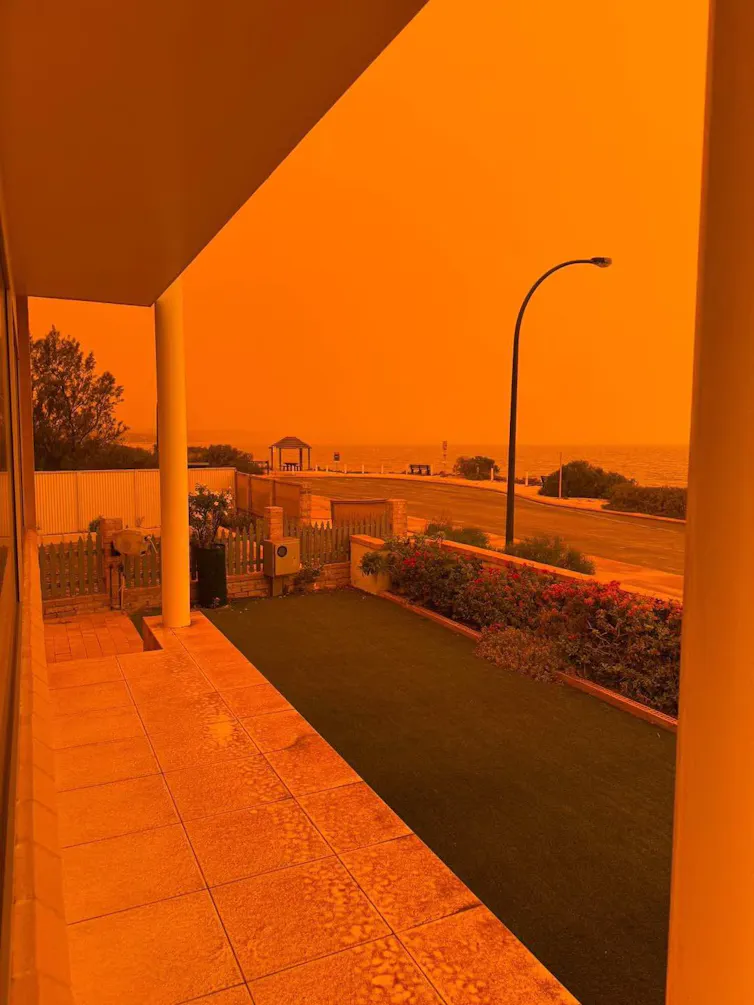
Fire-damaged Christmas tree replaced by Timaru businesses

Source: Radio New Zealand

The Timaru Christmas tree was destroyed by fire last week. Supplied

Timaru businesses have joined together to replace a community Christmas tree that was deliberately set on fire – and now the community has been asked to help decorate it.

The 10-metre-tall fully decorated tree on the Caroline Bay piazza cost the council $107,000 and was destroyed last week.

Local business leader Gordon Handy said he decided the community still needed a tree.

“I thought, well, I could get this to happen, so I reached out to some other businesses and it didn’t take us long to get a pretty good plan in place.”

A radiata pine from the Timaru District Council forestry block was felled and transported to the top of the piazza on the Bay Hill, where council took over the installation between rain bursts, Handy said.

“Hilton Haulage came on board to transport the tree and the base was re-engineered by Fabtech,” he said. Hardie Building 2024 Ltd also donated time and resources to erect the tree.

Mayor Nigel Bowen said this was the definition of the community coming together.

“I got the call on Friday night and Gordon said it wouldn’t be Christmas for the community without a tree, to which I agree,” he said.

“I saw on social media how much the community actually cared for and enjoyed the Christmas tree we lost last week. It will be good to have that space filled again, just in time for Christmas.

“As this tree is for the community by the community, it is only fitting the community help us decorate it.”

Members of the community who wanted to contribute to the tree decorations could drop in an ornament to any Timaru District Library for council staff to hang on the new tree.

Decorations needed to be sturdy – no glass or ceramics – and about the size of a tennis ball. Alternatively, a piece of wide ribbon or cloth in festive colours that could be tied to the tree would also be accepted.

A man has entered no plea to a charge of intentionally damaging the original tree.

Sign up for Ngā Pitopito Kōrero, a daily newsletter curated by our editors and delivered straight to your inbox every weekday.

– Published by EveningReport.nz and AsiaPacificReport.nz, see: MIL OSI in partnership with Radio New Zealand

Albanese not invited to rabbi’s funeral, as Frydenberg calls for ban on ‘hate preachers’

Source: The Conversation (Au and NZ) – By Michelle Grattan, Professorial Fellow, University of Canberra

In a stark reminder of the strong Jewish backlash against the prime minister, Anthony Albanese was not invited to attend the Wednesday funeral of Rabbi Eli Schlanger, among the first of the Bondi massacre victims to be farewelled.

Those present at the emotional gathering held at the Chabad of Bondi Synagogue included New South Wales Premier Chris Minns, former Prime Minister Scott Morrison, Opposition leader Sussan Ley, and Labor MP Josh Burns, who is Jewish. Albanese had said earlier he would attend any funerals he was invited to.

As both anger and action continue to mount in the massacre’s aftermath, former deputy Liberal leader Josh Frydenberg launched a scathing attack on Albanese, while Minns announced the NSW parliament will be recalled on Monday and Tuesday to pass tougher state gun laws. Minns is also looking to restrict demonstrations while there is a terror alert.

In a passionate speech heavily targeting Albanese personally, Frydenberg said, “We, as a Jewish community, have been abandoned and left alone by our government”.

Albanese had allowed Australia to become radicalised on his watch, said Frydenberg, who was speaking at Bondi.

“It is time for him to accept personal responsibility for the death of 15 innocent people, including a 10-year-old child. It is time our prime minister accepted accountability for what has happened here. And it’s time our leaders stood up and led at last.”

“Your government has failed us. You sit in a chair. It is time you earned that title. If you don’t want to do the job, give it to somebody who will.”

Responding to Albanese’s pursuit of gun reform in the wake of the massacre, Frydenberg said, “Let me tell you, guns may have stolen the life of 15 innocent civilians, but it was radical Islamist ideology that pulled the trigger.”

“Prime minister, I am going to give you some ideas about what you need to do,” Frydenberg said. In his list, he called for a royal commission into what happened at Bondi and into the recent spike in antisemitism.

Urging a ban on hate preachers. he said, “The shooters here, who did this, were linked to a factory of hate in Bankstown. How can that factory of hate be allowed to open its doors for one day more?

The younger of the father and son gunmen, Naveed Akram, was a follower of Jihadist preacher Wissam Haddad, of the Al Madina Dawah Centre in Bankstown, known for his inflammatory antisemitic language.

Announcing a suite of new gun controls, Minns also outlined his fears about protests.

“My concern is that a mass demonstration in this combustible situation with our multicultural community could light a flame that would be impossible to extinguish.

“We’re looking at reforms whereby, when there’s a terrorism designation in the state, the police commissioner may not accept applications for protests on the grounds it will both stretch police resources and, secondly, add to community disharmony and as a result, a combustible situation in the state,” he said.

Federal cabinet’s national security committee met again on Wednesday afternoon to further consider the government’s response. Work is being done on the possible tightening of hate speech provisions, among other possible measures.

Albanese is under pressure from Jewish and other critics to implement the full report of the government’s envoy to combat antisemitism, Jillian Segal.

But many in the government believe the more radical recommendations in her report, including stripping funds from universities and cultural organisations that fall short in combating antisemitism, are impractical or undesirable or both.

Asked about his priorities in responding to the Segal report, Albanese said on Wednesday that he had spoken to her “daily”.

“We’re continuing to work through a whole range of the measures in the Segal report” he said, “This isn’t a set-and-forget report, this is something that will be an evolving position.”

“Jillian Segal is doing an extraordinary job. We’ll continue to engage with her on an ongoing basis, including any lessons that arise from this atrocity.”

Pressed to nominate any specifics, Albanese said, if necessary, the government would further strengthen hate speech provisions.

The response to the massacre has become deeply partisan. The opposition has set up a taskforce on antisemitism, extremism and counter-terrorism, led by Ley.

Ley said: “Every single day for the last two years Jewish Australians have watched the rising tide of antisemitism. And they have looked to their leaders in Canberra and they have looked to Prime Minister Albanese and he has failed them.

“We are calling for leadership. … Leadership on cracking down on hate speech. Leadership on cracking down on antisemitism.”

On Wednesday, Akram was charged with 59 offences, including 15 counts of murder. His father was killed at the scene.

The Conversation

Michelle Grattan does not work for, consult, own shares in or receive funding from any company or organisation that would benefit from this article, and has disclosed no relevant affiliations beyond their academic appointment.

ref. Albanese not invited to rabbi’s funeral, as Frydenberg calls for ban on ‘hate preachers’ – https://theconversation.com/albanese-not-invited-to-rabbis-funeral-as-frydenberg-calls-for-ban-on-hate-preachers-271951

Two injured in firearm incident in Gore

Source: Radio New Zealand

File photo. RNZ / Nate McKinnon

Two people are injured after a firearm was discharged in Gore this evening.

The injuries are not believed to be life-threatening.

Police said they were called to the scene on Aparima Street just before 8pm, and have cordoned off the street.

Police do not believe there is any risk to the public, but they have been asked to avoid the area.

“Police are in attendance and making enquiries to determine the circumstances surrounding this incident.”

St John earlier confirmed it dispatched ambulances and helicopters to the scene.

Sign up for Ngā Pitopito Kōrero, a daily newsletter curated by our editors and delivered straight to your inbox every weekday.

– Published by EveningReport.nz and AsiaPacificReport.nz, see: MIL OSI in partnership with Radio New Zealand

If social media is bad for kids, should we post their photos online?

Source: Radio New Zealand

As Australia’s ban on under-16-year-olds having certain social media accounts kicks in this week, debate on whether it’s a good idea or even legal rages on.

Yet barely acknowledged in this debate is what happens when a child doesn’t have an account, yet their entire childhood is still documented online.

Should this be permitted?

Keeping children safe online means looking beyond kids as users and recognising the role adults play in creating a child’s digital footprint.

Adem Ilter / Unsplash

– Published by EveningReport.nz and AsiaPacificReport.nz, see: MIL OSI in partnership with Radio New Zealand

Dumbphones in demand as parents fight social media access

Source: Radio New Zealand

Despite the ban on cell phone use at school, some children have found work arounds. 123RF

Some parents are turning to the gift of a so-called dumbphone this Christmas to limit their children’s access to social media.

That’s a phone that you make calls and send texts on, but they can’t hook up to the internet.

The Government ban on kids using cell phones at school started in Term Two this year, but some students have found work arounds.

Checkpoint found that primary and intermediate kids were using their smartphones and their email accounts to bypass school online security and access internet sites they shouldn’t.

Now Checkpoint is aware of a school that is banning all smartphones and smartwatches on campus because students are out smarting the ban.

It is now going dumbphone only.

One Auckland mum was keen to get her kids an old-school phone, but was hoping for the look of a modern smartphone so they would blend in with their friends.

She said it was harder than she thought it would be.

“I was looking for the basic phone; calls, texts, they can keep in touch with their friends.”

“They’re at the age now where most of their friends all have smartphones, and they are feeling like it’s social suicide and they’re getting left out.”

She said she went to three different shops in her hunt, all of which only had one option out of hundreds of phones.

In the end she ordered one that looks like the real deal from Australia.

Challenge to dumb down

Emma Planicka, who teaches digital safety to schools and parents told Checkpoint there had been a definite recent rise in dumbphones.

“Especially as there are such concerns around children’s mental health, access to social media and that really key importance of keeping our children safe online.”

With the rise in demand, Planicka said it was important for parents to understand what options are out there so they can make a decision that works best for their family.

“It is challenging unless you are understanding the different specifications.”

“Some of the dumbphones are advertised as dumbphones but they still have internet browsers built within them. These browsers are slower and harder to use, and obviously on a very small screen, but you still do have the internet access.”

While other models are just for calling and texting, and don’t have internet access, these are often harder to find.

“Whether you are confronted with a knowledgeable person in a store that has that information and can lead you in the right direction, or whether you’re capable of sorting that information out online, it can be a real challenge.”

Other options include buying a regular phone and implementing parent controls, but Planicka said that again depends on parents having sufficient knowledge on how to do this.

With some schools considering enforcing dumb phones, Planicka believes community consultation should take place to decide on preferred and recommended device options, to ensure kids don’t end up feeling left out from their peers.

She said it’s clear phone companies are catching onto demand, as more of the phones come into the market

“We’re also seeing companies that are actually importing dumb phones from overseas because of the demand. We are seeing that there are different campaigns that are launching and there are resources that are coming out and are more readily available to support.”

Planicka said it was important for parents to consider what was age appropriate for their children, and that buying devices should be like riding a bike, beginning with training wheels and moving up from there.

“When they’re younger we’re really providing secure supports around them with things like screen time and managing that and making sure they’re safe and they don’t have that access to the internet. Then as they are getting older, having really simple things like a digital agreement, a weekly plan.”

While there will always be bumps along the way, Planicka believes slowly implementing technology is a great way to make a difference in setting children up for success.

Sign up for Ngā Pitopito Kōrero, a daily newsletter curated by our editors and delivered straight to your inbox every weekday.

– Published by EveningReport.nz and AsiaPacificReport.nz, see: MIL OSI in partnership with Radio New Zealand

Kōkiri Marae adds period care to Christmas kai parcels as costs bite

Source: Radio New Zealand

Kōkiri Marae Sexual & Reproductive Health Promoter/Educator Shelley Duffin (left). Supplied

A Wellington Marae is adding period care products to its Christmas kai parcels this year as the cost-of-living crisis deepens forcing more people into period poverty.

Kōkiri Marae in the Lower Hutt suburb of Seaview has worked with Dignity since 2022 to include pads, tampons, and reusable options in its parcels.

Dignity CEO Lisa Maathuis said they work with over 250 different community partners across Aotearoa with Kōkiri being one of the biggest gifting partners, gifting about two and half thousand boxes of period products across three years.

“The benefit of working with places like Kōkiri Marae and our other partners is that they have such incredible relationships with their community and understand their community so well. So it means that when they are distributing the period products, it’s really delivered as an act of manaakitanga and it ensures that the period products are given with dignity and respect and that people have access to period products and don’t miss out on any opportunities in life.”

Dignity’s “buy one, give one” model involves partnering with corporate orgnisations who buy a certain ammount of boxes half of which go to their employees while the other half is gifted on their behalf to community orginisations.

Kōkiri’s Pātaka Kai has seen consistently high demand since opening in 2019, and Sexual & Reproductive Health Promoter/Educator Shelley Duffin said rising living costs are pushing more working families to seek help.

“We have always supported a broad range of whanau, but are increasingly aware that more working families are being forced to make incredibly tough choices. People are going without essentials like period products because there’s simply nothing left in the budget,” she said.

Duffin says they expect to distribute more than 700 kai parcels in the weeks leading up to Christmas, and the inclusion of period care makes a tangible difference.

“One woman we worked with had three daughters, plus she was helping one of their friends. When we asked whether anyone needed period products, she chose the reusable options. Later, she told us she’d been cutting up old towels to get by. That’s the reality for many whānau.”

Dignity CEO Lisa Maathuis. Supplied/Yvonne Liew Photography

Maathuis said the holiday period can be tough for younger wāhine especially, who won’t have access to period products provided in schools.

“Generally with poverty and not just period poverty, it’s definitely harder during the holidays because people are really prioritising essentials for children and leaving, you know, some of their own needs behind. And I think people want to, regardless of what situation you’re in, during the holidays you do still want to make it a special time for your family. And so that can mean that sometimes people are prioritising food over period products.”

Maathuis said there has been an increase in demmand for Dignity’s services, currently they are actively supporting around 60 different community organisations

“We get probably two or three applications per week to join and to get those gifted period products that go onto our waitlist. And our waitlist is currently about 150. So we’ve seen a huge increase in demand, and it’s something that we haven’t been able to keep up with yet because we need to bring on new corporate partners onto our buy one, give one model at the same rate.”

Maathuis said another way to alleviate period poverty is by working to lift the stigma sorrounding it and Dignity is collaborating with Qiane Matata-Sipu, author of My First Ikura, to help do that. https://www.rnz.co.nz/life/books/my-first-ikura-celebrates-the-maori-understanding-of-menstruation

“When you think about period poverty, it’s one thing to help to make sure that everybody has access to period products, but there’s also a stigma and shame and whakamā that comes with periods. And so on our website as well, you can gift those books so that we can donate those to our partners as well and really take away the shame and, you know, think about getting My First Ikura as a thing that is done with pride and not something to be ashamed of.”

Sign up for Ngā Pitopito Kōrero, a daily newsletter curated by our editors and delivered straight to your inbox every weekday.

– Published by EveningReport.nz and AsiaPacificReport.nz, see: MIL OSI in partnership with Radio New Zealand

Emergency services rush to incident in Gore

Source: Radio New Zealand

File photo. RNZ / Nate McKinnon

Multiple ambulances and helicopters are responding to an incident in Gore.

Police are attending a report of a firearm being discharged in Gore.

St John has confirmed it has dispatched ambulances and helicopters to the scene.

– more to come

– Published by EveningReport.nz and AsiaPacificReport.nz, see: MIL OSI in partnership with Radio New Zealand

Politics with Michelle Grattan: Jim Chalmers on the Bondi terror attack and the mid-year budget update

Source: The Conversation (Au and NZ) – By Michelle Grattan, Professorial Fellow, University of Canberra

The mid-year budget update would normally be big news. But this week it’s been entirely overshadowed by the devastating Bondi terror attack.

To discuss the government’s response to that deadly attack, as well as the outlook for Australia’s economy in 2026 and beyond, for our last podcast of the year we’re joined by Treasurer Jim Chalmers.

On the Bondi terror attack, Chalmers acknowledges the federal government needs to do more.

Even though the government has taken a number of steps to combat this hateful antisemitism, we know that there’s more work to do. There’s more to do with the envoy, Jillian Segal. There’s work to do to make sure that we are cracking down on antisemitism every way that we can. And we need to do that at the same time as we take other meaningful steps in areas like tougher gun laws.

And the point that I’ve been trying to make through the course of the week this is not an either/or: dealing with antisemitism, tightening our gun laws. We have a responsibility to do both simultaneously. And that’s the approach that we’re taking.

On the budget update, Chalmers says rising inflation is one of “the three big challenges” for Australia’s economy, along with the need to boost productivity and manage global economic uncertainty.

He says the government has been conscious of “not making this inflation challenge worse”, which could add pressure on the Reserve Bank to raise interest rates.

The issue with inflation is not government spending. That’s been made clear by the Reserve Bank [… which] has not mentioned public spending as a factor in their decisions for some time. And if the government’s budget is the key determinant of interest rate decisions, we’ve had three rate cuts this year, including two since the most recent budget […] What we see in [today’s] budget numbers is really progress on the first six updates we did: we’re always doing savings, we’re always trying to get things in much better nick.

On the rise of illegal cigarettes and plummeting tobacco excise revenue flowing into the budget, Chalmers dismisses calls to reduce that tax. Instead, he foreshadows the federal government will support greater crackdowns on organised crime and the illegal tobacco market.

We see this as a very serious challenge. We don’t dismiss or diminish this challenge from a law and order point of view, or from a budgetary point of view. We’ve provided an extra A$350 million for compliance and policing. There’s actually been some quite effective raids done in recent times; very encouraging to see the authorities doing some great work.

I don’t believe that if we unwound the last couple of excise changes that all of a sudden the difference between a legal packet of cigarettes and an illegal packet of cigarettes would be eliminated. And I don’t believe that would stop the crooks from being part of this industry. We see British American Tobacco and our opponents and others calling for a tobacco tax cut. I don’t think that’s the right way to go about it.

[…] What we hope will be effective is all of these extra resources being poured into compliance. I’m also prepared to say that […] we have been discussing next steps in this area to crack down on this illegal tobacco, which poses most importantly a risk to public health, but also a risk to the budget […] And the minister for home affairs, Tony Burke, we hope will have more to say about this before long.


Read more:
Could making tobacco cheaper actually cut down smoking rates? We asked 5 experts


Looking ahead, Chalmers says ten priority areas from August’s economic reform roundtable will help shape next year’s federal budget.

Having just handed down the mid-year update an hour or two ago, I’m sort of reluctant to get too much into the detail of [next year’s] budget. But the roundtable will be one of the big influences on the budget […] We set ten directions out of the roundtable [… and] those directions will be really the main influence on the reform part of the budget in May.

He disputes that progress since the roundtable has been too slow, nominating reforms to Australian environmental laws, releasing a new artificial intelligence plan, reforming the construction code and other areas where changes have been made.


Read more:
The clock is ticking on a golden opportunity for real change in Australia


Chalmers also talks up Australia’s opportunities in artificial intelligence, if we can get the balance right between ramping up AI and its potential risks – including for people’s jobs.

The AI revolution will be game changing, absolutely game changing. And what we’ve seen in recent data in our own economy is we’ve had now four consecutive quarters of productivity growth, at the same time as we’ve this enormous ramp up in investment in technology.

A big part of my day each day is dealing with interest which is being shown around the world in Australia as a place to build AI infrastructure, for example data centres. And so I think it’s an enormous opportunity for Australia […] The task for us is to maximise the upside of it, and to minimise the risks to people, including in the labour market.

The Conversation

Michelle Grattan does not work for, consult, own shares in or receive funding from any company or organisation that would benefit from this article, and has disclosed no relevant affiliations beyond their academic appointment.

ref. Politics with Michelle Grattan: Jim Chalmers on the Bondi terror attack and the mid-year budget update – https://theconversation.com/politics-with-michelle-grattan-jim-chalmers-on-the-bondi-terror-attack-and-the-mid-year-budget-update-272253

Wānaka braces for influx of teenage partygoers on New Year’s Eve

Source: Radio New Zealand

Red Frogs national director Raymond Thompson. RNZ/Katie Todd

Tens of thousands of teenagers are expected to descend on Wānaka’s lakefront for one of the country’s biggest informal New Year’s Eve gatherings, with police warning parents they could face charges if they supply alcohol to minors.

Police, paramedics and volunteers are concerned about the number of unsupervised young people who arrive with alcohol in a town that is more than three hours’ drive from the nearest hospital.

According to harm-reduction organisation Red Frogs, Wānaka has become a hotspot for Year 11 and 12 students in recent years.

National director Raymond Thompson said more than 60 volunteers would work in Wānaka and Queenstown from 29 December, handing out water and food, and helping anyone in distress.

“I’m cooking pancakes, handing out water down on the lakefront and, towards the end of the night, will be helping young people, if they need more support, holding their hair back as they vomit,” he said.

Authorities ramped up their presence, after the infamous Ruby Island party in 2016, when hundreds of young people were escorted back to the mainland by emergency services.

Thompson said parents should have “frank conversations” with their children before New Year’s Eve and make a plan, in case they wanted to come home early.

“Don’t pin $200 to your young person’s jersey, give them a bottle and send them six hours down the road with no support,” he said.

“You can either engage in an awkward alcohol-and-drug-harm conversation with your young person, utilising your experience – both good and bad – and giving your advice, or you can allow your teenagers to get advice from TikTok,” he said.

DJs and bands will play on the Wānaka waterfront on 31 December, with an alcohol ban in place between 24 December-6 January.

Otago Lakes Central police area commander inspector Paula Enoka said parents should also remember the legal consequences of supplying alcohol to minors.

“If they are underage, as in under 18, please don’t send them here with alcohol, because the next person we will contact will be the parent [to find out] how they have actually provided them the alcohol,” she said. “There is provision for prosecution and that’s not where we want to go.”

Wānaka senior sergeant Darren Cranfield said an extra 25 police officers would be deployed to the district from centres including Dunedin and Invercargill.

“We have other resources that we drag from other stations, so we do have big numbers, but we have big numbers for a reason.”

Behaviour had improved in recent years, Cranfield said.

“If we go back probably 3-4 years, there used to just be alcohol everywhere, bottles everywhere.”

St John area operations manager David Baillie said alcohol and drug use was a reality every New Year’s Eve, and the consequences were often serious.

“Every year, I have to make a phone call to someone’s parents – 15, 16, 17, 18-year-old girls and boys – who have had far too much alcohol or too many drugs, who are now unconscious, unresponsive,” he said.

His message to parents was to “take a minute to think what it would feel like for me to ring you on New Year’s Eve, because this does actually happen”.

Knowing what substances were taken and how much could be crucial, when someone’s life was on the line, Baillie said.

He urged people to look up drug-testing services like Know Your Stuff.

“The other thing I ask you to do is that you respect our staff. We are there to help you, your family, your friends.

“We do need you to respect us, so that we can do our job to support you.”

Queenstown Lakes District Mayor John Glover said the region was used to welcoming visitors, but the New Year brought added challenges.

“We want everyone to come have a great time and leave having had a great time,” he said.

Sign up for Ngā Pitopito Kōrero, a daily newsletter curated by our editors and delivered straight to your inbox every weekday.

– Published by EveningReport.nz and AsiaPacificReport.nz, see: MIL OSI in partnership with Radio New Zealand

Hamilton woman who exploited migrant workers sentenced to home detention

Source: Radio New Zealand

Sneha Patel either did not pay the employees at all, or at a rate less than the minimum wage for the hours they worked. File photo. 123RF

A Hamilton woman has been sentenced to 11 months home detention for exploiting three migrant workers and failing to pay them thousands of dollars in wages.

Sneha Patel owned and operated several Hamilton and Auckland based businesses and pleaded guilty last year to nine charges including exploiting illegal or temporary employees.

She has been ordered to pay the three victims just under $50,000 in reparation.

The Ministry of Business, Innovation and Employment said the sentencing was a result of a complex five-year investigation.

It uncovered that Patel had failed to pay approximately $41,000 under the Minimum Wage Act and about $9000 for entitlements under the Holidays Act to three employees over an eight-month period in 2018.

MBIE national manager immigration investigations Jason Perry said Patel knowingly employed and helped a person to remain unlawfully in the country, intentionally mistreated and misled her workers, and provided false or misleading information to Immigration for a visa application.

The employees were required to work long hours and one had to sleep in a work vehicle or on the floor of a storeroom.

Patel either did not pay the employees at all, or at a rate less than the minimum wage for the hours they worked.

“While failing to pay her workers according to their statutory minimum entitlements, Patel chose to purchase and open a further two businesses. Employers and individuals who think they can take advantage of unlawful or temporary workers for their own financial gain should know this will not be tolerated – they will be investigated and held to account,” Perry said.

Sign up for Ngā Pitopito Kōrero, a daily newsletter curated by our editors and delivered straight to your inbox every weekday.

– Published by EveningReport.nz and AsiaPacificReport.nz, see: MIL OSI in partnership with Radio New Zealand

Abuse survivors still unaware they were named online by Ministry of Social Development

Source: Radio New Zealand

Lydia Oosterhoff is a human rights lawyer and senior associate at Cooper Legal. Jimmy Ellingham

  • Mother of man named in online privacy breach linking him to abuse in state care fears it could cause further trauma
  • Five abuse survivors named in OIA document still don’t know about breach
  • Ministry of Social Development says it’s working on next steps with the law firm representing the five
  • The law firm says the government department is washing its hands of responsibility.

This story discusses graphic details of abuse.

A woman fears her son could be severely traumatised, if he finds out the Ministry of Social Development published information linking his name to his application for compensation for abuse in state care.

He’s one of five people whose names were visible in an MSD Official Information Act document that was online for three months.

None of the five abuse survivors have yet been told about the breach, and there’s disagreement between MSD and the survivors’ lawyers about how they should be informed.

Breach ‘feels like punishment’

The mother of one of the five still can’t believe her son’s name appeared online in relation to a sensitive claim for compensation.

“I was in shock,” said the woman, who RNZ is not naming. “It’s almost like the more he tries to protect himself and keep himself safe, the more determined the government is to punish him for speaking out and trying to protect himself.

“This feels like punishment.”

MSD has apologised unreservedly for the breach, but the woman worries what could happen, should her son find out.

He has complex post-traumatic stress disorder, due to abuse he suffered when in the care of MSD.

His mother fears that, if he knew he was named on the internet in relation to this abuse, he could lose the ability to communicate or function.

“He spends every day trying to negotiate his way towards an ordinary life, but that’s overshadowed all day, every day by the constant triggers of reminders of what he suffered in the past.”

The woman found out about the breach from her son’s lawyer.

MSD said only three people viewed the document in the three months from its publication on 20 August until it was notified of the breach by Wellington human rights law firm Cooper Legal on 21 November.

However, Cooper Legal said many more people could have seen a cached version. MSD analytics don’t pick up how many views that had.

The woman whose son was named said, however many it was, the fact the names were published was problematic.

“How could it possibly be that only three people would view it in three months?” she said. “The other thing is, why should three people view it – it was nobody else’s business.

“Why should anybody know about what was happening, what he has experienced and what he is trying to hold MSD accountable for?”

Communication breakdown

MSD general manager Anna Graham said Cooper Legal made it clear the ministry shouldn’t directly approach the five named people to apologise.

She said the ministry remained concerned the five survivors hadn’t yet received a direct apology and it was working with Cooper Legal on what to do next.

“We wrote to Cooper Legal on 2 December about this matter and proposed resolution, including that contact and our apology be made through them,” Graham said. “We have letters of apology drafted.”

Graham said MSD had waited for a reply from Cooper Legal, receiving communication at the end of last week.

However, Cooper Legal principal lawyer Lydia Oosterhoff said the firm hadn’t kept MSD waiting and she was waiting to hear back from the ministry, after replying to its 2 December correspondence.

“That is a complete falsity,” she said of the MSD claims.

“MSD sent us one letter saying, ‘Cooper Legal can deal with it, Cooper Legal can tell the clients, we’ll wash our hands of it…. this is all we’re doing to do’.

“It’s absolutely, honestly perplexing.”

Meanwhile, the five people named remain unaware their privacy was breached.

“No, we haven’t told the survivors, because we don’t think we should be the ones to tell them,” Oosterhoff said.

“MSD said it was going to work with us to inform survivors about this breach in a trauma-informed manner and MSD hasn’t done that. It’s simply sent us a letter saying, ‘You tell them’.”

The five needed to be told in a way that recognised their vulnerability, and the sensitive nature of the breach and their abuse, she said.

At first, MSD proposed writing directly to them, but Oosterhoff said this wasn’t good enough.

“These are some of our society’s must vulnerable people and they’ve been made even more vulnerable by the state – the state that abused them in the first place.

“The state has now abused their privacy and the state is now not taking accountability.”

Call for compensation

Oosterhoff said she was looking into what compensation the five survivors should receive, something the woman whose son was named online said must happen.

“The reason why he’s got the [sensitive] claim is because there needs to be redress for what they’ve done to him, so further harm for breaching his privacy needs to be redressed as well,” she said. “It just adds on the harm they caused.”

Asked about the issue of compensation, MSD said it was discussing a proposed resolution with Cooper Legal.

Where to get help:

  • Need to Talk? Free call or text 1737 any time to speak to a trained counsellor, for any reason
  • Lifeline: 0800 543 354 or text HELP to 4357
  • Suicide Crisis Helpline: 0508 828 865 / 0508 TAUTOKO. This is a service for people who may be thinking about suicide, or those who are concerned about family or friends
  • Depression Helpline: 0800 111 757 or text 4202
  • Samaritans: 0800 726 666
  • Youthline: 0800 376 633 or text 234 or email talk@youthline.co.nz
  • What’s Up: 0800 WHATSUP / 0800 9428 787. This is free counselling for 5 to 19-year-olds
  • Asian Family Services: 0800 862 342 or text 832. Languages spoken: Mandarin, Cantonese, Korean, Vietnamese, Thai, Japanese, Hindi, and English.
  • Rural Support Trust Helpline: 0800 787 254
  • Healthline: 0800 611 116
  • Rainbow Youth: (09) 376 4155
  • OUTLine: 0800 688 5463
  • Aoake te Rā bereaved by suicide service: or call 0800 000 053

If it is an emergency and you feel like you or someone else is at risk, call 111.

Sign up for Ngā Pitopito Kōrero, a daily newsletter curated by our editors and delivered straight to your inbox every weekday.

– Published by EveningReport.nz and AsiaPacificReport.nz, see: MIL OSI in partnership with Radio New Zealand

Promoter Dean Lonergan forecasts heavy defeat for YouTuber Jake Paul against Anthony Joshua

Source: Radio New Zealand

Jake Paul and Anthony Joshua square off before their Miami showdown. Leonardo Fernandez

YouTuber-turned boxer Jake Paul faces the biggest test of his fledgling boxing career, when he takes on former world heavyweight champion Anthony Joshua in Florida on Saturday (NZT).

Kiwi boxing promoter Dean Lonergan expects it’s a test Paul will fail – badly.

“Jake Paul is going to get absolutely bashed and I think a lot of people are looking forward to it.” Lonergan told Nathan Rarere on RNZ’s First Up.

The vast majority of pundits agree with Lonergan’s blunt assessment.

As well as being a two-time heavyweight world champion, Joshua won Olympic gold at London in 2012. He’s had 28 professional fights, with four losses – two against Oleksander Usyk, widely regarded as one of the greatest heavyweights of all time.

By contrast, Paul’s compiled a 12-win, one-loss record, largely against retired NBA players, fellow YouTubers, and former UFC fighters. His one loss came against Tommy Fury, who’s better known for appearing on Love Island and being Tyson Fury’s younger brother, than his boxing skills.

Paul’s only had one fight at heavyweight – a points win over a 58-year-old Mike Tyson. That bout was contested over two-minute rounds, rather than the standard three, and with 14-ounce gloves.

At 36, Joshua is far from washed up. The fight with Paul is scheduled for eight rounds, each three minutes long. The fighters will wear standard 10-ounce gloves.

The lighter weight will allow punches to do more damage.

The tale of the tape also makes tough reading for Paul. Joshua stands 12.5cm taller and has a 15cm longer reach.

Even with a 111.3kg weight limit imposed on him for this fight, Joshua will significantly outweigh Paul.

Lonergan said Paul may still believe he could win.

“He’s delusional,” he said. “Fighters have to have the ultimate confidence, because there’s only two things you do in a boxing ring – you either hit or you get hit, you either hurt or you get hurt.

“Jake Paul’s had a series of easy fights to build his delusion and build his confidence, and he thinks he can get in the ring with one of the modern greats.”

No matter the result, both fighters will be handsomely rewarded, reportedly earning NZ$159 million each.

Lonergan reckons Joshua and promoter Eddie Hearn have played an absolute blinder, securing a massive payday for an easy night’s work.

“It’s going to go no more than 1-2 rounds,” he said. “Jake Paul’s going to get knocked out.

“If you’re Anthony Joshua, this is just pennies from heaven.”

Sign up for Ngā Pitopito Kōrero, a daily newsletter curated by our editors and delivered straight to your inbox every weekday.

– Published by EveningReport.nz and AsiaPacificReport.nz, see: MIL OSI in partnership with Radio New Zealand

Minister Simeon Brown sets Health NZ ‘efficiency targets’ of $500m

Source: Radio New Zealand

Health Minister Simeon Brown. RNZ / Mark Papalii

Hospitals and public health services across the country have been asked to find more than half-a-billion dollars in “efficiencies” to re-invest in patient care.

In a response to written parliamentary questions from Labour’s health spokesperson Dr Ayesha Verrall, Health Minister Simeon Brown confirmed Health NZ’s four regions had been set “efficiency targets” of between 2-4.9 percent.

Reducing “waste” in back-office and procurement functions could free up up about $510 million, which could be “re-invested straight back into patient care” and government health targets, without reducing clinical staff, Brown said.

However, Verrall questioned how Health NZ could identify specific “efficiency targets”, but not specify exactly what should be cut.

“Five-hundred-million dollars is a massive amount to cut from health services, and to say they’ll do this without any accountability about where it’s coming from or where it’s going is absolutely outrageous.”

According to the document, efficiency targets by region are:

  • Northern 3.7 percent ($170m)
  • Midland 2 percent ($55m)
  • Central 4.1 percent ($124m)
  • South Island 4.9 percent ($161m)

The efficiency targets are applied to “other operating cost” budgets, which do not include staffing budgets.

Labour health spokesperson Dr Ayesha Verrall RNZ / Samuel Rillstone

However, the senior doctors’ union said so-called “back office” cuts already made it difficult for clinicians to care for their patients.

Association of Salaried Medical Specialists executive director Sarah Dalton said the constant cost-cutting did not make sense and, in some cases, cost more money in the the long-run.

“On the one hand, they’re saying they spending more money on health,” she said. “On the other, they’re constantly demanding savings, which they claim will not impact front-line care.”

More of the health budget seemed to be spent on locums to fill the gaps left by staff shortages, outsourcing to private hospitals, and paying external consultants to do work that could and should be done by permanent staff, Dalton said.

The minister said the budget was the budget and it did not change, but the targets were simply about “making that budget go further for patients in their respective regions”.

The targets would not be used to meet the projected 2025/26 deficit of $200m, he said.

Examples of efficiencies already realised this year included saving $6m in insurance premiums, reducing unused office space and improved purchasing of medical supplies.

Sign up for Ngā Pitopito Kōrero, a daily newsletter curated by our editors and delivered straight to your inbox every weekday.

– Published by EveningReport.nz and AsiaPacificReport.nz, see: MIL OSI in partnership with Radio New Zealand

The Ashes live: England on top as wickets fall

Source: Radio New Zealand

Follow all the action as the third in the five-test series between arch rivals Australia and England gets underway at Adelaide Oval in Adelaide.

Australia currently has a 2-0 lead in the series, after successful campaigns in both Perth and Brisbane.

First ball is at 12.30 NZT

Sign up for Ngā Pitopito Kōrero, a daily newsletter curated by our editors and delivered straight to your inbox every weekday.

Australia currently leads the series 2-0. Gareth Copley

– Published by EveningReport.nz and AsiaPacificReport.nz, see: MIL OSI in partnership with Radio New Zealand

District Court judge summarises evidence in Auckland sexual abuse case

Source: Radio New Zealand

Michael Ian Mclean in Auckland District Court. RNZ / Finn Blackwell

Warning: This story discusses graphic details of sexual abuse

A judge has told jurors in the trial of a man accused of sexually abusing a boy into his teenage years that their deliberation will depend on the reliability of key witness evidence.

Michael Ian Mclean has been on trial in the Auckland District Court, facing 33 charges, including performing indecent acts on a person under 16, grooming and sexual violation.

His defence call the allegations nonsense, claiming they never happened.

Judge Simon Lance summed up the case on Wednesday. He took the jury through their function in deciding on a verdict, as well as guiding them through a recap of arguments on both sides.

Judge Lance pointed jurors to evidence given by Mclean and his alleged victim, who could not be named.

“Your deliberations and your ultimate verdicts will – I suggest, as is often the case in trials as such as this and subject to the legal directions I give you – depend largely on what you make of the credibility and the reliability of these two critical witnesses,” Lance told the jury.

He reminded jurors of the evidence given by both Mclean and the complainant.

Lance noted the detail in the complainant’s evidence and how, when cross-examined by Mclean’s defence lawyer Ron Mansfield KC on if he was lying, he said he could not make up that level of detail.

In Mclean’s evidence, he said the allegations were not true and that the physical acts alleged did not happen, Lance told jurors.

“Mr Mclean was cross-examined and, during that cross-examination, he maintained his position, he maintained his stance that these things simply did not happen.”

Jurors were taken through material about the misconceptions of sexual abuse, something the judge alluded to at the beginning of the trial.

“You will recall that, at the very start of the trial, given the nature of it – that is, it involves allegations of sexual offending – I gave you a generic direction about there being no such thing as a typical sexual offence, no such thing as a typical offender, no such thing as a typical person who is offended against,” Lance told jurors.

The jury has retired for deliberation.

Sexual Violence

Sign up for Ngā Pitopito Kōrero, a daily newsletter curated by our editors and delivered straight to your inbox every weekday.

– Published by EveningReport.nz and AsiaPacificReport.nz, see: MIL OSI in partnership with Radio New Zealand

Homelessness in Auckland more than doubles in year: Report

Source: Radio New Zealand

An audit by Auckland Council found over 900 people were homeless in Auckland. Nick Monro

Isolated, lonely and far from support networks – that’s what people who are homeless say it’s like living in Auckland’s suburbs.

An Auckland Council audit found more than 400 people were living without shelter in September last year. In May this year, that number was more than 900.

A Salvation Army and Community Housing Aotearoa report released on Tuesday found homelessness in Auckland has more than doubled in the year to September.

But these figures don’t capture all the people sleeping rough in suburban areas; living in their cars, abandoned buildings or couch surfing.

Experts are calling for more funding to find out the true extent of the problem… as the government ponders introducing move-on orders to get rough sleepers out of the CBD.

Along the Onehunga foreshore early on a Tuesday morning, 15 cars were parked up, frost coating their windshields.

Blankets, duffel bags and bags of groceries could be seen through the windows.

The occupants there said that before seven o’clock in the morning, there were 30 cars with people sleeping in them. They had since left for work – some even had full time jobs.

One man Checkpoint spoke to was even working multiple jobs, but was sleeping in his car to avoid paying rent.

“It’s pretty hard, to be honest, it feels like you’re being isolated but I kind of like it in a sense just for my own peace of mind and solitude.

“But at the same time, there’s not really much of a community out here.”

He had been living in his car for about a year.

“Early mornings and then head out to work, come back when it’s nighttime and before the gates close. They have shower facilities here and there’s a nearby swimming pool.”

The man said he had been applying for full-time jobs but hadn’t had much luck. He said he thinks it’s partly because of his criminal record from a few years ago.

“There’s so [many] factors that [are] kind of holding me back from getting work. For me, inexperience and a criminal record from a long time ago.”

Auckland Councillor Josephine Bartley says homelessness in the suburbs has become more noticeable. Nick Monro

Families with ‘nowhere else to go’

On nearby State Avenue, what is now an abandoned lot was once a row of abandoned houses.

Auckland Councillor Josephine Bartley said before they were demolished, a family of four was living in one of them.

“Late at night they’d come back, and they’d go through the barriers and slip into the house, because they had nowhere else to go.”

She said homelessness in Auckland’s suburbs has become more noticeable.

“It’s not public, but you can tell because you can see the cars in the parks in the morning, you can see that there’s blankets, you can see it all around.

“Then you’ve also got people who are couch surfing and older people.”

Kildare Peterson has been supporting rough sleepers for several years. He said homelessness in the suburbs is rife.

“They’d rather buy food to feed their kids and instead of paying the rent and they can’t afford the power.

“They said it’s a lot easier to live out on the streets or live in their car, because all they have to pay for is petrol, but then they can’t afford to pay their warrant or rego.”

Delphina Soti, general manager of Onehunga St Vincent de Paul’s said she’s seeing overcrowded households reaching out for support.

“When we do our food parcels, it’s for a family of 10, a family of 12, a family of 14, four-bedroom house, garages used up.

“It’s still a significant problem; there’s still not enough houses out there.”

Calls for more research funding

Professor Deidre Brown, a director of MĀPIHI, the Māori and Pacific Housing Research Centre said more research is needed to discover the true the extent of homelessness in Aotearoa.

“The hidden nature of this homelessness will only be exacerbated by a lack of data around this.

“It’s already hidden when people are couch surfing and living in garages.

“But when we don’t have people going out and finding the extent of the problem and whether or not that issue is growing, we really can’t make good decisions around housing provision in the future.”

But she said there currently isn’t the funding.

“It concerns me that the changes in the research funding landscape that the current coalition government have instigated over recent years makes it even more difficult to obtain the funding to undertake that research.”

Homelessness in Auckland more than doubles since the year to September

The National Homelessness Data Project was created by The Salvation Army and Community Housing Aotearoa, with Kāhui Tū Kaha, Christchurch Methodist Mission, Housing First Backbone, Wellington City Mission, Downtown Community Ministry.

The project’s latest six-monthly survey showed homelessness in Auckland has more than doubled from 426 to 940 people in the year to September.

It found homelessness is spreading beyond city centres into suburbs and people are being moved from one place to another.

Women and older people are being increasingly impacted, with four out of five homeless women identifying as Māori.

Welfare changes hitting hard

A Citizens Advice Bureau report released last week found because of welfare changes, people are losing the cars they live in and are struggling meet basic living costs.

The report, Mana Āki – Dignity for All, is based on over 10,000 requests to the Citizens Advice Bureau. It calls for the welfare system to accommodate for the complexity of people’s real-life circumstances and to treat people with dignity.

It found government policies such as benefit sanctions, tighter emergency housing criteria and cuts to community services had worsened hardship.

In September this year, the government funded an extra 300 social homes through Housing First and put $10 million towards support services for people sleeping rough.

Ministry of Social Development staff were also told to use greater discretion when looking at emergency housing applications.

Meanwhile, Minister of Justice Paul Goldsmith is currently seeking advice on additional measures to enhance safety in Aotearoa’s CBDs, including the potential use of move-on orders for rough sleepers.

Sign up for Ngā Pitopito Kōrero, a daily newsletter curated by our editors and delivered straight to your inbox every weekday.

– Published by EveningReport.nz and AsiaPacificReport.nz, see: MIL OSI in partnership with Radio New Zealand

Solar, onshore wind and gas backup is (still) the cheapest way to power Australia: new report

Source: The Conversation (Au and NZ) – By Tony Wood, Program Director, Energy, Grattan Institute

yingchao li/Unsplash

What’s the cheapest way to power Australia? Every year, CSIRO researchers and modellers seek to answer this very large question in their GenCost report.

On one level, the answer in the draft 2025–26 report is unsurprising: solar and wind are the cheapest form of generation.

However, this report has gone further by modelling the cheapest cost across the grid, including different power generation options, energy storage, transmission lines and gas backup. Here, solar and wind still come out on top for generation, with batteries to play a larger role than previously estimated, given plunging prices.

In Australia, large-scale battery prices fell 20% over 2024–25 and a further 15% is anticipated over 2025–26. Surging electricity demand to support electrification and to power AI data centres means costs have spiked for anything to do with turbines – coal, gas and nuclear – and delays are long.

If renewables reach 82% of grid generation by 2030 as the government plans, the report suggests this would result in wholesale power costs of A$91 per megawatt hour – about a third lower than today’s $129/MWh. Both figures are in current dollars. By 2050, prices would head back to levels a bit higher than present day ($135–148/MWh) to cover the cost of retiring coal plants, building new transmission lines and energy storage.

The 2050 figures should be viewed as current best estimates based on prudent assumptions, rather than committed forecasts. Modelling power prices a quarter of a century in the future depends on many variables.

CSIRO’s report concludes natural gas generation is the best form of backup, even though it produces emissions. This is because other forms of backup would be more expensive than cutting the same volume of emissions elsewhere in the economy.

What changed this year?

One of the most interesting things about this report is what it rules out. On price alone, CSIRO concludes three things are unlikely to feature in Australia’s future grid.

1. Offshore wind

The plight of offshore wind may be surprising, given offshore wind farms dot the North Sea and off the coast of China. Costs had begun rising due to pandemic-era supply chain issues. But the major change this year has been political. United States President Donald Trump has moved to scrap many huge offshore wind projects, even when half-built. Meanwhile prominent activists have run effective misinformation campaigns.

To date, Australia has no offshore wind farms. Developers have pulled out of many projects amid the uncertainty, though the giant Star of the Sea project in Victoria is still in progress.

offshore wind turbines.
Developers of many offshore wind projects have pulled out in Australia amid uncertainty overseas.
Woody Yan/Unsplash

2. Carbon capture and storage

Earlier this century, governments and coal and gas power plant owners were exploring ways of using carbon capture and storage to separate carbon dioxide from exhaust plumes and bury it. In Australia, most coal plants are instead heading for the exit. By contrast, China is expanding use of the technology as it will need to rely on coal for longer.

Instead, carbon capture and storage is likely to be most useful in Australia to store emissions from industry and manufacturing.

3. Nuclear

Ahead of the last federal election, the Coalition pitched a nuclear-powered vision of the future. Last year’s GenCost report poured cold water on this idea on cost grounds, finding nuclear would be double the cost of renewables.

This year, there’s been renewed international interest in small modular reactors as a way to meet AI data centre energy demand. But most reactor designs are years away from reality. The GenCost report suggests nuclear remains much too expensive an option for Australia.

Building backup

This year’s GenCost report suggests wholesale electricity costs will fall substantially by 2030 if the government meets its 82% renewable target, before rising again by 2050.

It’s very optimistic to give 2050 estimates with any certainty. But our research at the Grattan Institute does match CSIRO’s early estimates of falling costs.

We would also expect power system costs to rise again, given most of the new transmission lines needed to connect renewables to the grid haven’t been built yet and much more energy storage will be needed. These costs will be passed on to consumers, which is why GenCost modelling suggests 2050 power prices are likely to be similar to prices today.

One of the challenges with greening the grid is how much backup to build for rare periods of low wind and sun spanning large areas. This month, Australia’s energy market operator updated its grid planning, which envisages 14 gigawatts of gas capacity by 2050, slightly up from current capacity. These plants would only fire up as a backup.

New transmission lines must also be built to ensure renewables can funnel power across the grid, though CSIRO estimates these costs at just 7% of consumer bills. In its latest draft plan for the integrated system, Australia’s energy market operator has dialled back transmission ambition, due to factors such as higher costs, rural pushback and backsliding in Queensland.

The future role of natural gas generation is still in question. Some gas plants are ageing and will have to be replaced. When gas peaking plants fire up at present, they command a very high price for their power. But in a grid with a very high level of renewables, they may be required less often, be even more valuable, and demand a higher price. It’s unclear how these backup plants can be financed as insurance against rare but challenging events.

CSIRO’s GenCost report is widely recognised as the key reference for future costs of power generation. These reports are frequently weaponised by politicians, and the agency itself can suffer blowback. But the solid analysis and modelling in these reports should withstand such buffeting.

The Conversation

Tony Wood does not work for, consult, own shares in or receive funding from any company or organisation that would benefit from this article, and has disclosed no relevant affiliations beyond their academic appointment.

ref. Solar, onshore wind and gas backup is (still) the cheapest way to power Australia: new report – https://theconversation.com/solar-onshore-wind-and-gas-backup-is-still-the-cheapest-way-to-power-australia-new-report-272249

Labour has eight-point lead over National in latest poll

Source: Radio New Zealand

Labour leader Chris Hipkins is preferred prime minister on 45 percent, while Christopher Luxon is at 39 percent, according to the latest poll. RNZ

Labour has an eight-point lead over National in the latest The Post/Freshwater Strategy poll, but neither the coalition nor the opposition parties have the numbers to govern.

Labour has 38 percent support in the poll, up four points since the last survey in October, compared to National on 30 percent, down one point.

National’s coalition partners ACT and New Zealand First are on 8 and 9 percent respectively.

The Greens are registering 8 percent – down one – with Te Pāti Māori on two percent – also down one.

That result would give the coalition parties just 59 seats between them – not enough to hold onto government.

Labour leader Chris Hipkins is still the preferred prime minister on 45 percent, while Christopher Luxon is at 39 percent, although Luxon has gained 3 points since the last The Post/Freshwater Strategy poll in October.

Sign up for Ngā Pitopito Kōrero, a daily newsletter curated by our editors and delivered straight to your inbox every weekday.

– Published by EveningReport.nz and AsiaPacificReport.nz, see: MIL OSI in partnership with Radio New Zealand

Residents near site of Rotorua homicide inquiry asked to check properties

Source: Radio New Zealand

RNZ / REECE BAKER

Police investigating the homicide of a Rotorua man are urging residents near where he died to check their properties for items the offender may have left behind.

Nicholas Patrick Mitchell, 37, was found dead in a vehicle on Ford Road in the city shortly before 8:30pm on Friday.

Police said inquiries suggest his injuries are not consistent with a crash.

Senior Sergeant Mark Van Kempen is asking residents around Ford Road to check their properties for possible evidence.

He said it’s possible the offender discarded clothing, weapons or other items while fleeing the scene.

Police are following a number of leads.

– Published by EveningReport.nz and AsiaPacificReport.nz, see: MIL OSI in partnership with Radio New Zealand

How the myth of ‘aqua nullius’ still guides Australia’s approach to groundwater

Source: The Conversation (Au and NZ) – By Sarah Bourke, Lecturer, The University of Western Australia

Clint Hansen, CC BY-ND

Indigenous people have coexisted with Australia’s vast and ancient groundwater systems for thousands of generations. Their knowledge extends back through deep time, before our current climate and waterways. It offers insights that Western science is only beginning to quantify.

When rain falls, some can seep into the ground, becoming groundwater. This water can remain underground for as little as a few months, or for millions of years. Eventually it is taken up by plants, or flows into springs, rivers and the ocean.

Australia’s groundwater resources underpin the economic growth and prosperity of the country. But they are under greater pressure than ever before. Legal battles over water in the NT, including extraction licences, highlights the rapid pace at which decisions over the future of water are being made.

Our new paper shows the “business as usual” approach to groundwater science and management risks perpetuating colonial injustices. And it compromises our ability to manage water sustainably as the climate grows warmer and population increases.

Most Australians are aware of terra nullius, the legal fiction that Australia belonged to no-one before European settlement. But very few know about aqua nullius, – “water belonging to no-one”. This is a similar fiction suggesting Traditional Owners had no rights to the water they had used for millennia.

We show how the legacy of aqua nullius remains embedded within contemporary groundwater science. And urge Australia to take a different approach.

Indigenous care of groundwater

Indigenous knowledge systems embody many thousands of years of groundwater monitoring. This includes tracking spring behaviour and soil moisture, animal movement and vegetation cues.

Australia’s colonial expansion used the water knowledge of Indigenous peoples to support economic and agricultural development. This came at the expense of Indigenous peoples’ water, food, and culture.

Bitter Springs in Mataranka, in the Northern Territory. The Traditional Owners are the Mangarayi and Yangman people.
Felix Dance/Wikimedia, CC BY

Indigenous voices ignored

For too long, and too often, Indigenous perspectives on groundwater have not been heard or acted upon. In many instances, Indigenous people bear the impacts of groundwater decline or contamination. And yet, they have limited power to influence the development approvals that create these pressures.

For Indigenous communities who have cared for these waters for tens of thousands of years, rapid decision-making over the future of groundwater represents a profound risk to cultural obligations and the living systems that hold songlines, identity, and law.

Western scientific approaches are prioritised, while Indigenous groundwater expertise is dismissed and neglected in decision-making. When Indigenous perspectives are considered, there can be backlash from industry. There is often an expectation the government will prioritise economic development.

Accelerating pressures from industry and agriculture are superimposed onto the existing inequalities in water access. Many Aboriginal homelands communities still facing water insecurity.

Australia’s recent critical minerals agreement with the United States will lead to more water-intensive production and processing and substantial long-term environmental impacts.

Mine closure is rare in Australia. Mine rehabilitation often falls short of societal expectations. The legacy of decisions made now is likely to last for thousands of years. And they will disproportionately affect Indigenous communities.

Rights vs legal obligations

In 2009, Australia endorsed the UN Declaration on the Rights of Indigenous Peoples. But these rights are not reinforced by current approaches to groundwater science and management.

Article 25 states Indigenous Peoples have the right to maintain their relationships with traditional lands and waters. Yet over-extraction is leading springs in Australia to dry out. Springs are places of ceremony, law, healing and identity. A dry spring not only has an environmental impact but causes cultural harm, with intergenerational consequences.

The UN declaration also says states should obtain consent before any project, including the exploitation of water. Yet in most states and territories there is only a legal obligation to “consult” with Indigenous peoples.

Country as a living relative

Better outcomes require the colonial settler community to make genuine efforts to understand and incorporate Indigenous perspectives and knowledge in groundwater science and management.

The deconstruction of colonial legacies must be facilitated by people working within government agencies and regulatory authorities, and water scientists, in partnership with Aboriginal communities. Genuine relationship building is not just an “engagement activity”. It should be grounded in respect, reciprocity and an understanding of the obligation to care for Country as a living relative.

This process takes time and will not necessarily progress according to a particular schedule. This creates a tension between existing approvals mechanisms and best-practice engagement with Indigenous communities. Some governments and companies are working towards improving relationships with Indigenous communities. But this is not a requirement of existing systems for groundwater management. Our cultural heritage continues to be lost.

We must work together for a better future so our precious water is protected, not just for the next 50 years but for the next 5,000. This requires a holistic understanding that weaves together Western and Indigenous perspectives to ensure that both people and Country can thrive. A future where Indigenous laws, sciences and decision-making authority are embedded in, not appended to, water science and governance.

The Conversation

Sarah Bourke receives funding from the National Water Grid Authority of the Australian Government. She is affiliated with the International Association of Hydrogeologists.

Margaret Shanafield receives funding from the National Water Grid Authority of the Australian Government.

Bradley J. Moggridge and Clint Hansen do not work for, consult, own shares in or receive funding from any company or organisation that would benefit from this article, and have disclosed no relevant affiliations beyond their academic appointment.

ref. How the myth of ‘aqua nullius’ still guides Australia’s approach to groundwater – https://theconversation.com/how-the-myth-of-aqua-nullius-still-guides-australias-approach-to-groundwater-270374

New case of measles in Queenstown

Source: Radio New Zealand

Four measles cases are still infectious according to Health New Zealand. Unsplash/ Michael Amadeus

Health New Zealand says there is a new case of measles of Queenstown.

It brings the number of known cases nationally since the response began to 32 – four of which are still infectious.

Health New Zealand said the Queenstown case is linked to overseas travel and is concerned about 25 places of exposure in Queenstown, Akaroa, and Christchurch.

People are urged to check Health New Zealand’s locations of interest page which is regularly updated. Individuals are also encouraged to follow advice for close or casual contacts and to monitor for symptoms.

Sign up for Ngā Pitopito Kōrero, a daily newsletter curated by our editors and delivered straight to your inbox every weekday.

– Published by EveningReport.nz and AsiaPacificReport.nz, see: MIL OSI in partnership with Radio New Zealand

The cost of a Christmas meal: ‘Just turning the barbecue on gets expensive’

Source: Radio New Zealand

A roast meat meal for Christmas that would fed roughly 10 people now costs about $200, up from $178 last year. File photo. subbotina/123RF

Putting on a Christmas feast with all the trimmings is not getting any cheaper, and you are already paying more as soon as you fire up the barbecue.

Infometrics has been tracking the cost of a classic Christmas meal for several years, by examining the various ingredients needed for a Christmas dinner.

Chief executive and principal economist Brad Olsen told Checkpoint his team had been looking at higher cost increases through the year, and one that really stuck out was the energy costs New Zealanders were facing.

“Electricity price inflation is up 12 percent over the 12 months to November – that’s some of the fastest electricity increases we’ve seen since 1989 – but the big one and the challenge for anybody wanting to do a barbecue is that gas prices are up 17 percent over the last year.

“So just turning the barbecue on gets expensive, before you get into what you’re putting on it.”

Infometrics looked at two different menu options – one barbecue-based with steak, lamb chops, classic salads and sausages on bread; and the other the more classic option of roast lamb, roast pork, ham, potatoes, kumura, pumpkin and beans; along with dessert options for both.

Olsen said a roast meat meal that would feed roughly 10 people would now cost about $200, up from $178 last year, and adding dessert and entrees would come with a price tag of $275.

A barbecue meal would cost about $300 for the core meats, or $380 overall with snacks and dessert.

“So you’re talking $30-$57 more for the entire Christmas meal,” said Olsen. “That might not sound like a huge amount for some people, but honestly for some households, that’s about the entire meal for a lot of people in general, let alone the increase.”

He said meat was “by far the biggest offender” when it came to increased costs, with the classic options like steak or lamb considerably more expensive this year.

However he said there were more affordable options.

“So sirloin steak is going to set you back more than $45 a kilogram, the likes of roast lamb is $25 a kilogram, lamb chops are $23 a kg. But you can get a number of chicken items for anywhere between $7 and $16 a kilo, so considerably lower, and a roast pork, at the moment you can get that for $13 a kg.”

Dessert was also looking more expensive, with egg prices up about 12 percent over the past year.

“They’ve come back a touch, but put it this way, they’re currently costing you about $4.69 on how many eggs I’m putting in my pav, they were less than three bucks for the same amount of eggs just a couple of years ago. So all of that has increased.”

Even the toppings on the Christmas pavlova can add to the increased cost, said Olsen.

“If you’re putting kiwifruit on at the moment, it’s 44 percent more expensive than it was last year. If you’re having to put your sultanas into your figgy pudding, that’s 31 percent more expensive than last year, so there are much bigger costs that are starting to really hit.”

Olsen said the Christmas season was the biggest stress test on family finances.

“Not only do you have all the food costs, it’s also the time that you do the most spending.

“If we look at card activity in the economy, we know the month of December is still the biggest spend-up, because we all go and get our Christmas presents, we go and do the Boxing Day sales afterwards.

“All of that normal stress that comes with Christmas, you add money into the mix and it’s pretty potent.”

Sign up for Ngā Pitopito Kōrero, a daily newsletter curated by our editors and delivered straight to your inbox every weekday.

– Published by EveningReport.nz and AsiaPacificReport.nz, see: MIL OSI in partnership with Radio New Zealand

Man carrying samurai sword in central Auckland arrested

Source: Radio New Zealand

RNZ / REECE BAKER

A man has been arrested in central Auckland for carrying a samurai sword, which some members of the public mistook for a gun.

Police say they were initially called at around 4pm when a member of the public thought they saw a man with a gun on Upper Queen Street.

Armed police rushed to the scene but couldn’t substantiate the presence of any firearms.

Police later tracked down a man carrying a samurai sword wrapped in a jacket on nearby Vincent Street.

He was arrested and police say he will be charged with possessing an offensive weapon.

“There is no information to suggest that this samurai sword was presented at any member of the public,” a spokesperson clarified.

Sign up for Ngā Pitopito Kōrero, a daily newsletter curated by our editors and delivered straight to your inbox every weekday.

– Published by EveningReport.nz and AsiaPacificReport.nz, see: MIL OSI in partnership with Radio New Zealand

Family complains to Jetstar after elderly man injured during layover

Source: Radio New Zealand

A 77-year-old seriously injured his face and hands after faceplanting on the concrete outside Sydney airport. 123RF

A New Zealand family is complaining to Jetstar after their elderly father was injured during an unexpected overnight layover.

The 77-year-old seriously injured his face and hands after faceplanting on the concrete when he was forced to wait outside while the airport was closed.

Jetstar said it offered to reimburse them for overnight accommodation but they chose to wait at the airport instead, but the man’s daughter said they weren’t made aware the airport would be closed.

Rachel Cargill and her father were due to fly direct from Australia’s Gold Coast early Monday morning when the airline suddenly cancelled their flight.

“We got up 4:30 Monday morning, and there was an email from Jetstar advising us that our flight had been cancelled due to, apparently, staffing issues, and there was a link offering different flights for us,” she said.

“Every single one of those flights had a stopover of at least 10 hours in either Sydney or Melbourne.”

After considering their options, the Cargills settled for an evening flight to Sydney followed by an early morning flight to Auckland, with a 9-hour overnight layover in between.

“They did state in the email that they would reimburse us for any hotel costs, or for some of the hotel costs if we chose to get one. We chose not to, and we figured we would probably just crash in the airport in Sydney somewhere until our flight,” Rachel Cargill said.

It wasn’t until they had settled in for the evening that a security guard told them they would be kicked out between 11:30pm and 2:30am.

“He said, ‘oh, and by the way, we’re closing at 11:30 for three hours, so you will be kicked out.’ We weren’t the only ones, there were other people, and most of the seats [outside] were taken up outside with people lying on them sleeping. We managed to find one in the car park. It was raining, and it was cold,” she said.

“We got a bit cold at about one o’clock, so we decided to go for a wander around the outside of the airport to see if we could find a better spot. And as we were walking around, Dad didn’t see the gutter, and he just fell over face first… He just fell face first onto the tarmac.”

“[He] damaged his face and ripped the fingertips off his hand, and there was blood everywhere. And I’ll give credit to the security guard at the airport. He saw it happen and came over and helped us and got us some help.”

After arriving in Auckland the next day, she said her father was treated for a broken hand.

The family was initially worried the wounds on his face would require plastic surgery, but he was later given stitches.

Cargill said Jetstar should have warned them that the airport would be closed during the night.

“It would have been nice if they told us that. We may have organised a room [if we knew]. I mean, it would have only been for a few hours and a total waste of money, but it would have been better than stuck outside in the rain and the cold.”

In a statement to RNZ, Jetstar said it was “very concerned” to hear about the man’s experience.

A spokesperson noted that customers were given 11 different options for alternative flights, though Cargill said their choices had dwindled quickly as other passengers snapped them up immediately.

“We emailed customers advising we would assist with reasonable overnight accommodation costs and if needed, customers could also speak to an airport team member for help finding accommodation,” a spokesperson for Jetstar said.

“We’re sorry to learn what happened during his time in Sydney. Our customer care team will be in contact to discuss his experience.”

Sign up for Ngā Pitopito Kōrero, a daily newsletter curated by our editors and delivered straight to your inbox every weekday.

– Published by EveningReport.nz and AsiaPacificReport.nz, see: MIL OSI in partnership with Radio New Zealand

Fire and Emergency takes union to court for alleged intimidation of volunteers

Source: Radio New Zealand

Firefighters protest during their industrial dispute with FENZ. RNZ / Ruth Hill

Fire and Emergency has taken legal action against its union and one of its officials, following alleged threats and intimidation.

New Zealand Professional Firefighters Union (NZPFU) officials are believed to have threatened and intimidated volunteers to stop them responding to emergencies using the most appropriate equipment during strike periods.

The union is also alleged to have condoned and aided the conduct, so FENZ has begun legal action in the Employment Relations Authority.

“I think the public would be appalled to learn officials of the NZPFU appear to have sought to stop volunteer firefighters going on callouts with the most appropriate appliance,” FENZ chief executive Kerry Gregory said.

“We rely on volunteers to ensure the community remains protected, including during strikes, and in 2025, this kind of behaviour is totally unacceptable.

“The alleged behaviour includes seeking to deter volunteers from responding to incidents during the NZPFU strike action and preventing them from deploying the most operationally appropriate resources to an emergency callout.

“We respect the right of people to take industrial action, but the alleged behaviour puts the community at risk and creates an unsafe workplace. We will not stand for it.”

Earlier in December, the Employment Relations Authority referred Fire and Emergency and the NZPFU to independent facilitation to help make progress in ongoing negotiations for a collective agreement. That facilitation continues.

“We also call on the NZPFU to call off its planned strikes for this Friday and Boxing Day,” Gregory said. “It’s reckless for the union to keep putting the community at risk, while we’re engaged in independent facilitation to help us reach a settlement.

“Fire and Emergency will continue to engage in the facilitation process in good faith, with the goal of reaching a fair and sustainable settlement. At the same time, we will do everything necessary to protect our team members and the wider public against behaviour that puts them in danger.”

NZPFU denies allegations, will defend legal action

New Zealand Professional Firefighters Union national secretary Wattie Watson said the union denied the allegations.

The union said it believed the legal action was a reflection of FENZ’s increasing frustration with the support many volunteers have articulated or demonstrated in many ways, since NZPFU members began taking strike action.

“FENZ immediately issued a public statement across the organisation and to media about their legal action, and that behaviour supports our belief that their end goal is to try and portray conflict and friction, when the reality is a camaraderie in their dedication to serving and protecting the public.

“The volunteers are facing many of the same issues that the NZPFU is fighting for and have voiced their frustration that it appears only the NZPFU are fighting against FENZ’s mismanagement of critical funding.

“FENZ is using every tactic it can muster, but our members will continue to act in a professional way and continue to foster the good working relationships with volunteers.

“It is FENZ management that are attempting to intimidate volunteers. In the NZPFU bargaining dispute in 2022, FENZ threatened volunteers with disciplinary action, if they spoke out about the issues they were facing, which ran parallel with issues the NZPFU membership was raising, including unsafe and unreliable fire appliances.”

The matter has also been refereed to police.

Sign up for Ngā Pitopito Kōrero, a daily newsletter curated by our editors and delivered straight to your inbox every weekday.

– Published by EveningReport.nz and AsiaPacificReport.nz, see: MIL OSI in partnership with Radio New Zealand

Black Caps bowler Jacob Duffy backs injury-plagued attack against West Indies

Source: Radio New Zealand

Jacob Duffy celebrates his five wickets in the second innings against England at Wellington. Kerry Marshall / www.photosport.nz

Third test: Black Caps v West Indies

Bay Oval, Mt Maunganui

11am, Thursday, 18 December

Live blog updates on RNZ Sport

Jacob Duffy believes the Black Caps still have enough experience to beat the West Indies again, despite the injuries that continue to hit their pace-bowling stocks.

New Zealand lost Blair Tickner during the second test at Wellington’s Basin Reserve and now head into Thursday’s third test at Mt Maunganui with a combined seven caps among the four pace bowlers.

Duffy and Zak Foulkes have three caps each, Michael Rae has one and Kristian Clarke is yet to debut.

“The blind leading the blind in terms of test experience,” Duffy said on the eve of the contest.

“We’re all just trying to figure it out together, [but] there is enough information out there to guide us through it.

“The lucky thing is that we’re home in our own conditions, so we’re all just figuring it out together and having a good time doing it.”

Duffy, 31, is seen as the leader of the group. He has taken 14 wickets so far in the series and was named man of the match for the Basin Reserve game.

However, he admitted he didn’t want to think about his current good form.

“Trying not to ride the wave, really,” he said. “There are good times in cricket and there are bad times, and I’m lucky enough at the moment that the wickets seem to be coming.

“It’s a good feeling, but part of this Black Caps environment, it keeps you grounded nicely and try not to ride that wave too hard.”

Michael Rae celebrates a wicket against West Indies. Andrew Cornaga / www.photosport.nz

Duffy saw himself as a newball bowler who can swing the ball, but he has had to fill different roles so far in the West Indies series, starting as first-change bowler at Hagley Oval, until Matt Henry and Nathan Smith went down with injuries.

“One thing we always pride ourselves is being adaptable, having the game to suit the conditions.

“That’s probably what experience is, where you sum up conditions, assess what’s going on and adapt your game to what is needed at the time.”

The Otago man has limited redball experience at Bay Oval, but has played whiteball internationals there in recent years and knows what to expect.

“It’s a nice wind for an out swing, more of a cross wind instead of into it which is a nice change.

“It dries out a bit quicker than other grounds, so there is generally decent pace and bounce, and we might see a bit of that up top, but it could potentially be in for a bit of a grind and maybe spinners do come into play.”

Spinner Ajaz Patel was added to the squad as a replacement for Tickner, who dislocated his shoulder diving on the boundary.

Despite a limp finish by the West Indies at the Basin Reserve, Duffy said the tourists had “a lot of ticker”.

“We saw it in Christchurch,” he said. “They’ve got a lot of fight and they’ll be wanting to finish off their tour strong, so [we] expect a good fight in potentially conditions that might suit them a little more.”

Zak Foulkes celebrates a wicket against West Indies. Chris Symes / www.photosport.nz

Black Caps squad: Tom Latham (captain), Tom Blundell (wicketkeeper), Michael Bracewell, Kristian Clarke, Devon Conway, Jacob Duffy, Zak Foulkes, Daryl Mitchell, Ajaz Patel, Glenn Phillips, Michael Rae, Rachin Ravindra, Kane Williamson, Will Young

Sign up for Ngā Pitopito Kōrero, a daily newsletter curated by our editors and delivered straight to your inbox every weekday.

– Published by EveningReport.nz and AsiaPacificReport.nz, see: MIL OSI in partnership with Radio New Zealand

Christchurch man accused of trying to solicit sexual favours from teen girls

Source: Radio New Zealand

The man, aged in his 50s, has interim name suppression. RNZ / Nate McKinnon

A Christchurch man is accused of trying to solicit sexual favours from two teenage girls and sexually taunting a third, court documents show.

The man, aged in his 50s, has interim name suppression that prevents RNZ detailing much of the case.

The documents show he was charged on 29 October with five counts of exposing girls under the age of 16 to indecent communication.

According to the document, he propositioned the first girl and after sexually taunting her and asked for her phone number.

Just over a week later, he verbally taunted the girl again.

He was also accused of saying to a second teenage girl, “you’re gorgeous, you can earn some money if you give me five minutes of your time”, in June.

In early August, he was accused of saying, “you’re pretty” to a third girl before offering her $100 to perform a sex act on him.

Police were notified in the days following the approaches and the man was arrested a few weeks later.

Judge Michael Crosbie granted the man interim name suppression when he appeared at the Christchurch District Court via audio-visual link on Monday.

He is yet to enter a plea.

The man was remanded in custody until his next appearance in early 2026.

Sign up for Ngā Pitopito Kōrero, a daily newsletter curated by our editors and delivered straight to your inbox every weekday.

– Published by EveningReport.nz and AsiaPacificReport.nz, see: MIL OSI in partnership with Radio New Zealand

How to navigate the toy aisles these holidays

Source: Radio New Zealand

Parents the world over have begun the task of negotiating Christmas lists written by their children.

The division of marketplace products into restrictive gender categories – known as gendered marketing – is especially pronounced in the toy market and can help entrench gender inequalities from a young age.

It happens when marketers employ the “four Ps of marketing” (products, price, place, promotion) but with an emphasis on gendered differences.

Colour-coding is used to suggest certain toys are “for boys” while others are “for girls”.

Mirna Wabi-Sabi / Unsplash

– Published by EveningReport.nz and AsiaPacificReport.nz, see: MIL OSI in partnership with Radio New Zealand

Auckland Zoo euthanises elderly rhino Zambezi

Source: Radio New Zealand

Auckland Zoo has euthanised its elderly rhino Zambezi. Facebook/Auckland Zoo

Auckland Zoo has euthanised its elderly rhino, Zambezi, due to age-related health conditions.

The 36-year-old Southern white rhino relocated to Auckland from Hamilton Zoo in 2007.

Auckland Zoo Veterinarian Dr Adam Naylor said Zambezi’s dental disease had made it difficult for him to eat.

“We’ve been able to maintain Zambezi’s welfare through a combination of dental procedures, medication, husbandry, and dietary support. However, over a number of months, we have seen a deterioration in his dental health, he has had increased difficulty eating, and his body condition has gradually declined as a result.

Dr Naylor as Zambezi was approaching the end of his natural lifespan, vet and keeper teams have monitored him very closely in recent years.

“As part of his care, he has received regular health assessments with the support of veterinary dental specialists. Dental disease is a common age-related health issue in rhinos; a result of continuous chewing and years of cumulative wear, particularly in long-lived individuals.”

Dr Naylor said that euthanasia before Zambezi started to suffer was the most humane option.

“It’s never an easy decision to do this, and one we never take lightly, but, by acting now, we have been able to give him a peaceful and dignified end to his life.”

Auckland Zoo has euthanised its elderly rhino Zambezi. Facebook/Auckland Zoo

With adult female Jamila, he had three offspring females Nyah (5) and Amali (3), and male Zuka (1) at the zoo.

Last month, the zoo euthanised its last subantarctic seal.

It said it could not maintain the environment needed for the 20-year-old named Ōrua, who was nearing the end of his life span.

Sign up for Ngā Pitopito Kōrero, a daily newsletter curated by our editors and delivered straight to your inbox every weekday.

– Published by EveningReport.nz and AsiaPacificReport.nz, see: MIL OSI in partnership with Radio New Zealand

Jevon McSkimming sentencing: why a public inquiry into the police should be next

Source: The Conversation (Au and NZ) – By Anna Marie Brennan, Senior Lecturer in Law, University of Waikato

Former Deputy Police Commissioner Jevon McSkimming after pleading guilty to eight charges in the Wellington District Court, November 6. Mark Mitchell/New Zealand Herald via Getty Images

The sentencing of former deputy police commissioner Jevon McSkimming represents not just the downfall of a senior officer, but a cloud over the system that enabled him to rise almost to the top.

Once considered a frontrunner for police commissioner, McSkimming pleaded guilty to possessing child exploitation and bestiality material and was sentenced to nine months home detention.

The crimes only came to light because complaints about his conduct during the promotion process triggered a deeper investigation.

Evidence from the Independent Police Conduct Authority shows those complaints of sexual misconduct were dismissed or minimised. A young staff member who reported the alleged behaviour was undermined and her motives questioned.

This was not just about one man. It reflected a failure of proper process and wrongful protection of power at the highest levels.

Complaints dismissed, trust eroded

The McSkimming case cannot be separated from the wider epidemic of violence against women in New Zealand.

OECD data shows the country has one of the highest rates of intimate partner violence in the developed world, with around one in three women experiencing it in their lifetime.

Police figures reveal the scale of the crisis: officers respond to family harm incidents 400 times every day. Nearly half of all homicides and reported violent crimes are linked to family violence.

Against this backdrop, the dismissal of complaints against McSkimming raised serious questions about public trust in the police. If senior police leaders are not held accountable, how can victims trust the system to protect them?

Whistleblower protection

The role of the staff member who raised concerns about McSkimming’s conduct remains complex. She has been described as a “vulnerable whistleblower”, given her complaints helped trigger scrutiny of a senior officer tipped for the top job.

Yet her situation is complicated by ongoing criminal proceedings under the Harmful Digital Communications Act, where she is accused of causing harm by posting digital communications. Because those proceedings are still before the courts, it is not possible to draw firm conclusions about her conduct.

For some, the volume of her communications undermines her claim to whistleblower status; for others, it may reflect the desperation of someone trying to be heard in an institution unwilling to act, especially against powerful men. This ambiguity matters.

If she is a whistleblower, her prosecution highlights the fragility of New Zealand’s protections. If she is not, the case still raises questions about how institutions respond to dissent by focusing on the complainant’s behaviour rather than the substance of the allegations.

Either way, the outcome is the same: the man she accused of sexual misconduct was protected for a very long time and her allegations were never properly investigated.

Independent inquiry needed

Ensuring accountability at the highest levels of policing is vital. Leadership sets the tone for police culture. When those at the top are shielded from consequences, misconduct filters down and becomes normalised throughout the ranks.

The McSkimming case shows how misogynistic attitudes, loyalty to hierarchy and weak whistleblower protections combine to shield those in power. Accountability at the top is not symbolic; it is structural.

The Independent Police Conduct Authority has already investigated aspects of this case, but its mandate is narrow: it examines police conduct, not the wider ecosystem of accountability.

It cannot compel testimony from political leaders, audit promotion processes, or recommend structural reforms beyond policing. Nor does it have the power to interrogate whether government oversight failed, or whether whistleblower protections meet international standards.

An independent public inquiry is therefore essential. It must go beyond operational misconduct to examine the culture that enabled McSkimming’s rise, assess compliance with the United Nations Convention Against Corruption and the Convention on the Elimination of All Forms of Discrimination Against Women, and measure police practices against global benchmarks.

The anti-corruption convention in particular requires states to protect whistleblowers, prevent corruption and ensure effective remedies. New Zealand has signed both treaties, but the McSkimming case shows how far reality falls short of those obligations.

Accountability at the highest levels

Beyond the specifics of the McSkimming case, New Zealand needs a national conversation about how to ensure accountability at the highest levels of its public institutions.

This should extend to all organisations where power is concentrated – government, military, corporate leadership and beyond.

New Zealand must also strengthen whistleblower protections in line with international law – creating robust independent reporting channels, criminalising retaliation and ensuring those who speak out are not punished.

Embedding the UN anti-corruption and anti-discrimination obligations in domestic law would hardwire accountability in the system, making it harder for institutions to bury complaints or silence victims.

Specifically, there needs to be an independent integrity body with much wider powers to audit police promotions and investigate misconduct. The McSkimming sentencing does not represent closure; it is an opportunity to make real progress.

Anna Marie Brennan does not work for, consult, own shares in or receive funding from any company or organisation that would benefit from this article, and has disclosed no relevant affiliations beyond their academic appointment.

ref. Jevon McSkimming sentencing: why a public inquiry into the police should be next – https://theconversation.com/jevon-mcskimming-sentencing-why-a-public-inquiry-into-the-police-should-be-next-272149

TV advertising company caught lying to consumers

Source: Radio New Zealand

Unsplash

A TV advertising company has been caught out for lying to consumers and leaving fake reviews on its website.

The Commerce Commission says Brand Developer Limited, which trades as The TV Shop, has been convicted of 13 charges for breaches of the Fair Trading Act over a period of nearly four years.

The court’s judgement is yet to be released to media.

The Commerce Commission said the company misled customers about free or bonus items for a product.

Staff also posted reviews on its website without disclosing their connection to the company, while at the same time removing some low rating reviews.

The company will be sentenced next year.

More to come…

Sign up for Ngā Pitopito Kōrero, a daily newsletter curated by our editors and delivered straight to your inbox every weekday.

– Published by EveningReport.nz and AsiaPacificReport.nz, see: MIL OSI in partnership with Radio New Zealand

TV advertising company caught lying to consumers

Source: Radio New Zealand

Unsplash

A TV advertising company has been caught out for lying to consumers and leaving fake reviews on its website.

The Commerce Commission says Brand Developer Limited, which trades as The TV Shop, has been convicted of 13 charges for breaches of the Fair Trading Act over a period of nearly four years.

The court’s judgement is yet to be released to media.

The Commerce Commission said the company misled customers about free or bonus items for a product.

Staff also posted reviews on its website without disclosing their connection to the company, while at the same time removing some low rating reviews.

The company will be sentenced next year.

More to come…

Sign up for Ngā Pitopito Kōrero, a daily newsletter curated by our editors and delivered straight to your inbox every weekday.

– Published by EveningReport.nz and AsiaPacificReport.nz, see: MIL OSI in partnership with Radio New Zealand

What do new bank rules mean for home loans

Source: Radio New Zealand

The Reserve Bank plans to reduce the amount of capital banks are required to hold against their loans. RNZ / Dom Thomas

Changes to bank capital requirements may mean home loan interest rates are lower than they could otherwise have been, but the impact is likely to be small, economists say.

The Reserve Bank announced on Wednesday it would go ahead with its plans to reduce the amount of capital banks are required to hold against their loans by about $5 billion overall.

The rate has been increasing in stages since 2019, to shore up the ability of banks to withstand a shock.

But there have been concerns that the rules make it hard for smaller banks to compete, and could be making borrowing more expensive.

The changes also introduce more granular risk weights, simplification of capital instruments, and greater alignment of instruments for the big four banks with Australian settings. The final package further refines risk weights consulted on in August.

Reserve Bank Governor Anna Breman said it expected there to be a positive impact on borrowers.

“These new settings will reduce the overall cost of deposit takers’ funding, which we expect to see passed on as benefits to New Zealanders through increased lending and reduced rates, which we will monitor closely.”

Infometrics chief forecaster Gareth Kiernan said the change could mean a small impact on interest rates, of possibly 40 to 60 basis points.

“Business and farm lending was a bit more impacted [by the increased requirements in 2019] than residential stuff from what I remember. If you’re unwinding that then we might be talking 10 or 15 basis points. It’s a little but maybe it just helps things run a bit smoother in terms of the economy and reducing some of those costs. But it’s not even an entire OCR move.”

David Cunningham, chief executive of Squirrel, said because the peak capital requirement had not yet been reached the change could just mean that rates did not increase further.

“I think it’s at the margins because the banks have all increased their capital quite significantly anyway.”

Simplicity chief economist Shamubeel Eaqub agreed the impact would be small.

He said Breman’s effort this week to push back against wholesale markets pricing in OCR increases in future, which have led to higher retail rates, was not likely to be successful.

“You can’t publish a set of forecasts that’s clearly showing rising interest rates and then say the markets are wrong. It’s one or the other. I think they’ve got a real problem in terms of they seem to keep on snatching defeat from the jaws of victory… the reason that swap rates are up is that the markets think there will be a recovery.”

Sign up for Money with Susan Edmunds, a weekly newsletter covering all the things that affect how we make, spend and invest money.

– Published by EveningReport.nz and AsiaPacificReport.nz, see: MIL OSI in partnership with Radio New Zealand

Puberty blockers ban delayed by judicial review

Source: Radio New Zealand

PATHA is seeking a judicial review of what it calls the “illegal and unethical decision”. File photo. RNZ // Angus Dreaver

The ban on new prescriptions of puberty blockers to treat gender dysphoria in young people – which was due to come into effect this week – has been delayed, pending a judicial review.

In a decision just released, the High Court in Wellington has ruled in favour of the Professional Association for Transgender Healthcare Aotearoa (PATHA), which filed an application for an urgent injunction to prevent the ban coming into effect on 19 December.

The government announced last month it was banning new prescriptions of the drugs (gonadotropin-releasing hormone analogues), which are used to halt the unwanted physical changes that come with puberty, until the outcome of a major clinical trial in Britain, expected in 2031.

PATHA is seeking a judicial review of what it calls the “illegal and unethical decision”, saying the use of puberty blockers should remain a decision made by doctors in consultation with affected families.

President Jennifer Shields told the court the organisation was not consulted or even given prior warning of the Cabinet decision.

“PATHA was only made aware that there had been a decision made about puberty blockers from an X post on the morning of 19 November 2025.”

A community researcher on transgender health, Julia de Bres, said parents were deeply shocked by the government announcement and there was “widespread panic and distress”.

In an affidavit for PATHA, a doctor said restricting access to this medication was likely to pose ethical challenges to health professionals who could no longer deliver what was “accepted to be best-practice care”.

Judicial review should happen ‘urgently’ – judge

Justice Michele Wilkinson-Smith said it was not possible to make an order directing the Health Minister to ask the Governor General to amend or appeal the regulations, as PATHA had sought.

“Such an order would potentially pit the Court against the Executive Council and that is constitutionally inappropriate,” she wrote.

“However, in this judgement I make a declaration that the Crown should take no steps to enforce the regulations pending the judicial review being determined.”

There was a reasonable argument that the regulations were “unlawful in a judicial review sense”.

“There is also no evidence of a particular need to act urgently to prevent new prescriptions because of some immediate risk to physical health if young people commence treatment.”

The potential for a negative effect on mental health from banning them was “a far more immediate concern”, she said.

Furthermore, the timing of the regulations, coupled with the lack of notice that a ban was contemplated “had the effect of taking PATHA and the whole transgender community by surprise”.

“Standing back and looking at the overall justice of the situation, I am persuaded that a delay in enforcement of the regulations is the best option now available.

“The judicial review should be heard with all possible urgency.”

Cautious approach required – Health Minister

Health Minister Simeon Brown declined to comment in detail while the matter remained before the courts, but said the government was seeking legal advice.

In his affidavit, Brown said he recommended to Cabinet that it agree to progress policy options to “respond to the issue of poor evidence either for or against any long-term benefits or risks from puberty blocker treatment”.

While puberty blockers had been approved for many years to temporarily delay precocious puberty in very young children, their “off label” use to treat gender dysphoria increased markedly between 2010 and 2020, followed by a fall-off towards 2024, he noted.

The Health Ministry’s evidence review in 2022 found “a scarcity of quality evidence” on the impacts of puberty blockers in terms of clinical and mental health and well-being outcomes.

“The evidence reviewed was found to be of low quality with studies presenting a high risk of bias and significant limitations.”

Brown said the lack of evidence meant there was a risk of unintended consequences for gender dysphoric children and adolescents.

“After balancing the risk of restricting the medicine against the uncertainty and risk of potential harm for those patients, the Minister says he was satisfied that a cautious approach was required.”

Consultation with PATHA and other groups and individuals on whether restrictions were necessary was carried out by the Health Ministry between November 2024 and January 2025.

A ‘sensible’ decision – Labour

Labour leader Chris Hipkins said the court’s decision was “sensible,” and called the original decision by the government “politically motivated.”

Hipkins said Labour’s position was that it was a matter for the young person concerned, their family, and their physician.

“I don’t to buy into the identity politics argument, or culture war, frankly, that the current government are trying to provoke with these sorts of decisions. Because I actually don’t think that’s a good place for our very diverse rainbow community to find themselves.”

Green Party co-leader Marama Davidson said the courts had come down on the side of people having access to gender-affirming healthcare.

“Well done to the communities, organisations out there who showed up for each other. Wish this government would listen,” she said.

Sign up for Ngā Pitopito Kōrero, a daily newsletter curated by our editors and delivered straight to your inbox every weekday.

– Published by EveningReport.nz and AsiaPacificReport.nz, see: MIL OSI in partnership with Radio New Zealand

Puberty blockers ban delayed by judicial review

Source: Radio New Zealand

PATHA is seeking a judicial review of what it calls the “illegal and unethical decision”. File photo. RNZ // Angus Dreaver

The ban on new prescriptions of puberty blockers to treat gender dysphoria in young people – which was due to come into effect this week – has been delayed, pending a judicial review.

In a decision just released, the High Court in Wellington has ruled in favour of the Professional Association for Transgender Healthcare Aotearoa (PATHA), which filed an application for an urgent injunction to prevent the ban coming into effect on 19 December.

The government announced last month it was banning new prescriptions of the drugs (gonadotropin-releasing hormone analogues), which are used to halt the unwanted physical changes that come with puberty, until the outcome of a major clinical trial in Britain, expected in 2031.

PATHA is seeking a judicial review of what it calls the “illegal and unethical decision”, saying the use of puberty blockers should remain a decision made by doctors in consultation with affected families.

President Jennifer Shields told the court the organisation was not consulted or even given prior warning of the Cabinet decision.

“PATHA was only made aware that there had been a decision made about puberty blockers from an X post on the morning of 19 November 2025.”

A community researcher on transgender health, Julia de Bres, said parents were deeply shocked by the government announcement and there was “widespread panic and distress”.

In an affidavit for PATHA, a doctor said restricting access to this medication was likely to pose ethical challenges to health professionals who could no longer deliver what was “accepted to be best-practice care”.

Judicial review should happen ‘urgently’ – judge

Justice Michele Wilkinson-Smith said it was not possible to make an order directing the Health Minister to ask the Governor General to amend or appeal the regulations, as PATHA had sought.

“Such an order would potentially pit the Court against the Executive Council and that is constitutionally inappropriate,” she wrote.

“However, in this judgement I make a declaration that the Crown should take no steps to enforce the regulations pending the judicial review being determined.”

There was a reasonable argument that the regulations were “unlawful in a judicial review sense”.

“There is also no evidence of a particular need to act urgently to prevent new prescriptions because of some immediate risk to physical health if young people commence treatment.”

The potential for a negative effect on mental health from banning them was “a far more immediate concern”, she said.

Furthermore, the timing of the regulations, coupled with the lack of notice that a ban was contemplated “had the effect of taking PATHA and the whole transgender community by surprise”.

“Standing back and looking at the overall justice of the situation, I am persuaded that a delay in enforcement of the regulations is the best option now available.

“The judicial review should be heard with all possible urgency.”

Cautious approach required – Health Minister

Health Minister Simeon Brown declined to comment in detail while the matter remained before the courts, but said the government was seeking legal advice.

In his affidavit, Brown said he recommended to Cabinet that it agree to progress policy options to “respond to the issue of poor evidence either for or against any long-term benefits or risks from puberty blocker treatment”.

While puberty blockers had been approved for many years to temporarily delay precocious puberty in very young children, their “off label” use to treat gender dysphoria increased markedly between 2010 and 2020, followed by a fall-off towards 2024, he noted.

The Health Ministry’s evidence review in 2022 found “a scarcity of quality evidence” on the impacts of puberty blockers in terms of clinical and mental health and well-being outcomes.

“The evidence reviewed was found to be of low quality with studies presenting a high risk of bias and significant limitations.”

Brown said the lack of evidence meant there was a risk of unintended consequences for gender dysphoric children and adolescents.

“After balancing the risk of restricting the medicine against the uncertainty and risk of potential harm for those patients, the Minister says he was satisfied that a cautious approach was required.”

Consultation with PATHA and other groups and individuals on whether restrictions were necessary was carried out by the Health Ministry between November 2024 and January 2025.

A ‘sensible’ decision – Labour

Labour leader Chris Hipkins said the court’s decision was “sensible,” and called the original decision by the government “politically motivated.”

Hipkins said Labour’s position was that it was a matter for the young person concerned, their family, and their physician.

“I don’t to buy into the identity politics argument, or culture war, frankly, that the current government are trying to provoke with these sorts of decisions. Because I actually don’t think that’s a good place for our very diverse rainbow community to find themselves.”

Green Party co-leader Marama Davidson said the courts had come down on the side of people having access to gender-affirming healthcare.

“Well done to the communities, organisations out there who showed up for each other. Wish this government would listen,” she said.

Sign up for Ngā Pitopito Kōrero, a daily newsletter curated by our editors and delivered straight to your inbox every weekday.

– Published by EveningReport.nz and AsiaPacificReport.nz, see: MIL OSI in partnership with Radio New Zealand

What do new bank rules mean for home loans

Source: Radio New Zealand

The Reserve Bank plans to reduce the amount of capital banks are required to hold against their loans. RNZ / Dom Thomas

Changes to bank capital requirements may mean home loan interest rates are lower than they could otherwise have been, but the impact is likely to be small, economists say.

The Reserve Bank announced on Wednesday it would go ahead with its plans to reduce the amount of capital banks are required to hold against their loans by about $5 billion overall.

The rate has been increasing in stages since 2019, to shore up the ability of banks to withstand a shock.

But there have been concerns that the rules make it hard for smaller banks to compete, and could be making borrowing more expensive.

The changes also introduce more granular risk weights, simplification of capital instruments, and greater alignment of instruments for the big four banks with Australian settings. The final package further refines risk weights consulted on in August.

Reserve Bank Governor Anna Breman said it expected there to be a positive impact on borrowers.

“These new settings will reduce the overall cost of deposit takers’ funding, which we expect to see passed on as benefits to New Zealanders through increased lending and reduced rates, which we will monitor closely.”

Infometrics chief forecaster Gareth Kiernan said the change could mean a small impact on interest rates, of possibly 40 to 60 basis points.

“Business and farm lending was a bit more impacted [by the increased requirements in 2019] than residential stuff from what I remember. If you’re unwinding that then we might be talking 10 or 15 basis points. It’s a little but maybe it just helps things run a bit smoother in terms of the economy and reducing some of those costs. But it’s not even an entire OCR move.”

David Cunningham, chief executive of Squirrel, said because the peak capital requirement had not yet been reached the change could just mean that rates did not increase further.

“I think it’s at the margins because the banks have all increased their capital quite significantly anyway.”

Simplicity chief economist Shamubeel Eaqub agreed the impact would be small.

He said Breman’s effort this week to push back against wholesale markets pricing in OCR increases in future, which have led to higher retail rates, was not likely to be successful.

“You can’t publish a set of forecasts that’s clearly showing rising interest rates and then say the markets are wrong. It’s one or the other. I think they’ve got a real problem in terms of they seem to keep on snatching defeat from the jaws of victory… the reason that swap rates are up is that the markets think there will be a recovery.”

Sign up for Money with Susan Edmunds, a weekly newsletter covering all the things that affect how we make, spend and invest money.

– Published by EveningReport.nz and AsiaPacificReport.nz, see: MIL OSI in partnership with Radio New Zealand

- ADVERT -

MIL PODCASTS
Bookmark
| Follow | Subscribe Listen on Apple Podcasts

Foreign policy + Intel + Security

Subscribe | Follow | Bookmark
and join Buchanan & Manning LIVE Thursdays @ midday

MIL Public Webcast Service


- Advertisement -
- Advertisement -
- Advertisement -
- Advertisement -
- Advertisement -