It can be normal to wake up once or even twice during the night to wee, especially as we get older.
One in three adults over 30 makes at least two trips to the bathroom every night.
Waking up from sleep to urinate on a regular basis is called nocturia. It’s one of the most commonly reported bothersome urinary symptoms (others include urgency and poor stream).
So what causes nocturia, and how can it affect wellbeing?
Nocturia can be caused by a variety of medical conditions, such as heart or kidney problems, poorly controlled diabetes, bladder infections, an overactive bladder, or gastrointestinal issues. Other causes include pregnancy, medications and consumption of alcohol or caffeine before bed.
While nocturia causes disrupted sleep, the reverse is true as well. Having broken sleep, or insomnia, can also cause nocturia.
When we sleep, an antidiuretic hormone is released that slows down the rate at which our kidneys produce urine. If we lie awake at night, less of this hormone is released, meaning we continue to produce normal rates of urine. This can accelerate the rate at which we fill our bladder and need to get up during the night.
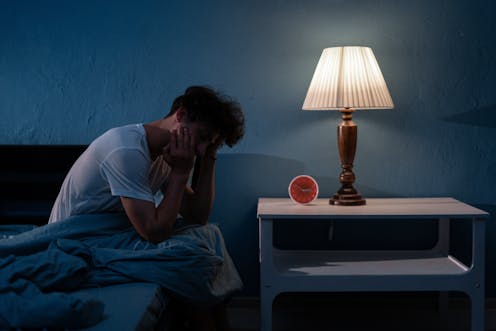
Sometimes we need to get up late at night to pee. Christian Moro
Effects of nocturia on daily functioning
The recommended amount of sleep for adults is between seven and nine hours per night. The more times you have to get up in the night to go to the bathroom, the more this impacts sleep quantity and quality.
Decreased sleep can result in increased tiredness during the day, poor concentration, forgetfulness, changes in mood and impaired work performance.
If you’re missing out on quality sleep due to nighttime trips to the bathroom, this can affect your quality of life.
In more severe cases, nocturia has been compared to having a similar impact on quality of life as diabetes, high blood pressure, chest pain, and some forms of arthritis. Also, frequent disruptions to quality and quantity of sleep can have longer-term health impacts.
Nocturia not only upsets sleep, but also increases the risk of falls from moving around in the dark to go to the bathroom.
Further, it can affect sleep partners or others in the household who may be disturbed when you get out of bed.
Can you have a ‘small bladder’?
It’s a common misconception that your trips to the bathroom are correlated with the size of your bladder. It’s also unlikely your bladder is smaller relative to your other organs.
If you find you are having to wee more than your friends, this could be due to body size. A smaller person drinking the same amount of fluids as someone larger will simply need to go the bathroom more often.
Can you have a small bladder?
If you find you are going to the bathroom quite a lot during the day and evening (more than eight times in 24 hours), this could be a symptom of an overactive bladder. This often presents as frequent and sudden urges to urinate.
If you are concerned about any lower urinary tract symptoms, it’s worth having a chat with your family GP.
There are some medications that can assist in the management of nocturia, and your doctor will also be able to help identify any underlying causes of needing to go to the toilet during the night.
A happy and healthy bladder
Here are some tips to maintain a happy and healthy bladder, and reduce the risk you’ll be up at night:
The authors do not work for, consult, own shares in or receive funding from any company or organisation that would benefit from this article, and have disclosed no relevant affiliations beyond their academic appointment.
Africa, Asia, Australia, Antarctica, North and South America, Europe – and the Maritime Continent.
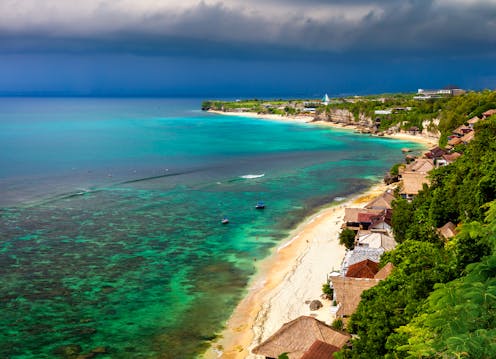
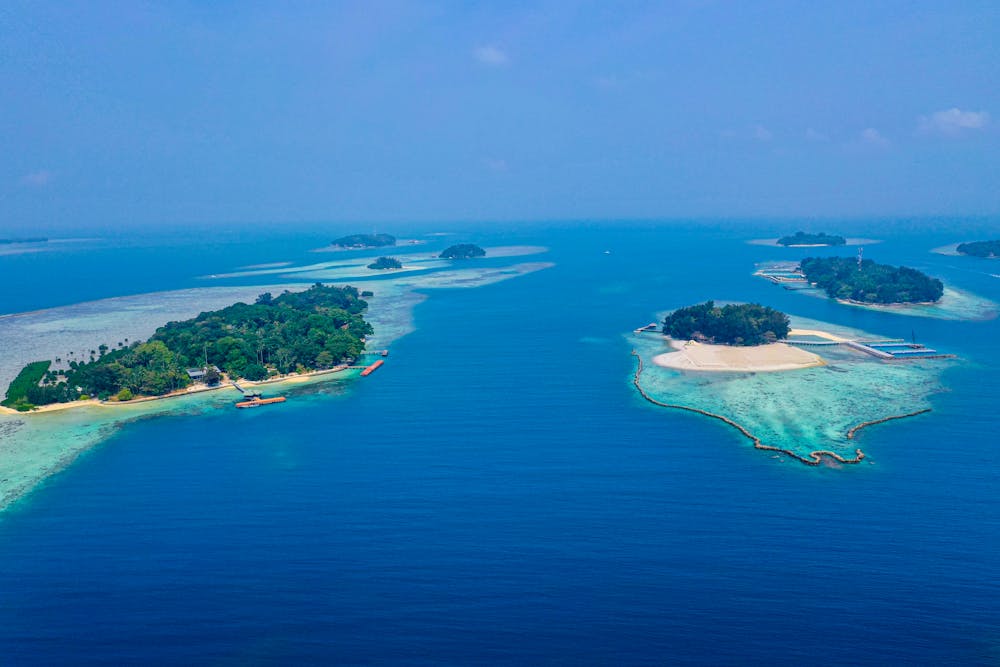
Never heard of the last one? That’s because it’s not a continent made of land. In fact, it’s the largest warm tropical sea in the world, lapping against the shores of Indonesia, Malaysia, Papua New Guinea, the Philippines and smaller countries.
Why call it a continent? The name comes from the way the seas and land in this region interact. This single region is the main heat engine pushing heat around the world. The Maritime Continent is home to large expanses of warm, shallow seas bigger than Australia. Known as the tropical warm pool, these seas – the warmest on Earth – sustain warm sea temperatures and act as a engine for the Earth’s climate system.
As the world heats up under climate change, more heat pours into the seas. That means the Maritime Continent’s warm pool is growing. It’s roughly doubled from 22 million (1900-1980) to 40 million square kilometres (1981-2018).
Why is this area special?
Start with the sun. The midday sun is mostly directly overhead in the tropics. Incoming radiation from the sun is at its peak along the equator, which bisects Indonesia. In this region, the seas are relatively shallow – the Java Sea, for instance, averages a depth of just 46 metres. Sunlight can penetrate to the seabed and so shallow water depths allow for more efficient heating of the water. As a result, the surface temperatures of this enormous warm pool of water are over 28°C.
Then there’s the wind. The prevailing winds here are the southeasterly trade winds, which blow along the surface of the Pacific near the equator. As they blow, they push the water below, pooling warm water in the western Pacific and around the islands of the Maritime Continent. These waters are usually the warmest oceans in the world.
Heat is energy, and energy makes things happen. Some of the heat leaves the seas and enters the atmosphere in a process known as convection. As the Earth rotates, the rising hot air spins away from the equator towards the poles. In this way, it spreads heat around the planet. The heat also drives evaporation, leading to high humidity rates and making the region climatically unstable. Intense storms driven by convection – rising hot air from the seas – can form at any time of the year.
Land heats and cools faster than water. As the land surface heats up, it can drive the development of convective storms on a near daily basis in some places. Other large storms can form as warm, moist air is blown over terrain and pushed upwards when it hits mountains.
This potent combination of heat, moisture and wind act to transfer huge amounts of heat to the upper reaches of the atmosphere, which then spreads around the world.
You might not know it, but the atmosphere has a lid of sorts. You and I spend our lives in the troposphere, the lowest part of the atmosphere where ground and air meet. Here, the temperature generally falls as you get higher, which is why mountains are colder. In the stratosphere, by contrast, the air usually gets warmer with height.
Between the troposphere and the stratosphere lies the tropopause. This “lid” acts to keep most clouds and rain closer to Earth.
In Melbourne, the tropopause is about 11km above the city. But the warm, expanding atmosphere of the Maritime Continent pushes the tropopause as high as 18km above the surface.
This means there’s more space for heated and unstable air to rise and give birth to huge and seriously energetic cumulonimbus stormclouds. From here, heat is diverted towards the poles in global air circulation currents within the troposphere.
But when you’re at sea level in the Maritime Continent, you can have a totally different experience. Because so much of the heat rises, low atmospheric pressure develops and the equatorial winds at the surface can be very calm. In the age of sail, sailors called these conditions “the doldrums”.
Australia’s Bureau of Meteorology pays close attention to the Maritime Continent, because it has great influence over our weather – and not just for the tropical north.
When sea surface temperatures change up here, we know changes are coming to Australia’s weather patterns. Like India, northern Australia is monsoonal. Little rain falls during the dry season, April to October. When the wind patterns change in tropical Australia and freshening westerlies converge with the trade winds very late in the year, the monsoon arrives, bringing torrential rain.
It’s not just the north – temperature changes in the tropical warm pool can influence atmospheric pressure systems and drive changes in weather patterns in southern Australia too.
The Maritime Continent is a weather engine, concentrating heat in warm seas and spreading it around the world.
In recent months, sea surface temperatures around the world are higher than ever recorded, and getting higher still. What will happen to it as more trapped heat pours into the oceans?
Certainly, the warm pool of water unpinning the Maritime Continent will keep expanding, as it has for decades. What that means for us isn’t as clear.
We don’t know yet whether a bigger tropical warm pool will allow more tropical cyclones to develop, or whether it will change how intense the monsoon will be.
Some research suggests higher sea temperatures can actually dampen down the formation of clouds from convection, which could mean regional droughts for countries of the Maritime Continent.
To help find out, I helped other researchers operate an instrument-packed aircraft fly many measurement missions from Cairns earlier this year, including heading for the seas into the Maritime Continent. We measured concentrations of atmospheric molecules. The data we gathered will, we hope, help weather modellers better gauge what hotter tropical seas mean for the world.
This uncertainty means the Maritime Continent is worth watching.
Michael Hewson does not work for, consult, own shares in or receive funding from any company or organisation that would benefit from this article, and has disclosed no relevant affiliations beyond their academic appointment.
Cranbrook in Sydney’s east is one of the most elite boys schools in Australia. On Monday night, the ABC’s Four Corners program aired claims some female teachers had been bullied by male staff and sexually harassed by students.
Amid the school’s decision to go fully co-ed by 2028, there are concerns about whether Cranbrook will be a safe space for girls.
In a statement to the ABC, Cranbrook said its “current staff, including female staff, overwhelmingly support the School, its values and its culture”. It also said it has appointed teacher Daisy Turnbull to prepare for coeducation and “support the furtherance of gender equality” at the school.
What do schools need to do in order to be genuinely gender inclusive?
Previous Australian research has also found elite boys schools can be hostile places for women and girls, trans and gender diverse students, as well as boys who don’t conform to traditional norms of masculinity.
Simply enrolling girls will not automatically make a boys school more inclusive, less sexist or safer.
Schools aiming to truly welcome a wider range of students will need to significantly reshape the structures and culture of the school itself, both within and beyond the classroom.
The World Health Organization has developed a framework to ensure schools are healthy and safe. It addresses three overlapping areas:
teaching and learning
the broader school environment
partnerships with parents and the community.
This approach can be applied to gender equity and inclusivity.
Research has found elite boys school can be hostile places for women and girls. Thirdman/Pexels, CC BY
Teaching and learning
The first component of a healthy school involves what students learn and the approaches and strategies used to teach it.
Schools that are gender equitable provide diverse curricula and equally diverse extra-curricular opportunities accessible to all students, regardless of gender.
There are all kinds of boys and all kinds of girls. So even single sex schools should be catering to students with a wide range of skills, interests, preferences and experiences. Likewise, there are students who are trans and non-binary, who may be excluded from school activities divided along narrow gender lines.
Some co-ed schools still segregate boys and girls for certain subjects. This approach upholds the idea that boys and girls learn differently and that some topics (such as menstruation) are too awkward to discuss in mixed-gendered groups.
Some schools choose to segregate classrooms to improve girls’ opportunities in areas they have been traditionally underrepresented in. While this can spring from feminist recognition of gender inequalities, it reaffirms the very divides it is attempting to challenge.
The current Australian Curriculum provides opportunities to engage young people in discussions about gender stereotypes and power in age-appropriate ways, in both primary and high school.
In English, students should meet diverse characters that challenge traditional gender roles and inequality.
Science, technology, engineering and maths subjects can foster enthusiasm for STEM-related content and careers, through hands-on classroom activities that encourage critical thinking and build confidence.
In health and physical education, comprehensive sexualities and relationships education should be a priority and include discussions of gender, power, violence, consent and healthy relationships.
Teachers’ values and attitudes about gender will also be reflected in their everyday teaching routines and practices. This includes whether or not they address students through gendered language, divide students into gendered groups for activities or discipline boys and girls differently.
So teachers also need support and quality professional development to keep pace with evolving understandings of gender and gender diversity.
There should be a variety of extra-curricular opportunities available to all genders. Jeffrey F Lin/Unsplash, CC BY
The broader school environment
The second component of a healthy school is the school culture. School leaders should use respectful and inclusive language and there should be strong policies to deal with child-protection concerns, gender-based discrimination and violence at school.
Research indicates that, unlike other forms of bullying, gender-based violence is often overlooked or ignored by staff. Sexist language and behaviours can be dismissed as “just a normal part of growing up” and so become a routine part of young people’s schooling experiences.
School staff should also feel valued, respected and safe in their workplace regardless of their sex, gender or sexuality. Unfortunately, evidence indicates this is not always the case. A 2018 survey found 43% of NSW LGBTIQA teachers reported experiences of discrimination in the workplace. Australian research published in 2020 found women teachers were experiencing unacceptably high rates of sexual harassment in elite boys schools.
School leaders have a duty to ensure their schools have robust policies and processes for responding to disclosures of harassment and discrimination from staff. They also need to pursue evidence-informed cultural change to ensure a safe work environment.
Students can be active partners in developing an inclusive school community and can even help co-design curricula relating to gender, overcoming biases and developing healthy relationships.
Student diversity should also be reflected through gender-balanced representation in student leadership roles. Student initiatives around gender equality and LGBTQIA+ visibility, such as gender and sexuality alliances, should also be supported.
School uniforms should provide options so all young people feel safe and comfortable in what they wear at school.
The third and final part of a healthy school looks beyond the school gates. Schools should see parents as partners and celebrate diversity in the community.
Parents should be invited to ask questions about curriculum and school culture and to raise concerns or lend expertise. School policies should be publicly available and regularly reviewed with student and parent input.
Schools can also work with organisations that promote gender equity, diversity and promote healthy relationships such as Our Watch, Family Planning and Twenty10.
These organisations can support schools’ counselling and pastoral care services and provide resources and training for teachers.
All schools can adopt this model
While boys schools have been the focus of recent media attention all schools should be called upon to evaluate and reflect on their gendered culture.
Co-ed and girls schools are not immune to gender-based violence, sexism, homophobia and transphobia.
A whole-of-school review of curricula, school culture and partnerships can help schools ensure they are creating inclusive and respectful environments. This work is urgent if we aspire to a society where all students and teachers are safe in our schools.
Kellie Burns has previously received funding from the University of Sydney Equity Prize
Jessica Kean receives funding from the Australian Research Council for the Special Research Initiative ‘Australian Boys: Beyond the Boy Problem’.
This article is part of The Conversation’s series examining the housing crisis. Read the other articles in the series here.
Australia’s housing crisis is putting the Australian dream to own one’s home out of reach for many.
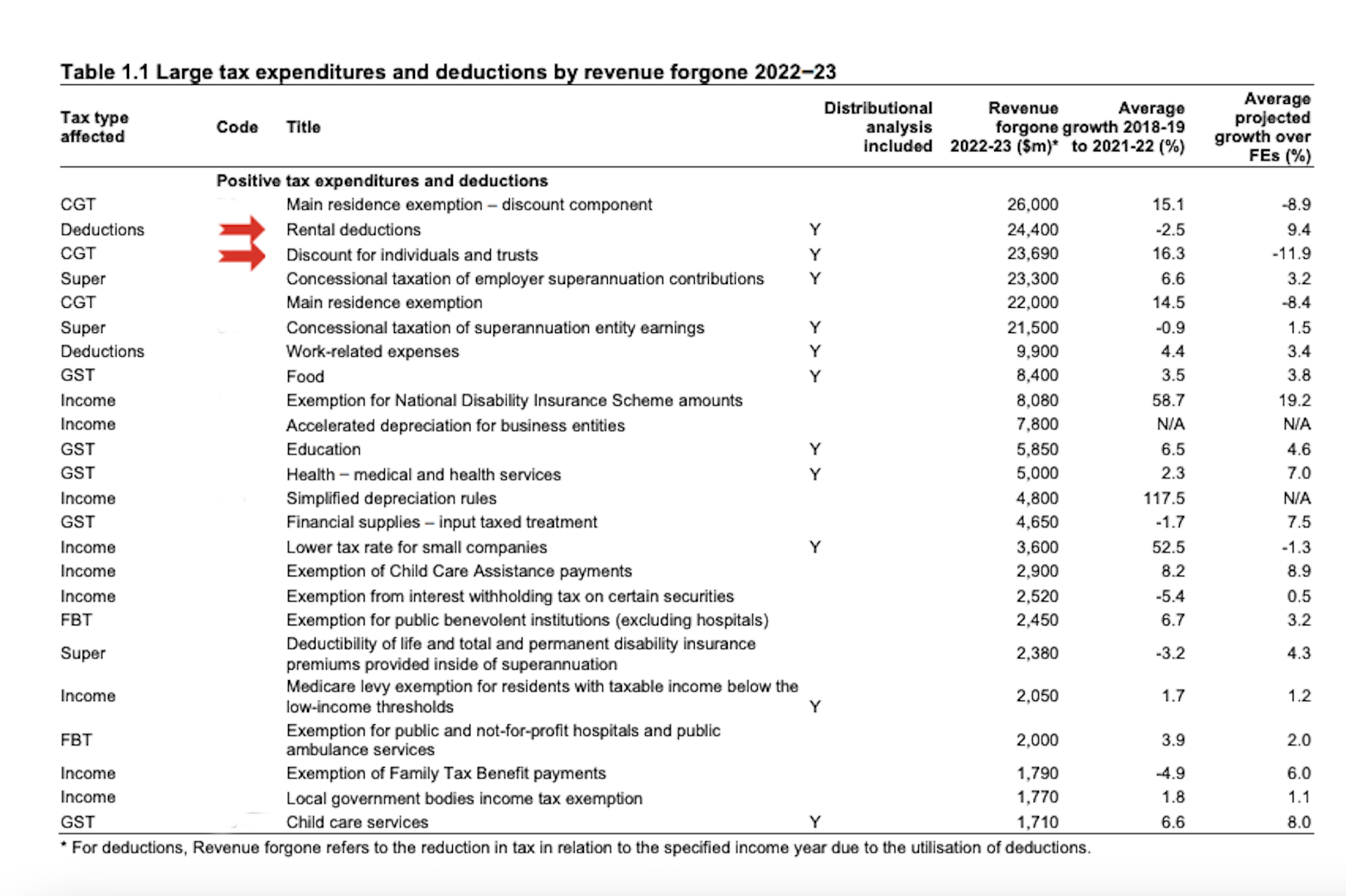
But it’s not just home ownership that has been affected. Rental affordability has also become a serious issue. This has reignited the debate about negative gearing; whether or not it is fair and whether it holds the key to fixing the housing crisis.
What is negative gearing?
Negative gearing refers to using borrowed money to invest in an asset so it results in a loss which can be claimed as a tax deduction against other income. For example, a property investment is negatively geared if the net rental income received is lower than the mortgage interest. The loss is then offset against other income, such as wages and salaries, which reduces the amount of income tax payable.
Negative gearing is commonly used for property investments but also applies to other investments (such as shares). Investments can also be positively geared when net income from the investment is more than the interest on borrowings.
The attractiveness of negative gearing in Australia is mainly due to its ability to reduce the amount of income tax. For this reason, it can be more beneficial to individuals who are on higher marginal tax rates. However, capital gains tax must be paid on any gain when the asset is sold.
How does negative gearing work?
Let’s look at a simple example of negative gearing. Say an investment property was rented to tenants at A$500 a week ($26,000 a year), and associated expenses (such as agent fees, rates, mortgage interest, maintenance) were $40,000 for the year. This leaves a shortfall of $14,000.
The property owner can deduct the $14,000 from their taxable income to reduce their liability. For example if they received $100,000 from wages, they would pay tax on only $86,000 (saving $4,550 in income tax). Individuals on higher incomes and therefore higher marginal tax rates would receive larger tax deductions (for example, someone earning over $180,001 would pay $6,300 less tax).
While negative gearing an investment property can reduce tax while it is being rented, it can also result in a large capital gains tax bill once the property is sold (even though capital gains tax is halved for assets held for more than 12 months).
For example, if the cost base for a property purchased ten years ago was $400,000 and it sells for $900,000 today, capital gains tax would be calculated on half of the $500,000 difference. At a marginal rate of 45%, the tax bill would be $112,500.
How widespread is it in Australia?
According to the Australian Taxation Office, about 2.25 million individual tax payers (21% of all individual tax payers) claimed deductions against rental income for a total 3.25 million properties in 2020-21 financial year.
Of these, 47% negatively geared their properties, claiming a net rental loss. This is equivalent to just less than 10% of all taxpayers. Investors with fewer properties were more likely to be using negative gearing with over 71% of property investors having only one investment property.
The largest group of property investors (524,220) had one investment property and a total annual taxable income between $50,001 and $100,000. The chart above shows the proportion of property investors by age group.
From 2016-2017 to 2020-2021, the total net rental income on property investments in Australia went from a loss of $3.3 billion to a gain of $3.1 billion (as you can see from the chart below).
For the same period, the proportion of investors negatively gearing their properties dropped from 58% to 47%, as lower interest rates reduced losses.
Negative gearing is also becoming less attractive with the government’s recent changes to tax brackets and marginal tax rates. According to a study conducted by LongView and PEXA, 60% of property investors would be financially better off if they instead put their money into a superannuation fund.
When was it introduced?
Negative gearing has been allowed under tax laws since 1936. It was thought it would encourage investment in housing and increase supply.
However, debate around its impact on housing affordability led the government to partially abolish it in 1985 by not allowing rental property losses to reduce tax on other sources of income.
There was a shortage of housing and rents rose during the two years it was abolished. As a result, in 1987, negative gearing was reinstated and capital gains tax legislation was introduced.
Is it used in other countries?
Canada, Germany, Japan and Norway use negative gearing. In Finland, France and the United States, rental losses can offset future rental income only. In the US, home owners are entitled to claim a tax deduction for mortgage interest on their own home.
The use and benefit of negative gearing depends upon all aspects of a country’s tax system. So although it may be attractive in countries with high marginal tax rates, other taxes such as capital gains tax, land tax and stamp duties may reduce its appeal.
Negative gearing’s impact on housing affordability
Many factors affect the cost of housing, including interest rates, inflation, employment, the overall taxation system and population growth, making housing affordability a complex issue.
However, unlike Australia, New Zealand does not have capital gains tax, making negative gearing more popular and more likely to impact housing prices. In addition to phasing out negative gearing, the New Zealand government increased the supply of public housing and relaxed zoning regulations to provide more affordable housing.
In Australia, however, there are concerns abolishing negative gearing will cause rents to rise, as they did in the 1980s. More innovative approaches to housing affordability are needed to ensure ample supply of property for first home buyers and tenants.
Some consideration could be given to allowing first home buyers to claim a tax deduction for mortgage interest, increasing capital gains tax, limiting the number or type of investment properties held, capping rent increases, or more infrastructure investment from the government for first home buyers and social housing.
One or more of these measures would be a step in the right direction. Negative gearing on its own is not the answer to housing affordability. The whole system needs an overhaul, with a combination of measures needed to adequately address affordability, for now and for future generations.
Taking no action will put home ownership out of reach for even more Australians.
Michelle Cull is co-founder of the Western Sydney University Tax Clinic that receives funding from the Australian Taxation Office as part of the National Tax Clinic Program.
Michelle Cull is a member of CPA Australia and the Financial Advice Association Australia. Michelle is also an academic member of UniSuper’s Consultative Committee and volunteers as Chair of the Macarthur Advisory Council for the Salvation Army Australia.
Although the notion of a government’s “first 100 days” in office is constitutionally meaningless, it has become part of the modern political lexicon.
Ever since US president Franklin D. Roosevelt used the phrase to usher in an era of unparalleled congressional activity in 1933, it has been adopted by administrations the world over to signal intent and energy.
As New Zealand’s coalition government approaches its 100-day milestone this Friday, then, much has been made of its 49-point action plan.
While billed as a platform to “rebuild the economy and reduce the cost of living”, “restore law and order”, “improve healthcare and education” and “deliver better housing and infrastructure”, many of the points begin with words such as “repeal”, “cancel” or “start reducing”.
In short, much of the first 100 days has involved undoing the former government’s initiatives. Nonetheless, some of this has still been substantive and significant.
Repealing fair pay agreements or taking action to “curb the surge in welfare dependency” are standard centre-right approaches to economic stimulation.
The real purpose of the first 100 days, of course, is to signal the government is “laser-focused” on what matters to its supporters. As lawyer Dennis Denuto put it so memorably in The Castle, “it’s the vibe” that matters.
On that count, the government will be reasonably pleased with recent polls indicating growing support for Christopher Luxon as preferred prime minister and for the administration he leads (the recent furore over Luxon’s short-lived insistence on claiming the MP’s accommodation supplement notwithstanding).
Missteps aside, the most important aspect of the opening period of this (or any other) administration is not what was done, but how it was done.
Shortly we will all stop talking about the first 100 days. But the tone and character of a government are established early on, and continue to shape its demeanour for the duration of its time in office.
The most consequential things that took place in the coalition’s first 100 days, in other words, were not in the action plan.
Tails wagging the dog
The first had to do with who made the early political running. For weeks David Seymour’s ACT party dominated the political agenda. Specifically, its proposed Treaty Principles Bill sucked the wind out of National’s sails.
There is a lull in proceedings for now, and the bill will probably not survive beyond select committee. But when it gets there, ACT will once again be front and centre – a good return on the party’s 8.6% share of the election vote and enough to carry Seymour through to his turn as deputy prime minister.
For a time, too, National’s other coalition partner was dominating headlines. NZ First will claim credit for the repeal of smokefree legislation and will be unfazed by the criticism this has attracted
at home and abroad. All it will care about is a big win for its supporters.
If this seems more about a perception of two tails wagging the government dog, it has also undoubtedly created early tensions between Luxon and Seymour, in particular.
Cabinet collective responsibility is holding so far. But it’s not unreasonable to anticipate future challenges to the prime minister’s authority, and to the internal stability of his coalition administration.
The question will be whether Luxon can govern as first amongst equals, as is generally the case in parliamentary democracies, or is forced by Seymour and Winston Peters into something resembling a triumvirate.
New Deal or Waterloo?
Other challenges will move to centre stage, including a looming stand-off with local government over infrastructure funding, and the impacts of back-office public service cuts.
Luxon will also find it hard to square his narrative about reducing the cost of living with the announcement this week of increases in car registration fees and fuel taxes. That extra NZ$9.20 in the tank of an Auckland Hilux, delivered by the axing of the Auckland regional fuel tax, didn’t last long.
Questions of governing style are also starting to emerge, particularly around the influence of lobbyists over government policy in the fisheries and health sectors. The identities of those with swipe-card access to parliament, including lobbyists, are now not publicly available under new rules set by the Speaker of the House.
The first real test of the government, of course, will be its first budget in late May. Finance minister Nicola Willis will need to demonstrate how her government’s electoral commitments will be paid for – and how it intends to improve what Luxon has called the “fragile” state of the nation.
It is also worth noting, perhaps, that while the “first 100 days” is usually associated with Roosevelt, its roots are actually in France. “Les Cent Jours” refers to the period following Napoleon’s triumphant return from exile on Elba. Roosevelt’s first hundred days delivered the New Deal. Napoleon’s ended at Waterloo.
Richard Shaw does not work for, consult, own shares in or receive funding from any company or organisation that would benefit from this article, and has disclosed no relevant affiliations beyond their academic appointment.
By Alex Bainbridge, Peter Boyle, Isaac Nellist, Jacob Andrewartha, Jordan Ellis, Alex Salmon, Stephen W Enciso and Khaled Ghannam of Green Left
Thousands marched for Palestine across Australia at the weekend in the wake of Israel’s massacre of more than 100 starving Palestinians who were trying to get flour from an aid truck southwest of Gaza City.
Israel’s siege on Gaza has stopped Palestinians from accessing food, medical supplies and other crucial aid. A United Nations report found that more than 90 percent of the population, more than 2 million people, are facing starvation and malnutrition.
This is made worse by the cutting of funding to the UN Relief and Works Agency (UNRWA) by Western governments, the main organisation providing aid to Gaza, after Israel alleged that 12 of its 30,000 staff were involved in the October 7 incursion.
“Our government has suspended funding to UNRWA when instead it should be restoring it and increasing it,” Greens senator Larissa Waters told the Meanjin/Brisbane rally on March 3, reported Alex Bainbridge.
Waters said that Foreign Minister Penny Wong was right to condemn Israel’s attack on food vans but that she was “not bowled over by the strength of response because Senator Wong has said she’s going to get her department to have a little word to the Israeli ambassador”.
“That’s all she’s going to do after we saw desperate parents getting slaughtered [while getting] food for their children.”
‘Solidarity with Palestinian women’ The rally had a “Solidarity with Palestinian women” theme in recognition of International Women’s Day on March 8.
Call on global Jewish community to rise up against Israel’s genocide in Gaza. Video: Green Left
Protesters held a minute’s silence in recognition of United States Air Force serviceperson Aaron Bushnell who self-immolated on February 25 in protest against the US government’s participation in genocide.
Israel has begun its bombardment offensive against Rafah, the small city in southern Gaza where 1.4 million people are sheltering. More than 30,500 Palestinians have been killed in Gaza since October 7.
A YouGov survey found that more than 80 percent of Australians support an immediate ceasefire in Gaza, showing the Palestine solidarity movement has cut through the establishment media pro-Israel messaging.
Edie Shepherd, from the Tzedek Collective, an anti-Zionist Jewish group told thousands at the rally in Gadigal/Sydney on March 3 that the global Jewish community must “rise up against the dominant Zionist frameworks that wield hate, power militarism to carry out atrocities against Palestinians”, reported Peter Boyle.
“The greatest shame is that our survival of genocide has been weaponised to commit genocide against Palestinians now.”
Nasser Mashni, president of the Australia Palestine Advocacy Network (APAN), told the March 3 rally in Garramilla/Darwin that “Israelis and Zionists want to kill Palestinians”, reported Stephen W Enciso.
Israel’s massacre of starving Palestinians has been dubbed the “flour massacre”. Image: Alex Bainbridge/Green Left
‘They want decolonisation’ “Palestinians do not want to kill Israels. Indigenous folk do not want to kill their colonisers. They just want to be acknowledged. They want [a] treaty. They want their rights. They want restitution. They want racism to stop and decolonisation to start,” he said.
Kulumbirigin Danggalaba Tiwi woman Mililma May drew links between the colonial violence faced by Indigenous people in Australia and Palestine.
She pointed to the coronial inquest into the killing of Kumanjayi Walker by former constable Zachary Rolfe, in which Rolfe gave evidence about widespread racism in the Northern Territory Police Force.
“We are witnessing in plain evidence the racism and the deep horror that exists in the NT police, as across the colony,” May said.
“We live in the same states and under the same violence as Palestine. It just manifests itself in different ways.”
Kites flying for Gaza A kite-flying for Gaza event was organised by Pilbara for Palestine in Karratha, Western Australia on March 3.
Children made and flew kites decorated with Palestinian flags, watermelons and “Free Palestine” in solidarity with the children on Gaza.
Organiser Chris Jenkins told Green Left that the action “demonstrated once again that support for Palestine exists from the CBD to the bush”.
The community also raised money for UNRWA.
In Muloobinba/Newcastle a “Hands off Rafah” rally and kite-flying event was held on March 2 at Nobby’s Beach, reported Khaled Ghannam.
Former Greens Senator Lee Rhiannon, who visited Palestine in June last year, said the Israeli occupation impacts on everything Palestinians do.
“One of the common things that people we interviewed said was, ‘please take our voice to the world’,” she said.
“We are part of a massive global movement, millions of people are on the move around the world in so many countries, with a similar message to us:
Ceasefire now,
Restore UNRWA funding, and
End the occupation.”
She said the UN had called on Australia and other countries to stop arming Israel.
Australians are set to find out if we are on the edge of a so-called “official” recession.
Due out mid-Wednesday, the national accounts will either show spending, incomes and production continued to grow in the three months to December, or show they fell.
If they fell, it would be the first of the two strikes needed for what some people call an “official” recession. (Though surprisingly, there’s no such thing here in Australia, as I’ll explain later.)
The second strike would be a fall in the following three months, the so-called March quarter. If we get two quarters in a row, all manner of people – probably including the treasurer – will declare it a recession.
But whatever Wednesday’s data shows, the truth is we are already experiencing the biggest dive in living standards in half a century – and have been for two years.
How to spot a genuine recession
The figures due out on Wednesday will give us an indication of whether ordinary Australians are better or worse off, if we know where to look.
The first thing to do is to put to one side the headline increases or falls in gross domestic product (GDP). Those are spending, income and production over the entire economy each three months.
Those figures show GDP growth was weak before the pandemic, very weak during lockdowns (shrinking for two successive quarters), then strong as lockdowns ended. It’s been exceedingly weak since.
But this tells us little about spending and income per person, which is how each of us experiences daily life.
Adjusted for our current very high rate of population growth, GDP per person is extremely weak. It’s been falling, or barely growing, for three quarters now.
Unfortunately, the bureau of statistics doesn’t display this on its website. But it’s easy enough to calculate from the bureau’s spreadsheets.
It’s the income accruing to households, adjusted for the prices paid by households, and then adjusted some more.
The bureau also subtracts taxes paid (which have climbed because of the expiry of the temporary tax offset in mid-2023). And it subtracts net interest payments, most of which are mortgage payments.
In his public presentations, Richardson says he refers to real household disposable income per capita as “living standards”, because that’s what it measures.
It shows weak spending, rising prices, a greater tax take, and much greater payments on mortgages have been shrinking living standards for two years.
That’s how it has felt for two years, even if the way the pain has been spread has been different than in the past.
The biggest dive in living standards in half a century
Previous dips in household disposable income per capita have been accompanied by high unemployment, concentrating the pain in the unlucky group looking for work at the time.
In contrast, this dip in living standards has been accompanied (so far) by low unemployment, pushing more of the burden onto working taxpayers.
Looked at through a longer-term lens (the longest the bureau’s spreadsheets allow) the latest dive in real household disposable income per capita is the biggest in half a century.
The broad picture is of fairly steady living standards until the mid-1990s, accelerating living standards during the 2000s mining boom, and then fairly flat (rising slowly) after the 2008-2009 global economic crisis.
They jumped for a bit during the COVID lockdowns, because of all the government assistance. But they’ve been diving since.
Many people talk about a recession meaning two quarters in a row of shrinking spending and income. This appears to date back to a 1974 New York Times article, written by a US business cycle expert Julius Shiskin.
He said two quarters of shrinking economic activity was one of the criteria you could use to decide whether or not an economy was in recession.
Shiskin’s pronouncement was subsequently latched on to by journalists all over the world, who made it the definition because it was simple.
But it has led to nonsensical conclusions.
How Australia and the US differ
Three decades ago, after the release of the September 1990 national accounts on November 29, Treasurer Paul Keating declared they showed Australia in recession.
Keating famously added:
the most important thing is this is the recession that Australia had to have.
Those words live on, but the so-called “recession” didn’t. It vanished soon after. What had been a small decline in economic activity, followed by a big decline, got revised to become a small increase, followed by a big decline.
How? The Australian Bureau of Statistics revises the national accounts as a matter of course, each time new information comes in.
Its revisions moved Australia’s early 1990s recession to the March and June quarters of 1991.
A “recession” even briefly appeared after revisions to the 2000 national accounts, under Prime Minister John Howard and Treasurer Peter Costello. Then it disappeared, after further revisions.
In the United States, they’re not nearly as mechanical. There, there isn’t an official recession until a committee of elders convened by the National Bureau of Economic Research says so. Its proclamations have broad support.
If Wednesday’s figures show Australia’s economic activity shrinking, we will hear a lot more about an “official” recession. But it will make little difference to Treasurer Jim Chalmers as he prepares this year’s May budget.
Just like the rest of us, he knows things are going backwards.
Peter Martin is Economics Editor of The Conversation.
Sometimes it’s hard to decide whether Peter Dutton is a gambler at heart or ultra cautious.
On the policy front, the Opposition Leader is overseeing the development of a radical plan for Australia to use nuclear power in its energy transition. But in reshuffling his frontbench team on Tuesday, Dutton took a very careful path.
In its substance the nuclear policy, expected to be released before the budget, is based on a premise that this route is needed if Australia is to reach net zero emissions by 2050.
The latest polling shows Australians’ attitudes to nuclear power are becoming more favourable.
A Newspoll published last week found 55% approved when asked their attitude to building “several small modular nuclear reactors […] to produce zero-emissions energy on the sites of existing coal-fired power stations once they are retired.” Among those aged 18-34, approval was 65%.
In the Essential poll, in 2019 support for Australia developing nuclear power plants was 39%; last October it was 50%.
Nevertheless, given most experts insist nuclear wouldn’t be cost effective in any realistic timeframe, and scare campaigns are easy to run, why would Dutton go out on this shaky limb?
One theory is he’s seeking to bridge the gulf between, on the one hand, the resistance by Nationals (or many among them) to transmission lines and wind farms and, on the other hand, the moderate Liberals, who are totally committed to the 2050 target.
Pragmatically, looking at the politics, there is a lot of opposition in regional areas to the transmission network. How harvesting that discontent would weigh against the uncertainty, even alarmism that could be whipped up is another matter.
Despite the movement in public opinion, Labor can be expected to hold firm to its complete dismissal of the nuclear option. Apart from anything else, this is a red line for the Labor rank and file.
Dutton said on Tuesday the nuclear proposal was “a way of transitioning out of coal and into zero emissions technology.
“We’ve said that we’re interested in looking at sites where you’ve got an end-of-life coal fired generation asset. So that means that you can use the existing distribution network.”
While Dutton isn’t shying away from a big fight on nuclear, when it comes to his team, he has studiously avoided any boat-rocking.
He had two vacancies: shadow assistant treasurer, left by Stuart Robert, and shadow cabinet secretary, previously held by Marise Payne, who also quit parliament.
Luke Howarth, who like Robert is a Queenslander, has been promoted to shadow assistant treasurer. Previously he had defence industry and defence personnel.
Senator James Paterson, from Victoria, becomes shadow cabinet secretary, in addition to his existing responsibility as home affairs spokesman. Dutton described this as “a critical role” in the Coalition’s shaping of its policy agenda.
With an eye to the cost of living and his strategy of targeting outer suburbia, Dutton has brought the MP for the marginal Sydney seat of Lindsay, Melissa McIntosh, previously an assistant shadow minister, into the shadow ministry. She’ll be shadow minister for energy affordability and for Western Sydney. The elevation should help in a preselection battle she faces.
With the opposition preparing its housing policy, Andrew Bragg moves from the backbench to shadow assistant minister for home ownership, the issue du jour.
Among other limited changes, South Australian backbencher James Stevens’ appointment as shadow assistant minister for government waste reduction signals the Coalition is on the hunt for cuts. The public service will be alert and alarmed. Senator Paul Scarr becomes shadow assistant minister for multicultural engagement, increasing the opposition’s attention on this area at a challenging time for community harmony..
Meanwhile, the Liberals are saddling up for another byelection, with a Monday preselection ballot choosing Simon Kennedy, a former McKinsey consultant, as the candidate for Cook, vacated by Scott Morrison.
Cook is a safe Liberal seat and Labor is highly unlikely to contest it.
Kennedy ran unsuccessfully in Bennelong at the election. The criticism of his endorsement for Cook was immediate and predictable: the Liberals need more women in the parliament, and here they’ve chosen a man. Kennedy, who had an overwhelming vote, beat two other men and a woman.
While Liberals had to defend their position in the gender wars, Anthony Albanese, celebrating Jodie Belyea’s win in the Dunkley byelection, is able to crow that his caucus has a majority of females.
Michelle Grattan does not work for, consult, own shares in or receive funding from any company or organisation that would benefit from this article, and has disclosed no relevant affiliations beyond their academic appointment.
In an unprecedented legal development, senior Australian politicians, including Prime Minister Anthony Albanese, have been referred to the International Criminal Court (ICC) for investigation into whether they have aided or supported Israel’s actions in Gaza.
The referral, made by the Sydney law firm Birchgrove Legal on behalf of their clients, is the first time any serving Australian political leaders have been formally referred to the ICC for investigation.
The referral asserts that Albanese, Foreign Minister Penny Wong, Opposition Leader Peter Dutton and other members of the government have violated the Rome Statute, the 1998 treaty that established the ICC to investigate and prosecute allegations of war crimes, genocide and crimes against humanity.
Specifically, the law firm references:
Australia’s freezing of aid to the UN Relief and Works Agency for Palestine Refugees (UNRWA), the aid agency that operates in Gaza
the provision of military aid to Israel that could have been used in the alleged commission of genocide and crimes against humanity
permitting Australians to travel to Israel to take part in attacks in Gaza, and
providing “unequivocal political support” for Israel’s actions in Gaza.
A key aspect of the referral is the assertion, under Article 25 of the Rome Statute, that Albanese and the others bear individual criminal responsibility for aiding, abetting or otherwise assisting in the commission (or attempted commission) of alleged crimes by Israel in Gaza.
At a news conference today, Albanese said the letter had “no credibility” and was an example of “misinformation”. He said:
Australia joined a majority in the UN to call for an immediate ceasefire and to advocate for the release of hostages, the delivery of humanitarian assistance, the upholding of international law and the protection of civilians.
There are a couple of key questions here: can anyone be referred to the ICC, and how often do these referrals lead to an investigation?
Referrals to the ICC prosecutor are most commonly made by individual countries – as has occurred following Russia’s invasion of Ukraine in 2022 – or by the UN Security Council. However, it is also possible for referrals to be made by “intergovernmental or non-governmental organisations, or other reliable sources”, according to Article 15 of the Rome Statute.
The ICC prosecutor’s office has received 12,000 such referrals to date. These must go through a preliminary examination before the office decides whether there are “reasonable grounds” to start an investigation.
The court has issued arrest warrants for numerous leaders over the past two decades, including Russian President Vladimir Putin and his commissioner for children’s rights, Maria Lvova-Belova; former Sudanese President Omar al-Bashir; and now-deceased Libyan leader Muammar Gaddafi.
Why this referral is unlikely to go anywhere
Putting aside the merit of the allegations themselves, it is unlikely the Australian referrals will go any further for legal and practical reasons.
First, the ICC was established as an international court of last resort. This means it would only be used to prosecute international crimes when courts at a national level are unwilling or unable to do so.
As such, the threat of possible ICC prosecution was intended to act as a deterrent for those considering committing international crimes, as well as an incentive for national authorities and courts to prosecute them.
Australia has such a process in place to investigate potential war crimes and other international crimes through the Office of the Special Investigator (OSI).
The OSI was created in the wake of the 2020 Brereton Report into allegations of Australian war crimes in Afghanistan. In March 2023, the office announced it first prosecution.
Because Australia has this legal framework in place, the ICC prosecutor would likely deem it unnecessary to refer Australian politicians to the ICC for prosecution, unless Australia was unwilling to start such a prosecution itself. At present, there is no evidence that is the case.
Another reason this referral is likely to go nowhere: the ICC prosecutor, Karim Khan, is currently focusing on a range of investigations related to alleged war crimes committed by Russia, Hamas and Israel, in addition to other historical investigations.
Given the significance of these investigations – and the political pressure the ICC faces to act with speed – it is unlikely the court would divert limited resources to investigate Australian politicians.
Increasing prominence of international courts
This referral to the ICC, however, needs to be seen in a wider context. The Israel-Hamas conflict has resulted in an unprecedented flurry of legal proceedings before the International Court of Justice (ICJ), the UN’s top court.
Unlike the ICC, the ICJ does not deal with individual criminal responsibility. The ICJ does, however, have jurisdiction over whether countries violate international law, such as the Genocide Convention.
This was the basis for South Africa to launch its case against Israel in the ICJ, claiming its actions against the Palestinian people amounted to genocide. The ICJ issued a provisional ruling against Israel in January which said it’s “plausible” Israel had committed genocide in Gaza and ordered Israel to take immediate steps to prevent acts of genocide.
In addition, earlier this week, a new case was launched in the ICJ by Nicaragua, alleging Germany has supported acts of genocide by providing military support for Israel and freezing aid for UNRWA.
All of these developments in recent months amount to what experts call “lawfare”. This refers to the use of international or domestic courts to seek accountability for alleged state-sanctioned acts of genocide and support or complicity in such acts. Some of these cases have merit, others are very weak.
It’s […] a way of raising awareness, getting media attention and showing your own political base you’re doing something.
These cases do succeed in increasing public awareness of these conflicts. And they make clear the desire of many around the world to hold to account those seen as being responsible for gross violations of international law.
Donald Rothwell receives funding from Australian Research Council
Former Prime Minister Paul Keating has accused Foreign Minister Penny Wong of rattling “the China can” and declared the chief of ASIO, Mike Burgess, runs “a goon show”.
In a fresh assault on Wong, and one of his repeated denunciations of the national security establishment, Keating also said this week’s special ASEAN summit in Melbourne “makes it clear Australia and Australian policy is at odds with the general tenor of ASEAN’s perceived strategic interests. That is, interests which relate to China and the United States and relations between them.”
Wong told a summit event on Monday the region faced “the most confronting circumstances […] in decades”.
“We face destabilising, provocative and coercive actions, including unsafe conduct at sea and in the air and militarisation of disputed features,” she said.
In a Tuesday statement Keating, who has previously criticised Wong over her China stand, said: “It doesn’t take much to encourage Penny Wong, sporting her ‘deeply concerned’ frown, to rattle the China can – a can she gave a good shake to yesterday”.
But, he said, before she did so, “the resident conjurer, Mike Burgess, who runs ASIO, gave us a week’s worth of spy mysteries – only for us to find via a leak to the [Sydney Morning] Herald and the Age that the mysterious state running the spying was, you guessed it, China”.
Burgess said last week that a former politician, whom he declined to name,
had “sold out their country, party and former colleagues to advance the interests” of a foreign country, which he also would not name. He has argued to name the person would compromise ASIO’s sources and methods.
Keating said: “The kabuki show runs thus: Burgess drops the claim, then out of nowhere, the Herald and The Age miraculously appear to solve the mystery – the villain, as it turns out, is China after all.
“The anti-China Australian strategic policy establishment was feeling some slippage in its mindless pro-American stance and decided some new China rattling was overdue.”
Keating said when the Albanese government came in, it should have dismissed Burgess, the director-general of the Office of National Intelligence, Andrew Shearer and then-head of the Home Affairs Department, Mike Pezzullo.
“In the event, Pezzullo [dismissed last year over breaching the public service code of conduct] shot himself but, unbelievably, Burgess and Shearer still remain at the centre of a Labor government’s security apparatus. This says more about the government than it says about them.
“These people display utter contempt for the so-called stabilisation process that the Prime Minister had decided upon and has progressed with China. And will do anything to destabilise any meaningful rapprochement. Burgess runs the primary goon show while Shearer does all in his power to encourage Australia into becoming the 51st state of the United States.”
Keating said that on Monday the Malaysia prime minister, Anwar Ibrahim, had “dropped a huge rock into Wong’s pond by telling Australia not to piggyback Australia’s problems with China onto ASEAN.
“Anwar is making it clear, Malaysia for its part, is not buying United States hegemony in East Asia – with states being lobbied to ringfence China on the way through.
“That difficult task, the maintenance of US strategic hegemony, is being left to supplicants like us.”
Michelle Grattan does not work for, consult, own shares in or receive funding from any company or organisation that would benefit from this article, and has disclosed no relevant affiliations beyond their academic appointment.
It has been ten years since Malaysia Airlines passenger flight MH370 disappeared on March 8 2014. To this day it remains one of the biggest aviation mysteries globally.
It’s unthinkable that a modern Boeing 777-200ER jetliner with 239 people onboard can simply vanish without any explanation. Yet multiple searches in the past decade have still not yielded the main wreckage or the bodies of the victims.
If approved by the Malaysian government, the survey will be conducted by United States seabed exploration firm Ocean Infinity, whose efforts were unsuccessful in 2018.
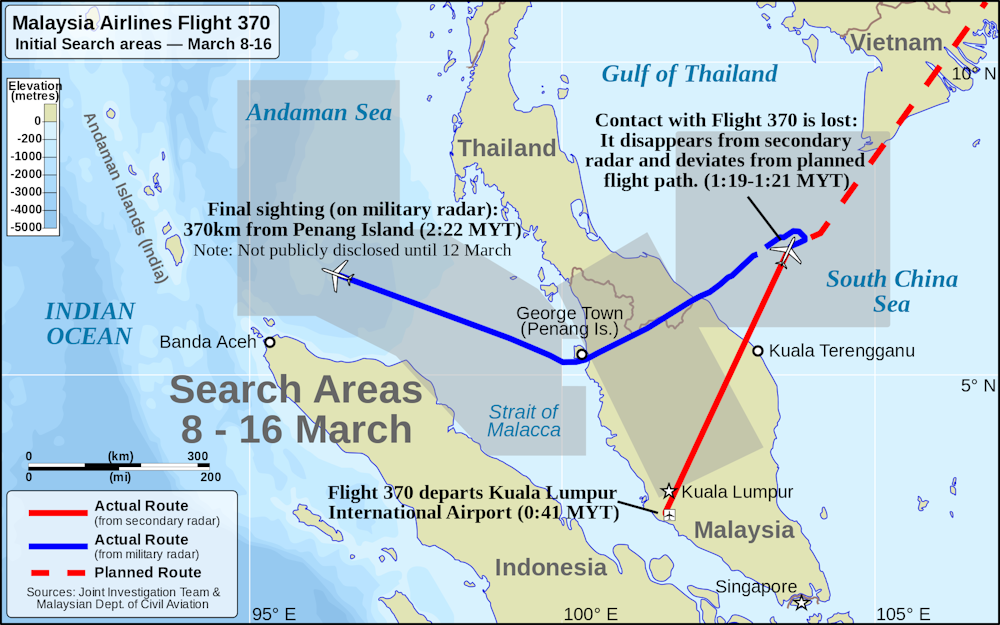
The flight was scheduled to fly from Kuala Lumpur to Beijing. Air traffic control lost contact with the aircraft within 60 minutes into the flight over the South China Sea.
Subsequently, it was tracked by military radar crossing the Malay Peninsula and was last located by radar over the Andaman Sea in the northeastern Indian Ocean.
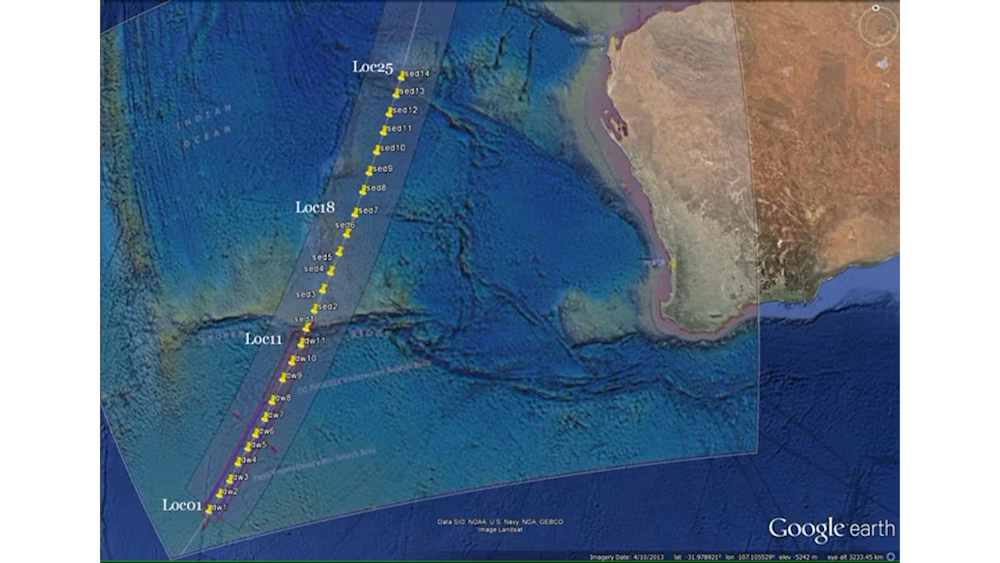
Later, automated satellite communications between the aircraft and British firm’s Inmarsat telecommunications satellite indicated that the plane ended up in the southeast Indian Ocean along the 7th arc (an arc is a series of coordinates).
This became the basis for defining the initial search areas by the Australian Air Transport Safety Bureau. Initial air searches were conducted in the South China Sea and the Andaman Sea.
To date, we still don’t know what caused the aircraft’s change of course and disappearance.
Location of the 7th arc and the origin of debris locations for simulations undertaken by the University of Western Australia. Google Earth/Author provided
What have searches for MH370 found so far?
On March 18 2014, ten days after the disappearance of MH370, a search in the southern Indian Ocean was led by Australia, with participation of aircraft from several countries. This search continued until April 28 and covered an area of 4,500,000 square kilometres of ocean. No debris was found.
Two underwater searches of the Indian Ocean, 2,800km off the coast of Western Australia, have also failed to find any evidence of the main crash site.
The initial seabed search, led by Australia, covered 120,000 square kilometres and extended 50 nautical miles across the 7th arc. It took 1,046 days and was suspended on January 17 2017.
A second search by Ocean Infinity in 2018 covered over 112,000 square kilometres. It was completed in just over three months but also didn’t locate the wreckage.
What about debris?
While the main crash site still hasn’t been found, several pieces of debris have washed up in the years since the flight’s disappearance.
In fact, in June 2015 officials from the Australian Air Transport Safety Bureau determined that debris might arrive in Sumatra, contrary to the ocean currents in the region.
The strongest current in the Indian Ocean is the South Equatorial Current. It flows east to west between northern Australia and Madagascar, and debris would be able to cross it.
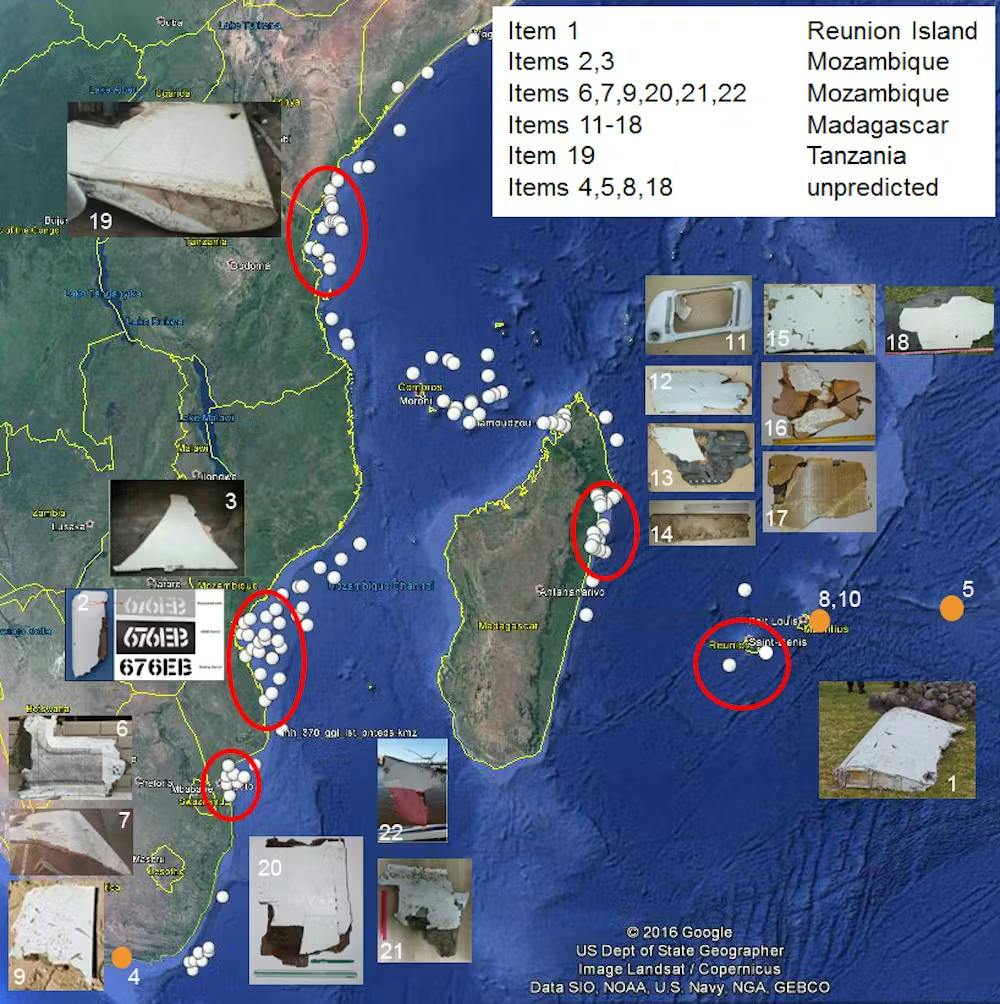
Indeed, on July 30 2015 a large piece of debris – a flaperon (moving part of a plane wing) – washed up on Reunion Island in the western Indian Ocean. It was later confirmed to belong to MH370.
Twelve months earlier, using an oceanographic drift model, our University of Western Australia (UWA) modelling team had predicted that any debris originating from the 7th arc would end up in the western Indian Ocean.
In subsequent months, additional aircraft debris was found in the western Indian Ocean in Mauritius, Tanzania, Rodrigues, Madagascar, Mozambique and South Africa.
The UWA drift analysis accurately predicted where floating debris from MH370 would beach in the western Indian Ocean. It also guided American adventurer Blaine Gibson and others to directly recover several dozen pieces of debris, three of which have been confirmed to be from MH370, while several others are deemed likely.
Predicted locations of landfall from results of University of Western Australia drift modelling. The white dots indicate predicted landfall of the debris. The aggregation of many dots, particularly close to land, is an indication of the density of particles – higher probability of debris making landfall. These are highlighted by red circles. Charitha Pattiaratchi/UWA, Author provided
To date, these debris finds in the western Indian ocean are the only physical evidence found related to MH370.
It is also independent verification that the crash occurred close to the 7th arc, as any debris would initially flow northwards and then to the west, transported by the prevailing ocean currents. These results are consistent with other drift studies undertaken by independent researchers globally.
Unfortunately, the ocean is a chaotic place, and even oceanographic drift models cannot pinpoint the exact location of the crash site.
The proposed new search by Ocean Infinity has significantly narrowed down the target area within latitudes 36°S and 33°S. This is approximately 50km to the south of the locations where UWA modelling indicated the release of debris along the 7th arc. If the search does not locate the wreckage, it could be extended north.
Since the initial underwater searches, technology has tremendously improved. Ocean Infinity is using a fleet of autonomous underwater vehicles with improved resolution. The proposed search will also use remotely controlled surface vessels.
In the area where the search is to take place, the ocean is around 4,000 metres deep. The water temperatures are 1–2°C, with low currents. This means that even after ten years, the debris field would be relatively intact.
Therefore, there is a high probability that the wreckage can still be found. If a future search is successful, this would bring closure not just to the families of those who perished, but also the thousands of people who have been involved in the search efforts.
Charitha Pattiaratchi receives funding from Integrated Marine Observing System research institute, the Australian Research Council and the West Australian Marine Science Institution.
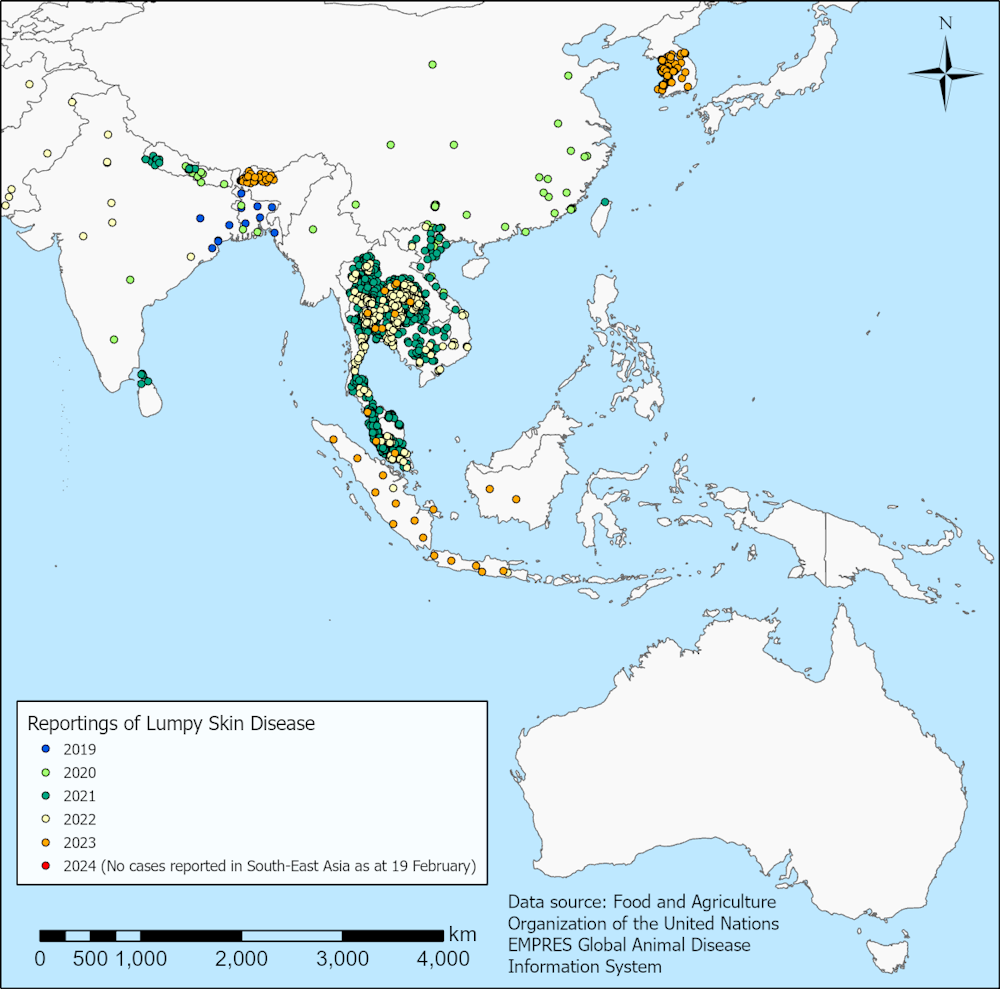
Australian authorities are on high alert amid the spread of lumpy skin disease in cattle and buffalo across South-East Asia. While Australia remains free of the disease, the virus is likely to breach our borders at some stage.
The federal government has a plan to detect and respond to an outbreak. But we need to go one better – to predict where the disease is likely to appear and how it might spread.
Our team is developing a model we hope will provide this vital information. It will help Australia prepare and respond not just to the current threat, but to any future biosecurity breach.
Lumpy skin disease is on Australia’s doorstep, with fears the threat is going unnoticed | ABC News (September 2022)
First reported in Zambia in 1929, the disease has spread across Africa, the Middle East, Eastern Europe and Asia. It reached Indonesia in 2022.
Early symptoms include fever and increased tear production. Lumps then appear on the skin and can cover the entire body, gradually hardening as the disease develops. Sometimes the lumps slough off, leaving holes on the skin that are susceptible to infections.
Typically only 1-5% of cattle die from the disease, but those that recover may not return to full health.
Milk production is reduced in cows. Meat yield from infected cattle is likely to be reduced, although it does not contain lumps and is safe to eat. Temporary or permanent infertility in both cows and bulls can also develop during the first month of infection.
Where lumpy skin disease has been reported over the last five years in South-East Asia, as at February 19 this year, using data from the Food and Agriculture Organization of the United Nations. The University of Queensland
A testing time with Indonesia and Malaysia
In July last year, Indonesian authorities claimed 13 cows from Australia had tested positive days after arrival. At the time, Australian authorities demonstrated that the nation was free of the disease.
Malaysia and Indonesia each lifted their restrictions in early September, after more than 1,000 cattle were tested across Western Australia, Queensland and the Northern Territory. The Australian government also agreed to boost surveillance and biosecurity measures, including testing on farms and disinfecting departing export vessels.
Since the lifting of restrictions, the Indonesian government has reportedly rejected Australian cattle with skin blemishes – in some cases, this comprised up to 30% of cattle in a shipment.
How could lumpy skin disease enter Australia?
The Australian government has introduced strict biosecurity measures at international ports to minimise the risk of infected animals entering the country. These include disinfection and disinsection (spraying to remove insects) of vessels and cargo.
The Australian government secured a supply of lumpy skin disease vaccines in October. These are being securely stored overseas in case of an outbreak. The vaccines will also be available to neighbouring Papua New Guinea and Timor-Leste.
Preventing the spread of lumpy skin disease requires early detection of the disease, isolation of potentially infected animals and restrictions around their movement. Once initial diagnosis is confirmed, culling of infected animals and insect control would likely follow.
However, innovative models are needed to assess the likely introduction and spread of the disease in Australia. Our team is developing a framework to carry out such modelling. Our model will include data describing the current status of reports of the disease outside of Australia, Australia’s landscape and climate, distribution and movement of cattle, and local insect populations.
These models will produce maps that can be used to identify areas in Australia more suitable to receiving the disease, such as areas with favourable environmental conditions for the survival of imported infected insects. These maps will inform decisions around surveillance and response plans, and help farmers prepare for a potential outbreak of the disease.
Maintaining a high level of preparedness and awareness of the disease among cattle producers, farmers, veterinarians and other relevant individuals is paramount if we are to maintain our disease-free status as an international exporter.
Kei Owada works for the University of Queensland. The research team at the University of Queensland working on lumpy skin disease modelling is jointly supported by the Queensland Government Department of Agriculture and Fisheries and the University of Queensland.
Ben Hayes receives funding from the University of Queensland and the Queensland Government Department of Agriculture and Fisheries.
Ricardo J. Soares Magalhaes receives funding from the University of Queensland and the Queensland Government Department of Agriculture and Fisheries..
Timothy J. Mahony works for the University of Queensland. The research team at the University of Queensland working on lumpy skin disease modelling and vaccine development is jointly supported by the Queensland Government Department of Agriculture and Fisheries and the University of Queensland.
Source: The Conversation (Au and NZ) – By Joanna Mendelssohn, Honorary (Senior Fellow) School of Culture and Communication University of Melbourne. Editor in Chief, Design and Art of Australia Online, The University of Melbourne
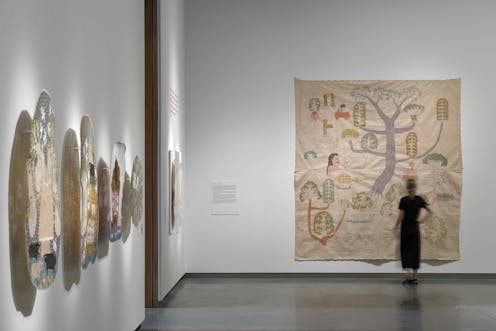
Jumaadi, ayang-ayang, installation view. Tales of Land & Sea , Bundanon, 2024. Photo: Jessica Maurer
A bit over 30 years ago, I met Arthur Boyd, and we talked about art. At the time the Art Gallery of NSW was preparing a huge retrospective exhibition of his life’s work. It was not uncommon for curators and art dealers to call him a “genius”. His response to this adulation was acute embarrassment.
He described his artistic career as “selfish” and saw his own art as ephemeral. The true value of his contribution to Australia, to the world, he said, was in the gift of the 1,000 hectares named Bundanon he and his wife Yvonne were donating to the people of Australia. The Boyds were determined no developer would turn this earthly paradise into real estate.
Arthur Boyd understood the tragedy of loss of place. In the 1960s the much loved Boyd family home, The Grange, Harkaway, had been demolished to become a quarry. His art – and that of generations of his family – had been nourished by its pastoral beauty, which was turned to rubble. Bundanon has been created in the spirit of The Grange, a place for artists and others to create and perform, surrounded by pastoral beauty.
The three separate exhibitions that come together in Tales of Land & Sea, speak to Boyd’s sense of justice, his desire to break down barriers between class and cultures, and his deep love of the ancient myths that still speak to humanity.
The year Arthur and Yvonne Boyd gave Bundanon to the Australian people, 1993, was also the year Arthur Boyd collaborated with a young Indonesian art student, Indra Diegan, on a visual retelling of one of the great West Javanese myths, Sankuriang.
It is a tale of gods who become animals, of love and jealousy, of incest and guilt.
Arthur Boyd and Indra Deigan, Sangkuriang – A legend from West Java, 1993, excerpt from artist book with collagraph on French BFK Rives Paper by Arthur Boyd. Double spread 445 x 645mm. Bundanon Collection.
Boyd had been introduced to collotypes, a photographic mode of printmaking, by Diegan’s father some years before, and collaborating on her honours project was a natural outcome of the friendship.
Their final outcome was a book, whose beauty lies in this collaboration. Boyd’s intense, passionate prints work in harmony to create a visual conversation with Diegan’s delicate woodcuts. Only 12 copies were printed. The three in the Bundanon collection form the core of this small, exquisite exhibition.
Of life and death
In the adjoining large gallery is ayang-ayang, showing the work of the artist Jumaadi. Echoes in the form of shadows are at the heart of the exhibition.
In both Indonesia and Australia, colonisation led to mass displacement, exploitation and death. Jumaadi’s paintings draw both on the visual iconography and materials from traditional folk art, a connection emphasised by a separate display of historical Javanese artefacts, including exquisitely carved elaborate hair pieces displayed to throw deep shadows on the gallery wall.
Jumaadi, The Sea Is Still A Mystery, performance, Bundanon Art Museum, 2024. Photo: Rachael Tagg.
The main exhibition space is dominated by a screening of a performance of wayang Kulit, Indonesian shadow puppetry.
In The Sea is Still a Mystery, a fisherman first catches an abundance of fish, but then his line draws up a bizarre array of sea creatures, a wrecked ship, strange objects (including old beds and a wedding dress) body parts, plants, ships carrying sheep and a head that looks like Captain Cook. The sea may give us life, but it is also the home of the dead.
Jumaadi, A wedding gown, 2021, synthetic polymer paint on cotton cloth primed with rice paste 315 x 285cm. Collection of the Artist.
Some of the subjects and themes in the wayang kulit are repeated and expanded in the paintings and buffalo hide pieces that fill the gallery. These include a series of large works he made during the COVID lockdown. Lovers are shown together, or separated by migration. A large wedding dress has many embryos growing at its base. The artist flies under the wing of a plane across the volcanic islands.
As an artist he can fly free, but the confined passengers may well be indentured labour, facing an uncertain future.
Of labour and loss
The third exhibition, Sancintya Mohini Simpson’s par-parā / phus-phusā (“to speak incessantly / to whisper”) is an exploration of the legacy of the artist’s maternal ancestors who were Indian indentured labourers, gulled into travelling to South Africa to work on the sugar fields.
Simpson makes the point that the great 19th century migration of Indians to the sugar fields of Africa, Fiji and the West Indies was hardly voluntary. The colonial powers saw them as a substitute for the recently freed slaves, and treated them accordingly.
The main installation, Vessel (4) consists of mounds of earth from Bundanon, scattered with ash from caramel-smelling sugar cane. These hold a series of earthenware lotas, vessels used in sacred ceremonies, smeared with sugar cane ash to make them a dull grey.
Sancintya Mohini Simpson, par-parā / phus-phusā, 2024 . Tales of Land & Sea , Bundanon, 2024. Photo: Jessica Maurer.
This is the site for a sound installation piece Simpson performs with her sibling, Isha Ram Das. The lotas vibrate with an amplified sound when gently tapped by both artists in an echoing rhythm.
Their art speaks of labour and loss, of salt for the sea that divided the people from their homelands, and for the tears they shed when they realised they could never return.
As I was looking at the three exhibitions, by artists whose connections to Australia are via different parts of Asia, I thought of Arthur Boyd, and the way his family were also in transit between Australia and England. He knew, as they know, the yearning for the other, the distant ancestral land.
The Boyds’ vision of Bundanon has been fulfilled. Not only has the land been preserved and nourished, but at its heart there is a hub, a meeting place where artists in transit can stop, consider, and create.
As a clinical psychologist, I often have clients say they are having trouble with thoughts “on a loop” in their head, which they find difficult to manage.
While rumination and overthinking are often considered the same thing, they are slightly different (though linked). Rumination is having thoughts on repeat in our minds. This can lead to overthinking – analysing those thoughts without finding solutions or solving the problem.
It’s like a vinyl record playing the same part of the song over and over. With a record, this is usually because of a scratch. Why we overthink is a little more complicated.
Our brains are hardwired to look for threats, to make a plan to address those threats and keep us safe. Those perceived threats may be based on past experiences, or may be the “what ifs” we imagine could happen in the future.
Our “what ifs” are usually negative outcomes. These are what we call “hot thoughts” – they bring up a lot of emotion (particularly sadness, worry or anger), which means we can easily get stuck on those thoughts and keep going over them.
However, because they are about things that have either already happened or might happen in the future (but are not happening now), we cannot fix the problem, so we keep going over the same thoughts.
Who overthinks?
Most people find themselves in situations at one time or another when they overthink.
Some people are more likely to ruminate. People who have had prior challenges or experienced trauma may have come to expect threats and look for them more than people who have not had adversities.
Deep thinkers, people who are prone to anxiety or low mood, and those who are sensitive or feel emotions deeply are also more likely to ruminate and overthink.
We all overthink from time to time, but some people are more prone to rumination. BĀBI/Unsplash
Also, when we are stressed, our emotions tend to be stronger and last longer, and our thoughts can be less accurate, which means we can get stuck on thoughts more than we would usually.
Being run down or physically unwell can also mean our thoughts are harder to tackle and manage.
Acknowledge your feelings
When thoughts go on repeat, it is helpful to use both emotion-focused and problem-focused strategies.
Being emotion-focused means figuring out how we feel about something and addressing those feelings. For example, we might feel regret, anger or sadness about something that has happened, or worry about something that might happen.
Acknowledging those emotions, using self-care techniques and accessing social support to talk about and manage your feelings will be helpful.
The second part is being problem-focused. Looking at what you would do differently (if the thoughts are about something from your past) and making a plan for dealing with future possibilities your thoughts are raising.
But it is difficult to plan for all eventualities, so this strategy has limited usefulness.
What is more helpful is to make a plan for one or two of the more likely possibilities and accept there may be things that happen you haven’t thought of.
Think about why these thoughts are showing up
Our feelings and experiences are information; it is important to ask what this information is telling you and why these thoughts are showing up now.
For example, university has just started again. Parents of high school leavers might be lying awake at night (which is when rumination and overthinking is common) worrying about their young person.
Knowing how you would respond to some more likely possibilities (such as they will need money, they might be lonely or homesick) might be helpful.
But overthinking is also a sign of a new stage in both your lives, and needing to accept less control over your child’s choices and lives, while wanting the best for them. Recognising this means you can also talk about those feelings with others.
Challenge and change aspects of your thoughts where you can. For example, the chance that your young person will run out of money and have no food and starve (overthinking tends to lead to your brain coming up with catastrophic outcomes!) is not likely.
You could plan to check in with your child regularly about how they are coping financially and encourage them to access budgeting support from university services.
Your thoughts are just ideas. They are not necessarily true or accurate, but when we overthink and have them on repeat, they can start to feel true because they become familiar. Coming up with a more realistic thought can help stop the loop of the unhelpful thought.
Accepting your emotions and finding ways to manage those (good self-care, social support, communication with those close to you) will also be helpful. As will accepting that life inevitably involves a lack of complete control over outcomes and possibilities life may throw at us. What we do have control over is our reactions and behaviours.
Remember, you have a 100% success rate of getting through challenges up until this point. You might have wanted to do things differently (and can plan to do that) but nevertheless, you coped and got through.
So, the last part is letting go of the need to know exactly how things will turn out, and believing in your ability (and sometimes others’) to cope.
What else can you do?
A stressed out and tired brain will be more likely to overthink, leading to more stress and creating a cycle that can affect your wellbeing.
So it’s important to manage your stress levels by eating and sleeping well, moving your body, doing things you enjoy, seeing people you care about, and doing things that fuel your soul and spirit.
Distraction – with pleasurable activities and people who bring you joy – can also get your thoughts off repeat.
If you do find overthinking is affecting your life, and your levels of anxiety are rising or your mood is dropping (your sleep, appetite and enjoyment of life and people is being negatively affected), it might be time to talk to someone and get some strategies to manage.
When things become too difficult to manage yourself (or with the help of those close to you), a therapist can provide tools that have been proven to be helpful. Some helpful tools to manage worry and your thoughts can also be found here.
When you find yourself overthinking, think about why you are having “hot thoughts”, acknowledge your feelings and do some future-focused problem solving. But also accept life can be unpredictable and focus on having faith in your ability to cope.
Kirsty Ross does not work for, consult, own shares in or receive funding from any company or organisation that would benefit from this article, and has disclosed no relevant affiliations beyond their academic appointment.
The 13th World Trade Organization (WTO) ministerial conference in Abu Dhabi has failed to resolve any issues of significance, raising the inescapable question of whether the global trade body has a future.
The three-day meeting was due to end on February 29. But late into a fourth extra day, the 164 members were struggling to even agree on a declaration, let alone the big issues of agriculture, fisheries and border taxes on electronic commerce.
The closing ceremony was sombre, and the ministerial declaration bland, stripped of the substantive content previously proposed. Outstanding issues were kicked back to the WTO base in Geneva for further discussions, or for the next ministerial conference in 2026.
Briefing journalists in the closing hours, an EU spokesperson noted how hard it would be to pick up the pieces in Geneva after they failed to create momentum at the ministerial conference. She predicted:
[Trade] will be more and more characterised by power relations than the rule of law, and that will be a problem notably for smaller countries and for developing countries.
Restricted access
That imbalance is already evident, with power politics characterising the conference from the start.
There were accusations of unprecedented restrictions on non-governmental organisations (NGOs) registered to participate in the conference. These bodies are crucial to bringing the WTO’s impacts on farmers, fishers, workers and other communities into the negotiation arena.
A number of NGOs have submitted formal complaints over their treatment by conference host the United Arab Emirates. They say they were isolated from delegations, banned from distributing papers, and people were arbitrarily detained for handing out press releases.
Critical negotiations were conducted through controversial “green rooms”. These were where the handpicked “double quad” members – the US, UK, European Union, Canada, China, India, South Africa and Brazil – tried to broker outcomes to present to the rest for “transparency”.
These powerful countries largely determined the outcomes (or lack of them). The US, historically the agenda-setter at WTO ministerial conferences, appeared largely disinterested in the proceedings, with trade representative Katherine Tai leaving early.
The final declaration says nothing about restoring a two-tier dispute body, which has been paralysed since 2019 by the refusal of successive US Republican and Democratic administrations to appoint new judges to the WTO’s appellate body.
The EU failed to secure progress on improvements to the appeal process. Likely Republican presidential nominee Donald Trump has already announced he would impose massive WTO-illegal tariffs on China if elected.
China, Japan, the US and EU – all big subsidisers of distant water fishing fleets – blocked an outcome aiming to protect global fish stocks, an issue already deferred from the last ministerial meeting.
The six Pacific Island WTO members lobbied tirelessly for a freeze and eventual reduction in subsidies. But the text was diluted to the point that no deal was better than a bad deal.
The EU, UK, Switzerland and other pharmaceutical producers had already blocked consensus on lifting patents for COVID-19 therapeutics and diagnostics, sought by 65 developing countries. A deal brokered in 2021 on COVID vaccines is so complex no country has used it.
Domestic and global agendas
India’s equally uncompromising positions also reflected domestic priorities. The 2013 Bali ministerial conference promised developing countries a permanent solution to prevent legal challenges to India’s subsidised stockpiling of food for anti-hunger programmes.
A permanent solution was a red line for India, which faces an election next month and mass protests from farmers concerned at losing subsidies.
Agricultural exporters, including New Zealand, tabled counter-demands to broaden the agriculture negotiations. The public stockpiling issue remains a stalemate, without any real prospect of a breakthrough.
The concerns were less with the agreement itself and more with the precedent it would create for sub-groups of members to bypass the WTO’s rule book. This would allow powerful states to advance their favoured issues while developing country priorities languish.
The face-saver for the conference was the temporary extension of a highly contested moratorium on the right to levy customs duties at the border on transmissions of digitised content.
Securing that extension (or preferably a permanent ban on e-commerce customs duties) on behalf of Big Tech was the main US goal for the conference. Developing countries opposed its renewal, so they could impose tariffs both for revenue and to support their own digital industrialisation.
The moratorium will now expire in March 2026, so the battle will resume at the next ministerial conference scheduled to be held in Cameroon that year.
But there is every likelihood the current paralysis at the WTO will continue, and the power politics will intensify. As the previously quoted EU spokesperson also mused:
Perhaps the WTO needed a good crisis, and perhaps this will lead to a realisation that we cannot continue like this.
Ideally, that would result in a fundamentally different international institution – one that provides real solutions to the 21st century challenges on which the WTO is unable to deliver.
Jane Kelsey attended the WTO ministerial as a representative of the Pacific Network on Globalisation (PANG), and as an invited Guest of the Chair. She advises a number of developing country governments on these issues. She is not paid by, and this is not written on behalf of, any of them.
With the winter AFL and NRL seasons about to start, Australia’s sporting calendar is once again transitioning from its quietest to busiest period.
For many, the return of the AFL and NRL competitions is highly anticipated. But there is one group whose experience is very different: the approximately 20% of Australians who hate sport.
We are currently conducting research to better understand why people feel this way about sport and what their experiences are like living in a nation where sport is so culturally central. We have completed surveys with thousands of Australians and are now beginning to interview those who have described themselves as “sport haters”.
Australia, a ‘sports mad’ nation
Australia has long been described as a “sports mad nation”, a reasonable assertion given the Melbourne Cup attracted crowds of more than 100,000 people as far back as the 1880s.
Australia’s sport passion is perhaps most evident today from the number of professional teams we support for a nation of 26 million people, one of the highest per capita concentrations in the world.
In addition to our four distinct football codes – Australian rules football, rugby league, rugby union and soccer – we have professional netball, basketball, cricket and tennis. In all, there are more than 130 professional sport teams in Australia today (across both genders).
The ubiquity of sport in our culture, however, conceals the fact that a significant portion of people strongly and actively dislike sport. Recent research by one of the co-authors here (Heath McDonald) has begun to shine light on this cohort, dubbed “sport haters”.
Sport haters account for approximately 20% of the Australian population, according to two surveys we have conducted of nearly 3,500 and more than 27,000 adults. Demographically, this group is significantly more likely to be female, younger and more affluent than other Australians.
Their strong negative sentiments are reflected in the most common word associations study participants used to describe sport. In the case of AFL, these were: “boring”, “overpaid”, “stupid/dumb”, “rough”, “scandal” and “alcohol”.
While the reasons for disliking sport vary from person to person, research shows there are some common themes. The first is in childhood, where negative experiences participating in sport or attending games or matches can lead to a life-long dislike of all sport. As one professed sport hater said in an online forum devoted to men who don’t like sport:
My brother would force me to play soccer against my will all the time as children. I think that is where my resentment for physical sport comes from because the choice was taken away from me by my twat of a brother.
Sport hatred can also derive from social exclusion or marginalisation. Sport has historically been a male-centric domain that celebrates masculinity and can lead to toxic behaviour, which can exclude many women and some men.
Sport has also had to overcome racism, perhaps most symbolically visible by AFL player Nicky Winmar’s iconic protest in 1993. In addition, individuals with a disability still face barriers that result in lower rates of sport participation.
Here, the current Taylor Swift effect is noteworthy. The singer’s attendance at National Football League games, including the Superbowl, resulted in huge spikes in television viewership. Through her association, Swift helped make the sport more psychologically accessible for many women and girls.
The cultural dominance of sport also fuels its detractors, with many critical of sport’s media saturation and its broader social and even political prioritisation. (The debate in Tasmania over the controversial AFL stadium proposal is a good case in point.)
From a media perspective, Australia’s particularly strict anti-siphoning laws have ensured that sport remains front and centre on free-to-air television programming.
Sport’s cultural dominance also fosters resentment for overshadowing people’s non-sporting passions and pursuits, as well as creating societal out-groups. Journalist Jo Chandler’s 2010 description of moving to Melbourne is no doubt shared by many:
In the workplace, to be unaligned is deeply isolating. Team tribalism infects meetings, especially when overseen by male chiefs. In shameful desperation, I’ve played along.
In life, it’s fairly easy to avoid most products you might dislike. But given sport’s ubiquity, simply tuning out is sometimes not an option.
In 1967, two Melbourne journalists, Keith Dunstan and Douglas Wilkie, launched an anti-sport club in response to this growing cultural dominance. In his founding address to the Anti-Football League, Wilkie made clear who the club was for:
All of us who are tired of having football personalities, predictions and post mortems cluttering our newspapers, TV screens and attempts at alternative human converse – from beginning-of-morning prayers to the last trickle of bed time bathwater – should join at once.
Membership quickly reached the thousands. Soon, a Sydney branch was launched, bringing national membership to a high of around 7,000. According to sport historian Matthew Klugman, members found joy in being “haters”.
…they wanted to find a shared meaning in their suffering, not to extinguish it, but to better enjoy it.
This led to some curious rituals, with members ceremonially cremating footballs or burying them. An Anti-Football Day was also launched, taking place on the eve of the Victorian Football League Grand Final.
The club would go on to experience periods of both prosperity and hiatus over the years, but has been dormant since Dunstan’s death in 2013.
If you consider yourself a sport hater, and are interested in contributing your experience to our ongoing research, please provide your contact information here.
Heath McDonald is a consultant to a range of professional sport teams in the AFL, NRL and cricket. He receives funding from the Australian Research Council.
Hunter Fujak does not work for, consult, own shares in or receive funding from any company or organisation that would benefit from this article, and has disclosed no relevant affiliations beyond their academic appointment.
Source: The Conversation (Au and NZ) – By Jay Marlowe, Professor, Co-Director Centre for Asia Pacific Refugee Studies, University of Auckland, Waipapa Taumata Rau
In the looming shadow of a threatened Israeli invasion of Rafah at the onset of Ramadan, New Zealand has the opportunity to extend a lifeline to families trapped in the middle of the war in Gaza.
The dire humanitarian situation has been well-documented: more than 30,000 lives lost, nearly a fifth of buildings destroyed, countless people injured and lacking basic necessities.
Estimates from Palestinian New Zealanders put the number of Gazans with a family connection to New Zealand at approximately 400. Some 40 Palestinian families have already committed to hosting family members trapped in Gaza.
Given New Zealand’s previous responses in similar refugee crises, such family-focused assistance would be possible. The government has yet to commit to an intake. But last December, the immigration minister acknowledged an openness to adjusting the response in light of the escalating conflict. Now is the time to make such adjustments.
Previous examples include the family reunification pathways created for Ukrainian nationals in 2022, and the intake of 200 human rights activists and 1,533 people from Afghanistan after the Taliban returned in 2021.
Further back, previous National or National-led governments have accommodated such intakes: 600 extra places were made available to Syrians when John Key was prime minister, 600 family places were offered to people in Kosovo when Jenny Shipley was in power.
Despite initial estimates of about 4,000 eligible Ukrainian family members, fewer than 1,000 have actually arrived in New Zealand. And it may be that only a fraction of the eligible Palestinians in Gaza would take up the offer. But acting quickly and giving those people a choice should be the priority right now.
Practical compassion
Getting out of Gaza, of course, is not easy. Gazans given a visa to join family in Canada, for example, have been struggling to exit at the Egyptian border.
Infrastructure is seriously damaged, making it difficult to communicate and determine where people are located. Social media platform WhatsApp is often the only way to connect with family trapped in Gaza.
Furthermore, issuing visas will not be enough. There needs to be robust consular assistance to get people out whenever possible. For such an intake to work, it would likely need coordination across diplomatic channels, with potential assistance from the United Nations High Commissioner for Refugees, the UN Relief and Works Agency and the International Committee of the Red Cross.
There is also the question of how to support family members once they arrive, albeit with a vibrant Palestinian community ready to welcome them.
However, as someone who specialises in refugee issues, I work with a team that has looked into the benefits of functioning family reunification pathways. The data is clear that a united family means better settlement outcomes, both for those who arrive and those who receive them.
Beyond the emotional and psychological benefits, reunified families show higher levels of economic participation and educational enrolment, challenging often misguided assumptions about the strain on host countries’ resources.
The humanitarian imperative of such a programme can’t be overstated. More than seven decades of political unrest and conflict – 15 wars, five since 2008 – has left countless families in Gaza fragmented and grappling with endless uncertainty.
Even if there’s a temporary ceasefire, given the scale of devastation and time needed for reconstruction, options to resettle families will be needed.
New Zealand’s normal annual commitment to taking in 600 family members in the Refugee Family Support Category reflects the importance of family bonds in the resettlement process.
However, the existing system has real limitations: lengthy processes – including a ten-year backlog – and narrow inclusion criteria. This means a more immediate and flexible approach is required. This is where emergency family intakes can play a pivotal role.
Lessons from the wars in Afghanistan, Ukraine and now Gaza should lead to a more formal and practical pathway for New Zealanders to sponsor families in war zones. Rather than the current case-by-case approach (often at ministerial discretion), an ongoing annual commitment to family reunification in acute crises should be considered.
This would also avoid the discrepancies of helping Ukrainian families, for example, but being silent on other less prominent crises.
While the situation in Gaza is making headlines, there are other largely forgotten wars where New Zealand could also step up to protect families. In Myanmar, Sudan, Cameroon and Ethiopia, for example, there are immediate risks to lives and an urgent need for assistance.
By instituting a formalised system of emergency family intake, New Zealand would not only honour its commitments to human rights principles, it would also match initiatives already taken by Australia and Canada.
As one resettled refugee in New Zealand put it: “When elephants fight, it is the grass that gets trampled.”
Establishing a fair and functional pathway to protect those families with connections to New Zealand aligns with the country’s commitment to upholding human rights on the global stage.
Jay Marlowe receives funding from Te Apārangi Royal Society New Zealand as a current Rutherford Discovery Fellow.
Around one in six Australians has some form of hearing loss, ranging from mild to complete hearing loss. That figure is expected to grow to one in four by 2050, due in a large part to the country’s ageing population.
Hearing loss affects communication and social engagement and limits educational and employment opportunities. Effective treatment for hearing loss is available in the form of communication training (for example, lipreading and auditory training), hearing aids and other devices.
Our recent study published in the journal Ear and Hearing showed, for the first time, that working-age Australians from lower socioeconomic backgrounds are at much greater risk of hearing loss than those from higher socioeconomic backgrounds.
We believe the lack of socially subsidised hearing care for adults of working age results in poor detection and care for hearing loss among people from disadvantaged backgrounds. This in turn exacerbates social inequalities.
We analysed a large data set called the Household, Income and Labour Dynamics in Australia (HILDA) survey that collects information on various aspects of people’s lives, including health and hearing loss.
Using a HILDA sub-sample of 10,719 working-age Australians, we evaluated whether self-reported hearing loss was more common among people from lower socioeconomic backgrounds than for those from higher socioeconomic backgrounds between 2008 and 2018.
Relying on self-reported hearing data instead of information from hearing tests is one limitation of our paper. However, self-reported hearing tends to underestimate actual rates of hearing impairment, so the hearing loss rates we reported are likely an underestimate.
We also wanted to find out whether people from lower socioeconomic backgrounds were more likely to develop hearing loss in the long run.
We found people in the lowest income groups were more than twice as likely to have hearing loss than those in the highest income groups. Further, hearing loss was 1.5 times as common among people living in the most deprived neighbourhoods than in the most affluent areas.
For people reporting no hearing loss at the beginning of the study, after 11 years of follow up, those from a more deprived socioeconomic background were much more likely to develop hearing loss. For example, a lack of post secondary education was associated with a more than 1.5 times increased risk of developing hearing loss compared to those who achieved a bachelor’s degree or above.
Overall, men were more likely to have hearing loss than women. As seen in the figure below, this gap is largest for people of low socioeconomic status.
Why are disadvantaged groups more likely to experience hearing loss?
There are several possible reasons hearing loss is more common among people from low socioeconomic backgrounds. Noise exposure is one of the biggest risks for hearing loss and people from low socioeconomic backgrounds may be more likely to be exposed to damaging levels of noise in jobs in mining, construction, manufacturing, and agriculture.
Lifestyle factors which may be more prevalent in lower socioeconomic communities such as smoking, unhealthy diet, and a lack of regular exercise are also related to the risk of hearing loss.
Finally, people with lower incomes may face challenges in accessing timely hearing care, alongside competing health needs, which could lead to missed identification of treatable ear disease.
We like to think of Australia as an egalitarian society – the land of the fair go. But nearly half of people in Australia with hearing loss are of working age and mostly ineligible for publicly funded hearing services.
Hearing aids with a private hearing care provider cost from around A$1,000 up to more than $4,000 for higher-end devices. Most people need two hearing aids.
Hearing loss might be more common in low income groups because they’re exposed to more noise at work. Dmitry Kalinovsky/Shutterstock
Lack of access to affordable hearing care for working-age adults on low incomes comes with an economic as well as a social cost.
Previous economic analysis estimated hearing loss was responsible for financial costs of around $20 billion in 2019–20 in Australia. The largest component of these costs was productivity losses (unemployment, under-employment and Jobseeker social security payment costs) among working-age adults.
Providing affordable hearing care for all Australians
Lack of affordable hearing care for working-age adults from lower socioeconomic backgrounds may significantly exacerbate the impact of hearing loss among deprived communities and worsen social inequalities.
Recently, the federal government has been considering extending publicly subsidised hearing services to lower income working age Australians. We believe reforming the current government Hearing Services Program and expanding eligibility to this group could not only promote a more inclusive, fairer and healthier society but may also yield overall cost savings by reducing lost productivity.
All Australians should have access to affordable hearing care to have sufficient functional hearing to achieve their potential in life. That’s the land of the fair go.
Mohammad Nure Alam acknowledges funding from Macquarie University.
Kompal Sinha acknowledges funding from Macquarie University.
Piers Dawes receives funding from the National Health and Medical Research Council. Piers Dawes represents the University of Queensland on the Hearing Health Sector Alliance.
In the four years since the Black Summer bushfires, Australia has become more focused on how best to prepare for, fight and recover from these traumatic events. But one issue has largely flown under the radar: how the emissions produced by bushfires are measured and reported.
It’s crucial to accurately track the greenhouse gas emissions bushfires produce. However, the modelling and reporting of bushfire emissions is a complex, poorly understood area of climate science and policy.
The University of Tasmania recently brought together leading scientists and policymakers to discuss Australia’s measuring and reporting of bushfire emissions. The resulting report, just released, shows where Australia must improve as we face a fiery future.
Getting a read on bushfire emissions
By the end of this century, the number of extreme fire events around the world is expected to increase by up to 50% a year as a direct result of human-caused climate change.
Emissions from bushfires fuels global warming – which in turn makes bushfires even more destructive. Estimating these emissions is a complicated and technical task, but it is vital to understanding Australia’s carbon footprint.
Australia reports on emissions from bushfires according to rules defined by the United Nations Framework Convention on Climate Change (UNFCCC), and as part of our responsibilities under the Paris Agreement.
Countries estimate bushfire emissions in different ways. Some rely on default data provided by the UNFCCC. In contrast, Australia’s modelling combines the area of burned land with highly specific local data on the types of fuel burned (such as leaves, bark and dead wood) and the amount of different types of gas these fuels emit. This makes it among the most sophisticated approaches in the world.
Australia’s modelling may be sophisticated but it can also be confusing – even for those who follow climate policy closely. One reason is the complex way we differentiate between “natural” fires (those beyond human control) and “anthropogenic” or human-caused fires such as controlled fuel-reduction burns.
Emissions from natural fires are reported to the UNFCCC, but do not initially count towards Australia’s net emissions calculations. This is consistent with guidance from the Intergovernmental Panel on Climate Change.
However, we believe that to improve transparency and accountability, the federal government should work with the states and territories to provide a separate breakdown of natural and human-caused fire emissions. This data should be made publicly available to provide a clearer picture of bushfire emissions and the impact of climate change on large fires.
As mentioned above, emissions from natural fires do not initially count towards Australia’s net calculations. Consistent with other countries, our modelling assumes that emissions will be offset after the fires because forest regrowth captures carbon from the atmosphere.
This approach is based on current scientific evidence. For example, within two years of the Black Summer fires, 80% of the burned area was almost fully recovered.
If monitoring of a fire site shows regrowth has not fully offset emissions after 15 years, the difference is retrospectively added to Australia’s net emissions for the year of the original fire.
But this approach may soon need to change. That’s because research sugests we cannot assume forests will recover quickly after bushfires. As bushfires become more frequent and intense, they are more likely to irrevocably change landscapes. Bushfires are also more likely to occur in areas that are not adapted to fire and recover poorly – such as Tasmania’s World Heritage-listed northwest.
This has major implications for Australia’s emissions accounting.
Another significant gap in our modelling is the contribution of soil carbon to bushfire emissions. Large amounts of carbon are present in organic material in soil.
Currently, international rules do not require soil carbon emissions from fire to be estimated. This is despite emerging research showing the release of soil carbon during bushfires in some landscapes, such as peatlands, is likely to create substantial emissions. Other research suggests that depleted soil carbon can slow the recovery of forests after fire.
There is currently insufficient evidence to include soil carbon emissions from bushfires in Australia’s estimates, or to model the effects of soil carbon changes on forest regrowth and carbon capture. More research is urgently needed.
Where to now?
Australia’s approach to estimating bushfire emissions is credible and sophisticated. However, our modelling and reporting must be refined as technology improves and the climate changes.
Australia is a fire-prone continent. Our bushfire emissions will increase unless we significantly improve our fire preparedness and management. We must also rapidly reduce emissions from other sectors, to ensure our country is playing its part in the struggle to avoid catastrophic global warming.
The authors do not work for, consult, own shares in or receive funding from any company or organisation that would benefit from this article, and have disclosed no relevant affiliations beyond their academic appointment.
This article is part of The Conversation’s series examining the housing crisis. Read the other articles in the series here.
The federal government’s Help to Buy scheme is before the parliament. Both the Coalition and the Greens are opposed to it.
If the bill is passed, the government will provide an equity contribution of up to 40% of the purchase price of a new home, and up to 30% for an existing dwelling, with buyers needing a minimum deposit of 2%.
It’s a limited scheme: 10,000 places will be offered each year.
Here’s why it is a good idea.
Help to Buy is a piece of the housing puzzle
The Help to Buy scheme is similar to a scheme Grattan Institute recommended in 2022.
Help to Buy would help level the playing field when it comes to buying a home, which is slipping out of reach for many Australians, largely because it takes much longer these days to save for a deposit.
In the early 1990s it took the average Australian about seven years to save a 20% deposit for a typical dwelling. Now it takes almost 12 years. Unsurprisingly, a growing proportion of Australians now rely on the “Bank of Mum and Dad” to buy a home.
Help to Buy could be particularly helpful for older renters who do have a deposit but who won’t be in the workforce long enough to pay off a home by the time they retire.
Many older Australians were never able to break into the market as prices far outstripped incomes. Others have found it too hard to get back in after losing the home after a separation. Less than half of women who separate from their partner and lose the house manage to purchase another within 10 years.
Today’s older renters risk joining tomorrow’s renting retirees, nearly half of whom already live in poverty. Help to Buy offers them a pathway back to home ownership and a more secure retirement.
Even if federal and state governments adopt much-needed reforms to boost housing supply and reduce demand, house prices are likely to remain high, relative to incomes.
But Rent to Buy can be improved
Beyond these benefits, there are drawbacks to the government’s plan.
The income thresholds for the scheme – $90,000 for singles and $120,000 for couples – are too high. About 75% of working-age singles earn less than $90,000, and 39% of couples earn less than $120,000.
It’s hard to argue for offering the scheme to people earning above-average incomes, because they have a good chance of buying a home anyway.
Also, requiring borrowers have just a 2% deposit, rather than a minimum of 5% as we proposed, increases the risk of them falling into negative equity if house prices fall.
And the house price caps should be reduced to match those available for stamp duty concessions for first home buyers, which typically begin phasing out in most states for homes valued above $650,000.
Better targeting the scheme in this way would mean the annual cap on the numbers of places could gradually be raised. The current scheme risks becoming a lottery, because the income thresholds are set at such a level that many more people are eligible than the 10,000 places available each year.
The impact on house prices would be tiny
Shared equity schemes can add to house prices, by adding to housing demand. Which is why the main game remains making housing cheaper by building more of it.
But the impact on prices of this capped scheme is likely to be very small. With just 40,000 places on offer over four years, it’ll have close to zero impact on house prices in the context of Australia’s $10.3 trillion housing market.
We estimate that after four years, the 40,000 places on offer could result in overall house prices rising by about 0.016%. That would add $113 to the purchase price of a $700,000 home.
Since participants are limited to buying cheaper homes, it could have a marginally bigger impact on the homes eligible for the scheme.
If the scheme were uncapped, but better targeted as we propose, it would still only have a small impact on house prices.
Our modelling shows that for every 100,000 homes the government helps finance through the scheme, house prices would rise by 0.04%, adding $283 to the purchase price of a $700,000 home.
Parliament should pass the government’s Help to Buy scheme, because it will help some Australians to own their own home. But better still would be a more targeted scheme, which wouldn’t need to be rationed, and which would help more Australians who are struggling to own their own home.
Grattan Institute began with contributions to its endowment of $15 million from each of the Federal and Victorian Governments, $4 million from BHP Billiton, and $1 million from NAB. In order to safeguard its independence, Grattan Institute’s board controls this endowment. The funds are invested and contribute to funding Grattan Institute’s activities.
Source: The Conversation (Au and NZ) – By Gemma King, Senior Lecturer in French Studies, ARC DECRA Fellow in Screen Studies, Australian National University
Courtesy Warner Bros. Pictures
In Dune’s sandswept colonialist dystopia of the distant future, power is a force best handled – and transferred – surreptitiously. In a world of ultra-wealthy spice barons and interplanetary warfare, the greatest asset in both diplomacy and resistance is an intangible one: language. Nowhere is this clearer than in the films’ portrayal of sign language.
The Bene Gesserit is an all-woman dynasty leading an empire from behind the scenes. Their arsenal of powers include the mastery of dozens of languages. With these, they conduct diplomacy in public for the benefit of the men they pretend to serve. Meanwhile, they enact their true plans in secret, through whispers, telepathy and the native languages of their conspirators.
Paul Atreides (Timothée Chalamet) is a reluctant messiah, whose prophetic ascendancy is spurred on when there are attempts to have his family exterminated. Believed dead, Paul retreats to the desert with his Bene Gesserit mother, Lady Rebecca (Rebecca Ferguson). There they find the Fremen, the free Indigenous peoples of the dune planet Arrakis. Paul and Rebecca’s knowledge of the Fremen language is crucial to their acceptance by the community. Paul’s initiation into their ranks is also linguistic: the choosing of a Fremen name.
But Rebecca and Paul’s use of the Bene Gesserits’ sign language is the most literal and urgent use of language as they survive threats in both Dune: Part One (2021) and the new Dune: Part Two (2024).
The complexity of sign
In the first film, the mother and son are abducted and transported across Arrakis in a helicopter. Feigning resignation, they use sign to plot their escape, unnoticed by the guards who don’t know this language. In part two, as enemies land just over the dune concealing Paul and his mother, they sign to plan an escape route in silence. Later in the film, a Bene Gesserit advisor signs to subtly annotate a verbal exchange with an untrustworthy group.
When Dune’s characters sign, it is with their hands by their sides, usually without eye contact, and often in brief sentences or even single signs.
This is very different to how sign languages are used in signing communities. In everyday communication, signers use a “sign space”, an approximate rectangle of space in front of the head and torso, and out to the distance of about the elbows. Eye contact is essential, as are facial expressions and body angle, which not only convey emotion but syntactical markers.
All of these components are part of a complete grammar that make sign languages as complex, emotive and capable of abstraction as any verbal language.
The signs used in Dune are closer to military or maritime hand gestures, used in situations that require communication without sound or across distance. These generally convey basic messages rather than grammatically complete sentences, with little emotional or contextual detail.
Although not a true sign language, the use of sign in Dune can still teach us a lesson about the value of sign language.
“Deaf Gain” is an academic principle that considers deaf experience in generative and positive terms: it emphasises what is gained through deafness and sign access, rather than what is lost through hearing loss.
Examples of deaf gain include language skills and cultural belonging, as well as physical skills such as enhanced vision or perception of vibrations. This is not to mention the benefit of being able to switch off a hearing aid or take off a cochlear implant in the presence of distracting or painful sounds.
Deaf gain is becoming increasingly present on contemporary screens.
In the horror franchise A Quiet Place, in which the world is overrun by blind, super-hearing murderous aliens, the family of a Deaf girl use American Sign Language to communicate, and even to thrive, without attracting the monsters’ attention.
In Avatar: The Way of Water, the characters use the Na’vi sign language (invented for the film by Deaf actor CJ Jones) to communicate under water, considering those who cannot sign to be underdeveloped.
But this is not just a contemporary concept. As far back as 1959, in the Marilyn Monroe comedy Some Like It Hot a mob boss switches his hearing aid off just before he gives the order to gun down a group in an enclosed space.
While not deaf themselves, Dune’s characters show us deaf gain through deft manipulation of their environment, from the stealth of their signs to their attunement to the vibrations they make in the sand, which they use to attract or repel the giant beasts below.
These films show us how we can be in our bodies differently; how to navigate the world in different physical, linguistic and sensory ways.
The power of language
The director of Dune, Denis Villeneuve, has a history of making films that understand the subtle power of linguistic control.
Blade Runner 2049 (2017) depicts another multilingual society in a similarly gold-hued, environmentally destroyed dust bowl, in which knowledge of different languages provides access to closed spaces and protection from surveillance.
In his sci-fi drama Arrival (2016), extraterrestrial vessels visit Earth to global awe and creeping panic. Military and political forces cannot determine the aliens’ purpose, and interplanetary war inches closer. It is only a linguist who is able to decipher the aliens’ goal: to gift Earthlings their remarkable language. This language is an inky, visual code – much closer to a sign language than a verbal one – which rewires the brains of those who master it, so they can see through time.
In the Dune films, as in Arrival, language is not only a means through which we can come to know something. It is something which can transform the limits and nature of knowledge itself. As Paul and Rebecca understand, sign language can be both a hiding place and a tool – for survival, and for empowerment.
The United Nations Security Council (UNSC) should act urgently to establish an international protection force to safeguard Palestinian civilians and ensure the unobstructed delivery of humanitarian aid in Gaza as a last-ditch attempt to prevent imminent, says DAWN.
If the UNSC is blocked by a US veto or fails to reach consensus, the UN General Assembly should reconvene the 10th session of “Uniting for Peace” and authorise such a force itself.
Recent airdrops of aid, now with the participation of the US Air Force, are “inadequate to meet the ongoing catastrophe in Gaza”, says DAWN (Democracy for the Arab World Now).
It signals the availability of international military forces to help stabilise the situation.
“We urgently need the UNSC to authorise an international protection force to ensure the safe and effective delivery of food to starving Palestinian men, women, and children, just as it has done in other situations of catastrophic conflicts,” said Sarah Leah Whitson, executive director of DAWN.
“Tragically, without such intervention, it has become clear that Israel will continue to deliberately block such aid, which is the sole cause of the starvation and imminent famine in Gaza.”
On February 29, at least 117 Palestinians were killed, and more than 750 others were wounded after Israeli troops opened fire on civilians gathered at a convoy of food trucks southwest of Gaza City, highlighting both the desperation of the starving civilian population and their inability to safely access humanitarian aid.
Aid delivery halted International humanitarian organisations have halted all aid delivery to northern Gaza for nearly two weeks due to the lack of security, which is a direct result of actions and policies of the Israeli military, including targeting Palestinian police forces attempting to secure aid delivery.
The Biden administration reportedly warned Israel last week that as a direct result of its actions, “Gaza is turning into Mogadishu”.
The same day, the UN Security Council met in an emergency session called by Algeria on what is now being described as the “flour massacre,” but members failed to agree on a statement about the deaths and injuries of civilians seeking aid.
At a meeting of the UNSC last week under the auspices of UNSC Resolution 2417, UN agencies warned that at least 576,000 people in Gaza were facing famine-like conditions.
The UN World Food Programme noted that there would be an “inevitable famine” in the besieged Palestinian enclave, amid increasing reports of children dying of starvation as Israel continued to hinder aid delivery to the population.
Gaza was seeing “the worst level of child malnutrition anywhere in the world,” Carl Skau, deputy head of the World Food Programme, told the UN Security Council last week, with one child in every six under the age of two acutely malnourished.
“Civilians and aid groups have described food shortages so dire that people were turning to leaves and bird food and other types of animal feed for sustenance.”
A new World Bank report has found that Gaza’s total economic output had shriveled by more than 80 percent in the last quarter of 2023, 80 to 96 percent of Gaza’s agricultural infrastructure had been damaged or destroyed, and about 80 percent of Gazans had lost their jobs.
Since the start of the war in Gaza on October 9, Israel’s retaliatory bombardment and ground offensive has killed more than 30,000, more than 10,000 of them children, and wounded more than 70,000 people.
“The whole world is watching in horror as Israel is deliberately starving Palestinians, not only impeding the delivery of aid but actually firing and killing people desperately trying to obtain a few sacks of flour,” said Whitson.
“If the international community doesn’t have the guts to hold Israel accountable for its atrocities and end this grotesque, genocidal assault on Palestinian civilians, the very least it can do is establish a UN protection force to ensure the safe delivery of aid.”
Prime Minister Anthony Albanese will unveil a suite of financial and other incentives to boost Australia’s economic relations with Southeast Asia when he addresses the ASEAN-Australia Special Summit’s CEO forum on Tuesday.
A $2 billion Southeast Asia Investment Financing Facility will provide loans, guarantees, equity and insurance for increasing Australian trade and investment in the region, especially supporting its transition to clean energy and developing infrastructure.
The facility will be managed by Export Finance Australia.
Australia will also provide $140 million over four years to extend the current Partnerships for Infrastructure Program, which has been operating since 2021. This funding will assist Southeast Asian nations to improve their infrastructure development and hasten reforms to attract more diverse infrastructure financing.
The emphasis in this program has been on helping partners in the areas of transport, clean energy and telecommunications.
Among other measures, regional “landing pads” in Jakarta, Indonesia, and Ho Chi Minh City, Vietnam, will support Australian businesses to increase exports of technology services to the region.
Ten “business champions” – senior Australian business leaders – are to strengthen investment and trade ties with each of the Southeast Asian countries.
Business validity visas will be lengthened from three to five years, and the ten-year Frequent Traveller Scheme will be extended to eligible ASEAN countries and Timor-Leste.
In his speech to 100 Australian and Southeast Asian CEOs, Albanese will say that in 2022 Australia’s two-way trade with ASEAN members passed $178 billion. That was more than Australia’s trade with Japan or the United States. Australia’s two-way investment with the region was some $307 billion.
“But we want to do more – to support regional growth and to realise mutual benefits. To deepen our ties and to boost the skills of our people,” Albanese says in his speech, released ahead of delivery.
“There is so much untapped potential,” the PM says, but “not unlimited time.
“We must act together, and we must act now.”
He nominates specific areas for action, which are
to use the digital economy to support the region’s social and economic development
to turn our commodities into higher value exports in competitive global markets
to back women’s equality in business leadership, and
to leverage our expertise and technology to meet the region’s energy needs.
“We want to ensure businesses in Southeast Asia can access the markets that are available in Australia including in infrastructure and the clean energy transition.”
Meanwhile, Foreign Minister Penny Wong told the Maritime Cooperation Forum at the summit the region faced “the most confronting circumstances […] in decades”.
“We face destabilising, provocative and coercive actions, including unsafe conduct at sea and in the air and militarisation of disputed features.
“We know that military power is expanding, but measures to constrain military conflict are not – and there are few concrete mechanisms for averting it,” Wong said.
Australia recognised “ASEAN centrality as key to the region’s stability and security, and we are committed to supporting ASEAN’s leadership,” she said.
She said Australia was working with ASEAN countries “to increase resilience to coercion, and to ensure waterways that serve us all remain open and accessible”.
Wong announced a further $64 million over four years, including $40 million in new funding, for enhancing Australia’s Southeast Asian maritime partnerships.
A further $222.5 million will go to supporting “resilience in the Mekong subregion”.
“A second phase of the Mekong-Australia Partnership will build on our existing partnerships to invest in water security, climate change resilience, combatting transnational crime, and strengthening sub-regional leadership.”
On Monday, Albanese hosted Malaysian Prime Minister Anwar Ibrahim for an official visit to Australia.
At their joint news conference, Anwar stressed that Malaysia sought good relations with both the United States and China.
Malaysia was “fiercely independent”. It remained an important friend to the United States and Australia, but that “should not preclude us from being friendly to one of our important neighbours, precisely China […] We do not have a problem with China,” Anwar said.
Michelle Grattan does not work for, consult, own shares in or receive funding from any company or organisation that would benefit from this article, and has disclosed no relevant affiliations beyond their academic appointment.
Analysis by Dr Bryce Edwards – Democracy Project (https://democracyproject.nz).
Political scientist, Dr Bryce Edwards.
When the First Labour Government came into office in 1935, the new Prime Minister Michael Joseph Savage was determined not to live a bourgeois, extravagant lifestyle. Being a representative of workers meant to him that he shouldn’t just take on the material comforts of the ruling class once he was elected to represent those workers. Hence, he refused to live in Premier House on Tinakori Road, near Parliament.
Savage regarded such a mansion as inappropriate for any politician, let alone one representing the proletariat. The spacious house and gardens were apparently too opulent, and he thus believed it was against socialist principles to occupy such an ostentatious home. Instead, Savage boarded with friends and purchased a bungalow in the suburb of Northland.
Premier House as a dental clinic
Savage directed that Premier House be converted into a large dental clinic for children, as part of his government’s health programme and welfare state. After that, the house was used as a crèche and then left empty for decades. As PM, Robert Muldoon lived in another government-owned house in Lower Hutt, and then David Lange chose to live in a small flat opposite Parliament, on Hill St.
But a decision was made by Lange’s Fourth Labour Government to restore Premier House at great expense. It was then occupied by Lange’s successor, Geoffrey Palmer.
Since then, prime ministers of both sides of the spectrum have lived there, largely without any real criticisms. Savage’s socialist critique of elite living was out of fashion.
Yet to avoid accusations of being out of touch and removed from the realities of the public, the various inhabitants have been careful not to spend money upgrading and maintaining the buildings. This has led to a situation in which the place has been run down, and in need of a huge investment.
Neglect of Premier House by parsimonious PMs
As Prime Minister, Jacinda Ardern knew of the need to continue with at least the appearance of parsimonious spending on politician accommodation. Like other PMs, she didn’t want to run afoul of any Savage-like notions of politicians treating themselves to luxury at the public’s expense.
However, Ardern was also well aware of the neglected state of Premier House, complaining of many water leaks and possums in the walls and roof. Hence, she established the “Premier House Board” to evaluate the health of the property and recommend what should be done to upgrade it. An attempt was made to find a bipartisan solution in which at least Labour and National could quietly agree to put aside the politicking to allow the necessary upgrades.
This all came after an acknowledgement that such Parliamentary manoeuvring had meant no government felt comfortable addressing the declining state of the building. The political editor of Stuff, Luke Malpass, says: “The decades of neglect have clearly come from a lack of leadership, political expediency, buck-passing, from a number of prime ministers spanning four separate decades” – see: How decades of buck-passing left the PM’s pad in disrepair (paywalled)
The Premier House Board report was handed first to Chris Hipkins last year, and then to incoming Prime Minister Christopher Luxon. And although it hasn’t been fully released, media reports from the last week say that a price tag of about $30m has been attached to the recommended upgrades. And the descriptions of the house by officials are rather condemning, saying it is “below current building standards” and “only partially meets building and residential tenancy requirements and does not suit modern living requirements”.
According to her, the report says this about the PM’s residence: “It was commonplace for things to break. It noted the apartment was ‘uncomfortable,’ had small, poor-quality bathrooms and was badly laid out… and fell well short of the status of the Prime Minister and of comparable residences in other countries.”
Others have also commented on the poor state – Grant Robertson said recently that the house had “a slight 80s motel vibe to it”, and “it is in severe need of an upgrade upstairs there … it’s not up to scratch”. Heritage NZ has also described it as being in a “dishevelled” state.
It’s not surprising that Luxon has decided to stay in his own home – in the Kate Sheppard Apartment building, opposite Parliament. Luxon explained all this three weeks ago, with a spokesperson stating that the PM was going to deal with the Premier House Board’s advice first: “The report suggests Premier House requires a significant amount of work so the prime minister will consider that before making any decisions around residing there” – see Thomas Manch’sLuxon yet to move into Premier House as he considers ‘significant’ renovations (paywalled)
The article also explained that, as PM, Luxon was entitled to an upgraded housing allowance: “He has previously claimed an annual $31,000 accommodation allowance while living in his Wellington home as an MP and now, as prime minister, he can claim up to $52,000 a year if he chooses not to relocate to the Thorndon residence for prime ministers.”
A Savage response to Luxon’s entitlement
On Thursday last week, the official work spending figures of all politicians for the last three months of 2023 were released. This showed that MPs and ministers had spent over $2.3m on accommodation, flights, and other travel between October and December. This is best covered in Felix Desmarais’ article: Expenses for MPs and Ministers revealed – who spent what?
Then on Friday Prime Minister Luxon admitted that he had filed a late return, and so although the officially-released figures don’t reflect it, he had decided to claim the accommodation allowance. While visiting Queenstown, Luxon gave a stand-up press conference in which he fielded journalists’ questions over why he was claiming the allowance when he already owned the apartment he was living in, mortgage-free. His answers boiled down to this statement that he was “entitled to the entitlement”, which went down terribly. As one commentator quipped, it looked like Luxon had come down with “chronic entitle-it-is”.
Within hours, Luxon had announced a U-turn on Newstalk ZB, saying that he had come away from his press conference thinking “Wow, people are pretty fixated on the allowance… what’s going on?”. Luxons says he listened to talkback radio and decided he would get rid of this “distraction” by paying back the $13,000 he’d recently been paid, and would no longer claim the allowance – see Adam Pearse’sChristopher Luxon won’t claim $52k accommodation allowance, to repay $13,000 amid Labour claims of ‘hypocrisy’
Commentators and activists were universally united in condemning that Luxon had taken the allowance in the first place. Even the rightwing Taxpayers’ Union spoke out strongly on the issue.
Herald political editor Claire Trevett explained that it was Luxon’s austerity policies and claims of economic parsimoniousness that meant he shouldn’t have claimed the allowance. Pointing to the cuts to the public service and beneficiary entitlements, Trevett said that taking the $52,000 “might be defensible if he was not a Prime Minister who was also a self-proclaimed defender of the taxpayers’ dollar, nipping and tucking away at spending in every other corner of government” – see: Christopher Luxon’s short-lived attempt to claim taxpayer funded accommodation allowance was never going to be defensible (paywalled)
TVNZ’s Maiki Sherman asserted on Friday that Luxon had done the right thing, after initially doing the wrong thing, explaining: “New Zealanders who are doing it tough under the crushing weight of the cost-of-living crisis might have felt they had every right to feel ripped off. At every turn the prime minister has made a point to talk about the pressure everyday New Zealanders are under and is at pains to say the Government is fixated on sorting it” – see: How Luxon learned a tough political lesson
Sunday Star Times editor Tracy Watkins said that Luxon should never have claimed the allowance, because he should simply have chosen to live at Premier House, just as other New Zealanders have to live in uncomfortable homes: “As PM he had the choice of living in a house that may not be all that comfortable, but which let’s face it is probably in better condition than most rentals. He chose not to live in that house but another one that he preferred. He had choices that a lot of other people don’t have, and he expected taxpayers to carry the cost for that choice. That’s why it’s unfair” – see: Why the PM’s accommodation allowance failed the fairness test (paywalled)
The same newspaper also published Vernon Small (a former advisor to David Parker), who said that Luxon had been extremely tone-deaf, especially given his wealth and ownership of seven properties – see: Perk blinds MPs to political risk (paywalled)
But it was Luxon’s austerity measures that were the biggest problem for the PM claiming the allowance: “It also looks like hypocrisy – restraint for others, but not for me – especially when set against cost-cutting (and inevitable job losses) in the public sector, the promise to get the most from every tax dollar and the thundering pledge to no longer treat taxpayers as a ‘bottomless ATM’. Then there is his government’s ‘tough love’ on the work-ready, and the move to curb future benefit increases.”
Similar points were made by Labour leader Chris Hipkins, who stressed that Premier House was good enough for former prime ministers and that Luxon was being rather precious and wasteful.
Should other politicians stop receiving the allowance, and pay it back?
Given the consensus that Luxon was wrong to take the accommodation allowance because he already owns an apartment in Wellington, it raises the question of whether other politicians in the same situation should do likewise. For a long time, politicians from all political parties have bought Wellington properties and claimed the out-of-Wellington allowance.
During the last Government, there were four ministers in the same situation as Luxon, living in their own homes in Wellington and claiming the ministerial accommodation allowance, which is up to $45,000 a year. These were Willie Jackson, Jan Tinetti, Deborah Russell and Duncan Webb. All these MPs are likely to be in the same situation this year, but on a lower accommodation allowance.
In addition, last year four other Labour MPs were living in their Wellington properties while claiming the allowance. These were: Jenny Salesa, Arena Williams, Jamie Strange and Sarah Pallet. This was all covered in October in the Post by Andrea Vance – see: More than 20 MPs rent back their own homes at the taxpayer’s expense (paywalled)
Vance detailed MPs from other parties too: “Twelve National Party MPs, including leader Christopher Luxon, do the same. They are: Andrew Bayly; Gerry Brownlee; Judith Collins; Jacqui Dean; Barbara Kuriger; Melissa Lee; Ian McKelvie; Mark Mitchell; Simon O’Connor; Stuart Smith; Louise Upston and Michael Woodhouse. ACT’s Simon Court also claims the allowance and owns property in the Capital”.
She also points out that many MPs are claiming taxpayer funds for their electoral offices, which are often owned by the politicians themselves – which means that they are the landlords of their own state-funded rentals. For example, in the case of the PM: “Luxon was also claiming $3750 in taxpayer cash a month to rent his electorate office, based in Northpark, in Auckland financial disclosures published in August and covering the year to June, show. Luxon owns the property, which is now valued at $1.52million.”
Although such conflicts of interest must be declared, Parliament continues to allow these rental arrangements, and all parties do it. And Vernon Small argued that both arrangements for politicians – living in their own Wellington houses, and renting their own electorate offices should not be allowed, even via trusts and superannuation funds: “It would be tidier and more transparent if they instead rented their Wellington digs or electorate offices from a third party, though the net effect is probably neutral for taxpayers. (For the benefit of Labour and the Greens, a political party or private superannuation fund are not third parties.) In the interests of public confidence, it is a change our parliamentarians should have made long ago.”
Rising discontent about politicians rorting the system
In the last two decades, there has been a growing global discontent about politicians being overpaid and rorting the system. This phenomenon really kicked off after the 2008 UK Parliamentary Expenses scandal. More scrutiny is now applied everywhere to the cost of politicians. And when Covid hit in 2020, here the Labour Government made a popular move in (temporarily) cutting ministerial salaries and encouraging top public servants to do the same.
In 2024 there’s now an increasing expectation of belt-tightening for the politicians. Part of this is due to the anti-political atmosphere in which elites are challenged and scrutinised more. But it’s also an immediate reaction to the cost-of-living crisis and the austerity that the new Government is pushing on others, especially in the public sector.
The consensus that quickly pressured Luxon to U-turn on Friday was extraordinary. There seemed to be no one willing to defend politicians’ right to their generous allowances. It was almost as if the spirit of Michael Joseph Savage had been revived.
Should politicians’ pay be cut?
That same socialist-like intolerance of elite self-aggrandisement might well continue to plague the new Government and Parliament whenever their perks and extravagance are out of line with any austerity being imposed on the public.
They might even find that there’s a public appetite for politicians to tighten their own generous salaries. At the moment the Remuneration Authority is undertaking their review of how much politicians should get paid. Their recommendations will be delivered next month, mere weeks before Nicola Willis presents her austerity Budget.
Expect to see some campaigning for pay cuts. The Taxpayer Union has recently said: “New Zealand’s MPs are already among the most highly paid in the world, and when you add in their additional perks and spending allowances, all of which are not subject to the Official Information Act, taxpayers aren’t getting a fair deal.”
The last time a major revamp of politician remuneration took place was in the 1980s. Previously politicians were paid more in line with the general public – a backbench MP earned roughly the same amount as an experienced teacher. Now MPs earn more than twice that ratio. And many politicians earn much more because of the other responsibilities they take on in Parliament and Government. With a basic salary of $460K, the prime minister earns about nine times the average wage.
The Remuneration Authority’s review might be expected to give politicians even higher pay, in line with escalating CEO pay. However, part of the Authority’s remit is to consider the economic conditions. They will need to therefore take into account the cost-of-living crisis that the public is experiencing as well as the coming austerity cuts from the new government. This should mean that politician pay is cut.
But if bigger salaries for politicians do come about from the review – especially at the same time that public services are being slashed – then Parliament might expect fireworks from an angry public.
It is also notable that Ministerial Services (the agency in charge of the Beehive administration) has recently briefed the new Government that entitlements for ministers may have to be trimmed to achieve the required 6.5 percent cuts demanded of the agency.
Housing allowances and other perks will also continue to be controversial. In the past, the only real scandals have been when ministers from Wellington have claimed accommodation or allowances that are only meant for those from outside the capital. This happened in 2001 when Labour and Alliance ministers Marian Hobbs and Phillida Bunkle claimed housing allowances even though they owned their properties in Wellington Central and had been candidates and voters in that electorate.
Similarly, in 2009 then Finance Minister Bill English had become a list MP and moved his family to live in Wellington, but illegitimately claimed a ministerial housing allowance based on his belief that he still represented constituents in his old Dipton electorate of Clutha-Southland. In that case, a TVNZ poll at the time showed that 62 percent of the public thought English’s entitlement issue had damaged his credibility.
What should happen next to Premier House?
The new Government has a headache about whether to spend the estimated $30m required to do up Premier House. The Opposition has now made it clear they will politicise anything except the most modest proposal for maintenance. And Luxon himself has suggested that they might just sell the property off.
Some commentators are telling National to just move ahead with the restoration. For example, Stuff’s Luke Malpass is calling for the proper investment to be made, saying “New Zealand is not a two-bit poor country and whoever the prime minister is should have a decent residence where various dignitaries and New Zealanders can be hosted”. He tells Luxon to show some leadership and spend the necessary money: “Simply wimping out and not investing in the House, or selling it to scratch an urgent political itch, would also be far from the leadership Luxon promised when coming into the premiership.”
Or else Luxon could ask himself, “What would Michael Joseph Savage do?”. Looking at the state of the public health system, or even the dire dental system, Luxon might be best to revert Premier House into what it was in the 1930s – a building that served the public rather than politicians.
Dr Bryce Edwards
Political Analyst in Residence, Director of the Democracy Project, School of Government, Victoria University of Wellington
This article can be republished for free under a Creative Commons copyright-free license. Attributions should include a link to the Democracy Project (https://democracyproject.nz)
Recently, Australia’s internal security agency declared there is a greater threat to Australian security than new terrorist attacks. Instead, it’s systemic and existential. The report read:
In 2024, threats to our way of life have surpassed terrorism as Australia’s principle security concern.
So, what is the principle security concern? It’s foreign interference.
In its last annual report, the agency, the Australian Security Intelligence Organisation (ASIO), reported 2016 was its busiest year in the past decade for disrupting terrorist attacks. 2022 was its peak year for disrupting foreign spies.
Amid ongoing worldwide conflicts and a former politician collaborating with a foreign country, is this assessment adequately capturing what Australians need to know about all the possible threats?
In the latest annual threat assessment, ASIO is still assessing the terror threat as lower than in earlier years. In 2022, it was changed from a “probable” likelihood (where it sat for eight years), and it’s now rated as “possible”.
This is against the backdrop of growing community unrest since October 7 last year, when Hamas launched the third-deadliest terrorist attack in the world since 1970, according to the Center for Strategic and International Studies.
Israel’s response has been a war on Hamas in Gaza, which has resulted in tens of thousands of Palestinian fatalities, many of them women and children, though it’s difficult to verify the exact figure. Regardless of the precise numbers, the rage and hatred prompted by these deaths can fuel extremism, both here and overseas.
Two leading US Middle East security specialists have flagged the danger of new attacks both in the Middle East and beyond in response to these events. They also outlined the actual incidents that have happened since October 7, attesting to the new heightened risk. In ASIO’s view, we should not discount the risk at home even while keeping the terrorist threat level unchanged.
Threat concern reveals mixed logic
The most pertinent threat to Australia is foreign espionage and foreign interference. The agency says it’s “deeper and broader than you may think”.
Moreover, ASIO says, the threat level is “certain” (not merely “possible” or “probable”, as the terrorist threat had been).
This latest threat assessment, issued personally by the director general, Mike Burgess, calls out one country in particular, but doesn’t name it. He sketches a foreign espionage and influence-seeking campaign that is pervasive and well-resourced. He mentioned the specific case of an Australian politician (way back before 2018) who was, he says, collaborating with the foreign spies and selling out Australia in the process.
Interestingly, Burgess says that ASIO foiled the plans of the foreign county and neutralised the threat from this politician.
In fact, Burgess went on to say the tradecraft of this adversary (how its spies do their business) has been good, but not good enough to defeat ASIO, supported by its intelligence partners.
This is just one of several points where the logic of the 2024 threat assessment begins to break down. Can the unnamed foreign country really be an existential threat if ASIO has cracked its espionage operations and disrupted its efforts at political influence? Is Australia’s security more threatened by these failed spies than by terrorists who may achieve a mass casualty attack involving Australian victims?
Far-right extremism downplayed
We don’t know which country is the source of this alleged threat to Australia’s way of life, but if it is China, there is room to question the ASIO line of thinking.
In the decade of its expansion of espionage and covert influence operations, China’s overall level of influence in major liberal democracies has radically declined, not increased. This is largely because of China’s anti-democratic or aggressive actions on the world stage.
In fact, as Burgess notes, ASIO faces dilemmas in prioritising the threats it follows and how to present them publicly. He’s limited by what can be revealed publicly, so omission may be distorting how the general public understands what he is saying.
He says terrorism remains a pervasive threat “even with a lower national threat level”. Well at that point, while we can agree with him, we might be forgiven for being a little confused.
The confusion is compounded by the way in which the annual threat assessment and other ASIO reporting appear to downplay right-wing extremism.
The language on this issue in the 2024 threat assessment is defensible to a point (it says “the threat persists”), but the significance of this appears to be softened. Now, ASIO says right-wing extremists are “primarily focused on recruitment and radicalistaion”.
The future threats to internal security implied by the intimidating behaviour of neo-Nazis on Australia Day in Sydney this year, condemned by Prime Minister Anthony Albanese, do not appear to be adequately captured by the assessment of focusing on recruitment and radicalisation, even if that is true.
We can commend ASIO for its transparency under the directorship of Burgess and for its obvious operational successes.
On the other hand, we have now had five annual threat assessments from him. As a body of work meant to inform, reassure and even alert Australians, there are several reasons to question the effectiveness of its current format and guiding logic.
Greg Austin is a co-founder of the Social Cyber Institute.
The morning started with a message from a friend: “I used your photos to train my local version of Midjourney. I hope you don’t mind”, followed up with generated pictures of me wearing a flirty steampunk costume.
I did in fact mind. I felt violated. Wouldn’t you? I bet Taylor Swift did when deepfakes of her hit the internet. But is the legal status of my face different from the face of a celebrity?
Your facial information is a unique form of personal sensitive information. It can identify you. Intense profiling and mass government surveillance receives much attention. But businesses and individuals are also using tools that collect, store and modify facial information, and we’re facing an unexpected wave of photos and videos generated with artificial intelligence (AI) tools.
The development of legal regulation for these uses is lagging. At what levels and in what ways should our facial information be protected?
Is implied consent enough?
The Australian Privacy Act considers biometric information (which would include your face) to be a part of our personal sensitive information. However, the act doesn’t define biometric information.
Despite its drawbacks, the act is currently the main legislation in Australia aimed at facial information protection. It states biometric information cannot be collected without a person’s consent.
But the law doesn’t specify whether it should be express or implied consent. Express consent is given explicitly, either orally or in writing. Implied consent means consent may reasonably be inferred from the individual’s actions in a given context. For example, if you walk into a store that has a sign “facial recognition camera on the premises”, your consent is implied.
An inconspicuous sign that flags camera technology trial is in progress counts as implied consent. Margarita Vladimirova
But using implied consent opens our facial data up to potential exploitation. Bunnings, Kmart and Woolworths have all used easy-to-miss signage that facial recognition technology is used in their stores.
These companies put together databases for sale, used not only by the police in various countries, including Australia, but also by private companies.
Even if you deleted all your facial data from the internet, you could easily be captured in public and appear in some database anyway. Being in someone’s TikTok video without your consent is a prime example – in Australia this is legal.
Furthermore, we’re also now contending with generative AI programs such as Midjourney, DALL-E 3, Stable Diffusion and others. Not only the collection, but the modification of our facial information can be easily performed by anyone.
Our faces are unique to us, they’re part of what we perceive as ourselves. But they don’t have special legal status or special legal protection.
The only action you can take to protect your facial information from aggressive collection by a store or private entity is to complain to the office of the Australian Information Commissioner, which may or may not result in an investigation.
The same applies to deepfakes. The Australian Competition and Consumer Commission will consider only activity that applies to trade and commerce, for example if a deepfake is used for false advertising.
And the Privacy Act doesn’t protect us from other people’s actions. I didn’t consent to have someone train an AI with my facial information and produce made-up images. But there is no oversight on such use of generative AI tools, either.
There are currently no laws that prevent other people from collecting or modifying your facial information.
We need a range of regulations on the collection and modification of facial information. We also need a stricter status of facial information itself. Thankfully, some developments in this area are looking promising.
It contains proposals for regulating the first stage of non-consensual activity: the collection of personal information. That may help in the development of new laws.
Regarding photo modification using AI, we’ll have to wait for announcements from the newly established government AI expert group working to develop “safe and responsible AI practices”.
There are no specific discussions about a higher level of protection for our facial information in general. However, the government’s recent response to the Attorney-General’s Privacy Act review has some promising provisions.
The government has agreed further consideration should be given to enhanced risk assessment requirements in the context of facial recognition technology and other uses of biometric information. This work should be coordinated with the government’s ongoing work on Digital ID and the National Strategy for Identity Resilience.
As for consent, the government has agreed in principle that the definition of consent required for biometric information collection should be amended to specify it must be voluntary, informed, current, specific and unambiguous.
As facial information is increasingly exploited, we’re all waiting to see whether these discussions do become law – hopefully sooner rather than later.
Margarita Vladimirova does not work for, consult, own shares in or receive funding from any company or organisation that would benefit from this article, and has disclosed no relevant affiliations beyond their academic appointment.
Recreational fishing is a popular pastime in Australia’s inland rivers and streams. Unfortunately in the process, many people are unwittingly killing platypuses.
The animals can become trapped in nets commonly used to catch yabbies such as “Opera House traps” (so-called because their shape resembles the sails of the Sydney Opera House). The enclosed structure stops platypuses swimming back to the surface to breathe, causing them to drown in minutes.
Enclosed traps are banned in most states, but they are still being used. They are sold online and can be shippped across Australia. During our field research, we frequently encounter these traps and clumps of discarded fishing line. We have also conducted research on the bodies of platypuses killed by these hazards.
It’s time for a national ban on these inhumane traps. And recreational fishing waste should be kept out of our waterways. We must save our platypuses, before it’s too late.
Platypuses being released back into the Hawkesbury-Nepean River catchment, New South Wales.
The platypus is one of Australia’s most loved and iconic species. These semi-aquatic, air breathing monotremes (egg-laying mammals) can be naturally found in waterways of the east coast, Tasmania and Kangaroo Island.
The animals spend most of their time foraging in freshwater creeks and rivers. They have very poor eyesight underwater and use special sensors in their duck-shaped bill to locate prey. A trap full of live yabbies can attract platypuses, but this tempting feast may be their last meal.
Closed-top traps are baited then submerged in a river or stream for hours or a day, before being hauled out.
The traps funnel creatures into an enclosed space where they can’t escape. They are designed to catch freshwater crayfish (known as yabbies or marron). But they also inadvertently trap aquatic animals such as platypuses, freshwater turtles and the native water rat, rakali.
But there are wildlife-friendly alternatives. For example, some nets are open at the top while others have a hinged lid that can be pushed open by a larger animal, such as a platypus, as it tries to escape.
Queensland allows use west of the Dividing Range, where platypuses are not thought to exist, or on private property. Restrictions around the size of trap entrance holes were introduced in 2015.
An abandoned opera house trap in known platypus territory, a creek in the Southern Highlands, NSW. Katherine Warwick
A litany of platypus deaths
The Australian Platypus Conservancy found 41% of reported platypus deaths from 1980 to 2009 were caused by drowning in enclosed nets.
Meanwhile platypuses have continued to drown in closed-top traps. In 2022, four reportedly died in one trap at Dorrigo on the mid-north coast of New South Wales. In 2021, a platypus died in Queensland’s Broken River and in 2018, one trap drowned seven in Victoria’s Werribee River.
Aside from deaths by closed-top traps, many platypuses become entangled in abandoned fishing line as they search for food along the bottom of waterways.
The animal’s tapered shape, duck-shaped bill and short webbed feet make it hard to free themselves. They are prone to getting wrapped in rings or loops of plastic, rubber or metal rubbish.
In 2021 a Victorian study of 54 cases of platypus entanglement found litter commonly encircled the neck (68%). Almost one in five were wrapped “from in front of a shoulder to behind the opposite foreleg” (22%). Others had plastic around their torso or jaw.
That study also found platypuses in greater Melbourne were up to eight times more likely to become tangled in litter than those in regional Victoria. That’s because urban areas tend to be more polluted.
Fishing line can cut through skin and muscle, causing a slow painful death. Entangled platypuses can also drown after they become caught on underwater debris.
We study how heavy metals and other emerging contaminants accumulate in platypuses. Together with the community, local and state governments and wildlife organisations such as Taronga Zoo, we collect dead platypuses to examine their organs and body tissues.
On a trip this month to regional NSW for water quality testing and sampling, we found multiple instances of tangled fishing line and an abandoned submerged Opera House trap.
A dead platypus entangled in fishing line, found in the Southern Highlands of NSW. Katherine Warwick
Swapping traps and binning trash
TAngler bins are available for the safe disposal of used fishing line on the banks of the the Hawkesbury-Nepean River, NSW. Michelle Ryan
Between December 2018 and February 2019, when the Victorian Fisheries Authority invited people to swap their old closed top nets for a free “wildlife friendly” net, 20,000 traps were exchanged.
OzFish is currently running a Yabby Trap Round Up in NSW and SA. The Opera House traps are recycled and turned into useful fishing products.
Recreational fishers should also round up their used fishing line and hooks. The “TAngler bin” initiative encourages safe disposal. Since 2006, more than 350 TAngler bins have been installed at fishing hotspots in Victoria, NSW and Queensland, collecting more than ten tonnes of discarded fishing line.
Closed-top nets should be banned nationwide. This would ensure recreational fishers can no longer buy these traps and then use them in banned areas, as is happening now.
Net exchange programs should continue, in conjunction with a national awareness campaign, so the closed-top traps already sold are all handed in.
And both fishers and the wider community can take action by collecting discarded fishing line and nets.
Platypuses need all the help they can get. With our support, these beloved iconic animals can live on in Australian waterways.
Katherine Warwick has received funding from industry, community groups, not-for-profit organisations, Commonwealth, New South Wales and local Government. She has previously worked for Blue Mountains City Council.
Ian Wright has received funding from industry, Commonwealth, NSW and local Government. He has previously worked for Sydney Water.
Michelle Ryan receives funding from industry, community groups, not for profit organisations as well as Commonwealth, NSW and local Government.
According to independent watchdog Consumer NZ, New Zealand is “rife with greenwashing”, with many companies positioning themselves as “sustainable”. No doubt you’ll have seen such claims on the products in your weekly shopping basket.
The practice is coming under increasing scrutiny, in New Zealand and around the world, due to concerns that it denies meaningful consumer choice. Studies show brands advertising their sustainability perform better, but consumers can’t be expected to research every claim.
Overseas, legislative moves are being made to tackle greenwashing. The European Parliament, for example, has just approved a directive that will ban baseless marketing claims such as “environmentally friendly”.
The directive will also cover “claims that a product has a neutral, reduced or positive impact on the environment because of emissions offsetting schemes”. This will be particularly challenging for fossil fuel energy companies and other large polluters as they attempt to claim carbon neutrality through offset schemes.
Consumer NZ and others (including the Environmental Law Initiative where I also work), are currently seeking a High Court declaration that Z Energy has breached the Fair Trading Act with its advertising, including the claim it is “in the business of getting out of the petrol business”.
Z Energy has responded by saying its own transparency over emissions reporting makes it a target. The company’s CEO has been reported as saying the threat of legal action might mean big emitters “say less, do less and are less ambitious” about their attempts to meet emissions targets.
It’s the first major case in New Zealand concerning alleged climate greenwashing, and its outcome will be closely watched.
Drawing a legal line
An international consumer survey published late last year looked at perceptions of green claims. It found three out of four European respondents believed “very polluting” companies should not be allowed to use any green claims at all.
Close to 40% of respondents in Europe thought fossil fuel companies should not be allowed to do any advertising. Results were “broadly similar” for New Zealand respondents (and those from other countries) to the same survey.
Behind these sentiments is a simple logic. If advertising drives consumption, and consumption of fossil fuels is driving climate change, then ending the promotion of fossil fuels is part of the solution. There are obvious parallels with the restriction of tobacco advertising.
In practice, however, there are significant challenges to defining the scope of any such laws. We all use fossil fuels every day, not only to run vehicles, but by our reliance on products in which the burning of oil, coal and gas is embedded, including their supply chains.
Where would we draw the line? An ambitious private members bill recently tabled in the Canadian parliament tries to answer that question. It reads:
It is prohibited for a person to promote a fossil fuel, a fossil fuel-related brand element, or the production of a fossil fuel, except as authorized by the provisions of this Act or of the regulations.
“Promotion” in this bill is defined as:
a representation about a product or service by any means […] that is likely to influence and shape attitudes, beliefs and behaviours about the product or service.
This is potentially much larger in scope than some existing European bans on the advertising of specific industries, such as France’s ban on the advertising of fossil fuel energy products. This has been criticised by Greenpeace for still allowing certain types of advertising, including sporting event sponsorship.
Because each country’s emissions profile is different, it might be most feasible to focus legislation on the most polluting companies or sectors, including carbon-intensive sectors that are still growing.
In New Zealand, that would mean limitations on the advertising of fossil fuel-intensive agricultural products and private transport (including non-electric cars and aviation). Or it might simply mean prohibitions on advertising by the largest emitters.
In theory, such measures could be part of New Zealand’s second Emissions Reduction Plan, which is due this year. This will contain strategies, policies and actions for achieving the country’s second emissions budget, and contributing to global efforts to limit temperature rises to 1.5°C.
However, the current government has made it cheaper to buy petrol in Auckland, and has curtailed various public transport schemes. It seems unlikely we will see fossil fuel advertising bans in this parliamentary term, and any private member’s bill also seems destined to fail.
For all these reasons, attention is turning to the use of existing law in novel ways. As the Z Energy case suggests, New Zealand’s Fair Trading Act is likely to be increasingly used to challenge fossil fuel advertising.
The Act contains prohibitions against “misleading and deceptive conduct”, as well as “unconscionable conduct”. Neither has been properly tested in the New Zealand courts in the context of climate change.
Climate and the law
If consumer sentiment continues to harden, we can imagine a time when any positive advertising by a large climate polluter could be deemed to be misleading or unconscionable.
The risk for corporations is therefore increasing. As a recent report on climate litigation from global consultancy Deloitte argued:
If policymakers do not enact adequate laws and standards, and companies do not apply these quickly and forcefully, individual constituents of society will increasingly turn to the courts to protect their own interests, those of their children and descendants, as well as the planet itself.
However, at a time when rapid change is needed to address the climate crisis, driving it through the courts will be slow and incremental.
Specific legislation setting limits on fossil fuel advertising would be a far more efficient way of regulating claims by high-polluting industries. Such legislation would also provide more certainty for those industries.
Matthew Hall is Director, Research and Legal for the Environmental Law Initiative (ELI). Along with Consumer NZ and Lawyers for Climate Action NZ, ELI is one of the plaintiffs in the Fair Trading Act case being brought against Z Energy in the High Court of New Zealand.
“Can’t move ‘em with a cold thing, like economics.”
So says the modernist, Ezra Pound, in the first section of his epic poem, The Cantos.
This is something I kept coming back to while watching Stefano Massini’s five-time Tony Award-winning play, The Lehman Trilogy.
Opening in 1844 and and closing in 2008, The Lehman Trilogy is self-consciously ambitious and epic in scope, concerning the spectacular rise and fall of one of America’s biggest financial institutions: Lehman Brothers.
It strives to explain the historical development of American capitalism in a single evening. While admirable, this cannot disguise the fact that the play is also wildly uneven, and chooses, problematically, to omit important – and commonly known – information regarding the Lehman family: their support for the Confederacy, their direct involvement in the slavetrade, and the reasons behind the Global Financial Crisis, which ultimately led to the collapse of the financial institution they founded in 1850.
A cultural phenomenon in his native Italy, Massini is one of the 21st century’s most celebrated dramatists.
Born in Florence in 1975, Massini started his career as an assistant director to Luca Ronconi, who encouraged him to try his hand at playwrighting. He has since gone on to produce works inspired by writers and artists such as Shelley, Kafka and Van Gogh.
The Lehman Trilogy, Massini’s most famous work, has a curious compositional history. It started out as a nine-hour radio play in 2012, before being reworked as a five-hour, three-act piece of post-dramatic theatre written entirely in free verse.
The Lehman Trilogy has been through many iterations before this version made it to Australia. Daniel Boud
The Lehman Trilogy debuted in Paris in 2013, was adapted by Massini into a 700-page novel that year, and was staged in Italy for the first time in 2015. This production featured 20 actors and was directed by Ronconi, who died while the play was still being performed.
Oscar-winning director Sam Mendes and Ben Power, associate director of the National Theatre, developed a comparably lyrical English-language adaptation in 2018, and now this version of the play is being staged in Australia.
A tighter retelling
Directed by Mendes and featuring a live soundtrack performed by pianist Cat Beveridge, this creation departs from Massini’s original in a number of important ways.
Firstly, by comparison the show is significantly shorter, clocking in at relatively trim three-and-half hours. Secondly, it has a cast of only three.
Aaron Krohn, Howard W. Overshown and Adrian Schiller play a remarkable number of male and female characters, including the three German Jewish immigrants who, in 1850, established the family business that subsequently became Lehman Brothers.
The performances they deliver are uniformly excellent and engaging. Daniel Boud
The performances they deliver are uniformly excellent and engaging. They never change costumes but transition seemlessly from character to character, delivering incredibly complex and detailed lines.
Es Devlin’s set design is equally memorable. The centre of the stage is taken up by a spinning glass box, in which the actors pace back and forth, stopping occasionally to scrawl and expunge names and numbers on the walls. The rest of the space is dominated by a panoramic digital display, which modulates as we move between different historical periods and geographical locales in the United States.
The first act opens with Henry Lehman setting foot on North American soil for the first time. After a short stint in New York City, Henry makes his way down south. He establishes himself as a goods trader in Montgomery, Alabama.
Es Devlin’s set design is memorable. Daniel Boud
Here he is joined by his two brothers, Mayer and Emanuel. They start dealing in raw commodities: cotton, tobacco, coffee. The brothers amass a fortune. The American Civil War starts and ends. They brothers talk finance and family at great length. The money keeps on rolling in. A lot of ground gets covered in the play’s first act, yet it never feels rushed.
Unfortunately, the same can’t be said of the second and third acts.
Too much is left unsaid
Given its thematic focus and sheer duration, the play is, at times, strangely short on detail when it comes to its coverage of major economic events and financial catastrophes.
This becomes increasingly apparent as the piece progresses.
The second act focuses on the Wall Street Crash of 1929. To be sure, there are moments of genuine dramatic intensity on display in this section of the play, as when the actors describe the human damage caused in the immediate wake of the crash. Yet the pain and hardship endured during the decade-long Great Depression that came next is more or less brushed aside.
Something similar happens at the climax of the play, which wraps up without much of an exploration of the underlying reasons behind the Global Financial Crisis of 2008. This elision struck me as especially jarring and unsatisfactory, given it resulted in Lehman Brothers going bankrupt.
While there is much to praise in The Lehman Trilogy, the impression I was left with one of a missed opportunity. Still, judging by the audience’s effusive reaction, it seems clear to me that – contrary to what Ezra Pound might think – people are willing to engage with and can in fact be moved by discussions of pressing economic matters.
Surely this can only be a good thing, as we continue to lurch from one financial crisis to the next.
The Lehman Trilogy is at the Theatre Royal Sydney until March 24.
Alexander Howard does not work for, consult, own shares in or receive funding from any company or organisation that would benefit from this article, and has disclosed no relevant affiliations beyond their academic appointment.
A disturbing video has surfaced of a female, alleged to be a rape victim, attempting to jump out of the Kuri Dom Lecture Building at the University of Papua New Guinea.
UPNG Students Representative Council (SRC) president Joel Rimbu has dispelled this allegation, saying that the female was not a student — she was an outsider visiting her boyfriend, who is alleged to be a staff member.
An argument broke out during their rendezvous where the frustrated female attempted to jump out of the building, while students filmed.
Rimbu said he was at the location assessing the situation with Uniforce Security of UPNG.
“She was later dropped of at the nearest bus stop to go home,” he said.
“She refused to take the matter to the police.”
Speaking about the safety of female students on campus, the SRC female vice-president, Ni Yumei Paul, immediately raised the incident with the Campus Risk Group (UniForce) and they were assured that the group would investigate and report back next week.
The report, spanning 1990 and 2022, found the rate of obesity quadrupled among children and adolescents.
Sir Collin Tukuitonga — who is associate professor, associate dean Pacific and a research director at Auckland University’s medical school — said the results for children were especially concerning.
“The local data here will show that two-thirds of young Pacific girls are obese, overweight. There’s increasing trends in childhood obesity.
Sir Collin said obesity was a longstanding fight for Pacific nations.
“The problem of course is that it’s so difficult to tackle, and it’s all to do with our food systems, how people are not as active as they used to be.”
“There is a need throughout the world for social and agricultural policies and food programmes that address the remaining burden of underweight while curbing and reversing the rise in obesity by enhancing access to healthy and nutritious foods,” it said.
The Lancet report said there was an urgent need for major changes in how obesity is tackled.
Obesity can increase the risk of developing many serious health conditions, including heart disease, type 2 diabetes and some cancers.
This article is republished under a community partnership agreement with RNZ.
Source: The Conversation (Au and NZ) – By Anthony Rendall, Lecturer in Conservation Biology, School of Life and Environmental Sciences, Deakin University
The eastern barred bandicoot was once found in abundance across the basalt plains of western Victoria. But habitat destruction and predation by introduced red foxes drove the species to the brink of extinction on the mainland.
Establishing populations in fenced reserves was critical in providing insurance against extinction. To further increase bandicoot numbers to provide long-term security against extinction, we needed more fox-free land.
A bold plan was hatched: move the species to where the predators weren’t. Introduce them to Victoria’s fox-free Phillip and French islands.
Six years later, the bandicoot made conservation history, as the first species in Australia to be reclassified from extinct in the wild to endangered.
Why don’t we translocate all endangered species to islands? The technique can be effective, but can come with unwanted consequences.
The surprising benefits of translocation
Eastern barred bandicoots are ecosystem engineers. As they dig for their dinner of worms, beetles, bulbs, fungi and other foods, their industrious work improves soil quality, and in turn, the health of vegetation.
So when we translocate threatened species, we can get a double win – a rapid increase in their populations and restoration of lost ecosystem functions.
Australia’s landscapes look very different than they did before European colonisation around 230 years ago.
Industrialised farming, introduced predators and habitat destruction and fragmentation are driving biodiversity decline and extinctions. As species die out, ecosystems lose the vital functions wildlife perform. Without them, ecosystems might not operate as well or even collapse – a little like a poorly serviced car engine.
We feel the loss most acutely when we lose keystone species on which many other species depend, such as oysters and bees. Restoring these functions can improve biodiversity and the sustainability of food production. For instance, encouraging owls to return to farmland can cut the use of damaging rodent poisons, as owls eat thousands of mice and rats yearly.
Before colonisation, industrious digging mammals and their soil excavations were extremely widespread. Regrettably, introduced foxes and cats have made short work of many of Australia’s diggers. Six of 29 digging species are now extinct, including the lesser bilby, pig-footed bandicoot and desert rat-kangaroo. Many others are endangered.
New environments don’t necessarily need to be predator-free. The eastern barred bandicoot is thriving on Phillip and French Island, in the presence of feral and domestic cats. The key is there are no foxes.
Many islands are now being thought of as conservation arks, able to provide safe havens for several threatened species at once. Dirk Hartog Island, Western Australia’s largest, is now home to reintroduced western quolls, dibblers, mulgaras and other small mammals, as well as two translocated hare-wallaby species.
Why is translocation not more common?
The technique can work very well – but it can also backfire.
In the 1920s, conservationists undertook the first translocation in Australia by moving koalas to Phillip and French Island – the same Victorian islands now a refuge for bandicoots. While this protected koalas from hunting pressure, koala populations exploded, and the tree-dwelling marsupials ate themselves out of house and home in some areas.
In 2012, conservationists began introducing Tasmanian devils to Maria Island, just off Tasmania’s east coast. They wanted to conserve a healthy population free from the contagious facial tumour which has devastated their populations. On Maria Island, the devils became too successful, wiping out the island’s penguin and shearwater populations.
You can see translocations aren’t a silver bullet. We have to carefully consider the pros and cons of any such conservation intervention. Ecosystems are complex. It’s not easy to predict what will happen to an ecosystem if we introduce a species new to the area.
The decision to translocate a species is a value judgement – it prioritises one species over the broader ecosystem. Opponents of translocation question whether we are doing the right thing in valuing efforts to conserve a single species over the innate value of the existing ecosystem.
Translocation is not the end goal. Islands cannot support the vast array of threatened species in Australia.
The end goal is to establish and expand threatened species populations on the mainland in fenced reserves before eventually reintroducing them to the wild where they will encounter introduced predators.
Research is being done to explore how we can make this work, such as:
1) Predator-savvy wildlife: some native species may be able to adapt to living alongside introduced predators – with some help. For example, conservationists have exposed semi-captive bilbies to small numbers of feral cats with the aim of increasing their wariness and ultimately boosting their chances of survival. Results have been encouraging.
2) Building ecosystem resilience: we know more intact native ecosystems can reduce the chance of damage from invasive species . That means re-establishing native ecosystems could boost their resilience.
Moving a species from its home is a bold and risky decision. It’s critical local communities and First Nations groups are consulted and able to guide discussions and any eventual actions.
For their part, governments, land managers and conservationists must think more broadly about how we might best conserve species and ecosystems in a rapidly changing world.
Anthony Rendall receives funding from the Department of Energy, Environment, and Climate Action. Anthony is a member of the Australian Mammal Society.
Amy Coetsee works for Zoos Victoria, a not-for-profit zoo-based conservation organisation.
Aviya Naccarella is a member of the Ecological Society of Australia, Australian Mammal Society and Royal Zoological Society of NSW.
Euan Ritchie receives funding from the Australian Research Council and the Department of Energy, Environment, and Climate Action. Euan is a Councillor within the Biodiversity Council, and a member of the Ecological Society of Australia and the Australian Mammal Society.
Before the cost of living hit Australian families hard, a group of consumers were already paying top dollar for their staples. Whether it be gluten free, dairy free or lactose free, people with special dietary requirements are used to spending more at the supermarket checkout.
Current examples are easy to find. A white sandwich loaf at Coles costs A$2.40 (or A$0.37 per 100g), whereas the cheapest gluten-free option costs $5.70 (or $1.14 per 100g). That’s over three times as much. Prices are closer comparing Coles Full Cream Milk at A$1.50 per litre with Coles Lactose Free Lite Milk at A$1.60, the exception that confirms the rule.
If manufacturers pay more for ingredients, this is usually reflected in the price of the final product. Regular and gluten-free bread share many common ingredients, but there is a substantial change where wheat flour is replaced by gluten-free flour. This ingredient may cost manufacturers around two times as much given the uniqueness of gluten-free grains, seeds, and nuts. These special ingredients are not as abundant or easy to process as wheat, and are also a bit more difficult to buy in very large scale.
Gluten, a complex mixture of hundreds of related but distinct proteins, has unique properties. It is a binding agent that improves texture in recipes. Gluten-free bread therefore needs extra help to, literally, hold it together. Additional items such as thickeners, tapioca and maize starches are added to gluten-free recipes to improve viscosity and keep baked items in shape. That means a longer ingredient list and a slightly more complex manufacturing process.
So, from an ingredient perspective, gluten-free bread costs more than regular bread. This applies for other allergen-free products as well. But with so many common ingredients, it is reasonable to say that this is not the main explanation.
People with dietary restrictions face higher costs for everyday staples. doublelee/Shutterstock
Is it manufacturing and transporting?
A substantial part of price differences between regular and allergen-free foods comes from economies of scale. Regular products are manufactured in very large quantities, while allergen-free products involve much smaller volumes.
Bulk buying from large suppliers gets you bigger discounts. The more machines in a factory, the cheaper it is to run them. Larger outputs coming from the same place mean smaller costs for each individual product. Given that you have fixed costs to pay anyway, size is king.
You pay the same amount for a grain mill regardless of whether you grind one kilo or one tonne of grains a day. Sure, you spend more on electricity or gas, but those are variable costs.
Deep cleaning machines, thoroughly checking that standards are met, and scrapping whole batches when they are not makes manufacturing allergen-free products more complex and expensive. The implications for non-compliance vary in severity, from a simple recall to a costly infringement notice, plus reputational damage to consumer trust.
It is hard to exactly measure the impact of economies of scale and quality costs on the price of allergen-free products. Each manufacturer will have its own challenges and solutions. But it is reasonable to say a considerable chunk of the difference we see when comparing gluten-free bread with its regular counterpart comes from these factors.
Transportation costs follow a similar rule. If it is easier and quicker to fill your trucks with regular products, while allergen-free products have a hard time making a full load, there are disadvantages in the latter.
Is it the marketing strategy?
The final consideration on allergen-free food prices has to do with competition and willingness to pay.
A quick search on Coles’ website shows 276 results for “bread” once you remove the 42 items that are gluten-free. That means that there are many more brands and products competing for bread consumers than for gluten-free bread consumers.
That’s over six to one! This means customers with dietary restrictions are at a disadvantage as they are beholden to the limited options on offer. As noted by the Australian Competition & Consumer Commission, “competition leads to lower prices and more choice for consumers”.
Fewer allergen-free options means less competition and higher prices. TY Lim/Shutterstock
There is also the willingness to pay, where consumers pay more for products deemed as having higher value. Research shows that on average consumers are willing to pay 30% more for food products that they perceive to be healthier.
Manufacturers and retailers more often than not will capitalise on that, increasing their profit margins for allergen-free products.
4 tips for saving money if you have allergies
People with dietary requirements looking to ease the cost of their weekly grocery shop should use the same strategies as every savvy consumer:
research prices
buy larger quantities where possible
keep a keen eye on price reduction and items on sale
consider replacing products tagged “allergen-free” with alternatives from other categories, such as going for rice instead of gluten-free pasta in a dish.
In the long run, if more customers choose allergen-free products it could lead to more volume and competition, bringing prices down.
Just over a week ago, European physicists announced they had measured the strength of gravity on the smallest scale ever.
In a clever tabletop experiment, researchers at Leiden University in the Netherlands, the University of Southampton in the UK, and the Institute for Photonics and Nanotechnologies in Italy measured a force of around 30 attonewtons on a particle with just under half a milligram of mass. An attonewton is a billionth of a billionth of a newton, the standard unit of force.
The researchers say the work could “unlock more secrets about the universe’s very fabric” and may be an important step toward the next big revolution in physics.
But why is that? It’s not just the result: it’s the method, and what it says about a path forward for a branch of science critics say may be trapped in a loop of rising costs and diminishing returns.
Gravity
From a physicist’s point of view, gravity is an extremely weak force. This might seem like an odd thing to say. It doesn’t feel weak when you’re trying to get out of bed in the morning!
Still, compared with the other forces that we know about – such as the electromagnetic force that is responsible for binding atoms together and for generating light, and the strong nuclear force that binds the cores of atoms – gravity exerts a relatively weak attraction between objects.
And on smaller scales, the effects of gravity get weaker and weaker.
It’s easy to see the effects of gravity for objects the size of a star or planet, but it is much harder to detect gravitational effects for small, light objects.
The need to test gravity
Despite the difficulty, physicists really want to test gravity at small scales. This is because it could help resolve a century-old mystery in current physics.
Physics is dominated by two extremely successful theories.
The first is general relativity, which describes gravity and spacetime at large scales. The second is quantum mechanics, which is a theory of particles and fields – the basic building blocks of matter – at small scales.
These two theories are in some ways contradictory, and physicists don’t understand what happens in situations where both should apply. One goal of modern physics is to combine general relativity and quantum mechanics into a theory of “quantum gravity”.
One example of a situation where quantum gravity is needed is to fully understand black holes. These are predicted by general relativity – and we have observed huge ones in space – but tiny black holes may also arise at the quantum scale.
At present, however, we don’t know how to bring general relativity and quantum mechanics together to give an account of how gravity, and thus black holes, work in the quantum realm.
However, these approaches are entirely theoretical. We currently don’t have any way to test them via experiments.
To empirically test these theories, we’d need a way to measure gravity at very small scales where quantum effects dominate.
Until recently, performing such tests was out of reach. It seemed we would need very large pieces of equipment: even bigger than the world’s largest particle accelerator, the Large Hadron Collider, which sends high-energy particles zooming around a 27-kilometre loop before smashing them together.
Tabletop experiments
This is why the recent small-scale measurement of gravity is so important.
The experiment conducted jointly between the Netherlands and the UK is a “tabletop” experiment. It didn’t require massive machinery.
The experiment works by floating a particle in a magnetic field and then swinging a weight past it to see how it “wiggles” in response.
This is analogous to the way one planet “wiggles” when it swings past another.
By levitating the particle with magnets, it can be isolated from many of the influences that make detecting weak gravitational influences so hard.
The beauty of tabletop experiments like this is they don’t cost billions of dollars, which removes one of the main barriers to conducting small-scale gravity experiments, and potentially to making progress in physics. (The latest proposal for a bigger successor to the Large Hadron Collider would cost US$17 billion.)
Work to do
Tabletop experiments are very promising, but there is still work to do.
The recent experiment comes close to the quantum domain, but doesn’t quite get there. The masses and forces involved will need to be even smaller, to find out how gravity acts at this scale.
We also need to be prepared for the possibility that it may not be possible to push tabletop experiments this far.
There may yet be some technological limitation that prevents us from conducting experiments of gravity at quantum scales, pushing us back toward building bigger colliders.
Back to the theories
It’s also worth noting some of the theories of quantum gravity that might be tested using tabletop experiments are very radical.
Some theories, such as loop quantum gravity, suggest space and time may disappear at very small scales or high energies. If that’s right, it may not be possible to carry out experiments at these scales.
After all, experiments as we know them are the kind of thing that happen at a particular place, across a particular interval of time. If theories like this are correct, we may need to rethink the very nature of experimentation so we can make sense of it in situations where space and time are absent.
On the other hand, the very fact we can perform straightforward experiments involving gravity at small scales may suggest that space and time are present after all.
Which will prove true? The best way to find out is to keep going with tabletop experiments, and to push them as far as they can go.
Sam Baron receives funding from the Australian Research Council.
This year marks 50 years since Australia established diplomatic ties with the Association of Southeast Asian Nations (ASEAN), the political bloc that represents over 650 million people across 10 countries in the region.
Over the years, the relationship has benefited both sides. In 2022, for instance, trade between Australia and ASEAN reached around A$178 billion – greater than our two-way trade with Japan, the United States or the European Union.
However, this is a pivotal time in the region with many pressing challenges, from the ongoing conflict in Myanmar to competing claims and rising tensions with China over the South China Sea.
For example, many of the analysts, academics, policymakers and young leaders we interviewed said Australia has rarely, if ever, been as attentive to Southeast Asia as it has in recent years.
These experts wondered whether this level of enthusiasm, resourcing and engagement could survive a significant geopolitical or economic shock. They raised gentle questions about the viability of long-term Australian engagement in the region at a time when migration, terrorism and strategic competition are, once again, prominent in the Australian public debate.
As one senior Indonesian analyst told me:
It is natural that relations between Australia and ASEAN should be good. We take this for granted. And we take for granted that it will still be in good in the future. But might it not be so good?
In our study, we found the greatest divergence of views on the strength of the relationship is not based on geography. Rather, it is generational.
The emphasis among older, established analysts and policymakers is on sustaining institutional links and maintaining high-level connections between the two sides – traditionally considered the essence of good diplomacy.
Younger leaders, however, were almost all heavily focused on the need to find more innovative and creative ways to foster exchanges. Many had their earliestexperiences of ASEAN-Australia engagement during the COVID-19 pandemic, when they were confined to home and connected to the world through Zoom and other virtual meeting spaces.
They would also like greater opportunities to connect with like-minded, emerging Australian leaders, particularly on issues related to the environment, and social and human rights.
The reality, according to one young ASEAN leader, is “we have a very positive sense of Australia, but the Australia-ASEAN relationship isn’t something that immediately comes to mind”.
The reason, he suggests, is that the great power rivalry between the United States and China dominates much of the discussion among leaders in Southeast Asia. This leaves less space to consider other important countries contributing to the region’s success, such as Australia.
On the flip side, Australians have likely underestimated the importance of ASEAN and its role in resolving conflicts “in a quiet and understated way”, as one senior Australian business figure told me. He added:
We have often desperately underestimated the value of ASEAN for managing China. […] Because in Southeast Asia they’re not shouting we assume they are subservient.
Rather than presuming to act as mediator or providing our own guidance on managing these relationship, perhaps the more prudent Australian approach would be to spend as much time as possible listening. There are many thoughtful voices in the region considering their own futures adjacent to China.
In this context, our report offers some recommendations on how to develop a stronger Australia-ASEAN partnership.
In response to what younger Southeast Asian leaders told us, for instance, we believe a future-focused ASEAN-Australia Centre should be established. This centre could focus on analytically driven and commercially oriented ways to bring Australia and Southeast Asia even closer together.
Australia has also invested heavily in developing educational ties with Southeast Asia, and has become a top education destination for many students. What is lacking, however, is a model to better integrate these students, creating a shared sense of purpose, direction and belonging.
This would provide more opportunities for high-potential future leaders to build connections with one another from a young age. As one youth leader told us:
There is a chance to build a bridge where Australia can also help us to better figure ourselves out.
The ASEAN-Australia Strategic Youth Partnership is already partly fulfilling this appetite for engagement. It has more than 300 members aged 18-29 from Australia and every ASEAN member. The Australia-ASEAN Emerging Leaders Program (or A2ELP, for short) is another organisation geared toward Southeast Asian and Australian social entrepreneurs.
They are a great start. We should now build on the fact Australia has a wide constellation of universities, think tanks, community organisations and other stakeholders that are deeply committed to further developing connections between the regions. For instance, a number of universities have already set up campuses in Southeast Asia, such as RMIT University in Vietnam, Monash University in Malaysia and James Cook University in Singapore.
And a growing number are looking to expand specifically in Indonesia, following the lead of Monash in recent years.
It’s important for graduates to also have greater opportunities to live and work in Australia – and vice versa. Australia’s recent moves towards supporting working holiday visas for young Southeast Asians are a good example, as are the New Colombo Plan scholarships, which support Australian undergraduates studying and undertaking internships in the Indo-Pacific region.
We should now look for other ways to foster talent mobility between Australia and the ASEAN members. As one emerging leader in Southeast Asia who wants to spend more time in Australia explained:
Australia is really open, with good work-life balance, and a business culture that brings people together.
As Pro Vice-Chancellor at the University of Tasmania, Nicholas Farrelly engages with a wide range of organisations and stakeholders on educational issues, including at the ASEAN-Australia interface. The report discussed here was commissioned and funded by the Australian Mission to ASEAN, a part of the Australian Department of Foreign Affairs and Trade. Nicholas has also previously received funding from the Australian Research Council for Southeast Asia-focused work. He is on the board of the Australia-ASEAN Council, which is an Australian government body, and also a director of NAATI, Australia’s government-owned accreditation authority for translators and interpreters. These are his personal views, shaped by strong collaboration with his co-authors for this report.
Source: The Conversation (Au and NZ) – By Vikki McLeod, PhD Graduate, Centre for Clean Energy Technologies and Practices, Queensland University of Technology
Unsurprisingly, rooftop solar output is growing fast. In 2022, one-in-three homes had solar panels. Total rooftop solar capacity exceeded 30 gigawatts, compared to the remaining 21GW of coal generation.
Rooftop solar photovoltaic (PV) systems will soon supply half of our electricity demand. At times of the day, they already supply close to 100% of electricity demand and in some regions can briefly meet all demand.
This means renewable energy is displacing the electricity traded through the wholesale market and supplied via the transmission system. The National Electricity Market (NEM) is the wholesale market where large generators and retailers buy and sell electricity to supply the eastern and south-eastern states. It was never designed to cope with large amounts of renewable energy feeding into the grid at large, medium and small scales.
The market’s design doesn’t allow for harnessing the full economic and technical potential of the millions of consumer-owned generators, known as distributed energy resources (DERs). Comprehensive market reforms are urgently needed to achieve an energy transition at least cost to energy users.
What are the challenges of reform?
The National Electricity Market has operated largely in its current form since the 1990s. It was designed for large fossil-fuelled power stations, but many of these are on the way out.
Millions of rooftop solar systems are now connected to the grid. The market needs to change to a system that can manage and co-ordinate these small renewable energy generators.
To minimise disruption, a reformed market has to be able to accommodate and value the electricity and power system services that these millions of distributed energy resources can provide. They offer flexibility and can help balance supply and demand, thus improving grid stability.
Between 2019 and 2023, the former Energy Security Board (ESB) and regulators were tasked with delivering a new market design for the clean energy transition. Reforms to better integrate variable renewable generation included:
The Energy Security Board also proposed a two-sided market to allow energy users to actively trade electricity. The design of the reform fell short, but the intent remains valid. This reform needs to be revisited.
The electricity market rules define what commodities are valued and traded, how they are to be traded and by whom. These rules are embedded in thousands of pages of legislation. Each change takes about two years to progress.
These incremental market and policy patches fall short of the systemic change needed for a clean energy future. The whole National Electricity Market and its processes must be redefined.
The current focus of attention is on the large scale. What is being overlooked is the potential of small-scale and local generation to supply electricity where it is needed. This oversight creates a risk of building too much transmission infrastructure at great cost.
The opportunity of energy market reform is that the millions of small, privately owned, behind-the-meter generators could economically provide a big share of Australia’s future electricity and power system services.
A new Sydney townhouse development has solar panels installed on every roof. HDC Creative/Shutterstock
Government must lead the transformation
The clean energy transition is a national priority. Change on this scale requires governments to work together to deliver economic productivity, affordable energy and climate action.
A clear set of principles is needed to guide these changes. The principles from the National Energy Transformation Partnership agreement between federal, state and territory governments are a good place to start. It recognises consumers’ needs as central to the transformation, and that a strong economy depends on affordable, clean and secure energy sources.
The agreement also recognises the role electricity networks and demand-side participation will play in the energy transition. The demand side includes all the small, behind-the-meter, grid-connected, rooftop solar systems and interruptible uses of electricity such as hot-water systems.
Reforming the electricity market is complex work. It requires an in-depth knowledge of governance and regulatory frameworks, commercial realities and consumer needs.
Putting energy users at the heart of these complex reforms requires a holistic systems thinking approach to policy and regulatory design. Such an approach takes into account how all parts of a complex system interact.
With the consumer having such a key role, the focus, planning and investment in these smaller energy sources must be on par with that given to the large generators.
Renewable Energy Zones – areas with the greatest potential to develop renewable energy projects – have shown that, with the right policy settings, billions of dollars of investment can be mobilised. The same level of focus on policy settings and market reforms is needed at the small scale of “Community Energy Zones”.
Each zone must be able to accommodate the unique characteristics of its energy users. It must create an investment environment that supports a local ecosystem of skills, trades and community benefit, ultimately leading to a zero-emission community. It must also support technological and business innovation and allow distribution networks to transition to a smart grid at low risk and low cost.
Vikki McLeod is in receipt of a PhD write-up scholarship from the RACE for 2030 CRC. She has recently commenced a role as energy market reform adviser at Rewiring Australia.
Prof. Marcus Foth receives research funding from the Australian Research Council and the RACE for 2030 CRC. He is a member of the Queensland Greens.
The federal government has released the final report on a Universities Accord. Taking more than a year to prepare, it is billed as a “blueprint” for reform for the next decade and beyond. It contains 47 recommendations across student fees, wellbeing, funding, teaching, research and university governance. You can find the rest of our accord coverage here.
The Universities Accord final report calls for meaningful steps to increase the numbers of Indigenous graduates and Indigenous leaders in higher education. In post-referendum Australia, this is more important than ever.
The philosophy of “nothing about us without us” runs through the report, with recommendations for Indigenous leadership in policies, programs, funding and decision-making. Is this enough?
What does the accord recommend?
One of the key recommendations of the report is to raise Indigenous participation at university. The accord wants Australia’s university student population to reflect the demographic composition of Australian society.
It wants to do this by introducing equity targets. At the moment, Indigenous Australians make up 3.7% of the Australian population but only 1.5% of university completions.
It also has a strong element of self-determination, with a proposed First Nations-led review of universities and a First Nations council to provide advice to the federal education minister and sector. The report also calls for an increase of more Indigenous people in leadership and governance positions within universities.
This is not the first time
While the sentiments in the report are welcome, this is not the first time there have been plans to boost Indigenous enrolment at university. Although previous reports have advocated for increased Indigenous Australian participation at universities, completion rates have remained low.
So we need more than just good intentions or targets. Preparing Indigenous Australian students for university also needs to involve recognising and valuing different pathways into higher education. This should include recognising work experience and preparatory programs (and not just Year 12 results) and/or participation in pre-university experiences and courses.
It also needs to include mentorships, career counselling and work experience in high school.
Once students are enrolled, universities also need to provide support to Indigenous students throughout their study. This may include culturally responsive approaches to teaching, access to support services, and nurturing a sense of belonging on campus.
For example, Indigenous support units for both undergraduate students and postgraduate students are essential. This support must be tailored to the individual needs of each student.
Financial challenges can prevent students from completing their degrees, especially those from low socioeconomic backgrounds, regional areas or Indigenous students.
Many Indigenous students may also experience intergenerational poverty as a legacy of colonisation. As the National Aboriginal Community Controlled Health Organisation notes, poverty is “reinforced and entrenched” by ongoing experiences of racism.
Our research involving 308 Indigenous Australian students who completed their university degrees between 2018 and 2022 found economic conditions, particularly financial hardship, were one of the key factors affecting Indigenous students’ completion. Students often had to rely on support from family and/or take on work while studying to make ends meet.
So it is vital that Indigenous students get adequate financial support that covers the cost of food, accommodation and study materials. The review suggests financial support to students needs to increase. While costly, this should be a priority.
Approximately 63% of Australia’s Indigenous population also live in outer regional areas or very remote areas.
The report talks at length about boosting infrastructure for regional campuses. This is a crucial component. Indigenous Australians need to be able to study in places close to where they live and that they can easily access.
The report recommends a First Nations-led review of tertiary education with a view to “strengthening” student and university workforce numbers of Indigenous peoples, as well as First Nations knowledge of research.
The Indigenous higher education sector has been calling for reforms for years, which have been documented in various government reports. National Aboriginal and torres Strait Islander Higher Education consortium: Accelerating Indigenous Higher Education consultation paper.
So while this proposed new review sounds like a significant and comprehensive piece of work, it isn’t a new idea. What’s really needed is a commitment to implement recommendations from the years of work by Indigenous experts in the higher education sector, rather than starting a new process.
The accord aims to build a more inclusive and equitable higher education for all Australians, but we need to see more detail and timelines for action.
The government is still considering the report and has indicated it will take several budgets to implement.
So at this stage, it is only a call to action. Whether the call will be answered remains to be seen.
Peter Anderson receives funding from the Australian Research Council (ARC)
Levon Ellen Blue previously received funding from the Australian Research Council (ARC).
Angela Baeza Pena, Melanie Saward, and Thu Dinh Xuan Pham do not work for, consult, own shares in or receive funding from any company or organisation that would benefit from this article, and have disclosed no relevant affiliations beyond their academic appointment.
This article is the first in The Conversation’s series examining the housing crisis. Read the other articles in the series here.
The paradox of Australian housing is the abundance of land – 7.5 million square kilometres of it – and the shortage of accommodation.
The pandemic lockdowns and the changes that flowed from them have disrupted the paradox and will take some time to settle down.
By 1911, most of today’s towns were already established. Regional Australia was then home to 60% of the population.
Since then small towns have died, and regional centres have grown, much of the population has moved to the coast and cities for work, and new towns have grown to support mining in the north and west and farming in irrigation areas.
Only 7% of the population lives outside capital cities.
While the first census in 2011 recorded 24% of the workforce was employed in agriculture, forestry or fishing, the most recent survey recorded less than 3%.
Cities made housing expensive
Packing Australia’s population into capital cities helped push up land prices because the supply of well-located land in cities was limited.
The resultant housing stress is worse than the official figures suggest.
The Bureau of Statistics defines housing stress as occurring when a lower-income household spends more than 30% of its gross household income on housing costs.
But as homebuyers have moved further away from city centres to avoid high housing costs, they’ve been hit with higher commuting costs, boosting the number who are in financial stress because of housing.
A study I conducted with University of Canberra colleagues in the mid-2000s found that when commuting costs were included in housing costs the proportion of home owning couples with children in housing stress jumped from 15% to 19%.
Housing became an ‘investment’
Rising prices have made buying an extra home a “safe investment” for existing homeowners – all the more so when accompanied by generous tax concessions..
The more homeowners bought second (and even third) properties, the more price pressure they added to prices which made lightly-taxed capital gains on investment properties seem an even safer bet.
The latest tax figures show 2.2 million Australians owning investment properties, up from 1.2 million two decades earlier. This means that at a time when Australia’s population grew 32%, the number of Australians owning investment properties grew 83%.
The more homeowners make investment decisions on the assumption that prices will keep rising, the more resistant they become to measures that wind those price rises back.
Among those measures are relaxed planning rules that would increase the supply of competing properties, and changes to tax rules that would make investing less attractive.
Labor campaigned in 2016 and again in 2019 on restricting negative gearing to new housing (with a grandfather clause that would allow it to continue on properties that were already negatively geared) and halving the capital gains tax concession.
It lost both elections.
Modelling published in Australian Economic Papers finds that if Labor’s 2019 program had been adopted, the share of households who own their home rather than rent would have climbed 4.7 percentage points.
For most households that would have been able to buy but now have to rent,
renting is an inferior substitute.
But for landlords the displaced would-be owners are useful. They become tenants, helping the investment make sense.
The pandemic lockdowns prompted a rethink of how and where Australians lived.
Home offices became more attractive and group houses became less attractive pushing down the average number of residents per home and pushing up the demand for homes even before borders reopened.
But many Australians discovered they didn’t need to live as close to their work and moved further away to more distant suburbs, and away from cities altogether to regional locations where housing was more affordable.
While this improved their quality of life by cutting housing and commuting costs, it overwhelmed the supply of houses in those regions and pushed up prices.
In time more homes will be built in those regions to accommodate more of them, unless there’s a return to the office.
The changes wrought by COVID will provide challenges and lessons for planning, especially planning for housing and infrastructure away from Australia’s cities.
Their enduring legacy is likely to be a demand for more housing per Australian, which will take some time to meet.
But even then, the dynamics of cities and tax concessions for householders who own more than one home are likely to conspire to keep pushing prices higher.
Yogi Vidyattama previously (in 2020) received funding from ACT Government for economic research related to housing.
This year, all the Oscar nominees for best documentary feature come from outside of the United States.
The dominance of international nonfiction films has some in Hollywood concerned. The North American market has become saturated with true crime and celebrity-powered offerings – often to the detriment of makers of rigourous investigations, riveting real-life stories or innovative artistic expressions.
My research finds, with courage and persistence, documentary filmmakers outside established centres of power draw attention to global problems at the local level. This year’s nominees demonstrate how the industry has shifted from safe topics for English-speaking viewers. This is good news for audiences who want to see depictions from more of the world in which we live.
Here is your guide to the 2024 nominees for best documentary feature.
Bobi Wine: The People’s President
Bobi Wine: The People’s President charts the journey of Ugandan musician Robert Kyagulanyi Ssentamu (stage name Bobi Wine) from humble roots in a Kampalan slum to contesting the corrupt rule of the inexorable Yoweri Museveni as a presidential candidate in 2021.
The first crossroad comes as Museveni changes the country’s constitution to allow him to rule until his death, which Wine and his supporters oppose. On concocted charges, police arrest and torture the popstar-turned-politician. But Wine has the hearts of young voters, as well as his wife Barbie, who adds a personal insight to this fight for freedom.
Although it contains confronting material, Moses Bwayo and Christopher Sharp’s film is the most accessible of the nominees. The documentary features an uplifting Afrobeat soundtrack, and includes astonishing sequences of “people power” at rallies and in protest against state-sanctioned interference to Wine’s campaign.
Maite Alberdi’s portrait of patience and love, The Eternal Memory, has a strong chance at this year’s awards. The film won a top prize at the 2023 Sundance Film Festival and this is Alberdi’s second Oscar nomination for best documentary, after The Mole Agent in 2021.
Journalist Augusto Góngora witnessed many momentous events of Chilean history but his memories are being ravaged by Alzheimer’s disease. His wife of many years, Paulina Urrutia, attempts to stimulate her husband’s confused mind.
Archival footage of Góngora’s reports during the military overthrow of the democratic socialist government in 1973 intersperse this tender documentary. His efforts to record the violence of the Pinochet regime serve as a warning against forgetfulness, and the lyrical tone and steady pace of The Eternal Memory remind the viewer that time passes quickly, so seize the day.
Four Daughters
Filmmaker Kaouther Ben Hania tells the heartrending story of a Tunisian family affected by Islamic radicalisation. The documentary blends fact and fiction by casting actors to play the roles of two absent daughters, Ghofrane and Rahma.
Since the 2011 uprising that ousted autocratic former President Ben Ali, Tunisia has experienced poverty and violence, leading many young people to go to nearby countries to enlist as jihadists.
We watch as mother Olfa Hamrouni meets her surrogate daughters, played by Ichrak Matar and Nour Karoui. Together with the remaining girls, Eya and Tayssir, they reenact scenes from their lives together. Another actor, Hend Sabry, is on standby to take Olfa’s place for parts that are “too difficult” to play as herself.
Four Daughters examines themes of generational loss for women in the Arab world, but not without moments of resilience and humour. Ben Hania’s therapeutic approach to working with her participants challenges practitioners who deploy exploitative modes of documentary production.
Indian-born Canadian filmmaker Nisha Pahuja’s stunningly shot and scored documentary deals with the gang rape of a 13-year-old girl during a wedding party in Jharkhand in eastern India.
Rice farmer Ranjit seeks justice for his eldest daughter Kiran through the court system: a rare course of action in rural India. Activists from the Srijan Foundation join Ranjit’s quest, hoping to garner a crucial conviction for the crime and to end entrenched prejudices that lead most gender-based violence in India to go unreported.
Pressure and threats mount as Pahuja and her crew capture an all-or-nothing battle. To Kill A Tiger has several unforgettable scenes – and the glimmer of hope on the horizon.
20 Days in Mariupol
Predicted as the favourite to win in a tight race, Pulitzer-prize winning journalist Mstyslav Chernov’s observational-style account of the Russian invasion of the Ukrainian port city Mariupol makes for tense viewing. When Russian troops surround the city, the bombarded citizens and journalists are left without utilities and unable to escape.
This film follows an investigative journalism approach. Chernov sends dispatches to his editors of ordinary people during extraordinary times, and the resulting news items become punctuation points in the film.
Chernov’s camera goes on to tape several atrocities that are terrible yet crucial to witness, making the account an apt recipient of recognition. The bravery to point the camera in the face of oncoming danger is remarkable, and the documentary greatly benefits from a tight assembly by editor Michelle Mizner, who also produced.
Phoebe Hart does not work for, consult, own shares in or receive funding from any company or organisation that would benefit from this article, and has disclosed no relevant affiliations beyond their academic appointment.
Israel continues its annihilation of Gaza despite ICJ finding a prima facie case of genocide exists.
COMMENTARY:By David Robie
New Zealand has taken another shameful act in its tone deaf approach to Israel’s War on Gaza this week by declaring Hamas a “terrorist entity” at a time when millions are marching worldwide for an immediate ceasefire and a lasting peace founded on an independent state of Palestine.
It would have been more realistic and just to condemn Israel for its genocidal war and five months of atrocities.
Instead, it has been corralled into the Five Eyes clique with an increasingly isolated United States as it continues to support the war with taxpayer funded armaments and providing the cloak of diplomacy.
It was really unwise of Prime Minister Christopher Luxon’s coalition government to declare the Hamas political wing as terrorist, after already having declared the military wing terrorist in 2010.
Many argue around the world with increasing insistence that actually Israel is a rogue terrorist state.
Also, it is very unlikely that Benjamin Netanyahu will succeed in his aims of “destroying” the Hamas movement, whatever the final outcome of the war.
As John Minto points out, Palestinian resistance movements have the right under international law to take up arms to fight against their colonial occupiers just as the African National Congress (ANC) had the right to take up arms to fight for freedom in apartheid South Africa.
Hamas represents an ideal, an independent Palestinian state and that can never be defeated.
Factions meet for unity
The various factions of the Palestinian resistance and political movements, including Fatah and Hamas, have been meeting in Moscow this week to settle their differences and stitch together a framework for a “Palestinian government of unity” as a basis for the future political architecture of independence.
Meet Gaza’s 11-year-old war reporter Sumayya Wushah, who says she was inspired by Shireen Abu Akleh to tell Palestine’s stories. pic.twitter.com/a7vB99nkqa
This includes the right to choose their own representatives, including Hamas, a nationalist independence movement defending their illegally occupied territory, not a “terrorist” movement that the US and Israel try to have the world believe.
They are still very likely to be in the post-war line-up ending the status quo after five decades of illegal military occupation of Palestinian lands and the rash of illegal Israeli settlements.
American economist and public policy analyst Professor Jeffrey Sachs . . . “Israel is a criminal. Israel is in non-stop war crime status. Image: Judging Freedom
American economist and public policy analyst Professor Jeffrey Sachs summed up the reality over Israel’s colonial settler project in an interview this week by describing the Netanyahu government as a “murderous gang” and “zealots”, warning that “they are not going to stop”.
“Israel has deliberately starved the people of Gaza. Starved. I am not using an exaggeration.
“I’m talking literally starving a population,” said the director of the Centre for Sustainable Development at New York’s Columbia University.
‘Israel is criminal’
“Israel is a criminal. Israel is in non-stop war crime status. Now, I believe, it is in genocidal status, and it is without shame, without remorse, without truth, without insight into what it is doing.
“But what it is doing is endangering Israel’s fundamental security because it is driving the world to believe that the Israeli state is not legitimate.
“This will stop when the United States stops providing the munitions to Israel. It will not be by any self-control in Israel. There is none in this government.
“This is a murderous gang in government right now. These are zealots. They have some messianic vision of controlling all of today’s Palestinian lands. They are not going to stop.
“They believe in ethnic cleansing, or worse, depending on whatever is needed. And it is, again, the United States, which is the sole support. And it our mumbling, bumbling president and the others that are not stopping this slaughter.”
In addition, to the growing massive protests around the world against the Israeli extremism, a growing number of countries and organisations, inspired by two International Court of Justice cases against Israel — one by South Africa alleging genocide by Israel and the other by the UNGA seeking a ruling on the legality of Israel’s military occupation of Palestine — have introduced lawsuits.
A Dutch court last month ordered the government to block all exports of F-35 fighter jet parts to Israel following concern that the country may be violating international laws such as the Genocide Convention.
Follow-up lawsuit
South Africa is preparing a follow-up lawsuit against the US and the UK for “complicity” in Israel’s war crimes in Gaza. South African lawyer lawyer Wikus Van Rensburg said: “The United States must now be held accountable for the crimes it committed.”
Nicaragua is suing Germany at the ICJ for funding Israel – its export of weapons and munitions to the country has risen ten-fold since the Hamas deadly attack on Israel last October 7 — and cutting aid to the UN Palestinian refugee agency (UNRWA), the major humanitarian agency in Gaza.
It has called for emergency measures that would force Germany to cease military aid to Israel, and restart funding to the UNRWA.
Nicaragua lawyers said in their lawsuit that the action was necessary because of Germany’s “participation in the ongoing plausible genocide and serious breaches of international humanitarian law” in Gaza.
“Would it be OK for you if they killed me?” . . . placard with child in pram at the Palestine solidarity rally in Auckland on Saturday. Image: David Robie/APR
Instead of joining the US-led coalition in the Red Sea operation against the Houthis, who are targeting US, UK and Israeli-linked ships to disrupt maritime trade in support of the Palestinians, New Zealand would have been more constructive by joining the South African case against Israel in The Hague.
Nicaragua lawyers said in their lawsuit that the action was necessary because of Germany’s “participation in the ongoing plausible genocide and serious breaches of international humanitarian law” in Gaza.
No time to be ‘neutral’
This is no time to be “neutral” over the War on Gaza, there are fundamental issues of global justice and human rights at stake. As various global aid officials have been saying, every day that passes without a ceasefire and a step towards an independent Palestine as a long-term solution means more children dying of starvation or from the bombing.
The death toll is already a staggering more than 30,000 — mostly women and children. The war is clearly directed at the people of Gaza, collective punishment.
“At least be real with yourself that by refusing to pick a position you are licking the boot of a nuclear-armed ethnostate that is backed by the most powerful empire the world has ever seen.”