The alleged data breach involving Catherine, Princess of Wales tells us something about health privacy. If hospital staff can apparently access a future queen’s medical records without authorisation, it can happen to you.
Indeed it may have already happened to you, given many breaches of health data go under the radar.
Here’s why breaches of health data keep on happening.
Details of the alleged data breaches, by up to three staff at The London Clinic, emerged in the UK media this week. These breaches are alleged to have occurred after the princess had abdominal surgery at the private hospital earlier this year.
The UK Information Commissioner’s Office is investigating. Its report should provide some clarity about what medical data was improperly accessed, in what form and by whom. But it is unlikely to identify whether this data was given to a third party, such as a media organisation.
Medical records are inherently sensitive, providing insights about individuals and often about biological relatives.
In an ideal world, only the “right people” would have access to these records. These are people who “need to know” that information and are aware of the responsibility of accessing it.
Best practice digital health systems typically try to restrict overall access to databases through hack-resistant firewalls. They also try to limit access to specific types of data through grades of access.
This means a hospital accountant, nurse or cleaner does not get to see everything. Such systems also incorporate blocks or alarms where there is potential abuse, such as unauthorised copying.
But in practice each health records ecosystem – in GP and specialist suites, pathology labs, research labs, hospitals – is less robust, often with fewer safeguards and weaker supervision.
Large health-care providers and insurers, including major hospitals or chains of hospitals, have a worryinghistory of digital breaches.
Those breaches include hackers accessing the records of millions of people. The Medibank data breach involved more than ten million people. The Anthem data breach in the United States involved more than 78 million people.
Hospitals and clinics have also had breaches specific to a particular individual. Many of those breaches involved unauthorised sighting (and often copying) of hardcopy or digital files, for example by nurses, clinicians and administrative staff.
Indeed, the Princess of Wales has had her medical privacy breached before, in 2012, while in hospital pregnant with her first child. This was no high-tech hacking of health data.
Hoax callers from an Australian radio station tricked hospital staff into divulging details over the phone of the then Duchess of Cambridge’s health care.
Some unauthorised access to medical information goes undetected or is indeed undetectable unless there is an employment dispute or media involvement. Some is identified by colleagues.
Records about your health might have been improperly sighted by someone in the health system. But you are rarely in a position to evaluate the data management of a clinic, hospital, health department or pathology lab.
Health professions have long emphasised the need to protect these records. For instance, medical ethics bodies condemn medical students who share intimate or otherwise inappropriate images of patients.
Different countries have various approaches to protecting who has access to medical records and under what circumstances.
In Australia, for instance, we have a mix of complex and inconsistent laws that vary across jurisdictions, some covering privacy in general, others specific to health data. There isn’t one comprehensive law and set of standards vigorously administered by one well-resourced watchdog.
In Australia, it’s mandatory to report data breaches, including breaches of health data. This reporting system is currently being updated. But this won’t necessarily prevent data breaches.
Instead, we need to incentivise Australian organisations to improve how they handle sensitive health data.
The best policy nudges involve increasing penalties for breaches. This is so organisations act as responsible custodians rather than negligent owners of health data.
We also need to step-up enforcement of data breaches and make it easier for victims to sue for breaches of privacy – princesses and tradies alike.
Dr Arnold spent several years as the Australian representative on OECD Health Informatics working parties. He is a former director of the Australian Privacy Foundation
It is no surprise the second anniversary of Russian President Vladimir Putin’s war against Ukraine generated so much commentary. What is surprising, though, is that Kremlin propaganda remains so prevalent in what purports to be analysis.
This week, the ABC was forced to defend a documentary it aired on the conflict, which quoted Russian soldiers justifying the country’s invasion. Ukraine’s ambassador to Australia said it repeated “blatant lies” coming from the Kremlin.
But this is not the only example. Among the other Russian assertions frequently repeated by commentators are that the West is at fault for the war and the root cause lies in “NATO expansion”. Proponents of this line recycle the tired narrative that the West does not understand Russia’s world view and has failed to accommodate its “legitimate security interests”.
Another persistent line is that the West’s failure to understand Russia’s thinking is to blame for the tensions that have marked relations between the two sides for the past 20 years.
On the contrary, Putin has been clear he is intent on recovering Russia’s “historic lands” in his war with Ukraine, in the process wantonly breaching security guarantees Moscow had given Kyiv twice in the 1990s.
There is no misunderstanding Putin’s threat-infused nostalgia for “the legacy of the Yalta and Potsdam conferences” of 1945, either. This was when the US, UK and Soviet Union carved up the territories of the vanquished following the second world war and demarcated their respective spheres of influence, denying tens of millions of people any say in their own future.
Accusing the West of sowing democracy on Russia’s doorstep today ignores the reality that, freed from 50 years of Moscow’s repressive domination, the countries of eastern Europe unequivocally saw their future security and prosperity as part of the European Union and NATO.
While they have been understandably silent on the matter since February 2022, some of Russia’s leading foreign and defence policy thinkers – none of them Kremlin opponents – previously dismissed the idea that “NATO expansion” represented a threat to Russian security.
Defence analyst Alexander Khramchikhin argued in the authoritative Military Industrial Courier in October 2021 that claims NATO was preparing to attack Russia were “shameful”. If NATO was preparing for war with Russia, he added, it was doing so defensively.
Similarly, Andrei Kortunov, formerly the influential head of the Russian International Affairs Council, argued on the now-shuttered Carnegie Moscow office website in January 2021,
former Soviet republics have been desperately storming the gates of the Euro-Atlantic security structures, and the West, fully aware that accepting these new member states would weaken NATO, not strengthen it, had to respond to this pressure.
Putin’s own policies have also substantially worsened Russia’s strategic circumstances, not least by driving Finland and Sweden to pursue NATO membership. Moreover, NATO’s recent policies (including generally declining military expenditure from 1990–2014) in no way pointed to hostile intent towards Russia.
Putin’s war aims were not limited
In a similar vein, some believe Putin’s aims in Ukraine are limited to securing disarmament and neutrality, as well as a special status for Crimea and the eastern region of Donbas. Advocates of this line implicitly condone Putin’s use of military force to unilaterally recast post-second world war borders.
It is clear serious planning and intelligence failures misled Putin and his narrow cohort of advisers into thinking Ukraine would fold in days. A history autodidact, Putin presumably had no interest in occupying western Ukraine, knowing this traditionally had been Catholic Polish and Lithuanian territory and never part of the Orthodox Slavic lands of Great Russia.
We can reasonably surmise Putin’s goal was the swift capture of Kyiv, the political or physical elimination of President Volodymyr Zelensky, and the occupation of Ukraine east of the Dnipro River (and potentially the Black Sea coastline, including Odesa, founded by Putin’s heroine, Catherine the Great).
Thus, Putin would replicate the “gathering of the lands” of one of his distant predecessors, Tsar Ivan III, and consign what was left of western Ukraine to the eternal financial responsibility of Europe.
The revised map of Ukraine that former Russian President Dmitry Medvedev introduced on state television earlier this month makes clear this intent.
Confident assertions, whether by the Kremlin or outside analysts, that Russia’s economy has withstood Western sanctions are also premature.
Sanctions work over the long term, and Russia’s much-touted growth rates mainly reflect its increased investment in the military and defence sectors. Credible commentators believe Russia’s economy shows clear signs of overheating. Only time will tell.
What is true, though, is some countries are conniving with Russia to exploit loopholes and circumvent sanctions. Furthermore, many analysts are silent on the fact that Russia – a permanent member of the UN Security Council – is flouting the very sanctions it helped impose on North Korea by sourcing weapons and military material from Pyongyang.
Aiding Ukraine is not a distraction
Another myth being propagated in the West is the contention that aiding Ukraine diminishes US capacity to deter China in the Indo-Pacific.
It is not a zero-sum game. It is hard to see how unsettling allies and partners by dumping democracies – including one fighting for the very principles upon which the US was founded – would be a deterrent to China.
Neither Russia nor China has allies as we understand the term. Both see alliances as directed against someone or something, rather than being mutually reinforcing arrangements underpinned by common beliefs and values.
Both Putin and Chinese President Xi Jinping seek to undermine confidence in US leadership and commitment through falsehoods and propaganda. We must be vigilant and forthrightly contest these efforts, regardless of the competing demands on governments and the distractions of our often fractious democracies.
Peter Tesch was Australian ambassador to the Russian Federation from 2016 to 2019.
Gender, class, race, culture and religion are all categories used to exclude people in ways that privileged people will never experience. This exclusion can be as blatant as a gang of masked people performing the Nazi salute, or as subtle as an upper-middle-class golf club quietly binning membership applications from Jews or Muslims.
The question of how we redress these exclusions is once again in the news because of a legal case taken up against Hobart’s contemporary art gallery, MONA. The anti-discrimination case has been launched on the basis that it contains a women-only Ladies Lounge art installation created by Kirsha Kaechle, an artist who is also married to the museum’s founder, David Walsh.
Jason Lau brought the complaint because he had been denied access to the space, which features works by Pablo Picasso and Sidney Nolan, on account of his gender. Kaechle said she is “delighted” the anti-discrimination complaint has ended up in Tasmania’s Civil and Administrative Tribunal.
“The men are experiencing Ladies Lounge, their experience of rejection is the artwork,” she said.
“OK, they experience the artwork differently than women, but men are certainly experiencing the artwork as it’s intended.”
Whatever decision the tribunal hands down, these recent events remind us that women still struggle to claim a small slice of the pie men have claimed for centuries.
A history of keeping women out
As a kid in primary school, growing up in Newcastle – a working-class beachside town – I was occasionally asked by my Nanna to head down to the local pub in my PJs and give my Granddad a nudge to come home for dinner.
Until 1965, women were excluded from public bars. A few bars would let them drink in the “ladies lounge”, which would confine them to a small area and often charge them more for drinks than men.
Even so, working-class women had little time to lounge. Most worked menial jobs while also doing all the domestic labour.
Because I was a kid, I was warmly received at the Bennett Hotel and would sit up at the bar with a raspberry lemonade. The men – most of whom had knocked off at 4pm from working on the docks or at BHP – were seriously drunk by 6pm.
Today, there are still prestigious clubs across Australia that exclude women, the Melbourne Club being a notorious example. Even if they don’t explicitly ban women from being members, they are male-dominated by their very nature. Membership relies on being “the right sort of chap”: someone who went to the right school and university and rose up the ranks.
Men have controlled parliaments, the corporate sector and now claim dominion over big tech. It’s no skin off their collective noses if women have a room to gather and drink tea or a glass of wine.
There’s a good reason women might want to hang out in a space where they feel comfortable. At the sharp end, there are women who are survivors of sexual assault and domestic violence. On average one woman is killed every nine days by an intimate partner.
Beyond that, the Ladies Lounge is an apt subversion of a throughline that has dominated the art world for centures: art is made for the male gaze. Even though art galleries are public spaces, they have been overwhelmingly stocked with work by male artists, many of whom have built careers painting female nudes designed for the male gaze.
Art historian Kenneth Clarke (1903-83) described a female nude this way:
By art, Boucher has allowed us to enjoy her with as little shame as she is enjoying herself.
Really, Kenneth?
In 1989, American activist art group Guerrilla Girls found fewer than 5% of the artists in the modern art section of New York’s Metropolitan Museum of Art were women, yet 85% of the nudes were of women. By 2012, these numbers had barely shifted: fewer than 4% of the artists were women, while 76% of the nudes were of women.
Women walk through the world with an enormous cultural weight simply because they are women. The sexy young woman. The maternal saintly body. The invisible older woman. This is why women’s spaces matter, and why women should be able to choose whether, when and how they can be seen.
One of my favourite Australian contemporary artists is Julie Rrap who, with extraordinary talent and wit, uses her body to make art that returns the male gaze. Since the 1980s, she has been producing photographs, videos and sculptures that play with the female form in a way that subverts the tradition of the classical nude in Western art.
Rrap’s work is a classic example of a woman artist reclaiming space in a traditional male setting: the art museum.
Ways to go
My last word goes to Emma Jones, a young woman who is completing her honours thesis at Sydney University on these very questions. Asked whether women’s spaces were still relevant, she said:
The world is still dominated by men trying to speak on behalf of women. Social media has given a powerful platform to a fresh wave of men attempting to ‘educate’ other men about what women ‘really’ want. The need for women to meaningfully connect with other women, feel heard and develop their voice is just as relevant today as it’s always been.
I’m with you on that, babe. When you become the leader of a women-dominated federal government, I look forward to seeing you support a bill to set up a men’s space in Parliament House. I’ll be catching up with you in the members’ bar.
Catharine Lumby does not work for, consult, own shares in or receive funding from any company or organisation that would benefit from this article, and has disclosed no relevant affiliations beyond their academic appointment.
When Queensland premier Steven Miles announced Brisbane’s Lang Park (sponsored name Suncorp Stadium) as the venue for the opening and closing ceremonies of the 2032 Olympic and Paralympic Games, he hoped, no doubt, it might finally lay to rest speculation about all the proposed Olympic venues and especially the Brisbane Cricket Ground (Gabba) rebuild.
But what does this mean more generally for the Games’ budget and for the legacy it will leave for Brisbane and south-east Queensland?
The Olympic Games are famous for cost blowouts – every Olympics host since 1960 has spent significantly more than initial estimates, with an average spend of about 2.5 times the original budget.
These budget blowouts, and the cost of bidding simply to host the Games, have led to widespread criticism of the mega event.
In response to pressure to become more sustainable, the International Olympic Committee (IOC) introduced a series of reforms called the “new norm”. The IOC’s new norm was designed to reduce the costs of staging the Games by reducing the amount of new infrastructure required and encouraging the use of temporary and reusable venues.
These “new norm” principles are what made the Brisbane bid a more affordable and realistic proposal.
Since securing the Games in July 2021, there has been increasing public debate about whether the state government is keeping to these principles and can deliver a sustainable, legacy-driven event on budget.
Queensland’s stadium sagas
Brisbane’s IOC Future Host Commission Questionnaire Response, in effect the bid document, projected costs of A$4-5 billion, plus an additional $7.1 billion spend on infrastructure. This included using a refurbished Gabba as the main Olympic venue.
However, the former Queensland premier Annastacia Palaszczuk very quickly introduced a controversial plan to knock down and rebuild the Gabba from scratch.
Following strong criticism, Miles in December 2023 moved to commission an independent Sport Venue Review led by former Brisbane lord mayor Graham Quirk.
The report was released on March 18, and although the Queensland government accepted 27 of the 30 recommendations, one of its most significant was rejected. Controversially and seemingly in contradiction to the “new norm” principles, the review recommended building an entirely new stadium on a greenfield site at Victoria Park.
It also recommended the demolition of the Gabba once the new stadium was complete.
Miles was quick to rule out that recommendation, revealing he had been working for some weeks on an alternative proposal, instead announcing Suncorp Stadium would be the main stadium hosting the Games’ opening and closing ceremonies.
In another snub for the Quirk Review, it was also announced the Queensland Sport and Athletics Centre (QSAC) would be upgraded and serve as the venue for the athletics despite the review finding such as upgrade would not offer legacy benefits.
There’s no shortage of opinions on the plans for the 2032 Brisbane Olympic Games.
The choice of Suncorp Stadium appears to be a win for the “new norm”, as it saves around $3.4 billion that was earmarked for the Gabba rebuild, while using an existing venue that will remain as a legacy asset.
Revamping QSAC is also broadly in keeping with new norm principles if it provides a substantially upgraded asset for the community post-Games.
However, using Suncorp is not cost-neutral, with Miles suggesting that if upgrades cost upwards of $1 billion, this would be shared “roughly half-half” between Suncorp and the Gabba.
QSAC will also require a significant makeover to bring it up to standard and the venue is currently poorly served by public transport, and likely requiring further investment to enhance noted accessibility issues.
Additionally, costs will remain associated with the upkeep of the Gabba, described by the Quirk review as an “end-of-life” venue.
The Gabba is currently in desperate need of a refurbishment as it is not compliant with modern building codes, particularly in terms of accessibility for people with disabilities. The Queensland government has promised a “modest” refurbishment in consultation with stakeholders (AFL and Cricket Australia) in the range of $500 million.
The longer-term question still to be addressed is whether the redevelopment of these venues will provide Queensland with world class facilities that provide optimal long-term benefits for the community?
What lessons can we draw from this recent experience?
Planning and development of major sporting events is always intensely political.
While it is crucial to avoid majorly expensive venues that will be rarely used after the Games, the IOC’s new norm should not necessarily mean entirely new venues are out of scope for host cities.
New venues may well align with new norm principles if they strongly support the long-term development plans of the host city and provide lasting community use after the Games have come and gone.
In the case of Brisbane 2032, getting the independent coordination authority set up is an urgent priority to provide a solid governance model for planning, design and construction of the proposed venues.
After something of a false start, we can ill afford further delays.
Leonie Lockstone-Binney receives funding from the Australian Research Council and the International Olympic Committee.
Judith Mair receives funding from the International Olympic Committee
Kirsten Holmes receives funding from the Australian Research Council and the International Olympic Committee.
Paul Burton is a member of the Planning Institute of Australia and the Urban Development Institute of Australia. He receives funding from the City of Gold Coast and participated in the closing ceremony of the 2018 Gold Coast Commonwealth Games.
There’s almost no warning. A dark shape appears on the side of the road, then you feel a jolt as something goes under the car. Or worse, the shape rears up, hits the front of your vehicle, then slams into the windscreen. You have just experienced a wildlife-vehicle collision.
This gruesome scene plays out every night across Australia.
When these collisions happen, many animals become instant roadkill. An estimated 10 million native mammals, reptiles, birds and other species are killed each year.
Wildlife-vehicle collisions also increase the risk to whole populations of some threatened species, such as Lumholtz’s tree-kangaroo on the Atherton Tablelands in Queensland.
People are affected, too. Human deaths and injuries from these collisions are rising, with motorcyclists at greatest risk. Vehicle repairs are inconvenient and costly. Added to this is the distress for people when dealing with a dead or dying animal on the roadside.
How can we reduce the wildlife toll on our roads? Many measures have been tried and proven largely ineffective. However, other evidence-based approaches can help avoid collisions.
Many communities are worried about the growing impacts of wildlife-vehicle collisions and are desperate for solutions. Recent reports from Europe and North America review the many methods to reduce such collisions.
Do these findings apply to Australia’s unique fauna? Unfortunately, we don’t have a detailed analysis of options for our wildlife, but here’s what we know now.
Well-designed fences keep wildlife off our highways but also fragment the landscape. Happily, animals will use crossing structures – overpasses and underpasses – to get to food and mates on the other side of the road. Fences and crossings do work, but are regarded as too costly over Australia’s vast road network.
As for standard wildlife warning signs, drivers ignore most of them after a while, making them ineffective. Signs with graphic images and variable messages get more attention, but we need road trials to assess their effect on drivers and collision rates.
The vastness of Australia’s road network is one of the challenges for protecting native wildlife. Taras Vyshnya/Shutterstock
Some drivers install cheap, wind-driven, high-pitched wildlife whistles on their vehicles. Tests in the United States 20 years ago found humans and deer could not hear any whistling sound above the road noise of the test vehicle. Yet these devices are still sold in Australia as kangaroo deterrents.
The Shu-Roo, an Australian invention, is an active wildlife whistle. It is fitted to the bumper bar, producing a high-pitched electronic sound, which is claimed to scare wildlife away from the road. Sadly, our tests show the Shu-Roo signal can’t be heard above road noise 50 metres away and has no effect on captive kangaroo behaviour.
We also recruited fleets of trucks, buses, vans, utes and cars to field test the Shu-Roo. Nearly 100 vehicles covered more than 4 million kilometres across Australia over 15,500 days. The drivers reported just over one wildlife-vehicle collision per 100,000km travelled, but there was no difference in the rate for vehicles fitted with a Shu-Roo versus those without one.
The virtual fence is the latest attempt to reduce wildlife-vehicle collisions. It uses a line of posts spaced along the roadside, each with a unit producing loud sounds and flashing lights aimed away from the road. Vehicle headlights activate the units, which are claimed to alert animals and reduce the risk of collision.
Early results from Tasmania were encouraging. A 50% drop in possum and wallaby deaths was reported, but this trial had many design flaws. Recent trials in Tasmania, New South Wales and Queensland show no effect of virtual fencing on collisions with possums, wallabies or wombats.
Our concern is that this system is being rolled out in manyparts of Australia. It gives the impression of action to reduce collisions with wildlife, but without an evidence base, solid study design or adequate monitoring.
The problem has many dimensions. We need to consider all of them to achieve safe travel for people and animals on our roads.
At a landscape level, collision hotspots occur where wildlife frequently cross roads, which can help us predict the collision risk for species such as koalas. But the risk differs between species. For example, on Phillip Island most wallaby collisions happen on rural roads, while most involving possums and birds are in urban streets.
Traffic volume and speed are key factors for many species, including kangaroos.
Driver training and experience are also important. In the Royal National Park in New South Wales, half the drivers surveyed had struck animals, including wallabies and deer. Yet most still weren’t keen to slow down or avoid driving at dawn and dusk.
Road design has a major influence on wildlife-vehicle collions too, but the planning process too often neglects wildlife studies.
Smarter cars are being developed. One day these will use AI to spot animal hazards, apply automatic emergency braking and alert other drivers of real-time risk.
To explore potential technological solutions, Transport for NSW is running a symposium at the University of Technology Sydney on May 21. The symposium will cover wildlife ecology and the evidence base for options to reduce wildlife-vehicle collisions in Australia.
Graeme Coulson currently receives funding from Nakatomi, Parks Victoria, Phillip Island Nature Parks and ACT Environment, Planning and Sustainable Development Directorate.
Helena Bender received past funding from the following organisations to undertake PhD research that is drawn up and reported in this work: Holsworth Wildlife Fund, The Royal Automative Club of Victoria, New South Wales Road Traffic Authority, National Roads and Motorists’ Association Limited, Transport South Australia, The University of Melbourne (Department of Zoology and the Faculty of Science). She has received funding more recently from Nakatomi.
The imminent demise of TVNZ’s Sunday program demonstrates the TV current affairs genre in New Zealand is on its last legs. The death knell was sounded back in 2015 when TV3 axed its nightly Campbell Live program, but this latest cut appears to spell the end.
Coupled with the earlier announcement that Warner Bros. Discovery will be shutting down its Newshub operation in June, the end of Sunday also represents a turning point for New Zealand’s broadcast media.
While it could be argued Sunday has not been as hard-hitting as past TV current affairs programs, these terminal signs still matter. All up, the proposals mean 20 hours of news and current affairs television per week will go from local screens.
In particular, long-form television current affairs has been a vital part of the overall broadcast news menu. It has allowed deeper analysis of events and issues, and often made news in the process. Its disappearance is a watershed moment in New Zealand media.
The birth of TV current affairs
The origins of long-form TV current affairs can be traced to Britain in 1953, when the BBC launched Panorama. Within a few years, the show was tackling the 1956 Suez crisis, setting the tone for stories of national and international importance.
Interviews would take time, and context was given in complex stories. It was all part of the BBC’s public service broadcasting remit, set out in its charter, to “inform, educate and entertain”.
Panorama was joined by other programs – notably ITV’s World in Action and Channel 4’s Dispatches – which established the form and function of TV current affairs.
Such programs helped audiences understand current events, and often held politicians and the powerful to account. To take just one example, World In Action’s investigations in the 1980s helped expose what happened to the so-called Birmingham Six, one of the UK’s worst miscarriages of justice.
60 years of investigations
TV current affairs arrived in New Zealand with Compass in 1963, not long after the still-running Four Corners debuted on the Australian Broadcasting Corporation in 1961. Compass was followed by Gallery in 1968.
This was the beginning of rigorous political interviews. These programs provided the opportunity for New Zealand stories to be told and seen from a New Zealand perspective.
By the 1970s, the local TV current affairs roster was well established, often dealing with controversial issues such as police brutality, industrial disputes and antiwar protests. The roster was later fleshed out with shows such as Foreign Correspondent and Eyewitness.
From the late 1980s, however, New Zealand broadcasting was progressively deregulated and commercialised. TVNZ became a “state-owned enterprise”, directed to run like a business and turn a profit. Ultimately, a program’s success relied not only ratings, but also on whether it earned more than it cost to make.
The commercial era saw the rise of a new kind of personality-driven TV current affairs: the nightly Holmes show and the weekly 60 Minutes and 20/20 (local versions of international franchises).
Critics viewed the trend towards softer and often tabloid material as representing a wholesale loss in quality. But quality long-form current affairs still survived in the form of Frontline and its successor, Assignment.
That era lasted into the early 2000s. Sunday picked up the long-form mantle in 2002, replacing the local version of 60 Minutes.
New model needed
As broadcasting grew more commercial, research has shown coverage of more serious subjects declined. At the same time, “infotainment”, human interest, celebrity and entertainment news increased.
But free-to-air broadcasting has been operating under economic constraint for decades now. With its advertising model broken by the digital economy, and viewers migrating to streaming services, expensive long-form current affairs formats have been harder to justify financially.
Public funding for current affairs, mostly via NZ On Air, has supported Māori and Pacific-focused programs The Hui (TV3) and Tagata Pasifika (TVNZ), as well as weekend interview show Q+A (TVNZ).
The Hui, in particular, has investigated important issues such as abuse in state care. But with its fortunes tied to Newshub’s, the show’s future is also uncertain.
While the economics of TV current affairs are changing rapidly, the kinds of issues needing coverage are more urgent than ever – climate change and the impact of artificial intelligence, to name just two.
According to TVNZ, closing Sunday is still only a proposal. If there is any room for negotiation, then, the broadcaster should seriously consider any viable alternative.
One option might be to retain a core team of investigative journalists and to develop a new model to deliver their stories, perhaps online and through the TVNZ+ digital platform. Because to lose what remains of TV current affairs will be a serious loss to journalism and to New Zealand.
Sarah Baker does not work for, consult, own shares in or receive funding from any company or organisation that would benefit from this article, and has disclosed no relevant affiliations beyond their academic appointment.
An “organic law” to postpone New Caledonia’s provincial elections has passed the final hurdle and been endorsed by the French National Assembly.
During a session on Monday marked by poor attendance (only 104 MPs out of 577) and sometimes heated debates, 71 French MPs voted in favour and 31 against.
Late February, the same Bill was also endorsed by the French Upper House, the Senate, by a large majority of 307 for and 34 against.
The “organic law” effectively moves the date of New Caledonia’s provincial elections (initially scheduled for May 2024) to December 15 “at the latest”.
The date change was clearly designed to provide more time for local politicians to arrive at an inclusive and bipartisan agreement which would lay the foundations for a political agreement and a new institutional status after the Nouméa Accord (signed in 1998) has been in force in the French Pacific archipelago for the past 25 years.
The Accord had prescribed that three self-determination referendums should take place in New Caledonia, which was the case over the past five years.
All three consultations (held in 2018, 2020 and 2021) yielded a narrow “no” to independence, although the third one (held in late 2021) had been contested by the pro-independence movement after a boycott due to the impact of the covid pandemic on indogenous Kanaks.
The Nouméa Accord stipulated that after those three referendums had been held, and if they had resulted in three “no” notes, then politicians should meet and hold forward-looking talks to analyse “the situation thus created”.
Over the past two years, France has tried to create the conditions for those talks to be held, but some components of the pro-independence umbrella FLNKS (Kanak and Socialist National Liberation Front) are yet to join the local and inclusive format of the political talks.
In the pro-French camp, divisions have also surfaced with some parties attending talks but refusing to sit with other pro-French components.
Three MPs from the French National Assembly on a mission to French Overseas Territories, including the French Pacific. Image: LNC
Constitutional changes The postponement of provincial elections now paves the way for another French government project, promoted by Home Affairs and Overseas Minister Gérald Darmanin — who has visited New Caledonia half a dozen times since 2023 — for a constitutional amendment directly related to New Caledonia’s political future.
The amendment is also related to local elections in the sense that it purports to modify the conditions of eligibility once prescribed, on a transitional basis, by the Nouméa Accord.
What has been since referred to as the “frozen” electoral roll (enforced since 2007) allowed only French citizens who had resided in New Caledonia before 1998 to vote in those provincial elections (for the three parliaments of the Southern, Northern and Loyalty Islands provinces).
The Constitutional amendment, if adopted by the French Congress (a special joint gathering of both the Upper and Lower Houses — the Senate and the National Assembly) by a majority of three fifths, would now change this and allow citizens to vote in the local elections provided they have been residing in New Caledonia for at least 10 uninterrupted years.
Darmanin has on several occasions defended the draft amendment, saying the “frozen” roll was not compatible with France’s “democratic principles” — that it effectively denied about 25,000 citizens (both indigenous Kanaks and non-Kanaks) in New Caledonia the right to vote at the local elections.
The new text would re-introduce “minimal democratic conditions”.
The constitutional amendment has been strongly criticised by pro-independence parties, who fear the “unfrozen” version of the electoral roll would create a situation whereby they could become a minority.
Currently, through the old system, pro-independence parties hold the majority in two of the three provincial assemblies (North and Loyalty Islands) as well as in New Caledonia’s territorial government (presided by a pro-independence leader, Louis Mapou).
The provincial elections results are also crucial in the sense that they are followed by a “trickle-down” effect — the Congress (territorial parliament) makeup is based on their results, and, in turn, the Congress members choose New Caledonia’s President who then chooses a “collegial” government.
“The minimum 10-year period seems perfectly reasonable and those who are against this are in fact against democracy,” Darmanin told reporters during his latest visit to New Caledonia last month.
Constitutional amendment debates The postponement of provincial elections is designed to give local politicians more time to arrive at a French-desired local, inclusive and consensual agreement on New Caledonia’s political and institutional future.
Darmanin has also repeatedly insisted that if such agreement was reached “before July 1”, the French-drafted constitutional amendment would be replaced by the contents agreed locally and then submitted to the French Congress.
“I’ve always said that if there was a local agreement, even if we were just a few metres away from concluding such an agreement, we would look at the possibility of postponing or even stopping the constitutional process to include the new text,” he stressed last month.
Process gaining momentum “But for now, all I can see is people not turning up at meetings and not taking their responsibilities,” he added.
The pro-independence umbrella FLNKS is due to hold its Congress on 23 March 23 amid apparent divisions within its component parties.
The French-drafted constitutional amendment is to begin its legislative journey on March 20 before the Senate’s Law Committee, then on March 27 during a Senate debate and then on May 13 before the French National Assembly.
Over the past few days, several French MPs have visited New Caledonia during fact-finding field missions.
The first one was a delegation of four MPs from the French Senate’s Law Committee which met a wide spectrum of local politicians ahead of the March 20 session in Paris.
Over two days, they claim to have held 26 “auditions” with a wide range of political and administrative players in New Caledonia in order to “better understand everyone’s respective positions”.
“Discussions were frank and in a climate of trust”, delegation leader and the Senate’s Law Committee President, Senator François-Noël Buffet, told a press conference on Monday.
Four French Senators at a press conference in Nouméa this week. Image: NC la Première TV
Politicians urged to find their own agreement “We would have liked an inclusive agreement between all of New Caledonia’s players. But for the time being, it’s not there yet . . . But if an agreement comes, we’ll take it . . . In fact, it would be best if things did not drag for too long,” Buffet said.
Before the senatorial visit, three MPs from the French National Assembly have also spent three days in New Caledonia, as part of a similar fact-finding mission.
But their trip came under a wider mission that also included French Polynesia and Wallis-and-Futuna to study possible statutory and institutional “evolutions” for France’s overseas territories.
They also commented on New Caledonia’s proposed constitutional amendment.
“This is a real tension-generating project . . . It is therefore important that an agreement is found between [New] Caledonia’s politicians and to avoid that the French Parliament has to make a decision on New Caledonia’s future status.
“A decision concerning the future of nearly 300,000 people should not be left to French MPs, who know nothing about New Caledonia’s issues,” MP Davy Rimane told a press conference in Nouméa last Friday.
“So I’m urging my Caledonian colleagues to reach an agreement.”
This article is republished under a community partnership agreement with RNZ.
Source: The Conversation (Au and NZ) – By Julaine Allan, Associate Professor, Mental Health and Addiction, Rural Health Research Institute, Charles Sturt University
X owner Elon Musk recently described using small amounts of ketamine “once every other week” to manage the “chemical tides” that cause his depression. He says it’s helpful to get out of a “negative frame of mind”.
This has caused a range of reactions in the media, including on X (formerly Twitter), from strong support for Musk’s choice of treatment, to allegations he has a drug problem.
But what exactly is ketamine? And what is its role in the treatment of depression?
At certain doses, people are awake but are disconnected from their bodies. This makes it useful for paramedics, for example, who can continue to talk to injured patients while the drug blocks pain but without affecting the person’s breathing or blood flow.
Ketamine is also used to sedate animals in veterinary practice.
Ketamine is a mixture of two molecules, usually referred to a S-Ketamine and R-Ketamine.
S-Ketamine, or esketamine, is stronger than R-Ketamine and was approved in 2019 in the United States under the drug name Spravato for serious and long-term depression that has not responded to at least two other types of treatments.
Ketamine is thought to change chemicals in the brain that affect mood.
While the exact way ketamine works on the brain is not known, scientists think it changes the amount of the neurotransmitter glutamate and therefore changes symptoms of depression.
How was it developed?
Ketamine was first synthesised by chemists at the Parke Davis pharmaceutical company in Michigan in the United States as an anaesthetic. It was tested on a group of prisoners at Jackson Prison in Michigan in 1964 and found to be fast acting with few side effects.
The US Food and Drug Administration approved ketamine as a general anaesthetic in 1970. It is now on the World Health Organization’s core list of essential medicines for health systems worldwide as an anaesthetic drug.
In 1994, following patient reports of improved depression symptoms after surgery where ketamine was used as the anaesthetic, researchers began studying the effects of low doses of ketamine on depression.
The first clinical trial results were published in 2000. In the trial, seven people were given either intravenous ketamine or a salt solution over two days. Like the earlier case studies, ketamine was found to reduce symptoms of depression quickly, often within hours and the effects lasted up to seven days.
One study in a community clinic providing ketamine intravenous therapy for depression and anxiety found the majority of patients reported improved depression symptoms eight weeks after starting regular treatment.
While this might sound like a lot of research, it’s not. A recent review of ketamine research conducted in the past 30 years found only 22 ketamine studies involving a total of 2,336 patients worldwide. In comparison, in 2021 alone, there were 1,489 studies being conducted on cancer drugs.
Is ketamine prescribed in Australia?
Even though the research results on ketamine’s effectiveness are encouraging, scientists still don’t really know how it works. That’s why it’s not readily available from GPs in Australia as a standard depression treatment. Instead, ketamine is mostly used in specialised clinics and research centres.
However, the clinical use of ketamine is increasing. Spravato nasal spray was approved by the Australian Therapuetic Goods Administration (TGA) in 2021. It must be administered under the direct supervision of a health-care professional, usually a psychiatrist.
Spravato dosage and frequency varies for each person. People usually start with three to six doses over several weeks to see how it works, moving to fortnightly treatment as a maintenance dose. The nasal spray costsbetween A$600 and $900 per dose, which will significantly limit many people’s access to the drug.
Ketamine can be prescribed “off-label” by GPs in Australia who can prescribe schedule 8 drugs. This means it is up to the GP to assess the person and their medication needs. But experts in the drug recommend caution because of the lack of research into negative side-effects and longer-term effects.
What about its illicit use?
Concern about use and misuse of ketamine is heightened by highly publicised deaths connected to the drug.
Ketamine has been used as a recreational drug since the 1970s. People report it makes them feel euphoric, trance-like, floating and dreamy. However, the amounts used recreationally are typically higher than those used to treat depression.
Depression is the third leading cause of disability worldwide and effective treatments are needed.
Seeking medical advice about treatment for depression is wiser than taking Musk’s advice on which drugs to use.
However, Musk’s public discussion of his mental health challenges and experiences of treatment has the potential to reduce stigma around depression and help-seeking for mental health conditions.
Julaine Allan receives funding from the Australian Government to conduct research on mental health and substance use interventions, treatments and outcomes.
In Papua New Guinea, sorcery accusation-related violence (SARV) remains a significant form of violence across many parts of the country.
Many of the hundreds of cases that are reported end up before the village court system, which has been the focus of a study by the PNG Institute of National Research in partnership with the Australian National University and Divine Word University.
These institutions looked at the role of the village courts, when dealing with SARV cases, and how it can be improved.
Miranda Forsyth from the ANU’s School of Regulation and Global Governance was one of the researchers involved and spoke with RNZ Pacific’s Don Wiseman about the issues.
Don Wiseman (DW): This matter of sorcery accusation related violence does appear to be getting worse and worse across PNG, and while many of the victims’ cases are being taken to the village courts, this isn’t always working for them?
Miranda Forsyth (MF): That’s right. So first of all, in terms of it getting worse and worse, we actually don’t know. What we do know is that it is a major problem that isn’t going away. There are hundreds of these cases every year. And we know that it is impacting upon different communities in different ways. And it’s traveling into provinces that had never used to be in before. So, for example, in Enga [Province], there weren’t these kinds of cases before about 2010.
We also know that in some places where, traditionally, it was men who were being accused then, now women are being accused there. We also know that children are a growing group of victims of sorcery accusations.
We can also say that it seems that some of the violence has changed as well. There’s a kind of a sexualised violence that’s often used when it’s women who are being accused, but doesn’t tend to have been around as prevalently in the past. So, just to contextualise a little bit, the claims that it’s growing — of course these crimes are very hidden, often the whole community is complicit.
And so people don’t go to the police, they don’t go to the court. And that’s been the case forever, really. We don’t have any good data where we can say, ‘oh, clearly, these are the trends’. But there’s a lot more attention being paid to the issue now, which is fantastic.
It certainly appears from the number of cases that are being reported in the newspapers and that are getting to the formal courts as well, that the numbers are growing. In terms of what happens when people go to see the village courts; what our research has found is that there are both challenges for the village court magistrates and there’s also a lot of really creative responses.
DW: It’s clearly a challenging matter right across the country for officials at every level. But for these village magistrates working largely in isolation, it must be horrendously challenging?
MF: Yes, particularly the village court magistrates who are not really clear themselves about what the law is, who might believe very strongly in sorcery, those are big challenges for them. Often, as well, it’s a village court magistrate against the entire community. So it puts their lives at risk.
We’ve certainly documented a number of cases where village court magistrates have had their house burned down or been chased out of the village when they’ve been trying to act on behalf of the accused and the accused family. It’s quite a precarious position.
What we find is that the village court magistrates are most successful when they can act in coalition with, for example, a sympathetic police officer or a strong religious leader or a strong village leader — a community leader of some sort, when there is support from a strong family member, as well.
All of these things give credibility and help the village court magistrate to manage the case.
DW: There are examples as well, though aren’t there in your research, of magistrates, who clearly believe the accusations of sorcery and end up siding with the perpetrators?
MF: Absolutely. We’ve documented quite a number of those cases where the village court magistrates will require the person who’s been accused to pay compensation to their accusers for having performed sorcery. This is obviously a really problematic outcome for the person who’s been accused, that not only have they been accused, they’ve gone through what can often be horrendous physical violence, but then the justice system actually condemns them further and requires them to pay compensation.
We’ve also documented some cases where the village court magistrates have also been involved in giving beatings to the people who have been accused. There are definitely those cases that are problematic. A number of those, however, were appealed to the higher courts and the higher courts then gave out sentences and issued very clear instructions to say that that was inappropriate. So there is some degree of oversight by those higher level courts.
However, there are certainly village court magistrates who are really trying to be creative in the way in which they’re helping victims of SARV. They are, for example, issuing preventative audits. When it’s the suspicion and talk and gossip going around, and they’re getting on the front foot and they’re saying, ‘we are warning everybody that you are not allowed to take any action against these particular people’. That works better when they’re able to rely upon a police officer to support them.
We also find that some village court magistrates are able to use their mediating functions to really understand what’s going on at the heart of these accusations. Is it really about a fear of sorcery or is it about somebody wanting to take another wife, for example? Or are there land disputes that are really at the heart of this? And they then proactively get involved in mediating those underlying tensions so that the accusations themselves don’t develop any further.
DW: It’s a question largely then of greater resourcing, more education for these people?
MF: A lot of them [the magistrates] don’t have their salary paid on a regular basis. They don’t have regular training. They don’t have supports in terms of oversight by the higher courts. They don’t have police officers that they can call upon to help to keep the peace when they’re holding their meetings. There is a great need for more support for village for magistrates, who are often doing an amazing job against all odds.
DW: What else could be done to improve their lot and improve the lives of sorcery accusation victims?
MF: One of the things that we’ve proposed is that there are creative training materials that are distributed, for example, through people’s smartphones, so that they can refresh their memory, ‘Oh, that’s right. That’s what the law says and these are the different strategies that we can use to address these cases’, short videos, for example, or else just little pads that they can keep in their pocket.
We also thought about the fact that it would be a good idea to facilitate the setting up of direct communication links between village court magistrates and the police and SARV victims so that they can quickly be activated when people are afraid that something is going to go down, then they can step in. Because what we find is that the earlier the intervention is made, the more chance it’s got of being effective.
Once things really get out of control. It’s very hard for anybody to stop it, unfortunately.
This article is republished under a community partnership agreement with RNZ.
The billboards are fading in the harsh sun. Antony Green is doing his vocal warm-up exercises. The 2024 Tasmanian election campaign is almost done and it’s now over to the voters.
The five-week campaign has been largely uninspiring but not without notable moments, from wildcard independents to promises of the world’s largest chocolate fountain.
So what’s the state of play going into election day? Which announcements have cut through, and what’s been lost in the flood of promises? And of course, what might we prefer to forget?
Tasmania has five electorates: Bass, Braddon, Clark, Franklin, and Lyons. Each of these will elect seven members to the lower house for the first time since 1998, when each electorate was reduced to five seats.
Tasmania’s lower house is being restored to 35 seats.
Jeremy Rockliff is leader of the Liberal Party (there’s no Coalition down south), and has been premier since April 2022.
He’s had a rough ride. There have been several cabinet reshuffles, and he’s been forced to govern in minority since May 2023, when two of his MPs quit the party to sit on the crossbench. He called the election in a bid to re-establish his parliamentary majority.
In the opposite camp, Rebecca White is leader of the Labor Party, and will be hoping to avoid her third straight electoral defeat. Like Rockliff, the past few years haven’t been smooth sailing for White and Labor.
She resigned as party leader after the 2021 election defeat and was replaced by David O’Byrne. However, O’Byrne was forced to quit three weeks later following a sexual harassment claim, and White was re-elected as leader. She and Labor have struggled to cut through during the election campaign.
Rosalie Woodruff is the leader of the Greens, which have long been the third party in Tasmania. Woodruff took over from Cassy O’Connor in July 2023, but is something of an unknown quantity, with a lower public profile than previous Greens leaders.
Here’s where things get interesting. This election will see the highest number of independents (29) contesting a Tasmanian election for decades.
While there are too many to list them all, ones to keep an eye on include:
John Tucker and Lara Alexander (the Liberal MPs who quit in 2023)
David O’Byrne (former Labor leader)
Kristie Johnson (a sitting independent MP)
Sue Hickey (former Hobart Lord Mayor, former Liberal then independent MP).
Finally, there’s the Jacqui Lambie Network (JLN), which is running candidates in all seats except Clark. The JLN made the controversial decision not to release any policies, instead pitching themselves as a group of down-to-earth people that wants to “keep the bastards honest”.
Polling during the campaign showed the top concerns for most Tasmanian voters were health care and cost of living. Labor and Liberal both put forward several measures aimed at these areas, among others.
Millions of dollars have been promised with the enthusiasm of a discount carpet warehouse closing-down sale – but this hasn’t necessarily helped win votes. In fact, this sort of policy bonanza can confuse and overwhelm voters.
In an ideal world, we would each decide our vote by comparing each candidate or party’s full set of policies, and figuring out which one best matches our own values. But who has time for that?
In reality, people typically vote based on a combination of other things, including specific, controversial issues, eye-catching headlines, and candidates’ personalities. This is how democracies tend to work all over the world.
So what were the things that might have shifted votes during this campaign?
The long-running divide in Tasmanian society between environmental conservation and economic development remains, meaning voters may decide whom to side with depending on each party’s stance on salmon farming or the proposed new AFL stadium, for example.
Some influential issues are hyper-local, such as a long-closed community pool.
There have been a few “headline grabbers” during the campaign, designed to stick in the minds of undecided voters. The best example of this is the Liberals’ promise to build the world’s largest chocolate fountain if elected. Labor’s refrain “Tasmanian prices for Tasmanian power” is also in the mix.
The final thing that may sway voters is what Dennis Denuto would call “the vibe” around candidates.
Rockliff has benefited from the perception that he’s a “nice guy” in tough circumstances, while White has struggled to separate her brand from the O’Byrne controversy and earlier Labor factional fighting.
The Greens have been doorknocking hard, particularly in the state’s northwest. That personal contact may help them get a new candidate across the line.
The JLN has leaned heavily on their namesake’s forceful “battler” personality. Each independent has tried to build their own brand, typically by focusing on a specific issue or spruiking their ability to stand up to the major parties. It’s tricky to tell how successful these efforts have been – the proof will be in the votes.
The lowlights
There have been a few lowlights during the campaign. First prize goes to the fake JLN site set up by the Liberal Party. This particular piece of skulduggery is not against electoral law, but it’s certainly against the spirit of democracy. It might not have the desired effect: this type of negative campaigning can turn voters away from the offending party.
Another disappointing aspect of the campaign was Rockliff and White repeatedly ruling out offering ministries or policy concessions to independents, the JLN, or the Greens in exchange for their support. This is due to the perceived failure of previous power-sharing deals in Tasmania.
Rockliff even proposed that MPs who quit their party should be booted out of parliament and replaced with a candidate from the same party – a stunt that ignores that our political system is based on candidates being elected to represent a constituency, not a party.
Rockliff and White may come to regret their strident rhetoric when the votes are counted. It looks very unlikely either party will win the 16 seats needed to form a majority government.
Robert Hortle does not work for, consult, own shares in or receive funding from any company or organisation that would benefit from this article, and has disclosed no relevant affiliations beyond their academic appointment.
Source: The Conversation (Au and NZ) – By Chloe Lucas, Lecturer and Research Fellow, School of Geography, Planning, and Spatial Sciences. Coordinator, Education for Sustainability Tasmania, University of Tasmania
Every day, more children discover they are living in a climate crisis. This makes many children feel sad, anxious, angry, powerless, confused and frightened about what the future holds.
The climate change burden facing young people is inherently unfair. But they have the potential to be the most powerful generation when it comes to creating change.
Research and public debate so far has largely failed to engage with the voices and opinions of children – instead, focusing on the views of adults. Our research set out to change this.
We asked 1,500 children to tell us what they wanted to know about climate change. The results show climate action, rather than the scientific cause of the problem, is their greatest concern. It suggests climate change education in schools must become more holistic and empowering, and children should be given more opportunities to shape the future they will inherit.
Questions of ‘remarkable depth’
In Australia, research shows 43% of children aged 10 to 14 are worried about the future impact of climate change, and one in four believe the world will end before they grow up.
Children are often seen as passive, marginal actors in the climate crisis. Evidence of an intergenerational divide is also emerging. Young people report feeling unheard and betrayed by older generations when it comes to climate change.
Our study examined 464 questions about climate change submitted to the Curious Climate Schools program in Tasmania in 2021 and 2022. The questions were asked by primary and high school students aged 7 to 18.
The children’s questions reveal a remarkable depth of consideration about climate change.
The vast majority of children worry about climate change. Shutterstock
Kids are thinking globally
The impacts of climate change were discussed in 38% of questions. About 10% of questions asked about impacts on places, such as:
With the rate of climate change, what will the Earth be like when I’m an adult?
What does the melting of glaciers in Antarctica mean for Tassie (Tasmania) and our climate?
These questions demonstrate children’s understanding of the global scale of the climate crisis and their concern about places close to home.
How climate change will affect humans accounted for 12% of questions. Impacts on animals and biodiversity were the subject of 9% of questions. Examples include:
Will climate change make us live elsewhere, eg underwater or in space?
What species may become extinct due to climate change, which species could adapt to changing conditions and have we already seen this begin to happen?
Approximately 7% of questions asked about ice melting and/or sea-level rise, while 3% asked about extreme weather or disasters.
Children wonder what Earth will look like when they are adults. Shutterstock
‘What can we do?’
Action on climate change was the most frequent theme, discussed in 40% of questions. Some questions involved the kinds of action needed and others focused on the challenges in taking action. They include:
How would you make rapid climate improvements without sacrificing industry and finance?
Around 16% of questions asked about, or implied, who was responsible for climate action. Governments and politicians were the largest group singled out. Other questions asked about the responsibilities of schools, communities, states, countries and individuals. Examples include:
What can I do as a 12-year-old to help the planet, and why will these actions help us?
If the world knows about climate change, why has not much happened?
Some 20% of questions suggested action by specific sectors of the economy. This included stopping using fossil fuels and moving to renewable energy or nuclear power. Some suggested action related to food, agriculture or fisheries.
Existential worries
In 27% of questions, students raised existential concerns about climate change. This reveals the urgency and frustration many children feel.
The largest group of these questions (15%) asked for predictions of future events. Some 5% of questions implied the planet, or humanity, was doomed. They included:
Will all the reefs die?
How long before climate change will destroy the Earth?
How long will we be able to survive on our planet if we do nothing to try to slow down/reverse climate change?
Why is Earth getting hot?
Scientific questions about climate change made up 25% of the total. The largest group related to the causes and physical processes, such as:
What causes the Earth to get hotter due to climate change?
Would our world be the same now if the Industrial Revolution hadn’t happened?
How do they know the climate and percentage of gases, such as methane, in the 1800s?
What all this means
Our analysis indicates children are very concerned about how climate change affects the things and places they care about. Children also want to know how to contribute to solutions – either through their own actions or influencing adults, industries and governments. Children asked fewer questions about the scientific evidence for climate change.
So what are the implications of this?
Research shows that where climate change is taught in schools, it is primarily represented as a scientific and environmental issue, without focus on the social and political causes and challenges.
While children need information about the science of global warming, our research suggests this is not enough. Climate change should be integrated into all subjects in the curriculum, from social studies to maths to food.
Teachers should also be trained to understand climate challenges themselves, and to identify and support students suffering from climate distress.
And children must be given opportunities to get involved in shaping the future. Governments and industry should commit to listening to children’s concerns about climate change, and acting on them.
Chloe Lucas received funding from the Centre for Marine Socioecology, the University of Tasmania, and the Tasmanian Climate Change Office for the research and engagement reported in this article, as part of the Curious Climate Schools program. She is also funded by the Australian Research Council. Chloe is a member of the Centre for Marine Socioecology, the Institute of Australian Geographers and the International Environmental Communication Association, and is a member of the Editorial Board of Australian Geographer.
Charlotte Earl-Jones received funding from the Centre for Marine Socioecology, the University of Tasmania, and the Tasmanian Climate Change Office for the research and engagement reported in this article, as part of the Curious Climate Schools program. She is also funded by Westpac Scholars Trust and the Australian Commonwealth Government Research Training Program. She is a member of the Institute of Australian Geographers.
Gabi Mocatta received funding from the Centre for Marine Socioecology, the University of Tasmania and the Tasmanian Climate Change Office (now re-named Renewables, Climate and Future Industries Tasmania) for the research and engagement reported here. She is also President of the Board of the International Environmental Communication Association.
Gretta Pecl receives funding from the Australian Research Council, Department of Agriculture Water and the Environment, Department of Primary Industries NSW, Department of Premier and Cabinet (Tasmania), the Fisheries Research & Development Corporation, and has received travel funding support from the Australian government for participation in the IPCC process.
Kim Beasy received funding from the Centre for Marine Socioecology, the University of Tasmania, and the Tasmanian Climate Change Office for the research and engagement reported in this article, as part of the Curious Climate School program. She is a member of the Centre of Marine Socioecology and the Australian Association of Environmental Education.
Rachel Kelly receives funding from the Fisheries Research and Development Corporation, and the Centre for Marine Socioecology at the University of Tasmania.
Tasmania’s tall eucalypt forests are globally significant. They accumulate carbon faster than any other natural forest ecosystem in the world.
But climate change is making it harder for these forests to remove carbon from the atmosphere and store it in wood. During heatwaves, they stop removing carbon altogether and release it instead.
What will happen as heatwaves occur more frequently? Tasmania’s tall eucalypt forests will become carbon sources more and more of the time. As temperatures continue to rise, the forests will reach a “tipping point”. When this happens the forests will no longer be able to store carbon and mass tree deaths will occur.
My new report released today makes recommendations about preparing for this. There are serious implications for greenhouse gas emissions, conservation and wood production. We cannot ignore the risks of a warming climate. There is a lot we can do now to prepare and make future forests more resilient.
Tall eucalypt forests are dominated by one or two or three species of Eucalyptus:
E. obliqua (messmate or stringy bark)
E. regnans (swamp gum or mountain ash)
E. delegatensis (alpine ash or gum-top stringybark).
Stringybark flowers (Eucalyptus obliqua) Tim Wardlaw
Preparing for tipping points
As temperatures continue to rise, many ecosystems are predicted to reach a tipping point. This is the point at which the ecosystem can no longer function and is eventually replaced by a different ecosystem.
Many plant-based ecosystems, mostly in the tropics, are expected to reach a tipping point within three decades. Tasmania’s tall eucalypt forests may be among them because they share similarities with tropical rainforest.
World Heritage values would be jeopardised, huge amounts of stored carbon would be released, and biodiversity dependent on the tall trees would be threatened. So there is an urgent need to begin preparing now for a future tipping point in these forests.
The main ambition of the measures outlined in my report released today is to restore forested areas after the original forest is lost – or damaged irreversibly. The new forests would be grown from the same species of eucalypts but the seed sown would regenerate forests better suited to the new climate than the original forest.
To achieve this ambition, we need to decide what features of tall eucalypt forests we want to retain in future forests. Capacity for rapid growth after disturbance would be high on the list of those features.
We also need to know what features need to change to make the forests better suited to a new climate. Increasing the optimum temperature for carbon uptake is the top priority.
Beneath the canopy of the tallest trees there is a mid-layer of trees and a lower layer of ferns and sedges. Tim Wardlaw
Producing climate-ready seed for sowing
In new research, soon to be published, I reviewed several studies that compared the features of Tasmanian tall eucalypt forests with other forests on the Australian mainland.
I wanted to understand why Tasmania’s forests were so sensitive to heatwaves and what, if anything, could be done to lessen their impact. I found the poor response to heatwaves had more to do with the local conditions than anything else. The forests are accustomed to high rainfall and a narrow temperature range.
Could we speed up natural selection to help Tasmania’s tall eucalypt forests adapt to a new, warmer climate?
Previous research has shown forests can be managed to speed up natural selection and produce seed better suited to new climates. But this is only feasible in forests managed for wood production.
We need to find out whether natural selection can increase the optimum temperature for carbon uptake by the forest, and if so, by how much.
We need to ensure the right policy settings are in place. A policy to end logging of native forests, for example, would rule out speeding up natural selection.
And we need to think and plan what to do if tall eucalypt forests in reserves are lost or irreparably damaged. Should we try to restore new generations of tall eucalypt forests, and if so, how?
Finally, community support is required. People need to understand what we are trying to achieve. They can also bring new ideas about how to make tall eucalypt forests more resilient.
Timely, accurate, trusted, and accessible information will be crucial. Ongoing monitoring of the tall eucalypt forest in the upper reaches of Tasmania’s Huon Valley can provide much of this information.
The Warra Supersite in the upper reaches of the Huon Valley is one of 16 intensive ecosystem monitoring field stations in Australia’s Terrestrial Ecosystem Research Network. Michael Brown, ComStar Systems
Future forests
Clearly, humanity must cut greenhouse gas emissions and limit global warming. But some climate impacts are now unavoidable and we need to be prepared.
As heatwaves intensify, Tasmania’s tall eucalypt forests will reach a tipping point. Trees will die. The forest we know today will be lost forever.
But if we are prepared, we can ensure another forest takes its place. With our help, future generations of tall eucalypt forests can still exist – forests better suited to Tasmania’s new climate.
New Zealand’s rivers are not in a good shape. The Ministry for the Environment’s latest freshwater report shows an estimated 45% of total river length is no longer suitable for swimming and 48% is partially inaccessible to endangered migratory fish.
The science is clear. Inputs of nitrogen and phosphorous, coupled with invasive species, stress some rivers to the point where they can’t sustain healthy ecosystems. The state of rivers and groundwater also impacts on the quality of drinking water.
But irrespective of political debates, given the perilous state of New Zealand’s freshwater, effective monitoring based on sound evidence is needed in order to weigh trade-offs and understand if we are managing rivers sustainably.
This is where environmental DNA (eDNA) comes in.
Aotearoa New Zealand will always need multiple methods to monitor the thousands of rivers and streams across the country, but we hope our new eDNA method will help by making freshwater monitoring faster, cheaper, more comprehensive and better suited to countrywide surveys.
The life found in New Zealand’s rivers is a vital component of their health. Microbial diversity is continually degrading and recycling nutrients that sustain new life and maintain river health.
Whether fish, frog or falcon, all organisms shed bits of genetic material into the environment. These DNA “breadcrumbs” provide vital clues about what is living in the area. We can test all these DNA signals without actually ever seeing an animal.
The same ultra-sensitive technology is already being used to detect COVID in wastewater by tracking SARS-CoV-2 variants and concentrations of the virus.
Until eDNA was developed, the primary method we had to monitor river health involved catching (often killing) and sorting thousands of invertebrates or electric fishing. Such methods are time consuming, costly, require specialist expertise and typically need five-year windows to detect a change in river health.
The game changer with eDNA is its ability to detect many species at once, employing an easy-to-use (filtration) sampling method. This opens up a raft of possible applications.
A small sample of river water can help detect the presence of many species. Author provided, CC BY-SA
But there is much more to eDNA than detecting a favourite (or least favourite) animal. The real shift is the ability to read eDNA barcodes across the “tree of life”.
‘Seeing’ entire ecosystems
Rather than focusing on just a few select indicator species, eDNA helps us to consider the ecosystem more holistically, such as the example below from the Waikato River, from a single litre of filtered water.
An eDNA analysis of one litre of water from the Waikato River shows all the species detected. Wilderlab and Wai Tuwhera o Te Taiao, CC BY-SA
In a partnership between the eDNA company Wilderlab, the Department of Conservation, the Ministry for the Environment and regional councils, we harnessed this holistic ecosystem data to develop a new index to measure river health called the Taxon-Independent Community Index, or TICI.
Using regularly monitored river sites across Aotearoa New Zealand, we focused on 3,000 eDNA barcodes from bacteria, fungi, plants and animals that are indicators of river nutrification.
The TICI index is a score from 60 to 140, based on which of the 3,000 barcode signatures are present. Some barcodes push the dial in a positive direction, others nudge it negative.
Raw DNA data can be complex. The TICI index distils the genetic code into a metric that people can more easily engage with. From zero river samples profiled using eDNA in 2019, we now have more than 50,000 eDNA records, including 16,000 TICI scores. Collectively, this has generated one of the most powerful global eDNA datasets, and opens a number of new applications.
Teichelmann Creek in the predator-free Perth Valley (in South Westland) currently tops the leader board with a TICI score of 135.03 (pristine). At the other end of the table, Papanui Stream in the Hawke’s Bay generated a TICI of 68.05 (very poor).
This infographic shows TICI scores across New Zealand and how they change along a river’s length. Wilderlab, CC BY-SA
Where to next for eDNA?
We envisage that eDNA-based indicators, like the TICI index, will provide a practical way for people to track health in their local rivers.
In a 2019 report on New Zealand’s environmental reporting system, the Parliamentary Commissioner for the Environment identified deficiencies and fragmentation in New Zealand’s environmental data gathering and reporting, including for freshwater. We argue that eDNA gets us a step closer to fixing some of these issues.
Using the eDNA toolkit it is within our technical (and budgetary) reach for regular monitor of all rivers in Aotearoa to help prioritise where, when and how much management (or restoration) is needed.
And there is more to come on the eDNA monitoring front, including methods of sampling eDNA from the air, household taps, shipping containers and around aquaculture facilities.
Michael Bunce has received funding from Australia & New Zealand on the use of eDNA technologies, including to work with community groups as part of the Wai Tuwhera o Te Taiao programme at the Environmental Protection Authority. He is currently Chief Science advisor at the Department of Conservation.
Simon Jarman currently works with eDNA Frontiers and Wilderlab, companies which offer fee-for-service eDNA services.
How stable are planetary systems? Will Earth and its seven siblings always continue in their steady celestial paths, or might we one day be randomly ejected from our cosmic home?
Physicists understand the rules that govern the orbits of two celestial bodies, but as soon as a third is added (let alone a fourth, fifth, or hundredth) the dynamics become far more complex. Unpredictable instabilities arise, in which an object may be randomly ejected into space or fall into its host star.
The so-called “three-body problem” has troubled scientists for centuries (and more recently forms the premise of a bestselling series of science fiction novels and a new Netflix adaptation). One obstacle to understanding it has been that we know relatively little about how common it is for such catastrophic instabilities to arise.
In a new study published in Nature, we and our colleagues have shed some light on this question. In a survey of nearby stars, we found as many as one in dozen pairs of stars may have devoured a planet, likely because the planet developed a “wobble” in its orbit and fell into the star.
Studying twins
Our study found at least 8% of pairs of stars in our sample show chemical anomalies indicating one star had engulfed planetary material that once orbited it.
To detect this subtle signal, we had to rule out other possible explanations for these chemical patterns. So we focused on “twin stars”, known to have been born at the same time from the same mix of materials.
This approach can eliminate confounding factors, in the same way that studies of twins are sometimes used in sociological or medical research.
The result comes from a survey of twin stars named C3PO which one of the authors (Ting) initiated in the US, and Liu and others later joined.
Our team collected an exquisite sample of spectroscopic data from 91 pairs of twin stars – many times larger than similar studies conducted in the past.
We found that some stars differed from their twins, showing a distinct chemical pattern with higher amounts of certain elements like iron, nickel and titanium compared to others such as carbon and oxygen. These differences indicate strong evidence that the star has ingested a planet.
Instabilities may be unexpectedly common
If a host star engulfs one or more members of a planetary system, it suggests some instability in the dynamics of the system must have occurred.
Simulations suggest such instability may be common in the early life of a planetary system – the first 100 million years or so. However, any traces of planets engulfed during this early period would be undetectable in the stars we observed which are billions of years old.
This suggests the chemical anomalies we saw were caused by more recent instabilities, causing the stars to consume some planets or planetary material.
This revelation is not entirely unexpected. Theorists who study planetary dynamics, including our co-author Bertram Bitsch, have noted that many planetary systems are known to be unstable, especially among systems with a kind of planet called a “super-Earth” – somewhat larger planets than Earth but far smaller than giants like Jupiter.
Systems including a super-Earth planet may be particularly unstable. The gravitational tug-of-war between the host star and its massive planets might generate instability.
A delicate balance
Our study encourages us to reconsider our place in the universe. While we take stability for granted in our Solar System, this may not be normal throughout the cosmos.
Our study does not suggest we are likely to see such instabilities in our own Solar System. Even with our new results, however, it is important to recognise that planet engulfment and instability still occur only in a minority of cases.
We hope our study will inspire more people to study planetary systems and their relationship with their host stars. Our understanding of the dynamics of multiple-body systems is still very much incomplete.
As we continue to explore the mysteries of the cosmos, studies like this remind us of the delicate balance that allows life to thrive on Earth and the potential fragility of our cosmic home.
The authors do not work for, consult, own shares in or receive funding from any company or organisation that would benefit from this article, and have disclosed no relevant affiliations beyond their academic appointment.
Source: The Conversation (Au and NZ) – By Kimberley Baxter, Research Fellow, Centre for Childhood Nutrition Research, Queensland University of Technology
Feeding babies and toddlers can be challenging at the best of times. But when families can’t afford enough food, let alone the recommended range of different coloured vegetables, or iron-rich meats, it’s tougher still.
In our recently published research, parents told us how much effort they put in to feeding children when there is little money.
They also told us how the ever-present juggle of budgets and the realities of family life strained relationships and increased their mental load.
In the cost of living crisis, one in six Australian children live in poverty. More families than ever are seeking help from food banks.
So we asked parents what it was like to feed young children when money was tight. We interviewed 29 Australian parents with at least one child between six months and three years old. Most had an income around or below the poverty line.
The average age of parents was 32 years, including 28 mothers and one father. This is what they told us.
Families’ financial position was precarious, with little buffer to cope with more financial strain. One parent told us:
We’re still on the one income […] We try and get a lot of free vegetables from the food banks and whatnot. We’ve borrowed money in the past, but the main thing we do is make sure [our child’s] food is fine.
This uncertainty about money flowed into relationship tension, and stress about food waste and the food bill. Another parent, who said they had lost weight due to not eating proper meals, told us:
Things have been tense, and [my partner’s] pretty upset about outgoing money for [food …].
There was also strain when young children created a mess with food or threw it on the floor:
But then my partner’s like ‘why are you buying that bunch of bananas? Most of it’s, like, in his hair.’ As trivial as it might sound to some households, [it] caused a lot of stress in ours.
Parents described feeding the family as a difficult balance. They put the needs of children and partners first. They often hid their sacrifices from their partners. One parent told us:
My partner doesn’t miss out anywhere near as much as what I do. He doesn’t know that either. […] But there is many, many, many days where I will go without a meal.
Not having enough money increased the load caused by the thinking, planning and emotional strain of getting enough food to feed everyone. One participant said:
It’s always there in the back of my mind […], what would I do if I really didn’t have anything left to feed all of us.
Parents described multiple strategies to make the most of the food they had.
We will now go to the fruit and vegetable shop that’s quite far away from our house because it’s cheaper to buy it in bulk [… We] pre-plan, absolutely, and meal plan.
Despite hardships, parents adapted to challenges by being creative with food and cooking. One parent said:
In the last food parcel I got there was this big bag of polenta, […] you don’t want to be wasteful […]. I’ll look at […] simple recipes that have that ingredient […] and go from there.
Parents valued mealtimes as family time, to connect and share. Parents tried to make the most of their situation and remember that when it comes to meals, “basic doesn’t mean bad”.
Health professionals working with parents need to know many struggle to feed their family. It’s not just a matter of budgeting or cooking; parents already do that. The high mental load parents experience needs to be recognised. Programs and support should be accessible, brief and realistic.
Common advice, such as offering food many times and providing variety to children, may need to be adapted. Variety could be sourced from foods on special, and food waste reduced by offering small amounts of new foods at first.
We also need to ensure the food offered in childcare centres is adequate and healthy. Providing good-quality school meals would relieve the pressure on parents to supply a healthy lunchbox, or give money for the canteen. This would give all Australian children the chance to enjoy a variety of nutritious foods, regardless of their situation at home.
We would like to thank the families who so generously shared their time and stories with us. We also acknowledge our research team: Smita Nambiar-Mann, Robyn Penny and Danielle Gallegos.
Kimberley Baxter receives funding from a grant from the Children’s Hospital Foundation (Reference number WCCNR03). She is a
member of Dietitians Australia.
Rebecca Byrne receives funding from the National Health and Medical Research Council, the Australian Research Council and the Children’s Hospital Foundation.
The Australian government wants to make sure its contracts – worth almost A$75 billion annually – don’t just deliver taxpayers value for money, but also promote gender equity.
Under proposed procurement policy changes announced earlier this month, large companies that wish to bid for government contracts will first have to meet some gender equality conditions.
How exactly will these measures work across Australia’s huge private sector, and what kind of an impact could they have?
Not a new idea
Federal tender processes – the way we try to award government contracts to the best possible providers – currently follow a set of Commonwealth procurement rules.
They must provide value for money, encourage competition and ensure that public funds are used in an “efficient, effective, economical and ethical” way.
Using tenders as a lever to achieve gender equality isn’t a new idea. It’s been recommended around the world, including by the OECD, the Asian Development Bank, and the World Bank Group.
The idea is for the government to use its “purchasing power” to incentivise – and in effect pressure – companies to take bolder steps toward achieving gender equality.
It’s a way to make sure the government’s direct efforts to promote gender equality aren’t being contradicted or undone elsewhere in the ways taxpayers’ money gets spent.
Existing requirements for Australian companies
In Australia, companies with at least 100 staff are already required to report to the Workplace Gender Equality Agency (WGEA) on six gender equality indicators. These indicators cover:
workforce composition
board composition
the gender pay gap
the availability of flexible working arrangements
employee consultation processes
policies on sexual harassment.
Bidding for some government contracts also requires companies to prove their compliance with the WGEA’s reporting processes. This involves downloading a certificate from the agency’s website.
Under the proposed changes, large companies with more than 500 employees will have to go beyond just reporting their numbers. If they want to remain in the running for government contracts, they will need to set and achieve measurable targets for their organisation across at least three indicators.
As Senator Katy Gallagher, the minister for finance, women and public service, explained while announcing the measures:
We in the government believe that shining a light on what’s actually happening in workplaces will put pressure on employers to rethink how they hire, promote and remunerate their staff.
Concerns about implementation
There are concerns around the practicality, market effects and reach of such a large-scale procurement policy. But there’s reason for us to be optimistic that Australia’s proposed design goes some way to mitigate these concerns.
1. Companies might not know how to conduct this analysis
Some might say there’s a risk these new requirements will be overly burdensome for companies not already conducting this kind of analysis. Such companies may lack the resources and technical knowledge to undertake extra steps.
It’s a fair concern. OECD research shows that a lack of clarity around “what to do” is the main challenge with gender equality procurement practices globally.
But a key strength of Australia’s proposal is that it leverages existing data collection processes that companies have already invested in, not adding burdensome extra demands.
There’s evidence for the effectiveness of this approach at a state level. In a 2022 pilot, the Western Australian government introduced a new requirement that bidders for its contracts prove their compliance with WGEA’s existing reporting procedures. An evaluation of the program found the new criteria made a big difference in sharpening businesses’ awareness and understanding of gender equality.
To further mitigate this risk, the Australian government can invest in providing informational guidance to businesses on what will be required of them. Victoria’s Commission for Gender Equality in the Public Sector has already done this for state government tenders.
2. Less competition for tenders?
If an extra layer of requirements squeezes out potential contenders in the business community, there’s a risk it could lessen competition for government contracts.
Economists have good reason to worry that weaker competition could push up the price of the products and services on offer, a loss for taxpayer value.
But Victoria’s social procurement framework helps us navigate this concern, prompting us to consider the ways “value for money” can mean more than just getting the cheapest price.
A broader definition of “value” would include progress toward social goals that provide significant benefit to the community – such as women’s equality.
Gender equity practices themselves are an often overlooked source of extra value, through the broader ideas, innovation and skill sets that diversity brings. These measures mean that a new pool of businesses can join the competitive mix.
Gender equity policies have a tangible value, enriching the workforce with new ideas and skillsets. Chevanon Photography/Pexels, CC BY
3. Limited reach
For companies that don’t have to vie for government contracts, there’s a good chance these new measures won’t carry much weight. However, the government has other ways to put pressure on them.
Already, the WGEA has the power to publicly “name and shame” companies that don’t comply with legal requirements to submit their gender equality data.
Following the public spotlighting of companies with the biggest gender pay gaps, the “non-compliance” list calls out companies that aren’t even submitting their data at all.
There are some widely known names on the latest list: General Motors, Manly Warringah Sea Eagles Club, Sofitel Sydney Wentworth, and several Melbourne-based McDonald’s stores.
It’s unclear just how much being named on this list – or being deemed ineligible for government contracts – matters to these companies, or to their customers and clients.
It’s these companies – slipping through the cracks and outside of the scope of government contracts – that we will still need to focus on.
Procurement is just one lever in a multi-pronged strategy to achieve gender equality. Evaluations suggest some procurement strategies are unlikely to boost women’s bidding success unless the other deeper barriers that limit women’s involvement are also broken down. However, Australia’s existing investment in data collection means they could still be a powerful tool.
Leonora Risse has undertaken research for WGEA and made a submission to the review of the Workplace Gender Equality Act. She serves as an Expert Panel Member on gender pay equity for the Fair Work Commission. She receives research funding from the Trawalla Foundation and the Women’s Leadership Institute Australia. She is a member of the Economic Society of Australia and the Women in Economics Network.
Between COVID, increasing production and transport costs, and changing audience tastes, the country’s largest arts festivals have had to rebadge themselves.
Festivals in Melbourne, Sydney, Brisbane and Perth have all undergone major cultural shifts – generally away from internationalism. The new kid on the block, Hobart’s Dark Mofo, offered a brew of Tasmanian winter funkiness. This vision was transferred to Melbourne’s Rising Festival in the wake of lockdowns.
This leaves the Adelaide Festival, founded in 1960, as the venerable grandparent of the region’s art festivals. Against the odds, the Adelaide Festival continues to offer a carefully curated program of international work, placing it in active conversation with domestically produced work.
From 2017-2023, festival co-directors Neil Armfield and Rachel Healy delivered a solid program that balanced high-culture spectacle with local work. Their curatorial choices required mutual approval, extensive travel to international festivals, and healthy doses of fortitude.
This year’s was the first full program curated by experienced international festival director Ruth Mackenzie, who has worked extensively in the UK and Europe. Under her watch, the festival placed high-quality Indigenous Australian work front and centre, while also showcasing superb offerings from the nation’s smaller companies.
On the international front, it brought big-ticket extravaganzas alongside outstanding theatre and dance groups from outside the mainstream.
I saw all the shows in this year’s theatre, music theatre, dance, dance theatre and opera categories. The music and visual arts program, as well as the events of Writer’s Week and WomAdelaide, were too much to take in simultaneously.
Indigenous Australia front and centre
When it comes to programming Indigenous work in the festival, pulling existing work off-the-shelf isn’t possible. And if it were, it wouldn’t be respectful or desirable.
Dancers Maanyung and Rika Hamaguchi performed in ‘Baleen Moondjan’ on the shores of Pathawilyangga (Glenelg) beach. Daniel Boud
Indigenous artists must be in positions of cultural and artistic leadership. Perhaps the greatest challenge is identifying and obtaining the financial resources from local and national funding bodies to support these artists.
Such work requires tact, solid community contacts and a deep knowledge of how funding and local systems work. Mackenzie, with the help of chief executive Kath M. Mainland and a capable festival staff, appears to have mastered these challenges.
This year’s festival featured outstanding works by Indigenous artists both local and national. For me, the standout was Baleen Moondjan, Stephen Page’s first commissioned work since leaving the helm of the Bangarra Dance Theatre.
Baleen Moondjan was staged amid a row of large whale bones at Pathawilyangga (Glenelg) beach. SA UAVs
Staged on a sandy ridge amid a row of whale bones extending to the water’s edge at Glenelg (Pathawilyangga) Beach, the work dramatised the transfer of faith, spirit and knowledge across the generations.
Masterfully blending music, dance, movement, song and text, it featured powerful performances from Elaine Crombie as Moondjan elder Gindara, and Zipporah Corser-Anu as her granddaughter.
Baleen Moondjan is Stephen Page’s first commissioned work since leaving the Bangarra Dance Theatre. Roy VanDerVegt
Guuranda, written and directed by Jacob Boehme, was another breakthrough work of local Indigenous storytelling. Like Baleen Moondjan, it was commissioned by the festival and supported by donors to the Adelaide Festival First Nations Commissioning Program.
The creative team drew from consultations with four elders from Narungga Country, traditional owners of the Yorke Peninsula region. Their personal stories were connected to creation stories linked to physical features of the land.
These ancient, living stories were beautifully evoked through dance and song. Lyrics in Narungga, written by Jacob Boehme and Sonya Rankine, were powerfully delivered by Rankine, Warren Milera and the Narungga Family Choir.
Guuranda’s creative team drew from consultations with Narungga country elders. Tim Standing
Another standout was the Australian Dance Theatre’s production of Marrow, choreographed by Daniel Riley.
The starting point for this work, Riley noted in post-show remarks, was the heartbreak that followed the failure of the Indigenous Voice referendum in October.
This work evoked that disappointment viscerally. Dancers moved with difficulty, against obstacles, then walked backwards toward the audience. Later they were tossed about, as if responding to external blows.
The work’s trajectory suggested it is the power of the land itself that provides the strength to continue the fight.
A celebration of indie creators
Australian work has long had a strong presence in the festival. But this year’s programming brought festival audiences into unaccustomed spaces to experience work by some of the nation’s most consistently interesting non-mainstream companies.
No longer was the best work of our independent companies relegated almost exclusively to the nation’s two large Fringe festivals (Adelaide and Melbourne). Mackenzie had the curatorial confidence to program their work alongside audacious, high-brow, big-ticket extravaganzas from some of the world’s most famed directors and choreographers.
Among the local standouts was Private View by Adelaide’s Restless Dance Theatre. Their honest, gentle and confronting exploration of the ups and downs of love drew from the experiences and imaginations of the company’s troupe of dancers living with and without disabilities.
Private View was a gentle and confronting exploration of the ups and downs of love. Matt Byrne
The work broke down barriers between audience and onlooker, able and disabled. It ended with many of us on our feet, dancing in a sea of confetti, joyous.
Many of the audience members ended the show on their feet. Matt Byrne
Another supremely memorable show from the independent sector was Grand Theft Theatre by Pony Cam, led by David Williams. With equal amounts of humour, charm and earnestness, highly skilled actor-dancers reminded us not just why we go to the theatre, but of how this experience can change lives.
It was a pleasure to also see work from VITALStatistix, a company that has been making high-quality, socially engaged work in Port Adelaide since 1984. The company’s I Hide in Bathrooms was staged in their home in the historic Waterside Worker’s Hall.
Writer/performer Astrid Pill offered a quirky, serious and moving take on life, partnership and death. We were left with an obvious but often overlooked truth: “We will all be left, and we will all leave.”
Astrid Pill’s I Hide In Bathrooms offered a quirky yet moving take on life, partnership and death. Sam Oster
International fare
Mackenzie brought in work by four of the established superstars of the international festival circuit: directors Barry Kosky, Robert Lepage and Thomas Ostermeier, and choreographer Akram Khan.
She also programmed a deeply satisfying selection of carefully crafted, timely works by smaller companies, mostly based in Europe.
In the former, acclaimed German director Ostermeier teamed up with Édouard Louis in a theatrical adaptation of Louis’ novel. The writer himself narrated and enacted the story of his troubled relationship with his father, and of growing up gay in a conservative, working-class town a world away from Paris, condemned to “poverty, homophobia and conformity”. The work suggests the ultimate killers of his father were a long line of national leaders from Jacques Chirac to Emmanuel Macron.
German director Thomas Ostermeier teamed up with Édouard Louis in this theatrical adaptation of Louis’ novel. Roy VanDerVegt
For me, however, the most emotionally taxing but rewarding work of this year’s festival was Antigone in the Amazon. It’s a collaboration between the Belgium company NTGent and the Amazonian activist group Movimento dos Trabalhadores Rurais Sem Terra (MST).
Brilliantly directed by Milo Rau, the work offers complex, multi-layered insights into the ongoing battle between Indigenous peoples in the Amazonian rainforest and those profiting from the land through deforestation and habitat destruction. The dramatic recreation of a well-known massacre of 17 civilians in the state of Pará on April 17 1996 was masterfully paired with Sophocles’ ancient Greek tragedy, Antigone.
Antigone in the Amazon offered multi-layered insights into the struggles of Indigenous peoples in the Amazonian rainforest. Kurt van der Elst
Live action was cleverly linked to videos shot in remote locations in the Amazon. In turn, the onstage actors appeared in sequences shot on location with actors associated with the MST.
Antigone in the Amazon drew on Sophocles’ ancient Greek tragedy, Antigone. Kurt van der Elst
The result was an uncanny and powerful doubling. Drawing from Sophocles’ play, the work concludes with the tragic observation that “the killers and the killed” are “all one family”.
Live action was linked to videos shot in remote locations in the Amazon. Kurt van der Elst
The festival’s three big-ticket items were clear crowd-pleasers.
Berlin-based Australian Barry Kosky offered up a dark, brilliant staging of Bertolt Brecht’s The Threepenny Opera. Actors moved up, down and across a massive black constructivist set, playing a game of cat and mouse that ends with the capture of arch-villain Macheath.
All are equally complicit in creating misery in this Weimar-era German classic, in which Kurt Weil’s lilting tunes contrast with Brecht’s hard-hitting lyrics to create that sense of estrangement Brecht is famous for.
Canadian director Robert Lepage’s The Nightingale and Other Fables came in two parts: a prelude of Russian folk tales, ingeniously presented with human bodies creating shadows, and a wildly extravagant staging of Igor Stravinsky’s short opera, The Nightingale.
Based on a Chinese classic tale, it tells the story of a nightingale (sung by soprano Yuliia Zasimova) who enchants the emperor and ultimately returns every night to sing to him.
The work used Vietnamese water puppetry, with the puppets manipulated from a pool of waist-deep water. Andrew Beveridge
Lepage’s staging relied on the charming and enchanting tradition of Vietnamese water puppetry. While puppets were manipulated from a pool of waist-deep water in the orchestra pit area, the stage of the Festival Theatre was filled to capacity with members of the State Opera of South Australia Chorus and the Adelaide Symphony Orchestra.
It was a thrilling production with inventive and ingenious puppets of all sizes, even if excessive in its visual splendour at times.
One part of the production included a staging of Igor Stravinsky’s short opera, The Nightingale. Andrew Beveridge The Nightingale and Other Fables was a vibrant, visually enchanting production. Andrew Beveridge
Choreographer Akram Khan’s work famously builds on the vocabulary of the traditional South Asian dance, Kathak, as a basis for his company’s unique style of contemporary dance. His work Jungle Book reimagined is far from the Disney version.
In this darkly dystopian world, climate change has brought devastation to the planet. Humans are useful only for what they can teach the remaining animals.
The Kathak-inspired dance in Jungle Book reimagined involved extraordinary precision, speed and athleticism. Camilla Greenwell
Though I found the use of text intrusive and confusing at times, the dance work involved all the extraordinary precision, speed, athleticism and full use of the body associated with Khan’s choreographic practice.
Jan Mikaela Villanueva played Mowgli in Jungle Book reimagined. Camilla Greenwell
An old vision realised
The depth, breadth, range, grit and good-heartedness of this year’s festival made me reflect on one of the most infamous of international festival fails: the dismissal of artistic director Peter Sellars in November 2001, months prior to the opening of the 2002 Adelaide Festival.
Sellars, who met great success as a theatre and opera director in Europe and his native US, had a compelling vision for an Adelaide Festival. He wanted one that was international, yet intensely local, and which featured new Indigenous Australian work.
Unfortunately, for a range of reasons – not least of which was a lack of understanding of how things work in Australia – Sellars was sent packing.
Some 22 years later, we have a festival that in many respects realises Sellars’ three-pronged vision. It’s made possible because Ruth MacKenzie and her team did their homework, and did it well.
William Peterson does not work for, consult, own shares in or receive funding from any company or organisation that would benefit from this article, and has disclosed no relevant affiliations beyond their academic appointment.
Twenty-four weeks of city marches and a five-week vigil outside the Prime Minister Anthony Albanese’s electoral office in Marrickville have taken pro-Palestinian protests against Israel’s war on Gaza to an unprecedented level.
In a new development, hundreds of protesters joined in a street theatre performance outside Albanese’s electorate office on Friday evening to highlight their horror at massacres of Palestinian citizens by Israeli Defence Forces (IDF) in Gaza.
Over 31,000 Palestinians have been killed in Gaza since October 7, including many shot by the IDF while seeking care in hospitals, food from aid trucks or fleeing IDF bombing.
Senator Mehreen Faruqi (right) at the protest . . . Image: Wendy Bacon
The street theatre protest was part of an ongoing 24-hour-a-day peaceful vigil that has been going now for five weeks. There is no shortage of volunteers. A minimum of 6 people are present at any one time with around 200 people visiting each day.
When City Hub attended twice last week, frequent toots from passing cars indicated plenty of public support.
At 6.30 pm on Friday, sirens and rumblings could be heard along Marrickville Road sending a signal to scores of protesters dressed in white to lie down on the pavement. They were then sprinkled with red liquid.
As the sirens quietened, a woman’s voice rang out: “War criminals, that is what our government is. They are not representing the people . . . We will not stop until our government ends every single tie with Israeli apartheid.
‘We’ll not stop . . .’ “We will not stop until the ethnic cleansing has ended. Palestinian voices need to be heard. Palestinian voices must be amplified.”
Greens Deputy Leader Senator Mehreen Faruqi attended the action. Before the “die-in”, she responded to Foreign Minister Penny Wong’s announcement earlier in the day that Australia will resume funding to the UN Relief and Works Agency for Palestine Refugees (UNRWA).
Last week, Senator Faruqi called on Wong urgently to restore the funding. “It has been 43 days since the morally corrupt government made the inexcusable decision to suspend aid funding to UNRWA despite the minister admitting she hadn’t seen a shred of evidence,” she tweeted.
Along with some other Western governments, the Albanese government suspended UNRWA funding when Israel circulated a reportedly “explosive” but secret dossier outlining alleged links between Hamas and UNRWA staff. This happened shortly after the International Court of Justice found that Israel is “plausibly” committing genocide.
The dossier alleged that UNRWA members were involved in the Hamas attack on 7 October 2023. After analysing the documents, Britain’s Channel 4 concluded that the dossier provided “no evidence to support the explosive claim that UN staff were involved in terror attacks”.
Recently, UNRWA accused Israel of torturing UNRWA staff to get admissions. On Friday, the European Union’s top humanitarian official Janez Lenarcic said that neither he nor anyone at the EU had been shown any evidence.
In “unpausing” the aid, Wong provided no evidence about what the government knew when it suspended aid and what it now claims to know about the allegations. Speaking at Friday’s protest, Senator Faruqi said she welcomed the restoration of funding but, “just as they restored the funding, they paused the visas of Palestinians en route to Australia while they were mid-air. How cruel and how inhumane can this Labor government get? Just as you think that there are no further depths that they can get to, they show us that they can.” (Late on Sunday, there were reports that the visa decision may be reversed.)
Unprecedented protest While protests outside Prime Minister’s offices are not unusual, a 24-hour protest for more than a month has never happened before.
Given the length of the protest, it is remarkable that there has been almost no media mainstream coverage. City Hub conducted a Dow Jones Factiva search which revealed one report on SBS and a mention in The Guardian. (The search engine does not cover commercial radio.)
The weeks long, 24 x 7 protest in the heart of the Prime Minister’s own electorate has remained hidden from most of the Australian public and international audiences.
Prime Minister Albanese has not responded to requests for meetings with organisers who include Palestinian families who have been his constituents for many years. City Hub has spoken to protest organisers who say that despite repeated requests, they have received no response from the Prime Minister. The office is now closed to the public which means people are unable to deliver letters or make inquiries.
Protesters sit down in Market Street
The ongoing 24-hour sit-down Marrickville protest. Image: Wendy Bacon
The ongoing 24-hour sit-down Marrickville protest is an extension of the broader protest movement in which thousands of protesters marched on Sunday for the 24th week in a row. Similar protests have been happening in Melbourne and other cities. Again, although there have been bigger protests at times, the regularity of protests attended by thousands each week is unprecedented in Australian history.
Protests on this scale did not happen even during the Vietnam War era in the 1970s.
Last week, protesters marched from Hyde Park down Market Street completely filling several blocks of Sydney’s busiest shopping area. Their chant “Ceasefire Now’ reverberated around the streets. It was accompanied by drummers, some of them children.
Some protesters briefly took their demonstration to a new level by staging a brief sit-down in Market Street. The area was filled with Sunday shoppers who watched as protesters chanted, “While you’re shopping, bombs are dropping.”
The Prime Minister’s office has been contacted for comment. When a response is received, this article will be updated.
Wendy Bacon was previously professor of journalism at the University of Technology (UTS). She spoke at the rally about the lack of media coverage of pro Palestinian protests. She will write about this in a future article.
Australians enjoy chocolate, consuming on average the equivalent of 32 kilograms a year, but there is growing interest in its origins and how it’s made.
They want to know their product is sustainably made by companies that only deal with ingredient suppliers who engage in fair labour practices and safeguard against deforestation and other environmentally damaging processes.
But according to the 5th Edition of the Chocolate Scorecard, produced by Be Slavery Free, two Australian universities and several sustainability interest groups, some retailers are lagging when it comes to stocking sustainable products.
The scorecard is released at Easter, the busiest time of the year for the sweet treat. Sales in this period account for 75% of chocolate sold annually in Australia, with the average consumer spending $62 on Easter chocolates.
The scorecard ranks the policies and practices of chocolate traders, manufacturers, brands and retailers, assessing 63 companies on six criteria. These are traceability and transparency, living income, child and forced labor, climate change and deforestation, agroforestry and agrochemical use.
Next year’s report card will also include a rating based on gender equality which is being added as a seventh criteria.
It assesses companies deemed industry leaders in sustainable policies and practices and awards them a green rating (or “egg”), while yellow and orange ratings are given to companies considered to be “progressing” and “needing improvement”. Red is given to those “trailing in policy and practice” and grey indicates a lack of transparency.
This year, the German brand, Ritter Sport, available in some large Australian supermarkets, was given a Good Egg Award in the medium and large company category for its progress and to show bigger companies can do much better.
Dutch brand, Tony’s Chocolonely, was given a special achievement award in the same category for consistently rating green. New Zealand manufacturer Whittaker’s was a highly rated yellow.
Mars Wrigley (maker of Mars bars, Snickers, Milky Way and Twix) rated strongly among the world giants of chocolate, followed by Nestle (Kit Kat, Smarties), Hershey’s (Kisses, chocolate syrup) and Ferrero (Nutella, Kinder, Ferrero Rocher), all of which received yellow awards.
Lindt and Mondelēz, whose portfolio includes Cadbury, Toblerone and Green & Black’s, received orange, indicating the need for improvement.
Globally, no retailers were rated green. Of the stores operating in Australia, Aldi (run by Aldi Sud), received yellow while Woolworths (including Big W) scored a disappointing orange. This was followed by red recipients Coles, David Jones and Kmart.
According to the United Nations Guiding Principles on Business and Human Rights, a business is responsible for any and all adverse human rights impacts either through their or their suppliers’ activities. Responsibility should not be shifted to another level in the supply chain.
Research on retail stores reveals confectionery is often an impulse purchase. Stores stock sweet products at payment areas, setting a high profit margin. These products can financially make or break a retailer.
So when a retailer sells chocolate, they have a responsibility to address human rights and environmental issues.
Some retailers are falling behind in sustainable sourcing
Unlike other regions, all Australian retailers took part in this year’s chocolate scorecard. These companies were early adopters in responding to human rights and environmental issues through certifications such as Fairtrade and Rainforest Alliance.
But most retailers have poor data on their supply chains. While they develop a code of practice for their manufacturers and suppliers for the chocolate to be certified, it’s up to suppliers to adopt. This cascading model can lead to all responsibility resting with the farmer.
US retailers are the largest in the world and have the resources to lead the way. However, all US retailers received “grey” ratings in this year’s scorecard for not responding. This list includes three of the largest outlets in the US by revenue, Walmart, Costco, and Kroger.
One likely reason the US chocolate industry is lagging is because it has not passed regulations to curb deforestation. The European Union has passed the EU Deforestation Regulation, to ensure commodities such as cocoa, sold in the EU, are not sourced from deforested areas. The UK Environment Act 2021 calls for similar due diligence on critical forest-risk commodities. The US has proposed the Forest Act, but has not passed it.
Making responsible decisions
Retailers need to be aware that consumers are increasingly seeking ethically produced and sustainable products, including chocolate.
Ethically-produced cocoa must become a core element of their corporate responsibility and business strategy. Retailers can make improvements by working with their suppliers and manufacturers to trace their cocoa supply chains to ensure they are untainted by human rights and environmental abuse.
Consumers can use the 5th Edition Chocolate Scorecard to inform their sustainable purchasing decisions about the brands they buy and the retailers they buy from.
John Dumay is affiliated with the Macquarie Business School Modern Slavery Think Tank and is a member of the Human Trafficking and Modern Slavery (HTMS) Research Network, run by the Australian Institute of Criminology.
Cristiana Bernardi and Stephanie Perkiss do not work for, consult, own shares in or receive funding from any company or organisation that would benefit from this article, and have disclosed no relevant affiliations beyond their academic appointment.
The United States House of Representatives has passed a bill to force TikTok’s owner, ByteDance, to either sell TikTok to a non-Chinese company or face a ban in the US.
While the measure won’t come into effect until the American Senate agrees, it has re-engaged a debate over TikTok’s risk to national security, as well as its impact on young people and the implications for free speech if there was a ban.
The Albanese government has flagged it won’t blindly follow the US action but instead will rely on advice from its security agencies.
The government, however, earlier banned TikTok from official devices.
Lesley Seebeck, former CEO of the Cyber Institute, Australian National University, and former chief investment and advisory officer at the Digital Transformation Agency, joins us to discuss the concerns about TikTok.
On the security implications, Seebeck offers some advice
I think, certainly, banning on the official devices is worthwhile. I’d also strongly recommend that any journalists or anyone that may feel that they’re of interest to the Chinese state also think twice about having TikTok on their phones.
While the American bill offers TikTok an out if it is sold to a non-Chinese company, Seebeck says that is unlikely to happen,
The problem is that China has made it clear that it will not sell it […] which tells you a lot about the fact that China sees this as a strategic asset […] This is very sensitive technology that would be handed over.
On why there’s so much concern around China owning TikTok,
If you looked at China 20 years ago, we would be much more comfortable because it was not the place it is now becoming – more and more authoritarian and assertive under XI Jinping. Things like the national security laws are deeply concerning – the one that’s just passed in Hong Kong – [they] give us a sense of what could be exerted extraterritoriality.
Seebeck highlights why TikTok’s data collection differs from that of other platforms like Facebook.
People often say, well, TikTok’s collecting data, but so does Facebook and all the rest. But it’s a different way of doing things, because what drives TikTok is the algorithm and that real time responsiveness, which makes it so attractive.
What TikTok does, it’s a constant refresh of data to drive that algorithm. So every time you click on a video […] or you might be following an influencer, and they change, it’s this constant interaction. So the data they’re collecting allows a lot more granularity and a lot more sense about what you might do.
Michelle Grattan does not work for, consult, own shares in or receive funding from any company or organisation that would benefit from this article, and has disclosed no relevant affiliations beyond their academic appointment.
The main cost of an electric vehicle (EV) is its battery. The high cost of energy-dense batteries has meant EVs have long been more expensive than their fossil fuel equivalents.
But this could change faster than we thought. The world’s largest maker of batteries for electric cars, China’s CATL, claims it will slash the cost of its batteries by up to 50% this year, as a price war kicks off with the second largest maker in China, BYD subsidiary FinDreams.
What’s behind this? After the electric vehicle industry experienced a huge surge in 2022, it has hit headwinds. It ramped up faster than demand, triggering efforts to cut costs.
But the promised price cuts are also a sign of progress. Researchers have made great strides in finding new battery chemistries. CATL and BYD now make EV batteries without any cobalt, an expensive, scarce metal linked to child labor and dangerous mining practices in the Democratic Republic of the Congo.
Economies of scale and new supplies of lithium make it possible to sell batteries more cheaply. And the world’s largest carmaker, Toyota, is pinning its hopes on solid-state batteries in the hope these energy-dense, all but fireproof batteries will make possible EVs with a range of more than 1,200km per charge .
How are battery makers cutting costs?
The largest market for electric and plug-in hybrid vehicles is China. But demand for EVs here has eased off, dropping from a 96% surge in demand in 2022 to a 36% rise in 2023.
As a result, battery giant CATL has seen its profits fall for the first time in almost two years.
One of the best ways to create more demand is to make your products cheaper. That’s what’s behind the cost-cutting promises from CATL and BYD.
You might wonder how that’s possible. One of the key challenges in shifting to battery-electric cars is where to get the raw materials. The electric future rests on viable supply chains for critical minerals such as lithium, nickel, copper, cobalt and rare earth elements.
Until recently, the main EV battery chemistry has been built on four of these, lithium, nickel, manganese and cobalt. These are also known as NMC batteries.
If you can avoid or minimise the use of expensive or controversial minerals, you can cut costs. That’s why Chinese companies such as CATL have all but monopolised the market on another chemistry, lithium iron phosphate (LFP) batteries. These batteries are cheaper, as they have no cobalt. They have other benefits too: a longer usable life and less risk of fire than traditional lithium battery chemistries. The downside is they have lower capacity and voltage.
The recent price cuts come from a deliberate decision to use abundant earth materials such as iron and phosphorus wherever possible.
What about lithium? Prices of lithium carbonate, the salt form of the ultra light silvery-white metal, shot up sixfold between 2020 and 2022 in China before falling last year.
Despite this, battery prices have kept falling – just not by as much as they otherwise would have.
The world’s huge demand for lithium has led to strong growth in supply, as miners scramble to find new sources. CATL, for instance, is spending A$2.1 billion on lithium extraction plants in Bolivia.
Growth in lithium supply is projected to outpace demand by 34% both this year and next, which should help stabilise battery prices.
Bolivia’s salt flats are a rich source of lithium, though its extraction has come with environmental concerns. Shutterstock
Battery options are multiplying
China’s battery makers have cornered the market in lithium iron phosphate batteries. But they aren’t the only game in town.
Tesla electric cars have long been powered by batteries from Japan’s Panasonic and South Korea LG. These batteries are built on the older but well established NMC and lithium nickel cobalt aluminate oxide (NCA) chemistries. Even so, the American carmaker is now using CATL’s LFP batteries in its more affordable cars.
The world’s largest carmaker, Toyota, has long been sceptical of lithium-ion batteries and has focused on hybrid and hydrogen fuel cell vehicles instead.
But this is changing. Toyota is now focused heavily on making solid-state batteries a reality. These do away with liquid electrolytes to transport electricity in favour of a solid battery. In September last year, the company announced a breakthrough which it claims will enable faster recharging times and a range of 1,200km before recharge. If these claims are true, these batteries would effectively double the range of today’s topline EVs.
In response, China’s battery manufacturers and government are working to catch up with Toyota on solid-state batteries.
Which battery chemistry will win out? It’s too early to say for electric vehicles. But as the green transition continues, it’s likely we’ll need not just one but many options.
After all, the energy needs of a prime mover truck will be different to city runabout EVs. And as electric aircraft go from dream to reality, these will need different batteries again. To get battery-electric aircraft off the ground, you need batteries with a huge power density.
The good news? These are engineering challenges which can be overcome. Just last year, CATL announced a pioneering “condensed matter” battery for electric aircraft, with up to three times the energy density of an average electric car battery.
All the while, researchers are pushing the envelope even further. A good electric car might have a battery with an energy density of 150–250 watt-hours per kilogram. But the record in the lab is now over 700 watt-hours/kg.
This is to say nothing of the research going into still other battery chemistries, from sodium-ion to iron-air to liquid metal batteries.
We are, in short, still at the beginning of the battery revolution.
The authors do not work for, consult, own shares in or receive funding from any company or organisation that would benefit from this article, and have disclosed no relevant affiliations beyond their academic appointment.
Australia’s eSafety commissioner has sent legal notices to Google, Meta, Telegram, WhatsApp, Reddit and X (formerly Twitter) asking them to show what they’re doing to protect Australians from online extremism. The six companies have 49 days to respond.
The notice comes at a time when governments are increasingly cracking down on major tech companies to address online harms like child sexual abuse material or bullying.
Combating online extremism presents unique challenges different from other content moderation problems. Regulators wanting to establish effective and meaningful change must take into account what research has shown us about extremism and terrorism.
Extremists are everywhere
Online extremism and terrorism have been pressing concerns for some time. A stand-out example was the 2019 Christchurch terrorist attack on two mosques in Aotearoa New Zealand, which was live streamed on Facebook. It led to the “Christchurch Call” to action, aimed at countering extremism through collaborations between countries and tech companies.
But despite such efforts, extremists still use online platforms for networking and coordination, recruitment and radicalisation, knowledge transfer, financing and mobilisation to action.
In fact, extremists use the same online infrastructure as everyday users: marketplaces, dating platforms, gaming sites, music streaming sites and social networks. Therefore, all regulation to counter extremism needs to consider the rights of regular users, as well.
Tech companies have responded with initiatives like the Global Internet Forum to Counter Terrorism. It shares information on terrorist online content among its members (such as Facebook, Microsoft, YouTube, X and others) so they can take it down on their platforms. These approaches aim to automatically identify and remove terrorist or extremist content.
However, a moderation policy focused on individual pieces of content on individual platforms fails to capture much of what’s out there.
Swarmcasting involves using “beacons” on major platforms such as Facebook, Twitter and Telegram to direct people to locations with terrorist material. This beacon can be a hyperlink to a blog post on a website like WordPress or Tumblr that then contains further links to the content, perhaps hosted on Google Drive, JustPaste.It, BitChute and other places where users can download it.
So, while extremist content may be flagged and removed from social media, it remains accessible online thanks to swarmcasting.
Putting up filters isn’t enough
The process of identifying and removing extremist content is far from simple. For example, at a recent US Supreme Court hearing over internet regulations, a lawyer argued platforms could moderate terrorist content by simply removing anything that mentioned “al Qaeda”.
However, internationally recognised terrorist organisations, their members and supporters do not solely distribute policy-violating extremist content. Some may be discussing non-terrorist activities, such as those who engage in humanitarian efforts.
Other times their content is borderline (awful but lawful), such as misogynistic dog whistles, or even “hidden” in a different format, such as memes.
Accordingly, platforms can’t always cite policy violations and are compelled to use other methods to counter such content. They report using various content moderation techniques such as redirecting users, pre-bunking misinformation, promoting counterspeech and offering warnings, or implementing shadow bans. Despite these efforts, online extremism continues to persist.
All these problems are further compounded by the fact we lack a commonly accepted definition for terrorism or extremism. All definitions currently in place are contentious.
extremism itself is context-dependent in the sense that it is an inherently relative term that describes a deviation from something that is (more) ‘ordinary’, ‘mainstream’ or ‘normal’.
However, what is something we can accept as a universal normal? Democracy is not the global norm, nor are equal rights. Not even our understanding of central tenets of human rights is globally established.
What should regulators do, then?
As the eSafety commissioner attempts to shed light on how major platforms counter terrorism, we offer several recommendations for the commissioner to consider.
1. Extremists rely on more than just the major platforms to disseminate information. This highlights the importance of expanding the current inquiries beyond just the major tech players.
2. Regulators need to consider the differences between platforms that resist compliance, those that comply halfheartedly, and those that struggle to comply, such as small content storage providers. Each type of platform requires different regulatory approaches or assistance.
3. Future regulations should encourage platforms to transparently collaborate with academia. The global research community is well positioned to address these challenges, such as by developing actionable definitions of extremism and novel countermeasures.
Marten Risius is the recipient of an Australian Research Council Australian Discovery Early Career Award funded by the Australian Government. Marten Risius has received project funding from the Global Internet Forum to Counter Terrorism (GIFCT).
Stan Karanasios has received funding from Emergency Management Victoria, Asia-Pacific Telecommunity, and the International Telecommunications Union. Stan is a Distinguished Member of the Association for Information Systems.
The government will be on tenterhooks again next month when the High Court of Australia hears another case that could lead to the release of a further cohort of people currently in immigration detention.
Given the ongoing political fallout of the previous controversial High Court case, the outcome of this one will be closely watched.
So why is this new case so significant, and how does it differ from the last one?
The case is called ASF17 v Commonwealth. It concerns an Iranian citizen who has been held in immigration detention for ten years. He failed in his application for a protection visa and is therefore subject to an obligation that he be deported as soon as reasonably practicable.
However, he has hindered his deportation (or “frustrated” it, in legal terms) by refusing to meet with Iranian officials to secure the travel documents needed for his return to Iran.
He says he has good reason not to want to be returned to Iran because he is bisexual, has converted to Christianity, is Kurdish and has opposed the mistreatment of women by the Iranian government.
He says he fears for his life if he is removed to Iran, but he is prepared to cooperate in his removal to any country other than Iran.
The Commonwealth has accepted there is no prospect of his removal to any country other than Iran. It has also accepted that he cannot be removed to Iran without his cooperation, as Iran does not accept involuntary removals.
So does this mean he’ll be released in accordance with the High Court’s previous NZYQ case?
How is this different from the previous case?
You might remember the NZYQ case from late last year. In it, the court found a stateless Rohingya refugee, who couldn’t secure a visa because of previous criminal convictions, couldn’t be held in indefinite detention. This was because there was “no real prospect of his removal from Australia becoming practicable in the reasonably foreseeable future”.
The decision overturned a 2004 precedent and triggered the release of at least 149 other detainees in similar situations.
The Commonwealth has argued ASF17’s case falls into a different category, because whether there is a practical prospect of removal must be assessed on the basis that the detainee is cooperating.
When the case was first heard in the Federal Court, the Commonwealth argued that when assessing whether there is a practical prospect of deporting a detainee, delays caused by the detainee not cooperating shouldn’t be taken into account. This is regardless of whatever may be the reasons for his or her non-cooperation.
Justice Colvin, in the Federal Court, accepted the Commonwealth’s argument. He pointed out that the reasons for refusal to cooperate, including fear of persecution on return to Iran, were matters separately dealt with during his application for a protection visa.
Once the detainee had reached the end of his appeals on this point, he was being held solely for the purpose of removal from Australia, so the reasons for his concerns could not be revisited.
Justice Colvin concluded that the assessment of whether there was a real prospect of his removal becoming practicable in the reasonably foreseeable future then had to be made on the basis of the detainee’s cooperation in taking relevant steps towards deportation. This was the case even if the detainee refused to act.
ASF17 then appealed to the Full Federal Court, and the Commonwealth government successfully sought the removal of this case directly into the High Court. This is because the lower courts have not been acting consistently on this point.
For example, in AZC20 v Secretary, Department of Home Affairs (No 2), an Iranian detainee who had never been convicted of a crime and had been held in detention for ten years was ordered to be released, despite the fact he was refusing to cooperate with his removal to Iran (although he was prepared to cooperate with his removal to any other country). The Commonwealth therefore wants the High Court to resolve the uncertainty and give a clear decision.
Previously, in its NZYQ judgment, the High Court distinguished that case from cases in which the detainee seeks to frustrate attempts to deport them.
This justifies the Commonwealth’s approach of treating detainees who have frustrated their deportation as being in a different category. It still, however, leaves it open to the High Court to decide whether they should be released or remain in detention.
In the past, the High Court has not been sympathetic to those who have sought to thwart their deportation by telling falsehoods about their identity, noting that the courts are disinclined to allow a party to take advantage of his or her own wrongful conduct.
But whether honest non-cooperation, as opposed to falsehoods, would be treated the same way remains to be seen.
How many detainees will be affected?
The decision in this case is likely to affect a wider cohort of people in immigration detention who cannot be deported because they have refused to cooperate. Some countries, such as Iran, do not accept the involuntary return of their citizens, which means detainees can prevent their deportation to these countries by refusing to cooperate.
According to The Guardian, a leaked government document estimated that about 170 people currently in detention could be affected, although the minister has refused to discuss numbers or the details of the case while it is before the courts.
If the High Court were to decide that a person could prevent their deportation by refusing to cooperate and could use this to cause their release into the community, it would give detainees a great incentive to refuse cooperation in deportation matters.
The Commonwealth has strong arguments on its side, but as always it is a matter for the High Court ultimately to decide.
Anne Twomey has received grants from the ARC and occasionally does consultancy work for governments, Parliaments and inter-governmental bodies. She is also a consultant with Gilbert + Tobin Lawyers, which does pro bono work for refugee claimants.
Foreign Minister Penny Wong delivered a forthright message to her Chinese counterpart, Wang Yi, at the Australia-China Foreign and Strategic Dialogue in Canberra on Wednesday.
“I told the foreign minister Australians were shocked at the sentence imposed on Dr Yang Hengjun,” she said at a news conference following their meeting. “And I made it clear to him the Australian government will continue to advocate on Dr Yang’s behalf.”
Yang, an Australian citizen, was given a death penalty sentence on espionage charges earlier this year, although it is set to be commuted after two years of good behaviour.
The media did not hear Wang’s version of the conversation because the Chinese foreign minister had previously indicated he would not front the news conference. Normally with senior visiting figures, there is a joint press conference after the talks.
Unusually, given Wang’s absence, media arrangements were the same as if he had been there. Australian and Chinese journalists were allocated three questions a side. Wang did not hold a separate news conference.
The visit of Wang, who met Prime Minister Anthony Albanese on Wednesday afternoon, comes as Australia is hoping for an early end to the remaining trade sanctions China imposed when it put the former Coalition government in the freezer.
China’s final decision on lifting its tariffs on wine is due by March 31. In an interim determination last week, the Chinese said the tariffs were no longer necessary.
Australia is still waiting for progress on the restrictions on lobsters and some beef abattoirs.
Meanwhile, Australia has suspended anti-dumping tariffs against Chinese wind towers, an action the Chinese saw as a good gesture.
Wong in the meeting welcomed the progress on removing trade impediments and “reiterated our desire for the removal of remaining impediments on beef and lobster.” The two foreign ministers also discussed the volatility of the nickel market.
“I made the point that predictability in business and trade is in all our economic interests,” Wong said.
Wong did not shy away from a range of sensitive subjects, raising Australian concerns about human rights in Tibet and Hong Kong and expressing “our serious concern about unsafe conduct at sea, our desire for peace and stability across the Taiwan Strait and in our region”.
Wong said the dialogue enabled the two countries to manage their differences.
“It doesn’t eliminate them, but this government in the interests of Australia will always seek to manage those differences wisely.
“As I said at the outset of my meeting, China will always be China, Australia will always be Australia.”
On Thursday, Wang will meet former Prime Minister Paul Keating, who has previously been critical of Wong and the Albanese government regarding the threat China poses and the government’s support for AUKUS. Ahead of this meeting, Keating said in a written statement earlier this week: “I have supported Foreign Minister Penny Wong in her attempts to lower the loud hailer and ‘stabilise’ relations with China”.
Wong said her meeting with Wang was the latest in the process of achieving a “stable relationship” between the two countries.
The foreign and strategic dialogue only recommenced under the Labor government, after the hiatus in the bilateral relationship in the latter days of the Coalition government.
Wong said arrangements were “on track” for a visit later this year by Chinese Premier Li Qiang.
Responding to a question, Wong also pushed back against former US President Donald Trump’s attack on Australia’s ambassador to the United States, Kevin Rudd.
Trump lashed out at Rudd – who some years ago was highly critical of Trump – in an interview with right-wing political figure and broadcaster Nigel Farage.
Farage told Trump that Rudd had said horrible things about him.
Trump replied: “I heard he was a little bit nasty. I hear he’s not the brightest bulb. But I don’t know much about him. But if, if he’s at all hostile, he will not be there long.”
Asked if Rudd would be kept in Washington if Trump became president again, Wong said: “The answer is yes”.
She said Rudd was a “very effective ambassador […] doing an excellent job advancing Australia’s interests in the United States”.
“Even Mr Dutton has expressed confidence in Mr Rudd,” she said. Rudd would be able to work closely with whoever won the presidential election, she added.
Michelle Grattan does not work for, consult, own shares in or receive funding from any company or organisation that would benefit from this article, and has disclosed no relevant affiliations beyond their academic appointment.
One year since Prime Minister Anthony Albanese went to San Diego to unveil the AUKUS deal the news came that the first of three second-hand Virginia class nuclear-powered submarines supposed to arrive in 2032 may not happen.
Former coalition prime minister Scott Morrison announced AUKUS in September 2021 and Albanese continued to champion the pact between the US, Britain and Australia.
Phase one involves Australia acquiring eight nuclear-powered submarines as tensions in the Indo-Pacific are growing.
Concerns about the submarines ever materialising are not new, despite the US passing its National Defence Bill 2024 which facilitates the transfer of the nuclear-powered warships.
However, the Pentagon’s 2025 fiscal year budget only set aside funding to build one Virginia submarine. This affects the AUKUS deal as the US had promised to lift production from around 1.3 submarines a year to 2.3 to meet all requirements.
Australia’s acquisition of the first of three second-hand SSNs were to bridge the submarine gap, as talk about a US-led war on China continues.
US Democratic congressperson Joe Courtney told The Sydney Morning Herald on March 12 the US was struggling with its own shipbuilding capacity, meaning promises to Australia were being deprioritised.
Production downturn Courtney said that the downturn in production “will remove one more attack submarine from a fleet that is already 17 submarines below the navy’s long-stated requirement of 66”.
The US needs to produce 18 more submarines by 2032 to be able to pass one on to Australia.
After passing laws permitting the transfer of nuclear technology, the deal is running a year at least behind schedule.
Greens Senator David Shoebridge said on X that “When the US passed the law to set up AUKUS they put in kill switches, one of which allowed the US to decide not [to] transfer the submarines if doing so would ‘degrade the US undersea capabilities’”.
Pat Conroy, Labor’s Defence Industry Minister, retorted that the government was confident the submarines would appear.
The White House seems unfazed; it would have been aware of the problems for some time.
Meanwhile the USS Annapolis, a US nuclear-powered submarine (SSN) has docked in Boorloo/Perth.
AUKUS still under way Regardless of whether Australia acquires any nuclear-powered vessels, the rest of the AUKUS deal, including interoperability with the US, is already underway.
Andrew Hastie, Liberal Party spokesperson, confirmed that construction at HMAS Stirling will start next year for “Submarine Rotational Force-West (SRF-West)”, the permanent US-British nuclear-powered submarine base in WA, which is due to be completed in 2027.
SRF-West includes 700 US army personnel and their families being stationed in WA. If the second-hand nuclear submarines do not materialise, the US submarines will be on hand.
SRF-West may also serve as an alternative to the five British-designed AUKUS SSNs, slated to be built in Kaurna Yerta/Adelaide over coming decades.
Australia respects the Pentagon’s warhead ambiguity policy, meaning that any US military equipment stationed here could be carrying nuclear weapons: we will never know.
Shoebridge said on March 13 he was entering a hearing to decide where the AUKUS powers can dump their nuclear waste. Local waste dumps are being considered, as the US and Britain do not have permanent radioactive waste dumps.
The waste to be dumped is said to have a low-level radioactivity. However, as former Senator Rex Patrick pointed out, SSNs produce high-level radioactive waste at the end of their shelf lives that will need to be stored somewhere, underground, forever.
‘Radioactive waste management’ The Australian Naval Nuclear Power Safety Bill 2023, tabled last November, allows for the AUKUS SSNs to be constructed and also provides for “a radioactive waste management facility”.
The Australian public is spending US$3 billion on helping the US submarine industrial base expand capacity. An initial US$2 billion will be spent next year, followed by $100 million annually from 2026 through to 2033.
The Pentagon has budgeted US$4 billion for its submarine industry next year, with an extra US$11 billion over the following five years.
The removal of the Virginia subs, and even the AUKUS submarines from the agreement, would be in keeping with the terms of the 2014 Force Posture Agreement, signed off by then prime minister Tony Abbott.
As part of the Barack Obama administration’s 2011 “pivot to Asia”, the US-Australia Force Posture Agreement allows for 2500 Marines to be stationed in the Northern Territory.
It sets up increasing interoperability between both countries’ air forces and allows the US unimpeded access to dozens of “agreed-to facilities and areas”.
These agreed bases remain classified.
US takes full control However, as the recent US overhaul of RAAF Base Tindall in the NT reveals, when the US decides to do that it takes full control.
Tindall has been upgraded to allow for six US B-52 bombers that may be carrying nuclear warheads.
US laws that facilitate the transfer of Virginia-class submarines also make clear that as Australia is now classified as a US domestic military source this allows the US privileged access to critical minerals, such as lithium.
Paul Gregoire writes for Sydney Criminal Lawyers where a version of this article was first published. The article has also been published at Green Left magazine and is republished with permission.
On March 21, the federal government will release the Australian Law Reform Commission’s report on ensuring religious schools cannot discriminate against LGBTQIA+ students and staff.
But the political debate is already well under way – and has been going on since 2017. So how did we get here?
The current debate started with marriage equality
When same-sex marriage was legalised in late 2017 following a successful postal survey on the issue, conservative religious groups were promised a “religious freedom” review as a consolation prize.
That review, led by former Liberal minister Philip Ruddock, found Australia does not have a religious freedom problem. However, it did recommend new legislative protections against religious discrimination. In response, in December 2018, the Morrison government promised a Religious Discrimination Act.
What the Morrison government ended up proposing – in multiple versions over several years – was laws that would both prohibit discrimination against people on the basis of religion (which was not particularly controversial) and allow discrimination against LGBTQIA+ people and others by taking away existing anti-discrimination protections (which was very controversial). These draft laws never passed.
Before the 2022 federal election, Labor leader Anthony Albanese promised to change federal law to ban discrimination against LGTBQIA+ students and staff by religious schools, and to protect people against discrimination on the basis of their religious beliefs or lack of religious beliefs.
The debate we’ve been having over the past few years is actually a debate about two issues.
The first issue is about religious discrimination. This means ensuring people are not discriminated against on the basis of their religious beliefs, or lack of religious beliefs.
All states and territories (other than New South Wales and South Australia) already have laws banning this kind of religious discrimination. But there is no federal law banning religious discrimination – apart from a constitutional provision banning religious discrimination in federal government jobs.
It’s standard practice for there to be complementary federal and state anti-discrimination laws on the same topic. For example, if a person is discriminated against on the basis of their race, that person can choose to take action under either federal or state law.
One proposal is for there to be a federal Religious Discrimination Act.
The second issue is religious exemptions, which involves allowing discrimination on the basis of sexuality, gender identity, marital status and so on where the discrimination has a religious motivation. For example, the Sex Discrimination Act currently prohibits discrimination on the basis of sex, sexuality, gender identity and marital status, but also includes an exemption that allows religious schools to discriminate against students and teachers.
So, if a non-religious private school expels a student for being gay that would contravene the Sex Discrimination Act. But if a religious school did the same thing for religious reasons, that would not contravene the Sex Discrimination Act.
Some states and territories already ban religious schools from discriminating against students and teachers for these kinds of reasons. So if a religious school in Victoria expels a student for being gay, that would not breach federal law as it stands but it would breach Victorian law. The practical result is that the school can’t expel the student for being gay.
A second proposal is to modify the religious exemptions in the Sex Discrimination Act.
The Morrison government’s first draft of the legislation
The Morrison government held a consultation during 2019 on a first draft of its promised legislation. This draft legislation included standard anti-discrimination provisions to prohibit discrimination against people on the basis of their religious beliefs or lack of religious beliefs. It also included highly controversial additional provisions.
The controversial provisions included:
a provision about “statements of belief” – motivated by the Israel Folau controversy – which would have overridden all other federal and state anti-discrimination laws to allow derogatory statements to be made by doctors, schools and employers against women, people with disabilities and LGTBQIA+ people.
a provision allowing healthcare practitioners to refuse to provide care to people, such as allowing a pharmacist to refuse to fill prescriptions for a divorced woman or a nurse to refuse to dress a gay man’s wound.
In effect, these provisions would have created a “sword” allowing harm to be inflicted on people by taking away existing anti-discrimination protections. Anti-discrimination laws are meant to be a “shield” protecting people from harm. This is why the issue has been so controversial.
The Morrison government’s second draft
The controversy over the first draft led to consultations in 2020 on a second draft.
The second draft was very similar to the first. It too included the override provisions on “statements of belief” and refusal to provide health care.
However, it reduced the number of healthcare professions entitled to refuse to treat patients. It also included some additional measures about:
allowing religious hospitals to “preference” people of the same religion as the body in hiring decisions. For example, a Catholic hospital could give priority to Catholics in hiring new staff
allowing religious camps and conference centres to take faith into account when hiring out their campsites.
The bill fails
The Morrison government introduced legislation based on the second draft into parliament in 2021.
During debate, several Liberal backbenchers crossed the floor to vote in favour of amendments the government did not want. One of those amendments – to remove the ability of religious schools to discriminate against LGBTQIA+ students – succeeded, with five Liberal MPs crossing the floor.
The amended bill passed the House of Representatives with the support of both major parties. However, it did not come to a final vote in the Senate because people on all sides of the debate were unhappy with the bill and it was causing internal tensions in the Liberal Party. The bill lapsed.
So why is it back in the news?
After the Labor Party won the 2022 federal election, Attorney-General Mark Dreyfus asked the Australian Law Reform Commission to advise on what amendments to federal law would be necessary to deliver the Labor Party’s election promise. Labor’s promised legislation would:
ensure religious schools cannot discriminate against LGBTQIA+ students or staff under federal law.
ensure religious schools can give preference to people of the same faith as the school when hiring staff under federal law.
ensure the legislation will be drafted in a manner that does not remove existing legal protections against other forms of discrimination.
The commission delivered its report to the attorney-general in December 2023.
In anticipation of the report being released on March 21, senior politicians on both sides of politics, including Prime Minister Anthony Albanese and Opposition Leader Peter Dutton, have already started the politicking. The debate may not be over yet.
Luke Beck is board member of the Rationalist Society of Australia Inc and a member of Australia Labor Party. The views in this article are his own.
Keith Rankin, trained as an economic historian, is a retired lecturer in Economics and Statistics. He lives in Auckland, New Zealand.
Analysis by Keith Rankin.
Recessions in the last Ten Years: New Zealand and Japan
Keith Rankin, trained as an economic historian, is a retired lecturer in Economics and Statistics. He lives in Auckland, New Zealand.
Tomorrow we will see the latest Gross Domestic Product (GDP) data for New Zealand. It’s worth looking today, however, at what the situation is before that data release (with its revisions as well as new data). And in context by comparing New Zealand with a country with different demographic circumstances.
First, the journalistic definition of a recession is two consecutive quarters of negative GDP growth; this is normally taken to be overall GDP, not GDP per person in the growing or declining population.
An alternative definition is to compare GDP in the latest quarter with GDP in the same quarter of the previous year. By this Y-to-Y definition, any negative number is a recession. However, for New Zealand, the highest quarter for GDP in today’s available data is the September 2022 number (1.325 billion dollars; not shown in table). Therefore, each quarter of 2023 has a lower GDP number than September 2022. Thus, by this definition, all of 2023 should be classed as in recession.
The table below highlights recessions in New Zealand and Japan by both definitions, and then adds per capita recessions. (Per capita – ie population adjusted – recessions are highlighted in yellow.)
Table by Keith Rankin.
Under the commonly used criterion, New Zealand was in a technical recession in the first quarter of 2023, and in the June quarter of 2020. The 2020 recession is clearly related to the Covid19 disruptions. (And Japan was in recession only at the end of 2018.) When allowing for population changes, New Zealand under this measure has been in a recession for all of 2023.
When applying the alternative measure of recession, we see again that New Zealand has been in recession for all of 2023 for which we have data today. Japan turns out to have been in a long recession during 2019 and 2020.
What is also important to note is that, despite overall slower growth in the last ten years, Japan has shown itself to have had a much more vigorous economy than New Zealand in 2023.
I will follow this up tomorrow with some explanations for the superior performance of Japan after 2020.
But I will end this by considering the imaginary country of Neustria.
Table by Keith Rankin.
In Neustria, the general pattern was falling GDP from 2013 to 2018. And the general pattern from 2019 to 2023 was rising GDP.
The alternative definition of recession shows this correctly; Neustria was in recession from 2013 to 2018. But the popular measure our media and some academics use shows recessions only (and persistently) in the growth period from 2019 to 2023.
This last table shows the substantial shortcomings of our popular definition of recession. It suggests that the alternative measure suggested is superior to the popular measure. This reaffirms the reality that the New Zealand economy has been in recession through most if not all of 2023. And that’s the reality New Zealand businesses were facing last year, and are still facing this year.
*******
Keith Rankin (keith at rankin dot nz), trained as an economic historian, is a retired lecturer in Economics and Statistics. He lives in Auckland, New Zealand.
TikTok’s owner is once again navigating troubled waters in the United States, where the US House of Representatives has issued an ultimatum: divest or face shutdown within six months.
In Australia, Opposition Leader Peter Dutton and Senator James Paterson, the shadow home affairs spokesperson, want Canberra to follow suit.
TikTok, owned by the Beijing-based tech giant ByteDance, has been here before. It fought off a similar order by the Trump administration banning the video-creating and sharing app in the United States several years ago.
In a bid to mollify US security concerns about user data potentially being handed over to the Chinese Communist Party, TikTok pledged to migrate American user data to US-based Oracle Cloud. However, TikTok has reportedly struggled to live up to this promise.
The platform’s survival in Western markets depends on its ability to navigate these geopolitical complexities. This situation will test TikTok’s adaptability and strategic approach, as well as the power of its user base.
In the past four years, TikTok has seen tremendous growth in both its user base and advertising revenue, though this has started to slow somewhat in the US. Last year, ByteDance was valued at US$220 billion (A$337 billion), which was down from US$500 billion (A$766 billion) in 2021, but still ranked as the world’s most valuable non-public startup.
This valuation not only highlights its worldwide appeal, but also uniquely equips it to deal with US regulatory hurdles.
Indeed, TikTok’s response to the latest attempted US ban has demonstrated the power of its resistance. On March 7, the platform engaged its users directly with a pop-up message urging them to contact Congress to complain. In doing so, it shifted the narrative from a direct confrontation between itself and Washington to a broader conflict between the US government and American citizens over freedom of expression.
The bill that would force ByteDance to sell the app or face a nationwide ban must still pass the Senate, so public pressure may come to bear. President Joe Biden has said he would sign the bill if it’s passed.
Although the bill has widespread support on both sides of the political spectrum, senators from both parties will need to consider the potential backlash from young people in a pivotal election year. Already, former President Donald Trump – the Republican nominee in the 2024 presidential contest – has backflipped on a potential TikTok ban, which underscores ByteDance’s growing political leverage.
Should the bill become law, civil liberty groups could also challenge it in US Federal Court as an infringement on TikTok users’ First Amendment rights to free speech. Some groups are already mobilising for action.
Federal judges have struck down attempted bans in the US in the past, but on different grounds. (One of these cases was brought by TikTok users, but was reportedly orchestrated by TikTok and its Chinese parent company.)
A new challenge on free speech grounds, which have yet to be tested in court, could lead to an eventual appeal to the US Supreme Court.
Other ways China could retaliate
Although US national security officials were briefing US senators on the risks posed by TikTok this week, this isn’t the sole reason the social media app has run into problems in Washington.
TikTok has also been targeted because of the burgeoning tech rivalry between the US and China, where many fear the spectre of a far-reaching tech decoupling between the countries or even an outright tech cold war.
Facing potential pressure to sell at a reduced value, ByteDance might decide to exit the US market altogether, considering the challenges faced by other Chinese tech companies in Western countries, like Huawei.
Such a decision could prompt retaliatory trade restrictions or other actions by the Chinese government due to nationalistic pressures. This could boost ByteDance’s stature in China – similar to what happened to Huawei after it was banned in the US.
China already blocks many US media outlets, social media platforms and other websites, such as Facebook, Twitter and Google. But it could retaliate with sanctions, as it has in the past against US data firms, officials and researchers (with limited impact).
The Chinese government has also said any sale of TikTok would have to comply with its law on tech exports, which requires licenses for the export of certain technologies. It’s not entirely clear how the law would apply to TikTok, but some experts believe it could encompass the algorithm that powers the app. This means, theoretically, China could prevent ByteDance from selling this technology to a foreign company.
TikTok’s predicament in the US also could set a precedent for other Chinese tech companies, like the e-commerce platforms Temu and Shein. Both companies are also under increasing congressional scrutiny, which likely makes them apprehensive about potential mandates for divestment or other regulatory hurdles they could face in the future.
Could Australia be next?
In Australia, TikTok is already banned on government-issued devices. Now, there is renewed momentum for a nationwide ban as well.
As a close ally of the US and a major trading partner of China, Australia is in a particularly vulnerable position. It could be forced to choose between a US strategy of decoupling its tech industry from China’s, or prioritising its improving relationship with Beijing.
As the debate in the US drags on, the point of difference between the two major parties in Australia will likely become more defined. Prime Minister Anthony Albanese said his government has no plans – at this stage – to follow the US lead on a TikTok ban, but this could change as the next federal election gets closer.
Politicians on both sides will need to take into account the impact of a potential ban among TikTok supporters, as well as the Chinese-Australian community. Many Chinese-Australians would see a ban as yet another slap in the face to their country of origin and further evidence of anti-China foreign policy.
Wanning Sun receives funding from the Australian Research Council.
Marina Yue Zhang does not work for, consult, own shares in or receive funding from any company or organisation that would benefit from this article, and has disclosed no relevant affiliations beyond their academic appointment.
In the 1970s in Australia, there was nowhere for women experiencing male violence at home to go.
One night almost exactly 50 years ago, around 40 women’s liberation activists changed that, claiming squatters’ rights over two derelict Glebe terraces. They broke a window, changed the locks and turned on the gas and water, opening “Elsie”, Australia’s first women’s refuge.
As Elsie worker Ludo McFerran explained, Elsie’s mission was a “space for women, run by women”, which the residents would control. Elsie did not offer “charity”, the founders aimed at “change”, and therefore refuges would one day become obsolete.
Cooma, Kamilaroi woman Mary Ronyane, who today manages Wilcannia Safe House, proposed that Elsie was created because, when together women draw from their strength, they can “make a choice”. They chose to act.
McFerran described the refuge work as “highly vulnerable”. At the beginning, the work was entirely voluntary, and refuge work never proved a lucrative career.
The activists sacrificed all their time, energy, health and often their safety. In the “wild west”, as McFerran described it, perpetrators would “regularly turn up, threaten to burn the house down and kill everyone inside.”
There was no legal protection for residents or workers, so when perpetrators failed to return children after visits, workers would “go and try find them” and where possible “grab the kids back and make a run for it.”
Desperately trying to cover the operating costs, some of the workers started dealing marijuana to pay for necessities. Sydney’s artists and intellectuals started seeking out “Elsie Pot”.
With an intention to secure funding, the activists started encouraging various government ministers to come and see the conditions Elsie’s residents were enduring. Founder Christina Gibbeson told me how she kidnapped Doug Everingham, the minister for health at the time. She forced her way into a car carrying Everingham and instructed his driver to take them to Elsie. She mused:
“I would’ve gone to jail for it today, I suppose.”
Ceding power and privilege
Australia’s early refuges operated collectively. Everyone was obliged to scrub bathrooms and care for resident children. Decisions took time and often went to a vote. Former resident and worker, Bundjalung woman Christine Robinson, believes “at Elsie, we all had a say and a voice.”
The founders recognised residents’ insights and skills that came with their life experience. In 1980, six years after Marrickville refuge opened, the refuge’s residents informed staff that it was time for them to leave and let them take the reins, and they did.
The activists wanted liberation for all women, not just those who looked like them. Women’s Halfway House worker Di Otto noted that they viewed the refuge “as a site in which they could make contact with women outside of [their] circles […] and work towards a collective and inclusive liberation.”
Vivien Johnson shared:
[…] [us] middle class white women were consistently confronted by our class prejudices [and] with the racism we held towards the women with whom we claimed to be equal with.
Christine Robinson believes Australia’s refuge movement “valued diversity.”
She explained that Elsie’s staff all learned how to sit with, and learn from, fellow feminists calling out their racism.
Robinson explained at Elsie, she and fellow Aboriginal leaders had a platform to culturally educate their non-First Nations colleagues, whom she described as a “captive audience”, “trying” to get it right.
Space for activism
Elsie’s founders sought to cultivate an environment in which residents could build confidence and reclaim control over their lives. In 1975, Bobbie Townsend, a working-class woman, arrived at Elsie with two children.
Townsend believes the late night discussions at Elsie’s dinner table “saved her”, and shared:
[…] for 26 years nobody had asked me what I thought about anything […] The first time someone asked me in a collective meeting what I thought, I didn’t know what to say […] Elsie was about taking control.
Robinson, like Townsend, also a resident turned staff member, reflected that “Elsie gave women power to make decisions for themselves.”
Today, there is nothing quite like Elsie
The founders all described an atmosphere of hope. Under Whitlam, things were possible.
McFerran explained that today, tendering practices have forced out community-run refuges. Run by Christian, centralised institutions, few refuges observe the grassroots collectivist principles that animated the movement’s early years.
While Elsie still opens its doors to victim-survivors today, it is run by St Vincent de Paul.
Emma McNicol does not work for, consult, own shares in or receive funding from any company or organisation that would benefit from this article, and has disclosed no relevant affiliations beyond their academic appointment.
Chillier mornings and higher heating bills aren’t the only signs of the changing seasons. Common insects, too, are having to adapt. One day we see them in our gardens and parks, the next they appear to have disappeared.
But most are still here – they’re just harder to find.
Overwintering is an adaptation that many plants, insects and other invertebrates undergo in temperate climates. It’s how they survive cold times of the year when food sources are scarce.
It’s similar to the way some mammals, such as bears, hibernate. But while hibernation involves an extended and deep dormancy akin to sleep, overwintering organisms are still active, just to a lesser extent.
Some alpine insects, such as wētapunga, can even tolerate being frozen solid for days at a time, slowing down their metabolism until conditions become favourable again.
The stay-at-home monarch
New Zealand’s monarch butterflies demonstrate how insects can adapt to new environments. In North America, they disappear for the northern winter, migrating up to 5,000 kilometres from around the Great Lakes to the central Mexican volcanic mountains.
They arrive in huge swarms, with population estimates one year of around 380 million butterflies, clustering together to conserve energy.
In New Zealand, however, the monarch has adapted to island life and does not migrate. We know this because, for 15 years, the Moths and Butterflies of NZ Trust tagged monarch butterflies in autumn and winter to track where they were overwintering.
The data collected showed no pattern of migration or any common destination. Most recovered tags were still within the general area in which the butterflies were released.
New Zealand monarchs do show some similar behaviours to their North American counterparts, though. You might be fortunate to see a tree with a swarm of monarchs, usually on the tree’s northern side.
The butterflies stay active during winter, as temperatures allow. On a sunny day you will see them flying around, looking for nectar from flowers to top up their energy.
Leave the leaf litter
Overwintering in large numbers, however, is not typical of the way most insects survive the winter. Aotearoa’s native bees are active only in the summer, when females forage to collect a nutritious “pollen ball” to sustain their dozen or so offspring underground during development.
Bee larvae will remain underground during winter, long after their parents have perished. They will emerge the following summer as the new generation of adults, never having met their caregivers.
While flowers rich in nectar and pollen are crucial for insects to forage when they emerge from overwintering, dead and decaying plant matter is the lifeblood of the invertebrate world during autumn and winter.
Leaf litter provides cover and nutrition for millions of insects and other microorganisms that cycle nutrients and soil, pollinate ecosystems and sustain larger organisms such as birds and fish.
You can help butterflies and other invertebrates survive winter by raking dead leaves onto the garden, rather than into the rubbish, and leaving seed heads on plants. Not only will this give these amazing ecosystem engineers somewhere to shelter, it will also help them return precious nutrients to the soil.
Plants such as Leucanthemum and Alyssum, which produce nectar-filled flowers in autumn and winter, can provide a top-up feed for butterflies and other pollinators during warm spells.
Native winter-flowering whauwhau, or five-finger (Pseudopanax arboreus), provides vital overwintering energy for insects. And kotukutuku (Fuchsia excorticata), though mainly bird-pollinated, is also popular with bees.
Flight of the bumble bee
Not all insects overwinter. Colony and social insects such as bumble bees and honey bees follow characteristic phenological cycles, intricately and inseparably linked to floral blooming seasons.
Bumble bee queens initiate a colony underground and begin to produce workers that typically live for an average of 28 days.
As the colony deteriorates with age at the end of summer, the queen will shift from producing sterile workers to producing reproductive individuals. These male drones and female gynes will leave the nest to mate, while workers consume the remaining resources.
Around March and April you may see many dead bumble bees on the ground. This isn’t necessarily cause for alarm – they have simply worked hard pollinating and have reached their natural life expectancy.
Meanwhile, newly mated queen bumble bees will now seek out new spots in which to begin colonies, such as vacant rodent and rabbit burrows. The queens benefit from the retained heat provided by undisturbed leaf litter, which also protects them from predators.
Eventually, our overwintering insects will emerge, often coinciding with the start of flowering and pollen production. But a changing climate can disrupt key plant-animal interactions such as pollination. In the meantime, they will appreciate all the help we can give them as temperatures drop and the cycle of life turns again.
Janice Lord has received funding for invertebrate-related research from the Miss E.L. Hellaby Indigenous Grasslands Research Trust, Royal Society of New Zealand, Department of Conservation, and University of Otago. She is a member of the Entomological Society of New Zealand and an honorary associate of Plant and Food Research Ltd.
Connal McLean is a member of The Entomological Society of New Zealand and The Moths and Butterflies of New Zealand Trust.
Science-fiction film as a genre allows us to encounter hypothetical worlds in which to understand our own.
These films often present utopian and dystopian worlds, exploring themes of nationalism and heroism. They often include a strong, white, male lead who heroically rescues the poor and the good from the stranglehold of authoritarianism. Therefore, historically, science fiction has had mass appeal for political zealots from the far left to the alt-right.
In Denis Villeneuve’s Dune: Part Two (2024), however, science fiction becomes a genre to subvert colonial and patriarchal narratives of the white, masculine saviour.
Elements of a white saviour narrative are pervasive in Villeneuve’s first Dune film (2021), which hints at – but doesn’t commit to – subverting this narrative. But before we get into the details, it helps to understand what the “white saviour complex” is.
This is, to put it simply, the idea that a white person or people are needed to help or “save” people of colour from their circumstances.
White saviourism, also called the white “messiah complex”, is born of a legacy of colonialism, and often performed in a paternalistic or self-serving way. For decades, we’ve seen this narrative play out in science-fiction films, from the Star Wars franchise to Avatar (2009).
The setup
Signs of white saviourism in the first Dune film are recognisable in the male protagonist, Paul Atreides, played by Timothée Chalamet. Paul is destined for messianic status in both films, which have so far stayed close to the plot line of Frank Herbert’s book series of the same name.
However, Chalamet’s casting as a white saviour is complicated by his physicality. In both demeanour and appearance, Paul Atreides contradicts the traditional masculinity of science-fiction heroes, with his fine features, elfin stature and mummy’s boy status.
The casting of Chalamet as Paul Atreides is a departure from more conventional depictions of the white, male saviour. Courtesy Warner Bros
The first film follows the House of Atreides as it travels to the distant planet, Arrakas, to take charge of the scarce and precious spice production which their future wealth, power and survival depend on.
The Indigenous inhabitants of Arrakas, the Fremen, are portrayed as being deeply connected to the desert environment.
They find innovative ways to survive in the extreme weather conditions, yet are considered savage by the aristocratic characters in the film. They’re even referred to as “rats” by the film’s villainous, luminously white, oil-bathing leader, Baron Vladimir Harkonnen.
This reflects a common criticism of the white saviour complex: it perpetuates stereotypes about the Indigenous people being “helped”, while ignoring their strengths and agency.
Dune as a colonial critique
It’s tempting to consider Dune’s narrative, settings and costume design as an appropriation of Islamic and Arab culture. For example, there are scenes where the Fremen are dressed in Bedouin clothing, worshipping behind an Islamic architectural screen in ways that are reminiscent of Muslim prayers at a mosque.
The cinematography and light also appear to refer to 19th-century paintings by Jean-Léon Gérôme, much of which are of Islamic subjects. Such appropriations aren’t unique to Dune; the landscape of Arrakas itself is reminiscent of Tatooine, the desert planet where much of the action takes place in the original Star Wars trilogy.
While the intention may be to create otherworldly settings, the portrayal of a desert land often relies on stereotypical tropes of “exoticness” associated with the Middle East, as well as the use of Arabic-sounding names for characters and locations.
The Fremen are portrayed with clear parallels to real Arab-Bedouin peoples. Courtesy Warner Bros
Nonetheless, there is a surprising critique of colonialist fantasy in Dune: Part Two, which primarily takes place through changes between the script and the book. These changes enable us to see the white saviour from the perspective of Chani (played by Zendaya), Paul’s Fremen love interest.
In the book, Chani is a supporting character who is merely there to encourage and promote Paul’s ascendancy. She is also a white person who is bound to Paul through having his children. In the film, Chani’s character has been adapted to provide a critical counterpoint.
This reveals Villeneuve’s directorial intention in reframing the book to account for the postcolonial and feminist perspectives of the 21st century. In many ways, Dune: Part Two can be read through the post-colonial perspective of late Palestinian-American writer Edward Said.
In his 1978 book Orientalism, a founding text of post-colonialism, Said argued against the West’s distorted image of the East or the Orient as exotic, backward, uncivilised and sometimes dangerous.
He expressed that Western scholars, artists and politicians use Orientalism as a pervasive framework to depict the East as the “Other”. This reinforces a binary opposition between the West as rational, developed and superior and the East as irrational, undeveloped and inferior.
While we see this play out in both Dune films’ visual tropes, a more nuanced message is delivered through the character of Chani.
Paul through Chani’s eyes
Chani is a woman of colour who is sceptical of Paul’s mother’s intentions for him as leader. She also refuses to believe in the prophecy of a saviour, as is held by some Fremen.
Ultimately, the film’s postcolonial and feminist leanings are made explicit in the final scenes. Through careful cinematography and editing, the audience is encouraged to see, from Chani’s perspective, the ways in which Paul is being manipulated.
Chani (Zendaya) is sceptical of the intentions of Paul’s mother, Jessica Atreides (Rebecca Ferguson). Courtesy Warner Bros
When Paul avenges the death of his father and takes control of the empire, promising to marry the empress – despite having declared his enduring love for Chani – we encounter this betrayal from Chani’s standpoint.
The scenes tend to switch back to her disappointment as the witness. As viewers, we are not encouraged to celebrate Paul’s rise to messiah. Rather, we mourn the loss of his moral conscience with Chani. And this point is affirmed when we see Chani surfing the worm alone in the final scenes.
As a woman of colour who is both independent, powerful and resistant to the white saviour narrative, Chani activates the idea of looking at cinema from a non-white vantage point. She leads us to be critical of both colonial and patriarchal narratives.
Where will this lead? We will have to find out in the next film.
In a press tour for Dune: Part Two, director Denis Villeneuve said ‘Dune Messiah’ would be his last Dune film. Courtesy Warner Bros
The authors do not work for, consult, own shares in or receive funding from any company or organisation that would benefit from this article, and have disclosed no relevant affiliations beyond their academic appointment.
Urinary tract infections can be a minor medical annoyance or lead to a hospital stay – especially for older people.
If you think you might have a urinary tract infection (UTI) you need prompt advice and often antibiotics. But it can be difficult to get an appointment with your doctor at short notice, especially in rural areas.
Now trained pharmacists in most Australian states are able to review your symptoms and supply antibiotics if appropriate.
But there are still times when you should see a doctor.
What is a UTI? And when is it serious?
The urinary tract consists of the kidneys, ureters, and bladder and urethra. It’s the body system responsible for producing, storing and removing urine from the body.
When bacteria invade the urinary system – mostly from the bowel or the skin – they can multiply and cause infection.
Roughly half of all women and one in 20 men will have a UTI at least once in their lifetime. The risk increases with age. One in ten postmenopausal women report having a UTI in the last year.
Typical signs of infection include a painful or burning sensation when urinating, feeling like you need to urinate urgently and often and cloudy or foul-smelling urine. In more severe cases symptoms can include fever, lethargy and pain in the lower back.
For some people, UTIs can have serious complications, such as kidney damage, kidney failure or infection in the blood (sepsis), particularly if treatment is delayed.
UTIs are the second most common cause of preventable hospital visits in Australia. Across the country they are reported to result in 100,000 emergency department visits and 75,000 hospital stays each year.
The rate of hospitalisation for UTIs for Aboriginal and Torres Strait Islander people is around double the rate for other Australians. People aged over 65 years are five times more likely to be hospitalised with a UTI than younger Australians.
Older people are much more likely to be hospitalised with a UTI. Shutterstock
A quicker option
The newly rolled out pharmacist consultations do not replace the option of visiting your GP. But they do provide an additional choice.
In Queensland, South Australia and Western Australia the legislation has been changed to allow pharmacists to supply antibiotics to treat women (or people with female anatomy) aged 18 to 65 years with uncomplicated UTIs.
In New South Wales, the ACT, Victoria and Tasmania trials allowing pharmacists to treat UTIs in the same patient group are underway or have been announced.
This approach to provide accessible and timely treatment options for UTIs through pharmacies aligns with that in New Zealand, the United Kingdom and Canada.
State guidelines direct pharmacists to only provide antibiotics to women (or people with female anatomy) aged 18 to 65 years with uncomplicated UTIs. If the pharmacist finds warning signs for a serious infection, or a complicated UTI, you will be referred for further consultation with a doctor.
Under this program, UTIs that occur in people who have an anatomically male urinary tract, are under 18 years or over 65, or are pregnant would be considered to have complicated UTIs, and such patients would be referred to their doctor.
Some other situations where UTIs are considered complicated and should be assessed by a doctor include when they occur in people with kidney disease, urinary catheters, a condition that weakens the immune system (such as diabetes, cancer or HIV) or reoccurring symptoms.
To supply antibiotics for UTI treatment pharmacists are required to undertake additional training. Pharmacists can only prescribe antibiotics according to an agreed evidence-based treatment guideline, such as South Australia’s.
Pharmacists will assess if you are eligible for the pharmacy UTI service and ask specific questions to check your symptoms match those of an uncomplicated UTI or for warning signs you need to see a doctor. If treatment is appropriate, they will ask questions about your medical and medication history to determine which type of antibiotic is most suitable for you.
Pharmacists will not test urine for bacteria, as Australian guidelines state antibiotic treatment can be started for women with uncomplicated UTIs straight away. If your symptoms or history suggest urine testing might be required the pharmacist will refer you to a doctor.
Pharmacists won’t test urine samples. Shutterstock
You can get a record of the consultation that you can share with your doctor. The requirements for documentation differ in different states but pharmacists can upload information to My Health Record (if you haven’t opted out and are happy for them to do so).
This new service is not without controversy. GPs have expressed concerns about misdiagnosis and antimicrobial resistance where the bacteria could evolve and become much harder to treat. Detailed procedures have been developed for pharmacists to minimise these risks.
While taking antibiotics to treat a UTI you should also drink lots of water and ensure you empty your bladder completely every time you go to the toilet.
Pain relievers can help ease discomfort from a UTI. But it’s important to speak with your pharmacist or doctor to find the best pain management option for you.
Jacinta L. Johnson is employed as the Senior Pharmacist for Research within SA Pharmacy and is a Board Director for the Society of Hospital Pharmacists of Australia. In the last five years, she has received research funding or consultancy funds (for development and delivery of educational materials) from SA Health, the Medical Research Future Fund, the Hospital Research Foundation – Parkinson’s, the Pharmaceutical Society of Australia, the Pharmacy Guild of Australia, the Society of Hospital Pharmacists of Australia, the Australian College of Pharmacy, Mundipharma Pty Ltd, Aspen Pharmacare Australia Pty Ltd, Reckitt Benckiser (Australia) Pty Ltd and Viatris Pty Ltd. Jacinta has not received funding from any organisation related to pharmacist consultations for provision of antibiotics for urinary tract infections.
Wern Chern Chai does not work for, consult, own shares in or receive funding from any company or organisation that would benefit from this article, and has disclosed no relevant affiliations beyond their academic appointment.
New Zealand’s media and communications minister is defending pulling out of pre-booked interviews about her portfolio, saying they would have been “boring” for the interviewers.
Lee is set to take a paper to cabinet soon, setting out her plans for the portfolio. She has been consulting with coalition partners before she takes the paper to cabinet committee.
Yesterday, she said that given the confidentiality of the process, there was nothing more she could say in the one-on-one interviews.
“I have actually talked about what my plans are, but not in detail. And I think talking about the same thing over and over, just seemed, like, you know . . . ”
Lee said she received advice from the prime minister’s office, but the decision to pull out was ultimately hers.
‘A lot of interviews’ “I’ve been doing quite a lot of interviews, and I couldn’t sort of elaborate more on the paper and the work that I’m actually doing until a decision has actually been made, and I felt that it would be boring for him to sit there for me to tell him, ‘No, no, I can’t really elaborate, you’re going to have to wait until the decision’s made’,” she said.
It is believed Lee was referring to either the NZ Herald’s Shayne Currie or RNZ’s Colin Peacock.
Asked whether it was up to her to decide what was boring or not, Lee repeated she had done a lot of interviews.
“I didn’t think it was fair for me to sit down with someone on a one-to-one to say the same thing over to them,” she said.
Lee said her diary had been fairly full, due to commitments with her other portfolios.
The prime minister said his office’s advice to Lee was that she may want to wait until she got feedback from the Fair Digital News Bargaining Bill process, which was still going through select committee.
‘The logical time’ “Our advice from my office, as I understand it, was, ‘Look, you’re gonna have more to say after we get through the digital bargaining bill, and that’s the logical time to sit down for a long-format interview,” Prime Minister Christopher Luxon said.
Labour broadcasting spokesperson Willie Jackson said he believed the prime minister’s office was trying to protect Lee from scrutiny.
“There’s absolutely no doubt she’s struggling. If you look at her first response when she fronted media, she had quite a cold response,” he said.
“That’s changed, of course now she’s giving all her aroha to everyone. So they’ve been working on her, and so they should, because the media deserve better and the public deserve better.”
This article is republished under a community partnership agreement with RNZ.
Sexual harassment of women journalists continues to be a major problem in Fiji journalism and “issues of power lie at the heart of this”, new research has revealed.
The study, published in Journalism Practice by researchers from the University of Vienna and the University of the South Pacific, highlights there is a serious need to address the problem which is fundamental to press freedom and quality journalism.
“We find that sexual harassment is concerningly widespread in Fiji and has worrying consequences,” the study said.
“More than 80 percent of our respondents said they were sexually harassed, which is an extremely worryingly high number.”
The researchers conducted a standardised survey of more than 40 former and current women journalists in Fiji, as well as in-depth interviews with 23 of them.
One responded saying: “I had accepted it as the norm . . . lighthearted moments to share laughter given the Fijian style of joking and spoiling each other.
“At times it does get physical. They would not do it jokingly. I would get hugs from the back and when I resisted, he told me to ‘just relax, it’s just a hug’.”
‘Sexual relationship proposal’ Another, speaking about a time she was sent to interview a senior government member, said: “I was taken into his office where the blinds were down and where I sat through an hour of questions about who I was sleeping with, whether I had a boyfriend . . . and it followed with a proposal of a long-term sexual relationship.”
The researchers said that while more than half of the journalistic workforce was made up of women “violence against them is normalised by men”.
They said the findings of the study showed sexual harassment had a range of negative impacts which affects the woman’s personal freedom to work but also the way in which news in produced.
“Women journalist may decide to self-censor their reporting for fear of reprisals, not cover certain topics anymore, or even leave the profession altogether.
“The negative impacts that our respondents experienced clearly have wider repercussions on the ways in which wider society is informed about news and current affairs.”
The research was carried out by Professor Folker Hanusch and Birte Leonhardt of the University of Vienna, and Associate Professor Shailendra Singh and Geraldine Panapasa of the University of the South Pacific.
This article is republished under a community partnership agreement with RNZ.
Last Sunday, Liverpool faced Manchester United in the quarter finals of the FA Cup – and in the final minute of extra time, with the score tied at three-all, Liverpool had the crucial opportunity of a corner kick. A goal would surely mean victory, but losing possession could be risky.
What was Liverpool to do? Attack or play it safe? And if they were to attack, how best to do it? What kind of delivery, and where should players be waiting to attack the ball?
Set-piece decisions like this are vital not only in football but in many other competitive sports, and traditionally they are made by coaches on the basis of long experience and analysis. However, Liverpool has recently been looking to an unexpected source for advice: researchers at the Google-owned UK-based artificial intelligence (AI) lab DeepMind.
In a paper published today in Nature Communications, DeepMind researchers describe an AI system for football tactics called TacticAI, which can assist in developing successful corner kick routines. The paper says experts at Liverpool favoured TacticAI’s advice over existing tactics in 90% of cases.
What TacticAI can do
At a corner kick, play stops and each team has the chance to organise its players on the field before the attacking team kicks the ball back into play – usually with a specific prearranged plan in mind that will (hopefully) let them score a goal. Advice on these prearranged plans or routines is what TacticAI sets out to offer.
The package has three components: one that predicts which player is most likely to receive the ball in a given scenario, another that predicts whether a shot on goal will be taken, and a third that recommends how to adjust the position of players to increase or decrease the chances of a shot on goal.
TacticAI represents a corner-kick setup as a ‘graph’ of player positions and relationships, which it then uses to make predictions. Wang et al. / Nature Communications
Trained on a dataset of 7,176 corner kicks from Premier League matches, TacticAI used a technique called “geometric deep learning” to identify key strategic patterns.
The researchers say this approach could be applied not only to football, but to any sport in which a stoppage in the game allows teams to deliberately manoeuvre players into place unopposed, and plan the next sequence of play. In football, it could also be expanded in future to incorporate throw-in routines as well as other set pieces such as attacking free kicks.
Vast amounts of data
AI in football is not new. Even in amateur and semi-professional football, AI-powered auto-tracking camera systems are becoming commonplace, for example. At the last men’s and women’s World Cups in 2022 and 2023, AI in conjunction with advanced ball-tracking technology produced semi-automated offside decisions with an unprecedented level of accuracy.
Bringing AI into tactical decisions promises to offer coaches a more objective and analytical approach to the game. Algorithms can process vast amounts of data, identifying patterns that may not be apparent to the naked eye, giving teams valuable insights into their own performance as well as that of their opponents.
A useful tool
AI may be a useful tool, but it cannot make decisions about match play alone. An algorithm might suggest the optimal positional setup for an in-swinging corner or how best to exploit the opposition’s defensive tactics.
What AI cannot do is make decisions on the fly – like deciding whether to take a corner quickly to exploit an opponent’s lapse in concentration.
Sometimes the best move is a speedy reaction to conditions on the ground, not an elaborate prearranged set play.
There’s also something to be said for allowing players creative licence in some situations. Once teams are using AI to suggest the optimal corner strategy, opponents will doubtless counter with their own AI-prompted defensive setup.
So while the tech behind TacticAI is very interesting, it remains to be seen whether it can evolve to be useful in open play. Could AI get to the stage where it can recognise the best tactical player substitution in a given situation?
DeepMind researchers have advanced decision-making like this in their sights for future research, but will it ever reach a point where coaches would trust it?
My sense from discussions with people in the industry is many believe AI should only be used as an input to decision-making, and not be allowed to make decisions itself. There is no substitute for the experience and instinct of the best coaches, the intangible ability to feel what the game needs, to make a change in formation, to play someone out of position.
Smart tactics – but what about strategy?
Coming back to that crucial Liverpool corner in last Sunday’s FA Cup quarter final: we don’t know whether Liverpool’s manager Jürgen Klopp considered AI advice, but the decision was made to play an attacking corner kick, presumably in the hope of scoring a last-minute winner.
The out-swinging delivery into the box may well have been the tactic with the highest probability of scoring a goal – but things rapidly went wrong. Manchester United gained possession of the ball, moved it down the pitch on the counterattack and slotted home the winning goal, sending Liverpool out of the tournament at the last moment.
Even the best tactics can go wrong.
So while AI might suggest the optimal delivery and setup for a set piece, a coach might decide the wiser move is to play safe and avoid the risk of a counterattack. If TacticAI continues its career progression as a coaching assistant, it will no doubt learn that keeping the ball in the corner and playing for penalties may sometimes be the better option.
Mark Scanlan does not work for, consult, own shares in or receive funding from any company or organisation that would benefit from this article, and has disclosed no relevant affiliations beyond their academic appointment.
Four in five young men and two in three young women have been exposed to pornography by the time they turn 20, according to the first nationally representative survey on this issue in Australia.
Boys and young men are exposed earlier to pornography than girls and young women, and far more likely to be frequent users.
Among young people who had seen pornography, the average age of first exposure was 13.2 years for males and 14.1 years for females.
Exposure to pornography is likely to shape children’s and young people’s developing sexual and relationship attitudes and behaviours, with potentially significant health consequences.
We summarise the findings here, drawing on the survey among 1,985 young people aged 15-20 conducted by leading violence prevention organisation Our Watch, as well as Maree Crabbe’s interviews with young Australians.
Most young people aged 15-20 have seen pornography, whether intentionally or accidentally. Over four-fifths (86%) of young men, and over two-thirds (69%) of young women, have encountered pornography.
While the average age of first exposure to pornography among those who have seen it is 13 for boys and 14 for girls, some children’s first exposure is considerably earlier. As Lizzie commented,
I was maybe 8 or 9 years old when I first saw porn. I had an older brother and I think one day he left a porn site open, and it just sparked my curiosity after that.
Young people see pornography two to three years before their first sexual experience with a partner. As Nathan commented,
there was a group of boys who would spend the entire time at the back of the classroom just having fun, laughing and watching pornography together. And this was well and truly before any of us were sexually active.
First exposure is about equally likely to be deliberate or accidental. Among young people who had seen pornography, 50.1% of young men and 40.3% of young women reported deliberately seeking pornography the first time they viewed it, while 46.2% of young men and 55.7% of young women reported that their first exposure was unintentional.
Among the children and young people who had deliberately sought out pornography the first time they saw it, the most common motivation was curiosity. Other motivations included looking for sexual stimulation, because friends were watching it, and wanting to learn more about sex.
For young people whose first exposure was unintentional, most had accidentally encountered pornography via an internet pop-up or web search. Other common means included being shown by someone else and coming across it on social media.
Emma’s story is typical:
I accidentally clicked on just one of the many pop-ups that are around and it took me to a porn site.
As Mohammad explained:
Even when you’re not looking for it you find it on the internet.
Young men are frequent users
There is a strong gender contrast in the frequency of pornography use among young people. Many young men are frequent users, with over half (54.4%) using pornography at least weekly and one in six (16%) doing so daily. On the other hand, only about one in seven young women (14.3%) use pornography weekly and only one in 70 (1.4%) do so daily.
Pornography use is both widespread and normalised among young men, as Crabbe’s interviews corroborate. “It was just assumed that boys our age were watching it,” reports Tash. “Every guy I know uses it, girls not so much”, said Hannah.
One-fifth of young people have not seen pornography, including one-tenth (10.5%) of young men and over one-quarter (28.7%) of young women. Compared to boys and young men, girls and young women are less interested in and more critical of pornography.
Lack of interest was the most common reason for not having seen pornography, reported by 59% of men and 87% of women. Other common reasons included concerns that it is disgusting or gross (20% men, 40% women) and that they would not like its depictions of relationships (10% men, 39% women).
Why does it matter if young people are exposed to porn?
Second, parents should be equipped with the tools to talk to their children about pornography, helping them to avoid or reject content that is sexist or celebrates violence that can be found in much pornography.
Third, we need social marketing and communication campaigns intended to undermine the influence of sexist and harmful content in pornography, and instead foster more gender-equitable and inclusive social norms.
Fourth, the federal government should support regulatory strategies to reduce minors’ exposure to pornography, such as age verification for adult websites, labelling and warning systems, mandated filtering by internet service providers with options for adult opt-in, and other measures.
Maree Crabbe has worked as a consultant on this issue and has developed a range of resources including school curricula, professional learning, two documentary films, and the “It’s Time We Talked” website.
Kelsey Adams and Michael Flood do not work for, consult, own shares in or receive funding from any company or organisation that would benefit from this article, and have disclosed no relevant affiliations beyond their academic appointment.
While many people maintain positive emotional wellbeing as they age, around half of older Australians living in residential aged care have significant levels of depression. Symptoms such as low mood, lack of interest or pleasure in life and difficulty sleeping are common.
Rates of depression in aged care appear to be increasing, and without adequate treatment, symptoms can be enduring and significantly impair older adults’ quality of life.
But only a minority of aged care residents with depression receive services specific to the condition. Less than 3% of Australian aged care residents access Medicare-subsidised mental health services, such as consultations with a psychologist or psychiatrist, each year.
Cochrane Australia
Instead, residents are typically prescribed a medication by their GP to manage their mental health, which they often take for several months or years. A recent study found six in ten Australian aged care residents take antidepressants.
While antidepressant medications may help many people, we lack robust evidence on whether they work for aged care residents with depression. Researchers have described “serious limitations of the current standard of care” in reference to the widespread use of antidepressants to treat frail older people with depression.
Given this, we wanted to find out whether psychological therapies can help manage depression in this group. These treatments address factors contributing to people’s distress and provide them with skills to manage their symptoms and improve their day-to-day lives. But to date researchers, care providers and policy makers haven’t had clear information about their effectiveness for treating depression among older people in residential aged care.
The good news is the evidence we published today suggests psychological therapies may be an effective approach for people living in aged care.
Our research team searched for randomised controlled trials published over the past 40 years that were designed to test the effectiveness of psychological therapies for depression among aged care residents 65 and over. We identified 19 trials from seven countries, including Australia, involving a total of 873 aged care residents with significant symptoms of depression.
The studies tested several different kinds of psychological therapies, which we classified as cognitive behavioural therapy (CBT), behaviour therapy or reminiscence therapy.
CBT involves teaching practical skills to help people re-frame negative thoughts and beliefs, while behaviour therapy aims to modify behaviour patterns by encouraging people with depression to engage in pleasurable and rewarding activities. Reminiscence therapy supports older people to reflect on positive or shared memories, and helps them find meaning in their life history.
The therapies were delivered by a range of professionals, including psychologists, social workers, occupational therapists and trainee therapists.
Cochrane Australia
In these studies, psychological therapies were compared to a control group where the older people did not receive psychological therapy. In most studies, this was “usual care” – the care typically provided to aged care residents, which may include access to antidepressants, scheduled activities and help with day-to-day tasks.
In some studies psychological therapy was compared to a situation where the older people received extra social contact, such as visits from a volunteer or joining in a discussion group.
What we found
Our results showed psychological therapies may be effective in reducing symptoms of depression for older people in residential aged care, compared with usual care, with effects lasting up to six months. While we didn’t see the same effect beyond six months, only two of the studies in our review followed people for this length of time, so the data was limited.
Our findings suggest these therapies may also improve quality of life and psychological wellbeing.
Psychological therapies mostly included between two and ten sessions, so the interventions were relatively brief. This is positive in terms of the potential feasibility of delivering psychological therapies at scale. The three different therapy types all appeared to be effective, compared to usual care.
However, we found psychological therapy may not be more effective than extra social contact in reducing symptoms of depression. Older people commonly feel bored, lonely and socially isolated in aged care. The activities on offer are often inadequate to meet their needs for stimulation and interest. So identifying ways to increase meaningful engagement day-to-day could improve the mental health and wellbeing of older people in aged care.
Some limitations
Many of the studies we found were of relatively poor quality, because of small sample sizes and potential risk of bias, for example. So we need more high-quality research to increase our confidence in the findings.
Many of the studies we reviewed were also old, and important gaps remain. For example, we are yet to understand the effectiveness of psychological therapies for people from diverse cultural or linguistic backgrounds.
Separately, we need better research to evaluate the effectiveness of antidepressants among aged care residents.
What needs to happen now?
Depression should not be considered a “normal” experience at this (or any other) stage of life, and those experiencing symptoms should have equal access to a range of effective treatments. The royal commission into aged care highlighted that Australians living in aged care don’t receive enough mental health support and called for this issue to be addressed.
While there have been some efforts to provide psychological services in residential aged care, the unmet need remains very high, and much more must be done.
The focus now needs to shift to how to implement psychological therapies in aged care, by increasing the competencies of the aged care workforce, training the next generation of psychologists to work in this setting, and funding these programs in a cost-effective way.
Tanya Davison currently receives research funding from the Medical Research Future Fund (MRFF), Australian Research Council (ARC), and Aged Care Research and Industry Innovation Australia (ARIIA). She is employed as Director of Research Discovery at Silverchain (an Australian in-home care provider) and is a committee member of the Australian Psychological Society (APS) Psychology and Ageing Interest Group.
Sunil Bhar currently receives research funding from the Medical Research Future Fund (MRFF), Australian Research Council (ARC), National Health and Medical Research Council (NHMRC), Aged Care Research and Industry Innovation Australia (ARIIA), The Ian Potter Foundation (IPF) and Arcare Family Foundation (AFF). He is the Director of the Swinburne Wellbeing Clinic for Older Adults (a free counselling service for aged care residents) and is employed as Professor of Clinical Psychology at Swinburne University. He is a committee member of the Australian Psychological Society (APS) Psychology and Ageing Interest Group.
In the 1890s, railway engineers noticed river water used by steam locomotives started to become salty when surrounding land was cleared for agriculture.
Over the next decades, the problem worsened. In 1917, a Royal Commission in Western Australia dismissed the threat from salt and instead promoted more clearing of land.
Ignoring the problem didn’t solve it. Salt water began rising from below in many new agricultural regions. Crops could not use this salty water. In March 1924 – a century ago this month – the railway engineer W.E. Wood published the first scientific paper on the causes of salinity in Australia.
Wood concluded land clearing was causing groundwater levels to rise, bringing salt stored underground to the surface. He correctly proposed the salt in this region had come from the oceans, after evaporated seawater with residual salt fell as rain.
Salt is a natural part of our oceans. Some parts of the land have plenty of salt and are naturally saline. Salt lakes are part of traditional songlines. Globally, we also find salted earth where former inland seas have deposited salt and where irrigation has concentrated salt in the soil.
But other areas have become salty due to land clearing. This is dryland salinity. When deep-rooted trees and shrubs are present, they use most of the rainfall. Very little is left over to leak down into the groundwater.
When trees and shrubs are cut down to make way for farmland, more rain permeates the earth. This mixes with naturally salty groundwater and rises to the surface where it can damage plants and infrastructure.
Plants such as samphire are salt-tolerant and can live in salt lakes. Saltbush can absorb salty water and get rid of the salt by expelling it onto the outside of its leaves. But most plants can’t do this. Absorbing salt water will damage or kill them.
The cruel irony of dryland salinity is that plants can die in dry landscapes from there being too much water.
After dryland salinity killed these trees, serious erosion can begin. This image is of a mesa landscape west of Charters Towers in northern Queensland. CSIRO/Wikimedia, CC BY
The long search for solutions
In Australia, dryland salinity is worst in southwest Western Australia, as well as the southern and western reaches of the Murray-Darling Basin.
We didn’t begin trying to fix the problem in earnest until the 1950s, when state-based Soil and Land Conservation services started tackling salinity in Australia.
Unfortunately, we no longer have a coordinated national approach. Government investments have shifted to focus on equally complex challenges such as improving water quality in Great Barrier Reef catchments and trying to save threatened species from extinctions.
Revegetating the landscape can work, but requires trees, shrubs and plantations to cover two-thirds of a cleared catchment to manage a problem affecting a much smaller area. This is very expensive, and doesn’t work well with existing farms or for regional communities.
The most widely adopted methods of dealing with salt are based on adaptation, such as planting species such as river and old man saltbush on saline land and areas around it. Livestock can eat the leaves, and saltbush species are excellent at living in salty soils.
Other developing options include pumping up brackish groundwater and turning it into high-quality water through micro-desalination.
Engineering solutions such as pumping out salty water and deep drainage run into problems with salt disposal, cost and challenges with clay soils, which do not drain well.
Subsurface drains in sandier soils near the surface can reduce waterlogging and salinity, and also increase crop productivity.
In areas prone to dryland salinity, reducing pooling of water reduces the salinity of water flowing into ecosystems downstream. This means landscape rehydration strategies such as natural sequence farming, which deliberately slow and pond water, can actually make salinity worse in older, weathered landscapes.
Less rain but still salinity
The scale of the salinity challenge is further demonstrated by the impact of climate change.
Since 1970, annual rainfall has fallen across Australia by about 10–15%, particularly in Victoria and southwest Western Australia. This change in climate has impacted drinking water supplies in WA, forcing an increasing reliance on desalination.
You might expect groundwater levels to also potentially drop. But for many areas such as south-western WA and the Murray Darling Basin, groundwater levels are actually still rising even as rainfall declines, due to the ongoing impact of historic land clearing.
A key lesson we have learned from the long fight against dryland salinity is it’s very hard to create profitable farms which mimic the original natural systems.
The fight against salinity continues
Salinity still affects millions of hectares of agricultural land across Australia, driven by the processes described 100 years ago. An award for excellence in salinity research named after railway engineer W.E. Wood was awarded five times in the early 2000s, and will return in 2024 to mark the centenary of his paper.
We’ve learned a lot about dryland salinity in a century, but the search continues for viable methods of combating or adapting to the salt below.
Nik Callow has received salinity-related funding as an employee of The University of Western Australia and previously when working for the WA Government Department of Food and Agriculture. He is a director of the Centre for Water and Spatial Science at UWA that receives private, industry and public funding to undertake research on salinity and water resources.
David Pannell received salinity-related funding from the Grains Research and Development Corporation, the CRC for Plant-Based Management of Dryland Salinity, the Future Farm Industries CRC, the Australian Research Council, and the University of Western Australia. He was a member of a Ministerial Taskforce on salinity in 2001, the Salinity Investment Framework committee for the Western Australian Government, and various other salinity-related committees. He was the fifth winner of the W.E. Wood Award for Salinity Research.
Ed Barrett-Lennard is Senior Principal Soil Scientist in the Western Australian Department of Primary Industries and Regional Development and Professorial Fellow at Murdoch University. He has previously received research funding through the CRC for Plant-Based Management of Dryland Salinity and the Future Farm Industries CRC. He currently receives funding for salinity research through the Australian Centre for International Agricultural Research. He was fourth winner of the W.E. Wood Award for salinity research.
Richard George works for the West Australian Department of Primary Industries and Regional Development. He was second winner of the W.E. Wood Award for salinity research
I previously worked for CSIRO 1988-2014 and in 1999 was the first recipient of the W.E.Wood Award for Salinity Research.
A senior National Court judge in Papua New Guinea has dismissed an expatriate prisoner’s request to have his sentence suspended due to poor health.
Judge Panuel Mogish said the court was interested in maintaining a standard that was equal to both non-citizens and citizens of Papua New Guinea.
“Suspension is impossible for an expatriate as these expatriates deliberately come into this country and cause an offence so they have to be punished accordingly within this country instead of breaking the law then [using] medical reasons to flee,” he said.
Justice Mogish was responding to submissions made by a 52-year-old Italian drug trafficker, Carlo D’Attansio, whose lawyer initially asked that his client who has cancer be given mercy of the court and have part or the whole of his sentence suspended.
D’Attanasia, is one of four men who were convicted of concealing bags of cocaine weighing 611kg and worth K200 million (about NZ$88 million) between February and July 2020 in the vicinity of Papa and Lealea, Central Province.
However, since being locked up, D’Attanasio has been pleading to the court about his cancer which he said was life threatening.
He has been admitted to the Paradise Private hospital but continuously brings to court complaints that he is not being treated well.
‘Life-threatening’ says letter Yesterday, his lawyer told the court that the chief executive officer of the private hospital had written a statement to show that D’Attanasio’s condition was life-threatening and he would need medical treatment overseas.
D’Attanasio therefore asked the court to either suspend his sentence in part or full, or impose a lesser penalty on him.
The state prosecutions objected to the request saying he was a main actor in the crime and deserved the highest penalty of 25 years’ imprisonment.
Justice Mogish then said: “It could be seen as a double standard.”
Melyne Baroiis a PNG Post-Courier reporter. Republished with permission.
Earthwise presenters Lois and Martin Griffiths on Plains FM 96.9 community radio talk to Dr David Robie, a New Zealand author, independent journalist and media educator with a passion for the Asia-Pacific region.
David talks about the struggle to raise awareness of critical Pacific issues such as West Papuan self-determination and the fight for an independent “Pacific voice” in New Zealand media.
He outlines some of the challenges in the region and what motivated him to work on Pacific issues.
Listen to the Earthwise interview on Plains FM 96.9 radio.
Interviewee: Dr David Robie, deputy chair of the Asia Pacific Media Network (APMN) and a semiretired professor of Pacific journalism. He founded Pacific Journalism Review and the Pacific Media Centre.
Interviewers: Lois and Martin Griffiths, Earthwise programme























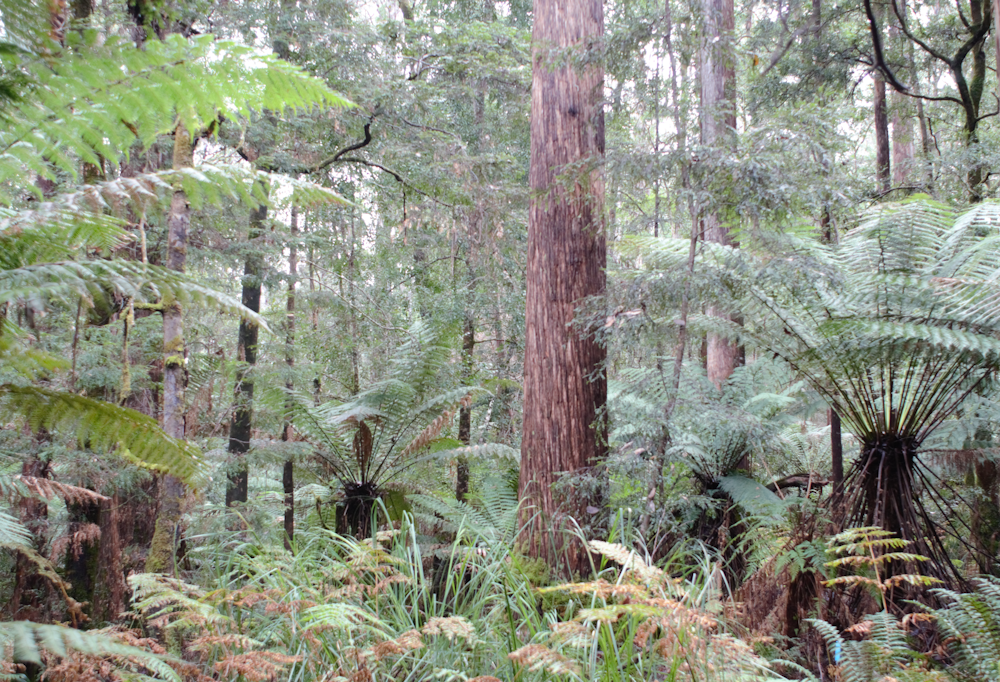
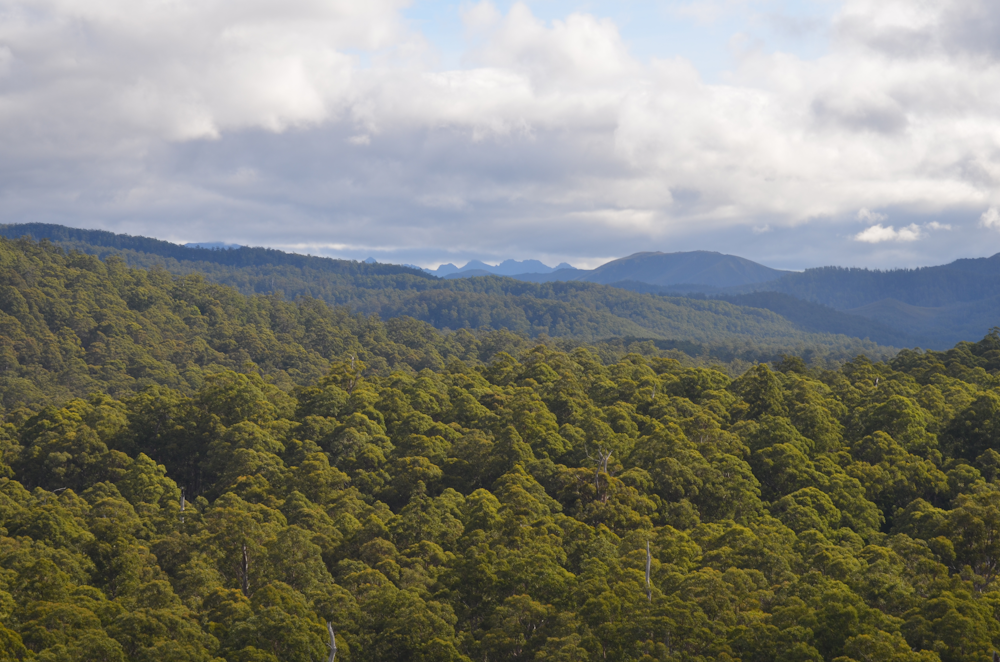




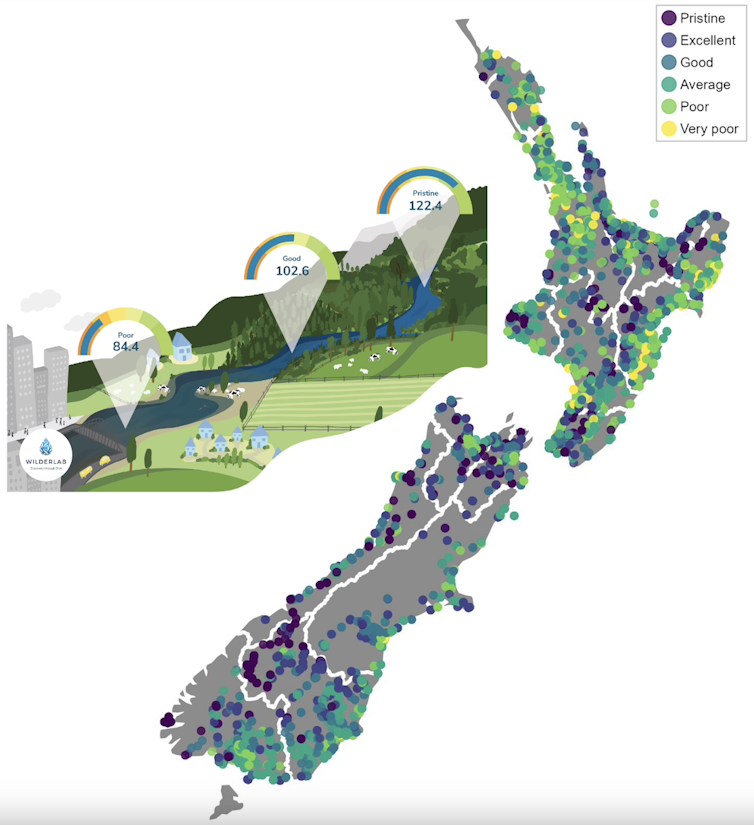

















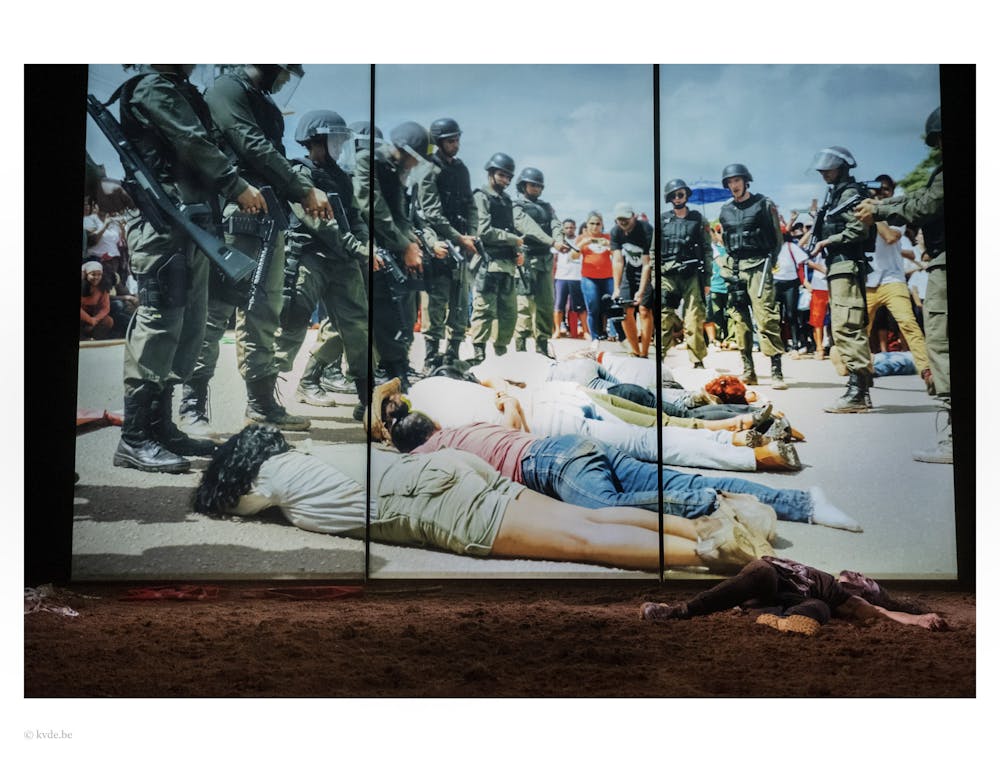





















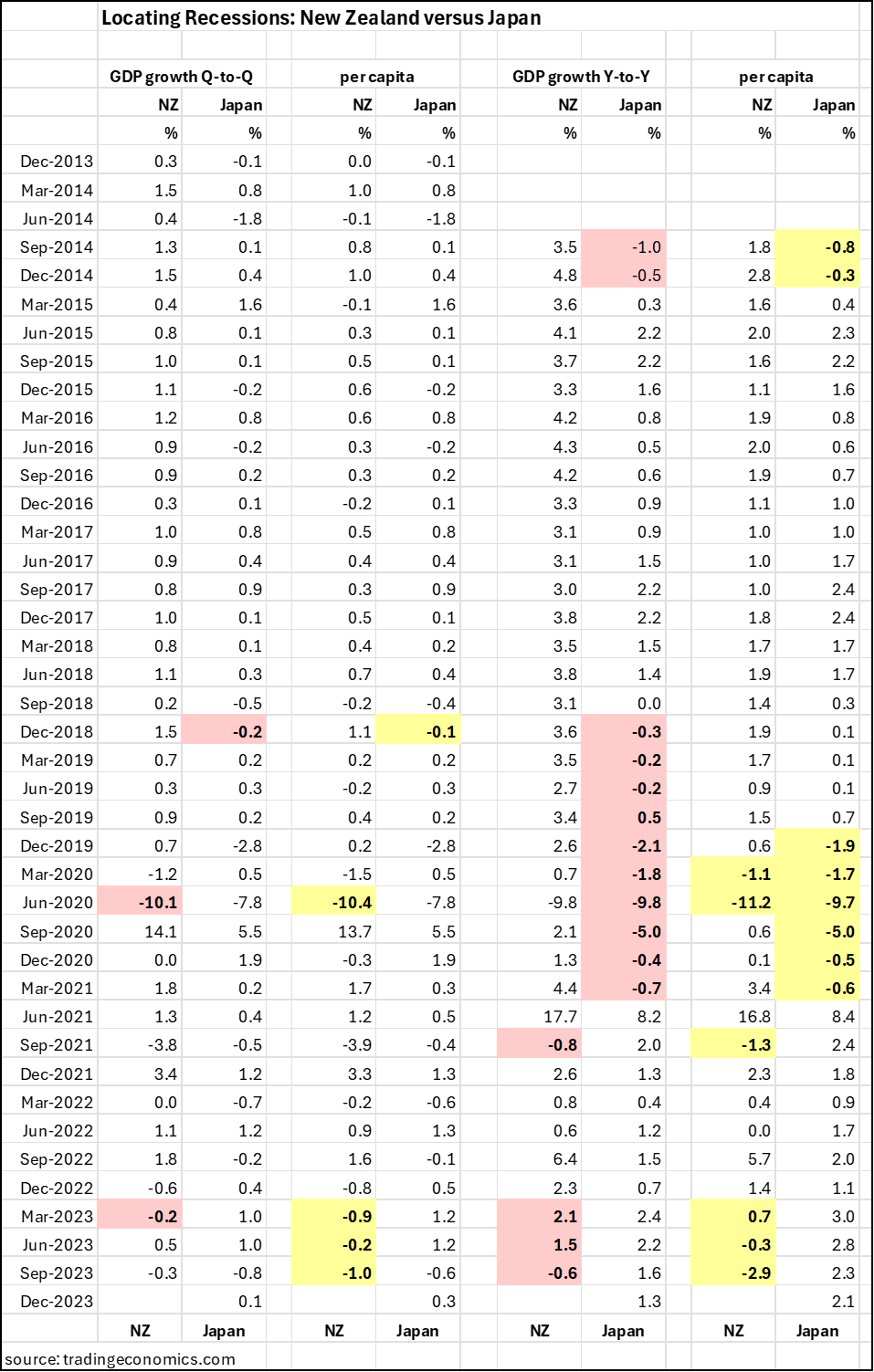
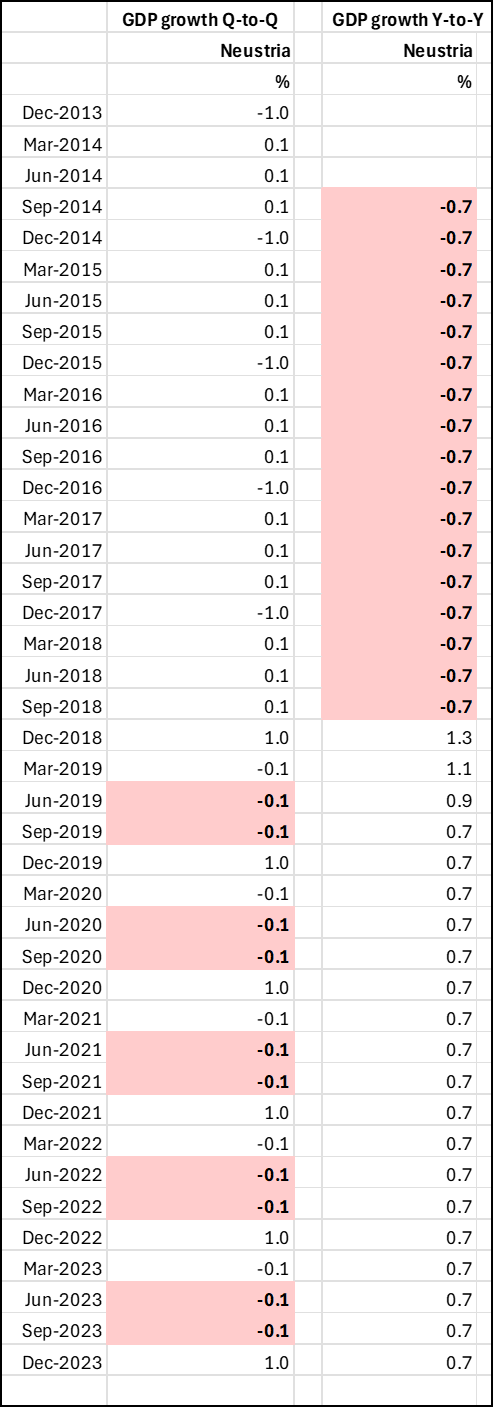















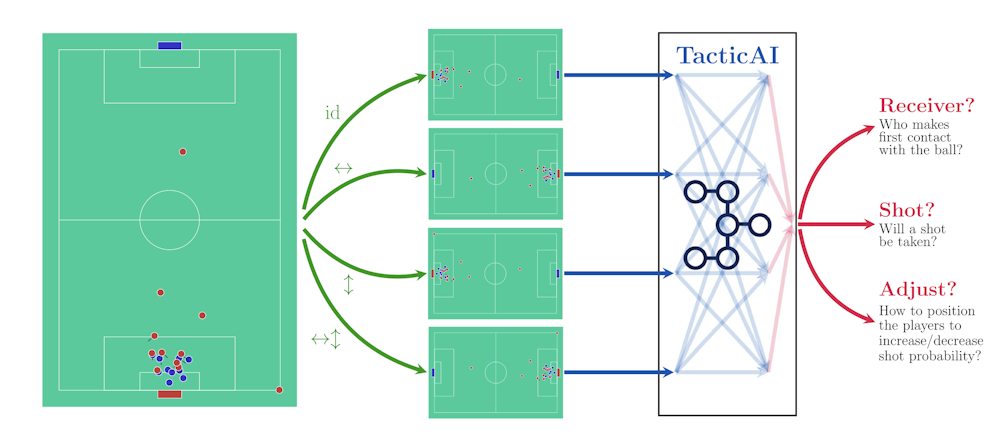





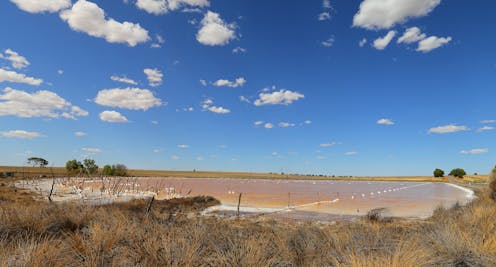





Elsie-2.jpg)
