Page 460

Strategic silence: Furiosa’s silence in the new Mad Max speaks volumes about women’s agency

Source: The Conversation (Au and NZ) – By Rebecca Johinke, Associate professor, English, University of Sydney

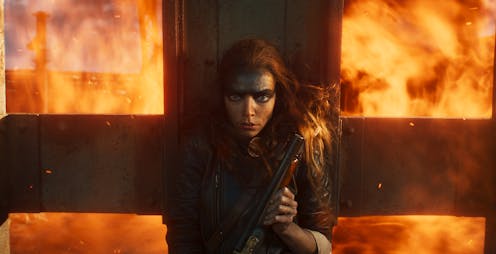
Warner Bros. Pictures

When George Miller was directing Anya Taylor-Joy in the role of Furiosa, Taylor-Joy says he told her:

‘mouth closed, no emotion, speak with your eyes’. That’s it, that’s all you have.

Taylor-Joy has only 30 lines of dialogue, but in the first half of the film Furiosa is played (admirably) by a younger actor, Alyla Browne.

But even when Furiosa doesn’t speak, the new films are a huge step forward for the portrayal of women’s stories in the Mad Max world.

Science-fiction disaster films

Max is silent for much of the first four films and he does not appear in Furiosa (if you discount the glimpse we see of him on a hillside). Our heroes have little to say with words, but the villains are more verbose. In Furiosa, Hemsworth’s Dementous is objectionably loquacious.

The early Mad Max films are largely uninterested in women. After his wife Jessie dies in the first film, Max shows no interest in women sexually. But there is an underlying theme relating to the survival and fertility of women, while keeping the narrative focus firmly on the men.

One way to read the Mad Max film cycle is as an Antipodean response to themes first explored in 1950s science-fiction disaster films such as Five (1951), Captive Women (1952), World Without End (1956) and Last Woman on Earth (1960). In these films, nuclear destruction results in an environmentally devastated world where male survivors compete for access to resources like fuel, technology and fertile women.

In the first Mad Max film, from 1979, as civilisation descends into chaos, women and families are quickly eliminated. Bikers kill Max’s wife and son. Fleeting appearances of other women like bikie “molls” or victims of sexual assaults on the road highlight how women are marginalised. The last woman to appear in the first film is May, an the old woman who attempts to help the Rockatansky family, but in her hands both a car and a shotgun are ineffectual.

In Mad Max 2 (1981), once the able Warrior Woman dies in battle, the role of the few surviving female characters is reproductive. Curmudgeon informs Max the survivors’ chief function will be performed in Queensland, where they will be required to “breeeeeed”.

Despite Tina Turner’s star presence in Beyond Thunderdome (1985) as an “aunty” rather than a mother-figure, women continue to play secondary roles to Max and to the vehicular action, with just hints that Savannah Nix, the leader of the lost children, may signal a future where women have more power and agency.

Women get star billing

Furiosa has good reason to stay silent. This latest film traces how, as a young girl and a woman, she is held captive first by Dementous and then by Immortan Joe.

Her silence is strategic: it lends her power, and disguises her gender when she reaches puberty. Furiosa understands that, unless she is able to fight and drive, her function will be to bear children. When she attracts sexual attention, she disguises herself as a boy and learns how to drive and how to assemble a vehicle.

Anya Taylor-Joy as Furiosa
Furiosa understands that, unless she is able to fight and drive, her function will be to bear children.
Jasin Boland/Warner Bros. Pictures

These are the skills that will ensure her survival and eventual hero status. Better to be a prize driver than one of Joe’s “prize breeders”. We learn more about her character when we witness how she loses her arm than could possibly be articulated by dialogue.

What is more interesting than Furiosa’s selective muteness in both recent films is her star billing and her status as a driver and a warrior. Decades after the original films, women finally get significant screen time.

In the fourth film, Fury Road (2015), Max not only shares the role of protagonist and heroic driver with Furiosa (here played by Charlize Theron), but most of the central characters are women: the Five Wives, the Valkyrie and the Many Mothers (wizened competent bikies) are members of the Vuvalini tribe from the Green Place.

Apart from the first scene where the War Boys pursue Max, almost every frame in Fury Road includes a woman as a central part of the action. This continues in Furiosa.

Again echoing tropes established in 1950s sci-fi, in both Furiosa and Fury Road a healthy womb is a valuable commodity.

Much like cars are treated as spare parts throughout the series, and in films like The Cars that Ate Paris (1974), humans are tagged with tattoos listing their viable parts and are traded as “blood bags”. Joe’s treasures in Fury Road are beautiful young women he selects as breeding stock. He keeps his Five Wives captive in a chamber resembling a giant bank vault.

By shifting the focus of the Mad Max films from the men to the women, we finally have a complex portrayal of the women in this environment and their reduction to their reproductive possibilities.

It isn’t without its problems. At various points in Fury Road, the wives – clad in bikinis and chastity belts as if straight off a Victoria’s Secret catwalk – repeat mantras protesting their objectification and lack of agency in this toxic patriarchy. Yet while the film speaks criticism of objectification, it profits off that same objectification. Miller draws our attention to the exploitation of women and how they are treated as aesthetic breeders while offering up scantily clad models.

Despite this double standard, it is thrilling to see Browne and Taylor-Joy centre stage as warriors driving the rig and the narrative in Furiosa. This is progress – if we remember that bikinis as well as car crashes sell cinema tickets.

The Conversation

Rebecca Johinke does not work for, consult, own shares in or receive funding from any company or organisation that would benefit from this article, and has disclosed no relevant affiliations beyond their academic appointment.

ref. Strategic silence: Furiosa’s silence in the new Mad Max speaks volumes about women’s agency – https://theconversation.com/strategic-silence-furiosas-silence-in-the-new-mad-max-speaks-volumes-about-womens-agency-230871


The sensuous, yet unsettling: remembering the groundbreaking Australian photographer Rosemary Laing

Source: The Conversation (Au and NZ) – By Donna West Brett, Associate Professor in Art History, University of Sydney

A ‘swansong’ is a metaphor for an action or a performance prior to an ending. The term conveys the notion of something both grand and final.

This was the opening paragraph, written by curator Victoria Lynn, for the catalogue accompanying Rosemary Laing’s exhibition swansongs, at Tolarno Galleries in March of this year. Ironically the title was apt. It was Laing’s last exhibition before her untimely death after a short illness at age 65.

The Australian photographer and former educator originally trained as a painter and brought a certain sensibility of the painter’s hand to her practice.

Photography enabled her to challenge how we think about social, cultural, and historical issues because of the medium’s relationship to reality.

Her unique approach engaged with the nature of place, inhabitation and Australia’s colonial history, but also to technology, time and speed – elements seen in her work since the 1980s.

Known for her groundbreaking photo-media series flight research (1999) and bulletproofglass (2002), her work came to be “embedded in our psyche,” as Melbourne’s Tolarno Galleries has commented.

Interventions in the landscape

Like a 19th century painter, Laing often worked en plein air, eschewing the studio to respond to the landscape with certain interventions that laid bare our ongoing impact on nature.

Such works of intense, persistent labour saw her travelling to the southern alps of New Zealand in 2018 to produce skyground.

These sensuous, yet unsettling images undo what we think the landscape should look like. When hung, they appear inverted: the ground above and the sky below, relaying a “sense of slow-motion disaster,” as artist and writer Tanya Peterson has referred to it.

Laing’s concern with natural and unnatural disasters can be traced through a number of photographic series that draw our attention to weather, floods, bushfires, pollution, land degradation, but also to colonisation.

Buddens (2017) and Groundspeed (2001) are incongruous in their clash of nature, domesticity and industrial labour.

In Buddens, Laing replaced the river’s flow through the landscape of Wreck Bay with discarded red-toned clothes recalling the debris left behind in floods or ship disasters. In Groundspeed, Laing meticulously laid Feltex carpet patterned with European floral motifs across the forest floor.

In effort + rush (2015), Laing takes us to Madagascar, where Laing had to reconcile the expected consumptive tourist image with the devastated landscape. Images capture the rush of bushfires devouring the earth.

Using the camera as a paintbrush, these works remind us of the force of nature but also of human destruction, often seen in a blur as we race through the landscape in speeding vehicles.

The intersection of nature and culture with technology and speed can be seen in brownwork (1996–97), described by curator Blair French as picturing flight in a contradictory state of being, and greenwork (1995), which saw her producing large-scale documentary and staged images.

Experimenting with digital interventions and time-lapse, Laing encapsulated “fluid abstractions of flight,” as she called it in a 1998 interview in Art & Text.

In some photographs we see the residue of plane jet streams held in a strange state between stasis and flux. In others, the vivid green forests seemingly rupture from a moment of stillness into motion in a rare digital intervention.

Dark histories

Laing was also deeply affected by the intersection of nature and the dark, shameful history of Australia’s treatment of its First peoples, its migrants and refugees. As she commented:

the arrival of people, throughout history, shifts what happens in land, challenging those who have left their elsewhere, and disrupting the continuum of their destination place. A disruption causes a reconfiguration. It elaborates both the beforehand and the afterward.

Her photographic series swansongs (2024) and poems for recent times (2021) reflect on the horrific, unsettling Black Summer bushfires that raged across the Shoalhaven and neighbouring regions in 2019–20, which saw Laing move to the studio for these contemplative works.

What at first look not unlike traditional still-life paintings in poems for recent times, Laing embeds these images with unquiet signs of repair in bandaged twigs, and loss and remembrance in floral tributes, along with signs of new life rising from the ashes.

This sense of unquiet was personal for Laing as she and her partner, artist Geoff Kleem, watched on as the fires crept up to the edges of the lake near their home.

Three years later, Laing continued this concern in swansongs, with assemblages of crustaceans animated by reparative interventions; bandages or “everyday things that mend, bind or heal a wound,” as Victoria Lynn writes.

The exhibition featured photographs that capture suspended crustacean shellwork in vivid arrangements set against the photographic background of previous series, along with the shellwork subjects positioned on precarious shelves.

The sense of recuperation, recycling and repair in these works reminds of the fragility of life, but also of European impact on Australia’s nature and its first inhabitants.

Making us look

As Laing said of swansongs, the photographs relate to

a love of, an attachment to, homeland or places of belonging … all the memories and histories that have stemmed from that place, and the making of a kind of ‘song’ that combines the enigma of this attachment with a sadness for what has happened in this place.

The last time I saw Rosemary, we were yet again talking incessantly about photography and looking at the numerous photographs of sunsets at Swan Lake on her phone; “Look at this one, and this… and what about the colour in this…” she said.

Always looking, always making us look.

The Conversation

Donna West Brett does not work for, consult, own shares in or receive funding from any company or organisation that would benefit from this article, and has disclosed no relevant affiliations beyond their academic appointment.

ref. The sensuous, yet unsettling: remembering the groundbreaking Australian photographer Rosemary Laing – https://theconversation.com/the-sensuous-yet-unsettling-remembering-the-groundbreaking-australian-photographer-rosemary-laing-231157

Wondering how to teach your kids about consent? Here’s an age-based guide to get you started

Source: The Conversation (Au and NZ) – By Giselle Natassia Woodley, Researcher and Phd Candidate, Edith Cowan University

Brett Sayles/Pexels

The Australian government’s new campaign Consent Can’t Wait challenges us all to improve our understanding of consent. It asks a series of questions to illustrate this issue is more complex than simplistic “no means no” messaging.

The campaign invites viewers to consider the nuances of consent, so we can raise these important issues with children and young people in our lives.

But what is a good age to start talking about consent? How do parents tackle such conversations when this information probably wasn’t readily discussed in our own upbringing?

How it starts – early childhood (0–5 years)

Small on-going conversations about consent that start early are best. At this age, children are becoming aware of their bodies, and this is a great time to start basic conversations around consent, body safety and boundaries.

If you’re tickling or rough-housing with your child and they ask you to stop, respect this. Similarly, you want your child to learn that they should listen to and respect the feelings of others.

Dad talks to son at the beach
Talk to young children about body safety and boundaries.
Jan Kopriva/Unsplash

We should also not force a child to give a hug or a kiss to a family member if they don’t feel comfortable. Teaching them to be polite and respectful without having to cross their own personal boundaries is key.

Bath time can also be a great setting to discuss how children’s bodies are their own and the basics of boundaries and privacy.

Childhood and primary school (6–11 years)
As children enter school, their social networks start to expand and the potential for conflict is inevitable. As parents, we can help them to navigate this time and unpack more developed ideas around consent.

The focus at this stage should be to ensure young people have the necessary skills to form healthy friendships and to engage respectfully with others. You may also want your child to recognise the diversity and difference that exists in our society.

It’s important your child starts to learn about verbal and non-verbal communication. Body language can provide great insight into how another person might be feeling, and children can learn how to tune in and respect others as much as possible.

Mother and child hug
Teach kids to tune into others’ body language.
Eye for Ebony/Unsplash

As your child starts to form a stronger personal identity, help them identify and maintain their own personal boundaries. Demonstrating how to respond if someone is behaving or touching them in a way that makes them feel uncomfortable helps develop skills to communicate boundaries.

Finally, remember that young people begin to connect in online spaces too. Encourage your child to think critically about what they see online and who they talk to. Teaching children to engage respectively can assist with consensual experiences online too.

Adolescence and secondary school (12–18 years)

As we transition through the adolescent years, those foundations skills that first applied to relationships with friends and family, extend to romantic relationships, where consent is important for respectful, safe and healthy experiences.

If they haven’t already grasped the notion, it’s important for adolescents to understand that consent can be withdrawn. People have the right to change their mind at any time, even if it might be an activity they had previously agreed to.

Teens sit on a rock by the ocean
A child’s foundational skills will extend to romantic relationships in adolescence.
Tim Mossholder/Unsplash

Navigating sexual consent can be more complex than seeking and giving permission. Consent must be voluntary and freely given, without coercion or pressure. Just because we are in a romantic relationship with someone, this does not mean we should be expected to engage in particular behaviours if they cross our boundaries.

Adolescents also need to understand that rejection is inevitable. Sometimes people won’t want to go on a date with us, to give us a kiss, or to engage in a particular sexual act and that’s OK. Encourage young people to not take rejection personally, respect the wishes and boundaries of others, and be vigilant to verbal and non-verbal cues.

Adolescents will also start to communicate regularly with peers online and may engage in sexting: sending intimate images to one another. Teach them to express and practise consent to be safe online and be mutually respectful of each other.

Being accessible and inclusive

Consent can be complex, particularly for minority populations.

Yarning Quiet Ways is a resource designed for First Nations families.

The Sexuality Education Counselling and Consultancy Agency (SECCA) offers resources suitable for helping to navigate discussions with people with disability or people who require resources written in simple English.

The Rainbow Project has resources about consent for LGBTQI+ people.

Final tips for families

Start the conversations early focusing on basic ethics, rights and bodily autonomy. Consent conversations can build in an age-appropriate way and extend to discussions about sexual relationships as children age.

While discussions should be age-appropriate where possible, it may be relevant to introduce certain topics earlier if need be too.

Communication about consent is best when it’s direct, free from judgement and maintains an open-dialogue. These discussions might feel awkward or uncomfortable but they are important. Homes are critical places for these discussions and it is important that your child sees you as an approachable and askable parent.

Education around consent won’t stop sexual violence on it’s own, so it’s important to have these discussions alongside other areas of importance.

Discussions around challenging gender stereotypes, modelling respect and how to intervene, the importance of empathy, as well as online safety such as sexting and pornography can assist.

The Conversation

Giselle Natassia Woodley receives funding as part of the Australian Research Council (ARC) Discovery Project Adolescents’ perceptions of harm from accessing online sexual content (DP 190102435). Giselle is also a founding member of not-for-profit advocacy group, Bloom-Ed who are committed to ensuring evidence-based Relationships and Sexuality Education (RSE) is offered to all young people in their homes, schools and and communities.

Jacqueline Hendriks (she/her) is Project Lead of the Curtin University Relationships and Sexuality Education Project and is part of the Management Team for SiREN. She receives funding from the WA Department of Health (Sexual Health and Blood-borne Virus Program) and various other Australian government and non-government organisations. They are a founding member of Bloom-ED, a collective action group to promote improved relationships and sexuality education throughout Australia, and is current Vice President of the Australian Association for Adolescent Health. Jacqui was engaged as a subject matter expert in the most recent revision of the Talk Soon. Talk Often resource that is mentioned in this article.

ref. Wondering how to teach your kids about consent? Here’s an age-based guide to get you started – https://theconversation.com/wondering-how-to-teach-your-kids-about-consent-heres-an-age-based-guide-to-get-you-started-230976

We know the seas are rising – so why are Australian governments not planning for it?

Source: The Conversation (Au and NZ) – By Anthony Boxshall, Enterprise Fellow, The University of Melbourne

KarenHBlack/Shutterstock

The vast majority of Australians (87%) live within 50 kilometres of a coastline. The coast offers scenery, swimming and cooling from the sea.

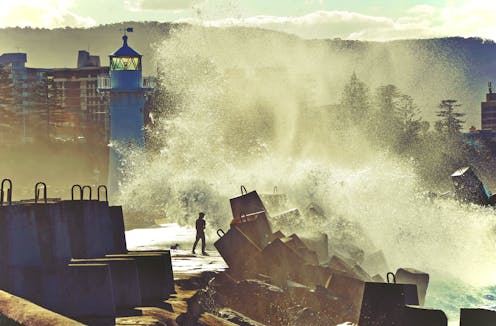
But the problem is, coastlines as we know them are going to change. Sea-level rise is accelerating. As seas inch higher, storm surges can reach further inland and coastal erosion intensifies. Australia’s coasts are not immune.

Low-lying areas are particularly vulnerable, such as towns around Western Port Bay in Victoria.

So why aren’t we planning for what will happen? In this year’s federal budget funds were allocated to many long-term needs, such as submarines for defence (around a 20-year timeframe), the Inland Rail project for freight (around 15 years), Sunshine Coast rail link for transport (at least 10 years) and long term policies for green manufacturing. State budgets also make long-term commitments.

But there was nothing to prepare our coastal communities for the water. Sea level rise and storm surge are problems which get steadily worse. If we spend to avoid A$1 billion of damage in 2040, that’s the same as avoiding $4 billion in 2070 and $10 billion by 2100, according to the Kompas report released last year by co-author Tom Kompas and colleagues.

cyclists on top of flooded seawall
As seas inch upwards, storm surges can reach further inland. This image shows cyclists atop a seawall as a storm surge hits Brisbane in 2013.
Silken Photography/Shutterstock

The economic costs are known

If we don’t prepare, we risk damage to housing, the environment, towns and fast-growing coastal and marine industries.

What does sea-level rise cost? The Kompas report found within 75 years, the projected sea-level rise of 0.82 metres coupled with 19% more storm surges would cause staggering economic loss in Victoria, to the tune of $442 billion, flooding 45,000 hectares of inhabited land and affecting almost every coastal community.

Overseas, the scale of the problem is staggering. Estimates for damage to coastal towns and cities in the European Union and United Kingdom are up to $1.4 trillion.

Why aren’t we taking this seriously?

It is good practice to strategically plan for known risks and needs. And we do make long-term plans in many areas. But so far, coastal adaptation is not one of them.

Because greenhouse gas emissions aren’t dropping as needed, we have already locked in a certain level of sea-level rise. That’s because there’s a lag time between emitting gases, warming the atmosphere and oceans, and melting ice flowing into seas.

What does adaptation look like? We have six options:

1. Non-intervention: authorities deliberately let impacts occur. You might use this strategy if it would be too expensive or impossible to protect a coastal area, or if there are no people living there.

2. Avoid: make sure new houses, infrastructure and human uses for coastline are moved away from the area to be affected.

In Australia, local or state-wide sea-level planning benchmarks are used to denote areas where permanent development needs justification. Benchmarks and assessments differ markedly around the nation.

3. Nature-based methods: boost or restore natural systems able to reduce damage.

This method involves working to bring back or improve natural habitats such as coral reefs, sand, shellfish reefs, mangroves, wetlands, saltmarshes, or seagrasses to build up sediment, adding height and natural ways to absorb some of the force of higher seas.

Many Australian states already have examples up and running. In the EU, the REST-COAST program is working on many nature-based restoration projects, while the United States has many examples, such as oyster reef restoration.

4. Managed retreat: relocate away from the danger.

The community of Isle de Jean Charles in Louisiana was the first community globally to retreat inland in a planned way. In Vietnam, farms and villages in Hue province have had to relocate away from the sea.

While no Australian community has gone through a managed retreat due to sea level, the Summerlands estate on Phillip Island was relocated to protect Australia’s most famous penguin colony.

5. Accommodate: rebuild to reduce risk.

When disaster strikes, it makes sense to rebuild to reduce future risk. Australian authorities often use this technique after river floods. But there are no known examples of similar work on our coasts. In the US, areas of New Orleans were rebuilt to let future floodwaters escape rather than stay trapped for weeks, as they did after Hurricane Katrina.

6. Protect: build hard physical barriers to stop the water getting through.

Historically, building seawalls and dikes has been the first response authorities reach for. The problem is, these barriers are expensive to build and maintain, especially at the scale that will be needed.

Where to from here?

What will nudge authorities to start preparing in earnest? Time, for one. As sea-level rise accelerates, authorities will have to act.

But acting late is much more expensive than acting early. We need to avoid the Tragedy of the Horizon, where catastrophe seems far enough away in time that we can delay acting.

What our policymakers need is the social license to act. The planned retreat of the Welsh town of Fairbourne became controversial because when the council’s plans became public, house values plummeted.

To be able to focus on coastal adaptation means decoupling from the political cycle so politicians are supported to make hard but necessary decisions in the interests of the next generation.

A national approach would help. Not everywhere can be protected. It makes sense to focus our efforts on places where many people live, or the special habitats we want to keep.

If we keep putting our heads in the sand, we’ll get soaked.

Acknowledgement: Alan Stokes of the Australian Coastal Councils Association contributed to this article

The Conversation

Anthony Boxshall an Enterprise Fellow at the University of Melbourne, the Chair of the Victorian Marine & Coastal Council, a Board member of Parks Victoria, and the Principal & Founder of Science into Action, a science impact company.

Anna Grage is a Visiting Research Fellow with the University of Adelaide, and a Board Member on the Victorian Marine and Coastal Council (VMaCC). The Kompas Report, as referred to in the article, was commissioned by VMaCC. Anna is also a Principal Consultant with Earth-Sea Planning.

The University of Melbourne and Tom Kompas received support and research funding from the Victorian Marine and Coastal Council, Life Saving Victoria, and the (then) Victorian Department of the Environment, Land, Water and Planning.

ref. We know the seas are rising – so why are Australian governments not planning for it? – https://theconversation.com/we-know-the-seas-are-rising-so-why-are-australian-governments-not-planning-for-it-230944

Profession or trade? Why training NZ’s teachers in the classroom is not the right answer

Source: The Conversation (Au and NZ) – By Kirsten Locke, Associate Professor, University of Auckland, Waipapa Taumata Rau

Choreograph/Getty Images

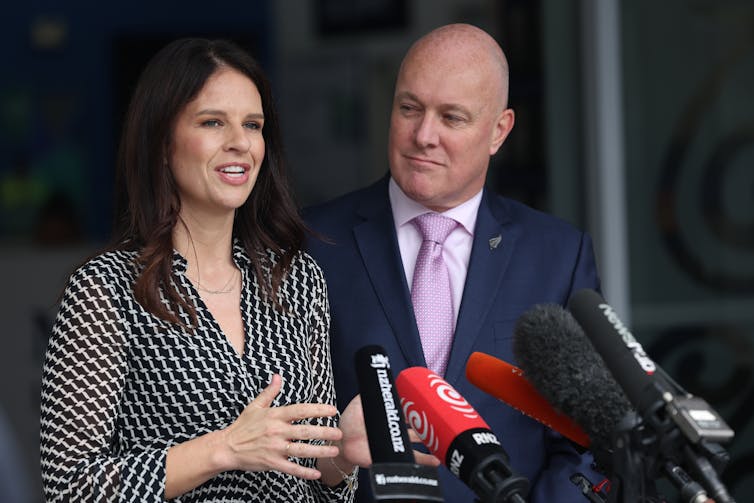
How New Zealand trains teachers is about to change with the government’s push to increase the workforce by 1,500. The plan, announced ahead of the 2024 budget, includes funding 1,200 places for aspiring teachers to be trained in the classroom, rather than in universities as they currently are.

While there will still be funding for university places, the policy appears to prioritise school-based training. Trainee teachers will be based primarily in schools, with coursework on top of their daily teaching responsibilities.

It is a significant shift away from the dominant training model whereby student teachers undertake tertiary level courses alongside periods of teaching experience in schools.

By training teachers on site, the government hopes to improve classroom preparedness. It follows similar moves in the United Kingdom and elsewhere.

And to be fair, while a lot of the policy detail is unknown, additional funding of teacher education will almost certainly increase the number of places where prospective teachers can train.

However, moving away from university-based teacher education has the potential to undermine the profession by disconnecting teachers from education research.

A profession, not a trade

New Zealand’s standalone education colleges merged with universities during the 1990s and early 2000s. In part, the change sought to strengthen teachers’ capacity to critically engage with complex teaching practices and evolving education research.

Like medicine, law, engineering and architecture, teaching is now considered a profession. This means it has its own distinct body of knowledge, a code of ethics, and an independent governing and registering body.

Becoming a member of any profession involves a breadth and complexity of professional learning typically housed within a university. Teachers must learn to engage with research, develop critical thinking, and recognise how their actions – and the actions of others – affect learning.

Indeed, the legally required core characteristics of universities in New Zealand include research, teaching, and their role as “critic and conscience of society”. These characteristics mean universities can provide an ideal setting for the kind of professional training teachers need.

University-based teacher education still involves a substantial amount of time on school-based placements. This is where student teachers develop practical skills to complement their wider understanding of education, research and professional knowledge.

Research has also found time away from the classroom allows student teachers the space to engage in more abstract levels of critical thinking and personal development.

Erica Stanford and Christopher Luxon speaking to the press
Most of the 1,500 new places for aspiring teachers announced by education minister Erica Stanford will be based in the classroom.
Phil Walter/Getty Images

Devaluing university-based teacher education

Shifting towards school-based training models signals a belief that the knowledge that matters for teacher education is to be found largely or exclusively within schools themselves.

This apprenticeship approach requires student teachers to sit “at the side of the master” – learning primarily by observation and copying what they see.

Apprenticeship learning is an excellent way to approach adult education in many skills and trades. However, in a profession such as teaching it falls short. It adopts a “what works” approach without stopping to interrogate who it’s working for and why.

An apprenticeship model can also only ever replicate current practice. Given the concern over educational outcomes in New Zealand, there needs to be real change – not more of the same.

Apprenticeship models typically focus on strategies, curriculum delivery and managing student behaviour. Education research will become less accessible to those in the teaching profession, making it harder to implement any significant change.

Furthermore, apprenticeship models risk narrowing the teacher education curriculum by focusing on current practices and trends. Rather than being adopted outright, new teaching practices and trends need to be critiqued and examined within their historical, social, cultural and research contexts.

The challenge ahead

Professionals recognise knowledge will continue to move over time. The best thing we can do is equip new teachers with adaptive expertise — the ability to think flexibly, to adapt to varied contexts, and to gain new understanding.

Universities must have a central place in New Zealand’s teacher education if the profession is to be as strong as is needed.

The country needs teacher training to cultivate a worldview comfortable with complexity and with asking questions, seeking feedback, and gaining new understanding on unfamiliar topics.

The government needs to support the continual improvement of teacher training in all its forms, including within universities. The education of future generations depends on it.

The Conversation

Alex Gunn has previously received funding through the Teaching and Learning Research Initiative.

Katrina McChesney and Kirsten Locke do not work for, consult, own shares in or receive funding from any company or organisation that would benefit from this article, and have disclosed no relevant affiliations beyond their academic appointment.

ref. Profession or trade? Why training NZ’s teachers in the classroom is not the right answer – https://theconversation.com/profession-or-trade-why-training-nzs-teachers-in-the-classroom-is-not-the-right-answer-230862

Palestine solidarity group condemns ‘colonial violence’ in Rafah, Kanaky

Asia Pacific Report

A New Zealand solidarity group for Palestine with a focus on settler colonialism has condemned the latest atrocities by the Israeli military in its attack on Rafah — in defiance of the International Court of Justice order last Friday to halt the assault — and also French brutality in Kanaky New Caledonia.

In its statement, Justice for Palestine (J4Pal) said that Monday had been “a day of unconscionable and unforgivable violence” against the people of Rafah.

As global condemnation over the attack on displaced Palestinians in a tent camp and the UN Security Council convened an emergency meeting on the ground invasion, a new atrocity was reported yesterday.

Israeli forces shelled a tent camp in a designated “safe zone” west of Rafah and killed at least 21 people, including 13 women and girls, in the latest mass killing of Palestinian civilians.

“Gaza deserves better. Kanaky deserves better. Aotearoa deserves better. All our babies deserve better,” said the group.

“It is not our role to articulate what indigenous Kanak people are fighting for. Kanak people are the experts in their own lives and struggle, and they must be listened to on their own terms at this critical moment,” the statement said.

“Our work for Palestinian rights is, however, part of a larger struggle against settler-colonialism. It is our duty, honour and joy to make connections in this common struggle.

‘Dangerous ideologies’
“These connections begin right here in Aotearoa, where Māori never ceded sovereignty. As New Zealand’s current government, France and Israel all demonstrate, the dangerous ideologies of colonialism are not yet the footnotes in history we strive to make them.

“We recognise common injustices:

• The failure of media to place the current uprising in the context of 150 years of history of French violence in Kanak,
• The characterisation of Kanak activists as ‘terrorists’ all while a militarised foreign force represses them on their own land,
• The deliberate transfer of a settler population to disenfranchise indigenous people and their control over their own territory,
• A refusal to engage with the righteous aspirations of the Kanak people, and
•The lack of support from Western governments around these aspirations.”

Justice for Palestine said in its statement that it was its sincere belief that a world without colonialism was not only necessary, it was near.

“With thanks to the steadfastness of not only Kanak, Māori and Palestinian people, and indigenous people everywhere.

“The struggle of the Kanak people is an inspiration and reminder that while we may face the brute power of empire, we are many, and we are not going anywhere.”

Justice for Palestine is a human rights organisation working in Aotearoa to promote justice, peace and freedom for the Palestinian people.

It added: “Now is the hour for Te Tiriti justice, and liberation for both the Kanak and Palestinian people.”

Print Friendly, PDF & Email

Article by AsiaPacificReport.nz

Vanuatu is holding its first-ever referendum – here’s what’s at stake

Source: The Conversation (Au and NZ) – By Kolaia Raisele, PhD candidate, youth leadership in the Pacific, La Trobe University

Members of the ‘Muvmen Red’ rally in Port Vila, Vanuatu, holding a banner that reads ‘Voes Blong Yumi: Stopem Instabiliti Tede’ (Our Voice: Stop Instability Today). Voes Blong Yumi/Facebook

Vanuatu’s young people are tired of political instability. And they are not just sitting back as political spectators, they’re actively pushing for reform and are determined to steer their country towards stability and prosperity.

Their activism is centred around a crucial national referendum being held today, which is aimed at creating a more stable government. If approved, the referendum would lead to important changes meant to reduce the political instability caused by MPs often switching parties.

Political instability has wracked Vanuatu since it gained independence in 1980, severely affecting its governance and public trust in its institutions.

In recent years, this turmoil has intensified. In 2023, for example, the country cycled through three different prime ministers in a month due to successful no-confidence votes.

One of these no-confidence votes in November meant that many important bills, including the 2024 budget, were not able to be passed.

How Vanuatu plans to stop its high turnover of leaders.

This is what prompted ni-Vanuatu youth to form “Muvmen blong Red” (or Movement Red) last year. The movement is aimed at creating a future in which the government is more responsive to the people and adept at tackling key livability issues, such as improving roads, reducing food prices, offering assistance to young people looking for work, improving health care and helping communities hit by cyclones to rebuild.

Putting an end to the rampant party-switching among MPs will help toward this goal. Young ni-Vanuatu believe this practice undermines the integrity of the political process and leads to short-lived policies that fail to address the long-term needs of the country.

For example, during my fieldwork in Vanuatu last year, the country was without a minister for youth and sports for a few months – a direct consequence of these frequent government changes. This significantly hampered the ministry’s work – provincial youth officers told me their funds had been delayed or redirected as a result.

Furthermore, my conversations with young people from the outer islands revealed a deepening distrust in the government. This was largely due to MPs frequently switching sides in parliament, which many people felt led to a neglect of their needs and interests.

What is the referendum asking?

One major step forward was the approval of the Political Parties Registration Act in December, which was strongly supported in parliament.

This law requires all political parties to officially register and follow strict financial reporting rules, similar to those of private entities and NGOs, with oversight provided by the Election Commission. These measures are designed to make the government more stable, ensure election results are followed, and reduce the formation of temporary political parties without clear platforms.

Parliament also passed a separate act that would amend the constitution with two new articles aimed at ensuring politicians stay true to their duties.

Article 17A would require that MPs who are elected as part of a political party to stay with that party for their entire time in office. If they leave the party or are kicked out, they will lose their seat in parliament.

Article 17B applies to independent candidates and members of single-member parties. After an election, they must join a larger political party and support that party during their term. If they don’t, they will also lose their seat.

For these amendments to come into effect, they now need to be approved through a national referendum. More than 200,000 registered voters are able to take part in Vanuatu and overseas. It’s the first referendum of its kind to be held in the country.

Opposition MP Ishmael Kalsakau, who had been ousted as prime minister last year, argued for the referendum to be delayed, saying it was more important to look at the root cause of political instability before amending the Constitution.

What this moment means

As Vanuatu has been gearing up for this monumental event, there’s been a real buzz among the youth and wider community.

The “Movmen blong Red” group has been very active in the campaign, using social media, public meetings and peaceful protests to educate the public on the importance of the referendum. They have also been working with national leaders, which marks a significant move towards a more inclusive government.

The referendum isn’t just about changing laws – it’s about young people, in particular, stepping up to shape their nation’s path forward. They’re not just hoping for better governance, they’re actively participating in creating it.

This is a pivotal moment for Vanuatu, showing just how powerful a united, informed public can be in steering their country towards a more stable future.

The Conversation

Kolaia Raisele works for La Trobe University. He receives funding from the Department of Social Inquiry at La Trobe University.

ref. Vanuatu is holding its first-ever referendum – here’s what’s at stake – https://theconversation.com/vanuatu-is-holding-its-first-ever-referendum-heres-whats-at-stake-228192

Vivid Sydney’s future seems bright if it can balance spectacle with subtlety – but challenges abound

Source: The Conversation (Au and NZ) – By Emrah Baki Ulas, Associate Professor of Practice, University of Sydney

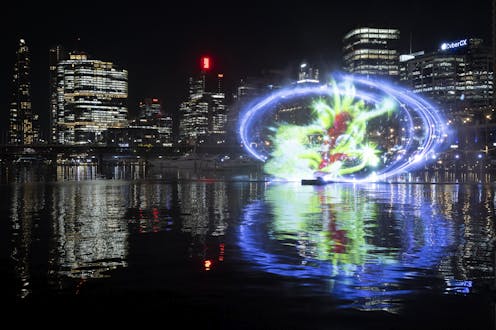
Hika Rakuyo by Art Space Eternal hovers above the waters of Cockle Bay as part of Vivid Sydney 2024.
Destination NSW

It’s the year 2008, and some members of the International Association of Lighting Designers are gathered in a boardroom in North Sydney, myself included. My colleagues Mary-Anne Kyriakou (who would later be Vivid’s inaugural festival director) and Michael Day are sharing a vision of what’s almost unthinkable at the time.

They paint a picture of a light festival in which the winter of Sydney has become vibrant in colour: buildings are illuminated, streets are alive with creative light installations and the crowds walk about in awe. It is a vision that would soon become Vivid Sydney.

This year’s program promises to impress once again with a diverse range of content including Julia Gutman’s first ever animation work, Echo, a story of wonder, vulnerability and strength displayed on the shells of the Sydney Opera House.

Installations such as Stateless and Humanity by Sinclair Park touch on world issues in ways that offer both delight and prompt reflection.

We also see First Nations artist Tori-Jay Mordey’s work, Faces of Change, on the pylons of Sydney Harbour Bridge. It explores, among other themes, humanity’s connection to nature and the threat that rising sea levels pose to the Torres Strait Islands.

Artist Tori-Jay Mordey’s work, Faces of Change, will be projected onto the Sydney Harbour Bridge pylons.
Destination NSW

On the lighter side, there’s a Tekno Train you can have a rave on, and some parties held in a 100-year-old heritage substation.

It’s my hope Vivid Sydney will continue to captivate locals and visitors this year, and for the years to come. But while we look forward to these experiences, let’s also look at the challenges to overcome.

When it all began

The inaugural Smart Light Sydney event was staged in May 2009, laying the foundation for Vivid. The shells of the Sydney Opera House became a canvas for the festival’s first headline projection by Brian Eno.

Several small and large installations were staged across Circular Quay and the Rocks, with various landmark buildings lit up. A number of light artists and designers participated with passion, somewhat tight budgets, and relatively modest works compared to today’s.

Smart Light Sydney offered glimpses of what could be possible in the future. Support from the government and private sector soon followed, and the stage was set for the future of Vivid.

Throughout the 2010s, Vivid inspired a number of smaller and regional towns in New South Wales and beyond to experiment with how lighting could become a spectacle and contribute to their own nightscapes.

In just a few years, Vivid evolved from a modest initiative into a globally recognised celebration of light, music and ideas – positioning itself next to longer-running festivals such as Lyon’s famous Fête des Lumières, Montréal en Lumière and the Berlin Festival of Lights.

A balancing act

The success of such a massive festival will, of course, come with challenges. Vivid, for instance, must grapple with balancing genuine artistic endeavour with the objective of attracting the masses.

This is a fine and delicate balance. If tipped, Vivid could fall into the trap of prioritising spectacle over substance. Some critics already contend that the festival emphasises grandiosity in a way that overshadows creative pursuit.

In recent years, the public and politicians have also criticised key light installations being ticketed, including this year’s Lightscape in the Botanic Gardens and Dark Spectrum in the Wynyard Tunnels.

The Wynyard Tunnels will be lit up as part of Dark Spectrum: A New Journey.
Destination NSW

Perhaps ticketing these offerings helps kerb visitor numbers so they can remain enjoyable (albeit for a smaller number of people). Or it may provide the revenue needed for the festival to deliver more innovative and valuable experiences.

Nonetheless, the decision has sparked debate over the commercialisation of what started as a cultural community event. Numerous corporate-sponsored installations have also now become centrepieces of the festival.

A spectator gets lost in the lamplight at Dark Spectrum: A New Journey.
Destination NSW

Beyond this is a growing challenge for creatives to build on what has already been done. The installations and projections this year again showcase great examples of what can be achieved through the creative use of light and technology. As the festival matures, however, people’s expectations also grow.

Festival-goers in front of the work Connection by New Zealand-based artist Angus Muir.
Destination NSW

Sustainability and logistical challenges

Environmental impact and sustainability are key considerations when thinking about Vivid’s future. The festival’s website details actions it has taken to deliver on this front, which have included partly offsetting its carbon footprint, using more renewable power, installing taps to reduce plastic landfill, encouraging public transport and going paper-free when possible.

Nonetheless, environmental issues remain intrinsic to an event of this scale. The festival’s light pollution and reliance on large-scale energy consumption are points of contention, especially as awareness of these issues grows. Among all the environmental challenges the festival faces, using dark-sky friendly lighting is perhaps one of the most tricky.

Another challenge is that the festival’s growth has somewhat strained local infrastructure, leading to overcrowded public spaces and transport systems. During the festival weeks, portaloos, barricades and other temporary infrastructure also decorate the city.

While Vivid puts in a notable effort into remaining accessible and inclusive for all, the sheer number of attendees (supposedly 3.4 million last year) means managing this size comes with many hurdles.

What the future may hold

These challenges aren’t unique to Vivid Sydney. They are faced by many similar events. In each context, there is nuance and also unique opportunities.

Vivid could play a profound, flagship role in showcasing Australia’s design culture to its own people and to the world. This is a culture characterised by kindness, fairness, diversity, creativity and a commitment to innovation and sustainability.

Perhaps Vivid’s future doesn’t rely on getting bigger and brighter, but on the finer aspects of its content. From embracing Indigenous wisdom, to connecting to nature, to highlighting world-class architecture and lighting design – Vivid has the potential to reinvent itself year on year.

But it will need to continue to deliver spectacle with subtlety to achieve this, and tell stories that touch people on a deeper level. Perhaps, unconventionally, it makes sense to embrace the darkness as much as the light.

Visitors get lost in the lights at Dark Spectrum: A New Journey.
Destination NSW

The Conversation

Dr Emrah Baki Ulas has participated in Vivid Sydney since its beginnings and exhibited several installations over the years. He is an Associate Professor of Practice at the University of Sydney and Co-leads Lighting Design at Steensen Varming.

ref. Vivid Sydney’s future seems bright if it can balance spectacle with subtlety – but challenges abound – https://theconversation.com/vivid-sydneys-future-seems-bright-if-it-can-balance-spectacle-with-subtlety-but-challenges-abound-226507

The voice in your head may help you recall and process words. But what if you don’t have one?

Source: The Conversation (Au and NZ) – By Derek Arnold, Professor, School of Psychology, The University of Queensland

fizkes/Shutterstock

Can you imagine hearing yourself speak? A voice inside your head – perhaps reciting a shopping list or a phone number? What would life be like if you couldn’t?

Some people, including me, cannot have imagined visual experiences. We cannot close our eyes and conjure an experience of seeing a loved one’s face, or imagine our lounge room layout – to consider if a new piece of furniture might fit in it. This is called “aphantasia”, from a Greek phrase where the “a” means without, and “phantasia” refers to an image. Colloquially, people like myself are often referred to as having a “blind mind”.

While most attention has been given to the inability to have imagined visual sensations, aphantasics can lack other imagined experiences. We might be unable to experience imagined tastes or smells. Some people cannot imagine hearing themselves speak.

A recent study has advanced our understanding of people who cannot imagine hearing their own internal monologue. Importantly, the authors have identified some tasks that such people are more likely to find challenging.

What the study found

Researchers at the University of Copenhagen in Denmark and at the University of Wisconsin-Madison in the United States recruited 93 volunteers. They included 46 adults who reported low levels of inner speech and 47 who reported high levels.

Both groups were given challenging tasks: judging if the names of objects they had seen would rhyme and recalling words. The group without an inner monologue performed worse. But differences disappeared when everyone could say words aloud.

Importantly, people who reported less inner speech were not worse at all tasks. They could recall similar numbers of words when the words had a different appearance to one another. This negates any suggestion that aphants (people with aphantasia) simply weren’t trying or were less capable.

image of boy sitting with diagram of gold brain superimposed over image
Hearing our own imagined voice may play an important role in word processing.
sutadimages/Shutterstock

A welcome validation

The study provides some welcome evidence for the lived experiences of some aphants, who are still often told their experiences are not different, but rather that they cannot describe their imagined experiences. Some people feel anxiety when they realise other people can have imagined experiences that they cannot. These feelings may be deepened when others assert they are merely confused or inarticulate.

In my own aphantasia research I have often quizzed crowds of people on their capacity to have imagined experiences.

Questions about the capacity to have imagined visual or audio sensations tend to be excitedly endorsed by a vast majority, but questions about imagined experiences of taste or smell seem to cause more confusion. Some people are adamant they can do this, including a colleague who says he can imagine what combinations of ingredients will taste like when cooked together. But other responses suggest subtypes of aphantasia may prove to be more common than we realise.

The authors of the recent study suggest the inability to imagine hearing yourself speak should be referred to as “anendophasia”, meaning without inner speech. Other authors had suggested anauralia (meaning without auditory imagery). Still other researchers have referred to all types of imagined sensation as being different types of “imagery”.

Having consistent names is important. It can help scientists “talk” to one another to compare findings. If different authors use different names, important evidence can be missed.

bare foot on mossy green grass
We’re starting to broaden our understanding of the senses and how we imagine them.
Napat Chaichanasiri/Shutterstock

We have more than 5 senses

Debate continues about how many senses humans have, but some scientists reasonably argue for a number greater than 20.

In addition to the five senses of sight, smell, taste, touch and hearing, lesser known senses include thermoception (our sense of heat) and proprioception (awareness of the positions of our body parts). Thanks to proprioception, most of us can close our eyes and touch the tip of our index finger to our nose. Thanks to our vestibular sense, we typically have a good idea of which way is up and can maintain balance.

It may be tempting to give a new name to each inability to have a given type of imagined sensation. But this could lead to confusion. Another approach would be to adapt phrases that are already widely used. People who are unable to have imagined sensations commonly refer to ourselves as “aphants”. This could be adapted with a prefix, such as “audio aphant”. Time will tell which approach is adopted by most researchers.

Why we should keep investigating

Regardless of the names we use, the study of multiple types of inability to have an imagined sensation is important. These investigations could reveal the essential processes in human brains that bring about a conscious experience of an imagined sensation.

In time, this will not only lead to a better understanding of the diversity of humans, but may help uncover how human brains can create any conscious sensation. This question – how and where our conscious feelings are generated – remains one of the great mysteries of science.

The Conversation

Derek Arnold has received funding from the Australian Research Council.

ref. The voice in your head may help you recall and process words. But what if you don’t have one? – https://theconversation.com/the-voice-in-your-head-may-help-you-recall-and-process-words-but-what-if-you-dont-have-one-230973

The coverage of Laura Tingle’s comments on racism is a textbook beat-up, but she’s not in the wrong

Source: The Conversation (Au and NZ) – By Denis Muller, Senior Research Fellow, Centre for Advancing Journalism, The University of Melbourne

Striking the balance between journalists’ private free speech rights and the public duty they owe to impartiality and their employer’s reputation is one of the most complex ethical issues confronting the media today.

It is in the spotlight again because of remarks made by Laura Tingle, chief political correspondent for the ABC’s 7.30 program and staff-elected member of the ABC board, at the Sydney Writers’ Festival on the weekend.

The remarks were made on a politics panel chaired by former ABC political correspondent Barrie Cassidy, and consisting also of three other political journalists: Nikki Savva of The Sydney Morning Herald, Amy Remeikis of Guardian Australia, and Bridget Brennan, ABC presenter and former Indigenous Affairs Editor.

It’s an example of how years of social media ubiquity has created new challenges for journalists as they try to navigate the professional and personal spheres ethically.

What’s all the fuss about?

In the context of a discussion about immigration, during which she referred to a previous remark by Savva, Tingle said:

On the night of Peter Dutton’s address-in-reply to the budget, I was sitting there with this terrible chill running through me thinking, okay, we’re back into this territory. I don’t think […] we’ve had the leader of a major political party saying everything that is going wrong in this country is because of migrants.

She continued:

I had this sudden flash of people turning up to try to rent a property or at an auction, and they look a bit different – whatever you define different as – and he has given a licence for them to be abused where people feel they are missing out. We’re a racist country, let’s face it. We always have been and it’s very depressing and a terrible prospect for the next election.

These comments were reported in The Australian, which quoted Nationals MP Barnaby Joyce attacking the ABC as being “mad left-wing”. It also quoted the opposition spokesman on communications, David Coleman, as saying the comments were “extraordinary and completely indefensible”, and Senator Jacinta Nampijinpa Price describing Tingle as “blatantly partisan”.

This has all the hallmarks of a beat-up, the initial reporting being spiced with adjectives and adverbs – “extraordinary”, “controversial”, “bizarrely” – and followed up by a story, denied by the ABC, that board members have had “emergency discussions” about her remarks.

Were Tingle’s remarks partisan? Of course. They were statements of her opinions, clearly and obviously so.

Do they reflect on her impartiality as a journalist? No. They were made informally as part of a panel discussion in which issues of immigration and race were canvassed. She was not doing journalism. Moreover, Tingle was not there representing the ABC or the 7.30 program. She was there because, like all the other members of the panel, she has expertise in federal politics.

The counterargument is that in her person, she is inseparable from her role as 7.30’s chief political correspondent. That is not reasonable. It would be to deny her an existence outside her job. If she had been there as a representative of the ABC or of the program, it would be different, but that was not the position.

She is entitled to the view that Australia is racist, that Dutton’s approach to immigration bodes ill for the quality of debate at the next election, and that his remarks about the connection between immigration and the housing crisis may lead to people seen as different being abused. Plenty of people would disagree with her, but that does not provide a basis for accusing her of professional misconduct.

Whatever the merits of this analysis, however, her comments have handed the ABC’s enemies in the Coalition and News Corporation a stick with which to beat the organisation.

That does not, of itself, mean she has brought the ABC into disrepute, because the attack is so nakedly political. However, it does highlight not just the tension between a journalist’s free speech rights and their professional duties, but the obligations an employer owes to a journalist under attack.

Journalism in a social media age

There have been three other instances in the past year that illustrate these complexities.

In November 2023, roughly 300 journalists signed an open letter to the news organisations they worked for, the subtext of which was the coverage of the Gaza war was, at that date, pro-Israel. It was not clear exactly under whose auspices the letter was written, but it was clear it had the endorsement of the journalists’ union, the Media, Entertainment and Arts Alliance.

Here, journalists speaking as journalists, not in their private capacity, were becoming participants in the story. It is categorically different from the Tingle case. The Nine newspapers said their people who signed the letter would be taken off the Gaza story.

Then, in December 2023, the ABC removed a stand-in presenter on Sydney radio, Antoinette Lattouf, for alleged misconduct. In the Fair Work Commission where she is challenging her removal, Lattouf alleges she was unfairly dismissed after reposting on Instagram a Human Rights Watch report on the conflict in Israel and Palestine. The ABC is contesting the case.

Before she was removed, a pro-Israel lobby group, Lawyers for Israel, had conducted an intense campaign of WhatsApp messages to the ABC seeking to have her removed.

Social media was at the centre of this.

For years, media organisations encouraged – even demanded – their journalists “engage” on social media. This has created difficulties about where to draw the line between personal free speech and professional obligations.

Social media has also been weaponised against journalists, not just through trolling but through the application of pressure on their employers.

Finally, the Tingle case has echoes of the attacks on the former high-profile ABC presenter Stan Grant, particularly by News Corporation, and including a cascade of abuse on social media.

Grant had appeared on an ABC TV panel as part of the coverage of King Charles III’s coronation in May 2023, during which he made remarks concerning the monarchy’s ties to extermination and theft of land.

The failure of the ABC’s senior management to defend him led to his resigning from the ABC three months later. Grant said his trust was broken.

Separating personal preferences from professional decision-making is a standard ethical expectation in all professions, including journalism. It requires intellectual self-discipline of a kind well-trained professionals are routinely able to exert. It does not require them to be intellectual eunuchs, only that they avoid allowing their personal preferences to taint their professional work.

The Conversation

Denis Muller does not work for, consult, own shares in or receive funding from any company or organisation that would benefit from this article, and has disclosed no relevant affiliations beyond their academic appointment.

ref. The coverage of Laura Tingle’s comments on racism is a textbook beat-up, but she’s not in the wrong – https://theconversation.com/the-coverage-of-laura-tingles-comments-on-racism-is-a-textbook-beat-up-but-shes-not-in-the-wrong-231051

‘I can’t just stand back’: Kanak pro-independence activist follows mum’s footsteps

By Pretoria Gordon, RNZ News journalist

Jessie Ounei is following in her mum’s footsteps as a Kanak pro-independence activist.

Last Wednesday, Ounei organised a rally outside the French Embassy in Wellington to “shed light on what is happening in New Caledonia“.

She said there was not enough information, and the information that had been reported in mainstream media was skewed.

“It is depicting us as savages, as violent, and not giving proper context to what has actually happened, and what is happening in New Caledonia,” Ounei said.

Her mum, Susanna Ounei, was born in Ouvéa in New Caledonia, and was a founding member of the Kanak independence movement, now the umbrella group FLNKS (Kanak and Socialist National Liberation Front).

“Ouvéa is the island where 19 of our fathers, uncles, and brothers were massacred,” Jessie Ounei said.

“And it was actually that massacre that was a catalyst for the Matignon Accords and eventually the Nouméa Accords.”

More power to Kanaks
In 1988, an agreement, the Matignon Accord, between the French and the Kanaks was signed, which proposed a referendum on independence to be held by 1998. Instead, a subsequent agreement, the Nouméa Accord, was signed in 1998, which would give more power to Kanaks over a 20-year transition period, with three independence referenda to be held from 2018.

Jessie Ounei (left), her mum Susanna Ounei, and her brother Toui Jymmy Jinsokuna Burēdo Ounei in Ouvéa, New Caledonia. Credit: Supplied
Jessie Ounei (left), her mum Susanna Ounei, and her brother Toui Jymmy Jinsokuna Burēdo Ounei in Ouvéa, New Caledonia. Image: Jessie Ounei/RNZ

In 2018, the first of the three referenda were held with 57 percent voting against, and 43 voting for independence from France.

In 2020, there was a slight increase in the “yes” votes with 47 percent voting for, and 53 percent voting against independence.

The third referendum however was mired in controversy and is at the centre of the current political unrest in New Caledonia.

The date for the vote, 12 December 2021, was announced by France without consensus and departed from the two-year gap between the referenda that had been held previously This drew the ire of pro-independence parties.

The parties called for the vote to be delayed by six months saying they were not able to campaign and mobilise voters during the pandemic and appealed for time to observe traditional mourning rites for the 280 Kanak people who died during a covid-19 outbreak.

France refused new referendum
France refused and Kanak leaders called for a boycott of the vote in December which resulted in a record low voter turnout of 44 percent, compared to 86 percent in the previous referendum, and the mostly pro-French voters registering an overwhelming 96 percent vote against New Caledonia becoming an independent country.

Kanak pro-independence parties do not recognise the result of the third referendum, saying a vote on independence could not be held without the participation of the colonised indigenous peoples.

But France and pro-independent French loyalists in New Caledonia insist the vote was held legally and the decision of Kanak people not to participate was their own and therefore the result was legitimate.

Because of this, for the past several years New Caledonia has been stuck in a kind of political limbo with France and the pro-French loyalists in New Caledonia pushing the narrative that the territory has voted “no” to independence three times and therefore must now negotiate a new permanent political status under France.

While on the other hand, pro-independence Kanaks insisting that the Nouméa accord which they interpreted as a pathway to decolonisation had failed and therefore a new pathway to self-determination needs to be negotiated.

Paris has made numerous attempts since 2021 to bring the two diametrically opposed sides in the territory together to decide on a common future but it has all so far been in vain.

A pro New Caledonia protest outside the French Embassy in Wellington
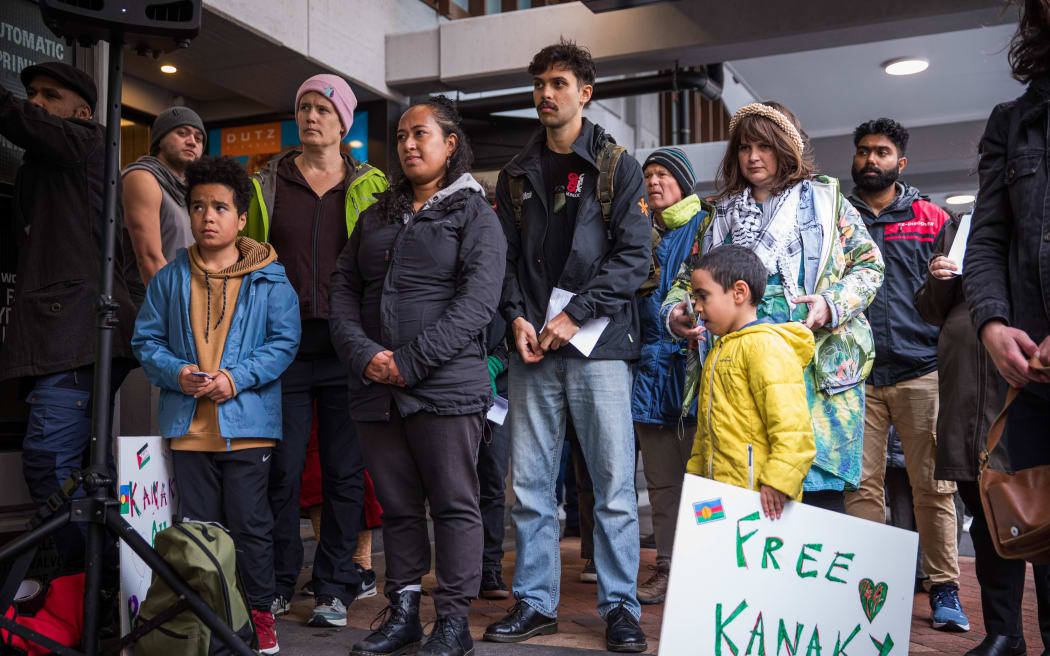
“Free Kanaky” . . . pro-Kanak independence protesters outside the French Embassy in Wellington last week. Image: RNZ/Angus Dreaver

New Caledonia’s ‘frozen’ electoral rolls
Despite the political impasse in the territory, France earlier this year proposed a constitutional amendment that would change the electoral roll in the territory sparking large scale protests on the Kanak side which were mirrored by support rallies organised by pro-French settlers.

But what is so controversial about a constitutional amendment?

Under the terms of the Nouméa Accord, voting in provincial elections was restricted to people who had resided in New Caledonia prior to 1998, and their children. The measure was aimed at giving greater representation to the Kanaks who had become a minority population in their own land and to prevent them becoming even more of a minority.

The French government’s proposed constitutional amendment would allow French residents who have lived in New Caledonia continuously for more than 10 years to vote. It is estimated this would enable a further 25,000 non-indigenous people, most of them pro-French settlers, to vote in local elections which would weaken the indigenous Kanak vote.

Despite multiple protests from indigenous Kanaks, who called on the French government to resolve the political impasse before making any electoral changes, Paris pressed ahead with the proposed legislation passing in both the Senate and the National Assembly.

On Monday 13 May, civil unrest erupted in the capital of Nouméa, with armed clashes between Kanak pro-independence protesters and security forces. Seven people have been killed, including two gendarmes, and hundreds of others have been injured.

Last Wednesday, Jessie Ounei organised a rally outside the French Embassy in Wellington to raise awareness of the violence against Kanak in New Caledonia.

“For decades, the Kanak independence movement has persevered in their pursuit of autonomy and self-determination, only to be met with broken promises and escalating violence orchestrated by the French government,” she said.

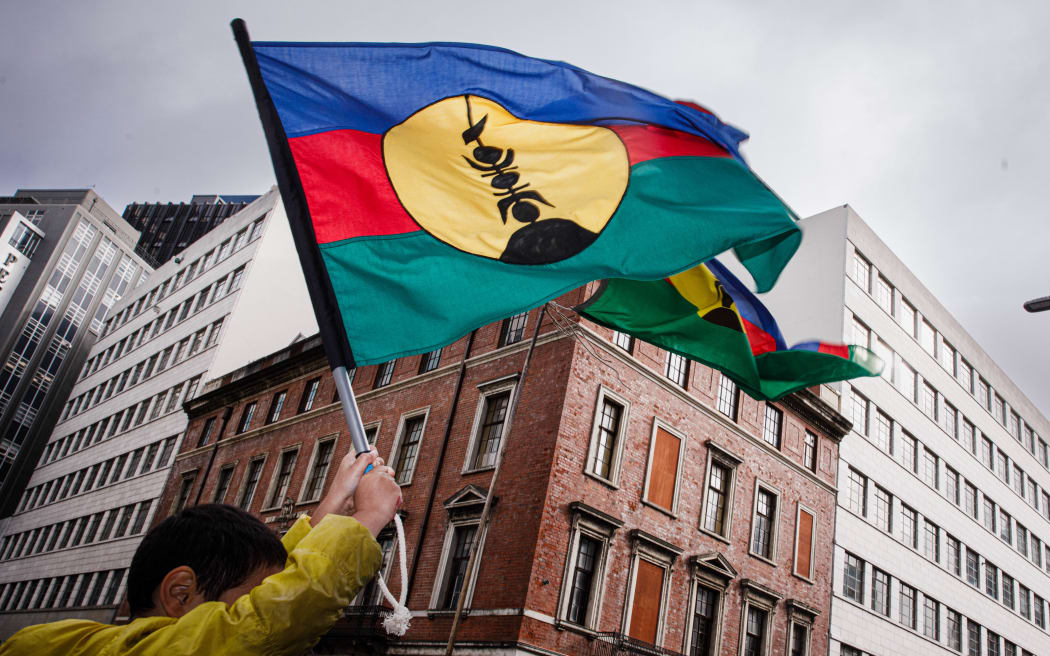
A Kanak flag raised high at the New Caledonia protest outside the French Embassy in Wellington last week.
A Kanak flag raised high at the New Caledonia protest outside the French Embassy in Wellington last week. Image: RNZ/Angus Dreaver

‘Time to stand in solidarity’
“It is time to stand in solidarity with the Kanak people and demand an end to this cycle of oppression and injustice.”

Ounei said she was very sad, and very angry, because it could have been prevented.

“This was not something that was a surprise, it was something that was foreseen, and it was warned about,” she said.

Ounei was also born in Ouvéa, and moved to Wellington in 2000 with her mum and her brother, Toui Jymmy Jinsokuna Burēdo Ounei. Susanna Ounei died in 2016, but had never gone back to New Caledonia, because she was disappointed in the direction of the independence movement.

“Ouvéa has a staunch history of taking a stand against French imperialism, colonialism,” Jessie Ounei said.

“I have grown up hearing, seeing and feeling the struggle of our people.”

She said her mum, and a group of activists, were the original people who had reclaimed Kanak identity.

“If I can stand here and say that I’m Kanak, it is because of those people,” she said.

Now Ounei has picked up the baton, and is following in her mum’s footsteps.

She said after spending her entire life watching her mum give herself to the cause, it was important for her to do the same.

“I have two daughters, I have family, if I don’t do this, I don’t know who else will,” she said.

“And I can’t just stand back. It’s not the way that I grew up. My mum wouldn’t have stood back. She never stood back.

“And even though I feel quite under-qualified to be here, I want to honour all the sacrifices that the activists, including my mum, made.”

This article is republished under a community partnership agreement with RNZ.

Print Friendly, PDF & Email

Article by AsiaPacificReport.nz

Why did primates evolve such big brains? First study of its kind says it wasn’t for finding food

Source: The Conversation (Au and NZ) – By Ben Hirsch, Senior Lecturer in Zoology and Ecology, James Cook University

Tim Herbert/Shutterstock

Thanks to our large brains, humans and non-human primates are smarter than most mammals. But why do some species develop large brains in the first place?

The leading hypothesis for how primates evolved large brains involves a feedback loop: smarter animals use their intelligence to find food more efficiently, resulting in more calories, which provides the energy to power a large brain. Support for this idea comes from studies that have found a correlation between brain size and diet – more specifically, the amount of fruit in an animal’s diet.

Fruit is a high-power food, but creates a complicated puzzle for animals. Different fruit species ripen at different times of the year and are spread throughout an animal’s home range. Animals that need to find such highly variable food might be more likely to evolve large brains.

A key assumption here is that species with larger brains are more intelligent and therefore can find food more efficiently. In a new study published today in Proceedings of the Royal Society B, we directly tested this hypothesis of brain evolution for the first time.

Tracking fruit eaters in Panama

A major problem for testing the fruit-diet hypothesis is that measuring foraging efficiency is difficult. The mammals we study travel long distances, usually more than three kilometres per day, making it difficult to replicate realistic study conditions in a lab.

Some researchers have experimentally manipulated food distribution in wild animals, but the animals needed extensive training to learn to visit human-made food resources.

A brown monkey with long limbs hangs from a tree branch gripping a piece of orange fruit.
One of our study species was spider monkeys; their diets are largely made up of fruit.
SL-Photography/Shutterstock

In our study, we took advantage of a natural phenomenon in Panama that occurs when the normally complex fruit puzzle shrinks to just a few species of ripe fruit over a three-month period. During this time, all fruit-eating mammals are forced to focus on one tree species: Dipteryx oleifera.

Fortunately for us, Dipteryx trees are huge, sometimes reaching 40–50 metres high, and produce bright purple flowers in summer. We mapped the island with drones during the flowering season and identified patches of purple flowers, mapping virtually every Dipteryx that produced fruit a few months later.

A satellite map of green land with purple dots throughout it.
Our map of Dipteryx trees across the island.
Ben Hirsch/Bing Maps

This gave us the full extent of the fruit puzzle our study animals faced, but we still needed to test how efficiently animals with different brain sizes visited these trees. We chose two large-brained primates (spider monkeys and white-faced capuchins) and two smaller-brained raccoon relatives (white-nosed coatis and kinkajous).

Over two fruiting seasons, we collected movement data from more than 40 individual animals, resulting in more than 600,000 GPS locations.

A person holding a medium sized brown animal with a long snout akin to a greyhound.
A coati gets a GPS collar for tracking purposes.
Rob Nelson

We then had to figure out when animals visited Dipteryx trees and for how long. This was a complex task, because to know exactly when our animals entered and exited the fruit trees, we had to extrapolate their location between the GPS fixes taken every four minutes. Some animals also had the bad habit of sleeping in Dipteryx trees. Thankfully, our collars recorded animal activity, so we could tell when they were sleeping.

Once these challenges were solved, we calculated route efficiency as the daily amount of time spent active in Dipteryx trees, divided by the distance travelled.

A small brown animal with a dark tail looking at the camera from a tree branch.
Another of our study species was the kinkajou, a nocturnal tree dweller.
Martin Pelanek/Shutterstock

Do smarter foragers forage smarter?

If larger-brained animals use their intelligence to more efficiently visit fruit trees, we would expect the big-brained primates in our study to have more efficient foraging routes.

That’s not what we found.

The two monkey species didn’t have more efficient routes than the two non-primates, which puts a serious dent in the fruit-diet hypothesis of brain evolution. If smarter species were more efficient, they might be able to satisfy their nutritional needs more quickly, then spend the rest of the day relaxing.

If this was the case, we would have expected the monkeys to route themselves more efficiently in the first few hours of the day after waking up hungry. When looking at these first 2–4 hours of the day, we found the same result: monkeys were not more efficient than non-primates.

A black and cream coloured monkey sits on a branch with a frowning expression.
Capuchin monkeys have been observed to use tools.
Mary P Madigan/Flickr, CC BY

Why the big brains, then?

So, if the evolution of these large brains doesn’t allow primates to plan more efficient foraging routes, why did brain size increase in some species?

Perhaps it has to do with memory. If species with larger brains have better episodic memory, they might be able to optimise the timing of fruit tree visits to get more food. Preliminary analyses of our dataset didn’t support this explanation, but we’ll need more detailed studies to test this hypothesis.

Intelligence might be linked to tool use, which could help an animal extract more nutrients from their environment. Of our four study species, the white-faced capuchin monkey is the only one that’s been observed using tools, and it also has the largest brain (relative to body size).

Our study could also lend support to the hypothesis that brain size increased to handle the complexities of living in a social group.

Large brains have evolved in an assortment of vertebrates (dolphins, parrots, crows) and invertebrates (octopuses). While our study can’t determine the exact drivers of brain evolution in all of these species, we have directly tested a key assumption on wild tropical mammals in a relatively non-invasive manner.

We’ve demonstrated that by using the latest sensor technologies we can test big hypotheses about the evolution, psychology and behaviour of animals in their natural environment.

The Conversation

Ben Hirsch receives funding from US National Science Foundation.

ref. Why did primates evolve such big brains? First study of its kind says it wasn’t for finding food – https://theconversation.com/why-did-primates-evolve-such-big-brains-first-study-of-its-kind-says-it-wasnt-for-finding-food-228892

NZ Budget 2024: tax cuts and borrowing don’t always fuel inflation – but Nicola Willis has to get the balance right

Source: The Conversation (Au and NZ) – By Dennis Wesselbaum, Associate Professor, Department of Economics, University of Otago

LazingBee/Getty Images

On the eve of the first budget from the National-ACT-New Zealand First coalition government, there is ongoing debate over whether borrowing while offering tax cuts could trigger a rise in inflation.

Finance minister Nicola Willis has confirmed the budget will introduce “meaningful but modest” tax relief. But what impact will these cuts have on New Zealand’s economy?

During the election campaign, National promised up to $250 fortnightly in tax cuts for families with children, and up to $100 for childless households. Similarly, ACT pledged approximately $100 monthly to the average New Zealander. NZ First did not promise any tax cuts.

But definitive figures have been vague. This uncertainty has triggered heated debate. During the first leader’s debate last year, former prime minister Chris Hipkins argued “National’s tax cuts would exacerbate inflation”.

Echoing these concerns, the OECD’s biennial report on the New Zealand economy emphasised the necessity for tax cuts to be fully funded, whether through spending reductions or boosted revenue streams.

The OECD also cautioned against new debt creation, arguing the New Zealand government should first focus on bolstering debt sustainability and curbing inflation.

Nicola Willis speaking to parliament
Finance Minister Nicola Willis has remained steadfast on National’s pledge to deliver tax cuts.
Hagen Hopkins/Getty Images

The core critique coming from those opposed to the government’s tax cuts is that debt-financed tax cuts tend to fuel inflation. So, what does economic research – and recent history – reveal about the ramifications of debt-financed tax cuts? Turns out, quite a bit.

Debt and inflation

The fiscal theory of the price level) argues inflation is determined by government debt, and present and future tax and spending plans, and not monetary policy. So, debt per se is not inherently inflationary.

Instead, inflationary risks arise when there is no clearly defined and credible policy on how fiscal surpluses will be reinstated in the future.

Even if spending programmes or tax cuts rely entirely on debt financing, they would not necessarily cause inflation – provided there is a credible commitment and pathway to restoring surpluses in the future.

In contrast, spending by the preceding Labour government – some of which was an appropriate response to the pandemic – significantly contributed to the persistent inflation we are now witnessing. This is largely due to the absence of a clear strategy for restoring fiscal surpluses.

Labour’s NZ$1 billion debt-financed spend on cost-of-living payments, for example, was almost certainly inflationary. It violated the basic economic principles of adjusting fiscal and monetary policy as needed to control abrupt changes in demand or supply (also known as business cycle stabilisation).

Similar tax rebate programmes in the United States in 2001 and 2008 led to demand surges of up to 2.3% in the quarter of their introduction.

This heightened demand occurred within an already overheating economy with substantial supply shortages, and no credible plan was introduced to restore fiscal balance. This combination inevitably fuelled inflationary pressures.

Overall, the impact of income tax changes on inflation depends on the complex relationship between demand and supply side effects, exchange rate effects, and expectations. And there is no clear answer in existing theoretical economic models as to whether income tax changes alone will increase or decrease inflation.

Adding tax cuts to the mix

A recent study using data from the US investigated the effects of tax cuts at the top and the bottom of the income distribution.

The study found cutting taxes at the bottom had a positive effect on the economy, but cutting at the top did not. Cutting income taxes at the bottom increased consumption, GDP, real wages, employment, hours worked and labour force participation.

These results reveal how income tax cuts can be beneficial for the economy, strongly affecting both the demand and supply sides of the economy. Willis has said National’s tax cuts will be targeted to middle and lower-income workers.

The most interesting insight from this study is that the effect of tax cuts on prices is insignificant. Price levels do not significantly change when taxes are cut. Furthermore, the largest (yet still insignificant) effect occurs about three years after the tax cut.

Therefore, even if the government’s proposed tax cuts pushed inflation up, it would not occur before 2027-2028, when the Reserve Bank predicts inflation will be back to its target level of around 2%.

Overall, and based on the latest available research, there is no evidence the proposed tax cuts would make inflation worse.

The Conversation

Dennis Wesselbaum does not work for, consult, own shares in or receive funding from any company or organisation that would benefit from this article, and has disclosed no relevant affiliations beyond their academic appointment.

ref. NZ Budget 2024: tax cuts and borrowing don’t always fuel inflation – but Nicola Willis has to get the balance right – https://theconversation.com/nz-budget-2024-tax-cuts-and-borrowing-dont-always-fuel-inflation-but-nicola-willis-has-to-get-the-balance-right-229715

Spending too much time on social media and doomscrolling? The problem might be FOMO

Source: The Conversation (Au and NZ) – By Kim M Caudwell, Senior Lecturer – Psychology | Chair, Researchers in Behavioural Addictions, Alcohol and Drugs (BAAD), Charles Darwin University

Olezzo / Shutterstock

For as long as we have used the internet to communicate and connect with each other, it has influenced how we think, feel and behave.

During the COVID pandemic, many of us were “cut off” from our social worlds through restrictions, lockdowns and mandates. Understandably, many of us tried to find ways to connect online.

Now, as pandemic restrictions have lifted, some of the ways we use the internet have become concerning. Part of what drives problematic internet use may be something most of us are familiar with – the fear of missing out, or FOMO.

In our latest research, my colleagues and I investigated the role FOMO plays in two kinds of internet use: problematic social media use and “doomscrolling”.

What are FOMO, problematic social media use and doomscrolling?

FOMO is the fear some of us experience when we get a sense of “missing out” on things happening in our social scene. Psychology researchers have been studying FOMO for more than a decade, and it has consistently been linked to mental health and wellbeing, alcohol use and problematic social media use.

Social media use becomes a problem for people when they have difficulty controlling urges to use it, try to cut back but fail, and find using it is having a negative effect on things like work, study and relationships.

Doomscrolling is characterised by a need to constantly look at and seek out “bad” news. Doomscrollers may constantly refresh their news feeds or stay up late to read bad news.

While problematic social media use has been around for a while, doomscrolling seems to be a more recent phenomenon. Researchers first saw it popping up during the pandemic.

What we tried to find out

In our study, we wanted to test the idea that FOMO was a cause of problematic social media use and doomscrolling. We tried a novel approach to see if we could find out just how FOMO leads individuals to engage in problematic internet use behaviours.

The key factor, we thought, was emotion regulation – our ability to deal with our emotions. We know some people tend to be good at this, while others find it difficult. In fact, greater difficulties with emotion regulation was linked to experiencing greater acute stress related to COVID.


Read more:
Why am I online? Research shows it’s often about managing emotions


However, an idea that has been gaining attention recently is interpersonal emotion regulation. This means looking to others to help us regulate our emotions.

Interpersonal emotion regulation can be helpful (such as “affective engagement” that teachers may try to foster with students) or unhelpful (such as the “co-rumination” that occurs when friends repeatedly rehash their problems together).

In our analyses, we sought to uncover how both intrapersonal emotion regulation (ability to self-manage our own emotional states) and interpersonal emotion regulation (relying on others to help manage our emotions) accounted for the link between FOMO and problematic social media use, and FOMO and doomscrolling, respectively.

What we found – and what it might mean for the future of internet use

Our findings indicated that people who report stronger FOMO engage in problematic social media use because of difficulty regulating their emotions (intrapersonally), and they look to others for help (interpersonally).

Similarly, people who report stronger FOMO are drawn to doomscrolling because of difficulty regulating their emotions intrapersonally (within themselves). However, we found no link between FOMO and doomscrolling through interpersonal emotion regulation.

We suspect this difference may be due to doomscrolling being more of a solitary activity, occurring outside the denser social context that lends itself to interpersonal regulation. For instance, there are probably fewer people with whom to share your emotions while staying up trawling through bad news.

While links between FOMO and doomscrolling have been observed before, our study is among the first to try and account for this theoretically.

We suspect the link between FOMO and doomscrolling may be more about having more of an online presence while things are happening. This would account for intrapersonal emotion regulation failing to help manage our reactions to “bad news” stories as they unfold, leading to doomscrolling.

Problematic social media use, on the other hand, involves a more complex interpersonal context. If someone is feeling the fear of being “left out” and has difficulty managing that feeling, they may be drawn to social media platforms in part to try and elicit help from others in their network.

Getting the balance right

Our findings suggest the current discussions around restricting social media use for young people, while controversial, are important. We need to balance our need for social connection – which is happening increasingly online – with the detrimental consequences associated with problematic internet use behaviours.

It is important to also consider the nature of social media platforms and how they have changed over time. For example, adolescent social media use patterns on different platforms can be used to predict a range of mental health and socialisation outcomes.

Public health policy experts and legislators have quite the challenge ahead of them here. Recent work has shown how loneliness increases a person’s overall risk of death.


Read more:
Doomscrolling is literally bad for your health. Here are 4 tips to help you stop


We have long known, too, that social connectedness is good for our mental health. Last year, the World Health Organization established a Commission on Social Connection to promote the importance of socialisation to our lives.

The recent controversy in the United States around the ownership of TikTok illustrates how central social media platforms are to our lives and ways of interacting with one another. We need to consider the rights of individuals to use them as they please, but understand that governments carry the responsibility of protecting users from harm and safeguarding their privacy.


If you feel concerned about problematic social media use or doomscrolling, you can speak to a healthcare or mental health professional. You can also call Lifeline on 13 11 14, or 13 YARN (13 92 76) to yarn with Aboriginal or Torres Strait Islander crisis supporters.

The Conversation

Kim M Caudwell does not work for, consult, own shares in or receive funding from any company or organisation that would benefit from this article, and has disclosed no relevant affiliations beyond their academic appointment.

ref. Spending too much time on social media and doomscrolling? The problem might be FOMO – https://theconversation.com/spending-too-much-time-on-social-media-and-doomscrolling-the-problem-might-be-fomo-230980

Australia is getting a new digital mental health service. Will it help? Here’s what the evidence says

Source: The Conversation (Au and NZ) – By Peter Baldwin, Senior Research Fellow and Clinical Psychologist at the Black Dog Institute , UNSW Sydney

Surface/Unsplash

In this year’s budget, the federal government announced one of the biggest changes to the mental health system in nearly two decades: a digital early intervention service to relieve Australians’ early psychological distress before it builds into mental illness.

Starting in 2026, and based on the United Kingdom’s Talking Therapies model, the service is expected to offer a combination of apps, websites and free telehealth therapy sessions that deliver a type of cognitive behavioural therapy called “low-intensity psychological interventions”.

The idea is that if we detect psychological distress early, we can prevent some people developing mental illness, and allow mental health experts more time to spend with complex patients.

It sounds good in theory, but it doesn’t always work in practice. Here’s what the evidence from the UK and elsewhere shows so far – and what we can learn for Australia’s rollout.

What are the benefits of these programs?

In theory, low-intensity psychological interventions that combine digital tools and telehealth sessions offer patients the same “dose” of treatment while needing less therapist time than conventional psychological treatments. These time savings mean more clinical hours for therapists to see more patients.

Research shows low-intensity interventions can help people improve patients’ mental health, while addressing some big problems in the mental health system such as therapist shortages, long waitlists and the increasing cost of more in-depth therapies.

Looking at service data from UK Talking Therapies clinics, around 50% of UK patients said their mental health was better after four to six sessions with a therapist, either in-person or online depending on availability.

Similar benefits have been shown in other large studies of similar interventions, with most patients getting better within seven therapy sessions.

The Talking Therapies model has translated well to other European countries such as Norway and Spain, and we have good reason to think it will work in Australia. In Beyond Blue’s NewAccess service, which trialled the model at three sites from 2013-16, most patients saw real improvements in their anxiety and depression.

What are the downsides?

NHS data show 30-50% of people who use low-intensity psychological interventions don’t respond well due to a range of factors like age, employment status, or disability.

The federal government estimates around 150,000 Australians will use the new service each year.

So if non-response rates are similar here, around 45,000-75,000 Australians will still need a higher intensity level of care to get well, putting them back on already intolerable waitlists. The upcoming walk-in Medicare mental health services may not have capacity to help.

While services like UK’s Talking Therapies are meant to reduce these waiting times this isn’t always the case, particularly in areas where it’s hard to access mental health care. And once in care, patients don’t always get the care they want or deserve.

Man sits in corner
Not everyone is comfortable accessing services online.
Fernando Cferdophotography/Unsplash

A wholly digital service risks alienating some consumers. Blending limited therapist support with apps and websites can be highly effective, but not everyone has high speed Internet access and some Australians prefer no therapy to digital therapy.

The UK’s Talking Therapies doesn’t seem to address the social determinants of mental illness, such as lack of social connection, unemployment and poverty. We have already seen these impacts in Australia, with single or unemployed people in the NewAccess trial benefiting less than people with relationships or jobs.

Even more worrying, large-scale mental health services aren’t always culturally responsive. Data from the UK’s Talking Therapies shows cultural minorities not only get less benefit than white people, they’re more likely to get worse after treatment. First Nations and culturally and linguistically diverse Australians deserve better.

We’re going to need a bigger workforce

A safe, effective Australian Talking Therapies service will need skilled therapists.

However, the mental health workforce is lagging well behind demand and the government has shown little appetite for investing in training.

Psychologists were excluded from the recently announced Commonwealth Prac Payment scheme, which pays students to undertake university placements.

And it’s unclear if any funding for the early intervention service will go to expanding the existing psychology workforce. It already delivers around half of all Medicare mental health services in Australia and is qualified to provide low-intensity psychological interventions.

Low-intensity psychological interventions can work in Australia, but they can’t replace the bigger, more urgent reform our mental health system needs. More care for some people isn’t enough; we need better mental health for everyone.

The Conversation

Peter Baldwin does not work for, consult, own shares in or receive funding from any company or organisation that would benefit from this article, and has disclosed no relevant affiliations beyond their academic appointment.

ref. Australia is getting a new digital mental health service. Will it help? Here’s what the evidence says – https://theconversation.com/australia-is-getting-a-new-digital-mental-health-service-will-it-help-heres-what-the-evidence-says-230961

We gave 60,000 food products a ‘planetary health’ star rating – see how your favourites stack up

Source: The Conversation (Au and NZ) – By Simone Pettigrew, Program Director of Food Policy, George Institute for Global Health

Prostock-studio, Shutterstock

Lasagne or risotto? Muesli bar or brownie? What’s better for the planet? How do you know for sure?

We’ve crunched the numbers on greenhouse gas emissions so you don’t have to. All you need is a smartphone with our free ecoSwitch app.

Simply scan the product’s barcode to check the “planetary health rating”. Then see if it’s worth switching to another product with a better rating.

If every Australian swapped higher-emission products for very similar but lower-emission products, total emissions from household groceries would fall by a quarter (26%). Taking this a step further, consistently switching to the “less similar” lower-emission option – such as swapping to a different type of bread – would cut emissions from household groceries by a whopping 71%.

Devising ‘planetary health ratings’ for food

Australians are becoming increasingly aware that their food choices have consequences.

Many would like to see sustainability information on product packaging, to help them make more environmentally-friendly choices.

But in the absence of industry-wide standards and regulation, unofficial logos and vague claims are proliferating. The Australian Competition and Consumer Commission (ACCC) has found misleading “greenwashing” labels are particularly prevalent in the food and beverage sector.

Frustrated by a lack of action, we devised our own labelling system.

First, we carried out a total life-cyle assessment of greenhouse gas emissions for more than 60,000 packaged food products.

We used the list of ingredients as a starting point. Then we estimated the weight of each ingredient, using a mathematical formula.

We sourced existing information on total greenhouse gas emissions associated with the production of each ingredient. And finally, we put it all together.

Each product now has a “planetary health rating”, which is a measure of its emissions on a ten-point scale from half a star (high emissions) to five stars (low emissions). This is consistent with the Health Star Rating format.

Through the ecoSwitch app, consumers can see how selected packaged food items rate and then consider more environmentally friendly alternatives. The free, user-friendly app is now available from the App Store and Google Play.

This is what the ecoSwitch app looks like on a mobile phone
The ecoSwitch app gives planetary health ratings for packaged food and suggests switching to similar foods with better ratings.
The George Institute for Global Health

Sobering revelations

Our new analysis of the ecoSwitch database, combined with sales data, delivers a sobering picture of the Australian diet.

The food and drink we bring into our homes each year represents total emissions of about 31.3 million tonnes of greenhouse gases.

The main offenders are meat and meat products (49% of emissions), dairy products (17%) and non-alcoholic drinks (16%).

Cutting consumption of these products can help rein in the food system’s contribution to global warming.

But packaged foods contain many ingredients, with differing levels of emissions. This is where ecoSwitch can help. Take soup, for example.

One type of pumpkin soup available in Australia receives a planetary health rating of 5 stars, while a chicken and sweetcorn soup receives 1.5 stars. In the snack bar category, a particular fruit and oat muesli bar receives 4 stars while a chocolate and oat bar receives 1 star.

Such large variation within product categories shows how much difference consumers can make through their choices.

The ecoSwitch app also provides the health star rating for each food product in the database. This is very useful considering the health star ratings are only displayed on one-third of products, because it is a voluntary system.

Fortunately, in most instances, the more sustainable choice is also the healthier choice, so consumers don’t need to trade off personal health for planetary health.

Transforming our food systems: Feeding the world while nourishing the planet (UNEP)

Driving change across the food supply chain

The food and beverage sector ranks second only to the energy sector in terms of global contributions to greenhouse emissions. Patterns of consumption in higher-income countries such as Australia must change if we are to meet our climate goals.

Incorporating sustainability considerations into the Australian Dietary Guidelines is worthwhile, but this alone is insufficient. Voluntary, or better still, mandatory food labelling is needed to reduce the production of high-emission products (such as meat and dairy) in favour of low-emission products (such as vegetables).

We believe the ecoSwitch app has the potential to trigger positive change along the entire food supply chain. Once consumers have access to more comprehensive information about products, manufacturers will change their production processes to achieve more favourable scores. This was the case with nutrition labelling, and there is every reason to expect a similar response to sustainability labelling.

Governments can also use the information to monitor the food sector, identify particularly problematic products and product categories, and offer incentives – or penalise companies accordingly.

Knowledge is power, and ecoSwitch gives consumers the knowledge they need to make more sustainable food choices. In the absence of other reliable information, such knowledge is vital to help shoppers identify sustainable packaged food options in the supermarket.

Answers to questions like those posed at the start of this article will depend to a certain extent on the specific products being considered. But typically, risotto is better than lasagne. One pumpkin, leek and spinach risotto, for example, had a planetary health star rating of 4.5, compared to a beef lasagne with 0.5 stars. And cereal (muesli) bars are usually better than brownies. One apricot and almond muesli bar had a planetary health star rating of 4.5, while a fudge chocolate brownie bar received 0.5 stars.

The Conversation

Simone Pettigrew works for The George Institute for Global Health. She receives funding from the National Health and Medical Research Council for research on food sustainability labelling.

Allison Gaines does not work for, consult, own shares in or receive funding from any company or organisation that would benefit from this article, and has disclosed no relevant affiliations beyond their academic appointment.

ref. We gave 60,000 food products a ‘planetary health’ star rating – see how your favourites stack up – https://theconversation.com/we-gave-60-000-food-products-a-planetary-health-star-rating-see-how-your-favourites-stack-up-228363

NZ Budget 2024: the coalition needs a circuit breaker – the National Party most of all

Source: The Conversation (Au and NZ) – By Richard Shaw, Professor of Politics, Massey University

When finance minister Nicola Willis stands to deliver her first budget tomorrow, it will be a significant moment for her personally, but also for the coalition government, and her own National Party in particular.

The budget is the most consequential event in the annual political calendar. It expresses the fundamental democratic principle that the executive branch of government is drawn from, and accountable to, the legislature.

Constitutional probity aside, the budget also matters for purely political reasons. Willis has promised neither a spending spree nor austerity. If there is a “middle course”, it will lie between the promised tax cuts and the spending cuts that pay for them.

We can expect the finance minister to paint a dramatic picture of public service back-office (and by implication previous government) profligacy. Willis will likely pitch her budget as delivering “front line” services and helping the “squeezed middle” we heard so much about during the election.

Above all, though, she must convince people the government has a plan. The wider narrative always matters. This year it matters more than usual – especially for a National Party still struggling to assert its seniority in the coalition.

Ideological tensions

The government made a great show of ticking off the 49 items in its 100-day action plan – so much so, there is now a narrative vaccuum. People know what the government has done but are less sure about what it intends to do next.

Prime Minister Christopher Luxon’s taste for regularly reporting on milestones is tactical, not strategic. You can’t tell much of a story about milestones, so one of Willis’ most important jobs will be to lay out the government’s overarching vision.

It’s a tough time for overarching visions, though. The cost of living remains high and unemployment is rising. Public service cuts are starting to bite and – contrary to assurances – are taking a toll on the delivery of front-line services.

National campaigned on the promise of getting New Zealand “back on track”. But in one recent poll, 52% said the country was on the “wrong track” (up from 41% in February). Resetting that narrative is the challenge.

Furthermore, tensions with Māori – and those non-Māori who disagree with ACT leader David Seymour’s views on Te Tiriti o Waitangi and the Waitangi Tribunalcontinue to simmer.

The government’s flagship Fast-track Approvals Bill is also hitting headwinds. Federated Farmers’ concern that the bill will infringe private property rights is especially telling, and has brought to the surface a tension between NZ First’s economic nationalism and ACT’s libertarian inclinations.

That is one of several questions about the coalition the budget will seek to smooth over. Others include apparent double standards over charter schools (whose students will be exempt from the cellphone ban imposed on other schools), potential ministerial conflicts of interest, and the government’s extensive use of executive power.

Winston Peters shakes hands with David Seymour as Christopher Luxon watches
Balancing act: Winston Peters, Christopher Luxon and David Seymour seal their coalition deal in 2023.
GettyImages

Reasserting the National brand

It is tempting to suggest these various challenges lie behind the government’s slightly anaemic performance in recent polls. But while the numbers do point to a general lack of enthusiasm for the current state of the nation, there are still two-and-a-half years to the next election – several lifetimes in politics.

Nonetheless, the government could do with a circuit breaker – ideally one that allows the National Party to start distinguishing itself from its governing partners.

Everything in a three-party coalition – from places in cabinet, space on the legislative agenda, and time in front of the media – is in short supply. So far, NZ First and ACT have consumed more of those resources than their respective electoral support arguably warrants.

ACT’s David Seymour, in particular, has been making at least as much public noise as Luxon, and has not been averse to questioning the authority of the prime minister (including over ACT’s proposed Treaty principles legislation).

This is the price of National’s support at last year’s election being its lowest since 2002 (the one-off COVID election of 2020 aside). Now beholden to two minor parties exercising an outsized influence on the policy agenda, the so-called “natural party of government” finds itself unnaturally compromised.

If National – and the prime minister – overindulge the more extreme ideological and policy positions of those small parties, it risks being seen as weak. Clip those parties’ wings too severely and they could bring down the government.

So there is plenty riding on Nicola Willis’ big moment tomorrow. Getting the numbers right is important. Telling a compelling story is crucial.

The Conversation

Richard Shaw does not work for, consult, own shares in or receive funding from any company or organisation that would benefit from this article, and has disclosed no relevant affiliations beyond their academic appointment.

ref. NZ Budget 2024: the coalition needs a circuit breaker – the National Party most of all – https://theconversation.com/nz-budget-2024-the-coalition-needs-a-circuit-breaker-the-national-party-most-of-all-230392

Is Australia a racist country? We asked 5 experts

Source: The Conversation (Au and NZ) – By Justin Bergman, International Affairs Editor

Over the weekend at the Sydney Writers’ Festival, high-profile political journalist Laura Tingle told the audience Australia is a racist country, and always has been. It prompted widespread media coverage and criticism from Coalition politicians and media commentators.

But is it true? Is Australia fundamentally a racist country?

We asked five experts what they think. Here’s what they had to say.


The Conversation

ref. Is Australia a racist country? We asked 5 experts – https://theconversation.com/is-australia-a-racist-country-we-asked-5-experts-231053

New Zealand’s role in helping bring peace to Kanaky New Caledonia

COMMENTARY: By Teanau Tuiono

There is an important story to be told behind the story Aotearoa New Zealand’s mainstream media has been reporting on in Kanaky New Caledonia. Beyond the efforts to evacuate New Zealanders lies a struggle for indigenous sovereignty and self-determination we here in Aotearoa can relate to.

Aotearoa is part of a whānau of Pacific nations, interconnected by Te Moana-nui-a-Kiwa. The history of Aotearoa is intricately woven into the broader history of the Pacific, where cultural interactions have shaped a rich tapestry over centuries.

The whakapapa connections between tangata whenua and tagata moana inform my political stance and commitment to indigenous rights throughout the Pacific. What happens in one part of the South Pacific ripples across to all of us that call the Pacific Ocean home.

Since the late 1980s the Kanak independence movement showed itself to be consistently engaging with the Accords with Paris process in their struggle for self-determination.

The Nouméa Accord set out a framework for transferring power to the people of New Caledonia, through a series of referenda. It was only after France moved to unilaterally break with the accords and declare independence off the table that the country returned to a state of unrest.

Civil unrest in and around the capital Nouméa which has continued for two weeks, was prompted by Kanak anger over Paris changing the constitution to open up electoral rolls in its “overseas territory” in a way that effectively dilutes the voting power of the indigenous people.

Coming after the confused end of the Nouméa Accord in 2021, which left New Caledonia’s self-determination path clouded with uncertainty, it was inevitable that there would be trouble.

Flew halfway across world
That France’s President Emmanuel Macron flew across the world to Noumea last week for one day of talks in a bid to end the civil unrest underlines the seriousness of the crisis.

But while the deployment of more French security forces to the territory may have succeeded in quelling the worst of the unrest for now, Macron’s visit was unsuccessful because he failed to commit to pulling back on the electoral changes or to signal a meaningful way forward on independence for New Caledonia.

Green MP Teanau Tuiono
Green MP Teanau Tuiono (left) with organiser Ena Manuireva at the Mā’ohi Lives Matter solidarity rally at Auckland University of Technology in 2021. Image: David Robie/APR

Paris’ tone-deafness to the Kanaks’ concerns was evident in its refusal to postpone the last of the three referendums under the Nouméa Accord during the pandemic, when the indigenous Melanesians boycotted the poll because it was a time of mourning in their communities. Kanaks consider that last referendum to have no legitimacy.

But Macron’s government has simply cast aside the accord process to move ahead unilaterally with a new statute for New Caledonia.

As the Kanaky Aotearoa Solidarity group said in a letter to the French Ambassador in Wellington this week, “it is regrettable that France’s decision to obstruct the legitimate aspirations of the Kanak people to their right to self-determination has led to such destruction and loss of life”.

Why should New Zealand care about the crisis? New Caledonia is practically Aotearoa’s next door neighbour — a three-hour flight from Auckland. Natural disasters in the Pacific such as cyclones remind us fairly regularly how our country has a leading role to play in the region.

But we can’t take this role for granted, nor choose to look the other way because our “ally“ France has it under control. And we certainly shouldn’t ignore the roots of a crisis in a neighbouring territory where frustrations have boiled over in a pattern that’s not unusual in the Pacific Islands region, and especially Melanesia.

There is an urgent need for regional assistance to drive reconciliation. The Pacific Islands Forum, as the premier regional organisation, must move beyond words and take concrete actions to support the Kanak people.

Biketawa Declaration provides a mechanism
The forum’s Biketawa Declaration provides a mechanism for regional responses to crisis management and conflict resolution. The New Caledonian crisis surely qualifies, although France would be uncomfortable with any forum intervention.

But acting in good faith as a member of the regional family is what Paris signed up to when its territories in the Pacific were granted full forum membership.

Why is a European nation like France still holding on to its colonial possessions in the Pacific? Kanaky New Caledonia, Maohi Nui French Polynesia, and Wallis & Futuna are on the UN list of non-self-governing territories for whom decolonisation is incomplete.

However, in the case of Kanaky, Paris’ determination to hold on is partly due to a desire for global influence and is also, in no small way, linked to the fact that the territory has over 20 percent of the world’s known nickel reserves.

Failing to address the remnants of colonialism will continue to devastate lives and livelihoods across Oceania, as evidenced by the struggles in Bougainville, Māo’hi Nui, West Papua, and Guåhan.

New Zealand should be supportive of an efficient and orderly decolonisation process. We can’t rely on France alone to achieve this, especially as the unrest in New Caledonia is the inevitable result of years of political and social marginalisation of Kanak people.

The struggle of indigenous Kanaks in New Caledonia is part of a broader movement for self-determination and anti-colonialism across the Pacific. By supporting the Kanak people’s self-determination, we honour our shared history and whakapapa connections, advocating for a future where indigenous rights and aspirations are respected and upheld.

Kanaky Au Pouvoir.

Teanau Tuiono is a Green Party MP in Aotearoa New Zealand and its spokesperson for Pasifika peoples. This article was first published by The Press and is republished by Asia Pacific Report with the author’s permission.

Print Friendly, PDF & Email

Article by AsiaPacificReport.nz

View from The Hill: Albanese says cabinet ‘crafting an offer for the second term’ as Ed Husic ponders breaks for business

Source: The Conversation (Au and NZ) – By Michelle Grattan, Professorial Fellow, University of Canberra

A few days ago, after yet more early election speculation, the prime minister was indicating he plans to run full term, which would put the election in May next year, with another budget before it.

On Tuesday, Anthony Albanese told caucus the term was in its final 12 months and “the work of the cabinet is now on crafting an offer for the second term” of the government.

This can be seen as sensible forward planning. Equally, it is further evidence of how politics is now in what’s dubbed the “permanent campaign”.

There’s much less of a sharp distinction these days between election and election periods. Politicians are forever on the campaign trail, no one more than Albanese who is constantly travelling the country in what must be an exhausting schedule that inevitably cuts into “thinking” time.

In the “permanent campaign”, politics increasingly bleeds into policy. They were never fully separate, of course, but there comes a tipping point, when policies can be seriously compromised by pursuit of the politics.

In the battle for political advantage, the presentation of policy is carefully managed. So announcements are given out by the government on an embargoed basis, to maximise the chance of getting a clear run in the morning media – a condition of the embargo is journalists can’t get comment from stakeholders, experts or the other side. Years ago, this used to be more limited to actual election campaigns, rather than the period in between.

It’s often said longer parliamentary terms would improve the prospect of governments being able to promote policies that were not so relentlessly focused on the politics. Governments could take hard decisions that were unpopular in the short term, with time for the benefits to be judged.

Given how ingrained the “permanent campaign” has become, it is not clear its habits would be broken by extending the term from three to four years. Regardless, longer terms would require a referendum, and we know that won’t happen.

The 24-hour media cycle promotes the permanent campaign. Today’s media is voracious and both sides are desperate to feed the beast. The Albanese government, with its lists of media appearances sent out daily and more extensive resources, is better at this than the Dutton opposition.

All this frenetic activity produces a lot of junk media and junk politics, with politicians on both sides often just parroting “talking points”.

As the cabinet looks to its second term agenda, ministers will need to bed down, to the extent that is possible, the issues it is still confronting in its first term.

We are in the era of “crisis” politics. We’ve got a cost of living crisis. A housing crisis. A domestic violence crisis. A potential energy crisis (some say). An emerging social cohesion crisis.

None of these crises is going to be solved, or even much reduced, when the election comes around. But the government will need to be able to present convincing evidence it is making progress in dealing with each of them. The opposition will require a persuasive spiel that it could meet them better. Peter Dutton’s recently announced immigration policy has been a salutary tale of how things go when you don’t have ready answers to obvious questions.

In crafting that second term agenda, one central question for Labor will be how it pitches its program. With such a slender majority, will the government want to be cautious, as Albanese was in 2022? Or will it present a muscular program, even at the risk of scaring some voters?

A more minor question is what it will do with that long-standing commitment to pursue a republic. Given a referendum for a republic is a bridge too far, will that aspiration be binned or kept in the nostalgia basket? Presumably a second term would not have a minister for the republic, a low-task job now held by Matt Thistlethwaite.

More pertinent, now that Albanese has declared cabinet is focused on the election, is whether the PM is thinking about a reshuffle of his frontbench.

His ministry has been remarkably scandal-free. This is an achievement. Usually by this point in a term, one or two ministers would have come to grief.

But the two years have exposed some poor performers and, despite mostly tight discipline, some differences of view.

Home Affairs Minister Clare O’Neil and Immigration Minister Andrew Giles continue to be weak links, with rolling issues over former immigration detainees and crimes committed by other non-citizens.

The problem is that governments don’t want to put blood in the water by moving ministers who are on the back foot, but a reshuffle in coming months should be considered.

On policy differences, Ed Husic has been the standout. On Tuesday, he used a Financial Review conference to advocate some relief on company tax.

“I believe, in the strongest Labor traditions, we need to be able to bring business and labour together and show that everyone wins.

“That has been the hallmark of previous Labor governments and we need to consider that.

“How we do that – either through corporate tax reform or the way in which we provide investment allowances for the uptick in manufacturing capital – that is something long term, I think, [that] does need to be considered.”

Cheekily, Husic said he was being careful how much he said, noting Treasurer Jim Chalmers was in the room.

A big question mark for the next election’s competing agendas is what each side will promise on tax, one of the most sensitive hip pocket issues.

Will the government hold out more tax relief, albeit at the cost of limiting its spending options? And to what extent will the opposition feel the need to provide higher income earners some compensation for the forfeit of part of their stage 3 tax cuts, even at the cost of limiting its ability to offer more to taxpayers further down the income scale?

The Conversation

Michelle Grattan does not work for, consult, own shares in or receive funding from any company or organisation that would benefit from this article, and has disclosed no relevant affiliations beyond their academic appointment.

ref. View from The Hill: Albanese says cabinet ‘crafting an offer for the second term’ as Ed Husic ponders breaks for business – https://theconversation.com/view-from-the-hill-albanese-says-cabinet-crafting-an-offer-for-the-second-term-as-ed-husic-ponders-breaks-for-business-231067

Catching public transport in Queensland will soon cost just 50 cents. Are cheap fares good policy?

Source: The Conversation (Au and NZ) – By Abraham Leung, Senior Research Fellow, Cities Research Institute, Griffith University

haireena/Shutterstock

As part of a six-month trial, public transport fares in Queensland will soon be slashed to just 50 cents per trip for everyone.

The cheap fares will apply to all trips on buses, light rail, trains, and ferries, over any distance, in cities and towns that are part of the Translink network.

Person waits at bus stop in UK
The UK’s £2 cap on many single bus fares in England has been extended to the end of 2024.
Detail from UK Department for Transport

Very-low flat fares have become fashionable policy as governments respond to cost of living pressures around the world.

In 2022, Germany experimented with a flat-rate €9 per-month rail pass over a 90-day period. And just last year, the UK government implemented a £2 fare cap on many single bus journeys in England.

Last summer, Western Australia offered free public transport to SmartRider pass users for five weeks.

Captive” users of public transport – who have limited access to private vehicles and few alternatives – would surely welcome such schemes.

But who stands to benefit the most? Is offering free or nearly-free public transport a good policy idea?

The benefits aren’t spread evenly

Some trips across Queensland will now be extraordinarily cheap. You’ll be able to travel from the Sunshine Coast to the Gold Coast for just 50 cents, if you don’t mind a four-hour trip on trams, trains and buses.

At an individual level, adults travelling the longest distances will benefit most. But as a group, commuters in the inner and middle suburbs of Brisbane and tertiary students will enjoy most of the benefits.

Aerial view of Rockhampton city from nearby hill.
Travel to regional centres like Rockhampton will now be extraordinarily cheap on public transport.
Paulharding00/Shutterstock

There are a few regional cities with well-frequented bus services, notably Townsville and Toowoomba. Passengers travelling from Yeppoon to Rockhampton, or from Proserpine airport to Airlie Beach, will get inter-city travel at an amazing price.

But the regions will otherwise benefit less than in South East Queensland, given the limited demand for public transport, and the lesser provision of services.

Will people ditch their cars and get back on public transport?

Queensland’s government hopes the move will boost public transport usage and reduce congestion.

The impacts of low flat fares on patronage have been studied elsewhere. Early reports from Germany suggested that €9-a-month fares were popular and even led to some overcrowding during peak tourist seasons.

To investigate the trial, researchers conducted a before-and-after survey to understand behaviour changes. They found that public transport use did increase, but not all trips taken privately were substituted.

It has been argued that car ownership produces lock-in effects. Affordable fares are only one of the motivators that can encourage a shift to public transport. Buses and trains also need to be frequent, reliable and comfortable when competing against private car travel.

The layout of Queensland’s cities and towns is highly car dependent. Our previous work has examined how spatial layout and the availability of public transport affect its patronage in different cities. Transport statistics reveal only about 10% of people use public transport in Brisbane, while the figure is as high as 90% in Hong Kong.

A 4x4 gridded map comparing the level of service of public transport in Hong Kong and Greater Brisbane.
The level of service of public transport in Greater Brisbane (above, including Ipswich, Moreton Bay, Logan and Redland) is much less frequent and accessible than in Hong Kong (below).
Author provided, CC BY

The new low fares might help relieve congestion on a few arterial roads where public transport corridors run alongside an alternative, most notably on the M1 motorway between the Gold Coast and Brisbane. But with limited public transport coverage across much of Queensland, heavily discounted fares may not lead to a dramatic uptake in use.

What will the social and economic impact be?

This leads to a bigger debate on how we should price public transport and who should pay for it.

There is no straightforward answer to this. Even when public transport is made very cheap or even free, someone ultimately has to pay for it. The merits of any pricing policy should be evaluated in terms of the winners and losers across society as a whole, referred to as transport equity. Equity can have two dimensions:

  • horizontal – reducing inequality between people in similar groups
  • vertical – giving a greater share of resources to disadvantaged groups.

Everyone in Queensland will now pay 50 cents, no matter how far they go, which creates strong horizontal equity between travellers.

But the wealthy have reclaimed the centre of Australian cities, including Brisbane. As these nearly-free flat fares benefit so many inner-city and middle-suburban commuters, a very hefty subsidy will be going to a group who don’t necessarily need it, paid for by other forms of taxation.

Are there other ways to subsidise public transport?

Yes. One alternative is to directly target programs to those in need, such as by ring fencing benefits to a smaller area. This was recently tested in Los Angeles under a program called Universal Basic Mobility.

A transport stipend of US$150 per month was provided via a debit card called a “mobility wallet” to residents of a disadvantaged neighbourhood. The card could be also used for e-scooters, taxis and even Uber or Lyft. Service improvements were also rolled out.

Main waits for arriving train on platform beneath sign that says Los Angeles
Los Angeles has trialled offering subsidised transport to residents of a disadvantaged neighbourhood.
Walter Cicchetti/Shutterstock

Queensland itself has long provided free fares where they are seen to have a social benefit. The largest city councils often provide free bus travel for seniors outside peak hours, and popular “free” public transport to large stadiums for concerts or sporting events is covered by a fee hidden in the ticket price.

The state has also trialled another alternative – the ODIN Pass – which provides affordable multi-mode (bus, train, ferry and e-scooter) trips for students via a “Mobility as a Service (MaaS)” smartphone app.

Free or heavily discounted public transport can be a good idea – where it can help meet social goals. But it’s best when targeted at the most disadvantaged.

The Conversation

Abraham Leung’s research at Griffith Cities Research Institute is funded by the Transport Academic Partnership (Queensland Department of Transport and Main Roads (TMR) and the Motor Accident and Insurance Commission) and Transport Innovation and Research Hub (Brisbane City Council, BCC). His forthcoming Advance Queensland Industry Research Fellowship is funded and/or partnered with TMR, BCC, Townsville City Council, and micromobility operators (Neuron and Beam).

Matthew Burke has received funding from the Australian Research Council, the Queensland Department of Transport and Main Roads, the Motor Accident and Insurance Commission, BEAM, Neuron Mobility, Brisbane City Council, the City of Gold Coast, Transport for NSW, the Royal Automobile Club of Queensland, Queensland Airport Limited, the Australia Awards (the Department of Foreign Affairs and Trade) and, the Queensland Government’s Advancing Queensland.

ref. Catching public transport in Queensland will soon cost just 50 cents. Are cheap fares good policy? – https://theconversation.com/catching-public-transport-in-queensland-will-soon-cost-just-50-cents-are-cheap-fares-good-policy-230979

Replanting trees can help prevent devastating landslides like the one in PNG – but it’s not a silver bullet

Source: The Conversation (Au and NZ) – By Raj Sharma, Lecturer, Civil Engineering, CQUniversity Australia

More than 2,000 people are now feared dead after a huge landslide buried a village in the highlands of Papua New Guinea, Australia’s nearest neighbour. Rescue efforts are being stymied by the fact the land is still sliding and moving. The disaster has cut the main road into the mountainous region.

PNG’s mountainous highlands are home to millions of people, living at least 1,500 metres above sea level. People here rely on food gardens, often cultivated on hillslopes. Landslides are common.

As Australia and other nations send aid to help the rescue effort and survivors, attention will turn to whether fatal landslides can be prevented.

Could deforestation be the cause? It’s possible. But there are many other potential causes. In 2018, for instance, a large earthquake triggered many landslides across the highlands.

Still, the example of Nepal gives some hope. Nepal was once heavily deforested, and suffered many lethal landslides. Mass reforestation has helped – but it must be coupled with other measures.

What makes land slide?

Mountains are not solid blocks of rock. They’re composed of a mix of clay, silt, sand, gravel and boulders of various sizes and shapes, all held together by resistive forces, especially friction.

Gravity is constantly pulling this mass downward, but resistive forces prevent it from collapsing, in a constant tug of war. When the resistive force becomes weaker than gravity, the hillside becomes unstable.

There are different ways the slope of a mountain can collapse, but landslides are one of the most common. Worldwide, these disasters cause significant loss of life and damage to homes, roads, bridges and other infrastructure.

What has to happen for gravity to win out over friction? Usually, it involves water.

When water sinks into the side of a hill or mountain, it acts as a lubricant. It can also build up pressure, which reduces friction. Earthquakes and volcanic activity can also cause landslides by shaking the slope, making a landslide more likely.

landslide in norway
Landslides are more common in mountainous nations with high rainfall.
Jakub Stanek/Shutterstock

Can our activities make landslides more common?

Landslides are common in mountainous regions with heavy rainfall and where earthquakes and volcanic activities are frequent. Taiwan, Japan, the Philippines, Nepal, PNG and Italy all frequently experience landslides.

Landslides are often triggered naturally. But our activities can make them more likely. The risk will rise in regions where climate change is driving substantial increases in rainfall.

When we cut into slopes to build roads or houses, we can make landslides more likely – especially if we don’t improve drainage to funnel infiltrating water away. Mining can also increase landslide risk.

To safely build infrastructure or mines in steep terrain means relying on structural measures such as a good drainage system, retaining walls, and other stabilising structures.

That’s in the ideal world. Structural measures are expensive. In poorer countries, development is often done without these safeguards, putting lives and livelihoods at risk.

figure showing how rain can waterlog soil and make landslides more likely
Deforested areas with bad drainage are more likely to suffer landslides.
The Conversation, CC BY-NC-ND

What about trees? When we cut down trees or irrigate hillsides, we can load the dice for more landslides.

Deforested areas are particularly vulnerable to landslides. When tree roots die, they leave behind soil pipes (macropores), small tunnels able to channel water from the surface deep into the ground. This significantly boosts the pressure groundwater is under, triggering more landslides.

Studies show landslides continue to increase for a few years after deforestation, indicating the decay of tree roots, decline and root strength and the formation of macropores.

Trees on more gentle slope help stabilise the soil, especially against shallow landslides. That’s because their roots go deep, anchoring movable surface soil to more stable substrates. Trees also cut how much water gets into the soil by drinking it.

But on steep slopes, trees can actually cause landslides, due to the added weight. And if a deep landslide is looming, tree roots won’t stop it.

What can we do?

The first step is to keep people away from high risk areas. Many countries have undertaken surveys of mountainous areas to assess where the highest landslide risk is.

It’s very hard and expensive to stabilise a slope after a landslide. It’s far better to avoid one.

For shallow landslides, the most feasible prevention is to keep forest cover widespread across the catchment.

Forests are important – but they’re not a silver bullet.

A study in Nepal found extensive deforestation peaked between 1985 and 1990. Landslides began increasing between 1995 to 2003, indicating a delayed impact. A different study from Nepal reported a reduction in the surface area affected by landslides following reforestation.

The effect is noticeable – but not huge. New Zealand research has found landslides are less common in forests than in pastures for areas with similar rainfall, and showed reforestation cut landslide sediment rates by at least 10% decrease within the first five years. Research on the Spanish Pyrenees found reforestation moderately reduced landslide occurrences.

So is it worth replanting trees on denuded slopes? On milder slopes, it will make a difference in cutting landslide risk. But this technique takes years until the roots grow big enough, it can’t be used on steeper slopes – and it won’t stop the really big landslides.

The Conversation

Raj Sharma does not work for, consult, own shares in or receive funding from any company or organisation that would benefit from this article, and has disclosed no relevant affiliations beyond their academic appointment.

ref. Replanting trees can help prevent devastating landslides like the one in PNG – but it’s not a silver bullet – https://theconversation.com/replanting-trees-can-help-prevent-devastating-landslides-like-the-one-in-png-but-its-not-a-silver-bullet-231055

Stand by for a pay rise on top of a tax cut. Here’s why things will feel better from July

Source: The Conversation (Au and NZ) – By Peter Martin, Visiting Fellow, Crawford School of Public Policy, Australian National University

Pormezz/Shutterstock

At the moment, things look awful.

The latest Bureau of Statistics count of retail spending (spending online and in shops) released Tuesday shows we spent less in April than in February.

The Westpac card tracker, which tracks spending by Westpac customers, shows spending on essentials has fallen 1.6% since April. Spending on non-essentials (what Westpac calls discretionary spending) has fallen 2.2%.

Each month for decades now the Melbourne Institute has asked Australians whether “now is the right time to buy a major household item”.

This month, in a survey conducted just before and just after the federal budget, only 15.2% said it was. That’s the second-lowest percentage in the three decades I have been keeping results.

Go back a few years to the time before COVID (and even during COVID in the lockdowns) and the proportion was typically double – 30-40% of Australians said now was a good time to buy a major household item.


The economic growth figures due for release next week might well show living standards, as measured by GDP per person, going backward for the fourth consecutive quarter – for an entire year.

It’s something that hasn’t happened since the early 1980s, in more than 40 years.

The good news (and there is good news) is things are about to get a little better, beginning very soon, in July.

Reasons to be (more) cheerful

Already well publicised (probably over-publicised given its size) is the $300 per household electricity rebate, which will work out at $75 per quarter, or 82 cents per day.

In some states there will be more. The West Australian government is offering an extra $400, and the Queensland government an extra $1,000.

Added to this will be lower electricity prices for most customers not already on a good deal. The Australian Energy Regulator has announced cuts in the maximum that can be charged of 2% to 4% beginning in July.

Tax cuts hit pay packets in July

Much more important will be the long-awaited (and revamped) Stage 3 tax cuts due finally to hit pay packets in July.

For a middle-earning Australian (half earn more than this, half earn less) on $67,600 it’ll mean a tax cut of $1,369, or $52.60 every fortnight.

And there’s something likely to make an even bigger difference to the one in five Australian workers whose pay is set by an award rather than an enterprise agreement or an individual contract.

For many, wage increases will be bigger

Next Monday the Fair Work Commission will announce the increase in award wages due to take effect four weeks later on July 1.

In headline terms (and there’s more to it than the headline this time, as I’ll outline shortly) the Australian Council of Trades Unions is asking for 5%.

One of the employer groups, the Australian Chamber of Commerce and Industry, is asking for much less, and much less than the rate of inflation – just 2%.

Its chief executive Andrew McKellar says employers’ legislated superannuation contributions are set to climb by 0.5% of most wages in July, meaning the cost to employers of a 2% increase would be 2.5%.

Another employers body, the Australian Industry Group, is suggesting 2.8%, which would also be less than the rate of inflation.

The government itself wants at least the rate of inflation for workers on low pay. It has asked the commission to ensure the “real wages of Australia’s low-paid workers do not go backwards”.

It’s a fair bet the commission will award at least the rate of inflation.

On only two occasions in the past decade has the commission awarded less than the published annual rate of inflation at the time. One was when businesses were in danger of going under as COVID hit in 2020 and the other was last year, when inflation was an unusually high 7%.


The most recent quarterly inflation figures point to an annual rate of 3.6%. (There will be an update on the more experimental monthly figure on Wednesday, but the commission is unlikely to pay too much attention to that).

That’ll make an increase of 3.6% to 4% from July highly likely, which for an Australian on an award wage of $67,600 will mean an after-tax increase of at least $1,703, which is $65.50 per fortnight, on top of the fortnightly tax cut of $52.60.

There was a bizarre moment at last week’s hearing when the Australian Industry Group tried to argue that whatever increase the commission thought was fair should be cut to take account of the benefit workers would get from the tax cut.

Fair Work Commission President Adam Hatcher pointed out the commission had never boosted pay rises to compensate for higher tax payments resulting from bracket creep, and asked rhetorically: “why should we go in the other direction now?”

Wage decision unlikely to feed inflation

History suggests that if the wage rise the commission hands to Australians on awards is substantial, it won’t spark broader wage inflation. Only about 20% of workers are on awards. Many of them have low rates of pay, and many of them work in retail and hospitality.

Last year the commission awarded them 5.75%. Overall wages didn’t jump in response, climbing just 4.1%.

And there might be something else for low-paid workers. By law, the commission is now required to redress the undervaluation of work in industries traditionally dominated by women.

The Australian Council of Trades Unions has asked that, as an interim measure, workers in industries that require “emotional labour” be given an extra 4%.

The Conversation

Peter Martin is Economics Editor of The Conversation.

ref. Stand by for a pay rise on top of a tax cut. Here’s why things will feel better from July – https://theconversation.com/stand-by-for-a-pay-rise-on-top-of-a-tax-cut-heres-why-things-will-feel-better-from-july-231006

Australia’s new consent campaign gets a lot right. But consent education won’t be enough to stop sexual violence

Source: The Conversation (Au and NZ) – By Andrea Waling, Senior Lecturer & Research Fellow, Sex, Health and Society, La Trobe University

Daniel Thomas/Unsplash

The Australian government has recently launched Consent Can’t Wait, a campaign focused on supporting sexual consent communication between adults and young people.

Advertisements will run on television, in cinemas, online and on social media, encouraging adults to check their understanding of consent. Videos pose questions such as “how do I bring up consent?”, “do I have to ask every time?” and “what if we’ve been drinking?”, before finally asking “if we don’t know the answers, how will our kids?”.

One of the videos from the Consent Can’t Wait campaign.

The campaign website provides a range of resources designed to equip adults to have conversations with each other, and with young people.

While this campaign has a lot of positives, consent education won’t be enough to stop sexual violence on its own.

What motivated this campaign?

In launching this campaign, the government has cited statistics showing one in five women and one in 16 men have experienced sexual violence since the age of 15. One in two women and one in four men have experienced sexual harassment in their lifetime.

These statistics don’t account for the experiences of trans and gender diverse people. In Private Lives 3, a survey on the health and wellbeing of queer people in Australia, 64% of non-binary people, 55% of trans men and 42% of trans women had experienced sexual assault.

A lack of understanding of sexual consent is considered a major reason why sexual violence occurs. One report noted almost half of people living in Australia who were surveyed were confused about what consent actually means for sex and intimacy.

In a separate survey, more than one in four young people in Australia agreed that “when a man is very sexually aroused, he may not realise that the woman doesn’t want to have sex”.

What the campaign does well

The campaign is a welcome update to the infamous milkshake video in 2021, which formed part of the Respect Matters campaign. This video was heavily criticised for its confusing messages and trivialising of consent.

Conversely, Consent Can’t Wait takes a simple, direct and carefully worded approach that’s not only directed at young people, but at adults as well.

This is perhaps what makes the campaign unique. Most consent campaigns have largely focused on supporting young people, but can forget that sexual violence occurs in all age groups, and that adults play an important role in shaping young peoples’ understandings and attitudes towards consent.

Adults are often asked to lead conversations around consent with young people. However, they may not have a good understanding of the issue. Many adults today in their 30s and older are unlikely to have had a comprehensive sex education that included conversations about consent during their formative years. Being an adult who has sex does not automatically equate to a good understanding of consent.

The campaign includes guides on how adults should talk to each other and how they should talk to young people about consent. It includes interactive activities that unpack common questions (“what is sexual consent?”) and bust myths about consent such as “you only need to check for consent the first time”.

There’s also a “community kit” that includes flyers for spreading awareness, and a resource hub with links to sexual health and sexual violence services. Guides are translated into more than 15 languages while specific guides are provided for First Nations communities.

The campaign includes diverse representations of people with disabilities, queer couples, and people across different ages and cultural and ethnic backgrounds.

Three young people sitting on stairs looking at a laptop.
Campaign resources are available in several different languages.
Keira Burton/Pexels

Consent education is a start, but not enough

While the campaign should be commended for its simple and straightforward messages about consent, there’s one crucial aspect missing.

Sexual violence is often not just the result of a lack of consent. For decades, research has shown sexual violence is rooted in misogyny (hatred of or prejudice against women), femmephobia (hatred of femininity), queerphobia (fear and hatred of LGBTIQA+ people), and a sense of sexual entitlement.

It’s tempting to think these issues don’t persist in 2024. But the rise of incel culture (men who feel entitled to sex with women but angry they cannot get it), and the continued influence of people such as Andrew Tate (who believes women belong in the home and are a man’s property, among other things), all point to broader societal issues.

The recent incident in Melbourne where boys were caught with derogatory lists rating the sexual attractiveness of girls in their school similarly highlights the currency of these problems.

A second video from the Consent Can’t Wait campaign.

We know most sexual violence is perpetrated by men, against other men, women, and trans, non-binary and gender diverse people. Australian Institute of Health and Welfare data shows 2.5 million people who have experienced sexual violence reported a man as the perpetrator, compared to 353,000 who said it was a woman. Meanwhile, 2 million women said their assailant was known to them, as opposed to a stranger.

In Private Lives 3 84% of LGBTIQA+ participants who experienced sexual violence in the previous 12 months reported a cisgender man as the perpetrator.

While power is discussed in the campaign, I believe this discussion is vague, less central than it should be, and ignores the role of gender and culture.

Understanding and respecting consent are different things

A recent study I conducted with colleagues showed young men and women in Australia do understand consent, but don’t necessarily apply this knowledge in the moment. Rather, a range of other factors impact how they might navigate consent (or choose not to) in sexual situations.

Other research has shown men do understand what consent is, the issue is actually respecting it.

Educating about consent is important. This campaign, alongside mandated consent education in schools, is overall a very good start.

But it will not necessarily reduce sexual violence if we don’t recognise that the heart of sexual violence isn’t necessarily about a lack of understanding. It is, and continues to be, about a perceived entitlement to bodies.

The Conversation

Andrea Waling receives funding from The Australian Research Council, the Commonwealth Department of Health, and the Medical Research Future Fund.

ref. Australia’s new consent campaign gets a lot right. But consent education won’t be enough to stop sexual violence – https://theconversation.com/australias-new-consent-campaign-gets-a-lot-right-but-consent-education-wont-be-enough-to-stop-sexual-violence-230956

From Mary Poppins to Winnie the Pooh, Richard Sherman wrote the soundtrack of life for generations of children

Source: The Conversation (Au and NZ) – By Narelle Yeo, Associate Professor in Voice, Opera and Stagecraft, Director Music Theatre, Sydney Conservatorium of Music, University of Sydney

Walt Disney songwriter Richard M. Sherman, who has died aged 95, wrote some of Hollywood’s greatest film musical songs and brightened the days of children, parents and school teachers around the world.

Working with his brother Robert, who died in 2012 aged 86, Richard created chirpy, toe-tapping and often poignant songs in Hollywood films such as Mary Poppins (1964), Chitty Chitty Bang Bang (1968), The Jungle Book (1967) and Bedknobs and Broomsticks (1971).

The Sherman brothers were responsible for the scores of more motion pictures than any other songwriting team.

Over the past 70 years, millions of children have learned to sing the catchy word-puzzle Supercalifragilisticexpialidocious in Mary Poppins, or It’s a Small World, originally written for Disneyland. According to Time magazine, It’s a Small World may be the most publicly performed song in history.

A musical family

Born in New York to Russian Jewish immigrants, the Sherman brothers were exposed to music early, as their father Al Sherman was a gifted songwriter who wrote for Tin Pan Alley. Their mother Rosa was a Vaudeville singer.

Moving to Beverly Hills as a family in 1937, Richard went to Beverly Hills High School and learned piano, flute and piccolo.

He graduated with classmate André Previn, who coincidentally was nominated for an Oscar for best musical score adaptation for My Fair Lady in 1965, the same year the Sherman Brothers were nominated for best original music score for Mary Poppins. They both won.

Richard was known as an inspirational and upbeat entertainer. Recordings of him at the piano show an ability to entertain as well as write.

The Sherman brothers’ relationship was rocky. They also faced the wrath and exacting standards of Australian-born PL Travers in writing the score for Mary Poppins.

Richard wrote more of the music and sat at the piano, but there were porous boundaries between lyricist and composer. Most of their repertoire was created while directly working for Walt Disney, but they were released from contract to allow them to compose for other films, including Chitty Chitty Bang Bang, one of many of their movie musicals which serve as allegories for the American Dream, American exceptionalism and progress.

American optimism

Many Sherman scores, for both Disney and others, hold a firm place in the canon, including Winnie the Pooh (1977), The Parent Trap (1961), The Aristocrats (1970), The Magic of Lassie (1978) and more.

Their sound world is as accessible to children as adults, with recognisable strophic structures and expert rhyming, making their songs instantly memorable. Their music and lyrics are optimistic, tonal, within a singable range for most amateurs, and use perfectly balanced hooks.

Their quirky aphorisms avoid the tendency to become sickly sweet. Because of the clever turn of phrase of many of their lyrics, singers such as Tony Bennett and even Christopher Walken have recorded them.

The Shermans and Alan Menken are melodic genii, principally responsible for the “Disney sound” of the middle period between the 1960s and 2010s. Together they created a sound world that represented peak American optimism, from a period when gorgeous melodic arcs were highly valued neo-romantic ideals.

The Shermans were also eclectic in their prolific composing of more than 200 works, using diverse influences from Tin Pan Alley, jazz, Dixieland, barbershop, blues, tango, parlour songs and even operetta.

Walt Disney’s favourite Sherman song was Feed the Birds from Mary Poppins. Sherman told a story of being called to Disney’s place on a Friday afternoon to sing the song around the piano.

The Sherman sound, from the invented superlative Supercalifragilisticexpialidocious, to the simple and affecting tale of a bird woman, to the aspirational beauty of magical Hushabye Mountain, create an imagined world of beauty and possibility.

In this way, the Shermans were the perfect match for Disney’s image of aspirational America, musicalising stories of infectious optimism and creative zeal that defined the mid-century United States.

In 2015, talking to movie publication Collider, Richard summed up their holistic compositional approach, one that can inspire the next generation of musical composers:

Walt Disney was a story man, and he knew that we were thinking story. That’s why he dug us so much […] We always thought about the story. That was more important than any words and any music. That’s all it’s about.

The Conversation

Narelle Yeo does not work for, consult, own shares in or receive funding from any company or organisation that would benefit from this article, and has disclosed no relevant affiliations beyond their academic appointment.

ref. From Mary Poppins to Winnie the Pooh, Richard Sherman wrote the soundtrack of life for generations of children – https://theconversation.com/from-mary-poppins-to-winnie-the-pooh-richard-sherman-wrote-the-soundtrack-of-life-for-generations-of-children-231054

Changing native vegetation laws to allow burning on private land is good fire management

Source: The Conversation (Au and NZ) – By Gabriel Crowley, Adjunct associate professor in geography, University of Adelaide

Bushfires cause catastrophic biodiversity loss across Australia. In the Black Summer of 2019–20 alone, 103,400 square kilometres of habitat went up in flames.

The irony is, laws to protect native vegetation did nothing to prevent this destruction. This is because, in most states, these laws make it hard for private landholders to burn on their own land, meaning more fuel is left to feed bushfires.

We have a chance to change that now in South Australia, where the Native Vegetation Act is under review.

With greater knowledge and understanding of the role of fire in the Australian landscape, we can take better care of native vegetation on private land as well as public parks. There’s a strong case to be made for private landholders to conduct their own cool burns, for dual purposes of reducing fuel load and restoring ecosystems.

Fire can be good for biodiversity

A wide range of species will benefit from good fire management, which creates a patchwork of different ages of vegetation.

Some plant and animal species are found only in long-unburnt vegetation. Others need recently burnt areas. Many shrubs only occur in areas burnt in the past 15–20 years.

Fire is also needed to maintain food supplies for many threatened animals. For example, the glossy black-cockatoo feeds almost exclusively on the seeds of drooping sheoak trees. But seeds become scarce in long-unburnt vegetation.

Breaking up the landscape should also mean fewer animals will be caught in each fire, because they have places to which they can escape.

Managing fire at landscape scale

Proactive burning can reduce wildfire risk under most conditions, when managed at the whole-of-landscape scale. This requires everyone to manage fire on their own land in a coordinated way. Such an approach emulates Indigenous land management and was partially adopted by land managers in southern Australia until the 1970s.

Private landholders are no longer allowed to contribute to these efforts, perhaps because the community distrusts both farmers and fire. However, without landholder involvement, fire management capacity is severely limited.

For instance, National Parks and Wildlife Service South Australia’s Burning on Private Land program has managed only 28 hectares of fuel reduction burns on Kangaroo Island since Black Summer. Given forest fuel loads can reach dangerous levels six years after bushfire, the next big one may not be far away.

Climate change means catastrophic bushfires will happen more frequently. Addressing this escalating risk requires allowing landholders to manage fire hazards on their own land.

A desolate landscape after intense bushfire in Flinders Chase National Park on Kangaroo Island.
The best way to stop devastating wildfires from burning vast areas is to put out any fires burning in the days leading up to periods of catastrophic weather. This is most achievable if fuel loads are managed across the landscape.
Gabriel Crowley

The devastating Black Summer wildfires

The Black Summer fires killed an estimated three billion animals and drove at least 20 threatened species closer to extinction.

Human lives were lost, livestock perished. More than half of Kangaroo Island burned, including areas that had not seen fire since the 1930s. Along with 96% of Flinders Chase National Park, about 40,000 hectares of native vegetation burned on privately owned land.

While nothing could prevent the spread of fires under catastrophic weather conditions, many of Black Summer’s fires started earlier. They may have been better controlled, or stopped altogether before conditions got out of hand, if the vegetation was not so thick and connected. The very small amount of fuel reduction being undertaken on private land is inadequate.

Map of Kangaroo Island showing almost a third of the native vegetation burnt during the Black Summer fires was on private land
Almost a third of the native vegetation burnt on Kangaroo Island during the Black Summer of 2019-20 was on private land.
Gabriel Crowley, using SA Government data

Burning does not equal land clearing

In 1985, SA introduced the first laws in Australia to protect native vegetation. These effectively stopped the widespread clearance of native vegetation in the state.

However, they have done little to maintain or restore its ecological condition. Since the laws were passed, we have learned more about the effects of fire in Australian landscapes. We now know proactive use of fire can make vegetation more complex and biodiverse. So, fire needs to be actively managed, not excluded.

While well-intended, the existing legislation discourages burning by private landholders, making it almost impossible for them to take responsibility for reducing fuel loads on their own land. This is because South Australia’s Native Vegetation Act defines all burning as clearance.

What do other states do?

Both New South Wales and Western Australia also classify burning as clearing. In Victoria, approval for burning on private land is managed at the local government level and appears to have no provision for ecological burning.

Elsewhere, burning is only considered to be clearance when it is intentionally used for the purpose of destroying native vegetation, as in Tasmania, Queensland and the Northern Territory, or remnant trees, in the case of the Australian Capital Territory.

All states and territories allow exemptions for the purpose of bushfire prevention or fire fighting. None has incorporated fire management for ecological purposes into their native vegetation legislation.

An opportunity for legislative change

So far, proposed changes to the SA Native Vegetation Act have missed an opportunity to reduce wildfire risk across the state.

This could be fixed by simply changing the definition of clearance to exclude fire used for ecological purposes. This is effectively the case in Queensland, where fire is only considered to be clearing when it is specifically used to destroy native vegetation.

SA’s Native Vegetation Council would then need to provide guidance on how landholders should burn to both reduce fuel loads and benefit biodiversity. This should extend the current advice to provide the type of detailed ecological and operational information that is provided in Queensland.

Changing South Australia’s Native Vegetation Act to facilitate fire management by landholders is one step we can take to minimise the risk of catastrophic wildfires. The next steps are trusting landholders to take this responsibility seriously and help them do so. This would bring South Australia back to the forefront of native vegetation management in Australia.

The Conversation

Gabriel Crowley is a former member of Kangaroo Island Landscape Board, and is on the Kangaroo Island Bushfire Management Committee. The author’s views expressed here do not represent those of either organisation.

Stephen A Sutton does not work for, consult, own shares in or receive funding from any company or organisation that would benefit from this article, and has disclosed no relevant affiliations beyond their academic appointment.

ref. Changing native vegetation laws to allow burning on private land is good fire management – https://theconversation.com/changing-native-vegetation-laws-to-allow-burning-on-private-land-is-good-fire-management-229796

PNG landslide: Thousands on standby for evacuation amid fears of new crisis

RNZ Pacific

Close to 8000 people have been told to be on standby for evacuation from a landslide-prone area in the Highlands of Papua New Guinea.

Enga provincial disaster committee chairperson and provincial administrator Sandis Tsaka told RNZ Pacific some were already being evacuated, but that number was not clear.

As many people as possible — including those working in the recovery — were hoped to be evacuated by tomorrow, he said.

He had visited the disaster site twice and it was “very” dangerous.

More than 2000 people are thought to have been buried from Friday’s landslide — and rescue attempts have been hindered by the unstable terrain and lack of heavy machinery.

Meanwhile, humanitarian aid is starting to trickle in for survivors.

New Zealand has pledged practical and financial assistance worth $1.5 million.

Minister of Foreign Affairs Winston Peters said the precise nature of the assistance would be decided after discussions with the authorities in PNG.

This article is republished under a community partnership agreement with RNZ.

Print Friendly, PDF & Email

Article by AsiaPacificReport.nz

Rethinking roads as public spaces – what NZ cities can learn from Barcelona’s ‘superblock’ urban design

Source: The Conversation (Au and NZ) – By Simon Kingham, Professor of Human Geography, University of Canterbury

Shutterstock/Stanislavskyi

New Zealand is one of the most car-centric countries in the world. With the exception of the capital Wellington, New Zealand cities have some of the highest rates of car ownership globally.

In central Auckland, roads occupy 18% of all land and a further 25% of land is car parks.

Ask people what “public space” means and they probably won’t mention roads because these are assumed to be for cars.

But New Zealanders pay for roads, especially road maintenance, through fuel taxes, road user charges and general taxation. So is there a way road space could be used differently?

Superblock neighbourhoods

One city that has worked to reinvent the concept of public space is Barcelona. Over 30 years, the city has developed “superblocks” – neighbourhoods where traffic speeds are reduced and through-traffic is limited.

There is no reduction in access for cars or emergency services. It’s more a redefinition of the bus and car network, coupled with lower speed limits in certain areas.

A man riding a scooter in a traffic-calmed lane.
Barcelona has redesigned transport routes to give less priority to cars.
Joan Valls/Urbanandsport/NurPhoto via Getty Images

By reducing the priority given to cars in some parts of the city, Barcelona has released public land for a range of uses such as play, business, markets and active travel such as walking and cycling. Significant benefits include lower air pollution and noise, increased green space, more physical activity, fewer premature deaths and higher economic activity.

It is true that cities in Europe are older and denser than in Oceania. But during a recent visit to New Zealand, the inventor of superblocks, urban ecologist Salvador Rueda, outlined how they could work in cities such as Christchurch and Auckland and the benefits this could deliver.

Here are his suggestions, in order of how easy they would be to implement.

1. Stop hoping for a silver bullet

New Zealand has a tendency to favour big infrastructural projects to change cities. Whether it is a new tunnel under Wellington, as proposed by the coalition government, or a light-rail system for Auckland, such projects imply the only solutions are big and expensive.

But because cities are networks, there are often far cheaper options that can be implemented with careful analysis and reallocation of space. This shift in thinking and planning needs to happen first.

2. Use bus networks to identify superblocks

The most climate-efficient, readily available and flexible system to reduce car use in cities is the bus network.

However, organising the bus network in a grid of orthogonal routes that follow perpendicular lines is key. Radial systems leave large gaps of unserviced areas. An orthogonal grid means the city is served equally by buses no matter how large it becomes.

Buses are also frequent and fast. They can easily outcompete cars, and high frequencies can also mitigate any concerns about having to transfer between buses.

People walking along shops in Barcelona.
On-street car parking requires large areas of paved roads that could be used differently.
David Oller/Europa Press via Getty Images

3. Better management of on-street parking

Free parking does not actually exist. The question is rather who is paying for it – the user or everyone. In private developments, the user pays in some way. But this is not the case for public spaces.

In Japan, people have to prove they have access to a local parking space before they can buy a car.

But generally, on-street car parking represents a major subsidy to drivers through the use of public space that could be put to other uses. Car parking creates large areas of paved roads that reduce social and business opportunities.

Any revenue gains from parking charges are a false economy, especially when enforcement is weak.

4. Redirect traffic

At the moment, New Zealand cities are designed for unlimited through traffic, with unfettered access across the city.

As much as possible, the city’s public spaces should be divided into those for movement across the network and those which are for mixed uses for all, including pedestrians and those with mobility needs.

In New Zealand, the One Network Framework facilitates this, but few streets seem to actually prioritise people. In Barcelona, in the streets which are for movement, car traffic is aligned with the bus transit, using a one-way system and speed limits of 30km/h.

This comes with many benefits, including less congestion and safer streets.

On the inside of Barcelona’s superblocks, speeds are reduced to 10km/h to allow for different activities.

5. Make targeted investments in public spaces

If the experience of Barcelona demonstrates anything, it is that the creation of public space underwrites a whole range of commercial (as well as social) activity that uncovers latent demand.

In other words, the creation of public space in our cities supports small businesses and commercial activity because people shop and buy coffee, and cars don’t.

6. Encourage density

The New Zealand government acknowledges that boosting density is critical to addressing the housing shortage. Denser housing offers multiple benefits, including lower emissions, reduced infrastcructure costs and better physical and mental health.

Systemic planning changes to enable density are required to maximise the benefits of a superblock approach to development. But a final reason for considering superblocks is their low cost. They don’t require investment in hard infrastructure, demolition of buildings or massive development. They represent very low-tech urbanism.

To mitigate any risk and allay any fears, superblocks can be trialled as low-cost temporary interventions. At a time of necessary cost savings, perhaps New Zealand cities should embrace low-cost, high-impact change.

The Conversation

From 2018 to the end of May 2024, Simon Kingham was chief scientist at the NZ Ministry of Transport.

Marco Amati was an Erskine Fellow at the University of Canterbury, Ōtautahi Christchurch in 2022 and 2024. He has collaborated with Salvador Rueda on research and in speaking engagement and conference presentations.

ref. Rethinking roads as public spaces – what NZ cities can learn from Barcelona’s ‘superblock’ urban design – https://theconversation.com/rethinking-roads-as-public-spaces-what-nz-cities-can-learn-from-barcelonas-superblock-urban-design-226601

The Daily Blog hacked – NZ’s most important left media outlet silenced for a day

Pacific Media Watch

The Daily Blog, New Zealand’s most important leftwing website of news, views and analyses at the heart of the country’s most conservative mediascape in years, has been hacked.

It was silenced yesterday for several hours but is back up and running today.

The Daily Blog editor and founder Martyn Bradbury launched the website in 2013 with the primary objective of “widening political debate” in the lead up to the 2014 New Zealand election.

Since then, the website has united more than “42 of the country’s leading leftwing commentators and progressive opinion shapers to provide the other side of the story on today’s news, media and political agendas”.

It has 400,000 pageviews a month.

“These moments are always a mix of infuriation and terror”, admitted Bradbury in an editorial today about the revived website and he raised several suspected nations for “cyber attack trends” such as “China, Israel and Russia”.

Bradbury, nicknamed “Bomber” by a former Craccum editor at Victoria University of Wellington, was once branded by the NZ Listener magazine as the “most opinionated man in New Zealand”

The website includes columns by such outspoken writers and critics as law professor Jane Kelsey, Green Party co-leader Marama Davidson, Palestinian human rights advocate and quality education critic John Minto, political scientist Dr Wayne Hope, social justice academic and former leftwing politician Sue Bradford, and political analyst Morgan Godfery.

It also hosts the popular live podcasts by The Working Group, which tonight features pre-budget “Economists of the Apocalypse Special” by Bradbury, with Matthew Hooton, Damien Grant and Brad Olson at 7.30pm on its revived website.

‘Sophisticated and tricky’
Explaining why The Daily Blog was displaying a “maintenance page” for most of the day, Bradbury said in his editorial:

The hack was very sophisticated and very tricky.

Thank you to everyone who reached out, these moments are always a mix of infuriation and terror.

We can’t point the finger at who did it, but we can see trends.

Whenever we criticise China, we get cyber attacks.

Every time we criticise Israel, we get cyber attacks.

Every time we criticise Russia, we get cyber attacks.

Every time we post out how racist NZ is, we get stupid cyber attacks.

Every time we have a go at New Zealand First’s weird Qanon antivaxx culture war bullshit we get really dumb cyber attacks.

Every time we criticise woke overreach we get cancelled.

This hack on us yesterday was a lot more sophisticated and I would be surprised if it didn’t originate offshore.

We have a new page design up and running in the interim, there will be updates made to it for the rest of week as we iron out all the damage caused and tweak it for TDB readers.

You never know how important critical media voices are until you lose them!

Bradbury added that “obviously this all costs an arm and a leg being offline” and appealed to community donors to deposit into The Daily Blog’s bank account 12-3065-0133561-56.

The Daily Blog can be contacted here.

Print Friendly, PDF & Email

Article by AsiaPacificReport.nz

What causes landslides? Can we predict them to save lives?

Source: The Conversation (Au and NZ) – By Pierre Rognon, Associate Professor, University of Sydney

A devastating landslide struck several remote villages in the mountainous Enga province in Papua New Guinea late last week.

While it is too early for official confirmation, estimates place the death toll between 690 and 2,000 people, with thousands more missing. That only a few bodies have been recovered serves as a tragic reminder of the destructive power of these events.

The ongoing search and rescue operations have proven challenging. As often with landslides, secondary slides and rock falls are hampering efforts in the search zone. There’s also a lack of access to heavy digging machinery, and roads need to be cleared or repaired for assistance and equipment to arrive.

Even more critically, it is difficult to locate potential survivors, as landslides carry away buildings and their occupants in an unpredictable manner. What causes these devastating events and why are they so sudden and unpredictable?

What causes landslides?

Landslides happen when the pull from gravity exceeds the strength of the geomaterial forming the slope of a hill or mountain. Geomaterials can be as varied as rocks, sand, silt and clays.

Then, part of this slope starts sliding downhill. Depending on where the slope fails, the material sliding down can be just a few cubic metres or a few million cubic metres in volume.

Why do slopes fail? Most natural landslides are triggered by earthquakes or rainfall, or a combination of both.

Earthquakes shake the ground, stress it and weaken it over time. Rainwater can seep through the ground and soak it – the ground is often porous like a sponge – and add weight to the slope. This is why PNG is so prone to landslides, as it sits on an active fault and is subjected to heavy rainfalls.

Another adverse effect of water is erosion: the constant action of waves undercuts coastal slopes, causing them to fail. Groundwater can also dissolve rocks within slopes.

Humans can (and do) cause landslides in several ways, too. For example, deforestation has a negative impact on slope stability, as tree roots naturally reinforce the ground and drain water out. Also, mine blasts produce small earthquake-like ground vibrations that shake slopes nearby.

Why can’t we predict landslides?

It’s very difficult to predict and mitigate landslide risk effectively. The Enga landslide and the thousands of deadly and costly landslides occurring every year worldwide suggest so. Even in Australia – the flattest continent in the world – home insurance policies don’t tend to cover landslide risk for a simple reason: this risk is difficult to estimate.

So what would it take to warn people of a coming landslide? You would need a prediction for earthquakes and rainfall, in addition to a perfect knowledge of the slope-forming geomaterial.

Under our feet, geomaterials may include multiple, entangled layers of various kinds of rocks and particulate materials, such as sand, silt and clays. Their strength varies from a factor of one to 1,000, and their spatial distribution dictates where the slope is likely to fail.

A small landslide showing downed pine trees on a sunny seaside.
Landslides carry material with them, including boulders, trees and other foliage.
Bargais/Shutterstock

To accurately assess the stability of the slope, a three-dimensional mapping of these materials and their strengths is needed. No sensor can provide this information, so geologists and geotechnical engineers must deal with partial information obtained at a few selected locations and extrapolate this data to the rest of the slope.

The weakest link of the chain – such as an existing fracture in a rock mass – is easily missed. This is an inevitable source of uncertainty when trying to predict how much material might slip.

We do know that the larger the volume of a landslide, the farther its runout distance. But it’s hard to gauge the exact size of a landslide, making predictions of runout distances and safe zones uncertain.

The question of “when will a landslide will occur” is also uncertain. Mechanical analysis enables us to estimate the vulnerability of a slope in a particular scenario, including earthquake magnitude and distribution of groundwater. But predicting if and when these triggers will happen is as “easy” as predicting the weather and seismic activity – a difficult task.

Unfortunately, all the money in the world can’t buy accurate landslide predictions – especially in remote parts of the world.

The Conversation

Pierre Rognon does not work for, consult, own shares in or receive funding from any company or organisation that would benefit from this article, and has disclosed no relevant affiliations beyond their academic appointment.

ref. What causes landslides? Can we predict them to save lives? – https://theconversation.com/what-causes-landslides-can-we-predict-them-to-save-lives-230968

‘Play well, win well’: new Australian sports chair Kate Jenkins faces challenges and opportunities

Source: The Conversation (Au and NZ) – By Lisa Gowthorp, Associate Professor of Sport Management, Bond Business School, Bond University

The Australian Sport Commission (ASC) has appointed Kate Jenkins as its new board chair, replacing Josephine Sukkar, who was the first female chair appointed to the ASC board in 2021.

As a lawyer and governance expert, Jenkins boasts a wealth of experience in sport, equality and cultural change – she was previously director of the Carlton Football Club and chair of Play by the Rules, an organisation dedicated to sport participation, equality and inclusion.

Jenkins was an ambassador for the 2020 T20 Women’s World Cup and the 2023 FIFA Women’s World Cup and participated in the Australian Human Rights Commission’s Independent Review of Gymnastics Australia in 2021.

Jenkins, a former Australian sex discrimination commissioner, is an advocate for human rights, gender equality and inclusiveness and believes the ASC has a national leadership role for all sports, and for all Australians.

So, what should Jenkins prioritise in her new role?

What is Jenkins’ vision with the ASC?

The ASC is the national government agency responsible for supporting and investing in all sport at all levels. It was responsible for more than A$222 million in sport-related grants last financial year.

Jenkins’ vision is for sport “to be safe, fair, accessible and inclusive for everyone. And with every athlete supported to reach their full potential.”

Two key ASC strategic focuses are “Play Well” and “Win Well” – Jenkins has already highlighted these two priority areas.

“Play Well” focuses on participation in sport by all Australians and safe, fair and inclusive opportunities for all Australians participating in sport. The strategy encourages lifelong involvement, building connections and transforming culture.

“Win Well” is the high performance sport strategy. It highlights the support and resources allocated to Australia’s elite athletes.

By winning well, the ASC believes Australia’s athletes can inspire a nation. At its heart is a commitment to performance with focus on a culture of care, prioritising integrity, fair play and pride.

“Win Well” is a national commitment to balancing ambitious sporting goals with cultures that are safe, fair and supportive.

What else must Jenkins and the ASC prioritise?

The new chair of the ASC must find a way to boost women’s sport participation, develop elite female sport pathways and ensure sustainability in women’s sport at the highest level.

There are signs things are improving. Following the Women’s World Cup, football NSW’s female registrations increased by 34%.

Australia now has seven professional women’s sport leagues and young girls can now see future opportunities in elite sport – not just in soccer but in traditionally male-dominated sports.

In the AFL, almost one in five registrations are now women. The NRL says women’s participation is the fastest growing area of the sport, while Cricket Australia has also recorded a 26% rise in female participation in 2023.

Despite the rise of women’s sporting leagues though, most female athletes still face a gender pay gap.

Australia’s female cricketers take home an average of $55,000 for competing in the Women’s National Cricket League. However, top female cricketers also competing in WBBL can earn retainers as high as $420,000.

AFLW players now earn around $50,000, with an increase to $82,000 expected by the end of 2027. The minimum wage for Australian Super Netball players is $46,000, with the average wage recently rising to $89,211.

In contrast, male national cricketers earn on average $951,000, while male AFL players earn an average $450,000.

Jenkins, previously an Australian sex discrimination commissioner, should also be well placed to fight the discrimination and harassment prevalent in women’s sport.

Women participating in male-dominated sports often receive harassment – both in real life and online. They often have to put up with inappropriate comments about their appearance, gender identity or sexual orientation.

Cultural change is needed within sport clubs if younger generations of females want to participate more regularly in these sports.

A brighter future?

Jenkins believes women’s sport is at a turning point and attributes much of this to the Matildas’ historic World Cup result.

The Matildas united the nation at the 2023 World Cup in Australia. Despite not making the final, history was made – the quarterfinal against France was watched by 7.2 million Australians, which was the biggest television audience for a sports event in more than two decades.

The legacy of that World Cup is seen by some as new era for women’s sport in Australia – Jenkins believes the tournament is an example of how gender equality can benefit everyone.

However, she acknowledges there is still some opposition to women’s sport in Australia but examples like the Matildas’ success create positive conversations and change.

Jenkins has a mission to advance gender equality on the sports field and is well positioned to address the current inequalities women in sport face. After her appointment to the ASC, she said:

“If we can harness the opportunities ahead of us, I’m confident Australia’s sporting system can be the world’s best.”

There is a long way to go to address the inequalities in women’s sport in Australia but with Jenkins at the helm, the future is looking brighter.

The Conversation

Lisa Gowthorp does not work for, consult, own shares in or receive funding from any company or organisation that would benefit from this article, and has disclosed no relevant affiliations beyond their academic appointment.

ref. ‘Play well, win well’: new Australian sports chair Kate Jenkins faces challenges and opportunities – https://theconversation.com/play-well-win-well-new-australian-sports-chair-kate-jenkins-faces-challenges-and-opportunities-230770

Mad Max: Fury Road was a pioneering portrayal of disability. Furiosa is a letdown

Source: The Conversation (Au and NZ) – By Katie Ellis, Professor in Internet Studies, Curtin University

Warner Bros. Pictures

Furiosa, the latest instalment of the Mad Max franchise, has arrived a decade after the release of George Miller’s groundbreaking reboot Fury Road (2015).

As we demonstrated in our 2019 book, Miller and the ongoing Mad Max saga used representations of disability, gender, trauma and mythology to propel the films into cult status, global markets and international fandom, while sensitive to shifting sensibilities within the zeitgeist.

Max (Mel Gibson) in the earlier films reflected an era of generation X machismo. Furiosa in Fury Road, played by Charlize Theron, represented a more inclusive form of heroism – a postfeminist celebration of teamwork.

The overtaking of a male action hero with a disabled female protagonist was a widely celebrated feature of Fury Road, and something we had never seen before in action cinema.

Furiosa promised to give us the impairment origin story and explain the experiences that shaped Furiosa to become the strong, disabled female leader in Fury Road.

Unfortunately, aside from some clever references to Max’s own madness origin story, the film’s focus on Furiosa’s amputation exploits disability, and closes down the related commentary and critique previously expanded in each progressive Mad Max film.

Haunted by the past

Miller and his co-writers have consistently presented the movies’ principal antagonists as survivors of deeply traumatic events.

In the 1979 first film, Max recognises his emerging, vengeful mania, saying spending too much time on the road will make him “a terminal crazy”.

As he spends more time in the Wasteland, becoming that terminal crazy, characters in the second and third films chide him for maintaining his antisocial grief and vengeful rage.

As Max further withdraws from society, the films chronicle patriarchy at its extremes, and the breakdown of post-apocalyptic society. Max’s inner traumas are reflected on his body as physical impairments.

By Fury Road, Max (Tom Hardy) is artfully shown suffering from post-traumatic stress disorder, repeatedly haunted by guilt and experiencing hallucinations.

Powerfully, also in Fury Road, the cause of Furiosa’s disability is neither revealed nor spoken of. Her lack of one arm is never presented as a particular struggle or disadvantage. The focus is on her heroism and leadership; her emotions range from raw fury to compassion.

Fury Road’s prequel, Furiosa (now played by Anya Taylor-Joy) barely registers emotion at all: part survival mechanism, but also post-trauma mutism and hypervigilance.

A brief dream montage of her traumatic experiences ends with a startled fight or flight reflex. But there is little to empathise with.

The film promised to offer an insight into Furiosa’s motivations. By focusing mostly on the lead up to the amputation – instead of developing her inner world – audiences are deprived of an opportunity to really understand this character.

Furiosa on a speeding car.
In the new film, Furiosa barely registers emotion at all.
Jasin Boland/Warner Bros. Pictures

Furiosa launches herself into increasingly dangerous situations and threats to her body and life, teasing the inevitable: when will she lose her arm?

Compared with the complex representations of disability, gender and leadership in Fury Road, in which Furiosa’s strength and evolving leadership is communicated through her emotive facial expressions and empathy for others, this Furiosa remains one-dimensional.

This is such a departure from the innovation in disability and gender representation in Fury Road. The film obscures more than reveals.

A narrative prosthesis

Cultural disability theorists David Mitchell and Sharon Snyder write of a tendency in film and popular literature to use disability as a “narrative prosthesis”:

as a crutch upon which narratives lean for their representational power, disruptive potentiality, and analytic insight.

When disability is used as a narrative prosthesis, the story focuses on disability as a tragedy, or on overcoming the tragedy of an impaired body.

Furiosa’s impairment origin story is the crutch upon which this film relies. This focus comes at the expense of representations of disability and trauma explored throughout the previous films’ subtexts.

Two characters in a truck.
Furiosa’s impairment origin story comes at the expense of representations of disability and trauma.
Jasin Boland/Warner Bros. Pictures

Miller’s critique of the rising road toll in the 1970s inspired the first two films.

As the series progressed, the films provided commentary on catastrophe, capitalism and survivalism, showcasing tyrannical leaders who forgo the health of the planet and its people for the sake of profit and power.

Fury Road turned its lens towards disabled and traumatised characters – there is rarely a scene without them. The characters with disabled and ageing bodies hold the promise for a new beginning, suggesting alternatives to violent, despotic overlords.

Production image. Furiosa and two men in yellow light.
The drama hinges on the possibility the next scene could be the moment she will lose her arm.
Jasin Boland/Warner Bros. Pictures

For the most part in Furiosa, these broader narratives are missing. The drama hinges on the possibility the next scene could be the moment Furiosa will lose her arm.

To regress from a complex representation of disability and gender in Fury Road to an exploitative fascination with how and when Furiosa acquires this impairment – rather than who it allowed her to become – is disappointing.

Fury Road asked us to expand our understanding of disability. Furiosa feeds on voyeuristic anticipation.

Furiosa’s end titles are interrupted with brief iconic clips from Fury Road. Such arresting imagery only serves to emphasise the former film’s potency and resonance at the expense of the latter.

The Conversation

Katie Ellis receives funding from the Australian Research Council

Mick Broderick does not work for, consult, own shares in or receive funding from any company or organisation that would benefit from this article, and has disclosed no relevant affiliations beyond their academic appointment.

ref. Mad Max: Fury Road was a pioneering portrayal of disability. Furiosa is a letdown – https://theconversation.com/mad-max-fury-road-was-a-pioneering-portrayal-of-disability-furiosa-is-a-letdown-229126

No, sugar doesn’t make your kids hyperactive

Source: The Conversation (Au and NZ) – By Amy Reichelt, Senior Lecturer (Adjunct), Nutritional neuroscientist, University of Adelaide

Sharomka/Shutterstock

It’s a Saturday afternoon at a kids’ birthday party. Hordes of children are swarming between the spread of birthday treats and party games. Half-eaten cupcakes, biscuits and lollies litter the floor, and the kids seem to have gained superhuman speed and bounce-off-the-wall energy. But is sugar to blame?

The belief that eating sugary foods and drinks leads to hyperactivity has steadfastly persisted for decades. And parents have curtailed their children’s intake accordingly.

Balanced nutrition is critical during childhood. As a neuroscientist who has studied the negative effects of high sugar “junk food” diets on brain function, I can confidently say excessive sugar consumption does not have benefits to the young mind. In fact, neuroimaging studies show the brains of children who eat more processed snack foods are smaller in volume, particularly in the frontal cortices, than those of children who eat a more healthful diet.

But today’s scientific evidence does not support the claim sugar makes kids hyperactive.

The hyperactivity myth

Sugar is a rapid source of fuel for the body. The myth of sugar-induced hyperactivity can be traced to a handful of studies conducted in the 1970s and early 1980s. These were focused on the Feingold Diet as a treatment for what we now call Attention Deficit Hyperactivity Disorder (ADHD), a neurodivergent profile where problems with inattention and/or hyperactivity and impulsivity can negatively affect school, work or relationships.

Devised by American paediatric allergist Benjamin Feingold, the diet is extremely restrictive. Artificial colours, sweeteners (including sugar) and flavourings, salicylates including aspirin, and three preservatives (butylated hydroxyanisole, butylated hydroxytoluene, and tert-Butrylhdryquinone) are eliminated.

Salicylates occur naturally in many healthy foods, including apples, berries, tomatoes, broccoli, cucumbers, capsicums, nuts, seeds, spices and some grains. So, as well as eliminating processed foods containing artificial colours, flavours, preservatives and sweeteners, the Feingold diet eliminates many nutritious foods helpful for healthy development.

However, Feingold believed avoiding these ingredients improved focus and behaviour. He conducted some small studies, which he claimed showed a large proportion of hyperactive children responded favourably to his diet.

bowls of lollies on table
Even it doesn’t make kids hyperactive, they shouldn’t have too much sugar.
DenisMArt/Shutterstock

Flawed by design

The methods used in the studies were flawed, particularly with respect to adequate control groups (who did not restrict foods) and failed to establish a causal link between sugar consumption and hyperactive behaviour.

Subsequent studies suggested less than 2% responded to restrictions rather than Feingold’s claimed 75%. But the idea still took hold in the public consciousness and was perpetuated by anecdotal experiences.

Fast forward to the present day. The scientific landscape looks vastly different. Rigorous research conducted by experts has consistently failed to find a connection between sugar and hyperactivity. Numerous placebo-controlled studies have demonstrated sugar does not significantly impact children’s behaviour or attention span.

One landmark meta-analysis study, published almost 20 years ago, compared the effects of sugar versus a placebo on children’s behaviour across multiple studies.
The results were clear: in the vast majority of studies, sugar consumption did not lead to increased hyperactivity or disruptive behaviour.

Subsequent research has reinforced these findings, providing further evidence sugar does not cause hyperactivity in children, even in those diagnosed with ADHD.

While Feingold’s original claims were overstated, a small proportion of children do experience allergies to artificial food flavourings and dyes.

Pre-school aged children may be more sensitive to food additives than older children. This is potentially due to their smaller body size, or their still-developing brain and body.

Hooked on dopamine?

Although the link between sugar and hyperactivity is murky at best, there is a proven link between the neurotransmitter dopamine and increased activity.

The brain releases dopamine when a reward is encountered – such as an unexpected sweet treat. A surge of dopamine also invigorates movement – we see this increased activity after taking psychostimulant drugs like amphetamine. The excited behaviour of children towards sugary foods may be attributed to a burst of dopamine released in expectation of a reward, although the level of dopamine release is much less than that of a psychostimulant drug.

Dopamine function is also critically linked to ADHD, which is thought to be due to diminished dopamine receptor function in the brain. Some ADHD treatments such as methylphenidate (labelled Ritalin or Concerta) and lisdexamfetamine (sold as Vyvanse) are also psychostimulants. But in the ADHD brain the increased dopamine from these drugs recalibrates brain function to aid focus and behavioural control.

girl in yellow top licks large lollipop while holding a pink icecream
Maybe it’s less of a sugar rush and more of a dopamine rush?
Anastasiya Tsiasemnikava/Shutterstock

Why does the myth persist?

The complex interplay between diet, behaviour and societal beliefs endures. Expecting sugar to change your child’s behaviour can influence how you interpret what you see. In a study where parents were told their child had either received a sugary drink, or a placebo drink (with a non-sugar sweetener), those parents who expected their child to be hyperactive after having sugar perceived this effect, even when they’d only had the sugar-free placebo.

The allure of a simple explanation – blaming sugar for hyperactivity – can also be appealing in a world filled with many choices and conflicting voices.

Healthy foods, healthy brains

Sugar itself may not make your child hyperactive, but it can affect your child’s mental and physical health. Rather than demonising sugar, we should encourage moderation and balanced nutrition, teaching children healthy eating habits and fostering a positive relationship with food.

In both children and adults, the World Health Organization (WHO) recommends limiting free sugar consumption to less than 10% of energy intake, and a reduction to 5% for further health benefits. Free sugars include sugars added to foods during manufacturing, and naturally present sugars in honey, syrups, fruit juices and fruit juice concentrates.

Treating sugary foods as rewards can result in them becoming highly valued by children. Non-sugar rewards also have this effect, so it’s a good idea to use stickers, toys or a fun activity as incentives for positive behaviour instead.

While sugar may provide a temporary energy boost, it does not turn children into hyperactive whirlwinds.

The Conversation

Amy Reichelt receives funding from NHMRC and ARC. She is affiliated with PurMinds Neuropharma.

ref. No, sugar doesn’t make your kids hyperactive – https://theconversation.com/no-sugar-doesnt-make-your-kids-hyperactive-229107

Kanaky New Caledonia unrest: Macron lifts state of emergency ‘for time being’

By Patrick Decloitre, RNZ Pacific correspondent French Pacific desk

French President Emmanuel Macron has announced the 12-day state of emergency imposed in New Caledonia on May 15 would not be extended “for the time being”.

The decision not to renew the state of emergency was mainly designed to “allow the components of the pro-independence FLNKS (Kanak and Socialist National Liberation Front) to hold meetings and to be able to go to the roadblocks and ask for them to be lifted”, Macron said in a media release late yesterday.

The state of emergency officially ended at 5am today (Nouméa time).

It was imposed after deadly and destructive riots erupted in the French Pacific archipelago with a backdrop of ongoing protests against proposed changes to the French Constitution, that would allow citizens having resided there for at least 10 years to take part in local elections.

Pro-independence parties feared the opening of conditions of eligibility would significantly weaken the indigenous Kanak population’s political representation.

During a 17-hour visit to New Caledonia on Thursday last week, Macron set the lifting of blockades as the precondition to the resumption of “concrete and serious” political talks regarding New Caledonia’s long-term political future.

The talks were needed in order to find a successor agreement, including all parties (pro-independence and “loyalists” or pro-France), to the Nouméa Accord signed in 1998.

Attempts to hold these talks, over the past two-and-a-half years, have so far failed.

House arrests lifted
Not renewing the state of emergency would also put an end to restriction on movements and a number of house arrests placed on several pro-independence radical leaders — including Christian Téin, the leader of a so-called CCAT (Field Action Coordination Committee), close to the more radical fringe of FLNKS.

The CCAT is regarded as the main organiser of the protests which led to ongoing unrest.

In a speech published on social networks on Friday after Macron’s visit, Téin called for the easing of security measures to allow him to speak to militants, but in the same breath he assured supporters the intention was to “remain mobilised and maintain resistance”.

Since they broke out on May 13, the riots have caused seven deaths, hundreds of injuries and estimated damage of almost 1 billion euros (NZ$1.8 billion) to the local economy. Up to 500 companies, business and retail stores had also been looted or destroyed by arson.

Following Macron’s visit last week, a “mission” consisting of three high-level public servants has remained in New Caledonia to foster a resumption of political dialogue between leaders of all parties.

French President Emmanuel Macron
French President Emmanuel Macron . . . “this violence cannot pretend to represent a legitimate political action”. Image: Caledonia TV screenshot RNZ

More reinforcements
In the same announcement, the French presidential office said a fresh contingent of “seven additional gendarme mobile forces units, for a total of 480” would be flown to New Caledonia “within the coming hours”.

Macron said this would bring the number of security forces in New Caledonia to 3500.

He once again condemned the blockades and looting, saying “this violence cannot pretend to represent a legitimate political action”.

In parallel to the lifting of the state of emergency, a dusk-to-dawn curfew remained in force.

On the ground, mainly in Nouméa and its outskirts, security operations were ongoing, with several neighbourhoods and main access roads still blocked and controlled by pockets of rioters.

At the weekend, intrusions from groups of rioters forced French forces to evacuate some 30 residents (mostly of European descent) some of whose houses had been set on fire.

La Tontouta airport still closed
Meanwhile, the international Nouméa-La Tontouta airport would remain closed to all commercial flights until June 2, it was announced on Monday. The airport, which remained cut off from the capital Nouméa due to pro-independence roadblocks, has been closed for the past three weeks.

French delegate minister for Overseas Marie Guévenoux, who arrived with Macron last week and has remained in New Caledonia since, assured on Sunday the situation in Nouméa and its outskirts was “improving”.

“Police and gendarmes are slowly regaining ground… The (French) state will regain all of these neighbourhoods,” she told France Television.

This article is republished under a community partnership agreement with RNZ.

Print Friendly, PDF & Email

Article by AsiaPacificReport.nz

Norway, Spain and Ireland have recognised a Palestinian state – what’s stopping NZ?

Source: The Conversation (Au and NZ) – By James Mehigan, Associate Professor in Law, University of Canterbury

Getty Images

Norway, Spain and Ireland will formally recognise the state of Palestine today (May 28). While 143 of the 193 United Nations member states already recognise Palestine, this is a significant moment – and leaves New Zealand in an even smaller group of countries yet to follow suit.

The latest move is important because it makes a clear statement that members of the international community can no longer wait for the Middle East peace process to conclude before recognising Palestinian statehood.

New Zealand – along with a number of former colonial powers such as the United States, United Kingdom, France, Germany, Japan and Italy – continues to withhold recognition. Foreign minister Winston Peters has said it is a matter of “when, not if”, but also that recognition will depend on certain conditions.

These include holding elections (although this was never a requirement for recognising China), and the vague standard of “serious negotiations between both Israel and Palestinians, including over the political authority of a future Palestinian state”.

This position represents the longstanding view that statehood was to be an incentive to completing peace negotiations. But the latest developments signal a shift away from that. As the Norwegian foreign minister told media:

We used to think that recognition would come at the end of a process […] Now we have realised that recognition should come as an impetus, as a strengthening of a process.

The tattered ‘road map’ for peace

That process is often referred to as the “two-state solution” and has for decades had the support of many countries, including New Zealand. In essence, it would mean Israeli and Palenstininan states would be established on the land where Israel and the Occupied Palestinian Territories now stand.

The exact borders and relationships between the two states would be ironed out in the peace process. This would involve each state’s leaders making appropriate concessions, developing trust and goodwill, and bringing their people with them to a sustainable peace.

(The Northern Irish Peace Process, culminating in the 1998 Good Friday Agreement, is often given as an example of how this might succeed.)

The high point of progress in developing a two-state solution came with the signing of the Oslo Accords in 1993. This was not an agreement, but a “roadmap” to developing one.

Within a few years however, violence on both sides – including Hamas attacks against civilians and the 1995 assassination of Israeli Prime Minister Yitzhak Rabin by a Jewish opponent of the peace process – made it impossible to sustain that progress.

Israeli Prime Minister Benjamin Netanyahu reading in front of Israeli flag
Israeli Prime Minister Benjamin Netanyahu: implacably opposed to Palestinian statehood.
Getty Images

Recognition of Palestine, not Hamas

When Israeli prime minister Benjamin Netanyahu first came to power in 1996, the two-state solution was left to wither on the vine.

It has been moribund ever since, with Israeli leaders prevaricating over progressing the idea, while increasing the levels of military and civil oppression faced by Palestinians. Netanyahu remains implacably opposed to Palestinian statehood.

New Zealand has supported the two-state solution for decades, and has not been afraid to challenge Israel. During its time on the UN Security Council (2015-16), New Zealand voted for Resolution 2334, which condemned Israeli settlement building in the Occupied Territories.

Because the US abstained, the resolution passed. It stands as one of the high-water marks of international opposition to Israel’s illegal occupation policies (which are in direct contravention of the Geneva Conventions).

Officially recognising a Palestinian state, then, would be in line with New Zealand’s past positions and actions. It would be one part of a bigger push to achieve a peaceful two-state solution, and it would not mean recognition of Hamas (or any other party).

‘Soft power’ can be effective

Recognition is not, as the Israeli government has portrayed it, a “reward” for the horrendous Hamas attacks of October 7. But it would be an acknowledgement that the peace process has stagnated and a different approach must be tried.

In the short term, the practical effect of recognising a Palestinian state would be minimal. Palestine’s representative in Canberra would present their credentials in Wellington, and relations with Palestine would continue as normal.

The long-term effects may be more significant, however. If Palestine is a state, then the two-state solution has its vital components. It will then be time to focus on how those two states will coexist in peace.

Small states can often feel powerless at times of international upheaval, and in some respects (particularly when hard military power is being used) they are. But there are still levers of “soft power” available. These become more effective when used collectively in conjunction with other small states.

The actions of Norway, Spain and Ireland present a unique opportunity for New Zealand to be in the vanguard of the development of a lasting peace in Israel and Palestine.

The Conversation

James Mehigan received funding from the Irish O’Brien Foundation to support the research and publication of Defending Hope: Dispatches From the Front Lines in Palestine and Israel (edited with Eoin Murray, published by Veritas in 2018).

ref. Norway, Spain and Ireland have recognised a Palestinian state – what’s stopping NZ? – https://theconversation.com/norway-spain-and-ireland-have-recognised-a-palestinian-state-whats-stopping-nz-230851

Future Made in Australia will boost sustainable growth and create jobs as far as it goes, but it doesn’t go far enough

Source: The Conversation (Au and NZ) – By Sanjoy Paul, Associate Professor, UTS Business School, University of Technology Sydney

kamal Abdelhafeez/Shutterstock

The shift towards net zero emissions and greater international competition have created new opportunities for clean energy industries – poised to shape the global economy in the coming decades.

To harness these opportunities, the government has developed a long-term strategic initiative called the Future made in Australia program.

This program, first flagged by the government last month with a total $22.7 billion investment over the next decade, aims to attract private investment into priority areas while supporting a net zero policy.

The government has identified five priority industries – renewable hydrogen, critical minerals processing, green metals, low carbon liquid fuels and clean energy manufacturing.

It has targeted these sectors, which will receive tax incentives and other benefits, to become a global leader in the move to net zero, boosting the broader economy and industrial sectors.

Major challenges

Despite the positive intentions, there are major challenges.

These include ongoing implementation, bringing in new local and global partners and gaining local community support to build essential infrastructure such as wind turbine and power transmission lines.

Other challenges include complex mining operations of critical minerals in remote areas, huge upfront capital costs, problems transporting hydrogen and cost competitiveness of alternative manufacturing locations.

The current budget allocation to be spent over the next decade for the five critical sectors is significant. However, to achieve the intended outcome, the program needs to be expanded.

Expanding priorities

While the critical mineral sector is already a priority, expanding the program to create a large-scale battery supply chain where critical minerals such as lithium, nickel, and cobalt are essential, would make Australia more competitive.

A sovereign battery supply chain would help secure a renewable energy storage system and contribute to producing electric vehicles.

In line with this, the government has developed a National Battery Strategy. However, the focus of this should be extended to include exports and installation at residential and business premises.

Man standing in front of a renewable energy storage plant
A battery supply chain would help with the storage of renewable energies.
Scharfsinn/Shutterstock

Given concerns about supply chain disruption, especially at a time of increased global tensions, other sectors including the health product manufacturing and food processing sectors should also be prioritised.

Developing these industries, which are highly vulnerable to disruption, is important for community well being and economic security.

Becoming more self-sufficient

Since the COVID pandemic, Australia has been experiencing dire shortages of critical medicines including blood thinners, antibiotics and hormone replacement therapy medication.

By extending the Future Made program to health products, Australia could boost its domestic production of critical medicines and protect against future shortages. This would also increase Australia’s export opportunities.

Australia could step up exports to Asia by using its free trade agreements with China, Japan, Korea and other countries in the region.

Developing the local food manufacturing and processing industry should also be a priority to protect against supply disruptions already experienced as a result of the Russia/Ukraine war, climate-fuelled weather disasters and the pandemic.

The food industry accounts for the bulk of Australia’s manufacturing jobs, highlighting its importance in the economic resilience of the country.

With the correct government policies, the food and grocery sector could be doubled by 2050, increasing employment by 54% to 427,000 people.

Reducing emissions

Agriculture should also be included in the priority list. This sector alone was responsible for 16.8% of the country’s total greenhouse gas emissions in 2020-21.

It is therefore necessary to ensure freight transport and manufacturing of farm inputs, such as energy and water, are sustainable to achieve the net zero target. Green technologies should replace the existing carbon-generated equipment and machinery in the agriculture sector.

A woman sorting fruit on a production line
Agriculture is a big emitter of carbon and should be included in the Future Made in Australia program.
BearFotos/Shutterstock

The sector could also be carbon neutralised using microalgae-based technologies. Furthermore, microalgae-based technologies can reduce carbon emissions and pollution for many other manufacturing industries with significant emissions.

Therefore, the development and large-scale implementation process of green and microalgae-based technologies should also be included in the program.

The benefits of Future Made in Australia

The Future Made in Australia program’s potential benefits include job creation and skill development, strengthening local industries, securing supply chains and keeping them independent, long term economic growth and cutting carbon emissions.

Under the existing priorities numerous jobs are expected to be created in manufacturing, especially in the renewable energy sector. While job growth will be particularly strong in central and northern Queensland which have been selected for renewable energy and hydrogen hubs, jobs will also grow in other parts of the country.

With an allocation of $91 million for developing a clean energy workforce, $55.6 million for building women’s career program and $178.6 million for skills and employment supports for regions in transition, the program is expected to contribute heavily to job creation in clean energy and advanced manufacturing sectors.

New investment and tax incentives will help develop new industries and boost existing ones including hydrogen and critical minerals production. The incentives will make hydrogen projects commercial sooner and develop green energy manufacturing capabilities to strengthen the renewable energy sector.

Recent research ranked Australia third in the world for renewable electricity prices in 2030 and 2050, showing its competitiveness in the global arena and potential for economic resilience and growth.

Australia is likely to benefit from exporting renewable hydrogen to its international trading partners including Japan, which is planning to import one million tonnes annually, and the European Union which will import 10 million tonnes by 2030.

The exporting cost of various hydrogen carriers to Japan is lowest for Australia compared to its competitors.

Similarly, Australia could leverage its huge capacity to produce iron and bauxite to become one of the world’s cheapest places for green metals.

How Future Made could be even better

The Future Made program targets five priority industries: renewable hydrogen, critical minerals processing, green metals, low carbon liquid fuels and clean energy manufacturing.

Expanding the program to include other critical industries such as agriculture, food processing and health manufacturing and their supply chains will enhance Australia’s economic resilience and security by generating more jobs and ensuring a seamless supply of essential products during future disruptions.

The Conversation

The authors do not work for, consult, own shares in or receive funding from any company or organisation that would benefit from this article, and have disclosed no relevant affiliations beyond their academic appointment.

ref. Future Made in Australia will boost sustainable growth and create jobs as far as it goes, but it doesn’t go far enough – https://theconversation.com/future-made-in-australia-will-boost-sustainable-growth-and-create-jobs-as-far-as-it-goes-but-it-doesnt-go-far-enough-230536

Who really was Mona Lisa? More than 500 years on, there’s good reason to think we got it wrong

Source: The Conversation (Au and NZ) – By Darius von Guttner Sporzynski, Historian, Australian Catholic University

A Mona Lisa painting from the workshop of Leonardo da Vinci, held in the collection of the Museo del Prado in Madrid, Spain. Collection of the Museo del Prado

In the pantheon of Renaissance art, Leonardo da Vinci’s Mona Lisa stands as an unrivalled icon. This half-length portrait is more than just an artistic masterpiece; it embodies the allure of an era marked by unparalleled cultural flourishing.

Yet, beneath the surface of the Mona Lisa’s elusive smile lies a debate that touches the very essence of the Renaissance, its politics and the role of women in history.

A mystery woman

The intrigue of the Mona Lisa, also known as La Gioconda, isn’t solely due to Leonardo’s revolutionary painting techniques. It’s also because the identity of the subject is unconfirmed to this day. More than half a century since it was first painted, the real identity of the Mona Lisa remains one of art’s greatest mysteries, intriguing scholars and enthusiasts alike.

The painting has traditionally been associated with Lisa Gherardini, the wife of Florentine silk merchant Francesco del Giocondo. But another compelling theory suggests a different sitter: Isabella of Aragon.

Isabella of Aragon was born into the illustrious House of Aragon in Naples, in 1470. She was a princess who was deeply entwined in the political and cultural fabric of the Renaissance.

Her 1490 marriage to Gian Galeazzo Sforza, Duke of Milan, positioned Isabella at the heart of Italian politics. And this role was both complicated and elevated by the ambitions and machinations of Ludovico Sforza (also called Ludovico il Moro), her husband’s uncle and usurper of the Milanese dukedom.

In The Virgin and Child with Four Saints and Twelve Devotees, by (unknown) Master of the Pala Sforzesca, circa 1490, Gian Galeazzo Sforza is shown in prayer facing his wife, Isabella of Aragon (identified by her heraldic red and gold).
National Gallery

Scholarly perspectives

The theory that Isabella is the real Mona Lisa is supported by a combination of stylistic analyses, historical connections and reinterpretations of Leonardo’s intent as an artist.

In his biography of Leonardo, author Robert Payne points to preliminary studies by the artist that bear a striking resemblances to Isabella around age 20. Payne suggests Leonardo captured Isabella across different life stages, including during widowhood, as depicted in the Mona Lisa.

US artist Lillian F. Schwartz’s 1988 study used x-rays to reveal an initial sketch of a woman hidden beneath Leonardo’s painting. This sketch was then painted over with Leonardo’s own likeness.

Schwartz believes the woman in the sketch is Isabella, because of its similarity with a cartoon Leonardo made of the princess. She proposes the work was made by integrating specific features of the initial model with Leonardo’s own features.

An illustration of Isabella of Aragon from the Story of Cremona by Antonio Campi.
Library of Congress

This hypothesis is further supported by art historians Jerzy Kulski and Maike Vogt-Luerssen.

According to Vogt-Luerssen’s detailed analysis of the Mona Lisa, the symbols of the Sforza house and the depiction of mourning garb both align with Isabella’s known life circumstances. They suggest the Mona Lisa isn’t a commissioned portrait, but a nuanced representation of a woman’s journey through triumph and tragedy.

Similarly, Kulski highlights the portrait’s heraldic designs, which would be atypical for a silk merchant’s wife. He, too, suggests the painting shows Isabella mourning her late husband.

The Mona Lisa’s enigmatic expression also captures Isabella’s self-described state post-1500 of being “alone in misfortune”. Contrary to representing a wealthy, recently married woman, the portrait exudes the aura of a virtuous widow.

Sketch by Giovanni Antonio Boltraffio of a woman considered to be Isabella of Aragon.
Wikimedia

Late professor of art history Joanna Woods-Marsden suggested the Mona Lisa transcends traditional portraiture and embodies Leonardo’s ideal, rather than being a straightforward commission.

This perspective frames the work as a deeply personal project for Leonardo, possibly signifying a special connection between him and Isabella. Leonardo’s reluctance to part with the work also indicates a deeper, personal investment in it.

Beyond the canvas

The theory that Isabella of Aragon could be the true Mona Lisa is a profound reevaluation of the painting’s context, opening up new avenues through which to appreciate the work.

It elevates Isabella from a figure overshadowed by the men in her life, to a woman of courage and complexity who deserves recognition in her own right.

The painting Hermitage Mona Lisa, oil on canvas, is a 16th century copy of Leonardo’s work with noticeable differences.
Wikimedia

Through her strategic marriage and political savvy, Isabella played a crucial role in the alliances and conflicts that defined the Italian Renaissance. By possibly choosing her as his subject, Leonardo immortalised her and also made a profound statement on the complexity and agency of women in a male-dominated society.

The ongoing debate over Mona Lisa’s identity underscores this work’s significance as a cultural and historical artefact. It also invites us to reflect on the roles of women in the Renaissance and challenge common narratives that minimise them.

In this light, it becomes a legacy of the women who shaped the Renaissance.

The Conversation

Darius von Guttner Sporzynski does not work for, consult, own shares in or receive funding from any company or organisation that would benefit from this article, and has disclosed no relevant affiliations beyond their academic appointment.

ref. Who really was Mona Lisa? More than 500 years on, there’s good reason to think we got it wrong – https://theconversation.com/who-really-was-mona-lisa-more-than-500-years-on-theres-good-reason-to-think-we-got-it-wrong-220666

How do I keep my fruit, veggies and herbs fresh longer? Are there any ‘hacks’?

Source: The Conversation (Au and NZ) – By Senaka Ranadheera, Associate Professor, The University of Melbourne

Dragon Images/Shutterstock

We all know fresh produce is good for us, but fruit, vegetables and herbs have a tendency to perish quickly if left uneaten.

This is because even after harvesting, produce from living plants tends to continue its biological processes. This includes respiration: producing energy from stored carbohydrates, proteins and fats while releasing carbon dioxide and water vapour. (Ever found a sprouting potato in your pantry?)

On top of that, fresh produce also spoils easily thanks to various microbes – both harmless and ones that can cause disease, called pathogens.

Simply chucking things in the fridge won’t solve the problem, as different types of plants will react differently to how they’re stored. So, how can you combat food waste and keep produce fresh for longer? Fortunately, there are some helpful tips.

Freshness and quality begin at the farm

Farmers always aim to harvest produce when it’s at an optimal condition, but both pre-harvest and post-harvest factors will affect freshness and quality even before you buy it.

Pre-harvest factors are agricultural, such as climatic conditions, soil type and water availability. Post-harvest factors include washing and cleaning after harvesting, transportation and distribution, processing and packaging, and storage.

As consumers we can’t directly control these factors – sometimes the veggies we buy just won’t be as good. But we can look out for things that will affect the produce once we bring it home.

One major thing to look out for is bruised, wounded or damaged produce. This can happen at any stage of post-harvest handling, and can really speed up the decay of your veggies and fruit.

Moisture loss through damaged skin speeds up deterioration and nutrient loss. The damage also makes it easier for spoilage microbes to get in.

To wash or not to wash?

You don’t need to wash your produce before storing it. A lot of what we buy has already been washed commercially. In fact, if you wash your produce and can’t get it completely dry, the added moisture could speed up decay in the fridge.

But washing produce just before you use it is important to remove dirt and pathogenic bugs.

Don’t use vinegar in your washing water despite what you see on social media. Studies indicate vinegar has no effect on lowering microbial loads on fresh produce.

Similarly, don’t use baking soda. Even though there’s some evidence baking soda can remove pesticide residues from the surface of some produce, it’s not advisable at home. Just use plain tap water.

Location, location, location

The main thing you need is the correct type of packaging and the correct location – you want to manage moisture loss, decay and ripening.

The three main storage options are on the counter, in the fridge, or in a “cool, dry and dark place”, such as the pantry. Here are some common examples of produce and where best to put them.

Bananas, onion, garlic, potatoes, sweet potato and whole pumpkin will do better in a dark pantry or cupboard. Don’t store potatoes and onions together: onions produce a gas called ethylene that makes potatoes spoil quicker, while the high moisture in potatoes spoils onions.

In fact, don’t store fruits such as apples, pears, avocado and bananas together, because these fruits release ethylene gas as they ripen, making nearby fruits ripen (and potentially spoil) much faster. That is, unless you do want to ripen your fruits fast.

All leafy greens, carrots, cucumbers, cauliflower and broccoli will do best in the low-humidity drawer (crisper) in the fridge. You can put them in perforated plastic bags to retain moisture but maintain air flow. But don’t put them in completely sealed bags because this can slow down ripening while trapping carbon dioxide, leading to decay and bad smells.

Some fruits will also do best in the fridge. For example, apples and citrus fruits such as oranges can keep fresh longer in the fridge (crisper drawer), although they can stay at room temperature for short periods. However, don’t store watermelon in the fridge for too long, as it will lose its flavour and deep red colour if kept refrigerated for longer than three days.

Most herbs and some leafy vegetables – like celery, spring onions and asparagus – can be kept with stems in water to keep them crisp. Keep them in a well-ventilated area and away from direct sunlight, so they don’t get too warm and wilt.

Experimenting at home is a good way to find the best ways to store your produce.

Fight food waste and experiment

Don’t buy too much. Whenever possible, buy only small amounts so that you don’t need to worry about keeping them fresh. Never buy bruised, wounded or damaged produce if you plan to keep it around for more than a day.

“Process” your veggies for storage. If you do buy a large quantity – maybe a bulk option was on sale – consider turning the produce into something you can keep for longer. For example, banana puree made from really ripe bananas can be stored for up to 14 days at 4°C. You can use freezing, blanching, fermentation and canning for most vegetables.

Consider vacuum sealing. Vacuum packaging of vegetables and berries can keep them fresh longer, as well. For example, vacuum-sealed beans can keep up to 16 months in the fridge, but will last only about four weeks in the fridge unsealed.

Keep track. Arrange your fridge so you can see the produce easily and use it all before it loses freshness.

Experiment with storage hacks. Social media is full of tips and hacks on how best to store produce. Turn your kitchen into a lab and try out any tips you’re curious about – they might just work. You can even use these experiments as a way to teach your kids about the importance of reducing food waste.

Grow some of your own. This isn’t feasible for all of us, but you can always try having some herbs in pots so you don’t need to worry about keeping them fresh or using up a giant bunch of mint all at once. Growing your own microgreens could be handy, too.

The Conversation

Senaka Ranadheera does not work for, consult, own shares in or receive funding from any company or organisation that would benefit from this article, and has disclosed no relevant affiliations beyond their academic appointment.

ref. How do I keep my fruit, veggies and herbs fresh longer? Are there any ‘hacks’? – https://theconversation.com/how-do-i-keep-my-fruit-veggies-and-herbs-fresh-longer-are-there-any-hacks-226763

Why is the Gaza war tearing us apart?

Source: The Conversation (Au and NZ) – By Hugh Breakey, Deputy Director, Institute for Ethics, Governance & Law, Griffith University

The recent Gaza war protests and counterprotests roiling universities around the world have attracted vocal supporters and critics alike. Protesters have occupied buildings on campuses from Los Angeles to Paris to Melbourne, and police have intervened to break up encampments, at times with violent altercations.

Clashes between pro-Israel and pro-Palestinian protesters have also become commonplace outside universities, while people on both sides of the debate have been subjected to doxing, harassment and abuse.

US President Joe Biden warned of a “ferocious surge” of antisemitism in the United States, while the Australian government has established an inquiry to report on racism at universities. Hate crimes are on the rise across Europe, as well.

What’s going on? Why has this issue over the war in Gaza – compared to all the other controversies and crises we face – become so fraught, and the debate so toxic?

Major ethical concerns

There are some straightforward reasons why the Gaza war attracts attention and activism.

Both sides (Hamas and the Israel Defense Forces) have committed acts that prompt allegations of the most serious moral charges imaginable: genocide, slaughter, war crimes. These are atrocity crimes: among the worst things humans can do to one another.

Israel and Palestine also have a long and complex history. Any given act can – and perhaps must – be viewed in the context of prior provocations, offers and grievances. There are also starkly different readings of that history.

The immediate future raises enormous moral stakes, as well. For its part, Israel aims to safeguard itself from subsequent atrocities and to free its hostages.

For Palestinians, the stakes are almost unimaginably high. There is the civilian cost of the current military incursion into Rafah. There is the unthinkable humanitarian cost if famine or disease becomes worse. And there is the massive damage to Gaza itself as a place that can sustain a human population after the war is over.

Lastly, multicultural and immigrant nations, like the US, Australia and others, have many people with personal ties to one side or the other. People who see the conflict through very different lenses might live, work and play alongside each other in our communities. This makes conflicts even more likely.


Read more:
What is it about Gaza? Wars are raging around the world, so why are young people so passionate about this one?


Our current moment

But must all this add up to charges of intimidation, provocation and racism? Three features of our current cultural moment are likely causing these disagreements to become even more vitriolic:

  1. We are all politically active, and publicly so. Ordinary people and organisations routinely take public moral stands on charged issues. Even the absence of a public statement can be notable.

  2. There is a pronounced social concern for vulnerable groups and their safety, especially when minorities face identity-based discrimination and oppressive speech.

  3. There is an increased willingness, super-charged through social media, to use “social punishment” against opposing views. This can include efforts at cancelling, disrupting, shouting down, blackballing, doxing, lawfare, public shaming through vitriolic abuse and other efforts to inflict harms on perceived wrongdoers. Some partisans even feel justified in threatening violence.

These three features have become interconnected in our current climate. Seeing society as an us-and-them struggle between good and evil can drive people to take public stances, and to socially punish the perceived oppressors.

These features were apparent in movements against systemic racism (such as the Black Lives Matter protests in the wake of George Floyd’s death in police custody) and sexism (the #Metoo movement). And we are seeing it now with the Gaza war, as well.

What’s different this time?

A crucially different feature of the current controversy is that both sides can and do freely employ these features against each other.

This is a change. Previously, the main opposition to the above three cultural features came from centre-left critics who largely agreed with the goals of progressive movements, but disagreed with their methods.

For example, Yasha Mounk, author of The Identity Trap, acknowledged the need for a reckoning on racial justice, but criticised the use of public shaming and cancel culture. As he himself observed, this ambivalence about the ends and means of progressive movements often prevented critics like him from mounting assertive, full-frontal attacks on their opponents.

In contrast, the Israel-Gaza conflict sees both sides wielding uncompromising language, concepts and methods against each other. Both Jews and Palestinians have faced undeniable bigotries (antisemitism, Islamophobia), and have responded by publicly calling out this racism.

A social system in which people take such public moral stances, target identity-based oppression and employ social punishment against perceived wrongdoers can be relatively stable, provided there is widespread agreement about who counts as oppressors and the oppressed.

But in the current controversy, both sides can plausibly claim they are the persecuted minority. After all, the Jewish people had a long history of persecution even before the horrors of the Holocaust, and Israel has been surrounded by countries violently opposed to its existence since its inception.

And compared to Israel’s military might, the Palestinians plainly suffer from systemic oppression and deadly violence. This will seem especially true to those who see Israel as an oppressive “settler colony” – invaders aiming to permanently replace the existing locals.

Once there is direct disagreement about which party counts as the oppressed group, conflicts can quickly escalate.

Each side is righteously sensitive to any perceived hate speech from the other, but unwilling to limit their own punitive strategies or inflammatory language. After all, why should the victims have to curb their language and methods to suit the oppressors?

Tit-for-tat escalations

Using social punishment to achieve policy goals can also sometimes shade into coercive force.

At low levels, disruptive and rule-breaking protests can help publicise a political message and communicate its importance. But the more disruptive a protest becomes, it takes on the unvarnished threat of a protection racketeer: we will make running your operations impossible unless you submit to our demands.

Worse still, once one side steps outside the bounds of normal rules and expectations — such as through disruptive or intimidating protests or attempts to get others fired —the other side righteously retaliates, trading accusations of racism and bigotry.

There is no longer just a conflict, but a conflict about the conflict.

Language, power, humanity

And this perhaps leaves us with the final ethical concern. Even if it is right, sometimes, to judge people based on their group membership, and to be sensitive to the role of systemic power, people are individuals, too. It still matters how each individual is treated, not as a place-holder for a group, and not as responsible for the group’s sins.

Just because a person might be in the right politically doesn’t mean that what they are doing for their cause is permissible morally.

There are no easy answers here. In a multicultural and pluralistic country, we can’t prevent others having different views, and we can’t shy away from the sharp disagreements those differences will create.

But we can at least remember we are all human, and put limits on intimidating, haranguing, ostracising and threatening others, even as we tolerate their rights to protest and criticise the things we hold most sacred.

The Conversation

Hugh Breakey does not work for, consult, own shares in or receive funding from any company or organisation that would benefit from this article, and has disclosed no relevant affiliations beyond their academic appointment.

ref. Why is the Gaza war tearing us apart? – https://theconversation.com/why-is-the-gaza-war-tearing-us-apart-229996

Cost of living: if you can’t afford as much fresh produce, are canned veggies or frozen fruit just as good?

Source: The Conversation (Au and NZ) – By Evangeline Mantzioris, Program Director of Nutrition and Food Sciences, Accredited Practising Dietitian, University of South Australia

New Africa/Shutterstock

The cost of living crisis is affecting how we spend our money. For many people, this means tightening the budget on the weekly supermarket shop.

One victim may be fresh fruit and vegetables. Data from the Australian Bureau of Statistics (ABS) suggests Australians were consuming fewer fruit and vegetables in 2022–23 than the year before.

The cost of living is likely compounding a problem that exists already – on the whole, Australians don’t eat enough fruit and vegetables. Australian dietary guidelines recommend people aged nine and older should consume two serves of fruit and five serves of vegetables each day for optimal health. But in 2022 the ABS reported only 4% of Australians met the recommendations for both fruit and vegetable consumption.

Fruit and vegetables are crucial for a healthy, balanced diet, providing a range of vitamins and minerals as well as fibre.

If you can’t afford as much fresh produce at the moment, there are other ways to ensure you still get the benefits of these food groups. You might even be able to increase your intake of fruit and vegetables.

Frozen

Fresh produce is often touted as being the most nutritious (think of the old adage “fresh is best”). But this is not necessarily true.

Nutrients can decline in transit from the paddock to your kitchen, and while the produce is stored in your fridge. Frozen vegetables may actually be higher in some nutrients such as vitamin C and E as they are snap frozen very close to the time of harvest. Variations in transport and storage can affect this slightly.

Minerals such as calcium, iron and magnesium stay at similar levels in frozen produce compared to fresh.

Another advantage to frozen vegetables and fruit is the potential to reduce food waste, as you can use only what you need at the time.

A close up of frozen vegetables (peas, carrot and corn).
Freezing preserves the nutritional quality of vegetables and increases their shelf life.
Tohid Hashemkhani/Pexels

As well as buying frozen fruit and vegetables from the supermarket, you can freeze produce yourself at home if you have an oversupply from the garden, or when produce may be cheaper.

A quick blanching prior to freezing can improve the safety and quality of the produce. This is when food is briefly submerged in boiling water or steamed for a short time.

Frozen vegetables won’t be suitable for salads but can be eaten roasted or steamed and used for soups, stews, casseroles, curries, pies and quiches. Frozen fruits can be added to breakfast dishes (with cereal or youghurt) or used in cooking for fruit pies and cakes, for example.

Canned

Canned vegetables and fruit similarly often offer a cheaper alternative to fresh produce. They’re also very convenient to have on hand. The canning process is the preservation technique, so there’s no need to add any additional preservatives, including salt.

Due to the cooking process, levels of heat-sensitive nutrients such as vitamin C will decline a little compared to fresh produce. When you’re using canned vegetables in a hot dish, you can add them later in the cooking process to reduce the amount of nutrient loss.

To minimise waste, you can freeze the portion you don’t need.

Fermented

A jar of red peppers in oil.
Fermented vegetables are another good option.
Angela Khebou/Unsplash

Fermentation has recently come into fashion, but it’s actually one of the oldest food processing and preservation techniques.

Fermentation largely retains the vitamins and minerals in fresh vegetables. But fermentation may also enhance the food’s nutritional profile by creating new nutrients and allowing existing ones to be absorbed more easily.

Further, fermented foods contain probiotics, which are beneficial for our gut microbiome.

5 other tips to get your fresh fix

Although alternatives to fresh such as canned or frozen fruit and vegetables are good substitutes, if you’re looking to get more fresh produce into your diet on a tight budget, here are some things you can do.

1. Buy in season

Based on supply and demand principles, buying local seasonal vegetables and fruit will always be cheaper than those that are imported out of season from other countries.

2. Don’t shun the ugly fruit and vegetables

Most supermarkets now sell “ugly” fruit and vegetables, that are not physically perfect in some way. This does not affect the levels of nutrients in them at all, or their taste.

A mother and daughter preparing food in the kitchen.
Buying fruit and vegetables during the right season will be cheaper.
August de Richelieu/Pexels

3. Reduce waste

On average, an Australian household throws out A$2,000–$2,500 worth of food every year. Fruit, vegetables and bagged salad are the three of the top five foods thrown out in our homes. So properly managing fresh produce could help you save money (and benefit the environment).

To minimise waste, plan your meals and shopping ahead of time. And if you don’t think you’re going to get to eat the fruit and vegetables you have before they go off, freeze them.

4. Swap and share

There are many websites and apps which offer the opportunity to swap or even pick up free fresh produce if people have more than they need. Some local councils are also encouraging swaps on their websites, so dig around and see what you can find in your local area.

5. Gardening

Regardless of how small your garden is you can always plant produce in pots. Herbs, rocket, cherry tomatoes, chillies and strawberries all grow well. In the long run, these will offset some of your cost on fresh produce.

Plus, when you have put the effort in to grow your own produce, you are less likely to waste it.

The Conversation

Evangeline Mantzioris is affiliated with Alliance for Research in Nutrition, Exercise and Activity (ARENA) at the University of South Australia. Evangeline Mantzioris has received funding from the National Health and Medical Research Council, and has been appointed to the National Health and Medical Research Council Dietary Guideline Expert Committee.

ref. Cost of living: if you can’t afford as much fresh produce, are canned veggies or frozen fruit just as good? – https://theconversation.com/cost-of-living-if-you-cant-afford-as-much-fresh-produce-are-canned-veggies-or-frozen-fruit-just-as-good-229724