Page 446

We mapped the entire bilby genome – and now we can use poo to save Australia’s ‘Easter bunny’ from extinction

Source: The Conversation (Au and NZ) – By Carolyn Hogg, Deputy Director, Sydney Environment Institute; Co-Lead Australasian Wildlife Genomics Group, University of Sydney
Bradley Dennien/Shutterstock

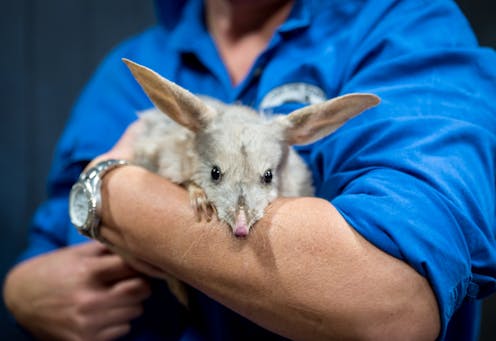
Commonly known as Australia’s “Easter bunny” due to its large ears and hopping movement, the greater bilby (Macrotis lagotis) is the last of its kind. Today we published its reference genome – all 3.66 billion pieces of it.

Published in the journal Nature Ecology and Evolution, it is the largest marsupial genome to date. Not only is it bigger than the koala genome, it’s even bigger than that of humans.

A genome is the entire set of DNA – the building blocks of life – holding the genetic code for what makes a species what it is. So, what is a reference genome and why is it useful?

A reference genome is the reference point for investigating the biology of a species. It’s like the lid of a puzzle box: without it, you can figure out where the pieces go with time and patience. With it, the puzzle comes together quickly as you know what each piece is and where it goes.

The new reference genome can tell us more about bilby biology and evolution, like what genes are involved in their keen sense of smell, or how they have a slow metabolism to live in arid areas.

Importantly, the genome has allowed us to build new conservation tools to help managers and rangers save this unique Australian species.

A culturally important species

Bilbies are more than their unique biology. They are culturally important to Indigenous Australians, and have many Indigenous names across the country. We call the greater bilby Ninu – the name used by Western Australia’s Gibson Desert Kiwirrkurra Community we worked with. Sadly, Ninu only now exist in 20% of their former range.

Historically, Ninu occurred across temperate and arid regions, while the Yallara (lesser bilby, Macrotis leucura) were only found in the sandy deserts. Both species declined sharply when Europeans arrived. They were predated on by foxes and cats, had to compete with rabbits, and experienced changes in cultural fire regimes.

The Yallara were well known to the Indigenous peoples of the central deserts but went extinct in the 1960s. Critical as “ecosystem engineers” thanks to their digging nature, today Ninu persist in small, fragmented populations mostly in the central deserts of Western Australia and the Northern Territory.

Indigenous knowledge, bilby ceremonies, stories and songlines still exist across the country linking sites and people, even where the animals are locally extinct.

The importance of genes

The more genetic variation (variation across the genome) a species has, the greater its ability to adapt to a changing world. Due to the extinction of the Yallara, and rapid declines of Ninu, a Ninu captive breeding program was established in 1979.

Originally housed in zoos, in 1997 Ninu were released onto islands and into fenced sanctuaries, to establish what’s known as a “metapopulation”. To ensure their persistence, the National Bilby Recovery Team sought to increase the number of fenced sanctuaries between 2016 and 2021.

Using our reference genome in combination with 363 Ninu samples from different sites, we were able to determine the genetic diversity of each site, and how different these sites were from one another.

We used this genetic data to select individuals to release into sanctuaries. Through this approach, we produced genetically diverse offspring, supporting the long-term survival of the species.

We can learn a lot from poo

Even though there are around 6,000 Ninu in the metapopulation, very little is known about Ninu in the wild. The Kiwirrkurra Community Indigenous Rangers have been working with the WA Department of Conservation, Biodiversity and Attractions for several years.

Using our reference genome and working with our team, department scientists developed a new scat (animal droppings) analysis tool. Using their cultural knowledge, Indigenous Rangers already knew where Ninu lived, what they ate, and how to track them.

Now, by picking up their poo, they can tell them apart and know what sex they are, providing the Rangers with information to manage their Ninu populations.

Kiwirrkurra Indigenous Ranger Scott West notes:

Using old-ways and new-ways together helps us get good information about Ninu and how to look after them. This is what two-way science is.

Starting in 2024, with the support of the Save the Bilby Fund and Deadly Science, we are working with Indigenous communities across Australia to pick up poo so we can understand the genetic diversity of bilbies across their range and compare this to the metapopulation.

The Conversation

Carolyn Hogg receives funding from the Australian Government’s National Collaborative Research Strategy’s (NCRIS) Bioplatforms Australia Threatened Species Initiative and the Australian Research Council through a Discovery grant and the Centre for Excellence in Peptide and Protein Science.

Katherine Belov receives funding from the Australian Research Council, including through the ARC Centre for Excellence in Peptide and Protein Science.

ref. We mapped the entire bilby genome – and now we can use poo to save Australia’s ‘Easter bunny’ from extinction – https://theconversation.com/we-mapped-the-entire-bilby-genome-and-now-we-can-use-poo-to-save-australias-easter-bunny-from-extinction-233557


How often should you really weigh yourself?

Source: The Conversation (Au and NZ) – By Nick Fuller, Charles Perkins Centre Research Program Leader, University of Sydney

Diva Plavalaguna/Pexels

Few topics are more debated in health than the value of the humble bathroom scale. Some experts advocate daily self-weigh-ins to promote accountability for weight management, particularly when we’re following a diet and exercise program to lose weight.

Others suggest ditching self-weigh-ins altogether, arguing they can trigger negative psychological responses and unhealthy behaviours when we don’t like, or understand, the number we see on the scale.

Many, like me, recommend using scales to weigh yourself weekly, even when we’re not trying to lose weight. Here’s why.

1. Weighing weekly helps you manage your weight

Research confirms regular self-weighing is an effective weight loss and management strategy, primarily because it helps increase awareness of our current weight and any changes.

A systematic review of 12 studies found participants who weighed themselves weekly or daily over several months lost 1–3 BMI (body mass index) units more and regained less weight than participants who didn’t weight themselves frequently. The weight-loss benefit was evident with weekly weighing; there was no added benefit with daily weighing.

Two people cross the road
Weighing regularly means we know when our weight changes.
Andres Ayrton/Pexels

Self-weigh-ins are an essential tool for weight management as we age. Adults tend to gain weight progressively through middle age. While the average weight gain is typically between 0.5–1kg per year, this modest accumulation of weight can lead to obesity over time. Weekly weighing and keeping track of the results helps avoid unnecessary weight gain.

Tracking our weight can also help identify medical issues early. Dramatic changes in weight can be an early sign of some conditions, including problems with our thyroid, digestion and diabetes.

2. Weekly weighing accounts for normal fluctuations

Our body weight can fluctuate within a single day and across the days of the week. Studies show body weight fluctuates by 0.35% within the week and it’s typically higher after the weekend.

Daily and day-to-day body weight fluctuations have several causes, many linked to our body’s water content. The more common causes include:

The type of food we’ve consumed

When we’ve eaten a dinner higher in carbohydrates, we’ll weigh more the next day. This change is a result of our bodies temporarily carrying more water. We retain 3–4 grams of water per gram of carbohydrate consumed to store the energy we take from carbs.

Our water content also increases when we consume foods higher in salt. Our bodies try to maintain a balance of sodium and water. When the concentration of salt in our bloodstream increases, a mechanism is triggered to restore balance by retaining water to dilute the excess salt.

Bowl of pasta
The morning after a big pasta dinner, we’ll carry more water weight.
Dana Tentis/Pexels

Our food intake

Whether it’s 30 grams of nuts or 65 grams of lean meat, everything we eat and drink has weight, which increases our body weight temporarily while we digest and metabolise what we’ve consumed.

Our weight also tends to be lower first thing in the morning after our food intake has been restricted overnight and higher in the evening after our daily intake of food and drinks.

Exercise

If we weigh ourselves at the gym after a workout, there’s a good chance we’ll weigh less due to sweat-induced fluid loss. The amount of water lost varies depending on things like our workout intensity and duration, the temperature and humidity, along with our sweat rate and hydration level. On average, we lose 1 litre of sweat during an hour of moderate-intensity exercise.

Hormonal changes

Fluctuations in hormones within your menstrual cycle can also affect fluid balance. Women may experience fluid retention and temporarily gain 0.5–2kg of weight at this time. Specifically, the luteal phase, which represents the second half of a woman’s cycle, results in a shift of fluid from your blood plasma to your cells, and bloating.

Glass of water
Most of our weight fluctuations are water-related.
Engin Akyurt/Unsplash

Bowel movements

Going to the bathroom can lead to small but immediate weight loss as waste is eliminated from the body. While the amount lost will vary, we generally eliminate around 100 grams of weight through our daily bowel movements.

All of these fluctuations are normal, and they’re not indicative of significant changes in our body fat or muscle mass. However, seeing these fluctuations can lead to unnecessary stress and a fixation with our weight.

3. Weekly weighing avoids scale obsession and weight-loss sabotage

Weighing too frequently can create an obsession with the number on the scales and do more harm than good.

Often, our reaction when we see this number not moving in the direction we want or expect is to further restrict our food intake or embark on fad dieting. Along with not being enjoyable or sustainable, fad diets also ultimately increase our weight gain rather than reversing it.

This was confirmed in a long-term study comparing intentional weight loss among more than 4,000 twins. The researchers found the likelihood of becoming overweight by the age of 25 was significantly greater for a twin who dieted to lose 5kg or more. This suggests frequent dieting makes us more susceptible to weight gain and prone to future weight gain.

So what should you do?

Weighing ourselves weekly gives a more accurate measure of our weight trends over time.

Aim to weigh yourself on the same day, at the same time and in the same environment each week – for example, first thing every Friday morning when you’re getting ready to take a shower, after you’ve gone to the bathroom, but before you’ve drunk or eaten anything.

Man weighs himself
Weigh yourself at the same time on the same day of the week.
Alexanderstock23/Shutterstock

Use the best quality scales you can afford. Change the batteries regularly and check their accuracy by using a “known” weight – for example, a 10kg weight plate. Place the “known” weight on the scale and check the measurement aligns with the “known” weight.

Remember, the number on the scale is just one part of health and weight management. Focusing solely on it can overshadow other indicators, such as how your clothes fit. It’s also essential to pay equal attention to how we’re feeling, physically and emotionally.

Stop weighing yourself – at any time interval – if it’s triggering anxiety or stress, and get in touch with a health-care professional to discuss this.


At the Boden Group, Charles Perkins Centre, we are studying the science of obesity and running clinical trials for weight loss. You can register here to express your interest.

The Conversation

Dr Nick Fuller works for the University of Sydney and has received external funding for projects relating to the treatment of overweight and obesity. He is the author and founder of the Interval Weight Loss program.

ref. How often should you really weigh yourself? – https://theconversation.com/how-often-should-you-really-weigh-yourself-223864

Does sports participation boom during (or before, or after) the Olympics?

Source: The Conversation (Au and NZ) – By Vaughan Cruickshank, Senior Lecturer in Health and Physical Education, University of Tasmania

Hosting a major sporting event like the Olympic and Paralympic Games can deliver benefits to the host country, such as improved infrastructure (new sport facilities, better public transport, greater accessibility for people with disabilities), increased employment and tourism, environmental benefits and greater national pride.

Sydney 2000: 20 years of Olympic Legacy.

While many of these benefits are mainly seen close to the host city, increased participation in sports and physical activity has the potential to have a positive impact on people throughout the host country and indeed all around the world.

But do major sports events like the Olympics actually improve participation?

In short, the research is currently unclear. While some studies have found increases, many others have not.

Increases are often a short-term spike, particularly in sports the country has been successful in, but these gains decrease over time.

Inspiration versus participation

Australians have always had a strong interest in sports, with many of us believing sport contributes to our national identity.

This passion is particularly evident during major international events like the Olympics – Sport Australia estimates 82% of Australians watched at least some of the Tokyo Olympics.

Around one in five Australians who watched those Olympic and Paralympic Games said they saw something that would encourage them to be more physically active. Parents also said they were thinking of enrolling their children in a new sport.

However, engagement and inspiration do not always lead to participation.

Why is this?

Researchers have noted two different potential relationships between major sporting events and community sport participation.

Firstly, elite athletes become role models who inspire us to become more active, by participating more in our current sport or trying a new one.

In contrast, the second is some of us feel watching elite athletes discourages us because we recognise the massive differences in our fitness, abilities and skills.

It is also important to recognise many other factors can influence participation, including costs and the availability of coaches, equipment and facilities.

The COVID pandemic and cost-of-living crisis are other key influences in recent years.


Read more:
No cash, no play? Have cost-of-living pressures impacted sports participation in Australia?


Impacts of major Australian sporting events

While the Sydney Olympics did not significantly increase physical activity levels in Australia, other big events have been more successful.

The year after Australia hosted the 2003 Rugby World Cup, junior registrations increased by 20%.

More recently, female soccer registrations have significantly increased following the Matildas’ performance in the 2023 Women’s World Cup.

These successes demonstrate a more direct link between major sports events and increased participation in the specific sport involved.

The ‘Matildas effect’ from the Women’s World Cup is impacting grassroots soccer.

The pre-Olympics boost

Research has also noted sports participation can increase before an Olympics.

A decade-long survey in England revealed there were major sports participation spikes during the lead-up to the 2008, 2012 and 2016 Olympics, rather than afterwards.

This could be due to increased media coverage, school engagement and programs organised by national sporting bodies and clubs.

Strategies to capitalise on post-Olympics interest

So, as the Paris Olympics approach, how can we convert our sports watching into participation?

National sport organisations need to help clubs promote themselves in their local communities and make their sport accessible. An online portal or app to find nearby sports clubs could be helpful.

Free trial days provide a risk-free way to try new sports. Clubs could schedule these regularly after events like the Olympics.

Scheduling activities at various times to accommodate different schedules may help, as might equipment loan programs that can make starting new sports easier, especially for those needing a lot of expensive gear.

Group activities can enhance enjoyment and reduce intimidation, so offering special group rates or buddy programs, particularly for beginners, can encourage participation.

Non-competitive skill development programs can attract those interested in sports for leisure and emphasise that sport is for everyone.

Advice and endorsements from local Olympic athletes can also be highly motivational. Partnering with athletes to create motivational content and provide advice can inspire greater participation, particularly for children.

Looking ahead to the Brisbane Olympics

Increased sports participation and higher levels of physical activity are some of the 2032 Brisbane Olympics’ desired legacy outcomes.

For this to be achieved, governments and sporting organisations will have to work together to develop a strategic approach. Paris 2024 has already used this approach to successfully increase physical activity through school programs and redesigned public spaces.

The impact of new Olympic sports also needs to be considered.

Skateboarding experienced increased interest following its Olympic debut in Tokyo.

Paris 2024 will include breaking as a new sport, while Los Angeles 2028 is adding baseball, softball, lacrosse, Twenty20 cricket, flag football and squash.

What about Brisbane?

While the new sports for 2032 have not yet been announced, these new, potentially less well known sports could experience a similar increase in popularity leading up to the Brisbane games.

Some sports such as gymnastics and basketball are already struggling to deal with increased demand in Queensland.

Local sports clubs will need assistance from government and national sporting organisations to be ready to deal with any increase in interest and help the Brisbane Olympics meet their legacy goals.

The authors do not work for, consult, own shares in or receive funding from any company or organisation that would benefit from this article, and have disclosed no relevant affiliations beyond their academic appointment.

ref. Does sports participation boom during (or before, or after) the Olympics? – https://theconversation.com/does-sports-participation-boom-during-or-before-or-after-the-olympics-227773

Labor gains in Newspoll as Australians narrowly oppose the Coalition’s nuclear energy plan

Source: The Conversation (Au and NZ) – By Adrian Beaumont, Election Analyst (Psephologist) at The Conversation; and Honorary Associate, School of Mathematics and Statistics, The University of Melbourne

A national Newspoll, conducted June 24–28 from a sample of 1,260 people, gave Labor a 51–49% lead over the Coalition, a one-point gain for Labor since the previous Newspoll, three weeks ago. Primary votes were 36% Coalition (down three), 32% Labor (down one), 13% Greens (up two), 7% One Nation (steady) and 12% for all others (up two).

Newspoll uses 2022 preference flows to calculate its two-party estimate. Using the rounded primaries would normally give Labor a 52–48% lead, so rounding probably favoured the Coalition in this poll.

On Prime Minister Anthony Albanese, 53% were dissatisfied (up three) and 42% satisfied (down one), for a net approval of -11, down four points. This is Albanese’s lowest net approval since -13 in November 2023, after the Voice referendum. The graph below has Newspoll data on Albanese’s net approval (plus signs) for this term with a smoothed line fitted.

However, Opposition Leader Peter Dutton’s net approval slumped six points to -16, his lowest since October 2023. Albanese led Dutton by an unchanged 46–38% as better PM.

By 45–42%, voters disapproved of the Coalition’s “plans to build nuclear reactors in Australia on seven sites of current and former coal-fired power stations before 2050”.

Controversy over the nuclear plans has probably boosted Labor in two-party terms, despite the continued cost of living pressures hurting Albanese’s ratings.

Resolve poll on nuclear power

A national Resolve poll for Nine newspapers, conducted after Dutton’s nuclear plan announcement (June 20–23) from a sample of 1,003 people, had voters supporting nuclear power by 41–37%. In a more open question, 32% (down four since February) said they supported nuclear power, 28% were opposed (up five) and 30% (up three) did not have a strong view, but were open to investigating it.

Renewables, in general, had a net likeability of +66, nuclear-powered electricity +8 and coal-powered electricity +2.

Asked to choose between “Labor’s plan to use 100% renewables (supported by gas for the next decade or two)” and “the Coalition’s plan to use nuclear power and some gas to support the renewables”, voters backed Labor’s plan by 43–33%.

Essential poll: Labor’s first lead since April

A national Essential poll, conducted June 12–16 from a sample of 1,181 people, gave Labor a 48–46% lead including undecided after a 48–48% tie in early June.

This is Labor’s first lead in an Essential poll since April, with weak respondent-allocated preference flows for Labor partly responsible.

Primary votes in this poll were 32% Coalition (down four), 31% Labor (down one), 13% Greens (steady), 8% One Nation (up three), 1% UAP (down two), 9% for all others (up one) and 6% undecided (up two).

On Australia’s emissions targets, 52% thought we should stick to our 2030 target, while 48% thought it we should abandon it as it’s unachievable and hurting the economy. By 36–31%, voters opposed Dutton’s decision to oppose Australia’s 2030 target.

On Israel’s military action in Gaza, 38% (up six points since April) said Israel should permanently withdraw, 21% (up two) said they should agree to a temporary ceasefire and 15% (down four) said Israel’s military action is justified.

On the Australian government’s response to the Israel-Gaza war, 52% were satisfied, 32% said it was too supportive of Israel and 16% too harsh on Israel.

By 56–22%, voters supported regulation of vapes so they are only available at pharmacies with a prescription (compared to 58–20% in March). Negative attitudes to vapes have increased since March.

Morgan poll: 51–49% to Labor

A national Morgan poll, conducted June 10–16 from a sample of 1,724 people, had Labor and the Coalition tied at 50–50%, a 3.5-point gain for the Coalition since the June 2–9 poll that was a pro-Labor outlier.

In the Morgan poll conducted June 17–23 from a sample of 1,696, Labor took a 51–49% lead.

Primary votes were 37% Coalition (down one since June 10–16), 31.5% Labor (up two), 13% Greens (down 0.5), 6% One Nation (up one), 8.5% independents (steady) and 4% others (down 1.5).

Additional Resolve questions

I previously covered the national Resolve poll for Nine newspapers that gave Dutton his first preferred PM lead from any pollster.

In additional questions, 41% (down four since August 2023 and down ten since October 2021) said climate change is a serious problem and we should take action now even if that involves significant costs.

Climate change was thought to be gradual by 32% (up three points since August 2023 and five since October 2021), so we can deal with it by taking small steps over time, and 18% (up two and up six) said “until we are sure that climate change is a real problem, we should only consider action that has no significant costs”.

On the 43% emissions reduction by 2030 target, 52% either supported this or wanted a more ambitious target, while 30% wanted the target reduced or rejected outright.

Voters were asked what forms of protest they thought were legitimate. The forms of protest with the most support were holding a rally in a park or outside a parliament (53%) and marching on the streets (41%). Other forms of protest that involved disruption to the public or an MP had less than 15% support.


Read more:
Dutton snatches preferred PM lead in Resolve poll as draft redistributions finished


NSW Resolve poll: Labor remains ahead after preferences

A New South Wales state Resolve poll for The Sydney Morning Herald, conducted with the May and June federal Resolve polls from a sample of 1,000 people, gave the Coalition 35% of the primary vote (down one since April), Labor 32% (down one), the Greens 11% (down one), independents 15% (up one) and others 7% (up two).

No two-party estimate was given by Resolve, but The Poll Bludger estimated a Labor lead by 52–48% based on preference flows at the 2023 state election, a little better for Labor than a recent NSW Redbridge poll that gave them just a 50.5–49.5 lead.

Labor incumbent Chris Minns led the Liberals’ Mark Speakman by 38–13% as preferred premier (compared to 37–16% in April).

Voters were also told the Labor government had recently announced plans to encourage higher density housing, like apartment blocks, to be built near 37 train stations, and that the Liberals opposed this policy. By 50–31%, voters supported this policy.

A NSW byelection occurred on June 22 in Northern Tablelands, with Labor not contesting. The Nationals won 68.0% of the primary vote (down 4.2% since the 2023 state election), the Shooters 11.4% (up 7.9%), the Greens 9.1% (up 4.5%) and two independents a combined 11.6%; Labor had won 10.2% in 2023.

The electoral commission selected Nationals and Greens as the final two candidates, when it’s Nationals vs Shooters. The Nationals will win very easily.

Adrian Beaumont does not work for, consult, own shares in or receive funding from any company or organisation that would benefit from this article, and has disclosed no relevant affiliations beyond their academic appointment.

ref. Labor gains in Newspoll as Australians narrowly oppose the Coalition’s nuclear energy plan – https://theconversation.com/labor-gains-in-newspoll-as-australians-narrowly-oppose-the-coalitions-nuclear-energy-plan-232693

Labor gains in Newspoll as a majority of Australians oppose the Coalition’s nuclear energy plan

Source: The Conversation (Au and NZ) – By Adrian Beaumont, Election Analyst (Psephologist) at The Conversation; and Honorary Associate, School of Mathematics and Statistics, The University of Melbourne

A national Newspoll, conducted June 24–28 from a sample of 1,260 people, gave Labor a 51–49% lead over the Coalition, a one-point gain for Labor since the previous Newspoll, three weeks ago. Primary votes were 36% Coalition (down three), 32% Labor (down one), 13% Greens (up two), 7% One Nation (steady) and 12% for all others (up two).

Newspoll uses 2022 preference flows to calculate its two-party estimate. Using the rounded primaries would normally give Labor a 52–48% lead, so rounding probably favoured the Coalition in this poll.

On Prime Minister Anthony Albanese, 53% were dissatisfied (up three) and 42% satisfied (down one), for a net approval of -11, down four points. This is Albanese’s lowest net approval since -13 in November 2023, after the Voice referendum. The graph below has Newspoll data on Albanese’s net approval (plus signs) for this term with a smoothed line fitted.

However, Opposition Leader Peter Dutton’s net approval slumped six points to -16, his lowest since October 2023. Albanese led Dutton by an unchanged 46–38% as better PM.

By 45–42%, voters disapproved of the Coalition’s “plans to build nuclear reactors in Australia on seven sites of current and former coal-fired power stations before 2050”.

Controversy over the nuclear plans has probably boosted Labor in two-party terms, despite the continued cost of living pressures hurting Albanese’s ratings.

Resolve poll on nuclear power

A national Resolve poll for Nine newspapers, conducted after Dutton’s nuclear plan announcement (June 20–23) from a sample of 1,003 people, had voters supporting nuclear power by 41–37%. In a more open question, 32% (down four since February) said they supported nuclear power, 28% were opposed (up five) and 30% (up three) did not have a strong view, but were open to investigating it.

Renewables, in general, had a net likeability of +66, nuclear-powered electricity +8 and coal-powered electricity +2.

Asked to choose between “Labor’s plan to use 100% renewables (supported by gas for the next decade or two)” and “the Coalition’s plan to use nuclear power and some gas to support the renewables”, voters backed Labor’s plan by 43–33%.

Essential poll: Labor’s first lead since April

A national Essential poll, conducted June 12–16 from a sample of 1,181 people, gave Labor a 48–46% lead including undecided after a 48–48% tie in early June.

This is Labor’s first lead in an Essential poll since April, with weak respondent-allocated preference flows for Labor partly responsible.

Primary votes in this poll were 32% Coalition (down four), 31% Labor (down one), 13% Greens (steady), 8% One Nation (up three), 1% UAP (down two), 9% for all others (up one) and 6% undecided (up two).

On Australia’s emissions targets, 52% thought we should stick to our 2030 target, while 48% thought it we should abandon it as it’s unachievable and hurting the economy. By 36–31%, voters opposed Dutton’s decision to oppose Australia’s 2030 target.

On Israel’s military action in Gaza, 38% (up six points since April) said Israel should permanently withdraw, 21% (up two) said they should agree to a temporary ceasefire and 15% (down four) said Israel’s military action is justified.

On the Australian government’s response to the Israel-Gaza war, 52% were satisfied, 32% said it was too supportive of Israel and 16% too harsh on Israel.

By 56–22%, voters supported regulation of vapes so they are only available at pharmacies with a prescription (compared to 58–20% in March). Negative attitudes to vapes have increased since March.

Morgan poll: 51–49% to Labor

A national Morgan poll, conducted June 10–16 from a sample of 1,724 people, had Labor and the Coalition tied at 50–50%, a 3.5-point gain for the Coalition since the June 2–9 poll that was a pro-Labor outlier.

In the Morgan poll conducted June 17–23 from a sample of 1,696, Labor took a 51–49% lead.

Primary votes were 37% Coalition (down one since June 10–16), 31.5% Labor (up two), 13% Greens (down 0.5), 6% One Nation (up one), 8.5% independents (steady) and 4% others (down 1.5).

Additional Resolve questions

I previously covered the national Resolve poll for Nine newspapers that gave Dutton his first preferred PM lead from any pollster.

In additional questions, 41% (down four since August 2023 and down ten since October 2021) said climate change is a serious problem and we should take action now even if that involves significant costs.

Climate change was thought to be gradual by 32% (up three points since August 2023 and five since October 2021), so we can deal with it by taking small steps over time, and 18% (up two and up six) said “until we are sure that climate change is a real problem, we should only consider action that has no significant costs”.

On the 43% emissions reduction by 2030 target, 52% either supported this or wanted a more ambitious target, while 30% wanted the target reduced or rejected outright.

Voters were asked what forms of protest they thought were legitimate. The forms of protest with the most support were holding a rally in a park or outside a parliament (53%) and marching on the streets (41%). Other forms of protest that involved disruption to the public or an MP had less than 15% support.


Read more:
Dutton snatches preferred PM lead in Resolve poll as draft redistributions finished


NSW Resolve poll: Labor remains ahead after preferences

A New South Wales state Resolve poll for The Sydney Morning Herald, conducted with the May and June federal Resolve polls from a sample of 1,000 people, gave the Coalition 35% of the primary vote (down one since April), Labor 32% (down one), the Greens 11% (down one), independents 15% (up one) and others 7% (up two).

No two-party estimate was given by Resolve, but The Poll Bludger estimated a Labor lead by 52–48% based on preference flows at the 2023 state election, a little better for Labor than a recent NSW Redbridge poll that gave them just a 50.5–49.5 lead.

Labor incumbent Chris Minns led the Liberals’ Mark Speakman by 38–13% as preferred premier (compared to 37–16% in April).

Voters were also told the Labor government had recently announced plans to encourage higher density housing, like apartment blocks, to be built near 37 train stations, and that the Liberals opposed this policy. By 50–31%, voters supported this policy.

A NSW byelection occurred on June 22 in Northern Tablelands, with Labor not contesting. The Nationals won 68.0% of the primary vote (down 4.2% since the 2023 state election), the Shooters 11.4% (up 7.9%), the Greens 9.1% (up 4.5%) and two independents a combined 11.6%; Labor had won 10.2% in 2023.

The electoral commission selected Nationals and Greens as the final two candidates, when it’s Nationals vs Shooters. The Nationals will win very easily.

The Conversation

Adrian Beaumont does not work for, consult, own shares in or receive funding from any company or organisation that would benefit from this article, and has disclosed no relevant affiliations beyond their academic appointment.

ref. Labor gains in Newspoll as a majority of Australians oppose the Coalition’s nuclear energy plan – https://theconversation.com/labor-gains-in-newspoll-as-a-majority-of-australians-oppose-the-coalitions-nuclear-energy-plan-232693

What makes a good tree? We used AI to ask birds

Source: The Conversation (Au and NZ) – By Stanislav Roudavski, Founder of Deep Design Lab and Senior Lecturer in Digital Architectural Design, The University of Melbourne

A point cloud of a large old tree with green indicating branches preferred by birds. Stanislav Roudavski / Alex Holland, CC BY

Grassy box gum woodlands once covered millions of square kilometres in southeastern Australia, but today less than 5% remains. The loss of large old trees has been a crisis for the many species of birds and other animals that depend on them for habitat.

Replacing this habitat is not easy. There is no quick way to create a centuries-old tree.

One thing we can do is make artificial structures that mimic the features of large old trees in degraded environments where trees cannot live or are too young and small. We have been working with the Australian Capital Territory Parks and Conservation Service to do just this in the Molonglo region of Canberra.

To build these artificial structures, we need to know what makes good habitat from an animal’s point of view. And to find that out, we developed ways to use AI and machine learning to include non-human stakeholders – in this case birds and trees – in the design process. In effect, we enrolled large old trees as lead designers, and birds as discerning assessors of their work.

Photo of a tree with all its branches surrounded by neatly drawn boxes.
A large old tree with a complex canopy near Canberra. We used AI to extract and classify its 4,122 branches.
Stanislav Roudavski / Alex Holland

Trees, birds and power poles

Molonglo hosts a once-thriving ecosystem that is now fragmented and damaged. Large old trees are increasingly rare.

These trees, some more than 500 years old, provide complex canopy structures that are essential for bird nesting, foraging and roosting. As urban development expands and old trees die, the challenge is to fill the gap left by these giants.

Pictures showing a utility pole a dead tree.
Existing artificial habitat structures, including utility poles (left) and snags (right), cannot replicate canopy structures provided by a large old tree.
Stanislav Roudavski / Alex Holland

Modified utility poles and relocated dead trees (or snags) have previously been introduced into the region as substitute habitat. These structures can provide important habitat features such as elevated perches, nesting boxes and bark that do not occur in planted tree saplings. However, it is very difficult to understand exactly which features of a large old tree are important to birds – which limits the value of artificial structures.

Carefully analysing imagery and other data can help us discern these features. For example, we and our collaborators found that birds prefer small horizontal branches for perching and nesting.

From studying birds, we can learn their preferences for certain characteristics that have already been designed by trees. Our next challenge was to use this information to design better habitat structures.

Learning from trees

We used a process that involved data capture, predictive modelling and iterative design. AI and machine learning were indispensable in interpreting complex spatial data.

First, we mapped each tree by reflecting many millions of laser beams from each square centimetre of its surface to capture tree canopies as clouds of points. Then we used algorithms to identify and measure significant attributes such as orientation, size and linking of branches. A better understanding of bird preferences for these attributes can inform designs for artificial replacements.

Next, we developed statistical models to predict bird behaviour. These models were based on long-term observations of bird interactions led by Philip Gibbons at the Australian National University. By simulating how birds might use artificial branches, we could refine our designs to better meet their needs.

Reimagining artificial habitats

Photo showing different designs for additions to a power pole.
One version of an artificial tree that uses a lightweight structure of cables and rods to attach to an existing utility pole (right). The suitability visualisation shows inconveniently inclined branches as blue and near-horizontal ones in red. The thickness indicates exposure and therefore the ease of access. Brightness refers to the distance from the ground.
Stanislav Roudavski / Alex Holland

To generate a variety of artificial tree crowns we developed further algorithms. Instead of judging the resulting designs by how much they resembled a tree to human eyes, we used our bird behaviour model to figure out how these structures might serve avian inhabitants.

Our additional goal was to create lightweight structures that are easy to install, reconfigure and remove. Our simulations showed that, compared to utility poles and snags, these structures can provide a significant increase in habitat suitability.

Returning to the field

We are currently building prototypes based on our designs, but the final step in this process will be field testing to find out what the birds think. Birds can provide feedback on the characteristics of artificial structures through their interactions with them. This testing will help make the designs even better.

Design processes, even for non-human stakeholders like birds and trees, are currently dominated by human perspectives and expertise. Our findings show how broadening the scope of creative contributions and judgements can improve the design process. The outcomes of this design process can take the form of “continuous services”, sustainably providing shelter or other resources.

While we hope to build better artificial structures, it is important to remember that there is no true substitute for large old trees. We must also preserve the trees we have and plant more for the future.

Broader implications for design

The principles of more-than-human design we used in Canberra also have broader applications. Many environments around the world face similar challenges. By rethinking current approaches to design and planning, we can create more inclusive and resilient environments for many different lifeforms.

The essential change is to treat other species as innovators and expert participants in design. Extending existing efforts to communicate with whales, bats and honeybees, this approach uses AI to incorporate input from nonhuman lifeforms to produce new and better designs.

Our case study shows how participatory approaches that include nonhuman beings can work around human biases. As a result, we unlock a far greater range of possible designs.

Fair design

The world faces many urgent environmental crises. We need innovative, inclusive design approaches to meet this challenge. Trees are already excellent designers, just as birds are excellent judges of their work – and if we include their input we can create better “more-than-human” designs.

We believe that using AI to give a voice to non-human stakeholders can lead to better solutions in which many species can live together. Our work in Canberra is an example of how participatory design can create more equitable and sustainable futures for all beings.


We acknowledge the initiative of Darren Le Roux in researching and installing artificial habitat-structures to support biodiversity.

The Conversation

Stanislav Roudavski has received relevant funding from the Australian Research Council and the ACT Parks and Conservation.

Alex Holland receives funding from ACT Parks and Conservation Service.

Philip Gibbons receives funding from the Environment, Planning and Sustainable Development Directorate of the ACT Government, the Natural Resources Commission, NSW Government and Riverview Projects Pty Ltd.

ref. What makes a good tree? We used AI to ask birds – https://theconversation.com/what-makes-a-good-tree-we-used-ai-to-ask-birds-233281

In a year of global elections, how do we stop the spread of misinformation? ‘Prebunking’ is part of the solution

Source: The Conversation (Au and NZ) – By Christopher Arnott, PhD Candidate, Griffith University

Shutterstock

Half the global population are voting in elections in 2024. Many already have. This has prompted concerns about fairness and electoral integrity, particularly with the growth of generative AI. A global tracker has identified dozens of instances of AI-generated misinformation being used in elections so far this year.

One such example was in January, when residents of New Hampshire received a robocall impersonating US President Joe Biden. AI platforms such as Eleven Labs can produce convincing reproductions of anyone’s voice. In response, the US Federal Communications Commission effectively banned AI-generated robocalls.

However, banning AI-generated content is difficult, if not impossible. Speaking about his concerns about misinformation and generative AI in elections, Tom Rogers, Australia’s electoral commissioner, acknowledged the risks, but also emphasised the importance of “prebunking” as an essential ingredient to prevent misinformation.

So, what is prebunking and how will it help protect electoral integrity?

What is prebunking?

Prebunking is similar to debunking, but as the name suggests, occurs before misinformation is received.

Prebunking is based on the idea of psychological inoculation. If we anticipate misinformation, and the tactics used, we can be better at identifying it. Similar to how a vaccine works, prebunking gives your brain the ability to recognise misinformation tactics.

Professor of social psychology Sander Van der Linden and his colleagues have developed a game called Bad News to better identify these tactics. Players act as a fake news tycoon who has 15 minutes to gain followers without losing credibility.

Studies show 15 minutes of playing Bad News increases someone’s ability and confidence to detect misinformation.

The long-term efficacy remains to be seen. However, what these studies demonstrate is that knowledge of misinformation tactics makes them easier to spot. And unfortunately, they are all too common.

Tactics in plain sight

For example, in last year’s Voice to Parliament referendum, Liberal National Party Senator Jacinta Nampijinpa Price suggested the Australian Electoral Commission remote booths had rigged the results. Remote polling booths recorded a majority “yes” vote. This example demonstrates both attempts to create a conspiracy and discredit the electoral commission.

Earlier this year, the Tasmanian Liberal Party sought to impersonate Jacqui Lambie’s party. In 2019, the Liberal Party also admitted Chinese language signs were supposed to look like official electoral commission signs. Both are examples of impersonation.

Labor, too, has used these tactics in the past. In 2022, the party claimed the cashless debit card will be expanded to aged pensioners. And in 2016 and 2022, there was the infamous Mediscare campaign, which said there were secret plans to privatise Medicare. Both campaigns used conspiracy and appeals to emotion.

Prebunking ensures voters can be vigilant. Unlike debunking, prebunking gives voters the capacity to recognise potential deception and manipulation. In March 2022, the electoral commission launched a disinformation register to help combat political misinformation at the 2022 election. It’s focused on disinformation which undermines electoral integrity and confidence in Australia’s democracy. To help voters, the AEC also helped voters understand disinformation tactics.

The prebunking attempts by the electoral commission do not comment on misinformation which deceives voters about candidates and policies. Recent elections show that misinformation tactics at Australian elections are as common as a cane toad. And just as ugly.

But what about debunking?

Debunking can be effective in preventing people believing misinformation.

However, this is not effective when people have reasons to accept misinformation as true. Put more simply, preexisting attitudes will shape a person’s evaluation of new information in deciding whether the information is false or misleading. People believe what they want to believe.

Further, some people strongly distrust media, and this attitude increases hostility towards fact checkers, who they perceive as acting as propagandists.

Repeated exposure to false claims can lead to people believing them. After all, we only use 10% of our brains. Just kidding! This stat about brain use is a common example of false claims becoming accepted knowledge.

Studies have shown that repeated exposure to misinformation can increase false and inaccurate beliefs, even if the stories point out the falsity.

A bit of both

Unfortunately, prebunking, like debunking, is not a silver bullet. Both show some effectiveness.

Prebunking can help teach people to spot manipulation. Unlike debunking, prebunking provides a framework for the sceptical to remain vigilant without resorting to conspiracies. Prebunking allows people to examine the motivations of persuaders. In doing so, it builds cognitive skills.

However, the research to date indicates prebunking effects may be short-lived. A potential factor which explains this might be that participants have spent to spend sufficient time engaging with prebunking materials for it to become a habit.

In contrast, while debunking is helpful, the effects are more pronounced among those who already believe and trust that fact checkers are not part of a government conspiracy. Emerging evidence suggests repeated exposure to corrected information can produce changes in attitudes over time.


Read more:
Can we be inoculated against climate misinformation? Yes – if we prebunk rather than debunk


Cognitive psychology indicates “belief updating” occurs when beliefs and attitudes are weighed against new information. Known as Bayesian inference, this process takes new information and assesses how it reflects existing beliefs.

An example of this updating is climate change. In 2012, 64% of Australians surveyed accepted climate change as real. In 2021, that figure grew to 81%. Over time, the Australian population has updated its views on climate change. This is likely due, at least in part, to a mixture of both prebunking and debunking.

While the next federal election isn’t likely to be held until 2025, prebunking can build confidence in voters’ ability to identify misinformation. Luckily, these simple techniques are easily spotted. With ten months before the next election, there’s plenty of time to practice.

The Conversation

Christopher Arnott is a member of the Australian Labor Party.

ref. In a year of global elections, how do we stop the spread of misinformation? ‘Prebunking’ is part of the solution – https://theconversation.com/in-a-year-of-global-elections-how-do-we-stop-the-spread-of-misinformation-prebunking-is-part-of-the-solution-233115

Engineered stone is now banned. But how safe are the alternatives?

Source: The Conversation (Au and NZ) – By Renee Carey, Senior Research Fellow, School of Population Health, Curtin University

Tama2u/Shutterstock

From today, engineered stone is banned in Australia in a bid to protect workers from inhaling deadly silica dust, which has long been linked to diseases such as lung cancer and silicosis.

The ban on the manufacture, supply, processing and installation of engineered stone comes after years of campaigning by unions, public health professionals, and doctors to protect the health of workers who cut and install engineered stone, the type used for kitchen benchtops.

So, many homeowners will now be looking for alternatives when building and renovating their homes.

But how safe are these alternatives? Here are some options and what they mean for the health of tradespeople who cut and install these products.

Remind me, how did we end up with a ban?

Silicosis is not a new occupational lung disease. For instance, it’s been reported since ancient times in stonemasons and miners who breathed in silica dust. In Australia, we’ve seen it for decades in construction and demolition workers.

However, until the past ten years or so, case numbers were low, both in Australia and internationally. That was until the introduction of engineered stone, a particularly potent source of silica dust. Some engineered stone contains 90% or more silica.

This led to an unprecedented re-emergence of the disease. An estimated one in four engineered stone workers has already developed silicosis as a result of their exposure. Many more will continue to be affected in the future.

In 2019, the Australian government set up a taskforce to deal with the growing issue of silica dust exposure. This set into motion a chain of events that resulted in Safe Work Australia in October 2023 recommending a ban on engineered stone, which state and territory work health and safety ministers
adopted in December 2023.

The ban that starts today prohibits the manufacture, supply, processing, and installation of all engineered stone containing more than 1% silica.

There are some limited circumstances where work with engineered stone is still allowed (for instance, to repair or remove already installed engineered stone). However, this will be tightly controlled and regulated.

What are my options now?

There are many alternatives to engineered stone if you’re renovating your kitchen. While some also contain silica, the health risks for the tradespeople working with them are likely to be much lower than those we’ve seen with engineered stone.

Here are some alternatives:

  • timber is a classic benchtop option and comes in a wide variety of colours. Timber benchtops require some maintenance such as sanding and sealing. While timber does not contain silica, cutting timber produces wood dust. Overexposure to this dust causes cancer of the nasal cavity, lung diseases, as well as skin diseases, such as allergic dermatitis

  • stainless steel benchtops are also silica-free. They are highly durable and resistant to heat, stains and bacteria. There are some health hazards associated with stainless steel fabrication, mainly due to inhaling fumes from welding and airborne metals, such as chromium, nickel and manganese. However, there are many well-known control measures that can be used to reduce these risks

  • porcelain is a type of ceramic fired at very high temperatures and is a relative newcomer to the kitchen benchtop market. These benchtops are low maintenance and extremely durable. They are resistant to scratches, heat, stains and light. Some safety precautions are required as these benchtops still contain small amounts of silica (typically around 15%), but at levels much lower than in engineered stone

  • concrete benchtops can be customised to many different tastes and are heat resistant. Again, precautions are needed when working with concrete, as it contains around 30% silica. However, this is much lower than the 90% or more found in engineered stone

  • natural stone, such as marble or granite, is another classic benchtop option. Most are heat-resistant and durable. Marble contains a lower amount (under 5%) of silica than granite (25-60%). But both are safer options for workers than engineered stone

  • zero-silica engineered stone is a more recent introduction. These guarantee similar designs and durability as their (now-banned) predecessors. Instead of silica, these products often contain alternative raw materials such as recycled glass mixed with resins and pigments. We are yet to see how much safer these alternatives are than engineered stone.

There are clearly pros and cons to any benchtop choice. Each also comes with its own risks to the workers who manufacture and install them. However, the risks from these alternatives are potentially magnitudes lower than those we’ve seen with engineered stone. In most cases, these risks are also well-known, well-managed and well-controlled, unlike with engineered stone.

It’s also important to remember these products, including engineered stone, pose no risk to homeowners once they’re installed.

Rustic timber kitchen benchtop
Timber is a classic benchtop option and comes in a wide variety of colours.
Niki Nagi/Pexels

How about other exposures?

While this ban is an incredible step forward and a win for public health, engineered stone is only part of the problem. We still see significant silica exposure in other industries, including construction, mining and tunnelling.

Stronger regulation of all materials containing silica dust will come into place in September this year. These will include the requirement for all processing of silica-containing substances to be controlled using water, dust extraction or ventilation where practical. Everyone who works with silica-containing products in a way deemed to be high risk will also need to be trained and have regular health checks.

We hope the momentum seen today in banning this dangerous product continues, and the health and safety conditions for all workers exposed to this deadly dust are improved.

The Conversation

Renee Carey has previously received funding from the Australian Council of Trade Unions. She is a member of the Occupational Lung Disease Network Steering Committee formed by Lung Foundation Australia.

Chandnee Ramkissoon receives funding from iCare Dust Diseases Authority.

ref. Engineered stone is now banned. But how safe are the alternatives? – https://theconversation.com/engineered-stone-is-now-banned-but-how-safe-are-the-alternatives-232488

We research online ‘misogynist radicalisation’. Here’s what parents of boys should know

Source: The Conversation (Au and NZ) – By Steven Roberts, Professor of Education and Social Justice, Monash University

Komorebi Photo/Unsplash , CC BY

Many parents are worried about their children using social media. But these concerns tend to focus on privacy, exposure to explicit material or contact with strangers.

As researchers looking at sexism and misogyny in Australian schools and the influence of social media, we think it is also important for parents to understand how algorithms work.

These can drive misogynistic content towards boys and young men and make extreme views seem normal.

What does research say about social media?

Researchers are increasingly studying how social media can amplify social and political divisions. It is also showing how these platforms spread prejudice, hate speech and misinformation.

At the same time, researchers are identifying a growing divide between young men and women in their attitudes towards gender equality.

Our own research has found a disturbing increase in sexism, sexual harassment and misogyny in Australian schools. This includes examples of boys physically intimidating women teachers in schools, gaslighting them, saying they are “hysterical”, describing gender inequality issues as “myths”, and saying things like “Miss, your boobs look really big today”.

Similar examples emerged from other Australian research this year.

Our research, done via interviews with Australian teachers, suggests these views are influenced by the rise of figures from the “manosphere” (a collection of extreme men’s communities that are anti-women) on social media.

A smartphone screen with apps for Instagram, Facebook, Twitter and YouTube
Research shows social media can amplify and spread harmful views about women.
Pixabay/Pexels, CC BY

How do algorithms work?

How are boys and young men coming into contact with this content?
Algorithms play a huge role in what we all see online.

Algorithms are set up by human coders, but once operational they are automated pathways that direct content to social media users. They are optimised to get us to click, like, share and view content and keep coming back. This is the key commercial goal of the so-called “attention economy”. The longer algorithms hold our attention, the more profit they generate for social media companies like Meta.

So, as a social media user demonstrates increasing interest in specific content or activities, they receive more of it.

Boys are ‘fed’ misogyny online

Recent studies have shown us how boys and young men are being fed misogynistic content.

A 2022 Australian study set up ten experimental YouTube accounts. These included profiles of four boys under 18, four young men over 18 and two blank control accounts.

It showed boys and young men were lured to the manosphere through “recommended video” features that pop up. On YouTube shorts (which feature shorter videos) this phenomenon was worse. The study found the algorithm was seen to:

optimise more aggressively in response to user behaviour and show more extreme videos within a relatively brief time frame.

A 2024 Irish study made similar findings.

Researchers created ten fake profiles for TikTok and YouTube shorts on ten blank smartphones. On the two different platforms, the researchers created accounts for a 16- and 18-year-old boy who sought content typically associated with masculine gender norms for their age (such as the gym, sport and video games), a 16- and 18- year-old boy who sought manosphere content, and one blank control account.

Misogynist manosphere content was sent to users regardless of whether those accounts actively searched for it. This was especially the case for the profiles set up as teenage boys seeking out content typically associated with masculine gender norms. All accounts were presented with masculinist, extremist and anti-feminist content and the frequency increased once their account demonstrated interest or engagement.

A young man stands against a red timber wall. He wears a black hoodie jumper.
Research has shown how algorithms drive misogynistic content towards young men, whether they seek it or not.
Ben den Engelsen/Unsplash, CC BY

How does misogynist content radicalise boys?

We believe what is occurring is very serious. In our research we use the term “misogynist radicalisation” to describe what is happening to some boys and young men.

This phrase was selected to capture a stark and sudden shift in boys’ attitudes and behaviour towards women and girls in Australian schools, which teachers report occurred at the return from lockdown and remote schooling.

Although “radicalisation” is typically used to refer to the process of being recruited to religious or political terrorist ideology, research has identified misogyny as a feature of right-wing terrorism.

At the same time, the “incel” (or involuntary celibate) community is also being seen as a possible terrorist threat. Incels, who are mostly men and boys, blame and resent women for their own inability to find a sexual partner.

We also know misogyny perpetuates gender inequity and biases that underpin violence against women.

While we are not suggesting boys and young people who are influenced by extremist misogynist ideology will all become violent or recruited to other extremist groups, it is important to consider misogyny as both a form of extremism and as an ideology.

Research shows young people who view misogynist content are likely to harbour unhealthy views on relationships. A 2024 UK study on teenagers also found “manfluencer” Andrew Tate’s content is emotionally engaging for boys and young men. It encourages feelings of fear and anger as well as belief in myths about gender equity.

What can parents of boys do?

An outright ban for young people is not necessarily the right step to take (even if such a ban could work). Research tells us social media is an important space for young men to explore their identities, interests and establish connections with others.

So we need education both for parents and young people about how algorithms shape the feeds of young people’s social media accounts, and how this content can deliberately exploit their emotions and beliefs.


Read more:
We know social media bans are unlikely to work. So how can we keep young people safe online?


One key thing parents can do is initiate open, respectful conversations with their children about what they are viewing online.

These conversations should be free of judgement or reprimand and allow children to describe what they are seeing and why it might interest them. Open-ended questions that encourage your children to express their views are a good place to start. For example, “Can you tell me a little about about X? What’s interesting about their content?”

Judgement-free conversations are important so young people don’t fear bringing up difficult experiences. If you are going to be critical of something, try and do this together, with children contributing to explanations of whether specific content can be harmful and to whom.

You can also talk about the implications of “echo chambers” and how these are generated by algorithms. Some examples might include: “Do you notice you’re seeing a lot of content by one particular creator? Or on one particular topic?” or “How does the content you are seeing make you feel?”.

There are also lots of useful organisations providing specific advice for parents around algorithms and general safety online.

A close up of two people sharing a phone, with headphones.
Try and talk to your child about what they are viewing online.
Ron Lach/Pexels, CC BY

Watch and listen

Also, be on the look out for any changes in a child’s behaviour and attitudes towards women and girls.

Are there certain terms they are using that did not before? How do they react if certain figures in the news or popular culture come up in conversations? How are they relating to women and girls in their family and social circles? Do you find them expressing opinions that are not aligned with your family values?

If teachers approach you about problems with your child’s behaviour at school towards women and girls, try to be open to the conversation (rather than dismiss it as impossible). It is likely what parents see and hear is different to school and online contexts. Indeed, some teachers in our study reported boys expressed different versions of themselves and different views, depending on the audience.

If you do notice your child is expressing some concerning views, as well as initiating an open, calm discussion with them, we recommend contacting your child’s teachers or school wellbeing team. You can also seek support and advice from the eSafety Commissioner.

The Conversation

Steven Roberts receives funding from the Australian Research Council and the Australian Government. He is a Board Director at Respect Victoria, but this article is written wholly separate from and does not represent that role.

Stephanie Wescott does not work for, consult, own shares in or receive funding from any company or organisation that would benefit from this article, and has disclosed no relevant affiliations beyond their academic appointment.

ref. We research online ‘misogynist radicalisation’. Here’s what parents of boys should know – https://theconversation.com/we-research-online-misogynist-radicalisation-heres-what-parents-of-boys-should-know-232901

NZ’s productivity stagnation requires a long-term plan from politicians. Here’s how

Source: The Conversation (Au and NZ) – By Dennis Wesselbaum, Associate Professor, Department of Economics, University of Otago

In the ups and downs of the global economy over the last decade, New Zealand has had one relatively consistent challenge: persistent productivity stagnation.

Productivity compares the amount of goods and services produced (output) with the amount of inputs used to produce them.

Since the Productivity Commission was set up in 2011, annual productivity growth has averaged at just 0.2% – one of the worst in the OECD.

In 2023, New Zealand experienced declines across key metrics: labour productivity dropped by 0.9%, multifactor productivity (which includes labour, capital, energy, materials and purchased services) fell by 2.2% and capital productivity by 3.8%.

There has also been a sharp decline in small business productivity, with a 19% drop from its peak in November 2022.

Productivity is not only an abstract concern. It directly impacts income growth, exacerbates inequality and hampers overall welfare.

The productivity puzzle

But New Zealand’s stagnation doesn’t have to be inevitable. There are tangible approaches the government can take to boost the country’s productivity. Here’s how.

Human capital

There are at least two ways New Zealand can improve human capital – the sum total of the skills and education a worker has to do their job.

In the short-term, the government needs to allow more high-skilled migrants to enter the country. This type of migration can reduce skill mismatch and create knowledge spillovers. That is, migrants bring valuable knowledge, expertise and innovative ideas from their home countries, which can spread to local firms, industries, or individuals via collaboration and competition.

Over the long-term, investing in education and cultivating STEM and digital skills will be crucial for combating the country’s productivity stagnation and future-proofing the workforce.

Technology

Technological advancement is a key driver of progress, yet its integration requires careful planning.

Artificial intelligence (AI), in particular, holds immense potential to boost productivity. One study found generative AI, for example, could boost a worker’s performance by almost 40%.

But the widespread use of AI demands not only technological infrastructure but also a skilled workforce and the ability of organisations to adapt.

Regulation

Regulation, reducing adjustment costs and barriers, taxation, and industrial policy are interrelated elements of the productivity puzzle.

But regulation, in particular, must be balanced carefully. The government needs to ensure worker and environmental safety while also encouraging innovation.

The government also needs to encourage the development of new businesses – a key factor to boost productivity. To do this, policy makers need to reduce entry and exit costs of doing business.

Industrial policies

Industrial policies, such as subsidies or tax incentives, if appropriately targeted, can also increase productivity by supporting innovative firms rather than stifling competition. An example is to provide research and development tax credits to encourage innovation in high-tech industries.

Industrial policies can also reduce productivity growth, particularly when they slow down the shift of elements such as labour and capital from less productive or declining sectors to more productive or growing sectors.

To be effective in addressing productivity, industrial policies need to be targeted at the most competitive sectors. They also need to apply to a broad number of firms with the purpose of benefiting the most competitive in each sector.

Tax policy

Tax policy is another important driver which needs to be carefully designed.

For example, if the tax policy subsidises the use of equipment while taxing the employment of labour, policy makers will have increased the incentives for automation and reduced incentives to create new ideas.

This would put a damper on increasing productivity. Instead, policy makers could look at an automation tax, applicable to technologies which automate tasks above a certain level.

Research and development

Despite a 17% increase in spending on research and development (R&D) in New Zealand last year, one study found it is not that effective for increasing productivity. Rather than supporting widespread innovation, poorly targeted R&D funding can prop up otherwise unsustainable businesses.

Instead, the government needs to tax all firms uniformly, encouraging less innovative firms to exit. This would free up resources for more innovative firms to intensify their R&D efforts. Implementing targeted taxes could further support this selective process.

Creating clusters

Productivity growth is also influenced by where people work and the density of networks. Research has found tech clusters like Silicon Valley in the United States can play an important role in innovation, business competitiveness, and economic performance.

This is not a new idea. As far back as 1991, manufacturing clusters were touted as the key to improving New Zealand’s export competitiveness. But in 2018, a report found the cluster theory had failed to take hold – in large part due to infrastructure issues and the spread of businesses across the country.

Thinking long-term on productivity

Despite recognising the importance of these factors, New Zealand has faced persistent challenges in implementing comprehensive reforms.

In part, this is due to institutional inertia, lack of expertise among government officials in integrating research into policy formulation, fragmented policy approaches across different sectors, insufficient funding and a historical reliance on traditional industries.

If we really want to address our lagging productivity levels, an integrated approach is needed.

Improving labour market flexibility, infrastructure, and housing regulations enhances mobility and efficiency, unlocking potential across industries.

Furthermore, trade liberalisation policies aimed at increasing foreign direct investment and cross-border mergers and acquisitions can increase productivity.

By embracing innovation, up-skilling our workforce and implementing targeted policy interventions, New Zealand can chart a path towards a more productive and prosperous future for all.

The Conversation

Dennis Wesselbaum does not work for, consult, own shares in or receive funding from any company or organisation that would benefit from this article, and has disclosed no relevant affiliations beyond their academic appointment.

ref. NZ’s productivity stagnation requires a long-term plan from politicians. Here’s how – https://theconversation.com/nzs-productivity-stagnation-requires-a-long-term-plan-from-politicians-heres-how-232585

Swinging ‘60s, a grief-fulled murder mystery and Jessica Alba doing ‘spy shit’: what we’re streaming in July

Source: The Conversation (Au and NZ) – By Michelle Arrow, Professor of History, Macquarie University

The Conversation

Ready to dive into the latest buzz from the screens?

In this month’s streaming list you’ll find not one, not two, but three Australian productions, including one starring a lead you will definitely recognise if you’ve seen Love On The Spectrum. ABC’s quirky new comedy show, Austin, tells the story of a 28-year-old autistic man (played by autistic actor Michael Theo) as he connects with his dad for the first time.

Netflix film Trigger Warning and Stan’s new series Exposure both delve into investigations of suspicious deaths, delivering boatloads of suspense and, in the latter’s case, a clever exploration of grief and trauma.

And over on SBS, The Responder stars Martin Freeman (of The Office fame) in a gritty role as a Liverpool cop.

Whether you’re in the mood for comedy, action, drama or mystery, there’s something here to add to your watchlist. So grab your snacks and settle in!


Read more:
Carriage romps, good vibrations and a web of lies: what we’re streaming in June


Austin

ABC iView

ABC’s new comedy series follows Austin as he connects for the first time with his biological father, Julian (Ben Miller). Julian is married with a family in London, while Austin lives in Canberra. When they connect, Austin must navigate his complex role as an extramarital child, while Julian’s family must adapt to having a young autistic man in their lives.

Despite some drawbacks, the show offers a warm and unique depiction of autism and neurodiversity – one that challenges the audience to confront and reconsider their assumptions about autistic people.

Austin has several traits that will undoubtedly resonate for many autistic people (many of which are used for comedic effect). For example, he is extremely literal, often misses sarcasm and is direct to the point of being brutally honest. His engagement with cultural norms is also often mismatched with the context, such as when he wears a suit to dinner at home.

In some cases, however, these depictions miss the mark. As an autistic viewer, I sometimes felt included in the joke, but sometimes felt I was the joke.

But while there is room for progress, there are also many steps in the right direction – and a great foundation laid for season two.

– Beth Radulski


Read more:
ABC’s new comedy Austin grapples with autism stereotypes – with mixed success


Ladies in Black

ABC iView

ABC’s Ladies in Black follows a group of women working at Sydney’s Goodes luxury department store in 1961. It takes place shortly after the events in Madeleine St John’s original 1993 novel, The Woman In Black, and its various subsequent adaptations.

The series opens with lead character Magda (Debi Mazar) striding assuredly down the main street as we hear Peggy Lee’s famous 1962 feminist anthem I’m A Woman. It’s an apt opening: Ladies in Black is, in essence, a story about women striving to establish their place in the world.

Mazar is joined by Jessica De Gouw as Fay, Clare Hughes as Lisa and Azizi Donnelly as Angela. Miranda Otto plays the terrifying Mrs Ambrose – the foil against the other characters. She has been recruited from Harrods to be the head of the store’s “model gowns” and we quickly realise it’s either her way or the highway.

Over six parts, we witness the Goodes posse navigate the complexity of the swinging sixties through a frame of fashion, sex and friendship. All the while, the sexism, classism and racism of the era remain obvious.

If you enjoy womens’ stories played by women leads, shopping, or 1960s fashion, Ladies in Black is one to watch.

– Lisa French


Read more:
ABC’s new series Ladies in Black gives us vintage fashions and feminist anthems


The Responder

SBS On Demand (Australia) and TVNZ+ (New Zealand)

As the political tragics among us watch the UK election campaign with a mix of open-mouthed horror and astonishment, The Responder’s bleak depiction of post-austerity Britain is timely viewing.

Set in Liverpool, the series follows Chris, a police response officer (played by Martin Freeman) on night shifts. Chris is a former Inspector and it is clear this role is a demotion – and a punishment. He is partnered with probationary constable Rachel (Adelayo Adedayo), who is anxious to do things by the book. But The Responder suggests doing things by the book is impossible in a system that is falling apart.

The series is a powerful portrait of Britain as a failing state, where hollowed-out institutions create the conditions for corruption. Freeman brings warmth to the traumatised but resourceful Chris, and Adedayo is amazing as the inexperienced Rachel. Together they are joined by a strong supporting cast, especially Emily Fairn as the feckless drug user Casey.

The series’ depiction of coercive control is especially chilling. Just as gripping as the excellent British police series Blue Lights, but far bleaker, The Responder is an incredibly tense and propulsive drama.

– Michelle Arrow

Trigger Warning

Netflix

Trigger Warning sees Jessica Alba return to her Dark Angel action days after a hiatus from acting to focus on motherhood. Alba plays Mexican-American special forces operative Parker Calvo who returns home from “killing terrorists, doing spy shit” to investigate the suspicious death of her father, “Pops”.

Many of the expected genre beats of your bog-standard 1980s action film are on display here: Parker is a surly, whisky-drinking, cigarette smoking badass who is happiest while wielding a knife and smashing heads with bad guys. The film is also unabashedly pro-military. Pops fought in Vietnam, and sentimental father–daughter flashbacks reveal service is “part of our legacy”.

There are some novel aspects, however. While action films of the ‘80s tend to pit our reluctant all-American heroes against South American drug cartels, the threat in Trigger Warning comes from within. Not only is Parker a woman of colour, but she’s up against white male terrorists – rednecks who are illegally selling military weapons on a crusade to preserve “freedom, faith and family” at all costs.

Overall, Trigger Warning could be considered the ultimate Friday night viewing: it is both mindlessly enjoyable and also forgettable. Perhaps that’s why – despite making Netflix’s Top 10 films list – it got an appalling Rotten Tomatoes rating of just 23%.

– Rachel Williamson

Exposure

Stan

This review deals with themes of suicide.

Grief informs much of Exposure, a new art house thriller series set primarily in Port Kembla, Wollongong. The series is created by Lucy Coleman, directed by Bonnie Moir and features a strong lead performance from Alice Englert.

Episode one opens with the tragic death by suicide of Kel (Mia Artemis). Kel is discovered by her best friend Jacs (Englert), whose photograph of the discovery controversially wins her an art prize. Reeling from the loss, Jacs returns home to stay with her mother (Essie Davies). Looking through Kel’s phone, she discovers some concerning messages that set a broader investigation in motion.

Exposure cleverly uses a mystery framing to explore Jacs’ grief. She knows Kel was regularly visiting a man in Port Kembla so that’s where she might find some answers. Who is this man? Did he play a role in her death?

The investigation is interspersed with footage from a boozy Bali trip the two girls went on, where they drank, danced and met a party boy named Raffa (Sean Keenan). The raucous, sudden cuts to the past reminded me of Sharp Objects, another brilliant series about processing trauma.

Exposure is a heavy watch – with some scenes being particularly difficult to sit through. But it’s fantastic to see such well-crafted Australian storytelling onscreen.

– Stuart Richards

If this article has raised issues for you, or if you’re concerned about someone you know, call Lifeline on 13 11 14.

The Conversation

Michelle Arrow receives funding from the Australian Research Council.

Beth Radulski receives funding from La Trobe University.

Lisa French, Rachel Williamson, and Stuart Richards do not work for, consult, own shares in or receive funding from any company or organisation that would benefit from this article, and have disclosed no relevant affiliations beyond their academic appointment.

ref. Swinging ‘60s, a grief-fulled murder mystery and Jessica Alba doing ‘spy shit’: what we’re streaming in July – https://theconversation.com/swinging-60s-a-grief-fulled-murder-mystery-and-jessica-alba-doing-spy-shit-what-were-streaming-in-july-233434

View from The Hill: Albanese suspends rebel senator Payman from participating in caucus indefinitely after she says she’d cross the floor again

Source: The Conversation (Au and NZ) – By Michelle Grattan, Professorial Fellow, University of Canberra

Anthony Albanese sprang into action after his recalcitrant senator, young Muslim woman Fatima Payman, gave a defiant Sunday morning on the ABC Insiders program in which she vowed to cross the floor again if similar circumstances arose.

There was no slap with a feather this time, as happened last week after she broke party solidarity to vote for a Green’s pro-Palestinian motion.

Then, Albanese had what Payman described as a “stern but fair conversation” with her but only barred her from this week’s caucus meeting.

On Sunday, he summoned her to the Lodge and told her she was suspended from caucus – until she accepted caucus discipline. Moreover, this was a decision of the Labor leadership team.

Later a government spokesperson said: “By her actions and her statements, Senator Payman has placed herself outside the privilege that comes with participating in the federal parliamentary Labor Party caucus.

“If Senator Payman decides she will respect the caucus and her Labor colleagues she can return, but until then Senator Payman is suspended from the right to participate in federal parliamentary Labor party caucus meetings and processes.”

Payman remains a member of the broader Labor Party.

The Payman affair confronted Labor with an existential moment about one of its foundational principles – that caucus members are bound by solidarity to vote as a block in parliament.

In parliamentary votes, what caucus decides – or agrees to after cabinet or the leadership decree – backbenchers duly follow. Anyone who doesn’t can expect to face expulsion from the caucus, which is the arbiter of their fate.

That’s been the understanding since year dot.

Payman, 29, from Western Australia, was not just adamant about sticking to her position, saying without qualification she would cross the floor again on a similiar motion, which declared that “the need for the Senate to recognise the state of Palestine”.(The motion failed with government and Coalition both opposing.)

In her interview she cast her situation in the wider context of diversity politics. For for Labor, which has made much of advocating a more diverse parliament, this is an awkward point.

‘You can’t have that diversity in personalities and the representation but not have the diversity of views and opinions,“ she said.

“Look, we’ve had diverse views in the caucus from […] various people, various perspectives on the table,” Payman said. “But I think that we need to be able to embrace that diversity of views.”

When it comes to the crunch, almost all Labor MPs over the years are willing to put their commitment to solidarity in parliamentary votes before their commitment to other groups or causes. The example of now Senate leader Penny Wong and marriage equality is often cited.

But for Payman her commitment to the Palestinian cause and her Muslim community comes ahead of that.

As Australia becomes more diverse, and the parliament catches up with that, will the solidarity rule appear obsolete, or unenforceable?

There have already been those in the party, such as Chris Bowen a decade ago, who have said it is too restrictive generally, compared to for example what happens in Britain, where backbenchers have more freedom in their votes on some issues.

Last week Albanese got him iself into trouble with some in caucus in his unilateral handling of the Payman issue. The critics asserted that disciplinary matters were up to the caucus to handle, not the PM.

In his latest action he has the backing of the leadership team. The solidarity principle has been upheld, which should make some caucus members feel more comfortable next time they are challenged for not standing up for this or that in a parliamentary vote.

But there will be downsides from this indefinite suspension,.

It will give P political martyr status among her supporters in the wider Labor rank and file and among some of her union backers.

Worse, saying a young Muslim woman is no longer welcome in caucus because she is standing up publicly for Palestinians will be a bad look when Labor is already worried about the Muslim vote in areas such as Western Sydney.

It will put pressure on the two ministers who are Muslims, Ed Husic and Anne Aly to explain to the Muslim community why Labor’s solidarity rule trumps a backbencher saying what they think. 0

The Conversation

Michelle Grattan does not work for, consult, own shares in or receive funding from any company or organisation that would benefit from this article, and has disclosed no relevant affiliations beyond their academic appointment.

ref. View from The Hill: Albanese suspends rebel senator Payman from participating in caucus indefinitely after she says she’d cross the floor again – https://theconversation.com/view-from-the-hill-albanese-suspends-rebel-senator-payman-from-participating-in-caucus-indefinitely-after-she-says-shed-cross-the-floor-again-233645

Cheaper mortgages, tamed inflation and even higher home prices: how 29 forecasters see Australia’s economic recovery in 2024-25

Source: The Conversation (Au and NZ) – By Peter Martin, Visiting Fellow, Crawford School of Public Policy, Australian National University

Boyloso/Shutterstock

Australia’s top economic forecasters expect the Reserve Bank to start cutting interest rates by March next year, taking 0.35 points of its cash rate by June.

If passed on in full, the cut would take $125 off the monthly cost of servicing a $600,000 variable-rate mortgage, with more to come.

The panel of 29 forecasters assembled by The Conversation expects a further cut of 0.3 points by the end of 2025. This would take the cash rate down from the current 4.35% to 3.75% and produce a total cut in monthly payments on a $600,000 mortgage of $335.

The forecasts were produced after last week’s news of a higher than expected monthly consumers price index.

Several of those surveyed revised up their predictions for interest rates in the year ahead, while continuing to predict cuts by mid next year.

Only two expect higher rates by mid next year. Only four expect no change.


Now in its sixth year, The Conversation survey draws on the expertise of leading forecasters in 22 Australian universities, think tanks and financial institutions – among them economic modellers, former Treasury and Reserve Bank officials and a former member of the Reserve Bank board.

Eight of the 29 expect the first cut to come this year, by either November or December.

One of them is Luci Ellis, who was until recently assistant governor (economic) at the Reserve Bank and is now at Westpac. She and her team are forecasting three interest rate cuts by the middle of next year, taking the cash rate from 4.35% to 3.6%.

Reserve Bank a ‘reluctant hiker’

Ellis says inflation isn’t falling fast enough for the bank to be confident of being able to cut before November. But after that, even if inflation isn’t completely back within the bank’s target band but is merely moving towards it, a “forward-looking” board would want to start easing interest rates.

Another forecaster, Su-Lin Ong of RBC Capital Markets, says in her view the bank should hike at its next board meeting in August after the release of figures likely to show inflation is still too high. But she says the bank is a “reluctant hiker” and keen to keep unemployment low.

Although several panellists expect the Reserve Bank to hike rates in the months ahead, almost all expect rates to be lower in a year’s time than they are today.


The panel expects inflation to be back within the Reserve Bank’s 2-3% target band by June next year, and to be close to it (3.3%) by the end of this year.

Twelve of the panel expect inflation to climb further when the official figures are released at the end of this month, but none expect it to climb further beyond that. And all expect inflation to be lower by the end of the financial year than it is today.

One, Percy Allan, a former head of the NSW Treasury, cautions that the tax cuts and other government support measures due to start this month run the risk of boosting spending and falling progress on inflation.


The panel expects wages growth to fall from 4% to 3.5% over the year ahead, contributing to downward pressure on inflation, but to remain higher than prices growth, producing gains in so-called real wages.

It expects wages growth to moderate further, to 3.2%, in 2025-26.


Consumer spending is expected to remain unusually weak, growing by only 1.7% in real terms over the next 12 months, up from 1.3% in the latest national accounts.

Mala Raghavan, from the University of Tasmania, said even though inflation was falling, previous price rises meant the prices of essentials remained high. AMP chief economist Shane Oliver expected the boost from the Stage 3 tax cuts to be offset by the depressing effect of a weaker labour market.

Unemployment to climb modestly

The panel expects Australia’s unemployment rate to climb steadily from its present historically low 4% to 4.4%.

Moodys Analytics economist Harry Murphy Cruise said although the increase wasn’t big, the effect on pay packets would be bigger. Employers were shaving hours and easing back on hiring rather than letting go of workers.


Panellists expect China’s economic growth to slip from 5.3% to 5% and US growth to slip from 2.9% to 2.4%.

Australia’s economic growth is expected to climb from the present very low 1.1% to 1.3% by the end of this year and to 2% by the end of next year. Although none of the panel are forecasting a recession, most of those who offered an opinion said if there was a recession, it would start this year when the economy was weak.

Some said we might later discover that we have been in a recession if the very weak economic growth of 0.1% recorded in the March quarter is revised and turns negative when updated figures are released in September.


Home prices are expected to continue to climb notwithstanding economic weakness. Sydney prices are expected to increase a further 5% in the year ahead after climbing 7.4% in the year to May. Melbourne prices are expected to rise a further 2.8% after climbing 1.8% in the year to May.

Percy Allan said Sydney had fewer homes available than Melbourne, and Victoria’s decisions to extend land tax and boost rights for tenants had upset landlords, many of whom were offloading their holdings.

Home prices to climb further

Julie Toth, chief economist at property information firm PEXA, said rapid population growth was colliding with an ongoing decline in household size since COVID. At the same time, fewer new homes were being commissioned and long delays and high construction costs were also keeping supply tight.


The panel expects non-mining business investment to continue to climb in the year ahead, by 5.2%, down from 6.9%.

It expects the Australian share market to climb by a further 5.6%

Read the answers on PDF, download as XLS


The Conversation’s Economic Panel

Click on economist to see full profile.

The Conversation

Peter Martin is Economics Editor of The Conversation.

ref. Cheaper mortgages, tamed inflation and even higher home prices: how 29 forecasters see Australia’s economic recovery in 2024-25 – https://theconversation.com/cheaper-mortgages-tamed-inflation-and-even-higher-home-prices-how-29-forecasters-see-australias-economic-recovery-in-2024-25-233244

New Caledonia votes first under tight security in French snap election

By Patrick Decloitre, RNZ Pacific correspondent French Pacific desk

Voters in New Caledonia will go to the polls this weekend under tight security, almost eight weeks after destructive and violent unrest broke out in the French Pacific archipelago.

They will vote for their two representatives in the 577-seat French National Assembly, which was dissolved by President Emmanuel Macron just before he — in a surprise move — called snap elections earlier this month.

The previous French general elections took place two years ago.

The first round of voting takes place tomorrow and the second one next Sunday, July 7.

Since early May, the unrest has caused nine direct fatalities and the closure, looting and vandalism of several hundred companies and homes. More than 3500 security forces have been dispatched, with the damage now estimated at 1.5 billion euros (NZ$2.64 billion).

Earlier this month, 86.5 percent of New Caledonian voters abstained during the European Parliament elections.

It is anticipated that for these elections, the participation rate could be high.

Both incumbents are on the pro-France (loyalist) side.

On the pro-independence side, internal divisions have resulted in only the hard-line party (part of the FLNKS umbrella, which also includes other moderate parties) managing to field their candidates.

French High Commissioner Louis Le Franc . . . not taking chances. Image: FB screenshot/RNZ

Public meetings and gatherings banned
French High Commissioner Louis Le Franc told media he did not want to take chances, even though no party or municipality had openly called for a boycott or any action hostile to the vote.

He said all public meetings would be banned, on top of a dusk-to-dawn curfew and a ban on the sale and transport of firearms, ammunition and alcohol.

“There are 222,900 registered voters for the legislative elections; the voting habits in New Caledonia are that it happens mostly in the morning. So, the peak hours are between 9 am and noon,” Le Franc said.

He said during those peak hours, queues could be expected outside the polling stations, especially in the Greater Nouméa area (including the neighbouring towns of Païta, Dumbéa and Mont-Dore).

“Provision has been made to ensure that voters who go there are not bothered by collective or individual elements who would like to disrupt the exercise of this democratic right.”

Lennon’s ‘Give Peace a Chance’ in class
This week, more public buildings, including schools and fire stations, have been burnt to the ground, and several schools have closed in the wake of the violence.

However, in Dumbéa, Apogoti High School and 13 other schools partly reopened on Friday, with teachers focusing on workshops.

“We met with all the teachers and we decided to mix several subjects,” music teacher Nicolas Le Yannou told public broadcaster NC la 1ère TV.

“We chose a song from John Lennon (‘Give Peace a Chance’) which calls for peace and then we translated the lyrics into Spanish, French and the local Drehu language.

“That allowed everyone to express themselves without having to brood over the difficult situation we have gone through. For us, music was our way to escape,” Le Yannou said.

Psychological assistance and counselling were also provided to students and teachers when required.

Païta emergency intervention centre was burnt down before its official opening. Image: Union des Pompiers de Calédonie/RNZ

On Thursday, a new fire station under construction near Nouméa-La Tontouta Airport, which was scheduled to be opened later this year, was burnt down.

Pro-independence leader’s house destroyed
The home of one moderate pro-independence leader, Victor Tutugoro (president of the Union Progressiste en Mélanésie, PALIKA), was burnt down by rioters on Wednesday morning.

This prompted condemnation from Le France and New Caledonia’s local government, as well as from the president of New Caledonia’s Northern Province, Paul Néaoutyine.

Néaoutyine, who belongs to the Kanak Liberation Party, said several other politicians from the moderate fringe of FLNKS had also been targeted and threatened over the past few weeks.

Moderate pro-independence leader Victor Tutugoro . . . . house burnt down, other moderate leaders threatened. Image: RNZ Pacific/Kelvin Anthony

PALIKA’s political bureau also condemned the attacks and destruction of Tutugoro’s residence.

PALIKA spokesman Charles Washetine called for calm and for all remaining roadblocks to be lifted.

“The right to vote is the fruit of a painful common history which commands us to fight for independence through the ballots and through the belief in intelligence which we have all inherited,” the party said.

The elections coincide with the 36th anniversary of the signing of the Matignon-Oudinot Accord between Jean-Marie Tjibaou and Jacques Lafleur, who were the leaders, respectively, of the pro-independence FLNKS and pro-France RPCR parties.

This year, there was no official commemoration ceremony.

After intense talks with then French Socialist Prime Minister Michel Rocard, they both shook hands on 26 June 1988 to mark the end of half a decade of quasi-civil war in New Caledonia.

One year later, Tjibaou and his deputy, Yéwéné Yéwéné, were gunned down by a member of the radical fringe of the pro-independence movement.

This article is republished under a community partnership agreement with RNZ.

Article by AsiaPacificReport.nz

Decolonisation, the climate crisis, and improving media education in the Pacific

Professor David Robie is among this year’s New Zealand Order of Merit awardees and was on the King’s Birthday Honours list earlier this month for his “services to journalism and Asia-Pacific media education.”

His career in journalism has spanned five decades. He was the founding editor of the Pacific Journalism Review journal in 1994 and in 1996 he established the Pacific Media Watch, a media rights watchdog group.

He was head of the journalism department at the University of Papua New Guinea from 1993–1997 and at the University of the South Pacific from 1998–2002. While teaching at Auckland University of Technology, he founded the Pacific Media Centre in 2007.

He has authored 10 books on Asia-Pacific media and politics. He received the 1985 Media Peace Prize for his coverage of the Rainbow Warrior bombing — which he sailed on and wrote the book Eyes of Fire: The Last Voyage of the Rainbow Warrior — and the French and American nuclear testing.

In 2015, he was given the Asian Media Information and Communication Centre (AMIC) Asian Communication Award in Dubai. Global Voices interviewed him about the challenges faced by journalists in the Pacific and his career. This interview has been edited for length and clarity.

MONG PALATINO (MP): What are the main challenges faced by the media in the region?

DAVID ROBIE (DR): Corruption, viability, and credibility — the corruption among politicians and influence on journalists, the viability of weak business models and small media enterprises, and weakening credibility. After many years of developing a reasonably independent Pacific media in many countries in the region with courageous and independent journalists in leadership roles, many media groups are becoming susceptible to growing geopolitical rivalry between powerful players in the region, particularly China, which is steadily increasing its influence on the region’s media — especially in Solomon Islands — not just in development aid.

However, the United States, Australia and France are also stepping up their Pacific media and journalism training influences in the region as part of “Indo-Pacific” strategies that are really all about countering Chinese influence.

Indonesia is also becoming an influence in the media in the region, for other reasons. Jakarta is in the middle of a massive “hearts and minds” strategy in the Pacific, mainly through the media and diplomacy, in an attempt to blunt the widespread “people’s” sentiment in support of West Papuan aspirations for self-determination and eventual independence.

MP: What should be prioritised in improving journalism education in the region?

DR: The university-based journalism schools, such as at the University of the South Pacific in Fiji, are best placed to improve foundation journalism skills and education, and also to encourage life-long learning for journalists. More funding would be more beneficial channelled through the universities for more advanced courses, and not just through short-course industry training. I can say that because I have been through the mill both ways — 50 years as a journalist starting off in the “school of hard knocks” in many countries, including almost 30 years running journalism courses and pioneering several award-winning student journalist publications. However, it is important to retain media independence and not allow funding NGOs to dictate policies.

MP: How can Pacific journalists best fulfill their role in highlighting Pacific stories, especially the impact of the climate crisis?

DR: The best strategy is collaboration with international partners that have resources and expertise in climate crisis, such as the Earth Journalism Network to give a global stage for their issues and concerns. When I was still running the Pacific Media Centre, we had a high profile Pacific climate journalism Bearing Witness project where students made many successful multimedia reports and award-winning commentaries. An example is this one on YouTube: Banabans of Rabi: A Story of Survival

MP: What should the international community focus on when reporting about the Pacific?

DR: It is important for media to monitor the Indo-Pacific rivalries, but to also keep them in perspective — so-called ”security” is nowhere as important to Pacific countries as it is to its Western neighbours and China. It is important for the international community to keep an eye on the ball about what is important to the Pacific, which is ‘development’ and ‘climate crisis’ and why China has an edge in some countries at the moment.

Australia and, to a lesser extent, New Zealand have dropped the ball in recent years, and are tying to regain lost ground, but concentrating too much on “security”. Listen to the Pacific voices.

There should be more international reporting about the “hidden stories” of the Pacific such as the unresolved decolonisation issues — Kanaky New Caledonia, “French” Polynesia (Mā’ohi Nui), both from France; and West Papua from Indonesia. West Papua, in particular, is virtually ignored by Western media in spite of the ongoing serious human rights violations. This is unconscionable.

Mong Palatino is regional editor of Global Voices for Southeast Asia. An activist and former two-term member of the Philippine House of Representatives, he has been blogging since 2004 at mongster’s nest. @mongster Republished with permission.

Article by AsiaPacificReport.nz

The most realistic way to replace Joe Biden as the Democratic presidential nominee – allow him a graceful exit

Source: The Conversation (Au and NZ) – By Lester Munson, Non-Resident Fellow, United States Studies Centre, University of Sydney

Within minutes of the conclusion of this week’s presidential debate between Joe Biden and Donald Trump, it became clear to many that the 81-year-old Biden may not be capable of winning the general election in November.

His inability to clearly communicate during the 90-minute debate earned harsh criticism from across the US political spectrum, most notably among Democrats.

Van Jones, a former official in the Obama administration and CNN analyst, said about Biden:

He had a test to meet tonight to restore confidence in the country and of the base, and he failed to do that.

We’re still far from our convention. And there is time for this party to figure out a different way forward.

Biden did land a few blows on his predecessor over Trump’s various personal indiscretions and the January 6 2021 insurrection on the US Capitol, saying at one point, “you’ve got the morals of an alley cat”.


Read more:
Muddled answers and outright lies: what the Biden-Trump debate says about the dire state of US politics


But it was not enough to persuade many sceptics that Biden is capable of fighting off the Trump campaign, not to mention performing the duties of US commander-in-chief and the hardest job in the world for another four years.

If polls over the weekend show Biden is losing support after his dreadful debate performance, which seems highly likely, the move to replace him as the Democrats’ candidate will become even more intense and, ultimately, irresistible.

How would this play out in the next few weeks?

Persuading Biden to step aside

Even with the withering criticism from his party, Biden remains in control of his fate. He won 99% of the pledged delegates in the Democratic primary process earlier this year, meaning he is entitled to the nomination. As a result, any decision to move to a different candidate starts with Biden himself.

Absent dramatic health news or his removal under the 25th amendment to the Constitution, which allows for such action by the vice president and a majority of his cabinet if the president is “unable to discharge the powers and duties of his office”, Biden would have to agree to step down as the party’s nominee.

We should be realistic here: Biden is a very stubborn man. You don’t get to be the president of the United States without being enormously self-confident. Biden may not be the smartest or most talented politician, but he is dogged and relentless in his ambitions.

He ran for president twice before his success in 2020. He didn’t let a brain aneurysm, plagiarism charges, familial dramas or personal tragedy stop him seeking the highest office in the land. The day after the debate with Trump, he shook his fist at a campaign event in North Carolina and asserted, “When you get knocked down, you get back up”.

Persuading Biden to step down would require collaboration with his wife, First Lady Jill Biden. “Dr Jill”, as she is known, has taken a hands-on role in managing the president’s daily life and public appearances.

There are very few Democratic Party elders who can be influential with the Bidens. The list probably starts and stops with former President Barack Obama and former House Speaker Nancy Pelosi. If those two go to the first lady and forcefully urge Biden’s withdrawal, it could be very difficult to resist.

How could Biden save face?

If Biden withdraws from the race before the Democratic convention in mid-August, his delegates could then vote for a new nominee at the event. Potential nominees include Vice President Kamala Harris, California Governor Gavin Newsom, Michigan Governor Gretchen Whitmer and Pennsylvania Governor Josh Shapiro.

Notably, except for Harris, none of these candidates has been vetted publicly during the Democratic primary process for the world’s most scrutinised job.


Read more:
Joe Biden’s debate disaster — who could replace him on the Democrat ticket in November?


If Biden were to withdraw from the race after the convention, a special meeting of the members of the Democratic National Committee would decide on the new nominee. This committee includes around 500 leading party members from all US states and territories. (Whitmer is one of three vice chairs.)

A question senior Biden confidants might be asking themselves is, which scenario offers Biden a more graceful and successful exit?

He may want to anoint a successor and he would want to choose the method that offers him the most control. That may be the convention route, where he at least can claim the allegiance of his primary delegates.

This would require an announcement in the next few weeks. The sooner the better, so as to build as much public support as possible for a new nominee. Biden could salvage a significant amount of his reputation if his handpicked successor then defeated Trump in November.

Things look grim for Democrats right now, but in the long run, they may be in a strong position. Trump is very unpopular with most Americans. The 2021 insurrection remains a massive stain on his legacy. His vote ceiling among probable voters in November is still likely below 50%.

Veteran Obama strategist David Axelrod warned Republicans after the debate:

If, for whatever reason, there’s a change at the top of the ticket, you guys are in trouble with Donald Trump. Because the guy who was up there tonight is not a guy who’s going to inspire people.

A tough and nimble Democratic candidate who can communicate clearly could be very successful in November.

The Conversation

Lester Munson receives funding from the U.S. Studies Centre at the University of Sydney. He is affiliated with BGR Group, a Washington, D.C., consulting firm and is a former Republican official in the George W. Bush administration and on Capitol Hill.

ref. The most realistic way to replace Joe Biden as the Democratic presidential nominee – allow him a graceful exit – https://theconversation.com/the-most-realistic-way-to-replace-joe-biden-as-the-democratic-presidential-nominee-allow-him-a-graceful-exit-233637

Supreme Court rules cities can ban homeless people from sleeping outdoors – Sotomayor dissent summarizes opinion as ‘stay awake or be arrested’

Source: The Conversation (Au and NZ) – By Clare Pastore, Professor of the Practice of Law, University of Southern California

Housing activists demonstrate outside the Supreme Court on April 22, 2024. Matt McClain/The Washington Post via Getty Images

The Supreme Court has ruled that the Eighth Amendment to the U.S. Constitution does not prohibit cities from criminalizing sleeping outdoors.

City of Grants Pass v. Johnson began when a small city in Oregon with just one homeless shelter began enforcing a local anti-camping law against people sleeping in public using a blanket or any other rudimentary protection against the elements – even if they had nowhere else to go.

The court confronted this question: Is it unconstitutional to punish homeless people for doing in public things that are necessary to survive, such as sleeping, when there is no option to do these acts in private?

In a 6-3 decision written by Justice Neil Gorsuch, the court said no. It rejected the claim that criminalizing sleeping in public by those with nowhere to go violates the Constitution’s prohibition on cruel and unusual punishment. In my view, the decision – which I see as disappointing but not surprising – will not lead to any reduction in homelessness, and will certainly result in more litigation.

As a specialist in poverty law, civil rights and access to justice who has litigated many cases in this area, I know that homelessness in the U.S. is a function of poverty, not criminality, and that criminalizing people experiencing homelessness in no way helps solve the problem.

Cities like Portland, Oregon, have struggled to find viable ways of managing homeless encampments while they work to generate more housing.

The Grants Pass case

Grants Pass v. Johnson culminated years of struggle over how far cities can go to discourage homeless people from residing within their borders, and whether or when criminal sanctions for actions such as sleeping in public are permissible.

In a 2019 case, Martin v. City of Boise, the 9th U.S. Circuit Court of Appeals held that the Eighth Amendment’s cruel and unusual punishment clause forbids criminalizing sleeping in public when a person has no private place to sleep. The decision was based on a 1962 Supreme Court case, Robinson v. California, which held that it is unconstitutional to criminalize being a drug addict. Robinson and a subsequent case, Powell v. Texas, have come to stand for distinguishing between status, which cannot constitutionally be punished, and conduct, which can.

In the Grants Pass ruling, the 9th Circuit went one step further than it had in the Boise case and held that the Constitution also banned criminalizing the act of public sleeping with rudimentary protection from the elements. The decision was contentious: Judges disagreed over whether the anti-camping ban regulated conduct or the status of being homeless, which inevitably leads to sleeping outside when there is no alternative.

Grants Pass urged the Supreme Court to abandon the Robinson precedent and its progeny as “moribund and misguided.” It argued that the Eighth Amendment forbids only certain cruel methods of punishment, which do not include fines and jail terms.

The homeless plaintiffs did not challenge reasonable regulation of the time and place of outdoor sleeping, the city’s ability to limit the size or location of homeless groups or encampments, or the legitimacy of punishing those who insist on remaining in public when shelter is available.

But they argued that broad anti-camping laws inflicted overly harsh punishments for “wholly innocent, universally unavoidable behavior” and that punishing people for “simply existing outside without access to shelter” would not reduce this activity.

A woman in a suit jacket stands at an outdoor podium
Helen Cruz, who once lived on the streets in Grants Pass, Oregon, speaks at a rally outside the Supreme Court on April 22, 2024.
AP Photo/J. Scott Applewhite

In today’s decision, the court rejected the city’s invitation to overrule the 1962 Robinson decision and eliminate the prohibition on criminalizing status, but denied that being homeless is a status. Instead, the court agreed with the city that camping or sleeping in public are activities, not statuses, despite the plaintiffs’ evidence that for homeless people, there is no difference between criminalizing “being homeless” and criminalizing “sleeping in public.”

The decision is surprisingly thin on Eighth Amendment analysis. It declines to engage with plaintiffs’ arguments that criminalizing sleeping imposes disproportionate punishment or imposes punishment without a legitimate deterrent or rehabilitative goal.

Instead, the court returned over and over to the idea that the 9th Circuit’s decision required judges to make impermissible policy decisions about how to respond to homelessness. The court also extensively cited friend-of-the-court briefs from cities and others discussing the difficulties of addressing homelessness. Significantly, however, neither these briefs nor the court’s decision cite evidence that criminalization reduces homelessness in any way.

In a strong dissent beginning “Sleep is a biological necessity, not a crime,” Justice Sonia Sotomayor, joined by Justices Elena Kagan and Ketanji Brown Jackson, quoted extensively from the record in the case. The dissent included some shocking statements from the Grants Pass City Council, such as “Maybe [the homeless people] aren’t hungry enough or cold enough … to make a change in their behavior.”

Sotomayor noted that time, place and manner restrictions on sleeping in public are perfectly permissible under the Ninth Circuit’s analysis, and that the inevitable line-drawing problems upon which the majority dwells are a normal part of constitutional interpretation. She also observed that the majority’s contention that the Ninth Circuit’s rule is unworkable was belied by Oregon’s own actions: in 2021, the state legislature codified the Martin v. Boise ruling into law.

A national crisis

Homelessness is a massive problem in the U.S. The number of people without homes held steady during the COVID-19 pandemic largely because of eviction moratoriums and the temporary availability of expanded public benefits, but it has risen sharply since 2022.

Scholars and policymakers have spent many years analyzing the causes of homelessness. They include wage stagnation, shrinking public benefits, inadequate treatment for mental illness and addiction, and the politics of siting affordable housing. There is little disagreement, however, that the simple mismatch between the vast need for affordable housing and the limited supply is a central cause.

Crackdowns on the homeless

Increasing homelessness, especially its visible manifestations such as tent encampments, has frustrated city residents, businesses and policymakers across the U.S. and led to an increase in crackdowns against homeless people. Reports from the National Homelessness Law Center in 2019 and 2021 have tallied hundreds of laws restricting camping, sleeping, sitting, lying down, panhandling and loitering in public.

Under presidents Barack Obama and Joe Biden, the federal government has asserted that criminal sanctions are rarely useful. Instead it has emphasized alternatives, such as supportive services, specialty courts and coordinated systems of care, along with increased housing supply.

Some cities have had striking success with these measures. But not all communities are on board.

Pushing people out of town

I expect that this ruling will prompt some jurisdictions to continue or increase crackdowns on the homeless, despite the complete lack of evidence that such measures reduce homelessness. What such laws may well accomplish is to push the issue into other towns, as Grants Pass officials candidly admitted they sought to do.

The decision will likely put even more pressure on jurisdictions that choose not to criminalize homelessness, such as Los Angeles, whose mayor, Karen Bass, has condemned the ruling. While this ruling resolves the Eighth Amendment claims against sleeping bans, litigation over homeless policy is doubtless far from over.

This is an updated version of an article originally published April 17, 2024.

The Conversation

Clare Pastore is a former Senior Counsel for the American Civil Liberties Union of Southern California, which is one of the ACLU offices included in the organization’s amicus brief in the case supporting the homeless litigants in city of Grants Pass v. Johnson. Her employment with the ACLU ended in 2007, years before this case was filed.

ref. Supreme Court rules cities can ban homeless people from sleeping outdoors – Sotomayor dissent summarizes opinion as ‘stay awake or be arrested’ – https://theconversation.com/supreme-court-rules-cities-can-ban-homeless-people-from-sleeping-outdoors-sotomayor-dissent-summarizes-opinion-as-stay-awake-or-be-arrested-232955

‘Quite emotional’ – thousands crowd Rotorua lake edge to watch Matariki show

By Laura Smith, Local Democracy Reporter

Last night’s Matariki drone show was an emotional experience for some of the thousands who huddled under the glow at the edge of Lake Rotorua on the eve of Aotearoa’s national indigenous holiday today.

The Aronui Indigenous Arts Festival is hosting the first ever matauranga Māori story told with 160 drones over the Rotorua Lake last night and tonight.

The show is created by Te Arawa artists Cian Elyse White and Mataia Keepa, who were helped to tell the story by Rangitiaria Tibble and James Webster.

LOCAL DEMOCRACY REPORTING

In both te reo Māori and English, the show tells the stories of environmental markers connected to the star cluster.

Lynmore Primary School deputy principal Lisa Groot went with a group of tamariki from the school.

The teachers had spent time together remembering those who had died in the past year, and so the display hit deep.

“The waka picks the stars up on the way, seeing it in the drone show made us quite emotional.

‘So simple to understand’
“It was so simple for everyone to understand.”

She said the group had wanted to join up for the event.

“We wanted to finish our night together, it was a beautiful way to do it.”

Young and old enjoyed the Aronui Indigenous Arts Festival light show last night. Image: LDR/Laura Smith

Frances Wharerahi said to be part of the Matariki festivities gave the children te ao Māori experiences alongside whānau.

The show was appreciated by a wide audience, and Wharerahi said as she looked around at who was watching and there were old and young standing with “people from all parts of the world”.

A statement from the charitable trust said it believed that while the drone show was a risk for a reasonably new trust, it had paid off.

A Matariki drone. Image: LDR/Laura Smith

“Arts is an essential service. Arts deserves investment.

‘Tough time for people’
“It’s a tough time for people at the moment with the current state of inflation and the economic climate, however, events that deliver on social impact and the uplift of communities that can be brought together under a positive premise are important to our livelihood.

“These events sustain us and give our future generations something to aspire towards.”

The display was planned for last night and tonight. Image: LDR/Laura Smith

Rotorua Trust is among the major funders of at least at $10,000, and in-kind partners helping to promote, volunteer or support include Bay Trust, Te Kuirau Marae, Bay of Plenty Regional Council and Rotorua Lakes Council.

Aronui Indigenous Arts Festival was founded in 2019 and aimed to create a platform for Rotorua arts talent.

The charitable trust is made up of local community arts and business leaders.

Local Democracy Reporting is Public Interest Journalism funded through NZ On Air. Published as a collaboration.

Article by AsiaPacificReport.nz

Not quite medicine, not quite food: how a product like mushroom gummies can fall through the regulatory cracks

Source: The Conversation (Au and NZ) – By Jon Wardle, Professor of Public Health, Southern Cross University

The Conversation, Pexels, Screenshot/NSW Health

Several people across the country have recently been hospitalised after consuming mushroom gummies distributed by Australian brand Uncle Frog and made in the United States. Their reported symptoms included elevated heart rate, nausea, anxiety and hallucinations.

This has prompted a product recall and warnings from local health authorities not to consume the gummies.

Two varieties are affected: Cordyceps and Lion’s Mane. The Cordyceps product purports to offer “natural energy and power”, while the Lion’s Mane variety “supports memory and focus”. Both fungal varieties are infused with hemp.

So what in these products could have made people sick? And how are they regulated in Australia?

Cordyceps and Lion’s Mane

The Cordyceps product claims to contain extracts of the fungus Cordyceps militaris. The Lion’s Mane product is based on the Hericium erinaceus species.

Both Cordyceps and Lion’s Mane have a long history of use in traditional medicine for improving mental function – in particular traditional Chinese medicine.

There’s increasing research interest and a very early but emerging body of evidence suggesting these mushrooms may have some positive effects on mood and cognition. My team at Southern Cross University are also researching the therapeutic potential of these ingredients, though our work is not published yet.

Both fungi are available as therapeutic products in Australia, either via the Australian Register of Therapeutic Goods, which allows the sale of a variety of Cordyceps and Lion’s Mane products as complementary medicines, or via practitioner-only dispensing of dried products.

Neither of these fungi appear to be associated with the side effects reported among people who took the Uncle Frog’s mushroom gummies.

So why did people get sick?

The product also claimed to be infused with “Earth’s finest hemp”. Hemp is the term often used for a cannabis plant that contains a smaller amount of THC (the principal psychoactive component in cannabis) than recreational or medicinal marijuana.

While the distributor said the product had been tested to confirm there was no active THC present, many of those affected described symptoms consistent with excessive cannabis use.

One user even claimed THC had shown up on a drug test after they used the product.

This suggests to me the adverse reactions may have been due to the cannabis component, rather than the fungus component of the gummies – and that the cannabis component was stronger than use of the term “hemp” suggests.

But investigations are ongoing and more information will likely come to light in due course.

Lion's Mane on a tree.
Lion’s Mane is another name for the Hericium erinaceus fungus.
IgorCheri/Shutterstock

What are functional foods?

Cordyceps and Lion’s Mane are what we’ve come to call “functional foods”. These are essentially foods that are claimed to contain specific ingredients that may have certain health or disease prevention benefits.

This can be both in the form of unprocessed foods (for example, purple sweet potatoes have recently been in the spotlight for their antioxidant potential) or processed foods and beverages (for example, kombucha drinks).

The mushroom gummies would be an example of a highly processed functional food.

Functional foods are growing in popularity

As lines between medicines and foods increasingly blur, and consumers often prefer products that once came in tablets to come in edible forms such as gummies and powders, the regulatory situation becomes complicated.

The Therapeutic Goods Administration (TGA) regulates therapeutic goods – including natural products such as herbal medicines and nutritional supplements – for safety and quality. This means you can be confident what it says on the bottle is in the bottle, and it’s safe to consume. For most complementary medicines, the TGA doesn’t assess efficacy.

Meanwhile, Food Standards Australia and New Zealand (FSANZ) regulates foods. The rise of functional foods has brought a number of interesting new ingredients, often in new forms, to Australia. To ensure such products are appropriate to be sold as foods, FSANZ must approve these novel ingredients.

FSANZ officially removed the gummies from legal sale because Cordyceps and Lion’s Mane are unapproved novel foods.

Food or medicine?

All this highlights the issue of quality control of products for sale in Australia, particularly imported products.

To help manufacturers (and the public) determine whether products should be marketed as foods or therapeutic goods, and therefore which regulatory body they should fall under, the Australian government has developed a Food-Medicine Interface Guidance Tool.

However, public health experts have previously noted this tool can be confusing – particularly for products such as gummies – and can result in disagreement between regulators and public health experts.

A man in a store looking at a fridge of drinks.
Regulation isn’t keeping pace with the growing functional food sector.
simona pilolla 2/Shutterstock

Australia is seen as a world leader in the regulation of natural medicines – including assessment of overseas manufacturing facilities producing goods for the Australian market.

But perhaps it’s time to narrow the gap between foods – at least those making or implying broad therapeutic claims – and medicines. FSANZ is doing a lot of work to narrow this gap, but more is probably needed.

One part of this may be beefing up the regulation of functional foods as a category in its own right. Japan was the first country to use the term functional foods, and its Ministry of Health provides a regulatory pathway for that tricky middle ground between food and medicine.

What should you do?

If you happen to have any of the gummies in question, throw them away.

In terms of functional foods more broadly, I would refer to the following advice from Michael Pollan, an American author who has written extensively on the topic: don’t eat anything your great grandmother wouldn’t recognise as food.

If you want to explore the potential power of fungi or plants in the form of natural medicines, seek out products regulated by the TGA (look for a number beginning with AUST L, AUST L(A) or AUST R on the package) or speak to a qualified health practitioner.

The Conversation

Jon Wardle receives funding from the National Health and Medical Research Council, Medical Research Future Fund to conduct research on psychoactive natural products, including those mentioned in this article. He is affiliated with the National Centre for Naturopathic Medicine which has a clinical trial unit which has completed multiple industry laboratory research projects and clinical trials to meet regulatory requirements for natural products, including those mentioned in the article. He is affiliated with Southern Cross University, whose Analytical Research Laboratory conducts verification and authentication of natural products for regulatory purposes.

ref. Not quite medicine, not quite food: how a product like mushroom gummies can fall through the regulatory cracks – https://theconversation.com/not-quite-medicine-not-quite-food-how-a-product-like-mushroom-gummies-can-fall-through-the-regulatory-cracks-233459

ANZ’s $4.9 billion Suncorp takeover will now go ahead. Is the government sending mixed messages on business competition?

Source: The Conversation (Au and NZ) – By John Quiggin, Professor, School of Economics, The University of Queensland

Two years after the deal was first announced, Treasurer Jim Chalmers has today given the green light for ANZ to acquire the banking arm of Queensland-based insurer Suncorp.

The A$4.9 billion deal will be the biggest in Australian banking since Westpac’s acquisition of St George in 2008.

It will of course be subject to some important enforceable conditions.

Among them, the combined entity must ensure there will be no net job losses across Australia and no regional branch closures for three years.

ANZ must also “make every effort” to join Australia Post’s banking service “Bank@Post”, which offers cash withdrawals, deposits and balance inquiries at a range of post offices.

It will also be required to make lending commitments worth billions of dollars for a range of energy and infrastructure projects as well as business and housing more generally across Queensland.

But three years isn’t a long time in the grand scheme of things, and this deal will inevitably lead to a reduction in competition in the banking sector.

With Australia’s high industry concentration already in the public spotlight, does this decision reflect an inconsistent approach by the government?

Mixed messages from the government

The ongoing cost-of-living crisis has put Australia’s industry concentration levels firmly in the public eye. Many industries – such as airlines, supermarkets and petrol retailers – have become dominated by a few large players, to the growing unease of the Australian public.


Read more:
Flying under the radar: Australia’s silent and growing competition crisis


The policy response has been inconsistent.

On the one hand, the government has just waved through this merger, despite the Australian Competition and Consumer Commission (ACCC) denying its authorisation last year on competition concerns.

But at the same time, they’ve been waving the big stick at Australia’s supermarket oligopoly, just this week committing to impose huge new fines for mistreatment of suppliers.

Pressure from the general public could be contributing to the mixed messages we seem to be receiving. All of this may reflect a breakdown of consensus on competition policy occurring in Australia and around the world.

It’s important to understand how thinking about competition has changed over the years.

For much of the 20th century, particularly in the United States, there was a very strong view that any reduction in competition was inherently undesirable, the so-called “trust-busting” movement, which began with the Sherman Antitrust Act of 1890.

But this was challenged by the “Chicago Revolution”, which emerged from the University of Chicago in the 1970s. This saw a range of influential scholars argue there wasn’t much to worry about – that mergers promoted efficiency in various ways, and it was too hard to establish monopoly power without a government doing so for you.

The general result was a much more permissive attitude to mergers than there had been in the past.

Chicago thought remains influential in our approach to mergers today, but there has been a strong counter-reaction, particularly in the wake of the global financial crisis which undercut belief in the virtues of deregulated markets.

In an opinion piece published soon after Labor took office, Assistant Minister for Competition Andrew Leigh invoked the Sherman Act as a model for dealing with increasingly concentrated markets.

Yet the legislation underpinning our process remains influenced by the Chicago school of thought.

If the ACCC doesn’t like a merger, it can be appealed to the Australian Competition Tribunal. If the tribunal finds there isn’t a huge reduction in competition and there may be some efficiencies, it is likely to wave it through.

ACCC website seen on a phone screen.
Decisions by the ACCC can be appealed to the Australian Competition Tribunal.
T. Schneider/Shutterstock

However, governments are much more likely to intervene when market power becomes politically sensitive.

Banks have managed to keep out of the spotlight somewhat since the fallout from the banking royal commission, so the ANZ-Suncorp merger may attract relatively little attention.

In contrast, the two big supermarkets are currently “on the nose” politically and seen to clearly dominate their industry. This is most likely what has emboldened the government to lean on them more directly.

Is post office banking an effective answer to branch closures?

One of the most interesting things about this announcement is the requirement for ANZ to seek to join Australia Post’s banking service.

All of Australia’s banks are facing broader structural pressures to close regional branches. The big shift in how banking is done – more online services and reduced use of cash, leading to fewer physical branches – is only likely to continue.

According to the Australian Prudential Regulatory Authority, almost 800 branch services have closed in regional areas between June 2017 and June 2023.

A-frame out the front of a post office, reading deposit and withdraw here
Thousands of Australia Post branches offer ‘Bank@Post’ services, which can include withdrawals, deposits and balance enquiries.
ChameleonsEye/Shutterstock

Using Australia Post as a service location for the major banks has emerged as the key public policy response to branch closures. Australia Post, which has a community service obligation, is being used to pick up the pieces where the banks left off.

The alternative recently proposed by a Senate committee – using the post office as the basis of a new public bank – has not attracted much political support.

We’re unlikely to see reform anytime soon

More broadly across the Australian public, the view that there isn’t enough business competition and that the big players don’t have don’t have our interests at heart seems widely held.

But this largely isn’t reflected in any new legislation. As on many other issues, the Albanese government has established a review, but it is unlikely to report within the term of the current parliament.

For the moment, the mixed messages are only likely to continue.

The Conversation

John Quiggin does not work for, consult, own shares in or receive funding from any company or organisation that would benefit from this article, and has disclosed no relevant affiliations beyond their academic appointment.

ref. ANZ’s $4.9 billion Suncorp takeover will now go ahead. Is the government sending mixed messages on business competition? – https://theconversation.com/anzs-4-9-billion-suncorp-takeover-will-now-go-ahead-is-the-government-sending-mixed-messages-on-business-competition-233551

Some of us don’t have high-quality drinking water, and it’s putting public health at risk. How do we deliver universal access?

Source: The Conversation (Au and NZ) – By Stuart Khan, Professor and Head of School of Civil Engineering, University of Sydney

r.classen/Shutterstock

A new Productivity Commission report has urged Australian governments to commit to providing universal access to safe and reliable drinking water, warning that public health depends on it.

The report, National Water Reform 2024, is the result of an inquiry requested by the federal government. It found Australian governments must reform many of the ways water is managed to ensure the current and future wellbeing of our communities, environment and economy.

Australia has an existing strategy for national water reform, known as the National Water Initiative (NWI). It was agreed with the states and territories in 2004.

The Productivity Commission found the initiative has served Australia well throughout the past 20 years, but the challenges of water management are growing. Demand for water is increasing and changing. Climate change is making rainfall less reliable as a water source.

An updated National Water Initiative will help governments navigate these challenges.

The report urges a greater focus on water service provision that is “effective, equitable and efficient”. That requires good management. The report highlights the concept of a basic level of service, requiring all governments to commit to providing universal access to a safe and reliable supply of drinking water.

Why doesn’t everyone have a safe water supply?

Most Australians already enjoy very safe and reliable drinking water services. However, some communities don’t. Many small and remote communities, many of which have high Indigenous populations, have poor drinking water quality.

A December 2023 review looked at water quality trends in remote Australian communities. It highlighted contaminants in the water as a concern.

Very high levels of contaminants in source water are leading to levels that exceed thresholds set by the Australian Drinking Water Guidelines. Excessive hardness, turbidity, fluoride, iron and manganese levels are found in communities with limited treatment facilities.

Other communities have poorly maintained bores or groundwater. These are often vulnerable to runoff pollution from livestock. This exposes communities to risks of infection by bacteria and other pathogens, causing gastrointestinal diseases.

Inadequate water quality and quantity are harming the health of remote communities, particularly among Indigenous populations. Poor-tasting or visually unappealing drinking water may cause them to drink sugary beverages instead.

Sign saying 'Bore water in use'
Some remote communities rely on bore water that isn’t good to drink.
ChameleonsEye/Shutterstock

Water safety is still an issue for bigger communities

In contrast, water quality in Australia’s larger towns and cities is generally very high. But excellent levels of safety are not universal.

The safety of a water supply is not defined only by historical water quality. Safety also encompasses the likelihood and consequences of future incidents.

Some scenarios may be viewed as “an accident waiting to happen”. Even where water quality has historically been excellent, accidents do happen. The consequences can be significant if adequate measures are not in place to manage them. Important preventive measures include strict management of drinking water catchments, application of multiple independent water treatment processes, comprehensive monitoring of these processes, and effective incident response procedures.

In major cities of highly developed countries, water quality incidents tend to occur when something goes seriously wrong. There have been significant waterborne disease outbreaks in:

What are the lessons for Australia?

Often, these incidents involve an element of human error. The risks are greater when skills and training have been neglected. Earlier this year, the Water Services Association of Australia highlighted inadequacies in skills and training for water supply operators.

Many of Australia’s drinking water supplies are also vulnerable to extreme weather conditions. Heatwaves, droughts, bushfires, cyclones and floods can all threaten drinking water supplies.

Climate change is projected to increase the frequency and severity of many types of extreme weather events. This means the risk of water quality incidents in our towns and cities is set to grow.

How do we pay for a safe supply?

Another important aspect of providing universal access is affordability. If improved services mean customers can no longer afford to pay their water bills, they will not be any better off.

This need for affordability is often what really limits our ability to improve water quality and safety. A technical solution to practically any water quality problem is available, but someone has to pay for it. The question of how we pay for water quality improvements needs to be considered further.

Our capital cities generally apply the concept of “postage stamp pricing”. All customers pay the same rates for their drinking water, even though some customers cost much more to service than others. But this cross-subsidisation between customers is limited in states where local councils, rather than larger state-wide entities, supply water for regional towns and remote communities.

A water pipeline runs through Australian bushland
Supplying high-quality drinking water across the country is an expensive and challenging undertaking.
Ken Griffiths/Shutterstock

All stages of the supply chain matter

The reforms needed to ensure universal access to safe and reliable drinking water also include institutional improvements. The Productivity Commission found there’s a need to ensure the separation of policy setting, service delivery and regulation, each with clearly defined roles.

Water service providers should have incentives to be efficient and innovative, and to deliver services in cost-effective ways that are in their customers’ interests.

For long-term success, Australian governments must establish and maintain processes that ensure water infrastructure developments and refurbishments are ecologically sustainable, economically viable and culturally responsive. If these wider impacts are overlooked, improvements in drinking water quality and safety will be short-lived and come at a high price.

The Conversation

Stuart Khan receives funding from the Australian Research Council (ARC) and Water Quality Reseach Australia (WQRA). He is Chair of the Water Forum of the Australian Academy for Technological Sciences and Engineering (ATSE).

ref. Some of us don’t have high-quality drinking water, and it’s putting public health at risk. How do we deliver universal access? – https://theconversation.com/some-of-us-dont-have-high-quality-drinking-water-and-its-putting-public-health-at-risk-how-do-we-deliver-universal-access-233462

Muddled answers and outright lies: what the Biden-Trump debate says about the dire state of US politics

Source: The Conversation (Au and NZ) – By Emma Shortis, Adjunct Senior Fellow, School of Global, Urban and Social Studies, RMIT University

There are no parallels for the first debate of the 2024 US presidential election cycle.

From the moment Joe Biden walked across the stage, stiff-backed and straight-armed, disaster unfolded for the sitting president.

The bar Biden had to clear as he squared off against former president Donald Trump was always unfairly high. The election had already been framed as one largely about age, rather than, as Biden himself has argued, an existential fight for American democracy.

The debate was no different. Trump, supportive right-wing media and even much of the mainstream coverage focused overwhelmingly on Biden’s ability to just get through the 90 minutes coherently and strongly.

A generous interpretation – and one Biden supporters will no doubt push – is that he did get through it. Some have been saying that he did so with a cold.

But that messaging is unlikely to be successful.

From the moment the president coughed and gasped his way through his first answer, he likely confirmed the worst fears of even his staunchest supporters that he is simply too old to run again.

It is very difficult to see how Biden recovers from here.


Lack of fact-checking

The current president struggled to find his feet from the beginning.

One of the first questions from the CNN moderators focused on reproductive rights, a subject that should have been a clear winner for Biden.

Both his campaign and his administration have made this issue a big focus of the 2024 election since the Supreme Court overturned Roe v Wade two years ago. That decision was a clear mobiliser for voters in the 2022 midterm elections, in which Democrats performed much better than many analysts had expected.

Today, one in three American women live under total abortion bans. Democrats have been working hard to lay the blame for that squarely with Trump, who had repeatedly bragged about his role in upending reproductive rights in America.

After Trump told egregious lies about late-term and even “after birth” abortions during the debate, however, Biden stumbled in his response, failing to land on a clear message.

From there, Trump knew he had him.

Biden’s performance meant the actual policy substance of the debate, alongside the real stakes of this election, will be completely overshadowed. But the blame for that does not lie entirely at Biden’s feet.

The format of the debate saw the two CNN moderators reel off thematic questions one after the other without fact-checking the responses, or in some (but not all) cases, pushing the candidates to respond directly to the questions.

Shockingly, it was not until half an hour into the debate – once Biden had already lost – that the January 6 insurrection at the US Capitol and Trump’s threats to American democracy were raised.

The choice not to fact-check the candidates – and not to prioritise democracy as a central issue for the election – had the effect of placing the January 6 insurrection and Trump’s authoritarian tendencies on equal footing with the two men’s golf handicaps (which came up later in the debate).

That was a disaster for Biden’s attempts to frame this election on his terms. More importantly, it’s a potential disaster for American democracy.

Trump’s lies about the insurrection – such as his suggestion it was a false flag operation or that House Speaker Nancy Pelosi was somehow to blame – were allowed to stand because neither the moderators nor Biden were able to effectively push back.

Trump was also allowed to say he will only accept the results of the election in November if it suits him, without being challenged directly by the moderators.

What does the debate mean?

A significant portion of the debate focused on the world beyond American shores, making clear how much this election matters globally.

As in domestic issues, the two candidates stand far apart in their policy positions on issues from climate action to Ukraine. Questions about Biden’s ceasefire plan for Gaza, for example, brought forth one of the more astounding moments in an already astounding debate – Trump suggested that Biden had “become like a Palestinian”, but a “bad” one.

At one point, attempting to recover and get ahead of Trump, Biden pushed back on what he sees as Trump’s overwhelming negativity about his own country.

The United States is, Biden said, the “most admired country in the history of the world”. Like the rest of the debate, the assertion wasn’t fact checked, either.

And after this showing, it’s very hard to argue that it is true.

Biden’s reputation, too, has likely taken a disastrous hit. His poor performance already has Democrats scrambling.

Former Obama administration official Julian Castro, for example, posted on X (formerly Twitter):

Biden had a very low bar going into the debate and failed to clear even that bar. He seemed unprepared, lost, and not strong enough to parry effectively with Trump, who lies constantly.

Other Democrats have already begun discussing whether Biden needs to drop out of the race. An open convention would be an enormous, and surprising, risk for the Democratic Party to take.

But the pressure on Biden’s candidacy will now be immense. And whether he can turn it around is much less clear now than it was before the debate.

There are no real parallels for what unfolded in Atlanta today. And there are likely none for what comes next.

The Conversation

Emma Shortis is senior researcher in International and Security Affairs at The Australia Institute, an independent think tank.

ref. Muddled answers and outright lies: what the Biden-Trump debate says about the dire state of US politics – https://theconversation.com/muddled-answers-and-outright-lies-what-the-biden-trump-debate-says-about-the-dire-state-of-us-politics-233347

‘Things started to look dire’: our deep-dive into past climates sounds a warning for this unique corner of Australia

Source: The Conversation (Au and NZ) – By Sean Buckley, Lecturer in Molecular Ecology and Environmental Management, Edith Cowan University

Stephen Beatty

Climate change threatens plants and animals around the world, but some regions are particularly exposed. Some are vulnerable simply due to the huge diversity of species they harbour. Others will experience more acute climate disruption than elsewhere. For some regions, such as Western Australia’s southwest, both are true.

WA’s southwest is a globally recognised “biodiversity hotspot”. Such regions have exceptionally high numbers of “endemic” species – those not found anywhere else – and have experienced significant habitat loss. And alarmingly, the region is fast becoming hotter and drier.

Our new research shows how climate stability in the past allowed ancient populations of small freshwater fish to persist today, despite their isolation. This stability is now at risk as climate change worsens, suggesting tough times ahead for these fish populations.

As the planet warms, ambitious conservation actions are urgently needed to save the iconic biodiversity of WA’s southwest – one of Australia’s natural treasures.

a red and gold fish
The populations of pygmy perches were very genetically distinct from each other. Pictured: a western pygmy perch.
WA Department of Water and Environmental Regulation

A hotspot for life

There are only two biodiversity hotspots in Australia: the coastal forests of eastern Australia, and southwest WA. The latter spans more than 356,000 square kilometres from Shark Bay to Esperance. It is home to more than 8,000 species of plants, over half of which are endemic. Its animal diversity is similarly impressive.

So how did southwest WA become such a melting pot of biodiversity? Scientists have proposed several reasons.

First, the surrounding arid land isolates it from the rest of Australia, which allowed a unique suite of species to assemble. Second, its landscape and species are ancient – many tracing back to Gondwanan origins. This suggests biodiversity has accumulated for hundreds of millions of years.

And finally, parts of this region have been protected against climate change for millions of years, including during glacial periods, due to a current carrying warm water down Western Australia’s coast. This climate stability is particularly relevant today.

Since the 1970s, rainfall in southwest WA has decreased by up to 15%, and is set to worsen in the near future. Annual temperatures have increased by more than 1°C since the start of the 20th century.

That raises an important question: if species in the region haven’t experienced much climate change in the past, can they cope with it now? Our research set out to answer this question by examining freshwater fish.

Southwest WA’s biodiversity hotspot spans more than 356,000 square kilometres.

A surprising discovery

We used molecular ecology approaches, which combine genetic information with ecological and environmental data. We focused on two small freshwater fish species endemic to southwest WA – the western and little pygmy perches.

Our previous research showed these remarkable species have existed in the landscape for millions of years, despite not being able to move very far. They made ideal candidates for understanding how climate history might have shaped evolution.

We obtained genomic data from populations of these fish across southwest WA. From this, we determined their evolutionary histories, such as how long ago they last shared a common ancestor, and whether their populations had been connected in the past. Separately, using computer modelling, we investigated how past climates had affected where the species lived, and how this might change in future.

So what did we find? The populations of pygmy perches were very genetically distinct from each other. In fact they were so distinct, it is likely they comprise at least three, rather than two, different species.

We found two separate lineages of western pygmy perches. The analysis showed these lineages, despite looking physically similar, last shared an ancestor about nine million years ago. This suggests they should be classed as two distinct species, and the conservation status of both species should be reassessed.

Our genomic results also suggest these divergent populations of pygmy perches must have persisted in the landscape for millions of years. Our climate modelling supported this conclusion.

Our reconstructions of past climate found little evidence for large changes in the distribution of these species in the last three million years. This reflects the general stability in the climate over that time, which allowed these isolated populations to persist and form distinct lineages.

river through bushland
Wooditjup Bilya/Margaret River in southwest WA boasts a unique assemblage of aquatic fauna, including western pygmy perch.
Stephen Beatty

What about future climate change?

Unfortunately, things started to look dire when we looked at predictions under future climate changes. Large declines in ranges for the fish species were predicted in the coming decades.

For one of the western pygmy perch species, this included a total loss of suitable habitat by about 2070 under a “business-as-usual” scenario – that is, a scenario where no further efforts to reduce global carbon emissions are made.

Sadly, the effects of climate change on other freshwater species in this region are already being felt. Recent drying of streams has caused a decline in ancient insect species. And less winter-spring rainfall in the region is projected to reduce spawning in freshwater fish populations.

Drying and warming is also reducing the availability and quality of natural refuge pools, which most freshwater fish rely on to survive the dry season.

So what can be done? First, it’s important to make rivers and streams as healthy as can be. That includes restoring and protecting banks, and considering the needs of aquatic species when extracting water.

We must also prevent more non-native fish species from entering waterways, and explore the conservation potential of artificial aquatic refuges such as ponds and dams.
And more drastic interventions, such as moving populations to new locations, may also be required.

Of course, reducing our carbon emissions will be crucial for the survival of biodiversity, especially freshwater fish, across the globe.

Climate change poses an existential threat to southwest WA’s unique natural environment and the species within it. Swift, broad-ranging action is needed to avoid tragic losses.

The Conversation

Luciano Beheregaray receives funding from the Australian Research Council.

Mark Allen receives funding from The Ian Potter Foundation for the project investigating the use of fire-fighting waterpoints as conservation refuges.

Stephen Beatty receives funding from The Ian Potter Foundation for the project investigating the use of fire-fighting waterpoints as conservation refuges.

Sean Buckley does not work for, consult, own shares in or receive funding from any company or organisation that would benefit from this article, and has disclosed no relevant affiliations beyond their academic appointment.

ref. ‘Things started to look dire’: our deep-dive into past climates sounds a warning for this unique corner of Australia – https://theconversation.com/things-started-to-look-dire-our-deep-dive-into-past-climates-sounds-a-warning-for-this-unique-corner-of-australia-233340

At this year’s Rising festival, I was most excited by the new and unexpected audiences

Source: The Conversation (Au and NZ) – By Sarah Austin, Lecturer in Theatre, The University of Melbourne

Rising

Rising situates itself as a festival of new art, performance and music that takes place in the heart of Naarm/Melbourne just as the weather turns cold and the days get darker and shorter.

Now in its fourth year, the festival mapped out a walkable festival footprint in and around the CBD.

Rising has become known for unlocking and transforming hidden landmarks and spaces of the city. The festival provides access and a sometimes alternative perspective of the histories and memories of these sites.

Rising is engaging with ideas of the city as a site of power in determining how urban spaces and cityscapes are active mediums for defining categories of inclusion.

The festival is slowly working out what its voice is, and how it might want to impact this city. But significant actions and strategies still appear to be missing from its thinking and approach.

Interventions from First Nations artists

The city itself is a contested site of identity and belonging.

During lockdown in 2021, and returning again this year, The Rivers Sing heralded the end of each day.

From Deborah Cheetham Fraillon (Yorta Yorta), the extraordinarily haunting, large-scale audio installation echoed across the Yarra River with a vocal landscape of words from English and Boon Wurrung and Woiwurrung language.

The Blak Infinite, an art installation and exhibition curated by Kimberley Moulton (Yorta Yorta) and Kate ten Buuren (Taungurung), transformed Federation Square. The square became host to artworks exploring narratives of First People’s connection to the sovereign and political environmental movements.

The square from above.
For The Blak Infinite, First Nations artists took over Federation Square.
Rising

The Blak Infinite was anchored by Embassy from Richard Bell (Kamilaroi, Kooma, Jiman and Gurang Gurang).

Embassy is a direct salute to the first Aboriginal Embassy that activists set up under a beach umbrella on the lawns of Parliament House in 1972. A tent that hosts public events and discussions, this installation has toured the world, creating a First-Nations-led urban space for reflection and action on Aboriginal rights.

The political and disruptive insertion of Aboriginal and Torres Strait Islander narratives layered directly across and onto these sites creates a powerful tension. It reveals ongoing colonial impacts on city landscapes and actively demonstrates the exclusion of certain histories and cultural memories.

Making space for new audiences

This relationship with the city as a contested site of identity and belonging resonated with other work I saw during the festival.

In two performances, I experienced a strong sense of community gathering and coming together, which felt both political, disruptive and strategic.

Toward the end of the festival, I was in the audience for Indian mentalist, magician, illusionist, YouTuber and consummate performer Suhani Shah in her first Australian show.

Two women on stage, watching a blindfolded Shah draw.
Suhani Shah’s audience was filled with people you might not normally see at an international arts festival.
Gianna Rizzo/Rising

The show was full of intergenerational Indian families. The audience were thrilled and delighted by Shah’s set of impressive mind-reading tricks (which held little delight or interest for me, unfortunately).

The show felt largely out of place in an international arts festival. Perhaps it’s better suited to either a casino venue with its glitz and glam, or somewhere much more intimate.

Despite this, I was struck by the gathering of this particular community on a cold Wednesday night in the heart of the city. Whole families had arrived; there were young children dressed up in puffer jackets and shiny shoes and senior family members with limited mobility escorted by their adult children.

Rising says its ambition is to aspire to be a cultural leader in inclusion and access and for the festival program to be a true reflection of the city, representing people with a variety of life experiences, cultures and backgrounds.

In the presentation of Shah, something interesting is happening with this programming strategy. Shah drew a new and different audience base to the city and to a work in an often highly exclusive arts festival context.

Likewise, I spent a delighted three-and-a-half hours witnessing the incomparable theatre production of Counting and Cracking. This much-lauded show by S. Shakthidharan and Eamon Flack follows the epic and compelling journey of a Sri Lankan-Australian family over four generations from 1956 to 2004.

Counting and Cracking follows the epic journey of a Sri Lankan-Australian family over four generations.
Pia Johnson/Belvoir/Rising

First staged in Sydney in 2019 and appearing at various festivals since then – including the Edinburgh International Arts Festival in 2022 – Counting and Cracking is bringing a new kind of Australian story to local and global audiences.

It is difficult to overestimate what it means for Australia to be reflected on stage in the way Counting and Cracking manages. Not only does it support the re-imagining of Australian identity as multicultural, intersectional and complex, it reveals in exciting ways our world-class capacity for original storytelling through performance.

Again, I was acutely aware of being in a largely non-white and heavily Sri Lankan audience.

The care and regard taken to welcome this gathering of people – including the provision of Sri Lankan street food available for purchase before, during and after the show – was a welcome reminder that the hosting of the audience is important.

It was necessary to ensure this story, which would resonate with many audience members in complex and often difficult ways, was held with care.

An uncertain future

The future of Rising remains under a question mark, with state government funding for future festivals yet to be confirmed.

As a festival of new performance, music and art, Rising’s strength lies in creative assembly and assembling on city sites as a political and disruptive action. These collective assemblies support the imagining of new stories, futures, communities and possibilities for both the city itself and the people who make up the communities within and around it.

A man watches a screen.
Federation Square became host to work from First Nations artists.
Rising

The work in front of Rising is to strive to be both local and global, bringing the best out of Naarm and bringing the best to the city.

The question of who the festival is speaking to, with, for and how is key to its success – and remains unresolved.

Rising has great potential to continue to connect, shape and transform the existing arts ecosystem in the city. But this requires some deep consultation and consideration as it contemplates what the future holds.

The Conversation

Sarah Austin does not work for, consult, own shares in or receive funding from any company or organisation that would benefit from this article, and has disclosed no relevant affiliations beyond their academic appointment.

ref. At this year’s Rising festival, I was most excited by the new and unexpected audiences – https://theconversation.com/at-this-years-rising-festival-i-was-most-excited-by-the-new-and-unexpected-audiences-233100

If you’re pregnant, how accurate is your ‘due date’?

Source: The Conversation (Au and NZ) – By Hazel Keedle, Senior Lecturer of Midwifery, Western Sydney University

MART PRODUCTION/Pexels

More than 1,700 pregnant women in South Australia have reportedly been given the wrong “due date” due to a technical error in their computerised medical records. This has prompted concerns some women may have had an early induction of labour as a result.

According to today’s ABC report, most of the women whose records are affected have since given birth, while about 100 are still pregnant. Not all women have yet been notified of the error.

An investigation is now under way to find out how the error happened and if the incorrect due dates have impacted care.

But how accurate are due dates anyway? And what happens when we get them wrong?

What is your due date?

What people normally call their “due date” is actually the estimated day your baby will be born. There are a variety of online tools to work out this date, based on something called Naegele’s rule, named after the German obstetrician Franz Naegele (1778-1851).

Naegele’s rule works out your estimated due date by taking the first day of your last menstrual period, adding seven days, then adding 40 weeks (nine months).

Naegele’s rule has limitations. First, it assumes all menstrual cycles are 28 days long and ovulation occurs on day 14. It also relies on the woman knowing the date of her last menstrual period.

This method is still used by doctors and midwives to work out the expected date of birth.

However, there is an increased reliance on using an ultrasound between eight and 16 weeks to predict the due date. This measures the size and development of the fetus to calculate its gestational age. From there, the sonographer uses that data to work out when the baby is due.

There’s also a trend towards identifying a date range rather than an exact due date.

A large retrospective study of over a million births in Germany found 90% of births occurred between 19 days before to seven days after the expected due date. That is a range of 37 weeks to 41 weeks’ gestation.

Why are due dates important?

Your due date is important for a number of reasons, beyond allowing you and your family to plan for the months ahead. It’s a key piece of information your midwife or doctor uses to monitor your pregnancy, assess whether everything is on track, and if intervention is recommended.

One intervention closely linked to your expected due date is the offer of induction of labour (being induced) if you are “overdue”. For women who have had their estimated due date incorrectly calculated there is the possibility they will be induced earlier than required.

Using an ultrasound-predicted date can give more accurate dating than using Naegele’s rule, perhaps avoiding unnecessary induction of labour if the woman is not really overdue. However, more evidence is required to confirm this.

Man with beard placing newborn baby on scale in hospital
Your due date is important for a number of reasons, beyond allowing you and your family to plan for the months ahead.
Christian Bowen/Unsplash

Why are we so concerned about inductions?

In Australia there is a rising number of women who have their labours induced compared to waiting for labour to start spontaneously. Now 41% of women pregnant for the first time are induced.

Induction of labour can increase the use of more interventions during labour, such as an epidural and continuous fetal monitoring. It can also increase the chance of a caesarean birth. Research has also found women wish to avoid an induction of labour in a subsequent birth.

The World Health Organization does not recommend women with uncomplicated pregnancies undergo routine induction of labour at less than 41 weeks.

Every week the baby remains in the womb is important as the baby is still growing and developing up to 40 weeks of pregnancy. Every week the baby is born closer to 40 weeks means they are less likely to need to spend time in intensive care.

Can I calculate my own due date?

If you have been told there has been an error in the calculation of your due date you can work it out yourself by:

  • entering the date of your last menstrual period into an online calculator

  • looking at the due date calculated during a pregnancy ultrasound up to 16 weeks gestation.

Remember though, there is greater accuracy when you consider a 37-41 week range of when your baby’s due.

Ultimately, your baby doesn’t always play by the rules. And very few babies are born exactly on their due date.

The Conversation

Hazel Keedle is affiliated with the Australian College of Midwives..

ref. If you’re pregnant, how accurate is your ‘due date’? – https://theconversation.com/if-youre-pregnant-how-accurate-is-your-due-date-233547

The UK election gambling scandal shows the dangers of inside information – but what exactly is it?

Source: The Conversation (Au and NZ) – By Jack Anderson, Professor of Sports Law, Melbourne Law School, The University of Melbourne

Richard M Lee/Shutterstock

In the iconic 1980s movie Back to the Future II, the elderly villain, Biff Tannen, steals a Grays Sports Almanac.

He travels back in time to his youth and creates an enriched future for himself by knowing and betting on the outcome of every major United States sporting event from 1950-2000.

The Biff Tannen/sporting almanac drama is one of the key storylines of Back to the Future II.

The UK election campaign is currently having a Back to the Future moment.

This week, Prime Minister Rishi Sunak had to withdraw support from two Conservative candidates suspected of betting on the date of the election.

Craig Williams had been Sunak’s parliamentary private secretary, his closest aid. Laura Saunders is married to the Conservatives’ director of campaigning, who has taken since taken a leave of absence.

Williams, who has been interviewed by Gambling Commission officials, is alleged to have placed a £100 bet (at odds of 5/1), three days before Sunak somewhat surprisingly announced July 4 as election day. Saunders also placed a bet.

The scandal has now encompassed other party officials and five members of the police who provide personal protection to senior politicians.

More generally, it has prompted several politicians across all parties to admit to betting on the outcomes of referenda and elections, even in constituencies in which they are standing.

Arguably, the affair reflects the deep cultural prevalence of gambling in societies such as the UK. It also prompts ethical questions about whether politicians should be expressly restricted from betting on matters of state.

Inside information in politics

Certainly what has happened would appear to be a breach of the House of Commons’ Code of Conduct, which mandates members only use information they receive in confidence in the course of their parliamentary activities – and never for other purposes.

That part of the Code of Conduct could be called the Marconi clause after a 1912 scandal which led to accusations that senior members of the UK Liberal government had transgressed in their public duties by purchasing shares in the Marconi company in advance of the corporation being granted a lucrative public tender.

Similarly, in Australia, under the Federal Code of Conduct, ministers must not use any information they gain in the course of their official duties for personal gain or the benefit of any other person.

In both the jurisdictions, the misconduct might, at its most grave, be considered a criminal act as, respectively, misconduct in public office (UK) or an abuse of public office under the Australian criminal code.

The more likely criminal offence in the UK is that under section 42 of the Gambling Act 2005, it is an offence to use confidential information to gain an unfair advantage when betting (cheating at gambling).

Conviction can lead to a fine or up to two years in prison. Similar provisions exist in the crimes acts of various states in Australia, such as New South Wales and Victoria.

These provisions have been used primarily in a sporting context.

In the UK, the Gambling Act was used to convict some of those involved in fixing a cricket test at Lord’s between England and Pakistan in 2010. Three Pakistan players, through their agent, were offered financial inducements to play in a pre-determined way to allow others to manipulate the betting markets in what turned out to be a newspaper sting.

In 2020, two men in NSW were convicted when, with prior inside knowledge of the result, they placed bets on the 2019 NRL coach of the year award.

And, in another case, an AFL umpire in Victoria has been accused of allegedly exploiting inside information on the award of the Brownlow Medal in 2022.

Common to all the above is claims of abuse of inside information. But what exactly is meant by that term?

What is inside information exactly?

Inside information is similar to insider trading. This is when a senior executive in a company uses information not yet publicly available to make a profit or avoid losses, typically on the company’s share price.

Insider trading is seen to undermine public confidence in the integrity of the financial system and can attract a lengthy jail sentence. Equally, cheating at gambling undermines the integrity of sport and is seen as a fraud on all consumers who legitimately bet.

In a gambling sense, there are four elements to inside information.

First, it is “privileged”. That is, it is information obtained in a trusted capacity on the understanding that it should not be made generally available.

Second, it must be sufficiently meaningful to be capable of having value ascribed to it. What this means is that if the information were generally available, it would likely influence or change the betting decisions of those who commonly bet on that event.

In a sporting context, an assistant coach knowing in advance that a star athlete in not going to play is both privileged and meaningful information. Knowing the team is going to play with different colour socks is not.

The third element relates to how the information in acquired.

For example, when a jockey on the morning of the Melbourne Cup speaks enthusiastically about their chances in the race, or when a director speaks glowingly about the immediate future of the company, a punter or investor may be influenced to bet on that horse or acquire stock in that company.

But neither example is the type of inside information relevant to a criminal charge. Such examples are of inferred not inside information.

Fourth, in both insider trading and cheating at gambling, it generally doesn’t matter if the person in receipt of inside information commercially exploits it on the stock or betting exchanges. The act of receiving the inside information with the intention of using it illicitly suffices.

The more money that is made on the back of such information – millions on a share price or thousands on the gambling markets – will usually correlate to the severity of the sanction.

In the UK, Craig Williams stands to make a £500 profit from his bet on the July 4 election, but a bit like old Biff Tannen, the collection of his winnings will not have been worth the wait.

Sometimes in politics, as in sport and in life, you can know too much, too soon.

The Conversation

Jack Anderson does not work for, consult, own shares in or receive funding from any company or organisation that would benefit from this article, and has disclosed no relevant affiliations beyond their academic appointment.

ref. The UK election gambling scandal shows the dangers of inside information – but what exactly is it? – https://theconversation.com/the-uk-election-gambling-scandal-shows-the-dangers-of-inside-information-but-what-exactly-is-it-233442

Paul Gauguin was a violent paedophile. Should the National Gallery of Australia be staging a major exhibition of his work?

Source: The Conversation (Au and NZ) – By Sasha Grishin, Adjunct Professor of Art History, Australian National University

Paul Gauguin Three Tahitians (Trois tahitiens) 1899 oil on canvas 73 × 94 cm National Galleries of Scotland, Edinburgh. Presented by Sir Alexander Maitland in memory of his wife Rosalind 1960, NG 222

Should the National Gallery of Australia be staging a major Paul Gauguin exhibition?

At first glance, the question may appear a little strange. Gauguin (1848-1903) is a hugely significant figure in most European constructs of modern art and a key artist in any discussion of French neo-primitivism, post-impressionism and symbolism. His paintings at auction realise staggering sums of money: in 2022 one changed hands for more than US$105 million.

But the ethical case against Gauguin is that he was a violent, fist-swinging thug, a paedophile and a serial rapist.

Painting a violent fantasy

Gauguin was a “sex tourist”, who dumped his wife and five children in poverty in Europe and took up residence in French Polynesia, where he married three native children, the youngest 13, the others 14.

He had numerous children with them and infected some of them with syphilis, before he died aged 54. These “child brides” served as models in many of his paintings that took the form of exotic, erotic fantasies.

Paul Gauguin, Portrait of the artist by himself, 1903, Kunstmuseum Basel, bequest of Dr Karl Hoffmann 1945.

Curator and art historian Ashley Remer sums up the case against Gauguin:

From a museum perspective, choosing to showcase men like Gauguin does, in its own way, support rape culture […] [Gauguin] purposefully and consistently made the choice to exploit and assault young girls.

The English art critic Alistair Sooke bluntly describes him as a “19th-Century Harvey Weinstein”.

Gauguin wrote of his Tahitian women that she:

lives almost as do animals […] like she-cats, she bites when in heat and claws as if coition were painful. She asks to be raped. […] Giving her a good beating every week [makes her] obey a little. She thinks very poorly of the lover who does not beat her.

Many of his paintings create a fantasy world of a “primitive” Polynesia he really neither saw nor experienced, but imagined, with scantily clad submissive very young girls in exotic native huts with pagan deities in the background, which he copied from photographs of gods from India and Indonesia.

Paul Gauguin Tahitian women (Femmes de Tahiti) 1891 oil on canvas 69 × 91.5 cm Musée d’Orsay, Paris. Gift of Countess Vitali 1923, RF 2765.

For Gauguin, the missionaries had already spoilt Polynesia by the time he arrived in June 1891. Most women he encountered were fully clad and some engaged with modern life. He created his fake erotic exotica as a personal quest and for the European viewer’s delectation.

Ethical responsibility

Is the correct course of action for a public art gallery to exhibit and celebrate Gauguin’s work, while highlighting the fact he was a seriously flawed human being?

Or is this to quietly condone domestic violence and paedophilia, on the condition that the participants say “three Hail Marys” after seeing the show?

I do not know the answer to this question, but feel uncomfortable in an atmosphere where so much dismay is expressed concerning domestic violence in Australia to be simultaneously celebrating an artist for whom violence against women was part of his everyday life.

Gauguin’s World: Tōna Iho, Tōna Ao, installation view, National Gallery of Australia, Kamberri/Canberra, 2024.

The idea of ethical responsibility for art institutions may not be new, but today it is a rapidly expanding concept.

The traditional questions of legal provenance have been joined by questions concerning gender equity and, increasingly, the investigation of the moral character of the artist.

Dennis Nona, for example, was once the most widely exhibited Torres Strait Islander artist in Australia. But once he was sentenced to jail for sexual assault, the National Gallery in Canberra – along with most public art galleries in Australia – removed every work of his from display.

It could be argued Nona’s art in no way reflected the crimes for which he was convicted. In the case of Gauguin, his criminal lifestyle lies at the very core of his art.

Tahiti to Australia

The National Gallery’s exhibition boasts to be the largest Gauguin exhibition to be shown in Australia – over 140 works drawn from 65 private and public collections worldwide.

The curator, Henri Loyrette, has assembled Gauguin’s paintings, drawings, prints, sculptures, ceramics and decorative arts, together with cultural items from the Musée de Tahiti et des Îles.

The main idea was to bring Gauguin’s vision of Tahiti to Australia and, along the way, glance at Gauguin’s journey from his early Impressionist-inspired work through to his late Polynesian pieces. After Canberra, the exhibition will travel to the Museum of Fine Arts in Houston, Texas.

Paul Gauguin, Parahi te marae (The sacred mountain), 1892, Philadelphia Museum of Art, gift of Mr and Mrs Rodolphe Meyer de Schauensee 1980.

It is an exhibition where you may despise the artist, yet invariably admire the formal properties of his art. Gauguin was a brilliant colourist, an exceptional draughtsman and had that rare ability to reinvent the medium with which he engaged. This applied to his remarkable carvings in wood, his reimagining of the potential of the woodcut and of course his late, colour-saturated, sun-drenched images of French Polynesia.

For a contemporary viewer, his paintings in this exhibition, including Tahitian women (1891), Three Tahitians (1899) and Te faaturuma (the brooding woman) (1891), reflect an ideology and lifestyle as inappropriate 121 years ago, when Gauguin died, as it is today.

Paul Gauguin Te faaturuma (The brooding woman) 1891 oil on canvas 91.1 × 68.7 cm Worcester Art Museum. Museum Purchase, 1921.186.

London’s Tate Modern held its major Gauguin retrospective 14 years ago. As I recall, it was a standing-room-only affair that broke all sorts of attendance records.

The National Gallery exhibition is much more modest in scope and is supplemented by the spirited SaVĀge K’lub installation that addresses issues in Polynesian culture.

It will be interesting to see how contemporary Australian audiences respond.

Gauguin’s World: Tōna Iho, Tōna Ao is at the National Gallery of Australia until October 7.


If this article has raised issues for you, or if you’re concerned about someone you know, call Lifeline on 13 11 14.

The National Sexual Assault, Family and Domestic Violence Counselling Line – 1800 RESPECT (1800 737 732) – is available 24 hours a day, seven days a week for any Australian who has experienced, or is at risk of, family and domestic violence and/or sexual assault.

Sasha Grishin does not work for, consult, own shares in or receive funding from any company or organisation that would benefit from this article, and has disclosed no relevant affiliations beyond their academic appointment.

ref. Paul Gauguin was a violent paedophile. Should the National Gallery of Australia be staging a major exhibition of his work? – https://theconversation.com/paul-gauguin-was-a-violent-paedophile-should-the-national-gallery-of-australia-be-staging-a-major-exhibition-of-his-work-230545

We analysed the entire web and found a cybersecurity threat lurking in plain sight

Source: The Conversation (Au and NZ) – By Kevin Saric, Computer Scientist & Mechatronic Engineer, CSIRO

Ar_TH/Shutterstock

Our latest research has found that clickable links on websites can often be redirected to malicious destinations. We call these “hijackable hyperlinks” and have found them by the millions across the whole of the web, including on trusted websites.

Our paper, published at the 2024 Web Conference, shows that cybersecurity threats on the web can be exploited at a drastically greater scale than previously thought.

Concerningly, we found these hijackable hyperlinks on the websites of large companies, religious organisations, financial firms and even governments. The hyperlinks on these websites can be hijacked without triggering any alarms. Only vigilant – some might say paranoid – users would avoid falling into these traps.

If we were able to find these vulnerabilities across the web, so can others. Here’s what you need to know.

What are hijackable hyperlinks?

If you make a typo when entering your bank’s web address, you might accidentally end up on a phishing site – one that impersonates, or “spoofs”, your bank’s website to steal your personal info.

If you’re in a rush and don’t inspect the website closely, you may enter sensitive personal details and pay a steep price for your mistake. This could include identity theft, account compromise or financial loss.

Something even more dangerous happens when programmers mistype web addresses in their code. There’s a chance their typo will direct users to an internet domain that has never been purchased. We call these phantom domains.

For example, a programmer making a link to theconversation.com might accidentally link to tehconversation.com – note the misspelling. If the mistyped domain has never been purchased, someone could come along and buy that phantom domain for around A$10, hijacking the inbound traffic. In these cases, the price of programmers’ mistakes is paid by the users.

These programmer linking errors don’t just risk directing users to phishing or spoofing sites. Hijacked traffic can be directed towards a range of traps, including malicious scripts, misinformation, offensive content, viruses and any other hacks the future will bring.

Over half a million phantom domains

Using high-performance computing clusters, we processed the whole browsable web for these vulnerabilities. At a scale never seen in research, in total we analysed over 10,000 hard drives’ worth of data.

Doing so, we found over 572,000 phantom domains. The hijackable hyperlinks directing users to them were found on many trusted websites. In a twist of irony, this even included web-based software designed to enforce privacy legislation on websites.

We investigated what errors caused these vulnerabilities and categorised them. Most were caused by typos in hyperlinks, but we also found another type of programmer-generated vulnerability: placeholder domains.

When programmers develop a website that does not yet have a specific domain, they often enter links to a phantom domain with the expectation the links will be fixed later.

We found this to be common with website design templates, where the aesthetic components of a website are purchased from another programmer rather than developed in-house. When the design template is later installed on a website, the phantom domains are often not updated, making links to them hijackable.

To determine if hijackable hyperlinks could be exploited in practice, we purchased 51 of the phantom domains they point to and passively observed the inbound traffic. From this, we detected substantial traffic coming from the hijacked links. Compared to similar new domains that lacked hijacked links, 88% of our phantom domains got more traffic, with up to ten times more visitors.

A man with a black beard and glasses looks at his smartphone while frowning, sitting at a cafe with his laptop.
Staying vigilant on the web is your best protection against falling for hijacked links.
GaduLab/Shutterstock

What can be done?

For average web users, awareness is key. Links cannot be trusted. Be vigilant.

For those in charge of companies and their websites, we suggest several technical countermeasures. The simplest solution is for website operators to “crawl” their websites for broken links. Countless free tools are available for doing so. If any broken links are found, fix them before they are hijacked.

We, the Web

British scientist Sir Tim Berners-Lee first proposed the web at CERN in 1989. In his earliest description of it – still widely available on the web as a testament to itself – there is a section titled “non requirements”, where security is addressed. This section includes the fateful phrase:

[Data security is] of secondary importance at CERN, where information exchange is still more important.

While this was true of CERN in 1989, the web is now the primary information exchange medium of the modern age.

We have come to treat the web as an external component of our own brains. This is evidenced by the popularity of large language models like ChatGPT, which themselves are trained on data from the web.

As our dependence deepens, it might be time to mentally re-categorise web data security from “non requirements” to “important requirements”.

The Conversation

Kevin Saric receives funding from the Cyber Security Research Centre Limited whose activities are partially funded by the Australian Government’s Cooperative Research Centres Programme. He is affiliated with CSIRO and QUT.

ref. We analysed the entire web and found a cybersecurity threat lurking in plain sight – https://theconversation.com/we-analysed-the-entire-web-and-found-a-cybersecurity-threat-lurking-in-plain-sight-233240

The AFL’s illicit drug policy is under fire but the bigger issue is that not all sports have one

Source: The Conversation (Au and NZ) – By Daryl Adair, Associate Professor of Sport Management, University of Technology Sydney

In March, Australian MP Andrew Wilkie used parliamentary privilege to allege the Australian Football League (AFL) was operating an “off the books” illicit drug testing regime that is at odds with its obligations under the World Anti-Doping Agency (WADA) Code.

This prompted an investigation by Sport Integrity Australia (SIA) and, after three months of evaluation, the nation’s peak sport anti-corruption watchdog has now released its findings.

What did Sport Integrity Australian find?

Crucially, the SIA report found no breach of the WADA Code by any players or support personnel, noting a “lack of understanding” about the AFL’s illicit drug policy had contributed to public speculation about nefarious intent.

Indeed, SIA understood why players would make themselves unavailable for match day if they believed an illicit drug (prohibited by WADA only in competition) put them at risk of a doping violation.

While SIA was hardly condoning illicit drug use among athletes, it acknowledged the ubiquity of such substances, noting 13.5% of Australians over the age of 14 had admitted to using cocaine in 2022–23.

The game day withdrawal strategy, which seeks to avoid a doping infringement, is not a breach of the WADA Code.

The AFL has defended its illicit drugs policy after a report from Sports Integrity Australia.

Why does the AFL have an illicit drug policy?

There are two main elements: player welfare and risk management.

At its core, the illicit drug policy has for many years adopted a harm-minimisation approach based on a medical model, the goal being behavioural change under the oversight of a doctor, with confidential counselling at the “first strike”.

But there are also penalties: a “second strike” results in public disclosure and a four-game suspension, with a “third strike” incurring a ban of 12 games.

The SIA report noted some critics of the AFL policy prefer a more punitive approach at the outset, with “naming and shaming” of transgressors at the first strike and much harsher penalties generally.

However, SIA felt it was not within its purview to endorse a particular strategy, which it said was a matter for the AFL and the AFL Players’ Association.

After all, SIA acknowledged, the athletes entered into the illicit drug policy voluntarily – there is no requirement to do so by WADA.

That said, if an athlete presents on match day with an illicit drug in their system, WADA will treat them as a doper. In other words, a player would receive an anti-doping infringement and be subject to a ban from sport.

There is a crucial risk-management point here: WADA does not test for illicit substances outside of match day, in effect leaving the responsibility for managing illicit drug use to sport organisations.

And these bodies hardly want to lose athletes to a doping infringement because they have traces of cocaine or cannabis in their body on game day.

What does the SIA report recommend?

The SIA report acknowledged the AFL’s illicit drug policy has been in place for nearly 20 years but, like any policy, is subject to debate in terms of its objectives and efficacy.

A review of the policy, which was already under way, has now garnered considerable public interest. SIA has offered several recommendations, which are consolidated below.

First, the AFL is encouraged to enhance its illicit drug education training and resources, not just to players and clubs but all of the game’s stakeholders.

The goal should be to “increase transparency” of the illicit drug policy, even though this can never be complete due to the confidentiality that underpins a medical model. SIA suggested de-identified data may be made public to illustrate the number of infringements under the policy.

Second, the AFL needs to improve the intelligence capability of the AFL Integrity Unit, with which SIA has a long relationship.

The goal here is to ascertain whether illicit drug traffickers are infiltrating the sport, which would present integrity concerns.

This should be accompanied by better promotion of the AFL’s anonymous tip-off portal, thereby encouraging anyone to raise integrity concerns.

Third, the AFL should expand its illicit drug policy to accommodate the AFL Women’s league, and to consider ways to mitigate the risk of illicit drug use among non-playing staff across both the AFL and AFLW.

Fourth, and perhaps most important, the AFL should consider establishing a committee to oversee the revised illicit drug policy, including staff from the AFL, the AFLPA, the AFL Doctors’ Association, and independent representatives from outside the sport.

The goal here is to provide a level of confidence, both within the sport and beyond, that the illicit drug policy functions with proper processes and that outcomes are proportionate to its aims.

An elephant in the room?

The SIA report acknowledged the AFL is one of a handful of sports in Australia to have an illicit drug policy.

Other major professional team sports, notably rugby league, rugby union and cricket, have similar policies to the AFL, while basketball, field hockey and motorsport also have illicit drug policies.

A lack of consistent monitoring and testing programs across the Australian sports sector, with associated athlete welfare processes and risk management education, represents a curious governance deficit.

After all, the Australian Sports Commission’s National Sports Plan from 2018 included a determination “to protect Australian sport from integrity threats, such as doping, match-fixing and illicit drugs”.

Surprisingly, though, the word “drug” appears only once in the entire report, and there is nothing to indicate what sports are expected to do by way of mitigating against illicit drug use among athletes.

The SIA report suggested the Australian sport sector could benefit from the staging of a “national illicit drugs roundtable” for all sports (there are about 60 in all).

It admitted that among the minority of sports that do have an illicit drug policy, “the guidelines, processes and sanctions that surround each code’s drugs policy are as unique as the sports themselves”.

So, there is much to be learned and revised going forward.

The Conversation

Daryl Adair does not work for, consult, own shares in or receive funding from any company or organisation that would benefit from this article, and has disclosed no relevant affiliations beyond their academic appointment.

ref. The AFL’s illicit drug policy is under fire but the bigger issue is that not all sports have one – https://theconversation.com/the-afls-illicit-drug-policy-is-under-fire-but-the-bigger-issue-is-that-not-all-sports-have-one-233229

What’s next for the Climate Change Authority under Matt Kean’s leadership?

Source: The Conversation (Au and NZ) – By Lesley Hughes, Professor Emerita, Department of Biological Sciences, Macquarie University

The appointment of high-profile New South Wales Liberal politician Matt Kean to chair the Climate Change Authority has sparked questions about what this body does. How does it influence climate policy in Australia?

When Prime Minister Anthony Albanese
announced the appointment this week, he said Kean was “uniquely qualified” to lead the authority.

Kean, the former NSW treasurer and energy minister, said he would follow the authority’s tradition of providing independent advice to government “based on facts, science, evidence, engineering and economics”. He added:

And the experts tell us, and I agree with them, that if we get this transition right, we can not only put downward pressure on electricity bills for families and businesses right across the country, but we can protect our environment and make our economy even stronger and more prosperous for everyone forever.

I’ve been a member of the authority since 2022, in addition to my academic role. Here, I explain the authority’s priorities for the year ahead, and how it plans to help Australia thrive in our future low-emissions world.

Matt Kean to lead Climate Change Authority amid nuclear debate (ABC News)

What is the Climate Change Authority?

The Gillard Labor government established the Climate Change Authority through the Climate Change Authority Act 2011.

The independent statutory body provides expert advice to the federal government on climate change policy. Essentially, it aims to help the government to pursue evidence-based strategies to act decisively and effectively on this global challenge.

It produces an annual climate change statement and helps set Australia’s greenhouse gas emissions reduction targets. These tasks are specified in the Climate Change Act.

Setting emissions reduction targets is part of Australia’s obligations under the Paris Agreement to limit global warming.

If the federal climate change minister rejects any part of the annual statement or the recommended emissions reduction targets, they must tell the parliament why, in writing.

The authority also conducts regular reviews of climate-related legislation, as well as its own independent research and analysis.

It comprises a chair, a chief scientist and up to seven other members, of which I am one.

Kean will assume the role of chair in early August when the current chair, Grant King, steps down.

Another new member, Patty Akopiantz, will join the authority to fill the position vacated by Sam Mostyn, who is shortly to be sworn in as governor general.

The authority has 65 staff and annual funding of around A$14 million. This includes the substantial boost in funding under Labor of $42.6 million over four years from 2022–23.

The authority meets at least eight times a year. A summary of each meeting is published on the authority’s website.

The work of the authority is distinct from, but complementary to, the role of the Net Zero Economy Agency. That agency works directly with investors, business, and regions to facilitate an orderly transition to a decarbonised economy.

What’s on the agenda in 2024?

The authority has three significant tasks this year. The first is to review the technology and emissions pathways that will best support Australia’s transition to net-zero emissions by 2050. It covers six sectors: agriculture and land; the built environment; electricity and energy; industry and waste; resources; and transport.

The final report will be handed to the minister at the beginning of August, before Kean takes the chair.

The second major task in this year is to recommend a 2035 emissions reduction target for Australia. This is central to Australia’s commitments under the Paris Agreement, which involves ratcheting up emissions reduction over time.

In developing its advice, the authority is undertaking analysis across four areas:

  • alignment with the overall goals of the Paris Agreement including the global carbon emissions budget
  • wellbeing of the Australian population, with analysis of climate impacts on natural systems and human communities
  • the feasibility of emissions reduction targets in different sectors
  • the opportunities and costs for the Australian economy.

These reviews involved extensive consultation and consideration of more than 300 submissions.

Kean will present the recommended 2035 emissions reduction target and accompanying report to the minister in October.

The third major task for the authority is delivering the third annual “progress advice report” to the minister later this year. It will include a preliminary assessment of reforms to the Safeguard Mechanism – a policy imposing emissions-reduction requirements on Australia’s most polluting companies. The authority is assessing whether the mechanism is achieving its goals.

Helping Australia make the most of the transition

All this comes on top of several busy years for the authority.

In April last year, it released a report on Australia’s carbon sequestration potential, based on commissioned CSIRO analyses.

In October, the authority produced a report which found Australia is not yet on track to meet its legislated 2030 emissions reduction target, but that the target is still achievable. The report made 42 recommendations to help achieve the goal.

In December, the authority released its second review of the National Greenhouse and Energy Reporting Act, and its fourth review of carbon credits.

Australia is one of the world’s most vulnerable developed countries when it comes to climate change. We have already experienced devastating extreme events such as catastrophic flooding and the Black Summer bushfires. And our precious natural icon, the Great Barrier Reef has been decimated by multiple coral bleaching events.

But we also have abundant renewable resources to decarbonise our economy and exports. Ultimately, it’s the authority’s job to help Australia capitalise on these opportunities.

Lesley Hughes is a member of the Climate Change Authority. She has previously received funding from the Australian Research Council. She is affiliated with the Climate Council of Australia, the Wentworth Group of Concerned Scientists and the Biodiversity Council.

ref. What’s next for the Climate Change Authority under Matt Kean’s leadership? – https://theconversation.com/whats-next-for-the-climate-change-authority-under-matt-keans-leadership-233433

Want to help our precious nocturnal bugs during Matariki’s longer nights? Turn the lights down low

Source: The Conversation (Au and NZ) – By Janice Lord, Associate Professor in Botany, University of Otago

Getty Images

In a world increasingly affected by light pollution, we can take time during the shorter days and longer nights around Matariki to appreciate the superpowers of our nocturnal bugs.

As diurnal creatures, our world view is strongly biased towards a daytime perspective. We pay more attention to events happening during daylight, and sometimes overlook the fascinating world of nocturnal insects.

Human eyes are very poor at gathering enough light particles – photons – to see clearly at night. We need the light of a full moon to have much hope of navigating safely.

For millennia, then, we’ve used fire and more recently electricity to artificially light up the night. Nocturnal insects now deal with a very different nightscape than they did even a century ago.

It’s been estimated that 23% of the world’s land area is affected by light pollution. This is thought to be one of the factors contributing to insect decline worldwide.

Recent research suggests about a third of insects attracted to artificial lights will die by morning, often from exhaustion. If those insects have been prevented from mating and laying eggs, there are huge implications for population survival, as well as for ecosystem functions such as pollination and biocontrol.

Glow worms are the larvae of fungus gnats and can make their own light.
Getty Images

Nocturnal superpowers

Many bugs are more active at night, most likely to avoid daytime predators. Some can also make their own light. New Zealand glow worms, the larvae of fungus gnats, use bioluminescence to hunt.

Elsewhere in the world, some flying beetles are commonly known as fireflies due to the fiery crackles of light they produce to confuse and ward off predators.

Moonlight is roughly one million times less intense than sunlight. But nocturnal insects can navigate, see colour and detect movement with only the light from the stars and moon.

This superpower is due in part to their incredible compound eyes. These are made up of millions of tiny lenses that each capture the maximum amount of light from a small field of view, and focus it onto a bundle of photoreceptors.

The ability to make sense of very low light levels is also due to higher contrast sensitivity at the expense of detail. Moths in particular boast several adaptations that aid in navigating and perceiving in low light.

Many New Zealand moths are nocturnal, and their eyes are largely specialised for motion detection, differentiating between intensities of light rather than distinct wavelengths.

Compared with day-flying butterflies, which can perceive more detail and differentiate wavelengths as colours, moths have evolved greater perception of contrast and large-scale changes in their visual environment. But this comes at the expense of spatial sensitivity.

LED lights and moths

Contrary to myth, nocturnal insects do not fly around artificial lights because they confuse them with the moon or stars. Recent research, filming moths with high-speed cameras, found they use moonlight and starlight to differentiate between “up” and “down” as they fly.

Their erratic flight around your outside light is actually due to them trying to orientate themselves to a nonexistent horizon.

The colour of artificial lights can also affect how attractive they are to nocturnal insects. In recent years, Dunedin (like many cities around the world) has been replacing old high-pressure sodium bulbs in street lights with LEDs that use less energy and have lower maintenance costs.

But this hasn’t been so great for night-flying insects. Moths can detect light wavelengths as low as 300 nanometres (invisible to human eyes) and as high as 700nm (orange-red to humans). But many have a peak sensitivity at 400nm (human blue).

The old sodium bulbs produced a warm orange or golden glow. But the brighter LEDs commonly produce a cool white light at the blue end of the spectrum, right at peak sensitivity for many moths. Warmer LED lights (with a lower colour temperature) can be less attractive to flying insects, and also help reduce light pollution across the city.

Dunedin by night: new LED lighting has not been kind to nocturnal bugs.
Getty Images

Helping our night bugs

Closer to home, we can make a difference for our own backyard bugs (and other nocturnal and twilight fauna) by reducing light pollution.

Something as simple as closing curtains at night will discourage flying insects from crashing into windows – and getting inside!

Using motion-activated outside lights, rather than having them permanently on,
can reduce the deaths toll in your local moth populations. And selecting warmer coloured light bulbs and fairy lights will make them less attractive to nocturnal insects.

Finally, turning off your lights and venturing outside will not only give your backyard bugs a break, but also help you appreciate the wonders of the night sky at Matariki.

Janice Lord has collaborated on a Dunedin City Council -funded project to investigate the effect of light sources on moths. She is affiliated with the New Zealand Entomological Society.

Connal McLean is affiliated with The Entomological Society of New Zealand and The Moths & Butterflies of New Zealand Trust

ref. Want to help our precious nocturnal bugs during Matariki’s longer nights? Turn the lights down low – https://theconversation.com/want-to-help-our-precious-nocturnal-bugs-during-matarikis-longer-nights-turn-the-lights-down-low-232701

Young people hate making phone calls – could it be hurting their careers?

Source: The Conversation (Au and NZ) – By Narelle Hopkin (Towie), Academic chair of journalism, Murdoch University

DenPhotos/Shutterstock

Ironically, younger generations are using smartphones for anything but actual phone calls.

Many people under 40 appear far more comfortable letting their fingers do the talking, using text or images, rather than speech, to communicate over the phone.

A 2023 survey of more than 1,000 Gen Z Australians aged between 18 and 26 found that almost 60% dread making or accepting a phone call. Another from the United States found that 81% of millennials get anxious before making a call.

Like spiders and heights, speaking on the phone – with all its real-time imperfections – is a modern-day phobia and fast becoming a lost art.

So what’s going on, and what impact might it have on young people’s careers?

People feel ambushed by phone calls

I head up the journalism school at Murdoch University. In few other fields of study is the ability to make timely, effective phone calls so critical for success.

To explore young people’s attitudes to phone use further, I carried out an informal survey of 15 students.

Phone calls are a source of deep anxiety for many young people.
Jonathan Borba/Unsplash

Presenting their responses at last year’s Journalism Education and Research Association of Australia conference, I suggested that “telephobia” may be causing the loss of a key communication skill in younger generations.

Among my students, many said they find it rude to receive voice calls out of the blue or without warning.

Some even said that they will not answer voice calls at all, even from a parent. It was easier to let them divert to voicemail, and respond later via text.

Getting a phone call from an unknown number can be even more nail-biting – why is this person calling instead of sending a text? Many said such cold calls trigger a deep fear that something is wrong.

Going on to find out there actually was no emergency made many feel ambushed – and annoyed – that a cold caller had caused unnecessary alarm.

But journalism students may still have an edge. In a podcasting class with intake from various majors, I found that commonplace interview tasks sent anxiety levels much higher than in other classes I have taught in almost a decade lecturing journalism students alone.

Something intangible but important is lost in text

Telephone and face-to-face interviews are well-known in both industry and academia to be more powerful than email.

The skill or confidence to ask uncomfortable questions is a key part of decent interviewing, with phone interviews a second choice to meeting with someone face-to-face.

Something important is lost when we communicate over text instead of in-person.
Christina/Unsplash

In-person conversations allow for connection, the building of trust and empathy and the transmission of non-verbal language.

Two studies from Canada back this up, finding people overestimate their persuasiveness when communicating via email. Participants made requests either in person or via email.

Both groups were equally confident about the success of their requests, but those made face-to-face were a staggering 34 times more effective.

The skill needs a greater focus

My colleagues across the Australian media have told me the incoming class of reporters often have more technical prowess than generations past. But many still need reminding to pick up the phone rather than send an email when securing or carrying out interviews.

In the classroom at Murdoch University, we have doubled the amount of time spent teaching the art of interviewing.

We’ve found that students are more successful, and their anxiety is lowered, when early lessons are devoted to practising phone calls. The aim is to try at least 10 phone calls in the classroom, starting with classmates and then moving onto strangers.

But across journalism schools and the wider workforce, it’s likely to remain an uphill battle.

According to communications researchers Leanna Kim and Sang-Hwa Oh, many new technologies hinder rather than promote voice calling, which may be causing even greater reliance on new devices.

Telephone anxiety was negatively associated with preference for phone calls, suggesting that using an alternative mode of communication, instead of a phone call, might not be simply a matter of convenience, but an outcome of escaping anxiety.

This is despite research showing an individual’s fear of an interaction being awkward often turns out to be overblown.

We are never going back to the days where the family landline had pride of place stuck in the hallway, and its own special chair to sit on. But voice calls will always play an important role in communication.

Younger generations just need to pick up the phone and let their voices be heard.

Narelle Hopkin (Towie) does not work for, consult, own shares in or receive funding from any company or organisation that would benefit from this article, and has disclosed no relevant affiliations beyond their academic appointment.

ref. Young people hate making phone calls – could it be hurting their careers? – https://theconversation.com/young-people-hate-making-phone-calls-could-it-be-hurting-their-careers-232167

A ‘trilobite Pompeii’: perfectly preserved fossils of ancient sea critters found buried in volcanic ash

Source: The Conversation (Au and NZ) – By John Paterson, Professor of Earth Sciences, University of New England

A. El Albani (University of Poitiers)

If you’ve ever visited the fossil gallery of a natural history museum — or its gift shop, for that matter — you’ve probably seen the armoured body remains (or exoskeletons) of an extinct group of animals called trilobites. These ancient marine arthropods lived in the world’s oceans from 521 million to 252 million years ago.

Photo of bug-like trilobite fossil impressed in stone.
A typical trilobite fossil, showing the well-preserved hard exoskeleton, but no soft parts.
John Paterson

We know a great deal about the diversity, lifestyles and evolution of these iconic invertebrate fossils. More than 22,000 species of trilobite have been named.

This is largely because the trilobite exoskeleton was made of a mineral called calcite, which fossilised very easily. However, fossils showing soft body parts of these creatures, such as the antennae and walking legs, are far rarer. Even when these features have been found, they may be obscured by flattening or partly hidden by sediment.

In a new study, published today in Science, we document a remarkable discovery of Moroccan trilobites preserved in volcanic ash, representing the most anatomically complete examples ever found. These new specimens not only preserve the antennae and walking legs, but also mouth structures and even the entire digestive system in three dimensions.

A palaeontological Pompeii

The new trilobite fossils are Cambrian in age (around 509 million years old) and preserved as undistorted three-dimensional moulds within fine volcanic ash, not unlike the human bodies entombed at Pompeii in Italy by the eruption of Vesuvius in 79 AD.

We scanned the specimens with X-rays to reveal and reconstruct the exquisite anatomy in high resolution, right down to the tiniest bristles (less than a tenth of a millimetre long) on the walking legs.

Images showing the anatomy of a trilobite.
Reconstructions of the trilobite Protolenus (Hupeolenus) sp., showing the view from above (left) and below (right), including the antennae and walking legs, and other soft tissue structures.
Arnaud Mazurier / John Paterson

It may seem highly unlikely to find fossils preserved in volcanic ash, particularly their soft tissues. But ironically, it is the violent nature of eruptions that helps with this style of exceptional preservation.

Explosive eruptions, specifically a type called pyroclastic flows, produce high-speed clouds of ash that can cover vast areas, including marine environments, in a very short amount of time. Such an event would have rapidly buried these trilobites, which were living in shallow waters near the shoreline, with the volcanic ash quickly moulding and cementing the animals in place.

Illustration of trilobites in shallow water with a looming volcanic eruption in the background.
An artist’s reconstruction of the trilobites inhabiting a shallow water marine environment moments before being rapidly engulfed by a pyroclastic flow from a volcanic eruption that occurred more than 500 million years ago.
Katrina Kenny

This entombment must have been almost instantaneous, as we also find tiny filter-feeding animals called brachiopods attached to these trilobites in positions they would have been in life, capturing a symbiotic relationship “snap frozen” in time.


Read more:
Pompeii: ancient remains are helping scientists learn what happens to a body caught in a volcanic eruption


Tantalising trilobites

Our discovery has revealed features previously unknown in trilobites.

For example, the new fossils show a sophisticated feeding apparatus. In particular, the first pair of head appendages behind the antennae possess what could be described as “spiny spoons”, used for chewing and scooping food into the mouth. Attached to these “spiny spoons” are antenna-like structures that may have acted as taste receptors or touch sensors.


Read more:
Ancient marvels: the first shell-crushing predators ground up their prey between their legs


One specimen (see below) also reveals the entire digestive system, starting with the mouth opening, leading to an oesophagus, which then extends to an enlarged J-shaped stomach connected to a long intestine running the entire length of the body.

There is also a structure called the labrum, a kind of fleshy lip associated with the mouth that forms part of the oral chamber where food is processed.

Interestingly, the labrum has long been hypothesised to exist in trilobites, but never observed in fossils. This discovery now helps us better understand how arthropod mouthparts evolved across living and extinct forms.

A digital reconstruction of trilobite anatomy.
A side view of Protolenus (Hupeolenus) sp., highlighting the labrum (red) where the mouth is positioned, the hypostome (green) that protects the organs in the head, and the digestive system (blue).
Arnaud Mazurier / John Paterson

These fossils give palaeontologists a new “search image” to look for such anatomical features in newly collected trilobite specimens, or those already sitting in museum drawers. But perhaps more importantly, this discovery highlights volcanic ash deposits as underexplored sources for exceptionally preserved fossils.

The Conversation

John Paterson receives funding from the Australian Research Council.

ref. A ‘trilobite Pompeii’: perfectly preserved fossils of ancient sea critters found buried in volcanic ash – https://theconversation.com/a-trilobite-pompeii-perfectly-preserved-fossils-of-ancient-sea-critters-found-buried-in-volcanic-ash-233230

Explainer: What’s at stake in France’s election, and could it make Macron’s government even weaker?

Source: The Conversation (Au and NZ) – By Romain Fathi, Senior Lecturer, School of History, Australian National University

Just one hour after the far-right’s surge in the European elections on June 9, French President Emmanuel Macron made the surprising decision to dissolve the French national assembly and call for snap elections.

The latest polling from last weekend shows the far-right National Rally party leading the race with 35.5% of the vote, followed by the New Popular Front (a coalition of far-left, communist and centre-left parties) with 29.5%, and Macron’s centrist alliance (Ensemble) in third with 19.5%.

With Macron’s government now hanging on by a thread, what is expected to happen in the two-stage election starting Sunday and concluding on July 7?

First, what exactly is the national assembly?

France has a semi-presidential system of government in which the president and the parliament share power. The president is elected by popular vote and appoints the prime minister, as well as the cabinet ministers (on the recommendation of his or her prime minister).

The government must secure the support of the majority of MPs in the national assembly (the lower house of parliament) to stay in power. If the national assembly loses confidence in the government, it can dismiss the prime minister and cabinet ministers. The president, in turn, has the power to dismiss the national assembly.

Feeling the national assembly was growing less supportive of his government, Macron chose to fire first and dissolve the assembly.

Since the establishment of the current French constitution in 1958, the national assembly has been dissolved six times by the president. But it had never previously happened on the basis of European-related matters, such as the European elections.


Read more:
French snap elections: ‘cohabitation’ could reshuffle the cards between president and prime minister


Why did Macron pull the trigger?

Officially, Macron called for snap elections because the National Rally party, led by Marine Le Pen, received 31.5% of the vote in the European elections, more than double the support for Macron’s centrist party.

Because of this, Macron felt the national assembly no longer represented the mood of the French people, so he has called for a “clarification” – a word he has repeated over and over since June 9.

The move to dissolve the assembly has been deemed risky by many in France because it gives the far right an opportunity to win a national election and, potentially, form a government. The last time the far right was in office was in Vichy France (the Nazi collaborationist government during the second world war).

Beyond Macron’s talking points, the reality is many were expecting a dissolution of the assembly because the government has grown weaker. What surprised people was not the dissolution itself, but the timing, conflating European and French politics, which are generally quite distinct issues.

Macron has been working with a minority government since 2022. His government has had to find unlikely allies on the centre-right, the left and even the far right in the past two years just to pass legislation.

In the past six months, there has been so much discord in the national assembly, it has become harder and harder for Macron and his government to do anything. There were also rumours the opposition might unite to dismiss his government in September, after the French summer holidays.

Given his temperament, Macron was never going to allow this chaos to continue for another three years when the next presidential election is due to be held, potentially eroding the public’s trust in their institutions.

Why is France so divided?

French politics has long been dominated by either a strong moderate right or a strong moderate left taking turns in power, with small parties in the centre and even smaller parties on the far left and far right.

This changed under Macron. When he was first elected in 2017, his centrist party demolished the large moderate left and moderate right parties by persuading their MPs to defect to his party. This was the only way the centre could gain power, by forging alliances with the moderates on either side of the political spectrum.

Those moderates who chose to remain in their parties then became more likely to side with the extreme fringe of the far left and the far right. As a result, these factions both grew larger in the national assembly in the 2022 election, as Macron’s party lost seats.

One could argue that structurally, economically and demographically, France has not changed that drastically in the last decade. Since Macron’s first term, however, the political landscape has become unrecognisable, as polarisation has set in.

At the same time, Le Pen took over from her father as leader of the new National Rally (formerly National Front) party and has successfully “de-demonised” it, transforming it from a fringe far-right party into a large populist movement supported by a much larger portion of the electorate.

So, what is likely to happen?

Macron’s attempt to secure a clear majority in the national assembly to re-establish a functioning government seems unlikely.

However, the National Rally party and the New Popular Front are not tipped to obtain an absolute majority, either.

As such, there are three possible outcomes:

1) National Rally earns the majority of seats and forms a government with Macron remaining as president. This is known as cohabitation, which means the president and prime minister are from two different political parties.

This is very unlikely to happen, however. The National Rally will gain MPs at this election, but probably not enough to form government. And National Rally leader Jordan Bardella has already indicated his party wouldn’t govern without a clear majority.

2) Macron’s coalition and the New Popular Front will work together to form a government. This would be difficult ideologically, but both sides would likely prefer it to a far-right government.

3) Macron’s coalition does well enough and is able to form an alliance with MPs from the moderate right and the moderate left.

The latter two scenarios are most credible. But whatever the outcome, the next government will likely be even weaker than the current one – precisely the situation Macron had hoped to rectify. The spectre of political instability is worrisome to the French people, as well as the financial markets.

From Macron’s perspective, the election will either be his Austerlitz – one of Napoleon’s most famous victories, in part, because he was outnumbered – or his Waterloo, a terrible military defeat.

But for the president, going somewhere is better than being stuck, even if it ends up not being the direction he had hoped to take.

The Conversation

Romain Fathi does not work for, consult, own shares in or receive funding from any company or organisation that would benefit from this article, and has disclosed no relevant affiliations beyond their academic appointment.

ref. Explainer: What’s at stake in France’s election, and could it make Macron’s government even weaker? – https://theconversation.com/explainer-whats-at-stake-in-frances-election-and-could-it-make-macrons-government-even-weaker-232705

Most aged care homes are falling short of minimum care standards – new report

Source: The Conversation (Au and NZ) – By Michael Woods, Professor of Health Economics, University of Technology Sydney

In Green/Shutterstock

New analysis has revealed many Australian aged care residents are not receiving the levels of care they need and are entitled to.

The UTS Ageing Research Collaborative, which we are involved in, recently released its 2023–24 mid-year report on Australia’s aged care sector.

A particular focus of this edition was on the level of direct care being delivered in aged care homes by nurses and personal care workers to residents. In sharing this analysis, we acknowledge there is a well-documented shortage of workers across the economy, with the unemployment rate at a near-historical low. And even given these workforce pressures, many aged care providers are delivering very high levels of care.

But a significant number are not. Nearly two-thirds of aged care homes are failing to meet mandated levels of direct care. And yet taxpayers have paid millions of dollars to providers to deliver that care. Some providers are making large surpluses as a result.

New standards for direct care

In response to the findings of the Royal Commission into Aged Care Quality and Safety, the federal government committed to setting minimum standards for the level of direct care time that residents were to receive. In 2022, all providers were given a year to raise their level of staffing to reach these standards and were funded to do so.

These standards require a sector-wide average of 200 minutes of direct care per person per day (from registered and enrolled nurses and personal care workers). And 40 minutes of this care has to be delivered by a registered nurse. The minimum level each resident should receive varies above or below that 200 minutes depending on their assessed needs.

These standards became mandatory on October 1 2023. For the first three months after the targets were mandated, only half of all providers met or exceeded either of their care targets (the total direct care minutes or the registered nurse target). Only 36% met both.


This was a small increase from the previous quarter, but some providers still fell well short.


Funding the costs of care

Residential aged care is funded for three main activities:

  • direct care such as nursing and personal care, including bathing, dressing, toileting and personal grooming (almost wholly funded by taxpayers)

  • everyday living services such as food, laundry and cleaning (paid mainly by residents and capped at 85% of the single age pension)

  • accommodation (paid by the government for those of limited means and self-funded by those with higher incomes and wealth).

On the advice of the Independent Health and Aged Care Pricing Authority, the government has increased the direct care funding for each resident living in an aged care home. The assumption is the home will spend that money to employ enough staff to meet its care level targets.

The report shows the difference between each aged care home’s average funding for direct care and its expenditure on that activity. Comparing the mid-year results for the past three years, in 2021 and 2022 homes produced, on average, a small surplus where revenue was slightly greater than wages and other expenses. This situation, where funding is just above costs, is the intended result of the new pricing reforms.


But things have changed for the most recent period. The government has significantly increased funding to meet the costs of staffing to achieve the mandatory care levels. It has also increased funding in light of the pay rises to direct care staff, primarily nurses and personal care workers, which was decided by the Fair Work Commission.

This taxpayer funding has been provided to each home regardless of whether they are employing the required number of staff.

Because of the failure of some providers to meet their mandated targets to December 2023, the sector, on average, generated a significant direct care surplus of more than A$13 per resident per day. Some providers have been using the money to cross-subsidise losses they incur for their everyday living services and accommodation.

Which homes are not meeting their targets?

We found homes that were not delivering their mandatory care minutes were, on average, achieving significant financial benefits from their direct care activities. Homes that had staffing care levels well above their required number were making a loss from their direct care.

Further, the homes that were not delivering their mandatory care minutes were more often in metropolitan and larger regional centres. They were also more likely to be operated by for-profit providers.

In essence, while we acknowledge the tight labour market and the effort many homes are making to meet or exceed their mandatory requirements, a large number of residents are not receiving the care they need. This also means taxpayers are funding direct care that is not being delivered.

With the minimum sector average level of direct care due to rise to 215 minutes per resident per day on October 1 this year (and registered nurse care to rise to 44 minutes), this situation may get even worse.

The Conversation

Michael Woods is Professor of Health Economics at the UTS Centre for Health Economics Research and Evaluation. He is Policy Advisor to the UTS Ageing Research Collaborative (UARC) and Chairs the Editorial Board of Australia’s Aged Care Sector. He is a Member of IHACP’s Aged Care Advisory Committee and undertakes policy research for the Commonwealth Government and the aged care sector. Michael was a former Deputy Chair of the Productivity Commission. He has no funding or other conflicts of interest related to this article.

Nicole Sutton has received funding from the Department of Health and Aged Care. She is the treasurer of Palliative Care NSW.

ref. Most aged care homes are falling short of minimum care standards – new report – https://theconversation.com/most-aged-care-homes-are-falling-short-of-minimum-care-standards-new-report-232991

Hawai’i’s Rimpac war games begin, but academic condemns them as harmful ‘how to invade’ actions

SPECIAL REPORT: By Te Aniwaniwa Paterson

Hawai’ian academic Dr Emalani Case has condemned the 2024 Rimpac military exercise that began off the coast of Hawai’i today, saying the military personnel from 29 countries taking part are “practising to invade”.

“They call it practising defence but they’re really learning how to defend an empire while putting indigenous people at risk,” she said.

Hawai’i has been heavily impacted on by militarisation.

Dr Case, a senior lecturer at Auckland University, said her people had had to deal with military harm and damage to their people and environment for more than 100 years.

The kingdom of Hawai’i was invaded by the US in 1893. The monarchy was overthrown, and the islands have stayed under US control since, with several large military bases.

Dr Case said the military made it a hard place to live when the land and people were routinely dismissed and disregarded.

The US Navy had publicly said it was committed to the environment and reducing harm.

Nonetheless, it had had a highly destructive track record when it came to pollution and environmental harm, she said.

For example, SINKEX was an activity during Rimpac where various navies shoot ammunition at decommissioned ships off the coast of Kauai island.

Dr Case told Te Ao Māori News, “The ships just sink and they leave them there. So there are toxins leaking out into our ocean.”


Anti-war groups demand end to war games as Rimpac begins.  Video: Hawai’i News Now

Tourism paradise?
Te Ao Maōri News asked Dr Case why Hawai’i was known as a “paradise” tourist destination but many people did not know about the violent history.

Dr Case referenced the works of the late Dr Teresia Teaiwa, an I-Kiribati and African-American scholar, who had said tourism and military worked together to dispossess and displace Hawai’ians.

“‘Militourism’ is a phenomenon by which a military or paramilitary force ensures the smooth running of a tourist industry, and that same tourist industry masks the military force behind it.”

— Teresia Teaiwa

Tourism masked the military violence by placing a flower over it, or a swinging hula girl, Dr Case said.

“[Hawai’i] is beautiful but the US military is one of the biggest abusers of that beauty.”

The people of Hawai’i were often left behind and focus placed on tourists, yet residents were without enough water or resources to house and care for the people. Dr Case said this explained the “enormous diaspora of Kānaka Maoli” living outside Hawai’i.

“We cannot be thinking about relying on the 25,000 personnel who are going to be coming, bringing their dollars, but also bringing their violence, bringing the increase in sex trafficking, bringing in an increase in violence against women.”

The only year there was not an increase in sex trafficking and violence during Rimpac was in 2020 because of the covid-19 pandemic, which downscaled Rimpac and meant military personnel were not able to go ashore, she said.

“That’s what they’re bringing to our islands.”

Violent attack on akua
Kānaka Maoli say they have a spiritual and genealogical connection to the oceans and lands. This includes Kanaloa and Papahānaumoku, the gods of ocean and earth, which is similar to Tangaroa and Papatūānuku in Aotearoa.

Papahānaumoku is the akua in Hawai’i that births their moku, islands.

“Any assaults against our akua, our gods, is an assault against us, it’s an assault against our whakapapa, it’s an assault against everything that we stand for,” Dr Case said.

Dr Case grew up and her whānau still live in Waimea, 45 minutes from Pōhakuloa, one of the largest military training facilities. She grew up feeling and hearing bombs all the time.

“I grew up hearing and feeling bombs all the time and it’s a kind of pain you don’t ever want to experience because you know what’s happening to Papa, what’s happening to your family. We view land, mountains, rivers, ocean as family.”

— Emalani Case

Rimpac and Palestine, West Papua and Kanaky
Rimpac was an international issue, Dr Case said, and a gateway event.

“We’ve got to think about these colonial nations coming together to train and provide so-called security and safety to the world while really putting all of us at risk, who have never been deemed human enough to be worthy of that same safety and security,” she said.

The nations participating in Rimpac include Israel and Indonesia.

Dr Case said her homeland was being turned into a training ground for “imperial genocidal regimes” which learned, practised and honed their skills to then commit genocide in Palestine and West Papua.

She also cited the participation of France, which had no proximity to the Pacific but had “oppressed Pacific brothers and sisters in the French-occupied Kanaky”.

“Militarism is upheld by and supports settler colonialism. It supports white supremacy.”

Dr Case said calling for an end to Rimpac and demanding that New Zealand withdraw was not just about saving Hawai’i.

She said boycotting Rimpac was about peace, demilitarisation, decolonisation and climate justice.

“The US military is one of the largest contributors of pollutants into the environment.”

Rimpac and FestPAC
Dr Case was in Hawai’i for Protecting Oceania, part of FestPAC — the festival of Pacific arts and culture hosted by Hawai’i this year.

She said there was a lot of discussion about Rimpac during Protecting Oceania.

“Rimpac and FestPAC didn’t happen at the exact same time but it’s interesting to think about the convergence of these cultural celebrations and violent military detonations around the same time, in the same waters, and on the same land.”

She was pleased to see people holding banners saying “STOP RIMPAC” in the closing ceremony at FestPAC. She said culture and politics went hand in hand.

Te Aniwaniwa Paterson is a digital producer for Te Ao Māori News. This article is republished with permission.

Article by AsiaPacificReport.nz

Grattan on Friday: the Assange light and sound show overshadows government problems

Source: The Conversation (Au and NZ) – By Michelle Grattan, Professorial Fellow, University of Canberra

As scripted political dramas go, Julian Assange’s (welcome) arrival in Canberra on Wednesday night would be hard to beat.

Even before Assange exited the plane, Anthony Albanese was on the phone in a pre-arranged call. Immediately afterwards the prime minister, often reluctant to disclose the content of phone calls, happily shared details of their conversation with the media at a mid-evening news conference in Parliament House.

“I was quite pleased to be the first person here who he spoke with, [it] was mutually worked out that that would occur,” Albanese said.

Earlier in the day, the Assange team had suggested he might appear at a late-night news conference at a nearby hotel. Instead, his lawyers, led by Jen Robinson, and his wife Stella spoke for him, explaining his plea bargain and casting the pursuit of him as an issue of press freedom.

Not far away at the United States embassy, they sucked up the end of what has been, in many eyes, a lose-lose saga for the Americans.

The Assange team heaped credit on Albanese and his government. The prime minister – a long-time advocate for Assange – put the success down to patient diplomacy. “I’m an outcomes-based politician. I believe in making a difference. We can make a difference.”

The obvious story of Assange’s freedom is one of unflagging pressure brought by the Australian government. But that pressure wasn’t necessarily just on the US. It was likely also placed on Assange and his legal teams.

The diplomacy and lobbying undertaken by Albanese, his ministers, Australia’s Washington ambassador Kevin Rudd and others tilled the soil for the plea bargain deal. But the deal’s linchpin was Assange’s decision to plead guilty to a charge of espionage. What role did the Australian side play in helping persuade him to do that?

Rudd, in an interview with the ABC, gave his insight into the process. He was asked if the Assange team took some convincing to agree to a guilty plea. He said, “If you stand back from the detail, what’s it ultimately a decision about?

“Do you allow this court case to go from extradition to substantive deliberation to appeal in the United States, to further appeal in the United States, with ultimately a Supreme Court case on the future of the [Constitution’s] first amendment, and the application of the first amendment’s principles on freedom of speech, freedom of expression, freedom of the press, and does that apply to foreigners acting in a capacity like Mr Assange? Or do you cut a deal through a plea bargain?

“Working that through, sensitively, the system, not intruding into the autonomy of the parties, was what I think any professional diplomat would do.”

Assange was still bridling at having to plead guilty at Wednesday’s brief hearing in Saipan that gave him his freedom. The US Constitution’s first amendment and the Espionage Act “are in contradiction,” he said. At a Thursday press conference at Parliament House, Stella Assange redefined the guilty plea, saying Assange was “pleading guilty to committing journalism”.

Assange’s freedom has reopened a debate about whether he is, or is not, a journalist. Revealing a huge trove of secret information is what an investigative journalist would do. But critics say real journalists curate such material, redacting sensitive items that could endanger lives.

This argument is surely a journey up a definitional dry gully. Plenty of journalists don’t do desirable curating. It is an issue of ethics, not whether the person is or is not called a “journalist”.

After years of substantial support across the political divide for freeing Assange, by week’s end, the splits in opinion about him were more obvious. Coalition members criticised Albanese’s celebration of the moment (though Albanese has not endorsed Assange’s actions in publishing confidential US information).

As for Assange’s future, no doubt the “press freedom” campaign will continue. Beyond that, who knows? The trajectory of a man who ran for the Australian Senate while ensconced in London’s Ecuador embassy in 2013 is not easy to predict.

The PM would be wise to take the win and move on. In political terms, Assange could be sticky fly paper.

The Assange extravaganza overshadowed two other significant stories this week: an unhelpful inflation figure and the fallout from a Labor senator voting against her party.

Wednesday’s monthly figure for May showed inflation rising to an annual 4%, from 3.6% in April. How this should be interpreted is not entirely clear – the June quarterly figures, out in a month’s time (and just before the Reserve Bank board’s next meeting) will be more informative. But there was immediate speculation that there could be an interest rate rise in coming months, rather than (or perhaps ahead of) the hoped-for fall.

This was a downer for the government, just a day after Albanese at the weekly caucus meeting had urged his troops to spruik next week’s positive messages.

“Once these sitting weeks are over people should be well and truly out campaigning,” he said. “It’s very rare to have a date like July 1 where pay rises, tax and energy bill relief all start on the same date. Cost of living is overwhelmingly the number one issue and the critical weakness of Peter Dutton’s nuclear idea is the cost.”

Albanese has faced a tame, obedient caucus – a quite different beast from the one that, for instance, Bob Hawke had to contend with.

But on Tuesday Western Australian Senator Fatima Payman, a Muslim, assaulted the foundational caucus principle of solidarity when she crossed the floor on an (unsuccessful) Greens motion declaring “the need for the Senate to recognise the state of Palestine”.

Views within Labor polarised over how Payman should be, and was, handled.

Hardliners thought there should be serious consequences for her. Cooler heads accepted that heavy discipline (such as suspending her from caucus) would be counterproductive. It would further inflame the Palestinian issue, already hellishly difficult for Labor. And it would be a bad look to slap down a young conflicted Muslim woman.

Albanese resorted to a light-touch reproof, telling Payman not to attend next week’s caucus. But his action angered some, who said it was the prerogative of caucus, rather than the prime minister, to deal with an erring member. More to the point, Payman remains a time bomb, with Labor waiting for the next occasion the Greens seek to snare her.

Beyond her particular case, Payman’s action does raise an important question. Is Labor’s solidarity-at-all-costs rule still fit for purpose? The Liberals allow their MPs to cross the floor, and we are in an era when the public has come to like “community candidates” who are trading on their individuality.

In his 2013 book, Hearts and Minds, Chris Bowen, now energy minister, strongly argued more independence should be given to Labor parliamentarians.

Bowen wrote that the level of voting discipline imposed in Australian parties “would be unacceptable in most comparable countries” and recommended for Labor a British-type arrangement allowing MPs to cross the floor on some issues.

Labor had “dedicated and passionate MPs driven to make a difference. The public should see more of these people in action,” Bowen wrote.

Many Labor MPs would believe he had a point. But it is a point Labor has no appetite to address any time soon.

The Conversation

Michelle Grattan does not work for, consult, own shares in or receive funding from any company or organisation that would benefit from this article, and has disclosed no relevant affiliations beyond their academic appointment.

ref. Grattan on Friday: the Assange light and sound show overshadows government problems – https://theconversation.com/grattan-on-friday-the-assange-light-and-sound-show-overshadows-government-problems-233451

Indonesia accused of subverting Pacific push for UN rights mission to Papua

By Stefan Armbruster, Victor Mambor and BenarNews staff

An unheralded visit to Indonesia’s Papuan provinces by a leading Pacific diplomat has drawn criticism for undermining a push for a United Nations human rights mission to the region where pro-independence fighters have fought Indonesian rule for decades.

The Melanesian Spearhead Group’s Director-General, Leonard Louma, has not responded to BenarNews’ questions about the brief visit. It occurred just days after the most recent clash between Indonesian forces and the Papuan resistance, which resulted in four deaths and hundreds of civilians fleeing their homes in Paniai regency in Central Papua province.

Indonesia has capitalised on the visit earlier this month to portray its governance of the contested Melanesian territory, generally referred to as West Papua in the Pacific, in a positive light.

State news agency Antara said Louma had declared Papua to be in a “stable and conducive” condition.

A highly critical UN Human Right Committee report on Indonesia released in May highlighted “systematic reports about the use of torture” and “extrajudicial killings and enforced disappearances of Indigenous Papuan people.”

The Indonesian government’s sponsorship of the visit is “another attempt to downplay a global call, including from the MSG, to allow the UN Human Rights Commission to visit and assess human rights conditions in Papua,” said Hipo Wangge, an Indonesian foreign policy researcher at Australian National University.

“It’s also another attempt to neutralise regional concern over deep-seated discrimination against Papuans,” he told BenarNews.

UN human rights rebuff
For several years, Indonesia has rebuffed a request from the UN High Commissioner for Human Rights to carry out an independent fact-finding mission in Papua.

The Pacific Islands Forum, a regional organisation of 18 nations, has called on Indonesia since 2019 to allow the mission to go ahead.

MSG Director-General Leonard Louma at the opening of the 22nd MSG Leaders’ Summit foreign ministers’ meeting in Port Vila on 21 August 2023. Image: Kelvin Anthony/RNZ Pacific

The Melanesian Spearhead Group (MSG) — whose members are Fiji, Vanuatu, Papua New Guinea, Solomon Islands and New Caledonia’s Kanak independence movement FLNKS — has made similar appeals.

It is unclear whether the comments attributed to Louma by Antara and an Indonesian government statement are his own words. The Antara article, published last week on June 19, in English and Indonesian, is more or less identical to a statement released by Indonesia’s Ministry of Information and Communications.

An insurgency has simmered in Papua since the early 1960s when Indonesian forces invaded the region, which had remained under a separate Dutch administration following Indonesia’s 1945 declaration of independence from the Netherlands.

Indonesia argues its incorporation of the mineral rich territory was rightful under international law because it was part of the Dutch East Indies empire that is the basis for Indonesia’s modern borders.

Papuans, culturally and ethnically distinct from the rest of Indonesia, say they were denied the right to decide their own future and are now marginalised in their own land. Indonesian control was formalised in 1969 with a UN-supervised referendum restricted to little more than 1000 Papuan voters.

Arrived from PNG
The Indonesian statement said Louma, his executive adviser Christopher Nisbert and members of their entourage arrived on June 17 at the Skouw-Wutung border crossing after traveling overland from Port Moresby in Papua New Guinea.

They were met by an Indonesian diplomat and then traveled to Jayapura accompanied by Indonesian officials.

On June 19 they took part in a conference organised by Indonesia’s Ministry of Foreign Affairs that was purportedly to address security concerns in Melanesia.

Yones Douw, a Papuan human rights activist based in Paniai, said a properly conducted visit by the Melanesian Spearhead Group should have had wide public notice and involved meetings with churches, customary leaders, journalists and civil society organisations, including the independence movement.

“This visit is just like a thief — in secret. I suspect that the comments submitted to the mass media were the language of the Indonesian government, not on behalf of the MSG,” he told BenarNews.

Soldiers from the Indonesian Army’s 112th Raider Infantry Battalion sing during a ceremony at a military base in Japakeh, Aceh province, on 25 June 2024 before their deployment to Papua province. Image: BenarNews/Chaideer Mahyuddin/AFP

“This way can damage the togetherness or unity of the Melanesian people,” he said.

The United Liberation Movement for West Papua (ULMWP), an independence movement umbrella organisation, said it should have been notified of the visit because it has observer status at the MSG. Indonesia is an associate member.

‘A surreptitious visit’
“We were not notified by the MSG Secretariat. This is a surreptitious visit initiated by the Indonesian Ministry of Foreign Affairs,” said Markus Haluk, the ULMWP’s executive secretary.

“We will file a protest,” he told the MSG’s chair, Vanuatu Prime Minister Charlot Salwai.

Indonesia, over several years, has stepped up its efforts to neutralise Pacific support for the West Papuan independence movement, particularly among Melanesian nations that have ethnic and cultural links to Papuans living under Indonesian rule.

It has had success in ending direct criticism from Pacific island governments — many of which had used the UN General Assembly as a forum to air their concerns about human rights abuses — but grassroots support for Papuan self-determination remains strong.

Wangge, the ANU researcher, said the Indonesian government had been particularly active with Melanesian nations since Louma became director-general of the MSG’s secretariat in 2022.

At the same time it had avoided addressing ongoing reports of abuses in the Papuan provinces, he said, and militarisation of the region.

Indonesia’s military offered a rare apology to Papuans in March after video emerged of soldiers repeatedly slashing an indigenous man with a bayonet while he was forced to stand in a water-filled drum.

Regional security meetings
Among the initiatives, Indonesian police have facilitated regional security meetings, the Indonesian foreign ministry established an Indonesia-Pacific Development Forum, fisheries training has been provided, and the foreign ministry is providing diplomacy training for young diplomats from Melanesian countries and the MSG’s secretariat.

There was nothing to show, Wangge said, from the MSG’s appointment last year of Fiji Prime Minister Sitiveni Rabuka and Papua New Guinea Prime Minister James Marape as special envoys to Indonesia on West Papua.

The two leaders met Indonesian President Joko Widodo, whose second five-year term finishes in October, at a global summit in San Francisco in November.

Following the meeting, there was no agenda to facilitate a dialogue over West Papua, he said.

Marape is due in Indonesia mid-July for an official state visit.

“One thing is clear: the Indonesian government will buy more time by initiating more made-up efforts to cover pressing problems in West Papua,” Wangge said.

Copyright ©2015-2024, BenarNews. Republished with the permission of BenarNews.

Article by AsiaPacificReport.nz

The MrBeast effect: an expert explains why we’re drawn to videos of random people winning big

Source: The Conversation (Au and NZ) – By Adrian R. Camilleri, Associate Professor of Marketing, University of Technology Sydney

Yesterday, thousands of Sydneysiders gathered at the Opera House to watch the world’s most subscribed-to YouTuber, MrBeast, give away ten mostly luxury cars.

Beyond people who can drive, the crowd was also packed with children who decided to sit in the sun for hours just to watch others win prizes.

These fans knew what to expect. MrBeast, whose real name is James “Jimmy” Donaldson, has built his brand on massive giveaways and contests that award ordinary people with great riches. With 290 million YouTube subscribers, his videos tend to quickly amass 100-200 million views, generating revenue through advertising, sponsorships and merchandise.

Participants in MrBeast’s videos often undertake unique challenges to win prizes. Other times, they’ll do nothing at all: charity videos – aka recording yourself giving huge sums to homeless people – are a massive online trend (and have rightly raised ethical concerns).

The question is why do so many of us love watching this content when we ourselves aren’t getting much from it … or are we?

Watching winning feels like winning

When those around us are happy, it rubs off. Researchers call this emotional contagion. This idea suggests people tend to “catch” other people’s emotions and replicate them.

And as you may have noticed, people receiving huge giveaways tend to be pretty happy. Watching contestants laugh in glee after winning as much money as they can carry will naturally curve the lips of most viewers.

Another reason MrBeast’s content is so popular is because it gives us something to talk about. Research shows the bulk of our conversations tend to relate to our personal experiences and relationships. We use our memorable experiences to fuel quality conversations, which then provide us with social capital.

Who can forget the time MrBeast recreated Squid Game in real life? And who could resist telling others about it? There’s a reason that video got more than 600 million views.

In another video, MrBeast challenged 100 people aged 1 to 100 to democratically eliminate one another over several days until a victor emerged. This production involved 300 cameras and a massive team of crew and editors to cut it down to a 40-minute extravaganza.

There were plenty of tears along the way.

Most of MrBeast’s videos are highly extravagant – costing millions to make – and completely novel. They generate surprise and awe, which helps explain why they’re so binge-able and widely shared.

You want a Lamborghini? You better work

Although some MrBeast videos show him simply giving money away to people, his more recent videos often require participants to complete various challenges.

In yesterday’s Opera House giveaway, contestants had to play a game of cornhole (in which contestants aim objects – usually beanbags – at holes cut into a slanted board). Eventually, a man named Sergio walked away with the coveted A$450,000 Lamborghini.

In one recent video, a contestant named Alex was offered US$10,000 (about A$15,000) for every day he survived alone in an abandoned grocery store. He eventually lasted 45 days and walked away with US$450,000 (A$675,000)

There are a couple of reasons people enjoy watching others “work” for a prize. Most people, for instance, have a strong sense of fairness and want to believe people get what they deserve. They believe in a “just world”.

When we see someone win something by overcoming a challenge, this feels more deserved and equitable, which makes their victory more gratifying to watch. For instance, on day 13 of being stuck in the grocery store, Alex managed to create a functioning shower out of raw store parts. Who could begrudge such creativity?

People are also drawn to the suspense and narrative arcs that naturally emerge from overcoming such challenges. Researchers call this narrative transportation – the idea that people mentally enter the world a story evokes.

As contestants push to victory we learn about their lives and values, which keeps us engaged and invested as we anticipate a resolution. On day 30, for instance, we meet Alex’s wife and two young children and discover his true motivation for pushing on with the challenge.

A win-win for all?

Although there is little direct research on how such content might affect us individually, these videos do raise some interesting questions.

For instance, could watching too much of such content leave you with unrealistic expectations of reality, or even make you frustrated with your own situation?

The allure of MrBeast’s content lies in its life-changing potential, but this is far from most people’s reality. Research has found focusing on wealth and expensive possessions can lead to negative effects on mood, motivation and overall wellbeing. And adolescents are at increased risk.

On the face of it, MrBeast’s videos may seem to suggest you or I can get rich quick. In reality, however, MrBeast started his YouTube channel when he was 13 years old – and has more-or-less worked tirelessly since then.

His success reminds us we create our own experience of the extraordinary.

The Conversation

Adrian R. Camilleri does not work for, consult, own shares in or receive funding from any company or organisation that would benefit from this article, and has disclosed no relevant affiliations beyond their academic appointment.

ref. The MrBeast effect: an expert explains why we’re drawn to videos of random people winning big – https://theconversation.com/the-mrbeast-effect-an-expert-explains-why-were-drawn-to-videos-of-random-people-winning-big-233443

Other countries have struggled to control how kids access the internet. What can Australia learn?

Source: The Conversation (Au and NZ) – By Lisa M. Given, Professor of Information Sciences & Director, Social Change Enabling Impact Platform, RMIT University

Rawpixel/Shutterstock

Debate continues to rage in Australia over whether children should (or can) be banned from social media. Following politicians’ recent promises to ban those under 16 from the platforms, eSafety Commissioner Julie Inman Grant has raised concerns that imposing age restrictions could push children to use social media in secret and limit their access to critical social supports.

A recent analysis in the United Kingdom found a social media ban “would solve nothing”, citing evidence from an 18-year study across 168 countries that showed “no causal relationship” between internet access and young people’s wellbeing.

The Australian federal government is committed to trial age assurance technology to restrict children’s access. For now, it’s unclear what tech solutions currently exist that could effectively restrict access by age.

Other countries have tried, and mostly failed, to ban children from accessing online content for decades. Australia would be wise to heed the lessons learned from these experiences.

What has the United States tried?

The Children’s Online Privacy Protection Rule (COPPA) was introduced in the United States in 1998. It continues to influence how children – globally – access information online.

COPPA imposes several requirements on “operators of websites or online services” who gather personal information from children under 13. This includes the need to obtain parental consent.

To comply with this law, many companies (including social media platforms) imposed bans on children under 13 from accessing online services.

However, these bans have been heavily criticised for contributing to age fraud online. They also limit children’s rights to access information and rights to self-expression, as protected under the United Nations Convention on the Rights of the Child.

Another wide-reaching attempt to restrict children’s access to “obscene or harmful content over the internet” was introduced in the United States in 2000.

The Children’s Internet Protection Act (CIPA) required schools and libraries to control the content children could access online. This was typically achieved using internet filters which blocked searching for particular words.

However, these blunt instruments often blocked useful information. A blocked search for the word “breast” to limit access to pornographic content could also block information on breast cancer, for example.

Over many years, research has shown internet filtering is ineffective at shielding children from bad experiences online.

Unsuccessful age bans

Many other countries have imposed bans on children’s access to online content, with varying degrees of success.

South Korea imposed a “shutdown law” in 2011. It was designed to address online gaming addiction by limiting those under 16 from accessing gaming sites after midnight.

However, many children used accounts in their parents’ names to continue accessing gaming sites. The law also faced legal challenges, with parents concerned about restrictions on their rights to parent and educate their children. The law was abolished in 2021.

In 2015, the European Union introduced legislation that would ban children under 16 from accessing online services (including social media) without parental consent.

The proposed legislation was controversial. There was a significant outcry from technology companies and human rights organisations. They claimed the rules would violate children’s rights to expression and access to information.

The law was amended to allow individual countries to opt out of the new age ban, with the United Kingdom opting to keep limits only for those under age 13. This patchwork approach meant individual countries could set their own limits.

In 2023, for example, France enacted a law requiring social media platforms to restrict access for teens under 15 unless authorised by a parent or guardian.

Today, Europe leads the world in imposing significant online protections for children, with huge implications for tech companies.

In 2023 a new Digital Services Act was introduced, which forbids platforms like Instagram, Facebook, TikTok and Snapchat from targeting children with personalised advertisements.

Rather than banning children from online services, this legislation focuses on controlling how very large platforms engage with children. It’s meant to ensure protections are in place to manage harmful content and algorithmic influences on platform use.

What can Australia learn from these global attempts?

A critical message over the last two decades is that bans are not effective. While technological interventions (like filtering and age assurance technologies) continue to improve, there are many workarounds (such as using others’ accounts) that make it impossible to ban children outright.

One effective approach has focused on protecting children’s personal data. This has led to long-standing requirements for companies to comply with restrictions. India and Brazil have recently introduced similar data-focused protections for children.

However, for older children, significant restrictions can conflict with UN protections for children’s rights. Australia must carefully balance potential conflicts when attempting to limit or ban children’s online access.

Even if Australia did impose a ban for children under 16, it would be unlikely to reshape global approaches to such bans.

The US and EU are large markets, with significant influence on the actions of technology companies. As with COPPA’s influence on limiting social media access for children under 13 globally, it’s likely that American and European policy innovations will continue to play a primary role in shaping global approaches.

Australia should lead by aligning its approach to these international endeavours to bolster appropriate protections for young children. At the same time, we should help parents educate older children about appropriate social media use.

This strikes an appropriate balance between protecting children’s rights to access information and express themselves, while ensuring guardrails are in place to do so safely.

Lisa M. Given receives funding from the Australian Research Council. She is a Fellow of the Academy of the Social Sciences in Australia and of the Association for Information Science and Technology.

ref. Other countries have struggled to control how kids access the internet. What can Australia learn? – https://theconversation.com/other-countries-have-struggled-to-control-how-kids-access-the-internet-what-can-australia-learn-233239