Page 432

Iran has vowed ‘harsh punishment’ for Ismail Haniyeh’s killing, but how likely is all-out war with Israel?

Source: The Conversation (Au and NZ) – By Ali Mamouri, Research fellow, Middle East Studies, Deakin University

Iran’s supreme leader, Ayatollah Ali Khamenei, has vowed to inflict “harsh punishment” on Israel in retaliation for the assassination of the top Hamas political leader, Ismail Haniyeh, in Tehran.

Haniyeh’s killing is a critical escalation in the already volatile and increasingly hostile region. But the severity of Iran’s response to Israel will depend on a number of factors. An all-out war is not a sure thing.

A strong, but calculated response

Ever since the Hamas attack on Israel on October 7 and Israel’s subsequent invasion of Gaza, Iran and Israel have demonstrated significant restraint towards one another, drawing nuanced red lines in their proxy conflict.

Neither side has wanted to escalate the tensions into a full-scale war that could engulf the entire region. Instead, they have sought to flex their muscles to avoid appearing weak, while stopping short of provoking a major conflict.

This was evident in April when an apparent Israeli strike on an Iranian diplomatic compound in Syria killed senior Iranian military commanders. Iran retaliated with a direct drone and missile strike against Israel. The attack was seemingly intentionally designed to not cause major casualities or harm to Israel. It was also telegraphed in advance, allowing Israel and its allies to shoot down the weapons.

Iran has mostly relied on its regional allies to keep the pressure on Israel as the Gaza war has continued. These allies include Hezbollah in Lebanon, the Houthis in Yemen and its proxy militant groups in Syria and Iraq.

Israel, by contrast, has followed a dual strategy: responding forcefully to Iran’s allies and confronting Iran directly on its soil in targeted strikes.

The assassination of Haniyeh will necessitate retaliation from Iran and its proxies. Khamenei tweeted that avenging his death is Iran’s “duty”.

However, it’s unlikely this act has reached the point of justifying an open war. Iranian foreign policy has adopted a high level of pragmatism, carefully calculating the military’s actions and avoiding anything that might launch a costly war with economic, political and security implications.

This doesn’t mean there won’t be a strong response. Iran’s allies, in particular Hezbollah, possess the capability of inflicting serious damage on Israel, far exceeding what they have demonstrated so far. Their attacks could intensify significantly.

A balancing act for Iran’s new government

Iran has also recently elected a new moderate government under the presidency of Masoud Pezeshkian. He has said he wants to prioritise reforming Iran’s foreign policy to create a more amicable environment in the region. This could also pave the way for better relations with Western powers, including the United States.

His administration has signalled its intention to revive the nuclear deal that then-US President Donald Trump scrapped in 2018. Iran wants relief from the international sanctions that have significantly harmed its economy and the lives of the Iranian people.

However, the assassination of Haniyeh has created a precarious situation for Iran’s government. It must balance the need for a robust response with the desire to pursue diplomatic and economic reforms. There are two important aspects to this.

First, the attack occurred in Tehran, which compels the government to issue a strong response. Pezeshkian’s tweet after the incident demonstrates this:

Iran will defend its territorial integrity and honour and make the terrorist invaders regret their cowardly action.

Any retaliation would likely increase tensions with Western countries and could hinder Pezeshkian’s diplomatic aims.

Second, Iran’s hardliners will seize this opportunity to criticise the new government, questioning its policy of reconciliation with the West. They will argue that such policies are ineffective and advocate for a more confrontational stance, thereby undermining the government’s reformist agenda.

A tactical win for Israel with potential downsides

Even though Israel has not claimed responsibility for the assassination, Prime Minister Benjamin Netanyahu’s government may view it as a tactical win. It continues to showcase Israel’s ability to target high-profile adversaries.

Israel has either confirmed it has (or is believed to have) eliminated other Hamas leaders, such as deputy political chief Saleh al-Arouri, deputy chief of military operations Marwan Issa and potentially the commander of the al-Qassam Brigades, Mohammed Deif (though his death has not been confirmed).

This week, Israel also claimed responsibility for killing a senior Hezbollah commander, Fuad Shukr, in a strike in Lebanon.

However, given the significance of Haniyeh to Hamas and the fact the killing occurred in Tehran, it comes with significant risks and potential downsides.

The assassination will almost certainly hinder the ceasefire negotiations between Hamas and Israel. This will complicate efforts to secure the release of the remaining Israeli hostages. The Israeli public is already deeply divided, with the government facing criticism for its security failures in the October 7 attack and its inability to bring the hostages home.

Cracks have also begun to emerge between Israeli military leaders and the government over the war in Gaza.

In this context, the assassination of Haniyeh is unlikely to unite Israelis. Instead, it may exacerbate existing divisions, particularly if it leads to more conflict.

Where does Hamas go from here?

Haniyeh had a significant role in Hamas’s leadership. He facilitated strategic relationships with influential regional players, including Iran, Turkey and Qatar. He also played a crucial role in mediating between different factions within Hamas, and between Hamas and other Palestinian militant groups.

This is especially important due to the recent agreement struck in China between 14 Palestinian factions, including Hamas and its main rival, Fatah. This deal aims to unite them to create a strong political entity to pursue a potential peace process with Israel.

His absence will undoubtedly affect Hamas. However, it is not the first time Hamas has lost prominent leaders; Israel assassinated Hamas founder Ahmed Yassin in 2004, among others.

Despite these losses, Hamas has maintained strong leadership and regional backing, particularly from Iran, Turkey and Qatar.

It is still too early to determine who will replace Haniyeh, but his successor will need to possess a similar level of regional connections and public support.

A likely candidate could be someone like Khaled Mashal, who has previously held leadership roles within Hamas and has substantial regional influence.

The Conversation

Ali Mamouri does not work for, consult, own shares in or receive funding from any company or organisation that would benefit from this article, and has disclosed no relevant affiliations beyond their academic appointment.

ref. Iran has vowed ‘harsh punishment’ for Ismail Haniyeh’s killing, but how likely is all-out war with Israel? – https://theconversation.com/iran-has-vowed-harsh-punishment-for-ismail-haniyehs-killing-but-how-likely-is-all-out-war-with-israel-235896

An Attack on Venezuela’s Democracy

Source: Council on Hemispheric Affairs – Analysis-Reportage

by Leonardo Flores

Caracas

A massive cyberattack, a global disinformation campaign and armed gangs are key elements in an attempted coup in Venezuela following presidential elections on July 28. The results of those elections, in which 10 candidates competed, saw President Maduro win 51.2%  of the vote against opposition leader Edmundo González’s 44.2%, with 80% of the vote counted. The remaining eight candidates combined for 4.6%, in a vote that has become controversial for all the wrong reasons. González and his far-right allies rejected the results and alleged fraud.

For months, the Venezuelan government has been denouncing the far-right’s strategy for these elections: use friendly pollsters to disseminate wildly inaccurate polls, favoring Gónzalez; denounce the elections before they were held; denounce the results before they were announced; and lead violent street protests similar to those of 2014 and 2017 (guarimbas).

As predicted, the far-right orchestrated a narrative of fraud on social and traditional media, while armed gangs and paramilitary actors sowed terror in the days following the election, attacking public institutions, security forces and innocent bystanders. Chavismo responded with a massive rally in Caracas to  support the electoral results and oppose the violence.

Although tensions remain, the government appears to have snuffed out the coup. The situation is complicated by the fact that Venezuela’s National Electoral Council (CNE, an independent branch of government solely responsible for elections) was hit by a massive cyberattack the night of the elections, that continues to affect its website as of July 31.

Venezuela’s Electoral Process and a Cyberattack

Anyone familiar with Venezuela’s electoral process would know to be skeptical about allegations of fraud in the vote count. This process, the same one lauded as the “best in the world” by Jimmy Carter twelve years ago, is renowned by independent observers for its safety and transparency. This two-minute video by Venezuelanalysis is one of the best explainers of why fraud is nearly impossible.

The CNE is led by a council of five rectors; currently, three are aligned with the government, while two are aligned with the opposition. If there was widespread fraud, why have the opposition members of the CNE stayed silent?

Key to understanding the claims of fraud is that once polls close, the voting machines print out the local results (actas) before transmitting them to CNE headquarters for a complete digital tally. Copies of the actas are given to witnesses from any political party present at each precinct.

Prior to the election, eight candidates – including President Maduro – signed a pact with the CNE agreeing to respect the results. González refused to do so and his party said it would not abide by the CNE results, but rather would solely recognize their own actas. The only way to ensure that a picture or scan of an acta is real is to compare it to actas published by the CNE or other political parties.

This is impeded by the cyberattack on the CNE. According to a CNE technician, the hack could not alter the vote count, but delayed the transmission of the results. This meant that the CNE published its first report on results later than expected, and delayed the publication of its actas, which in other elections appeared on its website within a day or so of the vote.

This delay was crucial in allowing the opposition to frame the elections as irregular and fraudulent. The New York Times published an analysis of the opposition’s alleged actas, in an effort to lend credence to their claims of fraud. However, at the moment there is no reason to believe those actas are real, and every reason to believe that the far-right opposition is lying about the results. They cried fraud in the 2004, 2013, 2017, 2018 and 2023 elections, without presenting credible evidence. No actual evidence has been presented to bolster their claims.

Disinformation Campaign

In the months prior to the elections, pollsters with links to the opposition claimed González had a huge lead. These pollsters have a history of bias in favor of the opposition. In the 2018 presidential elections, they were wrong by an average of 26 percentage points.

On election day, the opposition widely disseminated an exit poll by a U.S. funded firm with links to the CIA. Exit polls have been banned in Venezuela after they were used to destabilize the country following the 2004 referendum. This poll was cited by mainstream media, far-right operatives and political figures as “proof” that the CNE’s results were fraudulent. Note that a different exit poll by Hinterlaces, a firm seen as friendly to the Venezuelan government, came much closer to predicting the results.

As of July 31, the opposition claimed to have more than 81% of the actas, giving González a 67% to 30% victory over Maduro. They uploaded their alleged actas onto a slick website, further demonstrating that this was a coup long in the making. For its part, the pro Maduro coalition planned to release its actas on July 31.

The opposition figures fed a narrative of a landslide González victory and outright fraud committed by the Maduro government. This led to a social media campaign featuring the use of a major bot network and AI that amplified claims of fraud and engaged in making fake news go viral. Among those complicit in spreading disinformation were Elon Musk – whose own social media platform put disclaimers on several of his posts – and Argentine President Milei, who called for a coup in Venezuela.

The barrage of disinformation and fake news about the results set the stage for the next phase of the attempted coup: violence committed by fascistic paramilitary groups and armed gangs.

Violence and Armed Gangs

In the late hours of the 28th, opposition protesters were called to the streets by their far-right leaders. While some protests were peaceful, others were not; disinformation in social media painted a chaotic picture of Venezuela in which average citizens were being brutalized by security forces.

There are too many social media examples to choose from, but I will note two:

  1. A right-wing operative claimed a police officer pointed a gun at a woman and her child. Video of the incident shows him urging them to leave the area with his hands.
  2. A man on the street wails for the death of his friend and blames police for his murder, as his friend lies on the ground next to him, “blood” on the street. Video of the incident then shows the man alive and well, seated behind his friend on a motorcycle; the “blood” remains on the street next to the front wheel.

Several great threads are documenting some of the more egregious examples, including the one at this link.

On the day after the election, Venezuela experienced violence as paramilitary groups and armed gangs burned buildings, sacked and looted a regional CNE headquarters, blocked roads, attacked police and military, beat up people who looked “chavista”, attempted to attack a hospital, burned a community radio station and  school, tore down statues of Chávez and Indigenous leaders, attacked local community leaders, military installations and food distribution centers, among others.

It is unclear how many people were killed as a result of this wave of violence.

Captured gang members claim to have received $150 to participate in “Maria Corina Machado’s activities in Caracas” (roughly at minute 31:40 in the link), including claiming fraud on July 28, and take to the streets on July 29 to cause damage and disturbances, leading to a “bloodbath.”  Note that prior to the elections Maduro was widely condemned in corporate media for suggesting there would be a bloodbath if the far-right attempted to seize power.

The Venezuelan government reports that some of the violent actors were caught with Captagon, a stimulant used by mercenaries and terrorists throughout the world to maintain focus.

Maduro made even more serious claims about the U.S. role in the attempted coup. In a meeting of the Council of State, he said the perpetrators of violence “entered [Venezuela] on planes on which we allowed the United States to bring migrants . It was an operation of trickery in U.S. imperial diplomacy.” (As part of dialogue over the past year between the two countries, Venezuela allowed deportation flights from the U.S.)

President Maduro also noted that the violence was “financed by the United States and Colombian narcotrafficking.” Prior to the elections Colombian paramilitaries reported being approached by the far-right to carry out attacks in Venezuela. Moreover, last month opposition figure Carlos Prosperi said that right-wing operatives and politicians were getting up to $9,000 a month from funds stolen from the Venezuelan state by the U.S. government.

As of July 31, the violence has mostly ended but the disinformation campaign continues.

Why Maduro Won and the Far-Right Lost

Central to the idea of the disinformation campaign is the idea that Maduro could not possibly have won. A key element of this narrative has been the decades-long, systematic attempt to make chavistas invisible – to pretend that the biggest political force in the country simply does not exist.

Corporate media rarely shows us the massive demonstrations in support of the government prior to and after the elections. Western think tanks never analyze the depth of organization throughout the different layers of chavismo and the interactions between these layers that not only creates a formidable machine to get out the vote, but also to mobilize on the streets in moments of crisis (federal, state, municipal, political parties, communes and other expressions of people’s power).

This is one of the reasons that the opposition’s claim that Maduro only took 30% of the vote (3.2 million votes, per their figures) lacks credibility. In the 2018 presidential elections, Maduro won with 6.2 million votes. Since then, despite the continued hardships imposed by U.S. economic warfare, Venezuela has experienced: three and a half straight years of economic growth; inflation under control and at historically low levels; 96% of food consumed is now produced in the country; a huge boom in entrepreneurship; and an economy projected by the IMF to have among the highest growth in Latin America.

On top of that, social programs have been strengthened. The Great Housing Mission reached 5.1 million dignified public housing units delivered (assuming 3-4 people per household, that may be anywhere between 50-66% of the population). The local committees for supply and production (CLAP) continue to distribute discounted or free food to millions of families every month, which may well have prevented famine during the worst of U.S. sanctions.

The base of chavismo was energized and the PSUV itself has more than 5 million members. In fact, even the markets were betting on Maduro, as was Chevron, which inked another oil deal with the government in the run up to the election.

On the other side, the opposition ran a terrible campaign. Edmundo González was rarely on the campaign trail, and instead he was represented by his proxy Maria Corina Machado – the latest opposition figure to have Washington’s full blessing. Their plan to privatize everything from the oil industry to public housing did not resonate with a population deeply familiar with the neoliberal shock therapies of the 90s. Close ties to Argentina’s Milei and Israel, did not resonate amongst a population that is watching the economic disaster in Argentina and the genocide in Palestine.

Opposition leader Henrique Capriles – a two time presidential loser  who continues to be a major player – characterized Gonzalez’s campaign as “the worst he’s ever seen.” Two opposition governors and nearly a dozen mayors flipped their support to Maduro in the days prior to the election. The aforementioned Prosperi, who actually participated in last year’s opposition primaries only to denounce them for widespread irregularities (primaries where Machado won a non-credible 92% of the vote), also flipped his support to Maduro. Why would opposition leaders do this if they believed a victory was within reach?

U.S. & International Response

The Maduro victory has been recognized by dozens of countries, including China, Russia, Cuba, Nicaragua, Bolivia, Honduras, and Qatar, among others, as well as multilateral organizations such as OPEC and Alba (Bolivarian Alliance for Our Americas). On the flip side, Argentina, Chile, Paraguay, Uruguay, Costa Rica and Peru, among others, refused to recognize the elections. Peru – which is led by de facto dictator Dina Boluarte – went so far as to recognize González as the president (Guaidó 2.0, as Maduro called it).

Brazil, Colombia and – to an extent – Mexico, are playing a strategic role of “wait and see,” defending Venezuela’s sovereignty to greater (Mexico) and lesser (Colombia) degrees. They appear to be positioning themselves in such a way to try to influence the Biden administration to moderate its response.

It is not surprising that the chaos in the U.S. executive branch has led to differing statements from Biden, Harris and Secretary of State Blinken. The first to pronounce herself was Harris, who tweeted on Sunday that the U.S. “will continue to work toward a more democratic… future” for Venezuela, remarks widely interpreted as admitting the far-right had lost. Blinken then expressed “serious concerns that the result announced does not reflect the will or the votes of the Venezuelan people.” However, on July 30 Biden, following a conversation with Brazilian President Lula, called for the release of voting data, stopping short of endorsing the fraud narrative.

Possible Consequences of the Attempted Coup

This division within the U.S. government points at a possible reason for the attempted coup: the poisoning of relations between the U.S. and Venezuela. Over the past year, the United States engaged in dialogue with Venezuela and partially softened oil sanctions, in exchange for certain “electoral guarantees.” The coup attempt will make it difficult for the Biden administration to continue its policy of easing the pressure off Venezuela. It will also materially benefit Machado and her allies, who will keep receiving Venezuelan funds held in U.S. accounts to continue their regime change endeavors.

In Venezuela, independent election observers are confident that CNE results will match the ballot receipts, confirming the integrity of the election. Criminal elements are being captured, and military forces have repeatedly expressed their support for the Constitution and elections.

The coup appears to be over, though it would be shameful if it leads to a hardening or prolonging of sanctions. The real “irregularity” is the decade-long economic war Venezuelans have endured. They voted under threat of their lives being turned upside down again, of their family members dying of preventable conditions or leaving as economic refugees. Despite the threats, they rejected the far-right candidate and voted for peace. Hawks in Washington will do all they can to make them pay for their vote.

Leonardo Flores is a Venezuelan political analyst, activist and founding member of the Venezuela Solidarity Network.


Smartphones allow us to capture nature like never before – but are they also distorting our view?

Source: The Conversation (Au and NZ) – By Gemma Blackwood, Lecturer, Media, University of Tasmania

Shutterstock

Even if you weren’t lucky enough to spot the aurora light shows visible across southern Australia this week (and which may potentially reappear in coming days), you probably did encounter the onslaught of online news articles and photos that followed.

Just 35 years ago, however, this wouldn’t have been the case. Even digital cameras weren’t easily available until the mid-1990s, which means any dazzling aurora sightings would have been a privileged view for a select few.


Read more:
Our obsession with taking photos is changing how we remember the past


According to Photutorial founder Matic Broz, about 1.94 trillion photographs will be taken globally over 2024 – with more than 90% of these taken by smartphones.

Taking photos is also increasingly becoming a part of our experience of the natural world. What was once just stargazing has branched off into the massive field of astrophotography. Our cameras enable a new way of experiencing nature that’s far-removed from how earlier generations would do so.

New technology brings new opportunities

In the case of auroras and other forms of astrophotography, night-friendly photo settings have allowed us to see the world after dark.

Improvements in “night mode” technologies have been in development since smartphones were invented. That said, Google could be considered the first company to have released technology that enables simple astrophotography, with its introduction of “night sight” for Pixel phones in 2018.

Then, in 2019, Apple released a similar “night mode” setting for the iPhone 11 – and for many smartphone users, the need to manually apply exposure settings on a camera suddenly disappeared.

In one of Apple’s night mode ads released in 2020, we see a montage of “before and after” images highlighting the difference in quality when the mode is applied. The montage is set against the Smashing Pumpkins song We Only Come Out At Night, as an aurora photo appears in the set.

Today, there are numerous official and unofficial guides (and even entire books) to help people harness their smartphone camera’s capabilities.

In her book The Aurora Chaser’s Handbook: In Search of Tasmania’s Southern Lights, author Margaret Sonnemann provides a how-to for “photographing the aurora on a mobile phone”. She suggests using apps to enhance the visual settings and switching to “night” or “astro” mode.

Is nature enhanced through the artificial lens?

There are several reasons why you might want to capture the beauty of nature through your smartphone.

For one thing, doing so helps “democratise” our collective experience of the natural world. Sharing photos of nature gives many more people the ability to come across incredible natural sights. This is especially valuable for those who may be financially or physically unable to travel to the distant lands where these sights are found.

Then there’s the fact that photos and video allow us to watch and rewatch natural phenomena. Apart from being a cool thing to do, this provides opportunities for education and analysis of the natural world. Indeed, sharing photos to increase public interest in nature could even be considered a form of environmental communication.

Technology also helps “enhance” our view of the natural world. Aurora photos, for instance, use prolonged exposure times to greatly enhance colours and lights in a way that can’t be seen by the naked eye. This provides an additional incentive to whip out your phone if you do come across one.

Similarly, prolonged exposure times allow us to take “flowing” photographs of waterfalls and surf waves. And time-lapse settings let us create stop-motion videos of slow-moving nature, such as cloud movements or flower buds opening.

Is nature tainted through the artificial lens?

As aurora photography and similar forms become increasingly common, we should also ask the following question: how is this new way of interacting with nature impacting our relationship with it?

Digitally enhanced images literally change what we would otherwise see with the naked eye. Might this distort our ideas of nature?

A man leans on a camping chair outdoors, looking at his phone, with an aurora in the background.
Taking photos of nature can take us out of the moment of experiencing it.
Shutterstock

Many widely shared photos of auroras may not even be real. Post-editing techniques are often used to further enhance aurora shots, or to add an aurora to a shot that never even had one. Some striking images that circulated earlier this year were deliberately faked.

The increasing sophistication of artificial intelligence will only make it harder to distinguish between the truly phenomenal and the phony. As such, the large set of photographs that appear on social media carry with them a whole new set of representational concerns.

Visual culture professor Nicolas Mirzeoff suggests we are compelled to take photos as a “key part of our effort to understand the changing world around us and our place within it”. But photos risk becoming visual commodities when they are extraneously edited (or faked) and plastered online in the millions.

And then there is the concern that a cultural obsession with photographing nature might divert our focus from what’s truly in front of us, taking us out of the magical moment. So, as these new photo technologies enable new ways of connecting with nature, so too do we need to consider how they might be distracting or removing us from it.

The Conversation

Gemma Blackwood does not work for, consult, own shares in or receive funding from any company or organisation that would benefit from this article, and has disclosed no relevant affiliations beyond their academic appointment.

ref. Smartphones allow us to capture nature like never before – but are they also distorting our view? – https://theconversation.com/smartphones-allow-us-to-capture-nature-like-never-before-but-are-they-also-distorting-our-view-230550

Is your smartwatch making you anxious? Wearables can lead people to stress more about their health

Source: The Conversation (Au and NZ) – By Caleb Ferguson, Professor of Nursing; Director of Health Innnovations, University of Wollongong

LightField Studios/shutterstock

Wearable trackers and monitors (such as smartwatches) are increasingly popular and sophisticated. For people living with heart conditions, they can provide important information, including updates about abnormalities in heart rate and rhythm.

But a recent study published in the Journal of the American Heart Association found using wearables to monitor heart conditions like atrial fibrillation – an irregular heartbeat – can actually make people more anxious about their health.

It’s a catch-22 situation: the wearable device may help you better manage your chronic heart condition, but wearing it could make you anxious – which is bad for those conditions.

So what are the tradeoffs? And how can we get the most out of wearables, without unnecessary worry?

Wearables to monitor heart conditions

Wearables are playing an increasing role in managing and detecting conditions like atrial fibrillation, the most common heart rhythm problem.

Atrial fibrillation affects around 2% of the general population, and about 5% of those aged over 55. Symptoms may include palpitations, fatigue and shortness of breath, although some patients may live relatively symptom-free. Self management is important to improve quality of life and prevent complications, such as stroke and heart failure.

People with atrial fibrillation also often experience high rates of anxiety linked to their condition. Psychological distress – including anxiety, depression and worry about symptoms – affects between 25% and 50% of those living with the condition.

Wearable devices can help people understand and monitor their condition by providing heart rate and rhythm data and alerts to detect atrial fibrillation episodes. This can be helpful to understand the impact of their disease, particularly for those living with paroxysmal (or episodic) atrial fibrillation.

Wearables such as smartwatches can monitor irregularities in heart rate and rhythm.
Angus Gray/unsplash

One study found smartwatches were very effective at detecting irregular heart rhythms – and could help manage and even prevent them.

But any benefits of using wearables to monitor atrial fibrillation need to be balanced with the high rates of anxiety people with this condition experience, to make sure their use doesn’t exacerbate psychological distress.

Wearables can empower patients

For many people, the sense they are receiving reliable, objective and personalised health data can encourage feelings of confidence, safety and assurance, especially when combined with symptom trackers or patient diaries.

This may allow patients to self-manage their condition at home with their families, rather than spending time in hospital – reducing anxiety and stress.

Some people feel reassured by alerts and notifications from wearables.
Rafa Fernandez/shutterstock

In a clinical setting, data may also encourage patients to take part in shared decision-making.
Interpreting health data together with doctors or other health-care professionals, they can develop goals and action plans, including when to seek help from a GP – and when to go to hospital.

Patients who understand their condition tend to report fewer atrial fibrillation symptoms.

But wearables can induce anxiety

The study published by the Journal of the American Heart Association examined the behaviour and wellbeing of 172 people with atrial fibrillation over a nine-month period.

It found the 83 people who used wearables to monitor their condition were more worried about their symptoms and treatment, with one in five experiencing “intense anxiety”.

Chronic anxiety can contribute to stress, burnout and poor physical health, which in turn can exacerbate heart conditions.

Previous research has also explored the impacts of wearables on patients with long-term conditions, including heart disease. Patients in this study similarly reported increased anxiety while using these devices, as one explained:

I am one of these people who do worry about things. I do get concerned about myself […] and I just thought this is silly. This is reminding me every day, […] I wonder what my reading is, how good it is or how bad it is […]. Every time as soon I started thinking about it, I started thinking about my illness.

Some people also describe being a “prisoner of the numbers”. They feel they “need to keep checking the device to know how they were doing, leading to the device dominating their lives”.

The volume and frequency of notifications, alarms and vibrations from wearable devices can be overwhelming and make people worry about their health.

Information overload can also discourage self-management, with notifications instead prompting people to seek health advice more often than they otherwise would. But this isn’t necessarily a bad thing.

For other people, low levels of health or digital literacy – not knowing how to use the devices or interpret the data – may make them feel so stressed or anxious they abandon wearables altogether.

The future of wearables

In the future, digital devices may help paint a holistic picture of health and wellbeing through a “digital phenotype” that combines data like sleep patterns, weight changes and physical activity.

But more research is needed to understand the effects of wearables – including their notifications and alarms – on patients’ anxiety levels.

If you already use a wearable device for health monitoring, it can be helpful to regularly review the data and notification settings. You may wish to discuss how you are using your device to help you self-manage your condition with your doctor or nurse.

With any chronic disease, having a management action plan is important. This includes discussing with your health-care professional when to seek care (such as attending the emergency department or GP).

Meanwhile, there’s still work to be done to help make nurses and doctors feel more confident integrating wearables – and the data they provide – into patient care.

Caleb Ferguson receives funding from the National Health and Medical Research Council, the Australian Government Medical Research Future Fund and the Stroke Foundation. He is affiliated with Western Sydney Local Health District. He was a co-author of the 2017 Stroke Guidelines (Australia) and the 2018 CSANZ/ Heart Foundation AF Guidelines. He is the Chair of the Cardiovascular Nursing Council and Board Member of the Cardiac Society of Australia and New Zealand. He authored the Cochrane Review on clinical service organisation for atrial fibrillation.

ref. Is your smartwatch making you anxious? Wearables can lead people to stress more about their health – https://theconversation.com/is-your-smartwatch-making-you-anxious-wearables-can-lead-people-to-stress-more-about-their-health-235596

Is the shallow pool in Paris really slowing Olympic swimmers down? Here’s what the science says

Source: The Conversation (Au and NZ) – By Shane Keating, Associate Professor, UNSW Sydney

There has been plenty of rain, sweat and tears shed at the Paris Olympics this week. But the pool at the heart of La Defénce Arena has suffered a drought of world records that has athletes and officials scratching their heads.

After five days, Paris 2024 has seen only a single world record fall in a swimming event. That compares with six new swimming world records set at Tokyo in 2021 and eight at Rio in 2018. Even the much-hyped women’s 400 metre freestyle – billed as the “race of the century” – failed to topple any personal bests from the three most recent world-record holders, Ariarne Titmus (Australia), Summer McIntosh (Canada) and Katie Ledecky (United States).

To earn a spot on the winners’ podium, of course, place – not pace – is what matters. But the near-absence of the letters WR alongside any of the finishing times on the Olympic scoreboard has coaches, competitors and commentators searching for a culprit.

Several athletes, including Titmus, have pointed to problems with the accommodation, food and transport at the games. And some are pointing to the Olympic pool itself with cries of “J’accuse…!”

The slow pool theory

It is undeniable that the pool at La Défence Arena is shallower than at recent Olympics. It’s 2.15m deep – deeper than the required minimum of 2m but quite a bit shallower than the standard 3m used at the Tokyo and Rio games.

Why would this make a difference? Well, when swimmers dive into the pool and power through the water, they naturally create waves that radiate outwards. Some of these waves will propagate along the surface of the pool and be damped by gutters at the edge. Others will travel downward, bounce off the bottom of the pool, and return to the surface to create turbulence.

Turbulence can slow a swimmer down in two ways. First, it creates a choppy pool surface that can disrupt a swimmer’s rhythm and reduce their speed.

Second, turbulence increases the effect of water drag by dissipating the swimmer’s momentum – the water motion literally “sucks” the speed from the swimmer.

The slow pool theory says the shallower pool means more waves bounce back to the surface, creating more turbulence and slowing swimmers down. But does it hold water?

Not according to Roberto Colletto, chief executive of the Italian company that constructed the pool in Paris. “On the technical side, there is no problem with the pool,” he told French broadcaster RMC Sport.

And scientifically speaking, the theory has some holes. One problem is that the waves bouncing off the pool bottom are quite different from the ones that travel across the surface. Subsurface waves are essentially sound waves generated by differences in water pressure.

Sound waves travel at about 1,500m per second in water. In a 2.15m-deep pool, a sound wave takes a little under 3 milliseconds to bounce off the bottom and return to the surface, compared with 4 milliseconds in a 3m pool. This millisecond difference in travel time likely has a negligible effect on the generation of turbulence at the pool surface.

On the surface

Water depth does have an effect on the waves at the pool surface, however. Surface waves travel more slowly in shallow water – which is why you see ocean waves piling up and breaking as they approach the beach.

So the waves the swimmers are creating at the surface of the competition pool in Paris will be travelling marginally more slowly than the waves in a 3m-deep pool.

Elite swimmers can take advantage of the surface waves they generate in the pool. By adjusting their swimming speed, they can create a wave that has a wavelength close to their own body length. This means the swimmer can position themselves between two crests to effectively “surf” the wave.

This critical speed, known as “hull velocity”, is well known in sailing. For elite middle- and long-distance swimmers, swimming at their own personal hull velocity can save energy – and win races.

Photo of ripples on the surface of a swimming pool.
The shallower pool in Paris shouldn’t create more turbulence – but it might affect the speed of waves at the surface.
Nanashiz / Shutterstock

Because the competition pool at the Paris Olympics is shallower than a standard 3m pool, the hull velocity of each swimmer will be slightly slower. So it is possible that some of the swimmers – especially in middle-distance races such as the 400m freestyle – may unconsciously be adjusting their pace to match the slower hull velocity. But, since the effect is the same for all competitors, no one will have an unfair advantage.

That’s only one possible explanation for the dreaded “slow pool”. It’s also possible that the perception of a slow pool has a larger effect than the reality.

As some have pointed out, the Australian Olympic Trials at the Brisbane Aquatic Centre resulted in a new world record in the women’s 200m freestyle – despite the pool being only 2m deep.

Faster, higher, stronger

It’s also possible swimmers are approaching the limits of human performance – at least until we work out how to break those limits once again.

New technology, improved nutrition and training, and greater access to clubs and coaches have boosted elite performance. But each toppled record reduces the likelihood of another, even better performance.

It shouldn’t be surprising that the rate of record-breaking performances will decrease over time.

In marathon running, for example, the men’s world record fell by 12 minutes over the 1950s and ‘60s. But further progress has been slow: it has only dropped another 8 minutes in the past 60 years, and now stubbornly hovers just above the two-hour mark. A statistical study published in 2019 predicted there is only a 1 in 4 chance anyone would beat the two-hour threshold in a competitive event by 2027.

Compared to track events, swimming seems to still have plenty of capacity to shatter records.

At Tokyo in 2021, the winning times in three-quarters of the swimming events were faster than at the Beijing Games in 2008. This was despite the use of swimming suits in the Beijing games that were later banned by the sport’s governing body. Over the past decade, swimming world records have been broken 43% more often than in Olympic track races.

The desire to push our limits, to break the unbreakable barrier, is at the heart of the Olympic motto: “Faster, higher, stronger.”

It just might take a little longer to get there.

The Conversation

Shane Keating receives funding from the Australian Research Council and the NSW Defence Innovation Network. He has also receives funding from industry and government partners including the Bureau of Meteorology, the Australian Maritime Safety Authority, and Naval Group Pacific.

ref. Is the shallow pool in Paris really slowing Olympic swimmers down? Here’s what the science says – https://theconversation.com/is-the-shallow-pool-in-paris-really-slowing-olympic-swimmers-down-heres-what-the-science-says-235884

Despair after four years of pressure: how do Olympians deal with disappointment?

Source: The Conversation (Au and NZ) – By Christopher Mesagno, Senior Lecturer – Sport and Exercise Psychology, Research Fellow – Institute for Health and Sport, Victoria University

Australia’s soccer team entered Paris with high hopes of notching their first Olympic medal but those aspirations came crashing down with defeat to the United States.

Even without star striker Sam Kerr, the Matildas – who enjoyed a famous run to finish fourth at the 2023 FIFA World Cup – were considered medal fancies but couldn’t progress past the group stage.

It was a devastating loss – but how do these athletes (and others who don’t achieve their goals in Paris) rebound from the disappointment?

The pressure of performing

Every four years, billions of viewers around the world unite in awe of the skill and perseverance of Olympians and Paralympians.

The athletes fortunate enough to compete in Paris 2024 will have done their best to put years of dedicated preparation into their performances.

Many will have performed well and some achieved their goal of claiming a medal. Others, though, will finish the games with the feeling they did not fully realise their potential when it counted most.

This leaves many athletes finishing the games with crushing disappointment.

Famously, legendary swimmer (and now retired) Cate Campbell experienced this after her results at the Rio Olympics, which led to awful abuse and harassment from a portion of the Australian public.

Research has shown that many athletes report lower wellbeing after returning from the Olympics, including a sense of loneliness, disappointment, and lack of direction.

One of the reasons Olympic disappointment is so difficult is the deep ways in which an athlete’s identity gets wrapped up in their performance.

That is, after years of being seen as “an athlete”, many begin to feel who they are as a person is dependent on how they perform.

Athlete mental health and the role of self-criticism

The mental health challenges faced by many athletes are now well recognised. Research here in Australia has found elite athletes show rates of mental ill-health at similar, if not greater, numbers than the general public. Major performance disappointments are well known contributors to this.

Perhaps adding salt to the wound, one of the ways that elite athletes deal with disappointment is through self-criticism. This can include hostile ways of relating to oneself, which can lead to feelings of worthlessness and inferiority.

Being self-critical is seen in many pursuits as the only way to get ahead, in an attempt to remove weakness and demand self-improvement.

However, research repeatedly shows that most forms of self-criticism are associated with symptoms of mental ill-health. Moreover, harsh forms of internal judgement are far less effective at motivating growth and development than we might think.

Athletes, like the rest of us, need to find another way to handle the inevitable setbacks and disappointments as they arise.

A role for compassion

A growing body of research and practice has suggested self-compassion might fit the bill.

Compassion can be defined as the sensitivity to suffering in self and others, with a commitment to try to reduce or prevent the suffering.

It can be directed to others, received from others, or directed internally (self-compassion).

For an athlete experiencing post-Olympic distress, showing self-compassion involves turning towards that distress rather than avoiding, judging, or criticising, and then identifying what they need to address it.

This is harder than it may seem.

One of the reasons self-compassion is so difficult is because it goes against many of the ways in which we have learned to self-motivate. Indeed, many athletes will report a common worry: that being self-compassionate might lower their standards.

That’s just not the case. Research has shown self-compassion can motivate self-improvement and athletes with higher levels of self-compassion show positive performance outcomes in sport. This is in contrast to self-criticism.

Research has also shown athletes who engage in more self-compassion tend to report a range of benefits including better mental health, and more helpful responses to disappointment.

For this reason, there is a growing focus within clinical and sport psychology to help develop self-compassion among athletes as a resource for resilience.

Two-time Olympian Laurence Halsted says self-compassion helped improve his performance.

Building self-compassion

So, how can athletes (and the rest of us) build an ability to be self-compassionate?

There are lots of ways. A great start is using our inner wisdom to recognise how we would offer compassion to another person we care for, and then directing it inwards.

Perhaps ask yourself: “how would I respond to a close friend in this situation?”

Other strategies aim to trigger a soothing response in our bodies which can affect both our psychology and physiology. For example we can actively change the tone of our inner thoughts and outward facial expression to be friendly rather than neutral or hostile.

Additional practices involve mental imagery (or visualisation) to develop our “compassionate self”, which we can then learn to step into. These practices make up some of the key ingredients to compassionate mind training and compassion-focused therapy, which have been shown to reduce depression and self-criticism.

In this way, athletes can offer themselves the support they need to get through the difficulties of Olympic and Paralympic disappointment.

More than self-compassion

Just as important as an athlete’s self-compassion is the receiving of compassion from others.

After her Rio disappointment, Cate Campbell said

Australians love winners — I felt like the only way I could endear myself to the Australian public was to come back with one of those shiny gold medals.

So during and after these Olympic and Paralympic Games, let’s come together and support our athletes, no matter their result.

For more on this topic, check out episode one of PsychTalks, a podcast by the University of Melbourne’s School of Psychological Sciences.

The Conversation

Courtney Walton receives funding through an MSPS Academic Fellowship at the University of Melbourne. He has advised a number of elite sports codes and organisations nationally.

Christopher Mesagno does not work for, consult, own shares in or receive funding from any company or organisation that would benefit from this article, and has disclosed no relevant affiliations beyond their academic appointment.

ref. Despair after four years of pressure: how do Olympians deal with disappointment? – https://theconversation.com/despair-after-four-years-of-pressure-how-do-olympians-deal-with-disappointment-227904

Are young climate activists finally being heard? Our research shows adults support youth voice to parliament

Source: The Conversation (Au and NZ) – By Louise Phillips, Associate Professor in Education, The University of Queensland

In recent years, the climate emergency has sparked a global response from children and young people. The School Strikes for Climate movement is a prominent example.

Through this activism, children express their frustration at political systems that exclude their voices. This situation is particularly important because children will bear the brunt of future climate catastrophes.

It seems their message might be getting through. Our recent research demonstrates adults in Australia and New Zealand generally support children being heard in government decisions about the environment.

So what has prompted this support, and how can it be turned into action?

Our study

Despite ongoing political debate about whether and how children’s voices should be incorporated in environmental decisions, we know surprisingly little about general public attitudes.

To address this, we added a question to national surveys in both New Zealand and Australia as part of the 2020 International Social Survey Programme. The surveys included roughly 1,000 respondents each, and sampling weights were applied for the results to be nationally representative.

We asked how strongly respondents support children and young people’s views being included in government decision-making about the environment. The question was asked in relation to four different age groups: 3–5-year-olds, 6–10-year-olds, 11–14-year-olds and 15–18-year-olds.

What we found

We found a majority of surveyed adults in both countries support 11–14-year-olds (62% in Australia and 59% in New Zealand) and 15–18-year-olds (79% in Australia and 80% in New Zealand) having opportunities to influence government decisions on the environment.


Our analyses also revealed that various population groups agreed more than others to children’s voices being included in environmental decisions. For example, across all child age groups, women were consistently more likely than men to express support.

Historically, women have felt the brunt of exclusion from political participation, while also being key in nurturing children via mothering and teaching roles. This context may mean greater respect and empathy from women and therefore greater support for children’s views being heard.

Green party voters, members of environmental organisations and 18–30-year-olds were also more likely than other population groups to support children’s views being included.

Attempts to be heard

Our finding of a high degree of public support for young people being heard aligns with lobbying to lower the voting age to 16 in both countries.

Young people in Australia launched the “Make it 16” campaign in June 2023. In New Zealand, the current National-led coalition government recently rejected steps to progress legislation to extend the voting age. This had been introduced by the previous government in response to a successful Supreme Court case taken by the New Zealand Make it 16 campaign to legislate to extend the voting age.

Rejecting this ruling is an undemocratic breach of human rights, as outlined in the United Nations Convention on the Rights of the Child.

The UN published a “comment” in response to children’s calls for action. It clearly outlines what governments must do. It states that governments must ensure that children’s views are heard at all stages of environmental decision-making processes. This applies to decisions being made at the local, national and international level.

Winds of change

Our findings indicate the public in Australia and New Zealand is responsive to calls for greater involvement of children in environmental decision-making.

Indeed, our results reflect greater levels of public support than those observed in earlier research study focused on a broader question seeking adult views on children and young people’s involvement in government decision-making.

School climate strikes may be having a positive influence on adult attitudes towards including children in the political sphere. Media coverage of young people being politically active could also be shifting adults’ beliefs on young people’s political engagement.

In other words, the more adults hear and see stories of children and young people’s concerns and restorative actions for the environment, the greater potential there is for adults to understand and support their perspectives.

The way forward

How can we move towards greater consideration of children’s views in government decisions regarding the environment? There are some foundational courses of actions that could be pursued.

Members of parliament could do this by listening to children and youth in their electorates. Early childhood education centres, schools and arts, cultural and sports centres can support MPs’ access to child and youth forums.

Further, youth parliamentary programs such as the YMCA program could be officially embedded in the Australian parliamentary system. This would ensure that bills that youth table are heard and voted on. Similarly, the parliamentary system in New Zealand could take more heed of the triennial Youth Parliament.

Children and young people deserve to have their concerns heard and influence policies that will greatly impact their future lives – well beyond those of current politicians.

The Conversation

Louise Phillips receives funding from Australia Research Council, Queensland Education Department, Social Sciences and Humanities Research Council of Canada, Spencer Foundation and Swedish Research Council. She is the Vice-President of the Australian Council for Human Rights Education. Louise acknowledges the significant work of the Australian Consortium for Social and Political Research in conducting the Australian Survey of Social Attitudes (AuSSA) 2020 survey. The views expressed here are not intended to represent those of any of these organisations.

Jenny Ritchie is a Research Associate with the Child Poverty Action Group, Aotearoa and with He Whenua Taurikura | A Land at Peace. She is a past co-president of the New Zealand Association for Research in Education. Jenny has previously received research funding from the New Zealand Teaching and Learning Research Initiative, the New Zealand Ministry of Education, the Spencer Foundation, and the New Zealand National Commission for UNESCO. She gratefully acknowledges support of COMPASS at Auckland University Waipapa Taumata Rau in conducting the New Zealand iteration of the International Social Survey Programme (ISSP). The views expressed here are not intended to represent those of any of these organisations.

Francisco Perales does not work for, consult, own shares in or receive funding from any company or organisation that would benefit from this article, and has disclosed no relevant affiliations beyond their academic appointment.

ref. Are young climate activists finally being heard? Our research shows adults support youth voice to parliament – https://theconversation.com/are-young-climate-activists-finally-being-heard-our-research-shows-adults-support-youth-voice-to-parliament-235409

I heard there’s an aurora coming. How do I check?

Source: The Conversation (Au and NZ) – By Hannah Schunker, ARC Future Fellow, University of Newcastle

Aurora seen from the International Space Station. ESA/NASA

Few sights in the night sky are as awe-inspiring as aurora. The vibrant dancing lights – usually seen close to the planet’s poles – are produced by a wind of charged particles streaming from the Sun into Earth’s atmosphere. The resulting disturbances are called geomagnetic storms.

Earlier in 2024, the world was treated to an exceptional show of aurora borealis (northern hemisphere) and aurora australis (southern hemisphere). A particularly strong geomagnetic storm produced bright auroras visible at latitudes much closer to the equator than usual.

This has reignited public interest in aurora, and you might see more frequent headlines in the media promising auroras are returning to the night skies.

The Sun is going through a particularly active time, so the chances of aurora are good – but forecasting them is tricky business. Here’s how you can stay up to date.

The Bureau of Meteorology has issued an ‘aurora watch’! What does this mean?

For hopeful aurora chasers in Australia and Aotearoa New Zealand, the Bureau of Meteorology’s Australian Space Weather Forecasting Centre issues regional aurora outlooks, watches and alerts:

  • aurora outlooks are warnings with lead times of 3–7 days
  • aurora watches are warnings with lead times of up to 48 hours
  • aurora alerts will follow if visible space weather activity at Earth actually occurs.

You can subscribe to all of these alerts on their website.

I’m checking the alerts – so what’s a K index?

The space weather website has a lot of information, so here’s what you need to look out for.

On the first page you see the “K index”. This is a measure of the disturbance of Earth’s magnetic field, and the first point of info we need for aurora predictions.

The value shown on the page is a three-hour average:

  • less than 5 and green in colour means there’s only a mild disturbance to Earth’s magnetic field
  • up to 7 and yellow in colour is classified as a moderate geomagnetic storm
  • if it reaches 9 and is red in colour, this is a major geomagnetic storm.
An example of the K index graph showing a green and an orange bar.
The K index tells you what geomagnetic activity there has been in the last three hours.
Bureau of Meteorology

Underneath the K index, you will see the current “solar wind parameters”: velocity is the speed of the wind towards Earth, and Bz is the magnetic field strength. If Bz is negative it means it is pointed from north to south, opposite to Earth’s magnetic field.

From the velocity of the solar wind (in kilometres per second) we can calculate when we expect it to reach Earth. From the strength of the solar wind’s magnetic field (in Tesla, T) and direction (positive or negative), we can estimate how it will interact with Earth’s magnetic field.

An example of solar wind parameters listed on the aurora watch website.
Bureau of Meteorology

To put it all together: for a strong geomagnetic storm, the solar wind would have a speed of about 700 km/s and a negative magnetic field with a value something like -20 nT.

So, in this case it would take about 35 minutes to reach Earth and generate a strong geomagnetic storm and aurora activity.

Now, let’s look at the 30 minute forecast

All this data is used to produce the United States National Oceanic and Atmospheric Administration’s (NOAA) 30 minute forecast.

The NOAA 30 minute forecast provides a simple visual guide on what level of aurora we can expect for each hemisphere.
NOAA

This animation of a green glow surrounding Earth’s poles gives a clear visual idea of where the aurora is likely to be strongest (usually on Earth’s night-time side).

If it’s red, the aurora is forecast to be very strong! The aurora doesn’t have to lie directly over Australia to be visible – you just need to be able to see it on the horizon looking south. This is why Tasmania and southern New Zealand generally have the best chance.

An image of Earth's southern hemisphere with a strong red semicircle above it.
NOAA aurora forecast on May 11 2024 showing a very high probability of aurora extending away from the South Pole.
NOAA

There’s an aurora alert and the 30 minute forecast looks promising. What do I do now?

There are a few other things to consider before you rush outside to see an aurora.

Firstly, it needs to be dark, so a winter’s night in a dark location is ideal. Secondly, as those of us in Sydney and Newcastle are painfully aware, the sky must be clear of clouds.

Lastly, a direct view to the horizon in the south is generally needed for us in the southern hemisphere (it is very rare to see the aurora overhead so close to the equator).

Aurora usually last for between 15 to 30 glorious minutes, but if you’re super lucky this could extend to a few hours. So, plan to be looking south for some time.

I still didn’t see anything! Why?

Space weather forecasts are notoriously difficult. Solar physicists monitor the Sun to predict eruptions that might cause geomagnetic storms and phenomena like aurora, and the Sun’s magnetic field is constantly changing.

We have very few observations between the Sun and Earth, so we rely heavily on models of the solar wind to predict if and when an eruption at the Sun will arrive.

Only when the particles from the Sun reach 1.5 million kilometres from Earth can we actually measure the solar wind speed and magnetic field. This gives only about 30 minutes notice.

Even then, the measurements are made at a single point, known as L1. That measurement may not be representative of all of nearby space.

Researchers in solar physics, space physics and ionospheric physics are working towards piecing together each critical component in the space weather chain to make more precise forecasts. But for the time being, we are essentially limited to “nowcasting”. So keep an eye on social media for live aurora updates, too.

The Conversation

Hannah Schunker receives funding from the Australian Research Council Future Fellowship Award.

ref. I heard there’s an aurora coming. How do I check? – https://theconversation.com/i-heard-theres-an-aurora-coming-how-do-i-check-235869

Restoring logged forests doesn’t mean locking them up as ‘wilderness’ – it means actively managing them

Source: The Conversation (Au and NZ) – By Jack Pascoe, Research fellow in ecology and land management, The University of Melbourne

Mark le Pla, Author provided

On January 1 this year, the commercial logging of native forests ended in Victoria and Western Australia. It was one of the most significant changes in the history of forest management in Australia.

After the chainsaws fell silent, the debate began over how to best care for our forests in future. There has been a stream of articles about the threats of thinning forests,
the damage from fire management, and confusion over Indigenous-led forest management.

These practices are worth discussing. But conflating them with the destructive commercial logging practices of the past is unwarranted.

We have a rare opportunity to consider a fundamental question – how much should we intervene and manage our forests? With commercial logging gone, should we aim to create “wilderness” – nature without people – or should we manage Country, as Australia’s Traditional Custodians have done for millennia?

Forest Country has changed profoundly

Before European colonisation, Traditional Custodians managed Country through the careful application or exclusion of fire and watched which plants grew and which animals thrived. Over tens of thousands of years, this experience accumulated.

Unfortunately, in the past 250 years of colonisation, Australia’s forested landscapes, once tended for thousands of generations, have changed profoundly.

These changes began with the displacement of Traditional Custodians and the sudden change to cultural fire regimes. In Tasmania, for instance, Palawa people used fire to create open woodlands. After colonisation, their fire regime was abandoned and the woodlands reverted to rainforest.

More recently, large areas of Australia’s forests have been damaged by a century or more of logging, land clearance, bushfires and flooding. As a result, today’s forests would be unrecognisable to earlier generations of Traditional Custodians.

In response, some Traditional Custodian groups in Victoria have restarted cultural management, partnering with Western scientists to begin to heal Country.

Their efforts cover everything from reintroducing cultural fire to thinning out dense regrowth in post-logging forests to produce ecological and cultural benefits, such as accelerating the return of large, old trees vital to many other species.

If these efforts are successful, we expect to see more biodiversity, healthier, more resilient forests, as well as new support for Traditional Custodians’ management of cultural landscapes.

What does it mean to care for a forest?

To be clear, no two forests are alike. There’s no blueprint to manage all forests.

Some forests are fire-tolerant, while others are fire-sensitive. Each forest has its own history of disturbances and its own ability to respond to future disturbances.

In the lowland mixed-species forests of Victoria and coastal New South Wales, for instance, trees can recover quickly after a fire. But in the tall, wet mountain ash forests of Victoria and Tasmania, recovery may take decades or longer.

Forest structure matters too. Forests comprised of large trees are more likely to stay healthy and recover quicker from bushfires than forests of densely packed small trees.

Caring for Forest Country means reading the needs of each forest to ensure it can endure whatever the future holds.

Removing trees to save the forest?

You might look at a forest with lots of small trees and think it’s a good thing – the forest is growing back.

But you can have too much of a good thing. Very dense forests typically emerge in response to an intense disturbance, whether logging, floods, or fire. Tens of thousands of seedlings can regenerate per hectare. As they grow, the seedlings compete intensely for water, light and soil nutrients.

At such high densities, growth quickly slows and the overall health of the forest declines. This delays the development of large trees, which are disproportionately important to bird, mammal and insect species.

Worse, because these young trees are growing slowly, they are vulnerable to bushfire for decades longer. This is crucially important, as climate change is triggering more frequent landscape-scale bushfires.

Thinning forests is done by removing some trees so those remaining can grow larger, faster. It’s similar to how gardeners thin out a vegetable patch, removing weaker seedlings so others can thrive.

Around the world, thinning has been done by foresters for centuries to speed up production of larger, more valuable logs. But thinning can benefit forests in other ways.

Research in North America and Europe has shown thinned forests are often more resilient to warmer, drier climate conditions and had ecological benefits. In Australia, studies have shown thinning can increase water availability in drought-impacted forests, accelerate carbon sequestration, and improve habitat outcomes. In other Victorian forests, thinning increased tree growth and led to a more varied set of species in the forest understorey.

Thinning is not a silver bullet – it may produce ecological benefits in some forests, but not in others.

For instance, researchers explored whether past commercial thinning operations affected the amount of a tree’s crown consumed by subsequent bushfire. In mountain ash forest, thinning didn’t change the rate of crown consumption in either young or old forests. In drier forests, thinning reduced fire severity in young forests – but not in old forests.

This raises important questions: If the thinning had been done for ecological, not commercial, reasons, would the results have been different? If they had been done in other forest types, would the results have been different?

We don’t have good answers to these questions because so little research on ecological thinning has been done in Australia’s forests. But we do know that it has had positive results in many other forests around the world.

A way forward

Australia’s Traditional Custodians are rightly acknowledged as the continent’s first scientists. By living on and working with Country, they learned how it responded.

As we turn an historic page in forest management in parts of Australia, Western scientists could do well to learn from and partner with Traditional Owners to explore new ways to manage Country. Try new approaches. Learn from practice. And work together to figure out how best to heal Forest Country.


Read more:
Indigenous knowledge and the persistence of the ‘wilderness’ myth


Jack Pascoe has received funding from the Australian Research Council. He is affiliated with the Biodiversity Council, Saltwater People, Conservation Ecology Centre and Back to Country.

Patrick Baker has received funding from the Australian Research Council, the Australian Centre for International Agricultural Research, and the Victorian government. He has also received funding to teach intensive short courses on forest dynamics to field staff of Local Land Services NSW and Forestry Corporation NSW. He has consulted for the NSW Office of the Chief Scientist and Engineer and the NSW Natural Resources Commission on issues related to native forest management.

Tom Fairman has received funding from the Victorian Government and the Australian Research Council. He is currently involved in research evaluating approaches to restoration undertaken by First Nations groups. He is a member of the Corner Inlet Landcare Group, Forestry Australia, the Gippsland Forest Dialogue, and the Gippsland Agroforestry Network.

ref. Restoring logged forests doesn’t mean locking them up as ‘wilderness’ – it means actively managing them – https://theconversation.com/restoring-logged-forests-doesnt-mean-locking-them-up-as-wilderness-it-means-actively-managing-them-232140

Cancer diagnosis can be devastating, but for some it gives permission to live more radically

Source: The Conversation (Au and NZ) – By Kevin Dew, Professor of Sociology, Te Herenga Waka — Victoria University of Wellington

Getty Images

A diagnosis of life-limiting cancer can be overwhelming and cause feelings of panic and anxiety. But for some people, it provides a license to live life differently, including quitting toxic jobs and becoming more adventurous.

In our recently published research, we sought to understand the impact of a cancer diagnosis and subsequent experiences for cancer survivors.

We talked with 81 New Zealanders (23 Māori and 58 non-Māori) who had lived longer than expected with a life-limiting or terminal diagnosis of cancer (four to 32 years since first diagnosis), and 25 people who were identified as their supporters.

We found there are vastly different ways in which people experience and respond to a cancer diagnosis, but for some it’s a prompt to make significant changes. Of the 81 participants, 26 expressed the view, unsolicited, that cancer had some positive impact on their lives – without downplaying the negative impacts it could have as well.

A licence to change

Being told you only have limited time left to live can undoubtedly be a shock. But it can lead to profound change.

It’s not uncommon for people who receive a serious diagnosis to draw up a “bucket list”. Some people in our study took the opportunity to travel or move to a new home.

For others, the diagnosis provided a chance to rethink their lives and make more significant changes to the way they lived. They decided to be culturally more adventurous and to take up new skills.

Many of these people quit their jobs or changed to jobs that suited them better. Many changed their relationships with the people around them. One talked about showing more affection for his children, another was kinder and stopped fretting over small things.

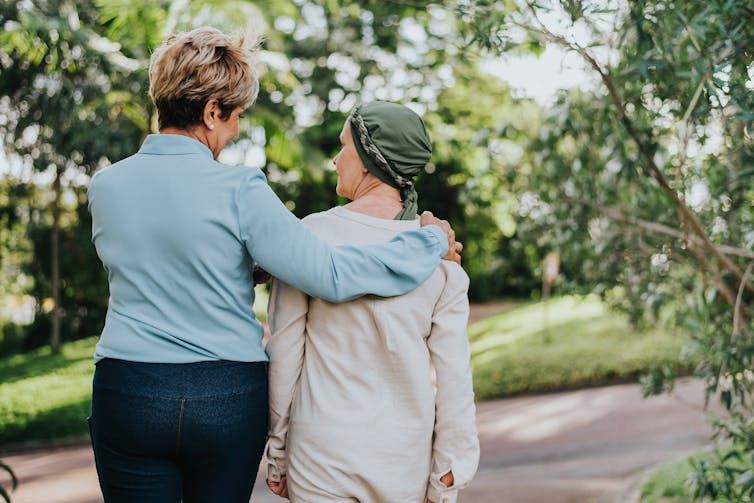
Two women walking arm in arm
Some people make significant changes to their lives following a cancer diagnosis.
Getty Images

Some decided to be more selective and no longer be around people who were negative. Others took up new hobbies or crafts which they felt were healing. For one person, the cancer diagnosis provided the impetus to look at things and people differently, which they thought would not have happened otherwise.

Individuals could also undergo a transformation to become what they felt they were meant to be in life. One person, given two months to live, embraced rongoā (Māori traditional healing), including its spiritual side. They now love their “journey” and feel this was what they were “supposed to do”.

For many, a diagnosis of cancer gave them license to be different people and to resist conforming to social norms, including having a job, being thrifty or not taking risks.

Disrupting diagnoses

One person, given only months to live, moved out of her flat, gave away her possessions, quit her job that she described was toxic, and returned home to say goodbye to her family.

Most importantly for her, she worked on experiencing “joy” – after receiving the diagnosis, she realised she had lost it. But she continues to live many years later. After a while, she had to find a new flat, get a new job and the recovery of her joy was challenged:

I had to start working again. And, of course, with working again, joy goes down, time goes down, rest goes down, spirituality goes down.

But not everyone has the opportunity to change. Some peoples’ lives were limited because of the physical effects of the cancer, its treatment, or because of their personal, social or financial resources.

Some go to great lengths to ensure their lives change as little as possible after diagnosis to maintain a sense of normality.

Why we need to know

Given the fear a cancer diagnosis can elicit, it is important to see there are different ways of responding.

It is also worth knowing there are people who live longer than expected. Many people in our study were given just months to live, but one woman was still alive 12 years after being told she had a year left.

Beyond that, this research documents how the disruption produced by a cancer diagnosis can prompt people to breach social norms. Where people have the capacity and resources to change, those around them and their health professionals can support them in taking opportunities to live life differently.

We heard people say they think of their cancer as a friend or an amazing opportunity. Some even felt thankful.

The possibility of cancer providing opportunities for some in no way diminishes the grief or a sense of loss, fear and anxiety that can accompany such diagnoses.

Our research supports a reframing of cancer narratives, to consider ways of tempering the negative impacts of a diagnosis – while remaining cognisant of the struggle that can follow such news, and the variability in people’s capacity to engage with that struggle.

The Conversation

Kevin Dew receives funding from The Marsden Fund..

Alex Broom receives funding from the Australian Research Council.

Kerry Chamberlain receives funding from the Marsden Fund.

Chris Cunningham, Elizabeth Dennett, and Richard Egan do not work for, consult, own shares in or receive funding from any company or organisation that would benefit from this article, and have disclosed no relevant affiliations beyond their academic appointment.

ref. Cancer diagnosis can be devastating, but for some it gives permission to live more radically – https://theconversation.com/cancer-diagnosis-can-be-devastating-but-for-some-it-gives-permission-to-live-more-radically-233782

Tuvalu joins growing Pacific tide of opposition to deep sea mining

Asia Pacific Report

Tuvalu has added its voice to the growing tide in the Pacific against deep sea mining, highlighting the momentum against this destructive industry, says Greenpeace.

The Tuvalu government’s call for a precautionary pause on deep sea mining took place at the 29th session of the International Seabed Authority (ISA) in Kingston, Jamaica.

Greenpeace head of Pacific Shiva Gounden congratulated the government of Tuvalu over its “commitment to protecting our oceans”.

“Tuvalu joins a growing chorus of Pacific nations calling for a ban on deep sea mining to safeguard our Moana, which gives and sustains life for millions of people across the Pacific and around the world,” he said in a statement.

“This announcement is courageous and historic, as the proud island nation of Tuvalu again shows global leadership on ocean protection just like they have on climate protection, something we Pacific people see as deeply interconnected.

“The momentum growing against the destructive deep sea mining industry is undeniable.

“For too long, profit-hungry corporations have plundered and exploited the ocean and high seas at the expense of the communities who depend on them, and whose lives and cultures are intrinsically linked with our oceans.”

Pacific says ‘no more’
Gounden said the message was loud and clear — “Pacific Island nations say, no more”.

Tuvalu’s announcement follows statements from the Pacific nations of Vanuatu and Palau at the ISA, with both governments supporting a pause on deep sea mining to protect the oceans for generations to come.

A total of 31 countries, including the UK and Germany, have committed to a moratorium.

Greenpeace Aotearoa spokesperson Juressa Lee (Te Rarawa, Ngāpuhi, Rarotonga) welcomed the decisions by Tuvalu, Vanuatu and Palau.

“Pacific peoples are standing up and saying no to deep sea mining. Deep sea mining will do nothing to benefit the people of the Moana but will instead exacerbate the climate and biodiversity crises,” she said.

“Extractivism is just continued colonisation of our heritage lands and waters, livelihoods and ways we see the world, and deep sea mining is no different.

“The intrinsic links to the Moana that Pacific Peoples speak about is valuable matauranga.

“There is so much in Pacific knowledge and culture that can teach us how to live connected to the ocean while also taking care of it.

“After hundreds of years of extraction causing climate disaster and biodiversity loss, governments are now resisting and turning toward Indigenous leadership and today we’ve seen some in the Pacific leading the way.”

Article by AsiaPacificReport.nz

What happens in an autopsy? A forensics expert explains

Source: The Conversation (Au and NZ) – By Hayley Green, Senior Lecturer – Forensic Anthropology, Western Sydney University

ESB Professional/Shutterstock

Sometimes it’s unclear how or why a person died. A detailed examination of the body after death, known as an autopsy or postmortem, can help find answers.

Despite what you may have seen on TV crime shows, most autopsies are minimally invasive; body often stays intact throughout a mostly observational procedure.

Sometimes, though, a more extended investigation is needed.

Through each step of the autopsy process, the dignity and respect of the deceased is prioritised by all involved.

Not every death will result in an autopsy

If someone dies from natural causes, there is no evidence of suspicious circumstances or there is a recent medical history, the death is certified by a doctor. The person is then taken into the care of a funeral service.

But when questions about the death remain, specialist doctors, technicians and support staff might investigate further. Sometimes this involves an autopsy.

Non-coronial and coronial autopsies

Depending on the circumstances of death, there are two types of autopsies in Australia: non-coronial and coronial.

A non-coronial autopsy is done when the cause of death is known but more information is needed. For example, the family may wish to know:

  • the extent of a known medical condition that led to the death

  • how effective any treatments leading up to the time of death were, or

  • if there’s evidence of a potential undiagnosed medical condition that may have contributed to the death.

Non-coronial autopsies are done in a hospital mortuary or a forensic pathology facility by an anatomical pathologist or forensic pathologist. An anatomical pathologist is a specialist in the detection and diagnosis of disease in organs and tissues (mainly in the living). A forensic pathologist takes part in medico-legal investigations and examines the body and its organs to look for disease or injury that may have caused death.

A coronial autopsy happens when death is unexpected, violent, unnatural or the result of an accident.

Deaths like these are classified as “reportable” deaths; by law they must be reported to the coroner, who is a magistrate of the court with legal training.

These reports (typically prepared by the police), as well as the legislation relevant to the state, assist the coroner to decide whether or not to order an autopsy.

This order can be a minimally invasive external examination, an internal examination of a single body cavity or an invasive multiple cavity autopsy.

Coronial autopsies are done in a forensic pathology facility by a forensic pathologist.

The first steps

Someone who has died under “reportable” circumstances will be admitted to the forensic facility. The person’s identity will be established, where possible.

If the coroner orders an autopsy, the body first undergoes a CT scan, which may be enough for the forensic pathologist to determine cause of death without further investigation.

If not, the body will then be laid carefully on an examination table where any clothing and personal belongings are removed.

The pathologist will then do an external examination, searching the body surface and recording any visible signs of cause of death or identifying marks. These might include tattoos or scars that can establish or confirm the identity of the deceased.

Photographs of the body can be taken, and body fluids such as urine, blood and vitreous fluid from the eyes are sampled and tested for drugs, poisons or other substances.

In many cases, the cause of death can be determined from the external examination alone and no further examination is necessary.

Other times, more invasive methods are needed.

Organ removal

Evisceration is the important process of removing organs for the pathologist to examine in detail to help determine cause of death.

The most common evisceration technique used in Australia is known as the Letulle method (sometimes called the en masse method), where organs are removed in a single large block that starts at the tongue and throat and extends to the rectum.

The first step of this process involves using a scalpel to make a large incision in the skin known commonly as the y-incision.

This incision extends from behind each ear, or at times, the collar bones, to the mid line of the chest (just above the sternum).

The incision will be extended through the centre of the chest towards the abdomen, stopping at the front of the pelvic bone.

Skin, fat and muscle layers are pulled back to expose the neck structures, abdominal organs and the rib cage. The rib cage will then be cut on each side using shears to allow the front of the chest plate to be removed, revealing the heart and lungs.

After an inspection of the positioning of the organs in the chest and abdomen, the bowel can be removed.

Connections between organs and the body wall are separated and the organ block is then lifted from the body.

Once out, the pathologist can do a detailed examination, weighing each organ individually. They will then dissect it to determine if there are any visible signs of disease or trauma that could have contributed to the cause of death.

Tissue samples will be taken from each organ for histology (studying it under a microscope) to look for evidence of a cause of death.

A person examines tissue samples under a microscope.
Tissue samples are sometimes sent off for further testing and examination.
Chokniti-Studio/Shutterstock

The brain

A coroner may also request an examination of the brain. This involves an incision across the scalp within the hairline where possible, so the skin can be peeled back to expose the skull.

The top of the skull will be removed using an oscillating saw to access the brain, which will then be removed (after separating it from the brainstem).

The pathologist will look for signs of blood clots, trauma or disease. In some cases, the coroner may make an order to keep the brain for a longer period of time for a more detailed and thorough examination.

After the autopsy is over, the organs are returned to the abdominal cavity and all incisions are stitched closed.

The body can then be released to the family and funeral arrangements made. An interim report on the cause of death is prepared for the coroner and made available to the family.

This will be updated with a final determination on the cause of death after test results come back. Sometimes the cause of death will be listed as “unascertained”, meaning the cause of death could not be determined.

The Conversation

Hayley Green has received industry funding in the past from ANZPAA (the Australia New Zealand Policing Advisory Agency)/NIFS (the National Institute of Forensic Science). In her capacity as the academic in charge of the Bachelor of Medical Science (Forensic Mortuary Practice) she has a working relationship with the NSW Department of Forensic Medicine, as her students do their clinical placements there. She has provided expert consultant services for the NSW Department of Forensic Medicine in the past.

ref. What happens in an autopsy? A forensics expert explains – https://theconversation.com/what-happens-in-an-autopsy-a-forensics-expert-explains-232603

Why is there so little Olympics footage in the news? Here’s how the multibillion-dollar video rights industry works

Source: The Conversation (Au and NZ) – By Marc C-Scott, Deputy Associate Dean of Learning & Teaching, Senior Lecturer in Screen Media, Victoria University

If you’ve watched the nightly news on Channel 7 or the ABC lately, you might think their Olympics coverage is lacking vision of, well, the Olympics.

The ABC’s sports program Offsiders ran a montage of still images as part of its Sunday episode – a seemingly odd choice for a platform best suited to video.

This is because the International Olympic Committee (IOC) awarded the broadcast rights to the games to Channel Nine. Everyone one else must fall into line with strict rules or face harsh financial penalties.

So how does this system work? What are the rules that decide which parts of the games we see on our screens, and where?

From three cameras to thousands

Today the Olympics are broadcast globally, but this hasn’t always been the case.

The first broadcast of the Olympic games was in Berlin during 1936, only available to areas in and around Berlin. It used three cameras, of which only one could provide live coverage, to reach a total of 162,000 viewers.

A single-country broadcast was the norm until Rome 1960, when far more countries had introduced television. For Rome 1960, 21 countries broadcast the games. This was live to 18 European countries and delayed to the United States, Canada and Japan. Interestingly, it was not until Sydney 2000 that the IOC listed the Olympics as having a global reach.

Nowadays, the media rights are awarded by the IOC, which is “the guardian of the Olympic Games and the leader of the Olympic Movement”.

The IOC owns the global media rights to the games. Its Olympic Broadcasting Services (OBS) serves as the host broadcaster for the games, with the coverage then made available to the media rights holders through a live cloud system.

Pages of rules

While Nine has the “exclusive free and subscription audio-visual rights” to the Olympics, what does this really mean?

Well, there is a 20-page document just for Australian media, setting out all regulations.

The rules document what Australian media can and cannot do with “Olympic material”, which includes the sounds or moving images of any event. This includes:

[…] training venues, sporting action, the Opening Ceremony, the Closing Ceremony and medal ceremonies, mixed zones, interviews or other activities which occur at Olympic Venues, including Olympic Village.

Australian media organisations must not broadcast any Olympic material that has not been broadcast by Nine. If the footage is broadcast by Nine or associated channels, the watermark must remain on the broadcast.

For Australian TV news there are a few more rules, including the 3x3x3 rule. This means a broadcaster cannot show Olympic material for “more than three news programs per day”, and the “duration of Olympic material used in any one news program shall not exceed a total of 3 minutes”. Finally, “news programs in which Olympic material appears must be separated by at least three hours”.

As you can imagine, this severely limits what channels other than Nine can show.

There is also the 6 x 1½ rule, which is an option for 24-hour news channels. This rule states that, “Olympic material is used in no more than six news programs
per day and does not exceed a total of one and one half minutes in any one”.

If broadcasters are to use Olympic games coverage, there must be “no advertising, promotion, publicity or other message” appearing at the same time. This includes superimposed or split-screen content.

In addition to sanction for the misuse of Olympic material by non-rights holders, the IOC may suspend a media outlet’s access to any Olympic venue, remove accreditation, or revoke access to Olympic materials. There can also be legal action and claims for damages by the IOC.

For the Rio 2016 games, the Australian Olympic Committee took Telstra to the Federal Court for its “I go to Rio” advertisements, which it argued misled Australians that Telstra was an official Olympic sponsor, rather than its competitor, Optus.

Although the case was dismissed, it gives a good indication of the fine line media and brands walk in using Olympic material.

Funding the games

Above are just a few of the rules listed within the document that Australian non-rights holders must abide by. The strict restrictions on Olympic materials use stems from the limited duration of the event (just a few weeks every four years), necessitating that rights holders maximise their exclusive usage.


Protecting these exclusive rights ensures the rights holders perceive value in their significant financial investment. Safeguarding these media rights is crucial for the IOC, as these rights have been its primary source of revenue for more than three decades.

In 2013–16, broadcast rights made up 74% of IOC revenue, a total of A$6.3 billion.

From 2017–20, broadcast rights declined to 61% of IOC revenue, but the financial amount grew to A$6.9 billion.

The decline in the revenue percentage for broadcast was due to a more than doubling in revenue from the top-tier global sponsorship program.

Big rights, big money

This is Channel Nine’s first Olympics broadcast in more than a decade – a privilege it paid A$305 million to obtain. The most recent deal gives Nine the rights of the Olympics until after Brisbane 2032.


For comparison, NBC in the US paid US$7.75 billion (A$11.8 billion) in 2014 for the rights to broadcast the Olympics until 2032.

Nine would be hoping to have more success than the previous joint partnership with Foxtel for the London 2012 games, which reportedly lost up to A$25 million.

Nine’s Chief Executive, Mike Sneesby, has stated the organisation had “invested significantly to bring unrivalled coverage of the 2024 Games to our valued audiences through Nine’s world-leading journalism”.

Despite early reports the coverage would run at a loss, Sneesby has promised it will be profitable.

Given what’s at stake, the internal issues at the network couldn’t have come at a worse time. Journalists from its newspapers commenced strike action just days before the start of the games, including 20 journalists in Paris.

Is it worth the money?

Despite Nine’s long hiatus as Australia’s go-to Olympic broadcaster, this year’s coverage appears to be a ratings success.

The Sunday broadcast of the games (up until 2:00am Monday AEST), reached 10.7 million Australians across Nine, 9Gem and 9Now.

Despite the opening ceremony being at 3:30am local time, it still had an audience reach of more than 2.1 million. That’s strikingly similar to the 2.12 million people for Seven’s coverage of the Tokyo 2020 games opening ceremony, which had a far smaller timezone difference.

The Paris 2024 Opening ceremony replay (1pm–6pm), saw Nine more than double the audience reach of the live event, with a national total TV reach of 4.616 million. The day one coverage also rated well, as has its coverage on streaming service Stan.

While Nine has experienced great ratings success early on, it can be argued the popularity of swimming and the Australian team’s success could be a contributing factor. It will be fascinating to see whether Australians will continue to watch the coverage at the same level.

The Conversation

Marc C-Scott does not work for, consult, own shares in or receive funding from any company or organisation that would benefit from this article, and has disclosed no relevant affiliations beyond their academic appointment.

ref. Why is there so little Olympics footage in the news? Here’s how the multibillion-dollar video rights industry works – https://theconversation.com/why-is-there-so-little-olympics-footage-in-the-news-heres-how-the-multibillion-dollar-video-rights-industry-works-235763

First Nations women are at greater risk of stillbirth. Here’s why – and what we can do about it

Source: The Conversation (Au and NZ) – By Deanna Stuart-Butler, Indigenous Research Officer, The University of Queensland

Australian national data show First Nations women face almost twice the risk of stillbirth or “sorry business babies” compared to non-First Nations women.

To address this inequity, Australia’s national stillbirth action plan focuses on ensuring culturally safe stillbirth prevention and care for First Nations women.

But first, we must understand the underlying reasons for the ongoing disparities in stillbirth rates and other pregnancy-related outcomes.

We argue much of the inequity can be linked to the ongoing impact of colonisation on First Nations women and birthing. Here’s why.

Ongoing intergenerational trauma

First Nations people have lived in Australia for at least 65,000 years. Prior to European invasion and settlement in 1788, more than 2,000 generations of First Nations people lived in connection to family, community, Country and their ancestors.

Colonisation saw First Nations women stripped of their traditional pregnancy and birthing practices, including use of medicinal plants, techniques for active labour and pain control, and songs for labour.

From the mid-1800s to the 1970s, First Nations babies and children were forcibly removed from their communities and placed with non-First Nations families.

Loss of land, violence and abuse, medical experimentation, cultural suppression and other systemic injustices have led to widespread intergenerational trauma that contributes to poorer health outcomes today.

Intergenerational trauma described in four minutes (The Healing Foundation)

Maternity services aren’t designed for First Nations women

Historical violence and exclusion have led to an intergenerational distrust of colonial systems, services and spaces among First Nations people. First Nations people have been expected to adapt to a Western health service, rather than these services adapting to First Nations people’s ways of knowing, being and doing.

There is also a shortage of First Nations health-care workers. This further limits First Nations people’s access to culturally responsive care.

Recognition of the importance of Birthing on Country has led to services like Waminda and Birthing In Our Community.

But there aren’t enough of these services for all First Nations women. And barriers to setting up the services persist.

Resources aren’t designed for First Nations women

Pregnancy information resources have historically been designed for a colonial audience. These resources do not speak to First Nations women and have rarely been developed by and with First Nations people.

More contemporary initiatives have better engaged First Nations people in, or have them lead, resource development.

The Centre of Research Excellence in Stillbirth’s Indigenous Advisory Group recently led the development of the Stronger Bubba Born pregnancy information website and resources for First Nations women. The information is the same as that given to non-First Nations women, as part of the Safer Baby Bundle, but it has been culturally adapted for its target audience.

Stronger Bubba Born introductory video (The Stillbirth Centre of Research Excellence)

Racism and discrimination in maternity services

While some First Nations women face overt racism in maternity services, many more are discriminated against through implicit biases. This is where care providers’ unconsciously held beliefs about First Nations people influence their judgements of and interactions with pregnant First Nations women.

Active stereotypes that are commonly applied to pregnant First Nations women include assuming drug and alcohol use and a perceived unsuitability for motherhood. This stems from the historical marginalisation of First Nations people.

But implicit bias isn’t the only source. Institutional racism also contributes to worse health outcomes among First Nations women. It occurs because of embedded structures or policies that perpetuate racial disparities, and it often goes unnoticed by non-First Nations midwives. Institutional racism plays out in various ways, including restrictions on the numbers of family/support people able to visit.

All of this leads to power imbalances and First Nations women being less likely to attend antenatal appointments.

Pregnant First Nations woman looks out the window
Many First Nations women face discrimination in health services.
zulufoto/Shutterstock

Providers don’t understand First Nations health

The Australian First Nations view of health differs from the Western view. Connection to family, Country and community defines First Nations people’s health, rather than illness, disease, and notions of “risk”.

Physical, spiritual, cultural, social, emotional and mental health are interconnected, and land is a source of strength, identity and healing.

These concepts form the foundation of Birthing on Country and underscore the importance of self-determination in providing culturally responsive maternity care.

Yet maternity care providers have limited knowledge of First Nations women’s cultural needs and little education and training on this.

Where to from here?

To eliminate racial disparities in stillbirth rates in Australia, our health system and broader society needs to recognise the effects of colonisation and the structural forces that continue to influence First Nations people’s health.

This requires acknowledging and sitting in discomfort with Australia’s history.

The Healthy Yarning Guide is a workshop based on two-way learning and yarning for non-First Nations maternity care providers and maternity service administrations.

The workshop aims to empower people to sensitively discuss stillbirth prevention with First Nations women. Participants learn about Australia’s history and the effects of colonisation in First Nations women and birthing, as well as what culturally responsive care looks like for First Nations families.

We have a long way to go in ensuring First Nations women and families receive high-quality, culturally responsive maternity care. But formal education within maternity services is a crucial place to start.


In this article, we use the term “First Nations” to refer Aboriginal and Torres Strait Islander people in Australia. We acknowledge there is variation in preferences for the terms “First Nations”, “Indigenous” and “Aboriginal and Torres Strait Islander”.

The Conversation

Aleena Wojcieszek has received funding from the National Health and Medical Research Council and the Stillbirth Foundation Australia

Vicki Flenady receives funding from the National Health and Medical Research Council.

Deanna Stuart-Butler, Sarah Graham, and Valerie Ah Chee do not work for, consult, own shares in or receive funding from any company or organisation that would benefit from this article, and have disclosed no relevant affiliations beyond their academic appointment.

ref. First Nations women are at greater risk of stillbirth. Here’s why – and what we can do about it – https://theconversation.com/first-nations-women-are-at-greater-risk-of-stillbirth-heres-why-and-what-we-can-do-about-it-232914

New Closing the Gap data shows more First Nations Australians are in prison. Why?

Source: The Conversation (Au and NZ) – By Eileen Baldry, Professor Emerita of Criminology, UNSW Sydney

Vadzim Mashkou/Shutterstock

In 2008, Australia agreed to six targets to “close the gap” – to reduce the disparities between Indigenous people and the rest of the population in health, education and employment.

There was little progress in the years following, and it was agreed that, if Indigenous people’s health was to improve and children were to fare better at school, other inter-related aspects of life – such as incarceration rates, housing, and social and emotional wellbeing – also needed to improve.

So, in 2020, several additional targets addressing socioeconomic equity were included, making 19 in total. Each year, the Productivity Commission reports on whether these Closing the Gap targets are on track, or not.

The most recent report, out this week, finds few of the targets are on track, and some are worsening. One of those going backwards is incarceration.

What does the data show?

The Closing the Gap target pertaining to criminal justice is that by 2031, we reduce the rate of Indigenous adults in prison by at least 15%.

This new report uses data on incarceration up to June 30, 2023, and compares it with 2019, the “baseline” year.

To quantify incarceration, the basic measure used in this report is the total number of people in prison in each state and territory as well as added together for a national figure, translated into a rate per 100,000.


The rate of Indigenous prisoners in 2023 was 2,266 per 100,000 compared to 2,143 per 100,000 in 2019. This is compared with non-Indigenous Australians’ incarceration rate of 149 per 100,000 in 2023 which has been steady or decreasing since 2019.

If we go back to 2009 the rate of Indigenous incarceration was 1,539 in every 100,000.

So rather than incarceration rates decreasing towards the Closing the Gap target, they’ve increased over time, and Indigenous people continue to be grossly over-represented in Australian prisons.

Separate figures indicate Indigenous men are 17 times more likely and Indigenous women are 25 times more likely to be incarcerated than non-Indigenous men and women respectively.

Youth justice is little better

The youth justice Closing the Gap target is that by 2031, we reduce the rate of Indigenous young people (10–⁠17 years) in detention by at least 30%.

The Productivity Commission measures progress on this target by the number of young people aged 10–⁠17 in detention on an average day per 10,000 (though it’s presented in the graph below per 100,000).


The 2022–23 rate – just under 30 per 10,000 Indigenous children and young people in detention – is a small decrease from 32 per 10,000 in 2018–19 (the baseline year). But it’s above the previous three years (from a low of 24 per 10,000 in 2020–21).

On this basis, the Productivity Commission report has assessed this target as unchanged from baseline.

Meanwhile, the rate of non-Indigenous young people in detention was just one per 10,000 in 2022–23. So like Indigenous adults, Indigenous young people continue to be disproportionately represented in juvenile justice systems.

Why is this happening?

We know these disparities are not only, or even primarily, about criminal justice. The social determinants of health and justice tell us there are a variety of factors that put Indigenous children and adults onto criminal justice conveyor belts in these large numbers. These include:

  • spending time in out-of-home care as a child

  • having contact with the police early in life

  • being a victim of violence and abuse

  • experiencing poverty

  • having poor or no safe housing

  • poor school education

  • having a mental health disorder or cognitive disability, and not receiving adequate support

  • early introduction to alcohol and other drugs

  • experiencing racism or discrimination.

The more of these factors a person experiences, the worse their health and social outcomes are likely to be and the more likely they are to end up in prison. And all of these factors are more likely to affect an Indigenous Australian compared to a non-Indigenous Australian.

Taking a couple of examples from this list can show us how strongly these factors correlate with incarceration. The new report indicates around 43% of Indigenous adults who entered prison in 2022 had been told they had a mental health disorder at some stage in their lives.

Some 71% of of Indigenous people entering prison in 2022 reported they had used an illicit substance within the previous 12 months.

Similarly, when we look at Indigenous people in prison, a higher proportion than in the general population, or in the broader prison population, has cognitive and other disabilities.

All these three factors are experienced at higher rates among First Nations prisoners than non-Indigenous prisoners and the general population, according to the Australian Law Reform Commission and the disability royal commission.

Research I conducted with colleagues – which included quantitative data and interviewing Indigenous people who had been incarcerated, Elders and service providers in communities – indicated that upwards of 90% of Indigenous prisoners in New South Wales have complex health and disability support needs.

These findings have been confirmed by the Australian Institute of Health and Welfare, with the data showing most First Nations prisoners have one or more issues related to mental health, disability, trauma from violence and abuse, and drug and alcohol issues.

What next?

It’s a national disgrace that incarceration rates for Indigenous people are going up rather than down, particularly when it means many people with the most complex health and disability needs are being locked up.

Inspectors of prisons, children’s commissioners, the disability royal commission, Aboriginal legal services, legal aid and Aboriginal community-controlled organisations across Australia are urging governments to address poverty and disadvantage, improve education opportunities, stop the police being the frontline service for mental health and disability matters, and listen to and act on First Nations community knowledge and insight.

The Conversation

Eileen Baldry receives funding from the Australian Research Council and the National Health and Medical Research Council.

ref. New Closing the Gap data shows more First Nations Australians are in prison. Why? – https://theconversation.com/new-closing-the-gap-data-shows-more-first-nations-australians-are-in-prison-why-235786

From microbes to mammals: we tracked the rapid rise of new ecosystems as glaciers retreat and ice sheets melt

Source: The Conversation (Au and NZ) – By Levan Tielidze, Research Fellow in glacial geomorphology, Monash University

Author provided

As global temperatures inch upwards year after year, the world’s glaciers retreat. These rivers of ice and the even larger ice sheets which cover Greenland and Antarctica are melting – and the melt is speeding up.

Glaciers and ice sheets have only a few species which can live on them, from ice worms to snow fleas and snow algae. When the ice melts, these species have to retreat with them.

But what happens to the areas the glaciers leave behind? Does life move in?

Our international team of researchers has spent the last decade investigating what happens to the newly uncovered ground as glaciers retreat further up mountain ranges. We tracked what’s happening at 46 retreating glaciers: from the Himalayas to the Andes, from the Arctic archipelago of Svalbard to as far south as New Zealand, and even tropical glaciers in Mexico.

What our new research has found is life quickly moves to colonise these new habitats, from microorganisms to hardy lichens and mosses, to pioneer species such as grasses. More plants arrive – and then, following them, come the animals. Over time, we’ve watched as new ecosystems emerged.

Life finds a way

When a glacier melts, what’s left behind is a barren landscape of bare rock and sediment. Over time, these areas gradually transform into a complex and diverse post-glacial ecosystem.

What we wanted to know was how this happens, how long it takes, and how life goes about colonising new habitat.

Between roughly the 14th and 19th centuries, the world was in the grip of the “Little Ice Age” – a period of moderate cooling largely affecting the northern hemisphere. During this period, many glaciers in this hemisphere expanded.

From the late 19th century onwards, human activities – especially the routine burning of fossil fuels – began to trap more heat and warm the planet, slowly at first but now accelerating.

We chose our glacial landscapes with care, selecting only those glaciers where we could accurately date the beginning of the retreat of the ice using a range of data sources, including topographical maps, field measurements, photographs, paintings, remote imaging and field data. Our team covered many parts of the world, but we did less sampling in polar regions.

We collected soil samples from more than 1,200 plots across our 46 glaciers and analysed them in the laboratory to track which species arrived when. We tracked ecosystem formation by analysing soil properties and nutrients and the evidence of carbon capture by plants. We also used environmental DNA sampling techniques to capture DNA traces left by animal species to gauge local biodiversity.

We could then cross-reference the arrival of species with when each glacier began to retreat.

What did we find? A surprisingly widespread pattern of ecosystem formation.

The first lifeforms to arrive were the smallest. Microorganisms such as bacteria, protists and algae colonise the ground. These tiny lifeforms can form surprisingly rich communities all by themselves.

It takes about a decade of colonisation by microorganisms before larger species can arrive. Some microorganisms can make minerals in the rocks available for other species.

Next comes hardy pioneer species such as lichens, mosses, and grasses able to tolerate tough conditions. Even though the ice has gone, these areas are still scoured by wind and cold.

After pioneer species grow and die, they leave behind organic material. This gradually enriches the thin soils. When there’s enough organic matter, more complex plants can take root. Larger animals arrived last, as herbivores need thriving plant communities to survive and predators need prey animals to eat.

How do different species form an ecosystem?

Ecosystems can be very simple through to hugely complex. For instance, on ice-free parts of the Antarctic peninsula, the ecosystem is dominated by mosses and hardy species of tardigrade and springtail.

What makes ecosystems become more complex?

As our research shows, the most important feature is time, rather than species interaction. As time passes, more new species are likely to colonise these post-glacial landscapes.

But it’s the interactions between organisms which makes ecosystems function.

Microorganisms often help pioneer plants by accelerating the development of fertile soils. How? Bacteria and fungi break down organic matter from dead plants into simpler compounds. This process creates humus, a rich, fertile component of soil which improves its structure and nutrient content.

In turn, plants create new habitat and food sources for animals. Animals begin to interact with each other, through predator-prey relationships such as arctic foxes and rabbits, or as “ecosystem engineers” such as earthworms, who pave the way for more animals by eating dead plant matter and improving nutrient availability in the soil.

Even in seemingly barren environments, the way organisms interact with each other and their environment can be extremely complex and rich.

The Conversation

Levan Tielidze was supported by the Australian Research Council (ARC) Special Research Initiative (SRI) Securing Antarctica’s Environmental Future (SR200100005).

ref. From microbes to mammals: we tracked the rapid rise of new ecosystems as glaciers retreat and ice sheets melt – https://theconversation.com/from-microbes-to-mammals-we-tracked-the-rapid-rise-of-new-ecosystems-as-glaciers-retreat-and-ice-sheets-melt-235687

Snug but unsafe: your heater may be harming your health. What are your safest choices?

Source: The Conversation (Au and NZ) – By Christine Cowie, Senior Research Fellow, Centre for Air Quality and Health Research and Evaluation, Woolcock Institute of Medical Research, University of Sydney; Senior Research Fellow, South West Sydney Clinical School, UNSW Sydney

Alexander Raths/Shutterstock

We now have a dizzying array of heating technologies to consider, besides the fire that warmed our ancestors.

Salespeople will highlight any number of features and minor conveniences. You will be made aware of limited-offer discounts, product warranties, trends in certain Nordic countries, or their low cost (at least in the short-term). What you are less likely to read on the box is, well, the stuff that really matters: the long-term effects on your health and the health of your family, your neighbours and the environment.

Yes, a heater should keep you warm affordably. After all, a warm home is vital for your health. But would you run a heater that you knew was increasing the likelihood of your child developing asthma, your partner developing lung cancer, and your neighbour or your grandparent suffering a stroke or heart attack?

Many peer-reviewed studies have found domestic heating to be a major source of air pollution and of ill health in Australia. So which heaters are high-risk and which are low-risk? Let’s consider, firstly, the most dangerous heaters.

Extreme-risk heaters

Two rules reduce the risks:

  1. never burn anything (wood, gas or other fuel) in your home without adequate ventilation such as a chimney, exhaust or flue

  2. never use an outdoor appliance (heater, cooker, barbecue) inside.

Concerningly, a 2022 Asthma Australia survey found 7% of Australians used an unflued gas heater.

When gas or other fuel is burnt indoors it releases a range of particles and toxic gases. Most dangerous of all is carbon monoxide (CO). This colourless, odourless gas can build up in unventilated homes, resulting in serious poisoning and death.

A recent case of carbon monoxide intoxication left three people unconscious in a Sydney home after an outdoor barbecue was used inside as a heater. Outdoor heaters, cookers and barbecues are especially potent sources of carbon monoxide and should never be brought inside.

If you have a gas appliance in your home, even if it is ventilated, install a carbon monoxide alarm for as little as $30.

Two people warm their hands at an outdoor gas heater on a cafe table
Outdoor heaters should never be used indoors.
Balifilm/Shutterstock

High-risk heaters

The evidence is now very clear: wood heater smoke is a potent source of air pollution and significant cause of ill-health in Australia.

The more often you burn, the greater the risk. One large population study found even infrequent wood heater use (30 days or more each year) increases the risk of lung cancer by 68%.

Wood heaters spill smoke into the home when refuelling. They also suck smoke from outside back into the home as air is drawn up the chimney.

If you can smell your wood heater, it is harming your health and exposing you to a toxic mix of particles and gases.

For the wider community, the cumulative health impacts of wood heaters are significant.

Less than 10% of Australian households use a wood heater. Yet they are the largest source of particulate air pollution in most Australian cities and towns, including Sydney, Melbourne, Canberra, Adelaide and Hobart. Even in temperate Sydney, wood heaters emit more of this pollution than all the cars, trucks, boats and buses combined, and more than coal-fired power stations and industry.

Centre for Safe Air researchers estimate wood heaters cause between 558 and 1,555 excess deaths a year in Australia. That’s roughly equivalent to the annual road toll.

Fine particles (2.5 microns or less in diameter – also known as PM2.5) are a major component of wood smoke. PM2.5 increases rates of heart disease and stroke, lung disease, dementia and other neurological conditions and asthma attacks. Risks of adverse pregnancy outcomes and poorer learning outcomes in children are also increased.

A person puts wood in a wood heater
If you can smell your wood heater it is harming your health.
KingTa/Shutterstock

Low-risk heaters

Evidence suggests there is no “safe” level of air pollution, with health effects seen at very low levels.

Even ducted gas heating, where most of the toxins are ventilated, can expose residents to low levels of PM2.5, nitrogen dioxide (NO2), carbon monoxide and formaldehyde. Over time, this can have a range of health impacts, including worsening asthma and respiratory symptoms.

Burning gas for heating also adds to greenhouse gas emissions.

As Australia transitions to a zero-carbon society, some states and territories are phasing out installation of new wood heaters, such as in the ACT, and gas connections, such as in Victoria. Subsidies to help people replace unhealthy heaters are excellent investments in the environment, public health and health equity.

Healthy heaters

Ultimately, heaters that do not rely on burning fuel inside the home are the safest, and often more affordable, heating option.

A well-maintained reverse-cycle air conditioner, sometimes called a heat pump, actually cleans the air inside your home.

These air conditioners have the additional benefit of cooling your home in summer. As heatwaves become more severe and frequent, efficient cooling is increasingly important for health.

As for affordability, an efficient reverse-cycle air conditioner can be up to seven times as efficient as a gas wall heater in the energy it uses for a given amount of heat.

There are many other electric heating technologies – such as fan heaters, oil column heaters, panel heaters, or infrared heaters – that do not release toxins into the home.

Heater manufacturers are often reluctant to talk about the health impacts of their products, and regulators are slow to catch up with the science.

By thinking about heating in terms of health, you can make your home safer
for yourself and the people around you.

After all, there’s nothing cosier than a healthy home.

The Conversation

Christine Cowie receives funding from the NHMRC, a Perpetual Impact grant, a NSW Health Department project grant, a NSW EPA project grant, a Commonwealth Government project grant and a SWC project grant. She is an affiliate of the Centre for Safe Air (CSA), Expert Partner for Global Cooksafe Coalition (Australia Program), NFP (Nov 2023-), member of Clean Air Society of Australia and NZ (CASANZ), and member of the International Society for Environmental Epidemiology.

Bill Dodd does not work for, consult, own shares in or receive funding from any company or organisation that would benefit from this article, and has disclosed no relevant affiliations beyond their academic appointment.

ref. Snug but unsafe: your heater may be harming your health. What are your safest choices? – https://theconversation.com/snug-but-unsafe-your-heater-may-be-harming-your-health-what-are-your-safest-choices-235102

More Indigenous children are going to preschool, but is this enough?

Source: The Conversation (Au and NZ) – By Grace Sarra, Professor, Faculty of Creative Industries, Education and Social Justice, Queensland University of Technology

The latest Closing the Gap data contains some good news – there is a marked increase in early childhood enrolments for Aboriginal and Torres Strait Islander children. The report shows how in the year before full-time schooling, there has been a 25% increase in enrolments over the past seven years.

In 2016, 76.7% of Aboriginal and Torres Strait Islander students were enrolled in a preschool program. In 2023, it was 101.8% (this figure is more than 100% due to different sources of data and will be updated once we have 2021 Census population figures).

This shows we are both improving on track to meet the target of 95% of students enrolled in early education before they start school by 2025.

Does enrolment equal outcomes?

But it isn’t all positive news, particularly when it comes to children thriving in their early years.

While it is not new data, the report also notes only 34.3% of Aboriginal and Torres Strait Islander children were “developmentally on track” when they started school as of 2021.

This was a decrease from 35.2% in 2018. The target of 55% is also not on track to be met.

The developmental assessment involves five measures: physical health and wellbeing, social competence, emotional maturity, language and cognitive skills and communication skills and general knowledge.

As the Closing the Gap report notes, this developmental assessment is “based on a Western paradigm [and] it may not fully demonstrate the progress and strengths of Aboriginal and Torres Strait Islander children”.

But this result is puzzling when we can see the majority of Indigenous children are engaged in early childhood education, which is supposed to prepare students to be ready for school.


What does the research say?

We know it is important for children to receive quality early education before they begin school, it has benefits both for their wellbeing and for their learning.

Research on Indigenous children has shown it can help build their literacy in both the short and long-term and numeracy skills in the long-term.

A systematic review published in 2020 investigated whether early childhood education programs support positive education and developmental outcomes for Indigenous students. It showed preschool education has the potential to provide long-term benefits and prepare Indigenous students for school.

However, the authors also noted it matters what kind of education they are getting. The preschool programs need to be high quality – exactly what this entails, and how we evaluate it, is still being determined.

For Indigenous children, research suggests affirming their cultural identities as well as having strong engagement and connection with their families and communities is vital.

How can we do it better?

Our latest, as yet unpublished research looks at how we can create culturally responsible resources for Indigenous children. This means resources are meaningful to kids.

With educators and community members on Wakka Wakka Country and Bindal and Wulgurukaba Country we co-designed curriculum resources for children aged 0-5 years using Indigenous voices and cultures.

This included using Indigenous languages, animals and symbols children in digital literacy and numeracy resources.

For example, instead of having cows and pigs, we have echidnas and emus with the names in English and Wakka Wakka. Instead of counting three apples or five cats, children count kangaroos, fish and mud crabs, featuring Indigenous designs.

These offer ways of exploring the world that connect to chidlren’s real life experiences and acknowledge and embrace their cultural identities.

As one community member told us during our research:

People who have experienced other peoples cultures are better human beings, because that speaks to one’s humanity by the fact that we should be respecting each and every one of us and all our forms and shapes and our histories.

What can we do now?

Our research emphasises how early childhood educators can embed identity-affirming practices. But there are many other aspects of high quality early childhood education, such as key indicators of literacy and numeracy, that need investigating.

We are in the position now where most Indigenous children are enrolled in early childhoood educational programs. The focus should turn to developing a robust evidence base for what quality looks like for Indigenous children and how it can be implemented across the nation.


Research assistant Chelsey Priddle did design work for the curricuulum resources for this project.

The Conversation

Grace Sarra receives funding from the Australian Research Council. The research in this article is part of project for the ARC Centre of Excellence for the Digital Child.

Marnee Shay receives funding from the Australian government, Australian Research Council and Queensland government.

ref. More Indigenous children are going to preschool, but is this enough? – https://theconversation.com/more-indigenous-children-are-going-to-preschool-but-is-this-enough-235787

How to win on your own terms: Simone Biles claims her eighth Olympic gold on her Paris 2024 ‘redemption tour’

Source: The Conversation (Au and NZ) – By Vaughan Cruickshank, Senior Lecturer in Health and Physical Education, University of Tasmania

Simone Biles is the most decorated gymnast, male or female, in history. She won her first world championship all-around gold medal in 2013 and has not lost an all-around competition since.

She arrived in Paris with 37 medals from World Championships and Olympics, including 27 golds.

She has since added to this total, winning team gold – her eighth Olympic medal – and she looks set to increase her tally when she competes in the finals for all-around, beam, floor and vault.

Biles returns to the Olympics after a difficult experience at Tokyo 2020. The athlete we have seen perform so far at Paris is more relaxed, more mature and still giving us the performances of the best gymnast in the world.

A difficult second Olympics

At her first Olympics, Rio 2016, Biles won gold in the team all-around, vault and floor competitions, and bronze on beam.

She was expected to repeat the feat in Tokyo in 2021, but she was forced to withdraw from most events because of mental health concerns and the “twisties” – the name gymnasts give to the phenomenon of losing sense of where they are in the air, making performing complicated moves dangerous.

In the end, she contributed one vault to the team final, where the women from the United States took silver, and she received a bronze medal on beam – far from the multiple golds she was expected to take home.

Many elite gymnasts get the twisties. They just didn’t talk about them so openly. Since Biles first spoke about it, other elite gymnasts such as Joscelyn Roberson and Laurie Hernandez have spoken about sharing the experience.

Biles has said the twisties were caused by a combination of trauma related to abuse by a former USA team doctor, isolation during the COVID affected games and the weight of high expectations of success.

Changing the discussion around mental health

Biles’ decision to prioritise her mental health and not compete has changed perceptions of elite gymnasts and their mental health.

Many former elite gymnasts have spoken about how they did not have agency over their bodies and decision-making while training and competing, and were forced to compete while injured.

Biles speaking about her mental health, alongside athletes like basketballer Kevin Love and tennis player Naomi Osaka, has reduced stigma, and increased the number of athletes talking about their mental health.

This year, inspired by this discussion, the US Olympic and Paralympic committee has made sure athletes have access to more mental health resources while they compete in Paris.

Changing the sport

Biles is also a trailblazer in competition.

She has five unique moves named after her across floor, balance beam and vault.

Only one of these moves has ever been performed by another gymnast in an international competition, when Hillary Heron of Panama performed a double layout with a half-twist in the second flip on floor this week in Paris.

She is a role model for many young African American girls, who are increasingly enrolling in gymnastics clubs.

Women’s gymnastics has long been dominated by younger athletes. There has not been an Olympic all-around women’s champion in her 20s for over 50 years.

The 2024 US team is one of the oldest in the country’s history, with an average age of 22. By way of contrast, in 2012, the oldest member of the team was 18-year-old Aly Raisman. Other medal contenders such as Brazil, have teams even older.

At 27, Biles could become the oldest woman to win Olympic all-around gold since 1952.

More experienced gymnasts competing at Olympic level reflects a change in recent years. Athletes have been able to maintain their elite abilities longer due to advances in sports medicine and training.

Her success as an older athlete also reflects her improved mental health and maturity.

Coming close to walking away from gymnastics after Tokyo, Biles was in and out of the gym for over a year and a half as she built from occasional gentle trampoline and mat exercises to more complex skills and routines.

When she returned to competition in 2023, she won her sixth all-around world championship and ninth all-around US championship.

As she details in her recent Netflix documentary, she now has much more balance in her life, with new priorities outside the gym. She still wants to win, but not winning isn’t the end of the world.

Paris 2024

Biles has called Paris her “redemption tour”. Again, she arrived at the Olympics with the pressure of being the favourite. But this time she is noticeably more relaxed, regularly seen chatting and laughing with teammates.

So far in Paris, her physical health has been more of a concern. She has a heavily strapped lower leg and has been seen limping. Her coach has said the injury is minor, and she will still be able to compete in the rest of the competition.

In her documentary, Biles talks about the importance of ending her career on her terms.

She has already changed the sport, both inside and outside the gym. If she can complete her remarkable comeback with individual all-around gold in Paris this will truly cement her legacy as the greatest gymnast of all time.

The Conversation

The authors do not work for, consult, own shares in or receive funding from any company or organisation that would benefit from this article, and have disclosed no relevant affiliations beyond their academic appointment.

ref. How to win on your own terms: Simone Biles claims her eighth Olympic gold on her Paris 2024 ‘redemption tour’ – https://theconversation.com/how-to-win-on-your-own-terms-simone-biles-claims-her-eighth-olympic-gold-on-her-paris-2024-redemption-tour-235659

From bows and arrows to assault rifles: How the rules of PNG tribal wars have changed

Warning: This report discusses graphic details of tribal violence in Papua New Guinea.

SPECIAL REPORT: By Scott Waide, RNZ Pacific PNG correspondent

The nauseating stench of dried blood hung in the air as we arrived in Karida village, a few kilometers outside of Tari in Papua New Guinea’s Hela province.

Through the landcruiser window, I could see two men carrying a corpse wrapped in blue cloth and a tarpaulin. They were walking towards the hastily dug graveyard.

This was July 2019.

A longstanding tribal fight by various factions in the Tagali area of the Hela province had triggered this attack. Several armed men came at dawn. The residents, mostly women and children, bore the brunt of the brutality.

The then Provincial Administrator, William Bando, advised us against travelling alone when we arrived in Tari. He requested a section of the PNG Defence Force to take us to Karida where the killings had happened less than 24 hours before.

Two men carrying the corpse, hesitated as we arrived with the soldiers. One of the soldiers ordered the men to disarm. The others who carried weapons fled into the nearby bush.

On the side of the road, the bodies of 15 women and one man lay tightly wrapped in cloth. The older men and women came out to meet the soldiers.

The village chief, Hokoko Minape, distraught by the unimaginable loss, wept beside the vehicle as he tried to explain what had happened.

“This, I have never seen in my life. This is new,” he said in Tok Pisin.

Complexity of tribal conflicts and media attention
For an outsider, the roots of tribal conflicts in Papua New Guinea are difficult to understand. There are myriad factors at play, including the province, district, tribe, clan and customs.

But what’s visible is the violence.

The conflicts are usually reported on when large numbers of people are killed. The intense media focus lasts for days . . . maybe a month . . . and then, news priorities shift in the daily grind of local and international coverage.

Some conflicts rage for years and sporadic payback killings continue. It is subtle as it doesn’t attract national attention. It is insidious and cancerous — slowly destroying families and communities. In many instances, police record the one off murders as the result of alcohol related brawls or some other cause.

The tensions simmer just below boiling point. But it affects the education of children and dictates where people congregate and who they associate with.

Although, the villagers at Karida were not directly involved in the fighting, they were accused of providing refuge to people who fled from neighboring villagers. The attackers came looking for the refugees and found women and children instead.

According to a source, military guns are a fairly recent addition to tribal fighting in Papua New Guinea. Image: RNZ

The ‘hire man’ and small arms
Over the next few weeks, local community leaders drew attention to the use of “hire men” in the conflicts. They are mercenaries who are paid by warring tribes to fight on their behalf. Their most valued possessions are either assault rifles or shotguns paid for by political and non-political sponsors.

The Deputy Commissioner for Police responsible for specialist operations, Donald Yamasombi, who has personally investigated instances of arms smuggling, said the traditional trade of drugs for guns along the eastern and southern borders of Papua New Guinea is largely a thing of the past.

“People are paying cash for guns. They are bringing in the weapons and then legitimising them through licensing,” Yamasombi said. “The businessmen who fund them actually run legitimate businesses.”

The involvement of political players is a subject many will state only behind closed doors.

In the highlands, the hire men are a recent addition to the complex socio-political ecosystem of tribal and national politics. Political power and money have come to determine how hire men are used during elections. They are tools of intimidation and coercion. The occupation is a lucrative means of money making during what is supposed to be a “free and fair” electoral process.

“Money drives people to fight,” Yamasombi said. “Without the source of money, there would be no incentive. There is incentive to fight.”

Rules of war
At the end of elections, the hire men usually end up back in the communities and continue the cycle of violence.

In February, Papua New Guineans on social media watched in horror as the death toll from a tribal clash in Enga province rose from a few dozen to 70 in a space of a few hours as police retrieved bodies from nearby bushes.

The majority of the men killed were members of a tribe who had been ambushed as they staged an attack.

Traditional Engan society is highly structured. The Enga cultural center in the center of Wabag town, the Take Anda, documents the rules of war that dictated the conduct of warriors.

Traditionally, mass killings or killings in general were avoided. The economic cost of reparations were too high, the ongoing conflicts were always hard to manage and were, obviously, detrimental to both parties in the long run.

Engans, who I spoke to on the condition of anonymity, said high powered guns had changed the traditional dynamics.

Chiefs and elders who once commanded power and status were now replaced by younger men with money and the means to buy and own weapons. This has had a direct influence on provincial and national politics as well as traditional governance structures.

A roadblock is set-up in Wabag, the provincial capital of Enga. Image: Paul Kanda/FB/RNZ

Tribal conflicts, not restricted to the Highlands
In 2022, a land dispute between two clans on Kiriwina Island, Milne Bay province, escalated into a full on battle in which 30 people were killed.

The unusual level of violence and the use of guns left many Papua New Guineans confused. Milne Bay province, widely known as a peaceful tourism hub, suffered a massive PR hit with embassies issuing travel warnings to their citizens.

In Pindiu, Morobe province, the widespread use of homemade weapons resulted in the deaths of a local peace officer and women and children in a long running conflict in 2015.

The Morobe Provincial Government sent mediators to Pindiu to facilitate peace negotiations. Provincial and national government are usually hesitant to intervene directly in tribal conflicts by arresting the perpetrators of violence.

This is largely due to the government’s inability to maintain security presence in tribal fighting areas for long periods.

Angoram killings
Two weeks ago, 26 women and children were killed in yet another attack in Angoram, East Sepik.

Five people have been arrested over the killings. But locals who did not wish to be named said the ring leaders of the gang of 30 are still at large.

Angoram is a classic example of a district that is difficult to police.

The villages are spread out over the vast wetlands of the Sepik River. While additional police from Wewak have been deployed, there is no real guarantee that the men and women who witnessed the violence will be protected if they choose to testify in court.

Will new legislations and policy help?
The Enga massacre dominated the February sitting of Parliament. Recent changes were made to gun laws and stricter penalties prescribed. But while legislators have responded, enforcement remains weak.

The killers of the 16 people at Karida remain at large. Many of those responsible for the massacre in Enga have not been arrested even with widely circulated video footage available on social media.

In April, the EU, UN and the PNG government hosted a seminar aimed at formulating a national gun control policy.

The seminar revisited recommendations made by former PNG Defence Force Commander, retired Major-General Jerry Singirok.

One of the recommendations was for the licensing powers of the Police Commissioner as Registrar of Firearms to be taken away and for a mechanism to buy back firearms in the community.

This article is republished under a community partnership agreement with RNZ.

Article by AsiaPacificReport.nz

Assassinated – Ismail Haniyeh, the Palestinian refugee who became the political leader of Hamas

The Palestine Chronicle

Ismail Haniyeh,  a prominent Palestinian political leader and the head of Hamas’ political bureau, has been assassinated today in an Israeli airstrike on Tehran.

Haniyeh was in the Iranian capital for the inauguration of Iranian President Masoud Pezeshkian.

Both Hamas and the Iranian Revolutionary Guard confirmed his death and announced ongoing investigations into the incident.

Commentators have said this assassination and the “reckless Israeli behaviour” of continuously targeting civilians in Gaza would lead to the region slipping into chaos and undermine the chances of peace.

A Palestinian refugee
Ismail Abdel Salam Ahmed Haniyeh was born on 23 January 1962 in the Shati refugee camp in the Gaza Strip.

His family originated from the village of Al-Jura, near the city of Asqalan, which was mostly destroyed and completely ethnically cleansed during the Nakba in 1948.

Haniyeh completed his early education in United Nations Relief and Works Agency (UNRWA) schools and graduated from Al-Azhar Institute before earning a BA in Arabic literature from the Islamic University of Gaza in 1987.

During his university years, he was active in the Student Union Council and later held various positions at the Islamic University, eventually becoming its dean in 1992.

Following his release from an Israeli prison in 1997, Haniyeh became the head of Sheikh Ahmed Yassin’s office.

Political life
Haniyeh’s political experience included multiple arrests by Israeli authorities during the First Intifada, with charges related to his involvement with the Palestinian Resistance movement Hamas.

He was exiled to southern Lebanon in 1992 but returned to Gaza after the Oslo Accords.

Haniyeh led the “Change and Reform List”, which won the majority in the 2006 Palestinian Legislative Council elections, leading to his appointment as the head of the Palestinian government in February 2006.

Despite being dismissed by Palestinian Authority President Mahmoud Abbas in June 2007 after the Hamas military wing took control of Gaza, Haniyeh continued to lead the government in Gaza.

He later played a role in national reconciliation efforts, which led to the formation of a unity government in June 2014.

Haniyeh was elected head of the Hamas political bureau in May 2017.

A warning from Iran over the assassination of Hamas politIcal leader Ismael Haniyeh while staying in Tehran as a “guest” of the newly inaugurated Iranian President Masoud Pezeshkian. Image: AJ screenshot APR

Al-Aqsa flood
On 7 October 2023, the Al-Qassam Brigades, led by Mohammed Deif, launched the Al-Aqsa Flood operation against Israel.

In the genocidal Israel war that has followed in the past nine months, Haniyeh suffered personal losses, including the killings of several family members due to Israeli airstrikes.

Republished from The Palestine Chronicle with permission. The Chronicle is edited by Palestinian journalist and media consultant Ramzy Baroud, author of The Last Earth: A Palestine Story, who visited New Zealand in 2019.

Article by AsiaPacificReport.nz

Hamas leader’s killing in Tehran likely to further escalate violence in Middle East

Source: The Conversation (Au and NZ) – By Ian Parmeter, Research Scholar, Centre for Arab and Islamic Studies, Australian National University

Palestinian militant group Hamas says its top political leader, Ismail Haniyeh, has been killed in his home in Tehran. It blames Israel for the attack, saying it was “a Zionist airstrike on his residence in Tehran after he participated in the inauguration of Iran’s new president”.

Iran has not yet given any details on how Haniyeh was killed, but says it is under investigation.

With the war in Gaza showing no sign of abating and the whole Middle East on a knife’s edge, the killing raises questions about whether it may spark a wider regional war.

Who is Ismail Haniyeh?

Haniyeh is the most senior political leader of Hamas, based in Doha, Qatar. He was essentially the Hamas leader for the ceasefire negotiations with Israel in the Gaza War, brokered by the United States, Egypt and Qatar. These negotiations will obviously now be on hold.

While Israel has not yet claimed responsibility for his death – and this is unlikely, given it does not typically claim responsibility for covert actions – Haniyeh has long been on its list of targets.

What is surprising, though, is where and how it was done. Haniyeh was in Tehran to attend the swearing-in ceremony of Iran’s new president, Masoud Pezeshkian. Details of exactly what happened are still sketchy, but it appears Haniyeh was killed along with one of his bodyguards by an explosion in his building. We do not yet know if the explosion was from a remotely controlled bomb or a missile attack.

Iran’s Islamic Revolutionary Guard Corps (IRGC) is investigating the killing.

What does this mean for a wider regional war?

There are two important issues that will be under close scrutiny in the coming hours and days.

The first is that, assuming it was Israel that was responsible for Haniyeh’s killing, it raises the question of whether Iran will retaliate because Haniyeh was under the country’s protection when he was killed. His death is likely to cause enormous anger in Iran, and may in turn prompt retaliation against Israel on top of that from Hamas.

Tensions between Iran and Israel have been long been high. In April, Iran launched more than 300 missiles and drones at Israel in retaliation for an attack on the Iranian consulate in Damascus. The attack killed several senior IRGC leaders.

The attack on Haniyeh is indicative of a remarkable degree of intelligence and operational access that Israel seems to have in Iran at the moment. In recent years there has been a steady stream of Iranian scientists working on the nuclear program who have been killed. This includes the program’s “father”, Mohsen Fakhrizadeh, who was killed by a sophisticated remote-controlled machine gun in 2020.

However, there remain Hamas leaders on Israel’s list who, as far as can be discerned, are still alive. Gaza political leader Yahya Sinwar is apparently still directing the operations of militants there. In July, Israel carried out a strike that was believed to have killed the elusive military leader Mohammed Deif. However, Hamas has not acknowledged this, and Deif has survived several previous assassination attempts.

The second major question is whether Lebanon-based Hezbollah will launch an attack on Israel, at Iran’s behest.

The Haniyeh killing comes within hours of an Israeli airstrike in southern Beirut, in which Israeli officials believe they have killed senior Hezbollah commander Fuad Shukr.

If Iran were to retaliate, it might be through Hezbollah from Lebanon. A major missile barrage from Hezbollah could potentially overwhelm Israel’s Iron Dome missile defence system.

Iran also has other allies on which it can call, including Shia militant groups in Syria and Iraq, as well as the Houthis in Yemen who have already launched a drone strike on Tel Aviv last week. Israel quickly retaliated.

What happens now is difficult to say until there is more information. But what is certain is that the killing of Haniyeh is likely to cause a significant escalation in the Gaza War, and possibly in the wider Middle East.

The Conversation

Ian Parmeter does not work for, consult, own shares in or receive funding from any company or organisation that would benefit from this article, and has disclosed no relevant affiliations beyond their academic appointment.

ref. Hamas leader’s killing in Tehran likely to further escalate violence in Middle East – https://theconversation.com/hamas-leaders-killing-in-tehran-likely-to-further-escalate-violence-in-middle-east-235886

Legionnaires’ cases in Melbourne are growing. Here’s what you need to know about this serious lung infection

Source: The Conversation (Au and NZ) – By Richard Bentham, Adjunct Associate Professor School of Biology, Flinders University

Maha Heang 245789/shutterstock

Melbourne is experiencing an “explosive” and unusual outbreak of Legionnaires’ disease.

Since Friday afternoon, Victoria’s Department of Health has confirmed 33 cases (with ten more suspected) of this severe and sometimes life-threatening lung disease. Most of those infected have ended up in hospital.

Investigations are under way to identify the source of the outbreak.

Here’s what we know so far.

What is Legionnaires’ disease and how does it spread?

Legionnaires’ disease is a bacterial infection caused by inhaling contaminated water droplets. The water droplets need to be small enough to be inhaled deeply into the lungs to cause disease.

The disease isn’t transmitted between people.

Legionnaires’ disease usually only infects people with weakened immune systems or underlying health problems. People are at greater risk of infection if they:

  • are over 40 years old
  • are smokers
  • have a chronic lung disease or existing respiratory conditions
  • have a weakened immune system, such as transplant recipients
  • have other underlying health conditions, such as diabetes, heart or kidney disease.

Legionnaires’ disease usually causes a severe pneumonia, which is a chest infection with symptoms such as cough, headache, fever, chills, and muscle aches and pains.

Less common symptoms are nausea, vomiting, diarrhoea and confusion. In extreme cases, Legionnaires’ disease can cause kidney impairment.

How is Legionnaires’ disease treated?

Early diagnosis and treatment with the right antibiotics is important to prevent the disease becoming severe.

If no action is taken, or the wrong antibiotic is prescribed, Legionnaires’ disease can lead to serious illness and hospitalisation.

GPs in Victoria are now on alert not to prescribe inappropriate antibiotics for people presenting with respiratory symptoms.

That’s because it may take several days of taking antibiotics for people with Legionnaires’ to realise the drugs are not effective – and that window for treatment is crucial.

What do we know about the Melbourne outbreak?

The current outbreak in Melbourne is an example of this community-acquired disease.

Investigations are under way to identify its source. The large number of cases in a short period indicates a single source, likely some equipment releasing contaminated aerosols into the environment, usually outside the building. This type of outbreak is sometimes described as “explosive”.

Microscopic image of bacteria on a red background.
Legionnaires’ disease is caused by the Legionella pneumophila bacterium.
Cavan-Images/shutterstock

A cooling tower attached to a building is most likely responsible. Most explosive outbreaks of Legionnaires’ disease are associated with cooling towers.

The strain is another indicator: the Legionella pneumophila S1 subtype that has been identified in Melbourne is very different from Legionnaires’ disease caused by potting mixes.

The Victorian government has advised all cooling tower operators to ensure they’re up to date with testing, servicing and auditing requirements. But it’s not unusual for the source to remain undetected.

The high density of cooling towers in a city like Melbourne make identifying a single source incredibly complex.

How are Legionella bacteria released into the air?

It’s unusual for an outbreak like this to occur mid-winter. Legionnaires’ disease outbreaks associated with cooling towers usually happen in late summer/autumn, when air conditioning systems are being turned on after a cool period.

In winter the biofilm (biological slime) dies back and Legionella do not multiply below 20°C. If towers operate all year round then Legionella can proliferate all year round.

Cooling towers are common devices used to recycle and evaporate water for buildings, especially air conditioning systems. As part of their operation they must release water into the environment. They release large amount of aerosol into the air, even when operated optimally.

This aerosol can travel considerable distances (a kilometre or more) from the source. If it is contaminated, there is the potential for inhalation and disease.

Without good management the cooling tower may act as an incubator for the Legionella bacteria. The warm and nutrient-rich conditions inside cooling water systems are ideal for the biological slimes (biofilms) Legionella need to grow.

If sediment and slimes are disturbed – for example, when the system is turned on after months of dormancy – a sudden “bloom” of Legionella may escape in the aerosol.

The fact the outbreak is occurring in winter indicates cooling towers being used to cool something other than air conditioning, such as computer or phone systems. It is likely there has been some disruption to the system operation to initiate the outbreak.

What should I do if I’m worried?

Healthy people may inhale droplets contaminated with Legionella and experience no infection.

But for those with compromised immune systems or lung damage, the disease can be serious.

Victoria’s Department of Health advises people with symptoms to seek urgent medical care if they live in, or have visited, metropolitan Melbourne and surrounding areas. Symptoms may be flu-like and include muscle pain, a dry cough, fever and loss of appetite.

The Conversation

Richard Bentham works for Built Water Solutions as a risk management consultant for Legionella contamination.

ref. Legionnaires’ cases in Melbourne are growing. Here’s what you need to know about this serious lung infection – https://theconversation.com/legionnaires-cases-in-melbourne-are-growing-heres-what-you-need-to-know-about-this-serious-lung-infection-235871

There’s a new 10-year plan for Australian schools. But will all states agree to sign on?

Source: The Conversation (Au and NZ) – By Glenn C. Savage, Associate Professor of Education Policy and the Future of Schooling, The University of Melbourne

The Albanese government has released details of the next funding agreement for Australian schools.

The Better and Fairer Schools Agreement is a new ten-year agreement that will have significant power to shape what happens in schools until 2034.

It will replace the National School Reform Agreement from January 1 2025.

The agreement will require states and territories to adopt specific actions and measures to improve student outcomes. In return, they will get increased federal funding for schools.

How did we get here?

This new agreement follows a scathing review by the Productivity Commission in 2023, which found the current agreement had “done little” to lift student outcomes.

The government then commissioned its own review to advise ministers on reforms and targets to be tied to funding in the next agreement.

This year has been marked by extensive and highly politicised negotiations with state and territory governments, First Nations education representatives, and non-government peak education bodies.

This work has focused on two major questions:

  • what reforms and targets will be in the new agreement?

  • how much extra money will the federal government contribute?

So far, only Western Australia and the Northern Territory have reached agreements with the federal government over funding.

The release of the new agreement has been fast tracked to allow the NT government to sign this week before entering caretaker mode for its election. Western Australia is expected to officially sign in the coming weeks.

The remaining jurisdictions have yet to indicate their support for the new agreement. They have been demanding an extra 5% in funding from the federal government, but so far there is only 2.5% on the table.

Education Minister Jason Clare has issued a “sign-or-suffer” ultimatum. He says states must agree to the proposed 2.5% increase by the end of September or risk losing A$16 billion in extra funding from the Commonwealth.

What are the key reforms and targets?

The new agreement outlines multiple key reforms. These include:

  • a Year 1 phonics check and early years of schooling numeracy check to identify students needing support

  • evidence-based teaching and small-group or catch-up tutoring for students falling behind

  • resources and supports to improve student wellbeing and mental health

  • initiatives to attract and retain teachers and school leaders, especially in schools needing additional support

  • improved access to evidence-based professional learning and curriculum resources for teachers and school leaders.

It also includes ambitious targets over the life of the agreement. These include:

  • increasing the proportion of students leaving school with a Year 12 certificate to 83.8%, up from 76.3% in 2022. This would be the highest rate ever achieved

  • increasing the proportion of Aboriginal and Torres Strait Islander people (age 20–24) attaining a Year 12 or equivalent qualification to 96% by 2031, reflecting the Closing the Gap target

  • reducing the proportion of students in the “needs additional support” NAPLAN category for reading and numeracy by 10% and increasing those in the “strong” and “exceeding” categories by 10% by 2030

  • raising the student attendance rate to pre-COVID levels (91.4%), up from 88.6% in 2023.

What does it mean for school funding?

The new agreement outlines reforms and targets to improve student outcomes and increase funding transparency. But it does not specify exact funding amounts for states and territories or determine the schooling resource standard used by the federal government to calculate school funding.

The schooling resource standard is designed as a “needs-based” funding model. It involves a base rate amount of funding per student, with extra loadings to provide additional funding for students with disability, students from Aboriginal and Torres Strait Islander backgrounds, students with socio-educational disadvantage, students with low English proficiency as well as smaller, regional and remote schools.

State and territory funding will be determined through individual bilateral agreements with the federal government. These agreements also set out the specific actions that systems will adopt to pursue the reforms and targets in the Better and Fairer Schools Agreement.

What are the challenges moving forward?

There are multiple challenges ahead to bring the new agreement to life and achieve its reform ambitions over the next decade. Five factors stand out.

1. A political fight

The next two months will see Clare negotiate with the remaining states and territories to finalise bilateral funding agreements. All signs suggest this could be a brutal political battle, given remaining state education ministers insist a 5% increase in federal spending is needed.

2. The ‘funding wars’

The new agreement is unlikely to end the “funding wars” that have plagued Australian schooling reform for the past two decades. Clare’s ambition is for all schools to reach “full funding” under the schooling resource standard by 2029.

However, the agreement leaves the window open for this date to be extended in bilateral agreements, meaning there is a chance that public schools in some states and territories might not achieve full funding until the 2030s. If schools do not have adequate resources, this will make it harder to achieve the proposed reforms.

3. A new Gonski?

The agreement includes a commitment to review the current schooling resource standard methodology (commonly known as “the Gonksi model”) by mid-2029. This is a reasonable step as the model was established more than a decade ago following the 2011 Gonski Review.

Given the intense and longstanding volatility of Australian school funding debates, a review of the schooling resource standard will be a major point of political contention and will no doubt reignite debates about Australia’s complex funding system.

4. A risk of new reporting burdens

The new agreement seeks to strengthen reporting and transparency requirements. This includes annual reports to the Commonwealth on progress relating to the agreement, a new public reporting dashboard, and requirements for states and territories to provide clearer information about how funding is being distributed to schools.

These are important reforms but if they are not navigated carefully, they risk adding new burdens to schools and systems, who already have significant administrative work linked to national reform initiatives.

5. The devil is in the enactment

While the new agreement establishes a national road map for schooling policy until 2034, the success of these reforms will primarily be determined by states and territories. Each jurisdiction will be responsible for executing and following through on the policy actions outlined in its bilateral agreement.

While some reforms, like the phonics and numeracy checks, will be easier to implement, the more ambitious targets, such as increasing Year 12 attainment rates, present major policy challenges.

Historically, Australian governments have struggled to meet such targets, indicating substantial efforts will be required across jurisdictions to achieve these goals.

The Conversation

Glenn C. Savage receives funding from the Australian Research Council.

ref. There’s a new 10-year plan for Australian schools. But will all states agree to sign on? – https://theconversation.com/theres-a-new-10-year-plan-for-australian-schools-but-will-all-states-agree-to-sign-on-235872

Only 15 known underwater internet cables connect Australia to the world – and they’re under threat from fishing boats, spies and natural disasters

Source: The Conversation (Au and NZ) – By Cynthia Mehboob, PhD Scholar in Department of International Relations, Australian National University

Undersea Internet cable in Atlantic shore Laiotz/shutterstock

The Australian government this week announced it would spend A$18 million over four years on a new centre aimed at keeping safe the undersea cables that power the nation’s internet.

The Cable Connectivity and Resilience Centre is tasked with protecting the critical undersea telecommunications cables throughout the Indo-Pacific region from deliberate interference from malicious actors, or accidental damage.

This is a crucial undertaking. The internet directly contributes $167 billion or more a year to the Australian economy. These cables enable everything from mundane social media updates to the colossal transactions that drive the global economy.

But what is driving Australia’s urgency to better protect these crucial cables now?

The backbone of the internet

Undersea telecommunications cables are laid on the ocean floor at depths down to 8,000 metres. They trace their origins back to the mid-19th century, driven by business interests and the need for imperial control.

The British Empire invested in these cables to connect and control its distant territories. In fact, they were referred to as the “nervous system of the British Empire”.

The first transatlantic cable in 1858 demonstrated the potential for rapid communication between continents. This revolutionised business and governance.

Undersea cables connecting Europe and America.
Map of the first Transatlantic submarine cable.
Howe’s Adventures & Achievements of Americans/Wikimedia Commons

These cables are typically no wider than a garden hose. They contain optical fibres wrapped in a thick layer of plastic for protection. They can transmit data from one end of the cable to the other at speeds of up to 300 terabits per second.

For context, 20 terabits per second can stream approximately 793,000 ultra-high-definition movies at the same time. With a capacity of 300 terabits per second, the possibilities for handling digital data are virtually limitless.

There are currently around 1.4 million kilometres of submarine cables in service globally. Only 15 known international cables manage 99% of Australia’s data traffic.

What will the new centre do?

The new centre will provide technical assistance and training across the Indo-Pacific. It will also support other governments in the region to develop better policy regarding undersea cables.

This continues Australia’s longstanding commitment to protecting undersea cables from threats such as accidental damage by fishing activities or attacks by malicious actors, including both state and non-state entities.

Map of undersea internet cables near Australia
International submarine cables connecting Australia.
ACMA

In 2011, Australia was the first country to join the International Cable Protection Committee (which works to improve the security of undersea cables).

Australia has designated protection zones and stringent regulations for undersea cables. Other countries and industry bodies see this as the gold standard.

Australia has established the new Cable Connectivity and Resilience Centre to address vulnerabilities posed by its growing dependency on the internet.

But global techno-political developments have also played a significant part.

New threats

Artificial intelligence (AI) has become the defining feature of the United States-China competition for technological dominance. And we have access to internet based AI tools because of undersea cables.

Breakthroughs in AI also could revolutionise productivity, industry and innovation. AI is already being used in medical research, diagnosis, banking and to streamline workflows. And the defence sector is growing increasingly reliant on AI for data analysis and advanced weaponry.

This further underscores the urgent need for robust data protection – which includes keeping undersea cables safe.

So the new Cable Connectivity and Resilience Centre is not merely an economic necessity. It is also crucial to national security. It allows Australia to position itself as a key digital security provider in the region.

Nuance is needed

But the specialised nature of undersea cable technology requires a nuanced approach.

Though staffed by Australian public servants, the new centre’s success hinges on close collaboration with private sector experts experienced in manufacturing, laying and monitoring cables.

This partnership is crucial for addressing physical and digital vulnerabilities, while navigating complex industry and geopolitical dynamics.

The dominance of tech giants such as Google and Amazon is another complicating factor. They control more than 20% of new subsea cable installations in the cable industry.

The government’s new centre must balance national interest with industry control to avoid power concentration. This is particularly crucial as big tech grows more influential.

The government has said the new centre is an important contribution to Quad– a diplomatic partnership between Australia, India, Japan and the US. But the centre will need to engage with other international partners, too.

For example, Australia can learn from countries such as Singapore, which has ambitious cable management strategies. These include plans to double Singapore’s cable network by 2033.

Engaging with countries beyond Quad will also bolster Australia’s digital infrastructure resilience.

A new way forward

The newly announced Cable Connectivity and Resilience Centre heralds a shift in Australia’s approach to digital infrastructure security.

Historically, Australia has taken a confrontational stance towards containing Chinese tech. This is exemplified by its 2016 rejection of Huawei’s bid to build the Coral Sea Cable, citing national security concerns.

However, the fact the new centre sits within the Department of Foreign Affairs and Trade signifies a transition towards a more diplomatic approach.

It reflects Australia’s intent to mitigate China’s influence over subsea infrastructure, AI and technology standards while balancing national security with diplomatic engagement.

Will it work? Only time will tell. But the shift from confrontation to diplomacy is a welcome development. It will likely help Australia navigate an increasingly complex global technological landscape.

The Conversation

Cynthia Mehboob does not work for, consult, own shares in or receive funding from any company or organisation that would benefit from this article, and has disclosed no relevant affiliations beyond their academic appointment.

ref. Only 15 known underwater internet cables connect Australia to the world – and they’re under threat from fishing boats, spies and natural disasters – https://theconversation.com/only-15-known-underwater-internet-cables-connect-australia-to-the-world-and-theyre-under-threat-from-fishing-boats-spies-and-natural-disasters-235772

What’s inflation – and how exactly do we measure it?

Source: The Conversation (Au and NZ) – By Kevin Fox, Professor, School of Economics; Director of the Centre for Applied Economic Research, UNSW Sydney

Stokkete/Shutterstock

If the price of a cup of coffee goes up, coffee drinkers are worse off if their income doesn’t increase by at least the same amount – they have less money to spend on other things.

But if the prices of many different goods and services all go up at the same time, it can have a significant impact on people’s ability to buy the things they want or need, such as food and paying the rent.

This is inflation – a general increase in prices that reduces the purchasing power of money.

High inflation is not good for most households, nor is deflation. Low and stable inflation is generally regarded as beneficial for economic prosperity.

But how and why do we measure it?

Tracking a ‘basket’ of important items

A range of factors can cause or contribute to rising prices. Demand for certain products can exceed their supply, particularly when there are reductions in taxes or increases in government spending. Disruptions in supply chains and tariffs on imports can also increase prices.

But how do we know if prices are going up across the whole economy, or just for some products? One popular solution is to create an aggregate measure of price changes, such as the consumer price index, or CPI for short.

Hangered Clothes on a Clothing Rack
The consumer price index tracks price changes across a ‘basket’ of common goods and services.
RDNE Stock project/Pexels

The CPI measures changes in the price of products that are important to consumers, as measured by relative expenditures. It’s calculated by the Australian Bureau of Statistics (ABS).

The CPI covers a wide range of products that come under the following categories:

  • food and non-alcoholic beverages
  • alcohol and tobacco
  • clothing and footwear
  • housing
  • furnishings, household equipment and services
  • health
  • transport
  • communication
  • recreation and culture
  • education
  • insurance and financial services.

Currently, the full CPI is constructed on a quarterly basis. The ABS collects prices from sellers – nowadays often electronically, such as transaction data from barcode scanners at supermarket checkouts.

If information on quantities sold is available, this will also be used to understand the economic importance of particular products to consumers.

The main source of information on expenditure patterns is the Household Expenditure Survey.


Read more:
From where we work to what we spend, the ABS knows more about us than ever before: here’s what’s changing


All this information from the eight capital cities in Australia is weighted and indexed to create the CPI.

What do we use it for?

The CPI releases attract a lot of attention. They allow us to adjust welfare payments to maintain purchasing power, negotiate wage increases more fairly, and predict how costs are likely to change over time.

Most importantly though, the figure is instrumental in determining interest rates.

Our central bank – the Reserve Bank of Australia (RBA) – has the legislated responsibility to keep inflation between 2-3% per year. But because it cannot control things like taxes and government spending, the key way it does this is by adjusting interest rates.


The Reserve Bank sets the target cash rate – the interest rate on overnight loans between banks. Increasing this rate increases the costs to banks of borrowing.

Banks pass this cost on, charging their customers higher interest rates. By increasing the cost of mortgage repayments and discouraging consumers from borrowing money for spending, this reduces consumer demand for products and can help lower inflation.

Headline versus underlying

The CPI is unlikely to be the inflation rate faced by any one individual – we all spend differently. It’s even possible to construct your own inflation rate, if you keep thorough spending records and understand the index methodology.

But the CPI is not the only measure of inflation that is produced. It is often referred to “headline” inflation, to contrast it with measures of “underlying” inflation. Underlying inflation can better represent persistent domestic inflationary pressures which may need a policy response.

Closeup of refuelling a car
Petrol prices are often more volatile than other products measured in the CPI.
Engin Akyurt/Pexels

Why can’t we always trust headline CPI? Some items prone to weather conditions or supply shocks, such as fruit and petrol, can face sharp, volatile price movements that skew the headline figure. Excluding them from the calculation can reveal underlying inflation conditions.

Alternatives take a statistical approach to adjusting the headline rate, such as the trimmed-mean and weighted median estimates produced by the ABS and used by the RBA.

By excluding certain items, these measures don’t reflect full changes in the cost of living faced by households – but neither does headline CPI.

Other ‘flations

You’ll often hear other inflation-related terms bandied about in the news. Here’s a helpful guide to a few of them:

Deflation

This is negative inflation. This can be bad as consumers will delay purchases as they wait for prices to fall further, leading to economic stagnation.

Disinflation

Inflation is still positive (overall prices are going up), but the rate of inflation decreases. If inflation was 4% and falls to 3%, this is disinflation, not deflation.

Stagflation

The economy simultaneously has stagnant growth, high inflation and high unemployment. This is rare, but famously happened during the oil crisis of the 1970s.

Hyperinflation

The annual rate of inflation in Argentina is currently 271.5%. In 2018 in Venezuela, it was over 1,000,000% per month. This is hyperinflation. The costs of this are enormous.

Even with moderately high inflation, consumers are unable to differentiate relative price changes from general price changes in their consumption choices. With hyperinflation, money becomes virtually worthless.


This article is part of The Conversation’s “Business Basics” series where we ask experts to discuss key concepts in business, economics and finance.

The Conversation

Kevin Fox does not work for, consult, own shares in or receive funding from any company or organisation that would benefit from this article, and has disclosed no relevant affiliations beyond their academic appointment.

ref. What’s inflation – and how exactly do we measure it? – https://theconversation.com/whats-inflation-and-how-exactly-do-we-measure-it-235673

Australia’s 3.8% inflation rate is concerning, but not enough to trigger a rate rise

Source: The Conversation (Au and NZ) – By John Hawkins, Senior Lecturer, Canberra School of Politics, Economics and Society, University of Canberra

Romanchini/Shutterstock

After falling for five consecutive quarters to less than half of its 7.8% peak, inflation climbed slightly in the June quarter, from 3.6% to 3.8% for the year to June.

A rate of 3.8% is what the Reserve Bank had forecast. It is in line with market expectations, and well down on the 6% recorded this time last year.


It is likely not to cause much alarm at the Reserve Bank, whose board meets to consider the future of interest rates on Monday and Tuesday next week.

In Australia, as in much of the rest of the world, inflation in the price of goods has come down faster than inflation in the price of services.


Among the prices increasing the fastest are rents, up 7.3% over the year, reflecting the low vacancy rate.

The increase in average rents would have been even higher, 9.1%, had Commonwealth Rent Assistance not increased.

There have also been large rises in insurance premiums (up 14% in the past year, reflecting natural disasters) and tobacco prices (up 13.4%, reflecting increases in tobacco taxes).

There were falls in the prices of beef, lamb, furniture, household appliances, games and toys, childcare and domestic holiday travel over the past year, purchases that tend to get less attention.


Made with Flourish

To get a better idea of what would have been happening were it not for unusual and outsized moves, the bureau calculates what it calls a “trimmed mean” measure of underlying inflation.

This excludes the 15% of prices that climbed the most during each quarter and the 15% that climbed the least or fell.

Watched closely by the Reserve Bank, this measure of inflation actually fell slightly in the June quarter, from 4% to 3.9%.


The separately calculated and less-comprehensive monthly measure of annual inflation, which misled some commentators by jumping to 4.0% in May, fell back to 3.8% in June.

The monthly measure, which the Bureau of Statistics calls an “indicator” rather than an index, zigs and zags around the quarterly index and provides a poor guide to trends.

The bureau is redesigning it and will unveil the results late next year.


The outlook for inflation

From here on in, the September and December quarters’ higher crude oil and shipping costs are likely to put upward pressure on prices.

But the main short-term influence will be price-relief measures announced in the May budget.

Treasury estimates suggest the A$300-per-household energy rebate and the 10% increase in the maximum rate of Commonwealth Rent Assistance will bring down measured inflation by 0.5 percentage points.

This might be enough to return headline inflation to the Reserve Bank’s 2-3% target band for the first time since 2021.

What will it mean for my mortgage?

Having predicted 3.8%, the bank is unlikely to be spooked into increasing rates because inflation has edged up to where it expected it to be.

Importantly, the bank believes wages growth has “likely passed its peak”.

This suggests inflation in the price of services will subside over time.

For some prices, this will take some time. Many of the prices that are continuing to climb strongly are administered, the result of government decisions or automatic indexation to previous inflation.

Other prices appear to be back within the Reserve Bank’s target band.

Economy barely growing

The national accounts show the economy is barely growing.

If the most recent figure of 0.1% for the March quarter is revised down, Australia will find itself on the edge of a so-called “technical recession”.

The bank wants inflation back within its 2-3% target band. But it doesn’t want to needlessly damage the economy doing it. Its agreement with the government requires it to balance its inflation objective with the objective of “sustained and inclusive full employment” in its deliberations about interest rates.

It will be pleased to know most of the economists in The Conversation’s latest forecasting survey expect inflation to return to the band by mid-2025.


The bank’s own survey of economists shows the same thing, as does pricing on interest rate futures markets.

It is true Australia’s Reserve Bank has not raised interest rates as much as some central banks in some other countries. In part, this is because inflation didn’t climb as high in Australia as in many other countries.


Bank for International Settlements

Also, interest rate hikes are more potent in Australia than in many other countries because variable mortgage rates are more common here.

While the Reserve Bank is unlikely to increase rates in August, inflation of 3.8% means it is unlikely to cut. Borrowers will have to wait for relief, most likely until next year.


Read more:
Why the RBA is highly unlikely to lift interest rates next week, even as inflation climbs


The Conversation

John Hawkins was formerly an economic analyst and forecaster with the Reserve Bank, Australian Treasury and Bank for International Settlements.

ref. Australia’s 3.8% inflation rate is concerning, but not enough to trigger a rate rise – https://theconversation.com/australias-3-8-inflation-rate-is-concerning-but-not-enough-to-trigger-a-rate-rise-233242

What’s the secret of genetic equality between the sexes? New platypus chromosome research may hold the key

Source: The Conversation (Au and NZ) – By Jenny Graves, Distinguished Professor of Genetics and Vice Chancellor’s Fellow, La Trobe University

Imogen Warren

In most mammals, including humans, females have two copies of the X chromosome while males have only one (accompanied by a Y). So you might think females get a double dose of proteins encoded by the 850-odd genes on the X chromosome, while males get only a single dose.

How can this be fair? Indeed, this gene dosage difference between men and women would cause genetic mayhem if it were not for a system that balances out the dosage difference.

In humans, mice and other mammals, one of the two X chromosomes in females is “silenced”. Silenced genes on this chromosome don’t produce any of the RNA that contains instructions for making proteins. Biologists long thought that the complexity of the molecular failsafe system that achieves this silencing meant X chromosome inactivation was essential for life.

But it turns out things aren’t that simple. Some animals, such as platypus and birds, seem to function just fine with genes on both X chromosomes producing RNA. However, in a new paper, we report that these animals still balance out the dose of X chromosome proteins – they just have a different way of doing it.

X chromosome inactivation occurs in mice, humans – and kangaroos

In 1961, English geneticist Mary Lyon first suggested that one X chromosome in XX females is genetically switched off early in development and stays that way throughout life. The inactive X was quite easy to spot under the microscope, due to its “scrunched up” shape and other differences.

Inactive X chromosomes were eventually found in every species of placental mammal – and even in some non-placental mammals such as kangaroos.

Normally, inside a cell, an enzyme called a polymerase “reads” sections of the DNA – genes – and transcribes them into RNA molecules. These RNA molecules then act as instructions for molecular machines called ribosomes to build different protein molecules out of amino acids. The proteins are what do most of the work in the cell.

Diagram showing DNA being copied into RNA, then proteins produced from RNA instructions.
How proteins are made: first genes are copied from DNA into RNA, and then proteins are produced from RNA.
BigBearCamera / Shutterstock

In 1986, one of us (Graves), produced the first evidence that inactivation of the extra X chromosome was due to failure of the genes on the inactive X to be copied into RNA. (At the time, referees for a high profile journal turned this paper down as too obvious, writing “What else could it be?”)

We now know several different molecular mechanisms conspire to prevent transcription of genes on the inactive X. These include adding small groups of atoms to parts of the DNA, various modifications of proteins that bind to the DNA, and gluing the inactive X to the membrane that surrounds the nucleus of the cell. All of this is coordinated by a giant RNA molecule that doesn’t code for a protein.

This failsafe mechanism, with its many backups, bolstered the idea that X inactivation was essential for life.

… but not in platypus or birds

In 2008, there was confusion when a research group including two of the authors (Graves and Waters) discovered that the system didn’t seem to be working in platypus. Some X chromosome genes were fully compensated (meaning females and males had the same amount of RNA for those genes), some were not compensated at all, and most were partially compensated – so females had more RNA copied from those genes than males did, but not twice as much.

This was particularly surprising because the platypus has five X chromosomes that together account for nearly 10% of the animal’s genes. So the need for dosage compensation would seem to be acute.

Other research showed birds seemed to have a similar imbalance of RNA transcribed from genes on sex chromosomes.

How could birds, let alone platypus, get away with such blatant sex differences? Maybe the unequal gene dosage in males and females was not so important after all?

Platypus male and females show dosage equality at the protein level

Well, not so fast. In a new paper we show that compensation for the unequal dosage of sex chromosomes is essential – but it can happen at the level of making proteins, as well as at the level of stopping RNA being transcribed from the X chromosome.

When we measured RNA transcribed from X chromosome genes in platypuses, we confirmed that the amounts were unbalanced in females and males, and different genes were compensated to different extents.

But when we measured proteins made by these RNA molecules, we found the amount was exactly equal in males and females. So while there are different numbers of RNA transcripts in males and females, the protein products of RNA translation are somehow adjusted to be equal.

Diagram showing male and female humans, platypus and chicken, along with the amounts of different chromosomes, RNA and proteins they have in their bodies.
Males and females have different amounts of some chromosomes, but the same amounts of the proteins those chromosomes produce – and different species achieve this balance in different ways.
Nicholas Lister

We got the same result in birds. Genes on chicken sex chromosomes are transcribed very unequally into RNA molecules in males and females, but their protein products are exactly balanced.

So partial compensation at the level of RNA transcription is balanced by some sort of “post-transcriptional control” that occurs after RNA synthesis to cancel out the difference.

It will be fascinating to discover how this works. It might be that RNAs are translated differently into protein, or that RNA transcripts or proteins have different stability in males and females. Because different genes are partially compensated to different extents, post-transcriptional control needs to be finely tuned for each gene.

These results suggest dosage compensation of sex chromosomes between males and females is a necessity, not just in birds and monotremes but all vertebrate species.

The Conversation

Jenny Graves receives funding from the Australian Research Council.

Paul Waters receives funding from Australian Research Council.

Nicholas Lister does not work for, consult, own shares in or receive funding from any company or organisation that would benefit from this article, and has disclosed no relevant affiliations beyond their academic appointment.

ref. What’s the secret of genetic equality between the sexes? New platypus chromosome research may hold the key – https://theconversation.com/whats-the-secret-of-genetic-equality-between-the-sexes-new-platypus-chromosome-research-may-hold-the-key-235214

About half the Asian migrants we surveyed said they didn’t fully understand how our voting systems work. It’s bad for our democracy

Source: The Conversation (Au and NZ) – By Fan Yang, Research fellow at Melbourne Law School, the University of Melbourne and the ARC Centre of Excellence for Automated Decision-Making and Society., The University of Melbourne

Shutterstock

When an election rolls around, most of us know what to do on voting day. With varying degrees of enthusiasm, we go to our closest polling place, give our details and cast our ballots. After a century of compulsory voting, it seems pretty straightforward.

It’s easy to forget not every Australian is used to this process. What if you’ve never lived somewhere with compulsory voting? Or if you moved here from a place that actively discourages political engagement?

This is often the case for newer migrants. They can end up with lower levels of political literacy. This only further disadvantages these groups, which often have less social and cultural capital to begin with. It also makes our democracy less representative.

Our research shows more than 50% of Chinese people surveyed said they don’t fully understand how the Australian democratic system operates. Just under half our South Asian respondents said the same thing.

Varied political participation

Chinese and South Asian communities are rapidly growing in Australia. We researched rates of political literacy and participation in these populations.

Political literacy is the knowledge someone has to participate in a society’s political processes and have informed discussions about sociopolitical issues. This could include knowing how to vote, how to make a submission to a parliamentary inquiry, or simply understanding the structure of government.

Over the course of 2023 and 2024, we surveyed 192 Chinese and South Asian migrants. We also conducted five focus groups. More than 80% of our research participants are first-generation migrants and more than 90% have lived in Australia for more than six years. More than 70% of these are Australian citizens and therefore have the right to vote.

Our survey found Chinese and South Asian communities demonstrate varying degrees of political participation. Some actively ran political campaigns as candidates. Others were hesitant about extensively researching before making political decisions.

The majority of our participants actively consume political news and express political views publicly. Most also participate in political events such as petitions, protests and demonstrations. We found a higher degree of political participation among Chinese migrants compared with South Asian communities.

When deciding whom to vote for, our surveys show both Chinese and South Asian migrants prioritise policies and the social and political background of candidates. This aligns with the concerns of Australian voters in general.

Chinese respondents also consider what the candidates say about China and their related political preferences. South Asian respondents instead pay more attention to the individual candidate’s reputation.

Interestingly, shared ethnicity with a candidate plays a minimal role in political decision-making, though politically literate respondents are interested in meaningful representation of their communities.

Our focus groups also reveal that a lack of political literacy can lead people to favour candidates who share their cultural heritage while not understanding the policies the candidates stand for.

This is what potentially gives rise to tokenistic representation in unwinnable seats by some parties.

Challenging to get involved

Respondents demonstrated varying degrees of understanding of the Australian democratic system, including political parties, the two houses of parliament, and the electoral systems at all levels.

More than half of Chinese respondents said they didn’t fully understand the systems of government. This lack of understanding is likely due to the authoritarian system in China, where direct elections only occur at the local level, not at the national level.

Respondents from South Asian communities demonstrated a higher rates of political literacy. However, slightly under 50% of them reported not fully understanding the the way Australian politics works.

According to the 2022 Australian Election Study, trust towards democracy reached record lows in 2019. This shows a general trend towards the need for more authentic engagement from the political class.

Other research has highlighted using the internet for political information is only further widening the gap between those who are highly engaged and those who are disengaged.

The gap in understanding Australian politics allows for the spread of political misinformation and disinformation. This was seen in the the 2023 Voice referendum.

It then makes sense that nearly 50% of our research participants found it challenging to engage with Australian politics.

Chinese respondents said language barriers were a significant issue. Both Chinese and South Asian communities reported social exclusion from Australian mainstream society and a lack of shared concerns with non-migrant cohorts as common obstacles to their political engagement.

For instance, one focus group participant who is a South Asian migrant and has been here for eight years noted:

I vote on immigration issues, but I’m not sure that my white colleagues care.

Indeed, past surveys show aged care, climate change and education are among voters’ top concerns. Our research, however, reveals different priorities.

The economy and international relations are shared concerns among our participants, but our survey also highlights slightly differing approaches between Chinese and South Asian communities.

Chinese respondents focus more on Australian politicians and immigration, whereas South Asian respondents prioritise human rights, gender equity and social welfare.

What can be done to help?

Our research so far highlights a lack of organised efforts to increase political and media literacy among new migrants who are naturalised citizens.

A few engaged participants are making concerted efforts online and offline to educate their friends and family. But at the same time, many are resorting to finding information on unreliable social media platforms.

This study indicated there’s space for organisations that engage with migrant communities to leverage the political literacy of community leaders and members to help others.

It also provides a glimpse into what political parties could be doing better to engage more meaningfully, tailor their messaging to make it more relatable, and not take new migrant communities for granted.


The authors wish to acknowledge the contributions of Hao Zheng, Allies in Colour, and the research participants.

The Conversation

Sukhmani Khorana receives funding from the Australia Research Council. She has previously received funding from organisations that work with migrants and refugees.

Fan Yang does not work for, consult, own shares in or receive funding from any company or organisation that would benefit from this article, and has disclosed no relevant affiliations beyond their academic appointment.

ref. About half the Asian migrants we surveyed said they didn’t fully understand how our voting systems work. It’s bad for our democracy – https://theconversation.com/about-half-the-asian-migrants-we-surveyed-said-they-didnt-fully-understand-how-our-voting-systems-work-its-bad-for-our-democracy-235304

‘Lacklustre’ and ‘disappointing’ – experts react to the government’s disability royal commission response

Source: The Conversation (Au and NZ) – By David Roy, Lecturer in Education, University of Newcastle

Today the federal government released its response to 222 recommendations made in the Royal Commission into Violence, Abuse, Neglect and Exploitation of People with Disability final report.

Released back in the September last year, the recommendations called for the introduction of an Australian disability rights act, a new disability government portfolio, a minister for disability inclusion, and a department of disability equality and inclusion.

The commissioners recommended an independent national disability commission and major reforms to break down barriers to inclusive education, employment and safe housing. They were split on the need for “special schools” and the report didn’t address health, transport or day programs.

The government has fully accepted 13 of 172 recommendations under its primary or shared responsibility. It has accepted another 117 in principle and says it plans to implement these in some form. Others have been deferred for further consideration or noted. The establishment of a disability rights act will be considered alongside the final report of the Parliamentary Joint Committee into Australia’s Human Rights Framework, released in May.

Commonwealth investments include A$227.6 million to implement a new specialist disability employment program and $39.7 million for disability advocacy.

We asked disability experts for their initial thoughts on the government’s long-awaited response. Here’s what they said.

David Roy, education and inclusion expert

The government’s response to the royal commission’s education recommendations can be best described as safe. The need for clearer policies, clearer communication, better data, increased funding, and workforce training are accepted in principle. So too are many of the recommendations.

There is recognition of inappropriate exclusionary discipline (such as school expulsion or suspension) of children with a disability and the failure of current complaints management. These are areas already being tackled by state governments.

The controversial disagreement within the commission on the place of Schools for Specific Purpose is merely noted, with no commentary. This leaves systems, teachers and families with uncertainty. We still need research on how such settings impact education.

The silence of the government on equal access, enrolment, participation, and inclusive education further compounds uncertainty. There is no commentary on the exclusionary nature of standardised curriculum. This fails to address barriers to ensuring children with a disability meet the two goals of the Alice Springs (Mpartntwe) Education Declaration: to promote excellence and equity and for all Australians to be confident and creative lifelong learners.

Overall, a lacklustre response from a government that should be providing leadership and innovation.

George Taleporos, NDIS policy expert

I am deeply disappointed the disability royal commission response has not fully accepted the call to end segregation of people with disability in Australia, particularly to phase out group homes.

People with disability, through the royal commission, provided overwhelming evidence closed group settings deny people with disability autonomy and choice in their daily lives. This puts us at greater risk of violence, abuse, neglect and exploitation. Both the human cost and the economic cost of the grave harm occurring in these settings demands transition to more contemporary housing.

The commission heard 17,000 people with disability living in group homes are at significant risk. We need the government to rule out the deeply concerning 1:3 support worker ratio proposed by the NDIS review that would force more people into group homes.

The commission recommended separating the provision of housing from the provision of support services and the implementation of National Disability Insurance agency’s co-designed Home and Living Framework. We need the immediate adoption of these recommendations to improve the housing and living outcomes for people with disability.

All levels of government must take immediate action to end segregation in all forms and break the cycle of violence, abuse, neglect and exploitation people with disability experience when they are forced into group homes.

Laura Davy, social policy expert

After engaging with the disability royal commission more than four years and a long wait, the disability community is expecting transformational change. They will be disappointed with many aspects of the government’s response.

There is no clear response on big ticket proposals from the commission yet. These included recommendation for a new disability rights charter, a new independent statutory body, the National Disability Commission, or a new government department and dedicated ministerial portfolio. These were central to proposals for how to deliver a safer, more inclusive society.

The government has not yet accepted the recommendation to develop a new National Disability Agreement, agreeing only in principle. Clarifying areas and levels of government responsibility is key to preventing people with disability falling through the cracks between services. The Commonwealth has committed to responding to this recommendation by the end of the year.

Disability organisations are likely to be disappointed in the government’s decision to accept only in principle recommendations to secure sustainable funding for advocacy programs, particularly given the work these organisations have put into government inquiries including the disability royal commission.

There will be disappointment too in the response to the recommendation to improve housing options and models available to National Disability Insurance Scheme (NDIS) participants. The government says it will consider this recommendation as part of NDIS review recommendations (which included problematic proposals for participants to share living supports), but does not give a timeline for a full response.

Sally Robinson, disability and community inclusion expert

Addressing and preventing violence and abuse is about positive action. We must respond to acts of violence and poor practice. But unless we actively promote the things we know to protect people from harm, we will not make headway in reducing the shockingly high rates of violence, abuse and neglect people with disability experience.

The federal government’s main commitments are clustered around safety, rights and anti-discrimination, inclusion and access, and employment. It seems the Commonwealth will rely on reviewing Australia’s Disability Strategy 2021–31 to deliver national change. If co-designed, this can keep the door open on how to progress change in some of the key areas which are still “subject to further consideration” in the government’s response.

Many will be disappointed to see this future consideration includes recommendations around housing and schooling, settings where people with disability experience high rates of violence and abuse.

Funding for independent advocacy is welcome and critical, especially for people who are unlikely to be able to participate in co-design. These are the people most likely to need preventative and protective measures.

Many of the government’s responses in inclusion and access will make improvements at a whole-population level. This shift responds to the evidence, targeting the drivers of violence and abuse, not the recipients of it. The responses include supporting grassroots efforts to break down stigma and improve community attitudes.


You can read our previous series here which unpacked the Royal Commission into Violence, Abuse, Neglect and Exploitation of People with Disability final report and recommendations for a more inclusive Australia.

The Conversation

George Taleporos is a Strategic Advisor at the Summer Foundation, Independent Chair of Every Australian Counts, Director of InLife, Director of Self Manager Hub and a member of the Independent Advisory Council for the NDIS.

Sally Robinson receives funding from the Australian Research Council and Federal and State governments for research. She conducted independent research for the Disability Royal Commission.

David Roy and Laura Davy do not work for, consult, own shares in or receive funding from any company or organisation that would benefit from this article, and have disclosed no relevant affiliations beyond their academic appointment.

ref. ‘Lacklustre’ and ‘disappointing’ – experts react to the government’s disability royal commission response – https://theconversation.com/lacklustre-and-disappointing-experts-react-to-the-governments-disability-royal-commission-response-235770

The 3 changes Australian sport must make after Volleyball Australia’s shocking abuse report

Source: The Conversation (Au and NZ) – By Natalie Galea, Senior Research Fellow, University of Sydney

The Paris Olympics has commenced with much excitement as fans soak in athletic achievements, medal counts and inspiring stories of success and triumph.

While we celebrate these accomplishments, we must also consider the price paid for these medals.

Not the cost in terms of money – the human cost. The physical and psychological toll of what athletes must endure in sport environments.

A prime example is the “environment of fear” some volleyball athletes endured at the Australian Institute of Sport (AIS), which was recently revealed by a Sports Integrity Australia review into volleyball in Australia.

Aussie sports under the microscope

Since the Tokyo Olympics, there have been three major reviews in Olympic sports in this country: Swimming Australia, Gymnastics Australia and last week Volleyball Australia.

All reviews uncovered systemic cultures of abusive practices. The organisations involved subsequently issued apologies for historical wrongs and made recommendations for future.

Last week, as all eyes were on the Olympic athletes arriving in Paris, Volleyball Australia quietly posted an apology to past athletes for an investigation that commenced prior to the last Olympics in Tokyo.

The apology came two years after Sports Integrity Australia finalised an independent review of women athletes who suffered harm during the time they were members of the Australian women’s indoor volleyball team between 1997 to 2005 while at the AIS.

Similar to previous reports in other sports, an executive summary recognised the systemic verbal and physical abuse of athletes, noting athletes endured coercive control, excessive punishments, body shaming, excessive physical training as a form of punishment and forced isolation from family or friends.

A recent ABC article provides a more detailed account from one of the former athletes, stating:

We were belittled and called “weak”, “pathetic” and “useless” by coaches and accused of “making excuses” when we were in fact injured […] it was an environment where no athlete could thrive and some were broken and driven out of the program.

The youngest athlete was a 14-year-old girl.

On the surface, the sport’s response of an apology and promise to do better ticks all the boxes.

Dig a little deeper though and it becomes clear there is often a lack of transparency in reporting to the public, athletes and their families (Swimming Australia and Volleyball Australia did not release full reports publicly). To their credit, Gymnastics Australia did release a full report.

But there is little accountability, monitoring or enforcement by government funders to ensure sports meet their review requirements. There are no financial sanctions, as funding for sport continues to be largely performance based.

Apologies that took too long (two years in the case of Volleyball Australia) and scant detail about other forms of redress provided to athletes.

Sport in Australia continues to act as a “special space”, whereby the rules followed in broader society often do not apply.

Systemic abuse in sport

These reports are not the first to uncover abuse in Australian sport.

As early as 2010, the Australian Sports Commission released a report that indicated high rates of players witnessing and experiencing abuse across Australian sports.

Recent research has also highlighted high rates of abuse in Australian community sport as well as a normalised culture of abuse in sport underpinned by a belief that abuse can be “functional” for motivating athletes and making them perform better.

The serious long-term negative consequences of abuse for athletes are well documented. Athletes who experience abuse suffer psychologically and physically; their performance drops and they can become injured, depressed, marginalised and traumatised.

Despite high rates of abuse in sport and continued calls for changes, athletes often go unheard, dismissed or ignored.

Athlete survivors who participate in reviews desire change to the sport so others will not have to suffer as they have done.

This cycle of abuse, review, apology, and limited acknowledgement has become a rinse, wash and repeat cycle that must not continue.

The fallout from abuse and neglect of child athletes in Australian gymnastics is continuing.

How to break the cycle

Put simply, the current system is not working. Athletes are people first and athletes second.

As Australian Olympians (Natalie and Victoria) and sports scholars, we believe respect for athletes’ safety and human rights is a must.

So, what’s needed?

1. Transparency

If we are to learn, change and hold institutions to account, full investigation reports must be made available to the public. The truth should not be hidden or sanitised, and the athletes’ voices should be heard.

To that end, gag orders on athletes and their families must cease; non-disclosure agreements are a common mechanism to silence athletes and families, with evidence of this tactic being employed by Volleyball Australia and Gymnastics Australia.

In her role of Sex Discrimination Commissioner, Kate Jenkins, now the Australian Sports Commission chair, told corporate Australia gag orders leave perpetrators in place, escalate abuse of powers and prevent victims from accessing proper support.

Without transparency we are unable to look under the hood and call for accountability.

2. Accountability

Sport bodies need to be held accountable for the recommendations stemming from these investigations.

Currently, there is no way of knowing whether review recommendations have been adhered to by sports, and, realistically, there is no clarity on who can hold them accountable within the current structure.

Sports bodies should have a clear duty to provide safe sporting environments for athletes.

3. Redress

When abuse occurs, sporting bodies have the responsibility of providing redress, or compensation for wrong or loss.

In simple terms, sports need to restore athletes to the situation they would have been in before their abuse (rarely possible in terms of health consequences), or to compensate them in some way if not.

Redress is both a process and an outcome. It is not a one-size-fits-all approach.

The needs of individual athletes must be considered and every effort must be made to support survivors in being “seen, believed and valued.”

Transparency is an essential element of redress.

Putting ‘win well’ into practice

The current systems of investigation and reporting lack transparency, accountability and holistic redress. Without these three elements, sports run the risk of re-traumatising athletes and continuing to violate their human rights.

As Australian sports continue to champion a “win well” strategy in this Olympics and in the lead-up to the 2032 Brisbane Olympics, our country must work out just how to put this into practice.

The Conversation

Natalie Galea receives funding from the Australian Research Council and the International Olympic Committee. She is an Australian Olympian and member of the International Judo Federation Athletes Commission.

Victoria Roberts is an Australian Olympian.

Mary Woessner does not work for, consult, own shares in or receive funding from any company or organisation that would benefit from this article, and has disclosed no relevant affiliations beyond their academic appointment.

ref. The 3 changes Australian sport must make after Volleyball Australia’s shocking abuse report – https://theconversation.com/the-3-changes-australian-sport-must-make-after-volleyball-australias-shocking-abuse-report-235661

Giant waves, monster winds and Earth’s strongest current: here’s why the Southern Ocean is a global engine room

Source: The Conversation (Au and NZ) – By Luke Bennetts, Lecturer in applied mathematics, University of Adelaide

The Southern Ocean is wild and dynamic. It experiences Earth’s strongest winds and largest waves. It is home to city-sized icebergs and the biggest ocean current on the globe, as well as tiny turbulent flows that fit inside a teacup.

The Southern Ocean is also crucial to Earth’s natural systems. It forms the dense water that fills the world’s deep oceans. It stores heat and carbon resulting from human-caused global warming, and controls the flux of heat to the huge ice sheet of Antarctica – the greatest threat to runaway global sea-level rise.

The scale and complexity of the Southern Ocean can be hard to comprehend. But our new paper may help. It summarises the present state of understanding of the Southern Ocean, how it is changing, and where the knowledge gaps lie.

Scientists and others regularly voyage to the Southern Ocean’s furthermost icy reaches – but more research is needed. The scientific and broader community must join together to advance Southern Ocean science and protect this vital natural asset.

Masses of ice at risk

The Antarctic Ice Sheet is the largest ice mass on Earth, equivalent to 58 metres of the global sea level.

The ice sheet flows onto the Southern Ocean surface in the form of giant ice shelves. Many of these ice shelves are being eaten away from below by a warmer ocean, or crumbling and becoming icebergs at a faster rate than before.

Beyond the ice shelves, millions of square kilometres of the Southern Ocean surface is frozen into a layer of sea ice. This acts as a giant solar reflector and shields ice shelves from powerful Southern Ocean waves.

After decades of seemingly defying warming temperatures, the Southern Ocean’s sea ice has dramatically declined in recent years. This puts ice shelves and the ice sheet under even greater stress.

Filling Earth’s oceans

Much of the sea ice is produced in small regions of open water, called “polynyas”, formed by strong and cold winds blowing off Antarctica. These winds cool the ocean surface below the freezing point, causing ice to form.

As the ice forms it ejects salt into the ocean surface. This extra salt, in addition to cooling effects from the atmosphere, makes the surface seawater heavier, or more “dense”.

The dense water sinks in turbulent plumes (imagine an upside-down volcano) and cascades through underwater canyons into the deep ocean, while mixing with overlying waters.

The resulting dense water mass, produced in only a few relatively small regions of Antarctica, accounts for an extraordinary 40% of the global ocean volume. It is ultimately lifted back to the ocean surface by centimetre-scale turbulent eddies – of the type you see when mixing milk into your tea.

In the deep ocean, this mixing is largely driven by ocean tides that slosh over the rough seafloor and produce internal waves.

Climate system at risk

It takes many hundreds of years for the ocean water to cycle from the surface Southern Ocean to the deep and back. Water returning to the surface today is like a time capsule, reflecting the cooler, pre-industrial climate when it first sank to the ocean depths.

The water that sinks today has absorbed more carbon to store in the deep ocean, helping to limit global warming.

However, models and observations suggest reductions in sea ice and ice shelves are weakening this crucial climate system. They are making the water warmer, less salty and more buoyant, so less prone to sinking. This means less carbon storage and a warmer atmosphere in the years ahead.

So much we don’t know

Making measurements in the Southern Ocean is immensely challenging due to its remote location and hostile conditions. This means in many cases data is sparse, and so scientists don’t know exactly how quickly changes are occurring.

Our review identified several areas as a key priority for future Southern Ocean research. They include observations of ocean temperatures and melting beneath ice shelves, as well as long term measurements of dense water formation.

More data is needed to monitor changes and provide early warning of significant climate events, such as ice sheet collapse. Crucially, more data is also needed to inform and assess the computer models on which government, industry and society rely to predict future climate.

Unfortunately, ocean observations are expensive. For example, Australia’s premier research vessel, the RV Investigator, costs more than A$100,000 a day to run. And the new SWOT satellite – a joint project of the European Union and United States to measure the ocean surface at unprecedented resolution – cost more than US$1 billion.

These costs also highlight the need for enhanced national and international collaboration. This would make the best use of available resources, and promote technological innovation to develop more cost-effective observing systems such as drones and drifting robotic instruments.

The federal government’s scientific priorities and funding decisions should reflect the crucial importance of Southern Ocean science.

We are currently in the UN Decade of Ocean Science, which aims to improve predictions of ocean and climate change. Improved understanding of the Southern Ocean is vital to this effort.

The Conversation

Luke Bennetts receives funding from the Australian Research Council.

Callum Shakespeare receives funding from the Australian Research Council

Catherine Vreugdenhil receives funding from the Australian Research Council.

ref. Giant waves, monster winds and Earth’s strongest current: here’s why the Southern Ocean is a global engine room – https://theconversation.com/giant-waves-monster-winds-and-earths-strongest-current-heres-why-the-southern-ocean-is-a-global-engine-room-233669

10 times the aurora australis inspired remarkable works of art

Source: The Conversation (Au and NZ) – By Adele Jackson, Adjunct Researcher, College of Arts, Law and Education, University of Tasmania

Shutterstock

Social media has once again lit up with the spectacle of aurora australis, also known as the Southern Lights, as it became visible in some skies across the southern states last night.

The lights – which aren’t seen outside the south polar region very often – were last sighted in May, unusually far north in the skies of Australia, New Zealand, South America and South Africa.

Despite (or maybe because of) their infrequent appearance, the Southern Lights have long inspired humans. From as far back as early Aboriginal ancestral accounts, to recent contemporary art, they have continued to ignite our imagination. Let’s take a look at some examples.

Visual works

1. Pavel Mikhailov

Pavel Mikhailov (1787–1840) was a Russian expedition artist with the Imperial Russian Navy’s first Antarctic expedition, which sailed from 1819 to 1821.

Captained by Fabian Bellingshausen, the voyage circumnavigated the south polar seas in search of the fabled “southern continent” which Captain James Cook had hoped to find some 50 years earlier.

In 1820, Bellingshausen’s became one of three expeditions to glimpse the edges of the continent (the others were headed by Irish-British explorer Edward Bransfield and US explorer Nathaniel Palmer).

Although there are much earlier accounts of aurora australis, Mikhailov’s watercolour – reproduced from a sketch he drew on March 2 1820, is one of the first painted depictions to come straight from Antarctic waters.

The expedition’s astronomer noted in his diary:

I saw three shining pillars […] the colour of a comet’s tail. Long did I gaze at that aurora.

Pavel Mikhailov’s depiction of the Southern Lights (1821-1824).
State Russian Museum

2. Edward Roper

Painter and printer Edward Roper (1854–1909) was born in the United Kingdom and lived between the UK, Canada and Australia in the late 19th century.

His 1870 portrayal of an aurora seen from Port Phillip, Melbourne, shares a striking resemblance to Mikhailov’s painting (albeit minus the icebergs). The red tinge in the rays of light indicates Roper’s lower-latitude viewpoint.

Edward Roper’s watercolour painting of aurora australis (1870) shares a striking resemblance to Mikhailov’s painting from the early 1820s.
Bonhams

3. Edward Wilson

Edward Adrian Wilson (1872–1912) was a naturalist, physician and expedition artist with both of British Captain Robert Falcon Scott’s Antarctic expeditions, Discovery (1901–04) and Terra Nova (1910–13). Throughout these, Wilson faithfully recorded Antarctica’s landscapes, wildlife and atmospheric phenomena for the benefit of science.

His white-on-black chalk sketches of south polar aurorae emphasise the shape of the various formations as seen in the winter of 1902. He meticulously recorded the date, time and a descriptive title with each of his drawings.

A sketch of the auroral curtain by Edward Wilson (1902).
Scott Polar Research Institute collection, accession no. N: 1803/151

4. George Marston

George Edward Marston (1882–1940) was the expedition artist for famous explorer Ernest Shackleton’s Nimrod (1907–09) and Imperial Trans-Antarctic (1914–17) expeditions.

In 1908, during his first Antarctic winter, Marston used oil paints to capture the aurora australis. In his atmospheric scene the air is still, the night is clear and sled dogs frolic in the snow under the blue/green glow of the moonlight and the aurora. The Cape Royds expedition hut (now a protected historic site) blends into the hillside while three men brave the cold to watch the lights perform over Mount Erebus.

George Marston’s painting of aurora australis featuring Mount Erebus (1908).
Christies

5. George Marston

Worthy of a second mention, Marston produced the images for “Aurora Australis”, the first book to be written, printed and published in Antarctica. Copies are highly prized, as fewer than 100 were lovingly hand-printed during the dark and frigid winter months of 1908. The title page features Marston’s lithographic print of the aurora australis dancing above Mount Erebus, the southernmost active volcano.

6. David Abbey-Paige

David Abbey-Paige (1901–1978) was the official expedition artist with Admiral Richard Evelyn Byrd’s second Antarctic expedition (1933–1935). The artist worked almost exclusively in pastels in Antarctica to avoid the issue of freezing paints. His drawings are a celebration of polar light and colour.

In one drawing, a lone emperor penguin stands in an icescape illuminated by a stream of green auroral light.

7. Stephen Eastaugh

Stephen Eastaugh is an Australian itinerant artist who has travelled to Antarctica nine times, including three times with the Australian Antarctic Division (AAD). He is the only AAD arts fellow to have over-wintered.

He created his Outlandish – Aurora Australis series during a winter at Mawson Station in 2009. Each panel in this work has an icy feature in the foreground and a black polar night backdrop, upon which Eastaugh has stitched astonishing green aurorae, streaming and unfurling playfully across the sky.

8. Bill Sutton

The late William Alexander “Bill” Sutton (1917–2000) was one of New Zealand’s most respected 20th-century landscape painters.

His work Aurora at Arrowtown (1949), painted early in his career, contrasts with his later expansive mountain scenes and abstracted landscapes. The greyed Arrowtown buildings are barely visible in the gloomy half-light. Like a portent of doom, a glowing blood-red aurora looms ominously over the town.

Bill Sutton, Aurora at Arrowtown (1949), Collection of Christchurch Art Gallery Te Puna o Waiwhetū; gift of Judith and Quentin MacFarlane, 2016.
Christchurch Art Gallery

Multimodal works

9. David Haines and Joyce Hinterding

David Haines and Joyce Hinterding – two contemporary artists based in Sydney’s Blue Mountains – brought the energy of the solar and electromagnetic realms into the art gallery in their 2008 multi-sensory installation EarthStar.

The artwork combined sight, sound and smell. A video projection of the Sun’s surface, recorded through a hydrogen-alpha telescope lens, showed the detail of the Sun’s corona and the ejections of material that can cause auroral activity. Copper-coiled antennas tuned to detect electromagnetic activity were hooked up to amplifiers that emitted audible pops and sizzles of invisible energy.

To complete the “triptych”, Haines created a synthetic aroma in liquid form that represented the smell of burning ions in an aurora. As Haines explained, “If one could go up into the Earth’s ionosphere when an aurora takes place it would probably smell like this due to burning of oxygen molecules.”

EarthStar (2008) was a poetically charged experience that emphasises the Sun’s elemental and mythic qualities.
Courtesy of the artists

10. Jason O’Hara and Warren Maxwell

Jason O’Hara is a digital storyteller, photographer and experience designer based in Wellington, New Zealand. Along with Auckland-based musician and composer Warren Maxwell, the pair created the immersive 2019 work Where Memories Sleep: The Legend of the Aurora.

O’Hara and Maxwell travelled south with Antarctica New Zealand, the government agency responsible for supporting the country’s Antarctic research program. These journeys inspired their spectacular cine-dance production which combines music, dance and cinematography.

Jason O’ Hara’s cine-dance video, Where Memories Sleep (2019), is projected in a way that wraps around its audience.
Jason O’ Hara

The story follows a young explorer who ventures to the ice, where she meets a powerful kuia (female Māori elder), who gifts her the memories of the world (a metaphor for scientific research into Earth’s geological and climate pasts).

She falls in love with a selkie, a seal-human shapeshifter. In the closing scene, when she has to return home, the selkie’s love song transcends from the ocean to the sky, transforming into the aurora australis – beckoning his love back to Antarctica.

The Conversation

Adele Jackson does not work for, consult, own shares in or receive funding from any company or organisation that would benefit from this article, and has disclosed no relevant affiliations beyond their academic appointment.

ref. 10 times the aurora australis inspired remarkable works of art – https://theconversation.com/10-times-the-aurora-australis-inspired-remarkable-works-of-art-228629

An ambiguous foreign policy on Gaza risks undermining NZ’s global reputation

Source: The Conversation (Au and NZ) – By Robert G. Patman, Professor of International Relations, University of Otago

Dawoud Abo Alkas/Anadolu via Getty Images

New Zealand may be a long way geographically from Gaza, and the government’s ability to influence the course of events there may be limited, but the nation’s inconsistent position on the appalling conflict is diminishing its vital interests.

Since the October 7 terrorist attacks by Hamas on Israel, and the devastating results of Israel’s policy (unconditionally supported by the US) of “mighty vengeance”, New Zealand’s response has been erratic and disjointed.

In particular, New Zealand’s traditionally bipartisan approach to foreign policy – based on rules and principles rather than sheer power – has been strained.

When the then foreign affairs minister, Nanaia Mahuta, condemned the October 7 attacks and urged Hamas and Israel to uphold “international humanitarian law”, she was criticised domestically for being weak and failing to recognise “Israel’s right to defend itself”.

Soon after the October 14 general election last year, Chris Hipkins called for an immediate ceasefire in Gaza. He said he made the statement as Labour leader, not caretaker prime minister.

The National Party accused Hipkins of “playing politics”. Then the new National-led coalition government stated it “supported the goal of a ceasefire, but acknowledges the conditions have not existed for one so far”.

Since then, New Zealand’s stance toward the Gaza disaster has remained ambiguous. On the one hand, it has pushed for a ceasefire and criticised the US veto in the Security Council. On the other, it has joined the US-led Red Sea operation against Houthi attacks on commercial shipping.

There is a clear tension within the government’s Gaza response, between its efforts at the UN and its relationship with the US. The result is a muddled foreign policy stance on the Gaza crisis.

Voting results board at UN General Assembly
Results of the UN General Assembly vote, co-sponsored by New Zealand, calling for ‘an immediate humanitarian ceasefire’ in Gaza, December 12 2023.
Getty Images

Action at the UN

New Zealand was the only member of the Five Eyes intelligence partnership to vote for the October 27 United Nations General Assembly resolution calling for an immediate humanitarian truce in Gaza. More than 120 member states backed the resolution.

Then, on December 13, New Zealand co-sponsored a UN General Assembly resolution demanding an “immediate humanitarian ceasefire”, which was backed by 153 member states.

In mid-February 2024, New Zealand, Australia and Canada issued a joint statement calling for an immediate humanitarian ceasefire. They repeated the same message in late July.

Six weeks later, Deputy Prime Minister and Foreign Minister Winston Peters told the UN General Assembly the use of the veto in the Security Council – which New Zealand had always opposed – meant the council had failed in its responsibility “to maintain international peace and security”.

Peters was alluding to the US exercising its veto on October 18, December 8 and February 2024 to block Security Council resolutions calling for humanitarian pauses or immediate ceasefires.

On June 10 – eight months into the Gaza conflict – the US finally tabled a ceasefire proposal, which the Security Council adopted. But Washington has done little to enforce this, other than exhort the Israeli government to comply with the resolution.

Winston Peters with NATO signage behind him
Winston Peters at the NATO foreign ministers’ meeting in Brussels in April: the UN Security Council has ‘failed’.
Getty Images

Selective concern for international law

When the New Zealand government accepted Washington’s request in late January for a small defence force deployment in the Red Sea to counter Houthi attacks, the US was still resolutely opposed to a Gaza ceasefire.

The government insisted its support for Red Sea maritime security has no linkage to Israel’s unrelenting military assault in Gaza, but this is simply not credible.

The Houthi attacks on commercial shipping are clearly illegal, but they are essentially part of the fallout from the continuing international failure to stop the Gaza conflict.

Meanwhile, the International Court of Justice has called for Israel to take steps to prevent genocide. And the International Criminal Court has applied for arrest warrants for the leaders of Israel and Hamas.

By reaffirming support for a NZ Defence Force team in the Red Sea without publicly calling on the US administration to end its support for Israel’s military offensive in Gaza, the government has shown a selective concern about maintaining international law.

Compartmentalised policy

In the process, New Zealand also seems to have retreated from an independent foreign policy based on firm principles and values – and also on the concept of partnership and co-operation embodied in the Treaty of Waitangi.

While the founding document’s aspirations have yet to be fully realised, the credibility of its vision of reconciliation at home depends on New Zealand’s willingness to robustly uphold respect for human rights and the rule of law in the international arena.

While 146 states have formally recognised the state of Palestine, New Zealand remains in a relatively small group of former colonial powers yet to do so.

It seems clear the coalition government’s approach to the Gaza crisis has been compartmentalised between its UN diplomacy and its desire for a closer alignment with the US.

The overall impact of this ambiguous stance erodes New Zealand’s standing as a good international citizen. The government should have been making it clear in Washington and elsewhere that the absence of a lasting ceasefire in Gaza is inexcusable and unacceptable.

The Conversation

Robert G. Patman does not work for, consult, own shares in or receive funding from any company or organisation that would benefit from this article, and has disclosed no relevant affiliations beyond their academic appointment.

ref. An ambiguous foreign policy on Gaza risks undermining NZ’s global reputation – https://theconversation.com/an-ambiguous-foreign-policy-on-gaza-risks-undermining-nzs-global-reputation-235653

Babies infected with syphilis are part of a growing tragedy – one that could be easily prevented

Source: The Conversation (Au and NZ) – By Skye McGregor, Epidemiologist, The Kirby Institute, UNSW Sydney

Shutterstock

Data just published online shows a worrying increase in infectious syphilis cases in women living in Australia aged 15–44 (referred to as “reproductive age”) and a subsequent rise in transmission from pregnant parent to child. This is called congenital syphilis.

Congenital syphilis is easily prevented through timely testing and treatment of syphilis during pregnancy. Left untreated, congenital syphilis can have devastating outcomes in more than 50% of cases including miscarriage, stillbirth, neonatal death and permanent disability.

We reviewed all cases of congenital syphilis in Australia between 2011 and 2021 and found tragically 25% were stillborn. For the birthing parent of babies with congenital syphilis, we found less than 40% were tested for syphilis in pregnancy. Nearly half had no record of receiving any antenatal care.

Experts have been aware of the resurgence of syphilis in Australia for some time. But ours is the first analysis that reveals significant gaps in antenatal care, leading to devastating outcomes.

Syphilis cases have been rising for a decade

Between 2011 and 2021, the rate of infectious syphilis rose by more than 500% in women aged 15–44 years, from 141 in 2011 to 902 in 2021. This reflects an increase more broadly among young people.

Prior to 2011, infectious syphilis was rare. When cases began to rise, it was initially in men with male sexual partners in metropolitan areas, and young heterosexual people in remote Aboriginal and Torres Strait Islander communities. Health departments increased testing and initiated public health campaigns to decrease transmission.

Despite these efforts, syphilis cases have continued to rise, and the initial outbreaks have expanded across Australia. There has been significant investment by federal, state and territory governments to enhance syphilis detection and treatment including community-based screening, mass media campaigns, health workforce education, and rapid test results through point-of-care testing.

Cases of congenital syphilis have also been steadily rising in Australia, mirroring international trends.

Between 2011 and 2019 there was a median of four congenital syphilis cases per year in Australia, increasing to 17 cases in 2020, and 15 in 2021 and 2022. There were 20 cases reported in 2023.

These numbers might seem small. But without action, this upward trend will lead to more deaths and permanent disability in babies with congenital syphilis – a preventable disease.

Pregnant woman holds belly in profile.
A concerning number of cases of congenital syphilis involved no antenatal care.
Shutterstock/fizkes

What can we do about it?

It’s time for a direct focus on reducing syphilis transmissions, and particularly the impact of syphilis in pregnancy.

Testing during pregnancy range from one test at the first antenatal appointment to five tests throughout pregnancy, if the pregnant person is considered high risk or lives in an outbreak area in remote Australia. Recommendations are provided by state and territory health departments, and vary across Australia, but work is underway to make guidelines consistent.

But in many instances no screening is taking place at all.

Increases in infectious and congenital syphilis are likely associated with social social determinants of health (the non-medical factors that influence health outcomes) including homelessness, unstable housing, poverty, domestic violence, mental illness, drug and alcohol use, cultural barriers or language, racism, and discrimination in health care.

Our study found Aboriginal and Torres Strait Islander women reported 35 times higher rates of syphilis than non-Indigenous women. This is likely due to the lasting effects of colonisation, along with structural barriers and access to health care.

To reverse the current trend of increasing numbers of babies with congenital syphilis we urgently need to:

  • explore accessible models of care for pregnant women wherever they engage with the health system

  • enhance partner testing and treatment

  • improve surveillance on testing in pregnancy.

cells with brown colour
Syphilis tissue under the microscope.
Shutterstock

Not just medical check ups

For pregnant women, we need to ensure a holistic approach to care co-designed in partnership with affected communities. For Aboriginal and Torres Strait Islander women, this could include greater access to Birthing on Country programs.

The World Health Organization (WHO) also recommends partners are routinely tested for syphilis to achieve elimination of congenital syphilis.

And we need better monitoring of syphilis testing during pregnancy. The WHO has set a global goal of elimination of congenital syphilis with a target of 95% of pregnant people tested for syphilis during pregnancy. Currently in Australia there is no way to know how close or far away we are from this goal.

Congenital syphilis is entirely preventable, and it is a tragedy any pregnancy results in this outcome.


The authors would like to acknowledge the contribution of Lorraine Anderson of Kimberley Aboriginal Medical Services, who provided guidance on the study on which this article is based.

The Conversation

Skye McGregor is the recipient of a National Health and Medical Research Council Emerging Leadership Level 1 Investigator Grant 2025240. The Kirby Institute receives funding from the Australian Government Department of Health and Aged Care.

Belinda Hengel and Robert Monaghan do not work for, consult, own shares in or receive funding from any company or organisation that would benefit from this article, and have disclosed no relevant affiliations beyond their academic appointment.

ref. Babies infected with syphilis are part of a growing tragedy – one that could be easily prevented – https://theconversation.com/babies-infected-with-syphilis-are-part-of-a-growing-tragedy-one-that-could-be-easily-prevented-200733

‘Hit by tidal wave’ – remote FSM atoll calls for seawall

By Lydia Lewis, RNZ Pacific Journalist

The Chief Administrator of the Federated States of Micronesia’s most remote island is calling on senators in the Congress to approve funds to build a major seawall.

Solomon Lowson says Kapingamarangi Atoll, which has a population of about 500, has been battered by climate-related disasters for decades.

“Without seawall, our crop will not grow well because this happens every year, especially in the months of November and December,” Lowson told RNZ Pacific.

In January, homes were washed away and their taro patches damaged by salt water.

He said his island is extremely vulnerable to the impacts of the climate crisis.

“We’ve been having this problem for so many years; we’ve been hit by a tidal wave and it caused a lot of inundation of water into our taro patches,” he said.

“So we’re trying to get some money to help build and make it safe for the future.”

Pohnpei State Governor, Stevenson Joseph, is due to arrive in Kapingamarangi on Friday (local time) to discuss the issues.

Lowson said the type of seawall needed would need to be built from rocks and concrete.

Kapingamarangi resident Rubino and his old taro pit which was destroyed by seawater in January 2024. It was manually dug out. Image: Scott Nguyen/RNZ

‘Our budget is very small’
Kapingamarangi is an atoll and a municipality in the state of Pohnpei of the Federated States of Micronesia.

The community is allocated around US$87,000 (NZ$147,000) each year for the municipal operation, but the seawall is expected to cost around US$80,000, Lowson said.

“We have only small projects like renovating our office, because we don’t have enough money to to make a big project [like the seawall],” he said.

Around 150 people currently reside on Kapingamarangi, and there is a diaspora of around 2000 living in Pohnpei, in mainland Hawaii, Guam and many other places, Lowson said.

With sea surges wrecking their taro crops Lawson issued a declaration calling for food assistance.

He said he does not want to keep relying on shipments of rice, ramen and flour because local produce is much healthier.

Drought another threat
While the small remote atoll gets battered by the ocean, there is another threat, drought.

Thousands of people have been impacted by drought in the Federated States of Micronesia over the past year, including Kapingamarangi residents.

Earlier this year, the Australian vessel Reliant dispatched 116,000 liters of fresh water for drought response in Pohnpei, while the US Coast Guard aided in transporting relief supplies and RO units to Kapingamarangi and Nukuoro, the Office of the President said via a statement.

Lowson is hoping this week’s visit from Joseph will end in solutions and a plan to fund a seawall.

This article is republished under a community partnership agreement with RNZ.

Article by AsiaPacificReport.nz

I feel sick. How do I know if I have the flu, COVID, RSV or something else?

Source: The Conversation (Au and NZ) – By Natasha Yates, General Practitioner, PhD Candidate, Bond University

Andrea Piacquadio/Pexels

You wake with a sore throat and realise you are sick. Is this going to be a two-day or a two-week illness? Should you go to a doctor or just go to bed?

Most respiratory illnesses have very similar symptoms at the start: sore throat, congested or runny nose, headache, fatigue and fever. This may progress to a dry cough.

Best case scenario is that you have “a cold” (which can be any one of hundreds of viruses, most commonly rhinovirus), which is short-lived and self-limiting.

But some respiratory illnesses can be much more serious. Here is a brief guide to some important bugs to know about that are circulating this winter, and how to work out which one you have.

Respiratory syncytial virus (RSV)

For most people an RSV infection will feel like “a cold” – annoying, but only lasting a few days.

However, for babies, older adults and people with immune issues, it can lead to bronchiolitis or pneumonia, and even become life-threatening.

RSV isn’t seasonal, which means you are just as likely to get it in summer as in winter. However, it is highly contagious so we noticed it disappearing almost completely during COVID lockdowns.

There is now a rapid-antigen test (RAT) for RSV which also checks for influenza and COVID, and is the best way of finding out if RSV is what is causing symptoms.

Recently, a preventative immune therapy has become available for high risk babies (nirsevimab) and there are also vaccines for higher risk adults. Nirsevimab is also available to all babies for free in Western Australia and Queensland.

Parent strokes baby's head
A preventative immune therapymmune therapy is available for at-risk babies (and in some states, all babies).
polkadot_photo/Shutterstock

But there are no specific treatments. Adults who get it simply have to ride it out (using whatever you need to manage symptoms).

Babies and higher risk patients need to present to an emergency department if they test positive for RSV and are also looking or feeling very unwell (this might mean rapid shallow breathing, fevers not coming down with paracetamol or ibuprofen, a baby not feeding, mottled-looking skin, or going blue around the mouth).

If a patient has developed a bronchiolitis or pneumonia, they may need to be hospitalised.

Influenza

Once you have had the “true flu” (influenza), you will find it frustrating when people call their sniffly cold-like symptoms a “flu”.

Influenza infections generally start with a sore throat and headache which quickly turns into high fevers, generalised aches and excessive fatigue. You feel like you have been hit by a truck and may struggle to get out of bed. This can last a week or more, even in people who are generally fit and healthy.

Influenza is a major public health issue internationally, with 3–5 million cases of severe illness and 290,000 to 650,000 respiratory deaths annually.

People who are at greater risk of complications from influenza include pregnant women, children under five, adults aged 65 and over, First Nations peoples, and people with chronic or immunosuppressive medical conditions. For this reason, annual vaccination is recommended and funded for vulnerable people.

Vaccination is also readily available for all Australians who want it, through pharmacies as well as medical clinics, usually at a cost of less than A$30. In some states, it’s free for all residents.

Person gets vaccinated
Vaccination usually costs less than $30 or is free for at-risk groups.
89stocker/Shutterstock

Influenza is seasonal, with definite peaks in the winter months. This is why vaccines are offered from early autumn.

If you think you may have influenza, there are now home-testing RATs: all current influenza RATs are in combination with COVID RATs, as the symptoms overlap.

Treatment for most people is to manage symptoms and try to avoid spreading it around. Doctors can also prescribe antivirals to vulnerable patients; these work best if started within 48 hours of symptoms.

COVID

It has been less than five years since COVID-19, caused by SARS-CoV-2, started to spread around the world in pandemic proportions. Although COVID is no longer a public health emergency, it still causes more deaths than influenza and RSV combined.

Unlike RSV and influenza, only those aged over 70 are in a high-risk age group for COVID. Other factors besides age may put you at higher risk of becoming very unwell when infected by this virus. This includes having other respiratory diseases (such as asthma or chronic obstructive pulmonary disease, also known as COPD), diabetes, cancer, kidney disease, obesity or heart disease.

Unlike most respiratory viruses, SARS-CoV-2 tends to set off inflammation beyond the respiratory system. This can involve a range of other organs including the heart, kidneys and blood vessels.

Although most people are back to their usual work or study after a week or two, a significant proportion go on to experience extended symptoms such as fatigue, breathlessness, brain fog and mood changes. When these last more than 12 weeks, without any other explanation for symptoms, it’s called long COVID.

Man sits on end of bed
Some people experience symptoms for weeks or months.
Gorodenkoff/Shutterstock

COVID vaccines can prevent serious illness and have been monitored for several years now for their safety and effectiveness. Current vaccination recommendations are based on age and immune status. It’s worth discussing them with your doctor if you are unsure whether you would benefit or not.

Antivirals can treat COVID in higher-risk people who contract it, whether vaccinated or not.

Specific advice about what to do if you test positive on a RAT will vary according to your current state guidelines and workplace, however the general principles are always: avoid spreading the virus to others, and give yourself time to rest and recover.


What if it’s not one of those?

So you’ve done your combined RSV/flu/COVID RAT and the result is negative. But you still have symptoms. What else could it be?

More than 200 different viruses can cause cold and flu symptoms, including rhinovirus (mentioned above), adenovirus and sometimes even undefined pathogens.

If an illness progresses to a cough which will not go away, and/or you start coughing up sputum, this could be a bacterial infection, such as pertussis (whooping cough), streptococcus pneumoniae, haemophilus influenzae or moraxella catarrhalis. So it’s worth getting assessed by a GP who may do a chest Xray and/or test your sputum, particularly if they suspect pneumonia.

You also may also start out with what is clearly a viral infection but then get a secondary bacterial infection later. So if you are getting more unwell over time, it’s worth getting tested, in case antibiotics will help.

However, taking antibiotics for a purely viral illness will not only be useless, it can contribute to harmful antibiotic resistance and give you unwanted side effects.

The Conversation

Natasha Yates does not work for, consult, own shares in or receive funding from any company or organisation that would benefit from this article, and has disclosed no relevant affiliations beyond their academic appointment.

ref. I feel sick. How do I know if I have the flu, COVID, RSV or something else? – https://theconversation.com/i-feel-sick-how-do-i-know-if-i-have-the-flu-covid-rsv-or-something-else-234266

‘Very frustrating’: for public school principals, applying for grants is now a big part of their job

Source: The Conversation (Au and NZ) – By Emma Rowe, Senior Research Fellow, School of Education, Deakin University

Gaudi Lab/Shutterstock

Australians know public schools are underfunded. There are media reports of schools needing to fundraise to build essential infrastructure such as school halls and provide playground shade cloths and textbooks.

This comes alongside other reports of elite private schools building pools and theatres with multimillion-dollar budgets (helped by their tax exemptions and subsidies) and ongoing concerns about funding disparities between Australian school systems.

In our research, published in the Australian Educational Researcher, we speak to public school principals about a consequence of this lack of funding – a major part of their jobs is now applying for grants to generate revenue for their schools.

How are schools funded in Australia?

In Australia, public schools get about 80% of their funding from their state or territory government. The rest comes from the federal government.

Their “recurrent funding” is calculated through the schooling resource standard, which is an estimate of “how much public funding a school needs to meet its students’ educational needs”. This involves a base amount for every student and up to six needs-based loadings, relating to socio-educational disadvantage, location and English language proficiency.

A 2023 analysis indicated 98% of private schools are funded above the schooling resource standard and more than 98% of public schools are funded below it.

Current negotiations between the federal and state/territory governments ahead of a new school reform agreement next year have been billed as a chance to finally “fully fund” schools to 100% of the schooling resource standard. It is now more than a decade since this funding arrangement was introduced by the Gillard government in the so-called Gonski reforms.

Public schools fund capital projects (things such as building maintenance) in a separate process. While this varies across states and territories, in general it requires schools to demonstrate a need to their education department.


Read more:
As more money is flagged for WA schools, what does ‘fully funded’ really mean?


A changing job for principals

In Australia, researchers have been noting a trend towards more autonomy or flexibility for government school principals about how they manage their budgets.

While this gives principals more discretion about how they spend money according to their school’s needs, researchers have noted it has also led to a greater expectation they will generate money for their schools.

This has become a particular issue if schools are not funded adequately by governments. If basic needs not being met, principals need to apply for competitive grants from government to make up shortfalls.

Our research

To better understand this situation, we interviewed 18 school principals of schools in Queensland, New South Wales, Victoria and the Northern Territory. This included primary and high schools in advantaged and disadvantaged (high and low socioeconomic) areas and in cities, regional and remote areas.

The interviews were done between July and November 2023.

The competitive funding they are applying for was to pay for basic projects and services, such as functioning toilets, roofing, windows and retaining walls. They also applied for disability support grants and wellbeing projects for their students.

‘I’ve already got enough paperwork’

A key theme from our interviews was principals feeling like they are being pulled away from their core duties to generate extra revenue.

Elizabeth*, a primary school principal from a disadvantaged area of Victoria told us, the work requirements around grants meant she was not able to spend as much time in classrooms and talking to students.

I didn’t come into this role being a grant applier. For me, it’s about the kids, the education, the passion of being here, it’s about being present. Not sitting in an office […] I’ve already got enough paperwork to then have to compete for grants.

As Susan, who leads an advantaged New South Wales high school told us, part of her work is simply about finding more money for her school.

And the frustrating thing is we all know schools need more support financially, that’s just a no-brainer, but it feels very frustrating that to run a school successfully you feel like part of your work is generating more funds.

A woman points to the left. She is surrounded by children in uniform in a classroom.
Principals in our study said grant applications were taking them away from time with students.
Air Images/ Shutterstock

‘Lots of time’

Principals reported applying for grants was time consuming. It is not an easy exercise – winning grant money is highly competitive and can often require a lot of additional work and different types of expertise.

As Tom, a high school principal from a disadvantaged area of Queensland told us:

[…] you’ve just got to give up lots of time. And because [applications are] all different, they all generally have different requirements […] They all have different layers of, I’m going to say, red tape in them. And usually the larger the amount you apply for, the more red tape.

Tom explained differing requirements could include “soil reports, insurance advice, flood mitigation expertise, project management and legal expertise”.

‘You have to apply’

But despite all these demands, principals said they felt they had little choice about seeking extra funds.

Mark, a primary principal in an advantaged area of Victoria, noted his school had a retaining wall that needed A$100,000 worth of work, but the education department only allocated $4,000 for it. He expressed frustration he had to go through competitive funding applications year after year – competing with other public schools in his state – for what many would consider a fundamental project.

So, you have to apply for these grants to try and get the big jobs done and top up the money. Because you don’t have enough money in your school budget.

This is why principals felt it was essential to be doing this extra paperwork. As Jason, a primary school principal in an advantaged area of Victoria told us, “we are still underfunded”.

there are things that are happening in schools that we are doing at the expense of other things. [So] being able to provide extra resources into the school, be it monetary or facilities, I do see that as part and parcel of my job, because at the end of the day it benefits the children and the teachers at the school.

What now?

Our study represents a small sample, considering there were approximately 6,700 public schools in Australia during our research. It would would be useful for further research to continue to examine the need for public schools to compete for funding for essential works.

But we argue our research is more evidence competitive grant writing is critically reshaping the principal’s role as a school leader – and not in positive ways.


*Names have been changed.

The Conversation

Emma Rowe receives funding from the Australian Research Council.

Sarah Langman does not work for, consult, own shares in or receive funding from any company or organisation that would benefit from this article, and has disclosed no relevant affiliations beyond their academic appointment.

ref. ‘Very frustrating’: for public school principals, applying for grants is now a big part of their job – https://theconversation.com/very-frustrating-for-public-school-principals-applying-for-grants-is-now-a-big-part-of-their-job-235664