Page 420

What are puberty blockers? What are the benefits and risks for transgender children?

Source: The Conversation (Au and NZ) – By Sasha Bailey, PhD Candidate and Research Assistant, The Matilda Centre for Research in Mental Health and Substance, University of Sydney

morrowlight/Shutterstock

Puberty blockers are medications that stop the body from producing oestrogen and testosterone. In the clinic, they’re called gonadotropin-releasing hormone agonists (GnRHa).

If adolescents take these medications during puberty, bodily changes associated with puberty are prevented. If these medications are stopped, these bodily changes resume.

Puberty blockers have been used since the early 1980s to treat early-onset puberty in young children.

Beginning in the 1990s, puberty blockers have also been used in transgender adolescents to help prevent the unwanted development of masculinising or feminising physical changes that occur during puberty.

What are the benefits for transgender adolescents?

Many transgender children describe anxiety about unwanted physical changes that will occur because of puberty, especially as adolescence approaches.

For those presumed female at birth, these unwanted changes include breast development and starting periods. For those presumed male at birth, these unwanted changes may include the development of a deeper voice, an Adam’s apple, facial hair and a masculine physique.

Many of these physical changes are irreversible and result not only in gender dysphoria but also misgendering. This is when transgender people are mistakenly assumed to be the gender they were presumed at birth. Misgendering can be a significant and lifelong source of distress.

Some transgender people will seek out surgery to address these unwanted irreversible changes. This might be to masculinise their chest, feminise their face, alter their voice, or reduce their Adam’s apple.

For transgender young people and their families, the most obvious benefits of puberty blockers are to avoid unwanted changes that come with puberty. It can also reduce misgendering and prevent the need for future surgery.

Non-binary person at a barbershop
Puberty blockers can reduce misgendering.
TOEMPHONG KOIKEP/Shutterstock

Several studies have assessed the potential benefits of puberty blockers. A 2024 systematic review of the research found consistent evidence showing they effectively suppressed puberty.

The study the review authors identified as being the highest quality found significantly improved psychological outcomes. Puberty blockers reduced suicidal thoughts and actions in transgender adolescents compared to those who had not accessed the treatment.

When should puberty blockers be started?

Puberty blockers can only be started once puberty has commenced. The age at which this occurs varies considerably between individuals. To avoid unwanted physical changes, puberty blockers should ideally begin in early to mid-puberty.

However, many transgender adolescents have been started on puberty blockers in late puberty or even after puberty has finished.

In England, for example, at least 12 months of puberty-blocker treatment was previously mandatory for any transgender adolescent under 18 who wished to access oestrogen or testosterone. This resulted in many young people starting puberty blockers well after their puberty was complete.

One potential problem with commencing puberty blockers beyond early or mid-puberty is that unwanted physical changes have already occurred, so many benefits of this treatment are no longer expected to occur.

The recent systematic review on puberty blockers noted that, while many studies saw improvements in psychological wellbeing, others failed to observe a difference. One possible explanation is that none of these studies accounted for the stage of puberty at which treatment was commenced.

Notably, a more recent study from Harvard University confined the analysis to treatment with puberty blockers in early to mid puberty. It found treatment was associated with significant reductions in anxiety, depression and suicidal thoughts.

Risks of puberty blockers for transgender adolescents

Puberty blockers are generally well-tolerated. But as with any medical intervention, they can also cause unwanted effects. This includes reductions in bone density and fertility, and changes in adult height.

When started beyond early to mid puberty, they are more likely to cause menopausal-like side effects, such as hot flashes. This is due to a reduction in sex hormone production.

Girl looks at her father warmly
Puberty blockers are usually well-tolerated but come with potential side effects.
Alena Ozerova/Shutterstock

There are also potential long-term effects of puberty blockers that are still being investigated.

Brains mature substantially during adolescence. But it remains unclear what effect puberty blockers may have on cognitive development. While the use of puberty blockers in early-onset puberty has not been shown to affect cognitive functioning, studies in transgender adolescents are ongoing.

Where are the randomised controlled trials of puberty blockers?

Randomised controlled trials are typically considered the gold-standard way to study the effectiveness of medical interventions.

To date, there have been no randomised controlled trials of puberty blockers for transgender adolescents, which has led some to label this treatment as experimental. However, conducting such trials of hormonal interventions in transgender youth is problematic, as it would be unethical to withhold treatment for research purposes.

It’s common not to have data from randomised controlled trials in paediatric care more broadly. The use of puberty blockers for early puberty displays similar research gaps.

However, the politicisation of trans young people has seen the use of puberty blockers in transgender adolescents held to a different standard.

How are puberty blockers accessed in different clinical settings?

In the United Kingdom, puberty blockers will now only be accessed by transgender adolescents via the National Health Service (NHS) in a research setting, following the adoption of recommendations by the Cass review, which reviewed gender identity services available to children and young people via the NHS.

One of the main criticisms of the review was it failed to consider the likely harms of denying transgender adolescents hormonal interventions.

In Australia, health experts have also cautioned against comparing our health system to the NHS and highlighted that many of the review’s recommendations align with existing practices within Australian specialist gender services.

Puberty blockers in Australia are accessed by transgender adolescents as part of a comprehensive, team-based approach to gender-affirming care. This emphasises holistic, individualised care which considers the young person’s stage of puberty, while balancing potential benefits and risks.

The Conversation

Sasha Bailey receives research funding from The Matilda Centre for Research in Mental Health and Substance Use, Suicide Prevention Australia, and The Pride Foundation. She is Secretary of the NSW Branch of Public Health Association of Australia, Secretary of GLBTIQ Multicultural Council, and Early Career Member of the Editorial Board of Prevention Science. Sasha currently serves on the ACON Research Ethics Review Committee, Family Planning Australia Research Ethics Committee, and Community Mental Health & Drug and Alcohol Research Network Research Ethics Consultation Committee.

Dr Cristyn Davies receives funding from the Australian Research Council and the Medical Research Future Fund. Dr Davies reports voluntarily being President of the Australian Association for Adolescent Health; co-chair of the Human Rights Council of Australia; co-chair of the Child and Youth Special Interest Group for the Public Health Association of Australia; an ambassador to Twenty10 Incorporating the Gay and Lesbian Counselling Service of New South Wales; and co-chair of the research committee for the Australian Professional Association for Trans Health.

Ken Pang is a paediatrician at the Royal Children’s Hospital in Melbourne. He receives research funding from the Australian National Health and Medical Research Council, the Medical Research Future Fund, the Royal Children’s Hospital Foundation, and the Hugh D T Williamson Foundation. He is a member of the Australian Professional Association for Trans Health, the World Professional Association for Transgender Health, and the editorial board of the journal, Transgender Health.

Rachel Skinner is a paediatrician at the Sydney Children’s Hospitals Network and receives research funding from the National Health and Medical Research Council, the Medical Research Future Fund and the Australian Research Council. She has professional memberships with the Australian Professional Association of Transgender Health and the World Professional Association of Transgender Health.

ref. What are puberty blockers? What are the benefits and risks for transgender children? – https://theconversation.com/what-are-puberty-blockers-what-are-the-benefits-and-risks-for-transgender-children-226006

Would a tech tax be a fair way to make Google and Meta pay for the news they distribute and profit from?

Source: The Conversation (Au and NZ) – By Anya Schiffrin, Senior Lecturer in Discipline of International and Public Affairs, Columbia University

Shutterstock

As the News Media Bargaining Code agreements in Australia start to wind down, there is discussion about what will come next. Media academic Andrea Carson calls the codes, passed in 2021, “world-first” legislation because Australia was the first country to use competition law to get Google and Meta to pay news publishers for the news they distribute and profit from.

According to former chair of the Australian Competition and Consumer Commission (ACCC) Rod Sims, about A$250 million flowed to news publishers each year. It’s just a fraction of what would have been a fair price.

Globally, the code has had an enormous impact. Countries that have discussed putting in their own versions have immediately seen Google strike deals with local publishers in an effort to forestall legislation.

The amounts paid out are far less than what is owed. If there were equal bargaining power and Google had to pay for the intellectual property produced by others which it made use of, it would be much more. But something is better than nothing. Thanks to the Australian law, Google has paid out tens of millions of dollars to publishers around the world. We will never know the exact amount, as Google requires publishers to sign non-disclosure agreements.

Google is, of course, dependent on news to make its search more attractive to audiences and advertisers. Research in several countries has also shown just how important quality news is for Google.

Not surprisingly, Google has mounted full-on campaigns against code-type legislation in Brazil, South Africa, California, Indonesia and other countries where it has been proposed.

Meta, which owns Facebook, has been, if anything, even worse. It has been adamant about resisting paying for the news that passes over its platforms. It has threatened to drop all news from countries that adopt and enforce legislation like the bargaining code, spooking regulators.

These tactics have been effective. The two firms have done a good job killing off proposed regulation in many markets.

Now with Meta saying it will pull out of news distribution in Australia, as it did in Canada, and Google reportedly saying it will only sign one-year deals with publishers, the question is: what will come next? Media reports suggest the government is considering a levy on tech companies.

Would a tech levy work?

The OECD has tried and failed to get a global agreement to raise corporate taxes – an agreement that would have prohibited digital taxes. In the meantime, the US government, influenced by its tech giants, is strongly opposed to such taxes. US Treasury Secretary Janet Yellen has spent a good deal of time calling up her counterparts and telling them not to impose them.

However, since the US has essentially blocked a global agreement on corporate taxes, many countries have decided to keep or adopt digital services taxes. Indeed, more than 18 countries have such taxes and some 20 others have proposed them. According to PWC, these may be levied on online sales, digital advertising, data usage, e-commerce, or streaming services.

While levies on streaming services to fund local content have been put in place in France, Switzerland, Canada, Portugal and are coming into force in Spain, and they’re being discussed in Australia, no government has used the funds raised from digital service taxes to directly support journalism.

In theory, taxes on tech have advantages over bargaining codes. The Australian version of the bargaining code doesn’t fully resolve the problem of power imbalances between the large social media firms and the publishers, and there were no requirements to spend the money on journalism. In theory, a tax on tech could address these shortcomings.

However, before publishers start pushing for taxes on tech to support journalism, there are a few things to consider. Is there public support for giving the revenue raised to journalism rather than putting it into the general kitty to be spent by the government? If there is support for a tax to support journalism, who decides on the allocation? How could there be safeguards to ensure governments don’t use the funds to support their media allies?

It’s also important to remember that, of course, tech firms oppose taxes. They’ve offshored their revenues for years and resisted paying taxes. In the US, Maryland in 2021 passed a tax on digital advertising and the state has spent years fighting off multiple lawsuits. We should expect even more resistance to a tax than to the bargaining code.

Making tech firms pay for what they use to make money

The bargaining code addressed a simple issue: how to force the platforms to pay fairly for the intellectual property they were effectively stealing and which enhanced their profits, given the imbalance of powers in this market. In doing so, it helped address another major societal issue: how do we pay for quality journalism, a public good from which all benefit? It never pretended to adequately resolve that question, but at least it was a start.

Every country needs to address the theft of intellectual property that diminishes both the incentives and ability to produce the news on which we all — including the platforms — depend. The bargaining codes were a start.

But democratic governments should also publicly fund quality news media. With the platforms having appropriated for themselves so much of the advertising revenues on which the media used to depend, it is natural to turn to digital taxation. It is not a matter of either/or; it should be a matter of both/and. Pragmatism should prevail. As the economist Dean Baker says, “the best policy is the policy you can pass”.

This article was written with research assistance from Philip Crane, Emma Goldhaber, Reena Mensingh and Lei Zhu.

The Conversation

Anya Schiffrin does not work for, consult, own shares in or receive funding from any company or organisation that would benefit from this article, and has disclosed no relevant affiliations beyond their academic appointment.

ref. Would a tech tax be a fair way to make Google and Meta pay for the news they distribute and profit from? – https://theconversation.com/would-a-tech-tax-be-a-fair-way-to-make-google-and-meta-pay-for-the-news-they-distribute-and-profit-from-237234

What if Big Oil championed – and profited from – the green transition? Here’s how it could work

Source: The Conversation (Au and NZ) – By Richard Meade, Senior Research Fellow in Economics and Social Sciences, Auckland University of Technology, and Adjunct Associate Professor, Centre for Applied Energy Economics and Policy Research, Griffith University

Getty Images

Like the petroleum industry itself, households are heavily invested in existing transport technologies. Getting oil and gas companies – and consumers – to switch to zero-emissions transport is a huge challenge.

We can’t presume battery electric vehicles (EVs) will displace fossil fuel vehicles any time soon. They are not accessible to most households and don’t offer radically better transport services. They drive on the same congested roads with the same speed limits.

On the supply side, electrifying entire transport fleets requires major infrastructure expansions. Even with strong demand, such infrastructures will struggle to displace Big Oil’s dominant and affordable alternative.

It’s a classic chicken-and-egg predicament. Consumers and vehicle makers won’t switch unless they are confident the required refuelling infrastructures will be available. But those infrastructures won’t materialise without sufficient demand.

Repurposing existing infrastructure to supply clean fuels could convince both consumers and vehicle manufacturers to make the switch. But what would that take?

Clean fuel alternatives

Major economies (including the United States, European Union and Japan) and car manufacturers, such as Toyota and BMW, are actively promoting clean hydrogen-based technologies such as hydrogen fuel cell vehicles. Toyota and some heavy vehicle manufacturers are also investing in vehicles that could combust clean hydrogen.

Whether “green hydrogen” might work for mass transport remains hotly debated. But it’s not the only possibility – biofuels made from renewable feedstocks have the potential to at least partly decarbonise transport (especially aviation).

And so‑called “drop-in fuels” could also substitute for fossil fuels. Known as e‑fuels, these are synthetic fuels made by combining hydrogen with carbon dioxide.

As such they could decarbonise transport faster and more widely because they can be used in existing vehicles – and supplied via existing infrastructures. A recent EU ban on new fossil fuel vehicle sales from 2035 was softened to allow for this.

As with EVs, vehicles running on clean hydrogen, biofuels or e‑fuels don’t revolutionise transport beyond reducing emissions. But they might get a head start on EVs by solving that chicken-and-egg problem: making possible the conversion of entire vehicle fleets to run on clean fuels, while developing the required refuelling infrastructures.

Getty Images
Electric vehicles charging in China: mass electrification requires massive new infrastructure.

Affordability and scale

Repurposing existing fossil fuel infrastructures to supply clean fuels could be faster and cheaper than building new ones, such as the massively expanded electricity systems required for mass EV adoption.

For example, zero-emissions hydrogen can be produced from natural gas, but the process itself produces greenhouse gas emissions. Carbon capture storage (CCS) – removing the emissions and storing them securely in geological structures such as depleted gas fields – is one possible solution.

The Intergovernmental Panel on Climate Change sees CCS as feasible and playing a significant role in reducing greenhouse emissions. This would mean oil companies could adapt to producing zero-emissions hydrogen while renewable hydrogen or e‑fuel production develops.

The required geological structures are located near oil and gas infrastructures, which could also be converted to transport the resulting clean fuels.

These technologies might not yet be economically viable. But the same was true of EVs only 20 years ago. Concerted investment – and production at scale – was pivotal in improving their economics.

Repurposing fossil fuel infrastructures also opens the door to converting existing vehicles to run on clean fuels. This requires little or no modification for drop-in fuels, which are substitutable for existing fuels by design. Alternatively, vehicles can be converted to combust clean hydrogen (or dual fuel mixtures).

This could be much more affordable – and attractive to vehicle owners – than buying new vehicles (even assuming suitable options were available).

Putting coal out of business

In the process, Big Oil could avoid its existing assets becoming sunset investments. Critically, it could also profit from repurposing its infrastructures, by decarbonising sectors currently dominated by the other major carbon polluter, coal.

For example, hydrogen is a more credible substitute than electrification in some large coal-consuming industries, such as steelmaking.

However, given the need for scale and co‑ordination, it’s unlikely individual oil and gas companies could profitably repurpose their infrastructures on their own.

But industry-wide agreement and co‑ordination to produce a particular clean energy (or mix of energies) could substantially reduce investment risks. Laws against collusion would likely prohibit such agreements, so targeted exemptions and close regulatory oversight would be needed.

Relatedly, firms might commit to accelerating the green transition in return for regulated – but guaranteed – rates of return. While not perfect, this strategy has a precedent in the way competing US electricity utilities became regulated monopolies.

Alternatively, franchise bidding could see firms pay to win a time-limited monopoly to achieve an accelerated green transition.

This has been used to support the rollout of other natural monopoly infrastructures such as water networks, toll roads, cable TV and fibre broadband. It creates a contest that Big Oil couldn’t afford to lose.

Once dominant but soon displaced: 1897 illustration of an early electric car made in France.
Getty Images

Repurposing the past

History offers relevant lessons. EVs were once a dominant automobile technology over a century ago. But they were quickly displaced with the arrival of affordable and convenient fossil fuel vehicles.

Emerging clean fuels hold the promise of fast refuelling and long ranges, combined with zero emissions, meaning the days of EVs could again be numbered.

Recall, too, that 19th-century investors accelerated the transition to rail by buying canals that competed with trains. They then either retired them or repurposed them as rail routes.

Had those investors anticipated motorised vehicles and roads displacing rail, they likely would have invested less. That they didn’t means current generations benefit from access to more railways than would otherwise be available.

The same is potentially true for the fossil fuel industry. Past investment in polluting infrastructures could benefit current and future generations if repurposing those infrastructures accelerates the green transition.

The Conversation

Richard Meade does not work for, consult, own shares in or receive funding from any company or organisation that would benefit from this article, and has disclosed no relevant affiliations beyond their academic appointment.

ref. What if Big Oil championed – and profited from – the green transition? Here’s how it could work – https://theconversation.com/what-if-big-oil-championed-and-profited-from-the-green-transition-heres-how-it-could-work-236232

What are ‘click frauds’ – and how can we stop them?

Source: The Conversation (Au and NZ) – By Monica Whitty, Professor of Software Systems and Cybersecurity, Monash University

Syed Qaarif Andrabi/Pexel

In the world of the internet, clicks are currency. The more people click on a website, social media post or an advertisement, the more that content generates revenue.

But cybercriminals can exploit this rapidly growing market for clicks through what are known as “click frauds”. And everyone, from everyday internet users to large organisations that use the web to share content or sell their products, is vulnerable.

But what exactly are “click frauds”? And what can be done to prevent them?

What is click fraud?

Click fraud occurs when someone creates a network of bots or sets up “farms” of human workers to generate clicks online. It can take many forms.

Fraudsters often use automated bots or click farms to generate fraudulent clicks on ads or likes on their own websites. They create websites and invite businesses to advertise on their site at a cost. If advertisers are paying per click, then the fraudster will earn money for their business (which is often a fake business) and divert traffic to their site.

Alternatively, a genuine business might create their own advertisements and place them on various websites. Cybercriminals might bombard these advertisements with clicks, which will be very costly for genuine businesses when they are paying per click.

The motivation here may be that the criminal has their own genuine business, and they are hoping the advertising cost will be so expensive it will put their competitor out of business.

A third method is that a criminal may create a fake website they hope users will click on.

This is because the site has a malicious link that will download malware onto a user’s computer, or because they hope to scam the user in another way (for example, by paying upfront fees for a service or items that do not exist).

By increasing traffic to their website, the website moves up in online search rankings. This impacts the general user who believes that because the site is high up in the order, it is a genuine and popular business they should trust.

Higher clicks can lead to higher trust

The psychological theory of planned behaviour provides some explanation for why people might trust a site that has numerous clicks and likes compared to a site that has few.

According to the theory, human behaviour is guided by three main factors: attitudes, subjective norms and perceived behavioural control.

Let’s consider each of these with respect to click fraud:

Attitudes: people often associate higher numbers of clicks, likes and traffic with credibility and trustworthiness. This is based on the belief that if many others engage with a site, it must be valuable, reputable or of high quality.

Subjective norms: subjective norms involve the perceived social pressure to perform or not perform a behaviour. If people see their peers, or society in general, trusting and using sites with many clicks and likes, they may feel pressured to trust these sites as well. This social influence can reinforce the behaviour of valuing and trusting high-traffic sites.

Perceived behavioural control: high traffic, clicks and likes can serve as indicators a site is reliable, reducing the perceived risk and effort required to evaluate it. When people perceive it is easier to trust a site with many popularity indicators, they are more likely to trust that site.

How can you prevent click fraud?

Ad fraud software is one method to prevent harm from click fraud.

Businesses can use specialised ad fraud detection and prevention tools, such as ClickCease, Fraudlogix or DoubleVerify. These tools can analyse click patterns, detect anomalies and block suspicious activity.

Businesses can also use IP blacklists to identify and block known fraudulent IP addresses. An IP – or “internet protocol” – address is a unique identifying number for any device connected to the internet.

Businesses can also employ geo-targeting to limit ad exposure to specific regions or locations, reducing the risk of fraudulent clicks from irrelevant or high-risk areas.

The general internet user can also be a part of the solution. We need to change our online shopping and trust behaviours. Some of the following checks will help users determine if a website or business is genuine:

  • verify the source. Is it credible and well-known?
  • hover over the URL. Is it a known web address? It may mimic one, so a close inspection is needed. For example, the legitimate website www.google.com might be www.go0gle.com
  • become more aware of click fraud. Knowing it is prolific and that you are most likely to encounter it in your everyday life will help you learn to spot it and avoid it.
  • use antivirus and anti-malware software protection to help protect you, identify malicious websites, and keep your software up to date. You cannot solely rely on this software to protect you, but it is an important part of the solution.

The Conversation

Monica Whitty receives funding from RCUK, ARC, Defence and Intelligence UK and Australia

ref. What are ‘click frauds’ – and how can we stop them? – https://theconversation.com/what-are-click-frauds-and-how-can-we-stop-them-237397

Married to the job? How having a self-employed partner might be hurting your happiness

Source: The Conversation (Au and NZ) – By Hassan Kalantari Daronkola, Senior lecturer, Swinburne University of Technology

Golubovy/Shutterstock

Ever considered working for yourself? Some of the oft-touted perks make it seem like a dream. You get more control over your time, total freedom over creative and business decisions, and a better work-life balance.

For many self-employed entrepreneurs, however, this promise proves a cruel mirage. Financial insecurity, unforeseen obstacles and having to work lonely late nights can all make the reality very different.

And although they might be running a business solo, entrepreneurs don’t get to exist in their own little bubbles. The pressures they face can put serious strain on all of their relationships.

Perhaps none so much as that with a spouse, who gets a front-row seat to all the ups and downs.

My recent research sought to examine what it’s like when a partner’s business becomes the other significant other.

What it found was troubling, but perhaps unsurprising – that having a self-employed partner can significantly reduce your life satisfaction, especially when family, leisure and work are your own key priorities.


Read more:
Having it all is a myth: family and personal commitments are pushing women out of their own businesses


An important contribution

The self-employed form a small but significant chunk of Australia’s total workforce – just under 16% in 2022. They also make an important economic contribution.

It’s important to note that self-employment isn’t always a choice. In challenging economic periods, the percentage of self-employed will often rise as people are “pushed” into starting their own businesses out of necessity.

gardener mowing lawn seen from above
Tough economic conditions can push people into working for themselves.
Virrage Images/Shutterstock

This phenomenon, also known as the “unemployment push” or “refugee effect”, suggests that people often turn to entrepreneurship when faced with limited job opportunities or a poor job market.

This kind of necessity-driven entrepreneurship can provide a crucial source of income for entrepreneurs. It can also generate new job opportunities for others, if these new businesses become successful enough to start hiring.

But it’s not easy, and can pose significant challenges for their spouses and other close family members. These should not be overlooked.

Partners bear the costs, too

My study examined data spanning more than 80,000 respondents and 60 countries from the latest World Values Survey, which is conducted every five years.

It found the spouses of self-employed individuals tend to have lower life satisfaction.

A range of factors could be contributing to this effect, from the heavy stress of financial uncertainty to difficulties disconnecting from work, which can strain personal relationships.

My research also found the perceived importance of family, leisure and work amplified this effect. The more important these aspects were to a spouse, the lower their life satisfaction was likely to be.

This is largely in line with what you’d expect. The demands and irregular hours associated with self-employment can lead to less family time, less time for shared leisure activities, and increased stress.

On top of this, ambitious, career-focused individuals might struggle to manage the additional responsibilities and stress that come with their partner’s self-employment, leading to lower life satisfaction.

Husband and wife using laptops, child using tablet
Juggling work with family responsibilities such as childcare can be extremely taxing.
Andrey_Popov/Shutterstock

The picture was even worse when both partners were self-employed – life satisfaction was significantly lower. This reflects some unique challenges that are different again to those of the other households.

Having just one self-employed partner can significantly disrupt the work-family balance. Now imagine both! It can quickly become extremely challenging to manage responsibilities like caring for children, let alone find time off to be together.

In Australia, where work-life balance is a deeply valued cultural norm, the strain of having a self-employed spouse can be particularly challenging.


Read more:
Life’s big moments can impact an entrepreneur’s success – but not always in the way you’d expect


What should be done?

The self-employed and their partners make a valuable contribution to Australia, so it’s important we look after them.

Our findings suggest we need to create better support systems for families where one or both partners are self-employed, particularly in economic downturns.

This could include mental health supports to deal with the stress of self-employment and financial planning services to assist in managing the ups and downs.

Policies designed to directly address the financial insecurity of self-employment could have a disproportionate impact. This could include new tax breaks specific to solo entrepreneurs.

Expanding access to affordable childcare could also make it easier for both partners to juggle their work and home responsibilities, especially when money is tight.

The benefits of working for yourself shouldn’t cost the wellbeing of those closest to you. By creating better support systems for self-employed families, we can slowly fix this equation.

The Conversation

Hassan Kalantari Daronkola does not work for, consult, own shares in or receive funding from any company or organisation that would benefit from this article, and has disclosed no relevant affiliations beyond their academic appointment.

ref. Married to the job? How having a self-employed partner might be hurting your happiness – https://theconversation.com/married-to-the-job-how-having-a-self-employed-partner-might-be-hurting-your-happiness-236510

Happy Father’s Day, Daddy Pig – despite your faults, you’re TV’s greatest dad

Source: The Conversation (Au and NZ) – By Ben McCann, Associate Professor of French Studies, University of Adelaide

Peppa Pig/YouTube

The children’s show Peppa Pig, first screened in the United Kingdom in 2004, is now broadcast in more than 170 countries and has become a billion-dollar brand. Its smart three-act structure, told in five-minute episodes, has been used to teach creative writing and even to help us think philosophically.

Having watched Peppa Pig for 12 years with my own kids, I’m always drawn back to Daddy Pig – the cheerful, striving figure who is often considered “silly” by his children.

Daddy Pig is constantly being fat-shamed and ridiculed, yet he remains steadfast and hardworking. He is jovial, explains science to his family, (eventually) listens to his wife and children and, most importantly, never loses his patience.

This Father’s Day, I’d like to take this opportunity to recognise Daddy Pig for being a role model for dads all over the world.

A hapless dad?

Daddy is a classic example of the “hapless dad” trope commonly found in family-oriented films and TV shows. These father figures are typically portrayed as well-meaning, but clueless and inept when it comes to handling chores and responsibilities.

Hapless dads struggle to cook, clean or care for children, and rely on others (usually the mother) to bail them out. They have good intentions, but they’re bad at following through – and their efforts often backfire.

In the episode Pancakes, Daddy’s flipped pancake sticks to the ceiling. In Daddy Loses His Glasses, he realises he has been sitting on his glasses for the whole episode. Each episode invariably ends with everyone laughing at “silly Daddy”, including Daddy himself.

In my favourite episode, Daddy Puts Up A Picture, Daddy hammers a nail into a wall, with predictably unfortunate results. But he keeps calm. He asks Peppa and George to help him as he plasters and paints to repair the damage. He then bathes them and everything returns to normal.

It’s a great example of how to create tension in storytelling: will Daddy clean everything up before Mummy Pig gets home? It also teaches a valuable life lesson: don’t panic.

Daddy Pig isn’t hapless. He is a wonderful role model who always gives 100% to his work, exuding a warmth and stoicism that ennobles us.

Comic relief

Comic relief characters in children’s TV and literature personify cheerfulness and jokiness. Comedy seeks to minimise the anxieties felt by the reader or audience, by reinforcing the message that life is not to be taken too seriously.

As children’s literature expert Kerry Mallan noted in 1993, these characters have faults:

they may, for instance, be vain, lazy, frivolous, clumsy or naive but these faults are not fatal […] and the reader or audience is able to laugh at the comic character’s expense.

Daddy Pig declares himself “a bit of an expert” in several things, including map reading, kite flying and trumpet playing, but is usually proven clueless. He says he can speak French, but he can’t.

These bungling, clumsy attempts to exert his patriarchal authority gently poke fun at traditional gender stereotypes and portray Daddy as someone who is at ease with his own frailties.

Children will chuckle at slapstick situations such as Daddy getting stuck in cement, while adults will appreciate the more subtle humour such as how Daddy fixes the computer by turning it off and on again, or when he sends his family to sleep while reading them a book on concrete. This double play of humour links Daddy Pig back to the Shakespearean fool.

Yet, every once in a while, Daddy also gets to “win” an episode. In Long Train Journey, Daddy is invited to go overseas for work. He is treated like royalty, served coffee and orange juice in the buffet car (not even the king is afforded such luxury) and is finally recognised for his fame and expertise in all matters of concrete.

Importance of play

Researchers have noticed the importance of father–child play. Like Bandit from Bluey, Daddy’s play is often physical, spontaneous and playful.

In Daddy’s Birthday, he is the happiest when jumping in muddy puddles with Peppa and George. In Marble Run, he turns the whole house into a marble run course – and the children are delighted.

In Camping, Daddy shows Peppa and George how to light a campfire by rubbing two sticks together. He could just use the matches Mummy Pig offers, but he perseveres and eventually the fire is lit – and everyone cheers.

Daddy’s playful nature helps create a positive and enjoyable environment for his family. He is actively involved in their lives and is always there to give love and support during important moments.

Daddy Pig, we salute you

After nearly 400 episodes, Daddy Pig continues to embody the lovable yet imperfect patriarch, whose actions demonstrate the importance of family values, hard work and knowing when to quit. Richard Ridings, the British actor who has voiced the character since 2004, has often reiterated Daddy Pig’s resilience.

In Father’s Day, Peppa and George make Daddy a cake full of cereal, ketchup and blue cheese. Daddy’s response? “Tasty!”

Despite all the slings and arrows thrown his way, Daddy Pig embraces life, shakes off its frustrations and keeps his spirits up. What more could you ask for?

The Conversation

Ben McCann does not work for, consult, own shares in or receive funding from any company or organisation that would benefit from this article, and has disclosed no relevant affiliations beyond their academic appointment.

ref. Happy Father’s Day, Daddy Pig – despite your faults, you’re TV’s greatest dad – https://theconversation.com/happy-fathers-day-daddy-pig-despite-your-faults-youre-tvs-greatest-dad-236698

Grattan on Friday: have we heard the CFMEU’s last hurrah or seen the start of its trench warfare?

Source: The Conversation (Au and NZ) – By Michelle Grattan, Professorial Fellow, University of Canberra

In one of those paradoxes of politics, a government that has delivered in spades to the union movement finds itself in a bare-knuckle fight with the country’s most militant industrial organisation.

As government-imposed protections for gig workers and employees’ “right to disconnect” took effect from Monday, thousands of CFMEU members gathered at noisy rallies in the capital cities the following day, with placards and speakers denouncing Labor and Prime Minister Anthony Albanese.

The CFMEU is raging about being routed by a government that had no option – after turning a blind eye for too long to known and suspected malfeasance – but to act strongly when the behaviour was documented in vivid and shocking detail in the media.

Initially, then-workplace relations minister Tony Burke sought to put the government at some distance from the operation by having the Fair Work Commission’s general manager (who is the regulator) seek court approval to put an administrator into the CFMEU’s construction division.

Burke backed this up with the threat of federal legislation if the CFMEU didn’t cooperate. The union resisted and the government, with Murray Watt now the minister, had to make good its threat.

By early last week, the legislation was through parliament; by week’s end an administrator was in place and nearly 300 union officials were out of their positions.

Three CFMEU appointees are also off the board of the $92 billion superannuation fund Cbus. Former Labor senator Doug Cameron tweeted in support of one of them, Dave Noonan, “Guilt by association and knee jerk retribution is unacceptable!”

One man left standing was CFMEU national secretary Zach Smith, who had unsuccessfully tried to have the matter dealt with internally. Smith told Tuesday’s rally in Canberra: “Administration will come and go, politicians will come and go, but this union will stand long after they’re gone”. Smith seems in a near-impossible position.

Meanwhile, the notorious John Setka, the CFMEU’s former Victorian secretary who had resigned when he knew what was about to come in Nine’s publications, appeared on Seven last Sunday claiming – wait for it – victim status.

Setka said he’d offered to quit in an attempt to head off intervention. In his version, after a discussion involving Burke, the CFMEU and the ACTU, word had come back that there was a “deal”. Unsurprisingly, the government denies this.

Whatever the nature of that alleged conversation, once Nine’s revelations appeared, the battlelines were drawn. The question now is, where ultimately will the cost-benefit ledger sit for the Albanese government?

As one Labor man put it, were Tuesday’s demonstrations a last hurrah from the CFMEU, or the beginning of trench warfare?

One obvious cost to Labor is a substantial monetary one. The CFMEU gave $1 million to the ALP’s last federal campaign. The party has now banned taking its money: given the proximity of the federal election, this will be a pinch.

Also, the Electrical Trades Union has announced it will withhold a $1 million donation to Labor because, it says, the CFMEU was not accorded “due process”. It flagged the money could be available for a legal challenge to the legislation.

Even more important for Labor is whether its action against the union will cost the party votes. Will some support leach to the Greens? Clearly the minor party thinks there are pickings here. Controversially, its high-profile housing spokesman Max Chandler-Mather was a prominent speaker at the Brisbane rally.

The Greens are positioning to capitalise on discontent with the Albanese government on the left, and among younger voters. They may well do so – we have previously seen “Greens creep”, to the point where the party has four members in the House of Representatives. But it is probably unlikely that whatever extra votes it might win will be much about the CFMEU issue.

Kos Samaras, from the RedBridge political consultancy, says the Greens’ progressive voters are “least likely to be supportive of unions”. The union brand is most popular with the working class constituency, especially the female union brand, he says.

That raises a relevant gender issue.

In recent decades, union membership has shrunk dramatically (to around 12.5% of the workforce in 2022), and become more feminised (11.4% for men and 13.6% for women). Both the ACTU president and its secretary are women – Michele O’Neil and Sally McManus.

The ACTU leadership has taken a strong stand against the CFMEU. Earlier contretemps involved Setka’s actions towards women – his disparaging of domestic violence campaigner Rosie Batty and his barrage of harassing texts sent to his wife.

The CFMEU may be winning support from the likes of the ETU, but it remains on the outer with the core of the union movement and union members generally. For many women unionists in particular, its face will look ugly.

Of course, being unpopular isn’t the same as being impotent. The union’s members are key to crucial infrastructure projects. Tuesday’s rallies took workers briefly away from their jobs. It’s possible the union could find ways to be more seriously industrially disruptive, although with officials sacked, to say nothing of the law, that could be difficult.

The CFMEU, which is in its present situation because some members have flouted the law, is now threatening to resort to the legal system, by challenging the government’s action in the High Court. A loss would be a disaster for the government, but it says it is confident it’s on strong legal grounds.

This is far from the first ALP government to confront a union. The Gillard government called out the Health Services Union; the Hawke government deregistered the BLF and brought in the RAAF as part of its assault on the pilots federation during the Ansett dispute of 1989. Prime Minister Ben Chifley sent in troops against the miners.

If all goes well for the government, its fight with the CFMEU could be a positive in the public’s mind (to the extent people think about it at all). It can argue it has done a huge amount in responding to the unions’ agenda, including facilitating multi-employer bargaining and advocating (and in some areas financing) pay rises for low income workers, while taking strong measures against rogue behaviour. Indeed it can paint the latter as its commitment to “law and order”, in the industrial world.

Michelle Grattan does not work for, consult, own shares in or receive funding from any company or organisation that would benefit from this article, and has disclosed no relevant affiliations beyond their academic appointment.

ref. Grattan on Friday: have we heard the CFMEU’s last hurrah or seen the start of its trench warfare? – https://theconversation.com/grattan-on-friday-have-we-heard-the-cfmeus-last-hurrah-or-seen-the-start-of-its-trench-warfare-237751

‘Hot mic’ moment aside, the Albanese government’s Pacific policing deal is a masterstroke of diplomacy

Source: The Conversation (Au and NZ) – By Michael O’Keefe, Director, Master of International Relations, Department of Politics, Media and Philosophy, La Trobe University

Australian Prime Minister Anthony Albanese may be attempting to backpedal from a “hot mic” moment at the Pacific Islands Forum this week in which he joked the United States “go halvies” on a new regional policing agreement.

But putting aside any awkwardness, the deal itself represents a significant diplomatic victory for Australia, as well as a security win for the Pacific.

The geopolitical rivalry between China and Australia, the United States and their allies has been encroaching on all aspects of regional diplomacy, and Pacific leaders came into this meeting wanting to refocus the agenda.

And one of the most important issues to the Pacific is transnational crime. With drug cartels from Latin America using Fiji and other Pacific nations as a transit point for drugs entering Australia and New Zealand, transnational crime now sits alongside climate change as the top two regional priorities.

In January, three tonnes of methamphetamine were seized in Fiji. If delivered to markets in Australia and New Zealand, it could have been valued at hundreds of millions of dollars.

Asian crime syndicates and outlaw motorcycle gangs from Australia and New Zealand are also present in some countries, bringing other crimes, such as human trafficking, prostitution and scamming operations.

In June, Fijian Prime Minister Sitiveni Rabuka told Pacific leaders:

We know that crime and criminal groups do not respect borders. Rather, they manipulate borders with their business model. Cybercriminals ignore borders altogether.

What the new policing agreement will do

This is why this week’s headline announcement of a A$400 million Australian-funded Pacific Policing Initiative is so vital. It’s a comprehensive program designed by Pacific police to meet the increasing threat of transnational crime.

There are three main pillars to the agreement, which will establish:

  • four new policing centres providing specialist training across the region

  • a Pacific policing support group able to deploy trained officers to countries for major events or to respond to crises

  • a Pacific policing coordination hub in Brisbane that will have access to Australian Federal Police facilities for training.

Albanese has been keen to emphasise the idea was developed as a collaborative effort by Pacific police chiefs.

Unlike previous bilateral efforts involving Australia, this initiative will be truly regional. And despite some apprehensions about the geopolitical impact of the deal, the consensus among Pacific leaders is the initiative will be highly beneficial.

Papua New Guinea’s prime minister, James Marape, described it as “a concept that is born from within”.

The entire Pacific is the biggest unpoliced space in planet earth. […] it is really important that we come together in this manner.

Spiralling drug use and HIV infections

The threats from transnational criminals are framed as a problem thrust on the region from outside. These organised crime groups are only interested in the strategic value of the Pacific as a waypoint in their distribution networks.

These criminals are also taking advantage of gaps in the Pacific policing capacity and the vulnerability of regional police to corruption.

Unfortunately, the side effect of being a transshipment hub is rising drug use in many Pacific nations themselves, with associated social and health problems such as sex work and HIV infections.

The number of new HIV cases in Fiji, in particular, is surging at an alarming rate. As one UN official said:

It’s a serious concern, we are seeing young people, teenagers, dying of HIV today and that’s shocking. […] We are seeing 10-year-olds, 12-year-olds coming in to clinics testing positive because of drug use.


Read more:
Meth addiction, HIV and a struggling health system are causing a perfect storm in Fiji


The geopolitics behind the deal

Responding so comprehensively to this need will also ensure Australia is viewed as the “partner of choice” for at least a generation of Pacific police.

Many Pacific leaders feel Australia has struggled over the years to deliver a satisfactory response to their concerns over climate change. The policing initiative, however, is an example of Australia delivering on a promise. This will likely give Canberra a boost in its ongoing battle with China for influence.

The deal builds on Australia’s successful military diplomacy in the Pacific in recent years. Canberra has funded key defence infrastructure, such as the Lombrum and Blackrock bases in PNG and Fiji, respectively, and delivered military equipment, such as patrol boats and bushmaster vehicles.

These are practical examples of Canberra using the tools of statecraft at its disposal to achieve its national interests – namely crowding out
Chinese influence in this strategic area.

The policing agreement stands in sharp contrast to China’s failure to negotiate a regional security agreement of its own in 2022.

Of course, there is some wariness over the deal. Vanuatu Prime Minister Charlot Salwai said he wanted to ensure the policing initiative is “framed to fit our purposes and not developed to suit the geostrategic interests and geo-strategic denial security postures of our big partners”.

Under the agreement, each Pacific government can decide how it chooses to participate in the initiative. The response from the Solomon Islands, which has signed a controversial police deal with China, will now be watched closely in Canberra.

In short, the Pacific Policing Initiative is good public policy and diplomacy. It will certainly improve the fight against transitional crime by providing regional police with the resources and expertise they need.

Success on policing shouldn’t breed complacency, however. Australia has a long way to go to meet Pacific expectations on climate change. No doubt China will be searching to gain an advantage in this area.

The Conversation

Michael O’Keefe has received funding from the Australian Army Research Centre.

ref. ‘Hot mic’ moment aside, the Albanese government’s Pacific policing deal is a masterstroke of diplomacy – https://theconversation.com/hot-mic-moment-aside-the-albanese-governments-pacific-policing-deal-is-a-masterstroke-of-diplomacy-237663

Talk isn’t enough: Pacific nations say Australia must end new fossil fuel projects

Source: The Conversation (Au and NZ) – By Liam Moore, Lecturer in International Politics and Policy, James Cook University

Low-lying Tuvalu Romaine W/Shutterstock

This week, one of the world’s largest fossil fuel exporters went to a meeting of island states strongly affected by human-induced climate change.

Or, in more conventional language, Australian leaders attended the annual Pacific Islands Forum in Tonga.

Since 1971, this forum has been the top diplomatic meeting for Pacific nations, including Australia and New Zealand. Security was on the agenda this year, against a backdrop of geopolitical manoeuvring and unrest in New Caledonia. But one issue made its presence felt above all else: climate change.

At the forum’s opening, United Nations Secretary-General António Guterres made that clear:

There is an enormous injustice in relation to the Pacific and it’s the reason I am here […] The small islands don’t contribute to climate change but everything that happens because of climate change is multiplied here.

Australia is walking a difficult line at the summit. Pointing to our domestic green energy progress isn’t enough. Our neighbours are focused on Australia’s emergence as the world’s second largest exporter of fossil fuel emissions and steady opening of more gas and coal fields. Even as Australia’s climate and migration pact with Tuvalu came into effect, Tuvalu’s climate change minister, Maina Talia, called for an end to the “immoral and unacceptable” acts of opening new mines, continuing fossil fuel subsidies and exporting fossil fuels.

Australian leaders hope to co-host the world’s top climate talks in 2026 in partnership with Pacific Island nations. While some Pacific leaders are opposed to co-hosting without an Australian pledge to end new goal and gas projects, others see it as a way Australia can show it is truly part of the “Pacific family”.

What happened at the forum?

A big-ticket item at this year’s forum was the Falepili Union, a pact between Australia and Tuvalu signed last year and coming into effect at the forum. Minister for International Development and the Pacific, Pat Conroy, claimed it was the

most significant agreement between Australia and one of its Pacific partners since the agreements for Papua New Guinea’s independence in 1975.

The pact allows 280 Tuvaluans a year to move to Australia, whilst committing Australia to funding climate adaptation work and disaster response efforts on the islands. Significantly, the treaty also states Australia will recognise the statehood of Tuvalu — even if it were to be submerged due to climate change.

In return, Tuvalu and Australia will agree “together” on any arrangements involving Tuvalu’s security or defence. Effectively, this gives Australia the extraordinary ability to block any actions of Tuvalu it feels do not serve its regional interests. This is significant, as China seeks to expand its influence in the Pacific.

At the leaders forum on Thursday, the joint bid to host the 31st United Nations climate conference is expected to be discussed. It’s not guaranteed, as Türkiye has also put in a bid. Pacific leaders have made it clear they will push hard for Australia to go beyond efforts to cut local emissions.

What else might we see?

Analysts have been closely watching how New Zealand leaders approach the forum. While New Zealand has very strong connections to the Pacific and has been actively supporting climate adaptation work in many Pacific nations, the new right wing government is showing signs of backing away from domestic climate efforts.

At the forum, New Zealand’s Deputy Prime Minister and Foreign Minister, Winston Peters, drew attention for downplaying the human role in changing the climate and claiming some Pacific islands are actually growing.

Are island nations united? Not on everything. But on climate, they have learned the power of speaking with a united voice. In recent years, Pacific nations have become the new face of climate diplomacy. At the 2022 Sharm el-Sheikh climate talks in Egypt, Pacific nations were visible and effective in their push to secure better promises of funding to cover loss and damage done by climate change.

Pacific expert George Carter this week described the effective Pacific approach: inviting Australia to be more active as a member of the Pacific family while at the same time pressing us to cut reliance on fossil fuels.

Pacific leaders have consistently said they are willing to take their allegiances elsewhere if high-level rhetoric does not turn into action. In 2019, former Fijian Prime Minister Frank Bainimarama claimed climate reluctance by Australia’s Morrison government would push Pacific nations closer to China.

This is because adapting to sea level rise is expensive, and Pacific nations are small.

Vanuatu, for instance, was the first nation to figure out how much climate adaption would cost them. The answer: A$260 million by 2030 just to respond to loss and damage. To phase out fossil fuels and decarbonise the nation in addition to adaptation projects would cost $1.75 billion — a staggering amount for a small country.

Vanuatu is already the world’s most disaster-prone nation. Rising to the challenge of protecting shorelines and relocating villages comes on top of that.

Fiji has completed six climate-related community relocations to date. According to the government, 42 more need immediate help and another 800 will need assistance soon. Without external funding, the need will soon dwarf what the government can offer.

What’s next?

For the Pacific, climate change is everything. When Guterres talked about moving away from fossil fuels, many observers took that to be a comment aimed at Australia.

It’s unlikely Australia can keep the Pacific onside with bilateral pacts, regional policing initiatives or by pointing to domestic efforts to go green and achieve net-zero later. For the Pacific, the future is now. Climate change is lapping at their shores, and future promises are worth very little.

The Conversation

Liam Moore does not work for, consult, own shares in or receive funding from any company or organisation that would benefit from this article, and has disclosed no relevant affiliations beyond their academic appointment.

ref. Talk isn’t enough: Pacific nations say Australia must end new fossil fuel projects – https://theconversation.com/talk-isnt-enough-pacific-nations-say-australia-must-end-new-fossil-fuel-projects-237749

New research busts the myth that crossbred ‘designer dogs’ are healthier than pedigrees

Source: The Conversation (Au and NZ) – By Mia Cobb, Research Fellow, Animal Welfare Science Centre, The University of Melbourne

Shutterstock

Labradoodles, puggles, dorgis, cavoodles, cavapoos: whatever you call them, there’s no escaping the explosion of designer crossbreeds parading along our streets and through our dog parks these days.

People have flocked to these hybrid dogs as the health problems associated with pedigree breeds became more widely known. As the theory goes, crossbreed designer dogs are more genetically diverse, so are less likely to suffer the health issues plaguing purebreds.

But are these designer mixes actually healthier than their purebred cousins? This was the question researchers from the United Kingdom’s Royal Veterinary College set out to answer in a new paper published overnight.

The study focused on three common poodle crossbreeds: pockapoos, labradoodles and cavapoos. It found they were no more or less healthy than their pure-breed counterparts. The researchers hope the findings will help dog owners make more informed, evidence-based decisions when selecting their next furry friend.

cavapoo puppy next to person
Are designer mixes actually healthier than their purebred cousins?
Shutterstock

Designer crosbreeds

Most dogs alive today were not bred under human control. Regardless, humans have created more than 400 modern dog breeds in around 200 years, each with their own looks and temperaments.

Some popular dog breeds, such as the golden retriever, have mixed-breed origin stories. However, many are “pedigree dogs” bred from a limited gene pool.

Advocates for purebred dogs say they have more predictable health, behaviour and appearance. And many pedigree registers no longer permit the inclusion of crossbreed dogs.

Over time, however, this lack of genetic diversity among purebreds has led to
extreme body types and serious welfare problems for many dogs.

To overcome these issues, some breeders have turned to “out-crossing”: deliberately mating two dogs from different breeds. The goal is to dilute inherited physical or behaviour problems, producing healthier puppies. The aspiration being that the offspring will prove more robust than their parents, also known as “hybrid vigour”.

This has led to a rise in “designer crossbreeds”. In particular, poodles have been crossed with other breeds, such as:

  • the cavalier King Charles spaniel-cross, known as the cavoodle in Australia and cavapoo in the United Kingdom

  • the cocker spaniel-cross, known as the spoodle in Australia and cockapoo in the UK

  • The labrador retriever-cross, known as the labradoodle. This mix was originally bred by an Australian, to create a non-allergenic guide dog.

small brown poodle on grass
The research involved poodles that have been crossed with other breeds.
Shutterstock

Oodles of health issues?

The research from the Royal Veterinary College involved a survey of about 9,400 people.

Some owned a cross-bred dog – either a cockapoo (spoodle), cavapoo (cavoodle) or labradoodle. Others owned one of their purebred “progenitor” or founder breeds – either a cavalier King Charles spaniel, cocker spaniel, labrador retriever or poodle. All dogs were aged under five years.

The authors tested the assumption that designer crossbreeds have less chance of suffering common disorders compared to their founder breeds.

They compared odds for the 57 most common health disorders across the three designer crossbreeds with each of their founding (progenitor) breeds. In all, 342 comparisons were made.

Common health issues included eye and ear infections, diarrhoea, and cruciate ligament rupture.

And the results? The poodle-cross dogs and comparable founder-breed dogs shared health outcomes 87% of the time.

Crossbreeds were more likely to experience a small number of disorders (7%). But they were less likely to experience a small number (6%) of other disorders.

Overall, there was no compelling evidence in these poodle crossbreeds of “hybrid vigour”. There was also no evidence purebreds were significantly healthier than the designer crossbreed dogs.

small white dog being trimmed
There was no evidence that purebreds were significantly healthier than the designer crosbreed dogs.
Shutterstock

What does this all mean?

The authors concluded that, given their results, prospective dog owners wondering which dog to buy should consider other factors such as breeding conditions, temperament and the health of a puppy’s parents.

The study focused only on young adult dogs. Crossbreeding may bring health benefits that don’t emerge until later in life. So a study that repeats these questions when the dogs are seniors would help us understand how designer crossbreeds age, and identify risk factors so we can help them age well.

Importantly, the study only looked at three types of crossbreeds, all involving poodles. Other designer crossbreeds may experience better health than their purebred cousins.

For example, flat-faced dogs such as pugs and French bulldogs are likely to experience breathlessness and skin and eye problems. Crossing these breeds with other dogs would reintroduce a proper muzzle to their face, bringing health and welfare advantages.

cockapoo puppy sleeping
Cross-breeding may bring health benefits that don’t emerge until later in life.
Shutterstock

Who could dogs be?

All this raises important questions. Where do the animals in our lives come from? How are they bred, and is this information transparent? Are we OK with current breeding practices? And if not, what must change?

It stands to reason that, when searching for the perfect canine companion, we want one that will be healthy, long-lived, and happy to live with us.

These attributes are good for the dog. They are also good for their people. A healthy dog means fewer vet bills. Longer-lived equals more time shared together, and living happily with us translates to less stress, and a better quality of life for everyone in the home.

So how do we find that dog?

Some European countries mandate that dogs must meet strict physical, genetic and behaviour requirements before being registered and used for breeding. This requires a nationally consistent licensing regime and well-resourced enforcement – both of which are lacking in Australia.

What ultimately controls if dogs are healthy, long-lived and happy is us. Breeders decide which dogs to mate. Dog lovers decide which puppy to buy. And when we vote, we help decide how governments regulate the breeding industry.

For the sake of our canine friends, I hope we choose well.

The Conversation

Mia Cobb does not work for, consult, own shares in or receive funding from any company or organisation that would benefit from this article, and has disclosed no relevant affiliations beyond their academic appointment.

ref. New research busts the myth that crossbred ‘designer dogs’ are healthier than pedigrees – https://theconversation.com/new-research-busts-the-myth-that-crossbred-designer-dogs-are-healthier-than-pedigrees-237648

Wondering what to make of warnings about our electricity system? The outlook is improving – but we’re not out of the woods

Source: The Conversation (Au and NZ) – By Alison Reeve, Deputy Program Director, Energy and Climate Change, Grattan Institute

Shutterstock

Every year, authorities release a snapshot of how reliable our electricity supply will be in the coming decade. And each time, commentators have divergent takes on what it all means.

So it is with the latest reliability snapshot released by the Australian Energy Market Operator (AEMO) on Thursday. Essentially, the report says the national electricity grid – which serves the five eastern states and the ACT – is in a better place than last year. But we’re not out of the woods.

Media coverage interpreted the findings in vastly different ways. Some claimed it was good news for future energy reliability. Others suggested the Albanese government’s renewables strategy had created the risk of power shortages for years to come.

So let’s take a closer look at how the forecast should be understood, and what it means for Australian electricity users.

What has changed since last year?

AEMO manages the nation’s electricity and gas systems and markets. Its annual outlook is known formally as an “electricity statement of opportunities”.

AEMO looks at what’s in the investment pipeline for the next decade, in terms of electricity generation, transmission and storage. It then tests if this combination of assets is able to maintain the reliability of the grid. A potential shortfall is a warning that, without further investment, homes and businesses could suffer electricity shortages.

Last year’s forecast warned of a need for more investment, particularly for transmission lines, to deliver a reliable electricity supply. So what’s changed this time around?

AEMO says the outlook for energy reliability has improved. It pointed to progress on an extra 5.7 gigawatts (GW) of new generation and storage developments since last year. These include:

  • 3.9GW of battery storage
  • 1.2GW of large-scale solar
  • about 400 megawatts (MW) of wind power
  • 365 kilometres of transmission connections.

The improved forecast also takes account of a two-year extension in the life of the Eraring coal plant in New South Wales and the ongoing rapid increase in rooftop solar capacity. Other projects making progress include a 750MW gas plant in NSW’s Hunter Valley and pumped hydro storage including Snowy 2.0.

In 2023, investment in new large-scale renewable energy slowed, though investment in rooftop solar and large and small batteries remained strong. The government responded by expanding its underwriting program to support large-scale generation projects. This program makes it easier for project proponents to secure financing, by topping up future revenues if they fall below an agreed level.

There’s more good news. The 12GW electricity generation capacity approved last financial year is nearly double the 6.9GW approved the year before.

It’s also worth noting how far Australia has already come in its transition to renewable energy. We’re fast approaching the halfway mark, averaging about 40% renewable generation. Some days, renewables can meet 100% of the demand for electricity.

In 2000, renewables’ share was only 2%. We have seen a huge transformation in just 24 years.

But what could go wrong?

Australia is still heavily reliant on coal-fired power plants, some of which are fast approaching retirement. The next big one due to close is Eraring, the country’s largest, in 2027. Yallourn in Victoria and Callide B in Queensland are due to close in 2028.

The latest forecast assumes the schedule for closures doesn’t change. By 2035, though, AEMO expects 90% of coal capacity to have closed, reducing it from the current 21GW to 1.4GW.

The grid is also facing a rapid rise in electricity consumption in the next decade and beyond. This is a result of the electrification of transport, industry and households. So new generation and transmission must be built to meet this new demand, as well as to replace ageing coal.

AEMO also tests the impacts of all these developments and the inherent uncertainty of events. It does this by modelling project delays and cancellations, power station shutdowns and closures, and changes in demand.

The results of this modelling are presented in its forecasts, according to different scenarios. Often, media outlets pick up on either the most positive or negative of these scenarios, leading to the divergent headlines we’ve seen today.

Insurance against black-outs

AEMO is taking out a form of insurance against outages this summer by activating the Reliability and Emergency Reserve Trader (or RERT) mechanism. AEMO will call for tenders for large electricity users, such as aluminium smelters, to agree to power down when the system is under strain, in return for payments. In addition, owners of back-up generators could be paid to turn them on to feed power into the grid if energy demand looks like it might exceed supply.

AEMO has also asked electricity retailers to ensure they have contracts in place for enough supply to meet a one-in-two-year level of peak demand.

Tools like these have been used a lot more often in recent years as the chart below shows.

One chart showing increasing instances of money being paid out for the reliability and reserve trader mechanism, and one showing increasing instances of the mechanism being activated.
The Reliability and Reserve Trader Mechanism has been used much more often in recent years.
Grattan Insitute analysis, using data from AEMC, AEMO and ABS

This suggests the system has been under more stress. It points to the need, as AEMO signalled in last year’s statement, to increase investment in the system.

What does this mean for households?

The statement’s main scenario, the one considered most likely by AEMO, suggests Australia is largely on track for maintaining a stable electricity supply. That’s provided the current pipeline of investment delivers on time and generators aren’t retired early.

The system operates to a very high reliability standard of no more than 10.5 minutes’ interruption to supply across the whole system for the year. The vast majority of outages (97%) are caused by network failures – storms, wind, traffic accidents – rather than lack of generation.

For Australians connected to the national grid, this means it’s still very unlikely their lights will go out in a widespread and prolonged blackout.

The Conversation

Since 2008, Grattan Institute has been supported in its work by government, corporations, and philanthropic gifts. A full list of supporters is published at www.grattan.edu.au.

Alison Reeve does not work for, consult, own shares in or receive funding from any company or organisation that would benefit from this article. In addition to her role at Grattan Institute she is a Visiting Fellow at the Australian National University’s Institute for Climate, Energy and Disaster Solutions. .

ref. Wondering what to make of warnings about our electricity system? The outlook is improving – but we’re not out of the woods – https://theconversation.com/wondering-what-to-make-of-warnings-about-our-electricity-system-the-outlook-is-improving-but-were-not-out-of-the-woods-237750

Australia’s approach to international student caps is even more radical than in the UK and Canada

Source: The Conversation (Au and NZ) – By Gwilym Croucher, Associate Professor, Melbourne Centre for the Study of Higher Education, The University of Melbourne

Taoty/Shutterstock, CC BY

This week, Education Minister Jason Clare made an announcement that could reshape the landscape of international education in Australia.

He revealed how from 2025, Australian universities, TAFEs and vocational colleges will have caps on the number of international students they can enrol.

The approach is highly complicated. It involves some groups of students and excludes others, and uses formulas that apply differently to different institutions.

It will take some time for each institution to understand what this means for them and for sector-wide effects to kick in. Many details are also not yet public.

However, it is already clear Australia has taken a highly bureaucratic approach.

Our comparison with similar recent moves in the United Kingdom and Canada suggests it could set a new benchmark in government micromanagement of international education.

International parallels

For decades, Australia, the UK and Canada sought to attract international students. This included national branding campaigns and visa conditions allowing graduates post-study work rights. It also involved migration rules favouring graduates with certain types of skills.

Until recently, all three countries managed international education in two main ways. First, through quality assurance systems focused on the education international students receive. Second, through visa systems focusing on which students can enter the country, how much they can work and how long they can stay.

This approach worked well, with each country experiencing significant growth in international student numbers. In Australia, the number of international students has grown on average around 5% per year since 2005.

But when international student numbers grew very quickly after borders reopened post-pandemic, all three governments became concerned. They sought new ways to manage the influx of new students.

While many within the education sector argued the surge in new students was a short-term feature of post-COVID recovery, it proved very easy for others to portray the situation as immigration “out of control”.

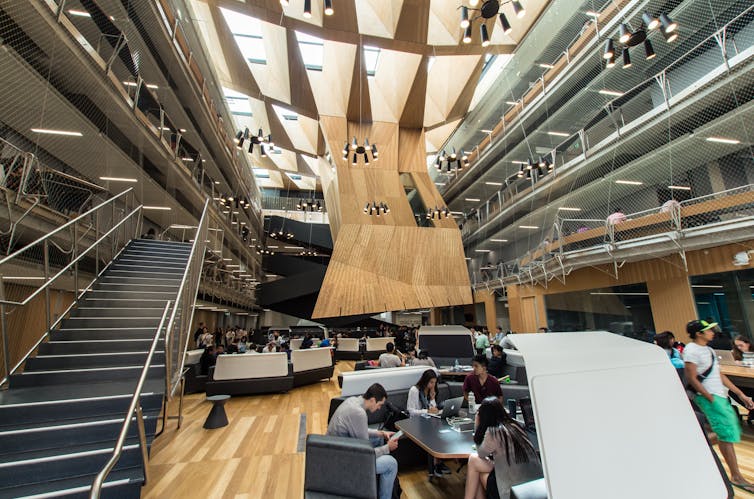
Young people work on computers in small clusters of desks in a large lobby. There is a high ceiling with lights and a wide staircase.
Until recently, Australia, the UK and Canada have been trying to attract international students.
Nils Versemann/ Shutterstock, CC BY

What happened in Canada?

After the pandemic, the number of international students in Canada grew by around 30% per year for two years in a row. By 2023 there were more than one million international students in the country, compared with around 600,000 two years earlier.

In response, the Canadian government announced it would cap the number of study permits, to reduce the number of new international students in vocational and undergraduate programs by 35% in 2024.

Each province and territory has been given a cap based on its overall population. This will have a significant impact on urban metropolitan areas where international students prefer to study, notably the Greater Toronto Area, but will have less effect on other regions.

What about the UK?

The number of international students in the UK has also surged, reaching a historic high last year of more than 750,000. This growth was entirely driven by an increase in students from non-European Union countries, as the number of students coming from the EU declined by 8%.

In response, the UK government stopped allowing international students to bring their partners and children with them.

This has already had an impact, with a 16% decline in student visa applications in the year to July 2024.

Rows of people in seats listen to a speaker, who is standing in front of a whiteboard, next to a speaker.
The UK no longer lets international students bring partners and children.
Matej Kastelic/Shutterstock, CC BY

What’s going on in Australia?

Initially, through the now-infamous Ministerial Direction 107 (signed in December 2023), the Australian government tried to reduce the surge in new students by denying large numbers of student visa applications.

The Department of Home Affairs’ approach disproportionately affected students from India and low-income countries, while having little impact on students from China. The approach also disproportionately hit universities outside big cities and those with fewer international students.

Unfortunately, this completely undermined the Department of Education’s long-term strategy, which has been focused on increasing the diversity of the student population and the diversity of providers.

A new approach in Australia

So now the Albanese government is trying again. This time, each institution will be allocated a quota of new international students for 2025.

Australia’s largest universities, which also have high proportions of international students and are the most research-focused, will see the biggest cuts.

Many of these will have caps on new students set halfway between their 2019 and 2023 commencing numbers. Universities with the smallest proportions of international students will have their caps set at 2023 numbers. Private tertiary providers look like they will have significant cuts too.

The overall result will mean international students will find it more difficult to study at the large and high-ranked universities in Sydney and Melbourne. There will also be far fewer places in private colleges for lower-cost vocational programs.

The winners are public universities and TAFEs that currently enrol fewer international students.

What now?

What happens beyond 2025 is anyone’s guess, and will be determined through negotiations between the yet-to-be-established Australian Tertiary Education Commission and each provider.

What is clear is Australia is taking an even more extreme approach to managing international student enrolments than two of our major competitors.

The Conversation

The authors do not work for, consult, own shares in or receive funding from any company or organisation that would benefit from this article, and have disclosed no relevant affiliations beyond their academic appointment.

ref. Australia’s approach to international student caps is even more radical than in the UK and Canada – https://theconversation.com/australias-approach-to-international-student-caps-is-even-more-radical-than-in-the-uk-and-canada-237752

Romance fraud doesn’t only happen online – it can turn into real-world deception

Source: The Conversation (Au and NZ) – By Cassandra Cross, Associate Dean (Learning & Teaching) Faculty of Creative Industries, Education and Social Justice, Queensland University of Technology

Napoleonka/Shutterstock

We often think of fraudsters as people on the opposite side of the world. They will manipulate and exploit victims through words on a computer screen, or loving messages through the phone. But romance fraud can also happen in person, with the fraudster sleeping in the bed beside you.

This was the circumstance Australian writer Stephanie Wood found herself in. It’s also the basis for the new television series Fake, currently screening on Paramount+. A dramatisation of Wood’s powerful memoir by the same name, the series outlines the many lies and betrayals of an intimate relationship.

It’s a brutal insight into the world of deception which characterises romance fraud.

When love hurts

Romance fraud (or romance scams) is what it sounds like – offenders use the guise of a relationship to gain a financial reward. In most cases, it’s through the direct transfer of money from the victim, but it can also be through using personal credentials to commit identity crimes.

From the outside, it’s hard to understand how romance fraud is so effective. However, research has documented the range of grooming techniques, social engineering tactics and methods of psychological abuse deployed by offenders. Offenders know exactly what to do and say to gain the compliance of their victim.


Offenders target a person’s vulnerability and work hard to build strong levels of trust. There are endless calls, texts and emails that create a bond. Then follows the inevitable “crisis”, whereby the offender needs money urgently for a health emergency, criminal justice situation, business need or even a cryptocurrency investment opportunity.

For many, this can result in ongoing payments and substantial losses. Over A$200 million was reported lost by Australians to this fraud type in 2023, but this is likely a gross underestimation of actual figures. It also doesn’t capture the many non-financial harms, including physical and emotional declines in wellbeing.

When the relationship finally ends, it’s too late. The money is gone, the extent of the deception is laid bare, and recovery from the heartache and loss is a constant battle.

There is a well-documented “double hit” of victimisation, with individuals needing to grieve the relationship as well as any financial losses.

Seeing is not believing

There are countless incidents of romance fraud where the offender and victim never meet: the deception takes place entirely online. But it’s important to know fraudsters also operate in person.

Wood’s memoir details an extraordinary level of lies and dishonesty presented to her throughout her relationship. Stories that laid the groundwork for later fabrications. Stories that were deliberate and calculated in how they were used to gain her trust, and later used against her.

The motivations of these real-world deceivers are not always straightforward. Often it’s about money, but not always. For Wood, not being asked for money allayed potential suspicions, but it didn’t reduce her feelings of loss and emotional devastation upon discovering the extent of the lies.

Wood is by no means alone in her experience. Marketing executive Tracy Hall endured a similarly sophisticated and all-encompassing level of deceit in her relationship with convicted conman Hamish McLaren (known to her as Max Tavita).

In her book, The Last Victim, Hall recounts snippets of their daily lives over a 16-month period, with McLaren portraying himself as a successful professional in finance. His mail was addressed to Max Tavita and his phone conversations were with real people. Yet his whole identity and the world he represented to Hall was a complete fabrication.

The experiences of Wood and Hall highlight the sheer depth of elaborate deception that can be perpetrated in an intimate relationship. Critically, it highlights romance fraud isn’t relegated to an online environment.

How can we prevent romance fraud?

There is an overwhelming amount of shame and stigma associated with romance fraud. The dynamics of these deceptive relationships are misunderstood, and this perpetuates negative stereotypes and a discourse of victim blaming, even from friends and family.

In hindsight, the warning signs might seem obvious, but fraudsters tend to effectively disguise these in real time and deploy deliberate tactics to overcome any suspicion.

We must all create a culture that empowers victims to come forward to raise awareness. This isn’t intended to create fear or anxiety, but to normalise the threat fraud poses, and to allow for difficult conversations if it happens. Ongoing silence from victims only favours the offender.

How to protect yourself from romance fraud

It’s inevitable we’ll continue to swipe right in our efforts to find love. But keep a healthy level of scepticism and an open dialogue with family and friends in any quest for a new relationship.

Don’t be afraid to conduct your own searches of people, places and situations presented to you in a relationship. There is a memorable moment in Fake where the protagonist refutes her friend’s offer of assistance, saying “this is a love story not an investigation”. Sadly, sometimes an investigation is necessary.

No matter what the circumstance or the person, think carefully before sending any money. Only give what you are willing to lose.

Deception comes in many forms. We must recognise it for what it is, and the impact it has on victims. But we must also not give into those who lie, and let them define who we are or dictate our ability to trust.

If you or someone you know has been a victim of romance fraud, you can report it to ReportCyber. For support, contact iDcare. For prevention advice, consult Scamwatch.

The Conversation

Cassandra Cross has previously received funding from the Australian Institute of Criminology and the Cybersecurity Cooperative Research Centre.

ref. Romance fraud doesn’t only happen online – it can turn into real-world deception – https://theconversation.com/romance-fraud-doesnt-only-happen-online-it-can-turn-into-real-world-deception-237653

‘Hot mic’ moment aside, Pacific policing deal is a masterstroke of diplomacy for the Albanese government

Source: The Conversation (Au and NZ) – By Michael O’Keefe, Director, Master of International Relations, Department of Politics, Media and Philosophy, La Trobe University

Australian Prime Minister Anthony Albanese may be attempting to backpedal from a “hot mic” moment at the Pacific Islands Forum this week in which he joked the United States “go halvies” on a new regional policing agreement.

But putting aside any awkwardness, the deal itself represents a significant diplomatic victory for Australia, as well as a security win for the Pacific.

The geopolitical rivalry between China and Australia, the United States and their allies has been encroaching on all aspects of regional diplomacy, and Pacific leaders came into this meeting wanting to refocus the agenda.

And one of the most important issues to the Pacific is transnational crime. With drug cartels from Latin America using Fiji and other Pacific nations as a transit point for drugs entering Australia and New Zealand, transnational crime now sits alongside climate change as the top two regional priorities.

In January, three tonnes of methamphetamine were seized in Fiji. If delivered to markets in Australia and New Zealand, it could have been valued at hundreds of millions of dollars.

Asian crime syndicates and outlaw motorcycle gangs from Australia and New Zealand are also present in some countries, bringing other crimes, such as human trafficking, prostitution and scamming operations.

In June, Fijian Prime Minister Sitiveni Rabuka told Pacific leaders:

We know that crime and criminal groups do not respect borders. Rather, they manipulate borders with their business model. Cybercriminals ignore borders altogether.

What the new policing agreement will do

This is why this week’s headline announcement of a A$400 million Australian-funded Pacific Policing Initiative is so vital. It’s a comprehensive program designed by Pacific police to meet the increasing threat of transnational crime.

There are three main pillars to the agreement, which will establish:

  • four new policing centres providing specialist training across the region

  • a Pacific policing support group able to deploy trained officers to countries for major events or to respond to crises

  • a Pacific policing coordination hub in Brisbane that will have access to Australian Federal Police facilities for training.

Albanese has been keen to emphasise the idea was developed as a collaborative effort by Pacific police chiefs.

Unlike previous bilateral efforts involving Australia, this initiative will be truly regional. And despite some apprehensions about the geopolitical impact of the deal, the consensus among Pacific leaders is the initiative will be highly beneficial.

Papua New Guinea’s prime minister, James Marape, described it as “a concept that is born from within”.

The entire Pacific is the biggest unpoliced space in planet earth. […] it is really important that we come together in this manner.

Spiralling drug use and HIV infections

The threats from transnational criminals are framed as a problem thrust on the region from outside. These organised crime groups are only interested in the strategic value of the Pacific as a waypoint in their distribution networks.

These criminals are also taking advantage of gaps in the Pacific policing capacity and the vulnerability of regional police to corruption.

Unfortunately, the side effect of being a transshipment hub is rising drug use in many Pacific nations themselves, with associated social and health problems such as sex work and HIV infections.

The number of new HIV cases in Fiji, in particular, is surging at an alarming rate. As one UN official said:

It’s a serious concern, we are seeing young people, teenagers, dying of HIV today and that’s shocking. […] We are seeing 10-year-olds, 12-year-olds coming in to clinics testing positive because of drug use.


Read more:
Meth addiction, HIV and a struggling health system are causing a perfect storm in Fiji


The geopolitics behind the deal

Responding so comprehensively to this need will also ensure Australia is viewed as the “partner of choice” for at least a generation of Pacific police.

Many Pacific leaders feel Australia has struggled over the years to deliver a satisfactory response to their concerns over climate change. The policing initiative, however, is an example of Australia delivering on a promise. This will likely give Canberra a boost in its ongoing battle with China for influence.

The deal builds on Australia’s successful military diplomacy in the Pacific in recent years. Canberra has funded key defence infrastructure, such as the Lombrum and Blackrock bases in PNG and Fiji, respectively, and delivered military equipment, such as patrol boats and bushmaster vehicles.

These are practical examples of Canberra using the tools of statecraft at its disposal to achieve its national interests – namely crowding out
Chinese influence in this strategic area.

The policing agreement stands in sharp contrast to China’s failure to negotiate a regional security agreement of its own in 2022.

Of course, there is some wariness over the deal. Vanuatu Prime Minister Charlot Salwai said he wanted to ensure the policing initiative is “framed to fit our purposes and not developed to suit the geostrategic interests and geo-strategic denial security postures of our big partners”.

Under the agreement, each Pacific government can decide how it chooses to participate in the initiative. The response from the Solomon Islands, which has signed a controversial police deal with China, will now be watched closely in Canberra.

In short, the Pacific Policing Initiative is good public policy and diplomacy. It will certainly improve the fight against transitional crime by providing regional police with the resources and expertise they need.

Success on policing shouldn’t breed complacency, however. Australia has a long way to go to meet Pacific expectations on climate change. No doubt China will be searching to gain an advantage in this area.

The Conversation

Michael O’Keefe has received funding from the Australian Army Research Centre.

ref. ‘Hot mic’ moment aside, Pacific policing deal is a masterstroke of diplomacy for the Albanese government – https://theconversation.com/hot-mic-moment-aside-pacific-policing-deal-is-a-masterstroke-of-diplomacy-for-the-albanese-government-237663

Concussion risks for women footballers are greater than men: why, and what can be done?

Source: The Conversation (Au and NZ) – By Hunter Bennett, Lecturer in Exercise Science, University of South Australia

Since the inception of the Australian Football League Women’s (AFLW) competition in 2017, women’s football participation has increased rapidly, from about 380,000 in 2016 to around 600,000 in 2022.

Women now represent approximately one-third of all players nationally.

During this time, the AFLW has evolved dramatically.

In 2017, it started with eight teams playing a short eight-round competition. Next season, which begins on Friday night, 18 teams will play across a 15-round campaign.

By 2026, the competition will feature a full 17-round season, with female AFLW players becoming full-time athletes like the men.

The impact of injuries

Team success and career longevity rely heavily on one critical factor – staying healthy.

Teams with lots of injuries don’t win many games, and injured players often have shorter careers.

This is why injury prevention is one of the most heavily researched topics around the globe.

The first step in any good injury prevention plan is injury surveillance.

Injury surveillance is the process of observing and tracking injuries to identify which are most common and result in the most missed matches.

By identifying the areas of greatest need, targeted injury prevention strategies can be created.

There is a large body of research examining the most common injuries in male Australian football at all levels (including community, sub-elite and elite).

This research is often used to guide injury prevention strategies for women’s football.

However, this has an issue – we don’t know if women have the same injury patterns as men.

This is important when we consider there are key differences between how men’s and women’s Australian football is played.

At some levels (such as elite and sub-elite), woman’s football is currently played with 16 players on the field, rather than 18.

It has a shorter game duration and fewer player rotations than the men’s competition, which can affect the speed of the game and the fatigue players experience.

Finally, stoppages occur 30% more often in women’s football, and women’s teams have more than twice as many contested possessions and tackles per minute of match-play than men, highlighting it has more frequent player-to-player contact.

Key differences between men and women

Researchers from the University of South Australia recently conducted the largest league-wide study of the injury patterns of sub-elite women’s football to date, tracking the injures experienced by seven clubs competing in the South Australian National Football League Women’s competition during the 2023 season.

Ankle sprains, concussions and anterior cruciate ligament (ACL) injuries were the most common and burdensome. Conversely, there were very few muscle strains.

Most injuries occurred during matches (rather than at training), and more than two-thirds occurred in a contact situation (such as during a tackle or a marking contest).

Importantly, these injury patterns were notably different from those often seen in males.

First, hamstring muscle strains were one of the least common injuries, despite being one of the most common in men.

Second, ACL injuries occurred about twice as often in women than men.

Finally, and arguably most notably, concussion rates were about three-times higher than men – something that has been seen in prior seasons at the elite AFLW level.

Similar observations have been made in other contact sports such as rugby, where women not only experience higher rates of concussion, but also get concussed via different mechanisms to men.

Not only does this suggest women require different injury prevention strategies than men, but that concussion injuries should be a key prevention focus for all competition levels.

Football codes are becoming more knowledgeable about concussion.

What could be done to fix the issue?

There are some possible concussion prevention strategies that could be considered for women footballers.

Tackles with an upright body position have been shown to increase the likelihood of the tackler’s head contacting their opponent’s shoulder, which increases concussion risk.

So specific tackle skill training to ensure athletes keep a low body position and contact the opposition’s mid-section could be an option to help reduce the rate of tackle-related concussion.

Recent research has indicated neck strength might protect against concussions and that injury prevention programs that include neck exercises can reduce the number of head and neck injuries.

As such, exercises to improve neck strength could be a great introduction to pre-season training, in conjunction with normal upper and lower body strength training.

Similarly, a study of athletes from a range of sports (including soccer and volleyball) suggested improving core muscle strength and stability may reduce the risk of concussion, which could be trained easily throughout the entire season.

Finally, rule changes could reduce the opportunity for contact concussions to occur. Some common suggestions have included banning “the bump” to reduce shoulder to head contact, and limiting the number of players allowed on one side of the field during a kick in after a point is scored to reduce congestion.

The Conversation

The authors do not work for, consult, own shares in or receive funding from any company or organisation that would benefit from this article, and have disclosed no relevant affiliations beyond their academic appointment.

ref. Concussion risks for women footballers are greater than men: why, and what can be done? – https://theconversation.com/concussion-risks-for-women-footballers-are-greater-than-men-why-and-what-can-be-done-235090

Is chocolate milk a good recovery drink after a workout? A dietitian reviews the evidence

Source: The Conversation (Au and NZ) – By Evangeline Mantzioris, Program Director of Nutrition and Food Sciences, Accredited Practising Dietitian, University of South Australia

eldar nurkovic/Shutterstock

Whether you enjoy chocolate milk regularly, as a weekend treat, or as an occasional dose of childhood nostalgia, it probably wouldn’t be the first option you think of for post-workout recovery.

Unless you’re on TikTok, perhaps. According to many people on the social media platform, chocolate milk is not only delicious, but it offers benefits comparable to sports drinks after a workout.

So is there any evidence to support this? Let’s take a look.

Rehydrating after a workout is important

Water accounts for somewhere between 50% and 60% of our body weight. Water has many important functions in the body, including helping to keep our body at the right temperature through sweating.

We lose water naturally from our bodies when we sweat, as well as through our breathing and when we go to the toilet. So it’s important to stay hydrated to replenish the water we lose.

When we don’t, we become dehydrated, which can put a strain on our bodies. Signs and symptoms of dehydration can range from thirst and dizziness to low blood pressure and confusion.

Athletes, because of their higher levels of exertion, lose more water through sweating and from respiration (when their breathing rate gets faster). If they’re training or competing in hot or humid environments they will sweat even more.

Dehydration impacts athletes’ performance and like for all of us, can affect their health.

So finding ways to ensure athletes rehydrate quickly during and after they train or compete is important. Fortunately, sports scientists and dietitians have done research looking at the composition of different fluids to understand which ones rehydrate athletes most effectively.

The beverage hydration index

The best hydrating drinks are those the body retains the most of once they’ve been consumed. By doing studies where they give people different drinks in standardised conditions, scientists have been able to determine how various options stack up.

To this end, they’ve developed something called the beverage hydration index, which measures to what degree different fluids hydrate a person compared to still water.

According to this index beverages with similar fluid retention to still water include sparkling water, sports drinks, cola, diet cola, tea, coffee, and beer below 4% alcohol. That said, alcohol is probably best avoided when recovering from exercise.

Beverages with superior fluid retention to still water include milk (both full-fat and skim), soy milk, orange juice and oral rehydration solutions.

This body of research indicates that when it comes to rehydration after exercise, unflavoured milk (full fat, skim or soy) is better than sports drinks.

But what about chocolate milk?

A small study looked at the effects of chocolate milk compared to plain milk on rehydration and exercise performance in futsal players (futsal is similar to soccer but played on a court indoors). The researchers found no difference in rehydration between the two. There’s no other published research to my knowledge looking at how chocolate milk compares to regular milk for rehydration during or after exercise.

But rehydration isn’t the only thing athletes look for in sports drinks. In the same study, drinking chocolate milk after play (referred to as the recovery period) increased the time it took for the futsal players to become exhausted in further exercise (a shuttle run test) four hours later.

This was also shown in a review of several clinical trials. The analysis found that, compared to different placebos (such as water) or other drinks containing fat, protein and carbohydrates, chocolate milk lengthened the time to exhaustion during exercise.

What’s in chocolate milk?

Milk contains protein, carbohydrates and electrolytes, each of which can affect hydration, performance, or both.

Protein is important for building muscle, which is beneficial for performance. The electrolytes in milk (including sodium and potassium) help to replace electrolytes lost through sweating, so can also be good for performance, and aid hydration.

Compared to regular milk, chocolate milk contains added sugar. This provides extra carbohydrates, which are likewise beneficial for performance. Carbohydrates provide an immediate source of energy for athletes’ working muscles, where they’re stored as glycogen. This might contribute to the edge chocolate milk appears to have over plain milk in terms of athletic endurance.

A birds-eye view of a glass of chocolate milk with a red straw.
The added sugar in chocolate milk provides extra carbohydrates.
Brent Hofacker/Shutterstock

Coffee-flavoured milk has an additional advantage. It contains caffeine, which can improve athletic performance by reducing the perceived effort that goes into exercise.

One study showed that a frappe-type drink prepared with filtered coffee, skim milk and sugar led to better muscle glycogen levels after exercise compared to plain milk with an equivalent amount of sugar added.

So what’s the verdict?

Evidence shows chocolate milk can rehydrate better than water or sports drinks after exercise. But there isn’t evidence to suggest it can rehydrate better than plain milk. Chocolate milk does appear to improve athletic endurance compared to plain milk though.

Ultimately, the best drink for athletes to consume to rehydrate is the one they’re most likely to drink.

While many TikTok trends are not based on evidence, it seems chocolate milk could actually be a good option for recovery from exercise. And it will be cheaper than specialised sports nutrition products. You can buy different brands from the supermarket or make your own at home with a drinking chocolate powder.

This doesn’t mean everyone should look to chocolate milk when they’re feeling thirsty. Chocolate milk does have more calories than plain milk and many other drinks because of the added sugar. For most of us, chocolate milk may be best enjoyed as an occasional treat.

The Conversation

Evangeline Mantzioris is affiliated with Alliance for Research in Nutrition, Exercise and Activity (ARENA) at the University of South Australia. Evangeline Mantzioris has received funding from the National Health and Medical Research Council, and has been appointed to the National Health and Medical Research Council Dietary Guideline Expert Committee.

ref. Is chocolate milk a good recovery drink after a workout? A dietitian reviews the evidence – https://theconversation.com/is-chocolate-milk-a-good-recovery-drink-after-a-workout-a-dietitian-reviews-the-evidence-236685

LGBTQI+ Australians are tired of being ignored. Here’s why counting them in the census is so important

Source: The Conversation (Au and NZ) – By Xavier J Mills, PhD Candidate at School of Social Sciences, Media, Film and Education, Swinburne University of Technology

The 2026 Census presented a crucial opportunity to count the LGBTQI+ population in Australia for the first time.

Instead, the Albanese government has opted to disregard important questions on gender and sexual identity. Once again, LGBTQI+ Australians will be invisible in population data, sparking outrage in the community.

Serious concerns were raised about the 2021 Census and its failure to ask questions about sexual orientation and gender identity. This included complaints to the Australian Human Rights Commission on the basis that the survey failed “to ask meaningful questions to properly count members of the LGBTIQA+ community”.

Following the backlash at the time, the Labor government pledged to gather relevant data in the upcoming 2026 Census. Yet, this has been abandoned. The Sex Discrimination Commissioner has now called for the government to reverse the call.

This decision has huge implications for public policy, but also leaves LGBTQI+ people feeling unheard and unseen.

Previous question problems

In 2021, the census limited the ability for LGBTQI+ people to be counted and considered. This included in data collection, analysis and distribution of the findings.

For example, despite giving respondents the option to select “non-binary sex”, the Australian Bureau of Statistics (ABS) abandoned these data. They said “the sex question did not yield meaningful data”.

This seemingly “garbage data” was inevitable because the term “non-binary” is far more commonly associated with gender identity, rather than sex, leading many to be unsure exactly what was being asked.

For the 43,220 people who exclusively selected non-binary sex, they were reorganised into male/female binary using “random allocation”.

Where an individual provided a male or female response alongside a non-binary sex response, the binary male/female response took precedence.

This “straight washing” of data also occurred in the design of the census forms. Respondents were asked “in which country was the person’s father born?” and “in which country was the person’s mother born?”.

Given the gendered language used in these questions, sufficient data is unable to be produced to specifically identify individuals with same-sex parents, leading many rainbow families to feel as though their presence had been erased.

A screenshot of a 2021 Census form asking about parentage.
Australian Bureau of Statistics/Commonwealth of Australia, CC BY

There are also no specific questions included in the census designed to record sexual orientation, despite at least two government departments being on record at the time professing a need for such data to deliver appropriate and tailored services.

This decision to continue running the 2026 Census as is, without questions on gender identity and sexuality, have also been criticised by some crossbenchers. Independent MP Allegra Spender said the lack of data makes it “impossible to make policy for the LGBTQ+ community”.

The right to be counted

One line of argument that has emerged since the announcement about the 2026 Census is that the government simply dosn’t need to know about the sexuality of its people. This undermines the crucial role the census plays.

The United Nations advises that census data has a global impact. It contributes to:

  • funding allocation

  • urban planning

  • public health

  • infrastructure development

  • evidence-based policy formulation.

Census data has a concrete impact on the livelihood of Australians, contributing to social and economic policy. Decisions about transport, education and health, for example, can be derived from the data we gather in the census.

However, others have reminded us that without this critical information, we don’t know very basic things about our population.

As it stands, we don’t know how many people identify as LGBTIQ+ in Australia. We don’t know where they live or anything about their health, families and socioeconomic status, to name but a few.

What we do know is LGBTQI+ people are at higher risk of mental ill health and suicide and domestic violence. To craft policy responses to fix these things, we need more data.

In lieu of good quality information, decisions made about the LGBTQI+ community are uninformed at best. At worst, LGBTQI+ people are completely ignored.


Read more:
LGBTIQ+ people are being ignored in the census again. Not only is this discriminatory, it’s bad public policy


Ignoring calls for change

The government remained silent on its decision for days.

This week, Deputy Prime Minister Richard Marles said:

we don’t want to open up a divisive debate in relation to this issue […] We’ve seen how divisive debates have played out across our country and the last thing we want to do is inflict that debate on a sector of our community right now.

The decision is clearly being framed as a measure to protect LGBTQI+ people from backlash.

Yet, omitting these questions goes against demands from many LGBTQI+ community organisations, such as Equality Australia, which has gathered roughly 16,000 signatures in their #CountUsIn2026 campaign.

Excluding LGBTQI+ people from the census also goes against the Bureau of Statistics’ best practice standards on collecting data on sex, gender, variations of sex characteristics and sexual orientation.

These standards were designed to be used by government bodies, academics and private organisations in their own “statistical collections to improve the comparability and quality of data”. According to the ABS, researchers should follow the standard for planning, implementing, monitoring and evaluating policies and programs.

The governments’ decision to abandon the LGBTQI+ community under the guise of “protection” goes against these guidelines, as well as requests from governmental organisations, activists and the LGBTQI+ community at large.

It will also likely embolden those who wish to further marginalise LGBTQI+ people and see them excluded from Australian life.

The census doesn’t just inform us about individuals, but tells us which groups the government wishes include and exclude from the population.

Leaving the 2026 Census unchanged sends a message to LGBTQI+ people that they don’t matter in the eyes of the state.

The authors do not work for, consult, own shares in or receive funding from any company or organisation that would benefit from this article, and have disclosed no relevant affiliations beyond their academic appointment.

ref. LGBTQI+ Australians are tired of being ignored. Here’s why counting them in the census is so important – https://theconversation.com/lgbtqi-australians-are-tired-of-being-ignored-heres-why-counting-them-in-the-census-is-so-important-237637

Can a 10-year-old be responsible for a crime? Here’s what brain science tells us

Source: The Conversation (Au and NZ) – By Susan M. Sawyer, Professor of Adolescent Health The University of Melbourne; Director, Royal Children’s Hospital Centre for Adolescent Health, The University of Melbourne

Bricolage/Shutterstock

The age a child can be arrested, charged and jailed in Australia is back in the spotlight.

Last year, the Northern Territory became the first jurisdiction to raise the age of criminal responsibility from ten to 12. Now its new, tough-on-crime government has pledged to return it to ten. It comes after Victoria walked back its earlier commitment to raise the age to 14, settling instead on 12.

But the United Nations Committee on the Rights of the Child says 14 should be the absolute minimum. It raised this age from its earlier recommendation (in 2007) of 12, citing a decade of new research into child and adolescent development.

So what does the science say? What happens to the brain between ten and 14? And how much can those under 14 understand the consequences of their actions?

Who is an adolescent?

Our research shows adolescence is a critical period for development. It’s the time children’s experiences and explorations shape how they develop cognitive skills (including critical thinking and decision making), as well as social and emotional skills (including moral reasoning).

Adolescence also lasts longer than we tend to think. Important brain development begins during late childhood, around eight to nine years. Intense changes then follow during early adolescence (ages ten to 14). But these changes continue well into the twenties, and full cognitive and emotional maturity is not usually reached until around age 24.

However, everyone’s brain matures at a different rate. That means there is no definitive age we can say humans reach “adult” levels of cognitive maturity. What we do know is the period of early adolescence is critical.

What does puberty do to the brain?

Puberty is a defining feature of early adolescence. Most of us are familiar with the changes that occur to the body and reproductive systems. But the increase in puberty hormones, such as testosterone and oestrogen, also trigger changes to the brain. These hormones increase most sharply between ten and 15 years of age, although gradual changes continue into the early twenties.

Puberty hormones change the structures in the brain which process emotions, including the amygdala (which encodes fear and stress) and ventral striatum (involved in reward and motivation).

Two teenage girls wearing glasses lean over a laptop.
A rise in hormones during puberty changes the brain, especially how it deals with emotions.
cottonbro studio/Pexels

This makes adolescents particularly reactive to emotional rewards and threats. Our research has shown the brain’s sensitivity to emotions increases throughout early adolescence until around 14 or 15 years old.

At the same time, changes in puberty have been linked to increased sensation seeking and impulsive behaviours during early adolescence.

This context is crucial when we discuss the behaviour of children in the ten to 14 age range. The way their brains change during this period makes them more sensitive and responsive to emotions, and more likely to be seeking experiences that are new and intense.

How do adolescents make decisions?

The emotional context of puberty influences how younger adolescents make decisions and understand their consequences.

Decision making relies on several basic cognitive functions, including the brain’s flexibility, memory and ability to control impulses.

These cognitive abilities – which together help us consider the consequences of our actions – undergo some of the steepest development between ages ten and 14. By age 15, the ability to make complex decisions has usually reached adult maturity.

A teenage boy carries another on his shoulders while a friend looks on.
The decisions teenagers make are significantly influenced by emotions and their peers.
leah hetteberg/Unsplash

But adolescents at this age remain highly susceptible to emotions. So while their brain may be equipped to make a complex decision, their ability to think through the consequences, weighing up costs and benefits, can be clouded by emotional situations.

For example, research has shown 13-14 year-olds were more distracted from completing a task and less able to control their behaviour when they viewed images that made them feel negative emotions.

The social world of teenagers also has a significant impact on how they make decisions – especially in early adolescence. One study found that while older adolescents (aged 15-18) are more influenced by what adults think when weighing up risk, adolescents aged 12-14 look to other teenagers.

Experiments have also shown adolescents aged 12-15 make riskier decisions when they are with peers than by themselves. Their brain responses also suggest they experience a greater sense of reward in taking those risks with peers.

How do teens understand the consequences of their actions?

The concept of criminal responsibility is based on whether a person is able to understand their action and know whether it is wrong.

Moral reasoning – how people think about right and wrong – depends on the ability to understand another person’s mental state and adopt their perspective. These skills are in development across adolescence.

Research suggests it may take more effort for adolescent brains to process “social” emotions such as guilt and embarrassment, compared to adults. This is similar when they make moral judgements. This evidence suggests teenage brains may have to work harder when considering other people’s intentions and desires.

Young adolescents have the cognitive ability to appreciate they made a bad decision, but it is more mentally demanding. And social rewards, emotions and the chance to experience something new all have a strong bearing on their decisions and actions in the moment — possibly more than whether it is right or wrong.

Early adolescence is critical for the brain

There are also a number of reasons adolescent brains may develop differently. This includes various forms of neurodisability such as acquired brain injury, fetal alcohol spectrum disorder, attention-deficit hyperactivity disorder (ADHD) and intellectual disability, as well as exposure to trauma.

Teenagers with neurodevelopmental disorders will likely cope differently with decision making, social pressure, impulse control and risk assessment, and face extra difficulties. Across the world, they are disproportionately incarcerated.

In Australia, Indigenous children and adolescents are incarcerated in greater numbers than their non-Indigenous peers.

Each child matures differently, and some face extra challenges. But for every person, the period between ten and 14 is critical for developing the cognitive, social and emotional skills they’ll carry through the rest of their life.

The Conversation

Susan M. Sawyer was a member of the Victorian government’s Youth Justice Act Independent Expert Advisory Group. She receives funding from the National Health and Medical Research Council.

Nandi Vijayakumar receives funding from the National Health and Medical Research Council and the Australian Research Council.

ref. Can a 10-year-old be responsible for a crime? Here’s what brain science tells us – https://theconversation.com/can-a-10-year-old-be-responsible-for-a-crime-heres-what-brain-science-tells-us-237552

Labour or leisure? Why a universal basic income might foster wellbeing but not productivity

Source: The Conversation (Au and NZ) – By Alexander Plum, Senior Research Fellow in Applied Labour Economics, Auckland University of Technology

The current cost-of-living crisis, high interest rates and the ensuing economic contraction have disproportionately hit low-income households. And for many low-income workers, the future remains uncertain.

On top of that, the rise of artificial intelligence may result in significant job redundancies and displacements. And recent employment data for New Zealand has been grim, with a rise in the number of unemployed.

The uncertain future of work in general has led many to propose some form of universal basic income (UBI) as a solution. The underlying idea is simple: everyone receives a basic income with no strings attached. Think of something like New Zealand superannuation, but for everyone.

Both the Green Party of New Zealand and the Opportunities Party have put forward a UBI as a practical response to the financial insecurities experienced by low-income households. Some commentators have described the UBI as inevitable.

But would a UBI really work? And by how much could it change the lives of low-income households in particular? As it turns out, a new study from the United States, funded by OpenAI’s founder Sam Altman, provides insights into what can potentially be expected if the UBI becomes a reality.

Altman sees universal cash payments as a possible solution to the large-scale job displacements expected with AI-driven automation. However, the study’s results were not necessarily what supporters of the scheme were hoping for.

UBI in practice

As an unconditional cash transfer, a UBI scheme works differently from a means-tested benefits system (such as the Working for Families tax credit), which requires a family’s economic condition to fall under specific criteria for eligibility. The UBI is for everyone.

Thus, the UBI can be a costly programme for a government, depending on the amount paid. A 2019 study calculated that a UBI at the jobseeker support level of NZ$215 per week would cost $41.3 billion annually.

However, the government can also generate savings by slashing bureaucracy and replacing the welfare system with the UBI.

A number of countries have been exploring what a UBI might mean for them. Finland ran a two-year UBI pilot in 2017 and 2018. This aimed to understand whether an unconditional cash transfer encouraged uptake of low-paid or temporary work among the unemployed.

Two thousand randomly selected unemployed people received €560 (NZ$1,000) monthly. The study found positive wellbeing effects. The basic income recipients were found to be more satisfied with their lives and experienced less mental strain. The impact on employment was also positive but small.

In 2023, England started a two-year UBI trial. The scheme gives 30 people a monthly payment of £1,600 (NZ$3,500). The focus is on how the lump sum transfer affects the mental and physical health of the recipients. The first set of results are expected next year.

OpenAI CEO Sam Altman: would a UBI help soften the impact of AI on the workplace?
Getty Images

UBI and employment

Sam Altman’s US-based study investigated how guaranteed minimum income affects low-income households’ employment and earning prospects.

The study recruited participants from low-income households, aged between 21 and 40 as of 2019, in the states of Texas and Illinois.

The research group consisted of 1,000 randomly selected low-income adult individuals who unconditionally received US$1,000 (NZ$1,700) per month for three years.

To put this amount in perspective, the cash transfer equalled, on average, a 40% increase in household income. Compared with other such studies, both the amount and the duration are unprecedented.

Two thousand participants formed the control group, each receiving US$50 (NZ$85) monthly.

Labour or leisure?

Interestingly, the analysis revealed a 2% drop in labour market participation by those receiving the cash transfer, and a reduction in the weekly number of hours worked by between 1.3 to 1.4 hours.

Similar effects were found for the participants’ partners. The decline in labour market participation reduced individual income by $1,500 a year (NZ$2,500) relative to the control group.

What were the participants doing with the extra time? In theory, the additional financial security for low-income households should enable individuals to spend more time productively.

This could include searching longer for a higher-quality or better-fitting job, starting training or education, building startups, or being productive in non-work activities such as caregiving.

However, the study found an increase in the time spent on leisure pursuits, but no significant improvements in the quality of employment and no significant effects on education or training.

The future of work

The findings suggest the negative labour market implications of UBI may depend on the duration and the generosity of the programme.

A German newspaper summarised these findings as “disenchanting” for supporters of a UBI.

Given the most recent changes to the jobseeker benefit rules in New Zealand, which include benefit sanctions, it is unlikely the current government will consider a programme like a UBI.

But AI is fundamentally changing the nature of work. There may come a time soon when such a cash transfer becomes necessary.

While the overall literature on the effects of unconditional cash transfers offers mixed evidence, the new US study provides crucial insights for policymakers to consider while evaluating the net economic gains from a UBI.

Kabir Dasgupta is currently a senior economist at the Federal Reserve Board, United States of America. The views here are authors’ own and do not reflect those of the Federal Reserve Board of Governors or the Federal Reserve System.

Alexander Plum does not work for, consult, own shares in or receive funding from any company or organisation that would benefit from this article, and has disclosed no relevant affiliations beyond their academic appointment.

ref. Labour or leisure? Why a universal basic income might foster wellbeing but not productivity – https://theconversation.com/labour-or-leisure-why-a-universal-basic-income-might-foster-wellbeing-but-not-productivity-235523

How low can we go? To cut the carbon that goes into buildings to net zero, we need radical change

Source: The Conversation (Au and NZ) – By Philip Oldfield, Head of School and Professor of Architecture, UNSW Built Environment, UNSW Sydney

Buildings are one of our biggest contributors to global heating. They produce 37% of all greenhouse gas emissions from energy use and production processes. Building emissions are made up of two parts: operational carbon (from energy used to heat, cool and power buildings) and embodied carbon (due to material use and construction).

We know how to reduce operational carbon to net zero by increasing insulation and air-tightness, and by using renewable energy. It’s entirely unclear how we’ll get down to net-zero embodied carbon.

Embodied carbon amounts to about half a new building’s lifetime emissions, so it’s essential to reduce it. As operational carbon emissions are cut, embodied carbon’s share of building emissions could rise to 85% by 2050. So vexed is this problem that some have called for a general “halt to new construction” in the developed world.

Our new research shows while we can greatly reduce embodied carbon in Australia, it will require radical changes in how we design, construct, use and reuse buildings.

Embodied carbon remains unregulated

One of the biggest challenges is that embodied carbon is entirely unregulated, except in five countries – Denmark, Finland, France, the Netherlands and Sweden – that have brought in minimum standards. In most other places, it can effectively be as high as you like.

This is a problem, because the materials we use to build have enormous environmental impacts. Cement production is responsible for 8% of all greenhouse gas emissions and steel another 7%. Aluminium, copper, glass, bricks and more all add significantly to global emissions.

In response, the World Green Building Council has set targets to reduce embodied carbon by 40% by 2030, and to net zero by 2050. But there is little consensus about how this can be achieved, or even if it’s possible.

How low can we go?

Our study explores the extent to which we can reduce embodied carbon in Australian office buildings.

We took a “best practice” office building with a hybrid structure of timber and concrete, and redesigned it with a standard concrete frame to reflect a more conventional building. We then measured their upfront embodied carbon – the carbon needed to construct each building in the first place. The best-practice example had 14% less embodied carbon than the conventional building – good, but some way off our 2030 aspirations.

So, we redesigned the building again. We made the structure entirely timber and added columns to remove the need for beams. This might seem like a minor change, but more columns would require a shift away from the “open plan” offices that have become the norm.

We also used straw insulation in the walls, reduced glazing and unnecessary finishes, and increased reused and recycled materials throughout. By the end we had cut the upfront embodied carbon by 45%, from 520 kilograms of CO₂ equivalent per square metre to 287kg. But many of the moves we made are far more radical than common industry practice.

Wood is good, but isn’t the whole solution

We also tested to see if we could reach net zero embodied carbon by including the “biogenic carbon” stored in the timber and straw. When plants grow, they absorb carbon dioxide and store the carbon in their biomass. Including this stored carbon meant we could achieve net zero and even net negative embodied carbon results – more carbon was stored in the materials than was emitted to construct the building.

This sounds great in theory. In practice it’s a bit of an accounting trick. For instance, it leads to a paradoxical situation where adding more timber to a building, even when it isn’t needed, reduces the emissions on paper.

It can also lead to problems in the future. Any carbon stored in natural materials will always be released at the end of the building’s life, when the materials are burnt, go to landfill or are recycled. This means while embodied carbon may be low or even negative to start with, there will be a spike in emissions years down the line.

However, our study shows small decisions can have a big impact. Of all the changes we made, the one that reduced embodied carbon the most was simply replacing carpet with hardwood floors. This saved 625 tonnes of carbon (77kg per square metre). This was due to carpet having to be replaced every ten years and hardwood lasting three times longer.

3 essential steps to make bigger reductions

Part of the challenge with embodied carbon is just how much we’re going to build in the coming decades. It’s estimated there will be 230 billion square metres of new construction between 2020 and 2060. That’s equivalent to constructing the floor area of all the buildings in Japan, every year, for 40 years.

If all this was built in the same way as the typical office building in our study, it would add 120 billion tonnes of greenhouse gas emissions. Construction alone would use up almost half of our total remaining carbon budget to stay within 1.5°C global warming. This is inherently unsustainable and demonstrates the scale of the challenge we face.

While our research shows how we can reduce this impact, reductions beyond 45% will require more systemic changes. We will need to:

  • regularly retrofit and reuse the buildings we already have, instead of creating entirely new ones

  • recycle and reuse materials more, instead of using new materials

  • build smaller buildings, and fundamentally question just how much floor area we actually need.

These options may seem radical, but climate science tells us we must cut emissions now to avoid catastrophe. A 40% reduction of embodied carbon today, through the measures we outline, would be a good start on the pathway towards a low-carbon built environment.


We would like to acknowledge Damian Hadley, Scott Balmforth and Anh Nguyen for their contributions to this research.

Philip Oldfield has received grant funding from multiple sources and is an Advisory Group Member of the Council on Tall Buildings and Urban Habitat (CTBUH), and the James Martin Institute. This research was funded by an Innovation Connections Grant from the Australian Department of Industry, Science and Resources and funding from Terroir.

Gerard Reinmuth owns shares in TERROIR Pty Ltd whose work was used as a subject for the research and who co-funded it in collaboration with the Australian Department of Industry, Science and Resources Innovation Connections program.

William Craft has received grant funding from multiple sources. This research was funded by an Innovation Connections Grant from the Australian Department of Industry, Science and Resources and funding from Terroir.

ref. How low can we go? To cut the carbon that goes into buildings to net zero, we need radical change – https://theconversation.com/how-low-can-we-go-to-cut-the-carbon-that-goes-into-buildings-to-net-zero-we-need-radical-change-236326

They come from above: here’s why magpies, magpie-larks and lapwings swoop in spring

Source: The Conversation (Au and NZ) – By Meg Edwards, Lecturer in Wildlife Science, University of Southern Queensland

Transport and Main Roads Queensland , CC BY

If you live in Australia or New Zealand, the coming of spring is a mixed blessing. The days get warmer. Flowers bloom. Birds nest.

It’s this last change which can be a problem. Nesting makes male birds from species such as magpies, magpie-larks and masked lapwings (also known as plovers) territorial and protective – and willing to dive-bomb humans.

One species is notorious – the Australian magpie. This iconic black and white songbird is a familiar sight in cities and towns across both Australia and New Zealand, as it was introduced to New Zealand in the 19th century, where it is now common. The magpie’s strong beak and powerful wings can provoke fear amongst walkers, joggers and cyclists.

This year, the swooping started early. More than 450 incidents were recorded on Magpie Alert before the formal start of spring. Most swooping incidents cause fear but not injury. Actual injuries occur 10-15% of the time. While some injuries come from claws or beak, many more occur when we try to flee and fall over. Very rarely, swooping can trigger more serious injuries or even death.

What’s behind swooping behaviour?

When a magpie swoops you, it’s defending its nest and chicks. It sees you as a potential threat.

Australian magpies start their breeding season in winter. They build basket-like nests of sticks and twigs which they line with soft materials such as grass and hair. Peak breeding season comes between August and November when eggs and chicks are in the nest. These four months are when swooping increases.

The good news is swooping season is usually only intense for a few weeks while the chicks are most vulnerable in the nest, which usually happens sometime between August and October.

Fast-moving cyclists are seen by these birds as a particular threat. Data from MagpieAlert, the public database of attacks, indicates cyclists are the number one target. But humans aren’t being singled out – magpies can swoop other birds to defend their territory and suitable nesting sites, or protect their young from predatory birds, cats, or foxes.

Generally, male magpies will perform a warning swoop when they perceive danger. If that’s ignored, they can swoop a second or third time. This is often combined with alarm calls and clapping their beak to make warning sounds.

Masked lapwings can swoop to defend their chicks.
Jude Black/Shutterstock

Only around 10% of nesting magpies actually swoop humans. But if you’ve been swooped before, you’re more likely to be swooped again. Magpies can recognise and remember human faces, and have been known to swoop the same people year after year.

Magpies tend to swoop from above. But magpie-larks – the unrelated black and white bird also known as peewees or mudlarks – can actually do more damage. When they swoop, they come in from the front and can go for the eyes.

Other swooping birds in Australia include noisy miners – small native grey and yellow birds common in urban areas. These aggressive honeyeaters work as a pack to drive away threats – which can include us. They can also attempt to get food from unsuspecting picnickers. Then there are the masked lapwings, who nest on the ground and can swoop if you get too close.

Swooping is done to defend the nest. Pictured are three magpie-lark babies.
crbellette/Shutterstock

Swooping birds around the world

While Australia’s magpie has an international reputation for swooping, it’s not the only notorious species.

In North America, red-winged blackbirds are known to swoop during their breeding season, while the American crow can be very territorial during spring. If you anger an American crow, the highly intelligent bird will remember your face – and can pass down its grudge to the next generation.

While seagulls around the world can swoop, it’s not done to drive you away but rather to steal your hot chips.

The Australian magpie was named after the Eurasian magpie due to their similar black and white colouring. But the Eurasian magpie does not swoop, even though it’s related to crows. The Australian magpie is not from the crow family – its closest relatives are butcherbirds – songbirds with strong beaks.

The importance of songbirds

Barring seagulls and masked lapwings, these swooping species have one thing in common – they’re songbirds, meaning they belong to the order Passeriformes. This should come as no surprise given the Australian magpie’s warbling repertoire of calls and songs.

Songbirds make up nearly half of all bird species globally. This enormously influential group of birds actually evolved in Australia.

This group of birds are highly varied, from tiny fairy-wrens to larger corvids such as crows. They play an essential ecological role in our natural world, acting to disperse seeds, clean up dead creatures by scavenging, helping to pollinate plants, eating insects and pests and returning nutrients to plants via their poo.

Be alert, not alarmed

If you’re weary of being swooped, choose a different path for a couple of weeks until the chicks have left the nest.

Magpies often nest in the same area each year, so if you’ve been swooped before, consider avoiding that route.

Protective gear such as sunglasses and a hat can help you avoid injury. Wearing sunglasses on the back of your head or sticking fake eyes to the back of your helmet or hat can help, as magpies do not like to be looked at when swooping.

If you are unlucky enough to be swooped, try not to run or scream as this can make you seem an even bigger threat. Instead, move out of the bird’s territory as soon as possible.

This spring, keep an ear out for the beautiful calls of our songbirds – and an eye out for our overly protective flying friends.

Meg Edwards does not work for, consult, own shares in or receive funding from any company or organisation that would benefit from this article, and has disclosed no relevant affiliations beyond their academic appointment.

ref. They come from above: here’s why magpies, magpie-larks and lapwings swoop in spring – https://theconversation.com/they-come-from-above-heres-why-magpies-magpie-larks-and-lapwings-swoop-in-spring-237213

Ocean heat is changing marine food webs – with far-reaching consequences for NZ fisheries and sea life

Source: The Conversation (Au and NZ) – By Anne Rolton Vignier, Scientist in Shellfish and Algal Biology, Cawthron Institute

The global ocean continues to warm at a concerning rate.

Satellite measurements of average sea surface temperatures show February this year was the highest for any month in the 45-year dataset, and the warming trend continued in May.

New Zealand’s sea temperatures are also hitting record highs. Between 2022 and 2023, oceanic and coastal waters reached their warmest annual temperatures since measurements began in 1982, according to Stats NZ data.

This warming is already threatening coral reefs – the Great Barrier Reef is the hottest it’s been in 400 years – and marine life. But it is also reshaping ecosystems at the very basis of ocean food webs.

Microscopic algae, or phytoplankton, are ubiquitous in the surface layers of the ocean. They represent the foundation of the marine food web and serve as a substantial carbon sink.

Each day, they take up more than a hundred million tonnes of carbon dioxide through photosynthesis. The carbon then either sinks to the bottom of the ocean as the microalgae dies off or is “fixed” in tiny animals that graze on the plants.

Already, scientists are observing a downward trend in this ocean production, leading to expanding “ocean deserts” and the depletion of beneficial microalgae in favour of harmful algal blooms.

Unless we act to cut emissions, these shifts in microalgal composition are projected to get worse as ocean temperatures continue to rise, globally and regionally in the waters off Aotearoa New Zealand.

Global ocean temperatures have remained well above average during the 12 months to May 2024.
Copernicus Climate Change Service/ECMWF, CC BY-SA

Shifts in microalgal communities in New Zealand

We are already seeing changes in New Zealand’s microalgal communities.

The abundance and activity of microalgae is usually measured by tracking Chlorophyll A, the pigment most plants use for photosynthesis. Recent reports by Stats NZ show shifts in microalgal biomass, with increases in some regions and declining levels in others.

This graph shows changes in phytoplankton biomass along New Zealand’s coast from 2003 to 2022.
Author provided, CC BY-SA

Apart from these shifts in biomass, studies have also shown changes in the make-up of microalgae and reduced species diversity. This leads to stunted ecosystems which are less resilient to environmental changes, have lower productivity and capture less carbon.

Abrupt shifts in microalgal communities can drive ecosystems into altered states, affecting food webs and fisheries. Such a “regime shift” happened in the North Pacific in 1977 and 1989, with far-reaching consequences for the the entire ecosystem and salmon and halibut fisheries.

More recently in New Zealand waters, lower microalgal biomass and a collapsing food web have been implicated in the cause of “milky flesh syndrome” in snapper from the Hauraki Gulf.

Harmful algal blooms

Harmful algal blooms also appear to be on the rise in New Zealand. The toxins these microalgae produce accumulate in shellfish, and their consumption can be poisonous for people and animals and threaten the economic stability of fisheries.

Globally, the impacts of harmful algal blooms cost the blue economy more than US$8 billion per year. More than US$4 billion of this relates to human health impacts.

According to data gathered by the Ministry of Primary Industries, the rise in harmful algal blooms in New Zealand during 2023/24 resulted in the highest number of shellfish harvest closures from biotoxins this decade.

Rising ocean temperatures can accelerate the growth of microalgae that cause toxic blooms, while reducing the nutritional quality and size of microalgae species other marine organisms depend on for food.

As our research shows, microalgal toxins affect the reproduction and early life stages of shellfish species indigenous to New Zealand. New Zealand’s fisheries and aquaculture sectors, collectively worth nearly NZ$4 billion, already face harvest closures, stock losses and reduced recruitment of larvae.

There is still much we don’t fully understand about the links between climate change and toxic harmful algal blooms, but the potential for serious ecological damage was demonstrated by the 1998 bloom in Wellington Harbour, which caused a mass die-off of all marine life on the seafloor.

Climate change affects the physiology of microalgae, which in turn has impacts on other marine organisms.
Eden Cartwright, Bird Circus, CC BY-SA

Toxic microalgal blooms can also kill marine mammals or make them less resilient to other stress factors, such as higher temperatures.

Addressing the challenge

Understanding how microalgal communities might change under different climate scenarios is a crucial first step.

This knowledge will help us forecast and investigate the downstream effects on the marine environment and develop effective management strategies to safeguard ocean ecosystems and public health.

Knowing when and where harmful algal blooms are likely to occur will lessen the risk for industry and enable effective restoration efforts. Improving our knowledge of the impacts of microalgal toxins on human health will enable safe recreational water use and give clarity on appropriate responses to algal blooms.

Filling these knowledge gaps is urgent. Changes in microalgal communities are already evident and will likely continue at an accelerating pace, with possibly irreversible knock-on effects on ecosystems and ocean-based industries.

Anne Rolton Vignier receives funding from the New Zealand Ministry of Business, Innovation and Employment.

Kirsty Smith receives funding from the New Zealand Ministry of Business, Innovation and Employment.

ref. Ocean heat is changing marine food webs – with far-reaching consequences for NZ fisheries and sea life – https://theconversation.com/ocean-heat-is-changing-marine-food-webs-with-far-reaching-consequences-for-nz-fisheries-and-sea-life-236427

How can you support your Year 12 student during their final exams?

Source: The Conversation (Au and NZ) – By Penny Van Bergen, Head of School of Education and Professor of Educational Psychology, University of Wollongong

Thanumporn Thongkongkaew/ Shutterstock, CC BY

Year 12 students are less than two months away from sitting their final exams. We know this can be a stressful time for students.

How can parents best help their children navigate exam season? Research suggests “autonomy-supportive parenting” is key. This involves including teens in reasoning and decision-making about their lives.

Understanding the brain and learning

When it comes to studying, it is helpful to know how the brain works.

One common misconception is multitasking can help students do more in less time. In fact, this can drain our capacity to pay attention. You may think you are multitasking but what you are really doing is switching from one task to the next. Each switch has a “cost” for performance, in that it slows you down.

To combat this, try and get your student to focus on one thing at a time – helped by a calm, quiet study environment.

A second misconception is studying according to one’s “learning style” (for example, as a visual, auditory or kinesthetic learner) will promote better learning.

But these learning styles have been shown to be a a myth. If students study using only one mode – such as via videos for those who believe themselves to be visual learners – they are likely to harm their own learning. This is because they will limit their access to the most relevant study resources (those that best present the knowledge).

Parents can help their teens prepare for exams by focusing on the content rather than the mode of delivery.

Multitasking does not help you study.
Ollyy/Shutterstock, CC BY

Sleep is so important

Sleep is an important component of study and exam preparation.

This is because sleep is crucial for “memory consolidation”, where newly laid memory pathways are strengthened and reinforced. Sleep deprivation interrupts this consolidation process and hinders learning the next day. It means there is less activation in parts of the brain involved with memory, self-regulation and attention.

Research shows up to half of Australian teenagers do not get enough sleep, with common disruptors including screen time, studying and socialising. In the lead-up to Year 12 exams, the temptation to stay up late to study – perhaps buoyed by energy drinks – may be particularly strong.

Parents can help their teens by working out a consistent sleep schedule together. They can also help their teens understand the connection between sleep and learning and the importance of reducing screen time before bed.

Sleep plays a crucial role in learning and memory.
Zhukovvvlad/Shutterstock, CC BY

Maximising study quality

The nature of Year 12 exams means students must study for multiple subjects at the same time.

This means the quality of study is especially important. Students should select study strategies that actively support memory and learning.

Many students report using less effective strategies, such as rereading and highlighting. These strategies are passive, meaning the brain does not need to do anything with the content.

Active strategies, such as doing practice tests (a version of “retrieval practice”), are effective because they require the brain to actively draw knowledge from long-term memory. The relevant knowledge must then be arranged into a response. This strengthens the memory pathway and the knowledge becomes easier to recall in future.

You can help your teen to study by encouraging different types of retrieval practice. This can include practice tests, but can also mean asking them to explain new concepts or to put arguments into their own words.

You could also encourage your teen to design a study schedule that includes a little of each subject, multiple times per week, rather than cramming on the final day.

While teens may be inclined to cram before the exam, studies have shown stronger learning outcomes when the same amount of study is spread out over a longer period. This pattern, called “spaced learning”, gives the brain more opportunities to retrieve the relevant knowledge from memory.

A useful amount of stress?

Stress has a “curvilinear” relationship with performance (sometimes known as the Yerkes-Dodson bell curve).

A little bit of stress is useful at exam time because it motivates study. But too much stress can impair students’ performance by inhibiting learning pathways and brain function.

The Yerkes-Dodson curve showing the relationship between stress and performance.
Wikimedia Commons, CC BY

Up to one in four Australian teens experience clinical levels of stress and anxiety in the lead-up to final-year exams. Perfectionism, female gender and parental pressure are risk factors.

When the consequences of not doing well are emphasised (“if you fail your exams you won’t get a good job”), it’s not helpful for teens. It is important to keep things in perspective.

The Australian Tertiary Admission Rank (ATAR) has long been the primary selection tool used by universities, yet many also offer early entry places and alternative entry pathways. This means students who do not achieve the ATAR they were expecting still have plenty of opportunities to pursue their chosen career.

Parents can support their teens by talking with them about taking time to connect with friends and family, emphasising the importance of calm and consistent study, and by not catastrophising about their teen’s future. Parents who stay calm about exams will have teens who are more likely to do the same.


Read more:
Unsure what to study next year? 6 things to consider as you make up your mind


Penny Van Bergen receives funding from the Australian Research Council and the NSW Department of Education.

Erin Mackenzie receives funding from the NSW Department of Education.

ref. How can you support your Year 12 student during their final exams? – https://theconversation.com/how-can-you-support-your-year-12-student-during-their-final-exams-237467

Yes, you can borrow money to invest in shares. But it comes with big risks

Source: The Conversation (Au and NZ) – By Sean Pinder, Associate Professor, Finance, The University of Melbourne

In their scramble to secure a foothold on an increasingly unaffordable housing ladder, some young investors might be looking for new ways to boost their returns on savings.

One such approach – albeit highly risky – is “leveraged investing”. In simple terms, this means borrowing money to invest.

Holding a mortgage is itself one way of doing this. This is because the relatively small deposit you pay to secure the loan exposes you to the capital gains (or losses) on an entire property as prices go up (or down).

Borrowing to invest in other assets is less common. But large corporations do it all the time. There are ways for individuals to do it too, including with relatively new financial products called “geared exchange-traded funds”.

So how do individual investors currently take advantage of leverage in the share market – and what might the risks be?

Margin lending

On face value, the mathematics of borrowing to invest might seem simple and alluring.

If an investor can borrow at an annual interest rate of 9% to invest in an asset with an expected annual return of 15% – and if those expectations are actually realised in the market – they get to pocket the excess of 6% (minus any fees).

Borrowing to invest in shares is far less common than borrowing for property.
Jandrie Lombard/Shutterstock

The traditional method for borrowing to invest is called “margin lending”. A lender, such as one of the big four banks, lends money to an investor which they then invest in the stock market.

The amount lent is typically determined by the amount of collateral an investor can produce to secure the loan.

For example, using a common loan-to-value ratio of 70%, an investor with a diversified portfolio of shares worth $20,000 could borrow an additional $47,000 to invest in the stock market.

This would give them a stock market exposure of $67,000 in total. But in return, the investor would have to pay interest on the loan.

If the stock market declines so much that the loan-to-value ratio falls below the lender’s minimum requirements, the investor will also have to cough up some additional capital as collateral. This is what’s known as a margin call.

Margin lending isn’t uncommon in Australia. Recent figures from the Reserve Bank of Australia show that in the March quarter this year, more than $15.8 billion was loaned across 80,000 client accounts in Australia.

In that same quarter, there were 367 margin calls made. Margin investing requires a bit of ongoing attention, and carries with it an administrative burden that many retail investors would be keen to avoid.

Greater exposure to the whole market

An alternative method of leveraged investing is to invest in a geared exchange-traded fund (ETF). These are relatively new on the scene.

ETFs are financial products that bundle together a wide range of investments into a single offering that can be bought and sold on a stock exchange. For example, an ETF might track the movement of stocks in a major index or companies in a particular sector.

A geared ETF, like a margin loan account, will have a target loan-to-value ratio that looks to boost returns from an investment. But it’s a professional fund manager doing all the borrowing.

An individual investor in a geared ETF will just see higher peaks and deeper troughs in price movements than a non-geared equivalent.

Promoters of these funds suggest that two key features provide clear advantages over traditional margin loans.

First, because of their size, the funds can borrow money to invest at institutional interest rates. These are expected to be lower than the rate applicable to individual margin accounts.

Second, there are no margin calls for individual investors. Instead, if the value of the investment falls enough to make loan-to-value ratio unacceptable, the fund sells down some of its assets to bring down its level of debt.

What could possibly go wrong?

A lot. All investing comes with a level of risk. Borrowing to invest adds a whole new level. Here are some of the biggest factors to be aware of.

First and foremost, leveraged investing can magnify gains – but it can also magnify losses. The extra volatility of these strategies means sharp market movements can quickly wipe out much of an investment. This is true for both margin lending and geared investment products.

Using debt to invest means any losses could be severely amplified.
Arsenii Palivoda/Shutterstock

And while returns are uncertain, the interest on debt is not. Regardless of whether the market is up or down, whether the investor has borrowed on their behalf or a leveraged ETF has done it for them, interest has to be paid on the debt used.

This can weigh heavily on a portfolio’s returns, and when markets are down, further amplify losses.

One further risk is unique to ETFs – tracking error. This arises when their returns don’t “track” the returns from the benchmark indexes they’re supposed to be imitating.

Everyday ETFs manage this error by continuously buying and selling assets to “rebalance” their portfolios. But leveraged ETFs have the additional task of buying and selling shares in a falling market to maintain their target loan-to-value ratio.

This additional drag on returns is referred to as “slippage” and has been identified by regulators as an extra risk retail investors should be aware of before considering investing in leveraged ETFs.

Does leverage provide the opportunity to magnify stock market gains? The answer is yes, but not without a cost that many may find unbearable if markets happen to move against them.

And it’s important to note that our discussion here is only very general in nature, and is not intended as financial advice. All investments carry risk.

Sean Pinder does not work for, consult, own shares in or receive funding from any company or organisation that would benefit from this article, and has disclosed no relevant affiliations beyond their academic appointment.

ref. Yes, you can borrow money to invest in shares. But it comes with big risks – https://theconversation.com/yes-you-can-borrow-money-to-invest-in-shares-but-it-comes-with-big-risks-237206

Diagnostic labels may increase our empathy for people in distress. But there are downsides too

Source: The Conversation (Au and NZ) – By Nick Haslam, Professor of Psychology, The University of Melbourne

Farknot Architect/Shutterstock

The language of mental ill health is inescapable. Diagnostic terms, such as depression and post-traumatic stress disorder (PTSD), pervade popular culture and saturate the online world. They are the currency of countless news stories and awareness campaigns.

The rise of diagnostic labels could be celebrated. It suggests the public’s mental health literacy is increasing and the stigma attached to mental illness is in decline. As the shame associated with it diminishes, mental illness comes out of the shadows.

But the rise of diagnostic language may also have downsides. Some critics argue it reflects the medicalisation of distress and may contribute to over-medication. And just as naming conditions may reduce stigma, it could also increase it. Labels can be sticky, having lasting effects on how others judge people with mental illness, and how they see themselves.

In a new study, my colleagues and I examined how labelling a person’s relatively mild or marginal mental health problems affects how others perceive them.

We found the presence of labels increases empathy and concern for those affected, but also pessimism about their capacity to recover. Essentially, diagnostic labels appear to be a mixed blessing when used at the less severe end of the distress spectrum.

Concept creep

When we talk about the rise of diagnostic labels, a particular concern is that concepts of mental illness have been expanding in recent years. They now encompass a wider range of experiences than they did previously. This so-called “concept creep” implies people may be using diagnostic terms to refer to phenomena that are relatively mild or marginal.

British psychologist Lucy Foulkes has argued people may be increasingly over-identifying mental illness. This means they are applying diagnostic labels to experiences that fall below the diagnostic threshold.

Recent studies (including those from my research group) support this possibility. This research has found people who hold expansive concepts of mental illness are more likely to diagnose themselves than those with narrower concepts.

The implications of applying diagnostic terms loosely are unclear. Using them to label relatively mild distress might have positive effects, such as encouraging people to take that suffering seriously and seek professional help.

But it might equally have negative effects, stigmatising the labelled person or leading them to be defined and constrained by their illness. It might even lead people to diagnose themselves inappropriately.

A young man seated on a couch appears pensive.
Concepts of mental illness have broadened in recent years.
February_Love/Shutterstock

Our study

We wanted to understand the impact of these broadened concepts of mental illness by examining how diagnostic labelling influences the perception of people experiencing relatively mild problems.

Across two experiments, we presented almost 1,000 American adults with short descriptions of a hypothetical person experiencing a marginal, non-severe mental health problem. Each description was carefully tested to fall near the diagnostic threshold.

Participants were randomly assigned to read otherwise identical descriptions either with or without a diagnostic label (major depressive disorder, generalised anxiety disorder and bipolar disorder in experiment one, and PTSD, obsessive compulsive disorder and binge-eating disorder in experiment two).

After reading each description, we asked participants to report how much empathy they felt towards the person, how appropriate they were for professional treatment, and how much they should receive accommodations at school or work, such as extra time on assignments or special leave.

We also asked how likely they thought the person would be to recover fully (both experiments) and how much control they had over their problems (experiment two). We then compared these judgments between the label and no‑label conditions.

Labels had an impact

Participants who read descriptions preceded by a diagnostic label tended to report greater empathy toward the person and more support for efforts to accommodate their problems. They also saw the person as more appropriate for treatment than those who read the same descriptions unlabelled.

At the same time, the presence of labels led participants to see the person’s problems as more lasting and their recovery as less under their control.

Many of these judgments varied between disorders. There was some evidence that labelling effects were strongest for less familiar disorders such as binge-eating and bipolar disorders.

A man talking to a female counsellor or psychologist.
The presence of diagnostic labels influenced how participants viewed the hypothetical people in our study.
Okrasiuk/Shutterstock

Mixed blessings

When diagnostic labels are applied to marginal cases of mental illness, the implications seem to be mixed. On the one hand, labels legitimise help-seeking, promote flexible support and boost empathy. These positives contradict suggestions that labelling promotes stigma.

However, diagnostic labels also seem to encourage the view that mental health problems are persistent and that people have limited capacity to overcome them. In other words, diagnostic labels may lead people to see mental illness as an enduring identity rather than a transient state. These perceptions may erode expectations of recovery for people experiencing problems and undermine efforts to achieve it.

Even the apparent benefits of labelling could have a downside in the context of relatively mild distress. It might encourage unnecessary and ineffective treatment or entrench a “sick” role by offering special accommodations to people with marginal impairments.

Our findings shed light on the possible consequences of the ongoing expansion of diagnostic concepts. As these concepts spread to less severe forms of distress and impairment, and diagnostic labels are used more loosely, we must be alert to the probable costs as well as benefits.

The Conversation

Nick Haslam receives funding from the Australian Research Council.

ref. Diagnostic labels may increase our empathy for people in distress. But there are downsides too – https://theconversation.com/diagnostic-labels-may-increase-our-empathy-for-people-in-distress-but-there-are-downsides-too-237553

Why Americans do political speeches so well (and debates so badly)?

Source: The Conversation (Au and NZ) – By David Smith, Associate Professor in American Politics and Foreign Policy, US Studies Centre, University of Sydney

The recent Democratic National Convention in Chicago was a showcase of impressive speeches. Presidential nominee Kamala Harris justified the newfound enthusiasm of Democrats with a strong acceptance speech, but even she couldn’t match the oratorical power of Michelle and Barack Obama two nights earlier.

US political culture is marked by visionary speeches, from Abraham Lincoln’s Gettysburg Address and William Jennings Bryan’s “Cross of gold” to Martin Luther King’s “I have a dream” and Ronald Reagan’s “Tear down this wall”. This rhetorical tradition infuses events such as party conventions, where memorable speeches can lay the groundwork for presidential careers.

Australia also has some justly famous political speeches. There was Robert Menzies’ “Forgotten People” address of 1942, Paul Keating’s Redfern speech in 1992, and Julia Gillard’s “misogyny speech” to parliament in 2012. Noel Pearson’s eulogy for Gough Whitlam in 2014 was a rhetorical masterpiece.

But these speeches are memorable because they are so rare. Australian politicians need to be good communicators, but they are not expected to deliver the kind of soaring, visionary rhetoric we see so often in the US. Why is this?

Politics with the soul of a church

US party conventions often look like Hollywood awards ceremonies, and Steven Spielberg was involved in the planning of the recent DNC. Hollywood has become an indelible part of US political culture.

Reagan, a former Hollywood actor, set new standards for how telegenic and entertaining presidents could be. Donald Trump may not be everyone’s idea of a great orator, but the former reality TV star is certainly a master of televised spectacles.

The tradition of preaching is an even deeper cultural source of US political rhetoric. With about 30% of Americans attending religious services regularly, the sermon is the most prevalent form of public speech in the US.

American preachers need to be compelling, given the level of religious competition, and church is where many future politicians first encounter the craft of public speaking. American political speeches often reflect the combination of uplift and warning found in preaching.

While evangelical Christianity is usually associated with the Republican Party, it is also in the DNA of Democrats because of the Civil Rights Movement and the black church. One of the standout speakers of the DNC was Georgia Senator Raphael Warnock, senior pastor of the same Baptist church in Atlanta where Martin Luther King Jr preached.

Warnock described Trump in biblical terms as a “plague on the American conscience”. But he also described a vote as “a kind of prayer for the world we desire for ourselves and for our children”.

Australia has no shortage of politicians who were raised as Christians and have Christian commitments. But unlike in the US, where even secular politicians must pay lip service to prayer, Christian politicians in Australia must adapt themselves to the secularism of Australian culture. This culture does not expect politicians to preach.

Strong speeches for weak parties

Michelle Grattan last week described Australian party conferences as “mind-numbing” compared with the “Hollywood extravaganzas” of their US counterparts.

But the spectacles at US party conventions testify to the weakness of American political parties. The Democratic and Republican National Committees have little power. Party organisations are localised and fragmented. They lack the central authority found in Australian parties, and the national convention every four years is the only time a nationwide party truly comes into existence.

Even in Congress, parties have few mechanisms for disciplining their members. Party leaders are forced to negotiate with their own side, not always successfully. Party conventions see an extravagant display of unity behind a newly nominated candidate. This is one of the few moments party unity is guaranteed.

While there is plenty of competition for power within Australian parties, in Australia it mostly takes place behind closed doors within party hierarchies. In the US, would-be legislators and executives need to campaign publicly to win the often brutal primary elections that earn them the party’s nomination.

Successful candidates must create their own personalised campaigns. They have help from local party organisations, which coordinate resources and volunteers, but they need much more than that. A candidate for national office must build their own coalition of donors that would dwarf anything a party could provide.

Hence the need for good speech-making. Competition for the attention of donors and voters is fierce, and a compelling speech is a vital way to stand out. This is especially true of candidates such as Barack Obama, who came from outside the party’s traditional power bases.

In Australia, inspirational speeches don’t have the same political currency. A system of strict party discipline, small preselection contests and short, relatively cheap election campaigns means candidates are rewarded more for other political skills.

The Australian advantage: debating

While a US politician might give a more entertaining stump speech than an Australian one, an Australian politician would probably perform better in any scenario that requires unscripted comments – especially a debate with an opponent.

Even superb US political orators can be underwhelming when they don’t have a script and a receptive audience. Congressional debates consist of prepared speeches with little direct engagement between opponents. There is no equivalent to Parliamentary Question Time, and holders of executive office (such as the president or state governors) aren’t even in the legislature.

While Congressional committee hearings can sometimes provide a simulation of the rowdiness we associate with Question Time, the structure of Congress isn’t conducive to debate in the same way.

The physical format of Westminster parliaments, with opponents facing each other directly, attests to an adversarial nature that was there from the beginning. The power of Gillard’s “misogyny speech”, which went viral globally, came partly from the way she delivered it straight into Tony Abbott’s face.

US Congress was designed differently. The framers of the Constitution loathed the idea of factions, and imagined a legislature made up of representatives who would negotiate with each other to find consensus. Congress in turn would have to negotiate with the president, who would rarely need to engage publicly with its members.

This may explain why, despite the routine brilliance of convention speeches, US presidential debates are so tedious and forgettable. Commentators who try to hype these debates by citing “great moments” from past debates inevitably reach for the same ancient zinger, “you’re no Jack Kennedy”, delivered by forgotten vice-presidential candidate Lloyd Bentsen in 1988.

The sad reality is that the most memorable and consequential presidential debate in living memory is the one we just saw, where Joe Biden performed so badly he ended his hopes of a second presidency.

In the land of the scripted, the teleprompter is king.

The Conversation

David Smith does not work for, consult, own shares in or receive funding from any company or organisation that would benefit from this article, and has disclosed no relevant affiliations beyond their academic appointment.

ref. Why Americans do political speeches so well (and debates so badly)? – https://theconversation.com/why-americans-do-political-speeches-so-well-and-debates-so-badly-237314

Nazi history, reality TV deception and the making of Apocalypse Now: what we’re streaming in September

Source: The Conversation (Au and NZ) – By Phoebe Hart, Associate Professor, Film Screen & Animation, Queensland University of Technology

Ready to catch the latest screen hits for September? This month brings a fresh batch of content, including some older documentaries now streaming thanks to DocPlay and the new National Film and Sound Archive Player.

The first of these, Hearts of Darkness, is a timely watch as we await Francis Ford Coppola’s upcoming passion project, Megalopolis (and as Coppola continues to make headlines for kissing extras on the film’s set).

For those wanting a more contemporary take on documentary, Netflix’s The Man With 1,000 Kids tells the provocative story of a Dutch man who seems intent on fathering as many children as possible. And over in New Zealand, the newest season of The Traitors provides plenty of suspense and intense drama.

Enjoy the show!

Occupied City

DocPlay

Steve McQueen’s Occupied City juxtaposes two narratives: the Nazi occupation of Amsterdam and the COVID lockdown. Based on the book Atlas of an Occupied City, Amsterdam 1940–1945 by Bianca Stigter (McQueen’s wife), the documentary recites the names and addresses of Jewish families murdered by the Nazis while presenting contemporary footage of these locations, now marked by their mundane, everyday domesticity.

The film cuts to footage of the riots that took place in Amsterdam during COVID. McQueen appears to be drawing visual parallels between systems of state control.

Occupied City is a four-hour endurance that transforms watching into an excruciating visceral experience of witnessing. Streaming this film at home, one might pause, seeking escape from the weight of the images. But on the big screen, where I first saw it, there is no reprieve.

McQueen forces you to confront what it means to witness atrocity and do nothing. This cinematic endurance compels us to reckon with our own complicity, asking what it truly means to observe and act in a world still haunted by the echoes of this history. The unsettling parallels between past and present draw you into a discomforting reflection on how different forms of occupation shape urban life and memory.

– Cherine Fahd

The Traitors season two

Paramount+

The first season of murder-mystery reality show The Traitors NZ undid itself somewhat by casting a bunch of media personalities who’d known each other for years. This diminished some of the hit international franchise’s tongue-in-cheek drama, wherein the premise relies on the “traitors” in the group being able to trick the others into trusting them.

For the second season, once again hosted by Paul Henry in high-camp mode, the producers put their trust in the charm and idiosyncrasies of the general public. An impeccably cast collection of “normies” is placed in the picturesque Castle Claremont, on the aptly named Mt Horrible Road, and divided into faithfuls and traitors.

They undertake missions to accrue money for the prize pot, leveraging quickly-built relationships to their advantage. But the real pleasure is in watching everyday New Zealanders, many of whom are naturally very funny, enthusiastically lean into the show’s deceptions.

The season has good pacing, strong story beats and plenty of opportunity for players to shine. There’s no villain edit here (although the grinning Dungeons and Dragons game master Mark comes close to giving one to himself). With an awful lot of strategy – and a genuine sense that the game could go anywhere – season two is one of the strongest and funnest examples of New Zealand reality TV in years.

– Erin Harrington

Hearts of Darkness: A Filmmaker’s Apocalypse

DocPlay

Coinciding with the release of Frances Ford Coppola’s Megalopolis, DocPlay is currently screening Hearts of Darkness, a documentary about the making of Apocalypse Now (1979). In case you haven’t seen it, the war epic follows a US army officer serving in Vietnam as he is tasked with eliminating a rogue colonel who views himself as a god among Cambodian tribal people.

Hearts of Darkness is compiled, in part, from footage and recordings made by Coppola’s wife, Eleanor, as well as outtakes and fascinating new interviews. This documentary, which has won several prizes itself, tells the story of the long, complex and disorderly shoot in the Philippines that promised little of the prizewinning film that resulted from it.

Coppola’s aspirations were grandiose, and every day the shoot got bigger and more out of control. The chaos was intensified by Coppola’s intuitive, self-indulgent working methods. He shot “irrationally”. He wrote call sheets with “scene unknown”, encouraged drug-addled actors to improvise, and dithered about the ending.

Eleanor documents Frances’ doubts about completing the film he dubs “the idiodyssey” – and his fear of producing a pretentious flop. Everything that could go wrong does go wrong, from a typhoon that killed 200 people, to actor Martin Sheen suffering a heart attack.

This was film-making as war: a psychedelic, rock-and-roll war like Vietnam itself. And as Eleanor says, “there is a kind of powerful exhilaration in the face of losing everything”.

– Joy McEntee

Facing the Music

NFSA Player

Bob Connelly and Robin Anderson’s extraordinary 2001 documentary Facing The Music is one of many classic Australian films available to view via the new, low-cost National Film and Sound Archive (NFSA) Player.

This film is a candid portrait of the composer and teacher Anne Boyd and her radicalisation in the face of cuts to university funding by the Howard government. Set in the Department of Music at the University of Sydney, we move between footage of talented young music students and tense staff meetings where Boyd and her colleagues grapple with their growing budget deficit. They try to paper over the budget problems by teaching more classes and (excruciatingly) trying to secure external sponsorship. They work in crowded offices and teach in shabby buildings, but their dedication to their students shines.

In Boyd, Connelly and Anderson have the perfect protagonist for a story about the funding crisis in higher education. Boyd transforms from an academic who refuses to strike, because teaching is her “calling”, to staffing a picket line. But the budget deficit still looms – and Boyd and her colleagues face difficult choices.

Universities have only become more neoliberal in the years since this film was made. This beautiful film is a reminder that the university’s role as a place of knowledge is still worth fighting for.

– Michelle Arrow

The Man With 1,000 Kids

Netflix

This docuseries went gangbusters on Netflix not too long ago, unsurprisingly. It follows the exploits of a fecund fertility fraudster who employs the internet to promote his seminal services. It’s the kind of contemporary clarion call that was always going to make the streamer’s recommender system go nuts.

As well as advertising online, Jonathan Jacob Meijer spread his seed by combining regular trips to repositories around the world with travel and lifestyle vlogging on YouTube (an archive for which the producers must have cried tears of joy). The result: the Dutch citizen became the father of many, many children as far afield as Australia.

The series shows how Meijer deceived women with ticking biological clocks by being indispensable and accessible, even offering to donate his DNA “the natural way”. Going by the online pseudonym of “Viking”, Meijer was also able to exploit the desires of prospective parents seeking “top” genetic stock.

I appreciated the show’s empowering aspects as it closely follows the stories of victims. Many of the interviewees are loving and grateful parents who are understandably horrified by the situation. It’s great to see them band together with the collective goal of humbling Meijer’s hubris.

Overall, it’s a slick story with abundant plot twists and funny (if sometimes poor-taste) visual gags to boot. Maybe not entertainment for the whole the family, but a conversation starter for sure.

– Phoebe Hart

The Conversation

Michelle Arrow receives funding from the Australian Research Council.

Cherine Fahd, Erin Harrington, Joy McEntee, and Phoebe Hart do not work for, consult, own shares in or receive funding from any company or organisation that would benefit from this article, and have disclosed no relevant affiliations beyond their academic appointment.

ref. Nazi history, reality TV deception and the making of Apocalypse Now: what we’re streaming in September – https://theconversation.com/nazi-history-reality-tv-deception-and-the-making-of-apocalypse-now-what-were-streaming-in-september-237478

Classifications, history and Australian hopes: what to expect at the Paris Paralympics

Source: The Conversation (Au and NZ) – By Vaughan Cruickshank, Senior Lecturer in Health and Physical Education, University of Tasmania

Paris is about to host its first Paralympics. Similar to the Olympics last month, Australia is bringing a strong team with many medal hopefuls.

But how are the Paralympics similar (or different) to the Olympics, how do the athlete classifications work, and who are Australia’s main medal hopes?

Paralympic history

Paralympic history began in England in 1948.

Medical doctor Ludwig Guttmann was working with paraplegic ex air force pilots who were injured in the second world war.

He organised archery and netball competitions at his hospital during the 1948 London Olympics to help his patients rehabilitate more quickly.

The first Paralympic games were held in Rome in 1960.

Since 1988, the Paralympics have been held at the same location as the Olympics, usually around two weeks later.


Read more:
Why aren’t the Olympics and Paralympics combined into one Games? The reasoning goes beyond logistics


Australia has competed in every Paralympics. Our most successful sports are athletics and swimming.

Similar to the Olympics, we have finished in the top ten on the medal tally in every summer Paralympics for the past 30 years.

Our best result was when we finished first on the medal tally at Sydney in 2000, with 63 golds.

Paris 2024

Athletes will compete in 549 medal events across 22 sports.

There are no new sports this year. Para badminton and para taekwondo are the newest sports – both introduced in Tokyo.

Most Paralympic sports have a similar sport on the Olympic program, for example para canoeing (Paralympics) and canoeing (Olympics).

Only two do not: boccia (a bowls-like sport played by athletes in wheelchairs) and goalball (teams of visually impaired athletes trying to roll a ball into the opposing goal).

In Paris, 18 venues from the Olympics will be used again during the Paralympics. These include the swimming pool, athletics track and equestrian venue.

Other venues are being converted. For example, the beach volleyball stadium at the Eiffel Tower will host blind football.

What about classifications?

The Paralympic classification system groups athletes based on their ability to perform in a specific sport.

This system aims to minimise any advantage one athlete might have over another and is somewhat similar to how athletes are grouped by age or weight in other sports.

First, an athlete is evaluated to see whether they have one of the ten eligible impairments, which are either physical, vision or intellectual.

Each sport has its own set of rules (called Minimum Impairment Criteria) to determine who can compete. This is because different sports require athletes to use their body differently.

For example, in wheelchair basketball, an athlete must have a physical impairment in their legs severe enough that it affects their ability to play standing basketball. In wheelchair rugby, athletes must have an impairment that affects both their arms and legs.

This means an athlete may be able to compete in one sport, but they may not meet the minimum requirements in another sport.

Additionally, sports such as para athletics and swimming include athletes with all types of impairments, whereas goalball is specifically for those with vision impairments.

Athlete classification is crucial to para sports.

After determining eligibility, athletes are placed into sport classes.

These classes group athletes with similar levels of activity limitation together, ensuring fair competition.

Lower numbers are allocated to athletes with more severe limitations, whereas athletes with smaller impairments are given high numbers.

For example, in cycling, an athlete with a double below-the-knee amputation who uses prostheses is likely to compete in the C3 class, whereas an athlete with a below-knee amputation and a prosthesis on one leg would compete in the C4 class.

Some team sports have their own unique team classifications.

For example, in wheelchair rugby, each player is assigned a points value ranging from 0.5 (lowest) to 3.5 (highest) based on their ability. The total points value of the players on the court at any given time must not exceed eight points. This ensures no team has an unfair advantage.

This system helps maintain the integrity of the competition, allowing athletes to compete based on their skills and abilities rather than the severity of their impairments.

Australia’s medal hopes

Some of our strongest medal chances are in athletics, swimming, cycling and rowing.

Both our flag bearers, Madison de Rozario (para athletics) and Brenden Hall (para swimming), could add to their existing medals (six each) from their four previous Paralympics.

Vanessa Low will be going for a third Paralympic gold medal in a row, as she launches into the long jump at Stade de France. Low continues to break world records, including the women’s T61 long jump in January, and she won gold in the World Para Athletics Championships in May.

James Turner is also a world record holder in Paralympic athletics and was named 2023 para-athlete of the year. He has achieved world records in the 100m, 200m, 400m and 800m.

Turner is a strong gold medal chance after winning silver (100m) and gold (400m) in Tokyo.

Lauren Parker has won four world triathlon titles, became a cycling world champion and won the 2023 Australian Women’s Para-Athlete of the Year award.

Having claimed silver in Tokyo in the individual women’s para-triathlon wheelchair event, Parker will be vying for a gold medal at the Paris paralympics. This is despite a recent training accident.

A host of gold medal chances are looming across the para-swimming events.

Para-swimmers to watch out for include Alexa Leary (100m freestyle champion and world record holder), Katja Dedekind (50m freestyle S13 champion and world record holder), Lakeisha Patterson (400m freestyle gold medal winner in Rio and Tokyo), Ryan Crothers (50m freestyle gold medal in Tokyo) and Ben Hance (100m backstroke gold medal in Tokyo).

Our other big individual chances are in rowing and canoeing.

Jed Altschwager and Nikki Ayers achieved gold at the 2023 world championships, set recent world records and became the 2023 World Rowing Para Crew of the Year.

Curtis McGrath will be attempting to build on his successive gold in the men’s KL2 200m caneo sprint in Rio and Tokyo, alongside his KL3 gold at Tokyo.

The Australian wheelchair rugby team, the Steelers, will be looking to return to the top of the podium after gold in 2012 and 2016, and recent world titles.

After missing out in Tokyo, the Steelers will be difficult to beat.

The authors do not work for, consult, own shares in or receive funding from any company or organisation that would benefit from this article, and have disclosed no relevant affiliations beyond their academic appointment.

ref. Classifications, history and Australian hopes: what to expect at the Paris Paralympics – https://theconversation.com/classifications-history-and-australian-hopes-what-to-expect-at-the-paris-paralympics-237473

Advocacy group to launch national campaign on Sunday to ‘amplify’ Muslim political voice

Source: The Conversation (Au and NZ) – By Michelle Grattan, Professorial Fellow, University of Canberra

Sunshine Mosque Wikimedia Commons, CC BY-SA

The advocacy group Muslim Votes Matter has put together a high-profile speakers list to launch its national campaign in Melbourne on Sunday, which is aimed at leveraging its influence for the federal election.

The group, formed earlier this year, is committed “to promoting political engagement and amplifying the voice of Australian Muslims”.

It does not intend to run candidates itself but will support those that align with its values and priorities.

Group spokesman Naser Alziyadat, a former lecturer and research fellow at Murdoch University, claimed that across Australia, there were more than 20 seats where Muslims could have the deciding vote.

“In the last 25 years, no federal government has been elected by more than a 15-seat margin. This positions us strategically to support candidates who prioritise our issues and challenge those who neglect our community,” he said.

At the Broadmeadows Town Hall launch, speakers will cover subjects ranging from conditions in Gaza, to the recent wins by Muslim candidates in the United Kingdom election, and the prospects of a hung parliament.

Wajid Akhter, a medical doctor working in the UK and a former assistant secretary general of the Muslim Council of Britain, representing The Muslim Vote UK, will “share the British election learnings with the Australian Muslim community to inform strategy and success”.

Bushra Othman, a surgeon from the Palestinian Australian New Zealand Medical Association (PANZMA) who did a three week medical mission in Gaza, will give her first-hand account of the situation there.

Nail Aykan, a former head of the Islamic Council of Victoria, from Muslim Voices of Calwell, will talk on the topic “Towards a Hung Parliament – there are no more safe seats”.

Among other speakers are Maha Abdo, CEO of Muslim Women Australia, Muahmmad Jalal, host of The Thinking Muslim podcast, and Umber Rind, a community health and anti-racism advocate who is a Yamatji Badimaya woman of Balouch cameleer ancestry.

Alziyadat said Muslim Votes Matter was “a beacon of cultural, linguistic, and professional diversity”. Its volunteers represented more than 20 different ethnic and cultural groups.

“Many of our volunteers are not Muslim, showcasing the inclusive and broad vision of our movement,” he said.

“As an independent, grassroots organisation, unaffiliated with any political party, our movement is dedicated to empowering the Australian Muslim and minority community to amplify our political voice.”

The Muslim community was the largest and one of the fastest-growing minority groups in Australia.

Muhammad Wajid Akhter is a medical doctor working in the UK and a former Assistant Secretary General of the Muslim Council of Britain and will be representing The Muslim Vote UK at the MVM launch.
Muslim Votes Matter Press Release

“Our collective voting bloc holds significant potential,” he said.

“MVM’s primary objective is to build strong partnerships with diverse community stakeholders to enhance political engagement and share resources.

“This effort will involve engaging the community through forums, workshops, campaigns, and digital platforms to encourage greater political participation and ensure representation at all levels of government.”

MVM national representative Ghaith Krayem said what had happened in Palestine in the last 10 months was “beyond reprehensible and we will not stop until the victims and all Palestinians receive the justice they so truly deserve.

“Part of that justice means holding our leaders accountable for their role in the plausible genocide unfolding in Gaza.”

Scott Morrison questions ASIO chief’s Hamas comment

Former prime minister Scott Morrison has questioned the comment by ASIO chief Mike Burgess that “rhetorical” support for Hamas would not be a problem for the security organisation.

Asked recently on the ABC if it was a problem for ASIO if a person had expressed any support or sympathy for Hamas, Burgess said: “If it’s just rhetorical support, and they don’t have an ideology or support for a violent extremism ideology, then that’s not a problem. If they have a support for that ideology, that will be a problem.”

In a Sky interview on Monday Morrison, who praised Burgess as an “outstanding” public servant, said he found the comment inexplicable.

He had worked with Burgess over a long period and many in different roles. He found the comment “completely inconsistent with what I would hear regularly from him over a long period of time.”

“The idea that any sympathy with Hamas, rhetorical or otherwise, somehow could be overlooked and you could get a leave pass to live long term in Australia – I can’t imagine that,” Morrison said, drawing a comparison with support for Stalinist purges or sympathy with Nazism. .

The Conversation

Michelle Grattan does not work for, consult, own shares in or receive funding from any company or organisation that would benefit from this article, and has disclosed no relevant affiliations beyond their academic appointment.

ref. Advocacy group to launch national campaign on Sunday to ‘amplify’ Muslim political voice – https://theconversation.com/advocacy-group-to-launch-national-campaign-on-sunday-to-amplify-muslim-political-voice-237661

Microplastics are in our brains. How worried should I be?

Source: The Conversation (Au and NZ) – By Sarah Hellewell, Senior Research Fellow, The Perron Institute for Neurological and Translational Science, and Research Fellow, Faculty of Health Sciences, Curtin University

Daniel Megias/Shutterstock

Plastic is in our clothes, cars, mobile phones, water bottles and food containers. But recent research adds to growing concerns about the impact of tiny plastic fragments on our health.

A study from the United States has, for the first time, found microplastics in human brains. The study, which has yet to be independently verified by other scientists, has been described in the media as scary, shocking and alarming.

But what exactly are microplastics? What do they mean for our health? Should we be concerned?

What are microplastics? Can you see them?

We often consider plastic items to be indestructible. But plastic breaks down into smaller particles. Definitions vary but generally microplastics are smaller than five millimetres.

This makes some too small to be seen with the naked eye. So, many of the images the media uses to illustrate articles about microplastics are misleading, as some show much larger, clearly visible pieces.

Microplastics have been reported in many sources of drinking water and everyday food items. This means we are constantly exposed to them in our diet.

Such widespread, chronic (long-term) exposure makes this a serious concern for human health. While research investigating the potential risk microplastics pose to our health is limited, it is growing.

How about this latest study?

The study looked at concentrations of microplastics in 51 samples from men and women set aside from routine autopsies in Albuquerque, New Mexico. Samples were from the liver, kidney and brain.

These tiny particles are difficult to study due to their size, even with a high-powered microscope. So rather than trying to see them, researchers are beginning to use complex instruments that identify the chemical composition of microplastics in a sample. This is the technique used in this study.

The researchers were surprised to find up to 30 times more microplastics in brain samples than in the liver and kidney.

They hypothesised this could be due to high blood flow to the brain (carrying plastic particles with it). Alternatively, the liver and kidneys might be better suited to dealing with external toxins and particles. We also know the brain does not undergo the same amount of cellular renewal as other organs in the body, which could make the plastics linger here.

The researchers also found the amount of plastics in brain samples increased by about 50% between 2016 and 2024. This may reflect the rise in environmental plastic pollution and increased human exposure.

The microplastics found in this study were mostly composed of polyethylene. This is the most commonly produced plastic in the world and is used for many everyday products, such as bottle caps and plastic bags.

This is the first time microplastics have been found in human brains, which is important. However, this study is a “pre-print”, so other independent microplastics researchers haven’t yet reviewed or validated the study.

Plastic bag and plastic bottle left on beach
The most common plastic found was polyethylene, which is used to make plastic bags and bottle caps.
Maciej Bledowski/Shutterstock

How do microplastics end up in the brain?

Microplastics typically enter the body through contaminated food and water. This can disrupt the gut microbiome (the community of microbes in your gut) and cause inflammation. This leads to effects in the whole body via the immune system and the complex, two-way communication system between the gut and the brain. This so-called gut-brain axis is implicated in many aspects of health and disease.

We can also breathe in airborne microplastics. Once these particles are in the gut or lungs, they can move into the bloodstream and then travel around the body into various organs.

Studies have found microplastics in human faeces, joints, livers, reproductive organs, blood, vessels and hearts.

Microplastics also migrate to the brains of wild fish. In mouse studies, ingested microplastics are absorbed from the gut into the blood and can enter the brain, becoming lodged in other organs along the way.

To get into brain tissue, microplastics must cross the blood-brain-barrier, an intricate layer of cells that is supposed to keep things in the blood from entering the brain.

Although concerning, this is not surprising, as microplastics must cross similar cell barriers to enter the urine, testes and placenta, where they have already been found in humans.

Is this a health concern?

We don’t yet know the effects of microplastics in the human brain. Some laboratory experiments suggest microplastics increase brain inflammation and cell damage, alter gene expression and change brain structure.

Aside from the effects of the microplastic particles themselves, microplastics might also pose risks if they carry environmental toxins or bacteria into and around the body.

Various plastic chemicals could also leach out of the microplastics into the body. These include the famous hormone-disrupting chemicals known as BPAs.

But microplastics and their effects are difficult to study. In addition to their small size, there are so many different types of plastics in the environment. More than 13,000 different chemicals have been identified in plastic products, with more being developed every year.

Microplastics are also weathered by the environment and digestive processes, and this is hard to reproduce in the lab.

A goal of our research is to understand how these factors change the way microplastics behave in the body. We plan to investigate if improving the integrity of the gut barrier through diet or probiotics can prevent the uptake of microplastics from the gut into the bloodstream. This may effectively stop the particles from circulating around the body and lodging into organs.

How do I minimise my exposure?

Microplastics are widespread in the environment, and it’s difficult to avoid exposure. We are just beginning to understand how microplastics can affect our health.

Until we have more scientific evidence, the best thing we can do is reduce our exposure to plastics where we can and produce less plastic waste, so less ends up in the environment.

An easy place to start is to avoid foods and drinks packaged in single-use plastic or reheated in plastic containers. We can also minimise exposure to synthetic fibres in our home and clothing.

The Conversation

Anastazja Gorecki worked as a casual research assistant for the ‘Plastics and Human Health’ division of the Minderoo Foundation in 2021.

Charlotte Sofield and Sarah Hellewell do not work for, consult, own shares in or receive funding from any company or organisation that would benefit from this article, and have disclosed no relevant affiliations beyond their academic appointment.

ref. Microplastics are in our brains. How worried should I be? – https://theconversation.com/microplastics-are-in-our-brains-how-worried-should-i-be-237401

Citizen scientists can help save Australia’s threatened species if we give them more direction

Source: The Conversation (Au and NZ) – By Erin Roger, Sector Lead, Atlas of Living Australia, CSIRO

Jodi Rowley

Across Australia and around the world, citizen scientists are protecting species by recording sightings, surveying landscapes and collecting samples. No job is too big or too small. As wildlife ecologists, we are indebted to this army of volunteers.

Citizen scientists are everyday people, who are not necessarily experts but who conduct scientific research. There are more than 100,000 citizen scientists in Australia alone. As a nation, we’re the third-biggest contributor to the global citizen science platform iNaturalist. This is staggering considering our relatively small population.

We wanted to find out how citizen science data contributes to decisions by governments and conservation organisations about which species are at risk of extinction, and how they can be conserved.

One of the main ways to help conserve biodiversity is through species extinction risk assessments. These allow scientists and decision-makers to determine how threatened a species is and the best ways to protect it.

Because citizen scientists collect so much data on biodiversity, this information could dramatically improve our ability to accurately assess species. But how useful is citizen science data in achieving this goal? Our new research set out to answer this question.

While we found room for improvement, it’s important to recognise and celebrate the immense value of citizen science data. We would be lost without it.

A group of people crouching over documents on the ground in a natural bushland setting
Citizen science projects can connect communities to biodiversity research and create passionate environmental advocates.
Benjamin Fleming

5 types of citizen science data

Our first step was to summarise what types of data citizen scientists are collecting. We found five key types:

  • evidence that a species occurs at a specific location (usually an image or sound recording including the date and time)

  • evidence that a species has not been recorded at a specific location

  • answers to a set of questions about a species and its environment

  • physical samples such as scat (poo), soil or water samples

  • collected stories or oral histories, including the voices of First Nations people.

We then considered each data type in terms of its use in addressing the globally accepted criteria for assessing extinction risk. The criteria are set by the International Union for the Conservation of Nature (IUCN), an international organisation devoted to nature conservation and the sustainable use of natural resources.

A group of people searching for fungi in a bushland setting, while one checks a reference book
Searching for fungi with coauthor Jasmin Packer in the Adelaide Hills.
University of Adelaide/Nelson Da Silva

Room to improve

We found the data citizen scientists typically collect were often not what was most needed to assess extinction risk under IUCN criteria.

Meeting the criteria requires more than just a record of a species occurring at a given location. Detailed information such as geographic range, and evidence of population decline, is also required.

So simply encouraging citizen scientists to record more ad hoc observations of species is not the best way to inform threatened species listing. Unfortunately, this means the assessment process can’t always benefit from the great work being done.

People charged with assessing a species’ conservation status could make better use of citizen science data. While this wasn’t an explicit finding of the research, the IUCN recognises this. Its recent white paper examines how Indigenous and local knowledge could be better harnessed.

There are ways to ensure citizen science data is better used to inform IUCN assessments. They can include:

  • planning projects from the outset to ensure the required data is captured

  • asking citizen scientists to complete structured ecological surveys or collect specific samples

  • integrating citizen scientist data with that collected by professional scientists.

But our research also revealed good news! We found new methods of data analysis – such as extracting population numbers – are helping scientists use citizen science more effectively.

Australian success stories: Fungimap and FrogID

Some citizen science projects in Australia are feeding into threatened species assessments. We described two of them in our research.

A brightly coloured yellow fungus growing among leaf litter, spotted by a keen citizen scientist
Getting a closer look at a colourful Cortinarius sinapicolor mushroom for Fungimap.
University of Adelaide/Nelson Da Silva

The first is Fungimap, which coauthor Jasmin Packer is involved with. Members record and map fungi through iNaturalist. These records have enabled threat assessments for at least 13 species.

In Fungimap, scientists have added extra information to the data collection fields – such as habitat and what the fungus is growing in (animal, soil or wood) – to make records more useful for assessing whether a species is threatened.

A brightly coloured green frog resting on a branch, with a leafy dark background
New England tree frog (Litoria subglandulosa)
Jodi Rowley/Australian Museum

The second is FrogID, led by coauthor Jodi Rowley. It’s a free smartphone app that enables people to record frog calls. Frog experts then identify which species is making the call. More than one million frog records have been collected this way in about six years.

FrogID data helped scientists understand frog persistence after the catastrophic 2019–20 bushfires in southeast Australia. Several species, including the sphagnum frog, have now been listed as threatened using FrogID data alongside professional data.

In both projects, scientists review the images and sound recordings. This ensures their accuracy and means the data is more likely to be included in government databases. Professional scientists also tell citizen scientists what they need to help provide the knowledge needed to assess a species’ extinction risk.

Here’s how to get involved

Citizen science observations are now the largest source of open-source biodiversity data in Australia.
It’s important to ensure the data we’re collecting keeps growing.

There are many ways to get involved. The Australian Citizen Science Association website hosts a helpful project finder. You can search for projects in your local area, on a particular subject or theme, or focus on projects suitable for children or beginners.

The Conversation

Erin Roger is the former Chair of the Australian Citizen Science Association and is currently employed by the Atlas of Living Australia, at CSIRO.

Jasmin G Packer is Vice President of Fungimap Inc., a not-for-profit citizen science organisation for Australia’s native fungi, and a Research Fellow in the Environment Institute, University of Adelaide. Jasmin receives funding from state and local government, and not-for-profit environmental organisations, for conservation research with citizen scientists and local communities.

Jodi Rowley is the Lead Scientist of the Australian Museum’s citizen science project, FrogID. She has received funding from state, federal and philanthropic agencies.

Rachael Gallagher receives funding from the Australian Research Council and the Commonwealth Department of Climate Change, Environment, Energy and Water.

Thomas Mesaglio is currently employed by the Atlas of Living Australia, at CSIRO.

ref. Citizen scientists can help save Australia’s threatened species if we give them more direction – https://theconversation.com/citizen-scientists-can-help-save-australias-threatened-species-if-we-give-them-more-direction-231606

Why are tall people more likely to get cancer? What we know, don’t know and suspect

Source: The Conversation (Au and NZ) – By Susan Jordan, Associate Professor of Epidemiology, The University of Queensland

Pexels/Andrea Piacquadio

People who are taller are at greater risk of developing cancer. The World Cancer Research Fund reports there is strong evidence taller people have a higher chance of of developing cancer of the:

  • pancreas
  • large bowel
  • uterus (endometrium)
  • ovary
  • prostate
  • kidney
  • skin (melanoma) and
  • breast (pre- and post-menopausal).

But why? Here’s what we know, don’t know and suspect.

A tall woman and her partner are silhoutted against the sunset.
Height does increase your cancer risk – but only by a very small amount.
Christian Vinces/Shutterstock

A well established pattern

The UK Million Women Study found that for 15 of the 17 cancers they investigated, the taller you are the more likely you are to have them.

It found that overall, each ten-centimetre increase in height increased the risk of developing a cancer by about 16%. A similar increase has been found in men.

Let’s put that in perspective. If about 45 in every 10,000 women of average height (about 165 centimetres) develop cancer each year, then about 52 in each 10,000 women who are 175 centimetres tall would get cancer. That’s only an extra seven cancers.

So, it’s actually a pretty small increase in risk.

Another study found 22 of 23 cancers occurred more commonly in taller than in shorter people.

Why?

The relationship between height and cancer risk occurs across ethnicities and income levels, as well as in studies that have looked at genes that predict height.

These results suggest there is a biological reason for the link between cancer and height.

While it is not completely clear why, there are a couple of strong theories.

The first is linked to the fact a taller person will have more cells. For example, a tall person probably has a longer large bowel with more cells and thus more entries in the large bowel cancer lottery than a shorter person.

Scientists think cancer develops through an accumulation of damage to genes that can occur in a cell when it divides to create new cells.

The more times a cell divides, the more likely it is that genetic damage will occur and be passed onto the new cells.

The more damage that accumulates, the more likely it is that a cancer will develop.

A person with more cells in their body will have more cell divisions and thus potentially more chance that a cancer will develop in one of them.

Some research supports the idea having more cells is the reason tall people develop cancer more and may explain to some extent why men are more likely to get cancer than women (because they are, on average, taller than women).

However, it’s not clear height is related to the size of all organs (for example, do taller women have bigger breasts or bigger ovaries?).

One study tried to assess this. It found that while organ mass explained the height-cancer relationship in eight of 15 cancers assessed, there were seven others where organ mass did not explain the relationship with height.

It is worth noting this study was quite limited by the amount of data they had on organ mass.

A tall older man leans against a wall while his bicycle is parked nearby.
Is it because tall people have more cells?
Halfpoint/Shutterstock

Another theory is that there is a common factor that makes people taller as well as increasing their cancer risk.

One possibility is a hormone called insulin-like growth factor 1 (IGF-1). This hormone helps children grow and then continues to have an important role in driving cell growth and cell division in adults.

This is an important function. Our bodies need to produce new cells when old ones are damaged or get old. Think of all the skin cells that come off when you use a good body scrub. Those cells need to be replaced so our skin doesn’t wear out.

However, we can get too much of a good thing. Some studies have found people who have higher IGF-1 levels than average have a higher risk of developing breast or prostate cancer.

But again, this has not been a consistent finding for all cancer types.

It is likely that both explanations (more cells and more IGF-1) play a role.

But more research is needed to really understand why taller people get cancer and whether this information could be used to prevent or even treat cancers.

I’m tall. What should I do?

If you are more LeBron James than Lionel Messi when it comes to height, what can you do?

Firstly, remember height only increases cancer risk by a very small amount.

Secondly, there are many things all of us can do to reduce our cancer risk, and those things have a much, much greater effect on cancer risk than height.

We can take a look at our lifestyle. Try to:

  • eat a healthy diet
  • exercise regularly
  • maintain a healthy weight
  • be careful in the sun
  • limit alcohol consumption.

And, most importantly, don’t smoke!

If we all did these things we could vastly reduce the amount of cancer.

You can also take part in cancer screening programs that help pick up cancers of the breast, cervix and bowel early so they can be treated successfully.

Finally, take heart! Research also tells us that being taller might just reduce your chance of having a heart attack or stroke.

The Conversation

Susan Jordan receives funding from the National Health and Medical Research Council of Australia

Karen Tuesley receives funding from the National Health and Medical Research Council of Australia.

ref. Why are tall people more likely to get cancer? What we know, don’t know and suspect – https://theconversation.com/why-are-tall-people-more-likely-to-get-cancer-what-we-know-dont-know-and-suspect-235525

The RBA is making confusion about inflation and the cost of living even worse

Source: The Conversation (Au and NZ) – By John Quiggin, Professor, School of Economics, The University of Queensland

Andrey_Popov/Shutterstock

There’s a paradox about the way we respond to threats to the cost of living.

On one hand, governments put in place subsidies for things such as rent and electricity, as the federal government did in this year’s budget.

On the other hand, we get told these subsidies are inflationary because they put more free cash in the hands of consumers.

At the same time, when the cost of living climbs enough to push inflation beyond the Reserve Bank’s target, the bank pushes up interest rates in an attempt to drive measured inflation down.

For mortgage holders, this often pushes up payments. which aren’t included in the standard measure of inflation but nevertheless add to their cost of living.

By themselves, higher prices aren’t a problem

Although we often talk about the cost of living as a problem, by itself it shouldn’t bother us much.

The cost of living, as measured by the amount needed to meet basic needs, has been climbing steadily for at least a century.

In the famous Harvester judgment of 1907, Justice Henry Higgins determined that a “living wage” for a family of five was 42 shillings ($4.20) per week.

So much has the cost of living climbed that these days that can barely buy a cup of coffee.

A loaf of bread cost four pennies then, and these days costs 100 times as much.

Yet no one doubts that the typical family is better off today even though the cost of living has climbed.

The reason, of course, is that incomes have climbed faster than prices for most of the past century.

Average weekly ordinary time earnings are now nearly $2,000 a week, 500 times higher than in 1907.

What matters is not prices, but the purchasing power of our disposable incomes (which are incomes after the payment of taxes, interest and unavoidable costs).

Just recently, and unusually, wage growth has been lagging behind price growth. In 2022, the year in which inflation peaked, consumer prices climbed 7.8% while wages grew 3.3%.

The 2022 increase in prices wasn’t at all extreme by historical standards. Prices climbed faster in the 1970s and 1980s without producing a “cost of living crisis”.

But back then, during much of the 1970s and 1980s, wages were indexed to prices, meaning they kept pace. As a result, increases in the cost of living didn’t worry us as much.

Sharp interest rate increases are a problem

The response of the Reserve Bank and other central banks to the inflation shock of 2022 was to rapidly and repeatedly lift the interest rates they influence, the so-called cash rate in Australia’s case, in order to drive inflation back to target.

It is important to observe that no theoretical rationale for Australia’s inflation target has ever been put forward.

Both the idea of targeting consumer price inflation and the choice of the 2–3% target band are arbitrary. They were inherited from the very different circumstances of the early 1990s and the judgment call of a right-wing New Zealand finance minister.

The recent review of the Reserve Bank acknowledged the challenges to this orthodoxy but didn’t consider them.

A more fundamental problem, which hasn’t been properly analysed, is the relationship between high rates and the purchasing power of disposable incomes.

Higher rates benefit some, hurt others

Interest payments are a deduction from disposable income for households with mortgage debt (mostly, but not exclusively, young) and a source of income for those with net financial wealth (mostly, but not exclusively, old).

The result is a largely random redistribution of the effects of increasing interest rates. It’s perceived by the losers as an increase in the cost of living, and by the winners as a windfall gain, enabling some luxury spending.

I made this point about the limitations of using interest rates to contain inflation at a Reserve Bank conference in the late 1990s, but it had little impact at the time.

Since interest rates remained largely stable around a slowly declining trend for the following two decades, the point was mostly of academic interest.

Until now. The increase of about four percentage points in the Reserve Bank’s cash rate from 2022 is the first really large increase since the inflation target was adopted in the early 1990s.


We are now seeing the consequences of using interest rates to target inflation, even if they are poorly understood.

Fitting in with familiar narratives, the distributional consequences are framed in terms of intergenerational conflicts (Boomers versus Millennials) rather than the product of misconceived economic policy.

If sharp increases in interest rates aren’t the right tool to control inflation, what is? The experience of the 1980s provides an idea.

The best idea is to avoid income shocks

Rather than seeking a rapid return of inflation to an arbitrary target band, we should instead focus on avoiding large income shocks while bringing about a gradual decline in inflation.

That would mean indexing wages to prices, and avoiding sharp shocks like the interest rate hikes in the late 1980s that gave us the “recession we had to have”.

That’s unlikely to happen soon. In the meantime, it’s a good idea to try to avoid the traps inherent in talking about the “cost of living”, and be aware that in a world in which the actual cost of living includes interest rates, sharp increases in rates do little for many who are finding it hard to keep up.

John Quiggin does not work for, consult, own shares in or receive funding from any company or organisation that would benefit from this article, and has disclosed no relevant affiliations beyond their academic appointment.

ref. The RBA is making confusion about inflation and the cost of living even worse – https://theconversation.com/the-rba-is-making-confusion-about-inflation-and-the-cost-of-living-even-worse-237241

The Paris Olympics celebrated the gender-equal games. The picture isn’t so rosy for women Paralympians

Source: The Conversation (Au and NZ) – By Georgia Munro-Cook, Research Fellow in Sport and Disability, Griffith University

Much has been written about the success of women athletes at the 2024 Paris games, dubbed the first gender-equal Olympics with equal numbers of men and women competing.

However, the situation for the Paralympic games is much less promising.

Just 42% of athlete spots at the Paralympics will go to women (equal to the Tokyo games).

At the non-elite level, the situation is even worse.

In Australia, just 19% of women with disability are regularly involved in organised sport, compared to 34% of non-disabled women, and 27% of men with disability.

With nine years to go until the 2032 Brisbane Paralympics, these participation numbers are a significant concern.

Barriers for women with disabilities

The Australian government has invested in Paralympics Australia to improve their talent identification and pathway programs.

The goal is to build towards “Australia’s biggest ever team to achieve the nation’s best ever performance” in Brisbane 2032, according to minister for sport Anika Wells.

However, to meet this goal, Australian sport needs to address the major issues with the pathways, development and elite programs that are currently failing women with disability.

There are numerous reasons for this.

Women with disability tend to have less support to engage with sport, as many parents and medical professionals are highly protective and tend to underestimate their physical capabilities.

Consequently, they are harder to identify using traditional talent search methods, particularly in sports that may be more physical or involve contact.

In my ongoing research looking at the experiences of elite women para-athletes, one athlete revealed:

It’s been really hard to find more female athletes to take up the sport because it is quite a physical and difficult sport.

This is particularly true for women with high-support needs, who are even less likely to participate and are identified as a major gap in the Australian team.

The issue is at all levels of sport

The battle isn’t over when athletes get into the elite pathway.

Women with disability are often coached by male, able-bodied coaches, who have minimal understanding of disability. This can have a significant impact.

There are also concerns that women with disibility are more likely to receive inappropriate comments about their disability, gender or weight, or even sexual harassment from some male coaches.

Participants in my study also identified a lack of knowledge and limited research about disability sport.

One athlete said it’s “hard for [coaches or administrators] to set up [coaching] courses, say how to coach a para-athlete, when there’s not really much data.”

This was a particularly issue for sportswomen who require specialised equipment like wheelchairs or prosthetics, who have to rely on trial and error in their design.

Even national training facilities are not always accessible, respondents to my study identified, let alone grassroots facilities.

Indeed, women with disabilities often face specific accessibility challenges that are not taken into account by male-dominated disability studies and design. For example, the design of accessible toilets to accommodate menstrual issues and catheterisation (if the athlete is unable to completely empty their bladders).

Furthermore, while sport can be a place of inclusion and belonging, women with disability often experience bullying, anxiety, and exclusion, from coaches, administrators, and non-disabled parents and children.

As one respondent in my study said:

Most of us have been bullied somewhat or had rude or kind of mean comments.

In particular, some women with disabilities will avoid sports in which their body will be on display.

While the Paralympics may be a celebration of the diversity of bodies, at the lower levels, a more welcoming community must be developed to ensure a safe environment for women with disability.

Next steps

Key to creating a safe environment is the need to manage the mixed-gender training environments of many Paralympic sports.

While 8% of quota spots in Paris are ostensibly gender-neutral, in reality, sports like wheelchair rugby are significantly male-dominated (though Australia has a record three women competing in wheelchair rugby at the Paris Paralympics).

These sports are often not inclusive and haven’t adapted to ensure the safety of women.

Furthermore, though sports like wheelchair basketball are segregated at the Paralympic level, junior programs have boys and girls competing together. This is often to the detriment of the development of girls.

Training is often targeted to men, which one athlete suggested is a barrier: “I’m doing pretty much the same program as the para-men […] it’s quite hard to train together.”

Despite these significant issues facing women with disability in sport, most sport organisations do not have specific plans as to how to address this gender gap.

Instead, funding is often tied to one area of disadvantage (such as gender, disability, culture), without an understanding that people can have several disadvantages that need to be specifically addressed.

For Australia to have its most successful Paralympic games ever, we need to start thinking now about how we can change sporting cultures to better include women with disability.

The Conversation

I am a member of the Australian Gliders women’s wheelchair basketball team.

ref. The Paris Olympics celebrated the gender-equal games. The picture isn’t so rosy for women Paralympians – https://theconversation.com/the-paris-olympics-celebrated-the-gender-equal-games-the-picture-isnt-so-rosy-for-women-paralympians-235773

It wasn’t just race and politics that motivated Voice to Parliament ‘no’ voters. Here’s what we found when we dug deeper

Source: The Conversation (Au and NZ) – By Jonathan Bartholomaeus, Lecturer, University of Adelaide

The outcome of the referendum has been chalked up to deepening political polarisation, Australian’s entrenched racial prejudice and the rise of populism.

In short, opposition to the Voice to Parliament has been characterised as a conservative populist backlash with racist undertones. In the wake of a 60/40 “no” vote majority, this message only serves to deepen the post-referendum divide.

However, new research indicates the story is a little more complex. Findings show it was fundamentally the esteem of authority, the desire for an ordered society, and perceptions of justice and fairness that dictated how people engaged with this emotionally charged political issue, and ultimately how they voted.

It is only by a greater understanding of people’s attitudes towards the referendum (even if we disagree with them) that Australians can move forward and have a more productive bipartisan conversation.

Hierarchical status quo

We collected survey data from 253 people before and after the referendum. We wanted to get an idea of the way people’s worldviews would influence their vote and opinions about the outcome of the referendum.

In June 2023 (roughly 16 weeks before the vote) we asked about people’s attitudes towards authority, their opinion about social hierarchy, and their perceptions of justice in society. In October (immediately after the vote) we asked how people voted and whether they thought the outcome of the referendum would be good for Australia.

Our findings show people who voted “no” and who were pleased with the outcome were more willing to submit to authority. They also preferred a hierarchical society where the social status of different groups is maintained.

These attitudes were more important in predicting voting behaviour than a person’s age, gender, ethnicity, income, education, religion or even their political orientation.

Whereas social hierarchy beliefs are broad and refer to a person’s general view that it’s a “dog-eat-dog” world, racism relates more narrowly to discrimination against people based on their ethnicity. While there’s often a complicated relationship between preference for social hierarchy and racism, these findings counter the widespread claims that those who voted “no” were entirely racially motivated or were simply voting along political lines.

In understanding why some people voted “no”, these findings can promote a more open discussion.

For example, in the future when discussing profound and potentially momentous changes to the country (the current debate around nuclear energy, for example), it will be helpful to remember that people differ drastically in their willingness to follow along with authority.

Some will be quick to cotton on to messages from leaders and may act passionately (even aggressively) on these convictions. Others will be slower and more cautious in their support for ideas expressed by authority.

It will also be helpful to remember people have different ideas about how society should be structured. Some people will prefer a society with a clear pecking order, perhaps fearing the chaos of a disordered society. Others are less concerned with a clear structure in favour of things like social mobility.

Our findings show we shouldn’t reduce support for complex issues simply to one’s political orientation or demographic characteristics. We need to seek first to understand a person’s worldview and attitude towards societal change. Only then can we have a productive conversation about what is best for the country.

Perceived (in)justice

Populism is the idea that a small group of elite people are trying to force change on society. A populist backlash occurs when ordinary people rebel against the powerful minority and exert the popular will of the people. Voting down the referendum has been characterised in such terms.

Our data show people who voted “no” view society as a just place in which people are generally treated fairly. They didn’t accept the fundamental premise on which the referendum was sold: that Aboriginal and Torres Strait Islander people are, and have been, unjustly treated. This finding provides a helpful insight into the populist explanation for the referendum outcome.

At its heart, the populist narrative is a story of justice. The idea that the elite are pursuing their own agenda to the detriment of the people strikes us all as unjust.

But it is people who already see society as a just and fair place who are especially sensitive to this perceived injustice. These people can act out in sometimes extreme ways. Consider, for example, the January 6 storming of the US capitol.

By understanding the populist account in terms of justice, we can clearly see how the post-referendum divide in society has formed: those who voted “no” feel vindicated at having avoided an unjust change to society, while those who voted “yes” become wary of these people for their extreme and seemingly unwarranted reaction. Understanding not only the important role that justice plays in people’s lives, but also that people can have differing views of what justice is, is crucial to keep in mind.

In a world where political polarisation is increasing and where we are confronted with news (some real, some fake) that continually seems to deepen this divide, taking the time to understand the complexity of people’s worldviews and political opinions – even those you might disagree with – is more important than ever.

The Conversation

Jonathan Bartholomaeus does not work for, consult, own shares in or receive funding from any company or organisation that would benefit from this article, and has disclosed no relevant affiliations beyond their academic appointment.

ref. It wasn’t just race and politics that motivated Voice to Parliament ‘no’ voters. Here’s what we found when we dug deeper – https://theconversation.com/it-wasnt-just-race-and-politics-that-motivated-voice-to-parliament-no-voters-heres-what-we-found-when-we-dug-deeper-228006

PNG has had a horror year of conflict – but peace rarely comes through the barrel of a gun

Source: The Conversation (Au and NZ) – By Miranda Forsyth, Professor in the School of Regulation and Global Governance, Australian National University

Papua New Guinea has had a difficult year, beginning with serious rioting and looting in the capital, Port Moresby, and several other towns.

After a payroll glitch led to a stop-work action by police, the so-called Black Wednesday riots on January 10 resulted in burned-out stores and at least 20 deaths.

In February, an inter-group conflict in the troubled Highlands province of Enga led to around 70 killings.

And late last month, a marauding gang of young men calling themselves “I don’t care” terrorised rural villagers in East Sepik province. According to reports, at least 26 were killed, unconfirmed numbers of women and girls were raped and several homes were torched.

It’s time for a fresh look at how and why these issues are boiling over, and why a different approach is needed.

A spotlight on policing

While sparse data makes accurate measurement difficult, most would agree violence and lawlessness are increasing in many parts of PNG.

The broader context for this violence includes:

  • rural decay
  • lack of economic opportunities
  • exploitative resource extraction
  • a debilitating cost of living crisis, and
  • frustrations with a political system that has failed to deliver services or development to a youthful and rapidly growing population.

Yet despite the multiple factors contributing to PNG’s “law and order” problems, it is common to focus on just one: the shortcomings of the country’s law enforcement agencies.

As a result, the solution is often simplistic: more robust policing.

Typically, this involves the deployment of heavily armed mobile squads, often long after events on the ground have got out of control.

This is usually followed by the abrupt withdrawal of these squads when the fighting ends.

This year, again, national leaders were calling for reactive and militarised policing, including the use of lethal force. In February, police were warning, “We will shoot to kill anyone brandishing a weapon.”

There is a superficial appeal to the logic of violent policing responses. After all, rather than bows and arrows, today’s warriors are armed with high-powered firearms.

As seen in conflicts around the world, the temptation to respond to violence with more violence is incredibly strong. Yet we also have decades of experience indicating such approaches in PNG simply do not bring about positive change.

Worse, such responses often exacerbate trauma and undermine ongoing local peace-building efforts.

A different approach

Perhaps we should instead turn for inspiration to Bougainville. This autonomous region of PNG, wracked by conflict in the 1980s and 90s, has since become a poster-child for post-conflict peacebuilding.

Bougainville’s peace process was driven by local actors – traditional leaders, women’s organisations, church groups and others – who creatively adapted older forms of peacemaking and reconciliation to new circumstances.

This approach is working in numerous micro-experiments around the country, including informal regulation in urban settlements.

For example, Gerehu, a sprawling suburb of Port Moresby, was once characterised by carjackings, burglaries, drugs and violence. It has turned into a relative oasis in recent years. This is due to work by motivated individuals driving local transformation, linking together scattered state resources and civil society energy.

It’s time for PNG as a whole to adopt such an approach, with policing seen as part of a shared governance agenda that involves civil society as active partners.

A mediation takes place at the market in Enga, in PNG.
Sinclair Dinnen/Author provided

Changing the framing of violence

An important first step is to change the way violence is framed in PNG.

Portraying it as the preserve of unruly tribes, lawless individuals or criminal gangs disconnected from society and state is inaccurate and unhelpful.

It suggests these groups are “out there” needing to be “civilised” by the state.

However, some reports suggest PNG’s political and business elites may be implicated in resourcing such violence.

They may perceive electoral advantage from violence and insecurity, or economic gain such as land-grabbing.

State failures are also a major contributor to violence. The erosion of services such as health, education and justice have accentuated societal frustration across the board, not least among disenfranchised youth who are often blamed for violence and disorder.

This frustration has been fuelled by the sheer lack of economic opportunities for the growing youth population.

It has also been reported that protagonists of contemporary criminality in PNG come from outside its borders, with growing issues of drug and arms trafficking.

The problem of violence needs to be seen as one driven by both state and society. The responsibility for finding a peaceful way forward must also be shared.

This requires genuine work with local leaders, including women leaders, to address existing and new security threats.

There is hope investment in such long-term partnerships will be supported by at least some of PNG’s most senior leaders. Encouragingly, the PNG police commissioner, David Manning, said in January this year that “police needed to start empowering community-based leaders.”

Another high priority is bringing courts and other justice services into areas where they often have a limited and fleeting presence. Local leaders often need state back-up to resolve small disputes before they escalate into warfare.

If violent forms of self-help are to be avoided, people need to see perpetrators of violent crime face the consequences. This includes the entrepreneurs and beneficiaries of conflict, and not just the fighters on the ground.

Bringing peace to PNG requires so much more than simply demanding it through the barrel of a gun.

The Conversation

Miranda Forsyth receives funding from the Australian Research Council.

Sinclair Dinnen receives funding from the Australian Research Council.

ref. PNG has had a horror year of conflict – but peace rarely comes through the barrel of a gun – https://theconversation.com/png-has-had-a-horror-year-of-conflict-but-peace-rarely-comes-through-the-barrel-of-a-gun-236239

Having it all is a myth: family and personal commitments are pushing women out of their own businesses

Source: The Conversation (Au and NZ) – By Janine Swail, Senior lecturer, Department of Management and International Business, University of Auckland, Waipapa Taumata Rau

This year Aotearoa New Zealand saw the highest rate of business closures since 2015, with 10,662 companies removed from the Company’s Office quarterly register.

During the second quarter of 2024, company removals increased by 2,786 (a 35.6% increase) compared to the same period last year. But the closures have not been felt equally.

Female entrepreneurs have been particularly hard hit. High-profile women-owned businesses such as Supy, Sunfed and Mina have all closed their doors.

According to one global report, family commitments, as well as the pandemic, posed bigger hurdles for women entrepreneurs than their male counterparts. In the survey spanning 49 countries, 18% of female entrepreneurs who quit or exited a business did so for personal and family reasons, compared to just 12.6% of men.

Our research examined the personal and family reasons behind women entrepreneurs’ decision to exit their businesses. While the respondents we interviewed were based in the United Kingdom, the responses reflected experiences seen in New Zealand and elsewhere.

We found women entrepreneurs were often felt they had no option other than to exit or close their business if they wanted to preserve a viable home life.

Household demands

We interviewed 16 women founders in the UK who exited their startups for personal reasons largely unrelated to financial or performance issues.

These reasons typically involved balancing household and business demands, and often included gendered responsibilities for child and eldercare.

Frequently, men’s careers came first in partner households. For instance, one beauty therapist closed her growing business to look after her children because her husband’s medical career was so demanding. As she explained:

If we had both tried to focus on careers, we would have clashed, and the children and family life would have suffered.

Another woman who had established an Irish dance school franchise, running across seven cities, reluctantly chose to sell. She explained travel demands with two young children meant continuing her successful business was no longer feasible.

Having one, I can travel around the world with him. I used to bring him in his little baby bucket to the dance studio and keep him with me some days. I hated doing that because I felt it was very unprofessional. But sometimes, you’ve just got to do it, right? But with two, it was like, okay, this is not feasible anymore. When I got pregnant with [my second child], I was starting to consider what was my next step.

Even women who were childless often cited gendered personal reasons. One woman’s harrowing experience of IVF forced her to rethink whether entrepreneurship was the right career for her.

Another had diverted time to support her sister, to whom she had been egg donor, through the loss of premature twins. Her absence from the business resulted in gradual income decline. She explained grief and emotional toil left her depleted and unable to drive new business:

It was like somebody had taken my batteries out. I just did not work anymore.

Delving into such emotions and how women made sense of their exit decisions was explored and put further flesh and blood into their “personal” reasons. Within the combined 16 interview transcripts, we documented 47 different negative emotions, versus 17 different positive emotions.

This imbalance demonstrates the involuntary nature of business exits. But more concerningly, we draw attention to the potential damaging effects these emotions have on women’s wellbeing and confidence, as well as the broader reconstruction of their career and work identities.

Having it all

The women we spoke with rationalised their exit decisions by pointing to the expectations on them to prioritise family. They blamed themselves for failing to see through this supposed opportunity to “have it all”.

Time and time again our societies pedal the myth that entrepreneurship is the panacea for work/life imbalance, and the secret to unlocking that much desired career goal of flexibility over one’s work.

As Uma, an ex-entrepreneur, explained:

I was told that [business ownership] would be flexible. I wanted something where I wouldn’t have to work full time, but I was completely wrong about that – especially with setting up your own business. It takes over your life and just becomes another baby.

There needs to be a new conversation, recognising business and personal expectations on female founders are often incompatible.

Business comes with costs

Policies and media should stop presenting self-employment as a cost-free solution for women.

At times, it is a poor career choice, particularly when talented women could potentially be adding economic and social value in organisations with family-inclusive practices and policies that can support them.

Of course, women should still be encouraged and helped if they do want to build a business. Many, particularly those with high levels of human and entrepreneurial capital, do create successful and sustainable ventures. But the evidence indicates the universal “more (startups) is better” thesis is the wrong approach.

Too often advocates argue governments should focus on creating “cheaper, faster, simpler” ways to set up in business. A more nuanced approach would benefit from firstly understanding the kinds of people who become entrepreneurs, and how peer networks and the financing environment can help.

Entrepreneurship continues to be presented to women as a way to build work-life balance. But this must be balanced with a “reality check” regarding the poor prospects for those entering crowded, volatile sectors, operating part-time, or who are sole household earners without the benefit of an additional secure income.

The Conversation

The authors do not work for, consult, own shares in or receive funding from any company or organisation that would benefit from this article, and have disclosed no relevant affiliations beyond their academic appointment.

ref. Having it all is a myth: family and personal commitments are pushing women out of their own businesses – https://theconversation.com/having-it-all-is-a-myth-family-and-personal-commitments-are-pushing-women-out-of-their-own-businesses-236501

AI was born at a US summer camp 68 years ago. Here’s why that event still matters today

Source: The Conversation (Au and NZ) – By Sandra Peter, Director of Sydney Executive Plus, University of Sydney

Jon Bilous/Shutterstock

Imagine a group of young men gathered at a picturesque college campus in New England, in the United States, during the northern summer of 1956.

It’s a small casual gathering. But the men are not here for campfires and nature hikes in the surrounding mountains and woods. Instead, these pioneers are about to embark on an experimental journey that will spark countless debates for decades to come and change not just the course of technology – but the course of humanity.

Welcome to the Dartmouth Conference – the birthplace of artificial intelligence (AI) as we know it today.

What transpired here would ultimately lead to ChatGPT and the many other kinds of AI which now help us diagnose disease, detect fraud, put together playlists and write articles (well, not this one). But it would also create some of the many problems the field is still trying to overcome. Perhaps by looking back, we can find a better way forward.

The summer that changed everything

In the mid 1950s, rock’n’roll was taking the world by storm. Elvis’s Heartbreak Hotel was topping the charts, and teenagers started embracing James Dean’s rebellious legacy.

But in 1956, in a quiet corner of New Hampshire, a different kind of revolution was happening.

The Dartmouth Summer Research Project on Artificial Intelligence, often remembered as the Dartmouth Conference, kicked off on June 18 and lasted for about eight weeks. It was the the brainchild of four American computer scientists – John McCarthy, Marvin Minsky, Nathaniel Rochester and Claude Shannon – and brought together some of the brightest minds in computer science, mathematics and cognitive psychology at the time.

These scientists, along with some of the 47 people they invited, set out to tackle an ambitious goal: to make intelligent machines.

As McCarthy put it in the conference proposal, they aimed to find out “how to make machines use language, form abstractions and concepts, solve kinds of problems now reserved for humans”.

Trenchard More, John McCarthy, Marvin Minsky, Oliver Selfridge and Ray Solomonoff were among those who attended the Dartmouth Conference on artificial intelligence in 1956.
Joe Mehling, CC BY

The birth of a field – and a problematic name

The Dartmouth Conference didn’t just coin the term “artificial intelligence”; it coalesced an entire field of study. It’s like a mythical Big Bang of AI – everything we know about machine learning, neural networks and deep learning now traces its origins back to that summer in New Hampshire.

But the legacy of that summer is complicated.

Artificial intelligence won out as a name over others proposed or in use at the time. Shannon preferred the term “automata studies”, while two other conference participants (and the soon-to-be creators of the first AI program), Allen Newell and Herbert Simon, continued to use “complex information processing” for a few years still.

But here’s the thing: having settled on AI, no matter how much we try, today we can’t seem to get away from comparing AI to human intelligence.

This comparison is both a blessing and a curse.

On the one hand, it drives us to create AI systems that can match or exceed human performance in specific tasks. We celebrate when AI outperforms humans in games such as chess or Go, or when it can detect cancer in medical images with greater accuracy than human doctors.

On the other hand, this constant comparison leads to misconceptions.

When a computer beats a human at Go, it is easy to jump to the conclusion that machines are now smarter than us in all aspects – or that we are at least well on our way to creating such intelligence. But AlphaGo is no closer to writing poetry than a calculator.

And when a large language model sounds human, we start wondering if it is sentient.

But ChatGPT is no more alive than a talking ventriloquist’s dummy.

The overconfidence trap

The scientists at the Dartmouth Conference were incredibly optimistic about the future of AI. They were convinced they could solve the problem of machine intelligence in a single summer.

2006 marked the 50th anniversary of the Dartmouth Summer Research Project on artificial intelligence.

Joe Mehling, CC BY

This overconfidence has been a recurring theme in AI development, and it has led to several cycles of hype and disappointment.

Simon stated in 1965 that “machines will be capable, within 20 years, of doing any work a man can do”. Minsky predicted in 1967 that “within a generation […] the problem of creating ‘artificial intelligence’ will substantially be solved”.

Popular futurist Ray Kurzweil now predicts it’s only five years away: “we’re not quite there, but we will be there, and by 2029 it will match any person”.

Reframing our thinking: new lessons from Dartmouth

So, how can AI researchers, AI users, governments, employers and the broader public move forward in a more balanced way?

A key step is embracing the difference and utility of machine systems. Instead of focusing on the race to “artificial general intelligence”, we can focus on the unique strengths of the systems we have built – for example, the enormous creative capacity of image models.

Shifting the conversation from automation to augmentation is also important. Rather than pitting humans against machines, let’s focus on how AI can assist and augment human capabilities.

Let’s also emphasise ethical considerations. The Dartmouth participants didn’t spend much time discussing the ethical implications of AI. Today, we know better, and must do better.

We must also refocus research directions. Let’s emphasise research into AI interpretability and robustness, interdisciplinary AI research and explore new paradigms of intelligence that aren’t modelled on human cognition.

Finally, we must manage our expectations about AI. Sure, we can be excited about its potential. But we must also have realistic expectations, so that we can avoid the disappointment cycles of the past.

As we look back at that summer camp 68 years ago, we can celebrate the vision and ambition of the Dartmouth Conference participants. Their work laid the foundation for the AI revolution we’re experiencing today.

By reframing our approach to AI – emphasising utility, augmentation, ethics and realistic expectations – we can honour the legacy of Dartmouth while charting a more balanced and beneficial course for the future of AI.

After all, the real intelligence lies not just in creating smart machines, but in how wisely we choose to use and develop them.

Sandra Peter does not work for, consult, own shares in or receive funding from any company or organisation that would benefit from this article, and has disclosed no relevant affiliations beyond their academic appointment.

ref. AI was born at a US summer camp 68 years ago. Here’s why that event still matters today – https://theconversation.com/ai-was-born-at-a-us-summer-camp-68-years-ago-heres-why-that-event-still-matters-today-237205

‘Expert’ wine reviews are often paid for. So should you trust them?

Source: The Conversation (Au and NZ) – By Paul Chad, Lecturer, Faculty of Business and Law, School of Business, University of Wollongong, University of Wollongong

Shutterstock

Wine is the most popular alcoholic drink in Australia. We have more than 2,100 local wineries, as well as copious amounts of imported wines. With so much to choose from – and prices ranging from less than $5 to more than $1,000 – even wine aficionados can sometimes struggle to pick a bottle.

Is a $1,000 bottle of wine 200 times “better” than a $5 bottle? Ultimately, our enjoyment of wine is based on our personal taste (literally). But unless you have the opportunity to taste before you buy, you have to look for other quality cues.

A consumer making a wine purchase may consider a number of factors such as brand reputation, reviews/ratings (including recommendations from friends), taste (such as grape variety, flavour and sweetness preference), occasion, price, and the appeal of the label, packaging or name.

Alongside this, wineries and liquor retailers also proactively market their wines by displaying high scores from wine reviews and wine show results. But how valuable are these reviews and results, really?

The (many) ways of reviewing wine

First, what qualifies someone to be a wine reviewer? Although there are no specific qualifications, reviewers will typically have extensive training and experience in wine appreciation and/or winemaking.

Importantly, wine is generally rated based on its quality relative to other wines of the same grape variety and growing region. This means it is problematic to directly compare ratings across different wine varieties and regions.

Robert Parker, one of the world’s top wine critics, developed a 100-point rating system for wine. While variants exist, the 100-point scale typically starts at 50, with points awarded for colour (5 points max), aroma/bouquet (15 points), flavour/finish (20 points) and overall quality (10 points).

In Australia, James Halliday is a legend of the wine industry and founder of the Halliday Wine Companion, which provides tasting notes, ratings based on Halliday’s own version of the 100-point system, winery ratings and annual awards.

Similarly, the internationally acclaimed Huon Hooke and Bob Campbell (one of few to hold the prestigious Master of Wine qualification) provide The Real Review, which offers wine reviews, ratings, an annual “top wineries” ranking and a “wine classification” system for Australian and New Zealand wines.

Wineries can submit wines to Wine Companion and The Real Review to be reviewed for free. However, the wineries don’t automatically own these reviews, and any subsequent usage by wineries of those reviews for marketing requires a Wine Companion or The Real Review winery membership.

Another Australian-based wine reviewing organisation is Wine Pilot, founded by Angus Hughson. Wine Pilot charges $70 (plus GST) for an individual review, after which the winery can use the review for marketing for free. Similarly, Sam Kim’s New Zealand-based Wine Orbit charges $30 per bottle to review Australian wine, after which the review can be used for marketing.

There are differing views as to whether an upfront fee for a wine review is appropriate – as well as how this compares to offering free reviews and then subsequently charging wineries annual memberships for their use.

So, are wine reviews ‘independent’?

This is a question readers will need to judge for themselves.

Stories abound regarding the independence of reviewers and whether they have a vested financial interest in giving high reviews. If a reviewer gives a winery poor reviews, that winery may no longer come to them (and no longer pay them). At the same time the reviewer has their own integrity to consider.

The Conversation reached out to Sam Kim, who said his $30 flat fee helped in running his small business – and that doing the work for free simply wasn’t viable.

As to whether this affected his impartiality, he said: “I would like to say ‘no’, but it’s not up to me to judge. Consumers will ultimately decide that. And given I have been around a while, perhaps I’m doing okay much of the time.”

Wine Pilot’s Angus Hughson said there was “potential for a number of factors to influence reviews by wine communicators”, including close personal relationships developed with wine makers as a result of their work.

He said wine reviewing ultimately comes down to personal integrity, and that writers who inflated scores to be more widely quoted and/or recognised risked damaging their brand, thereby “eroding their influence in the long term.”

Awards and reviews are one money-making aspect of the wine business.
Shutterstock

Halliday Managing Director Jacinta Hardie-Grant said Wine Companion’s subscription model for marketing did not influence the impartiality of reviews and that the various tasters do not know whether the winery behind a tasting submission has a subscription or not.

The Real Review did not respond before deadline.

Not an exact science

Let’s now consider wine shows and awards. There are some prestigious wine shows such as the London-based Decanter Awards, as well as various smaller shows.

Show operators typically charge wineries to enter their wines, so you really do “have to be in it to win it”. Some wineries choose not to enter, while others are renowned for repeat entries.

But there is a potential problem with the wine show process. Ideally, a rigid, scientific method would be used to determine the winners – but this is not always possible, or indeed practical.

Wine is judged “blind”, whereby judges are unaware of the brand. This is a positive. However, the judges will typically judge numerous wines, so the order of judging can affect the results, which is a negative.

Wine show results and awards also often compare across wine varieties and regions, or have a “Winery of the Year” award. These results and awards have their own sets of judging criteria and are often viewed with a level of scepticism.

Consumers should remember these results and awards, while they do have some science behind them, are subjective.

Trust your taste buds

Wine reviewers regularly release results of their wine review activities. My inbox subsequently gets bombarded by wineries promoting their winning wines, referring to reviews and award results.

But these reviews and results remain subjective. Just because one person likes a wine, that doesn’t mean someone else (you) will definitely like it!

Try before you buy is the ideal. On this front, your best options are to attend tastings offered at wine shops, visit winery cellar-doors, or buy wines by the glass at restaurants.

The next time you buy a bottle, you may still wish to refer to the reviews or award labels – but don’t break your bank over them.

Paul Chad does not work for, consult, own shares in or receive funding from any company or organisation that would benefit from this article, and has disclosed no relevant affiliations beyond their academic appointment.

ref. ‘Expert’ wine reviews are often paid for. So should you trust them? – https://theconversation.com/expert-wine-reviews-are-often-paid-for-so-should-you-trust-them-237224

Should misogyny be treated as a form of extremism?

Source: The Conversation (Au and NZ) – By Stephanie Wescott, Lecturer in Humanities and Social Sciences, Monash University

The UK government has recently announced a review into their counter-terrorism strategy, focussing on responses to “extremist ideologies”. This announcement named misogyny as one of its extremist ideological trends of interest.

Home Secretary Yvette Cooper said:

For too long, governments have failed to address the rise in extremism, both online and on our streets, and we’ve seen the number of young people radicalised online grow.

Calls for action on the effects of extremist ideologies propagated by online masculinity influencers have recently increased. Last month, The UK National Police Chiefs’ Council described the radicalisation of boys into misogyny as a “national emergency”. They noted that online extremist influencers such as Andrew Tate recruit and radicalise boys in ways similar to how followers are drawn into other extremist ideologies. This has profoundly dangerous implications for women and girls.

Reframing how violent crimes are conceptualised has an impact on how seriously they are taken by police and how they are resourced.

At a time when misogynistic attitudes are on the rise, and the crisis of violence against women continues, understanding misogyny as an extremist ideology is key to shaping appropriate responses.


Read more:
We research online ‘misogynist radicalisation’. Here’s what parents of boys should know


What’s happening in Australia?

There have been concerted efforts to improve markers of gender equity in Australia. But backlash to the project of gender equity and efforts to eradicate gender-based violence continues.

Our recent research has found misogynist ideology is increasingly present among boys and young men in Australian schools. This problem is amplified by extremist content infiltrating boys’ and young men’s social media feeds.

Our interviews with women teaching in schools has uncovered the presence of misogynist beliefs among boys in schools across the country. These include beliefs about women’s inherent inferiority, commitments to regressive gender roles, and a brazen entitlement to treat women and girls in sexist and derogatory ways.

We have argued that a process of misogynistic radicalisation seems to have occurred. By this we mean that sustained exposure to misogynistic content, delivered by social media, has reshaped how boys and young men understand women’s roles and their relationships with them.

Online communities, certain social circles, and media content can act as echo chambers that reinforce and deepen misogynistic beliefs. This in turn can lead to progressive exposure to increasingly extreme views on gender roles.

There are similarities here with radicalisation into far-right extremism. This typically involves individuals being exposed to more mainstream or even seemingly benign nationalist or anti-immigrant sentiment, and then more extremist ideologies.

Misogyny and gender-based violence

The rise of misogynist attitudes among Australian boys occurs alongside an existing crisis — endemic levels of gender-based violence and murder perpetrated against women. Researchers have long argued that gendered violence and violence informed by extremist ideology, such as terrorism or mass casualty attacks, are inextricably connected.

Increased exposure to misogynist content is a concern not only for its potential to harm, but also for its connection to other forms of extremism. Recent research on violent extremism in Australia found that individuals who hold misogynist attitudes are more likely to support other types of violent extremism. This report also noted that gendered biases are overlooked as pathways to radicalisation and violent extremism.

Conversation about how to categorise misogynistic violence increased following the Bondi stabbings earlier this year. There was some resistance to naming the attack as an act of terrorism, with definitional limitations preventing it from being categorised in that way. This is despite police stating it was “obvious” the attacker targeted women.

Failing to recognise these acts of violence as informed by misogyny as an extremist ideology prevents us from fully understanding its radicalising influence and how it propels violence against women.

What difference would labelling misogyny as extremism make?

Despite their different focuses, misogynistic extremism has much in common with other forms of extremism such as far-right nationalism. They are each characterised by rigid ideologies, violence, and systemic oppression. They also challenge principles of equality and justice.

The rigid belief in the superiority of men over women that is the cornerstone of misogyny is akin to the far right beliefs in the racial superiority of white people over other racial and ethnic groups. At their core is the systemic oppression of the group to which they position themselves as superior.

Misogynist ideology, including the belief in men’s innate role in the protection of women and in the rightness of women’s subordination, are a feature of many other extremist and far-right ideologies, including neo-Nazism. Research has established this connection between gender ideology, extremism and terrorism, and also how these ideas spread across online platforms and channels.

Recognising misogyny as a form of extremism enables governments to approach it with the seriousness it deserves. It supports the development of targeted policies and legal frameworks to combat gender-based violence, systemic discrimination, and societal division. Recognising the gendered components of extremist ideology is essential to accurately responding to their risk and understanding their transmission.

For example, in Domestic, Family and Sexual Violence Commissioner Micaela Cronin’s inaugural yearly report card delivered to the Press Club in August, she noted that if the same intelligence resources were devoted to domestic violence as to terrorism, some women might be saved.

Not all people who hold extremist beliefs will end up committing acts of violence, and extremism exists on a continuum of beliefs and ideas. However, the focus of the definition should not be on the outcome of the belief or the consequence. It’s important to identify that misogynistic beliefs are extremist, and should not be accepted and tolerated.

Australian governments need to act

It has been widely recommended that federal and state governments should make extremist ideologies a national security priority. This should include ideologies that perpetuate violence against women. As recent research recommendations attest, prevention should attend to the gendered elements of the radicalisation process.

Education is a crucial part of primary prevention work. Part of that work will be accurately categorising and naming misogyny for what it is. While there is some attention in curriculums to preventing violent extremism, this rarely goes beyond a broad consideration of social cohesion.

If we are committed to the eradication of gender-based violence in Australia, we must accurately categorise misogyny as its underlying extremist ideology.

The Conversation

Stephanie Wescott receives funding from Australia’s National Research Organisation for Women’s Safety (ANROWS).

Steven Roberts receives funding from the Australian Research Council, ANROWS and the Australian Government. Steven is a Board Director at Respect Victoria. This article is written entirely independently from that role.

ref. Should misogyny be treated as a form of extremism? – https://theconversation.com/should-misogyny-be-treated-as-a-form-of-extremism-237229