Strong emotional responses to environmental problems are remarkably common. We know people are angry about climate change – but how many?
Our new research surveyed 5,000 Australians and found almost half (49%) are angry about our warming world. So what do people do with their climate anger?
Anger can be a galvanising emotion, spurring us to action. But when faced by a seemingly insurmountable cause, it can also turn into despair.
Our research found responses to climate anger depend on what aspect of the problem people are angry about – and who they feel is responsible.
Not all emotions are created equal
Emotions differ in how energising they are – in other words, whether they motivate us to act. Anger has been shown to be a motivating emotion.
In our previous research, we found participants who felt more intense anger about climate change were more likely to take part in climate protests and switch to climate-friendly behaviours. Participants with more anger also reported less stress, depression and anxiety.
To study the different kinds of climate anger, we asked a nationally representative sample of more than 5,000 Australian adults how angry they feel about climate change. We also asked about the environmental behaviours they take part in and about their recent experiences with symptoms of depression and anxiety. Just under 50% said they were at least “somewhat” angry.
Next, we asked them why.
Their responses ranged from a few words to long explanations. The sheer variety in their responses indicated many kinds of climate anger exist. In fact, we identified 13 distinct kinds held by our participants. That’s because anger is usually directed externally, to various targets.
Climate anger can be directed at many targets, from banks to ordinary people. Heidi Besen/Shutterstock
13 kinds of climate anger
Far and away the most common type of anger was directed at the inaction and apathy of other people. About 60% of our angry participants were angry at what they saw as a lack of action and concern.
Who was this directed at? Sometimes, it was aimed at leaders: “a lack of action by government”. Or it was directed at regular people who “don’t care and aren’t willing to help change it”. Businesses or entire nations were also targets.
The next most common grievance (about 13%) was at those who deny climate change. For instance:
There are a lot of people who still think that climate change is not happening.
About 11% directed their anger at those they see as most to blame for causing climate change such as large corporations, while 10% were angry at humanity (“humans have done this”). Around 9% were mad about the damage climate change was doing and 8% about the slow pace of climate action. Another 8% felt angry because they felt powerless, believing their actions would be just a drop in the ocean.
Less common forms included:
the injustice that younger generations would be more affected than older generations
environmentally harmful behaviours participants had observed in others
a lack of cooperation between people and nations on climate change
a sense of unfairness when individuals or certain countries are expected to make sacrifices when large corporations or other nations are not doing more.
Which types of anger lead to action?
We wanted to know what our participants were doing about climate change, and whether their actions differed depending on what they were angry about.
We found clear trends. People who were angry about inaction and apathy reported more environmental behaviours such as reducing their meat consumption, or joining climate marches. This was especially true when they were angry about ordinary citizens not doing or caring enough, or governments not doing or caring enough.
Interestingly, participants angry about other people’s inaction and apathy had more symptoms of depression and anxiety. But participants angry about government inaction and apathy had fewer of these symptoms.
Being angry about a sense of powerlessness, or angry humanity broadly was to blame for climate change, was unrelated to taking action on climate change. But this group, who felt angry but powerless, were more likely to have increased symptoms of depression and anxiety.
One possible explanation for these findings is that anger could motivate climate action, but if that action leads to nothing, the anger might curdle into despair or fade into resignation.
Anger about a sense of powerlessness and humanity’s role in causing climate change were both higher in younger than older participants. Young Australians involved in climate action have told researchers taking action helps alleviate despair. But they also said having their anger ignored or dismissed has the opposite effect.
Anger is complex. When we’re angry, we usually respond by trying to right something we see as wrong, by discussing the issue or compensating people who were harmed by the situation.
On climate change, our findings suggest feeling angry about broad inaction could motivate personal action. But if someone is directing their anger at fellow citizens they think aren’t doing or caring enough, it could affect their wellbeing.
Many people were angry because they feel nobody cares. But our results suggest the opposite is true. If 49% of Australians are angry about climate change, this means many, many people care.
Among young Australians, this figure is higher still – 57%, according to 2021 research.
People tend to falsely assume most other people don’t support climate action. For example, in the United States, people assume support for climate policy is about 40%. But real support is 66-80%. For instance, Americans assume only 43% of people support generating renewable energy on public land, but in reality, the figure is 80%.
In our body of research, we have found Australians are similar. Most policies aimed at tackling climate change we tested enjoyed healthy support, but people assumed support from other Australians was much lower.
As children, we were often taught to see our anger as a “bad” emotion. Anger has long been seen this way. But as we struggle to rise to the growing challenge of climate change, we could see anger differently. If harnessed appropriately, it could be a useful ally to strengthen our collective resolve on climate.
Samantha Stanley receives funding from the Australian Research Council.
Iain Walker receives funding from the Australian Research Council, the Medical Research Future Fund, and the National Health and Medical Research Council.
Teaghan Hogg and Zoe Leviston do not work for, consult, own shares in or receive funding from any company or organisation that would benefit from this article, and have disclosed no relevant affiliations beyond their academic appointment.
Many Australians know December 21 as “Gravy Day”. This is a reference to Paul Kelly’s song and new filmHow to Make Gravy, where a prisoner named Joe writes a letter to his family four days before Christmas. In it Joe, missing his wife and relatives, asks, “Won’t you kiss my kids on Christmas Day?”.
It allows fathers to keep contributing to their children’s lives and provides important social support. It can also reduce psychological distress for children.
One important way to do this is via “video visits”, which were spurred on by COVID restrictions. In our recently published research, we look at how families experienced video visits in two New South Wales prisons.
How to Make Gravy by Paul Kelly.
Our research
Video visits can be challenging if there is a lack of facilities in homes and prisons or problems with technological support. But our study set out to understand how they might support father-child relationships, given their widespread use during lockdowns.
We looked at one prison in an urban area and another in a regional area. A total of 27 fathers participated in interviews, of whom 11 identified as Aboriginal and four identified as culturally and linguistically diverse.
We also interviewed 17 carers, who were mostly mothers. They looked after children ranging from infants to teenagers.
Recognising each other
One way video visits support father-child relationships is allowing children to see and get to recognise their father’s faces and for the father to see the growing child. As one carer said:
She knew and recognised over the last two years that daddy’s on the phone, daddy’s on the iPad […] So, even though it was once a week she got familiar, seeing his face.
Fathers valued the visual contact with their children as well, to allow them to see how their children were changing and growing:
[…] there’s a huge difference, such a big difference between a phone call and a video call. The visual contact, you can’t hear a smile. You can hear laughter, but you can only see someone’s joy in their face by seeing them visually.
Another carer added:
As you know, five years is a long time, especially for a little kid. So, he got to watch him grow every week.
Carers appreciated the flexibility of video visits and how they could integrate them into daily life. Visits could take place at children’s sports activities or the beach. They could show their fathers their rooms, their art or the dance they just learned.
One carer said they organised events like blowing out candles on a birthday cake around video visits.
When organised in the home, it means video visits are happening where children are secure and familiar. As one carer told us:
[The child] does better on video than he does in person. On video, you know he’s in his home. He’s in his comfort [zone]. He can do whatever he likes. He can show [his father] his room. He can get new toys […] his options are a lot more there.
A father told us:
They’re happy, they’re comfortable, they’re not shy, they actually want to talk to you. It’s not like they have to stay here and talk to you. They can run off and come back.
Another carer described how video visits enabled the child’s fathers to observe some of his “firsts”:
When [the child] first learned to crawl. I put the phone up against the lounge and I moved [the child] maybe about half a meter away from the phone and I said to [the child], ‘go on, crawl to Daddy’, and [the child] crawled straight up to the phone and gave the phone a kiss.
Video visits mean children can show dad their toys and life at home. Yan Krukau/ Pexels, CC BY
Better for kids?
Several carers pointed out that the prison environment could be distressing for children. Not only did this sometimes involve hours of travel, but there were people they did not know, long waits and security processes to go through.
As one carer said, “it’s not somewhere you bring kids”. Another told us:
[the child] was really quite scared at the other inmates around. And yeah, so he actually prefers the video calls.
There are challenges
Interviewees also described some challenges with video visits, noting younger children quickly lose interest and “run off”.
They also said children could be upset at the end of a visit, particularly when it ended abruptly.
You know you’d get a beep, and then it’s switch off […] But you know there was times where that was very difficult, with [the child] in the middle of something like chatting about her day, and then, all of a sudden it will cut off, and she will get quite upset and not understand.
What next?
Our study strongly suggests these types of visits are important for families. Future work should focus on ways to improve the quality of visits and ask children for their views about what they want.
This is not to suggest video visits should replace in-person visits but they can help fathers and their children maintain a genuine relationship.
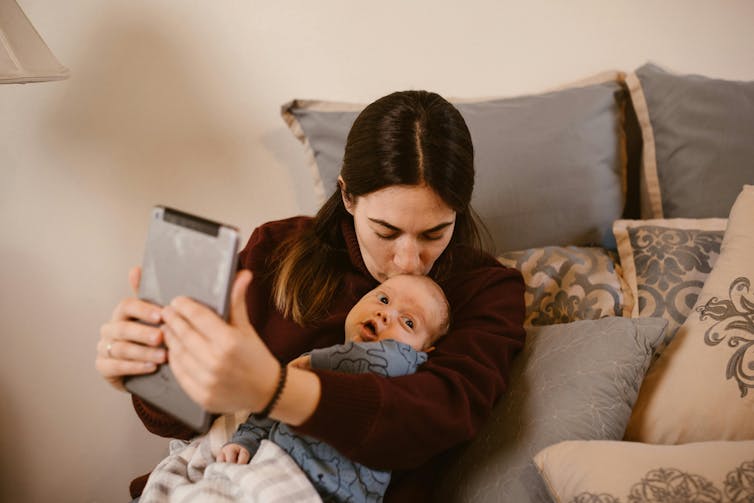
If they can’t be together, at least dads can give their children a virtual kiss on Christmas Day.
Elisabeth Duursma receives funding from The Australian Institute of Criminology.
Amy Conley Wright receives funding from Australian Institute of Criminology, Australian National Organisations for Women’s Safety and the Australian Research Council. She currently works with Inclusion Australia.
Natalia Kate Hanley receives funding from the Australian Institute of Criminology.
Helen Simpson does not work for, consult, own shares in or receive funding from any company or organisation that would benefit from this article, and has disclosed no relevant affiliations beyond their academic appointment.
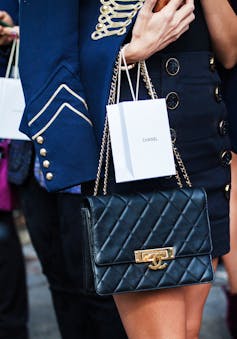
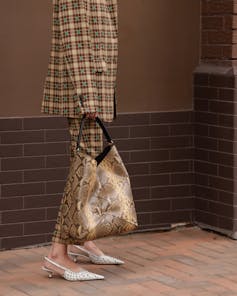
You might think spending $5,000 on a handbag or wallet would be prestigious and exclusive enough. What about taking things one step further – and personalising it with your own name?
Brands including Gucci, Louis Vuitton and Dior now offer extensive customisation options – some for a few products, others for their entire range. Names and initials are an obvious, popular choice.
Some have hailed personalisation as the future of luxury goods. But as we enter the peak of the Christmas shopping period, it’s worth asking – could there be any downsides?
Research has shown there’s a trade-off to signalling social status with luxury goods. Luxury consumers are often perceived as less warm and friendly, more concerned with managing their image.
Our recent research examined whether name-stamping could increase this social cost. Our findings suggest for some customers, it can – increasing their fears of being negatively judged.
One-of-a kind products
These personalised touches are marketed as unique, one-of-a-kind products. They’re designed to appeal to a desire for individuality and exclusivity.
For luxury buyers, customisation offers a way to showcase their personality, passions and interests. It can enhance their feelings of connection to a brand and sense of psychological ownership of an item.
A promotional video showing personalisation options for Dior’s “Book Tote”.
Enabling consumers to co-design a product can also help alleviate the impostor syndrome some consumers experience when buying high-end luxury items.
For the brands themselves, personalisation services can increase profit margins, improve market appeal and strengthen customer loyalty.
Much of this trend has been fuelled by millennial and Gen-Z luxury consumers, who are increasingly seeking out unique, tailor-made experiences.
By 2030, it’s expected that millennials and Gen-Z will account for 60–70% of all luxury purchases.
A 2017 survey found more than half of millennials who’d recently made a luxury purchase were willing to pay more for personalised luxury goods.
We love our own names
The popularity of name-stamping, in particular, may come down to a concept called “implicit egotism”.
Research suggests most people have a subconscious positive association with themselves. This extends to a preference for things that are connected to their sense of identity – such as the letters of their own name.
The drawbacks of personalisation are less widely discussed. One clear one is its impact on resale value. Personalised items are harder to sell.
This is particularly relevant for Australia’s booming second-hand luxury market, driven by younger consumers prioritising sustainability and affordability.
Research also suggests that excessive customisation – letting customers make design decisions on custom colours, fabrics, and so on – can decrease the signalling value of luxury items and undermine their status appeal.
Then there’s the cost that can come with luxury itself.
Research has shown luxury consumers can be perceived as less warm and friendly than those who forgo luxury.
Interestingly, this perception isn’t driven by envy. Rather, it stems from a belief that luxury wearers are actively managing their image to impress others.
Does name-stamping luxury increase this social cost even more? Our research, with co-authors Joanna Lin, Billy Sung and Felix Septianto, suggests the answer is yes.
Research suggests luxury goods can make the wearer seem less warm to others. Body Stock/Shutterstock
We conducted four studies with 1,354 female luxury and non-luxury shoppers from the United States.
We found consumers who personalise luxury items with their name worry more about being negatively judged than those who purchase non-customised items.
This effect was consistent, regardless of whether the personalisation featured initials or full first names.
The overtness of name personalisation, in particular, may explain the added social cost. Customising a bag with a non-standard colour might only catch the eye of a luxury brand enthusiast. A prominently displayed name, however, unmistakably signals customisation to everyone.
Not all fear judgement
Importantly, we found not all luxury consumers share this fear of judgement equally. The impact depends on individual motivations for purchasing luxury items to begin with.
Those who are motivated to consume luxury goods for social reasons, such as standing out, are less concerned about receiving negative judgement from others.
In contrast, those who are motivated to buy luxury items for more individual reasons are more wary of how name personalisation might be judged.
For this group, which made up about half of the consumers we sampled, subtle, customised touches could be a more appealing option.
There could also be some variation across different cultures.
A report by KPMG found Chinese consumers – a group not included in our study – often seek luxury consumption as a means of social advancement and self-differentiation, meaning they are likely less concerned about the social costs.
On the other hand, we could speculate that Australian consumers, influenced by the “tall poppy syndrome” cultural phenomenon, may be even more sensitive.
Anne-maree O’Rourke does not work for, consult, own shares in or receive funding from any company or organisation that would benefit from this article, and has disclosed no relevant affiliations beyond their academic appointment.
Christmas films appear in many guises. There is the witty (Christmas in Connecticut, Scrooged). The comedic (It Happened on 5th Avenue, National Lampoon’s Christmas Vacation). The wonderfully sentimental (The Shop Around the Corner, Miracle on 34th Street).
There are the canonical ones everyone’s seen at least once (It’s a Wonderful Life, The Muppet Christmas Carol) and whacky masterpieces (A Christmas Story, the Hulk Hogan-starring Santa with Muscles). Not to mention all the Hallmark Christmas films and, now, all those made for streaming (usually of the “so bad it’s good” variety).
But about those who are sick of all the tinsel and baubles? What can they watch to kibosh the kitsch while still feeling part of Christmas?
They need the Christmas-adjacent film: films set during Christmas, that aren’t really about Christmas.
For those who like action
If you feel like watching an action thriller, the obvious is Die Hard (1988), even though Christmas is so deeply integrated into the structure and story of the film it’s hard to argue it isn’t a Christmas film.
Richard Donner’s masterpiece Lethal Weapon (1987) opens with a dazzling sequence in which Jingle Bell Rock accompanies a helicopter shot over Los Angeles before a young woman jumps from a building in a drug-induced stupor. Our introduction to Martin Riggs, Mel Gibson’s quintessential mad dog detective, takes place during a drug deal in a Christmas tree lot.
The Long Kiss Goodnight (1996) – like Lethal Weapon, written by Shane Black – is set during Christmas and ends in a dazzling explosive sequence at Niagara Falls on New Year’s Eve. The holiday underpins the narrative of amnesiac Martha Stewart-like suburban mum Samantha Caine (Geena Davis) as her past comes back to haunt her. She realises she’s actually an assassin who worked for the CIA, and now must protect her family.
For fans of grimmer action fare, Christmas decorations abound in the background of George P. Cosmatos’ Cobra (1986). Eccentric lone wolf Marion Cobretti (Sylvester Stallone) almost single-handedly battles a gang of axe-wielding serial killers, while protecting witness/model Ingrid Knudsen (Brigitte Nielsen).
I can guarantee Penguin biting off someone’s nose doesn’t happen in any Christmas film other than Tim Burton’s Batman Returns (1992). This is the best of the two Burton Batmans – maybe the best Batman film, period – in its bleak, nihilistic combination of grotesque humour and violence.
For something darker
Paul Verhoeven’s brilliant psycho-drama Elle (2016) stars Isabelle Huppert in the role of her career as a sexual assault victim who turns the screw on her assailant. Much of the film takes place over Christmas.
In Thomas Vinterberg’s Danish stunner The Hunt (2012), kindergarten teacher Lucas (Mads Mikkelsen) is hounded by his small community when he is accused of abuse by five-year-old Klara (Annika Wedderkopp). Though the film takes place across a year, many of its key dramatic moments occur around Christmas, including an intense confrontation in a church on Christmas Eve.
Note the creepy effects of Christmas lights around some of the scenes in Stanley Kubrick’s monumental Eyes Wide Shut (1999) – although orgies are not usual features in Christmas films.
For something lighter
Key moments in John Landis’ irreverent Trading Places (1983) occur over Christmas. It’s hard to forget the image of Dan Aykroyd in a filthy Santa suit hiding food in his beard.
In Ted Demme’s smarmy but stylish The Ref (1994), a burglar finds himself virtual marriage counsellor to a savagely bickering husband and wife (brilliantly played by Judy Davis and Kevin Spacey) when he takes them hostage on Christmas Eve.
In a similar vein, Harold Ramis’ black crime comedy The Ice Harvest (2005), though uneven, has some memorable moments, as mob lawyer Charlie Arglist (John Cusack) steals money from his boss on Christmas Eve.
For some horror
There are too many amazing Christmas horror films to mention (including some solid Australian ones like 2016’s Better Watch Out), but the following serve as a good introduction to this much-maligned subgenre.
Bob Clark – the Canadian auteur behind the crowd-pleaser A Christmas Story (1983) – made the Christmas horror masterpiece in the much-imitated (and twice remade) but never-bettered Black Christmas (1974).
The story is not particularly original (though you’ll never forget the ending). Set across a day or so in a sorority house, we follow various characters as they receive obscene phone calls and are then knocked off one by one. But the set-pieces are so brilliantly handled – unnerving, beautifully composed, and savage without an overemphasis on gore – and the sound design and score by Carl Zittrer so striking, with a cloud of sublime weirdness permeating the whole thing, it should make lists of top films of all time.
The other stand-out Christmas horror film was one of the controversial ones of the 1980s; “Banned in Queensland” was plastered like a banner of pride across the VHS cover. Yet Silent Night, Deadly Night (1984), in which an axe-wielding Santa terrorises a community, is surprisingly tender in its study of the effects of trauma on children.
It is, of course, superbly hokey at the same time and pretty grisly, but anchored by a genuine warmth and touching performances.
Silent Night, Bloody Night (yes, a different film, this one from 1972) is an eerie slasher film featuring a (relatively) star-studded cast, involving a group of murders after a city lawyer inherits a small town home that used to be an insane asylum.
In Christmas Evil (1980), a rather deranged man decides to play Santa by keeping a “naughty and nice” list of the children in his neighbourhood. He delivers toys where they are unwanted and punishes people when it’s not exactly warranted. It is a hoot – a horror film that’s borderline comedy, featuring one of the best endings in the history of American film.
Is this enough Christmas-adjacent popcorn to keep even the most cynical of us stuffed until the big day itself?
Ari Mattes does not work for, consult, own shares in or receive funding from any company or organisation that would benefit from this article, and has disclosed no relevant affiliations beyond their academic appointment.
Palestinian history is “deliberately ignored” and is being effectively “erased” as part of Western news media narratives, while establishment forces work to shut down anyone speaking out against Israel’s slaughter in Gaza, academics have told a university conference of legal and Middle East experts.
There are conflicting reports of the official death toll from this week’s massive earthquake in Vanuatu as rescue teams continue to scour the rubble for survivors.
On Tuesday, the Vanuatu National Disaster Management Office reported 14 deaths.
It said four people had been confirmed dead by the hospital, six others were killed in a landslide and four others died in a collapsed building.
But yesterday, the disaster management office reported only nine people had been confirmed dead by the hospital and made no mention of the deaths it had earlier attributed to the landslides and collapsed buildings.
One consistent figure is the more than 200 people injured, with the hospital saying many patients were being treated for broken bones.
A landslide near the main wharf of Port Vila. Image: Development Mode/Facebook via ABC News
Damage and destruction According to the Vanuatu government’s disaster assessment team, most of the damage from the earthquake had been to the Port Vila CBD on the main island of Efate.
This area has been closed to the public and search and rescue operations were ongoing.
Any buildings still standing had sustained significant structural damage.
The Port Vila main wharf remained closed due to a major landslide.
The two main water reservoirs supplying Port Vila had been totally destroyed and would require reconstruction — an assessment of the rest of the water network was ongoing.
A boil water notice is in place for all of Vila.
Power and telecommunications The utility company Unelco is working to restore power and water supply.
Vodafone Vanuatu informed its customers that instant messaging on Messenger, Viber and WhatsApp had been restored on its mobile network.
Audio and video calling via these platforms, however, was still unavailable by today.
Vodafone said its team was working hard to resolve these issues and fully restore its internet services.
State of emergency A one-week state of emergency was declared on Tuesday by the President, Nikenike Vurobaravu, for the worst affected areas.
Police had been urging people to adhere to the nightly curfew of 6pm to 6am local time.
They had also warned of a greater chance of opportunistic crimes being committed after the disaster and urged everyone to look out for each other.
Commercial flights There were no commercial flights operating into or out of Vanuatu.
Local authorities said on Tuesday they were closing the Bauerfield International Airport to commercial flights for 72 hours to repair damage and prioritise disaster relief flights.
Passengers booked to fly Fiji Airways to Vila on Thursday had their flights moved to December 21.
Solomon Airlines had also indicated it would resume flying to Vanuatu from Saturday.
Virgin Airlines has cancelled flights until Sunday and a spokesperson for the Qantas Group told the ABC they were monitoring the situation closely.
International aid International defence and medical personnel, search and rescue teams and disaster response experts from New Zealand, Australia and France were now on the ground in Port Vila.
They were helping local emergency response teams, which had been working around the clock since Tuesday’s 7.3 magnitude quake alongside locally based staff at UN agencies and non-government organisations in Vila.
Time is of the essence for the teams scouring the rubble for any sign of survivors.
This article is republished under a community partnership agreement with RNZ.
The federal government has found a new way to manage the number of international students in Australia.
It has instructed immigration officials to prioritise student visa applications for all institutions, until they near the individual caps the government proposed for them earlier this year.
The government has made the change via a ministerial direction. This is an official instruction from a minister to a public body or organisation. For immigration, this means the minister can instruct decision makers on what to consider when processing on a visa application.
Under this ministerial direction, officials will manage student visa applications using a “prioritisation threshold”. This means officials will prioritise new student visa applications for all higher education and vocational training providers up to 80% of their international student allocations for 2025.
These allocations were set by the government in August, on the thinking legislation to enable their implementation would be approved by parliament before the end of the year.
This week’s new ministerial direction replaces an unpopular one made in December 2023, which instructed officials to prioritise applications for students wanting to go to “lower risk” institutions.
Under the outgoing system – heavily criticised by the university sector – prospective students at regional universities and small providers were more likely to experience delays or have their visa applications refused.
The government says the new approach will manage international student numbers in a “fairer way”, particularly for regional and outer metropolitan universities and TAFEs.
For the university sector, it also provides some much-needed certainty about their ability to enrol international students. Peak body Universities Australia described it as a “commonsense decision”.
The caps are part of a bigger immigration issue
The Albanese government has been trying to introduce caps on international students because of a big increase in net overseas migration. This is the change in the number of citizens and migrants living in Australia.
Net overseas migration increased much more quickly than the Australian government expected after international borders reopened in 2021. A 2023 review of Australia’s immigration regime also found the number of temporary migrants had swollen. International students were a big part of that increase.
To exert greater control over the numbers of international students, during the past year, the government has been introducing a raft of changes.
Unlike other parts of the migration program, international student visas have not normally been limited. So the proposed student caps bring international education more in line with other parts of the program.
We’re already seeing fewer international students arrive
There are, however, signs the various “go slow” approaches are working, at least with international students. The number of international students arriving in Australia is beginning to trend downwards.
It’s important to note the government is not necessarily seeking to cut the overall number of international students studying in Australia. Instead, it wants to limit the rate of growth to pre-pandemic levels.
Why does this matter so much?
The Australian Bureau of Statistics estimates international education contributes $51 billion to the Australian economy. As part of this, higher education institutions receive almost $16 billion in tuition fees from international students.
That means overall international student revenue is rivalling the amount universities receive from the government for domestic students.
So the size of the sector, and its growth, makes it one of the biggest issues in tertiary education.
Watch out for more changes
The new ministerial direction suggests the government’s current priority is to gain control over the number of international students, while minimising the impact on the sector.
But ministerial directions that alter processing times have proven to be a blunt instrument when it comes to managing international student visas – as some regional universities discovered this year.
This means a longer-term solution, like legislative changes, may still be needed.
Meanwhile, next year’s federal election, and Labor and the Coaltion’s moves to make migration a key issue, mean Australia’s international education sector faces more uncertainty in 2025.
The authors do not work for, consult, own shares in or receive funding from any company or organisation that would benefit from this article, and have disclosed no relevant affiliations beyond their academic appointment.
Appropriately, we finish our podcast for 2024 talking to Treasurer Jim Chalmers and his shadow, Angus Taylor because, as the saying goes, “it’s the economy, stupid!”
This week’s mid-year budget update showed Australia’s economy in poor shape and the buget’s trajectory mired in a decade of red.
Chalmers acknowledges the problems, but looks for positives:
yes there are pressures on the budget. Yes, some of those pressures are intensifying. But don’t forget, the budget is $200 billion stronger because of our efforts. That means we avoid $177 billion in the debt that we inherited, and that saves us $70 billion in interest costs. And so I understand that people are focused on the fact that the budget position remains difficult, but it is much, much stronger than it was two and a half years ago.
Looking to the next election, Chalmers outlines his ambitions for a second Labor term, if the government is re-elected:
well, the energy transformation, for me, is the most important thing. If you think about the earlier reform periods in our economy and in our politics, I think the thing that comes closest to the magnitude and the importance of those earlier waves of reform is the energy transformation. I genuinely feel that people in the future will look back on the 2020s and they’ll judge us on whether we succeeded or failed to get this energy transformation right. And obviously, that’s a big political contest now because of this nuclear insanity from the opposition.
I’m very interested in the intersection of technology and human capital and the way our industrial base is changing. So that’s a big part of the story. And then thirdly, where competition policy and productivity policy intersect, trying to make our economy more productive, more competitive and more dynamic. Those are the three things. In addition to all the things you’d expect me to say ongoing budget repair, cost-of-living relief, getting on top of inflation.
For Taylor, the economic challenge is getting the supply side right:
we needed a plan from this government to restore Australians’ prosperity, to restore their standard of living. We’ve seen a reduction of well over 8% in their standard of living since Labor came to power. And in fact, if anything, there’s a downgrade in Australians’ standard of living in this statement.
At the heart of this statement is a big spending, big taxing, high immigration Labor government. $233 billion of red ink over the forwards and deficits as far as the eye can see to the end of the decade.
What Labor is seeking to do is make government the centre of the economy. What we need is a private sector that’s mobilised, that’s investing, that’s employing, that’s taking risks and not being crowded out by the public sector. If you want to see sustainable lower inflation and lower interest rates, we know from history the answer isn’t a cash splurge. The answer is getting the supply side of the economy right and encouraging the private sector to get out there and invest.
Asked whether, as has been suggested, the Coalition had walked back its migration target, Taylor says:
the answer is there’s been no change. It’s as simple as that.
But I tell you what has changed. The baseline we’re dealing with on migration has changed quite dramatically. Labor has consistently failed to meet its targets. Its migration targets have increased by over 700,000 over the forwards since Labor came to power. Every time they put an update out, we see an increase in the numbers. The increase in MYEFO was another 80,000 over the forwards, much of which is in the short term in the next year or two. Labor has lost control of immigration.
That means that to get to our targets, which we’ve been very clear about, 160,000 in the NOM [net overseas migration] in the short term, bringing down permanent immigration by 25%, it means that the starting point is higher.
Michelle Grattan does not work for, consult, own shares in or receive funding from any company or organisation that would benefit from this article, and has disclosed no relevant affiliations beyond their academic appointment.
One underappreciated driver of the recent drama is the rise of YouTube-based agitators, activists and influencers, who both benefit from and fuel a new brand of populism. The effects in South Korea are stark – but the trend is global.
An extremely online constituency
In South Korea’s 2022 election, Yoon trailed his opponent for much of the campaign. His aggressive populist politics drew some support, but he looked set to fail.
Then he found a new constituency – a group of active and partisan young men focused on abolishing the Ministry of Gender Equality and Family. These agitators used YouTube and other platforms to broadcast their message.
Along with traditional conservative voters, this crowd enabled Yoon to achieve a narrow win and control of South Korea’s most powerful political position. He then duly abolished the gender ministry, saying structural sexism was “a thing of the past”.
After gaining power, Yoon issued arrest orders for several of his perceived political opponents. Among these was Kim Eo-Jun, a critical and inflammatory YouTube journalist, and a polarising populist figure tied to liberal politics. Kim’s weekly videos broadcast news, guest interviews and caustic commentary to millions of active followers.
We have grown used to the idea that social media platforms influence democratic processes by spreading news and analysis and directing users’ attention by recommending particular content. However, the increasing political visibility of platform actors such as Kim suggests the influence is becoming more direct.
Platforms for populist news and views
Social media platforms provide access to a wide range of news and media producers, from legacy outlets to independent commentators at the furthest edges of the political spectrum. However, not all of the news gets equal attention.
Research shows, at least in South Korea, false news gets more likes and interactions than verifiable news. “Real news” tends to receive dislikes and derision.
More South Korean research shows citizens may use platforms to seek out conspiracy theories and pour scorn on disliked political groups or decisions. Users also notoriously direct hate towards issues such as women’s rights.
These problems are not limited to South Korea. Polarising and populist news and analysis is a global phenomenon.
However, these polarising figures are not alone in these spaces. Veteran journalists and newcomers are adjusting to platforms while still providing reliable information.
On YouTube, former mainstream journalists, such as Australia’s Michael West and the American Phil Edwards, have amassed followings while blending personal and casual content with more traditional journalism.
Non-journalists, such as Money & Macro and the English Tom Nicholas, have expanded their influence through adopting some core journalistic practices. They produce content that investigates, explores and explains current affairs news and analysis with the support of their many viewers.
These YouTube news influencers show journalistic content can contribute to the new news media ecosystem and attract large audiences without relying on populist and polarising content.
Newsfluencers often film in informal settings rather than traditional sets, and build a casual rapport with their audience. They leverage “authenticity”, going out of their way to “avoid looking like polished corporate media”.
Their multiple revenue streams include ads, sponsors, merchandise and, most importantly, direct audience contributions. These contributions may come via memberships or via third-party platforms such as Patreon and Substack.
Even major news organisations such as Australia’s ABC have begun adopting YouTuber norms. While produced under the aegis of the national broadcaster, the current affairs podcast If You’re Listening, for example, significantly out-performs traditionally formatted content with its casual style and focus on giving the audience what it wants.
In South Korea, YouTube channels such as VoiceOfSeoul make similar moves, combining street coverage with informal talk-show panels and investigative journalism. OhMyTV weaves together YouTuber and breaking news styles, and carries hyperlinks for personal contributions and sponsorships.
At the same time, legacy media such as KBS maintains a strong following through TV and portal sites like Naver. However, KBS’s conventional format struggles to achieve comparable viewership on these increasingly dominant platforms where these unconventional journalists have managed to thrive.
There is a clear space for journalism on YouTube and similar platforms. However, it will need to adapt.
As the South Korean experience shows, the time may be coming when platform journalism is vital for democracy.
The authors do not work for, consult, own shares in or receive funding from any company or organisation that would benefit from this article, and have disclosed no relevant affiliations beyond their academic appointment.
On the face of it, New Zealand’s new high-performance sport funding model announced yesterday is an increase on the previous round. But it is ultra-focused on already successful sports, and will put athletes under even more pressure.
High Performance Sport New Zealand is investing NZ$162.8 million over the next four years in the build-up to the 2028 Los Angeles Olympics and Paralympics.
At a time when government spending is highly constrained, with cuts to many public services, this represents a boost of $31.8 million from the $131 million invested in the three years leading up to this year’s Paris Olympics.
But the funding is considerably less than the investments other countries are making in their elite sport performance programmes.
In June, the Australian government announced the equivalent of an extra $300 million for sport over the next two years, taking funding up to $530 million over that period. Earlier this week, the United Kingdom announced a record NZ$664 million for Olympic and Paralympic sports ahead of the next Olympics.
To remain competitive, then, a revised funding model is being developed in New Zealand. Over the next four years, money will be funnelled into 36 sports. But funding will shrink for 23 of these sports, and some sports have lost all funding entirely.
Podium sports in focus
The new model explicitly prioritises funding based on podium results. Only sports that did well in Paris and are predicted to medal at upcoming Olympics, Paralympics and world championships will see money this time.
With national sports organisations pitching to High Performance Sport New Zealand, the assessment criteria included past performance, future potential, and quality of pathways for developing talent.
Using these criteria, the decisions prioritised podium sports – those “highly likely to achieve multiple podium success at pinnacle events across multiple cycles” – over other markers of sporting success, achievement and impact.
The criteria do not allow for those sports with the highest levels of participation, and podium sports are not always the most accessible for anyone to participate in.
Sports scholars have raised concerns about such targeted investment in high performance sport in New Zealand and overseas.
Some suggest strategic funding such as this can, in fact, have unintended negative consequences for sports organisations, performance measures and athlete health and wellbeing. Others question such significant investment in high performance sport all together.
Winners and losers
Under the podium priorities, there are clear winners and losers. Rowing comes out on top, with funding of more than $6 million over the next cycle. This is on the back of 11 athletes winning medals in Paris.
Next come cycling, yachting, athletics and canoe racing, with all except yachting receiving large increases.
Swimming, equestrian and hockey see large funding reductions. Swimming New Zealand loses more than 40% of its funding, equestrian loses 45% and Hockey New Zealand’s high-performance funding is being cut almost in half.
Other sports, such as surfing, diving, badminton, e-sports (competitive video gaming, recently included in the Olympics with the announcement of the inaugural Olympic eSports Games in 2025) and football will not receive any investment funding at all.
The football decision is particularly surprising, given the huge national interest in the Football Ferns during the 2023 Women’s World Cup and the clear talent levels on the field. At this year’s Olympics, two talented New Zealand surfers held their own among the world’s best on challenging waves in Tahiti.
These cuts will have significant effects on the ambitions and dedication of current and future Olympic hopefuls. High-performance funding is important for supporting athletes in qualifying and competing internationally. But it is also key to building strong athlete development pathways for future successes, well beyond Los Angeles in 2028.
Under the new funding model, New Zealand is likely to see fewer sports represented at the Olympic level. The impact on participation levels in the types of sports children (and future athletes) are inspired to pursue remains uncertain. But as the saying goes, “if you can see it, you can be it”.
A ‘win at all costs’ model?
The other risk is a return to a “win at all costs” model that has not worked well in the past.
Cycling New Zealand, for example, will see an increase from $770,433 to $5.25m in the next round. This is largely the result of women track cyclists winning seven medals in Paris.
But at the same time, the organisation has been under scrutiny for mistreatment of athletes, highlighted in two reviews and a coronial inquiry into the death of Olivia Podmore.
Cycling is not the only sport to be exposed for toxic cultures that prioritised podium results over athlete health and wellbeing. But the new funding model looks like a clear reinforcement of the “win at all costs” model that has harmed many athletes in the past.
While High Performance Sport New Zealand has been clear that some of the funding will be allocated to ensure athlete health and wellbeing (including a comprehensive wellbeing programme), the pressures on athletes to win medals will be higher than ever.
When medals matter most, sports organisations make decisions in the knowledge that future funding depends on winning above all else. But research has consistently shown it is often the sporting stories of character, resilience and courage that inspire people most.
As we’ve seen in both football and surfing, it is not always podium results that contribute to strong national pride and important social legacies from sport. The longer-term impacts of funding cuts on those and other sports can’t be ignored.
Sometimes, success cannot be measured in medals alone.
In the past, Holly Thorpe has received funding from an International Olympic Committee (IOC) Research Grant focused on young people’s perceptions of the Olympic Games.
It left the women shocked and disappointed, particularly since Bayer had settled a similar claim in the United States for US$1.6 billion.
So why did the Victorian class action fail?
What’s Essure?
Essure offered an alternative to more invasive permanent contraceptive procedures such as tubal ligation.
The device was implanted into the fallopian tubes. This triggered an intended inflammatory response that blocked the tubes, preventing passage of sperm and ova.
In Australia, the device was implanted by gynaecologists. More than 3,000 devices are thought to have been implanted into Australian women.
In 2017, Essure was voluntarily withdrawn from our market after increasingly publicised concerns regarding safety, including in the US.
The US class action was settled out of court, enabling Bayer to avoid setting a legal precedent for similar claims in other jurisdictions.
Relevant US laws are different from those in Australia. Consequently, settlement of the US claim has only limited value in determining the likely outcome of litigation in Australian courts.
What went wrong with the device?
Lead plaintiff Patrice Turner began experiencing abnormal uterine bleeding, heavy periods and pelvic pain within a few years of using Essure.
She ultimately required a hysterectomy, which removed the Essure devices and resolved her symptoms.
Other class members experienced similar symptoms, with many also requiring hysterectomies.
The claim relied on three causes of action:
Essure had a safety defect which caused the plaintiff’s injury
Essure wasn’t of the quality consumers would reasonably expect
the defendants were negligent in Essure’s design, manufacturing and distribution. The alleged negligence included inadequately disclosing risks to patients considering Essure or who had already received Essure.
All causes of action required the plaintiff to prove a causal connection between her harm and the device.
What did the court find?
Proving causation in legal disputes is often complex and technical. That is particularly so in cases where medical or other interventions allegedly cause or exacerbate injury or disability, where harms can also potentially be caused by other factors.
In dismissing the class action, Justice Andrew Keogh found the extensive expert evidence did not demonstrate that Essure caused either the harms experienced by the class members generally, or by the plaintiff specifically. That evidence drew on a wide range of medical and scientific disciplines.
Justice Keogh found for Bayer, noting pelvic pain and abnormal uterine bleeding are common in pre-menopausal women, and there is a range of potential causes of each.
The 827-page judgment emphasised that medical devices, which are “inherently dangerous or known to carry a risk of harm”, cannot be expected to be “risk-free”. A device does not have a “safety defect”, nor is it of unacceptable quality, simply because it poses a risk to consumers.
Similarly, in considering the negligence claim, the critical consideration was not whether the defendants shouldn’t have produced Essure when there was a foreseeable risk it could cause harm.
Rather, it was about whether the defendants acted reasonably in managing that risk, including providing sufficient information about the risks associated with Essure.
Justice Keogh found the defendants did act reasonably, providing:
adequate warnings of the established Essure risks in the PTMs [physician training manuals] and IFUs [instructions for use]. It was reasonable to expect that treating gynaecologists would provide information and warnings about the established risks to their patients based upon their own specialist skill, expertise and experience and the information provided by the defendants.
So what happens now?
The plaintiff has until early 2025 to appeal the decision.
An appeal would require establishing that the judge erred in his interpretation and application of the law, rather than simply arguing that the outcome is wrong.
Significantly, health professionals should give Justice Keogh’s findings on warnings much thought.
Doctors potentially face more litigation related to medical devices if they do not appropriately provide patients with more extensive and customised warnings than the standard warnings by the manufacturer about risks associated with particular devices.
Could something like this happen again?
Regulatory frameworks governing medical devices have been significantly strengthened since Australia’s Therapeutic Goods Administration first approved Essure in the 1990s.
Increased publicity and successful class actions related to other problematic medical devices have resulted in significant reforms designed to reduce large-scale patient harms.
Medical devices carry inherent risks. These can only be managed rather than eliminated entirely without limiting access to devices and other interventions which may benefit significant numbers of patients.
However, given the court’s findings that the evidence did not indicate Essure caused the plaintiff’s harms, under the strengthened regulations for medical devices, a product like Essure could potentially meet the current requirements for sale in Australia.
Wendy Bonython does not work for, consult, own shares in or receive funding from any company or organisation that would benefit from this article, and has disclosed no relevant affiliations beyond their academic appointment.
Many young women and other people who menstruate are turning to menstrual cups to manage their periods.
In 2021, my colleagues and I surveyed 15- to 29-year-olds in Victoria and found 17% had used a menstrual cup during their last period. A study in Spain published in 2022 found 47% of 18- to 25-year-olds had used a menstrual cup in the past year.
Menstrual cups are small, flexible cups that are inserted into the vagina to catch menstrual blood. Most are made of medical-grade silicone. They can be emptied, rinsed and reused, and sterilised using boiling water or a microwave steriliser.
A 2019 review of the research found menstrual cups are safe and effective. They also reduce environmental waste and are cheaper over time compared to single-use products such as pads and tampons.
However, our recent study found young people often face difficulties and discomfort that can discourage them from continuing to use menstrual cups. This highlights the need for better education and support.
We wanted to know what young people thought of menstrual cups
To find participants we used the menstrual cycle tracking app Clue. Clue users received a pop-up message when they opened the app inviting them to join the study.
Using Clue meant we could reach a large group of young people. It also avoided the risk of our survey being shared to networks online that might be more biased, such as groups advocating for the use of cups.
At the same time, we relied on volunteers. We know more of our participants were from cities and wealthier areas than average. And it’s possible those who had more negative or positive experiences were motivated to complete the survey.
We recruited participants through a menstrual cycle tracking app. ImYanis/Shutterstock
Pain, leaks and cups getting stuck
Lots of young people had difficulties with menstrual cups, particularly the first time they used them. During the first period participants used a menstrual cup:
only 10% successfully inserted their cup on the first try
more than half (54%) reported the cup leaked
one in four (25%) reported pain or discomfort when the cup was in place
45% could not get the menstrual cup out on their first attempt, with 17% reporting they needed help to remove it
12 young people (2%) reported their IUD was displaced (IUDs are small contraceptive devices inserted into the uterus).
Participants described these difficulties as distressing. One said:
I kept being told the cup was a one size fits all and I really hurt myself trying to fit it in all the time and feeling anxiety that I was different somehow.
Almost one-third (29%) of young people had stopped using a cup by the time of the survey. Of this group, 40% stopped after trying the cup for just one menstrual period.
A learning curve
Experiences got better for those who kept using a menstrual cup. By the time they had used a cup for more than six cycles, 40% of young people reported no issues.
Of participants who kept using a cup, 48% felt confident after one to three cycles, and another 21% after four to six cycles. As one explained:
The first time trying to pull it out was scary because the grip is very different to a tampon. Feel like it is stuck and you won’t ever get it out […] all my friends have had the same first scary experience but then afterwards it’s fine!
Some participants switched to a different menstrual cup and found this helpful – 75% of those who switched reported it improved their experience.
Our findings are consistent with past research which has reported menstrual cups have a learning curve and users become more comfortable using them over time.
Education is important
We found many young people didn’t know enough about how to choose or use a menstrual cup.
Just 19% of young people strongly agreed when we asked whether they had enough information to make an informed choice about which menstrual cup to buy. Less than half (44%) knew different menstrual cups had different characteristics (such as different sizes, firmness, and that different ones are designed for different cervix heights).
We need better information on how young people can find the right cup fit more easily. Online resources such as the website “Put A Cup In It” aim to provide comparisons across cups to inform users.
Providing realistic information about the learning curve and potential discomforts when starting out can help young people feel prepared and make informed product choices.
Better information could also help governments and other organisations that are considering providing free or subsidised menstrual cups as part of initiatives to make menstrual products more affordable.
Comprehensive menstrual health education should start in our schools, empowering young people with the knowledge to make informed choices about their bodies.
Julie Hennegan receives funding from Reckitt Global Hygiene Institute (RGHI) and the National Health and Medical Research Council (NHMRC). The views expressed are those of the author, and not necessarily those of the funders.
It’s the time of year when many of us return to our favourite Christmas fables to get into the festive spirit.
While film often relies on the audience suspending its disbelief, it’s easy to watch and wonder if people could get away with these things in the real world. Are some of them even legal?
As a team of experts, we looked at the legal conundrums posed by Home Alone, Love Actually, Miracle on 34th Street and The Grinch.
Home Alone
Let’s begin by exploring one of the perennial favourites.
It’s never a good idea to leave your eight-year-old home alone for three days, even if he’s surrounded by Yuletide paraphernalia.
While there is no prescribed age at which time a child can legally be left alone, parents have a responsibility to ensure their children are safe and their needs are met.
But police may have breached their duty of care after promising to check on Kevin then departing when Kevin failed to answer, leaving him at the mercy of the “wet bandits”.
It’s possible the police may be liable in negligence for any damage Kevin suffered as a result, so the burglars are not the only ones in potential trouble.
In the meantime, Kevin sets booby-traps to foil the intruders. Could this approach to self-protection backfire legally?
The law of occupiers’ liability states that homeowners owe a duty of care to ensure their property is safe for visitors, and that includes uninvited guests, even those who might do them harm.
An injured trespasser could conceivably sue Kevin’s parents on the basis that they inadequately supervised their child.
Having said that, the criminal law allows Kevin to act in reasonable self-defence, but the key here is whether the use of a blowtorch, or a whack from a heavy iron are reasonable defensive tactics.
In his next Christmas mishap, Kevin is home alone again. He boards the wrong flight and arrives in New York. He tells a credible lie to the front desk clerk at the five star hotel he checks into: “my dad gave me his credit card”.
So who’s going to be responsible for Kevin’s expenditures as the ruse continues? All credit card contracts include terms that make cardholders responsible for any charges on that card.
Moreover, there’s a clear obligation on cardholders that they keep the card safe and ensure it’s only used by the relevant cardholder.
But there is an obligation on merchants, too, not to continue with a transaction that they should have reasonably suspected was suspicious.
Which view will prevail here? Answer: dad will need to cover the debts because he had not reported his card missing, and Kevin’s angelic face was pretty convincing!
Love Actually
Many scenes in Love Actually would be in breach of Australia’s positive duty laws regarding sexual harassment. These laws require employers to take proactive steps to prevent discrimination, harassment and other unlawful conduct in the workplace.
In the movie, there are multiple incidents that wouldn’t look out of place in the the #MeToo moment.
The fictional US president, while on a state visit, inappropriately touches staff member Natalie. There’s a high-risk power-imbalance between tortured author Jamie and his young, insecurely employed Portuguese housekeeper, Aurelia.
There’s also the sexually aggressive Mia, secretary to Harry, who organises an office party in a gallery of naked images and “dark corners for doing dark deeds”.
Alarm bells should have been ringing in many HR offices that Christmas, as “love” like that at work is not actually lawful.
There is a memorable scene in Love Actually where young Sam runs through airport security to see Joanna, to tell her of his love.
While it pays off for Sam (getting a kiss from Joanna) in real life such actions have serious legal consequences.
Under Australian aviation security legislation, specifically Regulation 9 of the Aviation Transport Security Act and Regulations, a breach of security can result in a fine of up to $10,500.00.
And Sam is 13, meaning he would be criminally liable in all jurisdictions in Australia (note the ACT will raise the age of criminal responsibility to 14 in July 2025) because he clearly understands his actions are wrong.
So, while the scene touchingly highlights the lengths people will go for love, it’s a big gamble to breach security regulations. Running through airport security might not actually be worth it.
Miracle on 34th Street
Kris Kringle’s lawyer is going to need a miracle on 34th Street. He is taking some troubling instructions from his client. It’s in relation to an assault.
In order to be acquitted, Kris has to show that he’s not just someone who plays Santa, rather he’s the real Santa.
Under the Australian Solicitors’ Conduct Rules, however, a different legal approach is necessary, because the lawyer has a paramount duty to the court not to make frivolous submissions.
While Kris’s fatuous belief about his identity does not render him incapable of providing instructions, any legal practitioner must exercise caution when listening to nonsense.
The Grinch
The Grinch disguises himself as Santa Claus, steals a sleigh and breaks into homes to steal gifts, decorations and food. Grinch is clearly guilty of larceny as his intention is to deprive his victims permanently.
In some Australian jurisdictions his stealing could be considered “aggravated”, given the late hour and the age of victims (under 16 and over 60), whom he must have known would be in Yuletide-festive readiness.
But wait! In the morning the Grinch awakens to cheerful singing, and, in a moment of about face rectitude, he returns the stolen gifts, a matter that will be taken as an important mitigating factor in sentencing.
So, what do we learn from these heartstring-tugging tales, redemption narratives, and stories of good conquering evil? As it happens, a lot about the law, actually.
Professor McKay AM has received funding from the ARC and several CRCs most recently RACE2030 and is a member of the Human rights committee of the Law Society and on the Board of Variety SA and the Australia Day Council of SA,
Matthew Atkinson receives funding from the Law Foundation of South Australia to support the UniSA Legal Advice Clinic. He is also a board member of the Northern Community Legal Centre.
Michelle Fernando receives funding from the Law Foundation of South Australia. She is a member of the Child Development Council of South Australia and the Australian Centre for Child Protection.
Paula Zito receives funding from the Law Foundation of South Australia to support the UniSA Legal Advice Clinic.
Sarah Moulds receives funding from the Australian Research Council and has previously received funding from the Law Foundation of South Australia. Sarah Moulds is also the volunteer Director of the Rights Resource Network SA and the Deputy Chair of the Law Society of South Australia’s Human Rights Committee.
Ben Livings and Rick Sarre do not work for, consult, own shares in or receive funding from any company or organisation that would benefit from this article, and have disclosed no relevant affiliations beyond their academic appointment.
Source: The Conversation (Au and NZ) – By Elizabeth Summerell, Lecturer, School of Psychology, Faculty of Health and Medical Sciences, University of Adelaide
While the holiday season is supposed to be a happy time, evidence suggests it’s one of the worst times of year for domestic and family violence.
Victorian crime data show family incidents tend to be more frequent in December and January compared with most other months. WA Police also report increased family violence incidents over the Christmas to New Year period, with the average daily number of reports increasing by 24.2%.
Already increased rates of violence over the festive season may be getting worse. Last year, Queensland Police saw a 32% increase in family and domestic violence-related calls over the Christmas to New Year period compared with the previous year.
In Victoria, the average number of recorded family violence incidents rose by 33% on Christmas Day alone.
These statistics are in line with research finding rates of violent crimes are related to major holidays.
But what is it about the holidays that makes violence more likely?
Below, we outline three factors that make the holidays an at-risk period for violent behaviour.
It’s important to note there is no single cause of violent behaviour. Rather, many complex factors interact to make it more likely that certain people will be violent in certain situations.
So even if you’re not concerned about violence in your life, it’s helpful to understand what may drive some people to act in a certain way. Then we can all have a safer, happier festive season.
Money, heat and alcohol
The holidays come with increased financial pressures associated with gift-giving and social events.
A recent report found more than 50% of Australians struggle to afford gifts for special occasions such as Christmas.
Drinking alcohol in moderation will help everyone keep their cool. Shutterstock
Not everyone who drinks alcohol will become violent. However, alcohol changes the way the brain functions by reducing our ability to control our impulses, which can increase the likelihood of becoming violent when provoked.
Researchers suspect this association may be due to increased discomfort and frustration and more frequent social events where conflict may arise.
While these situational factors on their own don’t cause aggression, they can lower our ability to “keep our cool”. For example, if someone is already feeling hot and bothered, stressed about the cost of Christmas, and has had too much to drink, they might be more likely to react to even small triggers.
What can be done?
1. Drink responsibly
Research shows reducing harmful alcohol consumption can reduce violence.
Australian guidelines recommend consuming no more than four standard drinks on any one day.
Early forecasts predict most capital cities will enjoy warm weather in the high 20s or low 30s on Christmas day.
To beat the heat, try to avoid being outside during the hottest parts of the day. Stick to the shade and stay hydrated.
3. Use emotion-regulation strategies
There are various ways you can manage negative emotions that may lead to violence.
One way is to adjust the situations you are in. While declining invitations to events that may upset you would be one way to use this strategy, family dynamics aren’t always that simple.
Modifying the situation may be more realistic. If there’s a family member with whom you’d rather not engage, focus your attention on interacting with others, or ask a trusted person to keep an eye out.
Research suggests these kinds of situation-based strategies may be particularly useful for people who find it difficult to control their emotions in the heat of the moment.
Seeing conflict from a different perspective can make for happier Christmas gatherings. Shutterstock
If conflict does arise, try to step away or redirect your focus. You could partake in backyard cricket or talk to someone else – anything that distracts you from how you’re feeling. Research suggests distraction can help “turn down the volume” of intense negative emotions.
Another way you can reduce negative emotions is by trying to see a stressful situation from a different perspective.
Stressed about balancing a busy Christmas Day schedule? Try to remind yourself it’s a chance to show your loved ones you care. Tempers rising over the same old family arguments? Try to focus on the opportunity to be together.
These evidence-based strategies can help stop conflict from escalating and contribute to a safe and happy holiday season.
The National Sexual Assault, Family and Domestic Violence Counselling Line – 1800 RESPECT (1800 737 732) – is available 24 hours a day, seven days a week for any Australian who has experienced, or is at risk of, family and domestic violence and/or sexual assault.
Ella Moeck receives funding from the Australian Research Council.
Elizabeth Summerell does not work for, consult, own shares in or receive funding from any company or organisation that would benefit from this article, and has disclosed no relevant affiliations beyond their academic appointment.
Source: The Conversation (Au and NZ) – By Evangeline Mantzioris, Program Director of Nutrition and Food Sciences, Accredited Practising Dietitian, University of South Australia
Herbs and spices have been used in cooking for centuries.
They add flavour, aroma and colour to foods and have long been used for health and to preserve food, and in the case of garlic, even to ward off vampires.
Both fresh and dried herbs and spices provide us with a wide range of nutrients including vitamins and minerals. But it is the high level of antioxidants which provide the most health benefits.
With all these health benefits, it is not surprising they are promoted as part of a healthy diet.
In Australia, they are recommended as a way of adding flavour to meals instead of people adding salt.
Given this, we were keen to explore which herbs and spices Australians enjoyed most.
Researching Australians’ favourites
We asked Australians to complete a short online survey asking which herbs and spices they ate, how often, and which meals they ate them in.
We were also interested in why people choose to include them in their meals.
Four hundred people responded to our survey. They were mostly female and were aged between 25–64. The majority reported they were born in Australia.
Basil was crowned most popular, but not by much
Basil was the most popular herb, consumed by 97.8% of people during the past year.
Pepper came a very close second (97.5%), followed by garlic (96.8%).
Chilli, oregano and ginger were not far behind while paprika, cinnamon, parsley, and rosemary rounded out the top ten.
The most frequently used herb or spice on a daily basis was pepper, followed by garlic and then chilli.
Most people (93%) reported consuming these herbs and spices as part of their lunch and dinner meals.
Interestingly, only a tiny percentage of people (1.5%) used herbs and spices in sweet foods.
Why did people use them?
Taste, flavour, aroma and adding visual appeal to meals were the main reasons why 97% of people added them to their meals.
Health benefits was noted as the second most frequent reason.
Others simply used herbs and spices when recipes called for them. And of course people’s cultural backgrounds was another reason for using herbs and spices.
How do our favourites compare?
The types of herbs and spices consumed in Australia has changed a little over time.
More than a decade ago, a study reported Australians frequently used pepper, basil, oregano, and chilli. They also found ginger, paprika, and cinnamon were often used, but not as frequently as in our study.
However, the current use of herbs and spices at home is not well known across other parts of the world. In the United States, one study showed pepper, garlic and cinnamon were the most used spices each day.
Chilli, coriander and ginger were next in line but were not used as often.
Is there a difference in nutrient levels between fresh and dried herbs?
There can be a difference in nutrient levels between dried and fresh herbs, and this will depend on which nutrients and which herbs we look at. One study found there were higher iron levels in dried compared to fresh basil and mint, but lower vitamin c levels once dried.
The way the herb is dried can also affect nutrient levels, and although fresh and dried herbs can often taste different, the flavour of dried herbs is still found by many to be acceptable.
At the end of the day, use whatever works for you – in most cases you may only have access to dried ones. But make sure to keep your dried herbs in a cool, dry spot to minimise losses over time.
Here are some ways to include more herbs and spices in meals:
Adding fresh herbs (such as parsley) as a main addition or lettuce replacement to salads and sandwiches
Adding herbs to salads (think parsley, oregano, thyme, marjoram, basil)
Soups, casseroles, stews and pasta are perfect for adding herbs and spices to
Making herb/spice-based condiments to add to meals like pesto, chimichurri (an Argentinian condiment made with fresh parsley, dried oregano, garlic and chilli), raita yoghurt (traditionally an Indian side made with fresh coriander, mint, and cumin), and herbed mayonnaise
Including spices such as cinnamon, cardamon or nutmeg in breakfast meals like your morning cereal or yoghurt
Adding turmeric when preparing your rice
Seasoning meat or vegetables in herb-heavy marinades or dry spice rubs – garlic is also great for this
Including herbs and spices in beverages such as fresh mint or basil in a water jug/bottle or adding them into smoothies
Add spices (turmeric, cinnamon, cardamon) into teas and herbal teas to add extra flavour
Don’t forget to add spices to cakes, biscuits and muffins – cinnamon, nutmeg, cardamon and ginger.
Grow your own
One great way to use herbs more regularly in your cooking is to grow them at home. In our study, 70.8% of Australians grew their own herbs, including parsley, basil, mint and sage.
Growing your own can save you money too, as fresh herbs can be expensive.
Growing your own can also be more sustainable. Like fruit and vegetables, herbs are easily perishable and can contribute to household food waste, which accounts for nearly one-third of total food waste in Australia.
So whether it be to add flavour to your cooking, to save money, or for health reasons, don’t be afraid to scatter a few herbs and spices on your next meal.
Evangeline Mantzioris is affiliated with Alliance for Research in Nutrition, Exercise and Activity (ARENA) at the University of South Australia. Evangeline Mantzioris has received funding from the National Health and Medical Research Council, and has been appointed to the National Health and Medical Research Council Dietary Guideline Expert Committee.
Anthony Villani has received funding from the National Health and Medical Research Council and Hort Innovation. Anthony is also the President of the Australian and New Zealand Society for Sarcopenia and Frailty Research.
Nina Wilson does not work for, consult, own shares in or receive funding from any company or organisation that would benefit from this article, and has disclosed no relevant affiliations beyond their academic appointment.
Keith Rankin, trained as an economic historian, is a retired lecturer in Economics and Statistics. He lives in Auckland, New Zealand.
Analysis by Keith Rankin.
To understand antisemitism, we need a meaning for ‘semitism’, and another -ism to contextualise semitism.
Keith Rankin, trained as an economic historian, is a retired lecturer in Economics and Statistics. He lives in Auckland, New Zealand.
Literally, semitism means the promotion of the Semitic people, whoever they might be. The most appropriate comparator for ‘semitism’ is ‘hamitism’, relating to the ‘hamites’ or ‘Hamitic people’; analogous to the ‘Semitic people’. These are archaic terms, befitting the nineteenth century pseudo-sciences of eugenics, physiognomy and phrenology; semitism is a bible-derived concept of a preferred race, and of racism.
Our particular interest in 2024 is in two subsets: a racial subset of the Semitic people known as the ‘Jewish People’, or the Jewish ethnos or ‘nation’ (ie where a nation is a ‘people’ rather than a sovereign territory; and a racial subset of the Hamitic people, known today as ‘Palestinians’. Semite is named after Noah’s son ‘Shem’; hamite is named after Hoah’s son ‘Ham’. The biblical ‘curse of Ham’ was invoked in particular with regard to Ham’s youngest son Canaan, the putative father of the Canaanites, especially including today’s Palestinians.
While the Palestinian Arabs have been deemed by some Christians and Jews to belong to a cursed ethnicity, the mythistorical Jewish ethic line – descended from Shem – came to be known as a (or ‘the’) chosen people. Hence semitism (or philosemitism) is the presumption of the exceptionalism of the Jewish ethnicity. Antisemitism, then, can be regarded as a dislike or disapproval of the Jewish ‘race’. (For a few though, antisemitism seems to mean a denial of this presumption of exception.) Likewise, antihamitism, while it could be understood as a denial of the curse, is probably best understood as an analogue of antisemitism; as a dislike of or disapproval of the Palestinian ‘race’. In their most extreme forms, antisemitism and antihamitism are both presumptions in favour of the expulsion or genocide of an ethnic people. Both forms of discriminatory hatred need to be equally condemned.
While there is no scientific evidence that there was ever such a thing as a Jewish race or a Palestinian race, there are Jewish ethnicities (plural). Many people who have taken DNA tests will have some of their ancestry defined as Sephardic Jewish or Ashkenazi Jewish; but never simply ‘Jewish’. (Nobody will have Christian or Muslim as an ‘ethnicity’.) These Jewish ethnicities show in these tests because of widespread historical exclusions, within Jewish communities, of non-Jews as marriage partners; thus these initially religious communities may be classified as ancestral endogamies and, on that basis, as ethnicities. We should not be distracted; Judaism is the foremost (ie progenitor) of the monotheistic religions. Jewishness is a meme, not a gene. A ‘secular Jew’ – or a ‘secular Muslim’ – is an oxymoron; a non-religious adherent to a religion.
Endogamy cultures can be problematic, not so much because of inbreeding within a limited gene pool, but mainly because of the antipathies caused by self-segregation. In some places there has been widespread and mutual self-segregation; the West Russian ‘Pale of (Jewish) Settlement‘ which lasted formally for over a century (until World War 1; and informally for much longer) was one such territory in which endogamy bred hatred and hatred bred endogamy. Reciprocal apartheid. Further, the lands of that former Pale were particularly coveted in the 1930s by the German National Socialists for the realisation of their Lebensraum policy.
Antisemitism as a panoply of Christian Judeophobias
Orthodox Antisemitism
In the years between 300 BCE and 300 CE, the Eastern Mediterranean was politically and then culturally, a ‘Hellenic’ (ie Greek) empire; a cultural empire which gained two unofficial capital cities, Byzantium and Alexandria. That empire was Romanised from the first century BCE; ie subject to the political (but not cultural) hegemony of Rome.
Judaism, as the vanguard for monotheism – a novel religio-cultural phenomenon – became a successful proselytising religion, especially within the Hellenic cultural sphere. In say 200 CE, by far the majority of Jews in the world were converts. Judaism’s spiritual home city was Jerusalem, the principal city of Judah/Judea. There were also many Jewish converts in the territories to the north and east of Jerusalem; and there were still rabbinical Jews in Babylon (in modern Iraq), which is where early Jewish intellectuals decamped to after the fall of the First Temple in the sixth century BCE.
With the rise of Christianity in the Eastern Mediterranean in the fourth century CE, this new aggressive monotheism largely displaced Judaism in the Roman empire; many Eastern Mediterranean Jews either converted to Christianity, or emigrated. Many of the emigrants travelled west; with many migrating Jews converting many of the ‘pagans’ (especially Berbers) of the Western Mediterranean to monotheism. These people, initially mostly in the African ‘Maghreb’, became the Sephardic Jews.
Just as in the Christian Reformation in the sixteenth century, the new aggressive faith used the rhetoric of cultural-racism against Judaism, the hitherto established faith. Thus Orthodox archbishops such as John Chrysostom of Constantinople waged a vicious rhetorical war against the Jews. (Refer Simon Schama, Story of the Jews, episode 2.) Central themes of this rhetoric were the alleged complicity of the Jewish priesthood in the execution of Jesus Christ (by Christians deifying Jesus, his crucifiers therefore became guilty of deicide); and a greater tolerance for the practice of moneylending, in particular the usurious practice of ‘making money from money’.
In turn, those loyal to Judaism saw the Christian concept of the Holy Trinity as a ‘slippery slope’ away from monotheism; ie, away from the First Commandment of Moses.
Schisms
Christianity may be understood as the first of the great schisms. Islam later became the second schism from the Jewish branch, and Roman Catholicism the second schism of the Christian branch. After that, Protestantism became the great schism from the Catholic branch, during the Reformation of the sixteenth century.
Just as Calvinism became the most anti-Catholic form of Protestant Christianity around the year 1550, 1,200 years earlier the emerging Greek Christian Orthodoxy (based in Byzantium renamed Constantinople, now Istanbul) became the most virulently anti-Jewish form of Christianity. In contrast, the Islamic schism from Judaism did not promote a hatred of the parent religion. Islam was never antisemitic in the way that Orthodox Christianity was.
The Islamic – or Koranic – variant of ‘Abrahamic’ monotheism rapidly proselytised in North Africa and Southwest Asia; this process – both cultural and military – was known as ‘Jihad’. While Islam proved popular, in part because of its tax advantages in Islamised territories, it was tolerant towards monotheistic non-converts; Jews with Muslim overlords generally prospered. (Muslims became known as Ishmaelites, in reference to Ishmael, the eldest son of Abraham, the mythical father of the Islamised – largely ‘Hamitic’ – races.) Christianity was the least tolerant of the three monotheist branches of biblical Judaism.
The Russian Jews
In the second half of the first millennium, all three monotheisms were seeking converts among bordering polytheist populations. Judaism continued to make progress in two main areas, in addition to the Western Mediterranean. These were Yemen (and subsequently Ethiopia), and Khazaria.
Khazaria (the Khazar Khaganate; see map) was a mixed European and Turkic territory to the north of the Caucasus Mountains, in modern-day southwestern Russia; mountains which include Europe’s highest, Mt Elbrus.) It is this region that gave to people of European ethnicity the label ‘Caucasian‘.)
The Khazar Khaganate dates from 650 CE, and lasted in some form until the early 13th century.
In the eighth century, the Khazarian people – especially the ruling class, realising that it was not a matter of whether to convert to monotheism but to choose which faith to adopt – had three to choose from. Realising that they would have less socio-political autonomy if they adopted either of the two religions on their doorstep, they chose Judaism. As converted Jews, they were deemed subsequently to be descended from Ashkenaz, a son of Noah’s other son Japheth. The Khazarites became the Ashkenazi Jews (albeit not a popular view within the twentyfirst-century Israeli secular priesthood; refer Shlomo Sand, The Invention of the Jewish People). In the year 1000 CE, for example, this was the most populous Jewish community in the world.
Around the year 1220, the Christian, Muslim, and Jewish polities in those steppe-lands were erased by the Mongol invaders. The predominantly Jewish population of Khazaria fled into the emerging Russian territories; Slavic lands whose people were then consolidating their faith as Orthodox Christians. (Religious ‘water’ and ‘oil’ didn’t really mix; there would be minimal assimilation between these two populations.)
The schism between the (Greek) Orthodox and (Roman) Catholic churches was a slow-moving affair, which covered most of the second half of the first millennium CE. By and large, Catholicism acquired the same antisemitism, though developed a greater degree of pragmatism towards Judaism.
Orthodox Christianity and Islam emerged as much bigger geopolitical threats than Judaism to Catholic western Europe. Judaism receded to the periphery of monotheistic West Eurasia (to use the sensible name adopted by James Belich in his 2022 book The World the Plague Made, noting that North and Northeast Africa also belonged to this geopolity).
The basics of the European geopolitical fracture that still stands today were established during the reign of the Frankish emperor, Charlemagne. By the early ninth century, Catholicism prevailed across the entirety of Western and Central Europe. (There were still ‘pagan’ pockets – eg, in Scandinavia; otherwise, the border established by Charlemagne is that of today’s European Union. We note that the Catholic parts of the former Yugoslavia are in the European Union, and the Orthodox and Muslim parts of that former union are not. We also may note that Romania, Bulgaria, Greece and Cyprus are exceptions; they are more Orthodox than Catholic. And we note that the post-Catholic Protestantisation of northern Europe occurred many centuries after Charlemagne.)
Simon Schama (in his Story) notes that Judaism came to England with William the Conqueror in 1066; this suggests that the Frankish kingdoms (which became France) had been a significant recipient of the racially diverse Jewish refugees from the Eastern Mediterranean. And it suggests that the (still relatively small) Rhineland (western German) population of Jews in Medieval Europe also arrived via that French route.
In the centuries either side of 1000 CE, the fusion of Jewish, Muslim and Christian cultures seems to have created a synergy, creating a cultural high tide of tolerance and intellectual osmosis. An interesting consequence may have been the emergence of modern banking. Pure banking developed in a Mediterranean world in which money-lending (usuary; charging interest) was prohibited by Christian and Muslims, though was pragmatically tolerated when the money-lenders were Jews. (Early banking was a side-hustle of rich Italian and Spanish merchants, who made written promises – promissory notes – and ‘cleared’ them among each other. They invested the money in their possession – their mercantile profits – to finance ventures; as financier shareholders of each venture, they would take a share of the profits or losses.)
It was Christian Kings and Princes who did much of the borrowing from Jewish moneylenders; these entitled overlords had a propensity to turn to antisemitism when they become insolvent. The Catholic world became especially prickly towards its cultural rivals, including Judaism, in the later decades of the 12th century.
Antisemitism in western Europe seems to have emerged around the same time that Catholic Crusader groups had conquered much of the ‘Holy Lands’ (the Levant; modern Syria/Lebanon and Israel/Palestine) from both Muslim and Orthodox overlords. Tolerance and pragmatism towards Jews largely fell apart in Spain, England and France in the twelfth century, leading to expulsions of Jews from those countries; and the boosting of the Rhineland population of Jews. Shama mentions the problem of antisemitism emerging in England during the reign of the Crusader King (Richard ‘Lionheart’; 1189-1199); indeed, Richard’s mother Eleanor had been responsible for expelling Jews from her ancestral territory of Aquitaine. Jews were expelled from Spain in stages from the 12th to the 14th centuries; and from England during the 13th century.
This is about the same time (early twelfth century) as when the Khazarite Jews had to flee (northwest into West Russia) from the Golden Horde established by the Mongol emperor Genghis Khan.
Neither Shlomo Sand nor Simon Shama mentioned the terrible atrocities committed upon Jews – especially in western Germany and Switzerland – during the first and biggest round of the Black Death (1348 to 1352; the ‘Plague’). But it’s true. Many Jews were scapegoated and grotesquely murdered; accused of having poisoned the wells in many central European towns.
Christian Poland, which was less affected by the Black Death than Western Europe, gained a reputation for relative tolerance towards Jews. So, it is likely that Eastern and Western Europeans converged in the territories we today call Poland, creating a relatively cosmopolitan population of Jews; Jews who practiced their faith while also mixing more easily with their Catholic (and later Protestant) neighbours; that is, more easily than the larger populations of Jews further east were able to integrate with their Orthodox neighbours.
Protestant Antisemitism (including Christian Zionist Antisemitism)
While the Bible (Old Testament) became more important for Jewish populations in recent centuries, the newer Talmud was a substantially more important text in the practice of Judaism in the medieval period.
It was the Protestant Christians during and after the Reformation who first took to the Bible – both Testaments – as literal statements of history and prophecy. Jews suddenly played an affirmative role as the spiritual and biological ancestors of Christians; of particular importance, they played an important role in Christian prophecy (including apocalyptic prophecy), especially in the momentum to re-establish an ethnoreligious state called ‘Israel’.
Further, Protestantism – especially the more Evangelical forms (eg Calvinism) – was attractive to the expanding Plague-recovery mercantile communities of Northwest Europe. Under the auspices of the reformed Church, the sanctions against usury – sanctions against making money from money – were increasingly downplayed. Christians could do business with Jews again; soon enough though, these two mercantile-religious communities became rivals. While Jews were no longer proselytisers, the mercantile Protestants (especially the Dutch) were eager expansionists, expanding their new capitalist domains throughout the much of the world; although only encroaching on the coastal communities of the Islamic World of the Indian Ocean rim, and of the ‘Far East’.
Protestant antisemitism was born out of capitalist rivalry; and out of the new Christian racial tropes, which facilitated the acceptance of intensely racist forms of slavery. In the nineteenth century – in the era of emerging ethno-nationalism within Europe, and emerging racial supremacism – the Jewish ‘nation’ became a rivalrous irritant to increasingly nationalist Christianity. Further, as Shlomo Sand observed, in Eastern Europe, a more dangerous form of ethno-nationalism emerged; one which built on the original Orthodox tradition of antisemitism. This eastern rivalry had morphed from being mainly religious to mainly ethnic; especially Slavs versus Jews.
To the west of Europe, in the now geopolitically dominant United Kingdom, Christian Zionism became a thing. While (Protestant) Christian Zionism had its roots in the Puritan era of Oliver Cromwell in the 1640s and 1650s, by the 1830s the upper crust of even Anglican society wanted Jews to be ‘over there’ rather than ‘over here’. Although the United Kingdom elected a Jewish Prime Minister – Benjamin Disraeli – in the 1860s, this only reinforced latent antisemitism amongst his dour political rivals. (Queen Victoria found Disraeli to be more personable than his political opponents.)
Anyway, through that century, there was increasing (mainly Christian) talk in the United Kingdom and Western Europe about re-establishing a Jewish homeland, though not necessarily in Jewish biblical home-lands in the Eastern Mediterranean. The possibility of an expansion of Jewish settlement in Palestine emerged, however, as the then overlords of the Levant – the Turkish Ottomans – appeared to be presiding over of a dying empire. The European ‘great powers’ were lining up to divide the ‘Middle East’ – an annoyingly Britocentric term – between them.
This possibility didn’t stop the British ruling-class antisemites from concocting (just after 1900) a plan to establish a Jewish ‘homeland’ in Uganda. While Uganda is a pleasant and fertile territory in Africa, this resettlement proposal tells much about the irredeemable racism of West Europeans towards the presumed ‘inferior’ races; especially but not only Africans. And it shows zero sensitivity to Jewish sensibilities regarding their biblical homeland.
Meanwhile the antisemitic pogroms in Eastern Europe – mainly in the then Russian Empire – continued as Slavic nationalisms were gaining pace. In the late nineteenth and early twentieth centuries, many Ashkenazi Jews emigrated to their destinations of choice: United States and United Kingdom.
For European Jews, the interwar crisis began in 1924 when the United States closed down their immigration from Europe; and the United Kingdom pretty much did the same thing. The United States’ near-prohibition of Jewish immigration lasted until the mid-1950s. It was only after 1924 that large numbers of Eastern European Jews looked to emigrate to (British Mandatory) Palestine; that’s where British and American immigration policy deflected them to.
Then, in the 1930s, the German National Socialists (Nazis) started both scapegoating their Jewish residents (effectively blaming them for the Great Depression, on account of apparent Jewish overrepresentation in the finance industry) and coveting their lands in Poland, Czechoslovakia, Hungary, the newly independent Baltic States, and especially Soviet Russia.
The new Jewish residents in British Palestine recreated the segregated lifestyles they had known in Russia, creating much animosity between them and their new Palestinian neighbours. Pretty much by definition, these settlers were Zionists, because they were recreating the biblical promised land of Zion, even though they would rather have gone to the United States. The indigenous Palestinian population resented the new settlers; not because of their ethnicity, but because of their insensitivity and exclusiveness; an insensitivity comparable with many prior experiences of other indigenous peoples in the face of settler-colonisation.
Many immigrants from the west Russian territories were Socialist Zionists; indeed, it was that leftish faction which largely ruled modern Israel from its formalisation in 1948 until the mid-1970s. Other interwar settlers included the fascist Zionists of the Lehi, also known as the Stern Gang. Still others – including the Irgun, which became Benjamin Netanyahu’s Likud Party – were on the less-extreme political right. All of these settler-Zionist factions formed resistance militias that became anti-British (ie anti- the new post-Ottoman overlord of the southern Levant) and (after the 1929 uprising) anti-Palestinian. (Just as Hamas is a resistance militia today.) The anti-Palestinian aspect of this settler militancy became, over time, increasingly racist; it became antihamitic, a racial prejudice as problematic as antisemitism.
Around 1940, the Lehi fascists tried to do a deal with Adolf Hitler. Both the Nazis and the Lehi wanted the European Jews to leave Europe. The Lehi wanted a mass transfer of that population to their new Zion in the Levant. Great Britain, in particular, was in the way. From the British point-of-view, the time to create an exclusively Jewish homeland had passed; the logistics of a mass resettlement programme during World War Two were impossible, and racism had passed its peak in the United Kingdom.
For Hitler, those logistics of a mass transfer to Jews to Palestine were always going to be problematic; exponentially more so once Germany was at war with Britain. Instead, Hitler reconsidered the British antisemitic plan to transfer the European Jews to Africa. After May 1940 there was a pro-Nazi puppet government installed in Southern France – the Vichy regime – which had control over France’s imperial territories. Hitler formulated a plan to settle the Eastern European Jews to Madagascar! While never practical, Winston Churchill certainly made such a transfer quite impossible. The United Kingdom invaded and conquered the Vichy French territory of Madagascar in 1942. (Who said the British military was overstretched in 1942? In that year, Winston Churchill argued that Australian troops should stay in Europe. John Curtin, the new Australian Prime Minister, wanted those soldiers to return home to defend Australia.)
Hitler’s options for the Jews substantially narrowed. His antisemitism and desire for lebensraum had left him committed to the removal of this population, but with no destination to remove them to, and few resources to do the removing. The rest became tragic history – from 1942 to 1945 – of the worst possible kind.
Still – even after the Holocaust – the pro-Israel antisemitic United States denied immigration entry to Jews, except that is for a few handpicked ones. Most holocaust survivors of World War Two were left with only one option; to migrate to British Palestine or (after 1948) to Israel. The Lehi (who fought the British during WW2), the Irgun, and the socialistic Haganah all served as ‘freedom fighters’ from 1946 to 1948. This was a successful militant insurgency. The British departed as soon as the United Nations was formed; they couldn’t wait to leave. The United Kingdom supported the creation of an ethnocratic sovereign state as the eventual solution to its longstanding antisemitic project of resettlement, indeed hoping that large numbers of British-resident Jews would join the refugee Jews in the new state of Israel.
Israel had been a longstanding antisemitic project, with the object of both cleansing Europe of Jews and creating a Europe-ish sovereign state in the ‘Middle East’, a state that would help to project a European-style foreign policy in a region which was set to undergo full decolonisation.
Conclusion
Israel today has arisen as a consequence of two millenniums of antisemitism in its various Christian forms. Israel is a nation-state, which – if it wishes not to be a pariah state – must abide by the same rules as any other nation state. It is not exceptional – the rules do not allow for exceptionalism – and the rules do not allow for the new nation to promote an alternative form of racism that’s as bad as antisemitism.
Jews are an ethnically diverse people with a shared cultural heritage; Judaism is a culture rather than a nation. A significant number – though not a majority – of the Jewish people live in the nation-state of Israel, a nation state that’s 76 years-old and counting. It’s a nation which presently pursues a relatively soft form of antihamitic Apartheid within its internationally accepted boundaries, and a much harsher form of antihamitism within its occupied territories. There is a clear analogy between the occupied territories of Palestine today and the occupied (and client) territories of Europe’s belligerent powers in the 1940s.
All nation states’ governments are equally able to be criticised; by those countries’ citizens, by residents and by non-residents. Criticism of Israel is not antisemitism; it’s criticism of the way that nation-state projects itself across the wider world, and about how it racially and culturally discriminates (sometimes with extreme violence) against people or peoples over which the Israeli authorities have a duty of care.
Past victims of racism have more reason than most to avoid being present perpetrators of racism.
————-
Keith Rankin (keith at rankin dot nz), trained as an economic historian, is a retired lecturer in Economics and Statistics. He lives in Auckland, New Zealand.
In my new research, I argue the time has come for the dairy sector to adopt a “just transition” framework to achieve a fair and more sustainable food future and to navigate the disruptions from alternative protein industries.
The concept of a just transition is typically applied to the energy sector in shifting from fossil fuels to renewable energy sources.
But a growing body of research and advocacy is calling for the same principles to be applied to food systems, especially for shifting away from intensive animal agriculture.
Aotearoa New Zealand’s dairy sector is an exemplary case study for examining the possibilities of a just transition because it is so interconnected in the global production and trade of dairy, with 95% of domestic milk production exported as whole-milk powder to more than 130 countries.
Environmental and economic challenges
New Zealand’s dairy sector faces significant threats. This includes environmental challenges such as alarming levels of nitrate pollution in waterways caused by intensive agriculture.
This means livestock farmers, agricultural processors, fertiliser importers and manufacturers won’t have to pay for on-farm emissions. Instead, the government intends to implement a pricing system outside the Emissions Trading Scheme by 2030. To meet emissions targets, it relies on the development of technologies such as methane inhibitors.
The development of plant-based and fermentation proteins poses another threat to the dairy sector. Getty Images
In addition to environmental challenges, global growth and domestic initiatives in the development of alternative dairy products are changing the future of milk production and consumption.
New Zealand dairy giant Fonterra is pursuing the growth of alternative dairy with significant investments in a partnership with Dutch multinational corporation Royal-DSM. This supports precision fermentation start-up Vivici, which already has market-ready products such as whey protein powder and protein water.
Fonterra’s annual report states it anticipates a rise in customer preference towards dairy alternatives (plant-based or precision-fermentation dairy) due to climate-related concerns. The company says these shifting preferences could pose significant business risks for future dairy production if sustainability expectations cannot be met.
Pathways to a just transition for dairy
What happens when one the pillars of the economy becomes a major contributor to environmental degradation and undermines its own sustainability? Nitrate pollution and methane emissions threaten the quality of the land and waterways the dairy sector depends on.
In my recent study which draws on interviews with people across New Zealand’s dairy sector, three key transition pathways are identified, which address future challenges and opportunities.
Deintensification: reducing the number of dairy cows per farm.
Diversification: introducing a broader range of farming practices, landuse options and market opportunities.
Dairy alternatives: government and industry support to help farmers
participate in emerging plant-based and precision-fermentation industries.
While the pathways are not mutually exclusive, they highlight the socioeconomic and environmental implications of rural change which require active participation and engagement between the farming community and policy makers.
The Ministry of Business, Innovation and Employment recently published a guide to just transitions. It maps out general principles such as social justice and job security.
For the dairy transition to be fair and sustainable, we need buy-in from leadership and support from government, the dairy sector and the emerging alternative dairy industry to help primary producers and rural communities. This needs to be specific to different regions and farming methods.
The future of New Zealand’s dairy industry depends on its ability to adapt. Climate adaptation demands balancing social license, sustainable practices and disruptions from novel protein technologies.
Milena Bojovic received funding from Macquarie University as part of the RTP PhD Scholarship.
Source: The Conversation (Au and NZ) – By Daswin de Silva, Professor of AI and Analytics, Deputy Director of the Centre for Data Analytics and Cognition, La Trobe University
These are just a handful of AI milestones over the past year. They reinforce not only how huge the technology has become, but also how it is transforming a wide range of human activities.
So what can we expect to happen in the world of AI in 2025?
Everyday users like us experienced this as the transition from having amusing chats with chatbots to doing useful work with AI “copilots”, such as drafting project proposals or summarising emails.
The latest model from OpenAI, o1, attempts to overcome the size plateau by using more computer power to “think” about trickier problems. But this is likely to increase costs for users and does not solve fundamental problems such as hallucination.
The scaling plateau is a welcome pause to the move towards building an AI system that is more capable than humans. It may allow robust regulation and global consensus to catch up.
Sam Altman’s AI company, OpenAI, has released a new generative AI model. But it still does not solve fundamental problems such as hallucination. jamesonwu1972/Shutterstock
Training data
Most current AI systems rely on huge amounts of data for training. However, training data has hit a wall as most high-quality sources have been exhausted.
For example, in a study published earlier this year, researchers demonstrated how training with synthetic data produces models that are less accurate and disproportionately sideline underrepresented groups, despite starting with unbiased data sets.
Tech companies’ need for high-quality, authentic data strengthens the case for personal data ownership. This would give people much more control over their personal data, allowing them, for example, to sell it to tech companies to train AI models within appropriate policy frameworks.
Robotics
This year Tesla announced an AI-powered humanoid robot. Known as Optimus, this robot is able to perform a number of household chores.
In 2025, Tesla intends to deploy these robots in its internal manufacturing operations with mass production for external customers in 2026.
Generalisation – that is, the ability to learn from datasets representing specific tasks and generalise this to other tasks – has been the fundamental performance gap in robotics.
The planned Department of Government Efficiency in the United States is also likely to drive a significant AI automation agenda in its push to reduce the number of federal agencies.
This agenda is also expected to include developing a practical framework for realising “agentic AI” in the private sector. Agentic AI refers to systems capable of performing fully independent tasks.
For example, an AI agent will be able to automate your inbox, by reading, prioritising and responding to emails, organising meetings and following up with action items and reminders.
Regulation
The incoming administration of newly elected US president Donald Trump plans to wind back efforts to regulate AI, starting with the repeal of outgoing president Joe Biden’s executive order on AI. This order was passed in an attempt to limit harms while promoting innovation.
Trump’s administration will also develop an open market policy where AI monopolies and other US industries are encouraged to drive an aggressive innovation agenda.
Elsewhere, however, we will see the European Union’s AI Act being enforced in 2025, starting with the ban of AI systems that pose unacceptable risks. This will be followed by the rollout of transparency obligations for generative AI models, such as OpenAI’s ChatGPT, that pose systemic risks.
Australia is following a risk-based approach to AI regulation, much like the EU. The proposal for ten mandatory guardrails for high-risk AI, released in September, could come into force in 2025.
Workplace productivity
We can expect to see workplaces continue to invest in licenses for various AI “copilot” systems, as many early trials show they may increase productivity.
But this must be accompanied with regular AI literacy and fluency training to ensure the technology is used appropriately.
In 2025, AI developers, consumers and regulators should be mindful of what Macquarie Dictionary dubbed the word of the year in 2024: enshittification.
This is the process by which online platforms and services steadily deteriorate over time. Let’s hope it doesn’t happen to AI.
Daswin de Silva does not work for, consult, own shares in or receive funding from any company or organisation that would benefit from this article, and has disclosed no relevant affiliations beyond their academic appointment.
Source: The Conversation (Au and NZ) – By Steven Farram, Associate Professor in North Australian and Regional Studies (History), Charles Darwin University
It is hard to comprehend the force with which Cyclone Tracy struck Darwin early on Christmas Day, 1974. It was so ferocious that it killed 66 people, partly or completely destroyed 10,000 homes, and wiped out most public utilities.
In its wake, at the height of the wet season, the town was left with no electricity, no reliable water supply and no sewerage. Thousands of people were made homeless overnight.
When the rest of Australia learned what had happened, an unprecedented recovery operation began. Fear of disease prompted a mass evacuation. Of the 47,000 people in Darwin that Christmas, 23,000 were evacuated by air to other cities within a week. Others left by road. By New Year’s Day, the population was down to 11,000. Many evacuees never returned, with some too traumatised to think of ever living in Darwin again.
With the 50th anniversary of the disaster this year, Cyclone Tracy is receiving a lot of attention. Books, documentaries, exhibitions and memorials are in the news as Darwin remembers one of the worst natural disasters in Australia’s history.
Despite all this attention, many newcomers have little idea about what to do in the event of a cyclone. Media, government and employers play an important role informing people of the appropriate precautions and responses, but the history of major cyclones in the Top End is little known, even among long-term locals. This history needs to be better understood.
The first recorded Northern Territory cyclone occurred at the Victoria settlement on the Cobourg Peninsula, about 350 kilometres east of Darwin, in 1839. Most buildings were destroyed, only two of 20 small boats survived. A larger boat, Pelorus, was forced on its side. Eight crew members died. The death toll was likely higher, as a track of fallen trees nearly 13 kilometres wide was later discovered in the surrounding countryside.
Victoria, on the Cobourg Peninsula, was abandoned in 1849, and Darwin established 20 years later. It experienced its first cyclone in 1882, but the damage was slight compared to what happened 15 years later.
In January 1897, a terrific cyclone hit Darwin. The weakest buildings were destroyed outright, and even the strongest stone buildings lost roofs, or suffered structural damage. Houses on piers were lifted into the air and crashed down further away. Eighteen of the 29 pearling luggers in the port were lost. Twenty-eight people were killed.
After the cyclone, the Charles Point Lighthouse was visited by large numbers of distressed Aboriginal people who had lost all their natural sources of food, as the surrounding bush had been stripped up to a distance of 65 kilometres.
Damage from the 1897 cyclone that hit Darwin. Wikicommons
When another major cyclone struck in March 1937, it destroyed or damaged nearly every building in Darwin. The damage might have been less if more care had been taken in the rebuilding since 1897, but for most people that was either a dim memory or something they knew nothing about. In the circumstances, it was lucky there was only one death.
And so, we come to 1974. Shortly before Tracy, the Institution of Engineers suggested that many buildings in Darwin were not strong enough to withstand cyclonic winds. That prediction proved to be true, and the newly-built northern suburbs were almost completely flattened.
After Tracy, Darwin was rebuilt using a tough new building code, but the city was not visited by another major cyclone for many years. In early 2011, Cyclone Carlos dumped massive amounts of rain on Darwin, and hundreds of trees collapsed due to high winds and inundated soil. Some houses and cars were crushed, but the damage was not massive.
The “big one” turned out to be Cyclone Marcus, which struck Darwin in March 2018. More than 400 power lines were brought down, leaving more than 26,000 homes without power for days. Thousands of falling trees caused extensive damage to cars, fences and buildings. Miraculously, no one was reported to have been killed or seriously injured. That was partly due to improved building standards, but it was also partly luck.
After Carlos and Marcus, many trees, especially the notoriously unstable African mahogany, were removed from urban areas around Darwin, but other trees can also cause damage.
My house, for example, was struck during Marcus by two falling mango trees from my neighbour’s yard, which we had complained about for years. We were also left without power for days. Because the NBN had replaced the copper line, this also meant we had no telephone. For those without mobile phones, this was a terrible inconvenience. People in nearby Nightcliff did not have these problems because that suburb is one of the few with underground power.
Successive governments have failed to meaningfully extend underground power. After the 2024 Northern Territory elections, the new government announced that existing plans to underground power had been scrapped in order to spend the money elsewhere.
Fifty years since Cyclone Tracy, it seems the lessons have still not been learnt.
Steven Farram does not work for, consult, own shares in or receive funding from any company or organisation that would benefit from this article, and has disclosed no relevant affiliations beyond their academic appointment.
If you have Australia is critically short of GPs – and the shortfall is growing, predicted to be 8,600 GPs by 2048.
So why can’t we just train more? Despite new programs to attract medical graduates, there are multiple reasons Australia is struggling to keep up with demand.
Why is demand for GPs going up?
Demand for GP services is increasing because our population is changing.
Between June 2019 and June 2023, the Australian population grew by 5.2%.
But more importantly, our population is ageing. Over the same period, the number of people aged 65 years and over increased by 13.1%.
Older patients, especially those with multiple chronic conditions, have a far higher demand for GP services than younger, healthy patients.
For example, in 2023 patients aged 10-14 years visited GPs an average of 3.5 times. Those aged 85 years or older averaged 17.3 GP visits in the same year.
Our ageing population means demand for GP services is increasing faster than the population is growing.
The number of GPs in Australia is actually going up. In recent years it has increased 5.1%, from 37,530 in 2019 to 39,449 in 2024. This mirrors total population growth.
These two factors combined mean while the overall number of GPs has increased, the number of full-time equivalent GPs has decreased. This further exacerbates the shortfall of GPs.
General practice is not drawing graduates
As a profession, general practice has been finding it difficult to attract new graduates.
The latest Medical School Outcomes Database report showed only only 10.5% of graduates listed general practice as their first choice of specialisation.
Even when combined with those students who said they were considering a career as a rural generalist (a further 7.0%) this is not enough to meet the growing demand and more needs to be done to attract new graduates.
Why isn’t it attractive?
1. Lower financial incentives compared to other graduates
GPs earn less on average than other medical specialities. In 2021-22, GPs (including full-time and part-time) reported a median total income of $A142,279. That’s close to half of what psychiatrists earned ($268,135), and significantly less than surgeons ($373,720) and anaesthetists ($432,234).
In addition, general practice faces greater pressure than most specialities to bulk bill patients. Bulk billing means the fee is covered by a Medicare rebate, with no charge to the patient.
But yearly increases to Medicare rebates have been well below the consumer price index (CPI) and for several years they were frozen altogether.
At the same time, the costs of providing general practice care (including rent, wages for administrative staff and equipment) have risen far faster than the increases to Medicare rebates. This squeezes GPs who continue to bulk bill.
An increase to rebates for bulk billing incentive items in 2023 has likely relieved some of this pressure and has coincided with an increase in the number of patients being bulk billed.
GPs often face more pressure to bulk bill than other medical practitioners. doublelee/Shutterstock
2. Training pathway
Another issue in attracting future GPs is the required training path for doctors once they finish their medical degree.
During their medical degree, all medical students spend time in general practice. Those who want to become GPs after this must enter a general practice training program as part of postgraduate study, after completing the first postgraduate year (also known as internship).
However when they graduate from their medical degree they are required to work exclusively in hospitals – where they are exposed to colleagues who are almost always hospital-trained (and have never worked as GPs). This means general practice becomes less visible as a career option to many junior doctors.
3. Conditions
Another barrier is those who leave hospital jobs to enter GP training lose many entitlements, such as a reduction in pay and paid parental leave.
But GP trainees are usually employed under minimum training standards, which is not an award and does not have mandated employer-paid parental leave. (They may still qualify for the paid parental scheme via Centrelink.)
This is at a time when they often have significant student debt and may be considering starting a family.
What’s being done to attract new graduates?
As a consequence of all these factors, for the past couple of years GP training places have not been filled to capacity.
The good news is enrolments into GP training are headed in the right direction.
For 2025, the Australian GP training program positions are full, an almost 20% increase on 2024 enrolments. That means there are 1,504 junior doctors who have accepted a training place for 2025.
It is still too early to tell if this increase is a one-off, why there has been improvement and whether or not it will be sustained.
There are several other pathways into GP training as well, including 32 places for doctors who want to train in Aboriginal Medical Services in rural and remote areas and some self-funded training options.
What else do we need?
These are steps in the right direction. But more still needs to be done to attract a new generation of graduates to enjoy the benefits of working in general practice.
We need sustainable strategies to address the inequities between general practice and other specialities, particularly training pay and conditions.
Christopher Harrison has a current research contract with the Australian government Department of Health and Aged Care.
Julie Gordon has a current research contract with the Australian government Department of Health and Aged Care.
Marguerite Tracy receives sitting fees for the Royal Australian College of General Practitioners Quality Care committee. Marguerite has received Medical Research Future Fund grant funding.
As many Wellingtonians will know, kākā can be trouble. New Zealand’s pesky forest parrots have expanded throughout New Zealand’s capital city since they were reintroduced 22 years ago and they are not averse to “modifying” people’s homes to build nests in roof spaces.
But mostly, they are the ones in trouble.
Kākā populations across Aotearoa New Zealand have declined significantly over the past two centuries, in particular after the introduction of European mammalian predators.
Their former New Zealand-wide range is now reduced to a few isolated populations supported by intensive conservation efforts by the Department of Conservation. Private organisations such as Project Janszoon also work to prevent further decline and facilitate the species’ recovery.
The most critical tool for protecting kākā is effective control of introduced predators in the areas where the parrots have persisted. This allows these kākā populations to grow and maintain genetic diversity.
An additional benefit is that large healthy populations provide birds for natural dispersal to areas where they have become locally extinct or rare. However, in some places, the time frames over which natural dispersal will repopulate areas where kākā once existed are longer than we would like.
In these cases, conservation translocations are used to re-establish kākā, facilitate gene flow, reduce the risk of inbreeding and increase genetic diversity.
Kākā have expanded their range throughout Wellington, often visiting people’s gardens. Wikimedia Commons, CC BY-SA
Challenges of moving birds between sites
Kākā translocations come with their own challenges. There are two different subspecies, the North Island kākā and the South Island kākā. They differ in size and plumage colour and are treated separately when it comes to translocations. North Island birds will only be translocated between North Island sites and South Island birds only between South Island sites.
In the absence of knowledge about what causes and maintains the differences between the birds from each island, this conservative approach makes sense to preserve the uniqueness of the two subspecies. But it comes at the cost of significantly reducing the number of birds that can be translocated, and the number of sites they can be translocated to.
This in turn reduces the gene pool for mixing and therefore means the genetic diversity of future generations might be more restricted than it could otherwise be.
To address this problem, researchers have explored kākā genetics. Curiously, the largest New Zealand-wide population study so far, published a decade ago, found there was no clear genetic difference between North Island and South Island kākā.
The problem is that the kākā genome is like a big instruction manual, written with more than a billion letters. The study was limited to surveying a small fraction of this manual, looking at fewer than a dozen “paragraphs”. Key genetic differences between the two subspecies may have remained hidden.
Deciphering the kākā genome
More recently, our team conducted a much deeper study of the genetic differences between North Island and South Island kākā. Yet, even after looking at more than 100,000 “paragraphs” of the kākā genome, the results remained the same. There is no clear distinction between the two subspecies.
Nevertheless, it is too early to start mixing North Island and South Island birds. While we have not found a clear genetic difference between the subspecies, we still do not know what causes their different looks on a molecular level.
There are several paths forward. We have now sequenced complete genomes of ten North Island and ten South Island birds. By looking at the full genomes, we hope to finally identify the parts that uniquely distinguish the two subspecies (if there are any).
But there are other questions that are equally important. How far back in time do we see the sharp distinction between North Island and South Island birds?
Early European explorers such as Sir Walter Buller reported a much bigger diversity of kākā forms than we see today. In fact, Buller collected birds that looked like North Island kākā on the West Coast of the South Island.
Could it be that what we are seeing today is an artifact of population decline? Perhaps what we know as North Island and South Island kākā are simply the only surviving forms of a formerly more diverse species. Perhaps the lack of genetic difference between the subspecies indicates that some natural mixing is still happening on a small scale.
Mātauranga Māori might hold important answers. Kākā feathers have been valued by iwi from across the motu. Is there traditional knowledge on the diversity of kākā plumage in pre- and early European times? Were there birds that looked like a mixture between North and South Island birds?
If so, the present-day separation of subspecies would not actually be of natural origin. This would support the mixing of North and South Island populations, which might help to reinstate the original kākā diversity.
In the end, combining traditional knowledge and state-of-the-art molecular tools may hold the key to enhanced and more effective conservation of one of Aotearoa New Zealand’s most well-known and beloved birds.
This article was written in collaboration by Denise Martini, Michael Knapp and Kevin Parker.
Michael Knapp received funding from the Royal Society of New Zealand (Rutherford Discovery Fellowship).
Denise Martini does not work for, consult, own shares in or receive funding from any company or organisation that would benefit from this article, and has disclosed no relevant affiliations beyond their academic appointment.
Every year, hundreds of thousands of Muslims undertake the Hajj –the sacred pilgrimage to Mecca. In 2024, the pilgrimage took place in mid-June, the start of the Saudi summer.
But this year, more than 1,300 pilgrims never made it home. Lethal heat combined with humidity proved deadly.
Our new research shows the upper limits of human heat tolerance were breached for a total of 43 hours over the six days of Hajj. During these periods, heat and humidity passed beyond the point at which our bodies are able to cool down.
Scientists are increasingly worried about the death toll caused by humid heatwaves, and how it will escalate in the near-term. This year is now the hottest year on record, overtaking the previous hottest year of 2023.
So why was the pilgrimage so deadly? And what does it mean for us as the climate changes?
Pilgrims walk six to 21 kilometres a day during the Hajj, often in extreme conditions. Pictured: pilgrims climbing Jabal Rahmah/Mount Arafat in 2024. Syahrul Zidane As Sidiq/Shutterstock
What happened in Mecca?
As the planet gets hotter, it is also becoming more humid in many places, including arid Saudi Arabia. Since 1979, periods of extreme humid heat have more than doubled in frequency globally, increasing the chance of lethal events like this.
To do the Hajj, you have to walk between six and 21 kilometres each day. Many pilgrims are older and not in good health, making them more vulnerable to heat stress.
This year’s pilgrimage started on June 14. Over the next six days, the temperature topped 51°C, while “wet-bulb temperatures” (the combination of temperature and humidity) rose as high as 29.5°C.
June is typically the driest month in Saudi Arabia with average relative humidity around 25% and wet-bulb temperatures averaging 22°C. But during this year’s Hajj, humidity averaged 33% and rose as high as 75% during the most extreme periods of heat stress.
Our research shows heat tolerance limits for older adults were breached on all six days of Hajj, including four prolonged periods of more than six hours. On one ferocious day, June 18, humid heat hit levels considered dangerous even for young and healthy pilgrims. The points at which wet-bulb temperatures enter the lethal zone depend on the exact combinations of temperature and humidity, because our bodies respond differently to dry or humid heat.
Saudi authorities have installed air-conditioned shelters and other cooling methods. But these are only available to pilgrims with official permits. Most of those who died did not have permits, meaning they could not access cool relief.
The pilgrimage will be even more dangerous in the future. In 25 years time, the timing of Hajj will cycle back to peak summer in August and September. At 2°C of warming, the risk of heatstroke during Hajj would be ten times higher.
Pilgrims died in their hundreds at the 2024 Hajj.
How much heat and humidity can we handle?
In 2010, researchers first proposed a theoretical “survival limit”, which is a wet-bulb temperature of 35°C.
But we now know the true limit is actually much lower. Experiments testing human physiological limits inside controlled heat chambers, backed up by sophisticated models, have revealed new heat tolerance limits.
These limits vary depending on your age and how humid it is. For example, the tolerance limit for young people is around 45°C at 25% humidity but only 34°C at 80% humidity. For older people, the limits are lower still – 32.5°C at 80% humidity is dangerous.
These limits are the point at which it is too hot and humid for your body to cool itself down, even at rest. Sustained exposure leads to your core body temperature rising, heatstroke and after a number of hours, death.
Many of us are familiar with air temperatures of 34°C and above. But we tolerate dry heat far better than humid heat. Humid conditions make it far harder for us to use our main way of shedding heat – sweat.
We rely on air to evaporate the sweat from our skin and take the heat with it. But humidity changes this. When there’s more water in the air, it’s harder for sweat to evaporate.
Humid heat is a rising threat worldwide
Heat is a quiet killer. It’s not a visible threat, unlike fires, floods, droughts and other climate-fuelled extreme weather. Heat-related deaths are difficult to track and are likely underestimated. But what we do know indicates heat is the deadliest climate hazard in many parts of the world. Until now, much research has focused on one variable – the air temperature. It’s only recently scientists have begun to untangle the lesser known threat of lethal humidity.
Humidity comes from evaporation off oceans and large bodies of water. As climate change heats up the oceans, they produce more moisture. That means coastal regions – home to many of the world’s largest cities – are vulnerable. That’s why arid Saudi Arabia and other nations on the Arabian Peninsula are particularly at risk – they are surrounded by shallow, warming seas.
But humidity can also travel far inland, through the phenomenon known as “atmospheric rivers”, airborne rivers of moisture. This is how episodes of lethal humidity can strike landlocked areas such as northern India.
The threat of humid heat is set to worsen sharply. We are already seeing lethal humid heat in the Arabian Gulf, across Bangladesh, northern India and parts of Pakistan, and in Southeast Asia.
People are dying from these events, but the extent is poorly documented. Heatwaves this year closed schools in the Philippines, India and Bangladesh and killed dozens during India’s election.
Without a rapid phase out of fossil fuels, we could see lethal humid heat hit multiple times a year in every major economy, including the United States, India, China, South America, Europe and large parts of Africa.
India is one of the nations likely to be hard hit by dangerous levels of humid heat. Arrush Chopra/Shutterstock
There is a limit to adaptation
We like to think we can adapt to change. But there is a hard limit to our ability to adapt to lethal humidity and heat.
Technological adaptations such as air-conditioning do work. But they are not available to all. Nor are they fail-safe.
During a heatwave, many of us turn on the aircon at the same time, using lots of power and raising the chance of blackouts. Blackouts during heatwaves can have deadly consequences.
In the famous first chapter of Kim Stanley Robinson’s novel, The Ministry For The Future, an American aid worker struggles to survive an intense humid heatwave in India, which kills millions. The book is set just a few years into the future.
The deaths during the Hajj warn us that lethal humid heat is not fiction. It’s yet another reason to rapidly reduce greenhouse gas emissions by ending our reliance on fossil fuels.
Emma Ramsay is a member of the Lethal Humidity Global Council
Shanta Barley is the Chief Climate Scientist at the mining company Fortescue. She is a member of the Lethal Heat Humidity Global Council
Prime Minister Robert Menzies during the 1963 federal election campaign. Image courtesy of the National Archives of Australia. NAA: A1200, L46014
As students and teachers prepare to go on holidays, there’s a disagreement raging over a new school funding deal for 2025.
Queensland, New South Wales, South Australia and Victoria have all refused to sign up to the Albanese government’s offer for the next round of funding. This offer would see the federal government contribute 22.5% towards government school funding, up from 20%. But these state governments think it should be 25% instead.
As the disagreement rolls into next year, many Australians may not realise the federal government hasn’t always contributed to school funding.
The federal government has only been funding schools for 60 years. And it would not have happened if not for a Soviet satellite, an Australian prime minister and some science labs.
Schools have historically been funded by the states
Before 1964, the federal government resisted involvement in school education.
Legislation between 1872 and 1895 made colonial and then state governments responsible for government schools. Government funding for non-government schools was abolished as a result. So all independent schools, including Catholic parish schools, had to rely on fees and philanthropy.
But this all changed during the 1963 federal election campaign and the subsequent States Grants Act of 1964.
At the height of the Cold War, the Soviet Union launched the first satellite, Sputnik. The then Liberal Prime Minister Robert Menzies called it a “spectacular act of technology and propaganda”. But others bluntly argued it signalled the failure of the West to keep up with science education. As American physicist George Henry Stine reportedly said: “Unless the US catches up fast we’re dead”.
Fortunately, Menzies had already commissioned Sir Keith Murray from the United Kingdom to review the state of Australia’s universities in 1956.
The Murray report, tabled a month before Sputnik, warned of weaknesses in Australian science education.
In a foreshadowing of concerns about students’ STEM skills today, the Murray report showed the number of students studying physics and maths was low. First year failure rates in university science courses were high because the students were not properly prepared at school. Science teachers were insufficiently trained. The curriculum was outdated and facilities and equipment were either inadequate or nonexistent.
In other words, in the age of Sputnik, science education was not good enough.
This was especially the case in girls’ schools (again echoed in today’s concerns about a gender gap in science achievement). Girls usually studied biology if they studied science at all, as science was seen as “better suited to boys”. The number of women who became science teachers was very small and there was little financial incentive to do so.
A replica of the Sputnik 1, the first artificial satellite to reach outer space. The replica is stored at the US National Air and Space Museum. NSSDC, NASA via Wikimedia Commons, CC BY
Schools had no labs to teach science
By far one of the greatest problems for Australia was the lack of suitable laboratories in schools to teach science.
The problem was so acute, headmaster R.L. Robson (from elite Sydney boys school Shore) and CSR chair F.E. Trigg established The Industrial Fund, to raise money to build science laboratories in “schools of standing”. The fund successfully raised £623,000 to support 37 projects in large private boys’ schools between 1958 and 1964. No girls’ schools were funded.
Menzies was well aware of The Industrial Fund because he was regularly invited to open the new buildings.
So, not only did Menzies understand the importance of science education for national defence in a post-Sputnik world, he was aware of Australian education failings from the Murray report. He was also reminded of a way to fix this, every time he opened a new science laboratory.
Then a domestic political opportunity presented itself.
In 1963, the federal executive of the Labor Party reversed a NSW State Labor Party decision to support government aid for science to non-government schools. This gave Menzies a unique and timely electoral window to differentiate his party.
Historians have long argued Menzies’ policy shift was all about courting the Catholic vote in the tight 1963 election (which he ultimately won).
But the States Grants Act also went beyond Catholic schools. Students benefited regardless of whether they attended a state school or not and whether they were boys or girls. In the end, more than 500 schools either received assistance to build a lab or were recommended to receive it.
From labs to libraries and beyond
Commonwealth assistance to schools expanded rapidly in the late 1960s.
In 1968, the federal government began a grants program for school libraries. Per capita grants were introduced for private schools in 1969 and for public schools from 1972.
What had begun as a specific scheme to improve science education grew into an ongoing commitment to support school education in general.
As today’s school funding wars continue into 2025, it is worth remembering the unusual history behind the federal government’s involvement. And how for some, it is not a natural funding source for the school system.
Meanwhile, increasing students’ skills and engagement with science has been a concern in Australia for more than six decades.
Jennifer Clark does not work for, consult, own shares in or receive funding from any company or organisation that would benefit from this article, and has disclosed no relevant affiliations beyond their academic appointment.
Sending a letter to Santa can be difficult as no one can agree on where exactly Santa lives. Several countries are competing to claim Santa as one of their citizens.
Finland’s tourism industry suggests Korvatunturi in Lapland is where Santa keeps his workshop, and the link between Santa and Lapland brings in hundreds of millions of tourist dollars.
Danes say Santa is in Greenland. Sweden suggests Mora is the place, and has built the theme park Santaworld.
These places certainly look the part with white snow in winter and reindeer. They’re also close to the North Pole.
Not so jolly traditions
They also have old and often quite disturbing folklore about the man in red.
Pagan Finns celebrated St Knut’s Day in wintry January by having men in furry jackets, the nuuttipukki, go from house to house with a sack of presents. Except the nuuttipukki weren’t giving gifts and would likely make children cry. They came demanding gifts and would curse bad luck to any household not handing over a present.
The Finnish tradition nuuttipukki, photographed here in 1928, saw men in furry jackets demanding presents. Finnish Heritage Agency, CC BY
Eventually the gift grabbing nuuttipukki became the gift giving Joulupukki. Like other northern traditions such as the Yule Lads of Iceland, this visitor gave gifts but only to well behaved children.
By the 19th century, Santa Claus was settled in popular awareness more or less what we think of now: a jolly old man with a beard, a sleigh, reindeer and presents, living somewhere northern and cold. That image built on but sanitised the more grotesque European folklores of elves, gnomes and other supernatural creatures who either brought or demanded gifts.
The Finnish Santa Claus, Joulupukki, greets a small boy on Helsinki Market Square in 1961. Finnish Heritage Agency, CC BY
But standardising Santa’s appearance did not settle where he actually lived and worked.
In the mid-19th century the illustrator Thomas Nast portrayed Santa as a jolly old man in Harper’s Weekly, and the illustration and the archetype took off. But Nast just showed Santa in a wintry landscape.
Merry Old Santa Claus, as drawn by Thomas Nast for Harper’s Weekly. Wikimedia Commons
It could have been the North Pole, and no one in 1866 had actually been to the Pole. No explorer reached there until 1926, leaving Santa, if he did live there, undisturbed in his workshop.
Santa and territorial disputes
The medieval and pagan mythologies in Finland and Scandinavia give some credibility to these countries’ efforts to claim Santa as their own. After all, these are old legends.
Other countries take a more modern approach. The Canadian government makes sure Christmas happens each year by allowing Santa to travel through Canadian airspace. Taking that a step further, in 2013 the Conservative government of Stephen Harper issued Santa and his wife with Canadian passports.
That action might seem twee or whimsical or simply some Christmas fun for children, but it may also have shown that some governments want to claim a lot more than Santa. Harper’s gesture came at a time of an international political dispute about ownership of the North Pole and specifically Canadian claims to Artic regions.
Somewhere hotter than the Pole
But are all these countries wrong, or being opportunistic?
Despite what we think, where Santa really comes from is a lot hotter and a lot further east – and those red robes would be uncomfortable to wear.
Santa Claus is a name derived from Sinterklaas or Saint Nicholas. Along with pagan elves and gnomes, another element in the long and very complex history of Santa is the Christian bishop St Nicholas of Smyrna. Or is that Nicholas of Myra?
Smyrna, now called Izmir in Turkey, and Myra, now Demre in Turkey, are both associated with Nicholas. Just as in northern Europe, different places in Anatolia compete to be associated with Santa.
Nicholas is patron saint of seemingly everything including archers and brewers but also children and sailors. The link with children explains the later association as Santa, especially as Saint Nicholas gave children gifts. The link with sailors is why his legend is known around the world.
St. Nicholas Church was built above the burial place of St Nicholas, a 4th-century Christian bishop of Myra. Sinan Şahin/Wikimedia Commons, CC BY
A 2017 archaeological dig under the Church of Saint Nicholas in Turkey was believed to have found the burial place and therefore the body of Saint Nicholas.
A grave full of old bones is not very Christmas-like, but it may be an authentic link between a place and a person which no amount of snow or reindeer in northern Europe could match.
The authors do not work for, consult, own shares in or receive funding from any company or organisation that would benefit from this article, and have disclosed no relevant affiliations beyond their academic appointment.
Vanuatu is taking stock of damage from a powerful 7.3 magnitude earthquake that has killed at least 14 people and collapsed buildings in the capital Port Vila, as the first trickle of international assistance began arriving in the disaster-prone Pacific nation.
The quake rattled the island nation, located about 1900km northeast of the Australian city of Brisbane, not long after midday on Tuesday, sending people in restaurants and shops running into the streets of Port Vila.
The National Disaster Management office said in a report that 14 people had been confirmed dead and 200 treated for injuries, with the numbers expected to increase.
Of those killed, six died in a landslide, four at the Vila Central Hospital and four in the Billabong building, which collapsed in downtown Port Vila.
Two Chinese nationals were among the dead, Chinese Ambassador to Vanuatu Li Minggang told state media yesterday.
On Tuesday evening, Prime Minister Charlot Salwai declared a week-long state of emergency and set a curfew of 6 pm to 6 am.
Rescue efforts are focused on downtown Port Vila on the main island Efate, where the NDMO said at least 10 buildings, including one housing multiple diplomatic missions, suffered major structural damage.
Survivors trapped Emergency teams worked through the night in a bid to find survivors trapped in the rubble, using heavy machinery such as excavators and cranes, along with shovels and hand grinders, videos posted to social media showed.
Two major commercial buildings, the Wong store and the Billabong shop, collapsed in the quake, according to Basil Leodoro, a surgeon and director of Helpr-1 Operations at Respond Global in Vanuatu.
Teams from the Vanuatu Mobile Force and ProRescue stand outside a damaged building in downtown Port Vila on Tuesday. Image: Vanuatu Police/BenarNews
“Vanuatu Mobile Force, ProRescue and ambulance teams are helping to remove casualties from the wreckage. So far they’ve been able to pull two,” said Leodoro in a social post yesterday morning, citing official reports.
“There are several others reported to be missing, still under the wreckage, coming to a total of about seven.”
People wounded in the disaster are being treated at two health facilities, the Vila Central Hospital and a second health clinic opened at the Vanuatu Mobile Force (VMF) base at Cooks Barracks, he said.
“From the initial reports at Vila Central Hospital, we know the hospital is overrun with casualties being brought in,” Leodoro said.
“The emergency team at the hospital have been working overnight to try to handle the number of casualties and walking wounded that are coming in, with triage being performed outside.”
“There are 14 confirmed deaths, and that number is likely to rise.”
The building in Port Vila’s CBD that hosts the US, British, French and New Zealand missions partially collapsed and was split in half by the earthquake. Image: Michael Thompson/BenarNews
‘Ring of Fire’ The United Nations Office for the Coordination of Humanitarian Affairs said in an update that there was damage to the hospital and the “operating theatre is non-functional, and overall healthcare capacity is overwhelmed.”
Vanuatu, an archipelago that straddles the seismically active Pacific “Ring of Fire,” is one of the most disaster-prone countries in the world and is frequently hit by cyclones, earthquakes and volcanic eruptions.
The UN agency estimated 116,000 people could be affected by this earthquake.
The government reported damage to power lines and water supplies in urban areas, while telecommunications were down, with Starlink providing the main form of connectivity to the outside world.
“Two major water reserves in the Ohlen area which supplies water to Port Vila are totally destroyed and will need reconstruction,” the NDMO said on Tuesday.
The Vanuatu Broadcasting and Television Corporation (VBTC) said in a statement that its facilities were damaged in the quake and it was operating only a limited radio service.
Australia, New Zealand and France said they had dispatched aid and emergency response teams to Vanuatu and were helping to assess the extent of damage.
Airport closed Airports Vanuatu CEO Jason Rakau said the airport was closed for commercial airplanes for 72 hours to allow humanitarian flights to land, VBTC reported.
A post on X from France’s ambassador to Vanuatu, Jean-Baptiste Jeangène Vilmer, showed that three military engineers with satellite communications equipment had arrived by helicopter from the French territory of New Caledonia.
Aid supplies are already stationed in locations across Vanuatu as part of their disaster preparations, Katie Greenwood, head of the Pacific delegation at the Red Cross, said in another post to X.
Glen Craig, the chairman of the Vanuatu Business Resilience Council, said most damage was centered within 5km of Port Vila’s central business district.
“In terms of residential housing, it is far, far less significant than a cyclone,” he told BenarNews.
Most damage to businesses would be insurable, but of more concern would be a loss of income from tourism, he said.
“If tourists keep coming, we’re going to be okay,” he said. “If tourists just suddenly decide it’s all too hard, we’re in a bit of trouble.”
Vanuatu is home to about 300,000 on its 13 main islands and many smaller ones.
Its government declared a six-month national emergency early last year after it was hit by back-to-back tropical cyclones Judy and Kevin and a 6.5 magnitude earthquake within several days.
A broad coalition of civil society organisations in Aotearoa New Zealand have signed an open letter to Foreign Affairs Minister Winston Peters urging the coalition government to refuse to accept the credentials of a new Israeli ambassador while the state continues to disregard international law and to commit war crimes.
About 40 civil society organisations and prominent individuals at institutions have signed the open letter.
The ICJ has made it clear that all states parties — including New Zealand — have obligations not to recognise, and not to render aid or assistance in maintaining the situation created by measures that are illegal under international law.
The international community has failed to hold Israel to account for its actions.
Kate Stone from Justice for Palestine, one of the signatory organisations, said in a statement: “As we say in the letter, while ambassadors usually provide an important avenue for dialogue, it is clear that the Israeli regime is not prepared to respond to the concerns of the New Zealand government, or the international community more broadly, and intends to continue to disregard international law.
“This is about demonstrating that there are consequences for Israel’s actions in breach of international law, and at the expense of Palestinian human rights.”
Clearly, Israel is not prepared to maintain diplomatic relations with states that seek to uphold international law.
Those who have signed the letter are urging the New Zealand government to not maintain diplomatic relations with Israel until it is prepared to comply with international law.
“New Zealand should stand with those seeking to uphold international law and human rights, not with those seeking to avoid accountability for their actions which have resulted in the deaths of over 40,000 Palestinians.” said Kate Stone.
We are aware that the term of the current Israeli ambassador is coming to an end. We, the undersigned organisations, urge you, on behalf of the New Zealand government, to refuse to accept the credentials of a replacement ambassador while Israel continues to disregard international law.
The Israeli regime is currently committing a genocide in Gaza and the International Criminal Court has issued warrants for the arrest of Prime Minister Benjamin Netanyahu and former Defence Minister Yoav Gallant for crimes against humanity and war crimes. The International Court of Justice’s advisory opinion from July 2024 declared Israel’s occupation of Palestine illegal and identified numerous international law obligations that Israel is violating, manifesting in systematic breaches of Palestinians’ fundamental human rights.
The current Israeli regime, and any representative of that regime, is flagrantly flouting international law and has ignored all calls for it to cease its illegal activities in Gaza and the wider Occupied Palestinian Territories. It is quite clear that Israel intends to continue expanding its illegal settlements in the West Bank and East Jerusalem, and to re-settle Gaza — changing the facts on the ground to such an extent that a two-state solution, or any just solution, becomes an impossibility.
The ICJ makes it clear that all states parties — including New Zealand – have obligations not to recognize, and not to render aid or assistance in maintaining the situation created by measures that are illegal under international law. The failure of the international community tohold Israel to account for its actions is undermining the integrity of the rules-based international order that New Zealand relies upon.
While ordinarily a diplomatic mission provides an avenue for dialogue, it is clear that the Israeli regime is not prepared to respond to the concerns of the New Zealand government.
Therefore, we urge you to announce that New Zealand will not maintain diplomatic relations with Israel until it demonstrates that it is prepared to comply with its international obligations. Please do not accept diplomatic credentials from a regime carrying out war crimes.
Nā mātou noa, nā
Justice for Palestine
ActionStation
Alternative Jewish Voices (NZ)
Aotearoa Christians for Peace in Palestine
Aotearoa Healthcare Workers for Palestine
Asians Supporting Tino Rangatiratanga
Auckland Action Against Poverty
Auckland Peace Action
The Basket Hauraki – Social and Environmental Justice
Ceasefire Now Hawkes Bay
Dayenu: New Zealand Jews Against Occupation
DECOL Collective Whanganui
Falastin Tea Collective
First Union – Dennis Maga, General Secretary, on behalf of First Union Kaiāwhina Tāmaki
Matika mō Paretinia
Mauri o te Moana
NZCTU – Te Kauae Kaimahi
Otago Staff for Palestine
Otago Students for Justice in Palestine
Palestine Solidarity Network Aotearoa
Palestine Solidarity Network Aotearoa Whanganui
Palestine Solidarity Network Whangārei
Palestine Solidarity Taranaki
Palestine Human Rights Campaign Waikato
Peace Action Wellington
Peace Movement Aotearoa
People Against Prisons Aotearoa
Professor Richard Jackson, Co-Director Te Ao O Rongomaraeroa – The National Centre for Peace and Conflict Studies, University of Otago
Protect Pūtiki
Rainbow Youth
Reanga Taketake
Satellites
Stand with Palestine Waiheke
Student Justice for Palestine Pōneke
Students for Justice in Palestine Canterbury
Tauranga Moana for Palestine
Te Kuaka
Te Tau Ihu Palestine Solidarity
University of Auckland Student Justice for Palestine
World Vision’s Vanuatu country director says electricity and water are still affected in the capital Port Vila and strategic bridges connecting the city are damaged, nearly 24 hours after a 7.3 earthquake just before 1pm on Tuesday afternoon.
The city has had multiple aftershocks since, with the strongest this morning reaching a magnitude 5.5.
At least 14 people are confirmed to have been killed and more than 200 people are injured.
World Vision’s Clement Chipokolo said the aftershocks are making everyone more vulnerable.
“We’re still out of electricity; we’re out of water as well and most of the stores are closed,” Chipokolo said.
“We have queues that are forming in the stores that are open for people to get essentials, especially water.”
He said the main priority is to recover those buried under rubble and recover bodies, while service providers were frantically trying to restore water and power.
‘Compromised strategic bridges’ “There are a number of compromised strategic bridges that are very essential for connecting the town those are the ones that I’m worried about for now,” Chipokolo said.
Telephone lines were now up and running but there was no internet connectivity.
He said the public was starting to come to grips with what had happened.
“I think we did not really gauge the scale of the impact yesterday, but now the public are sucking it in — how much we went through yesterday and by extension today.”
Vanuatu is one of the most natural disaster-prone countries in the world. It was hit by three severe tropical cyclones last year.
“We are a country that’s quite resilient to disasters but this was not a disaster that we anticipated or probably prepared for,” Chipokolo said.
However, he said the National Disaster Management Office (NDMO). which is the government arm that manages disasters, were on standby to support because of the cyclone season.
RNZ News also reports that help is slowly arriving, with incoming support from New Zealand, Australia and France. The airport in Port Vila is not operational other than for humanitarian assistance.
There are concerns about a lack of safe drinking water and Unicef Vanuatu Field Office Eric Durpaire told RNZ Midday Report there had been an increase in cases of diarrhoea.
Two Ministry of Foreign Affairs staff previously unaccounted for have been found safe.
This article is republished under a community partnership agreement with RNZ.
My friend Jamie just shared this video of the moment the earthquake struck his home. Amazing. pic.twitter.com/FaR24r2DeJ
Vanuatu is now in a state of emergency with at least 14 confirmed deaths following a 7.3 magnitude earthquake that struck the capital Port Vila yesterday, followed by a 6.1 quake and other after shocks today.
According to the National Disaster Management Office (NDMO) in Vanuatu, more than 200 people were injured, with the numbers expected to rise.
The NDMO also reported that 10 buildings were damaged, included a building that housed the embassies of the United States and the United Kingdom, and the New Zealand High Commission.
A street scene in the capital of Port Vila after yesterday’s earthquake. Image: Wansolwara
The Joint Police Operation Centre is assisting with search and rescue operations, including the planned deployment of medical teams equipped with heavy machinery. Efforts to restore power and water supplies are also ongoing, the NDMO added.
Meanwhile, Fiji’s Prime Minister Sitiveni Rabuka said in a statement that his country stood ready to help in any way it could.
The 7.3 magnitude earthquake – which struck at a depth of 57 km – caused at least 14 deaths in the capital Port Vila. Image: Wansolwara
“I extend my sincere condolences to the families who have lost their loved ones, and I wish those injured a quick recovery,” said Rabuka.
Although Port Vila airport remained closed to commercial flights, aerial assessments were underway.
The Head of Delegation for the International Federation of Red Cross (IFRC) Pacific, Katie Greenwood, shared in a post on X that their Emergency Operations Centre was now active, with staff and volunteers working tirelessly to assist those affected by the earthquake.
The University of the South Pacific (USP) has also expressed its sympathies to Vanuatu.
Rescue efforts have continued overnight, witnesses report seeing people alive being pulled from the rubble. Image: Wansolwara
In an advisory, USP stated that its Emalus Campus would remain closed, following advice from the Campus DISMAC Committee. The closure would enable essential teams to assess and repair damage while national authorities address public infrastructure concerns.
Rescue operation continue in Port Vila, Vanuatu (it is 3:45am) 3 people have been pulled out of rubble alive, with one of them in serious condition. All the staff from American Embassy is safe. #earthquake#sismo#Vanuatu#terremotopic.twitter.com/oDVUjvJYci
Personnel from the UN Children’s Fund (UNICEF) Pacific are on the ground in Vanuatu and are collaborating with the government, civil society organisations, and development partners to support immediate response efforts.
UNICEF, in a social media update, said it has already dispatched first aid kits and Interagency Emergency Health Kits (IEHK) to health facilities. It added that prepositioned supplies, including WASH, child protection, health, ECD, nutrition, and education kits, along with tents and first aid kits, are ready for distribution to reach at least 3000 people.
The UNICEF Vanuatu field office, comprising 19 staff and consultants, was working with local authorities and partners to assess the extent of the damage and determine response needs.
Published in partnership with the University of the South Pacific Journalism Programme’s Wansolwara News.
Overnight rescue attempts in the capital of Port Vila. Image: 1News screenshot APR
For many people, Christmas can be the most social time of the year. The holiday period is often filled with parties, lunches, dinners and celebrations of all kinds with family, friends and colleagues.
For adults with hearing loss, however, these social gatherings can bring unique challenges. Communicating with others can be difficult, particularly in group conversations. And the more background noise there is (for example, Christmas music or children playing), the harder it is.
For age-related or acquired hearing loss, hearing ability typically starts to decline from age 50 onwards. One in six Australians experience some hearing loss, so it’s possible someone around your Christmas dinner table will be struggling to hear.
Unfortunately, many adults with hearing loss suffer these challenges in silence. Our research shows adults with hearing loss often hide their hearing loss from others, even close family members and friends, because of feeling shame due to stigma.
But there are some things you can do to ensure a loved one with hearing loss is included this Christmas.
Stigma is when someone is treated differently by others due to a particular physical or social attribute.
Across a series of studies, we conducted surveys and interviews with adults with hearing loss, their families and hearing care professionals to explore experiences of stigma for adults with hearing loss. Our research also included video recordings of real-life conversations between adults with hearing loss and their families and friends.
The results suggested people often associate hearing loss with negative stereotypes of ageing, disability, reduced intelligence, having a problem or weakness, and difference. For example, one participant with hearing loss told us:
Once they are aware that you can’t really comprehend or hear what they’re saying, they treat you different. And it’s not always positive, it’s quite often negative […] Even people who are familiar with you, my twin brother, he thinks that there’s something wrong with me because I can’t hear him properly.
Old age was the most common stereotype associated with hearing loss. For example, one adult with hearing loss commented:
I guess it’s just a sign of ageing. Like wearing glasses and grey hair.
But as hearing can start declining from middle age, many adults experiencing hearing difficulties do not fit this stereotype.
We see this stereotype appear in popular media as well. For example, in the TV show Bluey, the character Bingo dresses up as a “Can’t-Hear-Anything granny” in a number of episodes.
In our research, people with hearing loss reported feeling embarrassment, shame, frustration, sadness and fatigue from trying to manage their hearing difficulties during everyday conversations.
In the results of a survey currently under peer review, almost two-thirds felt other people laughed about or treated their hearing loss as a joke, often making them feel uncomfortable.
An example of this teasing can be seen in a real-life conversation we recorded with a grandfather with hearing loss and his extended family while having afternoon tea.
After the older man has ongoing trouble hearing his granddaughters, his wife teases him with the question “You got your hearing aids in Grandpa?”, which receives laughter from his son and granddaughters.
While this sort of teasing might seem light-hearted, it can cause someone with hearing loss to feel embarrassed when they have trouble hearing.
A key finding from our interview research was that adults with hearing loss respond to experiences of stigma by not telling others about their hearing loss.
Similarly, in an international survey of 331 adults with hearing loss, the results of which are yet to be published in a peer-reviewed journal, one in four had not told anyone about their hearing loss. Others only told certain people in specific circumstances.
There might, therefore, be family and friends at your Christmas gatherings facing the challenges of hearing loss without anyone knowing.
It’s possible there’s someone at your Christmas dinner with hearing loss. Gorodenkoff/Shutterstock
Supporting loved ones with hearing loss this Christmas
For adults with hearing loss, experiences of stigma can cause them to start to withdraw from social situations, participate less in conversations, and become more socially isolated and lonely.
But a greater awareness about hearing loss and inclusive communication can help tackle the stigma. Here are some simple ways you can be more inclusive of people with hearing loss this festive season:
Think about the location of your event – how noisy is it? When possible, choose restaurants and social settings that are quieter. Outdoor settings will generally be less noisy than indoor ones (apps such as The Ambient Menu can help you choose).
Turn down background noise if you can (for example, TV, radio, music).
Speak face-to-face as much as possible. This allows for lip-reading so that people are not just reliant on their hearing. If you know someone has difficulty hearing, move closer to them and talk clearly and slightly more slowly.
Arrange seating in a way that allows everyone to face each other. Round tables are best.
Give people the opportunity to choose where they are seated around a table or in a restaurant. Adults with hearing loss may position themselves in the middle of a table or next to specific people they need to hear.
If you are at an event with speeches, use a microphone when possible.
If you notice a person not joining in the conversation you could ask them if they can hear OK and, if not, what you can do to help.
Katie Ekberg received funding for this research from The Hearing Industry Research Consortium.
Louise Hickson receives funding from the Hearing Industry Research Consortium for the research reported in this article.
Source: The Conversation (Au and NZ) – By John Hawkins, Senior Lecturer, Canberra School of Politics, Economics and Society, University of Canberra
After two successive surpluses, the federal budget will be back in deficit in 2024–25, according to the much-anticipated budget update released on Wednesday.
The MYEFO is a little more downbeat than at budget time with lower growth and wage forecasts in the current financial year, but only by a quarter of one percent.
Overall, there has been little change in the economic forecasts. There is new spending, which increases deficits in the forward years, but again, this is small in percentage terms.
The path back to surpluses by 2034-35 remains much the same as previously forecast.
Heading back to the red
This year’s deficit was budgeted at A$28.3 billion (1% of gross domestic product) in the budget handed down in May. Treasury now expects the deficit to be $26.9 billion, a small decrease.
The deficit is forecast to increase further next year to $46.9 billion, compared with $42.8 billion forecast in the budget.
Treasury now expects $8.5 billion less company tax to be collected over the four years to 2027-28 than it thought at budget time. This is because it now expects mining exports to be more than $100 billion weaker than forecast.
The price of iron ore has fallen since the beginning of 2024 as the Chinese economy has slowed. China has long been Australia’s biggest importer of iron ore by a huge margin.
The falling price contrasts with most recent years when commodity prices turned out to be higher than Treasury’s cautious budget assumptions.
Government spending this year is now forecast to be $731.1 billion, $4.4 billion higher than in the budget. Numerous new payment measures in Wednesday’s statement including childcare, aged care, a remote employment service, and a raft of smaller initiatives.
Early childhood education is one of the highlighted areas. The government is investing $5 billion over five years – the biggest component of which is $3.6 billion for wage increases.
The government had foreshadowed an extra $1.8 billion in payments to veterans, and more spending on recovery funding for areas affected by disasters. But the budget update’s numbers could come unstuck depending on the nature of any future disasters.
The update includes a reconciliation table showing how much change since the last update is due to policy decisions and how much to “parameter variations”, that is, things outside government control.
In most updates, policy is outweighed by parameter changes. That is true for receipts in this economic outlook, but on payments the impact of policy is higher than parameters in 2024-25 and 2025-26.
The government’s critics have pointed out, in nominal dollar terms, this $42.7 billion deterioration from last year’s surplus to this year’s deficit, is the largest outside the COVID-affected years of 2019-20 and 2020-21.
But inflation and economic growth mean almost everything is larger now than it once was. A more meaningful comparison is to look at movements in the underlying cash balance relative to GDP.
A swing from a balance of 0.6% of GDP in 2023-24 to -1.0% in 2024-25 represents a drop of 1.6% of GDP. This would still be a smaller deterioration than occurred in 1975-76, 1982-83, 1991-92, 2008-09, 2009-10, 2013-14, 2019-20 and 2020-21 and comparable to those in 1983-84 and 1990-91.
This provision allows ministers to make new policy announcements after a budget or budget update without affecting the bottom line, because monies have already been allocated.
It’s incorrect to claim these are “already paid for”. These figures are merely estimates and future spending still needs authorisation.
It is reasonable for some spending decisions included in the contingency reserve not to be published for national security or commercial reasons. More troubling for honesty in budgeting is the use of this for political reasons.
Effectively, it means the government is holding off making announcements to maximise their political impact. Better practice, if a decision has been made, is to make it public.
There is no way to tell how much of the $828 million next year is commercial or security decisions, and how much is unannounced promises to be rolled out during the election campaign.
Economic activity outlook
Treasury has also updated the economic growth forecasts from the budget.
Real gross domestic product is now expected to grow by 1¾% (down from 2% in the May budget) this year and 2¼% (unchanged) next year. Donald Trump’s election in the United States will have created more uncertainty around these forecasts.
Inflation is forecast by Treasury to fall to 2¾% by mid-2025, and then stay within the Reserve Bank’s 2-3% inflation target band.
But much of the fall in inflation is due to temporary measures such as the electricity rebates, so there is a risk of inflation rising when these expire.
Will there be a budget before the election?
The government’s current parliamentary sitting program has a budget scheduled for March 25, 2025. This would be consistent with an election in May.
But the government is keeping open the option of calling an election for April and deferring the budget until after.
Either way, there will be a further budget update before we go to the polls. Treasury and the Department of Finance are required to release a Pre-election Economic and Fiscal Outlook after an election is called.
John Hawkins was formerly a senior economist at the Reserve Bank and the Treasury.
Stephen Bartos is a former Deputy Secretary of the Department of Finance
The death toll from Vanuatu’s earthquake disaster continues to rise, with international search and rescue operations underway to help people hit by the initial quake and its aftershocks.
On Tuesday afternoon, a powerful earthquake struck 30 kilometres off the west coast of Efate, the main island of Vanuatu. At a magnitude of 7.2 and a depth of just 50km, the earthquake damaged many buildings and injured dozens of people in Port Vila, the Pacific nation’s capital.
Since then, there have been numerous aftershocks at nearly the same location, including a magnitude 5.5 this morning, further adding to the devastation and injuries.
Based on previous experience, here’s what we might see next.
How long could the aftershocks continue?
At 7.2 magnitude, yesterday’s quake is considered a major earthquake.
The several aftershocks of magnitude 5 in the same area are typical of an aftershock sequence – the series of smaller earthquakes that tend to follow the large one, known as the mainshock.
In fact, for this particular earthquake at a magnitude over 7, we would expect at least a few aftershocks in the range of magnitude 6 as well. In a typical aftershock sequence, there would be ten times as many aftershocks in the magnitude 5 range, and ten times as many again in magnitude 4, and so on.
This pattern can continue for weeks to several months, or even longer, with the magnitude and frequency of earthquakes typically diminishing with time.
Could a bigger earthquake still occur?
There is a very small chance that an earthquake bigger than yesterday’s 7.2 might still occur. In this case, yesterday’s earthquake would have been a “foreshock” – a smaller earthquake preceding a larger one.
However, this is not very common. Only in about 5% of cases will a major earthquake of such magnitude be a foreshock to an ever larger one.
Does the Ring of Fire have anything to do with this?
Vanuatu sits within the Ring of Fire – a belt of tectonic activity that surrounds the Pacific Ocean, thanks to a series of plate boundaries around the Pacific plate.
Its name comes from the volcanoes associated with subduction along the margins. Subduction is when one tectonic plate is pulled beneath another.
The Pacific plate and the Australian plate meet to the immediate west of Vanuatu. The Australian Plate is being subducted – it dives beneath the Pacific plate at a rate of about 80 to 90 millimetres a year, which makes it quite a fast-moving plate boundary.
The Solomon Islands, Fiji and Tonga are also on this plate boundary, as is New Zealand to the south.
In regions prone to earthquakes due to subduction, it’s possible to have earthquakes above magnitude 8. However, there are none above this magnitude in historical records for the region of Vanuatu.
While yesterday’s earthquake will continue to produce aftershocks, these will occur in the vicinity of the mainshock.
Of course, earthquakes elsewhere on the plate boundary are always possible, but these distant events won’t be as a result of yesterday’s earthquake.
How often do earthquakes hit Vanuatu?
Earthquakes are common in Vanuatu, due to the aforementioned Ring of Fire. Since 1990, there have been 11 earthquakes with a magnitude greater than 7 within 200km of yesterday’s event.
In 2010, a 7.5 magnitude quake struck just 40km from Port Vila at a depth of 35km, generating a small tsunami. However, no deaths or injuries were reported.
The last time an earthquake sequence had a significant death toll in Vanuatu was in November 1999, when a shallow quake of magnitude 7.5 occurred off the coast of the volcanic island Ambrym, triggering a tsunami.
At this particular plate boundary, earthquakes can be as deep as 300km or so. The deeper the earthquake, the less damage it’s going to cause, because it’s further away from the surface and therefore causes weaker shaking.
That’s another reason why yesterday’s earthquake near Port Vila was so damaging – it was reasonably shallow for a plate boundary region, and produced very strong ground shaking.
Dee Ninis works at the Seismology Research Centre, is Vice President of the Australian Earthquake Engineering Society, and a Committee Member for the Geological Society of Australia – Victoria Division.
Source: The Conversation (Au and NZ) – By Amy Peden, NHMRC Research Fellow, School of Population Health & co-founder UNSW Beach Safety Research Group, UNSW Sydney
Australia is a nation of boaters, with one of the world’s highest rates of boat ownership. There are about one million registered vessels in Australia and one in ten Australians has a boat licence.
While an estimated 18% of the Australian population go boating each year, 29% of boaters say they are weak swimmers or cannot swim in the ocean. This makes wearing a lifejacket and avoiding alcohol when boating even more important.
While we often hear about the dangers of combining alcohol and swimming, it can also be dangerous to have a few drinks on the water.
If you’re taking the boat out this summer, or going to a Christmas or New Year’s Eve party on a boat, here’s what to know if you plan to drink alcohol.
There are alcohol limits, but not everywhere
Almost all Australian jurisdictions set a blood alcohol concentration limit of 0.05 for a skipper operating a recreational boat (the same as for a car driver on a full licence).
Nationally, 9% of the 323 drowning deaths last financial year in Australia were due to boating. Men are ten times more likely to drown in boating and watercraft-related incidents than women. Older age groups are typically more at risk, peaking among 65-74 year-olds.
Men and women were just as likely to drown where alcohol was involved in a boating incident. But men had significantly higher blood alcohol concentrations – an average 0.134 or almost three times the upper legal limit.
Along our coast, surfers and jetski riders are among those who died by drowning at our beaches, most commonly after drug and/or alcohol use.
At our rivers, 41% of boating and watercraft-related drowning deaths involved alcohol. In more than half of these deaths, there was a blood alcohol concentration of at least 0.05.
This is despite researchers suggesting there are added challenges on the water, including direct exposure to sun, wind, glare, vibration, noise and wave motion. This can produce a kind of “boater’s hypnosis”, which can reduce reaction times and increase errors in how people change course (change direction on the water).
Boaters who are drunk make ten times more errors when changing course than those who are sober.
How about passengers?
There’s no rule saying passengers need to be sober on board. But alcohol can lead to risk-taking behaviour and is regularly implicated in drowning deaths after falling or jumping from party boats and houseboats.
Alcohol can make people overconfident in their capabilities, when objectively they are psychologically and physically impaired and less able to perform any activity.
Not knowing how alcohol can affect how well you swim, and thinking combining alcohol with water activities is normal and “Australian” can also fuel these behaviours.
Where alcohol is involved in drownings on our waterways, there is a greater likelihood of intoxication with other drugs. This combination increases the potential for impaired decision making, reaction times and swimming ability, increasing the risk of drowning and injury.
Australia has drowning prevention campaigns about the dangers of alcohol and aquatic activity. But these campaigns aren’t specific to boating and most haven’t been evaluated.
So aside from legislation and enforcement, such as breath-testing skippers, we don’t know what works to create sustained change in people’s behaviour specific to drinking and boating.
In the US state of Florida, skippers are reminded how to ‘boat responsibly’ by staying sober. Could this work in Australia? Joni Hanebutt/Shutterstock
Tips to stay safe
If you plan to drink while boating, here are our top five tips:
1. Know the limit: in most states and territories skippers must have a blood alcohol concentration of 0.05 or below
2. Skippers beware: skippers are responsible for the safety of all on board, so it’s safer to avoid alcohol altogether while operating a boat
3. Passengers are at risk too: even drinking relatively small amounts of alcohol (for instance, a large glass of wine or can of craft beer) can make people overconfident, lead to risk taking, and doubles the risk of most types of injuries. If drinking heavily, these risks increase
4. Look out for your friends: encourage your friends to avoid drinking until back on shore, and keep an eye on those who are under the influence
5. Watch for children or other vulnerable people: stay sober if you have caring responsibilities, for instance being responsible for children or have elderly family or friends onboard.
Over the past five years, Amy Peden has received funding from the National Health and Medical Research Council, Meta, Surf Life Saving Australia, Department of Agriculture, Fisheries and Forestry and NSW Government Office of Sport. Dr Peden is affiliated with Royal Life Saving Society – Australia as an honorary senior research fellow.
In the past five years, Emmanuel Kuntsche has received funding from La Trobe University, National Health and Medical Research Council, Australian Research Council, Victorian Health Promotion Foundation, University of Bayreuth Centre of International Excellence ‘Alexander von Humboldt’, Veski Foundation, University of New South Wales, Foundation for Alcohol Research and Education, Healthy Canberra, Swiss National Science Foundation, Queensland Mental Health Commission, and New South Wales Department of Family and Community Services.
Hannah Calverley works for Life Saving Victoria. In the past five years she has received funding from Royal Life Saving Society Australia and Surf Life Saving Australia. She also sits on the Play It Safe By The Water Committee, which receives Victorian state government funding. She is affiliated with the International Drowning Researchers Alliance as a collaborator.
Source: The Conversation (Au and NZ) – By Amin Saikal, Emeritus Professor of Middle Eastern and Central Asian Studies, Australian National University
The Conversation; Mohammed Badra (EPA), Maxim Shemetov (Reuters Pool/EPA), Stoyan Nenov (Reuters Pool/AP)
The fall of Bashar al-Assad’s regime in Syria has opened a new front for geopolitical competition in the Middle East.
Now, however, instead of Iran and Russia playing the most influential roles in Syria, Israel and Turkey see an opportunity to advance their conflicting national and regional security interests.
Under their respective leaders, Prime Minister Benjamin Netanyahu and President Recep Tayyip Erdoğan, relations between the two countries have deteriorated sharply in recent years. This sets the stage for a bitter showdown over Syria.
A new rivalry is emerging
Turkey is widely reported to have backed the offensive led by the Sunni rebel group, Hayat Tahrir al-Sham (HTS), to drive Assad from power, thus backstabbing Syria’s traditional allies, Iran and Russia.
Tehran has intimated that without Turkey’s support, HTS would have been unable to achieve its blistering takeover.
Now, with Assad gone, Erdoğan is believed to be positioning himself as de facto leader of the Sunni Muslim world. He also wants Turkey to be one of the dominant powers in the region.
Erdoğan has said if the Ottoman Empire had been divided in a different way following its defeat in the First World war, several Syrian cities, including Aleppo and Damascus, would have likely been part of modern-day Turkey.
Turkey immediately reopened its embassy in Damascus after Assad’s fall and offered help to HTS in shaping the country’s new Islamist order.
As part of this, Erdoğan has opposed any concession by HTS to the US-backed Kurdish minority in Syria’s northeast, which he regards as supporters of the Kurdish separatists in Turkey.
Meanwhile, Israel has taken advantage of the power vacuum in Syria to advance its territorial and security ambitions. It has launched a land incursion into the Syrian side of the strategic Golan Heights and has executed a massive bombardment of Syria’s military assets across the country.
Israel’s foreign minister said destroying these assets – which included ammunition depots, fighter jets, missiles and chemical weapons storage facilities – was necessary to ensure they didn’t fall into the “hands of extremists” that could pose a threat to the Jewish state.
Turkey sees Israel’s recent actions in Syria and the occupied Golan Heights as a land grab. Israel’s actions have also been denounced by Arab countries, who demand Syria’s sovereignty and territorial integrity be respected.
Israel is clearly concerned about the rise to power of an Islamist group and the transformation of Syria into a jihadist state.
This is despite the fact that HTS leader Ahmad al-Sharaa (also known as Abu Mohammad al-Jolani) has signalled he does not want conflict with Israel. He’s also pledged not to allow any groups to use Syria for attacks on Israel.
At the same time, al-Sharaa has called for the withdrawal of Israel from Syrian territory according to a 1974 agreement that followed the 1973 Yom Kippur war.
Bitter foes
Erdoğan, Turkey’s moderate Islamist president, has long been a supporter of the Palestinian cause and a fierce critic of Israel. But tensions have significantly escalated between the two sides since the start of the Gaza war.
Erdoğan has called for an Arab-Islamic front to stop what he’s called Israel’s “genocide” in Gaza. He has equally berated Israel’s invasion of Lebanon earlier this year.
Prime Minister Benjamin Netanyahu, meanwhile, has lashed out at Erdoğan over the years. He has called him a “joke” and “dictator” whose jails are full journalists and political prisoners. He has also accused of Erdoğan of committing a “genocide” of the Kurdish people.
Washington, which is allied to both Turkey and Israel, has launched intense diplomatic efforts to ensure that HTS moves Syria in a favourable direction. It is keen to see a post-Assad system of governance aligned with America’s interests.
These interests include HTS’ support for America’s Kurdish allies in northeast Syria and the continued presence of 1,000 American troops in the country. The US also wants HTS to continue to prevent the Islamic State terror group from regaining strength.
The US will also have to manage the emerging geopolitical rivalry between Israel and Turkey in Syria.
Some observers have not ruled out the possibility of an Israeli-Turkish military showdown, should Israel turn what it calls its temporary occupation of the demilitarised zone on the Syrian side of the Golan Heights into a permanent territorial acquisition.
This is not to say a war between them is imminent. But their clashing interests and the breadth of mutual hostility has certainly reached a new level.
Iran’s loss could be costly
For Iran, Assad’s ouster means the loss of a critical ally in its predominantly Shia “axis of resistance” against Israel and the United States.
The Iranian regime had worked hard to build this network over the last 45 years as a fundamental part of its national and wider security. It had propped up Assad’s minority Alawite dictatorship over the Sunni majority population in Syria at the cost of some US$30 billion (A$47 billion) since the popular uprising against Assad began in 2011.
And with Assad now gone, Iran is deprived of a vital land and air bridge to one of its key proxies – Hezbollah in Lebanon.
The Assad regime’s sudden demise is now causing soul searching in Tehran about the wisdom of its regional strategy – and whether it will have any significant role at all in the new Syria. This seems unlikely, as al-Sharaa (the leader of HTS) has declared his disdain for both Iran and Hezbollah.
Al-Sharaa has prioritised the establishment of a publicly mandated Islamist government and Syria’s reconstruction and national unity over a conflict with Israel, Iran’s arch enemy. This will no doubt lead to contention with the hardliners and reformists in Iran.
Only time will tell how all of this will play out. At this stage, the future of Syria and the region hangs in the balance. And much depends on whether HTS leaders will move to set up an all-inclusive political system and unite a Balkanised Syria.
Amin Saikal does not work for, consult, own shares in or receive funding from any company or organisation that would benefit from this article, and has disclosed no relevant affiliations beyond their academic appointment.
The holidays are coming, airports are packed and emotions are running high. You’ve probably seen it or even been part of it: that tense moment when a passenger snaps at a flight attendant, or a near-meltdown over a seat reclining too far. Why does flying seem to bring out the worst in us?
Airplanes are, quite literally, a pressure cooker for emotions. For many, airports and airplanes are synonymous with anxiety, which often begins well before they step into the terminal.
These environments combine stress, discomfort and a loss of control, often leaving even the calmest travellers feeling on edge.
Planes also make inequalities bleedingly obvious. We’ve all experienced the envy of walking through first-class cabins to reach economy.
It’s easy to see why air rage has become so common. In fact, reported incidents have skyrocketed in recent years, exacerbated by pandemic-related anxieties.
So, let’s have a look at the science behind why we get so cranky when we fly. But more importantly, what we can do about it.
Air rage is getting worse
In recent years, reports of unruly passenger behaviour around the world have surged. Perhaps the most comprehensive indicator is the data compiled by the United States’ Federal Aviation Administration, which show a clear connection to the pandemic effect.
In 2021, the administration recorded 5,973 incidents of unruly passenger behaviour. This is a staggering 492% increase compared to the year before.
Crowded airports and long queues can contribute to air rage. Shutterstock
To put this in perspective, the four-year average of such incidents for the period 2017–2020 was 901.75 (2017: 544, 2018: 889, 2019: 1,161, 2020: 1,009).
While the numbers have decreased since their peak in 2021, they remain significantly higher than pre-pandemic levels.
In 2022, the administration reported 2,455 incidents, followed by 2,076 in 2023, and 1,954 so far in 2024 (with final numbers for the year still pending).
These incidents in the US alone have led to 402 enforcement actions initiated in 2023, compared to a pre-pandemic high of 83 in a single year. Since 2021, fines totalling more than US$21 million (A$32 million) have been levied as a result of such incidents.
The International Air Transport Association reported an increase in unruly passenger incidents globally, with one incident per 568 flights in 2022 – up from one per 835 flights in 2021.
The most common types of incidents include non-compliance, verbally abusive behaviour and intoxication. Notably, while non-compliance incidents initially fell after mask mandates were removed on most flights, the frequency began to rise again in 2022, ending the year 37% higher than in 2021.
Examples of non-compliance include:
smoking cigarettes, e-cigarettes, or vapes in the cabin or lavatories
failing to fasten seatbelts when instructed
exceeding carry-on baggage allowances or failing to store when required
consuming personal alcohol on board.
What’s behind the air rage phenomenon
Scholarly research has highlighted that the phenomenon arises from an interplay of stressors unique to aviation.
Environmental stressors
Research consistently identifies the physical environment of airplanes as a significant contributor to passenger frustration and antisocial behaviour.
Factors such as cramped seating, limited personal space and high-density cabin configurations exacerbate discomfort and feelings of confinement.
Psychological factors such as anxiety, claustrophobia and aviophobia (fear of flying) can also trigger an unusual behaviour that the passenger may not show in other social contexts.
Fighting for use of the armrests is a common source of annoyance among plane passengers. Shutterstock
In some studies, physical discomfort, such as encroachments into personal space, has been found the leading trigger for anger among passengers.
Emotional triggers such as frustration over delays, long queues at the security check or unmet service expectations, can escalate minor grievances into disruptive outbursts.
Noise and hunger could further compound the situation. It can create a volatile atmosphere even before passengers acted out.
Research has also suggested that low-cost carriers, while not directly responsible for air rage, create environments conducive to disruptive behaviour due to reduced service levels, inadequate facilities and passenger stress from automation and cost-cutting measures.
Social stressors
The role of inequality within the cabin environment is another potent factor.
Research shows that airplanes serve as a microcosm of class-based society, with physical inequality (the presence of first-class cabins) and situational inequality (boarding through first-class sections) increasing the sense of frustration.
Interestingly, situational inequality can even affect first-class passengers, by highlighting their privileges, sometimes fostering a sense of entitlement that may lead to antisocial behaviour.
Alcohol use and nicotine withdrawal
Alcohol is a dominant precipitant of air rage incidents. Some studies have found that more than half of reported air rage cases involved alcohol intoxication, often fuelled by liberal airport alcohol policies and in-flight consumption.
Similarly, nicotine withdrawal was another factor, with nearly 9% of incidents attributed to smokers unable to satisfy their cravings during long flights.
Maybe think twice before opting for the alcoholic options in-flight. Shutterstock
Sociodemographic influences
Empirical data suggest sociodemographic factors play a significant role in air rage incidents.
One study examining 228 air rage cases found nearly 90% of incidents involved male passengers, with younger adults, particularly those aged 30–39, being the most frequently implicated.
Cultural norms and expectations around air travel also influence behaviour. They shape how passengers respond to delays, discomfort, breaches of etiquette or perceived inequities.
What can be done?
In the UK, airlines and airport authorities have implemented measures, such as Edinburgh’s “No Excuse for Abuse” campaign, to address the rise in disruptive behaviour. Such initiatives remind passengers to treat staff and fellow travellers with respect, while emphasising a zero-tolerance approach to aggression.
But tackling air rage requires more than just slogans.
De-escalation techniques and early recognition of disruptive behaviour can help diffuse situations before they escalate. Studies suggest experienced and well-trained crew members are better equipped to handle such incidents.
Nothing like the scuffle to get into overhead lockers to flare already high tensions. Shutterstock
There are also simple things you can do to improve the flying experience.
You may choose to avoid overindulging in alcohol before or during the flight, even if it feels like a way to relax. Staying hydrated and opting for non-alcoholic beverages can help keep emotions in check.
Be mindful of others when reclining your seat, storing baggage, or navigating the aisle. A little courtesy can go a long way.
Reduce stress by arriving early, ensuring your documents are in order. Avoid rushing through the airport, which is often a recipe for heightened anxiety and irritability.
Travel can be stressful for everyone. Showing empathy and being polite, even in frustrating situations, can help de-escalate potential conflicts.
Ultimately, it may be helpful to remember that air travel isn’t always glamorous. Acknowledge that delays, discomfort and inconveniences are often part of the experience and accepting this reality can help reduce frustration.
Milad Haghani does not work for, consult, own shares in or receive funding from any company or organisation that would benefit from this article, and has disclosed no relevant affiliations beyond their academic appointment.
The federal budget is headed for a deficit of $26.9 billion this financial year – $1.3 billion better than the estimate in May – but in the following three years the budget is forecast to be deeper in the red than earlier forecast.
The budget update, released by Treasurer Jim Chalmers and Finance Minister Katy Gallagher on Wednesday, shows a sluggish Australian economy and a cumulative deficit of $143.9 billion across the four years of the forward estimates. This compares to $122.1 billion in the May budget.
The update predicts a return to budget balance only in 2034-2035.
The Mid-year Economic and Fiscal Outlook (MYEFO) shows a comparatively modest potential election war chest of up to $218.6 million this financial year and $828.1 million in 2025-26. These are labelled in the update “decisions taken but not yet announced”.
But these annual figures are deceptive in relation to what will be actually promised for next year’s election, because much of the cost of promises would also be pushed into the outer years. Over four years the figure is $5.6 billion in payments.
A portion of the unannounced decisions would be for confidential commercial payments and the like.
The government has flagged more cost-of-living relief to be announced in coming months.
Average real spending growth is estimated to be 1.5% over the six years to 2027-28, which would be under the 30-year average.
The update includes gross savings of $14.6 billion.
The update says: “In the face of significant economic headwinds, the Australian economy is on track for a soft landing”.
Despite difficult circumstances, “there has been encouraging progress on a number of fronts. The economy has continued to grow, inflation has moderated substantially, over a million jobs have been created since the middle of 2022, the participation rate is near record highs, real wage and disposable income growth has returned, the gender pay gap is at record lows and business investment is at near decades highs.”
The update shows inflation of 2.75% in 2024-25, within the Reserve Bank’s target range of 2-3%. But this will still include the effect of government cost-of living relief, which the bank discounts when considering interest rate movements.
Unemployment, at 3.9% currently, is forecast to rise to 4.5% this financial year.
Economic growth is forecast to be 1.75% this financial year, up from 1.4% in 2023-24, and 2.75% in 2025-26. The improvement in growth is “expected to be supported by a gradual recovery in household consumption”.
Wages are forecast to grow 3%, down from the outcome for the 2023-24 year of 4.1%.
“Government’s cost-of-living tax cuts, together with the anticipated easing in inflationary pressures and continuing employment and wage growth are expected to drive growth in real household disposable incomes in 2024–25,” the update says.
The upgrades in tax receipts are much more modest this year than the $80 billion upgrades on average in the last four budget updates.
Excluding GST and policy decisions, tax receipts have been revised up by $7.3 billion over the years to 2027-28. For the first time since the 2020-21 budget company receipts have been revised down, reflecting weaker commodity volumes as a result of the weakness of the Chinese economy.
Net debt in 2024-25 is $540 billion, a decrease of $12.5 billion from the budget.
Michelle Grattan does not work for, consult, own shares in or receive funding from any company or organisation that would benefit from this article, and has disclosed no relevant affiliations beyond their academic appointment.
Source: The Conversation (Au and NZ) – By Adrian Beaumont, Election Analyst (Psephologist) at The Conversation; and Honorary Associate, School of Mathematics and Statistics, The University of Melbourne
A national Essential poll
, conducted December 11–15 from a sample of 1,151, gave the Coalition a 48–47 lead including undecided, unchanged from the late November Essential poll. Primary votes were 35% Coalition (steady), 30% Labor (down two), 13% Greens (up two), 6% One Nation (down two), 1% UAP (steady), 11% for all Others (up two) and 5% undecided (steady).
Essential uses respondent preferences. By 2022 election preference flows, Labor would lead by about 52–48 from these primary votes.
Analyst Kevin Bonham’s aggregate of national polls has the Coalition leading by 50.3–49.7 by 2022 preference flows, the worst for Labor this term. Respondent preference polls from Essential and Morgan have been worse for Labor than the 2022 method, and Bonham is adjusting for a likely pro-Coalition shift of One Nation preferences.
By the assumption of greater One Nation preference flows to the Coalition, the Coalition leads by 50.8–49.2. With the next election due by May 2025, Labor’s position is recoverable, but currently poor.
Anthony Albanese’s net approval slumped six points in Essential since November to -11, with 50% disapproving and 39% approving. This is his worst net approval in this poll, beating a -10 net approval in August. Peter Dutton’s net approval improved two points to +3.
A simple average of the four December polls that have asked for leaders’ ratings has Albanese at -17 net approval while Dutton is at -3.5. These polls include last week’s Newspoll and Resolve and this week’s Essential and Freshwater. The Poll Bludger’s BludgerTrack graphs show the continued drop in Albanese’s net approval.
I believe the bad polls for Labor are partly due to the very negative media commentary on the September quarter GDP figures, which were released December 4. Morgan’s consumer confidence index has dropped 4.5 points in the last two weeks to 83.9, the lowest it has been since early October.
More on Essential
By 51–31, voters thought Australia was on the wrong track (48–35 in November). By 40–25, voters said they were worse off than three years ago, rather than better off. This is better than the 59–13 for worse off in Resolve, but Resolve asked for a comparison to the last election, not three years ago.
By 68–32, respondents said who would make them better off in three years was more important to their vote than whether they were better off in the last three years.
2024 was seen as a better year than 2023 on most measures considered, with “you and your family” at net zero on whether 2024 was a good or bad year, up 12 points on 2023. But the Australian economy was at net -36, up five points.
Respondents were optimistic about 2025, with 37% expecting it to be better for Australia than 2024, 21% worse and 25% saying there would be no difference.
Freshwater poll: Coalition retains narrow lead
A national Freshwater poll for The Financial Review, conducted December 13–15 from a sample of 1,051, had the Coalition ahead by 51–49, unchanged from the November Freshwater poll. Primary votes were also unchanged, with the Coalition on 40%, Labor 30%, the Greens 14% and all Others 16%.
After the previous Freshwater poll, I said rounding probably contributed to the Coalition’s lead, and this still holds in the current poll.
Albanese’s net approval was steady at -17 with 51% unfavourable and 34% favourable. Dutton’s net approval was up one point to -3. Albanese led Dutton as preferred PM by 46–43 (43–42 in November).
There was an improvement for Labor in perceptions of which party would be best to handle various issues. The Coalition led Labor by ten points on the cost of living, down from 12 points in November. On managing the economy, the Coalition led by 13 poins, down from 17.
Morgan poll Labor’s worst this term
A national Morgan poll, conducted December 9–15 from a sample of 1,672, gave the Coalition a 52–48 lead, unchanged since the December 2–8 Morgan poll.
Primary votes were 41% Coalition (up three), 27.5% Labor (down 0.5), 12.5% Greens (down 0.5), 5% One Nation (down 1.5), 10.5% independents (steady) and 3.5% others (down 0.5).
The headline figure uses respondent preferences. By 2022 election preference flows, the Coalition led by 51.5–48.5, a 1.5-point gain for the Coalition. By this measure, this poll is Labor’s worst this term. Better preference flows for Labor this week disguised ugly primary vote figures that gave the Coalition their two-party gain by 2022 flows.
The previous Morgan poll gave the Coalition a 52–48 lead, a one-point gain for the Coalition since the late November Morgan poll. This was the Coalition’s largest lead in five months.
Primary votes were 38% Coalition (down 0.5), 28% Labor (down two), 13% Greens (up 0.5), 6.5% One Nation (steady), 10.5% independents (up two) and 4% others (steady). By 2022 election preference flows, there was an unchanged 50–50 tie.
Additional Resolve questions
The national December Resolve poll for Nine newspapers was Labor’s worst from Resolve this term. In additional questions, respondents strongly favoured four immigration law changes, with the weakest support for immigration detainees being sent to a third country if they would be endangered by returning to their source country (44–23 support).
On nuclear power, 34% supported it (up two since June), 28% were opposed (steady), 24% said they didn’t have a strong view but were open to the government investigating its use (down six) and 14% were undecided (up four).
On taxpayer subsidies for power sources, 45% supported subsidising rooftop solar, 33% renewables in general, 21% nuclear-powered electricity, 20% natural gas-powered electricity and 13% coal-fired electricity.
By 58–18, respondents supported the under-16 social media ban, but by 67–25 they were not confident the ban would work. By 45–42, respondents said it was unlikely they would provide their ID to the platforms they use.
Unemployment rate drops to 3.9%
The Australian Bureau of Statistics said last Thursday that the unemployment rate was 3.9% in November, down 0.2% since October and the lowest unemployment rate since March. The employment population ratio (the share of eligible Australians that are employed) was up 0.1% to 64.4%, an equal record high.
The ABC’s report indicated that the strong jobs data decreased the probability of the Reserve Bank cutting interest rates in early 2025.
NSW Resolve poll and upcoming Victorian byelection
A New South Wales state Resolve poll for The Sydney Morning Herald, conducted with the federal November and December Resolve polls from a sample of over 1,000, gave the Coalition 37% of the primary vote (steady since October), Labor 33% (up one), the Greens 11% (steady), independents 13% (down one) and others 7% (up one).
Resolve doesn’t usually give a two-party estimate, but Labor would retain their slight lead from October. Labor incumbent Chris Minns led the Liberals’ Mark Speakman as preferred premier by 35–17 (37–14 in October).
A byelection will be needed in the Victorian Labor-held state seat of Werribee after Treasurer Tim Pallas resigned on Monday. At the 2022 state election, Pallas defeated the Liberals in Werribee by a 60.9–39.1 margin.
Adrian Beaumont does not work for, consult, own shares in or receive funding from any company or organisation that would benefit from this article, and has disclosed no relevant affiliations beyond their academic appointment.
Conspiracy theories have always been a part of society, offering explanations – sometimes simple, often elaborate – for complex events.
Some have uncovered genuine conspiracies, such as the Watergate scandal. Most lack substance but are nevertheless widely believed. For instance, the idea that the moon landing was staged has persisted for decades despite substantial evidence to the contrary.
What drives people to adopt these beliefs? Researchers have been investigating the underlying mechanisms that foster conspiracy beliefs and our new study adds another piece to this puzzle.
Using data from more than 55,000 people who participated in the longitudinal New Zealand attitudes and values study, we found certain core psychological needs attract people to conspiracy theories. When these needs go unmet over long periods of time, people are more likely to turn to conspiracy beliefs, possibly as a way to fulfil these needs.
First, people have an epistemic motive (relating to knowledge) to restore understanding and clarity about the world. Second, people’s existential motive captures the need for control and security, particularly in unpredictable situations. Finally, people have a social motive to belong and maintain a sense of shared identity.
Together, these motives help explain why some people turn to conspiracy theories to make sense of situations in which they feel powerless or disconnected. Events such as the COVID pandemic provide fertile ground for these beliefs to take hold.
By understanding the psychological needs behind these beliefs, we can start to address them at their root.
Core needs linked to conspiracy beliefs
Our research focused on four key psychological needs closely linked to the three motives above: control, belonging, self-esteem and meaning in life.
We initially thought all these needs would drive conspiracy belief, but our findings reveal that unmet needs for control and belonging are the strongest predictors. Here are our main findings:
1. The need for control: People turn to conspiracy beliefs when they feel powerless in their lives. Closely linked to the existential motive, conspiracy theories allow people to explain events as part of a hidden plot, giving them a sense of control – albeit a misplaced one.
Our data show control had the strongest link to conspiracy belief among the four needs we studied. Thus, when people feel powerless, they are more inclined to believe in forces working behind the scenes.
2. The need to belong: Feeling connected to others is essential for our wellbeing. For those who feel isolated or marginalised, conspiracy groups can provide a community that validates their views.
Our data reveal that a lack of belonging significantly increased the likelihood of believing in conspiracy theories. People who struggle to feel accepted may be drawn to groups that share alternative explanations, providing a sense of identity and mutual understanding.
3. Self-esteem and meaning in life: Surprisingly, these needs didn’t play as big a role as we expected. However, among people who experienced increases in their sense of meaning in life over time, we found they were slightly more likely to believe conspiracies at later time points. This finding goes against the idea that only unmet needs foster conspiracy belief and raises important questions for future research.
4. Conspiracy belief can worsen unmet needs: We also tracked changes in conspiracy belief and their impact on psychological needs over time. When individuals held stronger conspiracy beliefs, they were less likely to experience control and belonging in subsequent years.
Thus, although unmet needs can drive people toward conspiracy belief, conspiracy beliefs can further erode these same needs, potentially creating a self-reinforcing cycle of mistrust and disconnection.
Unmet needs for control can drive people toward conspiracy belief, but this can further erode these same needs. Author provided, CC BY-SA
Learning from longitudinal data
Unlike most studies which provide only a snapshot in time, our research followed participants over several years. This approach allowed us to examine how changes in psychological needs precede shifts in conspiracy belief.
By taking this broader perspective, our results reveal that, although conspiracy beliefs are relatively stable, they can be influenced by feelings of disconnection or loss of control.
Conspiracy belief stems, in part, from unmet needs to belong and feel a sense of control. This helps us understand who may be most likely to believe in conspiracy theories in the future.
Recognising who is most at risk then allows us to develop targeted tools to reduce the allure of conspiracy theories and foster a society grounded in trust and open dialogue. Grasping the “why” behind these beliefs is the first step in building resilience against misinformation in our communities.
The New Zealand Attitudes and Values Study is funded by a grant from the Templeton Religion Trust.
John Kerr works for the Public Health Communication Centre, which is funded by a philanthropic endowment from the Gama Foundation.
Danny Osborne, Elianne Albath, and Mathew Marques do not work for, consult, own shares in or receive funding from any company or organisation that would benefit from this article, and have disclosed no relevant affiliations beyond their academic appointment.
The death toll from Vanuatu’s 7.3 earthquake is expected to rise because concrete buildings have collapsed with people inside in the capital Port Vila.
International Federation of Red Cross Pacific head of delegation Katie Greenwood posted on X that the Vanuatu government was reporting 14 confirmed fatalities and 200 people were treated for injuries at the main hospital in Port Vila.
Rescue efforts to retrieve people trapped by fallen buildings and rubble have continued overnight.
Vanuatu Government is reporting 14 confirmed fatalities and 200 treated for injuries at main hospital in Port Vila. Local humanitarian network activated and @vanuaturedcross leads the Shelter response with Government and support from @ifrc
In a press conference, caretaker Vanuatu Prime Minister Charlot Salwai said a State of Emergency and curfew were in place in the worst affected areas.
“Urgently request international assistance,” he said.
The UN Office for the Coordination of Humanitarian Affairs estimated 116,000 people had been affected by the quake and earlier said there were six unconfirmed deaths.
The New Zealand High Commission was among buildings that have been damaged.
This article is republished under a community partnership agreement with RNZ.
Rescue operation continue in Port Vila, Vanuatu (it is 3:45am) 3 people have been pulled out of rubble alive, with one of them in serious condition. All the staff from American Embassy is safe. #earthquake#sismo#Vanuatu#terremotopic.twitter.com/oDVUjvJYci
As we prepare our Christmas fare – a hot roast with all the trimmings, a seafood smorgasbord or a beach-side barbecue – it is timely to think about what others have on their Christmas menus.
We’ve been questioning: do the British royals eat what we do?
Mostly, they probably do today, but in the past not so much.
Medieval and Georgian Christmas fare
While the Victorian era is the one most associated with modern Christmas traditions, Christmas was celebrated by earlier monarchs too.
During the medieval period in England, Christmas was time for reflection rather than fun and the Catholic Church banned gift giving. But mince pies emerged in this period. The addition of cinnamon, cloves and nutmeg to meat pies was meant to symbolise the gifts bestowed by the three wise men on Jesus. By the late Victorian period, the meat was replaced by dried fruit dressed in the traditional spice combination, which continues today.
Game pies were also popular in the era for Christmas, with goose and venison the preferred filling of royals.
In 17th century England, Oliver Cromwell’s Puritanical government banned Christmas. In 1647, Christmas feasting, alcohol and singing was banned – but many continued Christmas traditions in secret. King Charles II, on his restoration, reinstated Christmas in 1660.
Under the Georgians, Christmas celebrations reached new heights with feasts typically lasting for 12 nights.
The 12th Night Cake, a fruit cake with frosting and sugar paste embellishments, likely stemmed from the tradition of both Christmas and wedding cake.
A typical Georgian-era royal Christmas feast consisted of cheeses, soups, turkey, goose, duck, and mince pies. George I’s love of the Christmas plum pudding earned himself the nickname “Pudding King”.
In 1894, Queen Victoria hosted Christmas at Osborne House on the Isle of Wight. Dinner started at 9pm, the menu written in French.
The tradition of composing menus in French for royal occasions has its origins in the Norman Conquest of the 11th century, which established French as the official language of the English court. This practice continues by the royal family today, particularly for formal dinners and state occasions.
On the menu in 1894 was a calf’s head consommé garnished with truffle quenelles, cockscombs and mushrooms, followed by carrot soup flavoured with celery and ham, then salmon steaks dressed with hollandaise sauce.
Next served were crumbed fried fillets of sole and moulds of puréed pheasant meat, macaroni with tomato sauce, cheese, ham, pickled tongue, mushrooms, and truffles.
Also served were roast beef with Yorkshire puddings and roast turkey served with braised chestnuts, glazed pearl onions, mushrooms, bacon and chipolata sausage, and a chine (backbone) of pork. Asparagus spears dressed in a white sauce accompanied the meat.
Mince pies, plum puddings and jellied orange flavoured custards served with cream were served for dessert.
As was the custom in historical royal courts, a sideboard of assorted meats was also available. The sideboard included a baron of beef (sirloins joined at the backbone) and a wild boar’s head, a gift from the Emperor of Germany Wilhelm II, the eldest of Victoria’s 42 grandchildren.
James Stephanoff (1786–1874), The Kitchen at Windsor Castle, 1819. Wikimedia Commons
The Lord Lieutenant of Ireland Lord Cadogan gave a gift of a woodcock pie, accompanied by a game pie, brawn (a terrine made of pork or veal) and a terrine of foie gras.
The meal was served with 12 bottles of wine – a gift from the Emperor of Austria, from his personal vineyards.
Dinner concluded with Stilton cheese and plates of fruit, in case anyone was still hungry.
The meal was prepared at Windsor Castle and then transported by royal yacht to Osborne, arriving on Christmas Eve. The menu for Victoria’s New Year’s Day meal likely featured remnants from the Christmas lunch – something we can relate to, if not the eating of cockscombs or calf’s head consommé.
Modern royal Christmas menus
Today’s royal family have a more familiar Christmas menu.
On Queen Elizabeth II’s 2014 dinner menu was roast turkey with sage and chestnut stuffing, Brussels sprouts, buttered carrots, roast parsnips and potatoes. Iced gingerbread with oranges in syrup was served for dessert.
Under King Charles III in 2023, the family ate a typical roast turkey lunch, followed by afternoon tea of cake, scones, mince pies, sandwiches and Christmas fruit cake with royal icing and marzipan.
The final meal of today’s Christmas is the evening buffet, more elaborate than Christmas lunch. It includes Stilton cheese and decorated York ham. It is also the only time the head chef will go into the dining room to carve the meat. One thing missing from the table today is foie gras: on becoming king, Charles banned foie gras at all royal residences.
Despite the menu, which may seem more common to us, the royal family do have some unusual habits. On Christmas day, the royal men and women have breakfast separately. The royal men are served a full English breakfast. The royal women are served fruit, toast and coffee in their rooms. Royal children eat in the nursery with their nannies, which they will continue to do each year until they are considered “old enough to conduct themselves properly at the dining table”.
The authors do not work for, consult, own shares in or receive funding from any company or organisation that would benefit from this article, and have disclosed no relevant affiliations beyond their academic appointment.
In a world first, a team of astronomers led by Florian Peißker from the University of Cologne, Germany, have discovered a binary star system orbiting this black hole.
The system is known as D9. Its discovery, announced in a new paper published today in Nature Communications, sheds light on the extreme environment at the centre of our Milky Way galaxy.
It also helps explain a long-running cosmic mystery about why some stars hurtle through space much faster than others.
What is a binary star system?
A binary star system is simply two stars orbiting each other.
Our Sun is not part of a binary, which is a good thing: we wouldn’t want another star wandering through our Solar System. It would disrupt the orbit of the Earth; we’d fry or freeze.
Observations show about two thirds of the stars in the Milky Way are single stars, and the remainder are part of a binary or multiple star system. Larger stars are more likely to be paired.
Binary star systems are useful to astronomers because their motion contains a wealth of information. For example, the speed and distance of the orbits tell us about the masses of the stars.
For a single star, by contrast, we usually work out its mass from how bright it is.
This image indicates the location of the newly discovered binary star D9, which is orbiting Sagittarius A*, the supermassive black hole at the centre of our galaxy. F. Peißker et al., S. Guisard/ESO
A technically challenging discovery
Although scientists have previously predicted that binary star systems exist near supermassive black holes, they have never actually detected one.
This recent discovery was technically quite challenging. We can’t simply look at the system and see two stars, because it’s too far away. Rather, the astronomers used the European Southern Observatory’s Very Large Telescope to measure the shifting of the starlight – known as the Doppler effect. This showed that the stellar system’s light had a characteristic wobble, indicating an orbit.
But the team did much more than that.
Because binary stars contain a wealth of information, the astronomers could calculate that this particular system is approximately 2.7 million years old. That is, 2.7 million years ago, these stars first ignited.
They probably weren’t born in the black hole’s extreme surroundings, so unless they only recently wandered into this neighbourhood, they have lasted about a million years in their current environment.
This, in turn, tells us about the black hole’s ability to disrupt stars in its orbit. Black holes are mysterious beasts, but clues such as this are helping us unravel their nature.
A20-year time lapse of stars orbiting the black hole at the centre of the galaxy. ESO/MPE, CC BY-NC
Circling a black hole
The situation the astronomers discovered is quite familiar.
Think of the Moon: it orbits the Earth, and the Earth and the Moon together orbit the Sun. Because gravity is an attractive force, it can pull multiple celestial objects into complicated orbits. The complexity of this scenario inspired the recent book and Netflix series, The Three Body Problem.
If they are complicated, could the whole thing drift apart? The Moon–Earth–Sun arrangement is stable because two of the three bodies – the Earth and Moon – are much closer together than the other body, the Sun. The Moon and Earth are close enough that, so far as the Sun is concerned, it’s effectively a two-body system, which is stable.
But if all three bodies interact, the system can come apart. It is even possible for two of the bodies to eject the third body entirely.
A visualisation of the instability of a three body system.
Stars of unusual speed
This mechanism probably explains a cosmic mystery: hypervelocity stars.
Most stars in the night sky are in a typical, almost-circular orbit around the centre of our galaxy. Orbital speeds are about 200 kilometres per second: very fast on Earth, but nothing special in space.
Our best current idea is that hypervelocity stars were once part of a binary system orbiting our supermassive black hole. In time, the stars got too close to the black hole, and a complicated orbit resulted. In the kerfuffle, with a black hole calling the shots, one of the stars got ejected. It escaped to the outer Milky Way, where we see it as a hypervelocity star.
Finding the hypervelocity factory
It’s an interesting theory.
Theoretical calculations show the mechanism works and the speeds are about right. Observations show many of the known hypervelocity stars appear to be shooting away from the galactic centre, which is another plus for the theory. But how else could we test this idea?
An obvious way is to look for binary stars around our supermassive black hole.
Astronomers have been keeping a close eye on our galactic centre for decades. It’s not too difficult to find in the night sky, as you can see from the image below.
This map shows the location of Sagittarius A* in relation to Antares. The black hole is marked with a circle within the constellation of Sagittarius (The Archer). Stellarium
Here are two reliable methods to find Sagittarius A*. First, find Antares (bright and red), which is the centre of the back of Scorpio, and then follow the scorpion’s body to the tip of the tail, and that’s close-ish to the black hole. Alternatively, get a good night sky app on your phone; they’re amazing.
In the context of these theories, this recent discovery is very important. Astronomers found a binary star system around our supermassive black hole. An important piece of the hypervelocity puzzle falls into place.
Luke Barnes does not work for, consult, own shares in or receive funding from any company or organisation that would benefit from this article, and has disclosed no relevant affiliations beyond their academic appointment.