For a while now, a phrase has been buzzing on Chinese social media sites Weibo and RedNote to describe what’s happening: “garbage time”.
Borrowed from basketball slang, it refers to the final minutes of a game whose outcome is already decided. The best players sit out. The bench players take over. No one tries as hard because there’s less at stake.
The term caught on last year and seems to capture a mixture of sadness and dark humour. Basically, people now seem to expect less. It’s not so much an economic crash as a slow decline of hope.
But “garbage time” is also making room for younger and middle-class Chinese to redefine success and contentment. With good jobs, luxury goods and home ownership now harder to attain, a generation is questioning what matters most in a changing socioeconomic landscape.
Many Chinese fully embraced this idea. According to a 2021 study of millennial consumption habits, 7.6 million young Chinese spent an average of 71,000 yuan (US$ 10,375) on luxury goods in 2016, approximately 30% of the global luxury market.
Now they appear to be changing course, putting that kind of spending on hold because of financial anxiety.
Take the rising phenomenon of “tang ping”, for instance, which is seeing more young people embrace “living light” and rejecting hustle culture. Or the notion of “run xue” or “run philosophy” – literally the study of how to leave China.
Young Chinese are marrying later, too, with rising wedding costs and changing attitudes to traditional family values seen as the main reasons.
This is about more than just saving money. Traditionally, Chinese culture has valued career success and family status, but job scarcity and falling house prices are challenging old assumptions.
Young Chinese are now questioning the value of hard work in a system that may no longer reward it. They increasingly value personal wellbeing over chasing status. If the trend continues, it could see a new sense of middle-class identity emerge.
Middle-class Chinese are increasingly turning away from luxury brands. B.Zhou/Shutterstock
Ripples hit the world
The global implications of all this are significant. When 500 million people change their spending habits, global markets notice.
School and work life is changing too. China’s intensive education system has seen pushback from some students and its “996 work culture” (9am to 9pm, six days a week) is fading.
Overall, China’s economic sprint is slowing to a steadier pace. And this deceleration of the economic model that drove the nation’s rise presents major challenges for its government.
With Donald Trump’s tariff policies looming in the background, China’s imports declined at the start of this year. Exports still grew, but at a much slower rate.
The middle-class has been both the engine and the beneficiary of China’s extraordinary growth. But with 40% having seen their wealth decline in recent years, robust consumer confidence cannot be assumed.
Whether this is a long-term trend or merely a strategic adjustment, for now it seems a new economic identity is emerging. Either way, one thing is certain: when the world’s second-largest economy changes how it spends, everyone feels it.
Christian Yao does not work for, consult, own shares in or receive funding from any company or organisation that would benefit from this article, and has disclosed no relevant affiliations beyond their academic appointment.
Some say Shakespeare invented the “history play” – but he had a lot of help.
Shakespeare was mainly writing comedies in the early 1590s when he is believed to have coauthored the play we now call Henry VI Part 2 with Christopher Marlowe and others.
Following the commercial success of this play and its coauthored sequel, Henry VI Part 3, a rival theatre company wrote a prequel play we now call Henry VI Part 1. Studies suggest Shakespeare was never a primary author of this play, but he did contribute to it later.
As previous coauthors died, all three Henry VI plays fell into Shakespeare’s lap by 1595, and he was tasked with editing all three plays together as a trilogy (or a tetralogy, with his Richard III).
After the success of this first tetralogy, Shakespeare reached further back in time to write Richard II, followed by the two Henry IV plays, then Henry V.
By 1599, Shakespeare had two tetralogies to his name (or two “Henriads”, as Shakespeare scholars dub them), dramatising the hundred-odd years, and various reigns, between Richard II and Richard III (1377–1485).
These eight plays have now been stitched together by director Damien Ryan as The Player Kings, which can be watched over two nights or as one performance lasting from 11:30am to 11:00pm.
This is binge-worthy Shakespeare, stupendously absorbing and exquisitely realised.
A modern history
Ryan begins in the 1950s, before evolving to catch up with contemporary times when we see a sniper drone launched against Richard III. Lily Moody and Ruby Jenkins’ stylish costumes lend a sense of chronology to the historical plights.
Richard II is elegantly 1950s, but the wayward Prince Hal channels 1960s Mick Jagger. Jack Cade’s rebellion in Henry VI is working-class 80s (one character wears a Back to the Future t-shirt). The devilish Richard III is cool black leathered nonchalance.
Video design from Aron Murray: a red light lab for developing the queen’s portrait. Brett Boardman/Sport For Jove
Ryan is a master of delighting his audiences by delivering Shakespeare’s lines faithfully with unexpected visual scenarios. In Richard II, the king and queen partake in a royal photo shoot. This segues into a scenario where technicians develop the black and white photos under red lights, all the while speaking Shakespeare’s lines.
In a sequence from Henry VI, the blue and white tiles of the court transform into a shimmering pool for a languid pool party. Ryan praises Shakespeare in the program for letting “his form match his content, which is the very point of poetry”. Ryan also achieves this with his exciting direction.
Kate Beere’s dynamic and malleable set combines a grassy knoll with other green spaces and a tiled court centre stage, joined to a rutted cement staircase and backed by a windowed entrance. This doubles as a screen for historical footage of 20th century social upheavals, with video design from Aron Murray. News cameras are brought onstage to project live footage of a monarch’s “comms” with the populace, a place where egos and diplomacy clash.
Perched atop all this is the musical nest of composer Jack Mitsch, who plays guitars and drums underpinning the drama.
Brilliantly performed
The acting is second to none. Sean O’Shea gives a mesmerising performance as Richard II, a flippant self-centred king genuinely attached to his favourites.
Katrina Retallick’s Queen Isabel is vibrant and assured. Longstanding doyens of Australian theatre, Peter Carroll and John Gaden, are paired up as the two gardeners.
Gareth Davies as the banished, but soon-to-be usurping Henry Bolingbroke plays a psychological game as he slowly wrests the crown from Richard, prompted more by political survival than ordained succession. Christopher Stollery is controlled, astute and forceful as Northumberland.
The Boar’s Head Tavern becomes a 60s ‘lock-in’ of counterculture mayhem. Brett Boardman/Sport For Jove
Ryan’s casting of his two young sons in Henry IV is inspired. Oliver Ryan performing Prince Hal and Max Ryan as Harry Hotspur adds poignancy to these rivals who must duel each other to the death.
The Boar’s Head Tavern becomes a 60s “lock-in” of counterculture mayhem, with Emma Palmer delivering a superbly stoned Doll Tearsheet. Steve Rodgers’ Falstaff is raw and straight from the pub, licentious to the max, and prone to mooning the crowd. Lulu Howes’ wild Lady Hotspur yearns for her distracted husband’s attention. Andrew Cutcliff gives a thundering and manly impression of King Henry V.
The rarely performed Henry VI plays are fused together in an embroiling dynastic power-play. Outstanding performances include Davies as a delicate King Henry VI, unschooled in the vicious brutalities of monarchical contest, and Henaway as a commanding Joan of Arc.
The acting is second to none: Max Ryan (Hotspur) and Lulu Howes (Lady Hotspur). Brett Boardman/Sport For Jove
As civil strife erupts between the “white-rosed” Lancastrians and the “red-rosed” Yorkists, we see the early rise of “that valiant crook-back prodigy”, Richard of Gloucester (Gamble), who murders his way to becoming King Richard III. In that final play, Palmer gives a vociferous Margaret of Anjou.
Glued to the action
Eight plays delivered in two 4.5 hour sessions, and yet Sport for Jove is mindful of audience comforts. Each session has two intermissions and most blocks run less than 90 minutes. The acting and dynamism on stage works so well that the crowd I attended with was glued to the action from first word to last, 12 hours later.
While Shakespeare made history with these plays, The Player Kings becomes history in the making: a landmark Australian production.
The Player Kings from Sport for Jove is at the Seymour Centre, Sydney, until April 5.
Kirk Dodd does not work for, consult, own shares in or receive funding from any company or organisation that would benefit from this article, and has disclosed no relevant affiliations beyond their academic appointment.
Scent is how dogs largely experience the world, a lot like the way we humans rely on sight. We know little about how dogs interpret scent, but thanks to a recent study, we may be getting closer to understanding what a dog’s nose actually knows.
Humans have exploited dogs’ olfactory superpowers in a number of ways, which has no doubt contributed to the deep relationship we have developed with our canine companions over 40,000 years living together.
Despite the widespread involvement of dogs as natural scent detectors, we remain largely oblivious as to how dogs interpret what they smell and how they perceive the world in which they live.
Exploring the brain activity of dogs when they are exposed to specific smells can help identify which of their brain regions are associated with scent detection. This helps scientists understand what the dog is experiencing, which might help us enhance the selection and training of sniffer dogs.
Until now, scientists needed expensive equipment to study dogs’ brains and research methods that required dogs to stay still. This means we know less about the brains of active working dogs who might struggle to remain motionless for long periods.
But we can’t simply apply the data from dogs who can cope with sitting still since dog breeds have differences in their training and scenting skills.
Sensing scents
The recent study I mentioned at the beginning of this article uses a new, cheap and non-invasive method to explore how the canine brain responds to scent. The researchers think that this method – known as AI speckle pattern analysis – will help us identify how dog brains react to scents and what it means for how dogs perceive and respond to the world around them in future research too.
The equipment used in the study consisted of a high resolution digital camera linked to a computer, plus a green laser. Laser light, capable of penetrating dog fur and skull bone, was shone on the heads of four relaxed, blindfolded study dogs who were exposed to four different scents: alcohol, marijuana, menthol and garlic. These substances all appear to evoke similar olfactory responses in dogs.
As laser light was reflected from the three brain areas, the camera detected interference as a distinct “speckle” pattern. The camera made recordings for five seconds, repeated four times for each scent.
AI analysed differences in the speckle patterns from the different brain regions to create models of how the brain regions of the dogs responded to each scent.
It’s not just sniffing
The study results highlighted the importance of the amygdala for canine scent discrimination. This suggests that there could be an emotional component to how dogs sense their environment. Taste and odour detection are also known to be linked to memory formation and emotional state in humans.
Because dogs appear to experience emotional responses to scents, training methods and experiences might need to take this into consideration. For example, dogs often link the characteristic aroma of the veterinary surgery with less-than-fun situations.
Dogs in training for scent detection would also probably benefit from being in a positive emotional state when they are exposed to training odours.
This research could even pave the way to developing specialised equipment for detecting and translating the olfactory responses of dogs. Mobile equipment that works rapidly could allow us to interpret what dogs’ noses are telling them in real time.
This isn’t as far-fetched as it may sound. If you’ve seen the Disney movie Up, you probably remember Dug the dog who wore a bark translation collar. Well, scientists have developed a real collar that claims to tell you what your dog’s vocalisations mean.
It’s difficult to say how accurate it is without analysing the data the collar’s AI was trained on, but the database is growing as more dogs use the collars. If the collars do prove accurate, it might not be too long before wearable technology can tell us exactly what our dogs are saying and smelling.
Jacqueline Boyd is affiliated with The Kennel Club (UK) through membership and as advisor to the Health Advisory Group. Jacqueline is a full member of the Association of Pet Dog Trainers (APDT #01583) and she also writes, consults and coaches on canine matters on an independent basis, in addition to her academic affiliation at Nottingham Trent University.
Until recently, fans of William Wordsworth could visit his final home, Rydal Mount and Gardens, nestled in the heart of England’s green and beautiful Lake District. Renowned as one of the most prominent British poets, the works of Wordsworth (1770-1850) include what is widely regarded as the most famous poem in the English language, I Wandered Lonely as a Cloud.
So it’s not surprising that his immaculately maintained house and gardens, with breathtaking views of Lake Windermere and Rydal Water, once attracted 45,000 visitors a year.
However, rising costs, a fall in visitor numbers to 20,000 or fewer per year, and the residual effects of the pandemic have placed the future of the museum in question.
The current owners have put Rydal Mount on the market for the first time since 1969 for £2.5 million – meaning this important piece of literary heritage, depending on who buys it, could become closed to the public.
The house was bought by Mary Henderson, Wordsworth’s great-great-granddaughter, in 1969 and opened as a writer’s house museum a year later.
Rydal Mount was originally a small 16th-century cottage. By 1813, there was enough room for Wordsworth, his wife Mary and three surviving children, plus Wordsworth’s sister-in-law Sara and sister Dorothy – author of the Grasmere Journal, which detailed the household’s life.
Leaving the cramped conditions of the more famous Dove Cottage behind them, it was at Rydal Mount that Wordsworth truly settled, building a “writing hut” and extensively landscaping the grounds to his own design.
This article is part of our State of the Arts series. These articles tackle the challenges of the arts and heritage industry – and celebrate the wins, too.
Next to Rydal Mount is Dora’s Field, which also has literary significance. Here, the poet is believed to have planted 1,847 daffodils to mark his daughter Dora’s memory, following her death from tuberculosis aged 42. These daffodils still bloom every spring.
While living at Rydal Mount, Wordsworth revised his epic “The Prelude” and wrote many other popular poems. This too is the house where he died in 1850. It was only when Mary died in 1859 that the family’s tenancy of the house came to an end.
Visitors get to step into the house where all this happened and see a wealth of rare objects, including a rare portrait of Dorothy and Wordsworth’s letter to Queen Victoria refusing the job of Poet Laureate (which he later accepted).
Owning England’s heritage
Visitors go to literary museums to experience the “spirit of the place”, to “encounter” the author and absorb some of their creativity. One recent visitor to Rydal Mount was so disappointed not to meet Wordsworth personally that they wrote a disparaging review, telling of their confusion that the poet “wasn’t in” and “when [they] asked when he would be home, all [they] got was blank stares.”
Wordworth is so closely connected to the Lake District that marketing strategies have used him to promote the area since the 1800s. Rydal Mount has had an integral role in maintaining these traditions. The estate agent’s advert is keen to stress the “once-in-a-lifetime opportunity to own a piece of England’s heritage” and the “superb gardens … designed by Wordsworth himself”.
In selling the museum as it is, there is a real risk that Rydal Mount could become a private home lost to the public eye – much like Greta Hall, the home of Wordsworth’s fellow poet Samuel Taylor Coleridge, which has long been privately owned.
Prospective closure is not uncommon for smaller museums in 2025. A recent report noted that three in five small museums fear closure because of declining revenue and footfall. 2020 was the 250th anniversary of Wordsworth’s birth and should have been a bumper year of events and tourism for the Lake District. Instead, the pandemic ravaged the celebrations and left tourist attractions in financial peril that many have not recovered from.
William Wordsworth lived at Rydal Mount for 37 years and died there. Wikimedia, CC BY
The closure of Rydal Mount would inevitably boost these other sites’ visitor numbers – particularly Dove Cottage, which is on the same (albeit long) road as Rydal Mount. And the condition of Wordsworth’s last home could potentially be improved by a private owner with ample funds to upkeep the house.
However, it is also true that public appreciation of museums remains high, with 89% of adults in a 2024 YouGov survey advocating for their importance to UK culture, and 54% registering disappointment if their local museum were to close.
While the British Museum has experienced its highest visitor numbers since 2015, more needs to be done to save regional museums and writer’s house museums from closure. The sale of Rydal Mount into private hands may prove a severe loss to literary history, leaving the Lake District much the poorer for it.
Amy Wilcockson does not work for, consult, own shares in or receive funding from any company or organisation that would benefit from this article, and has disclosed no relevant affiliations beyond their academic appointment.
Aleksandr Dugin, sometimes referred to as “Putin’s brain” because of his ideological influence on Russian politics, endorsed the policies of Donald Trump in a CNN interview aired on March 30. Dugin said Trump’s America has a lot more in common with Putin’s Russia than most people think, adding: “Trumpists and the followers of Trump will understand much better what Russia is, who Putin is and the motivations of our politics.”
Dugin made his name by espousing Russian nationalist and traditionalist – including antisemitic – themes, and publishing extensively on the centrality of Russia in world civilisation. So, this endorsement should be a warning of the disruptive nature of the Trump White House. It implies that Dugin believes Trump’s policies support Russian interests.
Dugin began his career as an anti-communist activist in the 1980s. This was less because of an ideological antipathy for communism than his rejection of the internationalism that the Communist Party of the Soviet Union espoused. He also criticised the party for breaking from traditional – especially religious – values.
Dugin proposes what he calls a “fourth political theory”. The first three, he claims, are Marxism, fascism and liberalism – all of which he thinks contain elements of error, especially their rejection of tradition and the subordination of culture to scientific thought.
Dugin’s fourth political theory takes pieces from all three and discards the elements with which Dugin disagrees, especially the dwindling importance of traditional family and culture. The culmination is a melange of ideas that sometimes appear Marxist and sometimes fascist, but which always centre on the criticality of traditional Russian culture.
His founding philosophy is traditionalism, which he views as a strength of Russia. Thus, he has become a strong supporter of the country’s president, Vladimir Putin, who emphasises traditional Russian values. Dugin and Putin align in their criticism of liberalist anti-religious individualism, which they claim destroys the values and culture on which society is based.
Dugin has value for Putin because he advances the president’s objectives. Putin’s security goals are in part founded on the principle that political unity is strength and political division is weakness. If Russia can maintain political unity by whatever means necessary, it retains its perception of strength. And if a state opposed to Russia is divided internally, it can be portrayed as weak.
The Russian government claims complete political unity inside Russia. Its spokespeople reinforce that claim by declaring, for example, the Russian electorate was so unified behind Putin that the 2024 Russian presidential election could have been skipped as an unnecessary expense. They also push a strained claim that the Russian population is unanimously behind the Ukraine war.
Dugin energises voters behind Putin, basing his support on the philosophy of Russian greatness and cultural superiority, and the perception of Russian unity. His influence has been felt throughout the Russian government and society. He publishes prolifically, and lectures at universities and government agencies about the harms of western liberalism. He also served as an advisor to Sergey Naryshkin, currently director of the Foreign Intelligence Service (SVR) of the Russian Federation.
Dugin’s views support an expansionist Russia, especially in the direction of Ukraine. He questions the existence of Ukraine and promotes Russia’s war there wholeheartedly. But his support for the war led to an attempt on his life. On August 20 2022, a bomb exploded in a car owned by Dugin, killing his daughter, Darya, who was driving it back from a festival of Russian traditional art.
Divide and conquer
Russia applies the same principle of “unity equals strength” to its adversaries, but in reverse. Many Russian political thinkers try to emphasise political divisions in unfriendly states. They work hard to broaden existing disagreements and support disruptive political parties and groups.
Such operations give the Russian government the ability to denigrate the foreign powers that Russia considers adversaries by making them look weak in the eyes of their own people – and more importantly, in the eyes of the Russian population.
Dugin’s interview in which he endorsed Trump’s policies is likely to have been directly authorised by the Kremlin. He pushes a Kremlin-sponsored endorsement of Trump’s divisive – and thus weakening – effect on US politics.
But Dugin’s extreme Russian nationalist rhetoric at times clashes with Putin’s attempts to include all peoples of Russia in a strong unified state, rather than only ethnic Russians. As it is a multi-ethnic state, Russian ethnic nationalism can obstruct Putin’s attempts at portraying strength through unity. The label “Putin’s brain” is only accurate sometimes.
The Russian government uses Dugin when he is useful and separates itself from him when his extremism is inconvenient. Dugin is a tool who says many of the right things and facilitates Kremlin goals. His endorsement of Trump should be seen in its context: Russia attempting to strengthen itself at the expense of the US.
Kevin Riehle does not work for, consult, own shares in or receive funding from any company or organisation that would benefit from this article, and has disclosed no relevant affiliations beyond their academic appointment.
Yet, amid continuing public remarks about Canada becoming the 51st state and suggestions of genuine intent, the idea has become part of a broader conversation about North America’s future.
The idea of the U.S. merging with Canada outright has not been received well in Canada, especially because Trump’s threats have been accompanied by economic warfare aimed at forcing Canada into submission. After all, the U.S. already has 50 states. Canada, with its population of about 40 million and its immense geographic size, would be an outsized “51st” by any comparison.
But any serious analysis of this proposition quickly reveals that annexation would be far more complicated — and far less one-sided — than the label “51st state.”
The most important takeaway from our analysis is that a unified country would need to inaugurate a new president and Parliament. The path towards the integration of the countries would have to start with closer economic integration, not the alienation currently in place.
Based on population and the distribution of power in U.S. Congress, Canada’s 10 provinces and three northern territories would almost certainly be carved into multiple states, perhaps nine or more.
This is no small detail.
America’s unique electoral arithmetic grants each state two senators, while seats in the House of Representatives depend on population size. With around 40 million new citizens, a unified North America would reshape the balance of power in both the Senate and the House.
Critically, the new country formed via unification might end up looking far more like Canada than many Americans imagine.
Why? Canadian voters lean more centrist — or even centre-left — than the average American does. Over time, that could tilt congressional priorities in favour of policies reflecting Canada’s taste for universal health care, stricter gun control and robust social welfare.
The longstanding political tug-of-war in the U.S. could see its centre of gravity shift, likely to the chagrin of some more conservative segments of the existing union.
Some might argue that if tariffs are putting negative pressures on the economy and roiling the markets, perhaps deeper integration — or even full-blown unification — could serve as a release valve. But the path towards a friendly merger is best taken step-by-step and starts with stronger economic integration, not alienation.
Forging a genuine union goes well beyond removing trade barriers. Canada and the U.S. differ on far more than just economics: from bilingualism laws to gun regulations, from health care to environmental policy, the two countries embody contrasting visions of how society should function.
Canadians would expect to preserve elements of their social contract that many regard as superior to American norms — particularly their single-payer health-care system and comparatively strict firearms restrictions.
A process genuinely aimed at integrating the two countries would take this into account. It would extend the United States-Mexico-Canada trade deal further to strengthen economic integration, elevate the rights of French and Spanish speakers in the U.S. in order to signal compatible cultural values and extend Medicare to show an appreciation of the common denominators of the two societies.
Trump’s current rhetoric, however, does not seem to indicate a genuine desire for a unification.
Why a merger could favour Canada
As surprising as it seems, our analysis suggests that a unified North America could lean Canada’s way over time.
Even if the American Electoral College were reimagined — or scrapped — Canadian provinces transformed into states would wield significant power, influencing everything from budget allocations to Supreme Court appointments.
Over a few election cycles, these forces could converge into a more expansive welfare regime, something that would astonish traditional conservatives across the current 50 states.
A combined North America would boast one of the largest economies on Earth, including abundant natural resources and technological innovation.
The promise of frictionless trade, a single currency and vast internal markets might delight big business and certain multinational interests. Yet the path would be fraught.
Constitutional arrangements, Indigenous rights, linguistic protections and environmental regulations — all areas in which Canadian norms diverge significantly from American precedents — would have to be reconciled.
Canadians, proud of their universal healthcare, progressive climate policies and lower rates of gun violence, would worry about being subsumed by a more rambunctious, militarized neighbour. Americans, meanwhile, would fear they would be forced to adopt new taxes and policies at odds with their historic emphasis on individual freedoms.
A country more closely resembling Canada
Regardless of whether Trump’s annexation talk proves more than just bluster, the notion of a friendly U.S.–Canada merger invites reflection. It reminds us that North America’s two largest nations remain economically interlocked and geographically co-located, though culturally distinct.
With tariffs in place and cross-border tensions mounting, creative solutions are worth examining, even if a merger can — at best — be seen as a long-term vision.
A genuine offer of a merger would require that Canadians to be assured that if such a union did transpire, their voices might echo far more loudly than expected in the halls of Washington, D.C.
And Americans — facing shifting demographics and changing societal values — may discover that the annexation Trump initiated could bring surprises that tilt the new country much closer to its northern neighbour’s ideals than to the status quo below the 49th parallel.
Felix Arndt is an author of a book referred to in this article.
Barak Aharonson is an author of a book with a similar topic.
When a vehicle and a cyclist collide, the cyclist almost always emerges worse off. Globally, more than 40,000 cyclists are killed and millions more seriously injured in road crashes.
Cyclists are extremely susceptible to this. They are small, not a safety threat to drivers, are outnumbered and are typically ranked low on a driver’s “attentional hierarchy”. It may also be that drivers just don’t expect cyclists to be around.
Cyclists can be inconspicuous but even if they are visible, drivers may look but not “see” them because they’re focusing on something else.
This selective attention test highlights how easy it is to end up in a looked-but-failed-to-see situation:
It is inevitable drivers will occasionally make errors resulting in near misses and crashes. Telling drivers to look out for cyclists and not crash into them won’t stop crashes with cyclists. So what might help?
Solutions with limited effectiveness
While errors are inevitable, improving road infrastructure and using layouts that highlight cyclists in potential conflict areas can help.
In practice, this means things such as advanced stop lines or holding areas that place cyclists ahead of motor vehicles at intersections so cyclists are more visible and can move off safely.
Advanced green lights (where the traffic light turns green for cyclists before it does for cars) could also help, as they allow cyclists to move off while motor vehicle traffic is still stopped.
wearing reflective strips on their lower legs to highlight the natural motion of their feet and legs.
Many roads have white lines painted on them to allocate separate space to cyclists and there are mandatory passing distance laws throughout Australia as well as in some international jurisdictions.
If we know that errors are inevitable and crashes will occur, then we should make those events survivable.
Humans are fragile. Being struck by a car at 50 km/h is estimated to result in a 90% chance of being killed. At 30 km/h, the risk of being killed decreases to just 10%.
While lowering speed limits is widely supported within the road safety fraternity, more efforts are needed to promote acceptance throughout the wider community.
Telling drivers to look out for cyclists and not crash into them won’t stop crashes. Rocksweeper/Shutterstock
Autonomous emergency braking
One opportunity for reducing or eliminating collisions with cyclists (in the absence of speed limit reform) may be with advanced driver assistance systems such as autonomous emergency braking.
These systems constantly and rapidly process visual information in the traffic environment.
They can help prevent certain crashes, or reduce collision speeds, when human error occurs.
They can also help prevent “dooring”, which is where a cyclist collides with a car door suddenly opened by the driver.
However, these technologies are not 100% effective; emergency situations between vehicles and cyclists can occur suddenly, with little time for automated systems to respond appropriately.
These systems are also generally only available on newer vehicles. Given the average age of Australian vehicles is over 11 years, it will take some time before they are widely prevalent and have a significant influence on bicycle safety.
Eliminating conflicts
Dedicated separated infrastructure is optimal for cyclist safety as it avoids interactions between vehicles and cyclists completely.
However, this infrastructure often forces cyclists to share space with pedestrians such as children, dog walkers, wheelchair users, and parents with prams (which can introduce other safety issues).
Additionally, these dedicated separated paths are not always well connected, or may “lead to nowhere”, so they don’t always appeal to cyclists.
Another way to eliminate conflicts is through changes to the traffic network. For example, controlling turn movements at traffic lights with right-turn arrows means drivers no longer need to decide when it’s safe to turn.
But this comes at a cost to traffic efficiency. In our society, unfortunately, there are many who value lost time more than the cost of road crashes and injury trauma.
Ultimately, if we want to focus on the value of human life and live-ability, we need to rethink the transport hierarchy to place more value on the most vulnerable road users. This could be achieved with “presumed liability” laws, where a driver who collides with a cyclist must prove they were not at fault.
Finally, we should remember that we are all vulnerable at some point in our transport journeys.
Giulio Ponte has membership in Bike Adelaide, as well as his local Bicycle User Group, the Royal Automobile Association of South Australia and the Australian College of Road Safety (SA Chapter).
Jamie Mackenzie is a member of the Australasian College of Road Safety. He is currently the Chair of the South Australian Chapter of the Australasian College of Road Safety and sits on the Executive Council of the national body.
Source: The Conversation (Au and NZ) – By Peter J. Dean, Director, Foreign Policy and Defence, United States Studies Centre, University of Sydney
International and domestic policy have collided in Australia in recent weeks with a force not seen in decades.
Foreign policy concerns have dominated media headlines, from the Chinese research vessel travelling along the south coast (and the Chinese navy’s circumnavigation of Australia), to the continued war in Ukraine, the resumption of hostilities in Gaza and US President Donald Trump’s mercurial approach to foreign policy.
This has brought home to the Australian public, and its political leaders, how tenuous our geostrategic and economic circumstances are.
This is a policy debate the leaders of both major parties would prefer they didn’t have to have. Debating defence spending is like going down a political cul-de-sac. Once you enter it, it is a dead end with only one way to turn around and get out: spending more money on defence.
Credibility on the line
Both political leaders understand federal elections are not won on defence policy debates. Polling data has revealed, unsurprisingly, that cost of living is front and centre of voter’s minds.
Defence is central, though, to political credibility and it does influence voters’ perceptions. To be seen as “soft” on national security is to fail one of two major credibility tests of national political leadership (the other being basic economic management).
For the Coalition, national security is perceived as a traditional strength. But in the most recent election, Scott Morrison tried to make security a key election issue and lost control of the agenda, badly damaging his already bruised political image.
This time, neither leader has much of a choice but to engage in defence and national security debates. Global uncertainty has put defence spending in the frame as a key election issue.
Trump and his tariffs were front and centre during Prime Minister Anthony Albanese’s press conference when he announced the election on Friday morning. The shadow of Trump will stalk both the main candidates wherever they go for the rest of the campaign.
Pre-election arms race?
A potential election campaign defence spending arms race is in the making. This is a political reality both that Albanese and Opposition Leader Peter Dutton know.
Dutton has had to accept more risk and was the first to blink. He committed A$3 billion, in addition to existing defence spending, to buy a fourth squadron of F-35 Joint Strike Fighters.
Dutton parried again in his budget reply, pledging to “energise our domestic defence industry” and flagging more announcements to come during the campaign.
This means that along with the cost of living, health and energy, defence will likely be a key election issue.
Closer to home
This defence debate is different from election campaigns of decades past. It is far less about faraway conflicts of political choice, although peacekeeping for Ukraine is still to be decided.
Instead, the contemporary strategic debate is about how global and regional disruptions are impacting the foundations of the Australian economy.
And as the Chinese navy’s unprecedented actions off the coast of Australia, including unannounced live fire exercises, underscored, the real question is about how well-prepared we are to defend the homeland.
The government spends around 2% of gross domestic product (GDP) on defence, but with pressures on the existing defence budget, this is widely regarded as not enough.
Since mid-2024, the main question among defence pundits has been whether the number should be 3% of GDP. If so, how quickly can we get there?
Traditional defence spending debates in Australia have largely focused on big platform announcements, such as which planes, ships and tanks a government will buy for the Australian Defence Force (ADF). The Coalition’s pledge for more F-35s fits this traditional policy mould perfectly.
Even more significantly, defence policy is no longer just about the types of major platforms our military will have decades into the future. Now, the debate is centred more on what can be done to ensure the ADF is ready to “fight tonight” or in the near future.
Core to this approach is the concept of “national defence”. This includes key national resilience issues such as field, energy and cyber security, industrial resilience, supply chain resilience, innovation, science and technology, and defence workforce. These should be key focuses.
This means the real question in the election campaign should be: what can be done with any additional defence spending to ensure we are addressing these issues more quickly and more efficiently?
Peter J. Dean was co-lead of the 2023 Defence Strategic Review (DSR) Secretariat. He also works at the United States Studies Centre, an independent research centre at the University of Sydney that receives grant funding from the Australian Department of Defence; Bechtel, HII, and Babcock; Thales; Raytheon; Lockheed Martin; US State Department; the National Endowment for Democracy; the Japan Foundation and the Taiwanese Economic and Cultural Office. He is a non-resident senior fellow at the Atlantic Council. The author maintains academic freedom and the views expressed in this article are his own.
More than 7 million people in Australia were born overseas. Some 5.8 million people report speaking a language other than English at home.
But how well are we looking after culturally and linguistically diverse (CALD) Australians?
In countries around the world, evidence suggests people from CALD backgrounds are at increased risk of harm as a result of the health care they receive when compared to the general population. Common problems include a higher risk of contracting a hospital-acquired infection or medication errors.
People receiving cancer care are at particularly high risk of harm associated with their health care.
In a recent study, we found CALD cancer patients in Australia had roughly a one-in-three risk of something going wrong during their cancer care. This is unacceptably high.
We reviewed medical records
We worked with four cancer services (two in New South Wales and two in Victoria) that provide care to high proportions of people from CALD backgrounds. These four cancer services offer a combination of care to patients in hospitals, clinics and in their homes.
We analysed de-identified medical records of people from CALD backgrounds who received care at any of the four cancer services during 2018. To identify CALD patients, we used information from their medical records including “country of birth”, “preferred language”, “language spoken at home” and “interpreter required”.
We reviewed a total of 628 medical records of CALD cancer patients. We found roughly one in three medical records (212 out of 628) had at least one patient safety event recorded. We defined a patient safety event as any event that could have or did result in harm to the patient as a result of the health care they receive. We also found 44 patient records had three or more safety events recorded over a 12-month period.
Medication-related safety events were common, such as the wrong medication type or dose being given to a patient. Sometimes the patients themselves took the wrong type or dose of a medication or stopped medication all together. We also observed a variety of other patient safety events such as falls, pressure ulcers and infections after surgery.
The number of incidents could even be higher than what we observed. We know from other research that not all patient safety events are documented.
Our research looked at patient safety incidents among CALD patients at four Australian cancer services in 2018. Monkey Business Images/Shutterstock
We didn’t have a control group, which is the main limitation of our study. In other words, we didn’t examine medical records of patients from non-CALD backgrounds to compare how common patient safety events were between groups.
But looking at other data suggests the rate of incidents is much higher in CALD patients.
Studies over many years indicate around one in ten patients admitted to hospital experience a safety event.
One study from Norway found cancer patients have a 39% greater risk of experiencing adverse events in hospital when compared to other patients (24.2% compared to 17.4%).
Why is the risk of incidents so high for CALD patients?
We identified miscommunication as a key factor that put cancer patients from CALD backgrounds at risk.
For example, we observed from one patient’s notes that the patient didn’t take their medication because they were confused by the instructions given by different clinicians. This confusion might have stemmed from language barriers or health literacy issues.
In some medical records, we also saw interpreter requirements were unmet. For example, at the time of admission, assessment for language needs noted an interpreter was not required. However, later notes mentioned the patient had poor English or needed an interpreter.
Also, with the limited availability of interpreters, they’re often reserved for specialist appointments, and not used for “routine” tasks, such as during chemotherapy treatment. This may result in side effects from cancer medications not being properly identified and responded to, potentially leading to patient harm.
To make care safer, patients, their families and the clinicians who care for them should come together so that any solutions developed are practical, relevant, and informed by their combined experiences.
As an example, we developed a tool with consumers from CALD backgrounds and their clinicians that seeks to ensure that when patient medications are changed, there is common understanding between the clinician and the patient of their medication and care instructions. This includes recognising the side effects of the medications and who to contact if they have concerns.
This tool uses images and simple language to support common understanding of medication and care instructions. It takes into account specific cultural expectations and is available in different languages. It’s currently being evaluated in two cancer clinics.
To make cancer care safer for patients from CALD backgrounds, health systems and services will need to support and invest in strategies that are specifically targeted towards people from these backgrounds. This will ensure more equitable health solutions that improve the health of all Australians.
Ashfaq Chauhan’s PhD was funded by Macquarie University Research Excellence Scholarship and Australian Government Research Training Program Scholarship. He receives funding from Medical Research Future Fund.
Melvin Chin has received funding from South Eastern Sydney Local Health District, Cancer Institute NSW, Cancer Australia, National Health and Medical Research Council, AstraZeneca, and Avant Foundation.
Reema Harrison receives funding from Cancer Institute NSW, Medical Research Futures Fund, NHMRC and ARC.
Meron Pitcher does not work for, consult, own shares in or receive funding from any company or organisation that would benefit from this article, and has disclosed no relevant affiliations beyond their academic appointment.
Source: The Conversation (Au and NZ) – By Euan Ritchie, Professor in Wildlife Ecology and Conservation, School of Life & Environmental Sciences, Deakin University
Christina Zdenek
Australia is a place of great natural beauty, home to many species found nowhere else on Earth. But it’s also particularly vulnerable to introduced animals, diseases and weeds. Habitat destruction, pollution and climate change make matters worse. To conserve what’s special, we need far greater care.
Unfortunately, successive federal governments have failed to protect nature. Australia now has more than 2,000 threatened species and “ecological communities” – groups of native species that live together and interact. This threatened list is growing at an alarming rate.
The Albanese government came to power in 2022 promising to reform the nation’s nature laws, following a scathing review of the laws. But it has failed to do so.
But scientific evidence suggests much more is required to protect Australia’s natural wonders.
Fighting invaders
Labor has made a welcome commitment of more than A$100 million to counter “highly pathogenic avian influenza”. This virulent strain of bird flu is likely to kill millions of native birds and other wildlife.
The government also provided much-needed funding for a network of safe havens for threatened mammals. These safe-havens exclude cats, foxes and other invasive species.
But much more needs to be done. Funding is urgently needed to eradicate red imported fire ants, before eradication becomes impossible. Other election commitments to look for include:
national coordination and leadership to stop the indiscriminate use of poisons that can spread through ecosystems and food-chains, killing non-target animals such as owls, quolls, Tasmanian devils, reptiles and frogs.
Stopping land clearing and habitat destruction
The states are largely responsible for controlling land clearing. But when land clearing affects “matters of national environmental significance” such as a nationally listed threatened species or ecological community, it becomes a federal matter.
Such proposals are supposed to be referred to the federal environment minister for assessment under the Environment Protection and Biodiversity Conservation (EPBC) Act.
Only about 1.5% of the hundreds of thousands of hectares of land cleared in Australia every year is fully assessed under the EPBC Act.
This means our threatened species and ecological communities are suffering a “death by a thousand cuts”.
How do we fix this? A starting point is to introduce “national environmental standards” of the kind envisaged in the 2020 review of the EPBC Act by Professor Graeme Samuel.
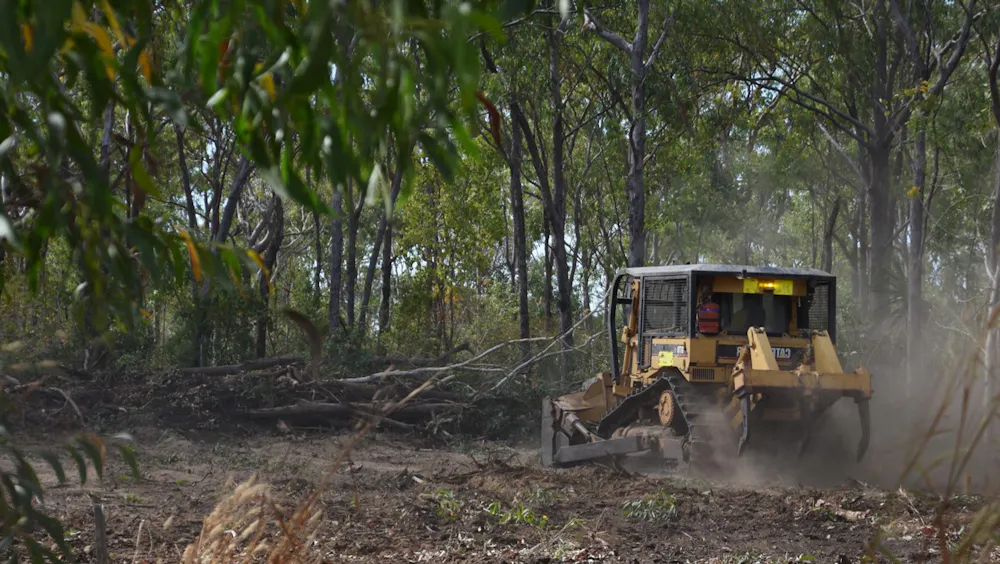
Habitat destruction at Lee Point, Darwin. Martine Maron
Protecting threatened species
For Australia to turn around its extinction crisis, prospective elected representatives and governments must firmly commit to the following actions.
Stronger environmental law and enforcement is essential for tackling biodiveristy decline and extinction. This should include what’s known as a “climate trigger”, which means any proposal likely to produce a significant amount of greenhouse gases would have to be assessed under the EPBC Act.
This is necessary because climate change is among the greatest threats to biodiversity. But the federal environment minister is currently not legally bound to consider – or authorised to refuse – project proposals based on their greenhouse gas emissions. In an attempt to pass the EPBC reforms in the Senate last year, the Greens agreed to postpone their demand for a climate trigger.
A large increase in environmental spending – to at least 1% of the federal budget – is vital. It would ensure sufficient support for conservation progress and meeting legal requirements of the EPBC Act, including listing threatened species and designing and implementing recovery plans when required.
Show nature the money!
Neither major party has committed to substantial increases in environmental spending in line with what experts suggest is urgently needed.
Without such increased investment Australia’s conservation record will almost certainly continue to deteriorate. The loss of nature hurts us all. For example, most invasive species not only affect biodiversity; they have major economic costs to productivity.
Whoever forms Australia’s next government, we urge elected leaders to act on the wishes of 96% of surveyed Australians calling for more action to conserve nature.
Euan Ritchie receives funding from the Australian Research Council and the Department of Energy, Environment, and Climate Action. Euan is a Councillor within the Biodiversity Council, a member of the Ecological Society of Australia and the Australian Mammal Society, and President of the Australian Mammal Society.
John Woinarski is a Professor at Charles Darwin University, a director of the Australian Wildlife Conservancy, co-chair of the IUCN Australasian Marsupials and Monotremes Specialist group, a councillor with the Biodiversity Council, and a member of the science advisory committee of Zoos Victoria and Invertebrates Australia. He has received funding from the Australian government to contribute to the management of feral cats and foxes.
Martine Maron has received funding from various sources including the Australian Research Council, the Queensland Department of Environment and Science, and the federal government’s National Environmental Science Program, and has advised both state and federal government on conservation policy. She is a member of the Wentworth Group of Concerned Scientists, a director of the Australian Wildlife Conservancy, a councillor with the Biodiversity Council, and leads the IUCN’s thematic group on Impact Mitigation and Ecological Compensation under the Commission on Ecosystem Management.
Source: The Conversation (Au and NZ) – By Meg Elkins, Senior Lecturer, School of Economics, Finance and Marketing and Behavioural Business Lab Member, RMIT University
Remember when grabbing a coffee was just… grabbing a coffee? When a parma at the local was a budget meal? When Friday night takeaway was a reward for getting through the week? It didn’t require a financial spread sheet.
For many families navigating the cost-of-living crisis these small indulgences now have to be accounted for. They’re not just automatic purchases.
We’re not just cutting back on buying large discretionary items, like new cars. The impact of inflation on household budgets has fundamentally reshaped our relationship with food, social connection and small pleasures.
The current cost-of-living crisis can also create new spending habits. The ways we restructure our budgets can have lasting effects on our lives and local economies.
Price anchors
What five years ago was a A$3.80 coffee has now become $5.50 with some options as high as $7.00.
Despite the price change, customers have a mental reference point of what a coffee should cost from the pre-inflationary period.
So if you are used to paying $5 for a daily coffee, any price above this is beyond what you see as reasonable value for money.
Look at parents at weekend sports matches. You’ll notice the increasing presence of the insulated mug full of homemade coffee, replacing the takeaway coffees from the local cafe.
For my family, Friday night was pizza night and $50 would easily feed a family of four. Then the inflationary price creep started. For us $70 was the tipping point. When the same order cost more we started making pizzas at home.
Mental accounting
Nobel laureate Richard Thaler introduced the concept of mental accounting in 1985, as a model of how we allocate money into to different categories for spending.
If the price is above our threshold point we mentally reassign its purchase to one of our other spending categories. It might shift from being an everyday item in our household budget to an occasionally purchased item.
Decision fatigue
During an inflation-fuelled cost-of-living crisis, we face not only financial strain but also significant decision fatigue from constant price revaluations.
This cognitive burden emerges as mental exhaustion when making even routine purchases.
Increasing pressure on our finances can trigger a scarcity mindset that consumes our thinking and affects our decision making.
Our focus shifts to immediate needs, such as paying weekly grocery bills, instead of long-term financial planning for a holiday or retirement.
The social cost
These new purchasing habits and economic shifts also have implications for our social connections. The cafe, the pub and takeaway night are not only about food but they are about community and building social connections.
The so-called third place is the place between work and home where you can be part of the community.
Buying goods is often accompanied by an exchange of conversation. As the cost-of-living crisis continues making fewer purchases reduces opportunities to connect.
If higher costs change our spending habits such as a weekly night at the pub, opportunities to connect are also affected. Drazen Zigic/Shutterstock
If the little pleasures we consume as a daily or weekly ritual become luxuries, this can increase the loss of the third space. It means spaces such as cafes, restaurants and pubs no longer foster community cohesion and increase social capital.
As these goods become luxuries, social division intensifies. Rising prices exclude certain groups and may restrict social mixing across income levels.
What it means for businesses
A big question here is how much longer can some hospitality services survive as the cost-of-living crisis continues?
After a severe downturn during early COVID-19 lockdowns (-35.3% in March-April 2020), the sector rebounded to pre-pandemic levels by March 2021. This was followed by extraordinary expansion during 2021-2022 (26.8% growth) as pent-up demand was unleashed.
But recent figures reveal a problem: while spending rose 3.76% from January 2024 to January 2025, real growth (adjusted for inflation) was negative at -0.43%.
Inflationary psychology explains how customers’ behaviour changes and they buy less over time. Eventually a point is reached where they won’t pay the higher price.
This means, in the case of the hospitality industry, fewer actual meals are being served due to higher prices.
The industry faces a tough situation with costs rising faster than general inflation due to expensive ingredients, higher wages from worker shortages, and increased energy prices.
Our happiness threshold
Humans have a set-point of happiness. When economic pressures mean we adjust to new spending patterns to save money for an extended period, the new patterns, become the norm.
Inflation, complicates social comparison. If everyone’s purchasing power falls simultaneously, relative positions may remain stable.
As the current cost-of-living crisis continues our little pleasures such as a weekly parma or daily coffee are increasingly becoming conscious choices rather than automatic purchases.
This has the potential to permanently change the way Australian households budget.
The authors do not work for, consult, own shares in or receive funding from any company or organisation that would benefit from this article, and have disclosed no relevant affiliations beyond their academic appointment.
With the federal election campaign now underway, Prime Minister Anthony Albanese has promised that if re-elected, Labor would seek to make price gouging illegal in the supermarket sector.
A new taskforce would be set up to examine the best way to do so, drawing on the experience of other countries. The Australian Competition and Consumer Commission (ACCC) would then enforce the new “excessive pricing regime”.
Labor’s proposal comes despite the fact the final report from the ACCC’s supermarkets inquiry didn’t make any explicit accusation of price gouging.
Meanwhile, the Coalition and Greens still want new divestiture powers to break up the supermarkets, a course of action also not recommended by the ACCC’s report.
Price gouging, also referred to as “excessive pricing”, isn’t illegal in Australia. As long as prices are set independently by an individual business – and not in collusion with supposed competitors – they can be set as high or low as desired.
The legal situation on price gouging differs around the world.
The European Union, for example, prohibits abuse of a dominant market position by “directly or indirectly imposing unfair purchase or selling prices”.
It can be difficult to define an “unfair price”. Typically, it’s an excessive, monopolistic price higher than what would be set in a competitive market.
A landmark EU judgement defines an excessive price as one with “no reasonable relation to the economic value of the product supplied”.
Despite this ban, enforcement cases are somewhat rare. The European Commission has been more focused on tackling “exclusionary conduct” in recent decades.
This is when a competitor with significant market power uses restrictive means to directly hurt its competitors and exclude them (and future competitors) from competing in the relevant market.
An example is predatory pricing, where a company sets prices unrealistically low to drive out competitors – then becoming able to set them as high as they would like.
What about divestiture?
Both the Coalition and Greens have pledged to create new “divestiture” powers to break up supermarkets if they were found to be abusing their market power.
In competition law, divestiture is when a commercial entity is ordered to sell a portion of its assets or its business to a third party, to improve competition in the affected market.
Australian law has divestiture powers to address anti-competitive mergers and acquisitions. But currently, there aren’t powers to break up businesses for misuse of market power.
It’s a different picture in the United States, where the government has had powers to break up businesses in the context of “monopolisation” for more than a century.
The risks of splitting up
Divestiture powers were not recommended in the ACCC’s final report. That may be linked to market structure here.
The Australian grocery retail market is highly concentrated. The majority of retail sales are shared among only a few supermarket chains, primarily Woolworths (38%) and Coles (29%).
However, the combined share of these two retail giants has declined over the past 14 years, from 80% to 67%. Meanwhile, Aldi’s market share has grown to 9%, showing these two retailers face some competition.
This suggests divestiture may be a misguided approach. There are specific risks that come with divestiture remedies.
For instance, who would purchase the assets under a specific divestiture order? When considering the structure of the current grocery retail market, there is a high risk it would be another powerful retailer interested in purchasing its competitor’s assets. This would defeat the purpose entirely.
Other measures already in motion
Any ban on price gouging or new divestiture powers should be implemented with caution and used as a temporary tool. Directly interfering with free markets comes with risks.
Other actions are already underway to boost competition in the sector and improve supermarkets’ dealings with suppliers.
The federal government has previously announced incentives for the states to “cut planning and zoning red tape”, with the aim of making it easier for smaller supermarkets to enter the market and compete.
The Food and Grocery Code of Conduct for dealing with suppliers is now mandatory. Nita Corfe/Shutterstock
Certain restrictive and unfair practices in dealing with suppliers will be directly prohibited and enforced.
The new code gives the ACCC a range of useful tools to enforce against a breach by a powerful supermarket chain.
These include:
a confidential channel for whistleblowing suppliers
effective dispute resolution to address lengthy and costly litigation
heavy penalties – as high as A$10 million or 10% of annual turnover – for serious breaches of the code.
Rather than bring in measures that have not been independently recommended – like a price gouging ban or divestiture powers – it would be worth first seeing how these new enforceable rules work to deliver a better deal for supermarket customers.
Barbora Jedlickova does not work for, consult, own shares in or receive funding from any company or organisation that would benefit from this article, and has disclosed no relevant affiliations beyond their academic appointment.
Jack Thorne and Stephen Graham’s crime drama Adolescence has earned widespread praise for its portrayal of incel culture and male violence.
But the show’s portrayal of 13-year-old Jamie (Owen Cooper) being radicalised by misogynistic online content has a lot of parents concerned about their own kids and how they talk online.
For many, this concern is amplified by the fear that, just like the adults in Adolescence, parents are often ignorant of the online language kids use to spread dangerous beliefs.
Journalists have produced a flurry of articles that promise to decode the “hidden meaning” of teen language by focusing on emoji featured on the show. One headline references supposedly “sinister emojis used by incel teenagers”.
Such concerns reflect a long history of moral panic around youth language. But defining or banning emoji won’t solve the deeper issues at play.
Emoji in Adolescence
Adolescence follows Jamie and his family after the teenager is accused of murdering his classmate, Katie.
The second episode shows Adam (Amari Bacchus), the teenage son of detective inspector Luke Bascombe (Ashley Walters), correcting his father’s misunderstanding of a series of emoji Katie posted on Jaime’s Instagram profile.
While Bascome assumes the 💯 and 💥 emoji are flirtatious, Adam explains that, in this context, they are connected to the online “manosphere”.
Bascome is initially resistant to this explanation, but Adam convinces him by citing examples of different meanings associated with different coloured heart emoji; red is specifically used for “love”, while orange means “you’re going to be fine”. He stresses “it all has a meaning”.
This scene highlights key generational divides in the perception and use of emoji. For Adam and Jamie’s parents’ generation, emoji are largely treated as decorative. For teenagers, they can carry important meanings.
Are the kids actually alright?
It’s important to remember this isn’t the first time we’ve seen concerns about generational communication differences reflecting larger social rifts.
There are numerous examples in the media linking slang with issues of education, moral decline and even crime.
These attitudes have sparked debate over whether Australian schools should ban gen alpha and gen Z slang from classrooms.
While the frustration of parents and teachers is understandable, linguistic research shows aggressively negative attitudes towards teen language demotivate young people, exacerbate inequality and unnecessarily stoke intergenerational tension.
Emoji are highly context dependent. Much like gestures that are used with speech, we need to understand emoji in the specific conversations and communities they are used in. There is no consistent relationship between emoji use and inner emotional state that can be generalised across groups of teens or other emoji users.
Instead of fearing or banning emoji, we can try and understand how and why they are used in various contexts. And there are plenty of online resources to help with this. EmojiPedia, for example, describes the pill emoji 💊 as potentially referencing medicine, drugs, or an awakening to a controversial perspective (the “red pill” beliefs referenced in Adolecensce).
Emojis are also highly contextual. While the pill emoji may be present in misogynistic talk, it could also be referencing medication in another context. Shutterstock
Emoji are intentionally flexible and intended to be used creatively. In fact, Unicode, the organisation that assesses proposals for new emoji, requires that items encoded as emoji are able to hold multiple meanings.
Research has also shown different people react to emoji differently. One survey from 2018 found older men were most likely to view emoji as confusing and annoying, while young women were most likely to view emoji positively in communication.
Times change, and stay the same
Intergenerational differences, and the tensions they evoke, are nothing new.
Back in the 2000s, parents and teachers voiced concerns that “netspeak”, with its creative punctuation and capitalisation, would diminish young people’s grasp of “proper” English. This did not come to pass.
Does this mean parents have nothing to worry about when it comes to their kids communicating online? Of course not.
Online misogynistic movements and red pill communities can bring great harm to vulnerable young people. Their growing popularity is something we all have to reckon with – but online language is not to blame.
Parents can’t realistically prevent the radicalisation of young men by simply referencing an emoji dictionary, nor can teachers stamp out the spread of misogyny by banning emoji and slang in classrooms.
Instead, as one scene between Adam and his dad shows, we need to collectively shift our focus towards facilitating open conversations between generations.
By doing so, we can not only better understand our differences, but can reduce the feelings of social isolation that leave young people vulnerable to becoming radicalised.
Lauren Gawne is affiliated with Unicode as a member of the Emoji Standard & Research Working Group.
Jessica Kruk does not work for, consult, own shares in or receive funding from any company or organisation that would benefit from this article, and has disclosed no relevant affiliations beyond their academic appointment.
The Labor party on Wednesday will urge the Fair Work Commission to grant a real wage increase to Australian workers on awards.
This goes further than Labor’s recommendations in earlier years, which have been for real wages not to go backwards.
In the new submission, Labor will say that the increase should be “economically sustainable.” It says a rise in minimum and award wages should be consistent with inflation returning sustainably to the Reserve Bank’s target band of 2% to 3%.
The move sets up a debate between the government and opposition about what are responsible wage increases.
The submission says: “Labor believes workers should get ahead with a real wage increase. Despite heightened global uncertainty and volatility, the Australian economy has turned a corner. Inflation is now less than one third of its peak, unemployment remains low, there are over 1 million additional people employed than in May 2022, and interest rates have started to come down.
“Economic growth rebounded at the end of last year and the private sector is now a key contributor to growth. Importantly, real wages growth has now returned and is forecast to continue across 2024-25 and 2025-26. A soft landing in our economy looks more and more likely.”
More than 2.9 million workers have their pay set by an award and are directly affected by the commission’s Annual Wage Review. The national minimum wage is presently $24.10 an hour, which is $915.90 for a 38 hour week, equivalent to $47,626.80 a year.
The submission points out that women are disproportionately represented in jobs that are under awards and low paid.
The government argues that its position is both economically responsible and fair, and will ensure low paid workers can get ahead as inflation moderates. It says that if its recommendation is accepted, this will help about three million workers, including cleaners, retail workers and early childhood educators.
Prime Minister Anthony Albanese recalled that during the 2022 campaign he was asked if he supported a wage increase for low paid workers.
After he said “absolutely”, the Liberals had said this would wreck the economy,
“Since then we’ve seen wages going up, inflation coming down and interest rates starting to fall. This campaign will again advocate for workers to get a pay rise to not only help them deal with the pressures of today, but to get ahead in the future.”
Treasurer Jim Chalmers said: “The choice at this election is between a Labor government which has been creating jobs, getting wages moving again, rebuilding living standards and rolling out responsible cost-of-living help versus a Coalition that wants Australians working longer for less.”
In its submission Labor says an economically sustainable real wage increase would complement the measures the government has introduced to ease cost-of-living pressures.
Michelle Grattan does not work for, consult, own shares in or receive funding from any company or organisation that would benefit from this article, and has disclosed no relevant affiliations beyond their academic appointment.
The demography that makes up the Australian electorate is changing and as voters desert the major parties polls are becoming harder to read.
Kos Samaras is a director of the political consultancy firm Redbridge, which undertakes both quantitative research and focus groups. Samaras now views campaigns from the outside but in the past, as a former Labor Party official, he’s experienced them from the insisde too.
On the state on the polls he says,
They’re going to switch around a bit, but we are seeing some trends now that are quite obvious, and that is the consolidation of the Labor primary [vote]. Labor has been successful in bringing back some of those people that did move away from them to minor parties over the last 18 months in some key areas around the country.
On why Labor is doing better compared to the Coalition, Samaras says Labor starting early was key,
That’s why it’s important that when you are running a campaign, you must start very early and you must start before the writ is issued and that [is] why Labor has been in that space aggressively now for some time. And this is where I think Dutton and his team have really missed the mark. They’ve waited until the writ to start their campaign. They’ve allowed a vacuum to be created. Labor has filled it with their narrative and their story and their mission, and it’s bearing fruit.
On the Trump effect and how that will play in this election, Samaras says Dutton should try to distance himself from the US president,
We do think that the Trump factor is having an impact, and we could see that in other countries as well. Canada is a really good example of that.
It’s hard for Labor to convince Australians that Dutton is like Trump, but Dutton has throughout this campaign made some errors, particularly on issues around dual citizenship, cuts to the public service. These policies just kind of remind people that he’s not Trump, because he’s an established player, but he does have some element to him that is similar and that can only hurt him.
Now that Gen X and the millennials have overtaken the baby boomers as voters, Samaras say of these younger voters,
They want the system turned on its head. They actually want to see significant reform, and at the moment, they’re just getting band-aids, and that’s fundamentally the problem. Now they may indeed a portion of them eventually just vote for one or the other of the major parties and there will be a number of them that do that. But I wouldn’t exactly describe that as enthusiastic support.
Michelle Grattan does not work for, consult, own shares in or receive funding from any company or organisation that would benefit from this article, and has disclosed no relevant affiliations beyond their academic appointment.
“I started filming when we started to end.” With these haunting words, Basel Adra begins No Other Land, the Oscar-winning documentary that depicts life in Masafer Yatta, a collection of Palestinian villages in the southern West Bank that are under complete occupation – military and civil – by Israel.
For Basel and his community, this land isn’t merely territory — it’s identity, livelihood, their past and future.
No Other Land vividly captures the intensity of life in rural Palestinian villages and the everyday destruction perpetrated by both Israeli authorities and the nearby settler population: the repeated demolition of Palestinian homes and schools; destruction of water sources such as wells; uprooting of olive trees; and the constant threat of extreme violence.
While this 95-minute slice of Palestinian life opened the world’s eyes, most are unaware that No Other Land takes place in an area of the West Bank that is ground zero for any viable future Palestinian state.
Designated as “Area C” under the Oslo Peace Accords, it constitutes 60% of the occupied West Bank and is where the bulk of Israeli settlements and outposts are located. It is a beautiful and resource-rich area upon which a Palestinian state would need to rely for self-sufficiency.
For decades now, Israel has been using military rule as well as its planning regime to take over huge swathes of Area C, land that is Palestinian — lived and worked on for generations.
This has been achieved through Israel’s High Planning Council, an institution constituted solely of Israelis who oversee the use of the land through permits — a system that invariably benefits Israelis and subjugates Palestinians, so much so that Israel denies access to Palestinians of 99 percent of the land in Area C including their own agricultural lands and private property.
‘This is apartheid’ Michael Lynk, when he was serving as UN Special Rapporteur on the Situation of Human Rights in the Occupied Palestinian Territories, referred to Israel’s planning system as “de-development” and stated explicitly: “This is apartheid”.
The International Court of Justice recently affirmed what Palestinians have long known: Israel’s planning policies in the West Bank are not only discriminatory but form part of a broader annexation agenda — a violation of international humanitarian law.
To these ends, Israel deploys a variety of strategies: Israeli officials will deem certain areas as “state lands”, necessary for military use, or designate them as archaeologically significant, or will grant permission for the expansion of an existing settlement or the establishment of a new one.
Meanwhile, less than 1 percent of Palestinian permit applications were granted at the best of times, a percentage which has dropped to zero since October 2023.
As part of the annexation strategy, one of Israel’s goals with respect to Area C is demographic: to move Israelis in and drive Palestinians out — all in violation of international law which prohibits the forced relocation of occupied peoples and the transfer of the occupant’s population to occupied land.
Regardless, Israel is achieving its goal with impunity: between 2023 and 2025 more than 7,000 Palestinians have been forcibly displaced from their homes in Area C due to Israeli settler violence and access restrictions.
At least 16 Palestinian communities have been completely emptied, their residents scattered, and their ties to ancestral lands severed.
The government has increased funding for settlements by nearly 150 percent; more than 25,000 new Israeli housing units in settlements have been advanced or approved; and Israel has been carving out new roads through Palestinian lands in the West Bank, severing Palestinians from each other, their lands and other vital resources.
Israeli authorities have also encouraged the establishment of new Israeli outposts in Area C, housing some of the most radical settlers who have been intensifying serious violence against Palestinians in the area, often with the support of Israeli soldiers.
None of this is accidental. In December 2022, Israel appointed Bezalel Smotrich, founder of a settler organisation and a settler himself, to oversee civilian affairs in the West Bank.
Since then, administrative changes have accelerated settlement expansion while tightening restrictions on Palestinians. New checkpoints and barriers throughout Area C have further isolated Palestinian communities, making daily life increasingly impossible.
Humanitarian organisations and the international community provide much-needed emergency assistance to help Palestinians maintain a foothold, but Palestinians are quickly losing ground.
As No Other Land hit screens in movie houses across the world, settlers were storming homes in Area C and since the Oscar win there has been a notable uptick in violence. Just this week reports emerged that co-director Hamdan Ballal was himself badly beaten by Israeli settlers and incarcerated overnight by the Israeli army.
Israel’s annexation of Area C is imminent. To retain it as Palestinian will require both the Palestinian Authority and the international community to shift the paradigm, assert that Area C is Palestinian and take more robust actions to breathe life into this legal fact.
The road map for doing so was laid by the International Court of Justice who found unequivocally that Israel’s occupation of the West Bank and Gaza is unlawful and must come to an end.
They specified that the international community has obligations in this regard: they must not directly or indirectly aid Israel in maintaining the occupation and they must cooperate to end it.
With respect to Area C, this includes tackling Israel’s settlement policy to cease, prevent and reverse settlement construction and expansion; preventing any further settler violence; and ending any engagement with Israel’s discriminatory High Planning Council, which must be dismantled.
With no time to waste, and despite all the other urgencies in Gaza and the West Bank, if there is to be a Palestinian state, Palestinians in Area C must be provided with full support – political, financial, and legal — by local authorities and the international community, to rebuild their lives and livelihoods.
Leilani Farha is a former UN Special Rapporteur on the right to adequate housing and author of the report Area C is Everything. Republished under Creative Commons.
Peter Dutton came perilously close to a DOGE moment on Monday night, when he was asked about getting the “woke” agendas out of the education system.
Noting the Commonwealth government “doesn’t own or run a school”, Dutton told a Sky audience in Brisbane that people wondered why there was “a department of thousands and thousands of people in Canberra called the Education Department”.
Unsurprisingly, he dodged when pushed by the press pack on Tuesday on whether the education bureaucrats would be in for the chop under his public service cuts. It’s a fair bet quite a few would be.
“We’ve said we would take waste out of the federal budget and put it back into frontline services.” he said,
He’s indicating overall budget funding for health and education would not be cut.
But that didn’t stop Treasurer Jim Chalmers from declaring Dutton had “threatened cuts to school funding which was right from the DOGE playbook.
“This is DOGE-y Dutton, taking his cues and policies straight from the US in a way that will make Australians worse off.”
Importantly, Dutton is signalling a potentially very interventionist approach on education.
The feds mightn’t run the schools, but they provide much of the wherewithal to pay for them, and “we can condition that funding,” the opposition leader said.
“We should be saying to states and […] to those that are receiving that funding that we want our kids to be taught […] what it is they need to take on as they face the challenges of the world and not to be guided into some sort of an agenda that’s come out of universities.
“And I think there’s a lot of work to do.”
A Dutton government would face some problems trying to work through funding.
The Albanese government recently completed its round of school funding agreements with the states. It attached broad conditions to them, around getting back to the fundamentals and ensuring kids don’t fall behind or, if they do, they are helped to catch up.
Would the Liberals want to try to reopen the funding agreements? New South Wales, South Australia, Queensland and Tasmania have not just heads of agreement with the Commonwealth but bilateral agreements, covering implementation. It might be easier to make changes for Victoria and Western Australia, which don’t yet have the bilateral implementation agreements. But it would be a fraught exercise.
There’s a more general point. This route takes a government only so far. Even when states sign up, it can be hard to keep them to the conditions.
Schools expert Ben Jensen, CEO of the education research and consulting group Learning First, says a federal government’s main levers are through the national curriculum, NAPLAN assessments, and (via the universities) teacher training.
The most obvious is the national curriculum. Opposition education spokeswoman Sarah Henderson has said, “One of the big problems is our national curriculum and we simply need to fix it.” That curriculum, incidentally, was signed off under the former Coalition government exactly three years ago by the acting education minister Stuart Robert.
A Dutton government could redo it but that would involve working with the states. Anyway, the states can go their own way regardless of the national curriculum. Victoria and NSW currently run their own curriculum’s.
All in all, imposing its priorities on the schools system might be a good deal harder than it sounds for a Dutton government.
The universities would clearly be in Dutton’s sights, and there is more scope for intervention here.
The Coalition believes the universities have got the balance wrong between foreign and domestic students. Henderson told this year’s Universities Australia conference, “For too long, universities have relied on a business model which yielded them eye watering revenues which are not sustainable or in line with expectations of the Australian community”.
“We will deliver a tougher student cap than what is proposed by the government focused on excessive numbers of foreign students in metropolitan cities, particularly Melbourne and Sydney where two thirds of foreign students live and study.”
A Dutton government would also restore a much broader right for the minister to intervene on research funding decisions.
And it would require universities to implement an activist approach to combatting antisemitism.
The experience of the former Liberal government on higher education provides a salutary tale for a future one. Under the Abbott government, education minister Christopher Pyne had an ambitious plan for tertiary reform, centred on fee deregulation, but it crashed when it faced the obstacle of the Senate.
In 2020 the Morrison government did get through its Job-Ready Graduates legislation to alter fees. This is now recognised as highly flawed. Henderson has said the Coalition’s position on the scheme hasn’t changed but it would review it “in line with what our legislation said we would do”. It would be extremely surprising if such a review didn’t recommend a rework.
Michelle Grattan does not work for, consult, own shares in or receive funding from any company or organisation that would benefit from this article, and has disclosed no relevant affiliations beyond their academic appointment.
Source: The Conversation (Au and NZ) – By Jessica Holloway, Senior Research DECRA Fellow, Institute for Learning Sciences and Teacher Education, Australian Catholic University
The Coalition has previously raised concerns the national curriculum is “unwieldy” and “infused with ideology”. On Monday night, Dutton suggested states needed new funding conditions to make sure schools were teaching appropriate content. He told Sky News federal money should be conditional to ensure schools are not “guided into some sort of an agenda that’s come out of universities”.
He added to his comments on Tuesday, saying he wants students at schools (and universities) to receive an education that “reflect[s] community standards”.
I support young Australians being able to think freely, being able to assess what is before them and not being told and indoctrinated by something that is the agenda of others and that is the approach we would take.
Education Minister Jason Clare responded by claiming Dutton had a “bigger agenda” to “cut funding from schools”.
What is the curriculum and who decides what Australian students are taught?
What do students learn in Australian schools?
All Australian schools are required to teach the Australian Curriculum. Commonwealth and state and territory education ministers first approved the curriculum in 2009. It applies from the first year of schooling through to Year 10.
The curriculum sets out:
the expectations for what all young Australians should be taught, regardless of where they live in Australia or their background.
It is made up of eight “learning areas”: English, mathematics, science, humanities and social sciences, the arts, technologies, health and physical education and languages.
It can be described as a “map” of what teachers are expected to cover in each subject and year level.
This is to ensure all students across the country, whether in a small regional school or a large city one, have access to the same broad foundation of knowledge and skills.
provid[ing] teachers, parents, students and the community with a clear understanding of what students should learn regardless of where they live or what school they attend.
Every six years, the curriculum is reviewed and approved by education ministers from each state, territory and the Commonwealth. The current version was endorsed in April 2022 under the Morrison government (just before the last federal election).
The next review is expected in 2027-2028. This process includes consultation with teachers, curriculum experts, academics, professional associations and the wider public.
Do teachers and universities decide what’s taught?
Classroom teaching is guided by the Australian Curriculum. While teachers have professional discretion in how they deliver content, they are expected to “know the content and how to teach it”.
In fact, some education experts believe the curriculum is too crowded and leaves little flexibility for teachers to tailor learning to local contexts or student needs.
So while universities play an important role in preparing teachers to interpret and deliver the curriculum, they are not responsible for what schools teach.
Who does what?
Debates about what schools teach are not new and are likely to continue. But it is important they are grounded in an accurate understanding of how the system works.
Teachers, universities and governments all have different roles in shaping school education.
The Australian Curriculum is a nationally agreed framework, developed through public consultation and ministerial oversight. Teachers implement the curriculum according to professionally-acredited standards and attention to students’ individual needs. Universities support the education system through teacher preparation and research.
Jessica Holloway has received funding from the Australian Research Council.
Papua New Guinea’s Supreme Court has ruled that Parliament must be recalled on April 8 to debate a motion of no confidence against Prime Minister James Marape.
In a decision handed down yesterday, the court found that actions taken by the Parliament’s Private Business Committee and Deputy Speaker, Koni Iguan, in November 2024 were unconstitutional and in breach of the principle of parliamentary democracy.
The ruling stems from an incident on 27 November 2024, when a notice of motion for a vote of no confidence was submitted to Iguan and found compliant with constitutional requirements under Section 145.
However, the motion was rejected by invoking Section 165 of the Standing Orders, which disallows motions deemed identical in substance to those resolved within the previous 12 months.
This restriction came into play just over two months after an earlier motion of no confidence had been defeated on 12 September.
Iguan disallowed the motion and prevented it from being tabled in Parliament, triggering legal action from Chuave MP and deputy opposition leader James Nomane.
The court emphasised that parliamentary democracy relies on the executive’s accountability to the people through such mechanisms as motions of no confidence.
Overstepped mandate The court also found that the Private Business Committee had overstepped its mandate, taking actions that should have been handled by the Speaker or Parliament as a whole.
PNG Prime Minister James Marape . . . “We are a government that respects the courts.” Photo: RNZ/Samuel Rillstone
Marape has responded to the decision, saying his government will respect the rule of law and comply with the court’s directives.
“We are a government that respects the courts. The Supreme Court reads and interprets the Constitution better than all of us, and we will honour its ruling,” he said.
Marape commands the support of more than two-thirds of the MPs in the house which enabled him to pass several major consitutional amendments last month, including declaring Papua New Guinea a Christian nation.
He acknowledged the Supreme Court’s clarification of critical constitutional provisions which pertain to the right of MPs to introduce motions and participate in the democratic processes of government.
“The court found that there was a vacuum in the law and has provided direction,” he said.
“As the executive arm of government, we will not stand in the way. Parliament will sit as ordered by the court.”
This article is republished under a community partnership agreement with RNZ.
Source: The Conversation (Au and NZ) – By David Smith, Associate Professor in American Politics and Foreign Policy, US Studies Centre, University of Sydney
US President Donald Trump’s foreign policy is doing little to enhance his country’s standing abroad. But it is helping to reinforce his political authority at home.
Congress and the courts are typically deferential to the president on foreign policy – and, in particular, issues related to national security. By putting most of his agenda under the banner of foreign policy, Trump is now taking advantage of that deference to minimise challenges to his power.
Trump has claimed for decades that US domestic problems can be solved with a more aggressive foreign policy.
This focus certainly helps him deal with his political problems, allowing him to attack his enemies and evade accountability under the guise of “saving the country”.
Trump has even gone so far as to call April 2 – when sweeping new tariffs are imposed on foreign goods – “Liberation Day”.
We are used to thinking of the US president as having almost unlimited power over US foreign policy. But the Constitution actually gives a lot of that power to Congress.
For example, Article 1, Section 8 of the Constitution gives Congress, not the president, the power to declare war. It also gives Congress the power to “collect Taxes, Duties, Imposts and Excises”, which include tariffs.
Given these shared responsibilities, the legal scholar Edward Corwin described the Constitution as “an invitation to struggle for the privilege of directing American foreign policy.”
Since at least the Second World War, the president has been decisively winning that struggle. Or more accurately, Congress has been declining invitations to use its power.
For example, American wars no longer begin with declarations. The US has not declared war since 1941, even though the country has been at war almost every yearsince then. Presidents instead initiate and escalate military conflict in other ways, nearly always with Congressional approval. That approval usually remains in place until a war goes badly wrong.
Congress also passed legislation in 1934 giving the president power to negotiate trade agreements and adjust tariffs. That power expanded significantly with an act in 1962 that authorised the president to impose tariffs if imports threaten “national security”.
Although Trump claims tariffs will bring economic prosperity back to the US by reviving manufacturing, his administration justifies them on national security grounds. For example, it is currently using another federal act passed in 1977 that allows tariffs in response to an international emergency as justification for its tariffs on Canada and Mexico.
The courts are supposed to review the constitutionality of government actions. But on foreign policy, the courts have been deferential to the president even longer than Congress.
In a sweeping judgement in 1918, the Supreme Court wrote that foreign relations counted as a “political power” of the executive and legislative branches, not subject to judicial review.
A federal judge recently complained the Trump administration ignored his order blocking deportation flights of alleged Venezuelan gang members to El Salvador.
Trump invoked the 1798 Alien Enemies Act to justify deporting the Venezuelans, even though some have no criminal record.
And Secretary of State Marco Rubio argued the deportations were a “foreign policy matter”, and “we can’t have the judges running foreign policy”.
Mass deportation is one of Trump’s most popular policies. If he is going to pick fights with the judiciary, it makes political sense to do it on an issue where public opinion is on his side – even if the law is not.
Rubio’s comment is also a likely preview of the arguments Trump’s lawyers will make when cases about immigration reach the Supreme Court.
Deportations under both acts are going to face legal challenges. But the Trump administration is betting the Supreme Court will take Trump’s side, given its conservative members generally hold an expansive view of executive power.
A Supreme Court win would be a major political victory for Trump. It would encourage him to focus even more on using deportation as a political weapon, and making foreign policy justifications for legally dubious acts.
War as a political tool
Trump is effectively putting the US on a war footing. He is justifying his executive actions by recasting allies as enemies who menace national security with everything from illegal drugs to unfair subsidies, and by labelling millions of foreign nationals as “invaders”.
Many Americans don’t believe him. But as long as he can make threatening foreigners the main focus of American politics, he can find political and legal support for almost anything he wants to do.
David Smith does not work for, consult, own shares in or receive funding from any company or organisation that would benefit from this article, and has disclosed no relevant affiliations beyond their academic appointment.
Source: The Conversation (Au and NZ) – By John Hawkins, Senior Lecturer, Canberra School of Politics, Economics and Society, University of Canberra
The Reserve Bank of Australia left its benchmark interest rateunchanged at 4.1% today, stressing the uncertainty in the economic outlook.
As the Reserve Bank Governor Michele Bullock told a media conference, “since February there has been a lot more uncertainty introduced in the international context”.
The on-hold decision was widely expected and Bullock described it as a “consensus decision” by the board.
The decision to hold was not because the election campaign is underway. It was because there has not been enough new economic data to change materially its view on inflation. The governor said the board had never mentioned the election in its discussions.
In a statement, the central bank said:
Recent announcements from the United States on tariffs are having an impact on confidence globally and this would likely be amplified if the scope of tariffs widens.
As the Reserve Bank Governor put it, “we’re paid to worry” and they are discussing with peer central banks the response to global uncertainties.
Decline in inflation is welcome
The volatile monthly inflation series fell marginally, from 2.5% to 2.4%, in February.
The more trustworthy quarterly consumer price index (CPI) will come out on April 30 and will be an important factor in the Reserve Bank’s decision at its next meeting, on May 20.
The CPI report is likely to show the “trimmed mean” underlying inflation returning to the 2–3% target band for the first time since 2021. Headline inflation could be in the lower half of the band.
The unemployment rate has been steady at 4.1%. This is below what the Reserve Bank had regarded as the level consistent with steady inflation. But it has not been associated with an acceleration in wages. Indeed, wages have slowed to 3.2% growth, less than the Reserve Bank was forecasting for 2025.
This could all give the Reserve Bank the confidence to make another cut to the cash rate. Financial markets are predicting a cut in May.
The board itself said the current level of rates “remains restrictive”. So they will cut rates further once inflation is sustainably around the middle of the target band.
The (lack of) impact of the budget
The main impact of last week’s federal budget will be to delay the bounceback in electricity prices, after the end of the current rebates, for another six months. If there is a change in government, there will be a temporary fall in petrol prices for a year.
But both of these have only temporary effects on the “headline” inflation rate. The Reserve Bank is more concerned about sustained movements in underlying inflation.
Labor’s proposed income tax cuts, which will be cancelled if the Coalition wins power, are only “modest” (in the treasurer’s own words) and do not come into effect until July 2026. They are also unlikely to have a material impact on the Reserve Bank’s inflation forecasts.
The governor suggested as much, commenting that the forecasts following the budget would be similar to those made in February. She described increasing government spending as “filling a gap” in relatively weak private demand.
The fallout from tariffs
We will not know the extent of the new tariffs being announced by United States President Donald Trump until later in the week. And even then he may change them within days – or even on the same day.
The US tariffs will push up prices there. But if they trigger a trade war, the global economy will weaken and this may lead to lower prices globally. The governor pointed out that trade diversion prompted by tariffs could lower the price of some imports.
Bullock said the central bank was assessing the potential impact of tariffs on Australia’s trading partners including China. If Chinese authorities boosted support for their economy, then the economic impact on Australia might be “muted”.
The Reserve Bank’s 0.25% interest rate cut in February to 4.1% was the first change in the cash rate since November 2023 and marked the first small reversal of 13 rate increases that began in the closing days of the Morrison government.
The heightened attention placed on the Reserve Bank in an election campaign is not that unusual. With Australian parliamentary terms limited to three years, but with no fixed duration, we are often approaching a possible election.
While cutting interest rates will suit one side of politics, not cutting benefits the other. The impartial approach taken by the Reserve Bank is to make the same decision as they would if no election were looming.
The new board
This is the first meeting of the new monetary policy board, which is now separate from the central bank’s governance board.
This specialisation was a recommendation of the 2023 Reserve Bank review commissioned by the treasurer. But seven of the nine member remain from the previous board. The two new members, including one of the authors of the review, are not expected to hold markedly different views to the continuing members.
John Hawkins was formerly a senior economist with the Reserve Bank.
The damage climate change will inflict on the world’s economy is likely to have been massively underestimated, according to new research by my colleagues and I which accounts for the full global reach of extreme weather and its aftermath.
To date, projections of how climate change will affect global gross domestic product (GDP) have broadly suggested mild to moderate harm. This in part has led to a lack of urgency in national efforts to reduce greenhouse gas emissions.
However, these models often contain a fundamental flaw – they assume a national economy is affected only by weather in that country. Any impacts from weather events elsewhere, such as how flooding in one country affects the food supply to another, are not incorporated into the models.
Our new research sought to fix this. After including the global repercussions of extreme weather into our models, the predicted harm to global GDP became far worse than previously thought – affecting the lives of people in every country on Earth.
Weather shocks everywhere, all at once
Global warming affects economies in many ways.
The most obvious is damage from extreme weather. Droughts can cause poor harvests, while storms and floods can cause widespread destruction and disrupt the supply of goods. Recent research has also shown heatwaves, aggravated by climate change, have contributed to food inflation.
Most prior research predicts that even extreme warming of 4°C will have only mild negative impacts on the global economy by the end of the century – between 7% and 23%.
Such modelling is usually based on the effects of weather shocks in the past. However, these shocks have typically been confined to a local or regional scale, and balanced out by conditions elsewhere.
For example, in the past, South America might have been in drought, but other parts of the world were getting good rainfall. So, South America could rely on imports of agricultural products from other countries to fill domestic shortfalls and prevent spikes in food prices.
But future climate change will increase the risk of weather shocks occurring simultaneously across countries and more persistently over time. This will disrupt the networks producing and delivering goods, compromise trade and limit the extent to which countries can help each other.
International trade is fundamental to the global economic production. So, our research examined how a country’s future economic growth would be influenced by weather conditions everywhere else in the world.
What did we find?
One thing was immediately clear: a warm year across the planet causes lower global growth.
We corrected three leading models to account for the effects of global weather on national economies, then averaged out their results. Our analysis focused on global GDP per capita – in other words, the world’s economic output divided by its population.
We found if the Earth warms by more than 3°C by the end of the century, the estimated harm to the global economy jumped from an average of 11% (under previous modelling assumptions) to 40% (under our modelling assumptions). This level of damage could devastate livelihoods in large parts of the world.
Previous models have asserted economies in cold parts of the world, such as Russia and Northern Europe, will benefit from warmer global temperatures. However, we found the impact on the global economy was so large, all countries will be badly affected.
A warm year across the planet causes lower global growth. Pictured: wilted corn crops during drought. wahyusyaban/Shutterstock
Costs vs benefits
Reducing emissions leads to short-term economic costs. These must be balanced against the long-term benefits of avoiding dangerous climate change.
Recent economic modelling has suggested this balance would be struck by reducing emissions at a rate that allows Earth to heat by 2.7°C.
This is close to Earth’s current warming trajectory. But it is far higher than the goals of the Paris Agreement, and global warming limits recommended by climate scientists. It is also based on the flawed assumptions discussed above.
Under our new research, the optimal amount of global warming, balancing short-term costs with long-term benefits, is 1.7°C – a figure broadly consistent with the Paris Agreement’s most ambitious target.
Avoiding climate change has short-term costs and long-term benefits. Dany Bejar/Shutterstock
Changing course
Our new research shows previous forecasts of how such warming will affect the global economy have been far too optimistic. It adds to otherrecent evidence suggesting the economic impacts of climate change has been badly underestimated.
Clearly, Earth’s current emissions trajectory risks our future and that of our children. The sooner humanity grasps the calamities in store under severe climate change, the sooner we can change course to avoid it.
Timothy Neal does not work for, consult, own shares in or receive funding from any company or organisation that would benefit from this article, and has disclosed no relevant affiliations beyond their academic appointment.
The small Queensland town of Eromanga bills itself as Australia’s town furthest from the sea. But this week, an ocean of freshwater arrived.
Monsoon-like weather has hit the normally arid Channel Country of inland Queensland. Some towns have had two years’ worth of rain in a couple of days. These flat grazing lands now resemble an inland sea. Dozens of people have been evacuated. Others are preparing to be cut off, potentially for weeks. And graziers are reporting major livestock losses – more than 100,000 and climbing. In some areas, the flooding is worse than 1974, the wettest year on record in Australia.
Why so much rain? Tropical, water-laden air has been brought far inland from the oceans to the north and east. This can happen under normal climate variability. But our ocean temperatures are the highest on record, which supercharges the water cycle.
In coming weeks, this huge volume of water will wend its way through the channels and down to fill Kati Thanda-Lake Eyre, the ephemeral lake which appears in the northern reaches of South Australia. It’s likely this will be a Lake Eyre for the ages.
In the first three months of the year, deadly record-breaking floods hit northern Queensland before Cyclone Alfred tracked unusually far south and made landfall in southeast Queensland, bringing widespread winds and rains and leaving expensive repair bills. Now the rain has come inland.
Why so much rain in arid areas?
Some meteorologists have dubbed this event a pseudo-monsoon. That’s because the normal Australian monsoon doesn’t reach this far south – the torrential rains of the monsoonal wet season tend to fall closer to the northern coasts.
Because the Arafura and Timor Seas to the north are unusually warm, evaporation rates have shot up. Once in the air, this water vapour makes for very humid conditions. These air masses are even more humid than normal tropical air, because they have flowed down from the equator. Many Queenslanders can vouch for the intense humidity.
But there’s a second factor at work. At present, Australia’s climate is influenced by a positive Southern Annular Mode. This means the belt of intense westerly winds blowing across the Southern Ocean has been pushed further south, causing a ripple effect which can lead to more summer rain in Australia’s southeast, up to inland Queensland. This natural climate driver has meant easterly winds have blown uninterrupted from as far away as Fiji, carrying yet more humid air inland.
Many inland rivers in Queensland are in major flood (red triangles) as of April 1. Bureau of Meteorology, CC BY
These two streams of converging humid tropical air were driven up into the cooler heights of the atmosphere by upper and surface low pressure troughs, triggering torrential rain over wide areas of the outback
While these humid air masses have now dumped most of their water, more rain is coming in the aftermath of the short-lived Cyclone Dianne off northwest Australia. These rains won’t be as intense but may drive more flood peaks over already saturated catchments.
This is why it has been so wet in what is normally an exceptionally dry part of Australia.
What is this doing to the Channel Country?
Many Australians have never been to the remote Channel Country. It’s a striking landscape, marked by ancient, braided river channels.
Even for an area known for drought-flood cycles, the rainfall totals are extreme. This is a very rare event.
People who live there have to be resilient and self-sufficient. But farmers and graziers are bracing for awful losses of livestock. Livestock can drown in floodwaters, but a common fate is succumbing to pneumonia after spending too long in water. After the water moves down the channels, it will leave behind notoriously boggy and sticky mud. This can be lethal to livestock and native animals, which can find themselves unable to move.
Where will the water go next?
Little of these temporary inland seas will ever reach the ocean.
Some of the rain has fallen in the catchment of the Darling River, where it will flow down and meet the Murray. The Darling is often filled by summer rains, while the Murray gets more water from autumn and winter rains. This water will eventually reach the Southern Ocean.
But most of the rain fell further inland. The waters snaking through the channels will head south, flowing slowly along the flat ground for weeks until it crosses the South Australian border and begins to fill up Kati Thanda-Lake Eyre. Here, the waters will stop, more than 300 km from the nearest ocean at Port Augusta, and fill what is normally a huge, salty depression and Australia’s lowest point, 15 metres below sea level.
When Kati Thanda-Lake Eyre fills, it creates an extraordinary spectacle. Millions of brine shrimp will hatch from eggs in the dry soil. This sudden abundance will draw waterbirds in their millions, while fish carried in the floodwaters will spawn and eat the shrimp. Then there are the remarkable shield shrimps, hibernating inland crabs and salt-adapted hardyhead fish.
It’s rare that Kati Thanda-Lake Eyre fills up – but when it does, life comes to the desert. Mandy Creighton/Shutterstock
The rain event will send enough water to keep Lake Eyre full for many months and it usually takes up to two years for it to dry out again. We can expect to see a huge lake form – the size of a small European country. Birdwatchers and biologists will flock to the area to see the sight of a temporary sea in the desert.
Eventually, the intense sun of the outback will evaporate every last drop of the floodwaters, leaving behind salted ground and shrimp eggs for the next big rains.
As the climate keeps warming, we can expect to see more sudden torrential rain dumps like this one, followed by periods of rapid drying.
Steve Turton has previously received funding from the federal government.
Social media has recently been flooded with images that looked like they belonged in a Studio Ghibli film. Selfies, family photos and even memes have been re-imagined with the soft pastel palette characteristic of the Japanese animation company founded by Hayao Miyazaki.
Generative artificial intelligence (AI) systems such as ChatGPT are best understood as “style engines”. And what we are seeing now is these systems offering users more precision and control than ever before.
But this is also raising entirely new questions about copyright and creative ownership.
How the new ChatGPT makes images
Generative AI programs work by producing outputs in response to user prompts, including prompts to create an image.
Previous generations of AI image generators used diffusion models. These models gradually refine random, noisy data into a coherent image. But the latest update to ChatGPT uses what’s known as an “autoregressive algorithm”.
This algorithm treats images more like language, breaking them down into “tokens”. Just as ChatGPT predicts the most likely words in a sentence, it can now predict different visual elements in an image separately.
This tokenisation enables the algorithm to better separate certain features of an image – and their relationship with words in a prompt. As a result, ChatGPT can more accurately create images from precise user prompts than previous generations of image generators. It can replace or change specific features while preserving the rest of the image, and it improves on the longstanding issue of generating correct text in images.
A particularly powerful advantage of generating images inside a large language model is the ability to draw on all the knowledge already encoded in the system. This means users don’t need to describe every aspect of an image in painstaking detail. They can simply refer to concepts such as Studio Ghibli and the AI understands the reference.
The recent Studio Ghibli trend began with OpenAI itself, before spreading among Silcon Valley software engineers and then even governments and politicians – including seemingly unlikely uses such as the White House creating a Ghiblified image of a crying woman being deported and the Indian government promoting Prime Minister Narendra Modi’s narrative of a “New India”.
Understanding AI as ‘style engines’
Generative AI systems don’t store information in any traditional sense. Instead they encode text, facts, or image fragments as patterns – or “styles” – within their neural networks.
Trained on vast amounts of data, AI models learn to recognise patterns at multiple levels. Lower network layers might capture basic features such as word relationships or visual textures. Higher layers encode more complex concepts or visual elements.
This means everything – objects, properties, writing genres, professional voices – gets transformed into styles. When AI learns about Miyazaki’s work, it’s not storing actual Studio Ghibli frames (though image generators may sometimes produce close imitations of input images). Instead, it’s encoding “Ghibli-ness” as a mathematical pattern – a style that can be applied to new images.
The same happens with bananas, cats or corporate emails. The AI learns “banana-ness”, “cat-ness” or “corporate email-ness” – patterns that define what makes something recognisably a banana, cat or a professional communication.
The encoding and transfer of styles has for a long time been an express goal in visual AI. Now we have an image generator that achieves this with unprecedented scale and control.
This approach unlocks remarkable creative possibilities across both text and images. If everything is a style, then these styles can be freely combined and transferred. That’s why we refer to these systems as “style engines”. Try creating an armchair in the style of a cat, or in elvish style.
The copyright controversy: when styles become identity
While the ability to work with styles is what makes generative AI so powerful, it’s also at the heart of growing controversy. For many artists, there’s something deeply unsettling about seeing their distinctive artistic approaches reduced to just another “style” that anyone can apply with a simple text prompt.
Hayao Miyazaki has not publicly commented on the recent trend of people using ChatGPT to generate images in his world-famous animation style. But he has been critical of AI previously.
All of this also raises entirely new questions about copyright and creative ownership.
Traditionally, copyright law doesn’t protect styles – only specific expressions. You can’t copyright a music genre such as “ska” or an art movement such as “impressionism”.
This limitation exists for good reason. If someone could monopolise an entire style, it would stifle creative expression for everyone else.
But there’s a difference between general styles and highly distinctive ones that become almost synonymous with someone’s identity. When an AI can generate work “in the style of Greg Rutkowski” – a Polish artist whose name was reportedly used in over more than 93,000 prompts in AI image generator Stable Diffusion – it potentially threatens both his livelihood and artistic legacy.
Some creators have already taken legal action.
In a case filed in late 2022, three artists formed a class to sue multiple AI companies, arguing that their image generators were trained on their original works without permission, and now allow users to generate derivative works mimicking their distinctive styles.
As technology evolves faster than the law, work is under way on new legislation to try and balance technological innovation with protecting artists’ creative identities.
Whatever the outcome, these debates highlight the transformative nature of AI style engines – and the need to consider both their untapped creative potential and more nuanced protections of distinctive artistic styles.
The authors do not work for, consult, own shares in or receive funding from any company or organisation that would benefit from this article, and have disclosed no relevant affiliations beyond their academic appointment.
Getting a headache during or after exercise can be seriously frustrating – especially if you have kept hydrated to try and stop them from happening.
But why do these headaches occur? And does keeping hydrated make any difference?
What are exercise headaches?
Exercise headaches (also known as “exertional headaches”) are exactly what they sound like: headaches that occur either during, or after, exercise.
French doctor Jules Tinel first reported these headaches in the medical literature in 1932 and they’ve been a regular point of discussion since.
Exercise headaches commonly present as a throbbing pain on both sides of the head. They most often occur after strenuous exercise – although what is considered “strenuous” can differ between people, depending on their fitness levels. They can last anywhere from a few minutes to a couple of days.
Exercise headaches are thought to impact about 12% of adults, although this number varies from 1% all the way up to 26% across individual studies.
In most circumstances, these headaches are harmless and will resolve on their own, over time. Some research suggests you will stop getting them after a few months of starting a new type of workout.
But while they are usually harmless, they can sometimes signal an underlying condition that requires medical attention.
What causes exercise headaches?
Despite a good amount of research looking at exertional headaches, we don’t know their exact cause, but we do think we know why they occur.
The leading theory suggests they are caused by changes in blood flow to the brain. During intense exercise, blood vessels in the brain dilate, increasing blood flow and pressure, leading to pain.
Because long-term exercise improves our cardiovascular health, including our ability to dilate and constrict our blood vessels, this theory makes sense when we consider that exercise headaches tend to resolve themselves over time. This might explain why research suggests fitter people are less likely to get exercise headaches.
People with migraines appear more likely to experience exercise headaches, which are thought to be caused by this same mechanism.
Does heat and dehydration cause exercise headaches?
There is evidence suggesting that exercise headaches are more likely to occur in the heat.
Your brain cannot dissipate heat by sweating like the rest of your body can. So when it’s hot, your body has to increase blood flow to the brain to help bring down its temperature, which can increase pressure.
Similarly, exercise headaches also seem to get worse, and occur more often, when people are dehydrated.
However, we are not sure why this happens. Some research has shown that dehydration results in increased strain during exercise. As such, dehydration might not necessarily cause the headache, but make it more likely to occur.
Red flags: when to see a doctor
Most exercise headaches resolve themselves after a few hours and result in no lasting negative effects.
it’s accompanied by other symptoms such as vision changes, confusion, or sensations of weakness
you experience a stiff neck, nausea, or vomiting with your headache
it lasts for more than 24 hours and doesn’t seem to be getting better.
Can you prevent exercise headaches?
There is no surefire way to prevent exercise headaches.
But a recent review suggests that ensuring you’re adequately hydrated and gradually warm-up to your desired exercise intensity can make them less likely to occur.
Beyond this, you may wish to keep your exercise intensity in a light-to moderate range for a couple of months. This will give your cardiovascular system some time to adapt before trying more strenuous exercise, hopefully reducing the likelihood of getting exercise headaches at all.
Exercise headaches are annoying, but are generally harmless and should subside on their own over time.
Hunter Bennett does not work for, consult, own shares in or receive funding from any company or organisation that would benefit from this article, and has disclosed no relevant affiliations beyond their academic appointment.
Source: The Conversation (Au and NZ) – By Sarah G. Phillips, Professor of Global Conflict and Development; Non-Resident Fellow at the Sana’a Center for Strategic Studies (Yemen), University of Sydney
The “Signalgate” story has received wall-to-wall coverage since Jeffrey Goldberg, the editor of The Atlantic, published explosive details about a Signal group chat where senior US officials discussed impending airstrikes against the Houthis in Yemen.
Perhaps unsurprisingly, the coverage has focused on details of most concern to Western audiences, including the depth of the security breach, the classification status of the material that was shared, and the implications of sending war plans through a non-secure platform.
But what are the implications of this for Yemen? In short, it helps the Houthis and hurts the civilians living under their control.
Providing the Houthis with intelligence
Yemeni civilians are caught in an impossible position. They have suffered from years of ruthless violence in a civil war that began with the Houthi capture of the capital, Sana’a, in 2014. The conflict grew even more violent when a Saudi-led (and Western-backed) military coalition entered the fray to back the Yemeni government the following year, imposing a crippling blockade that lasted until 2021.
In early 2024, the Houthis then began attacking ships in the Red Sea, bringing retaliatory strikes by the United States, United Kingdom, and Israel. Each of these have caused further civilian casualties and harm.
The Houthis (and their Iranian and Russian supporters) will draw comfort from the Signal chat group’s apparent confirmation the US strikes on March 15 were not a sign of the Trump administration’s intent to dislodge them from power:
Vice President JD Vance (14 March, 08:16am ET): The strongest reason to do this is, as POTUS said, to send a message.
Defence Secretary Pete Hegseth (14 March, 08:27am ET): This [is] not about the Houthis. I see it as two things: 1) Restoring Freedom of Navigation, a core national interest; and 2) Reestablish deterrence, which Biden cratered.
The Houthis can withstand intermittent airstrikes – they have withstood airstrikes for over two decades.
But a more substantial intervention — one that combines a coalition of local forces with guaranteed air support from Saudi Arabia or the United Arab Emirates (with US support) — would pose a far greater threat to the Houthis.
With this apparently not being considered, the Houthis may now feel emboldened to press-gang more people into military service before a fresh assault on the strategically important oil fields in Marib. This is the last major city in northern Yemen still under government control.
The Houthis have tried to take Marib before, but were prevented by Yemeni troops supported by Saudi air cover. Controlling the oil fields in Marib is vital to the group’s ability to sustain itself economically.
Putting Yemeni civilians at risk
While the Trump administration claims the chat did not compromise sources and methods, Goldberg noted a US-based intelligence officer was named. The Atlantic removed their name for security reasons.
The publication’s decision to remove this detail is a stark reminder of whose security matters — and whose doesn’t. The transcript reads:
National Security Advisor Mike Waltz (15 March, 13:48pm ET): VP. Building collapsed. Had multiple positive ID…
Waltz (15 March, 14.00pm ET): Typing too fast. The first target – their top missile guy – we had positive ID of him walking into his girlfriend’s building and it’s now collapsed.
Putting aside the fact this was a residential building — it should not be an aside, but this is how most news coverage has been treating it — this detail is important to the Houthis.
This is because Waltz confirms “multiple” sources had positively identified a target, which the Houthis may use to justify further crackdowns, forced disappearances and even executions of those they accuse of being spies.
The Trump administration was clearly reckless in divulging this detail. But it’s striking The Atlantic did not consider the danger posed to Yemeni civilians by publishing it. Experts on the Houthis – and their methods of subjugation – could have quickly highlighted this point if they were consulted.
From a Yemeni perspective, a named source may have even been preferable to the hazy, but authoritative, confirmation of US operational methods and sources. The lack of specificity in the transcript plays to the Houthis’ dragnet approach to extinguishing independent voices by forcibly disappearing people on fake allegations of espionage.
These are typically aid workers, academics, minorities, journalists and members of civil society who are not vocally aligned with the group.
These abductions have been occurring for years, but ramped up in the middle of 2024. Dozens of members of civil society and aid organisations (and potentially many more) were kidnapped last year. Some are confirmed to have died in detention; many others have not been heard from since.
There are reports that abductions are already escalating in response to the latest US strikes.
The ongoing abductions have had a chilling effect on the willingness of local and international aid providers to speak out against the Houthis. This has helped the Houthis consolidate their control over the flow of humanitarian assistance (particularly food), which they divert based on political, rather than needs-based, calculations as a means of coercing compliance.
Yemeni civilians are seldom, if ever, a consideration in the geopolitical machinations that concern their country. The reflexive prioritisation of Western security interests exposed in the group chat – and the publication of these details – condemns them to further insecurity.
Sarah G. Phillips receives funding from The Australian Research Council as a Future Fellow (FT200100539), and is a Non-Resident Fellow at the Sana’a Center for Strategic Studies.
The second of a two-part series on the historic Rongelap evacuation of 300 Marshall islanders from their irradiated atoll with the help of the Greenpeace flagship Rainbow Warrior crew and the return of Rainbow Warrior III 40 years later on a nuclear justice research mission. Journalist and author David Robie, who was on board, recalls the 1985 voyage.
SPECIAL REPORT:By David Robie
Mejatto, previously uninhabited and handed over to the people of Rongelap by their close relatives on nearby Ebadon Island, was a lot different to their own island. It was beautiful, but it was only three kilometres long and a kilometre wide, with a dry side and a dense tropical side.
A sandspit joined it to another small, uninhabited island. Although lush, Mejatto was uncultivated and already it was apparent there could be a food problem.Out on the shallow reef, fish were plentiful.
Shortly after the Rainbow Warrior arrived on 21 May 1985, several of the men were out wading knee-deep on the coral spearing fish for lunch.
But even the shallowness of the reef caused a problem. It made it dangerous to bring the Warrior any closer than about three kilometres offshore — as two shipwrecks on the reef reminded us.
The cargo of building materials and belongings had to be laboriously unloaded onto a bum bum (small boat), which had also travelled overnight with no navigational aids apart from a Marshallese “wave map’, and the Zodiacs. It took two days to unload the ship with a swell making things difficult at times.
An 18-year-old islander fell into the sea between the bum bum and the Warrior, almost being crushed but escaping with a jammed foot.
Fishing success on the reef The delayed return to Rongelap for the next load didn’t trouble Davey Edward. In fact, he was celebrating his first fishing success on the reef after almost three months of catching nothing. He finally landed not only a red snapper, but a dozen fish, including a half-metre shark!
Edward was also a good cook and he rustled up dinner — shark montfort, snapper fillets, tuna steaks and salmon pie (made from cans of dumped American aid food salmon the islanders didn’t want).
Returning to Rongelap, the Rainbow Warrior was confronted with a load which seemed double that taken on the first trip. Altogether, about 100 tonnes of building materials and other supplies were shipped to Mejatto. The crew packed as much as they could on deck and left for Mejatto, this time with 114 people on board. It was a rough voyage with almost everybody being seasick.
The journalists were roped in to clean up the ship before returning to Rongelap on the third journey.
‘Our people see no light, only darkness’ Researcher Dr Glenn Alcalay (now an adjunct professor of anthropology at William Paterson University), who spoke Marshallese, was a great help to me interviewing some of the islanders.
“It’s a hard time for us now because we don’t have a lot of food here on Mejatto — like breadfruit, taro and pandanus,” said Rose Keju, who wasn’t actually at Rongelap during the fallout.
“Our people feel extremely depressed. They see no light, only darkness. They’ve been crying a lot.
“We’ve moved because of the poison and the health problems we face. If we have honest scientists to check Rongelap we’ll know whether we can ever return, or we’ll have to stay on Mejatto.”
Kiosang Kios, 46, was 15 years old at the time of Castle Bravo when she was evacuated to “Kwaj”.
“My hair fell out — about half the people’s hair fell out,” she said. “My feet ached and burned. I lost my appetite, had diarrhoea and vomited.”
In 1957, she had her first baby and it was born without bones – “Like this paper, it was flimsy.” A so-called ‘jellyfish baby’, it lived half a day. After that, Kios had several more miscarriages and stillbirths. In 1959, she had a daughter who had problems with her legs and feet and thyroid trouble.
Out on the reef with the bum bums, the islanders had a welcome addition — an unusual hardwood dugout canoe being used for fishing and transport. It travelled 13,000 kilometres on board the Rainbow Warrior and bore the Sandinista legend FSLN on its black-and-red hull. A gift from Bunny McDiarmid and Henk Haazen, it had been bought for $30 from a Nicaraguan fisherman while they were crewing on the Fri. (Bunny and Henk are on board Rainbow Warrior III for the research mission).
“It has come from a small people struggling for their sovereignty against the United States and it has gone to another small people doing the same,” said Haazen.
Animals left behind Before the 10-day evacuation ended, Haazen was given an outrigger canoe by the islanders. Winched on to the deck of the Warrior, it didn’t quite make a sail-in protest at Moruroa, as Haazen planned, but it has since become a familiar sight on Auckland Harbour.
With the third load of 87 people shipped to Mejatto and one more to go, another problem emerged. What should be done about the scores of pigs and chickens on Rongelap? Pens could be built on the main deck to transport them to Mejatto but was there any fodder left for them?
The islanders decided they weren’t going to run a risk, no matter how slight, of having contaminated animals with them. They were abandoned on Rongelap — along with three of the five outriggers.
“When you get to New Zealand you’ll be asked have you been on a farm,” warned French journalist Phillipe Chatenay, who had gone there a few weeks before to prepare a Le Point article about the “Land of the Long White Cloud and Nuclear-Free Nuts”.
“Yes, and you’ll be asked to remove your shoes. And if you don’t have shoes, you’ll be asked to remove your feet,” added first mate Martini Gotjé, who was usually barefooted.
The last voyage on May 28 was the most fun. A smaller group of about 40 islanders was transported and there was plenty of time to get to know each other.
Four young men questioned cook Nathalie Mestre: where did she live? Where was Switzerland? Out came an atlas. Then Mestre produced a scrapbook of Fernando Pereira’s photographs of the voyage. The questions were endless.
They asked for a scrap of paper and a pen and wrote in English:
“We, the people of Rongelap, love our homeland. But how can our people live in a place which is dangerous and poisonous. I mean, why didn’t those American people test Bravo in a state capital? Why? Rainbow Warrior, thank you for being so nice to us. Keep up your good work.”
Each one wrote down their name: Balleain Anjain, Ralet Anitak, Kiash Tima and Issac Edmond. They handed the paper to Mestre and she added her name. Anitak grabbed it and wrote as well: “Nathalie Anitak”. They laughed.
Fernando Pereira’s birthday Thursday, May 30, was Fernando Pereira’s 35th birthday. The evacuation was over and a one-day holiday was declared as we lay anchored off Mejato.
Pereira was on the Pacific voyage almost by chance. Project coordinator Steve Sawyer had been seeking a wire machine for transmitting pictures of the campaign. He phoned Fiona Davies, then heading the Greenpeace photo office in Paris. But he wanted a machine and photographer separately.
“No, no … I’ll get you a wire machine,” replied Davies. ‘But you’ll have to take my photographer with it.” Agreed. The deal would make a saving for the campaign budget.
Sawyer wondered who this guy was, although Gotjé and some of the others knew him. Pereira had fled Portugal about 15 years before while he was serving as a pilot in the armed forces at a time when the country was fighting to retain colonies in Angola and Mozambique. He settled in The Netherlands, the only country which would grant him citizenship.
After first working as a photographer for Anefo press agency, he became concerned with environmental and social issues. Eventually he joined the Amsterdam communist daily De Waarheid and was assigned to cover the activities of Greenpeace. Later he joined Greenpeace.
Although he adopted Dutch ways, his charming Latin temperament and looks betrayed his Portuguese origins. He liked tight Italian-style clothes and fast sports cars. Pereira was always wide-eyed, happy and smiling.
In Hawai`i, he and Sawyer hiked up to the crater at the top of Diamond Head one day. Sawyer took a snapshot of Pereira laughing — a photo later used on the front page of the New Zealand Times after his death with the bombing of the Rainbow Warrior by French secret agents.
While most of the crew were taking things quietly and the “press gang” caught up on stories, Sawyer led a mini-expedition in a Zodiac to one of the shipwrecks, the Palauan Trader. With him were Davey Edward, Henk Haazen, Paul Brown and Bunny McDiarmid.
Clambering on board the hulk, Sawyer grabbed hold of a rust-caked railing which collapsed. He plunged 10 metres into a hold. While he lay in pain with a dislocated shoulder and severely lacerated abdomen, his crewmates smashed a hole through the side of the ship. They dragged him through pounding surf into the Zodiac and headed back to the Warrior, three kilometres away.
“Doc” Andy Biedermann, assisted by “nurse” Chatenay, who had received basic medical training during national service in France, treated Sawyer. He took almost two weeks to recover.
But the accident failed to completely dampen celebrations for Pereira, who was presented with a hand-painted t-shirt labelled “Rainbow Warrior Removals Inc”.
Pereira’s birthday was the first of three which strangely coincided with events casting a tragic shadow over the Rainbow Warrior’s last voyage.
Dr David Robie is an environmental and political journalist and author, and editor of Asia Pacific Report. He travelled on board the Rainbow Warrior for almost 11 weeks. This article is adapted from his 1986 book,Eyes of Fire: The Last Voyage of the Rainbow Warrior. A new edition is being published in July to mark the 40th anniversary of the bombing.
The first of a two-part series on the historic Rongelap evacuation of 300 Marshall islanders from their irradiated atoll with the help of the Greenpeace flagship Rainbow Warrior crew and the return of Rainbow Warrior III 40 years later on a nuclear justice research mission.
SPECIAL REPORT:By Shiva Gounden in Majuro
Family isn’t just about blood—it’s about standing together through the toughest of times.
This is the relationship between Greenpeace and the Marshall Islands — a vast ocean nation, stretching across nearly two million square kilometers of the Pacific. Beneath the waves, coral reefs are bustling with life, while coconut trees stand tall.
For centuries, the Marshallese people have thrived here, mastering the waves, reading the winds, and navigating the open sea with their canoe-building knowledge passed down through generations. Life here is shaped by the rhythm of the tides, the taste of fresh coconut and roasted breadfruit, and an unbreakable bond between people and the sea.
From the bustling heart of its capital, Majuro to the quiet, far-reaching atolls, their islands are not just land; they are home, history, and identity.
Still, Marshallese communities were forced into one of the most devastating chapters of modern history — turned into a nuclear testing ground by the United States without consent, and their lives and lands poisoned by radiation.
Operation Exodus: A legacy of solidarity Between 1946 and 1958, the US conducted 67 nuclear tests in the Marshall Islands — its total yield roughly equal to one Hiroshima-sized bomb every day for 12 years.
During this Cold War period, the US government planned to conduct its largest nuclear test ever. On the island of Bikini, United States Commodore Ben H. Wyatt manipulated the 167 Marshallese people who called Bikini home asking them to leave so that the US could carry out atomic bomb testing, stating that it was for “the good of mankind and to end all world wars”.
Exploiting their deep faith, he misled Bikinians into believing they were acting in God’s will, and trusting this, they agreed to move—never knowing the true cost of their decision
On March 1, 1954, the Castle Bravo test was launched — its yield 1000 times stronger than Hiroshima. Radioactive fallout spread across Rongelap Island about 150 kilometers away, due to what the US government claimed was a “shift in wind direction”.
In reality, the US ignored weather reports that indicated the wind would carry the fallout eastward towards Rongelap and Utirik Atolls, exposing the islands to radioactive contamination. Children played in what they thought was snow, and almost immediately the impacts of radiation began — skin burning, hair fallout, vomiting.
The Rongelap people were immediately relocated, and just three years later were told by the US government their island was deemed safe and asked to return.
For the next 28 years, the Rongelap people lived through a period of intense “gaslighting” by the US government. *
Forced to live on contaminated land, with women enduring miscarriages and cancer rates increasing, in 1985, the people of Rongelap made the difficult decision to leave their homeland. Despite repeated requests to the US government to help evacuate, an SOS was sent, and Greenpeace responded: the Rainbow Warrior arrived in Rongelap, helping to move communities to Mejatto Island.
This was the last journey of the first Rainbow Warrior. The powerful images of their evacuation were captured by photographer Fernando Pereira, who, just months later, was killed in the bombing of the Rainbow Warrior as it sailed to protest nuclear testing in the Pacific.
From nuclear to climate: The injustice repeats The fight for justice did not end with the nuclear tests—the same forces that perpetuated nuclear colonialism continue to endanger the Marshall Islands today with new threats: climate change and deep-sea mining.
The Marshall Islands, a nation of over 1,000 islands, is particularly vulnerable to climate impacts. Entire communities could disappear within a generation due to rising sea levels. Additionally, greedy international corporations are pushing to mine the deep sea of the Pacific Ocean for profit. Deep sea mining threatens fragile marine ecosystems and could destroy Pacific ways of life, livelihoods and fish populations. The ocean connects us all, and a threat anywhere in the Pacific is a threat to the world.
But if there could be one symbol to encapsulate past nuclear injustices and current climate harms it would be the Runit Dome. This concrete structure was built by the US to contain radioactive waste from years of nuclear tests, but climate change now poses a direct threat.
Science, storytelling, and resistance: The Rainbow Warrior’s epic mission and 40 year celebration
At the invitation of the Marshallese community and government, the Rainbow Warrior is in the Pacific nation to celebrate 40 years since 1985’s Operation Exodus, and stand in support of their ongoing fight for nuclear justice, climate action, and self-determination.
This journey brings together science, storytelling, and activism to support the Marshallese movement for justice and recognition. Independent radiation experts and Greenpeace scientists will conduct crucial research across the atolls, providing much-needed data on remaining nuclear contamination.
For decades, research on radiation levels has been controlled by the same government that conducted the nuclear tests, leaving many unanswered questions. This independent study will help support the Marshallese people in their ongoing legal battles for recognition, reparations, and justice.
The path of the ship tour: A journey led by the Marshallese From March to April, the Rainbow Warrior is sailing across the Marshall Islands, stopping in Majuro, Mejatto, Enewetak, Bikini, Rongelap, and Wotje. Like visiting old family, each of these locations carries a story — of nuclear fallout, forced displacement, resistance, and hope for a just future.
But just like old family, there’s something new to learn. At every stop, local leaders, activists, and a younger generation are shaping the narrative.
Their testimonies are the foundation of this journey, ensuring the world cannot turn away. Their stories of displacement, resilience, and hope will be shared far beyond the Pacific, calling for justice on a global scale.
A defining moment for climate justice The Marshallese are not just survivors of past injustices; they are champions of a just future. Their leadership reminds us that those most affected by climate change are not only calling for action — they are showing the way forward. They are leaders of finding solutions to avert these crises.
They are not only protecting their lands but are also at the forefront of the global fight for climate justice, pushing for reparations, recognition, and climate action.
This voyage is a message: the world must listen, and it must act. The Marshallese people are standing their ground, and we stand in solidarity with them — just like family.
Learn their story. Support their call for justice. Amplify their voices. Because when those on the frontlines lead, justice is within reach.
Shiva Gounden is the head of Pacific at Greenpeace Australia Pacific. This article series is republished with the permission of Greenpeace.
* This refers to the period from 1957 — when the US Atomic Energy Commission declared Rongelap Atoll safe for habitation despite known contamination — to 1985, when Greenpeace assisted the Rongelap community in relocating due to ongoing radiation concerns. The Compact of Free Association, signed in 1986, finally started acknowledging damages caused by nuclear testing to the populations of Rongelap.
New Zealand’s North Island features a number of geothermal systems, several of which are used to generate some 1,000 MegaWatts of electricity. But deeper down there may be even more potential.
Supercritical geothermal is hotter and deeper than conventional geothermal sources. It targets rocks between 375°C and 500°C, close to – but not within – magma.
Water at these temperatures and depths has three to seven times more energy for conversion to electricity, compared to ordinary geothermal generation at comparatively cooler temperatures of 200°C to 300°C.
The investment is staged, with $5 million earmarked for international consultants to design a super-deep well, and further funds to be released later for drilling to depths of up to six kilometres. Consultation is underway, with resources minister Shane Jones hoping to convince Māori landowners to collaborate.
New Zealand already produces 1,000MW of electricity from conventional geothermal sources. Shutterstock/Chrispo
GNS Science estimates the central North Island might have about 3,500MW worth of this resource, although actually accessing it might be difficult and expensive. The energy consulting firm Castalia was engaged to predict how much would be worth developing, suggesting between 1,300MW and 2,000MW, starting from 2037.
This would be a lot of extra power. Even better, it would reduce the peaks and troughs in generation that arise from more variable solar and wind sources, which are expected to make up a growing share of electricity generation in the future. Supercritical geothermal is reportedly cost effective, which means the technology deserves serious consideration. But such claims should be subject to scrutiny.
But New Zealand has a healthy geothermal industry. In the past two decades, geothermal companies have invested $2 billion in hundreds of new wells and new power plants. The industry already knows how to drill wells and profit from them. So why is the government stepping in now?
In practice, supercritical geothermal exploration and development faces several research, technical and economic risks. Private enterprise seems unwilling to bear them alone, prompting the government to step in to establish feasibility.
How to crack soft rock
One problem supercritical geothermal might encounter is that drilling deeper might find lots of hot rock, but not much water. Drilling experiments in Japan and Italy have shown that reaching 500°C is possible, but in both cases the rock was so ductile (pliable and easily stretched) because of the high temperatures that it couldn’t keep open the gaps needed for water to flow.
However, the experience was different in Iceland where two wells managed to find water above 400°C. At this stage, it’s not clear whether this is because Iceland has special rocks – particularly basalts, which are less ductile – or because the country is being stretched through tectonic forces at a high rate. New Zealand is less able to count on basalts but it does experience rapid tectonic stretching.
Deep drilling would test this key hypothesis: is there permeability (gaps for water to flow through) at supercritical conditions? The only way to know for sure is to drill down.
If there isn’t permeability, the government could either abandon the investment or look into methods to create it. Multi-stage hydraulic fracturing (“fracking”) is an option which has worked overseas in the North American shale gas industry. It has also recently been demonstrated in some US geothermal systems.
Even if we did find permeability, the water produced in Iceland’s supercritical wells was enormously corrosive. A better option then might be to inject cold water into the well, suppressing the corrosive fluids. The injected water would heat up and rise into the overlying geothermal system – flushing the heat upwards.
However, both water injection and fracking can trigger earthquakes, perhaps a magnitude 4-5 every year or a magnitude 5-6 every few decades. This happened in 2017 in Pohang in South Korea where water injection triggered a magnitude 5.5 earthquake. It resulted in the cancellation of the geothermal project.
But there are many other geothermal projects where injection has not led to concerning earthquake activity.
Fierce competition from solar, wind and batteries
The other risk is economic. Supercritical geothermal might one day be technically feasible, but its potential contribution in New Zealand will be limited if it can’t beat other generation technologies on cost.
Worldwide, the renewable energy sector continues to be disrupted by unprecedented cost decreases driven by innovations in utility-scale battery storage and solar photovoltaics.
But the supply chains are largely overseas, mostly concentrated in China. This adds geopolitical complexity to the energy security calculus. Homegrown solutions are a strength.
Nevertheless, the International Renewable Energy Agency reports cost reductions for solar and battery modules of 89% and 86% between 2010 and 2023. Solar costs drop 33% each time the built amount doubles. Drops in battery cost are enabling large deployments for daily smoothing of the peaks and troughs of intermittent solar and wind generation.
This shifting cost landscape creates financial uncertainty for energy investors. While cost declines might not continue forever, it’s hard to pick when they will level off. Meanwhile, geothermal costs have been flat for a long time. A billion-dollar geothermal investment might quickly become uncompetitive.
Despite all these caveats, we shouldn’t overlook the positive signal of the government taking a bet on New Zealand science and innovation. It will be exciting to see what’s happening at six kilometres of depth underground. And although the plan is not to drill for magma, an accidental strike (as happened in Iceland) would lead to some amazing science.
Lastly, energy security deserves to be taken seriously over the long term. While supercritical geothermal won’t fix our immediate vulnerability to winter scarcity, it could help avoid similar issues in the 2040s.
David Dempsey receives science funding from MBIE for research into geothermal energy.
When Lisa’s husband passed away unexpectedly, she assumed accessing his superannuation death benefit would be straightforward. Instead, she spent months navigating a bureaucratic maze.
She repeatedly sent documents, waited weeks for callbacks and struggled to get answers from his fund.
Her experience is far from unique. A damning new report reveals systemic failure by Australia’s A$4 trillion superannuation industry in handling members’ death benefits.
A system in disarray
The Australian Security and Investments Commission’s landmark review of ten major super trustees, managing 38% of super assets, exposes an industry that is not serving its members.
Grieving families routinely face excessive delays, insensitive treatment and unnecessary hurdles when trying to access death benefits. It found they sometimes waited over a year for payments to which they were legally entitled.
The central problem was a fundamental breakdown in claims processing, with five critical failures exacerbating inefficiency and distress.
1. Poor oversight
No trustee monitored end-to-end claims handling times, leaving boards unaware of how long families were waiting. While the fastest trustee resolved 48% of claims within 90 days, the slowest managed just 8%.
In one case, a widow waited nearly a year despite her husband having a valid binding nomination. ASIC found 78% of delays stemmed from processing inefficiencies entirely within trustees’ control.
2. Misleading and inadequate information
Many funds misled on processing times and masked extreme delays. Boards often received reports only on insured claims, despite most death benefits not involving insurance. This meant boards were unable to fix systemic problems.
3. Process over people
Risk-averse procedures often overrode common sense. Many funds imposed claim-staking – delaying payments for objections – even for straightforward cases, adding a median 95 day delay.
Communication failures further compounded delays, with claimants receiving inconsistent advice and few or no status updates.
4. Outsourcing without accountability
Claims handled in-house were processed significantly faster than those managed by external administrators. Only 15% of outsourced claims were resolved within 90 days, compared to 36% of in-house claims.
The securities commission is calling for stronger oversight. External administrators significantly slow down responses, so some funds may need to bring claims processing back in-house to ensure efficiency.
5. Lack of transparency
Many funds failed to provide clear timelines or explanations for delays and had no accountability mechanisms.
The ten funds investigated include the Australian Retirement Trust, Avanteos (Colonial First State), Brighter Super, Commonwealth Superannuation Corporation, HESTA, Hostplus, NM Super (AMP), Nulis (MLC), Rest and UniSuper.
Two others, Australian Super and Cbus, are being sued separately by ASIC for either failing to pay out or delaying payments to thousands of eligible beneficiaries.
KEY FINDINGS
None of the trustees monitored or reported on end-to-end death benefit claims handling times
27% of claims files reviewed involved poor customer service – for example, calls were not returned, queries were dismissed
8% vs 48% was the difference in claims closed in 90 days between the slowest and the fastest trustee
78% of claim files reviewed were delayed by processing issues within the trustee’s control
17% of claim files reviewed involved vulnerable claimants. About 30% of those were handled poorly
ASIC has made 34 recommendations to improve death benefit processing. This will require real change, not box ticking. Changes should include setting performance objectives and empowering frontline staff to cut unnecessary steps.
There should be consequences for failure. Unlike the United Kingdom, which fines pension providers for missing statutory deadlines, ASIC’s recommendations lack penalties.
Without consequences, some funds may continue prioritising administrative convenience over members receiving their entitlements.
What needs to happen now?
ASIC’s report is a wake-up call, but real reform requires strong action.
Super funds must be held to clear, binding processing timelines, with meaningful penalties for non-compliance. Standardising requirements across the industry would eliminate unnecessary hurdles, ensuring all beneficiaries are treated fairly.
Beyond regulation, funds must improve communication and accountability. Bereaved families deserve clear, plain language guidance on what to expect, not bureaucratic roadblocks or sudden document requests.
Technological upgrades should focus on reducing delays, not just internal efficiencies.
And to better support families, an independent claims advocate could help navigate the process, ensuring no one is left to struggle alone.
Has ASIC gone far enough?
While ASIC’s review is a step in the right direction, it does not fundamentally overhaul flawed claims-handling practices.
The recommendations lack enforceability, relying on voluntary compliance.
Also, the role of insurers within super remains largely unaddressed, despite death benefits being tied to life insurance policies. This often causes further complications and delays.
Ensuring insurers adopt and apply ASIC’s recommendations will be critical for meaningful change.
Most importantly, super funds must remember that behind every claim is a grieving family. No one should have to fight for what they are owed during one of the most stressful times in their life.
Natalie Peng does not work for, consult, own shares in or receive funding from any company or organisation that would benefit from this article, and has disclosed no relevant affiliations beyond their academic appointment.
Australia’s horse racing industry is in the spotlight after recent allegations of tranquilliser use on horses so they can be “worked” (exercised) between race days.
A recent ABC report stated workers in the Australian racing industry allege horses are being routinely medicated for track work at the peril of rider and horse safety.
Using tranquillisers on horses during training and management may not be illegal but this could breach nationwide racing rules.
The prevalence of the practice is not clear but many industry insiders report it as common.
Racing Australia had “recently become aware” of the use of acepromazine for track work and had begun collecting data about the practice, but had not been made aware of any complaints or concerns.
What medications are horses given?
Horses may be given a low dose of a tranquilliser, most commonly acepromazine. This makes their behaviour easier to control in certain situations, such as when they’re being examined by a veterinarian.
This drug must be prescribed by an attending veterinarian, and it can calm unfriendly and apprehensive animals. This could assist with making excited, hyperactive horses easier to control and less likely to buck, rear or put people at risk of injury from uncontrolled flight responses.
But proprioception – the way horses feel the world around them, notably the ground beneath them – is likely to be compromised. So, from a work health and safety perspective, the risk of tripping and falling is front of mind.
In the racing industry, tranquillisers are given to reduce the difficulties that come from riding and handling very fit, young horses that have been bred, fed and managed to be highly reactive and move at very high speeds.
This combination of selective breeding and only basic training can make them very difficult to control both during trackwork, when speeds of over 60 kilometres per hour can be reached, as well as during routine management.
Thoroughbreds’ diets, intensive management and relative lack of behavioural conditioning can be a dangerous combination.
The diets and confinement make them excitable and likely to take off; if they do, the lack of appropriate training makes them difficult to stop.
What makes race thoroughbreds hard to handle?
All horses have three fundamental needs – friends, forage and freedom, known as the “three F’s”.
Friends: horses have evolved to spend time with large mixed groups. They feel safer in these groups and this safety is highly valued: mutual grooming with preferred conspecifics (other equids) can calm them. In contrast, most stabled horses have no choice about who their neighbours are and can usually only have minimal physical interactions. Once out on the track, horses are highly motivated to stay with other horses and are more likely to be distracted rather than to attend to the rider.
Forage: horses are trickle feeders that graze on high-fibre, low-nutrient forages for up to 16 hours a day. In contrast, racehorses are fed high-energy diets that can be quickly consumed, leading to risk of digestive disturbances, such as gastric ulcers and long periods during which, confined to their stables, they have nothing to do.
Modern racehorse management and training often denies them access to these “three F’s”, which leads to behavioural problems that are then sometimes managed by tranquillising the horse.
Collectively, these factors create horses that are not having their fundamental needs met. It’s no wonder that, once free of the confinement of their stables, they can become excited and hard to control, putting their riders and even themselves at risk of injury.
A band-aid solution
There is no textbook that advises vets on how to diagnose or treat horses that are hyperactive, nor are there any data on how horses can be safely tranquillised before being ridden.
However, a UK government data sheet for the most common equine tranquilliser globally, acepromazine maleate, states: “do not, in any circumstances, ride horses within the 36 hours following administration of the product”.
In Australia, racing trainers must keep records of all medications given to horses. Unfortunately, the veterinarians who supply this medication to trainers for use on racehorses are usually doing so without a specific diagnosis or treatment plan.
Routine use of tranquillisers is a band-aid solution to an industry-wide practice of confining, over-feeding and under-training fit, young horses that have been bred to run.
If this practice is ever policed, there will likely be enormous repercussions for the sustainability of racing.
As a first step to addressing this issue, the industry could commit to monitoring and publishing annual data on the routine use of tranquillisers.
Paul McGreevy has received funding from the Australian Research Council, RSPCA Australia and animal welfare focussed philanthropy. He is a Fellow of the International Society for Equitation Science, a member of the British Veterinary Association and currently sits on the NSW Veterinary Practitioners Board.
Cathrynne Henshall receives funding from the Hong Kong Jockey Club Welfare Foundation. She is a trustee and council member of the International Society for Equitation Science.
F. Scott Fitzgerald’s The Great Gatsby, a top contender for the title of Great American Novel, turns 100 on April 10.
A century later, it is invoked to help make sense of a world that still confuses “material enterprise with moral achievement” – as critic Sarah Churchwell wrote in the foreword to Gatsby’s centennial edition.
A Meta insider’s memoir takes its title, Careless People, from Fitzgerald’s novel. The same phrase circulated on social media and in The New York Times during Donald Trump’s first presidency, referring to his administration’s downplaying of COVID-19.
In 2018, The Atlantic compared Trump to Tom Buchanan, one of Fitzgerald’s “careless people”, describing “an eerie symmetry […] as if the villain of F. Scott Fitzgerald’s 1925 novel had been brought to life in a louder, gaudier guise for the 21st century”. More recently, others have compared Trump to Gatsby himself.
The Great Gatsby tells the tale of a lovesick man striving for social acceptance, believing personal reinvention and riches can help to rewrite the past. It is a story of longing: not just for lost love, but for an unattainable ideal.
The centenary couldn’t be more timely for this literary masterpiece, preoccupied by the same things we are: immense affluence, privilege, the limits of social mobility and the hidden underbelly of the American Dream. The Great Gatsby, while a relative literary failure in Fitzgerald’s lifetime, is enduringly popular today, with at least 25 million copies sold to date, numerous film and stage adaptations (and literary riffs), and a staple position on school and university reading lists.
“What we think about Gatsby illuminates what we think about money, race, romance and history,” wrote The New York Times’ A.O. Scott recently. “How we imagine him has a lot to do with how we see ourselves.”
The Great Gatsby is set against the backdrop of Roaring Twenties America: an era Fitzgerald famously dubbed the Jazz Age.
Fuelled by the infectious rhythms of jazz, driven by the economic forces of market prosperity and mass consumerism, and heady on the alcoholic vapours and illicit thrills associated with Prohibition-era nightlife, the 1920s were a decade where American fortunes were made and lost.
It was also, as Fitzgerald’s novel outlines, a period where individual ambition burned as fiercely as desire.
Picryl
The plot follows the enigmatic Jay Gatsby, a spotlight-eschewing, self-made millionaire whose seemingly breezy approach to life masks a singular obsession: the rekindling of a lost romance with a beautiful woman from his past.
Born James Gatz, Fitzgerald’s charismatic protagonist reinvents himself in the hope of winning back the love of his life, wealthy socialite Daisy Buchanan. Taken at face value, Gatsby’s world is one of incredible luxury and dazzling excess – lavish parties, fast cars and ostentatious attire – all designed to lure Daisy back into his arms.
But as we begin to scratch beneath the surface, the glittering facade Gatsby has constructed gives way to something far more fragile and tragic: an impossible fantasy driven by jealously, obsession and self-deception.
As the reader comes to appreciate, Gatsby’s accumulated gains may grant him partial access to the world of old money, but he will never truly be accepted by America’s elite. No matter how hard he might try, he cannot surmount the barriers of class and entitlement.
Ultimately, Gatsby’s misguided belief that he can somehow crowbar his way into the upper echelons of high society while simultaneously turning back the hands of time leads to his downfall. In Fitzgerald’s words, he ends up paying “a high price for living too long with a single dream”.
F. Scott Fitzgerald’s novel is still invoked to help make sense of a world that often confuses ‘material enterprise with moral achievement’. Nickolas Muray/Picryl
F. Scott Fitzgerald, literary celebrity
Francis Scott Key Fitzgerald was born in St. Paul, Minnesota, on September 24 1896. The son of middle-class Catholic parents, he spent much of his youth living in upstate New York. In 1913, he enrolled at Princeton University, where he formed a lasting friendship with future literary critic Edmund Wilson.
More absorbed in literary and dramatic endeavours than his studies, Fitzgerald’s grades suffered and he dropped out in 1917 – though not before falling deeply in love with Ginevra King, an heiress who would leave an indelible imprint on his writing. She would inspire many of his fictional female characters, including Daisy Buchanan.
Fitzgerald first encountered King during a winter vacation in St. Paul in January 1915. The debutante daughter of a wealthy Chicago stockbroker, she quickly became the object of Fitzgerald’s intense devotion (much to the disapproval of her family, who thought him beneath her).
In the wake of his heartbreak after the relationship broke down, Fitzgerald enlisted in the United States Army, earning a commission as a second lieutenant. During his military service, he met Zelda Sayre, the woman he would eventually marry. Meanwhile, he began work on his first novel, This Side of Paradise.
Released in 1920, Fitzgerald’s formally adventurous debut was a critical success and cultural sensation, capturing the restless energy and shifting moral landscape of a cohort coming of age in the wake of World War I.
The novel’s transparently autobiographical narrative centres on Amory Blaine, a young Midwesterner whose intellectual and romantic adventures at Princeton – especially a doomed affair with the beautiful, elusive Isabelle Borgé – struck a chord with readers. It turned Fitzgerald into a media celebrity and unofficial spokesman for his generation.
Two years later, Fitzgerald published The Beautiful and Damned. It details the disintegration of a wealthy, aimless couple – Anthony and Gloria Patch – whose hedonistic lifestyle and misplaced belief in their own brilliance leads to ruin.
Fitzgerald’s tonally pessimistic second novel was again shaped by his own experiences, drawing heavily on his tempestuous marriage to Zelda, who was exhibiting symptoms of profound mental instability.
However, in stark contrast to This Side of Paradise, The Beautiful and Damned sold well, but received a lukewarm reception from reviewers. Some found its characters unappealing and its plot depressing.
By then, the Fitzgeralds had grown accustomed to the finer things in life. Which meant they needed money. Lots of it. To keep up with their lavish spending, Fitzgerald started to churn out short stories for popular magazines at a rapid pace. While this move provided him with a degree of financial security, some critics and contemporaries questioned whether he was squandering his literary gifts. Ernest Hemingway, for one, was “shocked” by his friend’s willingness to pander to commercial tastes and imperatives.
‘I want to write something new’
That said, while he was generating copy for mass-market publication, Fitzgerald was also hard at work on The Great Gatsby. In July 1922, he declared:
I want to write something new – something extraordinary and beautiful and simple + intricately patterned.
Determined to prove his worth as an artist, Fitzgerald, who wanted “to write a novel better than any ever written in America”, began to play with “form and emotion”. As his ideas for the new novel – which at one point bore the working title Trimalchio – took shape, Fitzgerald set up shop in Great Neck, Long Island. This location became the inspiration for East and West Egg, the fictionalised island communities that are the novel’s primary setting.
Fitzgerald, clearly not lacking in confidence, set his sights high for his third novel, taking inspiration from James Joyce’s Ulysses and T.S. Eliot’s The Waste Land.
Departing from conventional realism, Fitzgerald experimented with modernist techniques, layering his narrative with symbolic depth, synesthetic imagery, fragmented storytelling and complex characterisation.
The result was a work both lyrical and impressionistic. Here’s a vivid, illustrative excerpt:
The lights grow brighter as the earth lurches away from the sun, and now the orchestra is playing yellow cocktail music, and the opera of voices pitches a key higher. […] The groups change more swiftly, swell with new arrivals, dissolve and form in the same breath; already there are wanderers, confident girls who weave here and there among the stouter and more stable, become for a sharp, joyous moment the center of a group, and then, excited with triumph, glide on through the sea-change of faces and voices and color under the constantly changing light.
Fitzgerald’s Midwestern narrator, Nick Carraway, is describing one of Gatsby’s legendary West Egg parties. He is renting the house next to Gatsby’s mansion,
“a colossal affair by any standard”, with “a marble swimming pool, and more than forty acres of lawn and garden”.
At first, Nick is fascinated by his enigmatic neighbour, drawn in by the sheer force of Gatsby’s optimism and his unrelenting faith in the transformative power of love and the trappings of wealth. But as the novel progresses, events lead Nick to reevaluate. He describes his charming friend as possessing “one of those rare smiles with a quality of eternal reassurance in it, that you may come across four or five times in life”.
He continues, outlining attributes essential to a good confidence man:
It understood you just so far as you wanted to be understood, believed in you as you would like to believe in yourself, and assured you that it had precisely the impression of you that, at your best, you hoped to convey.
When he isn’t with Gatsby, Nick is often with his cousin Daisy and her husband, Tom, the embodiment of American aristocracy and snobbery. They are, in Nick’s damning estimation, “careless” and “rotten” people.
An unreconstructed white supremacist prone to casual displays of extreme prejudice and physical violence, the adulterous Tom – who wouldn’t be out of place in the more dismal real-world and online recesses of today – is, in particular, deeply suspicious of Gatsby, regarding him as an interloper with dubious intentions.
The Atlantic wrote that Tom, “the Yale man, the football star, the spender of old money, the scion of what he calls the Nordic race – embodies the peak of social status in his century”. And that “Trump – the former Playboy-cover subject, the billionaire celebrity, the most powerful man in America – does the same for his”.
And their shared personality traits are the product of their shared relationship to power – the casual unreflective certainty that comes from inheritance, and enables its holders to wield its blunt force as both a weapon and a shield.
Tom’s “little investigation” into Gatsby’s background and finances reveals they are not what they seem. This leads to unintended, disastrous consequences.
Nick, our disillusioned observer, doesn’t quite know what to make of it all. We take leave of him at the end of the novel, on “the beach and sprawled out on the sand”, reminiscing about “Gatsby’s wonder when he first picked out the green light at the end of Daisy’s dock”.
‘A flying leap into the future’
Fitzgerald knew he had achieved something special with The Great Gatsby. His peers did too. T.S. Eliot considered it “the first step” forward “American fiction has taken since Henry James”. Edith Wharton concurred, calling it “a flying leap into the future.”
Yet, for all this critical acclaim, The Great Gatsby failed to resonate with the reading public – much to Fitzgerald’s dismay. By October, the book had sold less than 20,000 copies. (By comparison, This Side of Paradise had sold nearly 50,000 copies, across multiple printings.) As his biographer Arthur Mizener observed, by February 1926, “a few thousand more copies had been sold and the book was dead”. It was a blow the writer never really recovered from.
Fitzgerald’s personal life was tumultuous, marred by alcoholism, Zelda’s mental health issues and financial debt. This had a negative effect on his work. While he completed one more novel in 1934 – the excellent, darkly romantic Tender is the Night, arguably his best book – Fitzgerald struggled to be productive.
Following several failed suicide attempts, in 1940 he died of a heart attack, believing himself an abject failure and his career a total write-off. His most recent royalty cheque had been for $13.13. He was 44.
In the immediate aftermath of his death, writers and critics began to reassess Fitzgerald’s accomplishments. This effort was initially spearheaded by his friends, notably Edmund Wilson, who, in 1941, organised a series of tributes to be published in The New Republic.
In 1945, Viking Press released The Portable F. Scott Fitzgerald, edited by Dorothy Parker, which brought Fitzgerald to the attention of a new generation of readers. At the same time, the US military distributed 150,000 copies of The Great Gatsby to American servicemen during World War II as part of their Armed Services Editions.
Before long, The Great Gatsby made its way into the classroom, where it remains a staple of countless high school and university syllabuses. It continues to inspire readers, many of whom encounter it at a formative stage in their lives.
Amazon
It has been adapted for the screen on multiple occasions – with mixed results. Jack Clayton’s 1974 version, starring Robert Redford as the eponymous Gatsby, was faithful to Fitzgerald’s vision, but utterly lifeless, while Baz Luhrmann’s 2013 adaptation, a hollow exercise in audiovisual bluster, failed to do justice to the novel’s subtleties. For all their shortcomings, these films helped cement Gatsby’s place in the popular imagination.
An ‘uncannily prescient’ enduring classic
Novelist Jesmyn Ward suggests Fitzgerald’s novel is
a book that endures, generation after generation, because every time a reader returns to The Great Gatsby, we discover new revelations, new insights, new burning bits of language.
I agree – and I think Fitzgerald would have had rich material to work with, had he been alive today. Ours, lest we forget, is a world where ersatz robber barons hoard nearly all our shared available assets and resources, where racist discourse resounds, and where rampant consumerism remains unchecked.
Last year America magazine argued Gatsby himself “gives the greatest insight into why Mr. Trump is still popular”, comparing Trump’s “fraudulent real estate deals” to Gatsby’s nefarious way of making his money, and Gatsby’s huge parties to Trump’s rallies. Both, the writer argued, are nouveau riche outsiders, “hell-bent on being accepted by the Manhattan set”, and scorned by the elites. (Though Trump’s second presidency seems to be ushering in a new elite.)
Thinking aloud, perhaps it’s more accurate to say Trump is a weird combination of characters. On one hand, he resembles Gatsby: a self-mythologising social climber, nostalgic for a past that never really existed. On the other, he shares much with Tom Buchanan: unscrupulous, self-interested and protected by his wealth.
In a historical moment that mirrors his own in many ways, Fitzgerald’s essentially tragic masterwork, which ends suggesting we are all forever “borne back ceaselessly into the past”, strikes me as uncannily prescient and relevant today.
Alexander Howard does not work for, consult, own shares in or receive funding from any company or organisation that would benefit from this article, and has disclosed no relevant affiliations beyond their academic appointment.
Good health care depends on evidence-based clinical practice guidelines. They translate the best available research into recommendations that shape diagnosis, treatment, and prevention strategies.
But what happens when the studies underpinning these guidelines are flawed?
Evidence suggests scientific misconduct – from fabricated or manipulated data to methodological errors and ethical concerns – is a growing problem. In some disciplines, estimates suggest as many as 40% of studies included in systematic reviews may have issues with their integrity.
This is not just an academic issue. When flawed studies are used to guide real-world health care, the consequences for health-care providers and ultimately patients can be serious. They include unnecessary or even harmful treatments, delay or denial of other effective treatments, wasted resources and a loss of public trust in science and health care itself.
Yet until recently, there has been no formal method to identify and manage flawed studies, before they make their way into clinical recommendations. We recently helped develop a framework that addresses this crucial gap. Published in The Lancet’s eClinicalMedicine, this framework provides a step-by-step process for evaluating the integrity of studies used in clinical guidelines and systematic reviews.
In an era of increasing concern about research misconduct, it’s a timely and much-needed advance.
Clinical care relies on research integrity
Randomised controlled trials are considered the gold standard in medical research.
Their results often underpin clinical guidelines that shape day-to-day decisions in health care. But what if a randomised controlled trial contains fabricated data? Or is conducted without ethics approval? Or is retracted after being used in a previous guideline?
A 2020 study found 44% of randomised controlled trials submitted to a major medical journal between 2017 and 2020 contained problematic or false data.
Compounding the problem is the fact that journal editors and publishers can be very slow to respond to concerns about research integrity.
For example, between November 2017 and April 2024, a group of researchers wrote to editors and publishers of 891 potentially untrustworthy papers published in 206 different journals. At the time their study was published earlier this year, only 30% of the papers they flagged had received an outcome – 58% of which were retracted.
Notably, it took a median time of 38 months for editors and publishers to make a decision. In only 13% of the flagged cases was a decision made within 12 months.
The ripple effects of this can be enormous. A review by the independent Cochrane Collaboration of nutrition interventions in pregnancy found that removing studies with integrity concerns changed the conclusions of 72% of reviews. One third (33%) needed to be updated because their guidance was no longer reliable.
Despite this, most guideline development tools — including those from the World Health Organization — assess methodological quality, not the trustworthiness or integrity of the studies that are included.
When flawed studies are used to guide real-world medical advice, the consequences for doctors and ultimately patients can be serious. Yuri A/Shutterstock
A practical framework for safeguarding integrity
Our framework features a six-step process for safeguarding research integrity:
Review: conduct a standard systematic review to identify eligible studies
Exclude: remove studies that have been formally retracted or are flagged with serious concerns
Assess: use available tools and checklists to assess the integrity of the remaining studies
Discuss: convene an independent integrity committee to review ratings and vote on each study
Establish contact: reach out to authors of high-risk studies to clarify issues or provide missing information
Reassess: based on responses (or lack thereof), determine whether a study should be included, excluded, or held in limbo.
The integrity committee is central to this approach. It is a multidisciplinary group responsible for assessing studies objectively, without preconceived judgements or biases around which studies to exclude.
Polycystic ovary syndrome is a common hormonal, reproductive and metabolic condition affecting 8–13% of women of reproductive age, depending on the diagnostic criteria used. It can cause irregular menstrual cycles, elevated androgen levels, and an increased number of small follicles in the ovaries, visible on ultrasound. It is a leading cause of infertility.
The guideline was developed with input from diverse professional and consumer groups. It was endorsed by 39 organisations across six continents.
In making recommendations on infertility treatment in polycystic ovary syndrome, 101 studies were initially identified. After applying our framework, 45 studies were not included due to concerns about integrity. Only three authors responded to clarification requests. This illustrates the problem with transparency after publication.
Without our framework, these problematic studies may have directly shaped recommendations and health care for women with polycystic ovary syndrome around the world.
Our framework was incorporated into the National Health and Medical Research Council review process that approved the guidelines. It has since been applied to other guidelines in women’s health. Further scale up is planned.
A 2020 study found 44% of randomised controlled trials submitted to a major medical journal between 2017 and 2020 contained false data. T.Schneider/Shutterstock
Some drawbacks
While our framework offers a much-needed solution, it’s not without drawbacks.
Second, older studies (conducted before trial registries were common) or those from countries with different ethics standards, may be unfairly penalised.
There is also a risk that valid research could be excluded simply because authors do not respond to integrity enquiries.
Implementing the framework can also take time. In resource-limited settings, this may be a barrier.
But failing to assess integrity will likely cost more in the long run. It could lead to flawed recommendations, misplaced public confidence and patient harm.
Aya Mousa receives funding from NHMRC.
Ben W. Mol receives funding from NHMRC, MRFF as well as international competitive grants.
Helena Teede receives funding from NHMRC and MRFF as well as international competitive grants. She is President of International Endocrine Society.
Prime Minister Anthony Albanese has finally ended weeks of speculation and named the election date for the national parliament.
After months of unofficial campaigning, Australians will now be treated to a festival of democracy as promises are made, policies are announced, and the leaders travel the country to rally support.
Much of the campaigning by the parties will be focused on the House of Representatives. This is to be expected as the lower house is where government is formed by the party that wins the majority of seats in this chamber, and the leader of this party becomes prime minister.
While the election for the lower house dominates the campaign, the contest for the Senate is rarely mentioned.
This is a bit unfair as the Senate is an immensely powerful chamber.
The power of the Senate
Barring its inability to initiate or amend supply bills, the Senate has almost the same powers as the House of Representatives. Senators can introduce their own bills, as long as they’re not supply bills.
For any proposed bill to become law, it must be passed by the Senate as well as the House of Representatives.
All states have equal representation in the chamber. Currently, every state is represented by 12 senators, each with six-year terms.
This means half the Senate is up for election at every general election.
The territories are represented by two senators each and they face re-election at every general election. The current number of senators is 76.
Winning a majority in the Senate has no bearing on who forms government (it’s the result of the lower house – the House of Representatives – which determines this). It does, however, make it easier for the government to pass bills to become law if it enjoys a majority in this chamber.
Who wins seats in the Senate?
The voting system in the Senate is very different to the House of Representatives. To win a seat in the House of Representatives, a candidate must win 50% +1 of the votes cast in the district.
In the Senate, however, a candidate must win a proportion (approximately 14.3%) of the state-wide vote.
This makes it a bit easier for minor parties to win representation as they can rely on broad support from across the state to reach the required threshold.
Changes introduced in 2016 mean Australians have choice on how to complete their Senate ballot paper. They can either number six or more candidates of their choice above the black line, or vote below the line by numbering 12 or more candidates.
While parties will organise their own preference deals to benefit them, voters are ultimately in control of where their preferences go.
Thanks to the voting system used in the Senate, it is rare for a government to hold a majority of seats in the upper house. The last time this occurred was in 2004 when the John Howard-led Coalition enjoyed a majority in the chamber.
The current Senate
Following the 2022 election, both major parties lost ground in the Senate. To have a majority in the chamber, a party must have 39 seats. Currently, Labor has 25 representatives, while the Coalition has 30.
The remaining seats are held by the Greens with the third highest number of representatives (11), One Nation (2), Jacqui Lambie Network (1), United Australia Party (1), and six Independents.
Several high-profile senators are up for election in 2025. In Queensland, for example, Malcolm Roberts from Pauline Hanson’s One Nation will be up for re-election, Jacqui Lambie will be recontesting in Tasmania, while Independent Senator David Pocock from the ACT will be seeking another term.
There will also be some other prominent senators hoping to be re-elected from established parties.
These include Senator Jacinta Nampijinpa Price (Country Liberal Party) and Senator Malarndirri McCarthy (ALP) from the Northern Territory, Liberal James Paterson from Victoria, Sarah Hanson-Young from the Greens in South Australia, and Jordan Steele-John from the Greens in Western Australia.
The 2025 contest
Fewer people have been voting for the major parties in recent years. In 2022, the vote for non-major party candidates reached a high of 35.7% (which, as Antony Green reminds us, was higher than the primary vote for both the Coalition and Labor).
Since the 1980s, Australians appear to have become open to supporting non-major party candidates contesting the Senate. If this continues as expected in 2025, whoever becomes prime minister will have to deal with the diverse interests and policy demands from those in the upper house.
While the campaign for the Senate may go under the radar over the next few weeks, who is elected to the Senate will have a massive impact on Australian politics for years to come.
Zareh Ghazarian does not work for, consult, own shares in or receive funding from any company or organisation that would benefit from this article, and has disclosed no relevant affiliations beyond their academic appointment.
standardised tobacco pack and cigarette stick sizes, no more novelty pack sizes or cigarette lengths
updated and improved graphic health warnings and quitting advice inserts within all tobacco packs
warnings printed directly on cigarettes
banning ingredients that make tobacco taste better and easier to smoke, including menthol.
Retailers have a three-month grace period to sell any old stock already in their stores by July 1.
Here’s what’s behind these changes – and what needs to happen next.
Packs warn about the harms of smoking. Department of Health and Ageing
New graphic health warnings
Cigarette packaging requirements have been stagnant since 2012, when Australia introduced plain packaging laws that banned the use of all on-pack logos and branding. This was a world-first.
New warnings replace those from 2012. Department of Health and Ageing
Cigarette packages must carry one of ten new health warnings. Fresh warnings that smoking doubles the risk of cervical cancer and leads to diabetes will be new information for many smokers.
There are also warnings for roll-your-own, cigar, bidi and shisha tobacco packaging.
The size, shape, and colour of cigarettes has also been standardised to prevent tobacco companies from using unique cigarette designs to attract new users. Long, thin cigarettes, for example, have been marketed to women as a fashion accessory and diet tool for nearly a century.
Warnings will now be on the sticks themselves. Department of Health and Ageing
The ingredients permitted in cigarettes are also changing, with ingredients that enhance the flavour of tobacco being now banned. The long list of prohibited ingredients includes everything from cloves, to sugar, to probiotics and vitamins.
Until now, the tobacco industry has had free reign to add ingredients that increase the palatability and attractiveness of cigarettes. This banned list also captures menthol and any ingredients that mimic the cooling properties of menthol.
Why ban menthol?
Menthol masks the harshness of smoke. Just like cold lollies that contain menthol to soothe sore throats and tame coughs, menthol in cigarettes prevents inexperienced smokers from reacting to the rough effects of tobacco smoke in the throat. This helps to make smoking a more pleasant experience that young users will return to.
The introduction of crushable menthol capsules in cigarette filters has proven very popular with Australian teenagers. Teens who use these products are more likely to have recently smoked and have higher smoking intentions in the future. The new laws also explicitly prohibit these “crush balls” or “flavour beads.”
Other counties that have banned menthol have seen drops in tobacco sales and use and increases in quitting behaviours.
The US Food and Drug Administration (FDA) proposed a rule banning menthol in 2022, and a 2024 US Surgeon General report highlighted that menthol products increase addiction and are:
disproportionately used by Black people, Native Hawaiian and Pacific Islander people, women and people who identify as lesbian, gay, or bisexual.
Under the Biden Administration, the FDA delayed issuing the final rule which meant the ban was not properly enacted before Trump was elected.
Organised criminals are operating in Australia’s tobacco supply chain to illegally import and sell tobacco products. Government action to step in and gain control of that supply system is long overdue.
Until this year, Australia’s two most populous states didn’t even require tobacco sellers to be licensed, and Queensland only introduced licensing last year.
Australia will need to change how tobacco is sold. It should not be so easy and commonplace to sell such an addictive and deadly product.
Both state and national governments need timely and transparent reporting on the size and scope of the illicit market, and strict licensing of the entire tobacco supply chain.
Businesses that sell illicit tobacco must face real consequences – not only large fines and loss of licences to operate, but also criminal charges.
All aspects of the tobacco supply chain – from wholesalers to retailers – must be tightly controlled.
Becky Freeman is an expert advisor to the Cancer Council tobacco issues committee and a member of the Cancer Institute vaping communications advisory panel. She has received relevant competitive grants from the NHMRC, MRFF, NSW Health, the Ian Potter Foundation, VicHealth, and Healthway WA.
Source: The Conversation (Au and NZ) – By Adam Frew, Lecturer in Mycorrhizal Ecology, Hawkesbury Institute for the Environment, Western Sydney University
If you’re walking outdoors, chances are something remarkable is happening under your feet. Vast fungal networks are silently working to keep ecosystems alive.
These fungi aren’t what you might picture. They are not mushrooms, or brightly coloured growths on tree trunks. Arbuscular mycorrhizal (AM) fungi look like spools of thread wrapped around plant roots.
What makes these fungi remarkable is the deal they struck almost half a billion years ago with another kingdom of life – plants.
AM fungi make threads of hyphae thinner than spider silk and weave them through plant roots. Then, they begin to trade, offering plants water and phosphorus, a vital plant nutrient in soils. In return, plants offer carbon-rich sugars and fats from photosynthesis. Fungi can’t photosynthesise, but plants can.
This symbiotic relationship can help plants survive periods of drought and live in nutrient poor soils. More than 80% of all plant families rely on these fungi, while AM fungi cannot live without plants.
Without these fungi, many of Australia’s plants — and the soil they grow in — would be in real trouble. Our continent is ancient, dry, and nutrient-poor. But while we monitor the fate of plants and animals in response to human impact and climate change, we haven’t been tracking the fungi who support it all. We don’t even know how many species there are, let alone if we’re losing them.
To help fill this gap, I have developed the first dedicated database recording species and distributions of AM fungi in Australia – AusAMF.
The underground economy of roots and filaments
AM fungi deserve to be better known. These essential companions to most of the world’s plants maintain plant diversity, suppress invasive species, store carbon, cycle nutrients and prevent soil erosion.
Here are five remarkable things about AM fungi:
1. They’re older than roots
Incredibly, this fungus-plant symbiosis emerged before plants evolved roots some 360–420 million years ago.
AM fungi have been around for 475 million years, partnering with very early land plants such as the ancestors of today’s liverworts – which have no roots. This ancient alliance actually helped plants colonise land.
2. They can boost native plants and reject invasives
AM fungi do more than transport nutrients, carbon and water. They shape entire plant communities. Some plants benefit more than others, influencing competition and species co-existence. By giving some species a competitive edge, AM fungi allow some plants to survive which might otherwise be lost.
When AM fungal diversity declines, it can lead to a loss of native plants and open the door to invasive plant species.
But with the right management — such as reducing pesticides or reintroducing locally adapted fungi — AM fungi can boost plant nutrition and ecosystem restoration. They can help native vegetation recover and stop invasive species from gaining a foothold.
3. They run an invisible underground economy
The fungi-plant trade is more organised than you might think.
In some instances, plants reward the fungi giving them the most phosphorus with more carbon, while the fungi prioritise plants offering them the most carbon – a bit like a marketplace. Some plants have figured out how to cheat the fungi, taking resources without giving anything in return.
This high-magnification video shows water and nutrients flowing inside the hyphae of the AM fungus Rhizophagus irregularis. Source: Oyarte Galvez et al. (2025) Nature
4. They boost plant defences against pests and disease
Fungi don’t just help plants grow, they help them fight. As AM fungi colonise a plant’s roots, they boost its defences against threats such as diseases and plant-eating insects by strengthening and speeding up chemical responses. My research shows the size of this fungal-defence boost for plants can depend on what AM fungi are present.
And if one plant is attacked, it puts out chemical signals which can move through the fungal network and let other plants know to ready their defences.
5. They take in vast amounts of carbon
Plants take carbon from the atmosphere and store it in their leaves, roots and wood. But AM fungi store carbon from plants too.
Because mycorrhizal fungi are found wherever there are plants, their underground networks are vast – and so is their carbon impact. Recent research estimates the annual figure is more than a third of global fossil fuel carbon emissions.
Vitally important, all but unknown
If AM fungi vanished, many plant species would likely follow suit. Others would become more vulnerable to drought, disease, and pests. Soil would erode more easily, and nutrient and carbon flows would shift dramatically.
Are they in trouble? We don’t know. AM fungi are out of sight, out of mind. No federal or state government agency seem to be tracking them. Our current National Soil Action Plan doesn’t mention fungi at all, despite their importance to soil health.
Other than Antarctica, Australia is the least sampled continent for soil AM fungi, with just 32 sites in global databases. Europe, by comparison, has data from more than 1,200 sites.
AM fungi help plants grow better. On the left is grass in symbiosis with AM fungi with visible white hyphae. On the right is grass without the fungi. Soil Ecology Wiki, CC BY
That’s where I hope the AusAMF database will help. I partnered with landholders and research networks to gather soil samples. So far, the database has data from 610 locations, with about 400 more on the way.
But this is still scratching the surface. AM fungal communities can differ between neighbouring fields or habitats, depending on land management methods and types of vegetation. Virtually all current records are a single snapshot in time — we lack the long-term monitoring needed to track seasonal or annual changes.
It would be a mistake to remain in the dark about AM fungi. The more we learn, the more we see their importance, not only in supporting biodiversity, but in helping our crops and ecosystems cope with a changing world. If they are in decline, we need to know – and set about protecting them.
Adam Frew receives funding from the Australian Research Council and the British Ecological Society.
The future of Australia’s key climate policy is uncertain after Opposition Leader Peter Dutton said a Coalition government would review the measure, known as the “safeguard mechanism”, which is designed to limit emissions from Australia’s largest industrial polluters.
According to the Australian Financial Review, if the Coalition wins office it will consider relaxing the policy, as part of its plan to increase domestic gas supplies.
Evidence suggests weakening the mechanism would be a mistake. In fact, it could be argued the policy does not go far enough to force polluting companies to curb their emissions.
Both major parties now accept Australia must reach net-zero emissions by 2050. This bipartisan agreement should make one thing clear: winding back the safeguard mechanism would be reckless policy.
What’s the safeguard mechanism again?
The safeguard mechanism began under the Coalition government in 2016. It now applies to 219 large polluting facilities that emit more than 100,000 tonnes of greenhouse gases a year. These facilities are in sectors such as electricity, mining, gas, manufacturing, waste and transport. Together, they produce just under one-third of Australia’s emissions.
Under the policy’s original design, companies were purportedly required to keep their emissions below a certain cap, and buy carbon credits to offset any emissions over the cap. However, loopholes meant the cap was weakly enforced.
Labor strengthened the safeguard mechanism after it won office, by setting a hard cap for industrial emissions. The Coalition voted against the reforms.
Dutton has since labelled the safeguard mechanism a “carbon tax”
– a claim that has been debunked. Some members of the Coalition reportedly believe the policy makes manufacturers globally uncompetitive.
Now, according to media reports, a Coalition government would review the safeguard mechanism with a view to weakening it, in a bid to bolster business and increase gas supply.
Why the safeguard mechanism should be left alone
Weakening the safeguard mechanism would lead to several problems.
First, it would mean large facilities, including new coal and gas projects, would be permitted to operate without meaningful limits on their pollution. This threatens Australia’s international climate obligations.
Second, if polluters were no longer required to buy carbon offsets, this would disrupt Australia’s carbon market.
As the Clean Energy Regulator notes, the safeguard mechanism is the “dominant source” of demand for Australian carbon credits.
In the first quarter of 2024, about 1.2 million carbon-credit units were purchased by parties wanting to offset their emissions. The vast majority were purchased by companies meeting compliance obligations under the safeguard mechanism or similar state rules.
If companies are no longer required to buy offsets, or they buy fewer offsets, this would hurt those who sell carbon credits.
Carbon credits are earned by organisations and individuals who abate carbon – through measures such as tree planting or retaining vegetation. The activities are often carried out by farmers and other landholders, including Indigenous organisations. Indigenous-led carbon projects have delivered jobs, cultural renewal and environmental benefits.
The safeguard mechanism, together with the government pledge to reach net-zero emissions by 2050, also provides certainty for the operators of polluting facilities. Many in the business sector have called for the policy to remain unchanged.
And finally, winding back the safeguard mechanism would send a troubling signal to the world: that Australia is stepping back from climate action.
Now is not the time to abdicate our responsibilities on climate change. Atmospheric carbon dioxide levels have risen dramatically since 1960. This increase is driving global warming and climate change, leading to extreme weather events which will only worsen.
A hard-won policy
The safeguard mechanism has not had time to deliver meaningful outcomes. And it is far from perfect – but it is hard-won, and Australia needs it.
The 2023 reforms to the mechanism were designed to support trade-exposed industries, while encouraging companies to invest in emissions reduction.
Undoing this mechanism would risk our climate goals. It would leave the government limited means to curb pollution from Australia’s largest emitters, and muddy the roadmap to net-zero. It would also create uncertainty for all carbon market participants, including the polluting facilities themselves.
Felicity Deane does not work for, consult, own shares in or receive funding from any company or organisation that would benefit from this article, and has disclosed no relevant affiliations beyond their academic appointment.
Drowning in streaming choices? If so, you’re not alone – as our experts have a particularly wide range of picks this month.
From musicals and comedy, to serial killers and twisted fictional corporations, there’s plenty to get stuck into.
The Pitt
Binge (Australia), Neon (NZ)
The Pitt is best described as a cross between ER and 24. The series follows an emergency room in Pittsburgh in real time across a 15-hour shift. Each one hour episode is an hour of their shift. Creator R. Scott Gemill and executive producer John Wells both worked extensively on ER, as did Noah Wyle who plays Michael “Robby” Robinavitch, the senior attending.
The day in question falls on the anniversary of the death of Robby’s mentor during the COVID pandemic and he experiences several flashbacks throughout the shift. The ER ward is chaotic due to the nursing shortage and failing American healthcare system. The series regularly cuts to the overcrowded waiting room of desperate people, waiting to receive care.
The large ensemble is fantastic and it’s great to see a medical show that actually includes nursing staff as key characters (take note, Grey’s Anatomy!). By unfolding in real time, we get a sense of how chaotic their work is, with several doctors jumping between patients. Several key cases also unfold across several episodes, with many building to dramatic effects.
It should also be noted that due to having its home on a streaming platform, the show is allowed to depict graphic and sometimes gruesome medical scenes without intruding soundtracks or montages, which only adds to the realism.
– Stuart Richards
Severance, season two
Apple TV
In absurdist psychological thriller Severance, individuals working for the multinational biotech corporation Lumon Industries can have their work-selves surgically “severed”, separating the memories and experiences of their workplace “innies” from those of their “outies”.
The second season, three years in the making, looks at the fallout from season one’s cliffhanger finale, in which the innies of Macrodata Analysis, Helly R (Britt Lower), Irving B (John Turturro) and Dylan G (Zach Cherry), led by Mark S (Adam Scott), staged a revolt and busted briefly into their outies’ worlds. In doing so, they exposed shocking secrets about Lumon – including that outie Mark’s wife, thought dead, is somehow alive but being held by Lumon.
This season has been as stylish and weird as the first, revelling in striking cinematography, impeccable direction, quirky scripting and inspired world-building. It also becomes increasingly eerie, focusing more on Lumon’s bizarre, cult-like history and culture, and the unsettling nature of the innies’ jobs.
Although lore-heavy, the show has avoided many of the pitfalls of “puzzle box” shows, balancing revelations with astonishingly good performances, particularly from Trammell Tillman as Lumon floor manager Mr Milchick. This uncanny and perversely funny season deserves its status as a water cooler hit. Let’s just hope we don’t have to wait three more years for a resolution.
– Erin Harrington
Happiness
ThreeNow (New Zealand) from April 3
With their new show Happiness, airing on Three and Three Now, Kip Chapman and Luke Di Somma have created a welcome New Zealand answer to the popular style of “backstage” musical TV show.
The protagonist is stage director Charlie (Harry McNaughton), who has returned from New York to his hometown of Tauranga having been dismissed from helming a Broadway revival of Cats. In a desperate attempt to demonstrate competency for a renewal of his visa, and to please his mum Gaye (Rebecca Gibney), Charlie decides to help out the local amateur musical theatre society Pizzaz (“the finest large-scale yet boutique classical musical theatre company in Tauranga”) with its latest production, an original musical called The Trojan Horse.
While the story is fairly predictable, the show blessed with an engaging pastiche score by Luke Di Somma that references a variety of fun musical theatre tropes. It is a welcome addition to the “let’s put on a show” backstager genre, and will appeal to fans of musical theatre as well as workplace comedies.
Happiness paints New Zealand musical theatre talent in a positive light – showing what the locals can do – while being highly entertaining in its own right.
– Gregory Camp
Running Point
Netflix
Running Point is writer-producer Mindy Kaling’s return to her roots with an office-family comedy. After spending some time in high-school with Never Have I Ever and college with Sex Lives of College Girls, Kaling returns to where she started her TV career with The Office and The Mindy Project. Based very loosely on the real-life story of Los Angeles Lakers President Jeanie Buss, this Kate Hudson vehicle is ripe with satire, family dynamics and absurdity.
When her older brother (Justin Theroux) goes to rehab, he names his sister (Hudson) as the new president of their family business: basketball empire the Los Angeles “Waves”. Running Point feels like a more fully-realised version of Kaling’s previous short-lived family sports comedy Champions.
The cast is stacked with TV comedy MVPs including Brenda Song, Drew Tarver, Scott MacArthur, Jay Ellis, Max Greenfield and Jon Glaser. Hudson is at her most Goldie Hawn-like here, mixing physical comedy with goofiness and heart. It’s easy and enjoyable watching, even if (like me) you are not a big sports fan!
– Jessica Ford
Gone Girls: The Long Island Serial Killer
Netflix
True crime documentaries, particularly those concerned with serial killers, are often criticised for their silencing of the victims, while elevating the perpetrator and perversely celebrating their crimes.
Gone Girls: The Long Island Serial Killer bucks that trend. Its focus is on the women who were murdered by Rex Heuermann, and the families and friends who band together in their shared suffering and pursuit of justice over a period of more than two decades. In particular, it is the disappearance of Shannan Gilbert, and her mother’s dogged perseverance in keeping the police department’s attention on her missing daughter, which leads to the discovery and identification of the bodies of another six women.
Like his namesake, the “Long Island Ripper”, Heuermann relied on the fact that his victims were sex workers – assuming their deaths would be of little consequence to law enforcement, or that their disappearances wouldn’t even be noticed. For some time this was true, as one interviewee observes: “knowing that sex workers might be afraid to come forward with information, police were not active in reaching out to them and making them feel comfortable coming forward”.
But these women were mothers, daughters, sisters and friends. Gone Girls rejects the marginalisation of the victims, just as their communities had worked so hard to do.
– Jessica Gildersleeve
Adolescence
Netflix
Why do children kill other children? What makes an intelligent boy from a loving suburban family borrow a knife from a school friend and, on a casual Sunday evening, stab another child to death? When someone so young commits a horrific act, who is to blame – the child, the family, or society?
With its technical mastery and gut-punch power, Adolescence is a tour de force. The series tracks the story of 13-year-old Jamie Miller (Owen Cooper) after he is arrested and later charged with the murder of his classmate, Katie. Co-creator Stephen Graham stars as Jamie’s father, Eddie.
The series is a harrowing take on male violence and rage, and the misogynist radicalisation of vulnerable boys. Trapped in the dark mirrors of the manosphere, and allured by the grim logic of Andrew Tate, Jamie represents a generation of boys tragically and perhaps permanently lost to incel culture.
Skilfully filmed in Philip Barantini’s signature one-shot style, the series pushes the limits of television production. The high-wire act of timing and trust amplifies the message that one misstep can lead to failure. In Adolescence, however, there are no easy outs. Just as the continuous filming style offers no reprieve, the show refuses to offer a simple explanation for why Jamie did it.
Adolescence is not an easy watch, but for those parenting teens, it is a necessary one.
Edutainment at its finest, The Role of a Lifetime approaches contemporary parenthood with good humour and even better, good research. Informative without being preachy, the short series focuses on parenting tweens (children in late primary school) and above, with a sympathetic approach to the pressures of modern life. In a nutshell: social media is everywhere, what can and should we do about it?
Leads Kate Ritchie and Nazeem Hussain serve as part-segment presenters and part-parent role players in this mixture of magazine show and sitcom, while the steady hands of Amanda Keller and Maggie Dent provide context and permission to get it wrong.
Aimed very squarely at a nuclear heterocentric Australian middle class, there are moments that still stray into cliché. For instance, why is mum still in charge of dinner even though she’s also worked a full day, often still in full work clothes, until late at night? Nonetheless, the warm dynamic between the family members and the chosen experts makes the show really engaging and invites further discussion rather than dictating rules and failures.
The featured “young experts” who participate in the casual panels are also excellent. If they are anything resembling Australia’s future, we are in good hands.
– Liz Giuffre
Nickel Boys
Prime Video
Nickel Boys, a new film adaptation of Colson Whitehead’s novel, follows Elwood Curtis – a studious, law-abiding teenager who is sent to the Nickel Academy in mid-1960s Florida after he unwittingly accepts a ride in a stolen car and is unjustly convicted as an accessory to the theft.
The Nickel Academy, based on the real-life Dozier School for Boys, is a segregated reform school operating as a front for the coercion of unpaid labour from the boys detained there. These boys are subject to beatings, rapes and psychological torture. And their efforts to run away or resist often prove fatal.
At Nickel, Elwood bonds with another 17-year-old inmate, Turner, whose cynicism provides a foil to Elwood’s idealism. A second timeline follows the adult Elwood’s efforts to build a life and maintain relationships in the aftermath of his imprisonment and escape.
You don’t watch Nickel Boys so much as experience it – seeing and hearing what Elwood and (later) Turner see and hear. The film’s first-person approach can sometimes be distracting, not least because of the impulse to compare it with your own sense of what looking looks like.
That said, the film honours Whitehead’s ambivalence, developing a visual style that amplifies a major plot twist in the novel. It turns the darkest events into a luminous fable of endurance.
The authors do not work for, consult, own shares in or receive funding from any company or organisation that would benefit from this article, and have disclosed no relevant affiliations beyond their academic appointment.
One year after Video Ezy opened its first store in Aotearoa New Zealand, the Broadcasting Act 1989 was introduced. It established frameworks and funding for local content that largely still exist.
But in 2025, New Zealanders’ viewing and listening habits are radically different. We’ve shifted from local broadcasters to international streaming and online media services. Video and music streaming platforms now reach more people than local TV and radio.
This brings convenience and access to a world of film, TV, news, and music. But it also means local content risks being swamped on its own shores. A recent discussion document from Manatū Taonga/Ministry for Culture and Heritage is the latest attempt to address the problem.
Among the suggested changes to local content funding, promotion, and distribution are:
requiring newly manufactured smart TVs to pre-install New Zealand apps
the merger of NZ On Air with the NZ Film Commission
changes to the Broadcast Standards Authority
increased captioning and audio description
and requiring local and global media providers to invest in and promote New Zealand content.
Some of these are welcome – and long overdue. But broader media reform must also take this opportunity to create future-proofed policy; one that’s responsive to where local audiences are consuming content, and which supports the media sector to adapt to a rapidly changing landscape.
Why local content struggles
New Zealand media, already hit by wider platform choice and the movement of advertising revenue offshore, has experienced deep job cuts, including at state-owned TVNZ, and the complete closure of Newshub.
While that might seem positive, Netflix, YouTube, Facebook, and Instagram each individually outperform TVNZ+ viewership. And many global video-on-demand platforms have fewer than ten local titles available for New Zealand audiences to watch.
These figures might suggest New Zealanders aren’t interested in local content – but that isn’t necessarily true. If we compare local media structures to overseas markets, we see major differences in the opportunities for local content to reach audiences.
Unlike other comparable countries, New Zealand lacks government-owned and fully-funded platforms for locally produced content to find local audiences. Where these platforms exist overseas, engagement with local content is higher.
Announcing his government’s creative sector strategy last year, Minister for Arts, Culture and Heritage Paul Goldsmith said it aims to “nurture talent and support a pipeline to provide sustainable career opportunities”.
Arts, Culture and Heritage Minister Paul Goldsmith. Getty Images
The strategy also speaks of “modernising and streamlining government regulation to enable our cultural sectors to thrive”.
But there are significant omissions in the latest discussion document. Video gaming, for example, is largely missing from the proposals, although research suggests the industry could represent up to 44% of global consumer entertainment spending by 2040.
Addressing those omissions and strategically embracing new opportunities offers a chance to support local producers in two key ways: enhancing the global presence of New Zealand content, and ensuring local audiences see themselves in the media they enjoy.
This would require an ambitious rethink around media infrastructure and investments, focused on what can have the biggest impact long term. This might include:
investing in a fully-funded youth radio station
changing the revenue structure of TVNZ to be primarily state funded
legislating global video sharing platforms like YouTube and TikTok to promote New Zealand content
or developing a progressive, industry-informed video game policy.
It’s vital that any proposed policy changes are fit for purpose and adaptable for years to come.
Past attempts at media reform in Aotearoa New Zealand have often been reactive to changing environments, rather than proactive. But there’s an opportunity now to consider more meaningful changes, addressing current challenges while looking to the future.
Jesse Austin-Stewart has completed commissioned research for NZ On Air and participated in focus groups for Manatū Taonga Ministry for Culture and Heritage. He has received competitive funding from Creative New Zealand, NZ On Air, Manatū Taonga Ministry for Culture & Hertiage, and the NZ Music Commission. He is a writer member of APRA AMCOS and a member of the Composer’s Association of New Zealand
Catherine Hoad has previously completed research in partnership with or commissioned by APRA AMCOS, Toi Mai Workforce Development Council, Manatū Taonga Ministry for Culture & Heritage, ScreenSafe, and NZ On Air.
Dave Carter is a writer member of APRA AMCOS and has previously received funding from Manatū Taongao Ministry for Culture and Heritage.
Oli Wilson has previously completed research in partnership with or commissioned by APRA AMCOS, Toi Mai Workforce Development Council, Manatū Taonga Ministry for Culture & Heritage and the NZ Music Commission. He has also received funding, or contributed to projects that have benefited from funding from NZ on Air, the NZ Music Commission and Recorded Music New Zealand. He has provided services to The Chills, owns shares in TripTunz Limited, and is a writer member of APRA AMCOS.
This election is already shaping up as very much about energy. But notably, ambitions for and debate about combatting climate change have receded in recent times.
Peter Dutton has his proposal for an east coast gas reservation scheme at the centre of his campaign. Then of course there is that much-contested nuclear policy. But the government has declined to produce a 2035 emissions reduction target before polling day and, apart from its commitment to net zero by 2050, the Coalition won’t talk targets in opposition.
John Connor, CEO of the Carbon Marketing Institute, says “probably not since 2004 has climate been so much in the shadows, at least at this stage”. It’s a matter of the “energy wars” rather than the “climate wars” so far, he says.
The climate change issue was potent in 2022, especially in helping the “teal” candidates get elected. It probably is still cutting through in their sort of seats. And climate change demonstrators are targeting election events.
Unsurprisingly, cost of living was a mile ahead of anything else, at 74%. Then came housing (37%), healthcare (27%), economy (26%), crime (25%) and tax (19%). Climate change followed seventh, with 18%, ahead of immigration (15%) and defence (13%).
When asked who would be best to respond to concern about climate change, Labor held a solid lead, 35% to the 22% who nominated the Coalition, but 43% said neither or were unsure.
The Morgan poll early this year compared issues of most importance to people in the September quarter of 2024 and the June quarter of 2022. Just under a third nominated global warming and climate change in 2022 (32%); by 2024 this was down to less than a quarter (23%).
The cost-of-living crisis is the most obvious reason why climate change has faded in many voters’ minds. That has pushed almost everything else aside, as families struggle with financial practicalities.
(The Carbon Market Institute says, however, that polling it commissioned, to be released later this week does show the public understand the link between climate change and the cost of living, even if the politicians are reluctant to go there just now. 62% of respondents agreed impacts of climate change – such as more frequent and severe bushfires and flooding – worsen the cost of living through insurance cost increases and grocery prices, with just 13% disagreeing.)
Now we are deeply into the transition to a clean economy the inevitable downsides are more to the fore. However necessary, they are painful, including high power bills (that have had to be subsidised by the government) and local arguments about transmission lines and wind farms blighting parts of the landscape.
After it was elected Labor highlighted the importance of climate change by legislating its 2030 43% emissions reduction target. But it has become reticent when asked to talk about the 2035 target for Australia.
That was initially due to be submitted under the Paris agreement by February, but now it won’t be announced until closer to the September deadline. Nor will the Climate Change Authority, headed by former NSW Liberal treasurer Matt Kean, produce its recommendation to the government before the election. The government’s explanation for its delay is that it can’t act before the the authority’s recommendation.
Dutton remains committed to the Paris agreement and the zero emissions by 2050 target. But he flagged at the weekend that he would not proceed with Australia’s bid to host COP31 in 2026.
The opposition says it would keep the safeguards mechanism that regulates emissions from large emitters, but we don’t know what changes it would make to it.
Nor do we know what would happen under a Dutton government to the various framework institutions around climate change policy. But Kean and his authority are certainly in the gun sights. Opposition finance spokeswoman Jane Hume has said, “I don’t think that we could possibly maintain a Climate Change Authority that has been so badly politicised”.
Peter Dutton wouldn’t live in The Lodge (though it was good enough for Robert Menzies)
What is it about some modern conservative leaders and The Lodge?
Peter Dutton on Monday declared that, if he became PM, he would live at Kirribilli House, not The Lodge.
“We love Sydney, we love the harbour, it’s a great city, and so yes. You’ve got the choice between Kirribilli or living in Canberra. I think I’ll take Sydney any day over living in Canberra,” he said.
The opposition leader’s disdain for Canberra was obvious. Then again, perhaps when you’re planning to get rid of tens of thousands of Canberra-based public servants, Kirilly Dutton might find a browse around the Manuka shops potentially awkward.
From the way he extolled the virtues of Sydney, it doesn’t seem that Dutton wishes he could stay in his home city of Brisbane, prevented from doing so only by the lack of an official residence there.
As prime minister, Malcolm Turnbull didn’t just stay living in Sydney – he chose to remain in his own house. It was certainly more glam than The Lodge.
Yet The Lodge was good enough for the leader to whom the Liberals all pay homage. Robert Menzies and his family lived there quite happily for a very long time. Menzies’ daughter Heather Henderson, in her book A Smile for My Parents, tells of life in the bush capital, when her mother kept a shanghai in the wisteria to take potshots at the currawongs.
They were simpler days. The security-conscious Dutton would be appalled at the anecdote about the intruder who appeared one night in the Lodge kitchen. Pattie Menzies, who happened to be carving the roast for dinner at the time, walked into the kitchen, armed with the knife. The intruder fled. There was no official inquiry – just a reprimand for the maid for not snibbing the door.
Michelle Grattan does not work for, consult, own shares in or receive funding from any company or organisation that would benefit from this article, and has disclosed no relevant affiliations beyond their academic appointment.









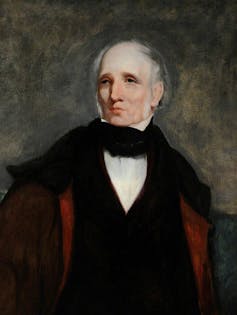









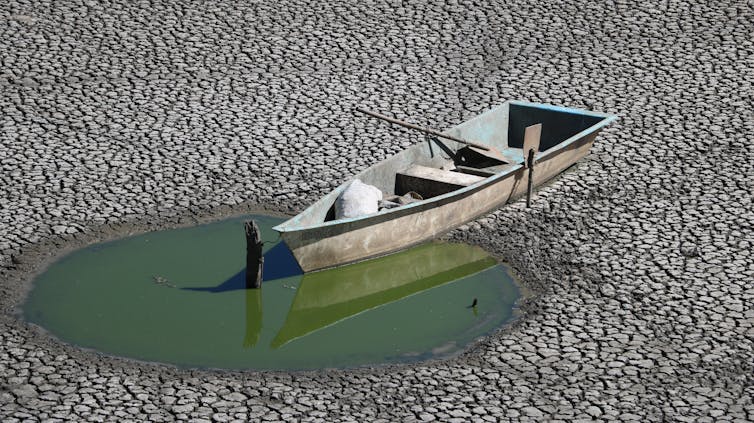















_School_-_William_Wordsworth_(1770%E2%80%931850)_-_866458_-_National_Trust.jpg)