Page 323

Deaf President Now! traces the powerful uprising that led to Deaf rights in the US – now again under threat

Source: The Conversation (Au and NZ) – By Gemma King, ARC DECRA Fellow in Screen Studies, Senior Lecturer in French Studies, Australian National University
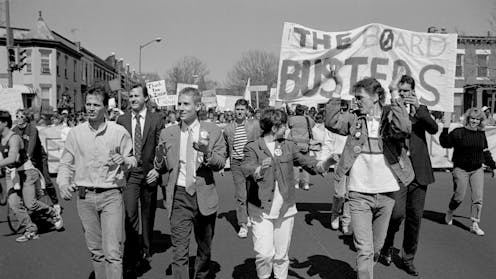
Archival footage shows Tim Rarus, Greg Hlibok, Bridgetta Bourne-Firl and Jerry Covell, in Apple TV+ Deaf President Now! Apple TV+

In March 1988, students of the world’s only Deaf university started a revolution that made national news. Now, the first film to document this historic uprising is screening on Apple TV+.

At the same time, American universities are grappling with the consequences of President Donald Trump’s war on diversity, equity and inclusion.

Gallaudet, home of the Deaf Rights movement

By 1988, Washington DC’s Gallaudet University had been educating Deaf students in American Sign Language (ASL) for 124 years. But it had never had a Deaf president.

For the first time, two Deaf candidates were in the running for the top job. One was Gallaudet’s own Irving King Jordan. The second was Harvey Corson of the American School for the Deaf.

The third was Elisabeth Zinser, a hearing woman from the University of North Carolina Greensboro. She had no experience of Deaf community or knowledge of ASL.

As the hearing board of trustees met to choose a new leader, the student body waited with bated breath. Self-determination in higher education – by the Deaf, for the Deaf – was finally a possibility. But once again the board chose a hearing person, Zinser.

When chair Jane Spilman was questioned about the choice, she replied, “Deaf people are not ready to function in a hearing world.”

Incensed, Gallaudet students barricaded the campus, gave impassioned media interviews and took to marching. First they marched around the university – Zinser effigies burning – and then all the way to the Capitol.

The Deaf President Now protest became national news, leading to the resignations of Zinser and Spilman, and the appointment of Jordan as president. It also helped propel the Disability Rights Movement, contributed to the 1990 Americans with Disabilities Act and inspired Deaf Pride movements around the world.
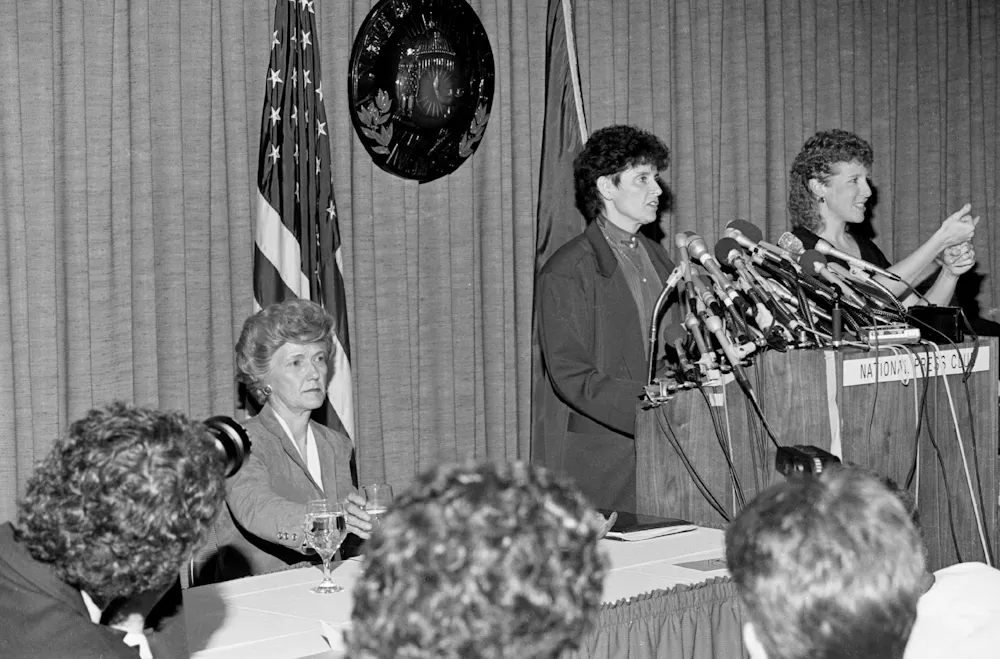
Jane Bassett Spilman and Elisabeth Zinser resigned as a result of the Deaf President Now movement.
Apple TV+

Timely, vital and imperfect

The 2025 documentary Deaf President Now! opens with footage of a political act: not from the 1988 protests, but from the present day, as the movement’s original student leaders – Bridgetta Bourne, Jerry Covell, Greg Hlibok and Tim Rarus – advise on their interview setups.

One alerts the crew they can’t see the interpreter. Another explains how much signing space they need in the frame. A third asks, joking but incisive, “What’s the microphone for?”

These aren’t throwaway moments; they show how inclusion and authenticity are only possible when Deaf people are in control of their own stories.

The film excels in exposing the paternalistic attitude and tightly-held hearing power that has long shaped Deaf education.

The film’s most powerful moments are when it contrasts the board’s dismissive rhetoric against the eloquent, impassioned arguments of the Deaf student body. Through intimate interviews and carefully curated archival footage, the documentary dismantles prevailing presumption that Deaf individuals need hearing oversight to succeed.

At the same time, the film embodies a paradox that mirrors its subject matter, as it is co-directed by hearing filmmaker Davis Guggenheim and Deaf director Nyle DiMarco.

DiMarco has been active in the screen industry for more than a decade, in acting roles and as a producer on Netflix hits Deaf U (2020) and Audible (2021). Though his involvement represents progress, Guggenheim’s raises an uncomfortable question: when will Deaf filmmakers fully own their narratives and be entrusted to lead projects?

Nyle DiMarco and Davis Guggenheim co-directed the documentary, with interviews from several of the movement’s leading figures.
Apple TV+

The collaboration reflects how stories celebrating Deaf empowerment often require hearing endorsement to reach a mainstream audience. The film’s distribution on Apple TV+ offers unprecedented visibility, but comes through channels controlled by hearing decision-makers.

This production context reminds us true representation extends beyond what appears onscreen, to who controls the storytelling process — a revolution unfinished in Deaf cinema.

Using film for Deaf empowerment

The industry may remain exclusive, but the camera itself can be a tool for Deaf power. Throughout history, Deaf individuals have harnessed film as a means of resistance.

The extensive archival footage in Deaf President Now! shows how, by 1988, film was already being used by the Deaf community as a form of advocacy. Through the blending of this footage with present-day interviews in ASL, we witness Deaf individuals taking ownership of their history and recounting it in their authentic language form.

The documentary also mirrors how media attention was integral to spreading the protest’s message back in 1988. This culminated in a national broadcast of a live debate between Zinser and Greg Hlibok, the then student body president.

To understand the film’s profound importance for the Deaf community, we must recognise how sign languages have historically been undocumented in their true form, with speech and writing considered superior modes of communication.

Deaf culture, language and community are powerful forces of resistance that have continually defied mainstream oppression.

Trump: a step back for the movement

While the film was long overdue, its arrival now is eerily relevant. Trump’s push for conservative policies – part of what he calls “Project 2025” – seeks to dismantle programs and funding that serve minority students, including disability groups.

Many of the protections in the Americans with Disabilities Act are under threat as a result, including fundamental rights to sign language and interpreting access in higher education and beyond.

According to the New York Times, hundreds of terms including “accessibility”, “disability”, “minority” and “inequality” are being limited or outright removed from official government materials. In some cases, grant proposals and contracts have been automatically flagged for including “woke” terminology.

The spirit of the Deaf President Now! resistance has never been more vital.

But if Deaf history has taught us anything, it’s that the Deaf community forges a deep sense of pride and connection in the face of such pressures. And films like Deaf President Now! show us how integral film is to this resistance.

The Conversation

Gemma King receives funding from the Australian Research Council.

Samuel Martin and Sofya Gollan do not work for, consult, own shares in or receive funding from any company or organisation that would benefit from this article, and have disclosed no relevant affiliations beyond their academic appointment.

ref. Deaf President Now! traces the powerful uprising that led to Deaf rights in the US – now again under threat – https://theconversation.com/deaf-president-now-traces-the-powerful-uprising-that-led-to-deaf-rights-in-the-us-now-again-under-threat-257233

Head knocks and ultra-violence: viral games Run It Straight and Power Slap put sports safety back centuries

Source: The Conversation (Au and NZ) – By Christopher Yorke, Lecturer in sport management, Western Sydney University

runitstraight24/instagram.com, The Conversation, CC BY

Created in Australia, “Run It Straight” is a new, ultra-violent combat sport.

Across a 20×4 metre grassed “battlefield,” players charge at full speed toward one another.

Alternating between carrying the ball (ball runner) and defending (tackler), victory is awarded via knockout (a competitor cannot continue), or a judge’s decision based on an athlete’s dominance during the collisions.

Despite neuroscientists issuing grave warnings about the brutal sport’s risks, Run It Straight’s viral popularity, including endorsement among high profile athletes, is accelerating.

A growing scene

This month, Melbourne hosted the inaugural “RUNIT Championship League” event.

Footage showed some participants convulsing after their collisions as the winner celebrated, surrounded by children.

Drawing hundreds of spectators and millions of online views, the full-speed collision challenge is already turning its violence and social media footprint into commercial success abroad, securing interest in the United States.

The sport held some events in New Zealand this week, but one was was halted by Auckland Council due to safety concerns and failure to secure necessary permits.

A history of sport and violence

In ancient times, symbolic cultural displays of power and physical dominance featured in combat sports such as wrestling, boxing, pankration (a mixed martial art combining boxing and wrestling) and even armoured foot races.

This brutal entertainment is reflected in contemporary collision sports such as the National Rugby League (NRL) and Australian Football League (AFL).

In recent decades however, the danger of concussion has resulted in most contact sports changing rules and regulations to protect athletes from head injuries.

Various measures have been implemented to mitigate, eliminate and treat head trauma.

The Australian government is exerting influence and committing material resources to support athletes living with brain issues such as chronic traumatic encephalopathy (CTE).


Read more:
When does the love of the game outweigh the cost? ABC’s Plum brings rugby league’s concussion crisis to the fore


Considering this multi-pronged effort to make contact sports safer, the violence of Run It Straight is jarring.

Why are these new sports so popular?

With its origins as a social media challenge, Run It Straight is perfect content for short-form social media platforms: an entire competition can be distilled into a 30-second highlight.

Run It Straight’s accessible and minimalist format is also attractive to fans compared to many collision sports that have complex rules and strategies. This can be a barrier to interest, engagement and commercial returns.

Run It Straight and other emerging, violent sports such as Power Slap (a fight sport where contestants slap each other so hard they can be knocked unconscious) are simplistic and brutal.

But athletes in most traditional collision sports use their physical ability and skill to evade contact. Similarly, boxing is not just about strikes to the head, it is punch evasion, physical fitness and point scoring.

But the visual spectacle and shock of two people running toward one another for an inevitable collision is a form of violence that appeals to an increasing number of sport fans.

The risks involved

Run It Straight is a new sport, and to our knowledge there is no empirical peer-reviewed research focusing on it.

But many neurologists have expressed concerns about its total disregard for scientific evidence showing repeated head trauma damages brain health.

With Run it Straight appearing to lack the medical resources and infrastructure of professional sports organisations, and with the competition’s expressed intent to have participants collide at high speed, the risk of significant injury is high.

Power Slap, though, has been the subject of empirical research. A 2024 study reported many of the sport’s combatants showed visible signs of concussion (motor incoordination, slowness to get up and blank and vacant looks during bouts).

An opportunity for ‘traditional’ sports?

The rise of Run It Straight and Power Slap creates a unique opportunity for the governing bodies of contact codes such as AFL, NRL and rugby union to highlight what sets them apart.

Key to this is athlete safety. For years, governing bodies in these codes have invested time and resources to implement concussion management protocols at professional and community levels.

Currently, the tournament-based format for individual adult participants allows Run It Straight to operate without the broader governance responsibilities of football codes.

However, it is because of those governance responsibilities that the football codes can amplify their athlete wellbeing credentials to reassure participants and parents who may be nervous about concussion risks.

Second, the football codes are organised team sports played with multiple players on a team, facilitating skill acquisition, teamwork, mental wellbeing and physical fitness. While there appears to be a degree of camaraderie during Run It Straight events, it is evidently a one-on-one competition.

Ultimately, the rise and evident popularity of Run It Straight and Power Slap provides a stark reminder there will always be a section of society that is drawn to high-risk behaviours.

In turn, the football codes should look to highlight the value of balance and their athlete wellbeing credentials.

The Conversation

The authors do not work for, consult, own shares in or receive funding from any company or organisation that would benefit from this article, and have disclosed no relevant affiliations beyond their academic appointment.

ref. Head knocks and ultra-violence: viral games Run It Straight and Power Slap put sports safety back centuries – https://theconversation.com/head-knocks-and-ultra-violence-viral-games-run-it-straight-and-power-slap-put-sports-safety-back-centuries-256473

NZ Budget 2025: funding growth at the expense of pay equity for women could cost National in the long run

Source: The Conversation (Au and NZ) – By Jennifer Curtin, Professor of Politics and Policy, University of Auckland, Waipapa Taumata Rau

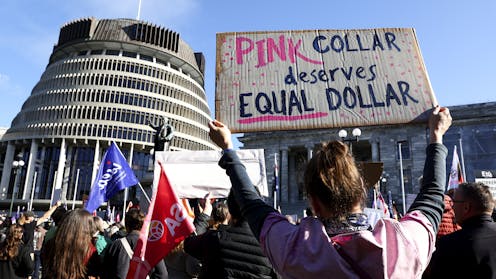
Pay equity protest outside parliament on budget day, May 22 2025. Getty Images

In 1936, when the National Party was created through a merger of the United and Reform parties, there was a recognition among the power brokers that attracting women’s votes was crucial.

National’s women’s organisations were integral to mobilising support. Throughout the 1940s, the party’s publicity material promised the women of New Zealand a happy family life. This was a consistent approach over the next 20 years, and National was rewarded with the women’s vote.

Intermittent research on gender differences in vote choice between 1963 and 1993 indicate women made up between 45% and 51% of National’s support compared to 36% and 43% of Labour’s support.

After 1996, this trend became less consistent. The New Zealand Election Study indicates a decreasing share of the women’s vote going to National, and fluctuations in vote choice among both women and men.

Given the advent of proportional representation, some volatility may be expected. But there are also some constants. There is evidence women are more likely than men to support government spending on social policy, and they are significantly less likely than men to vote for National’s coalition partners NZ First and ACT.

Now, with Budget 2025 – in particular its reliance on funds that would otherwise have gone towards settling pay equity claims – National’s historical success at attracting the women’s vote may be under threat.

Growth before pay equity

The budget represents a ruthless determination to deliver economic growth, including through its centrepiece “Investment Boost” tax breaks for businesses investing in productive assets.

There is additional funding for health, defence, education and disability services, and the establishment of a social investment fund, and the budget left national superannuation untouched (for the remainder of this coalition government’s term, at least).

It focused instead on KiwiSaver. Contributions from employers and employees will increase from 3% to 4%, while the government contribution will be halved for those earning under NZ$180,000 and cancelled for those earning over this amount.

In summary, the new operational spend comes to $6.7 billion while savings, reprioritised spending and revenue-raising initiatives totalled $5.3 billion. As a result, the government has produced the lowest operational allowance in a decade ($1.3 billion) and promised $4 billion in new capital expenditure.

But it was the radical restructuring and cancellation of pay equity for a range of undervalued female-dominated occupations that funded this budget. Almost half of the $12 billion recouped will be spent on the business tax incentives.

The government expects the initiative will increase GDP and wages by 1% to 1.5% over the next 20 years. But given the gender-segregated structure of New Zealand’s labour market, it may take some time for women to benefit from the Investment Boost.

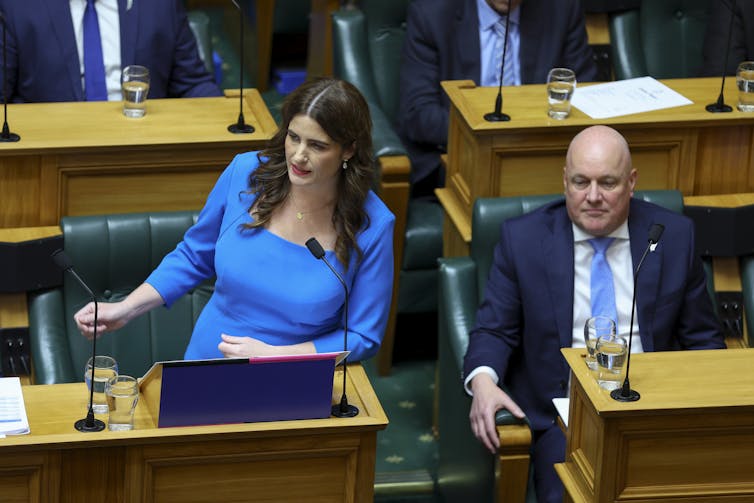
Nicola Willis and Christopher Luxon in parliament for Budget 2025
Pay equity peril: Finance Minister Nicola Willis delivers the budget while Prime Minister Christopher Luxon looks on.
Getty Images

The gender gap and economic growth

Applying a systematic and evidence-based gender analysis as part of the budget preparation process would have revealed more inclusive ways of delivering economic growth.

For example, OECD modelling demonstrates the historical importance of increases in women’s labour market participation for economic growth, but notes that persistent gender gaps remain in productive capcity and hours of employment.

Closing these gaps could potentially add a 0.1 percentage point of additional economic growth per year, culminating in a 3.9% boost to GDP in the next 35 years.

Moreover, increasing women’s labour force participation may be a valuable mechanism to limit declines in the size of the labour force, given the rapidly ageing population.

Such an outcome would require increased government investment in childcare and early childhood education for under twos, ideally for more than 20 hours per week.

This would be a significant investment, given OECD data shows the net cost of childcare in New Zealand is as much as 38% of a two-earner couple’s average earnings (after accounting for government subsidies or benefits). This is considerably more expensive than most OECD member states.

Potential cost to National

Income and spending averages often mask more extreme impacts for different groups of women and men. For example, traditional economic models value labour used in the production of goods and services in the “market economy” but exclude the production of goods and services for their own use.

For wāhine Māori, non-market work includes care for whānau, community and land, as well as upholding the mana of the marae, and the intergenerational transfer of knowledge.

Finally, implementing pay equity, recognising the economic value of the unpaid care economy, and providing increased financial support for childcare, would also contribute to closing the gender pension gap.

Westpac data shows men have an average KiwiSaver balance 16% higher than women’s, most likely attributable to gender wage gaps and parenting career breaks.

Therefore the reduction in government contributions to KiwiSaver, and National’s desire to lift the retirement age, matter more to women because statistically they have a longer retirement to fund.

Budget 2025 came at a cost to many women in New Zealand, and it may yet come at a cost for National.

The Conversation

The authors do not work for, consult, own shares in or receive funding from any company or organisation that would benefit from this article, and have disclosed no relevant affiliations beyond their academic appointment.

ref. NZ Budget 2025: funding growth at the expense of pay equity for women could cost National in the long run – https://theconversation.com/nz-budget-2025-funding-growth-at-the-expense-of-pay-equity-for-women-could-cost-national-in-the-long-run-257225

Australian roads are getting deadlier – pedestrians and males are among those at greater risk

Source: The Conversation (Au and NZ) – By Milad Haghani, Associate Professor & Principal Fellow in Urban Risk & Resilience, The University of Melbourne

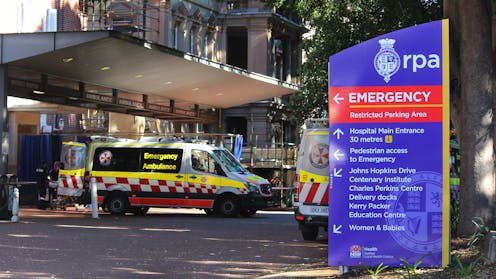
At least ten people died in fatal crashes earlier this month in a single 48-hour period on Victorian roads. It was the latest tragic demonstration of the mounting road trauma in Australia.

In the decade up to 2020, the national road toll was gradually declining, albeit with some fluctuations. But the trend has since reversed, with fatalities rising steadily year after year.

According to the latest official data, 1,296 people died on Australian roads in the year to April. 108 lives were lost last month alone, almost 15% more than the average for April over the previous five years.

While our population has increased by about 6% over this five-year period, our road deaths have gone up by 18.5%.

Road fatalities rarely follow evenly distributed averages. They sometimes spike, as they have in Victoria. And while we must never lose sight of the fact that these are people, and not just data, there is value in interrogating clusters when they occur.

Victoria breakdown

In the 12 months to May 20 this year, 118 lives were lost on Victorian roads, up 8.3% on the previous year and well above the five-year average of 100 annual deaths.

The sharpest increases by transport mode have been among pedestrians (up 24%), one of the most vulnerable road-user groups. And a new threat has emerged with the first publicly reported case in Australia of a pedestrian dying after being struck by an electric bike.

At least one pattern stands out from the recent cluster: five of the eight crashes occurred outside metropolitan Melbourne. This reflects the longstanding reality that fatal collisions remain disproportionately common in regional and remote areas. Over the 12 months, country road deaths have risen by 11%, compared to a 2% increase in metropolitan Melbourne.

Large yello sign by a road in the country
A large share of road deaths continue to occur in the country.
Inge Blessas/Shutterstock

Another striking detail is the gender distribution. Male deaths are up 22% on the previous period and now comprise nearly 80% of all fatalities. In contrast, female deaths have declined by 33%.

Another trend that stands out is the rising toll among older road users. In the last 12 months, 40 people aged 60 and over have died on Victorian roads – a 25% increase on the previous period.

4 National trends

The national road fatality data tells us some of these trends are not exclusive to Victoria. They reflect what is happening across the country.

1. Vulnerable road users: Nationally, pedestrians and motorcyclists have experienced sustained increases in lives lost for at least four years in a row. The share of pedestrians in total road deaths has risen from 11% in 2021 to 14% in the latest period. Despite the growing number, motorcyclist fatalities have remained relatively stable at about 20% of all deaths.

2. Gender disparity: Men continue to be disproportionately represented in the national road toll, accounting for approximately 75% of all road deaths in Australia.

3. Older age groups: In the 12 months to April 2025, deaths among individuals aged 75 and over increased by nearly 19% to 185.

4. Regional and remote areas: in the 12 months to April 2024, there were roughly 818 deaths on country roads, compared to 400 in metropolitan areas.

What do the trends tell us?

There are several key points in the data.

First, the persistent over-representation of men in fatalities remains a defining feature of the road toll. This gender imbalance is not specific to Australia.

But put simply, we still know very little about what’s driving this pattern. Known behavioural and physiological sex-based differences don’t fully explain the scale of the disparity.

The rise in fatalities among older Australians does not appear to be particularly abnormal when tracked with demographic changes. From 2020 to 2024, the number of Australians aged 75 and over increased by nearly 31%. In comparison, fatalities in this age group rose by around 25% over the same period. This suggests that the relative risk for older Australians has not necessarily increased.

As for rural and regional areas, approximately two-thirds of road deaths occur in these areas, while only one-third of Australians reside there. Despite years of acknowledgment, this urban–rural divide in road safety remains wide and unresolved.

SUVs a menace?

While vehicles have become safer for their occupants, they have become more dangerous for other road users, especially pedestrians.

One contributing factor could be the fast growing dominance of SUVs and light trucks in Australia.

A recent international review that pooled the findings of 24 studies found SUVs were associated with significantly higher fatality rates in crashes involving vulnerable road users, compared to smaller cars. The effect was particularly pronounced for children.

The crumpled bonnet of a blue SUV
Heavier vehicles, such as SUVs, pose a higher road risk to pedestrians.
King Ropes Access/Shutterstock

The dangers are not limited to pedestrians. In two-vehicle collisions, increasing the striking vehicle’s weight by around 450 kilograms raises the probability of a fatality in the other vehicle by 40–50%.

New targets

Australian governments have adopted a Vision Zero goal of no road deaths or serious injuries by 2050.

The complete elimination of fatalities should remain our moral benchmark. But the current data suggests intermediate targets are urgently needed.

A more achievable near-term priority may be to first reverse the rising national toll by focusing on where the greatest preventable harms persist: vulnerable road users, especially pedestrians, males and non-urban roads.

The Conversation

Milad Haghani receives funding from The Australian Government.

Iman Taheri Sarteshnizi does not work for, consult, own shares in or receive funding from any company or organisation that would benefit from this article, and has disclosed no relevant affiliations beyond their academic appointment.

ref. Australian roads are getting deadlier – pedestrians and males are among those at greater risk – https://theconversation.com/australian-roads-are-getting-deadlier-pedestrians-and-males-are-among-those-at-greater-risk-256994

There is a growing number of ‘super-sized’ schools. Does the number of students matter?

Source: The Conversation (Au and NZ) – By Emma Rowe, Associate Professor in Education, Deakin University

LBeddoe/Shutterstock

Earlier this week, The Sydney Morning Herald reported one of Sydney’s top public high schools had more than 2,000 students for the first time, thanks to the booming population in the area.

This follows similar reports of other “super-sized” schools in Victoria, Western Australia and Queensland.

Parents may be wondering if a school’s size will impact their child’s opportunities or experience. What does the research say?

A controversial subject

Policy-makers have been concerned about school sizes for decades. This largely relates to declining enrolments in some areas and growing demand in others. For example, in Victoria during the Kennett government in the 1990s, some schools were merged into “super schools”.

Super schools are attractive to policy-makers due to their ability to pool resources. However, anecdotally, parents have tended to oppose mergers on the basis that big schools detract from the community feel and personal relationships.

There is no national data on average school size, although you can check individual school sizes on the MySchool website.

Education authorities consider a school to be “small” if it has fewer than 300 students for primary school and fewer than 700 for high school.

What does the research say?

Australian-based research tends to support larger schools, on the basis they provide more curriculum choices. In a 2014 study published in the Journal of Education Policy, the authors wrote:

large schools have more resources and are therefore better placed to offer a large range of curriculum, often including both academic and vocational subjects.

A 2023 study similarly argued:

smaller schools are generally less able to offer a wide range and diversity of curricular offerings compared to larger schools.

Small schools can be beneficial

But other education advocates argue small schools better facilitate participatory democratic environments for young people, improve discipline and sense of community.

A 2009 review of 57 studies (the majority from the United States) published after 1990 recommended high schools do not have more than 1,000 students.

The review said smaller schools can offer a community-like feel for students and are more likely to have smaller class sizes. A smaller school may be particularly advantageous for neurodiverse students if there are lower levels of noise and movement.

A US-based study from 1991 found schools with less than 400 students lead to better student participation, attendance and satisfaction with school:

The two primary arguments for large schools, cost savings and curriculum enhancement, pale in comparison with the positive schooling outcomes […] achieved by small schools.

A small group of children put their hand up in class. A teacher stands close to them in front of a board.
Smaller schools can offer a stronger sense of community.
Dean Drobot/ Shutterstock

But context matters

In 2000, the Gates Foundation had a “big idea” to break up large high schools and turn them into “small learning communities” of 400 or fewer students.

The foundation believed the initiative would lift graduation rates and student achievement, especially among minority students, because of the close relationships between students and teachers.

But by 2008, the foundation conceded it had not worked – there had been no “dramatic improvements” in the number of students who leave high school adequately prepared for further study.

But it’s not really about size

So the research offers a mixed picture – this strongly suggests the size of a school on its own is not the most important factor.

We also need to look at factors such as class size. Research shows smaller class sizes and lower teacher to student ratios are beneficial for student outcomes.

Smaller class sizes and lower teacher to student ratios can lead to more one-on-one attention, improved relationships and lower noise levels in a classroom.

Some studies have categorised “small classes” as between 13-17 students and larger classes as between 22-25 students.

Teaching quality may also be improved with a smaller class size, as the teacher has more time to tailor their instruction to individual students.

Importantly, the size of a school overall does not necessarily determine class sizes. A large school or a small school can still have large class sizes, and still struggle for quality one-on-one time.

Similarly, a large school can still offer a strong sense of community and positive relationships between teachers and peers, depending on the way the school is organised (for example, a “school-within-a-school” or specific learning group within the school).

If a small school is not well-resourced or does not have enough teachers, it may struggle to provide a positive, happy learning environment.

The point is the school size on its own is not necessarily a positive or negative. What matters is what else is going on inside that school and whether it has the funding and resources to offer smaller class sizes, specialised teachers and access to a wide variety of subjects.

The Conversation

Emma Rowe receives funding from the Australian Research Council.

ref. There is a growing number of ‘super-sized’ schools. Does the number of students matter? – https://theconversation.com/there-is-a-growing-number-of-super-sized-schools-does-the-number-of-students-matter-257012

From peasant fodder to posh fare: how snails and oysters became luxury foods

Source: The Conversation (Au and NZ) – By Garritt C. Van Dyk, Senior Lecturer in History, University of Waikato

An Oyster cellar in Leith John Burnet, 1819; National Galleries of Scotland, Photo: Antonia Reeve

Oysters and escargot are recognised as luxury foods around the world – but they were once valued by the lower classes as cheap sources of protein.

Less adventurous eaters today see snails as a garden pest, and are quick to point out that freshly shucked oysters are not only raw but also alive when they are eaten.

How did these unusual ingredients become items of conspicuous consumption?

From garden snail to gastronomy

Eating what many consider to be a slimy nuisance seems almost counter-intuitive, but consuming land snails has an ancient history, dating to the Palaeolithic period, some 30,000 years ago in eastern Spain.

Ancient Romans also dined on snails, and spread their eating habits across their empire into Europe.

Lower and middle class Romans ate snails from their gardens, while elite consumers ate specially farmed snails, fed spices, honey and milk.

Blue snails in a mosaic.
An Ancient Roman mosaic dating to the 4th century AD depicting a basket of snails, Basilica di Santa Maria Assunta, Aquileia, Italy.
Carole Raddato/Wikimedia Commons, CC BY-SA

Pliny the Elder (AD 24–79) described how snails were raised in ponds and given wine to fatten them up.

The first French recipe for snails appears in 1390, in Le Ménagier de Paris (The Good Wife’s Guide), but not in other cookbooks from the period.

In 1530, a French treatise on frogs, snails, turtles and artichokes considered all these foods bizarre, but surprisingly popular. Some of the appeal had to do with avoiding meat on “lean” days. Snails were classified as fish by the Catholic Church, and could even be eaten during Lent.

For the next 200 years, snails only appeared in Parisian cookbooks with an apology for including such a disgusting ingredient. This reflected the taste of upper-class urbanites, but snails were still eaten in the eastern provinces.

Colour etching: a woman at a market stall with baskets of snails.
Schneckenweib, or Snail Seller, illustrated by Johann Christian Brand in Vienna, after 1798.
Wien Museum

An 1811 cookbook from Metz, in the Alsace region in northeastern France, describes raising snails like the Romans, and a special platter, l’escargotière, for serving them. The trend did not travel to Paris until after 1814.

French diplomat Charles-Maurice de Talleyrand-Périgord (1754–1838) hosted a dinner for Russian Tsar Alexander I, after he marched into Paris following the allied forces’ defeat of Napoleon in 1814.

The chef catering the meal was the father of French cuisine Marie-Antoine Carême, a native of Burgundy, spiritual home of the now famous escargots de Bourgogne.

Carême served the Tsar what would become a classic recipe, prepared with garlic, parsley and butter. Allegedly, the Tsar raved about the “new” dish, and snails became wildly popular. A recipe for Burgundy snails first appeared in a French culinary dictionary published in 1825.

It is ironic that it took the approval of a foreign emperor, who had just conquered Napoleon, to restore luxury status to escargot, a food that became a symbol of French cuisine.

Snails remain popular today in France, with consumption peaking during the Christmas holidays, but May 24 is National Escargot Day in France.

Oysters: the original fast food

Oysters are another ancient food, as seen in fossils dating to the Triassic Era, 200 million years ago. Evidence of fossilised oysters are found on every major land mass, and there is evidence of Indigenous oyster fisheries in North America and Australia that dates to the Holocene period, about 12,000 years ago.

There are references in classical Greek texts to what are probably oysters, by authors like Aristotle and Homer. Oyster shells found at Troy confirm they were a favoured food. Traditionally served as a first course at banquets in Ancient Greece, they were often cooked, sometimes with exotic spices.

bust of a man eating oyster, placing the shell in front of his mouth with one hand, the other hand on bib on chest.
Music-cover sheet for ‘Bonne-Bouche’ by Emile Waldteufel, 1847-1897.
© The Trustees of the British Museum, CC BY-NC-SA

Pliny the Elder refers to oysters as a Roman delicacy. He recorded methods of the pioneer of Roman oyster farming, Sergius Orata, who brought the best specimens from across the Empire to sell to elite customers.

Medieval coastal dwellers gathered oysters at low tide, while wealthy inland consumers would have paid a premium for shellfish, a perishable luxury, transported to their castles.

French nobles in 1390 preferred cooked oysters, roasted over coals or poached in broths, perhaps as a measure to prevent food poisoning. As late as the 17th century, authors cautioned:

But if they be eaten raw, they require good wine […] to aid digestion.

Etching: a man peddles oysters in a wheelbarrow, caption reads 'Twelve Pence a Peck Oysters'
Oyster Seller, Jacob Gole, 1688–1724.
Rijksmuseum

By the 18th century, small oysters were a popular pub snack, and larger ones were added as meat to the stew pot. That century, it is believed as many as 100,000 oysters were eaten each day in Edinburgh and the shells from the tavern in the basement filled in gaps in the brickwork at Gladstone’s Land in Edinburgh’s Royal Mile.

Scottish oyster farms in the Firth of Forth, an inlet of the North Sea, produced 30 million oysters in 1790, but continual over-harvesting took its toll.

By 1883 only 6,000 oysters were landed, and the population was declared extinct in 1957.

As wild oyster stocks dwindled, large oyster farms developed in cities like New York in the 19th century. Initially successful, they were polluted, and infected by typhoid from sewage. An outbreak in 1924 killed 150 people, the deadliest food poisoning in United States history.

Black and white photograph: sellers at a street stall.
Costumes of Naples: Oyster Sellers, c. 1906–10.
Rijksmuseum

Far from the overabundance of oysters we once had, over-fishing, pollution, and invasive species all threaten oyster populations worldwide today. Due to this scarcity of wild oysters and the resources required to safely farm environmentally sustainable oysters, they are now a premium product.

Next on the menu

Scarcity made oysters a luxury, and a Tsar’s approval elevated snails to gourmet status. Could insects become the next status food?

Ancient Romans ate beetles and grasshoppers, and cultures around the world consume insects, but not (yet) as luxury products.

Maybe the right influencer can make honey-roasted locust the next species to jump from paddock to plate.

The Conversation

Garritt C. Van Dyk has received funding from the Getty Research Institute.

ref. From peasant fodder to posh fare: how snails and oysters became luxury foods – https://theconversation.com/from-peasant-fodder-to-posh-fare-how-snails-and-oysters-became-luxury-foods-254299

Govt should defuse NZ’s social timebomb – but won’t

We have been handed a long and protracted recession with few signs of growth and prosperity. Budget 2025 signals more of the same, writes Susan St John.

ANALYSIS: By Susan St John

With the coalition government’s second Budget being unveiled, we should question where New Zealand is heading.

The 2024 Budget laid out the strategy. Tax cuts and landlord subsidies were prioritised with a focus on cuts to social and infrastructure spending. Most of the tax package went to the well-off, while many low-income households got nothing, or very little.

Even the tiny bit of the tax package directed to low-income people fell flat. Family Boost has significantly helped only a handful of families, while the increase of $25 per week (In Work Tax Credit) was denied all families on benefits, affecting about 200,000 of the very poorest children.

In the recession, families that lost paid work also lost access to full Working for Families, an income cut for their children of about $100 per week.

No one worked out how the many spending cuts would be distributed, but they have hurt the poor the most. These changes are too numerous to itemise but include increased transport costs; the reintroduction of prescription charges; a disastrous school lunch system; rising rents, rates and insurance; fewer budget advisory services; cuts to foodbank funding and hardship grants; stripping away support programmes for the disabled; inadequately adjusted benefits and minimum wage; and reduced support for pay equity and the living wage.

The objective is to save money while ignoring the human cost. For example, a scathing report of the Auditor General confirms that Oranga Tamariki took a bulldozer to obeying the call for a 6.5 percent cut in existing social services with no regard to the extreme hurt caused to children and struggling parents.

Budget 2025 has already indicated that Working for Families will continue to go backwards with not even inflation adjustments. The 2025 child and youth strategy report shows that over the year to June 2024 the number of children in material poverty continued to increase, there were more avoidable hospitalisations, immunisation rates for babies declined, and there was more food insecurity.

Human costs all around us
We can see the human costs all around us in homelessness, food insecurity, and ill health. Already we know we rank at the bottom among developed countries for child wellbeing and suicide rates.

Abject distress existing alongside where homes sell for $20 million-$40 million is no longer uncommon, and neither are $6 million helicopters of the very rich.

Changes in suicide rates (three-year average), ages 15 to 19 from 2018 to 2022 (or most recent four-year period available). Source: WHO mortality database

At the start of the year, Helen Robinson, CEO of the Auckland City Mission, had a clear warning: “I am pleading with government for more support, otherwise what we and other food relief agencies in Auckland can provide, will dramatically decrease.

“This leaves more of Auckland hungry and those already there become more desperate. It is the total antithesis of a thriving city.”

The theory held by this government is that by reducing the role of government and taxes, the private sector will flourish, and secure well-paid jobs will be created. Instead, as basic economic theory would predict, we have been handed a long and protracted recession with few signs of growth and prosperity.

Budget 2025 signals more of the same.

It would be a mistake to wait for simplistic official inequality statistics before we act. Our current destination is a sharply divided country of extreme wealth and extreme poverty with an insecure middle class.

Underfunded social agencies
Underfunded and swamped social agencies cannot remove the relentless stress on the people who are invisible in the ‘fiscally responsible’ economic narrative. The fabricated bogeyman of outsized net government debt is at the core, as the government pursues balanced budgets and small government-size targets.

A stage one economics student would know the deficit increases automatically in a recession to cushion the decline and stop the economy spiralling into something that looks more like a depression. But our safety nets of social welfare are performing very badly.

Rising unemployment has exposed the inadequacy of social protections. Working for Families, for instance, provides a very poor cushion for children. Many “working” families do not have enough hours of work and face crippling poverty traps.

Future security is undermined as more KiwiSavers cash in for hardship reasons. A record number of the talented young we need to drive the recovery and repair the frayed social fabric have already fled the country.

The government is fond of comparing its Budget to that of a household. But what prudent household would deliberately undermine the earning capacity of family members?

The primary task for the Budget should be to look after people first, to allow them to meet their food, dental and health needs, education, housing and travel costs, to have a buffer of savings to cushion unexpected shocks and to prepare for old age.

A sore thumb standing
In the social security part of the Budget, NZ Super for all at 65, no matter how rich or whether still in full-time well-paid work, dominates (gross $25 billion). It’s a sore thumb standing out alongside much less generous, highly targeted benefits and working for families, paid parental leave, family boost, hardship provisions, accommodation supplement, winter energy and other payments and subsidies.

Given the political will, research shows we can easily redirect at least $3 billion from very wealthy superannuitants to fixing other payments to greatly improve the wellbeing of the young. This will not be enough but it could be a first step to the wide rebalancing needed.

New Zealand has become a country of two halves whose paths rarely cross: a social time bomb with unimaginable consequences. It is a country beguiled by an egalitarian past that is no more.

Susan St John is an associate professor in the Pensions and Intergenerational Equity hub and Economic Policy Centre, Business School, University of Auckland. This article was first published by Newsroom before the 2025 Budget and is republished with permission.

Article by AsiaPacificReport.nz

Punitive criminal libel charge against Samoan journalist draws flurry of criticism

Pacific Media Watch

A punitive defamation charge filed against one of Samoa’s most experienced and trusted journalists last week has sparked a flurry of criticism over abuse of power and misuse of a law that has long been heavily criticised as outdated.

Talamua Online senior journalist Lagi Keresoma, who is also president of the Journalists Association of Samoa (JAWS), was charged with one count of defamation under Section 117A of Samoa’s Crimes Act 2013 on May 18.

She was elected in 2021 as the first woman to hold the presidency.

The charge followed an article she had published more than two weeks earlier on May 1 alleging that a former police officer had appealed to Samoa’s Head of State to have charges against him withdrawn.

The accused was charged with “allegedly forging the signature of the complainant as guarantor to secure a $200,000 loan from the Samoa National Provident Fund”. He denies the allegation.

It was reported that the complainant was another senior police officer.

Police Commissioner Auapaau Logoitino Filipo reportedly said the officer had filed a complaint over the May 1 article, claiming its contents were false and amounted to defamation.

Criminal libel removed, then restored
The criminal libel law was removed by the Samoan government in 2013, but was revived four years later in 2017. It was claimed at the time that it was needed to deal with issues triggered by social media.

JAWS immediately defended their president, saying it stood in “full solidarity” with Keresoma and calling for an immediate repeal of the law.

The association said the provision was a “troubling development for press freedom in Samoa” and added that it “should not be used to silence journalists and discourage investigative reporting”.

“It is deeply concerning that a journalist of Lagi Keresoma’s integrity and professionalism is being prosecuted under a law that has long been criticised for its negative effect on press freedom,” said the association.

Talamua Online senior journalist Lagi Keresoma . . . charged with criminal defamation over a report earlier this month. Image: Samoa Observer

Keresoma told Talamua Online she had been summoned twice to the police station and the police suggested that she apologise publicly and to the complainant and the complaint would be withdrawn.

However, she said: “To apologise is an admission that the story is wrong, so after speaking to my lawyer and my editor, it was decided to have the police file their charges, but no apology from my end.”

Her lawyer also contacted the police investigating officer informing that her client was not making a statement but to prepare the charges against her.

Keresoma was summoned to the police headquarters on Saturday and Sunday and the charges were only finalised on Monday morning before she was released.

She is due to appear in court next month.

Lagipoiva Cherelle Jackson, the JAWS gender spokesperson with the International Federation of Journalists (IFJ), said in a statement Keresoma was a veteran Samoan journalist with “decades of service” to the public and media.

‘Outdated and controversial provision’
“Her arrest under this outdated and controversial provision raises serious concerns about the misuse of legal tools to silence independent journalism. The action appears heavy-handed and disproportionate, and risks being perceived as an abuse of power to suppress public scrutiny and dissent,” Lagipoiva said.

“The United Nations Human Rights Committee and UN Special Rapporteurs, particularly the UN Special Rapporteur on the promotion and protection of the right to freedom of opinion and expression, have repeatedly called for defamation to be treated as a civil matter, not a criminal one.

“The continued application of criminal defamation in Samoa contradicts international standards and poses a chilling threat to press freedom, particularly for women journalists who already face systemic risks and intimidation.”

Pacific Media Watch notes: “This is a disturbing development in Pacific media freedom trends. Clearly it is a clumsy attempt to intimidate and silence in-depth investigation and reporting on Pacific governance.

“For years, Samoa has been a beacon for media freedom in the region, but it has fared badly in the latest World Press Freedom Index and this incident involving alleged criminal libel, a crime that should have been struck from the statutes years ago, is not going to help Samoa’s standing.

“Journalism is not a crime.”

Article by AsiaPacificReport.nz

Grattan on Friday: if Ley and Littleproud find a way to cohabit, it will be a tense household

Source: The Conversation (Au and NZ) – By Michelle Grattan, Professorial Fellow, University of Canberra

Remember that cliche about the Nationals tail wagging the Liberal dog? That tail wagged very vigorously this week, and smashed a lot of crockery, as it sought to bring Liberal leader Sussan Ley to heel.

In a gesture of overreach, the Nationals split the Coalition on Tuesday, after Ley refused to accept their demand that four policies to which they were committed be immediately endorsed by the Liberals.

Ley had said the Liberal Party had all policies on the table and would review them systematically, and she would not pre-empt that. The new Liberal leader was also concerned Nationals’ leader David Littleproud had not explicitly agreed to her insistence the Nationals observe shadow cabinet solidarity – that frontbenchers could not go out freelancing on issues.

Ley won praise from Liberals and commentators for standing firm against the Nationals’ unilateralism.

But elders and MPs from both parties, knowing how dysfunctional the consequences of the split would be, were appalled at the break. It emerged that the National Party itself had been divided about this course, which would cost frontbenchers pay and probably lose Senate seats at the next election.

As Barnaby Joyce, who warned against the break, said subsequently, “Even from the start, people wanted to re-form as quickly as possible. […] Blind Freddy can see it was going to be chaotic.”

By late Wednesday Littleproud was taking a lot of heat for rushing something that could have been handled more judiciously. Littleproud tried to blame Ley for imposing a fast timetable, despite the fact her mother died last weekend.

If disaster was to be avoided, and the break repaired, Littleproud or Ley or both would have to give ground.

By Thursday morning time was fast running out. Ley was preparing to announce her all-Liberal shadow ministry; Littleproud was readying to put out a list of Nationals spokespeople for various policy areas. Once these teams were in place, it would be hard to retreat on the split. People would be locked into positions and there would be less appetite in either party to do so.

Amid these preparations, however, compromise was emerging.

Littleproud said on radio that he had accepted as “more than reasonable” Ley’s requirement for shadow cabinet solidarity.

One reason Ley was anxious to get a firm agreement on this was the prospect of a debate coming about the commitment to net zero emissions by 2050, as well as about the 2035 target, when the government announces it. Ley would not want the Nationals, if they were in a coalition, to be able to contradict opposition policy or try to set it ahead of the shadow cabinet.

At a Thursday press conference Littleproud said the solidarity issue arose from the Nationals’ action over the Voice in the last term. He and his party had reached a position ahead of the Liberals. “That actually hurt in some small way the relationship that I had with Peter [Dutton] and I lost trust and I had to rebuild that.”

Ley said she welcomed the solidity commitment “as a foundation to resolve other ,atters”, and agreed to take to a Liberal party meeting the four policies the Nationals wanted endorsed, These are commitments to nuclear energy, divestiture powers for supermarkets that do the wrong thing, a $20 billion regional future fund, and upgraded regional communications services.

The commitment on nuclear the Nationals want is not to the specific election policy, which was for a string of government-funded nuclear power stations. The Nationals are talking about something more general.

In her concession to the Nationals, Ley is essentially asking her party to carve out these priority policy areas from the Liberals’ general policy review. This can be seen as a big thing (the Liberals being dictated to by the minor party) or a small thing (making an exception for the greater good of keeping a coalition).

If the Liberals want to re-establish the Coalition, these policies will not be too hard for them to endorse.

Liberals are divided over nuclear but most could accept at least keeping it in the policy tool box, in a generalised form, such as a commitment to lift the moratorium.

But some Liberals will resent being forced to bow to Nationals’ wishes. And some, especially those with eyes on winning back city seats, have been relishing the prospect of being free of the constraint of the ties binding them to the noisy Nationals.

Thursday’s pause to determine whether the two parties can come together again was a major step. But there are likely to be difficult times ahead.

Having agreed to take the Nationals’ policies to her party room, Ley has now to smooth them through. That will take some private wrangling ahead of the general meeting, when that occurs next week.

Assuming the party room agrees and the Coalition is re-glued, the two leaders have to work out a shadow ministry, in terms of respective numbers and key positions.

Given the long-standing poor personal relationship between Littleproud and Ley, in a re-formed Coalition there would be ongoing suspicion and tension between the two of them. Angus Taylor, only narrowly defeated by Ley for the leadership and probably preferred by Littleproud, will be watching for opportunity.

The Nationals could be expected to push the envelope on policy issues, including net zero – which Joyce on Thursday said should be on the table – and the detail of divestiture. Moderates among the Liberals would have even less regard for their country cousins than usual.

Critics of Littleproud say he has been damaged by the way he has handled the week. They point out he keeps declaring it’s his party room that’s driving decisions, when he should have exercised stronger leadership and better judgement.

Depending on the outcome, it will take a while to determine whether this episode strengthens or undermines Ley’s leadership. But she could hardly have had a more bruising start.

The Conversation

Michelle Grattan does not work for, consult, own shares in or receive funding from any company or organisation that would benefit from this article, and has disclosed no relevant affiliations beyond their academic appointment.

ref. Grattan on Friday: if Ley and Littleproud find a way to cohabit, it will be a tense household – https://theconversation.com/grattan-on-friday-if-ley-and-littleproud-find-a-way-to-cohabit-it-will-be-a-tense-household-256457

Legal academic says Samoa’s criminal libel law should go after charge

By Don Wiseman, RNZ Pacific senior journalist

An Auckland University law academic says Samoa’s criminal libel law under which a prominent journalist has been charged should be repealed.

Lagi Keresoma, the first female president of the Journalists Association of Samoa (JAWS) and editor of Talamua Online, was charged under the Crimes Act 2013 on Sunday after publishing an article about a former police officer, whom she asserted had sought the help of the Head of State to withdraw charges brought against him.

JAWS has already called for the criminal libel law to be scrapped and Auckland University academic Beatrice Tabangcoro told RNZ Pacific that the law was “unnecessary and impractical”.

“A person who commits a crime under this section is liable on conviction to a fine not exceeding 175 penalty units or imprisonment for a term not exceeding 3 months,” the Crimes Act states.

JAWS said this week that the law, specifically Section 117A of the Crimes Act, undermined media freedom, and any defamation issues could be dealt with in a civil court.

JAWS gender representative to the International Federation of Journalists (IFJ) said Keresoma’s arrest “raises serious concerns about the misuse of legal tools to independent journalism” in the country.

Lagipoiva Cherelle Jackson called on the Samoan government “to urgently review and repeal criminal defamation laws that undermine democratic accountability and public trust in the justice system”.

Law removed and brought back
The law was removed by the Samoan government in 2013, but was brought back in 2017, ostensibly to deal with issues arising on social media.

Auckland University’s academic Beatrice Tabangcoro . . . reintroduction of the law was widely criticised at the time. Image: University of Auckland

Auckland University’s academic Beatrice Tabangcoro told RNZ Pacific that this reintroduction was widely criticised at the time for its potential impact on freedom of speech and media freedom.

She said that truth was a defence to the offence of false statement causing harm to reputation, but in the case of a journalist this could lead to them being compelled to reveal their sources.

The academic said that the law remained unnecessary and impractical, and she pointed to the Samoa Police Commissioner telling media in 2023 that the law should be repealed as it was used “as a tool for harassing the media and is a waste of police resources”.

Tonga and Vanuatu are two other Pacific nations with the criminal libel law on their books, and it is something the media in both those countries have raised concerns about.

This article is republished under a community partnership agreement with RNZ.

Article by AsiaPacificReport.nz

The deluge in NSW sounds a warning to rural and regional communities elsewhere

Source: The Conversation (Au and NZ) – By Piet Filet, Adjunct Industry Fellow, Australian Rivers Institute, Griffith University

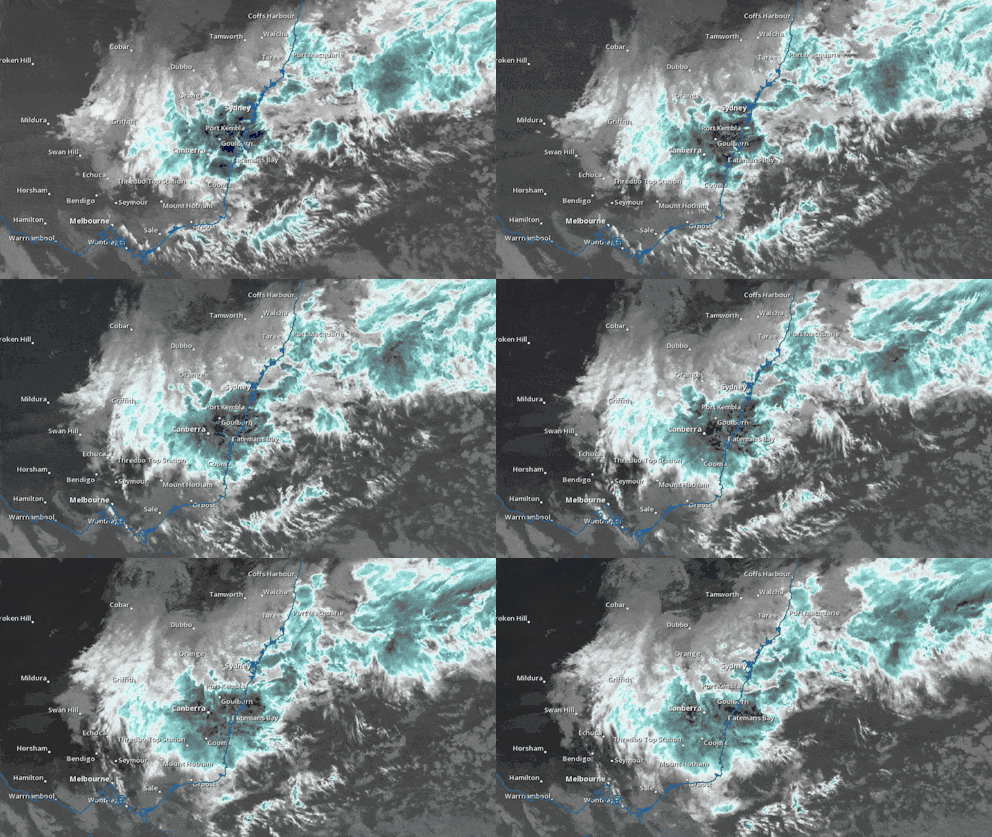
Heavy rain continues to fall across the Hunter and Mid North Coast of New South Wales. Rivers are bursting their banks and spreading over floodplains, leaving many areas on flood watch. And now, this emergency is heading south.

The unfolding disaster shows just how vulnerable rural catchments and regional communities are to extreme rainfall. It comes just a few months after extensive flooding hit western Queensland.

The flooding issues for rural and regional Australia are quite distinct from city areas, where populations are concentrated and urban runoff is the main danger. So what can Australia’s regional and rural communities learn from this extreme weather event?

Highly exposed communities

NSW’s Mid North Coast comprises farmland and bushland, with steep hilly country at the back of river catchments and more urban settlements closer to the coast.

Residents are spread across rural properties and lifestyle bushland blocks as well as local villages and bigger towns. Taree is home to about 17,000 people. About 50,000 people live in Port Macquarie and 36,500 live elsewhere in the Port Macquarie-Hastings local government area.

The population also swells with regular weekend and holiday visitors coming to enjoy coastal, river and mountain settings.

With people and communities spread right across these catchments, they can be left highly exposed when heavy rain falls. Flooding is likely, roads and rail are often cut off and life is turned upside down.

Bridge cameras reveal flooding around Bellingen council in northern NSW
Bridge cameras reveal flooding around Bellingen council in northern NSW.
Bellingen Council, CC BY-SA

Short catchments in coastal areas fill rapidly

The nature of the landscape – including the geography, the size of the rivers and the shape of the catchment area – largely determines the flood hazard.

The catchments of the Mid North Coast feature short, east-flowing streams and rivers up against the Great Dividing Range. Some ranges are just 20–30 kilometres from the coast. Others are no further than 100–150km from the coast.

When heavy rain hits this steep bushland country, runoff water is quickly concentrated in streams. When these streams join with other creeks and waterways, the concentrated flows overwhelm the natural storage volumes of these waterways. So the water rises and breaks the banks, flowing out across the adjacent floodplains.

Prior rainfall along the east coast, over the past two to three months, means less moisture can soak into the soil and runoff increases. As a consequence:

  • houses, community facilities and business are inundated

  • river and creek crossings are being cut, low lying roads on floodplains flooded and railway lines threatened

  • local water supply and sewerage treatment plants – often in low lying parts of the landscape – are at risk

  • livestock and household pets, horses and other animals are at risk

  • wildlife in bushland and waterways are being displaced

  • local wetlands are being overwhelmed

  • estuaries are being flooded and in some cases, slugs of sediment and nutrients are being washed downstream and out into coastal waters.

Other rural and regional communities face similar impacts during floods. As the magnitude of this event becomes clear, it is a timely warning for other communities to plan for future floods in their catchments.

The human dimension

As the flooding unfolds, the safety of people and their property is a high priority. Many people have been displaced, leaving their homes for safer locations. Others have been stranded by rising floodwaters.

Many will be feeling stress, fear and uncertainty. This will affect their mental health and wellbeing, and that of their families and local communities. So psychological support is needed both now and after the disaster.

Local and state government agency staff, non-government organisations and volunteers will be active at emergency response and recovery centres to support and guide affected people through this difficult time.

It’s vital that staff and volunteers are prepared and trained in mental health first aid.

Flood preparedness planning must also consider a mix of communication support networks for both the emergency response phase and the recovery phase. And there are opportunities to establish permanent community hubs for building resilience post floods, fires, cyclones and heatwaves.

Major flooding and heavy rain continue for New South Wales, 22 May 2025 (Bureau of Meteorology)

Preparing for a new chapter

After the 2011 floods in southeast Queensland, I helped set up a national network of professionals striving to develop better ways to design, implement and sustain flood solutions for more resilient communities. This involves not the immediate emergency response, but the 10-50 year plans needed to help communities reduce the harm of flooding and adapt to climate-related risks.

Long-term flood-risk planning includes options on flood mitigation, such as dykes and levees. It also involves multiple approaches to adaptation, such as household flood resilience. This might mean raising houses off the ground, or relocating residents away from high-risk areas.

The approach, which started in collaboration with Brisbane City Council, is now being used in Queensland and New South Wales, and has been supported by the federal government.

In impacted cities, authorities and communities have committed to prioritising new ways to adapt and minimise the impacts from flood waters. Similarly in rural and regional areas, measures to reduce flood impacts – at both the landscape and household scale – must become more common, to ensure community resilience.

The Conversation

Piet Filet is affiliated with Flood Community of Practice

ref. The deluge in NSW sounds a warning to rural and regional communities elsewhere – https://theconversation.com/the-deluge-in-nsw-sounds-a-warning-to-rural-and-regional-communities-elsewhere-256814

PNG journalists warned over lawfare – ‘we don’t have any law to stop SLAPPs’, says Choi

By Patrick Muuh in Port Moresby

Journalists in Papua New Guinea are likely to face legal threats as powerful individuals and companies use court actions to silence public interest reporting, warns Media Council of PNG president Neville Choi.

As co-chair of the second Community Coalition Against Corruption (CCAC) National Meeting, he said lawfare was likely because Parliament had passed no laws to protect reporters and individuals from such tactics.

Choi said journalists were being left unprotected against Strategic Litigation Against Public Participation (SLAPPs) — legal actions used by powerful individuals or corporations to silence criticism and reporting.

“In Papua New Guinea right now, we don’t have any law to stop SLAPPs,” Choi said.

“Big corporations or organisations with more money can use lawsuits to silence people, civil society and the media. That’s the reality.”

SLAPPs are lawsuits filed not to win on merit, but to drain resources, silence critics, and stop public debate.

In some other countries, anti-SLAPP laws exist to protect journalists and whistleblowers. But in PNG, no such legal shield exists.

Legal pressure for speaking out
“We’ve seen it happen,” Choi added, referring to ACTNOW PNG’s Eddie Tanago, a civil society advocate who has faced legal pressure for speaking out.

“He’s experienced it. And we know it can happen to journalists too.”

Participants in the second CCAC National Meeting in Port Moresby . . . journalists are being left unprotected from corporate lawfare. Image: PNG Post-Courier

Despite increasing threats, journalists do not have access to legal defence funds or institutional protection.

Choi confirmed that there was no system in place to defend reporters who were hit with defamation lawsuits or other forms of legal retaliation.

“Our advice to journalists is simple. Do your job well. The truth is the only protection we have,” he said.

“If you stick to facts, follow professional ethics and report responsibly, you reduce your risk. But if you make a mistake, you leave yourself open to lawsuits.”

The Media Council, in partnership with Transparency International under the CCAC, are discussing the idea of drafting an anti-SLAPP law but no formal proposal has been put forward yet.

Republished from the PNG Post-Courier with permission.

Article by AsiaPacificReport.nz

Floods, fires and even terrorist attacks: how ready are our hospitals to cope when disaster strikes?

Source: The Conversation (Au and NZ) – By Mitchell Sarkies, Senior Lecturer, Horizon Fellow and NHMRC Emerging Leadership Fellow at the Sydney School of Health Sciences, University of Sydney

Floodwaters have engulfed large parts of New South Wales, with at least one person dead and almost 50,000 evacuated after days of heavy rainfall in a “one-in-500-year” flood event. The scale of the disaster is still unfolding and affected communities will be recovering for some time to come.

One question worth asking is: how ready are our hospitals to cope when disaster strikes?

A growing body of research, including our own, has looked at how hospitals might contend with disasters like floods, bushfires, heatwaves, cyclones or even mass injury events such as a stadium collapse. The answer? There’s room for improvement.

Australia is already prone to natural disasters, which are expected to become more frequent and severe as the climate changes.

Research around the world shows hospital administrators can better plan for how they’d cope if a disaster or terrorist attack wiped out their hospital’s capacity to function normally.

When flood strikes, large parts of the hospital stop working

In March 2022, rapidly rising floodwaters on Australia’s east coast posed an imminent threat to Ballina Hospital, on the NSW far north coast.

With a few hours’ notice, staff safely evacuated the whole hospital to a nearby high school. This included 55 patients, essential equipment, supplies and medications.

Our study documented this remarkable achievement via seven interviews with doctors and nurses integral to the evacuation.

Several key themes emerged:

  • communication was disrupted: there was no mobile phone reception. Field hospital staff requested a satellite phone, but it was sent without any battery charge or a charging device
  • staff shortages: flooded roads prevented doctors and nurses from reaching the hospital. However, they could get to the high school field hospital, which still had road access
  • managing volunteers was tricky: community support was praised. However, there were so many volunteers, security was called to ensure volunteers didn’t get into spaces that would compromise the patient confidentiality, privacy and safety
  • patient tracking was a challenge: it was hard to keep track of vulnerable evacuated patients with cognitive decline or behavioural impairment
  • transport had to be improvised: cars, buses and taxis were used to transport equipment, medication and supplies
  • triage for patient transfers and discharging was crucial: health professionals prioritised less critical patients first, as they often make up the majority. By swiftly addressing their needs, staff could then concentrate on the smaller group of patients requiring intensive care.

Some workers, dealing with their own personal losses during the evacuation, had to be sent home. One staff member told us:

There were a couple of nursing staff who also lived within the flood risk area, and they had children at home, so we needed to let them go home.

Another said:

We did end up with almost too many people wanting to help, which is lovely, but it becomes a problem because we don’t need this many people.

A third staff member said:

Everybody was accounted for. We had a list of patients at one end and then when they got there, they put a new list of who was there and who was coming; that was all written on a big whiteboard.

Disaster simulation: when a semi-trailer crash causes a stadium collapse

Natural disasters aren’t the only kind of catastrophe for which hospitals must prepare.

Our research has also looked at how hospitals might contend with a human-made disaster such as a mass casualty or injury event.

Our team studied a mass casualty simulation exercise at one of Australia’s largest public hospitals.

More than 200 hospital staff participated in the three‐hour long exercise, which simulated a semi‐trailer crashing into a stadium grandstand. Some 120 “patients” were taken to the hospital with crush, burn, smoke inhalation and other injuries.

In the simulation, clinicians had to adapt quickly. New patients were continuously coming via the ambulance ramp and private cars.

Participants had to make rapid collective decisions on treatment and transfers based on patient conditions and severity.

During the exercise, additional random disruptive scenarios were introduced to test the clinicians’ ongoing responses. This included the city mayor repeatedly calling the Hospital Emergency Operations Centre for updates.

Some key challenges included:

  • some of the hypothetical patients died from a lack of critical care equipment
  • an overwhelming number of minor injuries had to be managed
  • clinicians were uncertain about how many casualties were en route to the hospital and how many beds to make available for them
  • a shortage of orderlies to accompany transfers from the emergency department to surgical theatres or for scans
  • difficulties in keeping track of patients and bed allocations.

We also observed hospital staff adapting to the situation. This included:

  • paediatricians treating adult patients with minor injuries
  • staff fast‐tracking triage
  • staff manually ventilating patients using a specialised resuscitation balloon when mechanical ventilation equipment was unavailable
  • running scans and imaging in batches instead of individually, due to the limited number of orderlies.

A growing body of research

Research shows that despite many hospitals having excellent, longstanding hospital disaster management plans, things can still go wrong. After the Fukushima nuclear accident in Japan, nearly half of evacuated stroke and renal failure patients died in vehicles or on arrival to another hospital.

Learning from hospital responses to disasters can help hospitals prepare for the future.

Overall, our research shows many Australian hospitals have excellent disaster preparedness planning. However, some areas require improvement well before disaster strikes. Adapting on-the-fly as your hospital is inundated with floodwater or struck by another disaster means things have been left too late.

The Conversation

Faran Naru is the recipient of a Macquarie University Research Excellence Scholarship (20203593). He works for the Australian government’s National Emergency Management Agency. This article reflects his work as a researcher, not the views of his employer.

Janet Long, Jeffrey Braithwaite, Kate Churruca, and Mitchell Sarkies do not work for, consult, own shares in or receive funding from any company or organisation that would benefit from this article, and have disclosed no relevant affiliations beyond their academic appointment.

ref. Floods, fires and even terrorist attacks: how ready are our hospitals to cope when disaster strikes? – https://theconversation.com/floods-fires-and-even-terrorist-attacks-how-ready-are-our-hospitals-to-cope-when-disaster-strikes-257318

Could cold sores increase the risk of Alzheimer’s disease? A new study is no cause for panic

Source: The Conversation (Au and NZ) – By Joyce Siette, Associate Professor | Deputy Director, The MARCS Institute for Brain, Behaviour, and Development, Western Sydney University

And-One/Shutterstock

A new study has found the herpes simplex virus type 1 (HSV-1), which causes cold sores, may be linked to the development of Alzheimer’s disease.

This idea is not entirely new. Previous research has suggested there may be an association between HSV-1 and Alzheimer’s disease, the most common form of dementia.

So what can we make of these new findings? And how strong is this link? Let’s take a look at the evidence.

First, what is HSV-1?

HSV-1 is a neurotropic virus, meaning it can infect nerve cells, which send and receive messages to and from the brain. It’s an extremely common virus. The World Health Organization estimates nearly two-thirds of the global population aged under 50 carries this virus, often unknowingly.

An initial infection can cause mild to severe symptoms including fever, headache and muscle aches, and may manifest as blisters and ulcers around the mouth or lips.

After this, HSV-1 typically lies dormant in the body’s nervous system, sometimes reactivating due to stress or illness. During reactivation, it can cause symptoms such as cold sores, although in many people it doesn’t cause any symptoms.

What did the new research look at?

In a study published this week in BMJ Open, researchers analysed data from hundreds of thousands of people drawn from a large United States health insurance dataset.

They conducted a matched “case-control” analysis involving more than 340,000 adults aged 50 and older diagnosed with Alzheimer’s disease between 2006 and 2021. Each Alzheimer’s disease patient (a “case”) was matched to a control without a diagnosis of Alzheimer’s disease based on factors such as age, sex and geographic region, a method designed to reduce statistical bias.

The team then examined how many of these people had a prior diagnosis of HSV-1 and whether they had been prescribed antiviral treatment for the infection.

Alzheimer’s disease is the most common form of dementia.
Nadino/Shutterstock

Among people with Alzheimer’s disease, 0.44% had a previous HSV-1 diagnosis, compared to 0.24% of controls. This translates to an 80% increased relative risk of Alzheimer’s disease in those diagnosed with HSV-1, however the absolute numbers are small.

The researchers also found people who received antiviral treatment for HSV-1 had roughly a 17% lower risk of developing Alzheimer’s disease compared to those who were untreated.

Not a new hypothesis

This isn’t the first time researchers have speculated about a viral role in Alzheimer’s disease. Earlier studies have detected HSV-1 DNA in postmortem brain tissues from people who had Alzheimer’s disease.

Laboratory research has also shown HSV-1 can trigger amyloid-beta plaque accumulation in nerve cells and mouse brains. Amyloid-beta plaques are one of the defining features of Alzheimer’s disease pathology, so this has led to speculation that reactivation of the virus may contribute to brain inflammation or damage.

But importantly, previous research and the current study show associations, not proof HSV-1 causes Alzheimer’s disease. These links do not confirm the virus initiates or drives disease progression.

Some other important caveats

The study relied on insurance claim data, which may not always reflect accurate or timely clinical diagnoses. HSV-1 is also frequently underdiagnosed, especially when symptoms are mild or absent. These points could explain why both the Alzheimer’s group and the control group saw such low rates of HSV-1, when population rates of this virus are estimated to be far higher.

This means many carriers of HSV-1 in the study may have gone unrecorded and therefore makes the link harder to interpret clearly. The dataset also doesn’t capture how often people had recurring symptoms, or the severity or duration of infections – conditions which might influence risk more directly.

Another complicating factor is people with HSV-1 might differ in other ways from those without it. Differences in health-care access, the health of a person’s immune system, lifestyle, genetics, or even education – could all influence Alzheimer’s disease risk.

A variety of factors can influence a person’s risk of Alzheimer’s disease.
sfam_photo/Shutterstock

So should you be concerned if you have cold sores?

The short answer is no – at least not based on current evidence. Most people with HSV-1 will never develop Alzheimer’s disease. The vast majority live with the virus without any serious neurological issues.

The “herpes hypothesis” of Alzheimer’s disease is an interesting area for further research, but far from settled science. This study adds weight to the conversation but doesn’t offer a definitive answer.

Alzheimer’s disease is a complex condition with multiple risk factors, including age, genetics, heart health, education, lifestyle and environmental exposures.

Infections such as HSV-1 may be one part of a larger, interconnected puzzle, but they are highly unlikely to be the sole cause.

With this in mind, the best thing to do is to focus on what we already know can help keep your brain healthy as you age. Regular physical activity, good quality sleep, social engagement, a balanced diet and managing stress can all support long-term brain health.

Joyce Siette receives funding from the National Health and Medical Research Council on a Targeted Call for Research on cultural, ethnic and linguistic diversity in dementia research.

ref. Could cold sores increase the risk of Alzheimer’s disease? A new study is no cause for panic – https://theconversation.com/could-cold-sores-increase-the-risk-of-alzheimers-disease-a-new-study-is-no-cause-for-panic-257140

As the Million Paws Walk takes its last lap, other charity fundraising events face serious challenges

Source: The Conversation (Au and NZ) – By Matthew Wade, Lecturer in Social Inquiry, La Trobe University

The RSPCA has announced this Sunday’s Million Paws Walk will be their last. The event has been celebrated across Australia since 1994, with more than 765,000 people and their 410,000 dogs having “laced up and leashed up” to raise money for animal welfare.

Participation and fundraising have declined in recent years, with the RSPCA conceding

The community fundraising landscape has changed dramatically since 2020, with rising costs and current cost of living pressures making it increasingly hard to sustain the event.

They aren’t alone. A number of charitable events – and for-profit events such as music festivals – have been struggling to stay afloat.

Regional charity events have been particularly impacted. For example, the Cancer Council’s popular Relay for Life was once a mainstay of regional towns. But while there were 194 Relay for Life events across Australia in 2015, this year there will only be 44.

Unfortunately, our research indicates many events haven’t recovered from the triple whammy of COVID disruptions, rising costs and falling returns.

Savvy strategy amid mounting challenges

Contrary to any hasty assumptions about “wasteful” charities, our interviews with leaders from across 16 Australian charities suggest these organisations are relentlessly pragmatic.

While advocacy and community engagement are important, almost all our participants made clear that fundraising is the top priority, with success measured “purely in dollars”.

This single-minded focus is necessary to serve a charity’s core purpose.

According to one charity event operations manager, their most impactful mental health programs “won’t run unless we’re providing that money for them”. Any unsuccessful event is thus quickly overhauled or jettisoned entirely.

Charities also try to “gamify” fundraising to make it more exciting for participants. Public leaderboards, virtual badges and physical rewards can incentivise participants to fundraise. However, adopting these strategies can present technical and logistical hurdles, especially for smaller charities.

Increasing burnout and trouble reaching youth

Mass participation fundraising events are facing compounding challenges that ingenuity can’t resolve. The proportion of Australians donating to charities has steadily declined since 2011.

And although overall numbers are gradually recovering, there are still fewer people formally volunteering today than at the peak in 2018.

One charity CEO told us staff and volunteers were facing “a lot of burnout, because progress is slow, getting money in the door is hard”.

Adding to these woes are difficulties in recruiting younger people as participants and volunteers. Even reaching them can be tricky. While many charities rely on Facebook, younger people are gravitating to platforms such as TikTok. Resource-limited charities can struggle to make the leap to build new audiences.

While expressing immense gratitude, a fundraising manager at one of Australia’s biggest charities noted their volunteers “tend to skew quite older”.

A CEO of a health-based charity likewise observed difficulty in finding long-term volunteers for future event planning, as people “aren’t necessarily wanting to give that high level of commitment”.

Volunteer support is essential in making mass participation fundraisers feasible. One event fundraising coordinator told us, “There would be a lot more that would be going ahead if we had the volunteers to run them.”

Some charities partner with schools to get young people more involved. Well-known examples include the Heart Foundation’s Jump Rope for Heart and World Vision’s 40 Hour Famine. Others, such as Kids in Philanthropy, are wholly dedicated to giving children the opportunity to perform acts of service.

Rising costs and compliance hurdles

While far from begrudging small businesses, our interviewees said key suppliers, such as food vendors and stage hire, are declining, raising prices, and sometimes proving less reliable. Only occasionally do charities receive “special treatment” via discounts or other favours.

One event manager said, “Every year we have to make sacrifices and cuts.” This can impact participants’ experience, and therefore fundraising outcomes.

Our respondents spoke mostly favourably about their relationships with local councils. But some lamented councils were less willing to provide small grants or in-kind support, such as waiving permit fees, compared to the past. And unpredictable concessions can make it hard to budget and plan for the long term.

A number of interviewees highlighted traffic-related costs as a major and volatile drain on event budgets.

An event manager from a youth-focused charity bemoaned that, due to regulation changes, their traffic control quote “went from $30,000 to $45,000 a month before the event”.

Such fees can prevent events from growing to accommodate more participants, as moving locations and routes can drastically increase compliance costs.

Similarly, one respondent noted how the cost of first aid “went through the roof post-COVID”.

Another suggested popular fundraisers should be categorised as “hallmark” events in which state governments partially cover risk-management costs, such as police and ambulance services.

Of course, participants’ wellbeing is non-negotiable for charities, and any reputational damage can have severe long-term consequences.

This can even mean cancelling entire events due to risky weather conditions, with devastating impacts on fundraising outcomes.

What will we lose if events disappear?

The end of the iconic Million Paws Walk rings alarm bells for mass participation fundraising. The loss of these joyous occasions doesn’t just impact charities.

These events offer social benefits, health benefits, and a profound therapeutic effect for participants directly affected by the cause.

They are also an entry point for people to support charitable causes. For the time-poor and cash-strapped, a fun run is often more manageable than regular donations or volunteering commitments.

The Million Paws Walk will be sorely missed, but let’s hope it isn’t the first of many. Events such as the Mother’s Day Classic, MS Australia’s Gong Ride, the Mito Foundation’s Bloody Long Walk and Neuroblastoma Australia’s Run2Cure, among others, serve vital fundraising and advocacy purposes.

Catherine Palmer receives funding from the Australian Research Council.

Kevin Filo, Matthew Wade, and Nicholas Hookway do not work for, consult, own shares in or receive funding from any company or organisation that would benefit from this article, and have disclosed no relevant affiliations beyond their academic appointment.

ref. As the Million Paws Walk takes its last lap, other charity fundraising events face serious challenges – https://theconversation.com/as-the-million-paws-walk-takes-its-last-lap-other-charity-fundraising-events-face-serious-challenges-257125

Too many people with back pain call ambulances or visit the ED. Here’s why that’s a problem

Source: The Conversation (Au and NZ) – By Simon Vella, Postdoctoral Research Fellow, Institute for Musculoskeletal Health, University of Sydney

Rose Marinelli/Shutterstock

Around 4 million Australians experience back problems and people are increasingly calling ambulances and presenting to emergency departments to manage back pain.

Yet most of these cases of back pain don’t require emergency care. Back pain is a symptom rather than a disease. When symptoms last more than 12 weeks it is referred to as chronic back pain. The most common form of back pain is non-specific back pain – this term is given when no tissue or structure can be identified as the cause.

Non-specific back pain usually best managed in primary care, by GPs and allied health professionals.

Once people with non-serious back pain contact emergency health services, they are more likely to receive care that isn’t recommended and is considered low-value and, sometimes, harmful.

This may include unnecessary laboratory investigations, such as blood tests, and imaging, such as x-rays, CT scans or MRIs. One-third of imaging requests for back pain in emergency departments aren’t clinically warranted and are judged as inappropriate.

However, in some instances it is recommended that people with back pain contact an ambulance or present to the emergency department. This includes when back pain is a result of trauma, when people live alone without access to carers, when people have other complex presentations, and when people show signs of potentially serious conditions.

Unnecessary hospital admissions are costly to the health system and can cause patients harm. Almost one in four (24%) of those admitted to hospital for back pain acquire infections or experience falls.

Medications prescribed in hospital can also have negative consequences for the patient. Nearly one in ten patients with back pain are still taking opioids after discharge, with risk of dependency and overdose. One in three patients continue to use opioids one month after their emergency department visit.


Read more:
Opioids don’t relieve acute low back or neck pain – and can result in worse pain, new study finds


The influx of back pain presentations to emergency health services also has ramifications for emergency department overcrowding and ambulance ramping. This means other ambulance patients cannot enter the emergency department and results in longer waiting times.

Why is this happening?

In primary health care, the management of back pain is well established in clinical practice guidelines. But emergency health services don’t have guidelines specific to low back pain. This is likely due to the lack of evidence from these settings (though the evidence-base has increased over the past five years).

The lack of specific guidance means there is a high likelihood of people both missing out on the right care and receiving the wrong care.

A key challenge for emergency clinicians is discriminating between patients with back pain that require emergency care from those who do not.

One Australian study found 38% of patients in the emergency department who were initially diagnosed with non-serious back pain were later found to have a specific pathology, such as an infection, during hospital admission. In cases such as these, further diagnostic investigation and emergency care is necessary.

But nearly half of ambulance and emergency department patients without serious pathology receive unnecessary care. Our recent study found 81% of people who presented to ambulance service with non-traumatic back pain were transferred to the emergency department.

If you call an ambulance or go to an emergency department for non-specific back pain, you’re more likely to receive unnecessary care.
Shutterstock

Once in the emergency department, 46% of ambulance patients received opioids, 59% received imaging and 50% were admitted. However, it’s unclear what proportion actually required emergency department care.

Clinicians are required to make quick decisions about patient care. For paramedics, limited scope of medications and access to community health services, particularly outside of business hours, ultimately leaves them with no other option but to transport the patient to hospital.

Emergency department clinicians have to manage people with complex presentations and multiple conditions and address patient expectations about opioids and imaging. This can influence their decisions about care.

How can emergency back pain care be improved?

A key area for improvement is reducing the use of opioids. An New South Wales trial reduced opioid use for back pain in emergency departments by 43% by introducing a new model of care. The model involved clinician education, implementation of non-opioid provisions such as heat packs, and timely referrals to outpatient services such as specialist back clinics.

This approach will now be scaled up to include 44 emergency departments across NSW. If successful, it could be rolled out across the country.

Virtual hospitals have also been implemented to reduce in-person presentations to emergency departments for back pain, which often means people with back pain can receive care while remaining in their home. However, the effectiveness and safety of this new service has not yet been established, though research is underway.

The Australian government has promised to open more Urgent Care Clinics, where people with urgent but not life-threatening complaints can be managed by a doctor, nurse, or in some cases, a physiotherapist. The service allows people with back pain to still receive in-person care while diverting them away from the emergency department. But while they seem like a good idea, we have little or no evidence on their value.

To reduce the burden that back pain places on emergency health services, changes need to be made across all health system-levels. But these changes must be backed by reliable research evidence.

Better information for patients and clinicians

The general public needs to be aware when and where to seek appropriate care for back pain. This can be achieved through successful health promotion initiatives.

For clinicians, specific guidelines for back pain need to be developed and implemented into ambulance and hospital emergency departments to improve decision-making and reduce unnecessary care escalation. Policymakers, health service managers and stakeholders need to revise current policy to align with the most recent evidence.

Additionally, easy-to-access referral pathways need to be developed between emergency health and community health services to keep people with non-serious back pain out of hospital, to reduce their risk of receiving unnecessary and costly care.

The Conversation

Simon Vella receives grant funding from HCF Research Foundation, Health Service Research Grant Scheme and the Australian Chiropractors Education Research Foundation. Simon is a board member of Chiropractic Australia Research Foundation.

Christopher Maher has a research fellowship from National Health and Medical Research Council, grants from National Health and Medical Research Council, Medical Research Future Fund, New South Wales Health, Ramsay Hospital Research Foundation, HCF Research Foundation, ArthritisAustralia, Australian Rheumatology Association, Royal Prince Alfred Hospital, and Sao Paulo Research Foundation.

Gustavo Machado has an investigator grant from the National Health and Medical Research Council. He also holds research grants from the National Health and Medical Research Council, Medical Research Future Fund, and HCF Research Foundation.

ref. Too many people with back pain call ambulances or visit the ED. Here’s why that’s a problem – https://theconversation.com/too-many-people-with-back-pain-call-ambulances-or-visit-the-ed-heres-why-thats-a-problem-255776

In a flood, first responders balance helping others while their own families are at risk. It’s an impossible choice

Source: The Conversation (Au and NZ) – By Erin Smith, Associate Professor and Discipline Lead (Paramedicine), La Trobe University

As unprecedented flooding inundates towns and leaves residents stranded in parts of New South Wales, local first responders have rescued hundreds of people from floodwaters and rooftops.

Volunteering Australia estimates more than 400,000 people volunteer as first responders around the nation. Around half of those volunteer in fire services and around 25,000 in state and territory emergency services. Thousands of additional “invisible” first responders help informally and spontaneously to support their communities before and after a disaster.

In a situation such as the current flooding in NSW, local first responders, many of whom are volunteers, face a difficult dilemma. How do they prioritise their commitment to their communities and the safety of the public while also protecting their own families and homes?

It’s a dilemma one of us (Cameron) knows too well. Cameron is a registered paramedic and volunteer firefighter, and responded to the Black Saturday bushfires in Victoria in 2009. He’s well aware of the challenge first responders have to juggle – helping others while also ensuring their loved ones are safe.

It’s a juggle

During a disaster, first responders and their families may be at risk due to extreme weather and rising floodwaters, damaged infrastructure, and other dangers. First responders may need to evacuate homes, coordinate emergency services, and navigate dangerous conditions while trying to ensure their own family’s safety.

In rapidly evolving emergencies, they may also be faced with the choice to abandon their emergency work to prioritise their family’s safety, potentially placing their first responder colleagues at risk.

Even now, 16 years after the Black Saturday bushfires devastated parts of Victoria, Jessica Ciccosillo, a first responder with St John Ambulance Australia, still feels like she abandoned her community when it needed her the most. She told us:

I had a baby at home, and my husband was also volunteering during the disaster. We couldn’t both respond at the same time, so I stayed home with the baby. I also wanted to protect our animals and property. But the desire to help was so strong, and it was so hard to make the decision to stay at home and prioritise our own family.

It’s a moral dilemma

Finding the balance between helping others while their own families are at risk can create a moral dilemma for first responders, forcing them to make difficult decisions about where to focus their efforts.

These moral dilemmas can arise from conflicting values (such as having to follow organisational policies or directives that conflict with our personal beliefs), the need to make difficult decisions under pressure, or witnessing events that challenge their sense of what is right and wrong.

Moral dilemmas about who to priortise during an emergency situation can lead to a sense of moral injury, when people can feel guilty, ashamed and distressed about the choices they have made.

Families can suffer too

First responder work can significantly impact family members. Long and unpredictable hours can interfere with family activities and undermine their sense of support. Added to this is the constant fear for their loved one’s safety. When emergencies occur, these fears can be heightened.

Families may even experience vicarious trauma, where they absorb the stress and trauma of their loved one’s work, leading to their own mental health challenges.

First responders want to talk to someone who ‘gets it’

When we asked local first responders what would be most helpful for supporting their wellbeing, the message was clear: they want to talk about what they have experienced with someone who “gets it”.

Sharing their experience with supportive colleagues and peers offers a different kind of support for many responders who may not have benefited from, or want to use, more traditional counselling programs.

Emergency services organisations can also promote wellbeing by creating supportive cultures and strong leadership that focus on building mental-health literacy. Programs that address the needs of the whole family, rather than just the individual responder, can foster resilience.

For local first responders currently helping flood-affected communities in NSW, focusing on making small, short-term decisions can help them feel less overwhelmed and allow them to better manage their mental health.

There’s support

If you are a first responder and need support now, resources include:

  • The National Emergency Worker Support Service, which offers free, confidential, and evidence-based mental health support, including 12 free sessions with trauma-informed clinicians

  • Fortem Australia provides mental health support, including clinical support and wellbeing activities, for first responders and their families

  • Beyond Blue offers the Police and Emergency Services Program to promote mental health and reduce suicide risk among police and emergency service personnel, including their families

  • Phoenix Australia offers information, support and treatment options related to trauma for first responders, including the Responder Assist program

  • The Code 9 Foundation provides support for first responders living with post-traumatic stress disorder, depression, anxiety and other mental health conditions resulting from their service to the community.

For families of first responders:

  • This guide from the Emergency Services Foundation is intended to help families of emergency service workers, especially families of volunteers. It was developed with input from partners, children and other relatives who have experience living with an emergency service worker.

If this article has raised issues for you, or if you’re concerned about someone you know, call Lifeline on 13 11 14.

The Conversation

Cameron Anderson is a registered paramedic and volunteer firefighter.

Erin Smith does not work for, consult, own shares in or receive funding from any company or organisation that would benefit from this article, and has disclosed no relevant affiliations beyond their academic appointment.

ref. In a flood, first responders balance helping others while their own families are at risk. It’s an impossible choice – https://theconversation.com/in-a-flood-first-responders-balance-helping-others-while-their-own-families-are-at-risk-its-an-impossible-choice-257313

Australia is forecast to fall 262,000 homes short of its housing target. We need bold action

Source: The Conversation (Au and NZ) – By Ehsan Noroozinejad, Senior Researcher and Sustainable Future Lead, Urban Transformations Research Centre, Western Sydney University

Australia’s plan to build 1.2 million new homes by 2029 is in trouble. A new report by the National Housing Supply and Affordability Council (NHSAC) shows we are likely to miss this ambitious target by a huge margin.

At the current pace, the council forecasts we will fall about 262,000 homes short of the goal. In other words, for every five homes we need, we’re only on track to build about four.

No state or territory is building enough to meet its share. This is more than just a number; it means the housing affordability crisis will continue unless we act fast.

The report lays out five areas of priority for reform. But implementing its recommendations will require bolder action than we’re currently seeing.

Housing stress all round

NHSAC’s State of the Housing System 2025 report shows very challenging conditions for future home buyers and renters. By the end of 2024, it took half of median household income to service a new mortgage.

Think about that: half of your income gets spent on maintaining a roof over your head. That’s well above one common measure of “housing stress” for lower-income households: spending more than 30% of gross income on housing.

Anyone planning to purchase their first home faces an average savings period that extends beyond ten years just for their deposit.

For renters, the report found it now takes 33% of median household income to cover the cost of a new lease.

It doesn’t help that rental vacancy rates are near record lows, around 1.8% nationwide. This means renters are competing fiercely for very few available homes. This drives rents even higher.

Higher housing costs can force renters to cut back on other essentials – such as heating.
nikkimeel/Shutterstock

Why is housing so unaffordable?

Australians can see the daily reality this report describes. And it can have disproportionate negative impacts on vulnerable groups in society.

For example, the rate of homelessness among First Nations people has been about 8.8 times the rate for non-Indigenous Australians.

Supply remains a key factor underpinning Australia’s housing crisis. We simply aren’t building enough homes. Australia completed approximately 177,000 new dwellings in 2024 but that fell short of demand for about 223,000 new homes.

And the report predicts we will remain behind our targets for upcoming years. Under current policy settings, a forecast total of 938,000 new homes will be built between mid-2024 and mid-2029, well short of the Housing Accord’s 1.2 million home target.


Read more:
Why is it so hard for everyone to have a house in Australia?


Five priorities for fixing it

The report identifies five essential action areas needed to restore Australia’s housing system to proper functioning.

1. Lift social and affordable housing to 6% of all homes

In 2021, only about 4% of dwellings were for social or affordable housing. Governments and not-for-profits must add many more low-rent homes so people on modest incomes aren’t trapped on long waitlists.

2. Improve productivity and build faster with modern methods of construction

Prefabricated panels, modular kits and even 3D printed structures can halve building time and use fewer tradies.

Federal and state governments could fund factories, training and pilot projects to get these methods into the mainstream.

The report also calls on the government to address labour and skills shortages.

Prefabricated or ‘prefab’ homes are one example of modern methods of construction.
Friends Stock/Shutterstock


Read more:
A prefab building revolution can help resolve both the climate and housing crises


3. Fix planning systems and unlock land

Quicker approvals, firm deadlines and updated zoning would let builders put taller or denser housing near transport, jobs and schools. Governments also need to bundle and service big sites so work can start without years of red tape.

4. Support for renters

The report calls on governments to support better outcomes for renters, and to fully implement National Cabinet’s “Better Deal for Renters” agreement.

This includes through fair notice requirements, no-fault eviction limits and longer leases.

It also calls for more support for institutional investment. Tax settings that attract super funds and insurers into large build-to-rent projects would add professionally managed apartments and steady rents.

5. Swap stamp duty for land tax

Paying a small yearly land charge instead of a huge upfront stamp duty lets people move or downsize with less of a financial hit, freeing under-used homes and smoothing the market.

Change won’t be easy

The council’s proposed solutions seem excellent when studied theoretically, but their practical application will prove challenging.

Australia needs significant time and effort to address multiple systemic obstacles.

One big challenge is the construction workforce. The current workforce lacks enough skilled tradespeople to build homes at the necessary speed. This can result in major delays – even when funding exists.

Another barrier is the planning system itself. Changing planning and zoning regulations faces significant political challenges.

Higher-density developments face community resistance because of the “not in my backyard” (NIMBY) problem while councils tend to move slowly in updating their regulations.


Read more:
Cheaper housing and better transport? What you need to know about Australia’s new National Urban Policy


However, the report notes signs of progress in some states. The New South Wales government has accelerated approval processes and also emphasises “transit-oriented development” – putting new homes near planned and existing transport infrastructure.

Similarly, moving to land tax is easier said than done: State governments generate revenue from stamp duty and a shift to an alternative system would require many years to implement. The absence of federal backing and state incentive payments risks delaying this reform.

What the new government should do

NHSAC’s report doesn’t just diagnose the problem, it offers a roadmap to a healthier housing system.

But those recommendations require bold action. Prime Minister Anthony Albanese’s government has a crucial opportunity to turn words into deeds.

Australia’s housing woes didn’t appear overnight, they are the result of decades of under-supply and policy missteps. Turning things around won’t be instant – but it is achievable with sustained effort.

Ehsan Noroozinejad has received funding from both national and international organisations to support research addressing housing and climate crises. His most recent funding on integrated housing and climate policy comes from the James Martin Institute for Public Policy (soon to be the Australian Public Policy Institute).

ref. Australia is forecast to fall 262,000 homes short of its housing target. We need bold action – https://theconversation.com/australia-is-forecast-to-fall-262-000-homes-short-of-its-housing-target-we-need-bold-action-257246

NSW on alert: these maps show the areas at risk of flooding and storms

Source: The Conversation (Au and NZ) – By Digital Storytelling Team, The Conversation

False colour satellite timelapse (infrared + Zehr) BoM Himawari-9 satellite, CC BY-SA

At least one person is confirmed dead, three people are missing and tens of thousands are isolated after record-breaking floods continue to wreak havoc on the New South Wales coast.

The Bureau of Meteorology warned that heavy to locally intense rain would continue on the NSW Mid North Coast on Thursday, and that heavy rain would develop around the southern Hunter region, the Blue Mountains and the Southern Highlands on Thursday night.

The below maps show the extent of current and predicted NSW floods. Red indicates immediate danger, purple is current flooding, and yellow is predicted flooding. The striped red area shows where residents should be prepared for storms.


As The Conversation has reported, the wet weather in NSW is due to a combination of factors.

A trough is sitting over the Mid North Coast, bringing rain and unstable conditions. Winds from the east are also bringing moisture to the coast. And since Sunday, all this has been compounded by a “cut-off low” in the upper atmosphere. The combination of the trough, and low pressure at higher levels, can cause air to converge and rise. As air rises it cools, moisture condenses and rain occurs.

The NSW State Emergency Service advises that people:

  • don’t drive, ride or walk through floodwater

  • keep clear of creeks and storm drains

  • seek refuge in the highest available place and ring 000 if you need rescuing

  • be aware that run-off from rainfall in fire affected areas may behave differently and be more rapid. It may also contain debris such as ash, soil, trees and rocks

  • stay vigilant and monitor conditions

For emergency help in floods and storms, ring your local SES Unit on 132 500.

The Conversation

Digital Storytelling Team does not work for, consult, own shares in or receive funding from any company or organisation that would benefit from this article, and has disclosed no relevant affiliations beyond their academic appointment.

ref. NSW on alert: these maps show the areas at risk of flooding and storms – https://theconversation.com/nsw-on-alert-these-maps-show-the-areas-at-risk-of-flooding-and-storms-257343

NZ Budget 2025 at a glance: follow the money here

Source: The Conversation (Au and NZ) – By Michael P. Cameron, Professor of Economics, University of Waikato

Finance Minister Nicola Willis delivers her budget address in parliament. Getty Images

Finance Minister Nicola Willis delivered a pragmatic budget today, balancing fiscal discipline and the promise of economic growth.

Willis pitched it as a “responsible budget” and a necessary response to a challenging economic and fiscal environment.

In her budget statement in parliament, Willis declared the budget “controls growth in government spending”. To that end, the operating allowance has been slashed from NZ$2.4 billion to $1.3 billion, the tightest in a decade.

In Willis’ words, this decrease represents a “deliberate medium-term approach to fiscal consolidation”. The forecast outcome is that the government will return to a small surplus by 2029, with net core crown debt peaking at 46% of GDP in 2028.

In spite of the budget’s austere tone, the government has made targeted investments in key areas: $6.8 billion in new capital investment, $1 billion for defence, and substantial tax incentives for businesses to invest in productive assets.

However, new funding for health and education is more limited, and may barely keep pace with increasing cost pressures in those sectors.

The challenge with this budget is that the new spending mainly has a long-term focus, but there are shorter-term issues that have received less attention. The hope may be that any short-term pain is necessary to ultimately grow the economy, and grow wages.

Key announcements

Michael P. Cameron does not work for, consult, own shares in or receive funding from any company or organisation that would benefit from this article, and has disclosed no relevant affiliations beyond their academic appointment.

ref. NZ Budget 2025 at a glance: follow the money here – https://theconversation.com/nz-budget-2025-at-a-glance-follow-the-money-here-256776

ER Report: A Roundup of Significant Articles on EveningReport.nz for May 22, 2025

ER Report: Here is a summary of significant articles published on EveningReport.nz on May 22, 2025.

Indonesian military operations spark concerns over displaced indigenous Papuans
By Caleb Fotheringham, RNZ Pacific journalist A West Papua independence leader says escalating violence is forcing indigenous Papuans to flee their ancestral lands. It comes as the Indonesian military claims 18 members of the West Papua National Liberation Army (TPNPB) were killed in an hour-long operation in Intan Jaya on May 14. In a statement,

Compression tights and tops: do they actually benefit you during (or after) exercise?
Source: The Conversation (Au and NZ) – By Ben Singh, Research Fellow, Allied Health & Human Performance, University of South Australia Olena Yakobchuk/Shutterstock You’ve seen them in every gym: tight black leggings, neon sleeves and even knee-length socks. Compression gear is everywhere, worn by weekend joggers, elite athletes and influencers striking poses mid-squat. But do

Australia’s knowledge of Russia is dwindling. We need to start training our future experts now
Source: The Conversation (Au and NZ) – By Jon Richardson, Visiting Fellow, Centre for European Studies, Australian National University Shutterstock Russia’s possible interest in basing long-range aircraft at an Indonesian airbase not far from Australian shores shook up a relatively staid election campaign last month. The news, which Jakarta immediately dismissed, caught many by surprise

‘Perfect bodies and perfect lives’: how selfie-editing tools are distorting how young people see themselves
Source: The Conversation (Au and NZ) – By Julia Coffey, Associate Professor in Sociology, University of Newcastle Olena Yakobchuk/Shutterstock Like many of her peers, Abigail (21) takes a lot of selfies, tweaks them with purpose-made apps, and posts them on social media. But, she says, the selfie-editing apps do more than they were designed for:

NZ Budget 2025: tax cuts and reduced revenues mean the government is banking on business growth
Source: The Conversation (Au and NZ) – By Adrian Sawyer, Professor of Taxation, University of Canterbury Hagen Hopkins/Getty Images Not a lot is known about the government’s plans for taxes in the 2025 budget. Few tax policies have been announced so far, and what has been revealed involves targeted tax cuts for business interests. This

Evidence shows AI systems are already too much like humans. Will that be a problem?
Source: The Conversation (Au and NZ) – By Sandra Peter, Director of Sydney Executive Plus, University of Sydney Studiostoks / Shutterstock What if we could design a machine that could read your emotions and intentions, write thoughtful, empathetic, perfectly timed responses — and seemingly know exactly what you need to hear? A machine so seductive,

Playing the crime card: do law and order campaigns win votes in Australia?
Source: The Conversation (Au and NZ) – By Chloe Keel, Lecturer in Criminology and Criminal Justice, Griffith University Crime and public safety are usually the domain of state politics. But the Coalition tried to elevate them as key issues for voters in the recent federal election. Claiming crime had been “allowed to fester” under Labor,

Labor now has the political clout to reset Australia’s refugee policy. Here’s where to start
Source: The Conversation (Au and NZ) – By Mary Anne Kenny, Associate Professor, School of Law, Murdoch University Australia’s policy towards refugees and asylum seekers stands at a critical juncture. Global displacement is at record highs and many countries are retreating from their responsibilities. At this moment, Australia can lead by example. As Australia’s prime

Please don’t tape your mouth at night, whatever TikTok says. A new study shows why this viral trend can be risky
Source: The Conversation (Au and NZ) – By Moira Junge, Adjunct Clincal Associate Professor (Psychologist), Monash University K.IvanS/Shutterstock You might have heard of people using tape to literally keep their mouths shut while they sleep. Mouth taping has become a popular trend on social media, with many fans claiming it helps improve sleep and overall

E-bikes for everyone: 3 NZ trials show people will make the switch – with the right support
Source: The Conversation (Au and NZ) – By Caroline Shaw, Associate Professor in Public Health, University of Otago Getty Images Anyone who uses city roads will know e-bikes have become increasingly popular in Aotearoa New Zealand. But we also know rising e-bike sales have been predominantly driven by financially well-off households. The question now is,

Drivers of SUVs and pick-ups should pay more to be on our roads. Here’s how to make the system fairer
Source: The Conversation (Au and NZ) – By Milad Haghani, Associate Professor & Principal Fellow in Urban Risk & Resilience, The University of Melbourne In the year 2000, almost 70% of all new cars sold in Australia were small passenger vehicles – mainly sedans and hatchbacks. But over 25 years, their share has dropped dramatically

Australia’s Wong condemns ‘abhorrent, outrageous’ Israeli comments over blocked aid
Asia Pacific Report Australia’s Foreign Minister Penny Wong has released a statement saying “the Israeli government cannot allow the suffering to continue” after the UN’s aid chief said thousands of babies were at risk of dying if they did not receive food immediately. “Australia joins international partners in calling on Israel to allow a full

The West v China: Fight for the Pacific – Episode 1: The Battlefield
Al Jazeera How global power struggles are impacting in local communities, culture and sovereignty in Kanaky, New Caledonia, the Solomon Islands and Samoa. In episode one, The Battlefield, tensions between the United States and China over the Pacific escalate, affecting the lives of Pacific Islanders. Key figures like former Malaita Premier Daniel Suidani and tour

Windows are the No. 1 human threat to birds – an ecologist shares some simple steps to reduce collisions
Source: The Conversation (Au and NZ) – By Jason Hoeksema, Professor of Ecology, University of Mississippi Birds are drawn to the mirror effect of windows. That can turn deadly when they think they see trees. CCahill/iStock/Getty Images Plus When wood thrushes arrive in northern Mississippi on their spring migration and begin to serenade my neighborhood

Politics with Michelle Grattan: Jim Chalmers on keeping Australia out of recession amid the ‘dark shadow’ of global instability
Source: The Conversation (Au and NZ) – By Michelle Grattan, Professorial Fellow, University of Canberra This week, the Reserve Bank delivered welcome news for mortgage holders, with another 25 basis points rate cut. With this cut, some are hoping that the cost-of-living pain will start to finally ease. Economists, however, are still wary of celebrating

40 years on – reflecting on Rainbow Warrior’s legacy, fight against nuclear colonialism
Report by Dr David Robie – Café Pacific. – A forthcoming new edition of David Robie’s Eyes of Fire honours the ship’s final mission and the resilience of those affected by decades of radioactive fallout. PACIFIC MORNINGS: By Aui’a Vaimaila Leatinu’u The Greenpeace flagship Rainbow Warrior III ship returns to Aotearoa this July, 40 years

Gordon Campbell: NZ’s silence over Gaza genocide, ethnic cleansing
COMMENTARY: By Gordon Campbell Since last Thursday, intensified Israeli air strikes on Gaza have killed more than 500 Palestinians, and a prolonged Israeli aid blockade has led to widespread starvation among the territory’s two million residents. Belatedly, Israel is letting in a token amount of food aid that UN Under-Secretary Tom Fletcher has called a

View from The Hill: Coalition split puts Victorian and NSW Nationals Senate seats at high risk
Source: The Conversation (Au and NZ) – By Michelle Grattan, Professorial Fellow, University of Canberra The Victorian and NSW Nationals senators due to face the voters at the 2028 election will struggle to hold their seats if the former partners do not re-form the Coalition before then. Under usual Coalition arrangements, Bridget McKenzie, from Victoria,

New Caledonia, French Polynesia at UN decolonisation seminar in Dili
By Patrick Decloitre, RNZ Pacific correspondent French Pacific desk New Caledonia and French Polynesia have sent strong delegations this week to the United Nations Pacific regional seminar on the implementation of the Fourth International Decade for the Eradication of Colonialism in Timor-Leste. The seminar opened in Dili today and ends on Friday. As French Pacific

NSW is copping rain and flooding while parts of Australia are in drought. What’s going on?
Source: The Conversation (Au and NZ) – By Andrew King, Associate Professor in Climate Science, ARC Centre of Excellence for 21st Century Weather, The University of Melbourne Emergency crews were scrambling to rescue residents trapped by floodwaters on Wednesday as heavy rain pummelled the Mid North Coast of New South Wales. In some areas, more

Indonesian military operations spark concerns over displaced indigenous Papuans

By Caleb Fotheringham, RNZ Pacific journalist

A West Papua independence leader says escalating violence is forcing indigenous Papuans to flee their ancestral lands.

It comes as the Indonesian military claims 18 members of the West Papua National Liberation Army (TPNPB) were killed in an hour-long operation in Intan Jaya on May 14.

In a statement, reported by Kompas, Indonesia’s military claimed its presence was “not to intimidate the people” but to protect them from violence.

“We will not allow the people of Papua to live in fear in their own land,” it said.

Indonesia’s military said it seized firearms, ammunition, bows and arrows. They also took Morning Star flags — used as a symbol for West Papuan independence — and communication equipment.

The United Liberation Movement for West Papua (ULMWP) interim president Benny Wenda, who lives in exile in the United Kingdom, told RNZ Pacific that seven villages in Ilaga, Puncak Regency in Central Papua were now being attacked.

“The current military escalation in West Papua has now been building for months. Initially targeting Intan Jaya, the Indonesian military have since broadened their attacks into other highlands regencies, including Puncak,” he said.

Women, children forced to leave
Wenda said women and children were being forced to leave their villages because of escalating conflict, often from drone attacks or airstrikes.

ULMWP interim president Benny Wenda . . . “Indonesians look at us as primitive and they look at us as subhuman.” Image: RNZ Pacific/Kelvin Anthony

Earlier this month, ULMWP claimed one civilian and another was seriously injured after being shot at from a helicopter.

Last week, ULMWP shared a video of a group of indigenous Papuans walking through mountains holding an Indonesian flag, which Wenda said was a symbol of surrender.

“They look at us as primitive and they look at us as subhuman,” Wenda said.

He said the increased military presence was driven by resources.

President Prabowo Subianto’s administration has a goal to be able to feed Indonesia’s population without imports as early as 2028.

Video rejects Indnesian plan
A video statement from tribes in Mappi regency in South Papua from about a month ago, translated to English, said they rejected Indonesia’s food project and asked companies to leave.

In the video, about a dozen Papuans stood while one said the clans in the region had existed on customary land for generations and that companies had surveyed land without consent.

“We firmly ask the local government, the regent, Mappi Regency to immediately review the permits and revoke the company’s permits,” the speaker said.

Wenda said the West Papua National Liberation Army (TPNPB) had also grown.

But he said many of the TPNPB were using bow and arrows against modern weapons.

“I call them home guard because there’s nowhere to go.”

This article is republished under a community partnership agreement with RNZ.

Article by AsiaPacificReport.nz

Compression tights and tops: do they actually benefit you during (or after) exercise?

Source: The Conversation (Au and NZ) – By Ben Singh, Research Fellow, Allied Health & Human Performance, University of South Australia

Olena Yakobchuk/Shutterstock

You’ve seen them in every gym: tight black leggings, neon sleeves and even knee-length socks.

Compression gear is everywhere, worn by weekend joggers, elite athletes and influencers striking poses mid-squat.

But do compression garments actually improve your performance, or is the benefit mostly in your head?

Let’s dive into the history, the science and whether they are worth your money.

From hospitals to hashtags

Compression garments didn’t start in sport. They were originally used in medical settings to improve blood flow in patients recovering from surgery or with circulation issues such as varicose veins.

Doctors found tight garments that applied gentle pressure to limbs could help move blood and reduce swelling.

But in the late 1990s and early 2000s, athletes, scientists and sports brands began experimenting with compression wear in training and competition.

Companies such as SKINS, 2XU, and Under Armour entered the scene with bold promises: improved performance, reduced fatigue and faster recovery.

Then, by the 2010s, compression wear wasn’t just for athletes – it had become a fashion statement.

Social media helped drive the trend: influencers wore these items in gym selfies, TikTokers praised the sleek, sculpted look. And with the rise of athleisure, compression garments became everyday apparel, blending fitness with fashion.

What are these garments supposed to do?

Compression gear is designed to fit tightly against the skin and apply gentle, consistent pressure to muscles. The big claims made by manufacturers include:

You’ll hear gym-goers say they feel “more supported” or “less sore” after using compression gear.

Some even report improved posture or a mental boost – like stepping into a superhero suit.

What the science says

Research into compression garments has been growing steadily and the results are mixed – but interesting.

A 2013 major meta-analysis reported moderate benefits across several recovery markers, including lower levels of creatine kinase (a sign of muscle damage) and less delayed-onset muscle soreness up to 72 hours after exercise.

A 2016 review found compression garments reduced muscle soreness and swelling and boosted muscle power and strength. These improvements were up to 1.5 times greater (compared to people who didn’t wear compression garments) in some cases.

Building on this, a 2017 review found people who wore compression gear recovered strength more quickly, with noticeable improvements within eight to 24 hours after a workout. Strength recovery scores were around 60% higher in those wearing compression gear compared to those who didn’t.

But the findings are not consistent. A 2022 review of 19 trials found little effect on strength during the first few days post-exercise.

And when it comes to actual performance, a comprehensive 2025 review of 51 studies concluded compression garments do not enhance race time or endurance performance in runners. And while they may reduce soft tissue vibration (which might feel more comfortable), they offered no meaningful edge in speed, stamina or oxygen use.

Overall, in simpler terms: compression gear may help you recover faster but don’t expect it to turn you into an Olympic sprinter.

When compression gear might help (and when it won’t)

Here are some situations when compression garments can be genuinely useful:

But don’t count on them to:

  • improve your times: there’s no strong evidence they boost speed or endurance

  • make you stronger: while some research has noted improvements in strength and power, this won’t necessarily have a noticeable effect on your athletic performance

  • replace training or good sleep: recovery still depends on the basics – rest, hydration and nutrition.

So, should you wear them?

Compression outfits won’t magically transform your body or training results. But they aren’t a waste of money either.

If they make you feel more comfortable, confident or supported, that’s a valid reason to wear them. The psychological boost alone can be enough to enhance motivation or focus.

And when it comes to post-exercise recovery, the evidence is solid enough to justify keeping a pair in your gym bag.

Think of them like a good pair of shoes. They won’t run the race for you, but they might make the journey a little smoother.

And if you’re just wearing them for the outfit photo on Instagram? That’s fine, too. Sometimes, confidence is the best workout gear of all.

The Conversation

Ben Singh does not work for, consult, own shares in or receive funding from any company or organisation that would benefit from this article, and has disclosed no relevant affiliations beyond their academic appointment.

ref. Compression tights and tops: do they actually benefit you during (or after) exercise? – https://theconversation.com/compression-tights-and-tops-do-they-actually-benefit-you-during-or-after-exercise-255719

Australia’s knowledge of Russia is dwindling. We need to start training our future experts now

Source: The Conversation (Au and NZ) – By Jon Richardson, Visiting Fellow, Centre for European Studies, Australian National University

Shutterstock

Russia’s possible interest in basing long-range aircraft at an Indonesian airbase not far from Australian shores shook up a relatively staid election campaign last month.

The news, which Jakarta immediately dismissed, caught many by surprise in Australia. It shouldn’t have. While Indonesia’s non-aligned stance makes granting such a request highly unlikely, Russia’s defence and political ties with Southeast Asia have actually been deepening over the last decade, at least.

All of this has gone largely unnoticed in Australia. And this highlights a significant problem: Australia has something of a knowledge deficit when it comes to Russia. This is in part due to the fact our expertise on the country has been hollowed out since the Cold War ended.

Russia’s power plays are expanding globally

The Soviet Union loomed large in Australia’s consciousness during the Cold War, if not high on its list of priorities.

Today, Russia remains a major, albeit slightly diminished, power. It is a nuclear weapons state (it has more than 5,500 nuclear warheads, the most of any nation) and a permanent member of the United Nations Security Council. It is also active in other forums of importance to Australia, such as the G20 and APEC, as well as in issues like arms control and climate change.

Most worryingly, under President Vladimir Putin, Russia will no doubt continue to be a disruptor on the international stage.

Russia’s political and security elite perceive the country to be a great power with interests and a right to influence in every part of the world. Just to drive that message home, a giant sign quoting Putin last year read: “Russia’s borders do not end anywhere”.

Even before its full-scale invasion of Ukraine in 2022, Moscow perpetuated an ideology that it is at war with the West. This idea is a key source of legitimacy for Putin’s regime. Russia’s hostile actions against Western democracies continue to proliferate. These include disinformation campaigns, cyber attacks, election interference and, in some regions, sabotage and assassinations.

This isn’t focused entirely on Europe and the US, either. Russia has an active – and expanding – military presence in the Asia-Pacific. Russia’s Pacific Fleet, based in Vladivostok, now has more than 20 nuclear and conventional submarines and frequently engages in training exercises with the Chinese navy.

More “normal” relations with Russia will not return soon. A lasting peace in Ukraine seems unlikely if any interim ceasefire deal leaves large swathes of the country under a brutal Russian occupation regime. Putin is unlikely to let go of his ambitions to subjugate Ukraine and limit its independence.

While sanctions have made it harder for Moscow to conduct the war, the Russian economy also does not appear in danger of imminent collapse.

Meanwhile, Southeast Asia has proven susceptible to Russia’s anti-Western narratives, particularly when it comes to the claim that the Russian invasion was provoked by Western policies and threats. Most regional governments have been loathe to criticise the invasion and the leaders of Indonesia and Malaysia have made state visits to Moscow despite it.

Russia has had similar success in pushing disinformation through orchestrated social media campaigns across the Global South, including in parts of Africa where Australian companies have made significant investments in the mining sector.

Reviving Russia literacy

All these trends point to the need to enhance Australia’s modest level of Russia literacy, both in language skills and broader country expertise.

This was the key message of a recent conference on “Russian activities and Australian interests in the Indo-Pacific”, hosted by the ANU’s Centre for European Studies. It was attended by a wide range of government officials, academics, analysts and foreign diplomats.

Australia once had strong Russian-language departments at several universities. It also boasted numerous Russian and Soviet scholars of global repute, such as Harry Rigby, Sheila Fitzpatrick, Graeme Gill, Stephen Wheatcroft, Geoffrey Jukes and Stephen Fortescue.

Today, the number of university departments teaching Russian language, history or politics has dwindled, with only the University of Melbourne offering a major in Russian language and literature. That university has also added a much-welcomed fellowship in Ukrainian studies.

And Australia has few lecturers or researchers in international relations, history or social sciences with Russia expertise, including language skills.

We can – and should – return our university Russian offerings to the levels we had 30 years ago. This can be done without cutting back on the existing expansive focus on other countries and regions. There is also scope for greater focus on Russia and the former Soviet countries in government.

It will hard for Russia to shake off the pattern of failed government reform efforts defaulting to strong, centralised rule with imperial ambitions and an anti-Western posture.

But moves towards reform could eventually bear fruit (again) when Putin leaves the stage. If this were to happen, Russia would remain a major power with a rich cultural legacy and many common interests with Australia in areas such as natural resources. There is also a significant Russian diaspora in Australia.

For Australia, it is a mistake to think of Russia as somewhere far away. Both in simple geography – all state capitals except Perth are closer to Vladivostok than to New Delhi – and in terms of the interplay of global interests.

Or, as British commentator Keir Giles puts it: “You may not be interested in Russia, but Russia is interested in you.”

The Conversation

Jon Richardson does not work for, consult, own shares in or receive funding from any company or organisation that would benefit from this article, and has disclosed no relevant affiliations beyond their academic appointment.

ref. Australia’s knowledge of Russia is dwindling. We need to start training our future experts now – https://theconversation.com/australias-knowledge-of-russia-is-dwindling-we-need-to-start-training-our-future-experts-now-256445

‘Perfect bodies and perfect lives’: how selfie-editing tools are distorting how young people see themselves

Source: The Conversation (Au and NZ) – By Julia Coffey, Associate Professor in Sociology, University of Newcastle

Olena Yakobchuk/Shutterstock

Like many of her peers, Abigail (21) takes a lot of selfies, tweaks them with purpose-made apps, and posts them on social media. But, she says, the selfie-editing apps do more than they were designed for:

You look at that idealised version of yourself and you just want it – you just want it to be real […] the more you do it, the better you get at it and the more subtle your editing is the easier it is to actually see yourself as that version.

Abigail was one of nearly 80 young people my colleagues and I interviewed as part of research into selfie-editing technologies. The findings, recently published in New Media & Society, are cause for alarm. They show selfie-editing technologies have significant impacts for young people’s body image and wellbeing.

Carefully curating an online image

Many young people carefully curate how they appear online. One reason for this is to negotiate the intense pressures of visibility in a digitally-networked world.

Selfie-editing technologies enable this careful curation.

The most popular selfie-editing apps include Facetune, Faceapp, and Meitu. They offer in-phone editing tools from lighting, colour and photo adjustments to “touch ups” such as removing blemishes.

These apps also offer “structural” edits. These mimic cosmetic surgery procedures such as rhinoplasty (more commonly known as nose jobs) and facelifts. They also offer filters including an “ageing” filter, “gender swap” tool, and “make up” and hairstyle try-ons.

The range of editing options and incredible attention to details and correction of so-called “flaws” these apps offer encourage the user to forensically analyse their face and body, making a series of micro changes with the tap of a finger.

A photo of a young man's face with various editing tools available.
Facetune is one of the most popular selfie-editing apps among young people.
Facetune

A wide range of editing practices

The research team I led included Amy Dobson (Curtin University), Akane Kanai (Monash University), Rosalind Gill (University of London) and Niamh White (Monash University). We wanted to understand how image-altering technologies were experienced by young people, and whether these tools impacted how they viewed themselves.

We conducted in-depth semi-structured interviews with 33 young people aged between 18-24. We also ran 13 “selfie-editing” group workshops with 56 young people aged 18–24 who take selfies, and who use editing apps in Melbourne and Newcastle, Australia.

Most participants identified as either “female” or “cis woman” (56). There were 12 who identified as either “non-binary”, “genderfluid” or “questioning”, and 11 who identified as “male” or “cis man”. They identified as from a range of ethnic, racial and cultural backgrounds.

Facetune was the most widely-used facial-editing app. Participants also used Snapseed, Meitu, VSCO, Lightroom and the built-in beauty filters which are now standard in newer Apple or Samsung smartphones.

Editing practices varied from those who irregularly made only minor edits such as lighting and cropping, to those who regularly used beauty apps and altered their faces and bodies in forensic detail, mimicking cosmetic surgical interventions.

Approximately one third of participants described currently or previously making dramatic or “structural” edits through changing the dimensions of facial features. These edits included reshaping noses, cheeks, head size, shoulders or waist “cinching”.

Showcasing your ‘best self’

Young people told us that selfie taking and editing was an important way of showing “who they are” to the world.

As one participant told us, it’s a way of saying “I’m here, I exist”. But they also said the price of being online, and posting photos of themselves, meant they were aware of being seen alongside a set of images showing “perfect bodies and perfect lives”.

Participants told us they assume “everyone’s photos have been edited”. To keep up with this high standard, they needed to also be adept at editing photos to display their “best self” – aligning with gendered and racialised beauty ideals.

Photo-editing apps and filters were seen as a normal and expected way to achieve this. However, using these apps was described as a “slippery slope”, or a “Pandora’s box”, where “once you start editing it’s hard to stop”.

Young women in particular described feeling that the “baseline standard to just feel normal” feels higher than ever, and that appearance pressures are intensifying.

Many felt image-altering technologies such as beauty filters and editing apps are encouraging them to want to change their appearance “in real life” through cosmetic non-surgical procedures such as fillers and Botox.

As one participant, Amber (19), told us:

I feel like a lot of plastic surgeries are now one step further than a filter.

Another participant, Freya (20), described a direct link between editing photos and cosmetic enhancement procedures.

Ever since I started [editing my body in photos], I wanted to change it in real life […] That’s why I decided to start getting lip and cheek filler.

Small vials of clear liquid lined up on a bench top.
Editing apps are encouraging some young people to want to change their appearance by using Botox.
Thiti Sukapan/Shutterstock

Altering the relationship between technology and the human experience

These findings suggest image-editing technologies, including artificial intelligence (AI) filters and selfie-editing apps, have significant impacts for young people’s body image and wellbeing.

The rapid expansion of generative AI in “beauty cam” technologies in the cosmetic and beauty retail industries makes it imperative to study these impacts, as well as how young people experience these new technologies.

These cameras are able to visualise “before and after” on a user’s face with minute forensic detail.

These technologies, through their potential to alter relationship between technology and the human experience at the deepest level, may have devastating impacts on key youth mental health concerns such as body image.

The Conversation

Julia Coffey receives funding from the Australian Research Council.

ref. ‘Perfect bodies and perfect lives’: how selfie-editing tools are distorting how young people see themselves – https://theconversation.com/perfect-bodies-and-perfect-lives-how-selfie-editing-tools-are-distorting-how-young-people-see-themselves-257134

NZ Budget 2025: tax cuts and reduced revenues mean the government is banking on business growth

Source: The Conversation (Au and NZ) – By Adrian Sawyer, Professor of Taxation, University of Canterbury

Hagen Hopkins/Getty Images

Not a lot is known about the government’s plans for taxes in the 2025 budget. Few tax policies have been announced so far, and what has been revealed involves targeted tax cuts for business interests.

This is a big change from last year’s tax announcements, which were largely focused on individuals.

So far this year, the government has announced tax policies to encourage overseas investment and to make employee share schemes for start-ups and unlisted companies more attractive.

This week, the government also announced the demise of the Digital Services Tax – which Treasury estimated would be worth more than NZ$100 million a year – after threats of retaliation from US President Donald Trump.

But each of these policies would result in a drop in tax revenue. That raises a key question: where will the money to run the government come from when two successive budgets have included tax revenue cuts?

Overseas money for investment

This month, the government announced a commitment of $75 million over the next four years to encourage foreign investment in infrastructure and make it easier for startups to attract and retain high quality staff.

Broken down, this would be $65 million for a change to the rules around “thin capitalisation”, pending the outcome of consultation on the details. At a basic level, this policy is targeting how much debt companies with overseas subsidiaries can have when investing in New Zealand infrastructure.

The other $10 million is earmarked as a deferral of tax liability for some employee share schemes to help startups and unlisted companies.

The goal of both policies seems to be to encourage international investment in New Zealand to boost growth in our otherwise sluggish economy.

The government’s ‘Growth Budget’ is set to include policy changes that will see drops in tax revenue.
Hagen Hopkins/Getty Images

No digital services tax

The demise of the digital services tax is the other big tax policy to be announced ahead of today’s budget.

Left over from the previous Labour government, the policy would have applied a 3% tax on digital services revenue earned from New Zealand customers by global tech giants such as Meta, X and Google (many of which are based in the US).

But Donald Trump has been highly critical of these sorts of levies, describing them as overseas extortion. Revenue Minister Simon Watts has admitted Trump’s objections were part of the decision to scrap the tax.

While the government will save the money set aside in last year’s budget for administrative costs, the potential tax revenue will be a big loss. Treasury had previously forecast New Zealand would gain $479m in tax revenue from the levy between 2027 and 2029.

But Watts said, “the forecast revenues from the introduction of a Digital Services Tax no longer meet the criteria for inclusion in the Crown accounts”.

A hole in revenue

When it comes to tax, the pre-budget announcements will all involve costs to the government or drops in revenue.

There are rumours the budget will include changes to the companies tax. But, if anything, this will be a drop in the amount of tax companies pay. So again, a drop in tax revenue.

The challenge facing the government is where the money to operate comes from. And the choices it has are limited.

Firstly, it could increase tax elsewhere. But that would require either a reversal of last year’s income tax cuts, or the long-standing policy not to target wealth – such as with a capital gains tax.

Or, the government could make drastic cuts to spending. And, considering the announcement that this year’s budget would be tight, with over a $1 billion cut from the government’s discretionary operating spending (known as an operating allowance), this seems to be the path they have taken, at least partially.

The final option would be to borrow now to boost infrastructure and business investment in the hope that resulting economic growth will generate greater revenue later.

We won’t know the answers to these questions until Budget 2025 is released, and there have been a lot of mixed messages. Considering Finance Minister Nicola Willis has dubbed this a “Growth Budget”, however, it seems likely the focus will be on encouraging investment and growth through business activity, rather than any tax increases.

Adrian Sawyer does not work for, consult, own shares in or receive funding from any company or organisation that would benefit from this article, and has disclosed no relevant affiliations beyond their academic appointment.

ref. NZ Budget 2025: tax cuts and reduced revenues mean the government is banking on business growth – https://theconversation.com/nz-budget-2025-tax-cuts-and-reduced-revenues-mean-the-government-is-banking-on-business-growth-257229

Evidence shows AI systems are already too much like humans. Will that be a problem?

Source: The Conversation (Au and NZ) – By Sandra Peter, Director of Sydney Executive Plus, University of Sydney

Studiostoks / Shutterstock

What if we could design a machine that could read your emotions and intentions, write thoughtful, empathetic, perfectly timed responses — and seemingly know exactly what you need to hear? A machine so seductive, you wouldn’t even realise it’s artificial. What if we already have?

In a comprehensive meta-analysis, published in the Proceedings of the National Academy of Sciences, we show that the latest generation of large language model-powered chatbots match and exceed most humans in their ability to communicate. A growing body of research shows these systems now reliably pass the Turing test, fooling humans into thinking they are interacting with another human.

None of us was expecting the arrival of super communicators. Science fiction taught us that artificial intelligence (AI) would be highly rational and all-knowing, but lack humanity.

Yet here we are. Recent experiments have shown that models such as GPT-4 outperform humans in writing persuasively and also empathetically. Another study found that large language models (LLMs) excel at assessing nuanced sentiment in human-written messages.

LLMs are also masters at roleplay, assuming a wide range of personas and mimicking nuanced linguistic character styles. This is amplified by their ability to infer human beliefs and intentions from text. Of course, LLMs do not possess true empathy or social understanding – but they are highly effective mimicking machines.

We call these systems “anthropomorphic agents”. Traditionally, anthropomorphism refers to ascribing human traits to non-human entities. However, LLMs genuinely display highly human-like qualities, so calls to avoid anthropomorphising LLMs will fall flat.

This is a landmark moment: when you cannot tell the difference between talking to a human or an AI chatbot online.

On the internet, nobody knows you’re an AI

What does this mean? On the one hand, LLMs promise to make complex information more widely accessible via chat interfaces, tailoring messages to individual comprehension levels. This has applications across many domains, such as legal services or public health. In education, the roleplay abilities can be used to create Socratic tutors that ask personalised questions and help students learn.

At the same time, these systems are seductive. Millions of users already interact with AI companion apps daily. Much has been said about the negative effects of companion apps, but anthropomorphic seduction comes with far wider implications.

Users are ready to trust AI chatbots so much that they disclose highly personal information. Pair this with the bots’ highly persuasive qualities, and genuine concerns emerge.

Recent research by AI company Anthropic further shows that its Claude 3 chatbot was at its most persuasive when allowed to fabricate information and engage in deception. Given AI chatbots have no moral inhibitions, they are poised to be much better at deception than humans.

This opens the door to manipulation at scale, to spread disinformation, or create highly effective sales tactics. What could be more effective than a trusted companion casually recommending a product in conversation? ChatGPT has already begun to provide product recommendations in response to user questions. It’s only a short step to subtly weaving product recommendations into conversations – without you ever asking.

What can be done?

It is easy to call for regulation, but harder to work out the details.

The first step is to raise awareness of these abilities. Regulation should prescribe disclosure – users need to always know that they interact with an AI, like the EU AI Act mandates. But this will not be enough, given the AI systems’ seductive qualities.

The second step must be to better understand anthropomorphic qualities. So far, LLM tests measure “intelligence” and knowledge recall, but none so far measures the degree of “human likeness”. With a test like this, AI companies could be required to disclose anthropomorphic abilities with a rating system, and legislators could determine acceptable risk levels for certain contexts and age groups.

The cautionary tale of social media, which was largely unregulated until much harm had been done, suggests there is some urgency. If governments take a hands-off approach, AI is likely to amplify existing problems with spreading of mis- and disinformation, or the loneliness epidemic. In fact, Meta chief executive Mark Zuckerberg has already signalled that he would like to fill the void of real human contact with “AI friends”.

Relying on AI companies to refrain from further humanising their systems seems ill-advised. All developments point in the opposite direction. OpenAI is working on making their systems more engaging and personable, with the ability to give your version of ChatGPT a specific “personality”. ChatGPT has generally become more chatty, often asking followup questions to keep the conversation going, and its voice mode adds even more seductive appeal.

Much good can be done with anthropomorphic agents. Their persuasive abilities can be used for ill causes and for good ones, from fighting conspiracy theories to enticing users into donating and other prosocial behaviours.

Yet we need a comprehensive agenda across the spectrum of design and development, deployment and use, and policy and regulation of conversational agents. When AI can inherently push our buttons, we shouldn’t let it change our systems.

The Conversation

Jevin West receives funding from the National Science Foundation, the Knight Foundation, and others. The full list of funders and affiliated organizations can be found here: https://jevinwest.org/cv.html

Kai Riemer and Sandra Peter do not work for, consult, own shares in or receive funding from any company or organisation that would benefit from this article, and have disclosed no relevant affiliations beyond their academic appointment.

ref. Evidence shows AI systems are already too much like humans. Will that be a problem? – https://theconversation.com/evidence-shows-ai-systems-are-already-too-much-like-humans-will-that-be-a-problem-256980

Playing the crime card: do law and order campaigns win votes in Australia?

Source: The Conversation (Au and NZ) – By Chloe Keel, Lecturer in Criminology and Criminal Justice, Griffith University

Crime and public safety are usually the domain of state politics. But the Coalition tried to elevate them as key issues for voters in the recent federal election.

Claiming crime had been “allowed to fester” under Labor, the opposition promised a A$750 million Operation Safer Communities plan, which included police strike teams targeting drugs, a national child sex offender register, and more money for Neighbourhood Watch.

A Coalition government would also have given grants to community groups to install public lighting, bollards and CCTV cameras.

But in the end, crime did not appear to be a deciding factor in the election, which was easily won by Labor.

What does that tell us about leveraging public fear – either existing crime fears and general anxieties, or latent concerns that can be triggered – for political gain in Australia? Can it be a successful strategy?

Stoking anxiety

In culturally diverse countries, such as Australia and the United States, law and order rhetoric sometimes calls for supporting aggressive crime policies at the expense of racial and ethnic minorities, many of whom are immigrants.

These policies can be effective in stoking public fear to win votes. US President Donald Trump’s exhortations on immigration and crime were a significant part of his election campaigns in 2016 and 2024.

However, what experts call “protective factors”, such as strong communities and social cohesion, are important. They can reduce the influence of political narratives that try to define crime in narrowly punitive or racialised terms.

Australia is not America

Our peer-reviewed research, which will be published in the Journal of Criminology, investigated how public concerns about crime and safety in Australia and the US were associated with demographic factors that evolved over time. The study drew on data from the World Values Survey and indicated key differences in what makes Australians and Americans feel unsafe.

We have found that in Australia in 2018, supporters of left-leaning parties (Labor/Green) reported feeling significantly safer than other voters. However, this gap disappeared when researchers took into account attitudes that blame crime problems on immigrants. This suggests immigrant-blaming in Australia can drive feelings of community fear and insecurity.

The World Values Survey uncovered a different pattern in the US.

Between 2011 and 2017, Republican voters reported feeling safer than other Americans – the opposite of Australia’s trend. The political divide in the US couldn’t be explained by immigrant-blaming attitudes. Rather, it was attributed to the “self-isolation” of American conservatives in more culturally homogeneous communities.

Our study indicated that while immigration continued to influence safety perceptions in the US, it appeared to operate through different mechanisms than in Australia. Racial and ethnic minorities reported greater fear as the 2010s unfolded.

Social connectedness also plays differently in each country. In Australia, trust in others and confidence in public institutions consistently influences safety perceptions. In the US, these factors have little impact.

Social scientists have observed that in modern societies, responsibility for personal safety has increasingly shifted from the government to individuals. This trend is strong in the US, where market-focused, neoliberal economic and social policies dominate policies.

By contrast, European research suggests stronger social welfare systems can reduce safety concerns by addressing underlying economic anxieties. Australia’s more robust social support appears to foster greater feelings of safety.

Our research indicates social cohesion further helps reduce fear.

Crime fears are not a vote winner

Electoral strategies that seek to leverage public insecurities need to be understood in the context of these fear-mitigating factors. Media diversity can also counter fear-based messaging.

In the 2018 Victorian election, crime became a prominent political issue through racialised commentary targeting “African gangs”. However, it failed to gain decisive political traction.

Research found fear of crime was relatively rare in Victoria. Media reports of crime and comments by political leaders were distant from their own experiences

With more diverse news sources and online platforms, political actors can no longer promote narratives unopposed. Fear-based messaging can backfire, especially when it overreaches.

Outdated strategy

Perceptions of crime are often shaped by a combination of actual crime rates and broader anxieties about social change, cultural difference, and uncertainty. This is frequently expressed as unease about the increasing presence of culturally diverse groups.

While the coalition’s pivot to law-and-order rhetoric represented a familiar strategy, Labor positioned itself as the party of unity. This was underscored by Foreign Minister Penny Wong’s declaration after Labor won the election, in which she acknowledged

[…] the power in our 26 million people from more than 300 ancestries […] from the oldest continuing civilisation on the planet and I acknowledge the traditional owners. Friends, we love this country.

Foreign Minister Penny Wong on election night.

While harnessing fears of crime and cultural diversity was not effective in this election cycle, this is not the end of law and order politics. But the unique characteristics of this election appear to have rendered the formula less potent.

Trump’s threat to democracy and the constitutional rule of law in the US may have fostered a sense of solidarity and social cohesion among Australian voters. Our research suggests this helped to mitigate fears about crime.

The temptation to capitalise on law and order may continue to appeal to politicians. But in Australia, at least, there is no guarantee it will work.

The Conversation

The authors do not work for, consult, own shares in or receive funding from any company or organisation that would benefit from this article, and have disclosed no relevant affiliations beyond their academic appointment.

ref. Playing the crime card: do law and order campaigns win votes in Australia? – https://theconversation.com/playing-the-crime-card-do-law-and-order-campaigns-win-votes-in-australia-256780

Labor now has the political clout to reset Australia’s refugee policy. Here’s where to start

Source: The Conversation (Au and NZ) – By Mary Anne Kenny, Associate Professor, School of Law, Murdoch University

Australia’s policy towards refugees and asylum seekers stands at a critical juncture.

Global displacement is at record highs and many countries are retreating from their responsibilities. At this moment, Australia can lead by example.

As Australia’s prime minister, Anthony Albanese, said on election night:

We do not need to beg or borrow or copy from anywhere else. We do not need to seek our inspiration overseas. We find it right here in our values – and in our people.

Those values should guide a principled and evidence-based response to the global refugee crisis. This response should be grounded in fairness, humanity and respect for Australia’s international human rights obligations.

A principled reset

Australia is a signatory to the 1951 Refugee Convention, which defines a refugee as a person who has a well-founded fear of persecution based on:

  • race
  • religion
  • nationality
  • membership of a particular social group
  • political opinion.

However, aspects of Australia’s current approach to refugees have drawn criticism from the United Nations High Commissioner for Refugees, Filippo Grandi.

The new Labor government could use its strength in parliament to initiate a principled and evidence-based reset. This could include:

  • creating a new emergency visa for humanitarian crises to assist people fleeing conflict

  • improving the efficiency and fairness of the asylum seeker process

  • ending offshore processing of refugees

  • streamlining the family reunification process

  • making immigration detention an option that could be used at the discretion of the Department of Home Affairs, instead of being mandatory

  • giving people access to independent review of their detention

  • improving systems for LGBTQ+ asylum seekers (many of whom face heightened risks, are not always believed about their sexuality, and lack culturally sensitive support).

There are four key areas in particular need of reform.

1. Ending the legal limbo

A crucial priority is resolving the status of some 7,000 people who are part of what’s known as the “legacy caseload”.

These people were refused refugee status under a problematic and now-defunct process known as the “fast track assessment”. They are now on bridging visas and in legal limbo.

A solution is also needed for the roughly 1,000 people who were detained in offshore processing centres in Manus Island and Nauru but are now living in Australia. They are also on bridging visas, also in a state of legal uncertainty.

People in both these groups have endured 13 years in legal and policy limbo. Reform is long overdue.

One option is to allow people in both groups who were previously refused protection to apply for a permanent visa without requiring yet another drawn-out assessment of their protection claims.

Community organisations, legal experts and mental health professionals could help the government develop clear, trauma-informed and evidence-based processes for reviewing their cases.

2. Expanding the numbers

Australia’s main way of accepting refugees is via what’s known as the humanitarian program. But the number of refugees accepted under this program doesn’t currently reflect the scale of global displacement.

Labor has proposed expanding the number of refugees Australia takes.

It has suggested Australia take 27,000 through the core Refugee and Humanitarian Program and an additional 10,000 through two pathways:

At the UN’s 2023 Global Refugee Forum, the Australian government committed to gradually implementing this increase, beginning in 2023–24.

A dedicated advisory and coordination body could help with planning and implementation.

It’s also worth noting current policy prohibits asylum seekers registered with the United Nations High Commissioner for Refugees in Indonesia after June 2014 from being resettled to Australia.

The new government could also consider lifting this arbitrary restriction to give these vulnerable refugees access to durable solutions.

3. Strengthening the rights of children and young people

Immigration systems are largely designed around adults. Children and young people are too often overlooked.

As a result, children have been:

Children (including those born in Australia) can’t sponsor their parents via family sponsorship processes. They’re denied a say in decisions that deeply affect their lives.

The Migration Act should be amended to require that all decisions affecting children give primary consideration to the best interests and views of the child. This would be in line with Australia’s obligations under the UN Convention on the Rights of the Child.

Similar principles are already embedded in Australian family law and child protection policy, providing a clear model for reform.

4. Reviewing Australia’s boat turnback policy

Since 2013, Australia has intercepted boats under Operation Sovereign Borders, using turnbacks and takebacks with little independent oversight.

The United Nations High Commissioner for Refugees has raised concerns about this policy.

Sometimes during these interactions Australian officials detain and interview people on boats about their reason for trying to enter Australia, but details about what happens during such encounters are kept largely secret. Most of these encounters end with the boat and people on it being returned to the country from which they came.

A recent document published by the Commonwealth Ombudsman reported on conditions aboard vessels used for maritime detention.

It found serious problems, including no private spaces for sensitive interviews and no interpreters on board.

The Department of Home Affairs responded by saying formal interviews use accredited interpreters. However, the report highlights many crucial interactions do not.

There is also no time limit on detention at sea, and no independent monitoring of how protection claims are assessed.

A more comprehensive review is urgently needed.

The Conversation

Mary Anne Kenny is a member of the Migration Institute of Australia and the Law Council of Australia and an affiliate of the UNSW Kaldor Centre for International Refugee Law. She was on the Ministerial Council on Asylum Seekers and Detention (an independent advisory body) between 2012 and 2018.

ref. Labor now has the political clout to reset Australia’s refugee policy. Here’s where to start – https://theconversation.com/labor-now-has-the-political-clout-to-reset-australias-refugee-policy-heres-where-to-start-255971

Please don’t tape your mouth at night, whatever TikTok says. A new study shows why this viral trend can be risky

Source: The Conversation (Au and NZ) – By Moira Junge, Adjunct Clincal Associate Professor (Psychologist), Monash University

K.IvanS/Shutterstock

You might have heard of people using tape to literally keep their mouths shut while they sleep. Mouth taping has become a popular trend on social media, with many fans claiming it helps improve sleep and overall health.

The purported benefits of mouth taping during sleep are largely anecdotal, and include claims of better airflow, less snoring, improved asthma symptoms, less of a dry mouth, being less likely to have bad breath, and better sleep quality.

As the trend has gained momentum in recent years the claims have also come to include improved skin, mood and digestion – and even a sharper jawline.

The rationale for mouth taping during sleep is to encourage breathing through the nose rather than through the mouth. When a person’s nasal passages are blocked, breathing switches from the nose to the mouth. Mouth breathing has been linked to conditions such as obstructive sleep apnoea.

But is mouth taping an effective way to address these issues, and is it safe? A new review suggests taping your mouth shut while you sleep offers limited benefits – and could pose risks.

What did the review find?

In a new paper, Canadian researchers reviewed the scientific literature on mouth taping, searching for studies that mentioned terms such as “mouth breathing”, “mouth taping” and “sleep”.

They searched specifically for studies looking at people with known mouth breathing and breathing-related sleeping problems such as obstructive sleep apnoea to understand the potential benefits and harms of mouth taping for this group.

Obstructive sleep apnoea is a condition where your airway is partly or completely blocked at times while you’re asleep. This can cause you to stop breathing for short periods, called “apnoeas”. Apnoeas can happen many times a night, resulting in lowered oxygen levels in the blood as well as sleep disruption.

The researchers found ten eligible studies published between 1999 and 2024, with a total of 213 participants. Eight studies looked at mouth taping, and two studies involved using a chin strap to keep the mouth shut.

Only two studies identified any benefits of mouth taping for mild obstructive sleep apnoea. The observed improvements – to measures such as oxygen levels in the blood and number of apnoeas per hour – were modest.

And although they were statistically significant, they were probably not clinically significant. This means these changes likely wouldn’t make much difference to symptoms or treatment decisions.

The remainder of studies found no evidence mouth taping helps to treat mouth breathing or related conditions.

A woman asleep in a bed with black tape over her mouth.
Mouth taping has become a popular social media trend.
K.IvanS/Shutterstock

What’s more, four studies warned about potential serious harms. In particular, covering the mouth could pose a risk of asphyxiation (lack of oxygen that can lead to unconsciousness or death) for people whose mouth breathing is caused by significant blockage of the nasal airways. This kind of nasal obstruction could be a result of conditions such as hay fever, deviated septum, or enlarged tonsils.

In other words, mouth taping is definitely not a good idea if you have a blocked nose, as it’s unsafe to have both the nose and the mouth obstructed at the same time during sleep.

What’s the take-home message?

The authors concluded there are very few benefits and some potential serious risks associated with mouth taping in people who are mouth breathers or have obstructive sleep apnoea.

They did however note we need further high-quality evidence to better understand if mouth taping is safe and works.

This review didn’t focus on any research relating to mouth taping for proposed improvements to mood, skin, digestion, sharper jaw lines and other things, so the researchers could not draw conclusions about the efficacy and safety of mouth taping for those purposes.

A couple in bed. The woman holds her pillow to her ears while her partner sleeps with his mouth open.
Snoring is one of the problems mouth taping has been suggested to help with.
Kleber Cordeiro/Shutterstock

Internationally, qualified sleep health professionals do not recommend mouth taping.

If you have concerns about your sleep, the best thing to do is to consult trusted scientific sources or a health-care professional who will be able to guide you to address the underlying causes of your sleep challenges.

Trying social media trends such as mouth taping before you seek expert advice could lead to delays in diagnosing serious conditions for which there are evidence-based treatments available.

Mouth taping should definitely not be attempted in children.

It’s possible that in some healthy adults, without respiratory conditions, without significant sleep disorders, and who don’t have tape allergies, that mouth taping could pose little harm and produce some modest benefits. But we don’t have enough evidence yet to know one way or the other.

The Conversation

Moira Junge is CEO of The Sleep Health Foundation. She is also affiliated with the Healthylife Health Advisory Board and is a psychologist and clinic director at Yarraville Health Group.

ref. Please don’t tape your mouth at night, whatever TikTok says. A new study shows why this viral trend can be risky – https://theconversation.com/please-dont-tape-your-mouth-at-night-whatever-tiktok-says-a-new-study-shows-why-this-viral-trend-can-be-risky-256901

E-bikes for everyone: 3 NZ trials show people will make the switch – with the right support

Source: The Conversation (Au and NZ) – By Caroline Shaw, Associate Professor in Public Health, University of Otago

Getty Images

Anyone who uses city roads will know e-bikes have become increasingly popular in Aotearoa New Zealand. But we also know rising e-bike sales have been predominantly driven by financially well-off households.

The question now is, can e-biking be accepted and embraced by people and communities where it is currently not happening? Three pilot programmes from around the country have now given us cause for optimism.

Understanding more about the barriers to e-bike access – especially in communities with low cycling levels or where income levels mean bikes are prohibitively expensive – has been one of the main gaps in our knowledge.

But over the past few years, we have been involved in projects designed to examine how e-bikes might work in such places. The three pilots were based in Mangere (South Auckland), Wainuiomata (Lower Hutt) and Sydenham (Christchurch).

These are all areas or communities with lower relative incomes and lower levels of cycling. The majority of individuals involved did not routinely cycle, and some hadn’t been on a bike for decades.

In all three pilots, the results were positive. In some cases, participants reported long-term, life-changing benefits.

What the pilot schemes showed

Each pilot was different. The Mangere programme loaned e-bikes to people for two to three months between 2022 and 2023 through a community bikehub. The Wainuiomata programme involved a longer loan period of one year over 2023, and was run through a health provider at a local marae.

The Christchurch programme, which ran between 2021 and 2024, was a free e-bike share scheme for tenants in a specific social housing complex, organised through a partnership with a shared e-bike provider.

Where needed, participants in all pilots were supported as they gained riding confidence and knowledge of safe cycling routes.

Participants in all the pilot programmes found e-biking acceptable, and they used and enjoyed the bikes. While these pilots were not set up to measure distance travelled, we know from other research that participants in e-bike access schemes ride on average 5km per day, half of which replaces car trips.

Individuals reported practical benefits such as being able to travel to their jobs, mental and physical health improvements, and not having to pay for petrol each week.

In the Wainuiomata pilot there were wider ripple effects, with participants reporting whānau members also started cycling as a result of the loan scheme. In one case, ten members of the wider whānau got involved.

Person on bike using bike lanes in city
Good cycling infrastructure will encourage e-bike uptake.
Getty Images

3 policy actions needed now

These results mirror what we know already about how e-bikes can improve physical and mental health, reduce transport greenhouse gas emissions, and make cities nicer places by reducing car use.

Compared to conventional bikes, e-bikes also allow people to bike further and in hillier places. They are also great for groups with traditionally lower levels of cycling, such as people with health conditions, disabilities, older people and women.

It also seems concerns about increased rates of injury may be less significant than initially thought. Overall, the broad benefits of e-bikes have seen hundreds of access schemes developed globally, including many in New Zealand.

Combining international evidence and experience with the information from the three local pilot programmes, we see three main policy areas that will increase e-bike uptake and use in New Zealand.

1. Physical infrastructure: this is needed to support cycling in all our cities and larger towns, and would involve a combination of cycle lanes and low-traffic neighbourhoods, alongside expanded bike parking and storage.

The Climate Change Commission has recommended these networks be constructed, and experience from Wellington shows rapid construction is possible.

2. Targeted access schemes: these help people who can’t afford e-bikes. Without targeting, such schemes tend to be mainly used by the well-off. It’s likely we will need a range of options, such as short-term and long-term low-cost (or free) loans, rent-to-buy schemes or subsidies.

People should be able to access these schemes through a variety of organisations so as to target different motivations: saving money, improving health, commuting for work, ferrying children, environmental concern.

3. Local organisation networks: these support individuals and communities to access bikes, maintain them, provide rider training, run bike libraries, route finding and community events to support and encourage people to ride.

This wider support was a key factor to the success of the all pilots. Local organisations, champions and leaders are essential to help overcome some of the practical and cultural barriers that exist because we have such low levels of cycling.

Change is achievable

What we have outlined constitutes a different way of doing business for the transport sector. But there are already organisations doing a lot of this work, including bike hubs and cycling community organisations.

Others have infrastructure in place that could expand to encompass e-bike programmes, such as marae and community health centres. What is needed is a commitment to support these activities as part of core transport business policy.

We don’t need to wait for more research. The three things required – building infrastructure, increasing access and providing support programmes – are all understood and achievable.

E-bikes can and should play an important role in expanding New Zealand’s transport options and improving the wellbeing of its people.

The Conversation

Caroline Shaw receives funding from the Health Research Council of New Zealand, University of Otago and Waka Kotahi/New Zealand Transport Agency.

Karen Witten receives funding from the Health Research Council of NZ, Ministry of Business Innovation & Employment,
Waka Kotahi/NZTA and Auckland Council.

Simon Kingham receives funding from Ministry of Business Innovation & Employment.

ref. E-bikes for everyone: 3 NZ trials show people will make the switch – with the right support – https://theconversation.com/e-bikes-for-everyone-3-nz-trials-show-people-will-make-the-switch-with-the-right-support-255956

Drivers of SUVs and pick-ups should pay more to be on our roads. Here’s how to make the system fairer

Source: The Conversation (Au and NZ) – By Milad Haghani, Associate Professor & Principal Fellow in Urban Risk & Resilience, The University of Melbourne

In the year 2000, almost 70% of all new cars sold in Australia were small passenger vehicles – mainly sedans and hatchbacks. But over 25 years, their share has dropped dramatically to just 17%, as a car “size race” took hold.

Now, SUVs and light commercial vehicles comprise almost 80% of the market. Four in five new vehicles sold in Australia today are an SUV, ute, van or light truck.

As larger vehicles become the new norm, they bring more road wear, urban congestion and demands on infrastructure such as parking.

It’s time to ask: should drivers of larger vehicles pay for the damage and disruption they cause, through higher registration charges? Generally, yes. Bigger cars mean bigger costs for everyone else. It’s only fair those costs are reflected in how we price their use of public roads.

Reasons for going big

There are several reasons for the shift to larger passenger vehicles in Australia. They include perceptions that bigger cars are safer and more prestigious, as well as lifestyle preferences.

A loophole in the luxury car tax also encourages car buyers to go big. The tax was introduced on imports in 2000 and this financial year applies to vehicles worth more than A$80,576.

Many utes and SUVs are exempt because they’re classified as light commercial vehicles. The exemption applies regardless of whether the car is used privately or for business.

Counting the costs on our roads

Larger vehicles – no matter how they are powered – generally impose bigger costs on society than smaller cars.

Large SUVs and utes (if powered by fossil fuels) have a far greater climate impact. On average, a small car emits 2,040 kilograms less carbon dioxide (CO₂) a year than a pickup truck.

But even big electric vehicles can cause climate harm. The substantial resources required to manufacture a large EV creates emissions, which may undermine the climate benefits electrification promises.

Large passenger vehicles also create health system costs. In road crashes, for example, they may better protect their occupants, but pose greater risks to others – especially pedestrians and those in smaller vehicles.

Research suggests for each fatal crash that occupants of large vehicles avoid, at least 4.3 fatal crashes involving others occur.

Bigger vehicles also need more space. Standards Australia has proposed making car-parking spaces larger to accommodate the trend to larger cars. Cities such as Paris have introduced higher parking fees for SUVs on these grounds.

Larger vehicles also slow overall traffic flow. For example, they have longer braking distances and other motorists tend to drive further behind them than smaller cars.

And at signalised intersections, a large SUV’s impact on traffic flows is equal to 1.41 passenger cars.

In real-world terms, these differences add up. In the United States in 2011, the annual cost of light-duty trucks on congestion and lost productivity was estimated at more than US$2 billion.

Then there’s the cost of road wear. You might think heavier vehicles just wear roads a bit faster than smaller ones. But in reality, the relationship is far more dramatic.

Let’s compare a vehicle with an axle weight of 500 kg and a vehicle with an axle weight of 1,000 kg. The second vehicle doesn’t produce double the road damage – it produces 16 times the damage. This phenomenon is known as the “fourth power rule”.

It means heavier vehicles cost far more in road maintenance. Curious to test it? The Road Damage Calculator lets you compare the relative impact of vehicles of different weights.

What does car rego pay for?

Vehicle registration offers a way to recoup the societal costs caused by large vehicles.

Part of car registration fees go toward administration, but they also help governments pay for the broader cost of vehicles on public infrastructure and shared spaces.

In Australia, car registration systems vary widely between states. Not all reflect the impact of the vehicles on the road.

In Victoria, fees are based mostly on location – whether the car is registered in a metropolitan, outer-metro or rural area. In the Australian Capital Territory, fees are calculated on a vehicle’s emissions.

Queensland and Tasmania use the number of engine cylinders to set fees – a rough proxy for vehicle size, but not a precise one.

In New South Wales and Western Australia, heavier vehicles pay more.

South Australia and the Northern Territory apply different models again, using a combination of settings not directly based on weight.

A fairer system

Larger vehicles take up more road space, contribute more to congestion, and cause exponentially more damage to road surfaces. These are exactly the kinds of impacts a vehicle registration system should help account for.

So, what would a truly equitable registration fee model look like? Based on the evidence, it would not only account for vehicle size and weight, but also how often the vehicle is driven. After all, a heavy car parked in a garage all year causes less impact than one on the road every day.

Several countries, including New Zealand, have adopted distance-based or road-use charging schemes for certain types of vehicles, which uses a combination of vehicle weight and distance travelled.

As our vehicle fleet continues to evolve, Australia should follow suit, with a smarter and more equitable registration fee system.

The Conversation

Milad Haghani does not work for, consult, own shares in or receive funding from any company or organisation that would benefit from this article, and has disclosed no relevant affiliations beyond their academic appointment.

ref. Drivers of SUVs and pick-ups should pay more to be on our roads. Here’s how to make the system fairer – https://theconversation.com/drivers-of-suvs-and-pick-ups-should-pay-more-to-be-on-our-roads-heres-how-to-make-the-system-fairer-252381

Australia’s Wong condemns ‘abhorrent, outrageous’ Israeli comments over blocked aid

Asia Pacific Report

Australia’s Foreign Minister Penny Wong has released a statement saying “the Israeli government cannot allow the suffering to continue” after the UN’s aid chief said thousands of babies were at risk of dying if they did not receive food immediately.

“Australia joins international partners in calling on Israel to allow a full and immediate resumption of aid to Gaza,” Wong said in a post on X.

“We condemn the abhorrent and outrageous comments made by members of the Netanyahu government about these people in crisis.”

Wong stopped short of outlining any measures Australia might take to encourage Israel to ensure enough aid reaches those in need, as the UK, France and Canada said they would do with “concrete measures” in a recent joint statement.


An agreement has been reached in a phone call between UAE Foreign Minister Sheikh Abdullah bin Zayed Al Nahyan and his Israeli counterpart Gideon Saar, reports Al Jazeera.

According to the Palestinian news agency WAM, the aid would initially cater to the food needs of about 15,000 civilians in Gaza.

It will also include essential supplies for bakeries and critical items for infant care.

‘Permission’ for 100 trucks
Earlier yesterday, a spokesperson for the UN humanitarian office in Geneva said Israel had given permission for about 100 aid trucks to enter Gaza.

However, the UN also said no aid had been distributed in Gaza because of Israeli restrictions, despite a handful of aid trucks entering the territory.

“But what we mean here by allowed is that the trucks have received military clearance to access the Palestinian side,” reports Tareq Abu Azzoum from Deir el-Balah, central Gaza.

“They have not made their journey into the enclave. They are still stuck at the border crossing. Only five trucks have made it in.”

Israel’s Gaza aid “smokescreen” showing the vast gulf between what the Israeli military have actually allowed in – five trucks only and none of the aid had been delivered at the time of this report. Image: Al Jazeera infographic/Creative Commons

The few aid trucks alowed into Gaza are nowhere near sufficient to meet Gaza’s vast needs, says the medical charity Doctors Without Borders, known by its French initials MSF.

Instead, the handful of trucks serve as a “a smokescreen” for Israel to “pretend the siege is over”.

“The Israeli authorities’ decision to allow a ridiculously inadequate amount of aid into Gaza after months of an air-tight siege signals their intention to avoid the accusation of starving people in Gaza, while in fact keeping them barely surviving,” said Pascale Coissard, MSF’s emergency coordinator in Khan Younis.

Article by AsiaPacificReport.nz

The West v China: Fight for the Pacific – Episode 1: The Battlefield

Al Jazeera

How global power struggles are impacting in local communities, culture and sovereignty in Kanaky, New Caledonia, the Solomon Islands and Samoa.

In episode one, The Battlefield, tensions between the United States and China over the Pacific escalate, affecting the lives of Pacific Islanders.

Key figures like former Malaita Premier Daniel Suidani and tour guide Maria Loweyo reveal how global power struggles impact on local communities, culture and sovereignty in the Solomon Islands and Samoa.

The episode intertwines these personal stories with the broader geopolitical dynamics, setting the stage for a deeper exploration of the Pacific’s role in global diplomacy.

Fight for the Pacific, a four-part series by Tuki Laumea and Cleo Fraser, showcases the Pacific’s critical transformation into a battleground of global power.

This series captures the high-stakes rivalry between the US and China as they vie for dominance in a region pivotal to global stability.

The series frames the Pacific not just as a battleground for superpowers but also as a region with its own unique challenges and aspirations.

Republished from Al Jazeera.

Article by AsiaPacificReport.nz

Windows are the No. 1 human threat to birds – an ecologist shares some simple steps to reduce collisions

Source: The Conversation (Au and NZ) – By Jason Hoeksema, Professor of Ecology, University of Mississippi

Birds are drawn to the mirror effect of windows. That can turn deadly when they think they see trees. CCahill/iStock/Getty Images Plus

When wood thrushes arrive in northern Mississippi on their spring migration and begin to serenade my neighborhood with their ethereal, harmonized song, it’s one of the great joys of the season. It’s also a minor miracle. These small creatures have just flown more than 1,850 miles (3,000 kilometers), all the way from Central America.

Other birds undertake even longer journeys — the Swainson’s thrush, for example, nests as far north as the boreal forests of Alaska and spends the nonbreeding season in northern South America, traveling up to 5,600 miles (9,000 kilometers) each way.

These stunning feats of travel are awe-inspiring, making it that much more tragic when they are cut short by a deadly collision with a glass window.

A wood thrush singing. Shared by the American Bird Conservancy.

This happens with alarming regularity. Two recent scientific studies estimate that more than 1 billion birds – and as many as 5.19 billion – die from collisions with sheet glass each year in the United States alone, sometimes immediately but often from their injuries.

In fact, window collisions are now considered the top human cause of bird deaths. Due to window collisions and other causes, bird populations across North America have declined more than 29% from their 1970 levels, likely with major consequences for the world’s ecosystems.

These collisions occur on every type of building, from homes to skyscrapers. At the University of Mississippi campus, where I teach and conduct research as an ecologist, my colleagues and I have been testing some creative solutions.

Why glass is so often deadly for birds

Most frequently, glass acts as a mirror, reflecting clear sky or habitat. There is no reason for a bird to slow down when there appears to be a welcoming tree or shrub ahead.

These head-on collisions frequently result in brain injuries, to which birds often succumb immediately.

In other cases, birds are stunned by the collision and eventually fly off, but many of those individuals also eventually perish from brain swelling.

Other injuries, to wings or legs, for example, can leave birds unable to fly and vulnerable to cats or other predators. If you find an injured bird, contact a local wildlife rehabilitator.

Which windows are riskiest

Some windows are much worse than others, depending on their proximity to bushes and other bird habitats, what is reflected in them, and how interior lighting exacerbates or diminishes the mirror effect.

On our campus, some buildings with a great deal of glass surface area kill surprisingly few birds, while other small sets of windows are disproportionately deadly.

A small brown bird on the ground in front of a large wall of windows.
A stunned Swainson’s thrush sits on the ground in front of a window on campus. The bird, which likely hit the window, eventually recovered and flew away.
Jason Hoeksema/University of Mississippi

One particular elevated walkway with glass on both sides between the chemistry and pharmacy buildings is a notoriously dangerous spot. The glass kills migratory birds each spring and fall as they try to pass between the two buildings on their way to The Grove, the university’s central-campus park area with large old oak trees.

During the pandemic in 2020, student Emma Counce did the heart-heavy work of performing a survey of 11 campus buildings almost daily during spring migration. She found 72 bird fatalities in seven weeks. Five years later, my ornithology students completed a new survey and found 62 mortalities over the course of five weeks in 2025, demonstrating that we still have a lot of work to do to make our campus safe for migratory birds.

Thrushes, perhaps due to their propensity for whizzing through tight spaces in the shady forest understory, have been disproportionately represented among the victims. Others include colorful songbirds – northern parulas, black-and-white warblers, prothonotary warblers, Kentucky warblers, buntings, vireos and tanagers.

How to make windows less dangerous

The good thing is that everyone can do something to lower the risk.

Films, stickers or strings can be added on the exterior of windows, creating dots or lines, 2 to 4 inches apart, that break up reflections to give the appearance of a barrier.

Exterior screens and blinds work great too. Just adding a few predator silhouette stickers is not effective, by the way – the treatment needs to span the whole window.

A photo of a window looking from the outside in. The windows has dots on it.
Putting film with dots on windows, like this one at the University of Mississippi, can help birds spot the glass and stop in time. Without the dots, the reflection can look like more trees are ahead instead of glass and a hallway.
Jason Hoeksema/University of Mississippi

When applied properly, window treatments can make a huge difference. An inspiring example is McCormick Place in Chicago, the country’s largest convention center, which notoriously killed nearly 1,000 birds in a single night in 2023. After workers applied dot film to an area of the building’s windows equivalent to two football fields, bird mortality at the lakeside building has been reduced by 95%.

The Bird Collision Prevention Alliance provides information on options for retrofitting home or office windows to make them more bird friendly.

Options for new windows are also becoming more common. For example, the new Center for Science & Technology Innovation on my campus, which features many windows, mostly used bird-friendly glass with subtle polka dots built into it. This spring, we found that it killed only four birds, despite a very high surface area of glass.

How you can help

When trying to make a difference on your home turf, I suggest starting small. Make note of which specific windows have killed birds in the past, and treat them first.

Use it as an opportunity to learn what approach might work best for you and your building. Either order a product or make something yourself and get it installed.

How to make your windows safer for birds. Shared by Audubon New York and American Bird Conservancy.

Then do another, and tell a friend. At the office, talk to people, find others who care and build a team to make gradual change.

With some creative solutions, anyone can help reduce at least this major risk.

The Conversation

Jason Hoeksema is affiliated with the University of Mississippi, Delta Wind Birds, and the Mississippi Ornithological Society.

ref. Windows are the No. 1 human threat to birds – an ecologist shares some simple steps to reduce collisions – https://theconversation.com/windows-are-the-no-1-human-threat-to-birds-an-ecologist-shares-some-simple-steps-to-reduce-collisions-255838

Politics with Michelle Grattan: Jim Chalmers on keeping Australia out of recession amid the ‘dark shadow’ of global instability

Source: The Conversation (Au and NZ) – By Michelle Grattan, Professorial Fellow, University of Canberra

This week, the Reserve Bank delivered welcome news for mortgage holders, with another 25 basis points rate cut.

With this cut, some are hoping that the cost-of-living pain will start to finally ease. Economists, however, are still wary of celebrating too early, with Trump’s tariffs still creating uncertainty on where the global economy will end up.

Back at home, a re-elected Anthony Albanese and his treasurer, Jim Chalmers, are pushing on with Labor’s second term agenda, with Chalmers flagging the need to fix Australia’s lagging productivity. When the new parliament meets, Labor’s controversial tax changes on superannuation, which failed to pass last term, will be an early test for the government.

Speaking with The Conversation’s Politics podcast, Treasurer Jim Chalmers outlines some of his priorities when Parliament resumes in July.

One of the things we’re really excited about legislating is the cut to student debt. That will take some of the burden off graduates, but it will also provide some cost-of-living help to students or graduates repaying a student debt. So that’s going to be a big priority.

In my own portfolio, obviously we’ve got the changes to the super arrangements, we’ve got the standard deduction we announced during the campaign, we’ve got some payments reforms that we need to legislate. So it will be a really busy agenda.

On increasing the superannuation tax on those with $3 million from 15% to 30%, with unrealised capital gains taxed, Chalmers defends the move, despite widespread criticism, including from former prime minister Paul Keating.

This is a modest change that we announced almost two and a half years ago now. We announced it at the beginning of 2023. We’re now in the middle of 2025. And what this change is about [is] making concessional treatment for people with very large superannuation balances, still concessional, but a little bit less so. And that will help us fund our priorities, whether it’s Medicare, the tax cuts, and other priorities in budget repair.

[…] I know that people have views about it. I know there’s a campaign in a couple of our newspapers about it. But this is all about making sure that it’s still concessional treatment. It only impacts about half a percent of people in the super system, with very large superannuation balances. It makes the system a bit fairer and it’s important in terms of the sustainability of the budget.

Despite Reserve Bank Governor Michele Bullock saying on Tuesday that due to global uncertainty there’s a small possibility of Australia falling into recession, Chalmers outlines the case for optimism.

I think first of all the Reserve Bank is doing diligent work looking at a range of scenarios from best case to worst case and central case. Just like the Treasury does […] And I think it’s helpful to remember, if you look at the Reserve Bank’s forecasts and the Treasury’s forecasts, neither the bank nor the Treasury is expecting our economy to shrink. In fact, in both instances the forecasts say that the economy will grow more strongly next year compared to the financial year that we’re about to finish.

[…] The international environment is casting a dark shadow over the global economy and our own economy. And that why it’s so important that the Australian economy has got the characteristics that you would want going into this volatility and unpredictability. You know, the lower inflation, the higher wages, the low unemployment, the budget’s in better nick than most countries around the world. We’re starting to see interest rates come down. The market’s expecting further interest rate cuts. And so we’re well placed and well prepared.

On a lighter note, Chalmers tells us what’s on his reading list over the winter break:

I just finished that Ezra Klein book called Abundance, which goes right to the core of some of these things you’re talking about, you know, how do we think in a progressive way about making our economy more efficient and more productive.

[…] I confess I’ve started the book about Joe Biden, the Jake Tapper book [Original Sin] […] And like everyone, I send my best wishes to the Bidens after that news that we got earlier in the week about his health.

[…] But I’m really excited about a new term, a new opportunity, working closely with [Finance Minister] Katy [Gallagher] to make sure we finish the fight on inflation, we make our economy more productive, we think more expansively about the big opportunities from AI and energy and some of these things that we’ve been talking about today. And I have been finding inspiration in trying to do a bit more reading this term so far than what I managed last term.

The Conversation

Michelle Grattan does not work for, consult, own shares in or receive funding from any company or organisation that would benefit from this article, and has disclosed no relevant affiliations beyond their academic appointment.

ref. Politics with Michelle Grattan: Jim Chalmers on keeping Australia out of recession amid the ‘dark shadow’ of global instability – https://theconversation.com/politics-with-michelle-grattan-jim-chalmers-on-keeping-australia-out-of-recession-amid-the-dark-shadow-of-global-instability-257228

40 years on – reflecting on Rainbow Warrior’s legacy, fight against nuclear colonialism

Report by Dr David Robie – Café Pacific.

A forthcoming new edition of David Robie’s Eyes of Fire honours the ship’s final mission and the resilience of those affected by decades of radioactive fallout.

PACIFIC MORNINGS: By Aui’a Vaimaila Leatinu’u

The Greenpeace flagship Rainbow Warrior III ship returns to Aotearoa this July, 40 years after the bombing of the original campaign ship, with a new edition of its landmark eyewitness account.

On 10 July 1985, two underwater bombs planted by French secret agents destroyed the Rainbow Warrior at Marsden Wharf in Auckland, killing Portuguese-born Greenpeace photographer Fernando Pereira and sparking global outrage.

The Rainbow Warrior was protesting nuclear weapons testing in the Pacific, specifically targeting French atmospheric and underground nuclear tests at Moruroa and Fangataufa atolls.

The vessel drew international attention to the environmental devastation and human suffering caused by decades of radioactive fallout.

Eyes of Fire – the cover for the 30th anniversary edition in 2015. Image: Little island Press

The 40th anniversary commemorations include a new edition of Eyes of Fire: The Last Voyage of the Rainbow Warrior by journalist David Robie, who was on board the ship during its historic mission in the Marshall Islands.

The Rainbow Warrior’s final voyage, Operation Exodus, helped evacuate the people of Rongelap after years of US nuclear fallout made their island uninhabitable. The vessel arrived at Rongelap Atoll on 15 May 1985.

Dr Robie, who joined the Rainbow Warrior in Hawai‘i as a journalist at the end of April 1985, says the mission was unlike any other.

“The fact that this was a humanitarian voyage, quite different in many ways from many of the earlier protest voyages by Greenpeace, to help the people of Rongelap in the Marshall Islands . . . it was going to be quite momentous,” Dr Robie says.

PMN NEWS

“A lot of people in the Marshall Islands suffered from those tests. Rongelap particularly wanted to move to a safer location. It is an incredible thing to do for an island community where the land is so much part of their existence, their spirituality and their ethos.”

He says the biggest tragedy of the bombing was the death of Pereira.

“He will never be forgotten and it was a miracle that night that more people were not killed in the bombing attack by French state terrorists.

“What the French secret agents were doing was outright terrorism, bombing a peaceful environmental ship under the cover of their government. It was an outrage”.

PMN News interview with Dr David Robie on 20 May 2025.

Russel Norman, executive director of Greenpeace Aotearoa, calls the 40th anniversary “a pivotal moment” in the global environmental struggle.

“Climate change, ecosystem collapse, and accelerating species extinction pose an existential threat,” Dr Norman says.

“As we remember the bombing and the murder of our crew member, Fernando Pereira, it’s important to remember why the French government was compelled to commit such a cowardly act of violence.

“Our ship was targeted because Greenpeace and the campaign to stop nuclear weapons testing in the Pacific were so effective. We posed a very real threat to the French Government’s military programme and colonial power.”

As the only New Zealand journalist on board, Dr Robie documented the trauma of nuclear testing and the resilience of the Rongelapese people. He recalls their arrival in the village, where the locals dismantled their homes over three days.

“The only part that was left on the island was the church, the stone, white stone church. Everything else was disassembled and taken on the Rainbow Warrior for four voyages. I remember one older woman sitting on the deck among the remnants of their homes.”

Robie also recalls the inspiring impact of the ship’s banner for the region reading: “Nuclear Free Pacific”.

One of the elderly Rongelap Islanders with her home and possessions on the deck of the Rainbow Warrior in May 1985. Image: David Robie/Eyes of Fire

“That stands out because this was a humanitarian mission but it was for the whole region. It’s the whole of the Pacific, helping Pacific people but also standing up against the nuclear powers, US and France in particular, who carried out so many tests in the Pacific.”

Originally released in 1986, Eyes of Fire chronicled the relocation effort and the ship’s final weeks before the bombing. Robie says the new edition draws parallels between nuclear colonialism then and climate injustice now.

“This whole renewal of climate denialism, refusal by major states to realise that the solutions are incredibly urgent, and the United States up until recently was an important part of that whole process about facing up to the climate crisis.


Nuclear Exodus: The Rongelap Evacuation.      Video: In association with TVNZ

“It’s even more important now for activism, and also for the smaller countries that are reasonably progressive, to take the lead. It looks at what’s happened in the last 10 years since the previous edition we did, and then a number of the people who were involved then.

“I hope the book helps to inspire others, especially younger people, to get out there and really take action. The future is in your hands.”

Aui’a Vaimaila Leatinu’u is a multimedia journalist at Pacific Media Network. Republished with permission.

Islanders with their belongings approach the Rainbow Warrior in May 1985 with its striking nuclear-free banner. Image: David Robie/Eyes of Fire

This article was first published on Café Pacific.

Gordon Campbell: NZ’s silence over Gaza genocide, ethnic cleansing

COMMENTARY: By Gordon Campbell

Since last Thursday, intensified Israeli air strikes on Gaza have killed more than 500 Palestinians, and a prolonged Israeli aid blockade has led to widespread starvation among the territory’s two million residents.

Belatedly, Israel is letting in a token amount of food aid that UN Under-Secretary Tom Fletcher has called a “a drop in the ocean”.

Meanwhile, the IDF is intensifying its air and ground attacks on the civilian population and on the few remaining health services. Al Jazeera is also reporting that the IDF has issued “a forward displacement order” for the entirety of Khan Younis, the second largest city in Gaza.

The escalation of the Israeli onslaught has been condemned by UN human rights chief Volker Türk, who has likened the IDF campaign as an exercise in ethnic cleansing:

“This latest barrage of bombs … and the denial of humanitarian assistance underline that there appears to be a push for a permanent demographic shift in Gaza that is in defiance of international law and is tantamount to ethnic cleansing,” he said.

If the West so wished, it could be putting more economic pressure on Israel to cease committing its litany of atrocities. Israel’s use of starvation as a weapon of war has been sparking mass demonstrations across Europe.

In the Netherlands at the weekend, a massive demonstration culminated in calls for the Netherlands government to formally ask the EU to suspend its free trade agreement with Israel.

Until now, the world’s relative indifference to the genocide in Gaza has been mirrored by Palestine’s Arab neighbours. As Gaza burned yet again, Saudi Arabia and the Emirates were lavishly entertaining US President Donald Trump — Israel’s chief enabler — and showering him with gifts.

In the wake of these meetings, Trump and his hosts have signed arms deals and AI technology transfers that reportedly contain no guard rails to prevent these AI advances being passed on to China.

In addition, Qatar has bought $96 billion worth of Boeing aircraft. Reportedly, this purchase has huge potential implications for the airline industry in our part of the world.

In all, economic joint ventures worth hundreds of billions of dollars were signed and sealed last week between the US and the Middle East region, despite the misery being inflicted right next door.

Footnote: Directly and indirectly, Big Tech firms such as Microsoft and Intel continue to enable and enhance the IDF war machine’s actions in Gaza. This is an extension of the long time support given to Israel by Silicon Valley firms via the supply of digital infrastructure, advanced chips, software and cloud computing facilities.

Yesterday, several Microsoft staff had the courage to interrupt a speech by their CEO to protest about how the company’s Azure cloud computing platform was being used to enable Israeli war crimes in Gaza.

The extinction of hope
As the Ha’aretz newspaper reported this week, “The three pillars of hope for the Palestinians have collapsed: armed struggle has lost legitimacy, state negotiations have stalled, and faith in the international community has faded. Now, they face one question: ‘Where do we go from here?’

As Ha’aretz concluded, the Palestinians seem to have vanished into a diplomatic Bermuda Triangle. What would it take, one wonders, for the New Zealand government — and Foreign Minister Winston Peters — to wake up from their moral slumber?

Whenever the Luxon government does talk about this conflict, it still calls for a “two state solution” even though, as a leading Israeli journalist Gideon Levy says, this ceased to be a viable option more than 25 years ago.

“We crossed the point of no return a long time ago. We crossed the point at which there was any room for a Palestinian state, with 700,000 settlers who will not be evacuated, because nobody will have the political power to do so. The West Bank is practically annexed for many, many years . . . Nobody can take this discourse seriously anymore. But, you know, those who want to believe in it, believe in it.”

Conveniently, the two state waffle does provide Peters and Luxon with cover for their reluctance to — for example — call in, or expel the Israeli ambassador. Or impose a symbolic trade boycott. Or impose targeted sanctions on the extremists within the Netanyahu Cabinet who are driving Israeli policy.

Instead of those options, the “negotiated two state” fantasy has been encouraged to take on a life of its own. Yet do we really think that Israel would entertain for a moment the expulsion of the hundreds of thousands of Jewish settlers illegally occupying the land on the West Bank required for a viable Palestinian state?

The Netanyahu government has long had plans to double that number, with the settler influx growing at a reported rate of about 12,000 a year.

The backlash
Israel’s use of starvation as a weapon is finally creating a backlash, in Europe at least. The public outrage being expressed in demonstrations in the UK, France and Germany finally seems to be making some governments feel a need to be seen to be doing more.

Not before time. At the drop of a hat, Western nations — New Zealand included — will bang on endlessly about the importance of upholding the norms of international law. So you have to ask . . . why have we/they chosen to remain all but mute about the repeated violations of human rights law and the Geneva Conventions being carried out by the IDF in Gaza on a daily basis?

“In [Khan Younis’] Nasser Hospital, Safaa Al-Najjar, her face stained with blood, wept as the shroud-wrapped bodies of two of her children were brought to her: [18 month old] Motaz Al-Bayyok and [six weeks old] Moaz Al-Bayyok.

“The family was caught in the overnight airstrikes. All five of Al-Najjar’s other children, ranging in ages from 3 to 12, were injured, while her husband was in intensive care. One of her sons, 11-year-old Yusuf, his head heavily bandaged, screamed in grief as the shroud of his younger sibling was parted to show his face.

Ultimately, Israel’s moral decline will be for its own citizens to reckon with, in future. For now, New Zealand is standing around watching in silence, while a blood-soaked campaign of ethnic cleansing unmatched in recent history is being carried out.

Republished with permission from Gordon Campbell’s column in partnership with Scoop.

Article by AsiaPacificReport.nz