Page 286

Cheap power to the people could shift the dial for renewables in the regions

Source: The Conversation (Au and NZ) – By Mehdi Seyedmahmoudian, Professor of Electrical Engineering, School of Engineering, Swinburne University of Technology

Martin Ollman/Getty Images

Australia’s energy story is at a turning point. Demand for electricity is rising rapidly as homes, industries, and transport systems electrify. The nation is also under pressure to cut emissions from its energy sector and elsewhere.

At the same time, some people don’t want renewable energy projects built in their area. So how do we meet all these challenges, and deliver energy that is cleaner, cheaper and more reliable than what we have today?

Climate Change and Energy Minister Chris Bowen has proposed one idea, urging renewable developers to provide cheap power to local communities in a bid to win support for projects such as wind and solar farms.

The idea has merit. Communities that host energy projects often don’t receive any meaningful benefit. Yet they bear the brunt of the projects, such as changes to the local landscape and social divisions. Cheap renewable electricity to local households could make the energy transition fairer – and faster.

Giving locals their share

Under the federal government’s target, Australia would reach 82% renewables in the energy mix by 2030.

But getting there means overcoming opposition in some areas to hosting renewables projects. The opposition includes fears over environmental impacts and loss of farmland, and perceptions that the community wasn’t adequately consulted.

Research shows providing communities with direct financial benefits can help win locals over. When people feel like partners rather than bystanders, opposition can decline and projects are more likely to succeed.

Cheap electricity is one of those financial benefits. Developers can offer households near renewable projects access to discounted power, generated locally, instead of paying the same retail rates as other areas.

The federal government has recognised the potential of this idea. As reported in The Australian, Chris Bowen said:

I’ve said to a lot of companies, ultimately, you’ve got to be thinking about energy discounts for people in the regions.

How ‘cheap power’ works

The principle is straightforward. Energy generated locally first serves nearby homes and businesses, which are charged a discounted rate. Any surplus power is exported to the wider grid, to customers paying general retail rates.

The discount ensures locals receive direct, tangible benefits for hosting the renewable energy project. It also reflects the fact that the electricity has not been transmitted over a long distance. Transmission costs can otherwise inflate energy bills.

Local-first energy systems also enhance resilience. During extreme events – such as bushfires, storms or blackouts – local generation and battery storage can maintain supply when the broader network is compromised. This can be a game-changer in regional Australia, where the grid is often weaker and outages can take a long time to fix.

Benefit-sharing also has wider implications. By keeping energy spending local, communities retain more money in their own economies. This creates opportunities for small businesses and local services to flourish.

During bushfires, local energy generation and battery storage can maintain supply when the broader network is compromised.
Brett Hemmings/Getty Images

Looking abroad

A number of successful overseas models offer a way forward.

In the United Kingdom, some wind farm developers offer nearby households discounted energy bills.

Some villages in Germany, such as Feldheim, operate community-owned renewable projects that supply low-cost energy directly to residents, bypassing traditional retailers.

In Denmark, residents can co-own turbines and receive both cheaper energy and dividends. This strengthens local investment in the energy system.

The Danish model inspired Hepburn Wind in Victoria, Australia. This wind farm is co-owned by more than 2,000 members, most of them local.

And renewables developers in the United States frequently create community benefit funds, supporting schools, sports facilities and local infrastructure.

Getting renewables right

All Australians should care about keeping the energy transition on track. Our electricity demand is expected to skyrocket out to 2050. Meanwhile, ageing coal plants are retiring and increasingly unreliable – and gas prices are volatile, leading to higher costs for consumers.

And of course, tackling climate change by reducing emissions is in everyone’s interests.

Renewable energy solves multiple challenges at once. It provides affordable electricity and reduces emissions. When combined with energy storage, it provides reliable electricity supply.

Australia’s energy transition is also an opportunity to reshape regional economies and empower communities.

Done well, renewable energy projects can improve trust between locals and developers. They can also deliver affordable power, new revenue streams and stronger community resilience.

Mehdi Seyedmahmoudian does not work for, consult, own shares in or receive funding from any company or organisation that would benefit from this article, and has disclosed no relevant affiliations beyond their academic appointment.

ref. Cheap power to the people could shift the dial for renewables in the regions – https://theconversation.com/cheap-power-to-the-people-could-shift-the-dial-for-renewables-in-the-regions-264584


ER Report: A Roundup of Significant Articles on EveningReport.nz for September 11, 2025

ER Report: Here is a summary of significant articles published on EveningReport.nz on September 11, 2025.

Deadly Nepal protests reflect a wider pattern of Gen Z political activism across Asia
Source: The Conversation (Au and NZ) – By DB Subedi, Lecturer, The University of Queensland Earlier this week, thousands of mainly young people in Nepal took to the streets in mass protests triggered by the government’s decision to ban 26 social media platforms. Some 22 people died and hundreds were injured within in a few

The Long Walk proves yet again why Stephen King’s stories are perfect for the big screen
Source: The Conversation (Au and NZ) – By Chris Thompson, Lecturer in Theatre, Australian Catholic University IMDB Carrie, published in 1974 and adapted by screenwriter Lawrence Cohen for Brian De Palma’s 1976 film, is generally cited as Stephen King’s first novel. His actual first novel, The Long Walk, was written some seven years earlier, but

Want more protein for less money? Don’t be fooled by the slick black packaging
Source: The Conversation (Au and NZ) – By Emma Beckett, Adjunct Senior Lecturer, Nutrition, Dietetics & Food Innovation – School of Health Sciences, UNSW Sydney The Conversation, CC BY-SA If you’ve been supermarket shopping lately, you might have noticed more foods with big, bold protein claims on black packaging – from powders and bars to

Blue, green, brown, or something in between – the science of eye colour explained
Source: The Conversation (Au and NZ) – By Davinia Beaver, Postdoctoral research fellow, Clem Jones Centre for Regenerative Medicine, Bond University Pouya Hajiebrahimi/Unsplash You’re introduced to someone and your attention catches on their eyes. They might be a rich, earthy brown, a pale blue, or the rare green that shifts with every flicker of light.

As the world order shifts, NZ should ‘spread its diplomatic wings’ and look at joining BRICS
Source: The Conversation (Au and NZ) – By Chris Ogden, Associate Professor in Global Studies, University of Auckland, Waipapa Taumata Rau Getty Images With the old global order in a heightened state of flux, driven by US President Donald Trump’s attacks on free trade, international organisations and human rights, small states like New Zealand are

Climate action can feel slow – but the fastest energy leap in history has begun
Source: The Conversation (Au and NZ) – By Peter Newman, Professor of Sustainability, Curtin University Mexico’s Villanueva solar farm is one of the largest in the Americas. Alfredo Estrella/Getty It’s increasingly common to hear from experts and the general public that the global shift away from fossil fuels is glacially slow, or even nonexistent. As

Victoria is on the cusp of signing a Treaty with Indigenous people. It could change lives
Source: The Conversation (Au and NZ) – By Jeremie M Bracka, Law Lecturer and Transitional Justice Academic, RMIT University Victoria is on the brink of making history. This week, after years of negotiations, the state government tabled a landmark Treaty Bill in parliament. If passed, potentially later this month, it will deliver a formal apology

Social connections, service access, language: how disability can make things even harder for refugees
Source: The Conversation (Au and NZ) – By Tadgh McMahon, Adjunct Senior Lecturer, College of Medicine and Public Health, Flinders University FG Trade Latin/Getty Images Settling in a new country as a refugee comes with a variety of opportunities and challenges, from forming social connections, to navigating government services, and many others. The challenges can

NZ’s small music venues are struggling – but there are ways to help them thrive
Source: The Conversation (Au and NZ) – By Dave Carter, Associate Professor, School of Music and Screen Arts, Te Kunenga ki Pūrehuroa – Massey University Getty Images Grassroots music venues are essential to the development of new talent and audiences. But right now, those small clubs and spaces are struggling, putting Aotearoa New Zealand’s local

New horror film Went Up The Hill is a chilling exploration of trauma and memory
Source: The Conversation (Au and NZ) – By Oscar Bloomfield, Film Studies PhD Student & Casual Academic, Deakin University Kirsty Griffin Evocative of the familiar nursery rhyme Jack and Jill, New Zealand-born filmmaker Samuel Van Grinsven’s Went Up the Hill is a hauntingly tender play on the “ghost story” genre. Went Up the Hill explores

10 years ago, gravitational waves changed astronomy. A new discovery shows there’s more to come
Source: The Conversation (Au and NZ) – By Simon Stevenson, ARC DECRA Fellow, Swinburne University of Technology Carl Knox, OzGrav, Swinburne University of Technology Ten years ago, scientists heard the universe rumble for the first time. That first discovery of gravitational waves proved a key prediction from Albert Einstein’s theory of general relativity and began

Where does your glass come from?
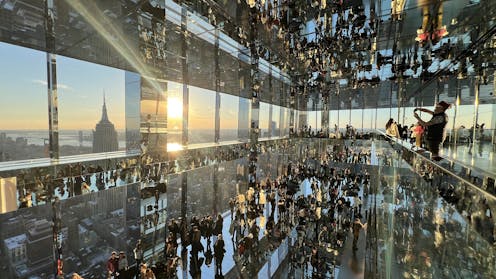
Source: The Conversation (Au and NZ) – By Aki Ishida, Professor and Director, College of Architecture and Graduate School of Architecture and Urban Design, Washington University in St. Louis Visitors get the sensation of floating above Manhattan at the Summit at One Vanderbilt. These rooms are built with low-iron glass, made with ultrapure silica sand.

Sussan Ley sacks Jacinta Price after she refuses to declare leadership loyality
Source: The Conversation (Au and NZ) – By Michelle Grattan, Professorial Fellow, University of Canberra Opposition Leader Sussan Ley has sacked Jacinta Nampijinpa Price from the shadow ministry, citing the senator’s failure to endorse her leadership as well as her refusal to apologise over her comment about Indian immigrants. The battle with Price came to

Doug Cameron says Labor’s left ‘defanged’ and co-opted into supporting US aggression
Source: The Conversation (Au and NZ) – By Michelle Grattan, Professorial Fellow, University of Canberra Former Labor senator Doug Cameron has accused the Albanese government, and its left faction in particular, of deserting principle and abandoning Australian sovereignty to the United States. Cameron, a New South Wales senator from 2008 to 2019, when he was

NSW daycares face whopping $500k fines. Will this ensure safety?
Source: The Conversation (Au and NZ) – By Erin Harper, Lecturer, School of Education and Social Work, University of Sydney The New South Wales government has proposed huge fines to crack down on childcare providers who breach safety rules. New laws, introduced to state parliament on Wednesday, would increase the maxiumum fine to A$500,000 for

Can Israel use self-defence to justify its strike on Qatar under the law?
Source: The Conversation (Au and NZ) – By Shannon Bosch, Associate Professor (Law), Edith Cowan University Israel launched a targeted airstrike on the Hamas leadership in Doha, the capital of Qatar, on Tuesday. Six people were reported killed, including the son of a senior Hamas figure. Global condemnation was swift. The Qatari government called the

Deadlier than varroa, a new honey-bee parasite is spreading around the world
Source: The Conversation (Au and NZ) – By Jean-Pierre Scheerlinck, Honorary Professor Fellow, Melbourne Veterinary School, Faculty of Science, The University of Melbourne Albert Stoynov/Unsplash For decades, beekeepers have fought a tiny parasite called Varroa destructor, which has devastated honey-bee colonies around the world. But an even deadlier mite, Tropilaelaps mercedesae – or “tropi” –

Polling shows Donald Trump’s ratings are poor – but they could be worse
Source: The Conversation (Au and NZ) – By Adrian Beaumont, Election Analyst (Psephologist) at The Conversation; and Honorary Associate, School of Mathematics and Statistics, The University of Melbourne It’s nearly eight months since Trump’s second term as United States president began. In analyst Nate Silver’s aggregate of US national polls, Trump’s net approval is currently

Do I have insomnia? 5 reasons why you might not
Source: The Conversation (Au and NZ) – By Amelia Scott, Honorary Affiliate and Clinical Psychologist at the Woolcock Institute of Medical Research, and Macquarie University Research Fellow, Macquarie University Oleg Breslavtsev/Getty Even a single night of sleep trouble can feel distressing and lonely. You toss and turn, stare at the ceiling, and wonder how you’ll

A new Australian production of Troy is bold, uncompromising theatre for our times
Source: The Conversation (Au and NZ) – By Jonathan Graffam-O’Meara, PhD Candidate in Theatre, Monash University Pia Johnson/Matlhouse The story of Troy has been told for three millennia. Capricious deities, military clashes, legendary heroes and a famous wooden horse – a gift to the city that ultimately brings about its ruination – the mythology offers

Deadly Nepal protests reflect a wider pattern of Gen Z political activism across Asia

Source: The Conversation (Au and NZ) – By DB Subedi, Lecturer, The University of Queensland

Earlier this week, thousands of mainly young people in Nepal took to the streets in mass protests triggered by the government’s decision to ban 26 social media platforms.

Some 22 people died and hundreds were injured within in a few hours in the clashes between protesters and police.

Prime Minister KP Sharma Oli and his cabinet ministers resigned in the face of growing public outrage and widespread criticism, both domestically and internationally, over the protesters’ deaths.

What happened?

Provoked by the deaths of the protesters on September 8, angry, young demonstrators burned down several government buildings across the country, including the parliament and supreme court.

Several politicians’ residences were also set on fire, while leaders of major political parties went into hiding.

The Nepal Army is currently mobilising troops on the streets to take control of the situation, but power has not yet been officially transferred to a new government.

Unrest leads to protests

Political protests and public uprisings are not new in Nepal. The country’s first mass uprising in 1990 (labelled “Jana Andolan I”) and the second in 2006 (“Jana Andolan II”) both called for major changes in the political system.

The governments that followed failed to meet the public’s hopes for real reforms.

For the first time in the country’s history, a protest of this size has been entirely led by young people from Generation Z (born roughly between 1997 and 2012). Out of nearly 30 million people in Nepal, about 40% belong to this generation.

Growing up in a digital culture shaped by internet and social media platforms, this generation has lived through Nepal’s worst years of political instability and frequent government changes. There have been 14 governments in the past 15 years.

In 2015, Nepal shifted from a constitutional monarchical system to a federal republic system. But this massive change has delivered few improvements for everyday people. Despite some improvements in roads, electricity and the internet, inequality, political corruption, elitism and nepotism continue.

Making the situation even worse is an unemployment rate that exceeds 10% overall – and more than 20% for young people.

The social media ban that sparked action

In a country where more than 73% of households own a mobile phone and about 55% of the population uses the internet, social media platforms are not only a source of entertainment and networking, but also a way of amplifying political voices – especially when traditional media is perceived as being biased towards political interests.

Nepal’s Gen Z is using social media both as a social and political space. #Nepobaby is often trending on TikTok, while Instagram posts detail the lavish lifestyle that politicians and their children enjoy compared to the hard reality of many young people, who work low-wage jobs or have to leave the country just to survive.

On September 3, the government banned these social media platforms, citing a directive requiring companies to register in Nepal. The government justified the move as necessary to control fake news, misinformation and disinformation.

But Gen Z saw the ban as censorship. The frustration spreading on social media quickly turned into a nationwide uprising.

The government lifted the ban on September 8, but it could not save the coalition government.

Similarities in other countries

The protests in Nepal mirror similar movements led recently by young people elsewhere in Asia, especially Bangladesh, Sri Lanka and Indonesia.

Like Bangladesh in 2024, the young protesters in Nepal were frustrated with corruption and joblessness.

Similar to Sri Lanka’s “Aragalaya” movement in 2022, Nepal’s protesters fought against inequality and nepotism, resulting in the collapse of the government.

And like Indonesia’s student protests in recent weeks, the Nepali protesters relied on memes, hashtags and digital networks, rather than party machines to organise.

Where to from here?

What comes next for Nepal is unclear. The army chief is now coordinating with Gen Z activists to set up an interim civilian government that will prepare for fresh elections.

This is a remarkable shift: the youth who shook the streets are being asked to help shape the country’s political future.

Yet, challenges remain.

The young protesters are still a loose, leaderless network lacking the experience to run a state system. After an online meeting September 10, the protesters reportedly agreed to propose former Chief Justice Sushila Karki, now in her 70s, as a leader of the interim civilian government.

Nepal’s key institutions, such such as the courts, bureaucracy and security forces, are still largely dominated by older elites, as well. Any attempt to shift power may face resistance.

Perhaps Nepal can take a lesson from Bangladesh’s recent experience, where young protesters stepped in to help form an interim government, under the leadership of Nobel Peace Prize winner Muhammad Yunus.

Despite the challenges ahead, the uprising has provided a historic opportunity to fix Nepal’s broken government system. But real change depends on how power shifts from the old guard to new leaders, and whether they can address the structural and systemic issues that drove young people to the streets.

The Conversation

DB Subedi does not work for, consult, own shares in or receive funding from any company or organisation that would benefit from this article, and has disclosed no relevant affiliations beyond their academic appointment.

ref. Deadly Nepal protests reflect a wider pattern of Gen Z political activism across Asia – https://theconversation.com/deadly-nepal-protests-reflect-a-wider-pattern-of-gen-z-political-activism-across-asia-264968

The Long Walk proves yet again why Stephen King’s stories are perfect for the big screen

Source: The Conversation (Au and NZ) – By Chris Thompson, Lecturer in Theatre, Australian Catholic University

IMDB

Carrie, published in 1974 and adapted by screenwriter Lawrence Cohen for Brian De Palma’s 1976 film, is generally cited as Stephen King’s first novel.

His actual first novel, The Long Walk, was written some seven years earlier, but published after Carrie in 1979 under the pseudonym Richard Bachman. The Long Walk is a gripping first novel. And now, all these years later, it has been adapted into a surprisingly compelling film.

Why surprising? Well, at first blush, the premise can seem a bit thin and schlocky: in a dystopian United States, 50 young men are chosen by lottery to compete in a cross-country marathon in which they must maintain a walking speed of three miles (4.8 kilometres) per hour to avoid being shot – with the last one standing winning a dream prize.

However, screenwriter Jeffrey Mollner and director Francis Lawrence (who also directed most of The Hunger Games films) deliver a deeply human story of friendship and loyalty in the face of overwhelming odds.

As with the better King adaptations, it’s the depth and power of the characters, and our empathy for them, that elevates this story. A talented young cast is led by Cooper Hoffman, David Jonsson and Charlie Plummer, along with gravel-voiced Mark Hamill as the villain.

The Long Walk is just one more example of how so many of King’s stories have, and continue to, be manna for the big screen.

Human stories at their heart

In the more gripping and engaging King adaptations such as Carrie (1976), The Shining (1980) and Misery (1990), the violence and horror are often what Alfred Hitchcock called a MacGuffin: a thing the story seems to be about when, in fact, it’s about something far more human.

The horror of what’s in Room 237 in The Shining, or what Annie Wilkes does with her sledgehammer in Misery are great scary moments, but they’re not what these stories are about.

As Mike Flanagan, director of Life of Chuck, Gerald’s Game (2017) and Doctor Sleep (2018) puts it:

You forget that It isn’t about the clown, it’s about the kids and their friendship […] The Stand isn’t about the virus or the demon taking over the world, it’s ordinary people who have to come together and stand against a force they cannot defeat.

Even in his scarier stories, King juxtaposes horror with heart.
IMDB

To that end, the graphic violence in The Long Walk is the least interesting aspect of it. Yet King insisted the violence be kept in the screenplay.

When he wrote the story in the 1960s, it was a metaphor for the Vietnam War, and a generation sacrificed to conscription. As he recently told Deadline, the characters are “the same sort of kids that are pulled into the war machine”.

In 2025, however, the screenplay is about bread and circuses – and false hope for an economically and socially disenfranchised society dominated by authoritarian powers.

It’s also reminiscent of another endurance-based film, Sydney Pollack’s classic They Shoot Horses Don’t They? (1969), in which poor young people living in Depression-era America compete in a dance marathon for a cash prize.

We feel for the villains, too

The Long Walk is the latest of several King adaptations to hit screens this year.

We’ve seen Osgood Perkins’ disappointing horror-comedy The Monkey, Jack Bender and Benjamin Cavell’s plodding Stan series The Institute and, more recently, The Life of Chuck, Mike Flanagan’s glorious celebration of life, joy, grief, death and the unreliability of memory. Coming up we’ve got Welcome to Derry, from It (2017) director Andrés Muschietti, and Edgar Wright’s remake of The Running Man.

It’s remarkable the 77-year-old author of almost 70 books is still so prolifically adapted for the screen. With more than 50 feature films and dozens of TV series associated with his name, King is one of the most adapted authors of all time. Why is that?

His enormous onscreen success comes down to more than just his big name as a writer. It also comes down to his stories, which are grounded in humanity and told through relatable, empathetic characters.

It’s not enough to scare an audience. You also need to touch their hearts. They want to be moved – to laugh, cry and feel. Not just scream.

Film writer Jake Coyle argues the best King adaptations come from the author’s more warm-hearted tales. But I would say there is also much joy and heartbreak to be found in his not-so-warm adaptations, such as Pet Sematary (1989) and Christine (1983).

Moreover, King’s antagonists – even the super-scary ones – are usually as well-crafted, compelling and psychologically complex as his protagonists.

Whether its Annie Wilkes in Misery, Jack Torrance in The Shining, or now Gary Barkovitch in The Long Walk, King invites us to understand what drives these complex and layered characters – even as we’re reviled by their actions. They do monstrous things, but they’re more than just monsters.

As Frank Darabont, director of The Shawshank Redemption (1994) and The Green Mile (1999), puts it:

There’s a very haunting and melancholy quality to [The Green Mile] […] the people in it are […] trying very much to do the best they know how […] they’re wrestling with issues of compassion and morality, all the things I love to see in a story.

I’m with Frank. I look for these things in a story too. They’re there in The Long Walk, in The Life of Chuck, and in so many others King adaptations. And it’s a good bet they’ll be there on our screens for a long time to come.

The Conversation

Chris Thompson does not work for, consult, own shares in or receive funding from any company or organisation that would benefit from this article, and has disclosed no relevant affiliations beyond their academic appointment.

ref. The Long Walk proves yet again why Stephen King’s stories are perfect for the big screen – https://theconversation.com/the-long-walk-proves-yet-again-why-stephen-kings-stories-are-perfect-for-the-big-screen-264024

Want more protein for less money? Don’t be fooled by the slick black packaging

Source: The Conversation (Au and NZ) – By Emma Beckett, Adjunct Senior Lecturer, Nutrition, Dietetics & Food Innovation – School of Health Sciences, UNSW Sydney

The Conversation, CC BY-SA

If you’ve been supermarket shopping lately, you might have noticed more foods with big, bold protein claims on black packaging – from powders and bars to yoghurt, bread and even coffee.

International surveys show people are shopping for more protein because they think it’ll help their fitness and health. But clever marketing can sway our judgement too.

Before your next shop, here’s what you should know about how protein is allowed to be sold to us. And as a food and nutrition scientist, I’ll offer some tips for choosing the best value meat or plant-based protein for every $1 you spend – and no, protein bars aren’t the winner.

‘Protein’ vs ‘increased protein’ claims

Let’s start with those “high protein” or “increased protein” claims we’re seeing more of on the shelves.

In Australia and New Zealand, there are actually rules and nuances about how and when companies can use those phrases.

Under those rules, labelling a product as a “protein” product implies it’s a “source” of protein. That means it has at least 5 grams of protein per serving.

“High protein” doesn’t have a specific meaning in the food regulations, but is taken to mean “good source”. Under the rules, a “good source” should have at least 10 grams of protein per serving.

Then there is the “increased protein” claim, which means it has at least 25% more protein than the standard version of the same food.

If you see a product labelled as a “protein” version, you might assume it has significantly more protein than the standard version. But this might not be the case.

Take, for example, a “protein”-branded, black-wrapped cheese: Mini Babybel Protein. It meets the Australian and New Zealand rules of being labelled as a “source” of protein, because it has 5 grams of protein per serving (in this case, in a 20 gram serve of cheese).

But what about the original red-wrapped Mini Babybel cheese? That has 4.6g of protein per 20 gram serving.

The difference between the original vs “protein” cheese is not even a 10% bump in protein content.

Black packaging by design

Food marketers use colours to give us signals about what’s in a package.

Green signals natural and environmentally friendly, reds and yellows are often linked to energy, and blue goes with coolness and hydration.

These days, black is often used as a visual shorthand for products containing protein.

But it’s more than that. Research also suggests black conveys high-quality or “premium” products. This makes it the perfect match for foods marketed as “functional” or “performance-boosting”.

The ‘health halo’ effect

When one attribute of a food is seen as positive, it can make us assume the whole product is health-promoting, even if that’s not the case. This is called a “health halo”.

For protein, the glow of the protein halo can make us blind to the other attributes of the food, such as added fats or sugars. We might be willing to pay more too.

It’s important to know protein deficiency is rare in countries like Australia. You can even have too much protein.

How to spend less to get more protein

If you do have good reason to think you need more protein, here’s how to get better value for your money.

Animal-based core foods are nutritionally dense and high-quality protein foods. Meats, fish, poultry, eggs, fish, and cheese will have between 11 to 32 grams of protein per 100 grams.

That could give you 60g in a chicken breast, 22g in a can of tuna, 17g in a 170g tub of Greek yoghurt, or 12g in 2 eggs.

In the animal foods, chicken is economical, delivering more than 30g of protein for each $1 spent.

But you don’t need to eat animal products to get enough protein.

In fact, once you factor in costs – and I made the following calculations based on recent supermarket prices – plant-based protein sources become even more attractive.

Legumes (such as beans, lentils and soybeans) have about 9g of protein per 100g, which is about half a cup. Legumes are in the range of 20g of protein per dollar spent, which is a similar cost ratio to a protein powder.

5 bowls of different nuts, including unshelled peanuts.
Nuts, seeds, legumes and oats are all good plant-based options.
Towfiqu Barbhuiya/Unsplash, CC BY

Nuts and seeds like sunflower seeds can have 7g in one 30g handful. Even one cup of simple frozen peas will provide about 7g of protein.

Peanuts at $6 per kilogram supply 42g of protein for each $1 spent.

Dry oats, at $3/kg have 13g of protein per 100g (or 5g in a half cup serve), that’s 33g of protein per dollar spent.

In contrast, processed protein bars are typically poor value, coming in at between 6-8g of protein per $1 spent, depending on if you buy them in a single serve, or in a box of five bars.

Fresh often beats processed on price and protein

Packaged products offer convenience and certainty. But if you rely on convenience, colours and keywords alone, you might not get the best deals or the most nutritious choices.

Choosing a variety of fresh and whole foods for your protein will provide a diversity of vitamins and minerals, while reducing risks associated with consuming too much of any one thing. And it can be done without breaking the bank.

The Conversation

Emma Beckett has received funding for research or consulting from Mars Foods, Nutrition Research Australia, NHMRC, ARC, AMP Foundation, Kellogg and the University of Newcastle. She works for FOODiQ Global and is the author of ‘You Are More Than What You Eat’. She is a member of committees/working groups related to nutrition and food, including the Australian Academy of Science, the National Health and Medical Research Council, and is a member of the Nutrition Society of Australia and the Australian Institute of Food Science and Technology.

ref. Want more protein for less money? Don’t be fooled by the slick black packaging – https://theconversation.com/want-more-protein-for-less-money-dont-be-fooled-by-the-slick-black-packaging-264039

Blue, green, brown, or something in between – the science of eye colour explained

Source: The Conversation (Au and NZ) – By Davinia Beaver, Postdoctoral research fellow, Clem Jones Centre for Regenerative Medicine, Bond University

Pouya Hajiebrahimi/Unsplash

You’re introduced to someone and your attention catches on their eyes. They might be a rich, earthy brown, a pale blue, or the rare green that shifts with every flicker of light. Eyes have a way of holding us, of sparking recognition or curiosity before a single word is spoken. They are often the first thing we notice about someone, and sometimes the feature we remember most.

Across the world, human eyes span a wide palette. Brown is by far the most common shade, especially in Africa and Asia, while blue is most often seen in northern and eastern Europe. Green is the rarest of all, found in only about 2% of the global population. Hazel eyes add even more diversity, often appearing to shift between green and brown depending on the light.

So, what lies behind these differences?

It’s all in the melanin

The answer rests in the iris, the coloured ring of tissue that surrounds the pupil. Here, a pigment called melanin does most of the work.

Brown eyes contain a high concentration of melanin, which absorbs light and creates their darker appearance. Blue eyes contain very little melanin. Their colour doesn’t come from pigment at all but from the scattering of light within the iris, a physical effect known as the Tyndall effect, a bit like the effect that makes the sky look blue.

In blue eyes, the shorter wavelengths of light (such as blue) are scattered more effectively than longer wavelengths like red or yellow. Due to the low concentration of melanin, less light is absorbed, allowing the scattered blue light to dominate what we perceive. This blue hue results not from pigment but from the way light interacts with the eye’s structure.

Green eyes result from a balance, a moderate amount of melanin layered with light scattering. Hazel eyes are more complex still. Uneven melanin distribution in the iris creates a mosaic of colour that can shift depending on the surrounding ambient light.

What have genes got to do with it?

The genetics of eye colour is just as fascinating.

For a long time, scientists believed a simple “brown beats blue” model, controlled by a single gene. Research now shows the reality is much more complex. Many genes contribute to determining eye colour. This explains why children in the same family can have dramatically different eye colours, and why two blue-eyed parents can sometimes have a child with green or even light brown eyes.

Eye colour also changes over time. Many babies of European ancestry are born with blue or grey eyes because their melanin levels are still low. As pigment gradually builds up over the first few years of life, those blue eyes may shift to green or brown.

In adulthood, eye colour tends to be more stable, though small changes in appearance are common depending on lighting, clothing, or pupil size. For example, blue-grey eyes can appear very blue, very grey or even a little green depending on ambient light. More permanent shifts are rarer but can occur as people age, or in response to certain medical conditions that affect melanin in the iris.

The real curiosities

Then there are the real curiosities.

Heterochromia, where one eye is a different colour from the other, or one iris contains two distinct colours, is rare but striking. It can be genetic, the result of injury, or linked to specific health conditions. Celebrities such as Kate Bosworth and Mila Kunis are well-known examples. Musician David Bowie’s eyes appeared as different colours because of a permanently dilated pupil after an accident, giving the illusion of heterochromia.

A collage of three people, each with different coloured eyes.
Celebrities such as David Bowie, Mila Kunis and Kate Bosworth (L to R) are well-known examples of people whose eyes are different colours.
Wikimedia Commons/The Conversation

In the end, eye colour is more than just a quirk of genetics and physics. It’s a reminder of how biology and beauty intertwine. Each iris is like a tiny universe, rings of pigment, flecks of gold, or pools of deep brown that catch the light differently every time you look.

Eyes don’t just let us see the world, they also connect us to one another. Whether blue, green, brown, or something in-between, every pair tells a story that’s utterly unique, one of heritage, individuality, and the quiet wonder of being human.

The Conversation

Davinia Beaver does not work for, consult, own shares in or receive funding from any company or organisation that would benefit from this article, and has disclosed no relevant affiliations beyond their academic appointment.

ref. Blue, green, brown, or something in between – the science of eye colour explained – https://theconversation.com/blue-green-brown-or-something-in-between-the-science-of-eye-colour-explained-264681

As the world order shifts, NZ should ‘spread its diplomatic wings’ and look at joining BRICS

Source: The Conversation (Au and NZ) – By Chris Ogden, Associate Professor in Global Studies, University of Auckland, Waipapa Taumata Rau

Getty Images

With the old global order in a heightened state of flux, driven by US President Donald Trump’s attacks on free trade, international organisations and human rights, small states like New Zealand are having to adjust their foreign policies and hedge their bets.

As long-term economic and diplomatic power shifts towards Asia and the wider Indo-Pacific, alternative multilateral groups are now growing in importance.

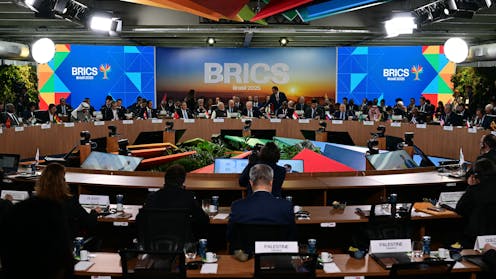
Foremost among these is the grouping known as BRICS, a maturing – and potentially dominant – centre of global economic power. Whether New Zealand would consider joining is still moot, but the forum already includes major nations vital to this country’s future.

Formed in September 2006 by Brazil, Russia, India and China (the original BRIC), it had its first annual summit in June 2009, with South Africa joining in December 2010 (thus becoming BRICS).

The core strategic logic of BRICS is based on consensus and solidarity, not coercion, and to gain member benefits via collective strength. As then Indian prime minister Manmohan Singh put it in 2009:

We share the vision of inclusive growth and prosperity in the world [… and] we stand for a rule-based, stable and predictable global order.

Having substantial economies, populations, landmasses and ambitions underpinned this shared goal of a multipolar world – which now seems to be emerging by a different route due to Trump’s isolationist “America first” policies.

Strength in numbers

In 2012, motivated by mutual concerns over food and energy security, terrorism and climate change, BRICS members signed the Delhi Declaration, stating:

We envision a future marked by global peace, economic and social progress [… and] strengthened representation of emerging and developing countries in the institutions of global governance.

In 2013, BRICS launched the New Development Bank, designed to progressively reform the world’s financial architecture after the global financial crisis of 2008.

Seeking to fund sustainable development and infrastructure projects in developing states, the bank now rivals older Western-based institutions such as the World Bank and International Monetary Fund (IMF).

The rising significance of BRICS has been accelerated by its recent expansion. In 2024, Egypt, Ethiopia, Iran, Saudi Arabia and the United Arab Emirates all became members, as did Indonesia in 2025.

Argentina had also agreed to join in 2024 but then pulled out due to the election of its US-orientated populist president Javier Milei.

The expansion saw BRICS’ share of global GDP rise to 39% in 2023. Member states now account for 48.5% of the planet’s population and 36% of total global territory.

BRICS also accounts for around 72% of the world’s reserves of rare earth minerals, 43.6% of global oil production, 36% of natural gas production and 78.2% of coal production.

By such measures, BRICS is an economic and diplomatic powerhouse. In economic terms, it has been out-ranking the G7 countries (US, Germany, Japan, UK, France, Italy and Canada) since around 2019.

An alternative, not a choice

Diplomatically, BRICS members pledge to better synchronise their national policies by meeting on the sidelines of the UN General Assembly, IMF, World Bank and G20 summits.

Joining such a body provides an attractive way for countries to enhance their trade and diplomatic bandwidth, as well as hedge against US-inspired instability.

Joining BRICS also comes with potential risks, of course. Any perception of traditional Western alliance systems being undercut could see aid and investment reduce. So far, however, Trump’s threat to impose an extra 10% trade tariff on any countries aligned with BRICS is yet to materialise.

But as economist Stephen Onyeiwu has written, with the exception of Russia and Iran,

Most of the countries and partners in BRICS are either allies of western countries or neutral on global issues. They are unlikely to support decisions or actions that are grossly inimical to western interests.

Given the current geopolitical situation, New Zealand may well baulk at closer ties with Russia and Iran. But being inside the forum would also allow diplomatic opportunities to press other member states over their actions or policies.

In fact, New Zealand – along with many US allies – joined the Beijing-inspired Asia Infrastructure Investment Bank and signed a Free Trade Agreement with China in 2008. It didn’t suffer any adverse consequences.

New BRICS members can be invited or make a formal request to apply, which is then considered at the next BRICS annual summit. Or they can apply to be a partner country, which is akin to “observer” status.

This allows them to take part in special summits and foreign minister meetings, as well as contribute to official documents and policy statements. But they can’t host meetings or select new members and partners.

Most importantly, joining BRICS would not mean New Zealand needs to leave other multilateral institutions.

Rather, it would be a pragmatic way for Wellington to spread its diplomatic wings and prepare for a future in which Asia and the Indo-Pacific – already the world’s largest economic and military region – will only become more powerful.

The Conversation

Chris Ogden is affiliated as a Senior Research Fellow with the Foreign Policy Centre, London.

ref. As the world order shifts, NZ should ‘spread its diplomatic wings’ and look at joining BRICS – https://theconversation.com/as-the-world-order-shifts-nz-should-spread-its-diplomatic-wings-and-look-at-joining-brics-264861

Climate action can feel slow – but the fastest energy leap in history has begun

Source: The Conversation (Au and NZ) – By Peter Newman, Professor of Sustainability, Curtin University

Mexico’s Villanueva solar farm is one of the largest in the Americas. Alfredo Estrella/Getty

It’s increasingly common to hear from experts and the general public that the global shift away from fossil fuels is glacially slow, or even nonexistent.

As the view goes, the meteoric rise of clean energy is only supplementing fossil fuels rather than pushing them out. Repeated with increasing frequency by many – including the fossil fuel lobby – this view is not only incorrect, but dangerous. If accepted as truth, it will encourage climate fatalism.

In reality, we’re living through the fastest energy transformation in human history. Every previous large-scale shift in energy – from muscle power to wood to coal to oil – has taken decades or even longer. But the “renewable revolution” is happening far faster.

It’s only in the past ten years that renewables have become cheap and reliable, and only in the past five that energy storage has become cheap and widely available. Solar farms, wind turbines and grid-scale storage can be built remarkably quickly. Net-zero cities are becoming possible. The iron laws of economics have kicked in. These cheap forms of electricity generation are already displacing more and more fossil fuels.

Slow growth off a small base

You might have seen graphs showing how much power comes from renewables, fossil fuels and other energy sources. When shown over a longer timeframe, the explosive but very recent growth of renewables is compressed into a tiny, apparently insignificant addition.

This is about as useful as pointing out that in 1984 the internet had no users. While a few researchers were active in 1984, the wider internet ecosystem, infrastructure and enabling technologies did not exist until 1991.

Using graphs of early internet user growth to gauge future potential would have been very misleading. The internet started slowly before accelerating very rapidly. Zero users in 1984, 2.6 million in 1990, 412 million in 2000, one billion in 2005, 5.5 billion by 2025.

Today’s clean energy rollout similarly started from a very low base before maturing. Now it’s accelerating at remarkable speed.

Twenty years ago, solar and wind were still expensive and large-scale batteries even more so. In the 2010s, renewables became cheaper and cheaper. By the late 2010s, battery technology was progressing rapidly and costs began falling. In the 2020s, the price of electric vehicles began falling.

It was only ten years ago that nations signed the Paris Agreement on climate change. Since then, many nations have set about tackling climate change in earnest.

Here are five ways to grasp the scale of the change.

1. Unprecedented growth and investment

In 2025, the International Energy Agency projects clean energy investment will reach a record A$3.3 trillion, double the investment in fossil fuels and more than four times what it was just a decade ago.

Globally, renewable energy capacity is being added at all-time highs. More than 585 gigawatts of new wind and solar was built in 2024–25.

Solar is having a particularly rapid growth spurt, outpacing any other energy source. Solar is becoming king. Batteries are likely to undergo similar growth as prices fall.

2. Clean tech dominates new capacity

Across China, the European Union, the United States, India and Australia, newly installed solar and wind are now outpacing new coal, oil and gas capacity by a factor of three or higher. Solar and wind made up three-quarters of new electricity capacity worldwide in 2024.

Developing nations, too, are adopting renewable energy at speed. Nearly 90% of funding for new energy sources in these nations is now for renewables.

In the past five years, Pakistan has imported the equivalent of its national grid capacity in solar capacity. Sub-Saharan African nations are massively increasing solar imports. Solar now accounts for more than 60% of Sierra Leone’s power capacity.

At the end of 2024, there were almost 58 million battery electric and plug-in hybrid cars on the world’s roads. We calculate this avoided the need to burn more than 250 million litres of oil per day.

While Australia is sluggish on electric cars, it’s roaring ahead on renewables. In 2020, renewables contributed about 21% of Australia’s electricity. Five years later, that figure has almost doubled.

3. Decoupling growth from emissions

Electricity demand is rising in most economies, even as emissions plateau or fall where uptake of renewables is highest.

In the world’s largest electricity market, China, clean energy is being added so rapidly that power-sector emissions are declining for the first time even as GDP grows. China also manufactures most of the world’s clean tech.

4. Renewables are on the S-curve – slow and then sudden

When a new technology emerges, the uptake can often be mapped on an S-curve graph. Change is slow until a tipping point is reached. Then change happens very quickly. Solar, EVs and battery storage are now at that point of very rapid growth or already past it in multiple markets.

5. Fossil fuels are being displaced

As renewables and storage get cheaper, they are beginning to push out fossil fuels. In 2024, the United Kingdom closed its last coal plant. Its emissions have now fallen more than 50% below 1990 figures.
This year, coal supplied less than half of Poland’s electricity for the first time.

Our modelling suggests the tipping point has arrived. In the next few years, we can expect to see cheap, plentiful renewables outcompete more and more fossil fuels.

Progress is slow? Look again

Energy underpins civilisation – we need more and more of it. Renewables can make the most versatile type of energy, electricity, very cheaply and, when firmed with storage, very reliably.

The claim that clean energy is rolling out too slowly echoes dismissals of new technologies.

Investment in new fossil fuels is falling and becoming riskier, while renewables attract record capital as clean technology costs keep dropping. For years, solar growth forecasts by the International Energy Agency have wildly underestimated the actual rate of growth.

None of this is to downplay the remaining work. Vested interests would much prefer the world stays hooked on oil, gas and coal until it’s all been burned.

But the narrative is clear. Real progress has already been made. To suggest otherwise is to ignore the size and momentum of the fastest energy transition in history.

Peter Newman receives funding for a research project on Net Zero Precincts from CRC RACE.

Ray Wills advises clients within the clean energy sector through his business, Future Smart Strategies. This article did not receive specific financial or in-kind support.

ref. Climate action can feel slow – but the fastest energy leap in history has begun – https://theconversation.com/climate-action-can-feel-slow-but-the-fastest-energy-leap-in-history-has-begun-264483

Victoria is on the cusp of signing a Treaty with Indigenous people. It could change lives

Source: The Conversation (Au and NZ) – By Jeremie M Bracka, Law Lecturer and Transitional Justice Academic, RMIT University

Victoria is on the brink of making history. This week, after years of negotiations, the state government tabled a landmark Treaty Bill in parliament.

If passed, potentially later this month, it will deliver a formal apology to First Peoples, embed Aboriginal truth-telling in schools and restore traditional names to parks and waterways.

Crucially, the Treaty process has unfolded alongside the Yoorrook Justice Commission, Australia’s first Indigenous-led truth-telling inquiry.

For many, “Treaty” might sound abstract or political. But in Victoria, it’s becoming something concrete: a new way of sharing power, resources and recognition that could transform the daily lives of First Peoples and set a standard for the rest of the nation.

How we got here

Unlike Canada or New Zealand, Australia never signed a Treaty with its Indigenous peoples.

British colonisation was justified under the legal fiction of terra nullius, the idea that no one owned the land.

The result was dispossession, violence, and laws that stripped First Nations people of rights most Australians take for granted.

Over the decades, governments held dozens of inquiries, from the Royal Commission into Aboriginal Deaths in Custody to the Bringing Them Home report into the Stolen Generations. These exposed painful truths, but rarely led to real reform.

In 2021, Victoria tried a different path. The First People’s Assembly paired truth-telling with Treaty making. It set up the Yoorrook Justice Commission, Australia’s first formal truth-telling body with the powers of a Royal Commission.


Read more:
A test of political courage: Yoorrook’s final reports demand action, not amnesia


Yoorrook has heard hundreds of testimonies about the impact of colonisation: from massacres and child removals to over-policing and racism in health and housing.

Importantly, this process is Indigenous-led, designed with and for First Peoples, and intended to shape Treaty itself.

The Treaty plan in detail

The flagship of Victoria’s Treaty initiative will be a new body called Gellung Warl, a Gunaikurnai phrase for “tip of the spear”.

This organisation will be more than symbolic. It’s designed as an enduring part of Victoria’s democratic landscape, with a legislated $70 million annual budget that rises by 2.5% each year. Cutting its funding would require parliament to change the law.

Gellung Warl will fold in the existing First Peoples’ Assembly of Victoria and expand its role. It will include:

  • a permanent truth-telling body, continuing the work of Yoorrook

  • an accountability commission empowered to monitor government ministers, agencies, and programs

  • advisory and consultation powers, including the ability to request information about new laws and publish advice on whether proposed bills are compatible with Treaty.

This mirrors laws already in place under Victoria’s Charter of Human Rights.

Elected members of the assembly will have unprecedented access to government. They will be able to make representations directly to cabinet, ministers, departmental secretaries and even the police chief commissioner.

The assembly will address parliament once a year and attend cabinet meetings at least twice annually. This is unprecedented in Australia.

Balancing empowerment with sovereignty

Some critics warn the Treaty risks undermining parliamentary sovereignty.

In January 2024, the Victorian opposition withdrew its support after the failed national Voice referendum, claiming it could create division.

The government has stressed what the bill will not do. It won’t change the state or federal Constitution, create a “third chamber of parliament” or deliver individual reparations.

Instead, it provides a framework for shared decision-making, truth-telling and accountability while preserving parliament’s authority.

Former Supreme Court Justice Kevin Bell calls this balance the bill’s two “golden threads”. It empowers Indigenous people in politics while safeguarding parliament’s ultimate lawmaking powers.

Why it matters

Once Treaty is signed, every bill introduced into parliament will need to include a Statement of Treaty Compatibility explaining whether the assembly was consulted and whether the bill aligns with Treaty’s aims.

If a bill conflicts with these aims, it can still pass, but the inconsistency will be on the record.

The hope is that Treaty will lead to practical improvements. With new accountability mechanisms such as Nginma Ngainga Wara, a First Peoples’ “productivity commission”, governments will be monitored on how policies impact Indigenous communities on the ground.

This body can conduct inquiries, publish findings and keep the pressure on, though it will not have coercive powers.

Combined with Yoorrook’s truth-telling, this architecture could reshape daily life. From better housing and healthcare to more culturally-grounded education and land management, Treaty offers a chance to tackle disadvantage through shared decision-making and self-determination.

A model for others?

Other states have flirted with truth-telling and treaty, but momentum has stalled.

In the Northern Territory, an independent Treaty Commission delivered its final report in 2021, yet the new government has since dismantled the process and wound back truth-telling initiatives.

In Queensland, the much-heralded Path to Treaty Act was repealed in 2024. This shut down the Truth-telling and Healing Inquiry and the First Nations Treaty Institute.

Tasmania, meanwhile, has made little progress despite early discussion.

Against this backdrop, Victoria stands out as the nation’s only genuine bright spot. With Yoorrook and Treaty advancing side by side, it is the sole jurisdiction still committed to embedding truth-telling and Indigenous self-determination into law.

Politically, Victoria is also a test case. If the Treaty process can withstand opposition and build public support here, it may help overcome political hurdles elsewhere and set a national precedent.

Internationally, processes in Canada and New Zealand show treaties can underpin real shifts in consultation, education and challenging poor health outcomes.


Read more:
The federal government has left Indigenous Treaties to the states. How are they progressing?


A turning point

Imagine if Treaty delivered Aboriginal-controlled housing, so Elders no longer waited in vain for basic repairs.

Imagine if schools placed Indigenous history and languages at the heart of the curriculum, shaping a shared Victorian identity. Imagine if land management decisions were made with Traditional Owners, restoring both country and community health.

These are not distant hopes but practical changes Treaty can make real. Next week, community leaders, academics and legal advocates (ourselves included) will meet at a roundtable to support translating the most urgent Yoorrook recommendations on land justice, criminal justice and child protection into Treaty outcomes.

Treaty is no magic wand. As an act of parliament, it can always be repealed or amended by a future government, despite efforts to “future-proof” it with funding guarantees and institutional safeguards.

But for the first time, Victoria is confronting its colonial past while reshaping its present. If it succeeds, it will not only change lives here, it will demonstrate to the nation that truth, justice, and Indigenous self-determination can finally move from rhetoric to reality.


The author would like to thank Gheran-Yarraman Steel, a Boonwurrung Traditional Owner and senior leader at RMIT, for his co-authorship of this article.

Jeremie M Bracka receives funding from RMIT for the Malcolm Moore Industry Research grant to support the implementation of the Yoorrook Justice Commission recommendations.

Gheran-Yarraman Steel does not work for, consult, own shares in or receive funding from any company or organisation that would benefit from this article, and has disclosed no relevant affiliations beyond their academic appointment.

ref. Victoria is on the cusp of signing a Treaty with Indigenous people. It could change lives – https://theconversation.com/victoria-is-on-the-cusp-of-signing-a-treaty-with-indigenous-people-it-could-change-lives-264476

Social connections, service access, language: how disability can make things even harder for refugees

Source: The Conversation (Au and NZ) – By Tadgh McMahon, Adjunct Senior Lecturer, College of Medicine and Public Health, Flinders University

FG Trade Latin/Getty Images

Settling in a new country as a refugee comes with a variety of opportunities and challenges, from forming social connections, to navigating government services, and many others. The challenges can be greater for refugees with disability, our new research shows.

We don’t have concrete data on how many refugees with disability have settled in Australia. But we know numbers have increased in recent years after a 2010 parliamentary inquiry recommended a policy change to reduce barriers to refugees with disability settling in Australia.

Still, there’s a significant research gap on the intersection of disability and migration in Australia. There’s also little international research on refugees with disability.

Through surveys and interviews, we explored the experiences of settlement and integration for refugees with disability in Australia.

Our 75 survey respondents were permanent residents who had lived in Australia for an average of 4.3 years. They were mostly from Iraq, Syria and Afghanistan.

For the survey, we used questions from our previous research with refugees conducted by Western Sydney University and Settlement Services International (SSI). This allowed us to put the experiences of refugees with disability into context, comparing them with refugees more broadly.

Our findings suggest intersecting issues – across domains including social connections, housing, and English language learning – influence the settlement and integration trajectories of refugees with disability in Australia.

Some good news

Among refugees with disability, 72% of respondents said they felt part of the Australian community always or most of the time. Some 65% rated their overall settlement experience in Australia as good or very good.

These two percentages are lower than what refugees in general reported in our previous research in 2021, wherein 87% felt part of the community and 83% had an overall positive settlement experience.

Our new research also indicates refugees with disability gain important support from their own communities.

They were more likely to feel supported or given comfort by their national and ethnic community (54%) than refugees in general (38%) in our previous research.

In their religious communities, 46% of refugees with disability felt supported. This is compared to 27% of refugees generally in our earlier research.

As Haneen, a proxy respondent for and sister of Jamal, a 56-year-old man with disability from Iraq, explained:

I go to the church on Sundays, every Sunday and Wednesday. Majority of time I try not to miss it and Jamal also joins me. My sisters and her friends, they say if you don’t bring Jamal, don’t come, we want to see Jamal be with you, they like to have him there.

A nuanced picture

Developing connections outside their own communities posed significant challenges for refugees with disability. Most found it hard or very hard to make friends in Australia (77%), to talk to their Australian neighbours (76%) and to understand Australian ways or culture (68%).

These figures were much higher than what refugees more broadly reported in our previous research: 29%, 31% and 25% respectively.

Refugees with disability said English language difficulties, compounded by experiences of disability, hampered opportunities to develop mixed social networks.

Generally, they also faced significant difficulties accessing government services. Reported reasons for this included language barriers (75%), problems using government mobile apps such as Medicare and MyGov (62%), long wait times for appointments (60%) and transport difficulties (58%). These were much higher rates than for refugees generally in our previous research.

Refugees appreciated the range of disability supports available in Australia. At the same time, they reported challenges navigating these services. Even when they accessed them successfully, some faced challenges such as inadequate hours of support from the National Disability Insurance Scheme (NDIS).

Adnan, from Afghanistan, described what would have helped him and his brother, Yazan, who has cerebral palsy:

NDIS should have a team of people [to work with refugee] families with […] a person with disability […] they should have a team that meets this person and sees the needs of this person directly, and to help […] the family to find the proper provider. Because we don’t know […] as a refugee we came with no knowledge, no experience.

Refugees with disability we spoke to described a range of challenges.
Eden Connell

Our respondents shared similar difficulties finding housing as other refugees. However, they were less satisfied with various aspects of their homes (for example, the number, size and accessibility of rooms).

Refugees with disability appeared strongly motivated to learn English, yet reported barriers accessing adult learning programs such as the Adult Migrant English Program. These barriers included unsuitable delivery options (for example, online-only classes), being unable to sit for long periods, and trouble with memory and learning.

Breaking down barriers

The disability royal commission highlighted that refugees with disability face a range of challenges when trying to access disability and mainstream services. As the review from the commission notes:

many organisations have policies or programs to support inclusion of people with disability and also people from CALD [culturally and linguistically diverse] backgrounds, but these policies often do not intersect, nor do they intersect with other initiatives around inclusion.

The NDIS has developed a CALD strategy for 2024–28 which outlines a series of actions to improve access by migrants and refugees with disability. This will be a positive step if implemented in full.

Although our sample size was small, our research underscores the intersecting barriers that hinder inclusion for refugees with disability. Challenges around social connections, engagement with services and other domains may be magnified by experiences of disability.

Australia has obligations under international conventions and domestic laws and policies to protect the rights of refugees and people with disability.

We urgently need policy frameworks and systems that explicitly respond to the intersecting opportunities and challenges experienced by refugees with disability.

Dr Tadgh McMahon is employed at SSI and is an Adjunct Senior Lecturer at Flinders University. This research was undertaken jointly by researchers at the Institute for Culture and Society, Western Sydney University led by Prof Gerard Goggin. SSI provided some funding from to WSU to undertake this research. While SSI provides both refugee settlement services and disability support services, these programs had no direct involvement in the research including the data analysis, interpretation or the development of the findings which was led by Tadgh, as the Head of Research and Policy, SSI and his colleagues in the research and policy team.

This research was undertaken jointly by the researchers at the Institute for Culture and Society, Western Sydney University (WSU) and SSI, a national non-government organisation.

Gerard Goggin receives funding from ARC research grants. WSU received some funding from SSI to undertake this research.

While SSI provides both refugee settlement services and disability support services, these programs had no direct involvement in the research including the data analysis, interpretation or the development of the findings which was led by Dr Tadgh McMahon and the SSI Research and Policy team.

ref. Social connections, service access, language: how disability can make things even harder for refugees – https://theconversation.com/social-connections-service-access-language-how-disability-can-make-things-even-harder-for-refugees-264339

NZ’s small music venues are struggling – but there are ways to help them thrive

Source: The Conversation (Au and NZ) – By Dave Carter, Associate Professor, School of Music and Screen Arts, Te Kunenga ki Pūrehuroa – Massey University

Getty Images

Grassroots music venues are essential to the development of new talent and audiences. But right now, those small clubs and spaces are struggling, putting Aotearoa New Zealand’s local live music sector at risk.

These venues have been likened to the local music industry’s research and development department. A bit like the success of the Black Ferns and All Blacks is built on a strong and inclusive club scene, our biggest musical exports need a place to develop and hone their craft.

In the past, investment in the development of local music was underwritten by alcohol companies, whose famous pub circuit launched the careers of many iconic artists such as Dave Dobbyn and Neil Finn.

Today’s grassroots venues, most independently owned and run, continue to invest in the sector’s growth and are intrinsic to artist career development and export pipelines. But the greatest returns on that investment are enjoyed elsewhere.

Over the past seven years, Aotearoa’s live music market has become increasingly consolidated under the ownership or control of multinational, vertically-integrated entities such as Live Nation/Ticketmaster, TEG/Ticketek and AEG/AXS.

Internationally, these companies own or control multiple elements of the live music supply chain, including venues, festivals, ticketing, artists managers and promoters.

In Aotearoa, Live Nation is the most established, recently posting record profits in Australia and New Zealand and expanding its operations by buying a controlling stake in Electric Avenue festival producer Team Event.

This is on top of substantial interests in big venues, festivals, ticketing via Ticketmaster and Moshtix, regional event organisers, and exclusive ticketing arrangements with council-owned venues in Auckland, Wellington, Rotorua, Christchurch and Dunedin.

At the same time, Live Nation’s managing director has been advocating for government investment to attract more international touring artists (some of whom have bypassed New Zealand recently).

While this investment may be one way to draw in more big international acts, the reality is that this consolidation of the live music market has tilted the market in favour of the largest players, and has eroded the viability and market share of grassroots venues.

Our recent research shows these impacts have been compounded by cost-of-living increases, urban intensification, COVID lockdowns and extreme weather events.

What other countries are doing

This situation is not unique to Aotearoa, as venues worldwide face intensified threats of closure.

Elsewhere, however, governments have recognised the importance grassroots music venues to the health of the wider industry and broader economy, and designed schemes to directly support music infrastructure from the bottom up.

In 1986, France implemented a 3.5% tax on concert tickets, payable by promoters, which is then redistributed to the local live music sector.

In Britain, the government has called for a voluntary levy of £1 per ticket on arena and stadium shows, with proceeds placed in a centralised fund to support grassroots venues (similar to NZ Rugby’s legacy fund for future participation and talent development). The UK arts minister has indicated a willingness to make this mandatory if necessary.

In March this year, an Australian parliamentary inquiry recommended a similar ticket levy on large music events to fund small venues and grassroots live music.

The Australian Live Music Business Council has argued this should be sector-to-sector, with minimal government involvement, comprising a tax-deductible co-contribution of 25 cents per ticket from the “promoter, venue, artist and punter”.

The New Zealand government’s Amplify Creative and Cultural Strategy, released last month, includes proposals to:

  • leverage alternative funding sources for the sector to support sustainability

  • support the growth of creative opportunities in the regions

  • and improve the sustainability of key creative and cultural sector infrastructure.

A sector-to-sector funding scheme in Aotearoa, similar to the one proposed in Australia, could achieve all three of those objectives.

Instead of demonising the big players, it would provide a mechanism for the sector to collectively reinvest in grassroots infrastructure, audience development, and talent and export pipelines.

A fairer way forward

Based on our own data, audience spending on all live music tickets from June 2023 to July 2024 was approximately NZ$385 million. An across-the-board $1 per ticket contribution from all live music events over this period would have generated approximately $4.8million.

However, the average spend on international headline tickets across our sample was $145.69 – more than twice the average reported ticket spend across all live performance events.

This suggests a flat rate may see tickets from these big shows contributing proportionally much less than those at smaller venues or featuring local headliners.

By comparison, a proportional contribution of 3.5% of gross ticket sales, as with the French system, would have generated approximately $13.4 million, with the biggest events contributing a fairer share.

During the pandemic, the government worked with venues to invest in the development of new artists and audiences. This resulted in a huge increase in performance opportunities for emerging artists, as well as helping increase representation of Māori, Pacific, women and gender diverse performers.

There is a huge opportunity for a sector-to-sector funding scheme to build on and extend these gains. But if we can’t ensure grassroots venues are sustainable – and sustaining – we risk losing them for good.

Dave Carter is a writer member of APRA AMCOS. He has worked with, received funding or contributed to projects funded by IMNZ, IMVA, Manatū Taongao Ministry for Culture and Heritage, NZ on Air and APRA AMCOS.

Catherine Hoad has completed research in partnership with or commissioned by APRA AMCOS, Toi Mai Workforce Development Council, Manatū Taonga Ministry for Culture & Heritage, NZ On Air, Screen Industry Guild of Aotearoa New Zealand, and the NZ Music Commission.

Jesse Austin-Stewart has completed commissioned research for NZ On Air and participated in focus groups for Manatū Taonga Ministry for Culture and Heritage. He has received competitive funding from Creative New Zealand, NZ On Air, Manatū Taonga Ministry for Culture & Hertiage, and the NZ Music Commission. He is a writer member of APRA AMCOS and a member of the Composer’s Association of New Zealand and Recorded Music NZ.

Oli Wilson has previously completed research in partnership with or commissioned by APRA AMCOS, Toi Mai Workforce Development Council, Manatū Taonga Ministry for Culture & Heritage and the NZ Music Commission. He has also received funding, or contributed to projects that have benefited from funding from NZ on Air, the NZ Music Commission and Recorded Music New Zealand. He has provided services to The Chills, owns shares in TripTunz Limited, and is a writer member of APRA AMCOS.

ref. NZ’s small music venues are struggling – but there are ways to help them thrive – https://theconversation.com/nzs-small-music-venues-are-struggling-but-there-are-ways-to-help-them-thrive-263795

New horror film Went Up The Hill is a chilling exploration of trauma and memory

Source: The Conversation (Au and NZ) – By Oscar Bloomfield, Film Studies PhD Student & Casual Academic, Deakin University

Kirsty Griffin

Evocative of the familiar nursery rhyme Jack and Jill, New Zealand-born filmmaker Samuel Van Grinsven’s Went Up the Hill is a hauntingly tender play on the “ghost story” genre.

Went Up the Hill explores the darkest corners of trauma. It is set almost entirely within the confines of a home in New Zealand’s Canterbury High Country, overlooking Lake Pearson.

Employing many familiar genre conventions, such as bodily possession, Van Grinsven’s ghost story is an affecting meditation on how people understand, confront and overcome the pain buried in their past.

An austere tale of afterlife

The film focuses extensively on the relationship between three characters, played by two people: Jack (Dacre Montogomery), Jill (Vicky Krieps) and Elizabeth (Montgomery/Krieps).

Jack and Jill become intertwined when the former arrives unannounced at the home, and funeral, of his estranged mother, Elizabeth.

Here, he encounters her widow, Jill. The initial markers of “other forces” are foregrounded: Jack insists it was Jill who invited him to the funeral, while Jill remains adamant she had no prior knowledge of the young man’s existence.

The psychological intensity of the narrative unfolds within the confines of the home’s brutalist architecture, as Van Grinsven renders the parameters between the natural and supernatural increasingly thin.

It soon becomes clear, when both Jack and Jill fall asleep, they are alternately possessed by the spirit of Elizabeth. Through their interactions with their mother/wife, the characters edge closer to the source of their respective traumas, beginning to confront their shadowed pasts.

The haunting presence of abusive relationships lingers throughout the film. This is reinforced by Elizabeth’s sister, Helen (Sarah Perise), who discloses that when Jack was in preschool, she “made the call” to have custody revoked due to Elizabeth’s mistreatment of him.

Jill’s multiple wounds are also indicative of an abusive power dynamic, while Elizabeth’s dangerous behaviour becomes increasingly apparent as the narrative unfolds.

The film notably avoids a shallow depiction of abusive relationships. With delicate ambiguity, it is inferred on several occasion that Elizabeth, who took her own life, may have been suffering from mental illness.

Nonetheless, the wounds of Jack’s and Jill’s buried pasts continue to resurface. Pushed to their physical and psychological edge, the pair ultimately accept the past can’t be outrun. In order to let Elizabeth go, they must confront the source of their pain.

The psychological intensity of the narrative unfolds within the confines of the home’s brutalist architecture.
Kirsty Griffin

Trauma and the body

The film’s interest in the link between memory and trauma becomes evident through the pair’s intense encounters with Elizabeth.

Touch becomes a focal point for the camera in strikingly directed scenes of intimacy, as the characters revisit their painful memories.

Here, the film draws attention to the physicality of memory. It captures how, while memory alone can help us understand the past, particular moments and feelings can only be conjured through the visceral.

One powerful example exploring the relation between memory and trauma comes when Elizabeth, inhabiting the body of Jill, gives her son a bath, in a return to a childhood memory that was perhaps never forged. Jack longs for the maternal care.

However, the gentle motherly display quickly becomes sinister when Elizabeth, still in Jill’s body, attempts to drown Jack in bloodied water. Both loving and sadistic, the bathtub sequence is indicative of the film’s focus on the body, and representative of the pair’s painful histories.

As this sequence illustrates, it is through possession – and particularly a focus on the body – that Van Grinsven’s film reaches its most tender and disturbing heights.

The possessions depict the abused welcoming the abuser into their bodies, intimately returning to the source of their pain.

The wounds of Jack’s and Jill’s buried pasts continue to resurface throughout the film.
Kirsty Griffin

The film succeeds in using the spirit-like entity as a vehicle for exploring how trauma itself is the ultimate ghost living with us. At times, the chaotic moments appear to release the emotional tension produced during the more sombre, chilling sequences.

Underpinned by commanding lead performances and unnervingly sharp cinematography and sound, Went Up the Hill is an inventive play on the ghost story.

The film speaks loudest in moments of silence and darkness. It offers a nuanced and moving cinematic exploration of how the ghosts of trauma relentlessly linger through time and space.

Went Up the Hill is in Australian cinemas from today, and in New Zealand cinemas from October 9.

Oscar Bloomfield does not work for, consult, own shares in or receive funding from any company or organisation that would benefit from this article, and has disclosed no relevant affiliations beyond their academic appointment.

ref. New horror film Went Up The Hill is a chilling exploration of trauma and memory – https://theconversation.com/new-horror-film-went-up-the-hill-is-a-chilling-exploration-of-trauma-and-memory-261264

10 years ago, gravitational waves changed astronomy. A new discovery shows there’s more to come

Source: The Conversation (Au and NZ) – By Simon Stevenson, ARC DECRA Fellow, Swinburne University of Technology

Carl Knox, OzGrav, Swinburne University of Technology

Ten years ago, scientists heard the universe rumble for the first time. That first discovery of gravitational waves proved a key prediction from Albert Einstein’s theory of general relativity and began a new era of astronomy.

Now, a new gravitational-wave discovery marks the anniversary of this major breakthrough. Published today in Physical Review Letters, it puts to the test a theory from another giant of science, Stephen Hawking.

What are gravitational waves?

Gravitational waves are “ripples” in the fabric of space-time that travel at the speed of light. They are caused by highly accelerated massive objects, such as colliding black holes or the mergers of massive star remains known as neutron stars.

These ripples propagating through the universe were first directly observed on September 14 2015 by the twin Laser Interferometer Gravitational-wave Observatory (LIGO) detectors in the United States.


Read more:
Gravitational waves discovered: how did the experiment at LIGO actually work?


That first signal, called GW150914, originated from the collision of two black holes, each more than 30 times the mass of the Sun and more than a billion light years away from Earth.

This was the first direct proof of gravitational waves, exactly as predicted by Einstein’s theory of relativity 100 years earlier. The discovery led to the award of the 2017 Nobel Prize in Physics to Rainer Weiss, Barry Barish and Kip Thorne for their pioneering work on the LIGO collaboration.

This simulation shows the gravitational waves produced by two orbiting black holes.

Hundreds of signals in less than a decade

Since 2015, more than 300 gravitational waves have been observed by LIGO, along with the Italian Virgo and Japanese KAGRA detectors.

Just a few weeks ago, the international LIGO/Virgo/KAGRA collaboration released the latest results from their fourth observing run, more than doubling the number of known gravitational waves.

Now, ten years after the first discovery, an international collaboration including Australian scientists from the Australian Research Council’s Centre of Excellence for Gravitational Wave Discovery (OzGrav), has announced a new gravitational-wave signal, GW250114.

The signal is almost a carbon copy of that very first gravitational wave signal, GW150914.

The observed gravitational wave GW250114 (LVK 2025). The observed data is shown in light grey. The smooth blue curve represents the best fit theoretical waveform models, showing excellent agreement with the observed signal.
LIGO, Virgo and KAGRA collaboration

The black hole collision responsible for GW250114 had very similar physical properties to GW150914. However, due to significant upgrades to the gravitational wave detectors over the past ten years, the new signal is seen much more clearly (almost four times as “loud” as GW150914).

Excitingly, it’s allowed us to put to the test the ideas of another groundbreaking physicist.

Hawking was right, too

More than 50 years ago, physicists Stephen Hawking and Jacob Bekenstein independently formulated a set of laws that describe black holes.

Hawking’s second law of black hole mechanics, also known as Hawking’s area theorem, states that the area of the event horizon of a black hole must always increase. In other words, black holes can’t shrink.

Meanwhile, Bekenstein showed that the area of a black hole is directly related to its entropy, a scientific measure of disorder. The second law of thermodynamics tells us that entropy must always increase: the universe is always getting messier. Since the entropy of a black hole must also increase with time, it tells us that its area must also increase.

How can we test these ideas? Colliding black holes, it turns out, are the perfect tool.

The precision of this recent measurement allowed scientists to perform the most precise test of Hawking’s area theorem to date.

Previous tests using the first detection, GW150914, showed that signal was in good agreement with Hawking’s law, but could not confirm it conclusively.

Black holes are surprisingly simple objects. The horizon area of a black hole depends on its mass and spin, the only parameters necessary to describe an astrophysical black hole. In turn, the masses and spins determine what the gravitational wave looks like.

By separately measuring the masses and spins of the incoming pair of black holes, and comparing these to the mass and spin of the final black hole left over after the collision, scientists were able to compare the areas of the two individual colliding black holes to the area of the final black hole.

The data show excellent agreement with the theoretical prediction that the area should increase, confirming Hawking’s law without a doubt.

Which giant of science will we put to the test next? Future gravitational wave observations will allow us to test more exotic scientific theories, and maybe even probe the nature of the missing components of the universe – dark matter and dark energy.

The Conversation

Simon Stevenson receives funding from the Australian Research Council. He works for Swinburne University of Technology. He is a member of OzGrav and the LIGO Scientific collaboration.

ref. 10 years ago, gravitational waves changed astronomy. A new discovery shows there’s more to come – https://theconversation.com/10-years-ago-gravitational-waves-changed-astronomy-a-new-discovery-shows-theres-more-to-come-264131

Where does your glass come from?

Source: The Conversation (Au and NZ) – By Aki Ishida, Professor and Director, College of Architecture and Graduate School of Architecture and Urban Design, Washington University in St. Louis

Visitors get the sensation of floating above Manhattan at the Summit at One Vanderbilt. These rooms are built with low-iron glass, made with ultrapure silica sand. Benno Schwinghammer/picture alliance via Getty Images

The word “local” has become synonymous with sustainability, whether it’s food, clothes or the materials used to construct buildings. But while consumers can probably go to a local lumberyard to buy lumber from sustainably grown trees cut at nearby sawmills, no one asks for local glass.

If they did, it would be hard to give an answer.

The raw materials that go into glass – silica sand, soda ash and limestone – are natural, but the sources of those materials are rarely known to the buyer.

The process by which sand becomes sheets of glass is often far from transparent. The sand, which makes up over 70% of glass, could come from a faraway riverbed, lakeshore or inland limestone outcrop. Sand with at least 95% silica content is called silica sand, and only the purest is suitable for architectural glass production. Such sand is found in limited areas.

Rock formations stick up from sandy ground next to a lake
Klondike Park, outside St. Louis, was once a mine for St. Peter sandstone, used in glass production. This is one of the few U.S. locations with 99% pure silica.
Aki Ishida

If the glass is colorless, its potential sources are even more limited, because colorless low-iron glass – popularized by Apple’s flagship stores and luxury towers around the world – requires 99% pure silica sand.

Glass production in Venice

The mysteries of glass production have historic precedent that can be traced back to trade secrets of the Venetian Empire.

Venice, particularly the island of Murano, became the center for glass production largely due to its strategic location for importing raw materials and production know-how and exporting coveted glass objects.

From the 11th to the 16th centuries, the secrets of glassmaking were protected by the Venetians until three glassmakers were smuggled out by King Louis XIV of France, who applied the technology to create the Palace of Versailles’ Hall of Mirrors.

A large hall lined with mirrors, with a painted ceiling, statutes and large chandeliers.
The Palace of Versailles’ famed Hall of Mirrors was made by glass artisans trained by the Venetians.
Myrabella/Wikimedia Commons, CC BY-SA

Venice was an otherwise unlikely location for glassmaking.

Neither the primary materials of sand and soda ash (sodium carbonate) nor the firewood for the medieval Venetian glassmakers were found in the city’s immediate vicinity. They were transported from the riverbeds of the Ticino River in Switzerland and the Agide River, which flows from the Austria-Switzerland border to the Adriatic Sea south of Venice. Soda ash, which is needed to lower the melting point of silica sand, was brought from Syria and Egypt.

So Venetian glass production was not local; it was dependent on precious resources imported from afar on ships.

An engraving of people working on glass factory, with a large furnace in the center
Glassmaking has been a labor- and fuel-intensive process. This engraving from 1877 shows the production of glass cylinders, which are cut and unrolled to make glass sheets.
L’Illustrazione Italiana, No 51/De Agostini via Getty Images

Rising demand for low-iron, seamless glass

In the past few decades, low-iron glass, known for its colorlessness, has become the contemporary symbol of high-end architecture. The glass appears to disappear.

Low-iron glass is made from ultrapure sand that is low in iron oxide. Iron causes the green tint seen in ordinary glass. In architecture, low-iron glass doesn’t affect the performance – only the appearance. But it is prized.

Two men wearing gloves roll large sheets of clear glass, taller than themselves, on a cart.
Most glass has a greenish tint, caused by iron oxide in the sand. Low-iron glass is more clear, but the ingredients come from exclusive sand mines, which can mean more transportation emissions, particularly for large panels produced in a limited number of factories.
Bluecinema/E+ via Getty Images

In the U.S., this type of sand is found in a few locations, primarily in Minnesota, Wisconsin, Illinois and Missouri, where sand as white and fine as sugar – thus called saccharoidal – is mined from St. Peter sandstone. Other locations where it can be found around the world include Queensland in Australia and parts of China. Less pure sand can be purified by methods such as acid washing or magnetic separation.

Perhaps no corporation has popularized low-iron and seamless glass in architecture more than the technology giant Apple.

Glass has become fundamentally linked with Apple’s products and architecture, including its flagship stores’ expensive and daring experiments in architectural uses of glass.

Apple’s first showroom, completed in Soho in New York in 2002, showcased all-glass stairs that were strengthened with hurricane- and bullet-resistant plastic interlayers sandwiched between five sheets of glass. The treads attach to all glass walls with a hockey puck-size titanium hardware, making both the glass stairs and the shoppers appear to float.

A large glass cube lit up at night with glowing Apple logos on the sides and stairs leading down to the store below.
Apple’s New York flagship store, dubbed the Cube, was built in 2006 with 90 panels of low-iron glass, then rebuilt in 2011 with 15 panels.
Ben Hider/Getty Images

The company’s iconic flagship store near New York’s Central Park is an all-glass cube measuring 32½ feet (10 meters) on each side and serving as a vestibule to the store below. The first version was completed in 2006 using 90 panels, which was a technical feat. Then, in 2011, Apple reconstructed the cube in the same location, same size, but with only 15 panels, minimizing the number of seams and hardware while maximizing transparency.

Today, low-iron glass has become the standard for high-profile architecture and those who can afford it, including the “pencil towers” in Manhattan’s Billionaires’ Row.

A view of part of the NYC skyline across Central Park, with several skinny towers sticking up on their own.
New high-rises like the supertall towers in New York’s Billionaire’s Row are largely clad floor to ceiling in glass.
Aerial_Views/E+ via Getty Images

Glass’s climate impact

Glass walls common in high-rise buildings today have other drawbacks. They help to heat up the room during increasingly hot summers and contribute to heat loss in winter, increasing dependence on artificial cooling and heating.

The glassmaking process is energy intensive and relies on nonrenewable resources.

To bring sand to its molten state, the furnace must be heated to over 2,700 degrees Fahrenheit (1,500 degrees Celisus) for as long as 50 hours, which requires burning fossil fuels such as natural gas, releasing greenhouse gases. Once heated to that temperature, the furnace runs 24/7 and is rarely shut down.

Glass manufacturer Pilkington shows how glass is made.

The soda ash and limestone also release carbon dioxide during melting. Moreover, glass production requires mining or producing nonrenewable natural resources such as sand, soda ash, lime and fuel. Transporting them further increases emissions.

Production and fabrication of extra-large glass panels rely on specialized equipment and occur only at a limited number of plants in the world, meaning transportation increases the carbon footprint.

Architectural glass is also difficult to recycle, largely due to the labor involved in separating glass from the building assembly.

Although glass is touted as infinitely recyclable, only 6% of architectural glass is downcycled into glass products that require less purity and precision, and almost none is recycled into architectural glass. The rest ends up in landfills.

The increasing demand for glass that is colorless, extra large and seamless contributes to glass’s sustainability problem.

Sand pours through a person's fingers
This 99% pure silica, a sugarlike sand, comes from a St. Peter sandstone mine once used for glassmaking. It’s now Klondike Park in St. Charles County, Mo.
Aki Ishida

How can we make glass more sustainable?

There are ways to reduce glass’s environmental footprint.

Researchers and companies are working on new types of glass that could lower its climate impact, such as using materials that lower the amount of heat necessary to make glass. Replacing natural gas, typically used in glassmaking, with less-polluting power sources can also reduce emissions.

Low-e coatings, a thin coat of silver sprayed onto a glass surface, can help reduce the amount of heat that reaches a building’s interior by reflecting both the visible light and heat, but the coating can’t fully eliminate solar heat gain.

People can also alter their standards and accept smaller and less ultraclear panels. Think of the green tint not as impure but natural.

The Conversation

Aki Ishida does not work for, consult, own shares in or receive funding from any company or organization that would benefit from this article, and has disclosed no relevant affiliations beyond their academic appointment.

ref. Where does your glass come from? – https://theconversation.com/where-does-your-glass-come-from-263421

Sussan Ley sacks Jacinta Price after she refuses to declare leadership loyality

Source: The Conversation (Au and NZ) – By Michelle Grattan, Professorial Fellow, University of Canberra

Opposition Leader Sussan Ley has sacked Jacinta Nampijinpa Price from the shadow ministry, citing the senator’s failure to endorse her leadership as well as her refusal to apologise over her comment about Indian immigrants.

The battle with Price came to a head late on Wednesday, after Price declined to express conference in Ley’s leadership when pressed by reporters in Perth. Price said that was “a matter for our party room”.

Ley told a press conference in Hobart: “Today, Senator Jacinta Nampijinpa Price critically failed to provide confidence in my leadership of the Liberal Party. Confidence in the Leader is a requirement for serving in the shadow ministry”.

Ley also said despite being given “the time and space to apologise” for her remarks about Indian immigration, Price “did not offer an apology today – and many Australians, not just of Indian heritage, have been calling for that apology – for remarks that were deeply hurtful”.

Last week Price said the Labor Party encouraged Indian immigrants because they voted for it. She has subiquently walked back her position but steadfastly refused calls from within and outside the Liberal Party to apologise for them.

Ley said: “My team and I have been out listening to Australians of Indian heritage and we have heard their response and the pain and hurt that these remarks provided for them.”

After Ley told her she was out of the shadow ministry, Price said in a statement, “this has been a disappointing episode for the Liberal Party. I will learn from it. I’m sure others will too. No individual is bigger than a party. And I’m sure events of the past week will ultimately make our party stronger.”

Price has been shadow minister for defence industry. She defected from the Nationals to the Liberals after the election, hoping to become deputy opposition leader on a ticket with Angus Taylor. In the event, she did not contest the deputy position after Taylor lost to Ley.

Price’s relegation to the backbench leaves her free to speak out, not just on immigration issues but on many other issues as well, including the party debate on its commitment to net zero greenhouse emissions.

Ley hopes her action against Price will shore up her authority in the party, but it remains to be seen whether it could instead be destabilising for her.

Michelle Grattan does not work for, consult, own shares in or receive funding from any company or organisation that would benefit from this article, and has disclosed no relevant affiliations beyond their academic appointment.

ref. Sussan Ley sacks Jacinta Price after she refuses to declare leadership loyality – https://theconversation.com/sussan-ley-sacks-jacinta-price-after-she-refuses-to-declare-leadership-loyality-265007

Doug Cameron says Labor’s left ‘defanged’ and co-opted into supporting US aggression

Source: The Conversation (Au and NZ) – By Michelle Grattan, Professorial Fellow, University of Canberra

Former Labor senator Doug Cameron has accused the Albanese government, and its left faction in particular, of deserting principle and abandoning Australian sovereignty to the United States.

Cameron, a New South Wales senator from 2008 to 2019, when he was a firebrand and factional leader of the left, excoriated the government over its support for AUKUS.

Delivering the Carmichael Lecture in Melbourne on Wednesday night, Cameron declared the parliamentary left had “allowed themselves to be defanged and co-opted into supporting US military aggression”.

Condemning the passivity of today’s caucus left, he contrasted the faction’s assertiveness in the 1980s when it pushed back successfully against the Hawke government over proposed US missile testing near Australia.

While the parliamentary Labor Party remains almost totally factionalised, the backbench under the Albanese government hardly ever challenges the executive. The dramatic exception was Western Australian senator Fatima Payman who last term left the party over Palestine.

Cameron said AUKUS and the Force Posture Agreement (which covers the US’s military presence in Australia) reduced Australia’s sovereignty and boosted the likelihood Australia would be dragged into a war with China over Taiwan.

“I never thought the party of Chifley, Evatt, Whitlam, Keating, Crean, Uren, Cairns, Murphy and Evans would abandon our sovereignty to the United States.”

Cameron said he was “bewildered” that Labor, with its massive majority, “would resort to word games about having undertaken a serious review of AUKUS and why so many of my former colleagues have been mute, intimidated and acquiescent”.

“Why have the ministers who once marched shoulder to shoulder with Tom Uren at Palm Sunday peace marches abandoned their principles?” Cameron asked. (The late Tom Uren, venerated in the left, was Albanese’s closest mentor.)

“Why has the left caucus failed to uphold its historic role for peace; why are they missing in action on AUKUS, Palestine and US support for Netanyahu?

“Why has the left caucus failed to support [former prime minister] Keating, [former foreign minister] Carr, [former foreign minister] Evans and even [former Liberal prime minister] Malcolm Turnbull in their opposition to AUKUS?”

Cameron accused the left of being deaf to the “ever-increasing evidence” that AUKUS and the Force Posture Agreement weren’t in Australia’s interest, and increased the potential for nuclear war.

He said caucus solidarity “must never come before opposition to war, genocide and starvation of innocent civilians in Gaza”.

The left’s parliamentary caucus once reflected the progressive rank and file’s views, and acted as the party’s conscience, Cameron said. “Those days seem to be long gone.”

Highlighting the gulf between the views of the parliamentary executive and Labor’s rank and file, Cameron said this disconnect “will continue to grow as the leadership concedes our sovereignty by deeper integration into the US war machine”.
“The Australian government should stop claiming to be a middle power trying to uphold a rules-based international order; we are acting as a sub-imperial power upholding a US-led imperial order.

“A sub-imperial power is a relationship, formal or informal, in which one state effectively controls the political sovereignty of others. Australia is an active, eager participant in the US-led order.”

Cameron said the government should “take urgent steps to identify alternatives to AUKUS and the Force Posture Agreement”, and give the US and Britain notice of Australia’s intention to leave these.

The government should also “publicly declare that it is not in Australia’s national interest to engage in a war with China over Taiwan”.

Cameron also said there should be action to ensure “genuine parliamentary oversight” of defence and the security and intelligence services. He lambasted the parliamentary Joint Committee on Intelligence and Security as “toothless”, lacking “capacity for oversight of its activities, as in comparable democracies”. The powers of the committee “must be urgently and significantly enhanced”, he said.

The Conversation

Michelle Grattan does not work for, consult, own shares in or receive funding from any company or organisation that would benefit from this article, and has disclosed no relevant affiliations beyond their academic appointment.

ref. Doug Cameron says Labor’s left ‘defanged’ and co-opted into supporting US aggression – https://theconversation.com/doug-cameron-says-labors-left-defanged-and-co-opted-into-supporting-us-aggression-264780

NSW daycares face whopping $500k fines. Will this ensure safety?

Source: The Conversation (Au and NZ) – By Erin Harper, Lecturer, School of Education and Social Work, University of Sydney

The New South Wales government has proposed huge fines to crack down on childcare providers who breach safety rules.

New laws, introduced to state parliament on Wednesday, would increase the maxiumum fine to A$500,000 for large providers (who own 25 or more services) that don’t comply with safety regulations.

This is a 900% increase on previous penalties.

This follows a raft of reports of unsafe practices in the early childhood sector, including a grandparent taking the wrong child home at pickup, and a child running onto a busy road while in care. It also comes after horrific reports of abuse in centres this year.

Will the fines work? What else do we need to see in early childhood services to ensure safety?

Big new penalties

Half a million dollars is certainly a lot of money. This amount may surprise families who look at their local childcare centre and wonder “how do they have money like that?”.

The early childhood sector is made up of a mix of providers.

Just over half (54%) are run by private, for-profit providers. Some of the bigger childcare providers are listed on the Australian Stock Exchange.

The size of providers also varies. As of July 2025, 31% of all services were run by a small provider (with just one service), 32% were run by providers with between two and 24 services, and 36% were run by providers that had 25 or more services.

Will hefty fines work?

If we want to know whether the new penalties will work, we have to ask why services are breaching safety regulations in the first place.

Is it because they are not paying attention? Or because they are focusing on profits over quality? If so, perhaps big fines will motivate them be more careful and take safety more seriously.

But services may be having trouble meeting the rules for other reasons. We know there is a complex compliance regime, with both federal and state/territory components – as the national quality authority noted in a December 2023 report.

We need to support services to understand their obligations and how to meet them, by making requirements clearer and simpler to meet and resourcing services and educators appropriately.

Prevention or punishment?

This gets back to a broader point that I and other early education experts have been making about safety in the early childhood sector.

Yes, the community is understandably angry and worried about how children are cared for when they go to daycare.

But we can’t simply focus on punishments and catching problems after they have happened (through bigger fines or via CCTV). We need to set the system up so that services are both committed to and able to provide safe, quality early education and care.

One way to do this is serious investment in staff training and working conditions. This means educators have the skills, time and capacity to look out for children’s safety and spot potential problems before they occur.

At the moment, there is a persistent shortage of qualified educators, compounded by high turnover in the sector. As my research shows, educators are experiencing heavy demands that diminish quality time with children.

A word about trust

The NSW government says it wants its new laws to do two things: “prioritise the safety and wellbeing” of children and “restore parents’ trust in early childhood education and care”.

The federal governmnet has similarly spoken of the need to “rebuild” trust and confidence in the sector.

I would like to add a note of caution here.

We don’t want childcare reforms to turn into a rebranding exercise, just so people feel better about the sector. We actually need to see meaningful change, that focuses on quality for children and that supports services and educators to do their jobs well.

The Conversation

Erin Harper does not work for, consult, own shares in or receive funding from any company or organisation that would benefit from this article, and has disclosed no relevant affiliations beyond their academic appointment.

ref. NSW daycares face whopping $500k fines. Will this ensure safety? – https://theconversation.com/nsw-daycares-face-whopping-500k-fines-will-this-ensure-safety-264980

Can Israel use self-defence to justify its strike on Qatar under the law?

Source: The Conversation (Au and NZ) – By Shannon Bosch, Associate Professor (Law), Edith Cowan University

Israel launched a targeted airstrike on the Hamas leadership in Doha, the capital of Qatar, on Tuesday. Six people were reported killed, including the son of a senior Hamas figure.

Global condemnation was swift. The Qatari government called the strike a “clear breach of the rules and principles of international law”, a sentiment echoed by Turkish President Recep Tayyip Erdogan, Malaysian Prime Minister Anwar Ibrahim, and others.

UN Secretary-General António Guterres called the attack “a flagrant violation of sovereignty and the territorial integrity of Qatar”. The prime ministers of both the UK and Australia also said the strike violated the sovereignty of Qatar.

Even US President Donald Trump, Israel’s strongest ally, distanced himself from the attack:

Unilaterally bombing inside Qatar, a Sovereign Nation and close Ally of the United States, that is working very hard and bravely taking risks with us to broker Peace, does not advance Israel or America’s goals.

So, what does the law say about this? Was Israel’s attack against Hamas on the territory of another country lawful?

Israel’s justification

Israeli Prime Minister Benjamin Netanyahu justified the strike by saying it targeted the political leadership of Hamas in retaliation for two attacks: a shooting in Jerusalem that killed six people and an attack on an army camp in Gaza that killed four soldiers. He said:

Hamas proudly took credit for both of these actions. […] These are the same terrorist chiefs who planned, launched and celebrated the horrific massacres of October 7th.

Netanyahu speaks after the Qatar strike.

What does international law say?

Article 2(4) of the UN Charter prohibits the use of force against the “territorial integrity or political independence” of another state.

Any use of force requires either the authorisation of the UN Security Council, or a justification that force is being used strictly in self-defence and in accordance with Article 51 of the UN Charter.

So, does this mean Israel could claim self-defence against Hamas’ leadership in Qatar, if the group did indeed direct the two attacks against its citizens in Jerusalem and Gaza?

The answer is complicated.

Self-defence against groups like Hamas

The International Court of Justice (ICJ) has repeatedly stressed the paramount importance of territorial sovereignty in international law.

As such, it has restricted the use of self-defence to armed attacks that can be attributable to a state, not merely to non-state actors operating from a state’s territory.

After the September 11 2001 terror attacks, the United States and other countries claimed they could use force in self-defence against non-state actors (such as terrorist groups) that are sheltering and operating from another state’s territory, even if that state was not directly involved.

In response to these developments, Sir Daniel Bethlehem, an expert in international law and foreign policy advisor to the UK government, proposed several principles aimed at curtailing this justification within the intent of Article 51.

The “Bethlehem principles”, which remain contested, argue that Article 51 can cover actual or imminent attacks by terrorist groups, but only if necessity (the use of force in self-defence is truly a last resort) and proportionality are satisfied.

Moreover, as a rule, force on another state’s soil requires the consent of that state. The only narrow exceptions are when there’s a reasonable, objective belief the host state is colluding with the group or is unable or unwilling to stop it – and no other reasonable option short of force exists.

Israel argues Hamas’ leadership based abroad in countries such as Qatar, Lebanon and Iran remains part of the command structure that orchestrates hostilities against its soldiers in Gaza and citizens in Israel.

That alone, however, is not enough to justify self-defence according to the Bethlehem principles.

By Netanyahu’s own admission, the objective of the Qatar strike was retaliatory, not to prevent an ongoing or imminent attack.

Questions could also be raised about whether proportionality was observed given the diplomatic context of striking a sovereign state and the potential for disproportionate civilian harm in this part of Doha, which houses many diplomatic residences.

Targeting political leaders meeting in a third state — especially one engaged in mediation — also raises questions about whether force was the only means available to address the threat posed by Hamas in this situation.

Moreover, under these principles, Israel would need to demonstrate that Qatar is either colluding with or is unable or unwilling to stop Hamas – and that there was no other effective or reasonable way to respond to the situation.

Qatar has hosted Hamas’ political offices since 2012 and has been one of the group’s main financial backers since it came to power in Gaza.

At the same time, Qatar has played an important mediation role since the October 7 attacks.

This makes it difficult to argue Qatar is unwilling or unable to neutralise Hamas’ operations from its territory. Its mediation would also suggest there is a reasonably effective alternative to force to counter Hamas’ actions.

Final verdict

Without UN Security Council authorisation, Israel’s strikes on Qatar do appear to be a violation of territorial sovereignty and possibly an act of aggression under the UN Charter.

This is further bolstered by the narrow approach the ICJ has taken on self-defence against non-state actors in third-party states, and its stringent requirements of proportionality and necessity – neither of which appear to have been met here.

The Conversation

Shannon Bosch does not work for, consult, own shares in or receive funding from any company or organisation that would benefit from this article, and has disclosed no relevant affiliations beyond their academic appointment.

ref. Can Israel use self-defence to justify its strike on Qatar under the law? – https://theconversation.com/can-israel-use-self-defence-to-justify-its-strike-on-qatar-under-the-law-264975

Deadlier than varroa, a new honey-bee parasite is spreading around the world

Source: The Conversation (Au and NZ) – By Jean-Pierre Scheerlinck, Honorary Professor Fellow, Melbourne Veterinary School, Faculty of Science, The University of Melbourne

Albert Stoynov/Unsplash

For decades, beekeepers have fought a tiny parasite called Varroa destructor, which has devastated honey-bee colonies around the world. But an even deadlier mite, Tropilaelaps mercedesae – or “tropi” – is on the march. Beekeepers fear it will wreak even greater havoc than varroa – and the ripple effects may be felt by the billions of people around the world who rely on honey bee-pollinated plants.

From Asia to Europe

Tropi’s natural host is the giant honey-bee (Apis dorsata), common across South and Southeast Asia. At some point, the mite jumped to the western honey-bee (Apis mellifera), the species kept by beekeepers around the world. Because this host is widespread, the parasite has steadily moved westwards.

It has now been detected in Ukraine, Georgia and southern Russia, and is suspected to be in Iran and Turkey. From there, it is expected to enter eastern Europe, then spread across the continent. Australia and North America are also at risk.

Why tropi spreads so fast

Like varroa, tropi is a tiny mite that breeds inside capped brood cells, the life stages of the honey-bee when the late larvae and pupae develop inside honeycomb cells that are sealed by a layer of wax. The mite feeds on bee pupae and transmits lethal viruses, such as deformed wing virus – the deadliest of the bee viruses. But there are crucial differences.

Varroa can survive on adult bees for long periods, but tropi cannot. Outside brood cells, it lives only a few days, scurrying across the comb in search of a new larva.

Because tropi spends more time in capped cells, it reproduces quickly. A capped cell that contains a female varroa will result in one or two mated varroa offspring emerging with the adult bee. Tropi offspring develop faster inside a capped cell than varroa offspring, so a tropi “mother” may result in more offspring emerging than a varroa infested cell, more quickly overwhelming the colony.

As a result, colonies infested with tropi can collapse far faster than those plagued by varroa.

Small white insect larvae with brown parasites attached.
Tropi is a tiny mite that feeds on honey-bee pupae and transmits lethal viruses.
Denis Anderson/CSIRO

Current control methods

In parts of Asia where the parasite is already established, small-scale and commercial beekeepers often manage it by caging the queen for about five weeks.

With no eggs being laid, no brood develops, leaving the mites without a food source. This method is practical where beekeepers manage dozens of hives, but not in places like Europe where commercial operations often involve thousands.

Another option is treating the beehive with formic acid, which penetrates brood cell caps and kills the mite without necessarily harming the developing bee, provided concentrations are kept low. This treatment may offer beekeepers a practical tool.

Why varroa treatments won’t work

Many wonder whether the chemicals used against varroa could also fight tropi. The answer is, mostly no.

Varroa spends much of its life outside of a capped cell clinging to adult bees, where it comes into contact with mite-killing chemicals known as miticides spread through the colony on bee bodies. By contrast, tropi rarely attaches to adults, instead darting across comb surfaces.

Because of this, it is far less exposed to chemical residues. Treatments designed for varroa are often ineffective against the faster-breeding tropi.

Managing both mites together will be particularly difficult. Combining treatments risks harming colonies or contaminating honey. For instance, formic acid for tropi and insecticides such as amitraz for varroa might interact at even low levels, killing the bees as well as the parasites.

There is also the danger of resistance. Over-use of varroa treatments has already produced resistant strains, reducing the effectiveness of several once-reliable chemicals. Introducing more compounds to fight tropi, without careful integrated pest management, could accelerate this process and leave beekeepers with few effective tools.

A brown and yellow beehive.
Bee colonies infested with tropi can collapse far faster than those plagued by varroa.
Nick Pitsas/CSIRO

The wider impact

The spread of tropi will not only devastate beekeepers but also agriculture more broadly. Honey-bees are critical pollinators of many crops. Heavier hive losses will raise costs for both honey production and pollination services, affecting food prices and availability.

Research is underway in countries such as Thailand and China to develop better management strategies. But unless effective and practical treatments are found soon, the spread of this new mite around the world could be catastrophic.

The story of varroa shows how quickly a single parasite can transform global beekeeping. Tropi has the potential to be even worse: it spreads faster, kills colonies more quickly, and is harder to control with existing methods.


The author would like to acknowledge the contribution of Robert Owen, a beekeeper who completed a PhD on the varroa mite at the University of Melbourne in 2022, to this article.

The Conversation

Jean-Pierre Scheerlinck does work for the CIS, drafting the Australian Pollination Security Status Report. He has received funding from the ARC and NHMRC.

ref. Deadlier than varroa, a new honey-bee parasite is spreading around the world – https://theconversation.com/deadlier-than-varroa-a-new-honey-bee-parasite-is-spreading-around-the-world-264891

Polling shows Donald Trump’s ratings are poor – but they could be worse

Source: The Conversation (Au and NZ) – By Adrian Beaumont, Election Analyst (Psephologist) at The Conversation; and Honorary Associate, School of Mathematics and Statistics, The University of Melbourne

It’s nearly eight months since Trump’s second term as United States president began. In analyst Nate Silver’s aggregate of US national polls, Trump’s net approval is currently -7.4, with 51.6% disapproving and 44.2% approving.

Trump’s net approval was initially positive, but fell to -9.7 in late April, soon after the “liberation day” tariffs were announced. His net approval recovered to -3.6 in early June, but slid to a low of -10.3 in late July. Since a slight recovery from that position, his ratings have changed little.

Silver has ratings for presidents since Harry Truman (president from 1945–53), so Trump’s ratings can be compared against other presidents at this point in their terms. Trump’s ratings are only better than his own at this point in his first term, and he’s roughly even with Gerald Ford (president from 1974–77).

On issues, Trump is at net -3.8 on immigration, -14.4 on the economy, -15.9 on trade and -27.0 on inflation. There was a second successive weak US jobs report last Friday, but the benchmark US S&P 500 stock index rose to a new record high last night.

Until and unless something goes badly wrong with either the real US economy or the stock market, Trump’s ratings are likely to be sustained at about their current level.

Midterm elections for all of the US House of Representatives and one-third of the Senate will occur in November 2026. In analyst G. Elliott Morris’ aggregate of the national generic congressional ballot, Democrats lead Republicans by 44.3–41.4. Democrats have led Republicans narrowly since April.

I covered a special election in a safe Democratic federal seat that Democrats retained with a swing in their favour today for The Poll Bludger. I also wrote about Republican gerrymandering in Texas and retaliatory Democratic gerrymandering in California, and electoral events in Norway and France.

Australian Morgan poll and further Resolve and DemosAU questions

A national Australian Morgan poll, conducted July 28 to August 24 from a sample of 5,001, gave Labor a 56.5–43.5 lead by headline respondent preferences, a 0.5-point gain for the Coalition since the July Morgan poll.

Primary votes were 34% Labor (down 2.5), 30% Coalition (down one), 12% Greens (steady), 9% One Nation (up two) and 15% for all Others (up 1.5). By 2025 election preference flows, Labor led by 55.5–44.5, a 1.5-point gain for the Coalition since July.

Labor’s two-party vote gender gap widened to 8.5 points from five points in July, with women giving Labor a 60.5–39.5 lead, while men gave them just a 52–48 lead.

The age gap also widened, with people aged under 50 swinging to Labor from July, while those aged over 50 swung to the Coalition. The Coalition gained a 50.5–49.5 lead with those aged 50–64 and extended its lead to 56.5–43.5 with those aged 65 and over.

In further questions from the August 11–16 Resolve poll for Nine newspapers that gave federal Labor a 59–41 lead, 28% wanted to keep the current 43% emissions reduction target by 2030, 17% wanted a more ambitious target, 12% wanted the 2030 target rejected or reduced and to just concentrate on net zero by 2050, and 17% wanted to reject all current emissions targets.

In a national DemosAU poll, conducted July 31 from a sample of 1,079, 56% supported the ban on YouTube for children under 16 while 29% were opposed. Among parents of children under 16, support was 59–34. By 55–32, parents said they wouldn’t help their children circumvent the ban.

By 45–33, respondents supported the government’s proposal to increase the tax rate on superannuation earnings for balances over $3 million. By 57–22, they did not believe the changes would lead to them personally paying more tax.

Essential poll

In a national Essential poll, conducted August 20–24 from a sample of 1,034, Albanese’s net approval was down three points since July to +6, with 49% approving and 43% disapproving. Ley’s net approval was unchanged at -2.

On the economy, 43% (down nine since January) thought it would stay the same in the next six months, 35% (up six) get worse and 22% (up three) improve. Labor was trusted to manage the economy overall by 41–28 over the Coalition. Economic management is normally a strength for the Coalition.

On regulation, 29% thought there was too much, 21% not enough and 49% about the right amount. But 54% said there was not enough regulation of AI and 44–48% said the same of social media, big businesses and childcare.

By 34–30, respondents supported Australia recognising Palestine. By 50–24, they supported the introduction of a four-day working week.

In questions asked only of the Victorian sample of 518, Labor Premier Jacinta Allan had a net approval of -15, with 51% disapproving and 36% approving. Liberal leader Brad Battin had a net approval of +5.

Bradfield court challenge update

In July the Liberals challenged their 26-vote loss to Teal Nicolette Boele in Bradfield at the federal election to the High Court, acting as the Court of Disputed Returns. The High Court referred this case to the federal court.

The Guardian said that on August 22 the court had given lawyers for the Liberals and Boele three days each to examine 792 disputed ballot papers. A final list of ballot papers that are disputed by the Liberals and Boele will need to be submitted by September 25. There will be a one-day hearing on October 2.

Tasmanian EMRS poll gives Liberals big lead

A Tasmanian EMRS poll, conducted August 25–28 from a sample of 1,000, gave the Liberals 38% of the vote (down two from the July 19 election), Labor 24% (down two), the Greens 13% (down one), independents 19% (up four) and others 6% (up one). Tasmania uses a proportional system, so a two-party estimate is not applicable.

Liberal premier Jeremy Rockliff’s net favourable surged 12 points since May to +18, while new Labor leader Josh Willie recorded an initial net +4 favourable. Rockliff led Willie by 50–24 as preferred premier.

NSW Kiama byelection

A byelection for the New South Wales state seat of Kiama will occur on Saturday after the resignation of independent MP Gareth Ward, a convicted felon. ABC election analyst Antony Green said there are 13 candidates for the byelection, including Labor and Liberal candidates. Labor is the favourite to win.

The Conversation

Adrian Beaumont does not work for, consult, own shares in or receive funding from any company or organisation that would benefit from this article, and has disclosed no relevant affiliations beyond their academic appointment.

ref. Polling shows Donald Trump’s ratings are poor – but they could be worse – https://theconversation.com/polling-shows-donald-trumps-ratings-are-poor-but-they-could-be-worse-263785

Do I have insomnia? 5 reasons why you might not

Source: The Conversation (Au and NZ) – By Amelia Scott, Honorary Affiliate and Clinical Psychologist at the Woolcock Institute of Medical Research, and Macquarie University Research Fellow, Macquarie University

Oleg Breslavtsev/Getty

Even a single night of sleep trouble can feel distressing and lonely. You toss and turn, stare at the ceiling, and wonder how you’ll cope tomorrow. No wonder many people start to worry they’ve developed insomnia.

Insomnia is one of the most talked-about sleep problems, but it’s also one of the most misunderstood.

But just because you can’t sleep, it doesn’t mean you have insomnia. You might have another sleep disorder, or none at all.

What is insomnia?

Let’s clear up some terms, and separate short-term or intermittent sleep problems from what health professionals call “insomnia disorder”.

Sleep problems can involve being awake when you want to be asleep. This could be lying in bed for ages trying to fall asleep, waking in the middle of the night for hours, or waking up too early. Having a sleep problem is a subjective experience – you don’t need to tally up lost hours to prove it’s a problem.

But insomnia disorder is the official term to describe a more problematic and persistent pattern of sleep difficulties. And this long-term or chronic sleep disorder has clear diagnostic criteria. These include at least three nights a week of poor sleep, lasting three months or more. These criteria help researchers and clinicians make sure they’re talking about the same thing, and not confusing it with another sleep problem.

So, what are some reasons why a sleep problem might not be insomnia?

1. It’s short term, or comes and goes

About a third of adults will have a bout of “acute insomnia” in a given year. This short-term problem is typically triggered by stress, illness or big life changes.

The good news is that about 72% of people with acute insomnia return to normal sleep after a few weeks.

Insomnia disorder is a longer-term, persistent problem.

2. It doesn’t affect you the next day

Some people lie awake at night but still function well during the day. More fragmented and less refreshing sleep is also a near-universal part of ageing.

So if your sleep problem doesn’t significantly affect you the next day, it usually isn’t considered to be insomnia.

For people with insomnia, the struggle with sleep spills into the day and affects their mood, energy, concentration and wellbeing. Worry and distress about not sleeping can then make the problem worse, which creates a frustrating cycle of worrying and not sleeping.

3. It’s more about work or caring

If you feel tired during the day, an important question is whether you’re giving yourself enough time to sleep. Sometimes sleep problems reflect a “sleep opportunity” that is too short or too irregular.

Work schedules, child care, or late-night commitments can cut sleep short, and sleep can slip down the priority list. In these cases, the problem is insufficient sleep, not insomnia.

You might have noisy neighbours or an annoying cat. These can also affect your sleep, and reduce your “sleep opportunity”.

The average healthy adult gets around seven hours sleep (though this varies widely). For someone who needs seven, it usually means setting aside about eight to allow for winding down, drifting off, and waking overnight.

4. It’s another sleep disorder

Other sleep disorders can look like insomnia, such as:

  • obstructive sleep apnoea (when your breathing stops multiple times during sleep) can cause frequent awakenings through the night and daytime sleepiness

  • restless legs syndrome creates an irresistible urge to move your legs in the evening that often interferes with falling asleep. It’s often described as jittery feelings or having “creepy crawlies”, and is often undiagnosed

  • circadian rhythm problems, such as being a natural night owl in an early-bird world, can also lead to trouble falling asleep.

5. Medications and substances are interfering

Caffeine, alcohol and nicotine all create insomnia symptoms and worsen the quality of sleep.

Certain medications can also interfere with sleep, such as stimulants (for conditions such as attention-deficit hyperactivity disorder or ADHD) and beta-blockers (for various heart conditions).

These issues need to be considered before labelling the problem as insomnia. However, it’s important to keep taking your medication as prescribed and discuss any concerns with your doctor.

Getting the right help

If your sleep is worrying you, the best first step is to see your GP. They can help rule out other causes, review your medications, or refer you for a sleep study if needed.

However, once insomnia becomes frequent, chronic (long term) and distressing, you can worry too much about your sleep, constantly check or track your sleep, or try too hard to sleep, for instance by spending too much time in bed. These psychological and behavioural mechanisms can backfire, and make good sleep even less likely.

That’s why “cognitive behavioural therapy for insomnia” (or CBT-I) is recommended as the first-line treatment.

This is more effective, and longer-lasting than sleeping pills. This therapy is available via specially trained GPs, and sleep psychologists. You can take part in person or online.

In the meantime

If you’re in a rough patch of sleep:

  • remind yourself that short runs of poor sleep usually settle on their own

  • avoid lying in bed panicking if you wake at 3.30am. Instead, step out of bed or use the time in a way that feels restful

  • keep a consistent wake-up time, even after a poor night. Try to get some morning sunlight to reset your body clock

  • make sure you’re putting aside the right amount of time for sleep – not too little, not too much.

The Conversation

Amelia Scott is a member of the psychology education subcommittee of the Australasian Sleep Association. She receives funding from Macquarie University.

ref. Do I have insomnia? 5 reasons why you might not – https://theconversation.com/do-i-have-insomnia-5-reasons-why-you-might-not-262701

A new Australian production of Troy is bold, uncompromising theatre for our times

Source: The Conversation (Au and NZ) – By Jonathan Graffam-O’Meara, PhD Candidate in Theatre, Monash University

Pia Johnson/Matlhouse

The story of Troy has been told for three millennia. Capricious deities, military clashes, legendary heroes and a famous wooden horse – a gift to the city that ultimately brings about its ruination – the mythology offers timeless themes of hubris, betrayal, and the devastating cost of war.

Tom Wright structures his new play as a series of vignettes featuring the mythology’s most compelling characters: Cassandra (Elizabeth Blackmore), Iphigenia (Ciline Ajobong), Hecuba (Paula Arundell), Clytemnestra (Geraldine Hakewill), Agamemnon (Mark Leonard Winter), Achilles (Danny Ball) and his lover Patroclus (Lyndon Watts).

Between these scenes, Wright transforms Troy into a contemporary archaeological site, where figures dig for the truth behind the city’s destruction.

The play poses a fundamental question: who can truly own land?


Read more:
The legend of Troy explained


A story for our times

Wright examines how humans inscribe their identity and history onto territory, folding terrain into the foundation of their collective identity.

Themes of ownership, entitlement, colonisation and inheritance thrum across this adaptation. But Wright places these ideas within history’s grand arc: empires crumble, new peoples claim the ruins, and each generation weaves the landscape into their own story of belonging.

For Melbourne audiences who have just witnessed neo-Nazis leading anti-immigration rallies and attacking an Indigenous protest site – and news the Victorian government will embed Aboriginal truth-telling in school curricula – Wright’s interrogation of land, identity and belonging feels urgently relevant.

Director Ian Michael evokes epic imagery to rival the mythic proportions of the story itself – and the immortal (or otherwise immortalised) figures who populate it.

Staging the monumental

Michael embraces high theatricality throughout. Subtlety is not on the agenda.

The stage design by Dann Barber centres monumental, sand-covered stone steps and platforms that cascade across multiple levels. Sections of the ancient-looking construction have an organic, curved quality to suggest that, over time, they have been reshaped into hillside contours. The steeped platforms support the staging of dynamic movement and sculpted images with the actors.

The design is grand in scale and makes full use of the Merlyn Theatre’s vast stage area, yet also feels boldly minimalist.

Two men embrace near a fire.
Dann Barber’s design is grand in scale yet also feels boldly minimalist.
Pia Johnson/Matlhouse

Paul Jackson’s lighting design creates a black void above the stage area, keeping focus on the action below. Throughout the production, Jackson conjures breathtaking visual moments – a narrow spotlight of falling sand marks the passage of time, vibrant washes transform the ancient steps, and sharp focus is given to isolating moments of character revelation.

His coordination of light with Barber’s set and costume designs demonstrates a true mastery of the craft.

Costumes (also by Barber) pair flowing white and black fabrics with gold accents. Draped, toga-like tunics are enhanced by metallic body plates and large jewellery.

Sound design by Marco Cher, incorporating compositions by Rosalind Hall, amplifies the epic scale of these narratives. Moments of haunting choral singing alternate with thunderous tracks that flood the theatre.

Grand proclamation over realism

Wright structures his play as discrete vignettes rather than a continuous narrative. Those seeking a traditional, linear retelling of the Troy myth should look elsewhere – this is something more atmospheric and fragmented.

Restrained fight sequences evoke epic battles. Contemporary war sounds – helicopters, bombs, sirens – accompany a choreographed invasion of Troy, while deaths trigger dramatic blasts of air from the set.

Three women on stage.
The actors deliberately favour grand proclamation over realism.
Pia Johnson/Malthouse

Watts performs two songs within the show with virtuosic skill, though they bear little relevance or connection to the story. These musical interludes really function as transition moments (and remind us we have been denied a chorus in this adaptation).

The actors deliberately favour grand proclamation over realism. Their vocal talents drive home dialogue with commanding presence. Under Michael’s direction, they transform into larger-than-life beings, meeting this challenge with compelling intensity.

As Cassandra, Blackmore is given more freedom in her delivery with direct address to the audience. It affords a more subtle and nuanced performance from the actor to emerge. Her Cassandra wears a Blondie t-shirt, smokes cigarettes and carries a plastic bag. While Blackmore’s performance still prioritises style over realism, it imbues Cassandra with something more relatable and human than the other characters.

Isolating Cassandra from other mythic figures and attaching her to the current moment is particularly resonant. Cassandra, after all, is cursed with prophetic truth that no one believes, making her a vessel for contemporary anxieties about ignored warnings and unheeded voices.

Cassandra talks to a man in a toga.
This Cassandra wears a Blondie t-shirt and smokes cigarettes.
Pia Johnson/Matlhouse

Cassandra, like us, is caught within the ruination of her own society and the knowledge of its imminent collapse.

Through her eyes, Wright’s play starts to feel less like an adaptation and more like a prophecy.

Troy delivers a chilling warning that speaks directly to our current moment – recent eruptions of war, the ongoing effects of colonisation, anti-immigrant sentiment, the cyclical nature of civilisational collapse. Wright’s play doesn’t just retell an ancient story; it holds up a mirror to our own precarious present.

The production’s commitment to audacious theatricality over narrative coherence will likely alienate fans of the myth. Those who come seeking the familiar sweep of poetic storytelling may leave frustrated by Wright’s fragmented, abstract approach.

This is bold, uncompromising theatre that demands audiences meet it on its own terms. Not everyone will be willing to make that journey.

Troy is at Malthouse Theatre, Melbourne, until September 25.

The Conversation

Jonathan Graffam-O’Meara does not work for, consult, own shares in or receive funding from any company or organisation that would benefit from this article, and has disclosed no relevant affiliations beyond their academic appointment.

ref. A new Australian production of Troy is bold, uncompromising theatre for our times – https://theconversation.com/a-new-australian-production-of-troy-is-bold-uncompromising-theatre-for-our-times-264018

Emmanuel Macron’s presidency is in survival mode. How did France’s political paralysis get so bad?

Source: The Conversation (Au and NZ) – By Romain Fathi, Senior Lecturer, School of History, ANU / Chercheur Associé at the Centre d’Histoire de Sciences Po, Australian National University

Over the past year, French President Emmanuel Macron has emerged as one of the most influential leaders on the global stage.

His diplomatic activism has reshaped alliances, advanced European priorities and positioned France as a central player in addressing some of the world’s most pressing challenges.

In recent months alone, Macron has:

Domestically, however, his presidency is in crisis. His approval ratings have plummeted to as low as 15% as he has grappled with political paralysis, public discontent and a fragmented National Assembly.

The latest blow to Macron’s presidency occurred this week when his chosen prime minister was ousted by the assembly after serving just 270 days.

This domestic instability has raised questions about France’s – and Macron’s – political future. Some in France are calling for him to step aside before the end of his term in April 2027, triggering new elections.

Revolving door of prime ministers

Macron’s troubles began after his re-election in April 2022 against Marine Le Pen, a victory seen by many as a vote against the far right rather than an endorsement of his agenda.

Traditionally, a freshly elected president gains a strong parliamentary majority, but Macron’s coalition lost its majority in the June 2022 legislative elections.

The first prime minister of his second term, Élisabeth Borne, resigned after 19 months, amid a public and legislative backlash against Macron’s pension reforms. Her successor, Gabriel Attal, faced the same legislative deadlock and did not last six months.

In June 2024, Macron dissolved the National Assembly, hoping fresh elections would resolve the persistent political instability. It backfired. The elections produced an even more fragmented parliament, making governance nearly impossible.

It took Macron seven weeks to appoint a new prime minister, Michel Barnier, during which time France successfully hosted the 2024 Olympics under a caretaker government, a rare bright spot in the political chaos.

Barnier lasted just three months. His replacement, François Bayrou, resigned this week after a resounding no-confidence vote.

Macron has few good options

Macron wasted no time in appointing a successor this week, Sébastien Lecornu, whose key mission will be to pass the October budget.

The 39-year-old Lecornu is a Macron faithful and has been a member of every government since Macron become president in 2017. He has most recently served as a steady defence minister during the Russian war on Ukraine.

At this stage, however, the new government is not likely to last long, for the same reason the others have fallen: a politically fragmented National Assembly that has sought to oppose Macron at every opportunity. Key to Lecornu’s survival will be his ability to appoint well-known ministers from both the moderate left and moderate right, a difficult equation.

Macron has few options to address the bitter opposition he faces in the assembly. He could dissolve the body again, but this risks further empowering the far left and far right, who are pushing for new elections.

Or, he could buckle to the pressure to resign. However, there is no legal obligation for him to do so, and he remains committed to serving out his term.

Growing popular frustration

This decision risks making him even more unpopular in the short term.

Many citizens blame Macron for the current instability, dating back to his election in 2017. When he came into office, Macron revolutionised the French political landscape. The country had traditionally been ruled by either the moderate left (the Socialists) or the moderate right (the Republicans). But Macron delivered a majority at the centre, which had not been seen since 1974.

The issue, however, is that this weakened the moderate left and right. By siphoning supporters from both sides to build his coalition, he decimated the Socialists and Republicans. This in turn gave more power to the far left and far right to become a more vocal and destabilising opposition.

The public also widely views Macron’s decision to call snap elections last year as a reckless gamble that only deepened the country’s divisions.

And his pension reforms, economic policies and perceived favouritism towards the wealthy continue to fuel public anger.

In fact, Macron faces a new wave of nationwide protests on Wednesday called Bloquons Tout (Let’s Block Everything) over economic inequality, rising costs of living and his policies.

Where to from here?

Macron insists it’s his duty to uphold France’s institutions, even in turbulent times. He has signalled his intention to stay the course, using his constitutional powers to govern, despite the lack of a stable majority.

Yet, the French public is growing impatient. His optimism and resilience are being tested as never before.

The coming months will be crucial. If he can pass the budget and restore some stability, he may yet salvage his second term.

If not, France could face a prolonged period of political paralysis, with no clear resolution in sight, at least not until the next scheduled presidential election in April 2027.

Macron can’t run in 2027 – he is barred from serving for more than two consecutive terms. However, he may have ambitions to run again in 2032, despite how toxic his brand has become.

In the end, Macron’s legacy may hinge on how he navigates the current crisis. Paradoxically, although the French have lost confidence in his domestic political vision for France, the moderate majority still believes the potential alternatives (such as Le Pen) are far riskier, and Macron knows this.

The Conversation

Romain Fathi does not work for, consult, own shares in or receive funding from any company or organisation that would benefit from this article, and has disclosed no relevant affiliations beyond their academic appointment.

ref. Emmanuel Macron’s presidency is in survival mode. How did France’s political paralysis get so bad? – https://theconversation.com/emmanuel-macrons-presidency-is-in-survival-mode-how-did-frances-political-paralysis-get-so-bad-264870

Young people want social cohesion too. This means tackling the causes of inequality

Source: The Conversation (Au and NZ) – By Philippa Collin, Professor of Political Sociology, Institute for Culture and Society, Western Sydney University

Elliott Reyna/Unsplash

Young people are under intense scrutiny. They are subject to community, media and policy concerns about everything from technology use to public safety.

But of the more than three million young people in Australia aged between 15 and 24, most are just doing normal things, like school and work, trying to make a life.

Despite this, young people are one of the most disempowered groups in society. Their views are rarely sought, taken seriously or acted on by those with influence and power.

A new report by the national peak body for young people, the Australian Youth Affairs Coalition, hears directly from more than 1,000 young people about their thoughts on Australian society. Many feel unrepresented and excluded – but there’s things that can be done to help.

The report

Unlike other research on social cohesion in Australia, this study focused specifically on young people aged 12–25.

Online questionnaires and focus groups garnered the perspectives of 1,186 young people. While not representative, the sample broadly reflected the diversity of the Australian population including cultural background, identity and experience. This includes young people identifying as Indigenous, LGBTQIA+, living with a disability and “doing it tough”.

Young people were asked about their views on social cohesion. While not generalisable, the report provides new insights into the perspectives of some young Australians.

More fairness and equity

On the whole, young people believe a more cohesive Australia requires recognising and respecting diversity.

As has been shown in research, young people in Australia largely consider multiculturalism to be the norm.

But they recognise this doesn’t mean everyone’s treated equally.

As one young person said:

I think immigrants and refugees get it tough – even though we rely on them a lot in this country. I don’t think they get “the fair go” that everyone talks about in this country […] it’s a bit like we cling on to the idea we’re not as racist as we could be and there’s people worse than us. And it’s like that stops us improving […]

Moreover, other research shows young people identify discrimination, violence and climate change as significant issues that disproportionately affect them – especially those who are Indigenous, migrants and LGBTQIA+.

The report also supports other evidence of the acute sense of inequality and lack of economic opportunity that young people are facing.

Another participant said:

personally, I feel very sad about the gap in intergenerational wealth in Australia, and how it’s just getting worse and worse over the decades.

Expanding democracy

As the report finds, young people’s involvement in Australian democracy should not wait until they are 18. It should not be ad hoc or only for those with cultural and social capital to lead in ways that are recognised by established institutions. A participant shared:

I think [leadership programs involving advisory roles] are only for the select few. As much as there are opportunities to advocate and talk about these issues, they’re not open to everyone […]

Instead, more effort is required to define with young people what participation in democracy should look like.

This means co-designing spaces and mechanisms – with associated institutional accountability – for making these transformations in our political and civic cultures. This could be more deliberative processes and a role for broader networks and collectives of young people.


Read more:
Should Australia lower the voting age to 16 like the UK? We asked 5 experts


Practical ways forward

The research offers some practical ways to address the causes of inequality, which undermine social cohesion.

1. Embedding youth impact assessments across all government policy

This novel idea is particularly valuable for addressing growing intergenerational inequality. As identified by the not-for-profit Think Forward, young people’s needs now and into the future are insufficiently considered in relation to policy areas such as taxation, which is highly inequitable.

2. Value and support youth work

Youth workers are the frontline support for young people to learn about themselves and the world around them.

In the United Kingdom, the direct economic value of the youth work sector is estimated to be £5.7 billion (around A$11 billion).

In Australia, research has found that the sector is under-resourced. Professionals are highly committed to the work they do, but they are under severe strain. This has likely gotten worse since the onset of the COVID pandemic.

The side profile of a young person facing a smiling counsellor
The youth work sector is under-resourced in Australia.
Maskot/Getty

3. Implement educational policy that promotes equity and improved outcomes

The economic benefits of an education system, from childhood to university, that provides equal opportunities for all young people is backed by evidence.

System changes should include, but not be limited to, funding models. For example, it’s crucial to broaden recognition of learning so students can identify and meet their learning goals no matter where they are born, what their life experience or the capabilities that they have.

Importantly, the costs of education and daily life must not consign young people to poverty.

4. Raise the rate of income support to at least above the poverty line

One in six children live in poverty. This affects their health and learning into their late teens.

If we are to support opportunity and social cohesion, we must ensure all young people – whether they live at home or independently – can afford to rent, eat and pursue their interests, education and work.

A matter of perspective

Research shows the more culturally, economically and politically equal a society, the healthier it is.

While societal “health” and social cohesion are different phenomena, they go hand in hand.

The report argues that to achieve ongoing social cohesion, we must deal with the drivers of inequality – and young people must not be left out of the conversation. They must be allowed to contribute to the terms of the debate and identifying responses to the challenges we face.

Young people know that this is not asking much. In the words of one participant:

I would like adults to view problems from a young person’s perspective.

The Conversation

Philippa Collin receives funding from the Australian Research Council, Telstra Foundation, Google AU/NZ, batyr, Sydney Childrens Hospital Network and the Young and Resilient Research Centre (WSU) which she co-directs is a member of the Intergenerational Fairness Coalition.

ref. Young people want social cohesion too. This means tackling the causes of inequality – https://theconversation.com/young-people-want-social-cohesion-too-this-means-tackling-the-causes-of-inequality-263035

ER Report: A Roundup of Significant Articles on EveningReport.nz for September 10, 2025

ER Report: Here is a summary of significant articles published on EveningReport.nz on September 10, 2025.

‘Fortress stores’ can fight theft – but is it how we want to shop?
Source: The Conversation (Au and NZ) – By Michael Townsley, Professor, School of Criminology and Criminal Justice, Griffith University “Fortress stores” with security-tagged chicken and steaks in wire security cages. GPS-tracked jars of instant coffee. Everything from toothpaste and deodorant to face creams, locked inside display cases, with buttons to call for staff. While those

Could Labor’s super tax reforms be headed for a makeover? Here’s how a redesign might work
Source: The Conversation (Au and NZ) – By Natalie Peng, Lecturer in Accounting, The University of Queensland Late last week, citing anonymous sources, the Australian Financial Review reported the federal government was considering delaying and possibly overhauling its plan to impose a higher tax on superannuation balances above $3 million. The federal government has not

At Primavera 2025, young Australian artists consider making art in the age of commodities
Source: The Conversation (Au and NZ) – By Sara Oscar, Senior Lecturer, Visual Communication, School of Design, University of Technology Sydney Alexandra Peters, The Infinite Image (detail), Defenestration (Autoantibodies), acrylic and water-based ink with screen-print medium and paste on leatherette and Leg Over Leg V, commercial carpet, 2025, installation view, Primavera 2025: Young Australian Artists,

Can you say no to your doctor using an AI scribe?
Source: The Conversation (Au and NZ) – By Saeed Akhlaghpour, Associate Professor of Business Information Systems, The University of Queensland Fly View Productions/Getty Doctors’ offices were once private. But increasingly, artificial intelligence (AI) scribes (also known as digital scribes) are listening in. These tools can record and transcribe the conversation between doctor and patient, and

Politicians love comparing NZ’s economy to Singapore or Ireland – but it’s simplistic and misleading
Source: The Conversation (Au and NZ) – By Angus Dowell, PhD Candidate, University of Auckland, Waipapa Taumata Rau Canva, The Conversation, CC BY-NC Unveiling Amazon Web Services’ long-awaited NZ$7.5 billion “cloud region” – a cluster of local data centres – Prime Minister Christopher Luxon specifically referenced Ireland and Singapore as “two economies we often look

High-tech plans to save polar ice will fail, new research finds
Source: The Conversation (Au and NZ) – By Steven Chown, Director, Securing Antarctica’s Environmental Future and Professor of Biological Sciences, Monash University Derek Oyen/Unsplash Our planet continues to warm because of greenhouse gas emissions from human activities. The polar regions are especially vulnerable to this warming. Sea ice extent is already declining in both the

Just 6% of mass murders are by women. Here’s how, when and why they kill
Source: The Conversation (Au and NZ) – By Xanthe Mallett, Criminologist, CQUniversity Australia The world has been transfixed by the case of Erin Patterson: the Australian woman convicted of mass murder, having brutally killed three members of her family using death cap mushrooms, as well as the attempted murder of a fourth. While Australia doesn’t

View from The Hill: Should Sussan Ley extend the apology to Indian community that Jacinta Price refuses to give?
Source: The Conversation (Au and NZ) – By Michelle Grattan, Professorial Fellow, University of Canberra Sussan Ley’s difficulties in dealing with the Jacinta Nampijinpa Price affair have widened, amid signs it could be weaponised by her factional enemies. Victorian Liberal senator Sarah Henderson on Tuesday backed the embattled Price, including over her attack on Ley’s

There’s a new vaccine for pneumococcal disease in Australia. Here’s what to know
Source: The Conversation (Au and NZ) – By Christopher Blyth, Paediatrician, Infectious Diseases Physician and Clinical Microbiologist, The Kids Research Institute Australia, The University of Western Australia The Australian government announced last week there’s a new vaccine for pneumococcal disease on the National Immunisation Program for all children. This vaccine replaces previously listed pneumococcal vaccines,

Murdoch resolves succession drama – a win for Lachlan; a loss for public interest journalism
Source: The Conversation (Au and NZ) – By Andrew Dodd, Professor of Journalism, Director of the Centre for Advancing Journalism, The University of Melbourne Rupert Murdoch has succeeded in securing his vision for the future of News Corporation, the global media empire he has always thought of as his family business. To achieve this, he

Koalas are running out of time. Will a $140 million national park save them?
Source: The Conversation (Au and NZ) – By Christine Hosking, Conservation Planner/Researcher, The University of Queensland In a historic move, the New South Wales government has announced a Great Koala National Park will be established on the state’s Mid North Coast, in a bid to protect vital koala habitat and stop the species’ sharp decline.

My knee is clicking. Should I be worried? Am I getting arthritis?
Source: The Conversation (Au and NZ) – By Jamon Couch, Lecturer, Department of Microbiology, Anatomy, Physiology & Pharmacology, and PhD Candidate, La Trobe University It’s a quiet morning. You lace up your shoes, step outside and begin a brisk morning stroll. But as you take those first few steps, there it is, a faint grinding

Congratulations, Get Rich! is a glittering ghost story where emotion is lost to theatrics
Source: The Conversation (Au and NZ) – By Kate Cantrell, Senior Lecturer, Writing, Editing and Publishing, University of Southern Queensland Stephen Henry Merlynn Tong’s new play, Congratulations, Get Rich!, bursts onto stage with all the colour and flair you’d expect from a work set in a struggling Singaporean-style karaoke bar. Currently playing at Brisbane’s La

Actually, AI is a ‘word calculator’ – but not in the sense you might think
Source: The Conversation (Au and NZ) – By Eldin Milak, Lecturer, School of Media, Creative Arts and Social Inquiry, Curtin University Srihari Kapu/Unsplash Attempts at communicating what generative artificial intelligence (AI) is and what it does have produced a range of metaphors and analogies. From a “black box” to “autocomplete on steroids”, a “parrot”, and

As storms become more extreme, it’s time to rethink how we design roofs
Source: The Conversation (Au and NZ) – By Shubham Tiwari, PhD Candidate in Civil Engineering, University of Waikato Getty Images As extreme wind events are becoming more intense across New Zealand and the Pacific, roofs are often the first point of failure. But they remain one of the most overlooked elements in discussions about resilience

ER Report: A Roundup of Significant Articles on EveningReport.nz for September 9, 2025
ER Report: Here is a summary of significant articles published on EveningReport.nz on September 9, 2025.

‘Fortress stores’ can fight theft – but is it how we want to shop?

Source: The Conversation (Au and NZ) – By Michael Townsley, Professor, School of Criminology and Criminal Justice, Griffith University

Fortress stores” with security-tagged chicken and steaks in wire security cages. GPS-tracked jars of instant coffee. Everything from toothpaste and deodorant to face creams, locked inside display cases, with buttons to call for staff.

While those examples might sound extreme, they’ve already happened for shoppers in parts of the United Kingdom and the United States.

Face creams inside a locked display cabinet at a Duane Reade pharmacy in New York, August 2023 – with a button to call for staff assistance.
Face creams locked inside a New York pharmacy cabinet, with a button to call staff.
Angela Weiss/AFP via Getty Images

In Australia, we’ve only seen some of those measures, including trials of security tags on meat. But just last month, the owner of Dan Murphy’s and BWS said its bottle shops had moved expensive spirits and wine to locked displays, in conjunction with auto-lock doors and boosted staff training to deal with rising theft.

Other retailers – from Woolworths, Coles and IGA to Bunnings and Kmart – say they’re dealing with “a full-scale retail crime crisis”. Last week, new data showed 268,666 cases of theft in retail settings last year – almost half of the national thefts, even as residential thefts declined.

My research also found record levels of shoplifting, employee theft, fraud and customer aggression in the 2024 financial year, adding up to A$7.79 billion in merchandise losses, almost 2% of total turnover.

So what are retailers doing about rising thefts? And what other security or staffing measures could we see over the next decade that could change how we shop?

Tightening in-store controls

Back in 2008, when Woolworths began to phase in self-serve checkouts, its retail operations manager said:

The self-service checkout certainly doesn’t spell the death knell for manned checkouts, under no circumstances.

But over the years since then, self-checkout has become far more common, with far fewer checkout staff. That choice to save on checkout staff means retailers have also had to ramp up security.

It’s why if you’ve used supermarket self-service, you’ve likely seen your face pop up on the screen as you scan. That “public-view monitor” effect deters theft because humans tend to behave differently when we know we’re been watched.

To prevent what’s known as unpaid “push-outs” of trolleys full of goods, some supermarkets such as Coles are trialling wheel-locking technology.

If a customer tries to exit without paying, the wheels automatically lock and immobilise the trolley. Similar systems are used in the US.

For the growing number of Australian supermarkets with “smart gate” exits, the gate stays closed until cameras and computer vision systems confirm a payment has been made.

Major chains have also expanded computer-vision systems at self-checkout. For instance, Woolworths has rolled out camera-based AI in more than 250 stores across NSW, Victoria and Queensland. The system flags mis-scans by changing indicator lights (from green to red or orange) and displays an image of the unscanned item to prompt rescanning.

Similarly, some systems now recognise loose produce visually, automatically detecting, say, bananas or Roma tomatoes as they’re placed on the scale, reducing how much shoppers need to navigate the checkout menu. These computer-vision upgrades speed up honest transactions and intercept mis-scans.

More obvious security, but more aggressive thefts

The anti-theft response isn’t only digital. Retailers have made security more visible, including uniformed guards and putting body-worn cameras on staff in higher-risk locations.

This approach is usually targeted to “risky facilities”: the minority of outlets that generate a majority of incidents.

For example, analysis of a US-based retailer showed that 85% shoplifting for the entire business took place in just 20% of their stores.

So depending on where you live and shop in Australia, your experience of how visible the security is can be very different.

What’s driving the rise in retail theft, as well as aggression?

The spread of cameras, AI and merchandise protection has made theft easier to detect. But it has also pushed staff into more confrontations with suspected offenders.

As QUT researchers note, “customer aggression is growing” and frontline staff report they are bearing the brunt.

Thieves have learned that aggression can cause staff to back away, making retail theft a comparatively low-risk crime.

Retailers are also grappling with highly organised gangs.

Wesfarmers’ CEO Rob Scott recently said organised crime is a major threat, especially in Victoria, while sports retailer Rebel has said raids are “out of control”.

This week, the CEO of independent supermarket chain Ritchies IGA said violence in Victorian stores has hit a “crisis point” and they are considering closing some stores.

Earlier this year, Victoria Police’s Operation Supernova dismantled a syndicate accused of stealing $10 million in merchandise from Melbourne supermarkets in five months.

Is this how we want to shop?

Even with rising retail theft in Australia, the evidence still doesn’t support a widespread, cookie-cutter rollout of “fortress”-style security measures for all supermarkets, chemists or other big retailers.

But for some of the worst-affected stores, it is likely we will see more targeted “fortress” measures, including controlled entries and exits for individual aisles where high-risk item are located.

Trained greeters, clear sightlines and tidy, well-presented aisles can also make it easier to prevent theft.

Self-checkout was sold as convenience. But if the outcome is more tension, more hostility, and less human connection, it’s hardly an improvement.

Shoppers don’t want to see fights at the checkout, and staff shouldn’t have to manage them.

Unless retailers can get this balance right, the real question risks becoming why would anyone still bother shopping in person?

The Conversation

Michael Townsley’s only paid position is for his university. He is the academic lead and director of the not-for-profit Profit Protection Future Forum (Australia and New Zealand’s peak body for loss prevention) and serves as an unpaid consultant to the National Retail Association. He has received research funding from ECR Retail Loss, the Profit Protection Future Forum, and the National Retail Association. All such funding is administered by Griffith University and used for research activities; he receives no personal remuneration from these sources.

ref. ‘Fortress stores’ can fight theft – but is it how we want to shop? – https://theconversation.com/fortress-stores-can-fight-theft-but-is-it-how-we-want-to-shop-264505

Could Labor’s super tax reforms be headed for a makeover? Here’s how a redesign might work

Source: The Conversation (Au and NZ) – By Natalie Peng, Lecturer in Accounting, The University of Queensland

Late last week, citing anonymous sources, the Australian Financial Review reported the federal government was considering delaying and possibly overhauling its plan to impose a higher tax on superannuation balances above $3 million.

The federal government has not confirmed such a pause, but sources reportedly indicated officials were re-examining the policy amid mounting criticism.

There’s still the opportunity for a compromise. Recent polling suggests more than half of Australians support the government’s proposed changes to the way large super balances are taxed. Yet, many groups remain vocally opposed to the way this policy has been put together, for various reasons.

So, are the government’s plans for reform really in trouble – and what might come next?

How did we get here?

In 2023, the Albanese government announced an additional 15% tax on earnings from super balances above $3 million. This would lift the effective rate from 15% to 30% on the wealthiest accounts.

The government estimated this change would affect a very small group: fewer than 0.5% of super members, or about 80,000 people.

The change was framed as a matter of fairness – superannuation was designed to help Australians save for retirement, not to provide unlimited tax shelter for the very wealthy.

But controversy quickly flared over one unusual policy design choice: taxing unrealised capital gains. This would mean a super member could face a tax bill when the value of their fund’s investments rose — even without selling assets or receiving cash.

It’s a bit like being taxed on the rising value of your house each year, even if you were never going to sell it. Critics argue this breaks with a core principle of Australia’s tax system: gains are normally taxed only when they’re realised.

Behind the backlash

Three major concerns dominate the debate around Labor’s proposed changes.

The first relates to “liquidity” – the ready cash someone can actually use, not just wealth tied up in assets like property or super. Critics say taxing “paper gains” could leave members scrambling for funds to pay their tax bill.

For example, a farmer with valuable land in their super fund might face a large tax bill on rising land values, even if they had no cash from a sale to pay it.

The second is the complexity of compliance. Super funds would need to revalue diverse investments every year, from listed shares to property and private equity. This would add significant cost and compliance burdens for funds and for the Australian Taxation Office.

The third concern relates to “bracket creep”. The $3 million threshold central to this policy is not indexed.

As wages and prices rise over time, more Australians will be caught by the policy, even if their relative wealth hasn’t grown. It’s like a coffee that may have cost $3.50 a decade ago now costing $5.50. The coffee hasn’t changed, only the price tag.

In the same way, someone with a $3 million super balance in 20 years won’t be as wealthy as that figure implies today. Together, these concerns have driven industry pushback, fuelled media backlash, and rattled the government.

Alternative options

Indexing the $3 million threshold to inflation or wages would be one easy way to stop “bracket creep” and restore fairness over time. But indexation doesn’t solve what is arguably this policy’s biggest flaw: taxing gains before they are realised.

If the government does decide to pause and redesign its planned reforms, several alternatives are on the table:

Only taxing ‘realised gains’

Super members would pay the extra tax only when assets are sold and profits “crystallised”. This removes liquidity pressures, but may reduce short-term revenue and encourage investors to delay selling — the so-called “lock-in effect.”

Using ‘deeming rates’

The government could assume a notional rate of return called a “deeming rate” on super balances above $3 million and apply the extra tax to that. Deeming rates are fixed percentages the government uses in certain situations to calculate the assumed income from a person’s financial assets, regardless of what those assets actually earn.

This approach, already used for pension means testing, is simple and predictable. But choosing the right rate is tricky: set it too high and savers are overtaxed; set it too low and the government loses revenue.

Putting hard caps on super balances

Another option would be to set a maximum balance, say $3 million or perhaps $5 million, that could remain in the concessional system. Anything above this amount would need to be withdrawn and invested elsewhere.

This is straightforward in theory but politically sensitive: no government likes telling people they’ve saved “too much” and now have to pull money out of their preferred account.

The bigger picture

This debate is about more than tax mechanics. At stake is the very purpose of superannuation. The superannuation system was designed to provide retirement income, not to serve as a tax-free inheritance vehicle or wealth shelter. Extremely large balances stretch that purpose and risk undermining public trust.

It also raises issues of generational fairness. Younger Australians – already struggling with housing and unlikely to accumulate multimillion-dollar super balances – are effectively subsidising tax breaks for a wealthy few.

Politically, the government also faces a credibility challenge: constant tinkering erodes confidence, but poorly designed reforms do the same.

A combination or hybrid model of the options discussed here could be explored to balance simplicity, fairness and revenue needs. For example, indexing the threshold and also using a deeming rate to calculate returns.

The principle is clear: very large balances should not enjoy the same concessions as ordinary retirement savings. The challenge is finding a design that is workable as well as fair.

Natalie Peng does not work for, consult, own shares in or receive funding from any company or organisation that would benefit from this article, and has disclosed no relevant affiliations beyond their academic appointment.

ref. Could Labor’s super tax reforms be headed for a makeover? Here’s how a redesign might work – https://theconversation.com/could-labors-super-tax-reforms-be-headed-for-a-makeover-heres-how-a-redesign-might-work-264769

At Primavera 2025, young Australian artists consider making art in the age of commodities

Source: The Conversation (Au and NZ) – By Sara Oscar, Senior Lecturer, Visual Communication, School of Design, University of Technology Sydney

Alexandra Peters, The Infinite Image (detail), Defenestration (Autoantibodies), acrylic and water-based ink with screen-print medium and paste on leatherette and Leg Over Leg V, commercial carpet, 2025, installation view, Primavera 2025: Young Australian Artists, Museum of Contemporary Art Australia, Sydney, 2025. Image courtesy the artist and Museum of Contemporary Art Australia © the artist, photograph: Hamish McIntosh

Primavera is the Museum of Contemporary Art’s annual spring exhibition featuring selected Australian artists under 35. This year, curator Tim Riley Walsh asks what it means for artists to create in a post-industrial age of reproduction.

Walsh foregrounds a material fascination running through the artists’ works.

Many artists integrate metallurgy into their installations, often using machine fabrication. Traps, cages, monuments, pipes, window frames, carpet and boomerangs appear in the show.

These are not inert objects but create spaces that privilege embodied experience. It is a gesture that resonates in an age when the screen is ubiquitous to daily life.

From fabricated monuments to traps

The tension between touch and industrial manufacture is most evident in Vinall Richardson’s corten steel and copper monoliths.

Each block, scaled up from cardboard maquettes, carries the trace of handmade imperfections. Set against the engineered precision of architectural steel, these marks of inaccuracy break with the exactitude of 1960s’ Minimalism and the emphasis on repetitive, mass-produced forms.

Augusta Vinall Richardson, Arrangement of forms (apparition) I and Arrangement of forms (apparition) II 2025, installation view, Primavera 2025: Young Australian Artists ̧ Museum of Contemporary Art Australia, Sydney, 2025, corten steel, stainless steel, bronze, patina, wax, lanolin.
Image courtesy of the artist and The Commercial, Sydney, and Museum of Contemporary Art Australia © the artist, photograph: Hamish McIntosh

Francis Carmody’s two-part installation turns material toward commodification.

A white dog is dissected at the midsection, trapped in three intersecting silver rings. Nearby, amorphous silver forms crusted with salt and electroplated graphite suggest a production line that leads to shiny polished silver vessels.

Between objects and canines, the dogs act as metaphorical stand-ins for us: ensnared by the gleaming lure of commodities and capital.

Francis Carmody, Canine Trap I, 2025, installation view, Primavera 2025: Young Australian Artists, Museum of Contemporary Art Australia, Sydney, 2025, graphite, acrylic paint, polyurethane, resin, felt, steel, wood.
Image courtesy the artist and Museum of Contemporary Art Australia © the artist, photograph: Hamish McIntosh

Mining: labour or leisure

The emphasis on metallurgy and the material of mining’s infrastructure is brought into focus in Emmaline Zanelli’s installation and two-channel video.

Second-hand rat and hamster cages are linked by a labyrinth of plastic tunnels lit with coloured LEDs. Like a nightscape, the cages lead into a film centred on teenagers in Roxby Downs, South Australia, where families service the nearby Olympic Dam mine for copper, gold and uranium.

Emmaline Zanelli, Magic Cave, 2024/2025, installation view, Primavera 2025: Young Australian Artists Museum of Contemporary Art Australia, Sydney, 2025, bird, mouse, rat, cat, dog, hermit crab and bird cages, plastic tunnels, toys, LED lights.
Image courtesy the artist and Museum of Contemporary Art Australia © the artist, photograph: Hamish McIntosh

In the video, teens appear with exotic pets in bedrooms. As a girl dances on one screen, the other cuts to a copper smelter and the camera’s swift, claustrophobic passage through plastic pipes, echoing a miner’s subterranean descent.

Placed at the centre of the exhibition and lined with gaming chairs, the work embeds the materials of mining into the social realms of labour and leisure.

Eerie corporate veneers and the business of art

The final two works move from extraction into the corporate interior.

Alexandra Peters’ installation is an expanded painting that blurs surface, sculpture and architecture. Enamel-coated industrial pipes designed to feed oil, gas or water are coiled with culturally coded shisha tubing that props a false wall over the gallery wall.

Window frames double the building’s own frames. A three-panel, screen-printed work on imitation leather hangs above dead stock grey carpet. The installation feels like the foyer of a shell company.

The effect is deadpan, summoning what cultural theorist Mark Fisher called the eerie – a sense of space emptied of its expected presence.

In Peters’ hands, this eeriness is decentering: materials and veneers leave the human adrift in the architecture of surfaces designed for occupation but hollowed of life.

Alexandra Peters, The Infinite Image (detail), Special Purpose Entity I and Special Purpose Entity II, enamel on ductile iron and steel, arguileh hoses, Fenestration (Autoantibodies), enamel on timber, vinyl decal, and Leg Over Leg V, commercial carpet, 2025, installation view, Primavera 2025: Young Australian Artists, Museum of Contemporary Art Australia, Sydney, 2025.
Image courtesy the artist and Museum of Contemporary Art Australia © the artist, photograph: Hamish McIntosh

The staging of corporate life inflects Keemon Williams’ adjacent installation. The work positions the artist’s Aboriginal identity as embedded within the commodities of industry.

Metal boomerangs fabricated offshore are stacked into towers that read as a cityscape or corporate graph.

On the wall, a large vinyl chart divides boom from doom; along with Williams’ portraits between those states – in one he lifts a boomerang like a phone, in another he slumps on a modernist sofa.

At the media preview, Williams quipped he doesn’t know what he’ll do with the boomerangs after the show: stripped of their use-value, they are not designed to be thrown.

Keemon Williams, Business is Booming (detail), aluminium, resin, and Business is Dooming (detail), digital video, colour, sound, photographs on matte rag and lustre paper, vinyl, wool, 7:17 minutes, looped, 2025, installation view, Primavera 2025: Young Australian Artists, Museum of Contemporary Art Australia, Sydney, 2025.
Image courtesy the artist and Museum of Contemporary Art Australia © the artist, photograph: Hamish McIntosh

Together, Peters and Williams bring the exhibition’s focus on material residues into the present tense. Industrial processes and social relations are reassembled as corporate veneers, graphs and flightless boomerangs.

From here, the show’s broader stakes become clear.

Australia in the post-industrial age

All of the artists in Primavera 2025 were born in the 1990s. While the following decades marked the global rise of internet and screen culture, more locally, this era saw the effects of Australia’s trade liberalisation.

These artists grew up during the collapse of manufacturing, leaving mining extraction and services dominant. This shift echoes in the fabricated forms and thematic concerns of the exhibition.

As Karl Marx observed in Capital, raw materials are not neutral but products of past labour, their extraction and history. That inheritance runs through the materials and objects of the exhibition: the corten steel monoliths, the silver canine traps, the mining tunnels, the oil and water pipes, the corporate foyer, the stacked boomerangs.

Each work gestures to the way materials of industry are embedded within the social and environmental aspects of Australian life.

In the show, artists play with materials as alluring yet toxic, solid yet emptied of use, all bearing the social and political conditions of their making. That reckoning finds its sharpest expression in a line from Zanelli’s video, penned by poet Autumn Royal: “I could croak with copper on my nails”.

To make art in a post-industrial age is not to escape commodities, but to reckon with their afterlife.

Primavera 2025: Young Australian Artists is at the Museum of Contemporary Art Australia, Sydney, until March 8 2026.

Sara Oscar does not work for, consult, own shares in or receive funding from any company or organisation that would benefit from this article, and has disclosed no relevant affiliations beyond their academic appointment.

ref. At Primavera 2025, young Australian artists consider making art in the age of commodities – https://theconversation.com/at-primavera-2025-young-australian-artists-consider-making-art-in-the-age-of-commodities-263820

Can you say no to your doctor using an AI scribe?

Source: The Conversation (Au and NZ) – By Saeed Akhlaghpour, Associate Professor of Business Information Systems, The University of Queensland

Fly View Productions/Getty

Doctors’ offices were once private. But increasingly, artificial intelligence (AI) scribes (also known as digital scribes) are listening in.

These tools can record and transcribe the conversation between doctor and patient, and draft structured clinical notes. Some also produce referral letters and admin outputs, and even update medical records – but only after clinician review and approval.

Some estimates suggest about one in four Australian GPs are already using an AI scribe. Major hospitals, including children’s hospitals, are also trialling them.

The pitch is simple: less typing for doctors, more eye contact with the patient. But what about patients’ privacy?

Until recently, the AI scribe market has been largely unregulated. But last month the Therapeutic Goods Administration (TGA) – Australia’s medical device regulator – decided some scribes meet the legal definition of a medical device.

Here’s what this will change, and what patients should know – and ask – about AI scribes in the consult room.

What’s changing

Until now, many AI scribe vendors, from Microsoft to rising Australian startups such as Heidi and Lyrebird – and over 120 other providers – have marketed their tools as “productivity” software.

This means they have avoided the scrutiny of medical devices, which the TGA regulates.

Now, the TGA has found some AI scribes meet the definition of a medical device, especially if they go beyond transcription to suggest diagnoses or treatments.

Medical devices must be registered with the TGA, shown to be safe and do what they claim, and any safety problems or malfunctions must be reported.

The TGA has begun compliance reviews, with penalties for unregistered AI scribes.

This follows similar developments overseas. In June 2025, the United Kingdom health authorities announced tools that transcribe and summarise will be treated as medical devices.

Although still evolving, there are signs the United States will move in a similar direction, and the European Union may too.

In Australia, the TGA has only just begun reviewing AI scribes, so patients can’t assume they’ve been tested to the same standard as other medical products.

What patients should know about AI scribes

They can help – but they are not perfect.

Doctors report spending less time on keyboards, and some patients report better conversations.

But tools built on large language models can “hallucinate” – add details never said. One 2024 case study recorded casual remarks about a patient’s hands, feet and mouth as a diagnosis of hand, foot and mouth disease. The potential for errors means clinicians still need to review the note before it enters your record.

Performance varies.

Accuracy dips with accents, background noise and jargon. In a health system as multicultural as Australia’s, errors across accents and languages are a safety issue.

The Royal Australian College of General Practitioners warns poorly designed tools can shift hidden work back to clinicians, who then spend extra time correcting notes. Research has found products’ time-saving claims are often overstated once review and correction time is included, underlining the need for devices to be evaluated independently.

Privacy matters.

Health data is already a target for hackers and scammers, as the 2022 Medibank breach showed. In recent research with colleagues, we found unsecured third-party applications and lax data protection are among the leading causes of health data breaches.

Clinicians need a clear “pause” option and should avoid use in sensitive consults (for example, discussions about family violence, substance use or legal matters).

Companies must be explicit about where the audio and data are stored, who can access it, and how long it is kept. In practice, policies vary: some store recordings on overseas cloud servers while others keep transcripts short-term and onshore.

A lack of transparency means it’s often unclear whether data can be traced back to individual patients or reused to train AI.

Consent is not a tick box.

Clinicians should tell you when recording is on and explain risks and benefits. You should be able to say no without jeopardising care. One recent case in Australia saw a patient have to cancel a A$1,300 appointment, after they declined a scribe and the clinic refused to proceed.

For Aboriginal and Torres Strait Islander patients, consent should reflect community norms and data sovereignty, especially if notes are used to train AI.

Five practical questions to ask your doctor

  1. Is this tool approved? Is it the clinic’s standard practice to use this tool, and does it require TGA registration for this use?

  2. Who can access my data? Where is the audio stored, for how long, and is it used to train the system?

  3. Can we pause or opt out? Is there a clear pause button and a non-AI alternative for sensitive topics?

  4. Do you review the note before it goes into my record? Is the output always treated as a draft until you sign off?

  5. What happens if the AI gets it wrong? Is there an audit trail linking the note back to the original audio so errors can be traced and fixed quickly?

Safer care, not just faster notes

Right now, the burden of ensuring AI scribes are used safely rests disproportionately on individual doctors and patients. The TGA’s decision to classify some scribes as medical devices is a positive move, but it is only a first step.

We also need:

  • the TGA, professional bodies and researchers to work together on clear standards for consent, data retention and training

  • independent evaluations of how these tools perform in real consults

  • risk-based rules and stronger enforcement, adapted to AI software rather than traditional devices.

Strong rules also weed out flimsy products: if a tool cannot show it is safe and secure, it should not be in the consult room.

The Conversation

Saeed Akhlaghpour does not work for, consult, own shares in or receive funding from any company or organisation that would benefit from this article, and has disclosed no relevant affiliations beyond their academic appointment.

ref. Can you say no to your doctor using an AI scribe? – https://theconversation.com/can-you-say-no-to-your-doctor-using-an-ai-scribe-264701

Politicians love comparing NZ’s economy to Singapore or Ireland – but it’s simplistic and misleading

Source: The Conversation (Au and NZ) – By Angus Dowell, PhD Candidate, University of Auckland, Waipapa Taumata Rau

Canva, The Conversation, CC BY-NC

Unveiling Amazon Web Services’ long-awaited NZ$7.5 billion “cloud region” – a cluster of local data centres – Prime Minister Christopher Luxon specifically referenced Ireland and Singapore as “two economies we often look to for inspiration on investment and technology”.

This kind of comparison has been a familiar refrain in New Zealand politics. More than a decade ago, then prime minister John Key imagined the country as the “Switzerland of the South Pacific”.

Earlier this year, Luxon described his proposed Invest New Zealand agency as being “modelled off the success of Ireland and Singapore”, pitched as a “concierge” service for large foreign investors.

But based on my research on how big-tech cloud providers expand and dominate markets across the globe, I argue such comparisons are simplistic and misleading.

Unlike Ireland, New Zealand does not sit at the junction of the European Union and the United States. And it is not a logistics-finance hub strategically perched on global shipping routes like Singapore.

Rather, New Zealand is a distant, mid-sized economy whose digital sector has largely grown by meeting domestic demand rather than exporting at scale.

The limits of comparison

The comparisons suffer in deeper ways too. Singapore’s success in capitalising on foreign investment has always rested on massive state-led investment and equity in infrastructure and firms.

Sovereign wealth funds such as Temasek and GIC own majority stakes in airlines, banks, ports and telecommunications. Government planning also underpinned the famous Changi Airport and Jurong Industrial Estate – cornerstones of Singapore’s global hub status.

This is the opposite of the current New Zealand government’s policy of shrinking the public sector and the country’s lack of long-term infrastructure planning and spending.

Ireland’s path has been different again. It became the European gateway for big tech, drawing in Amazon, Microsoft, Google and Meta through low taxes, EU membership and access to transatlantic data flows.

The so-called “Double Irish” tax loophole allowed companies to funnel profits through Ireland. But beyond enjoying a tax haven, this foreign investment also created real jobs, industry clusters and export capacity.

Amazon, Microsoft and Google did not simply book profits there; they built major European operations anchored in Dublin’s “Silicon Docks” – plots of cheap land with favourable tax status.

Amazon Web Services’ own expansion illustrates the point. Ireland and Singapore were its first cloud regions outside the US and were meant to take advantage of their unique political and economic geographies. Each was chosen because it provided a genuine hub: Dublin gave access to the EU market, Singapore to Asia.

New Zealand, by contrast, is a latecomer. For nearly 13 years, much of its public and private digital needs have been met seamlessly out of Amazon Web Services’ Sydney cloud region.

The Auckland mystery – a warning

Long before the Auckland cloud region went live, Amazon Web Services built substantial revenue from New Zealand markets, particularly the public sector. Company documents show that after its coordinated cloud region announcement with the Labour government in 2021, New Zealand revenues jumped from $93.7 million in 2021 to $364.1 million in 2022.

This near-300% increase was likely driven by pandemic-era contracts for critical infrastructure. Amazon provided cloud services for contact tracing, small business loans and Ministry of Health infrastructure, among other things.

While Amazon has undoubtedly captured significant domestic value, the promised economic multipliers – jobs, exportable digital industries, global competitiveness – remain largely hypothetical.

Meanwhile, the tax benefits to New Zealand are minimal. Amazon Web Services books most of its local revenue through its Irish subsidiary, using inter-company “service fees” to shift profits offshore and minimise tax liabilities, a longstanding practice.

The Auckland development itself has been shrouded in mystery. The original 2021 announcement promised the first data centres would go live in 2024. Instead, the project was delayed, with little clarity about construction sites or the scale of local employment.

When Amazon finally declared the region open last week, again it offered little transparency on construction progress, workforce numbers, or the scale of its footprint. For New Zealand’s largest ever digital infrastructural investment, the lack of clarity is striking.

Sovereignty, regulation and risk

The Ireland and Singapore analogies obscure more than they reveal. New Zealand is not an anchor point in global trade and data flows, and Amazon Web Services’ delays, lack of clarity and tax avoidance on domestic consumption make that plain.

The Auckland cloud region will likely cut the time it takes for data to travel between users and servers, enable some local innovation, and support jobs. But the coalition government needs to be honest about what it represents and the appropriate way to respond.

The economic advantages of Singapore and Ireland are not just hard to reproduce, they reflect very different sets of political commitments that have turned those countries into rare winners in the global race to the bottom to attract foreign capital.

Ireland has been willing to compete as a tax haven despite repeated reprimands from the EU, and Singapore’s success depends on a tightly controlled political system that prioritises stability and growth over open democratic debate.

Neither represents a path that can, or should, be easily transplanted elsewhere.

What New Zealand needs, and what is already underway in many quarters, is a sustained debate over sovereignty, regulation and the risk foreign monopolies pose to our digital landscape.

The Conversation

Angus Dowell does not work for, consult, own shares in or receive funding from any company or organisation that would benefit from this article, and has disclosed no relevant affiliations beyond their academic appointment.

ref. Politicians love comparing NZ’s economy to Singapore or Ireland – but it’s simplistic and misleading – https://theconversation.com/politicians-love-comparing-nzs-economy-to-singapore-or-ireland-but-its-simplistic-and-misleading-264679

High-tech plans to save polar ice will fail, new research finds

Source: The Conversation (Au and NZ) – By Steven Chown, Director, Securing Antarctica’s Environmental Future and Professor of Biological Sciences, Monash University

Derek Oyen/Unsplash

Our planet continues to warm because of greenhouse gas emissions from human activities. The polar regions are especially vulnerable to this warming. Sea ice extent is already declining in both the Arctic and Antarctic. The Greenland and Antarctic ice sheets are melting, and abrupt changes in both polar environments are underway.

These changes have significant implications for society through sea level rise, changes to ocean circulation and climate extremes. They also have substantial consequences for polar ecosystems, including polar bears and emperor penguins, which have become iconic symbols of the impacts of climate change.

The most effective way to mitigate these changes, and lower the risk of widespread impacts, is reducing greenhouse gas emissions. Yet decarbonisation is slow, and current projections suggest temperature increases of roughly 3°C by 2100.

Given the expected change, and the importance of the polar regions for planetary health, some scientists and engineers have proposed technological approaches, known as geoengineering, to soften the blow to the Arctic and Antarctic.

In research published today in Frontiers in Science, my colleagues and I assessed five of the most developed geoengineering concepts being considered for the polar regions. We found none of them should be used in the coming decades. They are extremely unlikely to mitigate the effects of global warming in polar regions, and are likely to have serious adverse and unintended consequences.

What is polar geoengineering?

Geoengineering encompasses a wide range of ideas for deliberate large-scale attempts to modify Earth’s climate. The two broadest classes involve removing carbon dioxide from the atmosphere and increasing the amount of sunlight reflected back into space (known as “solar radiation modification”).

For the polar regions, here are the five most developed concepts.

Stratospheric aerosol injection is a solar radiation modification approach that involves introducing finer particles (such as sulphur dioxide or titanium dioxide) into the stratosphere to reflect sunlight back out to space. In this case, the focus is specifically on the polar regions.

Sea curtains are flexible, buoyant structures anchored to the seafloor at 700 metres to 1,000m depth and rising 150m to 500m. The aim is to prevent warm ocean water from reaching and melting ice shelves (floating extensions of ice that slow the movement of ice from Greenland and Antarctica into the ocean) and the grounding lines of ice sheets (where the land, ice sheet and ocean meet).

A diagram showing a large curtain in the sea against a wall of ice.
Sea curtains are flexible, buoyant structures anchored to the seafloor at 700m to 1,000m depth and rising 150m to 500m.
Frontiers

Sea ice management includes two concepts. The first is the scattering of glass microbeads over fresh Arctic sea ice to make it more reflective and help it survive longer. The second is pumping seawater onto the sea ice surface, where it will freeze, with the aim of thickening the ice – or into the air to produce snow, to the same general effect, using wind-powered pumps.

Basal water removal targets the ice streams found in the Antarctic and Greenland ice sheets. These streams are fast-moving rivers of ice that flow toward the coast, where they can enter the ocean and raise sea levels. Water at their base acts as a lubricant. This concept proposes to remove water from their base to increase friction and slow the flow. The concept is thought to be especially relevant to Antarctica, which has much less surface melting than Greenland, and therefore melt is more about the base of the ice sheet than its surface.

Ocean fertilisation involves adding nutrients such as iron to polar oceans to promote the growth of phytoplankton. These tiny creatures absorb carbon dioxide from the atmosphere, which gets stored in the deep ocean when they die and sink.

A diagram showing nutrients being added to an ocean to promote the growth of phytoplankton
Ocean fertilization aims to promote the growth of phytoplankton.
Frontiers

The risk of false hopes

In our research, we assessed each of these concepts against six criteria. These included: scope of implementation; feasibility; financial costs; effectiveness; environmental risks; and governance challenges.

This framework offers an objective way of assessing all such concepts for their merits.

None of the proposed polar geoengineering concepts passed scrutiny as concepts that are workable over the coming decades. The criteria we used show each of the concepts faces multiple difficulties.

For example, to cover 10% of the Arctic Ocean with pumps to deliver seawater to freeze within ten years, one million pumps per year would need to be deployed. The estimated costs of sea curtains (US$1 billion per kilometre) are underestimates of similar-scale projects in easier environments, such as the Thames Barrier near London, by six to 25 times.

One project that planned to spread glass microbeads on ice has also been shut down citing environmental risks. And at their most recent meeting, the majority of Antarctic Treaty Consultative Parties made clear their view that geoengineering should not be conducted in the region.

Polar geoengineering proposals raise false hopes for averting some disastrous consequences of climate change without rapidly cutting greenhouse gas emissions.

They risk encouraging complacency about the urgency of achieving net zero emissions by 2050 or may be used by powerful actors as an excuse to justify continued emissions.

The climate crisis is a crisis. Over the time available, efforts are best focused on decarbonisation. The benefits are rapidly realisable within the near term.

The Conversation

Steven Chown receives funding from the Australian Research Council and The Wellcome Trust. He is the lead of the Action Group on Climate for the Scientific Committee on Antarctic Research, a patron of the Mouse-Free Marion project, a member of the Korea Polar Research Institute’s Policy Advisory Panel, and chair of the White Desert Foundation’s Grant Advisory Panel.

ref. High-tech plans to save polar ice will fail, new research finds – https://theconversation.com/high-tech-plans-to-save-polar-ice-will-fail-new-research-finds-264794

Just 6% of mass murders are by women. Here’s how, when and why they kill

Source: The Conversation (Au and NZ) – By Xanthe Mallett, Criminologist, CQUniversity Australia

The world has been transfixed by the case of Erin Patterson: the Australian woman convicted of mass murder, having brutally killed three members of her family using death cap mushrooms, as well as the attempted murder of a fourth.

While Australia doesn’t have a strict definition, mass murder, also referred to as “mass killing”, is defined in United States federal law as the killing of three or more people in a single incident, excluding the perpetrator.

Cases about women who commit mass murder, are rare. Very rare. This makes them all the more interesting for the public.

So why are there so few women mass murderers? How, and why, do women kill differently to men?

Just 6% of mass murders

Because there are so few female mass murderers, the majority of research has focused on men who commit mass killings.

However, a 2024 study analysed 1,715 worldwide mass killing events from 1900 to 2019, finding 105 (or just 6%) were perpetrated by women.

In fact, women rarely kill compared to men. The Australian Institute of Criminology (AIC) reports that for the period January 1 2004 and June 30 2014, women were responsible for 13% of murders.

In total, this equated to 302 incidents of homicide perpetrated by women.

The most common victims were the female’s intimate partner (115 cases, or 34%), 96 family homicide offenders (28%), and 86 (26%) cases of non-family murder. In a further 6% (20) of murders, the relationship was unknown.

Fascinating the public

Given it’s so rare for women to commit murder, when a woman is even accused of having committed multiple murders simultaneously, public interest skyrockets.

As a consequence, Erin Patterson is not the first female mass murderer to become a public fascination, or even the first Australian woman to do so. And poison has been a method of choice.

In 1953, Sydney-based Caroline Grills was tried on four counts of murder and one count of attempted murder after police accused her poisoning her in-laws and a friend of her mother using thallium – a key ingredient of rat poison.

Her use of thallium led to her receiving the nickname of “Aunty Thally” by her fellow inmates.

She was eventually sentenced to life in prison for the attempted murder of her sister-in-law.

Who are these female mass murderers?

While there were no significant differences in age and ancestral origin, there are other notable sex-specific factors that differentiate male and female mass murderers.

A 2024 study found around 75% of mass murders committed by women included at least one family member.

In contrast, only about 39% of mass murders committed by men included a family member as a victim.

Psychologically, men and women mass murderers vary too. Women are twice as likely to exhibit psychotic signs than male perpetrators (25.7% compared to 12.5%), and the occurrence of other psychiatric or neurological conditions was also higher among females (29.5% vs 17.1%) in this homicide group.

Notably, more than half of female perpetrators committed or attempted to commit suicide after the murder.

Why women kill

It is believed women commit fewer murders compared to men due to differences in the reasons men and women resort to violence in general.

Humans can, of course, behave in all sorts of ways. But generally speaking, for men, violence is often used to establish dominance and control. For women, violence commonly generally used as a last resort.

In essence, men’s violence is offensive, women’s violence is defensive.

As an example, the 2020 AIC study notes that for women who killed someone with whom they were in an established relationship, domestic violence was a component. Of the 15 incidents reported, the woman was either the primary victim of male abuse (eight cases or 53%) or the violence was reciprocal (seven cases, 47%).

In no case reported was the woman the sole aggressor and the male the sole victim.

There was also often a simultaneous trigger. In 14 cases (52%), the women that murdered their intimate partner did so in a single, spontaneous act following conflict with the victim. In 28% of incidents (24) the male had physically or sexually assaulted the woman immediately prior to the murder.

The method of murder also varies. Relative to males, female perpetrators are significantly less likely to employ firearms, using them in less than half of cases. Women prefer “cleaner” methods, such as poison, asphyxiation, drowning or drugs to kill their victims.

Why Erin Patterson will keep our attention

The rarity of murders committed by women, and the different rationales and methods used by women when they do, combine to create an event that captivates the public.

For these reasons, Erin Patterson and the female killers who will enter the headlines after her will intrigue us for years to come.

Adding to the intrigue is that Patterson does not fit the standard pattern of a female murderer: there is no evidence of a trigger event. There’s no suggestion of domestic or family violence by Simon Patterson (Erin’s estranged husband whose family was the target of her murderous lunch).

In fact, no motive has been offered at all as to why she murdered three people and attempted to murder a fourth.

So she is an outlier, a mystery. And that is also why she will be studied for years to come to help us understand how a woman with no known criminal or violent history could commit such an abhorrent act.

The Conversation

The authors do not work for, consult, own shares in or receive funding from any company or organisation that would benefit from this article, and have disclosed no relevant affiliations beyond their academic appointment.

ref. Just 6% of mass murders are by women. Here’s how, when and why they kill – https://theconversation.com/just-6-of-mass-murders-are-by-women-heres-how-when-and-why-they-kill-264875

View from The Hill: Should Sussan Ley extend the apology to Indian community that Jacinta Price refuses to give?

Source: The Conversation (Au and NZ) – By Michelle Grattan, Professorial Fellow, University of Canberra

Sussan Ley’s difficulties in dealing with the Jacinta Nampijinpa Price affair have widened, amid signs it could be weaponised by her factional enemies.

Victorian Liberal senator Sarah Henderson on Tuesday backed the embattled Price, including over her attack on Ley’s factional supporter, shadow minister Alex Hawke.

Henderson, who was in the Angus Taylor camp in the leadership contest and subsequently demoted to the backbench by Ley, said Price had not reflected adversely on Indians, when she suggested last week that Labor encouraged Indian immigrants because they voted for the ALP.

Speaking on Canberra radio, Henderson described Price as “a magnificent Australian”, and “a warrior for common sense and for the most marginalised”.

“She has incredible support right across this country,” Henderson said.

“At no stage did she ever reflect adversely on Indian Australians. And frankly, I condemn people like [Labor MP] Julian Hill, who went out on television and accused Jacinta Nampijinpa Price of racism, and that’s frankly disgraceful.”

Referring to Price’s complain that Hawke had berated her staffer, Henderson said she was “concerned about some of the workplace issues that she has raised, and I’m sure they will be duly noted and acted upon”.

Price’s comments on Indian immigration have been widely condemned within the Liberal Party but, while walking back from them, she has refused to apologise. She has also called for Ley to ask Hawke – who denies berating the staffer – to apologise to her.

The affair has become extremely damaging, primarily to the opposition and Ley, but potentially even to Australia. This is particularly so because it followed the anti immigration marches, flyers for which specifically mentioned Indian immigration.

Shadow Attorney-General Julian Leeser gave a personal apology when he attended a function at a Hindi school at the weekend.

In remarks he later posted on social media he told the audience that Price had said something “that I want to apologise unreservedly for.”

On Tuesday, when asked if it was time for Price to apologise, Ley said, “I know that the senator is listening to the Indian community and hearing their words directly in many instances, and I think that’s important because where feelings are hurt, there needs to be a two-way dialogue and there needs to be an understanding.”

Ley said that in discussions with members of the Indian community on Sunday and Monday, what they had expressed “at both those meetings [was] the hurt and the harm they felt from the remarks that were made.

“I know that they also understood from me, as leader of the Liberal Party, our very, very strong backing and support of our Indian community. Because they chose to come to this country and we value that.

“I say to them, it doesn’t matter to me how you vote, we love what you bring to our communities, what you bring to every stream of society – in volunteering, in professionalism, in small business, in the health and welfare of our local communities. And I know that message was well received.”

Prime Minister Anthony Albanese added his voice to those urging Price to apologise.

But, asked whether Ley should apologise on her behalf, Albanese said that was up to the opposition leader.

Ley is not inclined to take that option. It would be coming in over the top of a colleague. It might also anger her factional opponents, although others would see it as a mark of strength and willingness to deploy her authority.

With the controversy still spiralling, a direct apology by Ley to the Indian community could at least be one possible suture to the wound.

There are mixed feelings about Price in the Nationals, from which she defected in an unsuccessful bid to become a future deputy opposition leader.

While Nationals senator Matt Canavan would be glad if she sought to return, others would not.

Canavan said he wasn’t aware of any attempt to get Price back to the Nationals but told Sky: “If Jacinta came back to our team, she’d be the prodigal sister, so to speak. She’d be welcome with open arms, I’m sure, by most of us.”

Nationals leader David Littleproud sounded unenthusiastic about any such move, saying it would be a matter for the party room. Senior Nationals Bridget McKenzie said on radio, “if you’ve offended somebody and you didn’t mean to, the appropriate responsible thing to do is to apologise”.

The Conversation

Michelle Grattan does not work for, consult, own shares in or receive funding from any company or organisation that would benefit from this article, and has disclosed no relevant affiliations beyond their academic appointment.

ref. View from The Hill: Should Sussan Ley extend the apology to Indian community that Jacinta Price refuses to give? – https://theconversation.com/view-from-the-hill-should-sussan-ley-extend-the-apology-to-indian-community-that-jacinta-price-refuses-to-give-264777

There’s a new vaccine for pneumococcal disease in Australia. Here’s what to know

Source: The Conversation (Au and NZ) – By Christopher Blyth, Paediatrician, Infectious Diseases Physician and Clinical Microbiologist, The Kids Research Institute Australia, The University of Western Australia

The Australian government announced last week there’s a new vaccine for pneumococcal disease on the National Immunisation Program for all children.

This vaccine replaces previously listed pneumococcal vaccines, having been updated to offer better protection against the disease.

So what is pneumococcal disease? And what is this new vaccine?

From meningitis to ear infections

Pneumococcal disease encompasses a range of infections caused by the common bacterium Streptococcus pneumoniae, also known as pneumococcus.

Anyone can get pneumococcal disease. However, it’s more common in young children, older people, those with weakened immune systems and certain medical conditions.

The most severe forms of pneumococcal disease are meningitis (inflammation around the brain) and bacteraemia (a bloodstream infection). These are often referred to as invasive pneumococcal disease and can be life-threatening.

Pneumococcus is also responsible for most hospitalisations for bacterial pneumonia, a particular problem in young children and older adults. Another common condition pneumococcus causes in children is middle ear infections (otitis media).

There are more than 100 different strains (called serotypes) of pneumococcus. Some strains frequently cause disease in humans, while others rarely do.

In healthy people, particularly preschool children, pneumococcus can be found in the back of the nose. Often it’s just sitting there, without causing illness – this is known as colonisation. Individuals who are colonised with pneumococcus, particularly young children, spread the bacteria, usually through respiratory droplets.

Invasive pneumococcal disease can occur when a person acquires a new strain and the bacteria travels from the nose to a part of the body where it’s not normally found.

In Australia, health professionals and laboratories must notify state health departments when they encounter cases of invasive pneumococcal disease, and strain data is collected. There were about 2,400 cases reported in 2024, with one-fifth in children.

Pneumococcal vaccines

Vaccines are designed to simulate the natural immune response following infection, ensuring the recipient’s immune system can promptly respond when exposed.

The outer coating of the pneumococcus, called its polysaccharide capsule, is key to our body’s immune response to the bacteria. So pneumococcal vaccines induce immunity against the selected strains’ polysaccharide capsules.

Pneumococcal vaccines have been around for more than 100 years, and have changed and advanced many times.

Current pneumococcal vaccines are multivalent, meaning they protect against multiple strains. Those strains with the greatest tendency to cause disease are chosen to be included.

One type of pneumococcal vaccine is a pneumococcal polysaccharide vaccine, or PPV. A vaccine containing polysaccharide from 23 different strains (23-valent or 23vPPV) has been recommended to certain Australian children at higher risk from pneumococcal until now.

But while this vaccine provides protection against many strains, these PPVs provide only short-term protection.

Newer vaccines

Pneumococcal conjugate vaccines (PCVs) were developed more recently to achieve a stronger immune response. In PCVs, the polysaccharide is linked to a carrier protein, which stimulates other components of the immune system, providing better and longer-lasting protection.

The first PCV to be used in childhood vaccination programs across many countries contained seven strains (7vPCV). This vaccine was first given to all Australian children through the National Immunisation Program in 2005.

Over the years new PCVs were developed, incorporating more strains. In 2011, 13vPCV replaced 7vPCV in Australia’s pneumococcal vaccination program.

Real-world data showed these PCVs were around 90% effective at preventing invasive pneumococcal disease from the targeted strains in Australian children.

But like many bacteria and viruses, pneumococcus continues to evolve. Two new PCVs (15vPCV and 20vPCV) were licensed for use in Australia in recent years.

Based on advice from the Australian Technical Advisory Group on Immunisation, the PCV offered to children on the National Immunisation Program was switched on September 1 from 13vPCV to 20vPCV.

Efficacy and safety

In multiple clinical trials, 20vPCV produced comparable immune responses against the 13 strains it has in common with 13vPCV. It also elicited good immune responses against all seven extra strains.

With its additional strains, 20vPCV is expected to prevent 25–30% more cases of invasive pneumococcal disease in children compared to 13vPCV. It will also prevent more cases of less severe pneumococcal infections such as pneumonia and otitis media in children.

The hidden power of PCVs is they prevent disease in the wider population beyond vaccinated children by reducing pneumococcal colonisation and thereby transmission. These indirect benefits should result in fewer cases of pneumococcal disease overall, including in unvaccinated children and adults.

Trials also showed the 20vPCV has a similarly good safety profile to 13vPCV, which has been used for more than 15 years with no serious concerns.

The World Health Organization recommends PCVs should be part of all routine childhood immunisation programs. This is now the case in 160 countries.

When do children get this vaccine?

The dosing schedule for pneumococcal vaccines has been modified over time in Australia to optimise protection.

Most recently, three doses of 13vPCV were recommended for all children at two, four and 12 months old. An extra dose was given at six months to those at increased risk of pneumococcal disease including Aboriginal and Torres Strait Islander children in certain states and territories, and children with underlying medical risk factors.

In addition to four doses of 13vPCV, up to two doses of the older 23vPPV vaccine were given to Aboriginal and Torres Strait Islander children in certain jurisdictions and children with underlying medical risk conditions to extend protection to more strains.

With the transition to 20vPCV, 13vPCV will be replaced and 23vPPV is no longer required in children, as 20vPCV sufficiently covers all strains currently causing disease.

Three 20vPCV doses are recommended for all infants (at two, four and 12 months). An extra dose at six months is recommended for all Aboriginal and Torres Strait Islander children nationally (not just those in selected jurisdictions) and children with specified medical risk conditions.

Children who have been partially vaccinated so far (that is, have received one or two doses of 13vPVC) can complete their routine schedule with 20vPCV without extra doses.

These changes broaden the protection offered and simplify pneumococcal vaccine recommendations. While nine in ten children receive three or more doses of pneumococcal vaccine, it’s hoped these changes will lead to even better compliance from both parents and providers, and fewer cases of pneumococcal disease.

Chris Blyth receives funding from National Health and Medical Research Council (NHMRC) and Medical Research Future Fund. He is on the board of the Australasian Society for Infectious Diseases. He has previously been a member of the Australian Technical Advisory Group on Immunisation.

Sanjay Jayasinghe receives funding from National Health and Medical Research Council (NHMRC) and Medical Research Future Fund (MRFF). He is currently the Chair of the Enhanced Invasive Pneumococcal Disease Surveillance Working Group of Communicable Diseases Network Australia.

ref. There’s a new vaccine for pneumococcal disease in Australia. Here’s what to know – https://theconversation.com/theres-a-new-vaccine-for-pneumococcal-disease-in-australia-heres-what-to-know-264471

Murdoch resolves succession drama – a win for Lachlan; a loss for public interest journalism

Source: The Conversation (Au and NZ) – By Andrew Dodd, Professor of Journalism, Director of the Centre for Advancing Journalism, The University of Melbourne

Rupert Murdoch has succeeded in securing his vision for the future of News Corporation, the global media empire he has always thought of as his family business.

To achieve this, he has torn apart his family. He has also ensured his media outlets, especially Fox News, remain committed to his hard right-wing views.

With hindsight, this deal was inevitable. The 94-year-old mogul had just one remaining job to do as chairman emeritus of News Corp: to ensure that when he dies, the company he built and moulded remains in his image.

This announcement says he has found a way, which may give him some comfort but is profoundly disappointing to anyone who cares about public interest journalism.

There’s no longer any prospect of his children from his first and second marriages, Prudence, Elisabeth and James, who are now known as the “departing beneficiaries”, staging a coup after his death to wrest control from Rupert’s chosen successor and elder son Lachlan, who has headed News Corporation and Fox Corporation since Murdoch stepped aside in 2023.

Lachlan has taken a lesson from Rupert’s dealmaking playbook. He has thrown money at the problem by paying his three siblings more than he had previously offered for their respective shares. According to The New York Times, the three siblings will receive US$1.1 billion (A$1.7 billion) each for all their shares in the company.

Their agreement brings an end to the bitter battle the three siblings fought with their father and brother over the latter’s infamous attempt to revoke a seemingly irrevocable trust created at the end of Murdoch’s longest marriage, of 32 years, to Anna Murdoch (now Anna Maria dePeyster).

She had hated how her husband pitted their children against one another in the battle for succession, so she negotiated an agreement that would give each of the four children from the first two marriages a vote in the family trust. It also ensured Rupert retained enough votes in the trust so he could not be outvoted by his four (voting) children.

When Rupert anointed Lachlan his successor, upsetting the others, speculation was aired that when Rupert died, and his votes with him, the three siblings might oust Lachlan as chief executive and take control of the company. Worse, in Rupert’s eyes, they might change the editorial direction of the company, in particular Fox News.

That is what has changed. The family trust has also been re-engineered with an increased lifespan from 2030 to 2050, and folds in Murdoch’s daughters from his third marriage, to Wendi Deng – Grace and Chloe. This shores up the trust so they can’t sell out and dilute Lachlan’s shareholding.

Under the deal, a new company called Holdco, owned by Lachlan, Grace and Chloe, will own all the remaining shares of News Corp and Fox Corporation that previously had been held by the Murdoch family trust. The departing beneficiaries will sell their personal holdings in News Corp and Fox so none of them has any interest in either business. What’s more, they’ve agreed to a standstill clause that prevents them or their affiliates buying back in.

In 2019 alone, the company News Corporation made a reported US$71 billion (A$107 billion) from the sale of its entertainment assets to Disney. After that sale, the children were each given US$2 billion (just over A$3 billion).

Having already been referred to in the litigation as “white, privileged, multi billionaire trust-fund babies”, the three departing siblings have been made even wealthier by this agreement.

It was announced in a company press release on September 8 with an uncharacteristically sedate headline: “News Corp announces resolution of Murdoch family trust matter”.

It appears the decision to settle was in part driven by signals emanating from the probate court in Reno, which last year ruled in favour of Prudence, Elisabeth and James. Recently, however, the presiding appellate judge, Lynne Jones, appeared supportive of Rupert and Lachlan, saying “Who knows better than Rupert Murdoch the strengths and weaknesses of his family and his children?”

This may have weakened the three children’s bargaining power and forced them to accept some sort of buyout.

James may have contributed to this by granting an interview to The Atlantic which was published in February, in which he was highly critical of his father and gave away inside information from the probate hearings. Rupert and Lachlan’s lawyers pushed for James to be punished, a move that appeared to have support from the Reno court.

Clearly it was wishful thinking to believe Prudence, Elisabeth and James would stage a takeover and restore sensible programming to the Murdoch media. But it remains an irony, in a case replete with them, that it was James’ candid comments in an insightful 13,000-word profile casting much-needed light on a notoriously secretive family, which weakened the three siblings’ bargaining position.

Those comments helped ensure Rupert, and ultimately Lachlan, will be able to continue running their media empire as they see fit. Initially, that will mean little change, which is of course the problem. If News mastheads and Fox News continue as they have, we can look forward to more coverage denying the need to urgently act on climate change, more distortion of important issues and more support for assaults on democracy by the Trump administration. This is the kind of content that prompted James, if not all of the departing beneficiaries, to protest in the first place.

At least now we know the answer to this question: What choice would three multi billionaires make if they were offered another billion dollars each or the opportunity to transform a global media business for the better?

The Conversation

The authors do not work for, consult, own shares in or receive funding from any company or organisation that would benefit from this article, and have disclosed no relevant affiliations beyond their academic appointment.

ref. Murdoch resolves succession drama – a win for Lachlan; a loss for public interest journalism – https://theconversation.com/murdoch-resolves-succession-drama-a-win-for-lachlan-a-loss-for-public-interest-journalism-264866

Koalas are running out of time. Will a $140 million national park save them?

Source: The Conversation (Au and NZ) – By Christine Hosking, Conservation Planner/Researcher, The University of Queensland

In a historic move, the New South Wales government has announced a Great Koala National Park will be established on the state’s Mid North Coast, in a bid to protect vital koala habitat and stop the species’ sharp decline.

The reserve will combine existing national parks with newly protected state forest areas, to create 476,000 hectares of protected koala habitat. Logging will be phased out in certain areas, and a transition plan enacted for affected workers and communities.

Conservationists have welcomed the move as a win for biodiversity. However, some industry groups have raised concerns about the economic impact on the region’s timber operations.

The announcement, which follows a long campaign by koala advocates, shows the NSW government recognises the importance of protecting biodiversity. But announcing the national park is just the first step in saving this iconic species.

A worrying decline

Koalas are notoriously hard to count, because they are widely distributed and difficult to spot.

In 2016, a panel of 15 koala experts estimated a decline in koala populations of 24% over the past three generations and the next three generations.

Habitat loss and fragmentation is the number one threat to koalas. Others include climate change, bushfires, disease, vehicle strikes and dog attacks.

The decline gave momentum to calls by conservationists and scientists for the establishment of a Great Koala National Park, taking in important koala habitat on the NSW Mid North Coast.

In 2023, the NSW government pledged A$80 million to create the park. The announcement on Sunday increased the pledge to $140 million.

Announcing the development, NSW Premier Chris Minns said it was “unthinkable” that koalas were at risk of extinction in that state.

The government also proposed the park’s boundary and announced a temporary moratorium on timber harvesting within it – as well as a support package for logging workers, industries and communities.

However, the logging industry remains opposed to the plan.

Not the end of the story

The creation of the park is a welcome move. It will protect not just koalas but many other native species, large and small.

But on its own, it’s not enough to save the NSW koala population. Even within the national park, threats to koalas will remain.

For example, research shows climate change – and associated heat and less rainfall – threatens the trees koalas use for food and shelter. Climate extremes also physically stress koalas. This and other combined stresses can make koalas more prone to disease.

Bushfires, and inappropriate fire management, can degrade koala habitat and injure or kill them outright.

The NSW government says logging must immediately cease in areas to be brought into the park’s boundary. However, logging pressures can remain, even after national parks are declared. Forestry activities must cease completely, and forever, if the park is to truly protect koalas.

What’s more, recreational activities, if allowed in the national park, may negatively impact koalas. For example, cutting tracks or building tourist facilities may fragment koala habitat and disturb shy wildlife.

These threats must be managed to ensure the Great Koala National Park achieves its aims.

Prioritising nature

Of course, the creation of a new national park does not help koalas outside the park’s boundaries. Koala populations are under threat across their range in NSW, Queensland and the ACT.

That’s why the national recovery plan for the koala should be implemented urgently and in full. It includes increasing the area of protected koala habitat, restoring degraded habitat, and actively conserving populations. It also includes ending habitat destruction by embedding koala protections in land-use planning.

As I have previously written, koala protection areas should be replicated throughout the NSW and Queensland hinterlands. My research shows the future climate will remain suitable for koalas in those areas.

And logging must be curbed elsewhere in Australia, such as in Tasmania, where it jeopardises threatened species and ancient forests.

The Great National Koala Park promises be a sanctuary for koalas and other wildlife, and a special place for passive, nature-based recreation and tourism. Yes, the plan has detractors. But saving Australia’s koalas means prioritising nature’s needs over that of people.

And we must not forget: the national park is just one step on a long road to preventing koala extinctions.

The Conversation

Christine Hosking does not work for, consult, own shares in or receive funding from any company or organisation that would benefit from this article, and has disclosed no relevant affiliations beyond their academic appointment.

ref. Koalas are running out of time. Will a $140 million national park save them? – https://theconversation.com/koalas-are-running-out-of-time-will-a-140-million-national-park-save-them-264789

My knee is clicking. Should I be worried? Am I getting arthritis?

Source: The Conversation (Au and NZ) – By Jamon Couch, Lecturer, Department of Microbiology, Anatomy, Physiology & Pharmacology, and PhD Candidate, La Trobe University

It’s a quiet morning. You lace up your shoes, step outside and begin a brisk morning stroll. But as you take those first few steps, there it is, a faint grinding noise, almost like the crunch of gravel underfoot, except … the sound is coming from your knee!

Thinking back, you recall noticing a similar sound as you were walking up the stairs last week. You pause, do some quick stretches and continue walking. But the grinding sound quickly returns.

A wave of dread follows: Is there something wrong with my knee? Is that bone-on-bone? Am I getting arthritis?

This is a common experience for people of all ages. Before you hit the panic button, let’s unpack what these noisy knees – known in medical terms as “knee crepitus” – might really mean.

What is knee crepitus? How common is it?

Knee crepitus refers to the audible crackling, creaking or grinding sounds that occur when you bend or straighten your knee. You might hear it when climbing stairs, standing up from a chair, or even just as you walk.

Surprisingly, we don’t know what actually causes knee crepitus. Theories suggest these knee joint noises may be attributed to damaged knee cartilage, tendons moving over bones, or the popping of normal gas bubbles in the fluid surrounding the knee.

But current scientific evidence is insufficient to confidently determine the origin of this common symptom.

Man sitting on ground, close-up of bare knee.
One theory is we’re hearing gas bubbles pop in the fluid around the knee.
Kindel Media/Pexels

Our recent review of the 103 studies of knee crepitus (involving 36,439 people) found 41% of people in the general population had noisy knees.

There is a common perception that this crackling, creaking or grinding noise is a sign of a damaged or arthritic knee. However 36% of people who had no pain and had never injured their knee also had knee crepitus.

So, knee crepitus is common across the population, including among people with no knee problems at all.

But I heard it’s an early sign of arthritis…

Having knee crepitus can create worry, and make people fearful of exercising and using their knees. People often ask: Am I causing further damage to my knees? Does this mean I’m going to get arthritis?

Noisy knees are more common among older adults with arthritis: 81% of people with osteoarthritis have knee crepitus.

However, knee crepitus isn’t always a sign of impending knee problems and shouldn’t stop you from exercising and using your knees. In a study of 3,495 older adults (mean age 61 years), two-thirds of people who reported “always” having knee crepitus did not develop symptomatic osteoarthritis over the next four years.

If you’re a younger adult with a previous knee injury, the story is much the same: knee crepitus is still common, particularly after a knee injury, but it’s not always a sign of underlying problems.

Our recent study looked at 112 young adults (with a median age of 28) who had a previous knee injury requiring surgery. We found those with knee crepitus were twice as likely to have cartilage damage (particularly in the kneecap area) in the first year post-surgery. However, having knee crepitus did not mean worse outcomes in the future.

It seems that while those with knee crepitus may experience worse pain and symptoms in the early stages following knee injury, this does not translate to worse recovery or greater rates of osteoarthritis over the long term.

What should I do about my noisy knees?

Given noisy knees are common in those without knee pain, injury or arthritis, you generally shouldn’t be concerned. Yes, your knees might wake your baby as you step away from their cot, and perhaps a quiet yoga studio might draw focus on your knees, but generally speaking, if it’s not painful, it’s nothing to worry about.

Unfortunately, there are no effective treatments for knee crepitus. The best advice is to keep doing the things that help to improve overall knee health: getting regular exercise, both aerobic and resistance-based, and achieving and maintaining a healthy body weight.

Just be cautious about sourcing information online, as more than half of the advice available on the internet about knee clicking isn’t supported by research.

So, when should you be concerned?

Although knee crepitus is often benign, there are circumstances where you could consult your health-care provider. This includes if your noisy knees are:

  • accompanied by pain, swelling, instability, or locking

  • associated with other signs of arthritis, such as stiffness, redness, or reduced mobility.

In such cases, a health-care provider may recommend a physical assessment to examine structures in and around the knee joint, and evaluate the impact of your symptoms on your quality of life and participation in activities.

The clinician may recommend:

  • physiotherapy and exercise to strengthen supporting muscles
  • seeing a dietitian for advice about weight management
  • anti-inflammatory medication.

Most importantly, creaky knees alone, without other symptoms, are not normally cause for concern. So, lace up those shoes and keep moving.

The Conversation

Jamon Couch receives funding from an Australian government Research Training Program scholarship.

Adam Culvenor receives funding from The National Health and Medical Research Council and Medibank Better Health Research Hub.

ref. My knee is clicking. Should I be worried? Am I getting arthritis? – https://theconversation.com/my-knee-is-clicking-should-i-be-worried-am-i-getting-arthritis-264472

Congratulations, Get Rich! is a glittering ghost story where emotion is lost to theatrics

Source: The Conversation (Au and NZ) – By Kate Cantrell, Senior Lecturer, Writing, Editing and Publishing, University of Southern Queensland

Stephen Henry

Merlynn Tong’s new play, Congratulations, Get Rich!, bursts onto stage with all the colour and flair you’d expect from a work set in a struggling Singaporean-style karaoke bar.

Currently playing at Brisbane’s La Boite Theatre, the play opens with Mandy (Tong) and her doting boyfriend Xavier (Zac Boulton) caught in a literal and metaphorical storm on the 7th night of Chinese New Year, as the couple fight to save their failing business, Money Money Karaoke.

As tension mounts, two women from Mandy’s past materialise – her long-dead mother (Seong Hui Xuan) and her equally deceased grandmother (Kimie Tsukakoshi). Both women, returned as “hungry” ghosts, clamour for power and attention (and bok choy), as they air their unresolved grievances and reclaim what they have lost.

Unapologetically hectic and at times hilarious, the work is an ambitious blend of spectacle and soul-searching. A collaboration with Sydney Theatre Company and Singapore Repertory Theatre, it is also La Boite’s first international co-production in its 100-year history.

However, buried under sequins and showy songs, this generational ghost story ultimately privileges theatrics over tension and fails to forge an emotional connection.

Glitter, grief and intergenerational trauma

As a supernatural drama, the play grapples with big questions. What do we inherit from our ancestors? Can we escape the grip of the past? Are our lives determined by fate, or the choices we make?

At its heart, this is a story about cultural obligation and family dysfunction. In particular, it explores the inheritance of shame, silence and unresolved grief between mothers and daughters.

But the play feels like it’s trying to say too much, too quickly – as though it’s not sure if it’s a meditation on loss, or a musical comedy about self-reinvention.

The songs that punctuate the action are satirical, in a somewhat forced counterpoint to the dark circumstances of the drama.

The character of Xavier, Mandy’s white husband, provides some sharp commentary on “white saviour” tropes, but ultimately functions more as a dramatic device than a person. His underdevelopment makes it difficult to care about the couple’s relationship or future.

When the emotional climax of the play arrives – “I will make my own tradition” – it feels too neat, too expected.

Get Rich! is a collaboration between La Boite, Sydney Theatre Company and Singapore Repertory Theatre.
Stephen Henry

The lighting is magical. And the movement work is delightfully choreographed, especially in its campy, supernatural moments.

Yet the story itself feels out of reach, as though trapped inside all that theatre.

Suicide and stigma

Cultural myths about trauma and grief can be powerful, but they can also misinform.

In 2020, Everymind, in partnership with the Australian Writers’ Guild and SANE Australia, published evidence-based guidelines for theatre makers whose work includes representations of mental ill-health and suicide.

The guidelines warn that dramatised portrayals of suicide can perpetuate stigma, and discourage individuals from seeking help if the suicide act is romanticised or sensationalised.

Stage productions should avoid glamorising suicide through music, lighting or setting. They should frame suicide as a tragedy, not a solution. And they should show suicide as the result of multiple complex and interacting factors, rather than a single cause.

Tong is no stranger to turning personal grief into public theatre.
Stephen Henry

In Get Rich!, the consecutive suicides of Mandy’s mother and grandmother arguably normalise suicidal ideation as an acceptable, and inevitable, course of action.

The family insists they carry “the suicide gene”. While this is deeply evocative and dramatically inviting, it serves to reinforce a deterministic view of mental health in which families are “doomed” by their biology, leaving little room for agency, hope and the possibility of recovery.

We learn Mandy’s mother takes her life because she struggles to cope with the collapse of her marriage and her resulting financial hardship. Mandy’s grandmother, a member of a gang known as the Red Butterflies, jumps off a bridge to evade police arrest.

The fact that suicide is used not once, but twice, with little exploration of the underlying causes and warning signs, diminishes the profound complexity of familial transmission of suicidal behaviour, and ultimately desensitises the audience to its real-world consequences.

Importantly, the Everymind guidelines also recommend contact details for support services are provided at the end of a piece, or as part of the drama.

At the play’s conclusion, once the hungry ghosts are exorcised, Mandy rapidly releases herself from her cultural baggage and internalised trauma when she realises, in a moment of epiphany, she can forge a new way forward.

Technically slick but emotionally elusive

Tong’s decision to both personalise and fictionalise the trauma sets up an uneasy reception.

She describes the work as a fantastic autobiography in which she “allowed [her] imagination to run wild”.

Tong herself grew up in a karaoke bar. At the age of 14, she lost her mother to suicide after her father passed away from cancer and her mother struggled to keep the family business afloat. In a recent interview, Tong explained that growing up, she “heard rumours that [her] grandmother may have passed the same way”.

However, much of the play’s emotional weight is conveyed through flashbacks, acted out by the performers behind a TV screen at the karaoke bar. While these retrospective moments are theatrically striking, the screen creates another layer of distance between the audience and characters.

We don’t hear Mandy – or Merlynn – give voice to the unspeakable pain of losing two generations of women to suicide.

If the point is that trauma is unspeakable, then the theatrical choices make sense. But the heart of the play remains largely in shadow – its emotional core obscured by glitter and gloss.

Congratulations, Get Rich! is playing at La Boite until September 20, at Singapore Repertory Theatre from October 29, and at Sydney Theatre Company from November 21.


If you or someone you know is struggling, help is available. In Australia, you can contact Lifeline at 13 11 14 for confidential support.

The authors do not work for, consult, own shares in or receive funding from any company or organisation that would benefit from this article, and have disclosed no relevant affiliations beyond their academic appointment.

ref. Congratulations, Get Rich! is a glittering ghost story where emotion is lost to theatrics – https://theconversation.com/congratulations-get-rich-is-a-glittering-ghost-story-where-emotion-is-lost-to-theatrics-263806

Actually, AI is a ‘word calculator’ – but not in the sense you might think

Source: The Conversation (Au and NZ) – By Eldin Milak, Lecturer, School of Media, Creative Arts and Social Inquiry, Curtin University

Srihari Kapu/Unsplash

Attempts at communicating what generative artificial intelligence (AI) is and what it does have produced a range of metaphors and analogies.

From a “black box” to “autocomplete on steroids”, a “parrot”, and even a pair of “sneakers”, the goal is to make the understanding of a complex piece of technology accessible by grounding it in everyday experiences – even if the resulting comparison is often oversimplified or misleading.

One increasingly widespread analogy describes generative AI as a “calculator for words”. Popularised in part by the chief executive of OpenAI, Sam Altman, the calculator comparison suggests that much like the familiar plastic objects we used to crunch numbers in maths class, the purpose of generative AI tools is to help us crunch large amounts of linguistic data.

The calculator analogy has been rightly criticised, because it can obscure the more troubling aspects of generative AI. Unlike chatbots, calculators don’t have built-in biases, they don’t make mistakes, and they don’t pose fundamental ethical dilemmas.

Yet there is also danger in dismissing this analogy altogether, given that at its core, generative AI tools are word calculators.

What matters, however, is not the object itself, but the practice of calculating. And calculations in generative AI tools are designed to mimic those that underpin everyday human language use.

Languages have hidden statistics

Most language users are only indirectly aware of the extent to which their interactions are the product of statistical calculations.

Think, for example, about the discomfort of hearing someone say “pepper and salt” rather than “salt and pepper”. Or the odd look you would get if you ordered “powerful tea” rather than “strong tea” at a cafe.

The rules that govern the way we select and order words, and many other sequences in language, come from the frequency of our social encounters with them. The more often you hear something said a certain way, the less viable any alternative will sound. Or rather, the less plausible any other calculated sequence will seem.

In linguistics, the vast field dedicated to the study of language, these sequences are known as “collocations”. They’re just one of many phenomena that show how humans calculate multiword patterns based on whether they “feel right” – whether they sound appropriate, natural and human.

Why chatbot output ‘feels right’

One of the central achievements of large language models (LLMs) – and therefore chatbots – is that they have managed to formalise this “feel right” factor in ways that now successfully deceive human intuition.

In fact, they are some of the most powerful collocation systems in the world.

By calculating statistical dependencies between tokens (be they words, symbols, or dots of color) inside an abstract space that maps their meanings and relations, AI produces sequences that at this point not only pass as human in the Turing test, but perhaps more unsettlingly, can get users to fall in love with them.


Read more:
In a lonely world, widespread AI chatbots and ‘companions’ pose unique psychological risks


A major reason why these developments are possible has to do with the linguistic roots of generative AI, which are often buried in the narrative of the technology’s development. But AI tools are as much a product of computer science as they are of different branches of linguistics.

The ancestors of contemporary LLMs such as GPT-5 and Gemini are the Cold War-era machine translation tools, designed to translate Russian into English. With the development of linguistics under figures such as Noam Chomsky, however, the goal of such machines moved from simple translation to decoding the principles of natural (that is, human) language processing.

The process of LLM development happened in stages, starting from attempts to mechanise the “rules” (such as grammar) of languages, through statistical approaches that measured frequencies of word sequences based on limited data sets, and to current models that use neural networks to generate fluid language.

However, the underlying practice of calculating probabilities has remained the same. Although scale and form have immeasurably changed, contemporary AI tools are still statistical systems of pattern recognition.

They are designed to calculate how we “language” about phenomena such as knowledge, behaviour or emotions, without direct access to any of these. If you prompt a chatbot such as ChatGPT to “reveal” this fact, it will readily oblige.

ChatGPT-5 response when asked if it uses statistical calculations to form its responses.
OpenAI/ChatGPT/The Conversation

AI is always just calculating

So why don’t we readily recognise this?

One major reason has to do with the way companies describe and name the practices of generative AI tools. Instead of “calculating”, generative AI tools are “thinking”, “reasoning”, “searching” or even “dreaming”.

The implication is that in cracking the equation for how humans use language patterns, generative AI has gained access to the values we transmit via language.

But at least for now, it has not.

It can calculate that “I” and “you” is most likely to collocate with “love”, but it is neither an “I” (it’s not a person), nor does it understand “love”, nor for that matter, you – the user writing the prompts.

Generative AI is always just calculating. And we should not mistake it for more.

The Conversation

Eldin Milak does not work for, consult, own shares in or receive funding from any company or organisation that would benefit from this article, and has disclosed no relevant affiliations beyond their academic appointment.

ref. Actually, AI is a ‘word calculator’ – but not in the sense you might think – https://theconversation.com/actually-ai-is-a-word-calculator-but-not-in-the-sense-you-might-think-264494

As storms become more extreme, it’s time to rethink how we design roofs

Source: The Conversation (Au and NZ) – By Shubham Tiwari, PhD Candidate in Civil Engineering, University of Waikato

Getty Images

As extreme wind events are becoming more intense across New Zealand and the Pacific, roofs are often the first point of failure. But they remain one of the most overlooked elements in discussions about resilience and safety.

Storm systems such as Cyclone Gabrielle and tropical Cyclone Tam have caused widespread damage. But it’s not only cyclones we should worry about.

Increasingly, non-cyclonic wind storms are revealing deep-rooted vulnerabilities in our built environment, particularly in our roofs.

Despite repeated damage, public awareness of roofing vulnerability and how to address it remains low.

Small mistakes, big consequences

A typical roofing system consists of cladding fixed to a supporting structure (such as battens or purlins) using fasteners, often self-piercing screws. The supporting structure is connected to the rafters, which are then attached to the walls, forming a continuous load path that transfers wind forces to the ground.

Among these components, the connection between the roof cladding and the supporting structure is particularly vulnerable because it is directly exposed to wind pressures during extreme weather events.

In New Zealand, the Metal Roofing Manufacturers Association provides industry guidelines and supports research on the performance of metal roofing and cladding.

Roof failures during wind events rarely occur at random. More often, they begin with localised connection failures, which then spread across the roof system. Typically, this manifests as roof cladding “pulling through” the fastener, where the fastener stays attached to the supporting structure but the cladding detaches.

A “pull-out” failure may occur when the fastener detaches from the supporting structure while remaining fixed to the cladding. These weaknesses in the connections can rapidly escalate, leading to partial or total roof collapse.

Such failures don’t just lead to expensive repairs. They compromise people’s safety, expose homes to rainwater damage and create high-velocity debris that poses further risks during the storm and in the aftermath.

Even partial roof failures can overwhelm infrastructure, delay disaster recovery and inflate insurance claims. This raises systemic questions about how we design, test and regulate roofing systems in storm-prone regions.

A major issue lies in the misconception that roofs can be treated as peripheral or cosmetic elements. In truth, they are structural components, and they should be treated with the same rigour as any other critical load-bearing system.

Next generation of roofs

Our research group is addressing this challenge through a combination of full-scale wind-load testing and advanced modelling simulations.

We are developing a scientifically grounded understanding of how metal roof cladding behaves under extreme wind pressures, both cyclonic and non-cyclonic, and how fastener arrangements and cladding profiles influence the resilience of roofing systems.

This work is helping to quantify what has previously been anecdotal – how minor design or installation oversights can trigger catastrophic failures. Our data will feed into improved building codes, resilient design practices and potentially new product standards for roofing systems in New Zealand and beyond.

It is time to treat roofs not just as shelters but as engineered systems with quantifiable risks and performance criteria.

We strongly recommend using only code-compliant roofing products, particularly those tested for uplift resistance under both cyclonic and non-cyclonic wind loads.

While roofing companies are required to use code-compliant materials, not all products are rigorously tested or certified for the specific wind regions where they are installed. Emphasising uplift-tested compliance ensures materials meet the minimum code requirements while offering proven safety and performance under diverse wind conditions.

Roof installers should also be trained and certified to ensure workmanship is not the weak link in an otherwise well designed system. We also encourage regular inspections and maintenance, particularly after minor wind events, which can loosen components and create vulnerabilities for the next storm.

Extreme winds are no longer rare events; they are part of our climate future. But each storm also offers an opportunity to learn, adapt and build better.

We need a shift that sees roofs not as afterthoughts but as front-line defences. Through science and smarter design we can reduce risk, protect lives and build a more resilient New Zealand.

The Conversation

The authors do not work for, consult, own shares in or receive funding from any company or organisation that would benefit from this article, and have disclosed no relevant affiliations beyond their academic appointment.

ref. As storms become more extreme, it’s time to rethink how we design roofs – https://theconversation.com/as-storms-become-more-extreme-its-time-to-rethink-how-we-design-roofs-263036