ER Report: Here is a summary of significant articles published on EveningReport.nz on September 20, 2025.
New entanglement breakthrough links cores of atoms, brings quantum computers closer Source: The Conversation (Au and NZ) – By Andrea Morello, Professor, Quantum Nanosystems, UNSW Sydney Quantum entanglement — once dismissed by Albert Einstein as “spooky action at a distance” — has long captured the public imagination and puzzled even seasoned scientists. But for today’s quantum practitioners, the reality is rather more mundane: entanglement is a
Hollywood is suing yet another AI company. But there may be a better way to solve copyright conflicts Source: The Conversation (Au and NZ) – By Wellett Potter, Lecturer in Law, University of New England mo jiaming/Unsplash This week Disney, Universal Pictures and Warner Bros Discovery jointly sued MiniMax, a Chinese artificial intelligence (AI) company, over alleged copyright infringement. The three Hollywood media giants allege MiniMax (which operates Hailuo AI and is reportedly
7 things we can do today to meet Australia’s new climate goal Source: The Conversation (Au and NZ) – By Anna Skarbek, Climateworks Centre CEO, Monash University The federal government on Thursday announced a 2035 emissions reduction target of 62-70% below 2005 levels. Importantly, it also released a net zero plan and blueprints for six major economic sectors. The target signals Australia is committed to a net
Quantum entanglement — once dismissed by Albert Einstein as “spooky action at a distance” — has long captured the public imagination and puzzled even seasoned scientists.
But for today’s quantum practitioners, the reality is rather more mundane: entanglement is a kind of connection between particles that is the quintessential feature of quantum computers.
Though these devices are still in their infancy, entanglement is what will allow them to do things classical computers cannot, such as better simulating natural quantum systems like molecules, pharmaceuticals or catalysts.
In new research published today in Science, my colleagues and I have demonstrated quantum entanglement between two atomic nuclei separated by about 20 nanometres.
This may not seem like much. But the method we used is a practical and conceptual breakthrough that may help to build quantum computers using one of the most precise and reliable systems for storing quantum information.
Balancing control with noise
The challenge facing quantum computer engineers is to balance two opposing needs.
The fragile computing elements must be shielded from external interference and noise. But at the same time, there must be a way to interact with them to carry out meaningful computations.
This is why there are so many different types of hardware still in the race to be the first operating quantum computer.
Some types are very good for performing fast operations, but suffer from noise. Others are well shielded from noise, but difficult to operate and scale up.
Getting atomic nuclei to talk to each other
My team has been working on a platform that – until today – could be placed in the second camp. We have implanted phosphorus atoms in silicon chips, and used the spin of the atoms’ cores to encode quantum information.
To build a useful quantum computer, we will need to work with lots of atomic nuclei at the same time. But until now, the only way to work with multiple atomic nuclei was to place them very close together inside a solid, where they could be surrounded by a single electron.
We usually think of an electron being far smaller than the nucleus of an atom. However, quantum physics tells us it can “spread out” in space, so it can interact with multiple atomic nuclei at the same time.
Even so, the range over which a single electron can spread is quite limited. Moreover, adding more nuclei to the same electron makes it very challenging to control each nucleus individually.
Electronic ‘telephones’ to entangle remote nuclei
We could say that, until now, nuclei were like people placed in soundproof rooms. They can talk to each other as long as they are all in the same room, and the conversations are really clear.
But they can’t hear anything from the outside, and there’s only so many people who can fit inside the room. Therefore, this mode of conversation can’t be scaled up.
In our new work, it’s as if we gave people telephones to communicate to other rooms. Each room is still nice and quiet on the inside, but now we can have conversations between many more people, even if they are far away.
An artist’s impression of two atomic nuclei entangled via electrons and the ‘geometric gate’. Tony Melov / UNSW Sydney
The “telephones” are electrons. By their ability to spread out in space, two electrons can “touch” each other at quite some distance.
And if each electron is directly coupled to an atomic nucleus, the nuclei can communicate via the interaction between the electrons.
We used the electron channel to create quantum entanglement between the nuclei by means of a method called the “geometric gate”, which we used a few years ago to carry out high-precision quantum operations with atoms in silicon.
Now – for the first time in silicon – we showed this method can scale up beyond pairs of nuclei that are attached to the same electron.
Fitting in with integrated circuits
In our experiment, the phosphorus nuclei were separated by 20 nanometres. If this seems like still a small distance, it is: there are fewer than 40 silicon atoms between the two phosphorus ones.
But this is also the scale at which everyday silicon transistors are fabricated. Creating quantum entanglement on the 20-nanometre scale means we can integrate our long-lived, well-shielded nuclear spin qubits into the existing architecture of standard silicon chips like the ones in our phones and computers.
In the future, we envisage pushing the entanglement distance even further, because the electrons can be physically moved, or squeezed into more elongated shapes.
Our latest breakthrough means that the progress in electron-based quantum devices can be applied to the construction of quantum computers that use long-lived nuclear spins to perform reliable computations.
Andrea Morello receives funding from the Australian Research Council, the Australian Department of Defence, and the US Army Research Office.
This week Disney, Universal Pictures and Warner Bros Discovery jointly sued MiniMax, a Chinese artificial intelligence (AI) company, over alleged copyright infringement.
The three Hollywood media giants allege MiniMax (which operates Hailuo AI and is reportedly valued at US$4 billion) engaged in mass copyright infringement of characters such as Darth Vader and Mickey Mouse by scraping vast amounts of copyrighted data to train their models without permission or payment.
Disney, Universal Pictures and Warner Bros Discovery have the resources to litigate hard and possibly shape future precedent. They are seeking damages and an injunction against the ongoing use of their material.
Cases like this one suggest the common approach of “scraping first” and dealing with consequences later may be unsustainable. Other methods for ethically, morally and legally obtaining data are urgently needed.
One method some people are starting to explore is licensed use. So what exactly does that mean – and is it really a solution to the growing copyright problems AI presents?
What is licensing?
Licensing is a legal mechanism which allows the use of creative works under agreed terms, often for a fee. It usually involves two key players: the copyright owner (for example, a movie studio) and the user of the creative work (for example, an AI company).
Generally, a non-exclusive licence is where, in return for a fee, the copyright owner gives the user permission to exercise certain rights but retains ownership of the work.
In the context of generative AI use, granting a non-exclusive license could result in AI companies gaining permission for use and paying a fee. They could use the copyright owner’s material for training purposes, rather than simply scraping without consent.
Voluntary licensing happens when a copyright owner directly permits an AI company to use their work, usually for a payment. It can work for large, high-value deals. For example, the Associated Press licensed their archive to OpenAI, the owner of ChatGPT.
However, when there are thousands of copyright owners involved who each own a smaller number of works, this method is slow, cumbersome and expensive.
Another problem is that once a generative AI company has made one copy of a work under license, it is uncertain whether this copy may be used for other tasks. Also, applying voluntary licensing to AI training is hard to scale, because training requires vast datasets.
This makes individual agreements with each copyright owner impractical. It can be complex in terms of determining who owns the rights, what should be cleared and how much to pay. The licensing fee may also be prohibitive to smaller AI firms, and individual copyright owners may not receive much revenue for the use.
Collective licensing allows copyright owners to have their rights managed by an organisation known as a collecting society. The society negotiates with the user and distributes licensing fees to the copyright owners.
This model is already commonly used in the publishing and music industries. In theory, if it is expanded to the AI industry, it could provide AI companies with access to large catalogues of data more efficiently.
However, this model raises questions about fee structures, and the actual use itself. How would fees be calculated? How much would be paid? What constitutes “use” in AI training? It is uncertain whether copyright owners with smaller catalogues would benefit as much as big players.
A statutory (or compulsory) licensing scheme is another option. It already exists in other contexts in Australia such as education and government use. Under such a model, the government could permit AI firms to use works for training without requiring permission from each copyright owner.
A fee would be paid into a central scheme at a predetermined rate. This approach would ensure AI companies access training data while ensuring some remuneration to copyright owners. However, it removes copyright owners’ ability to say no to the use.
A risk of domination
In practice, these licensing models sit on a spectrum with variations. Together, they represent some future ways the rights of creators may be reconciled with AI companies’ hunger for data.
Different forms of licensing offer potential opportunities for copyright owners and AI companies. It is by no means a silver bullet.
Voluntary agreements can be slow, fragmented and not result in much revenue for copyright owners. Collective schemes raise questions about fairness and transparency. Statutory models risk under-valuing creative work and rendering copyright owners powerless over the use of their work.
These challenges highlight a much bigger issue which is raised when copyright is considered in new technological contexts. That is, how to strike a balance between those involved, while still promoting fairness and innovation.
If a careful balance is not struck, there is a risk of domination from a handful of powerful AI companies and media giants.
Wellett Potter is a member of the Copyright Society of Australia and the Asia Pacific Copyright Association.
The federal government on Thursday announced a 2035 emissions reduction target of 62-70% below 2005 levels. Importantly, it also released a net zero plan and blueprints for six major economic sectors. The target signals Australia is committed to a net zero economy. The plans will help guide the way in each sector.
Our work shows Australia has the technologies to meet and exceed its new target. With solutions known and ready, the work now is to ensure they’re deployed at scale.
Creating a safer climate needs more real-world action. So what measures are likely to be first off the rank?
1. Accelerating renewables
Renewable energy is crucial for Australia’s climate action. It cuts emissions by replacing the fossil fuels in the energy sector, the nation’s largest source of carbon pollution. It also helps other sectors decarbonise by, for example, providing clean power to run electric vehicles and industrial processes.
In this vein, the government on Thursday announced a A$2 billion boost for the Clean Energy Finance Corporation – a government entity that invests in renewable energy, energy efficiency and low-emission technologies. This will be especially important for helping industry and transport to access affordable, renewable electricity.
2. Modernising electricity use
Decarbonising energy supplies is important. So too is making shifts in energy demand. This involves changing the way homes and businesses consume electricity and gas – such as by using less, using it at different times, or even generating their own electricity.
The government’s new electricity and energy sector plan committed to guiding these opportunities through a new demand-side roadmap. It will aim to reduce costs, improve reliability and create financial benefits for investors and consumers. It will be produced by governments and the Australian Energy Market Operator.
3. Improving energy efficiency in homes
The government’s sector plan for the built environment will help decarbonise buildings through a range of measures. They include ratings and standards for energy efficient buildings and equipment, and obligations to provide this information when selling or leasing.
The government has also committed $85 million to improve the energy efficiency of homes and buildings.
The next step is ensuring information about these measures is available – and the policies are implemented and enforced. The funding should also be expanded, so all households can become more efficient. Climateworks research shows the right home energy upgrades – such as improvements to insulation and installing double-glazed windows – and appliance electrification can save households up to $2,000 a year.
4. Cleaning up transport
The government’s plan for the transport sector emphasises the role of the New Vehicle Efficiency Standard. The standard requires car manufacturers and suppliers to reduce the average emissions of new passenger cars and light commercial vehicles over time.
This will help ensure Australians have access to different types of low- and zero-emissions vehicles. A review of the scheme next year will set targets to 2035. More focus on electrifying freight transport is also needed.
5. Building capacity in exports that matter
Reaching a net zero future requires phasing down fossil fuels. It also requires expanding the extraction and processing of mineral resources needed in a net zero economy – such as lithium, graphite and rare earths for EVs and high-purity silica for solar panels. The government’s plan for the resources sector recognises these realities.
Australia is currently highly dependent on imported oil. Some industrial processes can switch from diesel and petrol to electricity or green hydrogen. However, other sectors – such as aviation and heavy freight – will need alternative fuels. The government this week announced $1.1 billion for local production of low-carbon liquid fuels.
6. Promoting cutting-edge new tech
The government has announced a $5 billion Net Zero Fund to help industry cut emissions and become more energy-efficient, and scale up manufacturing in low-emissions technology. This will kickstart new industrial processes and make investments in clean technologies less risky.
A major next step for the industry sector is the planned 2026 review of the Safeguard Mechanism, which limits emissions from Australia’s largest industrial facilities. It’s vital to ensure the Net Zero Fund and the review complement each other.
7. Using land well
The government’s agriculture and land sector plan recognises the need to scale up carbon storage in the land (for example by protecting forests and increasing vegetation). It also noted these actions should help meet Australia’s commitments to protecting biodiversity, allow for increased food production and involve First Nations people.
Our research shows land-use planning can be aligned to meet food, climate and nature goals.
Australia can go beyond our 2035 targets
The above list is not exhaustive. As the government’s sector plans show, more work will be needed. And participation from across the economy and government is crucial.
The task goes beyond the 2035 targets, to reaching net zero emissions as soon as possible. As Climateworks research shows, Australia’s emissions reductions in past decades have exceeded government targets.
It will take sustained and increasing effort to reach net zero. But the prize is worth it: economic gains, global market advantage, and energy and job security. It’s an investment in a better future for workers, regions, companies and communities.
Anna Skarbek is on the board of the Net Zero Economy Authority, SEC Victoria, the Centre for New Energy Technologies, the Green Building Council of Australia, and the Asia-Pacific Advisory Board of the Glasgow Financial Alliance on Net Zero. She is CEO of Climateworks Centre which receives funding from philanthropy and project-specific financial support from a range of private and public entities including federal, state and local government and private sector organisations and international and local non-profit organisations. Climateworks Centre is a part of Monash University.
Climateworks Centre receives funding from a range of external sources including philanthropy, governments and businesses. Businesses such as mining companies and industry associations have previously co-funded Climateworks’ research on industrial decarbonisation, and may benefit from policies mentioned in this article.
ER Report: Here is a summary of significant articles published on EveningReport.nz on September 19, 2025.
What you might not know about the AFL’s Brownlow Medal Source: The Conversation (Au and NZ) – By Vaughan Cruickshank, Senior Lecturer in Health and Physical Education, University of Tasmania The Brownlow Medal is the most prestigious individual award in the Australian Football League (AFL). It has been awarded to the fairest and best player in the AFL – and previously, the Victorian Football League
Does ASMR really help with anxiety? A psychology expert explains the evidence Source: The Conversation (Au and NZ) – By Daniel Shepherd, Associate Professor of Psychology, Auckland University of Technology PeopleImages.com – Yuri A/Shutterstock Most of us have experienced tingling or “goosebumps” at some point, especially when we feel a strong positive emotion such as awe or excitement. But some people have this response when they listen
Political witch hunts and blacklists: Donald Trump and the new era of McCarthyism Source: The Conversation (Au and NZ) – By Shannon Brincat, Senior Lecturer in Politics and International Relations, University of the Sunshine Coast A modern-day political inquisition is unfolding in “digital town squares” across the United States. The slain far-right activist Charlie Kirk has become a focal point for a coordinated campaign of silencing critics that
Is it OK to sit on public toilet seats? Source: The Conversation (Au and NZ) – By Lotti Tajouri, Associate Professor, Genomics and Molecular Biology; Biomedical Sciences, Bond University If you’re a parent or have a chronic health condition that needs quick or frequent trips to the bathroom, you’ve probably mapped out the half-decent public toilets in your area. But sometimes, you don’t have
Most donor-conceived children are told about their origins, but many parents wish they had more support Source: The Conversation (Au and NZ) – By Karyn Anderson, Research Fellow in Obstetrics and Gynaecology, University of Auckland, Waipapa Taumata Rau Getty Images Most parents (86%) of donor-conceived children tell them about their origins, but same-sex and single parents are more likely to share that information than heterosexual parents, according to our new anonymous
Fewer friends, more time stress: the essential charts from this year’s HILDA survey Source: The Conversation (Au and NZ) – By Inga Lass, Senior research fellow, The University of Melbourne Dominic Kurniawan Suryaputra/Unsplash, The Conversation, CC BY-SA Every year, one of Australia’s biggest longitudinal surveys provides a range of insights on how the nation is changing. The Household, Income and Labour Dynamics in Australia (HILDA) Survey, released today,
Who gets to do science? A demand for English is hurting marginalised researchers Source: The Conversation (Au and NZ) – By Tatsuya Amano, Associate Professor, School of the Environment, The University of Queensland Nikita Palenov/Unsplash Despite growing calls for diversity, equity and inclusion in science, a new study reveals how deep-rooted disparities continue to shape who gets to contribute to science. We surveyed 908 environmental scientists from eight
Australians are losing more of their income to tax than in decades, new report shows Source: The Conversation (Au and NZ) – By Roger Wilkins, Professorial Fellow and Co-Director, HILDA Survey, Melbourne Institute of Applied Economic and Social Research, The University of Melbourne chinaface/Getty Australians are now paying the highest average rate of income tax in more than two decades, raising concerns too much of the tax burden may be
1 in 3 Australians in their late 60s are still working, new HILDA survey shows Source: The Conversation (Au and NZ) – By Kyle Peyton, Senior research fellow, The University of Melbourne Jeff Overs/Getty Images Australia has seen a dramatic transformation of retirement over the past 20 years, with more Australians delaying retirement than ever before, reshaping expectations for later life. This shift matters because it marks a fundamental change
Instant ramen: a short history of a long noodle Source: The Conversation (Au and NZ) – By Garritt C. Van Dyk, Senior Lecturer in History, University of Waikato Christian Dala/Unsplash Food prices remain high even as inflation eases, and instant noodles are at the top of the list of cheap options. More than 100 billion servings of instant ramen are consumed each year, making
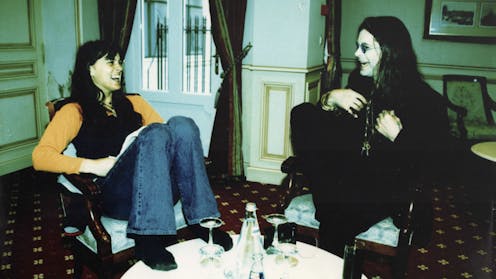
Friday essay: I loved being a ‘90s rock journalist, but sometimes it was a boys’ club nightmare Source: The Conversation (Au and NZ) – By Liz Evans, Adjunct Researcher, English and Writing, University of Tasmania Liz Evans interviewing Ozzy Osbourne in Paris. In the 1990s, I was a rock journalist striving to assert myself as a young woman, working at the heart of the United Kingdom’s male-dominated music press. I loved my
Australians are in more pain – and our new data shows it’s not just due to ageing Source: The Conversation (Au and NZ) – By Ferdi Botha, Senior Research Fellow, Melbourne Institute of Applied Economic and Social Research, The University of Melbourne The degree of bodily pain reported by Australians has grown over the last two decades, and this increase cannot be attributed only to an ageing population. Pain is a serious
Kate Sheppard’s kitchen: an old recipe sheds new light on the feminist pioneer’s life Source: The Conversation (Au and NZ) – By Katie Pickles, Professor of History, University of Canterbury Kate Sheppard National Memorial, Christchurch. Michal Klajban via Wikimedia Political and social reformer Kate Sheppard is famous for leading the campaign that saw New Zealand women become first in the world to gain the right to vote on September
Soil erosion is tearing DRC cities apart: what’s causing urban gullies, and how to prevent them Source: The Conversation (Au and NZ) – By Matthias Vanmaercke, Associate professor BOF Faculty of Science, KU Leuven In fast-growing cities like some in the Democratic Republic of Congo (DRC), heavy rains are carving huge scars into the land. Known as urban gullies, these deep erosion channels can swallow homes, destroy roads and displace entire
Grattan on Friday: Albanese government’s 2035 target range is aimed at multiple audiences Source: The Conversation (Au and NZ) – By Michelle Grattan, Professorial Fellow, University of Canberra The Albanese government is hoping it can successfully juggle multiple audiences with its 2035 emissions reduction target. With a specific number, no single set of stakeholders could have been fully satisfied without alienating another. In opting for a range, and
Kmart broke privacy laws by scanning customers’ faces. What did it do wrong, and why? Source: The Conversation (Au and NZ) – By Margarita Vladimirova, PhD in Privacy Law and Facial Recognition Technology, Deakin University Steve Christo – Corbis / Getty Images Today the Office of the Australian Information Commissioner found retail giant Kmart breached Australians’ privacy. The company had collected personal and sensitive information through a facial recognition technology
Cut emissions 70% by 2035? There’s only one policy that can get us there Source: The Conversation (Au and NZ) – By Rod Sims, Professor in Public Policy and Antitrust, The University of Melbourne Hulton Archive/Getty Australia’s new emission reduction target of 62–70% by 2035 is meant to demonstrate we are doing our part to hold climate change well below 2°C. The new target can just about do this
If I use SPF50+ sunscreen every day do I need to take vitamin D? Source: The Conversation (Au and NZ) – By Rachel Neale, Professor and Senior Group Leader, QIMR Berghofer Medical Research Institute Cavan Images/Kathleen Carney/Getty What does wearing SPF50+ sunscreen every day do to your vitamin D levels? Our study, recently published in the British Journal of Dermatology, provides some answers. We found using SPF50+ every day,
Could an Apple watch really tell you if you have high blood pressure? Source: The Conversation (Au and NZ) – By Ritu Trivedi, Postdoctoral Research Fellow, School of Health Sciences, University of Sydney Apple has announced a package of health features, alongside the launch of the new Apple Watch Series 11, including an alert that the wearer may have high blood pressure, also known as hypertension. Around 1.3
From a naked rider to icon of resistance, the legend of Lady Godiva lives on Source: The Conversation (Au and NZ) – By Elizabeth Reid Boyd, Senior Lecturer School of Arts and Humanities, Edith Cowan University Lady Godiva – an icon of protest, myth and sensual defiance – has galloped through centuries of our cultural imagination. She is most widely known for the legend of her naked horse ride, in
It has been awarded to the fairest and best player in the AFL – and previously, the Victorian Football League (VFL) – every year since 1924, except for a break (1942–45) because of the second world war.
The vote count is held on the Monday evening before the Grand Final each year.
He was also a highly respected administrator for more than 40 years, serving in various roles such as Geelong secretary, umpires committee chairman and VFL president.
He is credited with helping to introduce important developments that are still recognisable in modern football, such as boundary umpires, a tribunal, official timekeeping system and numbers on players’ jumpers.
The early days of the Brownlow Medal
The first Brownlow Medal (1924) was won by Geelong player Edward “Carji” Greeves, who also came second in 1925, 1926 and 1928.
Including Greeves, 90 different players have won the Brownlow Medal.
Thirteen players have won it twice and four players have won it three times: Haydn Bunton Sr. (Fitzroy), Dick Reynolds (Essendon), Bob Skilton (South Melbourne) and Ian Stewart (St Kilda/Richmond).
If a player is suspended during the season they are ineligible, even if they receive the highest number of votes.
North Melbourne’s Corey McKernan (1996-equal most votes) and Chris Grant (1997-most votes) from the Western Bulldogs both missed out on a Brownlow because of suspension. Jobe Watson also lost his 2012 Brownlow because of Essendon’s supplement saga.
Brownlow Medal voting
Similar awards in rugby union, rugby league and soccer are commonly voted on by journalists, players and ex-players.
However, the Brownlow is decided by the umpires, who allocate votes to the top three players in each game during the regular season. Three votes are awarded to the best in a game, two votes to the second best, and one vote to the third best.
This voting system has been used for most Brownlow Medal counts. However, there have been different voting systems for short periods in the past:
From 1924 to 1930, only one vote was given in each game. This was changed to the current 3–2–1 system after the 1930 season when three players tied for first and another eight players tied for fourth.
From 1976 to 1977, both field umpires
individually awarded 3–2–1 votes. This system was abandoned in 1978 and the two (now four) field umpires agree on a single set of 3–2–1 votes.
The votes are kept secret until the end of the season, when they are announced and added up. The player with the highest number of votes wins, and there can be joint winners if players have the same number of votes.
Patrick Cripps (Carlton) has the record for most votes in a season in the history of the Brownlow’s 3–2–1 system with 45 in 2024. This was more votes than the entire North Melbourne (42), West Coast (30) and Richmond (19) teams received.
Gary Ablett Jr (Geelong/Gold Coast) has the most career votes (262). Patrick Dangerfield (Adelaide/Geelong) has the most career votes of current players (251).
So, who is likely to win the Brownlow this year?
The 2025 contenders and pretenders
The AFL’s Brownlow predictor is projecting a win for Adelaide captain Jordan Dawson.
Dawson would be the tenth club captain to win in the past 25 years.
Since 2008, every Brownlow medallist has finished inside the league’s top six for contested possessions, making it a possible marker of success. However, Dawson sits 34th, well outside that range.
Greater Western Sydney midfielder Tom Green led the competition in contested possessions this year. If he wins he will be the first Brownlow medallist for the club, which entered the league in 2012.
There are several other interesting stories that could emerge from the AFL Predictor’s top ten.
Gold Coast has two players (Noah Anderson and Matt Rowell) in the top ten. If they finished first and second, it would be just the third time this has ever happened, following players from Melbourne (1926) and West Coast (2005).
The first Indigenous player to win the Brownlow Medal was Gavin Wanganeen (Essendon) in 1993. If his nephew Nasiah Wanganeen-Milera (St Kilda) is victorious this year, he will be just the third Indigenous player to win, following Wanganeen and Adam Goodes (Sydney).
Since then, every winner has been a midfielder or midfielder-forward.
This dominance was on full display in 2024, where the top ten vote-getters were all midfielders, collectively accounting for 24% of the total votes.
Melbourne captain Max Gawn is the only ruckman in the 2025 top ten predictors, and while a win would stop two decades of midfield dominance, his spot in the top six for contested possessions keeps him within other winning trends.
Players such as Nick Daicos (Collingwood), Bailey Smith (Geelong) and Hugh McCluggage (Brisbane) also have the chance to become just the ninth player to win a Brownlow Medal and a premiership in the same year. The last player to do this was Dustin Martin (Richmond) in 2017.
The authors do not work for, consult, own shares in or receive funding from any company or organisation that would benefit from this article, and have disclosed no relevant affiliations beyond their academic appointment.
Most of us have experienced tingling or “goosebumps” at some point, especially when we feel a strong positive emotion such as awe or excitement.
But some people have this response when they listen to certain sounds. Online videos which feature sounds of people whispering, crackling packets, and brushing or combing a microphone are all geared towards making you feel this positive tingle – the autonomous sensory meridian response, or ASMR.
Not everyone responds to ASMR content. But many who do say it makes them less anxious and helps them sleep. What does the science say?
What is ASMR?
ASMR is an involuntary emotional and physical response, typically to a sound, which causes a reflexive tingling sensation on the scalp and back of the neck.
This multi-sensory experience can make us feel euphoria and “psychological stability”, meaning we experience less inner turmoil and feel more calm.
However, we still don’t have much evidence about what happens in the brain and the body when this occurs.
Some argue that ASMR is simply an example of frisson (French for “shiver”). This is when an intense emotional stimulus – such as a tender moment in a movie – triggers tingling or gives us “the chills”.
Research suggests these so-called “skin orgasms” are due to a sudden rush of the chemical dopamine in the brain’s reward centres.
However, the sense of awe or inspiration felt during a frisson experience is brief, (typically 4–5 seconds). In contrast, ASMR is usually described as inducing an enduring state of calm.
What triggers ASMR?
Almost everyone will jump out of their skins if they experience a sudden and loud sound. This is because we’ve evolved to fear what is unpleasant or unexpected, to keep us safe from danger.
When it comes to sounds that can make us feel good, it’s not as easy to confirm whether there are universal triggers – that is, sounds that would make most people have the same positive reaction.
Research in ASMR has identified some common triggers, including whispering, tapping and crackling sounds. But we can’t say if these sounds would have the same effect on everyone.
ASMR videos often combine these sounds with video and role play known as “personal attention”. This means treating the camera like it is the viewer, speaking and interacting directly with it, and even simulating activities such as brushing hair or applying makeup to the viewer.
Personal attention ASMR involves role play where the camera is treated as the viewer.
Why doesn’t it affect everyone?
Not everyone responds to ASMR triggers, with some estimates suggesting only one in five people can experience ASMR.
Whether or not you do is likely due to personality type and your predisposition to susceptibility, meaning how easily others can influence you.
Studies have found those who respond are typically younger, experience more negative emotions, and are more introverted and critical. But they also tend to be more open to trying new things.
Some research has suggested “expectancy effects” could play a role. This is like a placebo – people who are invested in ASMR’s potential as a therapeutic tool may be more likely to feel its effects.
However, we still don’t know precisely how ASMR works to induce positive emotions.
More than a dozen studies have reported on how the brain behaves during ASMR. But the findings across them are inconsistent and many have a very small number of participants or no comparison group, so we can’t draw conclusions.
Studies looking at the body’s response during ASMR experiences have had similarly mixed results. Some have found people may experience both increased sweating (linked to the stress response) and decreased heart rate (linked to relaxation).
To describe this apparently contradictory state, some researchers have coined the term “arousing relaxation”.
Another theory is that the social or erotic aspects of ASMR videos are a more important trigger than sounds or other stimuli – basically, that it is a kind of sexual arousal. But we would need more evidence on this.
The bottom line
Without being able to identify universal triggers, it’s also difficult to apply ASMR as an evidence-based tool in therapy. To date, there are no clinical trials that link ASMR with short- or long-term therapeutic effects.
Nevertheless, many people in the “whisper community” – those who produce and consume ASMR content online – claim ASMR helps them to relax, sleep better and reduce stress.
So, there’s no harm in ASMR if it helps you relax. But we would need more research to establish whether it’s effective as a clinical intervention for anxiety, insomnia or other conditions.
Daniel Shepherd does not work for, consult, own shares in or receive funding from any company or organisation that would benefit from this article, and has disclosed no relevant affiliations beyond their academic appointment.
Source: The Conversation (Au and NZ) – By Shannon Brincat, Senior Lecturer in Politics and International Relations, University of the Sunshine Coast
A modern-day political inquisition is unfolding in “digital town squares” across the United States. The slain far-right activist Charlie Kirk has become a focal point for a coordinated campaign of silencing critics that chillingly echoes one of the darkest chapters in American history.
Individuals who have publicly criticised Kirk or made perceived insensitive comments regarding his death are being threatened, fired or doxed.
Journalists have also lost their jobs after making comments about Kirk’s assassination, as has the late-night television host Jimmy Kimmel.
A website called “Expose Charlie’s Murderers” had been posting the names, locations and employers of people saying critical things about Kirk before it was reportedly taken down. Vice President JD Vance has pushed for this public response, urging supporters to “call them out … hell, call their employer”.
This is far-right “cancel culture”, the likes of which the US hasn’t seen since the McCarthy era in the 1950s.
The birth of McCarthyism
The McCarthy era may well have faded in our collective memory, but it’s important to understand how it unfolded and the impact it had on America. As the philosopher George Santayana once said, “Those who cannot remember the past are condemned to repeat it.”
Since the 1950s, “McCarthyism” has become shorthand for the practice of making unsubstantiated accusations of disloyalty against political opponents, often through fear-mongering and public humiliation.
Joseph McCarthy. Library of Congress/Wikimedia Commons
The term gets its name from Senator Joseph McCarthy, a Republican who was the leading architect of a ruthless witch hunt in the US to root out alleged Communists and subversives across American institutions.
The campaign included both public and private persecutions from the late 1940s to early 1950s, involving hearings before the House Un-American Activities Committee and the Senate’s Permanent Subcommittee on Investigations.
Millions of federal employees had to fill out loyalty investigation forms during this time, while hundreds of employees were either fired or not hired. Hundreds of Hollywood figures were also blacklisted.
The campaign also involved the parallel targeting of the LGBTQI+ community working in government – known as the Lavender Scare.
And similar to doxing today, witnesses in government hearings were asked to provide the names of communist sympathisers, and investigators gave lists of prospective witnesses to the media. Major corporations told employees who invoked the Fifth Amendment and refused to testify they would be fired.
The greatest toll of McCarthyism was perhaps on public discourse. A deep chill settled over US politics, with people afraid to voice any opinion that could be construed as dissenting.
When the congressional records were finally unsealed in the early 2000s, the Permanent Subcommittee on Investigations said the hearings “are a part of our national past that we can neither afford to forget nor permit to reoccur”.
Another witch hunt under Trump
Today, however, a similar campaign is being waged by the Trump administration and others on the right, who are stoking fears of the “the enemy within”.
This new campaign to blacklist government critics is following a similar pattern to the McCarthy era, but is spreading much more quickly, thanks to social media, and is arguably targeting far more regular Americans.
Even before Kirk’s killing, there were worrying signs of a McCarthyist revival in the early days of the second Trump administration.
Supporters of the push to expose those criticising Kirk have framed their actions as protecting the country from “un-American”, woke ideologies. This narrative only deepens polarisation by simplifying everything into a Manichean world view: the “good people” versus the corrupt “leftist elite”.
The fact the political assassination of Democratic lawmaker Melissa Hortman did not garner the same reaction from the right reveals a gross double standard at play.
Another double standard: attempts to silence anyone criticising Kirk’s divisive ideology, while being permissive of his more odious claims. For example, he once called George Floyd, a Black man killed by police, a “scumbag”.
In the current climate, empathy is not a “made-up, new age term”, as Kirk once said, but appears to be highly selective.
This brings an increased danger, too. When neighbours become enemies and dialogue is shut down, the possibilities for conflict and violence are exacerbated.
Many are openly discussing the parallels with the rise of fascism in Germany, and even the possibility of another civil war.
A sense of decency?
The parallels between McCarthyism and Trumpism are stark and unsettling. In both eras, dissent has been conflated with disloyalty.
How far could this go? Like the McCarthy era, it partly depends on the public reaction to Trump’s tactics.
McCarthy’s influence began to wane when he charged the army with being soft on communism in 1954. The hearings, broadcast to the nation, did not go well. At one point, the army’s lawyer delivered a line that would become infamous:
Until this moment, Senator, I think I never really gauged your cruelty or your recklessness […] Have you no sense of decency?
Without concerted, collective societal pushback against this new McCarthyism and a return to democratic norms, we risk a further coarsening of public life.
The lifeblood of democracy is dialogue; its safeguard is dissent. To abandon these tenets is to pave the road towards authoritarianism.
Frank Mols received ARC funding
Gail Crimmins and Shannon Brincat do not work for, consult, own shares in or receive funding from any company or organisation that would benefit from this article, and have disclosed no relevant affiliations beyond their academic appointment.
Source: The Conversation (Au and NZ) – By Lotti Tajouri, Associate Professor, Genomics and Molecular Biology; Biomedical Sciences, Bond University
If you’re a parent or have a chronic health condition that needs quick or frequent trips to the bathroom, you’ve probably mapped out the half-decent public toilets in your area.
But sometimes, you don’t have a choice and have to use a toilet that looks like it hasn’t been cleaned in weeks. Do you brave it and sit on the seat?
What if it looks relatively clean: do you still worry that sitting on the seat could make you sick?
What’s in a public toilet?
Healthy adults produce more than a litre of urine and more than 100 grams of poo daily. Everybody sheds bacteria and viruses in faeces (poo) and urine, and some of this ends up in the toilet.
Some people, especially those with diarrhoea, may shed more harmful microbes (bacteria and viruses) when they use the toilet.
Public toilets can be a “microbial soup”, especially when many people use them and cleaning isn’t frequent as it should be.
What germs are found on toilet seats?
Many types of microbes have been found on toilet seats and surrounding areas. These include:
bacteria from the gut, such as E. coli, Klebsiella, Enterococcus, and viruses such as norovirus and rotavirus. These can cause gastroenteritis, with bouts of vomiting and diarrhoea
bacteria from the skin, including Staphylococcus aureus and even multi-drug resistant S.aureus and other bacteria such as pseudomonas and acinetobacter. These can cause infections
eggs from parasites (worms) that are carried in poo, and single-celled organisms such as protozoa. These can cause abdominal pain.
There’s also something called biofilm, a mix of germs that builds up under toilet rims and on surfaces.
Are toilet seats the dirtiest part?
No. A recent study showed public toilet seats often have fewer microbes than other locations in public toilets, such as door handles, faucet knobs and toilet flush levers. These parts are touched a lot and often with unwashed hands.
Public toilets in busy places are used hundreds or even thousands of times each week. Some are cleaned often, but others (such as those in parks or bus stops) may only be cleaned once a day or much less, so germs can build up quickly. The red flags that a toilet hasn’t been cleaned are the smell of urine, soiled floors and what is obvious to your eyes.
However, the biggest problem isn’t just sitting: it’s what happens when toilets are flushed. When you flush without a lid, a “toilet plume” shoots tiny droplets into the air. These droplets can contain bacteria and viruses from the toilet bowl and travel up to 2 metres.
Here’s what the toilet plume looks like.
Hand dryers blowing air can also spread germs if people don’t wash properly. As well as drying your hands, you might be blowing germs all over yourself, others and the bathroom.
How can germs spread?
You can pick up germs from public toilets in several ways:
skin contact. Sitting on a dirty seat or touching handles spreads bacteria. Healthy skin is a good barrier, but cuts or scrapes can allow germs to enter
touching your face. After using the toilet, if you touch your eyes, mouth, or food before washing your hands, germs can get inside your body
breathing them in. In small or crowded bathrooms, you can breathe in tiny particles from toilet plumes or hand dryers
toilet water splash. Germs can stay in the water even after several flushes.
What can you do to stay safe?
Here are some easy ways to protect yourself:
use toilet seat covers or place toilet paper on the seat before sitting
if the toilet has a lid, wipe it before use with an alcohol wipe and close it before flushing to limit toilet plume exposure. (But note, this doesn’t fully stop the spread)
wash your hands properly for at least 20 seconds using soap and water
carry hand sanitiser or antibacterial wipes to clean your hands afterwards if there isn’t any soap
avoid hand dryers, if you can, as they can spread germs. Use paper towels instead
sanitise your phone regularly and don’t use it in toilet. Phones often pick up and carry bacteria, especially if you use them in the bathroom
clean baby changing areas before and after use, and always wash or sanitise your hands.
So is it safe to sit on public toilet seats?
For most healthy people, yes – sitting on a public toilet seat is low-risk. But you can wipe it with an alcohol wipe, or use a toilet seat cover, for peace of mind.
Most infections don’t come from the seat itself, but from dirty hands, door handles, toilet plumes and phones used in bathrooms.
Instead of worrying about sitting, focus on good hygiene. That means washing your hands, opting for paper towel rather than dryers, cleaning the seat if needed, and keeping your phone clean.
And please, don’t hover over the toilet. This tenses the pelvic floor, making it difficult to completely empty the bladder. And you might accidentally spray your bodily fluids.
Lotti Tajouri is affiliated with Murdoch University and Dubai Police Scientist Council.
Most parents (86%) of donor-conceived children tell them about their origins, but same-sex and single parents are more likely to share that information than heterosexual parents, according to our new anonymous online survey.
Knowledge of biological heritage is important for most people – even more so for people who were conceived using donated sperm, eggs or embryos. Our work shows that knowing your heritage or whakapapa provides people with a stronger sense of identity and better wellbeing.
As of November 2024, more than 3,600 people in Aotearoa New Zealand have been recorded as having been conceived in a fertility clinic with the help of a donor.
A donor of sperm, eggs or embryos may be a person known to an intending parent, such as a friend or family member, or an anonymous person provided by a fertility clinic.
Legislation was introduced in 2004 requiring donor identity to be recorded so that donor-conceived people can access this information through a register once they turn 18.
But this can only happen if their parents share that information.
Of 1,300 people with donor-conceived children between the ages of six and 18 on the register, nearly a third took part in our survey. Our aim was to find out whether parents had shared their children’s conception story, what the experience was like and what support they received.
Half who answered the survey were two-parent heterosexual families. And although most had disclosed, one in five had not. A quarter of the people who responded were single parents and the remainder were gay or lesbian. Nine out of ten in these groups had disclosed.
One obvious reason for the higher rate among single parents and gay or lesbian parents is the need to account for the absence of a parent of a different gender. There was no difference between those who had shared and those who had not in terms of ethnicity, donor type (family, friend or clinic donor) and donation type (sperm, egg).
On average, children were six-and-a-half years old at the time they were first told. This is similar to other international research of the age at which donor conception was shared with children.
It is generally recommended to tell children about being donor-conceived as soon as possible. Of all people who answered the survey, one in ten parents who had not yet shared with their child did plan to do so.
Need for more support for parents
It was encouraging that very few parents were unsure or planned not to share donor conception with their children. Some of the reasons for not sharing included concerns about the effect disclosure would have on the child and or their relationship with their child. Other reasons included being unsure about how to share the information.
Our survey also highlights gaps in the support and counselling for parents. One third of all parents wanted assistance for making contact with the donor. This proportion is even higher for those who used clinic donors (as opposed to known donors), with half indicating they wanted assistance.
Most parents were aware of the legislation and its principles. But a third of the parents who used a donor they didn’t already know were not aware of how to access this information. Only one in five parents with no prior identifying information on the donor had used the registry to access information after donation.
The survey response rate of 28% suggests results could be biased, given parents who have not shared how their child was conceived may be less likely to participate in research exploring disclosure decisions.
We shared these findings at a hui attended by donor-conceived people, researchers and fertility clinic staff. Some people told moving stories about meeting their donors, while others were angry they hadn’t been told of their donor-conceived origins until they were adults.
We recommend fertility clinics follow up with parents after their child has been born to offer support. Some fertility clinics have already started to take steps to improve counselling at the time of the donor treatment, and to provide ongoing support for parents as the child grows up.
Karyn Anderson receives a Senior Health Researcher Doctoral Scholarship from The University of Auckland.
Cynthia Farquhar is employed by Health NZ and The University of Auckland. She has received research funding from Health Research Council, A+ Trust, Ministry of Health. She is is affiliated with the Cochrane Collaboration.
Dominic Kurniawan Suryaputra/Unsplash, The Conversation, CC BY-SA
Every year, one of Australia’s biggest longitudinal surveys provides a range of insights on how the nation is changing.
The Household, Income and Labour Dynamics in Australia (HILDA) Survey, released today, reveals trends on a wide range of aspects of life in Australia, including household relationships, income, health and wellbeing.
HILDA has been following the same people every year since 2001, with about 16,000 respondents in the latest survey. This makes it possible to examine how the lives of Australians have changed across several aspects. Funded by the Australian government and managed by the Melbourne Institute, the survey is one of Australia’s most valuable social research tools.
So, what are the highlights from the 2025 report?
Friendships are declining
Friendships are clearly important, providing both emotional and practical support to people. However, agreement with the statement “I seem to have a lot of friends” has fallen noticeably from 2010 to 2023. This long-term decline accelerated during the COVID-19 period, when social distancing measures often prevented face-to-face interactions with friends.
The decline in friendships has repercussions for people’s wellbeing. The report shows a low perceived number of friends is associated fewer social activities, greater feelings of loneliness and poorer mental health. This is all the more concerning because it often gets harder to make friends as life goes on.
Time stress is rising again
Time stress – feeling rushed often or almost always – is common for many Australians, especially women. In 2023, 38% of women reported frequent time stress, while only 29% of men did. This gap has persisted over the past two decades. Rates fell sharply in 2020 during the pandemic’s first year but have since returned to pre-pandemic levels for both groups.
Retirement age has seen a big shift
Australia has seen a dramatic transformation of retirement over the past 20 years, retiring later than they used to. In 2003, nearly 70% of women and almost half of men aged 60–64 were fully retired. By 2023, this dropped to 41% for women and 27% for men.
Retirement rates have also declined among those aged 65-69. Over the same period, the Age Pension eligibility age was equalised for men and women at 65 by 2013, then gradually increased to 67 between 2017 and 2023.
The decision to retire is no longer driven purely by personal preference or age alone. It’s increasingly shaped by policy, housing wealth, super balances and whether someone can afford to stop working.
We’re paying more in income tax
Australians are now paying the highest average rate of income tax since the turn of the millennium. But the trend over this period hasn’t always been upwards. Between 2006 and 2011, the average tax rate for full-time workers actually fell, from 19.4% to 15.7%. Since 2011, however, the trend has overwhelmingly been upwards.
Across the population as a whole aged 15 and over, the average share of income paid as income tax rose to 11.7% in the 2022-23 financial year. For full-time workers, the average rate was higher, at 20.3%.
Bodily pain
Pain can severely affect people’s ability to take part in day-to-day activities, work, and lead happy and satisfying lives.
The new data shows the extent of bodily pain Australians report has risen over the last two decades – and it’s not just due to an ageing population.
We asked respondents about whether they experienced pain and how much it affected their day-to-day life, then calculated a score from 0 (no bodily pain) to 100 (severe pain).
The average levels of pain that women reported increased by 5.6% between 2001 and 2003 (from 27 points to 28.5 points). For men, pain increased by 4.8% (27 points to 28.3 points).
Pain scores were slightly higher for women than for men across all years.
We adjusted these scores for age, suggesting the reported rise is not due to ageing but instead other factors, such as an increase in chronic conditions, obesity, and people being more likely to report their pain.
Ferdi Botha receives funding from the Australian Research Council’s Centre of Excellence for Children and Families over the Life Course (CE200100025).
Roger Wilkins receives funding from the Australian Research Council.
Inga Lass and Kyle Peyton do not work for, consult, own shares in or receive funding from any company or organisation that would benefit from this article, and have disclosed no relevant affiliations beyond their academic appointment.
Despite growing calls for diversity, equity and inclusion in science, a new study reveals how deep-rooted disparities continue to shape who gets to contribute to science.
We surveyed 908 environmental scientists from eight countries with varying levels of income and English proficiency. In our study, published in PLOS Biology today, we found that the gender, language and economic background of scientists significantly affect their ability to publish their work, especially in English.
The results are striking. Women publish up to 45% fewer papers in English than men. Female non-native English speakers from lower-income countries publish up to 70% fewer papers in English, compared with a male native English speaker from a high-income country.
This gap doesn’t necessarily reflect individual productivity. Evidence shows it stems from systemic barriers that limit fair participation in science.
Scientific productivity gap based on English-language peer-reviewed papers. Shown are the maximum % differences in the number of peer-reviewed papers published by female native English speakers from a high-income country (-45%), female non-native English speakers from a high-income country (-60%), and female non-native English speakers from a lower-middle income country (-70%), compared to male native English speakers from a high-income country (red flag). Tatsuya Amano, CC BY
The triple disadvantage
Scientific productivity is often measured by the researcher’s number of publications in English. But this metric overlooks the challenges faced by many researchers around the world.
When these three attributes intersect, the impact is overwhelming.
Taking English out of it
Importantly, when we looked at publications in English and in other languages combined, the productivity gap narrowed significantly.
Non-native English speakers and scientists from lower-income countries often publish more papers overall compared with their native English-speaking, high-income counterparts at the same career stage.
Scientific productivity gap narrows significantly when we look at total publications including those in non-English languages. Shown are the maximum % differences in the number of English-language and non-English-language peer-reviewed papers published by female native English speakers from a high-income country (-45%), female non-native English speakers from a high-income country (-35%), and female non-native English speakers from a lower-middle income country (-25%), compared to male native English speakers from a high-income country (red flag). Tatsuya Amano, CC BY
Levelling the playing field
The findings have serious implications for how we should measure the performance of scientists. Metrics based solely on publications in English can misrepresent the true productivity of researchers who face language and economic barriers.
This is especially problematic in hiring, promotion and funding decisions. The number of publications in English often play a dominant role in these, even in countries where English is not widely spoken.
The Declaration on Research Assessment, a worldwide initiative, advocates that research assessment should focus on what is published rather than where it is published. Including publications in languages other than English in research assessment aligns with this policy.
In fact, publications in non-English languages can provide valuable knowledge, especially in fields such as biodiversity conservation. Recognising the importance of publications in various languages would also enrich global scientific understanding and allow us to tackle global challenges more effectively.
Institutions and funders should also consider disadvantages related to linguistic and economic backgrounds in research assessments. For example, the Australian Research Council has a policy that allows researchers to declare career interruptions due to factors such as caregiving or illness.
To level the playing field, this policy should also account for the systemic disadvantages experienced by non-native English speakers and scientists from lower-income countries.
Toward a more inclusive science
Recording the numbers on these disparities is just the first step. Making a real difference in dismantling these systemic barriers will likely require a fundamental shift in how we conduct science.
For example, artificial intelligence (AI) translation is rapidly improving and becoming more widely available. Would we still need to use English as the common language of science in, say, ten years’ time? We can start envisioning a future where everyone, regardless of linguistic background, can write papers in their own language and read any paper in their own language with the help of AI translation.
Two futures for academic publishing using AI language tools. (A) In Future 1, scientific papers continue to be published in English. AI is used by those with limited English proficiency to translate information between their preferred language and English. (B) In Future 2, scientific papers are published in any language of the authors’ choice (English or Japanese in this example). AI is used by those without proficiency in the publication language (e.g., Japanese) to translate information between that language and their preferred language (e.g., English). Amano et al. (2025) PLOS Biology, CC BY
If you find yourself struggling in science as a woman, a non-native English speaker, or someone from a lower-income country, remember it’s not just you. The challenges you face often come from bigger systemic barriers in science, not personal shortcomings.
Science is fun. Everyone, no matter their background, should have an equal chance to enjoy it. But as science becomes increasingly global, embracing diversity is not just a matter of equity. It’s essential for fostering innovation and addressing the complex challenges facing our world.
Tatsuya Amano receives funding from the Australian Research Council Future Fellowship and Discovery Project.
Source: The Conversation (Au and NZ) – By Roger Wilkins, Professorial Fellow and Co-Director, HILDA Survey, Melbourne Institute of Applied Economic and Social Research, The University of Melbourne
Australians are now paying the highest average rate of income tax in more than two decades, raising concerns too much of the tax burden may be falling on Australian workers in their prime.
That’s according to the latest annual report from the Household, Income and Labour Dynamics in Australia (HILDA) survey, released today. I am co-director of the survey, which has followed the same people every year since 2001, making it possible to examine how the lives of Australians have changed across several aspects.
Among people aged 15 and over, the average share of income paid as income tax rose to 11.7% in the 2022-23 financial year (up from 10.1% the previous one). For full-time workers, this figure was higher, at 20.3% (up from 18.1%).
This sharp increase wasn’t because the federal government hiked income tax rates in 2022-23. It was driven entirely by rising nominal incomes and the fixed thresholds in our tax system – a phenomenon called “bracket creep”. Here’s why that matters to us all.
Why taxes keep creeping up
In Australia, unlike many comparable countries, the income thresholds at which higher tax rates apply are not indexed to inflation.
This creates an interaction between our progressive tax system with fixed marginal tax rate thresholds and incomes that grow over time – known as bracket creep.
To understand how bracket creep works, it helps to illustrate with a really simple example. Imagine a worker, Mark, who earned A$18,200 in 2013 – right on the level of the tax-free threshold. Mark pays no tax on his earnings that year.
If Mark’s wage went up with annual pay rises that keep up with inflation, by this year he’d be earning $25,662. This looks like a higher wage, but remember: inflation means it has roughly the same purchasing power as $18,200 gave Mark back in 2013.
Meanwhile, the tax-free threshold is still the same: $18,200. So he’s now being taxed at 16% on every dollar earned over this threshold (although his tax is reduced by the Low Income Tax Offset).
Setting the thresholds at fixed dollar values means even if incomes aren’t growing in real terms, the share of people’s income going to tax tends to rise as over time, as the nominal “dollar amount” of their incomes increase.
Between 2011 and 2023, the average household income before tax grew by 48% in nominal terms (or dollar amount). But it only went up 10% in real terms – what people could afford to buy.
Tax getting a bigger slice of the pie
While Australians currently face the highest average tax rates seen since the HILDA Survey started in 2001, the trend in that time hasn’t always been upwards.
Between 2006 and 2011, the average tax rate for full-time workers actually fell, from 19.4% to 15.7%. Since 2011, however, the trend has overwhelmingly been upwards.
Periodically, the government does adjust the income tax schedule to counteract the effects of bracket creep. Since 2011, there have been three significant changes to the thresholds and tax rates. These took place in the 2012-13, 2020-21 and 2024-25 financial years.
However, as experience between 2011 and 2023 demonstrates, these periodic changes do not guarantee all bracket creep is eliminated.
Despite this, the 2024-25 “Stage 3” tax cuts will have gone some way to reduce bracket creep. My analysis of Bureau of Statistics data on average weekly earnings shows the cuts reduced the income tax share of a full-time worker on the average wage by approximately 2 percentage points (from 23% to 21%).
But without indexation of tax brackets, the trend for bracket creep to raise average tax rates will continue in coming years.
35- to 54-year-olds lose the biggest slice of their income
As the figures below from the new HILDA report show, average tax rates differ substantially by age group.
On average, people aged 35 to 54 contribute the highest share of their income to income taxes.
Those who pay least are those aged 75 and over, followed by people aged 65 to 74.
These differences by age group largely reflect differences in income levels. But the low rates seen for people aged 65 and over also reflect the concessional tax treatment of retiree incomes. Most important is the tax-exempt status of most superannuation of retirees.
Why does the rise in the average tax rate on income – particularly income from work – matter?
There is no magic number for the ideal average tax rate. And if we want the government to deliver more services – for example in health care, disability support and childcare – then tax revenue needs to rise to sustainably fund these services.
But there are legitimate questions about how this additional revenue should be raised.
Politically speaking, bracket creep is arguably the easiest way for the government to grow revenue. It happens “automatically”, without announcing any policy change.
This does not make it the best way. There is growing concern we are increasingly putting too much of the tax burden on people aged in their mid 30s to mid 50s. We may also be reducing incentives to engage in paid work.
There are many alternatives to bracket creep we could explore. One option could be to reduce concessions that exist for non-labour income, such as from superannuation and capital gains.
The government could also consider increasing revenue from sources such as the goods and services tax, and examine to other sources of tax revenue, such as road user charges, broad-based land taxes and inheritance taxes.
All of these alternatives should all be on the table to achieve a fairer and more efficient tax system.
Roger Wilkins receives funding from the Australian Research Council.
Australia has seen a dramatic transformation of retirement over the past 20 years, with more Australians delaying retirement than ever before, reshaping expectations for later life.
This shift matters because it marks a fundamental change in how people transition out of the workforce — with important implications for financial security in later life.
The decision to retire is no longer driven purely by personal preference or age alone. It’s increasingly shaped by policy, housing wealth, super balances and whether someone can afford to stop working.
In 2003, about 70% of women and almost half of men aged 60–64 had fully retired from the workforce. Twenty years later, those numbers have fallen to 41% and 27% respectively. For people aged 65–69, retirement rates have also dropped – from 86% to 66% among women, and from 73% to 61% among men.
These figures come from the latest annual report from the Household, Income and Labour Dynamics in Australia (HILDA) Survey, released today.
The HILDA Survey has been following the same households every year since 2001, which makes it possible to examine how the lives of Australians have changed across several aspects. Funded by the Australian government and managed by the Melbourne Institute, the survey is one of Australia’s most valuable social research tools.
I am part of the team that collects and analyses the data – here’s what we found.
How policy changes have influenced retirement age
The survey has included a special module on retirement every four years since 2003. The latest data, from 2023, show a clear and continuing trend: people are retiring later in life.
Policy changes are a major factor behind this shift. Since 2003, the age pension eligibility age has risen from 65 to 67 through two major reforms.
First, the eligibility age was equalised for men and women at 65 by July 2013. This was followed by a gradual increase to 67 for everyone between 2017 and 2023. Other factors likely include better health, increased workforce participation among women, and broader changes in social and economic expectations around retirement.
Still, retirement at younger ages hasn’t disappeared entirely – and for some people, it’s not a choice. Health problems remain the most common reason Australians give for retiring.
In 2023, 29% of recent retirees in our survey said they left work because of their own or a loved one’s health. That number has come down from 39% in 2003, reflecting longer life expectancy and better health outcomes, but health issues remain the most cited reason for retirement.
Job-related factors – such as redundancy or pressure from an employer – are another major factor cited by recent retirees. And financial reasons, such as becoming eligible for the pension, have also become more common. The share of recent retirees citing financial reasons as their main motivation has risen from 13% in 2003 to 21% in 2023.
The super gap is narrowing, but still there
The new HILDA data also shows superannuation balances are rising, but not evenly.
In 2023, the median super balance at retirement was just under A$191,000 for women and $310,000 for men. That’s a marked improvement for women – up more than 110% in real dollars (adjusted for inflation) since 2015 – but large gender gaps remain. In 2023, the median super balance at retirement was more than 1.5 times higher for men than women.
Yet these gaps are dwarfed by another source of inequality in retirement: housing wealth. Among recent retirees, 67% owned their home outright in 2023, down from 75% in 2003. These homeowners had average total wealth – including superannuation and home equity – of around $1.66 million. By contrast, those still paying off a mortgage had lower wealth, averaging about $1.48 million.
The wealth divide in later life
But the real divide is between homeowners and renters.
In 2023, 12% of recent retirees were renting privately – double the share from 2003. These retirees had no housing wealth and far less in super. In 2023, 59% of them retired with less than $100,000 in superannuation, compared to just 26% for homeowners. The overall financial position of renters is much more precarious in retirement, with two out of three living in poverty.
Housing plays a central role in shaping economic wellbeing in later life. People who retire without owning a home face much higher ongoing costs and have fewer options if health or income shocks occur. Unlike homeowners, they don’t benefit from rising property values or reduced housing expenses. And they’re more exposed to rent increases and housing insecurity.
Unfortunately, the number of retirees in this position is likely to grow. Homeownership is falling among younger Australians, especially those without access to family wealth. And while super balances are improving, renters will burn through their retirement savings much faster than homeowners, just to keep a roof over their head.
Australia’s retirement system is built on the assumption of homeownership. For most homeowners, it allows for a comfortable life after work.
But for renters, the picture is increasingly uncertain. If current trends simply persist – and housing affordability doesn’t get worse – then nearly one in four retirees could be renters by 2043.
Kyle Peyton does not work for, consult, own shares in or receive funding from any company or organisation that would benefit from this article, and has disclosed no relevant affiliations beyond their academic appointment.
Most people attribute ramen’s global popularity to its low price and easy preparation, but a look at the origin story behind the noodles reveals working-class roots and innovative cooking techniques.
In 1910, Ozaki Kan’ichi, a former Japanese customs official, abandoned his career to open a Chinese restaurant in Asakusa, a working-class district in Tokyo. Rai-Rai Ken was the first Chinese restaurant owned by a Japanese national.
Before it was called ramen, thin Chinese wheat noodles in soup were called chūka soba (literally, Chinese noodles). Kan’ichi’s menu featured a soy-flavoured soup with noodles, roast pork, dried seaweed and fish cake. The broth and toppings were new additions to previous versions of Chinese noodle soups served in Japan, making a more substantial meal.
Kan’ichi Ozaki outside his ramen shop, Rai-Rai Ken, in Asakusa, Japan before 1914, with his family. Wikimedia Commons
An ancient Chinese technique using alkaline water, kansui, made the noodles curly, chewy and a light yellow colour.
Timing for the new food was perfect, as workers moved away from agriculture in rural areas to urban centres for work, education and training.
Chūka soba became a popular and affordable choice, served from cafes, pushcarts and informal Chinese and Western-style restaurants catering to students and industrial workers at all hours.
Postwar Japan
During World War II, restaurants and food carts (yatai) were prohibited in Japan, in an effort to preserve scarce food resources.
After the war, US forces in Japan enforced rationing and continued the wartime ban on restaurants. To make up for rice shortages, large quantities of US wheat were imported to prevent famine. The food-distribution system, however, was inefficient, insecure and prone to corruption.
Wheat made its way onto the black market, where it was turned into noodles and sold from illegal carts in bombed-out cities.
A Taiwanese immigrant, Momofuku Ando, saw the long lines of hungry people patiently waiting for noodles and was inspired to find a way to invent noodles that would be quick and easy to make at home.
Japanese men eating ramen, photographed in 1952. Smith Collection/Gado/Getty Images
In his autobiography, Ando shared his vision for the future after witnessing postwar hunger:
Peace will come to the world when all its people have enough to eat.
By the 1950s, restrictions on wheat rationing eased and led to a boom in noodles sold from yatai. In the home, rice shortages continued and bread consumption increased out of necessity, although many hoped this was a short-term trend.
There was a gap in the market for a more familiar product that was made from wheat but was as convenient as bread.
Invented in the garden shed
Ando worked in a shed in his back yard, experimenting with an old noodle machine and a wok. After watching his wife make tempura, he saw that deep frying not only cooked the food, it also made water vaporise. He realised this was the key to creating noodles that could cook in only two minutes, but would not get soggy or stale on the shelf.
Momofuku Ando, photographed at 94 in 2004. Kazuhiro Nogi/AFP via Getty Images
On August 25 1958, Momofoku Ando launched “Instant Cook Chikin Ramen” – referred to as magic ramen in Japan. The noodles were already seasoned and cooked, cutting down on time and labour, but delivering the protein content of bread flour. Ando chose “chikin” as the flagship flavour, as it didn’t raise dietary issues for any religion.
Ando popularised the term “ramen”, another name used in Japan for chuku soba, borrowed from the Chinese word lāmiàn for a type of hand-pulled noodles from the north. Japanese ramen are actually rolled and cut, not pulled, and are modelled after noodles from Guangdong in the south – but the name stuck.
The first instant noodles cost six times more than regular ramen, which took ten minutes to cook and were not flavoured. Prices fell quickly as the instant noodles became popular, and Ando’s Nissin corporation went into large-scale production.
In 1971, instant ramen was packaged in polystyrene cups, making it even more convenient – just add hot water.
While there are two museums in Japan dedicated to instant ramen, the appeal is also global. Vietnam has the highest per capita consumption, followed by Korea and Thailand.
Instant noodles are ubiquitous, even behind bars. Ramen packets became a de facto currency in US prisons, replacing cigarettes after smoking bans were introduced in 2004. Budgets cuts at correctional facilities reduced spending on food, making ramen an essential supplement for inmates and a frequent purchase at the prison commissary.
Instant ramen really is available everywhere, even in outer space. “Space Ram” accompanied Japanese astronaut Soichi Noguchi on his 2005 expedition. Naturally, these were a special edition, designed for eating in a zero-gravity environment.
In Thailand, Mama Noodles launched a noodle index in 2005 as an economic barometer, showing how sales increased during tough economic times.
Food prices are still high and the global economy remains uncertain, but at least we can rely on instant ramen remaining an affordable option around the world.
Garritt C. Van Dyk has received funding from the Getty Research Institute.
In the 1990s, I was a rock journalist striving to assert myself as a young woman, working at the heart of the United Kingdom’s male-dominated music press. I loved my job. I met and interviewed all my favourite bands, and spent my twenties and early thirties in a whirl of parties, clubs, gigs and all-expenses trips to America and Europe.
I began my career through a combination of ignorance, bloody-mindedness, and good timing. With no idea about the protocol of editorial commissions, I was annoyed when a music paper failed to publish my unsolicited live review of a friend’s band. Determined to succeed, I followed a tipoff from an artist who lived in a squat with a media contact (this was London in the 1980s), and soon found myself writing for a bi-monthly heavy metal magazine.
Review: Men Of A Certain Age: My Encounters with Rock Royalty – Kate Mossman; Maybe I’m Amazed: A Story of Love and Connection in Ten Songs – John Harris (John Murray)
The editor, Chris Welch, was a softly spoken, conservatively dressed man in his late forties whose office walls were lined with photos of himself hanging out with Marc Bolan, Led Zeppelin’s Jimmy Page and Eric Clapton, in his days as a young reporter. I rarely saw him during my year at the magazine, but I’ve never forgotten his gentle demeanour and the trust he placed in my inexperienced, 22-year-old self. Without his support, my life may have taken a very different turn.
Chris was one of a kind. Other than him, respectful, benevolent older men did not figure in my work for the music press.
Kate Mossman’s debut is ‘a meditation on the powerful archetype of the ageing rock star’. Bonnier
By contrast, Kate Mossman is a British arts and music writer whose debut book is presented as “a meditation on the powerful archetype of the ageing rock star”. Her fixation with rock’s fading old guard provides a compelling premise for Men Of A Certain Age: My Encounters with Rock Royalty, but the blurb is a little misleading. This is essentially a collection of republished interviews and personal reflections, rather than an in-depth analysis.
That said, Mossman has produced a thoughtful and entertaining retrospective. Her conversations with the likes of Wilko Johnson, Terence Trent D’Arby, Ray Davies (The Kinks), Jeff Beck and Kevin Ayers are humorous, perceptive and beautifully composed.
She describes the Happy Mondays’ and Black Grape’s Shaun Ryder as resembling “a Russian Mafia boss in the corner, whisky in hand, arms elevated by the pressure of a thick leather jacket”. She chats with Paul Stanley of KISS while he applies his makeup before a show.
“Here is my clown white,” he says softly, picking up a pot of the thick, sweat-resistant foundation he discovered in the ‘70s. “And here are my puffs.”
These encounters afford the reader a certain insight into Mossman’s idiosyncratic predilection for wrinkly rock stars twice her age. Yet while the book affectionately probes her strange, decidedly gendered interest, it avoids the glaring issue of structural misogyny that contaminates the music industry.
It’s not as if Mossman is unaware of the sexual politics at play. She positively delights in the “exciting father-daughter energy” of the older man-younger woman dynamic, intentionally exaggerating her youth and assumed innocence in the presence of ageing rockers. She knows men like Tom Jones and Gene Simmons will respond openly to her coltish, unthreatening persona, because what could be safer than “just a pretty lady”? It’s a clever and effective strategy.
I fully appreciate the quality of Mossman’s profiles, but her attempts to lean into the patronising attitudes of rock’s elders land uncomfortably with me. And having once had my own tender skin in the game, I can’t help seeing the book’s negation of sexism as a missed opportunity.
When I was a rock journalist, I never felt advantaged by my gender or energised by the older male rocker’s entrenched misogyny. Quite the opposite.
At Jarvis Cocker’s house party
Twenty or so years before Mossman began pursuing her beloved senior rockers across the US, I was being reprimanded by my editor for my “unprofessional” rejection of the creepy advances of a famous middle-aged musician.
Liz Evans in a shaving cream fight with Martin McCarrick from Therapy?.
In 1989, I was a staff writer for a fortnightly rock magazine based in London’s Carnaby Street. We smoked and drank at our desks, played loud metal on the stereo, took half-day lunches on record company money and hosted a constant stream of visiting rock stars in all manner of altered states throughout the working day.
One of my regular jobs was to review the singles with a handful of guest musicians, depending on who was in town. This was often a riotous affair that occasionally descended into chaos. One time, a German drummer, old enough to be my dad, asked me to sit on his lap while we listened to the records. When I didn’t see the funny side, he sniggered at my rebuttal and asked if I was having my period. So I walked out, leaving him with his embarrassed band mate in a room shocked into silence.
A year or so later, the editor who scolded me would help bring about my eventual redundancy after I started to retaliate against a toxic male colleague. This man, previously a friend who’d tried to date me, bullied and ostracised me for the entire duration of my employment. I put on a brave face, cried in the toilets and still managed to enjoy my work. But when I eventually reacted, I was blamed for aggravating the situation, and the magazine let me go.
I spent the next eight years escalating my freelance career and writing books. I waded in the ocean with The Verve’s Richard Ashcroft, toasted a Chicago sunrise on tour with Alice in Chains, went snowboarding with a young British band in California, tripped over Jarvis Cocker at his own house party, and gratefully received a pair of secondhand John Fluevog sandals from the closet of Sonic Youth’s Kim Gordon in New York. But my confidence remained dented until I published my first academic article in the early 2000s.
Liz Evans in Los Angeles to interview L7, with Dom Wills from Melody Maker. Liz Evans
Forgive me then, for baulking when Mossman describes herself as “a small girl sitting on the knee of Father Rock” at her first job for the now-defunct UK music monthly, The Word.
While I’m sure she’s attempting to describe a more supportive, paternalistic workplace environment than the one I endured, she is nevertheless referring to a situation in which she, too, was the only woman in a small team of men. In her case, a generational divide reinforced the sense of male authority which left her wondering “who I was without these men, and who I would be”.
Years before Mossman met him, one of the men she mentions reportedly claimed women were unable to write effectively about music. I once encountered him too, and found him to be smooth, charming and arrogant, with the ruthless attitude of a tabloid journalist.
Working with men like this produced some of the worst experiences of my career. Luckily, such occasions were rare, but could be significant. Bands never saw the bigger picture, of manipulated stories and doctored headlines, but their lives were directly affected by decisions made by people they’d often never met.
I remember once having a conversation with Kurt Cobain about power and the media, and telling him journalists like me could only do so much. Ultimately, we were at the mercy of our editors, which is why I tried to pick mine wisely. Musicians don’t have the choice. Under contract with record labels, they are legally obliged to engage with the media and must take what’s on offer. I’d known Nirvana before they were famous, and watching Kurt develop from a shy, goofy kid into a cynical megastar persecuted by the press was heartbreaking.
Part of the reason Mossman’s book sits uneasily with me is because it appears to ignore the hard-won heritage of female music journalists, and the struggles women like me had in the workplace. Deferring to big daddy editors and accommodating the fragile egos of doddery rock gods feels too much like turning the clock back.
More interested in her
Interestingly, at the back of her book, an intriguing detail lies almost buried in the acknowledgments. Here, Mossman says she recently learned her mother was responsible for introducing a bunch of records she thought had belonged to her dad into the family home.
This untold chapter of Mossman’s story speaks volumes about women and rock culture. Swinging like a loose thread, it threatens to unravel so much of what we have come to accept about the world of rock and the stories of its appointed gods.
Hence my other frustration with the book. While Mossman is a critically acclaimed journalist and former Mercury prize judge, nothing can fire my interest in men such as former Journey singer Steve Perry, or the insufferable Sting. I simply don’t care about them. I’m much more interested in her.
Had Mossman developed the snippets of memoir she uses to contextualise her interviews, and foregrounded herself instead of her tired old giants, I believe her book would have been much more powerful. The strongest, most illuminating passages are when she interrogates her past and mines her personal experiences for clues to her adult obsession with the old guys.
Her teenage infatuation with Queen, her discomfort with the irreverence of 1990s pop culture, her desperate need for parental approval, the peculiar sense of shame she feels in writing about people she loves. The way she listens to music through her father’s “imaginary ears”, the energy writing affords her. All of this outshines the perpetually recycled male rock-star myths, no matter how well Mossman interprets them.
Perhaps in trying to convince the reader to share her love for middle-of-the-road musicians, Bruce Hornsby and Glen Campbell, both of whom had their heyday before she was born, Mossman is still trapped in her teenage cycle of needing her parents to approve of Queen. If so, I hope she manages to shake this off and step more fully into her own story with conviction and faith. With her talent, a full-blown memoir would be a runaway bestseller.
In many ways, Mossman’s book highlights the limits of music journalism as a genre. Her long-form profiles are detailed sketches rather than complex studies, reflecting the fleeting nature of the interview format. Ultimately, even with a fascinating subject, this type of interaction will always be a superficial exercise and therefore something of a game.
For Mossman, with her obsessive fan tendencies, this may be hard to accept, but faced with Sting’s smooth professionalism, she has no choice. “There is a desire for connection that drives every interview,” she writes, “and with Sting, it was a connection I never got.”
For me, ten years of music journalism was enough. By 1998, I’d met everyone I wanted to meet and there were only five or six bands I still wanted to hang out with. I was ready to expand my writing skills and deepen my understanding of the human psyche. Funnily enough, given Mossman’s interest in Jungian theory, I retrained as a Jungian psychotherapist.
Liz Evans writes ‘ten years of journalism was enough’. Here, she’s pictured with Art Alexakis from Everclear. Liz Evans
An elitist boys’ club
I wasn’t the only one to quit music journalism after the 1990s. With magazines folding left, right and centre, many writers moved onto other careers. One of them was John Harris, now a political and arts columnist for The Guardian. We met briefly at the NME during my six-month stint as its rock correspondent, and occasionally ran into each other at Britpop gigs with mutual friends.
Now, NME is an online platform full of celebrity gossip and brimming with ads. But in the early 1990s it still held currency, for emerging bands and music fans alike. So when the editor invited me to interview Alice in Chains and Screaming Trees on tour in America, I was excited.
I arrived at the NME office fresh from the friendly clamour of Kerrang! magazine, and the first thing that struck me was the silence. Everywhere I looked, studious-looking guys with neat haircuts sat typing furiously away at their desks. There was no music, no talking – and, apart from the secretary, no women.
I soon discovered the few female writers who managed to find a way in were either resented (like me), or given “special dispensation”, whatever that meant.
It all seemed so weirdly petty, like an elitist boys’ club. I hated it.
On one occasion, I refused to disclose the location of a secret Hole gig – at the band’s request. I was punished for my disloyalty to the paper by not being allowed to review it. Another time, a couple of journalists offered to “help” me with a two-part feature on the Riot Grrrl movement, even though I’d single-handedly managed to gain the trust of some of the key women on the scene, all of whom despised the male-dominated music press.
The final straw came in the form of a commission to interview Aerosmith. Asked to “get the drug stories”, I argued for a more original angle: by then, the band was clean. But I was shut down and told to be “more humble”.
Needless to say, after spending a lovely afternoon laughing about outlandish but predictable druggy adventures with Aerosmith band members Joe Perry and Steven Tyler (who tried to steal my fake fur coat), I filed my copy and walked away from the NME with my head held as high as it would go.
Autistic and thriving with music
After freelancing for the NME, Harris went on to work for monthly music titles Q and Select. Now, he’s an award-winning journalist with a string of books to his name. His latest one, Maybe I’m Amazed: A Story of Love and Connection in Ten Songs, is his fifth, and arguably his most important work to date.
Harris’ memoir is a beautiful, heartwarming, enlightening and uplifting book that chronicles the profound impact of music on the life of an autistic child. It captures the grief and frustration of two loving parents as they struggle with the UK’s broken education system and underfunded health services, on behalf of their son. And it details the individual nature of autism and the multiple, miraculous ways an autistic person can flourish when given the right support.
As first-time parents, Harris and his partner Ginny, a former press officer with Parlophone Records, are not aware of any issues with their baby, James. He’s a little slow to speak and has some cute, characterful quirks, but nothing seems out of the ordinary until their daughter Rosa is born and the family moves from Wales to Somerset.
Slow to adapt to the new changes in his life, James begins to exhibit ritualistic behaviours that concern Harris. Three weeks after James starts attending his new nursery, Ginny is told her son might be autistic. Suddenly, she and Harris are plunged into a brutal spin of fear, anxiety, guilt, denial and fundamental uncertainty.
Together, the family embarks on a punitive round of tests and assessments as the tyranny of diagnosis takes hold. At first, supportive frameworks carry the weight of a heavy sentence. But Harris and Ginny immerse themselves in research and fact-finding missions to educate themselves about autism. After investing a significant amount of time and money, they manage to establish a viable routine to help James thrive.
It’s not an easy journey. Setbacks, personnel changes and bureaucratic complications are ever-present, but with a small team of specially trained, caring individuals, James makes progress. Meanwhile, as a lifelong music lover, Harris becomes increasingly aware of the profound relationships his son is developing with certain songs by particular bands. Kraftwerk, The Beatles and Mott the Hoople all exert a steadying influence on James, enabling him to communicate in ways he cannot through verbal language.
A visit from musician Billy Bragg, with whom Harris organises an annual talks tent for Glastonbury Festival, results in James actually making music himself. This leads to keyboard lessons and a slot at the school concert. By the time he enters his teens, James is playing bass, and looking every inch the rock star.
Structurally, Harris has produced a masterclass in memoir, seamlessly blending the past with the present. Cleverly shifting between his own life in music and his son’s, he charts his teenage years as a mod, his ill-fated band’s only performance and his forays into music journalism – all of which he now values anew in the context of parenting James.
He describes how the pair share their joy in gigs and experience the deep bond of making music together, sometimes with Rosa on drums. Watching his child come alive through rhythm and melody, Harris finds himself re-enchanted by music and uncovers the wonder of parenting through unexpected and creative channels.
The book delivers a wealth of information about the vast and complicated spectrum of autism, taking a deep dive into medical theories and the world of neurology. By weaving this complex material into his personal experience of huge emotional and practical challenges, Harris keeps it relatable. In many ways, he has forged a map, complete with a beacon of hope: albeit an individualised one. Informative, enriching and engaging, his story of love, persistence and hard-won daily miracles is music writing at its absolute best.
Wildly disparate in content, both Harris’ and Mossman’s books show how music can define us. In this way, their narratives speak to us all.
They remind me of a time when I couldn’t leave home without a Walkman and a spare set of batteries. They take me back to when I was a teenager, when music shaped my social life, determined my image and gave me the courage to withstand an emotionally abusive upbringing. And they return me to my twenties, when music powered my glamorous first career and launched me into a lifelong creative practice.
Ultimately, they remind me the pulse beneath my writing still belongs to music. And who knows? Maybe I’ll expand on that one day.
Liz Evans does not work for, consult, own shares in or receive funding from any company or organisation that would benefit from this article, and has disclosed no relevant affiliations beyond their academic appointment.
Source: The Conversation (Au and NZ) – By Ferdi Botha, Senior Research Fellow, Melbourne Institute of Applied Economic and Social Research, The University of Melbourne
The degree of bodily pain reported by Australians has grown over the last two decades, and this increase cannot be attributed only to an ageing population.
Pain is a serious public health issue and can have devastating consequences for individuals, affecting their ability to have fulfilling relationships, work or look after kids.
The HILDA survey has been following the same people every year since 2001, which makes it possible to examine how the lives of Australians have changed across several aspects.
Each year, we survey roughly 16,000 individuals aged 15 and older on various topics, including how often they experience bodily pain, and to what degree it affects their day-to-day life.
In the survey, we used two questions to construct a measure of overall bodily pain.
First, we ask respondents to report how much bodily pain they have had during the past four weeks: no bodily pain, very mild, mild, moderate, severe or very severe.
The second question asks all respondents how much pain interfered with their normal work (including both outside the home and housework) during the same period: not at all, slightly, moderately, quite a bit or extremely.
We then combined the scores from these two questions to form
an overall bodily pain measure ranging from 0 (no bodily pain) to 100 (severe bodily pain). This was the “bodily pain score”.
Gender makes a difference
The new data shows almost 79% of women and 74% of men had experienced at least some physical pain in the previous four weeks.
Women reported more pain than men – and it was more likely to affect their day-to-day activities.
For example, one in four men (26.2%) said they had no pain, compared to one in five women (21.5%).
The proportion of women who rated their pain as “severe” or “very severe” (8%) was also higher than men (5.1%).
The more extreme the pain, the more it restricted general home or work duties. About 2.4% of women and 1.3% of men reported that pain interfered “extremely” with their day-to-day activities.
Age, health and wealth also play a role
As expected, older age groups report more pain than younger people.
Whereas just 3.4% of people aged 25–34 reported that pain interferes “quite a bit” in daily duties, among those aged 65 and older this jumped to 14.6%.
We also found that higher levels of education and income are associated with less pain.
In terms of occupation, bodily pain tended to be most severe among labourers, followed by machinery operators and drivers.
The least pain was reported by those who worked as managers or professionals.
Pain is also much worse among people with a chronic health condition, including diabetes, arthritis and any type of cancer.
Health behaviours matter as well. For example, smokers report greater pain than non-smokers.
Pain is increasing
Most striking is the rising trend in average bodily pain over the past two decades. This increase is consistent with a rising prevalence of pain globally.
Age is strongly linked to the development of chronic conditions. So, one main reason why pain increases over time is due to population ageing.
But even after adjusting for population ageing, we found reported bodily pain increased by about 5.6% among women and 4.8% among men between 2001 and 2023. This suggests other factors may be behind the rise in pain.
So, what are some of these factors?
Evidence suggests people have become more likely to report that they have pain.
But there is also a growing prevalence of chronic conditions in Australia, which are strongly linked to pain. Obesity rates have also increased, and we know obesity can increase physical pain, for example by putting more stress on joints.
However, we still need more research to understand what is driving the increase in pain, and how it affects different groups.
The impact of pain
Pain can have a devastating effect on wellbeing and quality of life, with serious flow-on effects. For example, people who experience significant pain are more likely to lose their jobs.
Our analysis can’t establish causal relationships. But it does reveal that those who experience severe bodily pain also report substantially worse mental health and lower life satisfaction.
Given these debilitating personal impacts of severe bodily pain – and the costs it puts on our health-care system and economy – reversing the rising trend in pain is imperative.
Ferdi Botha receives funding from the Australian Research Council’s Centre of Excellence for Children and Families over the Life Course (CE200100025).
Political and social reformer Kate Sheppard is famous for leading the campaign that saw New Zealand women become first in the world to gain the right to vote on September 19 1893. We don’t normally think of her as a cook.
But while she far preferred reading and writing, she did consider women’s domestic labour as essential. She was also interested in the possibility of communal kitchens and laundries as ways to increase efficiency.
I’m researching and writing a new biography of Sheppard. And it was while building a more complex understanding of her that I discovered a recipe she contributed to a small book titled Everybody’s Cookery Book of Tested Recipes.
Published in 1928, it was assembled by the “Ladies of Trinity Congregational Church Christchurch, New Zealand” as a fundraiser. Sheppard’s recipe is for Spanish cream – what I’d now call “fancy custard”.
I found the recipe in the records relating to Trinity Congregational Church held at Tūranga, Christchurch’s public library. I was looking for evidence of Kate’s involvement in the church.
Along with more traditional historical sources, such as minute books and official church history, this little discovery is a reminder of the importance of food history. Fundraiser cookery books like this give us fresh perspectives on our social and cultural history.
Church and state
Sheppard had been remarried for three years and was 80 years old when she contributed her Spanish cream recipe under the name Mrs K. W. Lovell-Smith.
Having been living apart from her her first husband Walter (who died in England in 1915), in 1905 Kate had moved in with William and Jennie Lovell-Smith and their large family.
In 1920, they moved to Midway, a large house on Riccarton Road (Kate paid for her share). Jennie died shortly after the Lovell-Smith’s golden wedding anniversary and a year later, in 1925, after “a lifelong friendship based on common interests and sympathies”, Kate and William married.
Kate had by this stage begun attending the Upper Riccarton Methodist Church with other household members, suggesting she might have become a Methodist herself. That church was much closer to home, and she was also involved in Methodist fundraisers, hosting garden fetes at Midway.
Kate Sheppard.
But while the Lovell-Smith family were Methodist stalwarts, featured on the church roll, Kate’s involvement in the cookery book suggests she was still a Congregationalist (along with her nieces, whose recipes are also included).
In fact, the cookery book is evidence of Sheppard’s enduring association with Trinity Congregational Church, which she had first attended on arrival in Christchurch from Britain in 1869. And it was within those church walls during the 1870s and 1880s that she came into her own as a colonial feminist.
As was typical for many in the women’s movement at that time, church work served as an apprenticeship and incubator for later political activity. In Sheppard’s case, she was secretary of the Ladies’ Association Committee. She successfully raised funds for the church and was a “lady visitor” – a kind of social worker or lay preacher, helping members of the congregation.
Sheppard also taught Sunday school and a young women’s Bible class, nurturing a generation of “new women”. Writer and feminist Jessie Mackay later recalled Sheppard as “a gracious and beautiful young matron” leading her Bible class. It is in church records that Sheppard’s clear, capable and increasingly confident voice emerges.
A catalyst moment in the history of women’s suffrage occurred on May 14 1885, at Trinity Church, when Sheppard heard American Women’s Christian Temperance Union (WCTU) missionary Mary Clement Leavitt speak at one of her many meetings around New Zealand.
This led to the formation of national WCTU branches and Sheppard becoming head of its franchise department. From then until success in 1893, Kate led the campaign for women’s suffrage, coordinating the largest petition yet assembled in New Zealand.
From temperance to beer on tap: the old Trinity Congregational Church is now a pub. James McCosker, CC BY-NC-SA
Spanish cream and Esperanto
So what of the recipe itself? New Zealand food historian Duncan Galletly has studied the complex evolution of the dessert, from its hazy centuries-old European cream origins to its place as a gelatine-set custard. It was by then becoming popular in colonial New Zealand.
Without crediting Sheppard, Galletly captures the recipe in his research, noting it is actually the same as one in the first edition of a 1901 book, Colonial Everyday Cookery. As is often the case with fundraiser cookery books, Sheppard appears to have directly copied it years later.
Sheppard liked a bit of luxury and serving creamy treat foods. A great niece recalled visiting her “lovely home” in the 1920s and
sitting in the luxurious drawing room, having afternoon tea, terrified of dropping a cup or spilling cream cake – Aunt Kate was so elegant, wore lovely gowns and jewellery, and moved about like a queen. She was beautiful.
Sheppard was also interested in vegetarianism and wholefoods, although the presence of gelatine in her recipe reveals she was not a strict vegetarian. Especially interesting was her pursuit of the connection between a healthy mind and healthy body, and what she suspected was a “close connection between meat eating and the craving for alcohol”.
In 1901, she cycled to Sanitarium Health Foods to interview Seventh-day Adventist and American doctor, feminist, prohibitionist and early vegan Dr Florence Keller. Sheppard was impressed that Keller advocated a healthy, plant-based diet rich in whole grains, fruits and vegetables. And she was fascinated with Keller’s opinion that
Flesh is a highly stimulating form of diet, and produces a desire for stimulants of various kinds. A meat diet predisposes to a love of condiments; as well as to the different forms of alcoholic liquor.
Keller also impressed Sheppard with her belief that tobacco was “highly injurious” and in the same class as “alcoholic and morphine habits”.
Despite these somewhat stringent ideas, I’d like to think Sheppard chose Spanish cream as a cosmopolitan nod to 1920s internationalism. She advocated for Esperanto, the linguistic model invented in 1887 to break down language barriers, on which Spanish was a prominent influence. As Sheppard wrote, “If the nations understood each other better – they would not be so ready to go to war.”
Ironically, Sheppard’s beloved and staunch temperance church, where history was made, is now a popular Christchurch pub. Called The Church, it is now host to much eating, drinking and merry making. Past congregations could not have predicted this in their worst nightmares and are likely turning in their graves.
Katie Pickles receives funding from a Tessa Malcolm Bequest.
In fast-growing cities like some in the Democratic Republic of Congo (DRC), heavy rains are carving huge scars into the land. Known as urban gullies, these deep erosion channels can swallow homes, destroy roads and displace entire communities.
They can grow to hundreds of metres long and dozens of metres wide, splitting neighbourhoods in two. Once established, they keep expanding with each major downpour.
The consequences are devastating. In Kinshasa, the DRC’s capital, heavy rainfall in December 2022 triggered rapid gully expansion, destroying homes and claiming dozens of lives.
Urban gullies form when rainwater runoff cuts deep channels into fragile soils. The erosive force of concentrated water exceeds the strength of these soils. The gullies usually form after intense rain on steep slopes. Urbanisation makes the situation worse as vegetation is removed to build houses, greatly increasing the likelihood that heavy rainfalls will simply run off the top soil. Roads also play a critical part as they can change how water flows across the landscape, forming direct pathways along which runoff can accumulate.
Our new study reveals the staggering scale of the problem in the DRC. Our research team of Congolese and Belgian earth scientists and geographers identified 2,922 urban gullies in 26 DRC cities.
We used satellite imagery and population data to identify the gullies. Our detailed, nationwide mapping effort – the first to map gully erosion across an entire country – shows that this is not a series of isolated incidents but a widespread and fast-growing hazard.
But urban gullies can be avoided by adequate urban planning and infrastructure. This includes adapted zoning plans and measures such as better road drainage, rainwater retention and infiltration systems, increased vegetation cover and targeted engineering works to divert runoff safely.
The crisis in numbers
Many of the urban gullies in the DRC are huge. A typical example is easily 250 metres long and 30 metres wide. Together, they stretch nearly 740 kilometres.
Kinshasa alone has 868 mapped gullies (221km in total). With about 17 million inhabitants, it is the DRC’s largest city and one of Africa’s megacities, where rapid, unplanned growth (around 6.6% per year) makes gully erosion a major urban hazard. Kinshasa is also tropical with annual rainfall typically above 1,000 millimetres.
By reconstructing how these features expanded between 2004 and 2023, we calculated that 118,600 people in the DRC were forced from their homes. Displacement has accelerated sharply: before 2020, about 4,600 people were displaced annually; today, the figure is more than 12,000.
The study also looked ahead. In 2023, some 3.2 million Congolese lived in areas considered at risk of future gully expansion. Of these, more than half a million are in zones where the chance of losing their homes within a decade is very high.
Several factors make Congo’s cities especially prone to gully erosion. Many are built on steep slopes with sandy soils that are highly erodible. Rapid, unplanned urban growth strips vegetation and increases impermeable surfaces such as rooftops and roads, which funnel runoff into concentrated flows.
The link with roads is particularly striking: 98% of all mapped gullies were connected to the road network, either forming along unpaved streets or fed by runoff from poorly drained roads.
The problem is set to worsen. Congo’s urban population is booming, driven by both natural growth and migration. Informal neighbourhoods often lack basic infrastructure, leaving rainfall to carve its own destructive paths.
Climate change adds another layer of risk. Rainfall intensity in tropical Africa is projected to rise by 10%-15% in the coming decades. Since heavy downpours are a trigger for gully formation, expansion rates could double if no action is taken.
Prevention over cure
Once formed, gullies are extremely hard and costly to stabilise. Local communities often try to slow their advance, but without proper engineering solutions, most efforts fail. Stabilising a single large gully can cost the DRC more than US$1 million, an impossible burden for most municipalities.
The study shows that prevention is the only viable long-term strategy. That means paying careful attention to how cities are planned and built. Measures such as better road drainage, rainwater retention systems and strategic vegetation cover can reduce the risks.
Above all, improved spatial planning is crucial to stop new neighbourhoods from being built in vulnerable areas. The effectiveness of specific urban gully control measures remains largely unknown and poorly documented, apart from an earlier case study in the DRC that showed that many measures fail. But such measures should not be confused with better spatial planning. This means avoid constructing houses and roads in areas that are sensitive to urban gully formation, or at least making sure that rainwater is safely stored or evacuated.
We argue that the best strategy for limiting the impacts of urban gullies is preventing them.
Above all, urban gullies must be recognised as a disaster risk on par with floods and landslides. Only then can policies and investments be developed that are needed to protect vulnerable populations.
Although the DRC is at the epicentre of the crisis, similar problems are emerging elsewhere in Africa, including Nigeria, Uganda, Burundi and Madagascar.
With urban populations across the global south expected to nearly triple by 2050, gully erosion could become one of the defining urban hazards of the century.
The deep scars running through Congo’s cities are not just features of the landscape, they are reminders of the urgent need to rethink how urban growth is managed in vulnerable regions.
Matthias Vanmaercke receives funding from the University of Leuven. The research behind this article was funded through the Belgian ARES research collaboration project PREMITURG (Prevention and Mitigation of Urban Gullies: lessons learned from failures and successes, D.R. Congo)
With a specific number, no single set of stakeholders could have been fully satisfied without alienating another. In opting for a range, and a big one at that – a 62%-70% cut in emissions from 2005 levels – the government, taking a pragmatic course, has given itself maximum wriggle room. This is also reasonable, considering a future of economic uncertainty and rapidly changing technology.
Business can focus on the 62%; those wanting more ambition can hope the 70% might be reached. Prime Minister Anthony Albanese declared, “we think we’ve got the sweet spot”. They haven’t of course – because there is no “sweet spot”. In policy terms, dealing with climate change is one of those “wicked problems”. Often, it is a choice between least-worst courses, or a stab in the dark, given the long timelines.
The government’s unveiling of its 2035 target has been a highly choreographed exercise.
A decision, certain to be controversial, was stalled until after the election. The Climate Change Authority – which earlier had announced it was consulting on a target between 65%-75% – did not formally hand its advice in until Friday, advice the government followed precisely.
On Monday the government released its National Climate Risk Assessment, that painted a dire and dramatic picture of the dangers presented by the changing weather. Thursday’s target announcement was backed up by a package of measures, worth more than $8 billion, to support the energy transition, and accompanied by Treasury modelling documenting the advantages of an orderly path forward.
The 2035 target should go down quite well with most voters. It sounds like a credible commitment to action, which people want. This week’s Newspoll found 25% of people thought Australia should stick to its current action on climate change, while 37% believed Australia should increase it.
The government legislated its 2030 target (for a 43% reduction in emissions) with much fanfare. But it has already accepted it mightn’t be able to put the 2035 target into law. That would require support in the Senate from either the Greens or the opposition, and both have denounced it.
The Greens will try to use what they describe as a “capitulation to coal and gas corporations” to lever off some votes from Labor, especially in inner city areas.
With her party in an existential battle over the future of its commitment to net zero by 2050, Sussan Ley has navigated the opposition’s reaction to the government’s 2035 target by arguing it won’t reach the 2030 one. While the government insists that target is still achievable, some experts are very sceptical. Ley also said there was nothing in the announcement “that demonstrates to Australians how much it will cost”.
Whatever 2035 number the government produced, the opposition was always set to reject it, so it was just a matter of preparing the attack lines. But
Ley was careful to get shadow cabinet backing before stating a position.
As she seeks to shore up her leadership, she is looking for a way to qualify the net zero commitment without throwing the baby out with the bathwater. Asked on Thursday about the future of the commitment, she said, “we have to play our part in reducing emissions but not at any cost”.
Ley is caught between the importance of the net zero symbol to many voters, especially younger ones, and the pull of those in her party wanting to ditch or at least water down the commitment. Leadership aspirant Angus Taylor told Sky on Thursday, “I’m dead against targets that hurt Australians and hurt the Australian economy and I always have been”.
Albanese has emphasised the government’s 2035 target is in line with those of comparable countries. The prime minister will have a keen eye on how the announcement goes down internationally.
Australia is sweating on a decision about whether it will obtain hosting rights (together with Pacific countries) for next year’s United Nations climate conference (the COP). Australia has the necessary support, but Turkey, the other country in contention, so far has declined to pull out. The conference, which would be held in Adelaide, is a huge event requiring much preparation. The government is extremely frustrated at the delay.
Albanese will be at the United Nations’ leaders week in New York next week, where he will meet other countries for climate discussions. He’ll hope this will encourage more pressure on Turkey to withdraw.
Apart from addressing the General Assembly, and Australia making good its commitment to recognise the state of Palestine, Albanese will take part in discussions with a range of like-minded countries about the future of Gaza.
But the centrepiece of the US trip (followed by a visit to Britain) is the anticipated meeting with President Donald Trump. AUKUS and tariffs will be high on the agenda.
Diplomacy is a tricky business, as we saw this week when what seemed a done deal for signing a major defence treaty with Papua New Guinea didn’t come off.
The meeting with Trump (assuming this time it happens) is quite difficult for Albanese to prepare for. He won’t be talking to your usual run of leader.
Fickle and unpredictable, Trump demands flattery while exercising power ruthlessly, whether over individuals, parts of his own government, organisations or other countries.
This week we have seen how the United Kingdom has tried to cement a relationship by according him a lavish, unprecedented second state visit. Trump would relish the pomp and glitter, but also the fact the British have felt the need to go to such lengths to get on his good side.
Meanwhile Trump has recently flexed extraordinary military muscle with lethal American attacks on Venezuelan boats in international waters.
As time’s gone on it has become increasingly obvious that Trump is not the sort of person Australia would have ever expected to be dealing with as leader of its most important ally. It is not just his politics that differ from those of Albanese, but his values as well.
Managing the diplomacy of the encounter will be delicate. They will have plenty to talk about, and their phone conversations have laid a positive basis for the meeting. But probably some topics will be best avoided. Climate policy, for example.
Michelle Grattan does not work for, consult, own shares in or receive funding from any company or organisation that would benefit from this article, and has disclosed no relevant affiliations beyond their academic appointment.
Today the Office of the Australian Information Commissioner found retail giant Kmart breached Australians’ privacy.
The company had collected personal and sensitive information through a facial recognition technology system designed to tackle refund fraud – where people try to obtain refunds to which they are not entitled, for example by returning stolen goods.
Between June 2020 and July 2022, Kmart used the system to capture the faces of every person who entered 28 of its retail stores, as well as people who presented at a returns counter.
Kmart’s response
In a statement to the ABC, a Kmart spokeperson said the company was disappointed with the decision and considering an appeal.
Like most other retailers, Kmart is experiencing escalating incidents of theft in stores which are often accompanied by anti-social behaviour or acts of violence against team members and customers.
The spokesperson also said images were only retained
if they matched an image of a person of interest reasonably suspected or known to have engaged in refund fraud. All other images were deleted, and the data was never used for marketing or any other purposes.
A disproportionate application of facial recognition tech
Kmart argued the fact they were attempting to prevent refund fraud meant the consent of the people whose faces they captured was not required.
However, Privacy Commissioner Carly Kind concluded that the use of facial recognition technology to prevent fraud is out of proportion, for several reasons.
First, there are other, less privacy-intrusive methods available to Kmart to address refund fraud. (For example, it could instruct staff to check documents more thoroughly.)
Second, the system was not very useful in preventing fraud. The amount of fraud detected was insignificant, and disproportionate when weighed against the serious privacy risks posed by the collection and management of facial information.
Third, every individual (customer) who entered the store was included in the facial recognition database, regardless of their intent and without their consent.
For these reasons, and as the system affected the privacy of many thousands of individuals not suspected of refund fraud, the collection of biometric information was a disproportionate interference with privacy.
A lack of transparency
Under the Privacy Act, the collection and use of personal information must be both proportionate and transparent. Like the proportionality requirement, the transparency requirement was not satisfied in this case. Customers were neither made aware of the process nor asked for their consent for their facial information to be collected.
Consent is one of the cornerstones in information collection. The Privacy Act provides a limited definition of consent that includes two types of consent: express and implied. Given its unique and sensitive nature, facial information should only be collected under conditions of express consent.
Express consent is when an individual, fully informed, voluntarily and explicitly, agrees to the collection of their information. The agreement may be given in writing, verbally, or through a clear affirmative action.
Simply walking into a store where you usually buy groceries and goods cannot be considered as giving consent.
Appeals to safety
As surveillance technologies expand, the collection of facial information is becoming increasingly normalised in daily life. It is often promoted through carefully crafted nudges such as claims that it is “for safety” or “to prevent fraud”.
My research for my PhD (not yet published, though some preliminary results are available here) has found these nudges change our perception of the ever-increasing presence of facial recognition technology in our lives.
We come to consider security cameras with embedded facial recognition technology to be a norm, rather than interference with our lives. And the justification of “safety” makes it sound reasonable.
The limits of facial recognition
However, the determination against Kmart shows these justifications are weak against thorough tests of reasonability and proportionality.
Facial recognition technology does little to protect against real risks. Only a human security guard can stop an aggressive customer, for example. And as the commissioner note in the Kmart case, the technology may not actually prevent much fraud.
This raises an important consideration for anyone planning to use facial recognition technology for security.
Facial information is unique and valuable. The use of facial recognition technology should be carefully crafted and adjusted.
Less privacy-intrusive measures must be considered first. This will ensure the protection of the privacy rights of individuals – and a balanced approach for society as a whole.
Margarita Vladimirova worked at the OAIC from February to June 2025.
Australia’s new emission reduction target of 62–70% by 2035 is meant to demonstrate we are doing our part to hold climate change well below 2°C.
The new target can just about do this if we hit the upper end of the range.
To get there, Climate Change and Energy Minister Chris Bowen today outlined new funding to help industry go clean and boost clean energy financing and clean fuels.
On top of our existing policies, these don’t look to be enough to trigger the step change needed. But there is a deeper problem. At present, the government’s approach is one of command and control. Canberra is deciding what goes ahead and what doesn’t. This approach is not only inefficient but has a very real limit – how far the public purse will stretch.
Far and away the best option to rapidly cut emissions is to once again price carbon. When it costs money to emit carbon dioxide and other greenhouse gases, markets start shifting huge amounts of money into clean alternatives. The funds raised can help strengthen the budget – and compensate consumers, who are currently not being compensated for current policy costs.
The question now is whether the government can shake off their memory of the political turmoil around the introduction of the last carbon price introduced in 2012 – especially given this turmoil had much to do with constant leadership changes.
Is this range the “sweet spot”?
Prime Minister Anthony Albanese described the long-anticipated 2035 target range as a “sweet spot”, while Minister Bowen said anything more ambitious than 70% was not achievable.
While this focus on achievability is commendable, it’s also unfortunately true that Australia’s remaining carbon budget is shrinking rapidly.
Globally, this budget represents the emissions that can still be emitted with a good chance of keeping warming under 2°C. Australia’s share is about 10 billion tonnes of carbon dioxide equivalent between 2013 and 2050, when we have pledged to hit net zero.
At present, our emissions are about 440 million tonnes a year, which would mean using up our budget by 2036 – well short of 2050. So we must accelerate emission reduction.
Some experts argue a lower target than just announced is appropriate, given policies aren’t in place to achieve more. But this is self-defeating – the focus must be on having the appropriate policies.
Renewables have ramped up quickly. But much more clean energy will be needed to meet emissions targets. Abstract Aerial Art/Getty
Reaching this target requires better policies
Australia’s current suite of policies are leading to slow declines in emissions.
Unfortunately, the government’s new and existing policies don’t seem up to the task of meeting the 43% by 2030 target, let alone the new 62–70% cuts five years later.
To date, the government has heavily relied on two policies to bring emissions down. Both have flaws.
The first is the Capacity Investment Scheme, which underwrites renewable energy generation and storage projects. In the absence of a carbon price, the government needs to underwrite projects as there is no green premium to create incentives for market-led investment. The government, not the market, is deciding which clean energy projects proceed.
Underwriting new projects comes with a large contingent liability, as the Commonwealth budget is partly underwriting these projects. The scheme is proceeding more slowly than the government hoped.
The second is the Safeguard Mechanism, which requires major industrial emitters to progressively lower their emissions. The scheme covers less than 30% of the economy and applies to emissions intensity rather than overall emissions, meaning higher production can lead to higher emissions.
Today, the government announced A$5 billion to support large industrial facilities to make major investments in decarbonisation and energy efficiency, $1 billion for a clean fuel fund, $2 billion to accelerate renewable project rollout and additional funding for household decarbonisation and kerbside EV charging. As it stands, these don’t seem sufficient.
Outside the land use sector, Australia’s emissions have remained broadly flat since 2005. They haven’t risen sharply, but they have not declined. If the government restricts itself to small adjustments to existing policies, this is unlikely to change.
A carbon price would give markets a clear incentive to switch from high emitting sources of power to low. mikulas1/Getty
For two years from June 2012, Australia had a carbon price. It worked. Markets funded lower-emission power sources over higher-emission ones. But the scheme became politically fraught and was repealed. Since then, pricing carbon has been seen as politically unviable.
This paralysis is unfortunate. We need to judge what is politically possible today, not what happened a decade ago. Notably, in 2021, the Morrison Coalition government released modelling showing a carbon price would be necessary to reach net zero.
With a carbon price off the table, the government is left with expensive and slow policies. Worse, it faces significant political risks if it fails to meet its own targets while increasing costs to consumers – without the revenue a carbon price could provide as compensation.
Much of the debate over carbon pricing is between supporters of climate action and those who oppose any action to reduce emissions. Those wanting climate action have been forced to fight on weaker ground defending inefficient measures. It’s counterproductive not to use the most efficient mechanism to reduce emissions.
Unlock the private sector – by pricing carbon
To make real headway towards cutting emissions, Australia needs to energise the private sector.
Here, too, the best way is to price carbon. This would mean fossil fuel producers and users would have to pay for the damage their products do. Without this incentive to reduce emissions, companies will not take action.
The fault lies with government. Having identified greenhouse emissions as a major and growing problem, successive governments have refused to take the obvious step to fix it: make pollution cost money.
In 2025, it’s very unlikely any private investor will build new fossil fuel generation, other than gas peaking plants to firm renewables. No investor will build extremely expensive and slow nuclear plants.
That means the electricity grid can only meet rising demand – particularly from the enormous growth in data centres – if we add much more renewable energy, firmed by storage or gas.
Over time, the budget would improve from the proceeds of the carbon price, and productivity would grow as Australia’s expensive and somewhat arbitrary methods of cutting emissions would no longer be needed.
A carbon price is needed now to underpin our electricity market, and so our economy, improve our budget position and productivity – and to meet or surpass new emission reduction targets.
2035 is just ten years away. If the government prices carbon, Australia could achieve very rapid reductions – potentially as high as 75%.
Rod Sims is Chair of the Superpower Institute, a not-for-profit Australian organisation focused on encouraging green energy intensive exports.
What does wearing SPF50+ sunscreen every day do to your vitamin D levels? Our study, recently published in the British Journal of Dermatology, provides some answers.
We found using SPF50+ every day, on all days when the ultraviolet index is forecast to reach three or more, can increase the risk of being vitamin D deficient.
The benefits of sunscreen are well known, so our findings do not mean we should abandon SPF50+.
Rather, it means people who use SPF50+ every day might need to start taking vitamin D supplements.
Why did we run our trial?
Sunscreen is designed to reduce the amount of ultraviolet (UV) radiation reaching the skin’s cells. However, exposing the skin to UV rays from the sun produces vitamin D, so it is reasonable to think that sunscreen would block vitamin D production.
Previousstudies found using low SPF sunscreen daily did not cause vitamin D deficiency.
However, nobody had assessed the effect of routinely using high SPF sunscreens in everyday life, so in the Sun-D Trial we tested the effect of using SPF50+ every day.
What did we do?
We recruited 639 adults living in one of the four eastern states of Australia (and the Australian Capital Territory) who were not using sunscreen as part of their daily routine.
We put them randomly into one of two groups. We gave the “sunscreen” group SPF50+ sunscreen and asked them to apply it every day (to all areas of the skin not covered by clothes) when the UV index was forecast to reach three or more for a year.
We asked the “control” group to continue with their usual sun protection.
We measured vitamin D levels at the beginning (late winter/early spring), middle (late summer), and end (late winter) of the study in both groups.
What did we find?
The average vitamin D level increased in both groups from late winter to late summer. However, the increase was significantly lower in the sunscreen group than in the control group.
At the end of the study, vitamin D deficiency was more common in the sunscreen group than in the control group (46% versus 37%).
This is the first study worldwide to test the effect of daily SPF50+ sunscreen use in people as they go about their everyday lives.
What does this mean?
1. Keep using sunscreen
Using sunscreen daily reduces the risk of skin cancer and sunspots. Therefore it is very important Australians continue to use sunscreen every day when the UV index is forecast to reach three or more as part of their daily routine.
For people with deeply pigmented skin, daily sunscreen is not needed because the risk of skin cancers caused by the sun is very low. It is still important, though, to protect the skin if outdoors when the UV index is high.
Using sunscreen should be as routine as brushing your teeth. Continue to use sunscreen with a high SPF (ideally 50+, but 30+ is also OK if you can’t find a 50+ that you like). Don’t rely on sunscreen in makeup, which doesn’t offer enough protection.
If you spend time outdoors for recreation or work when the UV index is three or more, you should cover as much skin as you can with clothing, wear a hat and sunglasses, stay in the shade if you can, and reapply sunscreen every two hours.
2. Consider taking vitamin D
People who use sunscreen daily should consider taking a vitamin D supplement. These are relatively cheap (as little as 5c per day), safe (if used as directed), and effective for preventing vitamin D deficiency.
It is more important to take supplements over winter, as that is when vitamin D deficiency becomes more common.
Vitamin D deficiency is also more common in southern states. In Australia’s National Health Measures Survey, 26% of people in Tasmania were vitamin D deficient (46% in winter) compared to 12% in Queensland (16% in winter).
Is regular sunscreen use the only cause of vitamin D deficiency?
A total of 30% of participants were vitamin D deficient at the start of the study, even though they were not regular sunscreen users. And 37% of the control group (who did not use sunscreen every day) were vitamin D deficient at the end of the study.
This shows regular sunscreen use is not the only reason for being vitamin D deficient. People who rarely go outdoors between 8am and 4pm, or who always cover most of their skin with clothing when they are outside, are at increased risk of being vitamin D deficient.
Should I have my vitamin D levels tested first?
The Australian government only funds vitamin D tests in people where there is a specific clinical reason for testing. Also, it is not always easy for everybody to see a doctor, and not everybody can see a doctor for free.
If you think you might be at risk of being vitamin D deficient because you are careful to protect your skin from the sun – or have other reasons you don’t expose your skin to the sun – you can start taking vitamin D supplements without having your vitamin D tested first. Perhaps discuss this with your doctor when you get a chance.
This is safe, so long as you follow the instructions on the label.
Rachel Neale received funding from the National Health and Medical Research Council for the Sun-D Trial and other studies related to skin cancer and vitamin D.
I have received PhD sholarships from the University of Queensland and the QIMR Berghofer.
Briony Duarte Romero does not work for, consult, own shares in or receive funding from any company or organisation that would benefit from this article, and has disclosed no relevant affiliations beyond their academic appointment.
Apple has announced a package of health features, alongside the launch of the new Apple Watch Series 11, including an alert that the wearer may have high blood pressure, also known as hypertension.
Around 1.3 billion people worldwide have high blood pressure. But almost half are unaware of their diagnosis.
This lack of awareness is often due to limited access to regular medical care, the absence of noticeable symptoms or warning signs, and because a single blood pressure reading could miss the condition.
But can the Apple Watch really tell if you have high blood pressure?
How does it work?
Limited details are available so far.
But we know the Apple Watch’s high blood pressure indicator is based on analysis of changes in blood volume as your heart beats. These are detected using the light sensor on the back of the watch.
This is not new technology; a number of other companies, such as Samsung and Aktiia, use similar approaches.
When the sensor and underlying algorithm identifies a significant change in blood flow, the user will get an alert that they may have high blood pressure. This is done without a conventional blood pressure cuff that tightens around the arm.
However, if a user receives a “possible hypertension” notification, this is not a diagnosis, as their blood pressure has not yet been measured and confirmed by a health-care professional.
From what we know so far, it seems users won’t be given blood pressure numbers straight from the Apple Watch.
What does the evidence say?
Cuffless blood pressure monitoring devices can be more comfortable and convenient than using arm cuffs. Without a cuff, they can also more easily monitor blood pressure continuously during daily activities.
However, the evidence to show whether these technologies accurately estimate blood pressure remains scarce and with many limitations.
Unlike traditional cuff-based blood pressure devices, there is no standard protocol for manufacturers to test cuffless devices for accuracy, and to ensure they live up to their claims. Without such a protocol, it’s difficult to evaluate and compare their performance.
This is particularly important for cuffless devices, because accuracy depends on how well the signal picks up changes in blood flow – which can vary across different skin tones – and how well it performs in everyday settings, such as when a person is awake or asleep, sitting or standing, active or resting.
Nevertheless, some companies have received clearance from government regulatory agencies to market and sell these technologies as medical devices. Apple has received such clearance for its hypertension technology.
However, cuffless devices for measuring blood pressure are not currently recommended by any clinical guidelines based on the uncertainty about their accuracy. So it’s important to have your blood pressure checked regularly by a health-care professional and potentially also at home using a validated cuff-based device.
There is no evidence yet of how well these technologies would work when used clinically and with real patients. Studies are underway.
What are the challenges?
While these devices hold promise for improving individual and population health, they also pose some challenges.
Alerts for “possible hypertension” are just that: a sign for a potential health concern that needs to be evaluated and confirmed in a health-care setting.
Knowing the breadth of Apple’s market share and the prevalence of undiagnosed hypertension, these alerts have the potential to overburden existing health-care systems and cause patient anxiety.
As these devices become more mainstream, health-care systems may need to adapt to accommodate the growing number of patients seeking care.
What if you want to use it?
If you start using the new Apple Watch and receive the hypertension notification, you should check your blood pressure with a cuff-based monitor over three to seven days and take these readings to your doctor.
The fine print on Apple’s website notes this “possible hypertension” feature should not be used by people under 22 years old, those who are pregnant or those previously diagnosed with hypertension.
Cuffless devices have the potential to improve detection of high blood pressure – an urgent need – and these devices may be the future of optimal heart health. But this potential must be matched by rigorous efforts to confirm their accuracy and relevance for patients and clinicians.
Ritu Trivedi is a member of the Australian National Hypertension Taskforce working groups for patient activation and engagement, and awareness and screening of high blood pressure.
Dean Picone receives funding from the National Health and Medical Research Council of Australia, NSW Government Office of Health and Medical Research and is an investigator on a current MRFF grant. He a member of the Hypertension Australia Clinical Council, member of American Heart Association Hypertension Professional/Public Education & Publications Committee and Chair of International Society of Hypertension New Investigator Committee. He has previously received funding from the National Heart Foundation of Australia and acted as a consultant on blood pressure monitoring to the Pan American Health Organisation and United States Centers for Disease Control.
Tammy Brady is a member of the Association for the Advancement of Medical Instrumentation sphygmomanometer committee and is a member of the International Organization for Standardization.
Lady Godiva – an icon of protest, myth and sensual defiance – has galloped through centuries of our cultural imagination. She is most widely known for the legend of her naked horse ride, in which she supposedly rode through the city of Coventry, England, in nothing but her cascading hair.
According to the popular tale, Godiva pleaded with her husband, Lord Leofric of Mercia, to lift an oppressive tax that threatened to impoverish the people of Coventry.
Leofric issued a provocative challenge: he would only revoke the tax if she rode unclothed through the town. In a gesture of defiance and compassion, she undertook the ride.
The townspeople, in respect, shuttered their windows, except for one man named Tom, who was struck blind. This is where we get the phrase “peeping Tom”. Moved by her courage, Leofric kept his word and abolished the tax – or so the story goes.
While many historians believe this naked ride never actually took place, Godiva, the 11th century noblewoman, was real – as is her enduring influence.
Godiva has been endlessly remixed, from appearances in literature, to art, to music, to comics, and even chocolate.
Artist John Collier’s 1897 oil painting of Lady Godiva depicts her as holding her head down in shame. Wikimedia
Although Godiva has historically been objectified, her legacy is ever-evolving. Through parades and processions, political protest, and philanthropic campaigns, fans and activists alike have transformed Godiva into a symbol of resistance.
The lady behind the legend
Countess Godgyfu (meaning “God’s gift” in Old English) was born around 990 CE and died sometime after 1066. She was the only female Anglo-Saxon landowner listed as “tenant-in-chief” in the Domesday book.
According to historian Daniel Donoghue, this implies an exceptionally high noble status and independent authority, suggesting Godiva held her estate by birth, rather than through marriage.
Her will included a string of prayer beads – an early reference to the rosary.
Fanning herstory
The legend of the naked horse ride draws from older mythological traditions.
In his book The White Goddess (1948), English writer Robert Graves interprets Godiva as a medieval manifestation of a pagan goddess. Her symbolic nudity and ritualistic ride echo fertility rites and goddess worship.
Like many medieval legends of pagan or folkloric origin, it was transformed into a Christian narrative over time, intertwined with the real history of the philanthropic Countess Godgyfu.
Fandom offers a compelling lens through which to view Godiva, and the ways her story continues to resonate in contemporary culture.
A Lady Godiva-themes clock in Broadgate, Coventry. A ‘peeping Tom’ looks at her from the window. Wikimedia, CC BY-SA
In the 2016 book I’m Buffy and You’re History, author Patricia Pender explores how fandom enables playful and subversive representations of femininity. For instance, Buffy – a female character who nonchalantly slayed vampires, rather than running screaming – subverted expectations. By riding naked, Godiva, too, subverts expectations.
At the same time, feminist scholars have critiqued representations of nude women in culture and the arts as catering to the male gaze, rather than being subversive. Researcher Melisa Yilmaz argues Godiva has been moulded into a passive symbol of erotic spectacle, rather than female empowerment.
Godiva’s image is also commodified globally, most notably by the Godiva chocolatier.
Yet, reinterpretations of her legend through centuries of fandom offer a counter-narrative.
She gained renewed popularity through women writers, activists and suffragists. For instance, in the 1870s, British political activist Harriet Martineau told women who feared exposure and condemnation for taking up controversial causes to “think of the Lady Godiva”.
Once such cause at the time was the campaign against the Contagious Diseases Act. This act, which applied only to women, meant police could arrest women assumed to be prostitutes and have them medically examined.
Similarly, social reformist Josephine Butler entitled her 1888 political play The New Godiva. In it, she wrote about the need for a female campaigner to
compare her[self] to Godiva, stripping herself bare of the very vesture of her soul […] exposing herself to something worse than physical torture.
Radical reclamation
Lady Godiva is widely referenced in film and TV. She was the subject of the historical 1955 film Lady Godiva of Coventry, starring Hollywood starlet Maureen O’Hara, and has appeared as a character in shows such as Charmed (1998–2006) and Fantasy Island (1977–84).
Irish-American actress Maureen O’Hara portrayed Lady Godiva in the 1955 film Lady Godiva of Coventry. Wikimedia
Contemporary women authors have also offered up various twists of Godiva’s tale.
In Judith Halberstam’s young adult novel Blue Sky Freedom (1990), for example, Godiva is the name given to an anti-apartheid resistance leader.
In the DC Comics, the character Godiva is a beautiful woman with powerful hair she can control to her advantage.
She shows up in music, too. The cover of Beyonce’s 2022 album, Renaissance, shows the singer astride a holographic horse in a seemingly Godiva-inspired pose – boldly facing the camera.
In Queen’s song Don’t Stop Me Now, Lady Godiva is likened to a racing car:
I’m a racing car, passing by like Lady Godiva
I’m gonna go, go, go, there’s no stopping me.
Coventry city has had an official Lady Godiva, Pru Porretta, for more than three decades. Porretta’s role involves a range of community and philanthropic work.
Elizabeth Reid Boyd does not work for, consult, own shares in or receive funding from any company or organisation that would benefit from this article, and has disclosed no relevant affiliations beyond their academic appointment.
History’s path is never linear. But its turns can be very sharp.
It is rare to be able to identify the moment when we can say “this is the point at which everything changed”.
So have we reached the point where we can say the United States is in a constitutional crisis? Has American democracy failed? Has the US descended into authoritarianism?
If the answers to those questions weren’t clear already, they are now.
Yes. It is happening. Right now.
Not because of one incident, but a series of moments and choices, events within familiar historical structures, that are pushing the US over the edge.
The assassination of Charlie Kirk, and the choices made by the administration in its aftermath, is one such moment. It was immediately clear the Trump administration would use Kirk’s murder as a pretext for accelerating its authoritarian project, weaponising it to destroy opponents, both real and imagined.
In a video address from the Oval Office, Trump blamed the “radical left” and promised a crackdown on “organisations” that “contributed” to the crime. His vice president, JD Vance, hosted Kirk’s podcast, effectively making it a tool of state-sponsored media.
On that show, White House Deputy Chief of Staff Stephen Miller promised “we are going to use every resource we have at the Department of Justice, Homeland Security and throughout this government to identify, disrupt, dismantle and destroy these networks”.
In the MAGA-verse, terms such as “radical left”, “networks” and “organisations” are code for any form of opposition or dissent – including the Democratic Party and traditional media. It is worth noting here that “radical left” is now shifting to terms as broad as “left-leaning”, progressive or, even more subversive, liberal.
The Trump administration is promising to go after the fundraising architecture of its opposition, broadly defined. And it will. It is already using the agencies of the federal government – including the Federal Bureau of Investigation and the Internal Revenue Service – to threaten, punish and obliterate those who oppose it.
And the moments keep coming. On Wednesday, Chair of the Federal Communications Commission, Brendan Carr, appeared on another far-right podcast. Carr – a Project 2025 contributor – suggested that broadcasters running the Jimmy Kimmel Live! show were risking “the possibility of fines or licensed revocation from the FCC” due to Kimmel’s comments about Kirk’s death.
That night, ABC announced that Kimmel’s show would be suspended indefinitely.
Kimmel’s moment follows Stephen Colbert’s. It follows another moment earlier in the week, when Trump berated senior Australian Broadcasting Commission journalist John Lyons, aggressively telling him he was “hurting” Australia and that he would tell the Australian prime minster as much. The ABC has since been barred from Trump’s UK press conference, ostensibly for “logistical reasons”.
In the firehose of these moments, it can be difficult to see them in context. But they are all connected – part of a deliberate, carefully planned program to destroy anyone or anything that opposes or even questions Republican orthodoxy as defined by Trump.
The Kirk moment, the Kimmel moment, and all the rest, must be understood in that broader framework. This week, too, the Trump administration announced it was deploying the National Guard into Memphis, Tennessee. It will likely also send the National Guard into Chicago, as it has long been threatening. It has already despatched the National Guard into Los Angeles and Washington DC.
Trump and his cronies are openly musing about other “Democrat cities”. The point is to sow fear and suppress dissent. It is working.
This month, in the aftermath of a meeting with his Russian counterpart Vladimir Putin, Trump promised to end mail-in voting. The Trump-aligned Supreme Court is poised to gut a key provision of the Voting Rights Act intended to prevent racial discrimination. The mid-term elections are still over a year away.
Incredibly, we are only eight months into the second Trump administration. But the moments will keep coming, and the speed at which they arrive will likely accelerate.
Taken together, they paint a very grim picture for the future of US democracy, constrained though it already is. The widespread, coordinated suppression of dissent – and the extended chilling effect that suppression has – are ripping apart the fabric of American political life.
It is here. It is happening. History is being made before our eyes.
This is a monumental change. For the United States. For the world.
Emma Shortis is Director of International and Security Affairs at The Australia Institute, an independent think tank.
The federal government has announced a long-awaited climate change target for 2035, committing to a reduction in emissions of between 62% and 70% below 2005 levels. Environmentalists claim the target is a failure, while some business groups and the opposition are likely to slam it as economic sabotage.
Setting a range target has two advantages. First, it provides flexibility to respond to whatever unfolds on the environment, technology or political front. Second, it avoids a frustrating political debate fixated on a single, precise future target.
This is an ambitious but achievable target – sending the right investment signal, responding to the science and delivered with a practical plan. It builds on what we know are the lowest-cost actions we can deliver over the next decade while leaving room for new technologies to take things up a gear.
The target seeks to balance positive action with pragmatism. Achieving it will requires a step-up in policies and implementation well beyond what has been achieved to date. This is a mission Australia must now accept.
A pathway to 2035
Climate change targets provide a clear vision of what the government is committed to delivering domestically. They are required under the Paris Agreement and affirm Australia’s membership of the global community.
The government announcement is aligned with advice delivered by the Climate Change Authority. That advice was delayed for months due to the election of US President Donald Trump – the policy repercussions of which the authority needed to consider – and the May federal election in Australia.
If Australia is to meet its commitment to net-zero by 2050, and emissions fall in a straight line from 2030 to 2050, the 2035 target must be about 57%. Of course, this assumes that net-zero by 2050 is environmentally acceptable – which many, including the Grattan Institute, have argued is not.
And this week, the government’s National Climate Risk Assessment outlined alarming damage if emissions are not dramatically curbed. All this suggests Australia must set the strongest possible target.
So has the government’s target hit the sweet spot? Let’s tease that out.
Deeper cuts this decade
Australia’s emissions target for 2030 is a 43% emissions reduction, based on 2005 levels. We currently emit 440 million tonnes of carbon dioxide equivalent per year – 28% below 2005 levels.
To achieve the 2030 target, our annual emissions must fall by about 18 million tonnes a year. Meeting this target remains challenging. If the 2030 target is achieved, the annual rate of reduction would have to rise to 23 million tonnes or 33 million tonnes to meet the 62% or 70% target levels, respectively.
That’s why today’s targets are not lacking ambition. If the 2030 target is not achieved, then meeting the 2035 target – even the bottom of the range – only gets harder.
Disappointingly, however, the government has not clarified whether it’s essentially committing to 62% emissions reduction – with the option of greater ambition – or whether it will go for a 70% reduction but accept 62%. Or is it aiming for something in the middle?
The policy challenge ahead
Meeting the target will require progress across the economy – not just in the land sector and electricity generation, where most of the action has been to date. To achieve it, a major acceleration in government policy is needed.
So far, the Albanese government’s climate policy offering has been limited.
In 2022, the government established the Capacity Investment Scheme, which guarantees a certain revenue to renewable energy investors. It is designed to accelerate clean energy generation to meet Australia’s target of 82% renewables in the electricity mix by 2030. No further policy exists to reduce electricity emissions beyond that point.
The government also strengthened the Safeguard Mechanism, an innovation of the Abbott government to control emissions from heavy industry. And the New Vehicle Efficiency Standard (NVES) aims to drive down emissions from personal and small commercial vehicles. These policies must be ramped up to meet the 2035 target. The government has committed to reviewing the Safeguard and the NVES, presumably to do just that.
Most of the light lifting in policy work has now been done. What’s needed now is policy to propel emissions reduction in harder-to-abate sectors of the economy – such as heavy vehicle transport and agriculture.
On Thursday, the government released a Net Zero Plan, along with blueprints for six major sectors of the economy outlining what needs to be done to get there.
Among other spending measures, it announced:
A$5 billion in the National Reconstruction Fund to help industrial plants cut emissions
$2 billion for the Clean Energy Finance Corporation
$1.1 billion to encourage domestic production of clean fuels
$40 million for kerbside and fast-charging of electric vehicles.
These are positive moves. But it’s still unclear how the government plans to integrate the policies with actually meeting the target.
Now the real work starts
Australia now has 2035 emissions targets and plans to meet them.
The target is a much-needed step on the path to net-zero, but it’s just the beginning. Delivering it will demand action across all sectors of the economy – and that work must start now.
The alternative – unchecked climate change – is not just irresponsible, but unthinkable.
Tony Wood may have a financial interest via his superannuation fund in businesses with an interest in this issue.
The Albanese government has announced Australia will commit to cutting emissions by between 62% and 70% on 2005 levels by 2035.
The wide range seeks to straddle, to the extent possible, those in business pressing for the target to be kept relatively modest and environmentalists who want more ambition. The government said it took into account the unpredictability of changing technology.
Announcing the target at a news conference on Thursday, Prime Minister Anthony Albanese said, “This is a reasonable target supported by science and a practical plan to get there, and built on proven technology.
“It is the right target to protect our environment, to protect and advance our economy and jobs and to ensure that we act in our national interest and in the interest of this and future generations,” he said.
“We think we’ve got the sweet spot.”
The target is in line with the advice by the Climate Change Authority, headed by former New South Wales Liberal minister Matt Kean, who attended the news conference with Albanese, Climate Change and Energy Minister Chris Bowen and Treasurer Jim Chalmers.
The government has announced a raft of measures, totalling more than $8 billion, to help deliver the target, including:
a $5 billion Net Zero Fund in the National Reconstruction Fund, to assist industrial facilities decarbonise and scale up more renewables and low emissions manufacturing
$2 billion for the Clean Energy Finance Corporation to continue to drive downwards pressure on electricity prices
$1.1 billion to encourage production of clean fuels
$40 million to accelerate the roll out of kerbside EV charging
$85 million to help households and businesses improve their energy performance
$50 million for sports clubs to decarbonise.
Albanese said the target range was consistent with comparable countries. “The European Union have just announced that over the next 24 hours they will be considering a target range between 63% and 70%.”
Bowen said the government’s target was “ambitious and achievable, sensible and serious. It is a target that has been very carefully calibrated and is one that is very well compared with like-minded and similar economies around the world.”
He said that a target of more than 70% would not be achievable.
Kean said his authority “sought targets that will future proof our industries, our economy, our way of life and our planet”.
Chalmers released treasury modelling of various scenarios of getting to net zero. This work found “an orderly path to net zero is a path that leads to growing wages and living standards, more jobs and economic opportunity”.
The treasury modelled a “disorderly transition scenario” that assumed Australia didn’t set a creditable target but in 2040 resumed a trajectory to net zero by 2050. This showed a much poorer economic outcome than the orderly transition models.
“Treasury did not model a pathway that abandoned reaching net zero by 2050 but concluded that that approach would be worse than the results of the Disorderly Transition scenario.”
Albanese joked off a question about how much power prices would come down under the government’s plan. This follows the government’s unfulfilled promise before the 2022 election of reducing household power bills by $275.
The target range has received a predictably mixed reaction.
The Australian Industry Group said the range “is a big lift”.
“While it is not straightforward to achieve, it is also in the realm of the feasible – with hard work and a tight focus on making Australia a place where it is easy to invest and to build,” the group’s chief executive Innes Willox said.
“We should not spend the next ten years arguing about this target range. We should get on with sensible measures that make it ever more achievable.”
The Greens slammed the decision, with leader Larissa Waters saying, “Labor has sold out to coal and gas corporations with this utter failure of a target”.
She said it was “a betrayal of people and the planet.
“Labor is the worst type of climate hypocrite: they claim to care and then approve more coal and gas projects.”
The Australian Conservation Foundation said the target was “timid”.
Michelle Grattan does not work for, consult, own shares in or receive funding from any company or organisation that would benefit from this article, and has disclosed no relevant affiliations beyond their academic appointment.
ER Report: Here is a summary of significant articles published on EveningReport.nz on September 18, 2025.
The timelines and tough decisions police will be weighing up in the Dezi Freeman hunt Source: The Conversation (Au and NZ) – By Vincent Hurley, Lecturer in Criminology (police & policing). School of International Studies, Macquarie University Dezi Freeman has been on the run for four weeks, and police have been very careful to keep secret where and how they have been searching for him. This is standard policing practice
US strikes on Venezuelan ‘drug boats’ have killed 14 people. What is Trump trying to do? Source: The Conversation (Au and NZ) – By Philip Johnson, Lecturer, College of Business, Government and Law, Flinders University A screenshot of a video reportedly showing an airstrike on a boat. Donald Trump/Truth Social In the past few weeks, the United States military has been involved in multiple fatal strikes on boats in international waters
Solar power cuts electricity bills and carbon emissions – NZ needs to scale up faster Source: The Conversation (Au and NZ) – By Paul Hume, Senior Research Fellow in Materials Science, Te Herenga Waka — Victoria University of Wellington Getty Images Solar power is now the cheapest form of electricity in most countries, including New Zealand, and its global uptake is growing exponentially. So far, New Zealand’s adoption of solar
Court rulings increasingly demand scientific certainty – but that’s not always possible Source: The Conversation (Au and NZ) – By Sarah Wilson, PhD Candidate in Emerging Technologies Governance, Institue for Sustainable Futures, University of Technology Sydney melanfolia/Unsplash Last month, courts on both sides of the Atlantic delivered a clear verdict: when classifying titanium dioxide as carcinogenic, regulatory agencies had overreached. These parallel legal defeats expose deeper questions
Kate Woods’ new film Kangaroo is the heartwarming pick-me-up you didn’t know you needed Source: The Conversation (Au and NZ) – By Chris Thompson, Lecturer in Theatre, Australian Catholic University Studio Canal/John P The new Australian family film, Kangaroo, is a rare beast. It’s not just a movie for kids that adults can tolerate. It’s funny, heartfelt, emotionally authentic and ultimately uplifting. It’s been 25 years since director Kate
Magical alchemy: Arundhati Roy’s compelling memoir illuminates a ‘restless, unruly’ life Source: The Conversation (Au and NZ) – By Debjani Ganguly, Professor of Literature, Australian Catholic University Photo: Mayank Austen Soofi “She was my shelter and my storm.” With these words in the opening pages of her memoir, Arundhati Roy unfurls a narrative of extraordinary filial bonds that renders trite those therapeutic memoirs of family dysfunction
Heat, air quality, insurance costs: how climate change is affecting our homes – and our health Source: The Conversation (Au and NZ) – By Ang Li, ARC DECRA and Senior Research Fellow, NHMRC Centre of Research Excellence in Healthy Housing, Melbourne School of Population and Global Health, The University of Melbourne This year, ten days of extreme heat in Europe killed roughly 2,300 people, severe flooding on the New South Wales
Right-wing extremist violence is more frequent and more deadly than left-wing violence − what the data shows Source: The Conversation (Au and NZ) – By Art Jipson, Associate Professor of Sociology, University of Dayton President Donald Trump is targeting left-wing organizations he incorrectly says promote political violence. Celal Gunes/Anadolu via Getty Images After the Sept. 10, 2025, assassination of conservative political activist Charlie Kirk, President Donald Trump claimed that radical leftist groups
A booming longevity industry wants to sell us ‘immortality’. There could be hidden costs Source: The Conversation (Au and NZ) – By Samuel Cornell, PhD Candidate in Public Health & Community Medicine, School of Population Health, UNSW Sydney Lu ShaoJi/Getty If you could, would you pay to live forever? Some Silicon Valley billionaires aren’t just making tech products – they’ve set their sights on immortality. Social media is flooded
A UN finding of genocide in Gaza adds pressure on NZ to recognise a Palestinian state Source: The Conversation (Au and NZ) – By Myra Williamson, Senior Lecturer in Law, Auckland University of Technology Political and diplomatic manoeuvring over Israel and Palestine has been moving fast recently. The question is whether it is fast enough, given the accelerating onslaught in Gaza. In New Zealand, large pro-Palestine protests have taken place, and
Politics with Michelle Grattan: Tony Wood on ‘politics trumping climate policy’ and the hard road ahead Source: The Conversation (Au and NZ) – By Michelle Grattan, Professorial Fellow, University of Canberra The Albanese government this week released Australia’s first comprehensive National Climate Risk Assessment. This report details a shocking picture of the impact of climate change from now out to the 2090s, revealing heat-related deaths would soar, flooding would increase dramatically
Thinking of getting botox or filler? These are the laws for cosmetic injectables Source: The Conversation (Au and NZ) – By Christopher Rudge, Lecturer in Law, Sydney Law School, University of Sydney Pexels Cosmetic injectables are more popular and socially accepted than ever. In 2024, the Australian market was estimated to be worth US$3.1 billion (A$4.6 billion) and growing fast. But these aren’t simple beauty treatments. They use
‘To my happy surprise, it grew beyond my imagination’: Robert Redford’s Sundance legacy Source: The Conversation (Au and NZ) – By Jenny Cooney, Lecturer in Lifestyle Journalism, Monash University Robert Redford at The Filmmakers’ Brunch during 2005 Sundance Film Festival. George Pimentel/WireImage When Robert Redford launched the Utah-based Sundance Institute in 1981, providing an independent support system for filmmakers named after his role in Butch Cassidy and the
Albanese leaves PNG with major defence treaty still a work in progress Source: The Conversation (Au and NZ) – By Michelle Grattan, Professorial Fellow, University of Canberra Prime Minister Anthony Albanese put the best face on the situation after his plan to sign a major defence treaty with Papua New Guinea while in Port Moresby fell through. Albanese said he expected the signing of the treaty –
We studied over 160,000 pregnancies to show how your postcode affects you and your baby Source: The Conversation (Au and NZ) – By Melvin Barrientos Marzan, Postdoctoral Research Fellow, Department of Obstetrics and Gynaecology, The University of Melbourne Daniel Duarte/Pexels Where a woman lives can shape her health during pregnancy as much as her own medical history, our new study suggests. We looked at more than 163,000 pregnancies across Melbourne
Tiny crystals in Earth’s crust have captured the movement of the Milky Way’s spiral arms Source: The Conversation (Au and NZ) – By Chris Kirkland, Professor of Geochronology, Curtin University Mengliu Di/Pexels When most of us think about what shaped our planet, we probably picture volcanoes, earthquakes, and huge continents slowly drifting apart (or back together again) over millions or billions of years. We also know meteorite impacts were important;
1% of people don’t have sex. New research shows it may be partly genetic Source: The Conversation (Au and NZ) – By Brendan Zietsch, Associate Professor, School of Psychology, The University of Queensland Yuda Feby / Unsplash Sex is important. Romantic, typically sexual, partnerships are often among the most central relationships in individuals’ lives, providing a host of personal, health, social and economic benefits. But what about people who
Source: The Conversation (Au and NZ) – By Vincent Hurley, Lecturer in Criminology (police & policing). School of International Studies, Macquarie University
Dezi Freeman has been on the run for four weeks, and police have been very careful to keep secret where and how they have been searching for him.
This is standard policing practice in any criminal investigation.
A conclusion from this lack of information is the police are not making any headway into finding him. This is not necessarily so.
However, as time progresses, police will have to weigh up changes of tactics and at some point may have to consider scaling back or even giving up.
Outlaws in modern Australian history
The word “outlaw” has its origin in old England, when someone committed a crime and was banished to the countryside by the King or Queen. Once they left the protection of the castle they were then outside the protection of the law of the land.
Outlaw now has a different meaning. It’s a person who is a habitual criminal or wanted by police for a serious crime. They are also called a fugitive.
Australia has only had four significant outlaws or fugitives in the past 40 years:
John Bobak, who police believe was responsible for a double murder on the Gold Coast in 1991. He has been on the run since then
Brenden Abbott, nicknamed the “postcard bandit”, escaped from Fremantle Prison in 1989. He evaded police for six years until he was captured in 1995
New South Wales prison escapee Darko Desic evaded police for 30 years, living in sand dunes in Sydney’s Northern Beaches until he voluntarily handed himself into Dee Why Police in 2022
Malcolm Naden hid and lived in rugged bushland around Gloucester and Scone for seven years after murdering two girls in 2005. NSW Police established Strike Force Durkin and heavily armed tactical operations police eventually found and arrested him in 2012.
Freeman allegedly shot and killed Detective Senior Constable Neal Thompson and Senior Constable Vadim de Waart-Hottart at Porepunkah in country Victoria on August 26.
Given the remarkable similarities to Naden’s investigation and eventual arrest, it begs the question: how long can Freeman evade police for? Both men were skilled in bush craft and knew their respective areas well.
As the search continues, Victorian police will at some point consider “where to from here”?
Given the rarity of similar fugitives hunts in Australia, that decision will be a complex and difficult one. Police will be loathe to put a time frame on “how long”.
However, police will constantly reflect on their tactics and searching methods from the air and on foot. They will have been using police dogs and possibly advanced military equipment (normally reserved for use in the battlefield) supplied by the Australian Defence Force.
Police will want to ensure they’ve exhausted all possible hiding places and escape routes.
Only once they are satisfied with the degree of their thoroughness, along with analysing all the accompanying information from public appeals, will police consider when and how to downgrade the search.
What happens if police can’t find him?
Police will be drawing on experience from the Naden hunt as a yardstick to determine when the search might need to be downgraded, as this is the only similar manhunt.
The immediate search may last up to six months with more favourable weather, but the criminal investigation will remain open and active until Freeman is found – even if it takes years.
Police will be mindful of a host of factors in making a decision to call off the hunt.
Before making any decision, they will consult with the victims’ families, explaining the reasons.
I was a police officer for nearly three decades and was involved with former police and their families who suffered the pain and trauma of an officer’s death.
In the Freeman case, any decision to change tactics will be thoroughly explained to the victims’ families.
While this will not make the process of accepting a possible decision easier, the families will likely understand the reasons more than others in the community.
As the victims were police, their families will understand the operational practicalities of a protracted search and the resources that have been dedicated to it.
There are limits to the number of times an area can be searched and searched again before police are satisfied its been completed.
There are also limits to the use of aerial support and the number of police dogs used before they are all fatigued. All these resources have limitations.
Public perception will be another issue police will consider.
If the manhunt is downgraded, police will be mindful of the message it sends to the community.
Vincent Hurley does not work for, consult, own shares in or receive funding from any company or organisation that would benefit from this article, and has disclosed no relevant affiliations beyond their academic appointment.
A screenshot of a video reportedly showing an airstrike on a boat.Donald Trump/Truth Social
In the past few weeks, the United States military has been involved in multiple fatal strikes on boats in international waters off the coast of Venezuela.
The first airstrike was on September 5 and killed 11 people. The second occurred this week, killing three people. No efforts were made to apprehend the vessels or identify the people before the strikes.
President Donald Trump has claimed the boats and the people on them were trafficking illegal drugs bound for the US, dubbing them “narcoterrorists”.
The White House has provided little detail about the attacks in general, and no evidence the boats were trafficking drugs. It’s possible they weren’t.
Here’s what’s going on in the region and what might happen next.
Why is this happening now?
During the 2024 presidential election campaign, Trump repeatedly promised to crack down on immigration from Latin America.
He often drew a connection between crime and immigration, especially from Haiti and Venezuela (though some of the cases of gang crime he cited have since been questioned or debunked).
Once in office, Trump declared a number of gangs as terrorist organisations, including one Venezuelan group, Tren de Aragua.
The Trump government has claimed that Venezuelans deported from the US were members of Tren de Aragua, often without much substantial evidence.
This is the latest chapter in a long and sometimes hostile relationship between Venezuela and the US.
Venezuela holds the world’s largest proven oil reserves, affording the country political and economic influence within the region. This has made Venezuela a valued ally, and sometimes a competitor, to the United States.
But for the past two decades or so, relations have been more antagonistic.
When left-wing populist President Hugo Chavez was in power in Venezuela in 2002, the US was accused of giving tacit approval to a coup attempt against him.
America has also imposed economic sanctions against the country since 2005. These particularly ramped up under Trump’s first administration against Chavez’s successor and current president, Nicolas Maduro.
While less popular than his predecessor, Maduro remains extremely powerful. US attempts to destabilise his government, including one in 2019, have been unsuccessful.
Although many in Venezuela would welcome a change of government, any US intervention in the region is likely to be immensely unpopular. It provides a nationalist rallying point for Maduro: a way to boost his local support.
What do we know about the gang?
Trump claims both boats were operated by the Tren de Aragua gang.
The group started in Venezuelan prisons before spreading across other Latin American countries, primarily through people fleeing Maduro’s authoritarian regime.
Estimates of the size of the gang are contested and hard to measure, but best guesses put it at around 5,000 members.
Tren de Aragua members have been identified in 16 US states, but there has been little conclusive evidence of large-scale criminal or terrorist activity. In New York, Tren de Aragua has primarily been associated with retail theft.
Why is the US bombing boats?
Destroying individual boats is unlikely to have an impact on drug trafficking into the US. Most fentanyl, for example, is trafficked into the US over land borders by US citizens.
However, bombing the boats does reinforce the idea of an existential threat to the United States that can only be defeated with violence. The same sense of threat is used to justify the deportation of hundreds of Venezuelans to brutal prisons in El Salvador.
The Venezuelan government is of less concern to Trump. Indeed, the White House has authorised increased imports of Venezuelan oil in recent weeks.
Others within the US government are more committed to regime change in Venezuela. For Secretary of State, Marco Rubio, the military operations are a direct effort to destabilise what he sees as an illegitimate Venezuelan regime.
However, the military operations fit within a much longer history of overt and covert intervention in the region.
Scholars have said the decision to attack the boats was likely illegal under the law of the sea.
The US government justifies the attack in the broadest terms: Venezuelan gangs traffic drugs that can kill American citizens, therefore any violence is warranted to prevent this. This is an argument not about legality, but urgent security.
Impunity is the larger point, a display of power in itself. After the first strike, Vice President JD Vance declared “I don’t give a shit what you call it”.
Trump and Rubio have both asserted the strikes will continue, without concern for the possibility that they could be considered war crimes.
Without a clear prospect of legal jeopardy, the strikes will remain available as a way to project US power. The strikes will likely stop, or pause, when the government wants to claim that it has achieved some victory.
Philip Johnson does not work for, consult, own shares in or receive funding from any company or organisation that would benefit from this article, and has disclosed no relevant affiliations beyond their academic appointment.
So far, New Zealand’s adoption of solar electricity generation has been slower than elsewhere, but it is accelerating quickly. Scaling up installation could help reduce high consumer energy prices and meet New Zealand’s emissions budgets.
Based on current policies, New Zealand is at risk of exceeding its emissions budget for the period from 2026 to 2030, and current plans are insufficient to stay within the subsequent five-year budget up to 2035.
This is important, as a major part of the government’s plan for cutting emissions over the next five years rested on a carbon capture project at the Kapuni gas field, which seems to have fallen through.
New Zealand is also facing an energy shortage, leading to high electricity prices. But solar could be part of the solution because global reductions in the price of panels mean residential solar is now likely the cheapest optionfor households.
This is not to say our current energy demand should be the target. We need to reduce consumption and use energy more efficiently, even as we continue the shift to more renewable power generation.
But a small fraction of sunlight can go a long way and many countries are taking advantage of this. For example, a consumer-led solar revolution is happening in Pakistan in response to longstanding energy supply problems. This year, solar became the largest source of electricity in Pakistan, surging to 25% of generation from about 5% just three years ago.
The uptake of solar electricity generation is also growing in New Zealand, with a significant uptick in projects for both utility-scale solar farms and household installations.
Despite the rapid growth in recent years, this is still a relatively low adoption rate compared to some other countries, with only about 3-4% of homes having solar installed.
A frequent argument against solar electricity generation is that it is intermittent. But solar panels can use hot water cylinders or batteries to store energy for later use.
And while New Zealand may not get quite as much sunshine as other countries, our existing renewable generation and hydro-lake storage mean we don’t have to invest as much in batteries to buffer intermittent generation.
The energy and emissions-cutting benefits of solar generation are well quantified. Solar panels generate the amount of energy required to manufacture them in less than two years, compared with a total lifetime of about 30 years.
It takes slightly longer to pay back the carbon emissions from their manufacture in New Zealand than elsewhere, because we already have a comparatively high proportion of renewable electricity generation. The carbon payback is faster if solar is used in ways that directly displace fossil fuels (for example, electricity from gas or coal) or if the panels are manufactured in places with low carbon intensity (low emissions per unit of economic activity or energy produced).
There is still work to do. We need to address practical challenges such as effective grid integration and storage, as well as social issues such as ensuring that low-income households aren’t disadvantaged.
Globally, the mining of raw materials for solar panels is a key issue, and we need to ensure ethical supply chains and labour practises associated with materials and manufacture. Ultimately, we need to reach a system where solar panels are recycled to avoid the need for indefinite mining, and to keep panels out of landfills.
This goal looks promising. Solar panel recycling is an active area of research and already possible, although not yet profitable.
As the uptake of solar accelerates, New Zealand should make sure suitable policies are in place. In terms of materials, we should require recycling of solar panels. On the social side, we should ensure support for low-income households and consider incentives for solar installations on rental properties.
Researchers are also exploring next-generation solar power with lower energy and material demands in their manufacture. In most commercial solar panels, the dominant contribution to manufacturing emissions is the silicon “active layer”. There are multiple alternatives to silicon and new technologies use different materials for the active layer.
For example, my research focuses on solution-printable organic semiconductors. These materials absorb light very strongly, which means the active layer is about a thousand times thinner than in a silicon solar panel. A kilogram of material can cover more than 5,000 square metres.
It will take time for these new technologies to reach the same level of development as today’s solar panels. They will likely first enter the market as complementary products such as lightweight installations on low load-bearing surfaces (warehouse roofs) and in building-integrated applications.
Economically viable solar energy generation is a triumph of long-term scientific and engineering development that began in the 1950s and is poised to play a key role in decarbonisation. New Zealand needs to think about how to manage this technology at scale if we want to make the most of this opportunity.
Paul Hume receives funding from the Marsden Fund (Royal Society Te Apārangi), the Ministry for Business, Innovation, and Employment, the MacDiarmid Institute for Advanced Materials and Nanotechnology, and the Dodd-Walls Centre for Photonic and Quantum Technologies.
Source: The Conversation (Au and NZ) – By Sarah Wilson, PhD Candidate in Emerging Technologies Governance, Institue for Sustainable Futures, University of Technology Sydney
Last month, courts on both sides of the Atlantic delivered a clear verdict: when classifying titanium dioxide as carcinogenic, regulatory agencies had overreached.
These parallel legal defeats expose deeper questions about who gets to interpret contested science.
In the modern world, legal decisions – especially ones dealing with regulation – are increasingly based on complex science. But sometimes, the science isn’t settled. When certainty remains elusive, who gets to be the authority?
The case of titanium dioxide
Titanium dioxide lies at the heart of the recent legal challenges. It’s a white mineral powder used in many everyday products such as paint, sunscreen, toothpaste and even food.
For decades, titanium dioxide was considered safe. However, in the early 2000s, with the advent of nanomaterials science, it became widely available in nanoparticle form. And scientists found that typical titanium dioxide powder contains some nanoparticles too.
The turning point came in 2010, when the International Agency for Research on Cancer (IARC) classified titanium dioxide as “possibly carcinogenic to humans”. This means there’s limited evidence for human carcinogenicity, but there could be some evidence from animal studies, or simply evidence that the substance has the characteristics of a carcinogen.
In the case of titanium dioxide, the classification was primarily based on studies in rats. The animals had more lung tumours when they breathed in high concentrations of titanium dioxide particles.
Naturally, regulators responded. California added airborne titanium dioxide of certain particle sizes to its Proposition 65 list in 2011. This meant products with it, such as spray-on sunscreens and cosmetic powders, would need warning labels.
A Reddit user posted the State of California’s cancer warning about titanium dioxide in their acoustic guitar. AcousticGuitars/Reddit
Eight years later, the European Commission also classified titanium dioxide powder as a suspected carcinogen. This resulted in mandatory warning labels on products with titanium dioxide powder sold in Europe.
Decisive – or not so much?
A warning label might seem decisive. However, beneath it lies a profound scientific uncertainty. It’s a common challenge with emerging fields such as nanoscience.
For titanium dioxide, the uncertainty manifested in two ways.
First, as with many suspected carcinogens, the IARC classification ignited debate within the scientific community. Could animal study results meaningfully predict human cancer risk? Animal studies often demonstrate a strong mechanism for harm, but it’s not possible to test directly in humans. That makes it tricky to establish cause and effect.
Second, studies on nano titanium dioxide toxicity continue to yield inconsistent and contradictory findings. Current research shows toxicity heavily depends on several factors, from exposure to individual susceptibility.
Evidence in the courts
The scientific complexity on titanium dioxide created fertile ground for legal challenges. Industry groups contested both “carcinogenic” rulings, arguing regulators had misinterpreted the science.
The courts ultimately agreed. On August 1 2025, Europe’s highest court sided with the titanium dioxide industry. It found European regulators had failed to consider all relevant factors when assessing scientific evidence.
This ruling hinged on something highly technical. The courts found regulators had used an incorrect particle density value when calculating lung overload in rat studies. This undermined their assessment of whether the animal data reliably predicted human cancer risk. The court nullified the classification entirely.
Similarly, on August 12 2025, a US federal court struck down warning requirements for titanium dioxide in cosmetics.
While acknowledging the warnings were technically accurate sentence-by-sentence, the court found the underlying science didn’t meet the established legal standard of being “purely factual and uncontroversial”.
In part, the warnings were deemed “controversial” because significant scientific debate persists.
The legal landscape is changing
These court rulings represent a critical evolution in regulatory science.
In their initial classification decisions, the US and European agencies prioritised precaution. They recognised that animal studies typically come before human evidence, and that research on nano titanium dioxide was still emerging.
They followed the proper established processes and made reasonable decisions under uncertainty.
In both cases, the courts used legal knowledge standards to reject these scientific applications. This blurs the boundary between science and how courts oversee regulatory processes.
Critics argue courts “are not scientists” and lack the expertise to make these types of decisions. Judges are trained for legal complexity and shouldn’t replace the decisions of trained scientific committees in areas of scientific uncertainty.
When courts and science intertwine
Rulings such as the ones on titanium dioxide raise several important questions for our legal system.
How much do judges really understand science? Should judges be able to override trained scientists to resolve technical disputes? Or does judicial oversight effectively balance against regulatory overreach in complex scientific contexts?
When should regulators act on complex science? Since the 1950s, many toxic substances present this dilemma: controlled human studies are unethical, and widespread exposure eliminates the unexposed control groups needed for comparison. Should agencies wait for definitive proof – which may not be possible to obtain – or act on evidence of potential harm to protect public health?
Can scientists effectively communicate uncertainty? Emerging science is in a constant state of uncertainty. By contrast, legal systems require definitive decisions within specific timeframes. When scientific consensus is lacking, how can scientists help regulators and courts proceed?
These questions aren’t just about interpreting science. As complex technologies continue to be integrated into our daily lives, scientific uncertainty could increasingly become a legal concern. How do we make sure our legal institutions are up to the task?
This is a big challenge, but one thing is clear: scientific and legal experts must work together to find the solution.
Rachael Wakefield-Rann receives research funding from various government and non-government organisations. She does not work for, consult, own shares in or receive funding from any company or organisation that would financially benefit from this article, and has disclosed no relevant affiliations beyond her academic appointment.
Sarah Wilson does not work for, consult, own shares in or receive funding from any company or organisation that would benefit from this article, and has disclosed no relevant affiliations beyond their academic appointment.
The new Australian family film, Kangaroo, is a rare beast. It’s not just a movie for kids that adults can tolerate. It’s funny, heartfelt, emotionally authentic and ultimately uplifting.
It’s been 25 years since director Kate Woods released the much-loved coming-of-age classic Looking For Alibrandi. That might seem like a long time between big screen gigs, but a quick look at Woods’ IMDb page brings up dozens of small screen credits both here and in the United States. She’s hardly been twiddling her thumbs.
You might know the story that inspired Kangaroo. Around 2005, outback tour guide Chris “Brolga” Barns set up Kangaroo Sanctuary in Alice Springs, after too many experiences rescuing orphaned joeys from the pouches of road-killed mothers. His most famous rescue, Roger the “sparring” kangaroo, became an internet sensation.
Studio Canal (the creators of the Paddington films) bought the rights to Brolga’s book, Kangaroo Dundee. But as Woods told me, they “didn’t actually want his story, so we made one up”.
In this case, “we” is Brolga Films and screenwriter Harry Cripps, with a little help from Looking for Alibrandi author and screenwriter, Melina Marchetta. Kangaroo’s screenplay has a light touch, and a fine balance between humour and serious themes – just one of the many factors that come together to make the film work.
Pit stop at Silver Gum
The story follows Charlie (Lily Whiteley), a young girl grieving the death of her father. Charlie and her mother Rosie (Deborah Mailman) move to the small fictional outback town of Silver Gum where her grandparents Gwennie (Trisha Morton-Thomas) and Ralph (Wayne Blair) live.
Charlie and her father shared a deep connection with kangaroos, and she honours that by caring for orphaned joeys in her bedroom – much to her mother’s frustration.
Meanwhile, in Sydney, ambitious TV weather man Chris Masterman (Ryan Corr) takes the advice of his producer (Brooke Satchwell) to be more action-oriented if he wants a big promotion. But his efforts with a dolphin go horribly, virally, wrong.
Chris is fired, and cancelled, so he heads to Broome in his Corvette to take the only job that will have him. But on the way he collides with a kangaroo and finds himself stranded in Silver Gum with a rescued joey.
He waits for his car to be fixed by Dave the mechanic (Ernie Dingo), who is in cahoots with Charlie to keep him there long enough to trick him into caring for his (and other) orphaned joeys. The longer Chris stays, the more joeys he ends up looking after.
The film’s excellent supporting cast includes Rachel House, Genevieve Lemon, Emily Taheny, Salvatore Coco, Rob Carlton, Roy Billing and Rarriwuy Hick. Together, they bring the town and its story to life.
The talented cast brings the little town of Silver Gum to life. Studio Canal
A breakthrough role for Whiteley
Much of this story’s success rides on the performance of the actor playing Charlie.
It’s not the first time Woods has needed an exceptional performance by a newcomer to carry a film. In Looking For Alibrandi, it was Pia Miranda. Here it’s the remarkable and very watchable Lily Whiteley.
Woods told me:
[Whiteley] had never stood in front of a camera before […] [she] was a gymnast and a dancer and so very disciplined, and took on the task of becoming an actor very seriously and very beautifully […] the minute we all saw Lily […] I just knew she was Charlie.
Whiteley is magic onscreen, and holds her own in the company of experienced talent.
Lily Whiteley shines as Charley in her first big screen role. Studio Canal
However, as good as the human cast is, they’re arguably upstaged by the marsupial cast. While many of the scenes with adult kangaroos are achieved using CGI (computer-generated imagery), the cast of joeys are the real thing.
As Woods explained:
they all had their own trailer and Chris Barns […] taught us how to look after them.
Then there are the visuals
Sam Hobbs’ production design and Kieran Fowler’s cinematography authentically bring the small community of Silver Gum to life.
The film’s stunning outback backdrop feels like much more than just product placement for potential tourists – which is unsurprising as the second unit work is done by renowned director and cinematographer Warwick Thornton.
Kangaroo succeeds on many levels. Woods notes that many outback films are about isolation and darker themes. Not this one. In her own words, this is a joyous film about “a thriving community and the healing power of nature and animals”.
It’s also about redemption, and the power of believing in yourself and others. “I want to create films that are an emotional experience, not just a laugh,” Woods said.
I’d say she has certainly achieved that.
Kangaroo is in cinemas from today.
Chris Thompson does not work for, consult, own shares in or receive funding from any company or organisation that would benefit from this article, and has disclosed no relevant affiliations beyond their academic appointment.
“She was my shelter and my storm.” With these words in the opening pages of her memoir, Arundhati Roy unfurls a narrative of extraordinary filial bonds that renders trite those therapeutic memoirs of family dysfunction scattered across the publishing world.
Even Philip Larkin’s memorable poem beginning with, “They f..k you up, your mum and dad,” does not come close, though Roy’s anger is recognisable in these lines with which Larkin’s poem ends: “Get out as early as you can / And don’t have any kids yourself.”
Review: Mother Mary Comes to Me – Arundhati Roy (Penguin Random House)
Roy walked away from her abusive maternal home in Kerala at the age of 17. While training as an architect in Delhi she did not see her mother for the next seven years. She also never had children. When her lover’s young daughters ask her if she is their new mother, she quickly disavows her role and requests they call her “Noonie,” a word from a folk song in Massey Sahib, the film in which Roy acted in her early twenties.
Roy’s memoir is a powerful rendition of her mother, Mary Roy, who terrifies her children and compels them to find their place in the world bereft of the push and pull of natal intimacy. Yet when Mary dies, Roy feels orphaned at the loss of her novelistic subject, that “unpredictable, irreplaceable spark of mad genius”.
Mary remains a formal “Mrs Roy” to her daughter except when she is terminally ill. Arundhati Roy calls her “Kochamma” then. Little Mother.
The work captures in its early pages the terror of living with a formidable parent who rages against motherhood, and who makes it very clear Arundhati was an unwanted second child, the one who barely escaped being aborted by a wire hanger.
But Mrs Roy, the divorcee with an alcoholic ex, and a single mother shunned even by her own family, was also a pioneering educator and feminist icon. Mary Roy established an experimental coeducational school in Kottayam in the southern Indian state of Kerala at a time when such women-led enterprises were unheard of. Her life revolved around the school and her office was her home.
Arundhati and her brother Lalith lived in the dorms with other pupils. Mrs Roy, who suffered from debilitating asthma attacks, revelled in the veneration of her pupils and devoted staff even as she showed no mercy when they erred or failed to meet her needs.
A few comic scenes in the memoir revolve around these acolytes. One is described as a “frightened minion carrying her asthma inhaler as though it were a crown or a sceptre”.
A young Roy and her brother with her mother, Mary. Courtesy of Arundhati Roy
As a child, Arundhati was so afraid she would be held responsible for Mrs Roy’s death if she suffered a fatal asthma attack she found herself breathing for her mother, becoming a “valiant organ-child”.
School and home merged in the early years of the children’s upbringing. They had no sanctuary against hard discipline and no privacy in which to cry in shame. For Arundhati, living with Mrs Roy was like picking her way through a
minefield without a map. My feet and fingers and sometimes even my head were often blown off, but after floating around untethered for a while, they would magically reattach themselves.
Before their life within the confines of the school, the children had roamed wild in their ancestral village of Ayemenem, memories of which Roy celebrates vividly in her Booker Prize-winning novel The God of Small Things.
Blowing up the gilded cage
The memoir alternates between vignettes of Mrs Roy’s excruciating cruelty towards Arundhati and her brother, and her astonishing courage in challenging the norms of the patriarchal Syrian Christian community that chewed her up and threw her out like roughage.
Mary Roy’s own childhood in an abusive home where her entomologist father beat her and her mother – routinely throwing them out of the house in the dark of the night – sharpened her determination to take on the entire legal establishment decades later. She challenged the Travancore Christian Succession Act of 1916 that denied daughters from the Syrian Christian community their rightful share of inheritances.
In 1986 she won a landmark case in the Supreme Court of India that gave Mary and countless other women in Kerala their inheritance rights. Mary’s brother and her widowed mother, who had once threatened to evict her from their family cottage when she was a young, single mother, experienced Mrs Roy’s delayed wrath when they were forced into penury by her action.
The memoir also cuts a swathe through the Arundhati Roy’s dual authorial self: screenplay writer and renowned novelist and activist-writer of narrative non-fiction. We get a fascinating backstage tour of her evolution as a writer, a lover, a friend, and a political conscience-keeper on the global stage – currently the bête noire of India’s right-wing government.
A younger Roy: the book charts her evolution as a political conscience-keeper. Carlo Buldrini
Roy famously shunned her bird-in-a-golden-cage celebrity status after The God of Small Things won the Booker in 1997. At the turn of the millennium, she observed with dread the rise of the Hindu Right in her beloved country, especially the euphoria around India’s creation of the nuclear bomb in 1998. In 2001 she published her soul-stirring essay on 9/11, The Algebra of Infinite Justice.
What followed was an intimate and often precarious engagement with some of the iconic grassroots movements in contemporary India: the Narmada Bachao Andolan movement (Save the Narmada River), which opposed the building of a huge dam that would inundate the Narmada valley and destroy the habitation of millions across four Indian states and the Maoist Naxalites in India’s heartland, who engaged in guerrilla warfare to protect tribal lands from vast mining conglomerates.
In 2024, due to her advocacy on behalf of the Kashmiri people caught in the crossfire between India and Pakistan, the Modi government threatened to prosecute Roy under a draconian law reserved for anti-national activities.
We begin to understand Roy’s intrepid embrace of danger, her shunning of domestic security and career comforts when she, at her most disarming, reveals to the reader that she cannot seem to help it.
With a childhood that felt like living on the edge of a ledge from which a fall was inevitable at any moment, she has grown accustomed to precarity. For years after The God of Small Things, she writes,
I wandered through forests and river valleys, villages and border towns, to try to better understand my country. As I travelled, I wrote. That was the beginning of my restless, unruly life as a seditious, traitor-writer. Free woman. Free Writing. Like Mother Mary taught me. I hadn’t just avoided the gilded age. I had blown it to smithereens.
Mary Roy’s volatility also helped incubate Arundhati’s novelistic self, a self that could stand apart and assess the turbulence around her. Towards the end of her memoir, she confesses that while she could never quite anticipate her mother’s changeable moods, she had learned “to stand outside the range of their clawing, lashing fury”.
‘Read this as you would a novel’
Some of the most compelling passages in the memoir are about Arundhati Roy’s quest for what she calls her prey, a grazing language-animal she struggled to find for ages.
Language, she claims, was rarely her friend, rarely amenable to taming. When she arrives at the realisation that she is ready to devote herself to The God of Small Things, she writes, “I knew then that I had hunted down my language-animal. I had disembowelled it and drunk its inky blood.”
Her language-animal has surrendered yet again to the power of her claw-pen. In Mother Mary Comes to Me, Roy’s novelistic self appears in full command as she steers the flow of rage, outrage, wonder, sorrow and joy with just the right touch, and at just the right moment, each time it threatens to overwhelm the narrative.
In her wry, inimitable style she writes,
most of us are a living, breathing soup of memory and imagination [..] so read this book as you would a novel. It makes no larger claim.
Not surprisingly, the magical alchemy of The God of Small Things reemerges at startling moments in this work. Unforgettable characters, images, turn of phrase, and the coruscating rhythm of the prose, remind us why Roy remains an indubitable literary force almost three decades after her blockbuster first novel.
Debjani Ganguly has received funding from the ARC and the Mellon and Chiang Ching Kuo Foundations.
Source: The Conversation (Au and NZ) – By Ang Li, ARC DECRA and Senior Research Fellow, NHMRC Centre of Research Excellence in Healthy Housing, Melbourne School of Population and Global Health, The University of Melbourne
Events such as these signal what climate scientists have long warned: climate-related extremes are becoming more frequent and intense.
Poor housing can leave us more vulnerable to the effects of climate change. So in today’s warming world, it’s increasingly important our homes and our housing system are climate resilient. This means they must protect us from heatwaves, floods and bushfires, and keep out air pollutants. And the housing system must function to provide affordable and secure housing.
Location is important too. Australia’s first National Climate Risk Assessment, released this week, estimates 8.7% of residential buildings are in very high-risk areas (prone to hazards). This proportion is projected to increase to 13.5% by 2090 in a scenario with a high global warming level.
Housing and health are inextricably linked. In a new paper published in the Lancet Public Health, my colleagues and I identify several ways climate change affects our homes, and in turn, our health.
On a basic level, housing shields us from the elements. But when we look at the bigger picture, resilient housing and housing systems have a key role to play in helping us face the challenges of climate change.
How does climate change affect our homes and our health?
Climate change can lead to deterioration in the indoor conditions in our homes.
For example, extreme temperatures can compromise air quality by making building materials more likely to degrade and generate pollutants. Particulate matter and other hazardous air pollutants from bushfire smoke can infiltrate indoor environments. Both of these processes can contribute to poor indoor air quality. This is not to mention that extreme heat outside can lead to unbearable temperatures indoors.
Meanwhile, floods, storms and cyclones can cause structural and water damage to homes. This can expose occupants to toxins, for example from contaminated water, and increase the risk of allergic reactions, respiratory problems, and infectious diseases (such as water-borne and mosquito-borne diseases).
The risks associated with climate change can also influence housing security and affordability.
Both housing insecurity and unaffordability are significant predictors of poor mental health and wellbeing, and both are already significant problems independent of climate change.
But a changing climate exacerbates these problems. Equally, the housing crisis leaves us more vulnerable to climate change.
Climate-related disasters put a strain on housing costs and general cost-of-living pressures. Residents may need to pay for maintenance and repairs alongside their mortgages and rental payments. Meanwhile, increasing extreme weather events push insurance premiums higher. All this puts pressure on housing affordability.
Extreme temperatures also increase the risk of energy poverty. Not being able to adequately heat or cool a home can negatively affect both physical and mental health for its occupants.
What’s more, climate-related disasters can drive forced relocation, with flow-on effects to health and wellbeing through disruption to family life, loss of income, gender-based violence, social disconnection, and reduced access to services.
Notably, the effects of climate change reduce the supply of affordable housing, especially affordable rentals, which are more likely to be damaged or lost from hazards, for example due to lower structural quality. Lower-income renters as a result find it harder to compete for the remaining stock.
There are also other examples showing the effects of climate change on housing are inequitable, with the consequences flowing disproportionately to less advantaged groups.
When areas with low climate risk become more desirable, this can drive up housing and other costs in an area. Climate “gentrification” can displace low-income households to higher risk and less protected areas. We’ve seen this happen in countries including the United States and Denmark.
What does climate-resilient housing look like?
Housing needs to protect people from the growing risks posed by climate change. In a physical sense, this means it must be robust enough to bear more intense weather conditions, be energy efficient, and have good thermal performance that allows for both ventilation and climate control.
To achieve this, climate-resilient housing should include features such as:
well-constructed foundations, walls and roofs
ventilation and insulation
energy-efficient cooling and heating
exterior shading and roof reflectivity
building materials that are fire- and heat-resistant.
Building codes need to be cognisant of the changing climate, while existing housing may need to be upgraded.
We’ve seen some signs of progress. For example, updates to the National Construction Code in recent years have accounted for the increasing impact of climate change, by raising energy efficiency and thermal performance standards, among other measures.
There is also a need for stronger tenant protection policies. Rental housing is disproportionately of poor quality, yet it houses a large portion of the more vulnerable people in the population. Minimum standards for rental housing must be climate resilient.
But housing people well isn’t just a question of the physical construction of homes.
Climate-resilient housing should be affordable, secure and provide residents the chance to access opportunities for work, education and social connection that sustain wellbeing.
So much public discussion has focused on the need to meet housing supply targets, but we can’t forget that people need to be housed well to flourish.
After the Sept. 10, 2025, assassination of conservative political activist Charlie Kirk, President Donald Trump claimed that radical leftist groups foment political violence in the U.S., and “they should be put in jail.”
“The radical left causes tremendous violence,” he said, asserting that “they seem to do it in a bigger way” than groups on the right.
Top presidential adviser Stephen Miller also weighed in after Kirk’s killing, saying that left-wing political organizations constitute “a vast domestic terror movement.”
“We are going to use every resource we have … throughout this government to identify, disrupt, dismantle and destroy these networks and make America safe again,” Miller said.
But policymakers and the public need reliable evidence and actual data to understand the reality of politically motivated violence. From our research on extremism, it’s clear that the president’s and Miller’s assertions about political violence from the left are not based on actual facts.
Based on ourown research and a review of related work, we can confidently say that most domestic terrorists in the U.S. are politically on the right, and right-wing attacks account for the vast majority of fatalities from domestic terrorism.
Trump aide Stephen Miller says the administration will go after ‘a vast domestic terror movement’ on the left.
Political violence rising
The understanding of political violence is complicated by differences in definitions and the recent Department of Justice removal of an important government-sponsored study of domestic terrorists.
This follows other politically motivated killings, including the June assassination of Democratic Minnesota state Rep. and former House Speaker Melissa Hortman and her husband.
These incidents reflect a normalization of political violence. Threats and violence are increasingly treated as acceptable for achieving political goals, posing serious risks to democracy and society.
But different agencies and researchers use different definitions of political violence, making comparisons difficult.
The FBI and Department of Homeland Security define domestic violent extremism as threats involving actual violence. They do not investigate people in the U.S. for constitutionally protected speech, activism or ideological beliefs.
Domestic violent extremism is defined by the FBI and Department of Homeland Security as violence or credible threats of violence intended to influence government policy or intimidate civilians for political or ideological purposes. This general framing, which includes diverse activities under a single category, guides investigations and prosecutions.
Datasets compiled by academic researchers use narrower and more operational definitions. The Global Terrorism Database counts incidents that involve intentional violence with political, social or religious motivation.
These differences mean that the same incident may or may not appear in a dataset, depending on the rules applied.
The FBI and Department of Homeland Security emphasize that these distinctions are not merely academic. Labeling an event “terrorism” rather than a “hate crime” can change who is responsible for investigating an incident and how many resources they have to investigate it.
Right-wing extremist violence has been deadlier than left-wing violence in recent years.
Based ongovernment and independent analyses, right-wing extremist violence has been responsible for the overwhelming majority of fatalities, amounting to approximately 75% to 80% of U.S. domestic terrorism deaths since 2001.
By contrast, left-wing extremist incidents, including those tied to anarchist or environmental movements, have made up about 10& to 15% of incidents and less than 5% of fatalities.
A memorial outside Emanuel AME Church in Charleston, S.C., on June 19, 2015, after a white supremacist killed nine Black parishioners there. Brendan Smialowski/AFP via Getty Images
Hard to count
There’s another reason it’s hard to account for and characterize certain kinds of political violence and those who perpetrate it.
The U.S. focuses on prosecuting criminal acts rather than formally designating organizations as terrorist, relying on existing statutes such as conspiracy, weapons violations, RICO provisions and hate crime laws to pursue individuals for specific acts of violence.
The State Department’s Foreign Terrorist Organization list applies only to groups outside of the United States. By contrast, U.S. law bars the government from labeling domestic political organizations as terrorist entities because of First Amendment free speech protections.
Rhetoric is not evidence
Without harmonized reporting and uniform definitions, the data will not provide an accurate overview of political violence in the U.S.
But we can make some important conclusions.
Politically motivated violence in the U.S. is rare compared with overall violent crime. Political violence has a disproportionate impact because even rare incidents can amplify fear, influence policy and deepen societal polarization.
Trump and members of his administration are threatening to target whole organizations and movements and the people who work in them with aggressive legal measures – to jail them or scrutinize their favorable tax status. But research shows that the majority of political violence comes from people following right-wing ideologies.
The authors do not work for, consult, own shares in or receive funding from any company or organization that would benefit from this article, and have disclosed no relevant affiliations beyond their academic appointment.
Source: The Conversation (Au and NZ) – By Samuel Cornell, PhD Candidate in Public Health & Community Medicine, School of Population Health, UNSW Sydney
If you could, would you pay to live forever? Some Silicon Valley billionaires aren’t just making tech products – they’ve set their sights on immortality.
Social media is flooded with influencers promoting peptides, “functional” mushroom powders and other (often non-evidence-based) hacks said to maximise your lifespan. Some even claim to reverse your “biological age”.
But behind much of the marketing and social media posts are commercial interests willing to cater to a population fearful of ageing and dying.
Nobody lives forever
The key reason humans aren’t immortal hinges on evolution. This process favours genetic traits promoting successful reproduction and adaptation over those promoting unlimited lifespan for individuals.
The ancient Greeks told cautionary tales about life extension. Those who reached for immortality mostly found this came at a terrible cost. The mythical Tithonus, for example, was doomed to endless ageing and decline after being granted eternal life without eternal youth.
But much of this money is being funnelled into products and services with little or no evidence for how they actually improve health or lengthen lifespan.
Johnson’s longevity regimen includes a hyper-controlled diet, hundreds of daily supplements and strict sleep and exercise routines. He has even received transfusions of his own son’s blood plasma.
We see three major problems with the longevity industry that are a cause for concern.
Profit before evidence
Innovation is central to the longevity industry, attracting an influx of Silicon Valley investors seeking to “hack” the ageing process. Yet, these innovations are infrequently backed by high-quality evidence.
Tests like these can lead to “incidentalomas” – unexpected findings that may prompt unnecessary follow-up procedures, costs and anxiety.
The longevity industry pitches itself as a disruptive alternative to mainstream health care. But it still depends on that system to function. Scans, blood tests and experimental treatments inevitably flow back into hospitals and clinics for follow-up, specialist consultations and interventions.
This puts added strain on already stretched services – both financially and in terms of workforce – while arguably delivering little benefit to population health.
Unnecessary tests can divert precious resources from a health-care system already under strain. Lourdes Balduque/Getty
Test and you shall find
Despite widespread public enthusiasm for screening tests, experts have long warned more testing does not always lead to better health.
One of the clearest risks is overdiagnosis – when an abnormality or disease is diagnosed that will never impact a person’s health during their lifetime. The more you test, the more you’ll find – much of it clinically irrelevant. This creates a self-affirming cycle.
Unnecessary investigations can result in overdiagnosis, incidental findings and potentially cascades of further unnecessary procedures or tests.
Marketers of longevity claim their services and products are part of “preventive” medicine: spotting disease before it strikes and keeping people healthier for longer.
But the longevity movement differs drastically from the public health principle of prevention.
But there’s no clear evidence many of the exhaustive tests and treatments the longevity industry promotes improve long-term outcomes for otherwise healthy people.
They simply cost a lot of money, are resource intensive and may lead to further unnecessary testing.
Why this matters
By medicalising ageing, the longevity movement is a classic example of disease mongering. It also risks embedding ageism into everyday commerce – pathologising normal ageing rather than accepting it as part of life.
It also risks diverting attention and resources away from important and basic public health system functions that can improve quality of life for millions as we all gracefully age.
The hype around many unfounded longevity claims distracts us from what we already know works: regular exercise, healthy food, sound sleep, meaningful relationships and fair access to evidence-based medical treatment.
Samuel Cornell receives funding from an Australian Government Research Training Program Scholarship.
Brooke Nickel receives fellowship funding from the National Health and Medical Research Council (NHMRC). She is on the Executive Committee for Wiser Healthcare and the Scientific Committee of the Preventing Overdiagnosis Conference.
Sean Docking does not work for, consult, own shares in or receive funding from any company or organisation that would benefit from this article, and has disclosed no relevant affiliations beyond their academic appointment.
Political and diplomatic manoeuvring over Israel and Palestine has been moving fast recently. The question is whether it is fast enough, given the accelerating onslaught in Gaza.
As a party to the 1948 Genocide Convention, New Zealand has “third state obligations” to prevent and punish genocide. Joining South Africa’s case against Israel in the International Court of Justice is one action countries should take immediately, according to the UN commission.
But the coalition government has so far been intensely circumspect about any planned action on the crisis.
This will soon come to a head when world leaders gather in New York at the UN General Assembly’s 80th session, where Australia, Canada, Belgium and France have indicated they will join the 147 other member states that already recognise a Palestinian state.
Will New Zealand follow suit? It seems likely Cabinet has already made a call. Unusually, however, any announcement will wait until Foreign Minister Winston Peters speaks in the UN general debate next week.
That means New Zealanders – 42% of whom think the government should recognise a Palestinian state, according to a recent poll – will only learn of the decision along with the rest of the world.
Labour leader Chris Hipkins has criticised the delay: “If the government has decided to recognise Palestine, they should tell the New Zealand public that that’s what they are going to do.”
What makes a state
The actual business of qualifying as a state is simple in theory, more complicated in practice. International law starts with Article 1 of the the Montevideo Convention of 1933, which lists the four criteria for statehood:
a permanent population
a defined territory
a government
and the capacity to enter into relations with other states.
Palestine makes a strong case on three of the four criteria: it has a permanent population, recognised territory (Gaza and the West Bank, including East Jerusalem), and diplomatic relations with other states.
The sticking point is government. Some argue the Palestinian Authority lacks effective control over its territory and population. Others argue it meets the criterion. And some say the UN itself has hampered the Palestinian quest for statehood from the start.
Either way, effective government is difficult when one’s territory is illegally occupied, as the International Court of Justice has found is the case with Palestine.
Two legal theories explain how statehood is recognised. The “declarative” theory says that once the Montevideo criteria are met, a state exists. The “constitutive” theory says recognition by other states is what truly creates statehood.
Membership is open to all “peace-loving states” willing and able to carry out UN obligations. But Palestine failed to gain admission in 2011 when the United States indicated it would use its veto in the Security Council to block the bid.
A 2025 bid is unlikely to fare any better for the same reason: Article 4(2) of the UN Charter gives the Security Council the power to determine who joins. A veto by one of the permanent five (the US in this case) will be fatal.
None of this means Palestine is not a state, however, which only brings the question back to what New Zealand should do.
According to the Ministry of Foreign Affairs, New Zealand has a “long-standing policy of not making formal acts of recognition or non-recognition of states”. Rather, recognition is “implied” through action and policy.
If New Zealand does expressly recognise Palestine at the UN next week, it will be a significant departure from that long-standing policy.
A small step in the right direction
Recognition will not end the occupation, of course. It won’t end the blockade of food and medical supplies, or a genocide.
But it would affirm that Palestine satisfies the legal criteria for statehood, and it would align New Zealand with most (at least 76%) of the UN’s member states. In the words of one Israeli commentator, it
re-establishes the existence and the rights of Palestinians as individuals and as a collective [and] strengthens the Palestinian case in international institutions and further justifies the demand for sanctions that could end the war.
The worsening situation in Gaza, the West Bank and for the Palestinian people in general is a catastrophe as old as the UN General Assembly itself. Many steps will be needed to effect meaningful change – recognising Palestine would be a small but significant one for New Zealand.
Myra Williamson is a member of the NZ Labour Party.
This report details a shocking picture of the impact of climate change from now out to the 2090s, revealing heat-related deaths would soar, flooding would increase dramatically and rising sea levels would devastate some coastal areas. However, the report has had a mixed reception, with some of the assessment’s economic forecasts criticised as overly negative.
The government is also about to announce its 2035 target for emissions reduction, with various stakeholders arguing strongly for different levels of ambition.
The Grattan Institute’s senior fellow for energy and climate change, Tony Wood, joined us on the podcast to discuss that climate report and the 2035 emissions target, as well as internal Opposition arguments over its commitment to cutting emissions to net zero by 2050.
Wood said rather than taking the new assessment as a precise forecast of what Australia will be like in coming decades, it’s more useful to see it as “a warning of what could happen”.
[…] This is the first comprehensive economy-wide report we’ve seen. I was involved in the Garnaut Climate Change Review in 2008, and it did a similar sort of thing. But this is the first time it’s all been brought together […] It gives you a benchmark against which to measure progress.
[…] We need to be prepared. We need to be adapting and we need to make sure that things don’t turn out to be as bad as this analysis shows they could be.
Ahead of the government announcing its 2035 emissions target, Wood said Australia is currently only on track to cut emissions by around 50% below 2005 levels by then – “so we’re going to have to step up the pace” in this next decade.
Even though we’ve made good progress […] the hard yards are still ahead. So that’s why even [a 60% reduction], whilst it may not be considered enough by the environmental groups in this debate, is certainly not going to be lacking in ambition in terms of achieveability.
[…] But if it’s less than 60% […] it’ll be hard to see how that’s got environmental credibility. And, if it’s more than 75%, hard to see it’s got economic credibility. So they’re the two bookends for this debate.
Wood said partisan “climate wars” over the past two decades have slowed down Australia’s progress on climate change:
The politics have trumped policy all the way through, and that is not a very nice place to be if you’re trying to make progress on something like this.
But he said that’s a global challenge, as some countries like the United States pull away from renewable energy and other climate projects, while others, including China, do more.
I think the Australian position very much mirrors the global position in terms of, for many people, climate change becoming less of an issue. And getting that back onto the agenda has got to be important. And unfortunately, I hope it’s not another season of big bushfires or terrible floods and so forth. That would be not the way to bring this back onto to the agenda.
Michelle Grattan does not work for, consult, own shares in or receive funding from any company or organisation that would benefit from this article, and has disclosed no relevant affiliations beyond their academic appointment.