Page 278

Some towns are cutting fluoride from water supplies. Here’s what this means for locals’ teeth

Source: The Conversation (Au and NZ) – By Amit Arora, Associate Professor in Public Health, Western Sydney University

Catherine Falls Commercial/Getty Images

Thousands of residents in Dubbo and Wellington, in western New South Wales, haven’t had fluoride added to their tap water for nearly seven years.

After a public outcry, the council’s fluoridation equipment is being repaired and replaced, with fluoride expected to be restored to their drinking water by the end of the year.

In contrast, Far North Queensland’s Cooktown and Gympie councils have stopped fluoridating their water, despite a large body of evidence showing it’s a safe and effective way to prevent tooth decay.

Where you live determines your access to fluoridated tap water

Australia first added fluoride to drinking water in 1953, starting in Beaconsfield, Tasmania. Other places soon followed, including Sydney in 1968.

Queensland was the last state to fluoridate drinking water, and mandated it in 2008. But this didn’t last long. In 2012, the Newman government allowed each council to decide whether to fluoridate its supply – and opt out if their community opposed it due to costs or safety concerns.

Today, about 90% of Australians drink fluoridated water. But it’s just 72% in Queensland

In NSW, councils must follow state government-regulated water fluoridation requirements.

The Victorian, South Australian, Australian Capital Territory and Tasmanian governments also ensure drinking water is fluoridated.

Western Australian and Northern Territory governments allow for limited community-based decision-making.

What can happen if you stop drinking fluoridated water?

1. You will reduce the protective effects of fluoride

Fluoride works in three ways. First, it fills the microscopic gaps in the lattice-like tooth surface. This makes the tooth harder to dissolve when exposed to acids in our food.

Second, it acts like a scavenger to find minerals in our saliva to fill the microscopic cavities or holes that are forming.

Finally, it stops cavity-forming bacteria from digesting the sugar and carbohydrates we consume. Starving the bacteria stops them from multiplying on your teeth and gums.

2. You may end up with cavities and infected teeth.

Fluoride in drinking water reduces the number of cavities in teeth.

My research in Lithgow NSW showed every second child had holes in their teeth before fluoride was added to their water.

People who live in fluoridated regions have fewer cavities in their teeth are less likely to need a tooth removed because of an infection, than those who live in fluoridated areas.

3. You will have to improve your oral hygiene practices

Despite their best efforts, two-thirds of people miss at least six teeth even if they brush twice a day.

Low concentration of fluoride in drinking water compensates for areas we might miss and complements toothbrushing.

4. You may spend more money (and time) at the dentist

Drinking fluoridated water is cost-effective and protective.

For every A$100 a council spends fluoridating water, a resident saves up to A$1,800 in potential dental treatment costs.

Fluoridated water helps kids and adults who can’t visit the dentist often.

How safe is fluoride in drinking water?

Fluoride is carefully added to our drinking water at water treatment plants at a dose of around one drop of fluoride per 50 litres of drinking water.

Fluoride in drinking water has been the subject of extensive scientific investigation for more than 70 years. In those years, studies have consistently shown the benefits for oral health.

In 2017, a review from Australia’s National Health and Medical Research Council concluded community water fluoridation is a safe, effective and equitable to help prevent tooth decay.

In 2024, the United States Centres for Disease Control reiterated that community water fluoridation is safe, effective and cost-efficient method for preventing tooth decay and improving oral health.

Similarly, the 2024 update by the United Kingdom Parliamentary Office of Science and Technology endorsed the safety of water fluoridation.

What about its effects on IQ?

Drinking fluoridated water has no effect on IQ, despite claims from US Health Secretary Robert F. Kennedy Junior that it is linked with IQ loss. This is one of the reasons RFK wants it removed from US drinking water.

Kennedy has cited multiple studies for his IQ claim, including a recent highly publicised and criticised report.

The studies were mostly conducted among Chinese and Indian children living in rural areas. The intelligence tests used in the studies excluded some of the domains typically used to measure IQ.

Many of the studies did not account for contaminants known to reduce IQ, such as lead, and were conducted in nations with poorly controlled fluoride levels in the water. In countries such as Australia and New Zealand, the fluoride levels are controlled.


Read more:
Is fluoride really linked to lower IQ, as a recent study suggested? Here’s why you shouldn’t worry


Is my water fluoridated?

If you’re unsure whether your drinking water contains fluoride, check your state or territory health department’s website – many have maps or lists of fluoridated areas.

You can also contact your local council, water supplier or check your annual water quality report for fluoride levels.

The Conversation

Amit Arora received funding from National Health and Medical Research Council from 2012 to 2019. He undertook the child oral health survey in Lithgow prior to the implementation of water fluoridation. He is a dental practitioner member (Teaching and Research) on the Dental Board of Australia.

Arosha Weerakoon is a member of the Australian Dental Association. She is the principal dentist and owner of a private dental practice located in regional Queensland.

ref. Some towns are cutting fluoride from water supplies. Here’s what this means for locals’ teeth – https://theconversation.com/some-towns-are-cutting-fluoride-from-water-supplies-heres-what-this-means-for-locals-teeth-266501

We’ve tried and failed to Close the Gap for 15 years. Research shows what actually works

Source: The Conversation (Au and NZ) – By Leslie Baird, Associate Professor, CQUniversity Australia

Every year, we hear the same story about addressing Indigenous disadvantage. Closing the Gap targets remain unmet, incarceration and suicide rates continue to rise, and children are removed from families at alarming rates.

Despite these persistent failures, governments continue to fund programs that don’t work.

But for nearly three decades, a program has quietly delivered measurable change in communities too often overlooked by policymakers.

The Family Wellbeing Program is a proven blueprint for healing, empowerment and generational transformation for Indigenous people. Here’s how it works and why governments nationwide should be taking notice.

What is the program?

Family Wellbeing is an empowerment program created by Aboriginal Australians in the early 1990s. It was designed to respond to the challenges many communities faced, including colonisation, discrimination, loss and rapid social change.

It’s currently available in northern Queensland and the Northern Territory, mostly in-person but also online.

The program brings small groups together in a safe, respectful space to reflect on life, share stories and learn practical skills for dealing with everyday struggles.

Topics include managing emotions, coping with grief and loss, strengthening relationships, addressing family violence and planning for personal change.

Family Wellbeing is a flexible program. It can be run as a short 30-hour foundation course, a longer staged course, or as facilitator training so participants can pass it on.

Sessions are interactive and hands-on, using storytelling, journaling and group discussions. As one graduate explained:

before Family Wellbeing I was stuck in anger and grief. Now I’ve found my voice and can be there for my kids.

The program stems from the idea that before all else, First Nations people must be emotionally healthy in order to thrive. Without it, efforts in education, employment, physical health and justice are unlikely to succeed.

Over the past 25 years, nearly 6,000 people have taken part in the program’s workshops.

A Deloitte pilot analysis of 20 years of evidence estimated a social return of A$4.60 for every A$1 invested. This is an outcome few social programs can match.

New research

In the last four years, more than 800 people have come together to help analyse and evaluate the program.

This has culminated in two new studies. One is a qualitative study showing how the initiative supports ongoing community wellbeing.

The other looks at the potential role the Family Wellbeing Program can play in Queensland correctional facilities.

When taken together, alongside a recent doctoral study, the reports show the benefits the program can have across a variety of different settings.

1. In the community

The first report shows Family Wellbeing consistently sparks life-changing outcomes in communities.

Participants spoke of greater emotional strength, healthier relationships, renewed cultural identity, and a stronger sense of self. These outcomes have been consistently reported over many years.

These changes flowed from a simple but powerful process: guided reflection on life’s challenges and strengths, combined with practical skills for communication, problem-solving and future planning. As one participant asked, “why didn’t anyone teach us this when we were younger?”.

2. In prison

At Lotus Glen Correctional Centre in Queensland, the Family Wellbeing program took inmates on a journey of self-discovery, learning to manage emotions, build resilience and find renewed purpose.

As one participant put it, “[the program] showed me I could control my anger, think about my future and be a better dad”.

These shifts not only transformed personal relationships but also sparked peer mentoring, creating a culture of support that strengthens reintegration and lowers the risk of reoffending.

3. Universities

In an era marked by climate anxiety, rising mental health challenges, youth unemployment and social media, universities are recognising that technical expertise alone is no longer sufficient to prepare students to navigate the world.

Many institutions in Australia, Papua New Guinea and China have adopted the Family Wellbeing empowerment framework to foster the “21st century soft skills” students need to navigate life’s complexities with confidence and purpose.

By embedding the program’s emphasis on emotional awareness, effective communication, and personal agency into their curriculums, universities are helping students grow not just intellectually, but holistically.

Some educators were initially sceptical of the idea. But once they experienced it, attitudes shifted dramatically. Educators and students alike reported improved wellbeing, stronger relationships and greater respect for Indigenous knowledge.

Turning practice into policy

Governments have, at times, turned to the Family Wellbeing Program in shaping policy.

In 2017, the Queensland government invested A$150 million to establish Aboriginal and Torres Strait Islander Family Wellbeing Services, informed in part by our research.

Dozens now operate across the state, providing important, culturally-tailored support for families and children. Communities were encouraged to design services in ways that suited local needs, avoiding a “one-size-fits-all” model.

However, what was largely adopted was the name, rather than the heart, of Family Wellbeing. Missing was its structured empowerment process: creating safe spaces for groups to reflect, share experiences and build support networks.

This group learning model is what research consistently identifies as the engine of the program’s impact. The challenge, then, is striking a careful balance between preserving the integrity of proven evidence while allowing communities to shape services for themselves.

Potential waiting to be unlocked

Closing the Gap will keep failing unless governments invest in approaches that go beyond just delivering services.

Empowerment is not an optional extra. The evidence shows it’s the foundation for people to take charge of their health, families and futures.

The evidence is already there. The question is whether governments have the courage to back Aboriginal-designed solutions like the Family Wellbeing Program with fidelity and at the scale required.

If they did, the lives of Indigenous people across the country could be dramatically improved.


The authors would like to acknowledge the Family Wellbeing Program staff, Lyndell Thomas, Karen Khan, Mary Whiteside, Fred Mundraby, Pam Mundraby, Robert Friskin, Joanne Walters, Janya McCalman and Yvonne Cadet-James for their support for the research on which this article is based.

Leslie Baird receives funding from an anonymous Australian donor. He is involved in research and evaluation of the Family Wellbeing program

Dominic Orih received funding from James Cook University, and the College of Arts, Society and Education, James Cook University. He is involved in research and evaluation of the Family Wellbeing program.

Komla Tsey received funding from National Health and Medical Research Council, The Lowitja Institute, and an anonymous Australian donor. He is involved in research and evaluation of the Family Wellbeing program.

ref. We’ve tried and failed to Close the Gap for 15 years. Research shows what actually works – https://theconversation.com/weve-tried-and-failed-to-close-the-gap-for-15-years-research-shows-what-actually-works-264690

Would you watch a film with an AI actor? What Tilly Norwood tells us about art – and labour rights

Source: The Conversation (Au and NZ) – By Amy Hume, Lecturer In Theatre (Voice), Victorian College of the Arts, The University of Melbourne

Particle6 Productions

Tilly Norwood officially launched her acting career this month at the Zurich Film Festival.

She first appeared in the short film AI Commissioner, released in July. Her producer, Eline Van der Velden, claims Norwood has already attracted the attention of multiple agents.

But Norwood was generated with artificial intelligence (AI). The AI “actor” has been created by Xicoia, the AI branch of the production company Particle6, founded by the Dutch actor-turned-producer Ven der Velden. And AI Commissioner is an AI-generated short film, written by ChatGPT.

A post about the film’s launch on Norwood’s Facebook page read,

I may be AI generated, but I’m feeling very real emotions right now. I am so excited for what’s coming next!

The reception from the industry has been far from warm. Actors – and audiences – have come out in force against Norwood.

So, is this the future of film, or is it a gimmick?

‘Tilly Norwood is not an actor’

Norwood’s existence introduces a new type of technology to Hollywood. Unlike CGI (computer generated imagery), where a performer’s movements are captured and transformed into a digital character, or an animation which is voiced by a human actor, Norwood has no human behind her performance. Every expression and line delivery is generated by AI.

Norwood has been trained on the performances of hundreds of actors, without any payment or consent, and draws on the information from all those performances in every expression and line delivery.

Her arrival comes less than two years after the artist strikes that brought Hollywood to a stand-still, with AI a central issue to the disputes. The strike ended with a historic agreement placing limitations around digital replicas of actors’ faces and voices, but did not completely ban “synthetic fakes”.

SAG-AFTRA, the union representing actors in the United States, has said:

To be clear, ‘Tilly Norwood’ is not an actor; it’s a character generated by a computer program that was trained on the work of countless professional performers – without permission or compensation.

Additionally, real actors can set boundaries and are protected by agents, unions and intimacy coordinators who negotiate what is shown on screen.

Norwood can be made to perform anything in any context – becoming a vessel for whatever creators or producers choose to depict.

This absence of consent or control opens a dangerous pathway to how the (digitally reproduced) female body may be represented on screen, both in mainstream cinema, and in pornography.

Is it art?

We consider creativity to be a human quality. Art is generally understood as an expression of human experience. Norwood’s performances do not come from such creativity or human experience, but from a database of pre-existing performances.

All artists borrow from and are influenced by predecessors and contemporaries. But that human influence is limited by time, informed by our own experiences and shaped by our unique perspective.

AI has no such limits: just look at Google’s chess-playing program AlphaZero, which learnt by playing millions of games of chess, more than any human can play in a life time.

Norwood’s training can absorb hundreds of performances in a way no single actor could.
Particle6 Productions

Norwood’s training can absorb hundreds of performances in a way no single actor could. How can that be compared to an actor’s performance – a craft they have developed throughout their training and career?

Van der Velden argues Norwood is “a new tool” for creators. Tools have previously been a paintbrush or a typewriter, which have helped facilitate or extend the creativity of painting or writing.

Here, Norwood as the tool performs the creative act itself. The AI is the tool and the artist.

Will audiences accept AI actors?

Norwood’s survival depends not on industry hype but on audience reception.

So far, humans show a negative bias against AI-generated art. Studies across art forms have shown people prefer works when told they were created by humans, even if the output is identical.

We don’t know yet if that bias could fade. A younger generation raised on streaming may be less concerned with whether an actor is “real” and more with immediate access, affordability or how quickly they can consume the content.

If audiences do accept AI actors, the consequences go beyond taste. There would be profound effects on labour. Entry- and mid-level acting jobs could vanish. AI actors could shrink the demand for whole creative teams – from make-up and costume to lighting and set design – since their presence reduces the need for on-set artistry.

Economics could prove decisive. For studios, AI actors are cheaper, more controllable and free from human needs or unions. Even if audiences are ambivalent, financial pressures could steer production companies towards AI.

The bigger picture

Tilly Norwood is not a question of the future of Hollywood. She is a cultural stress-test – a case study in how much we value human creativity.

What do we want art to be? Is it about efficiency, or human expression? If we accept synthetic actors, what stops us from replacing other creative labour – writers, musicians, designers – with AI trained on their work, but with no consent or remuneration?

We are at a crossroads. Do we regulate the use of AI in the arts, resist it, or embrace it?

Resistance may not be realistic. AI is here, and some audiences will accept it. The risk is that in choosing imitation over human artistry, we reshape culture in ways that cannot be easily reversed.

Amy Hume does not work for, consult, own shares in or receive funding from any company or organisation that would benefit from this article, and has disclosed no relevant affiliations beyond their academic appointment.

ref. Would you watch a film with an AI actor? What Tilly Norwood tells us about art – and labour rights – https://theconversation.com/would-you-watch-a-film-with-an-ai-actor-what-tilly-norwood-tells-us-about-art-and-labour-rights-266476

Jobseeker changes turn young adults into dependent children – and squeeze households further

Source: The Conversation (Au and NZ) – By Susan St John, Honorary Associate Professor, Economic Policy Centre, Auckland Business School, University of Auckland, Waipapa Taumata Rau

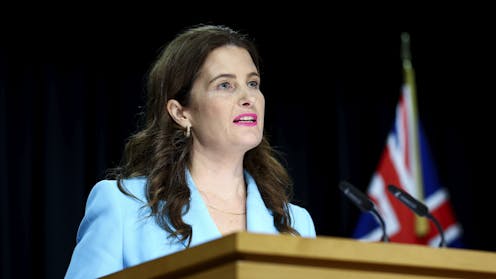
Social Development Minister Louise Upston Hagen Hopkins/Getty Images

When the government announced in its May budget that it would tighten eligibility for young New Zealanders getting Jobseeker benefits, there were few details about how the policy would work. We now have those details, and they raise many questions.

From November next year, if parents’ combined earnings are more than NZ$65,529, their unemployed 18- or 19-year-old teenagers will become ineligible for Jobseeker benefits. According to Social Development Minister Louise Upston:

We want to be clear with young people, 18- and 19-year-olds and their parents, our expectation is that they are in further education, training or a job, and welfare should be a long way away from their first option.

Without a regulatory impact statement from the Ministry of Social Development, it is unclear what the government expects to save from this. And we don’t have any risk assessment of unintended consequences either.

However, we do have a previous regulatory impact statement (the only one released this year) that addressed changes to housing assistance entitlements for people with income from having boarders in their homes.

Tellingly, that impact statement said:

Risks associated with the changes include a disproportionate impact on marginalised communities and impacts on social housing tenants […] a number of cohorts are likely to be disproportionately impacted, including Māori, Pacific peoples, older people, disabled people and young people.

The expected savings from the rule change were also questioned, but the impact statement did not influence the announced policy, nor was there any select committee scrutiny.

Risking a disincentive to work

What we can say about the new Jobseeker proposal is that the income limit for both one-parent and two-parent families is not only low, but totally unrealistic.

A single teenager living at home, whose parents earn $1 under the NZ$65,529 threshold may get Jobseeker support of $268.13 a week (after tax) – but zero support if their income is even $1 above the threshold.

An income of $65,529 for two parents is already insufficient for their needs. What are they to do?

Any help from Working for Families will cease for their unemployed teenager from age 18. That means the family loses support to keep them adequately fed, clothed and able to find work or training.

If they are not on a Jobseeker benefit, they also won’t have any of the oversight or mentoring Work and Income is obliged to provide as part of the benefit.

In a potential scenario, imagine a low-income, single mother who is renting with two teenagers, one of whom is 18 and without work. With her children now older, she has retrained and is finally able to work full-time.

Let’s say she currently earns $75,000. For the last $20,000 of that, she loses $6,320 to tax and accident compensation levies, receives $5,400 less in Working for Families entitlements, her student loan repayment is $2,400, and she misses out on accommodation assistance of around $5,000.

All up, for her extra gross earnings of $20,000, she is less than $1,000 (in the hand) better off. She will now be further affected if and when this new policy is introduced.

Because of her gross income, her unemployed 18-year-old will not qualify for up to $14,000 of Jobseeker support each year.

The logical thing for a sole mother to do in this situation is to stop earning that extra $20,000. That would allow the 18-year-old to qualify for Jobseeker support, contributing to the household income by paying board.

The parental income test raises numerous other difficulties, too. For example, how are separated parents to be treated? What if a parent refuses to support the young person, or reveal their income details?

Where is the work?

Politically, the policy is confusing. It will come into force right on, or just after, the next election. At this stage, the Labour Party has criticised the proposal, but has not committed to overturning it.

More immediately, the policy risks achieving results contrary to the government’s stated intent – as Upston put it, “to encourage young people into work”.

As well as discouraging low-income households who may consider working less so their children qualify for Jobseeker support, the policy assumes there are the jobs to absorb these young people in the first place.

As of June this year, just over 15,000 18- and 19-year-olds were on Jobseeker support. Of those, about 4,300 are estimated to become ineligible.

At the same time, there is huge competition in a tight labour market. The overall unemployment rate of 5.2% disguises a much higher youth rate: 12.2% of young people are not in employment, education or training. Then there is additional underemployment of those who do have some work but want more.

In this difficult recession, the last thing we should do is to treat our young adults like dependent children. They need to be invested in, encouraged and mentored to find a pathway to meaningful work.

Susan St John is affiliated with the Pensions and Intergenerational Hub of the Economic Policy Centre, Auckland Business School .

ref. Jobseeker changes turn young adults into dependent children – and squeeze households further – https://theconversation.com/jobseeker-changes-turn-young-adults-into-dependent-children-and-squeeze-households-further-266785

View from The Hill: Two years of a distant war have brought much damage to Australian society

Source: The Conversation (Au and NZ) – By Michelle Grattan, Professorial Fellow, University of Canberra

Two years ago, who would have imagined the police and the Palestine Action Group (PAG) would be fighting in court over whether demonstrators should be allowed to rally outside the Sydney Opera House?

Indeed, 24 months ago, who would have thought we’d have (or need) designated “envoys” to combat antisemitism and Islamophobia in Australia?

On Tuesday’s second anniversary of the Hamas atrocities in Israel, it is sobering to reflect how much damage this horrific Middle East conflict, which has cost tens of thousands of lives, most of them Palestinian, has done to Australia’s own society.

In Fitzroy in Melbourne, pro-Palestinian graffiti appeared to mark the anniversary: “Glory to Hamas”, “Oct 7, do it again”, “Glory to the martyrs”.

Prime Minister Anthony Albanese described this as “terrorist propaganda” that was “abhorrent,” saying those responsible “must face the full force of the law”.

On Wednesday, the issue of Sunday’s proposed protest outside the Opera House will be back in court. The police don’t want the protesters’ march to be allowed to end in the tight space at the Opera House, citing dangers to safety.

The lawyer for the PAG said on Tuesday: “If the police application is conceded to, the ramifications for the right to protest in Australia will not be confined to the Opera House, but for a wide variety of protest activities”. The group argues the issue is a constitutional one.

In the past two years, this faraway conflict has done substantial harm to Australia’s social cohesion, raised questions about the future of multiculturalism, and produced serious divisions about where lines should be drawn on limiting free speech and the right to protest. The response of institutions, universities in particular, has been tested and in some cases found wanting.

NSW Labor Premier Chris Minns gave a flavour of the cross pressures when speaking on Sydney radio on Tuesday.

“We’ve moved significant changes to hate speech laws in New South Wales and we’ve done it because we recognise we live in a multicultural community and yes, you’ve got a right to freedom of speech but someone else has a right not to be vilified or hated on the basis of their race or religion. All of those laws are currently being challenged in the High Court because of the implied freedom of political communication.”

As hope, however tentative, is glimmering that the peace plan advanced by United States President Donald Trump just might bring a real breakthrough in this terrible war, the fissures it has produced in Australia seem as sharp as ever.

In two years, the Australian Jewish community has been embattled, with attacks on synagogues and other Jewish places, and many individuals deeply frightened for their own and their families’ safety. Iran’s intervention, behind at least two attacks, sought to stoke division.

In that time, the determination of Palestinian supporters has been steadfast, with regular weekend demonstrations maintained throughout.

The conflict has fractured the Australia-Israel relationship, with the Albanese government increasingly critical of Israel’s unrelenting prosecution of the war, and the Netanyahu government turning on Australia.

This culminated with Australia’s recognition of a Palestinian state at the United Nations during the prime minister’s recent trip. The recognition was the end of Labor’s internal journey, which commenced many years before this war began.

The Greens Party have been at the left edge of the political spectrum.

The Australian community was divided about Palestinian recognition: an Essential poll published in late September showed 34% in favour, and 30% against.

The conflict has shattered what used to be a bipartisan Middle East policy, when both main parties strongly supported Israel and also backed a two-state solution for a long-term Middle East settlement.

Over the past two years, the Coalition has been strongly pro-Israel, accusing the Labor government of  deserting an ally and failing to deal robustly with antisemitism in this country.

Opposition leader Sussan Ley used her parliamentary speech on Tuesday’s anniversary to home in on the government’s policy towards Israel.

“To our great shame, under the leadership of the Albanese Labor government, Australia has not stood with the people of Israel, nor with the United States, as they have sought to dismantle Hamas and establish the conditions for peace”.

The local rifts that have come to the surface in Australia were there well before October 7 2023. The war caused them to widen dramatically and explode.

Even if, and when, this conflict subsides, it will leave fractures, anger, bitterness and fear within sections of the Australian community.

Whatever healing takes place almost certainly won’t be complete. For governments, federal and state, intractable policy challenges will remain.

The Conversation

Michelle Grattan does not work for, consult, own shares in or receive funding from any company or organisation that would benefit from this article, and has disclosed no relevant affiliations beyond their academic appointment.

ref. View from The Hill: Two years of a distant war have brought much damage to Australian society – https://theconversation.com/view-from-the-hill-two-years-of-a-distant-war-have-brought-much-damage-to-australian-society-265858

Snowy 2.0 cost blowouts might be OK if the scheme stored power more cheaply than batteries. But it won’t

Source: The Conversation (Au and NZ) – By Bruce Mountain, Professor and Director, Victoria Energy Policy Centre, Victoria University

Two years ago, Snowy Hydro announced a reset for its troubled Snowy 2.0 giant pumped hydro project amid cost blowouts. The supposed final cost was A$12 billion.

Last week, Snowy Hydro acknowledged this figure was no longer viable after a cost reassessment.

I estimate the final cost will be well over $20 billion, excluding new transmission lines – more than ten times higher than the original estimate of $2 billion.

As costs have climbed, Snowy 2.0 has lost supporters. The remaining defenders include former prime minister Malcolm Turnbull, who signed off on the project, the federal Energy Minister Chris Bowen and we know of one academic engineer but there may be more.

The question has always been whether this scheme is worthwhile. Despite repeated cost increases, its few defenders continue to argue that Snowy 2.0 offers much cheaper storage per kilowatt-hour than a battery would deliver. In this argument, the cost of Snowy 2.0 is set against the energy storage potential and then compared to the cost of installing chemical batteries to deliver the same storage.

This defence is simple but wrong.

Moving water

Storing energy such as in pumped hydro schemes and electro-chemical batteries is necessary to decarbonise electricity supply, as they make it possible for surplus renewable energy to be stored and used later.

Snowy 2.0 is a major new pumped hydro project that will become part of the existing Snowy Hydro scheme. It can be thought of as a “water battery”.

In the Snowy 2.0 scheme, water is pumped uphill from the Talbingo lower reservoir to the Tantangara upper reservoir when energy is cheap, and then runs back downhill through turbines to produce power when prices rise and more power is needed.

Talbingo in turn gets most of its water from Eucumbene Dam via the existing Tumut 1 and Tumut 2 generators.

So far, so good. But there are three practical complications:

  • Talbingo is the upper reservoir for the 1,800 megawatt Tumut 3 pumped-hydro station, which means it needs to be kept near full so Tumut 3 is available to produce at maximum capacity and efficiency

  • Talbingo is only two-thirds the capacity of Tantangara and hence can’t accommodate all its water as is the case for a typical pumped hydro system

  • the downstream pondage for Tumut 3 (Jounama) is just one-sixth the capacity of Talbingo. So, depending on the water level in Jounama, Snowy 2.0 and Tumut 3 power generation has to be limited so as not to unintentionally lose water.

The end result is that if water is to be kept within the Talbingo/Jounama system and not lost be being released down the Blowering dam, filling Tantagara and then releasing it is heavily constrained by other elements of the system.

That’s not all. If Tantangara was full and Snowy 2.0 generated flat out for seven days, virtually all the water emptied from Tantangara would be lost downstream of Jounama and would then need to be replenished.

Whenever Snowy 2.0 is generating flat out, the Tumut 3 generator would also need to be generating to make use of the flowing water. But this would flood the power market, driving prices down and hence reducing the income needed to recover Snowy 2.0’s investment.

As a result, Snowy Hydro has no incentive to operate Snowy 2.0 in this way, and will almost certainly withhold its full capacity from the market just as it does now with Tumut 3.

Pumping water uphill

Snowy 2.0 faces economic constraints as well.

It takes energy to pump water uphill from Talbingo to Tantangara. Pumping will only be done when electricity prices are cheap, which will usually be for a few hours each sunny day when price are low. And it will only make sense to fill Talbingo from Eucumbene Dam by releasing water through Tumut 1 and 2 into Talbingo when prices are high.

The result: cost-effectively filling Tantangara will take many months.

Now let’s look at the demand for Snowy 2.0’s service. Defenders claim its ability to discharge power for a week is an advantage. But since Australia’s National Electricity Market began in 1998, there’s never been a period when the extremely high prices needed to make Snowy 2.0 worthwhile have been sustained for more than a few hours continuously.

If the energy market ever sees sustained, multi-day periods of extremely high prices, the market response will be to quickly build gas or diesel generators and add more batteries. Both are inexpensive, representing a tiny fraction of Snowy 2.0’s cost per kilowatt of added capacity. Greenhouse gas impacts would be inconsequential, given the generators would be very rarely used.

As a result, the vast bulk of Snowy 2.0’s storage capacity will sit unused in Tantangara because it is so difficult to cost-effectively fill Tantangara and there’s unlikely ever to be the demand to fully discharge it.

Chemical batteries are outcompeting water batteries

Now compare Snowy 2.0’s operational and technical constraints with those of electro-chemical batteries. These batteries go from charging to discharging in a fraction of a second. They do not have any of the operational and economic complexities of situating a new pumped hydro generator in an extremely complex cascade hydro system.

As a result, a kWh of battery storage capacity is likely to be used much more frequently than a kWh of Snowy 2.0 capacity. Grid batteries typically discharge their full capacity at least once per day and often many times a day. Snowy 2.0 is unlikely to ever discharge its full capacity.

So, while batteries may cost more to install upfront, they will be used much more intensively and so their higher costs absorbed over much higher volumes, so that their average costs are lower. It’s the same economic logic seen in the choice between trains versus buses versus cars – trains are usually cheaper per passenger-kilometre when heavily used, but much more expensive if near empty.

This is why battery storage is booming in Australia and many other countries. Private investors are piling in, typically with little or no public subsidy.

In the eight years Snowy 2.0 has been under construction, the battery equivalent of Snowy 2.0’s power capacity is already operational in the National Electricity Market. This will double in a year, and then double again in another year based on capacity contracted under the Capacity Investment scheme.

Despite enormous political will and vast amounts of taxpayer funds, pumped hydro schemes are struggling in Australia – just as they are in other countries.

With massively complex geology and mind-bogglingly complex operational and economic constraints, Snowy 2.0 is by far the least attractive of Australia’s pumped hydro possibilities.

How could the Australian government and Snowy Hydro have got it so wrong?

The Conversation

Bruce Mountain does not work for, consult, own shares in or receive funding from any company or organisation that would benefit from this article, and has disclosed no relevant affiliations beyond their academic appointment.

ref. Snowy 2.0 cost blowouts might be OK if the scheme stored power more cheaply than batteries. But it won’t – https://theconversation.com/snowy-2-0-cost-blowouts-might-be-ok-if-the-scheme-stored-power-more-cheaply-than-batteries-but-it-wont-266776

Australian teachers are some of the highest users of AI in classrooms around the world – new survey

Source: The Conversation (Au and NZ) – By Robin Shields, Professor of Education and Head of School, The University of Queensland

Klaus Vedfelt/ Getty Images

Australian teachers are more likely to be using artificial intelligence than their counterparts around the world, according to a new international survey.

The OECD’s latest Teaching and Learning International Survey also shows Australian teachers are reporting high levels of stress and not enough training to manage student behaviour.

What is this survey? And what else does it tell us about Australian teachers?

What is the survey?

The Teaching and Learning Survey (also known as “TALIS”) is a large-scale survey of 280,000 teachers in 55 education systems around the world, including Australia.

Most of the teachers surveyed came from primary schools and lower secondary schools (typically up to Year 10 in Australia).

This is the fourth round of TALIS since it began in 2008 and the first since 2018.

Use of AI

Amid ongoing debate about the use of AI in education, many Australian teachers report they are using this emerging technology in their work.

About two thirds (66%) of lower secondary teachers reported using AI in the past year. This puts Australia as the fourth highest country within the OECD, and far above the OECD average of 36%.

Of Australian teachers who used AI, the most common purposes were brainstorming lesson plans and learning about and summarising content. This was happening for 71% of Australian teachers who used AI.

Australian teachers were unlikely to use AI to review data on student performance (9% of those who use AI, compared to 28% across the OECD) and to assess student work (15%, compared to 30% across the OECD).

These results suggest many Australian teachers are using AI to improve their approach to teaching. But their hesitancy to use it in certain situations suggests there is awareness of concerns around privacy (if student data is uploaded to large language models) and the need to keep using professional judgement (such as when assessing work).

Teacher stress

In Australia, these survey results also arrive at a time of continued concerns about teacher shortages, burnout and dissatisfaction.

Results show a marked increase in reported stress among Australian teachers, who reported the third highest levels of stress among all OECD countries, up from a ranking of 15th in 2018.

Among lower secondary teachers, Australia ranked highest among all countries where teachers reported experiencing stress frequently at work (34% in Australia compared to 19% across the OECD).

The top sources of stress were “too much administrative work,” “too much marking,” and “keeping up with curriculum changes”.

These results support research showing a drastic decrease in Australian teachers’ professional satisfaction since 2015, particularly in the first ten years of their careers.

Teacher education

In recent years, Australian policy makers have increasingly focused on teacher education programs – the university degrees that train teachers for the classroom. Following a 2023 report, teacher education programs are required to include topics such the brain and learning, teaching methods and classroom management.

Australian teachers in the TALIS survey appeared, on the whole, happy with their university education. Some 70% of respondents indicated that overall the quality of their teacher education was high, on par with 75% of teachers across the OECD.

While Australian teachers say their training provided sufficient curriculum knowledge, they were less positive about preparation for managing classroom behaviour.

According to my analysis of the survey data, approximately 50% of Australian teachers were positive about their behaviour training, compared to 63% across the OECD. This matches media reports of teachers struggling with poor student behaviour in their classrooms.

What now?

This survey provides high-quality data to understand our education system at a time of rapid change.

It suggests Australian teachers are global leaders in their use of AI. However, much work needs to be done to improve teachers’ wellbeing at work.

Sustaining the teaching profession and the quality of teachers’ work is a key national priority, more careful analysis of these results can help guide this work.

The Conversation

Robin Shields does not work for, consult, own shares in or receive funding from any company or organisation that would benefit from this article, and has disclosed no relevant affiliations beyond their academic appointment.

ref. Australian teachers are some of the highest users of AI in classrooms around the world – new survey – https://theconversation.com/australian-teachers-are-some-of-the-highest-users-of-ai-in-classrooms-around-the-world-new-survey-266894

Australia’s gambling harm is likely underreported – and authorities are still failing to act

Source: The Conversation (Au and NZ) – By Angela Rintoul, Principal Research Fellow – Gambling and Suicide, The University of Melbourne

Paul Ellis/AFP via Getty Images

Monday night’s ABC Four Corners’ investigation highlighted major issues with the regulation of online gambling in Australia.

Regulators are responsible for safeguarding the public from serious gambling harms. However, the investigation alleged a revolving door between regulators and industry, the ongoing problems of donations to politicians and conflicts of interest of regulators.

At best, weak regulation of gambling means operators’ unethical, predatory practices are overlooked. This in turn can amplify gambling harms.

It’s well known how harmful gambling can be but my recent research shows these harms, including suicide, have been systematically underreported.

Australians are the worst gamblers

Australians are the biggest (or worst) gamblers in the world per capita. And the problem appears to be getting worse: we recorded the largest gambling losses ever in 2024 (A$32 billion).


Read more:
The biggest losers: how Australians became the world’s most enthusiastic gamblers


The gambling ecosystem benefits greatly from addicted consumers to sustain and grow its revenue streams.

Operators often promote and provide inducements to their most vulnerable customers.

The pokie problem

Electronic gaming machines (colloquially known as pokies) are the most harmful form of gambling in Australia.

It has been more than 15 years since the Australian government’s Productivity Commission recommended mandatory pre-commitment for pokies.

These pre-commitment systems would require users to register for an account linked to a gambling card, which would record a limit of how much they are prepared to lose.

Despite the Productivity Commission’s recommendation, no jurisdiction in Australia operates a pre-commitment system.

This is despite repeated promises from state governments, including Tasmania, Victoria and New South Wales.

Gambling harms tend to publicly emerge when there is a paper trail, such as a wagering account statement. But when people use pokies, there is no paper trail because few venues require account registrations.

The industry has successfully, and fiercely, resisted a pre-comittment system for pokies gambling.

While gambling operators claim to adhere to codes of conduct that should protect their patrons from harm, the reality is a different story.

The problem may be worse than we thought

We’ve only recently begun to understand the extent and range of harms linked to gambling, including suicide.

Our 2023 study, using the best available data, found at least 4.2% of all Victorian suicides in 2009–16 were gambling related. This figure includes 184 people where death investigators documented evidence of direct gambling harm and 17 others who experienced gambling harm via their partners.

Yet these figures are likely to be an underestimate, given the lack of systematic investigation. Gambling harm is almost certainly underreported.

Our new research outlines the systems, practices and pathways through which the gambling ecosystem drives harm, including suicidality (suicidal thoughts, plans or attempts) and suicide.

The gambling ecosystem – entities that derive financial benefits from gambling, including gambling operators, sporting leagues and broadcasters – use the “responsible gambling” trope to argue “flawed consumers” are responsible for gambling harm.

This generates stigma and shame by implying the blame for gambling harm is so-called “problem gamblers”, not the products they use.

Shame and stigma are known mechanisms in the relationship between gambling and suicide.

Yet our current gambling arrangements often stigmatise those struggling with gambling issues, distracting from the practices of the commercial entities that drive the harm.

Our research suggests several ways governments can counteract these drivers.

This includes addressing the cosy relationship between parliament and industry, banning political donations from betting companies, ensuring people who gamble have access to systems to help them limit losses, and regulators that are resourced to enforce duty of care obligations.

Our leaders need to act

Australia’s gambling ecosystem benefits from the fragmentation of oversight, with the states currently charged with regulating poker machines.

The federal government accepts responsibility for online wagering but it does not regulate it.

Shifting responsibility between federal and state governments on gambling needs to stop. We need a national regulator that is properly resourced to monitor the practices of all gambling operators.

It has been more than two years since the Australian government’s Parliamentary Committee into online gambling harm released its 31 recommendations to prevent harms.

Convention dictates government should respond within six months. As MP Andrew Wilkie suggested in the Four Corners program, government inaction starts to look a lot like a protection racket for the gambling industry.

The severity of harms we now know are linked to gambling should compel the government to enact serious reforms. We know gambling, like tobacco, is leading to preventable deaths.

Waiting to adopt key recommendations is costing lives.


If this article has raised issues for you, or if you’re concerned about someone you know, call Lifeline on 13 11 14.

Angela Rintoul holds a postdoctoral fellowship funded by Suicide Prevention Australia. In the past she has received funding from the Victoria Responsible Gambling Foundation, which was supported by allocations from the Community Support Fund, a government administered trust fund constituted from direct taxes on electronic gaming machines (EGMs) in hotels. She has also received funding from the Winston Churchill Memorial Trust and ANROWS. She is a member of the WHO meeting on gambling and received travel funding from the Turkish Green Crescent Society and consultancy funding from WHO. She has been paid honoraria to review grants by the British Academic Forum for the Study of Gambling, administered via Gambling Research Exchange Ontario, funded by regulatory settlements from gambling companies that have breached the law. Angela is a member of the International Association for Suicide Prevention (IASP), and co-chair of the IASP social and commercial determinants of health special interest group, and a member of Suicide Prevention Australia.

ref. Australia’s gambling harm is likely underreported – and authorities are still failing to act – https://theconversation.com/australias-gambling-harm-is-likely-underreported-and-authorities-are-still-failing-to-act-266773

People trust podcasts more than social media. But is the trust warranted?

Source: The Conversation (Au and NZ) – By Jason Weismueller, Lecturer, UWA Business School, The University of Western Australia

Medy Siregar/Unsplash

There’s been a striking decline in public confidence in social media platforms, according to the 2025 Ethics Index published by the Governance Institute of Australia. One in four Australians now rate social media as “very unethical”.

This is consistent with other reports on Australian attitudes towards social media. For example, the Digital News Report 2025 similarly identified widespread concern about misinformation and distrust in news shared on social media.

And such distrust isn’t limited to Australia. The sentiment is evident worldwide. The 2025 Edelman Trust Barometer, based on an annual global survey of more than 30,000 people across 28 countries, reports a decline in trust in social media companies.

So where does this negativity come from? And are other ways of consuming information online, such as podcasts, any better? Podcasts are booming in Australia and around the world, and are often perceived much more positively than social media.

Let’s look at what the evidence says about the impacts of social media, what it does and doesn’t yet tell us about podcasts, and what this reveals about the need for accountability across digital platforms.

Where does this distrust stem from?

While social media has enabled connection, creativity and civic participation, research also highlights its downsides.

Studies have shown that, on certain social media platforms, false and sensational information can often spread faster than truth. Such information can also fuel negativity and political polarisation.

Beyond civic harms, heavy social media use has also been linked to mental health challenges. The causes are difficult to establish, but studies report associations between social media use and higher levels of depression, anxiety and psychological distress, particularly among adolescents and young adults.

In 2021, Frances Haugen, a former Facebook product manager, made public thousands of internal documents that revealed Instagram’s negative impact on teen mental health. The revelations triggered global scrutiny and intensified debate about social media accountability.

Whistleblowers such as Haugen suggest social media companies are aware of potential harms, but don’t always act.


Read more:
Facebook data reveal the devastating real-world harms caused by the spread of misinformation


Podcasts have a much better reputation

In contrast to social media, podcasts appear to enjoy a very different reputation. Not only do Australians view them far more positively, but podcast consumption has significantly increased over the years.

More than half of Australians over the age of ten engage with audio or video podcasts on a monthly basis. It’s not surprising that the 2025 Australian election saw political leaders feature on podcasts as part of their campaign strategy.

YouTube, traditionally a video sharing platform, has a large section dedicated to podcasts on its home page.
YouTube

Why are podcasts so popular and trusted? Several features may help explain this.

Consumption is often more deliberate. Listeners choose specific shows and episodes instead of scrolling through endless feeds. Podcasts typically provide longer and more nuanced discussions compared with the short snippets served by social media algorithms.

Given these features, research suggests podcasts foster a sense of intimacy and authenticity. Listeners develop ongoing “relationships” with hosts and view them as credible, authentic and trustworthy.

Yet this trust can be misplaced. A Brookings Institution study analysing more than 36,000 political podcast episodes found nearly 70% contained at least one unverified or false claim. Research also shows political podcasts often rely on toxic or hostile language.

This shows that podcasts, while often perceived as more “ethical” than social media, are not automatically safer or more trustworthy spaces.

Rethinking trust in a complex media environment

What’s clear is that we shouldn’t blindly trust or dismiss any online platform, whether it’s a social media feed or a podcast. We must think critically about all the information we encounter.

We all need better tools to navigate a complex media environment. Digital literacy efforts must expand beyond social media to help people assess any information, from a TikTok clip to a long-form podcast episode.


Read more:
Critical thinking is more important than ever. How can I improve my skills?


To regain public trust, social media platforms will have to behave more ethically. They should be transparent about advertising, sponsorships and moderation policies, and should make clear how content is recommended.

This expectation should also apply to podcasts, streaming services and other digital media, which can all be misused by people who want to mislead or harm others.

Governments can reinforce accountability through fair oversight, but rules will only work if they are paired with platforms acting responsibly.

Earlier this year, the Australian government released a report that argued social media platforms have a “duty of care” towards their users. They should proactively limit the spread of harmful content, for example.

A healthier information environment depends on sceptical but engaged citizens, stronger ethical standards across platforms, and systems of accountability that reward transparency and reliability.

The lesson is straightforward: trust or distrust alone doesn’t change whether the information you receive is actually truthful – particularly in an online environment where anyone can say anything. It’s best to keep that in mind.

The Conversation

Jason Weismueller does not work for, consult, own shares in or receive funding from any company or organisation that would benefit from this article, and has disclosed no relevant affiliations beyond their academic appointment.

ref. People trust podcasts more than social media. But is the trust warranted? – https://theconversation.com/people-trust-podcasts-more-than-social-media-but-is-the-trust-warranted-266791

Extreme weather now costs Australians $4.5b a year. Better insurance options and loans would help us adapt

Source: The Conversation (Au and NZ) – By Johanna Nalau, Associate Professor in Climate Adaptation, Griffith University

Today’s release of the Insurance Council of Australia’s report puts Australia on the spot: we rank second in the world in extreme weather-related losses. As the Insurance Council puts it, this is not the silver medal we want to win.

Why is this a problem? According to the Resilient Building Council of Australia, a collaboration of independent experts, close to 90% of Australian homes are not actually fit for a changing climate.

Many renters, low income groups, and people living in high-risk areas are especially vulnerable and often unable to even get insurance. In the 2020s, Australia has spent around A$4.5 billion a year on extreme weather costs, while insurance affordability and access are plummeting in regions that need it the most.

The report found almost eight in ten of the homes that face severe to extreme flood risk do not have flood insurance.

Australia’s first National Climate Risk Assessment, released last month, predicted a staggering 444% increase in heat-related deaths in Sydney as heatwaves become more severe under the most extreme scenario of 3°C degree warming by 2050. Other very dire numbers are outlined for climate risks across the country.

The insurance industry says we need to rethink how we can keep our communities safe and thriving in the face of escalating disasters. How do we make sure these safety nets actually work for people – especially when costs and losses are escalating?

Insurance in a changing climate

The federal government’s 2025 National Adaptation Plan makes it clear we need to act now in reducing these risks.

The changing climate will bring new types of risks to new areas. This is problematic as insurance is often based on existing trends and known risks. The industry also relies on current categorisations, such as cyclone strengths and wind speeds, in estimating losses and damages.

There are alternative insurance options already in use. For example, parametric insurance provides an automatic payout by the insurer when a particular event takes place, such as a storm at a specified wind speed or storm surge at a particular water height.

This way, the insured businesses or households do not need to wait for months of damage investigations, assessments and filling in claims. This form of coverage is used in the Pacific, where many islands face increasing climate-related disasters.

However, some analysts caution this approach can leave people worse off, as it might not cover everything needed for long-term recovery.

Other strategies include inclusive insurance delivered through cooperatives. These are often set up in low-income communities in developing countries, such as the Philippines, where insurance may not be available. They provide a community-based safety net to recover from disasters or other risks.

So how can we adapt?

We have a good understanding by now about the risks we are facing and what we need to do. Building more resilient new homes and retrofitting existing homes are among the first steps in protecting all Australians. Other strategies include:

Rethinking insurance: Some insurance companies, such as US commercial property insurer FM Global, have launched “climate resilience credits”, which support their clients to invest in climate adaptation options. If people can demonstrate they have taken direct actions to adapt their properties to climate risks – such as building flood levies, raising floor heights, or installing additional insulation against extreme heat – they pay less in premiums.

Reflect climate adaptation investments in property valuations: Currently, there are few legally required adaptation options for homes. Homeowners who invest in better drainage against excess rainfall or install additional insulation against extreme heat are not necessarily rewarded when it comes to higher property values or lower insurance costs. Having these investments reflected in higher property values could be an incentive for increased climate adaptation.

Climate adaptation and resilience loans: Some lenders, such as Westpac, already offer lower interest loans, such as a sustainable upgrades home loan that specifically support these types of upgrades, as well as energy efficiency. Bank Australia offers a clean energy home loan for building new greener homes. The insurer Suncorp offers lower premiums for households that have upgraded their cyclone resilience to prepare for storms.

There is also a need to rethink land use planning and whether we allow new developments to go on in high-risk areas both under current risks and future projections. This is not a new problem or solution, but one we need to take seriously now.

No silver bullet, but many options

These options are not available for everyone. Not everyone is able to take additional loans or make investments. This is where we need a scaled-up national approach in how insurance and lending can support Australians, especially those most vulnerable to climate change.

While the policy recommendations from Insurance Council of Australia are clear on the role they see for the government, there are also key roles for the private sector, communities, and organisations in fast-tracking national climate adaptation.

There is no one silver bullet for what we need to do. But we have an array of opportunities and options that can significantly strengthen how Australia adapts to climate change. The trick will be knowing what to scale up, and how.

The Conversation

Johanna Nalau has received funding from Australian Research Council. She is Coordinating Lead Author for Intergovernmental Panel on Climate Change 7th Assessment Report (Working Group II: Impacts, Adaptation and Vulnerability), and Co-Chair of the Science Committee at World Adaptation Science Programme, UNEP.

ref. Extreme weather now costs Australians $4.5b a year. Better insurance options and loans would help us adapt – https://theconversation.com/extreme-weather-now-costs-australians-4-5b-a-year-better-insurance-options-and-loans-would-help-us-adapt-266886

ER Report: A Roundup of Significant Articles on EveningReport.nz for October 7, 2025

ER Report: Here is a summary of significant articles published on EveningReport.nz on October 7, 2025.

Why do doctors run late?
Source: The Conversation (Au and NZ) – By Lauren Ball, Professor of Community Health and Wellbeing, The University of Queensland stefanamer/Getty You’ve turned up at the doctor’s clinic on time. But you’re scrolling on your phone, watching the clock tick past your appointment time. By the time you’re called in, you’re running late for work

More veg, less meat: the latest global update on a diet that’s good for people and the planet
Source: The Conversation (Au and NZ) – By Sheila Skeaff, Professor of Human Nutrition, University of Otago Getty Images A long-awaited expert update on the dietary changes needed to support both human and planetary health comes out clearly in favour of a plant-based approach. The EAT-Lancet Commission says a shift towards its planetary health diet,

From the telegraph to AI, our communications systems have always had hidden environmental costs
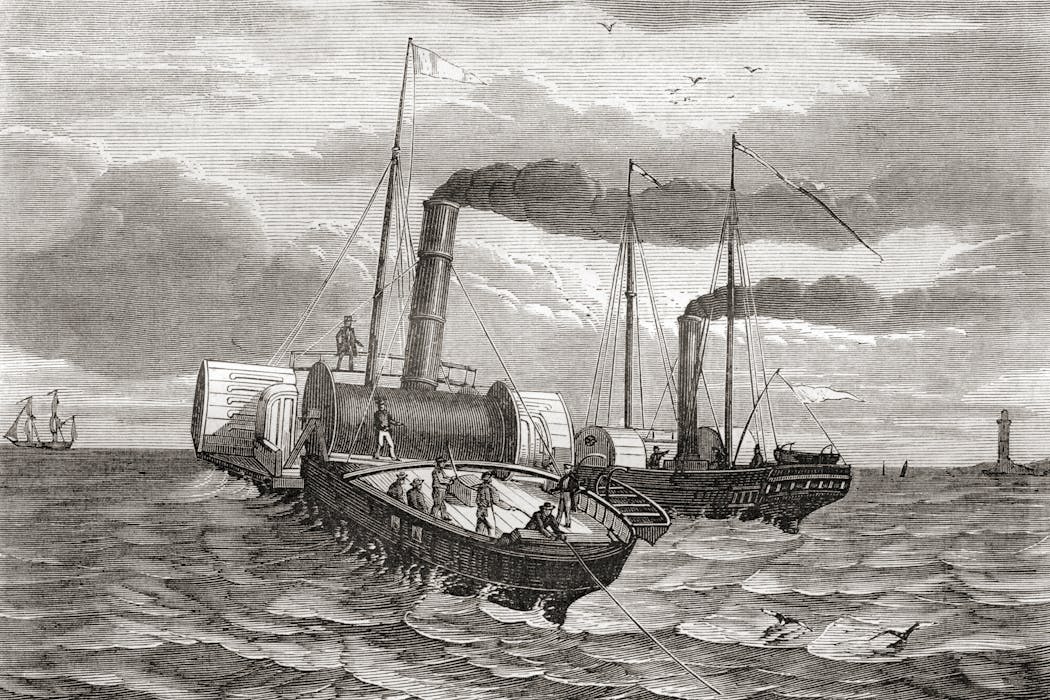
Source: The Conversation (Au and NZ) – By Jemimah Widdicombe, Research Associate, Museums Victoria, Museums Victoria Research Institute The first attempt to lay submarine telegraph cable between Britain and France. Universal History Archive/Getty When we post to a group chat or talk to an AI chatbot, we don’t think about how these technologies came to

Reusing medical equipment is good for the planet. But is it safe?
Source: The Conversation (Au and NZ) – By Rochelle Wynne, Chair in Nursing, Western Health Deakin University Partnership, Deakin University Anchiy/Getty Even a short stay in hospital produces a large amount of waste. Just picture all the disposable items designed to be used once and thrown away: face masks, gloves, packaging, intravenous tubing, and even

From the telegraph to AI, our communications systems have always had hidden environmental cost
Source: The Conversation (Au and NZ) – By Jemimah Widdicombe, Research Associate, Museums Victoria, Museums Victoria Research Institute The first attempt to lay submarine telegraph cable between Britain and France. Universal History Archive/Getty When we post to a group chat or talk to an AI chatbot, we don’t think about how these technologies came to

Our study followed Indigenous children for 15 years to understand what helps them thrive
Source: The Conversation (Au and NZ) – By Jessa Rogers, Associate Professor, Faculty of Education, The University of Melbourne Our new report follows the lives of around 1,700 Aboriginal and Torres Strait Islander children in the largest study of its kind. We wanted to understand what helps them thrive as they grow up. For more

Young businesses create 6 in 10 new jobs in Australia – far more than established firms
Source: The Conversation (Au and NZ) – By Lachlan Vass, Fellow, Tax and Transfer Policy Institute, Crawford School of Public Policy, Australian National University Chris Putnam/Future Publishing via Getty Images Governments of all stripes provide support to small businesses in the form of tax concessions, lighter-touch regulation or government grants. They’re called the “engine room”

Experts unpack ‘quadrobics’, the fitness trend that claims leaping around on all fours will make you fit
Source: The Conversation (Au and NZ) – By Samuel Cornell, PhD Candidate in Public Health & Community Medicine, School of Population Health, UNSW Sydney In a new online trend, people are scuttling, crawling, and bounding around on all fours while filming themselves – and their videos are getting a lot of attention. The practice is

Not voting in local elections is rational. Voters need better reasons to engage
Source: The Conversation (Au and NZ) – By Jeffrey McNeill, Honorary Research Associate, School of People, Environment and Planning, Te Kunenga ki Pūrehuroa – Massey University With less than a week until voting in local elections closes, it seems early voter turnout may have increased compared to 2022 – up from 10% of eligible voters

There are now two appeals in the Erin Patterson mushroom murder case. What’s going on?
Source: The Conversation (Au and NZ) – By Rick Sarre, Emeritus Professor in Law and Criminal Justice, University of South Australia The Victorian Director of Public Prosecutions, who has carriage of the Erin Patterson murder case, has chosen to appeal against what he considers to be an overly lenient sentence. This comes on the back

View from The Hill: Can Sussan Ley avoid Brendan Nelson’s fate?
Source: The Conversation (Au and NZ) – By Michelle Grattan, Professorial Fellow, University of Canberra When you look at Sussan Ley’s predicament, you can’t help thinking of Brendan Nelson. Nelson, a Liberal moderate and a former minister who was a competent but not outstanding performer, won the Liberal leadership after the 2007 defeat of the

On a grim anniversary, an end to Gaza’s violence is suddenly clear – if both sides can make sacrifices
Source: The Conversation (Au and NZ) – By Eyal Mayroz, Senior Lecturer in Peace and Conflict Studies, University of Sydney Two years into the most horrific chapter in the history of Israel and Palestine, a glimmer of hope has been offered to both sides by US President Donald Trump’s plan for a permanent ceasefire and

New adaptation of Rebecca is visually haunting, but misses the core tensions of the original story
Source: The Conversation (Au and NZ) – By Sarah Austin, Senior Lecturer in Theatre, The University of Melbourne Pia Johnson Melbourne Theatre Company’s (MTC) latest offering is a striking adaptation of the 1938 gothic novel Rebecca by Daphne du Maurier. Like Alfred Hitchcock’s 1940 film, the story follows a young woman who marries a widower,

ER Report: A Roundup of Significant Articles on EveningReport.nz for October 6, 2025
ER Report: Here is a summary of significant articles published on EveningReport.nz on October 6, 2025.

Why do doctors run late?

Source: The Conversation (Au and NZ) – By Lauren Ball, Professor of Community Health and Wellbeing, The University of Queensland

stefanamer/Getty

You’ve turned up at the doctor’s clinic on time. But you’re scrolling on your phone, watching the clock tick past your appointment time. By the time you’re called in, you’re running late for work or school pick-up, and you’re getting stressed.

Yes, it can be frustrating. It might seem like your doctor’s always running late.

But your doctor isn’t delayed because they disrespect your time. There are many reasons for running late, some unrelated to your doctor or the clinic.

Let’s unpack what’s happening in your average GP clinic.

‘Spanners in the works’

You might expect appointments to run like a well-oiled machine. You turn up, and are seen at your allotted time. In reality, patients can easily wait 20 minutes to see the doctor.

There are many factors why. We’ll call these “spanners in the works”, events or reasons why things don’t always go to plan.

There are reasons related to individual patients. These include a patient mixing up the time of the appointment or running late themselves. A patient can ask if another family member can fit into the same appointment, or they may suddenly want to discuss extra concerns.

On the clinic’s side, hold-ups can arise due to medical emergencies, technology hiccups, or managing complicated cases or paperwork.

Apart from seeing patients, GPs need to perform a range of other tasks including: completing consultation notes; organising referrals, care plans or family meetings; checking daily pathology and imaging results; and liaising with specialists, pharmacists and hospitals.

GPs need time to complete these tasks, which they normally squeeze into the slim space between each patient. So it’s easy to see how an unexpected urgent issue can quickly derail a doctor’s schedule.

All these issues add up over the course of the day and can cause significant delays.

A symptom of bigger issues

Running late is also a symptom of wider health-related issues. Australians are living longer with multiple, chronic conditions such as diabetes, heart disease and mental health issues. So patients need more time with the doctor to manage these often complex, long-term conditions.

Australians are also seeing GPs more often – on average 6.2 times a year in 2024, up from 3.8 when Medicare started in 1984. This is due to a variety of factors, including an ageing population and higher rates of chronic disease.

Running late can be a symptom of bigger health system issues. Australia’s health department projects a shortfall of about 2,600 GPs by 2028, growing to 8,600 by 2048.

An ageing GP workforce, more GPs working part time, and not enough new doctors entering general practice to replace those retiring are all contributors.

All this means GPs will likely become busier, harder to book and yes, more likely to run late.

The hidden impacts of running late

Running late isn’t just inconvenient. GPs can feel pressured to shorten consultations to catch up.

This can have multiple consequences: less history taking or examination time, over-ordering tests, less patient-centred care, and reduced shared decision-making. A late-running GP might also miss opportunities for preventative care.

But longer consultations are linked to positives such as less antibiotic misuse, lower referral rates to specialists for issues they could manage themselves, and fewer consultations for issues that could have been covered in an earlier appointment.

What might help?

Some practices are using pre-consultation questionnaires, which patients can complete online before their appointment. These include questions about their medical history, changes in symptoms and the reason for the appointment.

These questionnaires can also encourage patients to disclose relevant information in a safe and secure manner, address what the patient hopes to cover in a consultation, and allow the doctor to plan their consultation before the visit begins.

Studies show about 90% of patients find these helpful, and doctors report completing their appointments faster while still being thorough.

Clinics could also:

What you can do

To help the day run smoothly you can:

  • Book the right length appointment if you have a tricky issue or multiple things to discuss. Ask for a long consultation, or consider returning for a follow-up visit.

  • Write down any questions in advance to make sure nothing is missed. Better still, give this list to your GP at the start of your visit so they can help prioritise your needs.

  • Consider telehealth for issues such as test result follow-ups or script renewals. This may also allow both you and the clinic to be more flexible with the timing of the appointment.

  • Try to attend without your kids if you can if discussing complex or sensitive issues. If you want to discuss your child’s health, book a separate appointment before or after yours.

  • Try to build a working relationship with one regular GP. Visits tend to be more efficient and you will receive better overall care.

The Conversation

Lauren Ball receives funding from the National Health and Medical Research Council, Health and Wellbeing Queensland, Heart Foundation, Gallipoli Medical Research and Mater Health, Springfield City Group. She is a Director of Dietitians Australia, a Director of the Darling Downs and West Moreton Primary Health Network and an Associate Member of the Australian Academy of Health and Medical Sciences.

David Chua’s position at the UQ Centre for Community Health and Wellbeing is partially funded by Mater Research Foundation and the National Health and Medical Research Council. He also works at two other workplaces: Metro South Health as a research officer and Inala Primary Care, a not-for-profit general practice clinic as a research collaborations officer and data analyst.

Stephanie Chua is a GP at two clinics: Inala Primary Care, a not-for-profit general practice, and Watersprings Health Centre.

ref. Why do doctors run late? – https://theconversation.com/why-do-doctors-run-late-264977

More veg, less meat: the latest global update on a diet that’s good for people and the planet

Source: The Conversation (Au and NZ) – By Sheila Skeaff, Professor of Human Nutrition, University of Otago

Getty Images

A long-awaited expert update on the dietary changes needed to support both human and planetary health comes out clearly in favour of a plant-based approach.

The EAT-Lancet Commission says a shift towards its planetary health diet, released last week, could prevent 40,000 early deaths a day across the world and cut agricultural methane emissions by 15% by 2050.

The diet promotes more vegetables, fruits, whole grains, legumes and nuts, with only modest amounts of meat, fish, poultry and dairy.

If you imagine a plate, half would be filled with vegetables and fruit (with more vegetables than fruit). Most of the remaining half would be whole grains and plant proteins. There’s room for small amounts of animal products and healthy fats, but very little added sugar. Notably, butter doesn’t get a mention.

The most contentious aspect is the commission’s recommendation on meat: just 14 grams per day of red meat and 29 grams per day of poultry – that’s roughly one small steak, one lamb chop, or two chicken drumsticks per week.

New Zealand’s traditional diet is a long way off this recommendation. But my recent study of teenage girls across the country suggests a shift is underway, with most embracing a predominantly plant-based diet.

How we know what’s best to eat

Many factors influence food choices – hunger, emotions, health, culture, media, taste, habits and family traditions.

Evidence-based dietary guidance, such as national food and nutrition guidelines, also plays a role.

In New Zealand, people may be familiar with the “5+ a day” message promoting fruit and vegetable consumption. That recommendation has since shifted to “7+ a day” as new evidence has emerged.

Over the past decade, nutritional guidelines have increasingly incorporated environmental sustainability, acknowledging that around 30% of global emissions come from growing, processing and transporting food.

The EAT-Lancet Commission took this sustainability focus further in its first release of the planetary health diet in 2019. It argued that by changing what we eat, reducing food waste and improving food production systems, we could feed a growing global population while minimising environmental damage.

Less meat is a win-win

This approach is a significant departure from traditional diets in Aotearoa New Zealand. The British-influenced “meat and three veg” (often with potatoes as one of the vegetables) and the Māori hāngi of pork, seafood, kumara and local greens don’t align neatly with the EAT-Lancet recommendations.

One criticism of the original report was its limited consideration of indigenous food systems. In my view, the minimal inclusion of starchy vegetables such as potatoes, cassava, kumara, maize and millet is hard to justify. These are staple foods – affordable, widely available and important sources of energy for many communities.

But most New Zealand adults consume nearly twice the recommended amount of protein. Reducing meat is therefore unlikely to lead to inadequate protein intakes.

Currently, about 40% of New Zealanders’ protein comes from animal sources (meat, dairy, fish). The remaining 60% comes from plants.

The belief that only animal proteins are of high quality – due to their amino acid profile and digestibility – is outdated. It’s a common misconception that some amino acid are only available through meat. Plants contain all essential amino acids, albeit in varying proportions.

For most adults, a diet with smaller amounts of meat would be a win-win: better for their health and better for the planet.

So, should New Zealand embrace the planetary health diet?

In many ways, we already are. My study of teenage girls found those following an omnivorous diet got 69% of their energy from plant-based foods (ranging from 43% to 92%), while vegetarians averaged 83% (ranging from 51% to 100%).

However, New Zealanders still consume more saturated fat than recommended and not enough dietary fibre. Shifting further toward the planetary health diet could help address these imbalances and reduce the risk of premature death from heart disease and cancer, our leading causes of mortality.

A diet for people and the planet

Perhaps unsurprisingly, the meat industry has been pushing back against the commission’s recommendations ever since the first release of the planetary health diet.

A recent report published by the Changing Markets Foundation identifies a network of influential pro-meat voices in industry, academia and governments actively working to discredit the commission’s findings.

Some nutrition academics have raised concerns about the relatively low quantity of meat and fish. Some experts argue the low amount of meat may not meet the nutritional needs of certain groups such as pregnant women and young children, who would benefit from the iron and zinc found in red meat because it is easier to absorb than from vegetable sources.

Adding to the complexity is the global obsession with protein – often associated with meat. While fat and carbohydrates have been vilified, protein enjoys a nutritional halo.

The updated guidelines place greater emphasis on environmental sustainability and, importantly, acknowledge the need to respect and empower diverse food cultures and uphold the universal human right to food.

As we face the twin challenges of climate change and rising rates of diet-related disease, I argue the planetary health diet offers a recipe for a healthier, more sustainable future.

It’s not about eliminating entire food groups or enforcing a one-size-fits-all approach. Rather, it’s about making thoughtful, evidence-based choices that nourish both people and the planet.

The Conversation

Sheila Skeaff receives funding from the Ministry for the Environment for research on food loss and waste. She serves as a trustee on the Otago Farmers Market Trust.

ref. More veg, less meat: the latest global update on a diet that’s good for people and the planet – https://theconversation.com/more-veg-less-meat-the-latest-global-update-on-a-diet-thats-good-for-people-and-the-planet-266780

From the telegraph to AI, our communications systems have always had hidden environmental costs

Source: The Conversation (Au and NZ) – By Jemimah Widdicombe, Research Associate, Museums Victoria, Museums Victoria Research Institute

The first attempt to lay submarine telegraph cable between Britain and France. Universal History Archive/Getty

When we post to a group chat or talk to an AI chatbot, we don’t think about how these technologies came to be. We take it for granted we can instantly communicate. We only notice the importance and reach of these systems when they’re not accessible.

Companies describe these systems with metaphors such as the “cloud” or “artificial intelligence”, suggesting something intangible. But they are deeply material.

The stories told about these systems centre on newness and progress. But these myths obscure the human and environmental cost of making them possible. AI and modern communication systems rely on huge data centres and submarine cables. These have large and growing environmental costs, from soaring energy use to powering data centres to water for cooling.

There’s nothing new about this, as my research shows. The first world-spanning communication system was the telegraph, which made it possible to communicate between some continents in near-real time. But it came at substantial cost to the environment and humans. Submarine telegraph cables were wrapped in gutta-percha, the rubber-like latex extracted from tropical trees by colonial labourers. Forests were felled to grow plantations of these trees.

Is it possible to design communications systems without such costs? Perhaps. But as the AI investment bubble shows, environmental and human costs are often ignored in the race for the next big thing.

The telegraph had a sizeable environmental and social cost. Pictured: workers coiling the first transatlantic telegraph cable in the bilge tanks of the S.S. Great Eastern in 1865.
Universal History Archives/Getty

From the “Victorian internet” to AI

Before the telegraph, long distance communication was painfully slow. Sending messages by ship could take months.

In the 1850s, telegraph cables made it possible to rapidly communicate between countries and across oceans. By the late 1800s, the telegraph had become ubiquitous. Later dubbed the “Victorian internet”, the telegraph was the predecessor of today’s digital networks.

Building telegraph networks was a huge undertaking. The first transatlantic cable was completed in 1858, spanning more than 4,000km between North America and Europe.

The first transatlantic submarine cables made possible rapid communication between the United States and Europe. This 1857 map shows their paths.
Korff Brothers, CC BY-NC-ND

Australia followed closely behind. European colonists created the first telegraph lines in the 1850s between Melbourne and Williamstown. By 1872, the Overland Telegraph Line between Adelaide and Darwin had been completed. From Darwin, the message could reach the world.

There are clear differences between the telegraph and today’s AI systems. But there are also clear parallels.

In our time, fibre optic cables retrace many routes of the now obsolete submarine telegraph cables. Virtually all (99%) of the world’s internet traffic travels through deep sea cables. These cables carry everything from Google searches to ChatGPT interactions, transmitting data close to the speed of light from your device to faraway data centres and back.

Historical accounts describe the telegraph variously as a divine gift, a human-made wonder, and a networked global intelligence, far from the material reality. These descriptions are not far off the way AI is talked about today.

Grounded in extraction

In the 19th century, the telegraph was commonly thought of as an emblem of progress and technological innovation. But these systems had other stories embedded, such as the logic of colonialism.

One reason European powers set out to colonise the globe was to extract resources from colonies for their own use. The same extractive logic can be seen in the telegraph, a system whose self-evident technological progress won out over environmental and social costs.

If you look closely at a slice of telegraph cable in a museum or at historic sites where submarine telegraph cables made landfall, you’ll see something interesting.

The telegraph was a technological marvel – but it came at considerable cost. Pictured is an 1856 sample of the first submarine telegraph cable linking Newfoundland and Nova Scotia in Canada.
Jemimah Widdicombe, CC BY-NC-ND

Wrapped around the wires is a mixture of tarred yarn and gutta percha. Cable companies used this naturally occurring latex to insulate telegraph wires from the harsh conditions on the sea floor. To meet soaring demand, colonial powers such as Britain and the Netherlands accelerated harvesting in their colonies across Southeast Asia. Rainforests were felled for plantations and Indigenous peoples forced to harvest the latex.

European colonial powers drove intensified production of gutta-percha despite the environmental and social cost. Pictured: Kayan people in Borneo harvesting the milky latex around 1910.
Wikimedia, CC BY-NC-ND

Australia’s telegraph came at real cost, as First Nations truth telling projects and interdisciplinary researchers have shown.

The Overland Telegraph Line needed large amounts of water to power batteries and sustain human operators and their animals at repeater stations. The demand for water contributed to loss of life, forced dispossession and the pollution of waterways. The legacy of these effects are still experienced today.

Echoes of this colonial logic can be seen in today’s AI systems. The focus today is on technological advancement, regardless of energy and environmental costs. Within five years, the International Energy Agency estimates the world’s data centres could require more electricity than all of Japan.

AI is far more thirsty than the telegraph. Data centres produce a great deal of heat, and water has to be used to keep the servers cool. Researchers estimate that by 2027, AI usage will require between 4.2 and 6.6 billion cubic metres of water – about the same volume used by Denmark annually.

With the rise of generative AI, both Microsoft and Google have significantly increased their water consumption.

Manufacturing the specialised processors needed to train AI models has resulted in dirty mining, deforestation and toxic waste.

As AI scholar Kate Crawford has argued, AI must be understood as a system that is:

embodied and material, made from natural resources, fuel, human labour, infrastructures, logistics, histories and classifications.

The same was true of the telegraph.

Huge new data centres are being built to service the growth in AI and the wider internet. Pictured: a new Google data centre in the United Kingdom.
Richard Newstead/Getty

Planning for the future

Telegraph companies and the imperial networks behind them accepted environmental extraction and social exploitation as the price of technological progress.

Today’s tech giants are following a similar approach, racing to release ever more powerful models while obscuring the far reaching environmental consequences of their technologies.

As governments work to improve regulation and accountability, they must go further to enforce ethical standards, mandate transparent disclosure of energy and environmental impacts and support low impact projects.

Without decisive action, AI risks becoming another chapter in the long history of technologies trading human and environmental wellbeing for technological “progress”. The lesson from the telegraph is clear: we must refuse to accept exploitation as the cost of innovation.

Jemimah Widdicombe works for the National Communication Museum (NCM) as Senior Curator.

ref. From the telegraph to AI, our communications systems have always had hidden environmental costs – https://theconversation.com/from-the-telegraph-to-ai-our-communications-systems-have-always-had-hidden-environmental-costs-263811

Reusing medical equipment is good for the planet. But is it safe?

Source: The Conversation (Au and NZ) – By Rochelle Wynne, Chair in Nursing, Western Health Deakin University Partnership, Deakin University

Anchiy/Getty

Even a short stay in hospital produces a large amount of waste. Just picture all the disposable items designed to be used once and thrown away: face masks, gloves, packaging, intravenous tubing, and even equipment such as stainless steel scissors.

This kind of single-use medical equipment was first introduced in high-income countries in the 1960s, thanks to advances in plastic manufacturing and a growing emphasis on infection prevention and control.

About 85% of the waste single-use products create is nonhazardous and can be recycled or disposed of without special processing. But a lot of the time it’s not sorted correctly. This means it is often mixed with hazardous waste that has to be incinerated before it is sent to landfill, which increases greenhouse gas emissions.

Our new study tested replacing just one kind of item – single-use absorbent pads, known as “blueys” – with a reusable version in the intensive care unit (ICU).

Blueys are pads made of layered tissue paper, with a plastic waterproof backing. They’re placed under patients to protect bedding and absorb bodily fluids such as blood and urine during patient care and other procedures.

We wanted to know how much waste could be diverted from landfill by replacing these single-use products with reusable linen – and importantly, whether it was safe and hygienic for patients. Here’s what we found.

What our study looked at

Over two years, we examined data from 2,114 ICU patients at a Melbourne hospital – 46% of them (970 patients) before we introduced reusable linen, and 54% (1,114 patients) after.

For the first year (the “before” phase), single-use blueys were used. In the second year (the “after” phase), these were replaced with reusable pads, made from soft cotton with a breathable backing. These had a similar capacity to absorb liquids as the disposable version but – instead of being thrown away – they were washed and reused.

The study compared how many kilograms of waste were generated by single-use blueys in the first year, compared to the reusable linen.

We also explored whether reusable linen increased patients’ risk of pressure injuries, sometimes known as bed sores. These are wounds that develop when patients are immobile and spend a lot of time sitting or lying in one position, causing the skin to break down.

Patients in the ICU have a high risk of developing pressure injuries. These can delay recovery and prolong their stay in hospital.

To evaluate the change, we surveyed nurses who’d used the reusable pads. We also reviewed medical records to compare the prevalence of pressure injuries in the two groups, along with patient demographics such as age, sex and length of hospital stay.

Disposable plastic-backed sheets.
Blueys are pads made of absorbent tissue and backed with plastic.
Yusuke Ide/Getty

What we found

There was no difference in pressure injuries between the two groups. This means reusable linen did not increase the risk of an ICU patient developing a pressure injury.

But it did save a lot of waste. In the year before introducing reusable pads, 21,554 disposable pads were used in this one hospital ward, generating almost half a tonne of waste from this single-use item alone.

Shifting to reusable linen effectively eliminated this waste, saving about half a tonne (496 kilograms) from going to landfill in one year alone.

Initially, some nurses expressed concerns about whether the reusable linen pads would affect patients’ skin. However, once the reusable pads were introduced and used for a few weeks, staff were highly satisfied. Many noted they were more sustainable and helped reduce waste, and recommended continuing to use them.

While our study didn’t look at infection risk specifically, 50 years of data from the United States and the United Kingdom has previously shown reusable linen does not increase the risk of infections when it is washed and sterilised properly.

For example, Australian laundry standards for infection control require reusable items to be washed at a certain temperature (above 65°C for at least ten minutes, or 71°C for at least three minutes) or treated with a chemical disinfectant when material is heat sensitive.

Why this research matters

Australia’s health-care system produces up to 7% of the country’s total greenhouse gas emissions. Hospitals are the single biggest contributor.

Given this is largely from direct patient care, making day-to-day routines more sustainable can have a big impact.

There are other benefits, too. During the early parts of the COVID pandemic, when there were often equipment shortages in supply chains, our research confirmed that using reusable personal protective equipment (PPE) was safe and could help ensure products remained available. It was also more sustainable and less costly.

One potential drawback of reusable health-care equipment is how much water is consumed cleaning and sterilising it. Our study didn’t assess this directly.

But in further research, we plan to do a life cycle assessment that compares single-use blueys and reusable linen.

This is a widely recognised way to assess the environmental impact of products from “cradle to grave”. The assessment considers the energy consumption, water use, greenhouse gas emissions and cost involved not only in the products’ manufacture, but also in their use and disposal. This includes the impact of washing and sterilising products versus sending items to landfill.

Health-care workers often face barriers to sustainable practice when caring for patients. But as frontline workers are managing the health consequences of climate change and environmental disasters, it’s vital they understand their role in promoting environmentally responsible care. Access to equipment that is safe, for both their patients and the planet, is essential.

The Conversation

Forbes McGain has received grant funding, including from the National Health and Medical Research Council. He receives licence fees for the McMonty Hood personal protection device.

Rochelle Wynne and Stacey Matthews do not work for, consult, own shares in or receive funding from any company or organisation that would benefit from this article, and have disclosed no relevant affiliations beyond their academic appointment.

ref. Reusing medical equipment is good for the planet. But is it safe? – https://theconversation.com/reusing-medical-equipment-is-good-for-the-planet-but-is-it-safe-265681

From the telegraph to AI, our communications systems have always had hidden environmental cost

Source: The Conversation (Au and NZ) – By Jemimah Widdicombe, Research Associate, Museums Victoria, Museums Victoria Research Institute

The first attempt to lay submarine telegraph cable between Britain and France. Universal History Archive/Getty

When we post to a group chat or talk to an AI chatbot, we don’t think about how these technologies came to be. We take it for granted we can instantly communicate. We only notice the importance and reach of these systems when they’re not accessible.

Companies describe these systems with metaphors such as the “cloud” or “artificial intelligence”, suggesting something intangible. But they are deeply material.

The stories told about these systems centre on newness and progress. But these myths obscure the human and environmental cost of making them possible. AI and modern communication systems rely on huge data centres and submarine cables. These have large and growing environmental costs, from soaring energy use to powering data centres to water for cooling.

There’s nothing new about this, as my research shows. The first world-spanning communication system was the telegraph, which made it possible to communicate between some continents in near-real time. But it came at substantial cost to the environment and humans. Submarine telegraph cables were wrapped in gutta-percha, the rubber-like latex extracted from tropical trees by colonial labourers. Forests were felled to grow plantations of these trees.

Is it possible to design communications systems without such costs? Perhaps. But as the AI investment bubble shows, environmental and human costs are often ignored in the race for the next big thing.

workers coiling telegraph cable, historic illustration.
The telegraph had a sizeable environmental and social cost. Pictured: workers coiling the first transatlantic telegraph cable in the bilge tanks of the S.S. Great Eastern in 1865.
Universal History Archives/Getty

From the “Victorian internet” to AI

Before the telegraph, long distance communication was painfully slow. Sending messages by ship could take months.

In the 1850s, telegraph cables made it possible to rapidly communicate between countries and across oceans. By the late 1800s, the telegraph had become ubiquitous. Later dubbed the “Victorian internet”, the telegraph was the predecessor of today’s digital networks.

Building telegraph networks was a huge undertaking. The first transatlantic cable was completed in 1858, spanning more than 4,000km between North America and Europe.

map of submarine telegraph cables, historic map.
The first transatlantic submarine cables made possible rapid communication between the United States and Europe. This 1857 map shows their paths.
Korff Brothers, CC BY-NC-ND

Australia followed closely behind. European colonists created the first telegraph lines in the 1850s between Melbourne and Williamstown. By 1872, the Overland Telegraph Line between Adelaide and Darwin had been completed. From Darwin, the message could reach the world.

There are clear differences between the telegraph and today’s AI systems. But there are also clear parallels.

In our time, fibre optic cables retrace many routes of the now obsolete submarine telegraph cables. Virtually all (99%) of the world’s internet traffic travels through deep sea cables. These cables carry everything from Google searches to ChatGPT interactions, transmitting data close to the speed of light from your device to faraway data centres and back.

Historical accounts describe the telegraph variously as a divine gift, a human-made wonder, and a networked global intelligence, far from the material reality. These descriptions are not far off the way AI is talked about today.

Grounded in extraction

In the 19th century, the telegraph was commonly thought of as an emblem of progress and technological innovation. But these systems had other stories embedded, such as the logic of colonialism.

One reason European powers set out to colonise the globe was to extract resources from colonies for their own use. The same extractive logic can be seen in the telegraph, a system whose self-evident technological progress won out over environmental and social costs.

If you look closely at a slice of telegraph cable in a museum or at historic sites where submarine telegraph cables made landfall, you’ll see something interesting.

sample of submarine telegraph cable, historic artefact.
The telegraph was a technological marvel – but it came at considerable cost. Pictured is an 1856 sample of the first submarine telegraph cable linking Newfoundland and Nova Scotia in Canada.
Jemimah Widdicombe, CC BY-NC-ND

Wrapped around the wires is a mixture of tarred yarn and gutta percha. Cable companies used this naturally occurring latex to insulate telegraph wires from the harsh conditions on the sea floor. To meet soaring demand, colonial powers such as Britain and the Netherlands accelerated harvesting in their colonies across Southeast Asia. Rainforests were felled for plantations and Indigenous peoples forced to harvest the latex.

three people standing next to a felled gutta-percha tree to harvest the latex.
European colonial powers drove intensified production of gutta-percha despite the environmental and social cost. Pictured: Kayan people in Borneo harvesting the milky latex around 1910.
Wikimedia, CC BY-NC-ND

Australia’s telegraph came at real cost, as First Nations truth telling projects and interdisciplinary researchers have shown.

The Overland Telegraph Line needed large amounts of water to power batteries and sustain human operators and their animals at repeater stations. The demand for water contributed to loss of life, forced dispossession and the pollution of waterways. The legacy of these effects are still experienced today.

Echoes of this colonial logic can be seen in today’s AI systems. The focus today is on technological advancement, regardless of energy and environmental costs. Within five years, the International Energy Agency estimates the world’s data centres could require more electricity than all of Japan.

AI is far more thirsty than the telegraph. Data centres produce a great deal of heat, and water has to be used to keep the servers cool. Researchers estimate that by 2027, AI usage will require between 4.2 and 6.6 billion cubic metres of water – about the same volume used by Denmark annually.

With the rise of generative AI, both Microsoft and Google have significantly increased their water consumption.

Manufacturing the specialised processors needed to train AI models has resulted in dirty mining, deforestation and toxic waste.

As AI scholar Kate Crawford has argued, AI must be understood as a system that is:

embodied and material, made from natural resources, fuel, human labour, infrastructures, logistics, histories and classifications.

The same was true of the telegraph.

aerial view of a data centre facility under construction.
Huge new data centres are being built to service the growth in AI and the wider internet. Pictured: a new Google data centre in the United Kingdom.
Richard Newstead/Getty

Planning for the future

Telegraph companies and the imperial networks behind them accepted environmental extraction and social exploitation as the price of technological progress.

Today’s tech giants are following a similar approach, racing to release ever more powerful models while obscuring the far reaching environmental consequences of their technologies.

As governments work to improve regulation and accountability, they must go further to enforce ethical standards, mandate transparent disclosure of energy and environmental impacts and support low impact projects.

Without decisive action, AI risks becoming another chapter in the long history of technologies trading human and environmental wellbeing for technological “progress”. The lesson from the telegraph is clear: we must refuse to accept exploitation as the cost of innovation.

The Conversation

Jemimah Widdicombe works for the National Communication Museum (NCM) as Senior Curator.

ref. From the telegraph to AI, our communications systems have always had hidden environmental cost – https://theconversation.com/from-the-telegraph-to-ai-our-communications-systems-have-always-had-hidden-environmental-cost-263811

Our study followed Indigenous children for 15 years to understand what helps them thrive

Source: The Conversation (Au and NZ) – By Jessa Rogers, Associate Professor, Faculty of Education, The University of Melbourne

Our new report follows the lives of around 1,700 Aboriginal and Torres Strait Islander children in the largest study of its kind. We wanted to understand what helps them thrive as they grow up.

For more than 15 years, the Footprints in Time study has looked at the experiences of Indigenous children growing up from early childhood. We are now able to track what this means for them later in life.

This provides powerful evidence that Aboriginal and Torres Strait Islander children are growing up strong and resilient in many aspects of life. Yet it also highlights systemic barriers that could hold them back.

Our study

Since 2008, Indigenous children, families and teachers have shared their stories and experiences each year as part of the Footprints in Time study. The information used in the latest report was collected between 2008 and 2021.

This study follows the development Aboriginal and Torres Strait Islander children and their families living in cities, regional towns and remote communities across Australia. It seeks to identify what helps Indigenous children thrive.

The importance of culture

One of the clearest messages from the report is the centrality of culture to wellbeing.

By the time they reached school, three in four children (76%) had attended an Indigenous cultural event, about (54%) had learned arts such as painting or dance, and about half (51%) had engaged in practices like fishing or hunting.

Children who took part in these cultural activities consistently showed stronger social and emotional wellbeing than those who hadn’t. This included having a positive outlook, healthy body, strong relationships, higher confidence and greater resilience as they moved through school.

Opportunities to learn an Indigenous language

The report shows the opportunity to speak and learn an Indigenous language during early childhood and the first years of school, helps children have stronger social-emotional wellbeing. This includes stronger connections to identity and belonging into their teenage years.

In very remote areas, more than 70% of children spoke an Indigenous language, while fewer than 10% of children in cities did so.

In cities and regional centres, where cultural opportunities are fewer, parents and communities were worried children were missing out on these protective factors. So the issue is not whether children value culture, but whether systems make space for it.

The crucial role of families

Families and parents play an equally crucial role.

When parents reported high levels of wellbeing and resilience, their children were more likely to achieve in literacy and numeracy, to enjoy better health, and to experience fewer difficulties as teenagers.

Early cultural experiences, like connection to Country and speaking an Indigenous language, were also linked with stronger social and emotional wellbeing as children grow into middle childhood and adolescence.

So investing in families through financial support, cultural support, community services, and accessible health care is ultimately an investment in children’s futures.


Read more:
Indigenous students want to finish Year 12. They need equal support and resources from schools to do this


A growing digital divide

The report also highlights one of the most pressing issues facing Indigenous young people today: digital inequality.

When asked in 2011 and 2013, only 37% of children in the study were using the internet at home. In major cities, just over half (56%) had access, but in very remote areas, only 8% had access.

Children who had internet access early in life went on to show stronger reading comprehension, better problem-solving skills, and more confidence with technology in adolescence. They were also more likely to use digital tools safely and effectively.

This matters because digital access was closely tied to income and education. Children from higher income households, or where parents had completed Year 12, were far more likely to be online. Those who stood to benefit most from digital learning opportunities were often the least likely to have access.

Early experiences set the stage

The findings show us how what happens before school has lasting impacts.

Children who attended preschool or playgroup, or whose parents engaged in early learning at home, had stronger vocabularies and self control when they started school.

When we looked at children who identified with their Mob (or Mobs) before starting school, compared to those who didn’t, we found they were more likely to have:

  • stronger social and emotional wellbeing during both middle childhood and adolescence

  • stronger connection to culture, Country, Ancestors and spirit as they grew into middle childhood and adolescence.

These children also consistently achieved higher literacy and numeracy results in Year 5, stayed more engaged in learning during adolescence, and demonstrated stronger planning and memory skills in later years.

This confirms what many parents and educators already know, investment in the early years pays off, not just in academic results but in confidence, resilience and wellbeing.

Listening to children

Perhaps the most moving part of the report is what children themselves say about “growing up strong”. This includes a series of poems about growing up strong as an Aboriginal and/or Torres Strait Islander young person, developed using direct quotes from parents and young people.

Being healthy and making good decisions.

Respect my Elders and culture.

Being resilient and persistent. Getting better at something.

You have learnt how to be a good person and be safe. Strong and brave

Children understand that kindness, persistence and cultural respect are the foundations of a good life. Our challenge is to ensure systems and structures reflect and support this wisdom.

Why this matters

Our report is not just about statistics. It shows what families, communities, and children are already doing to build strong futures.

It also shows where governments and education systems must do more, embedding culture and language in early learning, tackling racism in schools, supporting families, resourcing communities and bridging the digital divide.

The Conversation

Jessa Rogers receives funding from the Australian Research Council as a DECRA Fellow. She is the Managing Director of Baayi Consulting. The Early Childhood Report for Footprints in Time: The Longitudinal Study of Indigenous Children (LSIC) was produced with research funding provided by the Australian Government Department of Social Services.

Kristin R. Laurens has received funding from the Australian Research Council, National Health and Medical Research Council, and Medical Research Future Fund. The Early Childhood Report for Footprints in Time: The Longitudinal Study of Indigenous Children (LSIC) was produced with research funding provided by the Australian Government Department of Social Services.

ref. Our study followed Indigenous children for 15 years to understand what helps them thrive – https://theconversation.com/our-study-followed-indigenous-children-for-15-years-to-understand-what-helps-them-thrive-266593

Young businesses create 6 in 10 new jobs in Australia – far more than established firms

Source: The Conversation (Au and NZ) – By Lachlan Vass, Fellow, Tax and Transfer Policy Institute, Crawford School of Public Policy, Australian National University

Chris Putnam/Future Publishing via Getty Images

Governments of all stripes provide support to small businesses in the form of tax concessions, lighter-touch regulation or government grants. They’re called the “engine room” of the economy. But is small really best?

In recent research, my co-authors and I explored this question by looking at the contributions that firms of different ages and size make to the economy.

We found new and young businesses, rather than small, old businesses, are the drivers of economic growth. This matters, as the economic dynamism these young firms drive boosts productivity – the major determinant of incomes in the long run. But government policy is focused on size, which may be holding us back.

Using de-identified data from the Australian Bureau of Statistics that tracks all businesses in Australia, we analysed the economic performance of each individual business in the market sector from 2003 onward – from pubs and cafes to manufacturing.

This includes all business types and sizes, from the corner store to the major corporates. We analysed how many people they employed, their economic value-add (think of it as their contribution to the economy), and their labour productivity (how much stuff they produce for a given amount of workers and hours).

Australia has some 2.7 million small businesses, with 440,000 new businesses started in 2024-25. But our study finds it’s young firms (those aged five years or less) that punch above their weight and have an outsized positive contribution to the economy, while small, old firms (aged over five, and with fewer than 15 employees) have a net negative impact.

Engines of job creation

Our research found young businesses contribute six percentage points to overall annual headcount growth. This compares to small, old firms, which actually reduce overall annual headcount growth by 4.5 percentage points, due to these firms stagnating, shrinking and closing down.

This difference is underlined when we look separately at job creation and job destruction. Young firms contribute 59% of new jobs, while small old firms account for just 16%.

This is even more stark when comparing job losses: small old businesses account for 41% of all job destruction. Large old businesses – often the focus of announced corporate layoffs – account for 18% of job destruction.

So is young best then? As economists like to say – it depends.

We analysed the growth trajectories of young firms and found significant differences.

Of firms that survive to age five, high-performing young firms employ twice the number of workers than the average firm of the same age, and are over 40% more productive.

But the typical new business (in its first year of activity) is relatively small, employing only around two people. And it stops growing relatively quickly – on average new firms plateau after two years of operation. This highlights the vast differences in firm types among young firms.

This might not be surprising to some readers; not all new businesses are started with the goal of being the next Atlassian or Canva.

People start businesses for a range of reasons: whether you’re a lawyer who’d rather be your own boss than work for a large corporation; an IT worker who recently had a child and values control over the flexibility of your time; or a tradie who benefits from the tax implications of running your own business.

Smarter ways to support all businesses

This highlights the importance of policymakers being clear on what they’re trying to achieve when providing subsidies and support to businesses.

Our analysis suggests if the policy goal is to spur economic growth and employment, then targeting assistance to small businesses is poor policy. But this doesn’t necessarily mean we should take that assistance and give it to young firms instead.

Since a small number of high-performing young firms drive economic growth, we won’t always know which young firms these will be. Policy that subsidises young firms would potentially still be ineffective. And we know government has a chequered history with picking winners – see the more than A$30 billion provided to the car manufacturing sector.

So, what should government do?

One often overlooked and potentially counterintuitive finding from our research is the role of firm “exits” – businesses closing down or moving onto new ventures. Firms that exit are 20% less productive than the average firm in their industry five years before they close down, and their productivity declines further as they approach closure.

But the rate of business closures in Australia has been declining over time. Policies that remove impediments from orderly business closure, including supporting affected workers, would help workers and capital to be re-allocated to more productive and innovative firms.

Specific business assistance and targeting is always fraught with difficulty. Policymakers can instead focus on broader policy settings that are conducive to growth, and that apply to all firms rather than just a subset.

These efforts, such as streamlining regulation and ensuring it is fit for purpose for all businesses, would be in line with some of the principles and reform directions agreed at Treasurer Jim Chalmers’ economic reform roundtable earlier this year.

The author thanks Rachel Lee and Ewan Rankin, researchers at the e61 Institute, for their contribution to this article.

The Conversation

Lachlan Vass is affiliated with the e61 Institute.

ref. Young businesses create 6 in 10 new jobs in Australia – far more than established firms – https://theconversation.com/young-businesses-create-6-in-10-new-jobs-in-australia-far-more-than-established-firms-266573

Experts unpack ‘quadrobics’, the fitness trend that claims leaping around on all fours will make you fit

Source: The Conversation (Au and NZ) – By Samuel Cornell, PhD Candidate in Public Health & Community Medicine, School of Population Health, UNSW Sydney

In a new online trend, people are scuttling, crawling, and bounding around on all fours while filming themselves – and their videos are getting a lot of attention. The practice is called quadrobics, and it’s quite the spectacle.

Quadrobics evangelists claim the movements promote fitness, strength, mobility and even spirituality, as a chance to reconnect with nature and the “primal” self.

The word quadrobics comes from quattuor (Latin for four) and aerobics (exercise that is rhythmic and repetitive, and which uses the body’s large muscle groups, such as in running).

But is this form of workout actually good for you? Is it just another fad made viral by our attention economy? Or perhaps, a bit of both?

From world records to the therian subculture

Quadrobics gained notoriety back in 2008 when Japanese sprinter Kenichi Ito set a Guinness World Record by sprinting 100 metres on all fours.

Since then, the records have been tumbling. In 2022, American Collin McClure clocked 15.66 seconds, and this year Japanese runner Ryusei Yonee smashed the mark again, with a blistering 14.55 seconds.

Yonee said he studied animal movement from childhood and trained by observing dogs, cats, and monkeys before refining his own technique on the running track.

Recently, we’ve seen a growing number of social media users, particularly young users, posting their own quadrobics content.

In some places, such as Russia, entire subcultures of “quadrobers” have emerged. They blend quadrobics with costume play, and can be seen crawling through the outdoors wearing animal masks.

Much of the online quadrobics content comes from the therian community. Therians are people, often children, who identify as a non-human animal.

Adult therians were some of the first to begin practising quadrobics. While not all therians do quadrobics, those who do often claim that moving on four limbs is an embodied expression of their identity.

Therians can also be easily be confused with the “furry” fandom, but they are different. While therians identify as animals, furries are interested in anthropomorphic animal characters (animals with human traits).

Furries create personal avatars called “fursonas” and participate in events and conventions in “fursuits”.

In Russia and other former Soviet states the sight of young people scampering around wearing fox masks and tails has sparked a moral panic among some politicians and religious leaders.

Last year in Uzbekistan, the Interior Ministry issued a warning to parents that children’s involvement in quadrobics would be treated as parental neglect. And one Russian politician, Vyacheslav Volodin, blamed the West for the trend of people dressing up as animals, calling it a “dehumanisation project”.

Fitness or performance?

Quadrobics is primarily concerned with movement rather than identity, costume or role play.

It belongs to a broader wave of “ancestral” or “primal” wellness trends. Think paleo diets, ice baths, or the Liver King’s raw meat diet. These practices promise to reconnect us to nature, while doubling as performance.

Even mainstream health and wellness sources are beginning to take note of quadrobics, with various articles listing its supposed benefits for training the major muscle groups and improving coordination.

Enthusiasts showcase moves such as bear crawls, leopard walks, leaps and balances. (Although many of these movements and exercises have been practised for years as warm ups or mobility drills).

Some quadrobics practitioners have claimed tangible benefits such as increased fitness and weight loss.

There is some research evidence suggesting quadrupedal movement can help improve balance, flexibility and core stability. And given its rhythmic nature, it can also get your heart rate up, which can have benefits for aerobic fitness and health.

However, this doesn’t mean quadrobics is without limitations.

The risks and limitations

Because quadrobics relies on body weight resistance alone, the load placed on your muscles is restricted to your body weight. This means it probably isn’t as effective as lifting weights for improving strength and bone density, wherein weight lifting allows you to progressively lift heavier.

And although quadrobics will provide aerobic stimulus, it requires quite a bit of skill, which means it is hard to do for long durations and at higher intensities. You would get better cardiovascular benefits from something like running.

Also, as with any exercise, quadrobics comes with potential injury risks – albeit likely small.

If you want to try quadrobics, your muscles and joints will need time to adapt to the load being placed upon them. This is particularly important for your hands, wrists, elbow, and shoulders, which might not be used to being used in this way. This means you should start very slow, and monitor how you feel after each session.

Overall, there’s not much evidence to suggest quadrobics is better for you than mainstream forms of exercise. While crawling and leaping can build stability and flexibility, scientific studies haven’t yet tested its long-term benefits or risks. At best, it is a supplement to established training.

The current social media success of quadrobics has less to do with exercise science and more to do with visual spectacle. The entertainment value is clear, and it will reliably attract likes, shares and commentary — making it as much about theatre and identity as about fitness.

The Conversation

Samuel Cornell receives funding from an Australian Government Research Training Program Scholarship.

Hunter Bennett does not work for, consult, own shares in or receive funding from any company or organisation that would benefit from this article, and has disclosed no relevant affiliations beyond their academic appointment.

ref. Experts unpack ‘quadrobics’, the fitness trend that claims leaping around on all fours will make you fit – https://theconversation.com/experts-unpack-quadrobics-the-fitness-trend-that-claims-leaping-around-on-all-fours-will-make-you-fit-266360

Not voting in local elections is rational. Voters need better reasons to engage

Source: The Conversation (Au and NZ) – By Jeffrey McNeill, Honorary Research Associate, School of People, Environment and Planning, Te Kunenga ki Pūrehuroa – Massey University

With less than a week until voting in local elections closes, it seems early voter turnout may have increased compared to 2022 – up from 10% of eligible voters to about 18% at the same stage this year.

Still, the final turnout will likely be within the expected range – around 45% across New Zealand, with maybe 35% in Auckland (where the mayoral race had attracted only 10% of eligible voters by late September).

Cue commentators diagnosing the imminent demise of local democracy, followed by their prescribed remedies: the voting system should change, there should be more or less postal voting, local and national elections should be synchronised, schools need more civics education.

But is local democracy really in such parlous straits? My research into regional council democracy suggests otherwise.

On the whole, I’ve found eligible voters who choose not to vote are sensible and not simply apathetic or antidemocratic. After all, more than three-quarters of them (77%) voted in the last general election – they are not switched off.

Rather, they are acting quite rationally. Voting involves costs as well as benefits. Voters have to find out who the candidates are and what they stand for, and then decide who is most likely to deliver on what they promise if elected.

Reading election pamphlets and attending candidate meetings, then making sense of it all, takes time and effort. Voters will therefore only engage if they think the benefits of voting will outweigh the costs, and their own welfare will improve as a result.

On the available evidence, more than half of New Zealand voters think the effort to vote in local elections is unlikely to be worth the return.

Who are we voting for?

General elections are different. Candidates’ party affiliations reduce those voting “costs” because party manifestos set out their political positions and goals.

We might not know the candidates, but we know where their political values lie and how they are likely to vote on issues. Also, we assume some sort of vetting procedure has weeded out the liabilities.

This is not the case in local elections. Historically, New Zealand has preferred to keep overt party politics out of local government – despite the known party connections or affiliations of many supposedly non-aligned candidates.

Typically, only a few national political parties front up in local elections, and then only within a few councils (typically the Greens and Labour, and now ACT in the main centres).

Without much easy political branding to rely on, how are voters to know whether their candidates’ values align with theirs?

The Electoral Commission publishes candidate profiles. But mostly these consist of broad, anodyne statements, often accompanied by a promise to keep rate increases down.

A watchdog group such as Democracy Action can provide further information for voters to compare candidates. But they, too, are limited by candidates’ willingness to provide any information about themselves.

Voters are realistic

But does this matter? It’s impossible to provide an objective measure, but the 45% of eligible voters who do turn out generally deliver credible councillors and mayors – despite some of the very fringe or prank candidates on offer.

Having worked closely with regional, city and district councillors over the years, I remain impressed by their competence and commitment to their councils and citizens.

A few mavericks can make it to the council table, yes. But we could say the same of some backbench MPs in parliament. More than a third of the country’s mayors have now served at least two terms and are seeking another, suggesting their competence is recognised.

Also, and without being cynical, voters know changing councillors is unlikely to alter local body behaviour much. Councils’ discretionary expenditure is extremely limited, with the bulk of their budgets committed to roading and water infrastructure.

The government’s Local Government (System Improvements) Amendment Bill aims to reduce that discretionary spending even more.

Voters wanting lower taxes don’t expect much from local government, either. A two-person household on median incomes pays nearly NZ$40,000 to central government in income tax and GST, compared to just under $4,000 for an average city or district rates bill.

Real issues engage voters

Tertiary students and renters are also unlikely to engage. Most of my students laughed sheepishly when I asked them before the previous local election whether they had voted.

Neither group has skin in the game: they don’t pay rates (their landlords do), and quite possibly they will have finished a degree and left town before they can enjoy any benefits from a change in council representation.

This may help explain why smaller councils have much higher voter turnouts than large metropolitan areas, such as south Auckland, with high numbers of renters and young people.

None of this is meant as an excuse for tolerating less democracy. In fact, as my research has shown, when a local controversy or crisis emerges, voters do engage.

In the previous election, flood management on the West Coast, Wellington’s public transport problems and Canterbury’s water pollution issues all galvanised voters for the affected councils.

Here’s a prediction: when the full ratepayer bill for the central government’s “Local Water Done Well” infrastructure policy comes through, the 2029 local government elections will become more engaging contests and turnout will increase.

It’s too early to write off local democracy just yet.

The Conversation

Jeffrey McNeill does not work for, consult, own shares in or receive funding from any company or organisation that would benefit from this article, and has disclosed no relevant affiliations beyond their academic appointment.

ref. Not voting in local elections is rational. Voters need better reasons to engage – https://theconversation.com/not-voting-in-local-elections-is-rational-voters-need-better-reasons-to-engage-266463

There are now two appeals in the Erin Patterson mushroom murder case. What’s going on?

Source: The Conversation (Au and NZ) – By Rick Sarre, Emeritus Professor in Law and Criminal Justice, University of South Australia

The Victorian Director of Public Prosecutions, who has carriage of the Erin Patterson murder case, has chosen to appeal against what he considers to be an overly lenient sentence.

This comes on the back of news last week the convicted murderer has instructed her lawyers to institute an appeal against her conviction.

These appeals could extend the life of the high profile case, or it could all quickly fizzle out. Here’s what’s happening now and what comes next.

From lunch to a life sentence

In September, Patterson was sentenced on three counts of murder and one count of attempted murder for serving a beef Wellington filled with poisonous mushrooms to guests at her home in regional Victoria in July 2023. It followed a lengthy, notorious trial.

Victorian Supreme Court Justice Christopher Beale ordered a life sentence with a non-parole period of 33 years. Given her age (50) and the time she’d already spent in detention, Patterson will not be eligible to apply for parole until 2056, when she is in her 80s.

The law typically gives both the prosecution and the defence 28 days after the sentence to lodge any appeal.

This period would have expired Tuesday October 7, but both legal teams have sought an extension of a further 28 days under a new process that came into operation (on a trial basis) at the end of last month. This allows for a total of 56 days (28 days plus the extended 28 days) if the initial notice of appeal is filed within the first 28 days.

This is what both teams are now doing, but for very different reasons.

Patterson’s appeal

Erin Patterson has a new team of barristers, not only high profile lawyer Julian McMahon, but also well known criminal law academic and writer Richard Edney.

Under the Victorian Criminal Procedure Act, any person seeking to appeal a conviction or sentence must first seek leave to appeal. This basically means permission to appeal.

The matter of leave is heard by a single judge of the Supreme Court. This judge will determine whether there is sufficient merit in the appeal grounds (reasons) to warrant convening a full hearing of the Court of Appeal.

The judge could grant such leave to Patterson to appeal against her conviction on any or all of three grounds.

The first is where the verdict of the jury is deemed unreasonable and not supported by the evidence.

This was the ground successfully sought in the George Pell appeal verdict, where the High Court determined his convictions were unsound. The High Court decided it was not open to the jury to find Pell guilty beyond reasonable doubt.

A second ground is that the trial judge insufficiently directed the jury’s attention to the defence case in the summing up. This is highly unlikely to be raised in the Patterson appeal.

A third ground is where there has been a substantial miscarriage of justice in the course of the trial. Typically this argument is based upon a defence submission that something has been allowed into evidence (by the trial judge) which should not have been introduced, or that something was not allowed into evidence (excluded by the trial judge) which should have been admitted into evidence.

One can strongly speculate that this is where the defence’s appeal submission will proceed.

The prosecution’s appeal

Either party can appeal the sentence. Thus the prosecution must also get leave to appeal from a judge to advance its case.

In this case the prosecution is now seeking to do so, and will need to submit that the sentence is obviously – not merely arguably – overly lenient.

As Patterson was given three life sentences (to be served concurrently), the prosecution will argue that a 33 year non-parole period (not unusual in cases of single homicides) was clearly inadequate.

It’s highly improbable the defence will cross-appeal the severity of the sentence, given it is at the lower end of what a triple murderer could have expected to receive.


Read more:
Four victims, no remorse: Erin Patterson given a life sentence for mushroom murders


What happens if the appeals are allowed?

If the defence appeal against conviction is allowed, the court may either acquit Patterson or send the whole case back for a retrial.

In the case of a successful appeal against sentence by the prosecution, the appeal court can either impose a longer non-parole period, or send the matter back to the trial judge for a re-sentencing.

There will be much to observe in the next phase of the criminal justice process. The first hurdle for Patterson is to get leave to appeal. At that hearing we will know for the first time where the appeal arguments are headed, and indeed, whether anything will further unfold.

The authors do not work for, consult, own shares in or receive funding from any company or organisation that would benefit from this article, and have disclosed no relevant affiliations beyond their academic appointment.

ref. There are now two appeals in the Erin Patterson mushroom murder case. What’s going on? – https://theconversation.com/there-are-now-two-appeals-in-the-erin-patterson-mushroom-murder-case-whats-going-on-266796

View from The Hill: Can Sussan Ley avoid Brendan Nelson’s fate?

Source: The Conversation (Au and NZ) – By Michelle Grattan, Professorial Fellow, University of Canberra

When you look at Sussan Ley’s predicament, you can’t help thinking of Brendan Nelson.

Nelson, a Liberal moderate and a former minister who was a competent but not outstanding performer, won the Liberal leadership after the 2007 defeat of the Howard government. He then never had a chance. Malcolm Turnbull was determined to bring him down (only himself to be ousted by Tony Abbott before the 2010 election, which the Coalition narrowly lost).

Ley came to the leadership in worse circumstances than Nelson. The Liberals, already in opposition, suffered such a devastating defeat in May that it would be near impossible for any leader to be competitive at the 2028 election.

The Liberals had three leaders between 2007 and 2010; Nelson lasted less than a year. Who knows how many they will churn through between now and 2031? The odds of Ley making it to the next election are not good; her chances of leading into the 2031 election must be near nil.

Ley is an interim leader and may, like Nelson, be a short term one.

Not that she isn’t doing a fair job. She is active; her office seems well-organised; she hasn’t made serious mistakes. Critics complain the Liberals don’t have policies. This leaves a void but it is also an unreasonable attack so soon after the election. Where Ley has failed is in managing the more difficult members of her team, notably Jacinta Nampijinpa Price and Andrew Hastie. Her defenders would say they have been unmanageable.

Ley has massive forces arrayed against her. Many of the conservatives in the party won’t accept a leader who wants to campaign in the political centre. In an era when right winger Nigel Farage in Britain is doing over the Tories, they insist the Liberals should go to the right, regardless of the fact that compulsory voting and other factors make Australia very different from the United Kingdom.

They are encouraged by Sky After Dark presenters who want to see the back of Ley.

The polls provide plenty of ammunition. The latest Newspoll, published at the weekend, showed Labor with a two-party lead of 57-43%. Ley’s net approval was down three points to a new low of minus 20.


Read more:
Labor retains big lead in Newspoll and all other federal polls


Two ambitious right wingers, Angus Taylor and Hastie, are waiting to pounce when the opportunity comes (which won’t be this year). Taylor, defence spokesman, is (sensibly) biding his time and behaving himself. Hastie, who was home affairs spokesman, last week spat the dummy and quit the frontbench, complaining that Ley, in the portfolio instruction she sent him, had made it clear he wouldn’t have a role in developing the immigration policy.

This was curious. Was Hastie looking for an excuse, or Ley looking to control him? Even if immigration spokesman Paul Scarr formulated the policy, as a senior member of shadow cabinet, Hastie would have had a say. On the other hand, immigration comes broadly under home affairs, so its spokesman would usually be expected to have some part in putting together the policy.

Neither Hastie nor Price, sacked from the frontbench by Ley when she wouldn’t endorse Ley’s leadership, is a comfortable team player. This is odd in Hastie’s case, given he comes from the special forces, the elite part of the military that requires maximum team discipline.

In the wake of Hastie’s resignation, a story, damaging to him, was leaked to Nine media. It reported that former leader Peter Dutton had been “scathing” about Hastie’s performance as shadow defence minister in his arguments to the Liberal Party’s election review panel.

The Liberal defence policy, which should have been a strength, amounted to only a proposed number for spending, with no substance to back it up.

Dutton did not make a formal submission to the review, but was interviewed at length by panel members Nick Minchin and Pru Goward. Minchin said on Monday that Dutton “avoided criticising his shadows”. Whatever Dutton said or did not say, party sources said it was obvious there had been tension between Dutton and Hastie. For his part Hastie – who certainly was not a top performer for the opposition last term – is known to have been critical of the fact some policy work he prepared did not see the light of day.

Hastie’s retort to the Nine story was that “the old guard is lashing out because it is losing the fight on immigration and energy”.

Apart from being stalked by aspirants, Ley is dogged by the ideological division within the party.

It is now clear Ley has to get a decision – that could involve a patched-together compromise – on the Liberals’ stand on net zero by Christmas. But it will be awkward to do this without also announcing a wider policy on energy, which would take a good deal longer to craft.

It’s not easy for Ley to deal with the wider call from critics for policies. She knows the policy process has to be deeper than last term, with releases coming much earlier ahead of the election. But excessive rush would be risky.

One strategy is embarking on “headland” speeches to signal directions at least. Ley has already given one on fiscal issues and middle class welfare (which received less attention than it deserved), and there are more to come.

Most immediately, Ley has to have yet another minor reshuffle, to fill Hastie’s home affairs post. In the interim, finance spokesman senator James Paterson, who held the job last term, is acting.

Paterson has become important to Ley’s leadership. A senior conservative, he is not a natural to be in her camp. But at the moment he has her back.

He told the Conversation’s politics podcast last week (a day before Hastie’s announcement):

My view is the overwhelming majority of the party room is behind Sussan as leader and want to give her the best chance to succeed. She won the ballot for the leadership fair and square. In the Liberal Party we respect the outcome of ballots and give leaders the opportunity to prove their worth.

Well, not all Liberals do.

The Conversation

Michelle Grattan does not work for, consult, own shares in or receive funding from any company or organisation that would benefit from this article, and has disclosed no relevant affiliations beyond their academic appointment.

ref. View from The Hill: Can Sussan Ley avoid Brendan Nelson’s fate? – https://theconversation.com/view-from-the-hill-can-sussan-ley-avoid-brendan-nelsons-fate-265855

On a grim anniversary, an end to Gaza’s violence is suddenly clear – if both sides can make sacrifices

Source: The Conversation (Au and NZ) – By Eyal Mayroz, Senior Lecturer in Peace and Conflict Studies, University of Sydney

Two years into the most horrific chapter in the history of Israel and Palestine, a glimmer of hope has been offered to both sides by US President Donald Trump’s plan for a permanent ceasefire and initial steps towards a faraway peace, or at least coexistence.

The plan at this stage is extremely vague, full of holes and strongly biased toward the Israeli side. However, it currently enjoys robust international support and legitimacy – arguably, stronger than any peace plan in the past two years.

It demands significant concessions from both sides, though much more so for Hamas, with punitive measures for failures to comply.

And it inches closer than any time in the past two years to halting the senseless mass killings and ongoing humanitarian catastrophe in Gaza.

What are the prospects for the plan’s success? What are the obstacles? And how could the world better support the prolonged and difficult process of trying to protect countless innocent lives in this part of the world?

On a grim anniversary, and with both sides exhausted, the answers require careful consideration.

Major concessions on both sides

For Hamas, there are a few immediate benefits to the proposed agreement: Israel’s promises to end the killings in Gaza, allow humanitarian aid to flow, and release numerous Palestinian prisoners.

At the same time, without timelines for a full Israeli withdrawal from Gaza and for Palestinian governance in the strip, there are also major risks.

The plan doesn’t include an explicit promise for a Palestinian state that will encompass both Gaza and the West Bank. And the demand for Hamas to disarm and stay out of Palestinian politics would not only abolish the group’s remaining power and influence, but leave its members at the mercy of Israel and American goodwill.

For Israel, the return of all hostages, both alive and dead, and the chance to begin to emerge from its diplomatic isolation and pariah status offer significant gains.

However, for the country’s hardline government and its political base, these gains would come at a cost. This includes:

  • the withdrawal from Gaza without fulfilling Prime Minister Benjamin Netanyahu’s promise to fully destroy Hamas

  • amnesty for Hamas militants who would renounce the armed struggle

  • the release of 2,000 Palestinian prisoners, including more than 250 with Israeli blood on their hands

  • forgoing annexation of Gaza and the West Bank, as promised by Trump

  • acknowledging, even if fuzzily, Palestinian aspirations for sovereignty and self-determination.

These concessions will be ideologically tough and politically destabilising for the current Israeli government.

Arab and Muslim support for the plan

Despite the challenges, the plan’s prospects have been enhanced by a number of factors, at least in the short term.

Key among them has been the overwhelming international support, especially among Arab and Muslim states. This has left Hamas more isolated than ever. The support by its long-time allies, Qatar and Turkey, would have been particularly hard for Hamas to swallow.

Notably, this support had been tested by last-minute Israeli changes to the draft that didn’t sit well with some of these states.

However, they grudgingly acquiesced to the changes, given the dire situation in Gaza, the exhaustion of the chief Arab mediators, Trump’s clout, and the realisation that no better plan was likely in the near future.

Also influential was the long-overdue US decision to force Netanyahu into important concessions on allowing aid into Gaza and ending the threats of ethnic cleansing and Israeli annexation of parts of the West Bank and Gaza.

The imminent October 10 deadline for a Nobel Peace Prize announcement may have contributed to Trump’s resolve to pressure both sides – especially Netanyahu – and to the tightly imposed schedule for the release of the plan.

Israeli hostages as a bargaining chip

For the past two years, Hamas’ main bargaining chip was the Israeli hostages it kidnapped on October 7 2023.

A key challenge posed by Trump’s plan is the dictate to release the remaining captives, dead and alive, within the first 72 hours of the deal coming into effect. This would be in exchange for roughly 2,000 Palestinian prisoners.

Effectively, this would not only abolish Hamas’ negotiating power, but also their threat to use the hostages as human shields against the current or a future Israeli military incursion into Gaza City.

However, according to the Israeli newspaper Haaretz, Hamas leaders in Qatar were recently persuaded to believe that keeping the hostages had become a liability because Netanyahu’s government was no longer primarily concerned about their safety and would use their likely presence in Gaza City as a pretext for their operations there.

This may have made the benefit of a hostage-prisoner swap more apparent for Hamas.

How the world can help

Beyond ending the immediate crisis in Gaza, the plan’s long-term viability depends on larger questions of Palestinian statehood and governance.

Despite being scorned early on by the US and Israel, an initiative launched in July by France and Saudi Arabia to push for wider recognition of Palestine helped lay the groundwork for the Trump peace plan.

The move extracted an explicit commitment by the Palestinian Authority (PA) to hold democratic elections and undertake other significant reforms. It also helped galvanise a unified Arab position on ending the conflict, with a consequential joint condemnation of Hamas’ October 7 attack and a demand the group disarm and relinquish power in Gaza.

Arguably, the success of Trump’s plan will depend not only on the fast-moving events in the coming days, but also on the international community’s ability to sustain its commitment to a complex peace process in the coming weeks, months and years.

Once the mass violence in Gaza has ended, international attention will wane and make it easier for either side to derail the process. This is why the efforts to recognise Palestinian statehood remain important. With support now from 157 of 193 UN member states – more than 80% of membership – this could increase the pressure on the US to avoid vetoing a full UN membership for Palestine in the future.

Agency matters

Western powers should also reconsider their demands that Hamas be barred from Palestinian politics as a condition for recognition. Genuine Palestinian sovereignty should include the fundamental right of the people to choose their own government through free and fair elections.

It’s inconsistent for these Western states to champion democratic values, independence and self-determination for the Palestinians, while simultaneously prescribing which parties can participate in their electoral process.

At the same time, third-party states have the right to articulate the potential diplomatic or economic consequences should Hamas be elected into a future Palestinian government. It would then be up to the Palestinian people to weigh the potential costs when casting their votes.

This approach could provide respect for Palestinian agency, while maintaining the principle that democratic choices carry real-world implications, both domestic and external.

The difficult path ahead

Ultimately, significant progress on the road to peace would require an Israeli government that’s willing to make hard choices and sacrifices. That government currently doesn’t exist.

But would the next government be more amenable? Arguably, this would depend on many interlocking factors – most importantly, American pressure and engagement, in addition to “carrots” in the form of normalisation agreements with Saudi Arabia and other Arab states. These factors could help shift domestic opinions and political calculus in Israel.

However, significant breakthroughs appear improbable before the country’s next elections, scheduled for 2026. Until then, Trump remains the only one capable of meaningfully influencing the cost-benefit calculations in Jerusalem.

Notably, a strong desire for a sense of security remains the most important consideration for Israelis, even if the means of achieving this are highly controversial.

Seen in this context, the demand in Trump’s plan that Hamas disarm and Gaza be demilitarised will be non-negotiable for any future Israeli government. Even then, extremist violence on either side would continue to pose the greatest threat to the prospects of co-existence.

On the positive side, history has shown that even in the most intractable conflicts, pathways to peace can be found when courage meets opportunity. The international community’s unprecedented unity, Trump’s new willingness to pressure both Hamas and Israel, and the sheer exhaustion on both sides can create that opportunity.

If this moment could be sustained – if the world maintains its focus beyond the initial ceasefire, if moderates on both sides find their voices – then perhaps the glimmer of hope offered today may become a light.

The Conversation

Eyal Mayroz served as a counterterrorism specialist with the Israeli Defence Forces in the 1980s.

ref. On a grim anniversary, an end to Gaza’s violence is suddenly clear – if both sides can make sacrifices – https://theconversation.com/on-a-grim-anniversary-an-end-to-gazas-violence-is-suddenly-clear-if-both-sides-can-make-sacrifices-266771

New adaptation of Rebecca is visually haunting, but misses the core tensions of the original story

Source: The Conversation (Au and NZ) – By Sarah Austin, Senior Lecturer in Theatre, The University of Melbourne

Pia Johnson

Melbourne Theatre Company’s (MTC) latest offering is a striking adaptation of the 1938 gothic novel Rebecca by Daphne du Maurier.

Like Alfred Hitchcock’s 1940 film, the story follows a young woman who marries a widower, Maxim de Winter, and relocates to his grand ancestral estate of Manderley – only to be haunted by the memory of his dead first wife, Rebecca, and the dark mysteries surrounding her demise.

Though it was celebrated as a love story by many upon its release, du Maurier dismissed that interpretation. For her, Rebecca was always far more about jealousy, rage, and the fragility of relationships. Themes of class, power, sexuality and gender – radical in 1938 and still pressing today – pulse through the text.

The latest MTC production gestures toward them, but at times they feel more like lost opportunities than fully realised dimensions that might offer powerful insight into our contemporary context.

An exploration of haunting and visibility

The entire story of Rebecca is told as a flashback. In an opening scene the young, naive protagonist, simply named Woman in the program (and compellingly portrayed by Nikki Shiels) tells the audience: “Last night I dreamt I went to Manderley again”.

With that evocative first line, the opening monologue situates the dream-like logic, desire and longing that lie at the heart of the text.

We are whisked to Monte Carlo, where the young Woman, practically a school girl with knee high socks and pulling at her jumper sleeves, is serving as a companion to Mrs Van Hopper (Pamela Rabe).

Nikki Shiels and Pamela Rabe deliver outstanding performances as Woman and Mrs Van Hopper.
Pia Johnson

Here, our main characters meets and is rapidly courted by Maxim de Winter (Stephen Phillips), and eventually returns with him to Manderley as his wife.

At the estate, the new Mrs de Winter encounters the imposing housekeeper Mrs Danvers (also played by Pamela Rabe), and Rebecca’s spectre begins to dominate: her reputation for beauty, her competence in managing the household, and her lingering influence even in absence.

Visually and structurally, the staging leans into Gothic and cinematic modes. There are shifting sets, sliding doors, and blackouts that create a visual sense of abyss and emptiness. An enormous oval mirror, hung from the ceiling, also plays a central role.

The mirror becomes a motif of doubling, a concept that reappears throughout the production.
Pia Johnson

The stage design allows for swift changes of locale as we move through the wings of Manderley. The mirror becomes a motif of doubling – two marriages, two wives, and two versions of Manderley, one grand and one decayed. These devices help articulate the psychological tension between past and present, seen and unseen.

The absence of Rebecca, and the house itself, almost become characters. They shape others’ behaviours, influence memory, and exert social and psychological pressure.

The set and costume design by Marg Horwell, lighting by Paul Jackson, and sound design by Grace Ferguson and Joe Paradise Lui and are among the production’s strongest features.

The set, costume, lighting and sound design are among the production’s strongest features.
Pia Johnson

Where themes glimmer, and where they lack

A core tension in du Maurier’s Rebecca lies in class.

Rebecca, a women who inherited privilege, moved through Manderley with a sense of entitlement. The young Woman, by contrast, is not from the wealthy elite. She carries the mark of outsider and can’t compete.

While MTC’s adaptation acknowledges this gulf, it seldom renders it in sharp relief. The Woman’s discomfort and self‑doubt are clear, but the persistent social machinery that excludes her – the whispers, expectations and inherited status – could be more deeply excavated.

The show seems to under-emphasise the idea that to “belong” in Manderley is not only psychological, but also structural. Had it fully inhabited these tensions, it could speak powerfully to how invisibility and inherited privilege continue to shape and inform our lives.

Rebecca is an ambitious show that delivers on many front, but lack thematic depth.
Pia Johnson

Likewise, the themes of gender and sexuality seem under-explored in the production.

There are moments or erotically charged exploration – most notably in a bedroom scene where the seemingly sexually repressed Mrs Danvers reveals her devotion to Rebecca, and convinces the new Mrs De Winter to try on Rebecca’s old clothing. But these moments seem more atmospheric than substantive.

These thematic spaces the production seems to miss – class, sexuality, gender – are not decorative. They are integral to what makes Rebecca more than a love story, and why Du Maurier resisted the framing of a melodramatic gothic romance.

A promising show that needed more anchoring

Eventually we discover Rebecca was not all she seemed to be. In a chilling twist, we become privy to her final act of manipulation. The end scene, staged on a revolve, is a kind of operatic fever dream of luxury, despair, desire and loss.

This is where the production is at its most successful theatrically, and where the tension and energy that were so difficult to sustain through many blackouts reaches an electrifying fever pitch.

MTC’s Rebecca is not without its triumphs. The performances, especially from Shiels and Rabe, are outstanding. It is a daring adaptation that turns the novel’s internal shadows outward, striving to make the psychological physical, and to render absence as presence. In a collision of design, performance and imagery, it offers moments of genuine haunting.

Yet, those moments are without a connection to deeper possibilities and more contemporary anchors, rendering them powerful flashes in a landscape of narrative drift. The ambition is high, but coherence wavers.

The Conversation

Melbourne Theatre Company is a department of the University of Melbourne where I am also employed.

ref. New adaptation of Rebecca is visually haunting, but misses the core tensions of the original story – https://theconversation.com/new-adaptation-of-rebecca-is-visually-haunting-but-misses-the-core-tensions-of-the-original-story-265746

ER Report: A Roundup of Significant Articles on EveningReport.nz for October 6, 2025

ER Report: Here is a summary of significant articles published on EveningReport.nz on October 6, 2025.

These 4 aeroplane failures are more common than you think – and not as scary as they sound
Source: The Conversation (Au and NZ) – By Guido Carim Junior, Senior Lecturer in Aviation, Griffith University redcharlie/Unsplash “It is the closest all of us passengers ever want to come to a plane crash,” a Qantas flight QF1889’s passenger said after the plane suddenly descended about 20,000 feet on Monday September 22, and diverted back

From beef to timber, a new era of labels will reveal where your shopping comes from
Source: The Conversation (Au and NZ) – By Marcelo Feitosa de Paula Dias, PhD candidate in Environmental Law, Queensland University of Technology Giselleflissak/Getty Have you noticed more QR codes or country-of-origin labels on the meat at the supermarket or timber decking from the hardware shop? You’re not imagining it. We’re in a new era of

Do kids really need vitamin supplements?
Source: The Conversation (Au and NZ) – By Nick Fuller, Clinical Trials Director, Department of Endocrinology, RPA Hospital, University of Sydney Anastassiya Bezhekeneva/Getty Images Walk down the health aisle of any supermarket and you’ll see shelves lined with brightly packaged vitamin and mineral supplements designed for children. These products promise to support immunity, boost brain

Is Sanae Takaichi Japan’s Margaret Thatcher — or its next Liz Truss?
Source: The Conversation (Au and NZ) – By Sebastian Maslow, Associate Professor, International Relations, Contemporary Japanese Politics & Society, University of Tokyo Under the slogan “#ChangeLDP”, Japan’s long-ruling Liberal Democratic Party (LDP) has elected Sanae Takaichi as its new leader. Pending a vote in the Diet’s lower house later this month, she is poised to

Labor retains big lead in Newspoll and all other federal polls
Source: The Conversation (Au and NZ) – By Adrian Beaumont, Election Analyst (Psephologist) at The Conversation; and Honorary Associate, School of Mathematics and Statistics, The University of Melbourne Labor retains a large lead in three new national polls including Newspoll, while many more voters thought Labor’s 2035 emissions reduction target too ambitious rather than not

Does AI pose an existential risk? We asked 5 experts
Source: The Conversation (Au and NZ) – By Aaron J. Snoswell, Senior Research Fellow in AI Accountability, Queensland University of Technology Sean Gladwell/Getty Images There are many claims to sort through in the current era of ubiquitous artificial intelligence (AI) products, especially generative AI ones based on large language models or LLMs, such as ChatGPT,

Local news is dwindling globally. Here’s how other countries are trying to fix it
Source: The Conversation (Au and NZ) – By Kristy Hess, Professor (Communication), Deakin University Australians and people the world over rely on local journalism to keep them informed, but the sector is in a lot of trouble. More than 200 local newspapers in regional Australia significantly cut their services or closed during the COVID pandemic.

Why are the ICJ and ICC cases on Israel and Gaza taking so long?
Source: The Conversation (Au and NZ) – By Melanie O’Brien, Associate Professor of International Law, The University of Western Australia In September this year, a UN-backed independent commission of inquiry released a report concluding Israel is committing genocide in Gaza. The report said: Israeli authorities deliberately inflicted conditions of life on the Palestinians in Gaza

Why is it so shameful to have missing or damaged teeth?
Source: The Conversation (Au and NZ) – By Ankur Singh, Chair of Lifespan Oral Health, University of Sydney Natalia Lebedinskaia/Getty When your teeth and gums are in good condition, you might not even notice their impact on your day-to-day life. Good oral health helps us chew, taste, swallow, speak and convey emotions. This means the

Intense rain, landslides and potholes everywhere: how climate change is trashing Australia’s roads
Source: The Conversation (Au and NZ) – By Hannah Seligman, Lecturer in Municipal Services and Public Works Engineering, University of Southern Queensland Rafael Ben-Ari/Getty Australia has one of the world’s longest road networks, covering almost 900,000 kilometres. More than 80% of it is rural or remote. It was hard and expensive enough to maintain this

More and more Australian families are homeschooling. How can we make sure they do it well?
Source: The Conversation (Au and NZ) – By Rebecca English, Senior Lecturer in Education, Queensland University of Technology Maskot/Getty Images Across Australia, more families are choosing to homeschool. According to NSW figures released late last month, homeschooling registrations in the state more than doubled between 2019 and 2024, from 5,907 to 12,762. What is fuelling

Checking out a listing you like? Experts explain what to look out for when inspecting a first home
Source: The Conversation (Au and NZ) – By Sharon Christensen, Executive Dean, Faculty of Business and Law, Queensland University of Technology Becoming a homeowner is exciting, but the process can be complex and daunting. Perhaps you’ve found a home listing you like, you have your deposit and finances in order and you are going to

Nicola Willis is right: NZ’s economy isn’t as bad as the ‘merchants of misery’ claim
Source: The Conversation (Au and NZ) – By Dennis Wesselbaum, Associate Professor, Department of Economics, University of Otago Finance Minister Nicola Willis. Getty Images Finance Minister Nicola Willis has called them the “merchants of misery”, but critics of her government’s economic performance doubled down when the June quarter GDP figures showed a contraction in many

Synagogue attack: the Manchester I know – by antisemitism researcher and Mancunian Jew
Source: The Conversation (Au and NZ) – By Tony Kushner, James Parkes Professor of Jewish/non-Jewish Relations, University of Southampton On the surface, I am ideally suited to write about the terrorist atrocity on the Heaton Park synagogue. The attack, on the holiest day of the Jewish calendar, Yom Kippur, left two Mancunian Jews dead, several

Hamas has run out of options – survival now rests on accepting Trump’s plan and political reform
Source: The Conversation (Au and NZ) – By Mkhaimar Abusada, Visiting Scholar of Global Affairs, Northwestern University Smoke billows following an Israeli strike in Gaza City on Oct. 2, 2025. Omar al-Qattaa/AFP via Getty Images Weakened militarily and facing declining Palestinian support, particularly among Gazans, Hamas was already a shadow of the militant group it

These 4 aeroplane failures are more common than you think – and not as scary as they sound

Source: The Conversation (Au and NZ) – By Guido Carim Junior, Senior Lecturer in Aviation, Griffith University

redcharlie/Unsplash

“It is the closest all of us passengers ever want to come to a plane crash,”
a Qantas flight QF1889’s passenger said after the plane suddenly descended about 20,000 feet on Monday September 22, and diverted back to Darwin.

The Embraer 190’s crew received a pressurisation warning, followed the procedures, and landed normally – but in the cabin, that rapid drop felt anything but normal.

The truth is, in-flight technical problems such as this one are part of flying. Pilots train extensively for them. Checklists contain detailed instructions on how to deal with each issue. Aircraft are built with layers of redundancy, and warning systems alert pilots to problems. It is because of these safety systems that the vast majority of flights that experience technical issues end with a safe arrival rather than tragic headlines.

Here are four scary-sounding failures you might hear about (or even experience) and how they are actually dealt with in the air.

1. Air-conditioning and pressurisation hiccups

What it is

At cruising altitudes (normally around 36,000 feet), aeroplane cabins are kept at a comfortable “cabin altitude” of 8,000 feet using air from the engines that is cooled through the air conditioner.

This artificial air pressure allows us to survive while the atmosphere outside the plane is highly hostile to human life, with temperatures around -55°C and no breathable air. However, if the system misbehaves or the cabin altitude starts to rise for whatever reason, crews treat it as a potential pressurisation problem and initiate the preventive procedures immediately.

What you might feel/see

A quick, controlled descent (it can feel dramatic), ears popping, and sometimes oxygen masks – these typically drop automatically only if the cabin altitude exceeds roughly 14,000 feet. Similar to QF1889, a rapid descent without masks being deployed is the most common outcome.

What pilots do

As soon as they notice a problem with the cabin pressurisation, the pilots put on their own oxygen masks, declare an emergency, and follow the emergency descent checklist, bringing the aircraft as quickly as possible to about 10,000 feet. This is usually followed by a diversion or return to the departure airport.

2. Most feared: engine failures

What it is

Twin-engine airliners are certified to fly safely on one engine. Yet, one-engine failures are treated seriously and thoroughly rehearsed in flight simulators at least annually.

Dual failures, however, are exceptionally rare. The 2009 “Miracle on the Hudson”, for example, was a once-in-a-generation bird strike event that led to both engines stopping. The plane safely landed on the Hudson River in New York with no casualties.

US Airways Flight 1549 after crashing into the Hudson River, January 15 2009.
Wikimedia Commons, CC BY

What you might feel/see

A loud bang, vibration, sparks coming out of the engine, smell of burning or a sudden quietening. This may result in a turn-back and an emergency services welcome. Recent headlines on engine failures – from a 737 in Sydney to a multiple bird-strike-related return in the United States ended with safe landings.

What pilots do

After being alerted by the warning system, pilots identify the affected engine and follow the checklist. The checklist typically requires them to shut down the problematic engine, descent to an appropriate altitude and divert if in cruise, or return to the departure airport if after takeoff.

Even when an engine failure damages other systems, crews are trained to manage cascades of warnings – as Qantas A380 flight QF32’s crew did in 2010, returning safely to Singapore.

3. Hydraulic trouble and flight controls

What it is

The many aeroplane flight controls move because of multiple hydraulic or electric systems. If one system misbehaves – for example the left wing aileron, which is used to turn the aircraft, won’t move – redundancy keeps the aeroplane flyable because the right wing aileron will still work.

Crews use specific checklists and adjust speeds, distances and landing configurations to ensure a safe return to the ground.

Ailerons are the hinged parts you can see at the end of the aeroplane wing.
Stephan Hinni/Unsplash

What you might feel/see

A longer hold while the crew troubleshoots, a return to the departure airport or a faster-than-normal landing. In July, a regional Qantas flight to Melbourne made an emergency landing at Mildura after a hydraulics issue.

What pilots do

After the warning system’s detection, pilots run through a checklist, decide on the landing configuration, request the longest suitable runway and emergency services just in case.

All these resources are available because lessons learned from extreme events – such as United 232’s 1989 loss of all hydraulic systems – were brought into the design of modern aeroplanes and training programs.

4. Landing gear and brake system drama

What it is

Airliners have retractable landing gears that remain inside a compartment for most of the flight. Those are the wheels that come out of the aeroplane belly before landing. Assembled in the wheels are the brakes. They aim to reduce the aircraft speed after touchdown, like in a car.

With so many moving parts, sometimes the landing gear doesn’t extend or retract properly, or the braking system loses some effectiveness, such as the loss of a hydraulic system.

What you might feel/see

A precautionary return, cabin preparation for potential forced landing, or “brace for impact” instruction from the cabin crew right before landing can happen.

While scary, these are preventive measures if something doesn’t go as planned. Earlier this year, a Qantas flight returned to Brisbane after experiencing a problem with its landing gear; passengers were told to keep “heads down” while the aircraft landed safely.

What pilots do

They’ll use long checklists and eventually contact maintenance engineers to troubleshoot the problem. There are also redundancies available to lower the landing gear and to deploy the brakes.

In extreme cases, they may be required to land at the longest runway available (in case of brake problems) or land on the belly (if the landing gear can’t be lowered).

The big picture

Most in-flight failures trigger a chain of defences aimed at keeping the flight safe. Checklists, extensive training and decades of expertise are backed by multiple redundancies and robust design. And these flights typically end like QF1889 did: safely on the ground, with passengers a little shaken.

A dramatic descent or an urgent landing doesn’t mean disaster. It usually means the safety system (aircraft + crew + checklist + training + redundancy) is doing exactly what it’s supposed to do.

The Conversation

Guido Carim Junior does not work for, consult, own shares in or receive funding from any company or organisation that would benefit from this article, and has disclosed no relevant affiliations beyond their academic appointment.

ref. These 4 aeroplane failures are more common than you think – and not as scary as they sound – https://theconversation.com/these-4-aeroplane-failures-are-more-common-than-you-think-and-not-as-scary-as-they-sound-265866

From beef to timber, a new era of labels will reveal where your shopping comes from

Source: The Conversation (Au and NZ) – By Marcelo Feitosa de Paula Dias, PhD candidate in Environmental Law, Queensland University of Technology

Giselleflissak/Getty

Have you noticed more QR codes or country-of-origin labels on the meat at the supermarket or timber decking from the hardware shop? You’re not imagining it.

We’re in a new era of “traceability”. Labels – often with a QR code – will show shoppers where a product came from, who handled it and how it was checked to ensure it was not linked to illegal logging or deforestation.

Shoppers will also be able to see the country or region of origin, the product type, a certification ID (for timber, for example) and a code that links to more information, such as the locations of farms or forests.

These tighter labelling laws overseas in the European Union and Brazil are expected to change what’s available on Australian shop shelves, now and over the next few years. For example, stock levels of products might fluctuate as suppliers drop cheap but ecologically-damaging items and replace them with more responsible alternatives.

Already in Australia, most food products have to carry country-of-origin labels to help compare provenance at a glance. Many timber products in major retailers are Forest Stewardship Council-certified to show they are responsibly sourced or recycled. Other Australian businesses, such as fruit growers, are introducing QR-enabled traceability to let consumers scan their fruit to see where it was grown, and even who picked and packed it.

A person's hands hold a packet of lettuce with a scannable label on it.
In the future, more products will have scannable labels that tell us where the products came from.
Getty/FreshSplash

The trend towards traceability

Two forces are responsible for this push towards tracking produce.

The first is tougher regulation. Australia tightened timber import rules in March this year, requiring importers to know the country, area of harvest and species the wood came from. Many companies share this information via on-pack labels or QR codes. In Europe, anti-deforestation laws will come into force at the end of this year for large companies, prompting exporters to collect similar data and share it with customers.

The second is technology. Retailers are shifting to scannable barcodes linking products to information about their origins. By 2027, point-of-sale systems worldwide are expected to be able to read 2D codes, which are similar to QR codes.

Beefing up cattle IDs

In Brazil, the primary cause of deforestation is the expansion of agriculture and cattle ranches.

To combat this, a national system is being introduced to link each animal to its farm of origin, which means exporters or regulators can reject cattle from deforested areas.

The Brazilian state of Pará, which is the leading native timber producer in Brazil, has already mandated this individual animal traceability. Combined with audits and enforcement, this is designed to choke off “cattle laundering”, as it is known, where meat producers try to hide the illegal origins of their cattle and sell meat from cattle farmed on deforested areas.

As exporters and multinationals adjust to these rules, some imported lines could face temporary changes in supply. Most public warnings focus on EU-bound supply chains rather than Australian, so the local effect remains uncertain and will vary by supplier.

Illegal logging reforms

In March 2025, Australia updated its illegal-logging regime. This means importers and processors have legal responsibilities to make sure the products they bring to Australia or process here do not contain illegally logged timber.

In short, the reforms aim to prevent trade in illegal timber, protect forests and create a level playing field for lawful suppliers. So, what does that mean on the shop floor at Bunnings, for instance?

More timber and wood-containing products will be certified. This means some lines of timber may go in and out of stock as suppliers switch to better-traced products. Prices on certain tropical hardwoods could increase as low-cost, higher-risk supply is squeezed out.

Deforestation-free Europe

The European Union has grown increasingly concerned about logging pressure on biodiversity and forests. While full implementation of its flagship Deforestation Regulation has been postponed to 2026, the purpose of the regulations remains clear: keep deforestation-linked commodities such as cattle, wood and cocoa out of the market.

Over time, clearer labels and even digital passports are expected to encourage consumers to choose certified or recycled options. This passport is a standardised digital file linked to a product via a scannable label.

This matters to Australians, too. Large multinationals typically design their compliance systems to satisfy the market with the toughest rules. If Europe requires farm-level geolocation for beef or cocoa, suppliers will record the farm’s coordinates for every lot at the point of origin, regardless of the final destination. This means Australian buyers will also get this information.

A pile of logs lies in the foreground with a stand of native trees in the background
Australia has changed its illegal logging laws to increase penalties for importers.
Matt Palmer/unsplash

The bottom line

Next month, the COP30 global climate summit will be held in Belem, the gateway to the Brazilian Amazon. Deforestation will be a key focus. The summit will explore ways to align commodity trade with the goal of zero-deforestation. The ability to trace and verify origins will be essential to make this possible.

It’s not just timber and beef that will be traced to their origin. Cocoa, coffee, palm oil, soy, rubber and leather are already being considered for EU due-diligence rules. And batteries will need digital passports recording their origins and compliance.

There may be short-term friction as these changes come into effect. Consumers may see this through occasional shortages or slower restocks. But the dividends are lasting: clearer information for shoppers, a level playing field for compliant businesses and tangible progress towards stopping deforestation and ecosystem harm.

The Conversation

Marcelo Feitosa de Paula Dias does not work for, consult, own shares in or receive funding from any company or organisation that would benefit from this article, and has disclosed no relevant affiliations beyond their academic appointment.

ref. From beef to timber, a new era of labels will reveal where your shopping comes from – https://theconversation.com/from-beef-to-timber-a-new-era-of-labels-will-reveal-where-your-shopping-comes-from-265083

Do kids really need vitamin supplements?

Source: The Conversation (Au and NZ) – By Nick Fuller, Clinical Trials Director, Department of Endocrinology, RPA Hospital, University of Sydney

Anastassiya Bezhekeneva/Getty Images

Walk down the health aisle of any supermarket and you’ll see shelves lined with brightly packaged vitamin and mineral supplements designed for children.

These products promise to support immunity, boost brain development and promote healthy growth – leading many parents to believe they’re a necessary addition to their child’s diet.

For parents of fussy eaters in particular, supplements may feel like a quick and reassuring solution. But are they actually needed?

The nutrients children really need

It’s true that children require a broad range of vitamins and minerals – such as vitamins A, B, C, D, E, and K, along with folate, calcium, iodine, iron and zinc – for healthy development. These nutrients play essential roles in brain and nerve development, vision, bone strength, immune function, metabolism and maintaining a healthy weight.

However, for most healthy children, these nutrients can and should come from food – not from supplements.

Even children with selective eating habits typically receive adequate nutrition from everyday foods, many of which are fortified. Common staples such as breakfast cereals, milk and bread are often enriched with key nutrients such as B vitamins, iron, calcium and iodine.

What the science says about supplements

Although many children’s supplements claim to support immunity, growth, or overall wellbeing, there is little robust scientific evidence that they improve health outcomes or prevent illness in otherwise healthy children.

Leading health bodies advise that children who consume a varied diet do not need additional supplementation.

Research consistently shows that getting vitamins and minerals through whole foods is superior to taking them in supplement form. Foods provide these nutrients along with fibre, enzymes, and bioactive compounds, such as phytochemicals and healthy fats, which enhance absorption, metabolism and overall efficacy in ways isolated supplements cannot replicate.

Potential risks and unintended consequences

Parents should also be aware that supplements are not risk-free.

Fat-soluble vitamins – such as A, D, E and K – can accumulate in the body if consumed in excess. If they reach toxic levels, they can cause cause health issues. In the case of A and B vitamins, these issues can be severe and even cause death.

High doses of other water-soluble vitamins, such as vitamin C, may not be dangerous, but can cause side effects like diarrhoea or interfere with the absorption of other nutrients.

Many children’s supplements are flavoured or sweetened to make them more appealing. While this might make them easier to administer, it also introduces added sugars and artificial ingredients into children’s diets – potentially undermining healthy eating habits.

There is also a psychological dimension to consider. Routinely giving children supplements in response to normal eating behaviours, such as fussiness or selective food preferences, may inadvertently teach them that pills are a substitute for a nutritious diet, rather than a temporary aid.

So, what should parents do?

The most reliable way to provide children with essential vitamins and minerals is through a varied and balanced diet. This means including dairy, meat, poultry, fish, wholegrains, nuts, seeds, legumes, and a colourful array of fruits and vegetables.

If you’re regularly negotiating with a pint-sized dictator over a single pea, rest assured you’re far from alone. Research shows nearly half of children go through a phase of picky eating – a behaviour rooted in our evolutionary past.

Early humans developed an aversion to unfamiliar or bitter foods as a survival mechanism to avoid potential toxins. At the same time, they learned to seek out and store energy-rich, palatable foods to survive periods of scarcity.

So, how can parents gently encourage toddlers to embrace healthier, more colourful food options?

  • Mix things up. Blend less nutritious beige or white foods with healthier ingredients. For example, add cannellini beans and cauliflower into mashed potatoes to boost nutrient content without sacrificing familiarity.

  • Make healthy swaps. Gradually replace white bread, pasta and rice with wholegrain versions. Start by mixing brown rice into a serving of white rice to ease the transition.

  • Use familiarity to your advantage. Pair new, colourful foods with familiar favourites. Offer fruit dipped in yoghurt or add a vibrant red or green sauce to pasta, making new flavours less intimidating.

By taking these small, strategic steps, parents can support their child’s nutrition and help them develop a positive relationship with food – no matter how selective their tastes may be.

That said, there are cases where supplementation may be appropriate – such as children with diagnosed nutritional deficiencies, specific medical conditions, or highly restricted diets.

In these instances, parents should seek advice from a qualified health professional, such as a GP or paediatric dietitian. Warning signs may include symptoms such as persistent constipation or signs of impaired growth.

But for most children, vitamin supplements aren’t necessary – they may be doing more harm than good.

Nick Fuller is the author of Healthy Parents, Healthy Kids – Six Steps to Total Family Wellness. His free, practical recipe ideas for a nutritious, varied diet can be found at feedingfussykids.com.

A/Professor Nick Fuller works for the University of Sydney and RPA Hospital and has received external funding for projects relating to the treatment of overweight and obesity.

ref. Do kids really need vitamin supplements? – https://theconversation.com/do-kids-really-need-vitamin-supplements-257624

Is Sanae Takaichi Japan’s Margaret Thatcher — or its next Liz Truss?

Source: The Conversation (Au and NZ) – By Sebastian Maslow, Associate Professor, International Relations, Contemporary Japanese Politics & Society, University of Tokyo

Under the slogan “#ChangeLDP”, Japan’s long-ruling Liberal Democratic Party (LDP) has elected Sanae Takaichi as its new leader. Pending a vote in the Diet’s lower house later this month, she is poised to become Japan’s next prime minister — and the first woman ever to hold the post.

At first glance, this appears historic. Takaichi is not only the LDP’s first female leader, but also one of the few postwar politicians to rise without inheriting a family seat. In a political culture dominated by male dynasties, her ascent seems to signal long-overdue change. In a country long criticised for gender inequality, it is a powerful image of progress.

In reality, however, Takaichi’s rise reflects a return to familiar politics. Her predecessor, Shigeru Ishiba, resigned after a year in office following electoral defeats. Those losses were not solely his doing. Ishiba had vowed to reform the LDP after scandals over ties to the Unification Church and slush funds, but he faced entrenched resistance.

As the party’s old factions re-emerged, senior figures rallied behind Takaichi’s leadership bid, reasserting the factional networks that have long defined Japanese conservatism. Takaichi has already signalled a return of the party’s old elite to the centre of power, while moving to end efforts to hold those involved in past scandals accountable.

Takaichi’s victory signals a party operating in crisis mode. In recent months, the LDP has lost voters to new populist right-wing parties such as Sanseito. To stop the bleeding, it has shifted toward a harder conservative line.

This pattern of “crisis and compensation” is not new. In the 1970s, threatened by the left, conservatives adopted welfare and environmental policies to retain power. Today, facing challenges from the populist right, the LDP has leaned on nationalism, anti-immigration rhetoric and historical revisionism.

A self-described social conservative, Takaichi opposes allowing married couples to retain separate surnames and rejects female succession to the imperial throne. She has expressed admiration for former British prime minister Margaret Thatcher, though whether her premiership will prove equally transformative remains to be seen.

A close ally of the late Shinzo Abe, Takaichi is widely viewed as the torchbearer of his political legacy. Economically, she pledges to continue the expansionary fiscal and monetary policies of “Abenomics”, prioritising growth over fiscal restraint.

With Japan’s debt-to-GDP ratio exceeding 260%, Takaichi has remained vague about how she would sustainably finance her plans to ease economic pressures on households.

Politically, she seeks to complete Abe’s project of “taking Japan back” from the constraints of the postwar regime, by revising the pacifist constitution and strengthening national defence.

In foreign policy, Takaichi supports Abe’s vision of a “Free and Open Indo-Pacific”. She advocates deeper cooperation with the United States and within the Quad, comprised of the US, Australia, Japan and India. She also supports stronger regional partnerships to bolster deterrence.

Her hawkish stance on China and North Korea aligns with this agenda. She has vowed to increase defence spending — a move likely welcomed by the Trump administration in the US, which has urged Tokyo to approach NATO’s 5% benchmark. Japan’s defence budget is currently about 1.8% of GDP.

Takaichi also inherits a pending trade deal with Washington involving a Japanese investment package worth US$550 billion (A$832 billion), though many details remain unresolved.

Meanwhile, her record of visiting the controversial Yasukuni Shrine — which honours Japan’s war dead, including convicted war criminals — risks undoing recent progress in relations with South Korea and inflaming tensions with China. Such moves could undercut Japan’s efforts to act as a stabilising force in regional security.

Domestically, Takaichi’s greatest challenge will be to unite a fragmented LDP while addressing an increasingly frustrated electorate. Voters facing stagnant wages and rising living costs may have little patience for ideological battles.

Her incoming cabinet will also face a divided Diet (Japan’s parliament), where the LDP lacks majorities in both chambers. Expanding the ruling coalition is one option, but the LDP’s long-time partner Komeito remains wary of constitutional revision and nationalist policies. Takaichi has already hinted at courting newer populist parties that share her support for an anti-espionage law and tighter immigration controls.

In many respects, Takaichi’s rise encapsulates the LDP’s enduring survival strategy — adaptation without reinvention. The party’s claim to renewal masks a deeper continuity: reliance on charismatic conservative figures to preserve authority amid voter fatigue and opposition weakness. Her leadership may consolidate the LDP’s right-wing base, but offers little sign of institutional reform or ideological diversity.

So whether her premiership brings transformation or merely reinforces old patterns remains uncertain. Her commitment to economic stimulus may buy time, but Japan’s deeper structural challenges — ageing demographics, inequality, and regional decline — demand creativity the LDP has long deferred. If Takaichi focuses instead on constitutional revision and identity politics, she risks alienating centrist voters and exhausting public patience for culture wars.

A visit from US President Donald Trump later this month and series of regional summits will provide her first diplomatic test. It will also offer a glimpse of how she balances assertive foreign policy with domestic credibility. Much will depend on her ability to convince a sceptical electorate that her leadership represents more than another chapter in the LDP’s politics of survival.

If she succeeds, Takaichi could redefine Japanese conservatism and secure a lasting legacy as her country’s first female prime minister. If she fails, the comparison to “Japan’s Margaret Thatcher” may quickly fade — replaced by that of Liz Truss, another short-lived leader undone by party division and unmet expectations.

Sebastian Maslow does not work for, consult, own shares in or receive funding from any company or organisation that would benefit from this article, and has disclosed no relevant affiliations beyond their academic appointment.

ref. Is Sanae Takaichi Japan’s Margaret Thatcher — or its next Liz Truss? – https://theconversation.com/is-sanae-takaichi-japans-margaret-thatcher-or-its-next-liz-truss-266478

Labor retains big lead in Newspoll and all other federal polls

Source: The Conversation (Au and NZ) – By Adrian Beaumont, Election Analyst (Psephologist) at The Conversation; and Honorary Associate, School of Mathematics and Statistics, The University of Melbourne

Labor retains a large lead in three new national polls including Newspoll, while many more voters thought Labor’s 2035 emissions reduction target too ambitious rather than not ambitious enough.

A national Newspoll, conducted September 29 to October 2 from a sample of 1,264, gave Labor a 57–43 lead, a one-point gain for the Coalition since the previous Newspoll, three weeks ago.

Primary votes were 37% Labor (up one), 28% Coalition (up one), 12% Greens (down one), 11% One Nation (up one) and 12% for all Others (down two). It’s the highest primary vote for Labor since June 2023, while the Coalition’s primary vote has recovered one point from a record low last time.

Anthony Albanese’s net approval was up four points to -1, with 48% dissatisfied and 47% satisfied. Sussan Ley’s net approval slid three points to a new low of -20, and she has lost 11 points on net approval since August. Albanese led Ley as better PM by 52–30 (51–31 previously).

On house prices, 34% wanted them to increase relative to inflation, 30% stay the same and 30% decrease. About 40% of those who either owned their houses outright or with a mortgage wanted prices to increase, but 60% of renters wanted prices to decrease.

Here is the graph of Albanese’s net approval in Newspoll. The plus signs show the individual polls and a trend line has been fitted.

The trend line shows Albanese’s ratings recovered from their lows before the May federal election, and have continued their recovery. However, his ratings are far below where they were at the start of Labor’s first term.

Despite generally negative ratings for Albanese, Labor had its biggest win in a federal election since 1943, and they have continued to dominate the polls since that election, with the Coalition remaining uncompetitive in all polls.

I believe Labor’s dominance is much more due to voters’ dislike for the alternative government than their liking for Labor and Albanese. Donald Trump is a key negative for the Coalition in Australia.

While One Nation’s support is increasing and they are now ahead of the Greens in some polls, their increased support has come at the Coalition’s expense, leading to clear Labor leads on primary votes as well as two-party.

Essential poll

A national Essential poll, conducted September 24–28 from a sample of 1,001, gave Labor a 51–44 lead by respondent preferences including undecided. Primary votes were 35% Labor, 27% Coalition, 13% One Nation, 11% Greens, 8% for all Others and 6% undecided.

The all Others vote share is likely too low, with all Others getting 15% at the May election. By 2025 election preference flows, this poll would give Labor above a 55–45 lead.

Albanese’s net approval was down eight points since August to -2, while Ley’s net approval was down seven to -9.

On Australia’s recently announced 2035 emissions target of 62–70% below 2005 levels, 48% said it was about right, 39% too ambitious and just 13% not ambitious enough. By 67–33, respondents did not think it likely we would meet this target.

By 60–40, respondents thought it was important for Albanese to meet Donald Trump. By 58–17, they wanted Australia to be less like the US. By 44–22, they were generally pessimistic about the future.

On immigration, 53% thought the 2025/26 financial year cap of 185,000 places too high, 40% about right and just 7% too low. Respondents were tied 41–41 on whether immigration was generally positive or negative for Australia (a 42–42 tie in August 2024).

By 34–30, respondents supported Australia recognising Palestine, unchanged since August. By 63–19, they supported the social media ban on children under 16 years (67–17 in September 2024).

YouGov poll

The Poll Bludger reported a national YouGov poll, conducted September 25–30 from a sample of 1,329, gave Labor a 56–44 lead. Primary votes were 34% Labor, 27% Coalition, 12% Greens, 12% One Nation, 8% independents and 7% others.

Albanese’s net approval was -4, while Ley’s net approval was -19. Albanese led Ley by 50–28 as better PM.

Adrian Beaumont does not work for, consult, own shares in or receive funding from any company or organisation that would benefit from this article, and has disclosed no relevant affiliations beyond their academic appointment.

ref. Labor retains big lead in Newspoll and all other federal polls – https://theconversation.com/labor-retains-big-lead-in-newspoll-and-all-other-federal-polls-266376

Does AI pose an existential risk? We asked 5 experts

Source: The Conversation (Au and NZ) – By Aaron J. Snoswell, Senior Research Fellow in AI Accountability, Queensland University of Technology

Sean Gladwell/Getty Images

There are many claims to sort through in the current era of ubiquitous artificial intelligence (AI) products, especially generative AI ones based on large language models or LLMs, such as ChatGPT, Copilot, Gemini and many, many others.

AI will change the world. AI will bring “astounding triumphs”. AI is overhyped, and the bubble is about to burst. AI will soon surpass human capabilities, and this “superintelligent” AI will kill us all.

If that last statement made you sit up and take notice, you’re not alone. The “godfather of AI”, computer scientist and Nobel laureate Geoffrey Hinton, has said there’s a 10–20% chance AI will lead to human extinction within the next three decades. An unsettling thought – but there’s no consensus if and how that might happen.

So we asked five experts: does AI pose an existential risk?

Three out of five said no. Here are their detailed answers.

The Conversation

Aaron J. Snoswell was previously part of a research team that competitively won a grant to receive research project funding from OpenAI in 2024–2025 to develop new evaluation frameworks for measuring moral competence in AI agents. The project has now completed and I no longer receive funding from OpenAI.

Niusha Shafiabady, Sarah Vivienne Bentley, Seyedali Mirjalili, and Simon Coghlan do not work for, consult, own shares in or receive funding from any company or organisation that would benefit from this article, and have disclosed no relevant affiliations beyond their academic appointment.

ref. Does AI pose an existential risk? We asked 5 experts – https://theconversation.com/does-ai-pose-an-existential-risk-we-asked-5-experts-266345

Local news is dwindling globally. Here’s how other countries are trying to fix it

Source: The Conversation (Au and NZ) – By Kristy Hess, Professor (Communication), Deakin University

Australians and people the world over rely on local journalism to keep them informed, but the sector is in a lot of trouble. More than 200 local newspapers in regional Australia significantly cut their services or closed during the COVID pandemic.

Many other newspaper businesses have centralised operations or made cuts to save money. Publications are increasingly filled with syndicated and homogenised content, meaning news is not always relevant to their audiences.

As it’s a complex problem, solutions have been challenging for media companies and governments alike. Our ongoing research project is looking for collaborative solutions, both here and overseas.

One potential answer lies in partnerships between local media outlets and public broadcasters.

As part of this work, we’ve released a report compiling evidence from across the globe to see how these partnerships can and should be done. We found compelling case studies that show how the ABC could work with local media outlets to ensure more Australians get the news they need and deserve.

A sector in crisis

The crisis facing local journalism is a national and international problem.

This has led to terms such a “zombie” and “ghost” newspapers, where news brands are local in name only. There are also “pink slime” outlets: ideologically driven publications of dubious quality masquerading as local news.


Read more:
Pink slime and ‘truthpapers’: why more local news publications is not necessarily better


This has prompted a lot of discussion about the challenges facing public interest journalism. In 2022, a parliamentary inquiry into rural and regional newspapers in Australia outlined 12 recommendations to address some of these issues.

One recommendation included support for Australia’s public broadcaster, the ABC, to facilitate partnerships with small regional publishers. This could be modelled on a similar scheme in the United Kingdom: the BBC’s Local News Partnerships program.

The most well-known aspect of the BBC’s scheme is the Local Democracy Reporting Service. This involves the public broadcaster funding journalist positions in host local news organisations (mostly newspapers) to fill a gap in local reporting.

There has also been substantial federal government spending in Australia. More than A$75 million since 2017 has been allocated to trying to address the issue. This was first in the form of digital innovation grants, then support for cadet journalists and funds (among others) to bolster new associations working to support digital startups.

In late 2024, the federal government committed another $100 million to support news in Australia through its News Media Assistance Program initiative.

What are other countries doing?

It’s against this backdrop that our broader research considers how the ABC might be able to collaborate with existing providers to target “news deserts”. These are largely in regional, rural and remote areas vulnerable to losing access to quality local public interest journalism.

Our new report draws on survey data, document analysis and interviews with public service media representatives. The evidence comes from Australia, New Zealand and many other countries, including the UK, Canada, Japan, Norway, Sweden, Slovenia, Switzerland and the United States.

Public media in these countries are trying to make better quality news by collaborating, in various ways, with small local news outlets.

But they also do these collaborations in the interests of their own legitimacy as public service media comes under increasing right-wing populist attack. In the US, for example, President Donald Trump has followed through on threats to slash public media funding.

Partnership programs with direct government support and dedicated funding tend to be more likely to have a broader impact on the news ecosystem and be more sustainable than those developed at a grassroots level.

Local news partnerships involving NRK in Norway, the BBC in the UK, and RNZ in New Zealand are all good examples of programs with big impact.

Sometimes this looks like content and resource sharing or helping out with investigative, data and accountability reporting. Public service media organisations also provide training and collaborate during emergencies or natural disasters, among other things.

An example of how effective these collaborations can be is in Norway. The country’s public broadcaster, NRK, joined forces with local newspapers to bring powerful personal perspectives to the coverage of Norway’s suicide epidemic.

It became one of the country’s first major collaborations between the public broadcaster and local newspapers, leading to 339 original stories published across 79 newspapers. The partnership sparked a nationwide conversation, enabled ethical coverage and strengthened relationships across the media sector.

What can Australia do?

Every country tailored their partnerships to suit their specific setting. There’s scope for Australia to follow suit.

Australian media organisations can be very competitive against one another, despite their shared challenges. But as these international examples show, cooperation and partnerships can benefit all involved.

We are proposing the establishment of an independent national alliance that brings together all local news producers under the auspices of the ABC. We’re researching a suite of initiatives and pilots to determine what this collaboration could look like in practice.

Collaboration alone is not the panacea to the news crisis. The issues facing the sector run deep, including impact of big tech companies, the collapse of advertising revenue for legacy media and news avoidance.

But it’s clear that to solve Australia’s news desert problem, working together is essential.


The authors would like to acknowledge researchers Angela Blakston, Susan Forde, Alison McAdam, Ragnhild Olsen, Matthew Ricketson and Hugh Martin for their contributions to the research this article discusses.

The Conversation

Kristy Hess receives funding from the Australian Research Council Linkage (LP220100053) and Discovery grant schemes.

Angela Ross works for the ABC as ABC News Research Lead.

ref. Local news is dwindling globally. Here’s how other countries are trying to fix it – https://theconversation.com/local-news-is-dwindling-globally-heres-how-other-countries-are-trying-to-fix-it-266466

Why are the ICJ and ICC cases on Israel and Gaza taking so long?

Source: The Conversation (Au and NZ) – By Melanie O’Brien, Associate Professor of International Law, The University of Western Australia

In September this year, a UN-backed independent commission of inquiry released a report concluding Israel is committing genocide in Gaza. The report said:

Israeli authorities deliberately inflicted conditions of life on the Palestinians in Gaza calculated to destroy, in whole or in part, the Palestinians in Gaza, which is an underlying act of genocide.

This report followed two years of investigation, but it’s not the only investigation underway.

There are two international courts with current proceedings related to the Israel-Palestine conflict.

The first, a case before the International Court of Justice (ICJ), was brought against Israel by South Africa in late 2023.

In the second, International Criminal Court (ICC) prosecutors have been investigating potential crimes allegedly committed by anyone, whether Israeli or Palestinian, on the territory of Palestine since March 2021 – even before Hamas’ October 7 2023 attack.

So, if the UN-backed commission of inquiry could put together their report in two years, why are the cases in the ICJ and ICC taking so long? And where are these proceedings up to now?

The International Court of Justice case

A case before the ICJ often takes many years.

This is because the cases often involve multiple stages, including:

  • provisional measures (the ICJ version of an injunction, which is an interim court order to do or stop doing something)

  • preliminary objections (where a state may object to the ICJ’s jurisdiction in the case)

  • the merits case (where the court decides whether or not a country has violated international law).

Each stage involves the parties to the case making written submissions and undertaking oral proceedings. The court also makes decisions at each stage. States must be afforded due process throughout the proceedings.

Another reason for the lengthy period of cases is that states often ask for extensions for their written submissions.

In the South Africa v Israel case (which focused on the question of whether Israel is in breach of its obligation to prevent and punish genocide as per the Genocide Convention), Israel requested and was granted a six-month extension to file their written submission, which is now not due until January 2026.

This means we may not expect a hearing on the merits of the case until possibly even 2027.

The International Criminal Court case

Cases before the ICC, which are brought against individuals, not states, are not like ordinary criminal cases in a domestic court.

These cases relate to not just one crime, but many crimes. Sometimes, perpetrators are charged with multiple offences.

As an example, Dominic Ongwen – a high-ranking member of the Lord’s Resistance Army operating in Uganda – was convicted of 61 counts of war crimes and crimes against humanity, each of which generally involved multiple victims.

This means the ICC has to collect and present a huge amount of evidence. This can include documents, photographs, and victim and witness testimony. It can take a long time, even years, to collect all this evidence.

Once the case goes to court, it can take many months of hearings, as all the evidence is presented.

The case may also be delayed if either the prosecution or defence asks for an extension at any point in the proceedings.

All of these elements are important to ensure any trial before the ICC is fair and carried out with due process.

In the case relating to Palestine, the ICC prosecutor moved quite quickly with investigations following Hamas’ October 7 2023 attack.

Arrest warrants were issued for Israeli Prime Minister Benjamin Netanyahu and then-Defence Minister Yoav Gallant in November 2024, with charges of crimes against humanity (including murder and persecution) and the war crime of starvation.

At the same time, arrest warrants were also issued for several Hamas leaders for war crimes and crimes against humanity relating to the October 7 atrocities. Only one of those leaders, Mohammed Diab Ibrahim Al-Masri (Deif), remains likely alive, however.

The ICC now stands ready, willing and able to start a prosecution case against Netanyahu, Gallant or Hamas leaders such as Deif. All it needs is to have them in custody in The Hague.

However, the ICC has no police force. It relies on member states to the ICC to arrest and surrender wanted fugitives.

Interpol “Red Notices” may be issued for people wanted by the ICC. Recently, for instance, the Philippines arrested and surrendered its former president, Rodrigo Duterte, to the ICC, where he is now on trial for crimes against humanity.

Unfortunately, states seem less willing to arrest and surrender the Israeli head of state. This creates a challenge for the ICC in its ability to proceed with prosecutions, but also attracts criticism of double standards of states.

Netanyahu has visited Hungary, an ICC member state, but was not arrested. Hungary has since announced it intends to withdraw from the ICC.

Upholding international law

So, it’s clear the ICC and the ICJ already have legal proceedings well underway relating to crimes in Gaza. These international courts are ready to hear legal arguments and make decisions on state responsibility or individual criminal liability for crimes committed in Palestine or against Palestinians.

What we need, however, is commitment from states to uphold international law.

Countries must comply with their international law obligations and cooperate with international courts, including by arresting and surrendering wanted fugitives to the International Criminal Court.

This is what will help speed the slow-turning wheels of justice.

The Conversation

Melanie O’Brien is president of the International Association of Genocide Scholars (IAGS), which in September 2025 passed a resolution declaring that Israel is committing war crimes, crimes against humanity and genocide in Gaza.

ref. Why are the ICJ and ICC cases on Israel and Gaza taking so long? – https://theconversation.com/why-are-the-icj-and-icc-cases-on-israel-and-gaza-taking-so-long-265674

Why is it so shameful to have missing or damaged teeth?

Source: The Conversation (Au and NZ) – By Ankur Singh, Chair of Lifespan Oral Health, University of Sydney

Natalia Lebedinskaia/Getty

When your teeth and gums are in good condition, you might not even notice their impact on your day-to-day life. Good oral health helps us chew, taste, swallow, speak and convey emotions.

This means the state of your mouth can affect nutrition, confidence, forming relationships and maintaining overall good health and wellbeing.

People who have missing or damaged teeth, or other oral health issues such as gum disease, know this all too well.

They may not only live with pain that affects their sleep, speech and ability to enjoy certain foods, but often also face discrimination and stigma.

So, why is it so shameful to have missing teeth or gum disease? And what can we do about it?

The social and psychological impact

Oral health is deeply tied to social status. People who don’t have good teeth often face stereotypes about their health, wealth and even their intelligence.

For example, in one 2010 study from the United Kingdom, researchers showed young people photographs of the same person, modified with different levels of tooth decay.

Whenever decayed teeth were visible, participants rated the person lower in intelligence, social skills, confidence, self-esteem and whether they appeared happy – based only on the photo.

These stereotypes can lead to bullying and stigma that scar people for life.

In a recent study with colleagues, we looked at nationally representative data on 4,476 children from the Longitudinal Study of Australian Children.

We found losing teeth to decay or injury was relatively common, affecting one in ten children. These children then had a 42% higher risk of being bullied at school.

These stigmatising experiences can lead to feelings of shame, embarrassment and low self-esteem. In some cases, they can mean people are less likely to seek dental care, fearing further humiliation or blame that they have neglected themselves.

Dental care is often out of reach

Tooth decay and gum disease are the most common oral diseases in Australia and can lead to missing teeth. These conditions can occur at any age, from childhood to adulthood, but they usually worsen with age.

Yet the government’s Child Dental Benefits Schedule only covers dental care for children aged 17 and under whose parents receive government benefits.

Some states and territories also provide oral care for eligible older adults. But long waiting lists show the public system is stretched.

This means oral health care remains inaccessible and unaffordable for many Australians.

Poor oral health affects everyday life

Arguments for improving oral health almost always focus on preventing other physical health conditions. For example, one large study of 172,630 adults in New South Wales found those with missing teeth or poor oral health were more likely to die from heart disease.

Yet when people can’t afford to fix their own oral health issues or their children’s, there can be other serious flow-on effects for their day-to-day life and wellbeing, beyond physical health.

Research shows when people are in pain from tooth decay they are more likely to take days off work and school. This can have long-term negative effects, disrupting education and employment.

Parents may also need to take time off work to take children to the dentist or dental hygienist. They often face financial pressures due to high out-of-pocket costs for dental treatments.

Research shows when people can’t afford dental treatments they may feel powerless to control their circumstances. As a result, they may choose cheaper treatments, such as having a tooth extracted even when it could have been saved.

There has also been a recent surge in people using superannuation to pay for dental treatments, for largely preventable conditions. This will further entrench financial disadvantage.

So, what’s the fix?

Research I conducted with colleagues this year found 96% of working-aged adults in Australia believe oral health care is essential.

But there continue to be significant financial barriers in getting required treatment, particularly for people who are unemployed, have low incomes or those with disability.

So, making dental care more affordable and accessible is an important step. This will encourage timely care and make sure check-ups aren’t a luxury for those who can afford them.

But while dental visits are important, they can’t provide sustainable and long-term protection from oral diseases when the social conditions and behaviours that lead to poor oral health stay the same.

Experiencing stigma because of poor oral health can be highly personal and feel shameful. But the burden to fix this should not be on individuals.

The main causes of oral diseases are behaviours – such as having a lot of sugar, alcohol and tobacco, or poor oral hygiene – and high levels of stress.

We know these behaviours and stress are more common among people who experience social disadvantage.

So we need broader policies that address the social conditions in which people live, work, age and grow – for example, by making access to nutritious food more accessible and affordable.

Reducing disadvantage is the key to addressing both tooth decay and gum disease and the stigma attached to these oral health issues.

The Conversation

Ankur Singh receives funding from Australian Research Council DECRA Award and the Chair of Lifespan Oral Health position at the University of Sydney is funded by the Rosebrook Foundation.

ref. Why is it so shameful to have missing or damaged teeth? – https://theconversation.com/why-is-it-so-shameful-to-have-missing-or-damaged-teeth-264699

Intense rain, landslides and potholes everywhere: how climate change is trashing Australia’s roads

Source: The Conversation (Au and NZ) – By Hannah Seligman, Lecturer in Municipal Services and Public Works Engineering, University of Southern Queensland

Rafael Ben-Ari/Getty

Australia has one of the world’s longest road networks, covering almost 900,000 kilometres. More than 80% of it is rural or remote.

It was hard and expensive enough to maintain this network before climate change began causing havoc. But the job of roadworkers, engineers and transport departments is getting much harder. As many drivers know, roads are suffering. Potholes are everywhere.

Record flooding in 2023 destroyed a vital bridge at Fitzroy Crossing in Western Australia, causing chaos. In 2024, bushfires closed the Eyre Highway linking South Australia to WA, followed by floods not long after. With road links out of action, communities have been cut off for months.

Climate change is a major cause of this accelerated deterioration. Extreme heat and bushfires are projected to do more damage in Australia’s southern and eastern regions. To date, water is doing the most damage through extreme rainfall and floods. Floods are projected to hit harder and more often in the continent’s northern and eastern regions.

The new National Climate Action Plan calls for upgrading Australia’s transport networks so they can better withstand the changing climate. It won’t be possible to climate-proof the whole network. Authorities will have to focus on keeping vital lifelines open.

Queensland on the frontline

Queensland’s roads are particularly vulnerable. The state has the largest road network of any state or territory, at around 180,000 kilometres.

Two-thirds of these roads run through rural and remote regions, which makes monitoring and maintenance more difficult. Almost 40% of the state’s roads (70,000 km) are built on black clay soils, which swell when wet and shrink when dry. Roads built on clay are highly susceptible to cracking, rutting and accelerated failure.

Intense rainfall and flooding events are now a leading cause of road closures and pavement damage, isolating communities and disrupting freight routes. The floods this year in northern Queensland left supermarkets emptied and disrupted industries such as agriculture and mining which rely on reliable freight connections.

Short term, this means more emergency repairs and disruption. Longer term, it means faster deterioration, higher costs and shorter road lifespans.

Extreme weather is driving up maintenance spending. In the aftermath of the 2022 floods in southeast Queensland, the state government allocated A$350 million to repair damaged roads.

These costs are climbing fast. Transport authorities estimate the state had $8.6 billion in necessary but unfunded road renewal and maintenance as of 2023-24, up from $7.8 billion a year earlier.

The challenge is most acute at a local government level. Queensland’s councils are responsible for about three-quarters of the state’s road network. They also have the least financial resources to draw on. Many report significant maintenance backlogs.

As a result, councils often resort to reactive maintenance such as patching up roads after floods. But fixing after failure drives up the lifetime cost of a road, increases disruption to traffic and leaves infrastructure exposed to the next extreme event.

Road closures hit rural and regional communities harder than urban residents. Remote communities face even greater upheaval. Many remote towns in northern Queensland have no alternative routes. If one road is closed, the town can be cut off from food, fuel, water, services and emergency responses.

Time to build resilience

In 2023, a government inquiry into the problem recommended several approaches to make Australia’s roads more resilient.

The inquiry found it wasn’t realistic to climate-proof the nation’s full road network on cost, timeframe and staffing grounds.

Instead, the inquiry recommended authorities focus on improving the most important corridors and ensuring roads reopen quickly after closures.

It won’t be easy to make this a reality. Coordinating road maintenance between federal, state and local tiers of government has long been a challenge. It’s going to get harder.

people walk and ride over a debris-covered road in aftermath of flooding.
Extreme rains and floods are doing real damage to Australian roads. Pictured: residents looking at a landslide which cut off a road in Coalcliff, New South Wales, in 2024.
Saeed Khan/Getty

Responding to large scale events will require better collaboration to ensure essential road corridors stay open for freight and community access. It will also mean strengthening backup options where possible.

Preventative maintenance will have to ramp up to overcome the chronic backlogs of repairs to road drainage, shoulders and surface.

Authorities will have to get better at collecting and sharing data in consistent ways to guide new investment, target maintenance and make roads safer.

It’s long been common to rebuild roads exactly as they were before a disaster. But this means they’re vulnerable to the next disaster, which may be even bigger.

Instead, we should invest in “betterment”: using disaster recovery as a chance to upgrade roads by making culverts bigger, raising bridges, widening shoulders or even shifting roads to safer ground. This approach reduces future risks and often saves money over the long run.

Greener, stronger roads are possible

As climate change intensifies, new roads will have to be built to be more resilient. Design standards focused on resilience will be essential.

We already have stronger, greener ways of building roads. Foamed bitumen roads are much more flood resistant. Crumb rubber from old car and truck tyres makes road surfaces tougher.

Old asphalt pavement and waste glass can be used as recycled aggregate for new roads, cutting waste and emissions. New intelligent road rollers use real-time monitoring to compact the layers of new roads more evenly, boosting quality.

These methods haven’t been widely taken up due to cost concerns, supply chain challenges in regional areas and a reluctance to try new things. Policymakers could speed up uptake by setting new procurement rules for stronger, more resilient and low-carbon materials.

Climate change is already hitting Australian roads hard. If nothing is done, the damage will only intensify. Traditional methods will stop working.

The Conversation

Hannah Seligman receives funding from an Advance Queensland Industry Research Early Career Fellowship.

ref. Intense rain, landslides and potholes everywhere: how climate change is trashing Australia’s roads – https://theconversation.com/intense-rain-landslides-and-potholes-everywhere-how-climate-change-is-trashing-australias-roads-264328

More and more Australian families are homeschooling. How can we make sure they do it well?

Source: The Conversation (Au and NZ) – By Rebecca English, Senior Lecturer in Education, Queensland University of Technology

Maskot/Getty Images

Across Australia, more families are choosing to homeschool.

According to NSW figures released late last month, homeschooling registrations in the state more than doubled between 2019 and 2024, from 5,907 to 12,762.

What is fuelling this growth and how do we support families to do it well?

How many people homeschool?

There are around 45,000 young people enrolled in homeschooling around the country. This compares to around 4.1 million school students around Australia in 2024.

The biggest growth has been in Queensland. As of August 2025 11,800 students were registered for homeschooling in Queensland. From 2021 to 2025, registrations in primary year levels grew by 110%. They grew by 167% in secondary year levels.

In Victoria, there are about 11,240 homeschoolers in 7,716 households a roughly 7% increase on 2023 numbers. As of 2023, there were around 6,500 homeschoolers in Western Australia, up from 3,720 prior to the pandemic.

Why are people homeschooling?

Academic research and media interviews with parents suggest there are several reasons a family might choose to homeschool a child.

This includes bullying, school refusal and neurodivergence.

While numbers were growing before the pandemic, COVID provided a boost. Some families found their child was happier at home. They also reported finding the flexibility better suited their child, so returning to school didn’t appeal to them.

Significantly, the majority of families who choose it today did not want to homeschool before they felt it essential. Some parents report their child is receiving a better education and is much more comfortable learning at home.

How do families do it?

There are a variety of ways to homeschool.

Some families choose a highly structured “school at home” approach, which is the stereotypical whiteboard and textbook learning at the kitchen table.

Other families “unschool”, which is child-led, interest-based learning through living. The day might include cooking, gardening and going to a park to see friends. Or a day of volunteering at a wildlife park. Or, it might mean a trip to the museum and creating a video about Ancient Egypt.

Factors such as parents’ education, income, and belief in structure all influence the choice of approach.

But in the most structured of households, families report following the child’s interests as much as possible. They also tend to focus on social and emotional needs as much as academic work.

It is estimated teachers make up around 20% of the homeschooling population. But differences between homeschooling and school mean teaching skills are not necessary to homeschool. Parents focus on children’s interests, learning needs and goals to guide their approaches.

Homeschooling and the curriculum

Homeschoolers do have to meet learning goals from the Australian Curriculum in subjects such as maths, English, science and humanities.

But they do not have to follow a curriculum like students in the mainstream system. This is because the curriculum is designed to be implemented in schools and teach large groups of young people – homeschooling is more individualised.

Some families use the curriculum to guide their homeschooling approach, and may report against the levels in the curriculum to state authorities.

What about progress and development?

International large-scale, survey studies suggest homeschoolers do not suffer social issues compared to matched mainstream-educated peers.

Studies – such as this 2022 US paper also suggest they seem to do just as well overall academically as their peers at school, although they tend to perform less well in maths.

While this paper found methodological problems with current homeschooling studies, they also argue there is no evidence there are academic or social problems for the homeschooled cohort.

Other US Research shows homeschooled children are accepted into university and graduate at similar rates to mainstream students.

Families face some challenges

Homeschooling is not without its challenges. Mothers often quit work, or drop work hours, to manage the homeschooling.

Another issue is regulation. Some homeschoolers say managing the reporting requirements is daunting and stressful.

Reporting requirements vary with the state and territory. For example, in Queensland, families have to complete a report every 12 months showing progress in a high quality education. In New South Wales, education authorities make home visits where parents discuss their plans and activities.

Where a young person has neurodivergence, additional learning needs, or distress due to school experiences, reporting can be harder because families may struggle to show progress.

Our research shows bureaucrats may not understand the differences between homeschooling and mainstream school, nor recognise the depth of learning in homeschooling. Homeschoolers see the child as the most important part of the education process, whereas regulators tend to be more focused on curriculum.

Regulation has an impact

In previous research, we argued co-designing regulation with parents is better. It reflects the differences between school and homeschooling and the experiences of homeschooling families.

A September 2025 audit office report also showed current regulations are not working in New South Wales.

It found the system is unable to cope with the numbers of families moving from mainstream to homeschooling. The report states the wait time for registration is more than ten weeks (about one school term). Students are not allowed to leave school until this is complete, which can be distressing.

Other states have more effective approaches. For example, Tasmania and Queensland involve parents in homeschooling regulation which has been shown to improve compliance with registration.

Sometimes learning at home – either with family member or online through a school – is a better fit for a young person.

The challenge is to ensure policy, regulation and support catch up to families’ needs.

The Conversation

Chris Krogh was previously a member of the NSW Education Standards Authority Home Schooling Consultative Group.

David Roy was previously a member of the NSW Education Standards Authority Home Schooling Consultative Group (2016-2022).

Rebecca English does not work for, consult, own shares in or receive funding from any company or organisation that would benefit from this article, and has disclosed no relevant affiliations beyond their academic appointment.

ref. More and more Australian families are homeschooling. How can we make sure they do it well? – https://theconversation.com/more-and-more-australian-families-are-homeschooling-how-can-we-make-sure-they-do-it-well-266150

Checking out a listing you like? Experts explain what to look out for when inspecting a first home

Source: The Conversation (Au and NZ) – By Sharon Christensen, Executive Dean, Faculty of Business and Law, Queensland University of Technology

Becoming a homeowner is exciting, but the process can be complex and daunting.

Perhaps you’ve found a home listing you like, you have your deposit and finances in order and you are going to check the place out at an inspection.

As property prices continue to rise, and the demand for housing remains greater than supply, it is easy to rush into a decision without having all the information you need before you make your purchase.

So, let’s walk through some of the common steps in the home-buying process, because there can be many hurdles and pitfalls. And remember, everyone’s situation is unique – so always consider seeking professional advice tailored to your circumstances.

What happens at your initial inspection?

Usually, when a property is up for sale through a private sale or auction, the real estate agent will arrange viewing times.

This is an opportunity to physically inspect and assess the quality of the property compared to the sales photos and descriptions.

Real estate agents are skilled in making a property look attractive and generating a sense of hype and fear of missing out.

It’s a good idea to take your time to make sure the property is right for you. Inspecting it more than once, and at different times of day, can help build a more accurate picture.


This article is part of The Conversation’s series on buying a first home.

We’ve asked experts to unpack some of the biggest topics for first-home buyers to consider – from working out what’s affordable and beginning the search, to knowing your rights when inspecting a property and making an offer.


What information can you expect from the seller?

At the inspection, agents will usually provide a copy of the contract of sale, along with information that is required to be disclosed by law.

Typically, this includes information about known defects in the property, as well as issues or restrictions that apply. The purpose of disclosing this information is to promote transparency, fair dealing and informed decisions by buyers.

In most states, a seller is required to provide:

  • a copy of the title and registered plan
  • details of interests (a legal right) of third parties, such as easements for driveways and access rights for infrastructure, such as sewerage, electricity, telecommunications
  • planning and zoning information
  • government notices or orders (for example, is the property likely to be bought back by the government for the construction of a new road or rail line) affecting the property.

If you are buying a unit or townhouse, there will also be additional information disclosed, such as body corporate fees (which cover things like maintenance of common areas) and insurance requirements.

Avoid signing a contract without investigating the accuracy of disclosures and obtaining financial and legal advice.

Other things to find out

Mandatory seller disclosure does not tell you everything you need to know about the property. Additional inquiries will depend on the information provided by the seller and the way you intend to use the property.

If you are going to live in the property, investigating anything that may impact the property’s value is critical. Key questions include:

Are there any structural defects in the building? Obtain a building and pest inspection report from an independent and qualified person.

Are there any encroachments from adjoining buildings? Check the boundaries by obtaining a survey.

Are building approvals current? If not, this may impact your future use of the property and insurance costs.

Check if there are any issues adversely affecting the amenity of the property, such as future transport proposals.

Are there any environmental contamination issues? Are there disputes with neighbours about overgrown trees? What are the potential impacts of flooding and bushfires? What are the future plans for development on adjoining properties that may affect your view?

If you are buying a unit or townhouse, search the body corporate or owners’ corporation records to confirm there is no adverse financial liability to owners.

This is not an exhaustive list. Do not to assume you can get out of the contract if you discover something adverse after you sign the contract.

Making the contract conditional upon satisfactory inspections may provide you with time to carry out these inquiries, but ultimately may not protect you.

Making an offer and signing a contract of sale

You have decided this is the property for you – how do you make an offer?

If it is an auction, your bid at the auction is an offer to buy on the terms of the contract provided by the seller’s agent. You will not be able to add conditions to the contract and no cooling off period will apply.

Doing your homework before the auction is critical. Upon the fall of the auction hammer, you are bound to buy the property.

If it is a private sale, you can make an offer to buy a property by signing a contract of sale. You can add conditions such as subject to finance. The seller can accept or reject these conditions.

Once the seller signs the contract accepting your offer, you are bound to buy. A cooling off period may apply.

Key takeaways

Don’t rush. Take time to research the property, read the information disclosed by the seller and read the contract of sale carefully before you make an offer.

If your contract is made subject to obtaining finance or carrying out building and pest inspections, make sure there is enough time to get this finance or information.

Getting professional advice early is vital to understanding your legal rights and obligations.


Disclaimer: This article provides general information only and does not take into account your personal objectives, financial situation, or needs. It is not intended as financial advice. All investments carry risk.

The Conversation

Sharon Christensen has previously received funding from Australian Research Council and State government for housing disclosure research and is a member of the Queensland Law Society Property Committee.

Catherine Brown does not work for, consult, own shares in or receive funding from any company or organisation that would benefit from this article, and has disclosed no relevant affiliations beyond their academic appointment.

ref. Checking out a listing you like? Experts explain what to look out for when inspecting a first home – https://theconversation.com/checking-out-a-listing-you-like-experts-explain-what-to-look-out-for-when-inspecting-a-first-home-265750

Nicola Willis is right: NZ’s economy isn’t as bad as the ‘merchants of misery’ claim

Source: The Conversation (Au and NZ) – By Dennis Wesselbaum, Associate Professor, Department of Economics, University of Otago

Finance Minister Nicola Willis. Getty Images

Finance Minister Nicola Willis has called them the “merchants of misery”, but critics of her government’s economic performance doubled down when the June quarter GDP figures showed a contraction in many sectors.

No government or finance minister can be expected to make flawless decisions, of course. But blaming the current state of the economy on Willis’ leadership ignores aspects of the bigger picture.

Since the National-led coalition took office nearly two years ago, New Zealand’s economy has gone through a necessary and deliberate transition: from overheated and inflation-plagued to a more stable, long-term footing.

Not all the news is good, but progress has been made.

Inflation tamed, stability regained

Two years ago, consumer price inflation was running at 6% and higher. Food inflation alone had peaked at a staggering 12.5%.

Today, inflation has been brought down to 2.7%, which is within the Reserve Bank’s 1–3% target range (albeit near the top). Food inflation is down to 5%.

These outcomes aren’t accidental but rather the result of monetary policy, including high interest rates and disciplined fiscal management, with significant changes to the trajectory of government expenditures.

The current account deficit has also been significantly reduced, from 7.5% of GDP to 3.7%. This signals a healthier balance between what we consume and what we produce.

Part of the improvement is due to stronger commodity prices. But the broader picture tells us domestic demand is now more aligned with our productive capacity.

Economic activity is down

And yet, other numbers are sobering: GDP is 1.2% lower than it was in June 2023. On a per capita basis, it is 2.8% lower.

The unemployment rate has risen from about 4% to 5.2%. Productivity has also declined across several key sectors.

Average house prices, as measured by the QV Index, are now more than NZ$100,000 below their peak in early 2022. Of course, this also represents progress in making housing more affordable.

The legacy of stagflation

New Zealand entered a period of “stagflation” under the previous Labour-led governments. This is a toxic mix of high inflation, stagnant or declining output, and rising unemployment.

It is one of the most difficult economic conditions to manage, because the usual tools of economic policy work against each other. Lowering interest rates might boost growth, but worsens inflation. Cutting inflation might worsen unemployment.

Stagflation does not appear overnight, but is the product of several years of poor macroeconomic management, often triggered or worsened by external shocks.

In New Zealand’s case, that included a combination of aggressive fiscal stimulus during the COVID pandemic, monetary policy mistakes (not raising interest rates sooner, for example), supply chain disruptions, tight labour markets, and global energy price shocks.

A government can’t control all of these factors, but the previous governments did little to address underlying structural weaknesses, particularly low productivity and persistent current account deficits.

By the time the current government took office, the stagflationary spiral was already well underway.

A long road out

Exiting stagflation is not quick, nor is it painless. Research and historical example (including the United States in the 1970s) suggest it often takes several years of disciplined, coordinated policy to unwind the effects, partly because economic policies only work with long lags.

The first and most important step is to restore price stability. This is where the Reserve Bank’s single mandate to control inflation comes into play, with a high but now declining official cash rate, down from 5.5% in 2023-24 to 3% now.

One-year mortgage rates are also easing, down from 6.9% to 4.9% over the same period, providing some relief to households.

The second component is fiscal policy. The government deficit has increased slightly, from $7.2 billion to $10 billion, but has been put on a credible path toward long-term consolidation.

The government has committed to reducing the debt burden and ensuring spending is targeted and effective.

There is a trade-off here: tightening fiscal policy too quickly risks deepening the recession, while waiting too long could undermine inflation control. The government appears to be navigating the course carefully.

The third pillar is structural, supply-side reform. Improving productivity requires tackling long-standing regulatory bottlenecks, removing barriers to trade, and fast-tracking infrastructure and housing development.

The government has moved to address some of this with regulatory reviews, a housing construction growth programme and resource management reform.

While the effects will take time to become fully apparent, these strategies play an important role in supporting potential output growth and keeping future inflation in check. Macroeconomic rebalancing is not a popularity contest. It is a matter of timing, sequencing, managing expectations and maintaining credibility.

It may be politically opportunistic to blame the government entirely for the current economic situation. But it also ignores the hangover from stagflation, and signs of recovery.

The Conversation

Dennis Wesselbaum does not work for, consult, own shares in or receive funding from any company or organisation that would benefit from this article, and has disclosed no relevant affiliations beyond their academic appointment.

ref. Nicola Willis is right: NZ’s economy isn’t as bad as the ‘merchants of misery’ claim – https://theconversation.com/nicola-willis-is-right-nzs-economy-isnt-as-bad-as-the-merchants-of-misery-claim-266465

Synagogue attack: the Manchester I know – by antisemitism researcher and Mancunian Jew

Source: The Conversation (Au and NZ) – By Tony Kushner, James Parkes Professor of Jewish/non-Jewish Relations, University of Southampton

On the surface, I am ideally suited to write about the terrorist atrocity on the Heaton Park synagogue. The attack, on the holiest day of the Jewish calendar, Yom Kippur, left two Mancunian Jews dead, several seriously injured and a local (and national) Jewish community traumatised.

Over a 40-year career, I have researched and written about antisemitism in the UK, from the readmission of the Jews to Britain in the mid 17th century through to today. I have also published widely on British Jewish history over the same period. Lastly, I am a Mancunian Jew born and brought up in the city, later working in the Manchester Jewish Museum.

There are, however, limits to my ability to understand what happened. I am an insider because of my roots: my parents bought their first house on the same street as Heaton Park synagogue in the 1950s. But I am also an outsider, having grown up in the south side of the city in one of its leafier suburbs, and spent over half my life some 260 miles away in Southampton.

What follows is an attempt to put the events of October 2 into the historical context of Manchester Jewry and antisemitism in the city. In my view, the horror does not fit into a wider pattern of responses to Jews in Manchester, or the wider British Jewish community.


Read more:
Manchester synagogue attack: why so many people in Britain’s Jewish community felt a sense of inevitability that this day would come


The historian of Manchester Jewry, Bill Williams, insisted that “in no sense can the Jewish community be regarded as ‘alien’ to Manchester. It was not a late addition to an established pattern of urban life, but an integral part of the pattern itself”.

Although Manchester has Roman roots – Mancuniam – it is essentially a modern city. Indeed, it has a justified claim to be regarded as the first modern, industrial city in the world. It has been and remains a city made by migration. The first Jews, pedlars and then shopkeepers, settled in the town in the late 18th century, mainly of German Jewish origin.

Manchester grew slowly in the first half of the 19th century, with Jews coming also from eastern Europe and north Africa. This diversity of origin was reflected in the synagogues and communal organisations. By the 1870s, the community had grown to around 4,000, half of whom were from eastern Europe. It was a trend that would intensify in the period of mass immigration until 1914, when it reached around 25,000.

Even before that influx of Jews with Polish, Lithuanian, Romanian and Ukrainian origin, Manchester Jewry was by far the largest provincial Jewish community in the UK, a status that is increasingly true today.

As part of that pattern, the Heaton Park synagogue was founded in 1935 and moved to its present location in 1967. Its history reflects the growing suburbanisation of Manchester Jewry away from the original settlement areas of Cheetham Hill and Strangeways.

Today, Manchester is one of the few Jewish communities in the UK that is growing, totalling around 28,000 in the 2021 census, a 12% increase from that a decade earlier. Much of that growth is made up of the very orthodox, or Haredi, communities, some of whom came from Hungary as refugees in 1956.

Manchester Jewry has maintained an extraordinarily strong local identity, but is notable in its diversity. This is evident in its different forms of religious practice, geographical origins (including 7,000 who escaped Nazi Germany in the 1930s and the more recent migrants from Israel), socioeconomic profile and politics.

Antisemitism in Manchester

The city has always prided itself on its cosmopolitanism and tolerance, though has not always lived up to the ideal of the latter. There were occasional attacks, in print and in person, on the early Jewish pedlars to the town.

In the late 19th century the Manchester City News described eastern European Jews as an “invading force, foreign in race, speech, dress, ideas and religion”. Another local journal called them “just as desirable as rats”. In contrast, the Manchester Guardian (which became The Guardian) supported the right of asylum for refugees, and praised the respectable middle-class Jews for the contribution they had made to the economy and culture of the city.

During the first world war, Jewish soldiers fought back against slurs that they were avoiding military service. There was an even more militant response from Jews and non-Jews during the 1930s to attempts by the British Union of Fascists to stir up antisemitism in Manchester and other areas of Jewish concentration in Britain.

Until the horror of the Heaton Park synagogue attack, perhaps the most difficult moment for Manchester’s Jews came in 1947 when there were antisemitic riots in Manchester and nearby Eccles following rightwing extremist Zionist terrorism against British soldiers in Palestine. Most of the violence was against Jewish property and not person; it was still shocking to a community still reeling from the impact of the Holocaust.

One thing uniting such articulation of antisemitism is the official response to them. The magistrate who described the 1947 riots as “both un-British and unpatriotic” was very similar to the sentiment from all British religious and political leaders in 2025.

Manchester has recovered from and shown genuine solidarity after acts of terrorism before: the IRA bomb in 1996 and the Islamist terrorist bombing of Manchester Arena in 2017. It is already clear this pride of place and mutual support is present in Manchester today. As one local resident stated: “These people are sent to divide us, but they won’t.”

The attacks of 2017 and 2025 were terrorist acts of individuals, utterly untypical of and denounced by the local Muslim communities. They were hard, if not impossible, to predict. These outrages have and will leave huge scars on those directly impacted, but they run totally against the grain of a place that takes genuine pride in its diversity, including the rich Jewish history which is integral to Manchester.

The Conversation

Tony Kushner does not work for, consult, own shares in or receive funding from any company or organisation that would benefit from this article, and has disclosed no relevant affiliations beyond their academic appointment.

ref. Synagogue attack: the Manchester I know – by antisemitism researcher and Mancunian Jew – https://theconversation.com/synagogue-attack-the-manchester-i-know-by-antisemitism-researcher-and-mancunian-jew-266712

Hamas has run out of options – survival now rests on accepting Trump’s plan and political reform

Source: The Conversation (Au and NZ) – By Mkhaimar Abusada, Visiting Scholar of Global Affairs, Northwestern University

Smoke billows following an Israeli strike in Gaza City on Oct. 2, 2025. Omar al-Qattaa/AFP via Getty Images

Weakened militarily and facing declining Palestinian support, particularly among Gazans, Hamas was already a shadow of the militant group it once was. And then came President Donald Trump’s peace plan.

On Oct. 3, 2025, Hamas said that it accepted some aspects of the 20-point proposal, including handing over administration of the Gaza Strip to a body of independent Palestinian technocrats and releasing all remaining Israeli hostages.

Those hostage are the last of the 252 taken during the Oct. 7, 2023, attack – an event that two years on looks to represent a high point, so to speak, of Hamas’ power. As an expert on Palestinian political attitudes, I believe the group now has few options to survive.

Like former resistance groups in past peace processes, it could renounce arms and transform itself into a purely political party. But to do so, it needs to overcome a series of hurdles: confronting other parts of Trump’s plan, its unpopularity at home and its rigid ideology being the three most prominent.

Campaign of assassination

It is worth taking stock of just how degraded Hamas has become as the result of two years of onslaught by Israel’s vastly superior military.

According to many intelligence reports, Hamas has lost most of its senior command in the Al-Qassam Brigades, its military wing. Izz al-Din al-Haddad, its current commander, survives, having presumably taken over from Mohammed Sinwar – the brother of Yahya Sinwar, mastermind of Oct. 7 attack – who was killed in May 2025. But he presides over a dwindling army.

President Trump may not have been exaggerating when he indicated on Truth Social on Oct. 3 that Hamas had lost 25,000 fighters. Estimates regarding the group’s losses vary, but it could represent more than half of the fighting force it had at the beginning of the war.

Hamas has succeeded in recruiting new fighters during that time. But many of these new recruits lack the competence and the experience of the dead ones. And the only motivations the new recruits have are hate and anger toward Israel.

Hamas’ political leadership has also been decimated. Chief political leaders, including Ismail Haniyeh, Saleh al-Arouri and Yahya Sinwar, have all been killed.

people walk on street past large billboard depicting slain anti-israel leaders
Iranians walk past a billboard of the slain leaders of anti-Israeli groups, including former Hamas political chief Yahya Sinwar.
Mohammadali Najib/Middle East Images via AFP

And it could have been worse. Had the Israeli attack on Hamas’ political leadership in Doha, Qatar, succeeded in September 2025, it could have been a devastating loss for the movement. But the operation missed its primary targets there.

Falling support in Gaza

Palestinian public pressure on Hamas has risen as the miseries of war have mounted.

According to local heath officials, more than 67,000 have been killed, and more than 169,000 have been injured. Most of the Gaza Strip has been reduced to rubble, and more than 90% of the population has been displaced multiple times – with most Gazans now living in tents. International organizations have reported famine and starvation in some parts of the Gaza Strip.

Hamas has lost its power and influence over many areas now under Israeli control. Israeli military and intelligence have encouraged some members of the local Palestinian clans and militia to offer services in militia-controlled areas.

In such areas, Hamas fighters have often clashed with other Palestinian groups, resulting in many deaths and growing resentment toward Hamas.

Hamas’ execution and torture of Palestinians suspected of collaboration with Israel has only worsened the situation, leading to chaos and lawlessness in many parts of Gaza.

It is little wonder, then, that half of Gazans in the latest poll of attitudes – taken in May 2025 – say they supported anti-Hamas demonstrations. Indeed support for the group in both Gaza and the West Bank have continued to decline as the war has progressed.

The push for peace

The ongoing war and the inhumane daily conditions that local Palestinians in Gaza are dealing with have led to exhaustion and fatigue among the public.

On social media, many Palestinians are asking Hamas publicly to endorse the Trump plan and put an end to their misery.

In deciding whether to accept all of the plan’s 20-points, Hamas will, from its perspective, have to weigh whether agreeing to a very bad outcome is better than the alternative. Trump has warned that a failure to get on board will cause Hamas to face “all hell.”

Hamas has already agreed to release all of the remaining Israeli hostages and to relinquish power in Gaza to a technocratic Palestinian committee. If endorsed in full, this would put an end to the war and see the gradual Israeli withdrawal from Gaza, and no expulsion of the Palestinians out of Gaza.

Egypt, Qatar and Turkey have been facilitating Hamas’ response to the plan. And there is huge regional and international pressure to get the deal over the line.

However it would force Hamas to disarm itself and allow the entry of an international and regional force into Gaza to oversee the destruction of military infrastructure, including tunnels, weapon manufacturing and the remaining rockets – points of the latest plan that Hamas appears more unwilling to accept.

What happens to the remaining Hamas fighters is a sticking point that might lead to the collapse of the whole plan.

And any rejection of the plan that can be blamed on Hamas will no doubt be welcomed by members of the Israeli extreme right. Hardline factions of Israeli Prime Minister Benjamin Netanyahu’s coalition have an alternative plan: to fully occupy Gaza, expel the Palestinians and reestablish Israeli settlements in Gaza.

Two men in suits stand with thumbs up gestures
President Donald Trump and Israeli Prime Minister Benjamin Netanyahu unveiled peace plan at the White House on Sept. 29, 2025.
Win McNamee/Getty Images

Where next for Hamas?

Perhaps the most viable option for Hamas is to transform itself into a political party. But to do so, the group will need to reform not only its structures but also its ideology.

Political momentum is swinging back to a two-state solution. France and Saudi Arabia recently spearheaded a fresh push to that end at the United Nations, and a host of Western nations recognized Palestinian statehood for the first time. Hamas may feel the pressure to finally accept a two-state solution, something it has long resisted. For its part, Trump’s plan only makes vague assertions noting the Palestinian “aspiration” for a state.

If transforming into a purely political party is to be the fate of Hamas, it will need to play its cards shrewdly and swiftly. The Palestine Liberation Organization went through this process after their departure from Beirut in 1982, eventually putting politics and diplomacy over armed resistance. And Qatar, Turkey and Egypt can help Hamas moderate its stances, too.

The rigid ideology of Hamas remains a hurdle. Since it was formed in 1987, Hamas has tethered itself to a hardline Islamist ideology that does not allow fundamental compromises on issues such as recognition of Israel and the development of Palestine as a secular state.

But there is the recent example of Syria, where following the ouster of long-term dictator Bashar al-Assad, the main Islamist fighting group pivoted to politics, and was lauded in the international community for doing so.

Whether Hamas can succeed in such a transformation – should it attempt to – remains to be seen. And there is one final snag: Even if Hamas does accept the latest peace proposal, other Palestinian militant groups in Gaza might not – and could attempt to sabotage the whole process.

The Conversation

Mkhaimar Abusada is affiliated with, Member of the Board of Commissioners of the Independent Commission for Human Rights, Palestine

ref. Hamas has run out of options – survival now rests on accepting Trump’s plan and political reform – https://theconversation.com/hamas-has-run-out-of-options-survival-now-rests-on-accepting-trumps-plan-and-political-reform-266515