Page 276

If government bailouts of companies are the new normal, we need a better strategic vision

Source: The Conversation (Au and NZ) – By John Quiggin, Professor, School of Economics, The University of Queensland

The federal government’s announcement of a A$600 million rescue package for Glencore’s copper smelting and refining operations in Mount Isa and Townsville marks a definitive shift in Australia’s industry policy.

The announcement follows the $2.4 billion rescue of the Whyalla steelworks, and a smaller assistance package for metals smelter Nyrstar.

At the time it was announced, the Whyalla rescue could be seen as a one-off special case. The steelworks’ owner, Sanjeev Gupta, had run into financial difficulties associated with the collapse of its major financier, Greensill Capital. The rescue plan included support for a transition from unsustainable blast furnace technology to “green steel”, though this remains problematic.

By contrast, Swiss giant Glencore is a highly profitable corporation that has made a business decision to close its copper operations. The bailout will keep those operations going for three years, after which the same issue will likely re-emerge.

In combination with the Nyrstar bailout, we now see an expectation that federal and state governments will undertake such rescues regularly, on a 50-50 cost-sharing basis.

A final break with neoliberalism

This shift marks a final break with the policy framework (variously called “neoliberalism” or “economic rationalism”) under which intervention of this kind was seen as an undesirable “distortion” of the market, to be undertaken only in emergencies, if at all. The underlying assumption was that market signals would yield the most efficient allocation of resources.

This shift is not occurring in isolation. Neoliberal ideas have been in retreat since the global financial crisis of 2008.

China has presented its own, state-led model as a superior alternative, and has sought to use control of “critical minerals” as an instrument of geopolitical strategy. Its plan last week to tighten export controls on critical minerals sparked an angry response from US President Donald Trump, who threatened to impose 100% tariffs on China in retaliation.

The US has been backing away from free-trade ideas since the election of the first Trump administration in 2016, and has now abandoned them altogether.

More questions than answers

But it is one thing to abandon the dogmas of neoliberalism. It is quite another to develop a coherent alternative.

A framework that includes bailouts of mineral processing operations as a routine policy tool raises some major questions.

  • What are the criteria for such a bailout?
  • What, if anything, should the public receive in return?
  • What (presumably) unintended consequences arise if failing operations receive assistance, while their competitors do not?

In the light of recent policy discussions, it might seem sensible to focus on minerals deemed “critical” in the context of digital technology and the clean energy transition. Australia maintains a list of these minerals.

However, the recent rescues have been for minerals (iron, lead, zinc and copper) not on this list, although both zinc and copper are classed as as “strategic”.

Looking at evidence from the United States, United Kingdom and European Union, as well as Australia, is unhelpful, as it expands the list of minerals considered “critical” in at least one major jurisdiction to well over 50 elements. Only a handful of naturally occurring metals (including silver, cadmium, gold, mercury and technetium) fail to make at least one of these lists.

hot molten copper poured in a workshop
The Australian government has classed copper as a ‘strategic mineral’.
NurPhoto/Getty

Tough choices need to be made

If we are to have a policy based on strategic support of mineral smelting, we will need a much more stringent test, and some hard choices as to which minerals really matter.

In particular, do the aluminium smelters established with substantial government support in the 1980s merit a renewed round in the face of sustained oversupply? Or should we let the US industry, now protected by high tariffs, take the burden of challenging China’s dominance?

Mining giant Rio Tinto is currently in talks with the federal and New South Wales governments to avert the shutdown of the nation’s largest aluminium smelter in the Hunter region. There is also concern the accelerated retirement of the Gladstone power station may imperil Rio Tinto’s Boyne smelter.

The provision of assistance to highly profitable companies such as Glencore and Rio Tinto raises further questions. For example, should such assistance require a return to the public, such as the government taking an equity stake in the company concerned?

Alternatively, we might consider that assistance for mineral processing only makes sense if the minerals in question will one day be more scarce and costly than they are now.

Should we set an advance requirement for a higher return to the public in periods of high prices, as Queensland has done with coal?

Finally, should strategic efforts of this kind be coordinated with allies, and if so, which allies? In the past, it would have been natural to line up with the US against the possibility of trade coercion from China. But now, at least in trade policy, the US is more adversary than ally.

We need to explore regional partnerships with friendly neighbours such as Indonesia and (slightly further afield) South Africa.

Like it or not, the days of free-market trade policy and a rules-based international order are over. If we are not to stumble on with ad hoc bailouts, Australia needs a new strategic vision.

The Conversation

John Quiggin does not work for, consult, own shares in or receive funding from any company or organisation that would benefit from this article, and has disclosed no relevant affiliations beyond their academic appointment.

ref. If government bailouts of companies are the new normal, we need a better strategic vision – https://theconversation.com/if-government-bailouts-of-companies-are-the-new-normal-we-need-a-better-strategic-vision-267111

Unusual red rocks in Australia are rewriting the rules on exceptional fossil sites

Source: The Conversation (Au and NZ) – By Tara Djokic, Scientific Officer, Palaeontology, Australian Museum; UNSW Sydney

Fossilised fish from McGraths Flat. Salty Dingo

Hidden beneath farmland in the central tablelands of New South Wales lies one of Australia’s most extraordinary fossil sites – McGraths Flat. It dates back between 11 million and 16 million years into the Miocene epoch, a time when many of today’s familiar plants and animals evolved.

It is here that palaentologists and geologists from the Australian Museum Research Institute have made remarkable fossil discoveries. Where dust and drought now dominate, a lush rainforest once flourished. In stunning ecological detail, fossils at McGraths Flat reveal this ancient ecosystem.

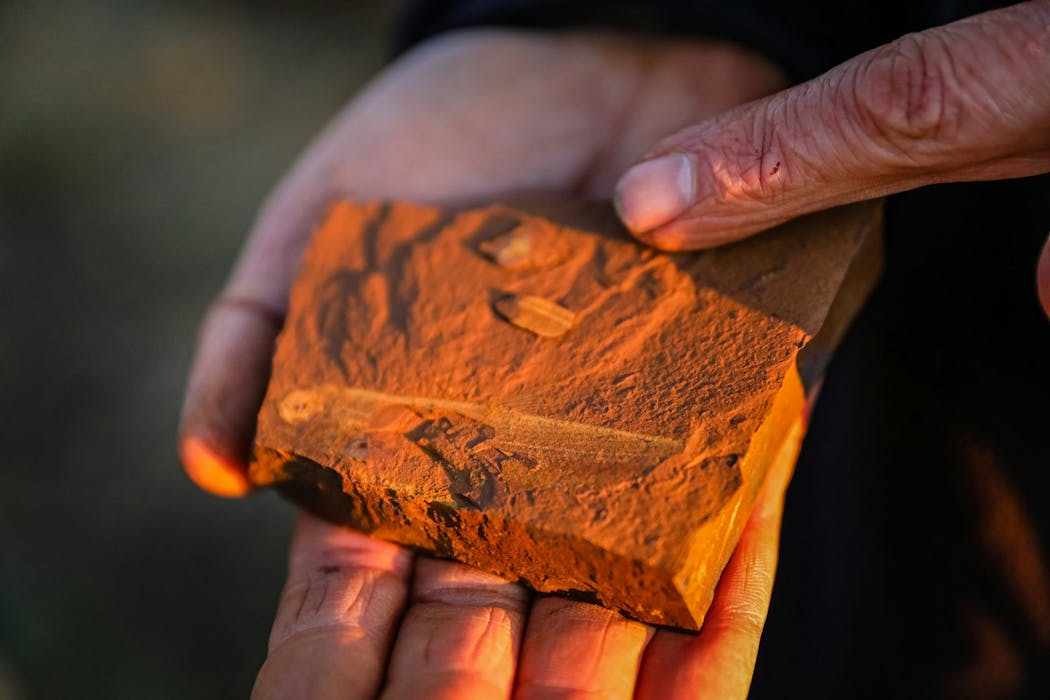
Strikingly red in appearance, the sedimentary rocks here are composed entirely of goethite – a fine-grained mineral that contains iron. This iron has preserved a range of plants, insects, spiders, fish and feathers with exceptional detail.

Our new study, published in the journal Gondwana Research, shows there’s another reason these rocks are so intriguing. They fundamentally challenge ideas about where well-preserved fossil sites on Earth can be found, and why.

Large trapdoor spider fossil preserved on a red rock
A large trapdoor spider preserved in McGraths Flat.
Michael Frese

Beyond shale and sandstone

Traditionally, the most exceptionally well-preserved fossil sites are from rocks dominated by shale, sandstone, limestone, or volcanic ash.

Consider Germany’s Messel Pit or Canada’s Burgess Shale. At these sites, organisms were rapidly buried in fine-grained sediments, allowing the exceptional preservation of soft tissues, not just hard parts.

Messel Pit has preserved roughly 47 million-year-old fossils showing the outlines of feathers, fur and skin. Meanwhile, the Burgess Shale contains soft tissues from some of Earth’s earliest animal life, dating back about 500 million years.

By contrast, sedimentary rocks made entirely of iron are the last place you’d expect to find well-preserved remains of land-based (terrestrial) animal and plant life.

That’s because iron-rich sedimentary rocks are predominantly known from banded iron formations. These massive iron deposits largely formed around 2.5 billion years ago in Earth’s ancient oxygen-depleted oceans, long before complex animal and plant life evolved.

In more recent history, iron is considered a mere weathering product, forming rust on the continents when exposed to our oxygen-rich atmosphere. Just look at Australia’s iconic red-rocked outback landscape that preserves these million- to billion-year-old features.

Yet the discovery of McGraths Flat has defied these expectations.

Large rectangular block of red rock composed of goethite, an iron-rich mineral.
Strikingly red fossil-bearing rocks of McGraths Flat, composed of an iron-oxyhydroxide mineral called goethite.
Tara Djokic

Terrestrial life entombed in iron

McGraths Flat is made from a very fine-grained, iron-rich rock called ferricrete. It’s essentially a cement made from iron.

The ferricrete consists almost entirely of microscopic iron-oxyhydroxide mineral particles, each just 0.005 millimetres across. When an animal died and was buried in the sediment, this minute scale is what allowed the iron particles to fill every cell. The result? Extraordinarily well-preserved soft tissue fossils.

Compared with marine life, fossil sites preserving terrestrial life are notoriously rare. Terrestrial sites that preserve soft tissues? Even rarer. The exceptional detail captured in the McGraths Flat fossils reveals new snapshots of past life we don’t often get to find.

These fossils are so perfectly preserved that individual pigment cells in fish eyes, internal organs of insects and fish, and even delicate spider hairs and nerve cells can be seen.

This level of preservation rivals other well-preserved fossil sites, such as those consisting of shale or sandstone. Except here, they are entombed in iron.

Three people, two men standing on either side of one woman, in a rural field wearing outdoor gear with work boots and wide brimmed hats.
Australian Museum Research Institute researchers Matthew McCurry, Tara Djokic and Patrick Smith (left to right), three of 15 co-authors who collaborated on this study published in Gondwana Research.
Salty Dingo

How did McGraths Flat form?

Our new study sheds light on how this fossil site came to be – a crucial step for finding similar terrestrial fossil troves in iron.

McGraths Flat began forming during the Miocene when iron leached from weathering basalt under warm, wet rainforest conditions.

Acidic groundwater then carried the dissolved iron underground until it reached a river system with an oxbow lake – an abandoned river channel. There, the iron became ultra-fine iron-oxyhydroxide sediment.

It rapidly coated dead organisms on the lake floor and replicated their soft tissue structures down to the cellular level.

A new fossil roadmap

Understanding how McGraths Flat formed could provide a roadmap for finding similar iron-rich fossil sites worldwide.

Key features to look for include very fine-grained and finely layered ferricrete in areas where:

  • ancient river channels cut through older iron-rich landscapes, such as basaltic rocks from volcanoes

  • ancient warm, humid conditions once promoted intense weathering, and

  • the surrounding geology lacks significant limestone or sulphur-containing minerals (such as pyrite), because these could interfere with the formation of the iron-oxyhydroxide mineral sediments.

The red rocks of McGraths Flat open an entirely new chapter in our understanding of how exceptionally well-preserved fossil sites can form.

The next breakthrough in understanding ancient terrestrial life might not come from traditional shale or sandstone fossil beds, but from rusty-red rocks hidden beneath our feet.

Four people kneeling on the ground over red rocks, with hammer and chisels spitting the rocks apart to search for fossils.
Palaeontologists from the Australian Museum Research institute at the McGraths Flat field site, splitting the red rocks apart with a hammer and chisel to search for fossils.
Tara Djokic

The study’s authors acknowledge the traditional custodians of the land and waterways on which McGraths Flat is located, the Wiradjuri Nation people.

The Conversation

Tara Djokic and co-authors received funding for this research from the Etheridge family descendants; Australian Museum Research Institute, Australian Museum Trust; and Australian Research Council (ARC). We acknowledge the scientific and technical assistance of Microscopy Australia, especially from the Centre for Advanced Microscopy, ANU (jointly funded by the ANU and the Australian Federal Government).
Tara is affiliated with the not-for-profit organisation Women in Earth and Environmental Sciences Australasia (WOMEESA).

ref. Unusual red rocks in Australia are rewriting the rules on exceptional fossil sites – https://theconversation.com/unusual-red-rocks-in-australia-are-rewriting-the-rules-on-exceptional-fossil-sites-266904

Why Trump is not a death knell for global climate action

Source: The Conversation (Au and NZ) – By Matt McDonald, Professor of International Relations, The University of Queensland

GettyImages Rasid Necati Aslim/Getty

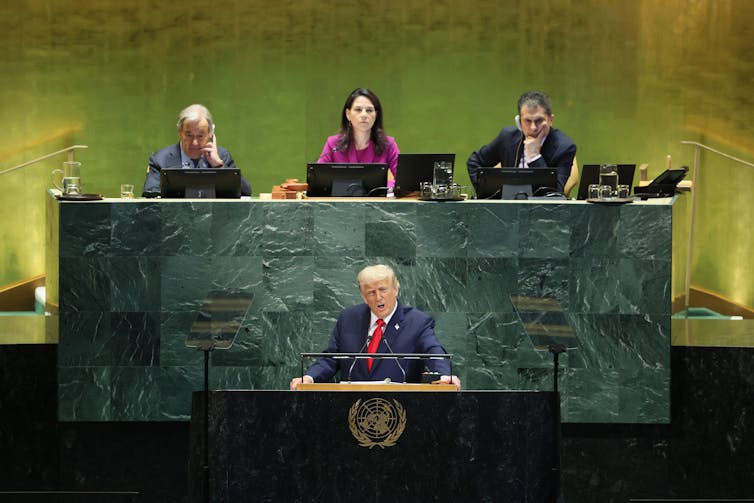
In his rambling speech to the United Nations last month, United States President Donald Trump described climate change as “the greatest con job ever perpetrated on the world”.

Of course, this claim was unfounded, ignoring the overwhelming scientific evidence that climate change is occurring.

It was also unlikely to convince gathered dignitaries, who appeared bemused by a speech better suited to a campaign rally than a presidential address to world leaders.

But coming on the eve of the crucial global COP30 climate talks in Brazil, the speech does raise the question: what does the second Trump administration mean mean for international climate action?

US President Donald Trump addresses the UN, while three dignitaries sit behind him
US President Donald Trump speaks during the United Nations General Assembly on September 23, 2025 in New York City.
Michael M. Santiago/Getty

Trump digs coal

Beyond enabling climate denialists and disinformation peddlers, Trump has ultimately delivered on his campaign promise to aggressively support the US fossil fuel sector. In his words: “drill, baby, drill”. Or, more recently: “mine, baby, mine”.

Soon after his inauguration, Trump signed an executive order to withdraw the US from the Paris Agreement, the legally binding UN treaty aimed at limiting global temperature rise well below 2°C degrees over pre-industrial levels.

Last month, Trump announced a plan to open up 13 million acres of federal land for coal mining, and offered hundreds of millions in federal subsidies for coal projects.

He has ordered the removal of climate data from government sites and all but eliminated direct government funding for climate science research and monitoring.

And he has gutted the Inflation Reduction Act, the signature climate initiative of the Biden administration that was designed to stimulate large-scale investment in renewable energy.

All told, Trump’s initiatives are likely to mean an additional 7 billion tonnes of emissions will be created compared to a scenario where the US met its Paris commitments.

This is bad news. But what implications will it have for international climate cooperation?

Dark clouds on the climate horizon

Clearly, 7 billion tonnes of additional emissions is a problem. By some accounts, this represents around one fifth of the global carbon budget if we are to keep to the Paris target of under 2°C.

And when the world’s most powerful state, largest economy and second-largest greenhouse gas emitter walks away from the United Nations Framework Convention on Climate Change (UNFCC), it does not bode well for international climate action.

Of course this raises the question of how the Brazilian climate talks organisers can motivate states to adopt strong emissions targets when wealthy, high-emitting countries walk away. There is a real risk the US position takes the pressure off other high-emitting countries, such as the Gulf States and Russia, who are disproportionately responsible for the problem.

Finally, climate finance – financial resources used to support action on climate change – looms once again as a crucial issue at climate negotiations. Securing sufficient funding will be far more complicated given Trump’s “America First” platform, which prioritises foreign and domestic policies serving US interests.

Despite this, there are still grounds to be optimistic.

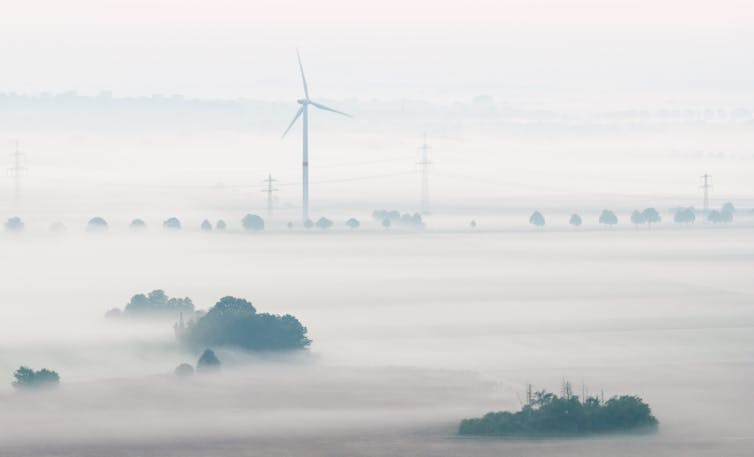
A wind turbine stands in a foggy field in France.
Global emissions have likely peaked, driven by the increase in renewable energy.
Julian Stratenschulte/Getty Images

Leadership without the US

A first point in the case for cautious optimism is that global emissions have potentially peaked and are on the verge of decline for the first time since the Industrial Revolution.

This has been driven by unprecedented global investment in renewable energy. The energy market is changing rapidly despite aggressive US subsidies for the fossil fuel sector. Global energy investment is likely to top A$1.5 trillion in 2025. Meanwhile, coal, oil and natural gas will see the first decline in global investment since the COVID pandemic.

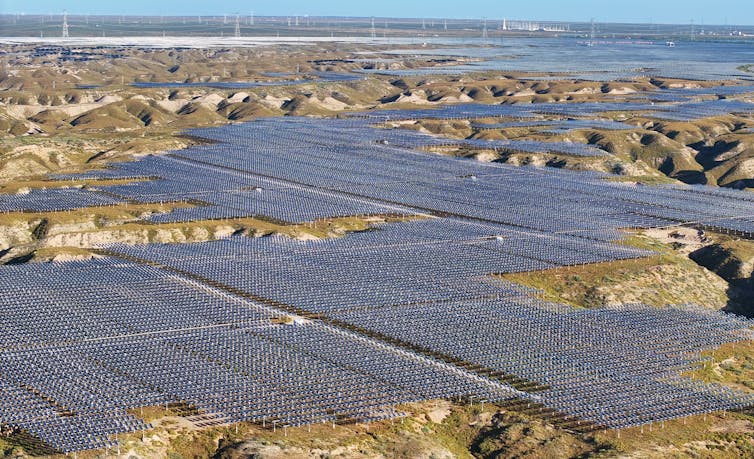
There are also signs other countries, like China, view the US position as an opportunity. Last month Beijing outlined a target for emissions reduction (7–10% by 2035) for the first time in its history. Even though China is still adding to its fleet of coal-fired power stations, it is also adding more solar and wind capacity than the rest of the world combined.

China may want to make a case for itself as a responsible global leader in contrast to the US. This could in turn advance China’s strategic interests in regions such as the Pacific which are acutely vulnerable to climate effects.

An aerial shot of a a huge swathe of solar panels in China.
Solar panels are seen on fields and hilltops in Yinchuan, China’s northern region. China – the world’s largest emitter of greenhouse gases – is rapidly expanding renewables.
AFP/Getty

So far, there’s no evidence countries have used US backsliding as an excuse to pull back from international cooperation. No country has left the Paris agreement since Trump’s withdrawal.

In 2001, when the Bush administration signalled the US wouldn’t ratify the Kyoto Protocol, Australia’s Prime Minister John Howard soon followed suit.

But in 2025, only months after the US withdrew from Paris, Prime Minister Anthony Albanese outlined an increased emissions target.

Even at home, Trump’s position has not amounted to a death knell for climate action. California, whose governor Gavin Newsom famously parodied Trump’s communication style on social media, already oversees one of the world’s largest emissions trading schemes and has entered into a climate partnership with Brazil to further cooperation ahead of COP30.

All in all, there are grounds for cautious optimism, even hope, that the rest of the world might band together without US leadership.

Eyes on COP

Negotiators at next month’s COP30 talks will face formidable challenges which have only become more pressing as a result of the Trump administration’s climate stance.

But past experience suggests hard-fought COP negotiations can build strong momentum for global action by focusing international attention.

Perhaps they can build pressure on the US to come back into the fold, or at least enable pro-climate actors within the US to pursue reform despite President Trump’s interference.

The Conversation

Matt McDonald has received funding from the Australian Research Council and the Economic and Social Research Council in the UK.

ref. Why Trump is not a death knell for global climate action – https://theconversation.com/why-trump-is-not-a-death-knell-for-global-climate-action-266350

IFJ condemns Australian lobby censorship bids to ‘silence’ reporting on Gaza

Pacific Media Watch

The global peak journalism body has condemned the targeting, harassment, and censorship by lobby groups of Australian journalists for reporting critically on Israel’s war on Gaza.

The Brussels-based International Federation of Journalists (IFJ) and its Australian affiliate, the Media, Entertainment and Arts Alliance (MEAA), said in a statement they were attempts to silence journalists and called on media outlets and regulatory bodies to ensure the fundamental rights to freedom of expression and access to information were upheld.

In a high-profile case, Australia’s Federal Court found on June 25 that Lebanese-Australian journalist Antoinette Lattouf was unlawfully dismissed by the national public broadcaster, Australian Broadcasting Corporation (ABC), for sharing a social media post by Human Rights Watch relating to violations by Israel in Gaza, reports IFJ.

Lattouf was removed from a five-day radio presenting contract in Sydney in December 2023, with the judgment confirming her dismissal was made to appease pro-Israel lobbyists.

On Seotember 24, the ABC was ordered to pay an additional $A150,000 in compensation on top of A$70,000 already awarded.

In a separate incident, Australian cricket reporter Peter Lalor was dropped from radio coverage of Australia’s Sri Lanka tour by broadcaster SEN in February after he reposted several posts on X regarding Israeli attacks in Gaza and the release of Palestinian prisoners in Israel.

“I was told in one call there were serious organisations making complaints; in another I was told that this was not the case,” said Lalor in a statement.

Kostakidis faces harassment
Prominent journalist and former SBS World News Australia presenter Mary Kostakidis has also faced ongoing harassment by the Zionist Federation of Australia, with a legal action filed in the Federal Court under Australia’s Racial Discrimination Act for sharing two allegedly “antisemitic” posts on X.

Kostakidis said the case failed to identify which race, ethnicity or nationality was offended by her posts, with a verdict currently awaited on a strikeout order filed by Kostakidis in July.

The MEAA said: “MEAA journalists are subject to the code of ethics, who in their professional capacity, often provide critical commentary on political warfare.

“These are the tenets of democracy. We stand with our colleagues in their workplaces, in the courtrooms, and in their deaths to raise our voices against the silence.”

The IFJ said: “Critical and independent journalism in the public interest is more crucial than ever in the face of incessant pressure from partisan lobby groups.

“IFJ stands in firm solidarity with journalists globally facing harassment and censorship for their reporting.”

Journalist killed in Gaza City

Killed Palestinian journalist Saleh Aljafarawi . . . gained prominence for his videos covering Israel’s two-year war on Gaza Image: Abdelhakim Abu Riash/AJ file

Meanwhile, gunmen believed to be part of Israeli-linked militia, have killed Palestinian journalist Saleh Aljafarawi, south of Gaza City, after the ceasefire, reports Al Jazeera.

Social media posts showed people bidding farewell to the 28-year-old who had been bringing news about the war over the last two years through his widely watched videos, the channel said.

Several people accused of attacking returnees to Gaza City by colluding with Israeli forces were killed during clashes in the area where Aljafarawi was shot dead, sources told Al Jazeera.

Al Jazeera said that more than 270 Palestinian journalists had been killed in Gaza since the war began in October 2023.

Article by AsiaPacificReport.nz

Genital problems? Ancient doctors thought goat’s cheese or warm baths could help

Source: The Conversation (Au and NZ) – By Konstantine Panegyres, Lecturer in Classics and Ancient History, The University of Western Australia

Joelle Icard/Getty

Our genitals are such an important and sensitive part of our bodies. So it’s not surprising that keeping them healthy was as important in antiquity as it is today.

Some ancient ideas about our genitals, and ways of caring for them, may make us wince, and certainly wouldn’t be recommended today. But one attitude remains.

At least one ancient doctor stressed the importance of people overcoming any embarrassment talking about their genitals to seek medical attention for any concerns.

But medical writers, especially doctors, didn’t hold back. They had plenty to say about how genitals work and how to care for them. Here are their top five topics and tips.

1. How do genitals work? Doctors explained

The Greek physician Soranus (2nd century AD) wrote the book Gynaecology in which he described diseases and their treatment. He wrote:

The vagina […] is a sinewy membrane, almost as round as the intestine, comparatively wide inside, comparatively narrow at the external end; and it is in the vagina that intercourse takes place […] those parts which lie outside of it and are visible are called ‘labia’, situated as if they were the lips of the vagina. They are thick and fleshy […]

Writers also tried to explain how the genitals worked.

For example, the unknown author of the treatise On Generation (perhaps late 5th century BC) explained the function of the penis, and semen production:

Vessels and cords from the whole body lead to the penis, and these, as they are gently rubbed, warmed, and filled, are befallen by a kind of tickling sensation, and from this pleasure and warmth arise in the whole body. As the penis is rubbed and the man moves, the moisture in his body is warmed, turns to liquid, is agitated by his movement, and foams up […]

2. How to manage periods? Avoid gymnastics

Ancient physicians said much more about everyday care of women’s genitals than men’s. This seems to be because they understood the physical difficulties caused by the menstrual cycle and childbirth.

Soranus believed women should rest or do moderate activities during their periods:

it is safer to rest and not to bathe especially on the first day.

Doctors also recognised women needed special attention at different stages of their lives.

For instance, Soranus recommended girls expecting their first period should take slow walks, avoid gymnastics, have massages, take a daily bath, and divert their minds through activities such as reading.

Women entering menopause should, Soranus suggested, take measures to ensure that menstruation doesn’t cease suddenly. For this Soranus recommends the same activities as he does for girls expecting their first period. An abrupt change would, he thought, cause harm.

On the question of sexual intercourse, Soranus believed it was healthiest to avoid having sex unless a man and woman want to make a baby. Sex, he thought, was no danger to a man’s health whereas it may endanger a woman.

3. Don’t be embarassed. See a doctor

The Greek writer Plutarch (46–119 AD) recognised it’s necessary for people to face up to some awkward conversations about their genitals to get any treatment they need.

For example, he said many people would rather:

die than reveal to physicians some hidden malady.

He was referring to situations where patients had to show their doctors their genitals. The example he gave was when:

a man had an abscess in the anus or a woman a cancer in the womb!

Doctors realised people could be embarrassed to see a doctor about their sexual health, but urged them to seek care regardless.
piola666/Getty

4. Try a laxative or a suppository

Ancient medical texts are full of descriptions of how to treat various conditions that affect the genitals.

The physician Galen (129–216 AD) talked about how he treated priapism, which he described as a condition where the penis “is erect against the person’s will” and won’t become flaccid.

He said he cured these patients by giving them laxatives, and making them take baths and fasts.

The woman medical writer Aspasia (date uncertain) also wrote about how to treat various problems affecting women.

For example, she said that tears of the uterus were caused by:

violent births owing to the large size of the fetal head.

For treating tears of the uterus, she recommended avoiding surgery or drugs “which lead to inflammation and cramps”. Instead, she told patients to use sitz baths (a warm, shallow bath to relieve discomfort), and metallic medications made from ashes, antimony or burned lead delivered via suppository.

Some ancient treatments must have been derived from folk medicine.

Pliny the Elder (23 or 24–79AD), for instance, was probably referring to a folk remedy when he talked about how “pounded goat’s-milk cheese” was a good remedy for “carbuncles of the genitals”.

5. Surgery was an option for men and women

Ancient physicians also provided detailed instructions about surgery.

For example, the Roman medical writer Celsus offered a guide for surgery to fix phimosis of the penis, when someone can’t pull back the foreskin:

Underneath the foreskin is to be divided from its free margin in a straight line back as far as the frenum, and thus the skin above is relaxed and can be retracted. But if this is not successful […] a triangular piece of the foreskin is cut out from underneath […]

Medical writer Paulus of Aegina (7th century AD) described an operation for an abscess of the mouth of the womb:

In operating, the woman should be placed on a seat in a supine posture, having her legs drawn up to the belly, and her thighs separated from one another […] When the abscess is exposed, if it be soft and thin […] it is to be divided at the top by a scalpel or needle, and after the discharge of the pus, a soft oblong bandage well smeared with rose-oil is to be introduced into the incision […]

Please don’t try this at home

Modern doctors would not condone most, if not all, of what ancient medical writers said about genitals.

For instance, it’s unlikely people will be rushing out to smear cheese on their genitals any time soon.

But in contrast to their patients, who felt awkward talking about their genitals, ancient doctors had plenty to say.

Konstantine Panegyres does not work for, consult, own shares in or receive funding from any company or organisation that would benefit from this article, and has disclosed no relevant affiliations beyond their academic appointment.

ref. Genital problems? Ancient doctors thought goat’s cheese or warm baths could help – https://theconversation.com/genital-problems-ancient-doctors-thought-goats-cheese-or-warm-baths-could-help-264041

Year 12 are about to start their final exams. Here’s how to keep calm and stay positive

Source: The Conversation (Au and NZ) – By Kylie Trask-Kerr, Senior lecturer, Australian Catholic University

Klaus Vedfelt/ Getty Images

Thousands of Year 12 students across Australia are getting ready to sit their final exams.

Students may be feeling a lot of things right now – from heightened pressure to excitement it will all be over soon. Families may be seeking strategies to help their young people to feel confident and stay calm.

Here are some research-backed strategies to help.


Read more:
Take breaks, research your options and ditch your phone: how to take care of yourself during Year 12


Reframe the narrative

Students, schools and the media often talk about Year 12 exams as the culmination of schooling. This may not be helpful to everyone, as not everyone will receive the results they want.

Stress tends to increase throughout the final year of school.

Although a moderate level of stress is normal, and some pressure may even be useful, too much worry about exams can affect performance and overall wellbeing.

Remember, one exam is not the whole story of your ATAR or your future.

It is healthier to think about the bigger picture. Education isn’t just about exams. They are one part of a bigger journey that includes the relationships you’ve formed with peers and teachers, all the things you learned and all the experiences you’ve had.

Students have already achieved a great deal in 13 years of school – regardless of what happens in their exams or ATAR.

What is ‘success’?

In our 2021 study, colleagues and I looked at how different ideas of “success” relate to young people’s wellbeing.

A review of existing studies suggests teenagers who focus on their connections to others and their personal growth may have greater wellbeing than those who focus on “extrinsic” goals or external approval.

Families can help students by emphasising the importance of life beyond the classroom.

You’ve got options!

Keep in mind, your future does not hinge on this result.

There are more alternative pathways into university or further study than ever before. This can include going to TAFE or non-ATAR entry schemes for university.

Reminding yourself – or your child – about these options may help to reduce stress.

Have a clear plan for your exams

As you near the end of your study revision period, think about your plan for certain exams.

You will likely already have done practice exams and revision questions, so you know what format to expect.

Remind yourself when you get into the exam room to take your time to read the instructions carefully and be aware of sections where there is a choice. Pay attention to the weighting of questions as this can help you to plan the time well.

And remind yourself to stop and understand the “command terms”. These are words that tell you what to do in a question, like “analyse”, “compare” or “discuss”.

What if something goes wrong?

You may come out of an exam feeling like you didn’t do your best or something didn’t go to plan. This is very common!

So having a strategy to manage when things do not go well can be important –especially when the setbacks happen early in the exam schedule.

Research tells us planning and persistence are key components of “academic buoyancy”, or students’ resilience in the face of a setback.

This means you should revisit your plan for the next exam, whether it is tomorrow or next week. Plan your timing and approach. Look at any feedback you received on the practice exams, or advice you have received from teachers. Feeling prepared for the next exam will increase your confidence.

Remember, resilience is not just an individual trait: it comes from relationships and contexts too.

You don’t have to handle setbacks alone. In fact, it’s better if you ask for help.

Talking with a trusted friend, teacher, family member or counsellor can put things into perspective or help reframe your approach for the next exam.

Keep some balance in your life

In among your revision and preparation, don’t forget to look after your health.

Get plenty of sleep, eat well, take breaks and spend time in nature – these will all help you maintain focus and wellbeing.

Steven Lewis receives funding from the Australian Research Council.

Kylie Trask-Kerr does not work for, consult, own shares in or receive funding from any company or organisation that would benefit from this article, and has disclosed no relevant affiliations beyond their academic appointment.

ref. Year 12 are about to start their final exams. Here’s how to keep calm and stay positive – https://theconversation.com/year-12-are-about-to-start-their-final-exams-heres-how-to-keep-calm-and-stay-positive-266897

‘Doughnut economics’ shows how global growth is out of balance – and how we can fix it

Source: The Conversation (Au and NZ) – By Warwick Smith, Honorary Fellow, School of Social and Political Sciences, The University of Melbourne

GettyImages Paul Chinn/The San Francisco Chronicle via Getty Images

A new update to an influential economic theory called “Doughnut Economics” shows a global economy on a collision course with nature.

The influential book by Kate Raworth, Doughnut Economics: Seven Ways to Think Like a 21st Century Economist, was first published in 2017. It was lauded for its ability to convey the complexity of global social and environmental issues in a single, easy-to-understand diagram.

The doughnut shape represents the safe and just operating space for humanity.

The hole at the centre of the doughnut represents a shortfall in the social foundations necessary for people to live safe and just lives.

The area outside the doughnut shows ecological overshoot across a range of domains, such as climate change, biodiversity loss and ocean acidification.

Raworth’s conceptual doughnut.
Raworth, K (2025). The Evolving Doughnut, Doughnut Economics Action Lab, Oxford, CC BY-SA

Now, Andrew Fanning and Kate Raworth have published the first update to the Doughnut Economics framework since 2017 in Nature.

The update should prompt us to ask serious questions about our society, economy and notions of progress.

A global movement

Since the book was published, doughnut economics has evolved into something of a global movement, at the centre of which is the Doughnut Economics Action Lab (DEAL). Many places, including Melbourne, are using the framework to assess their social and ecological condition and trajectory.

Doughnut economic thinking also aligns with Australian First Nations’ view of Country – the economy, society and environment all as a single, inseparable thing. An Indigenous consultancy, Dinadj, is working to develop an Indigenous doughnut for Australia.

The original global doughnut portrait was a static picture at a single point in time. The recently published update turns this into an annual time series spanning from 2000 to 2022. This means we can now monitor trends in global social and ecological health over time.

What these trends show is alarming.

While global gross domestic product (GDP) has more than doubled, progress on meeting social foundations has slowed and ecological overshoot has accelerated. In other words, we are damaging critical biophysical processes at a faster rate than we’re improving people’s lives.

The update shows an overshoot on six of the nine critical global planetary boundaries. Separate published research indicates we’ve since crossed a seventh boundary, ocean acidification.

Rich nations dominate the damage to the environment

The other important change in this update is the breakdown of data by nation, allowing comparison between groups of countries. This illustrates the unequal nature of economic development and the trade-off between social foundations and ecological overshoot that the current economic system creates.

The richest 20% of nations, home to 15% of the global population, are responsible for 44% of the global ecological overshoot (going beyond the safe space for humanity). But they have only a 2% share of the shortfall in social foundations, in areas such as food insecurity, health and education.

Meanwhile, the poorest 40% of countries, with 43% of the population, account for only 4% of the ecological overshoot but 63% of the social shortfall.

While progress has been made across a range of social domains, shortfalls remain alarming. About 75% of the global population say they perceive widespread corruption in government and business. Some indicators are going backwards, most notably a rise in autocratic regimes and food security.

What does progress really mean?

The updated doughnut framework adds to the weight of evidence that the dominant economic narrative – which equates economic growth with progress – is leading us towards multiple environmental crises. And it’s falling short on delivering social progress.

In Australia, a recently released report, Growth Mindset from the Productivity Commission, is a clear illustration of this disconnect between economic goals and social and environmental health.

The commission chair, Danielle Wood, told the National Press Club:

Governments must bake in the process of asking themselves: what have you done for growth today?

Tellingly, the report barely touches on poverty, inequality, biodiversity or the environment. It makes no mention of the impact that growth (particularly from rich countries like Australia) is having on critical planetary boundaries.

However, there are many initiatives emerging from governments, businesses and civil society around the world and in Australia that reflect the need for different definitions of progress.

At the national level, we have Measuring What Matters. This framework was developed by Treasury at the request of Treasurer Jim Chalmers and “will track progress towards a more healthy, secure, sustainable, cohesive and prosperous Australia”.

The Australian Capital Territory has a well-developed wellbeing framework that provides a holistic guide to government decision-making. Every state government is also engaging with these questions, with an explicit wellbeing focus in Tasmania, Victoria, New South Wales and South Australia.

It’s early days for all of these government initiatives, but it’s a good sign so many are starting to take these challenges seriously.

The Melbourne Doughnut city portrait was adapted for Australia by community organisation Regen Melbourne and featured as one of two examples in the Nature article. It confirms our place in the global distribution with relatively low levels of social deprivation and very high levels of ecological overshoot.

The doughnut economics image illustrates with great clarity the complex challenges faced by human society in the 21st century.

The recent update shows it’s more important than ever that we think carefully about what progress means and we repurpose our economy away from its destructive focus on growth at all costs and towards human and environmental flourishing.


Read more:
Stay in the doughnut, not the hole: how to get out of the crisis with both our economy and environment intact


Warwick Smith is a Research Director with the Centre for Policy Development and a Director of the Castlemaine Institute and the Castlemaine Community Investment Co-operative.

ref. ‘Doughnut economics’ shows how global growth is out of balance – and how we can fix it – https://theconversation.com/doughnut-economics-shows-how-global-growth-is-out-of-balance-and-how-we-can-fix-it-266889

Time to move beyond billboards: Australia’s tourism strategy needs to embrace the personal

Source: The Conversation (Au and NZ) – By Katharina Wolf, Associate Professor in Strategic Communication, Curtin University

boxiang Xiao/Unsplash

Australia continues to rely on billboard-style and cinematic advertising to promote itself as a destination. This approach, used for decades, presents a national image built around iconic sites and curated visuals.

While this style may appeal to tourism bodies because of the celebrity-fronted content and central control, it is increasingly out of step with how modern travellers plan their journeys.

In 2025, travellers are scrolling TikTok, watching Instagram reels, and browsing peer reviews. Tourism campaigns should meet people where they are.


Read more:
Still throwing shrimp on the barbie: why is Tourism Australia’s advertising stuck in 1984?


Authenticity beats curated content

Social media is a central source of travel inspiration, particularly for Gen Z and millennials, according to a global survey of 20,000 respondents across all age groups.

Almost 90% of young travellers discover new destinations through TikTok, and 40% say they have booked a trip directly because of something they saw on the platform.

What matters most is not just reach, but trust.

Influencers shape behaviour from desire to booking and post-trip sharing. Their impact rests on perceived authenticity. Real people telling stories resonate more than stylised ads.

Storytelling sits at the heart of this shift, and tourism providers can engage in this form of storytelling, too. Airbnb’s Host Stories campaign invites hosts to share personal narratives through short videos and blog posts.

By highlighting real hosts and their daily lives, marketing moves beyond selling places and instead emphasises authentic, locally rooted connections that resonate with travellers.

It introduces travellers to places through personal experience, grounded in local knowledge and genuine connection.

User-generated content builds trust

A 2025 study found user-generated content enhances emotional connection and perceived authenticity with potential tourists.

Stumbling on a friend’s holiday photo or a short travel video in their feed can increase the appeal of a destination. Unlike traditional advertising, which requires deliberate placement, peer content can influence simply by appearing in everyday browsing.

Australia has used participatory storytelling before. One powerful example is Tourism Queensland’s 2009 Best Job in the World campaign, which invited applicants from around the world to compete for a six-month caretaker role on Hamilton Island in the Great Barrier Reef. All they had to do was submit a short video explaining why they were the right candidate.

The campaign went viral, attracting over 34,000 applicants from 200+ countries, millions of website hits and global media overage.

Its success was driven less by who eventually got the job and more by the anticipation and unusual premise. It stood out because of simplicity and inclusivity, inviting real people to be part of the narrative.

Yet, 16 years on, Australia’s national tourism campaigns still rely on cinema ads, billboards and polished TV commercials built around icons such as Uluru and the Sydney Harbour Bridge.

From storytelling to story-sharing

The long-running Inspired by Iceland campaign consistently encourages locals to share authentic travel memories, cultural insights and personal stories.

Iceland Hour, launched in June 2010, saw schools, parliament and businesses pause for a coordinated social media push. Citizens and international supporters posted more than 1.5 million positive, personal messages across social media in a single week.

The campaign helped rebuild confidence after the Eyjafjallajökull volcanic eruption, and contributed to a 20% year-on-year rise in tourist arrivals.

Finland’s Rent a Finn campaign, launched in 2019, embraced a similarly human-centred approach. Showcasing ordinary people rather than cinematic landscapes, the campaign reached 149 countries, contributed €220 million in additional tourism revenue and reinforced Finland’s reputation as the “world’s happiest country”.

The United Kingdom’s Great Chinese Names for Great Britain campaign in late 2014 invited Chinese audiences to propose Mandarin nicknames for 101 British landmarks.

Suggested names, such as “Strong Man Skirt Party” for a kilted parade or “Stone Guardians” for Hadrian’s Wall, were featured on Google Maps and Wikipedia.

The campaign attracted more than 13,000 submissions, sparked widespread engagement on Chinese social media and was followed by a 27% increase in visits from China. It was worth an estimated £22 million boost to the UK economy.

Storytelling as a sustainability strategy

Participatory storytelling is not only more engaging, it can also be more sustainable.

Japan’s Hidden Gems campaign redirects tourist traffic away from overcrowded areas like Kyoto and Tokyo by spotlighting lesser-known destinations through locally led narratives. These stories promote slower travel, distribute benefits more evenly and reduce pressure on fragile ecosystems.

Australia faces a similar challenge. Our global image is still anchored to a handful of spectacular but vulnerable icons.

Yet tourism is about more than selfies in front of sandstone or coral. By inviting regional communities and visitors to tell their stories, we could shift attention beyond brochure highlights and encourage deeper, more diverse engagement.

There is also a strong economic case for prioritising emotional connection. Research shows when travellers form personal bonds with a place – through memorable, localised experiences – they are more likely to return, recommend it to others and stay longer.

Tourism is a relationship, not a product

Visitors are not passive consumers of postcard moments but active contributors to a shared story.

Australia’s tourism strategy should reflect this. This could mean amplifying visitor photos and videos on official platforms, inviting local communities to co-design campaigns, and drawing on authentic user-generated content rather than polished advertising and cinematic masterpieces.

That means letting go of perfection, embracing authenticity and trusting that the people who come here, as well as the people who live here, have stories worth sharing.

Katharina Wolf does not work for, consult, own shares in or receive funding from any company or organisation that would benefit from this article, and has disclosed no relevant affiliations beyond their academic appointment.

ref. Time to move beyond billboards: Australia’s tourism strategy needs to embrace the personal – https://theconversation.com/time-to-move-beyond-billboards-australias-tourism-strategy-needs-to-embrace-the-personal-263919

New research challenges the idea of a ‘vicious cycle’ between psychological distress and conspiracy beliefs

Source: The Conversation (Au and NZ) – By Nick Fox, Researcher in Psychology, Te Kunenga ki Pūrehuroa – Massey University

Getty Images

A lot of research has been dedicated to understanding what makes people believe in conspiracies – and how they might be able to climb out of the rabbit hole again.

Conspiracies do happen. The Watergate scandal in the 1970s, which led to the resignation of US President Richard Nixon, is arguably the most infamous example.
The questioning of authority and the official narrative is something that should be encouraged.

But some people believe conspiracy theories that are contrary to evidence. Recent research found 8.9% of New Zealand participants and 10.1% of Australian participants agreed with the (false) claim fluoride is being intentionally added to the water supply by the government to make people less intelligent and easier to control”.

What draws people to conspiracies like these?

One prominent theory is that conspiracy beliefs are linked to psychological distress such as anxiety and depression.

Our new research explores the causal relationship – whether psychological distress actually makes people more likely to believe in conspiracy theories. We found very limited evidence for a link between elevated distress and conspiracy beliefs.

What research suggests about conspiracy beliefs

The existential threat model of conspiracy theories suggests experiences of psychological distress can make people more likely to develop conspiracy beliefs because they search for explanations for distressing events.

This model argues distress actually worsens once a conspiracy belief is formed, creating a vicious cycle where distress breeds conspiracy belief which, in turn, generates more distress.

The model also suggests this belief is exacerbated when a despised outgroup (political elites, for example) becomes salient as people try to make sense of their experience.

However, few have rigorously tested this claim. While substantial evidence for a correlation between psychological distress and belief in conspiracy theories has been established, correlation does not imply a causal link.

Some analyses of longitudinal data haven’t found evidence to support the hypothesis. But no one has directly tested the claims of the existential threat model.

We set out to do this using a longitudinal survey.

A longitudinal study isn’t as conclusive as a true experiment but it can establish the sequence of cause and effect and rule out some alternative explanations for a relationship.

Our sample consisted of 995 participants with representatives groups from New Zealand, Australia and the United Kingdom. Each month from September 2022 to February 2023, we presented participants with a survey, including 11 conspiracy theories and common measures of anxiety, depression and stress. Each month we asked them about their level of agreement with the conspiracy theories, and their levels of psychological distress.

Prior to collecting the data, we specified our hypotheses in our research plan. These boiled down to the ideas that increased distress of different types (anxiety, depression, stress) will subsequently increase belief in conspiracy theories and that such beliefs will subsequently increase distress.

Rethinking the vicious cycle

We found very limited evidence for elevated distress subsequently increasing belief in conspiracy theories.

We also found no evidence to support the converse – that belief in conspiracy theories increases distress.

Our findings suggest beliefs in conspiracy theories may mostly reflect a relatively stable worldview rather than being driven by temporary changes in distress.

This matters because some researchers have suggested interventions that reduce stress could be used to help reduce conspiracy beliefs. However, if stress is not driving conspiracy beliefs, as our results suggest, this approach is unlikely to be effective.

We also found no evidence that conspiracy beliefs cause short-term distress. This challenges the common assumption that beliefs in conspiracy theories inherently cause harm to one’s mental health, particularly stress, anxiety and depression. That said, conspiracy beliefs could still cause harm in other ways – such as by contributing to the flow of misinformation.

Our research challenges the idea of a vicious cycle of conspiracy beliefs. It appears distress may not have a key role in making people “spiral” down the rabbit hole.

Interventions that foster an analytical mindset or include critical thinking skills may be more useful.

The Conversation

The following research is supported by the Marsden Fund, managed by the Royal Society Te Apārangi.

This study was supported by the Marsden Fund, managed by the Royal Society Te Apārangi.

ref. New research challenges the idea of a ‘vicious cycle’ between psychological distress and conspiracy beliefs – https://theconversation.com/new-research-challenges-the-idea-of-a-vicious-cycle-between-psychological-distress-and-conspiracy-beliefs-266588

The fake Gaza ‘peace agreement’ versus real peace with justice

COMMENTARY: By Dr Mazin Qumsiyeh

A temporary ceasefire and release of some Palestinians in a prisoner exchange is not a “peace agreement” and it is far from what is needed — ending colonisation; freedom for the >10,000 political prisoners still in Israeli gulags (also tortured, nearly 100 have died under torture in the last two years); return of the millions of refugees; and accountability for genocide, ethnic cleansing and apartheid.

That is why this global uprising (intifada) will not stop until freedom, justice, and equality are attained.

Here are brief answers I gave to questions about the agreement for Gaza:

Professor Mazin Qumsiyeh during his visit to Aotearoa New Zealand last year . . . “what is needed — ending colonisation, freedom for the >10,000 political prisoners still in Israeli gulags , return of the millions of refugees, and accountability for genocide, ethnic cleansing and apartheid. Image: David Robie/APR

1. How has life in the West Bank changed for you and your community during the past two years of conflict?
The West Bank has been illegally occupied since 1967 (ICJ ruling) but it was not merely an occupation but intensive colonisation and ethnic cleansing. The attacks on our people accelerated in the last two years with over 60,000 made homeless in the West Bank and denial of freedom of movement (including hundreds of new gates installed in these two years separating the remaining concentration camps/ghettos of the West Bank ).

2. What is your assessment of the new peace deal that brought an end to the fighting in Gaza?
It is not a peace deal. It is an agreement to pause the genocide which will not work because the belligerent occupier — “Israel” — has not respected a single agreement it signed since its founding. Even the agreement to join the United Nations was conditional on respecting the UN Charter and UN resolutions issued before and after 1949.

This continued to even breaking the signed ceasefire agreement of last year. I have 0 percent confidence that this latest agreement would be respected even on the simple aspect of “pausing” the genocide and ethnic cleansing going on since 1948.

3. In your view, why did war drag on for two years despite multiple ceasefire attempts?
Simply put because colonisation can only be done with violence. And the war on our people has gone on not for two years but for 77 years without ending (sustained by Western government support). Israel as a colonisation entity is the active face of colonisation. The USA for example broke similar agreements for “pauses” in colonisation with natives in North America and broke every single one of them.


Israeli military occupation on the environment.        Video: Greenpeace

4. What kind of humanitarian and environmental toll has the conflict taken on Palestinian society?
It is now well documented from UN agencies, human rights groups (like Amnesty, Human Rights Watch, Physicians for Human Rights, even the Israeli group B’Tselem). In brief it is genocide, ecocide, scholasticide, medicide,
and veriticide. (More at: ongaza.org )

5. Why do you think it took the IDF so long to rescue all the hostages?
The terrorist organisation that deceptively calls itself “IDF” (Israeli Defence Forces) was not interested in rescuing their captives (not “hostages”) and they only got people back via exchange of prisoners (not rescue).

The IGF (Israeli Genocide Forces) actually killed many of their own soldiers and civilians
on 7 October 2023 by activating the Hannibal directive to prevent their capture. The resistance was aiming to capture colonisers (living on stolen Palestinian lands) to exchange for some of the more than 11,000 political prisoners illegally held in Israeli jails. (Again see ongaza.org )

6. How significant was international involvement — particularly from the US — in reaching the final agreement?
This is the first genocide in human history that is not executed by one government. It is executed by a number of governments directly supporting and aiding (participating). This includes the USA, UK, France, Egypt, Germany, Australia etc. Many of these countries have governments dominated or highly influenced by the Zionist agenda.

Under the influence of a growing popular protest against the genocide around the world, some of those countries are trying to wiggle out from pressure in an effort to save
“Israel” from growing global isolation. Trump was blackmailed via videos/files collected by Jeffrey Epstein and Ghiseline Maxwell (Mossad agents). He is simply a narcissistic collaborator with genocide!

7. What concrete steps do you think are necessary now to turn this peace deal into a sustainable, lasting solution?
Again not a “peace deal”. What needs to be done is apply boycotts, divestments, sanctions (BDS) on this rogue state that violates the international conventions (Geneva Convention, Conventions against Apartheid and Genocide). BDS was used against apartheid South Africa and needs to be applied here also. (For more: bdsmovement.net )

8. How do you see the Palestine Museum of Natural History contributing to rebuilding and healing efforts in the aftermath of war?
Our institute (PIBS, palestinenature.org) which includes museums, a botanic garden, and many other sections is focused on “sustainable human and natural communities” Our motto is respect: for ourselves (empowerment), for others (regardless of religious or other background), and for nature.

Conflict, colonisations, oppression are obviously areas we challenge and work on in JOINT struggle with all people of various background.

9. Looking ahead, what gives you optimism—or concern—about the future relationship between Palestinians and Israelis?
What gives me optimism first and foremost is the heroic resilience and resistance (together making sumud) of our Palestinian people everywhere and the millions of other people mobilising for human rights and for justice (including the right of refugees to return and also environmental justice).

What gives me concern is the depth of depravity that greedy individuals in power go to destroying our planet and our people and profiting from colonisation and genocide.

About 8.5 million Palestinians are refugees and displaced people thanks to Zionism and Western collusion with it. A collusion intent on transforming Palestine from multi-ethnic, multi-cultural, multireligious, and multilingual society to a racist Jewish state (monolithic).

Dr Mazin Qumsiyeh is a Bedouin in cyberspace; a villager at home; professor, founder and (volunteer) director of the Palestine Museum of Natural History and Palestine Institute of Biodiversity and Sustainability at Bethlehem University, Occupied Palestine.

Notes:
World Court Findings on Israeli Apartheid a Wake-Up Call: International Court of Justice Makes Clear Call for Reparations

The 7 October 2023 reminded us of the 1943 Warsaw Ghetto Uprising

7 October 1944! Prisoner Revolt at Auschwitz-Birkenau

The 2025 Nobel Peace Prize as before was not given to the any of the hundreds of deserving nominees but given instead to rightwing pro-genocide María Corina Machado. She dedicated her prize to Donald Trump and had previously aligned with the worst rightwing parties throughout Latin America as well as the genocidal regime of Netanyahu (and even asked them for help to topple her own elected government).

Article by AsiaPacificReport.nz

Will Trump’s ceasefire plan really lead to lasting peace in the Middle East? There’s still a long way to go

Source: The Conversation (Au and NZ) – By Andrew Thomas, Lecturer in Middle East Studies, Deakin University

The first steps of the peace plan for Gaza are underway. Now both parties have agreed to terms, Hamas is obligated to release all hostages within 72 hours and the Israeli Defence Forces (IDF) will withdraw to an agreed-upon line within the strip.

Hopes are high, particularly on the ground in Gaza and in Israel after two years of brutal conflict. Some argue the parties are now closer than ever to an end to hostilities, and US President Donald Trump’s 20-point peace plan may be an effective road-map.

But the truth is we have been here before. Hamas and Israel have now agreed to a road-map to peace in principle, but what is in place today is very similar to ceasefire deals in the past, and a ceasefire is not the same as a peace deal or an armistice.

The plan is also very light on specifics, and the devil is definitely in the detail. Will the IDF completely withdraw from Gaza and rule out annexation? Who will take on governance of the strip? Is Hamas going to be involved in this governance? There were signs of disagreement on these issues even before the fighting stopped.

So if the ceasefire steps hold in the short term – then what? What would it take for the peace plan to be successful?

First, the political pressures to refrain from resuming hostilities will need to hold. Once all the hostages are returned, which is expected to take place by Tuesday Australian time, Hamas effectively loses any remaining leverage for future negotiations if hostilities were to resume.

Once the hostage exchange is complete, it’s likely Israeli Prime Minister Benjamin Netanyahu will see some pressure from his right to resume hostilities.

With Hamas relinquishing this leverage, it will be essential for the Israeli government to see these negotiations and the end of the war as fundamental to its long term interests and security for peace to hold. There must be a sincere desire to return to dialogue and compromise, not the pre-October 7 2023 complacency.

Second, Hamas will likely have to relinquish its arms and any political power in Gaza. Previously, Hamas has said it would only do this on the condition of recognition of a sovereign Palestinian state. As recently as October 10, factions in Gaza have said they would not accept foreign guardianship, a key part of the peace plan, with governance to be determined “by the national component of our people directly”.

Related to this, any interim governance or authority that takes shape in Gaza must reflect local needs. The proposed “body of peace” headed by Trump and former UK prime minister Tony Blair, could risk repeating previous mistakes of cutting Palestinians out of discussions over their own future.

Part of the peace deal is the resumption of humanitarian aid flows, but the fate of the Gaza blockade that has been effectively in place since 2007 is unclear. The land, sea and air blockade, which was imposed by Egypt and Israel following Hamas’ political takeover of Gaza, heavily restricts imports and the movement of Gazans.

Prior to October 2023, unemployment in the strip sat at 46%, and 62% of Gazans required food assistance as a result of the limits placed on imports, including basic food and agricultural items such as fertiliser.

Should the blockade continue, at best Israel will create the same humanitarian conditions in Gaza of food, medical and financial insecurity that existed prior to the October 7 attacks. While conditions and restrictions are orders of magnitude worse in Gaza today, NGOs called early incarnations of the blockade “collective punishment”. For peace to hold in the strip, security policy needs to be in line with global humanitarian principles and international law.

Most importantly, however, all parties involved must see peace in Gaza as fundamentally connected to broader peace between Israelis and Palestinians. Seeing the Gaza conflict as discrete and separate from the broader Palestinian-Israeli conflict would be a mistake. Discussions of Palestinian national self-determination in Gaza and the West Bank must be taken seriously and be a central part of the plan for peace to last.

While the 20-point plan mentions a “credible pathway to Palestinian self-determination and statehood”“, history tells us these pathways struggle to get past the rhetoric stage.

Many challenges stand in the way, including Israeli settlement and annexation, the status of Jerusalem and the question of demilitarisation.

A meaningful step would be for the US to refrain from using its veto power at the UN Security Council (UNSC) against votes supporting Palestinian statehood. While several states recognised a Palestinian state at the recent UN General Assembly, the US has blocked formal status at the UNSC every time.

Despite all these concerns, any pause in hostilities is undeniably a good thing. Deaths from October 7 2023 number nearly 70,000 in total, with 11% of Gaza’s population killed or injured and 465 Israeli soldiers killed. The resumption of aid delivery alone will go far in addressing the growing famine in the strip.

However, peace deals are incredibly difficult to negotiate at the best of times, requiring good faith, sustained commitment and trust. The roots of this conflict reach back decades, and mutual mistrust has been institutionalised and weaponised. Difficulties in negotiating the Oslo Accords in the 1990s showed just how deep the roots of the conflict are. The situation is now much worse.

It is not clear if any party involved in negotiation possesses the political will needed to reach an accord. However, an opportunity exists to reach one, and it should not be taken for granted.

The Conversation

Andrew Thomas does not work for, consult, own shares in or receive funding from any company or organisation that would benefit from this article, and has disclosed no relevant affiliations beyond their academic appointment.

ref. Will Trump’s ceasefire plan really lead to lasting peace in the Middle East? There’s still a long way to go – https://theconversation.com/will-trumps-ceasefire-plan-really-lead-to-lasting-peace-in-the-middle-east-theres-still-a-long-way-to-go-267112

Diane Keaton thrived in the world of humour – and had the dramatic acting chops to back it up

Source: The Conversation (Au and NZ) – By Chris Thompson, Lecturer in Theatre, Australian Catholic University

In the chilling final scene of Francis Ford Coppola’s 1972 masterpiece, The Godfather, the door to Michael Corleone’s office is closed in the face of his wife, Kay. It simultaneously signified the opening of many more doors for the career of actor Diane Keaton.

In that film, so heavily dominated by male actors, Keaton more than holds her own. For someone who would become known for her daffy, comic style, it showed us she also had serious dramatic acting chops.

The multi-award-winning actor, producer and director has died at the age of 79. She leaves behind a legacy of memorable roles in films that include classics such as The Godfather and Annie Hall, spanning genres from comedy to drama.

First steps on stage

Keaton started life in Los Angeles as Diane Hall on January 5 1946. The eldest child of Dorothy and Jack Hall, she was the only one of her siblings – brother Randy and sisters Robin and Dorrie – to show interest in the theatre. It came about in an unconventional way.

When she was “eight or nine”, she told NPR’s Fresh Air in 2004, her mother won “Mrs Los Angeles”

I remember sitting down [in the audience] watching her being crowned. It was that she was the perfect homemaker. […] I did not want to be a happy homemaker, that did not appeal to me. But I did want to go on stage. I saw that that was something that did appeal to me. There she was in the theatre, and I saw the curtain open and there was my mother. And I thought, ‘I think I like that for myself’.

Her career began as a teenage Blanche in Santa Ana High School’s production of A Streetcar Named Desire.

In her 2011 memoir, Then Again, she remembers her father coming backstage:

I could tell he was surprised by his awkward daughter – the one who’d flunked algebra and smashed the new Ford station wagon. For one thrilling moment, I was his Seabiscuit, Audrey Hepburn, and Wonder Woman rolled into one.

She began drama studies at nearby Santa Ana College but soon dropped out, took her mother’s maiden name – Keaton – and travelled to New York to study at the Neighbourhood Playhouse.

In a mini-dress wearing a beret.
Diane Keaton photographed in 1969.
Nick Machalaba/WWD/Penske Media via Getty Images

In 1968, after a stint in summer stock, she was cast as an understudy in Hair on Broadway. She was 19 and famously refused to do the nude scene.

“It wasn’t for any sort of philosophical reason,” she told the New York Times in 1972, “It was just that I was too scared.”

Silver screen breakout

Her heart was set on the big screen which, of course, meant starting out on the small screen in shows like The FBI (“The worst thing I have ever done,” she told the New York Times. “I was unanimously, resoundingly bad!”) and Night Gallery.

Instead, it was theatre that led to her breakout screen roles.

In 2023, Francis Ford Coppola revealed to Hollywood Reporter he had seen Keaton in Hair.

He later told Keaton he cast her in The Godfather because,

although you were to play the more straight/vanilla wife, there was something more about you, deeper, funnier, and very interesting. (I was right).

Allen plays a guitar while Keaton watches.
Woody Allen and Diane Keaton in a scene from Allen’s 1971 film Play It Again, Sam.
FilmPublicityArchive/United Archives via Getty Images

Then she auditioned for a new theatrical comedy, Play it Again, Sam, by up-and-coming comedian Woody Allen. That turned out to be what’s known in romantic comedies as a meet cute.

It led not only to their much-publicised relationship, but to a significant collaboration in eight films including the 1977 hit Annie Hall.

For that role, Keaton won the Oscar for best actress. And her costume, designed by Ruth Morley, made her a fashion icon of the 70s. She also gave us the whimsical phrase, “la di dah”.

It’s often thought that Annie Hall was about her relationship with Allen, but as she told the New York Times, “It’s not true, but there are elements of truth in it”.

A force

For the next five decades, Keaton would become a Hollywood force.

She had comic roles in films like The First Wives Club (1996), Something’s Gotta Give (2003) and the Father of the Bride franchise. Alongside these comedies were remarkable dramatic roles in Looking for Mister Goodbar (1977), Reds (1981), The Little Drummer Girl (1984), Crimes of the Heart (1986), Marvin’s Room (1996) and two more Godfather films.

She was also a notable director of films like Unstrung Heroes (1995), Hanging Up (2000), Heaven (1987) and even an episode of Twin Peaks.

Keaton smiles while Gould gestures.
Diane Keaton and Elliott Gould in a scene from the 1989 movie The Lemon Sisters.
Michael Ochs Archives/Getty Images

In addition to Annie Hall’s Oscar, BAFTA and Golden Globe, she received Oscar nominations for Reds, Marvin’s Room and Something’s Gotta Give (for which she won her second Golden Globe). She was also nominated for a Tony, two Emmys and another seven Golden Globes.

Despite much-publicised relationships with Al Pacino, Woody Allen and Warren Beatty, Keaton chose to remain single her whole life. In her 50s, she adopted two children, Dexter and Duke.

On the red carpet.
Keaton with her co-stars in 2023’s Book Club: The Next Chapter, L-R Mary Steenburgen, Jane Fonda, Candice Bergen and Keaton.
Dimitrios Kambouris/Getty Images

A rich creative life

Keaton made comedy look easy but told the New York Times in 1977 that “both comedy and drama are equally difficult”.

She later told Fresh Air,

You’re constantly battling with yourself when you’re acting in a [dramatic] part, at least I am. Because it’s just not that easy for me. I think I’m more inclined to live comfortably in the world of humour.

Either way, we were the richer for her creative life and are the poorer for her loss.

The Conversation

Chris Thompson does not work for, consult, own shares in or receive funding from any company or organisation that would benefit from this article, and has disclosed no relevant affiliations beyond their academic appointment.

ref. Diane Keaton thrived in the world of humour – and had the dramatic acting chops to back it up – https://theconversation.com/diane-keaton-thrived-in-the-world-of-humour-and-had-the-dramatic-acting-chops-to-back-it-up-267293

Sara Awad: Why Gaza still looks to the freedom flotillas for true peace

COMMENTARY: By Sara Awad

On October 10, a ceasefire in Gaza was officially announced. International news media were quick to focus on what they now call “the peace plan”.

US President Donald Trump, they announced, would go to Cairo to oversee the agreement signing and then to Israel to speak at the Knesset.

The air strikes over Gaza, they reported, have stopped.

KIA ORA GAZA

The bombs have indeed stopped, but our suffering continues. Our reality has not changed. We are still under siege.

Israel still has full control over our air, land and sea; it is still blocking sick and injured Palestinians from leaving and journalists, war crimes investigators and activists from going in.

It is still controlling what food, what medicine, and essential supplies enter.

The siege has lasted more than 18 years, shaping every moment of our lives. I have lived under this blockade since I was just three years old. What kind of peace is this, if it will continue to deny us the freedoms that everyone else has?

‘Deal’ overshadowed flotilla kidnap
The news of the ceasefire deal and “the peace plan” overshadowed another, much more important development.

Israel raided another freedom flotilla in international waters loaded with humanitarian aid for Gaza, kidnapping 145 people on board — a crime under international law. This came just days after Israel attacked the Global Sumud Flotilla, detaining more than 450 people who were trying to reach Gaza.

These flotillas carried more than just humanitarian aid. They carried the hope of freedom for the Palestinian people. They carried a vision of true peace — one where Palestinians are no longer besieged, occupied and dispossessed.

Many have criticised the freedom flotillas, arguing that they cannot make a difference since they are doomed to be intercepted.

I myself did not pay much attention to the movement. I was deeply disappointed, having lost hope in seeing an end to this war.

But that changed when Brazilian journalist Giovanna Vial interviewed me. Giovanna wrote an article about my story before setting sail with the Sumud Flotilla. She then made a post on social media saying: “for Sara, we sail”. Her words and her courage stirred something in me.

Afterwards, I kept my eyes on the flotilla news, following every update with hope. I told my relatives about it, shared it with my friends, and reminded anyone who would listen how extraordinary this movement was.

‘Treated like animals’ – NZer activists detained by Israeli forces arrive home

‘She became the light’
I kept wondering — how is it possible that, in a world so heavy with injustice, there are still people willing to abandon everything and put their lives in danger for people they had never met, for a place, most of them had never visited.

I stayed in touch with Giovanna.

“Until my last breath, I will never leave you alone,” she wrote to me while sailing towards Gaza. In the midst of so much darkness, she became the light.

This was the first time in two years I felt like we were heard. We were seen.

The Sumud Flotilla was by far the biggest in the movement’s history, but it was not about how many boats there were or how many people were on board or how much humanitarian aid they carried. It was about putting a spotlight on Gaza — about making sure the world could no longer look away.

“All Eyes on Gaza,” read one post on the official Instagram account of the flotilla. It stayed with me, I read it on a very heavy night when the deafening sound of bombs in Gaza City was relentless. It was just before I had to flee my home due to the brutal Israeli onslaught.

Israel stopped flotillas, aid
Israel stopped the flotillas. They abused and deported the participants. They seized the aid. They may have prevented them from reaching our shores, but they failed to erase the message they carried.

A message of peace. A message of freedom. A message we had been waiting to hear for two long, brutal years. The boats were captured, but the solidarity reached us.

I carry so much gratitude in my heart for every single human being who took part in the freedom flotillas. I wish I could reach each of them personally — to tell them how much their courage, their presence, and their solidarity meant to me, and to all of us in Gaza.

We will never forget them. We will carry their names, their faces, their voices in our hearts forever.

To those who sailed toward us: thank you. You reminded us that we are not alone.

And to the world: we are clinging to hope. We are still waiting — still needing — more flotillas to come. Come to us. Help us break free from this prison.

The bombing has stopped now, and I can only hope that this time it does not resume in a few weeks. But we still do not have peace.

Governments have failed us. But the people have not.

One day, I know, the freedom flotilla boats will reach the shore of Gaza and we will be free.

Sara Awad is an English literature student, writer, and storyteller based in Gaza. Passionate about capturing human experiences and social issues, Sara uses her words to shed light on stories often unheard. Her work explores themes of resilience, identity, and hope amid war. This article was first published by Al Jazeera.

Article by AsiaPacificReport.nz

ER Report: A Roundup of Significant Articles on EveningReport.nz for October 12, 2025

ER Report: Here is a summary of significant articles published on EveningReport.nz on October 12, 2025.

Massacre of Gaza journalists triggers RSF’s Black Monday protest today
Pacific Media Watch Today, 1 September 2025, is being marked as a Black Monday following the latest deadly strikes by the Israeli army against journalists in the Gaza Strip as part of a worldwide action by the Paris-based global media freedom watchdog Reporters Without Borders and the community politics organisation Avaaz. On August 25, one

Gerard Otto: Low turnout and rates pressure drive down Māori wards in NZ local elections
COMMENTARY: By Gerard Otto of G News Of 42 referendums, 17 voted to retain Māori Wards in Aotearoa New Zealand’s local elections yesterday, which suggests something about where we are at as a nation — but you already knew that right? We all know that it’s only recently that we’ve been attempting to teach New

Since 2020, 4 of Australia’s natural World Heritage properties have deteriorated
Source: The Conversation (Au and NZ) – By Jon C. Day, Adjunct Principal Research Fellow, College of Science and Engineering, James Cook University Since 2020, the conservation outlook has worsened for four of Australia’s 16 natural World Heritage properties – Ningaloo, Shark Bay, Purnululu National Park and the Australian Fossil Mammal Sites. This means 25%

Think, click, share – making media literacy fun for Filipinos
By Anthea Grape in Manila Media and Information Literacy (MIL) is vital to nation-building. It empowers Filipinos to make informed decisions by fostering critical thinking, strengthening media awareness and encouraging responsible digital use. This call was echoed last week when United Nations Educational, Scientific and Cultural Organisation (UNESCO) and MediaQuest’s THINKaMuna campaign representatives came together

Massacre of Gaza journalists triggers RSF’s Black Monday protest today

Pacific Media Watch

Today, 1 September 2025, is being marked as a Black Monday following the latest deadly strikes by the Israeli army against journalists in the Gaza Strip as part of a worldwide action by the Paris-based global media freedom watchdog Reporters Without Borders and the community politics organisation Avaaz.

On August 25, one of these strikes targeted a building in the al-Nasser medical complex in central Gaza, a known workplace for reporters, killing five journalists and staff members of local and international media outlets such as Reuters and the Associated Press.

Two weeks earlier, on the night of August 10, an Israeli strike killed six reporters, including Al Jazeera correspondent Anas al-Sharif, who was the intended target.

According to RSF data, more than 210 journalists have been killed by the Israeli army in the Gaza Strip in nearly 23 months of Israeli military operations in the Palestinian territory.

At least 56 of them were intentionally targeted by the Israeli army or killed while doing their job. This ongoing massacre of Palestinian journalists requires a large-scale operation highly visible to the general public.

With this unprecedented mobilisation planned for today, RSF renews its call for urgent protection for Palestinian media professionals in the Gaza Strip, a demand endorsed by over 200 media outlets and organisations in June.

Independent access
The NGO also calls for foreign press to be granted independent access to the Strip, which Israeli authorities have so far denied.

“The Israeli army killed five journalists in two strikes on Monday, August 25. Just two weeks earlier, it similarly killed six journalists in a single strike,” said Thibaut Bruttin, executive director of RSF.

“Since 7 October 2023, more than 220 Palestinian journalists have been killed by the Israeli army in the Gaza Strip.

“We reject this deadly new norm, which week after week brings new crimes against Palestinian journalists that go unpunished. We say it loud and clear: at the rate journalists are being killed in Gaza by the Israeli army, there will soon be no one left to keep you informed.

“More than 150 media outlets worldwide have joined together for a major operation on Monday, 1 September, at the call of RSF and Avaaz.

“This campaign calls on world leaders to do their duty: stop the Israeli army from committing these crimes against journalists, resume the evacuation of the journalists who wish to leave Gaza, and ensure the foreign press has independent access to the Palestinian territory.


RSF accuses Israel of targeting the press          Video: Al Jazeera

More than 150 media outlets in over 50 countries are taking part in the operation on Monday, 1 September.

They include numerous daily newspapers and news websites: Mediapart (France), Al Jazeera (Qatar), The Independent (United Kingdom), +972 Magazine (Israel/Palestine), Local Call (Israel/Palestine), InfoLibre (Spain), Forbidden Stories (France), Frankfurter Rundschau (Germany), Der Freitag (Germany), RTVE (Spain), L’Humanité (France), The New Arab (United Kingdom), Daraj (Lebanon), New Bloom (Taiwan), Photon Media (Hong Kong), La Voix du Centre (Cameroon), Guinée Matin (Guinea), The Point (Gambia), L’Orient Le Jour (Lebanon), Media Today (South Korea), N1 (Serbia), KOHA (Kosovo), Public Interest Journalism Lab (Ukraine), Il Dubbio (Italy), Intercept Brasil (Brazil), Agência Pública (Brazil), Le Soir (Belgium), La Libre (Belgium), Le Desk (Morocco), Semanario Brecha (Uruguay), Asia Pacific Report, Evening Report and Stuff (New Zealand) and many others.

Pacific Media Watch collaborates with Reporters Without Borders.

NZ media workers call for ‘decisive action’ by Luxon over Gaza journalists

Article by AsiaPacificReport.nz

Gerard Otto: Low turnout and rates pressure drive down Māori wards in NZ local elections

COMMENTARY: By Gerard Otto of G News

Of 42 referendums, 17 voted to retain Māori Wards in Aotearoa New Zealand’s local elections yesterday, which suggests something about where we are at as a nation — but you already knew that right?

We all know that it’s only recently that we’ve been attempting to teach New Zealand history in our schools.

As a consequence few people understand it — and even less understand Te Tiriti, and our obligations to it — and things like “active protection” not being based on race, but being based on a constitutional foundation which protects the interests of our indigenous.

They are not just the same as some other minority.

There’s a special status to this and we would like to think we can independently maintain it in a so called “liberal democracy” but, as you know, the guardrails are shaky and under neoliberal attack.

We know Education Minister Erica Stanford is working with Atlas plants and one-eyed folk to dilute that effort, and we know history and social sciences are under attack under this government.

They pull the funding for the humanities. That’s the fact.

Not always equitable
While the electoral system may be formally equal (one person, one vote), it does not always lead to equitable outcomes for groups with distinct cultural, historical, and political status — such as Māori.

You try to talk fairness to your average rightwing, under-educated Act voter and they will tell you about fairness based on their own victimhood and “equality” not “equity”.

While Māori are guaranteed representation through the Māori electoral roll at the national level — Māori seats in Parliament — Māori wards are the local government equivalent to me.

Without Māori wards, Māori communities often lack meaningful say in local decisions affecting their lands, resources, and wellbeing, especially given the legacy of colonisation and ongoing disparities.

Nobody at Hobson’s Pledge cares much about that because it does not effect them. Self interest is their bottom line.

Without dedicated representation, Māori voices are often sidelined or overruled as we all have seen, many times and here we go again — as Code Brown is rife in Auckland and celebrations begin with no real mandate after such a low turnout.

Code Brown will tell you otherwise that these results are all about the public voting for “doing a good job” and not “just a pretty face” but in reality it’s about disconnection and the cost of living crisis and double digit rates increases in 18 councils, and who bothers to vote?

Many new mayors
In 18 councils which gave ratepayers a double digit rate increase, 13 elected new mayors — just like that!

Overall, out of 66 mayoral races, 31 councils elected a new mayor

Māori wards ensure there are elected representatives directly accountable to Māori constituents, strengthening democracy, but we’ve seen the erosion of it under this government.

We have all seen how they are pushing all things Māori backwards in a dedicated ideological push to clear the way for foreign investment — and that’s the battle.

Act picked up 10 candidates — but much of that is about who votes, and rather than a swing to the right it’s about rates and low turnout.

Ratepayers tend to get out and vote more than renters, according to Code Brown as we stare at voter turnout in 2025 which appears significantly down compared to 2022 in major cities.

Auckland dropped from about 35.5 percent to about 23 percent. Wellington dropped from 45 percent to around 36 percent. Christchurch also dropped, though somewhat less sharply — and while that’s preliminary, it’s a statement.

Nationwide turnout drops
Overall, the nationwide turnout is looking lower — around 36 percent preliminary results for the 2025 local elections, and offical counts will be known on Friday, October 17.

So in the end, we need to vote out the central government which gave us upward pressure on rates with unaffordable water infrastructure reform — while trying to blame councils —  attacked Māori on many fronts; and eroded progress towards a proper constitutional transformation .

After a recent byelection and now this result — there’s a message to people who do not vote . . . and it’s about the outcomes. You either vote or you get screwed.

I’m sure you already can see the need as some suggest voting should be compulsory like in Australia – and we all saw the gerrymandering by Prime Minister Christopher Luxon and Justice Minister Paul Goldsmith about enrolment dates.

Gerard Otto is a digital creator and independent commentator on politics and the media through his G News column and video reports. Republished with permission.

Article by AsiaPacificReport.nz

Since 2020, 4 of Australia’s natural World Heritage properties have deteriorated

Source: The Conversation (Au and NZ) – By Jon C. Day, Adjunct Principal Research Fellow, College of Science and Engineering, James Cook University

Since 2020, the conservation outlook has worsened for four of Australia’s 16 natural World Heritage properties – Ningaloo, Shark Bay, Purnululu National Park and the Australian Fossil Mammal Sites. This means 25% of our natural areas globally recognised as being significant are either in worse health or need better planning to secure their future.

The Great Barrier Reef remains in the lowest rating – “critical” – as one of just 17 natural World Heritage properties globally with this outlook. Only Macquarie Island has improved in its outlook, largely due to the removal of rodents and rabbits. Australia’s 11 other properties have an unchanged outlook.

These findings come from the new independent World Heritage Outlook, published today by the world authority on nature, the International Union for Conservation of Nature.

Why the downgrades? Climate change is the biggest threat. Worsening marine heatwaves are hitting coral reefs hard, while land areas are also affected by extreme weather and wildfires. Climate change now poses a severe threat to 12 of Australia’s properties – 75% of the total – more than any other threat.

What’s changed?

The new IUCN report shows six Australian World Heritage properties have a “significant concern” rating, while four are rated “good with some concerns” and five are rated as “good”. The Great Barrier Reef is the only one rated “critical”.


Reefs on the frontline

The Great Barrier Reef recently suffered its sixth mass bleaching since 2016. Recent surveys show this is the first time very high (61-90% of corals) and extreme (over 90%) bleaching has been observed across all three regions of the reef.

The world’s largest coral reef complex is considered in critical condition, as it is severely threatened and deteriorating.

Climate change is driving intensifying heat in the oceans, which can trigger coral bleaching and other adverse impacts. Climate change is only one of many threats facing the reef, alongside poor water quality, unsustainable fishing and coastal development.

Western Australia’s Ningaloo Reef is now listed as “significant concern”. Climate change is the biggest threat to this area, known for its whale sharks and manta rays.

Five marine heatwaves have hit Ningaloo over the last 15 years. But the worst by far was this year’s intense marine heatwave, which was off the charts. Major bleaching has been seen along the full length of the reef, inside the shallow lagoon and on the deeper reef slopes.

Western Australia’s Shark Bay has also deteriorated due to escalating climate threats.

The damage done by this year’s marine heatwave is yet to be fully understood. But we do know Shark Bay’s ancient stromatolites are vulnerable to rising sea levels and extreme climate events. A major dieback of enormous seagrass beds occurred during an earlier heatwave in 2010-11.

Under a business as usual scenario for carbon emissions, coral bleaching is expected to intensify to the point where coral reefs disappear by the end of the century.

Land-based parks are also under threat

Most of Australian natural World Heritage areas on land have also been hit by extreme weather events. Severe and widespread bushfires have hit the Tasmanian Wilderness, Gondwana Rainforests, Greater Blue Mountains, K’gari, Wet Tropics of Queensland and Kakadu National Park at some point over the past decade.

The intensity and frequency of such events, compounded by extreme weather, are expected to increase and threaten the resilience of all these areas.

Downgrades due to lack of planning

Two more natural properties have been downgraded from “Good” to “Good with some concerns” due to concerns over planning for the future.

Western Australia’s Purnululu National Park protects the Bungle Bungle Range. IUCN considers updated management planning is needed to address the main challenges facing the area’s ecology, especially given the intensifying threats from climate change.

The Australian Fossil Mammal Site was downgraded for a similar reason. This site consists of two separate areas with rich fossil histories – South Australia’s Naracoorte Caves and Queensland’s Riversleigh.

The downgrade here reflects the assessment that both areas need to be better protected with updated plans, more effective management, regular monitoring of Naracoorte caves and sustained funding for protection, staff training and scientific research.

Good news: Macquarie Island is rebounding

Australia’s Macquarie Island lies halfway between New Zealand and Antarctica. Its isolation made it perfect for seabirds and unusual megaherb plant species. But introduced rats, mice and rabbits did real damage.

The reason Macquarie has been upgraded to a good outlook is due to a highly successful pest eradication and recovery program. Since these pests have been wiped out, plants have regrown and seabirds such as albatross and burrowing petrels have returned in large numbers to breed.

In other good news, the site protection and management of 14 of Australia’s natural properties have been rated as either mostly or highly effective. This is welcome praise for the dedicated work of the staff.

The question now is whether these efforts will be enough to protect these globally important sites against threats from outside the property boundaries, such as climate change, mining and infrastructure and invasive species. These threats are occurring as many properties face budgetary constraints.

Australia at the front of globally worrying trends

Australia isn’t alone in witnessing natural World Heritage properties deteriorate. Since 2020, 10% of the world’s 271 natural and mixed World Heritage areas have deteriorated, while 5% have shown improvement.

Regrettably, Australia is still punching below its weight, given 25% of its natural properties face a worse outlook than they did five years ago and only one has improved.

The threats facing these famous natural places are escalating. Halting the decline will require good management of all types of pressures.


Read more:
The Great Barrier Reef is in trouble. There are a whopping 45 reasons why


.

Given climate change is the single biggest threat, it would make sense for policymakers to be as ambitious as possible on climate action to help preserve what makes these places so special.

The Conversation

Jon Day previously worked for the Great Barrier Reef Marine Park Authority between 1986 and 2014, and was one of the Directors at GBRMPA between 1998 and 2014. He also represented Australia as one of the formal delegates to the World Heritage Committee between 2007-2011.

ref. Since 2020, 4 of Australia’s natural World Heritage properties have deteriorated – https://theconversation.com/since-2020-4-of-australias-natural-world-heritage-properties-have-deteriorated-266578

Think, click, share – making media literacy fun for Filipinos

By Anthea Grape in Manila

Media and Information Literacy (MIL) is vital to nation-building. It empowers Filipinos to make informed decisions by fostering critical thinking, strengthening media awareness and encouraging responsible digital use.

This call was echoed last week when United Nations Educational, Scientific and Cultural Organisation (UNESCO) and MediaQuest’s THINKaMuna campaign representatives came together for a small but meaningful gathering.

The event underscored their shared commitment, with discussions centering on projects to push MIL forward in the Philippines.

“Most young people today turn to social media as their first source of news,” said UNESCO Jakarta director Maki Katsuno-Hayashikawa.

“With AI making it harder to tell what’s fake from what’s true, it’s even more important for all generations to think critically and share information responsibly.”

They are making this happen in several ways.

Explainer videos
The UNESCO-THINKaMuna partnership has rolled out three of six digital episodes so far —  Cognitive Biases in July, Critical Thinking in August and Tech Addiction in September.

Each is short, visually appealing and easy to understand, perfect for audiences with short attention spans.

“Most MIL materials are very academic because they were made for schools,” shared MediaQuest corporate communications consultant Ramon Isberto.

“We want ours to be different — playful and something people can casually talk about in their neighbourhoods.”

This approach has brought the digital episodes closer to audiences, helping them reach nearly five million views.

“In the Philippines, MediaQuest is our first media partner piloting media literacy in different ways and integrating it,” added UNESCO Jakarta program specialist Ana Lomtadze.

“Our mission is really about reaching out in new, innovative ways and showing audiences how and why they should discern information and check their sources.”

Taking MIL to classrooms
While UNESCO provides guidance, Katsuno-Hayashikawa noted that implementation depends on local, on-the-ground initiatives.

THINKaMuna recognises this, which is why they are distributing 1000 MIL journals to schools across the country.

“A substantial percentage of grade school and high school students are not functional readers – they can read, but don’t fully understand what they’re reading,” explained Isberto.

To address this, the journals are filled with visuals to ensure the message comes across. Workshops for senior journalists and the MILCON 2025 are also in the works to complete the offline component of the collaboration.

“Society exists because we communicate and learn from each other,” Isberto said.

“Today, media and information literacy is our way of continuing that conversation.”

Anthea Grape is a Philippine Star reporter.

Article by AsiaPacificReport.nz

ER Report: A Roundup of Significant Articles on EveningReport.nz for October 11, 2025

ER Report: Here is a summary of significant articles published on EveningReport.nz on October 11, 2025.

Genocide two years on: It is the West, not Gaza, that must be deradicalised
This brutal war on Palestinians has not just unleashed Israel’s demons. It has unmasked our own regimes, as they crack down on humanitarian activism. Jonathan Cook reflects on Israel’s war on Gaza as the fragile ceasefire takes hold. ANALYSIS: By Jonathan Cook Anniversaries are often a cause for celebration. But who could have imagined back

‘Treated like animals’ – NZer activists detained by Israeli forces arrive home
RNZ News Three New Zealanders, who were detained in Israel, after taking part in an international flotilla heading to Gaza, claim they were treated like animals. Rana Hamida, Youssef Sammour and Samuel Leason arrived at Auckland International Airport this afternoon, and were greeted by a crowd of supporters and loved ones. Among the supporters were

Amnesty International wants NZ visa for climate-hit Pacific islanders
By Caleb Fotheringham, RNZ Pacific journalist Amnesty International is asking the New Zealand government to create a new humanitarian visa for Pacific people impacted by climate change. Kiribati community leader Charles Kiata said life on Kiribati was becoming extremely hard as sea levels rose and the country was hit by more severe storms, higher temperatures

And then there were none: Australia’s only shrew declared extinct
Source: The Conversation (Au and NZ) – By John Woinarski, Professor of Conservation Biology, Charles Darwin University It’s official: the only Australian shrew is no more. The latest edition of the International Union for the Conservation of Nature’s Red List, the world’s most comprehensive global inventory on extinction risk, has declared the Christmas Island shrew

Senator David Pocock thrown out of Parliament Sports Club after criticising gambling link
Source: The Conversation (Au and NZ) – By Michelle Grattan, Professorial Fellow, University of Canberra Independent senator David Pocock, a former captain of the Wallabies, has been declared persona non grata by the Parliament Sports Club, after he complained about its sponsors including a gambling lobbyist. Pocock, who represents the ACT, said on Friday he

News of a ‘giant’ baby boy is all over TikTok. Here’s what women really need to know
Source: The Conversation (Au and NZ) – By Hannah Dahlen, Professor of Midwifery, Associate Dean Research and HDR, Midwifery Discipline Leader, Western Sydney University Baby boy Cassian is an internet sensation. He was born in the United States weighing 5.8 kilograms in recent weeks. After his mum and the hospital shared the news, it wasn’t

News of a ‘giant’ baby boy is all over TikTok. But here’s what women really need to know
Source: The Conversation (Au and NZ) – By Hannah Dahlen, Professor of Midwifery, Associate Dean Research and HDR, Midwifery Discipline Leader, Western Sydney University Baby boy Cassian is an internet sensation. He was born in the United States weighing 5.8 kilograms in recent weeks. After his mum and the hospital shared the news, it wasn’t

The Gaza ceasefire deal could be a ‘strangle contract’, with Israel holding all the cards
Source: The Conversation (Au and NZ) – By Marika Sosnowski, Senior research fellow, The University of Melbourne There are jubilant scenes in both Gaza and Israel after both sides in the war have agreed to another ceasefire. If all goes well, this will be only the third ceasefire to be implemented by Israel and Hamas,

Can a new blood test really detect ME/CFS? An expert unpacks new research
Source: The Conversation (Au and NZ) – By Sarah Annesley, Senior Postdoctoral Research Fellow in Cell and Molecular Biology, La Trobe University Westend61/Getty Scientists in the United Kingdom say they have developed a blood test that can diagnose myalgic encephalomyelitis/chronic fatigue syndrome (ME/CFS) with 96% accuracy – the first of its kind. For many who

Labor is close to a deal on environmental law reforms. There are troubling signs these will fall short
Source: The Conversation (Au and NZ) – By Euan Ritchie, Professor in Wildlife Ecology and Conservation, School of Life & Environmental Sciences, Deakin University Chris Putnam/Getty The Albanese government has hinted it is close to a deal with the Coalition over the long-awaited overhaul of Australia’s environment laws. Environment Minister Murray Watt plans to introduce

Misleading ‘justification’ column on Peters and Palestine panned
COMMENTARY: By Gerard Otto of G News This morning New Zealand Herald columnist and political commentator Matthew Hooton was paid to write an article justifying Foreign Minister Winston Peters’ position on denying Palestinian Statehood on the eve of the first phase of Donald Trump’s 20 point plan while in tandem Peters was interviewed by Ryan

ER Report: A Roundup of Significant Articles on EveningReport.nz for October 10, 2025
ER Report: Here is a summary of significant articles published on EveningReport.nz on October 10, 2025.

Genocide two years on: It is the West, not Gaza, that must be deradicalised

This brutal war on Palestinians has not just unleashed Israel’s demons. It has unmasked our own regimes, as they crack down on humanitarian activism. Jonathan Cook reflects on Israel’s war on Gaza as the fragile ceasefire takes hold.

ANALYSIS: By Jonathan Cook

Anniversaries are often a cause for celebration. But who could have imagined back in October 2023 that we would now be marking the two-year anniversary of a genocide, documented in the minutest detail on our phones every day for 24 months? A genocide that could have been stopped at any point, had the US and its allies made the call.

This is an anniversary so shameful that no one in power wants it remembered. Rather, they are actively encouraging us to forget the genocide is happening, even at its very height.

Israel’s relentless crimes against the people of Gaza barely register in our news any longer.

There is a horrifying lesson here, one that applies equally to Israel and its Western patrons. A genocide takes place — and is permitted to take place — only when a profound sickness has entered the collective soul of the perpetrators.

For the past 80 years, Western societies have grappled with — or, at least, thought they did — the roots of that sickness.

They wondered how a Holocaust could have taken place in their midst, in a Germany that was central to the modern, supposedly “civilised”, Western world.

They imagined — or pretended to — that their wickedness had been extirpated, their guilt cleansed, through the sponsorship of a “Jewish state”. That state, violently established in 1948 in the immediate aftermath of the Second World War, served as a European protectorate on the ruins of the Palestinian people’s homeland.

Desperate to control
The Middle East, let us note, just happened to be a region that the West was desperate to keep controlling, despite growing Arab demands to end more than a century of brutal Western colonialism.

Why? Because the region had recently emerged as the world’s oil spigot.

Israel’s very purpose — enshrined in the ideology of Zionism, or Jewish supremacism in the Middle East — was to act as a proxy for Western colonialism. It was a client state planted there to keep order on the West’s behalf, while the West pretended to withdraw from the region.

This big picture — the one Western politicians and media refuse to acknowledge — has been the context for events there ever since, including Israel’s current, genocidal endgame in Gaza.

Two years in, what should have been obvious from the start is becoming ever-harder to ignore: the genocide had nothing to do with Hamas’s one-day attack on Israel on 7 October 2023. The genocide was never about “self-defence”. It was preordained by the ideological imperatives of Zionism.

Hamas’s break-out from Gaza — a prison camp into which Palestinians had been herded decades earlier, after their expulsion from their homeland — provided the pretext. It all too readily unleashed demons long lurking in the soul of the Israeli body politic.

And more importantly, it released similar demons — though better concealed — in the Western ruling class, as well as parts of their societies heavily conditioned to believe that the interests of the ruling class coincide with their own.

Bubble of denial
Two years into the genocide, and in spite of this week’s fragile ceasefire negotiated by US President Donald Trump and the three mediators, Egypt, Qatar and Türkiye, the West is still deep in its self-generated bubble of denial about what has been going on in Gaza – and its role in it.

“History repeats itself,” as the saying goes, “first as tragedy, then as farce.”

The same could be said of “peace processes”. Thirty years ago, the West force-fed Palestinians the Oslo Accords with the promise of eventual statehood.

Oslo was the tragedy. It led to an ideological rupture in the Palestinian national movement; to a deepening geographic split between an imprisoned population in the occupied West Bank and an even more harshly imprisoned population in Gaza; to Israel’s increasing use of new technologies to confine, surveil and oppress both sets of Palestinians; and finally, to Hamas’s brief break-out from the Gaza prison camp, and Israel’s genocidal “response”.

Now, President Trump’s 20-point “peace plan” offers the farce: unapologetic gangsterism masquerading as a “solution” to the Gaza genocide. Former British Prime Minister Tony Blair — a war criminal who, alongside his US counterpart George W Bush, destroyed Iraq more than two decades ago — will issue diktats to the people of Gaza on Israel’s behalf.

Gaza, not just Hamas, faced an ultimatum: “Take the deal, or we will put you in concrete boots and sink you in the Mediterranean.”

Surrender document
Barely veiled by the threat was the likelihood that, even if Hamas felt compelled to sign up to this surrender document, Gaza’s people would end up in concrete boots all the same.

Gaza’s population has been so desperate for a respite from the slaughter that it would accept almost anything. But it is pure delusion for the rest of us to believe a state that has spent two years carrying out a genocide can be trusted either to respect a ceasefire or to honour the terms of a peace plan, even one so heavily skewed in its favour.

The farce of Trump’s peace plan — his “deal of the millennium” — was evident from the first of its 20 points: “Gaza will be a deradicalised terror-free zone that does not pose a threat to its neighbours.”

The document’s authors no more wonder what might have “radicalised” Gaza than Western capitals did when Hamas, which is proscribed as a terrorist group in the UK and other countries, broke out of the prison enclave with great violence on 7 October 2023.

Were the people of Gaza simply born radical, or did events turn them radical? Were they “radicalised” when Israel ethnically cleansed them from their original lands, in what is now the self-declared “Jewish state” of Israel, and dumped them in the tiny holding pen of Gaza?

Were they “radicalised” by being surveilled and oppressed in a dystopian, open-air prison, decade upon decade? Was it the experience of living for 17 years under an Israeli land, sea and air blockade that denied them the right to travel or trade, and forced their children on to a diet that left them malnourished?

Or maybe they were radicalised by the silence from Israel’s Western patrons, who supplied the weaponry and lapped up the rewards: the latest confinement technologies, field-tested by Israel on the people of Gaza.

Gaza most extreme
The truth ignored in the opening point of Trump’s “peace plan” is that it is entirely normal to be “radicalised” when you live in an extreme situation. And there are no places on the planet more extreme than Gaza.

It is not Gaza that needs “deradicalising”. It is the West and its Israeli client state.

The case for deradicalising Israel should hardly need stating. Poll after poll has shown Israelis are not just in favour of the annihilation their state is carrying out in Gaza; they believe their government needs to be even more aggressive, even more genocidal.

This past May, as Palestinian babies were shrivelling into dry husks from Israel’s blockade on food and aid, 64 percent of Israelis said they believed “there are no innocents” in Gaza, a place where around half of the population of two million people are children.

The figure would be even higher were it reporting only the views of Israeli Jews. The survey included the fifth of the Israeli population who are Palestinians — survivors of mass expulsions in 1948 during Israel’s Western-sponsored creation. This much-oppressed minority has been utterly ignored throughout these past two years.

Another survey conducted earlier this year found that 82 percent of Israeli Jews favoured the expulsion of Palestinians from Gaza. More than half, 56 percent, also supported the forced expulsion of Palestinian citizens of Israel — even though that minority has kept its head bowed throughout the genocide, for fear of reaping a whirlwind should it speak up.

In addition, 47 percent of Israeli Jews approved of killing all the inhabitants of Gaza, even its children.

Netanyahu’s crimes
The crimes overseen by Israeli Prime Minister Benjamin Netanyahu, who is so often held up by outsiders as some kind of aberration, are entirely representative of wider public sentiment in Israel.

The genocidal fervour in Israeli society is an open secret. Soldiers flood social media platforms with videos celebrating their war crimes. Teenage Israelis make funny videos on TikTok endorsing the starvation of babies in Gaza. Israeli state TV broadcasts a child choir evangelising for Gaza’s annihilation.

Such views are not simply a response to the horrors that unfolded inside Israel on 7 October 2023. As polls have consistently shown, deep-seated racism towards Palestinians is decades old.

It is not former Defence Minister Yoav Gallant who started the trend of calling Palestinians “human animals”. Politicians and religious leaders have been depicting them as “cockroaches”, “dogs”, “snakes” and “donkeys” since Israel’s creation. It is this long process of dehumanisation that made the genocide possible.

In response to the outpouring of support in Israel for the extermination in Gaza, Orly Noy, a veteran Israeli journalist and activist, reached a painful conclusion last month on the +972 website: “What we are witnessing is the final stage in the nazification of Israeli society.”

And she noted that this problem derives from an ideology with a reach far beyond Israel itself: “The Gaza holocaust was made possible by the embrace of the ethno-supremacist logic inherent to Zionism. Therefore it must be said clearly: Zionism, in all its forms, cannot be cleansed of the stain of this crime. It must be brought to an end.”

As the genocide has unfolded week after week, month after month — ever-more divorced from any link to 7 October 2023 — and Western leaders have carried on justifying their inaction, a much deeper realisation is dawning.

Demon in the West
This is not just about a demon unleashed among Israelis. It is about a demon in the soul of the West. It is us — the power bloc that established Israel, arms Israel, funds Israel, indulges Israel, excuses Israel — that really needs deradicalising.

Germany underwent a process of “denazification” following the end of the Second World War — a process, it is now clear from the German state’s feverish repression of any public opposition to the genocide in Gaza, that was never completed.

A far deeper campaign of deradicalisation than the one Nazi Germany was subjected to, is now required in the West — one where normalising the murder of tens of thousands of children, live-streamed to our phones, can never be allowed to happen again.

A deradicalisation that would make it impossible to conceive of our own citizens travelling to Israel to help take part in the Gaza genocide, and then be welcomed back to their home countries with open arms.

A deradicalisation that would mean our governments could not contemplate silently abandoning their own citizens — citizens who joined an aid flotilla to try to break Israel’s illegal starvation-siege of Gaza — to the goons of Israel’s fascist police minister.

A deradicalisation that would make it inconceivable for British Prime Minister Keir Starmer, or other Western leaders, to host Israel’s President, Isaac Herzog, who at the outset of the slaughter in Gaza offered the central rationale for the genocide, arguing that no one there — not even its one million children — were innocent.

A deradicalisation that would make it self-evident to Western governments that they must uphold the World Court’s ruling last year, not ignore it: that Israel must be forced to immediately end its decades-long illegal occupation of the Palestinian territories, and that they must carry out the arrest of Netanyahu on suspicion of crimes against humanity, as specified by the International Criminal Court.

A deradicalisation that would make it preposterous for Shabana Mahmood, Britain’s Home Secretary, to call demonstrations against a two-year genocide “fundamentally un-British” — or to propose ending the long-held right to protest, but only when the injustice is so glaring, the crime so unconscionable, that it leads people to repeatedly protest.

Eroding right to protest
Mahmood justifies this near-death-knell erosion of the right to protest on the grounds that regular protests have a “cumulative impact”. She is right. They do: by exposing as a sham our government’s claim to stand for human rights, and to represent anything more than naked, might-is-right politics.

A deradicalisation is long overdue — and not just to halt the West’s crimes against the people of Gaza and the wider Middle East region.

Already, as our leaders normalise their crimes abroad, they are normalising related crimes at home. The first signs are in the designation of opposition to genocide as “hate”, and of practical efforts to stop the genocide as “terrorism”.

The intensifying campaign of demonisation will grow, as will the crackdown on fundamental and long-cherished rights.

Israel has declared war on the Palestinian people. And our leaders are slowly declaring war on us, whether it be those protesting the Gaza genocide, or those opposed to a consumption-driven West’s genocide of the planet.

We are being isolated, smeared and threatened. Now is the time to stand together before it is too late. Now is the time to find your voice.

Jonathan Cook is a writer, journalist and self-appointed media critic and author of many books about Palestine. Winner of the Martha Gellhorn Special Prize for Journalism. Republished from the author’s blog with permission. This article was first published by the Middle East Eye and is republished with the author’s permission.

Article by AsiaPacificReport.nz

‘Treated like animals’ – NZer activists detained by Israeli forces arrive home

RNZ News

Three New Zealanders, who were detained in Israel, after taking part in an international flotilla heading to Gaza, claim they were treated like animals.

Rana Hamida, Youssef Sammour and Samuel Leason arrived at Auckland International Airport this afternoon, and were greeted by a crowd of supporters and loved ones.

Among the supporters were Green Party co-leader Marama Davidson and MP Ricardo Menéndez March.

Members of the Global Sumud Flotilla, who were detained and deported from Israel last week, reported allegations of physical and psychological abuse by Israeli forces.

Video: RNZ News

Israel’s foreign ministry said the claims were “complete lies”, and the detainees rights were upheld, but Hamida and Sammour claimed conditions were harsh.

“We were there for almost a week, more or less, and we were treated like crap, to be honest,” Sammour said. “We were treated like animals.”

Hamida said: “It was a violation of what humanitarian law is.”

Green Party co-leader Marama Davidson and Green MP Ricardo Menéndez March at Auckland Airport today. Image: RNZ/Marika Khabazi

Guards refused medicine
Sammour said one of their fellow prisoners was diabetic, but the guards refused to give him his insulin, but Hamida admitted the hardship they faced was just a fraction of that experienced by the occupants of Gaza.

People gathered at Auckland Airport to welcome home the New Zealanders who were on the flotilla to Gaza. Image: RNZ/Marika Khabazi

The flotilla, a group of dozens of boats carrying 500 people — including Swedish climate campaigner Greta Thunberg — had been trying to break Israel’s blockade.

Leason’s father, Adi Leason, earlier told RNZ’s Midday Report he was “immensely proud” of his 18-year-old son.

Samuel Leason hugging his father Adi Leason. Image: Marika Khabazi/RNZ

“We’ve been going to mass every Sunday for 18 years with Samuel, and he must have been listening and taking something of that formation on board. It’s lovely to see a young man with a deep conscience caring so deeply about people who he will never meet and to put himself in harm’s way for them.”

Samuel Leason felt a mix of relief and anger upon returning to New Zealand. He said it was amazing to see his family again, but he felt frustrated that the New Zealand government did not do more to intervene.

The trio said they had not been discouraged and planned to mobilise more than ever.

More than 67,000 Palestinians — mostly women and children — have been killed since Israel launched its retaliation for Hamas’ 2023 attack, which killed about 1200 Israelis.

The first stage of a Gaza ceasefire came into force today.

Rana Hamida greeting loved ones and supporters. Image: Marika Khabazi/RNZ
Samuel Leason with his family. Image: Marika Khabazi/RNZ
Youssef Sammour, one of the three New Zealanders who returned to Auckland today. Image: Marika Khabazi/RNZ

This article is republished under a community partnership agreement with RNZ.

Article by AsiaPacificReport.nz

Amnesty International wants NZ visa for climate-hit Pacific islanders

By Caleb Fotheringham, RNZ Pacific journalist

Amnesty International is asking the New Zealand government to create a new humanitarian visa for Pacific people impacted by climate change.

Kiribati community leader Charles Kiata said life on Kiribati was becoming extremely hard as sea levels rose and the country was hit by more severe storms, higher temperatures and drought.

“Every part of life, food, shelter, health, is being affected and what hurts the most is that our people feel trapped. They love their home, but their home is slowly disappearing,” Kiata said.

Crops are dying and fresh drinking water is becoming increasingly scarce for the island nation.

Kiata said in New Zealand, overstayers were anxious they would be sent back home.

“Deporting them back to flooded lands or places with no clean water like Kiribati is not only cruel but it also goes against our shared Pacific values.”

Amnesty International is also asking the government to stop deporting overstayers from Kiribati and Tuvalu, who would be returning to harsh conditions.

Duty of care
The organisation’s executive director, Jacqui Dillon said she wanted New Zealand to acknowledge its duty of care to Pacific communities.

“We are asking the New Zealand government to create a new humanitarian visa, specifically for those impacted by climate change and disasters. Enabling people to migrate on their terms with dignity.”

She said current Pacific visas New Zealand offered, such as the Recognised Seasonal Employers (RSE) and the Pacific Access Category (PAC), were insufficient.

“Those pathways are in effect nothing short of a discriminatory lottery, so they don’t offer dignity, nor do they offer self-agency.”

Dillon said current visa schemes were also discriminatory because people could only migrate if they had an acceptable standard of health.

The organisation interviewed Alieta — not her real name — who has a visual impairment. She decided to remove her name from the family’s PAC application to enable her husband and six-year-old daughter to migrate to New Zealand in 2016.

It has meant Alieta has only seen her daughter once in the past 11 years.

“I would urge all of us to think about that and say, if our feet were in those shoes, would we think that that was right? I don’t think we would,” Dillon said.

Tuvalu comparison
Tuvaluan community leader Fala Haulangi, based in Aotearoa, wants the country to adopt something like the Falepili Union Treaty which the leaders of Tuvalu and Australia signed in 2023.

It creates a pathway for up to 280 Tuvalu citizens to go to Australia each year to work, live, and study.

This year over 80 percent of the population applied to move under the treaty.

Haulangi said the PAC had too many restrictions.

“PAC (Pacific Access Category Visa) still comes with conditions that are very, very strict on my people, so if [New Zealand has] the same terms and conditions that Australia has for the Falepili Treaty, to me that is really good.”

In the past, Pacific governments have been worried about the Recognised Seasonal Employer Scheme causing a brain drain.

Samoa paused scheme
In 2023, Samoa paused the scheme, partially because of the loss of skilled labour, including police officers leaving to go fruit picking.

Haulangi said it’s not up to her to tell people to stay if a new and more open visa is available to Pacific people.

“Who am I to tell my people back home ‘don’t come, stay there’ because we need people back home.”

Dillon said some people will stay.

“All we’re simply saying is give people the opportunity and the dignity to have self-agency and be able to choose.”

Charles Kiata from Kiribati said a visa established now would mean there would be a slow migration of people from the Pacific and not people being forced to leave as climate refugees.

He said people from Kiribati had strengths they could be proud of and could partner with New Zealand.

“It’s a win-win for both of us; our people come to New Zealand to contribute economically and to society.”

RNZ Pacific has approached New Zealand’s Minister of Immigration Erica Stanford for comment.

This article is republished under a community partnership agreement with RNZ.

Article by AsiaPacificReport.nz

And then there were none: Australia’s only shrew declared extinct

Source: The Conversation (Au and NZ) – By John Woinarski, Professor of Conservation Biology, Charles Darwin University

It’s official: the only Australian shrew is no more.

The latest edition of the International Union for the Conservation of Nature’s Red List, the world’s most comprehensive global inventory on extinction risk, has declared the Christmas Island shrew is extinct.

The news may not seem momentous. After all, most Australians know nothing of shrews and would be unaware this one species counted among our native fauna.

But the shrew’s extinction increases the tally of Australian mammals extinct since 1788 to 39 species. This is far more than for any other country. These losses represent about 10% of all Australia’s land mammal species before colonisation. It is a deplorable record of trashing an extraordinary legacy.

So, what are shrews?

Shrews are small, long-nosed, insect-eating mammals, with many species widely distributed across Asia, Africa, Europe and the Americas. On mainland Australia, similar roles are filled by unrelated small marsupials such as dunnarts, antechinuses, planigales and ningauis, which are themselves not writ large on our national consciousness.

Many people will know of shrews only courtesy of Shakespeare. Combining misogyny and zoophobia (an intense fear of animals) he used the name of this inoffensive animal to describe a shrill, ever-complaining, grating caricature of women. The offensive term has stuck through the ages, draining sympathy for and interest in the animal.

A small mouse-like dunnart sits on red sand.
The sandhill dunnart fills a similar ecological niche on mainland Australia to the one the shrew filled on Christmas Island.
Alinytjara Wilurara Landscape Board/Creative Commons, CC BY-NC

The history of Australia’s shrew

It must have been a harrowing voyage. Tens of thousands of years ago, a small family of shrews (or a pregnant female) rafted on floating vegetation, from islands of what is now Indonesia. Haphazardly, they landed on uninhabited Christmas Island, now an Australian territory about 1,500 kilometres west of the mainland. These lucky or reckless pioneers gave rise to Australia’s only shrew species.

For many years the Christmas Island shrew prospered. When European naturalists first visited Christmas Island in the 1890s, at the time of its settlement, they remarked:

[…] this little animal is extremely common all over the island, and at night its shrill shriek, like the cry of a bat, can be heard on all sides.

Change came quickly thereafter. In 1900, black rats were accidentally introduced, stowaways on hay bales. Worse, these rats were infested with trypanosomes, a cellular parasite. These trypanosomes spread rapidly to the island’s two species of native rats (and presumably the shrew).

The long isolation of Christmas Island had cocooned its native mammals, leaving them with no resistance to new diseases. Within a year, island residents began seeing many dying rats stumbling across the forest floor.

By the time naturalists next visited the island in 1908, the two species of native rats and the Christmas Island shrew were thought to have become extinct. Subsequently, many other endemic animals were also lost or suffered serious declines due to the introduction of cats and invasive species of ants, snails, plants, giant centipedes, birds and snakes.

It is a pattern that has occurred repeatedly across the world’s islands. Introductions of plants and animals have subverted island ecosystems and, as a consequence, endemic island species represent a disproportionately high number of the world’s extinctions.

Defying extinction?

But the shrew lived on. After not being seen for more than 50 years, two survivors were caught in the 1950s as bulldozers cleared a patch of rainforest for mining. The shrews were released and the find was not reported until many years later.

Then, nothing for another 30 years. In December 1984, biologists Hugh Yorkston and Jeff Tranter were clearing a rainforest track and came across a live female shrew in a clump of fallen birds’ nest fern. They kept the shrew in a terrarium for 12-18 months, industriously catching grasshoppers to feed it.

At the time, they didn’t consider this a final opportunity to conserve the species through a captive breeding program. When, with extraordinary serendipity, a male shrew was found alive only a few months later in March 1985, it was kept in a separate terrarium. The female was docile but the male was aggressive. It also appeared unwell.

Whatever the reason, there was no introduction, no consummation and no baby shrews. The male died about three weeks after capture while the female lingered on, alone.

No shrews left

Since 1984, there have been no recorded sightings. This means only four Christmas Island shrews have been reported in over 120 years.

Almost no information on the biology of this species has been published, other than the single sentence written by naturalist Charles Andrews in 1900:

[…] it lives in holes in rocks and roots of trees, and seems to feed mainly on beetles.

There are few pictures. However, inklings of the nature of the last known shrew can be seen in a beautiful sketch by the park ranger, naturalist and artist Max Orchard.

In the nearly 40 years since the death of the last known individual, two recovery plans have been compiled, outlining the actions needed to conserve the species. There have been targeted searches. But no shrews have turned up to benefit from those plans.

The most telling evidence of their extinction is the absence of any shrews in the stomach contents of hundreds of feral cats culled over the past few decades.

While the shrew clearly survived until the 1980s, this decade saw the arrival of yet another threat, the Asian wolf snake. This snake quickly spread across the island, most likely causing the extinction of the island’s endemic microbat, the Christmas Island pipistrelle, in 2009 and most of the endemic lizards. The snake’s arrival also probably marked the death knell for any remaining shrews.

We must try harder to prevent extinctions

Extinction can be difficult to prove, especially for a species as cryptic as the shrew. There is peril in categorising a species as extinct when it still survives. This misclassification has been termed the “Romeo error”, where formal recognition of a species as extinct can result in the withdrawal of funding or protection, and hence increase likelihood of actual extinction.

In 2022, the Australian government through then-Minister for the Environment Tanya Plibersek pledged, admirably, to preventing any more extinctions. Although today’s formal recognition of the shrew’s extinction comes after that pledge, the last shrew probably died one to two decades beforehand.

The shrew’s loss is a reminder of the enormity of the challenge of preventing further extinctions, of the diverse ways these losses can happen, of the need to seize opportunities to protect rare species, and of the importance of a national and political commitment to prevent extinction.

I hope the Christmas Island shrew is not extinct; after all it has defied previous calls of its demise. Perhaps somewhere, a small furtive family of shrews are hanging on, elusive survivors, secure in the knowledge of their own existence and waiting to prove the pessimists wrong.

Hugh Yorkston, Jeff Tranter and Paul Meek helped with this article.

The Conversation

John Woinarski is a director of the Australian Wildlife Conservancy, a member of the Biodiversity Council, and co-chair of the IUCN Australasian Marsupials and Monotremes Specialist Species Group.

ref. And then there were none: Australia’s only shrew declared extinct – https://theconversation.com/and-then-there-were-none-australias-only-shrew-declared-extinct-265988

Senator David Pocock thrown out of Parliament Sports Club after criticising gambling link

Source: The Conversation (Au and NZ) – By Michelle Grattan, Professorial Fellow, University of Canberra

Independent senator David Pocock, a former captain of the Wallabies, has been declared persona non grata by the Parliament Sports Club, after he complained about its sponsors including a gambling lobbyist.

Pocock, who represents the ACT, said on Friday he had recently brought to light that lobbyists were “buying access to parliamentarians” through $2500 club sponsorships. The club was on the official lobbyists register, he said.

Prime Minister Anthony Albanese is the club’s president, Special Minister of State Don Farrell is its chairman, and it has an executive officer, Andy Turnbull. It organises social sporting events for parliamentarians, including touch football and soccer when parliament is sitting.

Pocock said the club’s sponsors included peak industry body Responsible Wagering Australia, “whose CEO is a regular participant in matches with parliamentarians”.

He said he first raised his concerns privately with Turnbull. He subsequently went public, including at this week’s Senate estimates hearings. Late Thursday, he was told he was out.

In a message to Pocock, Turnbull criticised his handling of the matter and said in the circumstances it was “inappropriate for you to remain a member of the Club”.

“You haven’t actually paid your subs this Parliament so no further action is required,” Turnbull wrote.

“I will remove you from the lists and you are not welcome to attend fixtures operated by the Club.”

He accused Pocock of a “cheap shot that will have no effect on the outcome of your anti gambling campaign”.

At Senate estimates, Pocock questioned whether it was appropriate for Albanese to be “the president of a lobbying firm”.

In reply, Foreign Minister Penny Wong accused him of wanting “to get a grab up” but admitted she did not even know there was such a club.

Asked on Friday whether he should be president, Albanese said that “as prime minister it comes with the gig”, and accused Pocock of seeking publicity.

“I think that’s David Pocock being David Pocock, getting himself in a story. You know, this is a voluntary organisation that raises money for charity.

“The amount of time I have spent on the Australian Parliament Sports Club this year is zero. I have participated in zero events in terms of sports, just because I’m a bit busy.”

Pocock said he was dismayed by the club’s decision to remove a parliamentarian “rather than tighten the criteria of companies who can sponsor the club, or reconsider whether the parliamentary sports club should have corporate sponsors at all”.

“Being kicked out of the club for raising concerns around gambling lobbyists buying access to the club shows the influence vested interests have here in parliament and just how normalised this has become.

“It’s no wonder we haven’t seen the action to end gambling advertising the majority of Australians are desperate to see when gambling lobbyists are calling the shots in Canberra,” Pocock said.

Crossbencher Allegra Spender, who left the club this week over the gambling link, said on Friday it was “an absolute disgrace” Pocock had been excluded.

“To see the parliamentary sports club operating as a front for a gambling industry that spreads so much misery, breaks my heart. I can’t be part of a club that promotes the gambling lobby.”

The Conversation

Michelle Grattan does not work for, consult, own shares in or receive funding from any company or organisation that would benefit from this article, and has disclosed no relevant affiliations beyond their academic appointment.

ref. Senator David Pocock thrown out of Parliament Sports Club after criticising gambling link – https://theconversation.com/senator-david-pocock-thrown-out-of-parliament-sports-club-after-criticising-gambling-link-267219

News of a ‘giant’ baby boy is all over TikTok. Here’s what women really need to know

Source: The Conversation (Au and NZ) – By Hannah Dahlen, Professor of Midwifery, Associate Dean Research and HDR, Midwifery Discipline Leader, Western Sydney University

Baby boy Cassian is an internet sensation. He was born in the United States weighing 5.8 kilograms in recent weeks. After his mum and the hospital shared the news, it wasn’t long before headlines about the “giant” baby spread around the world. These included:

‘Are you OK’?: Woman breaks record with giant newborn baby

Record-breaking baby tips the scales at almost double the average size of a newborn

While baby Cassian was born heavier than average, he’s not unique. There have been other examples in the news of babies born heavier. That includes a baby boy born in Brazil in 2023 who weighed 7.3kg.

These stories might make women all over the world cross their legs. But how common are big babies, and does their birth always lead to complications?

What are big babies?

Macrosomia describes babies born over 4kg or 4.5kg, depending on the definition.

A big baby can also be defined as having a birth weight over the 90th percentile at a particular gestational age. In other words, more than 90% of babies have a lower birth weight at this particular stage of the pregnancy. The term “large for gestational age” is probably a more accurate term as the weeks of gestation is used alongside the weight.

There has been little change overall in the percentage of large babies in the past decade in Australia. While stories of such births hit the media, their proportion hovers around 9–10% of births.

What are the problems for big babies and their mums?

We don’t know the specific circumstances of Cassian’s birth, his health or that of his mother. And we don’t know whether common reasons for larger babies are relevant in this situation.

But, generally speaking, birth complications can be higher for mothers and babies when the baby is big, especially if more than 4.5kg. This is certainly not always the case, however.

There is an increased need for interventions during the birth, such as forceps or vacuum delivery, or a caesarean section the bigger the baby is. Having these interventions can impact a women’s recovery after the birth, and options for the next birth.

For the baby there are higher risks of the shoulders getting stuck in the birth canal during the birth (known as shoulder dystocia).

Midwives and obstetricians also may need to make extra manoeuvres for the baby to be safely delivered. For instance, they may need to try and bring down one shoulder if it’s stuck behind the mother’s pubic bone.

These manoeuvres can damage the baby or lead to oxygen restrictions, with the baby needing to be resuscitated. However, these complications are rare and can occur when a big baby was not expected.

What leads to a big baby?

Big babies are most often healthy babies, and there are a number of reasons for them.

Genetic factors mean babies are always big in some families.

Babies that go over their due dates tend to be a bit bigger as they have more time to grow inside their mothers.

Having diabetes, especially if this is poorly controlled, can lead to larger babies. This is because the mother’s higher blood sugar leads to the baby receiving more energy than it needs, so it stores this extra energy as fat.

Babies of mothers with diabetes diagnosed for the first time in pregnancy (gestational diabetes) are at increased risk of being obese and developing diabetes in the future.

Mothers who are larger before pregnancy, or when pregnant, may also be more likely to have big babies. This is mostly due to the increased likelihood of developing diabetes in pregnancy, and perhaps poorer nutrition choices.

Can you predict a big baby?

Estimations of babies’ weights before they are born are imprecise. That’s why so many women are told they are going to have a big baby and don’t, and others are surprised by a big baby when it arrives.

Midwives and obstetricians routinely feel a woman’s growing uterus when they provide antenatal check-ups. They are looking at the position the baby is lying in the uterus as well as where the top of the uterus is compared to the woman’s belly button. This gives an idea of whether the baby is growing as you would expect at that time.

They also measure from the top of a woman’s belly to the top of her pubic bone with a tape measure. The weeks of pregnancy usually correspond to the measurement within a couple of centimetres.

For example, at 36 weeks of pregnancy the tape measurement would be somewhere between 34cm and 38cm. If there is more or less than a 3cm difference between the measurement and the numbers of weeks of pregnancy then an ultrasound would be offered to look at how the baby’s growing and to estimate the size.

But ultrasounds are poor predictors of actual birth weight. The Big Baby Trial was published earlier this year. It randomised nearly 3,000 women in the United Kingdom to being induced at 39 weeks if suspected to be having a big baby (according to an ultrasound) or waiting for labour to start.

There was little difference in birth weight or poor outcomes, such as shoulder dystocia for the baby, leading to the trial being stopped early. Around 60% of babies screened as being big babies were not actually big at birth, showing the inaccuracy of ultrasounds in predicting birth weight.

What can women do?

The best health advice for women is to try to be a healthy weight (under a BMI of 30) before getting pregnant.

Eat a balanced diet and limit your intake of foods and drinks high in saturated fats and sugar. Try not to put too much weight on during pregnancy and exercise regularly. Talk to your midwife or obstetrician for advice and support about this.

If you have diabetes, or if this has been diagnosed during the pregnancy, close monitoring of your blood sugar and baby’s growth is important.


Read more:
How pregnant women are tested for gestational diabetes is changing. Here’s what this means for you


The Conversation

Hannah Dahlen does not work for, consult, own shares in or receive funding from any company or organisation that would benefit from this article, and has disclosed no relevant affiliations beyond their academic appointment.

ref. News of a ‘giant’ baby boy is all over TikTok. Here’s what women really need to know – https://theconversation.com/news-of-a-giant-baby-boy-is-all-over-tiktok-heres-what-women-really-need-to-know-267207

News of a ‘giant’ baby boy is all over TikTok. But here’s what women really need to know

Source: The Conversation (Au and NZ) – By Hannah Dahlen, Professor of Midwifery, Associate Dean Research and HDR, Midwifery Discipline Leader, Western Sydney University

Baby boy Cassian is an internet sensation. He was born in the United States weighing 5.8 kilograms in recent weeks. After his mum and the hospital shared the news, it wasn’t long before headlines about the “giant” baby spread around the world. These included:

‘Are you OK’?: Woman breaks record with giant newborn baby

Record-breaking baby tips the scales at almost double the average size of a newborn

While baby Cassian was born heavier than average, he’s not unique. There have been other examples in the news of babies born heavier. That includes a baby boy born in Brazil in 2023 who weighed 7.3kg.

These stories might make women all over the world cross their legs. But how common are big babies, and does their birth always lead to complications?

What are big babies?

Macrosomia describes babies born over 4kg or 4.5kg, depending on the definition.

A big baby can also be defined as having a birth weight over the 90th percentile at a particular gestational age. In other words, more than 90% of babies have a lower birth weight at this particular stage of the pregnancy. The term “large for gestational age” is probably a more accurate term as the weeks of gestation is used alongside the weight.

There has been little change overall in the percentage of large babies in the past decade in Australia. While stories of such births hit the media, their proportion hovers around 9–10% of births.

What are the problems for big babies and their mums?

We don’t know the specific circumstances of Cassian’s birth, his health or that of his mother. And we don’t know whether common reasons for larger babies are relevant in this situation.

But, generally speaking, birth complications can be higher for mothers and babies when the baby is big, especially if more than 4.5kg. This is certainly not always the case, however.

There is an increased need for interventions during the birth, such as forceps or vacuum delivery, or a caesarean section the bigger the baby is. Having these interventions can impact a women’s recovery after the birth, and options for the next birth.

For the baby there are higher risks of the shoulders getting stuck in the birth canal during the birth (known as shoulder dystocia).

Midwives and obstetricians also may need to make extra manoeuvres for the baby to be safely delivered. For instance, they may need to try and bring down one shoulder if it’s stuck behind the mother’s pubic bone.

These manoeuvres can damage the baby or lead to oxygen restrictions, with the baby needing to be resuscitated. However, these complications are rare and can occur when a big baby was not expected.

What leads to a big baby?

Big babies are most often healthy babies, and there are a number of reasons for them.

Genetic factors mean babies are always big in some families.

Babies that go over their due dates tend to be a bit bigger as they have more time to grow inside their mothers.

Having diabetes, especially if this is poorly controlled, can lead to larger babies. This is because the mother’s higher blood sugar leads to the baby receiving more energy than it needs, so it stores this extra energy as fat.

Babies of mothers with diabetes diagnosed for the first time in pregnancy (gestational diabetes) are at increased risk of being obese and developing diabetes in the future.

Mothers who are larger before pregnancy, or when pregnant, may also be more likely to have big babies. This is mostly due to the increased likelihood of developing diabetes in pregnancy, and perhaps poorer nutrition choices.

Can you predict a big baby?

Estimations of babies’ weights before they are born are imprecise. That’s why so many women are told they are going to have a big baby and don’t, and others are surprised by a big baby when it arrives.

Midwives and obstetricians routinely feel a woman’s growing uterus when they provide antenatal check-ups. They are looking at the position the baby is lying in the uterus as well as where the top of the uterus is compared to the woman’s belly button. This gives an idea of whether the baby is growing as you would expect at that time.

They also measure from the top of a woman’s belly to the top of her pubic bone with a tape measure. The weeks of pregnancy usually correspond to the measurement within a couple of centimetres.

For example, at 36 weeks of pregnancy the tape measurement would be somewhere between 34cm and 38cm. If there is more or less than a 3cm difference between the measurement and the numbers of weeks of pregnancy then an ultrasound would be offered to look at how the baby’s growing and to estimate the size.

But ultrasounds are poor predictors of actual birth weight. The Big Baby Trial was published earlier this year. It randomised nearly 3,000 women in the United Kingdom to being induced at 39 weeks if suspected to be having a big baby (according to an ultrasound) or waiting for labour to start.

There was little difference in birth weight or poor outcomes, such as shoulder dystocia for the baby, leading to the trial being stopped early. Around 60% of babies screened as being big babies were not actually big at birth, showing the inaccuracy of ultrasounds in predicting birth weight.

What can women do?

The best health advice for women is to try to be a healthy weight (under a BMI of 30) before getting pregnant.

Eat a balanced diet and limit your intake of foods and drinks high in saturated fats and sugar. Try not to put too much weight on during pregnancy and exercise regularly. Talk to your midwife or obstetrician for advice and support about this.

If you have diabetes, or if this has been diagnosed during the pregnancy, close monitoring of your blood sugar and baby’s growth is important.


Read more:
How pregnant women are tested for gestational diabetes is changing. Here’s what this means for you


The Conversation

Hannah Dahlen does not work for, consult, own shares in or receive funding from any company or organisation that would benefit from this article, and has disclosed no relevant affiliations beyond their academic appointment.

ref. News of a ‘giant’ baby boy is all over TikTok. But here’s what women really need to know – https://theconversation.com/news-of-a-giant-baby-boy-is-all-over-tiktok-but-heres-what-women-really-need-to-know-267207

The Gaza ceasefire deal could be a ‘strangle contract’, with Israel holding all the cards

Source: The Conversation (Au and NZ) – By Marika Sosnowski, Senior research fellow, The University of Melbourne

There are jubilant scenes in both Gaza and Israel after both sides in the war have agreed to another ceasefire. If all goes well, this will be only the third ceasefire to be implemented by Israel and Hamas, despite there being numerous other agreements to try to stop the violence.

There is a lot to be happy about here. Most notably, this ceasefire will bring a halt to what has now been established as a genocidal campaign of violence against Palestinians in Gaza, the release of all hostages held by Hamas, and the resumption of aid into Gaza to alleviate the famine conditions there.

However, a lot of unknowns remain. While the terms of the “first phase” of this ceasefire have been rehearsed in previous ceasefires in November 2023 and January 2025, many other terms remain vague. This makes their implementation difficult and likely contested.

After this phase is complete, a lot will depend on domestic Israeli politics and the Trump administration’s willingness to follow through on its guarantor responsibilities.

Immediate positives for both sides

The ceasefire agreement appears to be based on the 20-point plan US President Donald Trump unveiled in the White House alongside Israeli Prime Minister Benjamin Netanyahu on September 29.

What will be implemented in what is being called the “first phase” are the practical, more detailed and immediate terms of the ceasefire.

In the text of the peace plan released to the public, these terms are stipulated in:

  • Point 3 – an “immediate” end to the war and Israeli troop withdrawal to an “agreed upon line”.

  • Points 4 and 5 – the release of all living and deceased hostages by Hamas in exchange for Palestinian prisoners.

  • Point 7 – full aid to flow into the strip, consistent with the January ceasefire agreement terms.

While these steps are positive, they are the bare minimum you would expect both sides to acquiesce to as part of a ceasefire deal.

Over the past two years, Gaza has been virtually demolished by Israel’s military and the population of the strip is starving. There is also great domestic pressure on the Israeli government to bring the hostages home, while Hamas has no cards left to play besides their release.

The text of these particular terms has been drafted in a way that means both Israel and Hamas know what to do and when. This makes it more likely they will abide by the terms.

Both sides also have a vested interest in these terms happening. Further, both parties have taken these exact steps before during the November 2023 and January 2025 Gaza ceasefires.

Given this, I expect these terms will be implemented in the coming days. It is less clear what will happen after that.

What comes next: the great unknown

After the first phase of the ceasefire has been implemented, Hamas will find itself in a situation very similar to ceasefire agreements that occurred during the Syrian civil war that began in 2011 and only recently ended with the downfall of the Assad regime in late 2024. I call these strangle contracts.

These type of ceasefire agreements are not like bargains or contracts negotiated between two equal parties. Instead, they are highly coercive agreements that enable the more powerful party to force the weaker party into agreeing to anything in order for them to survive.

Once the hostages are released, Hamas will go back to having negligible bargaining power of its own. And the group, along with the people of Gaza themselves, will once again be at the mercy of Israeli military might and domestic and international politics.

Other terms of the Trump peace plan relating to Hamas’ demilitarisation (Points 1 and 13), the future governance of Gaza (Points 9 and 13) and Gaza’s redevelopment (Points 2, 10 and 11) are also extremely vague and offer little guidance on what exactly should occur, when or how.

Under such a strangle contract, Hamas will have no leverage after it releases the hostages. This, together with the vague terms of the ceasefire agreement, will offer Israel a great deal of manoeuvrability and political cover.

For example, the Israeli government could claim Hamas is not abiding by the terms of the agreement and then recommence bombardment, curtail aid or further displace the Palestinians in Gaza.

While Point 12 rightly stipulates that “no one will be forced to leave Gaza”, Israel could make conditions there so inhospitable and offer enough incentives to Gazans, they might have little choice other than to leave if they want to survive.

Points 15 and 16 stipulate that the United States (along with Arab and other international partners) will develop a temporary International Stabilisation Force to deploy to Gaza to act as guarantors for the agreement. The Israel Defence Force (IDF) will also withdraw “based on standards, milestones, and timeframes linked to demilitarization”.

But these “standards, milestones and timeframes” have been left unspecified and will be hard for the parties to agree on.

It is also possible Israel could use the vagueness of these terms to its advantage by arguing Hamas has failed to meet certain conditions in order to justify restarting the war.

Knowing it has no leverage after the first phase, Hamas has explicitly said it is expecting the US to fulfil its guarantor role. It is certainly a good sign the US has pledged 200 troops to help support and monitor the ceasefire, but at this stage, Hamas has little choice other than to pray the US’ deeds reflect its words.

While the ceasefire has now been passed by a majority of the Knesset (Israel’s parliament), five far-right ministers voted against the deal. These include Israel’s National Security Minister Itamar Ben-Gvir, who said the ceasefire is akin to “a deal with Adolf Hitler”.

This opposition bloc will no doubt be making more threats – and could potentially act – to bring down Netanyahu’s government after the first phase is implemented.

The problem with ceasefires

The first phase of this ceasefire will offer Hamas and Israel key items – a hostage-prisoner swap, a halt to violence and humanitarian aid.

After that, rather than a bargaining process with trade-offs between negotiating partners operating on a relatively even playing field, without US opprobrium, the ceasefire could easily devolve into an excuse for further Israeli domination of Gaza.

A ceasefire was always going to be a very small step forward in a long road towards peace between Israelis and Palestinians. Without meaningful engagement with Palestinians in their self-determination, we can only hope the future for Gazans will not get any worse.

As a Palestinian leader from Yarmouk camp in Syria told me back in 2018: “If there is a ceasefire, people know the devil is coming.”

The Conversation

Marika Sosnowski does not work for, consult, own shares in or receive funding from any company or organisation that would benefit from this article, and has disclosed no relevant affiliations beyond their academic appointment.

ref. The Gaza ceasefire deal could be a ‘strangle contract’, with Israel holding all the cards – https://theconversation.com/the-gaza-ceasefire-deal-could-be-a-strangle-contract-with-israel-holding-all-the-cards-267208

Can a new blood test really detect ME/CFS? An expert unpacks new research

Source: The Conversation (Au and NZ) – By Sarah Annesley, Senior Postdoctoral Research Fellow in Cell and Molecular Biology, La Trobe University

Westend61/Getty

Scientists in the United Kingdom say they have developed a blood test that can diagnose myalgic encephalomyelitis/chronic fatigue syndrome (ME/CFS) with 96% accuracy – the first of its kind.

For many who live with the debilitating condition, this will be exciting news.

Despite affecting millions of people worldwide, this condition remains poorly understood. It is characterised by unrelenting fatigue that doesn’t improve with rest, and post-exertional malaise – a worsening of symptoms after even minor physical or mental activity.

Yet with no reliable test, many people wait years for a diagnosis. This usually depends on symptoms meeting certain clinical criteria. But diagnostic criteria can be controversial as they vary worldwide and many are outdated.

An accurate blood test could be a game changer for diagnosis.

So, how excited should we get? Here’s what we know.

How diagnosis works without a test

Currently, you can only receive a diagnosis if you experience disabling fatigue – one of the key symptoms according to most clinical criteria – for at least six months, accompanied by post-exertional malaise.

But people with the condition often experience a wide range of other symptoms, including headaches, muscle or joint pain, sleep disturbances, dizziness, a racing heart, and problems with memory, thinking and decision making.

So, clinicians must also rule out other conditions with overlapping symptoms.

This means diagnosis relies heavily on clinicians’ knowledge of ME/CFS and their willingness to listen to the patient’s complex symptom history. This process can take years – and the delay in diagnosis has real consequences.

Evidence suggests early intervention is key to recovery. Rest during the early stages of the illness likely results in better long-term outcomes, as has been suggested for the clinically similar disease long COVID.

One study showed a delayed ME/CFS diagnosis was linked to poorer outcomes, meaning recovery was less likely and the chance of developing more severe symptoms increased.

Without a definitive diagnosis, patients regularly face disbelief about their illness and have limited access to information, health-care services and medical benefits.

Frequent delays in diagnosis may contribute to the condition’s low recovery rate, which is estimated at just 1–10%.

What the new study looked at

To develop a diagnostic test, the new study identified biomarkers that may be specific to people with this condition.

In this case, the biomarkers relate to epigenetics – changes in the structure of a person’s chromosomes, influencing which genes can be turned on or off.

These changes occur due to environmental influences such as stress, infection and exercise. So, when someone develops ME/CFS, the illness may change the structure of their chromosomes – but until now researchers hadn’t identified what this would look like.

The researchers examined blood samples from people they knew had ME/CFS and identified around 200 such biomarkers. These changes formed a distinct biological “signature” that was not present in the blood of healthy participants in the comparison group.

This signature was very accurate in correctly identifying which samples were from people with the condition and which were from the comparison group.

According to the researchers, the test’s sensitivity was 92% – this is the probability a positive result will show when someone has the condition. It had a specificity of 98%, meaning the probability it can rule out negative cases.

This combined to an overall diagnostic accuracy of 96%.

So, is this a breakthrough?

This research is promising, but it’s still very early days. It was a proof-of-concept study, meaning small-scale research to initially test whether an idea might work.

In this case, researchers explored the idea that structural changes in chromosomes could be used as biomarkers of ME/CFS. Their results suggest they can.

However, there were several limitations. The study involved a relatively small number of people: 47 participants with severe ME/CFS and 61 in the healthy “control” group.

The ME/CFS group had more females, and its participants were so severely affected they were housebound. So they presumably had lower activity levels than the control group.

We know a person’s sex and activity levels can influence these chromosomal changes, so this may have affected the results.

To develop a diagnostic test that can be used widely, several crucial steps remain.

How much a person’s sex and exercise levels influence these biomarkers needs to be determined. The biomarkers will also need to be validated in larger, more diverse groups, which include people with less and more severe symptoms than in this study and those from different backgrounds.

To confirm these biomarkers are truly specific to ME/CFS, they need to be compared with other conditions that share similar symptoms, such as multiple sclerosis and fibromyalgia.

Finally, it’s also important that a test, if developed, should be affordable and accessible.

ME/CFS remains a severely underdiagnosed condition, and the lack of a reliable test continues to delay care and worsen outcomes. Identifying biomarkers, as this study aimed to do, is a promising first step.

The Conversation

Sarah Annesley receives funding from ME Research UK, The Judith Jane Mason & Harold Stannett Williams Memorial Foundation and the Medical Research Future Fund (MRFF035120).

ref. Can a new blood test really detect ME/CFS? An expert unpacks new research – https://theconversation.com/can-a-new-blood-test-really-detect-me-cfs-an-expert-unpacks-new-research-267099

Labor is close to a deal on environmental law reforms. There are troubling signs these will fall short

Source: The Conversation (Au and NZ) – By Euan Ritchie, Professor in Wildlife Ecology and Conservation, School of Life & Environmental Sciences, Deakin University

Chris Putnam/Getty

The Albanese government has hinted it is close to a deal with the Coalition over the long-awaited overhaul of Australia’s environment laws. Environment Minister Murray Watt plans to introduce new legislation to parliament in November.

Can Watt deliver what is sorely needed to turn around Australia’s climate and nature crises? Or will we see a continuation of what former Treasury Secretary Ken Henry called “intergenerational bastardry”?

However the bill is passed, the new laws must include substantial improvements. But with pressure from all sides – including the Opposition and minor parties, mining companies, green groups and big business – will the new laws be strong enough to protect Australia’s embattled environment? Here are some of the ways our environment laws should be reformed.

Not fit for purpose

Australia’s key national environmental law, the Environment Protection and Biodiversity Conservation Act 1999 (EPBC Act) is 25 years old.

Two major reviews, ten years apart in 2009 and 2020, criticised it variously as “too repetitive and unnecessarily complex” and “ineffective”.

At the 2022 election the Albanese government promised to overhaul the laws. But most of its proposed reforms were abandoned in the lead up to the next election in 2025, citing a lack of parliamentary support.

In 2022, Labor was talking up its plan to reform Australia’s broken environmental laws.

A strong watchdog

The success or failure of the reformed laws rests on developing well-defined National Environmental Standards – legally binding rules to improve environmental outcomes. These would apply to environmental decisions that affect nationally important plants, animals, habitats and places. Examples include land clearing in areas where threatened species occur, regional planning and Indigenous consultation.

Alongside strong standards, we need a well-resourced and fearlessly independent Environment Protection Agency to assess proposals, such as applications for new gas wells or to clear native vegetation for mining. A strong EPA is essential for legal compliance.

The Coalition doesn’t support an EPA and wants final approval powers to rest with the minister of the day. But if an EPA can be overruled by the minister, it could further reduce public confidence in the protection system, especially given recent examples of real or perceived industry pressure on government decisions.

If the minister is given powers to “call in” proposals to assess them they should be very specific and restricted. For example, for responding to national disasters but not for purely economic purposes. The reasons for calling in a decision should be published and made public.

A brown and grey bird with a black chest on a gum branch
The endangered southern black-throated finch is just one of many threatened Australian species.
Geoff Walker/iNaturalist, CC BY-NC

Habitats are homes for wildlife and need greater protection

New laws should also clarify what are considered “unacceptable impacts” of new projects. For example, irreplaceable natural areas should be saved from destruction or damage by new developments.

Destroying or damaging habitats that are home to rare and endangered species should be illegal. Protected, “no-go” areas could be recorded on a register to guide project decisions, as Watt has discussed.

It is vital that environmental offsets, designed to compensate for unavoidable impacts from developments, are legislated as a last resort.

Climate change

The EPBC Act lacks a “climate trigger” that explicitly requires consideration of climate change impacts of greenhouse gas-intensive projects.

At least ten previous attempts to introduce a climate trigger have not succeeded, and Watt has all but ruled it out in these reforms.

Instead, Watt suggests “the existing Safeguard Mechanism as an effective way of controlling emissions”. The Safeguard Mechanism legislates limits on greenhouse gas emissions for Australia’s largest industrial facilities.

But it only applies to the direct or scope 1, greenhouse gas emissions. It does not include emissions produced from Australia’s fossil fuel exports of coal, oil and gas. Nearly 80% of Australia’s contribution to global emissions comes from its fossil fuel exports.

Even without a climate trigger, reforms to the EPBC Act must reflect the impact of climate change on Australia’s environments. They could require climate is taken into account in all decision making to achieve environmental outcomes under the Act, and prohibit development in places that offer refuge to native species during extreme events.

First Nations to the front

Environmental decision making must include genuine Indigenous engagement and a required standard should be part of the Act. A Commissioner for Country would help to ensure this expectation was adhered to.

Furthermore, calls have been made by First Nations for new laws to include the protection of species based on their cultural significance.

No more logging loopholes

There must be an end to industry carve outs, including regional forestry agreements. A pact between the national government and certain states, these agreements define how native forests should be managed, harvested and protected.

For decades, they have allowed the logging of forests that are home to endangered native species, including the koala and greater glider. In 2024, Victoria and Western Australia both ended the native forestry industries in their states.

In August 2025, Watt confirmed that bringing regional forest agreements under the operation of national environment standards “remains our position”. But so far he has avoided questions about how that would work in practice.

Clear targets

If the Labor government is serious about delivering on its promise of “No New Extinctions” these reforms must include clear targets to better protect threatened animals, plants and their environments. Preventing further extinctions will take far greater, long-term funding than Australia currently provides.

We need a better understanding of how endangered species and ecological communities are faring. The newly-created Environment Information Australia body will collect data and track progress against an agreed baseline, for example the 2021 State of Environment Report.

Conservation leader not pariah

Australia is known globally for its unique and much-loved wildlife, and its diverse and beautiful nature places. However, in the face of enormous pressure to enable increased development, we are gaining a reputation for our gross failures to care for and conserve this extraordinary natural heritage.

Australia must step up as a global leader in nature conservation through strong environmental laws and biodiversity recovery strategies. As we bid to host the UN’s global climate summit COP31 next year, the eyes of the world will be on our environmental and climate ambition.

The Conversation

Euan is a Councillor within the Biodiversity Council, a member of the Ecological Society of Australia and president of the Australian Mammal Society.

Phillipa C. McCormack receives funding from the Australian Research Council, Natural Hazards Research Australia, the National Environmental Science Program, Green Adelaide, the North East NSW Forestry Hub and the ACT government. She is a member of the National Environmental Law Association and International Association of Wildland Fire and affiliated with the Wildlife Crime Research Hub.

Yung En Chee receives/has received funding from the Australian Research Council. She also receives funding and research contracts from Melbourne Water through the Melbourne Waterway Research-Practice Partnership 2023-2028. Yung En is a member of the Society for Conservation Biology.

ref. Labor is close to a deal on environmental law reforms. There are troubling signs these will fall short – https://theconversation.com/labor-is-close-to-a-deal-on-environmental-law-reforms-there-are-troubling-signs-these-will-fall-short-267102

Misleading ‘justification’ column on Peters and Palestine panned

COMMENTARY: By Gerard Otto of G News

This morning New Zealand Herald columnist and political commentator Matthew Hooton was paid to write an article justifying Foreign Minister Winston Peters’ position on denying Palestinian Statehood on the eve of the first phase of Donald Trump’s 20 point plan while in tandem Peters was interviewed by Ryan Bridge as the justifications continued and propaganda glazed the land.

Hooton wrongly suggested an out of date way of viewing international law justified Peters as he emphasised the horror endured by Israel and did not recount the genocide with at least 67,000 Palestinians killed, mostly women and children, unfolding as the mind conditioning of New Zealanders continued along the same path we’ve been sleeping under.

Hooton neglected to mention the failure of NZ First to include official advice in their cabinet paper, the secrecy and delay over the decision, and the words of the Israeli Finance Minister just this morning.

Bezalel Smotrich said the liberation movement Hamas must be destroyed after the return of Israeli hostages and recently he said this was a real estate bonanza opportunity for Israel.

He also said in August 2025 that plans to build more than 3000 homes in a controversial settlement project in the occupied West Bank will “bury the idea of a Palestinian state”.

The so-called E1 project between Jerusalem and the Maale Adumim settlement has been frozen for decades amid fierce opposition internationally. Building there would effectively cut off the West Bank from occupied East Jerusalem, the planned capital for the state of Palestine.

Smotrich is not welcome in New Zealand — but travel bans is all Christopher Luxon’s coalition government will do as they bow low before the US and Israel — calling that “Sucking up” . . .  “Independence”.

We suck up independently and clap ourselves – or at least Act do.

Japan threatens sanctions
As reported yesterday, Japan has threatened to sanction Israel if they mess with the possibility of Palestinian Statehood, but back in New Zealand we are busy festering over whether it is okay to protest outside a house — be it — an apartment block which houses a political party office and residential apartments in the same building or not.

Sticking points include a hefty 3 month prison sentence and $2000 fine but some say that this is all a distraction from our obligations to act against an unfolding genocide and from the dire state of the economy for those who are not wealthy and sorted.

Khalil al-Hayya, the head of Hamas’s negotiating team, has said the group has received guarantees from the US and mediators that an agreement on a first phase of a ceasefire agreement means the war in Gaza “has ended completely”.

We will see how Israel plays this — but levels of scepticism are sky high and many have no faith in Netanyahu because he had been offered the return of hostages a year ago and chose to ignore it.

Perhaps Israel will “behave while International Eyes” are on it but time will tell . . . whether spots have changed on the leopard.

In the meantime vote in your local elections — you only have one day to go — and when it comes to the next General Election – you know what to do.

This article is extracted from Gerard Otto’s Friday Morning Coffee column with permission. Matthew Hooton visited Israel and Palestine in 2017 as a guest of the Australia/Israel and Jewish Affairs Council. The Australian news site Crikey publishes a list of politicians and journalists who have travelled to Israel on junkets.

In the first phase of the Gaza ceasefire plan, Israel is required to withdraw to the agreed “yellow line” within 24 hours, after which a 72-hour period will begin for the handover of Israeli 48 captives (20 believed to be still alive) in exchange for 2000 Palestinian prisoners. Image: CC Al Jazeera

Article by AsiaPacificReport.nz

ER Report: A Roundup of Significant Articles on EveningReport.nz for October 10, 2025

ER Report: Here is a summary of significant articles published on EveningReport.nz on October 10, 2025.

How do Triple Zero calls actually work? A telecommunications expert explains
Source: The Conversation (Au and NZ) – By Mark A Gregory, Associate Professor, School of Engineering, RMIT University Making a call to triple zero (000) for a life threatening or time-critical emergency is something most of us learn how to do when we first use a phone. But do you know how a Triple Zero

A landmark conviction for war crimes in Sudan shows the wheels of global justice do turn – albeit slowly
Source: The Conversation (Au and NZ) – By Myra Williamson, Senior Lecturer in Law, Auckland University of Technology Ali Muhammad Ali Abd-Al-Rahman during his trial in 2023. Koen Van Weel/ANP/AFP via Getty Images Despite the International Criminal Court (ICC) being under immense pressure right now, its first conviction for crimes in Darfur, and the first

Trump’s tragedy: the US becomes an autocracy and the presidency, a dictatorship
Source: The Conversation (Au and NZ) – By Emma Shortis, Adjunct Senior Fellow, School of Global, Urban and Social Studies, RMIT University […]we took the freedom of speech away. We should use some of these dangerous cities as training grounds for our military[…] They’re poisoning the blood of our country. Stand back and stand by.

Explainer: what powers does Trump actually have to deploy the military to US cities?
Source: The Conversation (Au and NZ) – By John Hart, Emeritus Faculty, US government and politics specialist, Australian National University US President Donald Trump’s efforts to deploy the military for law enforcement duties in selected American cities is likely to end up before the US Supreme Court. If it does, the nine justices will be

A US startup plans to deliver ‘sunlight on demand’ after dark. Can it work – and would we want it to?
Source: The Conversation (Au and NZ) – By Michael J. I. Brown, Associate Professor in Astronomy, Monash University Can a new satellite constellation create sunlight on demand? SpaceX/Flickr, CC BY A proposed constellation of satellites has astronomers very worried. Unlike satellites that reflect sunlight and produce light pollution as an unfortunate byproduct, the ones by

To become a fairer nation, Australia needs to set national inequality targets
Source: The Conversation (Au and NZ) – By Carl Rhodes, Professor of Business and Society, University of Technology Sydney “Income inequality hits a 20-year high”. “Housing is less affordable than ever”. “The staggering truth about wage inequality in Australia”. Those are just some of the headlines we’ve seen this year about new research on growing

AI weapons are dangerous in war. But saying they can’t be held accountable misses the point
Source: The Conversation (Au and NZ) – By Zena Assaad, Senior Lecturer, School of Engineering, Australian National University XT7 Core/Unsplash In a speech to the United Nations Security Council last month, Australia’s Minister for Foreign Affairs, Penny Wong, took aim at artificial intelligence (AI). While she said the technology “heralds extraordinary promise” in fields such

The Australian media is more concentrated than ever. Here are the 3 moments that got us here
Source: The Conversation (Au and NZ) – By Derek Wilding, Co-Director, Centre for Media Transition, University of Technology Sydney In its announcement of the proposed merger with Southern Cross Media, Seven West described the deal as “consistent with Seven West’s stated strategic position of being in support of media consolidation in Australia”. There’s no arguing

Beast of War is a beautifully shot survival thriller with bite
Source: The Conversation (Au and NZ) – By Roger Dawkins, Associate Dean, Teaching and Learning, School of Humanities and Communication Arts, Western Sydney University Common State Australian writer-director Kiah Roache-Turner’s new film, Beast of War, is a unique blend of war and shark flicks of the “survival horror” kind. And while it’s a short, sharp,

Nobel laureate Shimon Sakaguchi on his immune system breakthrough – and the treatments he hopes it will unlock
Source: The Conversation (Au and NZ) – By Gemma Ware, Host, The Conversation Weekly Podcast, The Conversation Back in the 1980s, when Shimon Sakaguchi was a young researcher in immunology, he found it difficult to get his research funded. Now, his pioneering work which explains how our immune system knows when and what to attack,

PSNA cautiously welcomes Gaza ceasefire and hostage release deal
Asia Pacific Report New Zealand advocacy and protest group Palestine Solidarity Network Aotearoa (PSNA) has “cautiously welcomed” the Gaza ceasefire and proposed exchange of hostages between Israel and the liberation movement Hamas. At least 7000 Palestinians are being held in detention without trial by Israel while about 20 Israeli soldiers are held by Hamas. PSNA

The Pukpuk Treaty and the future of Papua New Guinea-Australia relations
ANALYSIS: By Scott Waide, RNZ Pacific PNG correspondent The signing of the Papua New Guinea-Australia Mutual Defence Treaty — officially known as the Pukpuk Treaty — marks a defining moment in the modern Pacific order. Framed as a “historic milestone”, the pact re-casts security cooperation between Port Moresby and Canberra while stirring deeper debates about

Israel and Hamas agree ceasefire deal – what we know so far: expert Q&A
Source: The Conversation (Au and NZ) – By Scott Lucas, Professor of International Politics, Clinton Institute, University College Dublin After two years of violence and the deaths of 68,000 Palestinians and more than 1,200 Israelis, most of them civilians, it has been reported that Hamas and the Netanyahu government will sign a phase 1 ceasefire

Grattan on Friday: Will the Liberals hold firm in the fight over freedom to find information?
Source: The Conversation (Au and NZ) – By Michelle Grattan, Professorial Fellow, University of Canberra A little under a year ago, Michelle Rowland, who was then communications minister, had to make a humiliating retreat. Rowland conceded the government’s sweeping legislation to combat “misinformation and disinformation” would not proceed, because the numbers were not there to

These 7 factors increase the risk someone will become violent towards their partner
Source: The Conversation (Au and NZ) – By Iana Wong, Postdoctoral Research Associate in Psychology, University of Sydney We’re beginning to build a better picture of just how many people are affected by intimate partner violence – a crisis that disproportionately impacts women and girls. Around one in six Australian women and one in 18

How gambling companies are copying the Big Tobacco playbook in Australian sport
Source: The Conversation (Au and NZ) – By Carolyn Holbrook, Associate Professor in History, Deakin University In June 2023, Labor MP Peta Murphy presented a report to the Albanese government recommending a ban on gambling advertising due to the grave social and financial harms caused by gambling ads online, on TV and at sporting venues.

Child famine has reached the highest level in Gaza, with tens of thousands of kids affected – new study
Source: The Conversation (Au and NZ) – By Michael Toole, Associate Principal Research Fellow, Burnet Institute More than 54,000 children aged under five in Gaza are suffering acute malnutrition, including more than 12,800 who are severely malnourished, according to a study published in The Lancet on Wednesday. When more than 15% of the population experiences

We tracked 72,000 NSW public school students over a decade and found 19% had been suspended or expelled
Source: The Conversation (Au and NZ) – By Kristin R. Laurens, Professor, School of Psychology and Counselling, Queensland University of Technology Moore Media/ Getty Images Suspending or expelling a student is the most serious disciplinary measure available to schools. Research tells us it can have a negative impact on a students’ learning, their connection to

Trump on a coin? When Julius Caesar tried that, the Roman republic crumbled soon after
Source: The Conversation (Au and NZ) – By Peter Edwell, Associate Professor in Ancient History, Macquarie University A proposed one dollar coin featuring US President Donald Trump is causing ructions across the political divide. It’s also provoking discussion in the world of ancient Roman numismatics (coin studies). The proposed coin depicts Trump in profile on

Why does NZ’s new energy plan sideline renewables and ignore progress made already?
Source: The Conversation (Au and NZ) – By Barry Barton, Professor of Law, University of Waikato With the public concerned about energy prices and security of supply, the government’s recently released energy package naturally attracted a lot of attention. The package was criticised for being unlikely to either bring down prices or increase construction for

How do Triple Zero calls actually work? A telecommunications expert explains

Source: The Conversation (Au and NZ) – By Mark A Gregory, Associate Professor, School of Engineering, RMIT University

Making a call to triple zero (000) for a life threatening or time-critical emergency is something most of us learn how to do when we first use a phone.

But do you know how a Triple Zero call actually works?

While it might seem simple, there are many steps involved between you calling Triple Zero, and paramedics, police or firefighters arriving to help. And as the recent Optus Triple Zero outage that left multiple people dead highlights, there are also several points of potential failure.

A federal responsibility

First, some important background.

The federal government is responsible for telecommunications nationally. It has put in place legislation and regulations for the operation of Emergency Call Services – the technical term for Triple Zero.

The Australian Communications and Media Authority regulates and monitors the provision of Triple Zero under Part 8 of the Telecommunications (Consumer Protection and Service Standards) Act 1999.

The first step

The very first step in the process is, of course, a person making a call to Triple Zero – or the international emergency number (112). People with a speech or hearing impairment can also use the 106 text-based service, provided by the National Relay Service.

You don’t need a sim card to call Triple Zero – nor a plan with a mobile phone company. However, you do need to be within an area with some network coverage.

Mobile phones connect to phone towers using radio waves that oscillate at a frequency within one of the spectrum bands allocated for mobile networks. The transmission equipment located on the phone tower receive the signal being carried on the radio waves and convert it into digital data. This data is then carried across the mobile phone core network via optic fibres (or sometimes microwaves or satellite) to its destination.

Sometimes your network provider – for example, Optus, Vodafone/TPG or Telstra – may have no coverage where you are, but another network provider will. If this case, you will see an “Emergency calls only” message on your phone, and your call will be sent through an alternative network. This process is known as “camp-on”.

But this process can sometimes fail, as the recent Optus outage demonstrated. It was caused by an upgrade to a key system which only affected the Triple Zero network – not the regular network. Optus’s mobile towers did not stop transmitting – or, in technical terms “wilt”. This prevented Optus phones from connecting to the Telstra or Vodafone mobile networks to make Triple Zero calls.

This was similar to another Optus Triple Zero outage – one that thankfully didn’t have fatal consequences – that occurred in November 2023 that resulted in a national outage of the entire Optus network.

But if you find yourself within the 5 million square kilometres of Australia currently without any mobile coverage at all, you will not be able to make a Triple Zero call.

While it might seem simple, there are many steps involved between you calling Triple Zero, and paramedics, police or firefighters arriving to help.
The Conversation, CC BY

What happens next?

The Triple Zero call (provided it goes through) then goes to the nominated emergency call service operator in Australia – currently Telstra. It is responsible for the system that connects calls from the telecommunication carrier networks to the state and territory emergency service organisations.

To fulfil this responsibility, Telstra has Triple Zero emergency service call centres located around Australia.

After answering the Triple Zero call, a call centre operator will ask the caller about the emergency at hand, then transfer them to the relevant emergency service organisation, such as the ambulance, fire or police.

Trained personnel will then handle the call and dispatch an emergency response team.

How is Triple Zero going to improve?

A review of the November 2023 Optus national outage identified the need for a Triple Zero custodian. The custodian would be responsible for overseeing the efficient functioning of the Triple Zero ecosystem, including monitoring the end-to-end performance of the ecosystem.

Earlier this week, the federal government introduced legislation to parliament to enshrine the powers of the custodian into law. Under this legislation, the custodian will be able to demand information from telecommunications companies such as Optus. This will enable it to not only monitor Triple Zero performance, but also identify risks and respond more quickly to outages.

Direct-to-device mobile technology is also currently being developed which will enable calls to Triple Zero that are connected through Low Earth Orbit satellites. This will be a major improvement to safety nationwide – particularly for people living in regional and remote areas, and during emergencies such as fires and floods.

Earlier this year, an amendment to the Telecommunications Act 1997 passed Parliament that enhances consumer safeguards. These safeguards include strengthening mobile network operator obligations.

Last month the federal government also released draft legislation for a universal outdoor mobile obligation. This would require mobile operators to provide reasonable and equitable access to outdoor mobile coverage across Australia.

So hopefully in the next couple of years, Australians should be able to make calls to Triple Zero – no matter where they find themselves.

Mark A Gregory has received funding from the Australian Research Council, the Australian Communications Consumer Action Network grants program and the auDA Foundation. He is a life member of the Telecommunications Association.

ref. How do Triple Zero calls actually work? A telecommunications expert explains – https://theconversation.com/how-do-triple-zero-calls-actually-work-a-telecommunications-expert-explains-266896

A landmark conviction for war crimes in Sudan shows the wheels of global justice do turn – albeit slowly

Source: The Conversation (Au and NZ) – By Myra Williamson, Senior Lecturer in Law, Auckland University of Technology

Ali Muhammad Ali Abd-Al-Rahman during his trial in 2023. Koen Van Weel/ANP/AFP via Getty Images

Despite the International Criminal Court (ICC) being under immense pressure right now, its first conviction for crimes in Darfur, and the first for gender-based persecution as a crime against humanity, is a major win.

On October 6, a senior leader of the Sudanese pro-government militia known as the Janjaweed, Ali Muhammad Ali Abd-Al-Rahman, was found guilty on 27 charges of committing war crimes and crimes against humanity. The court rejected his defence of mistaken identity.

From around August 2003, Sudanese government forces and the Janjaweed carried out large-scale attacks on civilians in the Darfur region. This included targeted killings, summary executions, assaults, rapes, theft of livestock and the forced displacement of more than two million people.

The targets of this violence were mostly communities who shared the ethnicity of various rebel groups, and later other Arab and non-Arab tribes.

It has taken over 20 years, but the delivery of justice is a major development for international law, for Sudan and for the ICC itself. The case demonstrates that while the wheels of international criminal justice turn slowly, they do turn.

A milestone conviction

The case marks the first conviction arising out of Darfur, and the first from a referral to the ICC by the United Nations Security Council.

It was also the first investigation of a non-state party, meaning the accused was from a country that hasn’t signed the Rome Statute, the treaty that established the ICC.

Abd-Al-Rahman (sometimes known as Ali Kushayb or Ali Kosheib) was convicted for crimes committed between August 2003 and March 2004. Human Rights Watch published a report in December 2005 calling for accountability.

The ICC started investigating in 2005. An arrest warrant for Abd-Al-Rahman was issued that year, and a second one in 2020. He eventually surrendered himself to the ICC’s custody in 2020 and the trial began in 2022.

There are four other individuals yet to be arrested and tried. Notably, the former president of Sudan, Omar al-Bashir (the first sitting president to be indicted by the ICC), is still at large despite warrants for his arrest issued in 2009 and 2010.

Al-Bashir is wanted on five charges of crimes against humanity: murder, extermination, forcible transfer, torture and rape. He is also accused of genocide, as well as two counts of war crimes, including intentionally directing attacks against a civilian population.

Arrest warrants have also been issued for three former government ministers, with reports that one of them, along with al-Bashir, is in military custody in northern Sudan.

Justice for women and girls

With Sudan not a party to the Rome Statute, the conviction of Abd-Al-Rahman was only possible because the Security Council established an international commission of inquiry on Darfur. This reported that war crimes and crimes against humanity had likely been committed.

The Security Council then referred the Darfur situation to the prosecutor of the ICC as a threat to international peace and security, with the investigation starting on June 6 2005. A “confirmation of charges” hearing was held in May 2021.

This is an important precedent. It demonstrates why the Security Council should use its referral power under Article 13(b) of the Rome Statute to send cases to the ICC, even when accused individuals are from states that don’t want anything to do with the court.

The judges also ruled the attacks caused profound physical, cultural and social harm to women and girl victims. The transcript of the judgment contains harrowing testimony about the Janjaweed’s heinous actions.

This conviction signals the ICC’s commitment to pursuing justice for girls and women who are brutalised during conflicts. It also fulfils one of the goals of the late Cherif Bassiouni, the international law scholar who helped set up the ICC and pushed for a greater focus on punishing rape and gender-based crimes.

The ICC under pressure

Finally, this conviction comes at a time when the ICC itself is under significant pressure, internally and externally.

The court’s chief prosecutor is subject to an internal investigation for sexual misconduct, and the ICC itself was sanctioned by US President Donald Trump in February.

The US has also issued sanctions against the chief prosecutor and individual judges for investigating US forces in Afghanistan, and for issuing arrest warrants against Israeli Prime Minister Benjamin Netanyahu and former Israeli Defence Minister Yoav Gallant.

In August, the US went even further, sanctioning two more judges and two deputy prosecutors. This included Nazhat Shameem Khan, who issued statements on behalf of the court in the Darfur case.

In August, US Secretary of State Marco Rubio called the ICC a “national security threat”. The ICC has strongly condemned the sanctions, as have many other organisations and countries.

Nonetheless, with Abd-Al-Rahman’s sentencing still to come, the Darfur case represents a much-needed win for international law and for the ICC. For the victims, however, real justice will have to include a comprehensive and funded plan for compensation and rehabilitation.

The Conversation

Myra Williamson does not work for, consult, own shares in or receive funding from any company or organisation that would benefit from this article, and has disclosed no relevant affiliations beyond their academic appointment.

ref. A landmark conviction for war crimes in Sudan shows the wheels of global justice do turn – albeit slowly – https://theconversation.com/a-landmark-conviction-for-war-crimes-in-sudan-shows-the-wheels-of-global-justice-do-turn-albeit-slowly-267090

Trump’s tragedy: the US becomes an autocracy and the presidency, a dictatorship

Source: The Conversation (Au and NZ) – By Emma Shortis, Adjunct Senior Fellow, School of Global, Urban and Social Studies, RMIT University

[…]we took the freedom of speech away.

We should use some of these dangerous cities as training grounds for our military[…]

They’re poisoning the blood of our country.

Stand back and stand by.

The president has been saying it out loud all along.

During his first administration, in 2019, US President Donald Trump said the Constitution gave him “the right to do whatever I want”. Five years later, the Supreme Court affirmed that view when it ruled the president has quasi-regal powers of immunity for “official acts”.

And then last week at the Marine Corps base in Quantico, Virginia, Trump’s existential threat to American democracy escalated significantly.

Secretary of Defense Pete Hegseth had assembled around 800 of the United States military’s top leaders. Hegseth convened the conference in an attempt to impose an ex-National Guard major’s authority on America’s professional military leadership. He reduced professionalism to physical appearance and fitness standards dressed up as “the warrior ethos” and “lethality”.

His speech was a charge of far-right talking points. Obesity and beards are out. Hyper-masculinisation and misogyny are in.

No more identity months, DEI (Diversity, Equity, Inclusion) offices, dudes in dresses, no more climate change worship, no more division, distraction or gender delusions – we are done with that shit.

Trump commandeered the event. The president’s stream-of-consciousness, campaign-style speech took an even more radical turn.

His disdain for the admirals and generals was clear from the outset. “If you don’t like what I’m saying, you can leave the room – of course, there goes your rank, there goes your future.”

From both Hegseth and Trump, the message was clear. The military leaders in the room – who have all sworn an oath to defend and uphold the Constitution (not, it should be noted, the commander-in-chief) – should consider themselves nothing more than obedient servants of the president.

That in itself would represent a radical shift in civil-military relations.

But Trump, as he always does, took things even further.

He said:

I told Pete [Hegseth] we should use some of these dangerous cities [Washington DC, San Francisco, New York, Los Angeles, Portland] as training grounds for our military.

The president of the United States has decided that the US military, which is now meant to be more focused than ever on “lethality”, should include American cities and the people who live in them in their operational plans.

‘Do whatever the hell you want’

Trump’s main audience for this speech, as usual, was not really the people in the room. It was his MAGA (Make America Great Again) base, a movement that he knows well and plays like a virtuoso. The same base he told to “stand back and stand by” in 2020, just before the January 6 insurrection.

We can bet they are listening. That base knows, instinctively – as does the leadership of the movement – that Trump’s promise of no consequences extends beyond the military. He showed them that when he pardoned those that had tried to overthrow a democratically elected government on his behalf.

This context matters, because Trump, Hegseth and the rest are reshaping not just the military but the entire federal government in their ideological image. Through mass layoffs and recruitment – all laid out in Project 2025 – they are consolidating their power everywhere.

The cities Trump wants the military to use as “training grounds” are the same cities being targeted by violent, oppressive enforcement of the Trump administration’s “mass deportations” policy, led by the Department of Homeland Security and Immigration and Customs Enforcement (ICE).

In practice, those operations include the arbitrary arrest and detention of American citizens and the denial of legal rights and due process. In Chicago, where Trump has just deployed the National Guard, raids have reportedly included pulling children naked from their beds in the middle of the night and separating them from their mothers. Those same agencies using these practices are clashing with protesters in increasingly violent confrontations, and the National Guard is being deployed as reinforcement.

At times during his speech, Trump spoke directly to “border patrol, ICE” saying that if they were spat at or had bricks thrown at their vehicles, “you get out of that car and you can do whatever the hell you want to do”.

The president then went on to immediately compare this to the administration’s attacks on Venezuelan boats in international waters, which the New York City Bar Association has described as “unlawful executions”. As Trump put it: “we take them out.”

ICE is currently engaged in a program of mass recruitment, spending $30 billion to find 10,000 new deportation officers, even going so far as to offer $50,000 bonuses. In July, DHS Secretary Kristi Noem said that recruits were needed because “Together, we must defend the homeland”.

This blood-and-soil style violent nationalism infuses everything the administration is doing, from its recruitment to its firings, from its promises to crackdown on the “radical left” to its suppression of free speech.

The president has repeatedly told the movement behind him, and the military and law enforcement agencies, directly and indirectly, that they are free to impose this radical vision for America violently – without fear of consequence.

An American tragedy

Trump has long mused about using the military against his own people. According to former Defense Secretary Mark Esper, during his first administration, enraged at Black Lives Matter protests, Trump reportedly asked “Can’t you just shoot them, just shoot them in the legs or something?”

On Thursday US time, NBC reported that officials in the White House were having “increasingly serious discussions” about invoking the Insurrection Act, which would allow the President to deploy the military domestically for civilian law enforcement. That process is now, according to an unnamed source, on its way up “an escalatory ladder”.

As has been noted many times, Trump is now surrounded by people who are all-in on his agenda. The guardrails have been dismantled.

What Trump suggested in Quantico would mean the use of unaccountable, unsanctioned force against American citizens delivered by the all-volunteer personnel of the US military.

None of the assembled generals or admirals walked out when he said that.

In the absence of resistance, this transforms the US military into a domestic political tool of the executive and turns American military leaders into the enforcers of presidential political will against the American people themselves.

The meeting at Quantico was a transformation point in the second Trump presidency. It turned the assembled admirals and generals into a de facto enemy of the people.

It transforms the United States into an autocracy and the presidency into a dictatorship.

This is the tragedy of Trump’s America.

Emma Shortis is Director of International and Security Affairs at The Australia Institute, an independent think tank.

ref. Trump’s tragedy: the US becomes an autocracy and the presidency, a dictatorship – https://theconversation.com/trumps-tragedy-the-us-becomes-an-autocracy-and-the-presidency-a-dictatorship-266675

Explainer: what powers does Trump actually have to deploy the military to US cities?

Source: The Conversation (Au and NZ) – By John Hart, Emeritus Faculty, US government and politics specialist, Australian National University

US President Donald Trump’s efforts to deploy the military for law enforcement duties in selected American cities is likely to end up before the US Supreme Court.

If it does, the nine justices will be faced with sorting out a dog’s breakfast of constitutional and statutory laws full of contradictions and ambiguities.

Given the propensity of the current Supreme Court to support and even extend the scope of presidential authority, it could very well rule in Trump’s favour. And this would have far-reaching implications for civil liberties and democracy in the United States.

How did we get to this point, and what does the law actually say about using the National Guard in US cities?

What is Trump attempting to do?

The National Guard is made up of part-time reservists assigned to units in each state. These soldiers are typically called into service by the governors of the states where they serve to respond to disasters or large protests.

In certain circumstances, presidents can also “federalise” National Guard troops, though it rarely happens against a governor’s wishes. Before this year, the last time this happened was in Selma, Alabama, in 1965, to protect civil rights protesters.

In recent months, Trump has attempted to “federalise” the National Guard units belonging to several states and dispatch them to cities (Los Angeles, Memphis, Washington DC, Portland and Chicago) that he claims are out of control.

The troop deployments have been opposed by the Democratic governors in some of these states, then blocked or restricted by temporary restraining orders issued by federal district court judges. (The order in California was subsequently stayed by the US Court of Appeals, pending a further appeal).

There are several issues being contested:

  • the conditions under which the National Guard can be mobilised by the federal government
  • the degree of collaboration between federal and state governments in issuing orders to the National Guard, and
  • the prohibition on the military being used for domestic law enforcement purposes.

Trump’s moves are testing the uncertain boundaries of all these constraints on executive power. But, more significantly, he is also challenging the long-standing American tradition of keeping the military out of domestic politics.

What are the legal issues at play?

The constitutional authority to deploy the National Guard is actually assigned to Congress, not the president. Article 1, Section 8 of the US Constitution gives Congress the power to “provide for calling forth the militia to execute the laws of the Union, suppress insurrections and repel invasions”. Militias have been interpreted to include the National Guard.

However, the Constitution also charges the president with two very significant duties. The first is to “preserve, protect and defend the Constitution of the United States”; the second is to “take care that the laws be faithfully executed”. These two duties can amount to a significant grant of power in times of crisis.

The Trump administration will almost certainly argue he is deploying the National Guard in these US cities to carry out these duties.

There’s a bigger issue for Trump, though. Another law, the Posse Comitatus Act of 1878, makes it illegal for federal troops to engage in civilian law enforcement unless expressly authorised by the Constitution or the law.

Trump is currently acting without this explicit legal authorisation. However,
as the Brennan Center for Justice has recently pointed out, there are 26 different laws that allow for the military to execute the law in specific situations. These exceptions undermine the purpose of the Posse Comitatus Act, making the case for urgent reform of the law.

What about the Insurrection Act?

One of these exceptions is the Insurrection Act of 1807, which gives the president the power to use the military or federalise National Guard troops to put down domestic uprisings. Since the civil rights movement in the 1960s, the act has seldom been used.

Trump said this week he would consider invoking the act to “get around” any court decisions blocking his move to deploy National Guard troops in US cities.

He also claimed the demonstrations against the US Immigration and Customs Enforcement (ICE) building in Portland amounted to a “criminal insurrection”.

Trump then ramped up the rhetoric and the hyperbole even further by calling for the jailing of Illinois Governor JB Pritzker and Chicago Mayor Brandon Johnson for failing to protect ICE agents in that city.

The demonstrations against Trump’s immigration policies in Los Angeles, Portland, and Chicago are nowhere near meeting the definition of insurrection.

But, as the president told the meeting of military generals in Virginia last week, he is keen to push the bounds on using the military in domestic affairs. Or, as he put it, to use these cities as “training grounds” for the armed forces.

If the Supreme Court rules in Trump’s favour on this issue, it would be tantamount to saying the president is the only arbiter on whether a political protest amounts to an insurrection and when it’s necessary to use the military to quell it.

It would also expand the scope for Trump to use the military in other areas of domestic politics.

The president has already deployed the military for border protection, so patrolling universities or even the lines outside polling stations on election day could be next.

The Conversation

John Hart does not work for, consult, own shares in or receive funding from any company or organisation that would benefit from this article, and has disclosed no relevant affiliations beyond their academic appointment.

ref. Explainer: what powers does Trump actually have to deploy the military to US cities? – https://theconversation.com/explainer-what-powers-does-trump-actually-have-to-deploy-the-military-to-us-cities-267109

A US startup plans to deliver ‘sunlight on demand’ after dark. Can it work – and would we want it to?

Source: The Conversation (Au and NZ) – By Michael J. I. Brown, Associate Professor in Astronomy, Monash University

Can a new satellite constellation create sunlight on demand? SpaceX/Flickr, CC BY

A proposed constellation of satellites has astronomers very worried. Unlike satellites that reflect sunlight and produce light pollution as an unfortunate byproduct, the ones by US startup Reflect Orbital would produce light pollution by design.

The company promises to produce “sunlight on demand” with mirrors that beam sunlight down to Earth so solar farms can operate after sunset.

It plans to start with an 18-metre test satellite named Earendil-1 which the company has applied to launch in 2026. It would eventually be followed by about 4,000 satellites in orbit by 2030, according to the latest reports.

So how bad would the light pollution be? And perhaps more importantly, can Reflect Orbital’s satellites even work as advertised?

Bouncing sunlight

Sunlight reflected off a watch.
Sunlight can be bounced off a wristwatch to produce a spot of light .
M. Brown, CC BY-SA

In the same way you can bounce sunlight off a watch face to produce a spot of light, Reflect Orbital’s satellites would use mirrors to beam light onto a patch of Earth.

But the scale involved is vastly different. Reflect Orbital’s satellites would orbit about 625km above the ground, and would eventually have mirrors 54 metres across.

When you bounce light off your watch onto a nearby wall, the spot of light can be very bright. But if you bounce it onto a distant wall, the spot becomes larger – and dimmer.

This is because the Sun is not a point of light, but spans half a degree in angle in the sky. This means that at large distances, a beam of sunlight reflected off a flat mirror spreads out with an angle of half a degree.

What does that mean in practice? Let’s take a satellite reflecting sunlight over a distance of roughly 800km – because a 625km-high satellite won’t always be directly overhead, but beaming the sunlight at an angle. The illuminated patch of ground would be at least 7km across.

Even a curved mirror or a lens can’t focus the sunlight into a tighter spot due to the distance and the half-degree angle of the Sun in the sky.

Would this reflected sunlight be bright or dim? Well, for a single 54 metre satellite it will be 15,000 times fainter than the midday Sun, but this is still far brighter than the full Moon.

An artist's image of the The Planetary Society's LightSail 2 spacecraft.
Mylar reflectors can be unfolded in orbit.
Josh Spradling/The Planetary Society, CC BY

The balloon test

Last year, Reflect Orbital’s founder Ben Nowack posted a short video which summarised a test with the “last thing to build before moving into space”. It was a reflector carried on a hot air balloon.

In the test, a flat, square mirror roughly 2.5 metres across directs a beam of light down to solar panels and sensors. In one instance the team measures 516 watts of light per square metre while the balloon is at a distance of 242 metres.

For comparison, the midday Sun produces roughly 1,000 watts per square metre. So 516 watts per square metre is about half of that, which is enough to be useful.

However, let’s scale the balloon test to space. As we noted earlier, if the satellites were 800km from the area of interest, the reflector would need to be 6.5km by 6.5km – 42 square kilometres. It’s not practical to build such a giant reflector, so the balloon test has some limitations.

So what is Reflect Orbital planning to do?

Reflect Orbital’s plan is “simple satellites in the right constellation shining on existing solar farms”. And their goal is only 200 watts per square metre – 20% of the midday Sun.

Can smaller satellites deliver? If a single 54 metre satellite is 15,000 times fainter than the midday Sun, you would need 3,000 of them to achieve 20% of the midday Sun. That’s a lot of satellites to illuminate one region.

Another issue: satellites at a 625km altitude move at 7.5 kilometres per second. So a satellite will be within 1,000km of a given location for no more than 3.5 minutes.

This means 3,000 satellites would give you a few minutes of illumination. To provide even an hour, you’d need thousands more.

Reflect Orbital isn’t lacking ambition. In one interview, Nowack suggested 250,000 satellites in 600km high orbits. That’s more than all the currently catalogued satellites and large pieces of space junk put together.

And yet, that vast constellation would deliver only 20% of the midday Sun to no more than 80 locations at once, based on our calculations above. In practice, even fewer locations would be illuminated due to cloudy weather.

Additionally, given their altitude, the satellites could only deliver illumination to most locations near dusk and dawn, when the mirrors in low Earth orbit would be bathed in sunlight. Aware of this, Reflect Orbital plan for their constellation to encircle Earth above the day-night line in sun-synchronous orbits to keep them continuously in sunlight.

A SpaceX Falcon 9 rocket launch.
Cheaper rockets have enabled the deployment of satellite constellations.
SpaceX/Flickr, CC BY-NC

Bright lights

So, are mirrored satellites a practical means to produce affordable solar power at night? Probably not. Could they produce devastating light pollution? Absolutely.

In the early evening it doesn’t take long to spot satellites and space junk – and they’re not deliberately designed to be bright. With Reflect Orbital’s plan, even if just the test satellite works as planned, it will sometimes appear far brighter than the full Moon.

A constellation of such mirrors would be devastating to astronomy and dangerous to astronomers. To anyone looking through a telescope the surface of each mirror could be almost as bright as the surface of the Sun, risking permanent eye damage.

The light pollution will hinder everyone’s ability to see the cosmos and light pollution is known to impact the daily rhythms of animals as well.

Although Reflect Orbital aims to illuminate specific locations, the satellites’ beams would also sweep across Earth when moving from one location to the next. The night sky could be lit up with flashes of light brighter than the Moon.

The company did not reply to The Conversation about these concerns within deadline. However, it told Bloomberg this week it plans to redirect sunlight in ways that are “brief, predictable and targeted”, avoiding observatories and sharing the locations of the satellites so scientists can plan their work.

The consequences would be dire

It remains to be seen whether Reflect Orbital’s project will get off the ground. The company may launch a test satellite, but it’s a long way from that to getting 250,000 enormous mirrors constantly circling Earth to keep some solar farms ticking over for a few extra hours a day.

Still, it’s a project to watch. The consequences of success for astronomers – and anyone else who likes the night sky dark – would be dire.

The number of satellites visible in the evening has skyrocketed.

The Conversation

Michael J. I. Brown receives research funding from the Australian Research Council.

Matthew Kenworthy receives research funding from the Dutch Research Council (NWO).

ref. A US startup plans to deliver ‘sunlight on demand’ after dark. Can it work – and would we want it to? – https://theconversation.com/a-us-startup-plans-to-deliver-sunlight-on-demand-after-dark-can-it-work-and-would-we-want-it-to-264323

To become a fairer nation, Australia needs to set national inequality targets

Source: The Conversation (Au and NZ) – By Carl Rhodes, Professor of Business and Society, University of Technology Sydney

Income inequality hits a 20-year high”. “Housing is less affordable than ever”. “The staggering truth about wage inequality in Australia”. Those are just some of the headlines we’ve seen this year about new research on growing inequality, which often hits younger Australians hardest.

The United Nations tracks countries’ efforts to reduce inequalities. According to its 2025 report, Australia’s performance on cutting inequality is “stagnating”.

To do better, we need clear national targets to measure progress, just as we have for cutting carbon emissions and Closing the Gap for Aboriginal and Torres Strait Islander people.

Here’s where I’d recommend we start – because we risk real social and economic consequences if we don’t do more.

4 areas of inequality to target

The following four measures are already tracked. Together, they could be used by the federal government to create national economic equality targets, with regular public reporting on whether we’re making any progress.

1. Australians living in poverty

The Organisation for Economic Co-operation and Development (OECD) defines the poverty line as less than half the median household income.

The most recent data shows around one in eight (12.6%) of Australians live below this line. That’s higher than the average for other OECD nations (11.9%), though not as bad as some others, including Spain, the United States and Japan.

2. Share of the nation’s wealth

The distribution of wealth by group is a strong measure of inequality. At last count, the top 20% of Australian households held 64% of all wealth, while the bottom 20% had just 1%.

The top 1% of richest Australians are also getting cumulatively richer; they’re estimated to own almost 24% of all Australian wealth. But that’s still better than in the US, where the report found the top 1% of Americians owned 35% of wealth.

3. Home ownership rates

Home ownership has long been a measure of economic success in Australia. Over the past generation, home ownership rates have declined, especially among younger Australians, though older generations maintain higher ownership levels.

In 2006, 70% of Australians owned or were buying their own home. That had fallen to 66% of Australians in 2021, the latest figures we have – and is projected to fall to around 63% by 2040.

While the federal government has tried to boost young people’s ability to buy a new home with its new 5% deposit scheme, both economists and real estate agents expect it to drive up house prices.

The average home already costs more than A$1 million.


Read more:
From today, all first-home buyers can apply for the 5% deposit scheme. Here’s what’s changing


4. Income and wealth measures

An economic measure called the Gini coefficient measures inequality on a scale from 0 (if everyone had the same income or wealth) to 1 (if only one person owned all the income or wealth).

In some good news, Australia’s income Gini score improved slightly to 0.307 in 2023, down from an all-time high of 0.321 in 2022.

But we’re doing worse on wealth distribution. In 2022, Australia had the 20th highest level of wealth inequality among the 29 OECD countries for which data was available.

Even unmet targets can spur change

In 1987, then prime minister Bob Hawke declared: “By 1990, no Australian child will be living in poverty.”

Hawke’s goal was never met. It probably never could have been. So are economic justice targets pointless?

Years later, Hawke expressed regret about his promise – and admitted he’d gone off script. His speech had actually read: “no Australian child need live in poverty”.

But according to peak welfare group the Australian Council of Social Service (ACOSS), his public commitment made a difference. ACOSS says the Hawke government’s child poverty reform policies “reduced child poverty by an extraordinary 30%”.

A 1999 research paper backs that up. It found a “dramatic one-third drop” in child poverty between 1982 and 1995-96. This was “largely as a result of the very substantial increases in government cash payments to low-income families with children”, reflecting reforms introduced by the Hawke government.

Why bother with targets?

Just this week, Minister for Indigenous Affairs Malarndirri McCarthy was grilled in Senate Estimates over missed Closing the Gap targets.

While too many targets are not being met, there have been some improvements. McCarthy said she’s now considering clearer funding arrangements and potentially even penalties for states failing to help reach the targets.

Climate targets have been fiercely debated for years precisely because they signal where the economy is heading.

Yes, targets can fall short. But they also create transparency, accountability and momentum for change – which we currently don’t have on economic inequality.

In a liberal democratic society like Australia, some level of economic disparity is inevitable. Without it, there would be no incentive or reward for hard work, innovation and entrepreneurship.

But how much inequality is too much? Right now, we’ve clearly gone way too far.

Excessive inequality isn’t just unfair, it’s socially and politically corrosive. Around the world, inequality has fuelled social instability, political divisiveness, reduced class mobility, falling life expectancy and racial scapegoating.

To deliver a fairer future for Australians, it’s time we set transparent targets for inequality – then commit to policies needed to meet them.

Carl Rhodes does not work for, consult, own shares in or receive funding from any company or organisation that would benefit from this article, and has disclosed no relevant affiliations beyond their academic appointment.

ref. To become a fairer nation, Australia needs to set national inequality targets – https://theconversation.com/to-become-a-fairer-nation-australia-needs-to-set-national-inequality-targets-266994

AI weapons are dangerous in war. But saying they can’t be held accountable misses the point

Source: The Conversation (Au and NZ) – By Zena Assaad, Senior Lecturer, School of Engineering, Australian National University

XT7 Core/Unsplash

In a speech to the United Nations Security Council last month, Australia’s Minister for Foreign Affairs, Penny Wong, took aim at artificial intelligence (AI).

While she said the technology “heralds extraordinary promise” in fields such as health and education, she also said its potential use in nuclear weapons and unmanned systems challenges the future of humanity:

Nuclear warfare has so far been constrained by human judgement. By leaders who bear responsibility and by human conscience. AI has no such concern, nor can it be held accountable. These weapons threaten to change war itself and they risk escalation without warning.

This idea – that AI warfare poses a unique threat – often features in public calls to safeguard this technology. But it is clouded by various misrepresentations of both the technology and warfare.

This raises the questions: will AI actually change the nature of warfare? And is it really unaccountable?

How is AI being used in warfare?

AI is by no means a new technology, with the term originally coined in the 1950s. It has now become an umbrella term that encompasses everything from large language models to computer vision to neural networks – all of which are very different.

Generally speaking, applications of AI analyse patterns in data to infer, from inputs such as text prompts, how to generate outputs such as predictions, content, recommendations or decisions. But the underlying ways these systems are trained are not always comparable, despite them all being labelled as “AI”.

The use of AI in warfare ranges from wargaming simulations used for training soldiers, through to the more problematic AI decision-support systems used for targeting, such as the Israel Defence Force’s use of the “Lavender” system which allegedly identifies suspected members of Hamas, or other armed groups.

Broad discussions on AI in the military domain capture both of these examples, when it is only the latter which sits at the point of life-and-death decision making. It is this point which dominates most of the moral debates related to AI in the context of warfare.

Is there really an accountability gap?

Arguments on who, or what, is held liable when something goes wrong extend to both civil and military applications of AI. This predicament has been labelled an “accountability gap”.

Interestingly, this accountability gap – which is fuelled by media reports about “killer robots” that make life-and-death decisions in war – is rarely debated when it comes to other technologies.

For example, there are legacy weapons such as unguided missiles or landmines that involve no human oversight or control in what is the deadliest portion of their operation. Yet no one asks whether the unguided missile or landmine was at fault.

Similarly, the Robodebt scandal in Australia saw misfeasance on behalf of the federal government, not the automated system it relied on to tally debts.

So why do we ask if AI is at fault?

Like any other complex system, AI systems are designed, developed, acquired and deployed by humans. For military contexts, there is the added layer of command and control, a hierarchy of decision making to achieve military objectives.

AI does not exist outside of this hierarchy. The idea of independent decision making, on the part of AI systems, is clouded by a misunderstanding of how these systems actually work – and by what processes and practices led to the system being used in different applications.

While it’s correct to say that AI systems cannot be held accountable, it’s also superfluous. No inanimate object can or has ever been held accountable in any circumstance – be it an automated debt recovery system or a military weapon system.

The argument of accountability on behalf of a system is neither here nor there, because ultimately, decisions, and the responsibilities of those decisions, always sit at the human level.

It always comes back to humans

All complex systems, including AI systems, exist across a system lifecycle: a structured and systematic process of taking a system from initial conception through to its ultimate retirement.

Humans make conscious decisions across every stage of a lifecycle: planning, design, development, implementation, operation, maintenance. These decisions range from technical engineering requirements through to regulatory compliance and operational safeguards.

What this lifecycle structure creates is a chain of responsibility with clear intervention points.

This means, when an AI system is deployed, its characteristics – including its faults and limitations – are a product of cumulative human decision making.

AI weapon systems used for targeting are not making decisions on life and death. The people who consciously chose to use that system in that context are.

So when we talk about regulating AI weapon systems, really what we’re regulating are the humans involved in the lifecycle of those systems.

The idea of AI changing the nature of warfare clouds the reality of the roles humans play in military decision making. While this technology has and will continue to present challenges, those challenges seem always to come back to people.

The Conversation

Zena Assaad does not work for, consult, own shares in or receive funding from any company or organisation that would benefit from this article, and has disclosed no relevant affiliations beyond their academic appointment.

ref. AI weapons are dangerous in war. But saying they can’t be held accountable misses the point – https://theconversation.com/ai-weapons-are-dangerous-in-war-but-saying-they-cant-be-held-accountable-misses-the-point-266458

The Australian media is more concentrated than ever. Here are the 3 moments that got us here

Source: The Conversation (Au and NZ) – By Derek Wilding, Co-Director, Centre for Media Transition, University of Technology Sydney

In its announcement of the proposed merger with Southern Cross Media, Seven West described the deal as “consistent with Seven West’s stated strategic position of being in support of media consolidation in Australia”.

There’s no arguing with that. In most regional media markets across Western Australia, three existing media groups will be reduced to two. At least, that’s how it looks before the plan is put through the regulatory hoops.

If approved, the merger will be the latest tightening of Australia’s already highly concentrated media landscape.

We didn’t arrive at this point overnight. Over the decades, media ownership laws have been relaxed or rewritten without any attempt to craft regulation that addresses the changing media environment.

Our remaining media ownership rules don’t even acknowledge online media exists, and they don’t allow the regulator to meaningfully examine transactions that reduce diversity.

3 key years

In the past 40 years, there have been three points of fundamental change to Australia’s media ownership laws.

1. 1987 Hawke government reforms

The most significant of these was the resetting of media policy under the Hawke government. These changes made it easier for national networks to emerge, while simultaneously restricting concentration in any one market.

In 1987, a cap was imposed on national population reach for TV licences, set at 60% and rising to 75% soon after. In practice, this meant all three metropolitan networks (Nine, Seven and Ten) had to maintain program supply agreements with regional affiliates (WIN, Prime and Southern Cross).

However, in each market there was a limit imposed on the number of commercial TV or commercial radio licences that could be held. Cross-media ownership rules prevented a company from controlling more than one of three regulated platforms in the same licence area. These platforms were commercial radio, commercial TV and major newspapers.

This is what prompted then-treasurer Paul Keating to say media owners could be princes of print or queens of the screen, but not both.

Strict limits on foreign ownership also applied.

2. 2007 Howard government reforms

The first major change to these arrangements came with a wave of media reform under the Howard government, with new laws taking effect in 2007.

The foreign ownership rules were repealed and the cross-media rules relaxed so companies could control interests across two of the three regulated platforms, instead of just one.

These changes saw cross-media transactions such as Fairfax Media acquiring a group of influential talk-back radio stations, including 3AW.

3. 2016 Turnbull government reforms

The second wave of reform came in 2016, with the local industry facing increased competition from international media and digital platforms. The Turnbull government removed the remaining cross-media restrictions, as well as the 75% reach rule.

Among other outcomes, Nine Entertainment acquired Fairfax.

Despite these changes, some media ownership rules remain. Among them is a restriction on transactions that reduce the number of independently-owned media outlets in already concentrated markets. This rule was introduced at the time of the Howard government reforms in 2007.

Divest your way to success

In Western Australia, Seven and WIN control the TV licences and Southern Cross Austereo holds the radio licences.

After the merger, all commercial TV and commercial radio in these licence areas will be controlled by either Seven-Southern Cross or WIN.

The Broadcasting Services Act is designed to prevent this kind of outcome, but it won’t stop the deal outright.

Instead, the Australian Communications and Media Authority (ACMA) can authorise the transaction in advance, provided it’s satisfied steps will be taken to restore the previous level of media diversity.

This usually involves divestments. The merged company could, for example, sell one of its radio stations in these markets.

And while this analysis excludes media sources not subject to the remaining ownership rules (such as community radio, non-daily newspapers, digital media and the national broadcasters), Seven West owns 12 regional newspapers. Most of these are located in the areas where Southern Cross radio stations operate.

In addition, Seven West owns both the Channel Seven licence and the West Australian newspaper in Perth, while SCA owns two of the six commercial radio licences.

Even with some divestments in regional markets, and even by Australian standards, this is looking like an extraordinary level of media concentration.

Changing the laws

Competition law comes into play in these kinds of situations, but it doesn’t adequately take account of media diversity.

What often matters most in assessing media diversity is the range of sources of news and current affairs. In Australia there’s a very small number of companies offering daily reporting and analysis on the routine workings of government, business and the community. Consolidation to keep these companies going has benefits and shortcomings.

In the Seven and Southern Cross case, we’re primarily looking at a set of commercial radio stations, along with the LiSTNR app. These are important aspects of the media landscape, but they don’t usually drive the local news agenda.

So while the market will be more concentrated, it won’t necessarily have a big impact on local news.

The real problem here arises from a gradual accumulation of diverse assets over decades, and the level of influence this could give a single company, particularly within Western Australia.

But there’s also a regulatory problem: the absence of a test based in media regulation – not in competition law – that tells us when a transaction really matters for media diversity.

Instead, we have rules that don’t apply evenly, or even appropriately. If, say, News Corp wanted to acquire Network Ten, the regulations would have little application, even with all News Corp’s existing interests across the media landscape.

There is some hope for change, though. In the past couple of years, the federal government has developed its News Media Assistance Program policy. It’s designed to support media diversity and public interest journalism, especially at a local level.

And the media authority has started reporting against a new Media Diversity Measurement Framework. This takes a more nuanced and contemporary approach to media diversity.

These are both important initiatives, but they won’t evaluate multi-million dollar deals for how they might benefit or harm media diversity. For that, we need to update our media ownership rules with a fit-for-purpose public interest test.

The Conversation

Derek Wilding receives funding from the Australian Research Council. The Centre for Media Transition has received research funding from a range of government, industry and philanthropic sources including the Minderoo Foundation, which supported the Centre’s recent reports on AI and journalism, the Australian Competition and Consumer Commission and the Australian Communications and Media Authority.

ref. The Australian media is more concentrated than ever. Here are the 3 moments that got us here – https://theconversation.com/the-australian-media-is-more-concentrated-than-ever-here-are-the-3-moments-that-got-us-here-266470