

Page 261

Cyclone Gabrielle inquest: Timing of emergency mobile alert explained

Source: Radio New Zealand

Images of those who died in relation to the cyclone are on display in the courtroom. RNZ / Alexa Cook

The man in charge of the emergency response during Cyclone Gabrielle in Hawke’s Bay was worried about putting people in danger if he issued an evacuation alert earlier, a coronial inquiry has heard.

‘The last safe moment to evacuate may have already passed’

The acting group controller for Civil Defence in Hawke’s Bay has explained why he did not issue an emergency evacuation alert to residents earlier in the night.

He said there was a lack of information and it was hard to get a reliable picture of what was happening due to the darkness, so they agreed the best option was for people to “shelter in place”.

Lennan admitted he was “aware that there were significant gaps” in his “situational awareness”. He feared that issuing an EMA “was the more dangerous course of action”.

His reasoning was that an EMA would not be any help to people already experiencing significant flooding or anyone who had climbed onto their roofs, and worried it may lead to people putting themselves into danger by trying to drive when there was a risk of slips, falling trees and being trapped in floodwaters.

“I considered that it was possible that the last safe moment to evacuate may have already passed, without anyone involved in the emergency response realising that was the case,” said Lennan.

The entire Esk Valley began filling with fast flowing floodwaters during the storm. Supplied / NZDF

Last month the inquest heard from the hydrologist in charge of flood forecasting during the deadly Cyclone, who could not explain why it took two hours for him to tell Civil Defence about a failure with the river level monitoring equipment due to a power outage.

The third week of the Hawke’s Bay phase of the inquest began this morning with Land Search and Rescue capability and development manager Edaan Lennan giving evidence.

When Cyclone Gabrielle struck the region on 13 February 2023, Lennan was employed by Hawke’s Bay Regional Council (HBRC) in Hawke’s Bay Civil Defence Emergency Management (HBCDEM) Group Emergency Management Office.

Because the main group controller for civil defence, Ian Macdonald, was away on leave during the cyclone, he put Edaan Lennan and Iain Maxwell into the top role in his absence.

An EMA (Emergency Mobile Alert), was not issued for Esk Valley until 5:19am on 14 February, by which time two people had already drowned and many more residents were clutching onto their rooftops, desperately hoping to be rescued.

Damage from Cyclone Gabrielle in Hawke’s Bay RNZ/ Alexa Cook

Lennan told the court that at some point between 3am and 3.30am on 14 February, he held an emergency style meeting with local civil defence controllers and the emergency services to decide what to do next.

The decision was made not to issue an EMA at that point. Although the coroner’s lawyer Nick Whittington pointed out that an email at 2.10am from the hydrologist clearly told civil defence the Esk River was at the highest level ever recorded.

“Is that not a clear indication that what ever it looks like out there… the predictions are out the window?

“Was there no consideration of sending an EMA at this point?” asked Whittington.

“Not that I recall”, said Lennan.

Lennan said “you wouldn’t want to send an EMA without understanding what was happening on the ground”, but Whittington disagreed. He queried whether residents could have been sent a message about the record river levels.

“Isn’t this a wake up call? Don’t they need to be alerted to the fact this is going on?” said the lawyer.

Lennan agreed they could have possibly issued the mobile alert earlier to inform residents about the situation, but he also believes evacuating people in the middle of the night could have put people in harm’s way.

Edaan Lennan giving evidence in the Cyclone Gabrielle Coronial Inquiry RNZ / Alexa Cook

A state of emergency was not declared until about 4am on 14 February, and Whittington questioned Lennan about whether there was a link between civil defence waiting for an emergency declaration before issuing an EMA.

Lennan was hesitant to say if that was the case, instead pointing to the risk of issuing too many emergency mobile alerts, saying it can cause anxiety and result in a less responsive public response.

“You can create a lot of harm to society in over-alerting… or create independence on an alerting system,” he said.

Whittington pressed him further, asking if civil defence has a pre-conceived view that a mobile alert should only come after a declaration of emergency.

“It’s something I’ve thought about… I don’t personally think I had that pre-conception,” said Lennan.

‘Skeleton’ Civil Defence crew on overnight

On 13 February there were about 30 people in the Group Emergency Coordination Centre, but by about 10pm most of those staff had gone home or were heading home.

Lennan said they had “skeleton staff” overnight, which included himself and several liaison officers from different emergency services.

Whittington asked Lennan why there were not more staff working overnight, when the cyclone was expected to intensify.

Floodwaters in Esk Valley. Supplied

Lennan explained the complications behind using council staff for civil defence jobs.

“There are challenges with staff personal circumstances and the human factors as well, with asking, say a person employed to be a librarian – to then come in and work in an emergency coordination centre,” he said. Lennan said finding people who were willing and able to pick up civil defence shifts could be tough, for example they may have whanau or animals they need to look after, or childcare challenges.

“It’s not only that we couldn’t find people for overnight, but also that we wanted to be a bit strategic with our rest period, send people home so we could get them back early the next day,” said Lennan.

Whittington asked Lennan whether the issue of finding enough civil defence staff was a persistent issue that had never been solved.

“It’s been a continual known challenge in Hawke’s Bay and across the country,” said Lennan.

Coroner’s lawyer Nick Whittington questioning Edaan Lennan RNZ / Alexa Cook

Lennan was also questioned about a conversation with Hawke’s Bay area commander Inspector Lincoln Sycamore, in which he requested extra army unimogs to be sent from the New Zealand Defence Force’s Linton base.

Whittington said this conversation took place on Sunday, 12 February, but Lennan said he doesn’t recall it.

“I only remember talking to him once on a Friday, nothing on the Sunday.”

Whittington said Sycamore wanted extra unimogs in the region in case the cyclone struck with greater intensity than forecast.

Sycamore’s witness statement said Lennan told him that it was not necessary.

“I would like to think I was not dismissive to the head of police in Hawke’s Bay… doesn’t sound like the type of person I’d like to be,” said Lennan.

In his evidence, Lennan stated that Civil Defence was not authorised to deploy police resources.

Sign up for Ngā Pitopito Kōrero, a daily newsletter curated by our editors and delivered straight to your inbox every weekday.

– Published by EveningReport.nz and AsiaPacificReport.nz, see: MIL OSI in partnership with Radio New Zealand

Pilot reveals chaos amid Whakaari eruption aftermath

Source: Radio New Zealand

Whakaari/White Island eruption in December 2019 from a helicopter.

WARNING: This story includes content that may be distressing to some readers.

A helicopter pilot, who was the first civilian to land on Whakaari/White Island after its 2019 eruption, has revealed the chaos of tending to survivors while the volcano threatened to blow again.

Kahu NZ Helicopters director Robert Mark Law is giving evidence this week in Auckland at the ongoing Coroner’s Inquiry into the tragic events of 2019.

The pilot, who has military experience in the SAS, said he saw the eruption happen while he was driving between Tauranga and Whakatāne and immediately organised to fly to the active volcano and help.

He was accompanied by staff who flew other helicopters.

He ensured they carried water, gas masks, helmets and fire proof clothing they typically used when assisting in firefighting.

Once he arrived to the island and assessed the scene from the air, it was immediately apparent a strong eruption had occurred – noticing a damaged helicopter which had been blown off a helipad.

He continued to circle before noticing what looked like people on the ground.

“It was just right beside the column of ash and that’s when I started to see, you know, a lot of people, once my eye tuned into, you know, looking for humans in the ash.

“I then realised very quickly that there was a whole bunch more (people) there. I didn’t miss a beat.

“You just keep looking around and then straight away you’re thinking, okay, you know, these people, they need help.”

Law said he did not see any movement from the bodies and that he realised how challenging conditions were immediately once landing on a helipad nearest to where he could see people.

“As soon as I cracked the door open and started, you know, breathing the local environment, it was brutal. So at that stage, chucked the mask on and proceeded on towards where the folks were.

“Started walking through the ash towards where the people were, there was a lot of noise, hissing, roaring, coming from the volcano vent and obviously there was ash falling.”

Law said it was difficult to see the extent of the injuries on people.

He said the ash was a lot like talcum powder making it difficult to identify blood or wounds.

“From a distance, burn injuries weren’t as obvious because there’s a thick layer of ash on people.

“But when we got close and right down, I could see, for example, people were missing eyebrows or had no skin left on their faces.

“Once we started handling people to get them into the helicopters, it immediately became clear how serious the injuries were. Skin was separating from bodies as we lifted them up.

“Some people had full blisters down their entire limb that slipped off and or hung down when we lifted them up.”

The pilot said while he and staff were on Whakaari, the volcano was constantly making noise and ashing.

“At one point, it made a big enough noise that we were concerned it would erupt again, and we were preparing to throw ourselves over the individuals.

“It was a hell of a noise and so we both just dived down over people and then once it sort of passed and nothing happened, we looked at each other and you both could tell a bit of a sigh of relief,” he said.

Law and his co-workers from Kahu NZ Helicopters, moved through the island trying to identify the deceased and survivors.

He said they provided aid where they could by going person to person.

“Most had ash covering their faces, so I just tried to clear their mouths and noses so they could breathe. It was a very intense situation and a real mix.

“Some I could tell were clearly dead. Others I thought were in the early stages of dying. Others seemed to be in marginally better shape, but everyone was covered in ash and debris.

“When you give someone a really good old shake, get down and have a listen, because you’re down there cleaning the ash out of their mouth and trying to free up their airways, you’re looking for dust moving around their nostrils, their face, trying to feel their chest for rise, things like that.”

Law said he did have first aid experience due to his military background and had assessed people being deceased before the 2019 eruption.

He said while doing his best to triage and provide aid to survivors he was suprised to hear emergency services wouldn’t be coming.

The inquest has been told that all 39 people rescued from the island on the day of the eruption, was done entirely by civilian boats and helicopters.

He said tragically, there were instances when victims died while they were in the process of loading them into the aircraft or during the flight back to the mainland.

“I had my headset on, so things were a bit muffled by way of voice. I was looking around all the time at people and calling them.

“I had an issue with the windscreen, it was caked in ash. So I was sort of, couldn’t really see out the front properly. I was just sort of flying through the little gap and then looking out the side of the aircraft.

“The priority was just to keep talking, you know, and hopefully people responded to that voice going on in the helicopter.”

Law will continue to give evidence at the inquiry on Tuesday 11 November.

The coronial inquest in Auckland aims to re-establish the facts of the case and make findings and recommendations to prevent similar disasters.

Sign up for Ngā Pitopito Kōrero, a daily newsletter curated by our editors and delivered straight to your inbox every weekday.

– Published by EveningReport.nz and AsiaPacificReport.nz, see: MIL OSI in partnership with Radio New Zealand

BBC resignations over Trump scandal show the pressures on public broadcasters – and why they must resist them

Source: The Conversation (Au and NZ) – By Denis Muller, Senior Research Fellow, Centre for Advancing Journalism, The University of Melbourne

The resignations of BBC Director-General Tim Davie and CEO of BBC News Deborah Turness over dishonest editing of a speech in 2021 by US President Donald Trump raise several disturbing questions.

These concern the effectiveness and integrity of the BBC’s internal editorial procedures for investigating complaints, and the pressure being brought to bear on the BBC by conservative political and media forces in the United Kingdom.

The Trump controversy originated from the editing of a BBC Panorama documentary called “Trump: A Second Chance?” It went to air a week before the 2024 US presidential election, and contained replays of sections of the speech Trump had made to his supporters just before the insurrection in Washington on 6 January 2021.

In the speech, Trump said at one point: “We’re going to walk down to the Capitol, and we’re going to cheer our brave senators and congressmen and women.” Fifty minutes later, in the same speech, he said: “I’ll be with you. And we fight. Fight like hell.”

According to the BBC’s own account, these two quotes were spliced together to read: “We’re going to walk down to the Capitol […] and I’ll be there with you. And we fight. We fight like hell.”

The effect was to give the impression Trump was egging on his supporters to violence.

At that time, a journalist called Michael Prescott was working as an independent external adviser to the BBC’s editorial standards committee. According to The Guardian, Prescott’s appointment to this role had been pushed by a BBC board member, Robbie Gibb, who had been communications chief for the former Conservative prime minister Theresa May and had also helped set up the right-wing broadcaster GB News.

Prescott left the BBC in June 2025, but during his time there he wrote a letter to the BBC board drawing their attention to what he saw as problems of “serious and systemic” editorial bias within the broadcaster. The dishonest editing of the Trump speech was one example he gave to support his case.

He wrote that when these lapses had been brought to the attention of editorial managers, they “refused to accept there had been a breach of standards”.

That letter came into the possession of London’s Daily Telegraph, a conservative newspaper. On November 3 it published a story based on it, under the headline: “Exclusive: BBC doctored Trump speech, internal report reveals”. The sub-heading read: “Corporation edited footage in Panorama programme to make it seem president was encouraging Capitol riot, according to whistleblower dossier”.

It is not known who the whistleblower was.

The Trump White House was on to this immediately, a press secretary describing the BBC as “100% fake news” and a “propaganda machine”. Trump himself posted on his Truth Social platform that “very dishonest people” had “tried to step on the scales of a Presidential Election”, adding: “On top of everything else, they are from a Foreign Country, one that many consider our Number One Ally. What a terrible thing for democracy!”

News Corporation’s British streaming service TalkTV predicted Trump will sue the BBC. As yet there have been no developments of that kind.

The Prescott revelations come only three weeks after the BBC reported that the British broadcasting regulator Ofcom had found another BBC documentary, this time about the war in Gaza, had committed a “serious breach” of broadcasting rules by failing to tell its audience that the documentary’s narrator was the son of the Hamas minister for agriculture.

Ofcom concluded that the program, called “Gaza: How to Survive a War Zone” was materially misleading by failing to disclose that family link.

These are egregious errors, and the journalists who made them should be called to account. But the resignation of the director-general and the CEO of news is so disproportional a response that it raises questions about what pressures were brought to bear on them and by whom.

The Daily Telegraph and the Daily Mail ran hard for a week on the Trump story, and this generated pressure from the House of Commons culture committee to extract explanations from the BBC.

Politically, the timing was certainly inconvenient. The BBC is about to begin negotiations with the government over its future funding, and perhaps a calculation was made that these might proceed more fruitfully with a new director-general and head of news after a procession of controversies over the past couple of years.

On top of that was the Trump factor. Were there diplomatic pressures on the British government from the White House to see that some trophy scalps were taken?

Davie and Turness have each said that mistakes had been made, that the buck stopped with them, and that they were resigning on principle. Perhaps so, but the sources of pressure – the White House, the House of Commons, the conservative media – are such as to invite a closer scrutiny of the reasons for their departure.

They also seemed unable to respond effectively to the week-long onslaught from The Telegraph and Mail, either by defending their journalists or admitting mistakes had been made and that they had taken remedial steps.

It is also a reminder to public broadcasters like Australia’s ABC, that in the current political climate they are high-priority targets for right-wing media and politicians. The ABC has had its crisis with the Antoinette Lattouf case, which cost it more than $2.5 million for its management’s failure to stand up for its journalists against external pressure.

Fortunately it coincided with the planned departures of the chair and managing director, giving it the opportunity of a fresh start. The BBC is about to get a similar opportunity. Clearly it needs to more effectively enforce its editorial standards but it also needs to stand up for its people when they are unfairly targeted.

Denis Muller does not work for, consult, own shares in or receive funding from any company or organisation that would benefit from this article, and has disclosed no relevant affiliations beyond their academic appointment.

ref. BBC resignations over Trump scandal show the pressures on public broadcasters – and why they must resist them – https://theconversation.com/bbc-resignations-over-trump-scandal-show-the-pressures-on-public-broadcasters-and-why-they-must-resist-them-269388

Tongariro fire: Tourists helicoptered out as ash fell from sky

Source: Radio New Zealand

  • Tourist describes ash falling from the sky before he was helicoptered from hut
  • He was then evacuated from Whakapapa
  • Residents in affected area can return home, but businesses not sure yet when they can reopen
  • Business owners hope for short closure of Tongariro Crossing.

A tourist helicoptered out of the Tongariro National Park to avoid the fire burning through the region has described the dramatic moments he realised there was danger in the air.

Matthias Gerold was taken to Whakapapa village, and was then evacuated from there as the blaze continued.

Wet weather has provided hope today for business owners nearby, who have worried a long-term closure of the Tongariro Crossing could prove catastrophic for the region.

Emergency services delivered good news this afternoon, saying there was a significant improvement in conditions and residents were allowed to return to Whakapapa.

Tourist Matthias Gerald. RNZ/Dan Jones

Ash falling from sky

Gerold spoke to RNZ as he waited at the Waimarino railway station for a train to Wellington, after an eventful few days.

“I did the alpine crossing – and arrived at the hut, pitched my tent and saw a lot of smoke in the air.”

Everyone at the Tongariro National Park hut saw the smoke, he said.

“A guy called 111. First they told us we were safe and we could stay there for the night.”

RNZ/Dan Jones

But as the fire tore through the area on Saturday, conditions rapidly changed.

“Twenty minutes before the helicopter arrived there was not only smoke in the air, there was ash falling down. Then we were a bit scared.

“The ash was not glowing and there was nothing burning. It [the fire] always seemed far away,” he said.

“They flew us out to the state highway.”

He was taken to Whakapapa Village, but yesterday evening after going out walking, he realised that was also evacuated.

“I went to the campground six kilometres from [Waimarino] and then I was picked up by the police. They were really friendly and they drove me here.

“They dropped me at the car park here and allowed me to camp at the green spot.”

After packing his tent this morning, Gerold said he would continue his adventures in the South Island.

RNZ/Dan Jones

‘Spectacularly wild and hot’

Sam and Kaz Clarkson, who own the Skotel Alpine Resort in Whakapapa Village, were among the more than 30 people evacuated from there last night.

They were heading back from Waimarino – formerly National Park – this afternoon, saying they had plenty to do.

“What we’re dealing with out there in the park is fundamentally a brush fire rather than a forest fire.

“Although it’s spectacularly wild and hot as it burns, once it’s burned it’s gone. It doesn’t linger. Even a small amount of rain is going to make a difference.”

It did just that, with today’s rain breaking the back of the fire.

Sam and Kaz Clarkson spent last night in Waimarino after their hotel, Skotel, was evacuated. RNZ / Jimmy Ellingham

Sam Clarkson said an area of beech forest near the village would act as a natural fire break if flames had come that way.

Emergency services were expected to make a decision tomorrow about whether tourists could return to Whakapapa and surrounding, and when roads would open.

The wet weather’s dousing of the flames was good news for business owners, such as Gillian and John Visser at the Adventure Lodge and Motel, who feared long-term closures of the popular track.

“We might as well shut down and walk away. Even though 70 percent of the income’s in summer, it’s still very much hand to mouth living here,” John Visser said of what would happen if there was a long closure.

“Everything can change. Weather can change. The mountain can spit a couple of rocks out.”

John and Gillian Visser say a long-term closure of the Tongariro Crossing would be devastating. RNZ / Jimmy Ellingham

Tongariro Crossing Lodge owner Louis van Wyk – a volunteer firefighter who assisted with efforts to battle the blaze yesterday – was also feeling some effects of the crossing’s closure.

Officials said it was too early to know when it could reopen

“We’ve had a couple of cancellations because of the fire, because a lot of people are coming to do the crossing, and that’s closed for the next week because of the rāhui, and it’s not safe at the moment anyway,” van Wyk said.

“Other people have inquired if it’s safe to still come to us and they’ve decided to still come and stay, because they can still do other things.”

Tongariro Crossing Lodge owner Louis van Wyk. RNZ/Dan Jones

The Hillary Outdoors Education Centre, between Waimarino and Tūrangi, is closed too, meaning schools have had to postpone their visits today.

Safety manager Graeme Swift said staff were waiting to see what happened next.

“Staff were evacuated from the centre as a precaution via advice from the Civil Defence yesterday.

“We were outside the area that is directly affected and they were just evacuating just as a precaution, because that fire was still in that state of not being totally under control.”

Graeme Swift says Hillary Outdoors staff are waiting for news about when they can return to work. RNZ / Jimmy Ellingham

Fire and Emergency NZ said the visible signs of the fire were out but checks of hot spots were needed. Thermal imaging drones would go up tonight.

Fire investigators were looking into the cause of the blaze.

Sign up for Ngā Pitopito Kōrero, a daily newsletter curated by our editors and delivered straight to your inbox every weekday.

– Published by EveningReport.nz and AsiaPacificReport.nz, see: MIL OSI in partnership with Radio New Zealand

‘Dinner or debt’: Pensions cut to cover student loan payments

Source: Radio New Zealand

Taupō woman Fenella says the pension and her accommodation supplement barely cover weekly bills and rent. File photo. 123RF

Some people receiving the pension are being forced to choose between eating dinner and playing off their debt, after taking on student loans later in life.

One Taupō woman says she is still facing a $58,000 student loan from a business degree she took two decades ago.

Her repayments are now being docked from her pension and it is forcing her to sacrifice the basics so she can afford rent and power.

It has prompted calls for better guidelines on student loan eligibility and better communication between Inland Revenue and older students.

Taupō woman Fenella took out a student loan 20 years ago, to cover the fees for a business degree as she embarked on a new chapter in her life.

From 2007, her partner was helping her pay off her loan, but the relationship ended. One day she noticed $40 missing from her pension.

She said the pension and her accommodation supplement barely covered weekly bills and rent.

“I wasn’t eating so I’ve been selling my possessions just to get cat food and food for me.

“Apart from the fact of a 44-year relationship ending like it did, it’s been devastating.”

To save on power, Fenella turned off her hot water during the day and during winter she wrapped up in blankets and only used one small heater.

“We’re having to survive day by day without anything else happening to us.”

Inland Revenue takes 12 percent of every dollar earned over $24,128 a year for student loan repayments.

A single person living alone on the pension, getting $32,604 a year before tax, is caught by this threshold.

Former prosecutor for the IRD and tax barrister Dave Ananth has been helping people with student loans to negotiate repaying their debt.

He has had 10 people receiving the pension in the past month asking him for help.

“Do I pay my student loan or do I deprive myself of groceries? That’s not what the student loan scheme was designed for, at 70 you shouldn’t need a spreadsheet to decide between dinner and debt.”

Ananth said the student loan system needed to be re-looked at.

“Taking a loan is a responsibility, it’s tax-payer funded so it’s got to be paid back.

“I’m not in any way advocating that we write off things, I’m saying look at the system again, do you really need to give out this loan, can you avoid it or is there another way?”

Age Concern chief executive Karen Billings-Jensen said 40 percent of older New Zealanders only have superannuation as their income.

“When we see other fixed costs going up, like rates, electricity and insurance it’s really hard.

“What we’re seeing is people potentially cutting back on food, which is the only discretionary part of their income or budget.”

Billings said she would like to see more consistency on how debt can be repaid without someone falling into financial hardship.

“Interested in knowing that the settings to ensure that for repayments of any debt to the government doesn’t cause that level of financial hardship.

“It’s probably wanting some consistency across IRD, MSD, wherever the debt might sit.”

From the end of June this year, more than 23,000 people aged 65 and older had student loans. Of these, almost 6000 were based overseas.

In a statement to Checkpoint, Minister of Revenue Simon Watts said New Zealand super was taxable income and therefore subject to deductions for outstanding student loans.

He was not currently considering changes to the student loan system that fit within his responsibilities.

He said the government had measures to reduce the burden of student loan debt, such as minimum income repayment thresholds and no interest for most borrowers who stay in New Zealand.

But he said student loans still must be repaid.

The Department of Inland Revenue said they encouraged people who were having difficulty meeting their obligations to contact them.

Sign up for Ngā Pitopito Kōrero, a daily newsletter curated by our editors and delivered straight to your inbox every weekday.

– Published by EveningReport.nz and AsiaPacificReport.nz, see: MIL OSI in partnership with Radio New Zealand

A Roman emperor grovelling to a Persian king: the message behind a new statue in Tehran

Source: The Conversation (Au and NZ) – By Peter Edwell, Associate Professor in Ancient History, Macquarie University

A new statue unveiled in recent days in Iran depicts a Roman emperor in subjection to a Persian king.

Erected in Tehran’s Enghelab Square, the statue titled Kneeling Before Iran shows the emperor grovelling before Shapur I (who ruled around 242–270 CE).

But where did this imagery come from? And why has this statue gone up now?

The rise of Shapur

In the third century CE, a new dynasty known as the Sasanians came to power in ancient Iran.

Within a few years, the first Sasanian king, Ardashir I, threatened Roman territory in Mesopotamia (in modern-day Turkey, Iraq and Syria). The Romans had captured this territory from the Parthians, the predecessors of the Sasanians.

Now Ardashir wanted to recover some of the territory previously lost to the Romans. He met with some successes in the 230s. But his son and successor, Shapur I, took this to another level.

Shapur defeated an invading Roman army in 244 CE, leading to the death of the teen Roman emperor Gordian III.

In the 250s CE, Shapur invaded Roman territory across Iraq, Syria and Turkey. Two large Roman armies were defeated and dozens of cities were captured.

In 253 CE, Shapur captured the city of Antioch, one of the most important cities in the Roman empire. Some of its citizens were at the theatre and fled in terror as arrows rained down from above.

Capture of an emperor

While the Persian capture of Antioch was a major loss for the Romans, the events of 260 CE were earth-shattering.

After a battle between the Romans and Persians at Edessa (modern-day southern Turkey), the emperor Valerian was captured. This was the first and only time a Roman emperor was taken alive by the enemy.

Valerian was taken back to Persia, along with thousands of other captives.

Legendary stories about his fate as a captive later emerged. In one, Valerian and captive soldiers were forced to build a bridge over the river Karun at Shushtar. The remains, known as the Band-e Qayṣar (emperor’s bridge) can still be seen today.

Roman-built Band-e Kaisar in Shushtar, Iran, said to have been built by Roman prisoners during the reign of Shapur I.
The remains of the bridge, known as the Band-e Qayṣar (emperor’s bridge) can still be seen today.
Ali Afghah/Wikimedia

In another tale, Shapur demanded Valerian stoop on all fours to be used as a footstool so the Persian king could mount his horse.

Shapur supposedly ordered Valerian’s body preserved, stuffed and placed in a cabinet after his death.

With this, Valerian’s humiliation was complete.

Depictions of Shapur’s victories over Rome were put up all over the Persian empire. A number of carved rock reliefs celebrating these victories survive.

Perhaps the most famous is at Bishapur in southern Iran, where Shapur built a magnificent palace.

In this image, Shapur is spendidly dressed and sits on a horse. Underneath the horse is the dead Gordian III. Behind is the captive Valerian clasped by Shapur’s right hand. The figure in front is the emperor Philip I (ruled 244–249 CE) who replaced Gordian. He is begging for the release of the defeated Roman army.

Bishapur, Relief 2, Central scene: Shapur, Gordian, Philip, Valerian, courtiers
In this image, Shapur sits on a horse, under which is dead Gordian III. Behind is the captive Valerian.
Marco Prins via Livius, CC BY

Shapur also carved an enormous inscription in three languages, which partly celebrated his great victories over the Romans. Known today as the SKZ Inscription, it can still be seen at Naqsh-i Rustam in southern Iran.

The great Roman empire had been thoroughly humiliated. The Persians took huge resources (including skilled people such as builders, architects and craftsmen) from the captured cities. Some cities in the Persian empire were populated with these captives.

A new statue celebrating an old victory

The new statue recently unveiled in Tehran appears to be a partial copy of a celebratory Sasanian rock relief at Naqsh-i Rustam.

The kneeling figure is reported to be Valerian. If it is indeed modelled on the Naqsh-i Rustam relief, then the kneeling figure is usually identified as Philip I (as in the original relief Valerian is standing before Shapur). Nevertheless, official statements identify the kneeling figure as Valerian.

Mehdi Mazhabi, head of Tehran’s Municipal Beautification Organization, is quoted in one report as saying:

The Valerian statue reflects a historical truth that Iran has been a land of resistance throughout history […] By implementing this plan in Enghelab Square, we aim to forge a bond between this land’s glorious past and its hopeful present.

Shapur’s great victories over the Romans are still a source of national Iranian pride.

The statue has been described as a symbol of national defiance following the American bombing of Iran’s nuclear facilities in June.

While Shapur’s victories occurred more than 1,700 years ago, Iran still celebrates them. The statue is clearly aimed at an internal audience following the American attacks. Only time will tell if it is also a warning to the west.

The Conversation

Peter Edwell receives funding from the Australian Research Council.

ref. A Roman emperor grovelling to a Persian king: the message behind a new statue in Tehran – https://theconversation.com/a-roman-emperor-grovelling-to-a-persian-king-the-message-behind-a-new-statue-in-tehran-269367

Christchurch council gets green light to withdraw from part of housing plan

Source: Radio New Zealand

Christchurch City Council has confirmed its housing plan provides for future growth, Chris Bishop says. RNZ / Maree Mahony

Christchurch can withdraw from part of a plan change aimed at increasing housing density, because it has met its housing growth target, says RMA Reform Minister Chris Bishop.

Bishop said Christchurch and Auckland councils had argued the Medium Density Residential Standards, which are part of Plan Change 14, were not right for their cities.

In August, Parliament passed a bill allowing the cities to withdraw Plan Change 14, provided the council could prove it had provided for 30 years of sufficient feasible housing capacity, with a 20 percent contingency margin.

Bishop said based on advice from officials, including two peer reviews provided by the council from Urbanomics and Sense Partners, he had decided the Christchurch Council has met this requirement.

“Christchurch City Council has confirmed its housing plan provides for future growth, with modelling showing plan enabled feasible housing capacity for at least 68,200 homes, exceeding the 65,640 homes needed to meet the statutory requirement for 30 years of adjusted demand,” Bishop said.

“Freeing up land for development by removing unnecessary planning barriers is essential to increasing housing supply.

“The evidence is clear that more housing capacity leads to more homes being built, which helps bring down rents and make housing more affordable. The council has delivered on this, and it’s a great result for the city.”

He said ministerial decisions were still pending on two heritage sites, Antonio Hall and Daresbury, and a special character area around Piko Crescent, but these will be considered in the coming months.

– Published by EveningReport.nz and AsiaPacificReport.nz, see: MIL OSI in partnership with Radio New Zealand

Cyclone Gabrielle inquest: Delay in emergency mobile alert explained

Source: Radio New Zealand

Images of those who died in relation to the cyclone are on display in the courtroom. RNZ / Alexa Cook

The man in charge of the emergency response during Cyclone Gabrielle in Hawke’s Bay was worried about putting people in danger if he issued an evacuation alert earlier, a coronial inquiry has heard.

‘The last safe moment to evacuate may have already passed’

The acting group controller for Civil Defence in Hawke’s Bay has explained why he did not issue an emergency evacuation alert to residents earlier in the night.

He said there was a lack of information and it was hard to get a reliable picture of what was happening due to the darkness, so they agreed the best option was for people to “shelter in place”.

Lennan admitted he was “aware that there were significant gaps” in his “situational awareness”. He feared that issuing an EMA “was the more dangerous course of action”.

His reasoning was that an EMA would not be any help to people already experiencing significant flooding or anyone who had climbed onto their roofs, and worried it may lead to people putting themselves into danger by trying to drive when there was a risk of slips, falling trees and being trapped in floodwaters.

“I considered that it was possible that the last safe moment to evacuate may have already passed, without anyone involved in the emergency response realising that was the case,” said Lennan.

The entire Esk Valley began filling with fast flowing floodwaters during the storm. Supplied / NZDF

Last month the inquest heard from the hydrologist in charge of flood forecasting during the deadly Cyclone, who could not explain why it took two hours for him to tell Civil Defence about a failure with the river level monitoring equipment due to a power outage.

The third week of the Hawke’s Bay phase of the inquest began this morning with Land Search and Rescue capability and development manager Edaan Lennan giving evidence.

When Cyclone Gabrielle struck the region on 13 February 2023, Lennan was employed by Hawke’s Bay Regional Council (HBRC) in Hawke’s Bay Civil Defence Emergency Management (HBCDEM) Group Emergency Management Office.

Because the main group controller for civil defence, Ian Macdonald, was away on leave during the cyclone, he put Edaan Lennan and Iain Maxwell into the top role in his absence.

An EMA (Emergency Mobile Alert), was not issued for Esk Valley until 5:19am on 14 February, by which time two people had already drowned and many more residents were clutching onto their rooftops, desperately hoping to be rescued.

Damage from Cyclone Gabrielle in Hawke’s Bay RNZ/ Alexa Cook

Lennan told the court that at some point between 3am and 3.30am on 14 February, he held an emergency style meeting with local civil defence controllers and the emergency services to decide what to do next.

The decision was made not to issue an EMA at that point. Although the coroner’s lawyer Nick Whittington pointed out that an email at 2.10am from the hydrologist clearly told civil defence the Esk River was at the highest level ever recorded.

“Is that not a clear indication that what ever it looks like out there… the predictions are out the window?

“Was there no consideration of sending an EMA at this point?” asked Whittington.

“Not that I recall”, said Lennan.

Lennan said “you wouldn’t want to send an EMA without understanding what was happening on the ground”, but Whittington disagreed. He queried whether residents could have been sent a message about the record river levels.

“Isn’t this a wake up call? Don’t they need to be alerted to the fact this is going on?” said the lawyer.

Lennan agreed they could have possibly issued the mobile alert earlier to inform residents about the situation, but he also believes evacuating people in the middle of the night could have put people in harm’s way.

Edaan Lennan giving evidence in the Cyclone Gabrielle Coronial Inquiry RNZ / Alexa Cook

A state of emergency was not declared until about 4am on 14 February, and Whittington questioned Lennan about whether there was a link between civil defence waiting for an emergency declaration before issuing an EMA.

Lennan was hesitant to say if that was the case, instead pointing to the risk of issuing too many emergency mobile alerts, saying it can cause anxiety and result in a less responsive public response.

“You can create a lot of harm to society in over-alerting… or create independence on an alerting system,” he said.

Whittington pressed him further, asking if civil defence has a pre-conceived view that a mobile alert should only come after a declaration of emergency.

“It’s something I’ve thought about… I don’t personally think I had that pre-conception,” said Lennan.

‘Skeleton’ Civil Defence crew on overnight

On 13 February there were about 30 people in the Group Emergency Coordination Centre, but by about 10pm most of those staff had gone home or were heading home.

Lennan said they had “skeleton staff” overnight, which included himself and several liaison officers from different emergency services.

Whittington asked Lennan why there were not more staff working overnight, when the cyclone was expected to intensify.

Floodwaters in Esk Valley. Supplied

Lennan explained the complications behind using council staff for civil defence jobs.

“There are challenges with staff personal circumstances and the human factors as well, with asking, say a person employed to be a librarian – to then come in and work in an emergency coordination centre,” he said. Lennan said finding people who were willing and able to pick up civil defence shifts could be tough, for example they may have whanau or animals they need to look after, or childcare challenges.

“It’s not only that we couldn’t find people for overnight, but also that we wanted to be a bit strategic with our rest period, send people home so we could get them back early the next day,” said Lennan.

Whittington asked Lennan whether the issue of finding enough civil defence staff was a persistent issue that had never been solved.

“It’s been a continual known challenge in Hawke’s Bay and across the country,” said Lennan.

Coroner’s lawyer Nick Whittington questioning Edaan Lennan RNZ / Alexa Cook

Lennan was also questioned about a conversation with Hawke’s Bay area commander Inspector Lincoln Sycamore, in which he requested extra army unimogs to be sent from the New Zealand Defence Force’s Linton base.

Whittington said this conversation took place on Sunday, 12 February, but Lennan said he doesn’t recall it.

“I only remember talking to him once on a Friday, nothing on the Sunday.”

Whittington said Sycamore wanted extra unimogs in the region in case the cyclone struck with greater intensity than forecast.

Sycamore’s witness statement said Lennan told him that it was not necessary.

“I would like to think I was not dismissive to the head of police in Hawke’s Bay… doesn’t sound like the type of person I’d like to be,” said Lennan.

In his evidence, Lennan stated that Civil Defence was not authorised to deploy police resources.

Sign up for Ngā Pitopito Kōrero, a daily newsletter curated by our editors and delivered straight to your inbox every weekday.

– Published by EveningReport.nz and AsiaPacificReport.nz, see: MIL OSI in partnership with Radio New Zealand

Three hours of free power sounds great – but it could raise other costs and hamstring rooftop solar

Source: The Conversation (Au and NZ) – By Bruce Mountain, Professor and Director, Victoria Energy Policy Centre, Victoria University

moisseyev/Getty

It was the news that rippled around the nation – and then the world: at least three hours of free grid-supplied electricity for Australian households, every day.

The new Solar Sharer program announced by Federal Minister for Energy Chris Bowen would require retailers to offer at least three hours of power daily during the sunniest period to homes with smart meters. It would begin next year in New South Wales, south-east Queensland and South Australia.

On the surface, this seems like a win. Australia now has so much solar that wholesale power prices are often very cheap or even negative during the sunniest periods with abundant supply.

But there’s a problem. Wholesale supply is only part of the cost. Mandating free retail power during some hours will require cross-subsidy of these other costs. Under Bowen’s plan this will inevitably raise prices for other customers and it is likely to destroy the rooftop solar market. There’s no such thing as a free lunch.

What’s wrong with free power?

Minister Bowen’s plan borrows heavily from energy offers in the market now, which include three free hours of power.

Bowen’s policy will be delivered through the Default Market Offer, a unique regulated retail plan which retailers in Queensland, NSW and South Australia are obliged to offer. If you don’t choose a market offer, you will be placed on the default offer.

There’s nothing new about free electricity from the grid. Consumers can choose their electricity retailer in NSW, Victoria, South Australia and much of Queensland. In these states, it’s been possible for over a decade to find offers with free electricity at certain times. These deals typically offered free power for an hour a week, and usually on the weekend. Few customers chose them.

But in 2023, OVO Energy started offering a “three for free” deal with free power from 11am to 2pm daily. I was one of their first customers, and I calculated OVO would make a loss on me given I used the free power to charge my electric vehicle. Other retailers such as Globird and Red Energy have followed suit since AGL bought OVO’s Australian arm in 2024.

Power prices outside the free hours have roughly doubled since I took up OVO’s offer two years ago. But it’s still worthwhile for me as a way to charge my EV for nothing.

These offers make most sense for EV owners, as few customers can shift most of their consumption to the free period.

charging electric vehicle.
EV users are making most use of free hours of power at present.
Chuttersnap/Unsplash, CC BY-NC-ND

From market to regulation

Minister Bowen’s move might be seen as a form of mandatory expansion of these niche retail offers. But changing a niche to a mainstream offer will bring drastic change.

In the electricity market, retailers offering “three for free” deals recoup the costs of supplying “free” electricity by increasing prices charged in the “non-free” hours. These costs include the network use, renewable energy subsidies, generation costs and internal costs and margins which make up about 75% of the average bill

To make his offer widely attractive, Bowen will pressure the Australian Energy Regulator to avoid significantly increasing power prices at other times in the default market offer. Otherwise, substantially higher prices outside the sunny period would discourage consumers and mean Solar Sharer would remain a niche product, just like existing three-for-free offers.

If retailers have to offer free power and keep their prices down at other hours, they will have to make up the difference in higher prices paid by all their other customers. Someone has to pay for the free lunch.

Bowen has form here, as he previously intervened in the regulator’s determination of default offer prices.

Hobbling rooftop solar?

Over the past 20 years, solar feed-in tariffs have fallen off a cliff as millions of Australians have added panels and solar system costs have collapsed.

This means the main reason to go solar is no longer exporting power to the grid, but rather to consume as much produced power as possible to avoid buying from the grid.

If Bowen’s policy comes into effect, it will hobble the market for the installation of rooftop solar. There’s little point installing solar if grid-supplied power is free at the times when most of the rooftop solar production occurs.

Will Australia’s four million existing solar homes be worse off? Not necessarily. Existing panels are a sunk cost, so households will likely continue using them as before.

But existing solar home owners may see this as a breach of trust, having spent thousands of dollars going solar to avoid pricey power from the grid – encouraged by ministers, including Bowen, to do this.

Will more Australians install household batteries to soak up free power? That’s unlikely. The government’s home battery subsidy only applies when paired with rooftop solar. If regulation undermines the economics of rooftop solar, battery-backed solar will be less attractive too.

Out of the blue

It’s not clear the government considered the wider effects of the policy before announcing it. Last week’s announcement took the industry by surprise. Australian Energy Council CEO Louisa Kinnear said retailers were “disappointed the Government didn’t consult with us ahead of time”.

The move is a sharp reversal of the retail pricing policies put in place when the energy market was created almost 30 years ago. These longstanding policies sought to ensure prices reflect costs, at least in regulated retail offers.

Australians love rooftop solar. It’s now the biggest source of clean electricity in Australia, growing even as fewer wind and solar farms proceed. The last time a politician tried to undermine rooftop solar was over a decade ago. Now we have a federal Labor minister who is an avowed fan of rooftop solar putting forward a policy which will effectively strangle it.

Bowen has backed himself into a corner. Making free electricity widely available will undercut the economics of rooftop solar and raise prices for other customers. Is this really what he intends?

The Conversation

Bruce Mountain is an OVO Energy customer.

ref. Three hours of free power sounds great – but it could raise other costs and hamstring rooftop solar – https://theconversation.com/three-hours-of-free-power-sounds-great-but-it-could-raise-other-costs-and-hamstring-rooftop-solar-269184

In pictures: The devastating impacts the Tongariro National Park wildfire has had on our landscape

Source: Radio New Zealand

A huge wildfire in Tongariro National Park is expected to have significant impacts on biodiversity.

The large fire on the Central Plateau broke out on Saturday afternoon, triggering evacuations of trampers and residents, including Whakapapa Village.

Firefighters have been battling the fire for three days, which has since grown to over 2800 hectares.

Here’s how it unfolded in pictures:

Pictures from Saturday, 8 November

A view of the fire from Tongariro Crossing. RNZ / Hamish Cardwell

Tongariro on Saturday, a few hours after the fire broke out. Supplied/ Liz Brooker

The fire in Tongariro National Park as the sun starts to set on Saturday evening. Supplied / David Golding

Tongariro on Saturday 8 November 2025, a few hours after the fire broke out. Kristina Montgomerie / @kristinamonts

The fire in Tongariro National Park, on the night of Saturday 8 November, 2025. Supplied

Pictures from Sunday, 9 November

A huge amount of smoke obscures Tongariro as a wildfire continues to rage into Sunday morning. RNZ / Hamish Cardwell

A number of helicopters with monsoon buckets and planes are fighting the blaze in Tongariro National Park. RNZ / Hamish Cardwell

A view of the Tongariro wildfire taken from SH48. RNZ / Hamish Cardwell

Smoke from the huge Tongariro National Park fire behind the historic Chateau Tongariro on Sunday 9 November 2025. Supplied / Dean Buckeridge

The Tongariro fire as seen from near the summit of Mt Ruapehu. Supplied / Max Rayner

The Tongariro fire as seen from near the summit of Mt Ruapehu. Supplied / Max Rayner

Pictures from Monday, 10 November

Firefighters have been battling the blaze for three days. RNZ/Dan Jones

Officials provide an update on the fire, confirming it has spreads to nearly 3000 hectares. RNZ/Dan Jones

Ruapehu District Mayor Weston Kirton says it’s been a stressful few days for his community. RNZ/Dan Jones

Firefighters continue to battle the Tongariro National Park wildfire on Monday. Fire and Emergency NZ

An aerial view of the fire on Monday. Fire and Emergency NZ

An aerial view of the fire on Monday. Fire and Emergency

Sign up for Ngā Pitopito Kōrero, a daily newsletter curated by our editors and delivered straight to your inbox every weekday.

– Published by EveningReport.nz and AsiaPacificReport.nz, see: MIL OSI in partnership with Radio New Zealand
Politics with Michelle Grattan: Remembering the day Gough Whitlam lost his job

Source: The Conversation (Au and NZ) – By Michelle Grattan, Professorial Fellow, University of Canberra

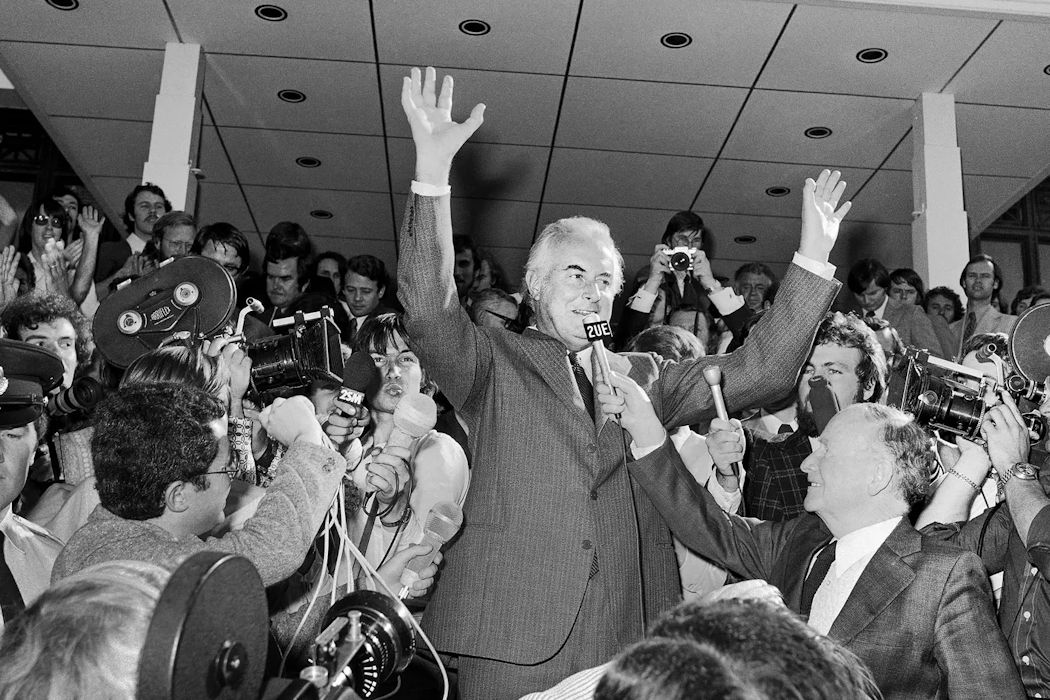
Gough Whitlam address a caught after being dismissed as Prime Minister, November 11 1975 National Archives of Australia, CC BY

Tuesday is the fiftieth anniversary of the Dismissal of the Whitlam government. For those who were alive at the time it’s one of those “where were you?” moments. In this podcast, the Conversation’s politics and society editor Amanda Dunn and I discuss that historic day and its impact on Australia’s federal politics.

On the scene when Gough Whitlam gave his famous speech on the steps of Parliament House (now Old Parliament House):

I was on the steps […] with many, many other people, journalists, staffers, the start of a gathering crowd. Everybody was shocked, amazed. We’d heard only a while before of this act by the governor-general.

Despite Whitlam’s emphatic election loss months later, the mood of his supporters in the campaign was intense:

I travelled a lot with Gough Whitlam [in those weeks] and you really got a quite distorted picture of what was likely to happen [at the election], because there were these immense crowds and people were so enthusiastic about Whitlam that it was easy to get the impression he had more support than of course he did.

The Conversation

Michelle Grattan does not work for, consult, own shares in or receive funding from any company or organisation that would benefit from this article, and has disclosed no relevant affiliations beyond their academic appointment.

ref. Politics with Michelle Grattan: Remembering the day Gough Whitlam lost his job – https://theconversation.com/politics-with-michelle-grattan-remembering-the-day-gough-whitlam-lost-his-job-269387

RSV immunisation could prevent thousands of babies being hospitalised

Source: Radio New Zealand

Pharmac needs to act quickly on the RSV vaccine to ensure it is ready for next winter, say experts. SERGII IAREMENKO/Science Photo Library via AFP

A “game-changer” immunisation that could save thousands of babies from a potentially deadly lung infection is sitting in the hands of Pharmac, according to respiratory health experts.

Pharmac’s Immunisation Advisory Committee met last week to discuss the funding application for nirsevimab to prevent respiratory syncytial virus (RSV) in infants, as well as one for Arexvy, which is already licensed RSV vaccine for adults aged 60 and older.

Asthma and Respiratory Foundation chief executive Letitia Harding said the potential approval of nirsevimab could be “a game-changer” – particularly for Māori and Pacific communities.

“This is the progress we’ve been waiting for.

“RSV hospitalises thousands of children every year, and this treatment has the potential to prevent many of those admissions.”

But Pharmac needed to act quickly to ensure it was ready for next winter, she said.

“We can’t afford delays if we want to save lives of some of our most vulnerable.

“We’re urging decision makers to prioritise funding so that New Zealand infants can benefit as soon as possible.”

Another preventative medicine (Palivizumab) is already available for high-risk babies and young children but requires monthly hospital visits for injections.

Nirsevimab can be given by GP clinics, pharmacists or midwives and a single injection protects against RSV for five or six months.

gives protection over the entire RSV “season”.

It is a monoclonal antibody, which gives passive immunity rather than stimulating the immune system to make its own antibodies, like a vaccine.

Foundation medical director Professor Bob Hancox said the opportunity to introduce a more effective and accessible RSV immunisation was “a critical step for child health”.

“RSV is one of the most common and serious respiratory infections in infants, and it places enormous strain on our hospitals every winter.

“This new treatment could dramatically reduce hospitalisations and health inequities,” he said.

RSV immunisation is used in 40 other countries, and data shows it can cut RSV hospitalisations among babies by up to 90 percent.

Sign up for Ngā Pitopito Kōrero, a daily newsletter curated by our editors and delivered straight to your inbox every weekday.

– Published by EveningReport.nz and AsiaPacificReport.nz, see: MIL OSI in partnership with Radio New Zealand

Black Caps, West Indies fourth T20 rained out

Source: Radio New Zealand

Mitchell Santner. Chris Symes / www.photosport.nz

The fourth T20 international between the Black Caps and West Indies has been wiped out by rain in Nelson.

There were just 6.3 overs played before rain took hold at Saxton Oval and didn’t abate enough for a return to the field.

The Black Caps lead the series 2-1, with the final match due to be played in Dunedin on Thursday afternoon.

Play was first halted after five overs, with the West Indies 30 for none after Mitch Santner won the toss for the Black Caps and decided to bowl.

Drizzly weather turned to steady rain and the players retreated to the pavilion.

There was a break in the weather a short time later but they only managed 1.3 overs before the rain returned. In that time the West Indies progressed to 38 but lost the wicket of Alick Athanaze who skied a delivery from Jimmy Neesham, and Daryl Mitchell took the catch.

The players were fated not to return and the skippers shook hands with the decision to abandon the match at 4.08pm.

Sign up for Ngā Pitopito Kōrero, a daily newsletter curated by our editors and delivered straight to your inbox every weekday.

– Published by EveningReport.nz and AsiaPacificReport.nz, see: MIL OSI in partnership with Radio New Zealand

NZTA discovers 440 fake commercial driver licences

Source: Radio New Zealand

NZTA is in the process of contacting the individuals involved. 123RF

The New Zealand Transport Agency has discovered and revoked 440 fake commercial driver licensees.

NZTA said they discovered false or altered documentation that converted overseas licences to New Zealand licences.

The discovery was made in an audit during the “conversion process” in July 2025.

“We have systems in place to identify, investigate and respond to suspected fraudulent activity and we will act swiftly when we find it by holding people to account,” deputy director of land transport Mike Hargreaves said.

NZTA is in the process of contacting the individuals involved.

Providing false or misleading information as part of driver licence application is an offence under the Land Transport Act 1998, punishable by an infringement fine of up to $750.  

Sign up for Ngā Pitopito Kōrero, a daily newsletter curated by our editors and delivered straight to your inbox every weekday.

– Published by EveningReport.nz and AsiaPacificReport.nz, see: MIL OSI in partnership with Radio New Zealand

Wellington teens do the heavy lifting to help full the new library’s shelves

Source: Radio New Zealand

A group of Wellington students has turned a page on history, moving some of the last books into the capital’s redeveloped central Library.

Te Matapihi has been closed since 2019 after it was deemed earthquake-prone.

Following years of construction, the library is set to reopen in March next year. Now, its shelves are starting to be filled once again with books, thanks to the helping hands of 50 students from Rongotai College.

About 10am on Monday, a queue of boys snaked outside the library as they lined up behind a red Crown moving truck ready to slide boxes of books to the students.

The human train walked back into the building and up its three levels to where empty bookshelves and librarians were waiting for them.

It harkened back to when students from the same school moved books into the old city library in 1940.

Rongotai College Deputy Principal Geoff Hall told RNZ they had just 45 minutes to move the books.

“I’d be more than happy for it to go on a little bit longer than that, I think it is really good that these boys are giving back to the community as much as anything.

“And every time I suppose they shift a book, they feel that story.”

Hall said it was great to context with the school’s past 85 years on.

“We have got our centenary in two years’ time, so it is sort of a good way to kick start that I think.”

Wellington City Council head of Creative Capital Gisella Carr told RNZ the event links the past with the present.

“As we said to the boys this morning, in 85 years’ time through our archival function those future schoolboys will be looking at pictures of these schoolboys.”

Carr said every inch of the building has been redesigned with the public in mind.

“We are standing on the floor now where there is 30 percent more public space available so it is amazing.”

She said alongside the books the library would offer a range of services such as recording studios for bands and podcasters and a green screen for film makers.

Wellington Mayor Andrew Little helped out the students by bringing a box of books into the space.

Little told RNZ it was his first time seeing the library fully fitted out after it shut in 2019.

“Seeing it like this yeah, just stunning it is actually just amazing.”

– Published by EveningReport.nz and AsiaPacificReport.nz, see: MIL OSI in partnership with Radio New Zealand

Te Pāti Māori purge fails to end the party war

Source: Radio New Zealand

Te Pāti Māori co-leaders Debbie Ngarewa-Packer and Rawiri Waititi. RNZ/Samuel Rillstone

Analysis: As the Iwi Chairs Forum fought fruitlessly to keep Te Pāti Māori together last week, spokesperson Bayden Barber offered a warning: a split tōtara is only good for the fire.

Now Te Pāti Māori finds itself in an inferno.

The slow-burn conflagration has been smouldering for so long, it’s easy to miss the magnitude. But this is no small matter.

This is a party ousting a third of its caucus, citing “irreconcilable differences” and “serious breaches” of its constitution.

Fronting reporters on Monday morning, co-leaders Debbie Ngarewa-Packer and Rawiri Waititi wished their former colleagues “all the best of luck” and waved them on their way.

“We had to bring this to a close, and we must move on.”

But that seems overly hopeful. Both Mariameno Kapa-Kingi and Tākuta Ferris were quick to declare the move “unconstitutional” and are threatening to challenge it “in all respects”.

The party’s National Council has also yet to consider whether to invoke the waka-jumping provision and eject the MPs from Parliament altogether.

That would require agreement of the two other remaining MPs – Hana-Rawhiti Maipi-Clarke and Oriini Kaipara. It’s unclear yet where they stand in all this.

Either outcome is ugly. If the “rogue” MPs remain, they will serve as a constant reminder of division. If they’re booted, two by-elections loom, sure to be bitter and bruising.

At least a public contest might shed more clarity on what’s behind the weeks of infighting, with voters so far largely left in a cloud of smoke.

Asked to clarify on Monday exactly what the MPs had done to deserve expulsion, the co-leaders refused: “You’re not going to get that detail here in this press conference.”

From what has dripped out over the past six weeks, it seems the feud is driven more by personality than principle.

Party president John Tamihere has accused the two MPs of plotting a failed coup. Kapa-Kingi and Ferris have declared no confidence in Tamihere, with their supporters decrying toxic dictatorial leadership.

Supporters are right to feel aggrieved. A year ago, Te Pāti Māori was riding a wave of unity and purpose, as a driving force behind the historic Toitū Te Tiriti hikoi.

Mariameno Kapa-Kingi and Tākuta Ferris. RNZ/Liam K. Swiggs

It boasted its largest-ever caucus, having swept six of the seven Māori electorates in a dominant 2023 result.

Ironically, the roots of the recent crisis lie in that rapid expansion.

The co-leaders went from being a dynamic duo to overseeing a more assertive caucus and competing egos.

Tamihere, Ngarewa-Packer and Waititi are all dominant personalities, used to steering their own course.

But both Kapa-Kingi and Ferris regard themselves as electorate MPs first, answerable to their own people, not to the central hierarchy.

Add in the whānau ties on either side, and the conflict shifts from political to personal.

The co-leaders admit the recent disunity has damaged the party’s brand. The enthusiasm of a year ago has turned to disillusionment, with voters now forced to pick sides or to look elsewhere.

When Hone Harawira split from the Māori Party in 2011 to form Mana, both sides eventually vanished. Harawira was sent packing by voters in 2014, and the rest of the Māori Party followed in 2017.

For the wider opposition, there is good and bad here.

The Labour Party will see an opportunity to win over those disenchanted voters and to retake the Māori electorates amidst a more divided race.

But the wider picture is riskier. Centrist voters may well look at the turmoil on the left and decide to stick with the status quo.

Labour leader Chris Hipkins has yet to publicly declare whether he would welcome Te Pāti Māori as part of a future Cabinet.

Those questions will only grow louder now – expanding to include the “rogues”. Where do they stand in any coalition calculation?

The Iwi Chairs Forum had arranged “peace talks” this week, bringing together the two factions at a Wellington marae.

Bayden Barber still thinks that would be beneficial and the co-leaders agree it could still go ahead. But few expect much to come of it now.

The next moment of reckoning may come on 7 December, when members gather in Rotorua for the party’s AGM – and confront how Te Pāti Māori can piece itself together from the ashes.

Sign up for Ngā Pitopito Kōrero, a daily newsletter curated by our editors and delivered straight to your inbox every weekday.

– Published by EveningReport.nz and AsiaPacificReport.nz, see: MIL OSI in partnership with Radio New Zealand
The Democrats are riding a blue wave, but major questions remain for a divided party

Source: The Conversation (Au and NZ) – By Liam Byrne, Honorary Fellow, School of Historical and Philosophical Studies, The University of Melbourne

All of a sudden, the Democrats seem to be on a roll.

Last week’s elections in the United States gave the party the boost it has been desperately seeking since Donald Trump recaptured the White House in 2024 and sent the party into a tailspin.

Democrats won governorships in Virginia and New Jersey, and Zohran Mamdani stormed to victory in the New York City mayor’s race in open defiance of Trump.

Perhaps most significant for the Democrats’ chances in the 2026 midterm elections, California Governor Gavin Newsom’s Proposition 50 passed by a wide margin. This measure is intended to reconfigure the state’s electorates counterbalance Republican gerrymandering in Texas and other states.

Meanwhile, Trump’s approval ratings continue to slump in national polls amid a prolonged government shutdown.

But if a week is a long time in politics, the next US elections (due in November 2026) are an eternity away.

And there are still serious challenges ahead for the Democratic Party as it seeks not just to win back control of the House of Representatives, but to resist Trump’s attempts to recast the country in his own authoritarian and reactionary image.

What went right for the Democrats?

Before looking at the challenges, though, it is important to understand what led to last week’s Democratic successes.

Trump governs through crisis and chaos. His pitch to supporters is an existential one, explicitly cultivating white grievance among those voters who feel they have been left behind. He argues that the US political system is so broken, only he can resolve it through extraordinary measures.

Yet, there is a significant gap between Trump’s vision of the United States, and the reality of life for Americans (including many Trump voters).

On the campaign trail in 2024, Trump promised his administration would down bring prices “starting on day one”.

But early evidence from Trump’s tariffs indicates US companies and consumers are bearing the costs. Prices have continued to rise on certain goods, such as apparel, furniture, food items and cars. A recent survey found 74% of respondents had experienced an average increase of monthly household costs by at least US$100 (A$150).

Disappointed expectations are a potent political force that has spelled doom for politicians well before Trump.

The optics couldn’t be worse at the moment, either. Hosting a Great Gatsby-themed party, a brash and boastful display of wealth, at a time when federal food aid is about to end for 42 million citizens is not exactly a public relations coup.

The Democrats that won last week came from different ends of the party’s political spectrum, but there was one thing that united them: a focus on affordability and the cost of living. And they all had a clear message: Trump’s policies are to blame.

This is adept and effective politics. Democrats are identifying the ways that Trump is failing to carry through on his promises, and have been increasingly ruthless in exposing them.

But there are limits to this strategy. To build sustainable electoral coalitions capable of not just winning office but of turning back the larger MAGA tide that swept to victory in 2024, the Democrats need to be able to construct a coherent and compelling vision of the future they want to create.

Can the Democrats unify on a national scale?

The Democrats remain deeply divided over how to respond to Trump – and more broadly, divided over what the party stands for.

The split among Senate Democrats on whether to allow a vote to reopen the government without getting the assurances on health insurance subsidies they’ve been holding out for exemplifies this.

Are the Democrats going to lean into being a moderate and centrist party? Or will they move further left and embrace more progressive positions – those championed by the likes of Bernie Sanders and Mamdani – even if these are to the left of the electorate?

It is not a problem the party is having these debates. Political parties in the US have always been organisationally looser and ideologically broader than those elsewhere.

It is, however, unclear if the party has the institutional mechanisms to synthesise these strongly polarised perspectives into a consistent agenda and program that Democrats can present to a national electorate.

As some commentators have noted, it is relatively easy for Democrats to win low-turnout state and city-based elections without clarifying these matters. But winning a national election, or recapturing the US Senate, is a more difficult task.

Can the Democrats find a way to not just articulate opposition to Trump, but put forth of a common vision of America’s future embraced by these disparate wings of the party?

And how do they turn words into action?

When a political system is in crisis, it is not enough for progressives to repeat over and over what has gone wrong. They also need solutions – a positive case for what they want to achieve and a policy agenda to enact it. Then, they can build a new social coalition around a common sense of purpose.

It is all well and good to denounce Trump’s poor economic management, but will Democrats be able to implement strategies that deliver on their affordability promises?

For this to happen, the party has to agree on concrete plans to reinvigorate economic growth beyond the tech sector and ensure a fairer redistribution of the benefits of this growth. In addition, they’ll need to come together on the right balance of investment in the American people and infrastructure through government spending, and the need to reduce the US’ extraordinary debt levels.

To make things even more difficult, they’ll need to articulate how to achieve this with a Congress prone to partisan gridlock like never before in modern history. So far, the Democrats have no clear answers to these fundamental questions.

The Democrats’ challenge, therefore, is not just to repudiate Trump’s dark vision of America, but to put forward their own positive vision of what the future can be. Recent victories are encouraging, but a lack of this broader imaginative work so far is striking.

The Democrats have come closer to working out how to win – but still need an answer for an even more defining question: what do they want to win for?

The Conversation

Liam Byrne does not work for, consult, own shares in or receive funding from any company or organisation that would benefit from this article, and has disclosed no relevant affiliations beyond their academic appointment.

ref. The Democrats are riding a blue wave, but major questions remain for a divided party – https://theconversation.com/the-democrats-are-riding-a-blue-wave-but-major-questions-remain-for-a-divided-party-269195

Smoke warning as Tongariro fire grows

Source: Radio New Zealand

Firefighters continue to battle the Tongariro National Park wildfire. Fire and Emergency

People living near the Tongariro National Park fire are being warned to take extra precautions to protect themselves, young children and the elderly from smoke.

The Asthma and Respiratory Foundation said residents should close windows and doors if staying inside, and wear a properly fitted N95 or KN95 masks outdoors.

Its chief executive Letitia Harding said bush fire smoke contained “tiny particles” which could irritate the lungs and airways.

That could be particularly risky for children, older people and those with pre-existing respiratory conditions.

“For people with asthma, COPD or other lung conditions, smoke exposure can trigger flare-ups, which in serious cases may require hospitalisation,” she said.

“It’s important to limit exposure and keep medications like reliever inhalers on hand.”

Meanwhile, those travelling in the area should keep car windows closed and set the ventilation system to recirculate air.

Everyone in the wider region should stay informed about smoke conditions, plan activities carefully and take practical steps to protect their lungs, Harding said.

Sign up for Ngā Pitopito Kōrero, a daily newsletter curated by our editors and delivered straight to your inbox every weekday.

– Published by EveningReport.nz and AsiaPacificReport.nz, see: MIL OSI in partnership with Radio New Zealand

ER Report: A Roundup of Significant Articles on EveningReport.nz for November 10, 2025

ER Report: Here is a summary of significant articles published on EveningReport.nz on November 10, 2025.

Oceania ‘voice’ Jacinda Ardern in open letter climate crisis plea in Brazil
Asia Pacific Report In an open letter released at the Belém Climate Summit, special envoys for strategic regions have expressed their support for the COP30 presidency and for all leaders committed to advancing climate crisis action. Former New Zealand prime minister Dame Jacinda Ardern, the “voice” for Oceania, was among the seven climate envoys signing

What is myasthenia gravis, the rare disease tennis great Monica Seles lives with?
Source: The Conversation (Au and NZ) – By Gozde Aydin, Research Fellow, Centre for Health Economics, Monash University Clive Brunskill/Getty Images Former tennis star Monica Seles recently revealed she is living with the rare disease myasthenia gravis, which affects 12 in 100,000 people globally. Seles explained her first symptoms appeared suddenly around three years ago.

A centuries-old grid of holes in the Andes may have been a ‘spreadsheet’ for accounting and exchange
Source: The Conversation (Au and NZ) – By Jacob L. Bongers, Tom Austen Brown Postdoctoral Research Associate, University of Sydney An aerial photo of Monte Sierpe, facing northeast. Jacob L Bongers In 1931, geologist Robert Shippee and US Navy Lieutenant George R. Johnson led one of the first aerial photography expeditions in South America. They

Is AI really coming for our jobs and wages? Past predictions of a ‘robot apocalypse’ offer some clues
Source: The Conversation (Au and NZ) – By Tom Coupe, Associate Professor of Economics, University of Canterbury Getty Images The robots were taking our jobs – or so we were told over a decade ago. The same warnings are regularly heard today about the likely impact of artificial intelligence (AI). Tech breakthroughs have long stirred

Pacific civil society warn of growing militarisation and mining pressure on the ocean
RNZ Pacific Pacific civil society groups say 2025 has been a big year for the ocean. Development Alternatives with Women for a New Era (DAWN) representative Maureen Penjueli said the Pacific Ocean was being hyper-militarised and there was a desire for seabed minerals to be used to build-up military capacity. “Critical minerals, whether from land

Some people choosing DIY super are getting bad advice, watchdog warns
Source: The Conversation (Au and NZ) – By Di Johnson, Senior Lecturer, Finance and Financial Planning, Griffith University Maskot/Getty It’s no secret Australians are big fans of a do-it-yourself (DIY) project. How many other countries have a weekend sausage sizzle at a hardware store embedded in their national mythology? That DIY attitude may be flowing

How scientists are hacking bacteria to treat cancer, self-destruct, then vanish without a trace
Source: The Conversation (Au and NZ) – By Josephine Wright, Senior Research Fellow,, South Australian Health & Medical Research Institute Could engineered bacteria, including <i>Listeria monocytogenes</i>, help treat cancer? quantic69/Getty Bacteria are rapidly emerging as a new class of “living medicines” used to kill cancer cells. We’re still a long way from a “cure” for

Brazil claims to be an environmental leader. Are they?
Source: The Conversation (Au and NZ) – By Pedro Fidelman, Associate professor in environmental policy and governance, The University of Queensland World leaders and delegates are meeting in the northern Brazilian city of Belém for COP30, this year’s major UN climate summit. This is the first time the global climate meeting has been held in

Extraordinary and occasionally inept: before The Dismissal, the Whitlam government changed Australia forever
Source: The Conversation (Au and NZ) – By Michelle Arrow, Professor of History, President, Australian Historical Association, Macquarie University Wikimedia, facebook.com @Australian Labor Party, facebook.com @Whitlam Institute, Graeme Fletcher/Keystone/Getty Images, Australian Information Service/National Library of Australia When Australians of a certain age imagine Gough Whitlam, they probably think of him standing on the steps of

New interactive map shows how flammable your part of Australia is right now
Source: The Conversation (Au and NZ) – By Marta Yebra, Director, Bushfire Resaerch Centre of Excellence, Australian National University Vegetation moisture changes in the Lake Magenta region, Western Australia, during 2020. Red shows drier vegetation, blue tones wetter areas. Digital Earth Australia Fuel Moisture Content This year’s fire season in Australia feels unpredictable. One week

Kneecap is revitalising Irish. These 5 artists are doing the same for Indigenous languages
Source: The Conversation (Au and NZ) – By Jill Vaughan, Senior Lecturer, Monash University Emily Wurramara/Instagram Northern Irish hip hop trio Kneecap have been making waves, not just as musicians, but as language activists who rap in both English and their native Irish. In Belfast’s Gaeltacht Quarter, Irish is a living language. It is also

Caitlin Johnstone: The US empire keeps getting creepier
Report by Dr David Robie – Café Pacific. – COMMENTARY: By Caitlin Johnstone Secretary of War™ Pete Hegseth said during a speech on Friday that the US is at “a 1939 moment” of “mounting urgency” in which “enemies gather, threats grow,” adding, “We are not building for peacetime. We are pivoting the Pentagon and our

The ‘golden tonsils’ of John Laws fall silent, aged 90
Source: The Conversation (Au and NZ) – By Denis Muller, Senior Research Fellow, Centre for Advancing Journalism, The University of Melbourne John Laws was one of the most influential, commercially successful yet polarising figures in the history of Australian radio broadcasting. He has died at the age of 90. He was among a handful of

New Zealand Trotting Cup – all you need to know

Source: Radio New Zealand

Cameron Hart with Swayzee, who won the NZ Trotting Cup in 2023 and 2024. PHOTOSPORT

Partying racegoers at the New Zealand Trotting Cup meeting at Addington in Christchurch will get to see the best pacer in Australasia, the champion Leap to Fame, in action on Tuesday.

New Zealand Cup day is one of the big events on the Canterbury social calendar and the Cup, with a purse of $1 million, is also one of New Zealand racing’s pinnacle events.

Leap To Fame has dominated the pre-race discussion and the betting. On Monday he was a $1.60 favourite on the NZ TAB to win the big race.

Trained and driven by Queenslander Grant Dixon, Leap To Fame is hailed as a harness superstar, with 58 wins from 73 starts and earnings of just a tick over $5 million, an amount far in advance of any of his rivals on Tuesday. One of those wins was in his only start in New Zealand, when he won the $1 million The race by betcha, in Cambridge in April, in a track record.

Leap To Fame is also out to continue Australian and his own family’s dominance of the race in recent years. His half-brother Swayzee proved too good for his Kiwi opponents in the Cup in 2023 and did so again last year.

Swayzee suffered a setback in his preparation for this year’s Cup so isn’t running.

But another Aussie rising star, Kingman, has been a late entry after beating Leap To Fame in the Victoria Cup last month and is considered one of the main challengers.

The Kiwi challengers in the Cup

Republican Party looms as the biggest Kiwi threat to Leap To Fame.

Trained by Cran and Chrissie Dalgety in Canterbury and driven by their son Carter, Republican Party would be a popular winner. Cran Dalgety has had two seconds and three thirds in previous Cups and has joked he has served a 35-year apprenticeship for Tuesday’s Cup.

Blair Orange, NZ’s top harness driver, will pilot We Walk By Faith in the NZ Trotting Cup. Photosport

Republican Party can also surpass $1 million in stakemoney if he runs a top four placing, while Auckland pacer Merlin, who has won $1.6m, looked primed when he won the Kaikoura Cup last week.

Akuta, Don’t Stop Dreaming and We Walk By Faith are also rated solid chances.

Aussies to the fore in Dominion Trot

There are three other Group 1 races on the card, including $400,000 Dominion Trot.

Once again, the Australians have a strong hand, with mare Jilliby Ballerini the favourite and Gus and Arcee Phoenix also chances. The main Kiwi hopes in the betting are Oscar Bonavena, Muscle Mountain, Bet N Win and Mr Love.

The two other Group 1s are for three-year-olds. Race 8 is for the colts and geldings and race 9 is for fillies. Both races are over 1980m for stakes of $200,000.

World Driving Championship decided

The race meeting will also feature the final heat of the World Driving Championship, featuring 10 of the best drivers from around the globe. They have been competing around the country for the past 10 days.

Canadian James McDonald leads the series from Australian Gary Hall Junior, with New Zealand rep Blair Orange in fourth place.

The 20th heat in the series, race 3 at 12.54pm, will determine the winner.

Steph McGreavy (left) and Kit Winter-Davies from Timaru decked out with handmade felt fascinators. RNZ / Nathan Mckinnon

Off the race track, but no less competitive, is the annual fashion competition, with three different categories this year – best dressed, best suited and “something blue”. The winner will be announced after race 6 at 2.30pm.

There will be ongoing entertainment at The Infield, on the grass at the centre of the track. Shapeshifter will be playing there after the race meeting finishes.

Cup day will be followed by the Show Day meeting on Friday. It features two $500,000 slot races for three-year-olds and four other Group 1 races.

Facts

New Zealand Cup

Race 12 at 5:53pm

First run in 1904

Distance: 3200 metres

Winning stake: The winner receives $540,000, second $150,000, third $85,000, fourth $47,500, fifth $27,500, while all other starters receive $15,000.

Three horses have won the Cup three times: Terror To Love (2011-12-13), False Step (1958-59-60), Indianapolis (1934-35-36).

Race record: Lazarus 2016 – 3 minutes 53.1 seconds

Most wins as driver: Ricky May 7, Mark Purdon and Cecil Devine 6

May drives American Me in this year’s Cup, while Purdon pilots Akuta.

Previous Australian winners of the NZ Cup: Steel Jaw (1983), Lightning Blue (1987), Arden Rooney (2015), and Swayzee (2023, 2024).

Kerryn Manning became the first female to drive the Cup winner when Arden Rooney triumphed.

The Dominion Trot

Race 10 at 4.37pm.

Like the Cup, it is run over 3200m, but is a race for trotters rather than pacers in the Cup (despite the Cup being called the NZ Trotting Cup).

The difference between trotters and pacers? Trotters move their legs forward in diagonal pairs (e.g., front right and back left legs hit the ground simultaneously then front left and back right), while pacers’ legs move laterally (front right and back right, then front left and and back left).

Winner receives Lyell Creek (1999-2000-2004) and Sundees Son (2020-21-22) are the only horses to have won the Dominion three times in a row.

Most driving wins in the Dominion: Anthony Butt 8.

The Dominion Trot is two races before the Cup, at 4.37pm.

Gates open at 11am with first race at 12pm.

Betting: Punters bet $7.26 on the TAB on Cup day last year, a record for that day.

General admission: $25. The Infield tickets cost $90.

Weather: MetService is forecasting a sunny afternoon, northeasterly winds and a high of 19deg.

NZ Trotting Cup field:

1 Rakero Rocket

2 Lakelsa (E2)

3 Merlin

4 Pinseeker

5 Republican Party

6 Leap To Fame (Australia)

7 Vessem

8 Sooner The Bettor

9 Wag Star (E1)

10 Akuta

11 Here’s Herbie (E3)

12 Kingman

13 We Walk By Faith

14 American Me

15 Alta Meteor

16 Mo’unga

17 Don’t Stop Dreaming

18 Better Knuckle Up

Dominion Trot field:

1 Maui

2 Jilliby Ballerini

3 Hidden Talent

4 Arcee Phoenix

5 Mystic Max (E2)

6 One Over All

7 Muscle Mountain

8 Mighty Logan

9 Mr Love

10 Oscar Bonavena

11 Love N The Port (E1)

12 Father Time

13 Parisian Artiste

14 I Dream Of Jeannie

15 Midnight Dash

16 Paris Prince (E3)

17 Gus

18 Bet N Win

– Published by EveningReport.nz and AsiaPacificReport.nz, see: MIL OSI in partnership with Radio New Zealand

Two Kiwi perfume rebels invite you on a ‘Journey of Scent’

Source: Radio New Zealand

Self-taught scent artist Nathan Taare and French-trained perfume afficionado Whitney Steel deliver a fresh take on the fragrance world in the new RNZ series Journey of Scent.

While making the show was really fun, Steel says, it was a”nail-biting” moment presenting guests with their personalised perfumes, especially star chef Kia Kanuta.

“Because he has such a refined palate, I was like, ‘Oh my God, I’m going to get exposed … I really, really wanted him to love it,” she tells RNZ’s Afternoons.

This video is hosted on Youtube.

Weather: Warm start to the week, but more rain expected after Wednesday

Source: Radio New Zealand

A low pressure system is expected to bring rain to many parts of NZ later this week. File photo. 123RF

New Zealand’s temperatures are getting into summer territory, but a low pressure system is expected to bring rain to many areas of the country later this week.

Maximum temperatures were expected to rise above 20°C in many areas today, with Napier forecast to reach 29°C – nearly 10°C higher than the average November maximum – and Hastings predicted to hit 31°C today.

Tuesday’s weather should also be fine for Cup Day in Christchurch, with clear skies expected over Canterbury.

But wet weather was expected to start moving down the country on Wednesday, with a low pressure system over the north Tasman Sea due to move southwards onto the North Island.

MetService said that was likely to bring warning amounts of rain in Northland, Auckland Coromandel Peninsula, and Bay of Plenty on Wednesday.

There could also be downpours in Waikato, Taupo, northern Gisborne/Tairawhiti, and Taranaki Maunga, and MetService said northeast winds could reach severe gale strength in exposed places of Northland and Auckland.

By Thursday, the low pressure system is expected to move southeastwards over northern and central New Zealand, bringing rain to many areas, including Bay of Plenty, Taupo, Gisborne/Tairawhiti north of Gisborne City, Taranaki Maunga, Tasman District west of Motueka, and the northern and eastern ranges of Marlborough.

The low pressure system should moves to the east of the county by Friday, with a front over the Tasman Sea then moving quickly over southern and central New Zealand.

The forecast for the weekend is looking clearer, with a ridge of high pressure following the front onto New Zealand.

Sign up for Ngā Pitopito Kōrero, a daily newsletter curated by our editors and delivered straight to your inbox every weekday.

– Published by EveningReport.nz and AsiaPacificReport.nz, see: MIL OSI in partnership with Radio New Zealand

Oceania ‘voice’ Jacinda Ardern in open letter climate crisis plea in Brazil

Asia Pacific Report

In an open letter released at the Belém Climate Summit, special envoys for strategic regions have expressed their support for the COP30 presidency and for all leaders committed to advancing climate crisis action.

Former New Zealand prime minister Dame Jacinda Ardern, the “voice” for Oceania, was among the seven climate envoys signing the letter.

The document acknowledges the progress achieved through the Paris Agreement and the Dubai Consensus, while underscoring the need for further advances “in light of the Global Stocktake” and warning of the growing challenge posed by climate disinformation.

COP30 BRAZIL 2025

The text calls for unity and concrete action to bridge the “triple gap” between climate finance, adaptation, and mitigation.

These bottlenecks, it emphasised, could not be resolved solely through revisions to Nationally Determined Contributions (NDCs), but required tangible policy measures.

The Baku to Belém Roadmap is highlighted as a vehicle for developing innovative solutions to unlock large-scale investments while reducing financing costs.

In addressing the spread of climate disinformation, the special envoys underlined the need for coordinated responses, collective strategies, and reinforced regulatory frameworks.

The letter was signed by Special Envoys Adnan Z. Amin (Middle East), Arunabha Ghosh (South Asia), Carlos Lopes (Africa), Jacinda Ardern (Oceania), Jonathan Pershing (North America), Laurence Tubiana (Europe), and Patricia Espinosa (Latin America and the Caribbean).

The open letter to leaders in Belém and to the COP30 presidency from the special envoys for strategic regions

We, the Special Envoys for our respective regions, wish to express our strong support for the Brazilian Presidency and all leaders committed to climate action at Belém.

COP30 presents both a significant opportunity and a profound challenge. To remain aligned with the ambition of the Paris Agreement amidst an increasingly complex geopolitical environment, we must demonstrate decisive progress. Multilateralism, grounded in international law and guided by the Paris Agreement, remains our most effective framework.

A clear signal from COP30 that the international community stands united in its determination to confront climate change will resonate globally. Our shared commitment to fully implement the Paris Agreement is the strongest collective response to a crisis that is disproportionately affecting vulnerable households and countries, devastating lives, livelihoods, and the ecosystems upon which we all depend.

We should also recognise the progress achieved since the Paris Agreement in 2015. The rapid growth of clean solutions is bending the trajectory of global emissions; where we had been on track to exceed a devastating temperature increase of more than 4°C, we are now able to project a level of less than 2.5°C.

But we need greater progress. We are not on track to achieve the goals of the Paris Agreement, and in particular, we are taking insufficient action to keep 1.5°C within reach, or even enough to keep warming well below 2°C. And every tenth of a degree of additional warming will mean harsh consequences for the world.

COP30 must acknowledge and address the “triple gap” in mitigation, adaptation and finance. Doing so requires an accelerated effort across the next decade, mobilising the full range of tools, resources, and partnerships available to us. This is at the heart of the goal of COP30: to advance the full implementation of both the Paris Agreement and the UAE Consensus, informed by the Global Stocktake presented at COP28 in Dubai.

To accelerate progress, we must maintain a laser focus on concrete, coordinated action.

The Action Agenda is a powerful reservoir of those actions, which must be structured, monitored, and supported for effective delivery. Addressing the gap should not be understood solely as revising Nationally Determined Contributions (NDCs), but rather as translating ambition into policies that enable each country to overperform on its existing commitments. And the policies we take, as has been amply demonstrated in our successes to date, can marry not only climate benefits, but also contribute to growing our economies, promote our national security, improve the welfare of our citizens, and promote a healthy environment.

Tripling global renewable energy capacity is a goal within reach. Collectively, we have the
technology and resources: what is required now is scaled investment in all regions. The Baku to Belém roadmap to mobilise US$1.3 trillion annually for developing countries outlines both established and innovative solutions to deliver investment at scale at reduced costs of finance. To operationalise it, clear milestones, mandates, and responsibilities are needed.

Ministers of finance should take the lead in defining the priorities. Creating fiscal space, minimizing debt burdens, effectively mobilising domestic and international finance, and
ensuring enabling policy environments, alongside increased investment in the Global South,
are all essential to making this roadmap credible and implementable.

Strengthening resilience and adaptation are equally critical. Climate impacts are increasingly a major barrier to sustainable economic and social development. We must work together to define the indicators that do not impose resource-intensive reporting burdens but instead help our economies and societies adapt to their local circumstances and become resilient.

We must engage the insurance sector, central banks, and private investors to close the
protection gap that threatens long-term developmental gains.

Countries pursuing the transition away from fossil fuels should define roadmaps, in line with their national circumstances, while fostering dialogue between producers and buyers of fossil fuels. Roadmaps to end deforestation and restore ecosystems are equally necessary. Taken together, these pathways can allow countries to implement the long-term strategies submitted in previous years.

For the first time, COP30 will also confront the challenge of climate disinformation: a growing threat that undermines public trust and policy implementation. Combatting this challenge requires coordinated approaches, shared strategies, and strengthened regulatory
cooperation. We must shine the spotlight on our collective progress, in general, but also cases in particular where countries have met their climate targets ahead of schedule,
demonstrating a positive bias for action.

Lastly, we need an evolution of the climate regime that makes implementation more effective and inclusive. Progress depends on joining forces with the local authorities, economic sectors, governments, and civil society. Subnational leaders, from governors, to regional authorities, mayors, and community representatives, must be empowered to reinforce and complement NDCs and National Adaptation Plans (NAPs). COP30 is the moment to have them at the table and to craft a new approach that brings all relevant actors together in a global effort to safeguard our common future.

It is the moment to remind ourselves of the need for solidarity, and to recognise our agency — we have it within our power to change the future for the better.

Signed:

Adnan Z. Amin (Special Envoy for Middle East), chair, World Energy Council; CEO of COP28; former director-general, International Renewable Energy Agency

Arunabha Ghosh (Special Envoy for South Asia), founder-CEO, Council on Energy, Environment and Water

Carlos Lopes (Special Envoy for Africa), chair, Africa Climate Foundation; former executive
secretary, UN Economic Commission for Africa

Jacinda Ardern (Special Envoy for Oceania), former Prime Minister of New Zealand

Jonathan Pershing (Special Envoy for North America); former US Special Envoy for Climate Change

Laurence Tubiana (Special Envoy for Europe), dean, Paris Climate School; CEO, European
Climate Foundation; former French Special Envoy for Climate Change

Patricia Espinosa (Special Envoy for Latin America and the Caribbean), former executive
secretary, UN Framework Convention on Climate Change

Article by AsiaPacificReport.nz

Live: Tongariro National Park wildfire spreads to nearly 3000 hectares

Source: Radio New Zealand

A wall of smoke from the Tongariro National Park fire is providing a spectacular but worrying vista for a central plateau village.

The blaze has burned through up to 2500 hectares and is 20 percent contained.

Whakapapa Village was evacuated on Sunday, and the fire has forced the evacuation of trampers and closed lodges. All tracks and huts within the Tongariro National Park are closed, and State Highway 48 leading to Whakapapa Village and State Highway 47 at the intersection with State Highway 4 at Waimarino are also closed.

Sign up for Ngā Pitopito Kōrero, a daily newsletter curated by our editors and delivered straight to your inbox every weekday.

– Published by EveningReport.nz and AsiaPacificReport.nz, see: MIL OSI in partnership with Radio New Zealand

Basketball: Bigs back for Tall Blacks’ qualifiers against Boomers

Source: Radio New Zealand

Centre Yanni Wetzell returns to Tall Blacks for games against Australia. Supplied

The Tall Blacks’ path to the 2027 FIBA World Cup begins against familiar foes.

At the end of the month the Tall Blacks will resume their storied rivalry with the Australian Boomers in a home-away series of two World Cup qualifiers.

Coach Judd Flavell has turned to three bigs – centre Yanni Wetzell, centre Tyrell Harrison and forward Sam Mennenga – who will all pull on the black singlet for the first time in 2025, to bolster the roster.

“Two world-class centres at the top of their game, and both big pieces overall,” Flavell said.

“Not just in want we do on the court, but I also like those two (Harrison and Wetzell) and the characteristics they have as people as well, they’re going to add a lot to the culture of the Tall Blacks as well.”

Wetzell is currently plying his trade in the Japanese B-League for the Akita Northern Happinets where he averages a tick over 14 points and 7.8 rebounds per contest.

“Yanni is one of the most mobile centres you’re going to see worldwide. His ability to run the floor, that’s certainly the way the Tall Blacks have played for a while now. He’s just an unselfish guy, who leaves it all out there.”

One of the stories of the Australian NBL season has been the form of Brisbane big man Harrison, who has routinely been tallying double-doubles for the Bullets en route to averaging 16.6 points and 9.7 rebounds per game at an efficient 67 percent from the field.

“Tyrell has quickly become, certainly a guy in the NBL, who has become one of the best big men in the league. What he gives us, obviously, true size and length. He’s a presence around the basket and also someone who runs the floor as well. It’s going to be fun to have him join us again.

“We’ve got Sam Mennenga playing great basketball right now too. It’s going to be his first camp in a while, certainly his first with me.”

Mennenga will join the national team for the first time since the Tall Blacks final 2024 Olympic qualifying game against Slovenia.

The core guard rotation from August’s Asia Cup squad remains intact, with Taylor Britt, Flynn Cameron and Mojave King back from the team’s fourth place finish in Jeddah.

“Asia Cup was such an important piece for us. Not only about the tournament itself, but laying down the foundation of what this Tall Black team looks like in the next few years, and those three, great performances. Carried a lot of the weight of the team in different areas, they’re going to be big pieces for us.”

Not only will the Tall Blacks have the services of those three, but they also welcome back the Wellington Saints backcourt duo of Shea Ili and Izayah Le’afa, who between them combine for over 100 Tall Black appearances.

Ili has missed the start of the NBL season with Melbourne United with a hamstring injury but is expected to get game time this week.

Shea Ili playing against Australia in May. PHOTOSPORT

“Having Shea’s presence is going to help boost everybody. We have a genuine world-class defender, and somebody that plays the Tall Blacks way, which is just all out – every single possession.”

“We welcome Izayah Le’afa back with open arms. A combo guard, somebody who can slide to the point guard. Ball-handling, also gives us defence.”

With five genuine starting level guards, minutes in the rotation will be hard to divvy out.

The squad also sees the return of Melbourne United forward, Finn Delany, who will captain the side during this opening FIBA World Cup qualifying window.

These two games will mark the fourth and fifth times the Tall Blacks and Boomers have battled this year. It was an incredibly rare occasion in the current international basketball landscape to play the same opponent five times in one calendar year.

In May’s Trans-Tasman Throwdown the Australians picked up two wins at home in Adelaide and Gold Coast, while the Tall Blacks survived a late surge to outlast their rivals in Hamilton in the Throwdown’s conclusion.

Game one of the qualifiers is in Hobart on 28 November and the return leg is in Wellington on 1 December, with the Boomers visiting the capital for the first time in 10 years.

Tall Blacks squad for the FIBA World Cup Qualifiers – Window 1

  • Taylor Britt (44 games), Canterbury Rams & New Zealand Breakers
  • Flynn Cameron (39 games), Franklin Bulls & Adelaide 36ers
  • Max Darling (18 games), Canterbury Rams & New Zealand Breakers
  • Carlin Davison (15 games), New Zealand Breakers
  • Finn Delany (55 games), Melbourne United, captain
  • Tyrell Harrison (11 games), Brisbane Bullets
  • Shea Ili (73 games), Wellington Saints & Melbourne United
  • Mojave King (9 games), Tauranga Whai & Cairns Taipans
  • Izayah Le’afa (28 games), Wellington Saints & New Zealand Breakers
  • Sam Mennenga (7 Games), New Zealand Breakers
  • Tohi Smith-Milner (78 games), Canterbury Rams & Brisbane Bullets
  • Yanni Wetzell (13 games), Akita Northern Happinets

Sign up for Ngā Pitopito Kōrero, a daily newsletter curated by our editors and delivered straight to your inbox every weekday.

– Published by EveningReport.nz and AsiaPacificReport.nz, see: MIL OSI in partnership with Radio New Zealand

Former ACT Party president Tim Jago pleads not guilty to indecent assault

Source: Radio New Zealand

Former ACT Party president Tim Jago. RNZ / Calvin Samuel

Former ACT Party president Tim Jago has pleaded not guilty to indecent assault.

Jago was charged with indecent assault last month relating to an allegation from 1995.

He pleaded not guilty at the North Shore District Court on Monday and elected trial by jury.

He will next appear in December for a case review hearing.

Sign up for Ngā Pitopito Kōrero, a daily newsletter curated by our editors and delivered straight to your inbox every weekday.

– Published by EveningReport.nz and AsiaPacificReport.nz, see: MIL OSI in partnership with Radio New Zealand

Parts of Tongariro National Park reduced to ash in huge blaze, Lodge owner says

Source: Radio New Zealand

The owner of a lodge near Tongariro National Park, says areas of the land have been reduced to ash by a raging wildfire spreading more than 2500 hectares.

The fire began on Saturday and was just 20 percent contained. It had led to the evacuation of trampers, lodges, the Hillary Outdoor Centre and Whakapapa Village.

The owner of Tongariro Crossing Lodge, Louis van Wyk, said he had walked past the area where the fire first started shortly beforehand and was shocked by how different it now looked.

“By yesterday I could see the areas we’d walked through were now just ash and burnt.”

It was devastating, van Wyk said, as it was a very sensitive and biodiverse area.

He’d spent his Sunday helping fill the planes that were dousing the flames with water and said on Monday his main job now was managing inquiries from guests trying to decided if they wanted to cancel their bookings or still come.

Firefighters continue to battle the Tongariro National Park wildfire. Fire and Emergency

“We’re hoping with the rain now things are going to settle down and once the fire is out they can see what the condition is like on the tracks.

“I’m looking forward to hearing what the results are and whether anything will be open later on in the week for people to come and view.”

Sam and Kaz Clarkson, who owned the Skotel Alpine Resort spent last night in Waimarino after Whakapapa village was evacuated.

They were hopeful they could return on Monday given the wet weather.

Sam Clarkson said he felt “relaxed” about the threat as beech trees by the village provided a “natural defence line”.

Meanwhile, Hillary Outdoors safety manager Graeme Swift can’t work today due to closure of State Highway 47.

He said schools had cancelled their visits for Monday while they waited for more news.

Gillian and John Visser, owners of the Adventure Lodge and Motel, said they had no cancellations on Monday.

They worried though about the effects on business if the Tongariro Crossing was closed.

“They’re unsure about coming here because they think they’re going to find a wall of fire and every road closed,” Gillian Visser said.

“I’ve just been telling them that there are roads open because they’ll find something lovely here.”

Sign up for Ngā Pitopito Kōrero, a daily newsletter curated by our editors and delivered straight to your inbox every weekday.

– Published by EveningReport.nz and AsiaPacificReport.nz, see: MIL OSI in partnership with Radio New Zealand

What is myasthenia gravis, the rare disease tennis great Monica Seles lives with?

Source: The Conversation (Au and NZ) – By Gozde Aydin, Research Fellow, Centre for Health Economics, Monash University

Clive Brunskill/Getty Images

Former tennis star Monica Seles recently revealed she is living with the rare disease myasthenia gravis, which affects 12 in 100,000 people globally.

Seles explained her first symptoms appeared suddenly around three years ago. She began experiencing double vision and weakness in her arms and legs. This made everyday activities, such as drying her hair, a challenge.

So what is this condition?

Myasthenia gravis is a chronic autoimmune disorder, where your own immune system disrupts the communication between nerves and skeletal muscle.

In healthy people, nerve cells send a chemical messenger called acetylcholine. This tells muscles to contract by binding to its receptor.

In myasthenia gravis, antibodies block or destroy these receptors, so the signal is weakened or lost.

The result is muscle weakness that worsens with activity and improves with rest. This is called “fatigueability”.

What are the symptoms?

Muscle weakness can affect everyday functions such as walking, speaking, breathing and swallowing.

Symptoms, which can appear suddenly, may also affect the eyes, causing drooping eyelids and double vision.

In some cases, weakness of the muscles makes it difficult to breathe or can result in choking on food or water. This is called a “myasthenic crisis” and requires hospitalisation and sometimes life support.

In our research interviews, a young woman in her 30s living with myasthenia gravis described what it feels like to experience a crisis:

My speech slows, and I sound like I’m drunk, even though I’m fighting to breathe. Sometimes I can’t talk at all. Having my mum there to advocate for me has been life-saving, because I can’t explain what’s happening. Staying calm helps me cope.

Another man in his 70s explained just how suddenly the disease can appear:

It came on at my 70th birthday party. I developed ocular MG [a form of myasthenia gravis affecting the eyes] in the middle of my speech, and my grown children thought I was having a stroke. They rushed me to hospital – and that’s how it all began.

What causes it and who does it affect?

It’s unclear what causes the disease but it’s not thought to be hereditary.

There is some evidence it is more likely to occur with other autoimmune conditions such as autoimmune thyroid disease, lupus and rheumatoid arthritis but the evidence remains incomplete.

Myasthenia gravis can appear at any age. Early onset is more common in women (often before 40), while men are more likely to develop myasthenia gravis later in life.

How is it diagnosed?

Despite its serious impact, myasthenia gravis remains under-recognised and is difficult to diagnose. The diagnosis is “clinical”, which requires a doctor with experience in myasthenia gravis to make a judgement, based on the information available.

A handful of tests are available to support the diagnosis: blood tests for antibodies, nerve conduction studies and needle electromyography, which record the electrical activity of nerves and muscles. But these are far from perfect in establishing the diagnosis.

How is it treated?

There is currently no cure for myasthenia gravis, but a range of treatments can help manage symptoms. These include:

  • oral medicines called anticholinesterase inhibitors, which temporarily improve communication between nerves and muscles

  • immunosuppressant medications, which are generally taken by mouth. These dampen the immune system and reduce its attack

  • plasma exchange and intravenous immunoglobulin (IVIg), which is a blood product. These are resource-intensive therapies that remove or block the harmful antibodies. These treatments require hospital admission for at least half a day to administer via an intravenous drip

  • in some patients, surgery is performed to remove the thymus gland, which is located in the chest between the lungs. This plays a key role in the abnormal immune response in people with myasthenia gravis.

While most treatments are subsidised through the health system, access remains a challenge for some people. Plasma exchange and IVIg are not available in all hospitals, for example, meaning patients in regional areas may face long travel distances or delays in receiving urgent care.

What is the long-term outlook?

While myasthenic crises are life-threatening, the evidence so far suggests the disease won’t have a significant impact on life expectancy for most people. Treatments aim to reduce disease activity rather than offering a complete cure.

People with myasthenia gravis can have very different journeys with their disease. Some may need frequent hospital admissions, and around 10% have a form of disease which is difficult to treat.

Others may experience minimal symptoms requiring little to no treatment.

Many find their symptoms are unpredictable. As a woman in her 60s, who has had myasthenia gravis for ten years, told us:

I think you just get used to managing – to finding your own rhythm in all the uncertainty.

The Conversation

The authors do not work for, consult, own shares in or receive funding from any company or organisation that would benefit from this article, and have disclosed no relevant affiliations beyond their academic appointment.

ref. What is myasthenia gravis, the rare disease tennis great Monica Seles lives with? – https://theconversation.com/what-is-myasthenia-gravis-the-rare-disease-tennis-great-monica-seles-lives-with-264888

What happens next for Te Pāti Māori and expelled MPs Mariameno Kapa-Kingi, Tākuta Ferris

Source: Radio New Zealand

Te Pāti Māori co leaders Debbie Ngarewa-Packer and Rawiri Waititi announce the MPs’ expulsion. RNZ/Samuel Rillstone

Te Pāti Māori’s decision to expel two of its MPs leaves it with further decisions to be made.

The decision taken by the party’s National Council overnight means Mariameno Kapa-Kingi will remain as MP for Te Tai Tokerau, and Tākuta Ferris remains for Te Tai Tonga – both as independents with no party affiliation.

Appeals

Under the party’s constitution, the MPs can appeal the decision to end their membership.

The Constitution sets out that the National Council can cancel any membership if it no longer believes the person meets its requirements of:

  • Working to support Te Pāti Māori kaupapa and tikanga
  • Acting within the party’s constitution
  • Abiding by decisions made under the constitution
  • Completing official membership forms and paying the appropriate membership fee
  • Not being a member of a competing political party or organisation determined to be incompatible with the party

The decision is officially made final at the party’s next national hui – its AGM set down for 7 December – which is also where the MPs can seek to have the decision appealed.

File photo. Mariameno Kapa-Kingi, who will remain as MP for Te Tai Tokerau, confirmed she would appeal the expulsion. VNP / Phil Smith

Kapa-Kingi on social media confirmed her intention to appeal. Ferris called the decisions “illegal” and said he rejected them “in the strongest possible terms”.

Also worth noting: co-leader Debbie Ngarewa-Packer confirmed leaking of details to the media was being investigated.

Members found to have broken a ban on sharing information with the media relating to a party dispute process can also be found to have brought the party into disrepute.

A member found guilty off misusing party funds could also be immediately expelled.

‘Waka-jumping’

The party could also seek to invoke the so-called “waka-jumping” or “party hopping” legislation to have Kapa-Kingi and Ferris removed from Parliament entirely.

The leaders on Monday said using the provision had not yet been considered.

Doing so would require the party leaders to write to Parliament’s Speaker Gerry Brownlee to say they believed the MPs were distorting the proportionality of Parliament.

They would need to provide reasoning to justify their claim about the distortion, as well as getting at least two-thirds of the party’s MPs to agree and giving the rogue MPs 21 days to respond – as well as following any relevant party rules.

Because the party’s constitution sets out the process for members’ removal, the requirement to get two-thirds of the party’s MPs to agree to sending the letter does not include Kapa-Kingi or Ferris.

File photo. Tākuta Ferris, MP for Te Tai Tonga, called the decisions “illegal”. RNZ / Samuel Rillstone

This means – presuming the MPs are ejected at the AGM – the party would be able to use the waka-jumping provisions with support from just three of its four remaining MPs.

Alternatively, Kapa-Kingi or Ferris could choose to invoke the legislation themselves, by writing to the Speaker to notify him of their resignation from the party.

The waka-jumping law was most recently used by the Green Party to eject their former MP Darleen Tana last year.

But it was not used in the case of Meka Whaitiri in 2023 after the then-Labour MP quit the party, because her email of resignation to Parliament’s Speaker was judged not to meet the threshold in the law.

Whaitiri retained her seat as an independent despite announcing her intentions to support Te Pāti Māori. She subsequently lost her Ikaroa-Rāwhiti seat to Labour’s Cushla Tangaere-Manual in the 2023 election.

Ejecting Kapa-Kingi and Ferris would trigger a by-election for the MPs’ electorates.

A by-election would not be held if the MPs are removed less than six months ahead of a general election (or of Parliament’s three-year term ending), but this also requires three quarters of all Parliament’s MPs to agree not to hold the by-election.

If the by-elections went ahead, any party could contest the MPs’ seats.

Sign up for Ngā Pitopito Kōrero, a daily newsletter curated by our editors and delivered straight to your inbox every weekday.

– Published by EveningReport.nz and AsiaPacificReport.nz, see: MIL OSI in partnership with Radio New Zealand

Pricier properties drive drop in values in Manawatū

Source: Radio New Zealand

The average home value in Manawatū District is now $618,000. RNZ/Calvin Samuel

Property values in Manawatū District have dropped sharply since the last ratings valuation three years ago.

According to Quotable Value, which carries out valuations on behalf of councils, residential property values have shrunk by 7.6 percent since August 2022.

The average home value is now $618,000, while the corresponding average land value decreased by 12.3 percent to $279,000.

QV lead valuer Jason Hockly said while values had reduced, most markets in the Manawatū District had actually been “stable” since mid-2023, with the biggest slide in prices happening in the 12 months prior to that point.

“The Feilding residential market had variable value changes, with the lower-valued residential properties showing slight increases from 2022 compared to higher-valued properties showing moderate decreases since 2022,” he said.

“Some larger residential land parcels, primarily within the northern area of Feilding have shown some large decreases in the land values.”

Commercial and industrial property have seen slight increases (1.6 percent and 6.4 percent respectively), and dairy farms have largely held their value – but other rural properties have taken a hit.

Pastoral properties decreased 10.5 percent, horticultural properties were down by 8 percent, and forestry properties 19.3 percent.

“Lifestyle” properties were also down 10 to 15 percent since 2022, while land values were down 10-25 percent.

New rating values were posted to property owners from 5 November, 2025.

Those who disagree with their valuations can appeal them before 12 December.

Sign up for Ngā Pitopito Kōrero, a daily newsletter curated by our editors and delivered straight to your inbox every weekday.

– Published by EveningReport.nz and AsiaPacificReport.nz, see: MIL OSI in partnership with Radio New Zealand

New series Journey of Scent dives into the world of perfumery through a Māori lens

Source: Radio New Zealand

[embedded content]

The worlds of art, scent and Māori storytelling have come together in Journey of Scent – a new six-part series exploring memory and identity through perfume.

The kaupapa, launched on Monday, follows scent artist Nathan Taare (Ngāti Porou) and perfume enthusiast Whitney Steel (Ngāi Tai ki Tāmaki, Te Ātiawa) as they create bespoke fragrances inspired by the lives of well-known Aotearoa creatives.

Each episode sees Taare craft a perfume for a different guest – including Te Rongo Kirkwood, Troy Kingi and Ana Scotney; acclaimed poet Tayi Tibble; award winning chef Kia Kanuta; and te reo Māori expert Dr Anaha Hiini – drawing on their memories, emotions and connection to place.

Supplied

The idea for the series came unexpectedly.

Series creator and co-producer Jessica Sanderson (Ngāti Kahungunu, Te Ātiawa) first approached Taare to create a perfume for her brother’s wedding. However, she did not realise it would spark a whole new kaupapa.

“I asked Nate to create a scent for my brother’s wedding – his wife’s from the States,” she said.

“He asked her where she was from, she shared a few memories, and he put some scents under her nose. She just started crying. She said, ‘That’s my home. How did you do that?’”

That moment, Sanderson said, showed how scent connects deeply to whakapapa and emotion.

“I lost my father when I was young, and scent takes me straight there. To my loved ones of the past.

“I know how important scent is to everyone. Everyone who’s lost someone, everyone who’s felt nostalgia – it’s a universal experience. I thought, oh, this is a show.”

Supplied

Taare, the founder of niche perfume house OF BODY, first gained attention in 2023 for his scent design inspired by Auckland’s Karangahape ‘K’ Road.

Originally working in film and television as a production designer and art director, scent was never part of the plan.

“It started out as a side hustle,” he told RNZ. “Now it’s become what it is.”

Taare said that perfumery is just another way to express creativity.

“I come from a background of sound and music and visual art. So using colour and ways to communicate an idea through visuals or sound – it’s the same with scent.

“These materials just replace those mediums.”

Each episode challenges Taare to translate ideas, memories and emotions into a sensory language.

“It’s about taking those ideas … and translating them into a palette I can compose from.

“There’s a lot of obvious connections between an idea, a colour, a mood, or an emotion, and that connection to a scent material.”

Some ingredients come with deep meaning, he said.

Episode 4 features award winning Chef Kia Kanuta and the creation of his scent ‘HOROPITO’. Supplied

“Te Rongo Kirkwood’s scent was very connected to the spiritual and cosmic realm … it was esoteric, almost fantasy-like, which I love. And Anaha Hiini’s scent connected to Ngāwhāriki and the sulphur of Rotorua.”

Taare tries to weave local ingredients into every scent he makes.

“Perfumery is very Western in its construct, and they tend to take things from Indigenous cultures and remove them from context,” he said.

“So I try to bring something that’s very local to our whenua into every one of those scents. We have some of the best botanicals and rongoā in the world right here.”

He finds joy in “finding beauty in the unexpected”.

“These aroma materials offer me something that feels endless and infinite in terms of possibilities. It’s just this constant loop of learning.”

He hopes more Māori will find their own place in the art of scent-making.

“We already have it through rongoā,” he said.

“Forget the Western construct, forget the top-shelf perfume stores … just focus on what we have here. That’s what makes it special and unique on a global scale.”

Sanderson is the co-founder of production company FOURPLAIT. Todd Karehana

Sanderson, alongside her partner Olly Coddington, founded their production company FOURPLAIT in 2024.

The ingoa, named after the four-plait used to weave a poi, is a reflection of how, like a strong plait, great story-telling weaves together people, perspectives and purpose.

She said te ao Māori naturally informs how she works and the stories she wants to tell.

“What I hope this offering shares is a different version of us.

“You don’t often see Māori perfumers. Whitney and Nate are really good at what they do – and they bring such a unique way of storytelling.”

That unique storytelling runs deep within Sanderson’s whakapapa too.

Her grandfather, Martyn Sanderson, was also a filmmaker, and her nan from Ngāti Kahungunu “had a camcorder in the ’90s and would let us use it”, which she said “was unheard of”.

“She’d let us do skits, edit on the tape. So it came from both sides.”

She hopes Journey of Scent shows that Māori storytelling continues to evolve.

“As Māori, we’re a full spectrum … we’re not all the same. I hope this series just shows another side of who we are.”

In each episode, Taare is tasked by Steel with crafting a bespoke scent for a unique client, including Aotearoa artist Troy Kingi. Supplied

Sanderson also hopes that those watching are able to reflect on their own memories.

“One of the coolest reactions we had at the launch,” she said, “was someone saying, ‘I’m really thinking about what my own scent is, the smells of my own memories.’

“If people have that response, then we’ve made them feel something. That’s all you hope for when you put something out into the world.”

Journey of Scent is produced by Fourplait Productions with support from NZ On Air.

Sign up for Ngā Pitopito Kōrero, a daily newsletter curated by our editors and delivered straight to your inbox every weekday.

– Published by EveningReport.nz and AsiaPacificReport.nz, see: MIL OSI in partnership with Radio New Zealand

A centuries-old grid of holes in the Andes may have been a ‘spreadsheet’ for accounting and exchange

Source: The Conversation (Au and NZ) – By Jacob L. Bongers, Tom Austen Brown Postdoctoral Research Associate, University of Sydney

An aerial photo of Monte Sierpe, facing northeast. Jacob L Bongers

In 1931, geologist Robert Shippee and US Navy Lieutenant George R. Johnson led one of the first aerial photography expeditions in South America. They captured stunning photographs of landscapes across the Andes, including some peculiar “pockmarks” in the Pisco Valley of southern Peru.

These “pockmarks” make up the mysterious archaeological site of Monte Sierpe. Stretching 1.5 kilometres and consisting of approximately 5,200 precisely aligned holes, Monte Sierpe translates as “serpent mountain” in Spanish, but the site is also known as the Band of Holes.

The purpose of Monte Sierpe has baffled researchers and members of the public alike, but new archaeological research carried out by an international team has uncovered evidence for a new interpretation.

As we explain in a new study, published today in Antiquity, Monte Sierpe, which dates to at least 700 years ago, may have functioned as an Indigenous system of accounting and exchange centuries before the European invasion.

Drone mapping and sediment analyses

We used a drone to map Monte Sierpe. Analyses of aerial imagery revealed that the site has a “segmented” organisation, composed of around 60 sections (or blocks) of holes, some of which are separated by empty spaces.

We also found numerical patterns in layout. For example, one section has nine consecutive rows with eight holes each. Another section has at least 12 rows that alternate between counts of seven and eight holes. These patterns hint at an underlying intention in the organisation of Monte Sierpe.

Our team analysed sediment samples collected from several holes across Monte Sierpe. We identified ancient pollens of maize (corn), one of the most important staple crops in the Andes, and of Typha (bulrush) and willow, which have been traditionally used to make baskets and mats.

These unexpected findings indicate that people deposited plants in the holes, perhaps using woven baskets or bundles for transport.

Parallels with a record-keeping device

To our surprise, we discovered that the organization of Monte Sierpe is similar to the structure of at least one Inca knotted-string device used for detailed record-keeping (khipu) that was recovered near Pisco.

Photo of a device made from knotted string
A knotted-string record keeping device known as a khipu found in the same region as Monte Sierpe shows some parallels to the Band of Holes.
Ethnologisches Museum, Staatliche Museen zu Berlin / Claudia Obrocki, CC BY

Monte Sierpe’s 60 distinct sections of holes parallel the approximately 80 groups of cords documented in this local khipu.

This crucial discovery suggests Monte Sierpe may have played a significant role in Indigenous accounting practices.

A new model

Our results provide little support for alternative theories connecting Monte Sierpe to defence, water collection, or fog capture.

There is no evidence of fortification or weapons at Monte Sierpe.

The Band of Holes does look somewhat like the pits used for grape cultivation in Lanzarote, Canary Islands, but rainwater is effectively non-existent at these elevations (440–700 metres) in the Pisco Valley.

The site is located in an area of ephemeral fog oases (patches of dense fog that persist for up to a week), so it could have captured moisture. However, the resulting water would not be enough to grow crops, especially maize. Groundwater is not available on Monte Sierpe’s slope.

Photo of many shallow holes in the ground.
In the absence of currency or writing, Monte Sierpe may have functioned as a ‘social technology’ for exchange of goods and accounting.
Charles Stanish, CC BY

Instead, we hypothesise that Monte Sierpe initially served as a barter marketplace before being turned into a large-scale accounting device under the Inca Empire (1400–1532 AD) for collecting tribute from local communities.

The Andes is one of the few world regions where large-scale societies, such as the Inca Empire, developed, but there is no strong evidence of pre-Hispanic currencies or writing systems. How did Andean societies exchange resources and administer large numbers of people without currency or writing?

Monte Sierpe may offer answers.

Barter marketplace

Barter marketplaces are built around a shared understanding among participants about how the value of one type of good compares to the value of another.

A shallow pit in the ground approximate one metre across
One of the thousands of holes at Monte Sierpe, with a 20cm bar for scale.
Charles Stanish, CC BY

We envision the holes at Monte Sierpe as potential units of exchange. Depositing goods in the holes could have been a way of publicly displaying information about the quantity of goods available as well as the quantity of goods required for a fair exchange.

For example, a certain number of holes containing maize would have been equivalent to a certain number of holes containing another type of good, such as cotton or coca.

Accounting device

Across the Andes, the Inca reorganised communities into new groups that were expected to take “turns” paying a labour tax or its equivalent in tribute.

In our model, each section at Monte Sierpe could have been linked to a particular social group for the payment of tax. Numerical patterns in layout and variation in the number of holes across sections may reflect differences in tribute levels, or the number of taxpayers from specific villages and towns.

Aerial photo showing carefully arranged groups of holes in the ground.
The thousands of holes at Monte Sierpe are divided into groups or blocks.
J. L. Bongers, CC BY

In a sense, Monte Sierpe may have functioned as a large “spreadsheet” for the Inca Empire.

While our model remains tentative, our research brings us closer to unravelling the purpose behind one of the most enigmatic archaeological sites in the Andes.

The Conversation

This research was funded by a Franklin Research Grant, the University of South Florida office of the Dean and the Cotsen Institute of Archaeology at the University of California, Los Angeles. The authors thank the Peruvian Ministry of Culture for granting us a permit that allowed us to carry out this study. Open access funding provided by the University of Sydney.

ref. A centuries-old grid of holes in the Andes may have been a ‘spreadsheet’ for accounting and exchange – https://theconversation.com/a-centuries-old-grid-of-holes-in-the-andes-may-have-been-a-spreadsheet-for-accounting-and-exchange-269277

Live: Black Caps v West Indies – fourth T20

Source: Radio New Zealand

The Black Caps and West Indies are back at Saxton Oval in Nelson for game four of the five-match series on Monday.

First ball is at 1.15pm.

Sign up for Ngā Pitopito Kōrero, a daily newsletter curated by our editors and delivered straight to your inbox every weekday.

New Zealand’s Mitchell Santner

Mitchell Santner Chris Symes / www.photosport.nz

– Published by EveningReport.nz and AsiaPacificReport.nz, see: MIL OSI in partnership with Radio New Zealand

Animal rescue group racing against the clock to save five lions at Kamo Wildlife Sanctuary

Source: Radio New Zealand

Lions at Whangārei's revived Kamo Wildlife Sanctuary.

Lions at Whangārei’s Kamo Wildlife Sanctuary, which was placed in liquidation earlier this year and closed to the public on 2 November. RNZ / Nick Monro

An animal rescue group is still racing against the clock to save five lions due to be put down at a Whangārei animal park.

HUHA founder Carolyn Press-McKenzie said her group was working with the owners of Kamo Wildlife Sanctuary, the real estate agent and potential buyers.

She was also working with a group of “high net worth individuals” who were looking at buying the park together.

“They’re amazing, they’re very much professional, organised animal lovers, and obviously investors as well. It’s just going to come down to if we can get this done fast enough. So the time pressure is very real and still very much there,” she said.

The park’s owners, Bolton Equities, originally intended to euthanise the five remaining lions last week.

Press-McKenzie said the deadline for the big cats had been extended, and she was in contact with the owners day by day.

Lions at Whangārei's revived Kamo Wildlife Sanctuary.

Lions at the Kamo Wildlife Sanctuary. RNZ / Nick Monro

Two ageing lions, Imvula and Sabili, were put down last Wednesday due to what the owners described as age and deteriorating health.

Other potential buyers were waiting in the wings in case the current plan could not go ahead, but Press-McKenzie said it was vital to find someone who was “the right fit” and could follow through on promises to safeguard the lions.

“It’s still open to anyone else who wants to drop their hat in the ring, because it’s going to come down to not just the fastest deal, but also what’s best for the lions. We need to consider everything but the lions’ future is our primary concern.”

The wildlife park, which was founded by Craig “Lion Man” Busch and has had a turbulent history, was placed in liquidation earlier this year and closed to the public on 2 November.

At its peak it was home to more than 30 lions, tigers, leopards and cheetahs.

Sign up for Ngā Pitopito Kōrero, a daily newsletter curated by our editors and delivered straight to your inbox every weekday.

– Published by EveningReport.nz and AsiaPacificReport.nz, see: MIL OSI in partnership with Radio New Zealand

Medsafe to start testing Estradot oestrogen patches

Source: Radio New Zealand

GARO/PHANIE (Photo by GARO / Phanie via AFP)

Garo Phanie / AFP

A group of women who have had ongoing issues with Estradot patches says they feel like they’ve been heard after Medsafe told them it is initiating independent testing.

A number of women have reported problems with the oestrogen patches not adhering or working properly, which has caused some of their perimenopause symptoms to return

Manufacturer Sandoz told RNZ it had received about 50 complaints from New Zealand, while Medsafe said it had received 149 complaints.

On Friday, Medsafe officials met with met some of the women to better understand what issues were being experienced.

Bronda Smith, who is the administrator for an online menopause support group, told Morning Report the meeting was encouraging.

“We really felt heard, which was great.”

She said one of the biggest wins of the meeting was Medsafe initiating the process independent testing.

Smith said Manufacturer Sandoz has done some testing of stock in the US.

“So, they didn’t test the actual batches that were delivered to New Zealand.”

She said the group was also concerned the issue was wider than first thought after finding a Menopause Support Group in the UK had also raised concerns about Estradot last year.

“It’s starting to feel like we’re being a little bit being told porkies by Sandoz,” she said.

In a statement, Sandoz said it had conducted a thorough investigation following the recent complaints and have completed retesting of retained samples of batches distributed in New Zealand.

“We are in discussion with Medsafe and have provided a detailed rationale explaining why local testing in New Zealand is not feasible. This is due to the unavailability of validated laboratories to conduct the tests, the complexity of the product, the nature of the adhesive technology, and the validated processes in place at the manufacturing site.”

It said it fully supported Medsafe conducting its own independent testing and would continue to work closely with them to ensure all regulatory expectations are consistently met.

A Ministry of Health spokesperson said Medsafe took all complaints seriously and started investigating as soon as the first complaints were received.

“This included getting information from the company, their test results for the batches concerned, and assurance of quality from the manufacturing site,” they said.

“Medsafe has initiated independent testing (with PHF here in New Zealand) of batches that have arrived in New Zealand, on top of what the company has done. This may take some time but helps us to work out why we might be receiving complaints when other countries (such as Australia) are not. We are also checking in with our counterparts internationally, where the patches are also supplied.”

The spokesperson said Medsafe would continue to publish updated information on its website.

“We acknowledge that earlier communication about Medsafe’s role may have been helpful for those affected and we will continue to keep the support group and other interested stakeholders updated as the investigation continues.”

The spokesperson said the product did appear to still be working for the majority of women.

Sign up for Ngā Pitopito Kōrero, a daily newsletter curated by our editors and delivered straight to your inbox every weekday.

– Published by EveningReport.nz and AsiaPacificReport.nz, see: MIL OSI in partnership with Radio New Zealand

Medsafe begins testing Estradot oestrogen patches

Source: Radio New Zealand

Garo Phanie / AFP

A group of women who have had ongoing issues with Estradot patches says they feel like they’ve been heard after Medsafe told them it was initiating independent testing.

A number of women have reported problems with the oestrogen patches not adhering or working properly, which has caused some of their perimenopause symptoms to return

Manufacturer Sandoz told RNZ it had received about 50 complaints from New Zealand, while Medsafe said it had received 149 complaints.

On Friday, Medsafe officials met with met some of the women to better understand what issues were being experienced.

Bronda Smith, who is the administrator for an online menopause support group, told Morning Report the meeting was encouraging.

“We really felt heard, which was great.”

She said one of the biggest wins of the meeting was Medsafe initiating independent testing.

Smith said Manufacturer Sandoz has done some testing of stock in the US.

“So, they didn’t test the actual batches that were delivered to New Zealand.”

She said the group was also concerned the issue was wider than first thought after finding a Menopause Support Group in the UK had also raised concerns about Estradot last year.

“It’s starting to feel like we’re being a little bit being told porkies by Sandoz,” she said.

In a statement, Sandoz said it had conducted a thorough investigation following the recent complaints and have completed retesting of retained samples of batches distributed in New Zealand.

“We are in discussion with Medsafe and have provided a detailed rationale explaining why local testing in New Zealand is not feasible. This is due to the unavailability of validated laboratories to conduct the tests, the complexity of the product, the nature of the adhesive technology, and the validated processes in place at the manufacturing site.”

It said it fully supported Medsafe conducting its own independent testing and would continue to work closely with them to ensure all regulatory expectations are consistently met.

A Ministry of Health spokesperson said Medsafe took all complaints seriously and started investigating as soon as the first complaints were received.

“This included getting information from the company, their test results for the batches concerned, and assurance of quality from the manufacturing site,” they said.

“Medsafe has initiated independent testing (with PHF here in New Zealand) of batches that have arrived in New Zealand, on top of what the company has done. This may take some time but helps us to work out why we might be receiving complaints when other countries (such as Australia) are not. We are also checking in with our counterparts internationally, where the patches are also supplied.”

The spokesperson said Medsafe would continue to publish updated information on its website.

“We acknowledge that earlier communication about Medsafe’s role may have been helpful for those affected and we will continue to keep the support group and other interested stakeholders updated as the investigation continues.”

The spokesperson said the product did appear to still be working for the majority of women.

Sign up for Ngā Pitopito Kōrero, a daily newsletter curated by our editors and delivered straight to your inbox every weekday.

– Published by EveningReport.nz and AsiaPacificReport.nz, see: MIL OSI in partnership with Radio New Zealand

One person critically injured in fiery crash with milk tanker on Canterbury’s State Highway 73

Source: Radio New Zealand

RNZ / Cole Eastham-Farrelly

A person has been critically injured in fiery crash between a milk tanker and ute that closed a state highway in Canterbury.

Emergency services were called to the crash involving a ute and a truck on State Highway 73 between Kirwee and Darfield about 8am on Monday.

Fire and Emergency said it helped remove the person trapped in the ute and put out a fire in the cab of the milk tanker.

St John said one person had been flown to Christchurch Hospital in a critical condition.

A St John first response vehicle, two rapid response units, an ambulance and a helicopter were sent to the scene.

Fonterra has confirmed a contractor driving a milk tanker was involved in the crash.

A spokesperson said the milk tanker driver was not badly injured.

Police said the serious crash unit had been advised.

The Transport Agency said State Highway 73 was closed between Kirwee and Creyke Road, and a detour was available via Tramway Road and Creyke Road.

The road was expected to remain closed for some time.

Sign up for Ngā Pitopito Kōrero, a daily newsletter curated by our editors and delivered straight to your inbox every weekday.

– Published by EveningReport.nz and AsiaPacificReport.nz, see: MIL OSI in partnership with Radio New Zealand

‘Urgent concern’ for eight-year-old girl missing in Rotorua

Source: Radio New Zealand

RNZ / Angus Dreaver

A missing eight-year-old girl in Rotorua has been found safe.

She was reported missing after failing to turn up at her school on Monday.

“There is urgent concern for her welfare,” police said in an earlier social media post.

The girl had since been found and was safe, police said about noon on Monday.

Sign up for Ngā Pitopito Kōrero, a daily newsletter curated by our editors and delivered straight to your inbox every weekday.

– Published by EveningReport.nz and AsiaPacificReport.nz, see: MIL OSI in partnership with Radio New Zealand

Is AI really coming for our jobs and wages? Past predictions of a ‘robot apocalypse’ offer some clues

Source: The Conversation (Au and NZ) – By Tom Coupe, Associate Professor of Economics, University of Canterbury

Getty Images

The robots were taking our jobs – or so we were told over a decade ago. The same warnings are regularly heard today about the likely impact of artificial intelligence (AI).

Tech breakthroughs have long stirred fears of workplaces being wiped out by automation, with generative AI platforms such as ChatGPT inspiring the latest round of occupational angst.

We often see this dread of AI replacing our livelihoods in news articles reporting on new worker survey findings, or in online forums talking of AI “job massacres”.

A similar gloom pervaded earlier research speculating about the future impact of automation and an impending robot apocalypse.

At Oxford University, researchers Carl Benedikt Frey and Michael Osborne warned in 2013 that 47% of US jobs were at high risk of automation “perhaps in a decade or two”.

Soon after, the New Zealand Institute of Economic Research estimated some 50% of New Zealand jobs might also be vulnerable.

The media amplified such warnings with alarming headlines such as “You Will Lose Your Job to a Robot – and Sooner Than You Think”.

In 2017, Nobel Prize winner Daron Acemoglu and Pascual Restrepo provided the first concrete evidence that robots had begun displacing jobs and lowering wages in the US economy.

Their findings sparked a global wave of research, as hundreds of scholars began analysing various datasets in search of further proof.

The robo-revolution that wasn’t

More than a decade on from these forecasts first appearing, was the gloom ever justified? Did this threat to our jobs and wages really play out?

To answer these questions, my colleagues and I carried out a meta-analysis synthesising the results of dozens of academic papers published since Acemoglu and Restrepo’s landmark 2017 study.

Rather than relying on a single dataset, country or time period, we reviewed 52 studies from around the world, covering a total of 2,586 individual estimates of how robots and automation affect wages.

Across the 52 studies reviewed, we found no strong evidence that robots have a consistent impact on wages – either positive or negative.

Some studies reported wage declines, others found increases, but on average, the effect was close to zero. In fact, the estimated overall impact was so small that it fell below even the minimal threshold for economic significance.

While robots might affect wages in specific industries and countries, or among certain groups of workers, we found little global evidence to support the idea that automation is consistently driving wages up or down.

An earlier University of Canterbury-led meta-analysis found similar results when examining the impact of robots on employment.

While those initial findings by Acemoglu and Restrepo showed robots reduced employment, much of the research since has shown no overall negative effect.

Two other meta-analyses, led by researchers in Italy and Germany, also turned up scant consistent evidence for widespread, robot-driven cuts to jobs and wages.

Focus on opportunity, not anxiety

Despite these findings, we still can’t say there have been no losers – or winners – amid the rise of automation.

Indeed, some job types, such as those performing routine cognitive or physical tasks, have diminished in importance because of robots, while others, such as those requiring creativity, have become increasingly vital.

Our research suggests that upskilling and learning how to collaborate effectively with robots – and AI – is the right strategy for staying competitive in today’s labour markets.

Entrepreneurs and managers should also focus on adapting to and capitalising on the new opportunities that automation creates.

After all, technology advances one company death at a time.

Finally, for policymakers, our research calls for a shift away from panic-driven regulation aimed at slowing automation, and toward supporting workers in gaining those human skills that automation makes more valuable.


The author acknowledges the contributions of his co-researchers Bob Reed and Thomas Logchies from the University of Canterbury.


Tom Coupe does not work for, consult, own shares in or receive funding from any company or organisation that would benefit from this article, and has disclosed no relevant affiliations beyond their academic appointment.

ref. Is AI really coming for our jobs and wages? Past predictions of a ‘robot apocalypse’ offer some clues – https://theconversation.com/is-ai-really-coming-for-our-jobs-and-wages-past-predictions-of-a-robot-apocalypse-offer-some-clues-269068

Pacific civil society warn of growing militarisation and mining pressure on the ocean

RNZ Pacific

Pacific civil society groups say 2025 has been a big year for the ocean.

Development Alternatives with Women for a New Era (DAWN) representative Maureen Penjueli said the Pacific Ocean was being hyper-militarised and there was a desire for seabed minerals to be used to build-up military capacity.

“Critical minerals, whether from land or from the deep ocean itself, have a military end use, and that’s been made very clear in 2025,” Penjueli said during the Pacific Network on Globalisation (PANG) 2025 State of the Ocean webinar.

“They’re deemed extremely vital for defence industrial base, enabling the production of military platforms such as fighter aircraft, tanks, missiles, submarines.

“2025 is the year where we see the link between critical minerals on the sea floor and use [in the] military.”

PANG’s Joey Tau said one of the developments had been the increase in countries calling for a moratorium or pause on deep sea mining, which was now up to 40.

“Eight of which are from the Pacific and a sub-regional grouping the MSG (Melanesian Spearhead Group) still holds that political space or that movement around a moratorium.”

Deep-sea mining rules
Tau said it came as the UN-sanctioned International Seabed Authority tried to come to an agreement on deep-sea mining rules at the same time as the United States is considering its own legal pathway.

“It is a bad precedent setting by the US, we hope that the ISA both assembly and the council would hold ground and warn the US.”

He said unlike US, China spoke about the importance of multilateralism and it for global partners to maintain unity within the United Nations Convention on the Law of the Sea (UNCLOS) agreement which has not been ratified by the United States.

Also in February was the deep sea minerals talanoa, where Pacific leaders met to discuss deep sea mining.

“Some of our countries sit on different sides of the table on this issue. You have countries who are sponsoring and who are progressing the agenda of deep-sea mining, not only within their national jurisdiction, but also in the international arena,” Tau said.

In May, UN human rights experts expressed concern about the release of treated nuclear wastewater.

Japan’s government has consistently maintained the release meets international safety standards, and monitoring by the International Atomic Energy Agency shows there is no measurable impact beyond Japan’s coastal waters.

Legal and moral problem
However, Ocean Vision Legal’s Naima Taafaki-Fifita said as well as being an environmental issue, it was also a legal and moral problem.

“By discharging these radioactive contaminants into the Pacific, Japan risks breaching its obligations under international law,” she said.

“[The UN special rapporteurs] caution that this may pose grave risks to human rights, particularly the rights to life, health, food and culture, not only in Japan, but across the Pacific.”

Taafaki-Fifita said it was a “deeply personal” issue for Pacific people who lived with the nuclear legacy of testing.

In September, what is known as the “High Seas Treaty” received its 60th ratification which means it will now be legally effective in January 2026.

The agreement allows international waters — which make up nearly two-thirds of the ocean — to be placed into marine protected areas.

Taafaki-Fitita said it was important that Pacific priorities were visible and heard as the treaty became implemented.

This article is republished under a community partnership agreement with RNZ.

Article by AsiaPacificReport.nz