Page 21

Officials shelved judge’s trans-Tasman family violence probe

Source: Radio New Zealand

RNZ / Dan Cook

One of the country’s top judges commissioned work to see how families in custody battles could be screened for domestic violence, but officials shelved it.

Documents released under the Official Information Act (OIA) show principal Family Court Judge Jackie Moran travelled to Sydney to scope out two programmes effectively screening court participants for family violence to help inform judicial decision-making.

It also revealed the court did not know if people experienced such violence.

Domestic violence survivor Laura (real name withheld for legal reasons) said when she told the Family Court about the abuse her ex-partner inflicted on her, she then had to provide evidence.

“That’s the only context in my life when I’ve gone somewhere looking for help and just automatically not been believed or to have things minimised. When that’s your personal safety or that of your child, that’s really confronting.”

After she left her partner, the Family Court found she had been subjected to abuse by her ex – including surveillance and stalking – but declined her application for a protection order.

Laura said she would have benefited from an independent safety risk assessment for domestic violence, and was disappointed work on such a project stopped.

“Anything would have been helpful. My experience was that I had to do it all on my own so any extra tools would have been very helpful.

‘I’m disappointed, because I think that they’re relying on the existing systems – but the question is, are the existing systems working? Are the existing systems evidence based? We still have some of the worst domestic violence statistics in the world. That to me suggests that perhaps something at the front end isn’t working.”

Backbone Collective advocates for survivors of domestic violence and requested a raft of official information about the risk assessment project.

Manager and co-founder Deborah Mackenzie said the response showed Moran had started the work, but it had been shut down at steering committee level in 2023.

“To see that they had interest and appetite from a very powerful stakeholder, the principal Family Court judge, was just incredible – but then to learn that they just decided that it was too hard, too costly, and they just stopped work on it, it really just ripped any sense of hope away.”

A Ministry of Justice presentation included in the OIA response stated they did not know if people coming to the Family Court had experienced family violence.

“It was breathtakingly bad to read that not only did the policy people know what the issues are in the Family Court they were actually looking at remedies similar to what Backbone and others in the sector had been recommending for many years,” Mackenzie said.

Family Court Judge Jackie Moran. Supplied

Moran travelled to Australia to learn more about Lighthouse and DOORS – two programmes that helped identify safety risks for those in the family law system to help inform judges’ decision-making.

A few months later, she received a letter from ministry officials advising the Family Violence Sexual Violence steering committee had decided not to progress work on a risk assessment tool.

“The development of a risk assessment and management system would be a multi-year project requiring significant financial investment and changes to I.T. systems and operational processes,” the letter said.

“To be successful, risk assessment would rely heavily on a specialist workforce to support participants in the risk screening process. The family violence workforce, including psychologists, social workers and programme providers is at capacity and struggling to employ adequate numbers of staff.”

The letter said the Family Violence Sexual Violence team recognised “the benefits of a risk assessment system and will remain engaged with the Lighthouse Project team to track their progress”.

Mackenzie was concerned there was no official screening tool in the Family Court for domestic violence.

“It looks to us, from what we have, that they made the decision at a team meeting, that’s what it looks like and then Judge Moran was informed. What a sad missed opportunity that was.”

She was also concerned that the project was shelved after a report recommending sweeping changes for children’s safety in the judicial system appeared to have been buried.

The report was completed in 2022 but never publicly released, even though officials warned that not releasing it looked like it was being hidden.

Ministry of Justice group manager for commissioning and service improvement Lance Harrison said court staff may identify risk factors informally then refer the participant to a support service that must conduct formal risk assessments.

He said family violence response training was also provided to people working in the courts.

“After reviewing Australian models, the ministry found barriers in the New Zealand context that meant the models would not be suitable, including limited specialist workforce capacity and differences in how cases are managed between court jurisdictions,” Harrison said.

“Additionally, significant financial investment would be required and extensive changes to systems and processes would be needed to implement a robust risk assessment process when a large work programme was already underway in the Family Court.”

He said the Ministry of Justice was part of a cross-government work programme aimed at eliminating family violence and sexual violence, guided by the Te Aorerekura National Strategy.

Mark Henaghan. University of Auckland

Family law expert and University of Auckland professor Mark Henaghan said having a proven tool to assess court participants’ risk of family violence is crucial.

“It doesn’t surprise me, it more upsets me. I think the Family Court would know that there’s a lot of violence underneath many cases that go through the Family Court and it’s important to be able to pick it up early.”

“That seems a very bureaucratic approach – it could be written to any new system. It’s always going to cost you a bit more, it’s always going to create change.”

Backbone Collective called for the Minister of Justice to fund and champion work to ensure victim-survivors of family violence are offered opportunities to disclose abuse to the Family Court and for those disclosures to be managed by specially trained staff.

University of Auckland associate professor of law Carrie Leonetti said it was incredibly frustrating to learn work on a risk screening tool had stopped.

“It appears that at the end of the day they decided that adopting meaningful screening or meaningful risk assessment was just too hard. My read of the documents is they concluded we’re not trained for this, we’re not resourced for this, we’re not even going to try,” she said.

“The fact that both risk screening and risk assessment are utterly foreign to our family court in cases involving family violence is a gross failure.”

Leonetti is also a professorial lecturer in law at George Washington University’s domestic violence programme.

She said risk screening is the initial step while assessments were more involved and could result in evidence that can be used in court – something she said is lacking for family law in New Zealand.

“The failure to engage in evidence based risk assessment doesn’t just mean our court is flying blind or engaging in a random and arbitrated decision making process, they’re missing risk. They’re labelling as low risk situations that are in fact high risk.”

Moran declined an interview. The Ministry of Justice said she had “nothing to say on the matter”.

Sign up for Ngā Pitopito Kōrero, a daily newsletter curated by our editors and delivered straight to your inbox every weekday.

– Published by EveningReport.nz and AsiaPacificReport.nz, see: MIL OSI in partnership with Radio New Zealand


New technique at Waikato Hospital leaves heart bypass patients with fewer scars

Source: Radio New Zealand

Waikato Hospital cardiothoracic nurse and surgical assistants Kelsey Abercrombie, Jacque Roberts, and Georgia Miller. RNZ / Libby Kirkby-McLeod

People needing heart bypass surgery in Waikato are leaving hospital with fewer scars, thanks to a specially trained nurse team.

Waikato was the only region in the country where the new procedure was available both in the public and private hospitals.

Waikato Hospital cardiothoracic nurse and surgical assistant Kelsey Abercrombie said the traditional way of taking the vein involved a long cut down the leg to remove the great saphenous vein for use in fixing the heart.

She said taking veins through open incisions came at a physical cost for many patients.

“These long cuts were often very sore and painful for patients and that’s slowed their mobilising after surgery,” she said.

Veins could also be taken from the arm and chest. When Ross Alexander needed to have heart bypass surgery five years ago, he came out of Waikato hospital with some impressive scars.

“I tell little kids I’ve been attacked by a shark, on my leg, and then I show them my arm and say that’s where I was fighting him off,” he joked.

Alexander was stoic about the long scars.

“I don’t mind being scarred if I’m alive,” he said, though he recognised that it could be different for others.

He said any new development in surgery was fantastic news.

Two of the three dedicated Waikato cardiothoracic surgical nurses received a grant from Waikato Heart Trust and travelled to New York’s Stony Brook University Hospital in 2023 to observe endoscopic vein harvesting.

This is a procedure where instead of a long cut down the leg, keyhole surgery is used to access and remove the leg vein.

Waikato is the only region in the country where the new procedure is available both in public and private hospitals. Supplied/ Waikato Hospital

Jacque Roberts said the research trip was one of the most amazing experiences she has had as a nurse.

“To go over to a hospital that does this routinely for everybody and just see how patients were post-operatively getting up, walking, very little pain when we talked to them, and just realising we would like to bring this to New Zealand,” she said.

Six months of training with a visiting specialist from Australia followed and the procedure was used on the first Waikato patient on 13 May, 2024.

So far 266 patients had benefited from keyhole vein harvesting at the hospital and over 90 percent of Waikato patients needing heart bypass surgery had been able to have the keyhole procedure.

Abercrombie said patients had seen many benefits.

“Patients have far less pain, they are up moving around much quicker and once the scar has healed it is hardly detectable,” she said.

Georgia Miller is the third dedicated cardiothoracic surgical nurse at Waikato Hospital. She was on maternity leave when the new surgery was introduced.

“When I came back the girls had done probably a good six-months of the endoscopic harvesting, so when I came along, I had a steep learning curve,” she said.

But Roberts and Abercrombie were able to train her.

“That was incredible for me,” she said.

Nurse-led endoscopic vein harvesting had been the gold standard for heart bypass surgery overseas for many years, though its availability was limited in New Zealand.

The Waikato team said it could help change that.

“We’ve gone over this steep learning curve and have really honed in on our micro-dexterity skills that it takes to harvest the vein this way, and we would be more then willing to help other centres to provide this kind of care to patients in New Zealand,” Abercrombie said.

Waikato’s private hospital, Braemer, was now also offering endoscopic vein harvesting, becoming the first private hospital in the country to integrate it into its heart bypass surgery.

“It’s a complete game-changer for our patients,” said cardiothoracic surgeon David McCormack, a Braemar specialist from the Heart Surgeon Group.

“When patients need bypass grafts, they’re most often taken from veins in the leg, but this area can often be the most troublesome to heal from. EVH changes all of that.”

For those in Waikato facing the prospect of heart bypass surgery, this advancement aimed to offer hope for a less traumatic, more comfortable surgical experience with better outcomes.

Sign up for Ngā Pitopito Kōrero, a daily newsletter curated by our editors and delivered straight to your inbox every weekday.

– Published by EveningReport.nz and AsiaPacificReport.nz, see: MIL OSI in partnership with Radio New Zealand

Inland Revenue accused of ‘behind closed doors’ push for tax on groups

Source: Radio New Zealand

[xh ]Inland Revenue accused of ‘behind closed doors’ push for tax

Accountants expressed concerns in May about IR plans to make some societies’ and associations’ membership fees subject to tax. RNZ

Inland Revenue is pushing ahead with consultation on a plan that would see organisations that charge membership fees having to pay tax on that income.

In May, accountants expressed concerns about IR plans to make some societies’ and associations’ membership fees subject to tax.

Federated Farmers and Chartered Accountants Australia New Zealand also objected.

But in November, IR pushed ahead with the next stage, with a consultation document circulated to 50 organisations, not for public consultation.

The Taxpayers Union pointed to a Federated Farmers release in June that indicated the organisation had been told a potential change had been paused or stopped.

“Yet IRD was instructed to continue the work behind closed doors, consulting only with insiders while shutting out critics. It is a blatant breach of New Zealand’s open tax-policy process.”

A spokesperson for Inland Revenue said the latest consultation was with people and groups who gave feedback on the February consultation.

“Targeted consultation is a method of consultation on detailed design issues we often use with tax professionals and affected parties. It allows us to explore technical detail without first having to cover background. It is for this reason that we contacted groups who had shown particular interest in the topics canvassed.

“Consultation will occur over the period November 2025 to 24 December. If need be, we will clarify points from submitters in the new year. Final decisions can then be made in early 2026.”

He said anyone who wanted a copy of the document could request one.

Angus Ogilvie, managing director of Generate Accounting and NZ division councillor for CPA Australia, expressed concern about the potential change earlier in the year.

He said he was still worried. “The original proposal received a very significant amount of feedback. CPA Australia highlighted that the Australian case used by IRD to justify the removal of the mutuality principle for membership fees was ultimate[ly] overturned by the Federal Parliament.

“There was such a backlash at the High Court ruling that the government of the day moved legislation to restore the mutuality principle. We remain opposed to allowing membership fees to enter the tax net. It is a legitimate way to pool members funds to meet the overheads of an organisation. It has the potential to impact many incorporated societies at a time when the for-purpose sector is under such strain.

“The government backed away from tax changes to charities but seems intent on imposing changes to incorporated societies. That seems at best inconsistent. Even more worrying is the fact that only a select number of interested parties, presumably hand picked by the department, are being asked to respond to the proposal. This seems to fly in the face of the Generic Tax Policy Process.”

Sign up for Money with Susan Edmunds, a weekly newsletter covering all the things that affect how we make, spend and invest money.

– Published by EveningReport.nz and AsiaPacificReport.nz, see: MIL OSI in partnership with Radio New Zealand

Dream fishing charter trip ends in nightmare after two injured crossing infamous Pātea bar

Source: Radio New Zealand

A bloodied Selah Weingott at Whanganui Hospital following the fishing charter on which she broke her nose and fractured her shoulder. Supplied

Two Whanganui women say what should’ve been a dream fishing trip ended up being a nightmare – one they don’t want anyone else to have to go through.

Patsy Deverall and Selah Weingott, 70 and 69 at the time, booked a trip with South Taranaki Fishing Charters in January 2022.

Crossing the infamous Pātea bar, the women were thrown into the air and landed heavily on the deck, both suffering serious injuries.

Weingott broke her nose and fractured a shoulder, which ultimately required reconstructive surgery, while Deverall injured her back.

Maritime New Zealand prosecuted South Taranaki Fishing Charters for offences under the Health and Safety at Work Act over the incident.

The company was convicted for failing to ensure the safety of those on board in the Whanganui District Court last month and ordered to pay a $10,000 fine, court costs of $26,000 and reparations of $17,000 and $13,000 respectively to the women.

South Taranaki Fishing Charter owner Peter Robins deeply regretted two of his five passengers on the day of the incident got injured.

“This should not have happened and we apologise for this.”

The company had learned from the incident and made changes to reflect this, he said.

Patsy Deverall and Selah Weingott in happier times. Supplied

Deverall said after being cooped up during Covid, on a nice day after lockdown restrictions were relaxed, the women thought why not go fishing.

“We decided, because the sea looks so beautiful, and fairly naively, if you like, I just thought, well, how about we go out on a fishing charter and see what happens?”

She said they didn’t know of the Pātea bar’s reputation, but did warn the skipper in advance they were inexperienced.

“We scarcely had a briefing about safety, but we did have life jackets on, and just before we went over the bar, the skipper said, ‘Oh, it can be a bit rough. You better brace’. So we braced, held on, if you like, to a bar while standing next to him.”

The agreed summary of facts said the passengers were given a “short and sharp” safety briefing, but it was not explained what a bar was or how passengers should use their legs to absorb any impact during the crossing.

They were also not asked to confirm they had understood the safety briefing or if they had any questions before proceeding.

Robins stopped the 7.5-metre runabout ahead of the bar and explained to the passengers they would feel a crash as they went over the first wave and the main thing was to hold on.

Deverall said it was then the women, who paid $200 each for the charter, saw the wave.

“He called out, ‘watch out’. And it was just so dramatic. There were three other guys on the boat, other than the skipper. They were bigger burlier guys, they all held on, but we were flung and yeah, I hit the roof and the floor and hurt my lumbar area, which to this day still gives me trouble.

“And my friend was incapacitated for at least a year and a half afterwards, after needing shoulder surgery. It was fractured in three places in her humerus and shoulder.”

Bruising emerges after Selah Weingott was dumped on the deck of a fishing charter crossing the Pātea bar. She fractured her shoulder in two places and broke the humerus in her arm. Supplied

According to the summary of facts, conditions were not unfavourable for a bar crossing and there was no suggestion Robins crossed the bar in an unsafe manner.

After the crossing, the women were helped up and Weingott given first aid, her nose patched up, and later her arm put in a sling.

Neither woman, who the summary of facts acknowledge were in shock, asked to be taken back to shore at that point or afterwards, and the charter continued and everybody fished apart from Weingott.

Deverall said after they returned to shore about five hours later, she drove Weingott to Whanganui Hospital where a doctor, who after seeing the extent of her injuries and hearing of the circumstances of how they were sustained, urged her to contact WorkSafe.

She hoped their experience and prosecution of the charter company would serve as a warning to other operators and people considering paying for a fishing charter.

“I just hope people [charter operators] take more care about who they take out, when they take them out, and that they brief them properly.

“Because there wasn’t a hope in hell of either Selah or myself, who were quite strong people at the time, having held on with such a wave coming.”

Weingott also remembered the bar crossing vividly.

“I was bouncing up and down on the metal, on my nose, and bashing, bashing my arm and shoulder, getting thoroughly bruised. I couldn’t get up. Pete [Robins] actually helped me up, the skipper, and I was traumatised.”

She couldn’t believe the fishing trip continued.

“I was in denial or disbelief, and I just waited for the helicopter, or a lifeboat or something. I didn’t, I just couldn’t believe no one would come and save us.”

After navigating the Pātea bar crossing, everyone onboard apart from Selah Weingott went on to fish. According to the summary of facts, which acknowledged the women were in shock, they did not ask to be returned to shore. Supplied

Her shoulder was fractured in two places and her arm just above the elbow.

Weingott had surgery about 10 months after the incident.

“There’s a big screw in a plastic shaft that runs through my elbow to my shoulder, and two metal balls replacing my shoulder.

“It’s weak. It’s a weak arm, and I’m kind of alienated from it. I was a very body conscious person before, and quite proud of my fitness. But, you know, it’s just a disaster.”

Weingott wished she’d done more research on the dangers of crossing the Pātea bar, but was also disappointed in the charter company.

“They should check the health and safety of their potential customers and, yes, there were life jackets, but they don’t stop you getting thrown around.”

She said the safety briefing was inadequate.

“You’ve got to hold on. It can get a bit rough. You’ve got to hold on, so that was said a couple of times. That was it.”

An x-ray of Selah Weingott’s damaged shoulder. Supplied

Maritime New Zealand’s general manager investigations, Pete Dwen, said charter operators must make sure passengers understood the nature of the trip, were assessed and received tailored safety briefings.

“Passengers should be given clear information about the risks involved in a bar crossing including how conditions can change and the physicality of the crossing.

“Operators also need to check the basic information that helps them assess suitability, such as a passenger’s experience on the water, age, medical or mobility issues, and swimming ability.

“Safety briefings must explain what passengers can do to keep themselves safe including how to brace, what movement to expect, and allowing people to opt out if they don’t feel comfortable.”

Dwen said in this case, those steps were not taken.

“The passengers weren’t told what they were about to encounter during the bar crossing, weren’t given instructions on how to brace, and weren’t asked the questions that would have helped the operator assess their suitability or give them the option to opt out.”

He said people should be able to enjoy their time on the water, but operators must take all reasonable steps to keep passengers safe.

The South Taranaki coastline, near Pātea. CC2/ Phillip Capper

South Taranaki Fishing Charters owner Peter Robins said the company had learned a lot from what happened on 3 January 2022 and as a result of the subsequent prosecution.

“The company is keen to share those lessons with other fishing or small charter boat operators to ensure we are all carrying out our operations in as safe a way as we can.”

Robins said Deverall’s and Weingott’s expectations of the trip and what they – and the charter company – believed they were capable of did not match their actual experience or capability.

The primary lessons the company had learned, and wanted other operators to know, were:

  • Provide in advance information about what passengers could expect on a trip. What conditions they might encounter, the hazards and level of strength or capability it might require. Don’t assume they would appreciate these things, even if they knew a bar crossing was involved or had crossed a bar previously.
  • Operators should ask about passengers age, health/mobility status and prior experience, and exclude people not equipped to handle a trip because of these factors.
  • A safety briefing prior to a bar crossing should include telling and showing passengers how to brace with their legs when the boat encounters a wave. It should be clear the passengers have understood.

Robins said South Taranaki Fishing Charters had made changes to reflect these lessons.

“The company has proudly operated for many years and carried out over 1000 charters. We will continue to operate and strive to ensure we do so in a safe manner.”

According to the agreed summary of facts, South Taranaki Fishing Charters had three prior incidents reported to Maritime New Zealand in May 2010, May 2015 and March 2021 involving passengers who were injured while crossing the Pātea bar.

The May 2010 incident involved a passenger who was over 65 years of age.

The company arranged for Coastguard assistance in respect of the 2015 and 2021 incidents.

South Taranaki Fishing Charters had never previously been convicted of health and safety breaches.

Meanwhile, Weingott regretted ever getting on the charter vessel.

“I’m on pain medication, and I don’t like that much. It changes who I am. And don’t know that there’s a lot of options there. You know, you wake up with this thing.

“I can’t dress myself quickly. I can’t hang things up, it’s difficult getting out of the bath. There’s all sorts of stuff like that, because I don’t really trust my left arm.”

Sign up for Ngā Pitopito Kōrero, a daily newsletter curated by our editors and delivered straight to your inbox every weekday.

– Published by EveningReport.nz and AsiaPacificReport.nz, see: MIL OSI in partnership with Radio New Zealand

What spurred Don McGlashan to tell off Chris Bishop at the AMAs?

Source: Radio New Zealand

Earlier this year Don McGlashan made headlines when he had a spat with National Party MP and Cabinet minister Chris Bishop at the Aotearoa Music Awards.

“I didn’t know who he was… I heard all this fury and somebody complaining and then Stan Walker did his big piece, with a lot of hikoi imagery and a lot of flags waving, and the whole audience stood up, it was this marvellous, heartfelt moment,” McGlashan tells 30 with Guyon Espiner.

“And there was somebody yelling, ‘What a load of crap. This is performative. What a load of bullshit.’ And I thought, you know, I’ve had 40 years or so of dealing with unruly hecklers in New Zealand… I didn’t know who it was. I turned around and said, ‘Shut up, you dickhead.’ And then he looked at me and said, ‘What’d you say to me?’ And I realised who it was.

– Published by EveningReport.nz and AsiaPacificReport.nz, see: MIL OSI in partnership with Radio New Zealand

Government revokes sports school contract with non-existent trust

Source: Radio New Zealand

Associate Education Minister David Seymour. RNZ / Mark Papalii

The government has formally revoked the official notice of its charter school contract with a trust that never existed.

But the sports-focused school in Trentham will still go ahead.

In October, Associate Education Minister David Seymour published a notice in the New Zealand Gazette announcing the Charter School Agency had contracted the NZPAA Charitable Trust to set up a charter school.

But the Charities Register had no records of such a trust and this week Seymour published another Gazette notice revoking the October notice.

“By reason of an error made in the notice, the undersigned revokes the Charter School Establishment notice dated 27 October 2025 and published in the New Zealand Gazette, 31 October 2025, Notice No. 2025-go6168,” it said.

The Charter School Agency said a Gazette notice of a new contract for the school would be posted shortly.

“We do not anticipate any impact on plans for the school to open in February next year,” it said.

The agency previously explained the mistake happened because the school’s sponsor changed its arrangements during the process.

Sign up for Ngā Pitopito Kōrero, a daily newsletter curated by our editors and delivered straight to your inbox every weekday.

– Published by EveningReport.nz and AsiaPacificReport.nz, see: MIL OSI in partnership with Radio New Zealand

Wellington has NZ’s cheapest homes, Herne Bay still the most expensive suburb

Source: Radio New Zealand

Central Wellington has the cheapest homes in the country, property data firm Cotality says. RNZ / REECE BAKER

Central Wellington has the cheapest homes in the country, property data firm Cotality says, but Newmarket has had the biggest fall in values over the past five years.

It has released its end-of-year data, which it said showed a year of stagnation, with lower mortgage rates helping improve sales volumes but a sluggish economy and weak labour market keeping values down.

Chief property economist Kelvin Davidson said despite an extended “flat patch” for values, there had been activity happening.

“First-home buyers have remained very strong, hovering as high as 28 percent to 29 percent of overall purchasing activity, while 2025 has also seen a comeback by mortgaged multiple property owners.”

The data showed that Herne Bay remained the most expensive suburb in the country, with a median value of $2.6 million. It was followed by nearby Westmere and Ponsonby, at $2.2m, and Remuera at $2m.

Arrowtown and Tamahere, Waikato, were the only suburbs outside Auckland in the top 10 most expensive.

Greymouth had the biggest increase in prices over five years, up nearly 60 percent.

This was closely followed by Somerfield, Christchurch, and Hokitika, both experiencing increases of nearly 50 percent over the same five-year period.

Davidson said most of the places where prices had risen strongly were more affordable to start with, including rural locations, small towns, or lower-priced suburbs within larger main centres.

“There are two outliers, however, which are Jacks Point and Lake Hayes; both high-end suburbs in Queenstown, whose popularity among affluent buyers may have contributed to their stronger growth in 2025,” he said.

“Nowhere is booming but it’s all relative… Invercargill is a good example of that, too. Property has been moving quickly in Invercargill. There’s certainly a degree of resilience around Invercargill and that wider southern area.”

Cotality chief property economist Kelvin Davidson. SUPPLIED

The biggest price fall in a year was in Oneroa, Auckland, down 7.9 percent in a year. It was followed by Omaha down 5.7 percent. Atawhai, Nelson was the only non-Auckland suburb in the top 10 lowest value movements.

Newmarket had the biggest fall in prices over five years, down 15.8 percent, followed by Te Aro down 15 percent and Petone down 13.2 percent.

Wellington central was the most affordable region this year, with a median value of $318,706, followed by $353,942 in Taumarunui, $365,347 in Westport and $365,657 in Auckland Central.

Davidson said Wellington central was affected by being an “apartment market”. “Apartments just carry lower values than standalone houses. I’d put most of it down to the composition of the market … but there is a role to play for the downturn in Wellington.

“Wellington central was priced a lot higher four or five years ago. Wellington, let’s face it, has been a pretty soft market.”

He said the only suburbs included were those with at least 1000 dwellings so there could be smaller parts of the country with lower values again.

He said Auckland was notable in that it had most of the highest-value suburbs but was also home to some of the weaker performing areas.

“There is still an affordability challenge in Auckland and the fact that housing is still a bit of a stretch. You’ve had a sluggish sort of economy and economic confidence around Auckland, as well as a decent supply pipeline still coming through.

“All those things are consistent with each other. So you can have high value real estate, but of course, the flip side of that is that affordability is still a challenge, and that’s been a handbrake on growth this year.”

He said the question now would be what happened next year.

“There seem to be those fundamentals coming together for a bit more growth in prices, but maybe not a fresh Covid-style boom.”

Rents had generally been soft through the year, he said.

“Given the continued decline in net migration, we’ve also seen rents have weakened this year. There have been outright falls in markets such as Auckland, Wellington, and Christchurch which don’t happen often, so it’s been a tricky period for any investor looking to boost their income. Of course, it’s been a more favourable period for tenants.”

Renters in Gladstone, Invercargill, had the biggest increase in rents in the year, up 18 percent, followed by 17.3 percent in Waipawa, and 16.9 percent in Timaru. Long Bay in Auckland had the biggest rent drop, down 17.1 percent, followed by Hilltop in Taupō down 13.8 percent and Ngaio in Wellington down 13 percent.

Sign up for Money with Susan Edmunds, a weekly newsletter covering all the things that affect how we make, spend and invest money.

– Published by EveningReport.nz and AsiaPacificReport.nz, see: MIL OSI in partnership with Radio New Zealand

26,000 New Zealanders’ devices infected with malicious software, cyber security agency warns

Source: Radio New Zealand

By Penny Smith

The cyber security agency is emailing about 26,000 people warning about malware which could steal sensitive information, like email addresses and passwords. 123RF

The country’s cyber agency is alerting tens of thousands of New Zealanders that their device has been infected with malicious software.

The National Cyber Security Centre (NCSC) was sending emails to around 26,000 email addresses on Wednesday warning about the malware Lumma Stealer, which was designed to steal sensitive information like email addresses and passwords.

Some of the stolen passwords were connected to government agency systems and bank accounts.

The NCSC’s chief operating officer, Michael Jagusch, said it was the first time the agency had contacted so many people.

“We have worked with New Zealand government agencies and financial institutions to help protect their affected customers. However, there is a large group of users we are now contacting directly,” he said.

“Malicious software like this is relatively common, but this is a very significant amount of New Zealanders that we know have been impacted by this and that’s why we are doing the outreach at this scale.”

Lumma Steeler was designed to go undetected and typically infected devices using Microsoft Windows operating systems.

“The malware’s purpose is to give these cybercriminals information that might let them gain access to your account and ultiumately these cyber criminals are looking to steal money,” Jagusch said.

“They might also use the information for further attacks … They might be able to create more tailored phishing emails against you and your family.”

Jagusch said it’s unlikely the affected people were targeted.

“These people would have unknowingly downloaded the software by clicking a link within a phising email or downloading the software from a compromised website,” he said.

Jagusch added that Lumma Stealer was available for purchase on the dark web.

“There has been a real commercialisation of the cyber crime industry, meaning that malware like this can be purchased by anyone, anywhere in the world,” he said.

The NCSC was alerted to the attack through an international threat sharing forum.

The agency wanted people who received the email to go to its Own Your Online website for advice on what to look for and how to remove the malware, or to contact an IT provider for help.

Sign up for Ngā Pitopito Kōrero, a daily newsletter curated by our editors and delivered straight to your inbox every weekday.

– Published by EveningReport.nz and AsiaPacificReport.nz, see: MIL OSI in partnership with Radio New Zealand
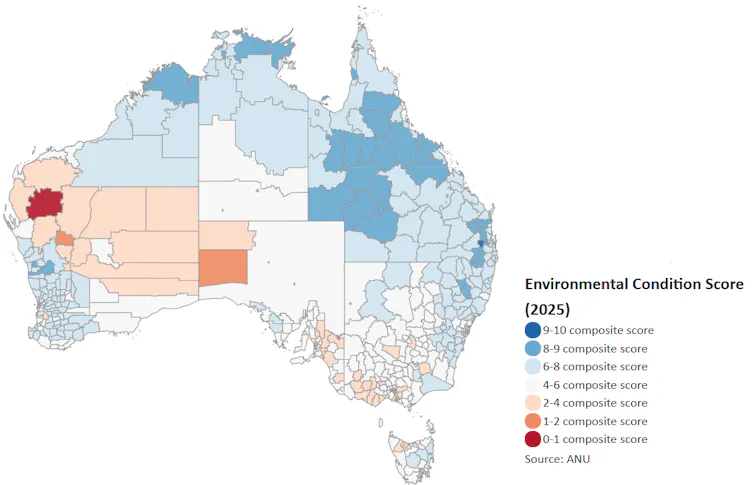
Drunk Nelson teen died in crash while fleeing police out on another job

Source: Radio New Zealand

A Nelson teenager was fleeing police at about 183 kilometres per hour, but the officer was on his way to another job. RNZ/ Marika Khabazi

A Nelson teenager was fleeing police at about 183 kilometres per hour when she lost control of the vehicle and smashed into a tree.

Tieylr Saige Ayrton, 17, died from a head injury sustained in the crash on Rutherford Street in March 2022.

The girl was under the influence of alcohol and driving on a restricted driver licence in the early hours of the morning. Her two passengers suffered serious injuries in the crash.

Coroner Megan Armistead, in findings released on Wednesday, said Ayrton’s death was avoidable and highlighted the dangers of driving while intoxicated and the importance of complying with restricted licence conditions.

The Transport Agency said drivers on a restricted licence were seven times more likely to be involved in a fatal or serious injury crash than other drivers, partly due to inexperience.

Two of the riskiest situations for young drivers were driving at night and carrying passengers, the agency said.

Armistead said excessive speed, impairment from alcohol and driver inexperience were contributing factors in the crash.

“The Toyota was travelling at more than three times the speed limit prior to the crash and more than twice the speed limit at the point of impact,” the coroner said.

Fleeing a police officer heading to another callout

Ayrton was driving north on Waimea Road towards central Nelson in a Toyota Mark-X sedan about 1.30am on 13 March 2022.

At the same time a police dog handler, driving a marked police dog vehicle conducting mobile patrols in Stoke, received a call for assistance with a disorder incident on Bridge Street, Nelson.

The officer decided to provide backup for the incident and drove towards central Nelson from Stoke. He increased his speed and activated his red and blue lights.

Ayrton was travelling about 63 kilometres per hour on Waimea Road before the police car approached.

The police officer attempted to overtake Ayrton on an uphill section of the road near Nelson Hospital. But the teenager increased her speed and did not attempt to pull over or allow the police car to pass.

The officer told the coroner he realised the Toyota’s driver was not going to allow him to pass, so he deactivated his red and blue flashing lights and began slowing down.

Ayrton continued to accelerate and reached 183 kilometres per hour before braking ahead of a left-hand curve into Rutherford Street.

The car was travelling about 112 kilometres per hour as it entered the curve and Ayrton lost contol of the vehicle, crossed the centre line and crashed into a tree on Rutherford Street at approximately 106 kilometres per hour.

The police officer rounded the corner soon after and saw the car on fire.

He stopped, ran to the vehicle and put the fire out before attempting to remove those inside.

Members of the public and the officer were able to free one person from the car.

Firefighters arrived and began working to free Ayrton and the other passenger.

An ambulance arrived at 1.50am but Ayrton was unresponsive and died at the scene. The two passengers were taken to Nelson Hospital.

Crash investigation findings

Police carried out a Critical Incident Review into the circumstances of the Toyota fleeing the police vehicle.

It found the officer was not in pursuit of the Toyota and when he realised the Toyota was fleeing from him he followed police policy and procedure by immediately turning off his lights and siren, slowing down and informing the police communications centre.

The Independent Police Conduct Authority resolutions manager Cath Anyan said it was notified of the crash but did not consider an independent investigation was necessary nor was it considered necessary to oversee a police investigation.

A report from the Serious Crash Unit found no contributing factors relating to the vehicle, environment, the road or its layout and markings.

Investigators analysed the CCTV footage from NZTA cameras, a speed monitoring sign on Waimea Road, data from the airbag control module fitted to the Toyota, independent witness accounts and tyre abrasion markings. They found while crossing over the Van Diemen Street intersection on Waimea Road, the Toyota was travelling at approximately 183 kilometres per hour.

The police car was approximately 580 metres behind and not displaying flashing lights.

Tasman District serious crash analyst Senior Constable Simon Burbery said the bend into Rutherford Street had a critical curve speed (the maximum speed a vehicle could take a curve before losing control) of 65 kilometres per hour but the car was travelling almost 50 kilometres per hour more than that when it entered the bend.

The investigation also found the Toyota’s brakes were engaged on and off from more than 200 metres before the crash site, but the rate of deceleration was low.

Ayrton was barefoot at the time of the crash and Burbery noted a pair of jandals found in the driver’s footwell could have become stuck under the brake pedal while she was driving, which could have prevented the brakes from being fully applied.

Unfortunately, due to damage to the Toyota, the investigators could not carry out further analysis of that matter and the coroner said there was insufficient evidence to establish if it had been a contributing factor.

Ayrton was found to have a blood alcohol reading of 153 milligrams per 100 millilitres – more than three times the limit for drivers over 20. However, drivers under 20 years of age are not allowed any alcohol.

Ayrton had held a restricted driver licence since September 2021. The conditions of the licence meant she was not allowed to carry passengers or drive between the hours of 10pm and 5am.

Tasman road policing manager Inspector Martin Tunley said every fatal crash was a tragedy and police were aware that behind every death on the roads was a grieving family.

“My thoughts are with Tielyr’s loved ones. I’d also like to acknowledge our officer and the members of the public who, arriving moments after the crash, were confronted with this terrible scene and did everything they could to save Tielyr and comfort her friends.”

Sign up for Ngā Pitopito Kōrero, a daily newsletter curated by our editors and delivered straight to your inbox every weekday.

– Published by EveningReport.nz and AsiaPacificReport.nz, see: MIL OSI in partnership with Radio New Zealand

Three double-bunk deaths at Mt Eden prison in a year

Source: Radio New Zealand

Mt Eden prison staff found a prisoner had been injured at 10.40am on 29 November. File photo. RNZ/Calvin Samuel

A homicide investigation is under way after an inmate died 10 days after allegedly being assaulted by his cellmate at Mt Eden prison.

The man’s death is the third homicide investigation involving inmates in double-bunk cells at the prison since September last year.

The death comes amid a Corrections review of a risk assessment tool used in deciding whether prisoners are suitable to share a cell, after the two earlier suspected murders.

Mt Eden Corrections Facility (MECF) general manager Dion Paki earlier told RNZ that staff found a prisoner had been injured at 10.40am on 29 November.

Do you know more? Email sam.sherwood@rnz.co.nz

The inmate was assessed by on-site medical and taken to hospital.

“The alleged perpetrator was immediately secured and placed on directed segregation.”

Detective Senior Sergeant Martin Friend told RNZ the victim died in Auckland City Hospital on Tuesday.

Police have continued inquiries since late November, which will now become a homicide inquiry.

“Our thoughts are with the man’s family at this difficult time,” Friend said.

Police inquiries into the man’s death would continue, with results of a post-mortem pending.

MECF acting general manager Edith Pattinson acknowledged the man’s death had been a “difficult and distressing time for his loved ones and our thoughts remain with them”.

“Police are investigating and Corrections is also carrying out a full review into this incident. An investigation by the independent Corrections Inspectorate will also be carried out. If these investigations and reviews identify areas where we need to strengthen our processes, we are absolutely committed to acting on these with urgency.

“We can confirm the victim was in a shared cell and that the suitability of this placement is part of our review into this matter. Understandably, the victim’s family will have questions they would like answered. We have been in regular contact with the man’s family, and once our review is complete we will share the findings of this with them when we’re able to do so.”

Corrections’ review would look into what risk assessments were done such as the Shared Accommodation Cell Risk Assessment (SACRA).

“Our frontline staff manage approximately 10,900 prisoners who are some of New Zealand’s most difficult and dangerous people.

“We take our duty to manage prisoners safely extremely seriously and are acutely aware that there have been several incidents at MECF in the past year alleged to have involved prisoners in shared cells.”

The Not to Double Bunk (NTDB) Policy has been updated in Corrections’ Prison Operations Manual to ensure staff were better supported in making informed decisions around adding, managing, and removing NTDB alerts, Pattinson said. Multi-Disciplinary Team meetings were also now required for reviewing and validating NTDB alerts.

“In addition, Corrections is undertaking a review of the SACRA process across the prison estate to ensure it is robust and as safe as possible. This review is now in its final stages, and again we are committing to acting on any changes needed with urgency.”

RNZ earlier revealed there had been two suspected murders, both involving double-bunked cells, in nine months at the prison.

Corrections use the SACRA tool to review the compatibility of individuals before they were placed in a shared cell.

The SACRA tool identified key risk factors to consider before placing a person in a shared cell.

If a person was deemed not suitable to double bunk, a Not to Double Bunk (NTDB) alert was activated on their profile.

Corrections custodial services commissioner Leigh Marsh earlier confirmed he requested a review of the SACRA process which was under way.

“The review is in its early stages, so we have limited information to provide at this stage.

“However, we can confirm that our Custodial, Pae Ora and Intel teams will be considering the questions asked to inform suitability, the process to determine compatibility, and the review processes relating to SACRA. This will help inform what improvements can be made to the SACRA process.”

Corrections had also taken steps across all prison sites regarding shared cell risk assessments, including instructing that all assessments must be reviewed within 24 hours of completion to check whether any further or outstanding information had been received.

“This is because we often receive people from the courts late in the evening and information can sometimes be limited.”

Sign up for Ngā Pitopito Kōrero, a daily newsletter curated by our editors and delivered straight to your inbox every weekday.

– Published by EveningReport.nz and AsiaPacificReport.nz, see: MIL OSI in partnership with Radio New Zealand
Judge deciding whether Papatoetoe will face rare by-election

Source: Radio New Zealand

RNZ / Liu Chen

A district court judge has reserved his decision on whether a by-election is needed in an Auckland local body election.

The hearing followed a petition by former Ōtara-Papatoetoe Local Board member Lehopoaome Vi Hausia, who claimed to have received reports of voting papers being stolen from residents and submitted without their consent.

Dale Ofsoske, an independent electoral officer for Auckland, was the respondent to the petition.

At a preliminary hearing at Manukau District Court in November, Judge Richard McIlraith ordered five ballot boxes containing votes from the electorate to be transferred from Auckland District Court, where they were being kept, to Manukau for scrutineering in the presence of Judge McIlraith, legal counsel for Hausia and Ofsoske, as well as Ofsoske himself.

Seventy-nine voting papers were subsequently identified during examination as having been cast without the rightful voter’s knowledge.

At Monday’s hearing, legal counsel for Ofsoske acknowledged there had been irregularities in some of the ballots cast.

McIlraith said a ruling on the petition would be made before Christmas.

Lodged under the Local Electoral Act, the petition by the former deputy chair of the Ōtara-Papatoetoe Local Board who failed to be re-elected also alleged statistical anomalies in turnout, misuse of ballot papers, irregularities involving special votes, discrepancies in voter records, unlawful campaign activity and systemic weaknesses in the postal model.

Papatoetoe was the only Auckland electorate to record a significant rise in turnout in the latest local body election.

While other Auckland areas saw turnout drop, voting numbers in Papatoetoe increased by more than 7 percent.

None of the previous members were returned. All four seats went to first-time candidates from the Papatoetoe Ōtara Action Team.

The petition argued that the result was inconsistent with historic voting patterns and warranted examination.

Simon Mitchell, legal counsel for Hausia, highlighted the sharp rise in the number of votes in Papatoetoe.

“We say there are 3000 new votes in the Papatoetoe subdivision,” he said on Monday.

“And that is the only subdivision or local board area in the entire Auckland city that has had an increase in voting. Every other local board had a decrease in voting.”

Mitchell argued that the irregularities and unexplained surge in voting in Papatoetoe could only be explained by mass voter fraud.

Judge McIlraith acknowledged the seriousness of the allegations but asked for evidence supporting claims of thousands of unlawful ballots.

Mitchell said one police case had been made regarding theft and argued that a surge in votes was not the consequence of a “sudden interest in democracy”.

He also noted that, had the winning candidates engaged in the process, conclusions might have been drawn from their perspectives about the sudden increase in voting in the area.

No one from the Papatoetoe Ōtara Action Team, which won all four seats in the board’s Papatoetoe subdivision, was present at Monday’s hearing.

Mitchell said the irregularities could undermine public confidence in the electoral system.

Judge McIlraith said that if Mitchell’s allegations were proven, it would confirm “everyone’s worst nightmare regarding the efficacy of the [postal] system had come true”.

David Collins, representing Ofsoske, argued that case law did not automatically justify overturning the election.

He said Hausia lost by roughly 1200 votes, and alleged fraud might not have materially affected the result, according to the law.

Collins also argued there could be several reasons why constituents did not receive their ballot papers that had nothing to do with mass fraud.

Residents could have changed addresses, not have been enrolled in the first place, or the ballot papers could have been collected by someone else.

The hearing concluded on Tuesday.

Andrew Geddis, a law professor at the University of Otago, said the situation was “certainly very worrying” because it called into question the trustworthiness of the postal voting system used in local elections.

“[The petition] highlights some vulnerabilities in that practice and, ultimately, it does raise the question as to the methods that were used to determine the results in the election in question and whether everything that was done in this election was lawful,” he said.

Geddis said such petitions were rare in local elections, as petitioners must convince a judge of potential issues and cover their own legal costs.

Under the Local Electoral Act, a by-election could be called if enough unlawful votes were proven to have changed the outcome.

“The problem here is that the victors of the election won by about 1200 votes,” he said. “So, you would have to prove that there was a very widespread pattern of unlawful voting.”

Geddis said it was unclear whether a judge, if unable to prove whether enough unlawful votes could have changed the outcome, would let the result stand or could void the election due to public distrust in the process.

“I would hope it’s an option that’s available because it would be pretty bad, I think, to have a judicial inquiry that finds, yes, there were widespread irregularities, but the judge just has to let the results stand,” he said. “I think that would be a bad outcome.”

Geddis said by-elections that stemmed from election petitions were rare, and that all candidates were free to run again.

He also said the result of an electoral petition was final.

The Ōtara-Papatoetoe Local Board has two subdivisions, with the Ōtara having three seats and Papatoetoe four.

None of the previous local board members of the Papatoetoe subdivision were re-elected.

Separately, police have confirmed they are investigating 16 complaints of electoral fraud that had been forwarded to them from Election Services.

Last month, RNZ received a complaint alleging “electoral malpractice” in relation to the Ōtara-Papatoetoe Local Board.

In addition to voting paper theft, it claimed voters were being told how to vote inside polling booths and in public places at a Sikh temple in Papatoetoe.

Speaking to Local Democracy Reporting earlier, Papatoetoe-Ōtara Action Team spokesperson Kunal Bhalla rejected the allegations, describing them as “baseless and politically motivated”.

– Published by EveningReport.nz and AsiaPacificReport.nz, see: MIL OSI in partnership with Radio New Zealand
NZDF wants to build ground terminals for military satellite system

Source: Radio New Zealand

File photo. 123rf

The NZ Defence Force wants to put in ground terminals next year for its main military satellite system.

It has put out a tender to advise suppliers about 19 projects it is considering over the next year to 18 months.

These range from ground terminals for America’s Wideband Global satellite network, to an infantry training facility, to an emergency management communications system for the Air Force in Auckland.

It noted the projects were not funded yet.

The US has been asking its partners to help pay to add two new satellites worth hundreds of millions each to the 10-strong network. It provides communication links between the Pentagon and combatant commanders, and NATO forces, among others.

New Zealand has put more than $100m into helping build the network since 2012.

A note about the ground terminals said they had been planned for the end of 2025, but this had shifted to next year.

Sign up for Ngā Pitopito Kōrero, a daily newsletter curated by our editors and delivered straight to your inbox every weekday.

– Published by EveningReport.nz and AsiaPacificReport.nz, see: MIL OSI in partnership with Radio New Zealand
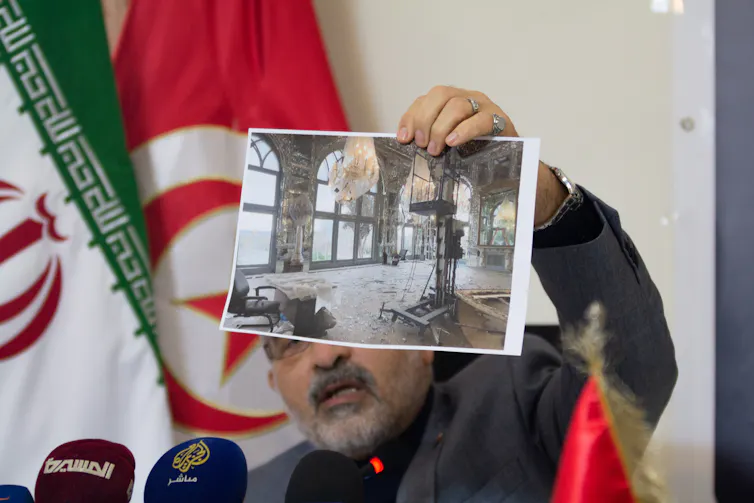
ACC backs down on less flexible remote working policy

Source: Radio New Zealand

Workers strike outside an ACC building in Wellington in July. Samuel Rillstone

ACC has backed down on plans to require staff to work in the office three days a week, rather than two.

The agency said following consultation with workers and careful consideration of their feedback, it decided to maintain current settings of two days in the office each week.

Earlier this week, the Public Service Association said it had written to the Commerce Commission, seeking an investigation into ACC for breaching the Fair Trading Act.

It said that in its job ads, ACC promoted working from home three days a week as a key benefit of working there – and was looking to break that promise.

Sign up for Ngā Pitopito Kōrero, a daily newsletter curated by our editors and delivered straight to your inbox every weekday.

– Published by EveningReport.nz and AsiaPacificReport.nz, see: MIL OSI in partnership with Radio New Zealand

Tongariro National Park huts and tracks reopen after fire

Source: Radio New Zealand

A major blaze burned through 296 hectares of vegetation at Tongariro National Park. Supplied / Alister McDermid and Joanna Finlayson

Tongariro National Park’s huts and tracks will reopen on Wednesday, following a major fire.

The blaze that broke out on Monday burned through 296 hectares of vegetation.

Fire and Emergency has since declared the fire completely contained, and the park’s tracks and huts safe.

The Department of Conservation (DoC) said the Tongariro Alpine Crossing, the Northern Circuit, and all walks in and around Whakapapa Village were now open.

State Highway 47 had also re-opened, but was restricted to one lane.

DoC requested visitors use shuttle operators to limit the amount of traffic, as fire trucks were still moving through the area.

Sign up for Ngā Pitopito Kōrero, a daily newsletter curated by our editors and delivered straight to your inbox every weekday.

– Published by EveningReport.nz and AsiaPacificReport.nz, see: MIL OSI in partnership with Radio New Zealand

Anika Wells refers herself to independent watchdog over expenses affair

Source: The Conversation (Au and NZ) – By Michelle Grattan, Professorial Fellow, University of Canberra

In a move that will enable her to avoid detailed media questioning about her use of entitlements, embattled minister Anika Wells has referred herself to the authority that oversees parliamentarians’ expenses.

Wells, the Minister for Communications, who is also the Minister for Sport, said in a statement late Tuesday, “I remain confident all my travel and expenses is within the framework but for the avoidance of doubt I have self-referred my expenditure to IPEA (Independent Parliamentary Expenses Authority) for an audit”.

Wells needs to be out in the media on Wednesday, when the ban on under-16s having social media accounts begins. With the audit she, as well as the prime minister and other ministers, can shut down questions on her spending, on the grounds an inquiry is being held.

Wells has been under political fire for a week, in a controversy that started with the fact the government spent about $95,000 to fly her and two officials to New York to spruik the social media ban.

A flood of revelations has followed, about Wells’ bills for travel under the family reunion provision, Commonwealth cars that were kept waiting for many hours while she was at sporting events, and other spending.

Late Monday Wells updated her parliamentary register of interests to include a batch of free tickets. In many cases, the declarations were overdue.

The Wells controversy has had a flow-on effect, with scrutiny of other ministers’ spending causing further embarrassment.

The opposition on Tuesday called for a second inquiry and said Wells should stand aside while the matters were investigated.

Finance spokesman James Paterson and shadow special minister of state James McGrath said in a statement the self-referral was a belated admission Wells had breached community expectations. But more than the IPEA inquiry was needed.

“The prime minister must immediately refer this to the secretary of the department of prime minister and cabinet for investigation, seeking advice on whether a breach, or indeed multiple breaches, of his Ministerial Code of Conduct have taken place.

“That code of conduct mandates that ministers must:

  • observe standards of behaviour ‘worthy of the Australian people’

  • act in a manner ‘consistent with the highest ethical standards’

  • not put public resources ‘to wasteful or extravagant us’, with ‘due economy’ to be observed ‘at all times’

  • be ‘scrupulous in ensuring the legitimacy and accuracy of any claim for ministerial, parliamentary or travel expenses’

  • comply with requirements around declaring gifts.”

Paterson and McGrath said the revelations suggested Wells had not complied with the code.

They said Wells should stand aside while the IPEA investigation, and one by the secretary of Albanese’s department, were conducted.

The Conversation

Michelle Grattan does not work for, consult, own shares in or receive funding from any company or organisation that would benefit from this article, and has disclosed no relevant affiliations beyond their academic appointment.

ref. Anika Wells refers herself to independent watchdog over expenses affair – https://theconversation.com/anika-wells-refers-herself-to-independent-watchdog-over-expenses-affair-270796

The OCR is down, so why are home loans rising?

Source: Radio New Zealand

Westpac says it is increasing its home loans over two- to five-year terms by 30 basis points. 123rf

Wholesale rates are getting the blame for the fact that two weeks after the official cash rate was cut, one major bank has increased some of its fixed-term home loan rates.

Westpac said on Tuesday it was increasing its home loans over two- to five-year terms by 30 basis points.

That takes a two-year fix to 4.75 percent.

At the same time, it is reducing its six-month rate by 20 basis points, to 4.69 percent.

Before the latest OCR decision, wholesale markets had virtually priced in one more cut.

So when the Reserve Bank indicated it thought another cut might not be needed, wholesale rates ticked up.

Westpac said wholesale rates were 40 basis points higher than they were the day before the OCR announcement.

Infometrics chief executive Brad Olsen said there was a chance that the wholesale rate increase was a bit of an overreaction.

“You look before the Reserve Bank’s announcement in late November, you know, markets were keen on another cut. Not fully, but leaning in that direction. Then with the Reserve Bank’s nonchalant, through-the-middle view of ‘look there’s not probably a lot left in the system’, which is not too dissimilar to what they said before, markets have gone ‘oh it’s time to start thinking about the up’. It does seem like a bit of a reversal of position there. I do worry a bit that the markets have shifted pretty quickly from one to the other.”

He said people might be confused that the OCR had fallen while retail rates had risen, but there had never been a direct correlation. “We’re now at the turning point where you’re starting to see adjustments across the board.”

It would be interesting to see what other banks did, he said. “Does everyone follow because they’re facing the same sort of pressure but no one has moved yet? Or do you see a few banks go well actually maybe I have to make an adjustment but maybe not the full adjustment because then I drive a bit more of a wedge between me and other offers. It’s not clear what it means for the entire market yet.”

It had been noticeable that there were not major rate movements before the OCR, he said.

There may still be room for banks to absorb some increase on wholesale margins.

The main banks have a net interest margin of about 2.4 percent or 2.5 percent, roughly the same as they had a year ago but higher than the 2.1 percent KPMG reported them having in 2019.

Simplicity chief economist Shamubeel Eaqub said it could mean a “rubbish” Christmas for retailers if people were worried about rates rising again, and the Reserve Bank might have to cut again in February. He said other banks would probably follow. “The great mortgage war taught them not to compete on price – no changes in market share and a drop in profits.”

Commentators have been saying for some time that it could be worth considering a longer-term home loan fix because rates might be about as low as they would go.

Late last month, ANZ’s economists said it was too soon to say with confidence when rates might start increasing.

“The key point for now is that wholesale rates have stopped falling. Competition is clearly hotting up, with banks offering cash incentives to switch and that will be welcome news to borrowers,” they said.

“But when it comes to which term to select, our broad thinking remains as it was a month ago: we believe mortgage rates are likely at or near their lows, and that it is thus worth considering longer terms. With very little separating rates spanning from one to five years, borrowers with differing levels of risk appetite should be able to find a term that satisfies their own cost/certainty trade-off sensitivities.”

Sign up for Money with Susan Edmunds, a weekly newsletter covering all the things that affect how we make, spend and invest money.

– Published by EveningReport.nz and AsiaPacificReport.nz, see: MIL OSI in partnership with Radio New Zealand

‘It’s uneconomical’ – iwi provider of school lunches withdraws from programme

Source: Radio New Zealand

An example of the lunches provided by Te Rūnanga o Ngāti Rārua Supplied

An iwi provider of school lunches in the top of the South Island is withdrawing from the programme, because government funding no longer covers the costs.

Te Rūnanga o Ngāti Rārua first began delivering lunches in 2021 and delivered 1200 meals a day to children in eight schools across Whakatū and Wairau (Nelson and Marlborough) this year.

But pouwhakahaere (chief executive) Shane Graham said the numbers no longer stacked up, in terms of the funding offered and what they could provide.

He said for the past four years, the iwi had worked to provide fresh, locally grown food, prepared by local people, for schools throughout its rohe (region).

“It’s just a simple commercial imperative, you can’t be providing a service that costs you more than what you’re getting in terms of funding.

“It’s uneconomical… We effectively become subsidisers for the government programme, which we can’t do.

This year it has supplied lunches to Victory Primary School, Auckland Point School, Maitai School and Te Kura Kaupapa Tuia Te Matangi in Nelson and Spring Creek School, Mayfield School, Whitney Street School and Redwoodtown School in Blenheim.

It also previously provided lunches for Rai Valley Area School.

The lunches were produced in the Ngāti Rārua premises in Blenheim and at the Nelson Rugby Club rooms in Nelson.

Graham said when it first went for the contract, the Ministry of Education expressed concerns that the organisation would not be able to fulfil it as they were not a commercial provider and the iwi were not successful.

“We sort of took that as a bit of a challenge, the first year of the contract offering we weren’t successful and then things turned around, we got different leadership in play and we were able to prove that we were able to do it because we have a long history of being able to provide kai and food for a lot of people.

“In this case, it has been hundreds of thousands of meals with little or no complaints. It’s been a real privilege to be part of.”

In 2023, then-Education Minister Jan Tinetti said some of the best examples of the lunch programme were those led by iwi.

“There’s one in particular that really stands out for me, and that is Victory School in Nelson and the work that the iwi have done down there to lead that programme, and the difference that it has made to young people’s attendance and engagement in that particular school,” she said at the time.

Graham said it had been a significant and empowering programme and he was very proud of the team who made it happen.

Te Rūnanga o Ngāti Rārua’s contract to provide school lunches will finish at the end of the year and around seven jobs will be affected.

Graham said transitioning those staff into other areas was a key concern and priority for the iwi.

Ngāti Rārua were now looking to consolidate and consider other opportunities. Graham said it would not rule out a return to providing school lunches in the future.

He said the iwi wished the new providers success and said they had a big legacy to live up to.

“If they can provide that, good on them. If they can’t, then I think the schools and the community will be holding them to account on that.”

Sign up for Ngā Pitopito Kōrero, a daily newsletter curated by our editors and delivered straight to your inbox every weekday.

– Published by EveningReport.nz and AsiaPacificReport.nz, see: MIL OSI in partnership with Radio New Zealand

Beachgoers warned as drowning tragedies hit Auckland

Source: Radio New Zealand

Surf Life Saving is warning people to swim at their own risk when lifeguards were not on duty. RNZ / Kim Baker Wilson

There have been multiple water-related tragedies at Auckland’s west coast beaches this week.

A 26-year-old man died while swimming at Karioitahi Beach on Monday evening.

The body of a swimmer who fell into a hole at Lake Wainamu at Bethells Beach and did not resurface, also on Monday evening, was located by a police dive squad on Tuesday.

Five lifeguards from Bethells Beach Surf Lifesaving and a police eagle helicopter were unable to find the 23-year-old man on Monday.

Surf Life Saving northern region operations manager James Lea said their lifeguards responded to four separate incidents within close proximity on Monday night, including the two deaths.

One person required hospitalisation after lifeguards pulled them out of the water shortly after patrols finished for the day and gear was being packed up. Beachgoers were being told it was no longer safe to swim.

There was also a mass rescue of four people at Piha at 7:51pm.

Lea said the recent hot weather was attracting more people to beaches after lifeguard patrols closed, usually at about 7pm.

He said last night’s conditions, with low tide when rips were stronger, happened around sunset and created a “perfect storm” in terms of risk to swimmers.

“I think it’s the excitement around summer, the focus is let’s just get in the water and cool down.

“My advice is just take a pause. I’m competent in the water, but when I’m going swimming or surfing, I take a pause and look at the environment I’m going into first. Is it matching my level of competence? Am I going to be safe?”

He said with similar conditions expected tonight, they were trying to increase the number of lifeguards on duty.

“We’re just trying to pump up our resources a bit on our beaches tonight. But a lot of that is our relying on volunteers.”

He said those who decided to swim when lifeguards were not on duty did so at their own risk.

“Our lifeguards aren’t always there. If you’re not familiar with the environment, I’d strongly recommend you swim at the beach between the flags when lifeguards are on.”

He said if people spotted someone in trouble and lifeguards were not around, the best thing to do was to call the police and provide them with their exact position, to get someone there as soon as possible.

He said the death at Lake Wainamu was an unfortunate reminder that people can drown in any body of water.

“By the sounds of it, the person wasn’t confident in the water or a competent swimmer, or able to float. With Lake Wainamu, it drops very quickly. So as soon as they are out of their depth and if they’re unable to float, they will go under in a matter of seconds.”

Surf Life Saving offered sympathies to the whanau impacted by Monday’s incidents.

Karioitahi Beach Incident

Counties Manukau South Area Commander Police Inspector Jared Pirret said at about 7:10pm, police were told there were two men struggling to return to shore.

Lifeguards were able to return one of the men to shore safely.

A Police Eagle Helicopter located the second man in the water.

“Sadly, the man was unable to be revived back on shore and has died,” Inspector Pirret said.

“Our thoughts are with the man’s friends and families for their loss, as well as those responders who did their utmost to bring about a good outcome last night.”

Sign up for Ngā Pitopito Kōrero, a daily newsletter curated by our editors and delivered straight to your inbox every weekday.

– Published by EveningReport.nz and AsiaPacificReport.nz, see: MIL OSI in partnership with Radio New Zealand

Waitaki District Council pushing for joint water plan after independent plan rejected

Source: Radio New Zealand

The Internal Affairs Department rejected Waitaki District’s standalone water services plan. RNZ

Waitaki District Council is again courting neighbouring councils for a joint water services plan after its bid to strike out alone was rejected by the Department of Internal Affairs.

The department turned down the council’s independent plan in October after it backed out of the Southern Waters partnership with the Central Otago, Clutha and Gore district councils.

Officials have appointed Crown facilitator Amy Adams to help the council resubmit its plan by June and carry out a full review of Waitaki’s water assets.

On Tuesday, councillors approved a plan to explore re-joining the Southern Waters group or partnering with Timaru District Council.

In a statement, a council spokesperson said the decision ended Waitaki’s efforts to keep its water services in-house and elected members would receive more information early next year to select a preferred option.

“Under any future model the community will lose nothing but instead gain the most affordable way to have clean water supplied to their homes, and drinking, waste and stormwater networks which meet high quality standards,” they said.

The decision to pursue an independent approach was not backed by Waitaki’s previous mayor Gary Kircher.

In August he told RNZ that could lead to rates rises of up to 40 percent over the next two years.

The Department of Internal Affairs ruled the in-house plan failed to meet regulatory requirements, did not include enough information about the condition of the water services and did not include enough funding to cover the district’s projected growth.

New Waitaki mayor Melanie Tavendale said the council’s mission was to deliver clean, safe water to every home, business, school and hospital in the district and to do so at the most affordable price to the ratepayer.

“We need to ensure that when people turn on the tap, they get clean water delivered through efficient pipework and when they flush the toilet, their sewage gets taken away and treated through a secure wastewater network,” she said.

That would inevitably come at some cost, Tavendale said.

“The infrastructure investment needed over the next two decades dwarfs the $50 million council has invested in its waters in the last six years. It can’t be deferred any more, it has to be done,” she said.

“Water isn’t like roads, it’s not part-paid by the government and the charges for water will not be subject to the proposed rates-cap, so finding the most affordable option is vital for everyone in the district.”

Sign up for Ngā Pitopito Kōrero, a daily newsletter curated by our editors and delivered straight to your inbox every weekday.

– Published by EveningReport.nz and AsiaPacificReport.nz, see: MIL OSI in partnership with Radio New Zealand

Judge tells court martialled, dismissed soldier Jackie Te Weehi her actions were destructive

Source: Radio New Zealand

Corporal Jackie Te Weehi at her Court Martial at Whenuapai Air Base on Monday, 8 December 2025. RNZ / Kim Baker Wilson

An army corporal who swindled thousands of dollars from her comrades in the touch rugby team she managed has been told she has lost her military career and will be held in detention.

But she has avoided detention for now after instructing her lawyer to appeal against that sentence, and the judge granting bail for health reasons because of the expected eight months it would take an appeal to be heard.

Corporal Jackie Te Weehi pocketed $3422.57 of team member and NZDF funding while organising their participation in 2023 in the Australian Defence Force’s touch championships.

She also falsely told the Chief of Army players had travel insurance when they did not.

Te Weehi pleaded guilty at a court martial at Whenuapai Air Base on Monday to a representative charge spanning months of theft by a person in a special relationship.

She also admitted making a false official document.

On Tuesday, Te Weehi was told dismissal from the NZDF alone would not be enough to deter, denunciate or rehabilitate.

The judge told her that her actions were destructive of the trust that must exist between all members of the armed forces.

The Territorial Force soldier has since paid back the money she stole.

Te Weehi pleaded guilty at a Court Martial at Whenuapai Air Base on Monday. RNZ / Cole Eastham-Farrelly

The sentencing

Judge Bill Hastings told Te Weehi, 49, her abuse of trust was an aggravating factor in her offending.

“You were the team manager, you abused the trust of many comrades most of whom were a rank subordinate to yours,” he told her.

“You stole from subordinate ranks, your actions violated in particular the core military values of comradeship and integrity.”

The judge continued to say Te Weehi’s offending was pre-meditated and that this was demonstrated by the number of times she stole money.

Judge Hastings also told her she acted in self-interest and demonstrated a willingness to place her self-interests above the Defence Force.

In considering detention, Judge Hastings said he and the military members deciding her sentence had to consider denunciation, deterrence, rehabilitation and reintegration.

He said dismissal was not enough to achieve these alone and he and the panel were of the view detention was also required.

“We consider the NZDF has an obligation to one of its long-standing members to not cut you loose, but to send you back to the community with better values than when you offended,” he said.

“It also to a great extent provides for your rehabilitation and reintegration into the community.”

Judge Hastings said the sentence of both detention and dismissal held the corporal to account for the harm she had caused and deterred others from doing similar.

Credit was given to Te Weehi for her previously unblemished 27 years of service, her remorse, reparations and an early guilty plea.

Judge Hastings said he and the military members had seen letters of apology she wrote to both the court and the army men’s touch team players she took money from.

“We have read these letters and consider them to be genuine expressions of remorse.”

But the judge said there was no way Te Weehi could stay in the Defence Force.

“We consider it neither tolerable, not realistic for the NZDF to retain your services,” he told her.

“Your offending involved a fundamental breach of trust between members of the NZDF such that they should not be expected to work with you again.”

Judge Hastings told the corporal the extent of her breaches of NZDF values prevent her being retained and demonstrate unfitness to command in the future.

During her court martial, NZDF prosecutors also argued Te Weehi could not reasonably be put in a position of trust again.

Judge Hastings had to decide whether to grant the corporal bail or send her to detention until her appeal was heard.

He said he was granting bail to preserve Te Weehi’s appeal rights and not giving it would make those rights redundant given the time it would take.

She must not travel overseas, must surrender any travel documents and not apply for new ones, and tell Military Police if she moves.

The offending

Defence Force prosecutors Lieutenant Letitia Smith and Sub Lieutenant Angus Graham laid out the case at Whenuapai Air Base on Monday.

It was July 2023 when the New Zealand Army Men’s Touch Team was invited to play in the Australian Defence Force Touch Championship in Australia.

Te Weehi, an acting sergeant at the time, was manager of the team.

She overcharged team members and asked for money that wasn’t used, including asking for donations for the coach’s emergency bereavement flight back to New Zealand.

She took money at various points.

Te Weehi sent a budget to team members on 1 August 2023 saying they needed to pay $635 to cover the trip – $531 for flights, $80 for uniforms and $24 for other costs.

Days later she was told that sponsorships meant flight costs had dropped to $400.

She then told team members they needed to pay $535 in total, when it should have been $504.

Between 27 July and 23 August, team members put money into Te Weehi’s personal bank account.

In all, she got $8726 that was supposed for be for tournament expenses.

Between 15 and 23 August Te Weehi transferred $5600 to another service person who booked flights and then paid $1200 for uniforms.

In total she spent $7200 on the team’s needs.

But she held onto $940 from overcharging each player, asking for money for expenses that were not used and not repaying two players who overpaid.

Another player wanted to take his civilian daughter to the tournament and was told she would need to pay full price for the flight.

But Te Weehi knowingly put her on a seat subsidised by the army and held onto the extra $586, which she used for personal expenses.

Then, she got $3000 of sponsorships from the Army Logistics Regiment that was supposed to be given to team members equally as a reimbursement.

Te Weehi, while distributing the money, told players there were hidden costs and insurance fees when there weren’t, and held onto $939.67 and used it personally.

Money from a manager grant for extra expenses was also paid into her bank account for the likes of sports drinks and washing powder, but was not used for those.

On 18 October she asked players for more contributions, $490 for the team and miscellaneous costs.

She only put $294.70 of it toward those, and held onto the rest.

Then, when the team coach had to return to New Zealand urgently during the tournament for a family bereavement, the flight was charged to an NZDF credit card.

Te Weehi raised $189.60 from donations from four team members but gave none of the money to the coach or the Defence Force.

On 25 October she offered to order new team t-shirts for the team with eight players together handing over $372, but the shirts were never ordered.

On the second charge of making a false official document, she made a document addressed to the Chief of Army saying she had arranged travel insurance for the team.

A later investigation by Military Police found Te Weehi had never got insurance.

“Corporal Te Weehi blatantly lied, this was not spur of the moment offending,” Lt Smith said of the second charge at the court martial.

She also told the judge Te Weehi was not acting in any form other than self interest.

Smith said Te Weehi had “a clear unwillingness” to comply with the ethos and values of the NZDF.

Te Weehi’s defence

When interviewed under caution in October last year, Te Weehi asked to terminate the interview and exercise her right to refrain from making further statements.

At the court martial, Te Weehi’s lawyer, David Pawson, told the military panel it was “absolutely warranted” to have her dismissed.

“No problem with that at all,” he said.

But he argued she should not face detention, and that dismissal was a higher punishment than detention.

“She immediately pleaded guilty, she is remorseful, she’s paid back the donations and she’s written a letter of remorse,” he said.

He also urged the military panel to consider the effect of Te Weehi’s name being published by the media.

“I invite you to consider about being empathetic too, I’m not saying be soft but I’m not saying let’s be harsh either,” he said.

“Because at the end of the day Corporal Te Weehi is toward the end of her long and distinguished service.”

“We’ve all made mistakes,” he told the panel before it considered its sentence.

No victims gave victim impact statements.

Sign up for Ngā Pitopito Kōrero, a daily newsletter curated by our editors and delivered straight to your inbox every weekday.

– Published by EveningReport.nz and AsiaPacificReport.nz, see: MIL OSI in partnership with Radio New Zealand

Akaroa King Salmon products recalled over listeria risk

Source: Radio New Zealand

The recalled products. Supplied

Some Akaroa King Salmon products are being recalled because of the possible presence of listeria.

Food Safety NZ says the products affected are 100g packets of Mānuka Cold Smoked Slices and 500g packets of Mānuka Cold Smoked Trim.

Both had a use-by date of 29 December, with the batch number 46780.

They were sold at the Akaroa Salmon Wigram Factory Shop, Beckenham Butchery in Christchurch and Taste Nature in Dunedin.

Food Safety NZ deputy director-general Vincent Arbuckle said these products should be returned to where they were bought for a refund, or thrown out.

“Listeria differs to other harmful bacteria in that it can grow at refrigerator temperatures, so you have to be very careful about the foods you eat, or provide to others, if you or they are in a vulnerable group,” Arbuckle said.

“It is particularly dangerous during pregnancy because it can cause miscarriage, premature labour or stillbirth, and infection in the new-born baby.”

He said the products were identified through routine testing and there had been no reports of illness.

“As is our usual practice, New Zealand Food Safety will work with Ahi Mokopuna Limited Partnership, to understand how the contamination occurred and prevent its recurrence,” said Arbuckle.

Sign up for Ngā Pitopito Kōrero, a daily newsletter curated by our editors and delivered straight to your inbox every weekday.

– Published by EveningReport.nz and AsiaPacificReport.nz, see: MIL OSI in partnership with Radio New Zealand

The RBA is stuck in a tug-of-war, as it holds rates steady

Source: The Conversation (Au and NZ) – By Stella Huangfu, Associate Professor, School of Economics, University of Sydney

The Reserve Bank of Australia (RBA) has ended the year with a steady hand, keeping the cash rate at 3.6% at its final meeting of 2025. The decision was widely expected, but the real story is in the statement by the monetary policy board and what it reveals about the RBA’s thinking for next year.

The RBA acknowledged inflation has become more complicated. While price pressures have eased significantly since the 2022 peak, the bank noted inflation “has picked up more recently”. It said the latest data:

suggest some signs of a more broadly based pick-up in inflation, part of which may be persistent and will bear close monitoring.

In short, rate cuts are off the table for now.

A recovering economy

At the same time, the broader economy is healing. Growth has strengthened in recent months, particularly in private demand, and the housing market remains firm.

The RBA highlighted that “economic activity continues to recover”, reflecting firmer spending and investment. But the labour market, while still tight, is gradually losing momentum.

Together, these crosscurrents give the RBA reason to stay put.

Why the RBA stayed put

Today’s decision reflects two forces pulling in opposite directions.

Inflation is still too high and has been rising in recent months. Services inflation has been sticky. Cutting rates now would risk undoing the progress made over the past two years.

But the economy isn’t strong enough to justify a hike either. Private demand has improved, but households remain under pressure, discretionary spending is weak, and hiring has softened. A rate rise now could stall the recovery.

With these pressures pulling in different directions, the RBA has chosen patience. The central bank wants more information from upcoming inflation reports, wages data early next year, and labour market conditions before making its next move.

What’s changed — and why it matters

The tone of today’s statement is cautious. The RBA emphasised “the risks to inflation have tilted to the upside,” but balanced that by noting it will “update its view of the outlook as the data evolve”.

The bank also stressed it is approaching the outlook with care:

The board will be attentive to the data and the evolving assessment of the outlook and risks to guide its decisions.

This is deliberate neutrality. In recent weeks, some economists had suggested the RBA might lean toward a rate hike, but today’s comments avoid signalling a bias towards higher rates.

A hike remains a risk — especially if inflation continues to rise — but it is not the central scenario.

That neutrality matters. The RBA is telling us it wants to see how the data evolves before committing to a direction.

This is important for shaping expectations ahead of 2026. Talk of an rate increase early in the new year appears premature based on today’s language.

What markets and banks expect

Australia’s big four banks all expect an extended period of steady rates, with no move until at least May 2026.

Markets are broadly in the same camp, pricing in a long pause ahead of at least one rate increase by the end of 2026.

Crucially, none of the major banks are forecasting a near-term hike. Their central view is that the RBA will hold for a long stretch.

Westpac is the only one expecting a cut — and even then, only if inflation makes more convincing progress. Taken together, this reinforces the message in today’s statement: policy is leaning neither toward tightening nor easing.

The bigger picture

Australia is not alone in navigating this kind of mixed economic picture. The US Federal Reserve has cut rates twice this year — in September and again in October. However, those moves have been cautious because inflation in the US remains a concern.

The RBA said uncertainty in the global economy “remains significant”, but it also added there has been little impact on growth or on trade with Australia’s major trading partners.

Looking toward 2026

Today’s “no change” decision sets up next year’s discussion. Inflation is still too high to cut rates, but growth is too soft to hike. That leaves the RBA likely to stay patient well into 2026.

The key question for early next year is whether services inflation finally begins to ease. If it does, attention will turn to when rate cuts might become possible. If it doesn’t, the risk of another hike will grow — but again, this is not the RBA’s central scenario today.

For now, the RBA ends the year in steady, watchful mode. Stability, rather than movement, is the story — and it’s likely to stay that way until the data offers a clearer signal.

The Conversation

Stella Huangfu does not work for, consult, own shares in or receive funding from any company or organisation that would benefit from this article, and has disclosed no relevant affiliations beyond their academic appointment.

ref. The RBA is stuck in a tug-of-war, as it holds rates steady – https://theconversation.com/the-rba-is-stuck-in-a-tug-of-war-as-it-holds-rates-steady-271512

‘We need to prepare better’, says Auckland FC coach after penalty misses

Source: Radio New Zealand

Wellington Phoenix’s Josh Oluwayemi saves a penalty. Shane Wenzlick / Photosport.nz

It took Auckland FC 35 games in the A-League to be awarded a kick from the penalty spot. When the time came they failed to convert – twice.

Coach Steve Corica hoped that did not happen again.

Two penalties in the second half of Saturday’s derby game were saved by Wellington Phoenix custodian Josh Oluwayemi.

Oluwayemi first denied Sam Cosgrove just after the hour mark and then stopped Francis de Vries eight minutes later before the All White converted off the rebound.

The misses were not costly, with Auckland winning 3-1 to keep their unbeaten run in the New Zealand derby going, but Corica knew there could be another game this season when a successful penalty could turn a game to their advantage.

“It’s not great to miss pens like that… you would hope to score the pens when they come,” Corica said.

Cosgrove, who is the side’s current leading scorer with five goals, and last season’s leading goal-scorer Guillermo May were among those Auckland would turn to should a penalty kick be awarded.

May, who started off the bench in the round seven fixture, was not on the field yet when the penalties were blown and he suggested the team “were not prepared” when they faced their first penalty.

“Some games we deserved some more [penalties] these two came together and we need to prepare better,” May said.

Corica was not convinced they needed to step up the penalty taking at practice.

“They’ve all taken them in different circumstances in penalty shoot-outs but there is normally one or two who would take them on the day,” Corica said.

“It’s all a confidence thing picking the right spot and scoring, unfortunately Sam missed his one but that happens sometimes but you don’t want it to happen too often.”

Going into round eight of the last A-League season, Auckland had won the six games they had played and were at the top of the points ladder.

This season the record looks a bit different. Four wins, two draws and a loss and sitting in third.

However Auckland have netted 10 goals so far, the same number they had at this stage in their inaugural season.

“This is more like a normal season,” Corica said. “Six wins in a row I don’t think I’ve ever done it [before last season] while I’ve been coaching.”

Corica said that the results so far were “a good sign”.

“[We’re] hard to beat.”

Friday’s game against Central Coast Mariners in Gosford marked the start of three away games to see out the calendar year which could be a turning point for the season.

“it’s a difficult period for us being away from home, I actually quite like it because if you go by last season we picked up a lot of points away from home so if we play our cards right and take our chances we can pick teams off and hopefully do what we did last year and pick up a lot of points along the way.”

The Mariners have also had some problems finding the back of the net in the last round.

“I watched the game against Sydney last week they hit the crossbar four times and they came away with a loss.

“They’re a good team, especially at home, they’ve got good young players aggressive as well defensively.

“I said to the boys we actually really need to be switched on the away games is going to be a big telling point of where we’re going to finish at the end of the season if we can start picking up points away from home.”

Sign up for Ngā Pitopito Kōrero, a daily newsletter curated by our editors and delivered straight to your inbox every weekday.

– Published by EveningReport.nz and AsiaPacificReport.nz, see: MIL OSI in partnership with Radio New Zealand

Man, 26, drowns at Karioitahi beach, Auckland

Source: Radio New Zealand

Karioitahi Beach. Supplied / ATEED

A 26-year-old man has died after drowning at a southwest Auckland beach on Monday night.

Counties Manukau south area commander police inspector Jared Pirret said police were contacted about two men struggling to return to shore at Karioitahi Beach just after 7pm.

Lifeguards were able to return one of the men to shore safely.

A Police Eagle Helicopter located the second man in the water, but he was unable to be revived once back on shore.

Police will refer the 26-year-old man’s death to the coroner.

Surf Life Saving said their lifeguards responded to multiple critical incidents on Auckland’s west coast on Monday.

It said it was increasing staffing on Tuesday night with more risky conditions expected.

Surf Life Saving Kariaotahi posted on social media that local iwi had placed a rāhui in front of the surf life saving clubhouse south to the Waikato River mouth for the next seven days. It includes a restriction on fishing, swimming and recreational activities.

Sign up for Ngā Pitopito Kōrero, a daily newsletter curated by our editors and delivered straight to your inbox every weekday.

– Published by EveningReport.nz and AsiaPacificReport.nz, see: MIL OSI in partnership with Radio New Zealand

Coalition reveals Resource Management Act replacement,but will it stand the test of time?

Source: Radio New Zealand

David Seymour, Chris Bishop and Christopher Luxon at the announcement of New Zealand’s new planning system. RNZ / Mark Papalii

The coalition’s RMA reforms seem far more likely to stand the test of time than what Labour passed shortly before being voted out.

Four government ministers fronted to announce the Resource Management Act replacements to more than 100 reporters, stakeholders commentators and officials at the Beehive on Tuesday afternoon.

They include a Planning Bill and a Natural Environment Bill the government will send to select committee next week, with the aim of passing by the end of next year, presumably before the election.

Given the consultation processes needed, the proximity to that election may echo Labour’s effort in 2023 which was quickly scrapped by the incoming coalition.

But indications from the opposition are that the merry-go-round of RMA reform will finally come to an end.

Labour won’t repeal – Hipkins

Labour leader Chris Hipkins. RNZ / Mark Papalii

Labour leader Chris Hipkins said the party was still working through the detail of the roughly 750 pages of legislation, particularly the regulatory relief aspects.

“That is the bit that we’re going to want to get into the detail of, because that could be very, very difficult for future governments, for future lawmaking, in the public interest,” he said.

“If you have to be compensating for every sort of infringement on somebody’s unfettered right to do whatever they want with their property, that has potentially far-reaching implications.”

But he indicated Labour would not return the coalition’s favour and again repeal and replace the legislation – opting instead to make changes.

“I think the repeal and replace cycle needs to end. That doesn’t mean that there won’t be amendments but the old idea of constantly going back and starting all over again has to stop.

Green Party co-leader Marama Davidson. RNZ / Samuel Rillstone

“From what I can see there’s a heck of a lot of similarities between what they’re proposing now, and the law that they repealed.”

The Green Party said whatever went through had to protect the environment, community voice, democratic processes and the Treaty.

“This government has shown time and time again that they will pass laws that further erode our environment and our living systems, our habitats and species,” co-leader Marama Davidson said.

RNZ has sought comment from Te Pāti Māori.

Certainty amid ‘tsunami of change’ – councils

Local Government New Zealand was happy to have certainty, saying there would be buy-in from councils and communities alike.

Vice President Rehette Stoltz, who is also Gisborne’s mayor. RNZ / Angus Dreaver

Vice President Rehette Stoltz, who is also Gisborne’s mayor, said she saw an increased workload ahead, it would also be an opportunity for more engagement with central government which had signalled it was open to.

“I think local government is seeing a tsunami of change, but we’re ready for that. We want to serve our communities as best as possible. Yes, there will be more work on local mayors. There will be more work also with local communities, because we will have to lean in, and our communities have to lean in to let us know what’s important to them at that local level.”

LGNZ’s regional sector chair Deon Swiggs, who is also chair of Environment Canterbury, said it was an opportunity to think differently about resource management.

He said the coalition’s version was “straight out” simpler than Labour’s, and he hoped the government would use the expertise of regional councils.

“Regional councils have some really, really good people who know this work [like the] back of their hand. And we do have elected members who have been elected to regional councils who were elected because they wanted to be in the resource management space,” he said.

“How we harness the skillsets of those people into this transition framework as well is going to be critical. So we want to be making sure that we have conversations with the government so that we don’t lose that technical skill, that institutional knowledge.”

Local Government New Zealand’s regional sector chair Deon Swiggs. RNZ / Nate McKinnon

Farmers, property professionals, Taxpayers Union back ‘ambitious’ reforms

Federated Farmers said the Resource Management Act had been the single biggest handbrake on growing agricultural productivity and rural economies.

Its resource management spokesperson Mark Hooper said it made sense to use certified Farm Plans instead of needing a resource consent.

“Farm Plans can achieve much of the same environmental outcomes as a resource consent, without the need to fork out tens of thousands of dollars on expensive planners and lawyers.”

However, Hooper said the increase in fines and restrictions on the use of insurance to cover a breach did not strike the balance in the right direction.

“This needs to have more nuance so that when harm is done accidentally, for example an effluent system fails due to poor engineering, this is recognised in the regime.”

The New Zealand Planning Institute said the timeframes for transition to the new system were “ambitious”, but supported the legislation.

“There are plenty of positives in the new system, with a refocus on the value planners bring to society,” NZPI Board Chair Andrea Harris said.

“We’ve been advocating for strategic spatial planning, which considers the long-term needs of society and coordinates the provision of infrastructure and growth within constraints.”

The Taxpayers’ Union said scrapping the Resource Management Act would be “the most meaningful tax relief offered by this government or any government in decades.”

Environmental groups rail against ‘regulatory relief’ effects

Greenpeace said companies being able to claim compensation was an “outrageous” idea, and it “flips the entire principle that polluters should pay on its head.”

Environmental Defence Society chair Gary Taylor. Supplied

Spokesperson Gen Toop said New Zealanders should not be expected to pay compensation to companies causing environmental harm.

“In practice, this means that if regions like Gisborne want stronger rules to stop forestry slash destroying homes and rivers, ratepayers would likely be forced to pay offshore forestry companies ‘compensation’. It’s absurd.”

The Environmental Defence Society also expressed concern at the regulatory relief proposal.

“That will have a chilling effect on councils protecting things. If they protect something, then arguably they have to pay the landowner for that, which is really bizarre and I think is a construct that comes out of right wing ideology,” EDS chair Gary Taylor said.

“Councils will have rate caps, so they won’t be able to afford to pay, so they’ll have weaker controls.”

Forest and Bird general counsel Erika Toleman said putting greater weight on private property rights would ignore harms like destruction of biodiversity on private land, erosion of soils and ecosystem services, and cumulative degradation of rivers and landscapes.

“Big environmental issues, from deforestation to water pollution, happen within property boundaries. Excluding these effects is a recipe for decline,” she said.

Toleman said introducing compensation would make councils fear liability for protecting nature.

Ministers sell the policy

Prime Minister Christopher Luxon. RNZ / Mark Papalii

Announcing the new regime, Prime Minister Christopher Luxon said it would be a “more permissive, consistent and predictable system, that unlocks investment, reduces delays and gives businesses confidence to plan and to grow”.

He said officials estimated up to 46 percent of consenting and permit applications required under the RMA could be removed – between 15,000 and 22,000 consents that would no longer be needed based on 2023/24 figures.

Luxon was flanked by Deputy Prime Minister David Seymour, RMA Reform Minister Chris Bishop and Associate RMA Reform Minister Simon Court.

Seymour said it was “an historic and momentous day” because it marked a shift to the principle that “if you own a property and you’re not harming anyone else, you can”.

“We have the best piece of land on the planet but we’ve made it too hard to build an affordable life here, but worst of all we’ve done it to ourselves with planning laws that allowed every Tom, Dick and Henare to say no when people had an idea to make life better.

“It seems that for every person in this country who think they can, there’s a ‘can’t’, who’s empowered by the Resource Management Act to get in the way.”

Bishop said it would mean “less paperwork, less cost, faster and easier progress for those who want to do basic things like putting a deck on a house, building a fence on a farm, or constructing townhouses or even a wind farm”.

“The size of the prize is substantial. The economic opportunities we unlock with these reforms are unbelievably large,” he said.

He said economic growth would begin as soon as the system was set up and would build up over time, unlocking billions in economic value.

“Once this is implemented new Zealanders will be able to go to one website, look at one map, and figure out what they can and can’t do with their property – and in time they may be able to obtain simple consents online within a matter of days by harnessing the power of AI.”

He said councils would no longer be involved in gauging demand or financial viability of projects, retail distribution effects, the negative effects of development on competition.

“Which way your front door faces is an important decision, but guess what, it’s an important decision for you and your family, not for a local council bureaucrat to decide for you.”

Court said the major shift was towards a system with property rights at its centre, “after all, property rights are a core cornerstone of a liberal democracy”.

“Providing for regulatory relief is a critical way to right-size regulation by forcing councils to confront the real cost of these restrictions on private property that for too long have been costless to that council officer holding the highlighter, colouring in people’s property.

“It’s also a way to ensure that when these controls are justified, the property owner can access reasonable relief.”

He said the planning tribunal set to adjudicate when there was disagreement, will hold councils’ feet to the fire.

Prime Minister Christopher Luxon says the system will be a “more permissive, consistent and predictable system”. RNZ / Mark Papalii

Bishop acknowledged the new regime had some similarities to Labour’s approach, but said he would “stand absolutely behind the decision” to repeal that law in favour of his own version.

“We started again for a reason and I think we’ve ended up with a with a good outcome. Yeah, I absolutely think that was the right thing to do.”

The third coalition partner New Zealand First did not have a speaker at the announcement, but deputy leader Shane Jones said Māori involvement in the rollout would be key.

“Let’s see how the bill comes out of the Select Committee. But, you know, unless we have development in our Māori rural communities, they’re going to be in strugglers gully,” he said.

“But there’ll be people who disagree, because obviously the debate is ongoing as to how much veto power should Ngāi Tahu, for example, have over the development of the South Island.”

Sign up for Ngā Pitopito Kōrero, a daily newsletter curated by our editors and delivered straight to your inbox every weekday.

– Published by EveningReport.nz and AsiaPacificReport.nz, see: MIL OSI in partnership with Radio New Zealand

Threatened gulls back on rooftops in Tūrangi town centre

Source: Radio New Zealand

Threatened black-billed gulls nest on the rooftops in Tūrangi town centre. Supplied / DOC

Black-billed gulls are once again nesting on the rooftops in Tūrangi town centre.

A large colony of 150 of the threatened birds had nested there in 2023 – leaving a generous layer of guano on cars, rooftops and around businesses.

This year, the Department of Conservation said only 15 had decided to make the town centre their temporary home since November.

Ranger Sarah Tunnicliffe said businesses have had streamers and sprinklers on the rooftops to scare the birds away, so only a few determined stragglers had returned.

However, she encouraged the public not to feed them – either actively or by leaving food unattended – to continue to deter them away.

“Feeding them just encourages them to continue using the town centre, where they cause problems by pooing everywhere and squawking a lot.

“People might not be aware, but even small actions like not feeding birds count as naturing, and help to protect the nature we love.”

Tunnicliffe said the Department of Conservation was hoping for a less eventful season.

“We expect to see hatching any time now, and fledging should start toward the end of January.

“Hopefully none of the hatched chicks wander into the post-shop this time! But if you do come across one of the little fuzzballs wandering the town centre, please contact us on 0800 DOC HOT.”

While she said the community would be pleased to see only a small number of black-billed gulls in Tūrangi, the Department of Conservation was not sure where the rest of the population had gone.

“If you do come across black-billed gulls nesting elsewhere around Taupō, please contact us at turangi@doc.govt.nz.”

Sign up for Ngā Pitopito Kōrero, a daily newsletter curated by our editors and delivered straight to your inbox every weekday.

– Published by EveningReport.nz and AsiaPacificReport.nz, see: MIL OSI in partnership with Radio New Zealand

Ruth Richardson agrees to debate country’s fiscal position with Nicola Willis

Source: Radio New Zealand

Finance Minister Nicola Willis (left) and former finance minister Ruth Richardson. RNZ/Reece Baker/Supplied

Former Finance Minster Ruth Richardson has agreed to a challenge from the current finance minister to debate her.

On Tuesday morning, Nicola Willis challenged Richardson, who was Finance Minister from 1990 to 1993, to a debate.

The challenge, Willis said, was because the Taxpayers’ Union was preparing to launch a pressure campaign against her.

Richardson is chair of the organisation.

“My message for Ruth Richardson is a very clear one, come and debate me face to face. Come out of the shadows. I will argue toe for toe on the prescription that our government is following,” Willis said.

“I reject your approach and instead of lurking in the shadows with secretly funded ads in the paper, come and debate me right here in Parliament.

“I challenge any of these media outlets here to host that debate. I’m ready anytime, anywhere. I will debate her. She needs to come front up face to face.”

Richardson had earlier laughed when RNZ asked her if she would debate Willis, and made no apologies for the pressure campaign.

“I came to Parliament as a minister of finance. She is the minister of finance. She has to make the calls.”

On Tuesday afternoon, Taxpayers’ Union spokesperson Tory Relf said Richardson was more than happy to debate the government’s debt, levels of public spending, balancing the books, and growth.

“The government promised to reduce public spending. It’s now higher than when Grant Robertson left office,” Relf said.

“The government promised to tackle Labour’s 30 percent increase in bureaucrats. They’ve managed to reduce the size of the core public service by not even one percent.”

Relf said all National Party finance ministers since Robert Muldoon have had to tackle structural deficits inherited from Labour, and Willis’ challenge was no different from Richardson’s or Sir Bill English’s.

“The government promised to get the books back into surplus. Unless you count a newly invented OBEGALx measure, the government’s fiscal pathway never gets New Zealand back into surplus,” Relf said.

“The government promised ‘growth, growth, growth’. GDP per capita is lower than when Grant Robertson was in office.

“The government promised to reduce borrowing. Borrowing is still near Grant Robertson-era levels.”

The Taxpayers’ Union confirmed Richardson was ready to debate the country’s fiscal position after the release of the Half-Year Economic and Fiscal Update next Tuesday.

Sign up for Ngā Pitopito Kōrero, a daily newsletter curated by our editors and delivered straight to your inbox every weekday.

– Published by EveningReport.nz and AsiaPacificReport.nz, see: MIL OSI in partnership with Radio New Zealand

Body of swimmer missing at Auckland’s Bethells Beach found

Source: Radio New Zealand

The swimmer got into difficulty at Lake Wainamu at Bethells Beach. RNZ

Police say the body of a swimmer missing at Lake Wainamu on Auckland’s west coast has been found.

The 23-year-old man was in waist-deep water with three friends at the lake at Bethells Beach on Monday when he got into difficulty.

Police said he had taken a few steps before falling into a hole, and did not resurface.

The Police National Dive Squad searched the lake, helped by lifeguards from the Bethells Beach Surf Lifesaving Club.

The man’s death will be referred to the coroner.

Sign up for Ngā Pitopito Kōrero, a daily newsletter curated by our editors and delivered straight to your inbox every weekday.

– Published by EveningReport.nz and AsiaPacificReport.nz, see: MIL OSI in partnership with Radio New Zealand

Tongariro fire contained: ‘It’s still a great place to come to’

Source: Radio New Zealand

The latest fire at Tongariro National Park has been contained, but local tourism businesses are already seeing a large number of people cancelling future trips because they are scared to visit the area.

Nearly 300 hectares of vegetation has burnt, after 3000 hectares of the park went up in flames last month.

FENZ incident controller Renee Potae said the containment line was completed this afternoon.

She said a crew will remain to monitor the fire overnight, while a drone crew will check for deep-seated hotspots. Three ground crews, a tanker and a helicopter will stay on the fireground tomorrow.

Damage from the latest fire to hit Tongariro, as seen from the air. Pool

But local tourism operators say the impact on businesses will take a lot longer to damp down.

John and Gill Visser own Adventure Lodge and Motel in Waimarino, and also take people for scenic van trips to Mt Ruapehu. John Visser said the fire was putting the Whakapapa community and businesses at risk.

“We’re having cancelations left right and centre, and into January. We’re now getting people internationally contacting us saying we’re not coming your way it’s too dangerous.

“Because it’s happened twice… folks overseas only get rubbish on television… and it really gets people concerned,” he said.

RNZ / Dan Jones

The Tongariro Alpine Crossing is a big draw card for the area, but the track and Mangatepopo Hut are currently closed to visitors because of the fire. The Department of Conservation says booked visitors have been told and it has advised people to avoid Whakapapa Village at this time.

The owner of The Station Cafe in Waimarino, Sam Wilson. Jimmy Ellingham / RNZ

However, visitors can still enjoy the southern and eastern areas of Tongariro National Park, and Rotopounamu.

John Visser said all they could do is reassure people the area is still safe to visit, and hope that they listen.

“We’ll just keep soldiering on. Everyone that calls us, Gill and the girls will talk to them and convince them it’s still a great place to come to,” he says.

The owner of The Station Cafe in Waimarino, Sam Wilson, told RNZ about how he felt hearing that a second fire was blazing through Tongariro National Park yet again.

“Disappointment.. it sort of a bit of drop in the stomach – it’s quite a demanding job we have and when you add these hazards to our trade, particularly at this time of year leading into Christmas, it can be very challenging,” he said.

He said the Tongariro Crossing was a big draw card and brings in customers, but it was obviously having an impact as the local carpark was empty.

“This carpark would be full and there’d be big campervans, small campervans and everything in between – people from all around the world and the country,” Wilson said.

Alister McDermid had just finished the Tongariro Crossing on Monday when he saw the fire. Jimmy Ellingham / RNZ

‘It was scary’

Tourist Alister McDermid had just finished the Tongariro Crossing on Monday when he saw the fire .

“It was scary – there were two policemen there trying to put the fire out with a fire extinguisher. He threw the fire extinguisher away in disgust because it was doing no good.

“The intense heat we felt inside the bus going past was unreal, I’ve never experienced anything like it,” he said.

Fire in the Tongariro National Park. Supplied / Alister McDermid and Joanna Finlayson

Tyler and Shannon – two Canadians who were tramping in the area – told RNZ they were able to get back to the camper thanks to the efforts of shuttle driver Stacey, saying she was an “absolute local legend”.

“She had extra space in her van and was offering anyone that needed a ride the option to go with her, regardless of who they were booked with. She just wanted to help get as many people out as possible. She had two seats left and we went with her.

“There were a few dozen people waiting, and one guy even had his car parked right by the fire itself. All of us in the van voted to help him get to his car and Stacey delivered!

“The emergency crews helped us also and we got to see the fire burning right by where we started the hike in the morning.

“The park staff waiting at the end of the trail were so kind, helpful, and quick to let everyone coming off the hike know about the delays and situation. We really appreciate everyone’s efforts to communicate and provide water and assurances about the situation.”

Damage from the latest fire to hit Tongariro, as seen from the air. Pool

Sign up for Ngā Pitopito Kōrero, a daily newsletter curated by our editors and delivered straight to your inbox every weekday.

– Published by EveningReport.nz and AsiaPacificReport.nz, see: MIL OSI in partnership with Radio New Zealand

The school that rocks: Saint Andrews College’s latest epic prizegiving

Source: Radio New Zealand

A Christchurch secondary school’s end of year prizegiving concert has become a thing of legend.

Saint Andrews College was everywhere on the internet in 2023 with its performance of ‘Stairway To Heaven’, while last year’s rendition of Coldplay’s ‘Viva La Vida’ has been watched more than 42,000 times.

This year’s show stopper was a heartfelt tribute to Aotearoa, with a medley of iconic Kiwi anthems, including Crowded House’s ‘Don’t Dream It’s Over’ – sung in te reo Māori and English – Stan Walker’s ‘Aotearoa‘, Shapeshifter’s ‘In Colour’ and ‘Don’t Forget Your Roots’ by Six60.

The students played to an audience of 3500 people Christchurch’s Woolfbrook arena.

Recently graduated student Miu Kim played the violin solo on the medley and told RNZ’s Checkpoint it was all about the opportunity to play in such a big venue.

“It was really lovely to play in front of so many people. It’s such a special place to play.”

Miu – who started playing the violin and five and also plays the piano, saxophone and flute – said it was nerve wracking with the side of the crowd, but she also had trouble keeping a straight face.

“I actually had a little trip before the camera comes onto me, but I fortunately didn’t fall.”

She is off to study architecture next year, but will continue with music.

The show featured 100 students on stage, including about 60 in the orchestra, and the rest in the choir and rock band. They are a mixture of ages – some of the soloists are year 13, while others like electric and bass guitar are year 12, and the drummer is year 9.

St Andrew College head of music Andrew Ferguson said there was now clamour – both in and outside of the school – asking what song he was planning on well ahead of time, and there was also added pressure to ramp up production values.

He said the school had a couple of years to get used to the attention, but it was still intimidating to come up with something different.

He said there was a “lot of chatting” before settling on a 15-song shortlist.

“It was the middle of year before we settled on it and nutted the arrangement out.”

He said it was important to honour te reo Māori with the performance, but also could not rule out bringing out the bagpipes next year.

“I’m not going to commit to that, I actually have something different at the back of my mind, but bagpipes are a big part of the school.”

– Published by EveningReport.nz and AsiaPacificReport.nz, see: MIL OSI in partnership with Radio New Zealand

Listen live: The Panel LIVE from Revelry Bar in Auckland

Source: Radio New Zealand

Wallace Chapman preparing for his show The Panel, broadcasting live from Revelry Bar in Auckland. Supplied

Wallace Chapman and The Panel break free of the studio and invade Auckland’s Ponsonby Road for a hit of pub politics and current affairs.

Tonight’s panellists include Heather Roy (ex-ACT MP), Holly Bennett (former adviser to Minister Paul Goldsmith and founder of kaupapa Māori government relations firm Awhi), Phil Goff (former Auckland mayor) and Simon Wilson (senior writer NZ Herald).

Auckland’s Deputy Mayor Desley Simpson, Free Speech Union CEO Jillaine Heather and Sarah Helm (executive director of the New Zealand Drug Foundation), as well as other special guests, will also be in attendance and engage from the audience.

Sign up for Ngā Pitopito Kōrero, a daily newsletter curated by our editors and delivered straight to your inbox every weekday.

– Published by EveningReport.nz and AsiaPacificReport.nz, see: MIL OSI in partnership with Radio New Zealand

Record warm spring across country part of climate’s ‘new normal’

Source: Radio New Zealand

Earth Sciences New Zealand (formerly NIWA) is expecting above-average temperatures for most of the country heading into summer. RNZ

A record-breaking November pushed New Zealand to its warmest spring on record.

Data from Earth Sciences New Zealand (formerly NIWA) shows the average temperature across the country was 13.5°C, which was 1.3°C hotter than the long-term average and the warmest spring since records began in 1909.

ESNZ meteorologist Chester Lampkin said the hotter-than-average weather sat within an overall warming climate trend, and was likely to continue into summer.

Lampkin said September and October were already above average months this year.

“Then November ended up being a record-setter… If you recall, towards the end of the month we had some very hot temperatures.”

Across the country, 51 stations recorded their warmest average temperature, and seven places set new records during late November for the single hottest spring day.

That included temperatures of close to or above 32°C in Whakatu in Hawke’s Bay, Cheviot in North Canterbury and Dunedin.

The hottest temperature recorded anywhere in the country was 33°C in Hastings, on 27 November – the second hottest day on record there.

Lampkin said the record-setting warmth was driven by a north-westerly wind flow.

“We were getting a lot of warm air coming out of the Tasman and flowing over the country, both the North and the South Island.”

The water surrounding New Zealand, especially the North Island, was experiencing a marine heatwave, he said.

“When you have warm air flowing over warm water, you’re going to get even warmer air once it hits the land.”

ESNZ’s summer outlook was for above-average temperatures for most of the country, especially in the north of the North Island.

Part of that was due to La Niña conditions that had formed, but it was also down to an overall climate trend, Lampkin said.

“It’s going to be another warm, hot summer, and that certainly points to a new normal.”

It was possible more records could tumble.

“These warmer-than-average months, record-setting months, these more-than-average seasons are more likely to occur because of overall warming of the planet,” he said.

“You’ve got warmer ocean temperatures, warmer water, you’ve got a warmer background climate state – it doesn’t take much to push temperatures to record territory.”

The World Meteorological Organisation confirmed earlier this year that 2024 was the warmest year on record, based on six international datasets.

It was the first year that average temperatures were more than 1.5°C above pre-industrial levels.

The Intergovernmental Panel on Climate Change has identified a long-term average of 1.5°C as the level of warming at which dangerous climate ‘tipping points’, such as the loss of coral reefs and catastrophic ice sheet melting, could begin to occur.

It was important to remember there could still be cooler periods, Lampkin said.

“Even though you do have these hot months… it doesn’t mean you can’t have cold weather. It doesn’t mean there won’t be cold extremes – it just makes it harder for those occur.”

Sign up for Ngā Pitopito Kōrero, a daily newsletter curated by our editors and delivered straight to your inbox every weekday.

– Published by EveningReport.nz and AsiaPacificReport.nz, see: MIL OSI in partnership with Radio New Zealand

Firefighters contain large blaze at Tongariro National Park

Source: Radio New Zealand

A large fire at the Tongariro National Park is now fully contained.

Fire and Emergency (FENZ) said the containment line was completed on Tuesday afternoon.

One crew would stay to monitor the fire overnight, while a drone crew would conduct a flight to check for deep-seated hotspots, it said.

The fire started on Monday, one month after a blaze covering almost 3000 hectares ripped through the park.

RNZ / Dan Jones

Sign up for Ngā Pitopito Kōrero, a daily newsletter curated by our editors and delivered straight to your inbox every weekday.

– Published by EveningReport.nz and AsiaPacificReport.nz, see: MIL OSI in partnership with Radio New Zealand

When a Margaret Mahy classic mixes with raucous sea shanties

Source: Radio New Zealand

A happy collision of events came together to inspire Nino Raphael to create The Man Whose Mother was a Pirate – The Musical.

He and his partner were in London, gorging on theatre when they took in the Matilda musical, he told Culture 101.

“I was blown away by the production due to Tim Minchin’s wonderful music. He writes great character-driven songs, that everyone can understand and relate to, children can understand what a Trunchbull feels like and what a brave Matilda sounds like and the sweet sound of a Miss Honey.”

The musical The Man Whose Mother was a Pirate is based on a Margaret Mahy children’s book.

Supplied

– Published by EveningReport.nz and AsiaPacificReport.nz, see: MIL OSI in partnership with Radio New Zealand

With a deadline looming, Lebanon is under pressure to disarm Hezbollah or risk another war

Source: The Conversation (Au and NZ) – By Amin Saikal, Emeritus Professor of Middle Eastern Studies, Australian National University; The University of Western Australia; Victoria University

Lebanon faces a grave predicament. Israel wants the Hezbollah militant group based in the country to be disarmed. Hezbollah has refused to give up its arms as long as Israel threatens Lebanon. And the Lebanese government is not strong enough to subdue Hezbollah on its own.

This is a recipe for renewed internal conflict in Lebanon, as well as another round of war between Israel and Hezbollah. The cost could be devastating for both Lebanese and regional stability.

Israel’s two-month war on Hezbollah

Israel and Hezbollah have been at loggerheads since the Lebanese group’s creation, with help from the Islamic Republic of Iran, in the early 1980s.

Successive Israeli leaders have sought to stifle Hezbollah’s growth as a formidable paramilitary force in Lebanese politics and threat to Israel’s national security. Israel invaded Lebanon in 1982 and 2006 to try to destroy the group, without much success.

However, Israel’s war against Hamas in Gaza gave it another opportunity to take on Hezbollah when the group joined the conflict in solidarity with Hamas.

After nearly a year of Hezbollah rocket attacks on northern Israel and Israeli retaliation, Prime Minister Benjamin Netanyahu opened a “new phase” of the Gaza war in September 2024.

Using unprecedented means, such as remote detonation of the group’s pagers and 2,000-pound (900kg) US-made “bunker buster” bombs, the Israel Defence Forces (IDF) quickly pierced Hezbollah’s defences. It decapitated the group by killing its firebrand and strategic-minded leader, Hassan Nasrallah, and his successor, Hashem Safieddine.

Shaky ceasefire

When a ceasefire took hold after nearly two months of fighting, 3,800 people in Lebanon were killed, many of them civilians. Israel lost more than 80 soldiers and 47 civilians. Some 1.2 million Lebanese people were displaced, along with around 46,000 Israelis.

Israel claimed to have eliminated many of the group’s hideouts and assets, including ammunition depots and infrastructure, especially in Beirut and southern Lebanon. The IDF also pushed most of Hezbollah’s forces back to the Litani River – 29 kilometres north of the Israeli border.

In February of this year, Israel withdrew its troops from most of southern Lebanon, but maintained control of five strategic points inside Lebanon after the deadline to withdraw its troops.

Then, in August, Israel said it would pull back the rest of its forces only when the Lebanese army was able to take over positions currently manned by Hezbollah operatives and the group was totally disarmed.

Under the terms of the ceasefire, brokered by the United States and France in November 2024, the Lebanese army is responsible for disarming Hezbollah. The Trump administration has set a December 31 deadline to disarm the group.

But the reformist Lebanese Prime Minister Nawaf Salam’s task has become very difficult, with Israel regularly bombing what it calls Hezbollah targets to ensure the group does not regain its pre-war strength.

Israeli strikes have killed at least 127 Lebanese civilians and wounded dozens since the start of the ceasefire.

Hezbollah has vowed not to disarm. Its new chief, Sheikh Naim Qassem, has warned the Lebanese government against giving in to Israeli and American demands.

He also said if Israel broadens its attacks into another war, Hezbollah’s missiles “would fall” on Israel.

Will war return?

Hezbollah has been weakened as Tehran’s most important pillar of influence in the Middle East. But it still remains well-manned and equipped. It also remains popular among the Shias who form the largest segment of Lebanon’s religiously and politically divided population.

Salam, a Sunni Muslim, has his work cut out for him.

On the one hand, he presides over a “consociational” system of governance, in which different religious and sectarian groups share power in proportion to the size of their communities under the presidency of General Joseph Aoun (a Christian). This does not augur well for long-term national unity.

On the other hand, Salam needs to deal with a shattered economy and finances – and, more importantly, the Israeli demand that Hezbollah be disarmed.

If Salam deploys the Lebanese armed forces, numbering around 60,000 active personnel, to force Hezbollah to disarm, this could trigger a devastating civil war, similar to the one that gripped Lebanon from 1975 to 1990. If he doesn’t, he risks Israel’s wrath and another round of war.

There is no easy way out of this explosive situation. But the key to a viable resolution lies largely with the Trump administration. It needs to restrain Israel from continuing to breach the ceasefire to give time to Salam’s government to find a non-confrontational way to defuse the situation.

Lebanon has endured many tragic episodes in its turbulent history and can survive its current predicament, as well. As the renowned Lebanese-American writer, poet and artist Khalil Gibran (1881–1931) has said:

We are a nation strong in its weakness, majestic in its concealment, speaking while silent and giving while begging, we are the burden of a thicket, while our enemy looks at us from a high place then descends and seizes us with his claws and bites our bodies with his beak, enjoying our taste, but he cannot swallow us and will not be able to swallow us.

The Conversation

Amin Saikal does not work for, consult, own shares in or receive funding from any company or organisation that would benefit from this article, and has disclosed no relevant affiliations beyond their academic appointment.

ref. With a deadline looming, Lebanon is under pressure to disarm Hezbollah or risk another war – https://theconversation.com/with-a-deadline-looming-lebanon-is-under-pressure-to-disarm-hezbollah-or-risk-another-war-271523

Primed to burn: what’s behind the intense, sudden fires burning across New South Wales and Tasmania

Source: The Conversation (Au and NZ) – By Rachael Helene Nolan, Associate Professor, Hawkesbury Institute for the Environment, Western Sydney University

Dozens of bushfires raged over the weekend as far afield as the mid-north coast of New South Wales and Tasmania’s east coast. A NSW firefighter tragically lost his life, 16 homes burned down in the NSW town of Koolewong and four in Bulahdelah, and another 19 burned down in Tasmania’s Dolphin Sands.

Temperatures reached 41°C in Koolewong. Strong winds fanned the fires, making them hard to suppress. The speed and intensity of these fires took many by surprise. Why did they do such damage?

Since the megafires of the 2019–20 summer, Australia has had multiple wet years. Vegetation has regrown strongly. In recent months, below-average rainfall has dried out many landscapes, resulting in dry fuels ready to burn. Prime Minister Anthony Albanese has warned these fires point to a “difficult” season ahead.

Do these fires mean Australia is facing another terrible fire season? Not necessarily. The growth of fuel is one thing. But a lot depends on the weather.

Dry fuel, steep terrain and poor access

Big, dangerous bushfires need fuel to burn. Scientists categorise these fuels as either “dead” or “live”. Dead fuels include fallen leaves and twigs on the ground, whereas live fuels include the foliage on living shrubs and trees.

When fuel is wet, it doesn’t burn easily. But when it’s very dry, it burns readily. Drying can happen very quickly on days of high temperatures and low humidity. Fuel dryness can be estimated from weather or satellite data.

Our work has shown fires can spread much more easily when moisture levels drop below 10%.

Over the weekend, we calculated the moisture content of dead fuels fell to critically dry levels, falling below 7% in both Koolewong and Bulahdelah on Saturday December 6. These estimates of dead fuel moisture are derived from our model, which calculates moisture content from gridded maps of temperature and humidity.

Low fuel moisture and strong winds mean higher fire risk. But there are other factors too.

The majority of homes lost in NSW were in Koolewong, just south of Gosford on the Central Coast. Steep terrain and poor access may have contributed to these losses.

Many homes in this region have been built close to eucalypt forests. We know houses are more likely to be destroyed by fire if situated in areas where forests make up more than 60% of the surrounding neighbourhood, compared with houses with a low percentage of surrounding forest.

Many homes here would have been built before current building codes that require bushfire-resistant construction came into effect.

Because performing hazard-reduction burns around homes in forest landscapes is challenging, there’s a greater onus on homeowners in forested areas to ensure their homes are prepared for fire as best as possible. Sometimes, even this won’t be enough.

Primed for fire once again

The fires at Koolewong and Bulahdelah burned through forests that narrowly escaped the 2019–20 Black Summer fires. These megafires burned more than 7.2 million hectares of southern Australia, an area larger than European nations such as Ireland and Denmark. NSW was hardest hit.

Since that devastating summer, NSW has had a reprieve. Years of wetter-than-average conditions followed, with the exception of 2023.

Bushfires burn through the built-up fuel on the ground, making fires in following years less likely. This protective effect is usually strongest in the first five years after fire.

This summer marks six years since the Black Summer. Wet conditions have meant fuel loads are fast recovering – especially in the tracts of land where severe fires raged, burning up into the canopy. After the fires, the blackened landscape was left with high light levels. This, coupled with several very wet years, has led to ideal conditions for vegetation growth.

Our recent research shows there are now very high levels of midstorey fuels in many areas – flammable shrubs and regenerating eucalypts. These elevated fuels can make a fire much more intense. That’s because they act as a ladder for flames burning along the forest floor to reach up into the trees and potentially start a canopy fire.

What lies ahead?

Drought conditions have now eased for much of southern Australia – with the exception of eastern NSW.

The Bureau of Meteorology has declared a weak La Niña event is in progress. These events typically bring wetter, cooler conditions to much of Australia. But this one seems weak, and climate change is making it harder to predict them based on the historic record. Long-range forecasts predict rainfall is actually likely to be lower than average over December.

These intense fires and dry conditions mean we should be careful this fire season – especially in drought-affected eastern NSW.

The Conversation

Rachael Helene Nolan receives funding from the New South Wales government, via the NSW Bushfire and Natural Hazards Research Centre.

Rachael Gallagher receives funding from the New South Wales government, via the NSW Bushfire and Natural Hazards Research Centre

Chris Gordon does not work for, consult, own shares in or receive funding from any company or organisation that would benefit from this article, and has disclosed no relevant affiliations beyond their academic appointment.

ref. Primed to burn: what’s behind the intense, sudden fires burning across New South Wales and Tasmania – https://theconversation.com/primed-to-burn-whats-behind-the-intense-sudden-fires-burning-across-new-south-wales-and-tasmania-271499

More arrests after man stabbed in Auckland’s Mt Wellington

Source: Radio New Zealand

Police previously said the injured man was in an “altercation” with people in a car before he was stabbed. RNZ / Felix Walton

Police have made two more arrests after a man was stabbed in Auckland’s Mount Wellington.

A homicide investigation was launched on Friday afternoon after a man, whose identity is suppressed, was stabbed several times during a fight in a car on Harris Road.

Police previously said the injured man was in an “altercation” with people in a car before he was stabbed.

The victim turned up at a medical centre on Lunn Ave with critical wounds. He later died in Auckland Hospital.

A 21-year-old man has been charged with murder.

Detective Inspector Scott Beard says four arrests have now been made in the investigation.

In the latest, a 53-year-old man was arrested near Te Awamutu and charged with being an accessory after the fact to murder.

A 32-year-old man arrested in Auckland faces the same charge.

The men are expected to appear today in the Hamilton and Auckland District Courts respectively.

The investigation is ongoing.

Sign up for Ngā Pitopito Kōrero, a daily newsletter curated by our editors and delivered straight to your inbox every weekday.

– Published by EveningReport.nz and AsiaPacificReport.nz, see: MIL OSI in partnership with Radio New Zealand

How eating oysters could help restore South Australia’s algal-bloom ravaged coast

Source: The Conversation (Au and NZ) – By Dominic McAfee, Postdoctoral researcher, marine ecology, University of Adelaide

Manny Katz, EyreLab, CC BY-ND

South Australians are suddenly hearing a lot about oyster reefs — from government, on the news and in conversations, both online and in person. It’s not accidental.

Their state is grappling with an unprecedented and harmful algal bloom. The crisis has drawn attention to another, long-forgotten environmental disaster beneath the waves: the historical destruction of native shellfish reefs.

Reefs formed by native oysters, mussels and other aquatic mollusks carpeted more than 1,500 kilometres of the state’s coastline, until 200 years ago. In fact, they went well beyond the state border, existing in sheltered waters of bays and estuaries from the southern Great Barrier Reef to Tasmania and all the way around to Perth.

These vast communities of bivalves, which feed by drawing water over their gills, would have helped clean the ocean gulfs and supported a smorgasbord of marine life.

Their destruction by colonial dredge fisheries — to feed the growing colony and supply lime for construction — has left our contemporary coastlines more vulnerable to events like this algal bloom. And their recovery is now a central part of South Australia’s algal bloom response.

Dominic Mcafee snorkels over a restored oyster reef at Coffin Bay.
Stefan Andrews, CC BY-ND

Rebuilding reefs

South Australia’s A$20.6 million plan aims to restore various marine ecosystems, with two approaches to restore shellfish reefs.

The first is building large reefs with limestone boulders. These have been constructed over the past decade with some positive results. Four have been built in Gulf St Vincent near Adelaide.

Boulder reefs provide hard, stable substrate for baby oysters to settle and grow on. When built at the right time in early summer, when oyster babies are abundant and searching for a home, oyster larvae can settle on them and begin growing. But these are large infrastructure projects – think cranes, barges and boulders – and therefore take years to plan and execute.

So alongside these large reef builds, the public will have the chance to help construct 25 smaller community-based reefs over the next three years. From Kangaroo Island to the Eyre Peninsula, these reefs will use recycled shells collected from aquaculture farms, restaurants and households using dedicated shell recycling bins. There will soon be a dedicated website for the project.

The donated shells will be cleaned, sterilised by months in the sun, and packaged into biodegradable mesh bags and degradable cages to provide many thousands of “reef units”. From these smaller units, big reefs can grow.

This combined approach — industrial-scale reefs and grassroots restoration — reflects both the scale of the ecological problem and the appetite for public participation.

A visual representation of three stacked bags filled with oysters.
A 3D model of a community-based reef underwater with panels to monitor oyster settlement.
Manny Katz, EyreLab, CC BY-ND

What about the algal bloom?

Little can be done to disperse an algal bloom of this magnitude once it has taken root. Feeling like powerless witnesses to the disaster, the ecological grief and dismay among coastal communities is palpable. sentence reads oddly – dangling modifier? DH Naturally, therefore, attention turns to recovery – what can be done to repair the damage?

This is where oysters come in. They cannot stop this bloom. And their restoration is not a silver bullet for addressing the many stressors facing the marine environment. But healthy ecosystems recover faster and are more resilient to future environmental shocks.

For shellfish reefs, South Australia already has some impressive runs on the board. Over nearly a decade we have undertaken some of the largest shellfish restorations in the Southern Hemisphere. Millions of oysters have found a home on our extant reefs, providing filtration benefits and supporting diverse marine life.

And although the algal bloom has decimated many bivalve communities, thankfully native oysters have been found to have a level of resilience. During a dive last week we witnessed new baby oysters that had recently settled on the reefs, seeding its recovery.

In the past decade we have built a scientific evidence base, practical knowledge, and community enthusiasm for reef restorations that benefits the broader marine ecosystem. This is why shellfish reefs feature so prominently in the algal bloom response plan.

An aerial photo of a small boat streaking across blue water.
A site of oyster reef restoration in South Australia.
Stefan Andrews, CC BY-ND

Where will these new reefs go?

We need time to identify the best sites for big boulder reefs. For now, the priority is monitoring the ecological impacts and resilience to the ongoing algal bloom. But work on community-based reef projects has already begun .

These reefs will broaden our scientific understanding of how underwater animals and plants find them. Sites will be chosen based on ecological knowledge and community interest in ongoing marine stewardship.

There are many ways communities can take part. Community involvement and education is a cornerstone of the work, and individuals can recycle their oyster, scallop and mussel shells. The public can also volunteer time to join shell bagging and caging events, and even get involved building the reefs. In time, there will opportunities for the community to help with monitoring and counting the oysters and other critters settled on the recycled shell.

A native oyster reef in Coffin Bay, South Australia.
Stefan Andrews, CC BY-ND

Future built from the past

The impact of this harmful algal bloom is real and ongoing. But in responding to it, South Australians are rediscovering a forgotten marine ecosystem. Rebuilding shellfish reefs won’t fix it — but alongside catchment management, seagrass restoration, fisheries management and improved monitoring and climate action, it is a powerful tool.

With the help of communities, reefs that were once broken, forgotten and functionally extinct, can be returned. It will take time for these reefs to support cleaner waters and richer marine life. But these community initiatives can show people that we all have a role to play in caring for coastlines.

The Conversation

Dominic McAfee receives funding from the South Australian Department for Environment and Water.

Sean Connell receives funding from The Australian Research Council and South Australian Department for Environment and Water. He is a Director of AusOcean, a non-profit organisation in South Australia that develops and deploys open-source, low-cost marine technology to help solve ocean science and conservation challenges.

ref. How eating oysters could help restore South Australia’s algal-bloom ravaged coast – https://theconversation.com/how-eating-oysters-could-help-restore-south-australias-algal-bloom-ravaged-coast-271399

Five people linked to Headhunters arrested over arson, ram raids in Auckland’s Ōrewa

Source: Radio New Zealand

Damage done to the Sunflour cafe in Orewa. Sunflour / supplied

Five people linked to the Headhunters have been arrested over the arson and ram raids of businesses in a small seaside village north of Auckland.

Police executed a series of search warrants across the region as part an investigation into the attacks in Ōrewa.

Those arrested were aged 15 to 42, with 23 charges laid against them.

Waitematā North Area Commander, Inspector John Thornley said Operation Governor focused on offending between September and early November.

It was launched after a deliberately lit fire at Ōrewa’s Sunflour Cafe left the interior of the building destroyed.

Several fire crews responded to the blaze shortly before 11.30pm on 1 November.

It was the latest in a series of businesses targeted on the main strip of the coastal town, going back to September.

“Our CIB staff have been working hard to identify those responsible for this spree of offending,” Inspector Thornley said.

“Those enquiries have led us to believe that these events are linked, and we have laid charges as a result.”

Police are continuing to seek one offender who is still outstanding, Inspector Thornley said.

The alleged offenders are expected in North Shore District Court on Wednesday.

Inspector Thornley said the arrests were a great outcome for the community.

“It’s always concerning in such a tight knit community when a series of confronting events like this happen in such a short space of time,” he said.

“Police will continue to prosecute those who seem to think this sort of behaviour is acceptable.”

We acknowledge those who have assisted our enquiries in recent weeks, he said.

Sign up for Ngā Pitopito Kōrero, a daily newsletter curated by our editors and delivered straight to your inbox every weekday.

– Published by EveningReport.nz and AsiaPacificReport.nz, see: MIL OSI in partnership with Radio New Zealand

Man arrested over alleged fatal bus stabbing, assault in Auckland

Source: Radio New Zealand

RNZ / Marika Khabazi

A man has been arrested over a fatal bus stabbing in Auckland’s Glenn Innes on Monday night.

Two separate investigations were launched after a 59-year-old was stabbed on a bus travelling from Glenn Innes towards Ōrakei in East Auckland.

Another man, 51, was seriously injured after boarding the same bus.

Police had earlier said they were looking for 36-year-old Adrian Pani.

“Information was received from the public, subsequent to our earlier appeal today, which indicated our suspect was in the CBD this afternoon,” Detective Inspector Glenn Baldwin said.

“Our team developed further information that was received, which pinpointed an area of interest within the Auckland CBD.

“Police staff flooded the lower downtown area, quickly gaining observations of the man.

“He was quickly and safely taken into custody at the corner of Commerce and Fort Streets.”

More to come…

Sign up for Ngā Pitopito Kōrero, a daily newsletter curated by our editors and delivered straight to your inbox every weekday.

– Published by EveningReport.nz and AsiaPacificReport.nz, see: MIL OSI in partnership with Radio New Zealand

- ADVERT -

MIL PODCASTS
Bookmark
| Follow | Subscribe Listen on Apple Podcasts

Foreign policy + Intel + Security

Subscribe | Follow | Bookmark
and join Buchanan & Manning LIVE Thursdays @ midday

MIL Public Webcast Service


- Advertisement -
- Advertisement -
- Advertisement -
- Advertisement -
- Advertisement -