

Page 201

NZ Cricket CEO Scott Weenink ‘on leave’ as governance spat escalates

Source: Radio New Zealand

NZ Cricket CEO Scott Weenink is understood to be entering mediation over his job. Alan Lee

NZ Cricket chief executive Scott Weenink has stood down from day-to-day duties at the national body amid an ongoing fight for his survival.

RNZ understands Weenink went on leave as of 5pm on Friday ahead of mediation with the NZ Cricket board over his future.

It is understood Paul Wicks KC is advising the board on the process ahead, including the possibility of negotiating an exit agreement with Weenink.

In a statement, NZC’s manager of public affairs Richard Boock denied the national body had started an employment process with Weenink.

“He’s taken some time off to be with his family at the start of the school holidays,” Boock said.

Boock added an agreed date for return had been set for 19 December.

However, sources say Weenink offered to go on leave as his position at NZC has become increasingly untenable as he has been sidelined from attending key events.

“He basically exists in a state of purgatory right now,” said one insider.

Weenink’s sudden absence marks a dramatic escalation in a battle that has been brewing over several months.

RNZ last month reported Weenink was “fighting for his survival” amid a power struggle over the future of the domestic game.

Weenink faced allegations of working to “actively undermine” a bid by a private consortium to establish a new T20 franchise competition – a proposal supported by all six major associations and the NZ Cricket Players’ Association (NZCPA).

All of six of the major NZ Cricket associations are supporting a bid for a new privately-funded T20 league. Photosport

However, several senior cricket figures told RNZ while a proposed private Twenty20 franchise league has been a flashpoint for tensions, the crisis runs far deeper.

According to one source, concern around Weenink’s leadership has been simmering for several months, culminating in a letter sent to the NZ Cricket board on 16 October following a series of meetings between the six major associations.

In that letter, the major association chairs warned the board that the relationship with the CEO had become “irretrievable”, stating the network had lost “respect, trust and confidence” in Weenink.

The source said concerns about Weenink were also raised directly with the NZ Cricket board chair Diana Puketapu-Lyndon and later by follow-up letter in July – well before the concept of NZ20 was first pitched to the national body.

It is understood the major associations have obtained independent legal representation from high profile employment lawyer Stephen Langton, who has gone through a process of formally documenting the concerns of each of the regions.

Asked about the issues raised by the major associations over a period of several months, Boock responded: “NZC wouldn’t comment on that type of speculation.”

Martin Snedden, a former CEO of NZ Cricket, was part of a group alleging a “campaign to remove” Weenink as CEO Photosport

Plea to stop ‘playing the man’

While the major associations and NZCPA are keen to divorce the NZ20 from the conversation over Weenink’s leadership, there is a feeling among some in the cricket community that his lack of support for the concept has led to a “campaign to see the CEO removed”.

Last week, a group of four NZC life members wrote to the board chairs and directors of the national body, each of the major associations, the NZCPA and the NZ20 establishment committee to express their “dismay” at the damage caused to cricket’s reputation and leadership of the game as a result of the “growing dysfunction within New Zealand’s cricket family”.

“Currently it appears that the focus on NZ20, and other T20 opportunities, has been somewhat sidelined, as the dysfunction within the NZC board, NZC’s troubles with the MAs and with the NZCPA, and a campaign to see the NZC CEO removed, is publicly laid bare day after day,” said the letter, signed by Sir Richard Hadlee, Lesley Murdoch, Stephen Boock and Martin Snedden.

“We are deeply saddened by and worried about the resulting damage already impacting cricket’s reputation.

“We urge all those involved to stop ‘playing the man’ and, instead, focus solely on ‘playing the ball’.”

Sign up for Ngā Pitopito Kōrero, a daily newsletter curated by our editors and delivered straight to your inbox every weekday.

– Published by EveningReport.nz and AsiaPacificReport.nz, see: MIL OSI in partnership with Radio New Zealand

Government to reveal Resource Management Act replacement

Source: Radio New Zealand

Prime Minister Christopher Luxon (R) and RMA Reform Minister Chris Bishop. RNZ / Marika Khabazi

The government will release its long-awaited replacement to the Resource Management Act, which the Prime Minister has described as a “game changer” for New Zealand.

Details of exactly what the replacement will look like will be revealed on Tuesday afternoon, but the government has already signalled the RMA will be replaced by two new pieces of legislation.

Both pieces of legislation will have more of a focus on private property rights.

A Planning Act will be focused on regulating the “use, development, and enjoyment” of land, while the Natural Environment Act will be focused on the use, protection, and enhancement of the natural environment.

On Monday, Christopher Luxon said the RMA was “broken” and was the “root cause” of many of New Zealand’s economic challenges.

“Everyone knows that the RMA is broken,” he said.

“It has held us back for 30 years, and it’s turned us into a country that says no far too often. With our government’s new planning system, there will be less talking and filling in forms, and more building, and more growing.”

Luxon said officials had estimated up to 46 percent of consent and permit applications required under the existing RMA could be removed under the new planning system.

Shortly after the coalition came into government it repealed Labour’s replacement of the RMA, which had only passed into law two months before the election.

The Natural and Built Environment Act and the Spatial Planning Act were instead replaced by the old RMA until the coalition could introduce its own replacement.

Despite repealing Labour’s reforms, Luxon said the government had reached out to Labour to seek bipartisanship on its own reforms.

Labour leader Chris Hipkins said he had a few “informal conversations” with RMA Reform Minister Chris Bishop about the legislation.

“I don’t think that this merry-go-round of constant repeal and replace, repeal and replace, repeal and replace, is sustainable,” Hipkins said.

“So if we can find ways to support large parts of what the government are doing, we will do that. If there are areas where we disagree, we’ll be clear on what those areas are. But they won’t necessarily involve a whole other cycle of repeal and replace.”

Sign up for Ngā Pitopito Kōrero, a daily newsletter curated by our editors and delivered straight to your inbox every weekday.

– Published by EveningReport.nz and AsiaPacificReport.nz, see: MIL OSI in partnership with Radio New Zealand

Mariameno Kapa-Kingi resolute on her return to Parliament

Source: Radio New Zealand

Mariameno Kapa-Kingi is returning to Parliament for the first time after being temporarily reinstated to Te Pāti Māori. VNP / Phil Smith

MP for Te Tai Tokerau Mariameno Kapa-Kingi is returning to Parliament for the first time after being temporarily reinstated to Te Pāti Māori.

Kapa-Kingi contested her expulsion in court last week and got her membership back in time for the party’s annual general meeting in Rotorua over the weekend.

She told RNZ she wanted to be included in the Māori Party’s weekly caucus meeting, though she was yet to get an invite.

“It makes Parliamentary sense to me to do that and I’ve prepared myself for that but I would expect that a discussion or a reaching out would happen. We’ll see.”

Regardless of getting an invite to the party’s weekly hui, she said she would be showing up and working this week.

“I’ve already had a couple of meetings in terms of the next two weeks. We know that the House is likely to go into urgency because there’s still quite a bit of work to push through.

“I’ll be there as usual, first thing in the morning … and we’ll set ourselves up in that way. I haven’t heard anything from the party, anything formal yet, but I’ll be at the House and ready if any of that comes through.”

Kapa-Kingi said she had received a lot of respect and love at Te Pāti Māori’s AGM over the weekend.

“There was certainly a lot of photo interest and the number of people, I’m talking from across the hui, not just people who I know, but definitely a number from across each of the electorates who were overtly kind, respectful, loving and supportive. They were all of those things directly.

“It didn’t surprise me that a lot of them were women, wahine Māori and wahine Pākehā, that were overtly expressing you know, that sort of ‘good on you Meno’, that kind of thing.”

Expelled Te Tai Tonga MP Tākuta Ferris wasn’t at the AGM but published an Instagram story at the weekend, saying, “What Te iwi Māori doesn’t need is a political leader driven by UTU’.”

While Kapa-Kingi didn’t have a speaking slot at the hui, she said Dame Naida Glavish spoke on behalf of Tai Tokerau.

“She got really straight and plain in her reo Māori that only Tai Tokerau can take Meno out because it’s Tai Tokerau voters that put her in.”

Kapa-Kingi said Glavish also laid down key messages from a large hui at Kohewhata marae in Kaikohe a few weeks ago.

Te Pāti Māori’s leadership had been invited but did not attend.

“She laid that down very clearly and had the executive hear that. Obviously up to them how they understand it,” Kapa-Kingi said.

Glavish also shared a message from women in Northland about how they thought the Te Tai Tokerau MP had been treated, she said.

“They are absolutely disgusted with the way the president has treated me and the way in which he would address and assault me.

“Their kōrero was you are not suitable to be the president … and that we will persist with our plans for the Tai Tokerau from the voice of people.

“It’s not the executive that runs the people, it’s the people, the voices of the people, that will decide what is best for Tai Tokerau.”

Dame Naida Glavish spoke on behalf of Tai Tokerau at the AGM, Kapa-Kingi said. Lucy Xia

Asked if she thought the executive had understood this message, Kapa-Kingi said it was loud and clear for everyone that was present.

“Naida is very straight. There was nothing grey, no nuance in her kōrero. What they then do with that is yet to be seen.”

Kapa-Kingi said it was too early to say if the party had made any progress at the AGM.

“I haven’t watched or heard [Tamihere’s] discussion after the AGM but there was certainly a lot of contest to the discussion from the front table inside the room.

“There was a lot of contest and questioning and clarification, which is typical actually in an AGM, but there was definitely an edge to this.”

She said she didn’t have any interactions with the party’s president John Tamihere or party co-leaders Debbie Ngarewa-Packer and Rawiri Waititi over the weekend.

“You need to keep yourself safe, I don’t mean that in a dastardly way, I just mean you need to contain and moderate yourself.

“Naida was very clear, she was very clear with me; Tai Tokerau, I will carry that voice.

“It’s one of the most comforting things when you’ve got a he kahurangi, he rangatira just saying it’s okay, you’ve done your bit, you’ve done the heavy lifting. We’ve already got this decision from court so we’ll take this now.”

Kapa-Kingi said she was looking forward to taking a break over summer and would not change her mind about contesting the Te Tai Tokerau seat next year.

“Not at all. I am as resolute as I was when we first made the decisions to move a particular way and in fact I’m as resolute as I was when Tariana asked me to run.

“Of course there’s ups and downs and life is always present and this situation now, but I’m as resolute as I was then and I’m determined.”

She wanted those in her electorate to take a break over summer too.

“Keep connected to the idea that by Māori, for Māori, and all those things Māori that you value, those are still the things that in my heart our party is about.

“Fundamentally, tikanga is critical, te reo is critical, your connections to your marae and all of those very deeply traditional Māori things are critical.

“So connect, reconnect over Christmas with everybody that you love, care about and want to spend time with and just focus on those things because there’s a lot to come in the next year.”

A substantive hearing into Kapa-Kingi’s future in Te Pāti Māori will be heard in the High Court in Wellington on 2 February 2026.

Sign up for Ngā Pitopito Kōrero, a daily newsletter curated by our editors and delivered straight to your inbox every weekday.

– Published by EveningReport.nz and AsiaPacificReport.nz, see: MIL OSI in partnership with Radio New Zealand

Childcare company removes detergent from centres after children chemically burned

Source: Radio New Zealand

Seven people were taken to hospital after a dishwasher chemical was mistakenly used on a children’s slip and slide in Woolston. Nathan McKinnon / RNZ

The childcare company responsible for children suffering chemical burns has removed the detergent that caused the injuries from all of its centres.

Seven people, including five children, were taken to Christchurch hospital after a dishwasher chemical was mistakenly used on a children’s slip and slide at Kindercare in Woolston.

In a letter to parents, Kindercare said additional supplies of the detergent had been removed from its centres.

The provider said it was investigating alternatives to the chemical.

In a statement, Kindercare said the centre reopened on Monday morning.

“We are overwhelmed at the trust families have placed in us, despite Friday’s incident, and we are encouraged to see that all of the children who attended hospital on Friday, have returned to our care today. We will continue supporting our families and team.

“Our investigation is underway and we’re committed to working cooperatively with WorkSafe and the Ministry of Education through this process.”

Kindercare said it would not be making further public comment until the investigation had concluded.

Sign up for Ngā Pitopito Kōrero, a daily newsletter curated by our editors and delivered straight to your inbox every weekday.

– Published by EveningReport.nz and AsiaPacificReport.nz, see: MIL OSI in partnership with Radio New Zealand

Firefighters fear wind change could cause 322ha Tongariro blaze to flare up

Source: Radio New Zealand

Firefighters are battling another blaze in Tongariro National Park. Supplied / Shane Isherwood

Fire and Emergency (FENZ) fears a wind change forecast for Tuesday morning at Tongariro National Park could cause flare-ups, as it battles a major blaze.

Crews have been at the site overnight.

The fire started on Monday – one month after a blaze covering almost 3000 hectares ripped through the park.

FENZ Incident Controller, Assistant Commander Renee Potae, said the latest fire had burned 322ha of alpine vegetation and was 50 percent contained on Monday night.

“Fortunately, the fire has moved towards the area which was burnt last month, and this has enabled the aircraft to contain the southern flank of the fire.”

But she said the wind change could push the fire into unburnt vegetation.

Fire crews from across the country are on standby to help.

Alpine Crossing closed

The Department of Conservation (DoC) has closed the Tongariro Alpine Crossing as firefighters battle the blaze.

In a statement, the DoC said it had cancelled bookings for Mangatepopo Hut, the Tongariro Alpine Crossing, and the Tongariro Northern Circuit on Tuesday as a precaution.

It also suggested visitors should leave the Whakapapa Village area for their safety.

DoC said it was not aware of any structural damage, but anticipated significant impacts on biodiversity in the affected area.

Meanwhile, a spokesperson for mana whenua, Te Rūnanganui o Ngāti Hikairo ki Tongariro, said the fire had been deeply felt across the hapū.

“Tongariro is our living ancestor – the foundation of our whakapapa, and the spiritual and cultural heart of Ngāti Hikairo. To see fire return to this area so soon after the last major event is emotionally heavy for our people.”

Sign up for Ngā Pitopito Kōrero, a daily newsletter curated by our editors and delivered straight to your inbox every weekday.

– Published by EveningReport.nz and AsiaPacificReport.nz, see: MIL OSI in partnership with Radio New Zealand

The ‘hobbits’ mysteriously disappeared 50,000 years ago. Our new study reveals what happened to their home

Source: The Conversation (Au and NZ) – By Nick Scroxton, Research Fellow, Palaeoclimate, National University of Ireland Maynooth

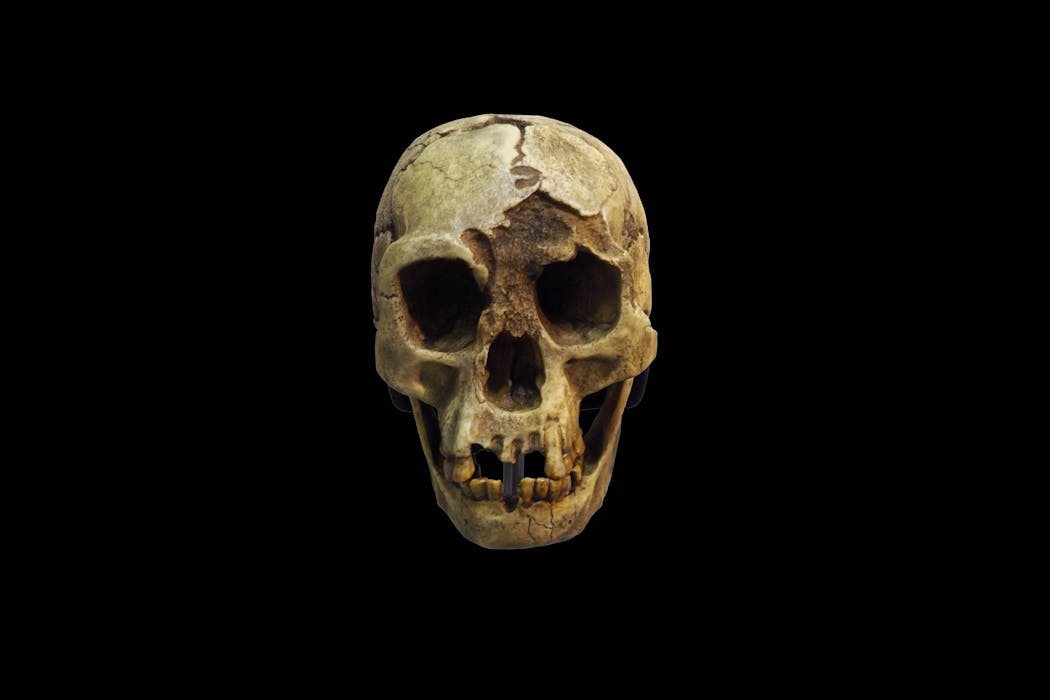
_Homo floresiensis_ skull. Wikimedia Commons, CC BY-SA

About 50,000 years ago, humanity lost one of its last surviving hominin cousins, Homo floresiensis (also known as “the hobbit” thanks to its small stature). The cause of its disappearance, after more than a million years living on the isolated volcanic island of Flores, Indonesia, has been a longstanding mystery.

Now, new evidence suggests a period of extreme drought starting about 61,000 years ago may have contributed to the hobbits’ disappearance.

Our new study, published today in Communications Earth & Environment, reveals a story of ecological boom and bust. We’ve compiled the most detailed climate record to date for the site where these ancient hominins once lived.

It turns out that H. floresiensis and one of its primary prey, a pygmy elephant, were both forced away from home by a drought lasting thousands of years – and may have come face-to-face with the much larger Homo sapiens.

An island with deep caves

The discovery of H. floresiensis in 2003 changed our thinking on what makes us human. These diminutive small-brained hominins, standing only 1.1 metres tall, made stone tools. Against the odds, they reached Flores seemingly without boat technology.

Bones and stone tools from H. floresiensis were found in Liang Bua cave, hidden away in a small valley in the uplands of the island. These remains date to between 190,000 and 50,000 years ago.

A small rocky river is bordered by terraced bright green rice paddies, and darker green wooded hills
View of the Wae Racang river looking upstream from Liang Bua towards Liang Luar.
Garry K. Smith

Today, Flores has a monsoonal climate with heavy rainfall during wet summers (mostly from November to March) and lighter rain during drier winters (May to September).

However, during the last glacial period there would have been significant variation in both the amount of rainfall and when it arrived.

To find out what the rains were like, our team turned to a cave 700 metres upstream of Liang Bua named Liang Luar. By pure chance, deep inside the cave was a stalagmite that grew right through the H. floresiensis disappearance interval. As stalagmites grow layer by layer from dripping water, their changing chemical composition also records the history of a changing climate.

A group of 7 cavers in blue and white overalls and red helmets pose in front of an 8m high intricately decorated stalagmite in a dark cave.
Our caving team in the deep, brooding interior of Liang Luar in 2006.
Garry K. Smith.

Palaeoclimatologists have two main geochemical tools when it comes to reconstructing past rainfall from stalagmites. By looking at a specific measure of oxygen known as d18O, we can see changes in monsoon strength. Meanwhile, the ratio of magnesium to calcium shows us the total rainfall amount.

We paired these measurements for the same samples, precisely anchored them in time, and reconstructed summer, winter and annual rainfall amounts. All this provided unprecedented insight into seasonal climate variability.

We found three key climate phases. It was wetter than today year-round between 91,000 and 76,000 years ago. Between 76,000 and 61,000 years ago, the monsoon was highly seasonal, with wetter summers and drier winters.

Then, between 61,000 and 47,000 years ago, the climate turned much drier in summer, similar to that seen in Southern Queensland today.

The hobbits followed their prey

So we had a well-dated record of major climate change, but what was the ecological response, if any? We needed to build a precise timeline for the fossil evidence of H. floresiensis at Liang Bua.

The solution came unexpectedly from our analysis of d18O in the fossil tooth enamel of Stegodon florensis insularis, a distant extinct pygmy relative of modern elephants.

A pale grey Stegodon jawbone with ridged molar, set against a plain black backround and white scale bar.
The jawbone and ridged molar of an adult Stegodon florensis florensis, the large-bodied ancestor of Stegodon florensis insularis. Scale bar is 10 cm.
Gerrit van den Berg

Juvenile pygmy elephants were one of the hobbits’ key prey, as revealed by cut marks on bones in Liang Bua.

Remarkably, the d18O pattern in the Liang Luar stalagmite and in teeth from increasingly deep sedimentary deposits at Liang Bua aligned perfectly. This allowed us to precisely date the Stegodon fossils and the accompanying remains of H. floresiensis.

The refined timeline showed that about 90% of pygmy elephant remains date to 76,000–61,000 years ago, during the strongly seasonal “Goldilocks” climate. This may have been the ideal environment for the pygmy elephants to graze and for H. floresiensis to hunt them. But both species almost disappeared as the climate got drier.

Summary figure. Along the bottom is a photo of a cut and polished stalagmite with sampling locations in blue squares. Above are a line and bar chart showing Stegodon fossil frequency. The charts align well with a period of wet summers.
Cross-section of the precisely dated stalagmite used in this study, showing growth layers. The graph shows the improved timeline for Stegodon fossils in two excavation sectors at Liang Bua.
Mike Gagan

The decline in rainfall, pygmy elephants and hobbits all at the same time indicates that dwindling resources played a crucial role in what appears to be a progressive abandonment of Liang Bua.

As the climate dried, the primary dry-season water source, the small Wae Racang river, may have dwindled too low, leaving the Stegodon without fresh water. The animals may have migrated out of the area, with H. floresiensis following.

Did a volcano contribute too?

The last few Stegodon fossil remains and stone tools in Liang Bua are covered in a prominent layer of volcanic ash, dated to around 50,000 years ago. We don’t yet know if a nearby volcanic eruption was a “final straw” in the decline of Liang Bua hobbits.

The first archaeological evidence attributed to Homo sapiens is above the ash. So while there is no way of knowing if H. sapiens and H. floresiensis crossed paths, new archaeological and DNA evidence both indicate that H. sapiens were island-hopping across Indonesia to the supercontinent of Sahul by at least 60,000 years ago.

If H. floresiensis were forced by ecological pressures away from their hideaway towards the coast, they may have interacted with modern humans. And if so, could competition, disease, or even predation then have been decisive factors?

Whatever the ultimate cause, our study provides the framework for future studies to examine the extinction of the iconic H. floresiensis in the context of major climate change.

The underlying role of freshwater availability in the demise of one of our human cousins reminds us that humanity’s history is a fragile experiment in survival, and how shifting rainfall patterns can have profound impacts.

The Conversation

Nick Scroxton receives funding from the Sustainable Energy Authority of Ireland, and conducted this work while receiving funding from the Australian Research Council.

Gerrit (Gert) van den Bergh received funding from the Australian Research Council.

Michael Gagan receives funding from the Australian Research Council.

Mika Rizki Puspaningrum does not work for, consult, own shares in or receive funding from any company or organisation that would benefit from this article, and has disclosed no relevant affiliations beyond their academic appointment.

ref. The ‘hobbits’ mysteriously disappeared 50,000 years ago. Our new study reveals what happened to their home – https://theconversation.com/the-hobbits-mysteriously-disappeared-50-000-years-ago-our-new-study-reveals-what-happened-to-their-home-268668

‘That man ruined my connection with my family’, sexual abuse trial hears

Source: Radio New Zealand

Michael Ian Mclean in court. RNZ / Finn Blackwell

A man who befriended a boy at a campground became a close family friend while sexually abusing the boy into his teenage years, the Crown says.

Michael Ian Mclean, 58, faces 33 charges, including performing indecent acts on a person under 16, grooming, and sexual violation, and has pleaded not guilty.

‘It was crushing’ – family torn apart by secret

On Monday afternoon, the Auckland District Court watched a video statement taken from the victim, who can not be named.

In it, he spoke about the harm his relationship with Mclean had caused.

He said keeping the secret from his family tore them apart.

“That man ruined my connection with my family,” he said

“Once I finally told them, it was crushing.”

The victim said Mclean was the manager of the Glen Innes Swimming pools and YMCA.

He said what happened had left him with serious mental health issues.

“It damaged me so much mentally, it caused me a million more bad things than good, and I wish I could’ve just stayed a bit more innocent and live my childhood, and not have to keep a secret from my parents for seven-plus years.”

The victim said he and Mclean had been close to getting caught a number of times.

Court hears openings from lawyers

In her opening address to the jurors, Crown prosecutor Liesel Seybold said Mclean initially exchanged nude photos with the 12-year-old boy after meeting him and his family at a campground in 2015.

“He would tell [the victim] to delete the chats, and even check his phone to make sure that it was all deleted,” Seybold said.

Seybold said Mclean began touching the boy and they would see each other over the years, with Mclean becoming a close family friend.

The sexual abuse continued as the boy became a teenager, Seybold said.

It was not until the victim’s mother’s birthday party two years later when someone saw the victim stroking Mclean’s crotch, with Mclean doing nothing to stop it, Seybold said.

The guest raised it with his parents, going so far as to ask if Mclean could be trusted.

Mclean’s lawyer Ron Mansfield KC urged the jurors to treat the allegations they had heard as exactly that.

“There are 33 charges, but you’d need not get too caught up in that because this man says that those allegations are nonsense,” Mansfield said.

“They didn’t happen, and they could not have happened.”

Mansfield told jurors Mclean himself would give evidence later in the trial.

He cautioned the jury about jumping to conclusions.

Earlier, Judge Simon Lance warned the jury about misconceptions surrounding sexual crimes.

“Research shows that widely held assumptions about how frequently sexual offending occurs, and when, where, and against whom it occurs, are usually incorrect, and do not reflect the reality of sexual offending,” he said.

“It’s therefore important for you to know that there is no such thing as typical sexual offending, a typical sexual offender, or a typical victim of sexual offending.”

Judge Lance said sex offences could happen in a variety of circumstances.

The trial continues.

Sign up for Ngā Pitopito Kōrero, a daily newsletter curated by our editors and delivered straight to your inbox every weekday.

– Published by EveningReport.nz and AsiaPacificReport.nz, see: MIL OSI in partnership with Radio New Zealand

Man dumps home insurance over Tower Insurance’s sea surge assessment

Source: Radio New Zealand

Tower Insurance says the high sea surge risk rating reflected the likelihood of flooding through nearby water systems. File photo. RNZ / Nate McKinnon

A Christchurch man has ditched his home insurance after his premiums went up by more than 30 percent a year – or by $1000 – based on new risk pricing.

Tower Insurance has taken into account the risk of sea surge and landslips for the Burwood home, as well as earthquakes and flooding.

But Trevor Taylor says his home is several kilometres from the sea, and he can not understand Tower’s sea surge assessment.

He has challenged that assessment, but said the insurer will not budge.

Taylor has asked to the see the evidence used to assesses his property, but Tower has refused to release specific information.

Taylor told Checkpoint he thought the odds of him being caught up in a sea surge were close to zero.

“They are doubling down and saying ‘no, I am at risk here’ and I just think it’s a load of rubbish.

“If you actually look at the journey where the water would have to go, it’s actually quite ridiculous.”

Taylor said he had done his own research into the journey the sea surge may take to get to his property.

He said it involved the water travelling up an estuary and a river, bursting through stop banks, and travelling uphill past houses before it reached his home.

While Tower had told him that its risk assessment was based off close to 200 million data points, Taylor was sure his own research negated some of the company’s findings.

“I’ve done a bit of my own research and according to the Ministry of Environment, storm surges rarely exceed 0.6 metres on open coasts around New Zealand.”

The Ministry of Environment noted that surges can be higher in some estuaries and harbours, with the largest recorded a 0.9 metre storm surge in Kawhia Harbour in May 2013.

Taylor said he thought Tower was overestimating the risks.

He said he had filed a Privacy Act request, asking for all the information Tower had on his property, but was refused based on the grounds it was commercially sensitive.

“I’d actually like someone from Tower to get out of their ivory tower in Auckland and come down and we’ll drive around and have a look and I can just show them how ridiculous it is.”

Taylor said he felt there was a disconnect between Environment Canterbury, the council and government agencies, as he struggled to find a uniform set of data to base the risks upon.

“I think risk pricing is fair, the thing is, I think they’re actually making up the risk.”

He said a government body should have a responsibility of investigating risk assessments by insurance companies if people felt they were wrong.

“The government or local councils can work together and then they could figure out ways to mitigate these hazards.”

Tower said in a statement that the high sea surge risk rating given to Taylor’s property reflected the likelihood of his flooding through nearby water systems, including the Avon River, Travis Wetland Nature Heritage Park and Horseshoe Lake.

“If a storm coincides with high tides, water levels can rise, and waterways can carry water many kilometres inland, causing flooding during a sea surge event. Our assessment is consistent with the Christchurch City Council’s flood map which notes the property as being in the council’s flood hazard management area, with a one in 200-year flood risk.”

Tower said fewer than 10 percent of properties with higher sea surge or landslide risks would see an increase in the natural hazards portion of their premiums. A third of those would see a premium increase of less than $100 a year, and the majority would be less than $300 a year.

“For some customers with significantly higher risks, the natural hazards portion of the premium will increase by more.”

Tower would not release detailed data because “it would not help customers understand the risks”.

“For example our sea surge model considers a range of different historical and possible tidal heights within storm scenarios – sharing this detailed data would not help customers understand their risks. It is also commercially sensitive. Instead, we simplify this information into a risk rating, which represents our evaluation of the insurance risk for a property based on this data.”

Sign up for Ngā Pitopito Kōrero, a daily newsletter curated by our editors and delivered straight to your inbox every weekday.

– Published by EveningReport.nz and AsiaPacificReport.nz, see: MIL OSI in partnership with Radio New Zealand

View from The Hill: in awkward timing, government ends energy rebate as it defends Wells’ spendathon

Source: The Conversation (Au and NZ) – By Michelle Grattan, Professorial Fellow, University of Canberra

There are two glaring lessons for politicians from the Anika Wells’ entitlements affair.

First, don’t grab greedily at every generous entitlement MPs and especially ministers can get, even if “the rules” allow you to do so.

Second, if you do get into trouble, show some humility and apologise early (and often).

If Wells had acted differently at the National Press Club last week, when she was pressed on the nearly $95,000 bill for three airfares to New York (for herself and two officials), she might be looking a little better politically than she is now. No doubt the past largesse Wells has enjoyed would have been probed in the wake of the fares. But her handling made sure she would be cut absolutely no slack.

The communications minister had flown to New York to spruik at the United Nations the federal government’s ban on under-16s having social media accounts. She hadn’t been able to catch the prime minister’s plane because she was delayed by the Optus triple zero crisis.

Wells could have said, “while the fares were within the guidelines they certainly appear over the top; I am looking into them and will make public why they were so large”. Instead she doubled down. Her testy response to the journalist who pushed her – “I’ve answered your question” – produced footage that would be played repeatedly.

She (and Anthony Albanese in defending her at the weekend) have come across as arrogant. Ordinary people would expect a minister to check out an exorbitant airfare when it was brought to their attention. Does anyone think Wells would not do so, if $34,426.58 for her fare had appeared on her personal credit card?

Albanese actually knows to be careful with spending public money – his office went out of its way on the day to stress he’d paid for his wedding at The Lodge.

There is now a feeding frenzy on Wells’ spending all, it seems, formally within “the rules”, but a poor look to those without access to workarounds enabling them to turn public money to private benefit.

Wells wrapped her attendance at a friend’s birthday party in Adelaide in June within some work commitments. The “wraparound” is a favourite strategy of ministers who want to reduce the personal costs of private engagements.

She took her family skiing at Thredbo, also in June, where she had official engagements as sports minister. This is under the so-called family reunion provision, which allows families to accompany the politician (up to a cap).

In 2012 Tony Burke, then a minister in the Gillard government, combined a family excursion to Uluru with a work trip. Finally in 2020, Burke repaid more than $8,600 for the family travel. He had eventually decided the travel, while in accord with the rules, did not meet community expectations.

The argument that politics is a hard life and families suffer doesn’t really hold water in such rows. Politicians are not conscripts, and they earn a lot more than the average wage. While it is natural they want to take the kids on excursions (like everyone else), they have adequate personal resources to do so.

Wells should know entitlements are both a honeypot and a trap. As sports minister she is offered many freebies, raising potential conflicts of interest in itself. The taxpayers have financed her husband attending multiple events.

It might all be within “the rules” but collectively Wells’ behaviour has painted a picture of someone enjoying an excessive amount of perks, who is blind to appearances.

Entitlements have “trapped” many senior public figures over the years.

Sussan Ley in 2017 quit as health minister after questions about her travel entitlements. She had previously bought a Gold Coast apartment while on an official work trip. She said she hadn’t intended to make the purchase and the trip was within the rules.

A former speaker, Peter Slipper, in 2014 was found guilty of dishonestly using Commonwealth entitlements in visiting wineries several years before.

Then there was the famous instance of Liberal Bronwyn Bishop, forced to step down as speaker in 2015 after it was revealed she had spent more than $5,000 on a helicopter to fly from Melbourne to Geelong for a Liberal fundraiser. Joe Hockey, treasurer at the time, said “instinctively” this didn’t pass the sniff test.

Wells’ position is not at risk but her colleagues have had to form the veritable conga line to defend the embattled minister. Meanwhile in a counteroffensive to the Coalition attacks, the government delved into the use of entitlements by shadow communications minister Melissa McIntosh.

When Wells is supposed to be explaining and defending the social media ban, which starts Wednesday, she has drowned out much of her own message.

Treasurer Jim Chalmers was clearly frustrated as he was quizzed on Monday about the Wells affair. He resorted to the “I’ve answered your question” line.

Chalmers was speaking at a news conference to announce cabinet had agreed the energy rebate won’t be extended beyond this month.

It’s a sensible decision, and would have been one Chalmers wanted, albeit it will add to the problem of containing inflation.

But the timing could not have been worse for the government. When juxtaposed against Wells’ spendathon, householders will be cynical, furious or both.

The Conversation

Michelle Grattan does not work for, consult, own shares in or receive funding from any company or organisation that would benefit from this article, and has disclosed no relevant affiliations beyond their academic appointment.

ref. View from The Hill: in awkward timing, government ends energy rebate as it defends Wells’ spendathon – https://theconversation.com/view-from-the-hill-in-awkward-timing-government-ends-energy-rebate-as-it-defends-wells-spendathon-270791

Politics with Michelle Grattan: Sarah Hanson-Young on the social media ban as a risky ‘fake silver bullet’

Source: The Conversation (Au and NZ) – By Michelle Grattan, Professorial Fellow, University of Canberra

The Greens have suffered a year of significant setbacks. The election saw their numbers go backwards, losing three of their four lower house seats, then one of their senators, Dorinda Cox, defected to Labor.

But the year ended on a positive note, with the Greens doing the deal with the government to reform Australia’s key environment legislation, winning more protections for the environment in exchange for their support.

The chief negotiator for the Greens on that deal was veteran senator Sarah Hanson-Young, who has been in parliament for nearly two decades.

As the Greens’ spokeswoman for both the environment and communications, her end-of-year has been remarkably busy. She joins us to talk about the biggest news of this week.

On the social media ban, coming into force this week, Hanson-Young calls it “a fake silver bullet” that risks ending up “with kids in more unsafe spaces”.

I have very little hope that the ban as it is right now is going to make young people safer. I think parents are going to be frustrated over the next few months that it’s not the silver bullet that it’s been promised to be.

[…] I’m actually really worried that there’s going to be a lot of kids who fall through the cracks, [who] will find their way back onto social media or find themselves into other online spaces that are even darker and more dangerous.

Hanson-Young says Australia should do more to push big tech companies to provide safe platforms for everybody.

One of the key things that we should be doing, and can do if the government wanted to, would be to allow users – young people in particular – to opt out of those dangerous algorithms. So the technology that pushes dangerous and harmful content in front of them, even when they haven’t searched for it […] If you could turn those algorithms off for young people in particular, that would be a huge step forward to making people safer.

[…] The next thing the government should do, and they should announce it this week, that they’re going to regulate algorithms, they’re gonna regulate the advertising of these big companies, and they’re going to put in place a legislated legal duty of care on these companies. If you had all those things working in sync, we’d be in a much better situation.


Read more:
‘Make the platforms safer’: what young people really think about the social media ban


On the Greens’ successful negotiation of reforms to the Environment Protection and Biodiversity Conservation Act, which passed the parliament last month, Hanson-Young says it showed “we’re the true opposition […] while the Coalition are in total disarray”.

This was one of the the toughest negotiations I’ve had in my political career. It took a long time and not once did I think we had it in the can until right at the end when […] the deal was finalised right before it passed the Senate. There was there was a lot of back and forth.

But you’ve got to know when to hold them, when to fold them and when to get the deal done. And I made the decision, along with my parliamentary colleagues, that getting an outcome – that protected Australian bushland, new protections for native forests to restrictions on land clearing and stopping fossil fuel companies being fast- tracked and getting their mines approved within 30 days – these were all important things that we couldn’t let pass us by.


Read more:
Grattan on Friday: when the music stopped, Greens had out-stepped flat-footed Liberals on environment deal


Speaking just hours after former Nationals leader and deputy prime minister Barnaby Joyce finally confirmed he was moving to One Nation, Hanson-Young questions how long it will last.

Look at [former Labor leader] Mark Latham in New South Wales, look at what’s happened every time Pauline Hanson’s tried to recruit a new person to a party, it never lasts long.

I don’t know how long the Barnaby Joyce and Pauline Hanson union’s going to last, but you know, it reminds me of kind of what happens over in Trump land; they’re friends until they’re not, and it doesn’t seem to last very long. But of course, we can’t be complacent about it either.


Read more:
Barnaby Joyce joins One Nation to run as NSW Senate candidate in 2028


On the details of Communications Minister Anika Wells’ use of taxpayer money on various travel expenses and events, Hanson-Young says it’s important politicians have the resources to do their job, but that shouldn’t be abused.

It’s a hard area, because you need to be able to to do this job well, you need to spend almost all of your time doing it […] So there’s a balance, because I think […] to be able to do it well, you do need access to resources.

What I don’t think has been handled very well by Anika Wells is […] you do need to acknowledge that there is a privilege that comes with this position. And with that privilege, particularly at a time when regular people in the community are finding it really tough […] you’ve got to be a bit more sensitive to that […] And I just don’t think the minister’s really understood how it looks to the community.

Despite the Greens’ confidence being “knocked” by the loss of former leader Adam Bandt’s seat at the last election, Hanson-Young says she’s optimistic about the party’s future.

We lost those three lower house seats, including our leader’s seat, and that really knocks your confidence around. It really does. But I think in the midst of all of this and in the desperation of our political opponents […to] dance on the grave of Adam Bandt’s loss […] it masked the fact that actually we had a near record high of Green vote across the country. And that the depth and breadth of that vote is very strong. And of course in South Australia we had a record high in the election.

[…] I would say: the recent environment law reform negotiations, getting that done, having the backing of the community, getting A$50 million dollars extra for the ABC – the Greens are back. We’ve got our confidence back and we’re feeling really good.

The Conversation

Michelle Grattan does not work for, consult, own shares in or receive funding from any company or organisation that would benefit from this article, and has disclosed no relevant affiliations beyond their academic appointment.

ref. Politics with Michelle Grattan: Sarah Hanson-Young on the social media ban as a risky ‘fake silver bullet’ – https://theconversation.com/politics-with-michelle-grattan-sarah-hanson-young-on-the-social-media-ban-as-a-risky-fake-silver-bullet-271517

Eliesa Katoa: NRL proposes two-year ban for officials who let injured player take the field

Source: Radio New Zealand

An injured Eliesa Katoa of Tonga is attended to by a trainer New Zealand Kiwis v Tonga XIII Round 3 of the Pacific Championships rugby league tournament at Eden Park, Auckland NRL Photos/Photosport

The NRL has proposed banning some Tongan league officials from Australian rugby league competitions for two years after a player was hospitalised following a match at Eden Park in November.

Eliesa Katoa underwent brain surgery after suffering multiple blows to the head during Tonga’s Pacific Championships match against New Zealand on 2 November.

Katoa, 25, will miss the entire 2026 NRL season. The Melbourne Storm player suffered a brutal head knock during warm-up, but was still allowed to play in the match, where he suffered two more head knocks.

He had not had a head injury assessment (HIA) for the initial knock, and passed a HIA for the first injury in the test against NZ and continued playing, but left the field after the second.

The NRL on Monday said its investigation “identified a number of serious concerns regarding possible breaches of the NRL rules and protocols by a number of individuals” in Katoa’s treatment.

“These concerns relate to a possible breakdown in communication between responsible medical and health professionals in relation to the safety of Mr Katoa, including through a failure to share and disclose information that was vital to the health of the player.”

The league said all of its on-field NRL trainers and medical personnel were “required to annually complete the NRL’s Elite Head Injury/Concussion protocols as well as maintain minimum standards of medical qualification and education”.

The result of its investigation was to issue a breach notice to four Tongan officials, banning them from participating in NRL or Australian Rugby League Commission competitions for two years, including the head doctor, assistant doctor and head trainer.

A formal warning was also issued to the side’s medical assistant.

“All individuals will also be required to undergo further training on their responsibilities under the NRL rules and the NRL’s policy for the management of possible head injuries and concussion.”

Each had five days to respond to notice, the NRL said.

Eliesa Katoa (r) comes across on defence as Kiwis centre Matthew Timoko makes a break. Photosport

Directly after the match, former Kiwis and Warriors star Shaun Johnson was critical that Katoa was even allowed to play.

“I don’t get how it can even get to that point,” he said on his Play on Sport Show podcast. “There’s going to be fallout over this.

“There’s going to be some heads that will roll, because I do not know how Eli Katoa was actually even allowed to take the field.”

Tonga coach Kristian Woolf at the time defended team doctors, saying everything was “done by the book”.

“We’ve got two very experienced doctors there,” he said. “They’ve done their usual HIA. He’s passed all that and passed all that well.

“My job is not to question doctors. They were both comfortable with that and comfortable with him coming back onto the field, so I don’t think there’s anything to worry about there in terms of the process.”

Sign up for Ngā Pitopito Kōrero, a daily newsletter curated by our editors and delivered straight to your inbox every weekday.

– Published by EveningReport.nz and AsiaPacificReport.nz, see: MIL OSI in partnership with Radio New Zealand

No need for a further inquiry into McSkimming scandal – PM

Source: Radio New Zealand

Prime Minister Christopher Luxon and Police Minister Mark Mitchell. VNP / Phil Smith

The Prime Minister says there is no need for a further inquiry into the Jevon McSkimming scandal, claiming the government’s implementation of an Inspector General is the strongest response.

On Sunday, former Police Commissioner Andrew Coster told TVNZ’s Q+A that ministers knew more than they had admitted about McSkimming.

Coster claimed he had briefed former Police Minister Chris Hipkins and current Police Minister Mark Mitchell about the allegations before both said they were aware.

Both Hipkins and Mitchell have denied Coster’s claims.

Mitchell told Morning Report it was “absolute total nonsense,” and that he did not know anything about the allegations before 6 November 2024.

Christopher Luxon has expressed confidence in Mitchell and his timeline of events.

“You can go through the process story of who said what, when, and where, but from my point of view the matter’s settled. Mark’s addressed the issues, I’m very comfortable with that. I think he’s doing an exceptionally good job,” Luxon said.

A further inquiry – such as a Royal Commission – was not needed, Luxon said, as the government’s focus was on responding to the Independent Police Conduct Authority’s report’s findings and making sure it did not happen again.

“No, what we need to do is jump to the solution that any inquiry would generate, which is to give us the strongest statutory oversight mechanism possible, which is that of an Inspector General of Police,” Luxon said.

Acknowledging Hipkins had also come out to deny Coster’s allegations, Luxon said Hipkins and Mitchell had taken the same approach.

“That’s not their recollection of events at all. And I think we have to trust them with that.”

Hipkins said he had spent time over the weekend “reflecting” on conversations he had with Coster while he was Police Minister, and could not recall any where it came up.

Coster’s claim that he told Hipkins in the back of a car while the two were travelling around the South Island “simply never happened,” Hipkins said.

“Certainly not on the road trip that we did across the country, nor at any other time. So I don’t know what he’s referring to there, but he clearly never provided me with any briefing of the allegations surrounding Jevon McSkimming.”

An informal conversation in the back of a car would have been insufficient anyway, as there was an obligation from the Police Commissioner to disclose what he knew during the formal appointment process.

“One of the observations that I would have from this is that there did appear to be a culture within the Police of downplaying the significance of any of these allegations,” Hipkins said.

Whether there was a need for a further inquiry was up to the government, Hipkins said, but he would support any decision they took in that regard.

Green Party co-leader Marama Davidson said it was important system failures were fixed, and for the harm of victims and survivors to be centred.

“I’m hearing a lot of them protecting themselves. I suppose that’s natural, but I would really like to hear any voices involved, especially men in power, to really direct their voices back to fixing the system and to supporting victim survivors.”

Te Pāti Māori co-leader Rawiri Waititi wanted an investigation separate from the IPCA, now that allegations were coming out after its release.

“If there are facts coming outside of the IPCA, then obviously the IPCA report hasn’t done its thorough job. There should be another external process, like a Royal Commission, into that particular issue, to ensure that we’re getting all the facts, also taking into consideration the IPCA report but also those other allegations that are coming in afterwards so we’ve got a full picture.”

Sign up for Ngā Pitopito Kōrero, a daily newsletter curated by our editors and delivered straight to your inbox every weekday.

– Published by EveningReport.nz and AsiaPacificReport.nz, see: MIL OSI in partnership with Radio New Zealand

24,000 sign petition calling for immediate reinstatement of school Te Tiriti o Waitangi obligations

Source: Radio New Zealand

Mātauranga Iwi Leaders Group Chair Rāhui Papa presents a 24,000 strong petition calling for the immediate reversal of the amendment that removed school boards’ requirement to give effect to te Tiriti to Minister of Education Erica Stanford. RNZ / Pokere Paewai

The National Iwi Chairs Forum (NICF) has delivered a 24,000 strong petition into the hands of the Minister of Education calling for the immediate reversal of the amendment that removed school boards’ requirement to give effect to te Tiriti o Waitangi.

Minister of Education Minister Erica Stanford met with the NICF outside Parliament alongside MPs from other parties, where she accepted the petition with its 24,001 signatures.

Rāhui Papa is chair of the Mātauranga Iwi Leaders Group, the education arm of the National Iwi Chairs Forum. He told RNZ his group stood in solidarity with the many boards, teachers and students who backed the petition.

“From my viewpoint, any government should take the pulse of their people and should actually turn around and listen to their people when they see that it’s rubbing up against the consciousness of our own country.”

Papa said there needed to be a “resetting”.

“There needs to be reinstatement or absolutely making sure that Te Tiriti o Waitangi is in its highest form in any legislation,” he said.

Minister of Education Minister Erica Stanford meet with the NICF. RNZ / Pokere Paewai

Papa hit back at previous statements made by the minister, who said she had heard from some principals who felt the were being pressured to sign the statements of support for Te Tiriti.

“The messages that we have been receiving is that this has been something that is near and dear to the hearts of their BOT (Board of Trustees), of their communities and of their school system within their own school. This is something that has been a progress by them, on their own,” he said.

“Sure, schools could have opted not to be part of it, and some of them may have. But with over 60 percent of schools voluntarily signing up and voluntarily sending open letters for everyone to view and to peruse – that is just magnificent in itself.”

After receiving the petition Stanford told the crowd the government shares many of the same aspirations for tamariki Māori with the NICF. There were scattered boos from the crowd as she delivered her speech.

“To make sure that no matter what we’re resourcing, not matter what our policies are, that we are providing resources in te reo Māori, that we’re providing professional learning and development to kaiako, and that our laser focus is on raising achievement,” she said.

Mātauranga Iwi Leaders Group Chair Rāhui Papa presents a 24,000 strong petition calling for the immediate reversal of the amendment that removed school boards’ requirement to give effect to te Tiriti to Minister of Education Erica Stanford. RNZ / Pokere Paewai

The importance of the Treaty of Waitangi in the Education Act has never been in question, she said.

Stanford said she was hopeful that the government and the NICF can work more closely together to improve outcomes for tamariki Māori.

“At the heart of all of this is tamariki Māori, doing right by them, making sure that they meet all of their future aspirations and they can go on to live the life they want.”

Labour Spokesperson for Education Willow-Jean Prime said the minister still isn’t listening to what the iwi, boards of trustees and schools are saying.

“The minister on the one hand saying she wants to continue to work with Māori on all of the things that are important for Māori education, yet here receiving a petition for an example of where she did not consult Māori, even though she was advised to.”

Prime said the petition and the more than 1600 schools who have publicly reaffirmed their commitment to Te Tiriti have sent a strong message to the minister.

NZEI Te Riu Roa president Ripeka Lessels was at Parliament to support the petition, she told RNZ that Te Tiriti o Waitangi and student achievement are not exclusive.

“You can have both, you can have Te Tiriti o Waitangi and give obligations to it, and still have student achievement. We already know that, we know that from Kura Kaupapa, we know that from Kura ā iwi. It can work and it does happen.”

Upholding Te Tiriti is crucial for creating truly equitable and inclusive schools where every tamariki can succeed, and the union will continue to fiercely advocate for it, she said.

Sign up for Ngā Pitopito Kōrero, a daily newsletter curated by our editors and delivered straight to your inbox every weekday.

– Published by EveningReport.nz and AsiaPacificReport.nz, see: MIL OSI in partnership with Radio New Zealand

Netflix’s billion dollar plan to buy Warner Bros could be bad news for Sky TV

Source: Radio New Zealand

Netflix’s $125-billion (US$72b) plan to buy Warner Bros was anounced on Friday. Fernando Gutierrez-Juarez / dpa Picture-Alliance via AFP

Netflix’s $125-billion (US$72b) plan to buy Warner Bros could have adverse implications for New Zealand’s Sky Television as well as the price of Netflix subscriptions.

Brokerage firm Forsyth Barr analyst Ben Crozier said the deal, announced Friday, could have a negative affect on Sky’s annual revenue, particularly from Neon subscriptions.

“SKT is the exclusive distributor of Warner Bros. and HBO content in New Zealand, with SKT’s Neon platform particularly reliant on HBO content,” Crozier said, adding Neon’s current top 10 content was from HBO,” Crozier said.

“Netflix’s acquisition may be a potential catalyst for HBO to accelerate its global direct-to-consumers reach, including to New Zealand.”

He said the change would not mean the end for Neon.

“There are a lot of other entertainment studios out there that Sky TV can find rights with to distribute through the Neon platform.

“The longer-term success of Neon in particular, will come down to SKT’s ability to either renew its Warner Bros. deal, or source non-Warner Bros. entertainment content.”

Sky Television saw no immediate change in its line-up of popular HBO content resulting from Netflix’s plan to takeover Warner Bros.

A Sky spokesperson said it had long partnerships with a broad range of entertainment studios, such as Paramount, which produced its popular Yellowstone series.

It said its approach to entertainment and sports resonated with subscribers and expected that would continue, regardless of how the Netflix deal played out.

The deal would place the streaming giant’s HBO brands under the Netflix umbrella as well as control of Warner Bros.’ television and film, studio assets and content library.

While Netflix was positioning the takeover as a done-deal, there were other potential bidders and the deal would still need regulatory approvals, which could take 12-to-18 months.

Warner Bros. would also need to split off its other assets, which were not part of the deal, including global cable television networks, such as CNN, which will be spun off into a separate company.

“We estimate SKT will generate about $45m in revenue from Neon subscriptions in FY26,” Crozier said, in addition to other undisclosed revenue lines.

“We see this as the most likely impacted revenue stream.”

However, he said Sky Box entertainment subscriptions could also be adversely impacted, while advertising revenue was expected to be less affected.

He said potential for HBO to bypass Sky TV and go direct-to-consumers in NZ was not a new risk for Sky, though it was not certain when or whether it would be an outcome of the Netflix deal.

“It’s a bit of a negative hit, but it’s been the risk there for a while, and these legacy assets are like that.

“Given SKT’s existing deal and acquisition timing the impact to FY26 for SKT is likely to be minimal, but FY27 and beyond have become slightly more uncertain.”

Netflix subscriptions could rise

Tech commentator Paul Spain told RNZ’s Morning Report said the deal was likely to push up the price of Netflix’s subscription.

“When you’ve got one big player that has a lot of control over the market, then they can really pick the prices that they want to sell at, and they can somewhat justify that, with an increased catalogue of content.”

Spain said there was also a concern Netflix would have too much control over the movie industry.

The Netflix deal had potential to reshape the global entertainment business, as Warner Bros. was one of the most prized and oldest Hollywood assets, established in 1923.

Sky TV has been asked for comment.

Sign up for Ngā Pitopito Kōrero, a daily newsletter curated by our editors and delivered straight to your inbox every weekday.

– Published by EveningReport.nz and AsiaPacificReport.nz, see: MIL OSI in partnership with Radio New Zealand

The sound effects that make horror films so scary

Source: Radio New Zealand

I was recently watching a scene from the 2025 film Weapons for a monograph I’m writing and noticed a familiar sound: a low, unsettling drone as a character walks down a hallway.

It’s the same kind of sound used in recent horror films such as Together. You can also hear it throughout the trailer forShelby Oaks (2025), where sound throbs like an invisible threat.

We never see what’s making this sound or where it comes from within the film’s world, which only makes it more disturbing.

Stephen Boyd, a young white man with wavy dark hair and a Roman tunic, stars as Messala in the 1959 film Ben-Hur.

In the 1959 film Ben-Hur, when Judah (Charlton Heston) declares to his friend Messala (Stephen Boyd), “I am against you,” a sharp orchestral shock of brass and strings announces their discord.

YouTube screenshot

– Published by EveningReport.nz and AsiaPacificReport.nz, see: MIL OSI in partnership with Radio New Zealand

Conjoined twin dies after separation surgery

Source: Radio New Zealand

Papua New Guinea conjoined twins.

Papua New Guinea conjoined twins. Audrey Taula / Life Flight and NEST retrieval team

Rare conjoined twins from Papua New Guinea had a seven-hour operation in Australia to surgically separate them on Sunday, but only one of the boys survived.

Tom and Sawong were rushed into emergency surgery at Sydney Children’s Hospital after Tom began to rapidly deteriorate.

The two-month-olds were medivacced from Port Moresby to Sydney on Thursday following medical advice that they undergo surgery as soon as possible.

A spokesperson for the family, Jurgen Ruh, said Sawong was in a stable condition and the parents were grieving the loss of his brother Tom.

“One body with two souls went into the operating theatre, and after seven hours of procedures we had two bodies and two souls,” Ruh said.

“Sadly we lost Tom but are happy to report that we still have two souls and Sawong has survived the operation.”

Ruh previously told RNZ Pacific the boys’ parents had been through a “rollercoaster” of emotions since the twins were born in a remote village in Morobe province on 9 October.

“They have accepted that they will lose Tom (the weaker twin) and there’s been many tears shed along the way,” he said previously.

The twins were fused at the lower abdomen but have their own limbs and genitals, however they share a single liver, bladder and parts of their gastrointestinal tract.

They also had spina bifida – a neural tube defect that affects the development of a newborn’s spine and spinal cord.

Tom had a congenital heart defect, only one kidney and malformed lungs.

– Published by EveningReport.nz and AsiaPacificReport.nz, see: MIL OSI in partnership with Radio New Zealand

Firefighter killed by falling tree during bushfire prevention work in New South Wales

Source: Radio New Zealand

The Bulahdelah fire has burnt through 3,400 hectares of the Myall Lakes National Park.

The Bulahdelah fire has burnt through 3,400 hectares of the Myall Lakes National Park. ABC News: Ross McLoughlin

A firefighter from the NSW National Parks and Wildlife Service (NPWS) has died after being crushed by a tree during bushfire prevention work north of Newcastle.

The Bulahdelah fire, which has destroyed four homes and is burning on both sides of the Pacific Highway between Crawford River and Nerong, has scorched more than 3,400 hectares of the Myall Lakes National Park.

Emergency service crews were called to a property on Little Nugra Road at Nerong, about 90 kilometres north of Newcastle, at about 10:45pm on Sunday after reports a man had been struck by a tree.

NSW Ambulance paramedics treated him, but he died at the scene.

NSW Premier Chris Minns confirmed the man who died was a NPWS firefighter.

Authorities have established a crime scene and WorkSafe has been notified.

ABC

– Published by EveningReport.nz and AsiaPacificReport.nz, see: MIL OSI in partnership with Radio New Zealand

For better brain health, it’s never too late to get active

Source: Radio New Zealand

Scientists have hailed the benefits of exercising early in life to lower the risk of your brain degenerating later. But new research suggests that even when you’re 45 or older, it’s not too late to try.

Having the highest levels of physical activity in midlife (45 to 64) and late life (65 to 88) was associated with a 41 percent and 45 percent lower risk of dementia, respectively, according to a study published in the journal JAMA Network Open on 19 November.

“This study shifts the conversation from ‘exercise is good for the brain’ to ‘there may be key windows when exercise matters most for brain health,’” says Dr Sanjula Singh, an instructor in neurology at Harvard Medical School.

A grey haired man is helped on an exercise machine.

Strength training a couple of times per week is recommended by the World Health Organisation.

Getty Images / Unsplash +

– Published by EveningReport.nz and AsiaPacificReport.nz, see: MIL OSI in partnership with Radio New Zealand

Ukraine peace talks in Miami end with lingering questions over security guarantees and territory

Source: Radio New Zealand

By Max Saltman, Jennifer Hansler and Billy Stockwell, CNN

Ukraine's President Volodymyr Zelensky attends a joint press conference with Turkey's President following their meeting at the Presidential Complex in Ankara on November 19, 2025. Zelensky said he wants to reinvigorate frozen peace talks, which have faltered after several rounds of Russia-Ukraine talks in Istanbul this year failed to yield a breakthrough. Moscow has not agreed to a ceasefire and instead kept advancing on the front and bombarding Ukrainian cities. (Photo by Ozan KOSE / AFP)

Ukraine’s President Volodymyr Zelensky attends a joint press conference with Turkey’s President following their meeting at the Presidential Complex in Ankara on November 19, 2025 AFP

Talks between US and Ukrainian negotiators over a proposed peace deal with Russia ended in Miami this weekend, with few new developments and lingering questions over security guarantees and territorial issues, according to Ukrainian officials.

As the talks concluded, the Kremlin welcomed US President Donald Trump’s new security strategy, saying it dropped the language of past US administrations describing Russia as a threat.

The marathon Miami meeting began on Thursday between US special envoy Steve Witkoff, President Trump’s son-in-law Jared Kushner, and Ukrainian officials Rustem Umerov and Andriy Hnatov.

After three days of talks, “difficult issues remain,” Ukrainian Ambassador to the US Olga Stefanishyna said Saturday, “but both sides continue working to shape realistic and acceptable solutions.”

“The main challenges at this stage concern questions of territory and guarantees, and we are actively seeking optimal formats for addressing them,” Stefanishyna said. “More details will be provided once all information is compiled.”

Territory and security guarantees are long-standing sticking points for any possible deal. Ukraine maintains that a just end to the war would include reliable security guarantees and would not force it to surrender more territory to Russia.

As the meetings kicked off earlier this week, Russian President Vladimir Putin told reporters in India that his country intends to seize Ukraine’s eastern Donbas region by any means.

In this pool photograph distributed by the Russian state agency Sputnik, Russia's President Vladimir Putin, accompanied by Kremlin economic envoy Kirill Dmitriev and Kremlin aide Yuri Ushakov, meets with US special envoy Steve Witkoff and US President Donald Trump's son-in-law Jared Kushner at the Kremlin in Moscow on December 2, 2025. (Photo by Alexander KAZAKOV / POOL / AFP)

Russia’s President Vladimir Putin, accompanied by economic envoy Kirill Dmitriev and aide Yuri Ushakov, meets with US special envoy Steve Witkoff and US President Donald Trump’s son-in-law Jared Kushner at the Kremlin on December 2, 2025 AFP

Russia’s President Vladimir Putin, accompanied by economic envoy Kirill Dmitriev and aide Yuri Ushakov, meets with US special envoy Steve Witkoff and US President Donald Trump’s son-in-law Jared Kushner at the Kremlin on December 2, 2025

The Miami talks had been preceded by a visit to Moscow by Kushner and Witkoff. Trump said Wednesday the US delegation had a “very good meeting” with Putin, and that they believed the Russian president “would like to see the war ended” – though the talks failed to yield a breakthrough.

In a social media post on Saturday, Ukrainian President Volodymyr Zelensky said that he had a “long” and “constructive” phone conversation with Witkoff and Kushner, as well as his Ukrainian delegation in Miami.

“We covered many aspects and went through key points that could ensure an end to the bloodshed and eliminate the threat of a new Russian full-scale invasion,” Zelensky said. “We agreed on the next steps and formats for talks with the United States.”

Also discussed on the call was “the risk of Russia failing to honour its promises, as has happened repeatedly in the past,” he said.

Zelensky said that Hnatov and Umerov are expected to deliver him a “detailed in person report” on the negotiations.

“Not everything can be discussed over the phone,” Zelensky said. “So we need to work closely with our teams on ideas and proposals.”

Peace and its conditions will also be the subject of a meeting on Monday between Zelensky and French, British and German leaders in London.

The discussion will cover “the situation and the ongoing negotiations within the framework of the American mediation,” French President Emmanuel Macron said Saturday.

Kremlin welcomes removal of ‘threat’ label

Separately, the Kremlin has welcomed the new US national security strategy, released on Friday, which sets out the Trump administration’s realignment of US foreign policy and takes an an unprecedentedly confrontational posture toward Europe.

Spokesman Dmitry Peskov said the Trump administration’s document has dropped language describing Russia as a threat, state-owned news agency TASS reported.

“We considered this a positive step,” Peskov told the news agency.

“Overall, these messages are certainly in contrast with approaches of previous administrations.”

The strategy document says European nations regard Russia as “an existential threat,” but paints the US as having a significant role in diplomacy to re-establish “conditions of stability within Europe and strategic stability with Russia.”

A 2022 Biden-era national security strategy said Russia posed “an immediate threat to the free and open international system, recklessly flouting the basic laws of the international order today, as its brutal war of aggression against Ukraine has shown.”

The Trump administration’s new document also reiterates its push for “ending the perception, and preventing the reality, of NATO as a perpetually expanding alliance.”

-CNN

– Published by EveningReport.nz and AsiaPacificReport.nz, see: MIL OSI in partnership with Radio New Zealand

Running prodigy Sam Ruthe explains how he smashed the 1500m school record

Source: Radio New Zealand

Running prodigy Sam Ruthe is having a record-breaking year. Andrew Cornaga/www.photosport.nz

The ease at which running prodigy Sam Ruthe smashed the long-standing secondary schools 1500 metre record took the 16-year-old by surprise.

The Tauranga Boys’ College student shattered the record, held by Commonwealth Games runner Richard Potts since 1989, by eight seconds on Saturday at the New Zealand Secondary Schools Track and Field Championship in Hastings.

“I was really, really surprised because I thought I was just going to beat it by a couple of seconds, like two seconds or something,” he told Checkpoint on Monday.

“I was just like, I’ll head out a bit fast and get some extra room just in case I don’t feel too good towards the last couple of laps, and I just kept going because I felt so good.”

Ruthe was 200m ahead of the rest of the field when he crossed the finish line, almost 30 seconds in front, when he crossed in a time of 3m 38.62s in his heat at the championships.

The teenager said the plan with his coach had always been “go for it straight from the gun” as they had Potts’ record in their sights.

“And then that race just felt so good I decided to do the same for the 800m the next day, and that have gone much better],” Ruthe said of his record-breaking weekend.

Potts was in Hastings to watch as his 1500m record got broken.

“I did get the lucky opportunity to meet him, he was a great guy and it was really cool to share that moment with him.

“We just had a couple of laughs, it was all light-hearted.”

Following up his 1500m success with another record in the 800m on Sunday was not always a given for Ruthe.

“I can never tell just because I’m pumping with adrenaline all the time the night before, so I never get that much sleep, so it’s always hard to tell – but my legs must not have felt that bad because otherwise I don’t think I would have had a crack at that 800m like I did.”

Ruthe said “not much” was going through his head when he was out on the track.

“I don’t think about much at all to be honest – it’s just all empty brain.”

How did he celebrate breaking a 36-year-old record? By doing “absolutely nothing”.

“I had a four-hour drive back to Tauranga straight after my race.”

What celebratory treat would he like?

“Some nice Nike supplies were meant to get here today but the delivery van delivered it to the wrong place, so that would have been quite nice, but unfortunately that didn’t turn up today.”

Ruthe has had a run of record-breaking results this year after in March, aged 15 years, 11 months and 7 days, he became the youngest person to run a sub-four-minute mile.

Next up, Ruthe will travel to New York early next year to compete in a couple of indoor races.

“Hopefully run under 3m 38s for the 1500m, which is probably a second faster than what I ran [on Saturday], and that will be the fastest ever time for a 16-year-old over 1500m, which I’d definitely like to tick off.

“To me that’s not my main goal – it’s just another step in the right direction of following [Australian Olympian] Cam Myers’ footsteps… just trying to tick off these times both [Myers and world record holder Jakob Ingebrigtsen] had hit at my age is just showing me that I’m always heading one step extra in the right direction.”

Ruthe said his love of running was what drove him when others might be spending the summer relaxing.

“I’m not going to lie, I do have a good time. I do spend a lot of time with mates and stuff, so life’s not too bad at the moment.”

Sign up for Ngā Pitopito Kōrero, a daily newsletter curated by our editors and delivered straight to your inbox every weekday.

– Published by EveningReport.nz and AsiaPacificReport.nz, see: MIL OSI in partnership with Radio New Zealand

Financial struggles see Wellington Rugby sell Hurricanes stake

Source: Radio New Zealand

Cam Roigard of the Hurricanes. Elias Rodriguez / www.photosport.nz

The Hurricanes will start the 2026 Super Rugby Pacific season with a new ownership structure as the Wellington Rugby Football Union (WRFU) sells its 50 percent stake.

The WRFU’s sale of their shares in the Hurricanes is part of securing the financial sustainability of the Wellington Union, which has posted $1m-plus losses in the past two seasons.

NZ Sport Investment Limited (NZSI) has acquired WRFU’s 50 percent shareholding, with the support of New Zealand Rugby and the other existing shareholders.

WRFU Chair Phil Holden said selling its shares in the Hurricanes was necessary to recapitalise the union.

NZSI is a joint venture between Malcolm Gillies and Summit Capital Limited. Gillies is principal of Gillies Group and is part owner of NZCIS, and the current training and operational base of the Hurricanes.

Gillies will become chair of the Hurricanes. John Mallon, director of Summit Capital, has also joined the Board, along with Peter Thomas, chief executive of Gillies Group Facilities Management.

New Zealand Rugby (NZR) will become a minority investor in the Hurricanes as part of a re-financing package of both the Hurricanes and WRFU.

“The professional rugby environment and the economic climate generally, remains challenging and the Hurricanes have not been immune”, said outgoing Hurricanes chair, Iain Potter.

“The last few years have been difficult for the Hurricanes financially, with operating losses up to and including the last financial year, where we are likely to post a loss of $2 million.”

Gillies said NZSI was committed to ensuring the Hurricanes and Poua remain highly competitive but work also needed to be done to improve the financial performance of the organisation.

Tony Philp, the outgoing general manager of the Hurricanes, has been appointed as interim Hurricanes chief executive.

NZR chair David Kirk said the national body was providing temporary financial support as it had done before with other provincial unions and Super Rugby clubs.

“…In the form of loan facilities on acceptable terms and a capital injection we expect to recover, to help both organisations get on a firm financial footing again. This is backed up with governance arrangements to support both organisations in their financial recovery,” Kirk said.

Holden said the Union had appreciated the support of NZR over the last few months.

The WFRU would retain a seat on the Hurricanes board, to ensure strategic alignment between the two bodies.

NZR will appoint board members to both the Hurricanes and the WRFU.

Sign up for Ngā Pitopito Kōrero, a daily newsletter curated by our editors and delivered straight to your inbox every weekday.

– Published by EveningReport.nz and AsiaPacificReport.nz, see: MIL OSI in partnership with Radio New Zealand

Firefighters battle another blaze at Tongariro National Park

Source: Radio New Zealand

Firefighters are scrambling to contain a fire burning in Tongariro National Park.

Sixteen fire vehicles, 60 firefighters and nine choppers are battling the blaze, now mapped at more than 320 hectares, which as of 5.30pm Monday was uncontained.

It comes just a month after another mass of wildfire ripped through 3000 hectares of the national park.

State Highway 47 is closed between the intersections with SH46 and SH48. Drivers are being asked to avoid the area or to detour through SH1 and SH49

Supplied / Shane Isherwood

Supplied / Shane Isherwood

A Fire and Emergency (FENZ) spokesperson earlier said the fires were southeast of the devastating blaze that took hold in the area last month.

FENZ director of operations Brendan Nally told Checkpoint it was the second fire to hit the maunga region in the past month.

“It’s incredibly distressing for everyone who lives in and around and loves the maunga, and particularly mana whenua, so we extend our condolences and thoughts that there’s another fire on their beloved mountain.”

Nally said part of the blaze covered an area burned by last month’s fire, and may have had more than one ignition point, but was now “one fire”.

“There’s some unsubstantiated reports about how this fire has started, and it’s possible that there is more than one seat of fire. But that will be worked through in the appropriate way. But we are dealing with one contiguous fire boundary…

“So what we’re saying is we have had some very early reports that there may be more than one seat of fire… I know that there’s a lot of people on social media and there’s lots of speculation out there, but you know, I prefer to give the public hard news, hard evidence when I know it for sure. And at the moment we don’t know, so a fire investigation has commenced.”

The cause of the fire was not yet known.

“It’s not contained. We’re hitting it hard and we’re hoping to have it mostly contained by nightfall, but we are preparing for several days of operations.”

Nally said they had learned lessons from the previous fire.

“That’s why we’re heading it very hard, very quickly this time. We’ve put a lot more resources on it a lot earlier. So nine helicopters, you can appreciate that it’s a significant commitment when we’re still only a few hours after fire start.

“So we know that the fuel type is difficult. We know that the terrain is difficult. We know that there [are] significant sites of significance there, and we also acknowledge that it has a huge impact for people who live and work on the mountain – so we’re biffing everyone at it.”

But there was limited resourcing, with fires elsewhere in the country to deal with too.

“Because of where we are in the time of day, we’re focusing on those containment lines. And then over the next two days we’ll knock it and we’ll bring in fixed-wing aircraft which are more efficient in that role, and we’ll use a mixture of ground crews on the ground, supported by aerial attack from rotary and fixed-wing aircraft.”

Nally said people who could not evacuate should keep windows and doors shut.

Smoke visible

Elyse Schroder told RNZ she lives south of the fire in the Ohakune township, and said she could see smoke drifting towards Ohakune and Tūroa.

She estimated she was about 40 kilometres in a straight line over the mountain from where the fire actually was.

“It looks quite similar to how it looked to start with, with the previous fire a couple of weeks ago,” she said.

“It’s quite still at the moment and very, very hot and barely a cloud in the sky, so it’s just sitting there rather than blowing away.”

The Department of Conservation (DOC) said FENZ was leading the response and it was working to understand the extent of the fires.

Smoke could be seen on the webcams at top of the gondola, around 3pm on Monday. Supplied/Whakapapa webcams

Nally said there was little threat to DOC infrastructure, with most of the “fuel” in those areas already burned out.

Chief executive of Hillary Outdoors, Hillary Campbell, said all students and staff at its Tongariro centre were safe and accounted for.

It had 90 students and 24 staff on-site.

Campbell said Hillary Outdoors had been in contact with the schools involved and those schools had been in direct contact with the students’ families.

Campbell said safety was the priority and they were monitoring the situation closely.

“We have a robust emergency management system that we follow and we have evacuation plans in place. So if an evacuation is required, we are prepared to move immediately.”

Ray Goff of Summit Shuttles said he saw plumes of smoke as he made his way down from Whakapapa ski field this afternoon.

He said the fire and closure of State Highway 47 was the last thing the area needed.

Goff said with the detours adding a couple of hours’ travel time, his was one of many shuttle companies weighing up what to do next.

“Devastating. Shit happens, unfortunately. We can’t predict what’s gonna happen with Mother Nature… I’ve got 30-odd customers that we need to get back from the end of Tongariro Crossing and we can’t do that, so we’re just waiting.”

It comes after a week-long rāhui was lifted on 17 November following another wildfire that ripped through 3000 hectares of the national park.

The large fire on the Central Plateau broke out on previous Saturday afternoon, triggering evacuations of trampers and residents, including Whakapapa Village.

Supplied/Whakapapa webcams

Meanwhile, a stretch of State Highway 2 between Napier and Wairoa is shut as crews battle a fire at a pine plantation in Mohaka.

Fire and Emergency sent two helicopters and two trucks to the blaze, while 32 forestry industry firefighters were also responding.

FENZ said the fire measures about a kilometre by 300 metres.

Police said the road was shut between Mohaka Township Road and Te Kumi Road, and people should avoid the area and delay travel.

Supplied

Sign up for Ngā Pitopito Kōrero, a daily newsletter curated by our editors and delivered straight to your inbox every weekday.

– Published by EveningReport.nz and AsiaPacificReport.nz, see: MIL OSI in partnership with Radio New Zealand

Government still has the numbers to stay in power in new poll

Source: Radio New Zealand

Christopher Luxon remains ahead as preferred Prime Minister on 23 percent, while Chris Hipkins is on 21 percent. RNZ

The government would still have the numbers to stay in power, according to the latest 1News Verian poll.

After three 1News polls in a row on 34 percent, National is up two points to 36 percent.

ACT is up two points to 10 percent, while New Zealand First is steady on nine percent.

Looking at the opposition, Labour is up three points to 35 percent, but the Greens have had a four point drop to seven percent. Te Pāti Māori is on one percent.

Translated into seats in the House, National would have 44, Labour 43, ACT 12, New Zealand First 11, the Greens nine, and Te Pāti Māori six.

The poll assumes Te Pāti Māori would keep its six electorate seats, despite the recent changes to its membership.

It means the coalition bloc would have 67, while the current opposition would have 58.

Christopher Luxon remains ahead as preferred Prime Minister on 23 percent, while Chris Hipkins is on 21 percent. Winston Peters is on nine percent, David Seymour is on five percent, and Chlöe Swarbrick is also on five percent. Chris Bishop enters the poll, on two percent.

Sign up for Ngā Pitopito Kōrero, a daily newsletter curated by our editors and delivered straight to your inbox every weekday.

– Published by EveningReport.nz and AsiaPacificReport.nz, see: MIL OSI in partnership with Radio New Zealand

Pink-door adult shop ‘puts Eketāhuna on the map’

Source: Radio New Zealand

Ian Turner reckons his unique pink-door shop, nestled in a small village on SH1 between Wairarapa and Hawke’s Bay, “puts Eketāhuna on the map”.

“People who live here, they all tell their friends, ‘oh, I live in the town with the sex shop’, and even if they don’t come in, I think they like it being notorious.”

He reckons Tabu is one of the most remote adult shops in the country.

Ian Turner is the owner of adult store Tabu.

RNZ

– Published by EveningReport.nz and AsiaPacificReport.nz, see: MIL OSI in partnership with Radio New Zealand

Australia has new laws to protect nature. Do they signal an end to native forest logging?

Source: The Conversation (Au and NZ) – By David Lindenmayer, Distinguished Professor of Ecology, Fenner School of Environment and Society, Australian National University

Reforms to Australia’s nature laws have passed federal parliament. A longstanding exemption that meant federal environment laws did not apply to native logging has finally been removed from the Environment Protection and Biodiversity Conservation Act.

Native forest logging will now be subject to national environmental standards – legally binding rules supposed to set clear goals for environmental protection. This should be a win for the environment, and some have celebrated it as an end to native forest logging in Australia.

But the reality is such celebrations are premature. We don’t have all the details of the new standards, or know how they will be enforced and monitored.

Business as usual?

Federal Environment Minister Murray Watt has told the forestry industry, including in Tasmania, that native forest operations will continue as usual. In an interview with ABC Radio Hobart, he said the changes keep day-to-day forestry approvals with the state government, but introduce stronger federal oversight.

If that is the case, the logging of habitat for endangered species, such as the swift parrot, will continue, pushing these species closer to extinction. The Tasmanian government has shown no signs of willingness to change its current approach.

And if “business as usual” logging persists, the environment reforms will fall far short of what Australia’s forests – and their plants and animals – need.

Uncertain standards

We don’t yet know what the national forestry standards will contain. But the draft standards for some threatened and endangered forest species aren’t enough to arrest ongoing declines, based on drafts I’ve seen that are yet to be publicly released.

Crucially, we can’t meet the habitat requirements for many forest-dependent species by simply replanting previously cleared land. This is because the trees in replanted forests won’t be mature for several hundred years. Many forest-dwelling species live in holes and hollows that occur only in mature trees.

In other words, allowing loggers to “offset” the forests they damage by replanting other areas is broadly impossible. This reinforces longstanding concerns about the limitations of biodiversity offsets as a way to conserve endangered forests and animals.

A parrots hangs upside down and eats a pink blossom.
Swift parrots are fast-flying migratory parrots. They are critically endangered, partly because the forests they nest in are being logged.
Thirdsilencenature/Flickr, CC BY-ND

Industry pushback

Parts of the forest industry are already seeking to rebrand damaging practices such as mechanical thinning (the removal of large numbers of trees), as forms of so-called “active management” to create healthy forests.

The Australian government’s Timber Fibre Strategy makes extensive reference to the use of “active management”. However, the scientific evidence shows the opposite: such activities can degrade forest structure (by removing key understorey vegetation), facilitate the invasion of weed species, and undermine the ecological integrity of forests.

Different forests

Australia has a vast range of different forest types, and many support a variety of animals and plants threatened by forestry operations.

Effective national standards therefore need to be detailed and sophisticated to deal with such complexity. This will take considerable time to design. And it’s possible each species and forest type will need a different set of standards.

These will need to account not only for the direct impacts of logging – such as the death of animals when their habitat trees are felled – but also indirect impacts. For example, logging can increase fire risk, promote the spread of weeds and feral animals into disturbed areas, and trigger long-term changes in vegetation structure.

Developing national standards is only part of the challenge. Implementing them will demand significant new resources, as well as robust monitoring to ensure governments and logging contractors actually stick to the rules.

Better recovery

Many of Australia’s threatened species don’t have up-to-date recovery plans that will guide the best way to prevent their extinction. And when plans do exist, there is often a lack of resourcing to put them into action.

Without substantial investment, many plants and animals will fall between the cracks, and these new environmental standards will not deliver the change so desperately needed. They must be matched with careful monitoring of species in forests and properly-funded plans for their recovery.

A simple solution

There is a straightforward way to avoid the ecological, administrative, and financial problems created by native forest logging – stop it altogether.

The evidence shows ending native forest logging would deliver significant benefits for biodiversity, forest ecosystems, and reduce fire risks.

It also would benefit government finances because taxpayers would no longer need to subsidise an economically unviable industry that currently loses large amounts of money.

The environment law reforms are to be welcomed. But the devil will be in the detail as to whether hopes for better environmental outcomes and improved forest conservation are realised.

The Conversation

David Lindenmayer receives funding from the Australian Government, NSW Government and the Victorian Government.

He is a Councillor with the Biodiversity Council and a Member of Birdlife Australia, the Ecological Society of Australia, and the Australian Mammal Society.

He is a Fellow of the Australian Academy of Science, Fellow of the American Academy of Science, Fellow of the Ecological Society of America, and Fellow of Royal Zoological Society of NSW.

ref. Australia has new laws to protect nature. Do they signal an end to native forest logging? – https://theconversation.com/australia-has-new-laws-to-protect-nature-do-they-signal-an-end-to-native-forest-logging-271203

Australia wants to be a critical minerals superpower – but processing is messy and dangerous

Source: The Conversation (Au and NZ) – By George Tian, Senior Lecturer in Law, University of Technology Sydney

In October, Australia signed an A$13 billion rare earths and critical minerals agreement with the United States. This is designed to boost supply of minerals vital to everything from military technology to clean energy.

Australia has large reserves of many of these minerals, while the US is trying to find alternative supplies after China gained a stranglehold on much of the global supply.

But there’s a sting in the tail. To date, Australia hasn’t produced many of these elements domestically, preferring to mine the ores here and do the highly polluting processing overseas. Turning ores into minerals comes with a host of pollution issues, from radioactive waste to dangerous chemicals.

For Australia to become a major rare earths and critical minerals player, it will have to better manage these environmental risks.

wind turbines in the sea.
Rare earths and critical minerals are vital for clean energy technologies as well as high tech and military uses.
Nicholas Doherty/Unsplash, CC BY-NC-ND

Costs unequally shared

In the 1990s, major US rare earth mines such as Mountain Pass scaled down or shut their most polluting processing activities.

As the US and other rich countries retreated, the most hazardous processing shifted to countries under economic pressure or more willing to bear the environmental burden. China ultimately absorbed much of this capacity. This is why it now refines about 80% of the world’s rare earths.

What’s happened in rare earths isn’t unique. There’s a global pattern of rich countries outsourcing pollution, groundwater contamination and other social and environmental costs to poorer and less-regulated nations. Recent media investigations have found significant and ongoing damage done by rare earth mining, ranging from heavy metal pollution to radioactivity to discharges of dangerous chemicals.

Australia has benefited from outsourcing pollution. For more than a decade, Australian rare earths producer Lynas has dug up ores in Western Australia and shipped them to its Malaysian refinery, where the dirtiest processing was done. This may satisfy national environmental regulations. But it can simply relocate the harm. Lynas has vigorously defended its processing plant, saying independent experts have found operations were safe and compliant with regulations.

In 2020, the Malaysian government required Lynas to relocate the processing stage producing low-level radioactive waste.

In response, Lynas opened a new plant in Kalgoorlie to do this processing domestically with muted pushback. Another miner, Iluka, is constructing Australia’s first fully integrated rare-earth refinery north of Perth.

While domestic processing capacity is expanding, Lynas and emerging producers will still depend on overseas facilities for the most hazardous processing for now.

Cleaner processing technologies such as improved solvent extraction and closed-loop systems do exist, but they remain expensive and hard to scale. As a result, producers still rely on overseas facilities where hazardous steps can be performed more cheaply or under lighter regulation.

protestors against mining.
Protestors pictured in 2011 opposing a rare earths refinery set up by Australian miner Lynas in Malaysia.
Greg Wood/AFP via Getty

The better path: shared and responsible governance

Solving the problem of offshore pollution has to be done by distributing responsibility fairly.

Here is what’s required to make Australia’s rare-earth supply chains sustainable:

  • robust environmental standards applying to both mining and processing
  • transparent and traceable supply chains
  • incentives rewarding cleaner production and penalising polluting practices.

Industry self-regulation — where companies label, report and monitor many of their own environmental practices — has been repeatedly shown to be vulnerable to weak oversight and regulatory gaming. Given the urgency of climate and ecological risks, relying on voluntary standards alone is no longer sufficient.

A better approach is co-regulation, where government, industry and communities collectively design rules, share data and jointly monitor compliance.

European Union frameworks such as Ecodesign for Sustainable Products Regulation and the Digital Services Act were designed in this way, demonstrating how ongoing engagement with multiple actors can work to create adaptive, participatory and enforceable regulations.

This approach could work well for critical minerals by embedding sustainability and social licence throughout supply chains before environmental damage is done.

Green tax incentives or certification schemes can help by rewarding cleaner producers. The EU’s Carbon Border Adjustment Mechanism is already pushing producers outside the EU to improve emissions reporting even before it comes into effect on January 1.

But these tools need careful design to avoid slipping into “green protectionism”, where higher environmental standards end up penalising developing nations that have fewer resources to comply.

The transparency gap

It’s hard to verify whether critical minerals were sustainably produced, as our recent United Nations white paper points out.

One solution we outline is a digital product passport – a verifiable digital identity tracking minerals through mining, extraction, processing, manufacturing, use, recycling and further use. These passports would make it possible to validate green claims, make recycling and transport across borders more secure and efficient and boost trust for consumers and investors. Responsible producers would earn a genuine premium for doing the right thing.

Digital product passports will come into use in the EU next year for products, such as textiles, car batteries and construction materials.

Without transparent traceability, Australian miners – who often meet higher environmental standards – risk losing market share to cheaper but less sustainable alternatives, as seen in the nickel sector.

While digital traceability of critical minerals has many advantages, its implementation will face legal challenges. There’s no standard list of critical minerals for instance. Minerals are often mined in one country, processed in another and sold in a third, making it hard to assess how cleanly they have been produced. Solving these issues will require collective effort between producers and buyers.

Towards a truly clean transition

Australia’s rare earths deal with the US is strategically important. But ramping up production of these metals and minerals risks reproducing environmental inequalities.

The next phase of the clean-energy transition must not simply shift pollution to poorer countries – it must eliminate the problem through cleaner technologies coupled with traceability, shared responsibility and accountability across borders.

The Conversation

George Tian currently serves as Co-Chair of the Private International Law Interest Group of the American Society of International Law (ASIL), Washington DC; Deputy Co-Lead, ODR Working Group, Silicon Valley Arbitration & Mediation Center (SVAMC), CA, USA, and as a Domain Name Arbitrator for the World Intellectual Property Organization (WIPO), Geneva, Switzerland.

Jeanne Huang is the UNECE-UN/CEFACT co-lead of the Critical Minerals Traceability and Sustainability Project and Regional Rapporteur for the Pacific.

ref. Australia wants to be a critical minerals superpower – but processing is messy and dangerous – https://theconversation.com/australia-wants-to-be-a-critical-minerals-superpower-but-processing-is-messy-and-dangerous-269799

How self-taught, self-made mavericks Vivienne Westwood and Rei Kawakubo redefined punk

Source: The Conversation (Au and NZ) – By Sasha Grishin, Adjunct Professor of Art History, Australian National University

Installation view of Westwood | Kawakubo on display from December 7 2025 to April 19 2026, at NGV International, Melbourne. Photo: Sean Fennessy

Vivienne Westwood and Rei Kawakubo are two fashion designers who redefined “the look” of fashion on the street from the 1970s onwards.

They were born a year apart in the early 1940s, one in Derbyshire in England, the other in Tokyo in Japan. They were both largely self-taught, self-made mavericks who contributed to, and redefined, the punk scene in the 60s and 70s. Their use of unconventional materials and designs shocked the fashion establishment and helped to establish alternative realities of accepted dress codes.

The great achievement of many revolutionary National Gallery of Victoria exhibitions is the strategy of juxtaposing two vibrant artistic personalities, whereby a new and unexpected reality is created that allows us to establish a fresh perspective.

A model in a white dress with blue figures on it.
World’s End, London (fashion house), Vivienne Westwood (designer), Malcolm McLaren (designer), outfit from the Savage collection, spring–summer 1982. Pillar Hall, Olympia, October 22 1981.
Photo © Robyn Beeche

Westwood and Kawakubo are household names in the fashion industry. But by bringing them together and clustering their works under five thematic categories, new insights appear.

It is a spectacular selection of over 140 key and signature pieces drawn from the growing holdings of the NGV supplemented with strategic loans from the Metropolitan Museum of Art, New York; The Victoria & Albert Museum, London; Palais Galliera, Paris; the Vivienne Westwood archive; and the National Gallery of Australia, among others.

Punk and provocation

Westwood, subsequently Dame Vivienne Isabel Westwood, initially in collaboration with Malcolm McLaren of Sex Pistols fame, helped to mould and dress the London punk scene.

For her, dress was never ideologically neutral but a lightning rod for social change.

Black and white photo of three women in front of a London telephone booth.
Vivienne Westwood (right) with the model Jordan (Pamela Rooke) and another punk, London, 12 April 1977.
Photo © Tim Jenkins / WWD / Penske Media via Getty Images

Pornographic slogans, emblems anchored in fetish practices and sadomasochism, and dresses made of plastics and supplemented with safety pins and chains subverted the comfortable status quo and allowed her fashion sense to penetrate into the middle classes.

What was once outrageous became something daringly respectable.

Kawakubo was born into an academic family and came to fashion design when making her own clothing in the 1960s under the label Comme des Garçons (“like the boys”) in Tokyo.

Conceived as anti-fashion, sober and severe, she made largely monochrome garments – black, dark grey and white – for women, with frayed, unfinished edges, holes and asymmetric shapes.

A men’s line was added in 1978. The number of outlets in Japan grew into the hundreds. Later, her designs established a strong presence in Paris.

The themes that bring the two fashion designers together in this exhibition include the opening section, Punk and Provocation. Both designers drew on the ethos of punk with its desire for change and the rejection of old ways.

Breaking orthodoxies

A second section is termed Rupture for the conscious desire to break with convention, whether it be Westwood’s Nostalgia of Mud collection of 1983 or Kawakubo’s Not Making Clothes collection of 2014.

There is a strongly expressed desire to break with the prevailing orthodoxies.

A model in a brown dress.
World’s End, London (fashion house), Vivienne Westwood (designer), Malcolm McLaren (designer) Outfit from the Nostalgia of Mud collection, autumn–winter 1982–83. Pillar Hall, Olympia, London, 24 March 1982.
Photo © Robyn Beeche

A third section, Reinvention, hints at a postmodernist predilection of both artists to delve into traditions of art history and from unexpected sources, such as Rococo paintings, revive elements from tailoring traditions, ruffles and frills.

Although both artists are rule breakers, they do not act from a position of ignorance. It is from a detailed, and at times pedantic, knowledge of garments from the past.

A model in a red hat and a structural grey coat.
Comme des Garçons, Tokyo (fashion house), Rei Kawakubo (designer) Look 2, from the Smaller is Stronger collection, autumn–winter 2025. Paris, 8 March 2025.
Image © Comme des Garçons. Model: Mirre Sonders

In the late 1980s, Westwood revived English tweeds and Scottish tartans. Kawakubo drew on the basics of traditional tailoring in menswear and applied it to unorthodox patterns and materials in her garments for women.

The ‘ideal’ body

A fourth section, The Body: Freedom and Restraints, perhaps most problematically challenges the conventions of idealised female beauty and the objectification of the female body.

It is argued in the exhibition that Westwood’s Erotic Zones collection (1995), and Kawakubo’s The Future of Silhouette (2017–18), may be viewed as attempts to redefine the female body.

Parker in a wedding dress.
Sarah Jessica Parker wearing a Vivienne Westwood wedding gown on the set of Sex and the City: The Movie, New York City, October 12 2007.
Photo © James Devaney / WireImage via Getty Images

Kawakubo’s Body meets dress-Dress meets body collection, presented in 1996, systematically interrogates boundaries between bodies and garments. Westwood, at a similar time, played with padding and compression in her designs to question the ideals of a sexual, “ideal” body.

The final section of the exhibition is appropriately termed The Power of Clothes. This returns us to the recurring theme of employing fashion to make a statement concerning social change, whether this be the punk revolution or protests connected with climate change.

Mannequins in various outfits.
Installation view of Westwood | Kawakubo on display from 7 December 2025 to 19 April 2026, at NGV International, Melbourne. Vivienne Westwood Look 19, Jacket, shirt, knickers, bum pad, leggings, hat, crop, boots, 1994 and Look 34 Cape, shirt, corset, and boots and hat 1994 and Look 78, Dress, bum pad and shoes, 1994 from the On Liberty collection, 1994-1995.
Courtesy of Vivienne Westwood Heritage. Photo: Sean Fennessy

Through their work, both Westwood and Kawakubo argue fashion is a political act and make broader social statements through their garments, particularly women’s wear.

Both fashion designers were prominent polemicists. As quoted in the exhibition, Westwood in 2011 declared,

I can use fashion as a medium to express my ideas to fight for a better world.

Kawakubo is quoted as saying in 2016,

Society needs something new, something with the power to provide stimulus and the drive to move us forward […] Maybe fashion alone is not enough to change our world, but I consider it my mission to keep pushing and to continue to propose new ideas.

This exhibition will be seen as historically significant and it is accompanied with a weighty catalogue. The NGV has established major collections of over 400 pieces of Westwood’s and Kawakubo’s work that lays the foundation for any further serious exploration of fashion from this period anywhere in the world.

Westwood | Kawakubo is at the National Gallery of Victoria until April 19.

The Conversation

Sasha Grishin does not work for, consult, own shares in or receive funding from any company or organisation that would benefit from this article, and has disclosed no relevant affiliations beyond their academic appointment.

ref. How self-taught, self-made mavericks Vivienne Westwood and Rei Kawakubo redefined punk – https://theconversation.com/how-self-taught-self-made-mavericks-vivienne-westwood-and-rei-kawakubo-redefined-punk-269517

Mt Wellington stabbing death: Second person arrested

Source: Radio New Zealand

Police cordon off the scene on Harris Road, Mt Wellington, after launching a homicide investigation. RNZ / Felix Walton

A second person has been arrested over the fatal stabbing of a man in the Auckland suburb of Mt Wellington on Friday afternoon.

The 33-year-old victim was attacked on Harris Road, before going to a medical centre on Lunn Avenue, but he later died in Auckland City Hospital.

Police arrested a 21-year-old man yesterday and charged him with murder as part of Operation Hawkin.

Detective Inspector Scott Beard, of Auckland City CIB, said two men were taken into custody near Te Awamutu without incident.

Beard said police were currently speaking with the second man.

The 21-year-old man appeared in the Auckland District Court this afternoon. He stood with arms crossed in the dock before Judge June Jelas.

No pleas were entered.

Police asked for the names of the victim and the accused, as well as other details, to be suppressed, saying they had safety concerns.

The application was heard in closed court due to police’s concerns with safety, but the media and the accused’s father was allowed to attend.

The accused’s lawyer Bradley Moyer said his client had no concerns for their safety or their family’s safety.

The interim orders were made by Judge Jelas.

She remanded the accused man in custody, to appear next at the High Court in Auckland in January.

A coroner had also made wide-ranging suppression orders, preventing the media from reporting the victim’s name and other details.

Duty Coroner Erin Woolley made the order without the media being given the opportunity to be heard.

Beard said investigators had made “extraordinary progress” to find those allegedly responsible for the violence.

“The community should take some reassurance that we have arrested two men we believe are the primary offenders in this case.

“There is still a lot of work ahead of us and we cannot rule out further arrests, so this is not over.”

Police would still like to hear from anybody who has any information that might assist the investigation, including anyone with dashcam or CCTV footage around Harris Road or Laud Avenue from about 12pm on Friday.

Sign up for Ngā Pitopito Kōrero, a daily newsletter curated by our editors and delivered straight to your inbox every weekday.

– Published by EveningReport.nz and AsiaPacificReport.nz, see: MIL OSI in partnership with Radio New Zealand

Minister tells sister of man killed at fertiliser plant action is being taken

Source: Radio New Zealand

Wes and his dog Em. Supplied

The sister of a man killed at work by slipping on to a conveyor belt says she has had assurances the minister is taking action.

Wesley Tomich died in 2023 at a fertiliser plant in Mt Maunganui.

The woman who has name suppression asked for and got a meeting with Minister for Workplace Relations and Safety Brooke van Velden recently.

“We did speak to her about the levels of fine and reparation and how it didn’t align especially in this particular circumstance and that the judge’s hands were tied,” Tomich’s sister said.

“And so she told us that she would bring that up” during the workplace safety law reforms.

Tomich’s sister said van Velden told her the focus would be on critical life-threatening risks and not on box-ticking, and on high-risk sectors such as forestry, construction and manufacturing, and there would be more focus on telling companies their obligations and prosecuting them even if that was before things went wrong.

“I would like to see all the things that we spoke about at the meeting with Brooke implemented and see what sort of difference this would make,” the sister said.

“Because I do believe we have a lot more to do in that space but we have to start somewhere.”

Sign up for Ngā Pitopito Kōrero, a daily newsletter curated by our editors and delivered straight to your inbox every weekday.

– Published by EveningReport.nz and AsiaPacificReport.nz, see: MIL OSI in partnership with Radio New Zealand

Cellphone crash in North Otago: ‘A moment of recklessness’

Source: Radio New Zealand

State Highway 1 was closed for several hours near Hampden. File photo. SAMUEL RILLSTONE / RNZ

A driver smashed into an oncoming car on SH1 in North Otago yesterday because they were distracted by their cellphone, police say.

The drivers of both vehicles suffered moderate injuries and State Highway 1 was closed for several hours near Hampden after the crash yesterday afternoon.

Inspector Sarah Thorn said the driver admitted they were distracted changing music on their cellphone.

“They drifted completely onto the other side of the road in a 100km/h area, colliding with an oncoming car,” Thorn said.

It was lucky the injuries were not significantly worse, she said.

“It appears that a moment of recklessness could’ve killed them.”

Charges were likely and it was a reminder to always drive without distractions and impairments.

“Roads all over Aotearoa are only going to get busier as we get closer to Christmas and the summer holidays,” Thorn said.

“It’s extremely important we all drive safely to reduce the risk of hurting anyone on the roads.”

Sign up for Ngā Pitopito Kōrero, a daily newsletter curated by our editors and delivered straight to your inbox every weekday.

– Published by EveningReport.nz and AsiaPacificReport.nz, see: MIL OSI in partnership with Radio New Zealand

Police called to back up firefighters at Auckland house fire

Source: Radio New Zealand

RNZ / Nate McKinnon

Police have been called in to back up firefighters at an Auckland house fire.

Fire and Emergency says it was alerted by multiple calls at about 1.25pm to the fire on Kohekohe Street, New Lynn.

The crew first arriving to the two level home escalated the response to call in more firefighters.

FENZ says five fire trucks, and about 20 firefighters were there at the blaze’s height.

The fire has been put out and investigators are there to try to find out what caused it.

Police say there are there to assist Fire and Emergency, but have not said why.

Sign up for Ngā Pitopito Kōrero, a daily newsletter curated by our editors and delivered straight to your inbox every weekday.

– Published by EveningReport.nz and AsiaPacificReport.nz, see: MIL OSI in partnership with Radio New Zealand

Children’s Commissioner launches anti-abuse ‘Dear Children’ campaign

Source: Radio New Zealand

Anaru Mihaere. Ellen O’Dwyer / RNZ

The Children’s Commissioner has launched an urgent nationwide campaign against child abuse, calling on every adult to “front up” to the problem.

Dr Claire Achmad said the ‘Dear Children’ awareness campaign, launched on Monday, called on the community to stand against physical, sexual, and emotional abuse and neglect of children.

The campaign is centred around a letter she wrote to the 1.23 million children in New Zealand, in which she said: “You have the right to be safe.”

She said she was calling on the community to sign the letter on the Dear Children website.

“It is a really strong call to action for every adult in our country in our community at flaxroots level, and I want them to get on board, sign this letter, to send that clear message to children – that we won’t let child maltreatment happen in this country.”

Police data showed over the past decade, 113 under-17s were killed by homicide, and two-thirds of those were under five.

The data showed a child was killed every four to five weeks by homicide in New Zealand.

Achmad said international data from 2023 showed New Zealand had one of the highest rates of deaths of children under five compared with similar countries, about three times higher than Australia.

“The first change is that really every adult in New Zealand fronts up to the fact that this is a problem. We have a problem with child maltreatment in all its forms in New Zealand.”

She said there were practical ways to look out for child abuse, including actively listening to children if they were alleging abuse, as well as normalising asking for help.

Achmad said she was launching the campaign ahead of the summer holiday period, following last summer when two children in Hamilton and Auckland were allegedly murdered in the first week of January.

Dr Claire Achmad. Ellen O’Dwyer / RNZ

She said the government could continue to devote resources and policy-making to the systemic causes of child abuse.

“Things like poverty, we need to see that significantly reduced, we need to see unmet health and addiction needs – we need to see those addressed.”

Eighteen-year-old Anaru Mihaere said he and his siblings grew up affected by violence. He said he thought the campaign launched on Monday would make a difference.

“I think this is a very proud campaign, something that mokopuna, rangitahi, and adults alike should sign and take pride in.”

He said while his own experience of violence would take a long time to recover from, he was convinced people could break a cycle of violence.

“As someone who is breaking my own cycle of violence that I’ve endured and that my siblings have endured, if one rangitahi can – and thousands of [other] rangitahi can – a country can.”

Rosie Overcomer. LinkedIn

Rosie Overcomer from the Gloriavale Leavers Trust said the campaign was an important step in changing the culture of violence against children.

Overcomer, who left Gloriavale in 2013, she could relate to many of the issues of abuse raised at the campaign launch. She said it was a passion for her to see the children in Gloriavale have the same rights as all other children.

Earlier this year Gloriavale’s former leader, Howard Temple, admitted a dozen charges including indecent assault and common assault involving complainants ranging in age from nine to 20 years old.

Overcomer, who left Gloriavale in 2013, she could relate to many of the issues of abuse raised at the campaign launch.

“A lot of the issues inside Gloriavale, for me, growing up in there, are similar to domestic violence situations out there, the coercive control and the learnt behaviours passed down in traumatic households.”

A spokesperson for the Minister for Children and for the Prevention of Family and Sexual Violence Karen Chhour said the minister supported the Dear Children campaign.

Sign up for Ngā Pitopito Kōrero, a daily newsletter curated by our editors and delivered straight to your inbox every weekday.

– Published by EveningReport.nz and AsiaPacificReport.nz, see: MIL OSI in partnership with Radio New Zealand

Play sand recall expands to include Bluey, Frozen and Paw Patrol products

Source: Radio New Zealand

Three brands of Kmart activity sand have been recalled. Kmart / supplied

Kmart has been forced to recall yet more coloured sand products.

Testing has found asbestos in licensed sensory activity sets branded with iconic kids’ shows Paw Patrol, Frozen and Bluey.

The store has sold approximately 684 units in New Zealand.

“The product may cause a risk to health as asbestos has been detected in some samples after laboratory testing,” the Ministry of Business, Innovation, and Employment’s (MBIE) Product Safety site said.

Three brands of Kmart activity sand have been recalled. Kmart / supplied

Three brands of Kmart activity sand have been recalled. Kmart / supplied

MBIE warned people not to touch the sand and to follow Health NZ advice for disposal.

“Importantly, respirable asbestos has not been detected in any of the tested samples. The release of respirable asbestos fibres is unlikely to occur in its current state, unless the sand is processed by mechanical means such as crushing or pulverising.

“The risk that any asbestos found, that is likely to be airborne or fine enough for inhalation, is low.”

Kmart has recalled other coloured sand products for the same reason.

All of Kmart’s currently recalled items can be found on its website.

Sign up for Ngā Pitopito Kōrero, a daily newsletter curated by our editors and delivered straight to your inbox every weekday.

– Published by EveningReport.nz and AsiaPacificReport.nz, see: MIL OSI in partnership with Radio New Zealand
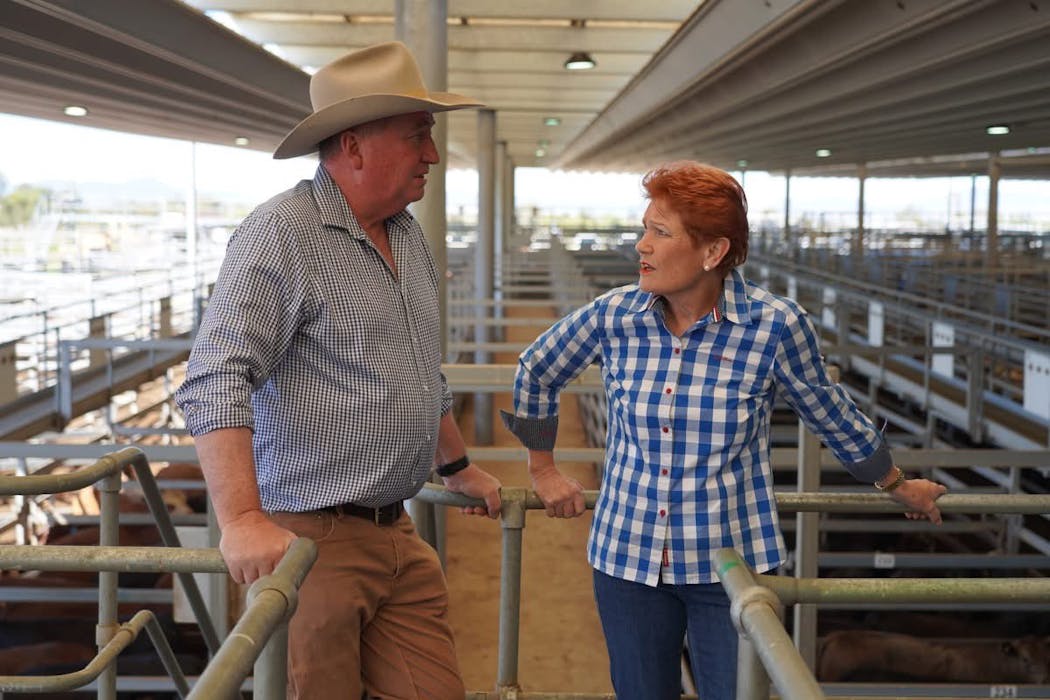
‘Anomalies’ lead Customs to $15m cocaine bust

Source: Radio New Zealand

Cocaine bricks intercepted by Customs in Tauranga, December 2025. Customs / supplied

Customs says it seized more than $15 million worth of cocaine found in a US shipping container at the Port of Tauranga.

The container originating from Houston, Texas, stopped in Balboa, Panama, before arriving in Tauranga on Thursday, 4 December.

Customs said its officers identified “anomalies” during standard X-ray screening, prompting a physical inspection of the container’s contents.

It said hidden among legitimate goods were two plastic-wrapped bags containing 45 cocaine bricks, each weighing 1kg.

The bricks displayed various branding, including Volvo, Porsche and a hamster wearing a crown.

The cocaine seized was estimated to have a street value of $15.75 million.

Cocaine bricks intercepted by Customs in Tauranga, December 2025. Customs / supplied

Customs maritime manager Robert Smith said the seizure showed Customs frontline officers were making it harder for criminal networks to operate through New Zealand’s seaports.

“It also reinforces the value of Customs’ intelligence-driven, multi-layered approach to protecting New Zealand’s borders. Every seizure we make strengthens our intelligence and our ability to target criminal networks.

“Alongside Customs’ border protection measures, we work closely with industry stakeholders such as port and shipping and logistics companies and we encourage reporting of potential suspicious behaviour through our programme, Border Protect, at our seaports.”

Police and Customs have been asked if any arrests had been made and if they were investigating.

Cocaine bricks intercepted by Customs in Tauranga, December 2025. Customs / supplied

Sign up for Ngā Pitopito Kōrero, a daily newsletter curated by our editors and delivered straight to your inbox every weekday.

– Published by EveningReport.nz and AsiaPacificReport.nz, see: MIL OSI in partnership with Radio New Zealand

Watch live: Christopher Luxon lays out plans for last weeks of political year

Source: Radio New Zealand

The Prime Minister is set to face questions as he lays out his government’s plans for the last weeks of the political year.

Christopher Luxon is speaking to media after a regular meeting of Cabinet ministers. You can watch the press conference live at the top of this page from bout 4pm.

Parliament will sit for the last time this year on December 18.

It comes as former Labour Prime Minister Sir Geoffrey Palmer criticises the government for passing too many laws under urgency.

Meanwhile, Luxon has been defending Police Minister Mark Mitchell, who has been facing questions about what he knew about the investigation into former top cop Jevon McSkimming, after claims by former Commissioner Andrew Coster.

Sign up for Ngā Pitopito Kōrero, a daily newsletter curated by our editors and delivered straight to your inbox every weekday.

– Published by EveningReport.nz and AsiaPacificReport.nz, see: MIL OSI in partnership with Radio New Zealand

ER Report: A Roundup of Significant Articles on EveningReport.nz for December 8, 2025

ER Report: Here is a summary of significant articles published on EveningReport.nz on December 8, 2025.

Australia’s $2.3 billion green energy program is funding oversized batteries and blowing out in cost
Source: The Conversation (Au and NZ) – By Rohan Best, Senior Lecturer, Department of Economics, Macquarie University Kindel Media/Pexels A federal government green energy program is subsidising unnecessarily large home batteries and blowing out in cost. The Labor government launched its A$2.3 billion Cheaper Home Batteries Program in July, with the aim of bringing down

Barnaby Joyce joins One Nation to run as NSW Senate candidate in 2028
Source: The Conversation (Au and NZ) – By Michelle Grattan, Professorial Fellow, University of Canberra Pauline Hanson/X Barnaby Joyce has finally made the jump to One Nation and will lead its New South Wales Senate ticket for the 2028 federal election. Pauline Hanson said on social media: “It’s official! We have made our announcement on

More women are using steroids – and many don’t know the risks
Source: The Conversation (Au and NZ) – By Samuel Cornell, PhD Candidate in Public Health & Community Medicine, School of Population Health, UNSW Sydney Scott Webb/Unsplash When people think of gym goers using steroids, the picture that comes to mind is often of a man pumping iron, like Arnold Schwarzenegger, or modern day shirtless masculinity

What’s the difference between a tumour and cancer?
Source: The Conversation (Au and NZ) – By Sarah Sasson, Scientia Senior Lecturer in Medicine (Immunology), UNSW Sydney National Cancer Institute/Unsplash The terms tumour and cancer can refer to different types of lumps and bumps. But the terms are often confused and misused – by the general public and even health professionals. For instance, doctors

Empowerment and joy: NZ’s Special Olympics Summer Games remind us what sport is about
Source: The Conversation (Au and NZ) – By Trudie Walters, Senior Lecturer in Leisure and Event Studies, Lincoln University, New Zealand Team New Zealand at the opening ceremony of the Special Olympics World Games in Berlin, 2023. Alexander Hassenstein/Getty Images One of New Zealand’s biggest sporting events of this year, at least in terms of

The under-16s social media ban will damage young people’s political education. Teachers need better support
Source: The Conversation (Au and NZ) – By Zareh Ghazarian, Associate Professor in Politics and International Relations, School of Social Sciences, Monash University From this week, Australians aged under 16 will not be able to hold an account on many social media platforms. In anticipation of the ban, some social media companies have already begun

What our missing ocean float revealed about Antarctica’s melting glaciers
Source: The Conversation (Au and NZ) – By Steve Rintoul, CSIRO Fellow, CSIRO Pete Harmsen, CC BY-ND Sometimes, we get lucky in science. In this case, an oceanographic float we deployed to do one job ended up drifting away and doing something else entirely. Equipped with temperature and salinity sensors, our Argo ocean float was

Most people with disabling mental health conditions can’t access the NDIS. Here’s a better way to provide support
Source: The Conversation (Au and NZ) – By Sam Bennett, Disability Program Director, Grattan Institute The pathway to reforming the National Disability Insurance Scheme (NDIS) is littered with obstacles. Among the biggest challenges is the federal and state governments agreeing on responsibility and funding for “foundational supports”. These are disability-specific services for people who don’t

Active zones and mini retreats – how to build preschools suitable for neurodivergent kids
Source: The Conversation (Au and NZ) – By Fatemeh Aminpour, Research Fellow, City Futures Research Centre, UNSW Sydney Natalia Lebedinskaia/ Getty Images An estimated 15–20% of children are neurodivergent, with diagnoses rising each year. They may have a neurodevelopmental condition such as autism or attention-deficit/hyperactivity disorder. We know many neurodivergent children experience sensory information differently

If you’re pregnant, do you have to tell your boss? And what are the rules for employers?
Source: The Conversation (Au and NZ) – By Dominique Allen, Professor, Business Law & Taxation, Monash University A Sydney warehouse worker fired by text message within two weeks of telling her employer she was pregnant has won her job back, along with A$15,000 in backpay. The recent Fair Work Commission ruling about an Adecco contractor

The Ladykillers at 70: how one film turned British whimsy into a darkly comic masterpiece
Source: The Conversation (Au and NZ) – By Ben McCann, Associate Professor of French Studies, University of Adelaide Silver Screen Collection/Getty Images Mrs. Wilberforce (Katie Johnson) lives alone in a rickety Victorian house near London’s King’s Cross railway station. She rents a room to Professor Marcus (Alec Guinness), who claims to be a musician, and

Australians see AI as leading threat to people and businesses: survey
Source: The Conversation (Au and NZ) – By Michelle Grattan, Professorial Fellow, University of Canberra Threats relating to technology, disinformation, economic security and foreign interference are overshadowing traditional security concerns in Australians’ minds, according to data released by the Australian National University National Security College. More than 12,000 people were asked across two surveys, in

The one thing everyone’s missing in the All Blacks coaching situation

Source: Radio New Zealand

Jamie Joseph, Scott Hansen, Scott Robertson. Graphic: Liam K. Swiggs PHOTOSPORT

Analysis – Scott Hansen has become the most talked-about man in the All Blacks, which is somewhat fitting given he isn’t short of a word himself when he wants. Back in March 2019 he gave one of the more memorable post-match press conferences, after his Sunwolves side hadn’t just caused an upset in Hamilton but given the Chiefs an absolute hiding.

It was no surprise that Hansen was more than happy to answer any questions about the result, but in what is probably a first for rugby coaches, he decided that not enough questions had been asked and offered to keep the microphones rolling while he talked through just what the win meant.

Photosport

Fast forward six years and Hansen is now the All Black staff’s second in command. The somewhat convoluted way in which that’s been made official has certainly garnered headlines, exposing the knowledge gap between those in the know and the common fan, but also called Hansen’s credentials into question.

Then there’s the radical calls for Scott Robertson and Hansen to be replaced, with the sole name being bandied about that of Jamie Joseph.

But here’s the thing that ties that last two points together. Probably due to the fact that Hansen’s coaching career has been so massively overshadowed by Robertson, no one seems to have remembered that Hansen was part of Joseph and Tony Brown’s Japan coaching staff during their historic 2019 World Cup run, then for four years afterwards.

So you can’t really tell the story of Joseph’s greatest achievement, which is what is being held up as the main credential over Robertson’s relative inexperience at test level, without acknowledging Hansen’s role in it.

PHOTOSPORT

The power Joseph had in Japan was arguably even greater than what Rassie Erasmus enjoys with the Springboks now, which was understandable at the time given they were determined to make an impression as World Cup hosts. Joseph was able to control every aspect of his player’s schedules in the lead up to the tournament, keeping skipper Michael Leitch in cotton wool and using the Sunwolves reserve team as a shadow national selection for live training exercises.

The delegation to Hansen even extended to Tony Brown handing over the Sunwolves coaching duties, which resulted in the aforementioned win over the Chiefs in his first game in charge. The rest of the Sunwolves’ season only garnered one more win, admittedly, but Hansen returned to the Japan national team to help engineer landmark wins over Ireland and Scotland at the World Cup.

A lesson in clarity

New Zealand All Blacks assistant coach Scott Hansen followed by assistant coach Leon MacDonald and New Zealand coach Scott Robertson. Andrew Cornaga/www.photosport.nz

If nothing else, this has been a lesson in clarity for Robertson and NZ Rugby. Around the time Hansen was being given the Sunwolves job, Robertson was making his ultimately unsuccessful play to be the next All Black coach. His ticket was clear: he would be the head coach with Leon MacDonald as his assistant, which made perfect sense given their long history of first teammates and then coaching together.

Robertson was ultimately passed over for Ian Foster. But at some point, in the dramatic next four years while Foster dealt with the massive on and off field pressures, the dynamic between Robertson and MacDonald changed. Just exactly when that was is a bit of a mystery, but it’s clear that also at some point the relationship between Hansen and Robertson formed into one that not only led to an employment arrangement, but a role for Hansen as the 2IC.

The theory goes that while the situation wasn’t made official publicly, by the time the arrangement got put into practice it wasn’t to MacDonald’s liking and led directly to his exit after only three tests.

Since then we’ve had Hansen, Jason Ryan, Jason Holland and Tamati Ellison as assistants, with Ryan likely the one that more than a few All Black fans would’ve presumed would be the right hand man given he’d already been in the set up before Robertson arrived. That sort of misconception should’ve been cleared up, especially as problems with the wider coaching staff was one of the major things hindering Foster’s time in charge.

Is it that bad?

From left Scott Hansen, Jason Holland and Leon MacDonald who will join the All Blacks coaching set-up from next year. Photosport www.photosport.nz

It’s exactly that comparison that does put the current situation into perspective, though. Hansen’s role isn’t even the most pressing issue, it’s that MacDonald and Holland have left. It’s obviously not great, but even then, they weren’t fired like John Plumtree and Brad Mooar were.

In fact, as far as All Black coaching dramas go, this isn’t even really on the first page and not just because it’s come after the Foster era. John Mitchell made himself so unpopular he got let go after one of the most successful records in history, Grizz Wyllie and John Hart got made co-coaches despite hating each other, and Fred Allen quit in part because NZRFU chairman Tom Morrison allegedly tried to influence selections – only for Allen to be succeeded by Ivan Vodanovich, a co-owner of Morrison’s Wellington menswear shop.

It’s also worth taking into account that Robertson has been open about his grand strategy of creating depth for the 2027 World Cup, although probably not open enough about just how much of his role is doing that. Without knowing the exact inner workings of the team, it feels like Robertson is more of a director of rugby. Which in itself might not be a bad thing given the development success so far, but he should’ve just given himself that title up front.

Scott Robertson (left) and Scott Barrett after the England v All Blacks at Twickenham Stadium, London. www.photosport.nz

But the key thing here, as always with the All Blacks, is results. If Robertson is in strategic command, Hansen is the tactical leader and that’s where the team has been found wanting in three very different but all completely disappointing losses this season. Had those been wins, we likely wouldn’t even be talking about this.

If he is head coach in all but name, Hansen should be the one fronting after those results, or at least sit next to Robertson post-match the same way Foster would as assistant to Steve Hansen, so that tactical questions can get addressed. At the very least, he should be up for media and therefore answering to the public as the official 2IC on a weekly basis.

The big unknown here is just exactly what the most important people in all of this, the players, feel about this situation. There’s been plenty of conjecture and very little of it good, but the only way those stories are getting told any time soon is through the official team review.

That’s due sometime in January. If there are more departures from the coaching staff, we’ll know exactly what was said.

Sign up for Ngā Pitopito Kōrero, a daily newsletter curated by our editors and delivered straight to your inbox every weekday.

– Published by EveningReport.nz and AsiaPacificReport.nz, see: MIL OSI in partnership with Radio New Zealand

NZ navy ship shadowed by seven Chinese warships

Source: Radio New Zealand

A Cheng Kung-class frigate of the People’s Liberation Army (Navy) can be seen monitoring HMNZS Aotearoa’s actions while on patrol. Supplied / NZDF

A New Zealand navy ship sailing in East Asia was shadowed by seven Chinese warships, the Defence Force has confirmed.

The HMNZS Aotearoa was sent to the East China and Yellow Seas last month, to carry out surveillance and deterrence activities in an effort to bolster United Nations Security Council sanctions against North Korea.

Bridge watchkeepers aboard HMNZS Aotearoa keep a constant 24 hour watch during patrols. Supplied / NZDF

The vessel was accompanied by a P-8A Poseidon, as part of Operation Whio, with the intention of curbing North Korea’s nuclear and ballistic missile programmes.

RNZ previously reported the vessel travelled through the Taiwan Strait, and that it was shadowed.

The Seasprite helicopter embarked on HMNZS Aotearoa provides enhanced force projection and surveillance of suspicious vessels. Supplied / NZDF

The Defence Force has now confirmed the ship was shadowed by seven different People’s Liberation Army (Navy) warships, which kept a “safe and professional distance” throughout.

Patrolling an area of 410,000 square kilometres, the Aotearoa and its SH-2G Seasprite helicopter interrupted two “possibly illicit” ship-to-ship transfers, identified seven vessels of interest, hailed 49 merchant vessels, and broadcast 79 deterrence messages.

A Royal New Zealand Air Force Poseidon P8-A, works in partnership with HMNZS Aotearoa during Op Whio. Supplied / NZDF

The Poseidon witnessed five ship-to-ship transfers, observed 59 vessels of interest, and issued 19 deterrence messages

The crew of the Aotearoa worked alongside ships from Canada, France, and Japan. Acting as a replenishment vessel, the Aotearoa also carried out replenishments at sea for Australian and US vessels.

A Royal New Zealand Air Force Poseidon P8-A on patrol during Op Whio. Supplied / NZDF

“Through maritime patrol, airborne surveillance and international cooperation, we delivered tangible impact – from deterring illicit activity to supporting allied ships at sea. The professionalism of our own crews, and those of our partner nations, was evident throughout,” said HMNZS Aotearoa Commanding Officer Rob Welford.

Sign up for Ngā Pitopito Kōrero, a daily newsletter curated by our editors and delivered straight to your inbox every weekday.

– Published by EveningReport.nz and AsiaPacificReport.nz, see: MIL OSI in partnership with Radio New Zealand

Australia’s $2.3 billion green energy program is funding oversized batteries and blowing out in cost

Source: The Conversation (Au and NZ) – By Rohan Best, Senior Lecturer, Department of Economics, Macquarie University

Kindel Media/Pexels

A federal government green energy program is subsidising unnecessarily large home batteries and blowing out in cost.

The Labor government launched its A$2.3 billion Cheaper Home Batteries Program in July, with the aim of bringing down household power bills and reducing people’s reliance on the energy grid. The program was projected to lead to more than 1 million installed batteries by 2030.

There has been a massive uptake. The Clean Energy Regulator, which administers the program, told The Conversation that around 146,000 batteries have been installed in just five months.

But digging into the data reveals some major concerns about the program – many of which I previously anticipated. The average size of the batteries installed under the program is roughly double what a regular household requires to meet its energy needs. And that has resulted in a major cost blowout.

But there are ways to fix the program and ensure its benefits are distributed fairly among Australians.

What exactly is the Cheaper Home Batteries Program?

The program provides discounts of around 30% of the cost of an installed battery.

These batteries are valuable to store the excess energy from millions of rooftop solar systems in Australia. As such, they are an important component of the renewable energy transition.

The federal government has been celebrating the popularity of the program.

In September, when the Clean Energy Regulator revealed 50,000 batteries had been installed in just two months, Minister for Climate Change and Energy Chris Bowen said:

This program is working in the suburbs, in the regions and in our cities. Australians are proving the naysayers and climate change deniers wrong – they want to be part of the clean energy future.

Early warnings have come true

In April I warned about the potential problems with the program if it wasn’t properly targeted, including that it would give higher subsidies for larger batteries which could, in turn, lead to major cost blowouts.

These warnings have come true.

The Clean Energy Regulator told The Conversation that as of December 3, “there are currently around 146,000 batteries installed under the Cheaper Home Batteries Program”.

By the end of the year, it expects this figure to rise to around 175,000.

More than 98% of batteries have been installed for households, with businesses making up most of the rest.

The average system size of battery installation is more than 22 kilowatt-hours, which can cost around A$18,000. The most common system size installation is roughly 19kWh.

More than 80% of validated residential battery installations have been above 10kWh.

A graph showing the range of different battery sizes installed in homes.
The average system size of battery installation is more than 22kWh.
Clean Energy Regulator

For perspective, a typical household battery is around 11kWh, which can cost around A$10,000. And a battery as small as 5–6kWh could be sufficient to store energy in the middle of the day that can cover much of the evening peak for most households.

As of December 3, the program had cost roughly A$749 million, according to a spokesperson for the federal Department of Climate Change, Energy, the Environment and Water.

This means around 30% of the cash pool has been spent on less than 15% of the projected 1 million batteries.

At this rate, the budget allocation of $2.3 billion might therefore run out in 2026, rather than 2030 as originally planned.

If this trend continues, and government budget allocations are extended, the total cost of the program could blow out to around $10 billion.

However, projections are vexed in general and there are reasons why the future will not be identical to the past. For example, the discounts per kWh are designed to decrease toward 2030, in line with assumptions of battery cost reductions.

So, what now?

The government says it is “working carefully […] on how to deliver on our objectives and keep the program sustainable for years to come”.

This could include adjusting the program to lower discounts for large batteries.

Currently, batteries above 100kWh are ineligible, and batteries above 50kWh only get a discount with respect to the first 50kWh. A possibility to discuss is lowering the 50kWh threshold to 15kWh.

Means testing could also be introduced, as is the case in some state schemes.

Means testing can refer to assets, such as property values used by Solar Victoria, with potential to use financial assets like for the age pension.

This could help to direct subsidies to the people who need them most.

Co-mingled schemes including multiple technologies, like in the Australian Capital Territory, could also give households more flexibility and provide a genuine opportunity for renters.

The success of this program can’t just be about how many new batteries are installed. It must also be about cost-effectiveness and fairness.

And on that front, it’s clear there’s plenty of work to be done.

The Conversation

Rohan Best previously received funding for projects for the Economic Research Institute for ASEAN and East Asia (ERIA) and the New South Wales Government.

ref. Australia’s $2.3 billion green energy program is funding oversized batteries and blowing out in cost – https://theconversation.com/australias-2-3-billion-green-energy-program-is-funding-oversized-batteries-and-blowing-out-in-cost-271206

Barnaby Joyce joins One Nation to run as NSW Senate candidate in 2028

Source: The Conversation (Au and NZ) – By Michelle Grattan, Professorial Fellow, University of Canberra

Pauline Hanson/X

Barnaby Joyce has finally made the jump to One Nation and will lead its New South Wales Senate ticket for the 2028 federal election.

Pauline Hanson said on social media: “It’s official! We have made our announcement on 88.9FM in Tamworth.”

In a statement Hanson said, “I am pleased he’s chosen One Nation, and I welcome his experience, his advice and his determination to get a fair go for farmers and regional Australia. Mr Joyce strengthens One Nation’s position in parliament just as many Australians are strengthening our position in the polls.”

“Welcome on board,”

The One Nation leader flew to Joyce’s New England electorate for the announcement.

Joyce told local radio, “Pauline made an offer to me to come to One Nation, and I have taken that up”.

The move has been an open secret for weeks, but Joyce has made the transition in stages. During the last parliamentary sitting he confirmed he was leaving the Nationals but left unclear his future with One Nation. Earlier he had stopped attending Nationals party meetings.

Joyce is a major catch for One Nation, which has been surging in the polls, at around 15% and even rising up to 18%.

Joyce started his parliamentary career in the Senate after winning at the 2004 election. Later he moved to the House of Representatives. He has made it clear that one motive for his leaving the Nationals has been that Nationals leader David Littleproud relegated him to the backbench after the May election. He was also confined to his own seat during this year’s campaign.

Joyce will sit for the rest of this term as a One Nation member in the House of Representatives.

The Conversation

Michelle Grattan does not work for, consult, own shares in or receive funding from any company or organisation that would benefit from this article, and has disclosed no relevant affiliations beyond their academic appointment.

ref. Barnaby Joyce joins One Nation to run as NSW Senate candidate in 2028 – https://theconversation.com/barnaby-joyce-joins-one-nation-to-run-as-nsw-senate-candidate-in-2028-270792