Page 163

Busy New Year period for Tai Rāwhiti police

Source: Radio New Zealand

Tairāwhiti Area commander Danny Kirk, police commissioner Richard Chambers and Eastern District commander superintendent Jeanette Park at Rhythm and Vines. supplied

After overseeing more than 20,000 festival goers who gathered in Gisborne for Rhythm and Vines, and keeping an eye out for possible boy racer gatherings, Tai Rāwhiti police say their New Year operation has concluded with multiple arrests and infringement notices.

Area commander Danny Kirk said the past few days had been particularly busy.

He said while festival goers were generally well behaved, four people were arrested for supplying drugs and breaches of bail, possession of an offensive weapon and behaving threateningly.

In Mahia, one person was arrested on New Year’s Eve for breaching bail conditions.

On the roads, police breath tested approximately 12,000 drivers, with 25 found to be in breach of the rules.

The police Eagle helicopter was deployed to Gisborne following reports of planned group gatherings linked to anti-social road behaviour.

The Auckland-based helicopter provided aerial support and rapid response across the region.

Tairāwhiti police breath tested approximately 12,000 drivers. New Zealand Police

Kirk said plans for a large gathering were “successfully thwarted” by police.

He said there was no significant issues arising from anti-social road users, although one person was arrested for breach of bail and multiple infringement notices were issued for various offences.

As part of the operation, police issued a non-operation order to one vehicle and impounded two others.

One person was charged with driving related offences and has been summoned to appear in the Gisborne District Court.

Kirk said police will continue to maintain an increased presence across the region, especially in holiday hotspots.

Sign up for Ngā Pitopito Kōrero, a daily newsletter curated by our editors and delivered straight to your inbox every weekday.

– Published by EveningReport.nz and AsiaPacificReport.nz, see: MIL OSI in partnership with Radio New Zealand


Ancient African bedrock reveals the violent beginnings of life on our blue planet

Source: The Conversation (Au and NZ) – By Simon Lamb, Associate Professor in Geophysics, Te Herenga Waka — Victoria University of Wellington

You have probably seen the images of the surface of Mars, beamed back by NASA’s rovers. What if there were a time machine capable of roaming Earth during its remote geological past, perhaps even going right back to its beginnings, beaming back pictures of similar quality?

This is not science fiction. In remote corners of the world, geologists have found tiny relics of Earth’s very ancient surface.

I have been part of this scientific endeavour, looking at the treasure trove of information in the bedrock of the Makhonjwa Mountains in South Africa and the adjacent small kingdom of Eswatini.

These rocks reach back more than three quarters of the way through our planet’s long history of nearly 4.6 billion years. In my new book, The Oldest Rocks on Earth, I describe the graphic images “beamed back” by this geological time machine.

World of oceans

The ancient rocks reveal a world with extensive oceans and intense volcanic activity on the sea floor.

Deep beneath the crust, Earth was much hotter than today, giving rise to an unusual white-hot magma, rich in elements from its interior. Huge volumes of super-heated water continually gushed out of underwater cracks, building up chimneys of valuable metals. And life was thriving around these undersea vents.

Volcanic islands rose up from the ocean depths. These were dangerous places. Pools of hot bubbling mud dotted their shores, and clouds of volcanic ash periodically exploded from volcanic craters.

Life was already there, forming microbial mats in the sheltered nearshore waters.

Periodically, large earthquakes violently shook the bedrock, triggering submarine avalanches that cascaded down into the deep ocean, creating vast jumbles of rock on the sea floor. Giant asteroid impacts disturbed this world, but crucially, did not extinguish it.

Deep-seated forces were pushing up new land, creating the early continents.

Ocean waves moved back and forth on sandy beaches along coastlines with bays, lagoons, inlets and estuaries, with tides similar to those today.

During floods, large rivers brought muddy water from the continental interior. Farther in the distance, their headwaters drained a mountainous terrain, often enveloped in thick cloud.

It was a blue planet because, like today, the oceans scattered light in the blue part of the colour spectrum.

But the atmosphere contained a lethal cocktail of gases, including high concentrations of methane and carbon dioxide. These greenhouse gases kept the surface at the right temperature for liquid water, at a time when astrophysicists calculate the Sun was much weaker. But there was no oxygen.

The earliest life forms were anaerobic microbes, although brightly coloured – pink or purple have been proposed.

Oceania today

Oceania, in the southwestern Pacific, may illustrate best what this early world was like. Here, the ocean is peppered with volcanic islands and small continents, rocked by great earthquakes where tectonic plates rub against each other. There are even clues to how life began.

The 2022 eruption of the Hunga volcano, near Tonga, created a mushroom cloud of ash that burst out of the ocean and reached up into space with an estimated energy of a 60-megaton atomic bomb. It generated more than 200,000 lightning strikes and left behind a deep underwater crater filled with a chemical soup derived from numerous underwater hot vents.

Experiments show that lightning strikes can trigger the synthesis of basic organic molecules needed by living organisms. Millions of Hunga-like eruptions on early Earth would have created myriad opportunities to kick start the chemistry of life in underwater volcanic craters – life was born out of extreme geological violence.

Staying blue

Going back in time beyond the Makhonjwa Mountains, we still find evidence for oceans, life and, I argue, plate tectonics. Earth became blue within the first tenth of its history.

Mars and Venus may have started this way, too. But our planet uniquely lies in the so-called Goldilocks Zone, receiving just the right amount of solar energy to avoid becoming a boiling Venusian hell or freezing Martian world.

It is also big enough to have a magnetic field and pull of gravity sufficient to retain its atmosphere. And right at the start, a dramatic collision with a Mars-sized asteroid spalled off our Moon, stabilising Earth’s spin axis so that day and night were less extreme.

Finally, the biochemistry of living organisms may have played a key role in keeping Earth this way by helping the bedrock absorb greenhouse gases in the face of a steadily warming Sun.

We must not be the first to let Earth lose its distinctive life-giving blue, a colour so wonderfully referred to in the Siswati language of Eswatini as luhlata lwesibhakabhaka, literally “green like the sky”.

The Conversation

Simon Lamb has received grants from the UK Natural Environment Research Council which has supported this work. His book ‘The Oldest Rocks on Earth’ is published by Columbia University Press, and he will receive a royalty from sales.

ref. Ancient African bedrock reveals the violent beginnings of life on our blue planet – https://theconversation.com/ancient-african-bedrock-reveals-the-violent-beginnings-of-life-on-our-blue-planet-268365

Australia’s red and yellow beach flags can be dangerously confusing. Is it time to change them?

Source: The Conversation (Au and NZ) – By Samuel Cornell, PhD Candidate in Public Health & Community Medicine, School of Population Health, UNSW Sydney

Every summer in Australia, millions of people head to the beach, and every year, thousands are rescued by lifeguards or Surf Life Savers and even surfers or other bystanders. Tragically, many people lose their lives on our coasts.

The red and yellow flags, iconic to many Australians, are meant to be a simple and easy to understand message. They denote a safe and patrolled place to go in the water at the beach.

Surfers are supposed to surf outside the flags, while others swim (or wade, or frolic) between the flags.

But for many international visitors, the message is less clear. They may not make sense to people born overseas. Research shows international students often misinterpret what beach flags indicate, rely on visual cues like other swimmers, or assume calm water is safe.

These flags are not universal. Around the world, beach safety is communicated in different ways, with different colours, symbols, messages, and even patrol systems.

Despite the significant efforts of water safety organisations, drowning rates continue to rise in Australia, and people born overseas make up a substantial proportion of these deaths.

The system isn’t working.

What do the flags mean, and why do they matter?

The red and yellow flags have been a part of Australian beach culture and safety since the 1930s. They’ve been marking the patrolled area of the beach ever since.

The idea is that if someone swims between these flags, they are under the watchful eye of professional lifeguards and/or volunteer surf lifesavers.

Usually, the flags are positioned on an area of beach away from rip currents – the fast-flowing, seaward channels of water responsible for an average 26 drownings a year and the vast majority of surf rescues.

But recent studies found that about 70% South Korean university students and 60% Japanese students interpreted the red and yellow flags as indicating a dangerous area.

And a study conducted in the Netherlands showed only 3.4% of surveyed participants correctly interpreted the red and yellow flags. About 40% thought they denoted danger.

These results should be no surprise. Other global safety systems such as road or workplace signs use red to mean danger or prohibition, yellow for caution, and green as safety or permission.

Even half of domestic Australian university students surveyed thought red and yellow flags marked a safe area, so surfers should also stay between the flags. In fact, surfers are not supposed to surf between the flags.

The global picture

Globally, beach flag systems are not standardised.

For instance, in Brazil, Spain, and some areas of the United States, beaches use a traffic-light colour system: green for safe, yellow for caution, and red for danger or closed conditions. Portugal sometimes adds purple flags to warn of marine stingers such as jellyfish.

In some northern parts of Spain, yellow flags are sometimes used to mark designated “cooling off” areas where people are allowed to swim or bathe to cool down, despite red “danger” flags also being in place.

The International Life Saving Federation recommends a global set of eight beach safety flags, including the familiar red-and-yellow for patrolled swimming areas, red for high hazard, yellow for medium hazard, and black-and-white for watercraft zones.

Unlike some countries, the federation explicitly discourages green flags to denote “safe” conditions, on the grounds that no beach or even patrolled area can ever be completely risk-free.

Communicating beach safety

Even if people don’t know what the flag colours mean, in Australia beach signs often say “swim between the flags”.

But research at Bondi Beach in Sydney found that around 30% of overseas-born beachgoers misunderstood this message.

They thought “swim between the flags” meant only people who can actually swim should go there. In other words, if they weren’t good swimmers, they believed they should stay outside the flags.

This is exactly the opposite of what the safety message intends.

Translation tools are not a reliable fix. A recent study found key hazard terms are incorrectly translated by Google Translate.

Take, for example, the term “shore dump” (which means a place where big waves can suddenly break, and “dump” a swimmer underwater). This phrase is currently rendered in simplified Chinese as “岸边垃圾场” (àn biān lèsè chǎng), which means “a place on the shore to dump rubbish”.

“Shore break” (which means the same thing) appears in Korean as “해안 휴식” (haean hyusig), meaning “shore relaxation”. This creates serious risks.

Where to from here?

Redesigning the flags might help.

A recent study conducted in Europe developed and examined a modified version of the red and yellow beach safety flag, incorporating a pictogram of a lifesaver.

This study found adding the pictogram nearly doubled participants’ correct understanding of the flags.

Some experts have also advised that changing “swim between the flags” to “stay between the flags” could improve the translation because “swim” has different connotations in different cultures and languages. Some people might think you should only swim between the flags if you’re a strong swimmer or planning to swim laps.

Simply changing the colours of flags for Australian beaches may not be enough.

The red and yellow flags are tied to a century of lifesaving culture, volunteerism, and community trust. But that legacy shouldn’t stop us from testing whether green flags improve our beach safety communication.

The Conversation

Samuel Cornell receives funding from Meta Platforms, Inc. His research is supported by a University of New South Wales Sydney, University Postgraduate Award. His research is supported by Royal Life Saving Society – Australia to aid in the prevention of drowning. Research at Royal Life Saving Society – Australia is supported by the Australian government. He has been affiliated with Surf Life Saving Australia and Surf Life Saving NSW in a paid and voluntary capacity.

Masaki Shibata receives research funding from Surf Life Saving Australia and is a volunteer surf lifesaver at Tamarama Beach, Sydney, which operates under Surf Life Saving Australia. He has also been collaboratively working on beach signage research with Surf Life Saving Australia and Life Saving Victoria.

ref. Australia’s red and yellow beach flags can be dangerously confusing. Is it time to change them? – https://theconversation.com/australias-red-and-yellow-beach-flags-can-be-dangerously-confusing-is-it-time-to-change-them-266772

Is world peace even possible? I study war and peace and here’s where I’d start

Source: The Conversation (Au and NZ) – By Alex Bellamy, Director of the Asia Pacific Centre for the Responsibility to Protect and Professor of Peace and Conflict Studies, The University of Queensland

By any measure, 2025 was not a good year for world peace.

Worse, it was just the latest of a decade-long decline of peace and upsurge of war.

As author of a book on world peace and how we can achieve it (that’s literally the title), here’s my assessment.

Grim numbers

Peace is on the decline around the world by many measures.

The Armed Conflict Location and Event Data index, a UN-funded independent monitor, reports global conflict has doubled in the past five years.

The International Institute for Security Studies reports a 23% increase in armed conflict in 2025 alone. Approximately 240,000 people were killed by violent conflict in 2025, it reports.

And the Institute for Economics and Peace’s Global Peace Index reported that peacefulness around the world has deteriorated for the sixth consecutive year.

Some of the symptoms of that decline, it reports, include:

  • flatlining global trade
  • the loss of 42% of government revenue in the developing world to debt interest repayments (the largest global creditor is now China)
  • reductions in the amount spent on peacebuilding
  • a 42% decline in the number of troops committed to peacekeeping, and
  • a dramatic increase in the internationalisation of armed conflict.

War happens when we have rising conflict and declining commitment to the things that produce peace.

Three things are driving those trends:

  • the relative decline of liberal democracy and rise of authoritarian powers
  • profound shocks such as the global financial crisis and COVID
  • problems generated by economic growth based on globalisation, especially rising inequality and social fragmentation.

Nationalist populism in the West and elsewhere is a product of these three transformations, which have unsettled comfortable post-Cold War assumptions about the progress of democracy, wealth, and peace.

We do actually know what drives war and peace

Some may argue that over the long term, the incidence of war and peace ebbs and flows naturally, driven by structural forces that defy human intervention.

But this ignores the immense strides in our understanding of the factors associated with both war and peacefulness.

The forces driving war and peace are not as mysterious as they once were. For example, it is well established that democracy, gender equality, and fair trade are associated with greater peacefulness.

So, it’s perhaps no coincidence that as war increases, each of these social goods are either in decline or are severely challenged.

It is also well established that peacekeeping reduces civilian victimisation, conflict-related sexual violence, and the likelihood of conflict reignition.

Although individual wars have their own specific causes, war and peace, in general, are shaped by a limited set of factors.

Over the past two decades, researchers have done an excellent job identifying what those factors are

We know war is not randomly unpredictable or inexplicable.

This means war is not beyond human control.

War is a choice

The idea that humans are naturally warlike is as facile as the claim that we are naturally peaceful. Anthropologists and biologists have demonstrated we are both.

War is a social practice and like any social practice, is caused by human decisions.

Humans have agency and choice. Certainly, social structures, political ideas and economic pressures influence choices, but they do not determine them.

This is not to say that “war is over, if we want it”.

War occurs because people have serious disagreements about important questions and values – things they cherish so much they would rather fight than compromise.

But peoples, governments and international organisations can create conditions that make war less likely, and the instruments for preventing, limiting, and resolving war more capable.

What is to be done?

International systems are forged by their members.

In the modern international system, that means states. States are primarily responsible for maintaining peace at home – and though some are obviously better than others, by and large, the state has done an excellent job of reducing violence in everyday life.

The building blocks for peace, therefore, lie in the state, especially those that:

  • are accountable (democratic)
  • respect human rights
  • have capable institutions
  • provide dignified living and opportunities for all
  • foster more gender equal societies.

But this not something that can be changed quickly or easily, and is a political struggle that each society has to undertake on its own terms.

So, it’s wise to focus on rebuilding those international tools we know can make a difference.

3 urgent priorities for the year ahead

First, we must reaffirm international support for the basic principles of the United Nations Charter, including the principal of non-aggression.

In practical terms, this means standing resolutely against aggression and furnishing those who defend themselves against it – notably Ukraine – with every possible support.

Second, we must revive support for UN and regional peacekeeping and peacebuilding efforts and capabilities. Peacekeeping works; more peacekeeping works better. This is especially true when the priority is protection of civilians, women, peace and security.

Third, addressing the gravest crisis of our time: Gaza. To give peace a chance, that means deploying the International Stabilisation Force (the UN-mandated multinational peacekeeping force outlined in the Gaza peace plan).

It must be given every authority and capability necessary to protect civilians, protect Israel from Hamas, and facilitate the extension of legitimate government under the auspices of the Palestinian Authority as a pathway towards Palestinian statehood.

World peace is possible because peace and war are human institutions, not forces of nature.

Even the most deeply ingrained institutions can be reformed. The abolition of slavery was considered impossible until it was achieved.

Yet to say world peace is possible is not to say that it is likely, much less that it is inevitable. But it is something worth studying and striving for. After all, peace is built in the striving.

The Conversation

Alex Bellamy does not currently receive funding from any organisation.

ref. Is world peace even possible? I study war and peace and here’s where I’d start – https://theconversation.com/is-world-peace-even-possible-i-study-war-and-peace-and-heres-where-id-start-270783

Donald Trump loathes the courts. He’s following the autocrat playbook to sideline them

Source: The Conversation (Au and NZ) – By Justin Bergman, International Affairs Editor, The Conversation

In democratic systems, the courts are a vital check on a leader’s power. They have the ability to overturn laws and, in Donald Trump’s case, the executive orders he has relied on to achieve his goals.

Since taking office, Trump has targeted the judiciary with a vengeance. He has attacked what he has called “radical left judges” and is accused of ignoring or evading court orders.

The Supreme Court has already handed the Trump administration some key wins in his second term. But several cases now before the court will be pivotal in determining how much power Trump is able to accrue – and what he’ll be able to do with it.

As Paul Collins, a Supreme Court expert from the University of Massachusetts-Amherst, explains in episode 4 of The Making of an Autocrat:

It’s all about presidential power. And that’s really significant because it’s going to enable the president to basically inject a level of politics into the federal bureaucracy that we frankly haven’t really seen before in the US.

Listen to the interview with Paul Collins at The Making of an Autocrat podcast.

This episode was written by Justin Bergman and produced and edited by Isabella Podwinski and Ashlynne McGhee. Sound design by Michelle Macklem.

Newsclips in this episode from CBS News, The White House, Associated Press, NPR, Spain’s Culture Ministry.

Listen to The Conversation Weekly via any of the apps listed above, download it directly via our RSS feed or find out how else to listen here. A transcript of this episode is available via the Apple Podcasts or Spotify apps.

The Conversation

Paul Collins does not work for, consult, own shares in or receive funding from any company or organisation that would benefit from this article, and has disclosed no relevant affiliations beyond their academic appointment.

ref. Donald Trump loathes the courts. He’s following the autocrat playbook to sideline them – https://theconversation.com/donald-trump-loathes-the-courts-hes-following-the-autocrat-playbook-to-sideline-them-272270

Why do I seem to get sick as soon as I take time off?

Source: The Conversation (Au and NZ) – By Thea van de Mortel, Professor Emerita, Nursing, School of Nursing and Midwifery, Griffith University

SolStock/Getty

You’ve been hanging out for a break, getting through the busy last weeks of work or class. You’re finally ready to relax. And then tiredness descends, you feel the tickle in your throat, and you realise you’re getting sick.

Why does this always seem to happen just in time for a holiday or the weekend?

Some call this the let-down effect or leisure sickness.

But is it real? While you may hear about leisure sickness online and anecdotally, studies on this phenomenon are very limited and often not well designed.

So let’s take a look at the evidence – and what you can do to stay healthy.

What the evidence shows

Leisure sickness is a term coined by Dutch researchers in a 2002 study. It refers to people who are seldom ill during the working week but get sick relatively often on weekends or holidays.

The researchers surveyed 1,893 people and found roughly 3% reported leisure sickness. Symptoms typically included headaches, tiredness, colds and flu, muscle pain and nausea. People were more likely to develop infections on vacation rather than weekends, and symptoms were most common during the first week of their holiday.

However, this research relied on people’s recall, and memory can be unreliable. The definition of leisure sickness was also vague. For example, one person’s idea of “seldom” and “relatively often” may differ from another’s.

Another 2014 study investigated “let-down headaches” by asking 22 participants who regularly experienced migraines to keep a diary of their stress levels and migraine onset.

It might seem counter-intuitive, but reducing stress seemed to trigger the migraine. When they recorded a reduction in stress on one day, they typically developed a migraine within the next 24 hours. If work was the stressor, this could mean a pattern of migraines on their days off.

Some evidence suggests strokes are also more common on weekends than weekdays in some groups. There is no clear cause, but the study authors suggested strokes could be triggered by lifestyle changes on weekends.

So, what’s going on?

The lack of quality research on leisure sickness means we don’t fully understand its potential causes. But there are some theories.

People often travel during vacations, and sit in enclosed, crowded spaces such as planes, increasing their exposure to germs. Travel to distant locations can also expose us to strains of germs we’re not immune to.

On holidays we may also drink more alcohol, which can reduce immune function. And we may be pushing our body to do things we don’t normally do, putting stress on it.

Another theory is that being busy at work makes us distracted and less likely to pay attention to symptoms. On leave, symptoms such as muscle pain or a headache may become more obvious – and we can’t blame it on work. So we may notice sickness more.

Tired man rubs his eyes.
We may notice symptoms such as fatigue when we’re not distracted by work.
Christopher Lemercier/Unsplash

But isn’t relaxing good for your health?

There is a complicated relationship between stress and the immune system.

Stress activates the sympathetic nervous system and makes our bodies release hormones such as adrenaline and cortisol.

Chronic stress can mean our cortisol levels are sustained at high levels. Over time, this reduces how well our immune cells respond to infection, so we are more likely to get sick if we come into contact with viruses or bacteria.

But in the short term, both adrenaline and cortisol can actually enhance how well some parts of the immune system work. This means acute stress can temporarily improve our resistance to infection, which is why we may feel busy and stressed but not fall sick. Cortisol’s anti-inflammatory properties can also relieve pain.

But when the acute stress stops – for example, when we finally get a chance to rest – there may be a sudden transition. We no longer benefit from the temporary immune boost or cortisol’s pain relief. So this is when we might fall sick, and feel symptoms such as headaches and muscle pain.

How can I avoid getting sick?

There’s still a lot we don’t understand about how or why leisure sickness might happen. But we know staying active, getting enough sleep and eating a healthy, balanced diet – even when you’re busy – can help boost your immune system.

One Finnish study examined more than 4,000 public employees who were physically inactive. It found those who took up regular exercise, particularly vigorous exercise, were less likely to take sick leave than those who remained inactive.

Given the link between chronic stress and multiple chronic diseases, it is also sensible to manage your workplace-related stress.

There is good evidence that meditation, mindfulness and relaxation techniques can help reduce stress.

There are also steps you can take to reduce the risk of respiratory infections on vacation, so you get to enjoy the whole holiday. Consider keeping up to date with flu and COVID boosters, and taking other precautions, such as wearing an N95 mask on planes and in airports.

The Conversation

Thea van de Mortel does not work for, consult, own shares in or receive funding from any company or organisation that would benefit from this article, and has disclosed no relevant affiliations beyond their academic appointment.

ref. Why do I seem to get sick as soon as I take time off? – https://theconversation.com/why-do-i-seem-to-get-sick-as-soon-as-i-take-time-off-270673

Moving house? 3 surprising ways your new neighbourhood can affect health and happiness

Source: The Conversation (Au and NZ) – By Milad Haghani, Associate Professor and Principal Fellow in Urban Risk and Resilience, The University of Melbourne

Tom Rumble/Unsplash, CC BY-NC-ND

January is consistently Australia’s busiest month for moving house – around 14-18% of the yearly total, far higher than any other month.

When people choose a new neighbourhood to live in, there are many factors to weigh up such as price, commute time, school zones and general convenience.

But research shows less obvious aspects of a neighbourhood such as walkability, aircraft noise and tree canopy can measurably improve or worsen daily health and long-term wellbeing. Yet they rarely make it onto anyone’s checklist when choosing where to live.

Here are simple clues to get a sense of how these underrated factors will affect life in a new place.

Walkability

Walkability describes how easily people can reach everyday destinations on foot. It reflects a combination of how well connected streets are, distance to shops and services and how pleasant and practical it is to walk.

A recent study of over two million house moves in the United States found people who relocated to more walkable neighbourhoods took about 1,100 extra steps per day. This level of extra activity is associated with better health by lowering risk of cardiovascular disease, diabetes and early death.

Other studies consistently link walkable areas with better mental health and lower car dependence.

Walkability can vary widely even within the same city and similar price ranges, so it’s worth checking. Two easy tools help assess it:

  • the Community Walkability Map run by the Heart Foundation, which estimates which destinations are reachable with a 5–20 minute walk from any address.

  • the Australian Urban Observatory, which gives a walkability score to each suburb based on housing density, street connectivity and access to local services. The tool has other liveability indicators and makes it possible to compare between suburbs and against the city average.

people walking across road in sydney.
People walk more in more walkable suburbs.
Sander Dalhuisen/Pexels, CC BY-NC-ND

Aircraft noise and flight paths

Research shows long-term exposure to aircraft noise can worsen health in several ways.

People living under frequent flight paths have been found to face higher rates of heart disease and poor mental health.

Night-time aircraft noise is linked to sleep disruption, including more awakenings and less deep, restorative sleep.

The noise can also affect children’s learning, with noise exposure associated with poorer attention and reading development when schools sit directly under busy flight corridors.

Most major airports in Australia offer tools to check noise levels for a specific location.

Aircraft noise exposure depends on where flight paths sit, how low planes fly, and how frequently they pass over a neighbourhood.

In Melbourne, residents can access detailed reports for a given address which combine noise-contour maps, flight-path overlays and expected noise levels for individual properties. Other cities don’t have access to this level of detail.

How loud is too loud? At night, a good rule of thumb is that aircraft noise at 55 decibels and up will cause frequent negative effects, such as disturbed sleep and higher health risks. This figure comes from the nighttime noise guidelines issued by the World Health Organization.

Australian aviation guidelines use 70 decibels as the threshold for a “noisy event” likely to disturb indoor activity.

The way a house is designed makes a difference. Double-glazed windows, sealed frames and newer insulation can reduce how noisy it is inside.

If your research suggests a new place may be exposed to aircraft noise, it’s worth checking window quality and insulation.

Tree canopy and urban heat

Tree canopy plays a major role in how hot a neighbourhood feels. Suburbs with fewer trees and less green space absorb and radiate more heat, meaning they are significantly hotter than leafier suburbs. Streets with more trees and shaded surfaces can be 5–10°C cooler on hot days.

Higher local temperatures are linked to greater heat stress, worse sleep during summer nights, and less outdoor activity.

Tree canopy and heat exposure are easy to check. States such as South Australia offer urban heat and tree canopy maps, while Victoria has an Urban Forest visual tool for central Melbourne and less detailed equivalents over a broader metropolitan area.

Using the satellite view on a mapping app can work to give a quick sense of how shaded a street is and whether the surrounding area is dominated by trees, paved surfaces or open, unshaded areas.

street trees and footpath in Australian city.
Older suburbs tend to have more tree canopy.
Alex K/Unsplash, CC BY-NC-ND

Not just nice to have

Many people don’t check how walkable, noisy or leafy an area is before deciding to move there. But these factors have a real impact on quality of life and health.

There’s a broader planning challenge here. More walkable neighbourhoods lead to significantly more walking, aircraft noise worsens sleep and tree canopy can dramatically cool neighbourhoods. This means these issues aren’t just nice to have. They should be thought of as core public health infrastructure.

Connected street networks, reliable shade, quieter residential zones and easy access to daily services should not be luxuries confined to the high-priced areas often coded as “leafy” suburbs in Australia.

Newer developments often lack the mature tree canopy of older suburbs. While it takes time for trees to mature and produce their cooling canopy, this can be sped up with strategic planting of large, spreading trees, consistent irrigation in early years and protection of verge and open-space planting areas. Local planning rules can help by creating tree canopy targets and space for deep-rooted trees.

Similarly, detailed data on aircraft noise should be accessible and easy to interpret in all cities with major airports, not just in Melbourne.

As thousands of Australians prepare to move house this month, it’s a good time to think about what we value in a neighbourhood – and how we could expand access to these desirable attributes.

Planning for walkability, heat resilience and low noise are matters of equity. Healthier urban environments should be available to everyone, not just those who can afford them.

The Conversation

The authors do not work for, consult, own shares in or receive funding from any company or organisation that would benefit from this article, and have disclosed no relevant affiliations beyond their academic appointment.

ref. Moving house? 3 surprising ways your new neighbourhood can affect health and happiness – https://theconversation.com/moving-house-3-surprising-ways-your-new-neighbourhood-can-affect-health-and-happiness-266997

Why central bankers look to the ‘stars’ when setting interest rates

Source: The Conversation (Au and NZ) – By Luke Hartigan, Senior Lecturer in Economics, University of Sydney

James Wheeler/Pexels

When the topic of central banks and the outlook for interest rates comes up, economists often turn to the so-called “star” variables to help with their predictions.

What do we mean by star variables? Why they are important to central bankers, and how do they influence interest-rate decisions?

The star variables relate to key concepts in economic models used by central bankers to help them understand how the economy works.

Star variables are named so simply because they are usually labelled with an asterisk to distinguish them from other variables in economic modelling.

Central bankers don’t normally think about the star variables in isolation. Instead, these variables are better thought of as a “constellation” linking economic growth, the labour market and interest rates together with inflation outcomes.

The three north stars

1. Potential output or y*: This is the economy’s maximum sustainable output that can be produced when all resources are fully employed. It is sometimes referred to as the economy’s speed limit. If economic growth is faster than potential, it can put upward pressure on inflation because demand for goods and services is outstripping supply.

The reverse is also true: if the economy is growing below potential, demand is subdued and inflation will likely fall.

Potential output is closely linked to productivity. Boosting productivity lifts the economy’s speed limit – allowing faster economic growth without fuelling inflation. But falling productivity lowers the economy’s speed limit, meaning it can’t grow as fast as previously without causing inflation to rise. This is the problem currently facing Australia.

2. Non-Accelerating Inflation Rate of Unemployment or NAIRU or u*, a concept that became popular in the 1970s. The idea is there is a “natural” rate of unemployment that doesn’t put pressure on wages or inflation.

3. The neutral interest rate or r* is considered to be the level of the central bank’s key interest rate that is not too low (and stimulating demand) and not too high (and restraining demand). It is a useful guide to the stance of the central bank’s monetary policy, or stance on the policy interest rate.

Good in theory, hard to measure in practice

These three interlinked variables are fundamental to how central bankers think about the economy.

But they are also concepts that are not observable, unlike published statistics on inflation or economic growth. They need to be estimated, and that’s where the uncertainty comes in.

In fact, central bankers must use statistical methods originally developed to track spacecraft to estimate them. This is done by detecting the effects these variables have on other variables that are observable, such as inflation, wages growth and the unemployment rate.

In a recent speech, a US Federal Reserve official wondered whether the three variables are “too abstract and elusive to be of practical value”. He concluded:

The short answer is that they play a central role in macroeconomic theory and have important implications for the conduct of monetary policy.[…] When the stars perfectly align, it means the economy has reached an equilibrium where its resources are fully utilized.

How the variables help with setting interest rates

Most central banks focus on maintaining price stability (low and stable inflation). A few, such as the Reserve Bank of Australia and the US Federal Reserve, have dual mandates to maintain price stability and full employment.

The way central bankers put their objectives into practice is influenced by the star variables. Specifying a target for inflation is seen as the best way to achieve price stability. The Reserve Bank’s target is 2–3% over the economic cycle.

Over time, inflation tends to be steady when the unemployment rate is close to the NAIRU. Because of this, central bankers often use the NAIRU as a rough guide to full employment, which is also broadly consistent with the economy operating near potential.

Understanding the central bank’s objectives is important because they tell us where the economy should go. But they don’t tell us what the central bank will do to get there – that is, what policy interest rate setting is needed to achieve its objectives (what economists call the central bank’s “reaction function”).

This is a way of describing how the central bank adjusts its policy interest rate based on differences between current economic conditions and the star variables.

But this is easier said than done. The uncertainties with estimating the star variables, together with the uncertainties in how interest rate changes flow through the economy, makes it difficult for central bankers to know exactly what decision they should make to achieve their objectives.

All this uncertainty is one reason why central bankers are very cautious. Sometimes it is better to do nothing than make a wrong decision and risk losing credibility.

The Conversation

Luke Hartigan receives funding from the Australian Research Council (DP230100959). He previously worked at the RBA as a Research Economist.

ref. Why central bankers look to the ‘stars’ when setting interest rates – https://theconversation.com/why-central-bankers-look-to-the-stars-when-setting-interest-rates-270052

Walk while you work: are the extra steps on an under desk treadmill worth the cost?

Source: The Conversation (Au and NZ) – By Christian Brakenridge, Research Fellow, Iverson Health Innovation Research Institute, Swinburne University of Technology

Phynart Studio/Getty Images

Recent surveys estimate more than 6.7 million Australians – almost half of all workers, and the majority in Sydney, Melbourne and Canberra – work from home at least some of the time in paid or unpaid roles.

With that increase in working from home, it’s easy to spend too long sitting – which is now recognised as bad for our health. Many of us now know what it feels like to sit at a computer all day, then once finished with work, simply transfer across to the living room couch.

When we have to physically go into our workplace, it’s easier to get incidental activity: from leaving the house, to walking and standing in an active commute, walking to talk to a colleague, go out to get lunch and more.

With many Australians not reaching physical activity guidelines, could we be strategically using an under desk treadmill or walking pad to walk while we work?

How much – and how often – do you really need to walk?

The benefits of walking are now widely substantiated. For instance, studies that have got people to increase their weekly walking have made profound and consistent benefit to health outcomes, such as improving blood pressure and glucose tolerance.

Recent evidence has converged in on 7,000 steps being a target for daily steps when considering prevention of many diseases.

The World Health Organization has also reverted its recommendations from previously saying physical activity must be done in at least 10-minute bouts to “every move counts”, regardless of duration.

Recent experiments back this up too, finding that short, frequent walking or squatting breaks to avoid prolonged sitting can actually have better health outcomes than one bout of walking.

So walking for our health does not need to be performed in a structured and routine way. It can simply be accrued through the day with incidental activity and regular walking breaks.

Together, this evidence suggests that a treadmill at your desk – encouraging regular walking breaks interspersed throughout the day, when you would otherwise be just sitting – would likely be beneficial.

What studies have been done on treadmill desks?

Though there are only a handful of specific studies on the health impacts of office workers using a treadmill desk, they have mostly shown they’re beneficial.

Those studies have found a treadmill desk or walking pad results in changes in fat loss, improving cholesterol, blood pressure and metabolism, with some benefits longer term. But different investigations into their use revealed different results:

  • one study found sedentary office workers increased their steps between 1,600 and 4,500 steps per day (with the greatest weight loss among people with obesity), compared to people who weren’t provided a treadmill

  • a small study of overweight and obese physicians found they did manage to make using a treadmill work, ending up with 1.9% lower body fat while using the treadmill desk

  • another found it led to an increase of 43 minutes of light walking – though workers still reported finding it hard to meet a demanding work schedule to fit that in.

In other words, your mileage may vary! But while these changes may sound small, they are still likely to improve your health, especially when adopted long-term.

Is it too tricky to type?

But how feasible is adding treadmill desks into our workplaces, either at home or in an office?

People may be concerned about the ability to direct attention to walking simultaneously with performing computer-based work.

Interestingly, one study found there weren’t any significant impact to cognitive abilities between those sitting vs walking at their own pace on a treadmill.

However, walking and cycling desks can impair typing and particularly moving a mouse precisely. That makes a treadmill desk less suitable for mouse-intensive work.

For those who find it hard to type accurately while walking, voice-to-text typing options maybe be worth a try. Some are built into computer operating systems, such as in Apple or Chromebook computers.

Try this before you buy

All things considered, treadmill desks are likely to provide a significant contribution to health through changes to physical activity and sedentary behaviours, without much downside.

For some, adding a treadmill desk to your work environment may be the motivator and visual reminder you need to take regular walking breaks – especially if you’re really short on time or do work that makes it hard to leave your desk.

But even the most basic walking pad costs money. You’re looking at around A$180-200 for entry level walking pads, through to $1,000 or more if you want a better treadmill you can also run on. You may also need to invest in a standing desk to be able to work properly.

So before you invest in a whole new desk set up, it’s worth asking: would it be easier and cheaper to simply try regularly walking away from your desk?

Even small changes in physical activity can make a real difference – especially for those who are very sedentary in their work and home life.

The Conversation

Christian Brakenridge does not work for, consult, own shares in or receive funding from any company or organisation that would benefit from this article, and has disclosed no relevant affiliations beyond their academic appointment.

ref. Walk while you work: are the extra steps on an under desk treadmill worth the cost? – https://theconversation.com/walk-while-you-work-are-the-extra-steps-on-an-under-desk-treadmill-worth-the-cost-264336

Cricket: Amelia Kerr finishes stint with Blaze in style

Source: Radio New Zealand

Wellington Blaze’s Melie Kerr brings up her 50. Shane Wenzlick / Photosport.nz

Wellington Blaze captain Amelia Kerr has turned in another player of the game performance to continue their unbeaten start to the Super Smash.

The Blaze have beaten the Northern Brave by 61 runs in their third round game in Mt Maunganui.

Kerr top scored with 66 as the visitors made 154 for five after being asked to bat first.

Her knock came off 55 balls and included ten boundaries and she put on a 76 run second wicket partnership with Australian Ellyse Perry who made 39.

The second Australian in the side, Maitlan Brown finished unbeaten on 30.

Kerr’s performance follows her maiden century in their last game, a 49 run victory over Auckland at the Basin Reserve.

In reply Kerr also took two wickets as the Brave finished their 20 overs on 93 for nine.

Nensi Patel with 28 and Caitlin Gurrey with 26 were the only Northern batters to make an impression on the scoreboard.

Perry took three wickets for 11 runs from her four overs for Wellington while Jess Kerr took two wickets.

Amelia Kerr of the Wellington Blaze. Shane Wenzlick / Photosport.nz

“Again pleasing to just be here on the winning side,” Kerr told TVNZ afterwards.

“I thought what we scored was just above par but I thought our bowlers were outstanding.”

Kerr also commentated on the impression the two Australian players are having within the team.

“It is so good for the comp but what they bring into the changing room, their professional habits it’s outstanding and both Ellyse and Maitlan are great people.”

It is Kerr’s last game for the Blaze in the competition as she prepares to head to India for the WPL.

The Wellington Blaze are top of the table with three wins from three, while the Northern Brave with two losses and a no result.

Sign up for Ngā Pitopito Kōrero, a daily newsletter curated by our editors and delivered straight to your inbox every weekday.

– Published by EveningReport.nz and AsiaPacificReport.nz, see: MIL OSI in partnership with Radio New Zealand

Crash closes section of State Highway near Levin

Source: Radio New Zealand

RNZ / REECE BAKER

State Highway 57 near Levin is closed at the intersection of Kimberley and Arapaepae South roads following a crash.

The two-car crash that was reported at 7.20pm and police said there were serious injuries.

Motorists were advised to avoid the area and expect delays.

Sign up for Ngā Pitopito Kōrero, a daily newsletter curated by our editors and delivered straight to your inbox every weekday.

– Published by EveningReport.nz and AsiaPacificReport.nz, see: MIL OSI in partnership with Radio New Zealand

Busy New Year period for Tairāwhiti police

Source: Radio New Zealand

Tairāwhiti Area commander Danny Kirk, police commissioner Richard Chambers and Eastern District commander superintendent Jeanette Park at Rhythm and Vines. supplied

After overseeing more than 20,000 festival goers who gathered in Gisborne for Rhythm and Vines, and keeping an eye out for possible boy racer gatherings, Tairāwhiti police say their New Year operation has concluded with multiple arrests and infringement notices.

Area commander Danny Kirk said the past few days had been particularly busy.

He said while festival goers were generally well behaved, four people were arrested for supplying drugs and breaches of bail, possession of an offensive weapon and behaving threateningly.

In Mahia, one person was arrested on New Year’s Eve for breaching bail conditions.

On the roads, Police breath tested approximately 12,000 drivers, with 25 found to be in breach of the rules.

The Police Eagle helicopter was deployed to Gisborne following reports of planned group gatherings linked to anti-social road behaviour.

The Auckland-based helicopter provided aerial support and rapid response across the region.

Tairāwhiti police breath tested approximately 12,000 drivers. New Zealand Police

Kirk said plans for a large gathering were “successfully thwarted” by police.

He said there was no significant issues arising from anti-social road users, although one person was arrested for breach of bail and multiple infringement notices were issued for various offences.

As part of the operation, Police issued a non-operation order to one vehicle and impounded two others.

One person was charged with driving related offences and has been summoned to appear in the Gisborne District Court.

Kirk said police will continue to maintain an increased presence across the region, especially in holiday hotspots.

Sign up for Ngā Pitopito Kōrero, a daily newsletter curated by our editors and delivered straight to your inbox every weekday.

– Published by EveningReport.nz and AsiaPacificReport.nz, see: MIL OSI in partnership with Radio New Zealand

Auckland FC beaten by 10-man Newcastle

Source: Radio New Zealand

Newcastle Jets Will Dobson celebrates his goal against Auckland FC, 2026. Shane Wenzlick / Photosport.nz

Newcastle have stunned A-League leaders Auckland FC 3-1 at Mt Smart stadium.

The visitors managed to score their second win over Auckland at the ground this season and did it while playing the majority of the game with just ten players.

Newcastle made a fast start and their early pressure resulted in the first goal after just seven minutes.

The visitors got behind the defence down the left flank and a cross found an open Lachlan Rose to slot home the opener.

It didn’t take long for the home side to respond with Jesse Randall scoring directly from a free kick just six minutes later when he was able to beat the keeper at the near post.

Newcastle got their second after 16 minutes when Will Dobson pounced on a ball that Auckland keeper Michael Woud could only parry away from a shot.

The pressure then went on Newcastle midway through the first half when defender Max Cooper was sent off for a second yellow card.

Newcastle then spent the rest of the half under the pump but were able to head into half time with their slender lead intact.

Auckland were unable to make the most of their numerical advantage as the Jets defended stoically, scrambling to clear the ball off their own line numerous times.

Jesse Randall of Auckland FC Andrew Cornaga/www.photosport.nz

Auckland dominated the game everywhere except on the score sheet. They had 72 percent of possession and had 23 shots compared to the Jets six.

Newcastle sealed the game in the last minute from a breakaway with Rose adding his second in front of an open goal with Woud down field for a corner.

Newcastle finished the game with nine players because of injuries but held on for a magical win.

Coach Steve Corica made two changes from the side that beat Western Sydney Wanderers in their last match.

Felipe Gallegos and Guillermo May came into the midfield in place of Jake Brimmer and Logan Rogerson.

Francis De Vries started with the captain’s armband with Hiroki Sakai on the bench.

Auckland remain top of the table with six wins, two draws and now two losses. They are two points ahead of Sydney FC and the Brisbane Roar.

Auckland’s next game is against Macarthur FC in Sydney on Monday.

Wellington Phoenix are at Brisbane on Saturday.

Sign up for Ngā Pitopito Kōrero, a daily newsletter curated by our editors and delivered straight to your inbox every weekday.

– Published by EveningReport.nz and AsiaPacificReport.nz, see: MIL OSI in partnership with Radio New Zealand

What it’s like being the only residents on a private South Auckland island

Source: Radio New Zealand

A luxury island development in South Auckland has welcomed its first residents after more than a decade in the works.

Pararēkau Island in Karaka was connected to the mainland by a causeway with a gate which would only allow cars belonging to residents to enter.

Prices for the lots started at $1.6m and up to $3.5m for prime spots.

In the past, the land was used to graze stock, but in 2012 the Environment Court approved plans for a subdivision after developers, Ian and James Ross, agreed to build a coastal walk allowing the public to access the island on foot.

Sections on Pararēkau Island range from $1.6m up to $3.5m. Marika Khabazi

General manager of developer Ross Holdings, Andrew Frost, said it had been in the works for a very long time and after consent for a subdivision was given the green light the developers looked at trying something different but reverted back to the idea in recent years.

In December, the very first residents moved into their brand new home on the island while Frost said four other homes were nearing completion.

There were 116 freehold sections on the island and titles issued for 103 lots – Frost said 50 percent of the available sections had now sold.

Andrew Frost is the general manager of developer Ross Holdings. RNZ / Marika Khabazi

Paul and Mary Kenny, who had lived in nearby Papakura for 45 years were the first two people to be living on the island.

Paul Kenny said the island was their retirement location and they had been looking at houses in Karaka Harbourside, a development also by the Ross brothers, when they became aware of the island.

He said they heard by word of mouth that titles for the island weren’t far off and so the couple got in touch and arranged a visit to the island.

The home of Paul and Mary Kenny. RNZ / Marika Khabazi

“One visit and considerable research was all it took for Mary to say ‘I could live there’ and the rest as they say, was history.

“The proximity of the island to all amenities, the quality of the development itself and the potential lifestyle options Karaka presented all influenced our decision.”

Being the first two people living on the island, was a “privilege”, Paul Kenny said, and enjoyed the peace and quiet there.

Pararēkau Island is a gated community in South Auckland. Marika Khabazi

“Not to mention the incomparable outlook across the inner reaches of the Manukau Harbour,” he said.

The couple said they were, however, looking forward to the fact a few new neighbours were now beginning to move in as more houses reached completion.

Advertising for the island on social media in the past, had drawn questions from commenters about future sea level rise, but which Paul Kenny said was something he’d reflected on when first thinking of buying on the island.

“We we soon found both council and the developer had exhaustively canvassed the potential for this and their collective pronouncements on the subject, together with our own observations of the surrounding area, caused us to feel very comfortable,” he said.

Only residents would be allowed to drive onto Pararēkau Island. Marika Khabazi

Frost confirmed the lowest section on the island was 6.5m above sea level and the entire island satisfied council’s Auckland Council’s 100-year sea level rise criteria.

He believed many of the comments received on social media were from “keyboard warriors”.

“It’s very topical obviously, with the floods that have happened to Auckland… council would never have allowed us to do the subdivision unless it was safe to do so.”

Frost said he was of the belief the island was the only gated community island in New Zealand.

One of the houses nearing completion on Pararēkau Island. RNZ / Marika Khabazi

“So vehicles can’t proceed past the gates unless they’ve got a code… so it’s a very secure island.

“There is a pedestrian gate so people can walk around the edges of the island between the hours of 7am to 7pm, so it’s walking only [for non-residents], if they need to come across on a vehicle unfortunately they cannot unless they get permission from a resident.”

Sign up for Ngā Pitopito Kōrero, a daily newsletter curated by our editors and delivered straight to your inbox every weekday.

– Published by EveningReport.nz and AsiaPacificReport.nz, see: MIL OSI in partnership with Radio New Zealand

Summer jobs: Avoiding the ‘wedgie’ slide at Splash Planet

Source: Radio New Zealand

Splash Planet is the storied water park located in Hastings, in the Hawke’s Bay region of the North Island. The park opened in 1967 as Fantasyland and reopened as Splash Planet in 1998. Attractions include a speed slide, a body slide, and a tube slide, as well as a lazy river, pools, go-karts, and a train ride.

There might be up to 3000 patrons each day during the summer, all anxious to make the most of the park’s attractions, including a speed slide, a body slide, and a tube slide, as well as a lazy river, pools, go-karts, and a train ride.

Donnett Dallow, 56, as head of security of the park, is tasked with keeping everyone happy and behaving. This is her sixth season in the role.

The park opened in 1967 as Fantasyland, and reopened as Splash Planet in 1998.

supplied

– Published by EveningReport.nz and AsiaPacificReport.nz, see: MIL OSI in partnership with Radio New Zealand

Sport in 2025: The shocks, scandals and sagas

Source: Radio New Zealand

Sport is far more than just what happens on the court, pitch, field or canvas. The biggest stories often involve controversy completely away from the game.

Jonty Dine takes a look back at at the most dramatic headlines in sport in 2025.

From a raging rabbit to a hat stealing CEO, there were plenty of shocks in the world of sport in 2025. Photosport

Agar throttles journo

What happened in Vegas made headlines back home when Warriors assistant coach Richard Agar looked to settle an old score with an English journalist, grabbing John Davidson by the throat in the media room during his sides opening round loss to the Raiders. Agar was served a three-game suspension, and a $10,000 fine.

Mascot shoves child

The Rabbitohs beloved mascot Reggie the Rabbit dramatically defied his character when he made the hare-brained decision to lash out at a nine-year-old fan who was pestering him during an NRL game in Sydney. The 81-year-old man beneath the suit was forced to apologise for the incident which was caught on camera.

RunIt debuts in Auckland

A neurologist’s nightmare, the collision craze emigrated to Aotearoa from across the ditch and quickly made horrifying impact. Several clips went viral showing two men thundering into each other at full speed, with one inevitably losing the contact and often his consciousness. A debate which started as freedom vs safety became incredibly serious after a teenager died emulating the game with friends.

CEO steals boys hat

Entitlement incarnate. Polish CEO Piotr Szczerek was rightfully slammed online after going viral for unceremoniously snatching a signed cap out of the hands of a child at the US Tennis Open. His later apology, in which he said he believed the cap was intended for him, just further demonstrated his privilege.

Cheese embroiled in scandal

Kiwi hooker Brandon Smith became the centre of controversy after text messages were leaked showing he had provided inside betting information to his mates, while sorting another group of friends and fellow league players with an 8-ball of cocaine. Smith has pleaded not guilty and is yet to make a statement on the matter.

Caleb Clark flees from police

The All Black winger’s public image took a dive in 2025 after details emerged of the young star evading police on his motorbike while being clocked going 110km in a 50km zone. Clarke plead guilty and was discharged without conviction on the same day he was named in the All Blacks squad for the series against France.

‘No class, no education’

An ugly tirade by Latvian tennis player Jelena Ostapenko aimed at American Taylor Townsend following their match at the US Open. Fellow black tennis star Naomi Osaka condemned Ostapenko’s comments as racist and Ostapenko’s apology didn’t exactly help to quash those allegations.

Sex toys thrown on court

A disturbing trend in US sport emerged in 2025, as on at least three occasions, sex toys were thrown on court at WNBA games, one even striking a player.

Moana’s roster reset

In one brutal foul swoop, Moana management crossed out 15 names from their 2025 roster, taking the gloss off what was their best season to date in which they finally forged meaningful connections with their growing fanbase and found a home on the North Shore.

Crocs in river for Olympics

The most Australian story of the year, canoeists at the 2032 Olympics are set to contest with both fellow competitors and crocodiles in their quest for gold, with the Fitzroy River, home to many of the reptiles, approved as the events venue.

Sign up for Ngā Pitopito Kōrero, a daily newsletter curated by our editors and delivered straight to your inbox every weekday.

– Published by EveningReport.nz and AsiaPacificReport.nz, see: MIL OSI in partnership with Radio New Zealand

Five things to do if you’re retiring in 2026

Source: Radio New Zealand

There are a number of questions that people who are looking to retire should ask themselves. RNZ / REECE BAKER

Retirement is one of the biggest financial changes that many people go through in their lives.

If this is the year that you sign out of work for the last time, you might be wondering what you need to tidy up before you do.

Here are five questions to ask yourself.

When are you going to do it?

New Zealand does not have a set retirement age. You become eligible for the pension at 65, but you do not have to stop working at that point. You can claim NZ Super while you are working, and the only change that you are likely to notice is that you may no longer receive KiwiSaver contributions from your employer.

Liz Koh, founder of Enrich Retirement, said it could be hard to decide on the right time to retire.

“There is a balance to be had between retiring too early and retiring too late.”

She said the idea of retiring before 65 appealed to many people but would have consequences.

“Early retirement cuts short the time you have left to save for retirement and also lengthens your retirement, putting extra strain on your financial resources. The difference between retiring at 60 and retiring at 65 will add an extra few hundred thousand to the amount you need to retire.

“For example, you would need an extra $250,000 to provide an income of somewhere around $50,000 a year for five years, given that you would not be receiving NZ Superannuation for that period.”

She said it could also be a tricky social adjustment.

“It’s not easy to find yourself at age 60 amongst a cohort of people with an average age of 75 or more. There is a trend for people to retire later than 65, so finding other retirees of a similar age is challenging. Retiring early requires some forethought about how you want to spend your time and with whom, especially as many of your friends will still be working.”

But more people are working past 65 and she said that could make sense, too.

“Many people find themselves with insufficient funds to retire at 65 while others want to continue leading an active life and are just not ready to slow down at 65. Longevity is increasing with the life expectancy rising to 90 or more for people who reach the age of 65 and some people feel that a retirement of 25 to 30 years is too long.

“Living longer means more money is required to fund retirement. However leaving it too long carries the risk that your ability to enjoy retirement might be curtailed by health problems or even premature death.”

David Boyle, general manager of KiwiSaver at Fisher Funds, said many people chose to work at least part time until they were 70. “Many feel they need to but there are also a lot of other really good benefits for being in some level of work whether it’s paid or not – connectivity with people, having purpose, all those good positive things.”

Where will you live?

Koh said people should take stock of their financial lives and also consider where they would live.

Some retirees were “asset rich but cash poor”, she said, because their money was all tied up in their homes. For some, downsizing or moving to a cheaper area could help.

People living in smaller centres could generally get by on less money than people in big cities, she said.

What will your lifestyle be like?

Koh said people should consider their health and how long they were likely to live, based on the experience of family members.

They could also think about how long they were likely to be in good health.

“If you are a couple, how much of a difference there is between you in terms of both lifespan and healthspan. If there are large differences, you may choose to base your retirement plans on the partner with the shortest lifespan or healthspan.”

What will you do?

Koh said people should consider what goals they had for their retirement, and how they would spend their time.

Preparing plans that would allow them to keep in touch with other people would be important, she said.

“Social isolation is linked to depression, poor health and potentially a shortened life span. It can be a real problem for people whose social connections have been largely based around their work situation.

“Organisations such as MenzShed and Probus were set up to enable retirees to interact with like-minded people. Of course, there are many other options such as hobby and interest groups or volunteer organisations that provide opportunities to build friendships with others,” she said.

“Joining such groups before reaching retirement helps to make the transition easier. You can always set up your own group – something as simple as a book club or neighhourhood watch group – if nothing is available in your area.”

What do you need to do with your investments?

Boyle said people should not think of 65 as the finish line for their investing.

“It’s not the finish line, it’s the beginning of the fun line – this is where all your work and effort is going to be used for doing things that you’ve always wanted to do but never had the time to do it.”

He said people would need to work out the best way to make their money last as long as they needed it to.

They might have some invested for the latter parts of their retirement, which could have more exposure to growth assets, and some that was in less volatile investments that could be used to fund the things they wanted to do in the first 10 years of retirement.

“Having a plan is incredibly important, and then understanding … your longevity increases as well which means you need to make sure your money is working as hard as you were when you were working. Thinking about your allocation … talk to your KiwiSaver adviser, your financial advisers who can give you a better picture.

“If you’re in that lucky group that has a lot of money already you might be looking at how you can plan that at an intergenerational level. Having some good advice and planning around that is really important.”

He said people should not be afraid to change their plans if their circumstances changed.

Sign up for Money with Susan Edmunds, a weekly newsletter covering all the things that affect how we make, spend and invest money.

– Published by EveningReport.nz and AsiaPacificReport.nz, see: MIL OSI in partnership with Radio New Zealand

ER Report: A Roundup of Significant Articles on EveningReport.nz for January 1, 2026

ER Report: Here is a summary of significant articles published on EveningReport.nz on January 1, 2026.

What are your new year’s reading resolutions? 6 dedicated readers share theirs
Source: The Conversation (Au and NZ) – By Jo Case, Senior Deputy Books + Ideas Editor, The Conversation Annija/Pexels When we think about new year’s resolutions, we often think about changing our habits or new setting goals around food, exercise and work. But why not take our reading seriously too? Social media reading platforms often

Focus apps claim to improve your productivity. Do they actually work?
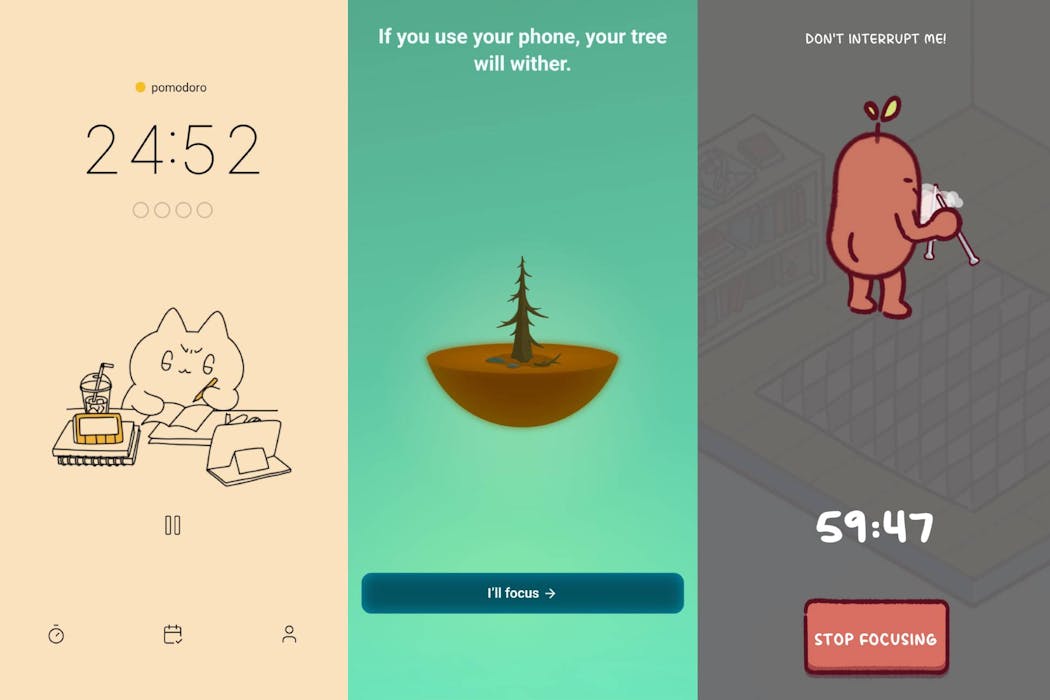
Source: The Conversation (Au and NZ) – By Dwain Allan, Lecturer, School of Psychology, Speech and Hearing, University of Canterbury Pomodoro Cat/Forest/Focus Friend/Focus To-Do It’s hardly a revelation that we’re living in an era of distraction and smartphone addiction. Our phones interrupt us, hijack our attention, and tempt us into scrolling. Even when we aren’t

Cabinet papers 2005: WorkChoices, Afghanistan and climate change take centre stage
Source: The Conversation (Au and NZ) – By David Lee, Associate Professor of History, UNSW Sydney Today, the National Archives of Australia (NAA) released a key selection of records of the Australian Cabinet and its National Security Committee from 2005. The election in October 2004 had given the Howard government a commanding majority in the

If you get lost in the bush, can you really survive by drinking your own pee?
Source: The Conversation (Au and NZ) – By Matthew Barton, Senior Lecturer, School of Nursing and Midwifery, Griffith University Brook Attakorn/Getty TV adventurer Bear Grylls has built a global reputation through his often unconventional and sometimes extreme survival feats to stay hydrated. He has squeezed moisture from elephant dung, sipped the contents of camel intestines,

Are you a hellraiser mite or a knobbled weevil? Take the quiz and vote for NZ’s Bug of the Year
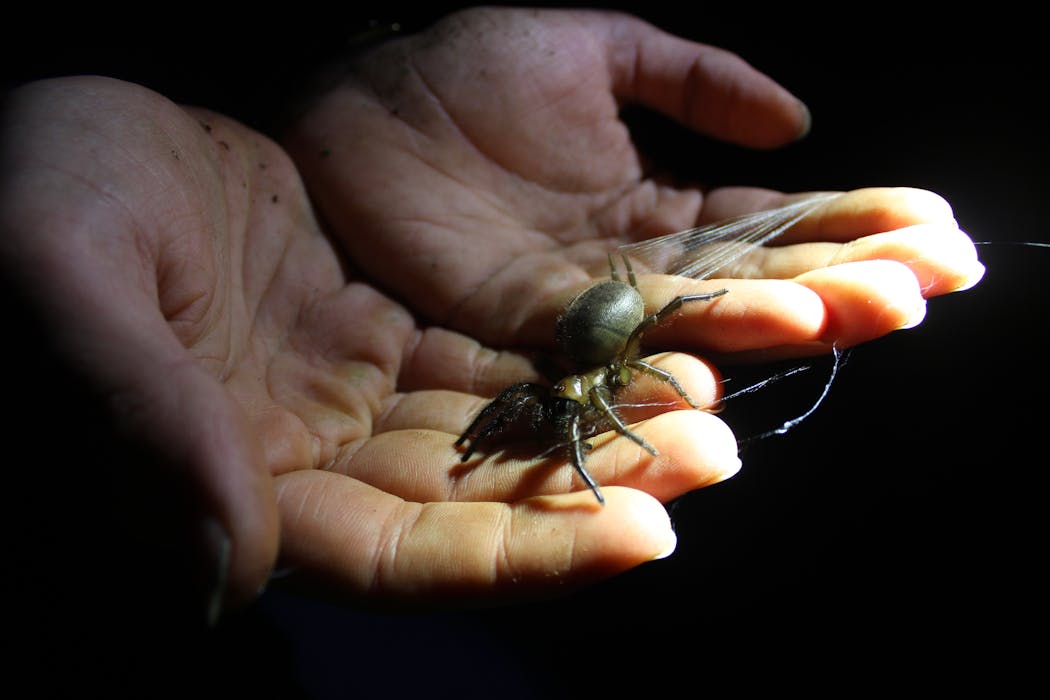
Source: The Conversation (Au and NZ) – By Connal McLean, PhD Candidate in Zoology, University of Otago The black tunnelweb spider. Samuel Purdie, CC BY-NC The New Zealand velvet worm’s reign as Bug of the Year is coming to an end, with voting now open for the 2026 competition. This year, 21 nominees are vying

Worker exploitation can hide in plain sight. Here’s how to ensure an ethical summer holiday
Source: The Conversation (Au and NZ) – By Naduni Madhavika, Doctoral Researcher, Social Sustainability in Tourism, University of Tasmania If they haven’t already, many Australians will soon head off for summer holidays. But behind every smooth check-in, cocktail or airport gate smile is one of more than an estimated 270 million tourism workers – about

Inside scoop: the 2,500-year history of ice-cream
Source: The Conversation (Au and NZ) – By Garritt C. Van Dyk, Senior Lecturer in History, University of Waikato Alison Pang/Unsplash We all scream for ice-cream, especially as temperatures soar in the summer. Ancient civilisations had the same desire for a cold, sweet treat to cope with heat waves. There are plenty of contenders claiming

ManageMyHealth reveals scope of data breach

Source: Radio New Zealand

ManageMyHealth confirmed it identified a cyber security incident on Wednesday. 123rf / Khakimullin Aleksandr D9

ManageMyHealth is expecting to start notifying customers impacted by a data breach within the next 48 hours.

The country’s largest patient information portal on Wednesday confirmed it had identified a cyber security incident involving “unauthorised access” to its platform.

Independent international forensic consultants have been engaged to verify the solution and to determine the extent of the data which is affected.

ManageMyHealth believed between 6 and 7 percent of the approximately 1.8 million registered users may have been impacted.

Earlier, chief executive Vino Ramayah assured users, customers and stakeholders that ManageMyHealth takes the protection of health information “extremely seriously”.

“We understand how personal and sensitive health information is, and we recognise the stress an incident like this can cause. Our team is working hard to identify those affected, and to communicate directly and transparently,” Ramayah said.

Ramayah also stated the Office of the Privacy Commissioner has been notified and is working with ManageMyHealth to meet their obligations under privacy legislation.

The police have also been notified of the breach.

A Health New Zealand spokesperson told RNZ it was working “closely” with the app’s operators.

“Health New Zealand is aware of the cyber security incident at ManageMyHealth and is working with them to understand any impacts.”

Sign up for Ngā Pitopito Kōrero, a daily newsletter curated by our editors and delivered straight to your inbox every weekday.

– Published by EveningReport.nz and AsiaPacificReport.nz, see: MIL OSI in partnership with Radio New Zealand

New quotas on beef exports to China unlikely to have impact on exporters – minister

Source: Radio New Zealand

New quotas announced by China are unlikely to have an impact on beef exports said Trade and Investment Minister Todd McClay. RNZ / Samuel Rillstone

The government believes new quotas on beef imports to China are unlikely to have a major impact on New Zealand exporters.

China announced quotas following an investigation into the impacts of imports on its domestic beef industry.

From Thursday, New Zealand will have an annual duty-free quota of just over 200,000 tonnes, potentially worth up to $1.75 billion.

Trade and Investment Minister Todd McClay said while the quota is larger than those of the past two years, it is nevertheless unwelcome.

McClay said he had made a case to Chinese officials that New Zealand exporters were not harming the Chinese beef market.

“I’ve been able to make the case to my Chinese counterparts on three occasions last year that New Zealand exporters are not harming the Chinese beef market and therefore should not be adversely affected by an safeguard measures.

“Our quota allocation means beef exports under the China NZ FTA are in practice unaffected,” McClay said.

China was New Zealand’s second-largest beef market after the United States.

Sign up for Ngā Pitopito Kōrero, a daily newsletter curated by our editors and delivered straight to your inbox every weekday.

– Published by EveningReport.nz and AsiaPacificReport.nz, see: MIL OSI in partnership with Radio New Zealand

Cries for help heard near Dunedin walking track, search underway

Source: Radio New Zealand

RNZ / REECE BAKER

A search and rescue operation is underway after cries for help were heard near a Dunedin walking track.

In a statement, police said they were appealing for information after receiving reports that someone was yelling for help near the Mackie Dackie track, off Flagstaff-Whare Flat Road in Dunedin earlier on Thursday.

A member of the public called police about 9.30am to report the cries for help as they could not find where the voice was coming from.

“Police have conducted initial enquiries and have walked the Mackie Dackie track but have been unable to hear or see anyone.

“A search and rescue operation is now underway, and police would like to hear from anyone who may have also heard someone in the area yelling for help, or if you know someone who was expected to be walking or biking this track and has not returned home, please get in touch.”

Call 111 and use the reference number P064988218 if you have any information.

Sign up for Ngā Pitopito Kōrero, a daily newsletter curated by our editors and delivered straight to your inbox every weekday.

– Published by EveningReport.nz and AsiaPacificReport.nz, see: MIL OSI in partnership with Radio New Zealand

Driver in Levin crash facing multiple charges

Source: Radio New Zealand

The 31-year-old driver was been charged with failing to stop for police, reckless driving and threatening to kill. RNZ / Richard Tindiller

A man is facing a number of charges following a crash in Levin just before midnight.

A car was seen driving erratically and crashed in Roosevelt Street, where the police arrested the driver.

The 31-year-old has been charged with failing to stop for police, reckless driving and threatening to kill.

Sign up for Ngā Pitopito Kōrero, a daily newsletter curated by our editors and delivered straight to your inbox every weekday.

– Published by EveningReport.nz and AsiaPacificReport.nz, see: MIL OSI in partnership with Radio New Zealand

Caution advised as some third party travel booking services ‘price gouging’ customers

Source: Radio New Zealand

Consumer NZ’s Head of Research and Advocacy Gemma Rasmussen said third party websites can sometimes engage in price gouging. Mongkol Chuewong

A Dunedin woman is urging people to check they are not booking flights through a third-party agency, after her elderly mother paid $1300 for two one-way seats with bags from Wellington.

Penny, who did not want her last name used, said her mother thought she had booked with Air New Zealand directly, but she had actually booked through a website called Gotogate.

If she had booked directly, Penny said she would have saved about $600 on the flights on 3 January, for her and her grandson.

At the time of publication, RNZ found Wellington to Dunedin seat and bag fares on the Air New Zealand website for $436 per person.

“Normally, she’s really, really careful about these sorts of things. She’s aware of internet fraud and all of those sorts of things. So it was kind of distressing… it hit her confidence,” Penny said.

Penny said when her mother realised what she had done, she rang Gotogate to plead for a refund, explaining she had made an honest mistake.

Gotogate told her it was not a refundable fare, Penny said.

Penny said she and her mother contacted Air New Zealand to check the tickets were genuine.

They were, but her mother had unwittingly been charged an extra $20 for an exit-row seat located away from her grandson, Penny said.

“She’s not allowed to be in an exit row seat, because she needs wheelchair assistance to get to her seat,” she said.

Consumer NZ’s Head of Research and Advocacy Gemma Rasmussen said third party websites often paid generously to appear near the top of internet search results.

“When you go onto a search page, the top results that you’re seeing may not be genuine – it could be whoever’s willing to pay the highest dollar and actually market themselves…. and the way in which they’re worded can make flights look really appealing or affordable,” she said.

“While it’s very sad, unfortunately it is legal and it highlights the level of due diligence that you need to do when you are searching for flights online, particularly when you’re entering flights into Google.”

Air New Zealand was not responsible for the price that appeared on a website like Gotogate, she said.

“It is really unfortunate that there are these third-party sites that do engage in what we would say is price gouging. They are charging way more than they should be. We often see this quite a lot in the musical event space, particularly when there’s a scarcity of tickets, but unfortunately, that can extend to airlines as well.”

Penny said Air New Zealand advised it could not cancel the tickets because Gotogate was legitimately registered as a travel agent, but it had moved the seats so her mother and grandson were sitting together.

She and her mother were looking into whether their bank could refund the fares, she said.

Rasmussen said consumers could dispute transactions through a bank process called chargeback, but that might not cover unintended third-party bookings.

“Chargeback is really for things where a good or service hasn’t been provided adequately. What chargeback unfortunately doesn’t cover is remorse or regret, or perhaps making the wrong choice,” she said.

RNZ has contacted Air New Zealand, Gotogate and its Swedish owner, Etraveli Group, for comment.

Sign up for Ngā Pitopito Kōrero, a daily newsletter curated by our editors and delivered straight to your inbox every weekday.

– Published by EveningReport.nz and AsiaPacificReport.nz, see: MIL OSI in partnership with Radio New Zealand
Hundreds of homes and businesses still without power after storm

Source: Radio New Zealand

123RF

Repair crews are trying to restore electricity to hundreds of households and businesses in the North Island, after storms knocked out supplies this week.

About 10,000 properties lost power in the Tasman district on Tuesday after trees came down on powerlines. Network Tasman restored the vast majority by that afternoon.

Meanwhile, Powerco’s website showed about 1000 properties spread around the Coromandel Peninsula, Palmerston North and Taranaki also lost power.

On Thursday, Powerco said more than 160 properties are still without of power, mostly in the Manawatū and Thames-Coromandel regions.

In Horowhenua, there are close to 150 customers without power, mostly around Tokomaru and Shannon.

Residents are being urged to conserve water in Foxton and Foxton Beach.

Sign up for Ngā Pitopito Kōrero, a daily newsletter curated by our editors and delivered straight to your inbox every weekday.

– Published by EveningReport.nz and AsiaPacificReport.nz, see: MIL OSI in partnership with Radio New Zealand

‘I want to sit down with her’: Cancer patient demands meeting with Nicola Willis

Source: Radio New Zealand

Catherine Cook sold her business to pay out of pocket for Keytruda for her aggressive breast cancer treatment. Supplied

An Auckland woman who is self-funding treatment for her rare, aggressive breast cancer is fed up after years of asking the government to fund a “life-saving” medicine for more patients.

Catherine Cook, 54, was diagnosed with triple negative breast cancer (TNBC) in November 2024 after her yearly mammogram.

Cook sold her business to pay for Keytruda (also known as pembrolizumab), the only targeted treatment to fight TNBC, given to patients alongside chemotherapy.

Around 10 to 15 percent of breast cancer diagnoses are triple negative, and it is the most challenging type of breast cancer to treat – particularly at the advanced stages, according to Breast Cancer NZ.

But despite Keytruda being recommended by Medsafe for both early and advanced stage of TNBC over two years ago, it had only been funded for advanced patients – not for patients like Cook with early-stage TNBC.

All up, Cook said she expected to pay about $100,000 for Keytruda, with one cycle every three weeks costing her $3000.

“We put the house and the business on the market to see if one or both would go. We ended up selling the business at a $700,000 loss because we simply couldn’t afford to pay for a business and treatment at the same time.

“It’s absolutely devastating. The guilt that I feel, I mean, basically, I’ve worked my whole life pretty much for nothing.”

Keytruda is funded for early stage TNBC in more than 40 countries, including Australia, the UK and Canada.

In New Zealand, Keytruda is only funded for patients with advanced TNBC, head and neck cancer, colorectal cancer, bladder cancer and Hodgkin lymphoma.

“You get this diagnosis, and you would think there’s treatment available because it’s standard worldwide to give people Keytruda for early-stage TNBC, and to not have it here is absolutely gut-wrenching,” Cook said.

“I had to make a decision to either pay to live or not pay and go Russian roulette, which is what most people have to do. Right now, only a handful, a minority with money, can access treatment through the private health care system.”

In November 2025, Cooke presented a 17,000-signature strong petition to widen access to funded Keytruda to the Petitions Select Committee.

She said the committee told her Keytruda for early-stage TNBC had been placed on the Options for Investments List, but there was no timeline for when or if it would be publicly funded.

She said she was told it could take up to a year for an update.

“That absolutely blew me away. In fact, it left me distraught and in tears, wondering why I’d even turned up.

“All we’re doing is moving a chess piece on the board. I want to know what the actual plan is.

“But I have to have hope that now it’s on the investment list for funding, the problem sits with the government and not with Pharmac.”

In November 2025, Pharmac [​https://www.rnz.co.nz/news/national/577655/pharmac-could-trim-list-of-medicines-awaiting-funding said it was considering trimming the list of over 100 medicines awaiting funding] to provide patients with more clarity.

Cook said she wanted Finance Minister Nicola Willis to meet with her in person.

“I want to sit down with her woman-to-woman to let her know that early intervention not only saves lives but will save the government money long-term.

“Dragging people on a journey where they can’t afford treatment and have to be a burden on the health system, the mental health system and welfare, is costing the government a huge amount of money.

“Nicola, if saving lives is not your top priority – which it should be, – let me show you how to save money.”

The Breast Cancer Foundation’s head of research and strategic programmes Mehdi Shahbazpour said New Zealand was missing an opportunity to save lives by not treating breast cancer earlier.

He said, unlike other countries, New Zealand only had funding to extend the life of breast cancer patients who had reached an advanced, incurable stage.

Kisqali (also known as ribociclib), a treatment for hormone receptor-positive breast cancer, started being funded for early stage patients in Australia in 2025. But in New Zealand, it was also only funded for advanced patients.

“A lot more targeted therapies are the standard of care internationally. Women have had access to these medicines funded in comparable nations for many years,” Shahbazpour said.

“If we get more funding for medicine for early breast cancer patients, we actually have an opportunity to reduce the chance of cancer coming back and spreading to the rest of the body and making it terminal.”

“Time is the enemy of breast cancer patients. This is our best chance to contain the cancer as early as possible.”​

Shahbazpour said the government needed to ensure Pharmac had the budget it needed, so women like Catherine were not forced to fork out thousands of dollars or go without.

“We have a medicines crisis. We are way behind comparable nations when it comes to funding medicines.

“It’s costing lives and destroying lives. People have to put their homes up for a mortgage or go to Australia to afford these life-saving medicines through private channels.”

In a statement, Pharmac pharmaceuticals director Adrienne Martin told RNZ they could not give any indication of when or if Keytruda specifically would be funded for early stage TNBC, or where it was ranked on the Options for Investment List.

“We understand how difficult it can be when someone is living with a serious health condition and needs access to medicines. We acknowledge there is a high unmet health need for people with breast cancer and a need for more effective treatments.

“Our team works hard to fund as many medicines as possible using the best available clinical evidence, expert advice, and the lived experiences of New Zealanders.

“In September, following a petition from a member of the public, Pharmac was invited to present a submission to the Petitions Select Committee. In the submission, Pharmac confirmed that it was close to finishing its assessment of pembrolizumab (Keytruda) for early-stage triple negative breast cancer. After this, the application would be ranked on Pharmac’s Options for Investment List (OFI).

“Pharmac’s submission also included information about the length of time it had taken for the medication to be added to the OFI. The assessment process began in 2023, and the medicine was added to the OFI in 2025.

“We noted in our submission that when this funding application was considered by Pharmac’s Cancer Treatments Advisory Committee in October 2023, the Committee recommended that this medicine be funded for people with early-stage triple negative breast cancer with a low priority. This information was provided to help explain the length of time the assessment process had taken.”

In New Zealand, women between the ages of 45 and 69 years can get free breast screening every two years.

Finance Minister Nicola Willis and Pharmac Minister David Seymour both declined to comment directly.

Sign up for Ngā Pitopito Kōrero, a daily newsletter curated by our editors and delivered straight to your inbox every weekday.

– Published by EveningReport.nz and AsiaPacificReport.nz, see: MIL OSI in partnership with Radio New Zealand

Towel shortage at Waikato Hospital leaves elderly patient unable to shower

Source: Radio New Zealand

Waikato Hospital. RNZ / Simon Rogers

A towel shortage at Waikato Hospital has left an elderly patient unable to shower for days, with the family feeling appalled by the lack of basic care.

Maureen Cruickshank, whose mother stayed at the hospital earlier this month, said the wards ran out of towels twice during her stay.

The first was a one-day shortage in mid-December.

But it was the latest three-day shortage in the Older Persons Rehabilitation ward that made her wonder whether something was broken in the system.

“On Friday she messaged me, I can’t have a shower today, there’s no towels. On Saturday morning, she rang me and said they’ve told us there’s no towels until Monday. Which meant she would’ve gone Friday, Saturday, and then Sunday without showers.”

Cruickshank contacted the hospital and asked if she could bring their own towels for staff to use and received a yes.

“It’s definitely not a staff shortage, because they were more than happy to give mum a shower, they just didn’t have towels, which is ridiculous.”

She said she does not have the professional skills and experience to shower her mother who’s only recently out of surgery.

“When a patient has been in hospital for so long, it just feels so good to have a shower. To have the water wash your hair, to actually feel like you are rehabilitating. You’re taking one step closer to going home.

“And when they go you’ve got stay in bed, we’ll give you a bed bath, it just doesn’t feel human really.”

Cruickshank said she only learned about the issue through her elderly mother and is concerned for patients without family nearby.

“How many people aren’t in a position to have family bring up towels? And also the hygiene factor, is it bringing in more germs into the hospital people having to bring in their own towels?”

In a statement, Te Whatu Ora Waikato acting group director for operations Rachel Swain said the towel shortage was an isolated event on 27 December and was resolved within 24 hours.

Swain said the shortage only affected the Older Persons and Rehabilitation ward, and the duty nurse manager sourced towels from other areas of the hospital.

“This occurred due to an unforeseen operational issue that resulted in available emergency linen being depleted. Patient care, hygiene, and access to showers were maintained during this time.

“Patients were advised of the situation and at no time were patients or families asked to provide their own towels.”

Swain said linen services are provided by a long-standing external supplier, and there have been no formal complaints about the supply in the past 12 months. Waikato Hospital does not consider linen availability to be an ongoing concern.

Sign up for Ngā Pitopito Kōrero, a daily newsletter curated by our editors and delivered straight to your inbox every weekday.

– Published by EveningReport.nz and AsiaPacificReport.nz, see: MIL OSI in partnership with Radio New Zealand

New schools opening in 2026

Source: Radio New Zealand

Work on several other new schools was also expected to begin in 2026. Unsplash

Two new primary schools are scheduled to open at the start of 2026 – one in Christchurch and the other in Auckland.

The Ministry of Education said the schools in Rolleston and Flat Bush would open with about 100 students each.

It said construction of Te Kura Rau Iti Primary in Flat Bush would finish at the end of January.

The school would have 30 classrooms and an initial capacity for 600 pupils, though it was expected to grow to 1250.

The ministry said construction of the first stage of Te Rau Horopito Primary in Rolleston would finish in late January.

The school would open with 12 classrooms and an estimated initial roll of 90-100 students in the first year of operation.

“This projection is subject to the pace of residential development and population growth during the year. The school will be appropriately staffed and equipped with facilities to accommodate additional students if required,” the ministry said.

It said construction of a further 12 rooms plus an administration and technology block would start in February.

The ministry said work on two further new schools in Christchurch was scheduled to begin in 2026 with opening dates in 2027.

The ministry said on-site construction of Prebbleton Primary in Selwyn would start in July.

The school would open at the start of 2027 with 12 classrooms, an administration space and hall for an estimated initial roll of 75-125 students in the first year growing to 275 student places.

The ministry said construction of the first stage of Milns Road School in Christchurch would start in 2026.

It would include 12 classrooms and open in term 1, 2027 with an estimated initial roll 75-125 students ingrowing to 275 student places.

Meanwhile two specialist schools for children requiring significant learning support would be rebuilt.

The ministry said the rebuild of Central Auckland Specialist School was completed in mid-December.

It had 14 teaching spaces.

It said replacement of buildings at Sommerville Base School in Auckland would start in February.

The school would have: “22 new teaching spaces across seven fit-for-purpose one-storey classroom blocks will be provided, as well as an indoor hydrotherapy pool, an outdoor sensory learning environment and two new pick-up/drop-off areas”.

The ministry said construction was expected to finish in February 2027 with the school opening to students in term 2 that year.

Sign up for Ngā Pitopito Kōrero, a daily newsletter curated by our editors and delivered straight to your inbox every weekday.

– Published by EveningReport.nz and AsiaPacificReport.nz, see: MIL OSI in partnership with Radio New Zealand

Auckland FC determined to avenge earlier loss to Newcastle

Source: Radio New Zealand

A rain-soaked Auckland FC captain Francis De Vries gestures during his side’s 2-1 loss to the Newcastle Jets in a round six A-League men’s competition match at Mount Smart Stadium, 30 November, 2025. Photosport

Auckland FC are out for revenge.

The A-League leaders host the ninth placed Jets to kick off 2026 and they’re confident they can start the New Year on a winning note and get one back over Newcastle at Mt Smart Stadium.

Auckland suffered a 2-1 defeat to the Jets at a sodden Mt Smart in November, just the third time in 19 games that the hosts had been beaten at home.

Assistant coach Danny Hay was asked if revenge had been a theme for the side this week.

“It has to be,” Hay said. “We know we owe them one, after them being the only team that beat us. We don’t like losing games and we particularly don’t like losing games at home.”

Newcastle have had four wins and six defeats this season.

Hay said Auckland FC were caught off guard by the Jets last time around.

“We don’t think we prepared as well mentally as we usually do and the boys were just a little bit off,” Hay said.

“There were probably a few factors in that. The deluge in the second half, with half a metre of rain didn’t help. But they’re are a very good team, they deserved to win and were the better side.”

Auckland FC fans and supporters show support in the rain during the A-League men’s match against the Newcastle Jets at Mount Smart Stadium, , Auckland FC v Newcastle Jets FC, round 6 A-League football match at Go Media Stadium, Auckland, New Zealand on Sunday 30 November 2025. PHOTOSPORT

Newcastle have conceded a league-high 22 goals, though they have also scored a league-high 20 themselves.

Hay said Auckland will have to be robust on defence and accurate with their passing to negate the Jet’s threats.

“We know when we are in possession, they are a very dangerous team.

“They counter, they have a lot of pace, so we need to make sure our rest defence is spot on. That has been a focus in our buildup.”

Auckland FC should have a fully fit squad for the match and Hay said they were determined to start 2026 on the right note.

“We want to win,” Hay said. “We want to pick up three points, with the run that we are on and we know we have a big crowd turning up. New Year’s day, the sun’s going to be shining and it should be a great atmosphere.”

Sign up for Ngā Pitopito Kōrero, a daily newsletter curated by our editors and delivered straight to your inbox every weekday.

– Published by EveningReport.nz and AsiaPacificReport.nz, see: MIL OSI in partnership with Radio New Zealand

‘Well behaved’: Police, St John report quiet night as Kiwis celebrate New Year

Source: Radio New Zealand

Fireworks at Auckland’s Sky Tower. RNZ / Robert Smith

Wet weather in parts of the country seem to have dampened New Year celebrations with both police and St John reporting relatively quiet nights.

The ambulance service responded to 177 incidents between 10pm and 3am – around 40 percent down on previous years, and similar to a busy Saturday night.

Deputy chief executive of ambulance operations Dan Ohs told RNZ the workload was busiest across the Western Bay of Plenty and Auckland areas.

“Unfortunately, overnight we have had some reports of our staff being abused at call-outs, including one significant incident in Auckland where our staff were quite significantly abused.

“One of the other trends that we have noted over the last week has been issues and challenges involving people taking synthetic cannabis, particularly in Auckland. And we’re reminding everyone that you need to be particularly cautious when taking any form of drug and please, when our ambulance people get there, ensure that you’ve disclosed to them what you have taken.”

Meanwhile, police said crowds were largely well-behaved during their New Year celebrations and there were no significant issues.

In Auckland city eight arrests were made, while there were large numbers of people in Omaha’s surf club area but no arrests.

In Whangamatā, police said the crowd was “larger than last year” with up to 4000 people at any one time in Williamson Park.

“The crowd was generally well-behaved and in good spirits. Some liquor ban infringements issued (although fewer than last year) and 12 people were arrested (again, fewer than last year).”

Raglan saw people mostly well-behaved, but fireworks were allegedly fired into crows at Mount Maunganaui, although no injuries were reported. A total of 17 arrests were made in the Western Bay of Plenty area for disorder/fighting.

In Tai Rāwhiti, police said plans for large gatherings by anti-social road users were “successfully thwarted by police”. No issues were reported at the Rhythm and Vines festival.

In Queenstown, police were happy with the behaviour of large crowds in the town, with just one arrest being made.

“A 19-year-old man who punched and broke a shop window. He has been charged with wilful damage and is scheduled to appear in Queenstown District Court on 5 January.”

A 29-year-old man was arrested at a bar in Wanakā for “disorderly behaviour and assaulting police”.

Nelson saw no arrests with “good behaviour all around”.

At the Twisted Frequency festival in Takaka, police helped evacuate up to 100 people to Takaka Hall as the local river was rising rapidly and some parts of the festival area began to flood.

In Christchurch, there were a “few minor incidents” at Rolling Meadows festival – including trespass, disorder and assaults.

“No significant disorder or incidents at Rhythm & Alps.”

Finally in Dunedin, police said there were two arrests made – one was a 40-year-old man for assault in a family relationship and the other was a 35-yea-old man for breach of bail, assaulting police and resisting arrest.

“Good natured crowd in the Octagon, no issues throughout the evening and pleased with the crowd’s behaviour.”

Sign up for Ngā Pitopito Kōrero, a daily newsletter curated by our editors and delivered straight to your inbox every weekday.

– Published by EveningReport.nz and AsiaPacificReport.nz, see: MIL OSI in partnership with Radio New Zealand

Weather; Rainfall of up to 100mm, severe thunderstorms possible for South Island

Source: Radio New Zealand

Parts of the South Island are welcoming the New Year with heavy rain warnings and severe thunderstorm watches.

It has been a turbulent week across the country, with downpours and strong winds threatening celebrations.

At the Twisted Frequency festival in Takaka overnight, police helped evacuate up to 100 people to Takaka Hall as the local river was rising rapidly and some parts of the festival area began to flood.

On Thursday, the ranges of Tasman District, west of Takaka, and Buller were under orange heavy rain warnings.

Tasman’s warnings was until 4pm, with up to 80mm more rain expected on top of what has already fallen.

MetService said streams and rivers could rise rapidly, with surface flooding, slips and difficult driving conditions possible.

In Buller, up to 100mm of rain could fall on top of what already had. Its warning was in place until 6pm.

Meanwhile, much of the lower half od the South Island was under a severe thunderstorm watch from 2pm until 9pm. It covered Canterbury Plains, Canterbury High Country, Central Otago, Southern Lakes, Southland and Fiordland.

MetService said an “unstable airmass” would affect the area Thursday afternoon and evening.

“For the Canterbury High Country and foothills south of Arthur’s Pass, Central Otago, the Queenstown Lakes District, far inland areas of Southland and inland Fiordland, there is a moderate risk of thunderstorms.

“There is also a moderate risk that some of these storms may become severe until 10pm today, which could produce localised downpours of 25 to 40 mm/h.

“Rainfall of this intensity can cause surface and/or flash flooding, especially about low-lying areas such as streams, rivers or narrow valleys, and may also lead to slips. Driving conditions will also be hazardous with surface flooding and poor visibility in heavy rain.”

Sign up for Ngā Pitopito Kōrero, a daily newsletter curated by our editors and delivered straight to your inbox every weekday.

– Published by EveningReport.nz and AsiaPacificReport.nz, see: MIL OSI in partnership with Radio New Zealand

What are your new year’s reading resolutions? 6 dedicated readers share theirs

Source: The Conversation (Au and NZ) – By Jo Case, Senior Deputy Books + Ideas Editor, The Conversation

Annija/Pexels

When we think about new year’s resolutions, we often think about changing our habits or new setting goals around food, exercise and work. But why not take our reading seriously too?

Social media reading platforms often ask us to set annual reading goals based on the number of books we plan to read. But there are all kinds of reading resolutions worth making. They might be diving deep into one author, books instead of phones before bed, or finding ways to support local writing culture through what you read.

These are just some of the ideas six of our experts came up with when we asked them to share their new year’s reading resolutions.


More reading, less phone

My reading resolution is to finally leave my phone at the front door. My phone is the one thing thwarting my reading goals. I’ve gone to great lengths to neuter its effect on me. I’ve deleted my Facebook account. I’ve installed content blockers. I’ve turned on “sleep focus”. But, I’m astounded how my tired brain can outsmart my best intentions.

Swipe, tap, dopamine. The little pile of books on my bedside goes untouched, like Miss Havisham’s wedding cake.

So, I’ve removed the chargers from the bedroom, bought a $5 reading light, and for accountability, professed my intentions to my wife and the internet. No more phones in bed.

Michael Noetel is an associate professor in the school of psychology at the University of Queensland.


More music memoirs

In 2026, I’ll be reading a lot of music memoirs and relevant books on writing craft to support my next project: unpacking my life as a rock journalist in London during the 1990s.

Top of my list are Melissa Auf Der Maur’s Even the Good Girls Will Cry, on her days with Hole and the Smashing Pumpkins, The Royal We by queer icon Roddy Bottum (ex Faith No More), and A Screaming Life by Soundgarden’s Kim Thayil.

I interviewed all of these musicians and their bands back in the day, and I can’t wait to read their perspectives on that incredible era. Roddy was one of the few openly bisexual musicians I knew in that world, and Kim was probably the only rock star I met who had a philosophy degree!

I’m also looking forward to Lily Dunn’s Into Being: The Radical Craft of Memoir and its Power to Transform, which explores the complex work of writing memoir and Lauren Elkin’s forthcoming memoir and feminist manifesto about the female singing voice, Vocal Break.

Liz Evans is adjunct researcher, English and Writing, University of Tasmania.


More NZ fiction, more audiobooks (fewer podcasts)

More New Zealand fiction has been my regular, yearly reading resolution for the past decade or so, but in 2025 I’ve managed to read exactly one novel by a New Zealand author. (It was a good one, though: Catherine Chidgey’s Book of Guilt.)

So, in 2026 I’ll be aiming for at least two or more. (Fortunately I have Carl Shuker’s last two, acclaimed novels, A Mistake and The Royal Free, ready to go.)

And as less of a reading and more of a listening goal, I’m aiming for fewer podcasts and more audiobooks while at the gym. Still working my way through RF Kuang, Ben Aaronvich’s Rivers of London series, Slow Horses author Mick Herron’s early detective novels and the mesmerising cosmic horror of Caitlín R. Kiernan on my playlist.

Julian Novitz is a senior lecturer in writing at Swinburne University of Technology.


More deep reading: the year of Rebecca Solnit

In the last year or two, I’ve been enjoying going deep on particular writers by reading all or most of their back catalogue.

I love seeing how their craft and ideas develop over time, and how they so often circle around a central set of concerns over the course of a career, coming at the questions that animate their work from different angles and approaches.

This year was a Janet Malcolm year. Her longform nonfiction is known for tackling complex ethical questions relating to journalism, biography and the tricky business of representing real life in sharp, compelling prose. I didn’t always agree with her, but I always find her work worth reading.

I think 2026 will be a Rebecca Solnit year. She is a longtime favourite — her exquisite 2013 hybrid memoir, The Faraway Nearby, is a big influence on my current work-in-progress — but she’s so prolific that I still have plenty of gaps to fill in her bibliography.

Gemma Nisbet is a lecturer in professional writing and publishing, Curtin University.


More literary journals and zines

My resolution is to subscribe to more literary journals (RIP Meanjin) and to seek out the weird and small.

A favourite recent read was a 2023 essay by Chelsea Hart called With Love, and Labour (Rosa Press) about sex work and capitalism. I picked up this slim, grey, staple-bound pamphlet at Sticky Institute’s Festival of the Photocopier.

In 2026, I’ll continue to look for writing that stages a quiet resistance to the status quo, through material form as much as content. I’m here for the zines, chapbooks, literary magazines: treasures that bear the traces of their making.

Penni Russon is a senior lecturer in writing and publishing at Monash University.


More books, fewer online articles

No reading plan survives contact with reality. My 2025 plan to read more fiction, including classics, went well enough. But as the year wore on, I gravitated towards short form nonfiction, particularly on Substack, which provides an endless stream of intelligent articles and opinion-pieces: catnip for the intellectually curious.

But the sheer convenience of online articles can pull reading time away from book-length works and the depth, breadth (and sometimes grandeur) they offer. As a fiction author and philosopher, both my imaginative and intellectual muscles require constant exercise.

My reading plan for 2026 includes some contemporary novels (like Atlantic journalist George Packer’s latest novel, The Emergency) and a recent scholarly work on a favourite topic: Persuasion in Parallel re-examines how political attitudes change in response to information.

And I’m planning a few ergonomic changes to better safeguard my reading space and help build those muscles.

Hugh Breakey is deputy director, Institute for Ethics, Governance & Law, Griffith University.

The Conversation

ref. What are your new year’s reading resolutions? 6 dedicated readers share theirs – https://theconversation.com/what-are-your-new-years-reading-resolutions-6-dedicated-readers-share-theirs-269381

Road deaths down for third year in a row, but still too many – police

Source: Radio New Zealand

RNZ / Richard Tindiller

Police are crediting Operation Open Roads for the reduction in road deaths for the third year in a row.

In a statement, police said the provisional number of road deaths in 2025 was 272. In 2024, 292 people died on New Zealand roads.

As of 7am on 1 January 2026, at least one person had already died in a crash.

Superintendent Steve Greally, director of road police, said the reduction was in “large part”, because of its focus on deaths on open roads.

“Over the last three years, we have seen constant reductions in the number of fatalities on our roads, while we have also nearly tripled the number of alcohol breath tests in that same period.

“For another year, our officers have worked tirelessly to ensure we can do everything possible to reduce the number of serious injuries and fatalities on our roads.”

Superintendent Steve Greally. RNZ/Philippa Tolley

While the numbers were decreasing, Greally said far too many families were still having their lives changes after hearing their loved one had died in a crash.

In the 2024/2025 financial year, nearly 4.5 million alcohol breath tests were conducted and more than half a million speeding fines were issues.

“Breath testing and speed enforcement are two of our main focus areas, and we will continue to make no excuses for stopping and testing people.

“We continue to ask drivers to play their part and make sensible decisions both on the road and before you get behind the wheel.

“Unfortunately, we are still seeing evidence that people are making the wrong decisions when it comes to speed.

“Our aim is to see the number of speed infringements issued drop, which is an indication that people are doing the right thing, and following the sign-posted speed limits.”

Greally said roadside drug testing began in the Wellington region in December and that would continue to be scaled up nationally between April and June this year.

“Our staff are dedicated to changing driver behaviour and working towards maintaining the lowest number of fatalities in the coming years.

“We make no apology for taking action against anybody who is putting their life, and the lives of others, at risk on our roads.”

Sign up for Ngā Pitopito Kōrero, a daily newsletter curated by our editors and delivered straight to your inbox every weekday.

– Published by EveningReport.nz and AsiaPacificReport.nz, see: MIL OSI in partnership with Radio New Zealand

Focus apps claim to improve your productivity. Do they actually work?

Source: The Conversation (Au and NZ) – By Dwain Allan, Lecturer, School of Psychology, Speech and Hearing, University of Canterbury

Pomodoro Cat/Forest/Focus Friend/Focus To-Do

It’s hardly a revelation that we’re living in an era of distraction and smartphone addiction. Our phones interrupt us, hijack our attention, and tempt us into scrolling. Even when we aren’t interacting with them, their mere presence makes it difficult to concentrate.

To address this, app developers have responded with a vast ocean of productivity and focus apps, each promising to tame the chaos with timers, app blocking, habit reminders, and rewards designed to help you stay focused and be productive.

To understand whether these apps are worth our while, we first need to consider why staying focused is so difficult in the first place.

Why is it so hard to stay focused?

By and large, a lack of focus boils down to difficulties with self-regulation, the ability to monitor and manage thoughts, emotions and behaviours for goal pursuit.

In short, when a task feels boring, stressful, or tedious, it creates an unpleasant feeling. We then search for relief, and for most of us that comes by way of our smartphone, which has become our go-to coping device, even if it derails the work we need to do.

There’s been much talk that our capacity to focus has dwindled in recent years, though this is not supported by the scientific literature.

The research does, however, suggest that certain technology habits (especially multitasking and constant digital interruptions) are associated with greater distractibility for some people. In other words, while our ability to focus may not be declining, the modern world places far greater demands on it.

The rise of focus apps

To cope with these demands, a new generation of focus apps has burst onto the productivity scene. These apps use gamification (the application of game design elements in non-game settings) and cute characters to encourage focused work.

Chief among these is Focus Friend, which briefly took over ChatGPT as the most downloaded app during its first month on the App Store in August this year.

The app works by encouraging you to set a focus timer. During that session, a virtual bean character quietly knits in the background. If you pick up your phone and open apps you have pre-selected as off limits, the knitting unravels and the bean looks upset. If you stay on task, you earn digital rewards such as socks, scarves, and room decorations for your bean.

On Focus Friend, the little bean character knits happily unless you use one of the distracting apps, which makes the bean sad.
The Conversation/Focus Friend

How does it get you to focus?

Beyond the usual gamification tricks, this app also uses several psychological principles.

First, it uses incentives by giving you immediate, tangible rewards – knitted items and room upgrades when you complete a focus session.

Next, it leverages reward substitution by getting you to do one potentially unpleasant thing (deep work) to earn something immediately enjoyable (seeing the bean’s world improve).

The app also stimulates commitment and consistency. Simply starting the timer functions like a small promise to yourself, and once that’s made, we tend to want to behave consistently by maintaining streaks and avoiding behaviour that would break that session.

Over time, decorating the bean’s room activates the IKEA effect. That is, we place more value on things we help build, so the more you customise and invest in the space, the more motivated you become to protect it by continuing to focus.

Do focus apps actually help?

The research examining the effectiveness of focus apps is thin. One study examined a range of apps for reducing mobile phone use and found that gamified focus apps, while scoring high on user sentiment, were rarely used and were less effective than simpler strategies such as switching the phone to grayscale mode.

While no peer-reviewed studies exist specifically on Focus Friend, its high App Store ratings plus the slew of articles from enthusiastic users, suggest people enjoy using it. However, enjoyment alone does not correlate with increased focus or productivity.

How to use focus apps wisely

Do you have an automatic and uncontrollable urge to check your phone when working? If so, you could try to use a focus app.

Practical steps include scheduling specific focus sessions in which to use the app and selecting a clearly defined task. Also, when you feel the urge to check your phone mid-session, take note of the feeling and remind yourself that discomfort is part of getting important things done.

Finally, after a week of use, review your experience to see whether the app actually helped you make progress. Ask: “is this serving me, or am I serving it?”

Be sure to watch for pitfalls. Apps such as Focus Friend don’t assess the quality of your work, so you could spend focused time on low-value tasks. It’s also fairly easy to trick the app using your phone settings.

Perhaps most importantly, remember that while a focus app can help you resist checking your phone, it can’t resolve the inner forces that pull you into distraction. The key to better focus might be diagnosis, not download – that is, learning to notice what you feel, choosing how you want to respond, and making the commitment to staying focused on what matters.

The Conversation

Dwain Allan does not work for, consult, own shares in or receive funding from any company or organisation that would benefit from this article, and has disclosed no relevant affiliations beyond their academic appointment.

ref. Focus apps claim to improve your productivity. Do they actually work? – https://theconversation.com/focus-apps-claim-to-improve-your-productivity-do-they-actually-work-271388

Cabinet papers 2005: WorkChoices, Afghanistan and climate change take centre stage

Source: The Conversation (Au and NZ) – By David Lee, Associate Professor of History, UNSW Sydney

Today, the National Archives of Australia (NAA) released a key selection of records of the Australian Cabinet and its National Security Committee from 2005.

The election in October 2004 had given the Howard government a commanding majority in the House of Representatives. From July 2005, it also obtained control of the Senate, a rare accomplishment for any Australian government.

Freedom from having to negotiate with the Senate cross bench on legislation emboldened the cabinet in several directions. Most significant was the government’s plan to initiate the comprehensive reform of Australia’s industrial relations laws.

Introduction on WorkChoices

In March 2005, Cabinet agreed with suggested reforms that would encourage a more direct relationship between employers and employees. The reform package approved by Cabinet sought to replace separate state and federal industrial relations systems with a unified national system. It was known as WorkChoices and, once passed, the act would come into effect on March 27 2006.

The new system dispensed with unfair dismissal laws for companies under a certain size. It also replaced the “no disadvantage test” (NDT), a provision that required workers be no worse off under new enterprise agreements as compared to any relevant law or award. This was superseded by a more limited safety net of five conditions that could be bargained away. The new system also restricted trade union power by limiting workers’ ability to strike and allowing them to bargain for conditions without collectivised representation.

The new industrial relations laws sparked a major campaign of resistance. Defence of employees’ rights was led by the Australian Council of Trade Unions (ACTU). The ACTU’s “Your Rights at Work” campaign would play a significant role in the Howard government’s defeat in 2007.

Security and regional issues

Industrial relations reform was the key issue for the remainder of Howard’s fourth term. But security and regional issues continued to be important.

The tsunami that devastated countries in the Indian Ocean region in December 2004 killed 290,000 people and displaced more than one million. Howard attended a Special Leaders’ Meeting of the Association of Southeast Asian Nations (ASEAN) on January 6 2005. There he promised that Australia would “do its bit” towards regional efforts to establish a tsunami warning system in the Indian Ocean.

Indonesia had a pressing need for reconstruction assistance. By providing such assistance, Australia was presented with a unique opportunity to improve a relationship with Indonesia soured by East Timor’s winning of independence in 2002.

Cabinet reached the decision in February 2005 to provide $1 billion for relief and rehabilitation, with a focus on Sumatra. Later, in June 2005, it agreed to recommendations by Minister for Foreign Affairs Alexander Downer to extend cooperation with Indonesia in defence and combating terrorism and people-smuggling.

2005 was a critical year for the extension of Australia’s commitment in Afghanistan. Australia had made a military contribution to US-led operations in Afghanistan in 2001-02 through the deployment of Special Air Service (SAS) elements. But in 2002, the SAS Task Force was withdrawn.

By 2004, with the Taliban resurgent, the US Central Command was requesting a further contribution of Australian special forces to the US-led Operation Enduring Freedom. Defence Minister Robert Hill advised Cabinet that a further Australian contribution in Afghanistan “may enhance our already strong relationships with the US and the United Kingdom, and develop our relationship with NATO”.

The National Security Committee agreed to Hill’s submission to deploy a Special Forces Task Group within the Combined Forces Command – Afghanistan. The SAS would stay in Afghanistan until 2021 in what became 20 rotations involving 3,000 personnel.

Australia’s close relationship with Japan had much to do with the Cabinet agreeing in 2005 to an Australian military contingent providing a secure environment for the Japanese Iraq Reconstruction and Support Group, which was operating in the Al Muthanna province in southern Iraq.

The increasing tempo of the insurgency in Iraq was highlighted in May 2005, when Australian engineer Douglas Wood was kidnapped. Howard insisted Australia would neither pull troops out of Iraq nor pay ransom. Six weeks later, Wood was rescued by Iraqi troops with US assistance.

By the following year, Iraq would be on the brink of collapse and the United States contemplating pulling out. As the Iraq War became increasingly unpopular, the Howard government would have to confront evidence of the payment of bribes to the Iraqi government by Australian wheat trader AWB.

Closer to home, Cabinet monitored the regional commitment in the Solomon Islands, its plan to bolster the effectiveness of government in Papua New Guinea and political instability in Fiji .

Climate change

In 2025, the Liberal and National parties agreed formally to abandon the net zero by 2050 climate target.

But 20 years earlier, in 2005, Downer and Environment minister Ian Campbell had warned Cabinet of the baleful consequences for Australia of climate change and the imperative for concerted international action.

The concerns raised by the two ministers contributed to Howard’s proposing an emissions trading scheme on the eve of the 2007 election. However, rather than ending the climate wars, this merely presaged their continuation without end


Read more:
Climate wars, carbon taxes and toppled leaders: the 30-year history of Australia’s climate response, in brief


WorkChoices brings Howard unstuck

Howard’s WorkChoices reforms of 2005 were hugely controversial, and continued to dog Liberal ministers for years afterwards. So potent were they that Howard not only lost the 2007 federal election, but his long-held seat of Bennelong too.

The Conversation

David Lee is a member of Australians for War Power Reform.

ref. Cabinet papers 2005: WorkChoices, Afghanistan and climate change take centre stage – https://theconversation.com/cabinet-papers-2005-workchoices-afghanistan-and-climate-change-take-centre-stage-271205

If you get lost in the bush, can you really survive by drinking your own pee?

Source: The Conversation (Au and NZ) – By Matthew Barton, Senior Lecturer, School of Nursing and Midwifery, Griffith University

Brook Attakorn/Getty

TV adventurer Bear Grylls has built a global reputation through his often unconventional and sometimes extreme survival feats to stay hydrated.

He has squeezed moisture from elephant dung, sipped the contents of camel intestines, downed yak eyeball juice and, perhaps most famously, drank his own urine.

If you’ve seen Grylls gulp down a mouthful of his own urine on camera, you might conclude it’s a legitimate survival hack. After all, Grylls used to be in the SAS.

In one episode, he tells viewers urinating on the ground would be wasting fluids, drinking your own urine is “safe”, and grimaces while taking a warm, salty mouthful.

Let’s see if this is fact or fiction.

Was Bear Grylls right? Can you really rehydrate by drinking your own pee?

Your urine is like a bin

Fluids make up about 60% of your body’s total weight. To maintain the correct balance of substances in this internal environment, your kidneys will continuously filter about 180 litres of blood fluid (plasma) every day.

Thankfully, we don’t pee out 180L of urine, because our kidneys “throw back” or reabsorb about 99% of what they filter back into the bloodstream.

The best way to imagine this process is by picturing a messy garage. If you tried to pick through the chaos and remove only the unwanted items, you’d be there all day. A more efficient method is to empty everything onto the driveway, keep what matters, toss the rest. Your kidneys use the same strategy.

They ignore the large cells and proteins, and filter the plasma portion of blood, which essentially empties the entire garage. They then selectively return the useful substances back to the bloodstream. What’s left behind becomes urine, the physiological bin.

Its final contents depend on a few factors, including your hydration status, metabolic activity and recent diet (including medications and supplements).

Typically, urine is about 95% water. The rest is:

  • urea (about 2%, a byproduct of breaking down protein, which we’ll come back to shortly)
  • creatinine (about 0.1%, a by-product of muscle metabolism)
  • salts and proteins.

So does urine hydrate you? Is it safe?

The answer … yes and no. The answer isn’t always clear-cut because, as we saw above, what’s in your urine depends on what was in the garage.

If you are well hydrated and healthy, your urine will likely appear clear to straw-coloured, meaning it is mostly water (but will still contain urea, salts and other waste products). A drink of this “first pass” urine will indeed provide you with some degree of hydration.

But in a Grylls-type survival setting, you’d be losing water from your body via other means. For instance you’d lose about 450 millilitres a day via skin sweating and about 300mL a day via water vapour in your breath. If you were in a hot, humid environment, these volumes would increase significantly.

As a result, your kidneys would need to work harder to hold onto precious water and keep it in your blood. This will further concentrate the waste products, and what ends up in the bin will be pretty toxic to your body.

So by drinking urine in a survival setting, you’d be consuming higher concentrations of waste products, including urea, that your body explicitly intended to remove.

By drinking urine with higher concentrations of waste products (and/or if your kidneys are impaired), urea and other metabolic waste products can accumulate in your body. This can become toxic to cells, particularly those in the nervous system.

This can lead to symptoms such as vomiting, muscle cramps, itching and changes in consciousness. Without treatment, this toxic state (known as uraemia) can be life-threatening.

Is your urine sterile?

Toxins aren’t the only issue.

While urine leaving the kidneys is likely sterile, the rest of the urinary tract (bladder and urethra) isn’t. Our bodies are full of resident bacteria that maintain our health and support daily functions – when they stay in their usual place.

So when urine passes through the bladder and urethra, it can collect these bacteria. If you drink that urine, you are re-introducing those bacteria into parts of the body where they don’t belong – mainly the gastrointestinal tract.

In healthy conditions, stomach acid often kills many of these bacteria. But in a survival situation where dehydration, heat stress or poor nutrition can compromise the gut lining, the risk of those bacteria crossing into the bloodstream increases. This can set the stage for life-threatening infections.

That’s the last thing you need while lost in the bush.

In a nutshell

Please don’t rely on drinking your own urine if you’re lost in the bush. It’s basically the equivalent of drinking from the bin.

The Conversation

The authors do not work for, consult, own shares in or receive funding from any company or organisation that would benefit from this article, and have disclosed no relevant affiliations beyond their academic appointment.

ref. If you get lost in the bush, can you really survive by drinking your own pee? – https://theconversation.com/if-you-get-lost-in-the-bush-can-you-really-survive-by-drinking-your-own-pee-269086

Are you a hellraiser mite or a knobbled weevil? Take the quiz and vote for NZ’s Bug of the Year

Source: The Conversation (Au and NZ) – By Connal McLean, PhD Candidate in Zoology, University of Otago

The black tunnelweb spider. Samuel Purdie, CC BY-NC

The New Zealand velvet worm’s reign as Bug of the Year is coming to an end, with voting now open for the 2026 competition.

This year, 21 nominees are vying for the crown in the competition’s fourth year. Nearly 100 bugs have so far featured, representing an incredible range of rich invertebrate diversity – from insects and arachnids to crustaceans, worms and molluscs.

The term “bug” was chosen deliberately. While not scientifically precise, it acts as an easily understood umbrella definition of Aotearoa New Zealand’s sometimes overlooked littlest animals.

As relatively large organisms ourselves, we humans tend to notice and celebrate larger and more charismatic fauna and flora, such as birds and trees. But they comprise only about 5% of New Zealand’s estimated 70,000 native land species.

The rest are small and often unseen, but absolutely vital. Aotearoa is home to over 20,000 insect species – and those are just the ones we’ve identified. Around 6,000 beetle species alone crawl, burrow and fly across our landscape.

Bugs are the tiny critters that run the world. Forming the base of many food webs and ecological interactions, they underpin much of our freshwater and terrestrial biodiversity.

They pollinate food crops, decompose waste and recycle nutrients. Owing to their fast response to environmental changes, they also serve as key indicators of environmental health.

Master of camouflage: the double-spined stick insect.
Dougal Townsend, CC BY-NC

And the nominees are …

This year’s nominees are the most diverse in the competition’s history.

There are repeat candidates, such as the endangered Canterbury knobbled weevil (Hadramphus tuberculatus), as well as new contenders such as the tadpole shrimp (Lepidurus apus viridis) which reproduces without males, or the double-spined stick insect (Micrarchus hystriculeus), which is an incredible master of camouflage.

Some nominees, such as the sapphire spider fly (Apsona muscaria) – a fly that eats spiders – are relatively unknown. And there are more familiar species such as the impressively large black tunnelweb spider (Porrhothele antipodiana).

Others are known for their outstanding features or behaviour, including the hellraiser mite (Neotrichozetes spinulosa), which looks like a walking pin-cushion, and a critically threatened avatar moth (Arctesthes avatar), named for the movie series with its themes of environmental destruction.

We even have the ancient and gigantic glow-in-the-dark North Auckland worm, and the Otago alpine cockroach (Celatoblatta quinquemaculata) that can survive being frozen solid.

There is also one of the world’s only marine insects, the intertidal caddisfly (Philanisus plebeius), whose nymph lives on the rocky shore.

Like a walking pin-cushion: the hellraiser mite.
Shou Saito, CC BY-NC

Many are endemic and found only here. But like bugs and insect populations around the planet, they face mounting threats – described in one study as “death by a thousand cuts” – from climate change, agrichemical use and habitat loss or modification.

Aotearoa is not exempt from these threats, but many of our bugs are data-deficient, understudied, underappreciated and often out-competed for attention by other wildlife.

This summer, keep an eye out for the tiny things around you: the bugs that soar in our skies, scamper in our forests, settle in our rivers and lakes or even hide underground.

As humans continue to expand urban landscapes into natural ones, the Entomological Society of New Zealand hopes its Bug of the Year contest will help build public support and appreciation for more research into these unsung heroes of the natural world.

How to vote

Not sure what to vote for? Take the personality quiz to see which bug you most align with.

Voting closes on February 16 2026, with results announced on February 18.

Nominees are suggested by the public, so if your top pick isn’t featured this year, you can make recommendations by July 1 for the 2027 contest and beyond.

The Conversation

Connal McLean is affiliated with The Entomological Society of New Zealand and The Moths and Butterflies of New Zealand Trust.

Jacqueline Theis receives funding from the Ministry of Business, Innovation and Employment (grant number UOWX2101). She is affiliated with the Entomological Society of New Zealand.

ref. Are you a hellraiser mite or a knobbled weevil? Take the quiz and vote for NZ’s Bug of the Year – https://theconversation.com/are-you-a-hellraiser-mite-or-a-knobbled-weevil-take-the-quiz-and-vote-for-nzs-bug-of-the-year-269260

Worker exploitation can hide in plain sight. Here’s how to ensure an ethical summer holiday

Source: The Conversation (Au and NZ) – By Naduni Madhavika, Doctoral Researcher, Social Sustainability in Tourism, University of Tasmania

If they haven’t already, many Australians will soon head off for summer holidays. But behind every smooth check-in, cocktail or airport gate smile is one of more than an estimated 270 million tourism workers – about 8.2% of the global workforce.

These workers – cleaners, cooks, waiters, porters and cabin crew – often labour around the clock to make holidays feel effortless for everyone else. But too often there’s a dark reality hiding behind this idyllic picture.

Our team at the University of Tasmania specialises in researching the ways worker exploitation and modern slavery can appear in the tourism industry.

Drawing on our ongoing research, here are some of the places hidden exploitation can surface in tourism, and steps you can take to help ensure you have an ethical summer holiday.

The invisible hands behind hotel luxury

Hotel guests love coming back to an immaculate, freshly made-up hotel room. But meeting that expectation often relies on housekeepers working long, demanding shifts, sometimes with unjust wages or harassment.

Global hotel chains often struggle to monitor workplace standards across different countries with different laws and standards.

Australian cases reveal how exploitation can stay invisible. For example, in 2017, a Sydney cleaning company was fined A$447,300 for exploiting 51 workers. In its ruling, the Federal Court said some workers were treated as “slaves”.

One modern slavery expert interviewed in our research recalled a “green” hotel where staff appeared to work extreme hours without overtime, suggesting eco-labels can mask deeper exploitation.

Migrant workforce in tourism

Tourism relies heavily on migrant workers – from international students to backpackers on working holiday visas.

While they help fill key labour shortages, these workers often lack secure work or protections, and visa status can shape whether they can speak up about unfair treatment.

A 2018 study found about a third of backpackers, international students and other temporary migrants in Australia earned about half the casual minimum wage.

A separate 2024 report from not-for-profit community legal centre the Immigration Advice and Rights Centre highlighted the similar risks Pacific Islander workers face working in Australia as part of the Pacific Australia Labour Mobility (PALM) visa scheme – low pay, insecure jobs and limited protection.

These concerns are reflected in latest official data, with modern slavery reports to the 1800 FREEDOM hotline run by NSW Anti-slavery Commissioner surging by 116% in the past financial year.

Around half of these reports involved temporary migrant workers.

When kitchen heat turns harmful

Chefs and other kitchen staff are a core part of tourism’s workforce, including many who relocate to work in seasonal roles. But kitchens can be a hotspot for harm, with many staff working long, pressured shifts and stressful working conditions.

Close-up of flames on a frying pan in a commercial kitchen.
Commercial kitchens can be a high-pressure environment.
Christian V/Pexels

A survey by United Kingdom-based non-profit The Burnt Chef Project found four out of five hospitality workers had faced a mental health issue during their career.

A separate recent study of chefs in Australia and New Zealand found burnout, financial hardship and unsafe conditions were worryingly prevalent in the hospitality industry.

Out of sight, online exploitation rises

Interviewees in our ongoing research expressed serious concerns about child exploitation linked to tourism. This includes sexual exploitation, child labour, orphanage tourism, child trafficking and enforced begging.

It also includes exploitation arising from forced interactions with volunteers that undermine children’s privacy and increase the risk of physical and sexual abuse.

These risks are highest in destinations where tourism booms alongside poverty and weak child protection systems.

Non-profit ECPAT International warns child sexual exploitation in tourism remains widespread and is increasingly arranged online.

How to ensure an ethical holiday

There are a few easy steps to help make sure your holiday doesn’t unknowingly fuel worker exploitation in tourism.

1. Do some research

Before booking, spend some time checking online reviews, such as on TripAdvisor, booking websites, Google reviews or on social media.

Travellers often flag poor staff treatment, unsafe conditions, or exploitative practices long before they make headlines. Repeated complaints, ultra-cheap prices or unethical “vibes” are all red flags.

2. Choose ethical community experiences

Engage in experiences led by locals – such as workshops, cooking sessions, storytelling or guided walks – rather than activities that treat communities as exhibits.

Avoid orphanage tourism, which is strongly linked to child exploitation.

And steer clear of activities offering unsupervised access to children, paid photos, or short-term “teaching” by unqualified visitors. Choose community-run, skill-based programs instead.

3. Ask simple questions.

If in doubt, ask simple questions such as:

Do guides and drivers get regular breaks and rest days?

Are staff hired transparently and paid a full wage, not just tips?

Do you have a child-protection or responsible-tourism policy?

Do staff have formal contracts, and do they receive overtime-pay?

Companies that treat workers well should be able to answer these questions confidently.

4. Report what you see

Know the signs of exploitation: restricted movement, fearfulness, no ID, few belongings, unsuitable clothing or someone being closely controlled. If something feels off, trust your instincts.

If you have concerns when travelling in Australia, you can report them through the Australian Federal Police. If a child is in danger, immediately contact local police.

If travelling internationally, you can also report to local authorities, child helplines or ethical tourism hotlines. Your report may protect someone who cannot speak up. Behind every holiday are real people who deserve dignity and visibility.


If this article has raised issues for you, or if you’re concerned about someone you know, call Lifeline on 13 11 14.

Workers in Australia can contact the Fair Work Ombudsman on 13 13 94 for issues of pay and conditions.

If you are experiencing workplace bullying or harassment, you can contact the Fair Work Commission on 1300 799 675.

The Conversation

Naduni Madhavika is a full-time PhD candidate at the Tasmanian School of Business and Economics, University of Tasmania, Australia. She is a recipient of the Research Training Program (RTP) Scholarship, a competitive funding initiative of the Australian Government that supports domestic and international candidates undertaking higher degrees by research (HDR).
She is also a member of the Human Trafficking and Modern Slavery (HTMS) Research Network, an academic initiative established by the Australian Institute of Criminology (AIC) under the Department of Home Affairs, Australian Government, Canberra.

Balkrushna Potdar is a Lecturer in Marketing at the Tasmanian School of Business and Economics, University of Tasmania, Australia. He is an active member of the Human Trafficking and Modern Slavery (HTMS) Research Network, an initiative established by the Australian Institute of Criminology (AIC) under the Department of Home Affairs, Australian Government, Canberra.

Mansi Mansi and Rakesh Pandey do not work for, consult, own shares in or receive funding from any company or organisation that would benefit from this article, and have disclosed no relevant affiliations beyond their academic appointment.

ref. Worker exploitation can hide in plain sight. Here’s how to ensure an ethical summer holiday – https://theconversation.com/worker-exploitation-can-hide-in-plain-sight-heres-how-to-ensure-an-ethical-summer-holiday-270077

Inside scoop: the 2,500-year history of ice-cream

Source: The Conversation (Au and NZ) – By Garritt C. Van Dyk, Senior Lecturer in History, University of Waikato

Alison Pang/Unsplash

We all scream for ice-cream, especially as temperatures soar in the summer. Ancient civilisations had the same desire for a cold, sweet treat to cope with heat waves.

There are plenty of contenders claiming credit for the first frozen desserts, from Italy and France in the 17th century to China in the first century.

But before you can make ice-cream, you need a reliable source of ice. The technology to make and store ice was originally developed in Persia (modern-day Iran) in 550 BCE.

Ancient ice makers

These ancient Persians built large stone beehive shaped structures called yakhchal (“ice pit”). They were constructed in the desert, with deep, insulated subterranean storage, making it possible to store ice all year.

High domes pulled hot air up and out, and wind catchers funnelled cooler air into the base. The yakhchal was not just an ancient ice house, it was also an ice maker.

Goats in front of a dome building.
A yakhchal still standing in the Iranian desert.
Jeanne Menj/Wikimedia Commons, CC BY

Canals filled shallow ponds, shaded from the sun, with fresh water during the winter. Overnight temperatures dropped, and in the dry desert air the water would cool through evaporation.

Some yakhchals have survived centuries of desert erosion, and are found across Iran in areas where it is cold enough to produce ice in the winter, or close to mountains where ice could be harvested.

A study of one 400-year-old yakhchal, still standing in Meybod, estimated its annual production at 50 cubic metres – about 3 million ice cubes.

Early frozen desserts

Stored ice was used to make frozen desserts such as fruit sorbets, sharbats, and faloudeh (frozen rosewater and vermicelli noodles) sweetened with honey syrup.

After the Arab conquest of Persia circa 650 CE, the Persian method for ice production and storage spread across the Middle East.

The new technology was used to freeze milk and sugar mixed with salep flour (powdered orchid root) and mastic (dried sap from an evergreen bush) to make stretchy forms of ice-cream in Syria, like booza and bastani, in Persia.

A man chips ice, another man holds out a bowl.
This illustration dating to the Ming dynasty (1368 – 1644) depicts an ice vendor in the summer.
Wellcome Collections

A frozen dessert, sushan, (literally “crispy mountain”) was also developed in China in this period, during the Tang Dynasty (618–907). Goat’s milk curd was melted, strained and poured into metal moulds shaped like mountains.

The final texture was described by poet Wang Lingran as being somewhere between a liquid and a solid, melting in his mouth.

Discovering the science of freezing

Freezing techniques changed when a popular book on “natural magic” – meaning everything from natural science to astrology and alchemy – was first published by Giambattista della Porta in Naples in 1558.

Magia Naturalis included instructions on how saltpetre (potassium nitrate) could be added to ice to rapidly chill wine for summer feasts:

cast snow into a wooden vessel, and strew into it Salt-peter, powdred, or the cleansing of Salt-peter, called vulgarly Salazzo. Turn the Vial in the snow, and it will congeal by degrees.

This method meant it was much easier to freeze liquids, because potassium nitrate dissolved in water draws heat out of the surrounding environment.

Two pairs of lovers sitting in an open loggia, attended by a black page, with wine bottles, six ices, and a discarded napkin at the head of the table, and silver dish of peaches and figs.
In this painting by Philippe Mercier, dated between 1744 and 1747, two young couples eat over ices in the middle of the table.
Yale Center for British Art

Experiments in the 17th century revealed a similar reaction occurs with mixture of ordinary salt, water and ice. Smaller quantities of stored ice could now be used to freeze and chill mixtures to create frozen desserts on demand.

This technology was combined with supplies of cheaper sugar sourced from European plantations in the Caribbean. Sugar is an important element of frozen desserts because it keeps mixtures from freezing into impenetrable ice blocks.

France v Italy in the claim for first ice-cream

Two claims for the “first” ice-cream recipes emerge at almost the same time in France and Italy in the 1690s.

Earlier attempts produced granular, slushy confections. Recipes that produced results we would recognise today were introduced by men who managed households for noble patrons.

Alberto Latini, working for Cardinal Barberini (nephew of Pope Urban VIII), had access to expensive and novel ingredients, like chocolate and tomatoes. His recipe for a new “milk sorbet” aligned with the cutting edge cooking methods in the 1694 edition of his book, Lo Scalco alla Moderna (The Modern Steward).

This recipe used milk, sugar, water and candied fruits, and is considered a precursor to Italian gelato.

Various cooks and connoisseurs in an ice-cream shop.
Scene in kitchen of an ice-cream restaurant, by Jean-Charles Develly, 1819–20.
Cooper Hewitt Museum

The other contender for first ice-cream is Nicolas Audiger, who had worked for Jean-Baptiste Colbert, chief minister to Louis XIV, who helped prepare feasts at Versailles.

He published a handbook on running noble households, La maison réglée, in 1692 with numerous recipes for fruit sorbets, and one for ice-cream sweetened with sugar and flavoured with orange blossom water.

While both claims have merit, Audiger’s recipe included detailed descriptions of the techniques for stirring and scraping to ensuring a better texture and even distribution of sugar throughout the mixture. He wrote his volume after spending 18 months in Italy, so he probably learned Italian techniques and refined them, leading to the creamy delights we now enjoy.

The ice-cream paradox?

In the northeastern United States, the original Ben and Jerry’s ice-cream factory in Vermont used to run a promotion where prices changed as the weather got colder. As temperatures dropped below freezing, ice-cream cones got cheaper.

A huge crowd, jetty is decorated with a patriotic archway, Chinese lanterns and coloured lights.
Summer crowds at Semaphore beach, South Australia, around 1916, with F. Maggi’s horse drawn ice-cream cart.
State Library of South Australia

This might lead you to think that people in the hottest climates eat more ice-cream, but the highest per capita consumption in the world is in Aotearoa New Zealand, followed by the US and Australia. The next four countries are famous for being cold: Finland, Sweden, Canada and Denmark.

Maybe the answer to this apparent paradox is that when it is hot you need ice-cream to cool you down, and when you are cold and miserable you need it to cheer you up.

The Conversation

Garritt Van Dyk has received funding from the Getty Research Institute.

ref. Inside scoop: the 2,500-year history of ice-cream – https://theconversation.com/inside-scoop-the-2-500-year-history-of-ice-cream-270156

One dead following crash on State Highway 26 in Waikato

Source: Radio New Zealand

A person has died following a crash in Waikato’s Hauraki District.

Police were called to the intersection of State Highway 26 and Cadman Road in Tirohia at around 12.40am this morning.

The sole occupant of the single vehicle crash died at the scene.

The road was closed as a result of the crash but will reopen once other agencies have finished working at the scene.

As of 7am on 1 January, the holiday road toll stands at five.

Sign up for Ngā Pitopito Kōrero, a daily newsletter curated by our editors and delivered straight to your inbox every weekday.

– Published by EveningReport.nz and AsiaPacificReport.nz, see: MIL OSI in partnership with Radio New Zealand

Person found dead on Kaipara Coast Highway, north of Auckland

Source: Radio New Zealand

RNZ / Marika Khabazi

One person has been found dead on Kaipara Coast Highway, north of Auckland.

Police had earlier asked motorists to avoid the village of Makarau after an “incident”.

In a statement, police said officers were called to the scene about 5.20am this morning “where a person was found deceased on the road”.

“The death is being treated as unexplained and enquiries into the circumstances are underway.”

Police said a scene examination was being carried out and the road would remain closed.

Cordons were in place at the West Coast Road intersection and the Makarau Road intersection.

“The public is advised to avoid the area, and motorists should take alternative routes.”

Sign up for Ngā Pitopito Kōrero, a daily newsletter curated by our editors and delivered straight to your inbox every weekday.

– Published by EveningReport.nz and AsiaPacificReport.nz, see: MIL OSI in partnership with Radio New Zealand