Page 138

80 campers trapped in Whangaruru return home after having to hike over massive slip

Source: Radio New Zealand

Low-lying Bland Bay, on the Whangaruru Peninsula, is highly susceptible to flooding. Peter de Graaf

About 80 campers trapped at Whangaruru since Sunday have finally made it home after earlier having to walk to safety over a massive slip.

Jude Thompson, of the Whangaruru Residents and Ratepayers Association, said the campers were staying at the popular DOC Puriri Bay campsite when the deluge hit.

The torrential rain sent floodwaters pouring through the campground and triggered a 50-metre-wide slip across the only access road.

Thompson said many tents were flooded or swept away, and campers had to hike over the slip to safety.

From there, rescuers shuttled the campers about a kilometre to Tūparehuia Marae in Bland Bay.

“The local community were able to provide them with food, clothing and bedding. Many of them literally only had what they were standing in, so they were very happy to be looked after by the local hapū.”

Since then, Thompson said DOC and its contractors had worked hard to clear the slip, and by late Monday campers were able to return to collect their vehicles and what was left of their camping gear.

“Some of their belongings have washed away and much of what they had was destroyed in the floodwaters … So I guess they’ll be looking to replace that, and maybe some of those items will appear further down the coast.”

The main road south from Whangaruru was still closed due to a washout, but the campers were able to get home by heading north via Russell.

The campground at nearby Bland Bay was also affected by flooding, but more importantly by a lengthy power cut which meant the toilets couldn’t be used.

Fortunately, those campers were able to stay across the road at Tūparehuia Marae.

Thompson said the local hapū, Te Uri o Hikihiki, had carried out a major upgrade after Cyclone Gabrielle, including the installation of solar power to boost resilience in future natural disasters.

Up to 100 people were staying at the marae at any one time, she said.

“The campground, which has a small but very well-supplied shop, was able to bring the kai they had over to feed everyone at the marae, because of course there was no access in or out of the community.”

Thompson said the Whangaruru community was worried by the prospect of more severe weather later today and on Wednesday.

“We’re highly concerned for our area with both the hillsides and the flats very sodden. Our treasured pā, Whakatūria, has already had significant slips down into Bland Bay.”

She urged residents to prepare for power outages by charging up devices, storing drinking water, and readying buckets of water for toilet flushing.

Anyone who might have to evacuate to higher ground should also pack a “go bag” with warm clothes, some food, a torch, a phone and medication.

Thompson said the road had already flooded this morning just south of Punaruku, so residents between there and the washed-out bridge at Ngaiotonga were once again cut off.

She said the Northern Regional Council and the local community had done “a significant amount” of flood mitigation work, but the rivers had been overwhelmed by Sunday’s torrential rain.

Sign up for Ngā Pitopito Kōrero, a daily newsletter curated by our editors and delivered straight to your inbox every weekday.

– Published by EveningReport.nz and AsiaPacificReport.nz, see: MIL OSI in partnership with Radio New Zealand


Man in home detention after obtaining more than $2m in mortgage fraud

Source: Radio New Zealand

Gurraj Singh Bhachu pleaded guilty in the Auckland District Court last September. RNZ / Liu Chen

A man has been sentenced to nine months’ home detention after obtaining more than $2 million through mortgage fraud.

Gurraj Singh Bhachu pleaded guilty in the Auckland District Court last September to 12 charges relating to four properties.

The Serious Fraud Office said he faked documents relating to business income and cash gifts, and gave false information to banks and property lawyers to get bank loans totalling $2,862,650 for three residential properties.

“He also made false representations to obtain control of residential properties, either for himself or others.”

Bhachu left the country in 2019, and was arrested and charged when he returned in December 2023.

Serious Fraud Office Director, Karen Chang, said deliberately providing false information to banks for a mortgage undermined the integrity of the lending system.

“The banks were misled in a number of ways, including the financial position of the borrower and the level of risk to the bank. This affects the ability of hard-working New Zealanders to obtain lending for their own homes,” she said.

The Serious Fraud Office has charged six others in the same case, claiming they were part of a scheme to fraudulently obtain credit and properties.

Bhachu was the second to be sentenced after Francis Peters, who was sentenced in August 2024 to nine months and two weeks’ home detention for four charges of obtaining by deception.

The group is alleged to have obtained more than $8.6 million in lending, and tried to get a further $2.9m.

Charges have also been filed against Christopher Peters, Robert Peters, Gerard Peters and Serene Peters for obtaining $1.8m by deception in an alleged investment fraud, the Serious Fraud Office said.

“Christopher and Robert Peters have also been charged with obtaining those funds by forgery as an alternative charge,” it said.

Those two were expected to face trial in February, while trial dates for the other defendants had not been set.

Sign up for Ngā Pitopito Kōrero, a daily newsletter curated by our editors and delivered straight to your inbox every weekday.

– Published by EveningReport.nz and AsiaPacificReport.nz, see: MIL OSI in partnership with Radio New Zealand

ER Report: A Roundup of Significant Articles on EveningReport.nz for January 20, 2026

ER Report: Here is a summary of significant articles published on EveningReport.nz on January 20, 2026.

4 shark bites in 48 hours: how what we do on land may shape shark behaviour
Source: The Conversation (Au and NZ) – By Shokoofeh Shamsi, Professor in Veterinary Parasitology, Charles Sturt University samriley/iNaturalist, CC BY-NC Beachgoers in Australia are on high alert following four shark incidents in New South Wales in 48 hours. On Tuesday morning, a surfer was bitten by a shark at Point Plumer, on the state’s mid-north

Deep sea mining is the next geopolitical frontline – and the Pacific is in the crosshairs
Source: The Conversation (Au and NZ) – By Viliame Kasanawaqa, Doctoral Researcher, Macmillan Brown Centre for Pacific Studies, University of Canterbury When the United States recently escalated its confrontation with Venezuela – carrying out strikes in Caracas and capturing President Nicolás Maduro – the moves were framed as political intervention. But the raid also reflected

Sexualised deepfakes on X are a sign of things to come. NZ law is already way behind
Source: The Conversation (Au and NZ) – By Cassandra Mudgway, Senior Lecturer in Law, University of Canterbury Yui Mok/Getty Images Elon Musk finally responded last week to widespread outrage about his social media platform X letting users create sexualised deepfakes with Grok, the platform’s artificial intelligence (AI) chatbot. Musk has now assured the United Kingdom

The way Earth’s surface moves has a bigger impact on shifting the climate than we knew
Source: The Conversation (Au and NZ) – By Ben Mather, ARC Early Career Industry Fellow, School of Geography, Earth and Atmospheric Sciences, The University of Melbourne Our planet has experienced dramatic climate shifts throughout its history, oscillating between freezing “icehouse” periods and warm “greenhouse” states. Scientists have long linked these climate changes to fluctuations in

Why Keir Starmer had to speak out against Trump over Greenland after staying quiet on Venezuela
Source: The Conversation (Au and NZ) – By Jason Ralph, Professor of International Relations, University of Leeds The Labour government came into office promising to “use realist means to pursue progressive ends”. US president Donald Trump’s recent actions over Venezuela and Greenland have tested Keir Starmer’s ability to deliver on that promise. When the prime

How George Orwell’s Nineteen Eighty-Four predicted the global power shifts happening now
Source: The Conversation (Au and NZ) – By Emrah Atasoy, Associate Fellow of English and Comparative Literary Studies & Honorary Research Fellow of IAS, the University of Warwick and Upcoming IASH Postdoctoral Research Fellow, the University of Edinburgh, University of Warwick Orwell’s dystopian masterpiece envisaged a world dominated by three rival blocs that are constantly

Research reveals a surprising line of defence against cyber attacks: accountants
Source: The Conversation (Au and NZ) – By Charlene Chen, Senior Lecturer in Accounting, Macquarie University Egor Komarov/Unsplash When Optus, Medibank and non-bank lender Latitude Financial were hit by separate cyber attacks in the past few years, millions of Australians felt the fallout: stolen personal data, disrupted services and weeks of uncertainty. Each breach raised

Lead, arsenic and other toxic metals abound in tattoo inks sold in Australia – new study
Source: The Conversation (Au and NZ) – By William Alexander Donald, Professor of Chemistry, UNSW Sydney Lucas Dalamarta/Unsplash In recent decades, millions of Australians have embraced body art – an estimated 30% of adults have a tattoo. Over a third of those with tattoos have five or more pieces. Trend reporting from industry and lifestyle

A year on from his second inauguration, Trump 2.0 has one defining word: power
Source: The Conversation (Au and NZ) – By Bruce Wolpe, Non-resident Senior Fellow, United States Study Centre, University of Sydney As Donald Trump celebrates the anniversary of his second inauguration as president of the United States and begins his sixth year in office, his greatest asset is power. He covets absolute power. The greatest threat

I think I’m grinding or clenching my teeth. Why? And can anything help?
Source: The Conversation (Au and NZ) – By Arosha Weerakoon, Senior Lecturer and General Dentist, School of Dentistry, The University of Queensland Andrea Piacquadio/Pexels Day or night, many of us grind or clench our teeth, and don’t even realise we’re doing it. Here are three questions to ask yourself. At least once a week, do

The yellow-legged hornet eradication is on track – but the next few months are crucial
Source: The Conversation (Au and NZ) – By Phil Lester, Professor of Ecology and Entomology, Te Herenga Waka — Victoria University of Wellington Jonathan Raa/Getty Images New Zealand now has a genuine chance to stamp out one of the most damaging invasive insects to reach our shores: the Asian yellow-legged hornet. But what happens over

Thinking of a tutor for your child? 5 things to consider first
Source: The Conversation (Au and NZ) – By Ben Zunica, Lecturer in Mathematics Education, University of Sydney SolStock/ Getty Images As the new school year approaches, many parents may be thinking about getting a tutor for their child. Media reporting estimates one in six Australian students get tutoring at some point in their schooling, to

Uncanny, curious and awesome: an expert in psychology breaks down what we feel in the face of Ron Mueck’s sculptures
Source: The Conversation (Au and NZ) – By Lisa A Williams, Associate Professor, School of Psychology, UNSW Sydney Ron Mueck Woman with Sticks 2009 (detail), mixed media, 170 × 183 × 120 cm, Collection Fondation Cartier pour l’art contemporain, Paris, acquired 2013 © Ron Mueck, photo: museum Voorlinden, Wassenaar, the Netherlands, Antoine van Kaam I

Most UPNG students don’t want independence for Bougainville, new survey shows
ANALYSIS: By Anna Kapil and Stephen Howes It is well known that the people of Bougainville want independence. In the 2019 referendum, 98.3 percent of them voted for it. And in 2025, Ishmael Touroma, a strong advocate of independence, was re-elected to the position of President of the Autonomous Region of Bougainville, further confirmation of

View from The Hill: Liberals tick off deal on hate crime measures
Source: The Conversation (Au and NZ) – By Michelle Grattan, Professorial Fellow, University of Canberra While federal parliament devoted Monday to emotion-filled Bondi condolence speeches, behind the scenes government and opposition inched to a deal to pass on Tuesday Labor’s fall-back measures relating to hate. Late Monday, the Liberal Party room ticked off on the

One year into Trump’s second term – repressive US president on track to join world’s worst press freedom predators
After winning re-election in 2024, Donald Trump promised to be a dictator “on day one”. When it comes to press freedom, he has kept his word, extending the war on the press he launched while running for his first term with grave attacks on access to reliable information worldwide. Reporters Without Borders (RSF), which monitors

Life after the ‘Big 4’: are tennis’ modern stars cutting through like they used to?
Source: The Conversation (Au and NZ) – By Robert Joseph Gill, Associate Professor in Media and Communication, Swinburne University of Technology, Swinburne University of Technology Tennis’ four Grand Slams (the Australian, French and United States Opens, as well as England’s Wimbledon tournament) attract millions of spectators and billions of viewers each year. Melbourne’s Australian Open

Citizen scientists are spotting more and more rare frogs on private land
Source: The Conversation (Au and NZ) – By Jodi Rowley, Curator, Amphibian & Reptile Conservation Biology, Australian Museum, UNSW Sydney The green and golden bell frog (Litoria aurea) Jodi Rowley, CC BY-NC-ND Almost two-thirds of Australia is privately owned. But most of our scientific understanding of how threatened species are faring comes from research done

ER Report: A Roundup of Significant Articles on EveningReport.nz for January 19, 2026
ER Report: Here is a summary of significant articles published on EveningReport.nz on January 19, 2026.

Earring-sized transmitters introduced in war against yellow-legged hornets

Source: Radio New Zealand

A sign warning of yellow-legged hornets on the North Shore in Auckland. RNZ / Isra’a Emhail

Earring-sized transmitters are being attached to worker hornets as Auckland’s war on the insect pest continues.

Biosecurity New Zealand said the new technology imported from the Netherlands had been a success in helping hunt down nests of yellow-legged hornets.

Since October last year, 43 queen hornets had been found in the Glenfield and Birkdale areas on Auckland’s North Shore.

The pest, not known to be established in New Zealand, was considered a biosecurity concern due to the potential impact on honeybee and wild bee populations.

Yellow-legged hornets are an invasive species, and a danger to local honey and wild bees. (File photo) Biosecurity NZ

Biosecurity Commissioner Mike Inglis said since Christmas, they had been luring workers to feeding stations and attaching small radio transmitters to them to observe their movements.

“Tiny transmitters weighing less than 160mg are then attached to the workers, and we’ve been able to track their flight path back to the nests using signals from the transmitter to a radio receiver.”

He said they were also using thermal drones to pinpoint where nests were and to assess how big the population inside was.

He said the technology had helped find hundreds of workers and three hornet nests in the past three weeks.

Biosecurity Commissioner Mike Inglis. (File photo) RNZ/Marika Khabazi

“We’ve been able to destroy the nests with any queens and workers inside them. So far its been very successful.

“Our focus is on locating and destroying queens to stop them from producing any new generations.

“It’s really important as we go through the summer, and more workers build secondary nests sometimes in higher up trees, that we continue to use these trackers alongside thermal drones, so we can locate these nests and destroy them, and hopefully the queen is in that secondary nest.”

Two specialists from the United Kingdom who had experience managing yellow-legged hornets arrived in New Zealand this week.

“Every summer, they have incursions in Europe. In terms of using the technology to find secondary nests, particularly in taller trees, and how you deal with that we’re really keen to get their advice.

“They’re already included in our technical advisory group, so we’ve built a good relationship. The first week they’re here, they’ll be involved in operations on the ground, working with our staff.”

Inglis said between $2m and $3m had been spent on the hornet eradication operation.

A hornets’ nest. Supplied

He said the highest cost had been staffing.

“We’ve got over 575 beekeepers engaged in an 11km search zone. We also engage beekeepers throughout the country, making sure there are eyes and ears on the ground.

“There’s up to 170 staff involved in this response at any given time. A variety of entomologists, people answering notifications from the public, staff on the ground, and contractors.

“It’s a heavy investment, but it’s absolutely worth it to make sure we’re on top of this and we eradicate the hornet.”

Biosecurity earlier said it had received almost 10,000 reports of possible sightings this summer.

Biosecurity encouraged anyone who believed they had seen a suspected yellow-legged hornet, located a possible nest, or had taken a clear photo to report it online at report.mpi.govt.nz or by calling Biosecurity NZ’s exotic pest and disease hotline on 0800 809 966.

Sign up for Ngā Pitopito Kōrero, a daily newsletter curated by our editors and delivered straight to your inbox every weekday.

– Published by EveningReport.nz and AsiaPacificReport.nz, see: MIL OSI in partnership with Radio New Zealand

4 shark bites in 48 hours: how what we do on land may shape shark behaviour

Source: The Conversation (Au and NZ) – By Shokoofeh Shamsi, Professor in Veterinary Parasitology, Charles Sturt University

samriley/iNaturalist, CC BY-NC

Beachgoers in Australia are on high alert following four shark incidents in New South Wales in 48 hours.

On Tuesday morning, a surfer was bitten by a shark at Point Plumer, on the state’s mid-north coast. He was taken to hospital with minor injuries to one of his legs.

This came after a man was bitten by a shark on Monday evening, while surfing at Manly, on Sydney’s northern beaches. He suffered major wounds to his leg and was rushed to Royal North Shore hospital in a critical condition.

Only a few hours earlier, a shark knocked an 11-year-old boy into the water at Dee Why – just north of Manly – and bit a chunk out of his surfboard. And on Sunday afternoon, a 12-year-old boy was bitten by what authorities believe was a bull shark while swimming at a popular beach in Sydney Harbour. He is still in a critical condition in hospital.

It can be tempting to blame these incidents on sharks alone. But there’s emerging evidence the pollutants, pesticides and parasites we send into the ocean from land could shape not just where and when sharks and people cross paths – but also shark behaviour.

Recognising this bigger picture helps shift the focus from blaming sharks to addressing human impacts, supporting smarter policies that protect both public safety and ocean health.


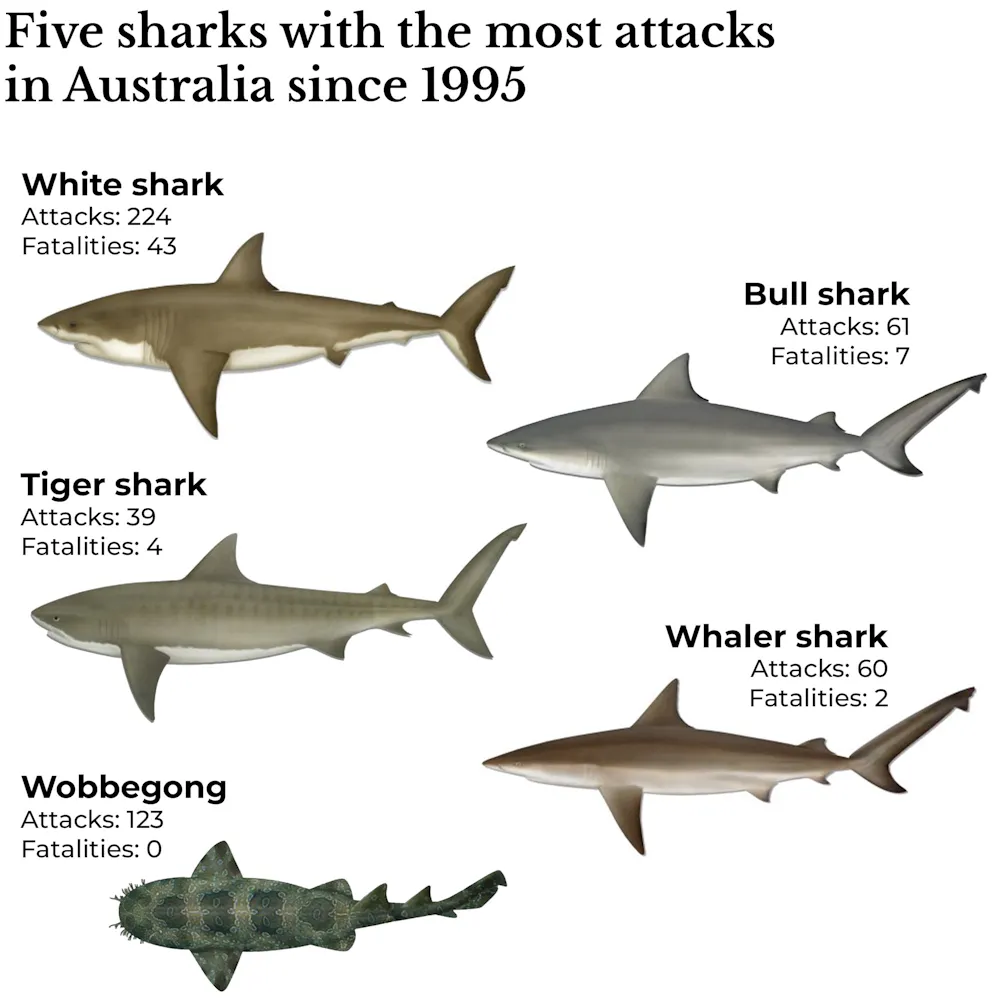
Australian Shark Incident Database, NSW Government SharkSmart

A deeper reality

When shark attacks occur, the pain is real and profound. People are injured, families are shattered, and lives are changed forever. No discussion about ecology should ever minimise the human cost. Fear and anger in these moments are entirely understandable.

Yet public debate often moves quickly from grief to blame, with sharks portrayed as the problem to be removed.

This framing offers a sense of control. But it can also obscure a deeper reality: we still know surprisingly little about the many pressures shaping shark health and behaviour.

What happens on land doesn’t stay on land. When heavy rain washes into the ocean, it doesn’t just carry pollutants and microorganisms with it. It also changes the water itself. Salinity shifts, visibility drops, oxygen levels change and temperatures can fluctuate.

Think about how unsettled you would feel if the air you breathe, the water you drink and the streets you walk suddenly changed overnight. Marine animals experience similar disruption.

Heavy rainfall and heightened risk

The four recent shark incidents in New South Wales followed an intense rainstorm that flushed runoff from land into the state’s coastal waters, reducing visibility and carrying pollution and waste into the sea.

A 2019 study found tiger and white sharks are more likely to attack after heavy rainfall.

This is partly because heavy rainfall flushes out more nutrients to sea, which leads to higher fish populations near the shore. In turn, this attracts sharks.

Heavy rainfall also creates a very turbid, silty environment. Runoff-driven changes in water quality can disrupt the sensory cues sharks rely on, potentially increasing stress and altering behaviour, while reduced visibility also limits people’s ability to assess risk.

Pollutants and parasites

On land, scientists have long recognised that environmental pollutants can interfere with how the nervous system works.

For example, exposure to certain pesticides is linked to neurological diseases in people, such as Parkinson’s disease, because these chemicals can disrupt nerve cell function, energy production and brain signalling pathways.

Emerging research shows similar processes occur in animals. For example, experiments in laboratory rats exposed to a common chemical used in pesticides displayed significant long-term deficits in mood, anxiety, depression and aggressive traits. While these findings don’t automatically translate to wildlife in the ocean, they help explain how chemicals can affect the brain.

There’s also growing evidence that pollutants and pharmaceutical contaminants can alter swimming behaviour, aggression, memory and stress responses in freshwater fish such as Nile tilapia and zebrafish.

Although we know far less about these effects in marine species, the pattern is clear: chemicals entering aquatic environments can influence animal behaviour.

Pollution isn’t the only thing moving from land into the ocean. Microorganisms do too. One of the most striking examples is Toxoplasma gondii, a microscopic parasite best known for infecting humans and domestic animals. On land, it’s shed by cat faeces, and its hardy eggs can survive for months in soil and water.

Research shows these parasite stages can be washed into rivers, estuaries and coastal waters, where they’re taken up by fish and other marine animals. Toxoplasma has been detected in species ranging from fish to dolphins and sea otters.

What makes this parasite particularly important is its ability to influence behaviour. In studies on land, toxoplasma infection has been shown to reduce fear responses, increase risk-taking and alter how the brain processes threats.

Emerging evidence suggests similar effects may occur in marine animals, with potential consequences for predator–prey interactions and ecosystem balance.

Toxoplasma has not yet been reported in sharks, largely because sharks are rarely examined for this parasite.

This gap reflects limited investigation, rather than clear evidence that sharks are unaffected. This doesn’t mean parasites cause shark incidents. But it does highlight how microorganisms originating on land can enter the ocean and influence animal health and behaviour in subtle ways we are only beginning to understand.

Long-term solutions lie upstream

One practical step to reduce the risk of shark attacks is clearer public guidance around swimming after major rain or similar events, when water quality and visibility change rapidly.

Temporary beach closures and consistent warnings following heavy rainfall are low-cost, evidence-based measures that reduce risk without targeting wildlife.

Longer-term solutions lie upstream – in policy and research.

Investment in stormwater management, wastewater infrastructure and runoff reduction helps stabilise coastal conditions and improve ocean health. It can also help reduce biological pressures by limiting parasite exposure.

There is also a clear need to invest in research in areas that remain poorly studied. Even major research efforts on iconic species such as great white sharks have tended to focus on movement and behaviour, while largely overlooking parasites and disease.

Shokoofeh Shamsi receives funding from from various government and research organisations for work in parasitology and environmental health. She is Editor-in-Chief of the journal Marine and Freshwater Research and the Director of the Food Safety Information Council of Australia, a not-for-profit organisation focused on evidence-based food safety communication.

ref. 4 shark bites in 48 hours: how what we do on land may shape shark behaviour – https://theconversation.com/4-shark-bites-in-48-hours-how-what-we-do-on-land-may-shape-shark-behaviour-273889

Vehicle of interest in Auckland’s Onehunga shooting seized by police

Source: Radio New Zealand

Police at the scene of the shooting in Onehunga on Friday. Kim Baker Wilson / RNZ

A van believed to be have been atthe scene of a shooting in the Auckland suburb of Onehunga has been seized by police.

Police were called to a house on Arthur Street on 16 January following reports several people had arrived at a house and fired shots toward the front of the home.

A man inside the home was critically injured.

Detective Senior Sergeant Matt Bunce said a dark-coloured van that was considered a vehicle of interest had been seized by police in recent days.

He said the Toyota van had been seen pulling up in front of the house that day just after 11am.

“As the van pulled into the driveway a group of people got out and fired shots towards the victim through the closed front door, before getting back in the van and driving away.”

CCTV helped police identify the van, Bunce said and it was found in Māngere on Saturday.

“The person who reported the van to us thought it looked suspicious and called to tell us its location.

“Subsequently, we’ve now got another piece of the puzzle to help the investigation as the van has been forensically examined.”

The injured man remained in hospital in a stable condition, Bunce said.

The investigation was ongoing, he said and he was pleased with how it was progressing.

Information could be reported online at 105.police.govt.nz, or by calling 105. The reference number 260116/9278 should be used.

Anonymous reports could be made through Crime Stoppers, by calling 0800 555 111.

Sign up for Ngā Pitopito Kōrero, a daily newsletter curated by our editors and delivered straight to your inbox every weekday.

– Published by EveningReport.nz and AsiaPacificReport.nz, see: MIL OSI in partnership with Radio New Zealand
Fire crews put out blaze at Christchurch Hospital

Source: Radio New Zealand

RNZ / Nathan Mckinnon

Firefighters have extinguished a fire at Christchurch Hospital.

Eight crews were called to the hospital after being alerted by an automatic alarm about 12.25pm.

A fire was found in a power supply room.

RNZ / Nathan Mckinnon

Fire and Emergency says crews remain at the hospital going through salvage operations.

Police are assisting with traffic control.

Health NZ is yet to respond to requests for comment.

Sign up for Ngā Pitopito Kōrero, a daily newsletter curated by our editors and delivered straight to your inbox every weekday.

– Published by EveningReport.nz and AsiaPacificReport.nz, see: MIL OSI in partnership with Radio New Zealand

Four-vehicles crash in Lindis Pass

Source: Radio New Zealand

Lindis Pass (file photo). 123rf

A multi-vehicle crash has been cleared off State Highway 8 in the Lindis Pass.

Police were called to the four-vehicle crash near Birchwood Road between Omarama and Tarras shortly after 11am on Tuesday.

The northbound lane was previously blocked, but Waka Kotahi said the lane has been cleared and traffic is flowing again.

St John were contacted but said their assistance was not needed.

Sign up for Ngā Pitopito Kōrero, a daily newsletter curated by our editors and delivered straight to your inbox every weekday.

– Published by EveningReport.nz and AsiaPacificReport.nz, see: MIL OSI in partnership with Radio New Zealand

20-year-old man dies after staff miss major red flag his bowel had ruptured

Source: Radio New Zealand

Unsplash / RNZ composite

  • Man with Prader-Willi Syndrome died of multi-organ failure from a complication of undiagnosed diabetes, triggered by perforated bowel that went unnoticed
  • Care staff failed to recognise the severity of his condition or seek timely medical assistance, according to the Health and Disability Commission report
  • He was not supervised, monitored, nor cared for adequately when he became unwell, investigation shows.

Caregivers at a secure residence for people with intellectual disabilities failed to notice that a 20-year-old man was dying under their watch after suffering a perforated bowel the week before, an investigation has found.

In a report released on Tuesday, the Health and Disability Commission has found “severe systemic shortcomings” in the care by the unnamed provider, including poor staff training and oversight.

The man, referred to as “Mr B” in the report, had the rare genetic condition Prader-Willi Syndrome, which causes people to eat life-threatening quantities of food if unsupervised.

He died in May 2023 after being rushed to the hospital three days earlier, critically ill with diabetic ketoacidosis – a buildup of acids in the blood – triggered by sepsis from the undiagnosed rupture in his small intestine.

His parents complained to the health watchdog that the provider and individual staff members did not adequately care for their son, and failed to manage his Prader-Willi syndrome, which allowed his weight to balloon 20kg in six months.

Furthermore, they said staff failed to recognise clear warning signs that he was seriously unwell in the days before he was hospitalised.

Staff accounts ‘differ’

According to the provider’s account, Mr B “went about his day as usual” (except he declined to attend a morning outing) before his condition suddenly deteriorated.

“At handover (3pm), staff were advised that Mr B had spent most of the day in his room. Staff member A recollected that Mr B had been unwell during the day, but the provider noted that this was not staff member B’s recollection.”

At about 4pm, Mr B called out that he was “dizzy and thirsty”, and was brought drinks.

“The staff member stated that Mr B said that he had felt sick since breakfast and that the morning staff did not check on him, and he had had nothing to eat since breakfast (which is in contrast to a statement by the other staff member, who advised that Mr B had had lunch).”

As he said he was unable to eat solid food, he was given some Weet-Bix softened with milk and reportedly “felt better”.

Staff members checked on him after that, but when they came in to wake him for his medication at 8pm, his speech was slurred, he had wet the bed, and he told them “he could not really move”.

Shortly after taking his medication, staff noticed he seemed “hot” and had developed a red rash on his skin, dry lips and dark bags around his eyes with visible veins on his stomach.

After phoning the duty manager and the on-call health advisor, they were advised to call 111.

Mr B was picked up by ambulance at 8.48pm and taken to the hospital.

The company conceded it had been struggling with staff recruitment and retention at the time, but based on its own review, it said “the actions taken by [staff] were appropriate in the circumstances”.

Care failings ‘severe’

However, an expert adviser to the Commission, John Taylor, who has 37 years’ experience in the disability sector, including working closely with people with Prader-Willi Syndrome, said the service provided to Mr B “severely departed from the expected standard of care in a number of aspects”.

Systemic failures included the ineffective management of Mr B’s syndrome, inadequate leadership oversight, poor record-keeping, and inadequate staff member supervision of Mr B.

Its many failings contributed to Mr B’s rapid weight-gain, and “food incidents” such as Mr B eating an entire plate of ham and “drinking all the milk” in the fridge, he wrote.

From 20 May 2023, there were “multiple failures” in passing on essential information in shift handovers, such as Mr B’s loss of appetite – a major red flag in someone with Prader-Willi Syndrome – frequent bathroom visits, abdominal pain and distension.

“Staff did not recognise the severity of [Mr B’s] condition and failed to seek timely medical assistance.

“They also failed to check on him, monitor his condition or provide adequate hydration.”

Instead, they relied entirely on Mr B to “self-report” health problems.

“It appears that he was largely left alone in his room with no proactive checking. On the morning he was taken to hospital, it appears that the usual staff member didn’t turn up to work and a reliever was called in and this reliever was unaware [Mr B] was in the house for quite some time.”

Death ‘avoidable’

Deputy Commissioner Rose Wall said the company failed to put safety plans in place to “mitigate staff shortages”.

“I accept Mr Taylor’s advice, and I am critical that Mr B was not supervised, monitored, and cared for adequately when he became unwell. I am concerned that the provider staff members’ recollection of events on 27 May 2023 varied greatly, which raises doubts about the accuracy of the staff statements.”

It was “more likely than not” that Mr B was seriously ill much earlier than indicated by staff (due to their lack of knowledge of PWS), and the lack of adequate supervision also explained how he came to eat something that caused his intestinal perforation and subsequent abscess.

“Accordingly, I disagree with the provider’s statement that Mr B was receiving appropriate services.”

Mr B’s worsening health and ultimately his death were “avoidable”, Wall said.

“I am very critical that the provider did not engage in learning about PWS [Prader-Willi Syndrome], and it did not provide appropriate training and resources to its staff members to allow it to provide a safe standard of care to Mr B.

“There was also a missed opportunity to utilise the family resources available to the provider that had been provided by Mrs A, who effectively had been supporting Mr B to manage his PWS when he was residing at home.”

Wall has told the provider to apologise to the man’s family, and made several recommendations, including that it audit management plans for compulsory care residents, revise operating procedures, train staff and review its daily notes and shift handovers.

Provider makes changes

The provider accepted the finding of a breach and the Commission’s recommendations.

It said it had made “numerous changes” since Mr B’s death, including recruiting more staff, creating a new quality manager role, and changed the way it grouped residents in care homes.

“Mr B’s death and the investigation into care provided to him has been taken very seriously by our team, and we are committed to using the learnings from this investigation to support improvements in our services.”

Sign up for Ngā Pitopito Kōrero, a daily newsletter curated by our editors and delivered straight to your inbox every weekday.

– Published by EveningReport.nz and AsiaPacificReport.nz, see: MIL OSI in partnership with Radio New Zealand

Why Timothée Chalamet is perfect for Marty Supreme

Source: Radio New Zealand

Actor Timothée Chalamet has a restless energy that made him perfect for the part of table tennis player Marty Mauser in the new film, Marty Supreme, the movie’s director says.

Set in 1950s New York, Marty Supreme –loosely based on American table tennis player Marty Reisman – is written and directed by Josh Safdie, known for previous films including Daddy Longlegs, Good Time, Uncut Gems.

Alongside Chalamet as the amateur table tennis player dreaming of superstardom are Gwyneth Paltrow, Odessa A’zion, Kevin O’Leary, Tyler Okonma, Abel Ferrara, and Fran Drescher in supporting roles.

Timothée Chalamet in Marty Supreme.

A24

– Published by EveningReport.nz and AsiaPacificReport.nz, see: MIL OSI in partnership with Radio New Zealand

‘Heavy blow’ for Breakers with Rob Baker’s season over

Source: Radio New Zealand

Rob Baker has ruptured his ACL. AAP / Photosport

American import Rob Baker will miss the remainder of the New Zealand Breakers’ NBL season after sustaining a significant knee injury.

Baker suffered the injury during the team’s 104-86 road victory against the Cairns Taipans on Saturday.

Scans in Melbourne confirmed he had ruptured the Anterior Cruciate Ligament (ACL) in his right knee.

He will require surgery and faces a rehabilitation period that will keep him off the court for the rest of the campaign.

Breakers head of basketball operations, Dillon Boucher, said the news was a heavy blow for both the player and the club.

“We are absolutely devastated for Rob. Since arriving, he has been a consummate professional and a vital part of our starting group. To see his season end like this, especially after such a gritty win in Cairns, is heartbreaking.

“Rob has the full support of the entire BNZ Breakers organisation. We will do everything we can to assist him through his surgery and rehabilitation process.”

Baker will remain with the team in the immediate term as he prepares for surgery.

The club will evaluate its roster options over the coming days.

They are in Melbourne to play their final Ignite Cup game against the South East Melbourne Phoenix. The team returns home to Spark Arena for a fixture against the Adelaide 36ers on Friday.

Sign up for Ngā Pitopito Kōrero, a daily newsletter curated by our editors and delivered straight to your inbox every weekday.

– Published by EveningReport.nz and AsiaPacificReport.nz, see: MIL OSI in partnership with Radio New Zealand

Fire crews battle blaze at Christchurch Hospital

Source: Radio New Zealand

File photo. RNZ / Nate McKinnon

Firefighters are working to extinguish a fire at Christchurch Hospital.

Fire and Emergency confirmed eight crews are at the hospital after being alerted by an automatic alarm about 12.25pm.

A fire was found in a power supply room.

A St John spokesperson said their assistance was not required at present.

Health NZ has been approached for comment.

Sign up for Ngā Pitopito Kōrero, a daily newsletter curated by our editors and delivered straight to your inbox every weekday.

– Published by EveningReport.nz and AsiaPacificReport.nz, see: MIL OSI in partnership with Radio New Zealand

Man arrested after person hit by vehicle and assaulted in Taranaki

Source: Radio New Zealand

Police were called to Ihaia Road in Ōpunake at around 10.15pm on Monday. RNZ / Marika Khabazi

A 37-year old man has been arrested after a serious assault in Taranaki last night.

Police were called to Ihaia Road in Ōpunake at around 10.15pm on Monday after reports a person had been seriously assaulted.

Detective Sergeant Chris Allemann said when officers arrived, they found a person who had been hit by a vehicle and subsequently assaulted.

The injured person was flown to Waikato Hospital by helicopter, where they remain in a critical condition.

Detective Sergeant Allemann said a man was taken into custody at an address on King Street in the Taranaki town at 8.45am on Tuesday.

He was due to appear in the Hawera District Court later on Tuesday charged with wounding with intent to cause grievous bodily harm.

Ihaia Road, which had been cordoned off, had since reopened.

Sign up for Ngā Pitopito Kōrero, a daily newsletter curated by our editors and delivered straight to your inbox every weekday.

– Published by EveningReport.nz and AsiaPacificReport.nz, see: MIL OSI in partnership with Radio New Zealand
‘War on nature’: Forest and Bird says govt changes put wildlife at risk

Source: Radio New Zealand

Forest and Bird chief adviser Richard Capie. VNP / Phil Smith

Forest and Bird is concerned government changes to the planning system will increase the risk of permanent damage to wildlife and native habitats.

The conservation organisation said the decision to weaken national environmental direction removes vital safeguards New Zealanders expect, with chief adviser Richard Capie saying the government is declaring a “war on nature”.

Last week, the coalition celebrated changes to the Resource Management Act coming into force that make it easier to consent to mines and quarries.

The government said the changes will help create jobs by ensuring essential materials for infrastructure can be produced.

Forest and Bird has criticised the removal of the criteria to show mining projects deliver a national or public benefit.

Capie said New Zealanders expect better from their decision-makers, and the push for economic growth “at any cost” wasn’t something New Zealanders voted for.

“I don’t think New Zealanders campaigned for a government that was going to declare a war on nature.”

He said the changes to the national environmental rules mean mining and quarrying can be approved in areas of significant native biodiversity “with fewer protections.”

The rules were put in place to stop permanent biodiversity loss, Capie said.

“Once that damage is done, it can’t be undone.”

He said New Zealand had around 4000 native species at risk of extinction, and these changes weaken protections that are going to make that crisis even worse.

“The bit that’s really concerning here is that we’ve got a precedent being set that economic activity can override environmental limits even in the most sensitive places.”

He said people will have an opportunity at the ballot box this year to decide who will “best provide for rivers that are safe to swim in” and “coasts that have actually got wildlife that we can go and experience.”

The Minister of Conservation has been approached for comment.

Sign up for Ngā Pitopito Kōrero, a daily newsletter curated by our editors and delivered straight to your inbox every weekday.

– Published by EveningReport.nz and AsiaPacificReport.nz, see: MIL OSI in partnership with Radio New Zealand

10-year-old aces high school exams

Source: Radio New Zealand

Raymond Hsu holds his breath, staring at the screen as the NZQA results page loads. A few seconds later, the 10-year-old erupts — screaming, flapping his arms, jumping around the room as his father films the moment. Merit grades. In NCEA Level 1 and 2 exams typically sat by students five or six years older.

“Where’s your excellence?” his father, Michael, teases, referring to Raymond’s prediction last year. Laughing and buzzing, he quips: “It’s nowhere!”

The scene is a sharp contrast to the softly spoken Porirua Year 6 student now appearing opposite me on the screen, gaze shifting, thoughts racing. That quietness once led educators to question whether Raymond was ready for advanced study alongside older students. It also meant he was reserved only as a “back-up” for a Wellington maths competition.

– Published by EveningReport.nz and AsiaPacificReport.nz, see: MIL OSI in partnership with Radio New Zealand

Four-vehicle crash blocks Lindis Pass

Source: Radio New Zealand

Lindis Pass (file photo). 123rf

A multi-vehicle crash is causing delays after blocking a lane on State Highway 8 in the Lindis Pass.

Emergency services were called to the crash near Birchwood Road between Omarama and Tarras shortly after 11am on Tuesday.

Police said the northbound lane travelling towards Twizel has been blocked after the crash involving three to four vehicles.

One person is believed to have minor injuries.

The New Zealand Transport Agency said motorists should expect delays and follow the directions of emergency services at the scene.

St John has been contacted for comment.

Sign up for Ngā Pitopito Kōrero, a daily newsletter curated by our editors and delivered straight to your inbox every weekday.

– Published by EveningReport.nz and AsiaPacificReport.nz, see: MIL OSI in partnership with Radio New Zealand
Driver arrested after crashing into Auckland City Mission

Source: Radio New Zealand

The car crashed into the Auckland City Mission building. RNZ

A driver fled on foot after crashing into the Auckland City Mission building in the central city this morning.

Police said they were called at about 10am on Tuesday after a vehicle collided with the side of a building on Hobson Street, just after the busy Wellesley Street West intersection.

The driver of the vehicle fled from the scene but had since been located and arrested.

No pedestrians were injured.

Auckland City Mission confirmed the incident happened at their HomeGround building, but would not comment further.

Sign up for Ngā Pitopito Kōrero, a daily newsletter curated by our editors and delivered straight to your inbox every weekday.

– Published by EveningReport.nz and AsiaPacificReport.nz, see: MIL OSI in partnership with Radio New Zealand

Deep sea mining is the next geopolitical frontline – and the Pacific is in the crosshairs

Source: The Conversation (Au and NZ) – By Viliame Kasanawaqa, Doctoral Researcher, Macmillan Brown Centre for Pacific Studies, University of Canterbury

When the United States recently escalated its confrontation with Venezuela – carrying out strikes in Caracas and capturing President Nicolás Maduro – the moves were framed as political intervention.

But the raid also reflected a deeper contest over oil and critical mineral supply chains.

For Washington, controlling energy and strategic materials is now inseparable from power projection. That same logic is increasingly being applied in our own backyard – the Pacific seabed – where new mining could target minerals vital for batteries, electronics, clean energy and the military industrial complex.

What is deep‑sea mining?

In the Pacific, most attention today is on nodules in the Clarion‑Clipperton Zone (CCZ), a vast area between Hawaii and Mexico. This zone is administered by the International Seabed Authority (ISA), an intergovernmental body responsible for safeguarding the deep sea.

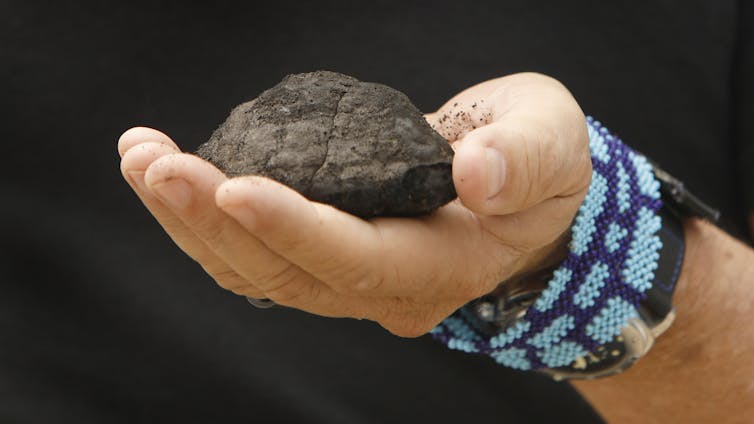
Nodules, which appear like potato-sized rocks, are found scattered across seabed plains four to six kilometres beneath the surface. These nodules are rich in nickel, cobalt, copper and manganese – metals used in electric vehicle batteries, smartphones and wind turbines.

Mining them involves driving a robotic “vacuum” over the seabed, pumping nodules up a riser pipe to a ship, and shipping concentrates ashore for processing.

Nodules aren’t the only target. Companies also eye sulfide deposits at hydrothermal vents and cobalt‑rich crusts on underwater mountains.

Increasingly, seabed minerals have become geopolitically important – and for two key reasons.

First, the energy transition is driving up demand for nickel, cobalt and manganese, with agencies projecting at least a doubling over the next two decades. Second, supply chains are concentrated in a handful of countries, making democracies nervous about choke points.

Policymakers and firms therefore see seabed minerals as a hedge: a way to diversify sources of “critical minerals” for clean energy and military defence.

Polymetallic nodules on the deep seabed, like this one, contain nickel, cobalt, copper and manganese – metals targeted for batteries and electronics.
Carolyn Cole/Getty Images

Where mining meets fishing

Spanning 1.7 million square miles in international waters, the CCZ is earmarked for mining by 17 contractors under ISA licences.

At the same time, climate-driven shifts are drawing key tuna species – bigeye, skipjack and yellowfin – into the CCZ. Models suggest biomass increases of 10% to 30% for these species under warming scenarios. The result? Tuna fisheries and mining operations are set to share the same patch of ocean.

Mining plumes – clouds of sediment and metals stirred up at the seabed and discharged at the surface – could spread tens to hundreds of kilometres horizontally and hundreds of metres vertically.

For tuna and their plankton prey, the risks include stress on gills, disrupted feeding cues, and exposure to contaminants. Mid-water food webs could be hit hard: studies suggest over half of zooplankton and micronekton could be affected, rippling up to tuna stocks.

For Pacific economies reliant on tuna, this overlap represents a looming collision of industries. These tensions are already playing out in parts of the Pacific, including on New Zealand’s doorstep.

In 2025, the Cook Islands – a self-governing nation in free association with New Zealand – signed strategic agreements with both China and the United States: the former through a “Blue Partnership” for seabed mineral research and grants, and the latter via a joint commitment to science-led, responsible development.

This underscores how great-power competition is now converging on Pacific seabed resources.

In the same year, the US Department of the Interior began exploring deep-sea mineral leasing in federal waters near American Samoa. Local leaders flagged risks to tuna fisheries and culture, urging extended consultations.

The process remains exploratory, but it shows how seabed plans can collide with livelihoods even before a single robot touches the seafloor.

There are still plenty of unknowns about the environmental impacts.But we know mining removes life-bearing sediment and nodules and that sediment plumes can travel kilometres beyond the site. Decades-old disturbance tracks still show reduced biodiversity.

A 2024 study warned that plumes could mobilise metals into mid-water habitats, threatening marine life we barely understand. Recovery could take centuries – if it happens at all.

Why Pacific-led governance matters

The ISA has approved exploration but not exploitation; negotiations keep stalling amid calls, led by Pacific nations, for a moratorium or precautionary pause until science catches up.

Meanwhile, Pacific states are ratifying the High Seas Treaty, which will enable marine protected areas and require environmental impact assessments – tools to safeguard biodiversity and equity.

Sovereignty here isn’t abstract. In the Cook Islands, it means deciding if and when mining happens after community debate and science. In American Samoa, it means ensuring federal processes don’t undermine tuna-based livelihoods.

In a regional sense, it means Pacific voices shaping global decisions, rather than having rules imposed from afar.

Ultimately, the stakes are simple: risk a barely understood ecosystem to supply battery metals and military defence applications, or build the transition around circular materials, stronger land-based standards and robust ocean protections.

Pacific-led governance – grounded in science, culture and consent – is the best chance the world has to make sure decisions about the deep sea benefit people and nature, not just the next commodity cycle.

The Conversation

Viliame Kasanawaqa does not work for, consult, own shares in or receive funding from any company or organisation that would benefit from this article, and has disclosed no relevant affiliations beyond their academic appointment.

ref. Deep sea mining is the next geopolitical frontline – and the Pacific is in the crosshairs – https://theconversation.com/deep-sea-mining-is-the-next-geopolitical-frontline-and-the-pacific-is-in-the-crosshairs-273223

Sexualised deepfakes on X are a sign of things to come. NZ law is already way behind

Source: The Conversation (Au and NZ) – By Cassandra Mudgway, Senior Lecturer in Law, University of Canterbury

Yui Mok/Getty Images

Elon Musk finally responded last week to widespread outrage about his social media platform X letting users create sexualised deepfakes with Grok, the platform’s artificial intelligence (AI) chatbot.

Musk has now assured the United Kingdom government he will block Grok from making deepfakes in order to comply with the law. But the change will likely only apply to users in the UK.

These latest complaints were hardly new, however. Last year, Grok users were able to “undress” posted pictures to produce images of women in underwear, swimwear or sexually suggestive positions. X’s “spicy” option let them to create topless images without any detailed prompting at all.

And such cases may be signs of things to come if governments aren’t more assertive about regulating AI.

Despite public outcry and growing scrutiny from regulatory bodies, X initially made little effort to address the issue and simply limited access to Grok on X to paying subscribers.

Various governments took action, with the UK announcing plans to legislate against deepfake tools, joining Denmark and Australia in seeking to criminalise such sexual material. UK regulator Ofcom launched an investigation of X, seemingly prompting Musk’s about-turn.

So far, the New Zealand government has been silent on the issue, even though domestic law is doing a poor job of preventing or criminalising non-consensual sexualised deepfakes.

Holding platforms accountable

The Harmful Digital Communications Act 2015 does offer some pathways to justice, but is far from perfect. Victims are required to show they’ve suffered “serious emotional distress”, which shifts focus to their response rather than the inherent wrong of non-consensual sexualisation.

Where images are entirely synthetic rather than “real” (generated without a reference photo, for example), legal protection becomes even less certain.

A members’ bill is expected to be introduced later this year that would criminalise the creation, possession and distribution of sexualised deepfakes without consent.

This reform is both necessary and welcome. But it only tackles part of the problem.

Criminalisation holds individuals accountable after harm has already occurred. It does not hold companies accountable for designing and deploying the AI tools that produce these images in the first place.

We expect social media providers to take down child sexual abuse material, so why not deepfakes of women? While users are responsible for their actions, platforms such as X provide an ease of access that removes the technical barrier to deepfake creation.

The Grok case has been in the news for many months, so the resulting harm is easily foreseeable. Treating such incidents as isolated misuse distracts from the platform’s responsibility.

Light-touch regulation is not working

Social media companies (including X) have signed the voluntary Aotearoa New Zealand Code of Practice for Online Safety and Harms, but this is already out of date.

The code does not set standards for generative AI, nor does it require risk assessments prior to implementing an AI tool, or set meaningful consequences for failing to prevent predictable forms of abuse.

This means X can get away with allowing Grok to produce deepfakes while still technically complying with the code.

Victims could also hold X responsible by complaining to the Privacy Commissioner under the Privacy Act 2020.

The commissioner’s guidance on AI suggests that both the use of someone’s image as a prompt and the generated deepfake could count as personal information.

However, these investigations can take years, and any compensation is usually small. Responsibility is often split among the user, the platform and the AI developer. This does little to make platforms or AI tools such as Grok safer in the first place.

New Zealand’s approach reflects a broader political preference for light-touch AI regulation that assumes technological development will be accompanied by adequate self-restraint and good-faith governance.

Clearly, this isn’t working. Competitive pressures to release new features quickly prioritise novelty and engagement over safety, with gendered harm often treated as an acceptable byproduct.

A sign of things to come

Technologies are shaped by the social conditions in which they are developed and deployed. Generative AI systems trained on masses of human data inevitably absorb misogynistic norms.

Integrating these systems into platforms without robust safeguards allows sexualised deepfakes that reinforce existing patterns of gender-based violence.

These harms extend beyond individual humiliation. The knowledge that a convincing sexualised image can be generated at any time – by anyone – creates an ongoing threat that alters how women engage online.

For politicians and other public figures, that threat can deter participation in public debate altogether. The cumulative effect is a narrowing of digital public space.

Criminalising deepfakes alone won’t fix this. New Zealand deserves a regulatory framework that recognises AI-enabled, gendered harm as foreseeable and systemic.

That means imposing clear obligations on companies that deploy these AI tools, including duties to assess risk, implement effective guardrails, and prevent predictable misuse before it occurs.

Grok offers an early signal of the challenges ahead. As AI becomes embedded across digital platforms, the gap between technological capabilities and legislation will continue to widen unless those in power take action.

At the same time, Elon Musk’s response to legislative action in the UK demonstrates how effective political will and robust regulation can be.


The authors acknowledge the contribution of Chris McGavin to the preparation of this article.

The Conversation

Andrew Lensen receives funding from the Ministry of Business, Innovation and Employment and the Royal Society of New Zealand through contestable academic research funds. He is the co-director of LensenMcGavin AI, a consultancy specialising in the responsible uptake of AI in Aotearoa.

Cassandra Mudgway does not work for, consult, own shares in or receive funding from any company or organisation that would benefit from this article, and has disclosed no relevant affiliations beyond their academic appointment.

ref. Sexualised deepfakes on X are a sign of things to come. NZ law is already way behind – https://theconversation.com/sexualised-deepfakes-on-x-are-a-sign-of-things-to-come-nz-law-is-already-way-behind-273562

Remote Fiordland islands deer-free again after pests removed during annual sweep

Source: Radio New Zealand

An aerial photo of Pukenui Anchor Island. Supplied / Leon Everett

Remote Fiordland islands are deer-free again after three pests were found and removed during an annual sweep.

Pukenui/Anchor Island and Indian Island in Dusky Sound are both managed to stay deer-free to provide safe, intact habitats for native wildlife and plants.

Surrounding inlets and islands in Dusky Sound and Preservation Inlet are checked annually with Anchor Island first achieving deer-free status in 2007.

One deer was removed from Indian Island and two from Anchor Island during the most recent annual checks.

Department of Conservation biodiversity project lead Monty Williams said it was costly but necessary work as both islands were only accessible by boat or helicopter and contractors used a mix of aerial hunting with thermal technology and ground hunting to find and remove deer.

“If left unchecked, even a few deer can quickly rebuild a population – potentially undoing decades of conservation gains,” he said.

“Acting now prevents a far bigger and costlier problem later. This investment secures the islands’ long-term ecological health and ensures Fiordland’s unique biodiversity continues to thrive.”

The department prioritised keeping areas including Coal Island, Chalky Island, Anchor Island, Indian Island, Secretary Island, and the Cleddau Valley catchment near Milford Sound deer-free.

“New Zealand’s island sanctuaries are internationally recognised as models for species recovery and ecosystem protection,” Williams said.

“Maintaining a wild deer-free status doesn’t just safeguard wildlife – it demonstrates how targeted, science-led action can contribute to biodiversity protection worldwide.”

Sign up for Ngā Pitopito Kōrero, a daily newsletter curated by our editors and delivered straight to your inbox every weekday.

– Published by EveningReport.nz and AsiaPacificReport.nz, see: MIL OSI in partnership with Radio New Zealand

After 21 months of pain, services sector finally turns the corner

Source: Radio New Zealand

123rf

  • Services sector expanded in December
  • PSI survey posts best result since February 2024
  • New orders, sales and inventories rise; employment still falling
  • Proportion of negative comments falls for fourth consecutive month.

Services sector activity leapt higher in December, expanding for the first time in nearly two years and raising hopes the worst of the economic downturn may have passed.

The BNZ-BusinessNZ Performance of Services Index (PSI) jumped 4.3 points to 51.5 in December, although it remained below its long‑term average of 52.8.

A reading above 50 indicates the sector, which accounts for nearly three‑quarters of the economy, is expanding.

The sector had not been in expansion since February 2024.

BusinessNZ chief executive Katherine Rich said the December result ended the longest run of contraction in the survey’s history, stretching to 21 months.

Three of the five sub‑indices expanded, led by new orders/business (52.5), which reversed four consecutive months of contraction.

This was followed by activity/sales (52.2) and stocks/inventories (51.9).

Employment (49.6) improved sharply but remained in slight contraction.

The proportion of negative comments fell to 50.4 percent as respondents continued to feel constrained by weak demand and confidence, high living and operating costs, and Christmas‑related shutdowns.

On the flip side, positive comments pointed to seasonal Christmas and summer demand, improving consumer confidence driven by lower interest rates, stronger tourism, new contracts and bookings, and early signs of broader economic recovery and investment activity.

BNZ senior economist Doug Steel was cautiously upbeat, noting the PSI was not strong when viewed in isolation, but the direction of travel was encouraging.

Combined with other recent data, he said, the picture became considerably more positive.

“When the PSI is joined with the large jump in last week’s PMI, the combined index (PCI) signals firmly positive GDP growth into the end of 2025 and establishes forward momentum heading into the new year.”

Sign up for Ngā Pitopito Kōrero, a daily newsletter curated by our editors and delivered straight to your inbox every weekday.

– Published by EveningReport.nz and AsiaPacificReport.nz, see: MIL OSI in partnership with Radio New Zealand

How AI might help you do your supermarket shopping

Source: Radio New Zealand

123RF

Artificial intelligence could soon be helping you get your supermarket shopping done, but one AI expert is warning consumers to be wary of the potential trade-off.

Woolworths said it was working towards launching a new tool in partnership with Google.

It will use Google’s Gemini Enterprise AI to transform its chatbot, Olive, into a “shopping companion”.

It said Google and Woolworths would collaborate on the development of a “bespoke” version of the new AI tool over the coming months to customise it to Woolworths’ customers’ needs.

It would use insights collected by Olive over the past seven years.

There was no set timeline for the launch in New Zealand but Woolworths said Olive would eventually be able to help customers create weekly meal plans based on their preferences, identify specials and swaps to help shoppers stick to a budget, and act as a personal assistant when someone was shopping for a special occasion.

But Shahper Richter, a senior lecturer in marketing at the University of Auckland who has studied virtual worlds and genAI, said there were some points shoppers should be careful about.

“It’s classed as consumer convenience, but then you have to think who are they giving this data to?

“Are we going to have different brands asking to insert their brand or their products as a preference? If you always buy the same dishwashing liquid and then next time maybe a brand will start saying ‘oh can you suggest this to these types of consumers’ and you’ll end up always getting suggested their brand as opposed to your normal brand or cheaper brands.

“You just have to think who does it actually help, this kind of convenience?”

She said if AI was producing a ready made shopping basket for people, they were less likely to make changes to it than if products were being suggested individually, as is currently the case through Woolworths’ rewards boosts.

“If it gives you a pre-made basket because you said you wanted to make chicken tacos this week … Here’s everything you’re not going to go through and go, ‘oh, well, I don’t get this brand of tacos. I get another brand’ and so on.”

She said people often grew used to technological improvements and started to rely on them.

“When Google Maps was introduced, like suddenly everyone’s just forgotten how to get somewhere without it. .. I remember being like in the 90s, having map books and you’d really have to flip pages and think, OK, it’s the second road on the right and the left. And now you just you’re just on autopilot. Google Maps will just take me. And sometimes it takes you in weird directions. But you’re like, oh, well, it just knows better.

“Maybe Olive will become like that … we’ll think ‘maybe Olive knows something that we don’t’.

“I think we’re already being primed to accept things like that with some of what Woolworths already do, like with these rewards programs and the boosting it’s already kind of heading towards this. This just feels like another step and then another step.

“I think when they start rolling out this agentic Olive, they’ll just introduce something that looks very innocuous and very helpful … ‘based on your past five shops, you always got this. Do you want to get it again?’ And they already do that on online shopping. This will just be, oh, look, we’ve already added it to your basket. You can take it out.

“I think it won’t be now you have agentic doing everything … I think will be rolled out so slowly that we won’t even really notice it.”

Amanda Bardwell, chief executive and managing director for the Woolworths Group, said it would be a practical innovation that was “about us doing the heavy lifting for you, making shopping that little bit easier to give you time back in your day”.

Sign up for Money with Susan Edmunds, a weekly newsletter covering all the things that affect how we make, spend and invest money.

– Published by EveningReport.nz and AsiaPacificReport.nz, see: MIL OSI in partnership with Radio New Zealand

Man arrested after coward-punch assault outside bar in Arrowtown

Source: Radio New Zealand

RNZ / Angus Dreaver

Police have arrested a 27-year-old man after a coward-punch assault in Arrowtown last month.

The assault happened outside the Fork and Tap bar on 21 December.

The victim was knocked unconscious, and needed hospital treatment for facial injuries.

At the time, police appealed to the public to identify members of a wedding party.

Police arrested a man and charged him with injuring with intent to injure.

He was due to appear in Invercargill District Court next week.

Sign up for Ngā Pitopito Kōrero, a daily newsletter curated by our editors and delivered straight to your inbox every weekday.

– Published by EveningReport.nz and AsiaPacificReport.nz, see: MIL OSI in partnership with Radio New Zealand

The way Earth’s surface moves has a bigger impact on shifting the climate than we knew

Source: The Conversation (Au and NZ) – By Ben Mather, ARC Early Career Industry Fellow, School of Geography, Earth and Atmospheric Sciences, The University of Melbourne

Our planet has experienced dramatic climate shifts throughout its history, oscillating between freezing “icehouse” periods and warm “greenhouse” states.

Scientists have long linked these climate changes to fluctuations in atmospheric carbon dioxide. However, new research reveals the source of this carbon – and the driving forces behind it – are far more complex than previously thought.

In fact, the way tectonic plates move about Earth’s surface plays a major, previously underappreciated role in climate. Carbon doesn’t just emerge where tectonic plates meet. The places where tectonic plates pull away from each other are significant too.

Our new study, published today in the journal Communications, Earth and Environment sheds light on how exactly Earth’s plate tectonics have helped to shape global climate over the past 540 million years.

Peering deep within the carbon cycle

At the boundaries where Earth’s tectonic plates converge, we get chains of volcanoes known as volcanic arcs. Melting associated with these volcanoes unlocks carbon that’s been trapped inside rocks for thousands of years, bringing it to Earth’s surface.

Historically, it’s been thought these volcanic arcs were the primary culprits of injecting carbon dioxide into the atmosphere.

Our findings challenge that view. Instead, we suggest that mid-ocean ridges and continental rifts – locations where the tectonic plates spread apart – have played a much more significant role in driving Earth’s carbon cycles throughout geological time.

This is because the world’s oceans sequester vast quantities of carbon dioxide from the atmosphere. They store most of it within carbon-rich rocks on the seafloor. Over thousands of years, this process can produce hundreds of metres of carbon-rich sediment at the bottom of the ocean.

As these rocks then move about the Earth driven by tectonic plates, they may eventually intersect subduction zones – places where tectonic plates converge. This releases their carbon dioxide cargo back into the atmosphere.

This is known as the “deep carbon cycle”. To track the flow of carbon between Earth’s molten interior, oceanic plates and the atmosphere, we can use computer models of how the tectonic plates have migrated through geological time.

What we discovered

Using computer models to reconstruct how Earth moves carbon stored on tectonic plates, we were able to predict major greenhouse and icehouse climates over the last 540 million years.

During greenhouse periods – when Earth was warmer – more carbon was released than trapped within carbon-carrying rocks. In contrast, during icehouse climates, the carbon sequestration into Earth’s oceans dominated, lowering atmospheric carbon dioxide levels and triggering cooling.

One of the key takeaways from our study is the critical role of the deep-sea sediments in regulating atmospheric carbon dioxide. As Earth’s tectonic plates slowly move, they carry carbon-rich sediments, which are eventually returned into Earth’s interior through a process known as subduction.

We show that this process is a major factor in determining whether Earth is in a greenhouse or icehouse state.

How much carbon is recycled into Earth’s mantle at subduction zones (blues) compared to how much is released through volcanic arcs and mid-ocean ridges (oranges) over the past 540 million years. Carbonate platforms – large accumulations of carbonate rocks – are indicated by green polygons, where light green indicates active platforms, and dark green indicates older, inactive platforms.

A shift in understanding the role of volcanic arcs

Historically, the carbon emitted from volcanic arcs has been considered one of the largest sources of atmospheric carbon dioxide.

However, this process only became dominant in the last 120 million years thanks to planktic calcifiers. These little ocean critters belong to a family of phytoplankton whose main talent lies in converting dissolved carbon into calcite. They are responsible for sequestering vast amounts of atmospheric carbon into carbon-rich sediment deposited on the seafloor.

Planktic calcifiers only evolved about 200 million years ago, and spread through the world’s oceans about 150 million years ago. So, the high proportion of carbon spewed into the atmosphere along volcanic arcs in the past 120 million years is mostly due to the carbon-rich sediments these creatures created.

Before this, we found that carbon emissions from mid-ocean ridges and continental rifts – regions where tectonic plates diverge – actually contributed more significantly to atmospheric carbon dioxide.

A new perspective for the future

Our findings offer a new perspective on how Earth’s tectonic processes have shaped, and will continue to shape, our climate.

These results suggest Earth’s climate is not just driven by atmospheric carbon. Instead, the climate is influenced by the intricate balance between carbon emissions from Earth’s surface and how they get trapped in sediments on the seafloor.

This study also provides crucial insights for future climate models, especially in the context of current concerns over rising carbon dioxide levels.

We now know that Earth’s natural carbon cycle, influenced by the shifting tectonic plates beneath our feet, plays a vital role in regulating the planet’s climate.

Understanding this deep time perspective can help us better predict future climate scenarios and the ongoing effects of human activity.

The Conversation

Ben Mather receives funding from the Australian Research Council.

Adriana Dutkiewicz receives funding from the Australian Research Council.

Dietmar Müller receives funding from the Australian Research Council.

Sabin Zahirovic has received funding from the Alfred Sloan Foundation’s Deep Carbon Observatory, the Australian Research Council, and BHP via the STELLAR industry collaborative project.

ref. The way Earth’s surface moves has a bigger impact on shifting the climate than we knew – https://theconversation.com/the-way-earths-surface-moves-has-a-bigger-impact-on-shifting-the-climate-than-we-knew-272352

Meet the rangatahi Māori breaking ground in both law and fashion

Source: Radio New Zealand

Ellis works in Treaty law and hopes her journey shows other rangatahi Māori- particularly those from small towns – that they belong in both academic and creative spaces. Supplied

From a town of less than 4000 people, Siadin Ellis (Ngāti Tūwharetoa, Ngāti Kahungunu, Ngāi Tūhoe) is carving out space for rangatahi Māori in places they are still rarely seen.

At just 23, Ellis has walked the runway at New Zealand Fashion Week twice while also graduating with a Bachelor of Laws and being admitted as a barrister and solicitor of the High Court.

Now the youngest lawyer at Tāmaki Legal, she works in Treaty law and hopes her journey shows other rangatahi Māori- particularly those from small towns – that they belong in both academic and creative spaces.

“We as Māori are so much more than the stereotypes and the statistics portray us as,” she told RNZ.

“We deserve as much as anyone else to be present in these spaces, whether it be academically or creatively.”

Supplied

Ellis was born in Taupō and spent her early childhood in Tūrangi before moving to Australia at age four. Her whānau returned home when she was 11, and she later moved to Tāmaki Makaurau in early 2020 to study law.

“There wasn’t a lot of opportunity in such a small town. I was a bit lost at that age, and I felt like law would have a lot of different opportunities that I could branch out into,” she said.

Tūrangi sits on the west bank of the Tongariro River and has a population of less than 4000 people, with more than 60 percent identifying as Māori.

Ellis said growing up there shaped her desire to challenge negative narratives.

“In our town, the statistics are so bad – teenage pregnancy, suicide, gang affiliation,” she said.

“In a way, my journey is giving back to my town, family and iwi.”

While Ellis now stands confidently in her Māoritanga, identity has been something she has grappled with throughout her life, particularly after spending her early years in Australia.

“I still feel too white for Māori spaces and too Māori for white spaces sometimes,” she said.

She recalled being teased after returning to Tūrangi for not speaking te reo Māori fluently.

“That made me whakamā to even learn back then.”

Ellis said a major driving force behind her success is making her whānau proud and being a positive role model for her younger siblings. Supplied

Now working in Treaty law and involved in the Mana Wāhine Kaupapa inquiry, Ellis said her identity is a strength – both professionally and personally.

“It’s almost the only space where I’ve felt like being Māori is a privilege,” she said, describing her Māoritanga as a “superpower.”

“Understanding tikanga, it’s a strength, not a weakness.”

The transition from a small town to Auckland was not without its challenges. Ellis said isolation, financial pressure and self-doubt weighed heavily during her studies.

“I always had impostor syndrome, and I still do to this day,” she said.

“I felt like I wasn’t in the right place, like I wasn’t as smart as everyone around me.”

Being the only person from her school year to attend university added to that pressure, as did starting during the Covid-19 pandemic.

“I didn’t know anyone up here besides my partner. I went to uni, put my head down and didn’t even speak to anyone.”

What kept her going, she said, was her whānau – especially her 16-year-old brother and eight-year-old sister.

“Doing it for them and letting them see that they can do more and be more, it means so much.”

Ellis walked at New Zealand Fashion Week for the first time in 2023, returning again in 2024. Supplied

Alongside law, Ellis was also building a presence in the fashion industry. She began modelling soon after moving to Auckland, despite being told she didn’t fit traditional standards.

“I’m on the shorter side, and I had some really bad experiences with agencies declining me,” she said.

She describes herself as a “bigger-bodied model” and said visibility was a major motivation.

“I always kind of felt like a background person,” she said.

“But when I’m on the runway, I feel seen. Not in an attention way, but like people can actually see me.”

Ellis first walked at New Zealand Fashion Week in 2023, returning again in 2024. She said modelling became a vital creative outlet alongside the intensity of legal study.

“I’m a very creative mind, and when I’m doing so much theory and old legal jargon, I need something else, and that was it.”

Representation in fashion, she said, matters – particularly for Māori and curvy wāhine.

“There’s not a lot of bigger Māori models,” she said.

“It felt like I wasn’t just representing me, it was for others as well.”

Supplied / KWEST

One standout moment, Ellis said, was when she appeared in a Mi Piaci campaign where her ankle tāmoko was visible across billboards and store displays.

“I thought it was going to be really whitewashed,” she said.

“But you could see my tāmoko, and that was huge for me.”

Feedback from others reinforced the importance of that visibility.

“I had a lot of people say, ‘It’s amazing to see that.’”

Ellis hopes her haerenga encourages rangatahi Māori to push boundaries and back themselves, no matter where they come from.

“It will often feel like the whole system is against you and that’s because it is,” she said.

“It wasn’t designed for us. But we owe it to ourselves, our tūpuna, our whānau and the next generation to knock down those barriers.”

Sign up for Ngā Pitopito Kōrero, a daily newsletter curated by our editors and delivered straight to your inbox every weekday.

– Published by EveningReport.nz and AsiaPacificReport.nz, see: MIL OSI in partnership with Radio New Zealand

NZ agencies have eye on ‘largest solar radiation storm in over 20 years’

Source: Radio New Zealand

Aurora lights up the sky in Mercer, Auckland on 11 May, 2024. Supplied / Laura Acket

A solar storm is being monitored by the National Emergency Management Agency and national power grid owners Transpower, but so far, it isn’t expected to cause disruption.

These events, also known as space weather, do not pose a physical threat to human health.

But with society increasingly dependent on technology, an otherwise harmless burst of radiation from the sun could easily disrupt business as usual, taking out the power grids and GPS.

New Zealand monitors alerts from the Unites States agency National Oceanic and Atmospheric Administration (NOAA) regarding solar activity.

Early Tuesday morning, NOAA’s Space Weather Prediction Centre (SWPC) posted on X: “An S4 severe solar radiation storm is now in progress – this is the largest solar radiation storm in over 20 years. The last time S4 levels were observed was in October, 2003.

But, it noted: “Potential effects are mainly limited to space launch, aviation, and satellite operations.”

The National Emergency Management Agency (NEMA) told RNZ the coronal mass ejection arrived in Aotearoa about 8.30am on Tuesday, “and it is not expected to cause significant impacts for NZ”.

The agency had activated its Space Weather Science Advisory Panel, which had considered international space weather monitoring and forecasting agencies, as well as current information from the NZ-based monitoring network.

“On current conditions, the panel advises this event is not concerning for NZ and no significant impacts are expected. NEMA and Transpower will continue to monitor the situation.”

A Transpower spokesperson told RNZ it was keeping an eye on the storm, but the threshold had not yet been met to make changes to the grid.

Large solar storms could send unwanted currents through the long electricity circuits which Transpower managed. When they reached transformers in stations or large hydroelectric dams, they could cause extensive damage. 

“We have been closely monitoring the solar storm since the coronal mass ejection lifted off the sun on Sunday,” the spokesperson said.

“It arrived at 8.40am this morning resulting in geomagnetically induced currents (GICs) in our electricity transmission network, but these are within limits where mitigation actions are not needed.”

There was a contingency plan in place to switch out circuits to mitigate effects if needed, but there would be no impact on consumer electricity supply even if this was necessary.

The threat of disruption caused by solar storms has become increasingly understood by local agencies, and a number of them have plans in place. Nema simulated a G5 event in the Beehive bunker in November last year.

Sign up for Ngā Pitopito Kōrero, a daily newsletter curated by our editors and delivered straight to your inbox every weekday.

– Published by EveningReport.nz and AsiaPacificReport.nz, see: MIL OSI in partnership with Radio New Zealand

Fletcher Building to sell construction arm to Vinci

Source: Radio New Zealand

Fletcher Building headquarters in Auckland. Fletcher Building

  • Fletcher Construction to be sold for $315.6m, potentially rising to $334.1m
  • Sale includes Higgins, Brian Perry Civil and Fletcher Construction Major Projects
  • The deal is subject to regulatory approvals.

Fletcher Building has reached a binding agreement to sell its construction division to major international firm Vinci Construction.

The initial sale price was $315.6 million, but could rise to just over $334m depending on the outcome of key contract negotiations.

The sale of Fletcher Construction Holdings included its New Zealand business units, Higgins, Brian Perry Civil and Fletcher Construction Major Projects.

“Over the past year, we have been clear that Fletcher Building’s future lies in being a focused building products manufacturer and distributor, supported by a strong balance sheet and disciplined capital allocation,” Fletcher Building chief executive Andrew Reding said.

“The sale of Fletcher Construction is a significant step forward in delivering that strategy, while continuing the work underway to simplify the portfolio, lower debt and improve shareholder returns,” he said.

Reding was confident the sale to Vinci would be the right transaction for shareholders, Fletcher Construction itself and the broader New Zealand construction industry.

“I believe Fletcher Construction will find a strong home with Vinci, whose strengths are well aligned with the business, and which has a proven track record of successfully delivering major infrastructure projects globally.”

The deal was subject to regulatory approvals, including from the Overseas Investment Office and the Commerce Commission.

Fletcher Building also expected to set aside $55-$65m for probable future claims relating to legacy construction contracts retained following the divestment.

However, it did not include any allowances for potential legal liability relating to the NZ International Convention Centre project.

The decision to sell Fletcher Construction followed a strategic review of the wider Fletcher Building business in 2025.

“Following our strategic review in 2025, we received strong inbound interest for the construction business,” Reding said.

Sign up for Ngā Pitopito Kōrero, a daily newsletter curated by our editors and delivered straight to your inbox every weekday.

– Published by EveningReport.nz and AsiaPacificReport.nz, see: MIL OSI in partnership with Radio New Zealand

Why Keir Starmer had to speak out against Trump over Greenland after staying quiet on Venezuela

Source: The Conversation (Au and NZ) – By Jason Ralph, Professor of International Relations, University of Leeds

The Labour government came into office promising to “use realist means to pursue progressive ends”. US president Donald Trump’s recent actions over Venezuela and Greenland have tested Keir Starmer’s ability to deliver on that promise.

When the prime minister said he had been “a lifelong advocate of international law” there was a reasonable expectation that he would condemn the US action in Venezuela. Some feared that his ambiguity on that issue was a betrayal of progressive values.

However, US action in Venezuela came at a sensitive moment in the UK’s efforts to achieve a progressive end to the war in Ukraine. US cooperation is vital if Russia is to be forced to negotiate a peace that respects the Ukrainian right to self-determination. That means persuading the US to put pressure on Russia – something that would be impossible if Starmer had alienated Trump by condemning his illegal action in Venezuela.

Starmer has shown that he is able to handle Trump’s unpredictable personality. His ambiguity on Venezuela immediately prior to the Paris meeting that agreed security guarantees for Ukraine can be interpreted in these terms. He knew that the progressive strategy on Ukraine was reliant on a delicate alignment of US power.

When it emerged that British forces had helped the US seize a Russian-flagged oil tanker linked to Venezuela the stakes were raised. Trump’s actions were certainly a grab for Venezuela’s oil but the consequences could work toward progressive ends if Russian investments in Venezuela’s oil industry are written off and Russia’s ability to avoid sanctions by operating a “shadow fleet” are weakened. For the progressive realist then, Starmer’s ambiguity on Trump’s illegal action in Venezuela could be a worthwhile, if regrettable, trade-off.

The word “regret” shouldn’t be lightly passed over. Progressive realists need not be “theological” in the application of international law, and Starmer knows that good legal prosecutors exercise political judgment. But there is a danger.

The risk of not properly condemning Trump on Venezuela was that it could set the world on a slippery slope. It could simply encourage Trump’s imperialist ambitions. That seems to have happened very quickly and Starmer’s speech on Greenland was designed to stop the slide.

Starmer reminded us that “Britain is a pragmatic country”. It will, in other words, compromise with the US to find solutions to problems like Russia. But as Starmer said, “being pragmatic does not mean being passive. And partnership does not mean abandoning principle”.

The principle at stake in Greenland is the same as Venezuela: national self-determination. So why is he drawing the line now?

Starmer’s press conference.

As a realist, Starmer has shown his willingness to compromise on Venezuela. He has listened to Trump’s concerns on Ukraine and has made the case for greater defence spending across Europe. But as a progressive he has also shown there is a limit to how far he can compromise with the US, and he has drawn a line on Greenland.

This is because the argument that the US needs to annex Greenland to pressure Russia makes no sense. Greenland is already part of an anti-Russian alliance: Nato. No positive outcome can emerge from US pressure on Greenland.

European governments made that clear in Paris and Starmer’s speech reinforced the point. The pettiness of Trump’s statement linking the Greenland issue to Norway’s decision not to grant him the Nobel prize adds to the sense that US policy is now based on the personal ambitions of an imperial president. Against this backdrop, progressive realism means no longer compromising with the US.

A breach of trust

Another principle at stake in Greenland is multilateral cooperation based on respect. International relations academics have longed called the transatlantic region a “security community” because it goes beyond transactional deals. It is based on trust that comes from a sense of “we-ness”. Starmer is trying to maintain that community by speaking over Trump and appealing to the narrative of transatlantic solidarity that existed through the second world war, the cold war and the war on terror.

The question, though, is whether that narrative still has power in the US. Trump is intent on putting “America first” and is not concerned about niceties like respect, trust and gratitude. It might seem hard to imagine that the rest of his country will follow him, but recall that America’s founding father, Alexander Hamilton, famously dismissed Thomas Jefferson’s argument that the US owed France a debt of gratitude for its support during the revolutionary wars. When it came to matters of war and peace, Hamilton argued, former allies were on their own.

The UK has aligned itself with the US for decades because it shared values and could leverage US power in the service of its moral as well as material interests. If the Trump administration and the wider Maga movement in Congress continues to undermine the transatlantic security community, and international society more generally, then this relationship may no longer serve Britain’s interests. Progressive realism may have justified strategic ambiguity on Venezuela, but the opposite now appears to be true when it comes to US imperialism towards Greenland.

The Conversation

Jason Ralph has previously received funding from Research Councils UK and the European Union. He is a member of the UK Labour Party.

Jamie Gaskarth is affiliated with Associate Fellow, Chatham House.

ref. Why Keir Starmer had to speak out against Trump over Greenland after staying quiet on Venezuela – https://theconversation.com/why-keir-starmer-had-to-speak-out-against-trump-over-greenland-after-staying-quiet-on-venezuela-273836

How George Orwell’s Nineteen Eighty-Four predicted the global power shifts happening now

Source: The Conversation (Au and NZ) – By Emrah Atasoy, Associate Fellow of English and Comparative Literary Studies & Honorary Research Fellow of IAS, the University of Warwick and Upcoming IASH Postdoctoral Research Fellow, the University of Edinburgh, University of Warwick

Orwell’s dystopian masterpiece envisaged a world dominated by three rival blocs that are constantly at war with one another. U.J. Alexander/Shutterstock

There’s nothing new about calling George Orwell’s most influential novel prescient. But the focus has usually been on his portrayal of the oppressive aspects of life in Oceania, the superstate in which Nineteen Eighty-Four is set.

Today, however, a different feature – which as recently as 2019, some critics dismissed as “obsolete” – is getting more attention: its vision of a world divided into three spheres, controlled by autocratic governments that constantly form and then break alliances.

In 2022, Vladimir Putin initiated Russia’s full-on invasion of Ukraine. This year began with the US mounting a raid on Venezuela and snatching its president, while Donald Trump speculated about US actions against various other countries in Latin America and Greenland. Meanwhile, Xi Jinping regularly repeats China’s intention to “reunify” with Taiwan – by force if necessary.

“Orwell-as-prophet” commentators began showing more interest in the superstate idea early in the decade, often leading with references to Putin’s imperial ambitions. This trend became more pronounced when Trump’s second term began.

Last year, American historian Alfred McCoy led with a tripolar reference in his Foreign Policy essay: “Is 2025 the New 1984?” A Bloomberg report on the Trump-Putin summit in Alaska last August was headlined: “It Looks Like a Trump-Putin-Xi World, But It’s Really Orwell’s”. The article described Nineteen Eighty-Four’s fictional model of global affairs as “prophetic”.

Many observers now see Big Brother-like leaders wielding power in Washington, as well as in Moscow and Beijing. In her first essay of 2026, Anne Applebaum wrote in The Atlantic that: “Orwell’s world is fiction, but some want it to become reality.”

The American journalist and historian noted a dangerous desire of some for “an Asia dominated by China, a Europe dominated by Russia, and a Western Hemisphere dominated by the United States”. Social media is awash with comments and maps in the same vein.

Orwell’s influences

Analysts have claimed that elements of Orwell’s portrayal of politics inside Oceania paralleled various parts of dystopian novels written before Nineteen Eighty-Four. They cite, in particular, the potential influence of Jack London’s The Iron Heel (1908) and Aldous Huxley’s Brave New World (1932) – works Orwell discussed in a 1940 essay.

Then there’s Yevgeny Zamyatin’s novel We (1921), which Orwell wrote about in 1946, and Arthur Koestler’s Darkness at Noon (1940), which he wrote about in 1941. Both inspired him with their criticism of the real Soviet Union.

Could these or other utopian and dystopian texts – such as Ayn Rand’s Anthem (1938), Sinclair Lewis’s It Can’t Happen Here (1935), and Noël Coward’s play Peace in Our Time (1946) – have given him ideas about future geopolitics?

In fact, most of the works mentioned downplay or ignore international issues. Koestler focuses on one unnamed totalitarian country, Zamyatin and Huxley on a single world-state, London and Lewis on an America transformed by a domestic tyrannical movement, and Coward a Britain conquered by Hitler.

Two other novels provide partial precedents. The first is The War in the Air (1908) by H.G. Wells, an author Orwell read throughout his life. It has a tripolar side, depicting a war between Germany, the US and Britain, and a Chinese and Japanese force. The second is Swastika Night by Katharine Burdekin (writing as Murray Constantine).

Orwell never referred to Swastika Night in any publication, and his most prominent biographer, D.J. Taylor, has claimed there is no definitive evidence that he read it. However, as it was a Left Book Club selection and he was a Left Book Club author, Orwell would at least have known about it. The novel describes a world divided into two rival camps, not three, but portrays allies becoming rivals. The competing superstates are Nazi Germany and imperial Japan, who were on the same side when the book was written.

In his own words

The most satisfying place to look for inspiration for Nineteen Eighty-Four’s geopolitical vision, though, is in Orwell’s own experiences and non-fiction reading. Before the 1940s, Orwell spent a lot of time learning and writing critically about three oppressive systems: capitalism, fascism and Soviet communism.

In terms of capitalism, working as a colonial police officer in Burma in the 1920s left him disgusted with what he called the “dirty work of empire”. Living in England later led him to write works on class injustices such as The Road to Wigan Pier (1937).

In terms of fascism, he wrote scathingly about Hitler and Franco. Orwell was also appalled by accounts of repression under Stalin. His time fighting in Spain reinforced his dark view of Moscow and he saw erstwhile allies become arch-enemies as the anti-Franco coalition broke down, and the Soviets began treating groups that had been part of it as villains.

Second world war news stories had an impact as well. In 1939 and 1941 respectively, newspapers were full of reports of Moscow and Berlin signing a non-aggression pact, and then of Moscow switching sides to join the Allies.

And in a 1945 essay, Orwell mocked news of many people on the left embracing the fervently anti-Communist Chinese Nationalist Party leader, Chiang Kai-shek, once he was with the Allies – seemingly having forgetten their earlier disdain for Chiang’s brutal effort to exterminate the Chinese Communist Party.

WInston Churchill, Franklin D Roosevelt and Josef Stalin site on chairs together.
Carving up the world: Stalin, Roosevelt and Churchill at the Tehran conference in 1943.
U.S. Signal Corps photo

But perhaps the most notable 1940s news story of all relating to Nineteen Eighty-Four’s geopolitics has been flagged by Taylor as one that broke in 1943. He notes that Orwell sometimes claimed a key inspiration for his final novel were the reports of Roosevelt, Stalin and Churchill talking at the 1943 Tehran conference about carving up the post-war world into three spheres.

Nineteen Eighty-Four has had extraordinary longevity as a go-to text for political commentary. There are many explanations for its staying power, but right now a key feature of it may be its relevance to thinking about both repression of dissent and Newspeak-style propaganda in many individual countries – and the unsettling geopolitical tensions in the world at large.

The Conversation

The authors do not work for, consult, own shares in or receive funding from any company or organisation that would benefit from this article, and have disclosed no relevant affiliations beyond their academic appointment.

ref. How George Orwell’s Nineteen Eighty-Four predicted the global power shifts happening now – https://theconversation.com/how-george-orwells-nineteen-eighty-four-predicted-the-global-power-shifts-happening-now-273122

Springboks legend won’t hold grudge if Tony Brown chooses All Blacks

Source: Radio New Zealand

Tony Brown. photosport

Former South Africa captain Jean de Villiers says he will not hold a grudge should Tony Brown decide to exit the Springboks and return to New Zealand ahead of the 2027 Rugby World Cup.

Following Scott Robertson’s shock departure as All Blacks head coach last week, New Zealand Rugby are searching for his successor midway through a Rugby World Cup cycle.

Jamie Joseph has been touted as the favourite to take over and that has linked Brown to a position within the next All Blacks coaching group, despite being the Springboks’ assistant coach.

Speculation is rife that Brown and Joseph will once again combine ahead of the global tournament in Australia, with the pair long-time colleagues having coached together at the Highlanders and in Japan.

It would be a huge blow for the Springboks should that happen with Brown playing a significant role in their development since the 2023 World Cup triumph.

Brown is contracted to South Africa Rugby and has confirmed to The Post that he has no out-clause with the Springboks that would allow him to coach the All Blacks in the wake of Robertson’s sacking – and nor has he been tapped on the shoulder by NZR.

“I’m obviously contracted,” Brown told The Post. “I don’t have an out of my contract, so I’m back in South Africa [until the Rugby World Cup].”

It raises the prospect of NZR needing to pay a huge break-fee to SA Rugby if they want to pursue Brown.

De Villiers told the Boks Unpacked podcast the conundrum Brown faced is “an extremely difficult one”.

“It’s an interesting one. As a human being, I absolutely only have praise and respect for Tony Brown, I think he’s a fantastic guy,” de Villiers said.

Former Springboks captain Jean de Villiers. PHOTOSPORT

“I had the pleasure of playing one season with him at the Stormers and I’ve spent some time with him since he’s been back in his coaching role, and he is just a top person.

“You go in and you become a coach, and you want to be successful in that role as well. He’s been fantastically successful with the Springboks with what he’s added.

“If you can potentially be in the situation where he is closer to his family, it makes more sense for him in his personal capacity and for his family, and maybe financially etc. Can we hold it against him? I don’t think you can.

“But is he the kind of person who will just leave a project halfway through? I don’t think he will either, so it’s an extremely difficult one.”

On Monday, South Africa head coach Rassie Erasmus took to social media by posting a meme of Brown, captioned, ‘I’m not leaving’, but there will concern among Boks fans that he will want to go back to their historic rivals.

“Either way I think the right thing will happen. Throw in Rassie Erasmus’ name there and I’m pretty sure his contract with Tony Brown will have been watertight,” de Villiers said.

NZR is in the early stages of the recruitment process, with chair David Kirk saying last week they would “cast the net wide”.

Sign up for Ngā Pitopito Kōrero, a daily newsletter curated by our editors and delivered straight to your inbox every weekday.

– Published by EveningReport.nz and AsiaPacificReport.nz, see: MIL OSI in partnership with Radio New Zealand

Italian fashion designer Valentino Garavani dies at 93

Source: Radio New Zealand

Italian fashion legend Valentino Garavani, whose elegant evening gowns were favoured for decades by some of the world’s most glamorous women, has died at 93, according to his foundation.

Born in the northern town of Voghera, Italy, in 1932, Valentino – who was popularly known by his first name – learned his trade in the haute couture ateliers in Paris before founding his own line in Rome in 1959.

Early on, he became known for his red dresses, in a rich scarlet shade that became his signature colour to the extent that it was known within the industry as “Valentino red”.

In 1960, he met his long-time business partner (and, for 12 years, romantic partner) Giancarlo Giammetti, then a young architecture student. Together, the pair turned Valentino SpA into an internationally recognised brand.

One of Valentino’s first famous customers was the actress Elizabeth Taylor, whom he met while she was filming Cleopatra in Rome in the early 1960s.

Other glamorous followers – and buyers – of Valentino’s work in the early years of his career included Begum Aga Khan, Queen Paola of Belgium, the actresses Audrey Hepburn and Joan Collins and Jacqueline Kennedy, who even wore a Valentino gown to wed Greek shipping giant Aristotle Onassis in 1968.

His popularity would continue as the decades progressed.

Valentino spent much of the 1970s in New York, surrounded by a wide circle of friends that included the artist Andy Warhol and Vogue editor Diana Vreeland. In the 1990s, he became a favourite of the decade’s supermodels, including Claudia Schiffer and Naomi Campbell.

His creations also featured regularly on the red carpet.

At the Oscars alone, noteworthy Valentino ensembles over the years have included the heavily-beaded gown Jane Fonda wore in 1981 when she accepted the Best Actor prize for her father, Henry; the vintage black-and-white gown Julia Roberts wore in 2001; the pastel mint caftan-style gown Jennifer Lopez wore in 2003 and the sunshine yellow gown Cate Blanchett wore in 2005. (Both Roberts and Blanchett won Oscars in those respective years.) At the 2002 Academy Awards, Anne Hathaway walked the red carpet in an ornate Valentino gown, accompanied by the designer himself.

In more recent years, Zendaya, Carey Mulligan and Gemma Chan have been among fashion plate Oscars attendees wearing the label to much acclaim.

– Published by EveningReport.nz and AsiaPacificReport.nz, see: MIL OSI in partnership with Radio New Zealand

Prime Minister Christopher Luxon confirms h’es about to announce 2026 election date

Source: Radio New Zealand

Prime Minister Christopher Luxon. RNZ / Samuel Rillstone

Prime Minister Christopher Luxon is expected to announce when this year’s election will be held tomorrow.

The first National Party caucus of the year gets underway on Tuesday afternoon in Christchurch, where Luxon is expected to announce the date of the election at the end of the retreat on Wednesday.

“It’s a chance to bring our team together and align on the year ahead,” Luxon told Morning Report on Tuesday.

While Luxon was tight-lipped over who was speaking at the event, he said he would be announcing the election date.

“I will announce the election date, and that’s just because that’s been a strong convention in New Zealand, I think it gives everybody clarity,” he said.

“Once announced, we get back to the job of getting on with the show and getting the country sorted.”

If announced at the National Party’s annual retreat, it would continue the tradition in recent years of setting a date at the start of the political year.

The decision of when to hold the election is up to the prime minister, who can pick any date at any time, as long as it’s called before the end of the current three-year parliamentary term.

The last possible legal date for this year’s election to be held is 19 December.

Several pundits are picking the election to be called for after the American mid-terms set for 3 November, which will be a key indicator for how US President Donald Trump’s remaining two years in office will fare.

Saturday, 7 November has been mentioned most frequently as a likely date.

Every general election for the past 30 years, since the introduction of MMP in 1996, has been sometime between September and November, except for one.

It comes after Luxon delivered his State of the Nation speech, hosted by the Auckland Business Chamber, on Monday.

There were also no policy announcements during the speech, though Luxon repeated National’s pledge to raise the default KiwiSaver contribution rate if re-elected.

Sign up for Ngā Pitopito Kōrero, a daily newsletter curated by our editors and delivered straight to your inbox every weekday.

– Published by EveningReport.nz and AsiaPacificReport.nz, see: MIL OSI in partnership with Radio New Zealand

When will Election Day be, and how is it decided?

Source: Radio New Zealand

Prime Minister Christopher Luxon is expected to announce the 2026 Election Day soon. RNZ / Marika Khabazi / Photo illustration / 123rf

Explainer – Only one person can decide when Election Day 2026 is. How is it picked, and when is it likely to be?

Prime Minister Christopher Luxon is set to announce a date this week, continuing the tradition in recent years of setting a date at the start of the political year.

It’s the starting gun that fires off a year-long sprint to determine the next Parliament, but how does the PM make this decision? Here’s how it works.

Who decides when the election will be?

It’s all down to the prime minister’s call.

The Cabinet Manual which guides central government states that “the Prime Minister alone” has the right to advise the governor-general to dissolve Parliament and call a general election.

However, in the current National-led coalition government, Luxon would definitely be consulting partners New Zealand First leader Winston Peters and ACT leader David Seymour before announcing any date, said Massey University professor of politics Richard Shaw.

“The decision won’t be one that the leader of the National Party takes without having had extensive conversations with the leader of the two coalition parties,” he said.

“The prime minister will front this, but it will be an announcement on the part of the government.”

Luxon on Tuesday morning would not be drawn on the exacty date, but confirmed to RNZ he would be announcing the date this week.

“I will announce the election date, and that’s just because that’s been a strong convention in New Zealand.”

When are they required to make that call?

They can pick a date any time, but an election has to be called before the end of the current three-year parliamentary term.

The last possible legal date for this year’s election to be held is 19 December.

What can we expect? When could it be?

Several pundits are picking the election to be called for after the American mid-terms set for 3 November, which will be a key indicator for how US President Donald Trump’s remaining two years in office will fare.

Saturday, 7 November has been mentioned most frequently as a likely date.

“My money is on” that date, Victoria University of Wellington professor of law Dean Knight said.

Every general election for the past 30 years since the introduction of MMP in 1996 has been sometime between September and November except for one.

Christopher Luxon and family watch election returns on Election Night 2023. Supplied / National Party

How does a PM make that decision?

The date of an election is a symbolic beginning for the months of electioneering and campaigning ahead.

It’s not required that election days be on a Saturday, but that’s the longstanding convention which allows for greater turnout.

When choosing a date, prime ministers want to avoid things like public holiday weekends, major central bank decisions, the start of Daylight Savings Time or other major events. In 2011, Key made sure to pick a date after the Rugby World Cup final which was hosted in New Zealand.

“You narrow things down,” Shaw said. “It’s an art as much as a science.”

“There are very few rules for how all this happens. It’s largely vibes-based, really.”

Are elections always about the same time?

It’s pretty typical now for an election date to be named for Spring and to be announced early in the year.

While it’s not required, Knight said that at this point, the early call is quite bedded in.

“I have no doubt that the practice that the prime minister announce the election date well in advance, in the first or second month of an election year, has now crystallised into a constitutional convention.”

Prime Minister Jacinda Ardern announced on 19 January the 2023 election would be on 14 October, and in 2020 she announced on 28 January an election for 19 September.

Jacinda Ardern celebrates on Election Day 2020. Getty Images

Back in 2017, Prime Minister Bill English announced on 1 February the vote would be 23 September, while in 2014, Prime Minister John Key didn’t announce until 10 March the 20 September election date. In 2011, Key announced the election on 2 February, and it wasn’t held until 26 November.

“The rhythm of parliamentary terms means a general election for a full-term Parliament usually falls in October/November; an announcement in January/February gives folk 9 or 10 months’ advance warning – unlike the old days when it was often only a couple of months’ advance notice,” Knight said.

Prime Minister Helen Clark tended to call elections later – not until June, July and September in 2002, 2005 and 2008, respectively. But that seems to have gone out of vogue.

“An early announcement, as seen in the last five elections, is no longer merely a good idea but is now obligatory and would be met with political heat if ignored,” Knight said.

“You generally get a reasonably early announcement for all kinds of reasons, some of which have to do with stability and predictability,” Shaw said.

Parliament typically runs for the entire three-year term, but there’s actually no law requiring the election to wait until the term ends. An election can be called even earlier – what is known as a “snap” election. Perhaps the most famous snap election was Robert Muldoon’s call in 1984 for a vote that was held one month later.

Robert Muldoon’s snap election in 1984 was one of the most surprising election calls of the past 50 years. Alexander Turnbull Library

The only election in recent years that came far earlier than expected was the one Helen Clark called in 2002 for 27 July. Clark called that election in mid-June, after Labour’s coalition with the Alliance party fell apart.

Once the election is called, it’ll still be some time before the regulated period for election advertising begins – it runs the three months before the election date. Before the election, Parliament must officially dissolve and on Writ Day, the governor-general will issue formal direction to the Electoral Commission to hold the election.

This year, the election will take place under changes in the new Electoral Amendment Bill that passed Parliament just before Christmas. Among other things, it requires people to enrol at least 13 days before the election and ends same-day voter enrolment. The government said the bill would improve the timeliness, efficiency and integrity of elections, but the opposition said it would suppress voting.

Do other countries decide election dates like this?

It’s fairly common in many parliamentary democracies, unlike places like America where the date of Election Day is always the first Tuesday after the first Monday of November (typically, around 2 to 8 November).

Australia, the UK and Canada all have similar processes where the PM must call an election before their term ends, or earlier if they want a snap election – sometimes to confirm a new leader’s power base.

Last year, when long-standing Canadian PM Justin Trudeau stepped down, his replacement Mark Carney called a snap election for the very next month, which he easily won. Japan’s new prime minister Sanae Takaichi, who just took office in October, has also called for a snap election as soon as February.

Sign up for Ngā Pitopito Kōrero, a daily newsletter curated by our editors and delivered straight to your inbox every weekday.

– Published by EveningReport.nz and AsiaPacificReport.nz, see: MIL OSI in partnership with Radio New Zealand

Price of meth at new low, cocaine demand growing according to Drug Trends Survey

Source: Radio New Zealand

Methamphetamine seized at the border in March 2025. Supplied / Customs

The price of methamphetamine is the lowest it has ever been in New Zealand according to new research.

The average price of a point, or 100 milligrams – a standard dose, is now $74.

The price of a gram halved within eight years – from $563 in 2017 to $334 in 2025 – or $253 when adjusted for inflation.

The Drug Trends Survey found that consumption had also doubled within a year.

More than 8800 people took part in the latest survey, conducted by Massey University’s SHORE and Whāriki Research Centre between 9 May and 6 October 2025.

Leader of the drug research team Professor Chris Wilkins said the increase in the use of methamphetamine was a concern.

He said methamphetamine used to only come from Myanmar, but Mexican drug cartels were increasingly identified as trafficking the drug to New Zealand.

Researchers also found there were more people using cocaine in New Zealand than ever before.

Wilkins said it was an emerging drug, as the use remained low compared to methamphetamine.

More than 40 percent of users said the drug was easy to obtain, compared to less than 20 percent in 2018.

The price remained high, although the average cost was unknown, and was disproportionately used by those with a higher income.

Wilkins believed the increase was also linked to Mexican drug cartels.

Vaping had declined recently the survey found. 123RF

It also found a decline in the use of alcohol, as well as smoking and vaping.

“We tracked a sharp rise in vaping from 2020 to 2024, but more recently this has declined, perhaps reflecting stricter regulation of retail vape outlets and greater social controls, particularly for youth,” Wilkins said.

Wikins said there was also a decline in the use of MDMA and LSD, which was a surprise, as there was a growing interest in these drugs for therapeutic use.

Sign up for Ngā Pitopito Kōrero, a daily newsletter curated by our editors and delivered straight to your inbox every weekday.

– Published by EveningReport.nz and AsiaPacificReport.nz, see: MIL OSI in partnership with Radio New Zealand

Person critically hurt after assault in Taranaki

Source: Radio New Zealand

Police were called to Ihaia Road in Ōpunake at around 10.15pm on Monday. RNZ / Marika Khabazi

A person has been critically injured in an assault in Taranaki overnight.

Police were called to Ihaia Road in Ōpunake at around 10.15pm on Monday after reports a person had been seriously assaulted.

The person was taken to hospital in a critical condition.

Police said cordons are in place and Ihaia Road is closed as officers work to determine the circumstances of the assault.

Ihaia Road is expected to remain closed for several hours. Members of the public are advised to avoid the area.

Sign up for Ngā Pitopito Kōrero, a daily newsletter curated by our editors and delivered straight to your inbox every weekday.

– Published by EveningReport.nz and AsiaPacificReport.nz, see: MIL OSI in partnership with Radio New Zealand

Health survey shows attitudes to sun protection, skin cancer slipping

Source: Radio New Zealand

The slogan ‘Slip, slop, slap and wrap’ seems to have been forgotten. 123RF / Sosiukin

Public health researchers say more than a decade of underinvestment in skin cancer prevention has resulted in a “lost generation” largely unaware of the risks of sunburn, and ignorant of the once-popular slogan ‘Slip, slop, slap and wrap’.

The 2025 National Skin Cancer Survey – a Cancer Society and University of Otago collaboration – asked 2198 adults aged 18 years and over about their attitudes to sun protection.

Its authors said the results, published on Tuesday, revealed high rates of reported sunburn and widespread misconceptions about sun safety, and showed that positive attitudes towards tanning persist.

They said renewed investment and action in skin cancer prevention was urgently needed.

Te Whatu Ora and the Ministry of Health have been approached for comment.

Otago University senior research fellow and lead author Bronwen McNoe said the high levels of reported sunburn were surprising and concerning.

Nearly two-thirds (64 percent) of respondents reported at least one sunburn during the 2024/25 summer, with 26 percent reporting a severe sunburn – pain for two or more days, or blistering.

McNoe said such rates had not been seen since 2010.

“It’s quite high, given that sunburn is an important risk factor for melanoma [skin cancer] development.

“Particularly concerning is the rate of sunburn in young people,” McNoe said, with the rate among young women “very, very high”.

The survey found 18-24-year-olds reported the highest rates of sunburn at 82 percent, with 87 percent of females reporting they’d been sunburned at least once last summer.

Half of all 18-24-year-olds reported severe sunburn.

McNoe said the results could be attributed to a lack of investment in national skin cancer prevention and sun protection campaigns over the past 15 years, in addition to the rise of social media influence.

“Not all young people even know what the slogan, ‘Slip, slop, slap, wrap’ is, which is reflective of that lost generation, if you like.

Sunburn stats painted an alarming picture among adults aged 18-24. Public Health Communication Centre

“The other thing that’s happened is that we’ve got global influences influencing that younger population.

“The likes of TikTok, we’ve got a real problem this summer with young people… particularly young women, following that trend with the high UV index [and wanting] to go out and tan, which is really concerning.”

McNoe said the survey showed myths and misconceptions about sunburn and sun protection also persisted.

The report found a third of respondents believed a cap provided adequate sun protection and thought SPF50 didn’t need to be re-applied as often as lower ratings.

“A quarter of New Zealanders believe a suntan protects you against melanoma, which it certainly doesn’t,” McNoe said.

She said sunburn damaged cellular DNA, which could result in skin cancer down the line.

“Tanning is just your body’s defence mechanism to protect you from that DNA damage, so it’s really just a sign that your skin is damaged.”

She said there was latency period between sunburn and skin cancer, and if current trends continued, a spike in skin cancer rates could be expected in 20-30 years.

According to the report, close to $495 million is spent on skin cancer treatment in New Zealand every year.

McNoe said skin cancer was highly preventable, with more than 90 percent of the 100,000 annual diagnoses linked to excessive sun exposure and, therefore, prevention was worth investing in.

She said campaigns raising awareness about the harm of sunburn, as well as policies around providing sun protection and shade in workplaces, schools and public spaces, could help turn around New Zealand’s skin cancer rates.

She said Australia had invested in such campaigns over the past 40 years and, unlike New Zealand, was now seeing a decline in skin cancer rates, particularly in younger populations.

Sign up for Ngā Pitopito Kōrero, a daily newsletter curated by our editors and delivered straight to your inbox every weekday.

– Published by EveningReport.nz and AsiaPacificReport.nz, see: MIL OSI in partnership with Radio New Zealand

A fisherman’s yellow leggings helped save them after capsizing at Tolaga Bay

Source: Radio New Zealand

Three men spent six hours in the water off Tolaga Bay before a major search and rescue effort reached them. Supplied / NZDF

Yellow leggings and fuel tanks helped three cray fishermen who were in the water for about seven hours after capsizing near Tolaga Bay be rescued.

The men were found off Tolaga Bay on Wednesday, after their commercial boat Sidetracked capsized suddenly when it got tangled in a craypot line.

On board the boat were skipper Nicholas Destounis, second skipper Blake Powell and third deck hand Aaron Bastion.

Destounis said after the line got tangled they quickly got washed onto the reef, with breakers then coming over the boat filling it up with water and rolling it over.

As a commercial boat, he said they had lifesaving gear onboard, but the boat flipped so quickly they didn’t have time to grab it.

“We eventually got clear of the reef and picked up some flotation devices, which were two fuel tanks.”

The tanks floated out of the boat after it flipped, which Destounis said he then tied them together with some rope he had on him.

“We were spread apart at first, but we decided to all get together and we frantically tried to paddle in towards Marau Point, but the wind and the tide were against us.”

Destounis said the wind was blowing them down the coast.

“So it was blowing us out to sea and we were trying to paddle against it. But we kept paddling trying to get closer for seven hours and we just end up in a straight line rather than getting blown further out to sea.”

He said they tried to head towards an island but drifted past it, and at the time they were rescued their hope was to end up close to land on the south end of Tolaga Bay.

Three men spent six hours in the water off Tolaga Bay before a major search and rescue effort reached them. Supplied / NZDF

Rescuers spotted overhead

One of the first on the scene was an RNZAF P-8A Poseidon, that morning’s training flight having quickly become a real-life search.

Destounis, who had been wearing yellow leggings, said the men used them to signal the aircraft.

“Once they got closer, [we] waved the yellow leggings in the air, and we were spotted.”

Following the rescue Flight Lieutenant Pilkinton said the bright-coloured object make it easier for the crew to spot them.

The crew then contacted the rescue helicopter, which arrived on the scene in minutes and dropped smoke in the water that the Coastguard was able to see easily.

The men were then pulled out the water by Coastguard volunteers, along with three Surf Life Saving IRBs and taken to Tolaga Beach.

“Once I got onto the rescue boat, I just had to lie down. I found it hard to stand up. My legs were like jelly,” Destounis said.

He said they were greeted by family, friends and rescuers when they arrived at the beach before being whisked to Gisborne hospital.

He said there were a lot of tears and hugs upon returning home.

“We certainly felt as though we were wanted.”

Cost of a capsize

For Destounis fishing on Sidetracked is his primary source of income.

But the last five years had been tough, he said, between Covid, cyclones and issues with forestry slash.

“We’ve had no significant income for five years and we were hoping that we could get something done in this one,” he said. “It didn’t start the way we wanted.”

Sidetracked has since been recovered and Destounis’s focus is on getting back in the water and getting business back underway.

But he said getting the boat rebuilt or replaced would come at a high cost.

Sign up for Ngā Pitopito Kōrero, a daily newsletter curated by our editors and delivered straight to your inbox every weekday.

– Published by EveningReport.nz and AsiaPacificReport.nz, see: MIL OSI in partnership with Radio New Zealand

Hurricanes wing Fehi Fineanganofo heading to England after 2026 season

Source: Radio New Zealand

Hurricanes wing Fehi Fineanganofo. Photosport / Patrick Hoelscher

Hurricanes wing Fehi Fineanganofo will be heading to the English rugby premiership following the 2026 Super Rugby Pacific and NPC seasons.

The Newcastle Red Bulls have signed Fineanganofo on a two-year deal from the beginning of the 2026-27 Prem season.

Since signing with the Hurricanes in November 2024, the 23-year-old has made 12 appearances and scored six tries for the club.

In addition to his time with the Hurricanes, the dynamic wing has also played three NPC seasons with Bay of Plenty and was a standout for the All Blacks Sevens between 2023 and 2024, featuring for the side at the 2024 Paris Olympics.

“I’m really excited for this new challenge and opportunity at Newcastle Red Bulls, but my main focus right now is Super Rugby Pacific and the NPC here in New Zealand,” Fineanganofo said.

“I’m super grateful to New Zealand Rugby, the All Blacks Sevens, Bay of Plenty, and the Hurricanes for the chance to achieve my dream of becoming a professional rugby player.

“I’m especially grateful for the support I’ve had over the years, getting me through injuries and back on the field. I want to end this year the right way and chase trophies in both Super Rugby Pacific and the NPC.

“After that, I can’t wait to start a new chapter with Newcastle and the brand of rugby they want to bring to the Premiership.”

While disappointed to lose a player of Fineanganofo’s quality, Hurricanes head coach Clark Laidlaw remains supportive of his decision to head abroad.

“We’ve really enjoyed Fehi’s introduction to Super Rugby Pacific, and we feel there is a hugely exciting future ahead for him,” Laidlaw said.

“Obviously, he’s made his decision to go overseas to Newcastle, and we’ve been in open communication the whole way through it. I understand, respect, and support the decision he and his family have made.

“We look forward to him playing well this year and finishing well in New Zealand rugby, and then wishing him all the best for the future and in his career.”

– Published by EveningReport.nz and AsiaPacificReport.nz, see: MIL OSI in partnership with Radio New Zealand

Tight job market fuels interest in overseas volunteer work

Source: Radio New Zealand

Kate Wareham shops in markets at Apia, Samoa. Supplied/VSA

An organisation offering volunteer work abroad says New Zealand’s tight job market is fuelling interest in its assignments and it has plenty on offer.

Some local charities are turning away people wanting to volunteer amid a flood of interest they say is linked to the high rate of unemployment.

Volunteer Service Abroad (VSA) chief executive Kate Wareham has noticed an increase in people applying who were out of work.

“It could be triggered by a redundancy or just a challenge in the job market here in New Zealand, but often it’s something people have been thinking about for quite a while,” she said. “It’s been tucked away in the back of their mind.”

VSA offers about 150 assignments each year for those who can commit to at least a year, with travel and accommodation costs paid for and an allowance provided for food.

Wareham said they worked across 10 countries in the wider Pacific, teaming up with organisations on the ground that worked alongside local businesses, schools, health centres and environmental projects.

“I’ve seen some incredible people come through our volunteer programme recently, from neurosurgeons to amazing vets, through to people who are specialised in water engineering or climate-related work, and the skillsets are certainly quite deep.”

She said the work could be very rewarding.

“The thing that unites people interested in this volunteer work is a real desire to make a difference, a level of resilience and adaptability, because things don’t always go to plan, and also the interest in working across cultures and understanding that things are going to be different to what you’re used to here in New Zealand.”

VSA is funded by the Ministry of Foreign Affairs and Trade, and offers roles to anyone aged up to 75. Partners can join them, but not children.

Marie Aekins is about to embark on her sixth assignment with the organisation. She has worked on Bougainville Island in Papua New Guinea and Tonga, and is about to return for a second assignment in Vanuatu.

She lived in Vanuatu as a child, when her dad worked there, and plans to celebrate her 60th birthday there.

“I love the country and the people and the food,” she said. “There’s so many things I love about it.

“I think, because I had such a great childhood over there, it’s come full circle to go back there, and now being able to have the privilege of actually living and working there.”

She will use her administration skills to help local businesses thrive.

Marie Aekins with local Tongan businessman Minoru Nishi attend VSA 60th anniversary. Supplied/VSA

“The thing I enjoy the most is getting to learn about different cultures and the people in our Pacific neighbours, working alongside them trying to learn the language. Just being immersed in a different culture, I get so much out of it, much more than I put in, I feel.”

If the thought of exotic creatures comes to mind, Aekins says she only had one bad encounter – a giant centipede in her bed.

The rest is adventure.

While on Bougainville, she and other Kiwis swam in the croc-infested sea, under the watchful gaze of a local spotter.

“It’s kind of a rite of passage that you go in once,” she said. “There were three New Zealand police stationed down there at all times, so one day, a group of us did go [in the sea].

“I was in and out of there like a shot, let me tell you.”

Heath Ingham chairs the Aotearoa Cultural and Volunteer Exchange, which is part of a global federation offering roles in 20 countries with non-profit organisations for school-leavers and those aged up to 35.

“There is a lot to choose from, like working in kindergartens or Montessori in various European countries, working with turtle hatcheries in Central America… teaching English in Taiwan.”

He said interest had increased, because the cost to embark on such a volunteer exchange for a year is often the equivalent of a month in London.

“We know that the traditional OE to the UK is still a popular thing with Kiwis, but I think people now are just trying to see what more is out there, because it is so expensive.”

Sign up for Ngā Pitopito Kōrero, a daily newsletter curated by our editors and delivered straight to your inbox every weekday.

– Published by EveningReport.nz and AsiaPacificReport.nz, see: MIL OSI in partnership with Radio New Zealand

Concern ‘ghost houses’ will turn Queenstown into trainwreck

Source: Radio New Zealand

A former World Bank senior economist says people buying holiday homes and leaving them empty in Queenstown for much of the year are on track to “hollow out” the town, unless authorities take strong action to build more affordable housing for workers.

Data suggests, at any given time, more than a quarter of the district’s properties are unoccupied.

On Census night 2023, there were 3480 empty dwellings and 3402 listed as ‘residents away’, compared with 18,219 properties occupied or under construction.

At the same time, the cost of renting or buying a house has risen sharply, and more than 1600 households have joined a waitlist for an affordable housing scheme.

Ralph Hanan, who has lived in Queenstown for nearly two decades and spent 29 years at the World Bank, said the number of empty houses would likely increase in coming years.

He told RNZ councils and the government could not compel people to rent their properties out.

“If these ‘ghost houses’ were available, of course, that means that the money that went into new developments for new housing could be spent somewhere else for a more productive enterprise within our economy,” he said.

Housing development in Queenstown. RNZ / Nate McKinnon

“I think it’s a real long shot to expect people who have a house here to open it up for 9-10 months of the year to whomsoever to come and live. It’s not good economics, but it’s reality.”

Hanan said urgent structural changes were needed to ensure Queenstown remained a viable place to live and work, including affordable housing for local workers.

A town increasingly owned from afar

Little data is available on exactly who owns Queenstown’s “ghost houses”, but property maintenance companies told RNZ they had noticed a major shift in the market.

Peak to Peak Property Services director Matthew Kurtovich said about 60 percent of his clients either rented out their homes as short-term accommodation or kept them empty, except for the “one or two weeks a year” they visited.

“We’ve had a huge shift to absentee owners,” he said. “The business was predominantly built over locals and providing service for locals, but as the places change and become a lot more holiday destination, there’s a lot more investment properties around and a lot more apartment complexes that we deal with.

“It’s definitely a change of scope for the business in the last 10 years.”

In recent years, several other maintenance businesses had emerged, catering specifically for absentee owners – offering to pay bills, clean gutters, keep cars WOF-compliant and even stock fridges for people who lived away from Queenstown.

Those companies declined to speak to RNZ.

Low-rental yields discouraging landlords

Some Queenstown propertyowners would rather let their homes gather dust than rent them out, a property investment specialist said, because rental income lagged far behind soaring property values.

Peak to Peak Property Services director Matthew Kurtovich said about 60 percent of his clients either rented out their homes as short-term accommodation or kept them empty between visits. RNZ / Nate McKinnon

Despite Queenstown rentals being among the most expensive and under-demand in the country, Opes Partners managing partner Andrew Nicol said property owners did not have much to gain from long-term tenants.

“It is really expensive to own a property there,” he said. “The yields are just disproportionately low at the moment.

“I don’t know that they’ll catch up any time soon. I’ve seen yields as low as three percent for people that are buying investment properties.”

Nicol said healthy-homes requirements and tenancy rules introduced by the previous Labour government – even those later repealed – had pushed some landlords off the long-term market.

Meanwhile, people could only rent out a house as a short-term rental – for example, an Airbnb – for a maximum of 90 days without resource consent.

“Because of the restrictions around tenancies – healthy homes and not being able to give a nine-day termination – there were a lot of properties taken off the market,” he said. “If you were really rich and you had no debt, and it was just a bit of a hassle, [you might think], ‘Well, I’ll rent it out for the 90 days I’m allowed to and then I’ll have it empty the rest of the year’.

“Or, ‘I’ll just have it empty [all the time]’. There are some people like that.”

However, he said that was slowly changing, with more rentals coming back online in Queenstown, after the re-introduction of no-fault evictions and other measures designed to give landlords more confidence.

On the other hand, it was becoming more costly to use houses for short-term accommodation, Nicol said.

“I know a lot of people have made some really good money, but the cost of cleaning, for example, has gone up quite significantly in Queenstown and the Airbnb fees have gone up. There’s further GST implications now.

“You can make some really good money, but there are just significant costs that go with that as well.”

Capital gains tax could make a difference – mayor

Mayor John Glover said many of Queenstown’s ghost houses were legitimate holiday houses bought by people who intended to visit or move down eventually.

“A lot of people, even in New Zealand, they’re cashed out,” he said. “They’re maybe retiring, they want to move down, or have the opportunity to come and have their holidays here.

“We live in a free market economy.”

Yet empty houses were a “fundamental” problem in Queenstown and in Wānaka, he said.

Queenstown Mayor John Glover. RNZ/ Katie Todd

“There’s a place for holiday homes all over the world and tourism hotspots, it’s always the case,” Glover said. “Elsewhere in the world, various interventions come along, such as local ownership clauses on new developments, that try to address the fact that there are far more people with money than the people trying to live and work here.”

He said a capital gains tax on second homes might lead to fewer ghost houses, although he framed that as a broader governmental debate.

Personally, he would be prepared to pay a capital gains tax, if it meant more services for the town.

“I think, if we want to have some of the things in this country that we aspire to, we need to look at how we get the revenue to do that,” Glover said. “I’m constantly told by people, if you go to Sweden, you get free education, the public transport is cheaper, there’s all sorts of benefits, health services, and they’ll have 75 percent top tax rates, they’ll have capital gains tax, they’ll have inheritance tax.

“The issue is we don’t have those in this country.”

In the meantime, Glover said he was focused on ensuring Queenstown had a good supply of rental stock.

He said Simplicity’s plan to build up to 600 long-term rental houses on Ladies Mile would help.

Glover would also like to see the Queenstown Lakes Community Housing Trust scaled up, potentially by requiring developers to contribute to it.

“We’re trying to twist the arm of government and make the case that, when landowners get a significant zoning uplift and so they go from farm paddocks to housing estates, then maybe we get to capture some of the value of that.”

Pressure on the workforce

Ralph Hanan said he’d like to see 10 percent of the properties at each new housing development set aside for the housing trust’s affordable schemes.

Without action, he warned, workers would be pushed out of the town and more houses would sit empty in the centre.

“If we don’t do more to retain these people, they’re going to move out of our area,” Hanan said. “They may move to dormitory suburbs like Cromwell, which is already the case, or the south of Lake Wakatipu and Kingston, which is already being developed.

“They will move out of our Queenstown City urban area pretty soon and that is not good for any city.”

“Ultimately, if you’re looking 50 years down the track, I suppose Queenstown is heading to become to become a trainwreck. It will be a place that will be less attractive for foreigners to want to come to and less attractive for people to want to live in.

“We have to avoid that. We’ve got to have structural change to make sure that we are a balanced, caring community, including all types of workers, diversity of people and diversity of our economy.”

Sign up for Ngā Pitopito Kōrero, a daily newsletter curated by our editors and delivered straight to your inbox every weekday.

– Published by EveningReport.nz and AsiaPacificReport.nz, see: MIL OSI in partnership with Radio New Zealand