Page 1162

Renters Beware: how the pension and super could leave you behind

]]>

Source: The Conversation (Au and NZ) – By Rafal Chomik, Senior Research Fellow, ARC Centre of Excellence in Population Ageing Research (CEPAR), UNSW

How we fund retirement in an ageing century ought to worry all of us.

But one group of us should be much more worried than the rest.

In a new set of research briefs published by the Centre of Excellence of Population Ageing Research, we report that most people do well out of our retirement income system and that the living standard of retirees has improved over the past decade.

In international comparisons, our system ranks highly, for good reason.

Most retirees do well

About 60% of older Australians can afford a lifestyle better than that deemed to be “modest” by widely used standards.

Households headed by baby boomers reaching retirement age between 2006 and 2016 did so with incomes 45% higher than those who retired a decade earlier.

Typical boomer households aged in their late 60s earn almost as much as they did when they were still working – only 20% less, that is, with about 80% of their working income maintained.

And their needs are lower. Lower spending in retirement is common because older households need to pay less for transport, less for working clothes, and have more time to cook.

Many continue to save while in retirement.


Read more: Please, not another super scheme, Mr Keating. It’s what the pension is for


And they tend to spend less over time, rather than more over time as benchmarks publicised by the superannuation industry assume.

When we included the value of living rent-free for the 80% or more of retirees who own their own home (about A$10,000 per year on average), we found older Australians live in no more poverty than working age Australians.

But not renters

The living standards of those who rent in retirement are very different. Only about 15% of older renters can afford a lifestyle better than “modest”.

Single renters are particularly badly off.

Among all older people only about 10% fall below the poverty line set at half the median income.

Among older Australians who rent, 40% fall below.

Among older Australians who rent alone, it’s more than 60%.


If that relative poverty measure seems too abstract, an absolute dollar figure might help.

Alarming research aired on the ABC in September found that, on average, aged care homes were spending $6.08 per day on food per resident.


Our research finds that among pensioners who rent alone, one quarter spend even less than that per day.

And it’s getting worse

The pension has always favoured home owners.

On the one hand it is insufficient for renters and on the other it doesn’t cut pension payments to the owners of very valuable homes, because the value of any home – no matter how big – is excluded from the pension means test.


Read more: Let’s talk about the family home … and its exemption from the pension means test


Rental assistance, introduced to complement the pension in the 1980s, was meant to alleviate this, and to some extent it does.

But it climbs only in line with the consumer price index every six months, which usually fails to keep pace with rents.


Read more: Life as an older renter, and what it tells us about the urgent need for tenancy reform


Sydney rents have doubled over the past two decades. The consumer price index has climbed 68%.

As a result, rental assistance is less effective in reducing financial stress than it was when it was introduced, and is set to become even less effective if rents continue to climb more quickly than the price index.

And more of us look set to rent

Households headed by Australians aged 35 to 44 are now 10 percentage points less likely to own their own home than were households headed by people of the same age a generation earlier.

They might be merely postponing buying homes until they are older as more of what would have been their income is sequestered into super and they enter the workforce and retire later.


Read more: Explainer: what’s really keeping young and first home buyers out of the housing market


If so, they might end up owning and paying off homes by retirement at the same rate as boomer households did before them.

If not, more and more of them could end up in poverty in retirement.

ref. Renters Beware: how the pension and super could leave you behind – http://theconversation.com/renters-beware-how-the-pension-and-super-could-leave-you-behind-105840]]>

The great movie scenes: The Matrix and bullet-time

]]>

Source: The Conversation (Au and NZ) – By Bruce Isaacs, Senior Lecturer in Film Studies, University of Sydney

What makes a film a classic? In this video series, film scholar Bruce Isaacs looks at a classic film and analyses its brilliance.


The Matrix, 1999.

Most films represent the world as we know and perceive it. Even when portraying alien worlds or super heroes, there are certain rules of perception that films adhere to. Which is why, when I first experienced bullet-time during the opening scene of The Matrix, I had to turn to my partner and ask: “what was that?”.

Bullet-time broke the common rules of perception as I knew it. How can a film freeze-frame and move during the still image, where the entire visual frame rotates on an axis? It was stunning, bold and new. And it has become one of the most influential special effects in the history of cinema.


See also:

Hitchcock’s Vertigo
Antonioni’s The Passenger
Eternal Sunshine of the Spotless Mind
Steven Spielberg’s Jaws
Hitchcock’s Psycho
The Godfather
Stanley Kubrick’s 2001: A Space Odyssey
Sofia Coppola’s Marie Antoinette
Darren Aronofsky’s Requiem for a Dream

ref. The great movie scenes: The Matrix and bullet-time – http://theconversation.com/the-great-movie-scenes-the-matrix-and-bullet-time-105734]]>

Stringybark is tough as boots (and gave us the word ‘Eucalyptus’)

]]>

Source: The Conversation (Au and NZ) – By Gregory Moore, Doctor of Botany, University of Melbourne

Few eucalypts are as versatile, varied and valuable as messmate stringybark. It was the first eucalypt to be scientifically named, and in fact gives us the name “Eucalyptus”.

Gum trees had been seen and collected on earlier expeditions, but a specimen collected on James Cook’s third expedition to Bruny Island off the Tasmanian coast was sent to the British Museum, where the French botanist Charles Louis L’Heritier de Brutelle named it and then published it in 1788.


Read more: Where the old things are: Australia’s most ancient trees


L’Heritier named the specimen Eucalyptus obliqua, and so messmate stringybark is the first named and now type specimen for all Eucalyptus species. Because of the little caps covering the buds of this specimen, the name eucalypt was derived from the Greek eu, meaning “well”, and calyptos, meaning “covered”. Meanwhile, the asymmetrical or oblique leaf base gave us the description obliqua.

The name stringybark comes from the fibrous stringy bark that grows on the trunk of the tree, but no one knows the origins of the name messmate, which is also applied to several other eucalypt species.

The Conversation, CC BY

Humming with bees

The flowers are small and white and often go unnoticed – but not by bees, which are often attracted to the trees in such large numbers that the trees seem to be humming. The fruits, or gum nuts, are also small at about 8mm across and usually occur in clusters of three, four or five. The juvenile leaves are quite large, almost heart-shaped, and up to 70mm wide and 100mm long, but the adult leaves are about 50mm wide and up to 200mm long with a sharply acute base on one side.

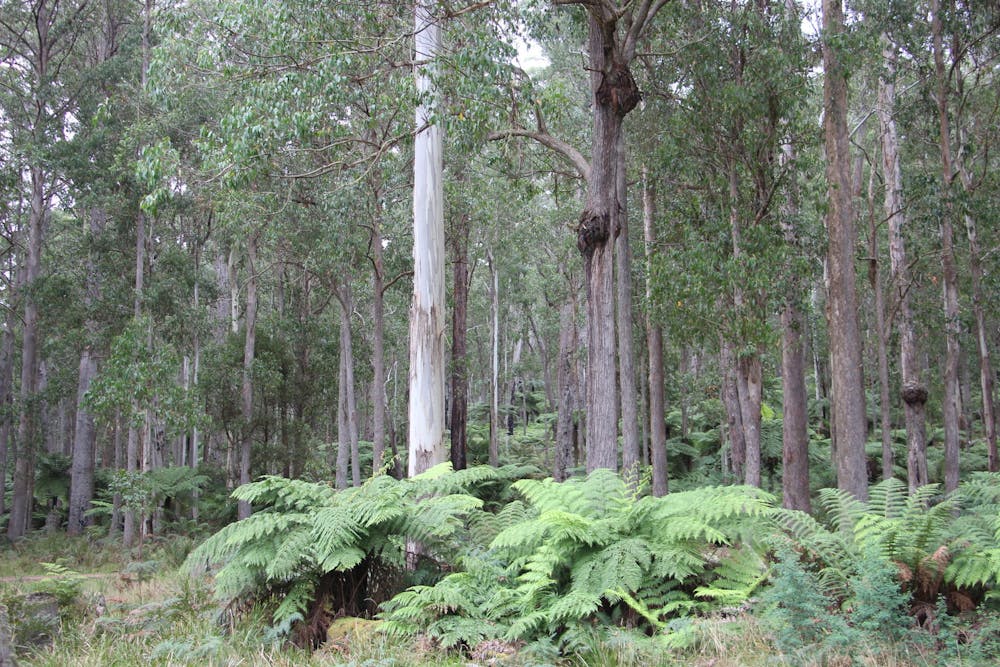
E. obliqua is also commonly known as messmate, stringybark, browntop, Tasmanian or Tassie oak, or browntop stringybark. It is widely distributed through southeastern Australia, growing in Tasmania, Victoria, South Australia and much of New South Wales, almost to the Queensland border.

It is usually a tall straight forest tree that can reach heights of 80m or more, and girths in excess of 10m. It grows in higher and wetter habitats and often grows around other eucalypts such as E. regnans, E. delegatensis, E. viminalis or E. radiata.


Read more: Mountain ash has a regal presence: the tallest flowering plant in the world


The specimens that Cook’s expedition encountered on Bruny Island were huge forest trees, and there are still such specimens growing on the island today. They are well worth a visit along easily accessible tracks. Such giant specimens can also be found on the mainland in places such as the Otway Ranges. However, you can also find examples of E. obliqua growing in the coastal heaths of Victoria that are no more than a metre high and will maintain their short stature regardless of where they are grown.

Stringybark near Mountain Ash, with a canopy height of around 40m. Pete The Poet/Flickr, CC BY-NC

A tough customer

One of the great things about messmate stringybark is its environmental resilience. The species is renowned for its adaptations to stress, particularly fire. Its thick stringy bark protects the trunk during bushfires, and under the bark are dormant (or “epicormic”) buds that allow the rapid establishment of a leafy canopy after fire or other stresses such as grazing. These buds often sprout very soon after a fire and are the first sign the forest is beginning to regenerate.

Many of these new shoots will not last very long, but usually enough will survive to reconstitute the tree’s canopy. If all the shoots fail, most specimens have a lignotuber (like a mallee root) that allows new stems and trunks to develop after very severe stress. So E. obliqua is truly a tough customer.

During the most recent ice age, Tasmania and the mainland were connected by a land bridge that subsequently disappeared under Bass Strait. The populations of E. obliqua in Victoria and Tasmania were then connected but in the 10,000 years since they have been separated by the strait, the individual trees growing on the mainland have retained a lignotuber, while those in Tasmania did not. This reflects the better growing conditions in Tasmania for messmate stringybark, and less need or stress adaptations.


Read more: A fresh perspective on Tasmania, a terrible and beautiful place


Good wood

The timber of E. obliqua is highly prized. It was used by Indigenous communities, as scars on some surviving trees indicate, and its fibrous bark could be used for making fibre and in fires. Today, it is a fine quality hardwood that can be used for building house frames, furniture making or, of course, for wonderful Tassie oak wooden floors.

It is not the densest or hardest eucalypt timber, but is hard enough to make beautiful and durable flooring that polishes to a rich honey or golden colour. Properly installed and maintained, these floors can remain in good condition for well over a century and many Australians will have fond memories of dancing on them.


Read more: Unravelling the mystery of eucalypt scribbles


Messmate stringybark is one of the great trees of Australia for a variety of reasons. It has links to Captain Cook, is an economically important timber species, and is a great survivor in the harsh Australian environment. With its wide distribution and adaptations to fire and other stresses, it is a species likely to cope well with climate change. After all, it is as tough as boots.

Sign up to Beating Around the Bush, a series that profiles native plants: part gardening column, part dispatches from country, entirely Australian.

ref. Stringybark is tough as boots (and gave us the word ‘Eucalyptus’) – http://theconversation.com/stringybark-is-tough-as-boots-and-gave-us-the-word-eucalyptus-100528]]>

How our red blood cells keep evolving to fight malaria

]]>

Source: The Conversation (Au and NZ) – By Sant-Rayn Pasricha, Laboratory Head, Population Health and Immunity/ Infection and Immunity, Walter and Eliza Hall Institute

Ever since humans first evolved from our primitive ancestors, we have been locked in a battle with our greatest infectious foe – malaria. This life-threatening disease, caused by the Plasmodium parasite and transmitted through mosquito bites, kills one child every two minutes. There were an estimated 216 million cases of malaria in 91 countries (most in sub-Saharan Africa) in 2016, which is 5 million more than the previous year.

For most of history, humans lived without antimalarial drugs, bed nets or even the basic understanding of how malaria is caused. But still our bodies fought against it. In the intense human-malaria war, one way humans could survive would be to make ourselves less hospitable to the pathogen. And that’s exactly what happened.

Over thousands of years, randomly occurring differences in our genetic code that inadvertently reduced malarial risk and provided a survival advantage have been “selected” – meaning these genetic differences become more prominent in the population. Today, human populations in specific parts of the world carry heavy genetic marks from our ancient war with malaria. And it is the red blood cell (erythrocyte) that mostly bears the scars.


Read more: What 115 years of data tells us about Africa’s battle with malaria past and present


The red blood cell

The erythrocyte is a remarkable cell. It ships oxygen, bound to iron in the red haemoglobin molecule, from the lungs and heart to every tissue in the body. Its unique shape – a biconcave disc – allows it to deform and reshape itself. This helps it squeeze into the smallest of blood vessels to deliver its payload of oxygen.

The red blood cell’s unique shape helps it get into difficult places to deliver oxygen. from shutterstock.com

But red cells can also be homes to malaria parasites. These parasites grow, replicate and then burst from the cells during an infection, damaging not just the infected red cell but also uninfected bystanders. Damaged red cells are removed from circulation and the reduction causes anaemia (low levels of haemoglobin), which makes people feel weak, tired and lethargic. In severe cases, it can kill.

Malaria has provoked humans to modify the red cell to protect itself from infection. Almost every part of the red cell – from its membrane to the globin genes that confer its role in oxygen transport – harbour common genetic changes in a desperate effort to help our species survive the onslaught of malaria.


Read more: Explainer: what’s actually in our blood?


Genetic changes and sickle cells

Perhaps the most important changes have happened to the haemoglobin molecule itself. Haemoglobin comprises two key components: haem, which contains iron and binds oxygen, and globin, which is a quartet of two copies each of two components – alpha and beta globin. In every part of the world where malaria is now or has previously been common, humans have evolved changes in the globin genes.

A single change in the beta globin sequence and hence protein structure causes what is known as sickle haemoglobin (HbS). Carriers of HbS (who have one mutant and one normal copy of the gene) have little difference in their blood counts and no symptoms. But they have about a 30% reduction in susceptibility to malaria – a pretty heavy protection.

A sickle-like shape prevents the red blood cell from doing its job. from shutterstock.com

This gives an enormous advantage for children living in an endemic malaria setting. All cases of HbS are caused by an identical genetic change occurring under high pressure of malaria infection. It appears to have arisen spontaneously at least five times over our evolution in different regions in Africa, India and the Middle East.

Proportions of populations in these places, or those descended from them, still commonly carry the mutant gene. About 10% of the African American population are carriers of the sickle cell trait. Individuals of Indian, Eastern Mediterranean, Caribbean and Middle Eastern descent can also be affected.

Laboratory slide of sickle cell disease, showing several sickle-shaped blood cells. Dr Salvatore Fiorenza/Dr Giles Kelsey, Author provided

While those who carry a single copy of HbS don’t have symptoms, carriers of two copies of HbS (which means they have no normal copy of beta globin) can suffer a life-altering genetic condition known as sickle cell anaemia.

Their red blood cells become susceptible to changing to a rigid, sickle-like shape. This prevents blood from flowing and can result in frequent, unpredictable attacks of pain, organ damage and even stroke.

The severity of sickle cell disease is reduced for those fortunate to have increased levels of fetal haemoglobin persisting into adulthood. Amazingly, to help defend people with sickle cell disease from the severe consequences of this condition, an otherwise silent genetic condition – hereditary persistence of fetal haemoglobin – has arisen in populations where sickle cell disease is common.


Read more: Explainer: one day science may cure sickle cell anaemia


Thalassaemia

Other populations have evolved different changes in their globin genes to try to defend themselves against malaria. Deletions of part, or all, of the alpha or beta globin genes result in people carrying the blood disease alpha or beta thalassaemia.

Carriers are usually completely healthy, except for a symptomless anaemia detectable only when a blood test is performed. But these conditions are increasingly recognised as perhaps one of main causes of mild anaemia in parts of Asia, the Pacific and the Middle East.

Just like the sickle cell mutation, this protects against invasion by a malaria parasite. But people who carry two deleted copies of their beta globin gene suffer severe anaemia and may require lifelong blood transfusions to survive.

The consequences of deletions of alpha globin genes are more variable, but infants with deletion of all copies of their alpha globin genes usually have such severe anaemia in utero that they do not even survive to birth.

The red cell membrane

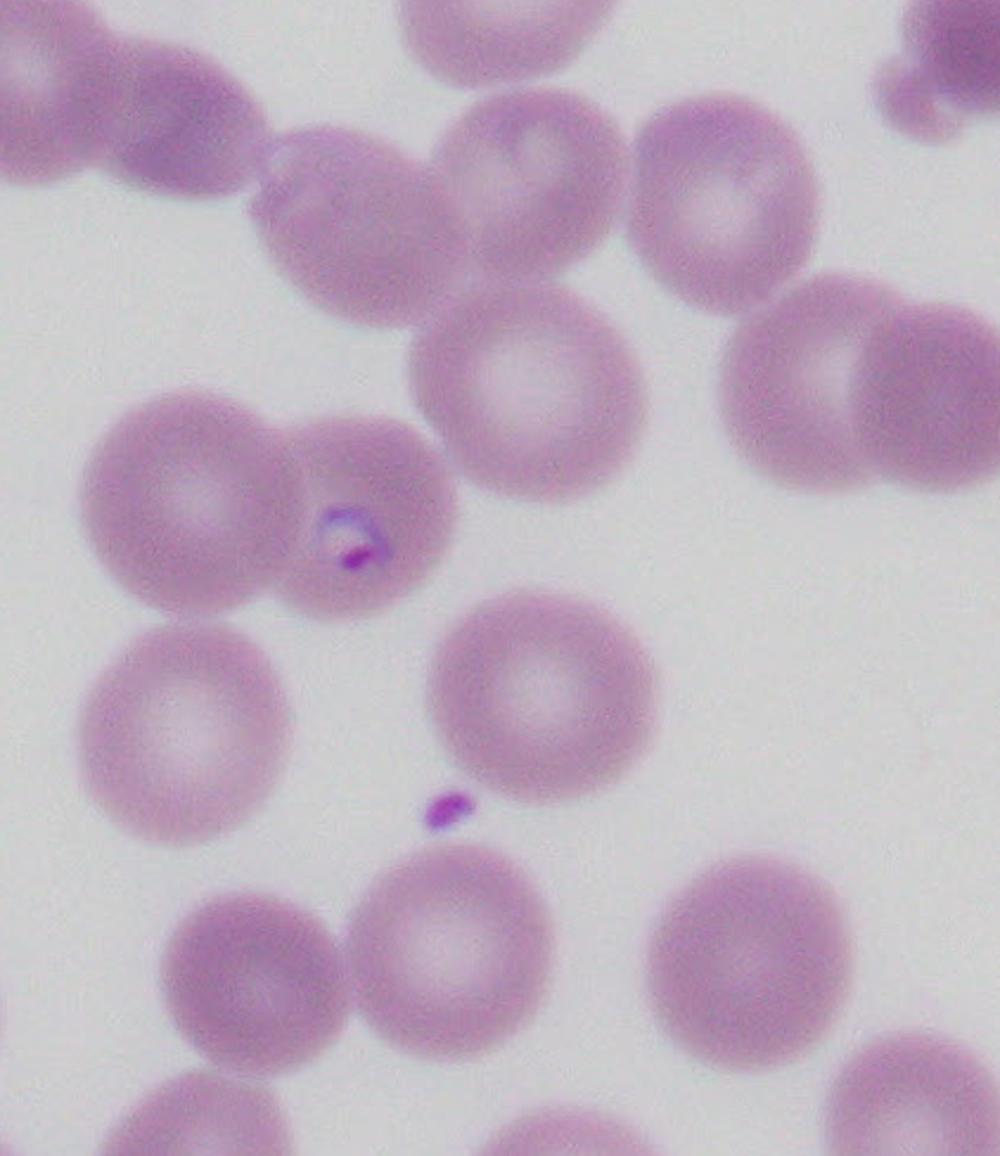
A laboratory slide showing a red blood cell containing a malaria parasite (purple ring with a dark purple dot). Dr Salvatore Fiorenza/Dr Giles Kelsey, Author provided

Then there are evolutionary changes to the Duffy protein. This is a receptor found on the red cell membrane, which is also the protein through which the parasite Plasmodium vivax – the second-most-common cause of malaria – enters the cell.

Almost all the populations in West Africa and well over half of all Africans have inactivated the expression of this gene in their red blood cells. This means they have red cells that are resistant to P. vivax invasion.

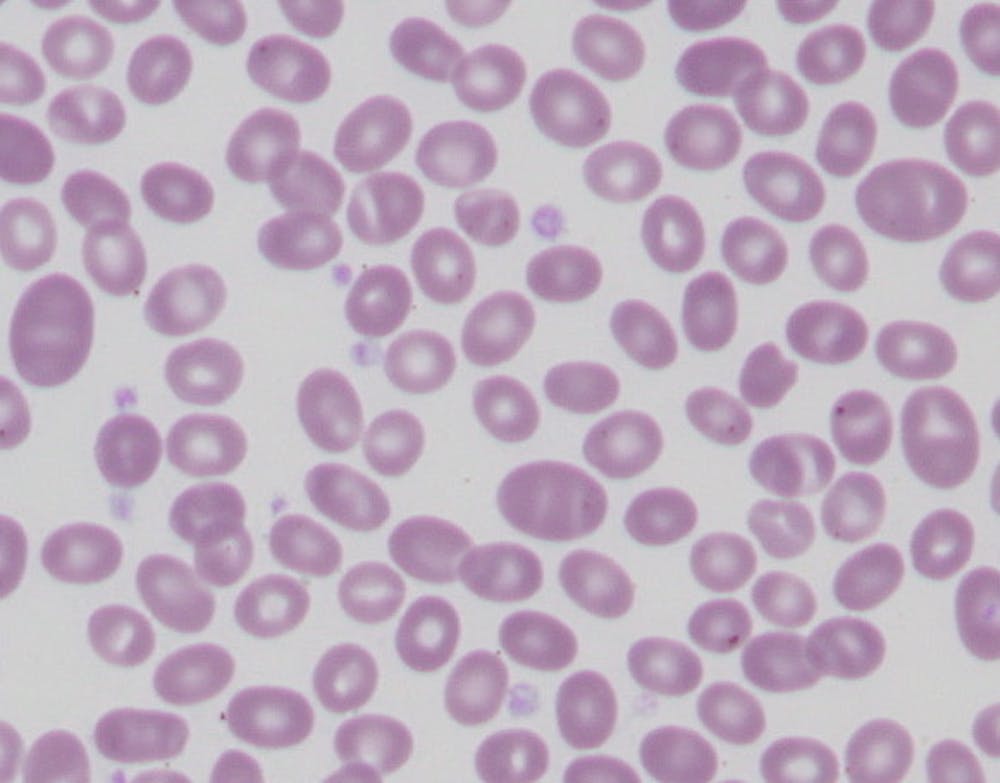
Other changes to the red cell membrane can also protect against malaria. People living in Papua New Guinea and other parts of the Pacific may have red blood cells that resemble Nutri-Grain breakfast cereal, with a horizontal stripe or two.

Laboratory slide of Southeast Asian ovalocytosis, showing Nutri-Grain-like cells with one or two horizontal bands. Dr Salvatore Fiorenza/Dr Giles Kelsey, Author provided

This often asymptomatic condition is called Southeast Asian ovalocytosis. It occurs due to a mutation of a red blood cell protein (which determines the structure of the cell), which makes the rest of the red cell scaffold more rigid than normal. This renders the individual resistant to malarial parasite invasion and protects them from infection.

New mechanisms evolved by our red cells to protect us from malaria are still being discovered. Iron deficiency anaemia, which affects hundreds of millions of (mainly) children and women around the world, has been thought to be mainly due to inadequate nutritional intake of iron.

But now it appears to protect red blood cells from malaria parasite invasion. Many studies show iron-deficient children have a reduced risk of developing malaria. This means improving iron status (for example, through iron supplementation) could predispose children to risk of infection.

Malaria is fighting back

In recent years, human evolution has been complemented by scientific breakthroughs. Effective antimalarial drugs, insecticide-treated bed nets that protect sleeping children from mosquitoes, and rapid tests that can diagnose a case of malaria in a few minutes without the need for a trained microscopist have all helped.

But there is evidence the parasite (and its mosquito host) are evolving to win back the advantage. For example, almost all of a strain of Plasmodium falciparum parasites are resistant to one of the first anti-malarials, Chloroquine.

Now, multi-drug-resistant parasites rule in parts of Southeast Asia, particularly near the Thai-Burma border. Here, resistance to important antimalarials such as mefloquine and, increasingly, artermisinin, which is the backbone of effective therapy, has emerged.


Read more: Weekly Dose: mefloquine, an antimalarial drug made to win wars


Even more ingeniously, parasites have started learning to hide from rapid diagnostic testing by deleting the HRP2 protein these tests rely on to detect them. In this way, they allow the parasite to continue to live (and spread) undetected in an untreated host.

And the malaria-spreading Anopheles mosquito, found throughout the world where malaria is endemic, is learning to bite humans for its blood meal earlier in the evening, rather than later at night when people are sleeping, to subvert the protection offered by bed nets.

So the battle isn’t over. Our oldest foe remains with us and continues to be a formidable opponent.

ref. How our red blood cells keep evolving to fight malaria – http://theconversation.com/how-our-red-blood-cells-keep-evolving-to-fight-malaria-96117]]>

The Uncomformity festival embraces the power and peculiarity of Tasmania’s wild west

]]>

Source: The Conversation (Au and NZ) – By Asher Warren, Lecturer, University of Tasmania

Of the many festivals dotted across the island state of Tasmania, The Uncomformity is particularly well named. It is an inherently unique event, responsive to the particularities of the western town of Queenstown’s unique geology, ecology and culture.

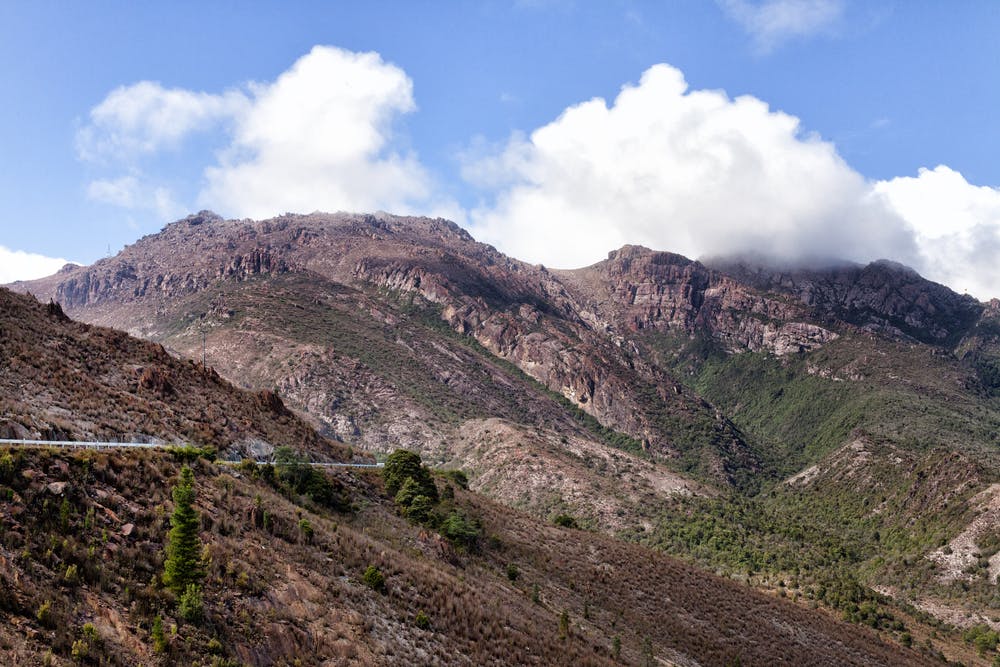
Queenstown is nestled in Tasmania’s mountainous West Coast Range, between Mt Owen and Mt Lyell, with an infamous reputation for inclement weather. And it is remote: at least three hours of winding drive from both Hobart and Launceston.

On a sunny day, the views are spectacular; some for their natural beauty, others for the demonstrable effects of over a century of mining, smelting and clearing. However, after three days of immersion in the town and the festival, I began to feel that Queenstown was somehow better evoked by the moments when the clouds hung low, only to occasionally break open, revealing unexpected and surprising views.

A central ethos of The Unconformity is the curatorial commitment to site-specific and locally engaged work. Many of the works are unique to the location and the people of Queenstown, and developed by artists through multiple visits to the town. Note must be made of the exceptional diversity of gallery-based works, including Lucy Bleach’s enigmatic Variations on an Energetic Field and the overwhelming scale of Raymond Arnold’s survey, 100 Etchings/35 Years in Tasmania. But I was particularly struck by the use of performance within this festival, as a model for engaging with the place that is “Queenie”.

Queenstown’s bare hills were denuded by over a century of mining. Shutterstock

The power of listening

The pedestrian bridge over the town’s Queen River became a makeshift stall for audiences wearing headphones for Tasdance’s Junjeiri Ballun – Gurul Gaureima (Shallow Water, Deep Stories). Using the banks and the river itself, the bodies of five dancers explored the Indigenous history of the area and this waterway, which mine tailings and effluent once turned silvery grey and which remains, despite the remedial work to date, stained a remarkable shade of orange.

Tasdance’s Junjeiri Ballun – Gurul Gaureima. The Uncomformity festival

Across the bridge, Prospect brought Dylan Sherridan’s deft and thoughtful engagement with sound together with Sam Routledge’s knack for engaging dramaturgical structures. Using hacked metal detectors, and again wearing headphones, prospectors walked through Passion Park, searching for sonic treasures. The dynamic score was a delight, and the uneven experience for participants (some struck it richer than others) an interesting counterpoint to the otherwise even distributions created by works for headphones.

Another work experienced with headphones, A Score to Scratch the Surface (Opening Scene) by momo doto (Tom Blake and Dominique Chen), offers a markedly different take on the roaming soundscape.

Beginning in the dress circle of the 1933 Paragon Theatre, looking out at the projection screen, we hear an assemblage of recordings taken in and around Queenstown. Curious sonic artefacts are woven with brief snippets of conversations with locals, which slip in and out. The audience of three is ushered out of the theatre, into a car, and driven on a meandering tour of the town by a local resident. These stories, like the sites on this particular tour, don’t cry out for attention, forcing the ear and the eye to search for details. It’s a subtle and meditative work, which engages deftly with diverse reflections on the value of Queenstown’s natural resources.

As artist Tom Blake explained to me, the work was built slowly, over a number of visits to the town: “We were fortunate to have a development period that provided an opportunity to visit and revisit places and people over an extended period. We wanted to avoid being a flash in the pan – dropping by to make a work, then disappearing into the night.”

A Score to Scratch the Surface gestures toward the surprising paradoxes of Queenstown. It’s a place of riches, of devastation and resilience. With the mines closed since a tragic accident in 2013, and uncertainty about their reopening, the town sits in an uneasy limbo and faces difficult decisions. The challenges of regeneration – economically, environmentally and culturally – loom large. There are no easy answers, but the festival offers an opportunity to listen, to share and to understand something of this complexity.

Lucy Bleach’s Variations On An Energetic Field (Variation 3) The Unconformity

While not explicitly noted as a theme for the festival, the act of listening seemed to be a particular focus. This was most explicit in Jill Orr’s durational performance Listening (made in collaboration with sound artist Richie Cyngler), staged in an old limestone quarry on the edge of town. This work asked audience members to record three wishes, while Orr, with characteristically otherworldly endurance, stood still and listened as these wishes were broadcast by loudspeakers and echoed around the quarry.

In the Medical Union building, Babel, directed by Glen Murray, allowed audiences to roam freely, exploring a panoply of other languages. While a remarkably simple conceit, the experience of wandering and listening to the diverse cast of performers was surprisingly compelling.

Starting with a bang

On a grander scale, the festival opened on Friday with Tectonica, a collaboration between Ian Pidd, Martyn Coutts and Dylan Sheridan, which closed down the main intersection to host a nine-tonne rock and some “bloody big speaker stacks”. The tremendous, visceral soundscape condensed some 500 million-odd years of geological activity into an hour of epic, quadrophonic sound and, in the distance, an ominous red fissure opened up in the mountainside. Not content to lie dormant, the speakers rumbled sporadically throughout the weekend, felt and heard throughout the small town.

Tectonica a display created by artists Martyn Coutts, Ian Pidd and Dylan Sheridan. Unconformity festival

The Falls, by Halcyon Macleod and Finegan Kruckemeyer, tells a story of young love, separation and return. It is a moving work, quite literally, as the audience dons headphones and climbs aboard a bus. The narrative of the play unfolds from a series of perspectives while journeying from one end of the Queen River – the Horsetail Falls – to the other, its confluence with the King River. It’s an ambitious and expansive work – and neatly staged – but at times the poetry of the script seemed to overextend, attempting to translate the narrative and connection to this site perhaps beyond its specifics.

An ominous red fissure opens in Tectonica. Uncomformity

Local works

For all the innovative contemporary work in this festival, and the influx of city slickers who pour in from Hobart (vying for the title of Australia’s new centre of hip) and the mainland, it would be all too easy to alienate the locals. But the festival does a remarkable job of keeping the West Coasters not only in the frame, but at the centre. While there was a palpable but subtle sense of reservation on the Friday night, by the closing Sunday the town seemed to reach a comfortable equilibrium.

Around noon on Sunday, after the ute muster took off and before the marquee football match on Queenstown’s notorious gravel oval, the bloody big speaker stacks gave a last hurrah and belted out a locally curated playlist of AC/DC’s greatest hits. An homage to the band’s 1976 performance in the town, the music slowly drew a crowd. It grew, as more joined in and danced around, and on, the rock left in the centre of the intersection.

This festival, which began as the Queenstown Heritage and Arts Festival, and more recently reimagined as The Unconformity, has carved out a unique position in Tasmania and in Australia’s cultural landscape. It will next run in 2020, and its growing esteem and success raise an important question about growth and sustainability. One of the key features of this festival is its scale, which allows it to balance the influx of visitors and locals; they meet, rather than being overwhelmed.

Under proud West Coaster Travis Tiddy’s direction, however, the festival will hopefully approach its growth with the same focus and thoughtful reflection on place that made the 2018 version such a memorable success.

ref. The Uncomformity festival embraces the power and peculiarity of Tasmania’s wild west – http://theconversation.com/the-uncomformity-festival-embraces-the-power-and-peculiarity-of-tasmanias-wild-west-106147]]>

There’s a reason your child wants to read the same book over and over again

]]>

Source: The Conversation (Au and NZ) – By Jane Herbert, Associate Professor in Developmental Psychology, University of Wollongong

We often hear about the benefits of reading storybooks at bedtime for promoting vocabulary, early literacy skills, and a good relationship with your child. But the experts haven’t been in your home, and your child requests the same book every single night, sometimes multiple times a night. You both know all the words off by heart.

Given activities occurring just before sleep are particularly well-remembered by young children, you might wonder if all this repetition is beneficial. The answer is yes. Your child is showing they enjoy this story, but also that they are still learning from the pictures, words, and the interactions you have as you read this book together.


Read more: Six things you can do to get boys reading more


Kids want repetition

A preference for familiarity, rather than novelty, is commonly reported at young ages, and reflects an early stage in the learning process. For example, young infants prefer faces that are the same gender and ethnicity as their caregiver.

With age and experience, the child’s interests shift to novelty seeking. By four to five months, novel faces are more interesting than the now highly familiar caregiver face.

But even three-day olds prefer looking at a novel face if they’re repeatedly shown a picture of their mother’s face. So once infants have encoded enough information about an image, they’re ready to move on to new experiences.

Your child’s age affects the rate at which they will learn and remember information from your shared book-reading. Two key principles of memory development are that younger children require longer to encode information than older children, and they forget faster.

For example, one-year olds learn a sequence of new actions twice as fast as six-month olds. And while a 1.5-year old typically remembers a sequence of new actions for two weeks, two-year olds remember for three months.

Two dimensional information sources, like books and videos, are however harder to learn from than direct experiences. Repeated exposure helps children encode and remember from these sources.

Blues Clues was created to harness learning from repetition. Screenshot/Youtube

How do kids learn from repetition?

Being read the same story four times rather than two times improved 1.5- and two-year olds’ accuracy in reproducing the actions needed to make a toy rattle. Similarly, doubling exposure to a video demonstration for 12- to 21-month olds improved their memory of the target actions.

Repeated readings of the same storybook also help children learn novel words, particularly for children aged three to five years.


Read more: Children prefer to read books on paper rather than screens


Repetition aids learning complex information by increasing opportunities for the information to be encoded, allowing your child to focus on different elements of the experience, and providing opportunities to ask questions and connect concepts together through discussion.

You might not think storybooks are complicated, but they contain 50% more rare words than prime-time television and even college students’ conversations. When was the last time you used the word giraffe in a conversation with a colleague? Learning all this information takes time.

The established learning benefits of repetition mean this technique has become an integral feature in the design of some educational television programs. To reinforce its curriculum, the same episode of Blue’s Clues is repeated every day for a week, and a consistent structure is provided across episodes.

Five consecutive days of viewing the same Blue’s Clues episode increased three to five year olds’ comprehension of the content and increased interaction with the program, compared to viewing the program only once. Across repetitions, children were learning how to view television programs and to transfer knowledge to new episodes and series. The same process will likely occur with storybook repetition.

How parents can support repetitive learning

The next time that familiar book is requested again, remember this is an important step in your child’s learning journey. You can support further learning opportunities within this familiar context by focusing on something new with each retelling.

One day look more closely at the pictures, the next day focus on the text or have your child fill in words. Relate the story to real events in your child’s world. This type of broader context talk is more challenging and further promotes children’s cognitive skills.

You can also build on their interests by offering books from the same author or around a similar topic. If your child currently loves Where is the Green Sheep? look at other books by Mem Fox, maybe Bonnie and Ben rhyme again (there are sheep in there too). Offer a wide variety of books, including information books which give more insight into a particular topic but use quite different story structures and more complex words.

Remember, this phase will pass. One day there will be a new favourite and the current one, love it or loathe it, will be back on the bookshelf.


Read more: Reading teaching in schools can kill a love for books


ref. There’s a reason your child wants to read the same book over and over again – http://theconversation.com/theres-a-reason-your-child-wants-to-read-the-same-book-over-and-over-again-105733]]>

How Eurasia’s Tianshan mountains set a stage that changed the world

]]>

Source: The Conversation (Au and NZ) – By Gilby Jepson, PhD Candidate, University of Adelaide

This article is part of our occasional long read series Zoom Out, where authors explore key ideas in science and technology in the broader context of society and humanity.


Nestled deep in Central Asia, the Tianshan is a huge mountain range that stretches from Uzbekistan in the west, all the way through to China and Mongolia in the east. It is more than 2,500km in length and has numerous peaks that soar to over 7,000m in height.

Though you may not know it, the Tianshan mountain range probably changed the lives of your ancestors – and to this day, you.

Through defining and shaping ancient trading routes of the Silk Road and still now China’s Belt and Road initiative, the Tianshan has been key to the development and spread of human society and culture over thousands of years.

We’re now able to put together geological evidence to see how this incredible mountain range formed. When it all began more than 700 million years ago, the world was a very different place.

Vital in trade and communications for thousands of years, the paths of the Silk Road passed through and around the Tianshan. Gilby Jepson, Jack Gillespie (using data from ESRI, NASA, and NOAA)

Like a string of pearls

The Tianshan mountain range created a stage for world-changing human activities.

Beginning in 138BCE, the Silk Road trading routes connecting Asia with Europe carried not just merchandise and precious commodities but also allowed movement and mixing of populations with their accompanying knowledge, ideas, cultures and beliefs.

Traders on the Silk Road weaved their way through the valleys of the Tianshan; their path focused by its broad east-west orientation. The ranges offered climatic stability and facilitated relatively easy cross-continent travel.

It was through this network that goods and technology such as paper, the compass, gunpowder, and (of course) silk, were transmitted across the continent to profound impact.

Two high peaks of the central Tianshan: Xuelian Feng with a summit of 6,527 metres above sea level, and the aptly-named Peak 6231 at 6,231 metres. NASA

As a result, numerous wealthy societies and cultures bloomed along the length of the Tianshan, like pearls connected by a line of silk. Cities of the Silk Road such as Samarkand, Bukhara, and Kashgar were important centres of learning and rich trade hubs, a history that is reflected in their gorgeous architecture.

Even today, the land routes of modern China’s One Belt, One Road Initiative – a distributed infrastructure system to facilitate trade – will be governed by the Tianshan geography.

Mosque in the silk road city of Samarkand. Gilby Jepson, Author provided

Read more: The Belt and Road Initiative: China’s vision for globalisation, Beijing-style


How the Tianshan formed

Geologists look back to well before human existence to understand how the Tianshan came about.

The Earth looked completely different when the Tianshan first began to form 700 million years ago, or more.

We now have a map of plate tectonics for the period 1,000-520 million years ago. The colours refer to where the continents lie today. Light blue = India, Madagascar and Arabia, magenta = Australia and Antarctica, white = Siberia, red = North America, orange = Africa, dark blue = South America, yellow = China, green = northeast Europe.

There was no Eurasia at this time. Instead, the ancestral Tianshan began in the ocean, starting as volcanic magma and lava that formed island chains above subduction zones (the deep parts of the oceans where the sea bed plummets further down into the deep earth). These early island arcs most likely resembled modern Indonesia.

Over millions of years, these islands merged together to form a land bridge connecting the lands of what we now know as eastern Europe and Siberia.

As this proto-Eurasian continent came together, the land mass grew further due to rocks being scraped off the tectonic plate as it moved downwards. It’s a similar scenario to what’s still going on in the Andes today.

This Andes-style growth of the Tianshan continued until 250 million years ago, when a large continental plate, known as Tarim (today the Taklamakan Desert in far west China) collided with early Asia.

This ancient plate collision between Tarim and the nucleus of Asia created the first version of the Tianshan mountains.


Read more: A map that fills a 500-million year gap in Earth’s history


Scars from the past

Bands of smashed rock amid massive fault zones are preserved from these ancient plate collisions. Also referred to as sutures, these scars represent the sites of ancient oceans that used to separate these now-combined continents.

In the Tianshan, these sutures are mostly aligned east-west, and are typically weaker than the rock in between. As a result, when the entire region is placed under stress from the movement of the tectonic plates at the edge of Eurasia, these zones often break, forming faults and earthquakes.

The faults also push rock up on top of other layers and form mountains – giving the fundamental east-west alignment of valleys and mountains in the Tianshan region.

The Dzungarian Alatau, Kazakhstan; one of the many east-west trending ranges that dominate the Tianshan. Gilby Jepson, Author provided

The positioning of these geographical features had a major impact on human history. The spread of domesticated animals and plants from their places of origin, whether wheat from the Fertile Crescent or horses from Central Asia, would not have progressed so smoothly without these structures. The similar climate along latitudinal valleys helped horses, pigs, cattle, wheat, barley, and all the other biological hallmarks of advanced agricultural societies spread.


Read more: A precarious geological bargain


When India collided with Asia

After the Tarim-Asia collision 250 million years ago, the Tianshan mountains underwent significant erosion. This process of wearing down took place over hundreds of millions of years, causing central Asia to look much like the arid, weathered hills of central Australia.

The weathered hills of the Nurata Range, Uzbekistan. Gilby Jepson, Author provided

But then a new geological event forced the mountains back up again: the collision of India with Asia between 50 to 30 million years ago.

In addition to driving up the Himalayas and the Tibetan Plateau at the site of the collision, this collision reactivated ancient sutures in the Tianshan. The forces caused many of the low hills along the Tianshan to be thrust back up.

This is the modern topography of the Tianshan that we see today.

Mountains shape life

As well as providing structures for human activities, mountains like the Tianshan have played other roles in shaping non-human life on Earth.

One important way they do this is through influencing the climate of the planet. The formation of mountain ranges exposes vast areas of fresh rock. The weathering activity of rain and air in these rocks over time creates chemical reactions that locks up huge volumes of carbon dioxide and other molecules. This has the effect of reducing the greenhouse effect and cooling the planet on a timescale of millions of years.

Another effect of the erosion of rocks is that they release chemicals that were vital for the first life on Earth, and are still essential for our own existence today.


Read more: Phosphorus is vital for life on Earth – and we’re running low


The mountainous lake Song-Kul, Kyrgyzstan. Gilby Jepson, Author provided

Phosphorous, in particular, is thought to have been lacking in the early oceans, its supply limiting life as it is an essential component in DNA. The weathering of phosphorous-rich rocks could have been the driver for billion year old life to bloom.

The critical link between the deep earth, plate tectonic processes and the climate is one of considerable active research. It feeds into major questions. How did the Earth become habitable for complex life? Does the formation of mountains control ice ages?

Answering these questions, and others like them, is important if we are to properly understand our place in the world and the forces controlling the development of our dynamic Earth.

ref. How Eurasia’s Tianshan mountains set a stage that changed the world – http://theconversation.com/how-eurasias-tianshan-mountains-set-a-stage-that-changed-the-world-102772]]>

As she prepares to leave politics, Germany’s Angela Merkel has left her mark at home and abroad

]]>

Source: The Conversation (Au and NZ) – By Matt Fitzpatrick, Associate Professor in International History, Flinders University

German Chancellor Angela Merkel this week announced she would not stand for re-election again, after being a towering figure in European politics for more than a decade.

An enormously popular leader at her peak, in recent state elections it became all too clear that Merkel had become an electoral liability for her party. She had been safe when it was just the lunatic right wing of the so-called Alternative for Germany Party (AfD) that demanded her exit. But now that her once unassailable grip on centrist voters has loosened, she had no choice but to go. Her term will end in 2021.

What next for Germany?

Currently, the idea is that Merkel will allow the next generation in her party, the conservative Christian Democratic Union (CDU), to refashion its approach to Germany’s domestic problems while she continues to represent German and European interests abroad. Whether her successor, who must rebuild the electoral base of the party, will allow her to stay that long remains an open question.


Read more: How Angela Merkel has become – and remains – one of the world’s most successful political leaders


Who the CDU chooses will reveal just what the party’s preferred strategy for rebuilding will be. The AfD has admitted it will struggle for relevance if the CDU elects immigration critic and arch-conservative Jens Spahn as leader.

And the Greens will lose centrist voters if Merkel’s favourite, Annegret Kramp-Karrenbauer, emerges as the next CDU leader. The only other current serious contender is serial corporate board member Friedrich Merz. He left politics in a fit of pique after being sidelined early in Merkel’s reign, but has now returned.

Annegret Kramp-Karrenbauer is Merkel’s preferred replacement as CDU leader. AAP/EPA/Omer Messinger

Merkel’s waning popularity has not only left a vacuum within the CDU but also in the other traditional governing party, the Social Democratic Party (SPD). The SPD was domesticated and ultimately rendered irrelevant by Merkel’s tactic of forming coalition governments with it.

The SPD is arguably now a minor centrist rump party rather than the social democratic juggernaut it was at its strongest. Its current death spiral is just as important a part of Merkel’s domestic political legacy as milestones such as marriage equality, the end of compulsory military service and an obstinate refusal to allow any national debt, even in good economic times, to pay for infrastructure.

Her influence abroad

Internationally, Merkel is seen in both European and global affairs as having been a stable, calming influence in the volatile age of Donald Trump, Vladimir Putin and Xi Jinping, who in their own ways have approached the global status quo with dissatisfaction. Compared to them, her approach has certainly been cautious, indeed often deliberately reactive.

Yet there has been an overarching logic to her foreign policy. Merkel has used the existing structures of international power such as the United Nations and the G7 and G20 to coax reluctant nations towards international norms. Her assumption has always been that global order and stability best serve Germany’s international and economic interests.


Read more: We asked Germans what they really felt after Angela Merkel opened the borders to refugees in 2015


But she has rocked the boat herself on occasion. Her laudable (if reactive) 2015-16 intervention to allow more than a million war-ravaged refugees to enter Germany will be the one thing that will see her remembered in 100 years. Post-Assad statues of Merkel in the squares of Damascus and Aleppo are not hard to imagine.

But the move surprised and angered many neighbouring countries, particularly those that were subsequently leaned upon to both close their external borders on behalf of Germany and take in a share of “Merkel’s” refugees.

Certainly, no statues of Merkel will be erected in Athens. She will be less fondly remembered by Greeks for imposing Germany’s hard-line stance on debt refinancing. Many in southern Europe (and elsewhere) viewed this as exacerbating the debt crisis so as to assist northern European, and particularly German, banks.

Merkel’s almost evangelical stance on fiscal rectitude has not mellowed, nor has her cautious approach to furthering European Union economic integration. In a move seen as shoring up German economic sovereignty and interests, she famously rebuffed French President Emmanuel Macron’s ambitious plans to further bind the EU together financially. Merkel insisted that EU finances remain the preserve of intergovernmental negotiations and not that of a supranational EU treasurer.

On the other hand, a desire to defend the European project has motivated Merkel’s approach to Brexit, which stunned her as much as every other German. Some British pundits confess amazement that she hasn’t yet fixed their self-imposed problems for them, but Merkel has shown no inclination to pull Britain’s chestnuts out of the fire for them.

Beyond Europe, she is seen as having worked reasonably well with Putin, probably because she has demonstrated an understanding of Russia’s concerns about an EU and NATO that comes right up to its borders. Merkel was one of the few leaders at the NATO summit in Bucharest in 2008 who opposed US plans to bring Ukraine and Georgia into NATO immediately.

Certainly, it was Merkel who was seen as indispensable when Russia annexed Crimea. She maintained a fine line between condemning the annexation and convincing Putin to go no further against a weak and exposed Ukraine.

Although she was friendly with President Barack Obama, under Trump the US has become everything that the pro-order, pro-status-quo Merkel cannot abide. The feeling is famously mutual. Trump routinely points to German prosperity and stability as a dire warning of what might happen to the US if modest measures towards equality and humanitarianism were to be embraced. The contrast between the images of Merkel’s response to Syrian refugees and Trump’s virtual declaration of war against a modest band of Latin American refugees could not be greater.

Angela Merkel and Donald Trump’s relationship has been frosty. AAP/EPA/Clemens Bilan

As Trump continues to set fire to the organs of international diplomacy and the US races towards self-selected imperial decline, Merkel has continued to build new and often surprising international networks. When Trump began a trade war with China and threatened Iran with annihilation, Merkel not only visited Beijing but also very publicly sought Chinese assistance to counter American sabre-rattling in the Persian Gulf.

Merkel is also working with France’s Macron, Turkey’s Erdogan and Russia’s Putin on the question of peace in Syria. It’s a quartet that very pointedly does not include the once indispensable US (let alone post-Brexit UK).

Merkel has also leapt towards new opportunities in Africa. Whereas Trump might disparage African countries as “shitholes”, Merkel’s approach has been active engagement. This week she hosted 12 African leaders in Berlin to bolster Germany’s standing in Africa. Germany has also publicly atoned (if not paid compensation) for its colonial-era misrule in Africa.

Alongside this, German troops are quietly working away in Mali and Sudan (as well as other far-flung destinations such as Afghanistan, Kosovo and Lebanon).

Merkel’s courageous stance in favour of refugees will be remembered, as will her inflexible approach to European economics. But what will probably be forgotten is the extent to which she has taken economic engagement with Asia and Africa seriously.

As a technocrat rather than a conviction politician, she will leave the chancellorship believing that Germany’s best chances lie in engaging with the coming economic powers and avoiding injury from the decline of the US global order.

ref. As she prepares to leave politics, Germany’s Angela Merkel has left her mark at home and abroad – http://theconversation.com/as-she-prepares-to-leave-politics-germanys-angela-merkel-has-left-her-mark-at-home-and-abroad-105957]]>

Anne Summers’ new memoir and the bitter struggle over memory narratives of feminism

]]>

Source: The Conversation (Au and NZ) – By Camilla Nelson, Associate Professor in Media, University of Notre Dame Australia

Review: Unfettered and Alive by Anne Summers (Allen and Unwin)


Years ago, when I was young, I lived in an apartment in Sydney’s Potts Point that looked straight down into Anne Summers’ house. Summers had recently published her “Letter to the Next Generation” – and it’s likely that any discomfort not arising from the strange proximity of our urban views was directly attributable to this.

In the “Letter”, Summers famously wrote that she was “horrified” and “mortified” by the antics of women like my younger self – the wayward daughters of the revolution who had failed to measure up on the long tough march to gender equality.

The “Letter” drew its inspiration from years Summers spent as editor of Ms. magazine. Oddly enough, Summers’ new autobiography, Unfettered and Alive, is also shot through with the upheaval of these years and the aftermath of her falling out with US feminists Gloria Steinem and Susan Faludi.

Anne Summers. Kevin McDermott

Many harsh things are said in this book. It’s difficult to decide whether to praise its “breathtaking honesty” – as critics undoubtedly will – or draw back like a witness to some gruesome accident.

These are bitter struggles over the memory narratives of feminism.

Unfettered and Alive picks up where Summers’ earlier autobiography, Ducks on the Pond, leaves off. It’s the 1970s, a time when women’s choices are startlingly limited. Women earn just 65.2% of men’s salaries. The employment ads are divided into men’s and women’s jobs. Women are not allowed to drink in the front bar at pubs – they are banished to the ladies lounge.

Summers, age 30, is already a leading figure in the Women’s Liberation Movement that puts an end to all this. She is the author of one of the most significant early works of Australian feminist history, Damned Whores and God’s Police, and a co-founder of the inner-city women’s refuge, Elsie.

Later, she will be remembered as the head of the Office of the Status of Women, and a significant figure in the passage of the Anti-Discrimination Act and the battles over affirmative action, though only a chapter of the book is devoted to this.


Read more: Damned Whores and God’s Police is still relevant to Australia 40 years on – more’s the pity


A writer at last

Summers starts her story in 1975, when she answers an advertisement for an “energetic self-starter” at The National Times, then under the “wily” editorship of Max Suich. Here, she quickly sets to work on the multi-feature series that gave fresh impetus to the royal commission into the state of NSW prisons, and wins her a Walkley.

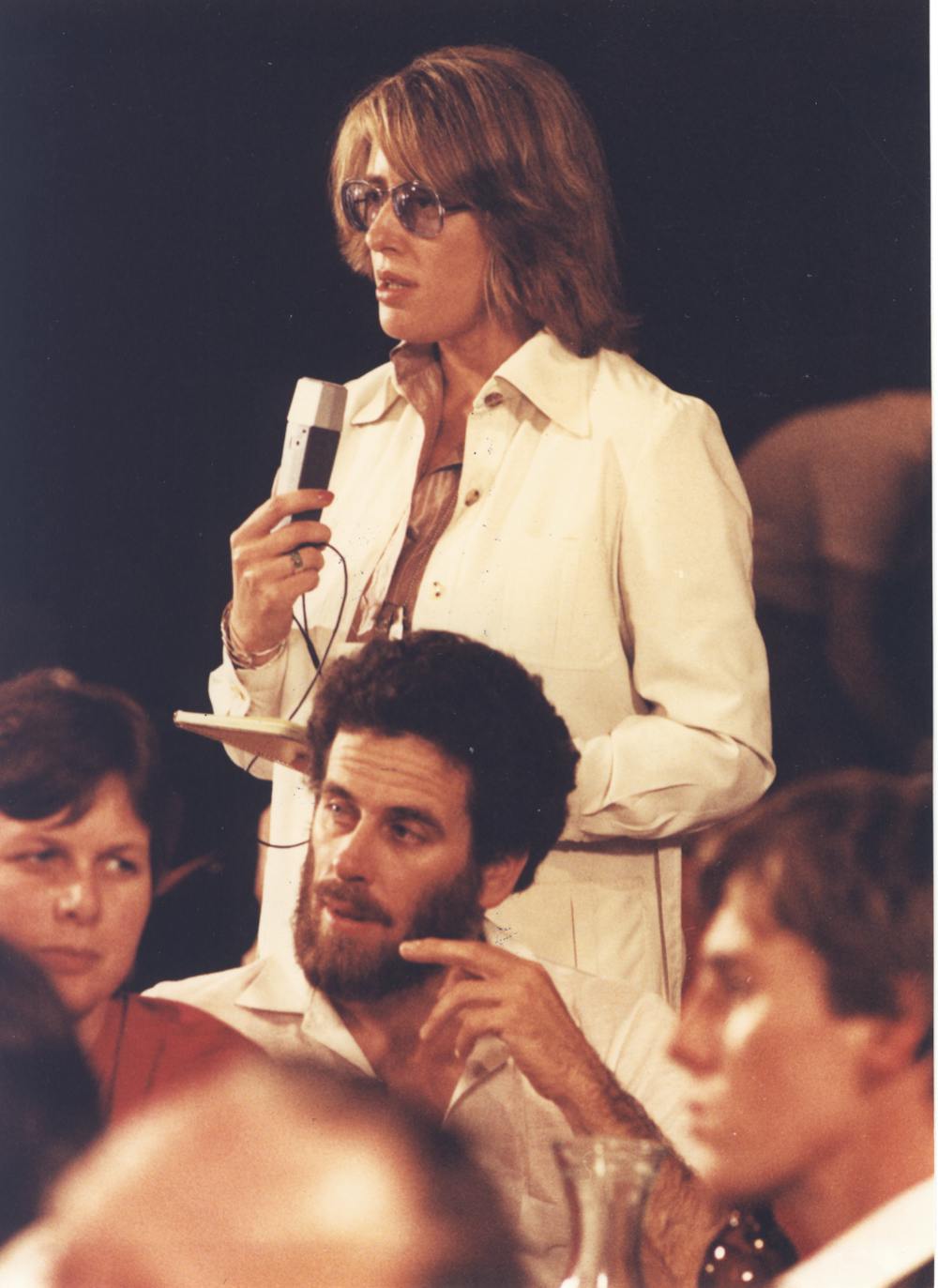
Summers at the National Press Club during the 1980 CHOGM meeting in Australia directing a question at British Prime Minister Margaret Thatcher. Allen and Unwin

Other more woman-focused stories follow. There’s the “gang bang” of a teenage girl at St Paul’s College, Sydney University. Another story, “How women are trained: if it’s not rape what is it?” reports on events in the Far North Queensland town of Ingham, where police openly acknowledge that 30 or 40 local women and children have been raped. “I reported it to police,” one girl told Summers, recollecting the first time she was gang-raped by five men at the age of 13. “But I didn’t have enough evidence. I wasn’t bruised enough.”

Working in Canberra as a political correspondent in the Fraser years, Summers is painfully honest about her fear of not doing the job well. “I can see the absolute terror in your eyes,” a reporter from a rival newspaper told her.

She reports walking out of a media conference held by Bill Hayden, in which the “alternative prime minister” decided to kick things off with a rape joke. “My colleagues didn’t seem bothered by such things,” Summers writes. Sexist behaviour went unchallenged and unnoticed because “it was the way things were back then”.

But Summers is also judgmental about other women in her memoir. In an atmosphere in which cabinet ministers chase female reporters around their desks, Summers recollects telling off a female reporter for wearing a “sexy outfit”. “I was very tough on a woman in my bureau who came to work one day with a dress that was slit practically to the waist.”

Confessions tumble across the pages: her breast-reduction surgery, the weight-loss regime that saw her drop 10kg and her pride in her “brand new body”. She talks about being brought up on a DUI charge when she took up her appointment at the Office of the Status of Women. She reveals her fondness for Robert Burton suits – it’s the era of the “femocrats” and big hair, shoulder pads and flats are in.

The 1980s are a time of epic change for women. New legislation and policy frameworks are put into place. Not everybody appreciated it. “One morning I found flung across the windscreen of my car a life-size plastic sex doll … ” Summers is alarmed, “not because this tawdry piece of plastic could hurt me but because whoever put it there could”.

‘I was the first Australian journalist to interview a US Secretary of Defence when I sat down with Caspar Weinberger in his office at the Pentagon in June 1986.’ Allen and Unwin

The Ms. Years

Summers arrived at the “shambolic offices” of Ms. magazine, on West 40th Street, New York, following the unexpected purchase of the iconic feminist publication by Fairfax in 1987. Summers calls the magazine “chaotic”. It operated like a feminist collective, she writes, in which “everyone appeared to be equal” and everybody had to do their own “shitwork”.

According to Summers, this “might have been okay for the women’s movement” but it was “no way to run a magazine”. But Ms. did not understand itself as just another media outlet. It was the printed vanguard of US feminism. It was – and still is – synonymous with the name of US feminist Gloria Steinem.

Summers put the entire staff on 60 days’ probation and fired three. But later in the chapter she adds: “I … should have cleared out the whole place.”

Summers set about giving the magazine an “80s lift”. This included increasing the focus on fashion, makeup advertisements, and the inclusion of a gardening page. She also embarked on a total redesign, including a new logo, masthead and an advertising campaign with the tagline, “We’re not the Ms. we used to be”. The ad featured a string of photographs showing an old hippie morphing into a young woman with a “glamorous 1980s look”.

It can’t have been an easy time. Steinem lost editorial control over the magazine as part of the financial arrangement. But, according to Summers, the magazine remained “almost neurotically dependent on Steinem”.

The relationship between the two women quickly became strained. Summers says she constantly questioned “the gap between Steinem’s rhetoric and the way she conducted herself”. The contents of Steinem’s apartment are said to be “disturbing”, including the covers on Steinem’s loft bed, which was draped in “flimsy white fabric” and a “set of physician’s weighing scales” in her kitchen, all of which are said to be “strange stuff for a feminist”.

Gloria Steinem receives the Presidential Medal of Freedom from then US President Obama in 2013. Shutterstock

It was the Hedda Nussbaum case that brought matters at Ms. to breaking point. When Joel Nussbaum murdered his six-year-old daughter and bashed his wife Hedda, debates raged in feminist circles as to whether Hedda should have been treated as an accomplice to her daughter’s death. Summers and Steinem took up opposed positions. Summers argued it was time to “stop excusing the behaviour of all battered women”. Steinem argued that Hedda was a “total victim” and believed the coverage was a “betrayal of everything Ms. had ever stood for”.

The decision to pull a close-up image of the heavily beaten Hedda off Ms’s cover remains a matter of controversy today. Summers writes that the photo was removed on the advice of her head of advertising sales who said: “We’ve just cracked the beauty category. You can’t do this to me.”

There was a lot of pressure around revenue. Summers and Australian colleague Sandra Yates had recently engaged in an audacious management buyout, after Warwick Fairfax announced his untimely decision to sell. According to Summers, Ms. advertisers wanted their customers to be “happy” not “challenged or confronted”. “… our only chance of survival was to meet or, if possible, exceed our advertising budget.”

Fraught decisions followed. “I was stricken when Barbara Ehrenreich proposed her next column be a satire on fast cars,” writes Summers. “I explained to her how sensitive and demanding these advertisers were, how we could not afford to lose them. Would she be willing to change topics?”

Ehrenreich, the acerbic social critic, refused.

The first edition of Susan Faludi’s global bestseller Backlash: the Undeclared War Against Women carried several pages attacking the editorial direction of Ms. under Summer’s leadership. Back in Australia, following the forced sale of the publication, Summers was “stunned”. There was “a tone to the writing that made it sound almost malicious”. She initiated a “tough” exchange of lawyer’s letters, demanding a rewrite of all subsequent editions of the book.

The entry now stands at around one page, which Summers quotes. Faludi writes:

The magazine that had once investigated sexual harassment, domestic violence, the prescription drug industry and the treatment of women in third world countries now dashed off tributes to Hollywood stars, launched a fashion column, and delivered the real big news – pearls are back.

An air of anxiety

Women who do not conform to certain gender ideologies fare badly in Summers’ book. Stay-at-home mums are berated for pushing baby buggies, young women are berated for “baking and doing craftwork”.

An air of anxiety runs through the remaining chapters. The months on Paul Keating’s staff end with Summers “sobbing with humiliation and rage” at the notorious “True Believer’s Dinner” that wound up costing $35,000. She had wanted Bob McMullan to be minister for women, and he had refused. She also didn’t think the unions at Parliament House ought to be paid for working through the $100 per ticket event.

Her period as editor of The Sydney Morning Herald’s Good Weekend magazine was also clouded when the MEAA took action to “protest my management style”, after Summers fired her deputy for “disloyalty” over a sexual harassment allegation. “I was not a mother, so I must be a whore,” writes Summers, explaining the ferocity of the attacks.

In 2013, Summers returned to address this same “widespread hostility towards women”, which had prominently manifested itself in the “woman-shaming” of the prime minister, Julia Gillard. In a new book, and a series of articles and interviews, she situated Gillard’s treatment as part of a continuing cultural pattern of “malicious and mendacious slurs” against high-achieving women.

Anne Summers (right) receives an honorary Doctorate of Letters from Pro-Chancellor Dorothy Hoddinott at the University of Sydney in 2017. Paul Millar/AAP

Women are immeasurably better off for the achievements set out in Summers’ book, despite some frightening backwards steps since, not to mention a failure to gain ground on childcare policy and the gender wage gap. Feminism has also become more flexible, opening itself up to longstanding critiques around class and race.

But it remains difficult for women to have their voices heard. Women in Australia who have spoken up on #MeToo are almost immediately threatened with defamation action – and some of them are being sued. Women of all ages still name family and domestic violence, workplace sexual harassment and street violence and harassment close to the top of their list of concerns.

Next to this, “doing craftwork”, wearing a split skirt, or covering your bed in “flimsy white fabric” – as Gloria Steinem undoubtedly did – doesn’t seem like much to worry about.

ref. Anne Summers’ new memoir and the bitter struggle over memory narratives of feminism – http://theconversation.com/anne-summers-new-memoir-and-the-bitter-struggle-over-memory-narratives-of-feminism-105845]]>

Op-Ed: Turkey: 95 Years of Humanitarian Foreign Policy

Turkish Ambassador Ahmet Ergin and NZ Gov General Dame Patsy Reddy.

Op-Ed: Turkey: 95 Years of Humanitarian Foreign Policy By Republic of Turkey’s ambassador to New Zealand, Ahmet Ergin. [caption id="attachment_18706" align="alignleft" width="206"] Turkey’s Ambassador to New Zealand, H.E. Ahmet Ergin, and New Zealand Governor General Dame Patsy Reddy.[/caption]On 29 October 2018, we celebrated 95th anniversary of the proclamation of the Republic of Turkey. In these 95 years of the Republic, Turkey has managed to shape a humanitarian foreign policy in a much volatile region. The changing political and economic environment in its neighbourhood has made Turkey more vulnerable to an increasing number of challenges; being located close to the volatile regions where intensive transformations are still taking place. Despite the uncertainty in the parameters and dynamics of the international system in a changing world, Turkey, powered by its growing means and capabilities, strives to effectively respond to today’s challenges in a determined and principled manner, as a reliable and responsible actor guided by the principles of Mustafa Kemal Atatürk, the founder of modern Turkey, in his dictum: “Peace at Home, Peace in the World.” With a view to adapt itself in a changing regional and international environment, Turkey adopted an enterprising and humanitarian foreign policy, aimed at promoting stability and prosperity regionally and globally. New Zealand shares the same approach as a prominent contributor to the Pacific region and supporter of other countries that are currently experiencing humanitarian crises like Syria, Yemen, South Sudan, Somalia, and Papua New Guinea. Humanitarian aid, as one of the fundamental aspects of Turkey’s foreign policy, has been implemented with determination and success in all the countries where people face massive challenges. Turkey is a leading actor in the global responsibility of fighting extreme poverty, providing education for all, improving the lives of women and youth, as well as alleviating the challenges in conflict and disaster affected areas. The key element of Turkey’s humanitarian policy is the combination of humanitarian and development assistance, without discrimination. Conflicts and natural disasters are the leading causes of human suffering. Today, more than 60 million people have been displaced from their homes due to conflicts. Since the World War II, this is the biggest number of people displaced. More than 200 million people have been affected by natural disasters and need aid. The gap between the needs of the people and aid provided to the people in response to humanitarian emergencies is widening. In order to find solutions to this problem, the first-ever World Humanitarian Summit was organised jointly by the United Nations and Turkey in Istanbul on 23-24 May 2016. Nine-thousand participants from 180 Member States, including 55 Heads of State and Government came together in Istanbul. According to the OECD Development Assistance Committee, Turkey’s official development assistance (ODA) amounted to USD 8 billion in 2017. Humanitarian assistance has the biggest share in our ODA with an amount of USD 7.2 billion. Turkey was the biggest humanitarian aid donor worldwide in 2017 and the most generous donor when the ratio of official humanitarian assistance to national income (0.85%) is taken into consideration. Turkey’s humanitarian aid is delivered mainly through the Turkish Disaster and Emergency Management Authority (AFAD) and the Turkish Red Crescent with development oriented humanitarian aid from Turkish Cooperation and Coordination Agency (TİKA). Another aspect of our humanitarian approach is Turkey’s open door policy for Syrians fleeing their country due to ongoing violence over the past seven years. Over 3.5 million Syrians are currently hosted in Turkey. Around 230,000 of them live in one of 21 temporary protection centres. Turkey has spent USD 31 billion on these refugees (including contributions of municipalities and Turkish NGOs). According to the UN Refugee Agency, Turkey maintains its position as the biggest host country with 4.3 million refugees. More than 600 thousand Syrian children continue their education in Turkey. The schooling rate among Syrian children in the age of primary education is 97 percent. Furthermore, the number of Syrian school leavers studying in Turkish universities is over 20,000. Development-oriented humanitarian assistance constitutes the ultimate target of Turkey’s efforts. Turkey intervenes at the request of the host country with humanitarian aid for emergency humanitarian relief and continues with development projects, such as the construction of fundamental infrastructure, like hospitals and schools. This approach has been very successful particularly in Sub-Saharan Africa. Turkey’s policy to assist Somalia can be regarded as an exemplary case. All segments of Turkish society, from public institutions to NGOs and private sector, were mobilised to assist the people of Somalia following the severe famine in 2011. This approach has gradually evolved into a comprehensive policy, comprising humanitarian, developmental, as well as stabilisation efforts in an integrated strategy. Several projects were initiated, which consisted of human and institutional capacity building, construction of essential infrastructure, providing services such as education, sanitation and health. Humanitarian aid, such as delivering food and medicine is ongoing. Whether it is an emergency resulting from a conflict or a natural disaster, Turkey extends its helping hand indiscriminately by responding to emergencies in its region, from the Rohingya Muslims in Myanmar to Yemen; from Colombia to Vietnam; from Nepal to Libya and Sudan. Turkey’s humanitarian contributions are not confined to bilateral assistance projects. Turkey aims to further increase its contributions to various international organisations. Turkey is working and cooperating closely with the UN and its related institutions. In order to assist further and to offer guidance to the UN’s humanitarian efforts, Turkey became a member of the UN Office for the Coordination of Humanitarian Affairs (OCHA) donor support group, which brings together leading humanitarian donors. Turkey also financially supports and continues to increase its financial contribution for humanitarian aid to the United Nations Relief and Works Agency for Palestine Refugees in the Near East (UNRWA), and has been actively working to raise awareness to solve the financial crisis of UNRWA in view of its recent budget constraints. Through mediation, and in fostering mutual respect and common values, Turkey actively seeks prevention and peaceful resolution of conflicts around the globe. These efforts transcend into the multilateral sphere. In 2010, Turkey spearheaded, jointly with Finland, the “Mediation for Peace” initiative within the UN in order to raise awareness for mediation. “Friends of Mediation” formed within this framework has reached 56 members (48 states and 8 international/regional organisations). A similar group is co-chaired by Turkey-Finland-Switzerland at the OSCE. As part of its leading role in the field of mediation, Turkey also hosts “Istanbul Conference on Mediation”. The three conferences held in February 2012, April 2013 and June 2014 brought together representatives from various institutions, NGOs and experts. The 4th “Istanbul Conference on Mediation” was held on 30 June 2017 under the theme “Surge in Diplomacy, Action in Mediation”. On 21 November of that year, as a summit chair of the Organization of Islamic Cooperation (OIC), Turkey hosted the first ever OIC Member States Conference on Mediation in Istanbul, with the theme, “Surge in Mediation: The Role of OIC”. The UN Alliance of Civilisations Initiative, co-sponsored by Turkey and Spain, (currently with 146 members) represents the strongest response to the scenarios of the so-called “Clash of Civilizations”. Thus, boosting this global initiative is essential for strengthening the world now more than ever. We believe that one is not born with prejudices and discrimination but rather these are learned. These negative attitudes turn into hate speeches and even violence. Respect for social diversity and inclusive societies are crucial in our challenging world. We need to unite against all forms of intolerance, xenophobia, and discriminatory policies, including animosities against different religions. To sum up, based on actions on the ground and the content of the policies, we call Turkish foreign policy enterprising and humanitarian; basically because it is a peaceful, creative and effective – a foreign policy able to utilise various elements of sway in a rational way, a foreign policy not hesitant of taking initiative, a foreign policy that takes into account peace and development. Turkey is committed to shoulder its share of the burden in a multilateral framework, motivates to pursue these and further avenues of action believing that the international community needs to make a serious and concerted effort to achieve sustainable development and social justice globally.]]>

Five projects that are harnessing big data for good

]]>

Source: The Conversation (Au and NZ) – By Arezou Soltani Panah, Postdoc Research Fellow (Social Data Scientist), Swinburne University of Technology

Data science has boomed over the past decade, following advances in mathematics, computing capability, and data storage. Australia’s Industry 4.0 taskforce is busy exploring ways to improve the Australian economy with tools such as artificial intelligence, machine learning and big data analytics.

But while data science offers the potential to solve complex problems and drive innovation, it has often come under fire for unethical use of data or unintended negative consequences – particularly in commercial cases where people become data points in annual company reports.

We argue that the data science boom shouldn’t be limited to business insights and profit margins. When used ethically, big data can help solve some of society’s most difficult social and environmental problems.

Industry 4.0 should be underwritten by values that ensure these technologies are trained towards the social good (known as Society 4.0). That means using data ethically, involving citizens in the process, and building social values into the design.

Here are a five data science projects that are putting these principles into practice.


Read more: The future of data science looks spectacular


1. Finding humanitarian hot spots

Social and environmental problems are rarely easy to solve. Take the hardship and distress in rural areas due to the long-term struggle with drought. Australia’s size and the sheer number of people and communities involved make it difficult to pair those in need with support and resources.

Our team joined forces with the Australian Red Cross to figure out where the humanitarian hot spots are in Victoria. We used social media data to map everyday humanitarian activity to specific locations and found that the hot spots of volunteering and charity activity are located in and around Melbourne CBD and the eastern suburbs. These kinds of insights can help local aid organisations channel volunteering activity in times of acute need.

Distribution of humanitarian actions across inner Melbourne and local government areas. Blue dots and red dots represent scraped Instagram posts around the hashtags #volunteer and #charity.

2. Improving fire safety in homes

Accessing data – the right data, in the right form – is a constant challenge for data science. We know that house fires are a serious threat, and that fire and smoke alarms save lives. Targeting houses without fire alarms can help mitigate that risk. But there is no single reliable source of information to draw on.

In the United States, Enigma Labs built open data tools to model and map risk at the level of individual neighbourhoods. To do this effectively, their model combines national census data with a geocoder tool (TIGER), as well as analytics based on local fire incident data, to provide a risk score.

Fire fatality risk scores calculated at the level of Census block groups. Enigma Labs

3. Mapping police violence

Ordinary citizens can be involved in generating social data. There are many crowdsourced, open mapping projects, but often the value of data science lies in the work of joining the dots.

The Mapping Police Violence project in the US monitors, make sense of, and visualises police violence. It draws on three crowdsourced databases, but also fills in the gaps using a mix of social media, obituaries, criminal records databases, police reports and other sources of information. By drawing all this information together, the project quantifies the scale of the problem and makes it visible.

Distribution of humanitarian actions across inner Melbourne and local government areas. Blue dots and red dots represent scraped Instagram posts around the hashtags #volunteer and #charity. Mapping Police Violence

Read more: Data responsibility: a new social good for the information age


4. Optimising waste management

The Internet of Things is made up of a host of connected devices that collect data. When embedded in the ordinary objects all around us, and combined with cloud-based analysis and computing, these objects become smart – and can help solve problems or inefficiencies in the built environment.

If you live in Melbourne, you might have noticed BigBelly bins around the CBD. These smart bins have solar-powered trash compactors that regularly compress the garbage inside throughout the day. This eliminates waste overflow and reduces unnecessary carbon emissions, with an 80% reduction in waste collection.

Real-time data analysis and reporting is provided by a cloud-based data management portal, known as CLEAN. The tool identifies trends in waste overflow, which helps with bin placement and planning of collection services.

BigBelly bins are being used in Melbourne’s CBD. Kevin Zolkiewicz/Flickr, CC BY-NC

5. Identifying hotbeds of street harassment

A group of four women – and many volunteer supporters – in Egypt developed HarassMap to engage with, and inform, the community in an effort to reduce sexual harassment. The platform they built uses anonymised, crowdsourced data to map harassment incidents that occur in the street in order to alert its users of potentially unsafe areas.

The challenge for the group was to provide a means for generating data for a problem that was itself widely dismissed. Mapping and informing are essential data science techniques for addressing social problems.

Mapping of sexual harassment reported in Egypt. HarassMap

Read more: Cambridge Analytica’s closure is a pyrrhic victory for data privacy


Building a better society

Turning the efforts of data science to social good isn’t easy. Those with the expertise have to be attuned to the social impact of data analytics. Meanwhile, access to data, or linking data across sources, is a major challenge – particularly as data privacy becomes an increasing concern.

While the mathematics and algorithms that drive data science appear objective, human factors often combine to embed biases, which can result in inaccurate modelling. Digital and data literacy, along with a lack of transparency in methodology, combine to raise mistrust in big data and analytics.

Nonetheless, when put to work for social good, data science can provide new sources of evidence to assist government and funding bodies with policy, budgeting and future planning. This can ultimately result in a better connected and more caring society.

ref. Five projects that are harnessing big data for good – http://theconversation.com/five-projects-that-are-harnessing-big-data-for-good-104844]]>

Explainer: New Caledonia’s independence referendum, and how it could impact the region

]]>

Source: The Conversation (Au and NZ) – By Denise Fisher, Visiting Fellow, Australian National University

A historic independence vote is to be held on 4 November in the French territory of New Caledonia, our closest neighbour to the east from Brisbane.

The vote begins the final stage of a negotiated process that ended a civil war in the 1980s and has ushered in 30 years of predictability, peace and economic growth on our doorstep.

While representing a promise kept, it also revives deep-seated sensitivities and creates new uncertainties for New Caledonia, as well as France, Australia and the greater Pacific region, in the coming years.

Why is New Caledonia having a vote?

In a 1958 constitutional referendum, the vast majority of New Caledonians (98%) voted to remain a territory of France, based largely on the French government’s promise to give more autonomy to its territories within a national community.

However, as locals sought to develop New Caledonia’s nickel resources through foreign investment in the 1960s and ‘70s, France reneged on many of its concessions. The government encouraged European migration from metropolitan France and other French territories to develop the industry and gradually outnumber the indigenous Kanak population to preserve French sovereignty over the islands.
By the 1980s, largely Kanak frustration led to violent protests, a boycotted independence vote in 1987 and eventually a brutal showdown with French police at a cave in 1988.


This watershed event, along with regional opposition to France’s policies in the South Pacific, caused Paris to reconsider its approach.

The French government negotiated the Matignon accords with the pro- and anti-independence groups. This established new local institutions, including three provinces, two of which were largely populated by Kanak. The accord also guaranteed an independence vote by 1998.

As that deadline approached, all sides agreed the risk of violence remained too high to hold the vote. So, another agreement was signed – the Noumea Accord – which deferred the vote for another 20 years after further handovers of responsibilities by France.


Read more: French classes in Australia need to acknowledge our Pacific neighbours too


Since then, much progress has been made in bringing peace to New Caledonia. Two new multi-billion dollar plants have been built and some of the territory’s nickel revenues have been redistributed to the local government.

All parties have also been working towards a “common destiny” that includes all longstanding communities in New Caledonia. And despite persistent calls for another deferral of the independence referendum given the risks of violence, all sides have agreed to proceed with the vote.

What will the outcome be?

The November 4 vote is the beginning of a potentially four-year-long process. In the referendum, all Indigenous Kanak and some other longstanding residents who qualify will vote on the question:

Do you want New Caledonia to accede to full sovereignty and become independent?

If the answer is “no”, a second vote may be held in 2020. If voters reject independence again, another vote may follow in 2022. If the answer is still “no” after that, France must initiate discussions about the future status of New Caledonia.

Some polls suggest at least 60% are likely to vote “no” this time, although the samples are small and there are large margins of error. There are also uncertainties about the Kanak vote. Since indigenous Kanaks have automatic voter registration in New Caledonia, pro-independence leaders believe a moderate increase in the Kanak population by 2022 may give them a chance at eventual success.


Read more: Anarchy in Kanaky? What the French elections mean for New Caledonia … and Australia


France has not wasted time in starting the dialogue process. It initiated two reports in 2013 and 2016 after extensive consultations with all political parties, and set up a Committee of Dialogue for the Future at the end of 2017. Prime Minister Édouard Philippe arrives in Noumea the day after the vote to oversee and continue discussions.

Politically, both the pro-France and pro-independence sides have become fragmented since 1998. Successive provincial elections have seen increasing support for independence parties, dinting the ongoing majority of the pro-France side. On each side, there is a “mainstream” group of parties, as well as a more extreme fringe element – one radically pro-independent, one uncompromisingly pro-France.

There is potential common ground between the mainstream parties on both sides to agree on a future with further autonomy in partnership with France. But the ongoing referendum and dialogue process is complicated by the timing of provincial elections in May 2019, which could alter the political balance in the wake of the independence vote.

As Noumea Accord founder Alain Christnacht recently said, the main risk is a return of violence to New Caledonia. This may not necessarily reach 1980s levels, but nonetheless could be disruptive to the territory’s stability and economic growth. He said any solution that excluded the interests of the sizeable Kanak minority was doomed to fail.

What do France, Australia and the Pacific nations say?

France, while professing its commitment to holding a fair and legitimate vote, nonetheless has strong strategic interests in retaining New Caledonia. New Caledonia is France’s Pacific jewel, and losing it would have knock-on effects in French Polynesia and elsewhere.

While visiting Noumea in May, President Emmanuel Macron said that France would be less beautiful without New Caledonia and described the referendum as creating a new sovereignty within a national sovereignty, that is within France.

He also spoke of the need for Australia, India, France and New Caledonia (providing it remains French) to form a new “strategic axis” in the Indo-Pacific to counter China’s rise.

For the Pacific nations, who successfully lobbied France to end its nuclear testing and change its handling of decolonisation demands in the region, the stakes remain high, though positions have shifted.

Island states recognise the importance of French resources and engagement to balance new regional players, such as China. They have also welcomed New Caledonia and other French Pacific territories into the Pacific Islands Forum fold. Nonetheless, they are closely watching the final implementation of the Noumea Accord and sending observers to monitor the referendum.

Australia has no official position on the outcome. But clearly the ongoing presence of France is a strategic asset in the region, particularly at a time of uncertainty with the rise of China. As a result, Australia would likely welcome France’s commitment to remain engaged in New Caledonia in the long-term, regardless of the outcome of the vote.

ref. Explainer: New Caledonia’s independence referendum, and how it could impact the region – http://theconversation.com/explainer-new-caledonias-independence-referendum-and-how-it-could-impact-the-region-105387]]>

States and territories have improved integrity measures, but Commonwealth lags far behind

]]>

Source: The Conversation (Au and NZ) – By Danielle Wood, Program Director, Budget Policy and Institutional Reform, Grattan Institute

This week we’re exploring the state of nine different policy areas across Australia’s states, as detailed in Grattan Institute’s State Orange Book 2018. Read the other articles in the series here.


When it comes to cleaning up Australian politics, some states are doing much better than others – and almost all are showing up the Commonwealth government.

Grattan Institute’s State Orange Book 2018, released this week, compares the states and territories on the strength of their political institutions and checks and balances (among other things). Queensland and NSW received an A grade from Grattan for political transparency and accountability. Both have stronger rules than other states on lobbying and political donations.

Western Australia, once a leader after introducing lobbying reforms in the mid-2000s, is now only middle of the pack. Tasmania and the Northern Territory are the poorest performers – both get an E for transparency of their political dealings. The Commonwealth government sits with them at the back of the pack.

Some states are highly transparent

Some states and territories have made political lobbying much more open to the public gaze. NSW, Queensland and the ACT now publish ministerial diaries, so voters can see who is trying to influence whom, and when. All jurisdictions except the Northern Territory have a lobbyists’ register, and Queensland and South Australia require lobbyists to publish details on which ministers and shadow ministers they meet with.

Most states have also introduced reforms to help voters “follow the money” in politics. NSW, Victoria, Queensland and the ACT require donations of $1,000 or more to be publicly declared. Only Tasmania has the same high threshold as the Commonwealth government ($13,800). Most states and territories require political parties to aggregate small donations from the same donor and declare them once the sum is more than the disclosure threshold. But Tasmania, the Northern Territory and the Commonwealth have left this loophole gaping.


Read more: Influence in Australian politics needs an urgent overhaul – here’s how to do it


The disclosure threshold for donations should be no higher than $5,000 in all states and territories, and at the federal level. And donations should be disclosed quickly – preferably within seven days during election campaigns, as now happens in Queensland, South Australia and the ACT, or at least within 21 days, as in NSW and Victoria. Tasmania, and the Commonwealth, still leave us waiting up to 19 months to find out who donated to political parties during elections.

State governments are becoming more accountable

Almost all states have improved their level of accountability to voters in recent years. All states and territories now have a ministerial code of conduct, setting out standards of ethical behaviour, including rules on accepting gifts and hospitality. And all have introduced a similar code for other parliamentarians, or are close to adopting one. The Commonwealth has a code only for ministers.

But enforcement of the codes is typically weak, meaning the codes are more like guidelines than rules. In most states, the premier or the parliament ultimately determine sanctions for misconduct. Enforcement can easily become political.

NSW and Queensland have independent oversight of their codes of conduct. The other states and territories should follow. And there should be meaningful sanctions for misconduct and for breaching disclosure rules – such as large fines or jail time, as applies in NSW.


Read more: Australians think our politicians are corrupt, but where is the evidence?


The states have also made progress in exposing and tackling corruption. All states and the NT now have dedicated anti-corruption or integrity agencies that provide some reassurance to the public that serious issues will be confronted. There is one on the way in the ACT.

Only the Commonwealth lags in this area. It would be naïve to assume that corruption at the federal level is less prevalent or serious than at state level. Establishing an equivalent agency at the federal level should be a priority for the Commonwealth.

All states and the Commonwealth can do better

The appearance, and sometimes reality, of political decisions favouring special interests or politicians’ self-interest has contributed to voter disillusionment and falling trust in government. Voters want their governments – local, state, and federal – to clean up their act and put integrity reforms high on the agenda. Reforming political institutions is both good politics and good policy.

Every state and territory could do better by looking at best practice around the country. States and territories should fill the gaps we have identified in their transparency and accountability frameworks. They should also introduce a cap on political advertising expenditure during election campaigns, to help reduce the power of individual donors and free-up parliamentarians to do their jobs instead of chasing dollars.

Most of all, our laggard Commonwealth government needs to lift its game. Federal ministers should be required to publish their diaries. A list of all lobbyists with security passes to federal Parliament House should be made public and kept up-to-date. Big donations to federal political parties should be disclosed in close to “real time”. And voters should have confidence that misconduct by federal MPs will be independently investigated and punished.

Otherwise, the crisis of trust in Australian politics will only grow.

ref. States and territories have improved integrity measures, but Commonwealth lags far behind – http://theconversation.com/states-and-territories-have-improved-integrity-measures-but-commonwealth-lags-far-behind-105046]]>

Australia has eliminated rubella – but that doesn’t mean it can’t come back

]]>

Source: The Conversation (Au and NZ) – By Kristine Macartney, Professor, Discipline of Paediatrics and Child Health, University of Sydney

The World Health Organisation (WHO) has officially declared that Australia has eliminated rubella.

Rubella, also known as German measles, is a contagious viral disease. The symptoms in children are generally mild – fever, rash and sore throat – but infection during pregnancy can be devastating for unborn babies.

Infection in the first trimester of pregnancy results in an 80% chance of miscarriage or birth defects, known as congenital rubella syndrome (CRS), in the developing fetus.

Babies born with CRS can experience deafness, blindness, cataracts, intellectual disabilities and heart defects.


Read more: Vaccines to expect when you’re expecting, and why


An Australian discovery

In the 1940s, Australian ophthalmologist Sir Norman McAlister Gregg was the first to describe the connection between rubella infection in mothers, and cataracts and other birth defects in babies.

This led to development of the rubella vaccine in the 1960s and the exciting possibility of eliminating the disease.

Before the rollout of rubella vaccination, large outbreaks were recorded. In 1963-64 there were more than 3,000 documented cases of rubella.

Our first vaccination program, introduced in 1971, only targeted schoolgirls, with the aim of preventing infection during pregnancy and the subsequent risk of CRS.


Sign up for the newsletter

Sign up to Thrive, a weekly dose of evidence to help you live well.


But because most infections occurred during childhood and males were not vaccinated, the rubella virus continued to circulate, causing outbreaks. By the early 1990s there were still an average of 4,000 cases a year.

Achieving rubella elimination

Elimination is defined as “reduction to zero of the incidence of infection caused by a specific agent in a defined geographical area”. This means there can be no ongoing (also known as endemic) circulation of the virus in that area.

Australia was verified as having eliminated measles in 2014. We were able to “piggyback” our rubella elimination efforts onto those for measles by switching from the schoolgirl rubella program to a single-dose childhood measles-mumps-rubella vaccine (MMR) vaccine for both 12-month-old girls and boys in 1989.

From 1993, a second dose was added to capture those who missed the first dose or who weren’t fully protected.

Rubella symptoms are often mild in children, but if contracted during pregnancy, can be very dangerous for the unborn baby. From shutterstock.com

Australia made a concerted effort to boost its MMR vaccine coverage by conducting a mass school-based vaccination campaign in 1998.

Since then, coverage has continued to climb, with more than 94% of infants now vaccinated with MMR. A recent study estimated that about 92% of one- to 49-year-olds were immune to rubella.

The impact has been clear: in 2012-17 there were only four cases of CRS and fewer than 40 cases of rubella reported each year. This is a far cry from the thousands reported in the pre-vaccination era.


Read more: Want to boost vaccination? Don’t punish parents, build their trust


Verification of Australia’s rubella elimination status

As was required for measles, Australia had to submit a detailed report to the World Health Organisation, providing evidence that rubella had been eliminated. This included proof that most of the population is immune to rubella and that vaccine coverage is high. Showing low numbers of rubella and CRS cases was also important.

This evidence is backed up by a surveillance system that is sensitive enough to pick up and respond to cases when they occur and to test whether the rubella virus strain was circulating locally or imported from overseas. In the past three years, the cases of rubella identified were strains from overseas, rather than from a virus spreading within in Australia.

Elimination doesn’t mean eradication

Eradication only occurs when all countries in the world have achieved elimination of a disease. The only human disease to have been eradicated is smallpox in 1979.

The Americas region, and five countries within our region, have been verified as eliminating rubella and CRS. But it remains prevalent in many countries.

Not all countries have introduced rubella vaccination. As of December 2016, just 152 of 194 countries had introduced vaccination.

Even in some countries with vaccination programs, coverage is so low that large outbreaks are still occurring. In Japan, more than 1,100 cases have been reported this year.


Read more: Want to boost vaccination? Don’t punish parents, build their trust


No room for complacency

We need to maintain high coverage with our routine vaccination programs to ensure elimination is sustained, as rubella is still likely to be imported from other countries.

Travellers should have had two MMR vaccinations before going overseas. And every effort must be made to ensure new arrivals in Australia are up to date with their vaccinations, especially women of child-bearing age.

Finally, to eradicate rubella we need to support other countries in our region, and globally, to strengthen their control efforts.

ref. Australia has eliminated rubella – but that doesn’t mean it can’t come back – http://theconversation.com/australia-has-eliminated-rubella-but-that-doesnt-mean-it-cant-come-back-106056]]>

Seagrass, protector of shipwrecks and buried treasure

]]>

Source: The Conversation (Au and NZ) – By Oscar Serrano, Doctor of Global Change, Edith Cowan University

For more than 6,000 years, seagrass meadows in Australia’s coastal waters have been acting as security vaults for priceless cultural heritage.

They’ve locked away thousands of shipwrecks in conditions perfect for preserving the fragile, centuries-old timbers of early European and Asian explorers, and could even hold secrets of seafaring by Aboriginal Australians.

Seagrass meadows accumulate marine sediments beneath their leaves, slowly burying and safeguarding wrecks in conditions that museum curators can only dream of. It’s a process that takes centuries, as mats of seagrass and sediments cover the wrecks and all their buried treasure.

Seagrass sedimentary deposits also hold archives of wider environmental change over millennia and are important sinks for atmospheric carbon dioxide, known as Blue Carbon.

But human development, climate change and storms are threatening fragile seagrass meadows around the world, and that risks the loss of the important cultural heritage they protect as well as some of the world’s most productive marine ecosystems.


Read more: Dugong and sea turtle poo sheds new light on the Great Barrier Reef’s seagrass meadows


Our research, carried out by an international team of scientists in Australia, Denmark, Saudi Arabia and Greece, shows that seagrass meadows, hidden beneath our oceans, gradually build up the seafloor over millennia by trapping sediments and particles and depositing those materials as they grow.

The organic and chemical structure of seagrass sedimentary deposits is key to its ability to protect shipwrecks and submerged prehistoric landscapes. These structures are extraordinarily resistant to decay, creating thick sediment deposits that seal oxygen away from archaeological sites, preventing ships’ timbers and other materials from rotting away.

Seagrass meadows are under environmental stress due to climate change, storms and human activity. Recent disturbances and losses have exposed shipwrecks and archaeological artefacts that were previously preserved beneath the sediment. Once the protective cover of seagrass is gone, the ships and other sites begin to break down. If you lose seagrass, you lose cultural heritage.

Seagrass meadow losses in the Mediterranean have exposed Phoenician, Greek and Roman ships and cargo, many of which are thousands of years old. Unless these effects can be stemmed, the frequency of exposures is likely to increase. This has already put European archaeologists and marine scientists in a race against the clock.

Roman amphorae from a late Roman shipwreck in South Prasonisi islet, Greece, surrounded by seagrass meadows. T. Theodoulou., Author provided

Around 7,000 shipwrecks are thought to lie in Australia’s coastal waters. Seagrass disturbance led to the unearthing in 1973 of the James Matthews, a former slave ship that sank in 1841 in Cockburn Sound, Western Australia, and the Sydney Cove, which ran aground off Tasmania’s Preservation Island in 1797, forcing survivors to walk 700km to Sydney.

Artefacts and pieces of the James Matthews’ hull have been recovered and studied at the WA Museum. Meanwhile, the recovery of beer bottles from the Sydney Cove has led, remarkably, to 220-year-old brewing yeast being cultivated and used to create a new beer – fittingly enough called The Wreck.

Revealing wrecks

We and our colleagues are aiming to match shipwreck data with seagrass meadow maps. From there, we hope new acoustic techniques for below-seabed imaging will allow exploration of underwater sites without disturbing the overlying seagrass meadows. Controlled archaeological excavation could then be undertaken to excavate, document and preserve sites and artefacts.

We also believe there’s significant potential to find archaeological heritage of early Indigenous Australians buried and preserved in seagrass meadows. Sea level around Australia rose around 6,000 years ago, potentialy submerging ancient indigenous settlements located in coastal areas, which may now be covered by seagrass.

The danger of not putting these protections in place is evidenced by treasure-hunters off the Florida coast, who have adopted a destructive technique called “mailboxing” to search for gold in Spanish galleons. This involves punching holes into sediment to find and then pillage wrecks, an action that damages seagrass meadows and archaeological remains.


Read more: We desperately need to store more carbon – seagrass could be the answer


The accumulated sediments in seagrass meadows could also help build a record of environmental conditions, including fingerprints of human culture. These archives can be used to reconstruct prehistoric changes in land use and agriculture, mining and metallurgical activities, impacts of human activities on coastal ecosystems, and changes associated with colonisation events by different cultures. Think of it as a coastal equivalent to polar ice cores. Seagrass records could even help us understand, predict and manage the effects of current environmental changes.

But to do all this, we first need to realise what a truly valuable resource seagrass is. Granted, it doesn’t look spectacular, but it can do some pretty spectacular things – from sucking carbon out of the skies, to underpinning entire ecosystems, and even guarding buried treasure.

ref. Seagrass, protector of shipwrecks and buried treasure – http://theconversation.com/seagrass-protector-of-shipwrecks-and-buried-treasure-103364]]>

Making developments green doesn’t help with inequality

]]>

Source: The Conversation (Au and NZ) – By Rupert Legg, PhD Candidate, University of Technology Sydney

Around the world, new developments are increasingly framed as sustainable to both policymakers and prospective buyers. They are seen as a “win-win” for the environment and the economy. However, recent concerns suggest social inequality often results.

Barangaroo is one such green development on the harbourfront in Sydney, Australia. What was once a contaminated, dilapidated, post-industrial wharf is now home to a six-hectare park, three office towers and two residential complexes. More is to come, in the form of a 275-metre hotel-casino.

Beyond its immense scale, Barangaroo is significant for another reason: it has a commendable sustainability agenda.

Rooftop solar partially powers the buildings, which are constructed from carbon-neutral materials and even provide a supply of recycled water from a stormwater treatment plant underneath. Beyond the project’s economic advantages – an estimated $2 billion-a-year boost to the New South Wales economy – the environment benefits through increased green space and biodiversity, along with reduced carbon emissions and electricity and water use.

These are undeniably beneficial outcomes. Yet, worryingly, such developments may result in “green gentrification” as increases to environmental amenity in an area result in displacement and exclusion of the disadvantaged.

I examined this claim at Barangaroo, by breaking its outcomes into three parts:

  • who has access to the spaces it creates
  • what happens to the surrounding property market
  • how governance enables the outcome.

My findings suggest there is an urgent need to prioritise social outcomes in future sustainable development.

The spaces

Barangaroo has created many new spaces, but will people from all kinds of socio-economic backgrounds have access? Multiple hectares of public park and waterfront access, piers, laneways and bridges are accessible at the development. Retail spaces are scattered in between the office towers and residential complexes.

Around 900,000 people from the local Sydney region visited the public park in its first year alone. The commercial space, likewise, provides for 23,000 professionals.

To determine whether these statistics include the disadvantaged it is necessary to delve deeper. Who are those who live nearby? Who are employed in the offices? Who are the shops’ target market?

The price of floor space at Barangaroo is very high – around $20,000 per square metre for its apartments. Affordable housing has been moved offsite, so many will be priced out of living within Barangaroo.

Business giants, such as KPMG and Westpac, are among those that can afford to occupy the office space. Smaller, less professionally oriented businesses are unable to do so. The result is that retailers largely cater to office workers. David Jones, for instance, “has been carefully designed to appeal to Barangaroo’s big office community”.

Likewise, the new restaurants, owned by celebrity chefs and restaurateurs, appeal to those from high socio-economic backgrounds.

These trends provide little room for the disadvantaged to occupy the site’s residential, retail or commercial spaces. What about the public space, however? If those from low socio-economic backgrounds live around the development, they could enjoy these spaces.

Barangaroo has created a new foreshore reserve, but are there still people from poorer backgrounds living nearby who might use this public space? Brendan Esposito/AAP

The property market

Green gentrification studies suggest sustainable developments may raise the prices of property nearby. Using data from the Australian Bureau of Statistics between 2011 and 2016, I found the rent prices in areas northeast of Barangaroo increased drastically.

Rental price increases as a percentage in the areas surrounding Barangaroo. Author provided

The main reason for this change was the selling of 214 public housing properties in Millers Point, Dawes Point and The Rocks in 2014. The NSW government announced the sales after Barangaroo’s effect on the surrounding areas began to take place, realising the increased profit to be made.

As a result, the development is not only exclusive on the inside, it has also contributed to the displacement of the disadvantaged from surrounding areas.


Read more: Last of the Millers Point and Sirius tenants hang on as the money now pours in


The governance

Could appropriate governance have prevented this? The political agenda that enabled this exclusion and displacement effectively ignored the disadvantaged. Counterclaims to the benefits of the development were ignored, as these did not match the win-win narrative of the development’s proponents.

For instance, the then NSW finance minister, Greg Pearce, dismissed the concerns of evicted residents by stating:

Millers Point is poorly suited for social housing … when considering its future, the government needs to consider it in the context of all of the surrounding areas, including the Barangaroo redevelopment area.

In a more extreme case, fast-tracked legislation made legally void a claim brought against the government for approving potentially unlawful elements of the development.

These actions minimise antagonistic voices, those that often act to promote social equality.

If future green developments are to minimise exclusion and displacement, they must allow participation from all sectors of society and recognise all the potential impacts in advance. The NSW government has not only enabled exclusion by failing to ensure affordable housing quotas, it has actively encouraged it by selling the nearby public housing.

Barangaroo is a missed opportunity: instead of promoting social equality, it has made inequality worse.

ref. Making developments green doesn’t help with inequality – http://theconversation.com/making-developments-green-doesnt-help-with-inequality-104941]]>

Friday essay: how speculative fiction gained literary respectability

]]>

Source: The Conversation (Au and NZ) – By Rose Michael, Lecturer, Writing & Publishing, RMIT University

I count myself lucky. Weird, I know, in this day and age when all around us the natural and political world is going to hell in a handbasket. But that, in fact, may be part of it.

Back when I started writing, realism had such a stranglehold on publishing that there was little room for speculative writers and readers. (I didn’t know that’s what I was until I read it in a reader’s report for my first novel. And even then I didn’t know what it was, until I realised that it was what I read, and had always been reading; what I wrote, and wanted to write.) Outside of the convention rooms, that is, which were packed with less-literary-leaning science-fiction and fantasy producers and consumers.

Realism was the rule, even for those writing non-realist stories, such as popular crime and commercial romance. Perhaps this dominance was because of a culture heavily influenced by an Anglo-Saxon heritage. Richard Lea has written in The Guardian of “non-fiction” as a construct of English literature, arguing other cultures do not distinguish so obsessively between stories on the basis of whether or not they are “real”.

China Miéville in 2010. Pan MacMillan Australia/AAP

Regardless of the reason, this conception of literary fiction has been widely accepted – leading self-described “weird fiction” novelist China Miéville to identify the Booker as a genre prize for specifically realist literary fiction; a category he calls “litfic”. The best writers Australia is famous for producing aren’t only a product of this environment, but also role models who perpetuate it: Tim Winton and Helen Garner write similarly realistically, albeit generally fiction for one and non-fiction for the other.

Today, realism remains the most popular literary mode. Our education system trains us to appreciate literatures of verisimilitude; or, rather, literature we identify as “real”, charting interior landscapes and emotional journeys that generally represent a quite particular version of middle-class life. It’s one that may not have much in common these days with many people’s experiences – middle-class, Anglo or otherwise – or even our exterior world(s).

Like other kinds of biases, realism has been normalised, but there is now a growing recognition – a re-evaluation – of different kinds of “un-real” storytelling: “speculative” fiction, so-called for its obviously invented and inventive aspects.

Feminist science-fiction writer Ursula K. Le Guin has described this diversification as:

a much larger collective conviction about who’s entitled to tell stories, what stories are worth telling, and who among the storytellers gets taken seriously … not only in terms of race and gender, but in terms of what has long been labelled “genre” fiction.

Closer to home, author Jane Rawson – who has written short stories and novels and co-authored a non-fiction handbook on “surviving” climate change – has described the stranglehold realistic writing has on Australian stories in an article for Overland, yet her own work evidences a new appreciation for alternative, novel modes.

Rawson’s latest book, From the Wreck, intertwines the story of her ancestor George Hills, who was shipwrecked off the coast of South Australia and survived eight days at sea, with the tale of a shape-shifting alien seeking refuge on Earth. In an Australian first, it was long-listed for the Miles Franklin, our most prestigious literary award, after having won the niche Aurealis Award for Speculative Fiction.

The Aurealis awards were established in 1995 by the publishers of Australia’s longest-running, small-press science-fiction and fantasy magazine of the same name. As well as recognising the achievements of Australian science-fiction, fantasy and horror writers, they were designed to distinguish between those speculative subgenres.

Last year, five of the six finalists for the Aurealis awards were published, promoted and shelved as literary fiction.

A broad church

Perhaps what counts as speculative fiction is also changing. The term is certainly not new; it was first used in an 1889 review, but came into more common usage after genre author Robert Heinlein’s 1947 essay On the Writing of Speculative Fiction.

Whereas science fiction generally engages with technological developments and their potential consequences, speculative fiction is a far broader, vaguer term. It can be seen as an offshoot of the popular science-fiction genre, or a more neutral umbrella category that simply describes all non-realist forms, including fantasy and fairytales – from the epic of Gilgamesh through to The Handmaid’s Tale.


Read more: Guide to the classics: the Epic of Gilgamesh


While critic James Wood argues that “everything flows from the real … it is realism that allows surrealism, magic realism, fantasy, dream and so on”, others, such as author Doris Lessing, believe that everything flows from the fantastic; that all fiction has always been speculative. I am not as interested in which came first (or which has more cultural, or commercial, value) as I am in the fact that speculative fiction – “spec-fic” – seems to be gaining literary respectability. (Next step, surely, mainstream popularity! After all, millions of moviegoers and television viewers have binge-watched the rise of fantastic forms, and audiences are well versed in unreal onscreen worlds.)

One reason for this new interest in an old but evolving form has been well articulated by author and critic James Bradley: climate change. Writers, and publishers, are embracing speculative fiction as an apt form to interrogate what it means to be human, to be humane, in the current climate – and to engage with ideas of posthumanism too.

These are the sorts of existential questions that have historically driven realist literature.

According to the World Wildlife Fund’s 2018 Living Planet Report, 60% of the world’s wildlife disappeared between 1970 and 2012. The year 2016 was declared the hottest on record, echoing the previous year and the one before that. People under 30 have never experienced a month in which average temperatures are below the long-term mean. Hurricanes register on the Richter scale and the Australian Bureau of Meteorology has added a colour to temperature maps as the heat keeps on climbing.

Science fiction? Science fact.

A baby Francois Langur at Taronga Zoo in June. François Langurs are a critically endangered species found in China and Vietnam. AAP Image/Supplied by Taronga Zoo

What are we to do about this? Well, according to writer and geographer Samuel Miller-McDonald, “If you’re a writer, then you have to write about this.”

There is an infographic doing the rounds on Facebook that shows sister countries with comparable climates to (warming) regions of Australia. But it doesn’t reflect the real issue. Associate Professor Michael Kearney, Research Fellow in Biosciences at the University of Melbourne, points out that no-one anywhere in the world has any experience of our current CO2 levels. The changed environment is, he says – using a word that is particularly appropriate for my argument – a “novel” situation.

Elsewhere, biologists are gathering evidence of algae that carbon dioxide has made carbohydrate-rich but less nutritious. So the plankton that rely on them to survive might eat more and more and yet still starve.

Fiction focused on the inner lives of a limited cross-section of people no longer seems the best literary form to reflect, or reflect on, our brave new outer world – if, indeed, it ever was.

Whether it’s a creative response to catastrophic climate change, or an empathic, philosophical attempt to express cultural, economic, neurological – or even species – diversification, the recognition works such as Rawson’s are receiving surely shows we have left Modernism behind and entered the era of Anthropocene literature.

And her book is not alone. Other wild titles achieving similar success include Krissy Kneen’s An Uncertain Grace, shortlisted for the Aurealis, the Stella prize and the Norma K. Hemming award – given to mark excellence in the exploration of themes of race, gender, sexuality, class or disability in a speculative fiction work.

Kneen’s book connects five stories spanning a century, navigating themes of sexuality – including erotic explorations of transgression and transmutation – against the backdrop of a changing ocean.

Earlier, more realist but still speculative titles (from 2015) include Mireille Juchau’s The World Without Us and Bradley’s Clade. These novels fit better with Miéville’s description of “litfic”, employing realistic literary techniques that would not be out of place in Winton’s books, but they have been called “cli-fi” for the way they put climate change squarely at the forefront of their stories (though their authors tend to resist such generic categorisation).

Both novels, told across time and from multiple points of view, are concerned with radically changed and catastrophically changing environments, and how the negative consequences of our one-world experiment might well – or, rather, ill – play out.

Catherine McKinnnon’s Storyland is a more recent example that similarly has a fantastic aspect. The author describes her different chapters set in different times, culminating – Cloud Atlas–like, in one futuristic episode – as “timeslips” or “time shifts” rather than time travel. Yet it has been received as speculative – and not in a pejorative way, despite how some “high-art” literary authors may feel about “low-brow” genre associations.

Kazuo Ishiguro in 2017. Neil Hall/AAP

Kazuo Ishiguro, for instance, told The New York Times when The Buried Giant was released in 2015 that he was fearful readers would not “follow him” into Arthurian Britain. Le Guin was quick to call him out on his obvious attempt to distance himself from the fantasy category. Michel Faber, around the same time, told a Wheeler Centre audience that his Book of Strange New Things, where a missionary is sent to convert an alien race, was “not about aliens” but alienation. Of course it is the latter, but it is also about the other.

All these more-and-less-speculative fictions – these not-traditionally-realist literatures – analyse the world in a way that it is not usually analysed, to echo Tim Parks’s criterion for the best novels. Interestingly, this sounds suspiciously like science-fiction critic Darko Suvin’s famous conception of the genre as a literature of “cognitive estrangement”, which inspires readers to re-view their own world, think in new ways, and – most importantly – take appropriate action.

A new party

Perhaps better case studies of what local spec-fic is or does – when considering questions of diversity – are Charlotte Wood’s The Natural Way of Things and Claire Coleman’s Terra Nullius.

The first is a distinctly Aussie Handmaid’s Tale for our times, where “girls” guilty by association with some unspecified sexual scenario are drugged, abducted and held captive in a remote outback location.

The latter is another idea whose time has come: an apocalyptic act of colonisation. Not such an imagined scenario for Noongar woman Coleman. It’s a tricky plot to tell without giving away spoilers – the book opens on an alternative history, or is it a futuristic Australia? Again, the story is told through different points of view, which prioritises collective storytelling over the authority of a single voice.


Read more: Friday essay: science fiction’s women problem


“The entire purpose of writing Terra Nullius,” Coleman has said, “was to provoke empathy in people who had none.”

This connection of reading with empathy is a case Neil Gaiman made in a 2013 lecture when he told of how China’s first party-approved science-fiction and fantasy convention had come about five years earlier.

Neil Gaiman. Julien Warnand/EPA

The Chinese had sent delegates to Apple and Google etc to try to work out why America was inventing the future, he said. And they had discovered that all the programmers, all the entrepreneurs, had read science fiction when they were children.

“Fiction can show you a different world,” said Gaiman. “It can take you somewhere you’ve never been.”

And when you come back, you see things differently. And you might decide to do something about that: you might change the future.

Perhaps the key to why speculative fiction is on the rise is the ways in which it is not “hard” science fiction. Rather than focusing on technology and world-building to the point of potential fetishism, as our “real” world seems to be doing, what we are reading today is a sophisticated literature engaging with contemporary cultural, social and political matters – through the lens of an “un-real” idea, which may be little more than a metaphor or errant speculation.

ref. Friday essay: how speculative fiction gained literary respectability – http://theconversation.com/friday-essay-how-speculative-fiction-gained-literary-respectability-102568]]>


Grattan on Friday: Now Malcolm Turnbull is the sniper at the window

]]>

Source: The Conversation (Au and NZ) – By Michelle Grattan, Professorial Fellow, University of Canberra

There’s a nice story about Arthur Fadden – the Country Party leader who became PM in the 1941 hung parliament amid conservative leadership turmoil – deciding not to move into the Lodge after a colleague told him he’d “scarcely have enough time to wear a track from the backdoor to the shithouse before you’ll be out”.

The warning was prophetic: Fadden was dispatched in little over a month, replaced in a House of Representatives vote by Labor’s John Curtin.

Scott Morrison, ensconced in Kirribilli, has already had a longer spell than Fadden, and his government appears safe in parliament, despite losing its majority. Regardless of these differences, Morrison’s likely trajectory seems as clear as that of “Artie” all those years ago.

The widespread feeling that the Morrison government is doomed will only be reinforced by this week’s outbreak of hostilities between the former and current prime ministers.

At one level, it’s hard to believe we’re seeing a rerun of this old script; at another, it confirms that disunity has become baked into a Liberal party probably unable to get beyond its dysfunction without a cleansing period in opposition.

For three years, Turnbull had to endure the sniping of Tony Abbott, the man he brought down. Now Turnbull is the sniper at the window, though Morrison didn’t cause his fall (unless you buy the conspiracy theory).

Turnbull’s mood is dark. That is understandable. It is also dangerous for the government, especially as many voters neither understood nor welcomed the leadership change.

This week’s fallout from Turnbull’s Indonesian excursion has undermined Morrison on foreign policy – about which he gave his first major address on Thursday – and cast doubt on his personal credibility.

As is now well known, Turnbull’s trip representing Australia at a conference about oceans included talks with President Joko Widodo, who was smarting from Morrison’s announcement that Australia would consider moving its embassy from Tel Aviv to Jerusalem. After the talks, Turnbull met the media and issued a strong warning against such a move.

On Thursday, an obviously frustrated Morrison told 2GB’s Alan Jones the former prime minister wouldn’t be sent on any more missions. “He was there to actually attend an oceans conference, the issues of trade and other things of course were not really part of the brief,” Morrison said, in what turned out to be an unfortunate gloss.

Turnbull immediately took to Twitter, to set out “a few facts”.

He said Morrison had “asked me to discuss trade and the embassy issue in Bali and we had a call before I left to confirm his messages which I duly relayed” to the President. “There was a detailed paper on the issue in my official brief as well”, Turnbull added.

That left Morrison with some explaining to do. In a statement he said he’d invited Turnbull to represent him at the oceans conference and to be “head of delegation”.

“He was briefed on appropriate responses on other issues that could be raised in any direct discussions with the President, in his role of head of delegation. Accordingly there were briefings dealing with the issues he [Turnbull] has referred to,” Morrison said, reiterating that “the purpose of his attendance was the Oceans conference”.

The different emphases in the two accounts stands out. Turnbull suggests he was asked to actively convey messages; Morrison’s version is that Turnbull was given “responses” to provide.

Obviously it was risky for Morrison to send Turnbull in the first place; equally, it was provocative of Turnbull to speak publicly about the content of his talks and, especially, to air his disagreement with government policy.


Read more: View from The Hill: When you’re not PM but behave like you are


The week has been another demonstration of those “transaction” costs of an ill-advised switch of leaders – costs also reflected in Monday’s Newspoll, showing the Coalition going backwards to trail Labor 46-54%.

After some initial favourable publicity Morrison is now widely referred to, often disparagingly, as coming from a “marketing” background. His political fixes are viewed, cynically but accurately, through that prism.


Read more: Poll wrap: Morrison’s ratings slump in Newspoll; Wentworth’s huge difference in on-the-day and early voting


Take for example the government’s plan to remove the remaining about 40 children from Nauru by Christmas.

It is responding to increasing public concern. But one can’t help thinking it probably calculates that if just the children (and their families) are taken off, the immediate public pressure will go away too. No need for it to feel much urgency about all those male refugees on Manus, because they don’t have the same political salience.

What it says about even the children is, however, grudging and misleading. Home Affairs Minister Peter Dutton insists they’ll not stay in Australia, but eventually end up elsewhere, whether the US, another third country or their home country.

In practice, from all we know from the past, many or most will remain here. But the government won’t admit that, supposedly because to do so might encourage the people smugglers. Does it really think they are so easily fooled? What actually deters them is the Australian flotilla ready to turn back their boats.

Dutton on Thursday also effectively ruled out sending people to New Zealand, even if Labor passed the legislation to close the “back door” to Australia.

“My judgment at the moment, based on all of the advice available to me is that New Zealand would be a pull factor at this point in time,” he told Sky.

The strategy seems clear. Fix the issue of the children, then paint Labor’s commitment to send people to New Zealand as one that would encourage the boats to restart.

Presumably Turnbull will be asked about refugees when he does Q&A next Thursday. With a full program to himself, he’ll be quizzed about a lot of matters, including energy and climate change policy, as well as the Jerusalem debate – which did not rate even a mention in Morrison’s Thursday speech.

There’s inevitable speculation about whether Turnbull will wear his leather jacket. The real question is what persona the man in the jacket, whether it’s leather or cloth, will choose to adopt. Morrison, for one, will be sweating on the answer.

ref. Grattan on Friday: Now Malcolm Turnbull is the sniper at the window – http://theconversation.com/grattan-on-friday-now-malcolm-turnbull-is-the-sniper-at-the-window-106193]]>

Media Files: What does the future newsroom look like?

]]>

Source: The Conversation (Au and NZ) – By Andrea Carson, Incoming Associate Professor at LaTrobe University. Former Lecturer, Political Science, School of Social and Political Sciences; Honorary Research Fellow, Centre for Advancing Journalism, University of Melbourne

Today on Media Files, a podcast about the major themes and issues in the media, we’re looking at the future newsroom.

We often hear about the doom and gloom of established media companies as they shed staff and revenues, but is there hope for journalism and a new style of digital newsroom? We ask of the man with an ambitious mission to launch 100 media start-ups in three years: what does the future newsroom look like?

Our guest is co-founder and CEO of Splice Media, Alan Soon. Based in Singapore, Alan is a former journalist and producer at Yahoo, CNBC, Bloomberg and Kyodo News, and is promising a million dollars to give to start-ups to transform media in Asia.

We talked about:

• Challenges and opportunities for start-ups

• His pledge to launch 100 digital media start-ups in Asia over three years with a $1 million fund – and where the money comes from

• Why he thinks Asia lacks a robust ecosystem around media start-ups.

• How to build communities around membership and make a media start-up financially sustainable.

• Media trends and innovations that he expects we will see more of in the future.

• How limiting the different regulatory environments and political norms such as regard for freedom of expression may be in parts of Asia.

And much, much more.


Read more: Media Files: Guardian Australia’s Katharine Murphy and former MP David Feeney on the digital disruption of media and politics


Media Files is produced by a team of journalists and academics who have spent decades working in and reporting on the media industry. They’re passionate about sharing their understanding of the media landscape, especially how journalists operate, how media policy is changing, and how commercial manoeuvres and digital disruption are affecting the kinds of media and journalism we consume.

Media Files will be out every month, with occasional off-schedule episodes released when we’ve got fresh analysis we can’t wait to share with you. To make sure you don’t miss an episode, find us and subscribe on Apple Podcasts, in Pocket Casts or wherever you find your podcasts. And while you’re there, please rate and review us – it really helps others to find us.

You can find more podcast episodes from The Conversation here.


Read more: Media Files: ABC boss Michelle Guthrie sacked, but the board won’t say why


Recorded at the University of Melbourne’s Centre for Advancing Journalism. Producer: Andy Hazel. Production assistance Gavin Nebauer.

Additional audio

Theme music by Susie Wilkins.

ref. Media Files: What does the future newsroom look like? – http://theconversation.com/media-files-what-does-the-future-newsroom-look-like-106158]]>

Politics with Michelle Grattan: Anne Summers on #MeToo and women in politics

]]>

Source: The Conversation (Au and NZ) – By Michelle Grattan, Professorial Fellow, University of Canberra

Anne Summers, who has worn many hats during her career – journalist, editor, activist, senior public servant, and prime ministerial advisor – is concerned about the slow progress in Australia in addressing sexual harassment and assault.

“I don’t know what it is that is holding [MeToo] back here,” Summers tells The Conversation. She believes there should be more naming of perpetrators, with the proviso that “obviously it’s got to be justified, obviously you don’t do it rashly and without and very credible evidence”.

“I don’t see why you can’t name somebody who has been shown to have abused his position like that,” she said.

Summers, who’s long campaigned on the issue of violence against women, declares “a forensic approach is urgent”. “I worry some of the research is not really problem-solving and focusing on how to end violence. It’s seeking more to understand the impact – and I think we already know the impact.”

ref. Politics with Michelle Grattan: Anne Summers on #MeToo and women in politics – http://theconversation.com/politics-with-michelle-grattan-anne-summers-on-metoo-and-women-in-politics-106171]]>

Politics with Michelle Grattan: Anne Summers on #Metoo and trailblazing women

]]>

Source: The Conversation (Au and NZ) – By Michelle Grattan, Professorial Fellow, University of Canberra

Anne Summers, who has worn many hats during her career – journalist, editor, activist, senior public servant, and prime ministerial advisor – is concerned about the slow progress in Australia in addressing sexual harassment and assault.

“I don’t know what it is that is holding [MeToo] back here,” Summers tells The Conversation. She believes there should be more naming of perpetrators, with the proviso that “obviously it’s got to be justified, obviously you don’t do it rashly and without and very credible evidence”.

“I don’t see why you can’t name somebody who has been shown to have abused his position like that,” she said.

Summers, who’s long campaigned on the issue of violence against women, declares “a forensic approach is urgent”. “I worry some of the research is not really problem-solving and focusing on how to end violence. It’s seeking more to understand the impact – and I think we already know the impact.”

ref. Politics with Michelle Grattan: Anne Summers on #Metoo and trailblazing women – http://theconversation.com/politics-with-michelle-grattan-anne-summers-on-metoo-and-trailblazing-women-106171]]>

Earth’s wilderness is vanishing, and just a handful of nations can save it

]]>

Source: The Conversation (Au and NZ) – By James Allan, Postdoctoral research fellow, School of Biological Sciences, The University of Queensland

Just 20 countries are home to 94% of the world’s remaining wilderness, excluding the high seas and Antarctica, according to our new global wilderness map, published today in Nature.

A century ago, wilderness extended over most of the planet. Today, only 23% of land – excluding Antarctica – and 13% of the ocean remains free from the harmful impacts of human activities.

More than 70% of remaining wilderness is in just five countries: Australia, Russia, Canada, the United States (Alaska), and Brazil.

The last of the wild. Remaining marine wilderness is shown in blue; terrestrial wilderness in green. Watson et al. 2018

We argue that wilderness can still be saved. But success will depend on the steps these “mega-wilderness nations” take, or fail to take, to secure the future of Earth’s last remaining wild places.

Mega-wilderness countries. James Allan, Author provided

Wilderness areas are vast tracts of untamed and unmodified land and sea. Regardless of where they are – from the lowland rainforests of Papua New Guinea, to the high taiga forests of Russia’s Arctic, to the vast deserts of inland Australia, to the great mixing zones of the Pacific, Antarctic and Indian Oceans – these areas are the last strongholds for endangered species, and perform vital functions such as storing carbon, and buffering us against the effects of climate change. In many wilderness areas, indigenous peoples, who are often the most politically and economically marginalised of all peoples, depend on them for their livelihoods and cultures.

Yet despite being important and highly threatened, wilderness areas and their values are completely overlooked in international environmental policy. In most countries, wilderness is not formally defined, mapped or protected. This means there is nothing to hold nations, industry, society and community to account for wilderness conservation.

Beyond boundaries

Almost two-thirds of marine wilderness is in the high seas, beyond nations’ immediate control. This effectively makes it a marine wild west, where fishing fleets have a free-for-all. There are some laws to manage high-seas fishing, but there is no legally binding agreement governing high-seas conservation, although the United Nations is currently negotiating such a treaty. Ensuring marine wilderness is off-limits to exploitation will be crucial.


Read more: New map shows that only 13% of the oceans are still truly wild


And we cannot forget Antarctica, arguably Earth’s greatest remaining wilderness and one of the last places on the planet where vast regions have never experienced a human footfall.

Antarctica, the (almost) untouched continent. Author provided

While Antarctica’s isolation and extreme climate have helped protect it from the degradation experienced elsewhere, climate change, human activity, pollution, and invasive species increasingly threaten the continent’s wildlife and wilderness.

Parties to the Antarctic Treaty must act on their commitments to help reduce human impacts, and we need to urgently curb global carbon emissions before it is too late to save Antarctica.


Read more: Earth’s wildernesses are disappearing, and not enough of them are World Heritage-listed


Our maps show how little wilderness is left, and how much has been lost in the past few decades. It is hard to believe, but between 1993 and 2009 a staggering 3.3 million square kilometres of terrestrial wilderness – an area larger than India – was lost to human settlement, farming, mining and other pressures. In the ocean, the only regions free of industrial fishing, pollution and shipping are confined to the poles or remote Pacific island nations.

Saving wilderness

Almost every nation has signed international environmental agreements that aim to end the biodiversity crisis, halt dangerous climate change, and achieve global sustainable development goals. We believe Earth’s remaining wilderness can only be secured if its importance is immediately recognised within these agreements.

At a summit in Egypt later this month, the 196 signatory nations to the Convention on Biological Diversity will work alongside scientists on developing a strategic plan for conservation beyond 2020. This is a unique opportunity for all nations to recognise that Earth’s wilderness are dwindling, and to mandate a global target for wilderness conservation.

A global target of retaining 100% of all remaining wilderness is achievable, although it would require stopping industrial activities like mining, logging, and fishing from expanding to new places. But committing explicitly to such a target would make it easier for governments and non-governmental organisations to leverage funding and mobilise action on the ground in nations that are still developing economically.

Similarly, the role of wilderness in guarding against climate change – such as by storing huge amounts of carbon – could also be formally documented in the UN Framework Convention on Climate Change (UNFCCC), which holds its annual conference in Poland next month. This would incentivise nations to make wilderness protection central to their climate strategies.

Mechanisms such as REDD+, which allows developing nations to claim compensation for conserving tropical forests they had planned to clear, could be extended to other carbon-rich wilderness areas such as intact seagrasses, and even to wildernesses in rich countries that do not receive climate aid, such as the Canadian tundra.

The Boreal/Taiga Forest holds one third of the world’s terrestrial carbon. Keith Williams, Author provided

Nations have ample opportunities, through legislation and rewarding good behaviour, to prevent road and shipping lane expansion, and enforcing limits on large-scale developments and industrial fishing in their wilderness areas. They can also establish protected areas to slow the spread of industrial activity into wilderness.


Read more: The moral value of wilderness


A diverse set of approaches must be embraced, and the private sector must work with governments so that industry protects, rather than harms, wilderness areas. Key to this will be lenders’ investment and performance standards, particularly for organisations such as the World Bank, the International Finance Corporation, and the regional development banks.

Our planet faces not just a species extinction crisis, but also a wilderness extinction crisis. Once lost, our wild places are gone forever. This may be our last opportunity to save the last of the wild, we cannot afford to miss it.

ref. Earth’s wilderness is vanishing, and just a handful of nations can save it – http://theconversation.com/earths-wilderness-is-vanishing-and-just-a-handful-of-nations-can-save-it-106072]]>

Tick-tock – for healthy mums and kids, dad’s age counts

]]>

Source: The Conversation (Au and NZ) – By Sarah Robertson, Professor and Director, Robinson Research Institute, University of Adelaide

Women are regularly reminded of their ticking biological clock. It turns out men should also pay attention to age when it comes to having a family.

A new study published today in the British Medical Journal provides persuasive evidence that children – and pregnant mums – are more likely to have health problems when dads are older.

Men’s fertility declines with age, but not as sharply as women’s. Men can continue to father children into later life – as Mick Jagger and other celebrity fathers demonstrate.

But it takes longer to get pregnant. One study in European men showed a 50% lower chance of conceiving after a year of trying at age 35, compared with men younger than 25.

Plus, women with partners age 35 and older may be more likely to experience miscarriage than those with younger partners.


Read more: Most men don’t realise age is a factor in their fertility too


Higher odds of premature birth

The latest study shows that the chances of pregnancy and birth problems are also increased when dads are older.

Researchers at Stanford University in California analysed data on all 40 million live births in the United States between 2007 and 2016 to look at how paternal age affects outcomes for the infant and the mother.

As the father’s age increased, so did the chances of the infant being born prematurely, having a low birth weight, or requiring medical intervention after delivery, such as assisted ventilation, admission to neonatal intensive care, or antibiotics.

It takes dads over 35 longer to conceive than those under 25. Katie Emslie

When fathers were aged 45 years or more, their children had 14% higher odds of being born premature (less than 37 weeks) and their babies had a 14% greater risk of low birth weight (less than 2.5kg) than when fathers were aged 25 to 34 years.

Infants with fathers aged 45 years or more were also 14% more likely to be admitted to a neonatal intensive care unit, and 18% more likely to have seizures.

If the father was 55 years or older, newborns also tended to score less well on the Apgar test used to assess the health of a child at birth.

These effects were present after adjusting for the mother’s age, smoking, race, education, and number of prenatal visits.

Future risk of disease

These latest findings add to earlier studies showing older age in fathers is linked with a variety of health conditions affecting the offspring.

Scientists in Denmark have calculated the chances of congenital problems linked to older fatherhood and show that several conditions become more prevalent. These include rare developmental conditions such as achondroplasia (dwarfism) and cleft palate.

Cancer rates among offspring also seem to rise as dads become older.


Read more: Why men need to think about their fertility too


Arguably the most concerning impact is on neurodevelopment and mental health. Offspring of older fathers have an increased risk of schizophrenia, mental retardation, and autism spectrum disorders.

The risk of schizophrenia increases by 47% when fathers are over 45 years old.

The rate of childhood autism increases by 80% when dads conceive after age 45.


Sign up for the newsletter

Sign up to Thrive, a weekly dose of evidence to help you live well.


So what’s going on?

Changes in the sperm of older men are likely to contribute. The number of defective sperm containing DNA mutations increase steadily every year as men age. These arise as exposure to radiation, environmental toxins, alcohol and smoking take their toll.

Ageing itself results in less testosterone and a decline in the number and function of testicular cells.

Most older dads won’t have fertility problems. Picsea

However, genetics isn’t the full explanation. In particular, increased risk of psychiatric illness doesn’t seem to be due to spontaneous mutations in sperm DNA. While mutations contribute, they account for only about 10% to 20% of the effect.

Another possibility is that genetic risk factors naturally more prevalent in men destined to be older fathers might be passed on to their offspring, rather than new mutations.

Mothers also at risk

The latest data showed negative effects of delayed fatherhood not just for the infants, but also the pregnant mothers.

The risk of gestational diabetes for pregnant women increased in line with the age of the father, with women carrying the child of a man aged 55 years or older having a 34% higher odds of gestational diabetes.

The researchers estimate that around 13% of premature births and 18% of gestational diabetes in pregnancies associated with older fathers were attributable to the advanced age of the father.


Read more: What’s the point of sex? It’s communication at a biological level


This is hard to reconcile with a genetic explanation. Other biological effects of seminal fluid on pregnancy health may be to blame.

The female immune system responds to seminal fluid by generating immune tolerance, which protects against inflammatory exposures that can harm the fetus. Human seminal fluid contains signals known to stimulate the female immune response, but it’s not yet proven whether these factors decline as men age.

What does this all mean for men contemplating fatherhood?

Most older dads don’t have fertility problems and can father babies without serious physical or developmental problems.

Overall, the father’s age is substantially less important than the mother’s age, and generally the pregnancy disorders and infant health problems are rare. So the current research evidence doesn’t justify dissuading older men from becoming fathers.

The children of most older dads will be fine. Brittany Simuangco

But the medical community must do a better job of communicating to couples an understanding of the risks of advanced paternal age.

Most importantly, we must include men in conversations about pregnancy planning and preconception care, to ensure all couples have the best chance of raising a healthy child.

ref. Tick-tock – for healthy mums and kids, dad’s age counts – http://theconversation.com/tick-tock-for-healthy-mums-and-kids-dads-age-counts-105962]]>

Abolish stamp duty. The ACT shows the rest of us how to tax property

]]>

Source: The Conversation (Au and NZ) – By Brendan Coates, Fellow, Grattan Institute

This week we’re exploring the state of nine different policy areas across Australia’s states, as detailed in Grattan Institute’s State Orange Book 2018. Read the other articles in the series here.

You might think that being a state (or territory) treasurer is a boring job. The federal treasurer gets all the media attention and controls many of the big economic levers, including income and company tax, massive Australia-wide spending and trade and competition policy.

But you would be wrong.

Grattan Institute’s State Orange Book 2018 shows that if state treasurers relied less on taxes that hurt the economy and more on the ones that are the very best they could provide a huge boost to their economies.

The big prize

Almost every tax hurts economic growth, but some hurt more than others.

Our state treasurers know this, yet they continue to make poor choices.

Taxes on transactions, such as stamp duties on real estate purchases, are particularly inefficient.

They make it more expensive to move home to take a new job across town or in a different town, encouraging people to stay put. They make it more expensive to move into bigger or smaller homes, encouraging people to renovate instead.


Read more: To make housing more affordable this is what state governments need to do


With the typical stamp duty bill now above A$40,000 in Sydney and Melbourne, this is more than just an idle theory.

In contrast, taxes on land are extraordinarily efficient, and council rates equally so.


ACT is showing the way

The Australian Capital Territory has Australia’s most efficient tax base – every dollar of revenue raised costs the economy just 21.9 cents.

New South Wales has the least efficient – every dollar of revenue raised costs the economy 29.7 cents.


Grattan Institute Orange Book 2018

While most states are going backwards

Unfortunately, in most states taxes have became less efficient over the past five years.

Booming property prices in Sydney and Melbourne inflated stamp duties, giving them a growing share of the tax base in NSW and Victoria.


Average excess burden of taxation cents per dollar of tax revenue collected in each state and territory (2006-2016) Grattan Institute Orange book 2008

They should copy the ACT

All state treasurers should follow the lead of the ACT and replace stamp duties with broad-based property taxes.

Our calculations suggest that doing so could make Australians up to $17 billion a year better off, while also making housing more affordable.

And stamp duties are unfair. They make some families pay more tax than others simply because they move home more often.


Read more: Infrastructure splurge ignores smarter ways to keep growing cities moving


An annual flat tax set at between A$5 and A$7 for every A$1,000 of unimproved land value would be enough to fund the abolition of property stamp duties.

Which won’t be easy

Proposals to make the switch have stalled because the politics is hard.

Recent purchasers would be reluctant to pay an annual tax so soon after paying stamp duty. A property tax would pose difficulties for people who are asset-rich but income-poor, especially retirees.

And property taxes cause angst: quarterly property tax bills remind people that they are taxpayers more often than does a one-off stamp duty with each purchase.

So state treasurers should make the switch gradually, as in the ACT: slowly wind back stamp duty and ramp up broad-based property tax over time.


Read more: Australia’s dangerous fantasy: diverting population growth to the regions


It would provide the states with an increasingly stable revenue stream while reducing the disparity between those who bought a home just before the change and just afterwards.

To ensure that asset-rich but income-poor households could stay in their homes, state treasurers would have to allow them to defer paying the levy (with interest) until they sell their properties.

And they should axe insurance tax

State treasurers should also replace state taxes on property, life, health and motor vehicle insurance with a broad-based property levy. Most states have already abolished insurance levies to fund fire and emergency services.

Insurance taxes deter people and businesses from buying adequate insurance, leaving them exposed to risks such as flood or fire damage to their home, or motor vehicle theft.

And charge for rezoning

And state treasurers should follow another ACT lead and introduce explicit “betterment taxes” to capture some of the windfall gains from rezoning of land.

Government permission to build higher-density housing, or convert farmland into greenfield housing land, generates large unearned windfall gains for landowners.

Taxing these windfall gains would be a particularly efficient form of taxation, would reduce the opportunities for corruption in the planning system, and would enable state treasurers to reduce other more economically harmful and regressive taxes.

And apply payroll tax widely

Finally, state payroll taxes should be broadened by abolishing carve-outs for small businesses.

This would enable state treasurers to cut payroll tax rates across the board.

Generous thresholds and exemptions have weakened states’ payroll tax bases and increased the economic costs of the tax.


Read more: Grattan Institute Orange Book 2018. State governments matter, vote wisely


Astoundingly, around 90% of NSW businesses are exempt from payroll tax.

We believe that, taken together, this set of reforms would make a big difference to economic growth.

Voters might even reward the treasurers and their premiers.

ref. Abolish stamp duty. The ACT shows the rest of us how to tax property – http://theconversation.com/abolish-stamp-duty-the-act-shows-the-rest-of-us-how-to-tax-property-105378]]>

One man’s trash: how using everyday items for play benefits kids

]]>

Source: The Conversation (Au and NZ) – By Brendon Hyndman, Senior Lecturer and Course Director of Postgraduate Studies in Education, Charles Sturt University

Primary school students have over 4,000 recess and lunch periods a year. This is a substantial period of time we can utilise to improve play habits and behaviour.

To enhance the quality of outdoor play, primary schools across Australia are moving away from more traditional, fixed school play facilities (such as monkey bars and slides) and embracing everyday equipment.

This includes loose, recycled or scrap parts (blocks for climbing/building, tunnels, pipes, crates, foam, rubber and plastic parts) and sports equipment (balls, bats, boards and hoops). The equipment can be transformed according to students’ play needs over time.

Sourced from households and the community, the equipment strategy has been recognised as cost-effective, sustainable and continues to produce cognitive, social and physical benefits for primary school students.


Read more: Should we just let them play?


The benefit of every day items for play

Australian research has found the introduction of everyday equipment into outdoor school spaces has resulted in significant increases in primary school students’ physical activity intensity during active play, step counts, types (and complexity) of play, physical quality of life, enjoyment and can complement the national curriculum.

Students have used the movable equipment to work cooperatively in different team roles to design, plan, construct, observe, negotiate and learn from each other to discover new ideas to solve problems.

Teachers have reported improvements in social inclusion, behaviour, staff/student happiness, confidence, self esteem, levels of aggression, injury and bullying incidences from introducing everyday equipment. Head teachers in the United Kingdom have even reported improvements in students’ classroom engagement.

Research is unveiling that everyday equipment can align with the play needs of girls within school spaces, as girls tend to enjoy play opportunities that are more creative, imaginative and social.

Scrapstore Play Pod in Action in the United Kingdom.

Read more: Play-based learning can set your child up for success at school and beyond


Creative potential

The introduction of every day “mobile” equipment has the potential to improve students’ creativity and initiative by increasing the number of play variables (such as colours, shapes, sizes, types, quantities, potential locations) available. Students can then take advantage of increased play options to make their own games, discoveries and obstacle courses.

With more play options, students are more challenged, preventing frustration and boredom. Boredom can result from being exposed to the same fixed playground equipment lodged in the same location year after year.

Every day equipment in action at an Australian Primary School.

Read more: Being in nature is good for learning, here’s how to get kids off screens and outside


What can parents do at home?

Because everyday equipment is sourced from homes, play can be replicated beyond school time. Here are a few tips:

  1. make sure kids have enough space for multiple play areas to avoid collisions

  2. ensure the area is clear of any hazards such as wires and glass. Grass areas with trees are best, allowing a softer surface for landing. Hard-surface undercover areas can be an alternative during wet conditions

  3. source movable equipment from either the home or community, including milk crates, pipes, plastic sheets, tyre tubes, wooden planks, plastic sheets, assorted play balls, bats and rope. Cardboard boxes and plastic objects such as buckets, baskets and hula hoops can be useful short-term play options, but can be less sustainable

  4. start by introducing around five types of equipment and occasionally add more items over time. Teachers have reported this strategy works better than giving too many options at once

  5. provide a large storage area (container, pod or cage) to put all the equipment away at the end of the the week, session or before rainy weather. Cardboard boxes can go out of shape quickly, especially with rain.

  6. although supervision is important, make sure children can direct their own play without too much adult intervention. Self-directed play and providing adequate levels of risk and challenge is vital for children’s development. Adults also need to be accepting that it could get messy

  7. have a rule that allows kids to have specific equipment for the entire week and then be distributed to others the following week. Consider rules such as no stacking or jumping from equipment above waist height on harder surfaces

  8. have a routine for an adult to regularly check for any damaged equipment (such as removing equipment with wooden/plastic splinters). The adult can also reflect on how the children are using the equipment (for example, consider if anything should be added or removed to aid the play structures).

We need to give kids more space to be creative, especially in outdoor school spaces, to develop the cognitive, social and physical capabilities they’ll need into adulthood.

ref. One man’s trash: how using everyday items for play benefits kids – http://theconversation.com/one-mans-trash-how-using-everyday-items-for-play-benefits-kids-105851]]>

To tackle inequality, we must start in the labour market

]]>

Source: The Conversation (Au and NZ) – By Jim Stanford, Economist and Director, Centre for Future Work, Australia Institute; Honorary Professor of Political Economy, University of Sydney

This article is the second in the Reclaiming the Fair Go series, a collaboration between The Conversation, the Sydney Democracy Network and the Sydney Peace Foundation to mark the awarding of the 2018 Sydney Peace Prize to Nobel laureate and economics professor Joseph Stiglitz. These articles reflect on the crisis caused by economic inequality and on how we can break the cycle of power and greed to enable all peoples and the planet to flourish. The Sydney Peace Prize will be presented on November 15 (tickets here).


Scientific understanding of the consequences of inequality has grown by leaps and bounds in recent years. Thanks to the pioneering work of scholars such as Joseph Stiglitz, Kate Pickett and Richard Wilkinson, and Tony Atkinson, we know that persistent social and economic inequality exacts an enormous toll: on mental and physical health, the stability and efficiency of communities, and macroeconomic performance.


Read more: The fair go is a fading dream, but don’t write it off


How, then, should this pervasive and multidimensional problem best be tackled? Statistically, we can measure income inequality at three different levels. And those levels provide a natural categorisation of the policies needed to combat it.

First, inequality can be measured in incomes received before government steps into the picture. This “market income” includes wages and salaries, income from personal investments, profits and dividends from businesses, and other sources. Inequality is highest for market income, and has grown notably over the last generation.

Second, we measure inequality again after government has collected taxes and made transfer payments back to households. “Disposable income” thus reflects the cash redistribution arising from government fiscal and social policies. So long as income taxes are progressive and transfer programs (like unemployment benefits, child benefits and age pensions) are broadly accessible (or even targeted at lower-income households), inequality in disposable income is lower than for market income.

Finally, inequality in final living standards should consider the value of non-monetary public sector programs. Public services like education, health care, recreation and transportation do not put money into consumers’ pockets but they do enhance their standard of living. And the impact of these public goods and services is larger (relative to income) for lower-income households. Inequality in “final consumption” is therefore lower still than inequality in disposable income.

Government matters in reducing inequality

The importance of government programs in reducing inequality is starkly visible in this three-tiered framing. In Australia, for example, taxes and transfer payments reduce inequality by about one-third (comparing market to disposable income). And public services reduce inequality by another third (comparing final consumption to disposable income). This makes it especially important to reject calls to cut taxes (even taxes paid by working people) and the public programs that taxes fund.


Read more: Who gets what? Who pays for it? How incomes, taxes and benefits work out for Australians


In international terms, Australia’s fiscal policies do a relatively poor job of moderating inequality. This is mostly because taxes and public programs are small (relative to GDP) compared to other countries, and hence have less redistributive effect (even though Australia’s income supports are highly targeted at low-income residents).

Australia therefore ranks slightly worse in inequality in disposable income (25th out of 36 OECD countries according to the Gini coefficient) than in market income (21st). Preserving and expanding taxes and income supports – like Newstart benefits, which have languished in real terms for decades – and expanding public services over time are essential for reducing Australia’s inequality.

However, the redistributive hand of government can only do so much to moderate the inequality that the so-called “market” produces, and reproduces. Government fiscal and social policies cannot single-handedly overcome a starting point that gets worse and worse over time.

Labour market changes are driving up inequality

For most households, labour income is the most important source of private income. Two related factors are undermining labour incomes and driving up inequality.

First, the share of total national income paid out in wages, salaries and superannuation has eroded dramatically since the neoliberal economic reforms of the 1980s and 1990s. Wages are barely keeping up with inflation, let alone matching labour productivity growth.

The result is a steady fall in workers’ collective share of the pie. This reached a postwar low in 2017, as shown in Figure 1.

Figure 1. Labour compensation as a share of nominal GDP. Centre for Future Work, Author provided

There has been an offsetting rise in the share of income going to business owners and investors. Not surprisingly, wealthy people own the largest portion of that wealth, so redistributing income from labour to capital increases inequality.

At the same time, the distribution of a shrinking slice among workers has itself become more unequal. This also reflects the erosion of Australia’s once-vaunted labour market institutions. These were deliberately set up in the postwar era to build a more equal, inclusive society (the “fair go”). Most important in this regard have been:

The institutions that were designed to lift wages and make them more equal have been consciously dismantled. So it’s no surprise that only a shrinking minority of workers can now (thanks to particular skills or position in the economy) win wage increases of the sort most workers once took for granted. Others face low, stagnant and insecure incomes.

This transformation in the labour market has been the fundamental driver of the growing gap so visible in our communities.

So what needs to be done?

Fixing this problem requires an ambitious, multidimensional effort to rebuild the policy levers of inclusive growth. Minimum wages should be high enough that anyone working full-time can escape poverty. Supplemental measures like penalty rates and casual loading should be strengthened, not eroded. The award system should again aim to support wage growth for all workers, not just those at the bottom.

Relaxing Australia’s unique and punitive restrictions on collective bargaining and allowing workers to negotiate multi-firm or industry-wide agreements would also lift wages across the board. Instead of being vilified and persecuted, unions should be accepted and supported as an essential and constructive part of a normal labour market.

Unionists and social advocates are now forcefully prosecuting the argument to “change the rules” of Australia’s labour market. This will be one of the top issues in the run-up to the next federal election. And this debate is long overdue – because tackling inequality has to start in the labour market.

ref. To tackle inequality, we must start in the labour market – http://theconversation.com/to-tackle-inequality-we-must-start-in-the-labour-market-105729]]>

What are ‘decodable readers’ and do they work?

]]>

Source: The Conversation (Au and NZ) – By Misty Adoniou, Associate Professor in Language, Literacy and TESL, University of Canberra

The Victorian Coalition has promised $2.8 million for “decodable readers” for schools if they win the upcoming election.

Money for books must surely be a good thing. But what exactly is a “decodable reader”? After all, surely all books are decodable. If they weren’t decodable they would be unreadable.


Read more: Lost for words: why the best literacy approaches are not reaching the classroom


What is decoding?

The Australian curriculum provides a clear definition of decoding:

A process of working out the meaning of words in a text. In decoding, readers draw on contextual, vocabulary, grammatical and phonic knowledge.

However the Victorian Coalition is defining decoding as “sounding out letters”. As their policy platform states:

Decodable books are designed to align with explicit, systematic phonics instruction. They are simple stories constructed using almost exclusively words that are phonetically decodable, using letters and letter-groups that children have learned in phonics lessons.

The “decodable readers” they are funding are books that are contrived to help children practise a particular letter-sound pattern taught as part of a synthetic phonics program.

For example, the following sentences are from a decodable reader designed to focus on the consonants “N” and “P” and short vowel /a/

Nan and a pan.

Pap and a pan.

Nan and Pap can nap.

Decodable readers don’t have a narrative. Reading a-z.com

Books like this have no storyline; they are equally nonsensical whether you start on the first page, or begin on the last page and read backwards.

While they may teach the phonics skills “N” and “P”, they don’t teach children the other important decoding skills of grammar and vocabulary.

And as many a parent will testify, they don’t teach the joy of reading.


Read more: The way we teach most children to read sets them up to fail


What about the children’s vocabulary development?

Meaning and vocabulary development are not the focus of decodable readers. Yet, research shows the importance of vocabulary for successful reading.

Students need to add 3,000 words a year to their vocabulary to be able to read and write successfully at their year level.

Limited vocabulary in books translates to lack of vocabulary growth.

What is the alternative to ‘decodable readers’?

Supporters of decodable readers are hopeful these books will support students with reading difficulties, by focusing closely on the sounds in words. However, focusing on sounds alone is not sufficient to support a struggling reader.

The reality is all children learning to read need to listen to, and read books that are written with rich vocabulary, varied sentence structures and interesting content knowledge that encourages them to use their imagination.

Compare the text about Pan and Nap with the opening lines of Pamela Allen’s very popular story Who Sank the Boat?:

Beside the sea, on Mr Peffer’s place, there lived a cow, a donkey, a sheep, a pig, and a tiny little mouse. They were good friends and one sunny morning, for no particular reason, they decided to go for a row on the bay. Do you know who sank the boat?

This book immediately engages children and asks them to question, imagine and help solve a problem. Children always ask for this book to be read again and again and they enjoy joining in. They learn new vocabulary and incidentally learn about complex sentence structures, which they emulate in their oral language and story writing.

Kids want to unveil the mystery of who sank the boat – and they learn in the process. Amazon.com

Read more: A balanced approach is best for teaching kids how to read


Using books to teach all the decoding skills

Using rich authentic texts supports all the decoding skills described in the Australian curriculum – phonics, vocabulary and grammar.

In Pamela Allen’s story above, we can look at the word “bay” and notice the parts /b/ – /ay/, which help us to say and spell the word. What happens if we change the beginning – how many other words could we write and read? For example, day, say, play, and so on.

We can look at the “frequent” words. These are the words that we can’t always “sound out” but which make up the 100 most frequent words in English. For example, do, you, they, were, the.

These words are very important to teach children, as these 100 words make up 50% of all written language.

We can develop their vocabularies with words and phrases such as “for no particular reason”, “decided” and “beside” .

We can introduce them to beautifully literate sentence structures, for example, “Beside the sea, on Mr Peffer’s place, there lived a cow, a donkey, a sheep, a pig, and a tiny little mouse”.

Decodable readers can only do the phonics part of the reading puzzle. They are a very inefficient way to teach reading.

So what do we want for all children learning to read?

When teaching children to read, we hope they will learn reading is pleasurable and can help them to make sense of their lives and those around them.

The strategies children are taught to use when first learning to read greatly influence what strategies they use in later years. When children are taught to focus solely on letter-sound matching to read the words of decodable readers, they often continue in later years to over-rely on this strategy, even with other kinds of texts. This causes inaccurate, slow, laborious reading, which leads to frustration and a lack of motivation for reading.

A book must be worth reading and give children the opportunity to learn the full range of strategies needed to read any text.

Children who grow up with real books, with rich vocabularies, beautiful prose and genuine storylines reach a higher level of education than those who do not have such access, regardless of nationality, parents’ level of education or socioeconomic status.

And yet it’s children from disadvantaged backgrounds who are less likely to have access to these books in their homes. It’s crucial schools fill the gap.

A$2.8 million spent on beautifully written books to fill Victorian classroom libraries would be a far more effective use of the education budget.

ref. What are ‘decodable readers’ and do they work? – http://theconversation.com/what-are-decodable-readers-and-do-they-work-106067]]>

Phubbing (phone snubbing) happens more in the bedroom than when socialising with friends

]]>

Source: The Conversation (Au and NZ) – By Yeslam Al-Saggaf, Associate Professor, Charles Sturt University

Have you ever been around people who spend more time looking at their phone than they do at you? Then you know what it feels like to be “phubbed” – and you’re probably guilty of doing it yourself.

Phubbing is the practice of looking at your phone while in the presence of others. And as smartphones become ever more entwined in the everyday lives of Australians, phubbing has become so common that many people think it’s normal.

People phub during work meetings, while socialising with friends at cafés, while having dinner with their family, while attending lectures and even while in bed.

But how common is phubbing in Australia? And in what social situations is it most prevalent?

To find out, we surveyed 385 people and asked them how often they look at their smartphones while having face-to-face conversations with others. They recorded their answers as: never, rarely, sometimes, often, or all the time.


Read more: She phubbs me, she phubbs me not: Smartphones could be ruining your love life


We’re more likely to phub family than colleagues

We found 62% of those surveyed reported looking at their smartphone while having a face-to-face conversation with another person or persons.

Gender made no difference to how often someone phubbed. Neither did geography, with people living in the city and the country phubbing equally as often. But younger people phubbed others more frequently than older people. And people phubbed their partners most of all.

The study also revealed smartphone users phubbed their parents and children more frequently than they phubbed their colleagues at work, clients and customers. These findings suggest a professional attitude towards using the smartphone in the workplace.

We phub more in bed than when socialising

Some social situations are more conducive to phubbing than others.

We found people phubbed each other more when commuting together on public transport, during work coffee or lunch breaks, when in bed with their partners, when travelling together in private transport and when socialising with friends.

People were less likely to phub others during meetings, during meal times with family, and during lectures and classes.


Read more: The importance of actually unplugging on National Day of Unplugging


Boredom isn’t the main reason people phub

We were interested in finding out whether boredom plays a role in phubbing behaviour so we asked our survey participants to complete an eight-item Boredom Proneness Scale.

Sample questions included “I find it hard to entertain myself” and “many things I have to do are repetitive and monotonous.”

We found boredom did explain why people phub, but that the influence of boredom is very small. Other factors, such as the “fear of missing out” (FOMO), lack of self-control, and internet addiction may play a more important role in phubbing behaviour.

The effect of phubbing depends on the situation

Looking at the smartphone while a person is having a face-to-face conversation with another person is a relatively new phenomenon. While it may violate some people’s expectations, it’s no simple task to categorise the behaviour as good or bad.

One theory suggests that when people get phubbed they might judge the behaviour according to how important the phubber is to them. For example, phubbing among friends is probably more acceptable than a subordinate phubbing a manager during a work-related meeting.


Read more: How the smartphone affected an entire generation of kids


While that might be good news for the workforce, it’s not great for close relationships. Phubbing partners can make them feel less important and this can decrease the satisfaction with the relationship. In the case of children, especially those at a vulnerable age, phubbing them can make them feel unloved, which can have a detrimental effect on their well-being.

Our findings can be used to inform programs, policies and campaigns that aim at addressing the phubbing phenomenon.

It’s clear from the research smartphone users are more likely to phub those who are closely related to them than those less close to them. So next time you get phubbed when you are out with someone, take it as a compliment – it could mean they consider you a close friend.


The research discussed in this article will be published in the Proceedings of the 2018 International Conference on Information Systems (ICIS).

ref. Phubbing (phone snubbing) happens more in the bedroom than when socialising with friends – http://theconversation.com/phubbing-phone-snubbing-happens-more-in-the-bedroom-than-when-socialising-with-friends-105966]]>

Why are unions so unhappy? An economic explanation of the Change the Rules campaign

]]>

Source: The Conversation (Au and NZ) – By Shirley Jackson, PhD Candidate in Economic Sociology, University of Melbourne

In October hundreds of thousands of workers took to the streets to campaign for better wages and conditions as part of the Australian Council of Trade Unions’ Change The Rules campaign.

The response from critics of the movement, including the Commonwealth government, has been to decry the temporary loss of economic output and to blame the rallies on a mix of union anarchy and militancy.

But they’ve missed the point.

The evidence shows that conditions for Australian workers have been getting worse as trade union membership has declined.

There are five ways to look at this.

Wage growth

The Australian Bureau of Statistics tally of average weekly earnings has grown impressively since 1995, from around A$550 to A$1,200.


But changes in the average wage don’t tell us much about changes in the typical wage.

That’s because, being an average, it is highly sensitive to changes in the composition of the workforce and to increases in the very high pay earned by Australia’s highest earners.

If low-income workers lose their jobs the average wage will go up.

If high-flying executives get paid even more it will also go up.

Real wage growth

A better measure of typical wages, the ABS wage price index, is also growing.

But it too is misleading.

Real wage growth – which is the amount wages have been growing over and above prices – tells us much more.


While the wage price index has grown by 65% over the past two decades, real wages have increased by only 12%.

For many young people, it’s even worse: their share of wage growth has been negligible or even negative.

This means that for an increasing number of Australians wages are failing to keep pace with the cost of living.

Share of gross domestic product

Another way to measure wages is to look at how much of what Australia produces is being paid out to workers.

The most common measure of what’s produced is gross domestic product.

That very basic measurement suggests that the economy has been growing for 27 years – a fact The Economist newspaper celebrates when describing Australia as the most successful economy in the developed world.

But wage earners are sharing in the success less than others.

While GDP has certainly been rising every year, the percentage of it spent on wages has been falling.


Those who praise Australia’s economic growth sometimes miss the wood for the trees.

Gross domestic product has indeed grown over the past 27 years, but in that same period the share of it paid to workers has fallen by four percentage points.

The pie has been growing, but the slices for workers have been getting thinner.

Inequality

The most common measure of income inequality is the Gini coefficient.

A coefficient of 1 would mean all the income was all in one person’s hands. A coefficient of zero would mean it was evenly distributed.

Unfortunately, Australia’s Gini coefficient has been climbing further away from zero.


The International Monetary Fund has found that there is a likely causal relationship between low trade union density and high income inequality.

In Australia income inequality has grown as trade union membership has fallen.


Union militancy

The minister for jobs and industrial relations, Kelly O’Dwyer, says the union movement wants a return to the “dark days of mass union militancy”.

It wants workplace division and disruption, it wants the ability to flagrantly break any industrial laws it doesn’t like, and it demands union officials be given the power to subject businesses up and down the country to their every demand, regardless of the capacity of those businesses to accede to those demands.

It is certainly true that more trade union activity leads to more days lost per year to industrial action.


However, there doesn’t seem to be much evidence to support O’Dwyer’s claim that any increase in the days lost to strikes will wreak havoc on the economy.

For example, in 1988 Australia reached the height of “industrial militancy” and lost a total of 1,641 days to industrial action across all industries.

Yet in that year GDP grew by 3.4%.


Read more: Five questions (and answers) about casual employment


Compare this to 2017, when only 148 days were lost to industrial action and GDP grew by only 2.3%.

In the past few months GDP growth has since bounced back to 3.4% with no noticeable change in the days lost to strikes.

While there doesn’t seem to be a link between declining industrial action and GDP, there does seem to be one between industrial action and the share of GDP paid out in wages.

The recent resurgence of the union movement is an attempt to get the share back up.

ref. Why are unions so unhappy? An economic explanation of the Change the Rules campaign – http://theconversation.com/why-are-unions-so-unhappy-an-economic-explanation-of-the-change-the-rules-campaign-105673]]>

What teeth can tell about the lives and environments of ancient humans and Neanderthals

]]>

Source: The Conversation (Au and NZ) – By Tanya M. Smith, Associate Professor in the Australian Research Centre for Human Evolution, Griffith University

Increasing variation in the climate has been implicated as a possible factor in the evolution of our species (Homo sapiens) 300,000 years ago, as well as the more recent demise of our enigmatic evolutionary cousins, the Neanderthals.

But knowing the impact of that change on a year-by-year basis has always been a challenge.

Most prehistoric climate models are derived from large-scale records such as deep-sea cores or terrestrial sediment layers. These methods yield information on the scale of thousands of years, making it impossible to understand how seasonal climate patterns directly impacted ancient humans and their evolutionary kin.

My colleagues and I have found a solution using clues from our own mouths, as we detail today in an article in Science Advances. We used teeth to reveal climate records formed during the development of ancient hominins.


Read more: Archaeology can help us prepare for climates ahead – not just look back


In the teeth

Teeth are a really useful indicator of past environments.

This is possible because teeth have biological rhythms and key events get locked inside them. These faithful internal clocks run night and day, year after year, and include daily growth lines and a marked line formed at birth.


Read more: How we’re using fish ear bones as ‘time capsules’ of past river health


Histologists like me carefully saw teeth, remove tiny slices and painstakingly map records of microscopic growth during childhood.

For this new study, we examined the enamel in fossilised teeth from two Neanderthal children (dated to 250,000 years ago) and one modern human child (dated to 5,000 years ago) from an archaeological site in southeastern France known as Payre.

Using the sensitive high-resolution ion microprobe (SHRIMP) at the Australian National University we measured how the oxygen isotope ratios varied on a weekly basis in these ancient teeth.

Our approach is based on the fact that two naturally-occurring atomic variants of oxygen vary in predictable ways.

During prolonged periods of warm weather, surface water is higher in the heavy variant of oxygen. The opposite pattern occurs during cool periods.

When individuals drink from streams or pools of water, values from these sources are recorded in the hard mineral component of forming teeth.

The SHRIMP measurements allowed us to create multiyear paleoenvironmental records from the fossil teeth.

What the teeth reveal

The oxygen records show that the two Neanderthals inhabited cooler and more seasonal periods than the modern human who grew up in the same place more recently.

This is consistent with our basic understanding of ancient climates in France, as 250,000 years ago this region was cooler than it has been over the past 10,000 years, when the unlucky modern human child lived and died.

A 250,000-year-old Neanderthal tooth yields an unprecedented record of the seasons of birth (age 0), nursing (yellow box), illness (red line) and lead exposures (blue lines) over the first 2.8 years of this child’s life. Oxygen isotope values sampled on a weekly basis are shown as a ratio of heavy to light variants.

We’ve already shown that teeth preserve faithful records of milk intake during nursing, proving that orangutan mums are lactation champs – they nurse their infants for eight or more years.

In the current study we were able to pair seasonal cycles during tooth formation with nursing behaviour, showing that one Neanderthal child was born in the spring and stopped consuming its mother’s milk 2.5 years later, during the autumn.

Even more surprising is the fact that both Neanderthal children were exposed to lead at least twice during cooler times of the year, likely through consumption of contaminated food and/or water.

First molar tooth from a 250,000-year-old Neanderthal child. Yellow dotted lines indicate the beginning and end of nursing, a red dotted line corresponds to an illness, and blue dotted lines indicate lead exposures. Tanya Smith and Daniel Green

Lead occurs naturally in several historic mines in this region of France, and this is the oldest known prehistoric exposure to this neurotoxic substance. No level is considered safe for humans or animals, and these exposures occurred during a critical time in the early lives of these Neanderthals.

More teeth needed

These findings raise intriguing questions about Neanderthal behaviour that require further study, and youngsters with unworn teeth are especially helpful. Although dozens of young Neanderthals have been unearthed, coaxing teeth from the curators of collections for this kind of semi-destructive study is a tall order.

But the more teeth we are able to examine in such detail, the more information we will gather about the lives of ancient people on a year-by-year basis.

Our approach will also facilitate much-needed tests of theories about the impact of climate change on human technological development, and insight into Neanderthal nursing behaviour — a key determinant of population growth and life history.

Previously, my colleagues and I discovered that an eight-year-old Belgian Neanderthal was weaned at 1.2 years of age. This probably was atypical as the nursing signal dropped off rapidly and the individual showed stress in its first molar at this exact time.

We’re not sure if this means that it was separated from its mother or just really sick – but it’s likely that Neanderthals kids nursed for longer when they could.

Our new approach allows scientists to flesh out the lives of ancient children with unprecedented detail, including fine-scaled views of life in Ice Age Europe, through the remarkable tales their teeth tell.

ref. What teeth can tell about the lives and environments of ancient humans and Neanderthals – http://theconversation.com/what-teeth-can-tell-about-the-lives-and-environments-of-ancient-humans-and-neanderthals-104923]]>

How new spinal injury treatments help some people to walk again

]]>

Source: The Conversation (Au and NZ) – By Lyndsey Collins-Praino, Senior Lecturer in School of Medicine, University of Adelaide

A spinal cord injury can change your life in the blink of an eye.

But today, research published in two leading scientific journals shows that walking again is possible for individuals following spinal cord injury.


Read more: Yes there’s hope, but treating spinal injuries with stem cells is not a reality yet


Targeted electrical stimulation

Grégoire Courtine’s research group from the Swiss Federal Institute of Technology in Lausanne reported that a kind of treatment called targeted neurotechnology allowed three individuals who had suffered a spinal cord injury to walk again. The technique delivers timed electrical stimulation, called EES, over the surface of the spinal cord.

The EES was effective despite the injury having occurred more than four years previously, and even though the individuals showed either permanent motor deficits (loss of muscle function) or complete paralysis – even after extensive previous rehabilitation.

Improvements were seen immediately following EES: the people were able to voluntarily activate muscles to produce a desired movement – such as extension of the ankle – in the paralysed leg.

Optimising the EES for each individual allowed them to time their movements to EES sequences appropriately. Within five days, participants were able to walk overground and even adjust their leg movements and walking speed.

Perhaps most excitingly, after a few months of targeted EES, participants regained voluntary control over their previously paralysed muscles, even in the absence of EES. This allowed them to walk or even cycle outside of the laboratory.

What is spinal cord injury?

Damage to the spinal cord is typically caused by a traumatic event – such as motor vehicle accidents, sports related incidents or falls. Within Australia, 250-350 new cases of spinal cord injury occur each year, with more than 10,000 people currently living with a spinal cord injury.


Read more: Without mandatory safety standards, indoor trampoline parks are an accident waiting to happen


When an incident occurs, the vertebrae, or bones, that make up the spinal column may dislocate or fracture. This results in bone pushing on and compressing the delicate spinal cord, causing bleeding and bruising.

The damage results in loss of both motor (muscular) and sensory function below the level of injury. Injuries below the cervical (neck region) typically result in tetraplegia, where all four limbs are affected. Injuries in the thoracic or lumbar region of the cord typically result in paraplegia, causing paralysis of the trunk, legs and lower part of the body.

It is uncommon to completely severe the spinal cord, with some small function often remaining below the level of injury in most individuals.

Communication highway

Our spinal cord serves as the communication highway between our brain and our body.

If a highway is damaged or closed, you can’t travel along it to reach your destination. Similarly, when the spinal cord is damaged, the signals and messages that are normally transmitted between our brain and our body can no longer reach their target destination. This results in loss of muscle control, loss of sensation, bowel and bladder problems and sexual dysfunction.

Walking and other voluntary movements are controlled by signals that travel from the front of the brain, down to other nerve cells in the spinal cord, and then nerves that travel from the spinal cord to the muscles involved.

What is so exciting about this new research is that it suggests several months of EES may be able to restart activity of these pathways. This is consistent with the group’s previous work, but is the first time such an effect has been demonstrated in humans.


Read more: Controversial brain study has scientists rethinking neuron research


An exciting step

This is an exciting step forward in a field of research where so many trialled treatments to improve function after spinal cord injury have failed.

Other attempts have been unsuccessful for a number of reasons. First, many of the models used to explore spinal cord injury don’t accurately mimic the specific types of problems seen in individuals following spinal cord injury. This makes it difficult to translate findings from experimental work into meaningful advancements in the clinic.

Also, spinal cord injury itself is a real mixed bag – not all injuries are created equal. As a result, it’s difficult to find treatments that may be effective for all individuals.

Indeed, even in the study by Courtine’s group, only individuals with less complete injuries to the spinal cord were included. This may limit the applicability of the research to individuals with more severe types of injury.

The success of Courtine’s method also seems to be tied to the use of timed, rather than continuous, EES for the treatment – this allowed the people in the trial to retain a sense of where their legs were placed in space (a sense known as proprioception). Other trials had not used this approach.

What the future holds

While these studies are an exciting advance, future studies in this area will need to overcome some limitations.

First, this method required the people involved to undergo an invasive and resource-intensive series of steps to implant the EES electrodes and determine the best stimulation approach. This may be prohibitive for others due to physical or financial constraints.

In addition, so far the therapy has only been trialled in a very small number of individuals who have experienced relatively mild, incomplete injuries of the spinal cord. This is not indicative of the severity of injury for many.

It is critical that future studies investigate whether EES may be effective even with more severe injuries, including complete injuries where only a few or no undamaged nerves remain.


Read more: Take it from me: neuroscience is advancing, but we’re a long way off head transplants


We still don’t know if this technology can lead to improvements in everyday activities.

And it’s important to remember that motor function is only one of a host of symptoms experienced by those with spinal cord injury. In a survey of individuals with paraplegia, they said improvement of bladder and bowel control and restoration of sexual function was more important for their quality of life than being able to walk again.

So while those who have suffered a spinal cord injury have reason to feel cautiously optimistic, there is still much work to be done in this area.

ref. How new spinal injury treatments help some people to walk again – http://theconversation.com/how-new-spinal-injury-treatments-help-some-people-to-walk-again-106055]]>

After a deadly month for domestic violence, the message doesn’t appear to be getting through

]]>

Source: The Conversation (Au and NZ) – By Silke Meyer, Senior Lecturer in Domestic and Family Violence Practice, CQUniversity Australia

On average, at least one woman is killed every week at the hands of a current or former partner in Australia. Last month, the numbers were even more alarming. Nine women were killed in October – seven allegedly in the context of a current or former intimate relationship, the other two also suspected to have died at the hands of male perpetrators.

While these deaths are a disturbing reflection of the pervasive nature of violence against women in Australia, they have largely gone unnoticed. Aside from a small number of female journalists who called on Australia’s leaders to address the crisis, the media more broadly, as well as governments and the wider public, have mostly remained silent.

These recent incidents raise questions around the effectiveness of awareness and educational campaigns developed under Australia’s National Plan to Reduce Violence Against Women and their Children, released in 2011 to improve the country’s response to domestic violence.


Read more: The Violence Against Women Act is unlikely to reduce intimate partner violence – here’s why


How well are current awareness campaigns faring?

Research suggests that campaigns aimed at raising awareness about domestic violence, such as the federal government’s “Let’s Stop it at the Start” campaign, can increase public understanding of gendered violence and the types of support available for those affected.

The federal government’s ‘Let’s Stop it at it the Start’ campaign.

Evidence of this can be seen in the substantial increase in calls to police and applications for domestic violence protection orders following the roll-out of awareness campaigns in recent years.

However, efforts to change public attitudes towards domestic violence, especially attitudes ascribing blame to victims, have been less successful. The National Community Attitudes Survey shows persistent victim-blaming attitudes in society when it comes to this issue.


Read more: Blaming victims for domestic violence: how psychology taught us to be helpless


This is concerning because research shows a clear link between victim-blaming attitudes and the perpetration, as well as tolerance, of domestic violence.

What do current campaigns get wrong?

Part of the reason why current campaigns have been ineffective at changing public attitudes may lie in how they frame the issue of domestic violence.

Campaigns need to go beyond communicating what constitutes domestic violence in intimate relationships and where to get help. They need to explain how and why this type of violence can affect anyone. And they need to illustrate how perpetrators control their victims and manipulate those around them.

By failing to do so, we allow domestic violence to remain an issue solely of concern to victims, making it less worthy of public concern.

A narrow focus on victim experiences and awareness creates a false and dangerous sense of security among the general public. It also perpetuates the assumption that domestic violence only impacts those who make “poor relationship choices”. And it implies that a woman’s choice in partner or her behaviour in a relationship plays a role in the domestic violence she experiences.


Read more: Young Australians’ views on domestic violence are cause for concern – but also hope


Research clearly shows the behaviour of victims has little bearing on the likelihood of domestic violence in intimate relationships. Domestic violence can happen to anyone, regardless of age, race or socioeconomic status.

Highlighting how perpetrators manipulate their victims can be effective in bringing this to light. Perpetrators tend to be charming, manipulative and extremely skilled at image management. They are rarely openly abusive from the start. By the time their abusive behaviours become obvious, they have frequently isolated their victims and manipulated others into perceiving them as a good partner.

What can we do better?

Awareness campaigns should reinforce why domestic violence is everyone’s business, not just a problem for those directly affected.

Men play a crucial role. While men living in Australia are far less likely to be killed by an intimate partner, especially if they have never been abusive to that partner, women have a one in four chance of experiencing emotional, physical and/or sexual violence in at least one of their intimate relationships.

Instead of responding to awareness campaigns with questions about why male victims are overlooked by society, men need to become a voice in this fight.

For those unsure how or why, activists like Jackson Katz offer compelling reasons and strategies. As role models, men’s voices are crucial in calling out violence against women.

Some campaigns are starting to hold the general public accountable for violence prevention. Queensland’s #dosomething campaign, for example, emphasises that domestic violence is a societal issue that impacts everyone.

Queensland’s campaign to encourage bystanders to get involved.

Victoria’s “Respect Women: Call it Out” campaign specifically highlights the role of men in preventing domestic violence and offers user-friendly examples of how it can be done. More importantly, it removes some of the concerns that bystanders have when trying to help or speak out against this type of violence.

Victoria’s ‘Respect Women: Call It Out’ campaign.

In order to make domestic violence everyone’s business rather than an issue solely for women, awareness campaigns need to follow these examples. More importantly, they need to address how perpetrators manipulate victims, their families and their communities, and how we all play a role in speaking out against such violence.

If we aren’t able to do this, women’s deaths will continue to be met with silence and Australia will continue to tolerate the alarming prevalence of domestic violence.

ref. After a deadly month for domestic violence, the message doesn’t appear to be getting through – http://theconversation.com/after-a-deadly-month-for-domestic-violence-the-message-doesnt-appear-to-be-getting-through-105568]]>

Your poo is (mostly) alive. Here’s what’s in it

]]>

Source: The Conversation (Au and NZ) – By Vincent Ho, Senior Lecturer and clinical academic gastroenterologist, Western Sydney University

If you’ve ever thought your poo is just a bunch of dead cells, think again. Most of it is alive, teeming with billions of microbes. Here’s what studies in healthy adults reveal makes up our poo.

Water

Our faeces is largely (75%) made up of water, although this differs from person to person.

Vegetarians have a higher water content in their stools. Those who consume less fibre and more protein have a lower water content. Fibre has a high water-carrying ability and makes our stools more bulky, increases the frequency of bowel movements and makes the process of passing bowel motions easier.


Read more: Health Check: what your pee and poo colour says about your health


The other 25% of faeces is made up of solids, which are mainly organic (relating to living matter) materials. A small proportion of solids is made up of inorganic material such as calcium and iron phosphate as well as dried constituents of digestive juices.

Around 25-54% of the organic material is made up of microbes (dead and living), such as bacteria and viruses.

Our poo is teeming with microbes, most of them alive. www.shutterstock.com

Microbes

Bacteria in faeces have been extensively studied. It’s estimated there are nearly 100 billion bacteria per gram of wet stool.

One study that looked at a collection of fresh stools in oxygen-free conditions (as oxygen can damage certain types of bacteria) found almost 50% of the bacteria were alive.

The different types of bacteria present in faeces can influence how hard or loose stool samples can be. For example, Prevotella bacteria, which can be found in the mouth, vagina and gut, are more commonly seen in those with soft stools. In fact, a high-fibre diet is strongly associated with these bacteria.

Ruminococcaceae bacteria, which are common gut microbes that break down complex carbohydrates, favour harder stools.

Viruses have been less studied than bacteria as components of the gut microbiota – the population of bacteria and viruses that live in our gut. It is estimated there are 100 million to 1 billion viruses per gram of wet faeces in most of us.

This number can change considerably when people become sick with viral gastroenteritis, such as in norovirus infections, where levels of more than a trillion viruses per gram of stool can be found.

What is the human microbiome?

Certain types of viruses that infect bacteria, called bacteriophages, have been linked to diseases of the gut like Crohn’s disease and ulcerative colitis.


Read more: So you think you have IBS, coeliac disease or Crohn’s? Here’s what it might mean for you


Archaea are bacteria-like microbes that can inhabit some of the most extreme environments on Earth such as hot springs, deep sea vents or extremely acidic waters. Archaea that produce methane are known to live in the human gut and account for around 10% of non-oxygen-dependent microbes.

Such methane-producing archaea like Methanobrevibacter are associated with harder stools and constipation as methane can slow down intestinal movement. It is believed there are around 100 million archaea per gram of wet faeces.

Single-celled fungi (yeasts) are present in the gut of about 70% of healthy adults. They occur in estimated concentrations of up to a million microorganisms per gram of wet faeces but comprise only a small proportion (0.03%) of all microbes.

Other organic material

Some of the organic material includes carbohydrates or any other undigested plant matter, protein and undigested fats. Faeces does not contain large quantities of carbohydrates as the majority of what we eat is absorbed. However, undigested amounts remain as dietary fibre.

Our faeces don’t contain a large proportion of carbohydrates as most are absorbed in the body. from shutterstock.com

Some 2-25% of organic matter in faeces is due to nitrogen-containing substances such as undigested dietary protein, and protein from bacteria and cells lining the colon that have been shed.

Fats contribute 2-15% of the organic material in our faeces. The amount of fat excreted into our stools is highly dependent on dietary intake. Even with no fat intake, though, we do get some excretion of fat into our faeces. Fat in faeces can come from bacteria in the form of short-chain fatty acids when they ferment foods, in addition to undigested dietary fat.

Plastic particles

A recent study has found that microscopic plastic particles can appear in our faeces when we drink from plastic bottles or eat foods that have been wrapped in plastic.

This small study of eight participants who were exposed to plastics in their food and drink identified up to nine different types of plastics in their stools. But we need larger studies and additional analytical research to understand the clinical significance of this.

Poo is different in disease

Not everyone’s poo is going to be the same. Diseases such as inflammatory bowel disease can lead to changes in the type of bacteria in our gut and result in raised inflammatory proteins that can be detected in our stool.

The presence of blood in the stool could signal bowel cancer, though this isn’t always the case. Fortunately there is a good screening test that can pick up the presence of trace blood in the stools and lead to further investigations such as a colonoscopy.

Sign up for the newsletter

Sign up to Thrive, a weekly dose of evidence to help you live well.

ref. Your poo is (mostly) alive. Here’s what’s in it – http://theconversation.com/your-poo-is-mostly-alive-heres-whats-in-it-102848]]>
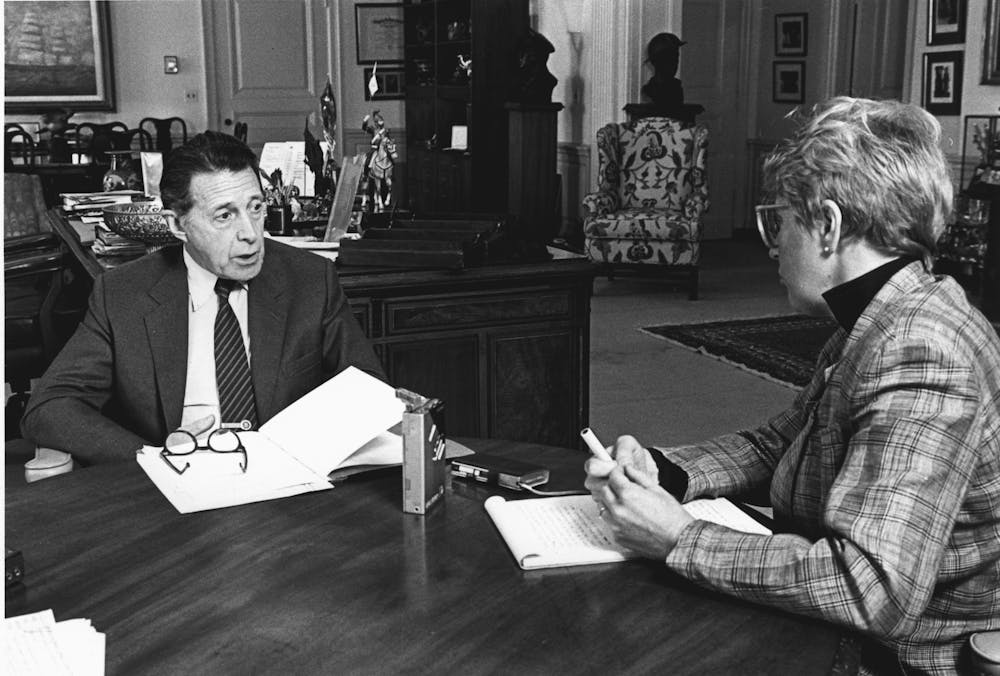
State governments can transform Australia’s energy policy from major fail to reliable success

]]>

Source: The Conversation (Au and NZ) – By Tony Wood, Program Director, Energy, Grattan Institute

This week we’re exploring the state of nine different policy areas across Australia’s states, as detailed in Grattan Institute’s State Orange Book 2018. Read the other articles in the series here.


Energy policy in Australia is a major failure. The federal government has been unable to forge an effective policy to ensure affordable, reliable and low-emissions electricity. It’s time for the states to step up.

Internationally, responsibility for climate change policies rests with national governments. The federal government says it remains committed to Australia’s target under the Paris Agreement, but it has abandoned the emissions-reduction obligation of the National Energy Guarantee (NEG). This leaves Australia’s electricity sector, which is responsible for 34% of our overall emissions, with no credible policy to reduce those emissions.

The states should fill this policy vacuum if it persists. They should work together on a nationwide emissions reduction scheme through state-based legislation, independent of the federal government. A Commonwealth-led national policy would be best, but a state-based policy is far better than none.


Read more: The too hard basket: a short history of Australia’s aborted climate policies


In October 2018 the COAG Energy Council agreed to continue work on the reliability element of the NEG. The states and territories should maintain this support and implement this policy with the Commonwealth government, and so support the reliability of the National Electricity Market during a challenging transition.

The Grattan Institute’s State Orange Book 2018 shows that there is also much the states can do to reduce energy prices. Consumers are understandably upset – household retail prices have increased by more than half in the past decade, according to the Australian Competition and Consumer Commission (see page 7 here).

How your state measures up on energy. Grattan Institute State Orange Book 2018

The federal government is certainly focused on price – Prime Minister Scott Morrison has referred to Energy Minister Angus Taylor as the “minister for getting electricity prices down” – but many important pricing policies depend on state action.

Retail pricing is the obvious example. Poorly regulated retail electricity markets have not delivered for consumers. Retail margins are higher than would be expected in a truly competitive market. Many consumers find the market so complicated they give up trying to understand it.


Read more: A high price for policy failure: the ten-year story of spiralling electricity bills


State governments should work alongside the federal government to help consumers navigate the retail “confusopoly”. Governments should require retailers to help consumers compare offers and get the best deal. They should also stop retailers using excessive pay-on-time discounts (which tend to confuse rather than help consumers and can trap lower-income households), and ensure vulnerable customers do not pay high prices.

However, governments should resist the temptation to use price caps as a quick fix. If set too low, price caps could reduce competition and drive longer-term price increases.


Read more: Capping electricity prices: a quick fix with hidden risks


Western Australia, Tasmania and the Northern Territory, which have not yet adopted retail competition, should move in that direction – while learning from the mistakes of others.

Network costs make up the biggest share of the electricity bill for most households (see page 8 here) and some small businesses. This is particularly an issue in New South Wales, Queensland and Tasmania, where network values increased substantially under public ownership and those costs were passed on to consumers.

These states should write down the value of their overvalued networks or provide rebates to consumers, so the price of the networks is more closely aligned to the value they provide to consumers. Given the poor performance of publicly owned networks, any network businesses still in government hands should be privatised.

Responsibility for setting network reliability requirements should be transferred to the Australian Energy Regulator to prevent risk-averse state governments from imposing excessive reliability standards, which would drive up network costs again.


Read more: Amid blackout scare stories, remember that a grid without power cuts is impossible… and expensive


Until recently, it seemed state governments had learned the lessons from the bad old days of excessively generous subsidies for rooftop solar. That was until August 2018, when the Victorian government committed more than A$1 billion to pay half the cost of solar panels for eligible households and provide an interest-free loan for the remainder. Most of these systems would pay for themselves without subsidy. The Victorian government should abandon this waste of taxpayers’ money.


Read more: Policy overload: why the ACCC says household solar subsidies should be abolished


Finally, Australia’s gas market is adding to the price pain of homes and businesses. As international prices rise, there is no easy way to avoid some painful decisions. But some state policies are making matters worse.

The Victorian and Tasmanian governments’ moratoria on gas exploration and development constrain supply and drive up prices. The moratoria should be lifted. Instead, these states should give case-by-case approval to gas development projects, with safeguards against specific risks.

Australia needs reliable, affordable electricity to underpin our 21st-century economic prosperity. That must be protected while we also decarbonise the energy sector.

Energy market reform was at the forefront of national competition policy in the mid to late 1990s. But reform has since slowed, and the states are partly responsible. The states can rekindle the fire by pursuing a clear, nationally consistent action plan for affordable, reliable and low-emissions electricity.

Australia’s households and businesses – and the environment – are relying on the states to step up.

ref. State governments can transform Australia’s energy policy from major fail to reliable success – http://theconversation.com/state-governments-can-transform-australias-energy-policy-from-major-fail-to-reliable-success-105740]]>

Ideas of home and ownership in Australia might explain the neglect of renters’ rights

]]>
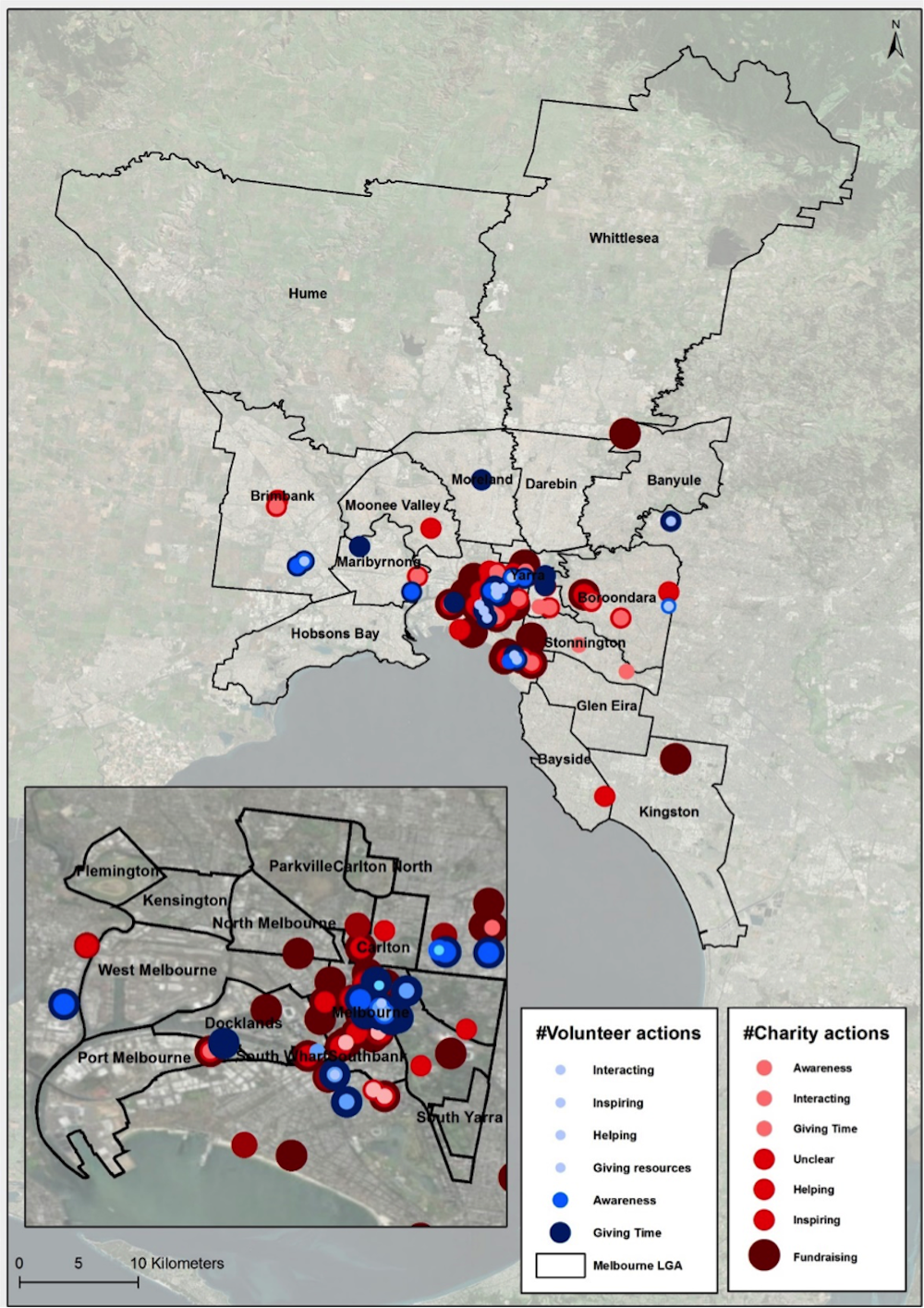
Source: The Conversation (Au and NZ) – By Bronwyn Bate, PhD Candidate, Urban Research Program, Western Sydney University

In Australia, when we think of home, we think of ownership. This normalisation of home ownership is reflected in the “Great Australian Dream”, the belief that it’s the best way to achieve financial security. This “dream” is based on the premise that if you work hard you will one day be able to buy a home. Home ownership is an important goal for many Australians. Home ownership implies success.

Linked to the importance of home ownership are our conceptions of home – what home means and the ways home can and should be made. Popular understandings of home suggest that feelings of home are most easily created between a house and the person who owns it.


Read more: ‘Just like home’. New survey finds most renters enjoy renting, although for many it’s expensive


What is home?

So ingrained is this relationship between home and ownership that in my recently published paper I argue that research rarely considers the ways non-owners make and think about home. This is problematic, given recent housing trends.

Recent changes in housing, particularly the increased cost of home ownership and curbing of public housing, have created a greater demand for rental housing. As a result, there is an undersupply of privately rented housing in Australia.

Australian tenancy laws add to the insecurity of the private rental sector. Tenancy laws and policy reflect cultural norms in Australia, where private renting is seen as a form of short-term, transitional housing.

Recently, significant media and public attention has been directed at the impact of state-based tenancy legislation. It is argued that tenancy laws need to be changed to reflect current housing trends and the needs of many tenants to have long-term, secure housing.


Read more: When falling home ownership and ageing baby boomers collide


Rental insecurity is a persistent source of stress for many tenants. It’s a key reason that many tenants struggle to feel at home in their rental property. A person’s ability to identify feelings of home with their dwelling has been shown to impact psychological health and overall well-being.

My research findings suggest that while tenancy law affects the ways we understand and make home, likewise, our meanings of home affect how we shape and understand tenure and policy. Australian tenancy law reflects broader cultural values that associate the meaning and making of home with home ownership.

While researchers and policymakers focus on how tenancy law can negatively affect or restrict renters within their homes, the actual practices of home-making by renters are often overlooked. Current understandings of home typically reference what home means to home owners. My research points to the importance of understanding the ways private renters make home – and make home meaningful – so that any changes to tenancy law reflect the needs of tenants.


Read more: Life as an older renter, and what it tells us about the urgent need for tenancy reform


Is having a home a right or a privilege?

While there is no doubt that small changes are being made, perhaps the lack of consideration for tenants in tenancy laws and policy is indicative of our larger beliefs about what it is to “feel” at home and make a home. The “Great Australian Dream” is based on the belief that hard work will eventually lead to home ownership. Yet owning a home is becoming impossible for many people, irrespective of how hard they work.

If we understand home to be a basic right, then we will have policies that reflect this. If we understand home to be a privilege, reserved only for those who manage to achieve home ownership, then we will forever live in a country where tenure security and a feeling of being “home” are reserved for those who are able to buy a house. Consequently, our policies will continue to support the idea that, ultimately, a rental property cannot be “home” to a tenant.

The question then remains: do we consider home a right or a privilege? This issue is at the very heart of Australia’s housing crisis. Until we change our meaning of home by separating it from ownership, we will never be able to “fix” Australia’s housing crisis.


Read more: What do single, older women want? Their ‘own little space’ (and garden) to call home, for a start


ref. Ideas of home and ownership in Australia might explain the neglect of renters’ rights – http://theconversation.com/ideas-of-home-and-ownership-in-australia-might-explain-the-neglect-of-renters-rights-104849]]>

Cricket Australia’s culture problem is it still doesn’t think fans are stakeholders in the game

]]>

Source: The Conversation (Au and NZ) – By David R. Gallagher, Malcolm Broomhead Chair in Finance, The University of Queensland

The most telling part of the long-awaited review into the rotten culture of elite Australian cricket is what it doesn’t say. Or more correctly, what it does say, but what the establishment that owns and controls professional cricket won’t let us read.

Even a chunk of the executive summary of the report is redacted, like state secrets from a confidential intelligence dossier. A further 22 other pages in the report also have redacted material, in some parts quite extensive.


First page of the executive summary of the report Australian Cricket: A Matter of Balance. Cricket Australia

There may be other reasons for the dozens of redactions, but it’s hard not to conclude the principle motivation is that some criticisms of Cricket Australia, and of specific individuals, are just too close to the bone.


Second page of the executive summary of the report Australian Cricket: A Matter of Balance. Cricket Australia

The redactions are at odds with the “complete transparency” talked about by Cricket Australia chairman David Peever.

They are emblematic of Cricket Australia’s lack of accountability to the game’s most important stakeholders – the cricketing public.

A very public scandal

The report stems from the ball-tampering scandal in March 2018, when the leaders of the Australian men’s cricket team were involved in a brazen attempt to cheat during a match with South Africa. Three players, including captain Steve Smith and vice-captain Dave Warner, were given unprecedented 12-month suspensions.

Cricket Australia then commissioned the respected Ethics Centre to conduct an independent review covering “cultural, organisational and/or governance issues” related to cricket’s administration.


Read more: Australian cricket’s wake-up call on a culture that has cost it dearly


The investigation has spanned the entire organisation (including the member state associations that are essentially the shareholders of Cricket Australia). It has looked at selection processes, values, leadership and the financial arrangements involving players, sponsors and broadcasters.

Sins of omission

The report says the leadership of Cricket Australia should accept responsibility for several failures. We don’t know what the first failure is, because it has been redacted. But the second is an “inadvertent (but foreseeable) failure to create and support a culture in which the will-to-win was balanced by an equal commitment to moral courage and ethical restraint”.

The review does – as far as we can tell – save Cricket Australia from blame for promoting a “win at all costs” culture. But it levels a charge almost as serious.

In our opinion, CA’s fault is not that it established a culture of ‘win at all costs’. Rather, it made the fateful mistake of enacting a program that would lead to ‘winning without counting the costs’.

It is this approach that has led, inadvertently, to the situation in which cricket finds itself today – for good and for ill.

A series of unfortunate events

Several significant and controversial decisions were made in the weeks prior to the report’s delayed release. After a “global search”, the board appointed Cricket Australia insider Kevin Roberts to replace retiring chief executive James Sutherland. It then re-appointed long-time board chairman David Peever for a further three-year term.


Cricket Australia’s Chairman David Peever and outgoing CEO James Sutherland following Cricket Australia’s annual general meeting on October 24, 2018. AAP Image/Penny Stephens

These decisions suggest Cricket Australia’s highest echelons just aren’t taking responsibility. Doesn’t the buck stop with the chairman and board? How can a significant review finding cultural problems across the entire structure not lead to any meaningful changes in its leadership and governance?


Read more: Cricket Australia’s culture sore: captains of the finance industry should take note


Notable rejections

Cricket Australia says it will adopt most of the independent review’s 42 recommendations. It accepts “sin bin” measures for cricketer bad behaviour, that annual cricketer awards take into account sportsmanship and character, establishing an ethics commission to strengthen accountability, and to finally include sledging in an anti-harassment code.

There are, however, two notable rejections.

One is that, “subject to issues of confidentiality (commercial and otherwise)” the board publish the minutes of its meetings, as is done by the Board for Control of Cricket in India. Another cross marked here against transparency.

Operating in a parallel universe

All this points to a critical problem with Cricket Australia’s governance and leadership.

On page 13, the report includes a definition of cricket’s stakeholders: “All parties who hold a stake in the success of CA and Cricket-in-Australia (the general public was not included in the scope for research).”

This seems to sum up Cricket Australia’s attitude perfectly: it pays lip service to the fans, but in practice treats them as a cash cow, not real stakeholders.

Cricket is a sporting monopoly, like other sporting codes. Cricket Australia is a company limited by guarantee, and owned by the state and territory associations. It controls the game as a lucrative business. The general public might love the game, but we have no ownership or direct influence over it.

The only means we might have to effect meaningful reform is by voting with our feet.

ref. Cricket Australia’s culture problem is it still doesn’t think fans are stakeholders in the game – http://theconversation.com/cricket-australias-culture-problem-is-it-still-doesnt-think-fans-are-stakeholders-in-the-game-105843]]>