Curious Kids is a series for children. If you have a question you’d like an expert to answer, send it to curiouskids@theconversation.edu.au You might also like the podcast Imagine This, a co-production between ABC KIDS listen and The Conversation, based on Curious Kids.
Can you find out why spiders need six eyes but we only need two? – Amos, age 3, Newcastle.
Hi, Amos. Thanks for your excellent question.
The first thing we should say is that while it’s true that some spiders have six eyes, most actually have eight.
The short answer to your question is that animals have evolved different eyes that best suit the lives they lead.
Humans have two eyes that face forward. Our eyes are very good at seeing colours and shapes. Having two big eyes in the front of our head means they can work together to guess how far away something is (we call this “judging distance”). That makes it easier for us to catch another animal so we can eat it.
Spiders are also hunters and they need eyes that help them find and catch their food. In fact, most spiders can’t see very well, and use touch and taste to explore the world. But the kind of eyes they have tells us something about the food they eat and the lives they live.
Spider eyes for spider lives
Jumping spiders are active hunters, like tiny lions chasing down their prey (bugs). They usually have eight eyes: two very large front eyes to get a clear, colour image and judge distance, and extra side eyes to detect when something is moving. Here’s a picture of an Australian jumping spider.
Jumping spiders need two big eyes on the front so they can guess how far away their prey is.Michael Duncan., Author provided
Some spiders make nets to catch their prey. These net-casting spiders also need to see clearly and judge distances. Some have developed huge, scary-looking black eyes that stare straight ahead, so they are nicknamed ogre spiders! These gigantic eyes help the spider to see a wide area and accurately throw down its spider web net to catch its prey. Here’s a picture of a net-casting spider.
This net-casting spider is from the Deinopis family. The little dots that look like nostrils are actually eyes!Michael Duncan, Author provided
Some spiders live in caves that are completely dark, where eyes are no use at all. They have to rely on other senses to find their food in the dark. To save energy making eyes, these spiders lost their eyes during evolution, so now some of them have no eyes at all. You can see a picture of a spider like that here.
So why did most spiders end up with so many eyes?
Both human and spider eyes are the result of slowly evolving to help us survive in our different environments. One reason our human eyes are different from spiders is because our bodies and brains are also built differently.
For example, spiders don’t have necks. So they can’t turn their heads to look at things like we can. Having extra eyes around their heads is one way that spiders see more of the world around them, helping them to quickly spot prey or a potential predator.
Human eyes and spider eyes also do different jobs. Our two eyes are very complex and are good at doing many jobs at once, while spiders have different sorts of eyes that do different jobs.
For example, the large central eyes of jumping spiders are best for seeing shapes, but the simple side eyes have the important job of watching out for predators.
So a two-eyed spider or even an eight-eyed human isn’t impossible. But the two eyes we have and the eight eyes most spiders have are perfectly suited to help each of us live our lives just the way they are.
The recent viral “deepfake” video of Mark Zuckerberg declaring, “whoever controls the data controls the world” was not a particularly convincing imitation of the Facebook CEO, but it was spectacularly successful at focusing attention on the threat of digital media manipulation.
While photographic fakes have been around since the dawn of photography, the more recent use of deep learning artificial intelligence techniques (the “deep” in deepfakes) is leading to the creation of increasingly credible computer simulations.
The Zuckerberg video attracted online attention both because it featured the tech wunderkind who is partially responsible for flooding the world with fake news, and because it highlighted the technology that will surely make the problem worse.
We have seen the pain and tragedy that viral falsehoods can cause, from the harassment of parents who lost children in the Sandy Hook shooting, to mob murders in India and elsewhere.
Deepfakes, we worry, will only worsen the problem. What if they are used to falsely implicate someone in a murder? To provide fake orders to troops on the battlefield? Or to incite armed conflict?
We might describe such events as the “false positives” of deep fakery: events that seemed to happen, but didn’t. On the other hand, there are the “false negatives”: events that did happen, but which run the risk of being dismissed as just another fake.
Think of US President Donald Trump’s claim that the voice on the notorious Access Hollywood tape, in which he boasts about groping women, was not his own. Trump has made a political speciality out of asking people not to believe their eyes or ears. He misled people about the size of the audience at his inauguration, and said he didn’t call Meghan Markle “nasty” in an interview when he did.
This strategy works by calling into question any and all mediated evidence. That is, anything we do not experience directly ourselves, and even much of what we do to the extent that it is not shared by others.
What is at issue is our ability to communicate truths to one another and to generate a consensus around them. These stakes are high indeed, since democracy relies on the efficacy of speaking truth to power. If, as The Guardian put it, “deepfakes are where truth goes to die”, then they threaten to take public accountability down with them.
Because the problem seems to be a technological one, it’s tempting to cast about for technological, rather than social or political, solutions. Typically, these proposed solutions take the form of enhanced verification, which entails increasingly comprehensive surveillance.
One idea is to have every camera automatically tag images with a unique digital signature. This would enable images to be traced back to the device that took them, and, in the case of networked devices, to its user or owner. One commentator has described this as “a surveillance state’s dream”.
Or we might imagine a world in which the built environment is permeated with multiple cameras, constantly capturing and constructing a “shared” reality that can be used to debunk fake videos as they emerge. This would be not just the dream of a surveillance state, but its fantasy realised.
The fact that such solutions are not only dystopian, but also fail to effectively address the problem (since signatures can be faked, and the “official” version of reality can be dismissed as yet another fake), does not make us any less likely to be pursue them.
The additional flaw of such solutions is they assume people and platforms circulating fake information will defer to the truth when confronted with it.
We know social media platforms, until they are held accountable for verifying the information they circulate, have an incentive to promote whatever gets the most attention, regardless of its authenticity. We’re more reluctant to admit the same is true of people.
In the online attention economy, it’s not just the platforms that benefit from circulating sensational disinformation, it’s also the people who use them.
Consider the case of the London-based Islamic journalist Hussein Kesvani. Kesvani recounts the time he tracked down a Twitter troll named “True Brit” who had been peppering him with Islamophobic comments and memes. After establishing a regular online conversation with his online antagonist, Kesvani was able to land a face-to-face interview with him.
He asked True Brit why he was willing to circulate demonstrably false facts, claims, and mislabelled and misleading images. True Brit shrugged off the question, saying, “You don’t know what’s true or not these days, anyway”. He didn’t care about literal truth, only about the “deeper” emotional truth of the images, which he felt confirmed his prejudices.
Strategies of verification may be useful for ramping up surveillance society, but they will have little purchase on the True Brits of the world who are willing to embrace and circulate deepfakes because they believe their lies contain deeper truths. The problem lies not just in the technology, but in the degraded version of civic upon which social media platforms thrive.
The ALP’s defeat at the 2019 federal election was a surprise. Shorten’s Labor fell short, against both wider commentariat predictions and unrepresentative polls. Yet, if we take a step back, the result is less surprising if we locate Labor’s defeat in the wider “crisis” of social democracy.
Across the advanced industrial world, the centre-left largely remains in opposition, with poor prospects for immediate future government. In the UK, Corbyn-led Labour has been unable to capitalise on the Brexit result, and the chaos that enveloped Theresa May’s Conservatives. A likely “Boris bounce” (or “Hunt honeymoon”) may only make the gap wider.
In Germany, the Social Democratic Party (SPD) was once a colossus of European social democracy. But it has failed to dent Angela Merkel’s long dominance of German politics, and critically, is now being pushed even behind the German Greens as the main left challenger.
Elsewhere, the results are poor. Last year, Matteo Renzi’s centre-left coalition lost out at the Italian elections, and the extraordinary populist government of the Five Star Movement and far-right League hold office. In France, the Socialist Party (PS) has seemingly not recovered from the Macron win at the French Presidential election. The Dutch Labour Party (PvDA) is also still licking its wounds from a humiliating defeat in 2017.
The picture is not consistently bleak, though. In Portugal, Antonio Costa’s left coalition (an unwieldy group of left parties dubbed “the contraption”) has proved remarkably resilient. Moreover, the Swedish Social Democratic Party is governing in coalition in that traditional bastion of social democracy. The recent win of Mette Frederiksen in Denmark has also given optimism for the centre-left parties. And of course, the impact and leadership of Jacinda Ardern in New Zealand was another positive result for the left.
Yet, there are wider structural problems for the centre-left, which mean that even these more recent positive electoral results may conceal ongoing identity issues. If we return to Australia, we can see what is underpinning these results – the structural decline of the vote for the centre left.
As the table below shows, the primary vote of the ALP has consistently fallen, and certainly stagnated over the past three elections. Indeed, the ALP has not won an election outright for over a decade.
Author supplied
If we put this into a comparative view, we can see more starkly the wider trend and decline in the structural vote of the left. The following table aggregates the main centre-left party’s vote share for each decade, and is grouped by region. Here, the Australian story of decline parallels the fortunes of its sister parties.
Generally, the left vote is falling in the Nordic countries and Western Europe – the mainstay of social democracy. In the Mediterranean countries, the centre-left parties have been electorally devastated by the GFC and, critically, the Euro debt crisis. Even in countries where the centre left has not been dominant (Ireland, Japan, Canada – in the “other” category), the story is of decline.
Author supplied
If it is a story of decline, what might be driving it? Two key factors help capture, but not necessarily explain, the problem. First, the centre left is losing its traditional vote base in many countries, in some measure because citizens are far less likely to have a strong partisan identity.
The second part of the story is the decline of the major parties as dominant forces, and increasingly the rise of far right, populist, and other party challengers. The recent election in Finland is a striking case where, for the first time, neither major party achieved over 20% of the vote. Social democratic parties face more challengers and, as in France, are squeezed by left and right.
Is this a crisis of social democracy? Perhaps. The bleakest view, offered by writers like Ashley Lavelle is that the parties are actually already “dead”. In this view, social democracy was a specific egalitarian model – especially in the 1970s – and since the parties have capitulated to neoliberal orthodoxy they are bereft of meaning (Hawke-Keating era is the Australian exemplar).
A different approach is to understand the problems facing the centre-left as an electoral “crisis”, particularly the European parties. Much of this literature focuses on what has happened to these parties since the heyday of the “third way” in the 1990s. In sum, it is unclear that the parties have yet to sufficiently recover their core mission and aims.
A third view sees this less as a crisis and more a “transition” – epitomised by a writer like Herbert Kitschelt. In this view, the parties are in a process of change as they reconcile with left libertarian agendas. That central dilemma – environment concerns vs “traditional” jobs – played out starkly in Queensland for the ALP, over the Adani mine.
Moreover, as Carol Johnson writes in her excellent new book, the centre left parties have expanded their idea of equality, and this has brought new dilemmas.
As Anthony Albanese, freshly minted among a whole crop of centre-left leaders, is discovering, these issues will not be resolved quickly. Given the wider diversity of the centre-left, it remains unclear what the next, “fourth” wave of social democracy might entail.
The latest government statistics, released last week, show that from 2001-2016, the rate of cardiac events (heart attacks or unstable angina) fell by more than half among Australian women.
That’s largely because of greater education about risk factors for heart disease (smoking rates continue to fall), and medical advances in prevention and treatment.
One thing that might reduce rates of heart disease even further is to make sure women, in particular, are asked about their current mental health. This can be a pointer to a hidden risk of developing heart disease in the future.
Mental illness can directly affect heart health by placing extra pressure on the cardiovascular system. Depression has been linked to inflammation, which can clog a person’s arteries. Depression also increases the presence of stress hormones in the body, which dull the response of the heart and arteries to demands for increased blood flow.
Less direct effects on heart health include the impact of depression on a person’s health behaviours, such as diet and exercise, and their connections with other people.
We’ve shown Australian middle-aged women with depression have double the risk of having a heart attack or stroke in the following 18 years compared to women without depression.
Preventing heart disease
Cardiovascular diseases including stroke, coronary heart disease, and heart failure remain the number one killer of Australian women. In 2016, three in ten deaths were due to heart disease. Indigenous women are twice as likely as non-Indigenous women to die from this cause.
While we’re seeing significant reductions in the number of people getting heart disease overall, the latest report shows the opposite is true in young women. The rate of cardiovascular events like stroke is increasing in women aged 35 to 54.
Drinking alcohol, smoking, high cholesterol, type 2 diabetes, overweight/obesity, and a family history of heart disease are some of the important predictors of a person developing heart disease over the next five years.
So if someone is considered to have high risk of a cardiovascular event, this risk can be managed with the help of a medical professional.
April 1 saw the introduction of two new Medicare item numbers allowing eligible patients (those aged 45 and over, or 35 and over for Aboriginal and Torres Strait Islander peoples) to be assessed for their risk of developing cardiovascular disease. This is known as a heart health check.
Using the Australian Risk Calculator, the doctor collects information to assess a patient’s risk of experiencing a cardiovascular event in the next five years.
If a person is identified as being sufficiently at risk, they will be targeted with preventative measures such as assistance with lifestyle modifications, and/or interventions like blood pressure or cholesterol medications.
Women have some unique risk factors
While many of the common risk factors for heart disease are shared between women and men, young and middle aged women have some that men don’t.
We’re only beginning to understand how these factors affect a woman’s risk, but they are likely to be as important as traditional risk factors in the context of heart health checks.
Heart health checks are a good thing. They could be even more effective if they assessed mental health as a risk factor for heart disease.From shutterstock.com
Another common issue in young women that influences heart disease risk is poor mental health. Common mental disorders like depression are more common in women than men until age 75.
Both heart disease and depression are largely socially determined, especially for women and girls. Early life trauma, poverty, and gendered violence and discrimination can accumulate across a woman’s lifespan to shape her risk of heart disease and stroke.
Screening for mental health
We did some statistical modelling to see whether depression should be added to the risk equation that underpins the heart health checks.
For women who reported depression in this context, we were able to more accurately predict whether they’d go on to develop heart disease over the next ten years.
While more research is needed, asking about a woman’s mental health may help GPs better identify risk of heart disease in younger women.
Large population-based studies show reducing the prevalence of depression could have major implications for the prevention of heart disease and stroke. One study found having a poor psychosocial profile (depression, stress, isolation and anxiety) contributes 32% of the risk for heart attacks across the population.
In other words, if these psychosocial issues were eliminated, the incidence of heart attacks would be reduced by one-third.
Given the burden of these psychosocial issues is greater for women than men, women may have even more to gain if depression was targeted as part of preventing heart disease.
How can we address depression as a risk factor?
The heart health checks represent a significant step in the government’s investment in preventive medicine and public health.
While time poor clinicians can’t be expected to capture an infinite number of risk factors in a short consultation, these sessions may present a good opportunity for GPs to ask their patients about their mental health in the context of their heart disease risk. Equally, this may be a good time for patients to flag any concerns about their mental health with their GP.
There are few studies yet that definitively show treating depression will prevent a first heart attack or a recurrent event.
This is especially true for women, who are under-represented in this type of research. One study, where participants were given psychological therapy after a cardiac event like a heart attack, found the intervention benefited future heart health outcomes for “white men, but not other subgroups”.
We need more research to tell us if and how treating depression might prevent heart disease and stroke, especially for women. In the meantime, there are many free or subsidised options for the management of depression available either via your GP (psychologists and counsellors) or online.
For many of us, eating a meal containing meat is a normal part of daily life. But if we dig deeper, some sobering issues emerge.
Every year, 66 billion terrestrial animals are slaughtered for food. Predictions are that meat consumption will rise, with increasing demand for meat from China and other Asian countries as their standards of living increase.
Cattle being readied for auction at the Roma Saleyards in Queensland, the largest cattle-selling centre in the Southern Hemisphere with over 400,000 cattle auctioned each year.Darren England/AAP
Some experts have even said meat may not be essential for most people, and a vegetarian diet is healthier than a meat-based one. So the rationale for developing meat alternatives – “fake meat” – is strong.
Fake meat can be made from plant-based materials that mimic the taste of meat. But for those who want something closer to the real thing, meat cells can be grown in a laboratory – this is called “in vitro agriculture”. Here’s how it works.
Growing meat, but not in an animal
The concept of cultured meat has been around for some time. In 1931, Winston Churchill even said:
We shall escape the absurdity of growing a whole chicken in order to eat the breast or wing. By growing these parts separately under a suitable medium.
The world’s first cultured beef burger was produced by Professor Mark Post at Maastricht University in The Netherlands. It was cooked and eaten publicly at a London restaurant in 2013. It took three months to grow the meat and cost €250,000.
Professor Mark Post’s TEDx Talk on “test tube meat”, 2013.
Since then, the race has been on to produce commercially available synthetic meat. Many companies have taken out patents to grow meat on a commercially viable scale and some have even received funding from people like Bill Gates and Richard Branson.
Thanks to advances in tissue engineering, we can take all sorts of cells ranging from skin and blood to muscle and the brain from different animals, and grow them under controlled laboratory conditions.
The type of meat people want to eat is from muscle. This means synthetic meat production involves producing large quantities of muscle cells in a laboratory.
selecting precursor (or “starter” cells) from the animal – in this case, muscle precursor cells – and providing them with the correct environment for growth
growing them in bulk in an environment that mimics an animal body
the precursor cells then have to be switched on (or “induced”) to turn into skeletal muscle by chemical or mechanical signals.
Simple culture of cells in a flask where they are grown in a single layer and covered with orange nutrient liquid.
The growing and conversion of cells into skeletal muscle are the major challenges the industry currently faces. The appearance of this meat would likely resemble burger-type meat, like a patty, rather than carcass meat, which is very structured.
For example, when you cut into a steak, you might see the meat organised into long strands or fibres. But with cultured meat, the organisation of the cells may be more haphazard.
It’s entirely feasible for some types of cells to grow fast and reproduce themselves once every 24 hours in a laboratory setting – this is much faster than in an animal. The challenge is to achieve this on a large scale in bio-reactors (a vessel to contain the laboratory-grown cells), and then to get all the cells converted from precursor cells to muscle cells.
If eating the products of tissue cells seems unsavoury, consider that people already consume products of cell culture technologies. Over 50% of biological molecules for vaccines and for treating diseases (such as antibodies for cancer treatment) are produced in mammalian cell cultures..
So we are already on track to consume “fake”, or artificially synthesised, molecules.
What takes more resources – growing cows or growing cells?
It takes around 18 months for a cow to grow fully, after a pregnancy of 10 months.
So in total, it takes two years and four months of growth in a space roughly 10.5 by 15.2 square metres, in a barn. When a cow is killed, it produces a 300kg carcass and 180kg of butchered meat.
On the other hand, it takes 8 trillion cells in a laboratory to make 1 kilogram of muscle meat.
A container of 5,000 litres (the size of an average rainwater tank, or somewhere around 5 cubic metres) would be needed to grow this number of cells. This would account for cells grown in layers, and covered by a liquid to provide nutrients.
If cells in a laboratory divide every 24 hours, then it would take just over 26 days to grow 1kg of meat.
This image shows how cells can be grown in three dimensions, and resemble an organ.
This growth rate is feasible for some types of cells, such as skin and gut, but has not yet been reported for muscle cells in a laboratory.
Therefore, lab-grown meat could take fewer natural resources (like vegetation and water) to grow the equivalent amount of animal meat. The commercial availability of “fake meat” could profoundly decrease the enormous environmental impact of grazing animals and reduce animal cruelty.
The federal education minister, Dan Tehan, has called on universities to implement a model code to protect freedom of speech and academic freedom on campus. He’s referring to the code drafted by a former High Court chief justice, Robert French, in his review of freedom of speech in Australian universities.
Tehan said he commissioned the review due to concerns certain views were being shut down on campus. This followed protests at Sydney University during a talk by sex-therapist and commentator Bettina Arndt. The talk challenged notions of a rape culture on campus.
French’s report concluded there was no systemic free speech crisis in Australian universities. But he noted many universities’ policies use broad terms that create the potential to limit free speech on campus.
He therefore suggested universities voluntarily strengthen their protections for free speech by adopting general principles, which he set out in a model code. So, what does that code look like? And should universities be adopting it?
French’s proposed model code has, at its core, the need to ensure both the freedom of lawful speech and academic freedom. French differentiates between the two, which he says are often conflated. He writes:
The proposed Code uses the terms ‘freedom of speech’ and ‘academic freedom’ instead of ‘freedom of intellectual inquiry’. They are intended to distinguish between freedom of speech as a common societal freedom and freedom of speech and intellectual inquiry as aspects of academic freedom.
Former High Court chief justice Robert French put together a draft model code of conduct in his review of freedom of speech at Australian universities.Federal Court of Australia
The code also makes clear a university can restrict free speech and academic freedom if this is necessary to achieve the university’s core research and teaching mission, to comply with legal duties and to “foster the well-being of students and staff”.
This last element includes that universities have a duty to protect staff and students from discrimination. This acknowledges that a person’s freedom of speech stops when it starts to infringe on another’s rights.
The model code recognises that universities’ duties include preventing staff and students using lawful speech in a way that would be regarded as “likely to humiliate or intimidate” others. This provides quite a generous scope for universities to prevent discriminatory and vilifying speech, even if it would not meet the legal threshold for vilification under federal law or state law such as in NSW.
The code recognises that academic freedom can be limited by reasonable requirements about course content and pedagogy (although offensive or shocking material that is otherwise compliant is protected by academic freedom).
Finally, the model code turns to concerns that have dominated media headlines and motivated the inquiry – hosting controversial speakers.
In this respect, the code:
protects universities’ ability to set the conditions under which external speakers will use their facilities, including paying for security costs
requires universities to seek to minimise the impact of donors and other third parties on staff and students’ free speech and academic freedom
subjects universities’ ability to deny speakers a platform if their content is unlawful, or prevents the university from fulfilling its duty to foster staff and student well-being, or if it involves
the advancement of theories or propositions which do not meet scholarly standards […] and would be […] “detrimental to the university’s character as an institution of higher learning”.
It could be said, then, that these protections reflect the existing state of affairs on Australian campuses. Although universities, their staff and students all stand to benefit from clarifying obscure policy language, the pressure for universities to take action may be more about politics than anything else.
In response to the French report, Universities Australia’s chief executive, Catriona Jackson, said universities would consider its recommendations. She also emphasised universities’ independence, saying that:
[…] sector-wide legislative or regulatory requirements would be aimed at solving a problem that has not been demonstrated to exist and any changes could conflict with fundamental principles of university autonomy.
The University of Melbourne has, in recent days, released a new policy on free speech, which is substantially similar to the model code. It begins from the presumption free speech, academic freedom and university autonomy are all “core values”. It limits free speech that “unreasonably disrupts activities or operations of the university […] or jeopardises the physical safety of individuals”.
But it arguably goes further in permitting limitations on speech that “undermines the capacity of individuals to participate fully in the University”.
This provision is particularly interesting. At first it appears similar to the model code’s duty of the university to foster student and staff well-being, but the code requires the university to prevent discriminatory harms.
By contrast, the University of Melbourne’s policy suggests an affirmative duty for members of the university community to support one another’s capacity for full engagement in university life. This is possibly a more positive understanding of the freedom than encapsulated by the model code.
The University of Sydney has also announced plans to “thoughtfully” implement the principles of the model code. It remains to be seen how this will play out.
The university recently concluded its investigation into the protests against Arndt, disciplining one student while also reinforcing that protests are protected speech.
Focusing on policies is only part of the story. As French stated:
A culture powerfully predisposed to the exercise of freedom of speech and academic freedom is ultimately a more effective protection than the most tightly drawn rule. A culture not so predisposed will undermine the most emphatic statement of principles.
New housing in Australia must meet minimum energy performance requirements. We wondered how many buildings exceeded the minimum standard. What our analysis found is that four in five new houses are being built to the minimum standard and a negligible proportion to an optimal performance standard.
There have been calls for these minimum standards to be raised. However, many policymakers and building industry stakeholders believe the market will lift performance beyond minimum standards and so there is no need to raise these.
What did the data show?
We wanted to understand what was happening in the market to see if consumers or regulation were driving the energy performance of new housing. To do this we explored the NatHERS data set of building approvals for new Class 1 housing (detached and row houses) in Australia from May 2016 (when all data sets were integrated by CSIRO and Sustainability Victoria) to December 2018.
Our analysis focuses on new housing in Victoria, South Australia, Western Australia, Tasmania and the ACT, all of which apply the minimum six-star NatHERS requirement. The other states have local variations to the standard, while New South Wales uses the BASIX index to determine the environmental impact of housing.
The chart below shows the performance for 187,320 house ratings. Almost 82% just met the minimum standard (6.0-6.4 star). Another 16% performed just above the minimum standard (6.5-6.9 star).
Only 1.5% were designed to perform at the economically optimal 7.5 stars and beyond. By this we mean a balance between the extra upfront building costs and the savings and benefits from lifetime building performance.
NatHERS star ratings across total data set for new housing approvals, May 2016–December 2018.Author provided
The average rating is 6.2 stars across the states. This has not changed since 2016.
Average NatHERS star rating for each state, 2016-18.Author provided
The data analysis shows that, while most housing is built to the minimum standard, the cooler temperate regions (Tasmania, ACT) have more houses above 7.0 stars compared with the warm temperate states.
NatHERS data spread by state.Author provided
The ACT increased average performance each year from 6.5 stars in 2016 to 6.9 stars in 2018. This was not seen in any other state or territory.
The ACT is the only region with mandatory disclosure of the energy rating on sale or lease of property. The market can thus value the relative energy efficiency of buildings. Providing this otherwise invisible information may have empowered consumers to demand slightly better performance.
The evidence suggests consumers are not acting rationally or making decisions to maximise their financial well-being. Rather, they just accept the minimum performance the building sector delivers.
The fact that these improvements aren’t being made suggests there are significant barriers to the market operating efficiently. This is despite increasing awareness among consumers and in the housing industry about the rising cost of energy.
Eight years after the introduction of the six-star NatHERS minimum requirement for new housing in Australia, the results show the market is delivering four out of five houses that just meet this requirement. With only 1.5% designed to 7.5 stars or beyond, regulation rather than the economically optimal energy rating is clearly driving the energy performance of Australian homes.
Increasing the minimum performance standard is the most effective way to improve the energy outcomes.
The next opportunity for increasing the minimum energy requirement will be 2022. Australian housing standards were already about 2.0 NatHERS stars behind comparable developed countries in 2008. If mandatory energy ratings aren’t increased, Australia will fall further behind international best practice.
If we continue to create a legacy of homes with relatively poor energy performance, making the transition to a low-energy and low-carbon economy is likely to get progressively more challenging and expensive. Recent research has calculated that a delay in increasing minimum performance requirements from 2019 to 2022 will result in an estimated A$1.1 billion (to 2050) in avoidable household energy bills. That’s an extra 3 million tonnes of greenhouse gas emissions.
Our research confirms the policy proposition that minimum house energy regulations based on the Nationwide House Energy Rating Scheme are a powerful instrument for delivering better environmental and energy outcomes. While introducing minimum standards has significantly lifted the bottom end of the market, those standards should be reviewed regularly to ensure optimal economic and environmental outcomes.
Scott Morrison will commit to getting consumers, business and investors “off the economic sidelines and on the field again” in his first major domestic speech of the new term.
Addressing a business audience in Perth on Monday, Morrison will set out the government’s economic priorities for the next few months, including delivering its tax plan when the new parliament meets, and “provoking the ‘animal spirits’” in the economy by removing regulatory and bureaucratic barriers to investment.
He will also foreshadow a new look at industrial relations reform while stressing that it must benefit both employers and employees.
Acknowledging the challenges and headwinds affecting the Australian economy, which registered low growth in the latest national accounts, Morrison will say political uncertainty in the election run up weighed on the confidence of consumers, businesses and investors. This saw them “sitting on the sidelines” until it was over.
“Our job post election is now very clear – to get Australians off the economic sidelines and on the field again.”
With shadow cabinet on Monday discussing the opposition’s position on the Coalition’s three-stage decade-long tax package, Morrison will seek to increase pressure on Labor to pass all stages, saying the plan doesn’t just have a strong political mandate but also “a compelling policy rationale”.
The first stage will boost consumption and be equivalent to at least two 25 basis point interest rate cuts, he says in his speech, released ahead of delivery.
Labor agrees with stage one but is yet to decide whether it will wave through the second and third stages, both due to start after the next election. It has been particularly critical of stage three, which delivers to the highest income earners. The government says it won’t split the bill, which will be introduced when the new parliament begins next week.
While some in Labor believe it should pass the whole package, others argue it is irresponsible to commit to tax cuts years out in uncertain times.
Shadow treasurer Jim Chalmers, interviewed on the ABC, reiterated on Sunday that Labor wanted to know how the third stage – worth $95 billion of the $158 billion package – was distributed through the various tax brackets. He said Labor’s highest priority was to get the first stage flowing through the economy, while the government’s highest priority seemed the third stage which didn’t come in for another five years.
But Morrison says in his speech: “It still baffles me why Labor can readily sign up to spending schemes that run for decades, yet cannot do the same to let Australians keep more of their own money.
“Under our changes, from 2024-25, 94% of Australians will pay a maximum marginal tax rate of no more than 30 cents in the dollar, compared to only 16% if stages two and three are not delivered.
“Or to put it another way, almost 80% of hard working Australians will keep more of what they earn following stages two and three of our tax plan.”
Morrison says that to provoke the “animal spirits” in the economy, regulatory and bureaucratic barriers to business investment must be removed.
This requires “reducing regulatory barriers to growth and driving improvements in industrial relations that improve outcomes for both workers and businesses”.
“Congestion is not just on our roads and in our cities. We also need to bust regulatory congestion, removing obstacles to business investment,” he says, instancing the experience of the mining industry in Western Australia.
“In 1966, the late Sir Arvi Parbo took the Kambalda nickel mine near Kalgoorlie from discovery to operation in 18 months. By contrast, the Roy Hill iron ore mine took around 10 years to complete around 4,000 approvals. Delays to the project meant delays to over 5,000 construction jobs and 2,000 ongoing jobs.
“There is a clear need to improve approvals timeframes and reduce regulatory costs, but in many cases regulators are making things worse.
“Look at the WA Environment Protection Authority and the uncertainty it has created over new emissions requirements for the resources sector. Business will also make valid criticisms of many Commonwealth agencies and departments.”
Morrison is appointing his close confidant Ben Morton, from WA, who is Assistant Minister to the Prime Minister, to work with him, Treasurer Josh Frydenberg and other ministers “to tackle the full suite of barriers to investment in key industries and activities”.
The government will focus on regulatory reform “from the perspective of a business looking, say, to open a mine, commercialise a new biomedical innovation, or even start a home-based, family business.
“By focusing on regulation from the viewpoint of business, we will identify the regulations and bureaucratic processes that impose the largest costs on key sectors of the economy and the biggest hurdles to letting those investments flow.
“What are the barriers, blockages and bottlenecks? How do we get things moving?
“Step one is to get a picture of the regulatory anatomies that apply to key sectoral investments. Step two is to identify the blockages. Step three is to remove them, like cholesterol in the arteries.”
Morrison will highlight the need “to protect investment from the impact of militant unions” and reaffirm that the government plans to try to get through the new parliament its Ensuring Integrity bill, that stalled in the last term. This would strengthen its hand against militant unions, notably the CFMMEU.
Beyond this, Morrison will say he has asked the new Minister for Industrial Relations, Christian Porter “to take a fresh look at how the system is operating and where there may be impediments to shared gains for employers and employees.
“Any changes in this area must be evidence-based, protect the rights and entitlements of workers and have clear gains for the economy and for working Australians.”
Depicting the moment of creative inspiration has been a challenge for filmmakers since the first ribbon of film rattled its way past a camera lens. In numerous films, the artist’s studio has been mythologised as a tantalising mystery, a place of transgression, of wild imaginings and not infrequently, of sexual license and debauchery.
In search of a window into that most mysterious of all human activities – the creative imagination – historians, filmmakers and journalists have tried to prise open the mind of famous artists.
A long list of films purports to show these artists in the throes of inspiration as they create the certified masterpieces we see adorning galleries in the world’s museums. Indeed, we seem to be amid an artist-biopic tidal wave as directors pull focus on yet another famous painter (occasionally sculptor, even more occasionally, a woman) and present their interpretation of what actually goes on in that holy sanctum, the studio.
The most recent is Never Look Away, loosely adapted from the life of Gerhard Richter by Florian Henckel von Donnersmarck. It comes hot on the heels of Julian Schnabel’s At Eternity’s Gate, another retelling of Vincent van Gogh’s life story and Thomas M. Wright’s Acute Misfortune, which delves into Adam Cullen’s psyche. Other films are in the wings, examining the lives and work of L.S Lowry, Leonardo da Vinci, and Théodore Géricault.
Daniel Henshall in Acute Misfortune (2018).Arenafilm, Blackheath Film, Plot Media
Disappointingly, there is still an absence of women artists in filmmakers’ mythmaking biopics. While there are wonderful examples, such as the films documenting the lives and work of Camille Claudel (1988), Frida Kahlo (2002) and Séraphine de Senlis (2008) they are rare exceptions.
Trailer for Frida.
Filmmakers are predictably entranced by their heroes it seems and eagerly trawl the depths of their practice to better understand the processes of artistic creation, but why is this topic of such interest to a general public?
One reason may be that creativity is being promoted as an essential skill for the fourth industrial revolution.
The World Economic Forum is calling for a lifelong approach to learning that encourages complex problem solving, critical thinking and creativity rather than the one-dimensional professional focus of the past. So, what better models could there be as the epitome of creative practice, than those great artists embedded in our collective conscience?
Charles Laughton in Rembrandt (1936).London Film Productions
Famous artists have been the subject of popular films since Alexander Korda called action in 1936 and the cameras rolled on Charles Laughton shuffling through a vast studio in the guise of Rembrandt, sucking his pipe and wielding his mahlstick while creating an unseen masterpiece.
At least one scene, in which Rembrandt unveils a portrait of a powerful soldier to a hostile reception – an act of creative rebellion that ends a stellar career – is a total fiction. Still, it makes for a compelling scene.
In At Eternity’s Gate, Julian Schnabel, who is a famous artist himself, infuriatingly depicts Vincent van Gogh’s precarious mental state through a manic hand-held camera that has his audience lurching around in their seats seeking stasis.
Fortunately, Vincent’s own words, through his letters to his brother Theo, reveal something of the inner torment and the process of re-interpretation that brings some clarity and insight into how these wondrous images were formed on the canvas. (These letters also featured in Paul Cox’s 1987 film Vincent). Without these voice-overs, Schnabel’s film would invoke nothing other than incoherent queasiness.
Florian Henckel von Donnersmarck’s epic portrayal of 30 years of German history, reflected in the life of a young artist seeking his way in the world, is not perfect. Still, it does go further than many of his predecessors in peeling back some of the unhelpful tropes that have blinkered our understanding of the creative process.
Like Korda, he is not squeamish about fictionalising the events in the life of his protagonist in the process of a creative re-imagining. Kurt Barnert – the lead protagonist in the film – is not Gerhard Richter, just a slightly blurred facsimile of the famous German artist.
In this way, von Donnersmarck gives himself license to reinterpret and refocus his understanding of how memory, pain, and anger can be fused in the act of making an image on a canvas.
In his studio in the Kunstakademie Düsseldorf in 1963, Barnert thrashes around re-making the works of contemporary American and German artists who have found success in the marketplace.
Waltzing with paint-soaked feet on a roll of paper, making papier-mâché figures and painting geometric abstractions, he finally resolves to fuse his undeniable technical virtuosity with his life experiences.
The black and white photographs he had packed in his bag on his flight from East Germany to the West were the catalyst for the works we associate with Richter; a soft brush drawn slowly over almost dry oil paint to create a blurring that seals the image as memory.
Tom Schilling in Never Look Away.Pergamon Film, Wiedemann & Berg Filmproduktion, Beta Cinema
They are images that elicit complex responses from an audience who may not have experienced the same events but can relate closely enough to find solace.
Von Donnersmarck doesn’t entirely relinquish the stereotypes of depicting the “lightbulb” moment of creative insight. Like Korda’s pensive, pipe-sucking Rembrandt, Schnabel’s whirling dervish van Gogh and Carol Reed’s version of Michelangelo’s epiphany in his 1965 film The Agony and the Ecstasy – when an image of God holding out his hand to touch the finger of a recumbent Adam is revealed in the clouds to a spellbound Charlton Heston – we have Barnert and his blank canvas.
Trailer for The Agony and the Ecstasy.
Sitting for days staring at that tabula rasa, the wind rustling the leaves outside framed by the window in his light-soaked studio, the music slowly building to a crescendo, his artistic revelation comes.
However, von Donnersmarck has built layers of experience and memory into a complex amalgam of ideas over two and a half hours before we get to that scene. From a childhood visit to the Nazi Entartete Kunst (Degenerate Art) exhibition and the murder of his aunt, through his training and early success in the DDR under Soviet influence, we have seen Barnert build the armoury of skills and experience from which he will forge his artistic career.
In the process von Donnersmarck has developed his thesis that “creativity is the scab that forms on the wound” of these artists’ lives. “It gives us that wonderful feeling that our suffering can be of use.”
“Never look away, everything is beautiful,” his aunt tells the young Barnert. The transformative power of art is to embrace that freedom to engage without limits and “by freeing yourself, you are liberating the world”.
Where to eat? It’s a question you’ve probably pondered when visiting somewhere unfamiliar. Though it’s fun to explore a strange suburb, town or city, when you’re hungry you’d rather minimise the chance of paying exorbitant prices for an unpleasant experience.
Can economics help?
We’ve combined economic theory with data from online restaurant ratings to identify a few simple strategies that will help you find a decent restaurant in unfamiliar places.
The key? Location is almost everything – but in the opposite sense to what a real estate agent would have you think. When it comes to restaurants, quality of location is inversely correlated to quality of food and service.
Search costs
The first economic principle that’s important here are “search costs”.
If you’re from out of town, it’s likely your search strategy will involve looking for something appealing within walking distance of where you are staying. To decide if it’s appealing will involve walking past it.
Suppose you do this. Perhaps it not exactly what you wanted. Should you press on, looking for a better option?
It’s a risk. You may end up trudging around only to end back at the same spot 30 minutes later. Settling on the first restaurant you find may therefore be the best option to minimise search costs.
Economic theory provides a key insight about markets with search costs for customers. Businesses can take advantage of these costs to raise prices or lower quality. They can do this because they deal with more uninformed customers.
Consider a large city with tourist and non-tourist areas.
Being close to tourist hot spots increases the probability of food being lower quality and higher priced.Paul Rysz/Unsplash
In non-tourist areas, restaurants will rely on local customers. If they do not provide good food and prices, customers are likely to go elsewhere next time. A restaurant that satisfies its customers will get return business; one that doesn’t is more likely to go out of business.
In tourist areas, the situation is different. Visitors do not know the quality of each restaurant they encounter, and at best might be repeat customers for a few days. So restaurants can charge higher prices and serve lower quality food without much risk of harming long-term profits.
Big data to the rescue
To investigate how customer ignorance influences restaurants price and quality, we used data from Yelp, a major online platform where users rate restaurants.
Yelp has a global outreach that allowed us to investigate this question in cities all over the world, such as Paris, London and Sydney.
We mapped Yelp’s ratings onto topographical information from OpenStreetMap, an open-source repository of local information on streets and buildings.
What we found was exactly what was predicted by economic theory: restaurants in tourist areas have lower ratings than those in non-tourist areas.
Mapping Sydney
The map below presents the results for Sydney. You can see the valley of tourist points (the red dots) in the centre of the city generally align with average ratings. There are just a few cases of exceptional ratings near tourist attractions, such as around the Sydney Opera House.
The pattern is even clearer in London, where areas with higher local ratings seem to be systematically away from touristic locations. Our map suggests that you’d be advised not to look for lunch around Victoria Station, near Buckingham Palace (in the southwest corner) or near the British Museum (northwest from the centre of the map).
Finally this Paris map suggests you are advised to venture away from all the landmarks you know – Eiffel Tower, the Sacré-Cœur Basilica, the Louvre – when looking for some good French food. Definitely steer clear of the area around the Paris-Gare de Lyon train station.
The existence of tourist traps may come as no surprise. If you’ve ever gone sight-seeing in a big city, you know there are restaurants whose business is based on attracting tourists, and that they are often pricey and ordinary.
Small restaurants, away from the tourist traps of inner city, are often the perfect places to chow down.Dominic Dreier/unsplash
This insight goes beyond just restaurants. In economic terms, any time a business deals with uninformed customers, higher prices and lower quality is more likely.
A key characteristic to attract uninformed customers is visibility. A restaurant on a main road or busy thoroughfare, for example, can be found by potential customers simply walking around.
To test whether restaurants with high visibility are indeeed more likely to offer worse deals, we looked at restaurants that were more visible but not necessarily in touristic locations.
We focused on corner restaurants – visible to pedestrians from two streets instead of just one.
Again we looked at Yelp ratings, and again the effect was there: corner restaurants had lower average ratings. The largest effect was for corner restaurants on big avenues in tourist areas, where average restaurant ratings were more than 0.2 stars (out of 5 stars) lower.
Chain reactions
Though our results show restaurants in tourist areas and in visible locations are generally more likely to offer worse quality and prices, there are some caveats.
An advantage of fast-food franchises is that they tend to provide the same quality across locations.www.shutterstock.com
Economic theory suggests chain restaurants should have more incentive to keep the standard their consumers are used too, even if located in visible locations.
A customer dissatisfied by the food/service of one chain restaurant is less likely to come back to the chain elsewhere. Corporate headquarters can therefore not allow individual franchises to use a visible location to lower quality or raise prices.
This economic prediction was also confirmed in our data: restaurants that belong to a chain are not rated significantly lower in visible locations.
Find the hidden restaurants
So our advice is the following:
You maximise your chance of finding a fantastic dining experience by stepping away from the beaten tracks. Whether searching online or on foot, look for the “hidden restaurants” tucked away on side streets and the like. Avoid the establishments with huge garish signs that are clearly pitching themselves to tourists.
Your second-best option, when in doubt, is to look for a chain restaurant as a “safe haven” in a touristic location. Such establishments are unlikely to offer you a surprising experience, one way or other other. What you expect is probably what you’ll get.
But when it comes to restaurants, the better option is usually around the corner.
A leading cyber security expert has called on universities to play a more active role in implementing ethics and legal frameworks for communications smart technology to save society from an Orwellian future.
Mohamed El-Guindy, an Egyptian consultant to the UN Office on Drugs and Crime (UNODC-ROMENA), says communication research programmes should promote “ethically aligned” design.
In an era of “accelerated addictiveness” to smartphone and other digital technologies, he told media researchers, policy advisers and journalists at the 27th Asian Media Information and Communication (AMIC) conference in Bangkok, Thailand, this week that it was vital for democracy that universities stepped up.
He also said families and parents needed to be more critically active by balancing screen time and promoting “real social interaction”.
Professor Eddie Kuo, a keynote speaker and founder of the Wee Kim Wee School of Communication and Information at Singapore’s Nanyang Technological University. Image: David Robie/PMC
Addressing the “persuasive technologies” industry, Al-Guindy spoke about being “hooked”, the “scrolling dopamine loop” and the “digital skinner box” models and how they had made smartphones fill psychological needs.
-Partners-
“Our social fabric is being torn apart,” he said.
“As we expect more from technology, we expect less from each other as people.
“We have suffered a loss of ability to focus without distraction. The result is mental health issues, less empathy and more confusion.”
‘Misinformation, lies’ Al-Guindy said societies were engulfed in “misinformation, propaganda and lies”.
“Orwell warns that we will be overcome by an externally imposed oppression. But in [Aldous] Huxley’s vision, no Big Brother is required to deprive people of their autonomy, maturity and history. As he saw it, people will come to love their oppression, to ignore the technologies that undo their capacity to think.”
The three-day AMIC conference at Chulalongkorn University featured the theme “Are you human? Communication, Technology and New Humanism”.
Manila-based AMIC is the major global organisation focused on Asian media policy and research and publishes two leading journals, the Asian Journal of Communication and Media Asia.
Professor Crispin Maslog (right) presenting the first copy of his climate change journalism book to Professor Bundhit Eua-arporn, president of Chulalongkorn University. Image: David Robie/PMC
AMIC board chair Professor Crispin Maslog challenged the more than 300 participants to take a more “humanist” approach to communication research and policy building.
“We stand on the brink of a technological revolution that will fundamentally alter the way we live, work, and relate to one another,” he said. “In its scale, scope and complexity, the transformation will be unlike anything humankind has experienced before.
“As the millennials would say, OMG!”
Climate change guide Among four new international books about communication research and technology, prolific Filipino author Dr Maslog launched his 36th title, Science Writing and Climate Change.
Developed as a guide for journalists in the Asia-Pacific region, it has been co-authored with New Zealand’s Pacific Media Centre director Professor David Robie and regional editor Joel Adriano of SciDev.Net, a leading online publication with a focus of science and development.
UNESCO’s Dorothy Gordon … lobby for action. Image: David Robie/PMC
Among several UNESCO delegates and speakers at the conference, Dorothy Gordon, of the governing board of the UNESCO Institute for Information Technologies in Education, called on participants to lobby through their national commissions and global agencies if they wanted action.
“Asia has the potential to be in control, it can make changes for tech for peace,” she said.
“UNESCO is made up of member states. If you want something to happen, you need to lobby your own country first to take up the issue.”
Dr Azman Azwan Azmawati … an “are you man enough?’ slide in her “humanity” presentation. Image: David Robie/PMC
Malaysia’s Dr Azman Azwan Azmawati, an associate professor at the Universiti Sains Malaysia (USM) in Penang and president of the Asian Congress for Media and Communication (ACMC), called for more critical research on patriarchal systems.
Dr Azman Azwan Azmawati … more research needed on the patriarchy. Image: David Robie/PMC
“It is crucial for more study of patriarchal systems because of their negative impact on women and stereotyping of women,” she said.
“The patriarchal system hinders women from reaching their potential.
Power imbalance Much more research was needed to focus on the imbalance of power – ‘deconstructing the power of the powerful over the powerless.
“Cultural norms and mindsets must be re-examined, critiqued, reevaluated and rethought.”
Former AMIC secretary-general Dr Martin Hadlow introducing professor Mark Pearson at the conference. Image: David Robie/PMC
Professor Mark Pearson of Australia’s Griffith University spoke of human rights advocacy journalism in a global justice context.
“Global justice can be a legitimate ethical objective of advocacy journalism, requiring factuality as a platform,” he said.
“It is achievable in some cases through a wise and intentional position of ‘advocacy journalism’ which sits comfortably with the professional values of the livelihood of journalists.”
Dr Martin Loffelholz of Germany, Professor Mark Pearson (Australia) and Misako Ito (UNESCO Bangkok) at the conference. Image: David Robie/PMC
Dr Pearson, author of The Journalist’s Guide to Media Law, also spoke about “mindful journalism”, a form of journalism with “wisdom and compassion” drawing from elements of secular Buddhist approaches to meditation and ethics.
He dedicated a separate paper on the topic to the memory of Dr Shelton Gunaratne, who died in March this year after being awarded the 2016 AMIC Asia Communication Award for his “ground-breaking scholarship and intellectual contribution to Asian media and communication research”.
High tech ‘slavery’ Professor Jack Linchuan Qiu, author of Goodbye iSlave and director of the Chinese University of Hong Kong’s C-Centre for Chinese Media and Comparative Communication Research, gave an inspired address on the impact of modern day “slavery” in the high tech industries.
Professor Jack Linchuan Qiu of the Chinese University of Hongkong … tech industries as modern day slavery. Image: David Robie/PMC
Taiwan’s Professor Georgette Wang of the National Chengchi University engaged with the debate about Asian research methodologies, saying that perhaps the right questions were not being asked.
Professor Georgette Wang … searching for a new East-West research paradigm. Image: David Robie/PMC
She said there was an absence of “East-West dialogue” over research methodologies and there needed to be more engagement.
Blaming globalisation, she said that while the “periphery” had gained greater presence in the international arena, it had also “brought the profile of theories and questions originating in the West to greater prominence”.
Instead of rejecting Western research models in an Asian context, more effort was needed to “develop a new paradigm” drawing on both East-West traditions.
New Zealand was represented by only three academics, Professor David Robie and Khairiah A. Rahman of Auckland University of Technology (AUT), and Dr Adam Brown of the Auckland Institute of Studies.
Professor David Robie … the new face of decolonisation in a New Caledonian context. Image: AMIC2019
Dr Robie addressed the November 2018 referendum on independence and last month’s territorial elections in New Caledonia and the implications for the future in the Pacific; Rahman addressed the fallout from the Christchurch massacre on March 15 and “negotiating discrimination of the Pan-Asian identity”; and Dr Brown examined learner-centred, interactive learning strategies.
Next year’s AMIC conference will take place in Beijing hosted by the Chinese University of Communication (CUC).
Khairiah Rahman of New Zealand’s Auckland University of Technology … negotiating discrimination of the Pan-Asian identity. Image: David Robie/PMCDaniela Abalos … a University of Santo Tomas postgraduate student presenting about the online self-expression of young people in “Meme, Myself and I”. Image: David Robie/PMC
Dr David Robie is the New Zealand country representative of AMIC.
Michelle Grattan talks with University of Canberra Deputy Vice-Chancellor for Research and Innovation, Professor Leigh Sullivan, about the week in politics.
The discussion includes Cory Bernardi announcing that he will be winding up his party, the Australian Conservatives; how the government’s income tax cuts may play out; the reignition of the debate on the medevac bill; and whether there is a resolution in sight following last week’s allegations against Victorian construction union boss John Setka.
Sport science can offer some valuable insights to the teams contesting the 2019 Women’s World Cup currently underway in France.
Our new analysis of every goal scored at the last Women’s World Cup in Canada in 2015 revealed the most effective way for teams to put one in the back of the net – and it’s all about turnovers, quick movement, and transitions.
Our study found that the middle third of the pitch is the most effective area for gaining possession and creating goalscoring opportunities. And the average time needed to create a goalscoring opportunity was just under 12 seconds.
To date, there is very little published research on the strategies involved in women’s football. Our study at Edith Cowan University was the first of its kind to take an in-depth look at the most effective attacking strategies and goalscoring opportunities at a major international women’s football tournament.
We analysed videos of all 52 matches at the 2015 Women’s World Cup to assess the specific factors that led to goalscoring opportunities for the 24 teams in the tournament. In total, there were 390 goalscoring opportunities, 95 of which resulted in a goal, or about 24%.
All 95 goals scored in the 2015 Women’s World Cup.
Various factors played a part in scoring, such as:
the “zone of possession gain” – the location on the field where a team gained possession of the ball
the “type of possession gain” – whether possession was gained via a tackle, high pressure or interception, for example
the “time taken to create a goalscoring opportunity”
and the “type of goalscoring opportunity” – whether it was created from a cross, a ball played in behind the defence, or a shot from distance.
Zone-by-zone analysis
Our findings showed that most goalscoring opportunities originated with a team gaining possession in the central midfield zone. This part of the pitch accounted for more than half of all possession gains during the 2015 Women’s World Cup.
The advantage of recovering the ball in this zone is that it gives the opposing team little time to organise into defensive positions, and also allows for space to pass the ball behind an opponent’s defence.
We also found that more teams gained possession and created goalscoring opportunities on the left side of the midfield compared with the right. This could be explained by the tactic of teams deploying right-footed players in left midfield positions, allowing them to play passes inside or behind defences on their stronger and preferred foot.
The attacking central zone, directly in front of the goal, accounted for about 15% of possession gains leading to goalscoring opportunities. The attacking team often caught their opponents in transition and off-guard, making goalscoring much easier.
By contrast, a team that gained position of the ball in their defensive zone rarely resulted in a goalscoring opportunity. Only 44 goalscoring opportunities started with possession gained in this part of the field, or just over 10%.
The nine zones on a football field.Author provided
Possession, passes and plays
When we looked at the type of possession gain that led to goalscoring opportunities, we found three that stood out:
intercepting a wayward pass
setting a trap to intercept a good pass
waiting for a pass from the opponent that is underhit
Again, this could be the result of a specific tactic by teams at the World Cup to wait patiently for their opponents to make a risky pass, or for teams to use a compact defensive setup in midfield to pressure their opponents into making a risky pass they can try to intercept.
When it came to the type of goalscoring opportunity that was most effective, our findings weren’t surprising. Teams were most likely to score if they got the ball behind their opponents’ defensive line or by putting a cross into the box.
But a further look showed just how effective getting the ball behind an opponent’s defensive line was: a third of these opportunities resulted in a goal being scored. This was by far the most effective way for a team to score, followed closely by scoring from crosses.
Lastly, our analysis also found that goalscoring opportunities happened very quickly after a turnover. On average, it took teams just under 12 seconds from gaining possession to move the ball into a position for a goalscoring opportunity.
How is the 2019 tournament shaping up?
In all of the games played in the first and second matchdays of the group stage, 51 goals were scored, with almost half of these (23) resulting from getting the ball behind the opponent’s defence.
And 36 of these goals came after a team regained possession and made no more than five passes, emphasising the speed with which successful attacks occur once possession is secured.
France has looked impressive so far during the 2019 tournament.Eddy Lemaistre/EPA
In terms of which team looks most dominant – and most likely to win – it’s hard to look past the traditional powerhouse United States. France has started well and has a team full of Champions League winners, while the Netherlands, the European champions, also look very good and have maybe the best striker in the tournament in Vivianne Miedema.
And Australia always looks capable of scoring with Sam Kerr on the pitch, it’s just a case of whether the Matildas can keep their opponents out of their end of the field.
Sam Kerr’s four goals in Australia’s win over Jamaica.
Elise Kellond-Knight greatly improves the Matildas’ midfield attack, so expect to see her get the ball to the likes of Kerr, Hayley Raso, Caitlin Foord and Lisa De Vanna to create those all-important goalscoring chances.
Sign up to the Beating Around the Bush newsletter here, and suggest a plant we should cover at batb@theconversation.edu.au.
Among the nearly 1,000 species of Australian acacias, there are few with a reputation for hardiness, resilience and endurance to match mulga. Once the higher rainfall of the coastal fringes of the continent diminishes, from west to east and south to north, the mulga prevails.
It grows over the vast expanse of about 20% of our continent and is often the dominant woody species of the grassland communities that are themselves known as the mulga. It is also an important shrub component of inland woodlands, such as those dominated by poplar box, Eucalyptus populnea.
Any species that covers 1.5 million km² of any landmass is clearly a vital part of its ecosystems.
The scientific name of mulga is Acacia aneura, which refers to the lack of a prominent mid-rib in their leaves (a means “no” and neura means “nerve”). Interestingly, like most Australian acacias, mulga lacks spines which their African relatives possess in abundance on their foliage, and they don’t actually have leaves.
The structures that appear to be leaves are actually flattened leaf stems called phyllodes. They function as leaves, but are very efficient in arid conditions. The narrow and rolled mulga leaves often have a sharp tip, so while they are not spiny they are still prickly.
Mulga plays an important ecological role in drier parts of Australia. It is a nitrogen-fixing species that enriches often impoverished soils, provides habitat for birds, insects, reptiles and mammals, and is important for honey production.
They drop many of their phyllodes during very dry spells, which not only reduces demand for water, but provides a vital mulch to their ecosystems during tough times. Acacia aneura is fire-sensitive, and changes to fire regimes can see it displaced by grass species. In parts of the outback, the species is not regenerating, and as the old specimens die the mulga is disappearing.
The Conversaion
Frugal lifestyle
Mulga are brilliantly designed for coping with the arid Australian interior, as they do not get too big in places where resources are limited. In good conditions they are small trees that can grow taller than 10m, but in dry conditions they may be shrubs little more than 2-3m tall. They have a very deep root system that begins with a tap root 3m or more in length when the tree is only 20cm tall, and which exploits a large volume of soil for water.
This biology often leads to individual specimens being evenly spaced in the landscape as if they were positioned by design. The roots may be considerably longer than the tree is tall!
The little apertures on the phyllodes that regulate water loss and gaseous exchange (stomata) are located at the bottom of deep pits called stomatal crypts, which further slows water loss.
It is common for gardeners to think of acacia species as being short-lived, but with nearly 1,000 different species there is great variation in the age that various species can reach. While many shrubby species might only survive for a decade or two, Acacia aneura can live for three centuries or more. It is hard to believe many of the scrubby little specimens only a metre or two high growing in the arid heart of Australia are such a venerable age.
Mulga can be very slow-growing, and its wood can be both strong and durable. It grows a light cream sapwood that surrounds a dark reddish-brown or black heartwood. The combination is ideal for wood carving, especially of ornaments, utensils, and of course prized souvenirs of a trip to the red centre. It is durable as indigenous weapons, digging sticks or modern fence posts, and its foliage can provide emergency fodder for stock during prolonged dry periods. Resin from the leaves is also used for sealing cracks and splits in cups and bowls.
Like many acacia species, the seeds of mulga are protein-rich and have made an excellent food source for many centuries, particularly in seed cakes. Boiling young leaves and twigs in water has been used for treating colds, and lerps – the sticky protective coverings of insects that grow on the leaves – provide a sugary treat.
Many of those who have never seen the outback of Australia imagine it to be a vast and barren red sandy desert. However, for those areas where mulga rules, it is a place of diversity and complex ecosystems. Acacia aneura typifies the resilience of a huge part of the Australian landscape, and its wonderful biology deserves to be better known.
Where to eat? It’s a question you’ve probably pondered when visiting somewhere unfamiliar. Though it’s fun to explore a strange suburb, town or city, when you’re hungry you’d rather minimise the chance of paying exorbitant prices for an unpleasant experience.
Can economics help?
We’ve combined economic theory with data from online restaurant ratings to identify a few simple strategies that will help you find a decent restaurant in unfamiliar places.
The key? Location is almost everything – but in the opposite sense to what a real estate agent would have you think. When it comes to restaurants, quality of location is inversely correlated to quality of food and service.
Search costs
The first economic principle that’s important here are “search costs”.
If you’re from out of town, it’s likely your search strategy will involve looking for something appealing within walking distance of where you are staying. To decide if it’s appealing will involve walking past it.
Suppose you do this. Perhaps it not exactly what you wanted. Should you press on, looking for a better option?
It’s a risk. You may end up trudging around only to end back at the same spot 30 minutes later. Settling on the first restaurant you find may therefore be the best option to minimise search costs.
Economic theory provides a key insight about markets with search costs for customers. Businesses can take advantage of these costs to raise prices or lower quality. They can do this because they deal with more uninformed customers.
Consider a large city with tourist and non-tourist areas.
Being close to tourist hot spots increases the probability of food being lower quality and higher priced.Paul Rysz/Unsplash
In non-tourist areas, restaurants will rely on local customers. If they do not provide good food and prices, customers are likely to go elsewhere next time. A restaurant that satisfies its customers will get return business; one that doesn’t is more likely to go out of business.
In tourist areas, the situation is different. Visitors do not know the quality of each restaurant they encounter, and at best might be repeat customers for a few days. So restaurants can charge higher prices and serve lower quality food without much risk of harming long-term profits.
Big data to the rescue
To investigate how customer ignorance influences restaurants price and quality, we used data from Yelp, a major online platform where users rate restaurants.
Yelp has a global outreach that allowed us to investigate this question in cities all over the world, such as Paris, London and Sydney.
We mapped Yelp’s ratings onto topographical information from OpenStreetMap, an open-source repository of local information on streets and buildings.
What we found was exactly what was predicted by economic theory: restaurants in tourist areas have lower ratings than those in non-tourist areas.
Mapping Sydney
The map below presents the results for Sydney. You can see the valley of tourist points (the red dots) in the centre of the city generally align with average ratings. There are just a few cases of exceptional ratings near tourist attractions, such as around the Sydney Opera House.
The pattern is even clearer in London, where areas with higher local ratings seem to be systematically away from touristic locations. Our map suggests that you’d be advised not to look for lunch around Victoria Station, near Buckingham Palace (in the southwest corner) or near the British Museum (northwest from the centre of the map).
Finally this Paris map suggests you are advised to venture away from all the landmarks you know – Eiffel Tower, the Sacré-Cœur Basilica, the Louvre – when looking for some good French food. Definitely steer clear of the area around the Paris-Gare de Lyon train station.
The existence of tourist traps may come as no surprise. If you’ve ever gone sight-seeing in a big city, you know there are restaurants whose business is based on attracting tourists, and that they are often pricey and ordinary.
Small restaurants, away from the tourist traps of inner city, are often the perfect places to chow down.Dominic Dreier/unsplash
This insight goes beyond just restaurants. In economic terms, any time a business deals with uninformed customers, higher prices and lower quality is more likely.
A key characteristic to attract uninformed customers is visibility. A restaurant on a main road or busy thoroughfare, for example, can be found by potential customers simply walking around.
To test whether restaurants with high visibility are indeeed more likely to offer worse deals, we looked at restaurants that were more visible but not necessarily in touristic locations.
We focused on corner restaurants – visible to pedestrians from two streets instead of just one.
Again we looked at Yelp ratings, and again the effect was there: corner restaurants had lower average ratings. The largest effect was for corner restaurants on big avenues in tourist areas, where average restaurant ratings were more than 0.2 stars (out of 5 stars) lower.
Chain reactions
Though our results show restaurants in tourist areas and in visible locations are generally more likely to offer worse quality and prices, there are some caveats.
An advantage of fast-food franchises is that they tend to provide the same quality across locations.www.shutterstock.com
Economic theory suggests chain restaurants should have more incentive to keep the standard their consumers are used too, even if located in visible locations.
A customer dissatisfied by the food/service of one chain restaurant is less likely to come back to the chain elsewhere. Corporate headquarters can therefore not allow individual franchises to use a visible location to lower quality or raise prices.
This economic prediction was also confirmed in our data: restaurants that belong to a chain are not rated significantly lower in visible locations.
Find the hidden restaurants
So our advice is the following:
You maximise your chance of finding a fantastic dining experience by stepping away from the beaten tracks. Whether searching online or on foot, look for the “hidden restaurants” tucked away on side streets and the like. Avoid the establishments with huge garish signs that are clearly pitching themselves to tourists.
Your second-best option, when in doubt, is to look for a chain restaurant as a “safe haven” in a touristic location. Such establishments are unlikely to offer you a surprising experience, one way or other other. What you expect is probably what you’ll get.
But when it comes to restaurants, the better option is usually around the corner.
Review: The Torrents, Heath Ledger Theatre (Black Swan & STC)
Set in a regional Australian newsroom in the 1890s, Oriel Gray’s The Torrents is a play about change. On the surface, it is about one man’s attempt to revitalise a declining gold mining town, but it also looks at the challenges of young journalist Jenny Milford as she tries to be taken seriously in the workforce. Both issues are unfortunately still relevant over 60 years after the play was first produced.
But a contemporary playwright could also be commissioned to address these issues, so why revive a play that was long ago dropped from the Australian theatrical canon?
In 1955, The Torrents was recognised as an important work at the vanguard of Australian-written plays contesting the dominance of British works. It shared the Playwrights Advisory Board Competition prize with Summer of the Seventeenth Doll by Ray Lawler that year.
The latter play is better-known and has been produced countless times, while The Torrents has only received brief recognition. One could speculate that Gray’s youthful commitment to feminism, communism and anti-fascism may have affected her reception into the more conservative theatre world, even though she drifted away from overt political alignment in her late twenties.
It is a well-made play and Gray is a consummate writer. The script is wonderfully structured, skilfully playing out two intersecting storylines through complex and engaging characters. And it is very funny in places too, with some excellent one-liners provided by Jenny’s co-workers. Geoff Kelso (Christy), Sam Longley (Jock) and Rob Johnson (Bernie) all put in fine performances as this comic trio.
Celia Pacquola, perhaps best known for her role in the ABC comedy series Rosehaven, shines in the role of J. G. (Jenny) Milford, who applied for a job at the paper without using her first name. Once this “error” is discovered she has to fight to stay employed.
Luke Carroll, Celia Pacquola, and Tony Cogin in The Torrents.Philip Gostelow
Jenny knows her own mind and handles the foibles of men very well, although she finds this frustrating. She also has a clever way of flipping our perspective. Jenny declares on her entrance that she “always uses her initials because she does not to wish to take any advantage from being a woman”.
While the play’s humour may reflect the quick-witted dialogue, precise stage directions and political undercurrents of George Bernard Shaw, who Gray admired, it is very Australian. References to morning drinking in the pub, and the view held by entrepreneur-turned-newspaper proprietor, John Manson (Steve Rodgers) that mining is the only way to get rich, are both familiar.
At its centre, this play is about the reconciliation between a father and son, Rufus and Ben Torrent. Rufus (Tony Cogin), who owns the paper, does not respect his son and heir, the hard drinking philanderer, Ben (Gareth Davies). Even though Ben is engaged to Gwynne (Emily Rose Brennan), he does not love her, and the marriage is destined to failure.
Gareth Davis and Emily Rose Brennan in The Torrents.Philip Gostelow
This makes the role of Jenny an interesting one. She acts more like a catalyst for these characters to change. She inspires the spoilt gadabout Ben to take himself more seriously and stand up to his father. She forces Rufus to advocate for a plan he knows the town needs to survive, but is too timid to champion. And she shows the passive Gwynne that she too can be a “new woman” and have agency in her life.
But Jenny herself is not changed by the end of the play. She arrives as an independent woman and at the end of the play she still is one. She is more like Mary Poppins, or even Puck, although her only magical skills are in leading by example.
Directed by Black Swan’s Clare Watson, this production’s nine performers work well as an ensemble with delightful moments of clowning and comic timing. All the action happens in the wooden panelled news room, allowing for smooth scene transitions and good pacing (set design by Renée Mulder). Joe Paradise Lui’s sound design adds to this with music that blends past and present, and the two-level set is perfectly lit by Lucy Birkinshaw, with subtle changes in tone to support the mood.
The Torrents presents an Australia that seems eerily similar to today. The character John Manson, holds familiar attitudes to mining and exploitation of land. He even says, “Australia’s a big country and its yours for the taking”. The play also deals with freedom of the press and the position of women in the workplace, two issues that still remain critical.
The play also makes us think about issues we are now more conscious of in Australia. Local engineer, Kingsley, played sensitively by Luke Carroll, plans to revitalise the town by building an irrigation pipe to grow fruit such as apples and melons. However, casting an Indigenous actor in this role complicates this European notion of land use, and contemporary questions of land rights and sustainability are highlighted by their absence.
Tony Cogin, Luke Carroll, Sam Longley, Celia Pacquola and Rob Johnson in The Torrents.Philip Gostelow
If the aim of this production is to rehabilitate a long-forgotten play, then it has succeeded. However, it is presented here as a play of its time, recreated very closely to what may have been its original staging, rather than as a modern take on a classic work.
Because of this play’s relative obscurity, presenting as it was written seems more appropriate. This gives the play time to find its place in the canon, and test if it deserves to be there.
Gray died in 2003 aged 83 and was acclaimed as a “playwright of ideas”. The author of numerous plays, including some for radio, Gray also worked on several TV dramas, and she published a novel and her memoirs. This production is an important step towards recognising the contribution she made to Australian performance writing.
Whilst this production may not be shaking up theatrical conventions, it is a solid, immaculately performed and very funny presentation of a forgotten classic by an important female Australian playwright. And it still has something to say to us today.
New Zealand Parliament Buildings, Wellington, New Zealand.
This week might turn out to be pivotal in the National Party’s road back to Government, culminating in Prime Minister Christopher Luxon taking office in 2023 or 2026. Or it might prove to be a false start, typifying the hype that so often occurs in political commentary. Either way, the commentariat are abuzz with the possibilities and problems of the retiring CEO of Air New Zealand going into public office and leading National out of its doldrums.
For the best account of why the high-profile businessman is a great candidate, not only to be the National MP for Botany or Epsom, but also leader of the party and then PM, see Heather du Plessis-Allan’s opinion piece, Christopher Luxon – from national carrier to National leader?
Du Plessis-Allan has been a long-time Luxon-watcher, and was able to get her must-read opinion piece out within hours of his announcement. She clearly has some very good sources in National, and says: “Luxon is said to be firmly focused on becoming PM. I’m told he’s considered how to time his run in order to maximise his chances at becoming PM. He’s said to have studied Jacinda Ardern’s elevation from MP to leader to Prime Minister – with a view to emulating it.”
Here’s du Plessis-Allan’s main points about how Luxon is a near-perfect candidate: “He’s got economic credentials. He’s spent seven years running one of the most popular companies in the country. Economic credentials matter, especially to National voters. It’s at least part of what made John Key popular. He has green credentials. Under his leadership, Air New Zealand has pitched itself quite aggressively as something of a ‘green’ airline. That matters to the National Party which is keen on neutering any suggestion they’re being left behind on climate-change politics. And he’s got conservative credentials. He’s a Christian and a family man. Again, that matters, especially to National Party voters.”
In addition, she says “He’s good on TV. He’s got warmth and likeability. That counts for a lot. It’s what makes Jacinda Ardern popular.” And he’s certainly been doing the rounds on TV yesterday. For his best performance, see him casually chat and joke last night on TV3’s The Project. (Login and watch from about the eight-minute mark.)
Luxon was also interviewed by Duncan Garner on the AM Show yesterday – see the 12-minute interview: Air NZ chief executive Christopher Luxon ‘absolutely’ interested in standing for National. In this, Luxon says that if he chooses to go into politics, it’d “absolutely” be as a National MP. He says “It’s where my politics is and how I feel. I’m a pretty centrist kind of guy, and that’s where I’d go.”
He also talked about getting encouragement to go into politics from his friend John Key, saying “It’s just a conversation we’ve had over the years.” And he joked “John and I are good friends. I actually like his wife better than him, she’s really great. I have to tolerate John as a consequence of that relationship.”
Like du Plessis Allan, Garner also argues this is a big deal for National: “The National Party may just have cause to have some hope again with departing Air NZ boss Christopher Luxon, who, I am told has had an informal offer to stand for the party next election. It’s a detailed offer. Luxon would stand in Botany – where there’s a vacancy” – see: Christopher Luxon brings new hope to the National Party.
According to Garner, it’s all about National finding a new leader: “he’s been approached because these party people don’t believe Simon Bridges and Judith Collins can do it. Simon – not believable. Judith, well, she’s just Judith. Go the John Key way – who, by the way, is also on the Air NZ board and advising Luxon, not just on the ins and outs of politics but the crash course required to go from the private sector to the awful shark-infested waters of Parliament”.
Bernard Hickey has commented on Luxon’s media appearances: “There were no clangers and his live televisual persona will have done him no harm. He was notably keen to portray himself as an apolitical problem solver able to work with anyone. But the jury remains well out. The welcome is friendly now, but a few tough interviews from Corin Dann and Lisa Owen will put him to the test. I would pay money to see Kim Hill have a go at him.”
Similarly, talkback radio host Peter Williams was impressed with Luxon’s TV appearances: “Luxon is good, very good. Sorry, Simon, he’s better than you. He is fluent, confident, knowledgeable about a whole lot of things, and on the surface seems a thoroughly likeable sort of bloke” – see: Is Christopher Luxon really Prime Minister material?
Williams also reports on rumours about National helping Luxton into Parliament even earlier, and how all this might ruffle feathers in the current leadership: “There may even be some behind the scenes movement to get a poor performing National Party MP to resign before the end of the year, create a by-election somewhere and get him into Parliament this term. I suspect the National Party board might be thinking like that although you can be absolutely assured Simon Bridges is not thinking like that. Why would a turkey vote for Christmas?”
Commentators such as Williams still have strong reservations about whether Luxon could make the necessary transition into politics, and whether the apparent parallels with John Key are correct – especially questioning whether Luxon has the same “relatability” as the former prime minister (or our current one).
Interestingly, Williams cites some online reader comments to backup this notion: “A few Air New Zealand workers or ex-workers remarked about him never being seen around the workers, about always wanting to cut costs which invariably had an impact on staff morale, especially in recent times. The theme seemed to be that he was always mixing it with those of his type, and not so much getting down and dirty with his staff. That’s a worrying thought.”
The difficulty of businesspeople and other high profile individuals going into politics is very well examined by Bernard Hickey in an important column on the obstacles for Luxon’s rumoured new political career – see: Luxon readies for political takeoff. Comparing Luxon to John Key, he points out that “Not everyone who is successful in business or finance inevitably succeeds in politics. And 2019 is a vastly different era to the one facing the National Party in the early 2000s.”
Hickey does, however, admit that Luxon may have something over Key in regard to his reputation – as the Air New Zealand CEO actually runs a company that produces a real product rather than just trades currencies, and Luxon “can talk the sustainability and wellbeing talk with the best of them”.
But his background in Air New Zealand could also be a problem for National’s electoral appeal in the provinces: “Ask anyone in Nelson, New Plymouth, Palmerston North and Napier how they feel about Luxon’s leadership of the national airline and the answer will be mixed. They saw what happened to air fares when Air New Zealand finally got some competition from Jetstar. Residents of Invercargill, Gisborne or Kerikeri feel even less enamoured when flights to our biggest cities cost the same as flights to Australia.”
Hickey also points out that Luxon’s “more socially conservative background and approach may also stand in the way of emulating Key’s socially liberal way of appealing to the centre.” On top of this, “He also may struggle to emulate Key’s easygoing style with the public and deft touch with the media. Luxon is derided by some internally at Air New Zealand as ‘Reverend’ Luxon for his occasionally preachy style.”
There could be a problem with rank-and-file National Party members, too. Traditionally it’s the local electorate branch who get to decide the candidate, and rumours that party president Peter Goodfellow has stitched up a deal for Luxon in either Botany or Epsom will go down badly.
In fact, the idea of a Johnny-come-lately candidate parachuted into a safe seat could be seen as arrogant. And, of course, the way that Luxon’s publicity has pushed him into the public imagination as National’s next leader will be resented by many. Although some are drawing parallels with John Key in this regard, the former leader actually came into public life very quietly and made his way to the top without a lot of publicity.
Former leadership contestant Amy Adams has warned Luxon that such a high-publicity arrival into politics could do him damage. The NBR reports that “she also had a warning about what he might confront if he opted for a political career. She said in her experience people who come into Parliament with huge reputations tend to have the hardest road” – see Brent Edwards’ Adams unaware of any Botany electorate deal for Luxon (paywalled).
Adams says: “If I think back over the time I’ve been here, people who’ve come in here, with this big media interest in how this person is going to be the second coming, often tend to perform on the downside.”
This article also reports that “Adams said she had no idea beforehand that Luxon would resign from Air New Zealand”, and she says: “If Simon and Christopher have talked about politics that’s a matter for them, but I’m certainly not aware of any deal being done. And that’s not the way our rules work.”
Furthermore, “Adams said National Party members choose electorate candidates and for Botany, like every other seat, it would come down to the local members to decide who would be their candidate. The party leader could not anoint someone in the seat, as has been portrayed from the outside.”
The first obstacle is getting a nomination for a safe seat: “It stands to reason that if there’s a good National safe seat like Botany going, then every aspiring centre-right politician will be gunning for it. That could be former mayoral candidate Victoria Crone.”
The existing National Party caucus is the second hurdle: “Are we really expected to believe a bunch of people who have been patiently waiting for their chance will just stand aside and allow a newcomer through?… What about MPs who were formerly known as the next National PM, like Nicola Willis?”
Braae concludes by admonishing political commentators for hyping up the whole story: “There’s always a race with these things. Have the first take, be the most savvy, call it before it happens, make a prediction that will look like genius if it comes off. But it’s just noise. Let’s all just have an in-flight lolly and calm down.”
Finally, if a successful airline CEO isn’t quite right as the fantasy new leader of the National Party, what about an outspoken conservative breakfast TV host? Today Finlay Macdonald discusses celebrities moving into politics in his opinion piece, Is there a problem with Mark Richardson’s transition into politics?
Australian elections have been won in outer metropolitan and regional electorates, but Labor did badly in swing terms in those types of seats at the May 18 election. In inner metropolitan areas, where Labor had swings in its favour, most seats are safe for one side or the other.
You can see this particularly in Queensland. The provincial seat of Capricornia blew out from a 0.6% LNP margin to 12.4%, the outer metropolitan seat of Forde from 0.6% to 8.6% and the rural seat of Flynn from 1.0% to 8.7%.
In NSW, the rural seat of Page went from a 2.3% to a 9.5% Nationals margin, and the provincial seat of Robertson from a 1.1% to 4.2% Liberal margin. Even in Victoria, the only state to swing to Labor in two party terms, the outer metropolitan seat of La Trobe, went from a 3.5% to a 4.5% Liberal margin.
Ignoring seats with strong independent challengers like Warringah and Wentworth, the biggest swings to Labor occurred in seats already held by Labor, or safe conservative seats. There was a 6.4% swing to Labor in Julie Bishop’s old seat of Curtin, but the Liberals still hold it by a 14.3% margin. The Liberals hold Higgins by a 3.9% margin despite a 6.1% swing to Labor.
After the election, the Coalition holds 77 of the 151 seats and Labor 68. Assuming there is no net change in the six crossbenchers, Labor will require a swing of 0.6% to gain the two seats needed to deprive the Coalition of a majority (Bass and Chisholm). To win more seats than the Coalition, Labor needs to gain five seats, a 3.1% swing. To win a majority (76 seats), Labor needs to gain eight seats, a 3.9% swing.
As Labor won 48.5% of the two-party vote at the election, it needs 49.1% to deprive the Coalition of a majority, 51.6% to win more seats than the Coalition, and 52.4% for a Labor majority. Mayo and Warringah were not counted in swings required as they are held by crossbenchers. Warringah is likely to be better for the Liberals in 2022 without Tony Abbott running.
It will be a bit harder for Labor than the 0.6% swing notionally needed to cost the Coalition a majority, as the Liberals now have a sitting member in Chisholm and defeated a Labor member in Bass. The Liberals will thus gain from personal vote effects in both seats.
There will be redistributions before the next election, which are likely to affect margins. But unless Labor improves markedly with the lower-educated, they risk losing the seat count while winning the popular vote at the next election.
Had the polls for this election been about right and Labor had won by 51.0-49.0 (2.5% better than their actual vote), they would have added just three seats – Bass, Chisholm and Boothby – and the Coalition would have had a 74-71 seat lead.
The Electoral Commission will eventually release details of how every minor party’s preferences flowed between Labor and the Coalition nationally and for each state, but this data is not available yet. However, we can make some deductions.
Nationally, Labor won 60.0% of all minor party preferences, down from 64.2% in 2016. This partly reflects the Greens share of all others falling from 44.0% in 2016 to 41.2%, but it also reflects more right-wing preference sources like One Nation and the United Australia Party (UAP). Had preferences from all parties flowed as they did in 2016, Labor would have won 49.2% of the two party vote, 0.7% higher than their actual vote.
In Queensland, Labor’s preference share dropped dramatically from 57.9% in 2016 to just 50.2%, even though the Greens share of all others rose slightly to 34.8% from 34.1% in 2016. Of the 29.6% who voted for a minor party in Queensland, the Greens won 10.3%, One Nation 8.9%, the UAP 3.5%, Katter’s Australian Party 2.5% and Fraser Anning’s party 1.8%. The flow of these right-wing preferences to the LNP almost compensated for Greens preferences to Labor.
Parties like One Nation and the UAP would have attracted most of their support from lower-educated voters who despised Labor and Bill Shorten. As I wrote in my previous article, there was a swing to the Coalition with lower-educated voters.
Final Senate results: Coalition has strong position
In the Senate that sits from July 1, the Coalition will hold 35 of the 76 senators, Labor 26, the Greens nine, One Nation two, Centre Alliance two, and one each for Cory Bernardi and Jacqui Lambie. The final Senate results were the same as in my June 3 preview of the likely Senate outcome.
The table below gives the senators elected for each state at this half-Senate election. A total of 40 of the 76 senators were up for election. The one “Other” senator is Jacqui Lambie in Tasmania. The table has been augmented with a percentage of seats won and a percentage of national Senate votes won at the election.
Final Senate results by state in 2019.
There was a small swing in late counting against the Coalition. When I wrote my previous Senate article, they had 38.3% of the national Senate vote (up 3.1%). They ended with 38.0% (up 2.8%).
The Senate results are not very proportional, but this is mostly a consequence of electing six senators per state. If all 40 senators were elected nationally, the outcome would be far more proportional to vote share.
The Coalition and Greens benefitted from having large fractions of quotas on primary votes, which Labor and One Nation did not have in most states. Lambie was the only “Other” to poll a large fraction of a quota, and so she is the only Other to win.
Changes in Senate seats since the pre-election parliament were Coalition up four, Lambie up one, Labor, Greens and One Nation steady, and the Liberal Democrats, Brian Burston, Derryn Hinch, Tim Storer and Fraser Anning all lost their seats.
Ignoring Bernardi’s defection from the Coalition, changes since the 2016 double-dissolution election were Coalition up six, Labor and Greens steady, One Nation down two, and Family First, Liberal Democrats, Hinch and Centre Alliance all down one.
Senate preference flows for each state
In the Senate, voters are asked to number six boxes above the line or 12 below, though only one above or six below is required for a formal vote. All preferences are now voter-directed.
With six senators to be elected in each state, a quota was one-seventh of the vote, or 14.3%. In no state was there a narrow margin between the sixth elected senator and the next closest candidate. Preference information is sourced from The Poll Bludger for Queensland, Victoria, WA and SA here, for NSW here and for Tasmania here.
In NSW, the Coalition had 2.69 quotas on primary votes, Labor 2.08, the Greens 0.61 and One Nation 0.34. Jim Molan won 2.9% or 0.20 quotas from fourth on the Coalition ticket on below the line votes, but was excluded a long way from the end. The Greens and third Coalition candidate each got almost a quota with One Nation trailing well behind.
In Victoria, the Coalition had 2.51 quotas, Labor 2.17, the Greens 0.74 and One Nation and Hinch both 0.19. Hinch finished seventh ahead of One Nation, but was unable to close on the Coalition, with the third Coalition candidate elected just short of a quota. The Greens crossed quota earlier on Labor preferences.
In Queensland, the LNP had 2.72 quotas, Labor 1.57, One Nation 0.71 and the Greens 0.69. One Nation and the LNP’s third candidate, in that order, crossed quota, and the Greens extended their lead over Labor’s second candidate from 1.8% to 2.7% after preferences.
In WA, the Liberals had 2.86 quotas, Labor 1.93, the Greens 0.82 and One Nation 0.41. The third Liberal, second Labor and Greens passed quota in that order with One Nation well behind. The Liberals beat Labor to quota on Nationals and Shooters preferences.
In SA, the Liberals had 2.64 quotas, Labor 2.12, the Greens 0.76 and One Nation 0.34. The Greens and third Liberal, in that order, reached quota well ahead of One Nation.
In Tasmania, the Liberals had 2.20 quotas, Labor 2.14, the Greens 0.87, Lambie 0.62 and One Nation 0.24. Lisa Singh, who won from sixth on Labor’s ticket on below the line votes in 2016, had 5.7% or 0.40 quotas this time in below the line votes. On her exclusion, Labor’s second candidate and Lambie were elected with quotas, well ahead of One Nation; the Greens had crossed quota earlier.
Analyst Kevin Bonham has a detailed review of the Senate system’s performance at this election, after it was introduced before the 2016 election. One thing that should be improved is the issue of preferences for “empty box” groups above the line. Such boxes without a name beside them confused voters, and these groups received far fewer preferences than they would have done with a name.
UK Conservative leadership: Johnson vs Hunt
On June 20, UK Conservative MPs finished winnowing the field of ten leadership candidates down to two. In the final round, Boris Johnson won 160 of the 313 Conservative MPs, Jeremy Hunt 77 and Michael Gove was eliminated with 75 votes.
Johnson and Hunt will now go to the full Conservative membership in a postal ballot expected to conclude by mid-July. Johnson is the heavy favourite to win, and become the next British PM. I will have a fuller report for The Poll Bludger by tomorrow.
Nike’s London store recently introduced a plus-sized mannequin to display its active clothing range which goes up to a size 32.
The mannequin triggered a cascade of responses ranging from outrage to celebration. One side argues that the mannequin normalises obesity and leads obese people to feel that they are healthy when in fact they are not.
The other side argues the representations are inclusive, combat fat stigma and encourage fat women to exercise.
Both arguments have some merit.
The representations of bodies we see around us — including shop mannequins – affect the way we calibrate our sense of what is normal and acceptable. And obesity is indeed associated with a greater risk of heart disease, stroke, type 2 diabetes and early death.
It is possible to be metabolically healthy and fat. But even metabolically healthy obese people may still have a shorter life expectancy than their lean peers.
On the other hand, exercise is almost universally beneficial, and people of all shapes and sizes should be encouraged to participate.
Based on body mass index (BMI), about two-thirds of Australian adults and one-quarter of kids are overweight or obese. While this proportion has flattened out for children in the last 20 years, it continues to rise for adults.
There is strong evidence parents consistently misjudge the weight status of their children because they see more and more fat kids.
The same is true for adults: a recent study from the United Kingdom found 55% of overweight men and 31% of overweight women considered their weight to be in the healthy range.
I would guess the Nike mannequin is close to 100 kg, with a BMI maybe in the low 30s, well into the obese category.
But given the average female shop mannequin has a BMI of about 17, there are probably at least ten times as many Australian women like the plus-size mannequins than like the usual minus-size variety.
Obesity is not a lifestyle choice like smoking
Obesity is necessarily the result of behaviours — eating too much, exercising too little — albeit heavily constrained by genetic predispositions, and social and economic pressures.
Australia’s 2009 Measure Up campaign is built on fear and shame.
There has, to my knowledge, been no high-quality research comparing the actual effectiveness of shaming versus empowering anti-obesity, or pro-physical activity, campaigns.
However a number of studies show, unsurprisingly, that obese and inactive people prefer empowering campaigns, find them more motivating and less stigmatising.
Health risks of obesity
It has been argued one can be “fit and healthy at any size”: that an obese person can be as fit and healthy as a lean person.
Depending on definitions, about 25-50% of obese people have “metabolically healthy obesity” – normal levels of inflammation, blood sugar, insulin, blood fats, and blood pressure. Other than being obese, these people appear healthy.
But obese people — fit or unfit, active or not — remain on average at greater risk of heart disease, diabetes and early death than lean people with similar behaviours.
Similarly, the claim that people can be both fit and fat, and that fit, fat people are at less risk than unfit, lean people depends on how we define fitness and fatness.
One study, for example, might compare overweight people in the top 20% of fitness with lean people in the bottom 20%. Because there are modest differences in fatness and big differences in fitness, fat people are much more likely to have a similar risk to lean people.
But if another study compares obese people in the top 50% of fitness to lean people in the bottom 50%, the fatter people will be much less healthy.
What is certain is that whoever you are, exercise will almost certainly improve your health.
The Nike mannequin controversy is a morality tale of how we navigate between the devil of normalising obesity and the deep blue sea of excluding obese people from the world of exercise.
Obesity has been called both a disability and a disease, and just another way of being in the world. The reality is that for most people, it’s something in between.
South Australia is a crucial step closer to becoming one of few places in the world to decriminalise sex work.
After 13 attempts in recent years, a bill for sex work law reform passed South Australia’s upper house – the Legislative Council. Next, the bill will head to the House of Assembly.
Current South Australian sex industry laws are outdated and law reform is desperately needed. As a sex worker and researcher of South Australia’s sex industry, I’ve found decriminalising sex work will not only allow us to conduct our work with more safety and dignity, it will also free us from the fear of police detection and heavy-handed police raids.
While an amendment to the bill was introduced, which allows police to enter anywhere commercial sex occurs if they suspect a crime has been, or will be, committed, the new bill still brings sex workers some relief from general policing.
Policing sex work prohibits sex workers from reporting crimes committed against them. In fact, many sex workers I interviewed for my research said they are more afraid of police detection and being charged or fined, than screening out dangerous clients.
One research participant said:
You feel like there’s a slight concern that someone, a client might hurt you or something like that, there is absolutely no comparison to the fear that I have of the police.
Supporters standing outside Parliament House during the second reading of the bill, June 5 2019.Author provided
What does the bill aim to do?
This bill aims to delete the term “common prostitute” from the Criminal Law Consolidation Act (1935) and Summary Offences Act (1953). It also removes common law offences relating to sex work, inserting the definition of “sex work” into the Equal Opportunity Act and adding clauses that will make it unlawful to discriminate against a person because they are, or were, a sex worker.
The bill amends the Spent Convictions Act by deleting a person’s criminal record relating to sex work offences. It also repeals offences relating to brothels, removing barriers for people wanting to leave the industry.
It amends the Return to Work Act to recognise commercial sexual services and employee/employer relationships like other industries.
And sex workers will also automatically come within the coverage of the Work Health and Safety Act once the bill passes, as it covers all forms of legal work and workplaces.
Sex workers fear police charges
I first conducted interviews in 2015 and, during that year, only 36 sex work related charges were handed down.
Now, four years on, sex workers still have the same concerns about being charged, but fears have grown as law enforcement has become more heavy handed in how they apply the law.
For example, The Advertiser last year reported that in the 2017-18 financial year, 211 sex work related charges were laid by police.
One of my interviewees, a private worker, spoke about a raid she experienced in late 2017:
I was home alone. And it was the middle of the night, and this was about six months ago. And I had six men in casual clothes that were armed surrounding my house, bursting in and tearing the place apart. And I thought I’m getting robbed.
[…] I’m actually not even sure that they were cops […] because once they had torn my house apart and […] made a lot of disparaging remarks about me, and searched my house, and come up with nothing they left me with no report number, no file number, no calling card, no nothing.
They went through my bins, they checked me for track marks. They made remarks to each other whether I was worth my advertised rate in front of me.
Police corruption
In 1997, the Wood Royal Commission found evidence corroborating sex worker testimonies regarding police corruption in New South Wales.
And earlier this week, South Australian Police (SAPOL) were questioned during a parliamentary committee, and asked if their policing tactics are lawful.
For instance, SAPOL have been accused of raiding sex workers’ homes without showing warrants.
Greens Legislative Council member Tammy Franks – who first introduced the bill – told parliament:
when SAPOL did not get their way and found that a decrim bill for sex work had passed the upper house, they actually raided brothels and used uncorrected, off the record Hansard from this parliament, from select committee proceedings, as evidence against those workers in those brothels, contrary to the parliament’s processes, contrary to good policing process.
Working with 50-year-old laws
Research has found criminalising sex work is futile as it fails to offer any solutions for the structural conditions, such as access to legal justice, that put sex workers at a disadvantage.
Criminalisation denies sex workers the human rights of occupational work, health and safety protections.
When sex work was largely decriminalised in NSW in 1995, sex workers experienced better human rights, no police corruption, and savings for the criminal justice system. Decriminalisation also increased surveillance, health promotion, and safety of the NSW sex industry.
But in South Australia, the majority of laws governing sex work have remained intact since they were enacted more than 50 years ago.
Common offences regarding sex work include: soliciting, procurement, keeping a brothel and “living on the earnings”. These laws also allow police to enter suspected brothels simply based on “suspicion”.
And public health research clearly demonstrates how criminalisation, including regulatory systems, put sex workers at further risk by leaving the majority of the industry working outside the law.
Families formed using donor conception have, for a decade or more, assumed donors of sperm and eggs are not legal parents because state and territory laws state they are not.
Over time, judges have opened up cracks in that apparent certainty, particularly for lesbian families and single mothers.
This week’s High Court’s decision in the Masson case blasts those cracks wide open, leaving the legal parentage of many donor-conceived children uncertain.
What is the Masson case about?
This week, the High Court held that under the Family Law Act, Robert Masson, a man who provided sperm to a friend, Susan Parsons, for insemination is a legal parent of the child who resulted, and not merely a donor. Masson and Parsons (both court pseudonyms) agreed that Masson would be involved in the child’s life and named on her birth certificate.
After the birth of the child, who the court named B, Masson developed a close relationship with her and she referred to him as “Daddy”. At the time of conception, the mother was in a relationship with another woman, Margaret Parsons, but it was found that their relationship did not yet meet the legal definition of a de facto relationship. Margaret Parsons was therefore not a legal parent of the child.
The couple went on to have a second child, C, with an unknown donor, and later married in New Zealand, where Susan Parsons had grown up. The case went to court because the women wanted to relocate with the children to New Zealand to be closer to Susan’s family and where their marriage would be recognised.
What did the court decide?
Before a court could decide the relocation issue, it needed to determine who were B’s parents.
This was not easy. While state and territory laws expressly state a sperm donor is not a legal parent, the federal Family Law Act does so only where the child is born to a couple. Single women, as Susan Parsons was held to have been at the time of conception, are not explicitly addressed in s60H of the Act, which defines parentage where artificial conception is used.
The High Court held that though this part of the Act did not address the factual situation in this case, it should be read “expansively”. This allowed the court to draw on other provisions in the Act to determine legal parentage in this case.
Because there is no comprehensive definition of “parent” in the Act, the court held that “parent” is given its ordinary, accepted English meaning:
The question of whether a person is a parent of a child born of an artificial conception procedure depends on whether the person is a parent of the child according to the ordinary, accepted English meaning of “parent” … This is a question of fact and degree to be determined according to the ordinary, contemporary understanding of “parent” and the relevant circumstances of the case at hand.
The trial judge had found that, based on the pre-conception intentions of the parties and the level and type of involvement Masson had in B’s life, he was a legal parent. The High Court found no reason to doubt that conclusion.
What are the implications for mothers?
This latest decision provides legal certainty for the people involved in the dispute. But it has created uncertainty for other women who have conceived with known donors, and their children. This is because the court provides little guidance on what level of involvement is necessary to transform a donor into a parent.
The parenting arrangements in the Masson case are uncommon. The vast majority of women who conceive with a known donor do not co-parent with him. Typically, the donor plays an “uncle-like” role, though arrangements can vary enormous from virtually no contact to regular contact.
The case also does not provide certainty for single women or women not in a de facto relationship at the time of conception.Rawpixel.com/Shutterstock
What is not clear after the Masson case is how much involvement is needed for a donor to qualify as a parent, or even whether it is necessary to be involved at all. The “ordinary” definition of parent could arguably include all biological parents, given that a genetic connection is all that is needed to make a man a parent where conception is via heterosexual intercourse.
What does this mean for single women?
It is also troubling that this expansive understanding of “parent” only applies where the birth mother did not have a spouse (married or de facto) when she conceived. In other words, known donors can be legal parents where the mother is single, but not where the mother has a partner at the time of conception.
Single women are the fastest growing demographic of people using donated sperm and a significant number use known donors to conceive. This ruling creates considerable uncertainty about their children’s legal status. It also creates an inequity in the legal framework; couples are protected from donors’ assertions of legal parentage while single women are not.
Finally, the decision raises serious concerns for the growing number of women who conceive through fertility clinics with the sperm of an unknown donor, but are making “early contact” with the donor. This is via legislation, such as that in Victoria, which facilitates contact between clinic-based sperm donors and their offspring where both parties consent.
Many mothers have done so wanting to give their child a connection with the other half of their genetic heritage. But now it is unclear whether having some level of involvement could make the donor a legal parent. If the child calls him “Dad”, might he suddenly be a legal parent and entitled to a say in major parenting decisions? When should a donor’s involvement be assessed? Could he gradually become a parent over time?
This decision opens up any number of possibilities. It will be important for families and donors to be aware of the legal risks early contact may involve.
What about donors?
This judgement may also worry donors, who donated on the understanding they would not be responsible for financial support of children born from their donations. Whether they now meet the definition of “parent” for the purposes of child support is unclear.
There may also be positives to this judgement. The High Court was willing to take into account the reality of a child’s relationship with the people they regard as their parents – in other words, “psychological parenthood”.
This is a big improvement on the narrow biological definition of “parent” which had prevailed until very recently:
a person who has begotten or borne a child.
How exactly this broader definition of legal parent might work in practice remains to be seen.
Successful city squares act as nodes that connect places. They facilitate flows of people going about their daily lives through them as much, if not more, than they attract people to them. These flows enable the kind of random encounters Jane Jacobs saw as the lifeblood of cities.
Melbourne’s Federation Square is a destination, rather than a node through which everyday life flows. To argue that tenancies, programming, governance and funding alone are behind the square’s problems is to ignore the basic issue that underpins the need for them in the first place. Federation Square was always going to struggle as a public space because it always needed to draw people to it, rather than through it.
Connections with the CBD and Flinders Street Station limit access to Federation Square, whereas topography and lack of permeability limit access through it. The lack of connection to other destinations limits the desire to move through the square.Jonathan Daly, Author provided
As part of research exploring intercultural encounter in the public spaces of Western cities, I spent more than 200 hours in 2017 and 2018 observing and documenting life in Federation Square. I also interviewed its designers, managers and users.
The patterns of occupation and use are very consistent. Most people are tourists and visitors, rather than locals. They walk around, take photographs and leave. Few linger.
Some occupy the edge of the plaza at lunchtime, but the most occupied area is the part of the plaza that faces the city. This is no coincidence; people want to observe other people.
On occasion, large groups occupy the plaza, mainly school groups during weekdays and AFL fans on the weekend. Otherwise, it is relatively quiet.
The sparsely occupied main plaza, except for a group of children on a school outing and some tourists taking photographs.Jonathan Daly, Author provided
Several factors constrain how people use the plaza. Security guards enforce rules that prohibit many everyday practices, like ball playing, skateboarding and busking. Extensive use of CCTV aids enforcement.
The topography is challenging for the mobility impaired, while the surface of the plaza is challenging for anyone on wheels or in heels. Not much can take place without a permit.
In other words, Federation Square operates like a venue, not a public space.
(Left) Security guards patrol and survey the square. (Right) You surrender your image rights by setting foot in the square.Jonathan Daly, Author provided
My research also showed that these factors have a disproportionate impact on local minority ethnic groups. Several interviewees reported feeling out of place. They felt unworthy of a space that is, for them, “too fancy” and unaffordable. For these groups, Federation Square is like the beautifully designed, highly curated home full of expensive furniture and artworks, rather than the somewhat messy but cosy family home.
Melburnians love Federation Square for the same reasons that the Victorian state government built it in the first place; it has significant symbolic capital. This is also why Apple wanted to locate there and not in a dozen other viable places in the city.
Melbourne had always lacked an icon, a symbol of the city, something to identify itself to a global audience. It also lacked a civic square. The centenary of Federation in 2001 offered an opportunity to address both.
Apple understood this. Locating one of these “Town Square” flagship stores in Federation Square would position them within of the most recognisable places in (what was then) the world’s “most liveable city”. The Apple controversy can therefore be better understood as a battle for the square’s symbolic capital.
However, it also holds significant symbolic value for the general public – as the civic square so long denied to them since Hoddle first laid out the grid and deliberately excluded public squares. The community campaign slogan against the Apple proposal – “Our City, Our Square” – pointedly captured this symbolic status.
Absolut brand used the symbolic capital of Federation Square on a billboard in Melbourne in 2003.Kim Dovey 2003, Author provided
The dictionary defines the verb “to fix” as “to make firm, stable, or stationary” or “to give a permanent or final form to”. The recent heritage protection given to Federation Square, which arose out of the Apple controversy and ultimately ended its proposed tenancy, comes with the risk of locking in the future form, uses and role of the square.
Fixing Federation Square will be significantly more challenging than finding the “right” tenancies or changing how the space is governed and financed. Resolving the obvious urban design problems will mean developing over the rail yard to the east – a site perhaps more suited for Apple’s town square concept – to draw everyday life through Fed Square. It will also require changing the role of Flinders Street and Swanston Street-Princes Bridge to create more connections for pedestrians. It could also entail a significant redesign of the existing square.
Federation Square was always going to struggle because it relied on drawing people to it, rather than through it.
The man accused of the Christchurch mosque attacks appeared in court last week. Through his lawyer, he pleaded not guilty to 92 charges of murder, attempted murder and terrorism.
The court appearance was a “callover” procedural hearing as part of the judge managing the case prior to trial.
It clarified issues around the accused’s fitness to stand trial and set a timetable towards a trial in May 2020.
In total, 92 charges have been laid against the alleged perpetrator of the mosque attacks. The death of an additional person since the last court hearing meant one attempted murder charge was converted to a murder charge. There are now 51 murder charges. Two other attempted murder charges were laid, bringing this to 40. And, as the police had indicated last month, a terrorism charge was added to the murder and attempted murder charges.
The lawyer for the accused entered not guilty pleas on his behalf. As a preliminary to this, it was indicated two appropriately qualified people had assessed the accused and found him fit to stand trial. Under the Criminal Procedure (Mentally Impaired Persons) Act 2003, there cannot be a criminal trial to assess guilt if the accused cannot participate.
In such a situation, the courts are limited to a lesser inquiry of whether the person committed the alleged acts. This does not investigate their state of mind at the time of the offence, which is an essential part of most criminal trials. Fitness to stand trial turns on the current state of mind of the accused.
Insanity at the time of the offences is a very different question. It is for the defence to demonstrate at trial if they wish to raise it and have the relevant evidence.
Defendants are entitled to require the prosecution to prove their guilt. It is a matter that can be taken into account at sentencing if guilt is established, as a person who pleads guilty will almost always receive a discount. Since a murder conviction invariably results in a life sentence, there is a limited carrot available, relating to the time that must be served before a parole application is made.
The law does allow for a life sentence without any prospect of parole. A person who expects this outcome, even if they pleaded guilty, has no real incentive to do so.
It is also worth noting that until the prosecution has completed the process of disclosing all its evidence, defence lawyers are not in a position to give the best advice on whether the prosecution will be able to prove guilt.
Trial expected in May 2020
A tentative date has been fixed for the trial, starting on May 4 2020. The trial is expected to take six weeks, although the defence has suggested it might be longer.
The trial length is affected by the decision to bring a charge in relation to each victim rather than to proceed on representative charges, as well as by the added terrorism charge, which introduces complexities into what has to be proved.
If the trial does indeed begin in May 2020, that will represent some 14 months from arrest to trial. This is not consistent with the need for a speedy trial. But it is not an unusual delay in New Zealand, which has had an underfunded criminal justice system for some time, including in terms of judges and courtrooms. The delays in such a high-profile trial, and the inevitable anguish for victims, highlight the consequence of inadequate funding.
All court appearances to date have been in Christchurch, with the alleged perpetrator appearing by video link from prison in Auckland. Jurisdiction lies with the court local to where the offence occurred. But an application for transfer to another place for trial might be made in due course, partly based on the difficulty of finding jurors without a link to the witnesses or victims.
Restrictions lifted
Other developments were in relation to some matters of reporting. The names of attempted murder victims had been suppressed, but that has lapsed. The names of child victims and witnesses are automatically suppressed by statute.
In addition, while the judge did not allow any supplemental images of the accused to be recorded, an image from his first court appearance, which had his face pixelated, can now be used without the pixelation. It is a matter for individual news agencies to decide whether to name the accused (who never sought to have his name suppressed) or to use the image that reveals his face.
Of course, public curiosity may often be harmless, but the alternative view is that a possible desire for notoriety can be countered by not mentioning names or reproducing photographs. The Conversation’s policy is not to name the alleged perpetrator.
The next hearing, also procedural, is due in August.
A criminal trial for murder or manslaughter is the usual response to a criminal killing. Initially, the alleged perpetrator of the Christchurch mosque attacks, who The Conversation has chosen not to name, was charged with murder and attempted murder.
But last month New Zealand police announced a charge of carrying out a terrorist act had been added. This followed discussion between the police, the crown solicitor for Christchurch and Crown Law, the government’s in-house legal firm headed by the solicitor-general.
The offence of engaging in a terrorist act can only be prosecuted if the attorney-general consents, which explains why central government was involved. This is the first time an alleged terrorist faces trial in NZ.
Terrorism charge adds complexity
A terrorism act is criminal under section 6A of the Terrorism Suppression Act 2002. This law was introduced to implement New Zealand’s obligations under international treaties and decisions made by the United Nations, particularly in response to significant terrorist activity during recent decades.
In its original form, it created various terrorism-related offences, such as belonging to or supporting groups that committed terrorist acts, but did not make it criminal to carry out a terrorist act. This offence was added by the Terrorism Suppression Amendment Act 2007.
Criminal offences usually involve a criminal act and also a criminal state of mind. The mass shooting is the basis for the allegation of a terrorist act. For the necessary criminal mindset, two things are required: an intention to induce terror, and a purpose of advancing an ideology or political or religious cause.
This is more complex than the original murder and attempted murder charges. While the criminal act is essentially the same, the mindset question is different. In murder and attempted murder charges, the question is whether there was an intention to kill, which is much narrower.
TV homicide dramas, particularly those from the USA, often have a focus on the motive or purpose of a defendant. But a motive is usually just a way of allowing the prosecutor to show the killing must have been deliberate. In a terrorism charge, it becomes central.
The additional terrorism charge does not add to the maximum sentence available. It is life imprisonment for murder and for engaging in a terrorist act. The Sentencing Act 2002 requires a life sentence for murder unless exceptional circumstances make that manifestly unjust.
A life sentence is usually a sentence with two parts, one being a minimum that has to be served for punishment and a second based on the risk of further offending. In short, the person remains in prison for at least the punishment period and thereafter until the Parole Board thinks they are safe to be released. This can be never.
For a murder conviction, the minimum term must be at least 17 years if it was a murder committed as part of a terrorist act. The same applies if there are two or more murder charges. The punishment period may also be the rest of the life of the accused person, meaning that release is never considered. Multiple murders in a terrorist context will be an obvious candidate for such a sentence.
What, then, are the justifications from a prosecution perspective for adding the terrorism charge? The thought pattern is likely to have been along the lines of simply being accurate about what the prosecution thinks the evidence shows.
There is a solid democratic basis for this in that parliament has decided that it is appropriate to criminalise a terrorist act, including when it involves murder. Prosecutors should therefore look to identify and prosecute a case that fits the description set out in the statute.
What of the risks? First, it will likely extend the length of the trial, without adding to the sentencing options. Second, by requiring proof of motive and ideology, there is a risk of providing a platform for grandstanding.
The issues in relation to murder and attempted murder are very focused and the judge can control any efforts to go beyond them. The same should apply to the terrorism charge. There is no defence that the ideology was justified. Nevertheless, having to prove the motivation will inevitably mean the exposure of hateful ideas.
This article is part of our occasional long read series Zoom Out, where authors explore key ideas in science and technology in the broader context of society and humanity.
When Australia joined the global internet on June 23, 1989 – via a connection made by the University of Melbourne – it was mostly used by computer scientists.
But it was a slow start. At first, network capacity was limited to very small volumes of information.
This all changed thanks to the development of vastly more powerful computers, and other technologies that have transformed our online experience.
One of those technologies is probably in front of you now: the screen.
Look at how you view the web, email and apps today: not just on large desktop screens but also handheld devices, and perhaps even an internet-connected wristwatch.
By the time Australia first connected, the internet had been developing for 20 years. The very first network had been turned on in the United States in 1969.
Australia too had networks during the 1980s, but distance and a lack of interest from commercial providers meant these were isolated from the rest of the world.
This first international link provided 0.5 megabits of national connectivity. Just half a megabit for the whole country! Today that would only only be enough for, in total, four Australians to simultaneously access music from an overseas streaming service (encoded at 128kbs), or for just one movie to be transferred to Australia per day.
But at that time digital music, video and images were not distributed online. Nor was the internet servicing a large community. Most of the users were academics or researchers in computer science or physics.
With continuous connection came live access. The most immediate impact was that email could now be delivered immediately.
At first, email and internet news groups (discussion forums) were the main traffic, but the connection also gave access to information sharing services such as Archie (an old example here) and WAIS, which were mostly used to share software.
There was connection too, in principle at least, to the newly created world wide web, which in June 1989 was just three months old and largely unknown. It wouldn’t become significant for another four years or so.
This turning-on of a connection was not a “light in a darkened room” moment, in which we suddenly had access to the resources that are now so familiar to us.
But it was a crucial step, one of several developments maturing in parallel that created the technology that has so drastically transformed our society, commerce and daily lives. Within just a few years we were surfing the web and sending email from home.
The technology develops
The first of these developments was the internet itself, which was and is a cobbling-together of disparate networks around the globe.
Australia had several networks, ranging from the relatively open ACSNET (now called AARNET) created by computer science departments to connect universities to, at the other extreme, proprietary, secure networks operated by defence and industry.
When Melbourne opened that first link, it provided a bridge from ACSNET to the networks in the United States and from there to the rest of the world.
Just as important were developments in the underlying technology. At the time, the capacity of the networks was adequate – just. As the community of users rapidly grew, it sometimes seemed as though the internet might utterly break down.
By the mid-1990s bandwidth (the volume of digital traffic that a network can carry) increased to an extent that earlier had seemed unimaginable. This provided the data transmission infrastructure the web would come to demand.
Another development was computing hardware. Computers were doubling in speed every 18 months, as had been predicted. They also became much cheaper.
Computer disks were also growing in capacity, doubling in size every year or so. The yet-to-appear web would require disk space for storage of web pages, and compute capacity for running servers, which are applications that provide a door into a computer, giving users remote access to data and software.
In the 1980s these had been scarce, expensive resources that would have been overwhelmed by even small volumes of web traffic. By the early 1990s growth in capacity could – just – accommodate the demand that suddenly appeared and homes were being connected, via dial-up at first.
A new operating system
But it is a third concurrent development that is, to me, the most remarkable.
This is the emergence of the UNIX operating system and of a community of people who collaboratively wrote UNIX-based code for free (yes, for no charge). Their work provided what is arguably the core of the systems that underpin the modern world.
UNIX was created by Dennis Ritchie, Ken Thompson and a small number of colleagues at AT&T Bell Labs, in the US, from 1970.
At that time, operating systems (like iOS on today’s Apple phones) were limited to a single type of computer. Code and programs could not be used across machines from different manufacturers.
UNIX, in contrast, could be used on any suitable machine. This is the reason UNIX variants continue to provide the core of Apple Mac computers, Android phones, systems such as inflight entertainment and smart TVs, and many billions of other devices.
The open source movement
Along with UNIX came a culture of collaborative code development by programmers. This was initially via sharing of programs sent on tape between institutions as parcels in the mail. Anyone with time to spare could create programs and share them with a community of like-minded users.
This became known as the open source movement. Many thousands of people helped develop software of a diversity and richness that was beyond the resources of any single organisation. And it was not driven by commercial or corporate needs.
Programs could embody speculative innovations, and any developer who was frustrated by errors or shortcomings in the tools they used could update or correct them.
A key piece of open source software was the server, a computer system in a network shared by multiple users. Providing anonymous users with remote access was far from desirable for commercial computers of the era, on which use of costly computing time was tightly controlled.
But in an academic, sharing, open environment such servers were a valuable tool, at least for computer scientists, who were the main users of university computers in that era.
Another key piece of open source software was the router, which allowed computers on a network to collaborate in directing network requests and responses between connected machines anywhere on the planet.
Servers had been used for email since the beginnings of the internet and initially it was email, delivered with the help of routers, that brought networked desktop computing into homes and businesses.
When the web was proposed, extending these servers to allow the information from web page servers to be sent to a user’s computer was a small step.
What you looking at?
The last component is so ubiquitous that we forget what is literally before our eyes: the screen.
The Macintosh Plus had a screen resolution of 512×342 pixels.Flickr/raneko, CC BY
Affordable computer displays in the 1980s were much too limited to pleasingly render a web page, with resolutions of 640×480 pixels or lower, with crude colours or just black and white. Better screens, starting at 1024×768, first became widely available in the early 1990s.
Only with the appearance of the Mosaic browser in 1993 did the web become appealing, with a pool of about 100 web sites showing how to deliver information in a way that for most users was new and remarkably compelling.
How things have changed.
The online world continues to grow and develop with access today via cable, wireless and mobile handsets. We have internet-connected services in our homes, cars, health services, government, and much more. We live-stream our music and video, and share our lives online.
But the origin of that trend of increasing digitisation of our society lies in those simple beginnings – and the end is not yet in sight.
Source: The Conversation (Au and NZ) – By Matthew Klugman, Australian Research Council DECRA Fellow, Institute of Sport, Exercise and Active Living, Victoria University
In 1890, a columnist for the Queenscliff Sentinel, an early Victorian newspaper, sardonically announced that the raucous noise of barrackers at footy matches was one of the wonders of the world:
What a babel of sound! What a magnificent uproar! What a glorious cloud-shattering eruption of profanity!
Today, the Australian Football League feels quite differently about the unbridled enthusiasm of supporters at games, and in recent weeks, has sought to quell this profane uproar. In a perplexing move that was widely mocked by fans, the league dispatched “Behavioural Awareness Officers” in high-vis vests to patrol venues for barrackers who were being too loud or otherwise offensive.
It was a heavy-handed approach that backfired. On Wednesday, the AFL chief executive, Gillon McLachlan, apologised to
people who are going along to the football to have a day out who feel that they haven’t been able to do that.
Yet, McLachlan was at pains to emphasise that the AFL’s philosophy on crowd behaviour remained unchanged.
We want our fans to come to the footy and be themselves. Equally, we want the men, women and children of our game to feel safe.
The ‘delightful privilege’ of abusing umpires
This issue has been a long-standing dilemma for sport officials as long as Australian rules football and other sports have excited the passions of crowds.
When Australian rules football became a mass-spectator sport in the late 1800s, the game’s fans became infamous for their emotional outbursts during matches. They yelled, stamped, prayed, grieved, and celebrated with gusto.
In Melbourne, the birthplace of Australian rules football, the word “barrack” was coined to describe the way supporters jeered and shouted abuse, especially at umpires.
It was not a compliment. Like other sports fans, the barrackers who started flocking to football matches were pathologised by newspaper columnists. To them, barrackers seemed sick, fevered, even mad.
Cartoon from the Melbourne Punch in 1911 depicting the typical football barrackers of the time.National Library of Australia
There were concerns that barrackers threatened the safety of umpires, players and other supporters. But there was also money to be made from such madness. Obsessed fans not only paid to attend games, they consumed everything related to their teams, such as media and merchandise.
Over time, the turbulent emotions of sports fans became more tolerated. In 1888, Victorian Football Association secretary TS Marshall, the most powerful football official of the time, signalled the new public attitude toward barracking when he described it as
the delightful privilege of abusing umpires, and players to the top of his bent.
Soon, to “barrack” would come to mean “support” (albeit loudly and offensively). Yelling remained a central component to barracking throughout the years, as the Collingwood Football Club song made clear from 1906.
See the barrackers a shouting, as all barrackers should.
When barracking turned ugly
For over half a century, the sometimes vitriolic nature of barracking did not overly trouble Australian football officials. But in the 1980s, concern grew over the way many spectators were using the “delightful privilege” of barracking to racially abuse Indigenous players.
Matters came to a head in 1993 when Nicky Winmar lifted his St Kilda jumper and pointed with pride to his dark skin after being vilified by Collingwood supporters.
After initially downplaying the problem, the AFL moved to outlaw racial and religious vilification by both players and fans. Their actions were widely lauded, and AFL administrators believed the problem was largely contained. Some clubs banned barrackers for racist abuse, but overall, the problem didn’t seem as entrenched as the racial vilification of black football players in much of Europe.
Earlier this month, The Final Quarter, a documentary chronicling the vilification of Goodes, was released. On the same day, the AFL issued an unreserved apology for failing to support Goodes when he was being booed during his final season as a player.
One day later, a barracker was evicted from a Carlton-Brisbane game for yelling “bald-headed flog” at an umpire. Later that long weekend, a Collingwood fan was warned that his barracking was too loud and he would be evicted if he continued to shout. Soon after, the “Behavioural Awareness Officers” started patrolling the crowds for unruly fans.
The AFL clearly wanted to stop the behaviour of some barrackers from making other spectators feel unsafe. But the change in policy felt too arbitrary and reactionary – the league did not consult, explain or seek to educate AFL supporters about it.
The result was confusion, angst and resentment among fans. To many, a core aspect of barracking – the “delightful privilege” of shouting out at umpires and players – was under threat. The issue began dominating conversations about football. And the league, perhaps concerned about the damage to its brand, quickly backed down.
The AFL is frequently celebrated for the inclusivity of its fan culture, especially the large percentage of female fans. Yet, the shouts of barrackers are regularly sexist and homophobic. This makes some spectators feel unsafe and unwelcome at games. The league needs to address this.
But a blanket ban on vociferous barracking is not the answer. Instead, the AFL needs to work with its passionate fans, rather than against them. It needs to demonstrate to fans how certain forms of abuse create unsafe environments, and to set clear limits indicating what forms of abuse are unacceptable beyond racial and religious vilification.
At issue are the values of the league and the effects of certain words. Challenging questions need to be asked and answered. Is it OK to call an umpire a “bald-headed flog”? Is it OK to tell a male player that he kicks “like a girl”?
This is too important an issue to be addressed in a hurried and reactive manner. The “magnificent uproar” of footy has been a central part of the game for over 100 years. It should remain so, but in a way that neither threatens nor vilifies others.
It’s a simple building. A shed, really. You can’t go inside, and even if you could, there’s nothing in there. For decades it was derelict, an eyesore to which locals paid little attention.
But this humble boat shed, on the shore of the Swan River in Perth, Western Australia, has become a social media superstar. Known around the world simply as the #blueboathouse, since being restored in the early 2000s it has become Perth’s second-most popular spot for tourist selfies.
On Instagram there are now more than 15,000 #blueboathouse-tagged posts. That’s still less than half the 81,000 posts for Elizabeth Quay, the city’s purpose-built entertainment and leisure precinct, but the quay did cost the state government A$440 million to build, compared with nothing for the privately owned boat shed.
The Conversation
It will, though, now cost Perth’s city council A$400,000 to build a public toilet near the boat shed, due to the sheer volume of Insta-happy visitors. An Insta-toilet, if you will.
In terms of value for marketing dollars, it’s a bargain.
Between Instagram, Twitter, Facebook, Tripadvisor and other social media, the #blueboathouse has generated global awareness about Perth potentially worth millions of dollars. Tourism advertising gurus could brainstorm for months and not come up with something as cheap or effective.
It signifies the profound effect that social media is having on consumer markets, the rise of organic marketing and the phenomenon of “unpaid influencers”.
As a researcher, I am fascinated by this phenomenon, which sees everyday consumers (tourists, in this case) become advocates for the brands or destinations they have experienced. In marketing we call them “online brand advocates”. They are a brand’s most authentic marketing investment.
Tourism provides a textbook example of the way social media is blurring the boundary between media use and marketing. With the selfie now the virtual vehicle for instantly sharing holiday happy snaps and proving “I was there”, platforms such as Instagram have become powerful dictators of what’s hot. Each day Instagram users post 95 million photos and videos. Some of these posts, bound by a hashtag, inspire emulation.
Selfie-taking has been embraced by Asian cultures. Chinese and Japanese social media users refer to “ASS” – Asian Selfie Spots. Becoming recognised as such a spot can be a transformative experience for a local economy.
It is one of the state’s most isolated towns, and also one of its smallest, with a population of about 600. Its name comes from the nearby Lake Tyrrell, which most of the year is effectively a salt lake.
For most the year Lake Tyrrell is dry.www.shutterstock.com
Until a couple of years ago, Sea Lake was not on anyone’s list of must-visit locations.
But then some photos of what happens in winter, when the shallow, salty depression of Lake Tyrrell is covered in a few centimetres of water, changed all that.
Lake Tyrrell when covered in water.www.shutterstock.com
A trickle of Chinese tourists turned into a relative flood, inspiring new investment and an economic boost for a drought-stricken community in decline.
Seeking authenticity
The influence of platforms like Instagram was recognised reasonably quickly by commercial interests. It led to a whole new industry of “influencers” – social media personalities with large followings who take cash or gifts to promote brands. Sometimes they are upfront about the fact they are being paid to spruik products; sometimes they are not.
The influencer market worth is difficult to calculate, and 2020 predictions range anywhere from US$2.3 billion to US$16.6 billion.
But even as it is reportedly growing exponentially, there’s also a growing feeling that the paid-influencer market is perverting what social media is meant to be about – engagement with authentic storytelling. Instagram has recognised this shift and earlier this year trialled removing “likes” and follower numbers as a means to limit people cashing in on their popularity.
Against the paid influencers, we see the rise of the unpaid influencers. They generate organic, authentic social media exposure; and because they’re just like you or me (they might even be you or me) they’re highly relatable and trustworthy.
More and more they inform the decisions we make, from choosing a restaurant to booking a holiday.
So perhaps take another look at that local derelict building or dried-up lake. You never know, it might just be a future tourist hotspot waiting to happen.
These impacts are long-term and stark, affecting both young people’s mental health and the course of their lives. Indigenous children and those with a disability are among children particularly at risk of the impacts of incarceration.
How does locking up young people in juvenile detention or in police cells affect their future? And how can we prevent them getting caught up in the juvenile justice system in the first place?
This week’s example in Brisbane comes just a month after the ABC Four Corners investigation Inside the Watch House, which exposed Queensland’s increasing use of police cells (or watch houses) to hold children as young as 10, sometimes for several weeks.
The investigation showed how some children were held in isolation and others were placed with adult offenders. Records and cases recounted by key interviewees, including Queensland’s public guardian, told distressing accounts.
The investigation showed children, many with cognitive, mental health and other disabilities held in custody because there was nowhere else to take them. That’s because juvenile justice detention centres were full and there were few alternatives. Most of those children were Aboriginal or Torres Strait Islander.
How big a problem is this?
On an average night in 2018, there were 980 children held in juvenile detention centres across Australia. A total of 54% of them were Indigenous children who are 26 times more likely than non-Indigenous children to be in detention.
Most children in detention, and virtually all children held in police cells, are unsentenced – they have not been found guilty of an offence. The most common offences children are charged with are theft (over one-third of all offences), common assault, illicit drugs and public order.
There are no national or state or territory data on children held in police cells but, as we saw in the Four Corners program, Queensland holds many children in watch houses.
Evidence from NSW shows many children with cognitive disability and challenging behaviour are held in police cells, often for their own safety or because no service or agency is willing or able to accommodate them. Most of these children are known to police as victims, or highly vulnerable to exploitation, before their arrest and detention.
There are grave concerns about the effects of subjecting young children to detention of any kind. These concerns are multiplied many times when a child:
comes from a disadvantaged community
comes from a family under severe financial, health, housing and other forms of stress
has mental and/or cognitive, hearing or other disability
What are the effects of locking up a child under 14 or 15 in a police cell or a juvenile justice detention centre?
Child development experts are clear that children’s brains and patterns of behaviour are still developing until their late teens. Teenage children are also experimenting with how to relate to the world around them, as well as testing social and cultural boundaries.
Locking children up during these crucial years affects their development. Among other things, it increases children’s risk of depression, suicide and self harm; leads to poor emotional development; results in poor education outcomes and further fractures family relationships.
When children are held in isolation, the effects on a child’s health and well-being can be severe, long-term and irreversible. For example, given many children in detention have been victims of abuse, there is significant potential for re-traumatisation.
How about kids with disabilities?
Research on the pathways of children with a disability into the criminal justice system shows the earlier these children have contact with police, the greater their likelihood of being held in police cells and then juvenile justice detention.
They are likely to not receive disability and health services, or other supports such as disability-appropriate education and counselling. They are also more likely to transition into adult prison.
Setting a child’s life trajectory in this way is a breach of the rights of the child. It entrenches children in an offending culture.
Time to raise the age of criminal responsibility?
These negative outcomes for children have resulted in calls to raise the minimum age of criminal responsibility – the age at which the state can hold a person responsible for a criminal offence.
In Australia, this is ten years of age. Australia is one of the few affluent countries to have such a low age. There is common law protection for children aged ten to 14. But in practice this has limited capacity to protect children in this age range.
There is overwhelming evidence that managing children through the criminal justice system leads not to rehabilitation and reformation, but to greater entrenchment in the criminal justice system. Yet, every year we place hundreds of children under 14 in detention.
In particular, the low age of criminal responsibility adversely affects Indigenous children. They make up more than two-thirds of children under 14 years who come before the courts and are sentenced to either detention or a community-based sanction such as probation.
The low age of criminal responsibility also gravely affects children with cognitive disability who may be highly vulnerable to exploitation and persuasion, have low impulse control and a lack of understanding of the impact of their actions.
Raising the age to anything less than 14 years old is unlikely to achieve the desired result of minimising the adverse consequences of criminalisation. Even a few days in a police cell sets children on the path to long-term involvement with the criminal justice system.
What else can we do?
Instead of criminalisation, early intervention to support vulnerable children coming from highly disadvantaged backgrounds would provide a hopeful future and not one trapped in the criminal justice system.
These supports depend on the particular child’s needs but can include family support, suitable accommodation, health services, disability support services, counselling, and in the case of Aboriginal children, connection to community-controlled organisations.
All living things are divided into six kingdoms: plants, animals, fungi, protists (protozoa and some algae), and two types of bacteria – eubacteria and archaebacteria.
The idea of being able to send instructions to organisms in different kingdoms is fascinating. Imagine telling mould to stop growing on your bread, or instructing your lawn not to grow higher than 10 cm.
Communication within a kingdom is hard enough – can you stop your cat vomiting on the floor? The more distantly organisms are related to one another, the more different the signals they use to communicate.
Despite this difficulty, some creatures do manage to send instructions across the kingdom barrier, all thanks to some clever chemistry.
One fine day in the 1920s, the now-famed Australian naturalist Edith Coleman brought some Cryptostylis orchids home from the bush, and made a fascinating discovery. Something strange was going on in her garden.
She was shocked to discover the orchids were attracting a plethora of bright orange male wasps which appeared to be trying to mate with the orchids. During their futile efforts, the insects inadvertently pollinated the flowers. This is useful for the orchid, but not for the wasps, who are wasting valuable time, effort, and sperm that were destined for partners of their own species.
Coleman had a hunch that chemistry was involved, so she set up an experiment to prove her hypothesis: covering flowers in muslin cloth to remove visual signals and leaving just floral scent to lead the wasps to the flowers. She was right – wasps were still attracted to flowers covered in cloth.
Almost 100 years later, my colleagues and I have proved Coleman right and discovered the specific chemical compound the orchids use to trick wasps into approaching them.
Working this out meant isolating one of the hundreds of chemical compounds in an orchid. To do this, we let the wasps choose.
We extracted all the compounds from flowers using a solvent, and then divided that into lots of smaller extracts. Each extract was then presented to the wasps to see whether they turned their nose up at it or not. It was very exciting when wasps picked a particular extract by flying up to it!
We then took these “wasp-selected” extracts and divided them into even smaller parts until we only had one tiny extract left, containing a single compound.
Fungi hitch a ride with bark beetles
Animals have spread around the world thanks to their mobility, be it walking, flying, or swimming. Dispersal is more of a problem for fungi – have you ever seen a self-propelled mushroom?
Most fungi rely on the wind to blow their spores to new destinations. A portion of the millions of spores will land somewhere suitable, such as a moist forest floor.
But what if you were a fungus that wanted to go somewhere more specific – say, the inside of a tree? Well, some resourceful European fungi have got this one figured out.
These fungi live inside pine trees, feeding on the wood, which eventually kills the tree. When this happens, the fungi need to move house, so they use some clever chemistry to call a beetle taxi to take them to their new home.
The fungi produce a mixture of chemical compounds that attract tree-boring beetles. The beetles prefer to chew on trees containing the scent-producing fungi, and when they eventually move on to new trees they take the fungi with them.
So what is in this magic chemical mixture that attracts beetles? It turns out one of the components of the mix is actually a compound that beetles use to communicate with each other.
This compound is a beetle aggregation pheromone, which beetles release when they’re hanging out to let other beetles know that they can come and hang out too. So when the fungi release this compound, they are inviting beetles to come and hang out so that the fungi can hitch a ride to the next tree.
So what can we do with this curious chemical knowledge?
The combination of beetles and fungi feeding on the pine trees can be very destructive, and causes major economic losses to pine plantations. Knowing the chemicals involved in attracting the beetles to trees is a major step forward in protecting the trees, as humans can then use these chemicals to trick beetles by attracting them to scented traps instead of trees.
For our orchid example, having a compound that attracts pollinators can help conserve rare orchids, such as Cryptostylis hunteriana. Rare orchids sometimes need to be translocated – a process in which new orchid populations are started by introducing individuals into suitable habitat.
For an orchid habitat to be suitable, it’s very important that it contains the species that pollinate the plant. Pollinator-attracting compounds can be used to survey potential translocation sites to work out if pollinators are present.
Aside from these direct uses, understanding these unique ecological interactions gives us insights into evolutionary processes and the complexity of the fascinating natural world in which we live.
Source: The Conversation (Au and NZ) – By Michael Luckman, Senior Research Officer, Centre for Higher Education Equity & Diversity Research, La Trobe University
In recent days, the Productivity Commission released its evaluation of the demand-driven funding system for universities. From around 2009, until the funding model was suspended in 2017, universities were free to enrol unlimited numbers of students in most undergraduate courses.
The Commissioned described the policy as a “mixed report card”. It argued the demand-driven system led to increased participation from students from low socio-economic backgrounds, but that it didn’t improve access for regional or Indigenous Australians.
In reality though, Indigenous student enrolments rose dramatically under the demand-driven system.
The Commission’s report draws almost exclusively on data from the Longitudinal Study of Australian Youth (LSAY), which covers people aged between 15 and 25. But student data from the Higher Education Information Management System (HEIMS) shows undergraduate Indigenous students are considerably older when they start university than their non-Indigenous counterparts.
The below chart shows only 42.3% of Indigenous students started university aged 19 or younger, compared with 57.5% of non-Indigenous students.
Our analysis also shows 36% of Indigenous students started university aged older than 25, which makes them outside the cutoff for the LSAY dataset. This is compared with only 21% of non-Indigenous students. This means the Commission’s analysis under-reports Indigenous participation.
Rise in Indigenous student enrolments
The federal government’s data on student enrolments show a dramatic increase in Indigenous students starting university between 2009 and 2017, the years the demand-driven system was active.
Over this period, the number of Indigenous students starting university more than doubled, while the total number of domestic undergraduates starting university increased by only around 50%.
The below chart shows 2,786 undergraduate Indigenous students started university in 2008. This increased to 5,867 by 2017.
During the period of the demand-driven system, the Indigenous university participation rate increased from 1.5% to 2%, although this remains well below population parity of 3.3%.
There are also early signs that the expansion of Indigenous students starting university slowed in 2018, which was the first year the demand-driven system was suspended.
The rapid increase in Indigenous students starting university also came without an obvious decline in student achievement. Department of Education data, which outlines the completion rate for Indigenous and non-Indigenous students six years after they started their degree, shows the completion rate for Indigenous students remained relatively similar over the duration of the demand-driven years.
This contrasts with the slight decline in the achievement of the non-Indigenous cohort over the same period. However, as the below chart shows, there remains a substantial gap in the completion rates of Indigenous and non-Indigenous students.
Both the success and retention performance indicators for Indigenous students show a similar trend. There is a large gap in achievement between Indigenous and non-Indigenous students, but there has been consistent improvement in these indicators over the past nine years.
Again, this suggests the rapid increase in Indigenous enrolments did not come at the cost of academic standards or performance.
The above chart also highlights Indigenous students typically progress through their courses at a slower pace than non-Indigenous students. Six years after starting their qualification, 16.5% of Indigenous students were still studying, compared to only 11.9% of non-Indigenous students.
Gaps in access and achievement remain unacceptable, as does the ongoing racism and discrimination faced by many Indigenous staff and students. Universities Australia has acknowledged many of these issues in its Indigenous Strategy but deeper institutional and government reform is required.
However, the demand-driven system itself certainly improved Indigenous participation in higher education. Restoring the system should be a high policy priority.
“When will driverless cars be out on the streets?” I’m often asked this question and I usually refrain from answering it. Before we ask when, we should ask ourselves what do we need from autonomous vehicles?
One answer is “suburban mobility”. It’s among the most critical challenges we face in Australian cities, and automated vehicles could offer a solution.
In particular, automated services – either expanded and frequent fixed-route services feeding major transit hubs, or flexible mobility-on-demand door-to-door trips – could stop the downward spiral of suburban public transport.
Reviving suburban bus services
Australia’s population is expected to grow by 50% over the next 30 years. Much of this growth will be in the outer suburbs of capital cities. Almost half of our population already lives in these suburbs.
Given the growth of the suburbs, efficient mobility in these areas is essential for economic growth on par with the population. The future sustainability and livability of our cities also depend on efficient mobility options.
A 2018 Infrastructure Australia report identified the inefficiency and shortage of public transport in our suburbs as a problem.
At present, as a result of inadequate public transport and car-oriented developments, suburban residents depend heavily on private cars. Combined with rapid suburban growth, the heavy reliance on cars will lead to massive increases in traffic congestion and delays. This will cause heavy economic and environmental costs.
An effective public transport system can curb the dominance of private cars and serve as a competitive alternative that can meet our future mobility needs more sustainably and equitably. Frequent and accessible bus services in expanded suburbs, including connections to the rail network, are essential. At present, public transport is used for only about 5% of trips by suburban households.
Small driverless buses can provide connections to train services, as in the case of this trial at Tonsley station, Adelaide.
The problem is that suburban bus services typically fail to recover their operating costs from fare revenue. This is due to sparse ridership, longer travel distances and, most importantly, labour-intensive bus operations.
As a result, these services are uneconomical, often scarce, and depend heavily on government subsidies. Rising labour costs and worsening traffic congestion (leading to more driver hours required for the same service) mean bus operation becomes increasingly expensive.
Budget deficits can trigger service cuts and fare hikes, which in turn lead to ridership declines and further revenue losses. We see this “downward spiral” for bus services around the world (for examples, see here, here, and here).
A comprehensive analysis of 25 North American cities found a sharp decline in public transport ridership over the past few years. This was mainly due to reduced bus services.
Automated vehicle technology presents an unprecedented opportunity to transform the suburban public transport system into an effective substitute for private cars.
We can expect 40-60% savings in operational costs from driverless buses. With options of smaller vehicles and larger fleets of automated buses and shuttles, public authorities could afford to deliver more frequent, flexible services to a wider suburban area.
Autonomous services could halve the costs of running a conventional fleet of buses and drivers.Wayne Taylor/AAP
Such improvements would reduce passenger waiting times and walking distances – the main deterrents for users – and so could increase ridership and revenue. These outcomes can create a virtuous cycle for suburban services, leading potentially to self-sufficiency for suburban public transport.
In 2015, the Bureau of Infrastructure, Transport and Regional Economics (BITRE) estimated the societal costs of traffic congestion in Australian major cities at A$16.5 billion a year. This was projected to reach A$27 billion to A$37 billion by 2030. Automated vehicles could lower this cost.
A well-connected network can encourage people to give up private cars for public transport. Autonomous vehicles can be used to make suburban bus services more frequent and accessible, providing mobility for a growing suburban population that is prone to car-dependency. These bus services can improve connectivity to rail and give individuals access to economic opportunities, education, health care and social activities without having to drive.
The first driverless bus trial in New South Wales was at Olympic Park, Sydney.
These trials clearly demonstrate that, given adequate planning and investment, fully automated buses – particularly those running on fixed routes and dedicated lanes – can operate commercially now. Flexible-route, automated services mixed with regular traffic may take longer to become a reality.
Amid all the fanfare around New Zealand’s so-called “well-being budget”, you would be forgiven for thinking our neighbour to the east had revolutionised its priorities and how to measure them.
Let’s recap. During the midst of Australia’s federal election campaign in late May, New Zealand Prime Minister Jacinda Ardern unveiled a budget framework in which spending on measures to tackle things such as mental health, domestic violence, homelessness and addiction would be treated as an investment.
Each of those would be goals in their own right, in addition to the usual goal of growth in gross domestic product.
In truth, the idea isn’t exactly new, and for years Australia’s treasury was among those leading the way.
Once were innovators
For decades Australia’s treasury has put these words at the heart of its mission statement:
to improve the well-being of the Australian people
In the decade leading up to 2016 they were accompanied by five specific yardsticks that constituted a little-publicised well-being framework.
The wording varied over time, but encompassed:
the opportunity and freedom that allows individuals to lead lives of real value to them
the level of consumption possibilities available to the community over time
the distribution of outcomes across different social groups, geographic regions and generations
the overall level and allocation of risk borne by individuals and, in aggregate, by the community
the level of complexity confronting Australians in making decisions about their lives.
They were yardsticks that forced the treasury to consider access to resources as well as the amount of resources. They required it to consider sustainability as well as growth.
Then Prime Minister Tony Abbott’s appointee as treasury secretary John Fraser ditched it. As he told a 2016 Senate hearing, he wrote a different corporate plan “between 6 and 8.30 one night as I was waiting to go out to dinner”.
In his view all that really mattered was jobs and growth. “We are talking about living standards,” he said. “And if living standards are not about well-being, then I do not know what is.”
Fraser told the Senate he had never known anyone to use the well-being framework since he had returned to the treasury from two decades in investment banking, and that it wasn’t much use unless it was used.
He might have been right. The treasury exists to serve the government of the day. It’s all very well having an internal framework to assess policy proposals, but if there government won’t embrace it, there’s little point.
Everything old…
The idea that gross domestic product doesn’t measure everything we can and should care about goes back to debates among economists and philosophers in the 18th and 19th centuries.
In the 18th century, English philosopher Jeremy Bentham proposed a “hedonic interpretation of utility” that was essentially based on pleasure and it’s opposite, pain:
Nature has placed mankind under the governance of two sovereign masters, pain and pleasure. It is for them alone to point out what we ought to do, as well as to determine what we shall do. On the one hand the standard of right and wrong, on the other the chain of causes and effects, are fastened to their throne. They govern us in all we do, in all we say, in all we think: every effort we can make to throw off our subjection, will serve but to demonstrate and confirm it.
Naturally he and his contemporaries were were a little vague about how to measure pleasure and pain. And as Australia’s treasury acknowledged up until 2016, there’s more to well-being than pleasure and pain anyway. Among other things, there’s also freedom.
In 2008 French President Nicholas Sarkozy set up a “Commission on the Measurement of Economic Performance and Social Progress” to advise him on broader measures. One of its members was Nobel Prizewinner Amartya Sen, whose work was referenced in Australia’s well-being framework.
In 2010 Britain’s Conservative prime minister Prime Minister David Cameron declared that it was time Britain focused not just on GDP but on GWB – “general wellbeing”.
No well-trained economist I know thinks GDP is a perfect measure of societal health. It’s both under-inclusive in that it fails to account for non-market production such as takes place within a household, including childcare and the production of breastmilk, and over-inclusive in that it treats pollution, carbon emissions and things such as infant formula as good even if their effects are bad.
But one thing that GDP has going for it is that it can measure well-being based on the choices people actually make. If someone is willing to pay A$4.50 for a latte from a certain coffee shop, that tells us something about what that latte does to their well-being.
Using this so-called “revealed preference approach” we can work out what matters to people based on what they do. Aggregating it up – 300 lattes, 211 bananas, two Teslas, and one partridge in pear tree and so on – should give us a good idea of how we are all going.
Except that some things don’t get counted, and, as Ardern points out, some things we do, such as overusing alcohol and drugs, we might be better off not doing.
…is new again
Ardern’s well-being budget is unfinished, but it’s a move in the right direction.
Human capital in the form of education, the environment, mental health and social capital are worth measuring and investing in.
Here at the University of NSW, Rosalind Dixon, and I have produced a framework for measuring social investments as part of the Grand Challenge on Inequality.
Across the Tasman, Ardern’s predecessor from the other side of politics Bill English prepared the way introducing social impact bonds that paid investors a return based on social outcomes.
Ardern is in good company. She has stolen a march on Australia.
Diversity in the media is no longer just about minorities; it is well and truly a mainstream issue. Streaming company Netflix has appointed an executive to oversee its diversity and inclusion strategy.
British media companies like The Financial Times, The Telegraph and Sky are following suit. Research by McKinsey found that ethnically and culturally diverse companies had a 33% likelihood of outperforming others.
As we face a growing tide of unregulated hate speech, the role of the media is crucial in normalising diversity and demolishing the “othering” of difference that divides us. So how is the Australian media faring in the diversity stakes?
Last year, the Screen Diversity Inclusion Network (SDIN) introduced an inaugural award for producers and projects delivering diverse storytelling. It went to Ned Lander Media for the first Australian Indigenous animated children’s series “Little J and Big Cuz”, broadcast on NITV and ABC.
The screen diversity network represents the peak commercial network body FreeTV as well as the public broadcasters and national and state screen funding bodies; all 22 members have signed a charter to promote diversity.
SDIN spokeswoman Georgie McClean says things are changing. Network Ten and Screen Australia’s “Out Here” initiative, for instance, supports filmmakers with funds to make documentaries on LGBTQI+ communities in regional and rural Australia.
The Nine Network’s Today Show is fronted by two women; its entertainment reporter is Indigenous journalist Brooke Boney, and Syrian-born Sara Abo is a journalist on 60 Minutes. Channel Seven was recently given an international TV Excellence award for its portrayal of LGBTQ issues on Home and Away. It has also promoted female directors.
But there is still much work to be done in the journalistic sphere. Recent research by Deakin University academics, for instance, found that more than a third of media articles reflected negative views of minority communities.
The Media Diversity Walkley will award reporting that is nuanced enough to alter perceptions and attitudes, challenge stereotypes and fight misinformation. (The finalists are all ABC journalists). The Walkley Foundation created the award with the assistance of a non-profit organisation called Media Diversity Australia, set up by two ex-ABC employees, Isabel Lo and Antoinette Lattouf.
“It’s not a ‘brown award for brown people’ because all journalists irrespective of background have a responsibility to be fair and balanced in the often complex area of culture and disability reporting,” said Lattouf, director of the organisation and a senior reporter with Channel 10.
Media Diversity Australia has begun a diversity audit of free to air journalism across all Australian networks. From morning television to late night current affairs, it will interview content makers and senior editorial staff. The research will be carried out by several academics, including former Race Commissioner Tim Soutphommasane. As Latouff explains: “The academics will then draw on international comparisons and evaluate strategies that have worked abroad in places like Canada and the United Kingdom and America and make suggestions for local media outlets.”
So how much catching up has Australia got to do? Deborah Williams is the executive director of the UK’s Creative Diversity Network, which works to improve representation in the United Kingdom. Recently, she was asked this question by Professor Larissa Behrendt on ABC Radio.
Australia, she replied, “is where the UK was 20 years ago”. Both women then erupted into embarrassed giggles, agreeing there was still work to be done.
The importance of empathy
That diversity is good for business is well documented. Advertising campaigns now regularly feature diverse faces and blended families. But the media has an important role in reflecting difference and eliciting empathy for those from diverse backgrounds.
When the Easter Sri Lankan suicide bombings devastated a country that had only just emerged from a 30-year civil war, the world was shocked. But incredibly, according to Google Trends, there was up to nine times more search interest in the Paris Notre Dame fire than there was for the Christian dead in Sri Lanka within 24 hours of each event.
ABC journalist Avani Dias wrote a moving oped challenging our deficit of empathy for the victims of this bombing. “You may have also been at an Easter service or celebrating the holiday with your family,” she wrote. “This is relatable. … Maybe you haven’t travelled to Sri Lanka – it’s true that fewer Australians travel there than France – but all of this is relatable. All of this should be close to home.”
Relatives and friends bury the victims of a series of bomb blasts at cemetery Don David Katuwapitiya in Colombo, Sri Lanka, 23 April 2019.M.A. Pushpa Kumara/EPA
Relatability and empathy is what makes storytelling powerful. Brooke Boney is a young Gamilaroi Gomeroi woman who moved from morning radio on ABC Triple J’s Hack to Channel Nine’s Today Show. Within days of starting work there, she had made an impact.
For a moment, last January, I thought I was watching SBS when presenter Deborah Knight declared “we are a country with a diversity of cultures” and then threw to Boney for her thoughts on the significance of Australia Day.
“I can’t separate the 26th of January with the fact that my brothers are more likely to go to jail than they are to school,” said Boney. “Or that my little sister or my mum are more likely to be beaten and raped than anyone else’s sisters or mum. And that started from that day. So, for me it’s a difficult day and I don’t want to celebrate it … That is the day that it changed for us. What some people would say is the end. That’s the turning point.
The audience got a measured, normalised discussion and a dose of empathy. Co-host Georgie Gardner finished with, “Thank you for the insight Brooke”. And at breakfast tables across the country, a conversation was started.
Pigeonholing
The ABC should be commended for its work in hiring and training journalists like Boney and Dias, but it has a problem retaining them.
Media Diversity Australia has been conducting workshops in Sydney, Melbourne and Brisbane and surveying former ABC staff of culturally and linguistically diverse backgrounds. Chair Isabel Lo says there is dissatisfaction in how some are treated at the national broadcaster.
One experienced reporter, she says, was often mistaken for a cadet or work experience junior. “They often feel pigeon-holed when it comes to stories they are enlisted to cover or when their opinion is sought.”
The ABC has had various programs in place aimed at achieving diversity in staff and content. Several years ago, there was the Diversity Action Group. That was disbanded and there is now a Diversity and Inclusion Standing Committee. It has series of interconnecting groups containing heads of departments at the top, who work across and down to diversity “champions”.
These are people representing women, Indigenous, disabled and LGBTIQ employees and those from culturally and linguistically diverse backgrounds. The champions are often consulted on broadcasting content issues relating to diversity.
But Isabel Lo says this can inadvertently lead to pigeonholing. “One reporter was continually referred to as Chinese and asked about Chinese New Year and for Mandarin translations, despite repeatedly telling them that is not where the individual’s family hails from, they are in fact Vietnamese.”
Migrants from Vietnam wait for Prime Minister Scott Morrison to arrive at a multicultural event at Koondoola, north of Perth, in April.Mick Tsikas/AAP
Done badly, diversity policies can backfire. According to former UK broadcaster Trevor Phillips, some efforts at diversity are “tokenistic” with many television stations “self-congratulating their efforts”.
Quoted in the Press Gazette, he said a lack of diversity at the top of the industry had led to “big mistakes”.
“Our efforts, I would be generous to describe them as tokenistic. The gap between the self-estimation in this field and its actual reality is probably wider than in any other sector I know.”
He said policy is driven by fear of being seen to be racist rather than actually facilitating equality of opportunity.
Is the ABC meeting its own diversity targets?
When Michelle Guthrie took over from Mark Scott as ABC managing director, she made a commitment to diversity a top priority. Speaking in October 2016, she stressed that diversity is key to relevance.
I have driven this issue hard in my first six months at the ABC. Not because as a daughter of Chinese Australian parents I can claim some sort of moral superiority on the issue. But it is because the ABC Board and I fervently believe that the national broadcaster can only truly reflect cultural diversity if it lives it.
But at the time of her departure three years later, her final Equity and Diversity Annual Report had failed to meet several long-held targets.
While targets for a required percentage of employees across the board to be women and Indigenous employees were met, the percentage of senior executive roles occupied by those from non-English speaking backgrounds fell to 10.2% (despite a target of 15%). Meanwhile, the percentage of content makers from a non-English speaking background rose marginally from 8.7% to 9% – well short of the 12% target.
The percentage of employees with disabilities – across the board – actually fell from 7% to 5.7%.
While the ABC publishes its diversity figures online, all other free to air television stations were also contacted for information on their diverse hires. Either none was available or emails were not returned.
After three email requests, SBS sent a response that was too late to be analysed properly for this publication. An SBS spokesman said 51% of employees speak a language other than English at home and 44% were born overseas. However, these figures also include the specialist language radio programs. The overall figure for Aboriginal and Torres Strait Islander employees is 4%, but this includes NITV. 14% of employees identify as being members of the LGBTIQ community and SBS took home brand of the year for the third year in a row at the LGBTI Awards.
I sent a list of questions to the ABC seeking a response to its diversity figures and to Media Diversity Australia’s claims about the pigeonholing of employees from culturally diverse backgrounds. An ABC spokesperson said having a diverse workforce is a strategic priority and a standing agenda item at every leadership team and board meeting. Said the spokeswoman:
There is clearly more work to do to achieve our goals and targets – particularly in relation to cultural diversity. Its disappointing the diversity measures we have in place haven’t yet had more of an impact on the representation of cultural diversity in our content making teams and that we fell short in our targets for the representation of NESB employees in our workforce.
The ABC: more work to be done in representing cultural diversity.Joel Carrett/AAP
The ABC endured debilitating funding cuts during Guthrie’s tenure, with an estimated accumulated reduction of $393 million over five years. The spokesperson says external pressures such as a climate of budget cuts and hiring freezes have affected the ABC’s ability to meet its diversity targets.
Following the most recent headcount freeze, initiated in early July 2018, the number of jobs advertised externally dropped from 64% (in the second quarter) to 28% (in the third quarter) reducing the opportunity to pursue our diversity targets through external recruitment.
Research worldwide shows that when budgets are cut, so are diverse hires.
Isabel Lo agrees. Working under the spectre of austerity is “stressful at the best of times,” she says, but tends to penalise those from culturally and linguistically diverse backgrounds. “They are arguably the newer and more junior hires on short-term contracts, easily expendable when making budget cuts.”
ABC Chair Ita Buttrose has already highlighted the need for an ABC board with relevant media experience. But what has never been achieved, and arguably is needed more than ever, is a board that reflects the diversity of Australia.
As hissy fits go, it was a beauty. Pauline Hanson was very cross indeed. Senate leader Mathias Cormann hadn’t called her, even though he was reportedly negotiating on the government’s $158 billion package of income tax cuts.
Venting on Sky on Wednesday night, Hanson said: “I don’t think he’s got the guts to pick up the phone and actually talk to me. And to turn around and say that he’s negotiating with crossbenchers is not the truth, because he’s not negotiating with me”.
She went on to rail about the Liberals preferencing One Nation below Labor, doing “grubby deals” with Clive Palmer and trying to destroy her.
The three-stage 10-year package, which promises an extra tax offset for low and middle income earners, is the big game in town for the first days of the new parliament, which opens the week after next, and it’s causing some grief for both sides.
Despite the government’s confident words during the election campaign, the Tax Office has declined to pay the offset of up to $540 until the legislation is passed. This means the July 1 deadline from when the offset was supposed to be available will be missed. (Although people will get from July 1 the tax cut in the pipeline from last year’s budget.)
If the tax legislation is passed quickly, a few weeks’ delay for the offset is no big deal, especially as many people won’t be putting in their tax returns for a while. But the pressure on the government to deliver the first stage of its plan ASAP – not least because the economy needs the stimulus – reduces its ability to hold out indefinitely on its insistence it won’t split the package to accommodate objections to the later cuts.
Labor is in even more of a bind. It is happy to tick off the first stage – worth $15 billion – but has yet to decide its position on stages two (costing $48 billion and starting 2022-23) and three (costing $95 billion and commencing 2024-25).
Its objections are particularly to the last stage, which delivers cuts for higher income earners. Both the later stages come after the next election, due early 2022.
Those urging Labor should try to block at least stage three argue, apart from the equity issue, that mounting economic uncertainty makes it irresponsible to lock in such big tax cuts out in the “never never”.
On the other hand, a strong case can be made on grounds of principle and practicality for Labor to wave the whole package through.
The question of when a party or politician has a “mandate” is vexed.
On one view an opposition can claim it possesses a mandate to stay faithful to positions it advanced before an election even after it has lost that election.
But when the Morrison government went to the polls with the tax package as its prime policy, it does seem to have a strong case to say the parliament should pass it.
The same point would have applied if Bill Shorten had won. He would have had a mandate for his proposed changes to franking credits and negative gearing – both opposed by the Coalition.
It doesn’t help maintain faith in the political system, or in election promises, for parties to try to govern from opposition, despite the Senate’s voting system sometimes facilitating this. Voters should be able to expect that major election policies of the winning side are implemented (perhaps with some alterations at the edges by parliament).
It is another matter when, as happened with the Abbott government’s 2014 budget, big new controversial initiatives are brought in soon after the election campaign, during which they were not flagged.
The practical reason against Labor going to the barricades on the tax package is that as it regroups, there is little to be gained by taking on this particular battle, especially when it is trying to reposition itself as appealing better to “aspirational” voters and leaving behind language attacking the “top end of town”.
Labor might be right that the proposed long term tax cuts could look irresponsible later, but if so, that is a fight to be had at the next election, when the ALP could highlight doubts it had previously registered.
There are divisions in Labor about what to do. Victorian MP Peter Khalil this week said if the government won’t split the package, Labor should vote for it all. Anne Aly, a backbencher from Western Australia, expressed concern about the package’s implications against a darkening economic outlook. The ALP has asked the government for more information. Albanese is consulting within the party before shadow cabinet decides the position it takes to caucus.
While the government is keeping rhetorical pressure on Labor, it has an eye to the alternative route – to get the package through via the crossbench.
For Cormann, the new Senate is easier than the last, not least because the non-Green crossbench has been slashed at the election.
To pass legislation opposed by Labor and the Greens the government needs four of the six non-Green crossbenchers. These include two from Pauline Hanson’s One Nation, two from Centre Alliance, South Australia’s Cory Bernardi, and Tasmania’s Jacqui Lambie.
Bernardi will vote with the Coalition. He has said he wants to help the Morrison government as much as possible, and on Thursday he announced he is winding up his Australian Conservatives party. It’s not clear whether he’ll seek to rejoin the Liberals, from whom he defected in 2017.
Cormann has been in discussion with Centre Alliance about their push for lower gas prices, and an agreement on some action appears likely. While this deal is formally separate from the tax package, he and they both have that front of mind.
This would leave one vote to be collected.
Lambie refuses to comment on her position. Hanson said earlier this month she was “not sold” on the current package and “therefore not likely to support the measures” – and proposed some of the funds be used for a coal-fired power station and a water security scheme.
After Wednesday’s outburst, Cormann was (of course) on the phone to her at crack of dawn Thursday. On her account, he said: “I’m not negotiating with crossbenchers with this at all. We have our three stages. We’re going pass that no matter what”.
The government aims to keep the heat on Albanese. By the same token, if the crossbench has to come into play, Cormann won’t want a repeat of last term, when he couldn’t muster the numbers to deliver tax relief to big companies.
Beyond that we are rich with our good Papua New Guinean ways, our cultures and traditions. Our people have in them various skills and talents that are often given freely.
Our land holds rich minerals and natural resources that today in some parts of the country have become the cause of our various divisions and tensions.
-Partners-
What we need is to appreciate this richness. Our constitution speaks of oneness, and respect for each other where we share equally the fruits of our land and people. Yes we need to engage in the global spheres but our people are central to everything we want to do.
Wealth distribution Papua New Guinea needs to distribute its wealth equally so that our children can have free, quality education that is relevant for our sustenance and growth and that our sick can access good quality health care at no cost.
We are rich when our women are appreciated as equals and are free from violence and our youth are an integral part of our decision making. We have to stop blaming the youth for our law and order situations and start taking responsibility to guide them.
As a nation going forward when we see and hear more deep thinking young Papua New Guineans coming out of our universities and embracing our values we know we are in charge of our destiny.
We cannot continue to rely on foreign consultants to tell us how to run our country. Our ways are unique, diverse and deep and only we understand why we do things as Papua New Guineans. We must stop relying on borrowed concepts and ideas.
Free from foreign ideas We want to be free from depending on development aid and foreign ideas that drive our development. It does not make sense when a mineral rich and natural resource rich nation depends heavily on aid. Take a look around, how many development projects are funded by foreign governments?
Annually we import K3-4 billion in food alone according to former National Planning Minister, Richard Maru. Our dependence on grains has superseded our own food products. We want to stop depending on huge food imports to sustain us. We are rich with land and the right climatic conditions to produce our own food all year round. Rather than taking land from the people we want to help them use their land to produce food.
Lifestyle diseases among young people in Papua New Guinea are rising. Our nutrition status is not getting any better. We need to stop feeding our children unhealthy fast foods and encourage local organic food.
Our own people are paying huge taxes and we let companies get away without paying theirs. When our people start earning comfortable wages and salaries then we will know we are doing well as a country.
Many of our people who give service to this country do not live in decent homes serviced with proper water and sanitation systems and electricity.
Service for the people We are rich when our banks and other service providers start doing service for our people instead of building empires based on profits.
Papua New Guinea, our land, is richly blessed. We have adopted a belief system that commands us to look after our God’s creation. And so when our forests, rivers, sea and land can be free from abuse and exploitation then we know we will be rich forever.
We are rich already. We just need to care more and look at our distribution mechanisms and make decisions responsibly.
Republished with permission from Scott Waide’s blog: My Land my Country
Queensland Liberal senator James McGrath had said the ABC’s headquarters in Sydney, Melbourne and Brisbane should be sold, and the funds used to retire government debt.
In the latest Coalition attack on the national broadcaster, McGrath declared: “The ABC currently operates like a closed-shop, left-wing vortex with an appointments process more secretive than the selection of the Pope”.
The ABC has faced repeated criticism and claims of bias since the Coalition was elected in 2013. A year ago the Liberal Party’s federal council urged it should be privatised – a call immediately rejected by the government.
McGrath said it “needs to shift its headquarters away from the inner-city latte lines to where the ‘quiet Australians’ live, work and play”. It was long past time that it moved to the suburbs or regions, he said.
Questions on notice submitted under Senate estimates showed the ABC’s property portfolio was worth $522 million, he said. “Of the 37 properties in the ABC’s portfolio, Ultimo, Brisbane South Bank and Melbourne Southbank account for 81% of the portfolio’s value. That’s $426 million. What is this achieving for the taxpayer?”
McGrath said given modern technology, there was no reason why the ABC couldn’t operate out of places such as Cairns, Townsville, Mackay, Caboolture or Beenleigh.
“For the purposes of conducting interviews, the ABC could easily copy the Sky News model of a small booth close to capital city CBDs.”
He said this was part of a three point plan he proposed for the ABC “to return to its core duties of delivering accurate, factual and unbiased news services and content”.
“The other parts of the plan include calling for all ABC roles to be advertised externally to broaden the diversity of views within the organisation, and for the government to commit to a full review of the ABC’s Charter, taking into account the changing media environment.”
McGrath issued his statement off the back of comments by Nationals leader Michael McCormack who, when asked on Thursday whether the ABC, if it had more funding, could fill gaps left by WIN closures, suggested it could save money by relocating from Ultimo.
“I’m sure that there are plenty of empty shop fronts in Sale or Traralgon or elsewhere where the ABC could quite easily relocate to a regional centre and save themselves a lot of money and then invest that money that they’ve saved by not being in the middle of Sydney, where they don’t need to be, out at a regional centre.”
McCormack’s office later described his comment as tongue-in-cheek. McGrath’s office said his statement was not tongue-in-cheek.
WIN TV is shutting down newsrooms in Orange, Dubbo, Albury, Wagga Wagga in NSW, and Wide Bay in Queensland. McCormack, who formerly edited The Daily Advertiser in Wagga, said he was saddened by the decision.
“I appreciate that the market is tight and the margins are very slim. But I’m really disappointed that WIN has taken this decision. I’m really disappointed that those news bureaus are closing because they’ve done such a sterling job, in some cases, for up to 30 years.”
Senator Cory Bernardi will wind up his Australian Conservatives party, after its abysmal showing at the election.
Bernardi, who defected from the Liberals and formed the party in 2017, said on Thursday: “The inescapable conclusion from our lack of political success, our financial position and the re-election of a Morrison-led government is that the rationale for the creation of the Australian Conservatives is no longer valid. “Accordingly, I will shortly begin the process of formally deregistering the Australian Conservatives as a political party.”
There has been speculation that the South Australian senator – who is making it clear he wants to do all he can to help the Morrison government – may seek to rejoin the Liberals.
He told The Conversation: “I have not thought about it. My focus has been on the future of the [Australian Conservatives] party and will now consider what role I may or may not play in the next parliament”.
In his statement he said, “the Morrison government victory and policy agenda suggests we are well on the way to restoring common sense in the Australian parliament. That is all we, as Australian Conservatives, have ever sought to do.”
The Australian Conservatives attracted some disillusioned Liberal supporters while Malcolm Turnbull was prime minister.
The party swallowed the small conservative party Family First, which briefly gave it two South Australian state parliamentarians. It also briefly had representation in the Victorian parliament, with the defection to it of a Democratic Labour party upper house member.
Bernardi said times were “very different” when he launched his party in early 2017.
“Malcolm Turnbull was leading a Labor-lite Coalition into political oblivion. As they abandoned their supporter base in pursuit of green-left policies, major party politics became an echo chamber rather than a battle of ideas.
“The fact that over 22,000 people formally joined the Australian Conservatives in our first year demonstrated just how badly the Coalition were haemorrhaging supporters who wanted their enduring values and traditional principles upheld.
“However, the decision to make Scott Morrison prime minister truly changed the political climate and our political fortunes.
“Rather than punish the Coalition for another new leader, many Conservatives breathed a sigh of relief that a man of faith and values was leading the Liberals back to their traditional policy platform.”
Bernardi said that at the election the party polled “a tiny fraction of the votes” required for success.
“We can make all the excuses in the world for the result but it is clear that many of our potential voters returned to supporting the Coalition when Malcolm Turnbull was replaced by Scott Morrison.
“Although we made it clear in the lead-up to the campaign that we were only running in the Senate so as not to be the catalyst for a change of government, our message didn’t get through.”
He said that while he had been urged to “deliberately court controversy” during the election to win attention, this “would have undermined the very premise of what we offered to the Australian people – a credible and principled alternative to the political fringe.
“Unfortunately steady and sensible didn’t work and it was frustrating that some single interest parties gained more votes than we did.”
Last week, Home Affairs Minister Peter Dutton reignited the debate about new spying powers for Australian authorities during an interview on the ABC Insiders program.
His comments followed a police raid on a journalist’s home earlier this month related to the leaking of sensitive documents detailed in a story published in 2018. The documents outlined discussions and proposals for new powers for the Australian Signals Directorate (ASD) to monitor Australian citizens.
Dutton was at pains to deny this on Sunday’s ABC Insiders interview, stating:
Well if you look back to what I said at the time, we don’t support spying on Australians, that was a complete nonsense.
But he went on to say:
I think there needs to be a sensible discussion about whether or not we’ve got the ability to deal with threats that we face.
So let’s take a look at the powers the ASD currently has, and whether new powers are really needed.
ABC Insiders interview with Home Affairs Minister Peter Dutton.
It sits within the Defence portfolio and is responsible for:
cyber security
collection and communication of foreign signals intelligence
prevention and disruption of offshore cyber-enabled crime
support for military operations
assisting the national security community in Australia.
Its focus is on activity that takes place outside Australia.
What new powers are we talking about?
The government hasn’t revealed any official plans to increase the powers of the ASD, but the original 2018 story written by Daily Telegraph journalist Annika Smethurst cited leaked documents suggesting the ASD would gain powers to secretly spy on Australian citizens.
The powers proposed in the documents reportedly included the ability to access emails, bank records and text messages of Australian citizens without their knowledge. (Currently, under the Federal Intelligence Services Act, the ASD is restricted to gathering intelligence and fighting cyber crime offshore.)
Under current laws, the Australian Federal Police (AFP) and the Australian Security Intelligence Organisation (ASIO) are the primary federal organisations with the power to undertake actions against individuals or organisations within Australia. The Intelligence Services Act does allow for requests of assistance to be made of the ASD, but these must be at the direction of the responsible minister.
In the case of ASIO, the Attorney-General can issue a warrant for the use of special powers, such as entering a premises to insert listening devices. A warrant to question or detain a person can only be obtained by applying to a judge appointed by the Attorney-General.
The AFP primarily obtains its search warrants and powers under the Commonwealth Crimes Act. It needs to convince a judge that there is reasonable grounds for issuing the warrant.
By contrast, Smethurst’s story alleged that the expanded powers would allow the ministers for defence and home affairs to authorise a warrant sought by the ASD to undertake onshore actions, without judicial oversight.
On Sunday’s Insiders program, Dutton attempted to frame the argument for new powers in terms of criminal activity. He used the examples of online paedophilia and cyber attacks on institutions such as banks and universities.
The Office of the Information Commissioner reported that in the 12 months to March 31, 2019, there were 964 data breach notifications under the National Data Breach scheme, 60% of these were criminal or malicious. But no specific details are provided as to where the threat originated from.
The reality is that law enforcement agencies already have powers that allow them to access emails, bank records and text messages of Australian citizens – usually after satisfying a judge there is a reasonable need to do so.
The AFP currently targets online child abuse and paedophilia with the Virtual Global Taskforce, which cooperates with INTERPOL, EUROPOL and other law enforcement agencies. The AFP Child Protection Operations (CPO) team “performs an investigative and coordination role within Australia for multijurisdictional and international online child sex exploitation matters. It deals with cases in the online, and travel and tourism environments”.
In addition, the AFP’s Cybercrime Investigation teams within the Australian Cyber Security Centre can undertake targeted intelligence to investigate cybercrimes of national significance. In any event, either ASIO or the AFP can make requests for assistance from the ASD under the Act as required.
The key difference is that under the new proposals is that some of these activities could being done in secret.
Mike Burgess, Director-General on the Australian Signals Directorate, delivers an address on offensive cyber security.
The leaked proposal effectively suggests a blurring of the line between an externally focused defence organisation and internally focused law enforcement agencies. If the new powers are in line with those reported last year, they could potentially sideline the Attorney-General, and give the home affairs and defence ministers power in the approval process for use of the ASD’s functions.
It would take powers primarily designed to defend Australia against external threats and use them for internal investigations against Australian citizens.
Australians should rightly be concerned about any shift to an intelligence or investigative model that is based on the introduction of greater powers on the one hand, and less oversight and governance on the other.
The case needs be made that current laws and powers are ineffective and that there is a real need for any additional powers. Only then should serious consideration be given to the proposals outlined above. Issues of governance and transparency should be paramount in any realistic discussion of increasing the role and power of the ASD.







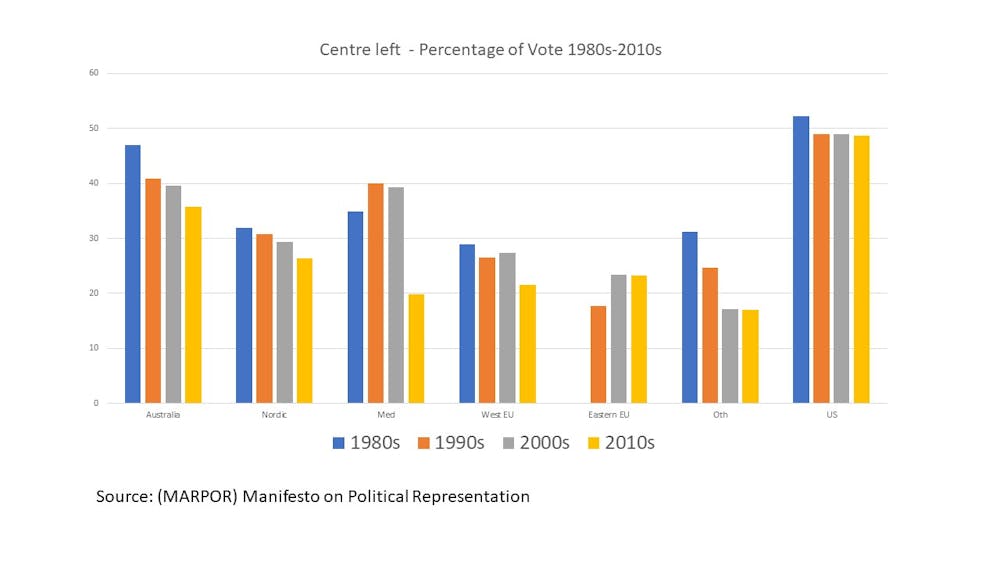




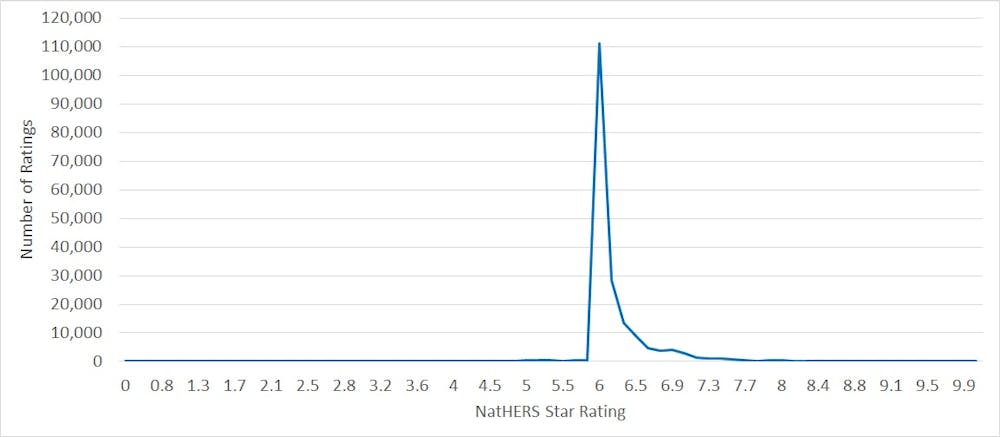
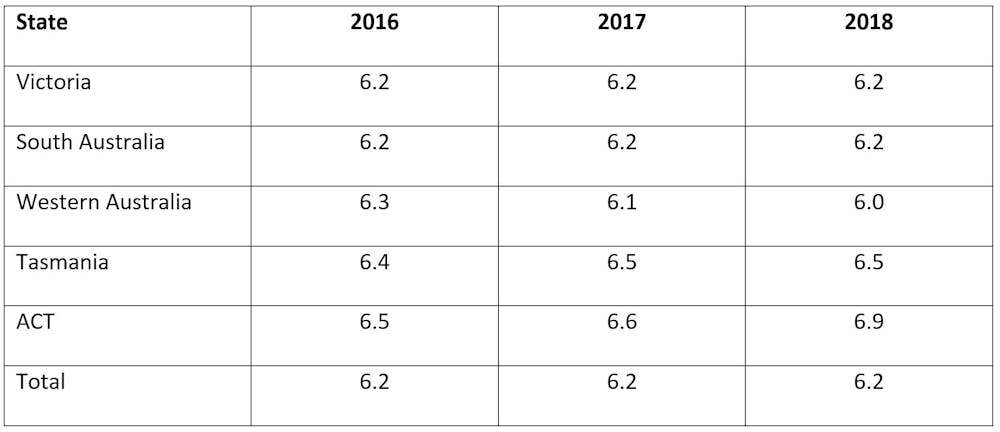
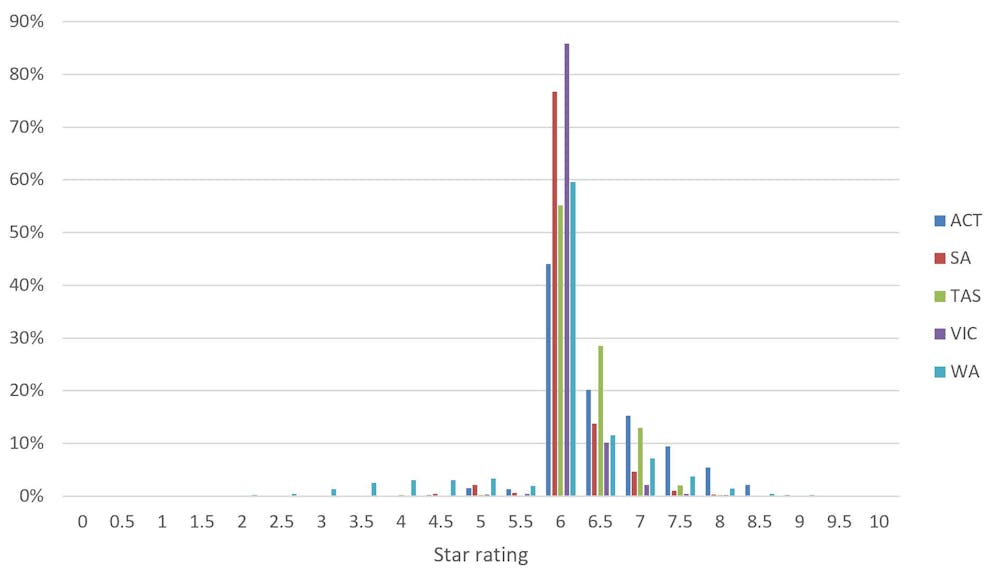



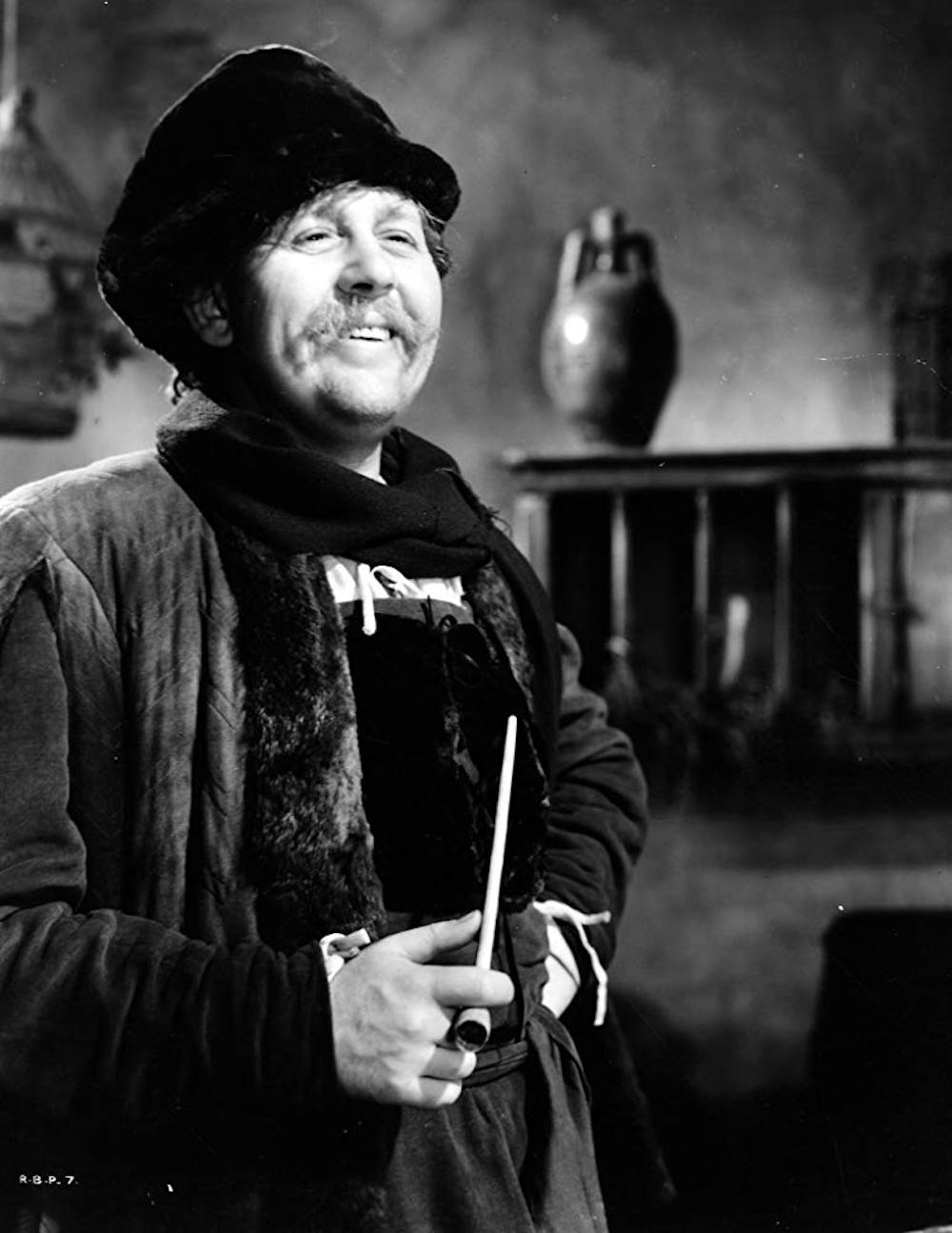



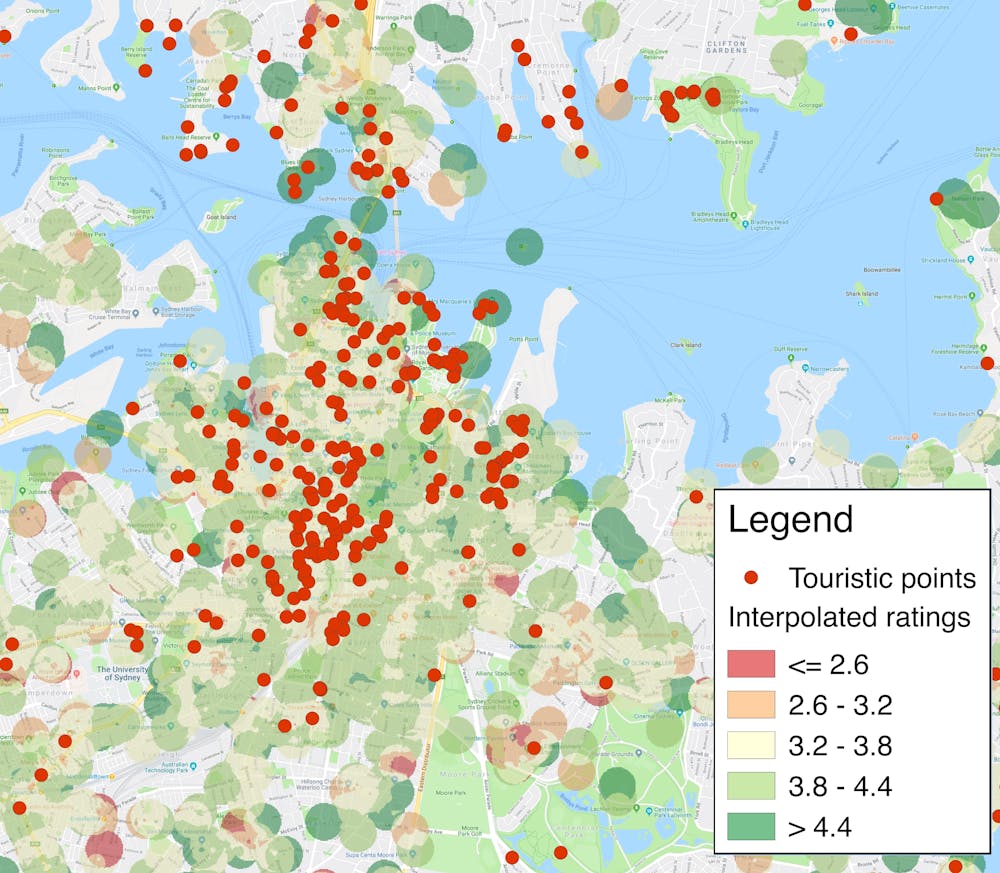
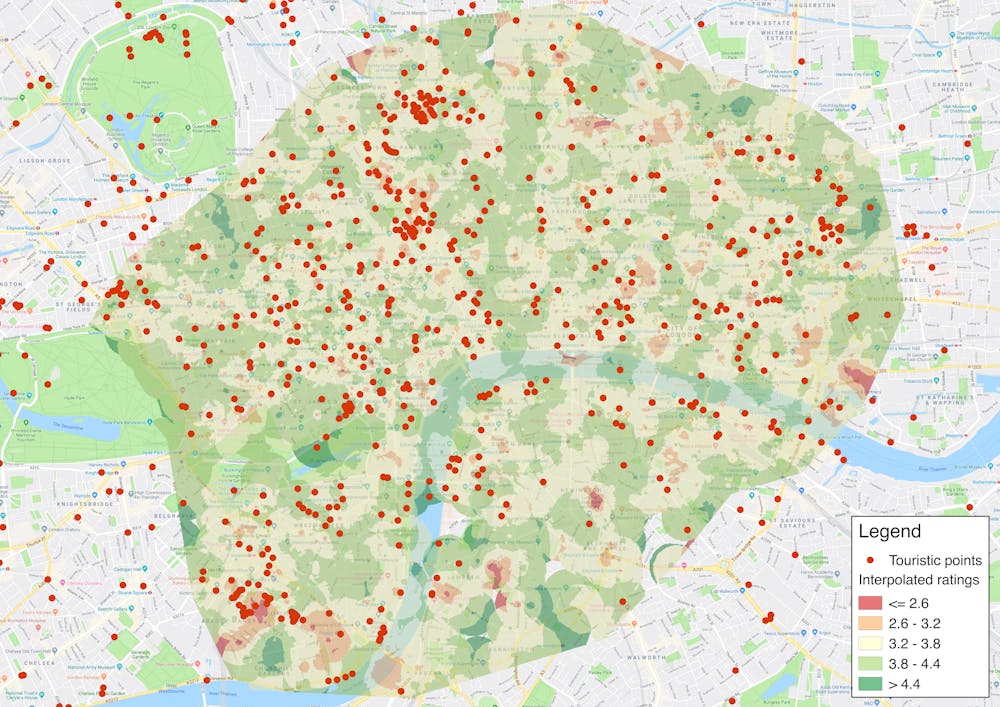
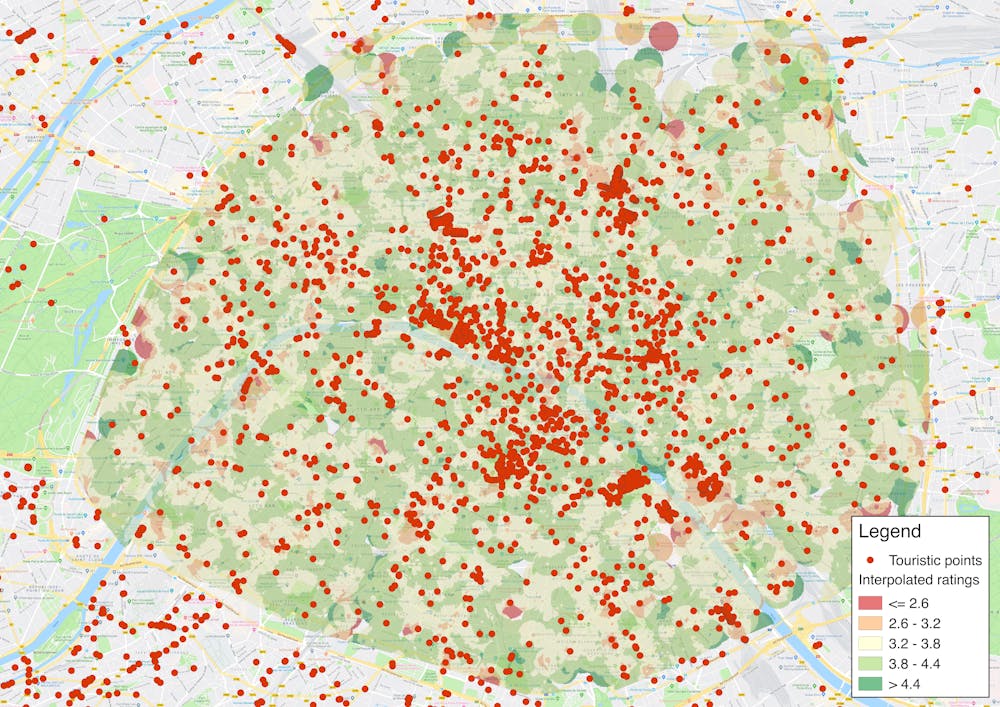










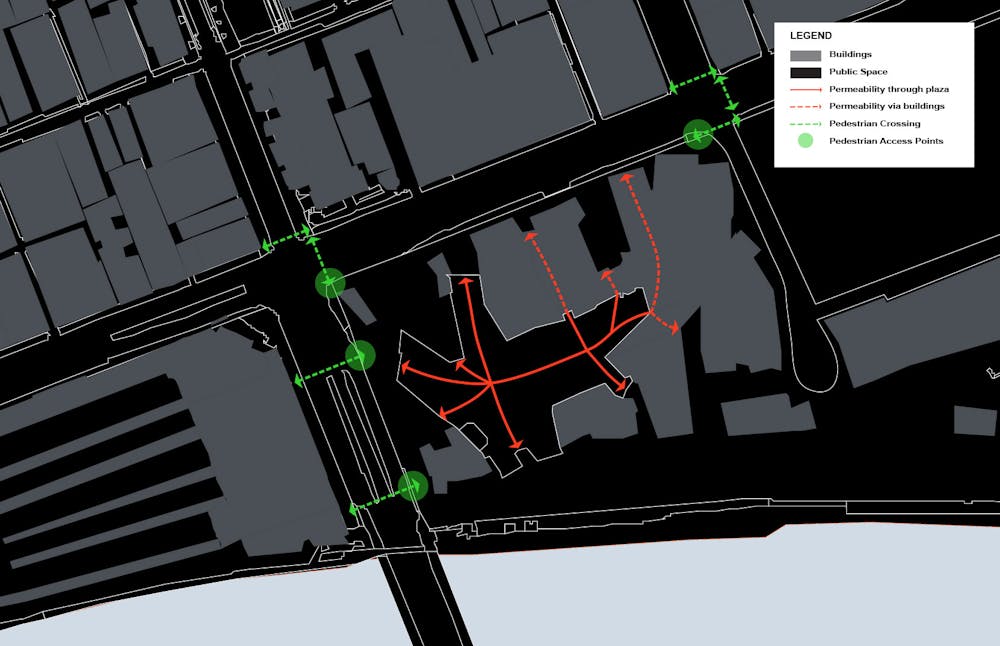








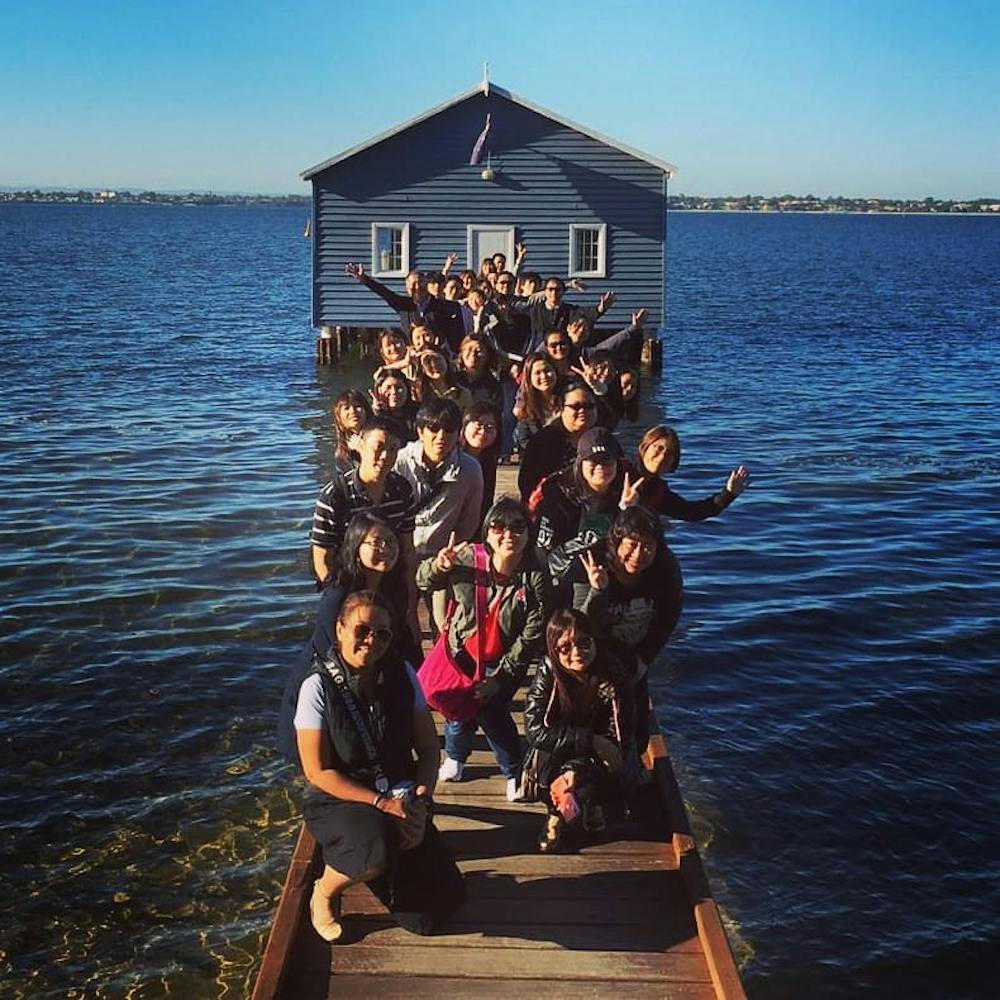
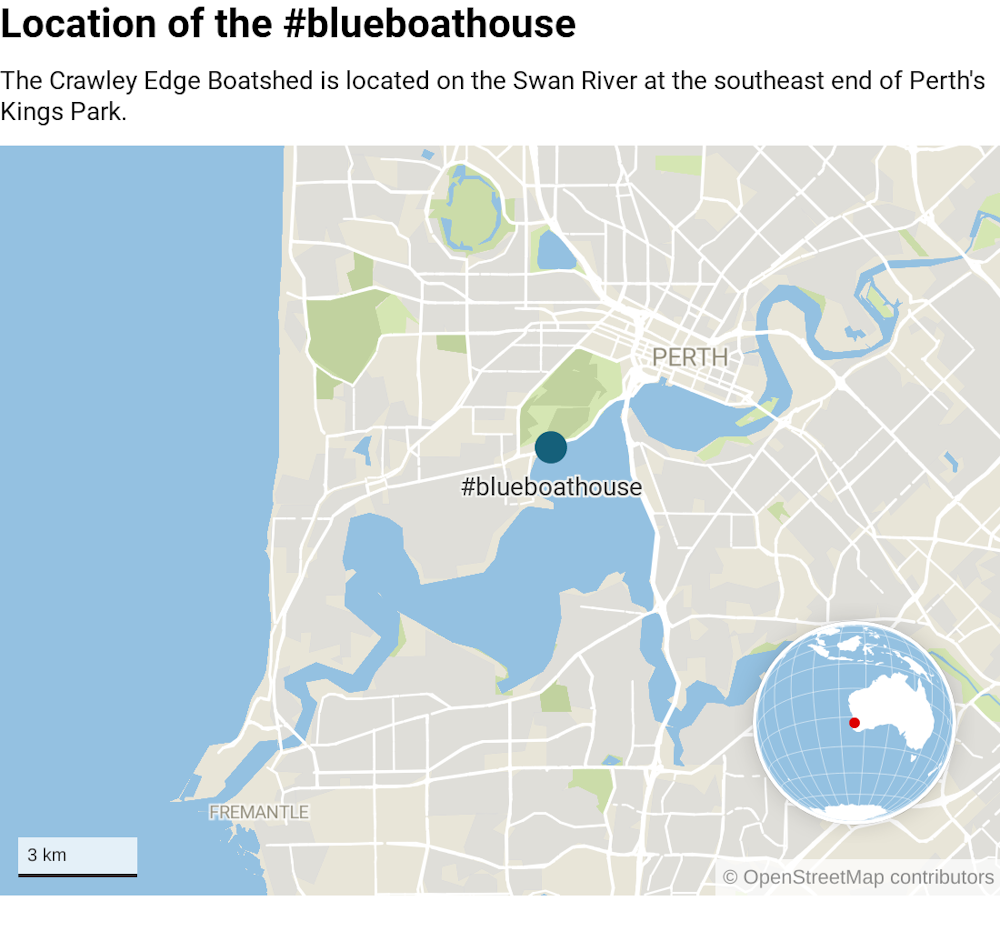






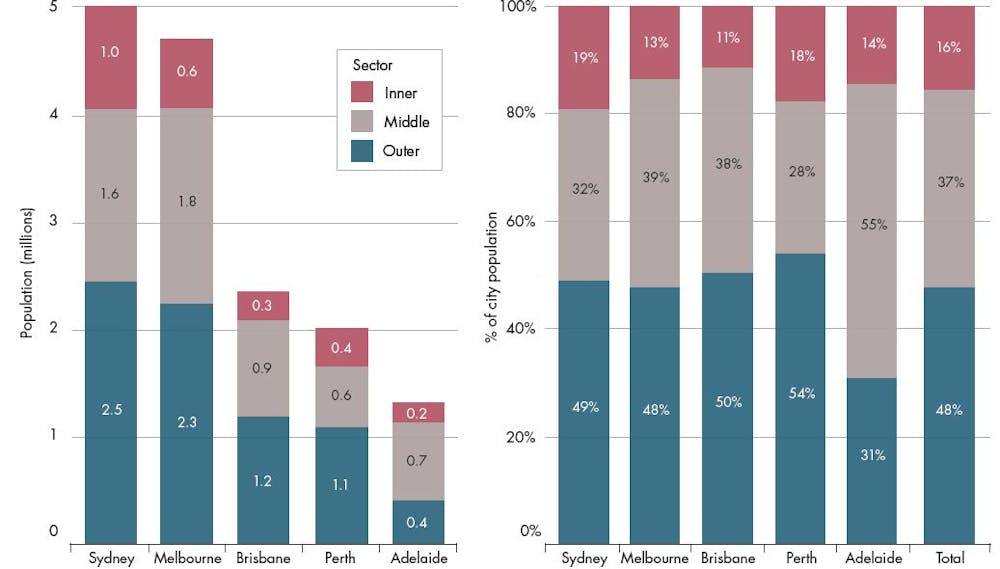






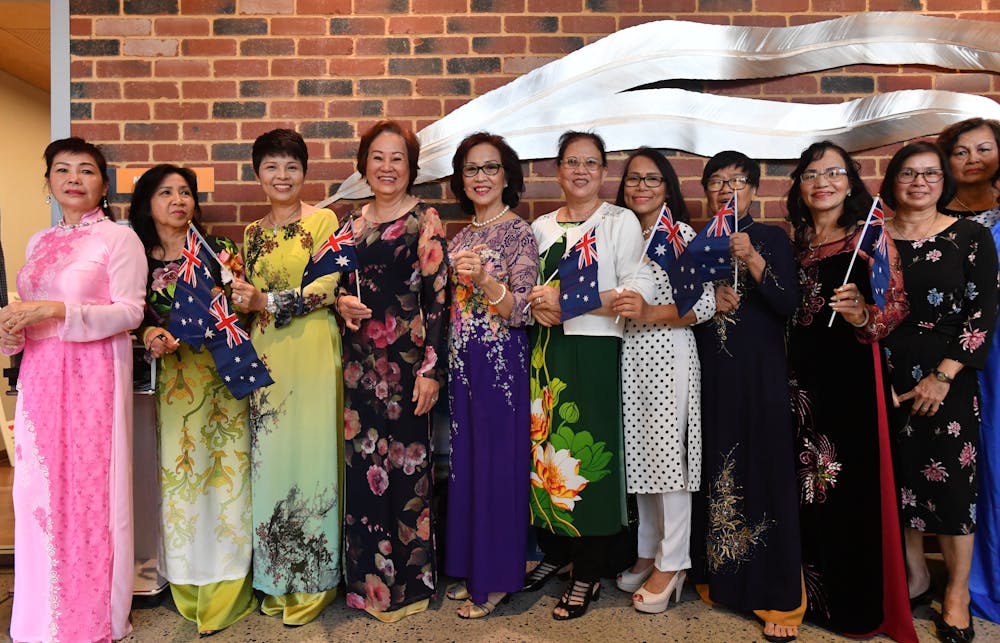



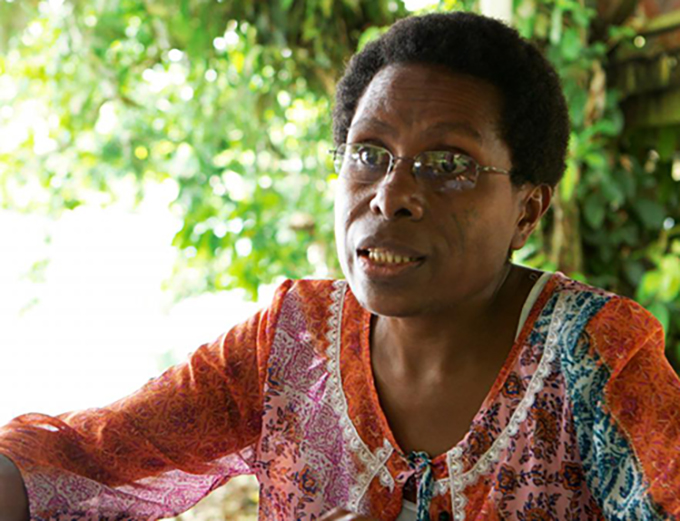




_and_Dennis_Ritchie_at_PDP-11_(2876612463).jpg)