A key reason many organisations want to move their employees to open-plan workspaces is to encourage collaboration and improve communication. The assumption is that the increased visibility and access workers have to one another will ease the flow of information and enhance learning, well-being, and collegiality.
Research suggests that, in some circumstances, this can indeed be the outcome. But another study recently found found exactly the opposite, with workers engaging in 73% fewer face-to-face interactions, along with a 67% increase in electronic communication.
One undeniable aspect of open-plan offices is the increased exposure and access to others they offer. This is sometimes deemed a benefit – particularly because it increases opportunities to learn from, and network with, high-status colleagues. But our research suggests that being more visible may not be good for everyone.
Our study in a large open-plan law firm in Auckland found that, although occupants generally liked this well designed work environment, there was a gender difference in the responses. Every survey respondent who specifically mentioned being visible, watched, observed, exposed or more accountable was a woman. The male occupants, it seems, were oblivious to their increased exposure. This difference in responses was especially striking since we did not set out to explore the gender effects of open-plan work spaces.
It wasn’t that all the women especially disliked being so exposed. In fact, being visible came up several times when they were describing positive aspects of the space, outlining how the open office improved their productivity. One lawyer said:
Overall the effect on my productivity is positive – can always be seen, so always working unless nobody is around.
Another woman commented:
Knowing that other people can see what I am doing also motivates me to be productive.
But this female lawyer was keenly aware of the downside of being so visible:
I don’t like that sometimes it feels like people are judging you for not giving enough face time as everything is so visible. Back at [previous office] there was more of a motto of getting the work done in the time needed and then go home. Now, with open space, it feels more like a fish bowl and I have noticed more subtle pressure to stay later even if you don’t technically need to – based on looks some seniors, even from entirely different teams, give you.
Other research looking at the effect of working in a glass open-plan, largely transparent office, revealed the unexpected outcome of women becoming hyper-aware of being continually observed and evaluated, just as we found. Women (but not men) in this study reported becoming more image conscious, changing the way they dressed, how and where they walked, and feeling exposed.
Why is this? Are women really being looked at more than their male colleagues?
Research into the male gaze and surveillance behaviour on nudist beaches suggests they are. But, whether they are or not, women are socialised, practically from birth, to believe they are being looked at.
Every time a girl is told she is cute or pretty, or even described in gender-neutral, objective terms such as being tall, she is actually being told she is being looked at and assessed on her appearance. Boys are far more likely to have their behaviour or personality commented on by adults, rather than their appearance – being brave, adventurous or clever.
Given that women’s outcomes are, at least in part, determined by their appearance, it is not surprising that, compared to their male colleagues, female workers are comparatively more aware of their visibility.
Research suggests we should question the notion that, just because we can see and hear our colleagues, we will have more and better in-person conversations. The communication benefits of increased exposure to others afforded by open-plan space may be overstated, and the downside of being so visible may disproportionately impact women in the workplace.
The idea that female and male employees differ in their perceptions of being observed should be acknowledged and incorporated into office design.
How? By ensuring that, within open-plan environments, female workers are afforded opportunities for privacy. This includes allowing them to work with their backs to the wall or to be seated away from busy thoroughfares, and by positioning desks so that women are not forced to walk past numerous colleagues on their way to amenities such as the kitchen or the bathroom.
Or, best of all, allowing people to work remotely (and in total privacy) for at least part of the week.
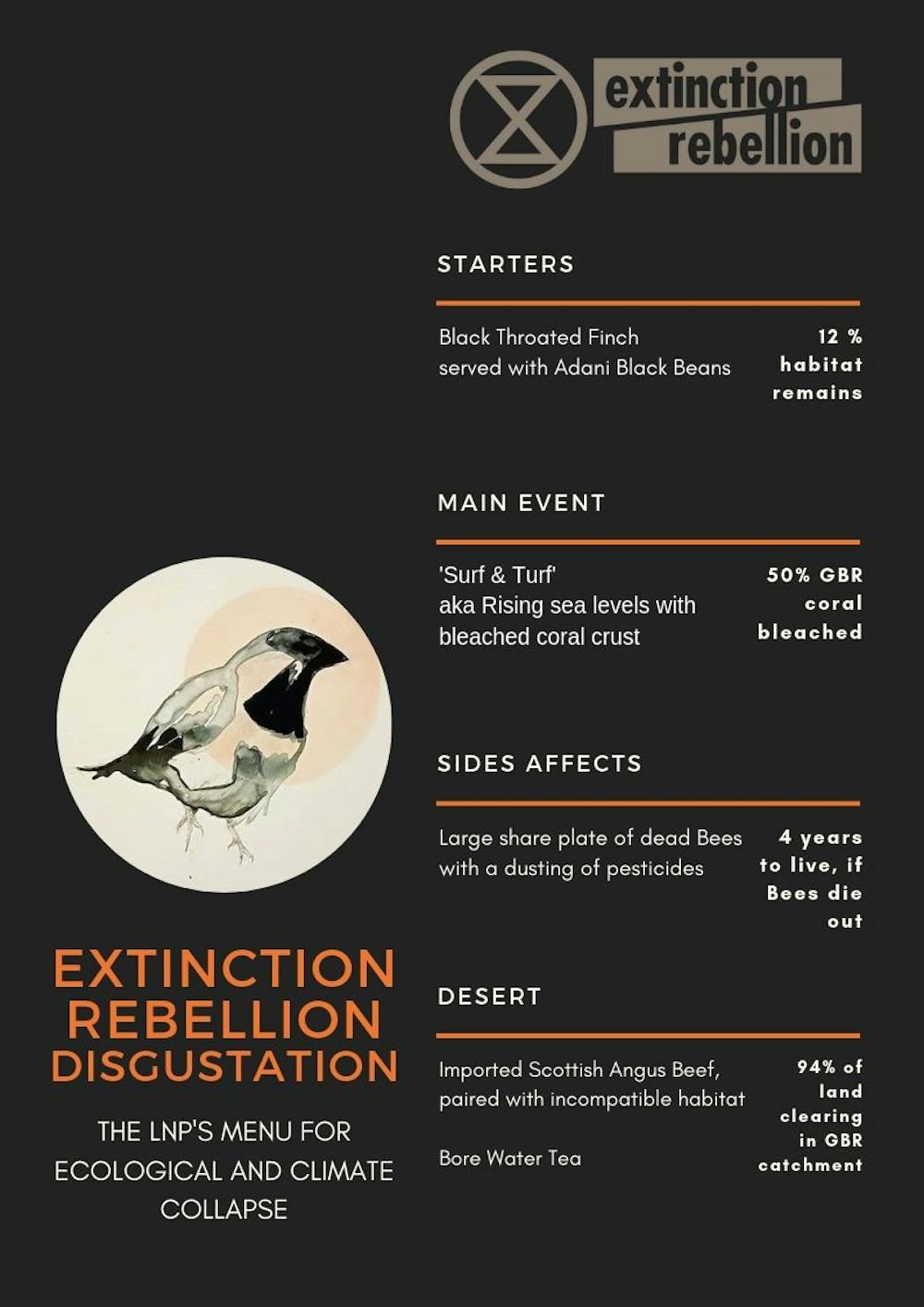
If you live in a major Australian city, expect your daily routine to be disrupted this week. Protest group Extinction Rebellion is carrying out week of flash mobs, sit-ins and marches to block traffic and bring more attention to the pressing problems of climate change and biodiversity loss. Many arrests are expected.
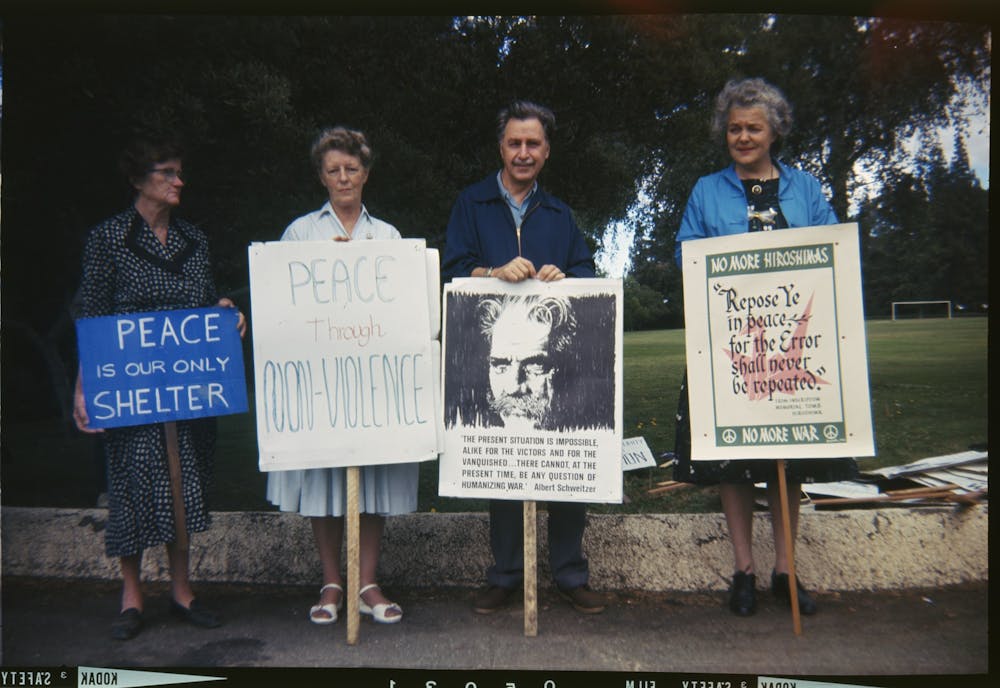
Extinction Rebellion protesters say peaceful civil disobedience is an important social and political strategy for achieving a just and sustainable world.
Their protest actions may make us feel uncomfortable, annoyed or worse. But it is important that the general public understands the reasoning that underpins civil disobedience and why this radical strategy is being deployed this week.
Resistance movements are no stranger to law-breaking
The Extinction Rebellion movement has three bold demands of governments. First, government should declare a climate and ecological “emergency”. Second, by 2025 governments should decarbonise the economy and halt biodiversity loss. Third, citizens’ assemblies should be established to work with scientists to inform environmental policy-making.
The movement’s civil disobedience strategy is one of its most controversial. Civil disobedience is defined as public, non-violent and conscientious breaches of law which aim to change government policies.
Law-abiding citizens are right to be concerned about others deliberately breaking the law to advance their social, political or environmental goals. But many of the most significant social and political advances over the past century owe much to social movements that relied on this tactic. Think of Gandhi’s independence movement against British rule in India, the suffragette fight for the right of women to vote and the US civil rights movement.
These precedents raise the question: might future societal advances also demand peaceful acts of civil disobedience?
Images from the 1965 Selma to Montgomery marches, a series of protests in the US state of Alabama against entrenched racist policies. The US civil rights movement deployed civil disobedience strategies.Wikimedia
Civil disobedience: the case for and against
Imperfect though it is, the basic theory of democracy is that we vote on who represents us in government. In this way, democratic societies are said to have created the institutions and processes needed for their own peaceful improvement.
So critics of civil disobedience argue that people shouldn’t just break the law because they disagree with it. They say if you do not like a policy or law, you are free to campaign for change, including for the election of a new government.
First, they say laws and policies can be shaped undemocratically by powerful mass media, corporate lobby groups, or billionaires. Proponents say citizens do not always owe political allegiance to laws and policies that are not produced through fair, robust, and representative democratic processes.
Second, many political and legal theorists say just because something is enshrined in law, that does not mean it is necessarily just. This was the view advanced by American writer and philosopher Henry David Thoreau in his 1849 essay Civil Disobedience, which inspired both Gandhi and Martin Luther King Jr.
Throughout history, many laws and policies produced in democracies were grossly unjust. These include laws which institutionalised slavery, legally entrenched racial segregation, criminalised homosexuality or particular religious practices, or prohibited women and people of colour from voting.
When a law or policy is clearly unfair, a case can be made that there is a place for civil disobedience. We must accept that even laws produced in a democracy get it wrong sometimes.
An Extinction Rebellion protest in Melbourne on Monday, October 7, 2019.James Ross/AAP
Will Extinction Rebellion fall on the right side of history?
The Extinction Rebellion is promoting civil disobedience because it says across the world, governments have failed to respond adequately to the climate crisis and the steep decline in wildlife populations. It argues that the political system underpinning this failure must be resisted, even if this causes inconvenience to the general public.
The movement’s supporters include 250 Australian academics who signed an open letter saying they feel a “moral duty” to rebel and “defend life itself”.
It could be argued that the activists should wait until governments take action. But judging by recent history – including a lack of substantial progress at last month’s UN climate summit – an adequate, timely global response to the climate crisis seems highly unlikely. In this case, waiting for government action means being complicit in an unjust system.
Some people will inevitably dismiss Extinction Rebellion protesters as troublemakers and criminals. But their actions must be assessed against the big picture. The world’s best climate scientists overwhelmingly agree that if global warming is not kept below the 1.5℃ limit, Earth’s natural and human systems will suffer dire consequences. The legitimacy of Extinction Rebellion’s disobedience must be weighed against the wrongs that triggered it.
As Extinction Rebellion causes chaos in our cities, we must avoid superficial, kneejerk reactions. Whatever your views on civil disobedience, the climate emergency would be far less serious if governments had taken action decades ago. Further inaction will only lead to more numerous and active social movements, driven by the same mixture of love and rage that provoked Extinction Rebellion.
A key reason many organisations want to move their employees to open-plan workspaces is to encourage collaboration and improve communication. The assumption is that the increased visibility and access workers have to one another will ease the flow of information and enhance learning, well-being, and collegiality.
Research suggests that, in some circumstances, this can indeed be the outcome. But another study recently found found exactly the opposite, with workers engaging in 73% fewer face-to-face interactions, along with a 67% increase in electronic communication.
One undeniable aspect of open-plan offices is the increased exposure and access to others they offer. This is sometimes deemed a benefit – particularly because it increases opportunities to learn from, and network with, high-status colleagues. But our research suggests that being more visible may not be good for everyone.
Our study in a large open-plan law firm in Auckland found that, although occupants generally liked this well designed work environment, there was a gender difference in the responses. Every survey respondent who specifically mentioned being visible, watched, observed, exposed or more accountable was a woman. The male occupants, it seems, were oblivious to their increased exposure. This difference in responses was especially striking since we did not set out to explore the gender effects of open-plan work spaces.
It wasn’t that all the women especially disliked being so exposed. In fact, being visible came up several times when they were describing positive aspects of the space, outlining how the open office improved their productivity. One lawyer said:
Overall the effect on my productivity is positive – can always be seen, so always working unless nobody is around.
Another woman commented:
Knowing that other people can see what I am doing also motivates me to be productive.
But this female lawyer was keenly aware of the downside of being so visible:
I don’t like that sometimes it feels like people are judging you for not giving enough face time as everything is so visible. Back at [previous office] there was more of a motto of getting the work done in the time needed and then go home. Now, with open space, it feels more like a fish bowl and I have noticed more subtle pressure to stay later even if you don’t technically need to – based on looks some seniors, even from entirely different teams, give you.
Other research looking at the effect of working in a glass open-plan, largely transparent office, revealed the unexpected outcome of women becoming hyper-aware of being continually observed and evaluated, just as we found. Women (but not men) in this study reported becoming more image conscious, changing the way they dressed, how and where they walked, and feeling exposed.
Why is this? Are women really being looked at more than their male colleagues?
Research into the male gaze and surveillance behaviour on nudist beaches suggests they are. But, whether they are or not, women are socialised, practically from birth, to believe they are being looked at.
Every time a girl is told she is cute or pretty, or even described in gender-neutral, objective terms such as being tall, she is actually being told she is being looked at and assessed on her appearance. Boys are far more likely to have their behaviour or personality commented on by adults, rather than their appearance – being brave, adventurous or clever.
Given that women’s outcomes are, at least in part, determined by their appearance, it is not surprising that, compared to their male colleagues, female workers are comparatively more aware of their visibility.
Research suggests we should question the notion that, just because we can see and hear our colleagues, we will have more and better in-person conversations. The communication benefits of increased exposure to others afforded by open-plan space may be overstated, and the downside of being so visible may disproportionately impact women in the workplace.
The idea that female and male employees differ in their perceptions of being observed should be acknowledged and incorporated into office design.
How? By ensuring that, within open-plan environments, female workers are afforded opportunities for privacy. This includes allowing them to work with their backs to the wall or to be seated away from busy thoroughfares, and by positioning desks so that women are not forced to walk past numerous colleagues on their way to amenities such as the kitchen or the bathroom.
Or, best of all, allowing people to work remotely (and in total privacy) for at least part of the week.
Anthem, directed by Susie Dee, Arts Centre Melbourne for Melbourne International Arts Festival
What does it mean to be an “ordinary” Australian in an atomising and globalised world economy?
Anthem brings together the writers behind the celebrated 1998 Melbourne Workers’ Theatre production of Who’s Afraid of the Working Class?, revisiting core themes of the earlier play in a distinctly post-Trump, post-Global Financial Crisis setting.
Twenty years separate these productions and the socio-political contexts in which they are produced. Economic rationalism under then Prime Minister John Howard has reached its zenith, with welfare recipients and those on disability and age pensions absorbing the hardest hits.
Meanwhile, every aspect of private life is governed, mined and mediated by the ubiquitous presence and seductiveness of social media.
Writers Andrew Bovell, Patricia Cornelius, Melissa Reeves, and Christos Tsiolkas, with composer Irine Vela, drill down into the lives of commuters. Loosely interconnected stories are braided together and presented as vignettes, supported by a continuous live musical score and punctuated with eruptions of choreography.
Directed by Susie Dee, Anthem is a parable of Australian democracy.
A local play
On Melbourne’s railway network from the Pakenham line to the Mernda, Anthem is unapologetic in addressing its local audience, touching on our fondness and frustration for Melbourne’s public transportation system.
Railway stations are liminal spaces where people wait to journey from one place to another among the ebb and flow of bodies. There are personal stories here: struggles, tensions, expressions of kindness, outbreaks of violence.
The set (Marg Horwell) is three identical train platforms nestled against what could be the foot of the iconic escalators at Parliament station. It is a simple but effective design, with moveable parts operated by the actors themselves.
Two strangers (Thuso Lekwape and Eryn Jean Norvill) sit opposite each other on a Eurostar train, discussing Brexit, austerity, Trump; then on to populism, racism, the gilet jaunes (the yellow vest protesters in France) and the conditions for a revolution.
Set high above the rest of the action, this scene provides a counterpoint to the rest of the play, which takes place literally down under. We are offered a broad frame of reference to consider our collective position as Australians – and perhaps our political apathy.
Charity (Ruci Kaisila) walks the platforms and carriages belting out anthemic tunes while shaking a can. An argument erupts about whether to give her money. Elaine (Maude Davey) offers the singer a single coin. “I want you to promise me that you won’t buy cigarettes or alcohol or any other substance of abuse”, she says.
Loki (Sahil Saluja) holds up his old boss at 7-Eleven, demanding unpaid wages. His girlfriend Lisa (Norvill), an employee of Chemist Warehouse, is turned on by the idea of hunting down the corporate bosses. A comical revenge plot ensues, with Norvill nailing her rendition of a selfie-obsessed, endearingly narcissistic check-out operator.
An unemployed single mother (Eva Seymour) struggles to get her troubled five-year-old son to his father on time. She will contravene a court order if late. She is apprehended by the transit police, and fined for unauthorised travel.
Chi (Amanda Ma) recognises Elaine, who she used to clean for. She demands unpaid wages from her well-dressed ex-employer. The once middle-class woman, now divorced and destitute, begs for forgiveness and friendship.
Three siblings – “one black, one white, and one brown” – share a mother, who has recently died. They are physically exuberant, jumping from platform to platform. They use expletives freely; they menace “the Asians” and “the wogs”. Choreographed sequences between the siblings are a highlight of the production.
The trains and platforms of Melbourne become spaces of struggles, tensions, expressions of kindness, outbreaks of violence.Pia Johnson/MIAF
This trio are to reunite with their brother Jamie (Lekwape) who left the family to pursue a life Lyon. Unlike Australia, he says, France is a place where he can breathe.
Themes of breathing or not being able to breathe, recur, threaded into sequences where the cast perform as a chorus. We might see here a reference to police violence against people of colour in the US, and as having parallels to Indigenous deaths in custody and political fear mongering about “African gangs” – both being attributable to institutionalised racism.
The siblings resent and reject their brother, who offers them money on the condition they return to study. This is a domestic drama: the story of a blended family locked in a cycle of poverty while one sibling escapes and thrives. It is also a story about Australia as a nation. Do we invite our “brothers” in, or remain small and parochial? Isn’t there a kind of dignity in parochialism and in not accepting friendship or charity from outsiders who feel superior to us?
Panorama, not minutiae
The trouble with the panoramic view is we miss out on exploring the granular tension that arises when the personal intersects with politics writ large. Sometimes the production is lacking in the kind of intimacy that might generate the ratcheting racial tension of Norm and Ahmed, or the gender-based violence so acutely present in Cornelius’s Shit.
The tone of the production skews towards the light-hearted, with comedic delivery tempering heavy themes. We lose out on a sense of theatrical risk, on the opportunity to show the eviscerating pressure of neoliberalism, structural racism, class disparity, and gender inequality.
In Anthem, ‘the tone of the production skews towards the light-hearted.’Pia Johnson/MIAF
In Anthem, the Melbourne public transportation system behaves as a microcosm of larger political tensions and anxieties. This team of writers haven’t shied away from a complex intersectional inspection of racism, gender and class as they see it in Australia today.
This is not a small play in any sense of the word: not its political objectives, its feelings, themes, aesthetics, content or cast. It has a lot of heart, energy, and fire.
The supermassive black hole at the heart of our Galaxy spat out an enormous flare of radiation 3.5 million years ago that would have been clearly visible from Earth.
In new research that will soon be published in the Astrophysical Journal my colleagues and I found that the flare left traces in a trail of gas called the Magellanic Stream that lies some 200,000 light years away and encircles the Milky Way.
The team includes Ralph Sutherland and Brent Groves at the Australian National University and ASTRO-3D; Magda Guglielmo, Wen Hao Li and Andrew Curzons at the University of Sydney; Philip Maloney at the University of Colorado; Gerald Cecil at the University of Carolina; and Andrew J. Fox at the Space Telescope Science Institute in Baltimore.
The discovery changes our view of our galaxy’s central black hole, which has appeared dormant throughout recorded human history. Astronomers are coming to realise that it has been hugely active, even explosive, in the relatively recent past in galactic terms (measured in millions of years).
Radiation flashes out from the hot spinning gas around the supermassive black hole at the centre of the Milky Way, leaving traces in the Magellanic Stream. Credit: James Josephides / Swinburne University.
This activity has been flickering on and off for billions of years. We don’t understand why this activity is intermittent, but it has something to do with how material gets dumped onto the black hole. It might be like water droplets on a hot plate that sputter and explode chaotically, depending on their size.
Our situation on Earth resembles living near a largely dormant volcano like Mount Vesuvius that is known to have been explosively active in the past, with disastrous consequences for Pompeii.
Despite this, there’s no need to be alarmed: as far as we can tell, we are safe here in orbit about a cool dwarf star far from the centre of the Milky Way.
Why is there a black hole at the centre of the galaxy?
If you look along the Milky Way in the direction of the constellation Sagittarius, you will see the dense agglomeration of stars around the centre of the galaxy. The galactic centre is marked by a very dense, very massive cluster of stars orbiting the supermassive black hole.
Earlier this year, the ESO Gravity team found a star close to the black hole travelling at up to 10,000 km per second, a few percent of the speed of light. This let them weigh the black hole to a precision of 1%, arriving at a number of about 4 million times the Sun’s mass.
As galactic supermassive black holes go, this is a featherweight. For example, our neighbouring galaxy Andromeda also has a supermassive black hole, but it is 50 times heavier than ours.
Essentially all large galaxies have central massive black holes. We don’t know exactly why this is so, but we know it’s important and that the growth phases of these monsters are likely to have affected the galaxy as a whole.
Understanding the effect of interactions between black holes and host galaxies is one of the hottest topics in modern astrophysics.
Some black holes are more active than others
But if we look out across the Universe, we see only a few percent of galaxies appear to have “active” black holes. By active, we mean that gas and stars spiralling into the black hole form an extremely hot ring of gas.
This ring, called an accretion disc, gets so hot that it drives jets, winds and radiating beams of light out across the galaxy. The effects of these explosions are particularly impressive in more massive galaxies.
For decades, Australian radio telescopes have mapped out jet flows that are far larger than the visible galaxy in the middle.
The radio jets in the galaxy Centaurus A extend more than 10 degrees across the sky – that’s the size of 20 full moons next to each other. This is remarkable given Centaurus A is 10 million light years away.
An enhanced radio image of Centaurus A. The inset picture zooms in on the jets coming from the central black hole.CSIRO/ATNF; ATCA;ASTRON; Parkes;MPIfR; ESO/WFI/AAO (UKST); MPIfR/ESO/APEX; NASA/CXC/CfA
The Milky Way explosion
Some three million years ago, our direct ancestor Australopithecus afarensis walked the Earth. They may well have looked up towards Sagittarius and seen cones of light shooting sideways from the Milky Way, brighter than any star in the night sky.
The lightshow would have appeared as static beams on a human timescale, only flickering on timescales of thousands of years. Today, the only visible remnant of that immensely powerful event is the cooling gas along the distant Magellanic Stream.
So how would life on Earth have fared if the explosive jet was directed straight at us? This is a valid question, because we believe that the spin axis of the accretion disc flops around wildly in lightweight supermassive black holes.
The beams of radiation from the black hole’s accretion disk flop around in different directions over thousands of years. Credit: Phil Hopkins / Caltech.
If the beam was pointing at the Solar System, the jet would have to plough through the Milky Way disc, and it would take about ten million years to reach us.
So it’s possible that a more ancient explosion could have produced a powerful jet that is yet to reach us.
But we need not worry – at its peak, the intensity of the jet when it reaches us is unlikely to exceed the most energetic solar flares. These are known to knock out satellites, and pose a threat to space-walking astronauts, but our own atmosphere largely protects us on Earth.
A report from The Australia Institute rejects government claims new dams are not being built, saying at least 20 to 30 large private dams have been constructed in the Murray-Darling basin in recent years.
While information on the number of private dams and the cost of their taxpayer subsidy is limited, the report says “it appears that just two of these dams cost taxpayers nearly $30 million”.
“Over $200 million was spent on dam-related projects [in the Murray-Darling Basin] according to official data, although not all of this will have been specifically on dams,” it says,
Maryanne Slattery, senior water researcher at the institute, said politicians don’t want to talk about these dams because “they do nothing for drought-stricken communities, the health of the river or struggling farmers”.
“These dams have been built on private land and are for the exclusive use of corporate agribusiness, such as Webster Limited,” she said.
“Politicians are reluctant to talk about why millions of taxpayer dollars have been spent subsidising dams that make the problems of the Murray Darling Basin worse”.
Water Minister David Littleproud has repeatedly berated the states for not building new dams. He said recently that of the 20 dams completed since 2003, 16 were in Tasmania.
“If NSW, Queensland and Victoria don’t start building dams, their water storage capacity will fall by more than 30% by 2030,” he said. “We put $1.3 billion on the table in through the national water infrastructure development fund in 2015 and have still had to drag most states kicking and screaming to build new dams.”
The report says new public dams would require public consultation, including with stakeholders who had environmental and economic concerns.
But private dams involved “minimal public consultation and can be approved and constructed based on environmental assessments commissioned from private consultants by dam proponents”.
The report looked at three dams in detail, on properties in the Murrumbidgee Valley owned by Webster Ltd – Glenmea, Bringagee and Kooba Station. The dams were funded out of the federal government’s $4 billion water efficiency program.
The report argues such dams are not the best way to save water. It points to the department of agriculture and water resources saying new dams can save water where they replace shallower ones (which have more evaporation), or where they collect recycled irrigation water.
“However, none of the three case-study dams in this report save water in this way. They are new dams, not replacing smaller, shallower dams. Water stored behind their approximately eight metre high walls would otherwise be stored in public headwater dams around 100 metres deep.”
These dams are designed to divert normal irrigation water and “supplementary water” – not to simply recycle irrigation water, the report says. Thus “they increase both evaporation and irrigation water use”.
Supplementary water is water that is surplus to consumptive needs. It is important environmentally and to downstream users, historically making up almost all the water flowing from the Murrumbidgee into the Murray, the report says.
“With major dams now targeting this water, the Murrumbidgee could be disconnected from the Murray in most years. This has implications for all NSW Basin water users, who are already grappling with how to meet downstream obligations within the Murray’s constraints and with no water coming down the Darling.”
The report says a Canadian pension fund had just been reported as “swooping” on Webster, “with specific mention of a property with one of these new dams”.
“The new dams that Australian taxpayers helped build appear to be highly valued by international investors,” the report says.
When people visit a GP clinic or hospital in Australia or the United States, they receive the recommended care around 55-57% of the time.
Recommended care means they get the tests or treatments that evidence-based guidelines say a patient should receive for their condition. This is usually because they’re the most effective or cost-effective option. The recommended care for people with knee osteoarthritis, for example, is exercise and weight loss.
Clinicians may not provide recommended care for several reasons. These include wishes of the patient, lack of trust in the evidence or guidelines, or experience providing certain types of care.
Doctors often refer patients with musculoskeletal problems such as back pain and osteoarthritis for physical therapy. But until now, it has been unclear how often physiotherapists provide the recommended care for these patients.
Our review of the international evidence, published today in BMJ Open, found 63% of physiotherapists provided recommended treatments. But 27% provided treatments that weren’t based on evidence and which the guidelines recommended against.
Fortunately, failing to provide recommended care is unlikely to harm patients. Nevertheless, ditching non-recommended treatments could result in more efficient care and fewer resources being wasted.
Our study
We reviewed 94 studies from 19 countries, including Australia, to investigate the treatments physiotherapists provided for a range of musculoskeletal conditions. These included back pain, knee osteoarhtirits, neck pain, whiplash, foot or ankle pain and shoulder pain.
We used physiotherapists’ clinical notes to determine which treatments they provided. We then compared their treatment choices with recommendations from evidence-based guidelines, or guidelines that were considered most credible for each condition.
Overall, we found 63% of physiotherapists provided recommended treatments, which appears higher than in hospitals and GP clinics overall. A 2012 Australian audit, for example, found 57% of patients surveyed received recommended care.
But in our study, almost half of physiotherapists (45%) provided treatments that guidelines didn’t mention because there wasn’t enough evidence to say if they worked or not.
And one in four (27%) provided treatments the guidelines recommend against. This was usually because the evidence showed they’re ineffective.
Often, the recommended treatment for pain conditions is to advise patients to stay active.Aleksandra Suzi/Shutterstock
Physiotherapists can provide a range of treatments, some recommended and others not, so these percentages don’t add up to 100. Of the 63% who provide recommended care, for instance, some might also be providing treatments that are not recommended or that are not mentioned in guidelines.
Why does it matter?
Back pain, neck pain, osteoarthritis and other musculoskeletal conditions can have a substantial impact on people’s lives, and often cause disability.
Traditionally, these conditions were managed with medication and surgery. However, medications such as opioids cause harm and there is growing evidence some common surgical procedures are ineffective. This has prompted a shift in what is recommended for musculoskeletal conditions.
There is, however, a range of treatments physiotherapists can provide. Some treatments are effective, such as exercise for knee osteoarthritis. Other treatments are not, such as acupuncture for low back pain.
To ensure patients receive the right care, physiotherapists are expected to follow recommendations from clinical practice guidelines. These guidelines are often multidisciplinary and intended to be used by GPs, physiotherapists, and surgeons.
Physios manage some pain better than other pain
When it comes to following clinical guidelines, we found physiotherapists manage some conditions better than others.
For shoulder pain, up to 76% of physiotherapists provided recommended treatments (such as strengthening exercises and massage). Only 8% provided treatments that were not recommended (such as magnetic field therapy, which uses an electrical current to alleviate pain).
There is room for physiotherapists to improve their use of recommended treatments for knee osteoarthritis and low back pain.
For knee osteoarthritis, 65% of physiotherapists provided recommended treatments (to advise patients to stay active, undertake aerobic and strength exercises and lose weight). One in five (21%) provided treatments that were not recommended (such as acupuncture and advice to reduce activity levels).
For low back pain, half provided recommended treatments (advice to stay active and reassure patients that most people recover from back pain without formal treatment); while 18% provided treatments that were not recommended (acupuncture, lumbar braces, or advice to rest in bed until the pain goes).
Physiotherapists have a lot to offer patients with musculoskeletal conditions. But it’s important they don’t dilute appropriate care with inappropriate care.
Better adhering to clinical practice guidelines could increase the efficiency of physiotherapy services and ensure patients only receive care that is truly necessary.
More than two years on from the sudden closure of Victoria’s Hazelwood coal power station, quite a mess remains. It is clear the federal government’s market interventions have not worked. Electricity prices are higher and supply is tight. Consumers are not happy.
In the face of this, federal and state governments have felt pressured to act – especially after several severe blackouts attracted fever-pitch media coverage and prompted a national debate about electricity reliability. But their approach has been ad hoc and has made things worse in the long run.
Australia is in the midst of a great energy transition. The nation’s entire coal fleet will close over the next few decades, and the government must urgently improve its policy response or electricity consumers will continue to suffer. We propose a solution that ensures coal plants close in an orderly way.
A high-voltage electricity transmission tower in Brisbane. A new report says governments are hindering the clean energy transition.AAP/Darren England
We can’t afford a repeat of the Hazelwood mess
The aftermath of the sudden Hazelwood closure is a good case study in failed government intervention.
Hazelwood closed in March 2017 after supplying Victoria with cheap brown coal-fired electricity for more than half a century. The plant’s owner, French energy company Engie, gave only five months’ notice of the shutdown. This left no time to build replacement electricity generation, so prices rose and supplies became less reliable.
In the years since Hazelwood’s closure, the federal government failed to clear up more than a decade of uncertainty around national climate and energy policy – including last year when it dumped the National Energy Guarantee. This has left investors wondering when a framework to cut emissions in the electricity sector will be imposed.
Instead of creating investor certainty, the federal government has adopted a “picking winners” approach. It plans to build new generation assets such as the Snowy 2.0 pumped hydro project, and subsidise others through a program of underwriting investments. Alongside this, the government’s proposed “big stick” laws would give it vast powers including those to break up big energy companies. Our research has confirmed this has a chilling effect on investment.
The sudden closure of large coal power stations is challenging enough without being made worse by ill-conceived policy responses. Hazelwood will be the first of many closures. Australia’s entire coal fleet is expected to retire over coming decades as it ages and gets displaced by low-cost solar and wind energy.
Flogging the life out of coal plants is not the answer
The crucial lesson from Hazelwood is that Australia needs adequate notice of impending coal plant closures. This allows timely replacement investment to occur, minimising the price and reliability impacts on consumers.
New South Wales’ Liddell power station is due to close next and its owner AGL has given plenty of notice. In 2015 it announced a 2022 closure, and this year firmed up its plans for full closure by 2023. One unit of four will close in 2022.
Federal Energy Minister Angus Taylor is so concerned at Liddell’s closure he set up a taskforce to examine how to manage it, including extending its life or replacing the lost generation like-for-like.
But his concerns are misplaced. The Australian Energy Market Operator’s 2019 reliability projection for New South Wales is that the outlook is improving more rapidly than it was in 2018. About 2.3 gigawatts of solar and wind energy has been committed in NSW since the start of 2017 – and more is planned.
The best way to maintain reliability is through investment – not by trying to keep an ageing power station running on hot summer days.
The now-closed Hazelwood coal-fired power station in the Latrobe Valley, Victoria.Global Warming Images/Cover Images
Laws on coal plant closures must grow teeth
Liddell’s closure is very likely to prove manageable. But this cannot be taken for granted in all future cases.
A new rule introduced late last year requires generators to give at least three years’ notice of closure. It’s a step in the right direction, but the rule lacks teeth. The penalties for non-compliance are small, and the mechanism could be gamed by generators nominating a closure date and then continuously delaying closure. We need better insurance to avoid future disruptive closures.
Past Australian experience gives some lessons on what not to do. In 2011 the Gillard Labor government proposed paying coal generators to close, on the grounds that otherwise they might continue operating indefinitely. Four of the five short-listed generators have since closed – without being paid a cent of government money. We are now dealing with the opposite problem, but the lesson holds – taxpayers will be taken for a ride if government money is used to delay or otherwise “manage” coal closures.
International experience is not likely to translate well to Australia. Germany’s coal closure commission built on deep cooperation between business, unions and governments that is not present here. The UK and Canada legislated coal phase-outs, but they did so at a time when coal provided only 10% of their power, compared to more than 60% in Australia today.
Prime Minister Julia Gillard during a visit to the Acciona windfarm near Gunning, NSW, in 2011. Labor’s incentives for coal stations to close were also misguided.AAP/Alan Porritt
Make coal plants guarantee orderly closure
The Grattan Institute’s latest report, Power play: how governments can better direct Australia’s electricity market, proposes a new approach. Coal generators should be required to put money – indicatively several hundreds of millions of dollars each – into a fund, managed by an independent third party, to be held as security. Generators would be allowed to nominate their own closure window, but would get these funds back only if they closed within this window – providing a strong financial incentive for predictable and orderly closure.
Circumstances change and generators cannot reasonably fix closure decades in advance. To balance flexibility and certainty, younger generators would be allowed to nominate relatively long windows, but they would need to tighten these windows as they age.
Limited exemptions would be available if early closure did not harm the reliability of the market, or conversely if continued operation of the coal plant in question was absolutely necessary to maintain reliability.
This policy would come with costs. Collectively generators would need to place several billions of dollars into the fund. As generators have a higher cost of capital than would be earned on the held funds, this would cost them, collectively, several hundreds of millions of dollars a year. But the measure would provide low-cost insurance against the destabilising effect of poorly managed coal closures on the A$18 billion National Electricity Market.
The policy would give a clear signal for investment in new, clean power supply before – not after – coal closures, and better manage Australia’s energy transition.
It’s 1963. Frances “Baby” Houseman (Jennifer Grey) is a college-bound teenager staying at Kellerman’s Mountain Lodge with her family. Johnny Castle (Patrick Swayze) is a dance instructor at the resort – and Baby’s love interest.
Dirty Dancing is one of those films almost everyone has at least some knowledge of, even if only second-hand. It is therefore not surprising it has inspired a reality TV show: The Real Dirty Dancing.
At the “real Kellerman’s” resort in Virginia, B-list Australian celebrities take dancing lessons, visit set locations, and reminisce about the movie.
It is a predictable, bland and heteronormative reality TV show, with low stakes and little to say about the film beyond “how romantic” it is.
The reality show emphasises authenticity through locations, costumes and choreography – but by isolating the musical numbers, the film’s complex politics are erased.
You don’t own me
The premise of the film – “dirty” dancing – is unavoidably tied to black culture and the history of “race music.”
In the early 20th century, music by black artists was specifically marketed towards African-American audiences with its own record companies, radio stations and music stores.
This changed as white fans starting listening to African-American music in the 1950s and 1960s.
There were (and continue to be) issues of cultural appropriation when white musicians performed covers of songs by black artists. Black bodies and black music is repeatedly presented as sexualised, exotic and erotic in much American media, even today.
In the film, Johnny teaches upper-class Jewish-American families “classical” dances: the foxtrot and the waltz. The lower-class resort workers partake in “dirty” dancing. These after-hours parties are coded as fun and illicit – with dancing too erotic for tight-laced holidaymakers.
In the first iconic dirty dancing party scene, Baby is shocked to see the Kellerman’s staff grinding and twisting against each other.
Two songs by African American artists play: The Countour’s Do You Love Me (1962) and Otis Redding’s Love Man (1969). These songs were hits on the R&B charts in the 1960s, but neither made the Billboard year-end Hot 100 list.
Be my baby
Part of a cluster of Hollywood dance-basedteen-films, Dirty Dancing featured a mix of 1960s pop tunes by big names like The Shirelles and Frankie Valli, as well as original songs – including (I’ve Had) The Time Of My Life.
The soundtrack’s nostalgic pastiche went on to become a huge commercial success, shooting to number one on the charts and becoming one of the best-selling soundtrack albums of all time.
The movie’s musical numbers have become stand-alone properties, famous in their own right. But when these numbers are considered in isolation (as in The Real Dirty Dancing, in wedding videos on YouTube, and in films like Crazy Stupid Love), the original film’s messy class, race and gender politics are sidelined.
Will you love me tomorrow
Much of the film’s plot revolves around an illegal abortion.
Dirty Dancing is set ten years before Roe v. Wade protected a woman’s right to abortion in America. When Johnny’s dance partner Penny needs an abortion, Baby loans the money to pay for the procedure and steps in to learn the routine to ensure the dancers’ employment the following summer.
But when Baby asks her father, a doctor, to help Penny after the botched abortion, he bans her from seeing “those people.”
The film makes explicit the class distinction between those who holiday at Kellerman’s and those who work there: the romance centres on overcoming class differences. But there is also the added barrier of culture, as Baby is Jewish-American and Johnny is of Irish heritage.
Baby and her sister Lisa represent two different models of Jewish-American femininity prized in the 1980s. Baby is going to, in her father’s words, “change the world,” while her sister is going “to decorate it.” Baby is socially conscious and book-smart, while Lisa is a Jewish American Princess.
Baby (Jennifer Grey) and Lisa (Jane Brucker) represented two different models of 1980s Jewish femininity.Vestron Pictures
Big girls don’t cry
The Real Dirty Dancing elides the gender and racial issues by focusing simply on learning the intimate dance moves.
It does, however, raise some interesting questions about sexuality and erotic dancing. Many of the female contestants express their discomfort with the intimacy and vulnerability needed to “be Baby.”
As Jessica Rowe says in the second episode, “The scariest thing about Dirty Dancing is the ‘dirty’ dancing.”
Much of The Real Dirty Dancing’s promo material features Jessica Rowe’s struggles with her body image, sexuality, and conflicting feelings about being sexy as a mum. A scene where the female contestants are trying on revealing costumes, is used as an opportunity to highlight the women’s insecurities about their bodies.
In a straight to camera interview, Jessica Rowe breaks down saying, “When you become a mum, you almost feel sometimes like a part of yourself shuts down. That part of you that is just for you.”
On The Real Dirty Dancing, Jessica Rowe confronts the way her body image shifted after becoming a mother.Seven
It is an interesting and powerful moment that betrays the show’s fluffy low-stakes premise.
We’d like to think the parameters of ideal femininity have shifted since the 1960s when Dirty Dancing was set, or the 1980s when the film was made. As Rowe’s comments reveal, there are still strict rules about how women are expected to best perform motherhood, sexiness and wifedom.
The appeal of reality television is watching ordinary people achieve extraordinary things like a difficult dance lift. By focusing on just the dance moves The Real Dirty Dancing ignores the difficult politics of the film and keeps Baby in the corner.
Unmanned aerial vehicles, more commonly called drones, are now a fundamental part of defence force capability, from intelligence gathering to unmanned engagement in military operations. But what happens if our own technology is turned against us?
However, as with all IT technology, manufacturers and users may leave the digital doors unlocked. This potentially leaves opportunities for cyber-criminals and perhaps even cyber-warfare.
Imagine a defence operation in which a drone is sent out to spy on enemy territory. The enemy identifies the drone but instead of disabling it, compromises the sensors (vision, sonar, and so on) to inject false data. Acting upon such data could then result in inappropriate tactics and, in a worst case scenario, may even lead to avoidable casualties.
UK cybersecurity consultant James Dale warned earlier this year that “equipment is now available to hack drones so they can bypass technology controls”.
Drones are relatively cheap technologies for military use – certainly cheaper than the use of satellites for surveillance. Off-the-shelf drones can be used to gather intelligence, without any significant development effort.
Meanwhile, governments have cracked down on illegal civilian drone use, and imposed no-fly zones around secure infrastructure such as airports. Drone manufacturers have been forced to provide “geofencing” software to avoid situations such as the recent drone strike in a Saudi oil field. However, cyber criminals are smart enough to bypass such controls and openly provide services to help consumers get past government and military-enforced no-fly zones.
It doesn’t cost much to skirt around the no-fly rules.Author provided
Russian software company Coptersafe sells such modifications for a few hundred dollars. Anyone can buy a drone from a retail store, purchase the modifications, and then send their drone into no-fly zones such as military bases and airports. Ironically, Russia’s military base in Syria came under attack from drones last year.
Australia on the frontline
Australia is at the frontier of the military drone revolution, equipping itself with a fleet of hundreds of new drones. Lieutenant Colonel Keirin Joyce, discussing the program in a recent defence podcast, declared Australia will soon be “the most unmanned [air vehicle] army in the world per capita”.
It will be essential to safeguard every single component of this sophisticated unmanned aerial fleet from cyber attack.
When drones were developed, cyber security was not a priority. Let’s explore a few potential threats to drone technology:
drone navigation is based on the Global Positioning System (GPS). It’s possible an attacker can break the encryption of this communication channel. Fake signals can be fed to the targeted drone and the drone effectively gets lost. This type of attack can be launched without being in close physical proximity
with knowledge of the flight controller systems, hackers can gain access using “brute force” attacks. Then, the captured video footage can be manipulated to mislead the operator and influence ground operations
a drone fitted with sensors could be manipulated by injecting rogue signals. For example, the gyroscopes on a drone can be misled using an external source of audio energy. Cyber criminals may take advantage of this design characteristic to create false sensor readings
drones’ onboard control systems are effectively small computers. Drone control systems (onboard and ground-based controllers) are also vulnerable to malicious software or Maldrone (malware for drones). The founder and CTO of CloudSEK, Rahul Sasi discovered a backdoor in the Parrot AR.Drone. Using malicious software, an attacker can establish remote communication and can take control of the drone. Attackers can also inject false data to mislead the operators. This type of malware can be installed silently without any visible sign to the operators. The consequences are significant if the drones are used for military operations.
As with traditional cyber-crime, it’s likely 2019 will see a sharp rise in drone-related incidents. However, these security breaches should not discourage the use of drones for personal, industrial or military applications. Drones are great tools in the era of smart cities, for instance.
But we should not forget the potential for cyber crime – and nowhere are the stakes higher than in military drone use. Clearly, the use of drones needs to be carefully regulated. And the first step is for the government and the Australian Defence Force to be fully aware of the risks.
Source: The Conversation (Au and NZ) – By Chris Barrie, Honorary Professor, Strategic and Defence Studies Centre, Australian National University
This is part of a new series looking at the national security challenges facing Australia, how our leaders are responding to them through legislation and how these measures are impacting society. Read the rest of the series here.
It is evident from Australia’s increasingly severe droughts and record-breaking heatwaves that time is running out to take action on climate change.
Yet, despite persistent calls from eminent scientists to reduce global dependence on fossil fuels, a call to action has gone unanswered by our political leaders.
And we aren’t just facing an environmental threat alone in Australia – there are significant implications for our national security and defence capabilities that we haven’t fully reckoned with either.
the most natural disaster-prone region in the world … [and] climate change is predicted to make disasters more extreme and more common.
If the predictions are correct, [climate change] will have serious ramifications for global security and serious ramifications for the ADF [Australian Defence Force].
What kinds of security risks do we face?
Climate change works as a threat multiplier – it exacerbates the drivers of conflict by deepening existing fragilities within societies, straining weak institutions, reshaping power balances and undermining post-conflict recovery and peacebuilding.
climate-related drivers for armed violence and conflict will increase as climate change progresses.
The survey points out that the 2011 uprising against Syrian President Bashar al-Assad that escalated into civil war was preceded by the country’s deepest and most prolonged drought on record. One study has found the drought was two to three times more likely to happen due to climate change, and that it helped fuel migration to large cities, which in turn exacerbated the social issues that caused the unrest.
In May 2018, I was among numerous experts who provided evidence to a Senate committee examining the potential impacts of climate change on Australia’s national security.
Increased climate migration and disasters
One of the biggest threats I identified was the possibility of mass migration driven by climate change.
There will be nearly 6 billion people in the Asia-Pacific region by 2050. And if the region has become increasingly destabilised due to climate change, many people will likely be affected by rising sea levels, water and food shortages, armed conflicts and natural disasters, and desperate to find more secure homes.
This is already happening now. Since 2008, it’s estimated that an average of 22.5 million to 24 million people have been displaced globally each year due to catastrophic weather events and climate-related disasters.
And a new World Bank report estimates that 143 million people in three developing regions alone – sub-Saharan Africa, South Asia and Latin America – could become climate migrants by 2050.
They will migrate from less viable areas with lower water availability and crop productivity and from areas affected by rising sea level and storm surges. The poorest and most climate-vulnerable areas will be hardest hit.
Australia, with its very low population density, will likely be an attractive place for climate migrants to attempt to resettle. The World Bank has called on Australia to allow open migration from climate-affected Pacific islands, but successive governments haven’t exactly been open to refugees and asylum seekers in recent years.
Other experts agreed. American climate security expert Sherri Goodman described climate change as a “direct threat to the national security of Australia”, saying the region is
most likely to see increasing waves of migration from small island states or storm-affected, highly populated areas in Asia that can’t accommodate people when a very strong storm hits.
Australia would also struggle to respond to worsening natural disasters in our region either caused by or exacerbated by climate change.
As part of the Senate inquiry, the Department of Defence noted an “upwards trend” in both disaster-related events in the Asia-Pacific region and disaster-related defence operations in the past 20 years.
As alluded to in the speech prepared for Campbell in June, we could easily find ourselves overwhelmed by disaster relief missions due to the severity and scale of future weather events, or due to a series of events that occur concurrently in dispersed locations.
This would stretch our available first responder forces – defence, police, ambulance, firefighters and other emergency services – even in the absence of any other higher priority peacekeeping missions around the world.
The HMAS Canberra transporting Army vehicles to Fiji to assist with disaster relief following Cyclone Winston in 2016.LSIS Helen Frank/Royal Australian Navy
the government to develop a climate security white paper to guide a coordinated government response to climate change risks
the Department of Defence to consider releasing an unclassified version of the work it has undertaken already to identify climate risks to the country
the government to consider a dedicated climate security leadership position in Home Affairs to coordinate climate resilience issues
and the Department of Defence to create a dedicated senior leadership position to oversee the delivery of domestic and international humanitarian assistance and disaster relief as climate pressures increase over time.
Some of these findings were contested. In their comments, the Coalition senators made a point of saying how well the government has been doing on climate change in the defence and foreign affairs portfolios. Sufficient strategies are in place
to ensure Australia’s response to the implications of climate change on national security is well understood and consistent across the whole of government.
They also considered that a separate recommendation on defence emissions reduction targets fell outside the spirit of the inquiry. They did not support it.
A lack of urgency and response
The findings in the report are a cause for concern. The recommendations lack timetables for action and a sense of urgency.
The Senate committee also admitted its own shortcomings. For instance, it couldn’t adequately examine the potential impacts of climate change on Australia’s economy, infrastructure and community health and well-being due to a lack of substantial evidence on these issues.
Furthermore, and most worryingly, it seems the government just doesn’t care enough. It has yet to table a response to the report more than a year later.
A welcome development would be if the government announced a climate change security white paper that clearly spells out where ministers stand on the issue and the specific measures we need to take to prepare for the threats ahead. It would also dispel the concerns of many Australians about our future readiness.
But the Coalition’s response to the Senate report is breathtakingly complacent and smacks of reckless negligence since Australia is on the front line when it comes to climate change and our national security faces undeniably serious risks.
Climate change is already presenting significant challenges to governance, our institutions and the fabric of our societies. It’s time we recognise the potential threats to security in our region, as well.
In similar recent clashes in Sheffield, UK, onlookers claimed Chinese students were threatening citizens’ right to protest and freedom of speech. There have been concerns the Chinese government is extending its influence into Western universities, threatening academic freedom, freedom of speech and liberal values.
Confucius Institutes are criticised as tools through which the Chinese government spreads its propaganda under the guise of teaching Chinese culture and language. Chinese students who aggressively protect their country’s reputation may be lumped into the same category.
But research shows Chinese students come to Australia to study for much the same reasons as students from other countries – to gain a competitive edge over graduates in their home country by learning English and experiencing another culture.
Why students from China go overseas
Over the past 20 years, Chinese international students have become highly visible on Australian campuses. International students account for more than 50% of enrolments at some Australian universities and Chinese students make up nearly 40% of all international students.
While Chinese students study in Australia for many reasons, a recent study showed most were here for economic reasons. Having an international degree and English language skills can give job seekers an edge over their locally educated peers.
A 2018 study of Chinese women studying in Australia showed studying abroad could be an opportunity to escape traditional expectations such as marrying early and having children. It also provides a chance for the students to explore their sexuality.
Does the CCP control Chinese students overseas?
Since the 1990s China has intensified its “ideological education” or “moral education” programs. These begin in the early years of school and continue throughout university. Ideological education aims to bolster support for the CCP and make liberal democracy less attractive.
Chinese international students have grown up with this education and have benefited from the economic success of the China Model. Some students from China fear political change inside China could threaten the country’s stability. But this doesn’t automatically mean they are hostile to liberal values.
Some students believe democracy is suited to Western nations only, or that multi-party democracies are more responsive to citizen demands. Others may be supportive of democracy, but still see criticism of China as Western bias.
The CCP recognises that international education can have a liberalising impact on students. In response, it seeks to extend its influence over students abroad, especially by providing economic and employment incentives to international students who support the CCP on their return to China.
Some students who engage in anti-CCP activities have reported being threatened by the CCP. One Chinese student, who discussed sensitive political issues on social media in the US, claimed she was questioned for hours by state security when she returned to China.
The CCP encourages overseas students to challenge liberal values and shape China’s global image. Some Chinese students have challenged Australian lecturers who criticise China. If these challenges become hostile, students and lecturers may avoid discussing contentious topics such as human rights, the status of Taiwan, or the Tienanmen protests.
But students who reject criticism of China also demonstrate that they are expressing their right to free speech and confronting and learning about ideas contrary to their beliefs.
When Chinese students don’t support the CCP, it is still pragmatic for them to show support for the PRC, or at least keep a low profile to avoid risk to themselves and their families. Upholding the safety of students in Australia should be a priority for universities, even if it upsets the CCP.
Australian universities’ responsibilities to students from China
Australian universities promote themselves as internationalised, culturally diverse places where students can build global friendships. However, international students’ experiences often don’t reflect this.
Studying overseas is frequently alienating, and Chinese students’ experiences in Australia are no different.
PRC students mostly live in a “parallel society” without Australian friends. Brief interactions, or group work at university, can increase negative feelings because both international and local students believe the other’s opinions are biased, while language barriers also cause frustration.
Encouraging students to engage in politics is an effective way of exposing them to democratic political processes and values. Discouraging or denying Chinese students the right to participate in student and national politics because of suspicions about their political loyalty is the exact opposite of the approach universities should be taking.
Few Australian charities have been as high-profile as the White Ribbon organisation. In its stated mission to prevent men’s violence against women, it garnered the support of politicians, sporting champions, celebrities and the general public.
But now White Ribbon Australia has collapsed under the weight of its debts, after losing A$840,000 last financial year. Clearly something went very wrong.
Understanding how this could happen is important. We have a collective interest in ensuring charities are run well. Australians donate more than A$12 billion a year to charities and not-for-profit organisations. Donors want their contributions to make a positive difference. It’s important for society that they do.
But too few of us know anything about the inner workings of the organisations to which we donate. We trust regulation to ensure they are well run and spend donations efficiently and effectively.
Thousands take part in Sydney’s annual White Ribbon Day Walk in November 2017.Peter Rae/AAP
A clear problem with White Ribbon Australia is with how it ensured this at board level. Its directors had relevant skills and qualifications, particularly in social work. But was only a few months ago that it added someone with a strong accounting background – KPMG partner and qualified auditor Julian McPherson.
By comparison, more than a third of directors on the boards of the Australian Securities Exchange’s top 200 companies have accounting and finance backgrounds.
Directors of large listed companies are, of course, usually well paid compared to not-for-profit board members (who may not be paid at all), but White Ribbon Australia still should have recognised the need for certain skills on the board. It might have ticked the box on some diversity criteria but it appeared to have failed on others.
Shuffling deckchairs
It’s important in any organisation to get the balance right between stability and renewal. Changes at the top of White Ribbon Australia could well have contributed to its troubles.
Libby Davies retired in July 2018 after eight years as chief executive. Her replacement, Tracy McLeod Howe, lasted just three months. McLeod Howe’s replacement, Delia Donovan, took over in an acting capacity in November 2018, before being formally appointed in March.
Chairman Nicholas Cowdery meanwhile resigned in October 2018 due to criticism of comments he made about convicted baby killer Keli Lane.
Another director, Dan Gregory, left the board in April 2018, with three new board members – Trish Egan, Sean O’Brien and Vanessa Swan – appointed since December 2017.
While some board refreshment can help provide a new perspective to an organisation, high turnover of board members can signal underlying issues and instability, with a higher risk of poor financial performance and poor management oversight.
Bipartisan appeal: Australian Greens leader Christine Milne with federal Opposition leader Tony Abbott at a White Ribbon event at Parliament House in November 2012.Lukas Coch/AAP
Flash over substance
White Ribbon Australia’s annual report was full of pretty pictures and charts but otherwise superficial. There was limited financial disclosure and minimal information within the notes to the financial reports, which were not included in the annual report.
Given this was a relatively large registered charity, with an annual revenue more than A$1 million, the lack of detail was a clear warning sign.
This is confirmed by the audited financial statements the charity was required to lodge with the Australian Charities and Not-for-profits Commission, which can be accessed via the commission’s website. A quick analysis of the income statements reveals:
revenue from sales of merchandise (such as white ribbons and wristbands) declined from A$1,197,445 in 2017 to A$723,729 in 2018
employee costs jumped from about A$2 million in 2016 to nearly A$4 million in 2018
“other expenses” were A$750,000 in 2015, almost A$850,000 in 2017 and more than A$1 million in 2018
“other admin expenses” of nearly A$2 million in 2017 and 2018 for which no additional information was available within the notes to the financial statements.
The annual report’s commentary focuses on income and expenditure while neglecting cash flow. But it is cash flow on which an entity usually depends to continue trading. White Ribbon Australia had negative cash flow; it spent more money than what was coming in. Last financial year it borrowed almost A$300,000 to keep operating. This was unsustainable.
Regulatory responsibilities
So all the warning signs were there, for those with the management and accounting knowledge. Leadership was in flux. Some traditional sources of revenue were declining. Expenses were increasing. Reports were light on detail and heavy on pretty graphs and “highlights”. Income and expenditure information was summarised in the form of pie charts, making year-to-year comparisons difficult.
Perhaps the regulator should do more than simply require large charities to lodge financial statements. It could be more prescriptive with the financial disclosures it requires organisations to publish. One suggestion is that organisations produce a one-page “snapshot” document facilitating comparison with other organisations.
Without enough accountability and transparency, we will end up with similar situations.
Source: The Conversation (Au and NZ) – By Silke Meyer, Associate Professor in Crimninology; Monash Gender and Family Violence Prevention Centre, Monash University
Last month, eight women died as the result of male violence in Australia. Five were within one week. In six of the cases, the alleged perpetrator was a current or former partner.
These figures seem all too familiar. This time last year, seven of the nine women allegedly killed by a male perpetrator were in the context of an intimate relationship. And like this time last year, media coverage, national and political outcry remained relatively limited.
But there’s another side to the crisis of women being killed by an abusive partner or ex-partner that remains somewhat invisible in national conversations. In most of these cases, the women killed were mothers.
While children remain physically unharmed in many intimate partner homicides, they experience trauma and abandonment. All face the loss of the victim parent who also tends to be their protector and primary carer.
Yet, children become forgotten victims when their protector parent is killed as ethical safeguards stop them from being included in the public narrative. It’s time we better understood their trauma beyond their immediate grief by giving them their own voice.
Children are more often treated as witnesses, not victims
Research has shown for at least two decades that children’s exposure to domestic and family violence, along with other adverse childhood experiences, can have lasting effects on their social, emotional and cognitive development.
More recently, we have begun to understand the negative impact on children’s brain development when growing up with domestic violence.
Negative developmental outcomes can include problems at school, early onset mental health problems, substance misuse, an increased risk of suicidal feelings and an increased risk of using or experiencing domestic family violence in their own future relationships.
And it doesn’t just impact children’s well-being – exposure to domestic violence is costly. A recent Australian study by Deloitte Access Economics highlighted that, if left unaddressed, childhood trauma costs the Australian economy more than A$34 billion each year.
In the homicides that occurred last month, four of the six women killed by an intimate partner or ex-partner (called intimate partner homicide) were identified as mothers. They reportedly left a total of eight children behind.
But we rarely hear about the impact of intimate partner homicide on children. While this is partly to keep children out of media reporting, it fails to acknowledge the wider impact of intimate partner homicide and the need for child-centered support mechanisms.
In research, children are understood as primary victims, but in the public narrative and service responses, children continue to be treated as witnesses whose needs are automatically addressed by addressing the domestic violence of their parents.
Responses to children exposed to domestic violence often end when the exposure is seen as resolved. This may be through parental arrest or the removal of children by child protection.
The availability of ongoing trauma-informed recovery support for children exposed to parental domestic violence remains scarce.
However, evidence derived from studies (such as from Deloitte Access Economics and an Adverse Childhood Experiences study) clearly highlight, if forgotten at the time of initial intervention, children carry the lifelong burden of parental domestic violence and homicide.
Limited research on how domestic homicide affects children
The many studies on non-fatal domestic violence suggests the victim parent also tends to act as a protective parent and counterbalances some of the negative effects of the perpetrator parent.
But little remains known about the outcomes and recovery needs of children when the domestic violence does become fatal and a parent is killed. This is partly due to a lack of research in this area.
One of the few studies conducted on how domestic homicides impact children highlights the excessive trauma they suffer when one parent or carer is killed by another. While many children have been desensitised by repeat prior exposure to non-fatal parental violence, the loss of the protective parent is often beyond comprehension.
Stringent ethical safeguards often restrict the inclusion of children in research. This applies in particular when children fall into highly vulnerable categories, such as “victims of trauma”, and means researchers at times can’t include children in their studies.
As a result, research evidence is primarily based on parent and practitioner voices.
However, a number of researchers in Australia argued in 2012 for the inclusion of children in ethically safe research on domestic family violence.
They write their inclusion can lead to deeper findings about children’s lives that can inform otherwise adult-centric research, policy and practice initiatives.
More importantly, it revealed children have expectations of their relationship with the perpetrator parent.
Children’s needs are not simply addressed by responding to parents in their roles as victims or perpetrators through victim support or perpetrator interventions.
Many children will have ongoing contact with the perpetrator parent whether victims separate or not. In some cases, even when the perpetrator kills the other parent and removes the protective parent from the child’s life.
Children therefore need ongoing support to assist their recovery process. And they should have a say about the type of relationship they are willing to maintain or rebuild with the perpetrator parent and the expectations they have for the remaining parent to make amends.
This seems to be particularly crucial at a time where a member of parliament raised claims mothers make up tales of domestic violence in court proceedings designed to protect their children.
If we continue to ignore children as victims in their own right, we exacerbate the experiences of a forgotten group that grows up to endure the long-term impact of childhood trauma long beyond the immediate grief for their mothers and the prison sentence of their fathers.
The National Sexual Assault, Family & Domestic Violence Counselling Line – 1800 RESPECT (1800 737 732) – is available 24 hours a day, seven days a week for any Australian who has experienced, or is at risk of, family and domestic violence and/or sexual assault.
Diversity includes gender, sexual orientation, religion and social background. The issue is important because if we aim to offer older people and families choice and control in aged care, we must meet the diverse needs of all older people.
Australia’s rich diversity is reflected in its older population. In 2016, more than one-third (37%) of Australians aged 65 and over were born overseas and one-fifth (20%) were born in a non-English speaking country.
These figures have increased continually since 1981, when one-quarter (25%) of older people were born overseas.
Diversity within diversity: culture and language
Culture is important for every person. It indicates a way of life based on customs, beliefs, language and experiences shared with family and a wider community or group.
They may not want to be away from family and community, they might speak a different language to staff and other residents, and homes may not understand or meet their individual cultural needs.
Our previous research showed living in an aged care facility could make some older people feel disempowered. Language and cultural diversity can further add to that disempowerment. For the older people we studied, communication, companionship, and staff knowing them as individuals was very important.
Language is particularly important for older people’s physical health and well-being. Many culturally and linguistically diverse older people say they speak English well. However, with age and cognitive decline, they may lose the ability to communicate in English and revert to their first language.
And as more than half of nursing home residents have dementia, with the associated deterioration in language and cognition, communication can be more difficult still.
Appreciating someone’s cultural background can help residents make friends.from www.shutterstock.com
Being aware of their peer’s culture and language can help residents build relationships with each other, family and staff.
Different cultural expectations and language barriers can create misunderstanding and resident and family dissatisfaction. This can affect residents’ care and quality of life.
Aged care needs to be responsive, inclusive and sensitive to a person’s culture, language and spiritual needs. So it is important for nursing homes to understand those needs.
For those who are culturally diverse, government-funded support and culturally specific nursing homes can help. These include services for Greek, Italian, Dutch, Jewish and Chinese older people, reflecting post-war migration.
However, organisations like these cannot meet everyone’s needs. So all residents need care that respects cultural and social differences, works with older people and family, and supports choice.
Staff cannot know everything about the many cultural and language groups in Australia. They can, however, practise in way that is culturally appropriate, by:
never making assumptions about someone’s culture, heritage, language or individual needs. No two people are the same, even if they are from the same culture and language background
talking to the resident with an interpreter, if needed
learning what is important to the resident. For example, staff could ask family members or close friends to bring in photos or mementos important to the older person
talking with family of residents who are unable to communicate in English to make a list of key words or phrases for staff. This could include how to say “hello”, or how to ask “are you comfortable?”, or “are you in pain?”
making sure the older person isn’t isolated in the nursing home. This could involve working with the local community of the person’s culture, and asking for volunteers who could come and visit the older person.
Family members can be a huge help to staff in understanding the resident’s language, culture and preferences.Nadya Chetah/Shutterstock
Appropriate and respectful aged care is a human right
Culture and language diversity in aged care is a fundamental human right. Embedding diversity in all aspects of aged care is also recognised by government, and in how the quality of aged care is assessed.
New aged care quality standards, which came into effect this July, include being treated with dignity and respect, with identity, culture and diversity valued, and all residents able to make informed choices about the care and services they receive.
If the outcomes of this royal commission are to benefit Australians now and especially in the future, older people from culturally and linguistically diverse backgrounds must not be an afterthought in the aged care discussion. They must be part of the planning.
A Filipino human rights lawyer has come away uninjured after unidentified motorcyclists fired gunshots into her car on the central Philippines island of Panay, reports The Sun Star.
According to the report, Criselda Heredia was with her daughter and a client when the attack happened last month.
“I was just ambushed. Two bullet holes… There are nine bullets recovered by the police. The police however suspect that there are more,” she said in a Facebook post.
A member of the National Union of Peoples’ Lawyers (NUPL) Heredia is an anti-mining campaigner on the island and handles pro bono cases for farmers, human rights defenders and political prisoners.
In an official statement, the International Coalition for Human Rights in the Philippines condemned the “outright attack against Filipino human rights lawyers,” saying that it was part of an ongoing pattern of attacks.
– Partner –
“There is a clear pattern of vilification and harassments which then lead to political killings,” said Peter Murphy, chair of ICHRP’s Global Council.
“This only shows the continuing climate of impunity and the worsening human rights situation in the Philippines under President Duterte.”
According to NUPL, before the shooting Heredia had been receiving death threats from unidentified men visiting her office and was red-tagged in posters in a similar fashion to human rights lawyer Benjamin Ramos, who was murdered on the nearby island of Negros last year.
The statement said that this attack on Heredia brings the total number of attacks on lawyers under the Duterte administration to 61, with 49 killed and 12 survivors.
It went on to emphasise the danger that Filipinos are facing on a regular basis.
“ICHRP reiterates its commitment to redouble our campaigns to alert the international community of the massive repression of the basic rights of the Filipino people that are continually taking place,” said Murphy.
“We are also calling on all human rights defenders and advocates to denounce the looming fascism of President Rodrigo Duterte’s government and to support the Filipino people’s struggle for justice.”
A few episodes ago, we heard from forensic scientists at the Australian Facility for Taphonomic Experimental Research (AFTER) – that’s the official name for what, in books and movies, they would call a body farm. It’s there, at a secret bushland site, researchers are making some surprising discoveries about how donated human bodies decompose in Australian conditions.
One of the researchers there is Professor James Wallman, Head of the School of Life Sciences at the University of Technology Sydney, and one of the nation’s few forensic entomologists.
It’s his job to unpack little clues left behind by insects – including the much maligned blowfly – that can help police solve crimes when a body is found.
Today, James Wallman explains how and why insects have a really profound influence on decomposition.
We’re also re-broadcasting a clip from Maiken Ueland, the interim director of the AFTER facility, on how research underway there is changing what we thought we knew about determining time since death.
And if you’re interested in finding out more about how to donate your body for such research, you can start here.
Podcasts are often best enjoyed using a podcast app. All iPhones come with the Apple Podcasts app already installed, or you may want to listen and subscribe on another app such as Pocket Casts (click here to listen to Trust Me, I’m An Expert on Pocket Casts).
You can also hear us on Stitcher, Spotify or any of the apps below. Just pick a service from one of those listed below and click on the icon to find Trust Me, I’m An Expert.
In Australia, and other countries, gambling operators are also required by law to donate some of their revenue for community and charitable purposes. In Victoria, for example, club pokie operators must document their contributions annually. This qualifies them for a reduction in gambling tax.
Our recently published research examined three years of these contributions in the state of Victoria. We sought to determine how much of the money claimed as benefits to the community did, in fact, reach such charitable or philanthropic causes.
What we found was that clubs donated mostly to themselves. Operating expenses accounted for the vast majority of ‘community benfits’. This is permitted under the regulations, but is strongly at odds with the claim that that clubs provide significant support to the community.
What clubs are required to give under the law
These charitable contribution schemes tacitly acknowledge that gambling is a harmful activity. It has significant costs to individuals, families, communities and government.
In Victoria, a study funded by the Victorian Responsible Gambling Foundation estimated the social costs of gambling in the state at $7 billion for 2017. These costs include health impacts, relationship breakdowns and divorce, neglect of children, loss of major assets, bankruptcy, crime and imprisonment, and suicide.
Because of this, it’s important to know whether community contributions from gambling actually offset some or all of this harm.
Gambling losses in Victoria in 2017, meanwhile, totalled $5.5 billion, and total state government revenue from gambling was $1.9 billion.
The Victorian community benefits scheme is unique in its relative transparency. Clubs are required by law to spend at least 8.33% of total pokie losses on community contributions.
These community benefits are defined by a ministerial direction, last amended in 2012. This allows clubs to claim philanthropic, charitable, or benevolent contributions, as well as operating expenses.
If this target is met and documented, clubs enjoy an 8.33% tax break compared to hotel operators. The law requires clubs to provide an annual statement of contributions and these reports are published online.
We used these records, published by the Victorian Commission for Gambling and Liquor Regulation, as the basis for our research.
Clubs fall far short in charitable giving
In the three-year period from July 2012 to June 2015, Victorian clubs took in net gambling revenue of $2.6 billion (adjusted for inflation at 2014-15 values).
From this amount, they claimed $853 million (32.5%) as benefits provided to the community.
Our research sought to determine the actual extent to which claimed benefits were, in fact, provided to charitable or philanthropic purposes. Considerablemediaattention (and some previous research) has suggested that such benefits may be largely illusory.
We found that contributions to charitable or philanthropic purposes amounted to just $38.7 million, or 1.5% of total net gambling revenue. This is obviously far less than the mandated 8.33%.
In contrast, venue operating costs amounted to $602.5 million, 70.7% of all community benefit claims. This included wages and on-costs, capital costs, outfitting and update of club equipment, insurance and utilities.
This is indeed permitted under the ministerial direction. But when these operating costs are taken into account, the clubs are falling well short of their claims of contributing substantially to the philanthropic or charitable needs of their communities.
In a statement in response to our research, Community Clubs Victoria refuted suggestions
there is such little community benefit to club members and the local communities from the revenues derived from clubs with gaming.
The group said the gaming machines allow it to pay for, among other things, maintenance of sporting fields, team jumpers for junior sporting members, opportunities for volunteers and sporting competitions.
What AFL, golf and racing clubs gave
We also examined three categories of clubs that operate pokies in greater detail – AFL clubs, golf clubs and racing clubs.
Golf clubs spent 96% ($109 million) of their supposed community contributions on business operating costs. Direct contributions to the community in the form of donations to charities and other community-based organisation, for example, amounted to just $1.6 million, or 0.75% of net gambling revenue.
Racing clubs spent 94% ($211.5 million) of their community contribution claims on business operating costs. Their direct donations to communities were $1.7 million (0.45% of net gambling revenue).
AFL clubs claimed a more modest 74% ($38 million) of community contributions as business operating costs. These clubs donated $6.7 million directly to communities, or 2.7% of net gambling revenue.
Although Victorian clubs did not give the required 8.33% of total pokie losses on what might reasonably be regarded as actual community contributions, they did claim the 8.33% tax break offered by the state.
This meant the clubs received a tax discount of $217.4 million over the three-year period. Note that clubs, as mutual organisations, do not generally pay corporations tax. This is despite many operating as highly profitable businesses.
Similar disparities in other states
Our research is backed up by the Productivity Commission, which was scathing of the community benefit schemes operating in most Australian states:
The (gross) value of social contributions by clubs is likely to be significantly less than the support governments provide to clubs through tax and other concessions.
Given this, there are strong grounds for the phased implementation of significantly lower levels of gaming revenue tax concessions for clubs, commensurate with the realised community benefits.
Indeed, this is not just a problem of the Victorian system. The ACT auditor-general raised similar concerns in a 2018 review of the charitable giving regulations there.
Betty Con Walker, a former NSW state treasury officer, criticised the system in NSW, as well. She noted that claims for business expenses by gambling operators in that state also far exceeded contributions to actual community purposes.
It may be that pokie operators do support worthy causes. However, in the absence of readily available and transparent data, we don’t know.
Data about how much benefit clubs provide to the community are not presented transparently. They do not accord with a straightforward understanding of what constitutes community benefit.
Because of this, an accurate assessment of the costs and benefits to the community of the gambling industry is close to impossible. What is certain, however, is that the amounts actually contributed to good causes by gambling operators are a tiny fraction of the money lost by people using pokies. They are also a miniscule proportion of the best available estimate of social harms.
If we persist with the idea that gambling can support community causes, we need community benefit systems that demonstrably deliver such benefits. Instead, we have what appears to be a smokescreen.
Behind this, industry claims to support communities, while redirecting most of the money back to themselves. Governments receive significant tax revenue from gambling. They need to make sure that they are not justifying their dependence on harmful products with such schemes.
A transparent scheme that defines community benefits clearly, and in line with reasonable community expectations, is long overdue.
Source: The Conversation (Au and NZ) – By Catherine Tran, Senior Research Officer and Pharmacist, National Centre for Immunisation Research and Surveillance, University of Sydney
Vaccines have long been available from GPs and nurses. But in recent years, laws have changed to add pharmacists to the list of health professionals who can give select vaccines without a prescription.
This may improve vaccination coverage against the flu, whooping cough and measles. But there’s a chance it could cost you more than if your saw your GP for the same shot.
Overcoming resistance
Before 2014, pharmacists couldn’t give vaccinations in Australia. Then a pilot study allowed a select group of Queensland pharmacies to offer the flu vaccine.
But in Australia, pharmacists didn’t have the skills and the law didn’t allow it. Another barrier was the attitudes of other health professionals, such as doctors, that pharmacists couldn’t or shouldn’t give vaccinations.
The Queensland pilot study concluded pharmacists could safely and effectively administer certain vaccines to adults, once they were trained. This training included how to administer injections and what to do if something went wrong, such as managing anaphylaxis and performing CPR.
State and territory regulations have changed since 2014 and pharmacist vaccination services have quickly grown. In Victoria, for example, the number of pharmacies registered to give vaccines grew, from 36 in 2017 to 489 in July 2019.
What vaccines can you get at the pharmacy?
The rules vary in each state and territory. Generally, if you’re 16 and over, pharmacist immunisers can give you the following three vaccines:
influenza (flu)
diphtheria, tetanus and pertussis (whooping cough) – except Tasmania
measles, mumps and rubella (MMR) – except Tasmania and the ACT.
These are important vaccines that are sometimes needed if adults missed doses earlier in life or have waning immunity. The influenza vaccine needs to be given every year in a short time frame.
Some vaccines that would be free from your GP, practice nurse or immunisation clinic will need to be paid for if given at a community pharmacy. That’s because pharmacist immunisers aren’t able to access the government-funded vaccines that your clinic can.
Victoria is an exception – pharmacists can give select government-funded vaccines. And in the ACT and WA, the over-65s can access government-funded flu vaccines at pharmacies.
Pharmacists can’t usually access government-funded vaccines, aside from in Victoria.Dragana Gordic/Shutterstock
The cost of vaccines at pharmacies varies. In Victoria, for example, the total fee charged for people not eligible for a government-funded vaccination is around A$20 for influenza and A$43 for pertussis (whooping cough).
Even if the vaccine is free, the pharmacy may still charge a consultation fee.
If you see your GP, they may either bulk bill you for the appointment or charge a consultation fee.
The best thing is to check ahead about any out-of-pocket expenses for vaccination when you make your booking.
Having pharmacists as immunisers also increases the immunisation workforce capacity for public health responses. To help address an outbreak of meningococcal disease last year in Tasmania, pharmacist immunisers administered the meningococcal ACWY vaccine to people aged 10 to 21.
But there may be instances when it’s better to go to your GP for a vaccination, for example, if you’re pregnant, have a chronic health condition or need some blood tests related to vaccination. Or you might have other things to discuss with your doctor other than vaccines.
Our diets can have a big environmental impact. The greenhouse gas emissions involved in producing and transporting various foods has been well researched, but have you ever thought about the water-scarcity impacts of producing your favourite foods? The answers may surprise you.
In research recently published in the journal Nutrients, we looked at the water scarcity footprints of the diets of 9,341 adult Australians, involving more than 5,000 foods. We measured both the amount of water used to produce a food, and whether water was scarce or abundant at the location it was drawn from.
The food system accounts for around 70% of global freshwater use. This means a concerted effort to minimise the water used to produce our food – while ensuring our diets remained healthy – would have a big impact in Australia, the driest inhabited continent on Earth.
Biscuits, beer or beef: which takes the most water to produce?
We found the average Australian’s diet had a water-scarcity footprint of 362 litres per day. It was slightly lower for women and lower for adults over 71 years of age.
A water-scarcity footprint consists of two elements: the litres of water used, multiplied by a weighting depending on whether water scarcity at the source is higher or lower than the global average.
Foods with some of the highest water-scarcity footprints were almonds (3,448 litres/kg), dried apricots (3,363 litres/kg) and breakfast cereal made from puffed rice (1,464 litres/kg).
In contrast, foods with some of the smallest water-scarcity footprint included wholemeal bread (11.3 litres/kg), oats (23.4 litres/kg), and soaked chickpeas (5.9 litres/kg).
It may surprise you that of the 9,000 diets studied, 25% of the water scarcity footprint came from discretionary foods and beverages such as cakes, biscuits, sugar-sweetened drinks and alcohol. They included a glass of wine (41 litres), a single serve of potato crisps (23 litres), and a small bar of milk chocolate (21 litres).
These foods don’t only add to our waistlines, but also our water-scarcity footprint. Previous studies have also shown these foods contribute around 30% of dietary greenhouse gas emissions in Australia.
Sheep drink from a dried-up water storage canal between Pooncarie and Menindee in western NSW. Water shortages along the Murray Darling Basin have devastated ecosystems and communities.Dean Lewins/AAP
The second highest food group in terms of contributing to water-scarcity was fruit, at 19%. This includes whole fruit and fresh (not sugar-sweetened) juices. It should be remembered that fruit is an essential part of a healthy diet, and generally Australians need to consume more fruit to meet recommendations.
Dairy products and alternatives (including non-dairy beverages made from soy, rice and nuts) came in third and bread and cereals ranked fourth.
The consumption of red meat – beef and lamb – contributed only 3.7% of the total dietary water-scarcity footprint. These results suggest that eating fresh meat is less important to water scarcity than most other food groups, even cereals.
How to reduce water use in your diet
Not surprisingly, cutting out discretionary foods would be number one priority if you wanted to lower the water footprint of the food you eat, as well as the greenhouse gas emissions of production.
Over-consumption of discretionary foods is also closely linked to weight gain and obesity. Eating a variety of healthy foods, according to energy needs, is a helpful motto.
Aside from this, it is difficult to give recommendations that are relevant to consumers. We found that the variation in water-scarcity footprint of different foods within a food group was very high compared to the variation between food groups.
For example, a medium sized apple was found to contribute a water-scarcity footprint of three litres compared with more than 100 litres for a 250 ml glass of fresh orange juice. This reflects the relative use of irrigation water and the local water scarcity where these crops are grown. It also takes more fruit to produce juice than when fruit is consumed whole.
Two slices of wholegrain bread had a much lower water-scarcity footprint than a cup of cooked rice (0.9 litres compared with 124 litres). Of the main protein sources, lamb had the lowest water-scarcity footprint per serve (5.5 litres). Lambs are rarely raised on irrigated pastures and when crops are used for feeding, these are similarly rarely irrigated.
Consumers generally lack the information they would need to choose core foods with a lower water-scarcity footprint. Added to this, diversity is an important principle of good nutrition and dissuading consumption of particular core foods could have adverse consequences for health.
Workers process punnets of strawberries at a Queensland strawberry farm.Dan Peled/AAP
Perhaps the best opportunities to reduce water scarcity impacts in the Australian food system lie in food production. There is often very large variation between producers in water scarcity footprint of the same farm commodity.
For example, a study of the water scarcity footprint of tomatoes grown for the Sydney market reported results ranging from 5.0 to 52.8 litres per kg. Variation in the water-scarcity footprint of milk produced in Victoria was reported to range from 0.7 to 262 litres. This mainly reflects differences in farming methods, with variation in the use of irrigation and also the local water scarcity level.
Water-scarcity footprint reductions could best be achieved through technological change, product reformulation and procurement strategies in agriculture and food industries.
Not all water is equal
This is the first study of its kind to report the water-scarcity footprint for a large number of individual self-selected diets.
This was no small task, given that 5,645 individual foods were identified. Many were processed foods which needed to be separated into their component ingredients.
It’s hard to say how these results compare to other countries as the same analysis has not been done elsewhere. The study did show a large variation in water-scarcity footprints within Australian diets, reflecting the diversity of our eating habits.
Water scarcity is just one important environmental aspects of food production and consumption. While we don’t suggest that dietary guidelines be amended based on water scarcity footprints, we hope this research will support more sustainable production and consumption of food.
Have you ever thought about how your brain works when you study? Knowing this may improve your ability to retain and recall information.
There are three main memory structures: sensory, working and long-term memory. Using these tips, you can activate all three to enhance how you study.
1. Try to learn the same content in different ways
Activating your sensory memory is the first step. Sensory memory relies on the senses, which I’m sure you know are sight, hearing, smell, taste and touch.
So think about it – to activate your sensory memory, you should activate as many senses as possible. We mainly use visual and and auditory (sound) aids when learning but many subject areas also make use of more than these two senses. For example, visual arts would require touch.
Instead of just reading your textbook, try learning using podcasts, visual aids such as posters, presentations and online blogs.
Try to activate different senses while you study, like by listening to a podcast.from shutterstock.com
When we activate our sensory memory, we engage in the processes of attention and perception.
Humans must pay attention to learn and the more cognitive resources we allocate to a task, at any given time, the faster we learn. This is why it makes sense to study in an environment conducive to learning, such as a quiet room in your home or library.
Sensory and working memory are so limited, learners need to allocate their resources to important information as selectively as possible and with minimal distraction.
How we interpret information is based on what we already know and our prior experiences. One way we can make use of this is by sharing knowledge with someone else before starting a new or unfamiliar task. So, try to review what you’ve learnt with a friend or parent before going on to learn something new.
If you don’t understand something in the first instance, it may be because you haven’t paid enough attention or you haven’t perceived the question or problem correctly. Try to clear your mind (take a break) and consciously think about how much attention you are paying to the question.
If that still doesn’t work, ask for advice or seek help to ensure you are on the right track.
2. Learn easier parts first, then build on them
After a learner perceives and pays attention to learning material, the information is transferred to working memory. This is where your conscious processing takes place.
When you are sitting an exam, your working memory is what decides what your answer is going to be and how you are going to structure your response.
What many learners don’t realise is that, after a long period of study, you can begin to feel like you are not learning as much as you initially did. This is due to what is known as cognitive overload.
Your working memory can only hold a limited number of bits of information at any given time. The exact size of these bits depends on your level of prior knowledge. For example, a child learning the alphabet won’t have much prior knowledge, so each letter is stored individually as, say, 26 bits. As they become more familiar, the letters come together to become one bit.
For your working memory to be more efficient, consider the type of information you are learning. Is it low or high in the “bits” department? Is what you are trying to learn something you need to master before you can move on to more challenging parts? If the answer is “yes”, then you are using up a lot of “bits” of memory.
Try master the smaller bits first, so you can recall that information more swiftly without using unnecessary cognitive resources. Then move on to the harder bits.
This type of mastery is known as automation.
Learning something to the point it becomes an automatic thought or process allows the learner to then allocate more cognitive resources to tasks that use up more memory “bits”. This is why at school, we’re encouraged to learn our multiplication tables off by heart, so we free-up cognitive resources to solve the more difficult maths problems.
Automation is when we know how to do something without having to think about it (like driving a car).from shutterstock.com
Working memory is limited, which is why you want to get the information into your long-term memory, which has infinite storage capacity.
For information to be stored there permanently, you must engage in the process of encoding. A lot of things teachers make you do, such as past papers and writing an essay plan, are actually encoding strategies.
Another encoding strategy is the Pomodoro technique. Here, you use a timer to break down study into intervals, usually 25 minutes, separated by short breaks. Used effectively, Pomodoro can reduce anxiety, enhance focus and boost motivation.
What you do at the time of encoding affects the transfer of information from your long-term memory to your working memory, which then gives you answers to questions. You remember better when when conditions at the retrieval match those at encoding.
This is why when we study, we often like to replicate a quiet environment to study in, because it’s going to be similar to the exam setting.
3. Link new information to things you already know
Instead of reviewing exam notes, try to explain what you’ve learnt to someone with no knowledge of the content. If you are capable of teaching someone effectively that means you yourself have a sound understanding.
Your long-term memory generally has infinite capacity, but it’s only a storage structure. So, just because you have something stored there, doesn’t mean you can effectively and efficiently retrieve it.
Most of us have had the experience of studying but then not being able to retrieve the information we’ve learnt. Or we’ve retrieved the information incorrectly, meaning we got the wrong answer.
This may be because we learnt the material on a shallow level, as opposed to a deeper level of processing. Rote learning material the night before means we haven’t linked the information to the established knowledge structure.
You can help yourself by linking new information to old information you already have stored in your long-term memory, such as by drawing an analogy between the new thing and something you already know.
Knowing all this about memory helps you understand why some methods of study are more or less effective than others. Studying for exams or not, it is important we think about how our brain functions and how we, as individuals, learn best.
Whether China is a “developing” or a “developed” country for the purposes of the World Trade Organisation matters a lot to the US president.
President Donald Trump ignited a new front in the US-China trade war in July by tweeting that the world’s richest nations were masquerading as developing countries to get special treatment.
Then Australia joined in. While in the United States, Prime Minister Scott Morrison referred to China as a “newly developed economy”, and backed Trump, saying that “obviously, as nations progress and develop then the obligations and how the rules apply to them also shift”.
China is digging in. It hasn’t resiled from a statement by its commerce ministry spokesman Gao Feng in April:
China’s position on WTO reform has been very clear. China is the largest developing country in the world.
But what’s at stake? In practical terms, almost nothing. Trump and Morrison are demanding something that would give them little.
What does “developing” even mean?
In the WTO, developing countries are entitled to “special and differential treatment” set out in 155 rules.
However, none of those rules define what a “developing country” is.
Instead, each member is able to “self-designate”, subject to challenges from other members.
Being recognised as a developing country was one of the three key principles China insisted on when negotiating to join the WTO in 2001.
It faced resistance. Several members cited “the significant size, rapid growth and transitional nature of the Chinese economy”.
In response the WTO took what it called a “pragmatic approach,” meaning that China got hardly any of the special treatment that would normally be accorded to a developing country.
For example, under the Uruguay Round of tariff reductions that applied to developing countries already in the WTO, China would have only needed to cut its average industrial tariff from 42.7% to 31.4%. Instead, it agreed to cut it to 9.5%.
Similarly, it agreed to cut its agricultural tariff from 54% to 15.1%, instead of the 37.9% that would have been required had it already been in the WTO. These put its commitments on par with those of developed rather than developing countries.
It also undertook to eliminate all export taxes, which are still allowed under WTO rules and still widely used by many governments.
Many of China’s WTO commitments were imposed only on it or modified the general rules to either impose heavier obligations on it or confer less rights on it.
Contrary to popular belief, China has received hardly any of the benefits that accrue to developing countries when it became a WTO Member, other than the ability to use the title “developing country”.
It’s more about identity than benefits
After its accession, China acted as a member of the developing country group and pushed hard for its interests. In 2003 it joined India and Brazil in pushing developed countries to reform their agricultural trade policies while retaining flexibility for developing countries, a push that has yet to achieve success.
In the meantime, it enjoys little preferential treatment for itself, partly because it has eschewed special benefits, partly because most of the transition benefits that were available to it have expired, partly because some of the provisions available to it are essentially voluntary on the part of the country offering them, and partly because many of the benefits available to developing countries are not available to developing countries with large export shares.
At times it has actively forgone important benefits, such as by not invoking its right to receive technical assistance under WTO’s Trade Facilitation Agreement.
However, on some other issues, the sheer size of China has made it difficult to accommodate China’s claim for developing country treatment. One example is the negotiation on fisheries subsides, which would not be able to move without substantial commitments from China, which operates one of the largest subsidies in the world.
At the same time, it says it “is willing to take up commitments commensurate with its level of development and economic capability”.
It remains far less developed than traditionally developed countries. In purchasing power terms, its standard of living is about one-third of that in the United States.
Although not practically important in terms of its obligations under the WTO, its developing country status is useful to it in other ways, giving it the opportunity to gain meaningful advantages in other international organisations such as the Universal Postal Union.
It costs the rest of the world little to accommodate China’s wish to be described as a developing country. If Trump and Morrison got what they wanted, they would find little had changed.
Visual arts and performance have always been central to protest and resistance movements in Australia. Posters, street theatre, music and symbolic actions are part of the vocabulary of calls for social and political change.
The cardboard placards, banners and chants of September’s massive school strike for climate connected with this rich creative history. Now Extinction Rebellion — or XR — has gone a step further, purposefully creating a unified, easily identifiable appearance. A look at the group’s practices shows a new approach to arts activism.
UK band Radiohead donated the proceeds of their OK Computer Bandcamp to Extinction Rebellion and gave permission for them to use this song.
Museums of modern protest
Public institutions document our protest history with exhibitions drawing on substantial collections of ephemera: last year the Tasmanian Art Gallery and Museum installed “We’re not going to the mainland” to mark three decades of campaigning for LGBTI rights, while exhibitions like Revolutions: Records and Rebels and We Protest in Melbourne, and The art of sedition festival in Sydney, celebrated the vibrancy of protest in those cities since the 1960s. No doubt there will be more exhibitions next year to coincide with the 50th anniversary of the Vietnam Moratorium.
A 1952 protest against atomic bomb testing near the Shrine of Remembrance, Melbourne.State Library of Victoria
These retrospectives show us what activism looks like and reveal how the arts shape the visual and cultural expressions of each movement.
XR, the new kid on the block, has gone a step further, purposefully creating a unified, easily identifiable appearance. Its style verges on corporate branding, which is ironic given that XR identifies as a “do it together movement” and makes all its design and artwork free for non-commercial use “for the purpose of planet saving”.
XR is an international movement that promotes civil disobedience and non-violent direct action in an effort to compel urgent action in climate change. In April this year, it shut down key parts of London with two weeks of rolling protests. More than 1000 activists were arrested in the process.
No doubt many supporters are drawn to XR because they feel its disruptive tactics match the urgency of the climate emergency. But XR’s distinctive look also helps raise its profile. According to Clive Russell, a graphic designer working with XR’s arts group, the aim was to design something that looked nothing like previous movements. Eco and punk aesthetics were intentionally avoided.
Spring Rebellion Flyer.Extinction
The stylised hourglass of the distinctive XR symbol was conceived in 2011 by the UK street artist ESP. Its use on a swathe of multi-coloured flags makes an XR action immediately identifiable. The palette is vibrant and extensive, but distinguishes itself from the rainbow colours associated with the LGBTQI+ movement or with a hippie-style counter culture.
The designers use a font that has a slight retro feel, and were influenced by the graphics of the Paris protests of 1968 and by the design style of the Situationist International artist collective. They wanted to communicate the angry but non-violent values of the rebellion.
Guided, collaborative, noncommercial
Any group or individual wanting to make posters or flyers can draw on the Design Guide and a library of illustrations that resemble woodblock prints.
XR’s Disgustation Menu was smuggled into Deputy Prime Minister Michael McCormack’s Wagga Wagga business lunch in August.Extinction Rebellion
There are illustrations of skeletons and bones, and of animals and plants facing extinction. There is an open invitation to improvise and extend this visual library, and local artists are contributing images of endangered Australian flora and fauna. Some have been converted into actual woodblocks to print images on clothing at events, but these are never for sale. Part of the “good faith” agreement with street artist ESP is that the XR symbol is never used for commercial purposes, including fundraising.
The Red Rebels performance group is another initiative that is shared and interpreted by XR groups internationally. Consisting of a silent choir of witnesses, the performers use Butoh-inspired gestures to communicate the tragedy of ecological collapse and climate catastrophe. This emphasis on the theatrics of disruption is a signature of the movement.
The Red Rebels are a performance sub-group of XR.
While XR disruption manifests in a very public way, there is a subterranean complexity and organisational nous that connects the autonomous groups that make up each geographically defined XR chapter. Along with face-to-face meetings, interaction occurs over a digital platform with multiple channels that operate like chat rooms. Musicians, performers, writers, singers, sewers, crafters and artists engage in this chaotic virtual village square to develop shared creative projects.
XR’s cultural activism has generated choirs, performance groups, a gamelan orchestra, sculptures, props and banners. The self-organising principles that underpin the movement encourage participation, similar to the way community art was realised in the late 20th Century and to its more contemporary manifestation as social engaged practice. Yet there are no lead artists nor arts funding here — all infrastructure and materials are donated, and all work is voluntary.
Acknowledgement of Country adds a local element to the Melbourne climate march.Extinction Rebellion, Author provided (No reuse)
Shared aesthetic, shared vision
Despite the urgency of addressing climate change, marches, speeches and petitions have so far achieved little. Faced with government inaction, XR promotes non-violent civil disobedience as a necessary response. Here too, XR draws on a long and rich history: the civil rights movement in the US, the international anti-apartheid campaign, the Vietnam Moratorium and the Franklin River blockade all used similar tactics.
People of all ages are joining XR, and many are ready to be arrested in line with their convictions. A much larger number will stand behind them, showing support in a multitude of creative ways.
XR has three demands: tell the truth about what is happening to the planet and declare a climate emergency; act now to reduce greenhouse gas emissions to net zero by 2025; reform democracy to create a citizens assembly on climate and ecological justice.
Whether XR’s creative processes, aesthetic choices and non-violent direct action can galvanise a shared vision and push climate politics in a new direction remains to be seen. Perhaps, 50 years from now, museums will be mounting exhibitions to showcase the aesthetics of XR — and celebrate its success as a movement.
Reportage, photography and video by Hugh Bohane – reporting from Hong Kong.
As China celebrated the 70thanniversary of the birth of their Communist Party on October 1with an extravagant military parade, down south in Hong Kong pro-democracy protesters continued their struggle to have all of their five demands heard. This was met with brute force by Hong Kong’s ‘raptor’ riot police, resulting in serious injuries to journalists and protesters.
A billboard defaced in Hong Kong, photo by Hugh Bohane.
Veby Indah, an Indonesian journalist aged 39, permanently lost the sight in one of her eyes last Sunday whilst filming. Police shot a rubber bullet into a group she was standing beside while live streaming. Other local and foreign journalists have made complaints of being physically harassed by the police, something whichThe Hong Kong Journalists Association (HKJA) has strongly condemned.
A poster depicting police brutality, photo by Hugh Bohane.
For the first time since the protests began four months ago, two protesters have been shot with live ammunition in recent days and over 1,400 people have beenarrestedsince June.The firstprotester to be struck was an 18-year-old male protester who was shot in the chest by a riot police officer at close range, narrowly missing his heart on October 1. He is in a stable condition but has beenchargedwith one count of rioting and two counts of assaulting a police officer.The secondprotester was a teenage boy aged just 14, who was shot by a plainclothes police officer on the evening of October 4. In a night of continued mayhem, Chinese banks and MTR stations were firebombed,which prompted metro lines to be shut down and plunged the city into further chaos.
Recently, I spoke to a well-spoken young twenty-something protester named *Dickson attending an anti-police brutality protest at Prince Edward station in Mong Kok.
“A lot of the protests are banned, which is a big problem because protesting is a basic right that Hong Kongers have or used to have. The way that the Hong Kong government and Beijing is handling this isn’t any different to how they have handled things for the last 70 years. In previous times, most protests fail and after awhile the movement dies off and then things get worse. It’s one country going against a special administrative region, we don’t have much we can do as citizens. At the same time, its seems that the protest movement has this time caught a lot more attention internationally,” said Dickson.
At the same protest a middle-aged lady named *Mary approached me with a voice of sheer desperation,“We are very afraid of the Hong Kong police and the CCP are hiring secret police from mainland China and they want to arrest our Hong Kong people. We want to see the CCTV footage from this [Prince Edward] metro station to find out what really happened on August 31,” referring to a prior incident, when police were accused of seriously assaulting protesters and allegedly covering up the evidence.
Protesters reach out to Trump for support, photo by Hugh Bohane.
– Partner –
Earlier that day, I had bumped into a nurse named *Ally who was attending a weekend protest at The British Consulate-General building. After exchanging contact details, she later emailed me thanking us for covering the story, something that multiple Hong Kong citizens have done during our time in Hong Kong.
“I’m a registered nurse working in the department of surgery in one of the hospitals in Hong Kong. Amnesty Internationalreportedthat the Hong Kong police assaulted a protestor after they were arrested. This is true. One protestor was admitted to my ward after he was arrested, his CT report showed a splenic laceration and a fractured nasal bone. We found multiple abrasions over his face and body, there was a lot of bruising which is consistent with being beaten by baton. These were noted to be seen all over his body, the laceration on his leg needed to have sutures. I couldn’t believe that the patient got such an injury before he was arrested? As healthcare professionals, all of us felt very shocked and angry after we approached the patient. According to the patient, he said the police took him to the toilet and used their fist to attack his abdomen. They also used some hard object to beat his back and beamed a laser directly into his eyes. I can’t believe they are the police and not triads,” she wrote, along with a screenshot from a text message conversation with one of the doctors on duty at the time.
This escalation of events comes as Chief Executive Carrie Lam adopted theEmergency Regulations Ordinanceto introduce a ban on protesters wearing masks, which came into effect on October 5, further pouring more fuel onto the protester’s fire. The repressive law was enacted in the 1920s by the then British colonial power and it was last used in1967to quell a communist riot that spilled into Hong Kong from the mainland during the Cultural Revolution. Communists organized demonstrations targeting police and planted bombs in the streets and causing a period of turmoil. The Emergency Regulations Ordinance can give the government tremendous power to seize assets and search and arrest anyone they chose. It wasn’t difficult for Lam to put this in place due to the fact she has a majority of seats in the Legislative Council. On top of that, there are still growing fears among some citizens that the PLA could be readying themselves to take matters into their own hands. Earlier in the week, Reuters released an investigativereportestimating that (according to diplomats), there might be as many as 12,000 troops already on the ground in Hong Kong.
Masked protesters hold a sign, photo by Hugh Bohane.A statue built by protesters, photo by Hugh Bohane.
Shortly after the mask-ban was announced we spoke with Emily Lau, a former member of the Hong Kong Legislative Council.“We are at a very dangerous stage now. The pro-Beijing political parties and business people supporting Carrie Lam are very ignorant and unwise to push Hong Kong to the brink. This law about banning face masks is so provocative and I think it is going to be very useless. The whole procedure is wrong. They did not do any consultation. Theyused the Emergency Regulations Ordinance to give them the power to enact legislation without going through the Legislative Council properly,” Lau told me.
I asked Lau what we can expect to see from the protesters in response to this new law.
“Many protesters have taken part in illegal assemblies anyway and they were not afraid, so they are not going to be afraid of this law. They will have to build another ten prisons, it’s laughable.
I think many groups will be up in arms, even doctors because they wear the masks to protect themselves. The people are not going to take it lying down and many young people think they don’t have any future anyway and they will go and die, which is very sad. They are very emotional and so the thing to do is to help them to calm down not aggravate the situation. This can not go on and nor should it be allowed to go on. Otherwise you will see Hong Kong as once a safe, vibrant and free city suddenly decline, and also if that’s the case, we will no longer be a very good international business and financial center.”
A sea of humanity, photo by Hugh Bohane.
Next Month is the district council election and the DAB (pro-Beijing party) has already suggested it should be postposed (perhaps indefinitely) until the climate calms down.
“They can have an election in Afghanistan, so why can’t they have one here? But of course they are very afraid they will lose and lose very badly. That means not only will they lose their seats in the the district council, which have no power, but our system is such that the district councilors elect 117 members of the chief executive election committee and the way this election is carried out is that the overall winner takes all. So whoever gets a majority in the district council will get all the 117 seats in the chief executive election committee. So if they do very poorly they are going to hand over 117 seats to the pro-democracy camp. But first let’s see what happens in the coming days with this mask ban…”
A protester holds a sign outside the British Consulate- General, photo by Hugh Bohane.Protesters laying flowers at Prince Edward station, photo by Hugh Bohane.Riot police hold up up a sign to deter protesters, photo by Hugh Bohane.* Alias
Source: The Conversation (Au and NZ) – By Rebecca Allen, Swinburne Space Office Project Coordinator | Manager Swinburne Astronomy Productions, Swinburne University of Technology
Thanks to the audio recordings of distant rumblings on Mars released this week by NASA, we finally know what the red planet sounds like.
NASA’s InSight lander captured a range of sounds, most tantalisingly the low rumbles of “marsquakes” – seismic ripples rumbling through Mars’ interior.
So does this mean Mars is noisy, or quiet? Do these terms even make sense on a different planet? Does sound travel in the same way on Mars?
If a tree falls in Australia (even if no one is there to hear it), it makes a whooshing sound followed by a ground-shaking thud. These sounds travel by causing air molecules to vibrate, which in turn cause their neighbours to vibrate, and before you know it you have a sound wave.
Mars certainly doesn’t have any trees that we know of, but many things can cause vibrations, such as wind. Mars has an atmosphere too, albeit quite different from the air here on Earth. For a start, there’s a lot less of it and it’s more spread out. It’s also made mostly of carbon dioxide, whereas our air thankfully contains plenty of oxygen.
These important details affect how those vibrations travel as sound waves. If you were to drop a tree on Mars (let’s pretend the gravity is the same), the whoosh would be much quieter. But that doesn’t mean it’s less likely to drown out other sounds, because they would all be quieter too.
Sounds and vibrations are important, they tell us about the medium they’re travelling through. With some very sensitive tools, we can hear the sounds of Mars like never before. So what do these martian sounds tell us?
The song of its history
On the surface, Mars looks like a planet long past its prime. There is no water, no lush forests, not much of an atmosphere, and the Solar system’s biggest volcano lies dormant.
But we do see clues it has had an interesting history. It has water ice at its poles, and its surface shows signs flowing liquid water was once present.
What makes this red world so different from our own? To answer this, astronomers need to know more about how Mars formed.
We are pretty certain all four of the rocky or terrestrial planets formed in a similar way (well, maybe not Mercury, but we’ll leave that for another day). We’re also pretty sure their interiors have similar structures: rocky outer crust, liquid rock mantle, and metallic core.
The interiors of rocky worlds.NASA/JPL
These layers form as the molten planets cool down in the aftermath of their violent formation. Denser elements such as metals sink to the centre; whereas lighter materials rise up to form the outer layers.
While we can confirm this for Earth, doing so for the other planets requires we go there and listen to them.
Insights from InSight
When NASA’s InSight lander touched down on Mars almost a year ago, its aim was to probe the interior of the red planet to understand more about its formation and current geological activity. Equipped with sophisticated instruments, InSight could measure vibrations from things like wind above ground and detect any rumblings from beneath the surface too.
The InSight lander fitted with instruments to listen to Mars.NASA/JPL
In the same way we monitor earthquakes on Earth, InSight’s seismometer would be able to detect even very weak “marsquakes” – seismic waves travelling through the red planet. These waves would reveal information about Mars’ interior and could confirm whether its structure is similar to Earth’s.
It took months for InSight to sense anything below the surface. But since April 2019 it has made more than 100 detections. Not all of them are marsquakes – there are other sounds too. Meteor impacts on Mars’ surface would also cause sound waves to traverse the planet. And InSight itself pings and creaks as its parts move and its components expand and contract with the changes in temperature.
To understand just what was detected, NASA’s scientists had to decode the data.
A sleeping giant
This week, engineers and scientists from NASA’s Jet Propulsion Laboratory confirmed at least 20 of the detections are bona fide marsquakes. The quakes are very weak and would only register around a magnitude 3 on our earthquake scale.
This remarkable achievement highlights the sensitivity and capability of InSight’s German-made seismic sensor. The next step is to try to understand exactly what caused these mini-marsquakes. This is quite challenging with only one instrument on the planet and hopefully more detections will help reveal the cause of these soft vibrations.
But what about our original question? What does it sound like on Mars? Thanks to InSight, we can hear the martian wind, the pings and scrapes of Insight’s movements, and now even the planet’s faint seismic heartbeat.
University of Canberra Vice-Chancellor Professor Deep Saini discusses with Michelle Grattan the consequences of the New York Times revelation that Donald Trump called Scott Morrison to assist with an inquiry looking into the origins of the Mueller probe into Russian interference in the 2016 election. They also talk about the Prime Minister’s address at the Lowy Institute, in which he warns against “negative globalism”, and the Reserve Bank’s latest interest rate cuts.
Diaspora, a production by Chamber Made, sets out to explore the nature of consciousness as society moves closer to the post-human digital realm.
It is a concept inspired by Australian Greg Egan’s eponymous science fiction novel. As creator Robin Fox (who collaborated with artistic director Tamara Saulwick and co-composer Erkki Veltheim) explains, “Diaspora is a science fiction revelation which we are already experiencing”.
A feast for the senses reminiscent at times of an all-night rave or the film Bladerunner, the work bathes the entire SUBSTATION space with broad spectrum frequencies of light and sound.
Fox delivers full sonic immersion through sub-bass pulsations – felt by the audience’s bodies more than heard – using undulating “old-school” synthesizers to represent the past’s vision for our future-present. The moog analog synthesizer and ondes musicales (a 1920s electronic keyboard) are beautifully played by Madeline Flynn.
Alongside her theremin (an instrument noted for its eerie tones and hands-free playing technique), Georgina Darvidis’ compelling vocals – filtered through synthesizer and a vocoder to reduce their bandwidth – create the sonic illusion of a posthuman melody for Somewhere Over the Rainbow.
Another sonic layer features the extraordinarily virtuosic electric violin of Veltheim, which helps to bridge digital and analogue sound worlds. At one point a Bach partita emanates from his violin, but so heavily filtered that only fragments could be heard. The effect was ethereal.
The holographic centrepiece of the performance morphs from nucleus to disembodied consciousness.Pia Johnson
But despite the impressive sonic techniques, the highlight of the performance was the high definition suspended three-dimensional hologram-like image. This centrepiece evolves over the course of the show from an embryo to an artificially intelligent consciousness.
Beginning as nucleus it moves from womb to human brain to the representation of active neural networks engaged in transmitting complex code. Eventually is morphs into a single suspended eyeball, reminiscent of Samuel Beckett’s plays or Janet Frame’s short story Solutions, in which the body is gradually deconstructed over the course of the work.
Conversely, Diaspora gradually constructs, piece by piece, a virtual being. Using a 19th-century theatrical illusion technique known as Pepper’s Ghost, Fox alongside video artist and system designer Nick Roux create effective illusions by bouncing images off Perspex surfaces to produce a spectre performer.
As a musician, I became aware I was continually drawn to the visual, fixated by the projections. The music, then, sonifies these images, creating a multidimensional sensory environment in which ultimately the visual reigns.
The eyeball becomes a writhing three-armed figurine, gliding sensually to the rhythms supplied by only vaguely human musicians. The glitchy, distorted human voice becomes the ultimate sonic metaphor for the posthuman body. We still hear Roland Barthes’ Grain of the Voice, but in this choppy, vocoder rendition, it no longer communicates in a language we understand.
Other disembodied limbs start to dance, suspended in midair, accompanied by an upbeat jig on the fiddle, drum machine, and synthesised vocals reminiscent of Paul Lansky and Laurie Anderson.
Finally, out of a lit galaxy of zeros and ones, a lifelike apparition emerges, set against a raw, palpably human vocal canon, poignantly singing No Place Like Home. Is this the artificial, genderless, multitudinous consciousness singing from its soul? And where is this “home” they speak of? Is it made of the stars from which we all ultimately emerged? The audience might feel the urge, as I did, to plunge hands and feet into real soil, to feel firm ground.
Sensory saturation has a profound effect on the audience.Pia Johnson
As our society frets about the potential power of artificial intelligence, Fox urges us not to “overlook the prospect that technology could not only save us, but could also be a beautiful moment in the evolution towards an ethereal and non-body consciousness”.
Diaspora is quixotic, atmospheric, visually and sonically spectacular. It is a powerful immersion for the senses, a meditation on a posthuman future that is upon us. Does this work’s digital dream represent the promised utopia that it sets out to portray? This rendition seems chillingly apocalyptic.
The work aims to show the evolution of a new lifeform, but ultimately, through sensory saturation, it is the audience themselves who achieve the altered state of consciousness – a profoundly moving out-of-body experience.
If you have a question you’d like an expert to answer, send it to curiouskids@theconversation.edu.au.
Why does my older sister, aged 13, not want to play LEGO with me anymore and stays in her room the whole day? – Beth, age 10, Australia.
I am sorry to hear your 13-year-old sister does not want to play LEGO with you anymore and stays in her room all day. This must make you feel sad and maybe a bit rejected.
It is not your fault. There are many reasons why this could be happening and I can’t say for sure what it is. In this article, I am going to talk mostly about one of the possible reasons that could be involved (but it may not explain everything).
Like many 13-year-old girls, your sister is going through a change in her mind and body called puberty. It may be making her behave differently. Puberty is when your body changes from being a child to becoming an adult.
During puberty, a person’s brain and body suddenly starts to produce a lot more hormones. Hormones are chemical messengers that send signals from the brain to body glands.
The main hormones that cause puberty changes are found in two parts of the brain – the hypothalamus and the pituitary. These brain parts make hormones called luteinising hormone and follicle stimulating hormone. The main puberty gland in girls are the ovaries, and in boys it is the testes.
The main hormones that drive puberty changes are found in two parts of the brain – the hypothalamus and the pituitary.Shutterstock
In girls, eggs are stored in the ovaries, which are in the lower belly. The ovaries make other hormones called estrogen and progesterone.
Estrogen and progesterone in girls cause lots of body changes like growing breasts and having periods (bleeding from the vagina) once a month.
Hormones can affect how we feel
The increase in all of the hormones in the brain also affects other parts of the brain to cause some people (girls and boys) to become sad and angry. They might be upset at times or really happy at other times.
As hormone levels go up and down, that can trigger changes in brain chemicals called “serotonin” and “dopamine”. Serotonin and dopamine can change a person’s mood and behaviour. Some people get very moody and feel really irritated by small things that did not bother them before.
Puberty changes in the brain can also make kids start to feel more grown up. Your sister might also look more like an adult woman in her body and feel that she is too grown up to play LEGO anymore. She might want more of her own space to chill out.
But it is important for your parents to find out why she is staying in her room so much – in case she is feeling too sad or actually depressed (which is severe sadness) and wanting help.
Your sister may want more space these days.wwww.shuttershock.com, CC BY
What do you do now?
I suggest that you keep being nice to your sister and let her know that you care about her. Try waiting for her to chat to you. Change is tough for everyone. Your sister is trying to cope with the changes of puberty, and you are trying to deal with the changes in your sister.
Most brothers and sisters end up being good friends again – but it can take a bit of time.
Hello, curious kids! Have you got a question you’d like an expert to answer? Ask an adult to send your question to curiouskids@theconversation.edu.auPlease tell us your name, age and which city you live in. We won’t be able to answer every question but we will do our best.
This exclusive interview with Martin Lee took place in Hong Kong’s Wan Chai district last weekend.
Martin Lee Chu-ming is affectionately known as the “grandfather of Hong Kong democracy”.
A practising barrister, former parliamentarian and founding chairperson of the United Democrats, Hong Kong’s first political party, Lee played a leading role in the group that drafted the Basic Law that specified the fundamental constitutional rights and freedoms of Hong Kong citizens when the former British territory was handed back to China in 1997.
Now in his ninth decade, Lee still looks boyishly young and he is still heavily invested in Hong Kong’s pro-democracy movement. As the unrest in the city enters its fifth month, Lee says the “fortunes of democracy are everywhere now at rock bottom.”
“That’s why what’s happening here is so important,” he tells me at a cafe in Hong Kong’s Wan Chai district last weekend. “We’re proving that Beijing’s power is not invincible or inevitable. We’re demonstrating that failure is not falling down but refusing to stand up.”
Lee says he’s not surprised by the rising levels of counter violence from the protesters, who are known as martyrs, or their active cooperation with the “peaceful, reasonable and non-violent” (he uses the Cantonese words wo lei fei) citizens who ferry helmets, goggles, bricks, sticks and railings to the front line.
“[Chief Executive] Carrie Lam’s administration is dysfunctional. The police are now in effect governing Hong Kong. The extreme tactical force they’re using has bred public loathing and resentment.”
He sees no end to the police’s use of rubber bullets, tear gas, sponge grenades and blasts of cobalt-blue water mixed with pepper spray. The protesters’ street fires, rock throwing and petrol bombs will continue, too. Lee fears the violence on both sides will soon spiral out of control.
“Each evening I watch the live television coverage and don’t go to bed until I see the kids have made it home safely.”
The 70th anniversary of the founding of the People’s Republic of China triggered some of the most violent clashes between protesters and police in Hong Kong.Jerome Favre/EPA
‘Long litany of broken promises of democracy’
Lee dislikes the way Beijing and local officials are whipping up talk of “riots”, “chaos” and “terrorism” and mischievously conflating the legally significant difference between acts of “violence against persons” and “damage to property”.
Public anger has been deepened by Beijing’s slow-motion strategy of degrading Hong Kong institutions by pressuring them to clamp down on the uprising. Many of these institutions once enjoyed strong public support – bodies such as MTR public transport, Cathay Pacific, the police and the District Court.
“The kids know it. We all know it. We fear Hong Kong will become just another Chinese city.”
The primary cause of the unfinished uprising is the “long litany of broken promises of democracy”, Lee continues.
The British were never angels with luminous wings, he explains.
“We now know that in the early 1970s, as a concession to China, they removed Hong Kong from the United Nations list of colonies entitled to self-government. During the early handover negotiations, their diplomats often said we were only interested in money, not democracy.
“When it came to introducing elections, they dragged their feet. There should have been free and fair elections right from the beginning of the handover negotiations. The British delayed and delayed, until it was too late.”
Beijing’s weaknesses
Lee is just as tough on Beijing. He played a leading role in the opening negotiations about the future of Hong Kong with top Communist Party officials who gave reassurances, he says, that little would change.
“They urged us to be confident about Hong Kong’s autonomy. Only the flag and the governor would change, they said. I compared our situation to a see-saw game: balancing big China and little Hong Kong required granting us democracy and limited interference by Beijing. They understood.”
But a flip-flop happened. Beijing began gradually to clamp down on Hong Kong’s vibrant civil society. Lee says the half-million-strong demonstration that forced the scrapping of a draft anti-subversion law in 2003 was the tipping point.
“[Chinese] Premier Wen Jiabao happened to be here. On the day of the massive rally, instead of returning to Beijing, he watched the day’s events live on television, from just across the border in Shenzhen. He was told by his officials that there were at most 50,000 demonstrators. He saw otherwise.
“From that moment, things changed. Beijing went from hands-off to hands-on Hong Kong.”
A rally this week against the use of unchecked force by police in Hong Kong.Fazry Ismail/EPA
Understating Hong Kong’s importance
The legacy of broken past promises is taking its toll, the veteran democrat says. Things are now coming to a head. Chinese President Xi Jinping “will soon make up his mind about what is to be done”, Lee says.
“If Xi orders a full crackdown there’s a good chance things will calm down. But that will kill Hong Kong.”
Lee also doubts the viability of the Communist Party’s State Council plan to integrate the southern mainland city of Shenzhen with neighbouring Hong Kong and Macau.
“We were never consulted about this ‘one country, three systems’ plan, which would make Hong Kong citizens subject to Beijing’s new social credit scheme. The plan seriously underestimates Hong Kong’s strategic economic importance.”
Lee points out that when handover negotiations began in the early 1980s, Hong Kong produced 20% of China’s GDP. It reached a peak of 27% in 1993, but today is only around 3%.
But what’s important is that a great deal of foreign direct investment is still sluiced through Hong Kong and the city’s currency is pegged to the US dollar, with backing from the Hong Kong Monetary Authority, the local currency regulatory body.
A full Beijing takeover of Hong Kong faces other obstacles. Internet cables in the city are locally owned, and new super-fast data circuits linking Hong Kong to the wider Asia-Pacific region are planned.
Lee agrees that Hong Kong is up against an emergent Chinese global empire. Another Cold War with the United States seems “inevitable”, he says, which is why there’s rising global awareness of what’s at stake in Hong Kong.
The protests have been fuelled by the anger of citizens against a government they see as captive to Beijing.Fazry Ismail/EPA
Then there’s the unfinished business of Hong Kong elections. District Council elections are scheduled for late November, and he says pro-democrats will for the first time contest every seat.
“[These elections are] pretty important. And Legislative Council elections are coming next year.”
As for where the current protest movement is headed, Lee tells me “talk of revolution is just talk. It’s out of the question.” He pauses. “Things look impossible”, he says. “We need miracles.”
With street battles in Wan Chai again about to rage long into the night, I press him to be more exact. Can the birds of civil society, free elections and constitutional democracy now move mountains, a few stones at a time? What are their chances of success?
His eyes light up. “I’d say 1%”, he replies. “That’s quite high, don’t you think?”
Extradition cases are relatively rare but often controversial. Many in Australia are following the case of former Melbourne principal Malka Leifer, currently under house arrest in Israel. Leifer is wanted for extradition to Victoria on 74 charges of child sexual assault.
It is widely accepted that offenders should not be able to evade justice by crossing borders. Over thousands of years, countries have developed processes to apprehend and transfer accused and convicted people to other jurisdictions to face trial and/or imprisonment.
In the contemporary process of extradition, the “requesting state” is the country where a relevant crime has been committed. The “extraditing state” is the country from which extradition is requested.
Extradition in international and Australian law
Extradition is a matter of international law, in the sense that it requires the participation of two or more countries. It also relies on principles that have emerged through international customary and treaty law.
The key related concept is jurisdiction. Article 2 of the United Nations Charter makes clear the significance of political independence, territorial integrity and domestic jurisdiction to the status of a country. The international legal system is built on an assumption that states (countries) are equally entitled to non-interference in their domestic affairs.
According to the territoriality principle, crimes committed within a country’s territorial jurisdiction are subject to prosecution there. This is so whether the person accused of the crime is a national of the prosecuting country or not.
However, extradition as a process is not governed by an international treaty regime or overseen by the United Nations. It typically involves a treaty between two states. If one country agrees to extradite a person to another, this is done as a matter of comity rather than because of a legal obligation.
Australian law governs extradition through the Extradition Act 1988. The act sets a framework for courts to determine if a person is to be extradited from Australia. It also empowers the government to make extradition requests of other governments.
The Australian government can consider extradition requests from countries designated under domestic regulations as extradition countries. The majority of these are countries with which Australia has bilateral extradition treaties.
Australia also has extradition obligations through multilateral treaties that focus on specific forms of crime. It may consider extradition requests from other Commonwealth countries through the non-binding London Scheme.
In a case where Australia is the requesting state, it can request extradition from any other country. However, it cannot expect extradition.
How are extradition decisions made?
Under the Extradition Act, extradition matters are formally dealt with by the Commonwealth Attorney-General. Exceptional arrangements operate with New Zealand, with extradition matters largely being dealt with police-to-police rather than between the national governments.
If another country makes an extradition request of Australia, the Attorney-General will issue a written notice to the Federal Circuit Court. A judge must then determine if the person subject to the request is eligible to be extradited.
dual criminality – an act must be criminal under Australian law as well as under the law of the requesting state
if any extradition objections exist – Australia will refuse extradition if, for example, a person has already been punished for the offence in Australia or is unlikely to receive a fair trial if extradited
whether a person will face execution if extradited – Australia would not permit extradition if capital punishment was a possible outcome.
After a judge finds a person is eligible for extradition, the Attorney-General has the final say.
In the reverse case, where Australia is the requesting state, the process will depend on the law of the extraditing state. This is painfully apparent in the Leifer case for her alleged victims.
Leifer fled to Israel in 2008 when allegations first surfaced publicly. Israeli police arrested her in 2014 following Australia’s 2013 extradition request. However, she was later bailed. She has claimed to be too unwell to attend multiple subsequent hearings and over 30 psychiatrists have given various reports of her mental health.
In 2018, Leifer was again jailed when it emerged she had been living and socialising normally in an orthodox Israeli settlement. This week, she was again bailed into house arrest with her sister.
Israel’s Deputy Health Minister has been accused of altering medical records to insure against Leifer’s extradition.
Attorney-General Christian Porter has committed to personally raising the case when he visits Israel this year. He said this week the lack of progress towards Leifer’s extradition is “regrettable”, considering Australia lodged its request with Israel in 2013.
Indeed, the substantive issues in Australia’s extradition request have not yet been addressed at all in the Israeli courts. A December hearing will determine if Leifer is mentally fit to face trial.
Dassi Erlich, one of Leifer’s alleged victims, called the latest decision to release Leifer “intolerable” and reported it was a “massive betrayal of justice” that “left us reeling”.
Should Leifer eventually face extradition proceedings in an Israeli court, some special features will apply under Israeli law. The court must determine a clear case exists against Leifer to permit extradition. Israel may also require Australia to stipulate it will return Leifer to Israel to serve any term of imprisonment.
Extradition is inherently political
At any given moment, cases around the world highlight the deeply politicised nature of extradition.
Australian national Julian Assange, now serving a prison sentence in England for parole violations, will face likely extradition to the United States once that term ends. His lawyers will surely argue that he would face a political prosecution in the US.
Meanwhile, in Hong Kong, mass protests have continued for almost five months. The spark for the protest movement was an attempt by the the Special Administrative Region government to amend its extradition law and permit extradition to Taiwan and mainland China.
Australia and all countries must tread carefully when managing extradition requests or amending extradition laws. When problems arise, they reveal the frustration inherent in a system that relies on good will and cooperation between countries.
International law supposes that cooperation is a shared and essential goal. Yet domestic political concerns so often trump good intentions.
The most significant pterosaur fossil ever discovered in Australia has been unearthed in the Winton area of central western Queensland.
The newly discovered species, which my colleagues and I have named Ferrodraco lentoni, had a wingspan of about 4 metres. It lived around 96 million years ago, and was surprisingly similar to other pterosaurs from England, suggesting that these huge flying reptiles could traverse the globe with relative ease.
Pterosaurs are quite rare in the fossil record, as their bones are hollow and the outer bone in most instances is only 1mm thick. Only 15 pterosaur specimens have ever been scientifically described from Australia, many of them incomplete.
Until recently, only two species of Australian pterosaur had been described: Mythunga camara and Aussiedraco molnari, both based on fossil skull fragments.
Although more complete fossils of similar pterosaurs are known from Brazil and China, until this discovery, our understanding of the pterosaurs that lived in Australia during the Cretaceous period was limited.
This particular individual represents a fully grown adult, based on the fusion seen in several bones. Judging by its wing bones and the dimensions of similar pterosaurs, Ferrodraco would have had a wingspan of about 4 metres, with a skull probably reaching 60cm in length. It is likely that it ate mainly fish.
The genus name Ferrodraco refers to the fact that this winged reptile was found preserved in ironstone. And the species name lentoni honours former Winton Shire mayor Graham “Butch” Lenton, in recognition of his service to the community. The Winton area has within recent decades produced several well-preserved dinosaur fossils.
Ferrodraco lived 96 million years ago, around lake and river systems surrounded by conifer forests. Based on other fossil evidence, this pterosaur shared its environment with several dinosaurs including the sauropods Diamantinasaurus and Savannasaurus, theropods such as Australovenator, ornithopods and ankylosaurs. Competing with Ferrodraco for fish in the freshwater river systems were crocodylomorphs (such as Isisfordia) and plesiosaurs.
Game-changer
The Ferrodraco specimen was discovered by Winton grazier Bob Elliott in April 2017 when he was spraying weedkiller along the banks of a creek on Belmont Station. It’s not the first major fossil find on Belmont Station – the unique sauropod dinosaur Savannasaurus elliottorum was discovered just 10km from the pterosaur site.
Unlike other fossil sites in the Winton area, the pterosaur remains were found in the banks of a creek and had likely been exposed to the elements for several years. One bone from the wing had even been kicked away from the main site by livestock travelling through the creek. Had the bones not been infiltrated by iron-rich fluids, which ultimately became ironstone, these precious fossils would have been lost to erosion many years ago.
Unlike many other fossils, the bones were covered by a thin layer of rock. This meant that Ferrodraco had an unusually quick journey (by palaeontological standards) from discovery to scientific publication.
Preparation of the specimen was finished within a week by preparator Ali Calvey. Even before the bones had been fully prepared, our team was able to make detailed observations and determine which family of pterosaurs this specimen belonged to.
Surprisingly, Ferrodraco shows closer ties with similarly aged pterosaurs from England than it does to those from South America. This suggests that these pterosaurs, collectively known as ornithocheirids, could easily fly across oceans and disperse between continents.
This idea has been put forward by other palaeontologists, but the dearth of material from Australia had made it difficult to verify until now.
Ferrodraco has changed the game in that regard, demonstrating that it was living at least as recently as its Northern Hemisphere ornithocheirid cousins. In fact, it might represent one of the geologically youngest ornithocheirids ever found. Although more work needs to be done to demonstrate this, Ferrodraco is nevertheless one of the most important pterosaur specimens ever found in Australia.
The next 13 months will see American politics completely dominated by the fate of Donald Trump. As the House of Representatives moves towards impeaching him, leading to a hearing which then moves to the Senate, the Democrats will be engaged in an increasingly bitter contest for the nomination to run against Trump in the November 2020 elections.
At this stage, it appears there are the numbers in the house for impeachment, which entails formally charging the president with “high crimes and misdemeanors”. Their indictment then moves to the Senate, which can remove the president by a two-thirds majority, in a hearing chaired by the chief justice.
Because 2020 is an election year, both sides will manage proceedings with an eye to the November poll. It is possible the house will vote before the end of the year: the decision to impeach Bill Clinton for lying under oath was made in the last three months of 1998.
Clinton was cleared by the Senate by the following February, so it is also possible the Senate will hold its own proceedings before most of the presidential primaries commence. It takes two-thirds of the Senate to remove a president from office, which has never happened.
While several Republican house representatives have expressed concern about the president’s behaviour, the overwhelming majority of Republican politicians are either supporting him or remaining silent.
Rather as Boris Johnston seems to have captured the British Conservative Party, so Trump has imposed himself on the Republicans. Those who three years ago assailed his unfitness for the presidency, such as Lindsey Graham and Ted Cruz, are now his loudest defenders. Meanwhile, several of his opponents are withdrawing from political office.
However, Senator Mitt Romney, Republican candidate for president in 2012, has indicated his disquiet, which is almost certainly shared by others. If the house uncovers more apparently illegal activity on Trump, and if public opinion seems to be turning against the president, there are several other senators who may follow, if only to preserve their own positions. Republican senators are facing re-election in states such as Colorado, Iowa, Maine and North Carolina, where they are increasingly vulnerable.
There is an odd historical parallel with the history of Senator Joe McCarthy, who led increasingly virulent anti-Communist crusades in the early 1950s and whose protégé, Roy Cohn, in turn influenced Trump.
Eventually, Republican senators turned on McCarthy, and censured but did not expel him. But this happened only once it was clear that public support for McCarthy was collapsing, which is so far not evident for Trump.
Faced with possible impeachment and loss of support, Richard Nixon resigned. It is difficult to see Trump doing this – it is more likely he will become even more irrational and vengeful as the process winds on. Right-wing media will echo the president’s claim that the impeachment hearings represent treason, with real danger of violent clashes between supporters and opponents of Trump.
For the Democrats, the best outcome would be a split within Republican ranks, which leaves Trump in office but weakened and vulnerable to a challenge for re-nomination. Removing Trump would place Vice President Mike Pence in office, and presumably ensured of nomination in 2020.
The dilemma for the Democrats is that the impeachment process will dominate the news cycle as they jockey for position going into next year’s long battle for the presidential nomination. Trump will use the allegations to focus attention on former Vice President Joe Biden, whose son’s business dealings in Ukraine triggered the impeachment inquiry.
Biden may hope this will allow him to emerge as the injured defender of political propriety, but he will be tarnished through guilt by association, and is likely to slip further in the polls. Biden represents some of the traditional working class and African American base of the Democratic Party, and how they react could determine the ultimate Democrat candidate.
At the moment, Elizabeth Warren challenges Biden’s lead in the polls, with Bernie Sanders the only other candidate consistently supported by more than 10% of Democrats. None of the others in a crowded field — 12 have qualified to take part in the next televised Democratic debate — have much support, and they will start to drop out once the primary season begins in February 2020.
If Biden continues to lose support, there is room for someone to emerge as the moderate front-runner, given that both Warren and Sanders represent the more radical instincts of the party. This is presumably why so many candidates are determined to continue campaigning, even when some of them rarely muster 2% in the polls.
Were Sanders’ current health problems to lead to his withdrawal most of his support would presumably switch to Warren. Predictions are risky, and my record is poor. But it is increasingly likely that the Democrats will nominate someone other than an old white man in 2020, betting on a figure like Barack Obama who can galvanise a bitterly divided nation and persuade people to turn out and vote.
Source: The Conversation (Au and NZ) – By Catherine Waldby, Professor and Director, Research School of Social Sciences, Australian National University
This is one of our occasional Essays in Health. It’s a long read. Enjoy!
I think they collected […] maybe, six eggs. I think we got four embryos out of that […] One was transferred and three were frozen. So, the fresh cycle didn’t work. Tried a frozen one, didn’t work. Went to try the third frozen and they told me that one didn’t survive unfreezing, so then we had one left and that didn’t work, so we had no embryos left. So we did a fresh egg cycle again, and they got even less this time […] So I was thinking this is all going to be wasting time. But […] I think they fertilised four eggs, and then there was only one viable one, which is my baby.
Many women and couples, encouraged by success stories and marketing, hope their years of unsuccessful attempts to conceive a child naturally are over, and fertility treatment will work.
Assisted reproductive technologies cover a range of procedures, including in vitro fertilisation or IVF. And they are big business. Australia’s fertility industry is estimated to generate revenues of A$550 million a year and A$630 million by 2022. Some of the biggest clinics are publicly listed companies.
Globally, the industry is estimated to be worth US$25 billion and is predicted to grow to US$41 billion by 2026.
But it’s easy to forget that before the business of IVF, human egg cells were just that — cells. Not an entity to be manipulated in the laboratory, not something to be bought or sold, not a valuable commodity that crosses international borders.
The story of how human eggs went from cells to valuable commodity starts in a unlikely place: the sex lives of farm animals. How far the commodification of human eggs will go is up to us, as a society, to decide.
From the 1920s, farmers used techniques like artificial insemination for their animal herds. And from the 1950s, scientists in the US, UK and Australia developed in vitro fertilisation techniques to harvest eggs from rabbits, mice, sheep and dogs, fertilise them in a laboratory, then implant the embryos into the uterus (womb).
The birth of healthy animals through these techniques reassured some doctors and scientists the approach could be adapted for humans.
But it took over 20 years of experiments and failed treatments, involving thousands of women, before the first IVF baby was born, Louise Brown, in 1978.
Louise Brown, the first IVF baby, made headlines around the world when she was born in 1978.
Eventually, the controversy died down. In 2017,a total of 14,882 babies were born in Australia through assisted fertility technology, including IVF.
Bought, sold, interstate and internationally
Since the early days of IVF, human eggs have become valuable commodities, but in many different ways.
Australia’s Medicare subsidises fertility treatments for couples diagnosed with medical infertility. But there are few public fertility clinics. So most people go to private clinics, at considerable expense.
At Australian private clinics in 2018, patients paid an average A$3,500-$5,000 per stimulated cycle (from hormone treatment to egg collection).
By the time you’ve added fees for anaesthesia, embryo storage and other costs, patients can spend tens of thousands of dollars if they have more than one cycle.
Then there’s the market for eggs. In some parts of the world, women who cannot conceive with their own eggs can buy someone else’s. This service is also used by gay or straight couples when engaging a surrogate.
If you live in California, New York, and many other states in the US, you can buy eggs from young women, usually students trying to pay for tuition or student debt, in your own state.
Usually a woman will ovulate one egg per menstrual cycle. But if she is donating eggs, she can take medication to produce several eggs at once.
A cycle of eggs costs US$6,000-$15,000 depending on the qualities of the egg provider and where the clinic is. If the donor is athletic, beautiful, musical and has good university grades, she may be able to command a higher price.
If you live in Australia, it is illegal to exchange money for eggs. However, eggs can be donated, in the same way that blood or kidneys are donated: as a gift. Donors may be compensated for direct expenses.
As egg donation is a difficult, time consuming medical procedure, few Australian women are prepared to donate them. In Australia in 2017, 983 cycles (from hormone stimulation to egg collection) were carried out on women prepared to give their eggs.
Then there’s the international market for eggs. This is when women and couples from more restrictive countries such as Australia, Germany or France, which prohibit egg purchase, can contact clinics overseas in countries that are less restrictive, like some states in the US, Spain and South Africa.
They can arrange to buy eggs from younger, more fertile, and generally poorer women, and have IVF in an overseas clinic. As couples travel to escape national regulation, there are no reliable estimates of the market value of this cross-border fertility travel.
Couples generally want a donor who resembles them, as they often don’t want others to know that their child is not their genetic offspring. So clinics specialise in matching patients’ looks and colouring (for instance, blue eyes, black hair, tall).
In some places, like California, patients can request a range of other qualities (a doctorate, for example), if they are prepared to pay for them.
The big freeze
Since about 2010, women have been encouraged to freeze their own eggs while young (and fertile) to thaw and use years later when their fertility would otherwise decline.
This “personal” or “social” egg freezing is different to freezing eggs for medical reasons, when women undergoing cancer treatment have their eggs frozen beforehand, as chemotherapy and radiotherapy can destroy egg fertility in even very young women and girls.
Women have been encouraged to freeze their eggs for personal or social reasons, rather than for medical ones. But it’s costly.from www.shutterstock.com
In Australia it is estimated to be around A$10,000. Women may be advised to have two or three cycles, depending on their age. The older they are, the less likely any individual egg will be fertile.
In Victoria in 2018, 2,411 women had frozen eggs in storage, and 134 cycles of IVF used previously frozen eggs.
A ‘smart, stylish career-girl move’
Egg freezing for personal or social reasons has become a popular topic in women’s magazines, like Vogue and Glamour, where the prospect is framed as a smart, stylish career-girl move.
In 2014, the media reported how Google, and other big technology and law firms, offered egg-freezing to its new female staff as part of their remuneration package.
In the US, where maternity leave is not mandatory, an egg freezing package means women can delay having children until their careers and finances are more established. The idea is they can use their frozen eggs in their 30s or 40s to conceive.
In a more recent development, egg freezing “boutiques” in the US are challenging the fertility clinic sector for what is seen as a more and more lucrative business.
The boutiques even offer fertility loans to younger clients, who lack the disposable income of their older ones.
Clients go into debt for frozen eggs they may never use. We can see how 20-something women could readily end up with student loans and egg freezing debts, making it even harder for them to become financially independent.
It’s unclear whether boutique private egg freezing clinics could be set up in Australia.
No wonder women need help conceiving
For many women, by the time they finish university education, establish their careers, find a partner and create a stable household before they can consider children, time has marched on.
As housing becomes less affordable, people are studying for longer and the demands of the workplace escalate, it becomes more and more difficult for women to have children when their eggs are fertile, during their 20s or early 30s.
As more women choose later childbearing, they look to fertility clinics and egg freezing as a way to manage their dwindling fertility.
However, once they start treatment, women rapidly discover no medical procedure can compensate for declining fertility of their own eggs. IVF can produce more eggs in a cycle than women routinely produce via normal ovulation (that is, one). However, it cannot make eggs themselves more fertile.
We know that women’s fertility declines after the mid-thirties. So IVF success rates drop rapidly by the age of 40, and by 45, conception with women’s own eggs is very rare.
As eggs become more and more precious, women will pay well, if they can, to preserve and manage them. If that’s not possible in their home country or state, the hunt for eggs can take them overseas or interstate, again for a price.
More public fertility clinics, as recommended by a recent Victorian report, might change the landscape. The same report recommended a public sperm and egg bank.
Such moves might give women access to evidence-based treatments without running up huge bills. It might provide fertility preservation services that are less likely to send clients into debt and less likely to be driven by the need to pay dividends to shareholders or return profits on private equity. A public egg bank might also encourage altruistic egg donation, although the demanding nature of such donation will always remain.
However, the very best way to decommodify eggs, would be to have social policy that supports women who want children to conceive before their fertility declines. More generous and extended maternity leave would be a good start.
American farmer and poet Wendell Berry said of the first Europeans in North America that they came with vision, but not with sight. They came with vision of former places but not the sight to see what was before them. Instead of adapting their vision to suit the place, they changed the landscape to fit their vision.
The same can be said of the first Europeans in Australia. They modified the landscape to suit their domesticated plants and animals. They sowed seeds to create pasture for sheep and cattle and opened up areas to cultivate crops brought from the northern hemisphere.
This eye for the open parts of the Australian landscapes likely contributed to a view that Aboriginal people, too, almost exclusively preferred open vegetation types such as woodland and grasslands.
But findings from our recently published study of archaeological records challenge this notion. They show that Aboriginal people also inhabited Tasmania’s forests, in particular wet sclerophyll forests.
It’s important to understand how people used, affected and related to the natural environment. The way Tasmanian Aboriginal people hunted, gathered and used fire had a major influence on the structure, function and distribution of today’s plant and animal communities. This has big implications for conservation today.
The painting Group of Natives of Tasmania, 1859, by Robert Dowling.Wikimedia
In recent years, a series of books have examined Aboriginal land management over at least 50,000 years. Bill Gammage’s Biggest Estate on Earth, Billy Griffiths’ Deep Time Dreaming: Uncovering Ancient Australia, and Bruce Pascoe’s Dark Emu have all helped us read the country as a cultural landscape that Aboriginal people managed intensively – shaping it intelligently over tens of thousands of years through fire, law and seasonal use.
A valley near Hobart in Tasmania. From the book The Last of the Tasmanians’ (1870), by James Bonwick.
Gammage in particular emphasised Aboriginal people’s unvarying dependence on open vegetation sustained by frequent burning. Our findings question this dogma, which has prevailed for centuries.
Our research suggests imposed visions of former places – and the nostalgic license of colonial artists – had previously skewed our perception of preferred Aboriginal landscapes towards those that match a northern hemisphere ideal of human habitat, rooted in the theory of prospect and refuge.
Prospect refers to a view over open ground affording sight of game and forewarning of danger. Refuge refers to features offering safety such as easy-to-climb trees. The ideal combination of prospect and refuge is a view of water over closely cropped grass, framed by the horizontal branches of a mature tree. This ideal dominates real estate advertising to this day.
What we found will surprise you
Our study used archaeological data in an ecological model to identify habitats most likely occupied by Aboriginal people in Tasmania during the Holocene – the last 10,000 years of the Earth’s history following the end of the last ice age.
The model identified the environmental characteristics of 8,000 artefact sites in the Tasmanian Aboriginal Heritage Register, including features such as altitude, slope, aspect, soil type, pre-1750 vegetation, distance to the coast and distance to fresh water. We then mapped all parts of the island that shared the environmental characteristics associated with artefact sites.
Where Tasmanian Aboriginal people probably spent most of their time over the last 10,000 years based on environmental features associated with over 8,000 artefact sites.https://onlinelibrary.wiley.com/doi/full/10.1111/jbi.13684
The spread of artefacts showed us that while Tasmanian Aboriginal people occupied every type of habitat, they targeted coastal areas around the whole island, and drier, less steep, environments of the central lowlands.
Few archaeological materials from the last 10,000 years of the Holocene have been found in the wet, rugged western interior. However archaeological materials from the preceding Pleistocene period indicates the western interior was more intensively occupied during the last ice age.
The most important finding of our analysis, however, is that physical aspects of landscape proved to be stronger predictors of Tasmanian Aboriginal occupation than vegetation type. The strongest predictors proved to be flat ground, clay soil as an indicator of fertility, low altitude, proximity to the coast and proximity to inland waters. In particular, our results indicate Holocene Tasmanian Aboriginal people exploited wet eucalypt forests as much as open vegetation types.
Why these findings matter
This result points to a more complex and interesting relationship between Tasmanian Aboriginal people and forests, such as if and how frequently fire was used in these environments.
Fishery of the Wild People of Van Diemen’s Land, probably by artist Friedrich Wilhelm Goedsche (1785-1863)
More archaeological surveys, particularly in the Tasmanian Wilderness World Heritage Area, are needed to test whether our analysis is a true reflection of Aboriginal resource use. An upside to the recent bushfires in Tasmania is that such surveys are more easily carried out in burnt environments. So we have a perfect opportunity to discover more about how Aboriginal people shaped their island home.
Our research contributes to restoring Tasmania’s cultural heritage, reclaiming the history of the island and dispelling the myth of the nomad. All of this supports Tasmanian Aboriginal and non‐Aboriginal people in working towards culturally sensitive conservation and land management.
The impacts of climate change on weather, sea levels, food and water supplies should be seen as an investment opportunity for our cities, says global investment banking firm Goldman Sachs.
In a report out last month the bank says cities need to adapt to become more resilient to climate change and this could “drive one of the largest infrastructure build-outs in history”.
The bank says cities will be on the frontline of any need to adapt because they are home to more than half the world’s population and generate roughly 80% of global GDP.
The report comes at a time when scepticism and wait-and-see approaches are still permeating the debate on climate action globally. The discussion on reducing emissions is dogged by disagreement on targets and actions to be undertaken.
On the contrary, less emphasis has been placed on adapting to global warming, the consequences of which will play out for decades to come even if we meet the goals of the Intergovernmental Panel on Climate Change (IPCC).
Goldman Sachs has already said it acknowledges the scientific consensus that climate change is a reality and human activities are responsible for increasing concentrations of greenhouse gases in Earth’s atmosphere.
Much global attention has focused so far on the need for climate change mitigation and the reduction of CO₂ emissions. But the bank’s latest report addresses the urban adaptation strategies that are urgently required:
Greater resilience will likely require extensive urban planning, with investments in coastal protections, climate-resilient construction, more robust infrastructure, upgraded water and waste-management systems, energy resilience and stronger communications and transportation systems.
It acknowledges mitigation measures are essential to reduce global temperature in the medium and long term. But it argues we need to act immediately to minimise the current and future effects of climate change in urban areas.
The question is, why would a bank would endorse such a vision?
Banking on climate change
The bank’s report is a collection of data and analysis on climate change from well-known sources, such as the IPCC, and a detailed list of expected impacts on cities.
For example, higher temperatures, more frequent and intense storms, and rising sea levels could affect economic activity, damage infrastructure and harm vulnerable residents.
Does the report represent a last call to brace for impact? Or is a more nuanced and somehow optimistic view of the process emerging?
In reality, it’s not surprising this call is coming from an international financial institution such as Golden Sachs. This report needs be read in parallel with the environmental policy framework of the bank which is its “commitment to addressing critical environmental issues”.
The latest report identifies urban adaptation responses and initiatives as market solutions and financial opportunities. It clearly points out where investments should be addressed.
The directions outlined range over infrastructural initiatives to measures that require financial investment. Our cities need better coastal protection, more resilient buildings and open spaces, sustainable water and waste management, and upgraded transport systems.
A call for action
There is a positive takeaway emerging from the bank’s viewpoint which is a pragmatic call for action.
This could reinstate a more optimistic view of climate change. It could overcome the wait-and-see approach by moving the discussions beyond mitigation only.
And the report has the merit to outline some major challenges emerging from the need of financing a comprehensive urban adaptation.
First, the need for innovative sources of financing and new ways to support climatic transition.
Secondly, the need to look at equity issues emerging from an adaptation process. For example, should a city strengthen flood defences in the CBD or should it upgrade public housing in flood-prone areas? Given the scale of the aims we need to evaluate carefully where best to invest the limited resources available.
But in this respect, no solutions are proposed.
This report is one of the many financial reports on climate change we have seen recently, about the risks and opportunities for the banking and insurance system. It’s probably the first to acknowledge clearly the need for comprehensive adaptation investments to make our cities more resilient.
But in concentrating on the infrastructure needs for cities, the report seems to miss the big picture.
There is still a need to understand how more integrated actions will include the social and environmental dimensions of adapting to climate change to create more sustainable and equitable cities.
With the Reserve Bank of Australia cutting official rates to 0.75% on Tuesday, has been a wave of commentary about the move doing little to help the economy apart from boosting housing prices.
There are two parts to assessing this claim. First, do rate cuts drive up property prices? Second, is that all they do?
Do rate cuts drive up property prices?
Economists have a precise answer to this question, and also a more practical one.
The precise answer is that all assets – stocks, bonds, property, stamps, vintage baseball cards, you name it – can be priced using what is known as the stochastic discount factor (SDF).
This says that in pricing an asset you should factor in all the future cash flows the asset will generate (rent or dividends or capital gains) and then translate those returns into today’s money, adjusting for the riskiness of those cash flows.
An easier way to think about how rate cuts might affect property prices – consistent with the asset-pricing approach – goes like this.
People look at how much money they can borrow based on what they can afford to pay back. An interest rate cut boosts their borrowing power.
Even though the major banks have only passed on about half of the Reserve Bank’s latest cut (owner-occupied mortgage rates have been cut by 13-15 basis points), that’s enough to give a household with income of $150,000 about another $12,000 to $14,000 in borrowing power.
They thus spend more and, because there is a limited supply of properties, this pushes prices up. So, yes, lower interest rates do tend to boost property prices.
Is that all rate cuts do?
But boosting property prices is not all that rate cuts do.
Higher prices for new dwellings help developers. They often lead to an increase in construction jobs as developers anticipate better conditions for selling properties. New property construction has a number of other effects, too, such as changing the average quality of the rental stock and spurring more retail spending (because those new homes need to be furnished).
Perhaps even more important is the pseudo-psychological effect of existing home owners feeling wealthier when house prices go up. This can lead to increased consumer spending – and this can have a big economic effect, given consumer spending accounts for about 60% of GDP.
This “wealth effect”, rational or not, seems to be real. It is part of the reason the Reserve Bank’s governnor, Philip Lowe, appeared to be concerned about Sydney and Melbourne house prices falling in the past couple of years. It is also why federal treasurer Josh Frydenberg is happy to see property prices again on the rise.
Finally, lower interest rates do make business investment cheaper.
Would corporate tax cuts provide a bigger boost to investment? You bet. Are there diminishing returns to rate cuts as the cash rate approaches zero? That’s very likely to be the case.
But would businesses invest more if rates were two percentage points higher? No way. And would business like rates to be higher? I seriously doubt it.
Rate cuts do something to drive down unemployment, drive up consumer prices, and boost investment generally.
Are rate-cut driven prices increases bad?
But they certainly do also drive up residential property prices.
The important question is whether that’s bad or not. The answer to this question is a little murkier.
Let’s start with the fact borrowers should be thinking about how much to borrow.
If they borrow too much and are unable to repay their loans, that’s very bad news for them. Defaulting on a mortgage is a wrenching experience. Most people try hard to avoid that.
That said, sometimes people make poor choices through lack of information, lack of thought or lack of willpower. Occasionally an unscrupulous third party will encourage them to borrow more than they should.
But it’s not in the interest of banks to make too many loans that don’t get repaid. If borrowers are the first line of defence again bad price increases, lenders are the second line of defence.
So property prices increasing a few percent on the back of the rate cuts is unlikely to be problem – though as the Reserve Bank governor is fond of saying, “time will tell”.
She would go on to receive seven perfect tens over the course of the 1976 games.
Nadia Comăneci, here in competition at the 1976 Olympics, became the face of gymnastics.Wikimedia Commons
Comăneci became an icon for the sport, and the image of a young, lithe girl, has endured.
Even through the loss of the perfect ten and the introduction of open scoring – favouring strength and power – women’s gymnastics is still too often dismissed as a sport of frivolity, dominated by children, meek and prepubescent, discouraged from expressing themselves.
Simone Biles – a confident, powerful woman at the peak of her powers in her early 20s – is a change to gymnastics that was inevitable, but is simultaneously one she has come to symbolise.
She is both the greatest gymnast ever, and unlike any gymnast the world ever has seen.
A punishing gymnastics monarch
Comăneci had her run in ‘76 thanks to husband-and-wife coaching team Bela and Márta Károlyi. To understand the pair is to understand the image of the Olympic champion.
A young Béla Károlyi with gymnasts Teodora Ungureanu and Nadia Comăneci.Wikimedia Commons
Bela was a former boxing champion and member of the national hammer throwing team, later studying gymnastics while at the Romania College of Physical Education.
In his final year at the college he coached the women’s team, which included Márta. After starting their own class in the town where Bela grew up, they were invited to create a national school for gymnastics.
It was when he was training young girls, handpicked for the sport based on their specific body types, he first encountered six-year-old Comăneci.
The Karolyis produced outstanding athletes who seemingly achieved the impossible with focus and ease. In 1981, they defected to the United States, and continued their reign in a new country, building a gym in rural Texas they named Károlyi Ranch. By 1984, Bela had coached new Olympic champions in Mary Lou Retton and Julianne McNamara.
In 1999, Bela was appointed the national team coordinator; and the isolated Károlyi Ranch was designated as the US Women’s National Training Centre. For many years, this gym was a mythologised site of gymnast creation: it would later extensively figure into the sexual abuse trial of former national team doctor Larry Nassar.
The Károlyis had exacting – and often damaging – standards. Gymnasts felt compelled to train and compete with broken bones and other injuries. They divested from the diverse body shapes which once filled the sport for a perpetual state of prepubescence, maintained by punishing overtraining and disordered eating: 1996 Olympic champion Dominique Moceanu has said the athletes were restricted to 900 calories per day.
As hundreds of women would later say in victim impact statements against Nassar, this environment would not only create the “ideal” gymnastic body, but would also create demure girls taught to never talk back.
In 2008, Moceanu spoke about the abuse she had faced as a young gymnast – in 2018 she told Deadspin this decision to speak out had ruined her career.
Some of the Karolyis’ athletes have only praised them; others, like Betty Okino in Little Girls in Pretty Boxes, have argued the medals justified the means.
But under their reign from the 1980s until Martha’s retirement in 2016, the US women’s gymnastics team became a superpower.
Competing until they break
Gymnastics is a sport requiring strength and endurance to withstand the G-forces of landings onto the floor, a narrow bar, or thin mat. But it had come to favour bodies possessing neither. As a result, young bodies were pushed to breaking point – with athletes disappearing from the sport in their mid-teens.
Within three years of commencing her senior career, Retton won two American Cups, two American Classics, the all-around competition at the Olympics, and retired.
Within two years, Okino had won two National Championship medals, three at World Championships, contributed to the first American Olympic team victory in 1992, and retired.
In 2016, Laurie Hernandez made her senior debut, winning the City of Jesolo Trophy in Italy, gold for the team at the Pacific Rim Championships, four medals at the US Nationals, and a gold and a silver at the Olympics. She hasn’t competed since.
Countless others followed the same trajectory.
It remains a sport of youth. Olympic gold medallist Jordyn Wieber joined the elite level of the sport at 11, and at 13 she became the second youngest American Cup champion ever; her fellow 2012 gold Olympian, Kyla Ross was 12 when she beat more seasoned future teammates Aly Raisman and McKayla Maroney at the US Classic.
Biles bucked the trend from the beginning. When she was 13, she placed 44th in the pre-elite national championships.
In 2013, when they were both 15, Katelyn Ohashi won gold at the American Cup and Biles won silver. It would be Ohashi’s last elite competition.
It was also the last time anyone would ever beat Biles at the all-around event.
At the 2016 Olympics, Simone Biles walked away with five medals – four of them gold.Tatyana Zenkovick/EPA
At 19-years-old at the 2016 Rio Olympics, she was already considered old for the sport. She collected five medals – four of them gold.
It was a performance of a lifetime.
A new mould of gymnast
Watching Biles is the opposite to watching Comăneci.
Like the Romanian, she stands under five feet at 142 centimetres – diminutive when compared to many other athletes.
However, Biles has something the 1976 champion did not – explosive strength. She is, as Deadspin describes her, a “power gymnast” who “racked up difficulty on beam using tumbling skills instead of dance elements”.
Comăneci was a consummate performer, but frequently displayed a sense of apprehension, as though liable to snap from a bad landing: a body not built to withstand the force demanded of it.
But Biles competes with the muscle mass and power of male athletes, performing with toned quads, pectorals, and triceps. Her skills defy gravity, going beyond what was thought to be possible in the sport.
Frequently possessing so much energy she bounces out of bounds even after a long pass, she gives a feeling of boundless possibility.
In gymnastics, a new skill becomes named after the first athlete to perform it at an intentional competition. “The Biles” on floor is two flips and half a twist, in a laid-out position, backwards.
At the 2019 World Championships, we will likely have the Biles II: three twists and two flips. Watching footage of this pre-championships, you get the sense she needs to add at least another twist.
But she is not only a revelation in her difficult skills. Her candour – playfulness, jazzy artistry, and irresistible entertainment value – is refreshing, a departure from the strait-laced discipline viewers had become accustomed to, freely incorporating Latin-inspired beats and choreography.
The racism Biles has faced is often disguised as critiques not of her, but of her athleticism and performance. In 2013 David Ciaralli, the Italian Gymnastics Federation’s spokesperson, wrote on Facebook:
the Code of Points is opening chances for coloured people (known to be more powerful) and penalising the typical Eastern European elegance, which, when gymnastics was more artistic and less acrobatic, allowed Russia and Romania to dominate the field.
As recent as this past August, former US National coordinator Valeri Liukin said:
In the Code of Points, difficulty is very valued now. Of course, this suits African Americans. They’re very explosive – look at the NBA, who’s playing and jumping there?
Showing the difficulty
The child prodigies of the sport once telegraphed an air of effortlessness: a confidence and ease that presented tumbling across an inches-wide bar as little more than frivolity in the playground.
But as Biles constantly pushes higher difficulty, she also performs with the gravitas of effort. Despite her ability to turn an exhausting tumbling pass and still be left with energy to burn, she exudes difficulty.
Biles hasn’t been beaten in an all-around competition since 2013.Robert Perry/EPA
After close to a decade in the training cycle of elite gymnastics – a lengthy tenure in a world of quick rises and falls – her body is likely growing tired from repetitive pounding, regardless of deft pacing.
But there’s another difference to Biles that has become more pronounced with the passing of time: her personality.
Just as the sport was previously a place for girls’ bodies, the athletes were expected be softly spoken with childlike politeness.
But Biles is brave and outspoken.
When Mary Bono was appointed CEO of USA gymnastics in 2018, she lasted three days after Biles publicly called her out for racism against black athletes.
In the wake of the Nassar sexual abuse scandal embroiling peak body USA Gymnastics, Biles has been a rare and consistent voice from a current elite athlete – vocal at competitions and on social media as more failings of accountability and athlete welfare emerge, wisened and hardened with each new revelation.
“You had one job,” she said in August.
You literally had one job and you couldn’t protect us, and it is just really sad because now every time I go to the doctor or training, I get worked on. I don’t want to get worked on, but my body hurts, I’m 22 and at the end of the day that’s my fifth rotation and I have to go to therapy.
In January 2018, as Nassar was being sentenced, Biles tweeted a statement about the trauma she associated with the Károlyi Ranch:
It breaks my heart even more to think that, as I work towards my dream of competing in Tokyo 2020, I will have to continually return to the same training facility where I was abused.
This would not eventuate. Thanks to Biles’ criticism, USA Gymnastics ended its nearly four-decade relationship with the Károlyi Ranch.
The end of an era
Biles has declared the 2020 Olympics will be her last meet.
“I feel like my body’s gone through a lot and it’s kind of just falling apart – not that you can actually tell but I really feel it a lot of the time,” she said in London last year.
If only measuring her career with the hardware she has collected, it would be remarkable – even now, as she goes into the preliminary rounds of the 2019 World Championships in Stuttgart, Germany, she stands with the most all-around titles in the history of the competition – and the most decorated American gymnast of all time.
Simon Biles’ first medal at the 2016 Olympics was in the team competition – she would go on to win three more golds and four more medals.How Hwee Young/EPA
But the way Biles has shaped the sport with her displays of strength – as an athlete and as an advocate – will arguably be the biggest mark she leaves on the sport.
Biles is a far cry from Comăneci and the diminutive gymnasts of the 70s. But the world of gymnastics is also changing around her.
Internationally, she’s far from the oldest current competitor – in recent years, smaller programs have nurtured more and more experienced athletes through their 20s, 30s, and beyond in the name of retaining top talent.
Among others, at the 2019 Championships Biles will compete against the Netherlands’ Sanne Wevers (aged 28), Germany’s Kim Bui (30), Brazil’s Jade Barbosa (28), and longtime fan-favourite Aliya Mustafina (25) from Russia, who declared “it was easier to give birth than to restore inbars” when recommencing training as a new mother in 2017.
Also competing will be Oksana Chusovitina – 44 years old, in her 17th World Championships, and still one of the best vaulters in the world.
Biles heads into the 2019 World Gymnastics Championships as firm favourite. She is 22, and at the peak of her powers. By this time next year, we will have seen her perform for the final time, undoubtedly having added a new clutch of medals to her collection and leaving more eponymous skills behind.
It’s difficult to predict who will follow in her footsteps, but she’ll leave behind a legacy to be felt for years to come: a trend of women staying in the sport longer, training smarter, and owning their strength as athletes, and as women.
Diversity in race and physique among elite gymnastics is becoming increasingly common. It’s a far cry from decades ago – the US didn’t have Luci Collins, its first African-American Olympic gymnast, until 1980.
For the spectators, the sport is perhaps now less about the artistry of gymnastics, and more about gymnastics as a sport of agility and strength.
Today, 43 years after Comăneci became the face of gymnastics, the sport has a new image.
Prime Minister Scott Morrison has foreshadowed his government will have Australia play a more active role in seeking to set global standards.
Delivering the Lowy Lecture on Thursday night, Morrison said Australia “cannot afford to leave it to others to set the standards that will shape our global economy”.
He has asked the foreign affairs department for an audit of global institutions and rule-making processes where Australia had the greatest stake, and he plans to tap Australian expertise in expanding its role.
Morrison’s initiative, which follows his recent United States trip and his criticisms during it of China’s behaviour on trade, has particularly in mind the World Trade Organisation which is seen to need reform.
In comments that seemed to have an eye to Brexit and Donald Trump’s recent comments lauding patriotism over globalism, Morrison said that “Australia does and must always seek to have a responsible and participative international agency in addressing global issues.” He dubbed this “practical globalism”.
Australia was not served by isolationism and protectionism, he said. “But it also does not serve our national interests when international institutions demand conformity rather than independent cooperation on global issues.
“The world works best when the character and distinctiveness of independent nations is preserved within a framework of mutual respect. This includes respecting electoral mandates of their constituencies.
“We should avoid any reflex towards a negative globalism that coercively seeks to impose a mandate from an often ill defined borderless global community. And worse still, an unaccountable internationalist bureaucracy. Globalism must facilitate, align and engage, rather than direct and centralise. As such an approach can corrode support for joint international action.
“Only a national government, especially one accountable through the ballot box and the rule of law, can define its national interests,” he said. “And under my leadership Australia’s international engagement will be squarely driven by Australia’s national interests.”
The Prime Minister sought to put a positive spin on his comments in the US last week about China as a “newly developed” economy – which the Chinese contest.
“China has in many ways changed the world, so we would expect the terms of its engagement to change too. That’s why when we look at negotiating rules of the future of the global economy, for example, we would expect China’s obligations to reflect its greater power status.
“This is a compliment, not a criticism.
“And that is what I mean when describing China as a newly developed economy.
“The rules and institutions that support global cooperation must reflect the modern world. It can’t be set and forget,” he said.
Morrison told his audience that his passions had always been for domestic politics – he did not naturally seek out international platforms. But as prime minister he had to be directed by Australia’s national interest.
He said he would be visiting India in January and also Japan early next year. This follows a busy international schedule in 2019.
In this age of celebrity, Jacqui Lambie fits the narrative to a tee in the political sphere. She’s a rough-talking woman with a struggle-town back story who has landed centre stage because she has a lot of power – and sometimes the crucial vote – on contested issues in the Senate.
You get the impression Lambie loves both the drama and the influence. She revelled in getting the government to deliver big money to obtain her vote on the tax relief legislation. With chutzpah, she later lamented coming cheap.
But soon Lambie will face a decision with more complexities than tax cuts, affecting relatively few lives but those lives in a huge way. As things stand she’ll be the determining vote on the legislation to repeal medevac, the law that facilitates medical transfers from Papua New Guinea and Nauru.
Lambie, everyone says, is “keeping her cards close to her chest”.
Meanwhile, behind the scenes a race is on to get as many people as possible with medical needs to Australia ahead of the vote, in case the government wins Lambie’s support.
A Senate inquiry on the repeal legislation is due to report on October 18. The government could try to push through its bill in the week of October 21-24.
Those pursuing transfers on behalf of applicants claim the government is attempting to “run down the clock”, dragging out the transfers where it can.
The number of people offshore is now relatively small, after 632 have departed to the United States (with another 263 going through the approval process) and more than 1000 transfers, including accompany family members, to Australia over the years (these mostly not under the new legislation).
According to government figures as of Thursday, there are 281 people in Papua New Guinea (including refugees, non-refugees and some that are still being processed) and 279 in Nauru.
In relation to medevac, the government says there have been 283 notifications for medical transfer, with 127 transferred, 23 in the process of transfer and “numerous others” engaged at various levels. It says the minister has refused 54 cases for transfer and the Independent Health Advisory Panel (IHAP) agreed with the refusal.
The Asylum Seeker Resource Centre (which is a member of the Medical Evacuation Response Group set up to manage transfer requests under the medevac law), operating on slightly different figures – its numbers were as of September 29 – says the minister had given approval in 133 cases, while in 15 cases, the minister had been overridden by the IHAP. Refusals had numbered 39, ASRC says.
It says some 79% of all medevac applications that had been determined won approval. In 71% of cases decided, the minister approved the application in the first instance.
The medevac legislation passed when the Coalition was in minority at the end of the last parliamentary term. The government at the time warned of dire consequences, including that rapists and paedophiles would get to Australia.
It re-opened Christmas Island and said transferees would be sent there. No one has been. (Only the Tamil family is there. That family has lived in Australia for years but has failed in its bids for refugee status and will be deported if it loses its current court case.)
The government insisted medevac would trigger a reopening of the people smuggling trade. That hasn’t happened, and the several boats (not a flotilla) that have set out in recent months have been intercepted by the efficient turnback operation. Any “pull” factor is also offset by the medevac law only applying to people who came before it passed.
Is medevac a way of clearing everyone from PNG and Nauru by the backdoor? No and yes. Not directly, because people have to be demonstrably ill. But after so many years, most of these people are or will be sick, mainly though not entirely with mental illnesses. Which of us would not be, in their circumstances?
Given there is not evidence medevac has compromised border security since its passage early this year, the government’s quest to repeal the legislation seems driven by anger (that it was imposed on it by Labor and the crossbench), ideology and politics.
If it were looking at the matter strictly logically, surely it would reason that the remaining people offshore present, in policy terms, what the political scientists call a “wicked problem” which medevac is helping solve.
These people can’t stay where they are for ever (and should not have been there anything like this long). More have been transferred to Australia than are now offshore. People who’ve been brought here under medevac remain in detention facilities (various places can be designated a detention facility) at the discretion of the minister.
If the medevac law helps end the offshore issue, isn’t this an upside for Australia without a demonstrable downside? That’s just putting things in crude policy cost-benefit terms. Behind this, of course, lies the compelling humanitarian case.
In the end, everyone waits on Lambie. The government is in her ear. So are those wanting medevac preserved. Her office says she is still taking “soundings”, although there has been a long time to get across the arguments, which aren’t particularly complicated. The Senate inquiry, chaired by the government, can be expected to come down on party lines, rather than adding much new.
Gross horse trading is now a feature of dealing with legislation in the Senate. While sometimes the Senate acts as a genuine house of review, at others it seems the proportional representation voting system, which has delivered so much clout to crossbenchers representing relatively few voters, has a lot to answer for.
No doubt the government would be willing to put a feast on Lambie’s table to get a win on what has become this totemic issue for it.
But this is a piece of legislation on which Lambie should not contemplate any deals, whether in response to carrots for Tasmania or anything else the government might hold out or she might want.
The key crossbencher’s decision should involve only judgements about morality, the medical needs and future lives of vulnerable people, and border security. On those criteria how she should vote seems pretty clear, even while she keeps everyone guessing how she will vote.