Machines and the internet are woven into the fabric of our society. A growing number of users, devices and applications work together to produce what we now call “big data”. And this data helps drive many of the everyday services we access, such as banking.
A comparison of internet snapshots from 2018 and 2019 sheds light on the increasing rate at which digital information is exchanged daily. The challenge of safely capturing and storing data is becoming more complicated with time.
This is where data warehouses and data lakes are relevant. Both are online spaces used by businesses for internal data processing and storage.
Unfortunately, since the concept of data lakes originated in 2010, not enough has been done to address issues of cyber security.
These valuable repositories remain exposed to an increasing amount of cyber attacks and data breaches.
The traditional approach used by service providers is to store data in a “data warehouse” – a single repository that can be used to analyse data, create reports, and consolidate information.
However, data going into a warehouse needs to be pre-processed. With zettabytes of data in cyber space, this isn’t an easy task. Pre-processing requires a hefty amount of computation done by high-end supercomputers, and costs time and money.
Data lakes were proposed to solve this. Unlike warehouses, they can store raw data of any type. Data lakes are often considered a panacea for big data problems, and have been embraced by many organisations trying to drive innovation and new services for users.
James Dixon, the US data technician who reputedly coined the term, describes data lakes thus:
If you think of a datamart as a store of bottled water – cleansed and packaged and structured for easy consumption – the data lake is a large body of water in a more natural state. The contents of the data lake stream in from a source to fill the lake, and various users of the lake can come to examine, dive in, or take samples.
Be careful swimming in a data lake
Although data lakes create opportunities for data crunchers, their digital doors remain unguarded, and solving cyber safety issues remains an afterthought.
Our ability to analyse and extract intelligence from data lakes is threatened in the realms of cyber space. This is evident through the high number of recent data breaches and cyber attacks worldwide.
With technological advances, we become even more prone to cyber attacks. Confronting malicious cyber activity should be a priority in the current digital climate.
While research into this has flourished in recent years, a strong connection between effective cyber security and data lakes is yet to be made.
Not uncommon to be compromised
Due to advances in malicious software, specifically in malware obfuscation, it’s easy for hackers to hide a dangerous virus within a harmless-looking file.
The attack happens when a cyber criminal exploits freely available tools to compromise a system connected to the internet, to inject it with false data.
The foreign data injected gains unauthorised access to the data lake and manipulates the stored data to mislead users. There are many potential motivators behind such an attack.
Components of data lakes
Data lake architecture can be divided into three components: data ingestion, data storage and data analytics.
Data ingestion refers to data coming into the lake from a diverse range of sources. This usually happens with no legitimate security policies in place. When incoming data is not checked for security threats, a golden opportunity is presented for cyber criminals to inject false data.
The second component is data storage, which is where all the raw data gets dumped. Again, this happens without any sizeable cyber safety considerations.
The most important component of data lakes is data analytics, which combines the expertise of analysts, scientists and data officers. The objective of data analytics is to design and develop modelling algorithms which can use raw data to produce meaningful insights.
For instance, data analytics is how Netflix learns about its subscribers’ viewing habits.
Challenges ahead for data experts
The slightest change or manipulation in data lakes can hugely mislead data crunchers and have widespread impact.
For instance, compromised data lakes have huge implications for healthcare, because any deviation in data can lead to a wrong diagnosis, or even casualties.
Also, government agencies using compromised data lakes may face mayhem in international affairs and trade situations. The defence, finance, governance and educational sectors are also vulnerable to data lake attacks.
Considering the volume of data stored in data lakes, the consequences of cyber attacks are far from trivial.
And since generating huge amounts of data in today’s world is inevitable, it’s crucial that data lake architects try harder to ensure these at-risk data depots are correctly looked after.
Tasmanian Senator Jacqui Lambie has some sobering reading to do over the coming weeks: an 88-page Senate report into the government-sponsored bill to repeal the medevac law that allow refugees and asylum seekers in Papua New Guinea and Nauru to seek medical care in Australia. The publication of the report last Friday paves the way for a Senate vote on the bill in mid-November.
As predicted, the Senate committee that issued the report split along party lines, with the Coalition majority calling for the medevac provisions to be repealed and the ALP, Greens and Centre Alliance senators releasing dissenting reports.
What is less predictable is how the report will influence Lambie’s deciding vote. She has indicated she will approach the bill as a conscience vote, saying
Tasmanians don’t want deals done over humanity.
An overwhelming health crisis in offshore detention
The medevac law allows a person to be transferred to Australia for medical treatment or assessment if two Australian-registered doctors recommend such care is necessary and unavailable in PNG or Nauru. There are limited exceptions for the minister of home affairs to reject a transfer on security and character grounds.
The Coalition government maintains the pre-medevac medical transfer policy for refugees was adequate. This allowed transfers only in life-threatening cases in which the required specialist medical care could not be provided on PNG, Nauru or a third country like Taiwan.
However, evidence given to the Senate committee showed a drastic drop in medical transfers to Australia from 2015 to mid-2018, despite clear medical need.
Statistics given to the committee by the National Justice Project, a not-for-profit legal service that acts on behalf of refugees, documented how some patients had to wait more than four years for medical transfers to Australia.
Tony Bartone, the Australian Medical Association president, described the government’s pre-Medevac process as “torturous” and involving “long periods of delay,” without any appropriate oversight.
Court injunctions and prospective litigation from mid-2018 onwards did compel the government to bring around 350 people to Australia for urgent medical treatment or as an accompanying family member. But such court interventions can be costly, slow and resource-intensive for those in need of immediate medical attention.
And that need is still extremely high for those refugees remaining in offshore detention. An independent health assessment in June found a staggering 97% of those in detention and processing facilities have been diagnosed with physical health conditions. A further 91% were experiencing mental health problems, including severe depression and PTSD.
All but two of the 95 public submissions received by the committee were strongly in favour of retaining the medevac law.
Tellingly, those two submissions were from the Department of Home Affairs and the International Health and Medical Service, a government-contracted health provider on Nauru.
Overlooked refugee suffering in Australia
What is missing from the Senate report is any mention of the intolerable situation that refugees and asylum seekers face even after they have been transferred to Australia.
Although people can access critical medical treatment here, most remain in community detention, facing economic insecurity and legal uncertainty about their future. Research shows such legal limbo can lead to feelings of despair and dehumanisation.
The day before the report’s release, 32-year-old Afghan doctor Sayed Mirwais Rohani died in Brisbane, the victim of an apparent suicide. Rohani had come to Australia for medical treatment two years ago, after spending four years in immigration detention on Manus Island.
After his death, his former roommate posted on Facebook:
We shared same pain for long time, long enough to destroy someone’s life.
‘Trying to kill themselves because they’ve lost hope’
No doubt the government will use the Senate report to convince Lambie to support its bill when the vote happens next month.
So far, Lambie has remained relatively reticent, even if she did rebuff Dutton’s claim that the “vast majority of veterans” want her to vote to repeal medevac.
Instead, Lambie indicated she would look to “national security” considerations in weighing up the report’s findings, including the dissenting reports. She has in the past called for children not to be in immigration detention and voted against the Coalition government’s bill to introduce temporary refugee visas in 2014.
Even if the medevac provisions stay in place, the status quo of Australia’s offshore detention regime remains unsustainable and inhumane.
As former MP Kerryn Phelps, a key architect of the medevac law during her brief time in parliament, stated in her evidence to the Senate committee, refugees and asylum seekers are
not trying to make a point; they’re trying to kill themselves because they’ve lost hope.
Why do we tell stories, and how are they crafted? In this series, we unpick the work of the writer on both page and screen.
Anna Spargo-Ryan’s debut novel, The Paper House (2016), is a layered articulation of loss and grief, perception and reality. It explores the nature of reality as felt and lived by protagonist Heather – not always what the other characters consider as real.
The Paper House takes the reader into Heather’s means of escape: the almost mythical garden of her new house where she meets people, both real and unreal. The characters Heather meets help her to come to terms with grief, and allow her to repair fractured relationships. The journey takes Heather through hidden places in her new garden and through her memories of her childhood and her mother.
Spargo-Ryan employs figurative language and imagery as a structural device, enabling thematic concerns to become part of the way the novel is built. The nature of reality is considered not only through the narrative, but also through use of startling metaphors and exactingly vivid imagery.
Crafting metaphor
Most authors make use of metaphor when they write: something described as something else in order to draw a non-literal connection. To give an example from The Paper House: “The world and I collided, saucepans on a rack”. This expression allows the reader to imagine the violence, noise and antagonism.
Metaphors work to challenge or surprise readers to see the characters and topics under investigation in a new way.
In Spargo-Ryan’s novel, metaphors are used in conjunction with imagery, creating a unique picture in the mind of the reader.
I could hear the panic churning in his bone marrow and I wanted to run from the radiology department but equally I didn’t want to rupture and die in the hallway
Metaphor and imagery can be used to develop settings, characters and themes. The use of figurative language to develop themes demands a consistent thread – a structural use of metaphor and imagery.
In The Paper House, metaphors dovetail into concepts surrounding the nature of reality and the literal in opposition to the fabricated, misremembered or delusional.
I found myself collecting metaphors from within the book, plucking them like the flowers Heather draws in her sketchbook, pressing them between the pages of my journal for the simple joy of collecting something beautiful.
Spargo-Ryan’s use of metaphor expands beyond examples of comparison creating pictures (the streets “hiccupped with children”). Instead, these images dictate the reader’s whole experience of reality: a building block of the narrative challenging assumptions we make about what we are shown by the protagonist.
Slowly and gently, the reader becomes aware much of the reality we have been experiencing with Heather is not objectively real. It is merely her sense of reality. Heather’s book of drawings – currawong, lemon-scented tea tree, ironbark – turns out to be “page after page of a little girl’s face”.
Aristotle argued mastery of metaphor was a sign of genius. A well-formed metaphor can conjure a new way of seeing. Perhaps the idea of being a genius with metaphors also lies in the fact using figurative language can present writers with a number of pitfalls.
There is an art to writing metaphors and to their effective use. Spargo-Ryan uses the following sentence to pull together Heather’s memories of her father as a man broken by her mother’s mental illness:
He had looked at me with his heart in his eyes and his eyes in a hole, and his shoulders sagged at the corners, and his body was just a skeleton on a coat hanger.
The reader is left with a startling picture of a man worn down and eaten up by his love.
The difficulties writers sometimes have with metaphor can come down to a question of balance. The trap for authors lies in the trickiness in over- or under-extending the metaphor. If a metaphor is not taken far enough or is too close to the literal meaning, it might not be recognised as metaphor and feel inaccurate or jarring. Similarly, well-established metaphors (a “rollercoaster of emotions”) make writing clichéd.
Spargo-Ryan goes beyond Aristotle’s notion of genius.
At the very beginning of the novel, Heather and her husband suffer a shattering loss: “for five days we sent our bodies into the world without us”.
During this time, Heather describes herself as “a girl who had become a stocking” – and this insubstantiality is reflected in later descriptions of students. Young people are described as gathering “around tables and bus stops and any other anchor they could find”, as if their bodies alone are not enough to hold them to the ground.
Metaphors in this novel continually engage in a productive interplay developing thematic and structural considerations. The beauty of Spargo-Ryan’s writing ensures her metaphors work on a micro level but also on a macro level, developing content and theme.
One image reminds the reader of a previous one. The whole becomes greater than the sum of its parts. Spargo-Ryan’s metaphors act as a way of both supporting and structuring the narrative. Aristotle would approve.
Money laundering rarely gets as literal as the case in Thailand last week, where police raided homes of a ring suspected of laundering a billion baht (about A$48 million) of drug proceeds and found millions stashed in a washing machine.
Stories about money laundering, and efforts to prevent it, are rife.
In just the past week there were reports about Swiss bank UBS agreeing to pay a €10 million (about A$16 million) penalty to end an Italian money laundering case; a New Zealand company, Jin Yuan Finance, being fined NZ$4 million (about A$3.7 million) for not complying with anti-money laundering laws; and calls in Australia for a royal commission after leaked CCTV footage from Melbourne’s Crown Casino showed a man in a tracksuit exchanging “bricks of cash” worth hundreds of thousands of dollars for gaming chips in one of the casino’s high-roller rooms.
The deeper problem isn’t that national anti-money laundering laws are being flouted. It’s that the global anti-money laundering system is a failed experiment.
We need to have an honest conversation about what’s wrong with it, including the possibility that much of it is a waste of time, and some of it might be doing more harm than good.
99% design failure
Don’t get me wrong: money laundering controls do good things too. Suspicious transactions trigger alerts, offenders are arrested and assets seized.
But the amount of criminal funds intercepted is scarcely a drop in the bucket. The system is designed to catch some criminals. It has almost no impact on crime.
The United Nations Office of Drugs and Crime has estimated that just 0.2% of the proceeds of crime are seized. My update of the UN’s estimate (in research not yet published) suggests the figure might now be 0.1% or less. Either way, in practical terms the “success rate” of money laundering controls is scarcely an accounting rounding error in criminal accounts.
There are many reasons for anti-money laundering’s failure, but a big problem is the emphasis on activity and effort rather than results. It’s the same mindset that focuses on the number of hours spent at work rather than what’s achieved, or how many speeding tickets are issued instead of whether harm from accidents is reduced.
Reforms to the global anti-money laundering system, rolled out from 2014, were meant to address this problem. They didn’t. Though the language of “outcomes” and “effectiveness” was used, it meant something different to the impact and effect of regulations on reducing crime and its harms.
In other words, the new measures were mislabelled “outcomes”. They continued to measure effort and activity, such as the number of money laundering prosecutions, instead of the impact (if any) on crime. (I explain this in detail in a paper in the Journal of Money Laundering Control, freely available until January 2020).
Frenetic activity
Frenetic compliance activity helps obscure the harsh reality of poor results. Casinos and banks conform to complex rules designed like a giant stack of colanders to catch water, continually adding new ones to “fix gaps”. New “compliance solutions” doggedly rake over the same ground covered by those that catch less than 1% of transactions.
The upshot is that companies can show they comply with anti-money laundering laws (Crown’s response is straight out of the compliance textbook) and countries can show they comply with international standards.
But does it stop crime? Who knows? The system isn’t designed to demonstrate its impact on crime. Jin Yuan Finance, for example, was fined because it breached anti-money laundering laws, not because there was necessarily laundering or any other crime.
A criminal mastermind given the chance to rewrite anti-money laundering rules might just keep what we have, on the basis it keeps the authorities ineffectually busy.
Good intentions and ‘voluntary coercion’
The problems with the system can be traced to the rushed and flawed way it was set up.
The modern anti-money laundering experiment started in 1989, at a G7 summit in Paris. The seven big industrialised nations bypassed treaty-based consensus to establish a “Financial Action Task Force” to help prevent drug trafficking. The task force – known as FATF – later targeted money laundering associated with other profit-motivated crimes and terrorism financing.
After a sluggish start, with few nations signing up to its compliance model, FATF made an offer governments couldn’t refuse – ironically echoing a famous line from The Godfather.
FATF rated countries’ anti-money laundering regimes and issued “black lists” and “grey lists” publicly naming those not meeting its “recommendations”. Banks did the rest. Treating the ratings and lists as a proxy for risk, access to the financial system became difficult for many countries. FATF’s intention (in its own words) was to “pressure” countries to comply, “to maintain their position in the global economy”.
Risking exclusion from financial markets, 205 countries and jurisdictions “voluntarily” joined the anti-money laundering movement. The system depends on a set of self-declared “best-practice” standards. This means each national anti-money laundering regime reflects the flaws of the international standard.
At the UN General Assembly last month, leaders from small and large countries railed against the perceived unfairness and damage caused by blacklists and financial sanctions.
Such protests might be more easily dismissed as self-serving if the anti-money laundering system worked. But it doesn’t.
Complicated laws, armies of regulators and costly compliance tasks give the comfort of activity and feeling of security, but they don’t make us safe from serious crime and terrorism. To resolve it, we must frankly confront the reality of its failure.
Australians picked up their morning papers yesterday to find heavily blacked-out text instead of front-page headlines. This bold statement was instigated by the “Your Right to Know” campaign, an unlikely coalition of Australian media organisations fighting for press freedom and source protection.
A key reform advocated by a range of organisations and experts – including our research team at the University of Queensland – is the introduction of a Media Freedom Act. Unlike human rights or anti-discrimination legislation, there is no clear precedent for such an act.
So what exactly might a Media Freedom Act look like and is it a good idea?
Raids and response
It was the June raids on the home of News Corp journalist Annika Smethurst and the ABC’s Sydney headquarters that revealed the fragile state of press freedom in Australia. Two parliamentary inquiries into press freedom are on foot, with public hearings before the Senate committee starting last Friday.
Parliament will soon face the question: can we protect national security without sacrificing that cornerstone of liberal democracy, press freedom? If so, how?
Home Affairs Minister Peter Dutton’s immediate response to the raids was to state that journalists would be prosecuted if they received top-secret documents. A month later, Dutton issued a ministerial directive to the AFP that emphasised the importance of press freedom and the need for restrained action against journalists.
Attorney-General Christian Porter’s subsequent directive was more moderate, ensuring that he would have the final say on whether journalists would be prosecuted on the basis of their work “in a professional capacity as a journalist”.
The AFP raided the ABC’s Sydney headquarters in June this year.David Gray/AAP
These directives may reflect a burgeoning appreciation within government of the importance of the press in ensuring democratic free speech and accountability.
However, the laws that undermine press freedom by targeting journalists and their sources remain on the books. These laws include many of the now 82 (and counting) national security laws enacted since September 11 2001. This is more than anywhere else in the world and some of these laws grant the government uniquely severe powers of detention and interrogation.
A Media Freedom Act could serve three key roles, making it an appropriate and advantageous option in the protection of national security, press freedom and democracy.
Recognise the fourth estate
First, a Media Freedom Act would recognise and affirm the importance of press freedom in Australia. This recognition would support the fourth estate role of the media and demonstrate Australia’s commitment to democratic accountability and the rule of law. It would carry the weight of legislation rather than the relative flimsiness of ad hoc directives.
In this way, a Media Freedom Act would represent a clear commitment to the public’s right and capacity to know about how they are governed and power is exercised.
The act would also recognise that press freedom is not an absolute, but may be subject to necessary and proportionate limitations.
A culture of disclosure
Second, it would support a transition from a culture of secrecy to a culture of disclosure and open government across the public sector. This role could be served by requiring the public sector (including law enforcement and intelligence officers) to consider the impact of their decisions on press freedom and government accountability and to adopt the least intrusive option that is reasonably available.
This requirement echoes Dutton’s directive. It is already part of the law of Victoria, the ACT and Queensland, where free expression is protected within those jurisdictions’ charters of rights. Like the charters, a federal Media Freedom Act would aim to bring about a cultural shift and contribute to the gradual rebuilding of trust between government and the media.
At federal level, the parliament must already consider the impact of a new law on freedom of expression under the Human Rights (Parliamentary Scrutiny) Act. A Media Freedom Act could reinforce the importance of parliament and the public sector considering the impact on press freedom when it debates and enacts new laws.
Journalism is not a crime
Third, and most importantly, a Media Freedom Act would protect press freedom by ensuring legitimate journalism was excluded from the scope of criminal offences.
It is important that this be in the form of an exemption rather than a defence. This has no substantial legal impact. But, crucially, an exemption conveys that the journalist had not engaged in criminal wrongdoing.
It also places the onus on the prosecution to prove the exemption doesn’t apply. This therefore alleviates the chilling effect on press freedom caused by the threat of court action.
The framing of the protection will attract debate (what, after all, is a journalist? And what is journalism?).
A good starting point is the existing journalism defence to the general secrecy offence in section 122.5 of the Criminal Code. For that defence to apply, the person must have:
dealt with the information in their capacity as a “person engaged in the business of reporting news, presenting current affairs or expressing editorial or other content in news media”
have reasonably believed that engaging in the conduct was in the public interest.
A single act or many amendments?
A Media Freedom Act is not a panacea; it would not avoid the need for a detailed review of Australia’s legal frameworks for their impact on press freedom.
In particular, protections for private sector, public sector and intelligence whistleblowers need attention. Suppression orders and defamation laws also have a serious chilling effect on Australian journalism. However, the present approach of considering dozens of individual schemes for their discrete impact on press freedom, and seeking technical amendments to each to alleviate that impact, is cumbersome, illogical and destined to create loopholes.
Australia’s national security laws are uniquely broad and complex. At present, an inconsistent array of (notably few) journalism-based defences and exemptions from prosecution are scattered across these laws. Inconsistency leads to confusion, and overlapping offences make it even more difficult for journalists to know when they are crossing the line into criminal conduct.
The imperative to protect press freedom is fundamental and deserving of general recognition and protection. In light of these concerns, our international obligations and the rule-of-law concerns for legal clarity, consistency and proportionality, it is time for a Media Freedom Act.
The slaughter of horses bred for racing in Australia, as revealed in the ABC’s investigation, highlights the challenge of what to do with racehorses when their careers are over.
The ABC has questioned the racing industry’s claim that fewer than 1% of horses retiring from racing each year end up at an abattoir or knackery.
WARNING: graphic images.
Once horses leave racing they are no longer under the industry’s control, and the fate of retired horses is not currently tracked. A 2008 study of horses entering an abattoir reported that 40% were Thoroughbreds, the breed used in racing.
But there are things the industry can do to extend the life of a racehorse, and help find a suitable home once their racing career is over.
Born to run
Thoroughbred horses have been bred over centuries for speed and stamina. This allows them to do one thing better than any other members of their species: run.
Just as they can be bred for speed, they can also be bred for racing durability – the ability to withstand the rigours of training and racing.
If we come to value durability as much as other performance traits we can reward breeders who select for long racing careers alongside other attributes.
Valuing durability requires a shift from the current emphasis on finding the latest and greatest young horse each year for events such as the Golden Slipper (for two-year-olds), the Gold Coast Magic Millions (for two-year-olds), and The Oaks (for three-year-old fillies).
Australia is a leading producer of two-year-old racehorses, and there are rich rewards for the breeders of the next star of the track.
If the industry were to put the major prizes in place chiefly for the fastest eight-, nine- or ten-year olds, we could see a dramatic drop in wastage – the term used to describe the attrition of Thoroughbreds from active racing.
Trainers would have an incentive to celebrate their most durable horses and avoid the career-threatening injuries that remove many young Thoroughbreds from racing early in their careers. Breeders would also be rewarded for breeding the champions that win as veterans.
Racing veterans
With more familiarity, many of these horses might attract a cult following and hero status, as we have seen with Winx (who was still winning as a seven-year-old), Takeover Target (a nine-year-old), and Fields of Omagh (a nine-year-old).
The Melbourne Cup is a case in point. It presents the opportunity to see some perennial stars of the of the turf, some of whom have competed in multiple Melbourne Cup races over the years.
The athleticism, sensitivity and versatility of Thoroughbreds makes them ideal horses for a variety of equestrian disciplines, for both pleasure and professional riders.
But most Thoroughbreds begin their lives with a singular focus on racing, and there are significant differences between the behaviours that make for a successful racehorse and those suitable for recreational riding.
For example, race jockeys usually mount their horse while it walks around. The short stirrups found on racing gear don’t allow mounting from the ground, and Thoroughbreds are unused to the feel of a rider’s leg against their side.
So one of the first skills a transitioning racehorse has to learn is to stand still while a rider mounts from the ground, in contrast to what it has known all of its ridden life.
Rein control
The cues used to control a racehorse differ widely from standard practices among recreational riders. Racehorses are often ridden with strong tension on reins which, when released, becomes a signal to accelerate.
In contrast, acceleration cues in recreational riding are given by a rider’s legs. One of the side effects of using strong rein tension is that horses learn to habituate to, or ignore, rein cues unless extremely strong pressures are applied.
This can make them unsafe to ride if they take fright, because a recreational rider may not be able to pull hard enough on the reins to get the horse to slow down.
Other problem behaviours can also arise as legacies of a racing career, including difficulty turning on circles, head-tossing, rearing, bucking, and overexcitement at shows or events.
Retraining required
These horses need to be retrained if they are to become safe riding horses. This can take at least four weeks and cost around A$1,000.
For the 2017-18 season, 11,177 Thoroughbreds were registered, which would lead to an estimated 5,000 geldings needing a new home outside the racing industry.
The industry would need to provide at least A$5 million per year for retraining the retired geldings alone, if they were all viable for non-racing equestrian careers.
Even after retraining, the behavioural legacies of their racing career can make some racehorses unsuitable for inexperienced or recreational riders, limiting their post-racing career options. ABC presenter Jonathan Green’s experience, in the wake of the ABC’s revelations, is a telling example.
Still, we’ve highlighted just some of the options that could help reduce wastage in the industry and provide a better life for horses during and after racing.
This would provide a truer picture of the ultimate fate of Thoroughbreds – including just how many are actually suitable as equestrian or pony club mounts, and how many ultimately have no other value than as food for humans or pets.
It’s a year since the national apology to victims and survivors of institutional child sexual abuse. While national apologies can acknowledge survivors, sorry is just the beginning. Access to healing is needed.
Our research shows a program that strengthens culture and connection for Aboriginal survivors can be more meaningful than mainstream counselling. We’ve shown it’s a successful way to deliver cultural healing.
This is likely an under estimation. Again from the Royal Commission, we know it takes survivors an average 24 years to disclose abuse. Some never do.
Not all Aboriginal survivors will seek counselling for past traumas. Many experience mainstream counselling as inappropriate or insufficient. That’s partly because mainstream therapeutic services are not built on Aboriginal knowledge and do not address the unique experiences of multiple layers of traumas, disconnection, loss and grief for Aboriginal peoples.
Not only do Aboriginal survivors experience the trauma of institutional child sexual abuse, if they were part of the Stolen Generations, they also experience the cultural trauma from being forcibly removed from family as children because they were Aboriginal. These children were denied connection to community, country, spirituality, language and culture.
The landmark Bringing them Home Report shows how children were often physically, emotionally and sexually abused by those supposed to take care of them in state institutions, missions, foster homes and other forms of “care”.
The Stolen Generations were part of broader policies of “protection” and assimilation that began with invasion and colonisation. It was characterised by destruction and denigration and included being displaced from land and forced onto missions.
This context and its impacts today, including ongoing disadvantage and systemic racism, needs to be understood in developing healing solutions for Aboriginal survivors.
Here’s what happened
The program we evaluated in our study was designed, developed and delivered by the Victorian Aboriginal Child Care Agency, an Aboriginal community controlled organisation. Engaging survivors in the design and development of the program ensured the healing activities were relevant to all survivors.
Survivors attended one or more events including multi-day camps or gatherings, and women-only events. Families could attend select events.
Three of the four facilitators were Aboriginal; the fourth was strongly connected to Aboriginal community and had worked in the community for over 35 years.
Arts and crafts were part of the healing process.Author provided
The program was sometimes divided into men’s and women’s business, and included:
ceremonies, including Welcome to Country, smoking ceremonies, song and dance
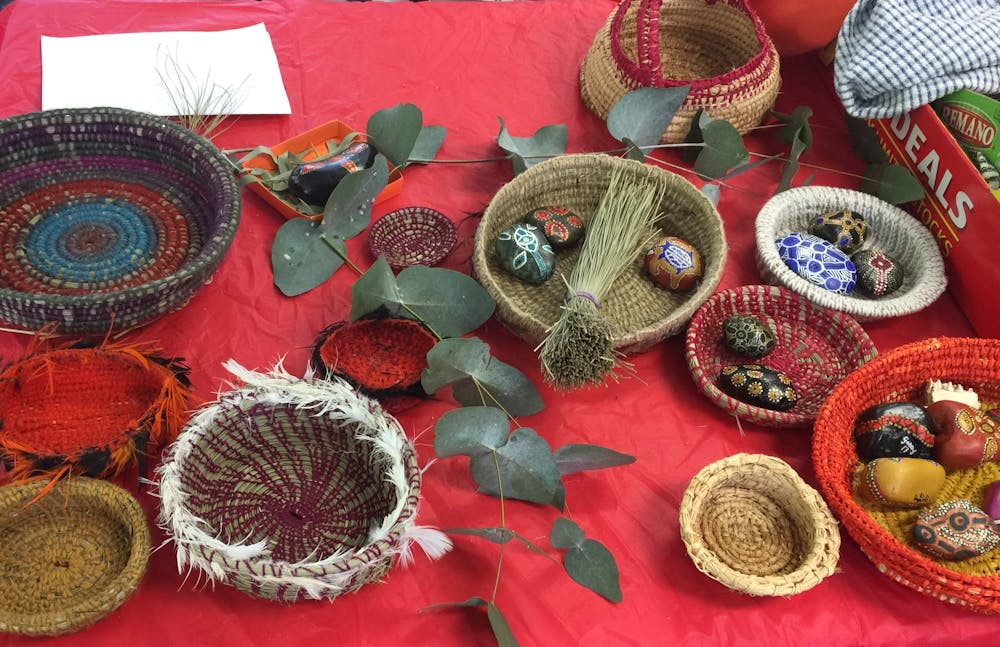
cultural practices, including arts and crafts, painting canvases and making possum skin cloaks
strengthening community, including tracing family history and cultural tours
self care and well-being activities, including meditation, massage and walks
sharing knowledge of past policies, laws, history of removal, impact of removal and losses
storytelling and yarning, including yarning circles, Elders’ yarns, storytelling with cultural custodians.
Yes, sharing helped and gave hope
All survivors and their families (nearly 60 people) said they benefited from taking part. They said it allowed them to reclaim their cultural identity and cultural pride, and build on their cultural knowledge. Their shared histories helped survivors support each other. Survivors were also empowered to continue healing, fuelling a sense of hope.
Here’s what survivors told us:
We no longer feel we have to be ashamed or hide.
[I’m] feeling empowered to teach my children about past history to ensure it never happens again.
Knowing culture is powerful, it helps you know your strength.
Each time I have told my story, [it] heals me and makes me stronger.
My mob is telling their story and it makes me feel good.
Because I have no extended family I feel connected to this mob in a spiritual sense.
It is so much better to heal together. It is so hard to heal in isolation.
We need a different approach
Trauma in Aboriginal communities needs different therapeutic approaches to mainstream, Western therapeutic ones. A key component to the success of the program was Aboriginal people being in control of the model of healing. Aboriginal people are part of a collective culture. And it’s collective healing and connection to culture that all survivors told us were crucial to their healing.
The level of support provided by the experienced facilitators, who are both culturally and trauma informed, ensured all survivors felt safe. The facilitators’ own life experiences, their immersion in culture and capacity to give of themselves was critical to promoting survivors’ healing journey.
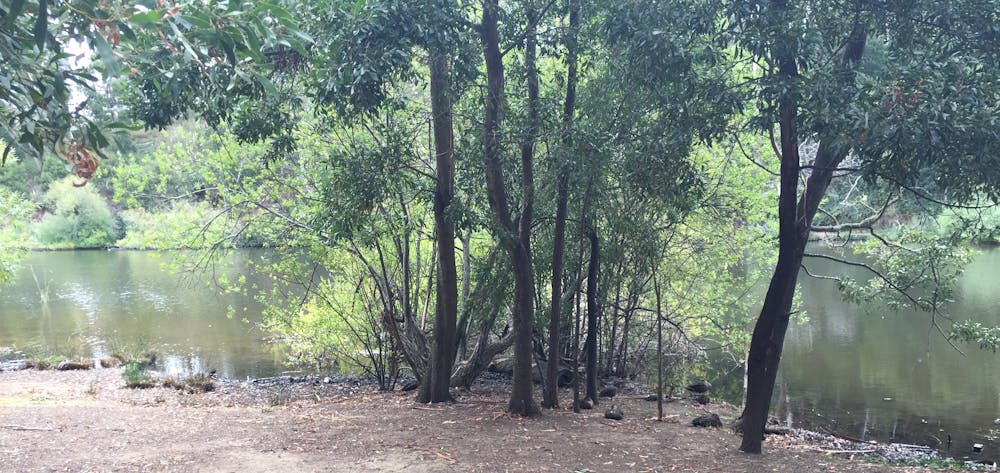
Survivors also said being on country, having elders engage with the program, the power of ceremony and involving family were all important parts of their cultural healing.
Participants told us being on country was important to their healing.Author provided
While cultural healing is based on thousands of years of wisdom, there is also increasing evidence of the success of cultural healing programs in peer reviewed journals.
Examples include the Marumali journey of healing for Stolen Generations delivered in various locations around Australia, including prisons, and Red Dust healing for trauma more generally, delivered with remote communities in the Northern Territory. Both programs have ongoing evaluation showing strong evidence they work.
This is in contrast to most programs for Aboriginal communities, which have little evidence they work.
One off, time-limited, programs cannot provide all the healing survivors need. Healing is a journey. The Royal Commission recommended access to life-long healing, healing for family members of survivors and cultural healing for Aboriginal survivors. This matches what survivors tell us they need.
The authors would like to acknowledge the traditional owners on whose land they live and work, the Wurundjeri people of the Kulin Nation, and pay their respects to their elders past and present. The authors also pay their respects to all Stolen Generations and to all survivors of child sexual abuse, acknowledge their suffering and pain, and honour their strength in survival.
The authors respectfully use the term Aboriginal to refer to the diversity of Aboriginal and Torres Strait Islander people and cultures in Australia.
Source: The Conversation (Au and NZ) – By Samantha Hepburn, Director of the Centre for Energy and Natural Resources Law, Deakin Law School, Deakin University
Right now, two projects have been proposed to import gas from overseas to supply eastern Australia. This is an absurd prospect. Australia is a resource-rich country, and exports more gas than any other nation. Why then, would we need to ship it in?
The rate of liquified natural gas (LNG) exports from Australia has skyrocketed over the past two decades. In the past ten years, this coincided with a trebling in the price of gas on the east coast.
The situation points to a dramatic failure of management and regulation. The result is that households are struggling with soaring gas bills, and the future of Australia’s manufacturing sector is at risk.
It is unconscionable that Australian governments have allowed LNG producers untrammelled export growth without credible safeguards for the domestic market. The crisis could be de-escalated with stronger export controls and a regulatory regime more focused on the public interest.
Prime Minister Scott Morrison during a visit to a Queensland manufacturing plant during the 2019 federal election campaign. The manufacturing sector is a major user of Australian gas supplies.Mick Tsikas/AAP
Between 2000 and 2015, Australia’s LNG exports tripled. Between 2015 and 2019 they tripled again.
But Australia must keep plentiful gas supplies for itself. Gas-fired power is vital in meeting the fluctuating demands of our national energy market as ageing coal power stations close. Gas also firms up the intermittent energy generated by renewables.
Almost one-third of the gas consumed in Australia is used by manufacturers – as both an energy source and raw material to make metals, chemicals, plastic and building materials.
Australian steel giant Bluescope recently invested in a A$1 billion US expansion – where energy prices are one-third of those in Australia.
East coast gas prices have trebled over the past decade.Dan Peled/AAP
Sydney-based polystyrene cup maker RemaPak went into administration earlier this year after its energy costs increased by 400% over three years.
Chief executive of Incitec Pivot Jeanne Johns, whose company produces chemicals and fertilisers, this month said the A$38 billion gas-based manufacturing sector in Australia may be destroyed by high gas prices, describing the market as “dysfunctional”.
We can fix this mess
LNG exporters have entered long-term contracts to provide defined amounts of gas to various overseas markets. When Australian gasfields do not provide enough gas to satisfy their obligations, the domestic market can suffer. Gas that could have been available to the domestic market is sold on international markets, and Australian gas users are starved of supplies. This has kept domestic prices high.
As more and more gas went offshore, domestic prices soared. In 2014 east coast gas prices were A$4 a gigajoule. In 2017 they spiked at A$20 a gigajoule and they are now sitting at roughly A$10 a gigajoule.
A kitchen gas stove burner. Consumers and industry are hurting under rising gas bills.Dan Peled/AAP
To alleviate concern over domestic gas supplies, there are plans to import gas back from Japan to terminals at Port Kembla in New South Wales and Crib Point in Victoria. The gas would be sourced from Asia, the US and elsewhere. These proposals are expensive and bad for the climate. They are also strategically absurd.
That such plans are even being contemplated shows the weakness of Australia’s regulatory measures. The existing Australian Domestic Gas Security Mechanism allows the federal energy minister to bring in export restrictions if there are forecast gas shortages for Australian users.
The mechanism was established by the federal government with much fanfare in July 2017, but has never been used. This is largely because it is triggered by a shortfall in supply, not rising prices.
A much stronger mechanism, based on gas pricing, is vital. This should be overseen by a domestic board that monitors prices and acts on behalf of the public. Fair pricing could be ensured by using benchmarks set by the Australian Competition and Consumer Commission. The board would have power to enact export controls so that gas could be removed from the export market and returned to the domestic market.
Australia must also introduce a domestic gas reservation policy to ensure a proportion of gas is set aside for the domestic market. Such a policy has existed for a decade in Western Australia, where 15% of LNG is taken from the export market and compulsorily reserved for domestic consumers. This has led to a much lower domestic price in that state, where gas supplies also exceed forecast demand over the next ten years. By contrast on the east coast, shortfalls have been predicted from 2024.
An LNG tanker leaves the Port of Gladstone in 2016.Dan Peled/AAP
Looking to the future
Australia is soon expected to export 80 million tonnes of gas each year. Without strong regulatory change this expansion will continue to drive up domestic energy prices.
It will also drive up emissions. Producing LNG requires large amounts of electricity and fugitive emissions (from gas leaks, venting and equipment purging) can occur at any stage of the gas supply chain.
In the US, the export of LNG is regulated by laws that require exports to be in the public interest. Strong protections also exist in Canada. In Norway, Qatar, Russia, Malaysia and Algeria many LNG producers are controlled by the state to ensure a balanced approach to resource growth.
The rich resources of Australia belong to the public. They should only be exploited when it is firmly in our interests.
In a recent nation-wide survey by online tutoring company Cluey Learning, 75% of Australian senior students said their ATAR score would impact on the rest of their life. And more than 80% said a score under 60 would be detrimental to their life.
But here’s something Australians anxious about their senior exams might be surprised to know. More students are accepted into university without an Australian Tertiary Admission Rank (ATAR) – a number that indicates a student’s position relative to all students in their age group – than with one.
In 2018, around 279,000 people were made an offer to study at a higher education institution. Of those, more than half (around 163,000 or 58%) did not have an ATAR.
This has been an ongoing trend for many years and it’s not limited to a few courses or universities. In 2018, more offers were made to no-ATAR students in all but three fields of study: medicine, engineering, and the natural and physical sciences. Even then, around two out of every five offers in those courses were made to no-ATAR applicants.
So, if you don’t have an ATAR or you don’t score as highly as you’d hoped, here are some ways you can still get into a university course.
1. Special consideration
If factors such a physical or mental-health issues have significantly affected your Year 11-12 studies for an extended time, you may still be eligible for university.
Special consideration programs – such as the Educational Access Schemes in NSW or the Special Entry Access Scheme in Victoria – allow students with a low ATAR or even no ATAR to apply for a course that may have an ATAR requirement they don’t meet.
These programs consider many things including financial hardship, excessive family responsibilities, refugee status or a school environment where you may not have thrived as well as you could have.
Assessments are made on a case-by-case basis. Depending on the course or university, individual student circumstances might be sufficient to grant them entry to one course but not another.
2. Alternative admissions tests
If you never did Year 12, didn’t get the required ATAR (or any ATAR) or completed studies outside Australia, you can sit alternative exams that can generate an ATAR.
The most well-known is the Special Tertiary Admissions Test (STAT), developed by the Australian Council of Educational Research. As a general rule, you must be 18 years or over by a certain date in the year of admissions to use STAT results in your university application.
Some alternative admission tests are designed specifically for degrees that require a very high ATAR, such as medicine. Many universities offer graduate medicine and dentistry courses with varying requirements for entry. The basic criteria comprise an undergraduate degree and a certain mark in the Graduate Medical School Admissions Test (GAMSAT).
3. Enabling programs
Also known as bridging or foundation programs, enabling programs are seen as alternatives to Year 12. They prepare you for an undergraduate course by providing academic and other skills necessary for university study. Programs range in length from four to 28 weeks and some are delivered online.
Enabling programs are generally free for Australian citizens and delivered by the university itself. Successfully completing an enabling program gains the student entry into a number of courses – though which ones differ between universities.
Most universities offer enabling programs. In 2017, almost 29,000 students were enrolled in enabling programs across more than 30 higher education institutions. Some give priority to people who have experienced financial or other disadvantage. Others are designed for specific groups, such as Aboriginal and Torres Strait Islanders.
There are also fee-paying foundation studies programs for students who are not eligible for a free place, such as international students.
4. VET/TAFE studies
Most students enrol in a vocational education and training (VET) course for its own value. But a VET program can be used similarly to an enabling program. A VET qualification can help meet university entry requirements and, in some cases, can get you credit towards the university degree.
Unlike enabling programs, VET is not free. But many VET courses and providers have access to VET Student Loans, similar to the HELP loans for university courses.
A 2015 study I participated in found disadvantaged students used the VET pathway more than the enabling pathway. However, a greater proportion of students in enabling pathways were satisfied with their pathway than VET students.
This was mostly the case when participants were asked to consider how well the pathway had prepared them for university.
5. Portfolio entry
A portfolio is a collection of evidence, examples or demonstrations of how prepared a student is for university study. Traditionally, portfolios were a requirement for entry to courses that needed specific skills, such as art or design.
Now, many universities are increasingly using portfolios to give students without an ATAR the opportunity to show they have the skills, motivations and commitment required for academic success.
Each university has its own way of determining what can be used in a portfolio and how the elements relate to each other.
Which pathway is best for you?
Ultimately, what pathway is best depends on you and your circumstances. The various pathways can make it confusing, a fact the government has recognised by implementing an Admissions Transparency Implementation Working Group. Some of the changes planned include requiring universities to provide information in a similar format and combining the five admission centre websites we have now into one national website.
In the meantime, these steps can help you make the right choice:
identify your preferred universities – it may help to use the national Quality Indicators in Learning and Teaching resource, which provides information on things such as student experience and graduate employment
visit each university’s website and call them to find more specific information about: pathways you’re eligible for; what you need to provide or exams you need to sit; what support is available to help you prepare; and whether there are costs involved.
We all know the feeling. You’re on your way to an important appointment when disaster strikes. A glitch in the transport matrix leaves you waiting for a train that never arrives, or in bumper-to-bumper traffic with little chance of making it to your destination on time. If you are like me, you may wonder: why are our transport systems so fragile, and how could we make them more resilient?
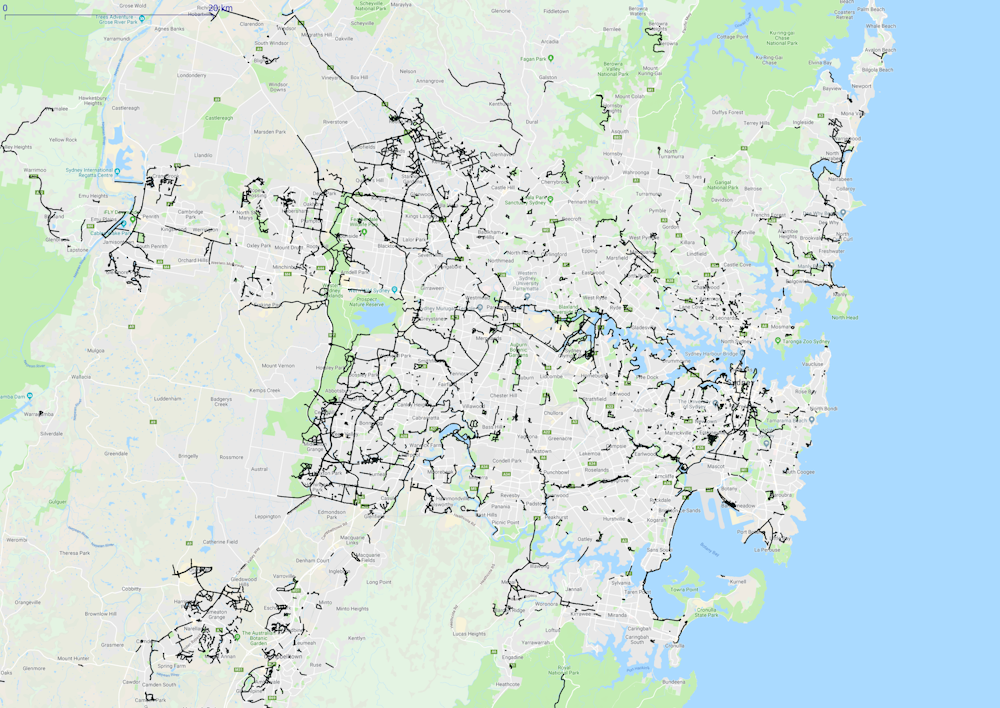
The answer may lie in the infrastructure we provide for the emerging trend of micro-mobility – devices that are small, light and usually electric-powered. Greater investment in a micro-mobility network could improve the reliability of our current transport system, which offers two main networks in road and rail for journeys that are not walkable. This micro-mobility network can be developed by greatly improving the fragmented bicycle networks in our cities.
To understand how this could improve our overall transport system, we must first look at how transport projects are funded and how diversification and redundancy can make up for shortcomings in this process.
Selecting the best transport projects
When deciding which projects to build, transport agencies rank projects using a benefit-cost ratio (BCR). This number is the predicted benefits of a project divided by the predicted costs.
Unfortunately, benefit-cost ratios are often misused to suit political motives. They are inherently flawed and uncertain for at least three reasons:
In the financial sector, uncertainty is simply a risk to be managed. This can be done with diversification, which is achieved by bundling different assets into a portfolio. For example, bundling shares from different industries reduces the risk that these “diverse” investments will all suffer losses at the same time.
Similarly, investing in a variety of transport modes is a form of diversification. This makes our transport systems more resilient to long-term changes in the economy, the climate, technology, energy and so on. For example, a transport system that provides alternatives to car travel is resilient to increases in the price of fuel or the cost of emissions.
Transport diversification reduces investment risk, so we are likely to get a more stable return on our transport investment. But diversification alone does not prevent a traffic accident blocking a motorway, or a power outage shutting down a railway line.
To tackle those problems, we should consider approaches the technology sector has been using to manage component failures for decades. It can provide services with 99.9% availability. That would be quite an achievement for the transport network!
Managing component failure using redundancy
The technology sector uses redundancy to ensure service is maintained even when one part of the system fails. IT managers keep local and cloud backups so data can be retrieved even if the office burns to the ground. Aircraft designers install multiple flight control systems so the failure of a single system does not cause a crash.
In the transport sector, redundancy is achieved when several modes can be used to make the same journey. While the technology sector can offer redundancy through duplicate systems, providing a duplicate train line “just in case” the first one fails is simply too costly. Instead, we rely on the train network to move people when a road crash halts traffic and we rely on the road network to move people when a train line is closed.
Unfortunately, Australian transport networks do not offer enough capacity or alternatives when one mode is crippled. The predictable result is a fragile transport system with unplanned but not entirely unexpected faults causing frequent delays.
Tapping into micro-mobility solutions
A new wave of mobility solutions is on the horizon. Many are described as “micro-mobility”: electric scooters, electric bicycles and automated delivery pods fit this description, as do conventional bicycles.
Electric scooters are part of the emerging wave of micro-mobility options, but the question is where these best fit into our transport system.Sascha Steinbach/EPA
These devices are perfect for short trips in crowded cities. They are used for individual mobility and micro-freight (such as small packages and takeaway food).
These devices travel faster than pedestrians, so can be unwanted on footpaths. However, they are slower than motor vehicles, so can be unwanted on roadways. And as people using micro-mobility devices are not protected from collisions, they are often reluctant to mix with motor vehicle traffic.
The logical place for micro-mobility devices is on a network that is designed for unprotected humans to travel at around 10-30km/h. In other words, the bicycle network.
The benefits of a bicycle (or “micro-mobility”) network
Without a functioning bicycle network, the overall transport system is susceptible to investment risk and network failure. We will also be left behind as micro-mobility options proliferate and our transport system becomes less and less fit for purpose.
So let’s build a comprehensive bicycle network fit for scooters, delivery pods, bicycles and more, and let’s do it quick smart.
There is a new challenger to Disney’s hold on the global animation industry, and he is a Chinese demon child.
Ne Zha: Birth of the Demon Child, from Chengdu Coco Cartoon, tells the story of an unlikely hero. Released in China in July, and in Australia, New Zealand, and North America in August, the film has made over CN¥4.97 billion (A$1.02 billion) at the box office.
But Ne Zha is much more than a cinema phenomenon: this children’s film has a surprising story to tell about contemporary parenting and citizenship in China.
This century has seen increased funding for Chinese filmmakers. With stronger state support, animation is predicted to grow and films like Ne Zha that draw from Chinese literature are increasingly popular.
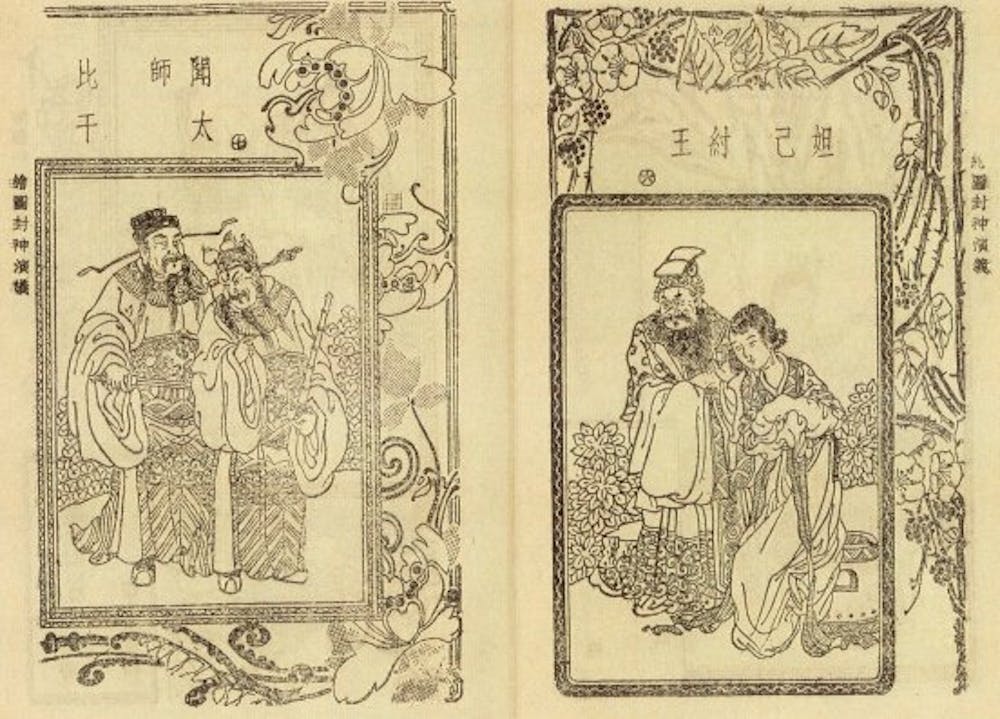
Directed by Jiaozi, the screenplay is loosely based on the 16th-century novel Fengshen Yanyi (Investiture of the Gods), a fantasy story of how the righteous King Wu defeats the ruler of the Shang dynasty.
Ne Zha is a rebellious boy with supernatural powers who wreaks destruction. When his parents are faced with celestial punishment for his behaviour, Ne Zha takes his own life to save them. With the help of his mentor, Ne Zha is reincarnated as a boy-god and fights for King Wu.
This movie is not the first to draw upon this character: he appeared in the 1979 animation Prince Nezha’s Triumph Against Dragon King and the 2003-2004 children’s TV series, The Legend of Nezha. But unlike previous adaptations, which focus on Ne Zha’s suicide as an act of self sacrifice, Jiaozi’s film encourages young people to be masters of their own fate.
Anxieties about raising a ‘good’ child
Bad-tempered and foul-mouthed, Ne Zha is uncontrollable. His parents are anxious because he doesn’t conform to expectations of the ideal guai child.
Loosely translated as “good”, guai is a cultural concept that includes ideals of obedience, sensibility, and academic achievement. This centuries-old concept guides parenting in Chinese communities around the world.
Our research into film and TV representations of Chinese childhood shows guai carries mixed meanings. Chinese parents encourage guai children to be “useful” and contribute to their families, communities, and nation. At the same time, they require children to make their own decisions. Children should be obedient but also make sensible choices.
Ne Zha’s parents want their son to be guai. They argue about how they should raise him. Eventually, they trick Ne Zha into training with a mentor to become a demon-slayer like them. They want him to learn self-control and redeem himself.
Ne Zha’s parents want him to learn self-control and become a useful person.Chengdu Coco Cartoon
Ne Zha’s parents hope his mentor can tame their son. This desire echoes Chinese parents’ belief education can guide their children into moral and successful citizens.
In mainland China, child-rearing has become increasingly complex. Parents want their children to prosper in a highly competitive and consumption-driven society, but still feel the need to instil moral values in their children.
They worry about raising children who lack important life skills. Psychologist Wu Zhihong controversially claims adults in China are “giant babies”: they don’t know how to take care of themselves and have trouble distinguishing between good and bad.
Like Ne Zha’s parents, the question of how to raise a “good” child looms large in the minds of Chinese parents. The rhetoric used by the Chinese Communist Party (CCP) reflects a similar desire.
Raising ‘good’ citizens for the state
People’s Daily, the official newspaper of the CCP, upholds Ne Zha as a role model. It urges readers to be enterprising and persistent like him. This signals the party-state wishes to cultivate guai citizens who will contribute to China’s efforts to become a global player.
The irony is, in order to save his village, Ne Zha has to defy authority: the film’s message about what it means to be guai differs from the CCP’s interpretation. Ne Zha refuses to be bound by his fate. He decides to take matters into his own hands to demonstrate there is more than one way to contribute to one’s family and community. Despite Ne Zha’s flaws, he is ultimately a guai child.
Ne Zha’s choices point to an alternative to the CCP line. To be guai, is not necessarily to be a good citizen working only for CCP interests: it is to follow one’s own path.
Serious themes aside, the film is great fun to watch. There are plenty of laugh-out-loud moments, and the abundance of fart jokes are bound to tickle the child audience. Older audiences will find the final showdown breathtaking. Some might shed a tear or two over the love between Ne Zha and his parents.
Nobody predicted Ne Zha’s phenomenal box office success. He is a good demon boy with supernatural powers who also challenges authority. Beloved by millions of fans and endorsed by the government, Ne Zha has cemented his status as China’s surprising new superhero.
Given her status as holding two vital Senate crossbench votes Pauline Hanson is at times, in the eyes of senior government figures, She Who Must Be Obeyed.
And so it was last week, when Hanson announced she was striking, to press the cause of straitened dairy farmers. She wouldn’t vote on non-essential legislation.
The fallout was palpable. The government wanted her support for a particular bill. Ministers and the Prime Minister sprang to attention. The upshot was Hanson won a concession the Nationals backbench hadn’t yet been able to land.
But there was a price. Some Queensland and NSW Nationals were furious – so much so that a leak to the Courier Mail’s political editor Renee Viellaris canvassed the possibility of a “spill” attempt against deputy leader Bridget McKenzie, who is agriculture minister.
There was no move at Monday’s party meeting but there was criticism of McKenzie – who was at Senate estimates – in her absence.
The episode is important in its detail because it reflects the division, discontent and frustration in a party that in the past has often taught the major parties lessons in unity.
The saga began with Hanson’s vociferous and emotional campaign for measures to help struggling dairy farmers, who are suffering from very low prices.
But it was her proposed no show on legislation that exercised the government. It was particularly anxious to have her support when the vote comes on its legislation to enable the royal commission into the exploitation of disabled people to obtain material from state institutions.
In general, it needed to break the Hanson “strike”.
Social Services Minister Anne Ruston and Senate leader Mathias Cormann (the government’s “fixer” with the crossbenchers) swung into action.
Surely something could be given to Hanson on dairy? McKenzie was already working on a code of conduct – which would increase the negotiating power of the milk producers – but it was to be a long job.
McKenzie had indicated to Nationals colleagues the code would not be ready until next year. Indeed, One Nation was told the same thing early last week.
But suddenly the impossible became possible. The drafting was accelerated; the proposed consultation time shortened.
The deal was done on Wednesday. McKenzie wrote to Hanson saying the code would be ready later this year.
Discontented Nationals were left fuming. One Nation, their bete noir in bush seats, could claim the credit.
As one puts it: “[McKenzie] can deliver for Hanson but she can’t deliver for us.”
The Nationals leadership tried to make the best of an awkward situation by taking the initiative on another front – the latest government move on drought.
They mustered their troops for a Thursday morning news conference to announce the cash grant for farmers coming off the Farm Household Assistance after they had reached their four year limit. Under questioning at that news conference McKenzie indicated the exposure draft for the dairy code would be released within days.
But the Nationals had failed to forewarn the Prime Minister’s Office of their news conference. So the government had the spectacle of Scott Morrison unveiling the cash grant on radio at the same time as the Nationals’ appearance, and trumpeting it as a scoop for John Laws.
It was an appalling lapse in communications at the top level of the Coalition.
That snafu came against the background of the Nationals feeling increasingly frustrated that Morrison has been crowding them out on drought policy, taking ownership of the issue.
McKenzie’s position is not seriously at risk. The Nationals don’t operate like that. Anyway tossing her out would be an enormous call, not least because she’s a woman, but also because whatever claims about her limitations as a minister she is a good retail politician for the party.
But the leaking is evidence of how much trouble there is in the Nationals party room, and the wider disgruntlement between the Coalition partners.
Fully Sikh, directed by Matt Edgerton, Perth’s Studio Underground
The foyer is adorned with colourful fabric and bunting. We’re welcomed by the sounds of Indian music while members of the Sikh community offer to tie turbans (Dastaar) around our heads.
We remove our shoes and enter the Studio Underground to find other audience members in the onstage, fully functioning kitchen, cooking a Punjabi meal with Sukhjit Kaur Khalsa.
By the time we reach our seats, we’re transformed from passive consumers into active participants in her story.
Khalsa introduces herself as a spoken word performance poet, a storyteller who will bend her real-life story “to get closer to the truth.”
She plays herself from ages 10 to 25, beginning in 2004: a Sikh-Australian growing up in suburban Perth. She also plays her parents, sister, brother (known as the “Turbanator” for his fierce turban-tying skills) and her best friend, Sophie.
Khalsa is a natural storyteller, able to capture an audience with her easy, open style and the sheer, undeniable authenticity of her story.
Sukhjit Kaur Khalsa is a natural storyteller.Daniel J Grant/BSSTC
Fully Sikh hits on the usual suspects of a young woman’s life: first period, first pool party, first body hair culminating in her first bout of body shame. But Fully Sikh also has something to add to that narrative: the tension between a young girl’s pride in her culture and an awkward teenager’s embarrassment at being unable to fulfill the narrow-minded expectations of her classmates.
This tension is compounded by the gender constrictions imposed by her father and her faith and a teenager’s natural inclination to bristle against conformity (“I’m Suki, not Sukhjit”, she names her new identity).
Fully Sikh culminates in Khalsa’s ANZAC Day school speech, which she spontaneously converts into a declaration of independence from all the forces that try to shape her in their image. Khalsa can finally and exuberantly declare her love for herself, her kin and her culture.
It is a feel-good, charismatic and generous performance.
A simple story, loudly told
Musician Pavan Kumar Hari’s instruments range from the traditional (the Harmonium and Tabla) to the domestic (kitchen pots and pans). Hari adds not only music, but also punctuation to significant moments and characters. He dances, he does a memorable turn as a high school mean girl, but mostly he is a worthy partner to Khalsa, elevating the storytelling and expanding the rhythms of her family life.
Pavan Kumar Hari elevates the story through his music and performance.Daniel J Grant/BSSTC
The set reveals itself to be more than just a kitchen. Positioned against an extraordinary rainbow backdrop of Sikh fabrics that descend into an ordinary clothesline, the design suggests a single backyard while evoking a thousand, unseen others beyond.
Designer Isla Shaw has created a set full of surprises: a kitchen draw that becomes a teenager’s bed; a cabinet that transforms into multi-locational-backdrops. Her costumes are also multifunctional, allowing Khalsa’s characters to move quickly through time and space.
It is seamless visual storytelling befitting a simple story wrought large by director Matt Edgerton’s flair and precision.
Potency of ritual
A world premiere and the first co-production between Perth’s Barking Gecko Theatre and Black Swan State Theatre Company, Fully Sikh is also Australia’s first professional theatrical work about growing up Sikh in Australia.
It makes sense Fully Sikh has emerged from Barking Gecko, a company with a focus on making work for families and children. It is perfectly pitched for a young audience, but also with a broader audience appeal. It is both a simple coming of age story and a significant cultural and artistic achievement that feeds our hunger for sharing stories.
Fully Sikh is a coming of age story, a significant artistic achievement.Daniel J Grant/BSSTC
Edgerton describes Fully Sikh as “an evolving ritual” and you can feel the truth of that in the moment an audience member volunteers to have Khalsa tie his turban onstage. Underscored by Hari’s musical accompaniment, Khalsa’s intricate choreography, interspersed with her explanation of the significance of each of the turban’s layers, has all the qualities of a shared, solemn ritual.
The audience interactions aren’t always as seamless. The Punjabi Bhangra dance-break suffers from an initially awkward contrivance to get us to our feet, but becomes an undeniably joyful experience. The return of the audience/cooks as the story approaches its conclusion is similarly awkward: the moment is not given enough space to truly explore the potential of the shared ritual of hosting guests, sharing food and coming together in the play’s final celebration of community.
Over the season, perhaps, the potency and potential of these rituals will fully emerge.
In the show’s final moments, Khalsa invites those of us without turbans to cover our heads with the scarves provided as she sings one of the Sikh Shabads, a prayer wishing us all peace and tranquillity. The theatre as temple: it is a beautiful moment of community and ritual.
The impact of these shared, silent moments cannot be overestimated.
Fully Sikh, directed by Matt Edgerton, Perth’s Studio Underground
The foyer is adorned with colourful fabric and bunting. We’re welcomed by the sounds of Indian music while members of the Sikh community offer to tie turbans (Dastaar) around our heads.
We remove our shoes and enter the Studio Underground to find other audience members in the onstage, fully functioning kitchen, cooking a Punjabi meal with Sukhjit Kaur Khalsa.
By the time we reach our seats, we’re transformed from passive consumers into active participants in her story.
Khalsa introduces herself as a spoken word performance poet, a storyteller who will bend her real-life story “to get closer to the truth.”
She plays herself from ages 10 to 25, beginning in 2004: a Sikh-Australian growing up in suburban Perth. She also plays her parents, sister, brother (known as the “Turbanator” for his fierce turban-tying skills) and her best friend, Sophie.
Khalsa is a natural storyteller, able to capture an audience with her easy, open style and the sheer, undeniable authenticity of her story.
Sukhjit Kaur Khalsa is a natural storyteller.Daniel J Grant/BSSTC
Fully Sikh hits on the usual suspects of a young woman’s life: first period, first pool party, first body hair culminating in her first bout of body shame. But Fully Sikh also has something to add to that narrative: the tension between a young girl’s pride in her culture and an awkward teenager’s embarrassment at being unable to fulfill the narrow-minded expectations of her Australian classmates.
This tension is compounded by the gender constrictions imposed by her father and her faith and a teenager’s natural inclination to bristle against conformity (“I’m Suki, not Sukhjit”, she names her new identity).
Fully Sikh culminates in Khalsa’s ANZAC Day school speech, which she spontaneously converts into a declaration of independence from all the forces that try to shape her in their image. Khalsa can finally and exuberantly declare her love for herself, her kin and her culture.
It is a feel-good, charismatic and generous performance.
A simple story, loudly told
Musician Pavan Kumar Hari’s instruments range from the traditional (the Harmonium and Tabla) to the domestic (kitchen pots and pans). Hari adds not only music, but also punctuation to significant moments and characters. He dances, he does a memorable turn as a high school mean girl, but mostly he is a worthy partner to Khalsa, elevating the storytelling and expanding the rhythms of her family life.
Pavan Kumar Hari elevates the story through his music and performance.Daniel J Grant/BSSTC
The set reveals itself to be more than just a kitchen. Positioned against an extraordinary rainbow backdrop of Sikh fabrics that descend into an ordinary clothesline, the design suggests a single backyard while evoking a thousand, unseen others beyond.
Designer Isla Shaw has created a set full of surprises: a kitchen draw that becomes a teenager’s bed; a cabinet that transforms into multi-locational-backdrops. Her costumes are also multifunctional, allowing Khalsa’s characters to move quickly through time and space.
It is seamless visual storytelling befitting a simple story wrought large by director Matt Edgerton’s flair and precision.
Potency of ritual
A world premiere and the first co-production between Perth’s Barking Gecko Theatre and Black Swan State Theatre Company, Fully Sikh is also Australia’s first professional theatrical work about growing up Sikh in Australia.
It makes sense Fully Sikh has emerged from Barking Gecko, a company with a focus on making work for families and children. It is perfectly pitched for a young audience, but also with a broader audience appeal. It is both a simple coming of age story and a significant cultural and artistic achievement that feeds our hunger for sharing stories.
Fully Sikh is a coming of age story, a significant artistic achievement.Daniel J Grant/BSSTC
Edgerton describes Fully Sikh as “an evolving ritual” and you can feel the truth of that in the moment an audience member volunteers to have Khalsa tie his turban onstage. Underscored by Hari’s musical accompaniment, Khalsa’s intricate choreography, interspersed with her explanation of the significance of each of the turban’s layers, has all the qualities of a shared, solemn ritual.
The audience interactions aren’t always as seamless. The Punjabi Bhangra dance-break suffers from an initially awkward contrivance to get us to our feet, but becomes an undeniably joyful experience. The return of the audience/cooks as the story approaches its conclusion is similarly awkward: the moment is not given enough space to truly explore the potential of the shared ritual of hosting guests, sharing food and coming together in the play’s final celebration of community.
Over the season, perhaps, the potency and potential of these rituals will fully emerge.
In the show’s final moments, Khalsa invites those of us without turbans to cover our heads with the scarves provided as she sings one of the Sikh Shabads, a prayer wishing us all peace and tranquillity. The theatre as temple: it is a beautiful moment of community and ritual.
The impact of these shared, silent moments cannot be overestimated.
New Zealand First leader and Deputy Prime Minister Winston Peters with Governor General Dame Patsy Reddy and Prime Minister Jacinda Ardern.
New Zealand First leader and Deputy Prime Minister Winston Peters with Governor General Dame Patsy Reddy and Prime Minister Jacinda Ardern.
Trying to make sense of the New Zealand First party can be difficult at the best of times. Political journalists and commentators attempt to work out where the party is going based on leaks, Winston Peters’ speeches, Shane Jones’s stunts, conference remits, and attacks on opponents.
Ultimately there’s very little to make sense of. Peters is an enigma, and there are a mass of different agendas bubbling through the party organisation. Although some are based on a firm ideological worldview and a particular demographic, often the party is blown around by whatever is happening in their “middle NZ” hunting ground that day. This is the party’s strength and weakness – it responds to populist shifts in the electorate, but it’s all over the place.
The party’s annual conference at the weekend epitomised this. There were some basic themes, but no real dynamism or new announcements to suggest that the party is about to jump up the polls. In a sense, despite the mysteriousness of Winston Peters and NZ First, unlike other parties where so often there is more to their operations than meets the eye, in NZ First there is often much less.
Ultimately, that’s probably fine for NZ First – they just needed a conference to stabilise the party after some recent internal fights, while getting some publicity for the usual concerns of the party.
Below are some of the more interesting and important items about the conference at the weekend.
Summing up the conference, Sam Sachdeva points out that nothing much happened during the weekend, especially in terms of announcements – see: Peters light on policy, heavy on punches as National attacks continue. He writes: “Notable in its absence was any significant new policy, the second year running where Peters has kept his powder dry – although not without some mixed messages.” Even Peters’ own speeches were “retreads”, and Sachdeva concludes: “Peters and his party risk being portrayed as having little of substance to share.”
There is a “good cop, bad cop” dualism in the way the party leader operates, and according to Claire Trevett this was on stark display at the conference. “Winston Unleashed” gave his speech on Saturday: “In his brief opening speech, it was little surprise the targets of his attacks were those he had long deemed as his enemies: the media and National” – see Two days, two sides of NZ First Winston Peters (paywalled).
Then, on Sunday, “Winston the Statesman” gave a more positive pitch for what his party was about: “Peters’ goal was to highlight what he has described as the dual role of NZ First in pushing reforms it thinks are a good idea, and pegging back on those that aren’t. The overall aim was to pitch NZ First as a necessary force in keeping the bigger parties under control, and as the only reasonable people in Parliament. He set out the things NZ First had done, and, more importantly, what it had stopped, such as such as a capital gains tax and industrial relations reforms.”
Peters’ final conference speech seemed out of sync with the wider party, according to Richard Harman: “What made the speech sound so jarringly out of place was that his Caucus MPs and party members had spent the whole weekend seriously debating policy. They looked to the future while he looked back” – see: NZ First looks forward while Winston looks back.
To Harman, it’s as if the party that Peters created is now outgrowing him and his “consuming priority… to oppose National”. Therefore, he concludes: “The challenge for the party and the caucus, in particular, moving forward will be how to integrate Peters into the broader-based movement that NZ First is becoming. It won’t be easy.”
Harman’s report draws particular focus to what’s happening in the youth wing of the party, and some of the remits debated, noting “it was a series of remits on environmental issues that provoked the most intense debate” – especially one in favour of allowing trials of GE ryegrass being developed to reduce methane emissions.
“Move over Grey Power, here comes Young New Zealand First” writes RNZ political journalist Jo Moir – see: Young New Zealand First made its presence felt at conference. She says the youth wing of the party “came to life officially only in the last five years but its presence has continued to grow at the annual gathering of party members”.
Moir says the biggest outcome of the weekend was the passage of the remit favouring the legality of drug testing at music festivals, apparently in contradiction of the caucus’ current stance: “The youth wing put in a last minute pitch to Mr Peters on Saturday morning asking that they be allowed to call for the party to reconsider its opposition to drug testing at festivals. Permission was granted, and the remit passed.”
But younger NZ First members aren’t looking for their 74-year-old leader to quit. Moir quotes one youth member: “You can never rule Winston out, that guy could keep on going into his 80s and when you look at East Asian politics the average age of their politicians is a lot older. Moses led the Israelites to the Promised Land at the age of 80, so if Winston really wanted to do it he probably could.”
Moir also reports on Peters’ challenge to journalists’ use of unofficial sources on NZ First: “I’m sick and tired of your people’s sources – there’s one source in this party where I’m concerned and you’re looking at him.”
Writing just prior to the conference opening, Matthew Hooton suggested that the current divisions and debates in the party are evidence that NZ First is moving beyond being just the Winston First Party – see: Putting the Winston Peters party first (paywalled).
In terms of the leadership succession question, Hooton says the party caucus is divided: “there are those who expect a smooth transition in the years ahead from Peters to his apparent protege Shane Jones, with a business background. Others would prefer a more contested process, perhaps involving Ron Mark, who could be seen as representing the uniform-wing of the party, those with backgrounds in the armed forces, the police, Corrections or the Māori Wardens.”
O’Brien names the four contenders to replace Peters: “Shane Jones, the bolshy boy from the North; Fletcher Tabuteau, the dutiful deputy; Ron Mark, the Peters idoliser; Tracey Martin, the reasonable one”.
Reporting on Peters’ main conference speech, O’Brien also draws attention to his focus on criticising National: “there were a dozen mentions – more than twice that if you count all the National MPs he name-checked. Throwing shade appeared to replace the original plan for Peters to make a detailed policy announcement.” And the main line from that speech seemed to be: “The fact is New Zealand First, right now, as a party of the centre, is the National Party, when it had a capital N”.
So, despite all the National-baiting on display at the conference, it was clear that NZ First still sees itself as a conservative party. That social conservatism was clearly on show, according to Thomas Coughlan: “Remits on law and order issues like compulsory community service for young people, 90 day trial periods for prisoners, and changes to the drinking age were hotly debated. The first two passed” – see: NZ First shows its woke side, but don’t think Winston Peters is going anywhere.
And according to Coughlan, the party leader also “rubbished identity politics and political correctness”, adding: “Opening the conference, Peters ribbed the increased use of te reo on RNZ, joking that if he were on the network he’d introduce himself, ‘ko Winston Peters tēnei,’ before adding that the party didn’t do identity politics.”
But Coughlan also says that “elsewhere in the conference, members and speakers showed signs of being, dare I say it, woke.” He points to NZ First Minister Tracey Martin explaining her enthusiasm for running in the Wellington electorate of Ōhāriu at the next election: “It won’t be a surprise to you that I’m a feminist. I quite like the fact that there are two of these white guys that have got a particular patter going on in Ōhāriu and I’m certainly not a white guy.”
She pointed out that when Peters was also asked by Newshub how many terms he has left in him, he replied: “I think I’ve got more terms in me than some of those asking the questions”. Peters also railed against opinion polling, “demanding that any journalist who ran the polls must resign when New Zealand First is elected in 2020.”
The editor of the Sunday Star-Times, Tracy Watkins, says Peters’ “crowing about the possible demise of MediaWorks, and the hundreds of jobs that might go down with it, is as unseemly as it is telling about the Deputy Prime Minister” – see: Poor Winston Peters? Poor us.
She says it’s because “Peters still holds a grudge against the media for NZ First being booted out of Parliament in 2008 and he may be right.” Watkins points to the role of people like investigative journalist Phil Kitchin and the NZ Herald’s Audrey Young who exposed the some of the dodgy political finance of the party. Hence, “as far as he’s concerned, politics would be a much better place without any pesky scrutiny of him or the Government in which he is such a key player.”
Finally, although Shane Jones failed to spark any controversies in the weekend, his ability to create widespread interest is undiminished – see Andrew Gunn’s ‘… the limelight has a way of craving me’.
Over recent weeks, the alcohol industry has been drumming up mediadiscussion around Australia’s new drinking guidelines.
Australia’s guidelines on alcohol consumption are under ongoing review by the National Health and Medical Research Council (NHMRC), with new draft guidelines expected to be released in November.
The alcohol industry has labelled the current guidelines (two standard drinks per day and four in any heavy episode of drinking) as harsh, and voiced concern the guidelines may be tightened further.
The global alcohol industry has been increasingly proactive in trying to undermine the ever-improving science on the harms associated with the product they make money from manufacturing, promoting and selling.
This is somewhat unsurprising given the industry would be significantly less profitable if we all drank responsibly.
Drinking guidelines
Panels of scientists develop drinking guidelines around the world by assessing the best and most up-to-date evidence on alcohol and health, and determining consumption levels which might put people at risk.
They then provide the information to health professionals and the public to allow people to make informed decisions about consumption. The guidelines are neither imposed nor legislated.
The current 2009 Australian guidelines recommend healthy adults should drink no more than two standard drinks per day to reduce their lifetime risk of alcohol-related disease or injury. They recommend no more than four standard drinks on one occasion to reduce a person’s risk of injury and death.
So how are the industry players trying to protect our drinking culture from such “harsh” guidelines?
Alcohol Beverages Australia: who they are and what they’re claiming
Alcohol Beverages Australia (ABA) is an industry body for global alcohol producers and retailers, including Asahi Brewers from Japan, Diageo Spirits from the UK, Pernod Ricard from France, Coca-Cola Amatil from the USA, and many others. Bringing together multiple industry groups to lobby government was a key strategy developed by the tobacco industry.
The NHMRC review of Australia’s drinking guidelines was open to public submissions on the health effects of alcohol consumption until January 2017. At this time, the ABA submitted a report claiming drinking alcohol carries health benefits including a reduced risk of heart disease, stroke and diabetes. They requested the review take this into account in drafting any new guidelines.
In their communications with the media this month, the ABA resurfaced their 2017 submission to the process. It seems they have not updated the information to reflect the latest evidence.
We know consuming any type of alcohol increases the risk of developing cancer of the bowel, mouth, pharynx, larynx, oesophagus, liver and breast. The World Health Organisation has classified alcohol as a class 1 carcinogen, along with asbestos and tobacco, for decades.
Any health benefits the ABA demonstrated evidence for is outweighed by the risks.
The current drinking guidelines in Australia recommend no more than two standard drinks per day for healthy adults.From shutterstock.com
Alongside claiming the benefits of drinking alcohol need to be considered, to make their case, the ABA have compared drinking guidelines across different countries. In doing so, they are seeking to highlight Australia’s guidelines are ‘stricter’ than those of most other countries.
In making sense of these figures, the difference in drink driving levels is worth considering. It takes the average male four standard drinks to reach 0.05 in two hours and around seven standard drinks to reach 0.08. This is a big difference for most of us.
Those countries with 0.08mg of alcohol per L of blood as the legal limit are willing to accept more than triple the risk of having a car accident than Australia’s 0.05.
We need to ask whether these are countries whose health and safety models we want to follow.
The industry is using language like “harsh” and “strict” to ferment public opposition to any tightened guidelines.
This spin strategy is predictable. The alcohol industry has been fighting for many decades to preserve profits over public safety, disregarding consumers’ rights to know the contents of their products, and the harms associated.
They fought against the 0.05 drink driving limit in the 1950s, and have successfully stopped Australian governments telling us about the cancer risk associated with alcohol consumption. For example, while policymakers have proposed warning labels with information about cancer risk be placed on alcoholic drinks, this is yet to eventuate.
The ABA is currently resisting a push to explicitly warn consumers drinking is harmful to unborn babies by means of mandatory labelling on all alcohol containers, suggesting it’s “too much information”.
These examples show how the industry continues to actively muddy efforts to educate the public of the harms of alcohol consumption.
Notably, we’ve seen all of this before, particularly in the tobacco industry, or “big tobacco”, which has previously employed strategies to minimise health concerns and delay effective legislation.
So it’s hard not to wonder if the ABA are worried about the bottom line of their corporate masters, and therefore trying to influence deliberations through a media campaign, similar to those previously used by the tobacco industry.
Money laundering rarely gets as literal as the case in Thailand last week, where police raided homes of a ring suspected of laundering a billion baht (about A$48 million) of drug proceeds and found millions stashed in a washing machine.
Stories about money laundering, and efforts to prevent it, are rife.
In just the past week there were reports about Swiss bank UBS agreeing to pay a €10 million (about A$16 million) penalty to end an Italian money laundering case; a New Zealand company, Jin Yuan Finance, being fined NZ$4 million (about A$3.7 million) for not complying with anti-money laundering laws; and calls in Australia for a royal commission after leaked CCTV footage from Melbourne’s Crown Casino showed a man in a tracksuit exchanging “bricks of cash” worth hundreds of thousands of dollars for gaming chips in one of the casino’s high-roller rooms.
The deeper problem isn’t that national anti-money laundering laws are being flouted. It’s that the global anti-money laundering system is a failed experiment.
We need to have an honest conversation about what’s wrong with it, including the possibility that much of it is a waste of time, and some of it might be doing more harm than good.
99% design failure
Don’t get me wrong: money laundering controls do good things too. Suspicious transactions trigger alerts, offenders are arrested and assets seized.
But the amount of criminal funds intercepted is scarcely a drop in the bucket. The system is designed to catch some criminals. It has almost no impact on crime.
The United Nations Office of Drugs and Crime has estimated that just 0.2% of the proceeds of crime are seized. My update of the UN’s estimate (in research not yet published) suggests the figure might now be 0.1% or less. Either way, in practical terms the “success rate” of money laundering controls is scarcely an accounting rounding error in criminal accounts.
There are many reasons for anti-money laundering’s failure, but a big problem is the emphasis on activity and effort rather than results. It’s the same mindset that focuses on the number of hours spent at work rather than what’s achieved, or how many speeding tickets are issued instead of whether harm from accidents is reduced.
Reforms to the global anti-money laundering system, rolled out from 2014, were meant to address this problem. They didn’t. Though the language of “outcomes” and “effectiveness” was used, it meant something different to the impact and effect of regulations on reducing crime and its harms.
In other words, the new measures were mislabelled “outcomes”. They continued to measure effort and activity, such as the number of money laundering prosecutions, instead of the impact (if any) on crime. (I explain this in detail in a paper in the Journal of Money Laundering Control, freely available until January 2020).
Frenetic activity
Frenetic compliance activity helps obscure the harsh reality of poor results. Casinos and banks conform to complex rules designed like a giant stack of colanders to catch water, continually adding new ones to “fix gaps”. New “compliance solutions” doggedly rake over the same ground covered by those that catch less than 1% of transactions.
The upshot is that companies can show they comply with anti-money laundering laws (Crown’s response is straight out of the compliance textbook) and countries can show they comply with international standards.
But does it stop crime? Who knows? The system isn’t designed to demonstrate its impact on crime. Jin Yuan Finance, for example, was fined because it breached anti-money laundering laws, not because there was necessarily laundering or any other crime.
A criminal mastermind given the chance to rewrite anti-money laundering rules might just keep what we have, on the basis it keeps the authorities ineffectually busy.
Good intentions and ‘voluntary coercion’
The problems with the system can be traced to the rushed and flawed way it was set up.
The modern anti-money laundering experiment started in 1989, at a G7 summit in Paris. The seven big industrialised nations bypassed treaty-based consensus to establish a “Financial Action Task Force” to help prevent drug trafficking. The task force – known as FATF – later targeted money laundering associated with other profit-motivated crimes and terrorism financing.
After a sluggish start, with few nations signing up to its compliance model, FATF made an offer governments couldn’t refuse – ironically echoing a famous line from The Godfather.
FATF rated countries’ anti-money laundering regimes and issued “black lists” and “grey lists” publicly naming those not meeting its “recommendations”. Banks did the rest. Treating the ratings and lists as a proxy for risk, access to the financial system became difficult for many countries. FATF’s intention (in its own words) was to “pressure” countries to comply, “to maintain their position in the global economy”.
Risking exclusion from financial markets, 205 countries and jurisdictions “voluntarily” joined the anti-money laundering movement. The system depends on a set of self-declared “best-practice” standards. This means each national anti-money laundering regime reflects the flaws of the international standard.
At the UN General Assembly last month, leaders from small and large countries railed against the perceived unfairness and damage caused by blacklists and financial sanctions.
Such protests might be more easily dismissed as self-serving if the anti-money laundering system worked. But it doesn’t.
Complicated laws, armies of regulators and costly compliance tasks give the comfort of activity and feeling of security, but they don’t make us safe from serious crime and terrorism. To resolve it, we must frankly confront the reality of its failure.
The Australian society has changed significantly since cemeteries in Victoria were planned and designed 150 years ago. But there haven’t been any major redevelopment or review of the community’s changing requirements for what happens to our bodies when we die.
The Australian population is ageing, with around 15% of Australians aged 65 and over in 2017. About a third of older people in Australia were born overseas, with most coming from a non-English speaking background.
This has implications for our rituals for death and memorialisation, as well as for existing and future cemeteries.
In a new collaborative research project taken from survey responses and in-depth interviews with members of different communities, we found cemeteries have ongoing significance to Australians, although its meaning and function are changing.
More than half of the 380 survey respondents said they still visit a cemetery once a year or more, and 23% visit once a month or more. But the interview data reveal a more complex and dynamic picture.
People from CALD communities believed Australia’s cemeteries are greener, better managed and less scary than those in their original countries.Shutterstock
We found people from culturally and linguistically diverse (CALD) communities tend to visit the cemetery more than their Anglo counterparts, and prefered to be memorialised in cemeteries to preserve a sense of belonging.
Anglo-Australians, on the other hand, generally prefer to be cremated and often choose to scatter ashes in places other than a cemetery. In one participant’s case, that meant scattering remains in a French vinyard, an island volcano and their local beach.
Calling Australia home
The cemetery remains an important site of cultural ritualisation and expression to most CALD interviewees.
Interviewees from the CALD communities – especially those from an Asian cultural background – had positive experiences with cemeteries in Australia. When comparing Australian cemeteries with those in Malaysia, Jenny (60s, Malaysian Chinese) said:
In Malaysia, the cemeteries are not like this […] they are all overgrown […] and we were taught that graves are places where the gangsters will hide out, the thieves will hide out, people will come and rob you, so we don’t go.
The perceptions that Australian cemeteries are more open, greener, better managed, more accessible, and not as scary as those in their original countries made many Asian migrants felt more willing to visit a cemetery here.
Besides the aesthetic contrast, for many CALD interviewees, the cemetery offers a space that embraces their culture and gives them a sense of belonging in Australia.
Tony (30s, Tongan) would love to have a traditional Tongan way of burial in Australia, which involves bone picking (removing the bones from the grave), and grave re-using for future generations. These traditions strengthen their inter-generational connections.
Australian regulations mean these ritual practices are not possible here. But Tony was prepared to make a compromise.
Instead of following the ritual, he insisted on being buried in Australia because his children and family live in Australia. The inter-generational connections can prevail here. They call Australia home.
Participants from the CALD communities generally shared Tony’s idea. They believed having a physical place in Australia (either a grave or a plot for the ashes) gave them a sense of belonging and settlement for themselves and their families.
A library of local history, not a ‘resting place’
On the other hand, people from an Anglo-cultural background no longer see cemeteries as just a space for memorialisation and mourning. From our interviews, many see it as a “library” or a “depository” of the local history and family genealogy.
Cemetery visits, in this sense, contrast between fulfilling one’s cultural duty of memorialisation, and obtaining historical knowledge for self-learning, reflection, and development.
Alfred’s (50s, Anglo-Australian) cemetery visits had been driven by his interest in his family history. Family history can give someone “an explanation” about the kind of person they are, and:
how the attitudes were passed on to the next generation so you can learn a tremendous amount, multi-generation through a family history search.
Yet, while many Anglo interview participants appreciated the historical and cultural values of the cemetery, they became less enthusiastic when considering the cemetery as their “resting places”.
We believe this corresponds with the nationwide trend since 2012 of more Australians preferring cremation to traditional full-body burial.
We found 56% of our survey respondents preferred cremation, 32% indicated preference for a ground burial and 12% were undecided.
In any case, our research indicated many people prefer to be memorialised at a place or site that’s meaningful. This might include their favourite beach or the park where they spent time with their children, rather than in a cemetery, which is outside their social, family spaces.
Tina (50s, Anglo-Australian) embarked on a global journey to fulfil her late husband’s wishes as he wanted his cremation remains (called cremains) scattered in three locations he loved: a vinyard in Burgundy, France, a volcano in Reunion Island, and the family’s local beach in Williamstown, Melbourne. Tina did all three.
Planning your body disposal
More people have started pre-planning what happens to their body when they die. The quantitative data shows 64% of people have already discussed their end of life-related wishes with close friends or family, and 11% have pre-paid for a funeral service.
In an earlier study, we found Chinese Australians, for example, tended to pre-purchase their funeral services and grave sites before they died.
As previously mentioned, this might enhance their sense of cultural belonging in Australia.
On the other hand, people from an Anglo cultural background would “talk about it”, but few actually “lock things in”.
Interviews from the present study revealed people with an Anglo cultural background had a strong desire of “flexibility”. Many didn’t wish to decide at the time of their interview, as they were still exploring possibilities and opportunities outside the conventional modes of body disposal and memorialisation.
In other words, the idea of being memorialised outside the cemetery was an emerging rather than established idea.
Understanding the contemporary and future funeral needs of the culturally diverse Australian population is important to policy makers, as well as the cemetery and funeral industries.
With increasingly limited access to usable land suitable for burial practices – particularly in metropolitan areas – planning must consider the funeral rites of the ageing population and incoming migrant groups. They are likely to make end of life choices in the coming decades.
This year, five of the seven Prime Minister’s Prizes for Science were awarded to women. While this is a welcome development, the great majority of awards and prizes for science, technology, engineering and mathematics (STEM) in Australia still go to men.
Our research has identified some of the key barriers to greater diversity among prize recipients and found ways those barriers can be removed.
Why awards aren’t just awards
In STEM, prizes and awards can make careers. They inform recruitment, probation reviews, promotions and grant success.
Yet STEM award recipients in Australia generally do not represent the diversity of the broader Australian STEM population. This contributes to slower career progression of people from under-represented groups, and means less diverse visible role models for future generations of STEM professionals.
Across current prominent award and prize schemes in Australian STEM, men dominate, even in recent years.
Gender breakdown of award recipients in a selection of prominent STEM sector prizes and awards. Numbers indicate the number of awards conferred in each scheme in 2015–2018.
This imbalance is less pronounced among early career prizes, but grows over time.
Percentage of recipients who are men and women for 7 high-profile Australian awards for early and mid career researchers (ECMRs) and full careers. (PM’s Prizes for Science and Australia Prize, 1990–2018; AAS Honorific Awards, 1957–2019; Young Tall Poppy Science Awards, 1999–2018; ACT Scientist of the Year, 2015–2018; NSW Premier’s Prizes for Science and Engineering, 2008–2018; SA Science Excellence Awards, 2014–2018; Victoria Prize for Science and Engineering, 1998–2018; WA Scientist/Early-Career Researcher of the Year, 2002–2018)
To better understand the causes of this lack of diversity, we ran a series of facilitated workshops with early and mid-career researchers (EMCRs) working in STEM in Australia to investigate their attitudes to awards and prize schemes. We identified a number of barriers and discussed how they might be overcome.
Improving diversity
The first step is to identify where diversity is restricted.
A lack of diversity in award recipients may reflect the pool of applicants, which could be due to a lack of diversity within the discipline itself and/or a failure to reach all eligible people when promoting the award.
Applications should at least reflect the proportion of women and minority groups within the eligible cohort. As a starting point, it has been proposed that awards should aim for at least 30% of applicants to consist of women and members of minority groups.
Alternatively, if applicants are diverse but recipients are not, it suggests a failing in how winners are chosen (such as the selection criteria, how success is measured, or how decisions are reviewed).
Identifying the barriers
Reach
People who don’t know about an award can’t apply for it, so reaching the whole target audience is vital. Prizes and awards – like other key elements in career progression such as job openings, funding schemes and opportunities for collaboration or promotion – are often discussed via informal networks. But these networks themselves often have limited diversity.
Streamlined application forms can cut the time involved. Current automated methods of collecting information (such as Expert Connect) could be utilised more efficiently. Submission dates for award applications should not coincide with dates for major grant or funding applications. In Australia, major grant rounds usually fall in the period of December to March.
Advertising
Many awards and prizes are named after pioneers within the discipline – often older white men – and their names and images are used in advertising. This can discourage applicants who may feel they don’t “fit” with the scheme.
One way to address this is to showcase mentors and champions in the advertising campaign to demystify the application process, particularly if past winners are diverse. Organisations should encourage senior scientists and past award recipients to act as mentors and actively seek out junior scientists to apply.
Application process
The common requirement for third-party nominations, rather than self-applications, and referees’ letters, can also be significant barriers. Another is the way age and career interruptions are treated.
To address these barriers, awards can take simple steps like only asking for referees’ reports from short-listed applicants and including a standard field for career interruptions that all applicants need to fill in.
Selection process
Traditional metrics such as numbers of publications, citations and citation indices can be rigid and exclude scientists with diverse career paths, and also disadvantage interdisciplinary researchers and those with career interruptions.
There are a number of ways to remove to this barrier.
Diverse selection panels can limit bias and unconscious bias. Organisations should be transparent, disclosing the selection criteria and the identities of panel members. Criteria should include non-traditional metrics including research impact, outreach activities, industry engagement, patents, policy, software, mentorship, supervision, teaching, advocacy and committee service.
Too often, an institution will choose a single woman to promote for awards and honours and feel they’ve done their bit for diversity. Instead, institutions should look more broadly at their pool of potential applicants.
Sector-wide change is required to increase diversity among award and prize recipients. Lack of diversity even in smaller prizes can impact other levels, which then perpetuates the lack of diversity across the STEM sector.
Scott Morrison seized the opportunity of his Jakarta weekend visit for Indonesian President Joko Widodo’s inauguration to obtain a meeting with Chinese Vice President Wang Qishan.
Morrison told a news conference he had come out of the discussion “pleased that there is, I think, a very clear understanding of where Australia is coming from, our commitment to the relationship”.
“It was a chat that we had very much in the spirit of the partnership that we have, and very much inoculated from all of the assessments that are made about the relationship,” he said.
The meeting comes after Morrison’s description, while in the United States, of China as a “developed” economy, which China rejects. More generally, the relationship between the two countries has been very cool, with tensions on several fronts including Australia’s strong legislative stand against Chinese interference.
The discussion with Wang did not see an invitation for Morrison to visit China. The Prime Minister said Wang was an envoy of President Xi Jinping and not in a position to issue any invitation.
Wang, speaking at the start of their discussion, made it clear Australia had sought the meeting and Xi had given his approval for it. The discussion went for almost double the half hour scheduled.
Morrison told reporters he’d made the point “which was well received, that Australia is an independent, sovereign nation.
“Yes, we are very much proud of our Western liberal democratic tradition, our open economy and our engagement with the rest of the world and that gives us a set of eyes that look into the world very much from our perspective.”
But he had also stressed “that we will never feel corralled into any sort of binary assessment of these relationships” – assessments that said “pro-United States or pro-China”.
Meanwhile a Lowy Institute report, released Monday, warns that without an increase in its total aid budget Australia could be increasingly at a strategic disadvantage in the Pacific.
The research, which focuses on China’s expanding role there, concludes that so far “China has not been engaged in such problematic debt practices in the Pacific as to justify accusations of debt trap diplomacy”. But the scale of its lending and recipient countries’ lack of strong mechanisms to protect their debt sustainability mean there are clear risks, the paper says.
In contrast, Australia’s infrastructure lending plans contain rules to protect the sustainability of borrowing countries.
Making a strong call for a rethink of the overall Australian aid budget, the paper argues: “Today, Australia’s strategic goal of doing more in the Pacific is boxed in by a limited aid budget, the desire to avoid cutting back on other important development priorities (such as health and education, or aid to countries outside the Pacific), and the need to avoid causing debt sustainability problems by relying too heavily on non-concessional lending.
“If Australia want to do more, one of these constraints needs to be relaxed. Increasing the overall aid budget would be the most desirable option,” the paper says.
Also, “China might itself begin providing substantially more grant financing in the Pacific. In that case, a stagnant aid budget would increasingly place Australia at a geostrategic disadvantage”.
The paper, titled “Ocean of debt? Belt and Road and debt diplomacy in the Pacific”, has been prepared by Roland Rajah, the head of the Institute’s international economy program, Alexandre Dayant, and Jonathan Pryke, the head of Lowy’s Pacific Islands program.
The work draws on data from the Institute’s Pacific Aid Map, the International Monetary Fund and the Asian Development Bank to examine China’s development finance in the Pacific.
It says China is the single largest creditor in Tonga, Samoa and Vanuatu, although only in Tonga does it account for more than half outstanding debt. “With the important exception of Tonga, China is currently not a dominant creditor in the Pacific.”
But the analysis finds: “there are significant risks of future debt sustainability problems under a business-as-usual scenario for bilateral Chinese lending”, pointing in particular to the situations of Vanuatu, Samoa, Tonga, and Fiji and Papua New Guinea.
“China will therefore need to reconfigure its approach significantly if it wants to disprove the debt trap accusations made by its critics,” the paper says, while noting it has taken some steps in this direction.
“Protecting debt sustainability in Pacific countries will also require Australian loans to be as concessional as possible, given elevated debt risks and the often limited economic viability of many infrastructure projects in the Pacific,” the paper says.
The competition among major powers gives Pacific countries an opportunity to press for advantageous financing and better project management, it says.
For their part external players should avoid “geopolitically-driven” assistance aimed at “short-term wins” at the expense of the reforms and improved governance the countries need.
Source: The Conversation (Au and NZ) – By Brendon O’Connor, Associate Professor in American Politics at the United States Studies Centre, University of Sydney
During the 2016 US presidential campaign, people around the world were regularly reassured by election experts that Donald Trump was too outrageous to be elected president.
Reflecting this conventional wisdom, Hilary Clinton campaign’s central message seemed to be: “seriously?”.
In other words, we were constantly told that Trump was too offensive, ignorant and dangerous to be chosen to lead the US. But this political interpretation tended to miss how American popular culture had created the conditions for a character like Trump to upend the mannered and formulaic presidential selection process.
In many ways, the Trump campaign was politics catching up with popular culture.
Trump told a rally in Dallas last week: ‘It’s much easier being presidential … All you have to do is act like a stiff.’Larry W. Smith/EPA
Trump-like behaviour is all around us. His narcissism, bullying, misogyny, racism, populism and tendency to play the victim is all too commonplace – and these are certainly not just American problems.
What is exceptional is that American politics tends to be more pretentious and has a greater sense of self-importance than politics elsewhere.
Trump snubbed the pretentiousness and faux politeness of the US political system with a devil-may-care attitude, and in so doing made presidential politics more like Westminster parliamentary politics with its name-calling and bravado.
Trump has also taken the worst lessons from popular culture and used them to his advantage.
Trump attempted to deflect attention from the Access Hollywood tapes with an attention-grabbing stunt at his second debate with Hillary Clinton.Andrew Gombert/EPA
Over 4,000 episodes, Springer had used traumatic cases like these to entertain and distract daytime television viewers. This is far from just an American ploy as radio shock-jocks like Alan Jones in Australia are well-practised at using victims for their own purposes.
In the wake of the Access Hollywood tapes, Trump drew from Springer’s playbook and turned one of the most important testing grounds in American politics into a crass reality television drama. By inviting Clinton’s accusers, his intention was to make this claim: Hillary’s husband is worse than I am.
Hardly caring to answer the serious questions posed during the debate, Trump also ventured that Hillary Clinton “would be in jail” if he was president, echoing the notorious “lock her up” chants at his rallies.
This mocking campaign style – which has continued throughout his presidency – has had real and grave consequences. However, it was far more in touch with the spirit of the times than is usually admitted.
Trump’s constant self-promotion and trolling of opponents is not only utterly familiar, it’s emblematic of narcissistic 21st century culture. He is certainly more culturally familiar than Hillary Clinton with her lifelong dedication to public service and understanding of complex public policy issues.
The Trump phenomenon is politics subsumed by popular culture. During the 2016 campaign, he lived by the entertainment industry maxim that you can get away with almost anything as long as you’re not boring.
Part of the media’s watchdog role relies on accountability, ethics and the law being central to politics. However, this understanding is undermined when politics is reduced to a popularity contest and increasingly resembles the anything-goes ethos of popular culture.
If we view Trump as a product of popular culture, then he is clearly a symptom of a cultural malaise rather than a radical departure from it.
Given this, it has been intriguing to watch The New York Times, CNN and other traditional media outlets react with endless shock and horror to Trump, as if they had never seen anything like him.
One of the other many curiosities of the Trump era is that the oldest person ever to be elected US president quickly mastered the dark arts of Twitter and has strong appeal with a tech-savvy male youth subculture, which has made shock, conspiracies, misogyny, racism, trolling and bullying supposedly funny and transgressive.
New information technologies haven’t just fuelled greater understanding in the world – as some of the utopian founders of the internet had hoped – they have also given more power to the obnoxious and ill-informed.
Once you engage with this online culture, it is clear that Trump is part of a disturbingly widespread cultural backlash rather than being a unique phenomenon.
One sign of this is how much less critical Trump has been of white nationalists than any president in the post-civil rights era. By delaying and obfuscating his criticisms, he has encouraged those on the alt-right to believe their voices are being heard.
How we got to this sorry place is that the shock culture that pervades right-wing talk radio hosts, Fox News and 4Chan all made Trump’s alt-right presidency possible.
With the next presidential election looming, it is time to take these popular but often insensitive cultural and political developments that helped Trump come to power very seriously. These cultural trends are on the rise and require resistance as they degrade our personal lives and politics culture.
Your neighbour is telling you about his new baby. He feels nervous about vaccinating, and says he’s considering delaying Lucy’s vaccines.
Your mother’s group is chatting about vaccines. One mother tells the group Jimmy isn’t vaccinated, and she’s using the Immune-Strengthening Diet instead.
In a Facebook parenting group, someone comments we shouldn’t trust pharmaceutical companies because they’re covering up studies showing vaccines cause autism.
These and similar scenarios may sound familiar. So what do you do when you’re faced with someone who questions vaccination? Do you try to convince them to vaccinate? Do you ignore them? Or might something else work?
Talking about vaccination can be really difficult. Vaccination touches on strong values, like protection of children, social responsibility, and respect for science.
So, if you’re a vaccination supporter, you may feel perplexed, even angry, when people don’t vaccinate their children. If you’re a parent who has overcome minor worries and vaccinated your child, it can be galling when another parent dismisses vaccination, putting others at risk.
But talking about vaccination can also present pitfalls. Attempting to convince someone with strong views they’re wrong can strengthen their commitment to their position.
Our work, with a team of researchers, clinicians and the National Centre for Immunisation Research and Surveillance, shows the best way to respond depends on the situation. Your approach will be very different with a person who has fixed negative views on vaccination, compared with someone who is cautious. How you respond also depends on what is most important in your relationship.
Here are some options.
1. Don’t go there
This approach is handy if you encounter a person with fixed beliefs. They may say, “I’ve done my research.”
Your automatic response may be to counter their claims, saying “The science is clear. Vaccinate your kids.”
But if the relationship with this person isn’t important to you, or their emphatic pronouncements are unlikely to do harm, then little is gained by engaging. People with fixed beliefs don’t budge much.
You may encounter active opposition to vaccination on social media. A small number of anti-vaccination activists colonise online forums.
So avoid protracted conversations. Facebook’s algorithm privileges posts with high engagement, so your interactions may bring them even more attention. Energised by the response, anti-vaccination activists may coordinate and bombard you or your organisation.
This is what happened to US clinic Kids Plus Pediatrics in Pittsburgh. The clinic eventually produced a guidebook on how to handle anti-vaccination attacks.
Increasing the visibility of anti-vaccination posts can have other drawbacks. Onlookers may come to see vaccination as riskier, and vaccine refusal as more popular than it really is (in reality, only about 2% of Australian parents decide not to give their children some or all vaccines).
But countering anti-vaccine views can also bring benefits: it can diminish these negative effects, and affirm vaccination for hesitant onlookers or “fence-sitters”.
So which option is best? If this person’s posts are getting exposure anyway or they are influential, then you may decide that responding is worth the risk. Just keep any interactions brief, factual and polite. Otherwise, don’t go there.
2. Agree to disagree
Agreeing to disagree may be an option when you are with friends and family who hold firm views and whose relationship is important to you.
There could be a family get-together with your cousin who steadfastly rejects vaccination and the topic comes up in conversation. Family members start debating it. With strong views on either side, this could be explosive. Here you could say, “This is a topic we all have strong views about. We could just argue, but I propose that we leave this one alone.”
Discussing vaccination would not change your cousin’s mind. Her views are deeply held. Don’t let arguments get in the way of these relationships.
3. Affirm vaccination and move on
This option can be useful when you want to avoid conflict, but also advocate for vaccination.
Parent group situations might warrant this approach. For example, a couple at your antenatal class declare their plan to delay vaccination. While you might feel annoyed, try to focus on a strategic goal: showing other parents it’s not a group norm to delay vaccination.
You could say, “We are planning to vaccinate our baby. We think it’s really important.” While this probably won’t persuade the couple, it may reduce their influence on others.
4. Listen, affirm and recommend
This approach may be suitable when you are with family and friends who are hesitant about vaccinating. For example, your daughter and son-in-law are hesitant about vaccinating their child — your grandchild.
Listen to what people say and ask clarifying questions. This helps you better understand their reasons. Avoid the temptation to jump in, and keep a check on your emotions.
Affirm them as parents
This means acknowledging their concerns, as well as their care as parents. A person who feels respected is more likely to listen to your viewpoint. It’s how we all like to be treated. You could say, “I can see you are trying to do your best.”
Offer to share information
Sharing information means giving factual information relevant to that person, explaining your view, and why you believe it. Use quality information, such as via the World Health Organisation’s Vaccine Safety Net portal. Personalise it: “I believe vaccination is important because …”
Close with a plan
This creates opportunities for future conversations. Some parents review their decisions, such as during a localised outbreak or when the child is older. It’s also good to have an exit strategy because vaccination discussions can go on and on. You might ask, “Can we talk about this again some time?”
Decide how you want to spend your energy
Responding to people who question vaccination can be hard. So be judicious about where you spend your energy.
If you truly want to make a difference, avoid the temptation to reflexively correct what you believe is wrong and getting embroiled in lengthy vaccination debates or games of scientific ping pong.
Jump in without thinking, and you risk wasting your time, affecting relationships with family and friends, or even inadvertently amplifying anti-vaccine views. Instead, assess that person’s position on vaccination, your goals and what is most important in your relationship.
Information for parents who have questions about immunisation is available here.
It is a confronting wake-up call for an industry already struggling to maintain its social license to operate.
Dozens of horses were recorded killed at a Queensland abattoir during a single week, some in distressing circumstances. Appalling footage has prompted many to ask how horses that have earned so much money for their breeders and owners end up being slaughtered at abattoirs or knackeries – and why there are so many horses facing this fate.
The core problems here are enforcement of existing rules, the sheer volume of horses being retired from racing and the difficulty of tracing these horses to ensure proper treatment.
Horses are seen at the Meramist Abattoir in Caboolture, north of Brisbane, Friday, October 18, 2019.AAP Image/Jono Searle
Enforcing existing rules
While there are rules in place to protect retiring racehorses, these rules are obviously neither being met nor enforced. This is a huge problem that needs to be addressed immediately.
There are no mandatory welfare standards for racehorses and so legal protection is limited to the minimal requirements under state based animal welfare legislation. The industry is largely self-governed through state-based racing authorities.
The Australian Racing Board manages horse racing in Australia with each state’s racing authority agreeing to follow, and enforce, the Australian Rules of Racing. These rules state that during their racing careers, horses are not to be euthanised or destroyed unless a vet surgeon has certified in writing that this is necessary on welfare or safety grounds, or otherwise under extreme circumstances and with subsequent vet confirmation.
Different jurisdictions may have different rules for post-career welfare. New South Wales, Victoria and the Australian Capital Territory all require owners or trainers notify their relevant authority when a horse is retired.
For owners, it is your responsibility to provide for the continued welfare of your horse after retirement.
In New South Wales and the Australian Capital Territory, regulations also require the seller supply the new owner’s details and indicate the new location meets basic welfare standards – and that horses not be sent to an abattoir, either directly or indirectly.
Under these rules, horse managers and owners are responsible for finding homes for these horses. Such homes may include breeding purposes, equestrian, working, pleasure or companion horse situations, or other options approved by an authority.
In the absence of a coherent national policy for retiring racehorses, it’s not immediately clear which rules are being broken by whom – although the Queensland abattoir in the 7.30 Report received many horses from other states, including NSW. However, it is apparent something is going terribly wrong.
Horses can be seen in a paddock at Luddenham Pet Meat in the western suburbs of Sydney. An ABC investigation has revealed the widespread slaughter of racehorses for pet food and human consumption at abattoirs and knackeries in New South Wales and Queensland.AAP Image/Dean Lewins
There are more retiring horses than suitable homes
The next problem relates to the sheer number of horses that need homes after racing careers, and the number of suitable homes available. While we don’t have exact numbers, the RSPCA estimates some 800 racehorses retire in Australia each year.
Racing NSW established an Equine Welfare Fund in 2016, which receives 1% of all prize money from Thoroughbred races in NSW, as well as public donations. They suggest owners wanting to re-home horses advertise the animals online, on sites such as Gumtree and Horsezone. They also advise setting a minimum price of at least $500, to “reduce interest from knackeries and abattoirs”.
Racing Victoria also has a welfare fund that receives 1% of prize money in that state.
The problem is that horses are large, potentially dangerous animals and require expert – and expensive – handling and care. When horses are bought by people who lack the expertise, facilities or financial support required for careful re-training the outcome for the horse is poor, and usually results in the torturous journey through the sale yards to the slaughterhouse.
A big risk to welfare is the perceived zero value of the post-racing Thoroughbred. These horses are treated very differently when they are making money.
The entrance to Luddenham Pet Meat in the western suburbs of Sydney, on October 18, 2019.AAP Image/Dean Lewins
Tracing the horses
One obvious and immediate solution is more funding to better enforce existing regulations. This could involve cracking down on owners who move horses across state borders to avoid stringent regulations, for example.
But another problem is following up with horses to check their post-racing welfare. If a former racehorse is sold in good faith to a new owner who does not realise the level of care or expense in retraining their new animal to be a riding companion, there is currently no way to ensure the horse is sold on to a more suitable owner.
Advocates are already arguing for a National Horse Traceability Register to prevent beginner riders ending up with potentially dangerous horses. The benefits of a national traceability register include improvements in animal welfare and biosecurity, as well as transparency and integrity in horse trade.
Last week, researchers at the University of Sydney (including one of us) launched a program and app called the Equine Behavior Assessment and Research Questionnaire (E-BARQ). E- BARQ is set up so racehorse breeders and owners around the world can enter data on their horses from birth, and owners and trainers of racehorses can submit results on the same horse on a six-monthly basis.
E-BARQ will provide rich data to researchers, breeders, owners and trainers on how these horses are adapting to their new environments. We expect it will confirm that measures to assure retiring racehorses’ future welfare need to be implemented at the beginning of their careers, not the end.
Source: The Conversation (Au and NZ) – By Hal Pawson, Associate Director – City Futures – Urban Policy and Strategy, City Futures Research Centre, Housing Policy and Practice, UNSW
Low-income tenants in Australia are increasingly likely to be trapped in rental stress for years. New evidence from the Productivity Commission shows almost half of such “rent-burdened” private tenants are likely to remain stuck in this situation for at least half a decade.
Rental stress is where a low-income tenant faces housing costs that leave them without enough income for food, clothing and other essentials. The scale of the problem – commonly defined as when rent eats up more than 30% of income – is usually presented as a “point in time” or snapshot statistic.
As the Productivity Commission report reveals, the snapshot number in this situation has increased from 48% of low-income renters in 1995 to 54% in 2018. That’s around 1.5 million people pushed into poverty by high housing costs.
For some, of course, this will be only a temporary problem. On this basis, it is sometimes argued that concerns over Australia’s high rate of rental stress are overstated.
However, the Productivity Commission report, Vulnerable Private Renters: Evidence and Options, highlights longitudinal survey evidence showing that a low-income tenant’s experience of rental stress is increasingly likely to be long-term – not a passing problem. As the commission notes:
[…] a growing number of households find themselves stuck in rental stress.
What is the evidence for this?
This conclusion stems from a comparison of two different tenant cohorts experiencing rental stress as revealed by survey data for 2001 and 2013. Less than a third (31%) of the 2001 cohort remained in stress five years later. But almost half (46%) of the 2013 cohort were.
So, it’s not just that more low-income earners are paying unaffordable rents at a particular point in time. This is increasingly a situation that affected private tenants cannot escape.
Beyond the obvious welfare impacts, recent work argues that excessive rent burdens may also damage human capital and, as a result, reduce economic productivity.
The commission’s findings seem to suggest the ongoing restructuring of Australia’s labour market and housing system is eroding socioeconomic and/or housing mobility. The report notes the significant fall in the numbers who manage to move from renting to owning – from 13.6% of renters in the period 2001-04 to 10.0% from 2013-16.
Perhaps slightly more surprising is the commission’s explanation for the rising rate of (point in time) rental stress for all low-income tenants. According to the report, this results not from increasing unaffordability for the private renter cohort specifically, but from the growing dominance of private rental housing as the tenure in which low-income households live.
This, of course, results from the post-1990s failure of Australian governments to expand the supply of social housing to match population growth. By 2018, well over two-thirds (71%) of low-income tenants were renting in the (relatively expensive) private market – rather than from a (rent-limiting) social landlord. Back in 1996, barely half (52%) of them were renting privately.
What does this mean for policy?
The report presents some useful discussion of possible policy directions.
For example, while dismissing rent control as liable to advantage existing tenants at the expense of potential tenants, the report is implicitly critical of residential tenancy laws in most states and territories.
The report advances the broad case that tenancy law reforms, “if well designed”, can enhance tenant welfare “without substantially increasing the cost of renting”. Longer notice periods are particularly favoured because these will “provid[e] vulnerable families more time to find new accommodation and prepare for the move”.
Slightly more controversially, the commission strongly hints at support for outlawing no grounds evictions. The landlord power to end a tenancy without any need to justify the move persists across most states and territories. Discussing this power the report states:
It increases the bargaining power of landlords […] and decreases that of tenants. Landlords’ incentives to carry out obligations, such as repairs and maintenance, decrease when no grounds evictions are available, since this provides them with an avenue to terminate leases in the event of a dispute.
However, having highlighted a private rental affordability problem that is both growing in scale and becoming demonstrably more entrenched, the report is timid on solutions beyond modestly improving tenancy conditions.
It argues in general terms for an increase in Commonwealth Rent Assistance but – beyond tentatively floating a 10% rise in maximum payments – advances no specific proposal.
Expanding the social housing stock as part of the broad-ranging housing strategy Australia badly needs is scorned as “an expensive option”. This is a reference to the narrowly scoped analysis in the commission’s 2017 Human Services report. It favoured market solutions to provide low-income housing – on efficiency grounds.
The “expensive option” assertion is out of line with the more broadly framed analysis of the Productivity Commission’s predecessor, the Industry Commission. The latter concluded:
Public housing and headleasing [when social housing providers sublease private rental properties] are assessed to be more cost-effective than cash payments and housing allowances.
While the Industry Commission report admittedly dates from 1993, the subsequent failure of overwhelmingly private provision for low-income renters surely presents compelling reasons to revisit the investment case for social housing.
In line with his usual practice, Prime Minister Scott Morrison has backed Donald Trump over the World Trade Organisation, criticising of China’s status in it as a “developing country”.
Critics of the intervention have pointed out that being a “developing country” doesn’t provide China with many benefit, and that Australia would be better off not taking sides.
But the debate, to use the cliché, is like arguing about the deck chairs on the Titanic.
In the absence of a surprising reversal from Trump, the World Trade Organisation will cease to exist as it has been in a matter of weeks.
Its establishment coincided with the peak of market liberal triumphalism, exemplified by such books as Fukuyama’s The End of History and Thomas Friedman’s The Lexus and the Olive Tree.
In that context it felt free to override national governments on any issue that might affect international trade, most notably environmental policies.
Most famously, the WTO overrode US laws that required tuna and shrimp sold in the US (whether by US firms or importers) to follow practices that protected dolphins and turtles in decisions that were eventually reversed.
Unsurprisingly, it became a symbol of the way democratic governments were becoming powerless to resist the forces of the global economy. Popular resistance, including demonstrations and riots, boiled over at the 1999 WTO conference in Seattle.
Although tight security prevented a recurrence of the “Battle of Seattle” in later years, the WTO never recovered its aura of invincibility.
…too close to the sun
The Doha round of negotiations, launched in 2001, broke down over attempts by developed countries to push the so-called “Singapore issues” that would have extended the free trade agenda to government procurement, investment, and competition. They would have mandated the adoption of free-market policies throughout the world, and so met vigorous resistance.
After limping along for a decade or more, the negotiations petered out in a limited agreement reached at Bali in 2013.
Meanwhile, the United States, which had been the primary promoter of the worldwide rules-based WTO model, shifted its focus to one-on-one agreements unencumbered by rules, such as the Australia-US FTA, where it could take advantage of its superior bargaining power.
In all these agreements, including the Australia-US agreement, the US gave hardly any ground on issues such as agricultural protection, while extracting concessions on intellectual property and special treatment for US investors.
The culmination of the process was going to be the Trans-Pacific Partnership, a 12-nation agreement which had the geopolitical goal of keeping China out of important trading agreements.
This deal, lauded by Hillary Clinton as the “gold standard” of international agreements, was dumped by Trump. It was resurrected by the remaining parties, but is largely pointless without the participation of the US.
We’re entering a world with few rules…
As in other areas of policy, Trump’s tariff wars are often characterised as a radical break with the past, but they can also be seen as a continuation of long-standing trends.
Trump’s attempts to exploit the greater size of the US economy to extract concessions isn’t new. The problem is that his chosen targets, China and the European Union, have been big enough to resist, using the WTO.
To prepare for this likely outcome, the EU has set up structures that would allow it to retaliate against the US on a far larger scale than WTO rules would allow.
The recent thaw in the trade war might halt the escalation for a while, but it’s unlikely to reverse it.
…for which we’ve few plans
If Trump is re-elected in 2020, the World Trade Organisation will be, for all practical purposes, finished.
The rules will revert to those of the earlier General Agreement on Tariffs and Trade, which give large countries like the US much more scope to do what they want.
Even if Trump is defeated, it is unlikely Humpty Dumpty can be reassembled. Likely Democratic alternatives such as Elizabeth Warren are not free-traders.
And, having rearmed in response to the US, other countries aren’t likely to put down their weapons.
It raises interesting questions for advocates of a “hard Brexit” who are relying on Britain relying on WTO rules.
UK trade minister Liz Truss says she is backing Trump in his campaign to “reform” the WTO, but the reform he is talking about will make its universally-applied rules weaker. By the time the UK emerges alone into the world market, it is likely to find there is little to protect it from the trading practices of the US, China and EU, whether they are fair or not.
The same points apply in spades to Australia. In backing Trump against China, our government is a (presumably unwitting) partner in the dismantling of the rules-based order we have previously defended.
It would be nice to imagine that we have plans for what comes next, but there is little to suggest we do.
As the Australian premier season of The Masked Singer draws to a close, fans are listening hard to guess which celebrities remain behind the weird and wonderful costumes.
Although the celebrities throw listeners a few cryptic clues, the main giveaways for guessing the identity of the masked performer are found in their voice. Do they sound big or small, male or female, old or young? Is their voice strong, emotive, controlled?
As singer Deni Hines said when unmasked last week: “With this, it was purely the voice.”
The sound of the voice – referred to as vocal quality or vocal timbre in singing – is highly characteristic and distinctive.
Making noise
A number of factors contribute to each singer’s individual vocal quality.
Body shape plays a role, impacting the length of our vocal tract, the size and shape of our resonating chambers (the mouth, chest, and nasal cavity) and articulators (the lips, teeth, tongue, jaw and palate) and our lung capacity for breath.
Our voice changes with age, narrowing in frequency and dynamic range.
These variables affect how high and low one can sing, the quality of their timbre, and dynamic range.
How the structures of the body produce voice.
Society and culture also influence vocal quality. A singer’s speaking style can impact on their vocal quality, especially in popular and contemporary music styles.
Vocalists have a long history of methodically altering their singing style to achieve desired vocal effects such as the twang of country and western or the vibrato of opera.
Listen up
Listeners respond to a large number of vocal cues in predictable ways.
Take emotion. Vocalisations are heavily influenced by a person’s emotions. This has been examined in linguistics, where emotion in vocalisations have been reliably decoded across listeners and emotion has been found to influence emotional perception of words.
Similar results have also been found in singing, with listeners reliably decoding and having their perception of lyrics impacted by emotional content in vocal quality.
Distinctive speaking styles can become distinctive singing styles.
In my research, my colleague and I presented 20 listeners with happy and sad vocal timbres followed by happy and sad words. Participants heard words in matched conditions (happy vocal timbre with happy word), and mismatched conditions (happy vocal timbre with sad word). We then asked participants to judge as quickly as possible if the word they heard was happy or sad.
The results showed timbre conveys emotional meaning and were consistent for the listeners studied.
One reason for such vocal cues being so salient is because of the multitude of physiological mechanisms used by speakers and singers. One famous example of this is our ability to hear a smile.
Body language (in this case, smiling) impacts vocal quality by altering body shape (tightening muscles that shorten the length of vocal tract, altering the tension of the vocal chords and shape of resonating chambers).
A second reason is singing is closely linked to our everyday experience of vocalisations. When listening to a singer, we feel we know what to do.
Listeners have a lived experience of how it feels to produce vocal sounds and may unknowingly embody this lived experience when hearing a vocal performance.
Right on cue
One frame of reference we use when interpreting a singer’s vocal cues is called ecological listening. Listeners respond to vocal cues because they have a plethora of everyday vocal experiences on which to draw.
Listeners go beyond the literal meaning of words; understanding a tremulous voice might signal distress or a rough vocal quality might convey anger. The precision and flexibility of this send-and-receive dynamic is highly evolved in human communication compared to other species.
Audiences of The Masked Singer reliably draw information from the voice such as likely physical characteristics or emotional state. The show also reveals another layer of meaning attributed to the voice – identity.
Country crooner Adam Brand copped criticism for his singing ability as Dragon, before his true identity was revealed.
When Adam Brand was revealed as the Dragon on The Masked Singer, news articles explained the chest infection behind Brand’s “less than stellar critiques from the judges”. Such explanations were necessary because Brand did not sound as we expected a singer to sound.
Songbirds
Changes in a singer’s voice alter listeners’ perception of them. This plays out in the careers of the ageing superstars, who – thanks to long term vocal strain and ageing voice (presbyphonia) – find it increasingly difficult to stage performances that live up to the legacy of their recordings.
During their recent tour of Australia, Stevie Nicks and Christine McVin’s vocals with Fleetwood Mac were described as lacking the “vocal ranges of their younger selves”.
Whether it be Brand’s dragon-costumed performances on television or Fleetwood Mac’s live tour 50 years after their inception, a singer’s vocal quality plays a key role in our understanding of their identity.
The Masked Singer demonstrates the distinctive and evocative nature of the voice, highlighting the weight ascribed to vocal timbre and identity. This is just as important for guessing the identity of a masked celebrity as it is for us in our everyday lives.
David Robie, concluding his three-part series about Iran, profiles an extraordinary pair of Tehran brothers who have been pioneering global research adventurers.
They have been dubbed the “Persian Indiana Joneses”. Their adventures are fabled and hair-raising, as shown by a Jivaro shrunken human head and relics from curious rituals on display from almost 70 years ago.
But the Omidvar brothers from Iran were no gung-ho adventurers, merely gate-crashing hidden tribal and indigenous communities around the world. They were also no elitists.
They were courageous research adventurers and their motto was “all different – all relative”.
A 2015 Iranian Press TV channel documentary about the Omidvar brothers.
Today their exploits and treasured artefacts are kept alive in the fascinating Omidvar Brothers Museum, housed in a restored coach gatehouse near the Green Palace in the Pahlavi era Sa’ad Abad forest complex in North Tehran.
– Partner –
I encountered younger brother Issa Omidvar, now 88, at an amusing public talk he gave at the museum last month, and I took the opportunity to interview him. His elder brother, Abdullah, 90, lives with his wife in Chile where they started a business.
Their adventures and survival were of special interest to me, as in 1972-74 I had spent a year travelling across Africa in two stages from Cape Town to Algiers, driving across the Sahara Desert in the process – chicken feed compared with the brother’s two global odysseys totalling a decade, 1954-1964.
The Pacific Media Centre’s Del Abcede and director Professor David Robie with Issa Omidvar (centre) in Tehran last month. Image: Zahra Ebrahimzadeh/PMC
Travelling east from Tehran via the country’s second city of Mashhad, the brothers first passed through Afghanistan, then Pakistan, India, south-east Asia and Australia, eventually crossing the Pacific to Rapanui and heading north through Alaska and Canada into the Arctic.
After a huge sweep through North and South America, they rounded off their first seven-year journey in Antarctica.
Following a short break back home in Iran, the brothers set off again on a second exploration trip in a Citroën 2CV across Africa, including the Congo and the pygmy country of the Ituri jungle. They filmed their exploits along the way.
One of the Omidvar motorbikes and the Citroen 2CV used in the brothers’ expeditions. Image: David Robie/PMC
As Guardian travel writer Kevin Rushby wrote in 2013, “they created a visual record that is now a milestone in film history, a documentary record of a vanished world: peoples, cultures and even entire countries that no longer exist.”
According to Issa at his public Tehran talk, “We had the opportunity of visiting, and holding talks with most presidents, prime ministers, kings and cultural personalities of the world.”
The Omidvar mission – they started off on their motor bikes in 1954 with the equivalent of merely $90 each in their pockets – was about scientific research and documentary making.
In the book preface Nikfarjam, then international affairs director of Aryan International Tourism Magazine, wrote that the Omidvar brothers were “the greatest explorers, adventurers and seekers of knowledge in 10 years of scientific expedition … searching [for] the most primitive tribal people in unknown lands of our planet earth who had never had contact with the outsider before …
“The live stories … will take the reader … to the most severe climatic and various geographical conditions living with unknown savage tribes.
“In fact, [this] scientific research has been so adventurous and exciting that hardly anyone can believe all are true and serious.”
But true they are.
A sandstorm on the way to Mecca. Image: Omidvar Brothers Museum/PMC
The Iranian Organisation of Cultural Patrimony added in their foreword: “The fruits of their exploration are … a great photographic and documentary films, hunting equipment and household utensils from diverse primitive tribes.
“With such a treasure, unique of its kind, the Omidvar Brothers Museum illustrates the wealth, complexity and diversity of human culture … and of human organisation that succumbed, victims of the world’s explosive development.”
Kiwi Matariki makes a comment on the brothers’ message board at the Tehran museum. Image: David Robie/PMC
Browsing through the illustrated book in Farsi (an English language edition also exists), I came across these sample passages:
Kabul “The first capital we visited was Kabul, a city with few main streets. There were few vehicles, which was a blessing, but there were lots of bicycles on the streets. Even prominent and well-known people used bicycles … One day we were surprised to see the chancellor of Kabul University riding an old bicycle.”
Jalalabad “We passed through Jalalabad towards the border of Pakistan. To our delight we discovered a wedding party with riflemen and prepared to photograph … Unknown to us … was that this tribe didn’t like to have photos taken, especially of their ceremonies. When they saw us their cheerful shouts immediately changed to a cry of death and they began hurling hundreds of rocks at us.”
Sri Lanka (then Ceylon) “It is said that Adam and Eve were expelled from Heaven and began their earthly life in Ceylon. We boarded the ship called Safinet al Arab … She was 43 years old and in considerable disrepair with a capacity of 1100 people, mostly pilgrims for Mecca … on the third day one of the Muslim passengers died, creating chaos. The authorities had no choice but to bury the body at sea. From that moment we feared that a similar fate might befall us.”
Hyderabad “The Kite War is as significant for the people of Hyderabad in India as horse racing is for the British, bullfighting for the Spanish and football for the Brazilians … Common people and nobles alike participate in the kite competitions, betting enormous amounts of money.”
Lucknow “When we arrived it was a national holiday – the Colour Festival … We were settled at the university dormitory and sleeping when at dawn we awoke with a loud noise. The students pounded on the door and looked as if they had escaped from Hell. Each with a bucketful of water colours and after rubbing some colour on our forehead, they threw each other in a colourful pond.”
Himalayas “In order the climb the Himalayas, we had to pass through dangerous, swampy forests to reach the slopes pf the mountains. We had not seen such a dreadful forest … Such a threat becomes a hundredfold at night. The roars of wild animals, especially tigers, made us shake with fear … We touched our legs and found a small creature, a leech. We turned on our flashlight and saw a great number of leeches sucking our blood.”
Amazon “We were nearing the horrifying tribe of Jivaros. We reached a settlement of huts made of wild sugarcane leaves and bamboo around a clearing. All the men and women with painted bodies were standing by their huts waiting for us. Although they had seen other white people, it was interesting for them to see us – maybe at that moment they were measuring our heads to be shrunken!”
A Jivaros shrunken head on display in the Omidvar Brothers Museum. Image: David Robie/PMC
In my interview with Issa Omidvar, he stressed the critical importance of the value of international travel as a contribution to “global understanding and peace”.
David Robie talks to Issa Omidvar about the brothers’ research travel philosophy. Video: Del Abcede/Café Pacific
A map of the Omidvar exploration journeys. Image: Omidvar Brothers book
David Robiecontinues his three-part series about travelling in Iran.
I stumbled on the scene by chance. Our host family in Iran’s second city Mashhad, a modern and beautiful metropolis that would comfortably fit in New Zealand’s entire population, was taking us on a drive to the outskirts to visit the tomb of the famous poet and chronicler Abolqasem Ferdowsi.
It just so happened that this was the very day that a new section of the surrounding gardens was being opened and the red carpet was being rolled out for a visiting cultural affairs minister.
Shortly after we arrived, the political scrum began – a mass of photographers, press people and ceremonial guards pressing.
The ministerial “scrum” at the tomb of Ferdowsi. Image: David Robie/PMC
Bodyguards whisked the minister, Ali Asghar Mounesan, head of Cultural Heritage, Handicrafts and Tourism, into the cavernous tomb among the sculptured friezes of mythical hero Rostam fighting off dragons and monsters in defence of ancient Persia.
The hero’s exploits are featured in the 10th century epic Shahnameh: The Book of Kings, penned by Ferdowsi and comprising some 50,000 couplets.
Rostam in battle … detail from a painting in the nearby Ferdowsi museum. Image: David Robie/PMC
– Partner –
Ferdowsi is the hometown literary giant and one of Iran’s best universities and medical schools is in the city and named after him. It was opened in 1949.
The author, Pacific Media Centre director Professor David Robie, at Ferdowsi University. Image: David Robie/PMC
Modern day Iran is steeped in massive historical and intriguing cultural icons, and also a swathe of mosques and other religious shrines, dating back to the secular Achaemenian empire founded by Cyrus the Great five centuries before Christ and ancient pre-Islam Zoroastrianism (fire-worshipping), one of the world’s oldest continuously practised religions believed to have its roots some 4000 years ago.
Impressive attractions Some critics say that Iranian authorities since the 1979 Islamic Revolution spend far more and devote greater attention to the religious artefacts and buildings of Islam to the neglect of some historical sites. However, whatever the truth about that Iran boasts a never-ending range of impressive and attractive places to visit.
The tragedy is that not enough is known about the country’s cultural and historical wonders in the West because of the regime’s pariah political status and the refusal of many mainstream travel companies to run regular tours.
Some homegrown Iranian tour operators, worried about the downturn in tourist numbers – a fall in spite of Iran’s plans to boost tourism and visitors by fivefold to 20 million a year by 2025 (blame Donald Trump for the fall) – have now recruited social media “influencers” to tour the country and blog about the attributes.
Iran embarked last year on ambitious plans to boost tourism. Neighbouring Azerbaijan, Egypt, Georgia, Lebanon, Syria and Turkey have been added to the list of countries whose nationals can get visas on arrival. Getting an e-visa for New Zealanders is now far more straight forward than it used to be – thank goodness for us not being American or British.
Iran also has plans to revive passenger sea lines, including routes between the country and Bahrain, Oman, Qatar and Saudi Arabia – or at least that was the idea before the recent tensions over the Persian Gulf and sanctions-busting for vital Iranian oil exports.
Also there have been reports on plans to build a railway from Iran’s southwestern Khuzestan province, travelling west through Iraq and ends at the Syrian port city of Latakia. This is expected to boost religious tourism, including the massive annual pilgrimage to Karbala.
Having just toured Iran myself while on sabbatical, I highly recommend the country as an absolute must visit.
My bucketlist Here is my bucket list of 10 reasons why you should go to Iran – but there are also many other reasons. The brief notes link to more images on my Instagram diary:
Imam Reza shrine, Mashhad The incredibly impressive Haram-e Razavi, the Imam Reza shrine in Mashhad, is widely regarded as the ‘heart of Shia Iran’. More than 20 million religious tourists visit this vast shrine each year. Affluent Mashhad, Iran’s second-largest city with a population comfortably equivalent to New Zealand’s total, thrives on “religious tourism”. The city is in northeastern Iran, close to the border with Turkmenistan and Afghanistan.”
Tomb of Ferdowsi, Mashhad Abolqassam Ferdowsi, Iran’s greatest and one of the world’s most renowned poets. He penned the epic mythical and historical Shahnameh: The Book of Kings, the world’s longest poem in the 10th century. With some 50,000 couplets, the original book weighs 75 kilos and chronicles the saga of the early Persian empires until the seventh century Arab invasion and conquest. Ferdowsi’s tomb and museum at Toos are today one of Mashhad’s inspiring attractions. https://www.instagram.com/p/B3cTYgInf2F/
The poet Ferdowsi’s tomb near Mashhad. Image: David Robie/PMC
Naqsh-e Jahan Square, Esfahan Esfahan’s impressive and peaceful Naksh-e Jahan Square is the world’s largest after Tiananmen. It is indeed a spectacle. Once a vast polo field, the hewn stone goalposts are still at one end. Designed and laid out in 1602 under the reign of Shah Abbas (Safavid epoch) when Esfahan was capital of Iran, it is today a popular place of family picnics and horse-drawn carriage rides. The square is ringed by a maze of fascinating shops and traditional Sheikh Lotfallah bazaar. https://www.instagram.com/p/B3WQmSVpCQf/
The author, Professor David Robie, and Del Abcede in the Naqsh-e Jahan Square, Esfahan. Image: Ehsan Mirzajani/PMC
Khaju Bridge, Esfahan The 133m Khaju Bridge and weir is one of several historical bridges across the Zayandeh River, which has started flowing again after being dry for several years. Built about 1650 by Shah Abbas II, the bridge has 23 arches and a place in the middle for a throne for the shah to admire the water flowing by. https://www.instagram.com/p/B3R4fdYpTPN/
Iranian boys at Khaju Bridge, Esfahan. Image: David Robie/PMC
5. Azadi Tower, Tehran Iran’s impressive Tehran Milad Tower, is at 435m the 6th tallest TV tower in the world. It also has the world’s biggest head structure of any telecommunications tower. The top floor of the 12-level head structure can be reached by high speed lifts within 50sec. https://www.instagram.com/p/B2-CDGDpBwd/
Azadi Tower in Tehran. Image: David Robie/PMC
6. Persepolis, near Shiraz One of the seven great wonders of the ancient world, Persepolis was the extraordinary capital of Darius the Great in 520BC, conceived and established following the vast Persian empire forged by Cyrus the Great. The ruins near Shiraz are still very impressive from the Gate of all Nations onwards. https://www.instagram.com/p/B3IMiH7Jdo0/
The ruins of Persepolis near Shiraz. Image: David Robie/PMC
The 18th century Karim Khan Citadel was once a political prison for 40 years. It has a strange “leaning tower” where the impressive bathhouse outflows eroded the foundations over a couple of centuries. The nearby Bazar-e Vakil traditional bazaar network and Hammam-e Vakil bathhouse, which has a display of traditional ablutions, are also fascinating and worth visits. https://www.instagram.com/p/B3GhUs7pXwe/
Karim Khan citadel with kiwi onlookers in Shiraz. Image: David Robie/PMC
Tombs of Hafez and Sa’adi, Shiraz My Instagram diary posting shows a student singing a popular Iranian love ballad outside the famous tomb of Hafez, the mecca for poets and romantics in Shiraz. He is singing Age Ye Rooz Beri Safari (If You Ever Leave Me) by Faramarz Aslani. This and the tomb of Sa’adi are major pilgrimage sites for Iranians, and they ought to be for Westerners too.
Golestan Palace, Tehran An elegant complex standing as a reminder of the glories and opulence of Iran’s Qajar dynasty in the 19th and early 20th centuries.
Sa’ad Abad Museum Complex, Tehran The Mellat, or White Palace, is the largest mansion in the Sa’ad Abad forest museum complex in north Tehran. This was built in the 1930s and has bullet proof windows. It was used by Mohammad Reza Shah (Pahlavi dynasty), and Queen Farar, as a summer palace before he was deposed in the 1979 Revolution. Farar now lives in Paris. https://www.instagram.com/p/B3Avil2J5lK/
The Mellat, or White Palace, is the largest mansion in the Sa’ad Abad forest museum complex in Tehran. Image: David Robie/PMC
This is a mere introduction to places in Iran to visit, and thanks to Zahra Ebrahimzadeh (our former homestay student), her family and friends for such a wonderful start. I haven’t even mentioned the amazing United Nations heritage old mudwalled town of Yazd on the edge of a desert, or the northwestern mountain city of Tabriz with one of the finest bazaars and a host of other fascinating places.
When I return, I would love to go to the north of the country and around the Caspian Sea.
Visit Iran and enjoy.
Dr David Robie travelled independently and with no political “minders”.
Iran attracts an onslaught of negative media in New Zealand and Western media. But is it fair or deserved? David Robie has spent several weeks travelling in the country on sabbatical and finds the media negativity far from the reality of the “most friendly” country he has ever visited in the first of a three-part series.
The headlines were chilling as we flew into Turkey and then Iran. “All out war”, trumpeted The New Zealand Herald, as being an imminent response to last month’s surprise drone attack knocking out almost 50 percent of Saudi Arabia’s oil production, blaming the attack on the Islamic Republic without convincing evidence.
President Donald Trump warned that the US was “locked and loaded” if Iran was found to be behind the attacks, and then later apparently backed off and relied on even heavier sanctions.
President Hassan Rouhani says US sanctions have failed to bring Iran’s economy to its knees. Al Jazeera video
Iran’s President Hassan Rouhani, in a press conference on Monday, has said US sanctions have failed to bring Iran’s economy to its knees.
– Partner –
Houthi forces in neighbouring Yemen, invaded by a Saudi-led coalition in 2015 that led to widely condemned four-year civil war, claimed to have carried out the drone and rocket attack on the two oil installations at Abaiq and Khurais.
Given the rising geopolitical tensions, as I was about to visit the country for several weeks as a visitor on sabbatical, I was keen to see the realities on the ground in Iran behind the sabre-rattling.
Hadn’t we seen this sort of situation before, attempts at regime change by Washington on the flimsiest of evidence? The unjustified invasion of Iraq in 2003, for example, based on the fictitious claims of Saddam Hussein’s Weapons of Mass Destruction. And look at the chaos and destruction of a nation that resulted from that overwhelming military attack.
“Iran wants peace, prosperity for neighbours” – the Tehran Times earlier this month. Image: David Robie/PMC
Vietnam pretext And then there was the 1964 manufactured Bay of Tonkin incident that was used as a pretext for US escalation of the war on North Vietnam. What a disaster with the eventual humiliating airlift withdrawal of US combat troops in 1975.
Just a few weeks before the Saudi oil installations attack, Al Jazeera UpFront interviewer and columnist Mehdi Hasan wrote in The Intercept in response to a Washington assessment blaming Iran for an earlier attack on two Saudi oil tankers in the Strait of Hormuz:
“Why would you trust the word of a single official on such a sensitive and contentious issue? And why, oh why, would you rely on the testimony of a member of the Trump administration, known globally, of course, for its stringent and unbending adherence to the truth?”
Hasan added this qualification:
“If you’re going to trust the word of a single anonymous official, in this administration of fanatical hawks and shameless dissemblers, why not trust this particular official who was quoted in The New York Times?
One American official, speaking on the condition of anonymity to discuss confidential internal planning, said the new intelligence of an increased Iranian threat was “small stuff” and did not merit the military planning being driven by Mr Bolton [then still National Security Adviser before being sacked by Trump]. The official also said the ultimate goal of the year-long economic sanctions campaign by the Trump administration was to draw Iran into an armed conflict with the United States.
Hasan added a rather stinging rebuke about the performance of Western journalists generally.
Lessons for journalists
Iranian national newspapers … only a handful of English publications among the Farsi-language press. Mostly a different story to tell from Western media. Image: David Robie/PMC
“Plenty of journalists say they want to learn the lessons of Iraq. But the sad reality is that many of my colleagues in the media are, wittingly or unwittingly, becoming complicit in this administration’s cynical and dangerous attempt ‘to draw Iran into an armed conflict with the United States’.”
Confronted with the tensions and about to arrive in Iran for my first visit – and hopefully not last to this fascinating, friendly and vibrant country with a proud history of ancient civilisations – I consulted our MFAT’s “Travel Safe” website.
Sadly, our government’s advice to travellers is just as flawed as media reports.
Under a large red exclamation icon, the site warns “do not travel within 100km of the border with Afghanistan, within 10km of the Iraqi border or east of the line running from Bam to Jask close to the Pakistan border due to the threat of terrorism and violent crime”.
I won’t quibble about the Iraqi or Pakistan borders – as I did not personally visit those areas, but I suspect the warning is exaggerated, especially when you consider that some two million pilgrims have just been crossing the border into Iraq peacefully, as usual, for the annual Arba’een pilgrimage to Karbala.
Iranian pilgrims heading across the border into Iraq to Karbala. Image: PMC screen shot from Press TV
However, the Afghan border warning is way off the mark. I have just come back from a week-long visit to Mashhad, Iran’s second city – a beautiful and peaceful metropolis that hosts the world’s third-largest mosque, the Haram-e Razavi shrine. This is only a three-hour drive from the border.
Haram-e Razavi shrine in Mashhad … attracts more than 28 million pilgrims a year. Image: David Robie/PMCPilgrims from Pakistan travelling across Iran. Image: David Robie/PMC
For the next section, “Exercise increased caution”, the NZ government advisory warns: “Elsewhere in Iran exercise increased caution due to the potential for civil unrest and the regional threat of terrorism”.
This does not mean no caution is needed given that the repressive rule under the Shah deposed in 1979 has been continued by the revolutionary regime. But for travellers like us, Iran is an astoundingly friendly country that welcomes tourists with genuine enthusiasm and with few overt signs of the restrictions that rile many (such as the hijab rules that have led to widespread White Wednesday protests and agitation over the tragic death of the so-called “Blue Girl” football stadium protester that gained an interim victory last week).
On September 2, 29-year-old Sahar Khodayari, set herself on fire in front of the Tehran revolutionary courthouse after learning she could face a prison sentence for up to two years following her protest attempt to enter the capital’s Azadi Stadium dressed as a boy.
She was dubbed the Blue Girl because this was the colour of her favourite team, Esteghial FC.
Although attendance by women at football matches has been banned since 1981, sometimes exceptions have been made for matches played by the national Iranian team and some women have posed as men to attend.
After Khodayari’s tragic self-immolation, a ban on women at Azadi Stadium was lifted, but it is unclear whether this is permanent or applies elsewhere in the country.
No hijab photos The campaign persuades women to post photos or videos of themselves without headscarves and the journalist publishes them on her social media sites. News reports have cited authorities as saying protesters face up to 10 years, but scores of women have protested anyway.
In recent weeks, the detention of two Australian social media “influencers” for allegedly taking photographs with a drone without a permit – and now set free – and the arrest of a British-Iranian social anthropologist without charge have also contributed to negative headlines. (Another dual citizen academic has been detained since 2016).
“We reject these authoritarian rules and I would say 90 percent of Iranians don’t accept them. But we Iranians have become very good at pretending, we are very adaptable people,” says an Esfahan manufacturer, who spent time in New Zealand as a student.
Another Iranian, from Mashhad, who also studied in New Zealand, says, “Our future has been destroyed. For young people like us, we have limited choices.”
However, the country has far more nuanced realities than Western media generally give credit. Back to columnist Mehdi Hasan – what is his advice for journalists in order to provide a more balanced account of the country?
He has four suggestions: “stop the stenography”; get the facts straight; context, context, context; and get better sources.
Under his stenography heading, he condemns “passing along the claims of US officials to readers of viewers, without checking whether they are true or not”.
Getting facts right Getting facts right – “Iran does not have nuclear weapons. Iran does not have a nuclear weapons programme. Iran has complied with the terms of the nuclear deal.”
It is the US that scuttled the nuclear deal – known as the Joint Comprehensive Plan of Action (JCPOA) – last year while Europe and the UN were satisfied it was working. Trump imposed the punitive sanctions that have rightly been branded by both Rouhani and Foreign Minister Mohammed Javad Zarif as “economic terrorism”, especially Washington’s efforts to cut off Iranian revenue from the sale of its oil (a policy currently being defiantly thwarted by China).
Clearly this blunt “maximum pressure” attempt at “regime change” has failed and now the US policy has been exposed as “maximum deceit”, according to the Iranian leadership.
Hasan says journalists ought to provide context by reporting more historical background to the issues. For example, how often do stories report that the US “Eisenhower administration toppled the democratically elected government of Iranian Prime Minister Dr Mohammad Mossadegh in a CIA coup in 1953?” He had nationalised the British-owned Anglo-Iranian oil company (later rebranded as British Petroleum).
“Or that the Carter administration offered safe haven to the repressive dictator, the Shah of Iran, after he fled from the Iranian Revolution in 1979?”
Iranian conscript soldiers – young and old – during the Iran-Iraq war in the 1980s. Martyrs in that war are honoured in public places today right across the country. Image: David Robie/PMC – pictured from exhibition in Tehran of unidentified photographers
And the Reagan administration encouraged Saddam Hussein’s Iraq to launch a surprise invasion of Iran in 1981, a bitter protracted war that lasted eight years with unprepared Iranian conscripts – young and old – suffering most of the estimated one million casualties.
Hasan also urges the use of better sources. Do not simply rely on administration officials, whether in Washington or Wellington. Look to a wider range of sceptical voices and analysts. And Al Jazeera, Turkey’s TRT News and Iran’s Press TV channels are good for more balanced and background perspectives.
Among academics I have talked to, media management social scientist Professor Reza Ebrahimzadeh of the Islamic Azad University at Esfahan, argues that foreign news organisations need to do a far better job in providing “context and history” about Iran to promote global understanding.
More journalists from New Zealand need to go to Iran to see for themselves.
Media management social scientist Professor Reza Ebrahimzadeh … foreign news organisations need to do a better job of reporting Iran. Image: David Robie/PMC
University of Canberra Deputy Vice-Chancellor Professor Leigh Sullivan discusses the week in politics with Michelle Grattan. They talk about Alan Jones accusing Prime Minister Scott Morrison of failing the immediate needs of drought-striken farmers, the IMF projecting growth rates for Australia to 1.7%, and the report from Democracy 2025 which revealed how politicians view the trust divide in politics.
Source: The Conversation (Au and NZ) – By Anita Parbhakar-Fox, Senior Research Fellow in Geometallurgy/Applied Geochemistry, The University of Queensland
Last month, scientists uncovered a mineral called Edscottite. Minerals are solid, naturally occurring substances that are not living, such as quartz or haematite. This new mineral was discovered after an examination of the Wedderburn Meteorite, a metallic-looking rock found in Central Victoria back in 1951.
Edscottite is made of iron and carbon, and was likely formed within the core of another planet. It’s a “true” mineral, meaning one which is naturally occurring and formed by geological processes either on Earth or in outer-space.
But while the Wedderburn Meteorite held the first-known discovery of Edscottite, other new mineral discoveries have been made on Earth, of substances formed as a result of human activities such as mining and mineral processing. These are called anthropogenic minerals.
While true minerals comprise the majority of the approximately 5,200 known minerals, there are about 208 human-made minerals which have been approved as minerals by the International Mineralogical Association.
Some are made on purpose and others are by-products. Either way, the ability to manufacture minerals has vast implications for the future of our rapidly growing population.
Modern-day alchemy
Climate change is one of the biggest challenges we face. While governments debate the future of coal-burning power stations, carbon dioxide continues to be released into the atmosphere. We need innovative strategies to capture it.
Actively manufacturing minerals such as nesquehonite is one possible approach. It has applications in building and construction, and making it requires removing carbon dioxide from the atmosphere.
Nesquehonite occurs naturally when magnesian rocks slowly break down. It has been identified at the Paddy’s River mine in the Australian Capital Territory and locations in New South Wales.
But scientists discovered it can also be made by passing carbon dioxide into an alkaline solution and having it react with magnesium chloride or sodium carbonate/bicarbonate.
Other synthetic minerals such as hydrotalcite are produced when asbestos tailings passively absorb atmospheric carbon dioxide, as discovered by scientists at the Woodsreef asbestos mine in New South Wales.
You could say this is a kind of “modern-day alchemy” which, if taken advantage of, could be an effective way to suck carbon dioxide from the air at a large scale.
Meeting society’s metal demands
Mining and mineral processing is designed to recover metals from ore, which is a natural occurrence of rock or sediment containing sufficient minerals with economically important elements. But through mining and mineral processing, new minerals can also be created.
Smelting is used to produce a range of commodities such as lead, zinc and copper, by heating ore to high temperatures to produce pure metals.
The process also produces a glass-like waste product called slag, which is deposited as molten liquid, resembling lava.
This is a backscattered electron microscope image of historical slag collected from a Rio Tinto mine in Spain.Image collected by Anita Parbhakar-Fox at the University of Tasmania (UTAS)
Once cooled, the textural and mineralogical similarities between lava and slag are crystal-clear.
Micro-scale inspection shows human-made minerals in slag have a unique ability to accommodate metals into their crystal lattice that would not be possible in nature.
This means metal recovery from mine waste (a potential secondary resource) could be an effective way to supplement society’s growing metal demands. The challenge lies in developing processes which are cost effective.
Our increasing knowledge on how to manufacture minerals may also have a major impact on the growing synthetic gem manufacturing industry.
In 2010, the world was awestruck by the engagement ring given to Duchess of Cambridge Kate Middleton, valued at about £300,000 (AUD$558,429).
The ring has a 12-carat blue sapphire, surrounded by 14 solitaire diamonds, with a setting made from 18-carat white gold.
Kate Middleton’s ring was once owned by Princess Diana.LINDSEY PARNABY/EPA
Replicas of it have been acquired by people across the globe, but for only a fraction of the price. How?
In 1837, Marc Antoine Gardin demonstrated that sapphires (mineralogically known as corundum or aluminium oxide) can be replicated by reacting metals with other substances such as chromium or boric acid. This produces a range of seemingly identical coloured stones.
On close examination, some properties may vary such as the presence of flaws and air bubbles and the stone’s hardness. But only a gemologist or gem enthusiast would likely notice this.
Diamonds can also be synthetically made, through either a high pressure, high temperature, or chemical vapour deposition process.
Synthetic diamonds have essentially the same chemical composition, crystal structure and physical properties as natural diamonds.Instytut Fizyki Uniwersytet Kazimierza Wielkiego
Creating synthetic gems is increasingly important as natural stones are becoming more difficult and expensive to source. In some countries, the rights of miners are also violated and this poses ethical concerns.
Medical and industrial applications
Synthetic gems have industrial applications too. They can be used in window manufacturing, semi-conducting circuits and cutting tools.
One example of an entirely manufactured mineral is something called yttrium aluminum garnet (or YAG) which can be used as a laser.
In medicine, these lasers are used to correct glaucoma. In dental surgery, they allow soft gum and tissues to be cut away.
The move to develop new minerals will also support technologies enabling deep space exploration through the creation of ‘quantum materials’.
Quantum materials have unique properties and will help us create a new generation of electronic products, which could have a significant impact on space travel technologies. Maybe this will allow us to one day visit the birthplace of Edscottite?
One spring morning in 1850, over 8,000 Sydneysiders marched through town to protest the resumption of transportation – the act of sending British criminals to Australia.
It was the largest protest in Australia thus far, an event Henry Parkes (later Premier of NSW) described as “the birthday of Australian democracy”.
Transportation ceased in New South Wales in 1840. Over the following decade, colonists worked hard to transform their penal colony into a respectable civil society.
By the late 1840s, people like Parkes believed they were on the brink of not only greater self-government but perhaps even democracy.
However, Henry George Grey – Colonial Secretary in charge of all the United Kingdom’s colonial dependencies – had been planning to resume transportation. In 1849, he decided to test the waters by sending out a boat of convicts. When the vessel sailed into Sydney Harbour, thousands rushed to Circular Quay to prevent it from docking.
The people had been triumphant and confident they had sent a firm message.
They were, therefore, deeply outraged in 1850 when they discovered Grey was so indifferent to their protests, he was planning to send another boat.
Rallies and petitions were organised throughout NSW, including two, the press snidely described as “ladies petitions” in Sydney.
Detail from the petition, showing women’s signatures.Parliament of NSW, Author provided (No reuse)
Of the 36,589 signatures collected, 9,189 were from Sydney women – at least 42% of Sydney’s female population at the time.
These were delivered to the NSW Legislative Council, then the UK House of Commons and Queen Victoria.
While historians have typically focused on the male orators and agitators of this age, these “ladies petitions” challenge the narrative of colonial democracy as created by men for men. These documents also suggest women could not have been completely confined to the domestic sphere, nor entirely excluded from politics.
For me, they also promised a rare encounter with voices difficult to hear within the colonial archive.
Reading the petition
Although the right to petition the monarchy had been enshrined in British law since the Magna Carta, in the 19th century petitions were regularly used to galvanise the masses and give voice to those excluded from political processes.
By the time colonial women put ink to paper in 1850, over 10,000 petitions were tabled to British parliament each year.
While most petitions of this era were destroyed once submitted, a few survived. Much to my delight, after weeks of searching the stacks, Rosemary Sempell, archivist at the New South Wales Parliamentary Records, found the original 207 pages from the “female inhabitants of Sydney.”
The petition reads: ‘To the Honorable the Legislative Council of New South Wales in Council assembled: The Humble Petition of the undersigned Female Inhabitants of the City of Sydney.’Parliament of NSW, Author provided (No reuse)
The opening address describes the “deep anxiety and alarm” these “wives and daughters of the citizens of Sydney” felt in regards to transportation and how it would prevent them fulfilling their “sacred and responsible duties [regarding the] moral instruction” of the colony and their children.
Most of all, these women were furious Grey had repeatedly ignored the colony’s “solemn and unanimous” rejection of transportation.
Ultimately, it was this disrespect for due process and local authority that compelled these women to petition the Queen directly.
The petition was signed by a broad range of Sydney women: members of the colonial elite such as Lady Eleanor Stephens, middle-class mothers who feared the corrupting influence of convicts, and those who signed their names with a simple cross that suggested they may have had firsthand experience of transportation.
A rising of ‘sister politicians’
When this petition was tabled in Legislative Council, it was described as “the first of its sort” in Australia and conservative politician William Wentworth was quick to question whether members of the council should consent to such political activity.
He warned husbands “would have their dinners far better cooked, their shirts better washed” if their wives were not “political ladies”.
He also predicted such activity would encourage other petitions “praying for the rights of women”, perhaps even lead to “some Mary Wollstonecraft” rising up to instruct “sister politicians” to stop tending “to their husbands” altogether.
Although the Australian suffragist movement did not begin in earnest for another 30 years, Wentworth may have been correct in connecting this moment of female activism with all that would unfold. At the very least, these petitions proved colonial women could unite against a common enemy.
The women who signed this petition did so because they believed the colony was ready to chart its own course, and they wanted to be part of the process.
It might be telling that in the final sentence of the address the word “particularly” has been crossed out and replaced with “patriotically”. Although this may have been an editorial error, I think it suggests Parkes was correct: 1850 did represent a new spirit of “local feeling”. One that mattered to these women and was effective in finally putting an end to transportation to NSW – as resolved in the UK House of Commons the following month.
The original petition sees the word ‘particularly’ crossed out and replaced with ‘patriotically.’Author provided., Author provided (No reuse)
The colonial archive has encouraged us to assume only men were involved in the push for greater political freedoms in Australia. These “ladies petitions” confirm that thousands of Sydney women were not only present at the birthday of Australian democracy, but determined to play a role in its future.
In this first foray into the political domain, Australian women also proved they could have their voices heard: not only by other colonists and the British Parliament, but even, the Queen herself.
The author would like to thank the following individuals and institutions for sharing their expertise in the search for these petitions: Edith Ho, State Library of NSW; Bonnie Wilde, State Records of NSW; and Rosemary Sempell, Parliament of NSW Archives.
Last month we lost Dr Penny Whetton – one of the world’s most respected climate scientists and a brilliant mentor to the next generation of researchers. Penny will also be remembered as a passionate environmentalist, artist, photographer and champion of the transgender community.
Penny was at the forefront of climate change projection science for more than three decades. She played a key role in putting CSIRO, and Australia, on the map as a world-leading centre for climate change research. Her groundbreaking scientific work was among the first to raise awareness of the challenges of a warming world, laying the groundwork for possible solutions.
Penny was a strong believer in the power of each person to make a difference, at work and elsewhere. Her professional career is a great example. She also encouraged those around her to seek out challenges that could benefit the world. That creative energy continues to flow through everybody who was close to her.
Penny Whetton at Cradle Mountain in Tasmania. She was known as a passionate environmentalist.Supplied by family
A global climate science pioneer
Penny’s work focused on understanding the emergent threat of a changing climate on Australia and the region. She authored papers and reports that have become fundamental to our understanding of how climate change would affect us.
Penny was recruited to the CSIRO’s new climate impacts group in 1990, after completing a doctorate at the University of Melbourne. She rapidly established a reputation for high quality science and innovative thinking.
Penny was a senior leader for much of her career and managed many large collaborative projects with colleagues in CSIRO and the Bureau of Meteorology. After retiring in 2014, Penny became an honorary research fellow at CSIRO and the University of Melbourne, where she continued to be involved in climate research, advisory panels and consulting work.
Over her 25 years at CSIRO, Penny drove innovation in making climate projections useful to decision makers. Her clear grasp of the science and its impact led to novel ways of communicating many complicated concepts.
One of Penny’s many great ideas was to combine historic climate observations with future projections in a single timeline of data – creating a seamless path from past to future. This visualisation method is now a standard part of the climate projections toolkit.
Penny led the development of national climate change projections for Australia in 1992, 1996, 2001, 2007 and 2015. The 2015 projections remain the most comprehensive ever developed for Australia. They are widely used by the private sector, governments and NGOs and were one of Penny’s proudest achievements.
This style of representing the climate as a seamless path from past to future was one of Penny’s many great ideas.State of the Climate 2018
Penny’s science was renowned internationally as well as at home. She spoke at dozens of international conferences, and workshops and journalists sought her out regularly for interviews.
She was a lead author for three climate change assessments by the Intergovernmental Panel on Climate Change, the world’s leading authority on the subject. Penny’s work was recognised many times, including with a Eureka Prize in 2003 and internationally as part of the IPCC team that won the Nobel Peace Prize in 2007.
More recently, Penny provided scientific assurance on the external advisory board for the European Climate Prediction system, a project strongly influenced by methods and thinking developed under her leadership in climate projections for Australia.
Penny Whetton taking part in a panel discussion at a CSIRO open day in Melbourne. Supplied by David Karoly.
Generous collaborator and mentor
Penny was instrumental in forging links between researchers in CSIRO, the Bureau of Meteorology and universities. This led to several collaborative, high-impact reports on climate change projections.
Penny was generous with her time and guidance – committed to developing the next generation of climate change specialists. Always with a smile on her face, she combined a great intellect and strongly held opinions with a receptiveness to the ideas of others.
Many of us writing this were mentored by Penny at various stages in our academic careers. Anyone who’s studied for a Masters or PhD knows meetings with academic supervisors can be stressful. But meetings with Penny were quite the opposite – she was friendly, but academically rigorous. Collectively we owe her an immense debt of gratitude.
Penny’s diverse knowledge and skills – including geology, geography, meteorology, climate, history, carpentry, painting and photography – gave her unique perspectives to draw on when tackling the wicked problems posed by climate change.
A painting completed by Penny Whetton in March 2018 titled ‘Liffey River downstream from the falls’. Acrylic on canvas.Supplied by family
Penny made our lives richer
Penny was a real friend to many. Students became colleagues, colleagues became friends, and all of us were invited to be part of her life in a diverse extended family. We were pleased to support Penny in her own gender affirmation, and for many LGBTIQA+ scientists, Penny was both role model and supportive friend.
Penny had a wonderful knack for making inclusive conversation, whether at work or over dinner. Her contributions were insightful and grounded in truth, very often tinged with humour, and always kind and understanding.
We all assumed there would always be another dinner, and another opportunity to enjoy her company and be fascinated by her conversation. Sadly, and shockingly, this possibility has been taken from us.
Penny made our lives richer, more interesting and more human. Her absence leaves a massive hole in our community and our lives.
Penny Whetton is survived by her wife Janet and adult children John and Leon.
Vale Dr Penny Whetton, 1958-2019.Supplied by authors
The following people contributed significantly to this article:
Aurel Moise (Bureau of Meteorology), Barrie Pittock (retired), Chris Gerbing (CSIRO), Craig Heady (CSIRO), David Karoly (CSIRO), Debbie Abbs (retired), Dewi Kirono (CSIRO), Diana Pittock (retired), Helen Cleugh (CSIRO), Ian Macadam (University of New South Wales Sydney), Ian Watterson (CSIRO), Jim Salinger (University of Florence, Italy), Jonas Bhend (MeteoSwiss, Switzerland), Karl Braganza (Bureau of Meteorology), Kathy McInnes (CSIRO), Kevin Hennessy (CSIRO), Leanne Webb (CSIRO), Louise Wilson (Bureau of Meteorology), Mandy Hopkins (CSIRO), Marie Ekström (Cardiff University, UK), Michael Grose (CSIRO), Rob Colman (Bureau of Meteorology) and Scott Power (Bureau of Meteorology).
Turkey-US joint-statement on military ops within Syria's territory.
Turkey-US joint-statement on military ops within Syria’s territory.
The Turkish Embassy in New Zealand issued Evening Report this unabridged United States of America-Republic of Turkey joint-statement detailing what both sides agreed to regarding Turkey’s military operations within the so-called security zone within Syrian territory near Turkey’s southern border. It is dated October 17, 2019.
UNABRIDGED: JOINT TURKISH-US STATEMENT ON NORTHEAST SYRIA
1. The US and Turkey reaffirm their relationship as fellow members of NATO. The US understands Turkey’s legitimate security concerns on Turkey’s southern border.
2. Turkey and the US agree that the conditions on the ground, northeast Syria in particular, necessitate closer coordination on the basis of common interests.
3. Turkey and the US remain committed to protecting NATO territories and NATO populations against all threats with the solid understanding of “one for all and all for one”.
4. The two countries reiterate their pledge to uphold human life, human rights, and the protection of religious and ethnic communities.
5. Turkey and the US are committed to D-ISIS/DAESH activities in northeast Syria. This will include coordination on detention facilities and internally displaced persons from formerly ISIS/DAESH-controlled areas, as appropriate.
6. Turkey and the US agree that counter-terrorism operations must target only terrorists and their hideouts, shelters, emplacements, weapons, vehicles and equipment.
7. The Turkish side expressed its commitment to ensure safety and well-being of residents of all population centers in the safe zone controlled by the Turkish Forces (safe zone) and reiterated that maximum care will be exercised in order not to cause harm to civilians and civilian infrastructure. The U.S. will assist in this effort through diplomatic and political means.
8. Both countries reiterate their commitment to the political unity and territorial integrity of Syria and UN-led political process, which aims at ending the Syrian conflict in accordance with UNSCR 2254.
9. The two sides agreed on the continued importance and functionality of a safe zone in order to address the national security concerns of Turkey, to include the re-collection of YPG heavy weapons and the disablement of their fortifications and all other fighting positions.
10. The safe zone will be primarily enforced by the Turkish Armed Forces and the two sides will increase their cooperation in all dimensions of its implementation.
11. The Turkish side will pause Operation Peace Spring in order to allow the withdrawal of YPG from the safe zone within 120 hours. Operation Peace Spring will be halted upon completion of this withdrawal.
12. Once Operation Peace Spring is paused, the US agrees not to pursue further imposition of sanctions under the Executive Order of October 14, 2019, Blocking Property and Suspending Entry of Certain Persons Contributing to the Situation inSyria, and will work and consult with Congress, as appropriate, to underline the progress being undertaken to achieve peace and security in Syria, in accordance with UNSCR 2254. Once Operation Peace Spring is halted as per paragraph 11 the current sanctions under the aforementioned Executive Order shall be lifted.
13. Both parties are committed to work together to implement all the goals outlined in this Statement.
One of the basic tenets of the ABC Act is independence from government. Yet once again, in contravention to that principle, the federal government is trying to push through major, unnecessary changes to the ABC’s governing laws.
The changes themselves might seem innocuous, even positive. They seek to ensure the ABC devotes more resources to covering regional Australia, and to mandate that its news reporting is “fair and balanced”.
Yet, they come at a time when the ABC has less funding than ever, in relative terms, to deal with the bureaucratic burdens these measures would impose.
If passed, these measures will also expose the organisation to political claims that it’s not doing its job. And they represent blatant political interference in how the ABC determines its objectives and what it spends its money on.
contribute to a sense of “regional” identity as well as “a sense of national identity”
reflect “geographical”, as well “cultural diversity”
establish a Regional Advisory Council that the ABC Board will have to consult “before making a [significant] change to a broadcasting service in a regional area”. The ABC also has to report annually on these consultations.
The bill suggests the council will cost $100,000 per year, while “other measures … are expected to have no financial impact”. But this is a ludicrous notion given the potential cost of expanding local services across the country.
This regional push by the Coalition government is no benign shepherding of the ABC back to its core duties. It’s actually designed to tie the corporation up in red tape and shift its attention away from national coverage – and the machinations of federal government.
The House of Representatives debated the proposed changes last month, splitting along party lines. A vote is likely in the house early next week. And unless there is significant public opposition, the bill could potentially be passed before the end of the year.
The legislation has been before parliament in various forms since 2015, but failed to get through. It has been the subject of two Senate investigations, most recently in 2018, with Coalition senators supporting its reintroduction to parliament.
However, dissenting reports from Labor and the Greens noted the ABC was already committed to regional coverage and couldn’t provide more without a funding increase.
Another mandate for ‘fair and balanced’ reporting
The second amendment due to be introduced during the spring sitting is similarly unnecessary. The Australian Broadcasting Corporation Amendment (Fair and Balanced) Bill, which is yet to be tabled, is a sop to One Nation Senator Pauline Hanson for her support with the Coalition government’s 2017 media ownership legislation.
As many critics noted when it was rejected, the legislation duplicates existing balance and fairness provisions in the ABC’s editorial policies, and has the potential to constrain coverage of contentious issues.
It is unclear why the Coalition is putting up this bill again, except as an attempt to keep Hanson on side in the Senate.
Increased pressure on public broadcasting
We have to read the political intent of these changes in light of the ongoing pressures on the ABC. In recent years, the broadcaster has been faced with
These latest proposals to amend the ABC Charter raise bigger questions about how we deal with media law reform. Crucially, to be effective and sustainable, it needs to be strategic, not ad hoc and politicised.
Ever since the ABC was established, one of the country’s most important public policy objectives has been ensuring regional media services. So, rather than tinkering with the ABC, or even granting private owners more concessions, what we need is a comprehensive analysis of media and communications services for regional, rural and remote communities.
The ACCC Digital Platforms Inquiry gave us important insights into the complexity of national media policy in a global environment and recommended stable, adequate budgets for the ABC and SBS.
Pointedly, the ACCC said they are not yet funded
to fully compensate for the decline in local reporting previously produced by traditional commercial publishers.
No amount of changes to the ABC Charter will fix that.
Evening Report looks into the separation of Kiwibank from New Zealand Post, and considers the impact on the public’s access to banking services in their communities.Kiwibank. What’s going on?
Kiwibank and New Zealand Post are in the process of separating the two businesses. This means that both Kiwibank and New Zealand Post are looking at their network models, going forward.
Kiwibank’s decision means that they are looking at having two different types of branches.
One type will be Kiwibank owned and will concentrate on purely banking services. The other type of Kiwibank outlet will be a Transactional Plus model for franchise branches.
This new model will affect the availability of services at the franchise branches which incorporate New Zealand Post.
There will be a reduction in services regarding opening and closing accounts. Foreign currency services will also be affected.Though it is understood that many franchise branches may still be able to continue providing these particular services.
Kiwibank Closures
Kiwibank launched in 2002 and by the end of that year had 211 branches situated throughout New Zealand. It was the brainchild of the late Jim Anderton, who advanced the idea that New Zealanders needed a bank of their own, a bank that operated on Kiwi values and as an alternative to dominant foreign owned and controlled banks. Kiwibank’s business model was pitched while Jim Anderton was the leader of the Alliance Party and deputy prime minister in the Labour-Alliance coalition government (1999-2002).
Kiwibank was able to open so many locations due to Kiwibank’s banking services being partnered with New Zealand Post. It was a clever move that ensured Kiwibank had a presence and branch all over the country.
But now, New Zealand Post and Kiwibank are in the process of separating out their services. This process will lead to a reduction of the number of actual physical branches.
As at October 18, 2019 there were 208 total physical points of presence for Kiwibank (number excludes ATMs).
This number is broken down into:
42 standalone Kiwibank branches (financial service only)
33 co-located shared service branches
115 co-located franchises
18 Kiwibank agents (transaction only).
In the period October 1, 2018 to September 30, 2019: 24 Kiwibank outlets that were shared with NZ Post were transitionedto standalone Kiwibank branches in the same location. Kiwibank also relocated in five areas – Tauranga, Henderson, Queenstown, Ashburton, and Porirua. Kiwibank also withdrew from 18 shared premises.
According to Kiwibank, where they have made the decision to withdraw, there are other branches in close proximity (no more than 15km away).
Kiwibank states: “We are also part of the NZBA coordinated Regional Hubs pilot and will provide shared banking services with five other banks in four regional locations including Martinborough, Opunake, Stoke and Twizel.”
In the next 12 months, Kiwibank has confirmed withdrawal dates for six locations. Also, Kiwibank is relocating in two areas, Westgate/North West and Newmarket, and opening a new Kiwibank standalone branch in Sylvia Park. Kiwibank also intends to transition five other shared Kiwibank and NZ Post shops to standalone Kiwibank branches which will stay in the same location.
Kiwibank has also confirmed it’s working through additional closure plans and communicating its intentions for further closures over the next 24 months.
Kiwibank defends its decision to close branches by pointing out that it is committed to retaining a presence in the regions and investing in standalone branches in places such as Westport, Whitianga and Tokoroa.For customers in urban areas where Kiwibank has withdrawn services other banking options are suggested.
In correspondence with Evening Report, Kiwibank states: “Branch numbers will continue to change as our separation from NZ Post plays out. For every city where we consolidate there is a regional town celebrating our investment in their community.”
It adds: “As you can see these changes are complex and the numbers constantly changing. Driving our strategy is feedback from Kiwibank customers who are telling us they want an environment better suited to more in-depth financial conversations. This means a focus on financial services and consideration to how we best meet customer demands and stay relevant for our customers in to the future.”
The Banking Environment – Physical banking services in New Zealand (as at October 2019)
Although it is the fifth largest bank in New Zealand, Kiwibank still has the largest retail footprint in New Zealand.
According to the 2018 KPMG Report on banking, Kiwibank is the only bank with more than 200 physical points of location.Australia New Zealand bank (ANZ) had 179 branches in 2018 while Westpac had 161 locations throughout New Zealand.All the major banks had a reduction in physical locations for banking according to the KPMG survey.
Kiwibank’s suggested solutions to reduced services
Senior citizens challenged by the modern internet world and the potential closure of their Kiwibank are being offered the support of a “Kiwibank Angel” and a hearty cuppa tea. This is designed to help people who remain unfamiliar with internet banking, to learn, or be assisted to complete their banking tasks.
Kiwibank also intends to tackle growing customer dissatisfaction with the withdrawal of physical banking services by partnering with Digital Inclusion Alliance Aotearoa. This is an Alliance that delivers ‘Stepping UP’ Digital Banking courses in libraries and community centres across the country. This course is open to anyone, not just Kiwibank customers.
Other ways Kiwibank intends to mitigate grumpy customers that feel ‘Jim’s bank’ is being messed with is by supporting Digital Inclusion Alliance Aotearoa’s DORA (Digital on Road Access) – a portable bus unit that travels around Aotearoa offering online banking training in retirement villages, near Marae and in other community locations.
At some Kiwibank branches there are a number of services provided such as providing identification through the Real Me service. But how many branches provide these services, and can new owner operator franchise outlets choose not to provide these and other services?
Kiwibank responds: “As at today we have 87 locations which provide RealMe identity services. Locations of the outlets offering RealMe is determined by geographic spread for the service rather than by operator choice. To date we have only included the service in eight of our standalone Kiwibank branches due to geographic coverage requirements.”
But is this good enough?
At present the banking jury is out on whether Kiwibank’s solutions will work in transitioning, and appeasing, discontented customers who want face-to-face customer service.
Kiwibank states: “Like other industries banking is being disrupted. The preferences of our customers are changing, and we must evolve to stay relevant.
“Although it is the fifth largest bank in New Zealand Kiwibank still has the largest retail footprint and we’re proud of that.
“We have committed to retaining a presence in the regions, investing in standalone branches in places such as Westport, Whitianga and Tokoroa. Where we have withdrawn services, it is in urban areas where there are other options nearby.
“We’re putting a lot of effort into education and support for our customers, especially those challenged by a changing world,” Kiwibank states.
Kiwibank’s board of directors are appointed by shareholders of Kiwi Group Holdings Limited (ACC, NZ Post and NZ Super Fund) in accordance with the Shareholders’ Agreement and requirements of the Reserve Bank. The shareholders are the New Zealand Government, currently represented by various ministers in the Labour-led Government.
EDITOR’S NOTE: Evening Report is continuing its investigation into whether Kiwibank will retain the elements of its original purpose and presence. We are seeking a response from the Government and have Official Information Act requests lodged with appropriate ministers. To be continued…
If you have a question you’d like an expert to answer, send it to curiouskids@theconversation.edu.au.
How are stars made? –Zali, age 8, Karkoo, South Australia.
How are stars made? Well, stars are not made, they make themselves! Or maybe I should say: they come into existence because of a powerful force of nature called gravity.
Galaxies are where new stars are born. In galaxies, there are very large and fluffy clouds of gas and dust called nebulae.
Gravity makes clumps inside these fluffy clouds – like raisins in a cake. When one of these clumps start to get tightly compacted and squished together, we say its density goes up. Density means how tightly something is compacted, or squished together.
These dense clumps of gas also get hotter and hotter in the centre. When the gas in the centres of a clump reaches a certain temperature (millions of degrees), something quite special starts happening inside the clump: hydrogen atoms come together to form helium.
(As I am sure you know, atoms are like tiny building blocks that make up everything around us. You, me and all the gas and space dust – it’s all made of atoms).
When hydrogen atoms come together to form helium, it’s called nuclear fusion, and a lot of energy is released.Shutterstock
When hydrogen atoms come together to form helium, it’s called nuclear fusion. This process releases a lot of energy (it’s the opposite, yet similar process that happens when a nuclear bomb goes off). And this is how a star begins its life.
Just like us, stars are born, they live and then they die. Curiously, the length of a star’s life depends on its birth weight. Light, low mass stars live very, very long lives.
Our Sun, as you probably know, is actually a star. It is about 4.5 billion years old, and is in the middle of its life. In another five billion years it will get much, much bigger but then it will start to shrivel. After that, it will die. Its nuclear power source will switch off and it will just sit there, cooling, like a burnt out piece of charcoal in a barbecue.
Stars that are many times heavier than our Sun live much shorter lives. The most massive stars, live for only a million years or so. Their deaths are much more spectacular than the quiet shrivelling of Sun-type stars. They go out in a bang. Scientists call them “supernovae”.
The dusty nebulae from which stars form live within the spiral arms of galaxies like this.By The Hubble Heritage Team (AURA/STScI/NASA)NASA Headquarters – Greatest Images of NASA (NASA-HQ-GRIN) – http://nix.larc.nasa.gov/info;jsessionid=1sl2so6lc9mab?id=GPN-2000-000933&orgid=12http://imgsrc.hubblesite.org/hu/db/images/hs-1999-25-a-full_tif.tif
You’re made of star dust
Have you ever heard the saying “we are all made of star dust?” It’s actually true. Inside a star, helium atoms combine to make carbon, which is at the root of chemicals that you and all living things are made out of.
There is plenty we still do not understand about the mysterious lives of stars. Fortunately, we have large telescopes and space satellites to get better and better pictures. All we need is smart people like you to come and help figure out the puzzle!