Two prominent indigenous Australians, Tom Calma and Marcia Langton have been appointed to chair a senior advisory group to oversee an extensive process for developing options for an indigenous “voice to government”.
The process will also develop ways to get more indigenous input to state and local decisions, especially on the issue of service delivery.
Announcing details, the Minister for Indigenous Australians Ken Wyatt said indigenous people throughout the country would be able to have their say.
But the government is already under criticism because Scott Morrison has rejected the proposal in the Uluru Statement from the Heart for a voice to parliament to be put into the constitution.
Instead the government plans to legislate the voice. It is notable that it is calling it a “voice to government” rather than a voice to parliament.
Calma is the chancellor of the University of Canberra and was formerly the Race Discrimination Commissioner and the Aboriginal and Torres Strait Islander Social Justice Commissioner.
Langton was a member of the Expert Panel on Constitutional Recognition of Indigenous Australians (2012) and is Associate Provost at the University of Melbourne.
Models will be developed over the next year, in two stages. In the first stage, two groups – a local and regional group and a national group – will work up models to improve local and regional decision-making and to identify how the views and ideas of indigenous Australians can best be captured by the federal government.
The groups will have a majority of indigenous members.
In the second stage consultations will be held with indigenous leaders, communities and stakeholders to refine the models.
“We need to get it right”, Wyatt said. “Models will be workshopped with communities across urban, regional and remote Australia”.
He said “the best outcomes are achieved when indigenous Australians are at the centre of decision-making. We know that for too long decision making treated the symptoms rather than the cause.
“It’s time that all governments took better steps to empower individuals and communities, and work in partnership to develop practical and long lasting programs and policies that both address the needs of indigenous Australians and ensure that indigenous voices are heard as equally as any other Australian voice”.
The senior advisory group will have up to 20 leaders and experts, with a range of skills and experience.
While the federal government cannot dictate outcomes to other governments, it hopes they will welcome the opportunity to hear directly from indigenous people and react to what comes out of the process.
Apart from developing the voice, the government has said it will run a referendum this term to recognise indigenous people in the constitution “should a consensus be reached and should it be likely to succeed”.
Having a baby at a birth centre is as safe as giving birth in hospital, according to our research, published today in the journal BMJ Open.
Women who give birth in a birth centre are also less likely to undergo unnecessary interventions such as caesarean sections, forceps or vacuum deliveries, which come with increased risks for mothers and babies.
Some women are advised to give birth in a hospital labour ward. This includes women expecting twins, having a breech baby (coming bottom-first instead of head-first), with medical complications such as high blood pressure, diabetes, or if they have had a previous caesarean section.
However, women with uncomplicated pregnancies should have the option to give birth in a birth centre with the right services around them.
In the largest Australian study of its kind, we used routinely collected data from across the country, from 2000 to 2012, and grouped women according to where they planned to give birth: in a hospital labour ward, birth centre or at home.
We carefully selected healthy women with uncomplicated pregnancies who gave birth to a single baby in a head-down position at term (between 37 and 41 weeks of pregnancy) and without any known major medical or obstetric risk factors.
We tracked 1.25 million births, most of which were planned in hospital labour wards (1.17 million or 93.6%), with just over 5% in birth centres (71,505 or 5.7%) and a small proportion at home (8,212 or 0.7%).
We found women who planned a hospital birth were almost three times less likely to have a vaginal birth without an epidural than those who gave birth at a birth centre.
Women who give birth in hospital are more likely to have an epidural.Kipgodi/Shutterstock
Women who gave birth in hospital were more likely than women who gave birth in a birth centre to have:
a caesarean section in labour (7.8% vs 4%)
forceps birth (4.6% vs 2.5%)
vacuum extraction (7.3% vs 3.5%)
an epidural (13.8% vs 6.5%)
labour sped up with the drug oxytocin (16.5% vs 8.1%).
Rates of complications were similar among women who gave birth in hospitals and birth centres, including severe postpartum haemorrhage (bleeding) and readmission to hospital.
The number of stillbirths and baby deaths up to four weeks of age was stable across hospitals and birth centres. However, babies born in birth centres were slightly more likely to need admission to intensive care for more than 48 hours.
What about home births?
Around 0.7% of the women we tracked gave birth at home. But this didn’t include women who planned to give birth at home and transferred to a hospital during the pregnancy. Nor did it include women who gave birth at home with no health professional in attendance (known as freebirthing).
Based on the available data, the proportion of baby deaths during home births (nine of 8,182 births or 1.1 per 1,000 births) was similar to hospitals (880 of 1,171,050 births or 0.8 per 1,000 births).
First-time mothers had a slightly higher risk of death during a home birth than those who had previously given birth, although the numbers were too small to make firm conclusions.
What happens at birth centres?
Birth centres are typically co-located with hospitals, though a small number are standalone facilities. The centres typically provide midwife-led care to women with uncomplicated pregnancies in a home-like environment.
Care at birth centres is usually provided by midwives that the woman knows. This is known as midwifery continuity of care, and results in lower rates of intervention.
Birth centres are a more relaxed environment than a hospital labour ward; they’re usually less clinical, with a normal double bed, access to a birthing pool or bath, with soft lighting and equipment hidden out of sight.
Different birth centres have different criteria about who can give birth there, but usually women must be having only one baby, in a head down position, and be keen to have a medication-free birth. Higher risk women, such as those who have had a previous ceasarean section, are excluded.
If complications in labour do arise, women in birth centres transfer to the hospital labour ward. If the birth centre is located away from the hospital, there are clear protocols on how this should happen – usually in an ambulance.
Reducing unnecessary intervention
The rates of intervention across Australia are generally high compared to similar countries.
Our national caesarean section rate, for example, is at 35% – much higher than the World Health Organisation’s ideal rate of 10-15%. And there is considerable variation across the country.
Increasing women’s access to birth centres can help reduce our high rate of caesarean sections.
Yet currently, few Australian women have the option to have their babies in birth centres; even those who live close to a birth centre may not get a spot because many are oversubscribed and resort to waiting lists.
It’s time to increase access to birth centres and home birth for low-risk women.
Environment Minister Sussan Ley yesterday announced a ten-yearly review of Australia’s national environmental laws. It could not come at a more critical time, as the environment struggles under unprecedented development pressures, climate change impacts and a crippling drought.
The laws, formally known as the Environmental Protection and Biodiversity Conservation EPBC Act, have been in place for 20 years.
Announcing the review, Ley said it would “tackle green tape” and reduce delays in project approvals. She said the laws must remain “fit for purpose” as our environment changes.
Serious declines in most biodiversity indicators strongly suggest the laws are not fit for purpose. Some 7.7 million hectares of endangered species habitat has been destroyed since the Act was established and the lists of threatened and endangered species continue to grow.
Environment Minister Sussan Ley pats a koala during a National Threatened Species Day event at Parliament House in Canberra in September 2019.Mick Tsikas/AAP
The review should ensure Australia’s environmental law achieves what it was designed to do – protect our precious natural places.
The list below reflects the EPBC Act priorities of 70 environmental lawyers and practitioners who were polled by the National Environmental Law Association. Collectively, they have more than 500 years experience of the Act’s operation.
1. Independent decisions with a clear criteria
Under the laws, proponents of activities likely to have big impacts on so-called “matters of national environmental significance” must get federal approval. The minister or a representative makes this decision and, in the overwhelming majority of cases, grants approval.
This approval power should be vested in an independent body to take the politics out of decisions. Criteria for deciding on approvals should be clearer, including thresholds for when applications must be refused on environmental grounds.
2. Take stock of cumulative impacts
A search of the EPBC Act will not find any reference to cumulative impacts, or the need to consider whether approval of one proposal is likely to lead to a raft of new projects being proposed. There is little scope to consider cumulative impacts that might happen in future — only when a new proposal constitutes the straw that breaks the camel’s back.
The Act must do better at considering both how proposed activities and future plans will interact, and the background processes of environmental change and decline.
Suburban sprawl north of Brisbane. Environment law experts say the EPBC Act does not take account of cumulative impacts of developments.Dave Hunt/AAP
3. Provide funds for proper enforcement
Improving the content of the Act is one thing, but monitoring, compliance and enforcement are critical. There is little point imposing tough conditions if no one is there to ensure they are met. This demands an ongoing sustainable funding base that is not dependent on political budget priorities.
4. Better data and transparency
Access to information about environmental decisions is essential for good governance. Not all documents and decisions are publicly available. It is very difficult to track down detailed aspects of approval conditions – for example, the detail of the groundwater management and monitoring plan for the Adani coal mine. This is especially important when the department’s capacity to oversee compliance is so constrained.
The Act should consider the need for public registers of all documents and data collected as part of decision-making and monitoring processes, including decisions, approvals, conditions, offset locations, compliance reports and monitoring data.
5. Expand scope of national environmental impact assessment
Commonwealth involvement in environmental approvals is limited to specific “matters of national environmental significance”. Land clearing and climate change are not included in the list of such matters, and are usually considered under state laws.
This means activities that may damage native vegetation or lead to rising emissions are only scrutinised under federal law if they might affect other things, such as threatened species or world heritage places.
Also, the Act only seeks to protect water resources when the proposed project is a large coal mine or coal seam gas venture. New triggers are needed to require federal assessment and approval for all activities that might significantly affect water, native vegetation and climate change.
Rare black cockatoos in Victoria. The number of threatened species has grown while the EBPC Act has been operating.THREATENED SPECIES RECOVERY HUB
6. Deal with land clearing
Habitat loss is recognised as the primary driver of species decline in Australia. Rates of land clearing have increased dramatically in recent years, despite the operation of the Act.
Stronger protections are needed. These must prevent further clearing of vegetation types that are not adequately conserved in Australia’s system of protected natural areas. In cases where a proponent plans to offset damage caused by their project by restoring land elsewhere, construction should be delayed until work has begun on the restoration project and conservation benefits are occurring.
7. Make strategic assessments truly strategic
Conservation planning and environmental assessment are complex. Major new initiatives can involve interacting influences and trade-offs. The Act’s so-called “strategic assessment” process to some extent accounts for this — for example it might consider development plans across a region, rather than project-by-project.
But strategic planning must occur for a wider range of activities that may have long-term impacts on conservation: for example, the Tasmanian government’s desire to open up the Tarkine region to further mining. The planning must also better consider spatial conflicts and account for future change.
This list is just the tip of the law reform iceberg, but addressing these priorities would be a good start. With only one environmental law expert and no environmental scientist on the newly announced panel, it remains to be seen how these priorities will be addressed, if at all.
Source: The Conversation (Au and NZ) – By Jill Fielding-Wells, Senior Research Fellow, Institute for Learning Sciences and Teacher Education, Australian Catholic University
In real life, ordering pizza for a group of people involves having a conversation about what people like, how much they can eat, how much they want to spend and whether pineapple really belongs on pizza.
But in the context of a traditional maths class, the concept of ordering a pizza typically becomes a problem like this:
If one pizza serves four children, how many pizzas do we need for a class of 28 children?
An alarming number of Australian students don’t choose mathematics in the senior school years. Figures from 2017 – the most recent available – show only 9.4% of Australian students in years 11 and 12 were enrolled in extended mathematics. This is the lowest percentage in more than 20 years.
Surveys of senior students indicate they believe maths is too hard, too guarded by a rigid set of rules and not applicable to real life.
Clearly, the way we teach is turning students off mathematics. But an inquiry-based approach can make maths relevant and interesting.
So, what is inquiry-based learning?
According to the OECD, today’s children face an uncertain future due to technological disruption.
[…] students will need to develop curiosity, imagination, resilience and self-regulation; they will need to respect and appreciate the ideas, perspectives and values of others […]
These skills can’t be taught by rote learning or a series of procedures.
An inquiry approach in mathematics is when learning typically starts with a complex question. In the case of the pizza example, that question could be: “What pizzas do we need to order for our class party?”
As students engage with the question, they work collaboratively – guided by the teacher – to develop an understanding of the mathematics in a more natural way.
Rather than the outcome being a single, correct answer (“We will need seven pizzas for a class of 28”), students put forward a potential solution. They then explain their reasoning and the mathematics they applied to justify their decisions.
In inquiry-based learning, students work in groups to find solutions to a complex question.from shutterstock.com
The question of what pizzas a class needs provokes an extended investigation that moves beyond simple arithmetic. It requires decisions about how many and what pizza options should be considered (planning for data gathering), surveying of students’ pizza preferences (data collection and recording), summarising of the responses (data cleaning and representing), and reporting findings (data summarising).
Students analyse the data to determine how many and what types of pizzas to order (fraction representation and arithmetic) while noting that, in the context, whole pizzas must be ordered.
Mathematical evidence collected by students is used to support, justify and convince peers of their conclusion. The class may then extend this investigation to consider drink purchases, total cost and so on.
In doing this, students develop a deeper understanding of both the mathematics used and when and how it is useful.
Inquiry more closely aligns with the real work of mathematicians. In practice, mathematicians identify, or are approached with, a problem. They must decide on the maths they can use to solve it. Then they come up with a procedure, solve using the mathematics and monitor the outcome.
In traditional classes, student mathematicians typically only solve the mathematics – ironically, this is the only step that can be handed over to technology.
Do we know it works?
Research supporting inquiry in mathematics is building. One of the most comprehensive reviews of the research evidence evaluating the inquiry-based approach to teaching maths and science from primary through to university was conducted in 2013.
It identified a number of benefits for students. These included an enhanced capacity to: transfer learning to new situations; seek challenges; tolerate failure; and build resilience to wrestle with challenging problems.
Inquiry was found to enhance the learning outcomes of both lower- and higher-achieving students and students with specific cultural backgrounds including First Nations peoples.
Students who learnt via this method also reported seeing mathematics as interesting and motivating.
Research shows the inquiry-based approach is effective in all year levels. Examples include children as young as 5-6 being able to make predictions using data, to more complicated concepts such as calculating and adjusting volume and proportion using a scaled house plan.
Answering a question about designing a paper plane requires students to use science, maths, technology and design skills.NeONBRAND/Unsplash
The main constraint on implementing inquiry in secondary classrooms is the flexibility needed to engage in problems that often cross disciplines.
For instance, the question “What is the best design for a paper plane?” draws on science for the principles of flight, mathematics for statistics and measurement, and technology for design.
Rigid scheduling of classes compromises such learning. But it can be overcome with liaison between teaching teams.
Strict assessment regimes also put pressures on teachers to complete teaching units at certain times. But inquiry can mean more content is covered in deeper, more connected ways.
Importance of teacher skills
Although the inquiry method is student-centred, encouragement of independent, creative and critical thought must be driven and supported by a skilled teacher. This means recognising when to challenge the students and when to provide support.
The nature of inquiry lends itself to exposing what students don’t know. During small group discussions, students put forward ideas and the teacher can identify roadblocks in their approaches.
At these times, a responsive teacher can work with students to develop the conceptual knowledge needed to move forward with their inquiry.
Likewise, students ready to be challenged can apply more advanced concepts as they push themselves to use and develop more complex mathematical solutions. As with all teaching, a balanced approach is key.
Source: The Conversation (Au and NZ) – By Sally Cripps, Professor of Statistics, Director of Centre for Translational Data Science, University of Sydney
The New South Wales Bureau of Crime Statistics and Research (BOCSAR) recently claimed Sydney’s alcohol licensing regulations, commonly known as lockout laws, reduced non-domestic assaults by 13% in the CBD. Its calculation relied on a decision to allocate 1,837 of these offences to both Kings Cross and the CBD – that is, double-counting the data. Our analysis found this decision was critical to the conclusion that assaults decreased in the CBD. For every other choice about the areas to which offences data were allocated and type of analysis we found no decrease.
Map of Sydney and the entertainment precincts as used by BOCSAR in its analysis: blue – CBD entertainment precinct; red – Kings Cross entertainment precinct; green – nearby displacement areas; yellow – outer displacement areas.
Our findings highlight an important question: how do the choices of data collection, pre-processing and analysis affect policy decisions?
The allocation of crimes to areas is just one of several choices made when using data to assess policy impacts. Other choices include how to measure violent crime, what time period to consider and the geographical extent of the areas to include. The question is: if other choices were made, would the results affect a decision to repeal or continue the laws?
Our findings point to the need to follow a couple of principles when using data to inform policymaking. First, the institution that collects data and the institution that analyses the data should be independent of each other. Second, we need as much transparency about the data and its analysis as possible.
So what exactly did the analyses show?
BOCSAR chose to use monthly non-domestic assaults from 2009 onwards. There is nothing wrong with these choices, but others could have been made.
For instance, why from 2009 onwards, not from 2005? Why monthly, not daily? Why reported non-domestic assaults, not reported assaults causing grievous bodily harm? Why divide the area into the CBD and Kings Cross only?
One way of assessing the impact of such choices is to use different subsets of data, different types of data pre-processing and different statistical and/or machine-learning techniques. If the conclusion still remains the same, then our decision is robust to this source of variability. If not, we need to understand why.
For the Kings Cross precinct, the analysis by the Centre for Translational Data Science at the University of Sydney showed the conclusion remained unchanged irrespective of the frequency and period over which data were collected and the analysis performed. Non-domestic assaults had declined following the introduction of the lockout laws in 2014.
For the CBD the reverse was true. Only if we make exactly the same choices as BOCSAR, in particular allocating 1,837 crimes to both the CBD and King Cross, could we conclude non-domestic assaults had decreased very slightly.
Under all other variations of the analyses, including data, methodology and spatial allocation of that data, we found no decrease. Non-domestic assaults in the CBD had been decreasing since 2008 and, if anything, more slowly after the lockout laws took effect.
So why was the inclusion of 1,837 crimes so critical to the conclusions about the CBD?
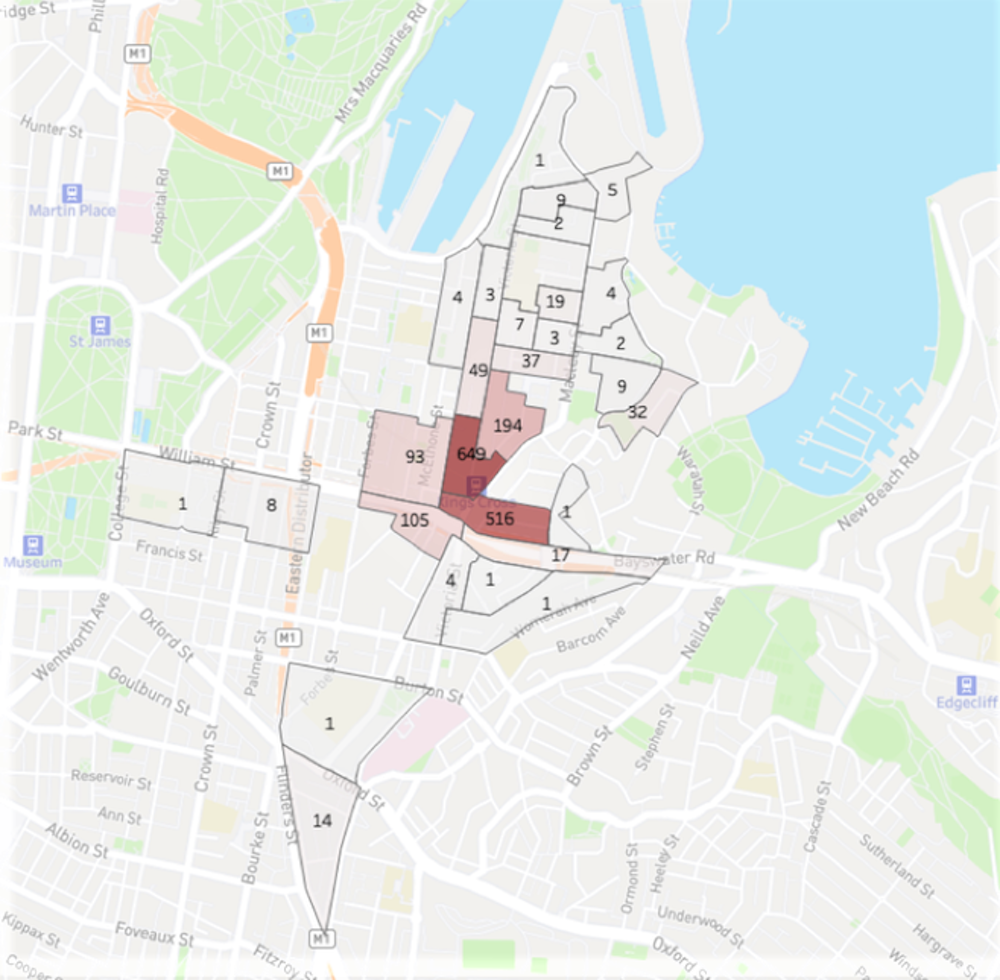
Using data provided by BOCSAR, we plotted the most likely location of those 1,837 crimes. Figure 1 shows these crimes occurred mainly in Kings Cross, an area in which the crime rate had fallen since 2014. We say “most likely location” because we have yet to receive the additional data we requested from BOCSAR to help us locate exactly where these crimes occurred.
Counts of crimes (per SA1 region) that were assigned to both the CBD and Kings Cross.Centre for Translational Data Science, Author provided
With the removal of those 1,837 crimes from the CBD, we detected no decrease in non-domestic assaults. But BOCSAR apparently did. After removing those crimes from the CBD, BOCSAR released an updated report to a parliamentary inquiry into Sydney’s night-time economy. This report claimed assaults in the CBD decreased by 4% (much less than the original 13%).
The committee then asked for our comments. We found the report did not provide a confidence interval for this decrease. Yet the report made a virtue of reporting uncertainty estimates for other quantities and elsewhere it claimed “statistically significant” results.
We replicated BOCSAR’s analysis and found the change in crime could have been as low as a 12% decrease and as high as a 6% increase. In other words, the result is “statistically insignificant”.
What are the implications for making policy?
Why does this matter? There are two reasons.
First, the danger in not explaining, quantifying and reporting uncertainty is that the public loses trust in data-driven policymaking. Only if conclusions acknowledge and explain the uncertainty inherent in inferring complex quantities from data can we make robust and explainable policy decisions that build trust with the public.
Second, if we don’t accept and report uncertainty we could stop looking for other explanations. We might then fail to achieve an outcome that everyone wants: a reduction in violence and a healthy night-time economy.
How do we proceed from here? We’d make two recommendations:
The institution that collects and curates the data should be distinct, informed but independent from the institution/s that analyse the data.
There should be as much data transparency as possible, which would enable different groups to perform different types of analyses, using different sources of data.
We are almost certain these different groups would produce different findings, but the subsequent discussion could provide insights that move us closer to more robust and acceptable policy decisions.
To quote Nobel Prize-winning physicist Richard Feynman:
If we will only allow that, as we progress, we remain unsure, we will leave opportunities for alternatives … to make progress, one must leave the door to the unknown ajar.
The parliamentary committee’s recommendation that BOCSAR and the Centre for Translational Data Science work together more closely appears to do just that. We look forward to an ongoing collaboration to further our understanding of the drivers of violent crime.
The Newstart unemployment benefit is all over the news. It’s the subject of a Senate inquiry. Today it will take evidence in Elizabeth, in what used to be Adelaide’s industrial north.
Here’s a heads-up. They are not particularly likely to be young, they are are not especially likely to be men, and more live in regional areas than we might expect.
Here are some facts to give us something to work with, set out in five charts:
Likely to be middle aged
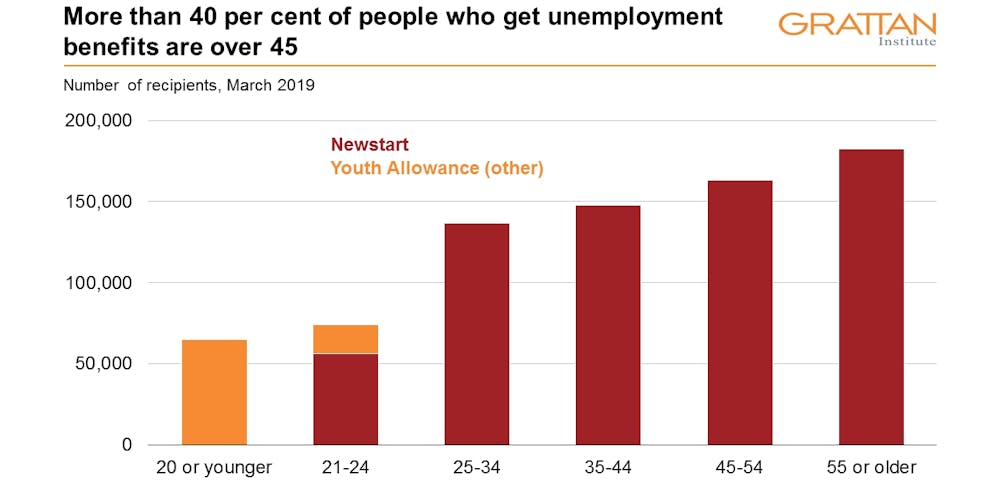
First, Newstart recipients are a lot older than you might think.
Half are over 45. Partly this is because unemployed people aged 24 or younger are more likely to be getting Youth Allowance.
But even if we include unemployed Youth Allowance recipients in the figure, an outsized 45% of all unemployment benefit recipients are over 45. One quarter are over 55.
Women on Newstart are older still: 51% of female job-seekers are over 40, compared with 42% of male job-seekers.
Youth Allowance (other) excludes student and apprentice youth allowance.DSS Payment Demographics, March 2019
They are older on average than five years ago.
Over the five years to March 2019, the number of people on Newstart aged over 45 swelled by one fifth, and the number over 55 by two fifths. At the same time the number under 45 fell by 16%.
The increase in the number of older people on Newstart has coincided with a sharp decline in the number of older people receiving the Disability Support Pension.
Tighter assessment measures since 2012 have led to a decline in the number of people being assessed as eligible for the Disability Support Pension, forcing many declined applicants on to Newstart.
Less likely to live in big cities
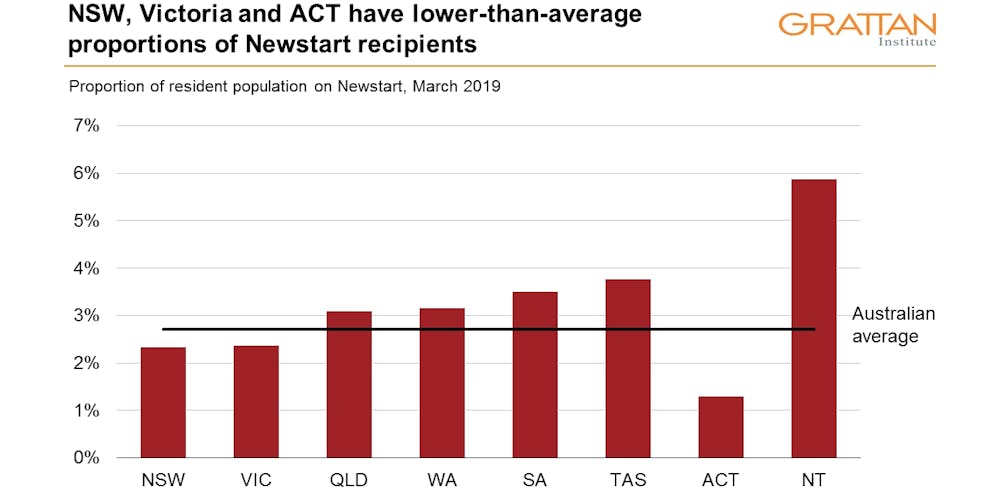
People from the biggest states are less commonly on Newstart.
Someone from Victoria, NSW, or the ACT is about one third less likely to be on Newstart than someone from the rest of the country.
DSS Payment Demographics, March 2019, ABS 3101.0
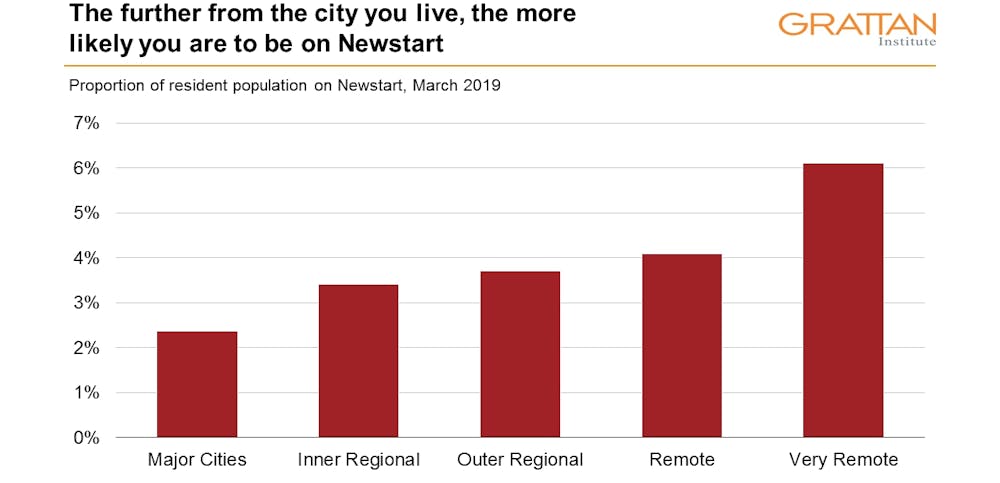
Rural areas also have higher proportions of people on Newstart than cities.
Someone outside a major city is one and a half times as likely to be on Newstart as someone in a major city. And the difference gets starker the further out you go.
Someone in a “remote” or “very remote” area is more than twice as likely to be on Newstart as someone in a major city.
Population at March 2019 is estimated based on ABS data at June 2018.DSS Payment Demographics, March 2019, ABS 3281
It’s true many of the people coming on to Newstart leave it soon after: of those who began receiving Newstart payments in 2017, 63% had come off within 12 months.
But a focus on new recipients ignores the bulk of current recipients, who have been on it for much longer. Someone who has recently begun receiving Newstart payments is far more likely to move off them than someone who’s been on them for a longer period.
As at March 2019, two thirds had been on it for more than a year. One fifth had been on it for more than five years. A significant 4% had been on it for more than ten years.
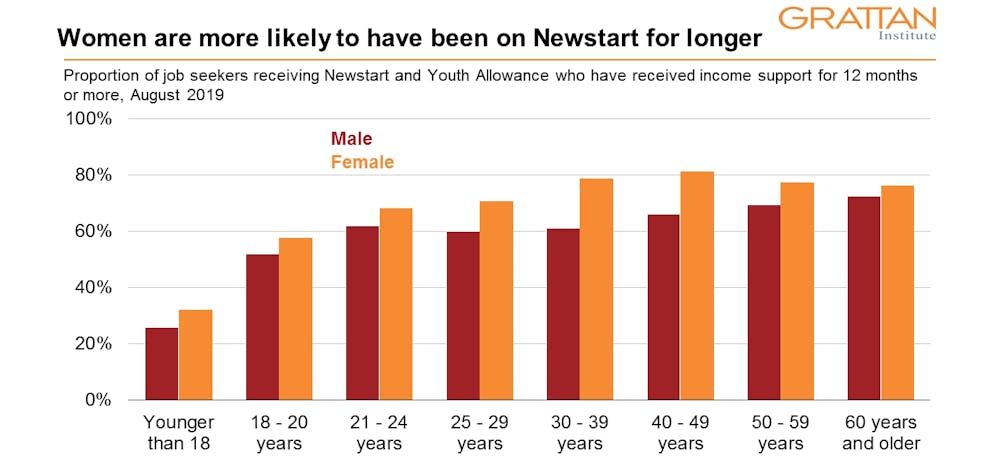
Older recipients are more likely to have been on it for more than a year, and across all ages, women are more likely than men to have been on Newstart for more than a year.
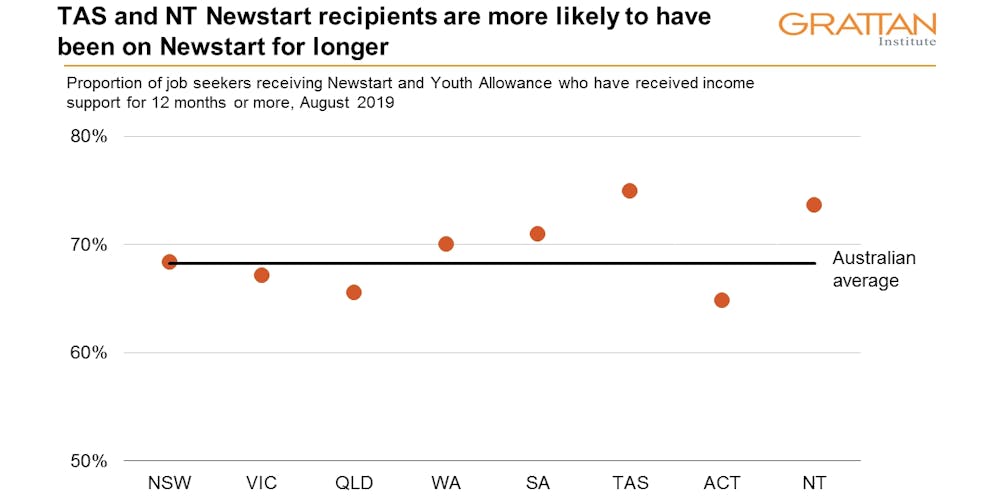
Tasmanian and Northern Territory recipients are the most likely to have been on it for more than a year; ACT and Queensland recipients are the least likely.
But across all states, a clear majority of recipients have been on it for more than a year.
Since 2017, we have been studying the availability of local content on the major subscription streaming services operating in Australia. Our latest report, which examines Netflix, Stan and for the first time, Amazon Prime Video, confirms that the level of local content on these services remains modest, although the number of original productions is growing.
There is also increasing variation between the three services in terms of the kind, age, and genre mix of Australian-made material they carry. The entry of Disney+ and Apple TV+ next month will add new complexity to this rapidly changing market.
We were surprised to learn how much Australian content Amazon Prime Video offers (over 400 Australian titles). However, Amazon is significantly different from Stan and Netflix for several reasons, which make direct comparisons between these services misleading.
Netflix: few local titles, but increasing investment
With an estimated audience of 11 million Australians, Netflix is the clear market leader. While its catalogue available to Australian users carries more than 5000 titles, only 1.7% of these are Australian. Of these 82 titles, most are TV series, with a smaller number of movies and documentaries. Netflix’s overall local content level has changed little since 2017.
Still, Netflix is establishing more of a local presence and spending increasing amounts on a small number of expensive Australian originals, such as the recently released series Tidelands, Chris Lilley’s Lunatics and the upcoming Clickbait, a cyber-crime thriller set in the USA but to be made in Victoria.
Local originals now make up a third of Netflix’s Australian TV titles – the highest of the three services. Netflix’s Australian content is also very new, with three quarters of titles released within the past five years.
In other words, Netflix offers a small selection of expensive, recent, and polished locally-made programs with high production values. Its interface also enables Australian content to be easily found, with dedicated drop-down categories and search term suggestions.
Stan: leading in local content, but with the smallest catalogue
Stan, as Australia’s homegrown streaming service, has a higher local content level. Nine per cent of its titles are Australian, but it has a smaller catalogue than Netflix (1791 titles). This 9% figure has also remained relatively stable, year on year.
Stan has released two new originals every year since our research began. Its early focus was on original comedies, such as No Activity and The Other Guy. However, its current line-up of originals suggests a growing emphasis on drama, with new series The Gloaming and The Commons due for release in 2020.
Compared to Netflix, Stan has many more Australian movies, including classic titles like Muriel’s Wedding, The Castle and Red Dog.
Unsurprisingly, the major supplier of its TV titles is owner Nine Entertainment Co, though there are also titles from the ABC.
Toni Collette and Rachel Griffiths in Muriel’s Wedding (1994).CiBy 2000, Film Victoria, House & Moorhouse Films
Stan’s Australian content is slightly older than that on Netflix (although most titles are still less than five years old) and can be easily found via dedicated recommendation rows for Australian cinema and TV.
Why Amazon is different
Amazon Prime Video was launched in Australia in December 2016 and has a much smaller, but fast-growing, user base. It carries the highest number of local titles among the three services (over 400). However, Amazon differs from Stan and Netflix in several ways.
Firstly, the service does not currently offer any Australian originals, although it has announced some new local comedy titles for release next year, including a series of stand-up specials featuring comedians such as Judith Lucy and Tom Gleeson.
The local licensed content in Amazon’s catalogue is also very eclectic. Over half the titles are documentaries or miscellaneous content such as televised concerts and city travel guides. There are many ultra-niche titles (for example, Paranormal Investigators Uncut) and low-budget compilations of archival documentary footage (such as Trams, Tracks and Trolleys).
Amazon’s local content is also much older than the titles available on Stan or Netflix. Of the Australian movies it carries, the median year of production is 1986. Its oldest movie dates back to 1933, and there are dozens of classics from the 1970s and 1980s like Don’s Party and Sunday Too Far Away. This is great news for film buffs.
However, the age of this content (and the high proportion of documentaries in the catalog) suggests a lower per-title licensing investment than that of Netflix or Stan. Australian content is also more difficult to find on Amazon, with titles not consistently tagged and no dedicated rows or categories.
What does the future hold?
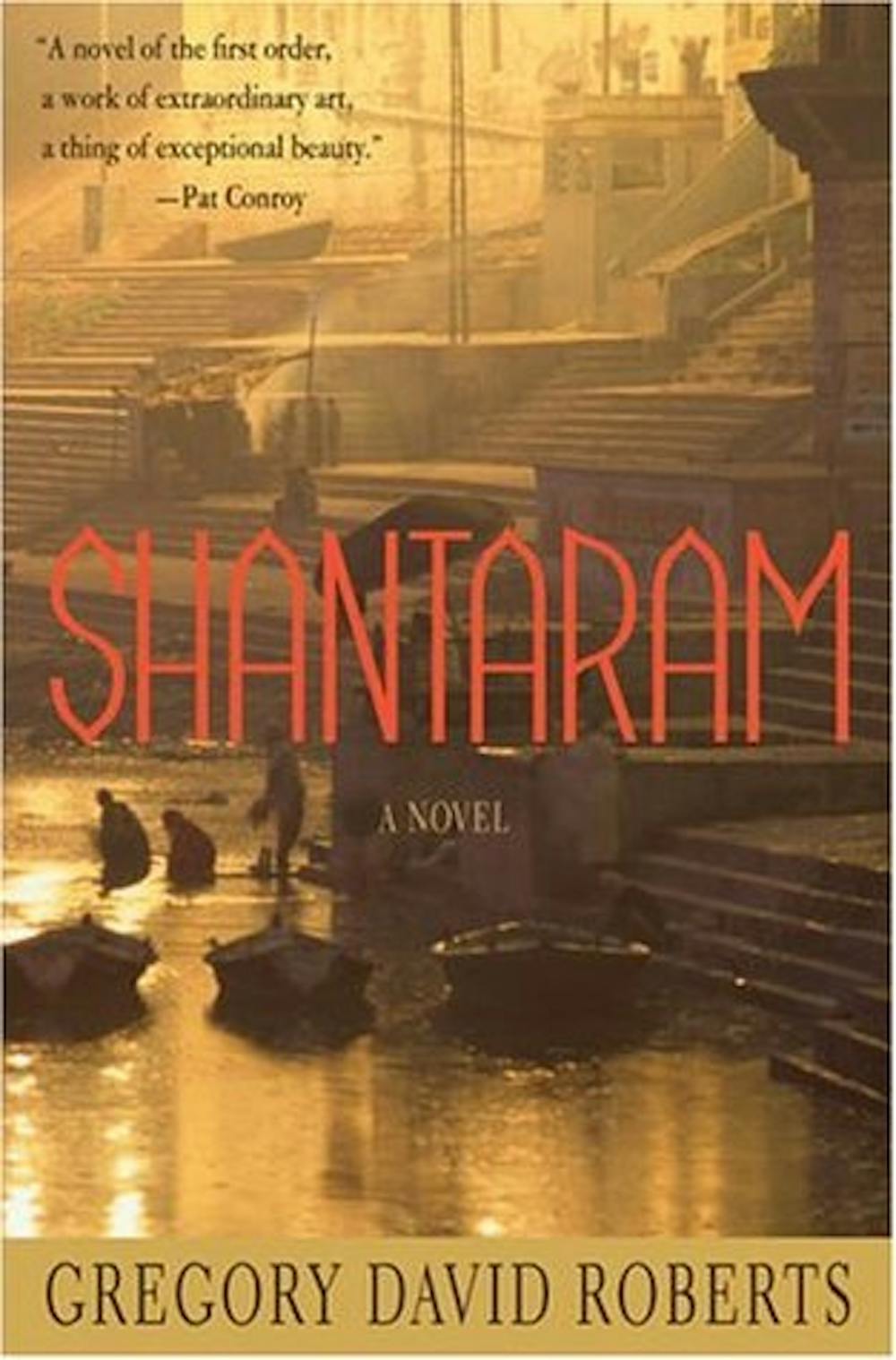
Apple TV is making a series based on the book Shantaram by Gregory David Roberts.goodreads
The streaming landscape in Australia is set for further disruption. Two new services will launch in November: Disney+ and Apple TV+.
However, local content is unlikely to be a major part of either service’s business model. While there might be the odd production filmed here – such as Apple’s Shantaram – the brand appeal for these two services will not be built on Australian stories.
It is heartening to see that – absent government regulation – the number of original, locally made programs is growing on the major Australian streaming services. However, our research suggests that overall levels of local content on these services are likely to remain modest.
The Australian economy is growing slowly, with people not opening their purses and businesses uncertain about the future.
The Reserve Bank has cut interest rates three times this year – the official cash rate is currently at a historic low of 0.75%. Many are arguing monetary policy has run its course, and fiscal stimulus is needed. This week’s Essential poll shows voters tend to think so as well, with 56% agreeing that stimulating the economy should be prioritised over getting back to budget surplus.
The Morrison government, however, is reluctant to do anything impinging on the projected surplus, which has become a political icon for it.
How long can the government maintain this position if the growth numbers don’t improve? And does action need to be taken now? Joining Michelle Grattan to talk about these issues is Ross Gittins, economics editor of the Sydney Morning Herald.
New to podcasts?
Podcasts are often best enjoyed using a podcast app. All iPhones come with the Apple Podcasts app already installed, or you may want to listen and subscribe on another app such as Pocket Casts (click here to listen to Politics with Michelle Grattan on Pocket Casts).
You can also hear it on Stitcher, Spotify or any of the apps below. Just pick a service from one of those listed below and click on the icon to find Politics with Michelle Grattan.
Source: The Conversation (Au and NZ) – By Katharine Kemp, Senior Lecturer, Faculty of Law, UNSW, and Co-Leader, ‘Data as a Source of Market Power’ Research Stream of The Allens Hub for Technology, Law and Innovation, UNSW
The Australian Competition and Consumer Commission (ACCC) today announced it is suing Google for misleading consumers about its collection and use of personal location data.
The case is the consumer watchdog’s first move against a major digital platform following the publication of the Digital Platforms Inquiry Final Report in July.
The ACCC follows regulators in countries including the US and Germany in taking action against the way “tech giants” such as Google and Facebook harvest and exploit their users’ data.
What did Google do?
ACCC Chair Rod Sims said Google “collected, kept and used highly sensitive and valuable personal information about consumers’ location without them making an informed choice”.
The ACCC alleges that Google breached the Australian Consumer Law (ACL) by misleading its users in the course of 2017 and 2018, including by:
not properly disclosing that two different settings needed to be switched off if consumers did not want Google to collect, keep and use their location data
not disclosing on those pages that personal location data could be used for a number of purposes unrelated to the consumer’s use of Google services.
Some of the alleged breaches can carry penalties of up to A$10 million or 10% of annual turnover.
A spokesperson for Google is reported to have said the company is reviewing the allegations and engaging with the ACCC.
The two separate settings that users needed to change to disable location tracking.Android screenshots, Author provided
Turning off “Location History” did not turn off location history
According to the ACCC, Google’s account settings on Android phones and tablets would have led consumers to think changing a setting on the “Location History” page would stop Google from collecting, keeping and using their location data.
The ACCC says Google failed to make clear to consumers that they would actually need to change their choices on a separate setting titled “Web & App Activity” to prevent this location tracking.
Location data is used for much more than Google Maps
Google collects and uses consumers’ personal location data for purposes other than providing Google services to consumers. For example, Google uses location data to work out demographic information, target advertising, and offer advertising services to other businesses.
Digital platforms increasingly track consumers online and offline to create highly detailed personal profiles on each of us. These profiles are then used to sell advertising services. These data practices create risks of criminal data breaches, discrimination, exclusion and manipulation.
Concealed data practices under fire around the world
The ACCC joins a number of other regulators and consumer organisations taking aim at the concealed data practices of the “tech giants”.
This year, the Norwegian Consumer Council published a report – Deceived by Design – which analysed a sample of Google, Facebook and Microsoft Windows privacy settings. The conclusion: “service providers employ numerous tactics in order to nudge or push consumers toward sharing as much data as possible”.
The report said some aspects of privacy policies can be seen as “dark patterns”, or “features of interface design crafted to trick users into doing things that they might not want to do”.
In Canada, an investigation into how Facebook gets consent for certain data practices by the Office of the Privacy Commissioner of Canada was highly critical.
It found that the relevant data use policy “contained blanket statements referencing potential disclosures of a broad range of personal information, to a broad range of individuals or organisations, for a broad range of purposes”. The result was that Facebook users “had no way of truly knowing what personal information would be disclosed to which app and for what purposes”.
Is Facebook next?
The ACCC was highly critical of the data practices of a number of large digital platforms when the Final Report of the Digital Platforms Inquiry was published in July this year. The platforms included included Facebook, WhatsApp, Twitter and Google.
The report was particularly scathing about privacy policies which were long, complex, difficult to navigate and low on real choices for consumers. In its words, certain common features of digital platforms’ consent processes
leverage digital platforms’ bargaining power and deepen information asymmetries, preventing consumers from providing meaningful consents to digital platforms’ collection, use and disclosure of their user data.
The report also stated the ACCC was investigating whether various representations by Google and Facebook respectively would “raise issues under the ACL”.
The investigations concerning Facebook related to representations concerning its sharing of user data with third parties and potential unfair contract terms. So far no proceedings against Facebook have been announced.
While penalties of up to A$10 million or 10% of annual turnover (in Australia) may sound significant, last year Google made US$116 billion in advertising revenue globally.
In July, the US Federal Trade Commission settled with Facebook on a US$5 billion fine for repeatedly misleading users about the fact that personal information could be accessed by third-party apps without the user’s consent, if a user’s Facebook “friend” gave consent. Facebook’s share price went up after the FTC approved the settlement.
But this does not mean the ACCC’s proceedings against Google are a pointless exercise. Aside from the impact on Google’s reputation, these proceedings may highlight for consumers the difference between platforms which have incentives to hide data practices from consumers and other platforms – like the search engine DuckDuckGo – which offer privacy-respecting alternatives.
Research Checks interrogate newly published studies and how they’re reported in the media. The analysis is undertaken by one or more academics not involved with the study, and reviewed by another, to make sure it’s accurate.
Recent headlines have warned a diet high in dairy foods may increase men’s risk of prostate cancer.
The news is based on a recent review published in the Journal of the American Osteopathic Association which claimed to find eating high quantities of plant-based foods may be associated with a decreased risk of prostate cancer, while eating high quantities of dairy products may be associated with an increased risk.
But if you’re a man, before you forego the enjoyment and known nutritional benefits of milk, cheese and yoghurt, let’s take a closer look at the findings.
What the study did
This study was a review, which means the researchers collated the findings of a number of existing studies to reach their conclusions.
They looked at 47 studies which they claim constitute a comprehensive review of all available data from 2006-2017. These studies examined prostate cancer risk and its association with a wide variety of foods including vegetables, fruits, legumes, grains, meat (red, white and processed), milk, cheese, butter, yoghurt, total diary, calcium (in foods and supplements), eggs, fish and fats.
Some studies followed groups of men initially free of prostate cancer over time to see if they developed the disease (these are called cohort studies). Others compared health habits of men with and without prostate cancer (called case-control studies). Some studies recorded the incidence of prostate cancer in the group while others concentrated on the progression of the cancer.
For every potential risk factor, the reviewers marked studies as showing no effect, or an increased or decreased risk of prostate cancer. The results varied significantly for all the foods examined.
For cohort studies (considered more reliable than case-control studies), three studies for vegan diets and one for legumes recorded decreased risk of prostate cancer. For vegetarian diets and vegetables, some reported decreased risk and some recorded no effect. Fruits, grains, white meat and fish appeared to have no effect either way.
An increased risk was reported for eggs and processed meats (one study each), red meat (one out of six studies), fats (two out of five), total dairy (seven out of 14), milk (six out of 15), cheese (one out of six), butter (one out of three), calcium (three out of four from diet and two out of three from supplements) and fats (two out of five).
Notably, some very large cohort studies included in the review showed no association for milk or other dairy products. And most case-control studies, though admittedly less reliable, showed no association.
The authors also omitted other studies published within the review period which showed no significant association between dairy and prostate cancer.
A person’s weight likely has more influence on their risk of developing prostate cancer than whether or not they eat dairy.From shutterstock.com
So the inconsistency in results across the studies reviewed – including large cohort studies – amount to very limited evidence dairy products are linked to prostate cancer.
Could it be vitamin D?
In earlier research, a link between milk and prostate cancer has been attributed to a high calcium intake, possibly changing the production of a particular form of vitamin D within the body.
Vitamin D is an important regulator of cell growth and proliferation, so scientists believed it may lead to prostate cancer cells growing unchecked. But the evidence on this is limited, and the review adds little to this hypothesis.
For example, the evidence is rated as “strong” that being overweight or obese, and being tall (separate to weight), are associated with increased risk of prostate cancer. The exact reasons for this are not fully understood but could be especially significant in Australia where 74% of men are overweight or obese.
A new Australian study found a higher body mass index was a risk factor for aggressive prostate cancer.
For dairy products and diets high in calcium, according to the WCRF, the evidence remains “limited”.
It’s not wise to judge any diet by a single food group or nutrient. A healthy diet overall should be the goal.
That being said, milk, cheese and yoghurt are included in Australia’s Dietary Guidelines because of evidence linking them with a lower risk of heart disease, type 2 diabetes, bowel cancer and excess weight. These dairy products are also sources of protein, calcium, iodine, several of the B complex vitamins, and zinc.
Evidence about dairy products and prostate cancer remains uncertain. So before fussing about whether to skip milk, cheese and yoghurt, men who wish to reduce their risk of prostate cancer would be better advised to lose any excess weight. – Rosemary Stanton
Blind peer review
I agree with the author of this Research Check who highlights there is a high degree of variability in the results of the studies examined in this review.
While the authors searched three journal databases, most comprehensive reviews search up to eight databases. Further, the authors did not undertake any assessment of the methodological quality of the studies they looked at. So the results should be interpreted with caution.
Although the authors concluded higher amounts of plant foods may be protective against prostate cancer, the figure presented within the paper indicates more studies reported no effect compared to a decreased risk, so how they came to that conclusion in unclear. For total dairy they present a figure showing there were as many studies suggesting no effect or lower risk as there were showing higher risk.
Importantly, they did not conduct any meta-analyses, where data are mathematically pooled to generate and overall effect across all studies.
As the reviewer points out, many other important sources of high quality data have not been included and there are a number of recent higher quality systematic reviews that could be consulted on this topic. – Clare Collins
Anthony Albanese has promised to open a “conversation” about new ways of protecting workers in insecure employment, and committed to a root and branch overhaul of the “broken” vocational education system.
In his speech on jobs and the future of work, delivered in Perth on Tuesday, Albanese declared today’s new employment arrangements – such as the gig economy – were straining the present industrial relations system.
With job insecurity on the rise and widespread casual employment, many people had unpredictable income and hours and few protections. They were unable to plan ahead, including financially.
“These Australians deserve a greater sense of security”, he said.
While one option was to look at the barriers to businesses offering full-time jobs, for many employers and workers non-standard arrangements suited.
“Today we have close to 1.5 million secondary jobs, some with a median income of up to $9500 depending on the industry,” he said. Some 40% of Uber drivers had a separate full-time job, or a business. For many of them Uber driving gave flexibility.
“It is time to have a conversation about new forms of worker protections, which can be made as flexible as the gig economy jobs they could cover, as well as benefit more traditional industries,” Albanese said
He floated the idea of portable entitlements – allowing a worker to carry entitlements over from one job to the next.
Labor’s shadow industrial relations minister Tony Burke would lead this “conversation” about protections.
In this first of a series of “vision statements” Albanese has sought to send the messages that Labor under his leadership is focused on jobs, is looking to the future and is not afraid of change.
The speech – which also cast a decarbonising economy as the generator of new jobs and a booming manufacturing industry – concentrated on repositioning Labor, not providing detailed policy.
Albanese emphasised the centrality of growth, and outlined a framework for tackling the problem of the mismatch in the labour market.
He pointed to a gulf between what employers needed and what workers had to offer, and described the vocational education and training system (VET) – already much overhauled by governments – as in crisis.
“We must commence a national project to repair our VET system,” he said.
Numbers working towards an apprenticeship had fallen, with 150,000 fewer apprentices and trainees today than when the Coalition government came in.
In government, he would seek a “circuit breaker”, with a new body along the lines of Infrastructure Australia, which he set up when a minister.
“Labor in government will establish a new national partnership to drive improved outcomes in the vocational education and training sector and to strengthen workforce planning, particularly in the growing sectors of our economy: Jobs and Skills Australia.”
This body “will be a genuine partnership across all sectors – business leaders, both large and small; state and territory governments; unions; education providers; and those who understand particular regions”.
Its functions would include
workforce and skills analysis
preparing capacity studies, including for emerging and growing industries
undertaking specific plans for targeted cohorts such as the regions, over-55 workers, and youth
reviewing the adequacy of the training and vocational system.
Its legislation would also require it to forecast workforce and skills needs for services government funded, and where demand was growing – specifically the National Disability Insurance Scheme (NDIS), aged care and health.
“This specific function will ensure that proper co-ordination occurs across all our human services investments and that the risk to service delivery or cost is reduced.”
Leading thinkers in environmental economics and conservation are asking a pressing question. Why are we ignoring the destruction of the living world?
Recently, the Intergovernmental Platform on Biodiversity and Ecosystem Services (IPBES) published a global assessment of biodiversity that set out alarming statistics: a million species at threat of extinction, 75% of terrestrial environments severely altered by human activity, and a 30% reduction in global habitat integrity.
Despite all this, practical solutions to redress an ecological crisis — land use and economic reform, action on climate change and improvements to environmental governance — are not prioritised. One key reason for this is how we frame our relationship to the living world.
Instrumental nature
An endangered baobab species in Madagascar.Bernard Gagno/Wikimedia Commons
Our prevailing relationship with nature is instrumental – that is, we predominantly frame the living world as a set of natural resources, apart from humans, for our privileged use.
Such framing is so deeply embedded, and our material dependence on nature so total, that it can seem strange even to question the idea of nature as natural resource. In Western nations, this position has deep philosophical and religious roots.
My latest book, The Imagination of Plants, highlights the role of the creation story in Genesis and the philosophy of Aristotle in rendering plants, the living beings that make up the visible bulk of most terrestrial ecosystems, as existing for the sake of animals, and both for the sake of humans.
Such accounts have powerfully shaped a human-centred, utility-based worldview that has silenced the needs of plants and animals. They form the philosophical basis of our claims to “own” other species.
If plants and animals exist for the sake of humans, why take action to conserve them when they’re not useful? Why care when their numbers are going down, as long as we can still get what we materially need from them?
Conservation concepts and strategies that place the living world within this frame, including ideas of natural capital, ecosystem services and the protection of the living world for our enlightened self-interest, are destined to fail because they do not address this underlying framing. Indeed, as researchers have pointed out, by not addressing such framing they perpetuate the very drivers of biodiversity loss.
Adam and Eve in the Garden of Eden. Albrecht Dürer, 1504.Courtesy of Metropolitan Museum of Art
Environmental thinkers have warned for decades that such a view of nature is at the root of our ecological crisis. More recent research has argued against this instrumental view, criticising its value as a basis for conservation action.
Since the 1980s, discussions of the intrinsic value of nature – “valuing it for what it is, not only what it does” – have happened across a number of environmental disciplines. This led to the Convention on Biological Diversity (CBD), founded on the cornerstone of the intrinsic value of biological diversity.
In some countries, such as New Zealand, the concept of intrinsic value appears in major pieces of resource management and conservation legislation. It has been instrumental in recent legal battles over land use.
But the concept of intrinsic value does not demand a move away from a dominant use-based frame. In the preamble of the CBD itself, intrinsic values sit alongside a raft of use-based values, including economic, scientific, educational, cultural and aesthetic values. The power of the use-based frame dominates the concept of intrinsic value.
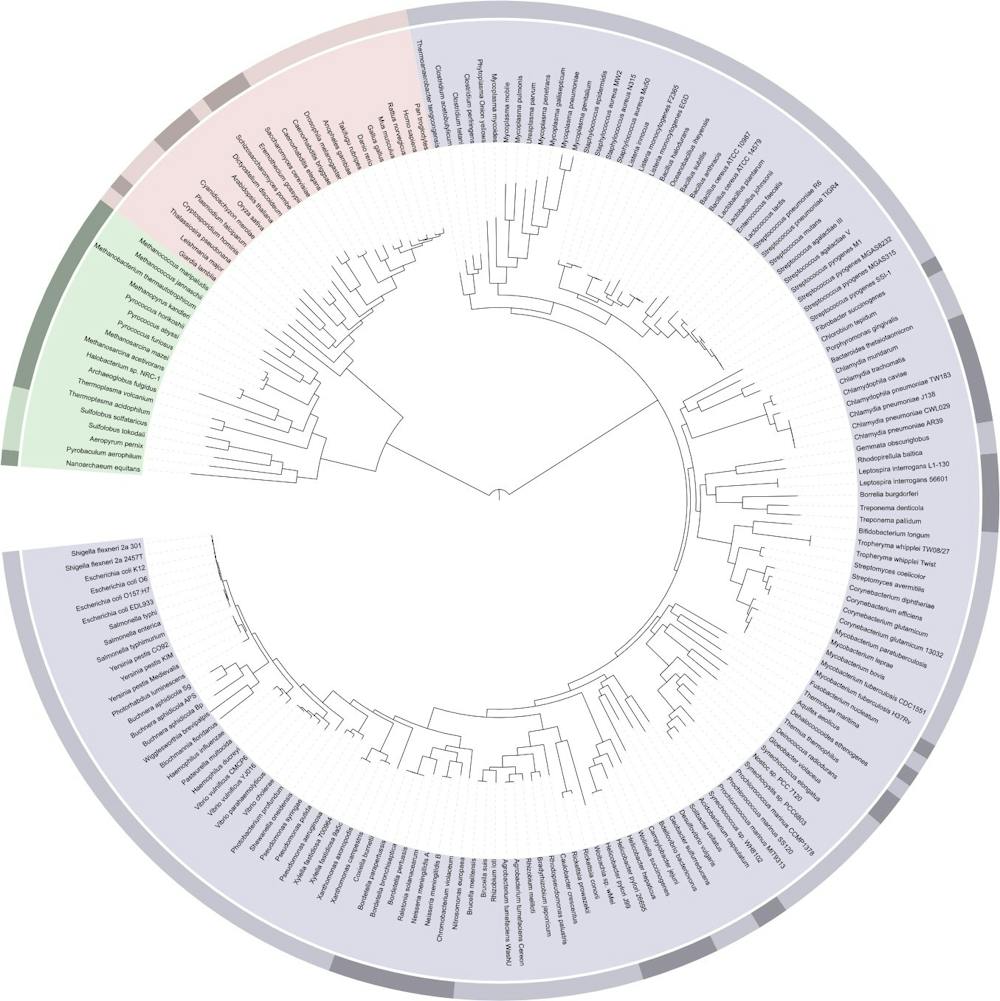
A highly resolved tree of life demonstrates the kinship of all life on Earth.Ivica Letunic/Wikimedia Commons
All our relations
There is an alternative to the dichotomy of a purely instrumental relationship and the concept of intrinsic value.
In many Indigenous cultures, such relationships are built on fundamental kinship with the living world, a kinship that actually blurs and subverts the very concepts of nature and culture.
Within these kinship relationships, the needs and capacities of living beings are acknowledged, not left in the background. This is what the late anthropologist Deborah Bird Rose called the Indigenous ethic of connection, or what is also called kincentric ecology.
Kinship offers a way of connecting to nature that acknowledges our need to use plants and animals, but constructs relationships beyond use. Where the concept of intrinsic value can be difficult to engage with, kinship relationships naturally extend to care, respect and responsibility.
Framing nature in terms of kinship can motivate people to care and make the loss of the living world real for people. Ever since Darwin’s book, On the Origin of Species, science has known of our fundamental kinship with nature. Yet we don’t frame (or live with) nature in a way that honours this.
A recent example gives me hope. At the school climate strike, a young Brazilian Indigenous woman addressed a crowd in New York, speaking in terms of kinship about the human children of a mother Earth, fighting to save their mother from destruction. Framing nature in terms of kinship noticeably energised the crowd of young people.
The challenge to reframe the living world in terms of kinship is massive. A good step would be to convene a human-nature kinship platform as a way of influencing the UN Biodiversity Conference in China next year. Another step could be to enshrine our fundamental kinship with other species in all major environmental governance frameworks, including the CBD and national environmental legislation.
Both could provide the springboard for us to undergo the hard work of talking about, and living with, other species in ways that acknowledge them as our earthly relations.
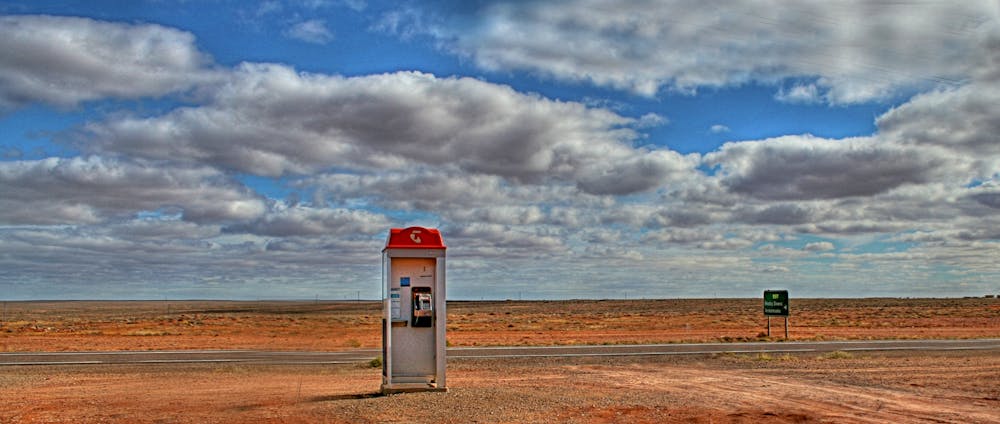
Australia is witnessing the first major redesign of the payphone booth since 1983. But Telstra’s new vision is meeting resistance from some councils, and the matter is in the courts.
In an effort to make payphones relevant to the needs of modern Australians, Telstra’s revamped payphones feature mobile charging, Wi-Fi access through Telstra Air (free or via a Telstra broadband plan, depending on the area), and large digital advertising displays.
Sydney’s Lord Mayor Clover Moore described the new booths as “a craven attempt” to profit from “already crowded CBD footpaths”, and a “Trojan horse for advertising”.
Under existing Universal Service Obligation (USO) agreements, Telstra has to provide payphones as part of its standard telephone service. The USO is a consumer protection measure that ensures everyone has access to landline telephones and payphones, regardless of where they live or work. Telstra is the sole provider of USO services in Australia.
The USO is funded through an industry levy administered by the Australian Communications and Media Authority. This means registered carriers with revenues over A$25 million per year contribute to the levy, including Telstra.
The face of the new Aussie payphone
In a blog post last March, a Telstra employee said the new “smart payphones” provided emergency alerts, multilingual services, and content services including public transport information, city maps, weather, tourist advice, and information on cultural attractions.
The booths are 2.64m tall, 1.09m wide, and are fitted with 75-inch LCD screens on one side. In 2016, 40 payphones were approved by City of Melbourne planners and installed over the following year, marking the start of Telstra’s plans for a nationwide rollout.
Telstra’s submission to the city claimed the booths were “low-impact” infrastructure and therefore planning approval was not required, in accordance with the Telecommunications Act 1997 (Cth).
In 2017, Telstra and outdoor advertising company JC Decaux announced a partnership to “bring the phone box into the 21st century”.
It would initially have 1,860 payphones upgraded in Sydney, Melbourne, Brisbane, Adelaide and Perth. These five cities represent 64% of the country’s population and 77% of advertising spend.
Taking matters to court
Earlier this year, Telstra’s application for 81 new booths was blocked by the City of Melbourne, and the city commenced proceedings in the Victorian Civil and Administrative Tribunal to have the booths redefined as not being low-impact.
Given the council allowed 40 booths to be installed in 2017, it’s unclear why its position has since changed.
In May, Telstra hit back by starting federal court proceedings against the council in an effort to overturn prior proceedings. In June, the Brisbane and Sydney city councils joined the City of Melbourne as co-respondents.
Melbourne Councillor and Chair of Planning Nicholas Reece said the new payphones would create congestion on busy footpaths, describing them as “monstrous electric billboards masquerading as payphones”.
He said the booths were “part of a revenue strategy for Telstra”.
But Telstra claims the new payphones are only 15cm wider than previous ones. A company spokesperson said the extra size was necessary to accommodate fibre connections and other equipment needed to operate the booth’s services.
Who pays for, and profits from, payphones?
In 2017, a Productivity Commission inquiry into the USO reported an average annual subsidy of A$2,600-50,000 per payphone, funded through the industry levy.
But the levy doesn’t cover the cost of installing and providing advertising on booths. Also, Telstra’s advertising-generated revenue doesn’t directly offset the cost of installing and operating the payphones.
Telstra has advertised on its payphones for the past 30 years. But display screens for advertising on new booths are 60% larger than previous ones.
The City of Melbourne is concerned because commissioned research by SGS Economics and Planning estimates a 10% reduction in pedestrian flow because of the new booths. This would happen as a result of people getting distracted by the payphone advertising, and would cost the city A$2.1 billion in lost productivity.
That said, federal legislation doesn’t prevent Telstra from placing advertising on payphones. So the existing court case could hinge on Melbourne city council’s argument that by increasing the size of digital displays, Telstra’s new payphones are no longer low-impact.
The number of payphones in operation today is sharply down compared with the payphone’s heyday in the early 1990s, when more than 80,000 could be found across Australia.
But there’s strong evidence they continue to supply a vital public service.
Telstra’s payphones operate in many small regional communities such as Woomera, South Australia. It has a population of less than 200 people.georgiesharp/flickr
Currently, Telstra provides more than 16,000 public payphones. Last year, these were used to make about 13 million phone calls, of which about 200,000 were emergency calls to 000.
So regardless of the verdict on the Telstra case, the public payphone is and will continue to be an iconic and integral part of our telecommunications landscape.
The banning of a Sportsbet advertisement featuring a “foolish” blonde beauty pageant contestant is a rare win against sexism and stereotypes in advertising.
Australia’s Ad Standards body has upheld complaints about Sportsbet’s ‘foolproof’ advertisementSource
It’s not something Ad Standards does often. In fact, in 2018 it dismissed 83% of all complaints.
Our research suggests the advertising industry’s standards for judging sexism are, like the world depicted in the television series Mad Men, stuck in the past.
We showed advertisements to ordinary men and women who agreed the adverts traded in outdated and undesirable sexism and gender stereotypes. Yet many of those adverts were cleared by Ad Standards as conforming to the industry’s ethical code.
One of the biggest problems is the code only considers ads in isolation. It doesn’t take into account their cumulative effect.
Confidence trick
In our research, a partnership between RMIT University and Women’s Health Victoria, we explored community responses to gender portrayals in advertising by holding ten focus groups with 46 women and 28 men in metropolitan and regional Victoria. As part of the process we asked participants to discuss advertisements that had attracted complaints or media attention.
An example is the 2016 “Fit In” advert from General Pants Co, showing young women in states of undress alongside fully clothed young men.
Australia’s advertising industry code permits sexualised poses if women are shown to be ‘confident and in control’.
General Pants Co adverts regularly attract complaints about using sexually objectifying imagery. In 2014, for example, it ran advertising showing women in swimwear with the tagline “wet dreams”.
Such imagery, as one woman in our study put it, suggests “women aren’t good enough on their own, like they need to show some sexualisation”.
Yet Ad Standards dismissed complaints against the “Fit In” ad because the industry code does not consider sexualised poses degrading if women are shown to be “confident and in control” – and in this case the women were “standing in a confident manner”.
This is despite more than 130 studies over the past 20 years indicating sexualised or idealised images of women in advertisements damage women’s self-esteem and satisfaction with their bodies, and that this can occur even when women are shown as sexually powerful and in control.
Further, experimental studies suggest exposure to sexualised images of women leads both women and men to have “a diminished view of women’s competence, morality and humanity”.
Trading in stereotypes
Our focus group participants noted the pervasiveness of gender stereotypes in advertising. Women are shown as homemakers, mothers or sex objects. Men are portrayed in more action-oriented roles and associated with leadership and power.
A perfect example is this ad for Sofitel Brisbane showing a couple eating breakfast in bed. He is reading the Australian Financial Review. She is reading a Chanel coffee table book.
Sofitel Brisbane made a meal of its marketing by misreading community expectations with this advert.
There was a swift backlash against this ad when it was published in October 2018. As a result Sofitel Brisbane apologised and withdrew it.
But had it gone to Ad Standards adjudication, more than likely complaints about it would have been dismissed.
This is because the industry code accepts using gender stereotypes to “simplify communications” so long as they “are not always associated with that gender, the only options available to that gender, or never carried out or displayed by another gender”.
Thus Ad Standards last month dismissed a complaint about an Aussie Home Loans advert portraying a frivolous, gossipy and ill-informed hairdresser.
The reason was because “the woman in the advertisement wasn’t seen to represent all adult women, rather it was an exaggeration of a cliché of hairdressers being full of advice”.
Cumulative effects
In contrast to the Australian code, Britain’s Advertising Standards Authority is now obliged to consider the cumulative health impacts of portrayals. This recognises the pervasiveness of these types of portrayals perpetuate problematic gender norms.
As one woman in our study stated: “I think one ad itself cannot be harmful, but when you see thousands of these ads, especially for young girls and boys […] they see what the standards are for when they grow up.”
This means the British regulator is more likely to ban ads perceived to objectify women, such as this example from British air-conditioning company Not Just Cooling.
Britain’s advertising regulator, The Advertising Standards Authority decided this advert breached its rules on social responsibility and harm and offence.
Our research highlights that people want more responsible advertising. The industry has acknowledged a need to review its code of ethics. That’s a start. But something else to learn from Britain to address sexist advertising is the value of a co-regulatory system that doesn’t leave the industry to set its own rules.
In the 1960s, advertisers were blissfully unaware of the impacts of casual sexism and stereotypes. We now have ample evidence it’s not just harmless fun. It’s time for the industry to show it’s not living in the past.
In August this year, Screen Australia celebrated what it described as a “significant landmark” for the Australian screen industry. Its Gender Matters program had exceeded its KPI target with 56% of projects supported having at least half of all key creative roles occupied by women.
This week, Screen Australia announced the latest recipients of feature production funding. Of five films funded, none has a female director or writer.
So are we really seeing “systemic change” in our sector, as claimed by Joanna Werner, chair of the Gender Matters Taskforce?
Where are the women?
The history of film in Australia is a story mostly of male endeavour and accomplishments. There were women active in the early period – Lottie Lyell, Louise Lovely and the McDonagh sisters worked as directors, writers and actors – but their contributions are mostly overlooked.
Lottie Lyell (second from right) on the set of Blue Mountains Mystery (1921), which she co-directed.NFSA
Since the revival of the Australian film industry in the 1970s, there have been notable female pioneers, but they are the exception to the rule. To this day, women are still under-represented on-screen and in the production process.
Reasons given for why women are less visible as directors and writers range from low confidence and self-esteem issues, maternity leave and family commitments to notions such as we are not “pushy enough”.
Gillian Armstrong, the first Australian female director to carve out an international reputation, laments while there’s enough room in the industry for mediocre male directors, there is no room at all for mediocre women.
Director and journalist Amancay Tapia thinks it might be because: “men are assessed for their potential while women are assessed by what they’ve already achieved”.
When industry data released in 2015 revealed the extent of the imbalance across all sectors of the industry, there was an outcry.
Women made up less than 50% of key creative roles across all sectors, with only 16% of drama directors being female, and only 21% of writers.
Statistics like this have been released before, but this time it was different. Funding agencies and guilds around the country announced action plans. Most notable was the A$5 million Screen Australia Gender Matters initiative.
What the new data really tells us
Under Gender Matters, it was targeted that at least half of all key creative roles would be occupied by women. Under the program “key creative” roles were director, writer, producer, and lead actor – thus a film could be a success under Gender Matters with no women in the primary creative roles of writer and director.
While Screen Australia has heralded Gender Matters a success, when we look more closely at the data it’s often the number of female producers who push up the averages. Only 27% of feature film directors and writers were women in 2018/19 – a small rise, but certainly not parity or cause for celebration.
Cinematography is an even more male-dominated field. Just 8% of Australian films between 2015 and 2018 had female cinematographers – and cinematographers aren’t even considered in the Gender Matters initiative.
Cinematographer Erika Addis tells me:
We felt left out in the Gender Matters discussion and disappointed that it just stopped at those four roles. To be able to move forward, you need those opportunities. You need someone to take a bit of a risk.
These dispiriting statistics are despite the fact that, on average, 50% of all film school graduates are women. So what happens to them? What’s blocking them from correcting the imbalance?
A national conversation is finally happening, and there is a sense, including from men at the top of the industry, of a deeper commitment to change this time. The #metoo movement has also had an impact, and the fact there are more women in positions of influence in the screen agencies, pushing the initiatives.
However, Screen Australia’s celebration of Gender Matters “success”, while only 27% of feature directors are women, feels premature and gratuitous. The industry needs to maintain a commitment to real change, not just the appearance of change.
Checks and balances
The outgoing CEO of the Australian Director’s Guild, Kingston Anderson, has been a strong advocate for change, not just vocally, but implementing a range of effective programs.
“We have been thrilled with the success of the Shadow Directing Program, which has achieved 100% employment for the female directors after they completed their placement,” he said in an industry report.
Most screen agencies and guilds are continuing to push programs and targets to improve gender balance for all key creatives. The guild in particular is actively encouraging production companies to take on female directors for commercials and feature films. There is little doubt these kinds of initiatives are helping to remove barriers to entry for women.
However, some of the larger companies have been slow to come on board with the schemes. The CEOs, broadcast executives, distributors and gatekeepers at the top of the industry – mainly men – need to embrace the initiatives and open their doors.
It’s not only a matter of cultural representation and basic fairness: it makes marketing and business sense. Some of the most interesting, acclaimed and successful recent works have come from female writers and directors.
Rachel Perkins – pictured here on the set of Bran Nue Dae – is just one Australian female director who has achieved critical and box office success.Matt Nettheim/Robyn Kershaw Productions
Our appetite for authentic and fresh Australian voices, as well as the success of our industry, will be significantly enhanced by removing the roots to obstruction and supporting women who have great stories to tell.
Where was the evolutionary birthplace of modern humans? The East African Great Rift Valley has long been the favoured contender – until today.
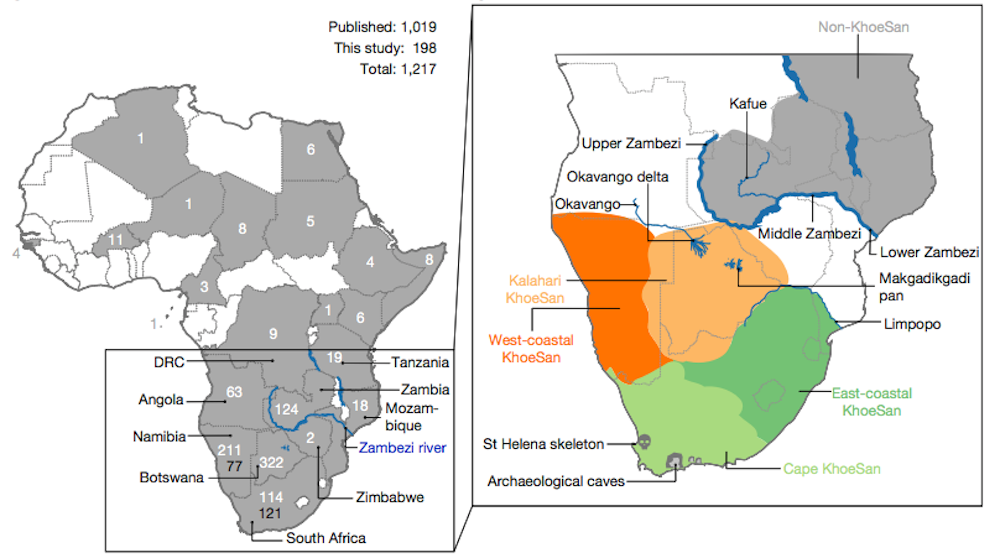
Our new research has used DNA to trace humanity’s earliest footsteps to a prehistoric wetland called Makgadikgadi-Okavango, south of the Great Zambezi River.
Our analysis, published in Nature today, shows that the earliest population of modern humans (Homo sapiens sapiens) arose 200,000 years ago in an area that covers parts of modern-day Botswana, Namibia and Zimbabwe.
The left map shows the distribution of ancestral DNA among the sampled population. This allowed the ancestral homeland to be pinpointed to a region (shown on the right in orange) south of the Zambezi River, centred on northern Botswana.Chan et al., Nature 2019
Today it is a dry and dusty land with scattered salt pans, and it is hard to believe that modern humans lived and thrived in wetlands here for 70,000 years before our ancestors began to explore the rest of Africa, and ultimately the world.
We pinpointed this region by studying mitochondrial DNA, known as the “mitogenome”. Unlike nuclear DNA, which is passed on by both mother and father, mitochondrial DNA is passed on only by the mother, which means it is not jumbled up in each generation.
If we think of all modern humans as occupying a particular place on a huge family tree, logically we should find the most diverse mitogenomes at the very base of the tree, because it is the ultimate source of all the various branches.
We already know that genetic data points to southern Africa as the cradle of humanity (unlike fossil evidence, most of which has been found in East Africa). But we wanted to refine our search still further, to pinpoint the exact location where humans first evolved.
To do this, we turned our attention to a group of people known as the KhoeSan. KhoeSan have the most diverse mitogenomes of anyone on Earth, which suggests their DNA most closely resembles that of our shared common ancestors. If we all sit on branches of the human family tree, then KhoeSan are the tree’s trunk.
Linguistically, KhoeSan people are click speakers, while culturally KhoeSan are foragers, with groups of San people still practising the old ways of life – hunting and gathering for subsistence.
Members of our research team have spent a decade working with KhoeSan communities, as well as people from other ethnicities and language groups, in Namibia and South Africa.
By generating mitogenome data for around 200 rare or newly discoverd sub-branches of KhoeSan lineages, and merging them with all available data, we were able to zoom in on the very base of our evolutionary tree.
It is now clear our ancestors must have dispersed from a region south of the Zambezi River. This is consistent with geographical, archaeological and climate data, including the fact that this area would have been a fertile wetland at the time the first modern humans emerged.
Lush landscapes
Geological evidence suggests that at this time, the prehistoric Makgadikgadi lake that had dominated the region for millions of years had begun to break up through the shifting of the land. This would have created a vast wetland region, ideal to sustain life.
But if it was so ideal, why did our ancestors begin to explore other places between 130,000 and 110,000 years ago, first heading northeast and later southwest from the ancestral home?
Climate data suggests that at around that time the region experienced a huge drought. Notably, about 130,000 years ago humidity increased to the northeast of the homeland, and 110,000 years ago the same happened to the southwest. We speculate that this created passages of lush vegetation for our ancestors to leave the homeland, most likely following the game animals that were also forging into new regions.
What’s more, our genetic data suggests the southerly migrants went on to inhabit the entire southern coast of Africa, with multiple sub-populations and huge population growth. Archaeological findings from the Blombos caves in South Africa have shown this region to be rich in evidence for cognitive human behaviour as early as 100,000 years ago. Again, we were amazed at how well we could match timeline data, crossing different yet complimentary disciplines that have historically not worked together. This also allowed us to further speculate about the success of the southerly migrants being attributed to adapting their skills to the abundance of life in the oceans.
These earliest explorers left behind a homeland population, one that still remains within the ancestral lands today, having adapted to the much drier landscape. It has been a pleasure to spend the past decade engaging with the last descendants of humanity’s homeland, including the Ju/’hoansi people of the Kalahari in Namibia.
The Ju/’hoansi, who still practise their traditional way of life, are excited about our findings. They believe our study captures a history that they have told for generations by word of mouth alone. This is not only their story, but all of ours.
Dark colours play a crucial role in regulating temperatures in many biological systems. This is particularly common for animals like reptiles, which rely on environmental sources of heat to keep themselves warm.
Darker colours absorb more heat from sunlight, and animals with these colours are more commonly found in colder climates with less sunlight. This broad pattern is known as Bogert’s rule.
Birds’ eggs are useful for studying this pattern because the developing embryo can only survive in a narrow range of temperatures. But eggs cannot regulate their own temperature and, in most cases, the parent does it by sitting atop the clutch of eggs.
In colder environments, where the risk of predators is lower and the risk of chilling in cold temperatures is greater, parents spend less time away from the nest.
We predicted that if eggshell colour does play an important role in regulating the temperature of the embryo, birds living in colder environments should have darker eggs.
The average colour of eggshells in different areas around the world.Wisocki et al. 2019 ‘The global distribution of avian eggshell colours suggests a thermoregulatory benefit of darker pigmentation’, Nature Ecology & Evolution, Author provided
To test the prediction, we measured eggshell brightness and colour for 634 species of birds. That’s more than 5% of all bird species, representing 36 of the 40 large groups of species called orders.
We mapped these within each species’ breeding range and found that eggs in the coldest environments (those with the least sunlight) were significantly darker. This was true for all nest types.
We also conducted experiments using domestic chicken eggs to confirm that darker eggshells heated up more rapidly and maintained their incubation temperatures for longer than white eggshells.
Our results show that darker eggshells are found in places with less sunlight and lower temperatures, and that these darker colours may help keep the developing embryo warm.
How future climate change will affect eggshell appearance, as well as the timing of reproduction and incubation behaviour, will be an important and fruitful avenue for future research.
Source: The Conversation (Au and NZ) – By Louise Hull, Associate Professor and Fertility and Conception Theme Leader, The Robinson Research Institute, University of Adelaide
A miscarriage is a devastating event. Those who experience them are suddenly and unexpectedly robbed of the promise of new life and the dream of an expanded family. The emotional toll can be even greater if conception was delayed, or if fertility treatments were required to achieve a pregnancy.
Many health providers have considered miscarriage as “nature’s way”, not fully acknowledging its emotional and psychological effects on those who have lost a pregnancy.
Fortunately, this view is changing, and there is increasing advocacy for research into the causes, prevention and management of miscarriages. But there remains a long way to go.
Miscarriages are common, affecting 15-20% of pregnancies worldwide. Many couples find it too painful to discuss and are often unaware their relatives, friends or work colleagues have also experienced a pregnancy loss.
Often women who miscarry will experience feelings of guilt, contemplating every possible reason their pregnancy may have ended. But miscarriage is very rarely caused by anything the mother did.
Some miscarriages may be caused by endometrial problems; any one of a number of factors that alter the response of the lining of the womb (endometrium) to the developing placenta.
These could include an irregular uterine shape, hormonal imbalances like a thyroid disorder, the presence of antibodies that make it hard for the placenta to develop (called obstetric antiphospholipid antibodies), metabolic problems like diabetes, blood clotting disorders, vitamin deficiencies, and lifestyle factors such as smoking. However, the precise impact of these factors requires more research.
Having a pregnancy with too many or too few chromosomes is the main cause of miscarriage. Roughly 50% of miscarriages are thought to be due to chromosomal problems, however this proportion increases with age. This is because eggs stored in the ovaries are vulnerable to damage over time.
An embryo with an abnormal number of chromosomes will either not implant in the womb and cause a delay in conception, or will miscarry. The only exceptions are embryos with too many copies of chromosomes 21, 13 or 18, which can result in a child with a chromosomal disorder, such as Down’s syndrome.
When a woman has repeated miscarriages, doctors will investigate possible causes.From shutterstock.com
Does age make a difference?
Although paternal age does contribute, maternal age has a more significant impact on the likelihood of pregnancy loss.
As women get older, they are left with fewer eggs with a full complement of chromosomes. When women try to have a baby in their late 30s and 40s, they have a higher chance of fertility problems and miscarriage.
The age-related risk of miscarriage disappears if a genetically normal embryo created using IVF technology is transferred into the womb. With these embryos, pregnancy in an otherwise healthy 40-year-old woman using her own eggs has the same risk of miscarriage as that of a 25-year-old.
When couples have more than one miscarriage, it’s called recurrent miscarriage. We try to work out if these miscarriages have occurred by random bad luck, or whether there’s something else going on.
If tissue from a miscarriage is available, we can determine if the foetus had the correct number of chromosomes. If we diagnose a chromosomal abnormality, this is a non-recurrent cause and it may be bad luck it has happened more than once.
If the foetal chromosomes were normal, we would focus on tests that identify endometrial or placental factors that may be causing recurrent miscarriages.
The main tests known to help include tests for obstetric antiphospholipid antibodies (the antibodies that make it hard for the placenta to develop), uterine abnormalities, and disorders of the thyroid gland.
People who have experienced a miscarriage will need support.From shutterstock.com
DNA damage in sperm also contributes to miscarriage, so we may offer sperm DNA damage tests to male partners, as well as tests for hormone, metabolic and genetic disorders.
We also consider looking inside the womb (called a hysteroscopy) or performing a three-dimensional ultrasound to ensure there isn’t a structural problem we can fix, like a polyp.
How is miscarriage treated?
We then explore ways of helping couples modify their lifestyle and dietary choices such as reducing smoking, alcohol, drug use and modifying high sugar diets to improve the quality of the eggs, sperm, embryos and the cells lining the womb. Vitamin deficiencies are also corrected.
Antiphospholipid antibodies can be treated with aspirin and a blood thinner. Uterine abnormalities respond to surgery, and thyroid disorders are treated by supplementing hormones.
If genetic abnormalities are detected in the patient or her partner, a referral to a geneticist is needed. Couples may consider IVF so they can genetically test their embryos before they are introduced into the womb.
Looking to the future
Foetal chromosomes are currently tested by growing cells from miscarriage tissue in the lab over a few weeks, but sometimes the cells won’t grow. New chromosome tests using DNA extracted from cells are available and may prove more reliable and accurate.
Novel immune markers and cells are being explored to improve the diagnosis of obstetric antiphospholipid syndrome and other immune causes of miscarriage. More accurate identification of the immune causes of miscarriage could facilitate better designed clinical trials of several immunotherapies.
With more funding, research on miscarriage could deliver better tests and more evidence-based treatments. This, in turn, could change clinical practice and improve pregnancy outcomes.
Across parts of Australia, vast areas of native vegetation have been cleared and replaced by our cities, farms and infrastructure. When native vegetation is removed, the habitat and resources that it provides for native wildlife are invariably lost.
Our environmental laws and most conservation efforts tend to focus on what this loss means for species that are threatened with extinction. This emphasis is understandable – the loss of the last individual of a species is profoundly sad and can be ecologically devastating.
But what about the numerous other species also affected by habitat loss, that have not yet become rare enough to be listed as endangered? These animals and plants — variously described as “common” or of “least concern” — are having their habitat chipped away. This loss usually escapes our attention.
These common species have intrinsic ecological value. But they also provide important opportunities for people to connect with nature – experiences that are under threat.
A chain used for land clearing is dragged over a pile of burning wood at a Queensland property.Dan Peled/AAP
The “loss index”: tracking the destruction
We developed a measure called the loss index to communicate how habitat loss affects multiple Australian bird species. Our measure showed that across Victoria, and into South Australia and New South Wales, more than 60% of 262 native birds have each lost more than half of their original natural habitat. The vast majority of these species are not formally recognised as being threatened with extinction.
It is a similar story in the Brigalow Belt of central New South Wales and Queensland. The picture is brighter in the northern savannas across the top of Australia, where large tracts of native vegetation remain – notwithstanding pervasive threats such as inappropriate fire regimes.
We also found that in some areas, such as Southeast Queensland and the Wet Tropics region of north Queensland, the removal of a single hectare of forest habitat can affect up to 180 different species. In other words, small amounts of loss can affect large numbers of (mostly common) species.
Our index allowed us to compare how different groups of birds are impacted by habitat loss. Australia’s iconic parrots have been hit hard by habitat loss, because many of these birds occur in the places where we live and grow our food. Birds of prey such as eagles and owls have, as a group, been less affected. This is because many of these birds occur widely across Australia’s less developed arid interior.
This map shows the number of bird species affected by habitat loss in any region. Grey zones indicate parts of Australia where habitat loss has not occurred. Blue zones have up to 90 species affected by habitat loss, yellow is up to 120 species affected, while the highest category, red, is up to 187 species affected.Conservation Biology
Habitat loss means far fewer birds
Our study shows many species have lost lots of habitat in certain parts of Australia. We know habitat loss is a major driver of population declines and freefalling numbers of animals globally. A measure of vertebrate population trends — the Living Planet Index — reveals that populations of more than 4,000 vertebrate species around the world are on average less than half of what they were in 1970.
In Australia, the trend is no different. Populations of our threatened birds declined by an average of 52% between 1985 and 2015. Alarmingly, populations for many common Australian birds are also trending downwards, and habitat loss is a major cause. Along Australia’s heavily populated east coast, population declines have been noted for many common species including rainbow bee-eater, double-barred finch, and pale-headed rosella.
Decling common species – rainbow bee-eater (left); double-barred finch (top right); pale-headed rosella (bottom right)Jim Bendon, G. Winterflood, Aviceda
This is a major problem for ecosystem health. Common species tend to be more numerous and so perform many roles that we depend on. Our parrots, pigeons, honeyeaters, robins, and many others help pollinate flowers, spread seeds, and keep pest insects in check. In both Europe and Australia, declines in common species have been linked to a reduction in the provision of these vital ecosystem services.
Common species are also the ones that we most associate with. Because they are more abundant and familiar, these animals provide important opportunities for people to connect with nature. Think of the simple pleasure of seeing a colourful robin atop a rural fence post, or a vibrant parrot dashing above the treetops of a suburban creek. The decline of common species may contribute to diminished opportunities for us to interact with nature, leading to an “extinction of experience”, with associated negative implications for our health and well-being.
We mustn’t wait until it’s too late
Our study aims to put the spotlight on common species. They are crucially important, and yet the erosion of their habitat gets little focus. Conserving them now is sensible. Waiting until they have declined before we act will be costly.
These species need more formal recognition and protection in conservation and environmental regulation. For example, greater attention on common species, and the role they play in ecosystem health, should be given in the assessment of new infrastructure developments under Australia’s federal environment laws (formally known as the Environment Protection and Biodiversity Conservation Act 1999).
We should be acting now to conserve common species before they slide towards endangerment. Without dedicated attention, we risk these species declining before our eyes, without us even noticing.
Source: The Conversation (Au and NZ) – By Sarah Kaine, Associate Professor UTS Centre for Business and Social Innovation, University of Technology Sydney
The aged care royal commission is the just the latest in an avalanche of reviews and inquires over three decades that have found the same things: abuse and neglect and, lying behind them, appalling work conditions.
Our analysis of the 6,631 submissions received by the aged care royal commission shows that more than half dealt with workforce-related issues. Of the 296 witnesses who appeared before the commission, 252 gave testimony related to workforce issues.
The line of inquiry continued this month when the commission began specific hearings into the aged care workforce.
It is reflected in the results of a large survey conducted by unions representing aged care workers (the Health Services Union and United Voice) that finds nine out of ten aged care workers in residential and home care settings do not have enough time to provide the quality of care they think is necessary.
Some 87% of staff in residential facilities say they have to hurry people in their care because there are too many tasks to complete; 94% say they don’t have enough time to talk to them.
More than a third say they are unlikely to still be working in residential aged care in five years’ time.
While these findings and many of the testimonials by staff and families are disturbing, conditions have been like this for decades.
More female means less visible
Aged care workers are overwhelmingly female.Shutterstock
After all, our government is at the apex of the funding pyramid that ultimately sets the price of these services (and the wages of workers in it) through more than A$20 billion in direct expenditure.
Part of the answer must lie in the gendered nature of care work. Women comprise an extraordinary 90% of the aged care workforce.
The continuing undervaluation of aged care work owes much to much female work being unpaid and therefore less visible, and to much of it involving care.
It means the progressive degradation of care work happened in the shadows, while the spotlight was directed at other, better-paid work.
And more migrant means less visibility
Manufacturing jobs hit the headlines with the closure of factories decimated by decades of economic restructuring. More recently, we have been distracted by sexier topics such as the gig economy, automation, and the “future of work”.
About one-third of the aged care workforce are migrants, which adds to its invisibility. Migrants are often unable to vote and lack industrial clout.
It presents a problem.
If we don’t listen to aged care workers without clout, their conditions are never likely to improve to the point where they attract other workers who have clout.
Online platforms can also enable the creation of worker-owned cooperatives that provide disability and aged care services. Cooperative Life is Australia’s first.
There’s hope, but no guarantees
The challenge will be to leverage these new technologies to enable workers to develop more skills and enjoy more satisfying jobs.
As is often the case with new technologies there is a risk that instead they will enable a race to the bottom. It’s up to us.
The royal commission’s final report will be crucial in determining which future we choose.
Source: The Conversation (Au and NZ) – By Deborah Ascher Barnstone, Professor, Associate Head of School, School of Architecture, University of Technology Sydney
Sydney is a city of ghosts: so much of the historic building fabric of this city is gone.
In 2016, controversy erupted when the state government refused to grant heritage status to the Sirius building. A concrete masterpiece loved and hated in equal measure, Sirius is a unique example of Brutalism in the city. Without heritage protection, there was no guarantee the controversial building would survive.
It was saved after tremendous public pressure and some good luck. Although it will no longer be social housing, the building will be renovated and used.
The sale of Sirus isn’t an isolated case. In recent years, the government sell off of historic buildings has included sandstone structures in Bridge Street and early 20th century terraces on Millers Point. The move of these properties from public hands to private developers radically shifts who has access to these spaces.
Walsh Bay renovations
Down the hill from these terraces, Walsh Bay’s historic pier buildings are currently being renovated. Walsh Bay’s arts institutions were promised improved digs in a new arts precinct, but the work on Pier 2/3 recently stalled because of budget shortfalls. The future is uncertain for Bell Shakespeare Company, Australian Theatre for Young People, and the Australian Chamber Orchestra.
During the construction phase, Sydney Dance Company (which had been located on Pier 4/5, along with Sydney Theatre Company), moved to a renovated warehouse in Ultimo, designed by award-winning architects Dunn & Hillam.
The inner-city building was completely redone at a budgeted cost of A$3 million dollars from Create NSW. It now is a stunning modern dance facility that has proved extremely popular with Sydneysiders.
Now, a developer proposes to destroy the new facility. The building is slated to come down only three years after an expensive taxpayer funded renovation.
We are not only losing our historic buildings, but our cultural spaces, too.
As part of the plan, the city council collaborated with researchers at University of Western Sydney to assess the state of the city’s cultural and creative life and infrastructure. Researchers identified a range of locations for cultural activity (community run, commercially-owned etc) but a lack of practice, education and development spaces in the city (only 14.3% of all cultural spaces fell into this category). Sydney Dance Company’s Ultimo building is one.
Yet cultural buildings of this kind are not considered for special heritage status. And they are not protected from destruction or development. In 2018, NSW announced the move of the Powerhouse Museum to Parramatta. The land on which the museum sits is prime real estate.
The Powerhouse Museum will move from Ultimo to Parramatta, with the land redeveloped.Shutterstock
Government has been cutting funding for art and culture steadily since 2013, eroding the ability of cultural organisations to function. Meanwhile, buildings for arts and culture continue to fall under the wrecker’s ball, victims of economic rationalisation.
Culture is a bigger economic generator than agriculture and employs more people than mining. Neighbourhoods with cultural amenities are more liveable. Regular access to culture improves educational attainment. It helps with health and well being. It fosters a sense of belonging.
Ultimo, and the surrounding suburbs, have very few cultural sites. If we do not act, they will have fewer.
Culture and identity, the structures and symbols of our government and the way we define ourselves as a nation are not distractions from the concerns of ordinary people, their income, their security, their mortgage payments and their children’s education and health. Rather, they are an intrinsic part of the way we secure these things.
Keating recognised the value culture brings to society. We need to do the same.
A win-win solution is possible
At the Sydney Dance Company studios, the development potential of the air space is where the property value lies.
New developments in Sydney have a maximum floor space ratio, calculated on a formula considering building height and use. The standard ratio can be exceeded if part of the development has social or community value – in this case, the dance studio would fulfil this criteria.
It is possible to keep the dance studios and develop the property at the same time. In this way, everybody wins.
Anthony Albanese will seek to marry a strong commitment to a low carbon economy that can fuel a “manufacturing boom”, with firm support for coal, in his first “vision statement”, to be delivered in Perth.
“Simply put, the road to a low-carbon future can be paved with hundreds of thousands of clean energy jobs, as well as supporting traditional jobs,” the opposition leader says in his “Jobs and the future of work” address.
Albanese also continues repositioning Labor with pro-business and pro-growth rhetoric; his sentiments on business contrast with Bill Shorten’s criticisms of the “top end of town”.
“Like Bob Hawke and Paul Keating, I understand that building the future means we must first and foremost be in the business of creating wealth, as well as ensuring it is distributed fairly,” he says.
“Labor is proudly and resolutely pro-growth. We understand that successful businesses and a vibrant economy are essential prerequisites for job growth.” An extract of the speech was provided ahead of its Tuesday delivery.
Labor wants to lead the “clean energy revolution”, Albanese says. But while he talks up the job creation capacity of expanding renewables, it won’t be until much closer to the election that the ALP crafts its revised policy on emissions reduction targets, about which there is sharp internal dispute.
Anthony Albanese in 2017 when he was Labor’s transport and infrastructure spokesman, at a Brisbane train station followed by protesters opposed to the Adani coal mine.Darren England/AAP
In the wake of the opposition losing votes, especially in Queensland, over its equivocation on coal mining, Albanese is sending a reassuring message to workers in that industry.
Moreover he links coal to clean energy, pointing to the use of coking coal in the production of wind turbines.
“Our traditional industries are also poised to benefit from a low-carbon future. Australia could be exporting 15.5 million tonnes of coking coal to build these turbines. This is the equivalent of three years output from the Moranbah North coking coal mine in Queensland,” he says.
Albanese says in a decarbonising world “with the right planning and vision, Australia can not only continue to be an energy exporting superpower, we can also enjoy a new manufacturing boom. This means jobs.”
Noting the potential for hydrogen exports he says: “Experts tell us achieving 50% renewable energy at home while building a hydrogen export industry would create 87,000 good, well-paid jobs. Chief Scientist Alan Finkel sees a hydrogen export industry that in ten years could be worth $1.7 billion.”
Workers at AGL’s coal-fired Liddell power station in Muswellbrook, New South Wales.AAP/DAN HIMBRECHTS
While a low-carbon future would give the opportunity to revitalise manufacturing and create jobs, the government’s “current policy settings barely acknowledge climate change, let alone seek to exploit the opportunities that, over time, can come with the global shift to renewables.
“In the century that’s before us, the nations that will transform into manufacturing powerhouses are those that can harness the cheapest renewable energy resources.”
Pointing to Australia’s abundant sources for renewable energy and its engineering and scientific expertise, Albanese says: “Australia can be the land of cheap and endless energy – energy that could power generations of metal manufacturing and other energy intensive manufacturing industries.
“Our resources and capability also offer us the scope to be the capital of mining and processing of the key ingredients of the renewables revolution.”
Australia has rich supplies of rare earth elements, iron, titanium, copper, lithium and silver, he says.
“Just as coal and iron ore fuelled the industrial economies of the 20th century, it is these minerals that will fuel the clean energy economies of the 21st.”
In the low carbon world, Albanese points to the particular role for lithium, which is not just mined in Western Australia but is being developed into an upstream industry. “As electric vehicles, energy storage systems and smart devices become more mainstream, the global demand for lithium batteries will explode,” he says.
Former Labor leader Bill Shorten at a wind farm near Canberra. Labor was defeated at the May 2019 election under Mr Shorten, after the party equivocated over its position on coal.ALAN PORRITT/AAP
“The emerging lithium industry is a living example of how real world economic progress happens – business, unions, researchers and government coming together to deliver on an aspiration bigger than just digging stuff out of the ground and letting the value-adding happen offshore.
“Not only is Australia in a position to build the batteries, Brisbane-based company, Tritium, has developed and is already exporting the technology to recharge them. Their charging stations are the fastest in the world, and are fuelling the shift to electric vehicles in Europe.”
On macro economic policy, Albanese once again urges the government to inject some stimulus into the econony.
“Today I call upon the government to introduce an upgraded investment guarantee as part of a measured economic stimulus package to boost our sluggish economy.
“A bring forward of infrastructure investment combined with increased business investment would create jobs in the short term as well as lift productivity.”
Source: The Conversation (Au and NZ) – By Greg Barton, Chair in Global Islamic Politics, Alfred Deakin Institute for Citizenship and Globalisation, Deakin University
“A very bad man” has been killed and “the world is now a much safer place”. The sentiment behind US President Donald Trump’s announcement of the death of Islamic State (IS) leader Abu Bakr al-Baghdadi is difficult to argue with. Baghdadi was certainly a very bad man. And under his decade-long leadership of the Islamic State (IS) movement, many thousands of people in the Middle East and around the world suffered terrible brutality or death.
Common sense would suggest the world is indeed now a much safer place with Baghdadi’s passing. Unfortunately, however, there is no guarantee this will prove to be true in practice.
The 18 year-long so-called Global War on Terror in the wake of the September 11 attacks – the international military campaign to fight al-Qaeda, and then IS – has been almost entirely reactive and tactical.
The strongest military coalitions the world has ever seen have fought the largest and most powerful terror networks that have ever existed. And this has led, directly and indirectly, to hundreds of thousands of lives lost, trillions of dollars spent and remarkably little progress overall.
The special forces raids targeting Baghdadi, in Idlib, and his deputy, IS spokesperson Abul-Hasan al-Muhajir, in Aleppo, were undoubtedly significant achievements representing tactical victories of great consequence.
IS has been dealt an enormous blow. But just how long its impact will last is not clear. The lessons of the past two decades make it clear this will certainly not have been a fatal blow.
The IS insurgency, both on the ground in Iraq and Syria, and around the world, was rebuilding strength before these strikes and will not be stopped in its tracks by losing its two most senior public leaders.
Baghdadi as IS leader
Baghdadi may not be irreplaceable but in many respects he was uniquely suited to the times in which he led. He oversaw the rebuilding of IS from its previous low point a decade ago. He played a key role in expanding into Syria, replenishing the leadership ranks, leading a blitzkrieg across northern Iraq, conquering Mosul and declaring a caliphate. In the eyes of his support base, his credibility as an Islamic scholar and religious leader will not easily be matched.
He was not a particularly charismatic leader and was certainly, as a brutal, fundamentalist loner, not truly inspirational. But he played his role effectively, backed up by the largely unseen ranks of former Iraqi intelligence officers and military commanders who form the core of the IS leadership.
He was, in his time, the caliph the caliphate needed. In that sense, we will not see his like again.
Incredibly, 15 years after Abu Musab al-Zarqawi established al-Qaeda in Iraq, and almost ten years after Baghdadi took charge of the Islamic State in Iraq, there is so much about the leadership of IS we don’t understand.
What is clear is the insurgent movement benefited enormously from so-called “de-Baathification” – the ridding of Arab nationalist ideology – in the wake of the 2003 invasion of Iraq and toppling of the authoritarian regime of Saddam Hussein. The sacking of thousands of mostly Sunni senior military leaders and technocrats proved to be a windfall for the emerging insurgency.
IS has always been a hybrid movement. Publicly, it presents as a fundamentalist religious movement driven by religious conviction. Behind the scenes, however, experienced Baathist intelligence officers manipulated religious imagery to construct a police state, using religious terror to inspire, intimidate and control.
This is not to say Zarqawi and Baghdadi were unimportant as leaders. On the contrary, they were effective in mobilising religious sentiment first in the Middle East and then across the world. In the process, more than 40,000 people travelled to join the ranks of IS, inspired by the utopian ideal of religious revolution. Baghdadi was especially effective in playing his role as religious leader and caliph.
An optimistic take on Baghdadi’s denouement is that IS will be set back for many months, and perhaps even years. It will struggle to regain the momentum it had under his leadership.
Realistically, the extent to which this opportunity can be capitalised upon turns very much upon the extent to which the emerging leaders within the movement can be tracked down and dealt with before they have a chance to establish themselves.
What might happen now?
It would appear IS had identified the uncontested spaces of north-western Syria in Idlib and Aleppo, outside of the control of the Assad regime in Damascus, of the Syrian Democratic Forces (SDF) in Northeast Syria, and beyond the reach of the Iraqi government in Baghdad, as territory in which its leadership could relocate and rebuild.
Continuing the optimistic take, there is the slim hope that the success of Sunday’s raids in which the partnership between US special forces and the SDF was so critical will lead to Trump being persuaded to reverse his decision to part ways with the SDF and pull out their special forces partners on the ground, together with accompanying air support.
The fact Baghdadi and Muhajir were both found within five kilometres of the Turkish border suggests Turkish control of northern Syria is, to say the least, wholly unequal to the task of dealing with emerging IS leaders.
A reset to the pattern of partnership established over the past five years with the largely Kurdish SDF forces in north-eastern Syria could prove critically important in cutting down new IS leaders as they emerge. It’s believed the locations in northern Syria of the handful of leaders most likely to step into the void left by Baghdadi’s passing are well-known.
But even in the best-case scenario, all that can be realistically hoped for is slowing the rebuilding of the IS insurgency, buying time to rebuild political and social stability in northern Syria and northern Iraq.
Source: The Conversation (Au and NZ) – By Greg Barton, Chair in Global Islamic Politics, Alfred Deakin Institute for Citizenship and Globalisation, Deakin University
“A very bad man” has been killed and “the world is now a much safer place”. The sentiment behind US President Donald Trump’s announcement of the death of Islamic State (IS) leader Abu Bakr al-Baghdadi is difficult to argue with. Baghdadi was certainly a very bad man. And under his decade-long leadership of the Islamic State (IS) movement, many thousands of people in the Middle East and around the world suffered terrible brutality or death.
Common sense would suggest the world is indeed now a much safer place with Baghdadi’s passing. Unfortunately, however, there is no guarantee this will prove to be true in practice.
The 18 year-long so-called Global War on Terror in the wake of the September 11 attacks – the international military campaign to fight al-Qaeda, and then IS – has been almost entirely reactive and tactical.
The strongest military coalitions the world has ever seen have fought the largest and most powerful terror networks that have ever existed. And this has led, directly and indirectly, to hundreds of thousands of lives lost, trillions of dollars spent and remarkably little progress overall.
The special forces raids targeting Baghdadi, in Idlib, and his deputy, IS spokesperson Abul-Hasan al-Muhajir, in Aleppo, were undoubtedly significant achievements representing tactical victories of great consequence.
IS has been dealt an enormous blow. But just how long its impact will last is not clear. The lessons of the past two decades make it clear this will certainly not have been a fatal blow.
The IS insurgency, both on the ground in Iraq and Syria, and around the world, was rebuilding strength before these strikes and will not be stopped in its tracks by losing its two most senior public leaders.
Baghdadi as IS leader
Baghdadi may not be irreplaceable but in many respects he was uniquely suited to the times in which he led. He oversaw the rebuilding of IS from its previous low point a decade ago. He played a key role in expanding into Syria, replenishing the leadership ranks, leading a blitzkrieg across northern Iraq, conquering Mosul and declaring a caliphate. In the eyes of his support base, his credibility as an Islamic scholar and religious leader will not easily be matched.
He was not a particularly charismatic leader and was certainly, as a brutal, fundamentalist loner, not truly inspirational. But he played his role effectively, backed up by the largely unseen ranks of former Iraqi intelligence officers and military commanders who form the core of the IS leadership.
He was, in his time, the caliph the caliphate needed. In that sense, we will not see his like again.
Incredibly, 15 years after Abu Musab al-Zarqawi established al-Qaeda in Iraq, and almost ten years after Baghdadi took charge of the Islamic State in Iraq, there is so much about the leadership of IS we don’t understand.
What is clear is the insurgent movement benefited enormously from so-called “de-Baathification” – the ridding of Arab nationalist ideology – in the wake of the 2003 invasion of Iraq and toppling of the authoritarian regime of Saddam Hussein. The sacking of thousands of mostly Sunni senior military leaders and technocrats proved to be a windfall for the emerging insurgency.
IS has always been a hybrid movement. Publicly, it presents as a fundamentalist religious movement driven by religious conviction. Behind the scenes, however, experienced Baathist intelligence officers manipulated religious imagery to construct a police state, using religious terror to inspire, intimidate and control.
This is not to say Zarqawi and Baghdadi were unimportant as leaders. On the contrary, they were effective in mobilising religious sentiment first in the Middle East and then across the world. In the process, more than 40,000 people travelled to join the ranks of IS, inspired by the utopian ideal of religious revolution. Baghdadi was especially effective in playing his role as religious leader and caliph.
An optimistic take on Baghdadi’s denouement is that IS will be set back for many months, and perhaps even years. It will struggle to regain the momentum it had under his leadership.
Realistically, the extent to which this opportunity can be capitalised upon turns very much upon the extent to which the emerging leaders within the movement can be tracked down and dealt with before they have a chance to establish themselves.
What might happen now?
It would appear IS had identified the uncontested spaces of north-western Syria in Idlib and Aleppo, outside of the control of the Assad regime in Damascus, of the Syrian Democratic Forces (SDF) in Northeast Syria, and beyond the reach of the Iraqi government in Baghdad, as territory in which its leadership could relocate and rebuild.
Continuing the optimistic take, there is the slim hope that the success of Sunday’s raids in which the partnership between US special forces and the SDF was so critical will lead to Trump being persuaded to reverse his decision to part ways with the SDF and pull out their special forces partners on the ground, together with accompanying air support.
The fact Baghdadi and Muhajir were both found within five kilometres of the Turkish border suggests Turkish control of northern Syria is, to say the least, wholly unequal to the task of dealing with emerging IS leaders.
A reset to the pattern of partnership established over the past five years with the largely Kurdish SDF forces in north-eastern Syria could prove critically important in cutting down new IS leaders as they emerge. It’s believed the locations in northern Syria of the handful of leaders most likely to step into the void left by Baghdadi’s passing are well-known.
But even in the best-case scenario, all that can be realistically hoped for is slowing the rebuilding of the IS insurgency, buying time to rebuild political and social stability in northern Syria and northern Iraq.
This week, the Victorian police announced a “hostile vehicle” policy, which supports officers to shoot a driver to stop a vehicle deemed to be hostile and a danger to the public.
The policy comes into the force on the eve of a coronial inquest into the crimes of James Gargasoulas, who was convicted of six murders using his car in Bourke Street in Melbourne’s CBD in 2017. This policy doesn’t grant police new powers, but clarifies their responsibilities in facing a hostile driver.
But What threat levels do these kind of attacks represent, and will the new approach be effective?
The justification for the policy
Victoria police have claimed the policy will:
empower officers to take decisive action in the event of a hostile vehicle attack.
It will allow police to use of a range of tactical options in response to a hostile vehicle attack, including the ability to ram offending vehicles, use roadblocks, box in a vehicle or, as a last resort, shoot the offender.
It follows previous legislative changes in Victoria that aimed to clarify laws on lethal use of force and give officers more confidence and protection when using them.
clarify police powers to use lethal force in response to a life-threatening act where it may be the last opportunity to safely and effectively intervene.
Such moves to increase protections of police when they use lethal force also occurred after the Lindt Cafe seige in Sydney. Then, the legal ability for police to use lethal force before any hostages were harmed was unclear.
Situational use of force model that shows the various tactical options available to Queensland police.Queensland Police Service
The tactical options police can use expand when the weapon being used is a vehicle. In this scenario, police are not only bound by use of force policies, but also by police pursuit policies. For instance, pursuit policies will govern the use of road spikes and pursuit intervention techniques, such as boxing in or heading off a vehicle.
In essence, every police service in Australia has the ability to use lethal force where there is a reasonable threat the offender will inflict death or serious injury to the officer or a member of the public.
In response to perceived terrorist threats to the public, Australian police have increased general duty officers’ accessibility to military style weaponry in recent years.
What is a hostile vehicle attack?
The use of hostile vehicles has gained notoriety as a low-tech way to conduct a terrorist attack with mass casualties.
generally one whose driver is determined to access a restricted or unauthorised area or location in order to cause injury/death to people, disrupt business or effect publicity for a cause.
A hostile vehicle may be used to carry an explosive device or the vehicle itself, travelling at speed, may present the primary danger.
Using such a means to attack requires little training or preparation from the terrorist. And this lack of planning means it’s extremely difficult for authorities to preempt. Such attacks allow for lone wolf type terrorist operations.
But, as the Gargasoulas incident showed, the use of hostile vehicles is not limited to those committing terrorist acts – they can also be used in non-terrorist criminal events.
Hostile vehicles are not new threats
Ramming into crowds with vehicles is not a new phenomenon. Such terrorist attacks have occurred since 2006, but gained widespread attention in 2016 when a lone offender drove a truck into a large crowd celebrating Bastille day, killing 86 people in Nice, France.
In Nice, France, a lone offender drove a truck into a large crowd celebrating Bastille day in 2016, killing 86 people.Ian Langsdon/ AAP
from 2014 through 2017, terrorists carried out 17 known vehicle ramming attacks worldwide, resulting in 173 fatalities and 667 injuries.
In terms of the threat to police, one study showed between 1951 and 2007, the deliberate use of a vehicle killed four police in Australia, which is 1.4% of the 281 total police deaths for that period.
Clearer policy for weaponised vehicles
The Victoria Police policy has reinforced what other police services have had in place. Police have always been justified to shoot at a moving vehicle when it’s used as a weapon. The difference now is the policy has been clarified to reflect the changing times, when vehicles are more often used as weapons.
There are clearly risks in shooting at a moving vehicle. Unlike what happens in films, bullets generally do not stop moving trucks or cars.
Shooting the driver may stop the vehicle. Alternatively, the vehicle may continue on as an unguided threat into bystanders.
For instance, in Queensland’s Operational Procedures Manual, states that shooting at a moving vehicle comes with the risk the driver will lose control of the vehicle, putting the offenders, officers and the public in danger.
Even if the driver or vehicle’s engine is immediately incapacitated, the vehicle will continue to travel until stopped by external means, usually a collision.
However, the Queensland policy states police may fire at a vehicle if it’s being used as a weapon.
While much of the focus this week is on the use of force, the issues around the management of police pursuits will come into focus in the coronial inquest into the actions of Victoria Police in the lead up to the events in Bourke Street.
Police will still need to conduct a thorough risk assessment before they shoot at a moving vehicle, and most likely such actions will only be justifiable in the most serious of scenarios.
Scientific research doesn’t usually mean being strapped in a harness by the open paratroop doors of a Vietnam-war-era Hercules plane. But that’s the situation I found myself in several years ago, the result of which has just been published in the journal Marine Biodiversity.
As part of the Ocean Cleanup’s Aerial Expedition, I was coordinating a visual survey team assessing the largest accumulation of ocean plastic in the world: the Great Pacific Garbage Patch.
When the aircraft’s doors opened in front of me over the Pacific Ocean for the first time, my heart jumped into my throat. Not because I was looking 400m straight down to the wild sea below as it passed at 260km per hour, but because of what I saw.
This was one of the most remote regions of the Pacific Ocean, and the amount of floating plastic nets, ropes, containers and who-knows-what below was mind-boggling.
However, it wasn’t just debris down there. For the first time, we found proof of whales and dolphins in the Great Pacific Garbage Patch, which means it’s highly likely they are eating or getting tangled in the huge amount of plastic in the area.
A passive garbage collector floating through the Great Pacific Garbage Patch.EPA/THE OCEAN CLEANUP HANDOUT
The Great Pacific Garbage Patch
The Great Pacific Garbage Patch is said to be the largest accumulation of ocean plastic in the world. It is located between Hawaii and California, where huge ocean currents meet to form the North Pacific subtropical gyre. An estimated 80,000 tonnes of plastic are floating in the Great Pacific Garbage Patch.
Our overall project was overseen and led by The Ocean Cleanup’s founder Boyan Slat and then-chief scientist Julia Reisser. We conducted two visual survey flights, each taking an entire day to travel from San Francisco’s Moffett Airfield, survey for around two hours, and travel home. Along with our visual observations, the aircraft was fitted with a range of sensors, including a short-wave infrared imager, a Lidar system (which uses the pulse from lasers to map objects on land or at sea), and a high-resolution camera.
Both visual and technical surveys found whales and dolphins, including sperm and beaked whales and their young calves. This is the first direct evidence of whales and dolphins in the heart of the Great Pacific Garbage Patch.
Mating green turtles in a sea of plastics.photo by Chandra P. Salgado Kent, Author provided
Plastics in the ocean are a growing problem for marine life. Many species can mistake plastics for food, consume them accidentally along with their prey or simply eat fish that have themselves eaten plastic.
Both beaked and sperm whales have been recently found with heavy plastic loads in their stomachs. In the Philippines, a dying beaked whale was found with 40kg of plastic in its stomach, and in Indonesia, a dead sperm whale washed ashore with 115 drinking cups, 25 plastic bags, plastic bottles, two flip-flops, and more than 1,000 pieces of string in its stomach.
The danger of ghost nets
The most common debris we were able to identify by eye was discarded or lost fishing nets, often called “ghost nets”. Ghost nets can drift in the ocean for years, trapping animals and causing injuries, starvation and death.
Crew sorts plastic debris collected from the Great Pacific Garbage Patch on a voyage in July 2019.EPA/THE OCEAN CLEANUP
Whales and dolphins are often found snared in debris. Earlier this year, a young sperm whale almost died after spending three years tangled in a rope from a fishing net.
During our observation we saw young calves with their mothers. Calves are especially vulnerable to becoming trapped. With the wide range of ocean plastics in the garbage patch, it is highly likely animals in the area ingest and become tangled in it.
It’s believed the amount of plastics in the ocean could triple over the next decade. It is clear the problem of plastic pollution has no political or geographic boundaries.
A jellyfish entangled in plastic rubbish and ropes in the North Pacific Ocean.AAP Image/The Algalita Marine Research Foundation
The most devastating effects fall on communities in poverty. New research shows the Great Pacific Garbage Patch is rapidly growing, posing a greater threat to wildlife. It reinforces the global movement to reduce, recycle and remove plastics from the environment.
But to really tackle this problem we need creative solutions at every level of society, from communities to industries to governments and international organisations.
To take one possibility, what if we invested in fast-growing, sustainably cultivated bamboo to replace millions of single-use plastics? It could be produced by the very countries most affected by this crisis: poorer and developing nations.
It is only one of many opportunities to dramatically reduce plastic waste, improve the health of our environments and people, and to help communities most susceptible to plastic pollution.
Senator Pauline Hanson has recently argued fathers get a raw deal from the family court, saying mothers often make up accusations of family violence to deny fathers contact with their children. These unsupported claims perpetuate a form of victim blaming and may make women who have experienced family violence reluctant to speak out for fear of being disbelieved.
Yet this seems to be what’s pushing the latest parliamentary inquiry into family courts, of which Hanson is deputy chair.
It is, in fact, extremely rare for fathers to be denied contact with their children. This only happened in 3% of all court orders in 2014.
What’s more, there have already been two recent inquiries into family law, one ending as recent as April this year from the Australian Law Reform Commission. But the government has so far not implemented any of their combined 93 recommendations.
So while Hanson’s claims are wrong, there are still major issues the family court needs to fix to make sure the best interests of the child are promoted and victims of family violence are better protected.
‘Equal responsibility’ doesn’t mean equal time
Only 3% of separated parents end up in court to decide their parenting arrangements. Of those, a survey has revealed more than half of respondents have experienced physical or emotional abuse.
Despite these statistics, in the overwhelming majority of cases both parents still have care or contact with their children and exercise equal shared parental responsibility.
In 2003, former Prime Minister John Howard initiated a House of Representatives report, Every Picture Tells a Story, which recommended the introduction of equal shared parental responsibility. This was introduced to the law in 2006. Joint parental responsibility for the care of children is also in line with an article in the United Nations Convention on the Rights of the Child.
But there has been ongoing misunderstanding among some members of the Australian public that equal shared parental responsibility means equal time with the child between each parent.
In fact, the Australian Law Reform Commission recommended the Family Law Act 1975 should be amended to replace the presumption of “equal shared parental responsibility” in favour of “joint decision making about major long-term issues”. This means parents should consult each other on issues such as the child’s health, their religious upbringing, their education and the changes to their living arrangements.
The presumption can be rebutted if there are reasonable grounds to believe a parent has abused his or her child or engaged in family violence.
Long delays and high costs
Another significant problem is the high costs and long delays litigants face. According to a 2018 report, litigants can spend over A$100,000 per matter in the Family Court of Australia. And the median wait time to have a case heard at trial is a whopping 17 months.
These are conservative figures. For some parties, the costs are even higher and the delays are longer. This causes frustration for those involved, which can not only lead to an escalation in disputes, but can also leave children and parents in unsafe situations.
High costs can significantly erode financial security. It also makes the family justice system inaccessible, especially if the parties are ineligible for legal aid. The high costs of litigation or financial abuse against a party can force individuals to represent themselves in court.
To address these problems, there needs to be increased government funding to relieve pressure on the under-resourced court, with money for registrars and family consultants. The family court structure must also be fundamentally reformed.
Child welfare is a state issue, but the family court is national
Contemporary family disputes that end up in court often involve child abuse, family violence, drug and alcohol issues and mental health problems. An effective family justice system requires information sharing and a coherent response.
But family violence orders and child welfare are exclusively managed by the states and territories. This means the Family Court has limited investigative powers to follow up allegations of family violence and child abuse.
One of the major recommendations of the Australian Law Reform Commission is to abolish the federal-based Family Court in favour of creating separate family courts in each state and territory. There’s only one state-based family court in Australia, in Western Australia.
This is a sweeping reform that would radically transform the Australian family justice system. It has potential to improve the way courts deal with family violence and child protection by closing jurisdictional gaps, unifying both commonwealth and state jurisdiction over family law matters.
More than 12% of students with disability are being refused school enrolment, and over 40% are being excluded from school events and activities.
These are some of the findings from a survey published today by the national organisation Children and Young People with Disability Australia (CYDA). More than 500 young people with disability, and families of students with disability, shared their experiences with the education system over the past year.
The system of both mainstream and segregated schooling is often claimed to be a result of parent choice. But families in the survey said students were denied enrolment for reasons including schools advising they lack the necessary resources.
These reports suggest illegal practices. Unless the situation is extreme, Australian education providers are legally obliged to accept all students, and provide “reasonable accommodations” and appropriate adjustments and support to facilitate access, participation and inclusion.
Under extreme circumstances, a case can be made the enrolment of a particular student will result in an “undue burden” or “unjustifiable hardship”.
A family member of a child aged 7-9 atttending a special school in rural WA said:
I applied to 36 schools in WA, have attended four, [of] which two have removed him and three would not meet his needs and assaulted him.
Another family member of a child aged 4-6 in a NSW regional, special school said:
Schools didn’t appear resourced or confident to accept borderline level 3 autism.
The majority of the families surveyed reported students were segregated or excluded some or all of the time. One in four students attended a segregated setting (a “special school”) all or some of the time. An additional 15.5% of students were educated in a segregated classroom (“special unit”) for some or all of the time.
These families came from all Australian states and territories, across metropolitan, regional, rural and remote locations. The students were aged 4 to 25.
A further 16.6% of students were only permitted to attend school part time, and 14.7% of students were suspended (1.8% expelled) this year.
Families reported a student with disability as young as 11 being suicidal. They also reported that student feedback often focused only on behaviour, not educational achievement.
The findings of enrolment refusal are consistent with previous Australian research which found a majority of families across all Australian states and territories reported experiencing gatekeeping and restrictive practices.
Restrictive practices
A recent analysis of student placement data in Australia and the United States found segregation in education was increasing in Australia, in contrast to international trends towards inclusive education.
Almost half of students in the CYDA survey were reported to have experienced restraint or seclusion, with nearly 12% reporting experiencing both. Physical restraint was the most common form of restraint reported.
Social (not allowing the child to participate in activities), mechanical and chemical were other types of restraint reported. Seclusion included supervised or unsupervised solitary confinement.
One family member of a child aged 7-9 in a mainstream QLD school said:
Initially the school tried to encourage […] me to have my son placed on Ritalin. But […] it is not required for my son’s condition and only works on children with ADHD, which my child does not have.
Another family member of a child aged 10-12 in a mainstream SA school said:
In the disability unit he was left in a room on his own and when he became agitated and broke a window they rang me and suspended him on two occasions. If I left him there any longer he would have been expelled.
The reports showed a culture of exclusion at schools. Around half of families reported experiences of student bullying. Nearly one-quarter disagreed they were made to feel welcome, and 18.2% disagreed the student was welcome at school.
More than half of families disagreed teachers and other staff had adequate education to enable them to provide “a supportive and enriching education environment for students with disability”.
The majority of families reported some support (79%) and specific funding (60%) was provided to support the student at school. But nearly half (48.9%) disagreed adequate support was provided.
The majority of families (57.2%) reported they had needed to pay for support themselves to enable access and participation.
Fundamentally, these issues stem from the ongoing option to exclude students from mainstream schools. This option is provided through the perpetuation of parallel systems of education, including “special schools”, in Australia.
Benefits of inclusive education
A report also out by CYDA today examined more than 400 research papers on the evidence base for inclusive education. The report findings align with the findings of the survey. Both demonstrate similar trends towards exclusion of students with disability as in the past.
The report’s analysis confirms inclusive education considerably benefits the academic, behavioural, social, communication, and physical development for students who experience disability.
These positive outcomes have been found regardless of disability label. They are positive including when students are labelled as having “severe” or “multiple and profound” disability.
There are often concerns raised that inclusive education may be detrimental to students without disability. But the research provides evidence inclusive education leads to increased and improved learning opportunities and experiences for students without disability.
Overall genuine inclusive education is more sensitive to differing student needs for all students.
Recalling his early days in television as a “best boy” on The Sullivans (1976-1983), Adelaide-based Richard Rees-Jones remembers a time when lighting departments were teams of just two. At Crawford Productions, two gaffer/best boy teams would work either in the studio, shooting videotape, or on location, shooting film.
Rees-Jones, now a sought-after gaffer of vast experience (Snowtown in 2011, Hotel Mumbai in 2018) whose son has grown up in the family business, explains the origins of the term:
The gaffer got his name from the long, hooked pole he carried, like a fisherman’s gaff. Early on, in the theatre, they used gaffs to adjust lights suspended from rigs above the stage.
Continuing the seafaring theme, Rees-Jones describes the best boy as “like the gaffer’s first mate”.
Agile and quick
When a gaffer needed help, Rees-Jones explains, he might say “send me your best boy”. Such a boy would need to be strong, agile, and quick; unafraid of heights, and accustomed to heavy work. He would have to work in cramped conditions with dangerous equipment, control crude lanterns, and be immediately responsive to instruction.
The role and its responsibilities grew with the advent of film, alongside fast developing technology. While not necessarily electricians, best boys require a detailed working knowledge of electricity, calling in qualified electricians as required. The skill set may extend further, to colour theory, the use of natural light, and divining the movement of clouds.
A best boy may be skilled in colour theory and divining the movement of clouds.www.shutterstock.com
By the time I, as a young actor, understood the role, best boys were multi-skilled, and indispensable. They drove heavy vehicles, carried 30 kilogram coils of cables without effort, and led other men in muscling into place lamps weighing twice as much. They could supervise or run generator trucks, and trim fiercely burning arc lamps that turned night into day. They murmured quietly into radios in a sovereign language that spoke of “brute-arcs”, “HMIs” and “Molebeams”.
At the end of a 12-hour day, they could pack four tonnes of equipment into trucks in 30 minutes. Such men were often rewarded with slabs of beer – wrap drinks – before their long drive to motel beds bereft of springs, the alarm before dawn, and the chance to do it all again.
Best men, sometimes women
While many go on to become gaffers or key grips, best boys can forge long careers in film and television.
Alan Dunstan’s career began on Storm Boy (1976) as an electrician. He was still working as a best boy on The Matrix Trilogy (1999-2003). From Melbourne, Peter Moloney’s career spanned The Getting of Wisdom (1977), Muriel’s Wedding (1997), and The Secret Life of Us (2001). Sydney-based Grant Wilson’s credits reveal a start as technician on the miniatures unit of Moulin Rouge (2001); last year he was best boy on Ladies in Black (2018).
Best boys work in environments with clear hierarchies. This does not preclude women. Some sources refer to best girls but the term “best boy” may be used for both genders on set. Some women enter film via concert lighting. More recent and specialised technical roles may see more women in electrics; currently they are better represented in camera and other departments.
Not just muscle
On big budget films especially, large lighting crews require efficient management. When the gaffer appoints a best boy, it might not be because he is the most expert in a particular skill, but because he is an effective manager. The management function may even be divided, and two best boys appointed.
The result when set lighting is expertly planned and executed, on the set of TV series Hunters (2015) shot in Melbourne.Photo: Richard Rees-Jones, Author provided (No reuse)
The management function may even be divided, and two best boys appointed. The term best boy grip is frequently used.
Its wider use reflects its definition as a management term, rather than functions peculiar to one department or another, much as gaffer has come to mean boss (no pole required!) One on-set, as foreman of a team under the direction of the gaffer (but with licence to manage the team himself). The other, perhaps more suited to working alone, off-set, as personnel manager, secretary and administrator, managing maintenance schedules, time-sheets, materials orders, all from the back of the truck; liaising closely with the production office in response to schedule changes, location challenges, or the hire of additional hands. CUT
Best boys are alert to the balance of personalities, to the challenges of life on the road, and the physical demands of taxing work. Almost invisibly to other film crew, members of a lighting department might be spelled for an hour, given lighter duties, as the best boy ensures that the heavy lifting is shared.
A sweaty ballet
There is a point in the filmmaking process when the best boy’s role and personal qualities are most easily observed. Rehearsing film and television is a brief and structured process. Quiet is called. After an initial “line-run” between actors, a “block-through” determines their movement within the set or location.
Camera angles are discussed, agreed, and announced, whereupon the first assistant director declares “a lighting set”. At this point, actors are invited to relax (code for “get off the set, you’re in the way”). Now, the best boy marshals the lighting build, work that must be done quickly, but which cannot be rushed. It is a period of high activity, of the movement of unwieldy objects in confined spaces. It has often seemed to me vaguely balletic, if sweat, balance and lifts are measures.
The lighting set offers a brief window on film’s intersection between manufacturing and art, for with the best boy’s cry of “coming up!” switches are thrown, lights glow, and that window suddenly warms like Vermeer’s, or Hopper’s, or those of our childhood.
Conflict resolution is sometimes part of the best boy’s remit.
With LED lighting replacing older style lamps, film sets are much cooler places than they once were. But best boys have always been cool.
In my experience, the commonly recited answer to the question “why are you called the best boy?” has always been the same. With studied nonchalance, shrugging under the weight of something preposterously heavy, the best boy grins.
Our research shows not only do more students travel by car to private secondary schools in Australia, their car trips are almost twice as long as for government school students. As these trips are in peak hour, private schooling has a disproportionate impact on traffic congestion.
But what if, in weighing up the pros and cons of private schooling, and in calculating their economic costs versus benefits, we’ve all missed something rather important? Until now, no one has considered the impacts on city traffic.
We’re helping the Queensland government improve its main transport models for Brisbane and southeast Queensland. Experts use these models to assess the best policies and projects to try to save us from congestion and to provide access to the goods, jobs and services we all need in life.
What did the research find?
We are looking at how one might better model school travel. To do so we explored the latest data from the Queensland Household Travel Survey. The datasets include all the trips to school made by over 3,000 primary and secondary school children. These surveys do not report if the child went to a public or private school. But we used advanced computing methods to match the school trip destinations with a set of known public and private school locations in the South East Queensland region. This created the first set of public-versus-private school trips we know of.
We could then look at the share of trips made by walking, cycling, public transport and car. We were also able to report the distances travelled to the different school types.
At the primary school level, where fewer children attend private schools and the lower-cost Catholic school system plays a bigger role, the differences are modest. A slightly greater share of children are driven to private schools, but the average distance for those car trips is only around one kilometre more. It’s a problem, but one of similar scale to the unsustainable and unhealthy journeys made to public primary schools across Australia.
At secondary school level, where the non-Catholic independent schools have greater market share, only 1.5% more children are driven to private secondary schools (56.5% to 54.9%) and a few more drive themselves. But the car trips to those schools are almost twice as long as to the public schools.
The private secondary school children are travelling 7.8km each way, on average, to get to and from school. As this is school travel, it happens in the morning peak hour, the worst time for traffic congestion in our cities. Private secondary schooling appears to have a highly disproportionate impact.
The landscape of private schooling in southeast Queensland is problematic. Newer private schools have opened in odd locations on the edges of existing communities, or well beyond the suburban fringe. Even some of the older established GPS schools (the “elite” ones) are far from public transport. A few offer private buses, but many parents are left with little choice. They have to chauffeur their children.
Education departments probably don’t care. But if governments are focused on reducing congestion, which their transport departments all are, and if they are looking to reduce school-related congestion effects, then private secondary schools are the worst offenders.
We can’t just look to the transport departments to fix such problems. They’re not responsible for creating the unsustainable car-based schooling landscape they somehow must try to serve.
It should also worry us for the individuals involved. Car-based travel is far from optimal for children’s development.
Given road congestion costs in Australia are expected to exceed A$30 billion a year by 2030, we suggest the congestion costs of Australia’s private school funding model should be fully calculated, costed and included when we weigh up the costs and benefits. The Commonwealth has options should it wish to tighten up in other ways. This would include not financially supporting any new private schools located far from existing communities or good public transport services.
Democracy 2025 is an initiative by the Museum of Australian Democracy and the University of Canberra, which aims to stimulate a national conversation on the state of our democracy, including the trust divide between the political class and everyday citizens.
A just-released report by the project gives the perspective of federal politicians – key voices in the debate.
Members of the last federal parliament were surveyed on their attitudes to democracy, the faults they see in the present political system, and how they thought it could be improved. Some 43% of the parliamentarians replied to the survey, done shortly before the election.
Professor Mark Evans and Professor Gerry Stoker, two of the authors of the report, join Michelle Grattan on this podcast to discuss the findings, and share their thoughts on the future of Australian democracy.
New to podcasts?
Podcasts are often best enjoyed using a podcast app. All iPhones come with the Apple Podcasts app already installed, or you may want to listen and subscribe on another app such as Pocket Casts (click here to listen to Politics with Michelle Grattan on Pocket Casts).
You can also hear it on Stitcher, Spotify or any of the apps below. Just pick a service from one of those listed below and click on the icon to find Politics with Michelle Grattan.
Source: The Conversation (Au and NZ) – By Dr Tess Ryan, Project Officer- Building Cultural Capacity Project Learning and Teaching Centre, Australian Catholic University
In 2006, an African-American woman, Tarana Burke, started the #MeToo movement on social media, a call for victims of sexual violence and harassment to share their experiences.
Yet, 11 years later, when #MeToo became a global phenomenon after celebrities like Alyssa Milano, Rose McGowan and others shared their own stories of sexual assault and harassment, Burke was left largely unacknowledged.
Women of colour the world over were angry but not surprised. The #MeToo movement is about power imbalance, after all, and women of colour are used to their voices being silenced.
In a forthcoming book on #MeToo and social change, I cite this example to demonstrate how the movement goes beyond violence and harassment for black women.
The extent of violence against Aboriginal and Torres Strait Islander women in Australia is harrowing. A 2018 report stated that Indigenous Australians are 3.4 times more likely to be sexually assaulted as non-Indigenous Australians.
So for many black women, the #MeToo movement requires a larger discussion about power imbalances in society, the lack of representation of black woman in leadership positions and the denial in mainstream society to accept black bodies.
This is necessary to fully understand why we have never consented to various forms of oppressive power, and why #MeToo is more than just person-to-person abuse.
Colonial legacy of oppression
Indigenous women have been pushing back against oppression and power since colonisation.
Around the world, colonisers sought to destroy Indigenous populations through oppressive government control, political violence and false representations of First Nations peoples as being promiscuous, lazy, untrustworthy savages.
This long history also included demonising, sexualising and fetishising black bodies. We were to be controlled or eradicated, but not before the coloniser had their taste of smooth “Black Velvet”.
Black women who have experienced the trauma of sexual violence and harassment know all too well where the seeds of this oppression began. When you are at the hands of someone who exoticises the black body while simultaneously demeaning its worth, you are trapped in a cycle of abuse that began with colonisation and has never left.
In modern-day society, black people continue to be viewed by governments and those in positions of power as disposable commodities. In Australia, this interplay frequently feels similar to an abusive and controlling relationship.
The government has consistently worked to undermine Indigenous people’s experiences through policy constraints and a refusal to recognise our unique culture and knowledge system. And in taking action without consultation, the government denies Indigenous peoples the right of reply and consent.
The recent protests by the DjabWarrung people trying to save sacred trees from being bulldozed to build a road in Victoria illustrates the nature of this relationship.
The DjabWarrung women were not asked how they felt about the government’s action and its cultural impact on their community. They did not give consent.
Power, leadership and underrepresentation
The lack of representation of black women in high-level positions in government, business and society is also missing in this conversation. Black women are rarely shown to be leading.
In 2017, the cover story in Business Chicks magazine featured various women working to tackle discrimination in Australia, including journalist Tracey Spicer. Spicer had just started the NOW campaign aimed at ending sexual harassment in the workplace – an Australian response to the #MeToo movement.
But the cover came under fire for its lack of diversity. No women of colour were represented as being on the front line in the battle against oppression.
If the representations we see of black women in Australia only focus on disadvantage and deficit – not success and excellence – how do we expect stereotypes to change? How do we shift the power imbalance?
As an Indigenous woman who has written specifically on leadership, I can attest that many black women are already acting behind the scenes in leadership roles.
The announcement of the Uluru Statement from the Heart, for instance, was undertaken by two Indigenous women, Pat Anderson and Megan Davis, who have fiercely campaigned to achieve constitutional recognition of Indigenous Australians.
Black women fight back
Responses from black women to #MeToo in both Australia and the US have demanded a deeper interrogation into the power dynamics and entrenched racial stereotypes that have contributed to this culture of sexual violence and harassment.
In Australia, there are numerous examples of this pushback occurring. In 2018, South African comedian Trevor Noah faced criticism after a YouTube clip surfaced of him saying he’d “never seen a beautiful Aborigine” and making sexual jokes about the didgeridoo.
Outraged Indigenous women said that as a man of colour himself, Noah should be familiar with how the black body is viewed by society. Academic Chelsea Bond and commentator Angelina Hurley, hosts of the radio show Wild Black Women, interviewed Noah and explained why the joke was inappropriate.
In this country, white men have long joked about their entitlements upon sexual violence towards Aboriginal women … There’s really offensive terms that are still used in this country that Aboriginal women are not necessarily desirable or attractive, but they are good for something else and that is all.
The ways in which Indigenous women called out this behaviour are important to the broader conversations around #MeToo. For Aboriginal and Torres Strait Islander women, our fight goes deeper into the roots of colonial power to which we have never consented.
Research across many years and many cultures has found around 35-40% of people say they feel insecure in their adult relationships. While 60-65% experience secure, loving and satisfying relationships.
How secure or insecure we are with our romantic partners depends, in part, on how we bonded with our parents at a young age. From the day we were born we turned to our parents (or guardians) for love, comfort and security, especially in times of distress. For this reason we call them “attachment figures”.
When our attachment figures respond to our distress in ways that meet our needs, we feel comforted and supported, our distress is reduced, and we learn our attachment figures can be counted on in stressful times.
But if parents often respond to a child’s distress by downplaying their emotions, rejecting their pleas for help, or making the child feel foolish, the child will learn not to trust their attachment figures for help, and to suppress their worries and emotions and deal with them alone. These downplaying strategies are called “deactivating attachment strategies”.
For others, parents respond to a child’s distress by being inconsistent in the support they provide, or not providing the right kind of support. Perhaps they sometimes recognise their child’s distress; other times they don’t acknowledge the distress, or focus on how the distress made them feel rather than helping the child manage their feelings.
Or, some parents might provide support but it’s not what the child needs. For example, a child might need encouragement to deal with a challenge, but the parent tries to be sympathetic and agrees the child can’t deal with the challenge. Regular exposure to these kinds of parenting experiences means those children can experience excessive worry, especially when stressed, and go to a lot of effort to be very close to their attachment figures. These strategies of increasing worry and seeking excessive closeness are called “hyperactivating strategies”.
If a parent consistently ignores a child’s distress, the child will grow to learn they can’t trust their attachment figures to help them.from www.shutterstock.com
What are the attachment styles?
These strategies, along with people’s thoughts and feelings about relationships, form the basis of a person’s attachment style in adulthood.
Our own attachment style is the result of how we rate on two factors – attachment anxiety and attachment avoidance. Attachment anxiety ranges from low to high, with people high on attachment anxiety exhibiting a high need for approval, an intense desire to be physically and emotionally close to others (especially romantic partners), and difficulties containing their distress and emotions in relationships.
Attachment avoidance also ranges from low to high, with people high on attachment avoidance exhibiting a distrust of others, a discomfort being intimate and emotionally close to others, excessive self-reliance, and a tendency to suppress their worries and emotions.
People who rate low on both attachment anxiety and avoidance have a secure attachment. They’re trusting of others, comfortable with sharing emotions and being close to others, and tend not to downplay or exaggerate their distress. They also feel confident in problem-solving challenges and life stressors as well as turning to others for support.
Research suggests that although attachment styles can become harder to change as we age, life events and experiences that challenge our pre-existing beliefs about relationships can bring about changes in our attachment style.
Getting married and developing shared goals that reinforce a love and commitment towards another have been found to reduce attachment insecurity. But events that are viewed as threats to one’s relationship or the loss of connection (such as experiencing partner rejection) can increase attachment insecurity.
When love and commitment is reinforced, like through marriage, an insecure attachment style can shift over time to a secure attachment.from www.shutterstock.com
Unsurprisingly, those who have a secure attachment style tend to fare best in romantic relationships. They report the highest relationship satisfaction, tend to deal with conflicts by engaging in constructive behaviours, listen to their partner’s point of view, and do a good job of managing their emotions. These people also effectively support their partners both in times of distress and success.
When it comes to relationship initiation, these people tend to more confidently interact with potential partners. They also engage in an appropriate amount of disclosure about themselves. When they break up from a relationship, they tend to experience fewer negative emotions, engage in less partner-blaming, and are more likely to turn to people for support. They also demonstrate a greater willingness to accept the loss and start dating sooner than some insecurely attached people.
Those who experience attachment insecurity tend to report less relationship satisfaction. Those high on attachment anxiety tend to engage in conflict and do so in a destructive way that includes the use of criticism, blame, and trying to make the other feel guilty.
When they engage in support, they can be overhelpful and so the support can come across as smothering or overbearing. In terms of initiating relationships, these people can come across as very friendly and likeable but can over-disclose too early in the relationship and may try to pursue the relationship at a fast pace.
When it comes to break-ups, they can find it hard to let go, experience a high degree of distress, and try different tactics to get back with their partner.
Those high in attachment avoidance tend to avoid conflict by withdrawing from their partners, emotionally shutting down, and refusing to discuss issues when they arise. They also find it difficult to provide support, and if they are obliged to help their partner, they do so in a withdrawn and uninvolved way.
Those with secure attachments are likely to start dating again sooner.from www.shutterstock.com
In terms of initiating relationships, those high on attachment avoidance seem emotionally uninvolved and detached in the early stages of a relationship, and can try to present an over-inflated self-image.
In terms of relationship break-up, people high on avoidance tend to report experiencing low levels of distress and do not pursue former partners. If a break-up is to occur, they tend to go about it in a round-a-bout way to avoid openly saying they want the relationship to end, to avoid conflict and uncomfortable discussions.
The differences in the way securely and insecurely attached people behave in their relationships are most obvious in times of stress. Many studies have shown stress increases the risk of negative outcomes for insecure people: reductions in relationship satisfaction and increases in destructive conflict behaviours.
Increasing someone’s sense of security can be done in a variety of ways. One involves exposure to words or pictures that promote feelings of love, comfort and connection (such as showing people a picture of a mother holding a child, a couple embracing, or words such as “hug” and “love”). Another is to have them recall past events when a person comforted them.
Another line of research has investigated how partners can best support each other to either reduce or minimise attachment insecurity. Preliminary research suggests making people feel safe and boosting their self-confidence is a good strategy for those high in attachment anxiety.
For those high in attachment avoidance, not being as attacking and critical during conflicts or when dealing with emotional issues may be the best way.
Within the field of relationship counselling, a therapeutic approach called Emotionally Focused Couples Therapy (EFCT) has been developed to address the negative impact of attachment insecurity in romantic couples, and has been found to be effective.
EFCT focuses on disrupting cycles of negative interactions between partners and getting both members of the couple to deal with each other’s attachment fears and concerns such as rejection and abandonment. Couples then learn from a therapist how to communicate their attachment needs for love, comfort and security more effectively to one another.
The pursuit of secure and loving human connection is a real challenge for some, but positive future relationship experiences have the power to move people from a place of insecurity to one where love, acceptance, and comfort can be found.
In the past two decades there has been an unprecedented increase in the area of blue gum (Eucalyptus globulus) plantations in southern Australia. In southwest Victoria alone, some additional 80,000 hectares of commercial blue gum have been planted.
This expansion has significantly increased the habitat available for koalas. In fact, my research, published in the journal Landscape and Urban Planning, has found there are more koalas in plantations than in surrounding native habitat.
More koalas may seem like a good thing, but perversely this could ultimately harm their welfare (and the welfare of other native animals and plants), and disrupt the plantation industry.
Blinky Bill had to leave his home after the trees were bulldozed.
Plantations
Koalas are protected in Victoria, so when plantation managers harvest the mature trees they must have a permit and a koala management plan. These plans focus on locating koalas, ensuring that the trees koalas are sitting in at harvest are not felled, and post-harvest surveys to find any injured koalas.
However, these plans don’t consider where the koalas go after the the plantation has been cut down, and what effects their movement has on the landscape and surrounding native vegetation.
A recently harvested blue gum plantation showing remnant trees left due to koalas.Author provided
To work out how factors such as plantation cover affect koala populations, my colleagues and I surveyed 72 sites across southwest Victoria. We found more koalas in plantations than in blocks of native vegetation or in native roadside vegetation.
We then spatially modelled koala numbers for the region, and found several high-priority areas for population management, as well as significant conservation habitat for koalas and other wildlife in the region that overlap with high koala population densities.
Our mapping predicted high koala numbers in the southeast, where there are important remnant bushland areas such as Kurtonitj Indigenous Protected Area and Mount Napier State Park. This highlights the importance of considering the overall landscape when establishing and harvesting plantations, and the arrangement of plantations near remnant forest.
Harvest rates in much of southwest Victoria are set to increase. This may result in increased koala numbers in the native vegetation surrounding harvested sites, which could then put pressure on food trees in remnant forests.
Local landholders are already seeing the effect of more koalas on native vegetation. Many trees on private land or beside roads are being stripped of leaves.
Canopy defoliation of remnant trees due to increased numbers of koalas in south-west Victoria.Author provided
More koalas are also likely to mean more injuries or other welfare issues. As plantations have a responsibility to avoid these, koala injuries could threaten the future of one of the main industries in this region. More than 4,000 people are directly employed in the regional forestry industry, with a further 4,500 in associated service industries.
To meet this challenge, we argue management plans need to consider the larger landscape. What native forest is near a plantation? Where are the koalas likely to go after the harvest? How might they affect other native species?
A female koala being released in Bessiebelle, south-west Victoria, after undergoing a health check.Esther Wong, Author provided
Such plans could include some areas of plantations set aside for koala habitat, harvesting plans that consider adjacent habitat that koalas may move into, or increasing areas of native food trees. These would all benefit other wildlife in the area, as well as koalas.
Currently, there is something of a negative feedback loop in southwest Victoria. When plantations are established koalas move in and reproduce. When plantations are later harvested, the koalas move into surrounding areas. As a result, populations can rapidly increase in some areas, affecting native trees and creating welfare issues for the forest industry.
We have seen the devastating effects high density koala populations can have on native forests in places like Cape Otway, which saw mass starvation and widespread forest death in 2013 and 2014. Current state regulations could disrupt the forestry industry, especially with koala numbers increasing in plantations but with no plan to really manage koala numbers in southwest Victoria in sight.
When we think about animals storing food, the image that usually comes to mind is a squirrel busily hiding nuts for the winter.
We don’t usually think of a small songbird taking down an enormous invertebrate, tearing it into pieces and hiding these titbits in the branches of trees to snack on later in the day. But this is also a form of caching behaviour, where food is handled and stored for later consumption.
For caching animals, the ability to recall where food is hidden is crucial for survival. My research into the spatial memory performance of a caching songbird, the New Zealand robin (Petroica longipes), shows male birds with superior memory abilities also have better breeding success.
Male toutouwai with better spacial memory also raise more chicks.Supplied, CC BY-ND
Why memory matters
There’s no argument that New Zealand is home to a host of unusual birds, including the nocturnal, flightless parrot kākāpō (Strigops habroptila), or the hihi (Notiomystis cincta), the only bird in the world known to mate face to face.
By outward appearances, the small, grey toutouwai (Māori name for P. longipes) is not particularly remarkable. But its noteworthy behaviour includes feasting on some of the world’s largest invertebrates. There is only so much of a 30cm earthworm a 30g bird can eat, and rather than waste the leftovers, toutouwai will cache any surplus prey they don’t want to eat immediately.
Toutouwai are the only known caching species in New Zealand.
For selection to act on a trait, there must be individual variation that is passed onto offspring and that influences survival and reproduction. While researchers had looked at how spatial memory influences winter survival in caching mountain chickadees, no one had examined whether memory performance influences reproductive success in any caching species. Our research tackles this issue.
We measured the spatial memory performance of 63 wild toutouwai during winter. We gave the birds a circular puzzle that had a mealworm treat hidden inside one of eight compartments. For each bird, we put the puzzle at the same location in their territory several times in a single day, with the food always hidden in the same spot.
Wild toutouwai looking for a hidden mealworm treat.SOURCE
Over time, toutouwai learned the location of the hidden treat and began opening fewer compartments to find the mealworm. We then followed these same birds through the next breeding season and looked at whether their spatial memory performance (measured as the number of compartments they had to open to find the mealworm) was linked to their ability to feed chicks, and whether it influenced the survival of their offspring.
Our results suggested that spatial memory performance influences reproductive success in toutouwai. Males with more accurate memory performance successfully raised more offspring per nest and fed larger prey to chicks.
By contrast, we did not find the same patterns for females. This is the first evidence that spatial memory is linked to reproductive fitness in a food caching species.
If there is such a great benefit for males in having an accurate recall of locations, why aren’t all males the best they can possibly be in terms of spatial memory performance? In other words, why didn’t all the male toutouwai we tested ace our memory task?
Intriguingly, our results suggest a role for conflict between the sexes in maintaining variation in cognitive ability. We found no effect of memory performance on female reproductive success, suggesting that the cognitive abilities that influence reproductive behaviour may well differ for females.
Such a difference between the sexes would ultimately constrain the effect of selection on male spatial memory, preventing strong directional selection from giving rise to uniformly exceptional memory in our toutouwai population.
Our work produced some tantalising evidence for both the causes and consequences of variation in cognitive ability, but it also raises several more questions. For example, while we’ve shown that memory performance matters for males, we still need to examine how it influences caching behaviour.
Another mystery that remains is why spatial memory ability may have less of an influence on female toutouwai fitness. One possibility is that longer-term spatial memory for specific locations (rather than the short-term memory we measured) may matter more for female reproduction, because females do all of the nest building and incubation.
So far, we’ve only provided one piece of the puzzle. To get the full picture of how cognition evolves, we have many more avenues left to explore.
A plan to provide homeless people with overnight beds and shelter in car parks might sound like a good idea but it does little to solve their problem in the long term.
There are other proven ways we can help those sleeping rough to break out of the homelessness cycle. And Australia certainly has the wealth to back such schemes.
That’s why it’s important to treat homeless and roofless people as more than charity cases.
The charity Beddown started a two-week trial with Secure Parking to invite people sleeping rough to spend the night on inflatable mattresses in a car park in Brisbane’s CBD. It hopes to run similar trials in Melbourne and Sydney.
Some of the creators of these charities even receive prestigious national awards.
How to really end homelessness
Instead of pop-up beds in car parks and mobile laundries and showers, which all start with the best of intentions, as a society we can and should immediately end homelessness for people sleeping rough.
This is not utopian nor is it unrealistic. We have rigorous evidence, based on research with programs in Australia’s capital and regional cities, that demonstrate we can permanently end homelessness for people on the streets and those who have experienced chronic homelessness.
The results show between 80% and 90% of people who are supported to exit rough sleeping through Housing First programs sustain their housing for at least 12 months.
Three things are critical.
The first is assertive street outreach that systematically works to identify and support people to get off the streets. Some models consist of clinicians working in street outreach teams to help overcome the health barriers to people exiting the streets.
Second is the accessibility and availability of long-term and affordable housing. People need to access housing as a tenant, not as a client of a conditional program. The availability of housing is essential to ensure assertive outreach is able to offer people what they need.
Third is a flexible model of integrated social support and health care for people after they are housed. The ongoing support needs to be driven by the tenant, not mandated, and available for as long as required.
Action saves money
When we do not change our systems and practices to enable people sleeping rough to access housing, we waste money responding to the consequences of our failed policy decisions.
Australian research using government administrative data showed an average annual saving to government services of A$13,100 per person for ending their homelessness with permanent supportive housing.
When people are housed they use less criminal justice and health services than when living on the streets.
Given the evidence and technical knowledge we have for ending homelessness, it is important to consider whether charity models such as Beddown and others that offer temporary solutions run the risk of adverse unintended consequences.
The uncritical praise and celebration these endeavours attract can let governments off the hook for their responsibility to provide affordable housing to homeless people.
Credit Suisse says Australians have the highest median average wealth per adult in the world, ahead of Switzerland.
So we clearly have both the wealth and technical knowledge to end homelessness, particularly for the estimated 8,200 people the Australian Bureau of Statistics identified as sleeping rough on the 2016 Census night.
Providing mattresses in car parks may make volunteers and the public feel good, but we have to recognise that people who are homeless access this resource as charity recipients, who may feel inferior, especially when they cannot reciprocate.
If we don’t provide enough access to housing, one of the consequences is that people who are homeless become dependent on the goodwill of volunteers who provide bedding and washing facilities.
Rough sleepers need to be seen as people who require housing to enable them to control the conditions of their lives. Charities and their motivated volunteers are well positioned to innovate and push governments to do what they have otherwise been unwilling to do: create housing for all Australians.
“We should work to live, not live to work,” declared Britain’s shadow chancellor John McDonnell last month, as he announced the British Labour Party would reduce the standard working week to 32 hours, without loss of pay, within 10 years of winning office.
Skidelsky is a member of the House of Lords and a biographer of John Maynard Keynes, who in 1930 predicted a 15-hour working week would be possible within a few generations.
The report deals specifically with British conditions but presents an agenda with universal appeal.
It describes fewer work hours as a win-win – improving productivity for employers while giving employees what they want.
It says
People should have to work less for a living. Having to work less at what one needs to do, and more at what one wants to do, is good for material and spiritual well-being. Reducing working time – the time one has to work to keep ‘body and soul alive’ – is thus a valuable ethical objective.
Arguments for fewer working hours usually focus on the “economic” benefits, in the sense of resource allocation that maximises satisfaction.
But Skidelsky’s report says there is a more important reason: that it is ethically desirable.
Ethical desirability is not just a matter of costs and benefits. It is also a matter of justice and realising common goods (shared goods that require collective deliberation and action).
An insufficient argument
Reducing working hours will only promote those ends if accompanied by deeper social and cultural changes.
Skidelsky’s argument for the ethical desirability of working fewer hours is essentially this:
people are generally happier when spending time on what they want to do, rather than on what they have to do to earn an income
less time spent on work, and more free time, will thus promote happiness (or well-being)
promoting happiness (or well-being) is ethically desirable, so it is ethically desirable to reduce the number of hours a person has to work.
A variant of this argument – used, for example, by the Autonomy think tank in its proposal for a shorter working week – substitutes freedom for happiness.
On this view, less time spent on work (which is necessitated by an external reason – income) means more time to do what one wills.
Robert Skidelsky’s argument is based on people being happier when they spend time on what they want to do, not what they have to do.Shutterstock
From a philosophical point of view, neither argument is sufficient.
One problem is that reducing the amount of time spent in work doesn’t necessarily increase the amount of time available for doing what you want.
Work is not the only context in which action is subject to external constraints.
Much family life, for example, involves doing things that need to be done rather than want to be done.
Another problem is that ethical desirability is not just a matter of increasing the total amount of a good (such as happiness or freedom).
It also concerns the good’s distribution. An outcome must be not merely optimal but also just.
The issue of distribution
There is an argument shorter working hours are ethically compelling for precisely this reason: they correct an injustice arising from the unequal distribution of free time.
Studies, for example, show free time is unequally distributed between the sexes. Men enjoy a larger share of socially available free time, because women spend more time outside paid work on duties related to child rearing and care giving.
Working fewer hours might give women more free time. But it won’t of itself distribute free and unfree time more equally. To address the injustice in the unequal apportionment of free time, some equalising redistribution is needed.
It could be that men, given more free time, will do more non-autonomous activity in the domestic sphere. But that’s a presumption. If a man is putting his feet up on Saturday and Sunday, why expect something different if he also gets Friday off?
Something more fundamental than the amount of time needs to change.
So reducing working hours has benefits, but it does not address deeper problems of inequality in the activity of work itself. It does nothing to stop the production of harmful things, or things that go against the common good.
The ethically desirable goals of equality and the realisation of common goods require deeper social changes in the way work is done and what it is done for. Real progress lies in realising equality and common goods through work as much as gaining more time for non-work.
Source: The Conversation (Au and NZ) – By Megan Mooney Taylor, Sessional Academic in Creative Writing and Literature, Swinburne University of Technology
Norman Lindsay’s novel for children, The Magic Pudding, turned 100 last year and was widely celebrated. But the Lindsay family’s auction of three previously unseen manuscripts could help us gain a greater understanding of his novels for adults.
The manuscripts were held by Lindsay’s family since his death in 1969, and they have never been seen, aside from a few close friends and members of Lindsay’s family who were trusted readers.
They were auctioned by Sydney Rare Books in June, and all three were purchased by the State Library of New South Wales for the Mitchell Library Rare Manuscripts Collection, which has significant Lindsay holdings.
Turning brittle pages
Lindsay published eleven works of fiction from 1913 to 1968, including Redheap, the first novel by an Australian-born writer to be banned for import into Australia in 1930 from English publisher Faber and Faber after it was declared obscene by authorities.
His writing generally focused on small groups of friends, schoolmates or families and their complex relationships. The struggle for independence from the dominating and restrictive family is a constant theme in his work. These threads also tie the newly emerged manuscripts together.
To a literary archival researcher, these manuscripts are golden and shining and magnificent. To the average reader, though, they are a bit on the scrappy side.
Lindsay sewed his manuscripts together with thread, and then bound the spine in leftover canvas scraps he had lying around his studio. These bindings still hold, but not securely.
As the pages turn, the age of the manuscripts can be felt in the brittle fold – rather than bend, of the paper. There are brown cigarette burns on some of the pages, notes and even the sketch of a female face on others.
Norman Lindsay with wife Rose, circa 1920. Photoraphed by Harold Cazneaux.State Library of NSW
Three novels
Previously unseen novel Uncle Ben shows Lindsay’s cheeky side.National Library of Australia
The three novels, Bungen Beach, Landfalls and Uncle Ben, were written between 1940 and Lindsay’s death in 1969. Bungen Beach, was refused for publication by Angus and Robertson. They took another of his novels, Dust or Polish? instead, and released it in 1950.
The novels are a thematic continuation of the issues Lindsay addressed in his earlier, published, works; the restrictions of domesticity on the intellectual and sexual development of adolescents, the importance of homosocial relationships, artistic freedom and the social restrictions of small-town life.
The bigger story these manuscripts tell is one of a writer, an artist, who couldn’t let his mind or hands rest, who needed to be creating constantly. He had themes of creative and intellectual, as well as sexual and social, freedom on his mind. From Landfalls:
‘Hanged if I believe that only getting food out of it, and making a joke of it, solves the problem of life,’ he said.
‘And what is the problem of life?’ asked Cardigan blandly.
‘Well, hang it, developing – expressing yourself somehow. I mean, if you have something to say – if you want to write, for instance. Hang it, even developing a faculty – medicine, for instance…’
This drive led him to write novels when the dusk fell and the light on his hilltop studio at Springwood was no longer conducive to painting.
Even though the narratives in two of these novels repeated many of the themes, and sometimes even the scenes, of novels he had written before, he was compelled to write them, to see if he could find a more effective form for his stories.
Bungen Beach follows two families living in a small community on the New South Wales coast, and the gradual sexual awakening of two women in those families, Vera and Norina.
This theme is one found in other Lindsay works, including Redheap, Pan in the Parlour, The Cousin from Fiji, and Miracles by Arrangement. Bungen Beach begins with two male escapees from the city, Archer and Pilbury, who add tension and humour to the narrative.
Landfalls, the novel dedicated to Lindsay’s biographer John Hetherington, returns to the town of Redheap to explore similar themes of sexual awakening, the ignominy of social and class restrictions, and the necessary escape from the home:
‘Well, they’re that high,’ said Elfie, which rewarded Ronald’s diplomacy with a smooth section of her midriff for investigation.
Instantly Mucker said ‘Let’s have a feel of high stomach’s on you, Trix,’ which abated Trixy’s primness to a squeal of ‘Ouch – that’s my real stomach.’
Fido passionately desired to approve himself an easy fellow on those terms, but his speechless adoration of Queenie could not bear to take liberties with her anatomy…
This novel is less cohesive than Bungen Beach or Uncle Ben, and the cast of characters sometimes feel outside the author’s control.
Scene of the crime
The return to Redheap as a setting is significant as it is the first time Lindsay returned to the fictional town after the novel of the same name was censored. Two of his other novels, Saturdee and Halfway to Anywhere, follow the same themes as Redheap and can be considered with it as a Bildungsroman trilogy – a literary coming-of-age genre – but their fictional township remains unnamed.
Lindsay felt the impact of the censorship keenly; he was worried he would be arrested and decided to leave the country, sending a telegram to The Daily Telegraph as his ship sailed:
Goodbye to the best country in the world, if it was not for the Wowsers.
The decision to revisit the fictionalised space that caused so much trauma would have been loaded with both emotion and rejuvenation.
Lindsay sets sail, circa 1930.National Library of Australia
Of the three novels, however, it is Uncle Ben that is the most polished and well-executed. It brings in new characters and themes as well as drawing on Lindsay’s expertise in ships (he made models of them) and mining (his hometown of Creswick was a gold-mining town).
Seated on the slips of the boat shed, he and Ben smoked their dark plug tobacco while they recalled remembered ship’s runs, of which old sailors have the phenominal [sic] memory that a cruder faculty in the world of sport transfers to the pedigrees and performances of racehorses. But the record of a ship’s run is not merely a dry entry in her log, but a testimony to her lines, her masting and sailing plan, and the skill of those who handled her, vindicating a tradition in sea craft from Odysseus to Captain Walgett of the Cutty Sark.
The character of Uncle Ben, a wanderer and adventurer who returns to his family home following a mining accident, is richly drawn and complex, as well as having Lindsay’s signature humour and cheek. In one scene, Uncle Ben collects all the leftover food on the dining room table onto his plate, covers it in tomato sauce, and eats it noisily and joyously, to the discomfort of his snobbish nephews and nieces.
These new novels, each bringing their own clues from Lindsay’s rich imagination and unique perspective, add depth and understanding to research and study of Lindsay’s creative output.
University of Canberra Assistant Professor Caroline Fisher and Michelle Grattan discuss the fallout from Pauline Hanson’s deal with the agriculture minister Bridget McKenzie regarding the dairy code. They also talk about John Setka’s resignation from the Labor Party, and what that means for opposition leader Anthony Albanese.