Page 97

Brigitte Bardot, the French star you ‘had to see to believe’

Source: Radio New Zealand

Brigitte Bardot, the doe-eyed beauty whose sensuality brought French cinema to the mainstream, has died aged 91.

Arriving on screen in the 1950s, Bardot swiftly rose to fame as an era-defining “sex kitten”.

She starred in films such as And God Created Woman, Contempt and Jean-Luc Godard’s Masculin Féminin.

French actress Brigitte Bardot on the set of the film “Don Juan 73” directed by Roger Vadim in Stockholm on August 4, 1972.

TT NEWS AGENCY / AFP

‘Close call’: Elderly man saved after collapsing, getting lost during hike in Coromandel

Source: Radio New Zealand

Kauaeranga Valley. Supplied/DOC.

An elderly hiker who got lost and collapsed wearing only shorts and a singlet was saved by a mother and her two teenagers who huddled around him to keep him warm, police say.

He was in the Kauaeranga Valley in Coromandel with no emergency supplies apart from a phone.

Police were alerted by family at about 10pm on Sunday that the 80-year-old man was lost, had run out of water and collapsed on the trail.

The lost man had made the call.

Police were then able to pinpoint his location through his mobile phone, only 100 metres from Crosbies Hut.

A helicopter was sent but could not land because of deteriorating weather.

But the mother and her two children, who were also on the trail, were about to come to his rescue.

Enquiries by Police Search and Rescue and Department of Conservation revealed they were staying at the nearby hut.

Emergency crews managed to contact them to get to them to help find the lost man.

By this time, a second helicopter was sent but it too could not land because of the worsening weather.

The woman and her teenagers found the man within a short time, made a human circle around him to keep him warm, and made it back to the hut to wait for rescuers.

Eventually they were able to make it, with police and search and rescue teams reaching him at first light on Monday morning.

“He was very close to not being able to continue, and if it weren’t for the family staying at the hut nearby, things could have been very different,” Waikato West area commander Inspector Mike Henwood said.

“If you’re going out on an excursion in the bush, or adventuring on tramping trails, you need to be prepared for any eventuality.

Henwood said it was important to wear appropriate clothing and take food and water even for short walks, especially if hikers were unsure of the area.

He said the elderly man was grateful to see the rescuers when they arrived, but it was an uncomfortably “close call”.

Sign up for Ngā Pitopito Kōrero, a daily newsletter curated by our editors and delivered straight to your inbox every weekday.

– Published by EveningReport.nz and AsiaPacificReport.nz, see: MIL OSI in partnership with Radio New Zealand


Wellington Phoenix determined to end winless run in Melbourne

Source: Radio New Zealand

The Phoenix celebrate their win over Central Coast. Marty Melville/Photosport

Coach Giancarlo Italiano is adamant the Wellington Phoenix can change their “atrocious record” at AAMI Park as they strive to snap a 23-match winless streak at the ground and push themselves into playoff contention.

The New Zealanders take on Melbourne Victory on Monday night in Melbourne.

The Phoenix are currently ninth, level on points with the Victory, with three wins from nine games.

Italiano is confident they can climb the ladder and claim back-to-back wins following their triumph over Central Coast before Christmas.

“It was good for the boys to get away, enjoy Christmas,” Italiano said.

“Training’s been really good this week and we’ve got two hard games now, against Victory and Brisbane.

“The refresh has come at the right time.”

Eamonn McCarron (GK) of the Phoenix. Masanori Udagawa

The game shapes as a huge opportunity for teenage goalkeeper Eamonn McCarron, who is set to play with Josh Oluwayemi unavailable through injury.

McCarron replaced Oluwayemi last Sunday against the Mariners, but this would be his first professional start.

“Joshy won’t travel. It’s precautionary at the moment. I think he needs another week of rehab before he starts being available for first team selection,” Italiano said.

“[Eamonn’s] done well enough in training and the game to show that he can hold his spot. It gives Alby a chance to come up to the bench, which is good for him because he’s been training really hard.

“It’s good to have three goalkeepers of that pedigree.”

Challenges don’t come much bigger than a trip to Melbourne, particularly for a Phoenix side who have a dismal record at AAMI Park.

The Phoenix have won just three of the 39 games they’ve played at the venue against Victorian A-League opposition and haven’t won there since 2017.

Italiano concedes it will be tough.

“I think Victory are a very well rounded squad, they have some good depth, especially up front. Mata’s been very effective. He’s got a little more freedom in the ten. Players like Velupillay, very dangerous.

“Good players, good solid squad, they’ll be very tough to beat.”

The Phoenix could rise as high as fourth with a win, or slip as low as eleventh with a loss.

“To throw a blanket and a generalisation that certain teams are easier than others, it’s not reflective of where the league is. It’s so close at the moment, from top to bottom.

“We lose one game, we go back to the bottom of the table. We win one game, back in contention for the six. Going to games, thinking you’re going to win easily, I think those days are gone.”

Italiano is convinced that this set of players will help the club challenge for the playoffs.

“I have more belief in this team than I have in my seven years here. As a collective, I think the team is very good.

“You can argue that the team is a little bit of a misfit team, in terms of where players have come from, their trajectory and where they’ve played before.

“There’s a lot of boys here who have a lot to prove. For everything that’s been said about our team over the year, I think we’ve been in every game.”

Sign up for Ngā Pitopito Kōrero, a daily newsletter curated by our editors and delivered straight to your inbox every weekday.

– Published by EveningReport.nz and AsiaPacificReport.nz, see: MIL OSI in partnership with Radio New Zealand

The oddest news RNZ covered in 2025

Source: Radio New Zealand

A statue showing Donald Trump and Jeffrey Epstein; a roll of bread; the Dalai Lama; a lost and confused kitten; a Fabergé egg that went on a journey. AFP / supplied/ NZ Police / RNZ

2024 set a high bar to beat when it came to things being generally weird, but 2025 comfortably rose to the occasion.

That was perhaps a certainty set in motion late last year, when Americans took a look around and decided four more years of chaos was just what the world needed.

Things were no less unpredictable at home either, with no shortage of strange news filed by RNZ’s own reporters in the past 12 months.

January

It didn’t take long for the first ‘I cannot believe this is an actual headline’ news time to appear, with ‘Kiwi Water Park owner feels “victimised” by iPhone weather app’ appearing before midday on 1 January.

A few days later Meta scrambled to delete AI characters it put on Instagram after it emerged “proud black queer Momma” Liv was actually the creation of a dozen people, most of them white men and none of them Black. Another, presenting himself as a “warm grandpa”, eventually admitted he was nothing more than “a heart of algorithms and profit-driven design”. And before it had a chance to cry tears in rain, Brian too joined Roy Batty in silicon heaven.

The AI creation “Liv” was presented as a “proud black queer Momma” by Meta. Screenshot / Meta

Then we had a report of a fun new thing to do in the capital – go on a “tour of sites of murder, execution, suffering”. Should probably mention the tour focused on historical events, not the present day.

Later in the month RNZ met a woman whose “bread and butter” was removing cockroaches from people’s ears, and a mayor so fed up with his own council he removed a view-blocking abandoned double trailer unit himself.

A man in Invercargill was arrested after choosing to rob perhaps the worst possible victims – a group of elite cyclists.

You’d think selling a house once inhabited by a globally adored singer like Adele would be easy, right? Not if she once suggested the place was haunted, apparently.

In Napier, a woman was embarrassed to tell her visitors to find her house on ‘Pornwall Road’ after someone changed the C to a P. “It’s blatant unnecessary exposure to crude words,” a local shop owner said.

And rounding out an eventful first month of 2025 was a report that concluded the New Zealand economy would be significantly smaller if we didn’t drink so much beer.

February

“I’d ask if she could change her name for starters,” rising MMA fighter Taylor Swift told CNN, sick of the jokes and sniggers that greeted his every entrance.

New Zealand First MP Shane Jones, fresh off yelling “send the Mexicans home” in Parliament, dug a deeper hole by saying he’d had “exciting nocturnal experiences with the Latin American people” then offered the ambassador a shot of tequila.

Shane Jones. RNZ / Samuel Rillstone

Scientists in Italy came up with what they claimed to be the perfect way to boil an egg, unconcerned their method required more than half an hour of constant attention.

Saturday Morning spoke to a woman who had lived nearly a decade without using money who was beginning to wonder how she was going to pay a for a much-needed dentist appointment.

‘Africa’ by Toto this month was declared the ‘perfect’ song by a group of presumably tone-deaf neurologists and music enthusiasts.

On 27 February, RNZ reported on a woman who had given birth on a flight from Auckland to New Plymouth. Sadly for the baby, its arrival happened after the plane had landed, so its birth certificate will always say ‘New Plymouth’.

Meanwhile in Hamilton, people are “defecating, hanging clothes lines, taking drugs, begging and displaying threatening behaviour” in the city centre, but it’s those taking showers in the Garden Place fountains that really ground one councillor’s gears.

March

In March, England’s top cricketing body was forced to apologise for a joke about the pope that failed to hit the stumps, claiming his heartfelt post about an important day on the Catholic calendar was actually about a cricket match.

Government coalition partner New Zealand First announced it wanted to “remove woke ‘DEI’ regulations” from legislation that it helped put into place five years ago, despite its own constitution urging diversity in candidate selection. Amazingly, this wasn’t even the party’s most circus-level flip-flop this year (more on that below).

The ACT Party took offence at a social media post by Te Pāti Māori co-leader Rawiri Waititi that said his lawns were getting a “good f… hiding” because he was treating them like David Seymour.

“Lunch.” Supplied

Speaking of Seymour, in March his much-maligned school lunch programme delivered a lunch consisting of simply just a single bread roll.

April

The second Trump administration’s tough new tariffs spared virtually no one, even slapping a 10 percent levy on “a barren sub-Antarctic Australian territory without a human population, but four different species of penguin”. The president then posted an AI-generated picture of himself as the pope (and that wasn’t even the most offensive of his posts this year).

Meanwhile in Wellington, about 700 people squashed together on Cuba Street to watch a man fold a fitted sheet.

In Queensland, a woman gave birth to someone else’s baby after the wrong embryo was implanted.

A Far North man’s foot was lost in the mail, or possibly stolen.

A Napier man running on the lime paths in Ahuriri was “a bit shocked” to see a few dozen cows break into an estuary for a paddle.

A Napier man out running was shocked to see 20-30 cows in the water at the estuary in Napier about half a kilometre from Pandora Pond. LDR / Linda Hall

The US Navy lost a $100m jet when it literally fell off the side of an aircraft carrier.

May

Insert your own ‘but would you want to?’ reply here, but in May researchers decided to find out if it was possible to survive a nuclear war in Palmerston North.

Chinese scientists were looking into far more important matters, like if it was possible to use AI to speak to a cat.

The US Navy lost a second jet off the same aircraft carrier it did in April.

The Livestock Improvement Corporation’s hall of fame for cattle that sire children received only its second female entry in 70 years, following 59 males and just one other female.

An Auckland kitten used up one of its nine lives when it was found in the bonnet of a vehicle travelling down one of the city’s motorways.

Cat-astrophe avoided after purrfect find in car engine. Supplied/NZ Police

Some Southland Hospital staff were told they could only talk to each other for a maximum of five minutes a day.

Japan’s tourism industry took a hit mid-year when psychics, inspired by a comic book, began predicting a huge disaster.

Mutton Birds singer Don McGlashan had his biggest hit in years at the Aotearoa Music Awards when he told National MP Chris Bishop to “shut up”, calling him a “dickhead” for heckling a performance by Stan Walker. Later in the year he told RNZ he would have said “honourable dickhead” if he knew it was a government minister he was speaking to.

May ended the way every month should, with a truck crash that results in the release of 250 million bees.

June

At the start of June, the first Tasman War broke out with an Australian Navy attack on New Zealand communications infrastructure. Okay, perhaps that’s twisting the truth a bit – but the HMS Canberra did ‘accidentally’ knock out internet and radio transmission across parts of New Zealand. There was no apology noted in the story, so tensions remain high.

Two men were jailed for stealing an 18-carat golden toilet called ‘America’, on exhibition at the birthplace of Winston Churchill.

Aussies complained they had been fooled into buying ‘teacup’ pigs that grow into enormous hogs.

In a scene that would make John Cleese proud, a British man robbed a post office armed only with a banana.

Nelson began wondering whether displaying one of only two statues in the world of disgraced former US President Richard Nixon was on-brand for the city.

The Dalai Lama. AFP / Sanjay Baid

July

The second half of the year began with the Dalai Lama announcing that unlike the recently deceased Pope Francis, he planned to live well beyond 130.

After successfully reviving Lord of the Rings, the Beatles and nimbyism, Sir Peter Jackson in July said he was investing money into efforts to bring back the moa.

Some people might that’s cool – but at least thanks to scientists in Chile, we now have a way to test it.

Trump’s silliest utterance of July (at least in front of cameras) was telling the president of a country whose national language is English that he spoke good English.

Did you know the big bang’s source was found this year? In Wellington Hospital, of all places? Okay, might have been a slightly smaller big bang.

Moviegoers at Auckland’s Hollywood Cinema were blindsided by a “baffling” and “uncomfortable” AI-generated video of Russell Crowe as a medieval monk on a 14th century pilgrimage to “the Hollow Wood”, a medieval cinema “established by the first European settlers in 1349AD”.

A real video that made headlines in July was the infamous affair caught on the big screen at a Coldplay concert.

Good news! Asteroid 2024 YR4 in July was confirmed to not be on a collision course with the Earth. Instead, it might hit the moon.

Screenshot from Hollywood Avondale’s AI pre-show video. Damon Packard / YouTube screenshot

August

A senior public servant’s remains were taken to his government department’s office for a memorial service.

A woman who bought a bag of potatoes and found a rock in it was told by the Pak’nSave she bought it from she could keep it.

The Ministry of Education canned a book for young rangatahi readers because it had too many Māori words,

Also in August, the government confirmed for the small price of $671 million, it had locked in a contract to receive no ferries at all.

New obesity research from Auckland University found a single pill of ‘good’ faecal bacteria could significantly improve a patient’s health.

And is anything sacred? A low fat yoghurt won NZ’s best ice cream award this year.

A handout image shows an artist’s digital life reconstruction of ‘Spicomellus afer’, an ankylosaur dinosaur that lived over 165 million years ago. MATT DEMPSEY

In Morocco the coolest-ever dinosaur skeleton was found, “lavishly adorned with armour and spikes”.

September

The month began with a multimillionaire businessman making a “huge mistake”, caught on camera snatching a tennis star’s hat from a child at the US Open.

Looking to one-up the Dalai Lama, Russia’s President Vladimir Putin and Chinese President Xi Jinping were caught on a hot mic discussing organ transplants and the possibility that humans could live to 150 years old.

Argentina police recovered a painting stolen by the Nazis decades ago after it was spotted in a real estate photo.

Too much time on the porcelain throne can make you nearly 50 percent more likely to develop haemorrhoids, scientists confirmed.

In 1995, Mount Ruapehu exploded in spectacular fashion, triggering a somewhat haphazard emergency response – but reminiscing to RNZ at the 30th anniversary, one volcanologist admitted it was the “best day of my life”.

This month’s dumbest Trump-adjacent news emerged in the final week, when a statue of the president and his old party buddy Jeffrey Epstein was erected in front of the US Capitol.

Statues depict US President Donald Trump and sex abuser Jeffrey Epstein holding hands and dancing in front of the Capitol, in Washington, DC, US, on 23 September, 2025. ALLISON BAILEY / AFP

That same day, the following quote appeared in a legit, real news story: “I believe adding more sausages to the situation will certainly improve our democracy rather than harm it.” Cannot be explained succinctly, you’ll have to read the whole story.

The month ended with the head of the FBI giving the head of the NZ Police an illegal 3D-printed firearm.

October

Nico the Great, a literal cat burglar in Hamilton, since June was reported to have stolen more than 200 items – “many of them women’s undies.”

Canadian rapper Drake lost a legal battle with his own record label, which released a song by a rival artist that called him a “certified paedophile”.

Russia proposed building a tunnel between itself and the United States.

And Trump (you thought we’d get through a month without him?) told former Australian Prime Minister Kevin Rudd what a lot of Australians have probably always wanted to tell him: “I don’t like you either, and I probably never will.”

A surfboard lost in Tasmania’s in 2024 washed up thousands of kilometres away in Raglan.

Albarito Bueno. Supplied

For reasons probably indeterminable, Dictionary.com decided to reveal its word of the ‘year’ at the end of October, and even more baffling, they awarded it to two numbers – six and seven, or as the kids have been saying, ‘six-seven’.

November

Lord of the Rings star Elijah Wood casually walked in and surprised a Rotorua couple at their Hobbit-themed wedding at the Hobbiton movie set in Waikato.

‘Prank star’ Daniel Jarvis lined up with the Kangaroos during the national anthems before the second Ashes Test in Liverpool, and was arrested.

Paris unveiled a lottery with a macabre twist: Instead of a cash, entrants could win the right to share cemetery space with Doors singer Jim Morrison and writer Oscar Wilde.

Leroy Carter’s dream All Blacks call-up nearly turned sour when he discovered his passport had been chewed up by his dog, days before leaving for Argentina.

The funniest story of November was no doubt the brazen Louvre heist, specifically when it emerged one of the famous museum’s security passwords was just ‘LOUVRE’.

Some in France however found riches in their own back yard – a man in Lyon finding $1.4m worth of gold bars and coins while digging a swimming pool.

A Taranaki-based honey maker unveiled a two-litre jar of Manuka with a $500,000 price tag. Not to be beaten, Apple – the computer company, need I remind you – unveiled a $230 sock).

Hollywood star Jennifer Lawrence revealed she had been getting into anonymous fights on TikTok.

In ironic twists, New Zealand’s biggest landlords group on Facebook got evicted and the country’s top cop got busted for speeding then caught taking an ocean dip during a tsunami advisory.

An Australian restaurant chain apologised for cursing Oscar Piastri’s Formula 1 title hopes with an offer of a free burger every time he placed on the podium, the driver constantly losing since the promotion began.

Trump’s (yay, there he is again!) daughter made her debut in the LPGA and came dead last.

A well-timed photograph of a Kiwi runner about to get his face stomped in a race at the World Championships in Tokyo was nominated for the 2025 World Athletics Photograph of the Year.

Geordie Beamish of Team New Zealand avoids the foot of Jean-Simon Desgagnes of Team Canada Emilee Chinn

Gareth Morgan declared victory over his haters with the addition of feral cats to the government’s Predator Free 2050 eradication programme.

NZ First promised to repeal a bill they had literally just voted into law. (Told a bigger flip-flop was on its way!)

People expressed surprise Millennials, with everything they’ve had to endure, were getting more left-wing as they grew older.

December

A Wellington dad did more than 4000 pull-ups in a row and almost died.

Local fashionistas were concerned the ‘ugly shoe trend’ in the northern hemisphere would soon make its way to New Zealand.

A cat that vanished 14 years ago was reunited with its owner, begging the question whether someone out there was under the impression their cat of 14 years had gone missing.

A Fabergé locket worth more than $33,500, swallowed by a man during an alleged theft at an Auckland jewellery store. This is apparently an ‘after’ shot. Supplied / NZ police

And finally – because what could follow it? – a Fabergé locket worth more than $33,500, swallowed by a man during an alleged theft at an Auckland jewellery store, was later “recovered” by police. And yes, ‘recovered’ means exactly what you think it does.

Sign up for Ngā Pitopito Kōrero, a daily newsletter curated by our editors and delivered straight to your inbox every weekday.

– Published by EveningReport.nz and AsiaPacificReport.nz, see: MIL OSI in partnership with Radio New Zealand

French actress Brigitte Bardot dies aged 91

Source: Radio New Zealand

French film legend Brigitte Bardot – a cinema icon of the 1950s and ’60s who walked away from global stardom to become an animal rights protector – has died aged 91, her foundation said on Sunday.

Bardot had rarely been seen in public in recent months but was hospitalised in October and in November released a statement denying rumours that she had died. The foundation did not say when or where she died.

“The Brigitte Bardot Foundation announces with immense sadness the death of its founder and president, Madame Brigitte Bardot, a world-renowned actress and singer, who chose to abandon her prestigious career to dedicate her life and energy to animal welfare and her foundation,” it said in a statement sent to AFP.

Bardot became a global star after appearing in And God created Woman in 1956, and went on to appear in about 50 more movies before giving up acting.

She retired from film to settle permanently near the Riviera resort of Saint-Tropez where she devoted herself to fighting for animals.

Her calling apparently came when she encountered a goat on the set of her final film The Edifying and Joyous Story of Colinot.

To save it from being killed, she bought the animal and kept it in her hotel room.

– Published by EveningReport.nz and AsiaPacificReport.nz, see: MIL OSI in partnership with Radio New Zealand

Essential New Zealand Albums: Collision

Source: Radio New Zealand

The roots of Collision can be traced to Tokoroa, where brothers Hirra and Ali Morgan and cousins Colin Henry and Charley Hikuroa formed a band called Shriek Machine.

By 1973, the four had relocated to Wellington. Joined by keyboard player Philip Whitcher, they renamed themselves Collision.

The band took up a residency at a basement bar in Manners St, known the Speakeasy, where they fast built a reputation as the best club band in town. Where else could you even hear music by the likes of Earth, Wind & Fire or James Brown?

Collision – Collision

Essential New Zealand AlbumsSeason 5 / Episode 9

Collision’s 1978 debut album was recorded in Sydney and has become an international collector’s item for funk fans.

Festival Records

They were also winning the respect of some of the city’s jazz players, with whom they would hang out and jam at bars like the 1860 and after-hours haunts like the Musicians Club.

It was through this loose network that Collision met trumpet player Mike Booth, who would join the band in 1975, and in combination with Hirra Morgan’s saxophone gave them a tight, punchy horn sound.

This six-piece Collision was exactly what Dalvanius Prime was looking for when the Sydney-based singer returned to New Zealand with his vocal group The Fascinations for a national tour.

Collision with Dalvanius in Auckland.

Murray Cammick

After the tour, Collision took Dalvanius’s advice and followed him back to Sydney. But after Wellington, Sydney – and specifically the Kings Cross area, where they would both live and play – was something of a contrast.

Mike Booth remembers: “They had put us up at a nearby kind of hotel, sort of apartment building that had a strip club on the ground floor, which was certainly very new to me. I think it was new to everyone in the band. And we were up on like, maybe the first floor, second floor in some rooms, and then the trannies lived another floor above somewhere, and the prostitutes and whatnot, that was a bit of an eye opener. But I loved it, you know, in the sense that it was doing something, going somewhere, you know, and it’s pretty energising.”

Dragon and MiSex, fellow Kiwi expats with whom they would cross paths, were already signed to Australian labels and making records, and Collision would soon follow suit.

The material they recorded for their only album was a combination of songs they had been playing in the clubs, songs by other New Zealand artists, and songs they had written themselves, specifically with recording in mind.

This video is hosted on Youtube.

Collision was signed to the Australian label Festival, and their self-titled album was recorded at Festival’s own studio in Sydney.

Overseeing production was a man named Richard Batchens, Festival’s in-house producer. Though he had engineered the first Split Enz album, Mental Notes, Batchens’ greatest Australian chart successes had been with his productions for Aussie acts like Sherbet, Richard Clapton and Cold Chisel.

He had never worked with a band like Collision, though. And Collision’s introduction to Batchens was unlike anything they had experienced either.

Collison and Dalvanius with The Commodores in Sydney in the mid-1970s.

Simon Grigg

That first meeting took place one night backstage at the Kings Cross club where the group was performing.

Hirra Morgan recalls: “This guy comes through the door while we’re having a break, and he thought he might surprise us. Suddenly, there was this big, sort of 18-inch knife on the table, and he picked that up and sort of came into the room and started swinging this knife around and, like, freaked us out. We’re wondering, who’s this guy coming in with the knife? So we’re up with the chairs, and we’re gonna attack this guy. God knows what was in his head.”

Mike Booth adds: “I mean, if he hadn’t sort of, then, kind of laughed it off or indicated that it was a sort of a joke, I’m not sure what the next action might have, might have been. I think because it was so bizarre, we didn’t sort of react at first like we didn’t take it that seriously, because it was just too kind of out there.”

Once Batchens and Collision got into the studio, there didn’t seem to be any further incidents. He was all business, working to capture on tape the group’s super-tight arrangements of their own songs, as well as reinventions of such soul classics as Ray Charles’ ‘What’d I Say’.

Being based in Australia certainly afforded Collision some new opportunities, cutting the album being just one. They also did some major tours, opening for international headliners like The Commodores, Tina Turner, the Spinners and Osibisa.

But less than a year after the album’s release, Collision was no more.

This video is hosted on Youtube.

In Mike Booth’s opinion, the album may even have been a catalyst in hastening the group’s demise.

“I think it changed the band because I think it really brought home that the kind of music we were playing then was not Australia’s favourite music. We sort of had been living on a bit of a hope and a prayer up to that point in terms of what we were doing and looking for sort of a little bit more traction, and the sort of echo of empty rooms in terms of the promotion side made us realise that actually our audience wasn’t that big, and Australians really preferred rock music, and that was where the real popularity was.

“But when I came back to New Zealand and spoke to a few musician colleagues, they were very complimentary about the record. I was quite surprised about that, because that hadn’t been the review that I’d received from anyone else in Australia.”

It’s a bitter irony that New Zealanders, though more receptive to the type of music Collision made, never got to hear the band live in this final phase.

Though Festival did release the album in Aotearoa, with the group not here to promote it, it largely disappeared under the radar.

Yet, over the years, as new generations of soul and funk fans discover it, it’s come to be recognised as a classic, and original copies have become highly sought after.

– Published by EveningReport.nz and AsiaPacificReport.nz, see: MIL OSI in partnership with Radio New Zealand
Former Black Cap Doug Bracewell retires from cricket

Source: Radio New Zealand

Doug Bracewell playing for Central Districts 2024. PHOTOSPORT

Former Black Caps allrounder Doug Bracewell has announced his retirement from all cricket.

The 35-year-old debuted as an 18-year-old for Central Districts in late 2008, when he was already a New Zealand Under 19 representative.

Just three years later he made his ODI, T20 International and Test debuts for the Black Caps.

In just his third Test appearance, in 2011, he famously helped New Zealand to beat Australia in Hobart with a man-of-the-match performance, taking 6 for 40 in the nail-biting last innings to help New Zealand to a seven run victory.

Central Districts bowler Doug Bracewell. PHOTOSPORT

They remain his best figures for the Black Caps in an international career that went on to encompass 28 Tests, 21 One-Day Internationals, and 20 T20 Internationals for New Zealand between the 2011/12 and 2022/23 seasons, as well as 77 first-class, 57 one-day and 72 T20 caps for Central.

He also had stints in England’s County Cricket for Essex and Northamptonshire, with Delhi Daredevils in the IPL and the Joburg Super Kings in South Africa.

However, a persistent rib injury means he has not been in action for Central Districts this season, meaning his 206th and final appearance in the Central jersey goes down in the almanacks as their first T20 at the Global Super League, in Guyana in July.

Bracewell said he would miss playing for Central.

“It’s been a proud part of my life, and something I aspired to as a young cricketer.

“I will always be grateful for the opportunities I have had through cricket, and the chance to play for my country, as well as for Central Districts, throughout my domestic career.

“I would like to take this time to acknowledge all the teammates I have played alongside, and the coaches and management who have been on this journey with me, for everything they have done for me.

“It’s a privilege to play first-class and international cricket, and I’m grateful to have played and enjoyed the game for as long as I have.”

Black Caps bowler Doug Bracewell in full flight against Australia in the first test in Wellington. Photosport

Bracewell retires as the one of the few modern allrounders in New Zealand to have achieved the first-class double of 4000 runs and 400 career wickets, with 3029 of those runs and 258 of the wickets having been for Central – the best all-round record in the team’s history.

Central Districts Cricket CEO Lance Hamilton thanked Bracewell for his loyalty and service to Central Districts Cricket over his extensive career.

“Doug’s playing record will speak for itself for decades to come, and the way he came back from a torn ligament in his knee in 2016, and further knee surgery in 2019, illustrated his determination.

“We wish Doug and his family all the best for the future.”

Central Districts Cricket will confirm a replacement on its 2025/26 season roster of contracted players in the coming weeks.

– Published by EveningReport.nz and AsiaPacificReport.nz, see: MIL OSI in partnership with Radio New Zealand

5 lessons about misinformation from ancient Greek and Roman scientists

Source: The Conversation (Au and NZ) – By Jemima McPhee, PhD Candidate (Classics), Australian National University

Institute for the Study of the Ancient World via Wikimedia, CC BY

Ancient scientists can be easy to dismiss.

Greek philosopher Thales of Miletus, often described as the West’s first scientist, believed the whole Earth was suspended on water. Roman encyclopaedist Pliny the Elder recommended entrails, chicken brains, and mice cut in two as topical remedies for snakebite.

The lone ancient Greek thinker who believed Earth orbits the Sun – Aristarchus of Samos – was universally dismissed by his contemporaries.

Because these scientific beliefs are so different from our own, it may seem we have nothing to learn from long-dead scientists. However, thinkers 2,500 years ago already faced many problems that are today amplified by social media and artificial intelligence (AI), such as how to tell truth from fiction.

Here are five lessons from ancient Greek and Roman science that ring surprisingly true in the face of misinformation in the modern world.

1. Start with observations

Almost every ancient scientific text offers advice about observing or collecting data before making a decision. For example, in a 1st century CE text about astronomy, author Marcus Manilius explains that his scientific predecessors learned via detailed, long-term observations. He says

they observed the appearance of the whole night sky and watched every star return to its original place […] by doing this repeatedly, they built up their knowledge.

Ancient astronomers, Manilius says, would look around and gather evidence before drawing any conclusions. Greek and Roman scientists wanted their readers to do the same, and to be suspicious of any claims that are not backed up by data.

2. Think critically

Ancient scientists insisted their readers think critically, encouraging us to analyse the claims made by other people.

The Aetna is an anonymous text that explains how volcanoes work. Its unknown author warns readers about two potential sources of misinformation: other authors and other people.

Whether these groups intend to mislead their audiences or are simply misinformed, the book urges us to scrutinise their claims carefully and think about whether they are consistent with the evidence of our own senses and ratio (the Latin term for the powers of reasoning).

Ancient scientists encourage us to think critically about information we read or hear, because even well-meaning sources are not always accurate. Writers like the Aetna author want us to think before accepting other people’s claims.

3. Acknowledge what you don’t know

Another skill ancient scientists encourage is acknowledging our limits. Even Greek and Roman scientists who claimed to be experts in their field frequently admitted they didn’t have all the answers.

In On the Nature of Things, Roman philosopher Lucretius proposed three different explanations for solar eclipses:

  1. the Moon passing in front of the Sun
  2. some other opaque body passing in front of the Sun, or
  3. the Sun’s light temporarily growing dim for some reason.

Lucretius says he cannot determine which is more likely without additional evidence. In fact, he says it would be “unscientific” to eliminate any of these theories just for the sake of appearing more certain.

Multiple explanations seem unsatisfactory to us because they make ancient scientists’ theories seem less precise. Yet writers like Lucretius should be praised for their honesty in admitting they simply don’t have all the answers.

Greek and Roman scientists knew that people who claim they have no doubts can be very persuasive. However, as Lucretius demonstrates, a source that acknowledges its limits may actually be more trustworthy.

4. Science is part of culture

An ancient medical text from the school of Hippocrates called On the Sacred Disease sought to explain the causes of epilepsy. Contrary to what the title might lead us to expect, the author argues vehemently that there is nothing “sacred” about epilepsy or any other illness, and is determined to discover its physical causes.

Ancient Greek doctors were divided on the causes of disease, and on whether they were supernatural or not. A patient might be given very different answers and advice depending on the perspective of the person they consulted.

Ancient thinkers understood that science was part of culture rather than separate from it, and that an individual’s beliefs and values will have a significant impact on the information they promote as “factual” or “truthful”. Greek and Roman scientists remind us about this because they want readers to think about where information is coming from.

5. Science is for everyone

Our Roman astronomer Manilius says the only essential for students of science is “a teachable mind”. In other words, the ability to acquire new knowledge is all about interest and willingness to learn, rather than possessing any innate skill.

The anonymous Aetna author says something similar: “Science is no place for genius.”

Ancient scientists understood the importance of deferring to specialists and listening to expert advice. However, they were also keen for their readers to understand where scientists acquire knowledge and how scientific facts can be verified.

These hard-won lessons about how to figure what’s true and what’s not helped build the foundations of modern scientific knowledge – and they can still help us navigate a world where truth is just as slippery as it was for ancient Greeks and Romans.

The Conversation

Jemima McPhee receives funding from an Australian Government Research Training Program (RTP) Scholarship.

ref. 5 lessons about misinformation from ancient Greek and Roman scientists – https://theconversation.com/5-lessons-about-misinformation-from-ancient-greek-and-roman-scientists-270941

Music can affect your driving – but not always how you’d expect

Source: The Conversation (Au and NZ) – By Milad Haghani, Associate Professor and Principal Fellow in Urban Risk and Resilience, The University of Melbourne

davidf/Getty Images

For many of us, listening to music is simply part of the driving routine – as ordinary as wearing a seatbelt. We build playlists for road trips, pick songs to stay awake, and even turn the volume up when traffic gets stressful.

More than 80% of drivers listen to music on most trips. And many young drivers find it difficult to concentrate without it.

We tend to think music relaxes us, energises us, or helps us focus when we’re behind the wheel.

But the science paints a more complicated picture. Decades of studies show music can sharpen some aspects of driving and dull others. And it affects young drivers differently from more experienced ones.

How do researchers study driving and music?

Most studies use driving simulators, where participants drive through realistic road scenarios while researchers change only one thing: the music.

This allows precise measurement of indicators such as speed, reaction time, lane-keeping, braking, following distance, simulated collisions and even the driver’s physiological state under different music conditions.

Because everything else is held constant, any difference in driving performance can be attributed to the music.

Researchers have tested different music and driving scenarios in dozens of small studies – often with often conflicting conclusions. To make sense of these results, researchers combine them in “meta-analyses” to see broad patterns.

So how does music affect our driving?

Meta-analyses show music changes how we drive in several ways.

Drivers listening to music tended to have more simulated collisions, poorer speed control and less stable following distances than those driving in silence.

Other outcomes such as lane position, signalling errors and pure reaction time show more mixed or inconsistent effects.

Music often changes the driver’s heart rate and makes it more variable. It also increases their arousal and mental workload, meaning how mentally “busy” or stretched they are while trying to drive.

Music can also help tired drivers stay alert on long, monotonous stretches but only for a short window. The boost fades by about 15 to 25 minutes.

So music can make you feel better and more alert, for shorter distances, even while it’s adding extra cognitive load and competing with the main task of driving.

Does the volume and type of music matter?

Volume does influence driving, but the effects are more subtle than many assume.

High- and medium-volume music tend to nudge drivers’ speeds slightly upward, while low-volume music consistently leads to slower driving. These effects are small, but relatively consistent in direction.

Fast music has a bad reputation, but the pooled evidence is less clear-cut. One meta-analysis found no overall effect of tempo on driving performance for an average driver. But it’s slightly different if you’re a novice driver.

Individual studies still suggest that very high-arousal, aggressive tracks can nudge some drivers toward riskier behaviour and make them more prone to errors. But tempo by itself doesn’t neatly predict safety.

Person adjusts their car stereo
Music tempo itself doesn’t predict safety.
Gustavo Fring/Pexels

Music you choose yourself tends to be less distracting than music imposed on you. Drivers often select music to regulate their mood and arousal – and that can stabilise their driving.

Conversely, several experiments show researcher-selected or imposed music leads to poorer performance: more collisions and violations, especially when the driver doesn’t like the music.

So it’s not just the music itself, but your relationship with it, that shapes how it affects your driving. Familiar or preferred music tends to maintain mood and reduce stress without adding as much mental load.

Inexperienced drivers are more affected

Inexperienced drivers are more vulnerable to distraction from music.

One study of 20- to 28-year-old drivers found less-experienced drivers were far more disrupted by music than experienced drivers. When music was playing – especially upbeat, “happy” tracks – inexperienced drivers were much more likely to drift into speeding.

Experienced drivers didn’t, suggesting their experience acts as a buffer.

Another experiment found exposing young drivers to more aggressive genres such as metal or certain folk-pop led to higher speeds, more driving errors and reduced attention to road signs.

For novice drivers, fast-tempo music increased their mental load and reduced their ability to spot hazards. This meant they were slower or less accurate in their responses.

Slow music, on the other hand, didn’t raise inexperienced drivers’ mental load and even moderately improved their ability to respond to hazards.

So what does this mean for my driving?

For most people, familiar songs, calmer genres and moderate volumes tend to create the least interference, while still keeping you alert and in a good mood.

Extremely loud, unfamiliar or highly aggressive tracks are the ones most likely to push up your speed, distract you, or overload your thinking.

But if you’re a newer driver, try turning the volume down, or even switching the music off, in demanding conditions.


Read more:
Going on a road trip this summer? 4 reasons why you might end up speeding, according to psychology


The Conversation

Milad Haghani receives funding from The Australian government’s Office of Road Safety.

ref. Music can affect your driving – but not always how you’d expect – https://theconversation.com/music-can-affect-your-driving-but-not-always-how-youd-expect-268887

With every extinction, we lose not just a species but a treasure trove of knowledge

Source: The Conversation (Au and NZ) – By Johannes M. Luetz, Adjunct Professor, University of the Sunshine Coast; UNSW Sydney; Alphacrucis College

The extinct desert rat kangaroo John Gould, Mammals of Australia (1845)

The millions of species humans share the world with are valuable in their own right. When one species is lost, it has a ripple effect throughout the ecosystems it existed within.

But there’s a hidden toll. Each loss takes something from humanity too. Extinction silences scientific insights, ends cultural traditions and snuffs out spiritual connections enriching human life.

For instance, when China’s baiji river dolphin vanished, local memory of it faded within a single generation. When New Zealand’s giant flightless moa were hunted to extinction, the words and body of knowledge associated with them began to fade.

In these ways, conservation is as much about safeguarding knowledge as it is about saving nature, as I suggest in my research.

We’re currently living through what scientists call the planet’s sixth mass extinction. Unlike earlier events triggered by natural catastrophes, today’s accelerating losses are overwhelmingly driven by human activities, from habitat destruction to introduced species to climate change. Current extinction rates are tens to hundreds of times higher than natural levels. The United Nations warns up to 1 million species may disappear this century, many within decades.

This extinction crisis isn’t just a loss to broader nature – it’s a loss for humans.

illustration of a skeleton of a moa.
New Zealand once had nine species of moa, large flightless birds.
Richard Owen, Memoirs on the extinct wingless birds of New Zealand (1879), via Biodiversity Heritage Library/Unsplash, CC BY-NC-ND

Lost to science

Extinction extinguishes the light of knowledge nowhere more clearly than in science.

Every species has a unique genetic code and ecological role. When it vanishes, the world loses an untapped reservoir of scientific knowledge – genetic blueprints, biochemical pathways, ecological relationships and even potential medical treatments.

The two species of gastric-brooding frog once lived in small patches of rainforest in Queensland. These extraordinary frogs could turn their stomachs into wombs, shutting down gastric acid production to safely brooding their young tadpoles internally. Both went extinct in the 1980s under pressure from human development and the introduced chytrid fungus. Their unique reproductive biology is gone forever. No other frog is known to do this.

Studying these biological marvels could have yielded insights into human conditions such as acid reflux and certain cancers. Ecologists Gerardo Ceballos and Paul Ehrlich called their extinctions a tragic loss for science, lamenting: “Now they are lost to us as experimental models”. Efforts at de-extinction have so far not succeeded.

Biodiversity holds immense potential for breakthroughs in medicine, agriculture, materials and even climate change. As species vanish, the library of life shrinks, and with it, the vault of future human discoveries.

Lost to culture

Nature is deeply woven through many human cultures. First Nations people living on traditional lands hold detailed knowledge of local species in language, story and ceremony. Many urban residents orient their lives around local birds, trees, rivers and parks.

When species decline or vanish, the songs, stories, experiences and everyday practices built around them can thin out or disappear.

Extinction erodes our sense of companionship with the natural world and diminishes the countless small interactions with other species which help root our lives in joy, wonder and reverence.

The bioacoustics researcher Christopher Clark has likened extinction to an orchestra gradually falling silent:

everywhere there is life, there is song. The planet is singing – everywhere. But what’s happening is we’re killing the voices […] It’s like [plucking] the instruments out of the orchestra … and then it’s gone

One haunting example of a vanished voice comes from Hawaii. In 2023, a small black-and-yellow songbird, the Kauaʻi ʻōʻō, was declared extinct. All that’s left is a last recording, where the last male sings for a female who will never come.

extinct bird from hawaii, illustration of two birds perched on branch.
Illustration of the extinct Kauaʻi ʻōʻō (Moho braccatus), adult and juvenile.
John Gerrard Keulemans/Wikimedia Commons, CC BY-NC-ND

Disturbingly, birdsong is declining worldwide, diminishing the richness of our shared sensory world.

From an ecocentric perspective, each loss leaves the whole community of companion species poorer – humans included. Scientists call this the “extinction of experience”. As biologist David George Haskell writes, extinction is leaving the future:

an impoverished sensory world […] less vital, blander.

The loss of species is not only an ecological crisis but also a rupture in the communion of life – a deep injury to the bonds uniting beings.

Loss of spiritual knowledge

For many communities, nature is imbued with sacred meaning. Often, particular species or ecosystems hold deep spiritual significance.

Australia’s Great Barrier Reef is venerated by Indigenous custodians, whose traditions describe it as part of a sacred, living seascape. As the reef’s biodiversity declines under climate stress, these spiritual connections are eroding, diminishing the sources of wonder, reverence and existential orientation which help define human belonging in the world – across and beyond faith traditions.

Some ecotheological traditions regard nature as a book – a way to reveal divine truth alongside scripture. Nature holds deep significance for the varied communities and traditions viewing the land and its creatures as sentient, interconnected and sacred.

Extinction weakens nature’s capacity to embody transcendent meaning. The natural world dims and dulls, leaving us with fewer opportunities to experience awe, beauty and a sense of the sacred. In this sense, extinction is more than biological loss. It severs spiritual ties between human and other beings in ways transcending worldviews.

How do we grieve extinction?

Extinctions often evoke grief, which is a way of knowing through feeling. Grieving a lost species points to the scale of the loss across scientific, cultural and spiritual dimensions.

For Indigenous communities, this grief can be profound, born of deep environmental attachment. Scientists and conservationists witness cascading losses and bear the burden of foresight. Their grief may trigger anxiety, burnout and sorrow. But mourning the lost also makes the crisis tangible.

Grieving for extinct life isn’t pointless. It can compel us to look closely at what remains, to recognise the intrinsic value of a species and to resist reducing biodiversity to its instrumental uses. This kind of mourning carries the seeds of ecological responsibility, inviting us to protect life not just for our purposes but because of its irreplaceable role in the communion of life.

The Conversation

Johannes M. Luetz does not work for, consult, own shares in or receive funding from any company or organisation that would benefit from this article, and has disclosed no relevant affiliations beyond their academic appointment.

ref. With every extinction, we lose not just a species but a treasure trove of knowledge – https://theconversation.com/with-every-extinction-we-lose-not-just-a-species-but-a-treasure-trove-of-knowledge-263717

I love my friends … I do not love their kids

Source: The Conversation (Au and NZ) – By Catherine E. Wood, Associate Professor and Clinical Psychologist, Swinburne University of Technology

At this time of the year, with lots of parties, family catch-ups and holiday plans, you might be reminded of how much you love your friends.

But as their kids pester for screen time, drop chips everywhere and run screaming around the house, you may also be reminded of how you don’t have the same affection for their kids.

Why is this?

This tension can happen for several reasons. If you don’t have your own kids or are not able to have them, having friends with children may create grief or sadness.

Or children might represent a change in the dynamic of the friendship. You can’t talk over coffee without an interruption or go out for wine on a Friday night without the kids slipping into most of the conversation.

Or the kids might have some characteristics that rub you the wrong way. Perhaps you don’t like how they interact with your kids. Or maybe you are just genuinely annoyed by what you see as their demanding or chaotic behaviour. It’s not cool when they jump on your couch with their dirty shoes or forget your cat does not like to be poked.

What are your expectations?

Your intolerance can stem from our own expectations of how children should be parented. This is often based on our experiences of being parented and then how we, in turn, parent our own kids. In response to this we can consciously or unconsciously expect others to follow our expectations about kids.

For example, you might have been raised in a household where evening meals were eaten at the same time each night around the dining table, and you created the same ritual in your home. Your friends might have more fluid meal times.

The intolerance to your friends’ kids can go across different developmental stages.

When kids are little, they might be too excited or noisy around your kids. Or your friend might disappear halfway through dinner to put their child to bed and you don’t see them again because the child does not settle.

Teenagers may be constantly messaging their parent asking for lifts, food or where their phone charger is. Or your friend might be constantly texting their children to see where they are and what they’re up to.

Do you end up cancelling plans?

Your strong responses to your friend’s children might create some unspoken ambivalence to catch up with your friends. You might find yourself cancelling planned catch-ups or continually putting them off.

Tensions within the friendship might appear. Particularly if you decide to give your friend feedback about their kids, or tell their kids off yourself. In extreme cases, the friendship might end.

How can you keep the friendship going?

Friendships, like all other relationships, take patience and work. So, finding the same patience for your friend’s children is very important.

It can also be helpful to set some boundaries for yourself, which might look like having a catch-up when the children are not around or keeping the catch-up time limited.

If it’s your house, you can set boundaries around behaviour. For example, your bedroom is off-limits for hide-and-seek. Or no shoes on the couch. But try to avoid telling your friends what you don’t like about their children’s behaviour.

If you are asked for parenting advice, separate the child from their behaviour and start with some positives. Rather than “Archie is annoying and should be told to stop whining,” say “Poor Archie, he seems to be so tired, it has been such a long day of activities”.

If you all have kids, but just parent them differently, it might be that you have to exercise tolerance and acceptance for different parenting styles. Most parents are doing the best they can with the resources and supports they have, which sometimes are tested.

Remember the context

When we think about children’s behaviour, we also need to think about the context. There might be some very valid reasons why the child is behaving in a certain way, and these reasons might not yet be known to us.

Behaviour in children is not random – it is usually a vehicle to communicate something is going on, a need is not being met, or a worry that cannot be conveyed in words.

For example, they might be having a hard time at school, there might be tension in the parents’ relationship or there might be temperamental, medical and/or diagnostic reasons for the behaviour.

So hold curiosity, kindness and compassion as these qualities will help bridge the road back to love for your friends and love for their children (at least most of the time!).

The Conversation

Catherine E. Wood does not work for, consult, own shares in or receive funding from any company or organisation that would benefit from this article, and has disclosed no relevant affiliations beyond their academic appointment.

ref. I love my friends … I do not love their kids – https://theconversation.com/i-love-my-friends-i-do-not-love-their-kids-272072

Deep in holiday debt? How to start repaying overdue credit and buy now, pay later bills

Source: The Conversation (Au and NZ) – By Angelique Nadia Sweetman McInnes, Academic in Financial Planning, CQUniversity Australia

Christmas lunch is over, all the presents are unwrapped. Now comes the hard part: paying for it all.

If you’re in that position, you’re not alone. Personal credit and charge-card balances racking up interest hit a four-year high of A$18.4 billion in September this year – even before the Black Friday and Christmas sales.

Last year, a survey for the Australian Securities and Investments Commission (ASIC) found almost half of Australian adults with debt had struggled to make repayments in the past 12 months.

That same survey for ASIC found Millennials aged in their late 20s to early 40s were the generation most likely to experience financial hardship. Yet most were unaware of their right to apply for hardship help through their lender.

Especially at this time of year, it’s easy to rack up big bills on credit cards or buy now, pay later payments. Here’s what you need to know about starting to repay those common debts, especially if you have more than one loan.

Watch the interest on your credit card

Over recent years, credit has overtaken cash to be the second most popular way to buy things in Australia, behind only debit cards, which tend to have lower checkout fees.

If you’re able to repay the full balance each month, buying on credit is not necessarily a problem.

But more than one in three (36%) of Australians have unpaid credit card bills accruing interest, according to a Roy Morgan survey of more than 22,000 credit card holders published in November. That survey found the median amount owed with interest was $1,037. People paying off mortgages tended to owe more: $1,342.

According to Reserve Bank of Australia, average interest rates on credit cards at the end of October were up to 20.99% a year. In contrast, low-rate cards charge 13.49% per year. That’s a big difference. So choosing the right card can save you a lot in interest repayments.

One of the ways people often get into trouble is by not reading and understanding the product disclosure statement, which sets out the credit terms, then finding their credit use is stretching their budget too far.

The rise of buy now, pay later

Buy now, pay later lets you buy a product immediately, while delaying the repayments – sometimes over just a few weeks, but potentially over longer periods.

Almost a third of Australians were already using it by mid-2023.

But overseas research suggests people who use buy-now, pay-later services – especially, younger shoppers and those with lower incomes – end up spending more online than those who don’t.


Read more:
Research suggests those who use buy-now-pay-later services end up spending more


How to start reining in your debts

Don’t beat yourself up over your holiday spending. Anxiety, shame and feelings of failure can stop people getting help. So forgive yourself – then start taking control of your money.

Contact your bank or lender’s financial hardship team to get out of high interest loans as soon as possible. Under the law, lenders have to respond to your request for help.

Switch to a zero or low-rate card, or refinance with a lower cost personal bank loan. Then look at negotiating a suitable payment plan with the loan provider based on your income and what you have available after necessary expenses.

While paying off your debt, actively visit comparison websites and compare credit card interest rates and offers. Sometimes credit card companies offer interest-free periods if you refinance your existing credit card balance with them.

The 2024 ASIC survey found many Australians are so reluctant to apply for financial hardship assistance that they would rather sell belongings (42%) or get a second job (40%) first. Don’t avoid seeking assistance – but both of those ideas may help too.

To lighten your debt burden, sell or return any unwanted gifts or unused items.


Read more:
Can you return gifts without a receipt or packaging? A legal expert explains


If you feel comfortable, you can also ask your employer for extra paid hours, or to sell back some of your annual leave.

If it’s not a conflict with your main job, consider taking on a second job outside work, such as weekend, night or public holiday shifts to take advantage of penalty or overtime rates.

Talk to family and friends. Whether you ask for money or not – and that can be tricky for everyone – don’t keep your debts a secret.

Where to get more help

Free, confidential financial or personal support is available from:


Disclaimer: This article provides general information only and is not intended as financial advice.

The Conversation

Angelique McInnes is a member and consults on the Financial Advice Association Australia Practice Standards Review 2025 and serves on their Financial Planning Education Council as a committee member. She is a member of organisations including the Accounting and Finance Association of Australia and New Zealand (AFAANZ). She has received funding from AFAANZ and CQUniversity.

ref. Deep in holiday debt? How to start repaying overdue credit and buy now, pay later bills – https://theconversation.com/deep-in-holiday-debt-how-to-start-repaying-overdue-credit-and-buy-now-pay-later-bills-270071

Weather: Heavy rain, strong winds for much of country

Source: Radio New Zealand

(File photo) 123rf

Northland and Whanganui are the places to be in the North Island today for the best weather.

For the rest of the island, MetService is forecasting heavy rain and/or strong winds.

A heavy rain warning is currently in place for Gisborne/Tairāwhiti and Coromandel, and for Hawke’s Bay from 10am.

Auckland, Great Barrier Island and Coromandel are currently under a strong wind watch, as will be the central North Island from 10am.

A warning of severe gales has been issued for Manawatu, Horowhenua and Kapiti coast from 4pm, while the Tararua district and Wairarapa will be under a heavy rain watch from 6pm.

From 10pm the Marlborough Sounds, Nelson, Buller, Grey District and Westland will be under a strong wind watch.

Festivalgoers for New Year’s events such as Rhythm and Vines have been warned to watch out for wild weather on the roads.

– Published by EveningReport.nz and AsiaPacificReport.nz, see: MIL OSI in partnership with Radio New Zealand
NZ report card 2025: how the country fared in 28 key global and domestic rankings

Source: The Conversation (Au and NZ) – By Alexander Gillespie, Professor of Law, University of Waikato

Getty Images

Standardised testing and regular progress assessment became key features of the education system this year, so why not apply those same principles to New Zealand as a whole?

There’s an important difference here, of course. This exercise is about prompting discussion and debate, and should be read with a degree of caution. The metrics tell us only so much – but it’s still possible to trace the nation’s ups and downs.

As one year ends and other beckons, it might also be time to make some collective new year’s resolutions based on the various trends outlined here.

Near the top of the class

Civil liberty: the top mark is from Freedom House which underlined New Zealand’s consistent near-perfect score of 99 out of 100 for political and civil liberties – second equal with Norway, just behind Finland.

Security: in the Global Peace Index, New Zealand moved up two slots to third place globally (behind Iceland and Ireland, but best in the Asia-Pacific) for safety and security, low domestic and international conflict, and degree of militarisation.

Corruption: Transparency International recorded a gradual decline from being in equal top place in 2021 to fourth in the latest survey – but still relatively corruption-free.

Gender equality: the annual Global Gender Gap Report recorded New Zealand slipping a place to fifth most gender-equal country (but top in the Pacific region).

Rule of Law: a continued improvement in the World Justice Project’s Rule of Law Index saw the country ranked fifth globally.

Quality of life: The Economist Global Liveability Index placed Auckland seventh most liveable city in the world.

Doing well or better

Economic freedom: the Index for Economic Freedom, which covers everything from property rights to financial freedom, placed New Zealand 11th – down from sixth last year, but still “mostly free”.

Happiness: New Zealanders are not quite as happy as they were, slipping a place to the 12th most-cheery nation in the World Happiness Report.

Media freedom: the country began to climb back in the Reporters Without Borders Press Freedom Index, up from 19th last year to 16th.

Competitiveness: New Zealand moved up a spot in the Global Competitiveness Report, now in 31st place (but still well below the 20th ranking from 2021).

Innovation: on the Global Innovation Index, which measures a range of social and economic indicators, New Zealand slipped one place to 26th.

Economic performance: The Economist ranked New Zealand as the 31st best-performing economy in 2025, up two places from 2024.

Foreign aid: New Zealand’s overseas development aid continued to increase to an estimated US$780.8 million, representing 0.32% of gross national income, placing it 17th among OECD-ranked countries.

Terrorism: the Global Terrorism Index recorded a significant improvement of 42 places, with New Zealand now ranked 94th and “very low” risk. While the national terror threat level remained low (meaning a terror attack is a realistic possibility), this was a positive development.

Room for improvement

Artificial intelligence: a “light touch” policy approach to artificial intelligence (AI) regulation will not have improved a relatively low 43rd ranking in the Global Index on Responsible AI.

Employment: economic numbers at home told another mixed story, with unemployment growing to 5.3% (160,000 people) in the September quarter – now above the OECD average.

Inflation: the inflation rate fell rapidly but has now pushed back to 3% – lower than the anticipated OECD average of 4.2% but higher than the 2.4% anticipated earlier.

Public housing: as of October, the total stock of public houses continued to grow, up to 87,338 (an increase of 7,875 since the middle of 2023), but supply remains well behind demand.

Housing affordability: good or bad news according to one’s perspective, the average house price was $907,274, considerably down from its peak at the turn of 2022 but largely unchanged since last year.

Incomes: median weekly earnings from wages and salaries increased by NZ$37 to $1,380 in the year to June, but lagged behind the inflation rate.

Must do better

Climate change: the Climate Change Performance Index recorded another fall for New Zealand, now down to 44th position and classified as an overall “low” performer.

Suicide rate: there were 630 suspected self-inflicted deaths in the 2023–24 financial year (the latest available statistics), a small increase on the year before. That represents a rate of 11 per 100,000 people – lower than the average rate over the past 15 years, although the rate of decrease seems to have stalled.

Prisons: incarceration rates are growing fast, moving past 10,680 people behind bars in March (up from a low of 7,500 in 2022), with strong growth projected.

Gangs: the estimated number of patched gang members and prospects passed the 10,000 mark for the first time.

Child poverty: figures from early 2025 suggested little or no change in the child poverty rate from the year before, with one in seven children living in households experiencing material hardship.

Mental health: UNICEF scored New Zealand a less than reputable 32nd place for worsening youth mental health rates.

Homelessness: estimates put the likely number people living without shelter in New Zealand at more than 5,000.

Migration: a net migration gain in the year to October of 12,400 was the lowest since 2013 (excluding the COVID years). This disguised a dizzying churn between arrivals (138,900) and departures (126,400), with more than 46,400 citizens leaving for Australia.

In short, 2025 was a difficult year. New Zealand often scores well or shows improvement on global indexes, but look closer to home and the devil is in the detail. To borrow a phrase from old school reports: shows great potential but needs to try harder.

The Conversation

Alexander Gillespie does not work for, consult, own shares in or receive funding from any company or organisation that would benefit from this article, and has disclosed no relevant affiliations beyond their academic appointment.

ref. NZ report card 2025: how the country fared in 28 key global and domestic rankings – https://theconversation.com/nz-report-card-2025-how-the-country-fared-in-28-key-global-and-domestic-rankings-271837

How did Australian laws change in 2025? Here are 6 you need to know

Source: The Conversation (Au and NZ) – By Rick Sarre, Emeritus Professor in Law and Criminal Justice, University of South Australia

The Conversation, CC BY-SA

Some people take heart in the idea that the law is resistant to change, arguing that this reinforces its stability. Others delight in its ability to adapt to change, as that reflects its flexibility. In our eyes, the latter view is rapidly gaining ascendancy.

So what changed in Australian law in 2025? Let’s look at six important examples.

1. Fixing the unfair ‘account deactivation’ of digital food deliverers

In 2025, workers in digital platforms such as Uber, UberEATS, DiDi and DoorDash finally got a reprieve. Before February 26, a rider or driver could open their app and find their account gone, often with little warning, limited explanation, and no right of review.

Today, if workers have been active on a platform for at least six months, they can now take an “unfair deactivation” claim to the Fair Work Commission. The Commission can order reinstatement or compensation.

It doesn’t change everything, but it opens a door that used to be locked shut by putting a limit on what platforms can and can’t do. Digital food deliverers and drivers no longer have to live with the constant fear that an app can simply “switch them off” for no good reason.

2. Pets and family law separation

Under the Family Law Act, pets, also referred to as “companion animals”, used to be lumped in with all other property (such as cars, furniture and air fryers) following the breakdown of a marriage or de facto relationship.

In June 2025, the act was amended to deal with the ongoing ownership and care of pets. Now, the court must consider a range of issues when deciding whether the pet should be owned by one party, transferred, or sold. These include how the furry friend was acquired, who provided its care (and future care), who paid vet bills, and the level of attachment of each family member.

The consideration now includes whether there has been past cruelty to the pet, and even whether there has been family violence in the home. The new laws don’t allow for shared care of a pet, although parties are free to agree this without court orders.

3. Sovereign citizens take a hit

This year the simmering social phenomenon of “pseudolaw” – when people construct legal arguments that suit their own purposes but are in fact wrong – grabbed the headlines.

The antics of this movement initially gained attention during the COVID pandemic. “Sovereign citizens” waved red ensigns at protests, and “Bunnings Karen” cited the Universal Declaration on Human Rights to avoid a mask mandate.

The phenomenon increasingly clogged up the courts but largely remained invisible and somewhat harmless. That changed in August, with the tragic Porepunkah police shootings allegedly carried out by self-proclaimed sovereign citizen Dezi Bird Freeman, who has now disappeared.

Moreover, in the civil courts, former South Australian sports star and broadcaster Warren Tredrea tried to offset his $149,000 debt to the Nine Network by claiming a handwritten IOU (purporting to erase his liability by virtue of his interpretation of pseudolaw) had legal status.

In early September, the Federal Court ruled against his “incomprehensible and legally meaningless” bid, calling his purported IOU “a waste of time”.

The civil courts have therefore spoken. We may hope pseudo-legalistic nonsense is in terminal decline. But there are indications the movement remains a threat to society, and that threat should not be ignored.

4. Australian recognition of Palestine

Australia’s decision on September 21 2025 to formally recognise the independent State of Palestine was one of the year’s most significant legal developments.

In international law, a state has certain defining features: a permanent population, a relatively determinate territory, an effective government, and the capacity to enter into relations with other states.

Functionally, the last of these is the most important, and it manifests as recognition. Recognition creates a legal relationship, triggering the reciprocal rights and obligations that flow between states.

Recognition also strengthens Palestine’s standing in international forums and reinforces the Palestinian people’s right of self-determination.

While Australia has long endorsed a two-state solution, it had previously recognised only Israel. Making the announcement at the 80th session of the United Nations General Assembly, Australia joined other Western countries such as the United Kingdom, France and Canada in overturning years of diplomatic equivocation.

5. Tougher penalties for breaching environmental law

Reforms to the Environment Protection and Biodiversity Conservation Act were passed on November 28. Significantly, the act increased the civil penalties for offences by changing the method of calculation.

For example, if a corporation does something that significantly affects a “protected matter” (such as a threatened species or ecological community) without approval, it can be fined three times the total value of any benefit derived (or any detriment avoided) from the contravention, or 10% of its annual turnover (up to $825 million), or $16.5 million, whichever is the higher.

The maximum penalty for individuals will be whichever is higher: three times the value of benefits or detriments avoided, or $1.65 million. It is clear corporations and individuals who flout the environmental rules now do so at very great financial risk.

6. Under-16s social media bans

Finally, we cannot forget the new law banning social media accounts for anyone under 16. The Online Safety Amendment (Social Media Minimum Age) Act 2024, passed in November 2024, officially came into effect on December 10 2025. Platforms on the “naughty” list now have to verify the age of the user and could face fines of up to $49.5 million if they don’t comply.

The government says it’s about protecting kids from harmful content and predators, but critics argue it’s heavy-handed and might not work.

A teenager has already launched a High Court challenge, claiming the ban breaches the implied constitutional freedom of political communication.

Meanwhile, young people are divided: some welcome the safety net; others say it ignores deeper issues such as bullying and threats to mental health, and also removes some of the benefits of social media. Love it or hate it, this law will reshape how we connect online.

The Conversation

Elvio Anthony Sinopoli receives funding from The Law Foundation of South Australia.

Jennifer McKay receives funding from CRC Race 2030 for research on barriers to adoption of net zero adaptations by commercial property owners and tenants

Joe McIntyre has previously received funding from the Law Foundation of South Australia in relation to relevant research.

Michelle Fernando is a member of the Child Development Council (SA) and the Australian Centre for Child Protection. She receives funding from the Law Foundation of South Australia.

Sarah Moulds receives funding from the Australian Research Council and has previously received funding from the Law Foundation of South Australia in relation to relevant research. She is the volunteer Director of the Rights Resource Network SA.

Juliette McIntyre and Rick Sarre do not work for, consult, own shares in or receive funding from any company or organisation that would benefit from this article, and have disclosed no relevant affiliations beyond their academic appointment.

ref. How did Australian laws change in 2025? Here are 6 you need to know – https://theconversation.com/how-did-australian-laws-change-in-2025-here-are-6-you-need-to-know-271398

Donald Trump’s first step to becoming a would-be autocrat – hijacking a party

Source: The Conversation (Au and NZ) – By Justin Bergman, International Affairs Editor, The Conversation

We used to have a pretty clear idea of what an autocrat was. History is full of examples: Adolf Hitler, Joseph Stalin, Mao Zedong, along with Vladimir Putin and Xi Jinping today. The list goes on.

So, where does Donald Trump fit in?

In this six-part podcast series, The Making of an Autocrat, we are asking six experts on authoritarianism and US politics to explain how exactly an autocrat is made – and whether Trump is on his way to becoming one.

Like strongmen around the world, Trump’s first step was to take control of a party, explains Erica Frantz, associate professor of political science at Michigan State University.

Trump began this process long before his victory in the 2024 US presidential election. When he first entered the political stage in 2015, he started to transform the Republican Party into his party, alienating his critics, elevating his loyalists to positions of power and maintaining total control through threats and intimidation.

And once a would-be autocrat dominates a party like this, they have a legitimate vehicle to begin dismantling a democracy. As Frantz explains:

Now, many Republican elites see it as political suicide to stand up to Trump. So, fast forward to 2024, and we have a very personalist Trump party – the party is synonymous with Trump.

Not only does the party have a majority in the legislature, but it is Trump’s vehicle. And our research has shown this is a major red flag for democracy. It’s going to enable Trump to get rid of executive constraints in a variety of domains, which he has, and pursue his strongman agenda.

Listen to the interview with Erica Frantz at The Making of an Autocrat podcast.

This episode was written by Justin Bergman and produced and edited by Isabella Podwinski and Ashlynne McGhee. Sound design by Michelle Macklem.

Newsclips in this episode from CNN, The Telegraph, CNN and Nayib Bukele’s YouTube channel.

Listen to The Conversation Weekly via any of the apps listed above, download it directly via our RSS feedor find out how else to listen here. A transcript of this episode is available via the Apple Podcasts or Spotify apps.

The Conversation

Erica Frantz is a research fellow at the Charles F. Kettering Foundation.

ref. Donald Trump’s first step to becoming a would-be autocrat – hijacking a party – https://theconversation.com/donald-trumps-first-step-to-becoming-a-would-be-autocrat-hijacking-a-party-271849

Vehicle rescues in central Auckland face delays after engine crash, firefighters’ union says

Source: Radio New Zealand

The fire engine involved in the crash was a what is known as a pump rescue tender (file image). RNZ / Samuel Rillstone

The Professional Firefighters Union says there will be delays extracting anyone who may become trapped in a vehicle in Auckland’s central city, after a fire truck was damaged in a crash.

Police were called at 9.38am on Sunday morning to the intersection of Hobson Street and Victoria Street West. Minor injuries were reported, and the truck was towed away.

Fire and Emergency’s (FENZ) northern communications shift manager Ryan Geen told RNZ the crash occurred while a local crew was responding to a fire call under lights and sirens.

“While they’re on the way, they’ve had an incident involving another vehicle,” he said.

Union representative Toby Kerr explained the truck involved was known as a pump rescue tender, which carried gear like the jaws of life, which was used to extract trapped people after accidents.

The truck had been a relief vehicle itself, and there wasn’t another available to replace it.

The nearest truck carrying extraction gear would now be responding to accidents in the central city from Avondale or Takapuna, Kerr said, which would “certainly cause a delay to any response in the city”.

Firefighters earlier told RNZ that they no longer have confidence in their ageing vehicle fleet, and fear it could let them down in life or death situations.

FENZ responds

FENZ Assistant Commander Barry Thomas said there were several other pump rescue tender fire trucks available for dispatch to central Auckland.

Nobody in the engine was injured in the crash, but it had to be towed to a service provider for repairs, Thomas said.

“Until it returns to service, five other pump rescue tenders from other parts of Auckland are available to be dispatched to any incidents requiring a specialist rescue response, with the Avondale and Takapuna appliances being the closest.”

FENZ was working to find a replacement fire truck as quickly as possible, he said.

Sign up for Ngā Pitopito Kōrero, a daily newsletter curated by our editors and delivered straight to your inbox every weekday.

– Published by EveningReport.nz and AsiaPacificReport.nz, see: MIL OSI in partnership with Radio New Zealand

Brigitte Bardot defined the modern woman and defied social norms

Source: The Conversation (Au and NZ) – By Ben McCann, Associate Professor of French Studies, University of Adelaide

Herbert Dorfman/Corbis via Getty Image

Brigitte Bardot’s death, at the age of 91, brings to a close one of the most extraordinary careers in post-war French cultural life.

Best known as an actress, she was also a singer, a fashion icon, an animal rights activist and a symbol of France’s sexual liberation.

Famous enough to be known by her initials, B.B. symbolised a certain vision of French femininity – rebellious and sensual, yet vulnerable.

Her impact on beauty standards and French national identity was profound. At her peak, she rivalled Marilyn Monroe in global fame and recognition. Simone de Beauvoir, France’s leading feminist writer, famously wrote in 1959 that Bardot “appears as a force of nature, dangerous so long as she remains untamed”.

A star is born

Bardot was born in 1934 to a well-off Parisian family. Raised in a strict Catholic household, she studied ballet at the Conservatoire de Paris with hopes of becoming a professional dancer.

Bardot en pointe.
Brigitte Bardot, pictured here in 1946, studied ballet as a child.
Roger Viollet via Getty Images

Her striking looks led her to modelling. By 14, she was appearing in Elle magazine, catching the eye of director Roger Vadim, whom she married in 1952.

She began acting in the early 1950s and her appearance as Juliette in Vadim’s And God Created Woman (Et Dieu… créa la femme, 1956) put her on the map.

Bardot was instantly catapulted to international stardom. Vadim presented his wife as the ultimate expression of youthful, erotic freedom that both shocked and captivated French audiences.

Watching this relatively tame film today, it’s difficult to imagine just how taboo-breaking Bardot’s performance was. But in sleepy Catholic, conservative 1950s France, it set new norms for on-screen sexuality.

The film became a global phenomenon. Critics loved it, but censors and religious groups grew nervous.

An 60s icon

Bardot’s lack of formal training as an actress paradoxically became part of her appeal: she adopted a spontaneous acting approach, as much physical as verbal.

She was stunning in Contempt (Le Mépris, 1963), Jean-Luc Godard’s masterpiece about a crumbling marriage. Godard used her beauty and fame both as spectacle and critique. The film’s most famous sequence was a 31-minute conversation between Bardot and her co-star Michel Piccoli. Bardot was never better.

In Henri-Georges Clouzot’s intense courtroom drama The Truth (La Vérité, 1960), she showcased her dramatic range playing a young woman on trial for the murder of her lover.

Bardot in a bed.
Bardot in a poster for The Truth, 1960.
LMPC via Getty Images

In 1965, she co-starred with Jeanne Moreau in Louis Malle’s Long Live Maria (Viva Maria), a rare female buddy film that blended comedy and political satire. Bardot’s anarchic energy remains a dazzling feat.

A Very Private Affair (Vie privée, 1962) saw her portray a woman consumed by fame and chased by the media. The plotline was eerily predictive of Bardot’s own future.

She popularised fashion trends like the choucroute hairstyle and ballet flats. The Bardot neckline – off-the-shoulder tops and dresses – was named after her. She even wore pink gingham at her 1959 wedding.

Allure and provocation

Bardot’s star appeal lay in her contradictions. She appeared simultaneously natural and provocative, spontaneous and calculated. Her dishevelled glamour and effortless sexuality helped construct the archetype of the modern “sex kitten”.

She famously said “it is better to be unfaithful than to be faithful without wanting to be”.

Throwing off the shackles of bourgeois morality, Bardot epitomised a commitment to emotional and sexual freedom. Her turbulent love life was a case in point. She was married four times, with dozens of stormy relationships and extra-marital affairs along the way.

Forever immortalised as a free-spirited ingénue, Bardot was a muse for filmmakers, artists and musicians, from Andy Warhol to Serge Gainsbourg. Later on, Kate Moss, Amy Winehouse and Elle Fanning mentioned Bardot as an inspiration.

Famously, Bardot never succumbed to cosmetic surgery. As she once noted:

Women should embrace ageing because, at the end of the day, it’s much more beautiful to have a grandmother with white hair who looks like an elderly lady than to have a grandmother who’s bleached, dyed, and […] who looks much older but also really unhappy.

Life after the movies

Bardot retired from acting in 1973, aged only 39, citing disillusionment with fame. “It suffocated and destroyed me”, she said, about the film industry.

She shifted her attention to animal rights, founding the Brigitte Bardot Foundation in 1986. She became an uncompromising, vocal activist, campaigning against animal cruelty, fur farming, whaling and bullfighting.

But Bardot courted controversy from the mid-1990s for her far-right political views, remarks about Islam and immigration and repeated convictions for inciting racial hatred. She publicly defended disgraced actor Gérard Depardieu and pushed back on the #MeToo movement in France.

Such statements damaged her reputation, especially outside France, and created a troubling image: the once-liberating sex symbol now associated with nationalist conservatism.

While she never identified as a feminist, her unapologetic autonomy, early retirement and outspoken views led some to re-evaluate her as a figure of proto-feminist rebellion.

France gradually began to turn against Bardot, bothered by her outspoken views. But some applauded her couldn’t-care-less attitude and unwillingness to play by the rules.

Ultimately, by rejecting fame on her own terms, she parlayed her 50s free-spiritedness into a bold stand against conformity and societal norms.

Late in life, she told Danièle Thompson, the writer-director of the 2023 mini-series about her career, “I don’t understand why the whole world is still talking about me”.

The answer is simple – Bardot continues to fascinate us, flaws and all.

The Conversation

Ben McCann does not work for, consult, own shares in or receive funding from any company or organisation that would benefit from this article, and has disclosed no relevant affiliations beyond their academic appointment.

ref. Brigitte Bardot defined the modern woman and defied social norms – https://theconversation.com/brigitte-bardot-defined-the-modern-woman-and-defied-social-norms-261659

Master Lock Comanche wins Sydney-Hobart ocean race for fifth time

Source: Radio New Zealand

Master Lock Comanche sailing near Tasman Island, during the annual Sydney to Hobart yacht race. AFP

Master Lock Comanche took line honours in the 80th Sydney-Hobart ocean race on Sunday, ending LawConnect’s bid for a third straight title.

It was the fifth line honours victory in the 628-nautical-mile bluewater classic for the 100-foot supermaxi Comanche, which was skippered by Matt Allen and James Mayo.

The yacht crossed the finish line on the River Derwent in Tasmania’s capital Hobart in two days, five hours, three minutes and 36 seconds, greeted by beaming sunshine and hundreds of supporters.

Comanche holds the race record set in its 2017 victory when finishing in one day, nine hours, 15 minutes and 24 seconds. Comanche also won line honours in 2015, 2019 and 2022.

Allen and Mayo navigated a tricky final day as the wind changed to a light northeasterly, the crew having earlier battled strong southerly winds over the first 24 hours after leaving Sydney Harbour on Boxing Day.

SHK Scallywag 100 overtook Comanche and LawConnect early on Sunday to lead for several hours working down Tasmania’s east coast, the three yachts within one mile of each other.

“We had a great lead during the race,” Comanche skipper Allen said. “It evaporated this morning, and we had to effectively restart.

“We’ve never seen anything like that in the Sydney to Hobart race where all the boats were so close together.”

LawConnect, seeking a third-straight line honours title under skipper Christian Beck, suffered a tear to its sail during the second night.

Beck said he considered retiring because significant repairs were needed that cost LawConnect the chance of a hat-trick.

Comanche soared clear as the lead trio neared Tasman Island and rounded for home, building a lead of nine nautical miles as they moved up the Derwent River.

“We wanted to really defend from inside the coast, closer to the coastline,” Allen said of Comanche’s tactics.

“That eventually worked for us, the breeze filled in from inshore and we got the lead back and just extended throughout the day.”

Allen and Mayo had to retire during the 2024 race due to significant mainsail damage.

This year’s race saw early southerly winds battering the 128-strong fleet and causing heavy seas.

Mayo said two of his crew were affected, one before they’d even left Sydney Harbour.

“Three minutes after the start we lost the bowman, he suffered a pretty bad injury, maybe some broken ribs,” Mayo said.

Another of their crew was hurt falling out of their bunk in rough seas.

LawConnect came in second, 47 minutes back from Comanche, while Scallywag was a further 24 minutes behind in third.

More than a quarter of the field had retired from the race by Sunday morning, either with boat damage or because their crews were suffering from severe sea sickness.

The overall winner of the race, taking into account handicap ratings such as yacht size, will be decided in the coming days.

– Published by EveningReport.nz and AsiaPacificReport.nz, see: MIL OSI in partnership with Radio New Zealand

One seriously injured in crash on Upper Hutt’s SH2

Source: Radio New Zealand

Emergency services at the scene of an accident at the intersection of SH2 and Waterworks Road in Kaitoke. RNZ / Mary Argue

A road closed by a serious two-vehicle crash in Upper Hutt has now reopened.

Police were called to the incident at the intersection of SH2 and Waterworks Road in Kaitoke about 6.35pm.

Police said initial indications were that a person had been seriously injured.

Traffic backed up at the scene of an accident at the intersection of SH2 and Waterworks Road in Kaitoke. RNZ / Mary Argue

The highway was blocked at the intersection, which would likely cause “significant delays” in both directions, police said earlier.

Motorists should avoid the area if possible, they said.

Sign up for Ngā Pitopito Kōrero, a daily newsletter curated by our editors and delivered straight to your inbox every weekday.

– Published by EveningReport.nz and AsiaPacificReport.nz, see: MIL OSI in partnership with Radio New Zealand
‘Celia’ the optometry bus hits the road to check Kiwi kids

Source: Radio New Zealand

Volunteer optometrist Lynden Mason working with a young patient on the bus. Supplied

A charity screening children for sight and hearing problems at schools in high-need areas now has a fully kitted-out optometry bus – and big plans to roll the service out to reach more regions and adults too.

Painga Project co-founder and chief executive Sarah Corson said it had taken years of hard work to get “Celia” the optometry bus on the road.

“At the moment we screen about 100 students a day [for vision problems] in schools using mobile equipment, but if we identified a problem, we didn’t have the solution.

“So were scrambling around with help from the Auckland University vision bus and taking students who were high priority to private optometrists.

“Celia is designed to be able move between schools and be able to do full optometry checks on 30 students a day.”

Celia the bus. Supplied

The optometry bus – named for social justice advocate Celia Lashlie – had the capacity to see 7000 children a year for glasses, Corson said.

A mobile audiology bus “Whina”, named for Māori equity activist Dame Whina Cooper, got into gear earlier in the year 2025.

Both vehicles were donated by the Ted Mason Foundation. The optometry equipment was funded by a private trust.

Corson estimated the the Celia van, equipment and fit-out was worth about $500,000.

The cost of Whina and its fit-out was about $400,000.

These figures excluded the significant volunteer time invested into the set up and ongoing running costs, she said.

Volunteer optometrist Lynden Mason (L) with Tim Way from OIC the equipment supplier. Supplied

The audiology testing equipment could come on and off the bus, but the optometry gear was “extremely delicate”.

Ensuring it could travel safely required a great deal of careful expert planning by optometrist Lynden Mason and Tim Way from OIC the equipment supplier, Corson said.

“The next challenge is to secure the $700,000 per year to fund the cost of the glasses and the optometrist’s time.”

Meanwhile, Whina cost around $250,000 per year to operate.

1 in 3 children have vision or hearing problem

Since its initial pilot programme in 2019, Painga Project’s sight and hearing programme had grown to cover 53 schools in South Auckland.

The rate of problems picked up has remained largely consistent over time:

Vision:

  • 30 percent of students needed to see an optometrist.
  • 80 percent of those students needed glasses.

Six months later, a follow-up showed:

  • 20 percent of students had moved schools.
  • 20 percent were wearing their glasses correctly.
  • 60 percent needed new lenses due to inconsistent use.

Hearing:

  • 33 percent of students required earwax or foreign object removal at school.
  • 8 percent needed specialist referrals to Manukau Super Clinic.
  • 50 percent of those referred needed multiple follow-ups, including grommets, surgery, or hearing aids.

Painga Project managed the referrals, provided transport and volunteers to ensure students attended every appointment.

“We’re just completing a pre-school pilot with Whanau Manaaki Kindergartens in Wellington and our referral rate for preschool kids is 20percent,” Corson said.

Overall, it amounted to a major failure in the system when it came to “educational health”, she said.

“Children can’t learn. We can make all the curriculum changes in the world but if child can’t see or hear to learn and fully engage in their educational journey, they’re inclined to just remove themselves from that journey. So the numbers are stark.”

Celia’s high-tech optometry equipment can screen babies from six months old. The youngest child they have referred so far was 18 months.

Working on board Whina. Supplied

Screening ‘the easy part’

Painga Project’s super efficient vision screeners have been trained by Auckland University and the hearing screeners were schooled by The Hearing House and other audiology supporters.

“However, we quickly realised that screening was the easy part – the real challenge was building a long-term support system to ensure students actually received the on-going help they needed.”

Children were now provided with two pairs of glasses (including one pair to stay at school) or even more, on the school’s advice.

It still happens occasionally that glasses prescribed for a child end up being “shared” by older siblings, who also need them for school.

Corson said there were 98 schools in Auckland and 614 nationwide, which met its criteria.

Her goal is that the mobile screening model will become “the standard” across the country in future.

Teachers unable to afford glasses themselves

The organisation recently joined several providers at a community health expo in Levin, north of Wellington, which brought home for Corson the scale of problem for adults too, including teachers and community workers.

“We’d say, ‘Come and have a free screening,’ and so many people said, ‘I can’t see but I can’t afford glasses.’”

To address this gap, Corson now had her sights set on founding Painga + Hearing and Vision Clinics to provide “affordable eye-care and eye-wear”.

Operated by an optometrist, a diagnostic audiologist and wax nurse, the clinics would be located in existing medical centres and community hubs, and take referrals for both children and adults from GPs, schools, marae and community organisations.

Painga Project was in discussions with providers in South Auckland, Wellington and Tairāwhiti, with plans to expand into Hawke’s Bay, Northland, Hamilton, Rotorua and Palmerston North. Ultimately, they would cover the South Island too.

“It’s been a big stretch for us securing funding for what we’ve done so far, but we’re confident that it’s proving its worth.”

Sign up for Ngā Pitopito Kōrero, a daily newsletter curated by our editors and delivered straight to your inbox every weekday.

– Published by EveningReport.nz and AsiaPacificReport.nz, see: MIL OSI in partnership with Radio New Zealand

Oil spill on SH73 makes driving hazardous

Source: Radio New Zealand

File photo. 123rf.com

Canterbury drivers are being urged to be cautious after an oil spill on State Highway 73, West Coast Road near Porters Pass.

The spillage reportedly extends from the Porter Pass summit to the intersection with Benmore Road, near Springfield.

Combined with rain, it is causing slippery conditions for vehicles.

Crews have been sent to the site of the spill to clean up the spill.

Road users travelling on this main link between Christchurch and the West Coast should drive with care and follow any directions given at the site.

– Published by EveningReport.nz and AsiaPacificReport.nz, see: MIL OSI in partnership with Radio New Zealand

One seriously injured in crash on Upper Hutt’s SH2, ‘significant delays’ expected

Source: Radio New Zealand

Emergency services at the scene of an accident at the intersection of SH2 and Waterworks Road in Kaitoke. RNZ / Mary Argue

Emergency services are at the scene of a serious two-vehicle crash in Upper Hutt.

Police were called to the incident at the intersection of SH2 and Waterworks Road in Kaitoke about 6.35pm.

Police said initial indications were that a person had been seriously injured.

Traffic backed up at the scene of an accident at the intersection of SH2 and Waterworks Road in Kaitoke. RNZ / Mary Argue

The highway was blocked at the intersection, which would likely cause “significant delays” in both directions, police said.

Motorists should avoid the area if possible, they said.

Sign up for Ngā Pitopito Kōrero, a daily newsletter curated by our editors and delivered straight to your inbox every weekday.

– Published by EveningReport.nz and AsiaPacificReport.nz, see: MIL OSI in partnership with Radio New Zealand

Memorable moments from across the sporting globe in 2025

Source: Radio New Zealand

India win women’s cricket world cup, Rory McIlroy finally wins the Masters Tournament, Armand “Mondo” Duplantis breaks is own pole vault world record, baseball star Shohei Ohtani makes history with his bat and arm in 2025. AFP / Getty

Whether it was a watershed moment for a team, or an iconic individual performance, 2025 had its fair share of memorable sporting moments.

RNZ sport looks at this years more unforgettable moments across the globe.

Rory McIlroy cements place with greats

Rory McIlroy celebrates winning the 2025 Masters Tournament. Richard HEATHCOTE / Getty Images via AFP

In April, Rory McIlroy cemented his legendary status in golf history when he won the 2025 Masters Tournament, fulfilling a lifelong dream after years of near-misses.

The emotional win marked his 17th attempt at Augusta National to finally secure the coveted Green Jacket and achieve a career Grand Slam, after a dramatic playoff win over Justin Rose.

The Northern Irish golfer shed tears of joy, calling it the best day of his golfing life after a rollercoaster final round that included a double-bogey but ended with a playoff birdie on the 18th hole.

When McIlroy ended his long wait for a fifth major title he joined the legendary club of Jack Nicklaus, Tiger Woods, Ben Hogan, Gary Player and Gene Sarazen as the sixth golfer to achieve the Career Grand Slam.

McIlroy was eight years old when, in a resurfaced BBC interview, he stated his ambition to “turn pro and win all the majors”.

Virat Kohli finally wins IPL crown

Virat Kohli reacts while sitting beside the trophy after winning the Indian Premier League. ARUN SANKAR / AFP

Indian legend Virat Kohli announced his retirement from Test cricket in May, bringing the curtain down on a career that spanned 14 years and included 123 Tests, in which he scored 9230 runs at an average of 46.85.

Having achieved just about everything in cricket, the one thing that alluded Kohli was an Indian Premier League (IPL) title.

But that changed in June when the Royal Challengers Bengaluru and their talisman ended a 17-season drought by winning their maiden IPL title after beating Punjab Kings by six runs in the final in Ahmedabad.

Kohli was in tears once he realised Bengaluru were about to shed the underachiever’s tag that has stuck to them since the inaugural 2008 edition of the league.

“This win is as much for the fans as it is for the team,” Kohli said after the game.

“It’s been 18 long years. I’ve given this team my youth, my prime and my experience. I’ve tried to win this every season when I come, and I gave it everything I have. And to finally have this moment come it’s an unbelievable feeling, I never thought this day would come.”

Kohli said the IPL triumph was “right up there” with all his other triumphs, while professing his love for Bengaluru and the franchise that “stood behind me”.

“I’ve stayed loyal to this team no matter what. I’ve had moments where I thought otherwise, but I stuck to this team. I stood behind them, they stood behind me. I’ve always dreamt of winning it with them.”

Duplantis soars high

Armand Duplantis sets a new world record at the World Athletics Championships in Tokyo, 2025. ANDRZEJ IWANCZUK / NurPhoto via AFP

Armand “Mondo” Duplantis was named the World Male Athlete of the Year for 2025 for his dominant pole vaulting season, where he remained undefeated in all competitions.

He also secured titles like the Laureus World Sportsman of the Year and European Athlete of the Year for 2025, capping a historic year in pole vaulting.

The high-flying Swede shattered his own world record four times in 2025 and stole the show at the World Athletics Championships in Tokyo in September, where he set a new world record at 6.30m during the final.

The 25-year-old two-time Olympic champion has a habit of breaking his world record one centimetre at a time and certainly draws a crowd wherever he competes.

Duplantis recently told a L’Equipe journalist that he likes to share the moment of breaking a world record with spectators in the stadium.

“They just want to see something that’s never been done before, and pushing the barrier, even if it’s just by 1cm. It allows me to share and create these moments with the fans and spectators.”

Red Roses take women’s rugby to new levels

England’s Zoe Aldcroft and Meg Jones lift the women’s rugby world cup trophy in September. INPHO/Billy Stickland/Photosport

England fulfilled what many saw as their destiny by winning the 2025 Women’s Rugby World Cup in front of almost 82,000 fans at Twickenham, London.

That record crowd for a women’s 15s game was a watershed moment for the sport and the tournament’s success was as much about the number of fans who packed out the stadiums.

It will be fascinating to see where women’s rugby goes from here with the Red Roses arguably the most dominant force in the sport.

The Black Ferns won six of the last eight Women’s Rugby World Cups, but what is remarkable about England was a historic run of only one defeat in 63 matches leading up to the World Cup final.

It’s no secret that England are the best-funded team in women’s rugby and they delivered off the back of that, but other teams now need to catch up.

Having partly crowd-funded their way to the tournament in the first place, Canada simply being in the final was a win in itself.

It will require significant and sustained investment in professionalism and development pathways for other nations to compete with England.

Pitch perfect Shohei Ohtani

Shohei Ohtani hits a home run in the seventh inning of Game 4 during the National League Championship Series against the Milwaukee Brewers. Keita IIJIMA / The Yomiuri Shimbun via AFP

Japanese baseball superstar Shohei Ohtani made history with his bat and arm in 2025 as his team claimed a second consecutive World Series title.

The Los Angeles Dodgers pitcher enjoyed another successful MLB season, in which he posted 55 home runs during the regular season.

It was his post-season performance in October that many now regard as one of the best ever when he became the only player in league history to hit multiple home runs in a game he also pitched.

In that National League Championship Series game, he hit three home runs and threw six scoreless innings, carrying the Dodgers to a sweep of the Milwaukee Brewers to reach the World Series.

“If you think about it in terms of a single game, I’d say that’s probably true,” he said of his achievement.

Ohtani secured his fourth National League Most Valuable Player award and was recently named the Associated Press Male Athlete of the Year for the fourth time, a record he now shares with sporting greats LeBron James and Tiger Woods.

At 31, he is gearing up to help defending champions Japan at next year’s World Baseball Classic and already has an eye on baseball’s grand return to the Olympic stage at LA28.

India’s historic Women’s Cricket World Cup win

India’s captain Harmanpreet Kaur celebrates with team-mates after winning the ICC Women’s Cricket World Cup 2025 in Mumbai. PUNIT PARANJPE / AFP

Cricket-mad India has well and truly woken up to its women cricketers after the national side claimed their maiden 50-overs World Cup title.

India stunned seven-times champions Australia in the semi-finals and outplayed South Africa in the 2 November final in front of a delirious capacity crowd in Navi Mumbai.

The brand value of India’s top women cricketers has also gone through the roof following their fairytale World Cup triumph on home soil with top sports marketing experts calling it a “watershed moment” for the sport.

Since that victory, the phone has not stopped ringing for 36-year-old captain Harmanpreet Kaur and her team-mates.

Within hours of the final South African wicket falling, Kaur was beaming from the front pages of newspapers after being unveiled as brand ambassador for a real estate developer.

“It’s a watershed moment for women’s cricket and also women’s sports because now all these girls have become household names,” managing director and co-founder of Baseline Ventures Tuhin Mishra told Reuters.

Mandhana’s social media footprint is 14 million and climbing.

Cristiano Ronaldo turns back the clock

Cristiano Ronaldo scores a spectacular goal for his Saudi Pro League side. Abdullah Ahmed/Getty Images

Portugal football superstar Cristiano Ronaldo rolled back the years in November with a spectacular overhead bicycle kick for his side in the Saudi Pro League.

The 40-year-old kicked one of the goals of the season with his 96th-minute wonder strike for Al Nassr FC.

“Best caption wins!” the five-time Ballon d’Or winner wrote on X after his side’s 4-1 win.

The stunning strike was Ronaldo’s 954th career goal and was similar to his iconic bicycle kick for Real Madrid in a UEFA Champions League quarterfinal match against Juventus in 2018.

Ronaldo, who is also the top men’s scorer in history with 143 international goals, is set to feature at next year’s FIFA World Cup.

Assuming he takes part, Ronaldo would become the first player in history to play in six World Cups.

New F1 champion crowned

An emotional Lando Norris. GIUSEPPE CACACE / AFP

McLaren’s Lando Norris sobbed tears of joy and relief as he won the Formula One championship for the first time in early December, ending Max Verstappen’s four-year reign.

Norris became Britain’s 11th Formula One world champion at the age of 26, with a nervy third place at the Abu Dhabi Grand Prix.

Red Bull’s Verstappen, who ended the campaign with the most wins (eight), triumphed in the season-ender with McLaren’s Oscar Piastri second.

Formula one bosses would have been thrilled that three contenders were still in the hunt at the final grand prix of the year.

Norris went in the favourite in the three-way showdown, 12 points clear of Verstappen and 16 points clear of Piastri.

In the end just two points separated Norris from Verstappen, who finished the season strongly and threatened to spoil the Brit’s party.

McLaren, who secured the constructors’ championship in October for the second year in a row, won both titles in the same season for the first time since 1998.

Sign up for Ngā Pitopito Kōrero, a daily newsletter curated by our editors and delivered straight to your inbox every weekday.

– Published by EveningReport.nz and AsiaPacificReport.nz, see: MIL OSI in partnership with Radio New Zealand

Sheep shearing industry, government announce $75,000 animal welfare programme

Source: Radio New Zealand

The $75,000 fund follows allegations of sheep mistreatment related to shearing practices which are still under investigation. RNZ/Sally Round

The government and the shearing industry have announced a $75,000 programme to improve animal welfare in the industry.

The fund will go towards workshops, online modules, practical assessments, and resources for shearers, wool handlers, and others across the sector.

Rural Communities Minister Mark Patterson said it followed allegations of sheep mistreatment related to shearing practices in December last year which were still being investigated by the Ministry for Primary Industries.

“The fund is being administered by Wool Impact, with oversight from a steering committee that will include the New Zealand Shearing Contractors Association. This specific training is important to meet changing market demands while preserving and protecting New Zealand’s reputation for producing the best quality wool and sound shearing practices,” he said.

Associate Agriculture Minister Andrew Hoggard said New Zealand had a reputation for high animal welfare standards and it was important these were maintained and improved.

“We’ve worked with industry to establish a $75,000 fund to support targeted training initiatives that build knowledge, skills, and best practice in animal care and welfare compliance in the shearing industry,” he said.

“The Ministry for Primary Industries (MPI) will contribute $25,000 to the one-year pilot, with PGG Wrightson and The New Zealand Merino Company each contributing $15,000, Wool Impact providing $15,000, and the New Zealand Shearing Contractors Association investing $5000. The New Zealand Veterinary Association is providing in-kind support.”

This followed MPI’s $75,000 investment in June in The NZ Merino Company’s Cadetship Programme, which expanded cadet training and included a dedicated animal welfare module.

Sign up for Ngā Pitopito Kōrero, a daily newsletter curated by our editors and delivered straight to your inbox every weekday.

– Published by EveningReport.nz and AsiaPacificReport.nz, see: MIL OSI in partnership with Radio New Zealand

ER Report: A Roundup of Significant Articles on EveningReport.nz for December 28, 2025

ER Report: Here is a summary of significant articles published on EveningReport.nz on December 28, 2025.

ER Report: A Roundup of Significant Articles on EveningReport.nz for December 27, 2025
ER Report: Here is a summary of significant articles published on EveningReport.nz on December 27, 2025.

Police ask for help finding people behind ‘mass disorder’ on Auckland’s Karangahape Road

Source: Radio New Zealand

Police are asking any witnesses to come forward via 105, particularly if they had photos or video.

Police are asking for help to identify those involved in a brawl on Auckland’s Karangahape Road early on Sunday morning.

Three men were hospitalised after a series of assaults following the “mass disorder”, police said, and four arrested.

Emergency services were called to disperse the crowd, estimated at more than 50 people, at 3.41am.

“A significant amount of police resource, including dog units were deployed to disperse parties at the disorder,” Detective Senior Sergeant Mark Greaves said in a statement on Sunday afternoon.

“Around 4.15am there was a serious assault outside the Crown Bar on Queen Street. A 33-year-old man received serious injuries and was hospitalised.

“Around 4.30am there was another serious assault on Cobden Steet just off Karangahape Road. A 27-year-old man received serious injuries and was hospitalised.

“A third serious assault took place at the Mobil Service Station on the corner or Karangahape and Ponsonby roads around 5am. A 46-year-old man was seriously injured and also hospitalised.”

Police are asking any witnesses to come forward via 105, particularly if they had photos or video.

A 21-year-old man will appear in the Auckland District Court on Monday charged with wounding with intent to cause grievous bodily harm.

Two further offenders from the night of chaos were still sought, Greaves said.

“Police are disappointed at the bad, aggressive and careless behaviour on display on Karangahape Road and will be holding any and all offenders to account.”

The police file number is 251228/4774.

Sign up for Ngā Pitopito Kōrero, a daily newsletter curated by our editors and delivered straight to your inbox every weekday.

– Published by EveningReport.nz and AsiaPacificReport.nz, see: MIL OSI in partnership with Radio New Zealand

Recreational drug users urged to get their stuff checked before this New Year’s

Source: Radio New Zealand

KnowYourStuff manager Casey Spearin Leah Hollingworth

A drug-checking group is reminding concertgoers this New Year party season that it offers a free, legal and confidential service.

KnowYourStuff will be at the AUM New Years Festival, Northern Bass, Twisted Frequency and Rhythm and Alps in Wānaka, while the Drug Foundation will be at Gisborne’s Rhythm and Vines.

KnowYourStuff spokesperson Casey Spearin said one in 10 drugs on the black market were not what they were sold as.

“We recommend that anyone who is planning on taking drugs this summer tries to get them checked before they do consume if possible.

“It’s a good idea to get your drugs checked even if you’ve purchased from that person before and trust them, because you know, there can be changes anywhere along the supply chain.”

Spearin said there was concern about synthetic cathinones (‘bath salts’, for example) being sold as MDMA (ecstasy).

And sometimes buyers got more than they might have been expecting, putting them at serious risk of hospitalisation or death.

“Another thing that we always tend to recommend people looking out for is high-dose pills. Often people are buying… ecstasy pills, and we do see these coming through with multiple doses of MDMA, you know, sometimes two to three doses.

“I think there was one found that had nine or more doses in it.”

There had also been an uptake in the use of cocaine and ketamine, she said – some of it not the real thing.

Spearin said drug testing was free, anonymous, confidential and legal.

A temporary law legalising drug checking was made permanent in 2021. Then-Health Minister Andrew Little said evidence showed pill-testing kept people safe, intercepting potentially dangerous substances before being consumed.

The bill had support across Parliament, except from National, which opposed it.

Sign up for Ngā Pitopito Kōrero, a daily newsletter curated by our editors and delivered straight to your inbox every weekday.

– Published by EveningReport.nz and AsiaPacificReport.nz, see: MIL OSI in partnership with Radio New Zealand

Gull, NPD merger should bring fuel prices down – AA

Source: Radio New Zealand

The proposal is subject to Commerce Commission approval. RNZ / Dan Cook

The Automobile Association believes a proposed merger between two fuel companies should drive down pump prices.

NPD and Gull want to combine sites, teams and supply chains to form what they say would be the largest independent, majority New Zealand-owned fuel company.

The proposal is subject to Commerce Commission approval.

The South Island-based Sheridan family would own half of the new company, with Barry Sheridan – current NPD owner and chief executive – to become the head of the new company.

Australasian private equity firm Allegro Funds, which owns Gull, would hold the other half.

In a joint statement, NPD and Gull said each of their combined 240 sites would retain their distinctive brand.

AA principal policy advisor Terry Collins said both companies had a low-cost business model.

“What that means is that the savings are passed onto customers. When Gull first arrived with that model in New Zealand it became known as the Gull effect because it dropped the prices and competitors had to match it,” he said.

“Now you’ve got two strong companies with a similar model seeking to merge their business and utilise their assets a lot more efficiently. If they do that, then we’ll obviously see lower prices as they pass them on, but how much savings they can make and pass on is yet to be seen.”

Collins believed merging would be a smart business move for both companies.

An NPD petrol station Supplied/ NPD

“Basically it secures their supply for the company, and it also has the synergy of their own terminal in Mount Maunganui that Gull had and all the freight and trucking logistics in the South Island that NPD did,” he said.

“Gull was owned by an investment company out of Australia and NPD is a family-owned operator, so they’ve got two sharp kind of management teams together who have known their business for a long time.”

Collins noted that over this holiday period, generally all the oil companies seemed to be making excessive margins.

“We’ve been tracking the price of fuel for the last couple of months and we’re watching as the international landed prices dropped, the retail prices haven’t dropped at the same level,” he said.

“I think what they need to be doing is drop some of those prices more. Fuel in the first quarter of next year should be much cheaper unless something major geopolitically happens.

“The price of oil has been below US$60 at some stages and we want to see those savings passed on to our motorists.”

Sign up for Ngā Pitopito Kōrero, a daily newsletter curated by our editors and delivered straight to your inbox every weekday.

– Published by EveningReport.nz and AsiaPacificReport.nz, see: MIL OSI in partnership with Radio New Zealand

Four hurt in two-vehicle crash near Levin

Source: Radio New Zealand

Police were called to State Highway 1 at the Waitarere turnoff about 11am (file image). RNZ / REECE BAKER

Four people have been injured in a two-vehicle crash north of Levin.

Police were called to State Highway 1 at the Waitarere turnoff about 11am on Sunday.

Two people were trapped, but have since been helped out.

Three sustained moderate injuries, while one had minor.

The road was partially blocked as both vehicles were towed from the area.

Detours were in place via Koputaroa Road or State Highway 57.

Sign up for Ngā Pitopito Kōrero, a daily newsletter curated by our editors and delivered straight to your inbox every weekday.

– Published by EveningReport.nz and AsiaPacificReport.nz, see: MIL OSI in partnership with Radio New Zealand

Rhythm and Vines partiers urged to stay careful on wet, busy roads

Source: Radio New Zealand

Campers at the 2024 Rhythm and Vines event. Supplied / Rhythm and Vines

With heavy traffic expected over the New Year period – much of it driven by people unfamiliar with the roads – police are urging revellers heading to Rhythm and Vines to expect delays.

“If you’re on the road, remember that you’re sharing it with people who might be new to the region,” Tai Rāwhiti area commander Inspector Danny Kirk said on Sunday.

“While you might know the terrain, our visitors might not. We’ve all got places to be, but build in some extra travel time so you don’t run late if you’re held up by traffic or something as simple as a flat tyre.”

Police would be on both main and back roads across the region, he said, focusing on “restraints, impairment, distractions and speed”.

“So stay sober if you’re driving, buckle up and make sure your passengers are wearing their belts, ignore the phone, and drive to the conditions.

“If we stop you, expect to be breath tested, and be warned that we’re not accepting excuses for poor driving behaviour.”

More than 20,000 people attend the annual New Year festival, held at the Waiohika Estate vineyard near Gisborne, each year.

In 2024, several dozen attendees were caught drink-driving on their way home on New Year’s Day – despite roads in the region still considered dangerous due to damage from Cyclone Gabrielle.

Rhythm and Vines was expected to get off to a damp start, with an orange heavy rain warning issued by MetService for 18 hours from 6am on Monday morning – the festival’s first official day – through to Tuesday.

Kirk said police would be “unapologetically focused” on safety, urging people to call 111 if they see “unsafe driving” or 105 to report it after the fact.

“It’s the holidays, and we’ve all got a responsibility to make sure that we, our passengers, and everyone else on the roads gets to where we’re going in one piece.

“That’s our goal, and every driver plays a part in that.”

Sign up for Ngā Pitopito Kōrero, a daily newsletter curated by our editors and delivered straight to your inbox every weekday.

– Published by EveningReport.nz and AsiaPacificReport.nz, see: MIL OSI in partnership with Radio New Zealand

Science, English slide, as secondary school students seek life skills

Source: Radio New Zealand

English is still the most-widely studied subject, but has slipped from 87 to 80 percent of students. Unsplash

One in five secondary school students studied life skills or personal development courses in 2025.

Education Ministry figures show the field has grown rapidly in popularity over the past 15 years, while core subjects science and English have slipped slightly, and maths has held its share of student enrolments.

The percentage of secondary school students enrolled in ‘life skills/personal development’ grew from eight percent in 2010 to 21 percent or nearly 68,000 in 2025, with 40 percent of those being Year 9 students.

RNZ understands life skills/personal development is a general category for a range of different courses.

Study skills also increased significantly from five to 13 percent, with half of its 41,462 students in Year 13.

English was the single most-widely studied subject, taken by 80 percent of secondary school students in 2025, although that figure was down from 87 percent in 2010.

Next was maths with 67 percent of students, down from 78 percent in 2010. However, the percentage of students studying maths with statistics or maths with calculus rose from six to 10 percent, and three to six percent respectively.

Science was studied by 52 percent of students, down from 58 percent in 2010, but the percentage studying biology (11) and chemistry (9) remained constant, while physics rose from nine to 10 percent of students, and Earth science/astronomy from just a few hundred students to nearly one percent.

Social studies was studied by 35 percent of students, down from 39 percent. Geography dropped from 11 to seven percent and history moved from 10 to 11 percent.

Commerce-related subjects increased in popularity, rising from five to 12 percent of students.

Health and physical education jumped from 16 to 23 percent of students, while health dipped from 15 to 14 percent and physical education dropped from 44 to 32 percent.

The percentage of students studying te reo Māori rose from eight to 12 percent.

Visual arts dropped from 18 to 12 percent, drama from 12 to seven percent, and music/music studies from 15 to 10 percent, while dance rose from three to four percent.

Among the technology subjects, technology dropped from 14 to eight percent, while the percentage choosing food technology rose from 12 to 14 percent, graphics dropped from 12 to three percent and materials technology moved from 10 to 11 percent.

Home economics dropped from five to four percent.

Senior subject choices

A different picture emerged, when looking only at Year 12s’ subject choices – a stage of schooling where students had fewer compulsory courses than earlier years, and options likely to be linked to tertiary study or potential future areas of work.

English remained popular with 80 percent of students enrolled, but that was down from 93 percent in 2010.

It was closely followed by the three maths subjects, with 46 percent of Year 12s enrolled in maths, 20 percent in maths with statistics and 10 percent in maths with calculus.

A significant proportion studied at least one science – 31 percent studied biology, 27 percent physics, and 25 percent chemistry in 2025.

One in five Year 12 students studied physical education and nine percent studied outdoor education.

Commerce-related subjects attracted 13 percent of Year 12s in 2025, double the percentage in 2010, and 10 percent of Year 12s studied economics.

History attracted 14 percent of Year 12s – about the same as in 2010 – religious studies 12 percent and geography 10 percent.

Nine percent of Year 12s enrolled in study skills courses, 11 percent in transition/pre-employment courses and 13 percent in life skills/personal development.

Food technology was studied by 12 percent of Year 12s and materials technology by 10 percent.

Sign up for Ngā Pitopito Kōrero, a daily newsletter curated by our editors and delivered straight to your inbox every weekday.

– Published by EveningReport.nz and AsiaPacificReport.nz, see: MIL OSI in partnership with Radio New Zealand

Tasman floods recovery expected to cost $50m, take two years

Source: Radio New Zealand

Flooding and damage in Otuwhero Valley and Sandy Bay Road near Marahau, during extensive floods in the area, on 12 July, 2025. Supplied/ Jodie Reed

More than six months after back-to-back floods caused widespread damage across the Tasman District, the recovery is expected to cost the council $50 million and take up to two years to complete.

Record rainfall caused widespread damage across the district, described as the worst in 150 years, after it was hit by devastating floods twice in as many weeks during June and July.

It caused extensive damage to farms and rural properties, with land lost to swollen rivers, crops inundated with silt and fences washed away.

More than 60 roads were closed due to flooding, landslips and fallen trees. and hundreds of homes were assessed for damage. with 36 yellow-stickered and five red.

Nelson Tasman Emergency Management Group recovery manager Richard Kirby said the repair bill after the floods was estimated at $48m, with around three-quarters of that covered by insurance payouts or government contributions, leaving around $12m in costs to the council.

The total cost of damage to river infrastructure was between $23 and $25m, while the roading damage was just over $20m.

Kirby said the cost to private landowners was not known, but Insurance Council of New Zealand figures showed there were 2807 claims totalling $37.4m from the June floods in the South Island, bringing the total cost close to $100m.

A report tabled in Parliament in early December found local councils need to be doing more to prepare for flooding and to mitigate the risks it poses to communities.

The report, by the Office of the Auditor-General, looked specifically at the Tasman District. One of the weaknesses it identified was the council’s understanding of the condition of its flood protection infrastructure and the lack of a regular schedule of inspections.

It made several recommendations, including that the council prepare a framework to prioritise the maintenance and capital work needed for its flood protection infrastructure, along with improvements to its asset management processes.

Aerial images showing the extent of flooding in Tasman. Tim Cuff / POOL

Years to rebuild river infrastructure

Many of the region’s rivers reached record levels in the floods, with the Motueka River downstream of Tapawera and the Wai-iti River south of Belgrove, the worst-affected.

Kirby said the rivers team had done a stocktake of the river network and prioritised the critical areas that were susceptible in future floods. Around $6m had been spent on river work, so far.

“They’ve identified the areas that are less resilient and they’re working their way through them on a priority basis so that should we have another [flood] event, the critical areas would have been fixed before next summer.

“Even though a lot of the areas we will be fixing up after next winter, but they’re not considered at this point to be a major concern in terms of lack of resilience for future events.”

He said some of that was stop bank work, but much of it was in-river work and rock shoring to stabilise banks in a bid to stop further erosion.

“I think at least it’s probably heading up towards 18 months, maybe two years before we get on top of it and of course, that’s hoping that we don’t have another event over that period of time to undo what we’re trying to do.”

Kirby said the council had a “compromised database” of river assets and infrastructure, as highlighted in the auditor general’s report, and it was working to improve its records for future monitoring, maintenance and insurance purposes.

“If you don’t do that upfront planning and investment, then you end up with problems later and I think to a certain degree, we’re in that space where we probably haven’t done sufficient monitoring and planning in the past.”

District-wide road repairs

Since the storms, Kirby said there had been 4500 roading jobs and there were now 1000 left to address, with close to 30 people out working on the roads each day.

The storms had caused several slips on State Highway 60 over the Tākaka Hill, which was down to a single lane in parts, with six sites badly damaged and in need of significant repairs.

New Zealand Transport Agency (NZTA) system manager for Nelson-Tasman Rob Service said extensive work was done to rebuild and strengthen sections of road, address erosion risks, improve drainage, and stabilise the ground. It would help to future-proof the sites against weather-related damage in the future.

Works were completed before Christmas, with the road reopened to two lanes.

Four roads across the district remain closed; Haycock Road, Quail Valley Road, Gannet Heights and Graham Valley South Branch Road.

The Graham Valley South Branch Road provides access to the Kahurangi National Park. A major section was undercut by the Graham River and the road has remained closed since.

The road is managed by the Department of Conservation (DOC), with support from the council.

DOC Motueka operations manager Chris Golding said work was underway to get the road open again as soon as possible to restore access to Flora car park, which is the gateway to Kahurangi National Park’s most popular alpine walks including Wharepapa/Mt Arthur.

It was working on a repair plan, with work due to start in early 2026. The final cost was not yet known but it would be funded by Tasman District Council, DOC and NZTA.

“It’s taken some time to develop an appropriate repair programme because the slips are significant and complicated. To repair them we will need to clear some slip debris which have changed the course of the river below the road, and to dig out sections of the road and fill it with stabilising material, which will need to be trucked in.”

Flooding and damage in Otuwhero Valley and Sandy Bay Road near Marahau, during extensive floods in the area, on 12 July, 2025. Supplied/ Jodie Reed

In the meantime, the road remained closed and people were asked not to cross it for their own safety.

The Tasman District Council said there were several homes on the other side of the slip site and residents were able to walk out while the road remained closed.

Ongoing impact on the rural community

Top of the South Rural Support Trust chair Richard Kempthorne said it had been a busy six months and many farmers still had recovery work to do.

Richard Kempthorne. RNZ / Rebekah Parsons-King

The trust had spoken to 220 farmers, many who had land beside rivers and waterways and had been affected in various ways, with gravel, silt and debris washed up on farms, fences destroyed or they lost chunks of land to swollen rivers.

“It’s still challenging, some people are still quite affected and struggling with it and others have done what they can do. Others are doing what they can do, but are generally stoic and are moving on.

“For a lot of them, there’s been a lot of costs that they will then have to pay off over the next few years.”

Kempthorne said Enhanced Task Force Green, a Ministry of Social Development initiative, had seen two teams of nine working for the last six months to clean up properties.

“Most of them are young people and they’ve been absolutely tremendous, they’ve got real great kudos from the people that they’ve helped.”

Alex Croy lives in Wakefield, and in one hour saw floodwaters cover State Highway 6 out the front of her house. She says the water got close to flooding her home two weeks ago and she is anxious about it happening today. Sally Wenley / RNZ

He said some landowners had also struggled to know what work they were legitimately able to do to their properties in recovering from the floods, and what required consent, while others were grappling with the changes needed to mitigate against future severe weather

“For all the people living adjacent to the rivers, it’s just knowing how to make sound decisions with the use of land/or assets going forward and sometimes that’s quite hard to do because you may think, ‘Oh gosh, I don’t think I can keep doing what I have been doing.’

“Often with these issues, it does come back to how much private landowners are going to need to spend to recover properly and that can just be a very big challenge.”

Sign up for Ngā Pitopito Kōrero, a daily newsletter curated by our editors and delivered straight to your inbox every weekday.

– Published by EveningReport.nz and AsiaPacificReport.nz, see: MIL OSI in partnership with Radio New Zealand
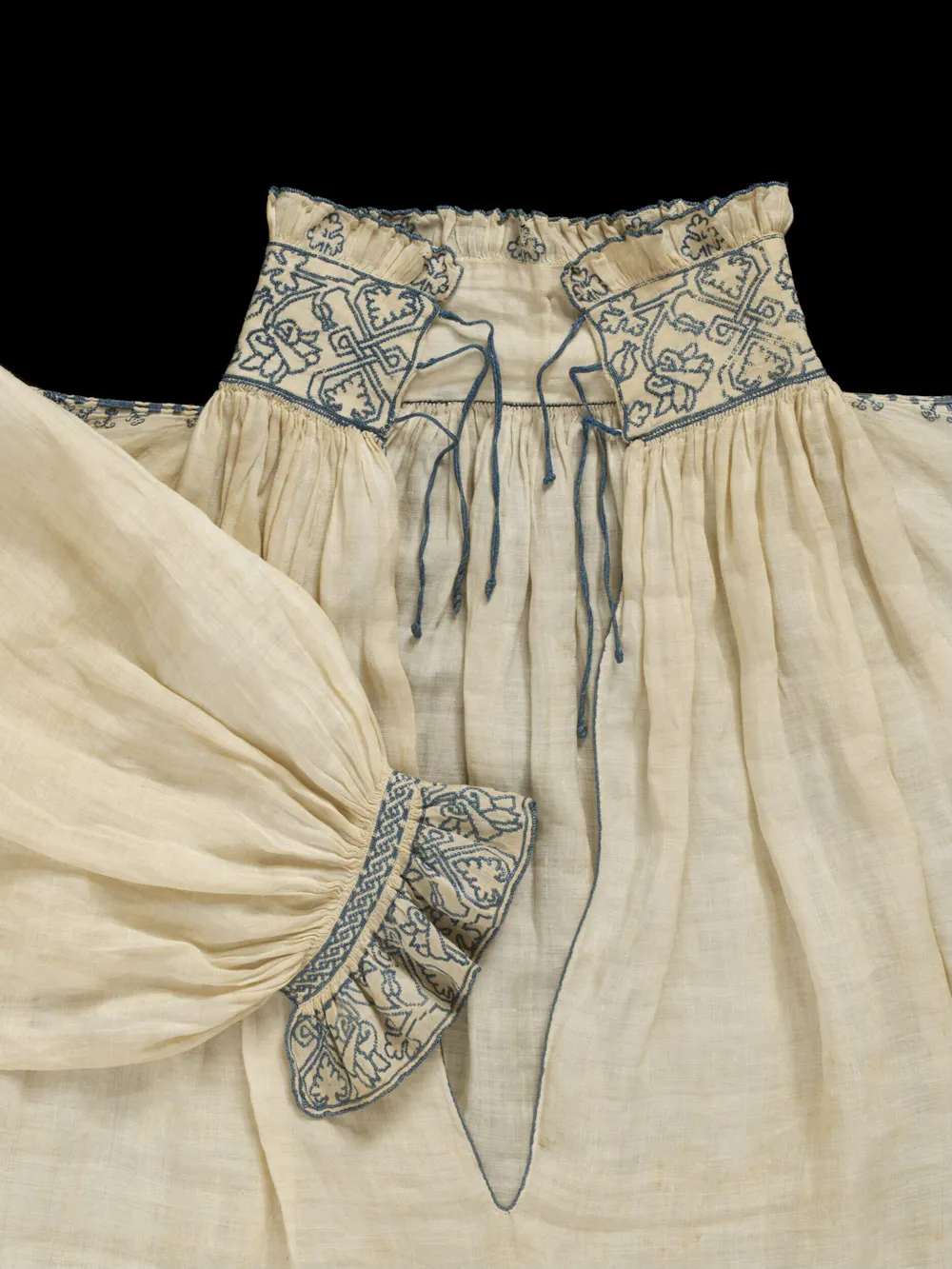
Crash involving fire truck injures one in Auckland

Source: Radio New Zealand

The crash involved a fire truck (generic image). RNZ / Nate McKinnon

One person is injured after a crash between a fire truck and car in central Auckland on Sunday morning.

The police were called at 9.38am to the intersection of Hobson Street and Victoria Street West.

A police spokesperson said: “At this stage only one person is reported to have minor injuries.”

“Police are assisting with traffic management and motorists are advised that there will be some delays while the matter is resolved,” the spokesperson said.

Sign up for Ngā Pitopito Kōrero, a daily newsletter curated by our editors and delivered straight to your inbox every weekday.

– Published by EveningReport.nz and AsiaPacificReport.nz, see: MIL OSI in partnership with Radio New Zealand

Weather set to worsen ahead of New Year’s Eve

Source: Radio New Zealand

Revellers at last year’s Rhythm and Vines event. Kaelin Wade

A bout of bad weather is about to sweep across the east of the North Island, ahead of New Year celebrations.

Rhythm and Vines in Gisborne could get off to a damp start, with an orange heavy rain warning issued by MetService for 18 hours from 6am on Monday morning through to Tuesday.

Heavy rain is also forecast for the Coromandel Peninsula early Monday morning.

And Hawke’s Bay is also in line for a dousing, with heavy rain forecast for almost 24 hours starting at 10am.

Meanwhile, an orange strong wind warning is in place for Manawatū and Horowhenua and the Kāpiti Coast from 5pm Monday.

Severe easterly winds could gust to 120km/h in exposed places.

A strong wind watch was also in place for Nelson, Buller, the Grey District and northern Westland, with up to gale-force winds in exposed places on Monday morning.

As for Tuesday, MetService said there was high confidence “severe southeast gales will affect Taranaki, Manawatu, Kapiti, Wellington, the Marlborough Sounds and Golden Bay”.

“There is moderate confidence that severe southeast gales will affect the ranges of Marlborough, the remainder of Nelson, Buller, Grey and northern and central Westland.”

New Year’s Eve (Wednesday) would see a low to the west of New Zealand directing “a most northerly flow onto western areas”, with large amounts of rain possible in Taranaki and Nelson.

Things will improve on New Year’s Day.

“Remnants of the low are expected to cross the South Island during the day bringing periods of rain and showers to western and northern parts of New Zealand.There is low confidence that warning amounts of rain will accumulate in northwest Nelson and Buller.”

From 2 January, there was “minimal” risk of severe weather despite a “showery southwesterly flow”.

Sign up for Ngā Pitopito Kōrero, a daily newsletter curated by our editors and delivered straight to your inbox every weekday.

– Published by EveningReport.nz and AsiaPacificReport.nz, see: MIL OSI in partnership with Radio New Zealand

Where do MPs go, when they go bush?

Source: Radio New Zealand

Labour MP Duncan Webb and his son Albert Webb on top of Avalanche Peak. Supplied

There’s simply nothing better than ditching the workwear for an outdoor get-up and heading into the bush.

Thousands will head into the great outdoors this summer, including MPs from across the political spectrum.

RNZ interviewed a range of politicians about their experiences going bush: the highs, the lows and the whys.

Labour’s Duncan Webb is lucky to be alive

Labour MP Duncan Webb has been tramping since he was 13 and still grimaces when he recalls his first bush adventure. He followed his older brother and some of his mates into Arthur’s Pass one day, clad in heavy oilskin jackets with thin sleeping bags tucked into bulky packs they’d borrowed.

“Our parents had no idea what we were doing, and neither did we,” he said.

After an “extremely fatiguing” first day the boys found themselves in poor weather as they were crossing a mountain pass.

“It just rained, just constant rain and driving wind. We were freezing cold and as we came down the other side of the pass we got lost.”

The group took the wrong side of a creek and ended up next to a steep gorge, when Webb’s pack proceeded to fall down.

Webb said he fell into the river retrieving his pack and struggled to carry on to a hut as his drenched clothing chilled his body down.

“I was really tired and exhausted so I sat down and curled up and tried to go to sleep. I had quite advanced hypothermia.”

Webb said his 14-year-old companions “kicked him” until he moved and they eventually found a hut, had a kai and got warm.

The next night proved no better after the group camped next to a lake that flooded their tent in the middle of the night. Desperate to catch a train out the next day, Webb said the group swam across a flooded river “hearing boulders tumbling under their feet in chest deep water”.

“Utterly stupid,” he said.

His happy ending was being sent into a pub as the youngest to fetch some food for the group. Some kind West Coasters gave him hot chips and a lemonade, he said.

“We were all terrified. Our families weren’t pub goers. So, I was sitting there having chips and lemonade while my mates were out the back freezing cold,” he laughed.

Duncan Webb and his sons Felix and Albert, his brother Mark and Suzanne Trounson at Waimakariri Falls Hut. Supplied

Webb’s nightmarish first go at tramping hasn’t put him off what has become a lifelong love of walking in the bush.

“It’s almost meditative because you’re out there and sometimes it’s quite hard work, you’ve gotta pack on and going uphill so all the physical things are going but at the same time, you’re not thinking about anything in particular. You’re just focused on what you’re doing and where you are and it’s really refreshing and re-energising.”

Webb’s favourite place to walk is, somewhat surprisingly, Arthur’s Pass. He’s currently planning a tramp with his grown children in Mount Aspiring this summer.

ACT MP Cameron Luxton’s ideal day in the bush involves tracking wild pigs and deer. Supplied

ACT’s Cameron Luxton on being one with the food chain

A hunter, not a tramper, ACT MP Cameron Luxton’s ideal day in the bush involves tracking wild pigs and deer. Having lived in Galatea, near the foothills of the western side of Te Urewera, Luxton has made many memories. Some are better than others.

“One that immediately strikes is when I was brand new to hunting, I didn’t pick it up until I was in my teenage years. I climbed the biggest hill I could find. looking for the elusive deer. I was up there in my rugby shorts, walking through a beautiful clearning, nice and light green with dark bush around it, I thought this is perfect, this is the sort of place I need to be. That light green turns out to be my first experience of stinging nettle… I needed to learn that lesson once.”

Luxton said hunting for him was more than just gathering food.

“You have to be zen. You have to be part of the bush. You’re inserting yourself into the food chain, into the cycle. You have to be part of what the bush is. It can take a couple of hours, sometimes a day or so, to really get that feeling but when you hit that flow moment, that’s when you really are into it.”

There was nothing like getting off the beaten track either, he said.

“DOCs got some great tracks out there but there’s nothing like getting stuck into some gnarly heads of some gully somewhere, bashing through some bush that you just wouldn’t do if you weren’t after a quarry (game animal). So, hunting opens up a whole lot. Our forest and our hills are a massive untapped resource for a lot of people.”

Over the years, he’s introduced his sons to hunting, though they may not be so keen on following in his footsteps just yet, he said. “My eight-year-old son shot his first deer last year. He’s keen but he’s actually just got really into spear fishing. It’s one of those things like, do you force your hobbies onto your kids or do you adapt to what they’re doing?”

Given summer is not prime hunting time, Luxton said he would be spending it at the beach.

“Come autumn though, as soon as that first chill is in the air, that’s when I’ll start getting really excited to get back into the bush. End of March, early April I start doing silly things like getting the roar horn out and having a moan in the backyard.”

NZ First MP Andy Foster is a proud member of the Tararua Tramping Club and has walked many of the trails in the steep ranges north of Wellington. Supplied

New Zealand First’s Andy Foster loves a long run

NZ First MP Andy Foster is a proud member of the Tararua Tramping Club and has walked many of the trails in the steep ranges north of Wellington. He loves being up above the bush line in the tussocks, grasses and mountain daisies.

“We can only visit that as opposed to staying there long term because it’s can be a hostile environment, but also the views you get to see from up there. Then there’s just being away, you know, away from the busyness of life and often the best part of that is you’re connecting with other people. You’re spending time with other people. I made a lot of good friends out of tramping.”

Though he’s slowed down over the last few years, Foster was at one point a keen mountain runner, clocking some huge kilometres.

“I’ve done runs like round Ruapehu in a day, Milford-Routeburn, Nelson Lakes to Lewis Pass across the table lands to Leslie-Karamea, out of the Wangapeka into the West Coast. It feels really good to do those sort of things. You get to see a lot, you possibly don’t get to appreciate it at the same slower pace that you go tramping but it’s great.”

He’s hit more than a few hurdles out on long runs before but that’s never put him off, he said.

“The run we did from Nelson Lakes through to Lewis Pass, it was in summer and the weather turned ugly. We got over the Waiau Pass heading towards Lewis and the weather started turning ugly, snow on the hills. We decided we’d actually stop slightly short at Cannibal Gorge. We had a couple of pieces of cheese and one bit of pita bread and that was it between us. We got there right as rain in the morning.”

Foster said while there were many highs that had come from tramping and mountain running, there were also some lows that came with the territory.

“Heights are not my favourite thing because you look down and think, if I fall off that’s the last thing I’ll ever do. The sad thing is that over time, I’ve lost a number of friends who’ve fallen off things tramping or low level climbing. It’s not to be taken lightly.”

National MP Barbarba Kuriger and her husband Lewis lace up their tramping boots every summer. Supplied

National’s Barbara Kuriger walks to explore

National MP Barbarba Kuriger and her husband Lewis lace up their tramping boots every summer.

“We’ve done the Queen Charlotte, Abel Tasman, Milford Sounds and we like to get off on a Great Walk when we can. Last year we did a mixture of Coromandel, Waikaremoana, the Tongariro Crossing and, of course, in Taranaki. We’ve always got little short walks we can do on our Taranaki maunga on a Sunday and we go up Maungatautari while we’re in Te Awamutu.”

Kuriger said they make the most of transfer services that carry overnight gear for walkers, making the trails that much more enjoyable.

“We do a little bit of a cheat walk because we tend to take more of the accommodation where there’s food available. We don’t carry our beds and everything with us. We do an option where there’s huts available. It makes it pleasant, because you’re just really walking. You’re not carting things.”

She particularly loved the solitude of the bush, she said.

“You get to the end of the day and you’ve seen some amazing things out of out of civilization. You spend a whole lot of time, 11 months of the year actually, being with people and it’s quite nice just to get out in nature and take that time out.

Kuriger was already looking forward to walking this summer..

“We’re actually doing a little bit of a combo, where we go down the Forgotten Railway and then end up in and around Wanganui, which is actually the great walk that’s not a walk because it’s river. We’re going up to the blue duck station and I’ve always wanted to go up to the blue duck station. It’s exploring different parts of the country. I love it.”

Green Party co-leader Chlöe Swarbrick didn’t grow up walking but has come to love it during her adult life. Supplied

The Greens’ Chlöe Swarbrick on feeling small in the great outdoors

Green Party co-leader Chlöe Swarbrick didn’t grow up walking but has come to love it during her adult life.

“I’ve become much more of an outdoor greenie as I’ve got older. It definitely wasn’t a thing that my parents were super into when I was younger. I was very much living an urbanised life up until I made the effort to get outdoors. I’m lucky now to have a lot of friends and community who spend time outdoors and have been teaching me the tricks of the trade.”

Swarbrick said she kept a pretty busy schedule, but still managed to find time for the odd overnight tramp during the political year.

“Probably my favourite one from this year was one up in the Tararua Ranges. We went up to Powell Hut. The visibility was pretty terrible but we spent one night up there and went all the way above the clouds. There’s nothing quite like nature to remind you how small we are and to humble you to the things that really matter.”

She said she walked to connect with friends, and disconnect from life.

“One of my good mates in particular who I get to go tramping with, we will spend time delving into all of the most insane recesses of politics, but then spend hours just tramping along in silence. That’s the thing that I really do enjoy; that opportunity to just take some time and some space and to get off of a screen.”

While she didn’t have any walks lined up for the summer break yet, she was sure she would end up in the bush at some point.

“When I’m in Tāmaki I often do my best to get out to West Auckland, as well as getting across to Aotea. My summer is kind of unfolding. I know that I will be in the Waikato touching base with my family but from that point, I will absolutely be hitting my mates up to see who’s keen on an adventure.”

Note to reader: Te Pāti Māori declined RNZ’s request for an interview for this story.

Sign up for Ngā Pitopito Kōrero, a daily newsletter curated by our editors and delivered straight to your inbox every weekday.

– Published by EveningReport.nz and AsiaPacificReport.nz, see: MIL OSI in partnership with Radio New Zealand

UFC year in review: The good, the bad and the ugly

Source: Radio New Zealand

From eye pokes to Donald Trump, the UFC in 2025 was not the most stellar of years for the promotion. photosport

The year 2025 will not go down as a golden period for the UFC.

A dearth of star power, GOATS turned to ducks, a dis-interested president, a plethora of eye pokes, injuries, lacklustre PPV’s, waning competition, inconsistent judging, inactive champions, and plenty of Trump pandering made for a forgettable 12 months in the world’s premier combat sports promotion.

However, the fight game still can’t help but deliver highlight reel moments.

Sports reporter Jonty Dine takes a look back at the year that was.

Eyes wide shut

The blight that continues to plague the UFC, most egregiously in the biggest fight of the year which came to a depressingly premature end, as Cyril Gane went two knuckles deep into Tom Aspinall’s eye sockets, rendering him unable to see and unable to continue in the highly anticipated heavyweight clash.

Heavyweight held hostage

The supposed GOAT of the game proved he was anything but a fighting champion as Jon Jones continuously ducked the number one contender in Aspinall for what should have been a mandatory unification bout before inexplicably retiring and vacating with just one defence over a 42 year old Stipe Miocic.

Islam underwhelms at welterweight

What should have been the biggest moment of the year as the pound for pound greatest Islam Makhachev ascended to double champ status, but was undercut by a ‘lay and pray’ performance by the Daegestani, as he smothered his way to the win over fan favourite Jack Della Maddalena.

‘I can’t wait to go to war for you’

Sean Strickland has always written cheques with his mouth that his fighting style couldn’t cash but his talk in the build up to his title bout with Du Plessis reached a new low as he promised a bloody battle for the ages, only to jab and teep his way to a one sided decision loss in a five-round snoozer.

The Chimaev era

It was inevitable after his rampaging, record-breaking entrance into the promotion that Khamzat Chimaev would one day be champion. However, it took years of cancelled fights, missed weight cuts, and faux retirements until he finally won the strap, dismantling Dricus Du Plessis at UFC 319.

Khamzat Chimaev of the United Arab Emirates grapples with Dricus du Plessis of South Africa during their middleweight title bout in UFC 319. GEOFF STELLFOX/AFP

Stonehands crumbles

The one shining light in the UFC over the past 12 months has been the incredible rise of Alex ‘Poatan’ Pereira. Dismantling his competition in cold, and exhilarating fashion. But after conquering a second division, his run was unceremoniously halted by Magomed Ankalaev in a decision loss at UFC 313.

Return of Poatan

However, the age of Ankalaev was short lived as Pereira regained his throne in vicious style at UFC 320, needing just 90 seconds to send the champ crumbling to the canvas after weeks of the Russian trash talking. Karma? Chama!

Unexpected bloodbaths

While plenty of bouts didn’t live up to the hype this year, a few which flew under the radar in the build up became absolute classics. Josh Van and Brandon Royval put on a barnburner at UFC 317 while Jiri Procházka produced back to back bangers against Jamahal Hill and Khalil Rountree Jr.

The Baddy gets good

Entering the UFC with a heap of hype, Paddy Pimblett was quickly brought down to earth after some lacklustre performances against low-ranked competition. However, ‘the Baddy’ proved he is more than just a haircut as he destroyed former lightweight title contender Michael CHandler at UFC 314, earning a title eliminator in the process.

Merab mauls O’Malley again

So desperate were the UFC for the Suga Show to carry the division, they gifted Sean O’Malley a rematch at UFC 316 only for him to be even more humiliated by a second serious whooping at the hands of the champion Merab Dvalishvili.

Endangered Kiwis

An unsuccessful title bid, a grudge match loss, and a failed comeback made for a tough year for New Zealand MMA. Kai Kara-France fell to the suffocating style of Alexandre Pantoja at UFC 317, Dan Hooker was choked out by Arman Tsarukyan and Israel Adesanya was knocked out cold at the hands of Nassourdine Imavov.

A shining light-heavyweight

First taking a decision win over former champion Jan Blachowicz in March, backed up by an emphatic first round knockout of American Dominick Reyes in September, Carlos ‘the Black Jag’ Ulberg is carrying the New Zealand flag as he has surged to title contention. Elsewhere in the division, fellow CKB product Navajo Stirling is making his rise through the ranks, picking up another two wins in 2025 to take his unblemished record to 8-0.

Kiwi Carlos Ulberg knocks out Dominick Reyes during the UFC Fight Night at RAC Arena on 28 September 2025. Paul Kane

Harrison proves the hype

In what could be the closest the UFC will come to their never-ending quest to replace Ronda Rousey, Kayla Harrison arrived in style, submitting Julianna Pena at UFC 316 to declare herself a potential superstar of women’s MMA.

Bo loses his O

Another hype job fallen flat, the decorated wrestler tasted his first loss inside the octagon in May against a resurgent Reinier de Ridder courtesy of a crisp knee to the gut which is exactly how Dana White felt seeing his potential future cash cow crumble to the canvas.

Champ goes from cage to court

While he has ensured the fans soured on him quickly due to his embarrassing Connor McGregor impressions and social media antics, Illia Topuria continues to prove he is on an elite level after a crushing win over Charles Oliveria at UFC 317. However, it would be the sole time El Matator was sighted in 2025 and he has since taken a hiatus to focus on a court battle with his ex wife.

Black Beast stands alone

KO king Derek Lewis needed just 35 seconds to shut Tallision Texeria’s lights out and register his 16th knockout in his storied UFC career, the most in UFC history.

Volk smash

After being finished by back to back knockouts at the hands of current champions Illia Topuria and Islam Makhachev, many saw Alexander ‘The Great’ Volkanovski’s time at the top as over. But the Aussie lived up to his moniker at UFC 314 as he ascended back to the top of featherweight in a clinic against Diego Lopes.

Alexander Volkanovski was soundly beaten by lightweight champion Islam Machachev at UFC 294. UFC

Sign up for Ngā Pitopito Kōrero, a daily newsletter curated by our editors and delivered straight to your inbox every weekday.

– Published by EveningReport.nz and AsiaPacificReport.nz, see: MIL OSI in partnership with Radio New Zealand

Staycation activities in New Zealand’s main cities

Source: Radio New Zealand

A staycation doesn’t require flashy gear or carefully planned excursions to make it memorable.

What matters is finding something that fits your family’s interests and offers a little challenge and a lot of joy, especially if you’re trying to pry kids away from their screens, says Susannah Smith, president of Physical Education New Zealand and an associate professor at the University of Canterbury.

For her, the best activities are often free.

Susannah Smith says it’s important to find something kids actually will enjoy when you’re looking to get them active. (file image)

RNZ / Rebekah Parsons-King

– Published by EveningReport.nz and AsiaPacificReport.nz, see: MIL OSI in partnership with Radio New Zealand

Weather: Sunday expected to live up to its name, though still ‘showers about’

Source: Radio New Zealand

MetService meteorologist Devlin Lynden says the thunderstorms will ease (file image). 123RF

A calmer day is in store for parts of the South Island battered on Saturday by hail, and lashed by torrential downpours and lightning.

One of the storms was a rare, powerful and long-lasting ‘supercell’ in the Canterbury Plains.

In Ashburton, the council dispatched a contractor to clear street gutters after a big hail storm there.

New Zealand Transport Agency (NZTA) sent crews between Timaru and Fairlie to reports of hail blocking the road and cars being flooded.

MetService meteorologist Devlin Lynden says the thunderstorms will ease.

“Although there still is a moderate risk for northern parts of the South Island, however, the southern parts that have seen that significant thunderstorm activity yesterday, they are not in the firing line of thunderstorms.

“However, there will still be a few showers about.”

Horticulture New Zealand had no reports of damaged crops.

MetService had two heavy rain watches in place for Sunday:

  • Coromandel Peninsula from 9am Monday into Tuesday morning, with a moderate chance of being upgraded to a warning
  • “I think there will be some fine breaks in there,” Lynden said of Sunday’s expected weather.

    “The people will see sun today, which is brilliant, but there still will be those showers, particularly in the afternoon and particularly for inland areas.”

    Sign up for Ngā Pitopito Kōrero, a daily newsletter curated by our editors and delivered straight to your inbox every weekday.

– Published by EveningReport.nz and AsiaPacificReport.nz, see: MIL OSI in partnership with Radio New Zealand

Four arrested, one in hospital after ‘mass disorder’ on Auckland’s Karangahape Road

Source: Radio New Zealand

Karangahape Road on a quieter day. The Detail/Tom Kitchin

Four people were arrested and one hospitalised after a mass brawl on central Auckland’s Karangahape Road early on Sunday morning.

Police said they received “multiple reports of a mass disorder and people fighting” just after 3.30am.

On arrival, they found and dispersed a crowd of about 50 people.

“One person was found with serious injuries and was transported to hospital,” police said in a statement to RNZ.

“Four people were arrested in relation to the disorder.”

Sign up for Ngā Pitopito Kōrero, a daily newsletter curated by our editors and delivered straight to your inbox every weekday.

– Published by EveningReport.nz and AsiaPacificReport.nz, see: MIL OSI in partnership with Radio New Zealand