Page 954

Four Papua New Guineans arrested in cocaine for Australia plot

Police Commissioner David Manning’s media conference yesterday about the K200 million drug heist. Video: Loop PNG

Pacific Media Watch Newsdesk

Papuan New Guinea’s massive drug haul of more than 600kg of cocaine, seized after a mysterious plane crash by the alleged smugglers more than a week ago, has shaken authorities in both Australia and PNG.

The haul has been estimated at worth up to K200 million (A$80 million) at street value.

The collaborative operation has resulted in the arrests of at least six Australians – one in PNG – and four Papua New Guineans with investigations ongoing. Here are two reports fron the PNG daily newspapers:

READ MORE: Background to the massive PNG drug heist

By Marjorie Finkeo in Port Moresby
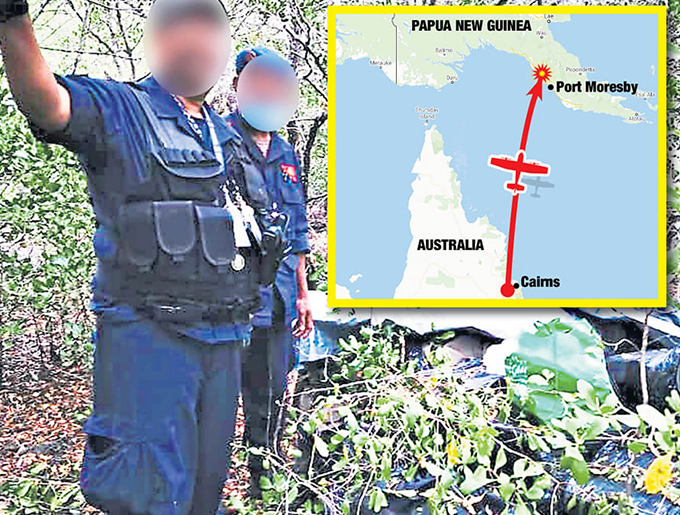
Four men allegedly involved in the attempted export of 28 bags of cocaine to Australia have been arrested at two locations in Port Moresby.

Two were arrested at Manu Autoport with A$40,000 (K100,000) cash and electrical items in their possession while the other two were apprehended at Sunset Lodge outside the city.

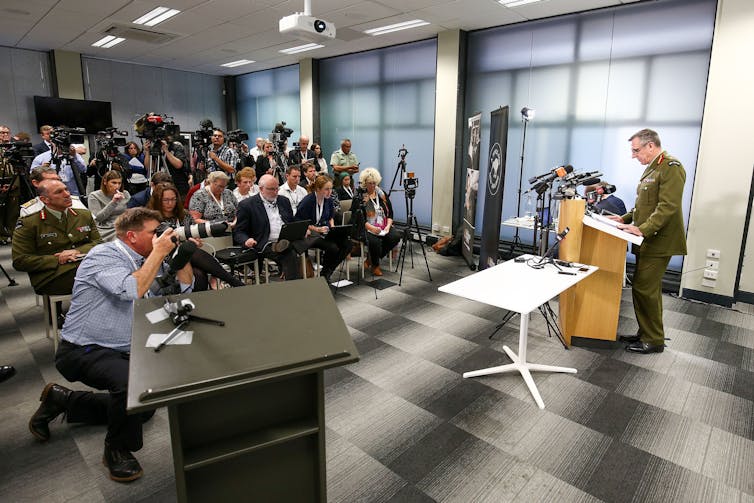
Police Commissioner David Manning said at a press conference yesterday the suspects were all PNG nationals.

A search conducted at Sanctuary Hotel at Waigani came up empty, Manning said.

He said a joint investigation was continuing and more charges were likely to be laid against the Australian pilot David Paul Cutmore who was charged under Immigration Act 1978 for illegally entering PNG and fined K3000 last Friday.

He said the investigation team was also looking at additional charges against Cutmore under the National Pandemic Act 2020. – PNG Post-Courier

Pacific Media Centre’s Southern Cross radio comment on the investigation yesterday.

By Miriam Zarriga in Port Moresby

The National 04082020
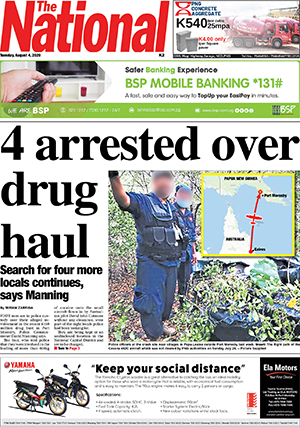
The National newspaper’s front page today. Image: The National

The country’s biggest drug bust, involving more than 600kg of cocaine estimated to cost around K160 million, has been hailed as “great detective work” and the result of a two-year investigation by Australian and PNG police.

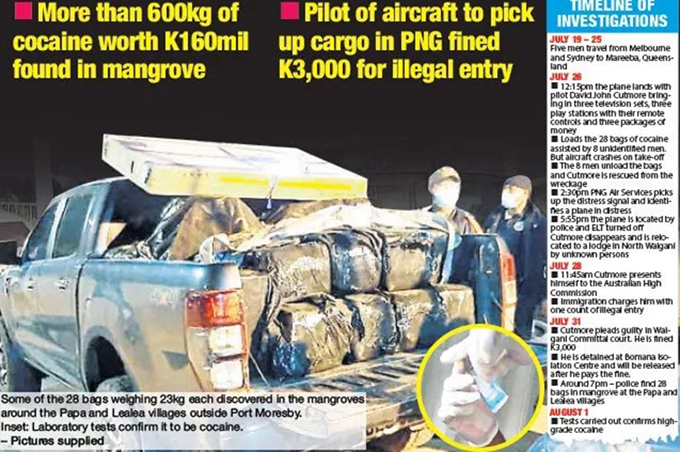
A team of police and Customs officers led by Deputy Police Commissioner Operations Donald Yamasombi found 28 black duffle bags containing “high-grade” cocaine wrapped in plastic, some Australian dollars and a flat-screen television near Papa-Lealea village, 30km outside Port Moresby last Friday.

It was near the makeshift airstrip where a Cessna 402C aircraft, which entered the country from Australia without clearance last Sunday, crashed when it tried to take off with its illegal cargo.

Police Commissioner David Manning said police knew “at the time it was a substantial amount of cocaine”.

“(There was an) organised gang involved in this and from what we knew, they were planning to have it removed from PNG via a black flight, a flight that was registered to fly into PNG airspace,” Manning said.

“We now know that the flight landed successfully (but) could not take off due to some mechanical fault.

‘Flight failed to take off’
“What ensued is the result of that flight (failing) to take off.

“The bags were left in an undisclosed location within the village.”

Australian Federal Police senior liaison officer Detective Superintendent Julian Bianco said what was achieved by both police forces was an “excellent result for law enforcement in the Pacific”.

“The seizure brings to a conclusion the long-time operation that has been overseen by the Royal PNG Constabulary and the AFP and Australian law enforcement,” Bianco said.

The National
The National’s front page arrests picture today. Image: The National

“Without the assistance of the PNG police and the great detective work, we certainly would not be standing here with this (illegal drugs).

“The aircraft travelled to PNG to collect drugs to take back to Australia.

“We are thankful to the PNG constabulary for stopping it from entering our shores.”

According to pictures obtained by The National, inside each of the black duffle bag was 1kg of cocaine wrapped and labelled 777.

Manning said the drug bust was the largest in the country’s history and the culmination of a two-year operation, and the result of “good detective work” by the Papua New Guinea and Australian police. – The National

PNG drug bust
Round up of the alleged PNG-Australia drug plotters “great detective work”. Image: The National
Print Friendly, PDF & Email

Article by AsiaPacificReport.nz
As ‘lockdown fatigue’ sets in, the toll on mental health will require an urgent response

Source: The Conversation (Au and NZ) – By Ian Hickie, Professor of Psychiatry, University of Sydney

As Victorians face yet another long period of enforced lockdown, serious concerns are being raised about people’s capacity to comply with the new orders and the mental health impacts of such prolonged social isolation.

The risks of being dispirited, chronically stressed and socially disconnected are real and substantial. While the behavioural consequences of “lockdown fatigue” are becoming more obvious, the questions to be answered from a mental health perspective are:

  • who is most likely to be harmed by a longer, more stringent lockdown?

  • what are the public policy responses that are most likely to deliver real benefits?

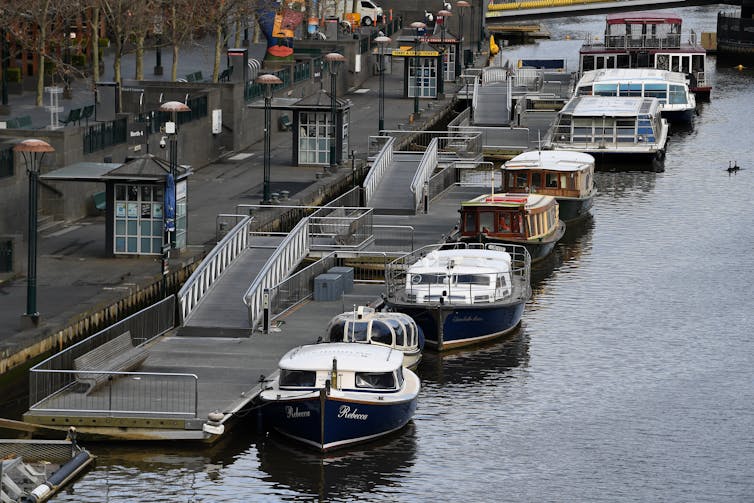
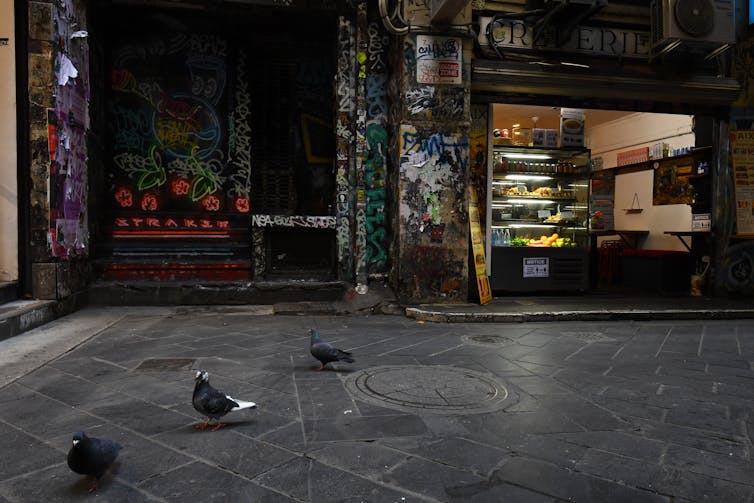
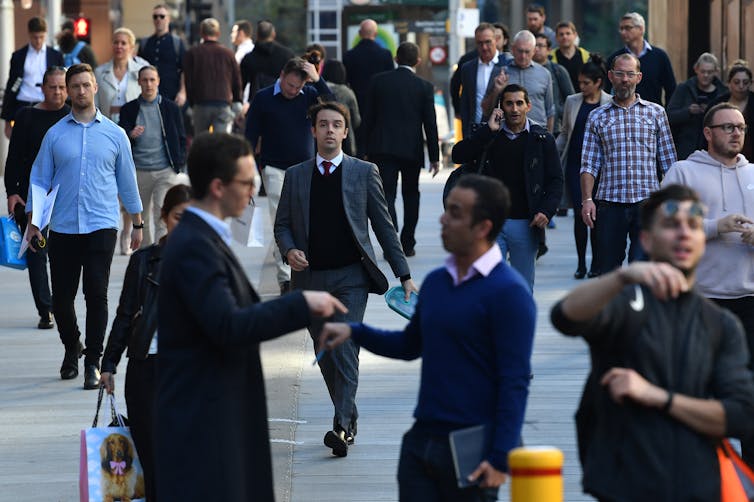
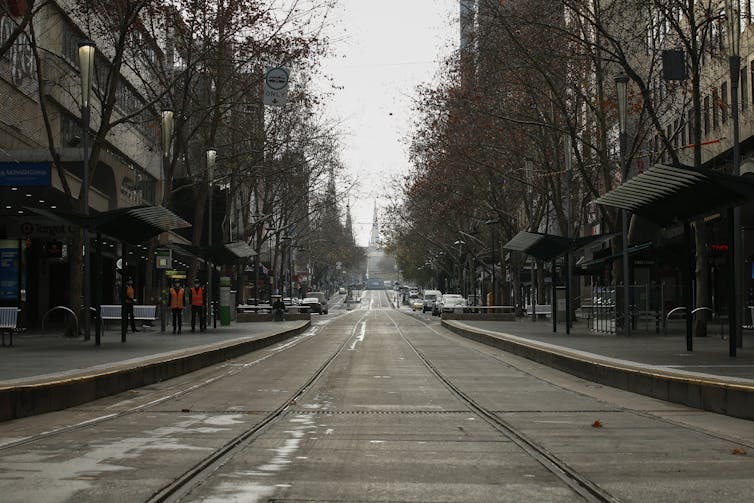
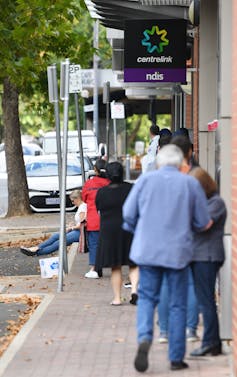
Melbourne’s streets have emptied under the latest restrictions. James Ross/AAP

Job losses and social disconnection

On the first issue, Sydney University’s Brain and Mind Centre has produced both place-based models and a provisional national simulation model to estimate the possible size of the impact of the pandemic on mental health and suicide rates, as well as identifying those who are most likely to be affected.

Prior to the recent spike in cases in Victoria, our most conservative estimates were a 14% increase in overall suicide rates due to COVID-19 restrictions and the subsequent social dislocation and economic fall-out nationally.

We also estimated at least a 25% increase in suicide rates in rural and regional areas with pre-existing high levels of unemployment and educational disadvantage.

The real drivers of these substantive health risks are job losses, social disconnection and, for young people, the availability of support for ongoing education and training.


Read more: We need to flatten the ‘other’ coronavirus curve, our looming mental health crisis


Given the return to lockdown in Melbourne, we now expect to see much greater levels of uncertainty about job prospects — particularly in those industries like hospitality, tourism and the arts that were already devastated — as well as a more prolonged period of social disconnection.

For both of these factors, both the duration of the lockdown and the degree of uncertainty it generates really do matter.

What can government do to minimise harm to people?

Given the necessity to “act fast and go hard” to contain the spread of the virus, the harder question to answer is the second one: what can our political and social leaders do to minimise the impact on people’s mental health and well-being?

Top of the list is job certainty. Conceptually, JobKeeper is critical because it ties people to real workplaces, social contacts and their social identity.

However, in its initial application it missed many casual workers, women and young people. Each of these groups were massively affected by COVID-19 restrictions and are now facing even tougher long-term employment prospects.

Our model suggests JobKeeper, in its current or appropriately modified form, now needs to be in place until at least 2022. And our place-based approach suggests policy-makers need to think about how it can best function in Melbourne and surrounding districts.

JobKeeper will continue until March, but payments will fall to $1,200 a fortnight. David Mariuz/AAP

From a social connection perspective, all governments need to get their public messaging on track. An over-emphasis on top-down, law-and-order directives has limited and short-term utility for achieving the required behaviour changes. Often, it has the reverse effect to that intended.

What is really required are public health messages that engage people to be community-minded and active in their local settings to support and care for each other in really testing times.

The diverse faces and voices of genuine and trusted community leaders, elders, celebrities, sporting identities and young people — not simply politicians — are critical. These have much greater impact on two key outcomes: promoting best public behaviour and providing the necessary person-to-person support we all require.

Importantly, from a public mental health and health services perspective, any substantive actions rely heavily on close cooperation between the federal and Victorian governments. We cannot risk a retreat to the finger-pointing we saw during the Ruby Princess and quarantine hotel failures, and are now starting to see in the COVID-19 aged care crisis.

As indicated by the recent Victorian royal commission and the Productivity Commission report on mental health, both levels of government are responsible for the current deficiencies in our public mental health systems.

How to send the right message

From a public messaging perspective, people experiencing mental distress are being encouraged to use mental health hotlines or seek help from their family doctor or other mental health practitioners.

While these may seem to be straightforward and sensible messages, we have shown that simply increasing awareness without expanding the actual capacity of an already thinly stretched (if not broken) care system can have more negative outcomes.

What is really required are two clear actions. One is public messaging about supporting each other, and those who are distressed, within our families, workplaces, communities and churches throughout this period. The other is rapid action to fix key elements of the mental health system.


Read more: Is your mental health deteriorating during the coronavirus pandemic? Here’s what to look out for


As demonstrated by Health Minister Greg Hunt’s actions in the early phases of the pandemic, it is possible to mobilise simultaneously both our private and public health services to respond to a national emergency.

That is now urgently required for mental health. We need to use our private health capacity to help public hospital emergency departments, and other acute care services, meet the increasing need for mental health services.

For instance, we could immediately make use of private hospital beds and clinics for those who have attempted suicide or are in need of urgent care, but who do not require admission to a public psychiatry unit.


Read more: Predicting the pandemic’s psychological toll: why suicide modelling is so difficult


While this need will soon likely become acutely obvious in Melbourne, we have already seen evidence in national surveys, and other state systems, of the escalating demand for these types of mental health services.

This has been most obvious for young people, who often do not easily connect with general practice doctors and typically present for care in a crisis situation.

Amid the chronic uncertainty that is now emblematic of the COVID-19 pandemic — often confusing government responses and the long-term economic and social impacts of the crisis — it is now time we respond to this looming mental health crisis cohesively, collectively and intelligently.


If this article has raised issues for you, or if you’re concerned about someone you know, call Lifeline on 13 11 14.

ref. As ‘lockdown fatigue’ sets in, the toll on mental health will require an urgent response – https://theconversation.com/as-lockdown-fatigue-sets-in-the-toll-on-mental-health-will-require-an-urgent-response-143817

As ‘lockdown fatigue’ sets in, the toll on mental health will require an urgent mental health response

Source: The Conversation (Au and NZ) – By Ian Hickie, Professor of Psychiatry, University of Sydney

As Victorians face yet another long period of enforced lockdown, serious concerns are being raised about people’s capacity to comply with the new orders and the mental health impacts of such prolonged social isolation.

The risks of being dispirited, chronically stressed and socially disconnected are real and substantial. While the behavioural consequences of “lockdown fatigue” are becoming more obvious, the questions to be answered from a mental health perspective are:

  • who is most likely to be harmed by a longer, more stringent lockdown?

  • what are the public policy responses that are most likely to deliver real benefits?

Melbourne’s streets have emptied under the latest restrictions. James Ross/AAP

Job losses and social disconnection

On the first issue, Sydney University’s Brain and Mind Centre has produced both place-based models and a provisional national simulation model to estimate the possible size of the impact of the pandemic on mental health and suicide rates, as well as identifying those who are most likely to be affected.

Prior to the recent spike in cases in Victoria, our most conservative estimates were a 14% increase in overall suicide rates due to COVID-19 restrictions and the subsequent social dislocation and economic fall-out nationally.

We also estimated at least a 25% increase in suicide rates in rural and regional areas with pre-existing high levels of unemployment and educational disadvantage.

The real drivers of these substantive health risks are job losses, social disconnection and, for young people, the availability of support for ongoing education and training.


Read more: We need to flatten the ‘other’ coronavirus curve, our looming mental health crisis


Given the return to lockdown in Melbourne, we now expect to see much greater levels of uncertainty about job prospects — particularly in those industries like hospitality, tourism and the arts that were already devastated — as well as a more prolonged period of social disconnection.

For both of these factors, both the duration of the lockdown and the degree of uncertainty it generates really do matter.

What can government do to minimise harm to people?

Given the necessity to “act fast and go hard” to contain the spread of the virus, the harder question to answer is the second one: what can our political and social leaders do to minimise the impact on people’s mental health and well-being?

Top of the list is job certainty. Conceptually, JobKeeper is critical because it ties people to real workplaces, social contacts and their social identity.

However, in its initial application it missed many casual workers, women and young people. Each of these groups were massively affected by COVID-19 restrictions and are now facing even tougher long-term employment prospects.

Our model suggests JobKeeper, in its current or appropriately modified form, now needs to be in place until at least 2022. And our place-based approach suggests policy-makers need to think about how it can best function in Melbourne and surrounding districts.

JobKeeper will continue until March, but payments will fall to $1,200 a fortnight. David Mariuz/AAP

From a social connection perspective, all governments need to get their public messaging on track. An over-emphasis on top-down, law-and-order directives has limited and short-term utility for achieving the required behaviour changes. Often, it has the reverse effect to that intended.

What is really required are public health messages that engage people to be community-minded and active in their local settings to support and care for each other in really testing times.

The diverse faces and voices of genuine and trusted community leaders, elders, celebrities, sporting identities and young people — not simply politicians — are critical. These have much greater impact on two key outcomes: promoting best public behaviour and providing the necessary person-to-person support we all require.

Importantly, from a public mental health and health services perspective, any substantive actions rely heavily on close cooperation between the federal and Victorian governments. We cannot risk a retreat to the finger-pointing we saw during the Ruby Princess and quarantine hotel failures, and are now starting to see in the COVID-19 aged care crisis.

As indicated by the recent Victorian royal commission and the Productivity Commission report on mental health, both levels of government are responsible for the current deficiencies in our public mental health systems.

How to send the right message

From a public messaging perspective, people experiencing mental distress are being encouraged to use mental health hotlines or seek help from their family doctor or other mental health practitioners.

While these may seem to be straightforward and sensible messages, we have shown that simply increasing awareness without expanding the actual capacity of an already thinly stretched (if not broken) care system can have more negative outcomes.

What is really required are two clear actions. One is public messaging about supporting each other, and those who are distressed, within our families, workplaces, communities and churches throughout this period. The other is rapid action to fix key elements of the mental health system.


Read more: Is your mental health deteriorating during the coronavirus pandemic? Here’s what to look out for


As demonstrated by Health Minister Greg Hunt’s actions in the early phases of the pandemic, it is possible to mobilise simultaneously both our private and public health services to respond to a national emergency.

That is now urgently required for mental health. We need to use our private health capacity to help public hospital emergency departments, and other acute care services, meet the increasing need for mental health services.

For instance, we could immediately make use of private hospital beds and clinics for those who have attempted suicide or are in need of urgent care, but who do not require admission to a public psychiatry unit.


Read more: Predicting the pandemic’s psychological toll: why suicide modelling is so difficult


While this need will soon likely become acutely obvious in Melbourne, we have already seen evidence in national surveys, and other state systems, of the escalating demand for these types of mental health services.

This has been most obvious for young people, who often do not easily connect with general practice doctors and typically present for care in a crisis situation.

Amid the chronic uncertainty that is now emblematic of the COVID-19 pandemic — often confusing government responses and the long-term economic and social impacts of the crisis — it is now time we respond to this looming mental health crisis cohesively, collectively and intelligently.


If this article has raised issues for you, or if you’re concerned about someone you know, call Lifeline on 13 11 14.

ref. As ‘lockdown fatigue’ sets in, the toll on mental health will require an urgent mental health response – https://theconversation.com/as-lockdown-fatigue-sets-in-the-toll-on-mental-health-will-require-an-urgent-mental-health-response-143817

PPE unmasked: why health-care workers in Australia are inadequately protected against coronavirus

Source: The Conversation (Au and NZ) – By Alicia Dennis, Associate Professor MBBS, PhD, MPH, PGDipEcho, FANZCA, University of Melbourne

In Victoria, more than 1,100 health-care workers have now been infected with SARS-CoV-2, the coronavirus that causes COVID-19. Some 11% of active cases are workers in the health-care sector.

Health-care workers are reported to be among those fighting for life in Victorian intensive care units.

While we don’t know what proportion of the Victorian health-care workers currently infected with COVID-19 acquired it at work rather than in the community, it’s almost certain a portion of these infections were contracted in the workplace.

Early experience from China found the proportion of health-care workers who contract COVID-19 can be up to 29% in settings with inadequate personal protective equipment, or PPE.

Lessons from China also show workplace transmission of SARS-CoV-2 can be reduced to negligible numbers with sufficient supply, and correct use of, airborne precaution PPE.

Right now, Australia is sitting somewhere in the middle. National guidance needs to be urgently updated to reflect safest practice and acknowledge what we’re learning about the airborne spread of the virus.


Read more: Supplies needed for coronavirus healthcare workers: 89 million masks, 30 million gowns, 2.9 million litres of hand sanitiser. A month.


What is PPE?

PPE is a crucial part of controlling exposure to hazards in all workplaces.

It includes items such as masks, respirators, face shields, gowns and gloves.

PPE is categorised into three tiers, corresponding to the type of hazard.

Level 1: standard and contact precaution PPE

This PPE limits exposure to standard contact hazards. Examples include face coverings and administrative controls such as hand hygiene, cough etiquette and physical distancing.

Level 2: droplet precaution PPE

This PPE prevents exposure to contact and droplet hazards. Examples include surgical masks, eye shields or goggles, long-sleeved gowns, and gloves.

Level 3: airborne precaution PPE

This PPE aims to prevent exposure to contact, droplet and airborne hazards. It includes N95/P2 respirators or powered air-purifying respirators with a P2 filter, eye shields or goggles, fluid-resistant gowns, double gloves, disposable head and neck wear, and protective footwear.

Construction worker wears fluorescent vest, mask and hat.
We’ve heard a lot about PPE in the context of coronavirus. But PPE isn’t just for health-care settings. Shutterstock

Current Australian guidelines

The national guidance on the use of PPE in hospitals during the COVID-19 outbreak has been written by the Infection Control Expert Group and endorsed by the Australian Health Protection Principal Committee.

The guidance doesn’t recommend universal airborne precaution PPE for health-care workers dealing with patients suspected or confirmed to have COVID-19. It only recommends level 3 protection for highly specialised procedures such as intubating a patient.


Read more: Is the airborne route a major source of coronavirus transmission?


A preprint in the Medical Journal of Australia has criticised the current guidance, noting it’s not aligned with increasing scientific evidence regarding airborne transmission of SARS-CoV-2 and is therefore inadequate to protect health-care workers.

Inadequate national guidance has led to an inconsistent and non-standardised approach to airborne precaution PPE across all health-care settings.

In the absence of strong national safety guidance, some hospitals and jurisdictions are making independent improved safety recommendations to their staff.

Why we need level 3

Transmission of SARS-CoV-2 occurs by direct contact with droplets and contaminated surfaces — but emerging data suggests it can also be spread by the airborne route.

An analysis of health-care worker deaths in the United Kingdom found none among wearers of level 3 PPE, suggesting airborne precaution PPE was protective.

A nurse stands in hospital corridor scrolling on her phone. She is wearing scrubs, a surgical mask and a hairnet.
Surgical masks don’t offer as much protection against COVID-19 as respirator masks. Shutterstock

Importantly, surgical masks are primarily designed to protect the environment from the wearer. They’re not designed to protect the wearer from respiratory pathogens.

A recent review found N95 respirators offered significantly better protection against viruses including COVID-19 than surgical face masks, while one study found N95 respirators provided 8-12 times more protection than surgical masks against small viral particles.


Read more: Rising coronavirus cases among Victorian health workers could threaten our pandemic response


In Australia, N95 is synonymous with P2 respiratory protection and refers to the filtration efficiency (so N95 means 95% of particles are filtered). But it’s the total inward leakage — what goes through and around the facemask — that’s the critical factor in determining the level of protection the wearer achieves.

To ensure total inward leakage is minimised, respiratory masks used under level 3 PPE must meet certain standards, including fit testing and the training of wearers in their use.

We need immediate action

SARS-CoV-2 is a highly contagious virus with the potential to cause significant ill health and death. In health-care settings, it should be classified as a lethal biohazard and managed accordingly.

The safest approach is to consider all people with confirmed or suspected COVID-19 in hospital, being transported to hospital or being tested for COVID-19 as being able to spread the virus via the airborne route. As such, the use of airborne precaution PPE with a correctly fitted N95/P2 respirator is essential.


Read more: Health-care workers share our trauma during the coronavirus pandemic – on top of their own


There’s also an urgent need for a national registry of health-care worker infections, containing data about the category of health-care worker, where the infection was acquired, severity of disease, hospitalisation, intensive care and death numbers.

This will give us a better understanding of the scope and specifics of the problem, and inform policy and prevention strategies.

Finally, adequate supply of airborne precaution PPE must be available throughout Australia to protect health-care workers from COVID-19.

ref. PPE unmasked: why health-care workers in Australia are inadequately protected against coronavirus – https://theconversation.com/ppe-unmasked-why-health-care-workers-in-australia-are-inadequately-protected-against-coronavirus-143751

From superheroes to the clitoris: 5 scientists tell the stories behind these species names

Source: The Conversation (Au and NZ) – By Anthea Batsakis, Deputy Editor: Environment + Energy, The Conversation

Weaving creative, heartfelt or even risqué words into the formal Latin names for new species has long been common in taxonomy — the science of classifying flora and fauna.

An 18th century botanist, for example, named a genus of flower “Clitoria” after the human clitoris, and some scientists have named species after celebrities, or their loved ones.

The back of a fly with a striking resemblance to Deadpool's mask
The ‘Deadpool fly’ went viral last week for its striking resemblance to the Marvel superhero. Isabella Robinson/CSIRO

In any case, naming a species is the first step to understanding and protecting our precious biodiversity. Only 30% of the world’s species have been named and many are lost to climate change, deforestation and introduction of invasive species before ever being known to science.

Here, five experts tell the stories behind species they’ve named or researched, from a Hugh Jackman-esque spider to a tiny crustacean named for the researcher’s partner’s swimming prowess.

Wolverine (Wolf) spider, Tasmanicosa hughjackmani

Volker Framenau

This wolf spider species honours the Australian actor Hugh Jackman, who played Wolverine in the X-Men film series. I named the spider in 2016 after Jackman’s extraordinary artistic skills, and for his numerous philanthropic activities.

Of course, wolf spiders are much more remarkable than wolverines. For example, if you hold a torch or spotlight near your head, their sparkling green eyes reflect back into yours.

A big hairy spider with light brown limbs and black on its torso.
At night you might catch its sparkling green eyes reflected in your light. Volker Framenau, Author provided

They can orientate using polarised light, even in the absence of direct sunshine or moonlight. This allows spiders to position themselves along coastal or riverbank environments, without needing a direct view to water.

The wolverine spider can also “fly” using gossamer threads (their spider silk) to catch the wind. They also use multimodal (visual, chemical, percussive) communication. Their mothers carry their eggs and subsequently often hundreds of young on their back, and they can live without food for more than a year.


Read more: It’s funny to name species after celebrities, but there’s a serious side too


Butterfly pea, Clitoria ternatea

Michelle Colgrave

The genus name Clitoria, is taken from Latin, meaning “from a human female genital clitoris”. And if you look at the distinctive shape of the flower, you may be able to see why.

A purple flower with a yellow interior hangs off a stem,
The genus of the butterfly pea was named after the human clitoris. Shutterstock

I’ve researched species within this genus, such as Clitoria ternatea, but it was 18th century Swedish botanist Carl von Linne (or Carolus Linnaeus) who named it. Linnaeus is credited with formalising “binomial nomenclature”, the way we name species today. And he was largely responsible for several rather ribald names, including orchids, named Orchis from the Greek word for “testicle”.


Read more: Oh, oh, oh! The clitoris certainly gives pleasure. But does it also help women conceive?


Clitoria ternatea, or the butterfly pea, is a legume originating in Africa, but is now widespread through much of Asia and tropical regions in Australia. It was used in a variety of indigenous medicines throughout Asia ascribed with a range of activities, including anecdotal evidence of their use as an aphrodisiac.

Clitoria ternatea has found numerous uses in Australia as a forage crop for grazing or for soil remediation. It is popular in horticulture for its bright blue flowers, and is revered in India as a holy flower. It’s also widely used in food and beverages — from rice to tea to cocktails and liqueurs.

A purple-blue tea in a glass, filled with ice, beside butterfly pea flowers.
Butterfly peas can be used for food and beverages, with a striking colour. Shutterstock

More recently, it has been found to offer protection from insect pests, and has been commercialised as Sero-X, an eco-friendly insecticide.

If this sparks your interest, then you might also be interested in Nepenthes species or Amorphophallus titanum!

The Beyoncé fly, Plinthina beyonceae

Bryan Lessard

Naming a species after a celebrity is a creative way to draw attention to a particular creature and taxonomy.

The first species I ever named was a golden horse fly from the Atherton Tableland in Queensland. It was originally collected in 1982, but there were no horse fly experts in the country to identify it, so it was archived in Australian natural history collections for 30 years.

A close-up of a fly with translucent yellow wings
The Beyoncé fly, because Beyoncé is fly. Bryan Lessard, Author provided

Then, during my PhD in 2012, I immediately recognised it as a new species, and named it after Beyoncé since I was listening to a lot of her music while examining the species under the microscope. The specimens were even collected in the same year she was born!

Plinthina beyonceae, its official name, sparked a global discussion on the importance of flies. And scientists are just starting to realise how important the Beyoncé fly and other horse flies are at pollinating some of our iconic native plants including eucalypts, tea trees and grevilleas.

Since the Beyoncé fly, our team at CSIRO has been more imaginative in naming species. Our PhD student Xuankun Li recently named a species of a winter-loving bee fly with crown of thorn-like spines after the Night King from Game of Thrones. And just last week our undergraduate student Isabella Robinson named a heroic group of assassin flies after Deadpool and other Marvel characters.

Mogurnda mosa

Aaron Jenkins

I’ve been fortunate enough to discover, describe, and name several species new to Western science, including 11 new species of fishes. While many of these critters have legitimately avoided recognition in any language, several have long been known and named by local indigenous people.

So, to say I “discovered” and “named” them is blatantly untrue and pongs of colonial misappropriation of traditional knowledge.

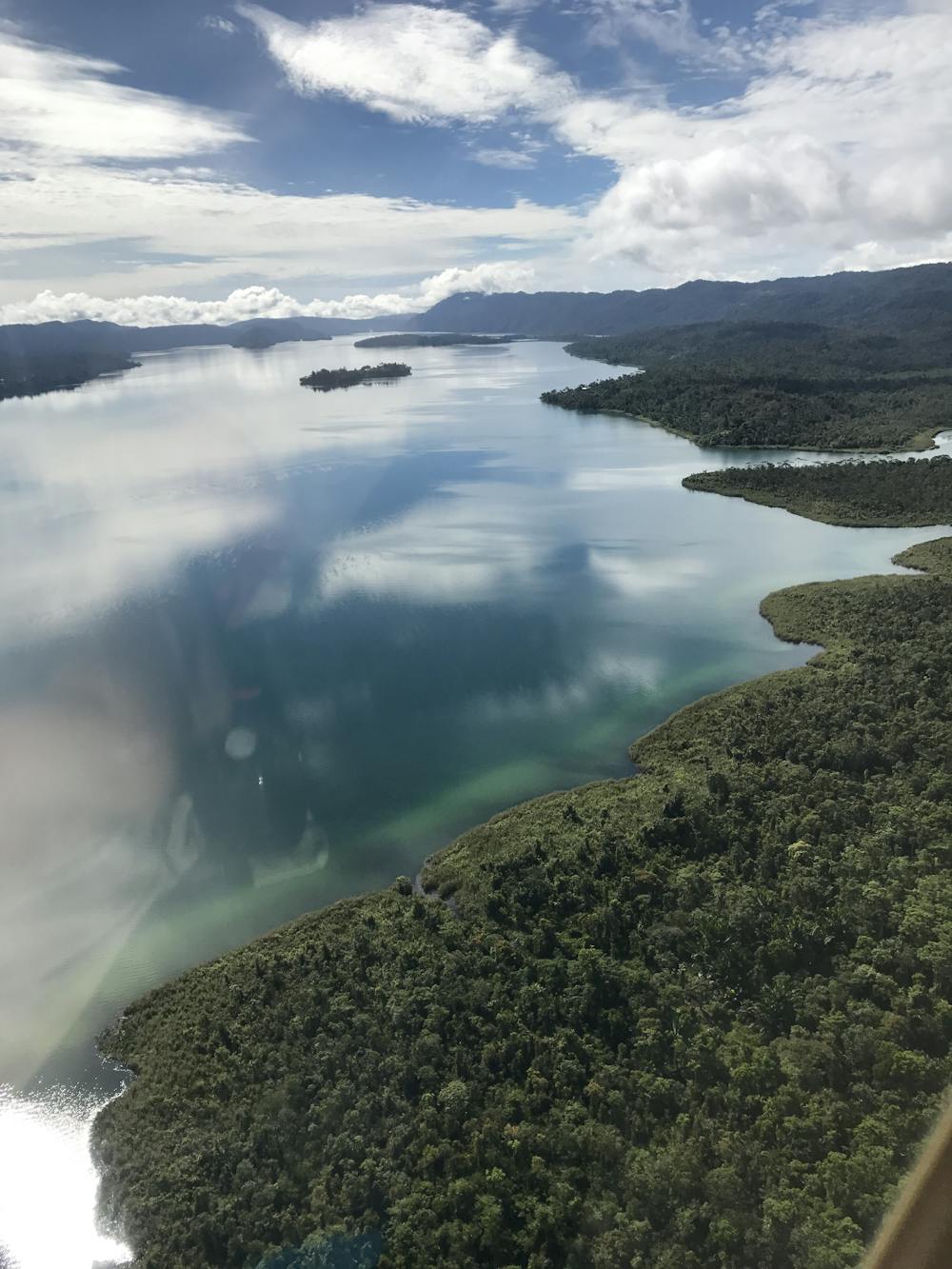
Lake Kutubu, where this fish was discovered. Ambok1/Wikimedia, CC BY

About 20 years ago I was the first person to SCUBA dive in Lake Kutubu — an exceptionally clear, high altitude lake in Southern Highlands in Papua New Guinea. As part of this marvellous experience I found several species of fishes new to Western science. One of which was a preferred food fish for the local Foe people, named “mosa” in Foe tokples (local language in Melanesian Pidgin).

In recognition of the tokples name of this species, I simply provided mosa as the species name in my scientific description. This new species is now named Mogurnda mosa in Western science, combining “Mogurnda”, which is an Aboriginal name used in Australia, and the tokples name “mosa”.

The Mogurnda mosa fish, found in Papua New Guinea. Western Australian Museum Field Guides and Catalogues

This fish is a true indigenous species of Oceania, named to honour the original names of the traditional custodians. But oil and gas drilling around the lake significantly threatens the entire known, critically endangered population. Additional threats include invasive species.

Moody’s swamp amphipod, Kartachiltonia moodyi

Rachael King

Finding tiny crustaceans in unusual places is one of the best parts of my work as a research scientist. I’ve trawled the deep-sea floor on big oceanographic vessels, fished down bore holes in arid deserts, and dug in swamps, seeps and springs in the outback — all in an effort to find new species.

In 2009 my colleague and I travelled to Kangaroo Island and collected specimens from a new site to us — a spring-fed swamp near Rocky River. The specimens ended up being a new genus and species of amphipod, which we called Kartachiltonia moodyi.

The name breaks down roughly as “Karta” for the local Indigenous name of Kangaroo Island, and “chiltonia” for the family (Chiltoniidae) it belongs to.

A drawing of the crustacean in black outline.
An illustration of the Moody’s swamp amphipod. Author provided

The last part to the species name was named after my partner, whose last name is Moody. This animal basically has a whole extra set of gills that no other Australian chiltoniid amphipods had — and my partner was a good competitive swimmer in his youth. It made perfect sense to me (Phar Lap had a bigger heart, right?!).

He’s quite happy to have a species named for him, and also happy any similarities weren’t based on something like a giant head or weirdly shaped feet (neither of which he, or the amphipod, has).

And with the recent bushfires roaring through this swamp area on Kangaroo Island, we have been on tenterhooks to see if the species managed to survive. This week we’ve managed to get some samples from nearby, and it’s looking good, but I won’t know for sure until I get them under a microscope.


Read more: Click through the tragic stories of 119 species still struggling after Black Summer in this interactive (and how to help)


ref. From superheroes to the clitoris: 5 scientists tell the stories behind these species names – https://theconversation.com/from-superheroes-to-the-clitoris-5-scientists-tell-the-stories-behind-these-species-names-142922

How climate change made the melting of New Zealand’s glaciers ten times more likely

Source: The Conversation (Au and NZ) – By Lauren Vargo, Research Fellow in the Antarctic Research Centre, Te Herenga Waka — Victoria University of Wellington

Glaciers around the world are melting — and for the first time, we can now directly attribute annual ice loss to climate change.

We analysed two years in which glaciers in New Zealand melted the most in at least four decades: 2011 and 2018. Both years were characterised by warmer than average temperatures of the air and the surface of the ocean, especially during summer.

Our research, published today, shows climate change made the glacial melt that happened during the summer of 2018 at least ten times more likely.

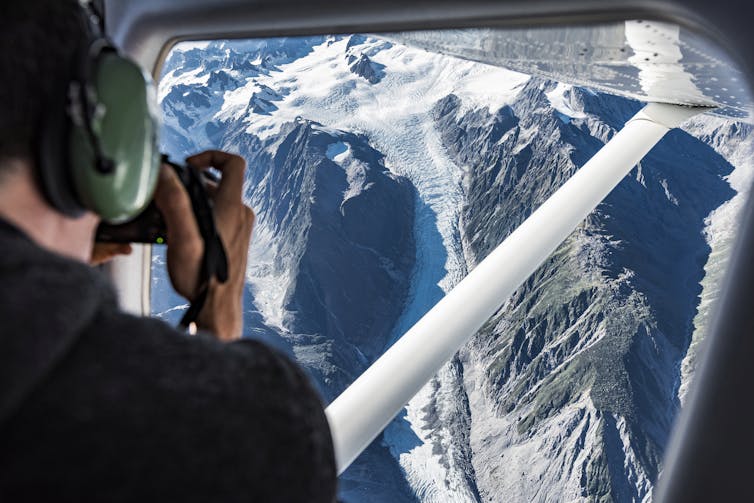
A person taking an image of a glacier
Scientists have been monitoring glaciers in New Zealand for more than 40 years. Dave Allen, Author provided

As the Earth continues to warm, we expect an even stronger human fingerprint on extreme glacier mass loss in the coming decades.


Read more: A bird’s eye view of New Zealand’s changing glaciers


Extreme glacier melt

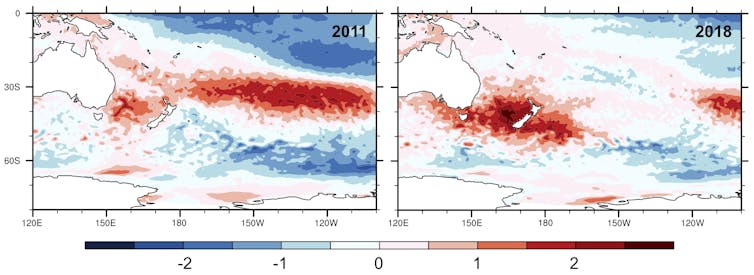
During the 2018 summer, the Tasman Sea marine heatwave resulted in the warmest sea surface temperatures around New Zealand on record — up to 2℃ above average.

Research shows these record sea surface temperatures were almost certainly due to the influence of climate change.

map of sea surface temperatures
Summer sea surface temperature anomalies (in °C, relative to mean temperatures between 1979 and 2009) for December 2010 to February 2011 (left) and December 2017 to February 2018 (right), Author provided

The results of our work show climate change made the high melt in 2011 at least six times more likely, and in 2018, it was at least ten times more likely.

These likelihoods are changing because global average temperatures, including in New Zealand, are now about 1°C above pre-industrial levels, confirming a connection between greenhouse gas emissions and high annual ice loss.

Changing New Zealand glaciers

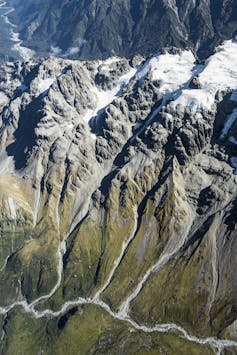
Glaciers in New Zealand's mountains
New Zealand’s glaciers lost more ice in 2011 and 2018 than in any other year in the last four decades. Dave Allen, Author provided

We use several methods to track changes in New Zealand glaciers.

First, the end-of-summer snowline survey began in 1977. It involves taking photographs of over 50 glaciers in the Southern Alps every March.

From these images, we calculate the snowline elevation (the lowest elevation of snow on the glacier) to determine the glacier’s health. The less snow there is left on a glacier at the end of summer, the more ice the glacier has lost.

The second method is our annual measurement of a glacier’s mass balance — the total gain or loss of ice from a glacier over a year. These measurements require trips to the glacier each year to measure snow accumulation, and snow and ice melt. Mass balance is measured for only two glaciers in the Southern Alps, Brewster Glacier (since 2005) and Rolleston Glacier (since 2010).

Both methods show New Zealand glaciers lost more ice in 2011 and 2018 than during earlier years since the start of the snowline surveys in 1977.

Images taken during the end-of-summer snowline survey show how the amount of white snow at high elevations on Brewster Glacier decreases over time, compared to darker, bluer ice at lower elevations.


Read more: Why long-term environmental observations are crucial for New Zealand’s water security challenges


Attributing extreme melt

Earlier research has quantified the human influence on extreme climate events such as heatwaves, extreme rainfall and droughts. We combined the established method of calculating the impact of climate change on extreme events with models of glacier mass balance. In this way, we could determine whether or not climate change has influenced extreme glacier melt.

This is the first study to attribute annual glacier melt to climate change, and only the second to directly link glacier melt to climate change. With multiple studies in agreement, we can be more confident there is a link between human activity and glacier melt.

Franz Josef is another iconic New Zealand glacier. This timelapse video shows it has retreated by 900 metres since 2012. Credit: Brian Anderson.

This confidence is especially important for Intergovernmental Panel on Climate Change (IPCC) reports, which use findings like ours to inform policymakers.

Recent research shows New Zealand glaciers will lose about 80% of area and volume between 2015 and the end of the century if greenhouse gas emissions continue to rise at current rates. Glaciers in New Zealand are important for tourism, alpine sports and as a water resource.

Glacial retreat is accelerating globally, especially in the past decade. Research shows by 2090, the water runoff from glaciers will decrease by up to 10% in regions including central Asia and the Andes, raising major concerns over the sustainability of water resources where they are already limited.

The next step in our work is to calculate the influence of climate change on extreme melt for glaciers around the world. Ultimately, we hope this will contribute to evidence-based decisions on climate policy and convince people to take stronger action to curb climate change.

ref. How climate change made the melting of New Zealand’s glaciers ten times more likely – https://theconversation.com/how-climate-change-made-the-melting-of-new-zealands-glaciers-ten-times-more-likely-143626

‘Exhausted beyond measure’: what teachers are saying about COVID-19 and the disruption to education

Source: The Conversation (Au and NZ) – By Louise Phillips, Associate Professor in Education, James Cook University

All Victorian school students will be learning remotely from Wednesday. Prior to the state’s premier Daniel Andrews announcing a tightening of restrictions over the weekend, only students in prep to Year 10 in Melbourne and the Mitchell Shire were learning from home.

But on Wednesday, schools will close for Year 11 and 12 students in Melbourne and the Mitchell Shire, as well as every student across Victoria — except for students in special schools and children of essential workers.

Like with the last remote learning period in Australia, the current uncertainty in Victoria might cause disarray and stress among teachers, parents and students.


Read more: Students in Melbourne will go back to remote schooling. Here’s what we learnt last time and how to make it better


In response to the closures in April, with seven other researchers across Australia, New Zealand, Singapore and the US, we designed a survey that asked teachers 16 open-ended questions about how COVID-19 affected them and their students.

The teachers ranged from early childhood education through to school and university. We also included other educators, such as at museums.

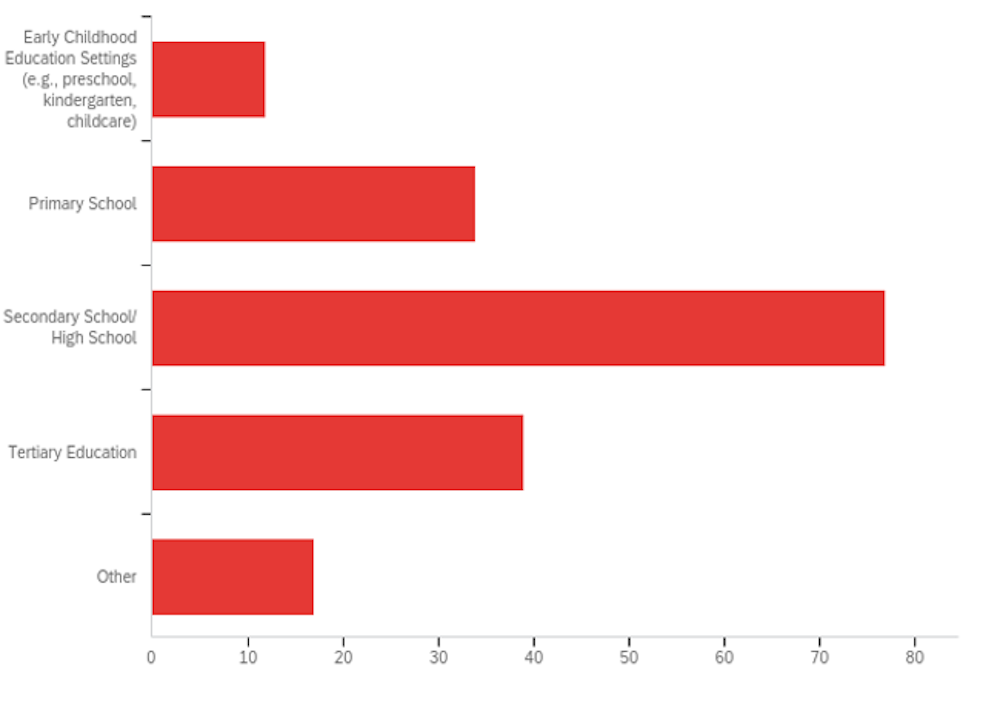
The survey opened on May 4, 2020 while most countries in the survey engaged in home-based learning. There have been 621 responses to date. Of these, 179 are from Australian teachers, with 65% having over 21 years teaching experience, from which this article reports.


Number of respondents, by sector. Author provided

Our survey gained rich responses about the sudden closure of schools, transition to online learning, and the difficulties of negotiating social-distancing and increased hygiene maintenance.

Relentless workload

When asked, “How has COVID-19 impacted your teaching and learning?”, responses most commonly referred to technical issues, then the pragmatics of teaching and workload.

Overwhelmingly, teachers from early childhood to higher education experienced a significant increase in their workload. One teacher said the sudden change to online learning created “endless paperwork and programming issues” and “has been relentless”.

Another said

It’s definitely added significantly to my workload and taken the holiday time that would normally provide some respite, meaning I am closer to burnout than ever.

Social distancing requirements also increased teachers’ workload, creating “lots of additional cleaning requirements and having to collect children from the carpark as families are not allowed to enter”.

One teacher said

It is draining. Exhausting. Time consuming. The work never stops.

‘I don’t want to teach anymore’

The impact on the mental and physical health of teachers was the next most frequently expressed — after the technical, pragmatic and workload issues.

One teacher told us:

I struggle to sleep at night for thinking about work all the time. I’m very stressed and anxious; my physical health has been impacted.

Another said:

It has challenged everything I enjoy about teaching.

And another wrote:

All the teachers I work with are EXHAUSTED beyond measure.

Teachers said a lack of voice and agency in decision making made them feel “unmotivated” or “unvalued”.

(we) may have felt more supported had we been consulted and listened to by management and government.

One teacher wrote:

In the beginning, I felt I could have dropped dead at home and my workplace wouldn’t even notice.

Another said:

Going through this, not feeling safe, and then seeing teachers belittled in the media, has made me come to the realisation that I don’t want to teach anymore.

‘It was a scramble’

When asked, “What are the issues you are struggling with and need support with?” some teachers mentioned the management and decision-making concerning school closures.

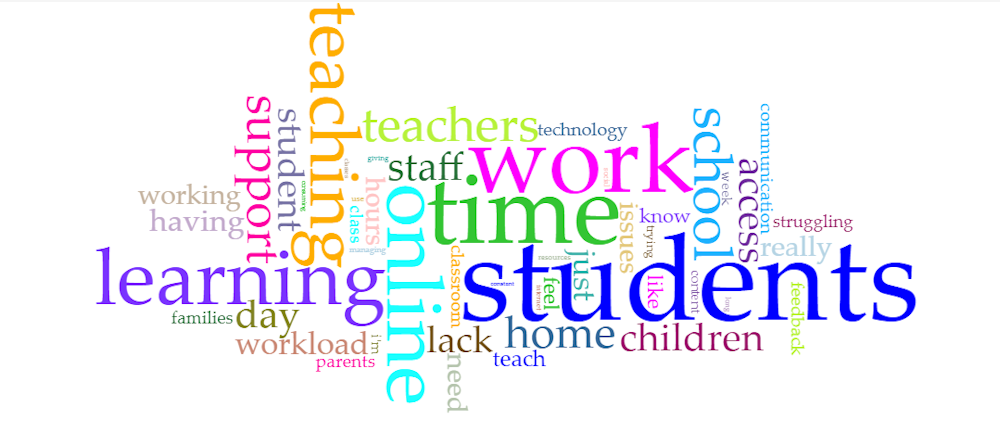
The word cloud below shows the most frequent words in response to the question.


Most frequent words in response to ‘What are the issues you are struggling with and need support with?’

One teacher said:

Our school closed down at the end of term one. It was a scramble and our management made some decisions which made life harder for teachers.

One early childhood and childcare teacher said:

The government has largely ignored the realities of EC [early childhood] environments, the impossibility of social distancing with children under five, and the fact we have high exposure to bodily fluids.

But the most frequently mentioned struggle for teachers in Australia was maintaining quality in pedagogy and curriculum delivery. Teachers are worried the quality of education might be compromised during this uncertain time.

One teacher said:

We are in social repair time. And you know what — no one cares what we are doing in our rooms — just get through ‘til term’s end.

The teachers named student disengagement, uncompleted work and the disparity of access to online materials as the key challenges to quality.


Read more: ‘We had no sanitiser, no soap and minimal toilet paper’: here’s how teachers feel about going back to the classroom


The second most frequent struggle was insufficient time to attend to teaching and learning demands. Many reported working 60% to three times more hours than they were contracted and paid. The sudden shift to online required teachers to self manage production and delivery of online teaching and learning materials, without adequate training and resourcing.

In the longer term, this sudden change in education may lead us to think of innovation in the area. But for now, teachers, schools and students are just trying to survive, and they need all the resources necessary to make it through this year — and beyond.

ref. ‘Exhausted beyond measure’: what teachers are saying about COVID-19 and the disruption to education – https://theconversation.com/exhausted-beyond-measure-what-teachers-are-saying-about-covid-19-and-the-disruption-to-education-143601

‘Uprooting, no matter how small a plant you are, is a trauma’: older women renters are struggling

Source: The Conversation (Au and NZ) – By Emma Power, Senior Research Fellow, Geography and Urban Studies, Western Sydney University

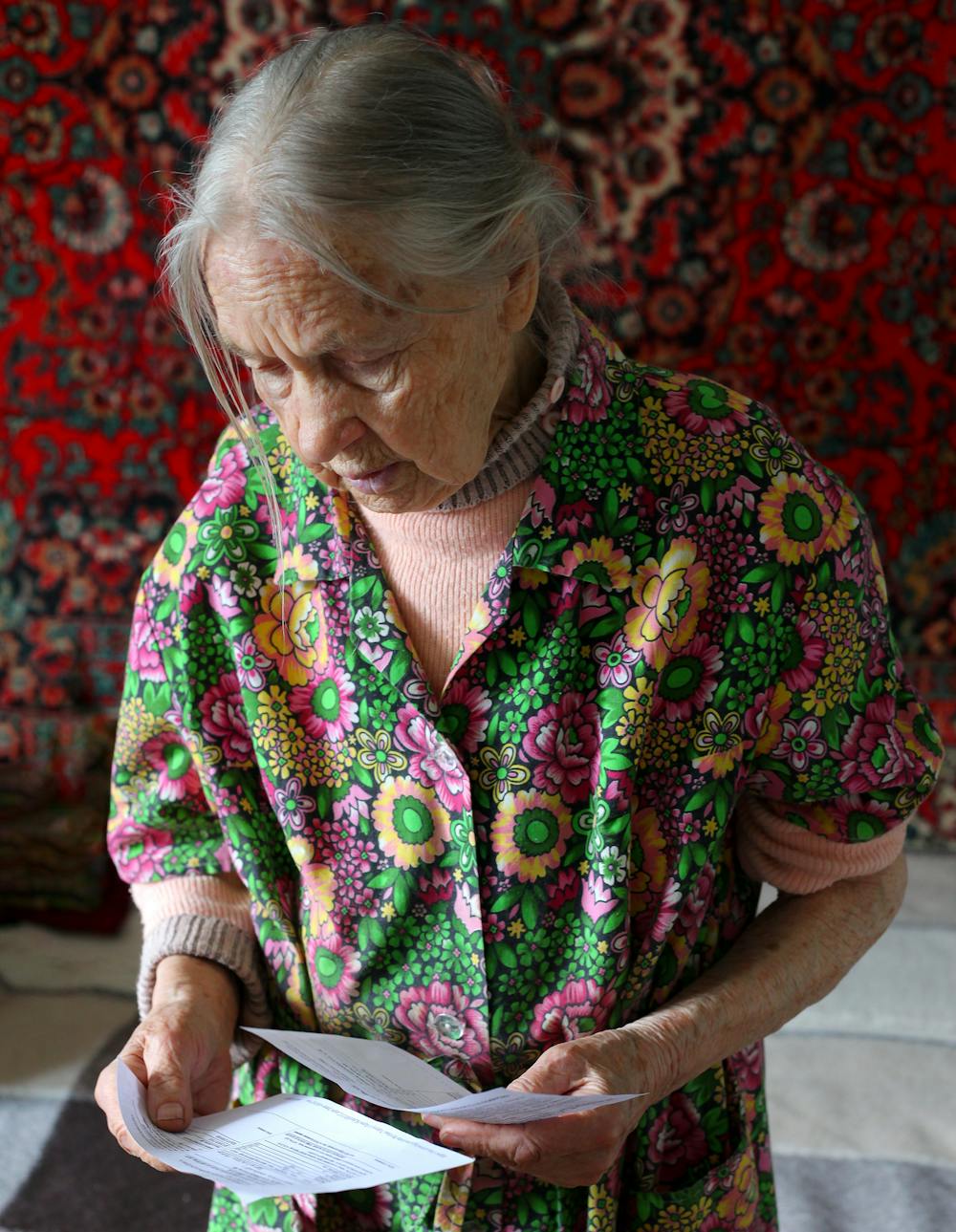
Older women renters are struggling in an insecure and unaffordable rental housing market. A combination of high rents and low incomes leaves many living in substandard housing and unable to afford necessities like food and energy bills.

My research shows rent increases further stress household budgets, and evictions magnify these risks. COVID-19 makes the need for reform even more urgent. Secure housing is the first line of community defence against the pandemic.


Read more: 400,000 women over 45 are at risk of homelessness in Australia


Unaffordable, substandard rentals

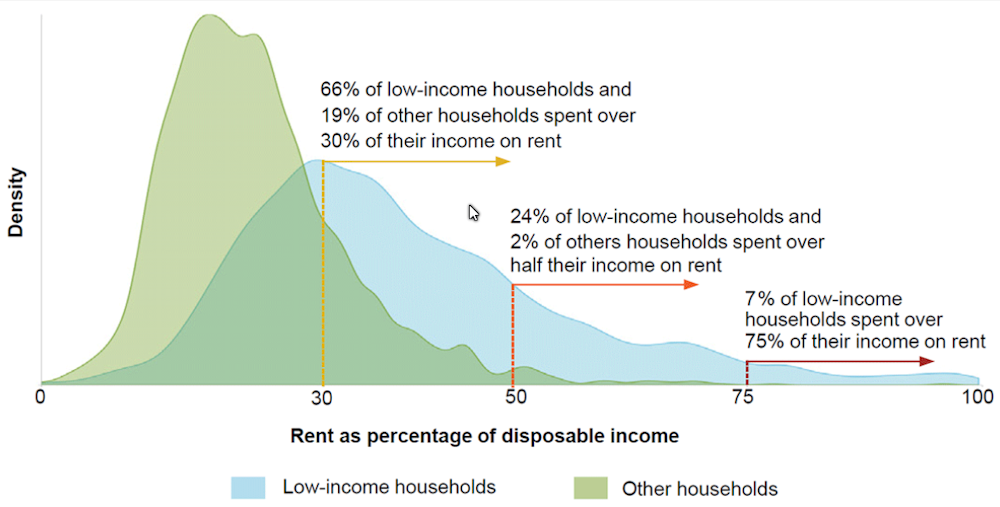
Rental stress occurs when households spend more than 30% of their income on rent. On average, low-income households spend “almost 40% of their disposable income on rent”.

Many households experience relatively short periods of rental stress. However, older low-income renters have very limited options.

In a report released today, single older women living on low incomes describe to me how high and rising rents left them struggling to meet day-to-day costs. Many paid rent before they bought food or paid power bills because the alternative was eviction. This is why the Productivity Commission describes rental affordability as a “driver of disadvantage” for low-income households.

Chart showing percentages of income that low-income households and other households spend on rent
Productivity Commission, CC BY

Read more: Growing numbers of renters are trapped for years in homes they can’t afford


For example, a rent increase left Tracey, a participant in my research, with only $30 after other essential costs were covered. She described her efforts to survive as “like my job. I’d go to one [charity] where they had the food cupboard and fresh produce” and to another where she could get a monthly food voucher. This experience was common.

To reduce their rental costs women often lived in substandard housing. For example, Michelle moved house seven times to find more affordable housing. She described her most recent house:

Gaps around all the windows and all the doors where literally, when it was windy, the curtain would blow and the wooden shutters, the wooden blinds, would actually blow.

While the rent was affordable, the cost for the house “rose astronomically” due to the need to use a heater throughout winter. Another participant, Toni, bought heavy curtains to try to block out the cold in her rental and, in an extreme example, clad the outside of two properties with tarpaulins to reduce draughts.

Rental insecurity

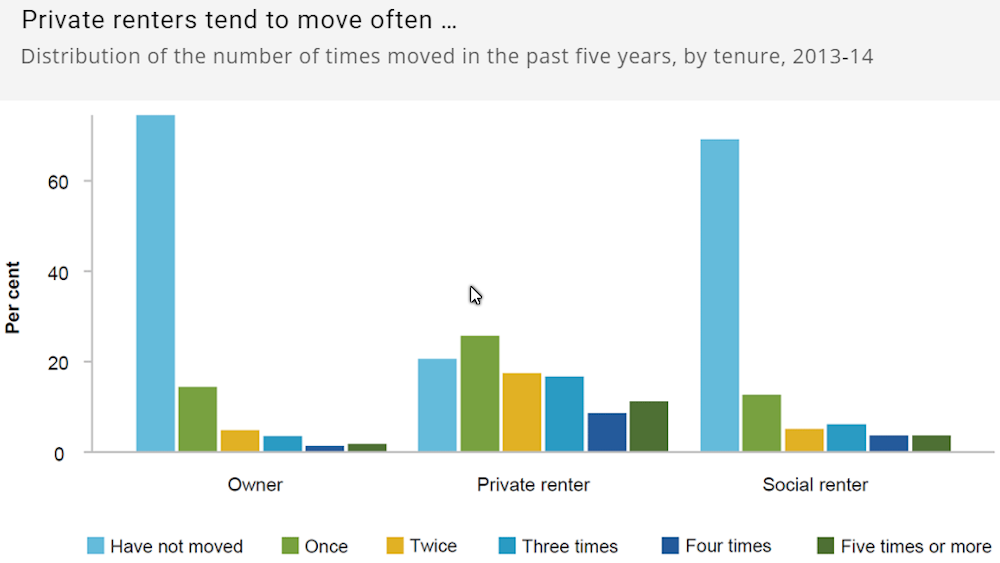
Older women also lived with high levels of rental insecurity. Private renters move more often than people in other housing tenures.

Chart showing how often private renters, social housing tenants and home owners move house.
Productivity Commission, CC BY

Most older Australians wish to age in place in a familiar home and community. This is not an option for many older renters.


Read more: For Australians to have the choice of growing old at home, here is what needs to change


Older renters face a higher risk of eviction. Landlord decisions to repurpose housing or increase rents can trigger involuntary moves. These are recognised drivers of first-time homelessness in older age.

For low-income older renters moving house drives financial risks. Moving house can be expensive. Costs include bond (typically four weeks’ rent, paid in advance), disconnection and reconnection of utilities, and removalists or vehicle hire.

Small van packed with household belongings
The costs of moving house can set back renters’ budgets for months. Shutterstock

As Gwen explained, “It’s all a cost factor.” For women living on already stretched budgets the risks are magnified.

Many women borrowed money to cover moving costs. This left them in debt that, as Gail explained, could take “months” to recover from.

Most downsized their possessions to make moving house cheaper and more manageable. Jenny explained:

You’ve got no choice. You’re parting with things that – well everything you’ve got together are part of your belongings and part of who you are and who you’ve established yourself to be. […] It’s part of your home.

Michelle drew parallels with the experiences of people “whose house caught fire or who’d had a flood” – only she was able to make choices about what to keep and what to give away.

The emotional costs were immense. Women described the stress and disappointment of forced relocations. Jenny explained the need to emotionally detach from her house:

And once you know you’re moving, all of a sudden that house is no longer your home. You get to the point of saying, okay, this house isn’t mine – it’s only a house where I’m living at the moment.

Relocating, Alice explained:

[…] means rifling through my paltry possessions fairly often and that I find upsets me a bit. […] uprooting, no matter how small a plant you are, is a trauma.

I report on these experiences of having to move house in further detail in a just-released research paper.


Read more: What sort of housing do older Australians want and where do they want to live?


It is time for reform

Our federal government needs to permanently raise the JobSeeker payment and act on housing affordability to give low-income renters a fighting chance.

At a state level, it is time to end “no grounds” evictions. “With cause” measures, as recently introduced in Victoria, better balance tenants’ needs for housing security with the rights of landlords to repurpose properties when required.

We also need quantified minimum rental housing standards. New Zealand’s Healthy Homes standards can be a model for us. These standards ensure only properties that are healthy and sound go to market.


Read more: Chilly house? Mouldy rooms? Here’s how to improve low-income renters’ access to decent housing


The number of older Australians who rent is projected to increase over the next decade as home ownership levels decline. The stories of older women in the private rental sector are a warning about the risks that declining housing affordability and rental insecurity pose to this growing group. They are the “canary in the coalmine” for Australia’s housing system.

ref. ‘Uprooting, no matter how small a plant you are, is a trauma’: older women renters are struggling – https://theconversation.com/uprooting-no-matter-how-small-a-plant-you-are-is-a-trauma-older-women-renters-are-struggling-142907

400,000 women over 45 are at risk of homelessness in Australia

Source: The Conversation (Au and NZ) – By Debbie Faulkner, Senior Research Fellow, UniSA Business, University of South Australia

Older women have been recognised as the fastest-growing group of homeless people in Australia in recent years. Yet until now we have not known exactly how many older women are at risk of homelessness. Our research, released today, finds about 240,000 women aged 55 or older and another 165,000 women aged 45-54 are at risk of homelessness.

The startling data from our research give us a much better picture of the scale of the problem. We also quantify the impacts of the various factors that may increase women’s risk of becoming homeless.


Read more: ‘Uprooting, no matter how small a plant you are, is a trauma’: older women renters are struggling


Effective policy is grounded in quantifying the nature and complexity of issues. To date, a limited but growing number of studies have highlighted the experiences of older women who are homeless or at risk of homelessness. But few studies quantified the numbers at risk and the factors that increase the risk.

What puts women at risk?

Older woman looks at her rent payment notices.
Older people who live in private rental housing are at higher risk of becoming homeless. Shutterstock

Older people are generally considered to be at less risk of homelessness because of their higher rates of home ownership. But increasingly unaffordable housing has added to concerns about the circumstances and living situations of older people who do not own homes, have limited wealth and savings and do not have the benefit of living in social housing. These households rely on the private rental market and are at considerable risk of housing affordability stress and hence homelessness.


Read more: Older and poorer: Retirement Income Review can’t ignore the changing role of home


To examine risk profiles, we constructed an empirical model of risk of homelessness since the 2007-09 Global Financial Crisis using data from the Household, Income and Labour Dynamics in Australia (HILDA) Survey. The modelling included people who hold a mortgage or pay rent in private or public housing and are aged 45 or older.

This work found older women are more likely to be at risk of homelessness if they have one or more of the following characteristics:

• have been at risk before

• are not employed full-time

• are an immigrant from a non-English-speaking country

• are in private rental housing

• would have difficulty raising emergency funds

• are Indigenous

• are a lone-person household

• are a lone parent (but little evidence for those never married).

We estimated these profiles using a statistical model to analyse the relationship between homelessness risk and the characteristics of interest. We controlled for other characteristics that are likely to influence the risk of becoming homeless but which were not the focus of the study.

Risk factors compound each other

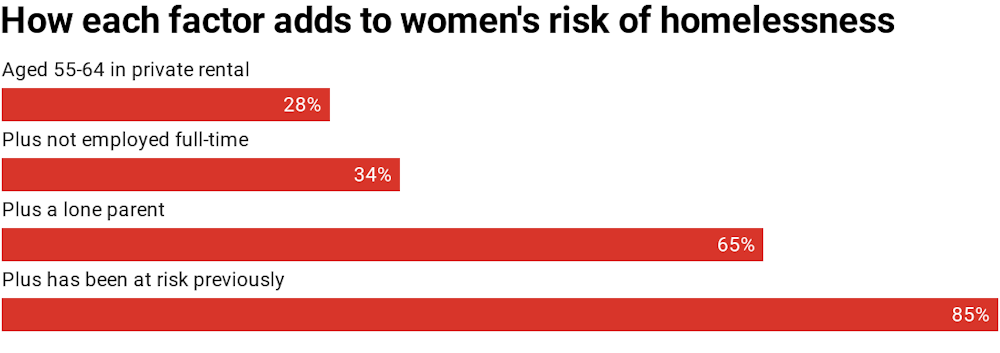
Multiple factors compound the risk of being homeless. While noting sampling limitations (small samples in subgroups of the data and annual volatility), the HILDA data for the post-GFC period suggest:

  • for women aged 55-64 in a private rental, about 28% are likely to be at risk

  • for women who are also not employed full-time the percentage at risk increases to about 34%

  • for those who are also a lone parent the risk rises to over 65%

  • the risk increases to over 85% if, in addition, they have experienced at least one prior occurrence of being at risk.

Bar chart shows how a women's risk of homeless increases with each extra risk factor
Data: HILDA Survey, Author provided

Clearly, a person’s propensity to be at risk of homelessness is cumulative over time.


Read more: More and more older Australians will be homeless unless we act now


Why the numbers at risk will grow

Our estimates of the numbers of people at risk are accurate to within plus or minus 10%. Based on Australian Bureau of Statistics population projections, it is clear that, without changes to policy, these numbers are likely to increase due to one important factor. The model shows a lone-person household is a dominant factor in increasing the likely risk of homelessness.

Lone-person households are expected to comprise 24-27% of all households by 2041. This equates to between 3.0 and 3.5 million Australians (of all ages). Female lone-person households are projected to increase by between 27.6% and 58.8% (ABS 2019b).

Australia has made little policy progress on housing affordability. We also have a severe shortage of social housing to meet demand. This points to the need to pursue other avenues to improve the lives of older low-income households.


Read more: What do single, older women want? Their ‘own little space’ (and garden) to call home, for a start


The Ageing on the Edge Older Persons Homelessness Prevention Project – funded by the JO and JR Wicking Trust and administered by Housing for the Aged Action Group (HAAG) – has worked over the past five years to give voice to these older women who are homeless or at risk of homelessness. The project works with interested agencies (government and non-government) to identify and promote early intervention and prevention strategies and to lobby for government policy change.

Of course, there is one simple answer to achieving long-term outcomes that allow people the basics of a decent older age: an appropriate affordable home.

ref. 400,000 women over 45 are at risk of homelessness in Australia – https://theconversation.com/400-000-women-over-45-are-at-risk-of-homelessness-in-australia-142906

Our states are crying poor. They wouldn’t if they charged for rezoning like the ACT

Source: The Conversation (Au and NZ) – By Cameron Murray, Research Fellow – Henry Halloran Trust, University of Sydney

Throughout Australia, when land is rezoned from industrial to high-rise residential, a charge is levied to help fund the required infrastructure.

In NSW it is called an infrastructure contribution.

The NSW government is reviewing it in order to cut “red tape” and “fix the uncertainty”.

They are words that ought to set off alarm bells. Queensland tells us how it is likely to play out.

A decade ago Queensland developers complained that a similar system lacked transparency and was not proportional to underlying infrastructure needs. So the Queensland government fixed it by by requiring each council to publish a standard schedule of charges based on estimated infrastructure costs.

Problem solved. Right?

No, as it happens. In 2011 the Queensland Premier suddenly announced a cap on charges. Overnight the system was disbanded and replaced with a fixed charge statewide.

Developers want lower infrastructure charges

The reality was that developers didn’t just want certainty and transparency, and they weren’t particularly keen on proportionality. They wanted lower charges.

In Victoria the property lobby is arguing for lower charges directly, without going through the charade about wanting less uncertainty and red tape.

To see the value of lower charges for developers, consider that current contributions in NSW are usually in the range of A$20,000 to A$70,000 per new apartment.


Read more: Four ways we can clean up corruption in land rezoning


If a $50,000 charge was halved, for example, it would create a $2.5 million windfall for the owner of a site who developed 100 apartments. Add that up across all the sites owned by developers and it comes to billions.

Yet they are enriched by rezoning

It’s not as if developers can’t afford what’s charged. The moment their properties are rezoned they make much, much more.

Here’s an example.

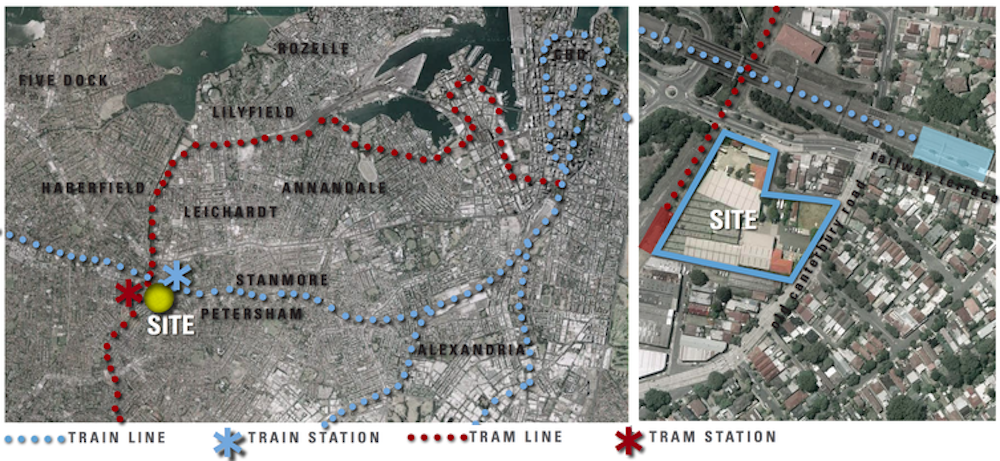
A well-situated industrial site in Sydney’s inner west was bought for $8.5 million, rezoned high density residential, then sold again for $48.5 million. The 470% windfall was the result of a government decision: rezoning.

The rezoned site of the Lewisham Estates in Sydney’s inner west. Inner West Council

Not only are these windfalls enormous, they can add to the cost of infrastructure.

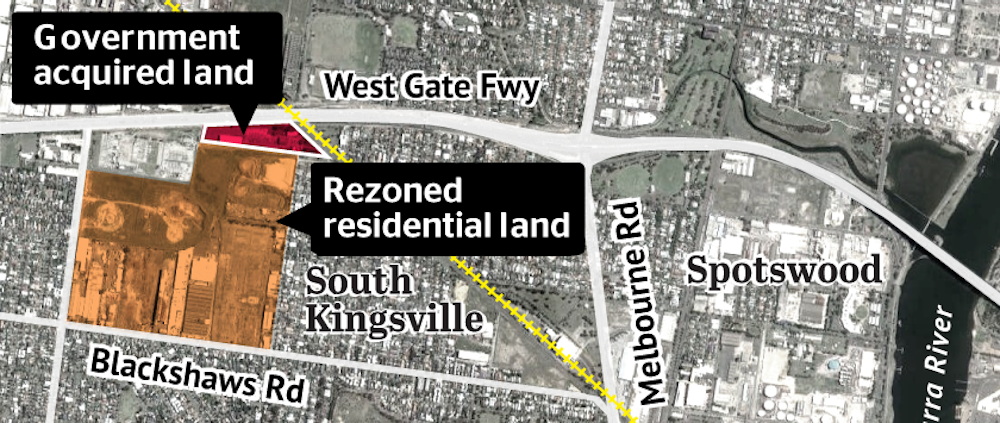
An industrial site in Altona North in Melbourne was bought by a developer for $8.7 million, rezoned for “comprehensive development” and then compulsorily acquired by the Victorian government for the West Gate Tunnel project for $22.5 million.

The Altona North rezoning added $14 million to the cost of the tunnel.

Rezoned industrial land in Altona North. The Age

Why not charge for rezoning?

The simplest way to fund council infrastructure would be to remove all fees and charges and sell the property rights granted through rezoning at market prices.

It could raise eight times what infrastructure charges do.

We know it can be done because the Australian Capital Territory has been doing it since 1971, charging 75% of the market price for new property rights granted through rezoning.


Read more: Property developers pay developer charges, that’s why they argue against them


In Sao Paulo, Brazil, the rights to develop to at higher densities have to be bought from the government at auction.

Developers won’t like it. Yet it would give them what they say they want, which is certainty. More than anyone else, they are acutely aware of what rezoning does to the value of their properties.

ref. Our states are crying poor. They wouldn’t if they charged for rezoning like the ACT – https://theconversation.com/our-states-are-crying-poor-they-wouldnt-if-they-charged-for-rezoning-like-the-act-142838

That’ll do, pig, that’ll do: Babe at 25, a trailblazing cinematic classic

Source: The Conversation (Au and NZ) – By Daryl Sparkes, Senior Lecturer (Media Studies and Production), University of Southern Queensland

It wasn’t the first time I’d crashed a film set. My first was the 1984 film The Coolangatta Gold. You’ll recognise me in one of the shots because I’m the only person wearing jeans on a beach.

Many years, and many film sets later, I heard from a friend who was working on a movie that mixed cute furry farm animals with state of the art technology. I knew instantly I had to get smuggled on this one.

That film is now one of the most cherished children’s classics of the 90s – Babe. It has been 25 years since the talking pig first appeared on international screens, and revisiting the film today shows it has not lost any of its charm or wonder.

Directed by Chris Noonan and starring James Cromwell and Magda Szubanski as farmers Mr and Mrs Hoggart, Babe made over US$250 million (A$351 million) at the international box office. It spawned a (much less succesful) sequel, Babe: Pig in the City in 1998.

The story of a young piglet raised by a Border Collie to become a sheep herding star was a crowd favourite not just because of the cute animals, but because of the dazzling technology, which makes these animals look like they really are speaking.

With its story of achieving in the face of adversity, coupled with simple lessons – cooperation is better than intimidation, you can aspire to more than what others expect of you – Babe still appeals to both adults and children alike.

Hollywood is here

I’d never heard of the book the film was based on, The Sheep Pig by Dick King-Smith, so at the time I went looking for the Babe film set I knew next to nothing about the story apart from the fact that it featured talking animals.


Read more: Auteur vs computer: the frightening complexity of visual effects


When I got to Bowral, NSW, no one could resist telling me Hollywood had come to the region. Ask anyone where Babe was filming and they pointed along the road to Robertson, a 25-minute drive east, through gentle hills and valleys surrounding a small village.

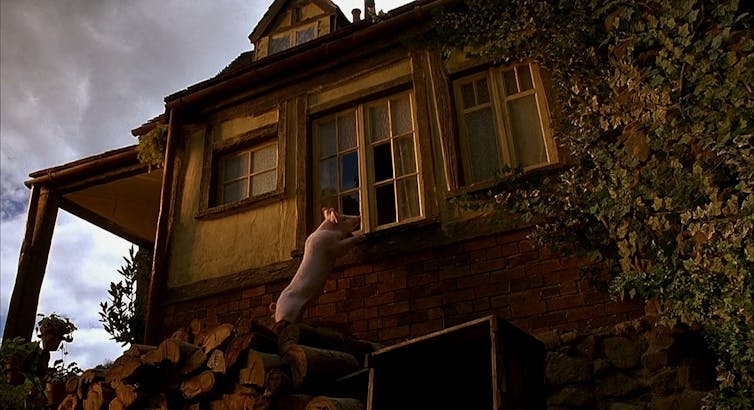
Babe peers in the window of the farmhouse.
The Hoggart’s farmhouse looked like it sat perfectly in the landscape. But, of course, it was only a set. Universal Pictures

It was not long before the conglomeration of film trucks, tents and trailers came into view. But the thing that really caught my eye was the pens full of animals – dozens of sheep, chickens, cows, dogs and pigs.

Because filming took months, the production needed to constantly bring in new baby animals – the ones they filmed one week would soon grow too large and need replacing.

I was used to the hustle and bustle of a hot set, but this was like a circus.

Taking risks

Why was Babe such a massive worldwide hit? It wasn’t the first film to feature talking animals. Disney had made an industry out of this with The Jungle Book, The Lion King and, of course, Mickey, Minnie and Donald.

The combination of computer graphics and animatronics used in Babe is common now, but 25 years ago it was cutting edge and known only to a few specialists: the movie even beat Apollo 13 for the Oscar for best visual effects.

Still, while Babe was a film big on technology it didn’t let the multi-million dollar special effects get in the way of the story and characters. The heart of the story is always the animals.

Children feel a strong bond to the animals in the film because they are portrayed as child-like themselves. In Babe, the central character is a piglet and speaks with a child’s voice. He has a sense of innocence and wonder.

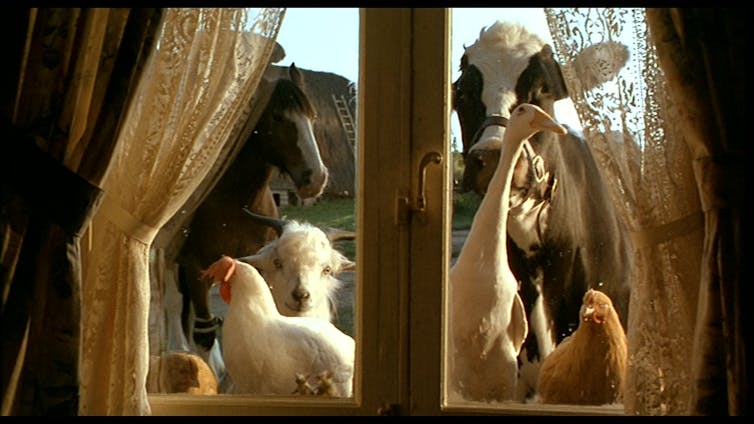
Farm animals look inside through a window.
Babe wasn’t a film about what it means to be an animal – it was about what it means to be a child. Universal Pictures

As a kids’ movie, Babe, also took big risks. The pigs, sheep and cattle on Hoggett’s farm were explicitly meat animals, and at one point, wild dogs kill a sheep – dark concepts for small children.

The scene where Babe is told humans eat pigs is particularly disturbing for younger viewers. But these risks are handled sensitively, and pay off.

It has even been said these scenes sparked positive arguments for animal rights: Cromwell became vegan after filming, and PETA calls it “a classic animal rights movie”.

Out of time

I think why the film was embraced internationally was because it isn’t what we would classify as an “Australian ” film. There’s very little in it that defines it as “Aussie”.

Hoggett’s farm looks more Dorset or Devon in the south of England. There are no kangaroos or koalas, there’s no red-dirt “outback” in sight. Even the accents are a global mish-mash. Babe doesn’t belong to any one time or place.

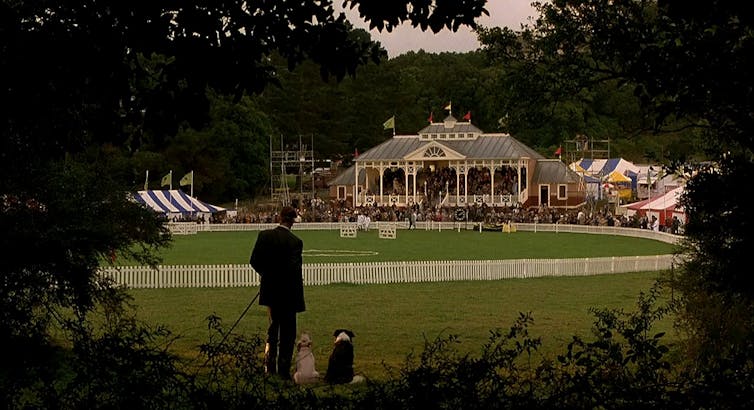
Hoggart, Babe, and a sheepdog look over the competition field.
The film resonates because it stands apart from time and place. Universal Pictures

Audiences of all nationalities could enjoy it because it was truly international. Ultimately, though, Babe stays in our hearts and minds because it was a good story, well told. Do we really need anything else? That’ll do, pig, that’ll do.

ref. That’ll do, pig, that’ll do: Babe at 25, a trailblazing cinematic classic – https://theconversation.com/thatll-do-pig-thatll-do-babe-at-25-a-trailblazing-cinematic-classic-143813

Timorese journalists protest over plan to turn defamation into crime

Pacific Media Watch Newsdesk

Timor-Leste’s Journalist Association (AJTL) and journalism students marched through the streets of the capital Dili today calling on the government to scrap plans to change the law to make defamation a criminal offence.

Under the proposed law journalists could face jail sentences.

Opponents of the proposed law say it is an attack on democracy in a country with the highest world press freedom ranking in the region.

Words by Bob Howarth, image by AJTL.

READ MORE: Timor-Leste: Can the criminal defamation law in Timor-Leste be stopped?

Print Friendly, PDF & Email

Article by AsiaPacificReport.nz

Australia won’t recover unless Victoria does too. The federal government must step up

Source: The Conversation (Au and NZ) – By Brendan Coates, Program Director, Household Finances, Grattan Institute

The announcement of stage 4 restrictions in Victoria marks a new, and depressing, stage in Australia’s response to COVID-19.

The new measures will close non-essential retailers and most child-care centres across Melbourne, and impose stringent controls on industries such as meatworks and construction. The Victorian government estimates the measures will stop a further 250,000 workers from travelling to work.


Read more: Melbourne non-essential retailers closed, as Morrison unveils pandemic leave


The Victorian economy will probably be better off with this sharper, hopefully shorter lockdown than persisting with Stage 3 restrictions for many months.

The federal government has taken the sensible step of announcing pandemic leave disaster payments of $1,500 for those Victorians that need to isolate for 14 days. But it will need to do more to help Victorian businesses and households make it safely to the other side.

Victoria was already struggling before stage 4

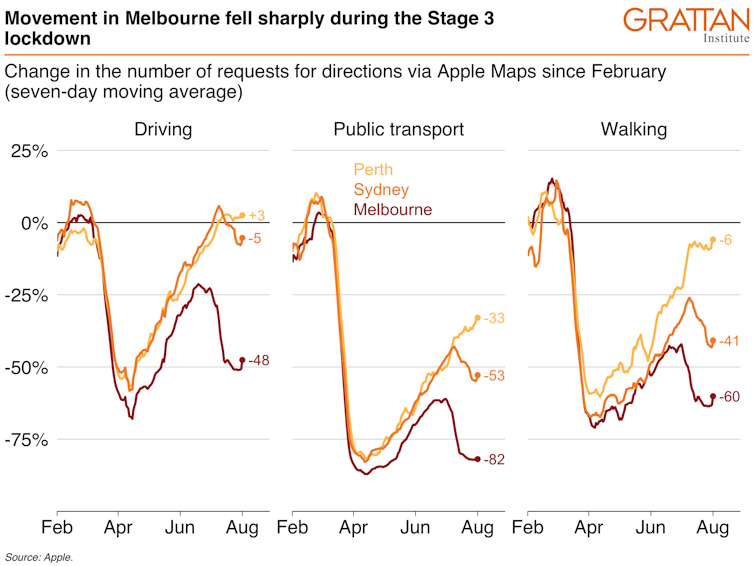
Even before Sunday’s announcement of Stage 4 restrictions, economic activity in Melbourne was back down to similar levels to the first shutdown. Movement around the city, as measured by the number of times people used Apple Maps to get directions, was about half its February level.

By comparison, in Perth (where the virus has been effectively suppressed) drivers were out and about a little more than in February. Sydney was more or less back to normal, with a slight dip at the end of July as people curtailed their movements a little. Across all three cities public transport use remains dramatically below its normal levels, with Melbourne much further away from normal than Sydney and especially Perth.


Movement in three cities.

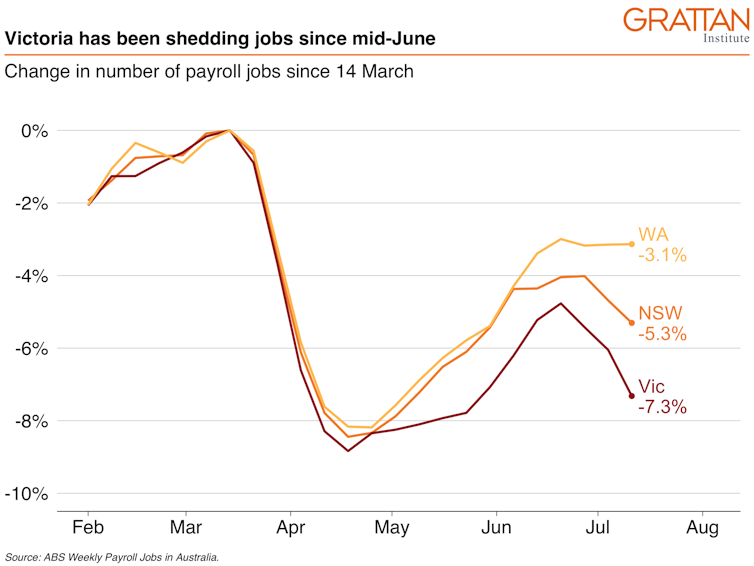
The number of jobs in Victoria was 7.3% lower in mid-July than in mid-March, a deeper fall than any other state. In inner Melbourne, the number of jobs was down nearly 10% from mid-March levels. Eight of the ten federal electorates hardest-hit by job losses are now in Victoria. Without JobKeeper, the picture would be much worse.

Jobs in three states.

Under the new restrictions on workplaces in Melbourne, employment in construction, manufacturing and retail will plummet. These industries employ about 900,000 Victorians between them. Not all of these people will be thrown out of work, but many will.

JobKeeper and JobSeeker are needed even more

The federal government should reconsider its plans to begin winding back JobKeeper and JobSeeker payments after September. JobKeeper is set to fall from A$1,500 to A$1,200 for full-time workers, and to A$750 for part-timers. And JobSeeker falls from $1,215 to $815 a fortnight.

These income-support programs were absolutely necessary in March when Stage 3 restrictions were imposed. They are even more necessary now, as Stage 4 restrictions put an even tighter clamp on economic activity, stretching many businesses to breaking point and throwing more Victorians out of work.


Read more: How to get both JobKeeper and JobSeeker


The “tapering” of these support payments clearly cannot happen from late September, as currently scheduled.

By the end of September Victoria will hopefully be out of Stage 4 restrictions. But at best Melbourne will be back to Stage 3, the same level of restrictions for which the federal government to introduced the JobKeeper and the JobSeeker schemes.

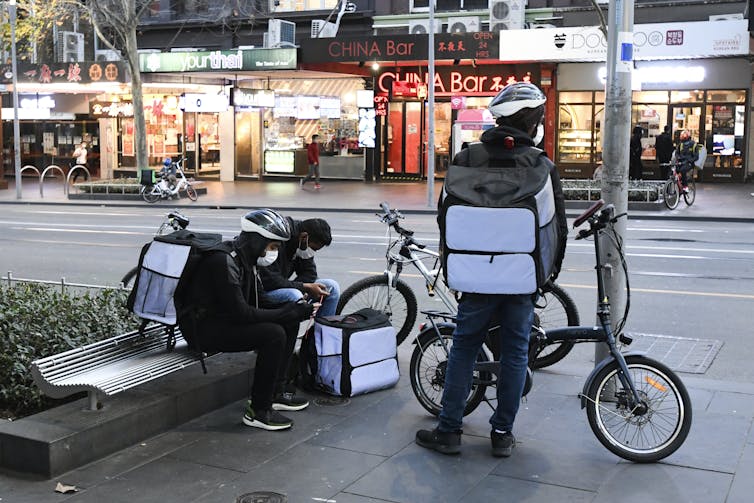
Delivery riders in Melbourne's deserted CBD
Delivery riders in Melbourne’s deserted CBD on Sunday August 2 2020. Erik Anderson/AAP

The eligibility rules for JobKeeper should also be reconsidered.

Some businesses whose revenue did not fall enough to qualify for JobKeeper in March will now take a bigger hit. Other companies that qualified in March but saw a rebound in June will be excluded by the current rules from receiving JobKeeper beyond September.

The federal government COVID-19 “disaster payment” should help address the crucial problem of those without paid leave entitlements being forced to choose between self-isolating and going to work to pay their bills. But the scheme is palliative rather than preventative, since it only applies in states once community transmission has ramped up to disaster levels.

Two-speed economy

The diverging fortunes of Victoria and the rest of Australia gives new meaning to the term “two-speed economy”.

The federal government may be reluctant to do what’s needed just for one state, given the recovery is progressing elsewhere, but that would be a mistake. Victoria accounts for one quarter of the national economy. There is no “moral hazard” here. No state is going to allow thousands of its citizens to catch a deadly virus on the expectation the federal government will turn on the fiscal taps.

The federal government should waste no time wrangling over who pays the costs of getting through the crisis. Trying to split the bill with Victoria will take valuable time, and only concentrate costs on the state hardest hit by the crisis.

Last week the federal government finalised arrangements to borrow A$15 billion through issuing 31-year bonds. These bonds have a fixed interest rate of 1.94%, below the bottom of the Reserve Bank’s inflation target band.


Read more: The government has just sold $15 billion of 31-year bonds. But what actually is a bond?


That means investors buying the bonds were willing to lend money to the federal government and most likely get back less, in inflation-adjusted terms, three decades from now. And investors were queuing up to buy them. In fact the government could have sold A$37 billion worth, rather than A$15 billion.

The federal government should use this ample fiscal firepower to ensure Victorians get through this crisis. Australia’s economy won’t recover unless Victoria does too.

ref. Australia won’t recover unless Victoria does too. The federal government must step up – https://theconversation.com/australia-wont-recover-unless-victoria-does-too-the-federal-government-must-step-up-143840

Victoria’s child-care shutdown is a hard blow for working mothers

Source: The Conversation (Au and NZ) – By Danielle Wood, Chief executive officer, Grattan Institute

How do you occupy a child for long enough to get any work done?

This will be the question confronting more than 150,000 Melbourne families for at least the next six weeks.

The Stage 4 restrictions announced by the Victorian government to contain the city’s COVID-19 outbreak include closing all child-care centres for the first time in the pandemic.


Read more: State of disaster called as Melbourne moves to nightly curfew and stage 4 restrictions


Only services for vulnerable children and children whose parents are deemed essential workers will continue.

This will have a big impact on workforce participation – particularly for mothers, who take on the lion’s share of unpaid care.

Child-care and workforce participation

The health advice is that these closures are needed to get Victoria’s COVID-19 outbreak under control. So the focus needs to be on what governments can do to cushion the impact on parents – and to support workforce participation on the other side.

Child-care is critical for women’s workforce participation. Its closure will have significant economic fallout. About 170,000 Melbourne children aged five and under are enrolled in formal early childhood education and care services. The average child in long day care attends for more than 25 hours a week.

The common backup plan for parents in lieu of professional child-minding services – grandparents – is not an option for many either, given health concerns and travel restrictions.

Most parents with young children don’t have much “slack”. On average, they do more than 80 hours a week of paid and unpaid work – the most of all adults.

It seems inevitable the only way many households will be able to manage their caring responsibilities is by reducing their paid work. This will be a financial hit not only for them but for the wider economy, further reducing spending and economic activity.

Women most affected

The closure of child-care centres will be especially tough on working mothers. Australian women still do the bulk of looking after children and housework.

A 2019 Deloitte analysis estimated the average Victorian woman spent 13 hours more on unpaid work and care a week than the average Victorian man. Men generally do more paid work, but this still doesn’t make up the full gap.

Deloitte’s findings are consistent with patterns Australia-wide, where the balance of paid and unpaid work in heterosexual couples is more gendered than almost anywhere else in the western world.

During the first lockdown, the unpaid workload increased for both women and men, but more for women.

Responses to an online Work and Care in the Time of COVID-19 survey between early May and June suggest women have more commonly borne the brunt of juggling work and children, including supervising online schooling.

These patterns indicate it will be women who are most likely to reduce their hours of paid work without school or day-care services available. This has already been seen overseas.

Any hit to women’s workforce participation – particularly if it becomes entrenched – will further widen the lifetime earnings gap between men and women. On pre-pandemic working patterns, the average 25-year-old woman who goes on to have at least one child could expect to earn 47% less than an average 25-year-old man who becomes a father.

Policy can help on the other side

The challenge for policy makers is to prevent this short-term economic pain becoming permanent.

The federal government has introduced temporary arrangements to enable Victorian parents to keep their child-care place through this lockdown. Providing income support for child-care workers who may be stood down during the shutdown is also important.

But these policies alone will not be sufficient to support female workforce participation when child-care reopens.

If governments are serious about reducing the fallout, we need to talk about making it more affordable on the other side.


Read more: Permanently raising the Child Care Subsidy is an economic opportunity too good to miss


Child-care costs are one of the biggest barriers to female workforce participation.

Raising the federal government’s Child Care Subsidy would help parents, particularly women, get back to work – supporting both the short-term economic recovery and growing the economy in the longer term.

ref. Victoria’s child-care shutdown is a hard blow for working mothers – https://theconversation.com/victorias-child-care-shutdown-is-a-hard-blow-for-working-mothers-143837

Melbourne non-essential retailers closed, as Morrison unveils pandemic leave

Source: The Conversation (Au and NZ) – By Michelle Grattan, Professorial Fellow, University of Canberra

Non-essential retailers across Melbourne will be shut except for “click and collect” and delivery sales, and industries including meatworks and construction will be drastically scaled back, under Victoria’s unprecedented lockdown.

The business shutdown details came as Scott Morrison announced a “pandemic disaster payment” worth $1,500 for Victorian workers who have to isolate for two weeks and do not have sick leave.

The leave can be taken multiple times if needed but it will only be available to those hit by the Victorian disaster.

Premier Daniel Andrews estimated 250,000 more workers would be stood down as a result of his government’s measures, which run for six weeks. “We know there is about 250,000 people stood down in one form or another and this will add a further 250,000 in rough numbers.”


Read more: State of disaster called as Melbourne moves to nightly curfew and stage 4 restrictions


Melbourne supermarkets, grocery stores, bottle shops, pharmacies, petrol stations, banks, newsagents and post offices will remain open, giving people access to necessities.

Businesses have been put into three categories:

  • those able to stay open

  • full “onsite” closures – including retail stores and services, some manufacturing and administration – which must shut by 11.59pm Wednesday

  • those that will have to drastically reduce their operations.

While most of the restrictions relate to Melbourne, the provision for meatworks – on which many COVID cases have been centred – apply across the state.

Andrews said workers in these enterprises would be dressed like health nurses – with shields, masks, gowns, gloves – and have to undergo temperature tests. The on-site workforces at meat works will have to be reduced by one third.

Bunnings, which has been particularly popular during the pandemic, will be only allowed to offer “drive through” sales to the public, although tradespeople will be able into the store for purchases.

Services from tradespeople to the public will be confined to emergencies. Cleaners will not be able to go to houses.

Different rules will apply to various parts of the construction industry, which will move to what Andrews called “pilot light” levels.

Workforces constructing large commercial buildings above three stories will need to be reduced at any one time to no more than 25% of normal numbers.

No more than five people will be able to be working on a house-building site at one time.

The state government has already reduced its large-scale projects and will look at further reduction.

Warehousing and distribution centres in Melbourne will be limited to no more than two thirds of their normal workforce on site at one time.

Workplaces that are continuing to operate will have extra requirements including more personal protective equipment, staggered shifts and breaks, health declarations and more support for sick workers to ensure they stay home.

Daniels announced the latest Victorian number of new cases was 429; there had been 13 deaths, of whom eight were linked to aged care.

Morrison said many Victorians “would have reached breaking point trying to come to terms with what has happened in their state”.

Andrews warned if the changes didn’t work “we’ll need a much longer list of complete shutdowns”.

Treasurer Josh Frydenberg flagged changes to eligibility for JobKeeper to take account of the impact of the Victorian hard lockdown.

Last month the government announced eligibility would be tightened under the revised scheme to operate after September – businesses would have to demonstrate they had met the relevant 30% decline in turnover test in both the June and September quarters.

But on Monday Frydenberg foreshadowed tweaking to ensure businesses badly hit in the September quarter were not disadvantaged because they had not had low turnover in the June quarter.

The change would apply nationally, not just in Victoria.


Read more: View from The Hill: COVID has brought us a state in disaster and a prime minister in a mask


The Business Council of Australia and the ACTU on Monday wrote jointly to the federal government strongly urging it “to move quickly to introduce a paid pandemic leave scheme”.

After the announcement, the ACTU said the pandemic leave disaster payment was a step forward but didn’t go far enough. 

“The $1500 a fortnight is the minimum wage when the average wage is double this amount. This means that nearly every fulltime worker will still suffer a financial penalty for isolating. Only full wage replacement, like sick leave, can fix this,” the ACTU said.

The Australian Industry Group said the economic impact of the draconian Victoria lockdown would “devastate the livelihoods of millions in the state”.

CEO Innes Willox said: “Closing or restricting large swathes of manufacturing and construction as well as their supply chains brings the hammer down on sectors that have been responsible for relatively little transmission, which have followed strict COVID-safe plans and are vital to the community and the country’s economic well-being.”

ref. Melbourne non-essential retailers closed, as Morrison unveils pandemic leave – https://theconversation.com/melbourne-non-essential-retailers-closed-as-morrison-unveils-pandemic-leave-143835

Takeaway coffee allowed, but no wandering through Bunnings: here’s why Melbourne’s new business restrictions will reduce cases

Source: The Conversation (Au and NZ) – By Philip Russo, Associate Professor, Director Cabrini Monash University Department of Nursing Research, Monash University

Victorian Premier Daniel Andrews has announced sweeping changes to businesses across metropolitan Melbourne, including closure of retail stores and restrictions on some industries, including construction. The new constraints come into force from midnight on Wednesday night.

They come after metropolitan Melbourne moved to stage 4 restrictions on Sunday, with a nightly curfew and stricter limits on residents’ movement.


Read more: State of disaster called as Melbourne moves to nightly curfew and stage 4 restrictions


Andrews said maintaining stage 3 restrictions would mean new daily cases plateau at 400-500 indefinitely, so the aim of these new stronger restrictions is to drive daily numbers down. Given the apparently widespread transmission of the virus at workplaces, the hope is that restrictions on business will help improve the situation.

We also expect to see the effects of mandatory mask-wearing alongside other measures, to become evident in the case numbers over the coming week, and further reduced numbers from the latest round of lockdown restrictions to become apparent in two weeks’s time. But this will only happen if we stick to the rules.

What are the new restrictions?

Monday’s restrictions relate to businesses, and will be in place for at least six weeks. The Victorian government has grouped businesses into three categories:

  1. those that can continue full operations on-site, while maintaining COVID-safe practices. This group includes supermarkets, grocers, butchers, bottle shops, post offices, pharmacies, fuel stations and facilities involved in the frontline pandemic response

  2. others that have to operate under new restrictions. This group includes meat processing and construction sites, which will have to observe new limits on staffing levels

  3. some that will cease all on-site activity and move to home or drive-through delivery where possible. This includes non-essential retailers and restaurants.

Andrews assured Melburnians that the continued operation of supermarkets and grocers means there is “no need to be buying months’ worth of groceries”. Melburnians can also take heart in the fact takeaway coffee is still allowed.

Construction and meatworks can continue but will look very different. Major government infrastructure projects, such as level crossing removals, will continue but with around 50% fewer on-site personnel. Large commercial buildings above three storeys need to reduce to the “practical minumum”, operating at no more than 25% staff capacity. Residential building sites can have no more than five people working on-site at any time.

Abbatoir workers will be required to wear full personal protective equipment, including masks, face shields, gloves and gowns. They will also have their temperatures checked and will be regularly tested for COVID-19. Meat processing facilities will reduce to two-thirds operating capacity. The rules to abattoirs apply statewide, not just in metropolitan Melbourne – a move Andrews said was essential to prevent the industry’s problems with COVID-19 spreading to regional areas.

The retail sector will have to close storefronts. However, these businesses can continue to provide “click-and-collect”, takeaway or delivery services where possible, all of which minimise interactions between people.

Hairdressers, education, elective surgery, brothels and strip clubs, legal services, advertising, and food courts will all be required to cease on-site operations.

Andrews has flagged a “permit system” under which certain workers can be granted permission to travel more than 5km from their homes, and to breach curfew. More details will be provided on this later in the week.

Why are the new measures important?

The most common method of spread is through close contact, and a lot of transmission of the coronavirus has been occurring in workplaces. This is because, ultimately, workplaces bring people together. Even masks won’t stop the spread if people come very close together.

The new restrictions will reduce the movement of people, reducing the frequency of contact and the contact time between them. They will reduce the risk of transmission in key industries that have had clusters in the past, such as the Cedar Meats outbreak.

Melbourne needs to see hundreds of thousands fewer interaction between people every day to bring case numbers down from their current levels.

A cafe open for takeaway in Melbourne's CBD
Don’t worry, Melbourne. Takeaway coffee is still allowed under the latest restrictions — as long as it’s within 5km of your home. James Ross/AAP

But the central messages remain

The new measures are welcome, in epidemiological terms at least, and are likely to reduce the spread of the virus. And despite the new strictures, the underlying message remains the same: staying at home, and limiting your interactions with other people as much as possible, is crucial to slowing transmission.

Even when we need to leave the house for one of the accepted reasons, physical distancing still remains the most effective preventative intervention.

These new restrictions will not work unless we follow them.


Read more: 723 new COVID-19 cases in Victoria could reflect more testing – but behaviour probably has something to do with it too


When will we see change?

Every morning, Melburnians wake up and look at the new daily numbers — often with despair. Over the past few weeks, since the start of stage 3 restrictions, new cases have plateaued at around 400-500 every day, but are not decreasing.

As Victoria’s Chief Health Officer Brett Sutton pointed out today, stage 3 restrictions have prevented cases spiralling out of control, but have not reduced numbers as much as we would like.

The latest restrictions will apply for six weeks, but there will be a daily review of the data by health authorities. The restrictions could be modified or extended if there are any hiccups along the way.

We expect to see the effects from the latest round of lockdown restrictions to become apparent in roughly two weeks’ time.


Read more: Which mask works best? We filmed people coughing and sneezing to find out


This article is supported by the Judith Neilson Institute for Journalism and Ideas.

ref. Takeaway coffee allowed, but no wandering through Bunnings: here’s why Melbourne’s new business restrictions will reduce cases – https://theconversation.com/takeaway-coffee-allowed-but-no-wandering-through-bunnings-heres-why-melbournes-new-business-restrictions-will-reduce-cases-143814

Microsoft’s takeover would be a win for TikTok and tech giants – not users

Source: The Conversation (Au and NZ) – By Paul Haskell-Dowland, Associate Dean (Computing and Security), Edith Cowan University

In what seems to be a common occurrence, Chinese video-sharing app TikTok is once again in the headlines.

After months of speculation about national security risks and users’ data being harvested by the Chinese Communist Party, US President Donald Trump has announced plans to ban TikTok in the United States any day now.

In response, a deal is being negotiated between TikTok’s parent company ByteDance and US software giant Microsoft. If successful, Microsoft will take over the app’s operations in the US and potentially also in Canada, Australia and New Zealand.

A US ban would not be unprecedented. India barred TikTok last month, alongside dozens of other Chinese-owned apps and websites.

The Microsoft deal

According to reports, ByteDance has agreed to sell some of its TikTok operations to Microsoft. The deal, which is unlikely to progress before mid-September, would appease US regulators and could be seen as a way forward for TikTok in Australia.

Microsoft has indicated any takeover would include a complete security review and an offer of:

… continuing dialogue with the United States government, including with the president.

Moving ownership to a US company could help address concerns surrounding the perceived influence of the Chinese government over TikTok. But there will need to be strong oversight to ensure existing user data is transferred entirely to Microsoft’s control.

While Microsoft has pledged to ensure TikTok data are deleted “from servers outside the country after it is transferred” – it would be difficult to prove copies had not been made before control was handed over.

What’s more, a Microsoft-owned TikTok may not appeal to everyone. Some may think Microsoft is too closely tied to the US government, or may consider it a monopoly holder in the personal computing market.

Also, it would be naive to think foreign governments will not be able to covertly access US-stored user data, if they are so inclined.

Last year, the Microsoft Corporation’s market capitalisation passed the US$1 trillion mark. John Nacion/STAR MAX/IPx/AP

Who will benefit?

Should the deal go ahead, it may open an opportunity for the Australian and New Zealand governments to align with a US-supported initiative.

Australia is still deciding how to proceed, with the Senate Select Committee on Foreign Interference through Social Media due to hear from TikTok representatives on August 21. The committee has been tasked to look at the influence of social media on elections and the use of such platforms to distribute misinformation.

TikTok won’t be alone though – Facebook and Twitter are both due to attend. It is, however, unlikely the Microsoft acquisition will have much influence on the proceedings as the deal is still in the early days of discussion.

Microsoft’s acquisition may introduce fresh concerns about the US government’s influence over TikTok. Although, this is perhaps more politically palatable than potential Chinese government influence over the app – given the Chinese Communist Party’s unsavoury record of privacy abuses.

Perhaps the only winner from the deal would be ByteDance itself. A product that is increasingly disliked by foreign governments will only become harder to sell with time. It would make sense for ByteDance to cash out its asset sooner rather than later.

The deal would also likely earn it a significant payout, given TikTok’s millions of users.


Read more: TikTok tries to distance itself from Beijing, but will it be enough to avoid the global blacklist?


Are the risks real?

Despite ongoing allegations, there is no solid evidence of a threat to either national security or personal data from using TikTok. Many of the concerns hinge on data sovereignty – specifically, where data are stored and who can use and access them.

TikTok has responded to allegations by stating its user data are not stored in China and are not subject to Chinese government influence or access.

That said, while TikTok user data may well be stored outside China, it is unclear whether the Chinese government has already secured access, or will seek to do so later through legal channels.


Read more: China could be using TikTok to spy on Australians, but banning it isn’t a simple fix


There are, however, other potential issues that may be driving the US’s concerns.

For instance, in 2018 an unexpected consequence of sharing fitness tracker data through the Strava website inadvertently revealed the locations of secret US military bases.

How a fitness app’s heat map accidentally uncovered military bases in the US. Youtube/The New York Times.

Thus, services such as TikTok which are meant to be relatively benign (if used ethically) can, under certain circumstances, present unexpected threats to national security. This may explain why Australia’s defence forces have banned the app.


Read more: Strava storm: why everyone should check their smart gear security settings before going for a jog


Another Trump power move?

Threats from the US against TikTok are not new.

The country’s Secretary of State Mike Pompeo indicated TikTok was being examined by US authorities in early July. And suggestions of a national security review go as far back as November last year.

However, in regards to Trump’s most recent threat, one contributing factor may be the personal feelings of the president himself.

There are theories much of the new hype over TikTok could be a reaction from Trump to an ill-fated political rally in Tulsa.

A number of TikTok users reserved tickets to the Trump rally and didn’t show up, as a protest against the president. The rally saw only a few thousand supporters attend, out of hundreds of thousands of allocated tickets.

ref. Microsoft’s takeover would be a win for TikTok and tech giants – not users – https://theconversation.com/microsofts-takeover-would-be-a-win-for-tiktok-and-tech-giants-not-users-143818

Nicky Hager – I welcome the Operation Burnham Inquiry report

Co-author of Hit & Run, Nicky Hager.

Nicky Hager welcomes the Op Burnham Inquiry report, the most serious findings against the NZSAS and NZDF in their historyThis report was first published on TheDailyBlog.co.nz

Ref. Report-of-the-Government-Inquiry-into-Operation-Burnham-print-version (Sir Terence Arnold KNZM QC, Chair, Sir Geoffrey Palmer KCMG AC QC PC, Member, July 31,2020 [pdf]); + Inquiry-into-events-in-Afghanistan (Inspector General of Intelligence and Security, July 31, 2020 [pdf]).

“The Operation Burnham Inquiry report, released Friday, concludes that a child was killed and other civilians were injured during Operation Burnham, and that NZSAS officers denied and hid evidence of the civilian casualties. It finds a prisoner was handed over to torture and the same prisoner was assaulted by an NZSAS trooper. Thus, after nearly ten years of denials, the Inquiry has confirmed the main allegations in the book Hit & Run.”

The report says the book has “performed a valuable public service”.

“The report goes further than the book and finds that named SAS officers hid and denied evidence of civilian casualties following Operation Burnham” (see below).

“The report contains the most serious findings against the NZSAS and NZDF in their history. This should prompt a lot of soul searching inside the New Zealand Defence Force.”

“The report also recommends major changes to NZDF. This is a huge achievement. It is very important that New Zealand is prepared to investigate wrongful actions by its military, thoroughly and independently. The Operation Burnham Inquiry has done that,” he said. Mr Hager welcomes the findings and recommendations. “I thank the commissioners and their staff for two years of hard work.”


“I am very pleased. This is a tremendously important result.”

“At the same time, the public should know that the Inquiry process was highly unequal. NZDF and other government agencies spent millions of dollars of public money trying to deny any wrongdoing, while the authors and public were not allowed to analyse and contest the agencies’ secret submissions and evidence. Military officers were repeatedly given the benefit of the doubt; but not so the villagers.”

“However this makes it all the more significant that the Inquiry has confirmed the main allegations in the book. Moreover, the government has accepted the report’s recommendations, which is very important. These changes will strengthen civilian control of the military in the years ahead.”

“The report confirms most key allegations in the book. It….

Confirms civilians were killed and injured (and did not reach a decision for most other deaths whether or not they were civilians)

Confirms a child was killed (Mr Hager and the Inquiry differ over whether there is “sufficient evidence” to be sure she was called Fatima) (5/93)

Confirms that reports of civilian casualties were denied and hidden by named SAS officers

Confirms NZDF did not give aid to the wounded (Mr Hager and Inquiry differ on whether it was legally obliged to do so (6/144)

Confirms the NZDF mission failed in its objective; the troops did not capture or kill either of the insurgent leaders they were seeking

Confirms NZDF failed to investigate civilian casualties (9/149)

Confirms no weapons were fired at the NZ-led forces at any stage of the operation (5/38)

Confirms that, contrary to NZDF claims, the raid occurred in the two villages named in the book, Naik and Khak Khuday Dad (3/4)

Confirms that both target houses were burned during the raid, and one of them was further damaged at a later date (however Mr Hager and the Inquiry disagree over whether this was deliberate)

Confirms the NZSAS breached the Geneva Conventions by handing over a prisoner to torture (11/144)

Confirms an NZSAS trooper assaulted a prisoner while bound and blindfolded, again breaching the Geneva Conventions (10/28)

Confirms Ministers were misled by NZDF (eg ch 1, clause 7.5.2)

Finds the NZDF response to reports of civilian casualties was “deeply troubling”, reflecting conduct and events over a number of years (9/1)

Finds a “surprising level of ineptitude and disorganisation within NZDF Headquarters” (9/165)

“This is an extremely serious list of findings.”

Severe criticism of NZSAS officers for hiding and denying civilian casualties

“Four former commanding officers of the NZSAS are found to have acted improperly. This is unprecedented.” The officers are:

1. Brigadier Chris Parsons (NZSAS commanding officer 2010): when he sent a “seriously misleading” email (1/76(a)) from Afghanistan saying that there was no evidence of civilian casualties, his position was “implausible” (9/27), “fundamentally inconsistent” with what he knew (9/30), it was a “serious failure” (9/63), and “unreasonable and unacceptable”(9/63). He directed a subordinate to remove words from a report that acknowledged civilian casualties (9/51). His actions were “inexcusable” (9/70) and the commissioners said “we do not accept his denial”. (9/69) Parson’s quietly left his job as New Zealand’s defence attache to London after the draft inquiry report was circulated.

2. Peter Kelly (NZSAS commanding officer 2004-6, Director of Special Operation 2009-11) produces a ministerial briefing paper denying civilian casualties that was “inaccurate in fundamental respects” (9/74) and “misleading” (9/158), despite it being “contradicted by other information available to NZDF, including video footage, intelligence reporting and ISAF’s own media releases” (ch1, clause 7.5.3.) He told the Inquiry he was unaware of a second US civilian casualty investigation but his own email shows he knew about it (9/78-79).

3. Jim Blackwell (NZSAS commanding officer 2006-9, Director of Special Operations 2011-15): the Inquiry members “do not accept his account” of how he obtained a report on civilian casualties that he quietly deposited in an NZDF safe (9/89 and 99). They do not believe him when he said he had told other NZDF officers about the report (9/100). They were “concerned” that he “failed to mention in his evidence that he visited Afghanistan” (9/93). He appears to have misled the Inquiry.

4. Tim Keating (NZSAS commanding officer until 2001 and Chief of Defence Force 2014-18) His claims publicly and to ministers that Hit & Run was not about an operation NZDF conducted were “implausible” (9/136) and “ignored, unfairly, what was accurate in the book” (9/137). Keating had “erred in giving the prominence he did to the location errors in Hit & Run and not acknowledging that the book was accurate in important respects” (9/133).The report adopts the names of the villages used in the book as the location of Operation Burnham (3/4), contradicting Keating.

Chapters 8 and 9 on the “cover up” are deeply embarrassing for the NZSAS and NZDF. This includes finding that someone in the SAS had deleted a video of the child’s funeral off the SAS computer system (see “Other important parts of the report” below).

NZDF lobbied the Inquiry recently with an “expert opinion” trying to disprove that the funeral video showed the wrapped corpse of a child (9/167). Mr Hager says this gives the public a picture of the way NZDF has fought the Inquiry from beginning to end. Disputing a dead child, who had already been conceded by the Chief of Defence Force, is “astonishingly bad taste”, he said. It seems the Inquiry thought so as well: it restated its opinion that the video showed a child and asked why NZDF had not done “this style of forensic analysis” immediately after Operation Burnham (ie to investigate the reports of a dead child). Mr Hager: “We get an unattractive snapshot of NZDF, just in recent months, using yet more public money to try to deny the child was killed. I doubt many NZDF staff will be impressed by this behavour.”

Errors in the book accepted

“The Inquiry report acknowledges the difficulty of researching the long-hidden subject and unsurprisingly finds some errors in the book relating to Operation Burnham. Mr Hager has agreed with the Inquiry about various errors identified, including acknowledging that three men were seen carrying weapons on video he obtained under the US Freedom of Information Act. The book also appears to have had the age of the child Fatima wrong and several photos used as illustrations in the book, including of the child, are incorrect. Fortunately these errors are minor compared to the main findings.”

“’The main force of the Hit & Run allegations does not start until chapters 8-12 of the Inquiry report: the actions of SAS officers in response to reports of civilian casualties and the abuse of a prisoner. The book is found to be correct on nearly every point here. This is what the Hit & Run title of the book was about: NZDF not investigating the reports of civilian casualties (which at the time appeared twice in the New York Times), and the torture, and instead trying to pretend nothing had happened.

Claimed errors not accepted

There are other issues where Mr Hager does not agree with the Inquiry. “We were never going to get every point over the line, against an army of lawyers and massive resources.”

Mr Hager does not agree with the Inquiry report on the dead child’s name, whether the acknowledged burning and blowing up of insurgents’ homes was deliberate, and the civilian status of various unarmed people who were killed, including four unarmed men shot in a separate valley and an unarmed man shot by an NZSAS sniper. (The main areas of disagreement are listed in the attached notes.)

The chapter 1 summary of findings gives a very one-sided account of these issues. Of the five “key allegations” on Operation Burnham listed in Chapter 1 para 9, the report finds the book correct or largely correct on three, 9(b), (d) and (e), we disagree on 9(c) and we had already conceded 9(a) last year.

Mistreatment of a prisoner

The report devotes chapters 10 and 11 to the subject of mistreatment of a prisoner, agreeing in full with the allegations in the book about torture and assault. It finds that NZSAS delivered a prisoner to the NDS secret police in the knowledge that NDS was torturing prisoners. The prisoner was indeed tortured and when NZDF learned this it did nothing about it.

The report says delivering a prisoner to possible torture makes New Zealand in breach of international law. When NZDF heard about the torture, it had an obligation to report the torture and investigate it, but it did not (11/129). The report recommends that the government take action on these breaches, including developing new policies, procedures and training programmes (Ch12, recommendation 4). This is a very important result.

Thanks to the key whistle blower

“The book and Inquiry would probably never have happened without the assistance of insiders. I especially thank my main confidential source – the person who first talked about “Operation Burnham” and a tortured prisoner called “Qari Miraj” – without whom the book would not have been written. He is an outstanding example of the importance of whistle blowers. Thanks to the numerous other people who helped, notably lawyers Deborah Manning and Simon Lamain who represented the affected villagers.

Background notes follow:

1. Areas where Mr Hager does not agree with the Inquiry findings

2. Other important parts of the report

Areas where Mr Hager does not agree with the Inquiry findings

1. Mr Hager believes that the NZSAS Joint Tactical Air Controller should have checked and questioned much more carefully before clearing the 1.19 am helicopter attack into the midst of a civilian village. NZDF shares responsibility for the civilian deaths and injuries in that village, and for the breach of international law that resulted.

2. The Inquiry found that the NZSAS did not search for and give aid to the wounded during Operation Burnham, but accepts the NZDF’s excuses. Mr Hager believes giving aid during or at least soon after the operation was necessary morally and under international law.

3. Four men were killed in a separate valley, far from the NZ ground forces and posing no threat, by a US helicopter late in Operation Burham. The attack was cleared by the NZ commander. They were identified as being unarmed. In the absence of strong evidence to the contrary, the Inquiry should have concluded that they were civilians. They appear to have been persuaded not to conclude this as otherwise it was a breach of the laws of war.

4. The Inquiry found that the NZSAS ground force commander ordered an NZSAS sniper to shoot an apparently unarmed man during Operation Burnham. The report states that the Inquiry has been “unable to reach a definitive conclusion” on whether this man, Abdul Qayoom, was a civilian or an insurgent.” (5/100) But, “although there are arguments either ways and reaching a view is not straight forward” (6/98), the Inquiry decided the ground force commander’s decision was justified in case he turned out to be a threat (6/98). Mr Hager believes that the man posed no immediate threat and there were other options available to continue to monitor him. He believes that if the commander was in doubt about whether the man was a civilian, he should have erred on the side of not ordered the shooting. The troops were under specific orders from the US commander avoid civilian casualties.

5. Mr Hager believes that the NZSAS inflicted more damage to houses in the villages than can be accepted as necessary or accidental. Operation Burnham targeted the homes of two known insurgents (as stated in the book) and the NZSAS managed to burn down a substantial part of both of them. NZDF says both were accidental. With the first, Abdullah Kalta’s house, the NZSAS troopers set half the house on fire, blew open one wall trying to gain access, blew up more building walls a second time while disposing of some munitions — all during Operation Burnham — and then the remaining wing of the building was destroyed entirely sometime more than a week later (the report proposes unconvincingly that it may have fallen down on its own). With the second house, Naimatullah’s, the report says an NZSAS officer saw a small fire had started inside but told the Inquiry there was no time to put it out and that NZSAS are not trained to put out fires. These five separate pieces of damage seem too much to be credibly dismissed as accidents. Most NZSAS missions involved no such damage to buildings. Mr Hager believes that the Inquiry gave NZDF too much benefit of the doubt.

Other important parts of the report

Video evidence hidden by NZSAS: The video showing the funeral of a child following Operation Burham was obtained by NZSAS staff in Afghanistan shortly after the raid, but mysteriously could not be found in the NZSAS records when the Inquiry asked for it. The report says “This raises an obvious question: why was NZDF unable to produce the funeral video from its systems when it had been able to produce other videos provided to TF81 at the same time? In the circumstances, we consider the most likely explanation is that the funeral video was deleted or misfiled, most likely in Afghanistan.” (9/168) “All witnesses who recalled the video continued to believe that it showed the funeral of a child.”(9/167(b)) The video “had a file name indicating that it may have shown casualties of Operation Burnham.” (5/91)

CRU-led: NZDF repeatedly claimed, including in written briefings for the Minister of Defence and Prime Minister, that Operation Burnham was “CRU-led” (referring to an Afghan Police commando unit) and only supported by the NZSAS. The implication was that the NZSAS was not responsible for what happened. However the Inquiry says that “to suggest that the CRU planned or led the operation, or were even involved in planning or leading of the operation in a meaningful way, is simply inaccurate and misleading” (4/46).

The Inquiry’s recommendations: Chapter 12 of the report has important recommendations. The commissioners say “We have not arrived at our views lightly. Change is necessary.” (12/2). They make four main recommendations:

1. that the Minister of Defence take steps to satisfy him or herself that NZDF’s

a) organisational structure and

b) record-keeping and retrieval systems are in accordance with international best practice and are sufficient to remove or reduce the possibility of organisational and administrative failings of the type identified in this report (Ch12 Recommendation 1); for instance the commissioners expressed concern about “a culture of exclusivity and secrecy associated with the NZSAS” (12/20));

2. the establishment, by legislation, of an office of Independent Inspector-General of Defence “to be located outside the NZDF organisational structure” (Ch12 Recommendation 2); and

3. NZDF produce a Defence Force Order “setting out how allegations of civilian casualties should be dealt with” (Ch12 Recommendation 3).

4. the Government develop and promulgate effective policies and procedures for people detained in overseas operations.

“These are very serious recommendations, reflecting the seriousness of NZDF’s wrongdoing.”

The role of “crown” lawyers:

Throughout the Inquiry a team of lawyers representing the Ministry of Foreign Affairs, Department of Prime Minister and Cabinet and intelligence agencies made submissions and spoke at hearings, in virtually every instance presenting legal advice that implied that NZDF had at no stage done anything wrong. The Inquiry has concluded that these “crown” positions are in various instances incorrect. The activities of this pro-NZDF public service group, resisting all suggestions that NZDF had done wrong, is a worrying situation revealed by the Inquiry process.

Indonesian police arrest Djoko – PNG’s ‘Joe Chan’ – as fugitive

Pacific Media Centre Newsdesk

Controversial Papua New Guinea citizen Joe Chan has been arrested in Malaysia – this time under the name Djoko Soegiarto Tjandra.

And also this time as an Indonesian, a wanted and convicted fugitive and graft convict, reports the PNG Post-Courier.

He has been on the run for 11 years. Last Thursday he was brought back to Indonesia.

READ MORE: Indonesia brings graft fugitive Djoko Tjandra back from Malaysia

Guarded by personnel from the police’s Criminal Investigation Unit (Bareskrim), Tjandra landed at Halim Perdanakusuma International Airport in East Jakarta last Thursday evening.

Tjandra was first arrested in September 1999 for his involvement in the high-profile Bank Bali corruption case. He was acquitted by the South Jakarta District Court in 2000.

After the Attorney-General’s Office filed a request for review, the Supreme Court sentenced Tjandra to two years jail in 2009 and ordered him to pay Rp 546 billion (US$54 million) in restitution.

However, Tjandra fled to Papua New Guinea a day before the court ruling and had remained at large ever since.

PNG citizenship sparked inquiry
Controversially, Tjandra was granted PNG citizenship, which sparked criticism and prompted the Ombudsman Commission to launch an inquiry into the matter.

Bareskrim head Listyo Sigit Prabowo said the arrest had been made possible through cooperation between Indonesian police and their Malaysian counterparts.

“The National Police chief sent a letter to the Malaysian police to help with searching the fugitive and, Alhamdulillah [thank God], we managed to locate him [on Thursday] afternoon,” he said in a televised statement after arriving at the airport.

“This is also the answer to public doubts as to whether the police could catch [the fugitive], and today we have [delivered on] our commitment to arrest Djoko Tjandra,” Listyo said as he thanked the Malaysian police for cooperating with the arrest.

Following his arrival, Tjandra was immediately taken to the Bareskrim headquarters for further questioning.

Returned to Indonesia undetected
Tjandra recently made headlines as he managed to return to the country undetected and request a case review over his conviction with the South Jakarta District Court in early June.

He reportedly filed his plea after obtaining a new electronic ID card and passport, in addition to having his Interpol red notice status lifted.

The court, however, dropped his case review plea on Tuesday after Tjandra, who was reported to be residing in Malaysia, failed to show up for the hearing four times.

Tjandra’s legal team said that the fugitive was not able to attend trial due to his poor health.

Print Friendly, PDF & Email

Article by AsiaPacificReport.nz

Bryce Edwards’ Political Roundup: The Burnham report shows why we can’t trust NZ’s military

Political scientist, Dr Bryce Edwards.

Analysis by Dr Bryce Edwards

Political scientist, Dr Bryce Edwards.

Can we trust New Zealand’s military? There must now be serious doubt, given the landmark report released on Friday concluding the investigation into allegations made in the book Hit and Run by Nicky Hager and Jon Stephenson about a 2010 SAS killing raid in Afghanistan.

The most recent Colmar Brunton Public Sector Reputation Index found the New Zealand Defence Force has the second best reputation with the public of any government agency in the country (behind the Fire Service, but ahead of agencies like the Department of Conservation, Customs, and Met Service). Trust in the agency is extremely high and has been improving lately – see: Public sector reputation 2020.

Yet Friday’s report would suggest the Defence Force can’t be trusted. Attorney General David Parker even stated, in releasing the report, that Government Ministers have been unable to exercise political control of the military. That is a serious problem in a democracy.

Severe criticisms of the military over Operation Burnham controversy

A Stuff newspaper editorial on Saturday says New Zealanders “will probably be shocked and saddened” by the report – see: A mix of shock and relief in the SAS report. Although the inquiry had some good news for the military, in that the raids were found to be legal and professionally carried out, the newspaper notes, “in significant ways the report agrees with the journalists” Hager and Stephenson.

The editorial is severely critical of the military, saying “a picture emerges of a defence force that does not consider itself to be answerable to its political masters and the wider public. Civilian control of the military is an important principle of New Zealand’s democracy.”

Today’s Otago Daily Times editorial is equally scathing, saying “there should be no chance of the Defence Force sitting back with satisfaction” after the report was so critical of its handling of the controversy – see: Operation Burnham.

Here’s the newspaper’s most interesting point: “These findings will sting the Defence Force, and rightly so. The New Zealand public needs to have confidence its national forces will not only operate in battle zones with the highest levels of integrity and professionalism but will come clean when things go wrong. It is of deep concern that multiple senior commanders at NZDF let the side down with actions that, to paraphrase Defence Minister Ron Mark, showed serious deficiencies. The inquiry has also shone a mostly favourable light on Hager’s work, and the worth of investigative journalism.”

The Spinoff’s political editor, Justin Giovannetti has summed up the report’s criticisms of the NZ Defence Force, saying it “reveals a military headquarters that is inept and disorganised. Records couldn’t be found. Contradictory reports were ignored. A senior officer in Afghanistan was misleading his superiors in Wellington about civilian casualties. Those superiors didn’t question reports, despite evidence that civilians had been killed in the August raid. As a result, the military misled the public for seven years” – see: SAS did nothing wrong, but senior military officers misled public: report.

Giovannetti reports on the Attorney General’s reaction to the report: “Parker was clear earlier in the morning that one of the country’s bedrock constitutional principles was compromised” by the operations of the military. He quotes Parker: “During those years, as a consequence of the ineptitude and the suppression of documents that should have been coming to ministers, ministers were not able to exercise the democratic control of the ministry. The military do not exist for their own purpose.”

Blogger No Right Turn says the operations of Defence Force bosses “obviously undermines the principle of civilian control of the military, striking at the heart of our democracy. These people need to be held accountable, dishonourably discharged and stripped of their honours, pour encourager les autres. Careers need to end over this, otherwise there is no incentive for NZDF not to do it again in future” – see: Vindicated.

According to Alexander Gillespie, professor of law at Waikato University, the actions of the military – particularly in their relationship with Government – have been a “disaster”, and the institution “has now bombed its own position as the trusted military arm of the state” – see: Operation Burnham: the New Zealand military’s self-inflicted wounds will not heal by themselves.

Gillespie says the military has “proved itself untrustworthy” in crucial ways, humiliating itself. He predicts the conclusion of the report “will almost inevitably mean it is stripped of the relative autonomy it has enjoyed to this point.”

Does the report agree with the military or Hager and Stephenson?

For a good summary of the report, see Thomas Manch’s Operation Burnham inquiry: Child was likely killed, SAS soldiers misled, prisoner was tortured. Here’s the top line version: “A damning report into the Defence Force’s handling of 2010 SAS-led raid in Afghanistan says a child was likely killed during the raid, elite soldiers misled ministers and the public about allegations of civilian deaths, and an insurgent captured by New Zealand troops was beaten while detained.” Most disturbingly, the report finds that New Zealand troops handed over one of their prisoners to the Afghanistan forces, knowing he would be tortured, meaning the “Defence Force was therefore in breach of Geneva convention.”

The official report doesn’t agree with all of the allegations made by Hager and Stephenson. Most importantly, it finds that the raid was legal and professionally carried out, and that there was no strategic cover-up by the military of the civilian killings.

Hager has responded – see: Nicky Hager welcomes the Op Burnham Inquiry report, the most serious findings against the NZSAS and NZDF in their history. He argues that “after nearly ten years of denials, the Inquiry has confirmed the main allegations in the book Hit & Run.” And he concludes “The report contains the most serious findings against the NZSAS and NZDF in their history. This should prompt a lot of soul searching inside the New Zealand Defence Force.”

Gordon Campbell doesn’t accept the report’s findings at all. He has written a scathing response, suggesting it amounts to a whitewash and does not sufficiently deal with the military misadventure and misinformation in question – see: On the virtues (and fluffed opportunities) of the Operation Burnham report.

Campbell doesn’t accept there was no Defence Force cover-up. Furthermore, he does not believe the Defence Force will fix the problems identified: “Can we really expect an organisation with this bunker mentality to reform itself voluntarily, from the inside?”

The response of the NZ Defence Force

Defence Force chief, Air Marshal Kevin Short, has responded by saying that the military must change as a result of the report, becoming more accountable and open, involving structural and cultural change – see RNZ’s Operation Burnham report: NZDF ‘deeply sorry’ for misleading ministers and public. Here’s his key statement: “If we are to maintain the trust and confidence of the people we serve, we must be accountable. We must be better at the way we record, store and retrieve information, and then subsequently present that information to ministers and the public. I will ensure this happens.”

But has the Defence Force really learnt anything from the report and demonstrated genuine willingness to change? Justin Giovannetti questions this, pointing out that on the release of the report, the military’s obfuscation has continued: “There seemed to still be a lingering reluctance today by the NZDF to take responsibility for what happened during the raid. In a prepared statement, Short said that the inquiry confirmed ‘New Zealand forces were not involved’ in the civilian deaths. That’s not correct.” In fact, although it was the US military that killed the civilians, it was in an operation in which New Zealanders were in control and gave the orders.

This is also dealt with by Thomas Manch, who points out that Air Marshal Kevin Short’s “charitable interpretation of the facts is what got the Defence Force into this mess in the first place” – see: Operation Burnham: An apology from the Defence Force, but redemption has just begun.

So, are the military bosses still playing down the severity of what happened? That’s the view of Hit & Run co-author Jon Stephenson, who says he feels vindicated by the report but “is worried its severity is not being fully conveyed” – see Katie Scotcher’s Operation Burnham: Former Minister Wayne Mapp ‘forgot’ about civilian casualties.

Here’s Stephenson’s view: “I’m concerned that they are being downplayed by the Defence Force, not only initially and throughout the inquiry, but even now it seems like the Attorney General is not really prepared to accept the extent to which the inquiry has condemned some of the actions of the Defence Force.” According to this article, Stephenson also says he has “serious doubts” on “whether the Defence Force could change because of their record and their performance throughout the inquiry”.

The role of former Defence Minister Wayne Mapp

Former Defence Minister Wayne Mapp, has been asked to account for his role, and has been contrite. He claims he continued to tell the public that allegations of civilian deaths were unfounded – despite being briefed that they were possible – because he forgot about a briefing informing him of this.

This is dealt well with in Katie Scotcher’s Operation Burnham: Former Minister Wayne Mapp ‘forgot’ about civilian casualties. Mapp is quoted as saying that it was “a major failing on my part” and that he had asked himself “a huge amount of times” how he could forget such a crucial piece of information.

Mapp says New Zealand now must remedy the damage caused by Operation Burnham: “I’ve always been of the view that New Zealand as a nation owes compensation to the victims. I have always felt that we haven’t done enough as a nation to find out. Well now we have the report, we have more information. And I think is now incumbent upon the government now having got the report to do more for the villagers.”

An apology is also being demanded by the Hit & Run campaign group. Spokesperson Sarah Atkinson says: “It is a huge injustice and the New Zealand Defence Force owes apologies and reparations to the Afghan families of the victims” – see RNZ’s Call for NZ Defence Force to apologise to villages where civilians were killed.

Others involved in the campaign for uncovering the truth about Operation Burnham are celebrating the release of the report. Amnesty International’s Meg de Ronde has written about how the report vindicates human rights defenders like Stephenson and Hager who have fought “tooth and nail to hold those in power to account”, and have had to battle not just an inquiry that was stacked in favour of authorities, but also faced ridicule – see: We shouldn’t have to work this hard to get transparency from our government.

Finally, cartoonists have been scathing over the years about the official version of what happened in Afghanistan, so for an updated view, see: Cartoons about Hit & Run, and NZ in Afghanistan.

Chaucer’s great poem Troilus and Criseyde: perfect reading while under siege from a virus

Source: The Conversation (Au and NZ) – By Stephanie Trigg, Redmond Barry Distinguished Professor of English Literature, University of Melbourne

In our series Art for Trying Times, authors nominate a work they turn to for solace or perspective during this pandemic.

The Greeks are at the gates, and the city of Troy is under siege.

Every day, the Trojans ride out to do battle with Agamemnon, Odysseus, Ajax and the aggrieved husband Menelaus, whose wife Helen has been abducted by the Trojan prince Paris. But despite this crisis, the Trojan leisured classes carry on with their lives.


Read more: Fall of Troy: the legend and the facts


One joyful spring morning, when the sun is shining and the meadows are filled with flowers, a beautiful young widow, Criseyde, sits in her palace, in a paved parlour with two other ladies, while a young maiden reads to them the story of another siege, that of the Greek city of Thebes.

This pleasant scene is interrupted by Criseyde’s uncle Pandarus, who is bringing the astonishing news that Paris’s younger brother Troilus has fallen in love with her.

Geoffrey Chaucer wrote his great romance Troilus and Criseyde around 1386. I teach this text every year in my honours class. It is long and difficult, and we normally spend half the semester working through the poem. Even then we don’t read it all in detail.

This year, the global pandemic brings a new context for reading this poem about a passionate but doomed love affair between two Trojans, conducted under siege conditions, in addition to all the constraints Chaucer’s very medieval lovers place around themselves.

A secret affair

Chaucer’s language in this text is rich and ornate, and the poem is written in a rhyming stanza whose syntax ranges from elegant to knotty. The narrative is both leisurely and intense.

It offers philosophical digressions about the nature of free will and predestination; but it is also full of intricate private meditations, and absorbing, intense conversations between the three main characters.

Book cover: medieval painting of couple
Penguin

Nothing in the brutal rough and tumble of Shakespeare’s later play Troilus and Cressida can prepare you for the lyric drama of this poem.

Criseyde’s father has abandoned Troy and gone over to the Greek camp. She has been allowed to remain in Troy, but she is very vulnerable and fearful. The love affair must remain secret to protect her honour; Troilus and Criseyde cannot marry because he is a prince and she is the daughter of a traitor; and nor can they leave Troy and abandon their city.

They are also both overcome by shyness, dread, and reluctance to speak to each other. Indeed, the lovers do not exchange a single word until the beginning of the third book, and by the beginning of the fifth and final book they have parted, never to meet again.

Every year my students bring fresh insights to this poem’s emotional and cultural drama. Although I am on long service leave this semester, I am still conducting my annual reading of the poem on Zoom with a group of friends and colleagues.

Our Middle English Reading Group is made up of staff, present and former students, and members of a thriving community of scholars and lovers of medieval and early modern culture.

This year, reading together through Zoom offers a powerful contrast with Chaucer’s scene of medieval women’s communal reading.

Leisurely yet intense language fills rhyming stanza – all seven hours of them.

Read more: Say what? How to improve virtual catch-ups, book groups and wine nights


Reading aloud

When Pandarus enters Criseyde’s paved parlour, where the maiden is reading from the book about the siege of Thebes, she greets him warmly and brings him to sit next to her. Hoping to turn her mood to thoughts of love, he asks what they are reading: is it a book about love? Is there anything he can learn?

Criseyde teases her uncle and when they have finished laughing she tells him where they are up to. She points to “thise lettres rede,” the rubricated or decoratively coloured chapter heading that introduces the next section.

Pandarus replies that he knows all about that sorrowful story but insists they should turn their thoughts to spring, as a prelude to introducing his news about Troilus. He invites her to dance but Criseyde recoils in horror. As a widow, she says, it would be better for her to live in a cave, to pray, and read the lives of the saints.

In typical Chaucerian fashion, this passage shows a female character’s awareness of what she might do, and perhaps should do, but does not.


Read more: Guide to the classics: Homer’s Iliad


Unhappy endings

The domestic charms of this safe interior space, Pandarus’ fearful invitation, and the pleasures of reading and talking about familiar books distract us from the dreadful history lesson in the book they are reading. For just as Thebes was destroyed under siege, so too will Troy be.

Chaucer’s readers knew this; we know it; and even Criseyde’s father, a soothsayer, knows it: he has already abandoned Troy and gone over to the Greek camp, leaving her unprotected except for her uncle who is about to embroil her in the complexities of Trojan court politics.

Book cover: writer Chaucer
Wiley

We know that this love story will turn out badly. In the very first stanza, Chaucer has told us the ending of the story: that Troilus will win Criseyde, but that she will forsake him.

Knowing the ending doesn’t affect our pleasure in this text. And so we read on, absorbed by Chaucer’s capacity to conjure the lives of others as they balance distress with hope, and external disaster with private joy.

Like the Trojans, we may not be able to learn from the past so as to avoid disaster. But Chaucer is forgiving, and offers us the seductive pleasures of reading and rereading, and the comfort of repetition.


Read more: Missing your friends? Rereading Harry Potter might be the next best thing


ref. Chaucer’s great poem Troilus and Criseyde: perfect reading while under siege from a virus – https://theconversation.com/chaucers-great-poem-troilus-and-criseyde-perfect-reading-while-under-siege-from-a-virus-142662

Creative destruction: the COVID-19 economic crisis is accelerating the demise of fossil fuels

Source: The Conversation (Au and NZ) – By Peter Newman, Professor of Sustainability, Curtin University

Creative destruction “is the essential fact about capitalism”, wrote the great Austrian economist Joseph Schumpeter in 1942. New technologies and processes continuously revolutionise the economic structure from within, “incessantly destroying the old one, incessantly creating a new one”.

Change happens more quickly and creatively during times of economic disruption. Innovations meeting material and cultural needs accelerate. Structures preventing new, more efficient technologies weaken. As the old economy collapses, innovations “cluster” to become the core of the new economy.

Over the past three centuries there have been five great “waves” of economic disruption and clustering. The first was driven by harnessing water power, the second by steam power, the third by coal and electricity, the fourth by oil and gas, and the fifth by digital transformation.

We are now at the start of the sixth great wave, driven by renewable energy combined with electromobility and smart-city technology.


Graph showing six historical 'waves' of innovation.
Waves of innovation. The author, CC BY-ND

Though 2020 will be a difficult year for the entire economy, these technology trends are faring much better than the old-energy sector. Over the longer run the COVID-19 economic disruption should accelerate the wave.

Renewable energy

In renewable energy, solar photovoltaics and onshore wind are now the most economic new form of electricity generation for at least two-thirds of the global population, according to energy research provider BloombergNEF.

In Australia, the latest analysis of electricity generation costs by the Australian Energy Market Operator and CSIRO shows solar photovoltaics and wind are already cheaper than coal and gas. Solar PV costs are also predicted to fall sharply over the next decade, reducing its generation costs from about A$50 a megawatt hour to A$30 by 2030.

The following graph for renewable energy and coal consumption in the United States shows the acceleration towards renewables is well underway.


Coal and renewables use. The author, redrawn from IEA (2020), CC BY-ND

Statistics published last week by the US Energy Information Administration show in 2019 coal production fell to its lowest level since 1978. In 2020 coal production is projected to fall to 1960s levels.

Across all member nations of the Organisation for Economic Cooperation and Development (including Australia), the International Energy Agency’s latest monthly statistics show coal production in April was down 32% on April 2019. Electricity generation from all non-renwables was down 12%. But generation from renewables was up 3%.

Electromobility

Electromobility encompasses electric vehicles including cars, buses and trackless trams. Globally, BloombergNEF projects electric vehicles to comprise 3% of new passenger car sales in 2020, 10% in 2025, 28% in 2030 and 58% in 2040.

Leading the charge is Europe, where sales of electric vehicles actually increased 7.5% in the first quarter of 2020, bucking the global downturn for electric cars and the industry overall.

The only major car maker to increase sales was Tesla, selling 88,496 cars. Its second-quarter sales of 90,650 cars was just 5% down on a year ago, compared to falls of about 25% for other makers. Tesla’s booming share price saw it overtake Toyota in May to become the world’s most valuable car maker.

A Tesla showroom in Taipei, Taiwan.
A Tesla showroom in Taipei, Taiwan, July 27 2020. Ritchie B. Tongo/EPA

Smart-city technology

Smart-city technology involves using sensors, machine learning, artificial intelligence, block-chain and the “internet of things” to improve infrastructure efficiency. They have been growing in use for transport, energy and housing.

Road sensors can help traffic managers coordinate traffic signals to cut congestion or to guide fast electric buses and trackless trams through traffic. Apps help us navigate through cities, and to know precisely when buses or trains are due.

In energy grids, smart technology can be used to balance electricity supply and demand, and to create low-cost and localised electricity markets.

In housing, smart systems can improve all aspects of a home’s energy and environmental performance.

Curtin University has partnered with Western Australia’s land development agency to integrate these technologies into the East Village housing project in Fremantle. It will use blockchain technology to leverage photovoltiacs, batteries, electric vehicles and water heating in a micro-grid supplying 100% renewable power to a community of 36 homes. This cluster of innovations are modular, so developers can experiment and then scale up.

Brake or accelerate

The economic and cultural benefits of renewable energy generation, electromobility and smart-city technologies are clear. They will led to a cleaner, greener economy with many more new jobs.


Read more: 45,000 renewables jobs are Australia’s for the taking – but how many will go to coal workers?


Together I estimate they have the potential to reduce the use of fossil fuel by 80% in a decade.

Eliminating the last 20% – gas and coal used in industrial processes such as steel production and mineral processing, and fossil fuels used for long-haul road, sea and air transport – will be harder.


Read more: Energy isn’t just electricity – the common mistake obscuring the mammoth task of decarbonisation


But hydrogen made with renewable energy can potentially replace fossil fuels in all these applications, though developing and commercialising the technology and needed infrastructure will likely take a decade or more.

Toyota hydrogen fuel cell truck.
Toyota showcases a hydrogen fuel cell truck at the Los Angeles Auto Show in November 2017. Jae C. Hong/AP

Australia is already a global leader in uptake of solar generation and battery storage. We are also doing well in smart city technologies. But we have been slow in electromobility, and we will need to invest more in hydrogen research, development and deployment.

The only thing that will put the brake on these technologies becoming the core of the new economy sooner rather than later are backward-looking government policies that seek to prop up an obsolete fossil-fuel economy.

ref. Creative destruction: the COVID-19 economic crisis is accelerating the demise of fossil fuels – https://theconversation.com/creative-destruction-the-covid-19-economic-crisis-is-accelerating-the-demise-of-fossil-fuels-143739

More screen time, snacking and chores: a snapshot of how everyday life changed during the first coronavirus lockdown

Source: The Conversation (Au and NZ) – By Deborah Lupton, SHARP Professor, Vitalities Lab, Centre for Social Research in Health and Social Policy Centre, UNSW

With Victorians heading into a new round of even harsher lockdown measures, there will again be a focus on how people will cope — the various ways such restrictions change lifestyles and how we adapt to them.

New data from the Australian Bureau of Statistics provides a snapshot of how Australians changed their behaviours, activities and consumption patterns as people were forced to stay home during the country’s first COVID-19 lockdown earlier this year.

To understand how the virus affected people’s everyday lives, the ABS ran a fortnightly survey with the same group of 1,000 people from April 1 to July 10. Here are some of the key findings.

Higher levels of anxiety

Lockdown restrictions began to be implemented in Australia from mid-March. Not surprisingly, in the first ABS survey in early April, respondents reported some immediate changes, such as a loss of contact with other people.

Just under half of people reported having no in-person contact with friends or family outside their household. Nearly all had used phone and video calls and text messages to keep in touch.

By mid-April, financial hardship was also starting to set in for people. Nearly a third of respondents reported their household finances had worsened due to COVID-19.


Read more: We need to flatten the ‘other’ coronavirus curve, our looming mental health crisis


People’s mental health was also beginning to suffer by mid-April. Compared with a pre-COVID health national survey of Australians, twice as many people reported feelings of anxiety at some point. One in nine Australians also felt hopeless at least some of the time.

More women and younger people reported these feelings compared with men and people aged 65 years and over.

Working from home and changes in diets

Survey results from early May 2020 began to show how people were adjusting their lifestyles to the new routines. Restrictions had just started to ease slightly at this point.

Findings from this stage showed some gender differences. Women (56%) were more likely to be working from home compared with men (38%). Perhaps related to this, women were also more likely to be feeling lonely than men (28% compared with 16%).

The ABS found some notable changes in consumption habits. The early May survey showed fewer people were purchasing additional household supplies (21%) compared with March (47%), suggesting panic-buying had subsided.

Empty supermarket shelves were a familiar site during early lockdown days. James Gourley/AAP

People were spending their money on other purchases instead. From early April to early May, one in five people reported eating more snack food, while 13% of respondents were eating more fruit and vegetables.

Purchase of takeaway or delivered food declined over this period, with almost a third of respondents reporting less frequent consumption.

Perhaps contrary to popular belief, the overwhelming majority of people were not drinking more in isolation. Just 14% of people reported increasing their alcohol consumption.


Read more: Coronavirus: it’s tempting to drink your worries away but there are healthier ways to manage stress and keep your drinking in check


More chores and reading

During the early May phase of the lockdown, people were also seeking solace in home-based activities.

Though a majority of people (60%) were reporting more time on screens during lockdown, others were turning to hobbies and other activities.

Forty-one percent of respondents said they were spending more time on household chores and other work around the house and garden: for instance, 39% were doing more reading and crafts, and 38% were spending more time cooking or baking.

When it came to physical health and exercise, though, just one in four people had increased their level of physical activity during lockdown, while one in five had actually spent less time exercising.

Restrictions ease but some lifestyle changes remain

As more restrictions began to ease around the country, people began to think about what they would do once lockdown ended. By late June, Australians’ mental health had improved compared with the height of the lockdown in April.

Fewer people reported feeling stressed, lonely, restless, nervous or that everything was an effort.

More than 90% were still keeping their distance from others, but fewer were avoiding social gatherings.

Interestingly, the easing of restrictions did not change other lifestyle routines that significantly: many people were still spending a lot of time on screens and with pets, cooking, baking and online shopping compared with before the lockdown period.

Life began to return to streets in cities like Sydney in early July, but people still reported avoiding large gatherings. Dean Lewins/AAP

An optimistic outlook, except for Victorians

When the final ABS survey was conducted in early July, things were looking brighter for most Australians.

Three in five respondents reported their mental health status as good or very good. Most people had an optimistic outlook on the future, with over half believing life had already returned to normal or would return to normal within six months.


Read more: The psychology of comfort food – why we look to carbs for solace


The big exception was people living in Victoria. In late June and early July, Melbourne had begun to experience a second wave of infections and a re-introduction of restrictions.

Not surprisingly, only 2% of Victorians said their life had already returned to normal or had not changed due to COVID-19.

Where to from here?

The ABS has finished this survey, but is starting a new monthly survey in August, with a new group of respondents. This survey will also focus on Australians’ everyday lives and well-being during the pandemic.

There are also many university-based social research projects currently underway. Once completed, their findings will provide a more detailed picture of how life has changed in Australia during COVID-19 — a situation that continues to evolve day by day.

ref. More screen time, snacking and chores: a snapshot of how everyday life changed during the first coronavirus lockdown – https://theconversation.com/more-screen-time-snacking-and-chores-a-snapshot-of-how-everyday-life-changed-during-the-first-coronavirus-lockdown-143805

Operation Burnham: the New Zealand military’s self-inflicted wounds will not heal by themselves

Source: The Conversation (Au and NZ) – By Alexander Gillespie, Professor of Law, University of Waikato

The old maxim that truth is the first casualty of war has been borne out by the damning Report of the Government Inquiry into Operation Burnham.

It is almost ten years ago to the day that the fateful military operation took place in Afghanistan in 2010, and over three years since the book Hit & Run alleged there were civilian casualties, torture of detainees and a subsequent cover-up.

The result for the Zealand Defence Force (NZDF) is humiliating and will almost inevitably mean it is stripped of the relative autonomy it has enjoyed to this point.

The military betrayed the public trust

While not all of the assertions in Hit & Run were upheld, its main themes certainly have been. The Zealand Defence Force (NZDF) has proved itself untrustworthy in three crucial ways:

  1. it made mistakes and did not fix them

  2. superiors failed to question information, despite contradictory material being presented, and did not attempt to determine the truth

  3. those same people made a series of erroneous and misleading public statements about the possibility of civilian casualties, preferring to repeat a false narrative and incorrect statements.

These were not small oversights. Rather, the evidence suggests systematic failures in key areas, including inaccurate and disingenuous communication with the minister of defence.

That is a disaster. Despite the NZDF’s recent success in Iraq in sustaining no casualties while part of the bulkhead that defeated ISIS, it has now bombed its own position as the trusted military arm of the state.

Military officer speaking to journalists at a press conference
The NZDF’s Lieutenant General Tim Keating addresses the media in 2017 to deny allegations made in the book Hit and Run. GettyImages

The military damaged its own reputation

Deception by any military in a democracy is dangerous. Furthermore, the actions of a few have caused untold damage to a reputation for integrity and honour proudly created over generations.

There is also a strong element of stupidity involved. The NZDF did not need to be deceptive about one of the central claims against it: that its forces were engaged in acts of retaliation, untethered by the laws of war.

That assertion was not upheld. The inquiry found the conduct of the soldiers involved in Operation Burnham was professional, not motivated by a desire for revenge, and pre-operation intelligence (that there were armed insurgents in the villages) was correct.

Although there were serious questions about decisions made during the operation, the bottom line is that all of the actions complied with the applicable rules of engagement. Many will find the result of these actions harsh (as war is), but the actions were not unjustifiable, nor unduly reckless, negligent or indiscriminate.

The torture findings are damning

Where the NZDF may have wanted to hide the truth was over allegations of torture. Although our soldiers may not have tortured prisoners themselves, they did hand some over to forces who did. This was clear in the case of one man, Qari Miraj, and possibly other instances involving hundreds more.

Book cover
The book that caused the inquiry. Potton & Burton

With each transfer, our authorities appear to have turned a blind eye or failed to meet the standards expected of them when they knew (or should have known) there was a real risk of torture.

Even when the NZDF knew torture had occurred, senior leaders and ministers were not briefed. Nor were any further steps taken to investigate, to state New Zealand’s position on torture, or to review its policy on detention.

This is a terrible finding. Any possible complicity in situations involving torture is abhorrent. If it is correct, apologies and compensation for the victims or their families should be offered.

The NZDF cannot police itself

Three of the inquiry’s four recommendations are the predictable slaps on the wrist we expect from official forums such as this: internal changes to ensure the NZDF comes up to international best practice for administration and record keeping; clear orders established for dealing with allegations of civilian casualties; and improved detention policies and procedures.

The other recommendation, however, is the most critical. It calls for the establishment by law of an independent inspector-general to oversee the NZDF. Such positions are created, as happened with both the police and the security intelligence agencies, when an organisation has proved unfit to govern itself.

The government has promised to implement the recommendations if it is re-elected, but it should be a priority for whichever party or parties win power. Only then can progress be said to have happened.

And let’s not forget, this would not have happened by itself. It took the brave investigative journalism of Nicky Hager and Jon Stephenson, a government willing to critically examine the charges against its own defence force, and finally an excellent enquiry by Sir Terence Arnold and Sir Geoffrey Palmer.

We should hope that when these law changes are made the country will regain its confidence and pride in the NZDF. Never again should truth be the first casualty.

ref. Operation Burnham: the New Zealand military’s self-inflicted wounds will not heal by themselves – https://theconversation.com/operation-burnham-the-new-zealand-militarys-self-inflicted-wounds-will-not-heal-by-themselves-143806

Bryan Kramer: Background to the massive PNG drug heist and probe

By Bryan Kramer, Papua New Guinea’s Minister of Police

Assistant Commissioner Lesa Gale of the Australian Federal Police (AFP) staged a press conference to announce the arrest of five members of an Australian drug syndicate connected to the recent drug bust in PNG.

This was a multi-agency operation that had been ongoing for two years, involving numerous Australian law enforcement agencies as well as members of the Royal Papua New Guinea Constabulary (RPNGC).

She explained that they the joint agencies had been tracking the flight as it left Australia en route to PNG.

READ MORE: PNG’s biggest drug bust – the plane crash and half a tonne of cocaine

On the afternoon of the plane crash, AFP and PRNGC were on site carrying out joint investigations.

As the Minister responsible for Police I received a brief. As the matter related to an ongoing investigation in Australia, I was asked to keep the information confidential. This explains why I never issued a statement and allowed Commissioner of Police David Manning to take the lead in providing statements to the media.

The pilot, who initially fled the scene, later presented himself to Australian consular officials before being handed over to PNG Police and PNG Immigration officials.

At the time police had yet to obtain any direct evidence of drug smuggling. No witnesses had come forward and no drugs were found at the crash site.

Pilot entered PNG illegally
What was confirmed was that the pilot entered PNG illegally. In an effort to detain him while investigations were still ongoing he was charged for illegal entry, an offence under section 16(1) of Migration Act.

By law any person charged for an offence must be brought before a court of law as soon as reasonably possible after his arrest.

The first court hearing or appearance before the court is referred to as an arraignment – where the Magistrate will read out the charges to establish if the Accused understands what he has been charged with. The Magistrate will then ask if they plead guilty or not guilty to the charges.

If they plead not guilty, the Magistrate will adjourn the matter, allowing Police three months to complete their investigation to produce the file (sufficient evidence) to convince the court to commit the accused to stand trial. This is where the court will hear the evidence to establish whether the Accused is guilty of the charges.

Where the accused pleads guilty there is no need for the court to hear the evidence and it need only make a decision on the appropriate penalty – based on what the law allows.

Before making a ruling on the penalty, the court will take into consideration the seriousness of the offence, whether a person cooperated with police, whether they pled guilty and whether it was a first time offence.

In such cases the court will typically be lenient and may only impose a fine and release them on good behavior instead of imprisonment.

Court practice
In this case, the pilot pled guilty to the charge of illegal entry, where the law allows a penalty of a fine not exceeding K5000 or imprisonment for a term not exceeding six months.

Consistent with this practice, the Magistrate issued a fine of K3000 and refused bail until the fine was paid.

The Immigration Act also provides that, when a person is illegally in the country, the Minister for Immigration may order that he/she be detained in custody until arrangements can be made for his removal from the country.

This is exactly what happened following the court ruling. The Minister ordered the pilot be detained at the Bomana Immigration Detention Centre.

I noted many posts and comments on social media outraged with the court’s ruling. However, the magistrate’s ruling was correct in law. The pilot could not be charged and detained for smuggling drugs because at the time there was no evidence of any drugs being smuggled.

Following the court’s ruling, and while the pilot was detained, police were able to seize 500kg of drugs, providing the evidence they needed to lay further charges against him.

It is important to note that under PNG law the maximum penalty for importing drugs is just two years. In Australia the maximum penalty is up to life imprisonment.

Reality about a dragging case
While I note the concerns of those who want the Australian pilot to be charged and sentenced in PNG, the reality is that once charged he would be entitled to bail, the case may drag on for some years, and if convicted the penalty would be no more than two years.

In contrast, once deported to Australia he would face charges on arrival, be denied bail and face a life sentence.

Right now the RPNGC and AFP are continuing investigations to apprehend those involved in the storage and shipment of drugs, including clearing of the makeshift runway.

While I note allegations have surfaced on social media that senior officers of RPNGC are involved, these allegations are being looked into and for obvious reasons I won’t comment on them.

For now, I would like to support the comments of the AFP in Australia in acknowledging the hard work done by the Commissioner of Police and the good officers who were involved in successfully seizing the drugs.

Below: surveillance picture of the pilot and the plane taken by Australian law enforcement officers before the plane departed Australia for PNG.

Minister Kramer wrote this commentary on his Facebook page to explain the process of investigation and the legal strategy involved.

Print Friendly, PDF & Email

Article by AsiaPacificReport.nz

Don’t know what day it is or who said what at the last meeting? Blame the coronavirus

Source: The Conversation (Au and NZ) – By Celia Harris, Vice Chancellor’s Senior Research Fellow, Western Sydney University

We are all living through a major historical event, a once-in-a-century pandemic that has radically changed how we work, learn, travel, socialise and spend our free time.

But for many of us juggling working from home, schooling at home and Friday night Zoom drinks, this is a period likely marked by memory failures. We forget who said what, who was at which meeting, what tasks and appointments we have, and even what day it is.

Why doesn’t our memory serve us well in this pandemic? Anxiety may be one explanation, but another reason comes from the way our memory works.

How we remember things

Recalling specific details from particular past events – such as who was at last Friday’s drinks, and who was there the week before that – is a complex mental feat.


Read more: Lockdown, relax, repeat: how cities across the globe are going back to coronavirus restrictions


To do it, our memory relies on distinctive cues, both to recall past events accurately and to remember to perform future actions.

Distinctive cues for a particular event might include the physical surroundings, people, tastes, sounds, smells, or the weather.

People sitting outside at a cafe.
Cues from the location can help you remember who you met there. Flickr/Alex Proimos, CC BY-ND

We remember which friend was at drinks because we recall details of the location – the bar we were at, where each person was sitting, what we were eating, and so on. This context helps us place the right person in that situation when we recall it later.

We remember who said what in a work meeting because we can visualise where they were sitting. We remember what day it is because we have landmarks in the week that remind us: karate lessons, choir practice, Friday afternoon traffic.

Same, same, same

Unfortunately, the pandemic has erased many of these cues. Many of us have instead been spending time sitting at our computer when ordinarily we might be at work or elsewhere. And this could leave us less able to distinguish events from one another.

A man on his laptop in a video hookup with work colleagues.
When home becomes the workplace everything tends to blur. Shutterstock/Kate Kultsevych

Our memories are designed to focus on things that are new or distinctive. This means we are more likely to remember events when they are accompanied by a change in our environment, such as an overseas vacation. Conversely, we tend to merge events that are broadly similar.

This is useful as it helps us keep track of events in a systematic and useful way, without needing to perfectly record all the details of every event.

But in lockdown we don’t have physical transitions to differentiate one event from the next. We no longer walk between meetings or commute from the office to home. Many different events now share the same context (staying at home), which means your memory tends to blur them together.

What can we do about it?

Once we understand that our memories are going to find the current circumstances challenging, there are things we can do to improve the situation.

One way is to make an effort to create distinctive cues where possible. Can we all wear silly hats for our Friday night drinks (or board meetings)? Can we hold work meetings for different projects in different rooms of our house?

Ask someone different each time to chair recurring meetings? Going for a walk during meetings where we only need to listen can create a new set of physical cues to associate with what is being said.

Another way is to rely more heavily on our external memory systems: diaries, calendars, notes and records. Accepting that our internal memory might fall short means we can compensate by deliberately using tools and resources to store the information on our behalf.

These systems can later act as contextual memory cues too. For example, we can add a screenshot to our video meeting notes to record who was there and their location on the screen.

A written note to remind you to take a photo each day
A screenshot or a photo can help create a reminder of an event. Flickr/Pete, CC BY

These kinds of recommendations are often given to people who experience memory failures for other reasons, such as brain injury.


Read more: Thinking about working from home long-term? 3 ways it could be good or bad for your health


But similar principles might help all of us whose internal memory resources are not designed for spending our time almost exclusively in one place.

When embracing external memory systems, it is important to ensure they are readily accessible and always accurate, so we can trust them completely and be sure of getting the reminders we need.

Working from home is the new normal for many of us. Developing new strategies that support our memory performance might help reduce the number of things we forget, and stop our recollection of the COVID-19 times turning into an amorphous mush.

ref. Don’t know what day it is or who said what at the last meeting? Blame the coronavirus – https://theconversation.com/dont-know-what-day-it-is-or-who-said-what-at-the-last-meeting-blame-the-coronavirus-142086

What’s in a name? Well, quite a bit if your name is Karen (or Jack, John, Jeff, Dolly, Biddy, Meg …)

Source: The Conversation (Au and NZ) – By Howard Manns, Lecturer in Linguistics, Monash University

Things are really jeffed up for Karens right now. The Miley (“coronavirus”) did a Melba (“made yet another a comeback”), and Joe and Jane Bloggs are being drongos.

In the process, “Karen” has become the Bradman of ways for calling out selfish entitlement, racism and inequality.

Names are much more than just a tag or a label — they have a special force. This is why they often enter general vocabulary, not only in direct reference to the original celebrated name-bearer, as in the case of doing a Bradman or a Melba, or as common nouns like pavlova, lamington, granny smith, but also as shorthand for a certain “type”. Ask any Tom, Dick or Karen.

English speakers use proper names to mean all sorts of things – and we’re not always nice about it.


Read more: ‘Iso’, ‘boomer remover’ and ‘quarantini’: how coronavirus is changing our language


Karen: more Miss Ann than Biddy or Meg

Throughout history, many women’s names have been swept into English in unkind ways. Witness the deterioration of pet names such as “Dolly”, “Kitty”, “Biddy”, “Jill”, “Polly”, “Meg”, “Judy” or “Jude” — all have been contemptuous labels at one time or other, either for “drab and unattractive” women or the “promiscuous and attractive” ones.

But today’s “Karen” isn’t Dolly, Biddy or Meg. Attempts to frame Karen’s overall use as “sexist” miss the point. The term Karen has recently been used to call out white women whose behaviour is considered entitled, unreasonable and obnoxious. It has rightfully spawned a series of male equivalents, including “male-Karen”, “Kyle”, “Ken”, “Kevin” or “Steve”.

Importantly, the sort of entitled (and often racist) behaviour “Karen” is being used to call out existed long before the term. Many Black Americans have framed this behaviour in terms of a “Miss Ann” social type, historically linked to the white women of slave plantations. Some Black writers noted a surge in Miss Ann-like behaviour around the time of Donald Trump’s election.

Of course, these issues have long existed in Australia, too. Famously, last year an actual person named “Karen” did a Karen by trying to take down a neighbour’s Indigenous flag. A viral video led to the spread of the catch-phrase: “It’s too strong for you, Karen.”

Karen then joins a series of labels like “Miss Ann”, “Mr Charlie” and “Becky” to call out obnoxious behaviour and privilege. And, to loosely paraphrase the Claytons faux whisky ad, Karen debates are the debates you’re having when you should be debating privilege.

Awash with joshing Johnnies and Joes

That said, it’s worth sympathising with people named Karen, who have entered a sometimes less-than-illustrious club of people hard done by in the English language, unkindly “joed” and “joshed”, often for centuries.

Whether, when and how people (or animals!) enter this club depends on a range of factors. Media, politics and celebrity are obviously important (“Melba”, “Bradman” and poor old “drongo”). And often there’s verbal play involved, as in the end-clipped rhyming slang “Miley (Cyrus)” for “coronavirus” or “jeffed” and “jeffing” (famously from “Jeff Kennett”, but echoing many an effective cussword).

And then there’s frequency. Karen joins those whose names have been swept into society due to sheer number. Karen appeared on the most common names lists in the late 1960s but is no competition for “John”, which has been among the English-speaking world’s most common names since the 13th century.

And “John” and “Johnny” have been pressed into service for a range of meanings in English, including “the client of a prostitute”, “someone easily duped”, “a sailor”, “an immigrant”, “a vacuous aristocrat”, “penis”, “hospital gown” and “an onion seller from Brittany”.

Indeed, the sheer number of Johns in English history means this name’s most prominent purpose is to “erase” or “anonymise” — in other words, to reduce its referent to an “everyman”, as in “John Q. Public” (for everyday citizen), “Johnnie Raw” (for a new military recruit), or “John-of-all-trades”, among many, many others.

But we’re likely more familiar with a “Jack-of-all-trades”, which points to another common phenomenon: a proliferation of naming alliteration around “j” names. “Jack” is a familiar alternative for John, so it’s probably not surprising to see it being used (since the late middle ages) in a similar everyman (“manual labourer”, “lumberjack”) or derogative sense (“jackanapes” for a “person displaying ape-like qualities”).

In fact, extended uses of Jack have produced well over a hundred different words and phrases, ranging from the slightly disparaging to the wildly offensive (we’re hard-pressed to think of a tabooed bodily function and secretion that doesn’t have an expression featuring “jack)”). So offensive was “Jack”, in fact, that those in polite 18th-century society euphemised “jackass” to “Johnny-Bum”.

And, just as “John Doe” has his “Jane”, so too does “Jack” have his “Jill”, as in “Jack and Jill” — a couple whose common names made them useful to a famous story about a drink-run gone bad. But the “jackanape” also has his “Jane-of-apes” equivalent (which for the record, preceded “Tarzan” by a few hundred years).

The tomfoolery of names: Karen in the dunce’s corner

Karen joins the likes of Scottish theologian and philosopher John Duns Scotus, who was an influential thinker in the 13th century. It was the perceived stubbornness of his 16th-century followers, known as dunsmen or dunses, that led to our current sense of “dunce”.

The club of dim-witted dunces has acquired many members over the years. The original Tom Fool has been around since at least the early 1300s; he joins other ninnies like Tom Doodle (the blockhead) Tom Farthing (the simpleton), Tom Towly (another simpleton), Tom Tug (rhyming slang for “mug”), not to mention “Errant Tony” and “Simple Simon”. These are the predecessors of the modern-day “charlie” or “wally” (from Walter but with happy reinforcement that comes from cucumbers pickled in brine — the “dill”).


Read more: Oi! We’re not lazy yarners, so let’s kill the cringe and love our Aussie accent(s)


Notably, Karen also joins the many people whose names through historical happenstance come to index “ignorance”, “backwardness” or “lack of sophistication”. “Hick” — an earlier, shortened form of Richard — has certainly developed this meaning. In the 16th century, Hick, Hob (shortened Robert or Robin) and Hans (a general term for a German or Dutchman) seem to be the Tom, Dick and Harry of no manners or consequence.

And we Aussies have our own bevvy of underdogs and uncultured types. “Ocker” was originally a pet form of “Oscar”. Its links to “boorishness” and “exaggerated nationalism” can be traced to Ron Frazer’s “Oscar” character on The Mavis Bramston Show. In the 1970s, he teamed up with “Norm” — the supreme couch potato.

Tom, Dick and Karen

As Oscar Wilde once put it, “Names are everything.” They’re the verbal expression for our personality, for those qualities and attributes that define us as individuals. More than that, names are a proper part of us.

It’s no surprise then people named Karen are upset. However, like inequality, this isn’t something you can just Houdini away.

ref. What’s in a name? Well, quite a bit if your name is Karen (or Jack, John, Jeff, Dolly, Biddy, Meg …) – https://theconversation.com/whats-in-a-name-well-quite-a-bit-if-your-name-is-karen-or-jack-john-jeff-dolly-biddy-meg-143194

Secondary school textbooks teach our kids the myth that Aboriginal Australians were nomadic hunter-gatherers

Source: The Conversation (Au and NZ) – By Robyn Moore, Social Researcher, School of Social Sciences, University of Tasmania

In his book Dark Emu, Bruce Pascoe writes that settler Australians wilfully misunderstood, hid and destroyed evidence of Aboriginal Australians’ farming practices.

My analysis of secondary school textbooks shows this behaviour isn’t restricted to the past — it is ongoing.

In Australia, pre-invasion Aboriginal peoples tend to be portrayed as nomadic hunter-gatherers. For example, a 1979 textbook titled Australia’s frontiers: an atlas of Australian history by J.R.J. Grigsby and T.F. Gurry said:

The people of this distinctive race were hunters and gatherers […] They were constantly on the move, following game or seeking new sources of plant food.

However, physical evidence as well as the journals of early colonists show Aboriginal peoples farmed and built large villages, meaning many groups stayed in one place.

Sophisticated farmers

In the 1970s, evidence of Aboriginal farming in southwest Victoria recorded by white archaeologists confirmed what the local Gunditjmara people had always known: rather than living off whatever they came across, the Gunditjmara actively farmed the landscape. As in other areas in the world, intensive farming was accompanied by permanent dwellings.


Read more: The detective work behind the Budj Bim eel traps World Heritage bid


Writings of early colonists show Aboriginal agriculture was practised Australia-wide. In 2011, Bill Gammage used historical writings to explain how Aboriginal peoples created the park-like landscape “discovered” by early colonists.


Read more: The biggest estate on earth: how Aborigines made Australia


Bruce Pascoe’s recent book Dark Emu extends Gammage’s research. Writing about the journals of the early colonists, Pascoe wrote:

As I read these early journals I came across repeated references to people building dams and wells, planting, irrigating and harvesting seed, preserving the surplus and storing it in houses, sheds or secure vessels, creating elaborate cemeteries and manipulating the landscape – none of which fitted the definition of hunter-gatherers.

What are school children taught?

I analysed Australian history narratives in secondary school textbooks from 1950 to the present. Up until the 2000s, these textbooks repeated the myth that Aboriginal peoples were nomadic hunter-gatherers. For example, a 1984 text said:

The Aborigines were nomads or wanderers. The wandered from place to place as they searched for food and water. But each tribe has its own special territory and members of the tribe did not move outside this area […] The Aborigines knew the places where they would be most likely to find water and things to eat and they visited each place in turn […] The Aborigines did not farm the land. They didn’t plant and harvest crops or herd animals.

Although factually incorrect, it’s likely the authors of these accounts believed them to be accurate.

Over time, the textbooks I studied gradually improved as various errors and omissions were corrected. However, it took until the early 2000s before the myth of hunter-gathering was corrected. In 2005, one text for middle school students openly refuted the traditional narrative:

It has generally long been accepted that Australia’s Indigenous people were traditionally all nomadic […] Archaeological evidence recently discovered in Victoria seems to suggest, however, that at least some Indigenous people might have had fixed settlements.

SOSE Alive History p10.

This change seems to reflect the impetus to correct misinformation. Remarkably however, this change was short-lived. The publisher reverted to the traditional narrative of Aborigines as hunter-gatherers the very next year. This is the only example I found where textbooks reverted to a previous account that was known to be incorrect. The publisher’s comparable 2006 text stated:

Collecting food and the natural resources needed to provide shelter and weapons typically took up most of the day […] Indigenous people took only the resources they needed to live. When a particular territory became too pressured by over-use, the people moved camp, allowing landscapes and resource stocks to be restored.

This pattern continued in subsequent years. For example, the same publisher’s 2012 textbook claimed:

The arrival of the British began the process that saw the Gadigal lose their lands and their self-sufficient, hunting and gathering way of life.

The most recent textbooks omit this topic entirely, which means the widely-held myth of hunter-gatherering persists.

Why aren’t our kids taught about Aboriginal farming?

In Dark Emu, Pascoe explains that denying Aboriginal farming practices enabled the colonisers to reject Aboriginal peoples’ rights to land, shoring up their own claims to legitimacy instead. The invasion and colonisation of Australia was based on the self-justifying legal doctrine terra nullius — land belonging to no one. A key aspect of this claim was that Aboriginal peoples supposedly didn’t farm.

European political thinking in the 1800s linked “industriousness” with rights to land. For example, in 1758, Swiss jurist Emmerich de Vattel argued societies based on the “fruits of the chase” (rather than agricultural production) “may not complain if more industrious Nations should come and occupy part of their lands”.


Read more: Captain Cook ‘discovered’ Australia, and other myths from old school text books


This line of thought allowed the British colonists to reassure themselves the continent was there for the taking and justify their dispossession of Aboriginal peoples.

It’s difficult to understand why a contemporary publisher of school textbooks would publish misleading or incorrect material. However, we do know changes to secondary school history textbooks have occurred in the context of the “history wars” in Australia.

The “history wars” refers to the conservative backlash to the increasing democratisation of Australian history.

From the 1970s, complexity was introduced to Australian histories. The traditional tale of heroic, elite, white men was moderated by including the perspectives and voices of Aboriginal peoples, non-white immigrants and white women and workers. The “history wars” is an attempt to marginalise these voices and return to traditional narratives.

Textbooks record the dominant understandings and values of the society in which they are published. The intrusion of the history wars into the school curriculum reveal a struggle to define these dominant understandings.


Read more: ‘Western civilisation’? History teaching has moved on, and so should those who champion it


History textbooks are crucial to students’ understanding of our nation. In colonised nations such as Australia, foundational narratives are fashioned to establish the legitimacy of the nation. In Australia, it seems as if this fashioning requires Aboriginal peoples to be portrayed as hunter-gatherers.

Most of us who’ve been educated in Australia hold racist stereotypes of Aboriginal society as primitive and savage. We’ve imbibed these stereotypes as part of our education. Resistance and refusal to acknowledge Aboriginal agricultural practices supports these stereotypes and leads to discriminatory attitudes which continue to impact Aboriginal Australians. Shattering these stereotypes is crucial to improving the lives of Aboriginal Australians. Our textbooks need to do better.


Read more: Why our kids should learn Aboriginal history


ref. Secondary school textbooks teach our kids the myth that Aboriginal Australians were nomadic hunter-gatherers – https://theconversation.com/secondary-school-textbooks-teach-our-kids-the-myth-that-aboriginal-australians-were-nomadic-hunter-gatherers-133066

Why coronavirus will deepen the inequality of our suburbs

Source: The Conversation (Au and NZ) – By Carl Grodach, Professor and Director of Urban Planning & Design, Monash University

COVID-19 and the growing recession concentrated in the services sector will not just increase social inequality, but accelerate the growing spatial divide in our cities. As our new research report shows, the pandemic’s impacts reinforce the ongoing trend towards the suburbanisation of inequality.

There are two reasons for this. First, the industries vulnerable to the economic impacts of COVID-19 lockdowns rely heavily on low-wage, part-time employment. Second, the inner suburbs are home to the largest concentration of COVID-vulnerable workers.


Read more: Rapid growth is widening Melbourne’s social and economic divide


If we do not act now, more people will get pushed out of inner areas rich in jobs and amenities to lower-cost outer suburbs with poor access to jobs and community services.

Which industries and workers are vulnerable?

Our research analyses where people employed in the industries most vulnerable to COVID-19 lockdowns live and the kind of work they do. We map vulnerable employment areas in all suburbs of Australia’s five largest capital cities. We then examine the characteristics of people in vulnerable employment living in all suburbs of Australia’s current coronavirus hotspot, metropolitan Melbourne.

We define vulnerable employment based on a detailed review of industries with one-third or more firms reporting reduced worker hours one week after the first COVID-19 lockdown (March 30 2020). These firms are mainly in the consumer, travel and community services sectors. They employ people working in accommodation and food, arts and entertainment, education, “non-essential” health care, retail and transport.


Read more: How the coronavirus recession puts service workers at risk


We profile the characteristics of vulnerable workers in each of these sub-industries and by suburb. We classify suburbs (using SA2 level data from the Australian Bureau of Statistics) by share of vulnerable employment based on the worker’s place of usual residence.

Many at-risk workers live in inner suburbs

As the map below shows, the largest shares of vulnerable workers live in Melbourne’s inner suburbs.

Source: ABS (2016) Census data, by place of residence at SA2 level. Map by Declan Martin and Alexa Gower, Author provided

Vulnerability levels clearly diminish moving outward from the city centre. In other words, many vulnerable workers live in some of the highest-rent suburbs.

On average, the share of vulnerable workers in the very high vulnerability suburbs is 32.2% of employed residents. The figure exceeds 40% in some of these areas.

Workers likely to be forced to move

Living in the inner suburbs, combined with the nature of their jobs, puts many COVID-vulnerable workers at high risk of displacement.

In the very high vulnerability suburbs, 47% of vulnerable workers are on low or very low incomes. And 54.3% work part-time (less than 38 hours a week). A large proportion (41.9%) are aged under 30 and about one-third are 30-44.

In fact, over half (53.5%) of the vulnerable workforce living in very high-vulnerability suburbs hold jobs in the most precarious, low-wage consumer services industries – accommodation and food services and retail and personal services. Another 30% work in arts, entertainment and education.

Suppressed consumer demand will not only have short-run employment impacts, but might permanently alter consumption patterns. The result would be enduring business closures and job losses for workers who live in these areas.

To make ends meet, many of those facing job loss and other employment pressures such as reduced hours will seek more affordable housing in the middle and outer suburbs.

However, although the outer areas are now home to the smallest proportion of vulnerable workers, the vulnerable workers that live there tend to be worse off. Just over 66% are on low or very low incomes and 60% work part-time.

As a result, the migration of COVID-vulnerable workers to the outer areas will add to the existing concentration of spatial inequality in Greater Melbourne.

Table showing demographic breakdown of vulnerable employment communities for each level of vulnerability
Source: ABS 2016 Census data, by place of residence at the SA2 level, Author provided

Read more: Private renters are doing it tough in outer suburbs of Sydney and Melbourne


What can be done about this?

COVID-19 puts people working in low-end service jobs and the creative and educational services at high risk of losing their jobs. Those who manage to live in the high-cost inner suburbs are now particularly vulnerable.


Read more: Coronavirus: 3 in 4 Australians employed in the creative and performing arts could lose their jobs


It is therefore crucial to expand rather than retract the JobKeeper and JobSeeker programs. Proposed cuts to JobSeeker are estimated to push 370,000 Australians into poverty, 123,000 in Victoria alone. In tandem, we need interim policy in the rental housing market to defuse the impending “rent bomb” of tenants facing eviction if they can’t pay the accumulated debt of deferred rent.

Longer-term strategies are also needed. We must confront the reality that many service sector jobs will not return.

This requires investment in skills-building courses tied to strengthening the recovery of TAFEs and universities, particularly in areas like “essential manufacturing” – medical supplies, recycling, food – and communications technologies. JobTrainer is a good start.

Given the spatial dimensions of the crisis, place-based programs are crucial too. Preserving inner suburban industrial land can play a significant role in small enterprise start-ups, firm expansion and job creation. Inner industrial districts provide a flexible mix of space that allows businesses to grow and add quality jobs in place.


Read more: Three ways to fix the problems caused by rezoning inner-city industrial land for mixed-use apartments


At the same time, policymakers can better develop community infrastructure and employment hubs in the outer suburbs. Community hubs provide flexible, multipurpose spaces that cater to various community needs. These services range from youth, aged care and health facilities to collaborative workspaces and settings for workforce training providers.

While COVID-19 is clearly taking an immediate toll on the health and economies of our cities, we need a conversation about the longer-term impacts and responses.

ref. Why coronavirus will deepen the inequality of our suburbs – https://theconversation.com/why-coronavirus-will-deepen-the-inequality-of-our-suburbs-143432

If you’re thinking of leaving a violent partner, you need a financial plan. This toolkit can help

Source: The Conversation (Au and NZ) – By Glennda Scully, Professor, Curtin University

The COVID-19 pandemic has driven a surge of calls to domestic violence support services, as survivors of violence spend more time at home with their abusers due to lockdowns and other restrictions.

Many feel they can’t leave — or that they must return to abusers — because they lack financial security or are unsure about where to turn for financial assistance.

Domestic violence may include physical violence, but it can also mean verbal, emotional or financial abuse — or a combination of these. Financial abuse can include a partner preventing or trying to prevent you from knowing about family finances, accessing money, making decisions about what to buy, controlling your income or using the phone, internet or car.

Our free online resource, titled Your Toolkit, outlines a “roadmap for recovery” to support women’s physical safety and long-term financial security. We have had a surge of traffic to the site since the pandemic began (and have updated it with COVID-19 specific advice).


Read more: What governments can do about the increase in family violence due to coronavirus


The guide breaks the process into four steps to support women hoping to leave: the preparation phase, the launch phase, the “nourish” phase aimed at preserving safety, and the “flourish” stage aimed at supporting long-term financial stability.

Description of financial abuse
What is financial abuse? Your Toolkit

Preparing to leave

Planning is the most important phase in preparing to leave.

When preparing to leave it is important to keep yourself safe when using technology. Be sure to manage the settings on all your devices. If, at any time, you think your partner is tracking your location through your device, our advice is to ditch it.

Collect and keep safe your important documents, including your passport and driver’s licence. If you can, collect evidence of your abuse (such as photos). If you can access cash and credit cards, they can also be really useful.

If you choose to leave, you’ll need to consider the safety of yourself, children and pets. Start thinking through legal advice, escape routes and emergency contacts, checklists and logistics.

We know this can be overwhelming, so we have included some links to resources in the toolkit to help. Prepare when and where you can get support.

Launching your plan

When you launch your plan, remember to call 000 if you are in crisis. You’ve made the decision to leave. We know you haven’t come easily to this place and you may be frightened. Make sure you are aware of short- and medium-term support available to help keep you and your children safe when you decide to leave.

The launch section of our guide outlines how to get help in an emergency, leave home safely, get a Violence Restraining Order and where to get food and a bed for the night in a crisis.

A woman writes in a notebook
Before you leave, think through legal advice, escape routes and emergency contacts, checklists and logistics. Shutterstock

Navigating paperwork as you work towards financial security

For the next part of your journey, which we call the “nourish” phase, you’ll need to know where and how to access support payments and services, longer-term accommodation options, how to look after your ongoing personal safety, and where to get legal advice on your rights.

The site provides information to help navigate the paperwork and sustain you on the journey to financial security and independence.

Flourishing with a longer-term financial plan

To thrive in the long run, you need financial stability. A crucial component is having a budget, and the “flourish” section of the guide details how to build one.

A budget sets out your income and expenses and, importantly, allows you to plan for the future. It identifies ahead of time when you may have a shortfall in funds.

Use the MoneySmart budget planner so you can create a budget, see where your money is going, and work out whether your income will cover your expenses. Once established, you can look at savings and borrowing plans and get advice about superannuation, tax and how the bank can help you.

Sometimes, women who have left a violent relationship face legal and tax problems. There are many free and expert advisors you can see for advice. For tax advice you can access free tax clinics in your state. For details, check out the Australian Taxation Office’s Tax Clinic Program.

Unless you’ve experienced it yourself, it’s hard to appreciate just how difficult it is to leave a violent relationship. Building a financial plan is a crucial part of making your exit successful in the long term.


Read more: ‘We are in a bubble that is set to burst’. Why urgent support must be given to domestic violence workers


If you need help, you can reach Australia’s national sexual assault, domestic and family violence counselling service on 1800 737 732 or via web chat, 24/7.

ref. If you’re thinking of leaving a violent partner, you need a financial plan. This toolkit can help – https://theconversation.com/if-youre-thinking-of-leaving-a-violent-partner-you-need-a-financial-plan-this-toolkit-can-help-143004

P.G. Wodehouse in a pandemic: wit and perfect prose to restore the soul

Source: The Conversation (Au and NZ) – By Carly Osborn, Visiting Research Fellow, University of Adelaide

In our series Art for Trying Times, authors nominate a work they turn to for solace or perspective during this pandemic.

There is a genre of novel that I have relied upon for many years. Some people call it “airport fiction”, or “beach reading”. The name implies a reassuring effort-to-pleasure ratio. It includes young adult novels about teenage girls kicking arse in post-apocalyptic dystopias, low-stakes relationship dramas and action-thrillers full of weapon specifications.

These are the books I turn to when my emotional capacity is near nil. When I am exhausted by life, by working and parenting and waiting on hold and all the other activities that make me feel as wilted as a wet sock.

It’s a pleasure to curl up with a cup of tea and a novel of escapist silliness. For a few hours I’m distracted and entertained. But lately I have been worse than wilted. Fear and uncertainty have become a constant background sensation. Grief and despair flow in and out of my consciousness like a grim tide.

I don’t need mere distraction. I need real, potent pleasure to offset the horrible news of the day. I lack the resilience to cope with the minor irritants of poor prose style and shoddy plot holes that so often come with the “light read” genre.

What I need is something that will demand nothing of me, but which is, in every other respect, absolutely perfect. And so I pick up P.G. Wodehouse.

Contrived plots, two-dimensional characters, ridiculous resolutions: check. Yet the master of comic novels takes all of those elements and spins them into shining gold. Wodehouse is what to read when anything less than the utterly sublime is too much to bear.

P.G. Wodehouse in 1930. Wikimedia Commons

Wodehouse wrote 71 novels. For those new to him, I recommend you start with Right Ho, Jeeves. It is a delight.

His contrived plots are contrived so artfully that they seem as natural as birdsong. Misplaced antiques and mistaken betrothals weave around one another like Bach’s counterpoints, complex yet perfectly balanced, resolving harmoniously into a neat final chord that makes you sigh with satisfaction.

Characters that in lesser hands would be caricatures become some of the sharpest and funniest fictional persons ever created. Aunt Dahlia, Bobbie Wickham, Psmith (“the P is silent”), Jeeves and Wooster, and Lord Emsworth are my favourites.


Read more: Listening to Songs of Leonard Cohen: singing sadness to sadness in these anxious times


A way with words

It is customary, when praising Wodehouse, to include some quotes that illustrate his unparalleled deftness with the English language.

Anyone who loves Wodehouse knows the impossibility of choosing, but this one seems appropriate for those finding solace in small things today:

The discovery of a toy duck in the soap dish, presumably the property of some former juvenile visitor, contributed not a little to this new and happier frame of mind. What with one thing and another, I hadn’t played with toy ducks in my bath for years, and I found the novel experience most invigorating. For the benefit of those interested, I may mention that if you shove the thing under the surface with the sponge and then let it go, it shoots out of the water in a manner calculated to divert the most careworn. Ten minutes of this and I was enabled to return to the bedchamber much more the old merry Bertram.

Wodehouse’s words are as pristine as poetry. His similes delight me:

She looked like an aunt who had just bitten into a bad oyster.

He sprung round with a sort of guilty bound, like an adagio dancer surprised while watering the cat’s milk.

He looked like a sheep with a secret sorrow.

Illustration from Jeeves in the Springtime. Wikimedia Commons

Wodehouse and Jane Austen are my go-to writers when I need the balm of perfect prose style. But while few have accused Austen’s novels of being too grim, the stakes are often real: enough money to live on, a happy marriage. Even the trials of Marianne Dashwood are enough to send me into a slump these days. By contrast, the stakes in Wodehouse couldn’t even make my four-year-old cry, and she cries when Sean the Sheep loses his farmer.


Read more: Sense and Sensibility in a time of coronavirus: vicarious escape with Jane Austen


Bertie’s millionare Uncle has lost his favourite milk jug. A houseguest at Blandings Castle has been throwing eggs at the gardener. These are high dramas I can invest in, safe in the knowledge that the milk jug will be found, the errant houseguest thwarted—and none of it really matters anyway.

‘A musical comedy without music’

This was quite intentional on Wodehouse’s part, as he famously said:

I believe there are only two ways of writing a novel… one is mine, making the thing a sort of musical comedy without music and ignoring real life altogether; the other is going right down deep into life, and not caring a damn.

Wodehouse wrote at a time when his contemporaries —James Joyce, Virginia Woolf, D.H. Lawrence, Aldous Huxley — were forging Great Works of Literature. I love those books, and the ways they go “right down deep into life”.

I suspect Wodehouse could have written such novels with the best of them. But I’m so grateful he knew that the human soul also needs simple joy. His books lead me beside quiet waters, and restore my soul.

And I will never not giggle when Bertie Wooster, offended to the core, takes his leave of his cousin Angela:

‘Very good,’ I said coldly. ‘In that case, tinkerty tonk.’

And I meant it to sting.“

ref. P.G. Wodehouse in a pandemic: wit and perfect prose to restore the soul – https://theconversation.com/p-g-wodehouse-in-a-pandemic-wit-and-perfect-prose-to-restore-the-soul-143533

View from The Hill: COVID has brought us a state in disaster and a prime minister in a mask

Source: The Conversation (Au and NZ) – By Michelle Grattan, Professorial Fellow, University of Canberra

As Melbourne moved to an extraordinary 8pm to 5am daily curfew and Stage 4 restrictions, and Victoria declared a “state of disaster”, Scott Morrison took to social media with a message for the embattled residents.


Read more: Explainer: what is a ‘state of disaster’ and what powers does it confer?


“Australians all around the country are backing you in, because we all know for Australia to succeed, we need for Victoria to get through this,” he said.

The Victorian lockdown has not just become drastically harsher – it is now due to run through until September 13.

Before Sunday’s announcement, Victoria was half way through its softer lockdown.

But that was not going to do its job, according to Premier Daniel Andrews, who had spent day after day imploring people to stay within the rules.

If tougher restrictions weren’t imposed, Andrews reckoned it would take until the end of the year before Victoria would be back seeing daylight.

“That’s a six-month strategy that is simply not going to work,” Andrews said. “Therefore we have to do more and do more right now.”

Andrews had no choice. The latest Victorian tally was 671 new cases and seven deaths. There are some 760 “mystery” active cases where the sources could not be traced.

Goodness knows, however, what sort of shape Victoria will be in by mid September, or Australia as a whole, for that matter.

The Victorian economy will be prone. On Monday we will get the details of which areas of business will be cut back or shut down by the government. Many others will be knocked off their feet, temporarily or in some cases permanently, by the stronger general restrictions on activity.

Treasury will be once again going back to its budget figures that last week were already out of date, just a week after they were unveiled.

Andrews is looking for some special Commonwealth help for Victoria. Nothing specific seems on or off the table. But the strong message from the federal government is that any such assistance should be on a 50-50 basis with Victoria.

The tougher lockdown, particularly targeting younger people who move around a lot and may be spreading the virus without showing symptoms, will test the resilience and compliance of a stressed community.

It’s already testing the political restraint of some Coalition politicians. Deputy Prime Minister Michael McCormack, while saying he wasn’t out to whack Andrews with a baseball bat, lamented that tighter restrictions hadn’t been imposed on Melbourne earlier.

Morrison was taking a low public profile at the weekend, apart from social media messaging including an Instagram picture of him wearing a mask. He explained he’d “had to pop out to pick up a few things here in Sydney, so followed the NSW Premier’s advice announced earlier today (and put a mask on in the car before heading into the shops).”

Meanwhile on Saturday he had sent a letter to West Australian premier Mark McGowan, capitulating over the Commonwealth’s participation in the court challenge to WA’s closed border.

Morrison said he was pulling the government out of the High Court case, which has been brought by Clive Palmer.

After concerted attacks on the WA government last week by him and senior ministers from WA, Christian Porter and Mathias Cormann, the Prime Minister presumably recognised (or was told) that regardless of whether he was on the right side of the constitution he was certainly on the wrong side of public opinion.

McGowan has very high ratings – with a state election coming early next year – and the hard border is popular locally.

Morrison reiterated that the Commonwealth intervention in the case had been consistent with convention and its responsibilities in relation to the constitution. He said the government’s actions “have not been to support any private interest of the plaintiffs”.

“While taking our constitutional responsibilities seriously in seeking to respect established conventions, I also accept that recent events in the eastern states, especially Victoria, are creating real concerns to residents in other states less impacted,” he wrote.

“I do not wish to see these concerns further exacerbated in Western Australia.

“Having taken into account the changed state of the pandemic that has worsened since these matters were first brought to the High Court, the high level of concern regarding public health in the Western Australian community, and our desire to work with you cooperatively on a constitutionally sustainable way forward, I consider, on balance, that we must set aside the normal convention in these circumstances and not continue the Commonwealth’s participation in this case.”

Morrison proposed principles “to mitigate the Commonwealth’s concerns with how border issues within our Federation are managed”.

He said the federal government was not asking WA to change its present border setting – as things stood, that would give rise to “significant and unnecessary public concern”.

His principles proposed states should not act arbitrarily in restricting inter-state movement of Australian residents; any restriction should be in consultation with the Commonwealth on the basis of transparent advice about the need for it; affected states should be consulted, and there should be criteria and processes for regular assessment.

“I also want to stress the advice I receive from the Chief Medical Officer, that has also been regularly conveyed to National Cabinet, that border arrangements are no substitute for strong public health response capability and maintenance of social distancing principles,” Morrison wrote.

“If an outbreak were to occur in Western Australia, as has occurred in other states, it will be strength of your State’s testing, tracing and outbreak containment capabilities that will determine your success or otherwise.”

The tone of the letter indicated this had been a retreat made through gritted teeth behind a thin mask of congeniality.

ref. View from The Hill: COVID has brought us a state in disaster and a prime minister in a mask – https://theconversation.com/view-from-the-hill-covid-has-brought-us-a-state-in-disaster-and-a-prime-minister-in-a-mask-143808

James Murdoch’s resignation is the result of News Corp’s increasing shift to the right – not just on climate

Source: The Conversation (Au and NZ) – By Rodney Tiffen, Emeritus Professor, Department of Government and International Relations, University of Sydney

James Murdoch is not the most obvious candidate for editorial heroism. His route to resigning from the News Corp board because of “disagreements over certain editorial content” has been circuitous and colourful.

James’s first major managerial role in his father’s media empire was to run the Star satellite services and News Corp’s Asian operations in Hong Kong from 2000 to 2003. He had mixed commercial success in this period, which is best remembered for his determination to gain access to the Chinese market by currying favour with the government.

He accused Western media of painting a falsely negative portrayal of China through their focus on controversial issues such as human rights and Taiwan. In 2001, he advised Hong Kong’s democracy movement to “accept the reality of life under a strong-willed absolutist government”. In one of his dealings with China, he agreed that Murdoch’s cable channels around the world would take China’s propaganda channel CCTV9.


Read more: China proves immune to Murdoch-style regime change


In 2003, he was promoted to run BSkyB in London, where he lived for the best part of the next decade, and where he successfully expanded Murdoch’s satellite services.

He gained early notoriety with a confrontational speech at the Edinburgh International Television Festival. Here he celebrated the digital age and the dynamism of the market, and equated people who still believed in regulation with “creationists”. There was no doubt about his primary target:

To let the state enjoy a near monopoly of information is to guarantee manipulation and distortion.

Yet we have a system in which state-sponsored media – the BBC in particular – grow ever more dominant. That process has to be reversed.

It takes a particularly agile propagandist to find the Beijing regime so benign and the BBC so sinister.

James’s main aim at the time was to effect a total takeover of BSkyB, raising News Corp’s current share of 40% to 100%. The importance of BSkyB to the Murdoch empire was demonstrated by James’s boldest and most ruthless action. In 2006, the newly formed Virgin Media group was negotiating a merger with ITV. The new group’s cable operations would have the potential to provide tougher competition for BSkyB’s satellite service.

Overnight, James swooped, buying 17.9% of ITV for a cost of GBP 940 million. This made News Corp ITV’s biggest shareholder and messed up the intended deal.

News’s move was always likely to be deemed illegal, but by the time this was finally decided nearly four years later, the challenge was dead. News lost GBP 340 million pounds on its forced sale of ITV shares, but no doubt Rupert and James thought this had been a good investment to protect BSkyB’s market share.

After the 2010 election of the Cameron government in the UK, BSkyB looked to be within reach, but James was increasingly impatient with any procedural obstacle or criticism of the attempt. His mentality at the time was on show in an incident in the lead up to the election. The Independent newspaper ran a series of advertisements proclaiming its independence and urging its readers to consider their vote. One such ad ran “Rupert Murdoch won’t decide this election, you will”.

James’s response was bizarre. He and Rebekah Brooks arrived unannounced at the paper, and James yelled at the editor, Simon Kelner, in front of bemused journalists that he was a “fucking fuckwit”, among other things.

AAP/AP/Sang Tan
James Murdoch with Rebekah Brooks in 2011.

Phone hacking scandal

James’s hopes for BSkyB were about to be washed away by a scandal, which did him and the company enormous damage. After the outstanding investigative efforts of Nick Davies, the Guardian published that Murdoch’s News of the World had hacked the phone of a kidnap victim Milly Dowler. This not only created immediate outrage but opened the door for many further revelations about the illegal methods and invasions of privacy by the tabloids to follow. Parliamentary hearings, court cases, and eventually the Leveson inquiry all put the company’s illegal and unethical practices into public view.

At first the arrogance of the Murdoch camp was undented. In private, chief editorial executive Rebekah Brooks said the story was going to end with Guardian editor Alan Rusbridger on his knees begging for mercy.

James, as News Corp’s senior executive in Britain when the scandal broke, found his own actions under scrutiny. His denials, prevarications and lack of remorse did not help the company’s cause. His appearances before the parliamentary committees were disastrous. At the end of his testimony, Labour member Tom Watson said

Mr Murdoch, you must be the first mafia boss in history who didn’t know he was running a criminal enterprise.

Climate change denial

James left London for New York and his promised promotion in the company. But his reputation was in tatters, even with other members of the family. His public persona at this time consisted of neo-liberal politics and corporate ruthlessness, with his actions untroubled by ethical considerations.

Yet, now, this corporate and family loyalist has resigned from his last official position with the company. James has long seen the urgency of combating global warming. As early as 2006, largely at his urging, Rupert also embraced the issue. Rupert soon retreated from the cause, but James’s commitment continued.

Rupert’s conversion had surprisingly little impact on the company’s journalism. Its upper editorial echelons contained a large number of climate denialists, and Rupert seems to have never made any effort to change their views.


Read more: Naming and shaming two young women show the only ‘enemies of the state’ are the media


In addition, James’s wife, Kathryn, is by the rather special standards of the Murdoch family, a liberal and a progressive. She has been involved in several environmental organisations, and James and Kathryn have donated to several Democratic candidates, including most recently the presidential campaign of Joe Biden.

James made a rare public criticism of the company last Australian summer. He accused News Corp of promoting climate denialism during its coverage of the Australian bushfires.

Out of step

However the key events are probably in America. At the same time that James and Kathryn have been edging left, the Murdoch organisation has been moving ever further to the right. The commercial success and political impact of Fox News have doubtless shaped Rupert’s thinking and the whole company’s journalism has become more Foxified.

There has rarely if ever been an alliance of president and media company like that of Trump with Fox News. He is their chief publicist and they an uncritical avenue for his views, especially to his base. So far, it has probably worked out well for both.


Read more: From irreverence to irrelevance: the rise and fall of the bad-tempered tabloids


However, the dangers are acute, especially as Trump’s popularity wanes. Moreover, an erratic president such as Trump poses problems for the credibility of those who seek to embrace his every twist and turn.

This year’s pandemic, economic and racial problems have given a new urgency to these issues. Over the past six months, there have been more than double the fatalities Americans suffered in over 12 years in the Vietnam War. It is hard to remember any leadership failure approaching Trump’s catastrophe on COVID-19. Some early studies suggested Trump’s denialism, echoed by Fox, meant their viewers had more false beliefs about the pandemic than Americans who consumed mainstream media.

After Trump’s comments after a white-supremacist rally in Charlottesville, James donated $1 million to the Anti-Defamation League.

James has taken a principled stance, but it is also pragmatic. Since the sale of the bulk of Murdoch’s 21st Century Fox assets to Disney (of which James was chief executive), there is no future role for him in the corporation.

By also resigning from the News Corp Board, he will be freer to express his own views, and perhaps have the chance to watch from a distance as Trump is defeated and Fox heads into decline together in the coming months.

ref. James Murdoch’s resignation is the result of News Corp’s increasing shift to the right – not just on climate – https://theconversation.com/james-murdochs-resignation-is-the-result-of-news-corps-increasing-shift-to-the-right-not-just-on-climate-143799

Explainer: what is a ‘state of disaster’ and what powers does it confer?

Source: The Conversation (Au and NZ) – By Anne Twomey, Professor of Constitutional Law, University of Sydney

A “state of disaster” has been declared for the whole of Victoria from 6pm, Sunday August 2, for a month. How is this different from the existing “state of emergency” and what powers does it give the Andrews government?

What is the difference between a state of emergency and a state of disaster?

Victoria has been in a state of emergency since March 16 2020. This is a declaration that is made under the Public Health and Wellbeing Act 2008, where there is a serious risk to public health.

The Act confers wide-ranging powers on the Chief Health Officer. These include the power to quarantine people, prohibit mass gatherings and impose other restrictions on the movement of people. The Act also confers a broad power to give any other direction that is reasonably necessary to protect public health.


Read more: State of disaster called as Melbourne moves to nightly curfew and stage 4 restrictions


A state of disaster addresses matters beyond public health issues. It is intended to deal with emergencies such as natural disasters, explosions, terrorism or sieges, but it can also be used to deal with “a plague or an epidemic”. It was used in Victoria in January 2020 during the bushfires, but the declaration was limited to specific areas that were in danger from the spread of bushfires. It was initially for a period of 7 days, which was later extended for a short period.


This time, however, the state of disaster has been declared for the entire state of Victoria, and for the maximum period of a month. A further declaration can be made to continue the state of disaster if the emergency continues after the month ends.

The Emergency Management Act 1986 allows the premier of Victoria to make such a declaration after considering the advice of the minister for police and emergency services and the emergency management commissioner.

The premier has to be satisfied there is an emergency that “constitutes a significant and widespread danger to life or property in Victoria”.

What powers does a state of disaster confer?

The declaration of a state of disaster gives the police minister responsibility for directing and co-ordinating the activities of all government agencies. The minister may also allocate government resources as necessary to respond to the disaster.

The minister can direct government agencies to act or refrain from acting in particular ways to deal with the disaster. Such a direction prevails over anything to the contrary in any state law.

One of the most extreme powers the minister has is to override legislation. For centuries, it has been accepted in Australia and the United Kingdom that governments do not have executive powers to suspend or dispense with the application of the law set out in statutes.

In this case, however, it is a statute that is giving the minister, during a state of disaster, the power to declare that the operation of the whole or any part of an Act or legislative instrument is suspended.

Reassuringly, there are strict limits placed on this power. The minister can only exercise it if they believe compliance by a government agency with the provisions of an Act or instrument that prescribes the agency’s duties or responsibilities, would inhibit its response to the disaster.

Other relevant powers conferred on the minister include the power to control movement within, and entry into or departure from, the disaster area (which is the whole of the state) or any part of it.

What other effect does declaring a state of disaster have?

The royal commission into the deadly 2009 Victorian bushfires was critical of the failure to declare a state of disaster. It noted that beyond the coercive powers granted by such a declaration, it “would provide symbolic recognition of the gravity of a situation”, which might have sharpened the focus of emergency services. It would also have put political leaders firmly in charge of the emergency, reassuring the public and ensuring high-level government attention.

In Victoria at present, there is no doubt the emergency services are focused and there is high-level government attention.

But the declaration of a state of disaster may be effective in reinforcing to the public the absolute necessity of complying with government instructions in the midst of this pandemic. The symbolism of the action may therefore be as important as the powers conferred.

How does a ‘state of emergency’ fit with a ‘state of disaster’?

Section 198 of the Public Health and Wellbeing Act provides that a declaration of a state of emergency does not derogate from or limit any provisions in relation to the declaration of an emergency under any other Act.

It appears there is an intention that the powers conferred on people in relation to both a state of emergency and state of disaster should be exercised in a co-operative and co-ordinated manner to ensure a whole of government response to the emergency.

It is about marshalling all the government’s firepower to defeat the pandemic.

ref. Explainer: what is a ‘state of disaster’ and what powers does it confer? – https://theconversation.com/explainer-what-is-a-state-of-disaster-and-what-powers-does-it-confer-143807

State of Disaster called as Melbourne moves to nightly curfew and stage 4 restrictions

Source: The Conversation (Au and NZ) – By Adrian Esterman, Professor of Biostatistics, University of South Australia

Victorian Premier Daniel Andrews has announced that metropolitan Melbourne will move to “stage 4” restrictions from 6pm Sunday, as new cases of COVID-19 continue to rise. The state recorded another 671 cases and 7 deaths on Sunday.

Andrews has declared a State of Disaster from 6pm on Sunday, imposing a nightly curfew on Melbourne and giving the government and police extra powers to enforce the new restrictions.

Meanwhile, regional Victoria (outside of Melbourne) will move to stage 3 restrictions from midnight on Wednesday. Mitchell Shire will remain at stage 3.

What are the new restrictions?

Under the new stage 4 restrictions, only one person in each household can do shopping once a day. Exercise can be undertaken once a day for one hour, and no more than two people can exercise together. Residents can’t travel more than five kilometres from their home for shopping or exercise.

During the curfew, the only permitted reasons for being outside will be to receive or give care, or to go to or from work. A fine of A$1,652 will apply for anyone breaching these restrictions, and police will have the power to arrest those breaking the curfew without good reason.

Andrews said there are “common sense” exemptions. People can travel more than 5km to see their intimate partner and for care giving.

All schools across the state will move to remote learning from Wednesday, with some exceptions, such as students with special needs and children of essential workers.

On Monday, Andrews will outline further restrictions on workplaces. He flagged three categories: workplaces such as supermarkets, grocers and bakeries will remain open; some workplaces will stay open but with restrictions; and others will shut down or work exclusively from home if possible.

Deserted Bourke Street in central Melbourne
Shopping in Melbourne will be limited to essential items, once per day by one member of each household, within 5km of home. Daniel Pockett/AAP Image

How did we get here?

Andrews said the current restrictions were “not working fast enough”, and that continuing with the current settings would mean it takes until the end of the year to drive daily numbers down to a point at which restrictions could be eased.

This comes as no surprise to those of us working in public health. Several epidemiologists have argued that stage 3 restrictions were not severe enough. For example, it seemed crazy when stage 3 restrictions were imposed in early July that people were told they could travel for work or study if unable to do it from home. This left the door open for too many people to travel while potentially infected.

Andrews said that there are currently 760 “mystery” cases – that is, cases of community transmission for which the source of infection is unknown. This is tantamount to saying the disease is out of control.

A range of exacerbating factors have brought us to this point. They include:

Aged-care homes

Much of the current outbreak is occurring in aged-care homes across Victoria. The handling of the situation in aged-care homes has been abysmal. The deployment of AUSMAT teams to aged-care homes is very welcome, but has come far too late. Aged-care residents with any symptoms should be immediately transferred to a hospital or clinic, although admittedly this is is not easy for some patients.


Read more: AUSMAT teams start work in aged care homes today. But what does this ‘SAS of the medical world’ actually do?


The current bickering between the Victorian and federal governments about who is to blame for the high number of infections and deaths in aged-care homes is counterproductive. The damage has been done — let’s fix it.

Failures to self-isolate

One of the main reasons why the current restrictions have not worked is that many people who have tested positive have not followed quarantine instructions and were not home when they should have been. Some of these might have been absent for a genuine reason, but many were likely low-paid casual workers who either couldn’t afford not to work, people who did not understand what they were supposed to do, or those who simply did not care. On top of this, there has been confusion in the Victorian government messaging about what to do while waiting for test results.


Read more: ‘Far too many’ Victorians are going to work while sick. Far too many have no choice


Is the virus more contagious?

The current strain of SARS-CoV-2 circulating around the world is more contagious than the original form. But that in itself cannot explain why only Victoria is grappling with disaster, and not the whole of Australia. However, the fact the virus is more contagious does mean it can take better advantage of the lapses in Victoria.

Will stage 4 restrictions work?

They should do — they include many of the rules we have been calling for, such as a stricter definition of essential workers and workplaces. But there are yet more potentially useful measures, which are not necessarily very expensive.

In a previous article I said that if necessary, Australian Defence Force (ADF) personnel could be used to deliver food and essential supplies to those at high risk, and help with logistics. They are trained in disaster relief, supply chain management and logistics. ADF staff are currently door-knocking people who have tested positive to check they are self-isolating. While there, why can’t they deliver 14 days’ supply of food and essential items to help people stay at home? They could also deliver supplies to vulnerable people stuck at home.

The ADF could also work with the major supermarket chains to ensure that they are well-stocked, and therefore help reduce the panic buying currently happening in Melbourne.

Finally, better messaging is required. The Victorian government is not getting through to enough people about why the restrictions are essential. For example, compared with other state health departments, Victoria’s COVID-19 page is very clinically oriented, and not particularly user-friendly.

How will we know the new restrictions are working?

There are several indicators that help us assess what is happening. The effective reproduction number, or Reff, is the average number of people each infected person themselves infect. It needs to be below one for the outbreak to die out.


Read more: R0: How scientists quantify the intensity of an outbreak like coronavirus and predict the pandemic’s spread


However, at this stage of the outbreak, it can only be estimated by modelling, and is more of a long-term indicator. An alternative is the “growth factor”. This is simply the number of cases today, divided by the number yesterday. We would like to see the growth factor less than one, and unlike Reff, it is a short-term indicator.

Because daily cases can fluctuate for many reasons, we prefer to look at a moving average that smoothes out daily numbers and helps spot trends. With a 5-day median incubation period, a 5-day moving average should show up whether or not the new restrictions have worked.

Finally, we must see community transmission of unknown origin go down.


This article is supported by the Judith Neilson Institute for Journalism and Ideas.

ref. State of Disaster called as Melbourne moves to nightly curfew and stage 4 restrictions – https://theconversation.com/state-of-disaster-called-as-melbourne-moves-to-nightly-curfew-and-stage-4-restrictions-143804

More covid cases in PNG take total to 91 – health workers still a concern

By RNZ Pacific

Nineteen more cases of covid-19 have been confirmed in Papua New Guinea, taking the total number so far in the country to 91.

The Pandemic Response Controller, David Manning, announced the new cases in the capital Port Moresby where almost 80 of PNG’s cases had been confirmed in just over two weeks.

Two covid-related deaths had been confirmed to date, while 51 people were considered active cases.

READ MORE: Al Jazeera coronavirus live updates – Pandemic iikely to be lengthy, warns WHO

Another case was confirmed earlier this week in PNG’s second city of Lae, a health worker who had flown from Moresby to attend a workshop with around 70 colleagues who had subsequently been isolated and tested.

The high number of health workers or officials and staff from Port Moresby General Hospital among the current surge in confirmed cases was a major concern for PNG authorities.

The government insisted there was enough personal protection equipment for all health workers in the country.

But Prime Minister James Marape suggested that more rigid protocol regarding use of PPE would be introduced to ensure it was effective for frontline workers.

Two-week lockdown in capital
Earlier this week, he announced a two-week lockdown in the capital in a bid to contain transmission of covid-19, admitting the virus was now widespread.

Meanwhile, Manning, who is also the police commissioner, said that to date more than 10,470 people had been tested for covid-19, with hundreds of results still pending.

As well as a number of sub-districts, authorities had identified clusters of cases in Port Moresby General Hospital, the National Health Department, and the National Control Centre overseeing the pandemic response.

As of this weekend, health officials had set up clinics for screening of patients in identified hotspot areas.

Manning said that with broader community testing over the next 10 days, officials would have a clearer picture of the outbreak.

An Australian health crisis response team was due in the country this weekend, along with extra World Health Organisation staff, to help PNG work to assert some control on the unfolding crisis.

New Zealand is also supporting St John’s Ambulance to establish a drive-through testing clinic at the country’s main isolation facility at the Rita Flynn Sports Centre in Boroko.

This article is republished by the Pacific Media Centre under a partnership agreement with RNZ.

Print Friendly, PDF & Email

Article by AsiaPacificReport.nz

Noam Chomsky: Decades of ‘neoliberal plague’ left US unprepared for coronavirus pandemic

Linguist and author Noam Chomsky says decades of neoliberal policies that shredded the social safety net and public institutions have left the country ill-prepared for a major health crisis.

By Democracy Now!

As the US coronavirus death toll tops 150,000, Democracy Now! spends the hour with world-renowned political dissident, linguist and author Noam Chomsky, who says decades of neoliberal policies that shredded the social safety net and public institutions left the country ill-prepared for a major health crisis. “We should understand the roots of this pandemic,” he says.


AMY GOODMAN: This is Democracy Now!, Democracynow.org, The Quarantine Report. I’m Amy Goodman.

The US coronavirus death toll topped 150,000 last Wednesday, the highest of any nation by far. The hardest hit states per capita are Florida, Louisiana, Arizona, Mississippi, Alabama, Nevada, South Carolina, Texas, Idaho, Tennessee and Georgia, a list that includes all seven of the original Confederate states.

Today we talk about the covid-19 pandemic and so much more as we spend the hour with Noam Chomsky, the world-renowned political dissident, linguist and author, Professor Emeritus at the Massachusetts Institute of Technology, where he taught for more than 50 years, now laureate professor in the Department of Linguistics at the University of Arizona. Author of more than 100 books. Professor Chomsky spoke with Democracy Now!’s Nermeen Shaikh and I on Thursday, from his home in Tucson, Arizona about the coronavirus crisis.

NOAM CHOMSKY We should understand the roots of this pandemic. If we do not understand the roots and extirpate them, there is going to be another and worse one coming. So far we have been kind of lucky. The coronavirus, pandemics, epidemics are very serious, and there are many possibilities. So far, all the ones that have happened in the last ten or 15 years, either the virus has been very deadly but not very contagious, like Ebola, or very contagious but not very deadly, like covid-19.

What happens when the next one comes along that is both very contagious and very deadly? We are in deep trouble. Deep. Much worse than this. Much worse than the so-called “Spanish flu,” which ought to be called the Kansas flu by Trump’s logic. It originated in Kansas the century ago. We may be facing something much worse than that.

There are ways of dealing with it. After the SARS epidemic in 2003, scientists knew that another one is very likely. They warned against it. They presented policies that could be carried out. They weren’t implemented, in part because of deep institutional pathologies.

The drug companies who are the obvious candidates for dealing with it can’t, by straight capitalist logic. You don’t spend money to try to prevent a catastrophe 10 years from now. What you do is try to make money tomorrow. That is the logic of the system. So the pharmaceutical companies were ruled out by capitalist logic.

Blocked by neoliberal plague
The government could step in. The government, in any event, does most of the basic research for vaccines and drugs, almost all of them. So they could have stepped in, create laboratories, and plenty of unlimited resources. But they are blocked by the neoliberal plague. Remember Ronald Reagan—that government is the problem, not the solution, which means we have to take decision-making and action out of the hands of government, which has a flaw; it’s somewhat responsive to the population.

We have to shift it to unaccountable, private tyrannies, which are totally unaccountable to the population. That is the meaning of Reagan’s slogan. That is the fundamental principle of neoliberalism. We’ve been suffering—the world has been suffering from it for 40 years, except for the tiny percentage who have become super rich and extremely powerful. Well, that blocks the government.

Nevertheless, there were things that the government could do. When the Obama administration took office, in the first few days, Obama called the presidential scientific advisory board, which had been established by George H.W. Bush, the first Bush, who had some respect for science. Obama called it. He requested that they put together a pandemic reaction programme, a way to deal with a pandemic if it comes. They came up with a report a couple weeks later. It was implemented. It was in place until January 2017.

Trump came into office, the first few days, dismantled the whole system. Nothing. That’s part of the general wrecking ball. “We have to destroy everything that Obama did. We have to wreck everything.” Because it is the only way to look like you are doing something. Happening all over. So that went.

There were programmes of US scientists working in China with Chinese colleagues to try to detect and identify coronaviruses. Most of them are deep in caves. It’s very dangerous work. Some have been killed, Chinese scientists. But they were finding them and identifying them and testing them. The Wuhan Institute of Virology is the main center for investigating this. Trump canceled the programme.

There were simulations run of a pandemic as late as October 2019 warning of what would happen. No attention. The Trump administration isn’t interested. So when the epidemic finally hit, the United States was singularly unprepared. After that comes a series of grotesque inactions and actions. For a couple of months, Trump refused to admit that it was happening.

Other countries were doing things. In Asia, Oceania, Australia, New Zealand, they were reacting. Some of it, South Korea, which was one of the first places hit, never had to go to a lockdown because they dealt with it rationally. They identified the places that were hot spots, controlled them, tested, traced people for contacts. Countries pretty much functioned. Vietnam had reported zero deaths, and apparently that is taken quite seriously by leading US specialists. [A spike this week in Vietnam].

Europe bans American visitors
The Johns Hopkins School of Public Health, which monitors the international situation, records zero deaths from Vietnam, which has a 1400-mile border with China. South Korea, Taiwan, New Zealand, Australia – [except for the state of Victoria] – are doing quite well. And Europe, they delayed in quite a way, but they did finally act. As you mentioned, the curve has sharply reduced since March for most of Europe. Some of them, like Norway, Germany, doing quite well in this respect. People are traveling through southern Italy almost like normal.

It has gotten so extreme that, as you know, Europe has banned American visitors. The United States is such a pariah state that Americans are not permitted to go to other countries. Other countries won’t allow them in. This is kind of mimicked in a horrible way in Brazil.

Bolsonaro just denies that it’s happening. “It’s just a mild flu. Don’t worry about it. Brazilians are strong. We don’t care.” So big meetings of right-wing Bolsonaro supporters dancing in the streets and spreading the virus, and Bolsonaro says fine.

And one of the really world-shaking crimes that is being carried out is the destruction of the Amazon. That affects the whole world, not just Brazil. It’s basically genocide to the indigenous populations. Scientific predictions are that on our current course, the Amazon will shift in about 15 years from being a net sink of carbon dioxide to a net emitter of carbon dioxide, sometimes called the lungs of the Earth.

The forest absorbs huge amounts of carbon dioxide. It will start emitting them instead. A little further down the road, the Amazon, under the current course, will just turn into savanna, no forest anymore. Devastating for Brazil and the other Amazonian countries. Devastating for the world. It’s one of the main oxygen producers of the world.

At every level, we are racing madly towards total catastrophe under the leadership of sociopathic fanatics. It is as if some evil demon decided to take over the human species and drive them to self-destruction. Much of the world is trying to counter it, almost all of the world, but the United States and Brazil are the extreme cases of racing with dedication towards disaster.

Most dangerous figure in history
Going back to this election, that is the reason why it is the most dangerous, the most significant election in history. Why Trump is, in fact—this may sound outrageous, but it’s true—Trump is the most dangerous figure in human history.

The Republican Party today is the most dangerous organisation in human history. You can compare Trump to, say, Hitler, the Wannsee declaration in 1942, called for killing all the Jews, tens of millions of Slavs, not destroying humanised society. There has been nothing like this. Nothing.

The Republican Party, we know how they shifted. You go back just a decade or so, John McCain, 2008, was running for president. His programme had some pretty weak, but some policies directed to global warming. The Republican Congress was beginning to contemplate global warming, policies to restrict global warming.

The Koch brothers, a superrich energy corporation, got wind of this. They had been working for years to prevent it. David Koch, one of the Koch brothers who died recently, launched an incredible campaign to make sure that the Republican Party would turn to denialism. They bribed senators, intimidated others with the threat of running counter-campaigns against them.

Huge lobbying campaign. Astroturf campaigns. A massive juggernaut. The party shifted, dropped all of its efforts to deal with climate change. It’s now a party led by denialists.

AMY GOODMAN: As you talk about this denialism and the science denialism, first dealing with the climate crisis and then extending to the pandemic, both threatening life on Earth, with President Trump now holding a daily coronavirus press briefing without the scientists, you have Anthony Fauci throwing out the first ball at the Washington Nationals game, the chief infectious disease scientist, who won’t play ball exactly with the White House, so he is not in the coronavirus briefing.

You have Dr. Birx. President Trump says she’s right outside, but she is not a part of this news conference. Do you think reporters who are sitting in the White House briefing room should refuse to be there unless scientists are there and unless President Trump wears a mask?

Promote the Doomsday Clock
NOAM CHOMSKY: Yes, I think so, and I think they should do much more. They should be pointing out constantly what I just said: we’re dealing with the most dangerous figure in human history, backed by the most dangerous organisation in human history, and give the facts. Not only the pandemic, but the much more serious threat of environmental disaster and the growing, very severe threat of nuclear war.

In my opinion, every newspaper should have on the front page an image of the Doomsday Clock. You know all about this, but every January, the Bulletin of Atomic Scientists gathers—the main scientific journal dealing with these issues—gathers scientists, political analysts to try to give an estimate of the security, the state of the world security.

Started shortly after the atom bomb, it has been going on for 75 years. The minute hand is moved closer or farther—it oscillates—closer or farther to midnight, depending how dangerous the world situation is. Midnight means we are finished.

Every year that Trump has been in office, the minute hand has moved closer to midnight. Two years ago, it reached the closest it had ever been. This last January, the analysts gave up minutes; they moved to seconds. A hundred seconds to midnight. Since January, Trump has made every one of the issues that they have brought up worse.

There were three major issues. One is of course the threat of nuclear war, second the threat of environmental catastrophe, the third the deterioration of democracy. Which does belong, because it is only with a vibrant democracy of informed, engaged public that we can have any hope of escaping from the two existential crises.

Since January, Trump has succeeded in making all three crises worse. I mention the nuclear weapons issue, considerably worse thanks to Trump’s actions.

The environmental crisis of course getting worse, as he continues to press for maximisation of the use of the most dangerous fossil fuels, cuts back through his EPA representatives and others, cuts back on the efforts to mitigate the crisis through regulatory means.

Cleansed of independent voices
And democracy, it’s pretty obvious; the executive branch has been essentially cleansed of independent voices. Nothing but sycophants of Pompeo variety. “We were sent by God to save Israel.”

The Inspectors General who were imposed by Congress, by the Republican Congress to monitor malfeasance of the executive branches, purged. Trump in fact went out of his way to humiliate the senior Republican senator, Charles Grassley, who had spent much of his career imposing these monitors.

The attorney for the Southern District of New York looked into the Trump swamp; fired. Congress, turned by McConnell, used to be called the greatest deliberative body in the world. Now it is a joke. Doesn’t do any deliberation. It does essentially nothing except try to race through as many appointments of young, ultra-right judges as possible so they can pack the judiciary for a generation.

The only other thing it does is figure out ways to pour money into the—dollars into the pockets of the rich, like the tax scam. That’s the Senate, the greatest deliberative body. Proposals come from the House for legislation; McConnell just cans them. Don’t look at them. That is not the role of the Senate.

Going back, that’s why they should be putting the Doomsday Clock on the front of every newspaper. Show us what the United States is doing to the world. To itself and the world. That should be in front of everyone’s attention.

And there are many other things that should be done. There should be major protests now, everywhere, against the use of military force to occupy American cities and to crush peaceful dissidents. This is intolerable in a functioning democracy. We can’t sit by and let it happen, just let it proceed step by step until we reach real catastrophe.

AMY GOODMAN: Professor Noam Chomsky.

Republished under a Creative Commons licence.

Print Friendly, PDF & Email

Article by AsiaPacificReport.nz

PNG investigation tracks down K200m ‘biggest drug heist’ – pilot fined

Pacific Media Centre Newsdesk

A combined investigation team seized more than K200 million ($80 million) worth of cocaine in the biggest drug heist in the history of Papua New Guinea last night, reports the PNG Post-Courier.

The 750 kg drug was connected to the mysterious plane crash last Sunday near the PNG LNG plant west of Port Moresby.

The Australian pilot who flew the light plane and turned himself in appeared in court yesterday and admitted to having flown the plane illegally into PNG from Mareebe in Far North Queensland, Australia.

READ MORE: Mystery over PNG plane crash

He was fined K3000 and ordered out of PNG.

Police, Customs and National Intelligence officers, with assistance from the Australian Federal Police, have successfully confiscated what Pandemic Controller and Police Commissioner David Manning described as the “biggest drug heist” in years.

Among the 28 bags containing 24 kg of cocaine was a 140 cm TV set meant as a gift to those who would have successfully loaded the drugs onto the plane.

The accused pilot, David John Cutmore, 52, from Williams Landing, Melbourne Australia, admitted and pleaded guilty to one charge of unlawful entry in breach of immigration laws.

The maximum penalty for the charge of illegal entry is K5000 fine or six months imprisonment.

Maximum sentence sought
Police prosecution during submission on sentence asked the court to impose the maximum penalty of K5000 fine since the offence of illegal entry was serious.

The court was told that the accused did not have any passport or visa and flew an aircraft into the country illegally.

Although the court was told of illegal dealings, including drug trade, no evidence was provided to the court.

The court, presided by Magistrate Tracey Ganai, ordered a K3000 fine considering that the police prosecutors did not provide any evidence or exhibits of illegal items allegedly in the procession of the accused pilot.

The court also noted there was no evidence presented on whether police were pursuing additional charges.

The only charge was illegal entry in breach of immigration laws.

Magistrate Ganai ruled that the accused pilot pay a fine of K3000 and be deported immediately.

Failure to pay fine would result in a prison term of 4 months and deportation after completion of the prison term.

Now that evidence has surfaced, additional charges could be laid.

Print Friendly, PDF & Email

Article by AsiaPacificReport.nz