He saved the family from the water in Kai Iwi Lakes in Northland.RNZ / Peter de Graaf
The man who rescued a family from the water in Kai Iwi Lakes in Northland says he’s not a hero and he would do it for anyone.
Haruru man Aaron Stott was walking along the beach last month with his family when they saw two kids in the water, and something “didn’t look right”.
He watched as their mother ran into the water, screaming, and dropped under the surface.
Stott pulled the mother and child out of the water before hearing screaming and shouting from the shore.
“Someone said to me ‘no, there’s two more’,” he told RNZ.
Stott turned around but was unable see anyone else, so he dived down and found a father and child at the bottom of the lake.
“One boy was just sitting there and the father was trying to get back up, but it was like he was moving in slow motion,” he said.
“I managed to dive down and grab them and bring both of them back up.”
When he and others got the pair back to shore, the boy was blue, Stott said.
” got him up on the beach, and put him in the recovery position and whacked his back a bit, and he wasn’t really responding,” he said.
The child suddenly took a deep breath and started breathing again.
“Ten seconds either way, they wouldn’t have made it,” Stott said.
Stott said he was comfortable in the water and had spent his younger days surfing.
“It’s a bit hard when you’re trying to take two people out of the water,” he said.
Stott said after the rescue, he was thinking of all the things in his day that had led him to that moment.
“It was a pretty strange feeling really.”
He said he wasn’t worried for his own safety; he just had to get them out of the water.
“I just knew I had to get them up, I didn’t even think about it really.”
Police Senior Sergeant Dave Wilkinson described Stott as a hero, but that was not how he saw himself.
“I would do it for anyone, you know, I’d do it for anyone that was in trouble or anyone that needed help, I would help them,” he said.
“I wouldn’t say I’m a hero, I guess I just don’t want to see people suffering at the end of the day.”
He hoped his story would encourage others to be safe around water.
“If it stops anyone else going in the water, I’d be grateful,” Stott said.
Working as a chef, Stott said this evening, he was preparing dinner for the Prime Minister.
Water Safety NZ’s Gavin Walker said the rescue was incredible, but he wanted people to know how risky it can be.
“When you have a situation like this and your first instinct is to react, just take a few seconds to scan the situation,” he said.
“The safest way to help people is to try and do it from land or from something else like a boat.”
Walker suggests throwing a boogie board, throwing a rope or getting someone in a boat to help out in a situation like that.
“If you make the call that you have to go in, none of those options are there, make sure you have a quick look at the conditions to make sure that you’re not putting yourself into a situation that you might not be able to cope for,” he said.
“Super important if you’re going in the water, make sure you take some form of floatation with you, so that could be somebody’s chilly bin from nearby, a chilly bin lid, a ball, a boogie board, a life jacket. Actually having something with you that’ll help you float when you try and help this other person out can make the difference between life and death in these situations.”
Walker hoped those people getting out in the water over the long weekend would be mindful of the dangers.
“Tragically, we’ve seen 16 New Zealanders already lose their lives in the water since the start of the year, and this weekend looks like it’s going to be an amazing long weekend,” he said.
“So as Kiwis go out and make the most of their time in the water, make sure they’re thinking and acting safely so that everybody comes home after the long weekend.”
Sign up for Ngā Pitopito Kōrero, a daily newsletter curated by our editors and delivered straight to your inbox every weekday.
– Published by EveningReport.nz and AsiaPacificReport.nz, see: MIL OSI in partnership with Radio New Zealand
Despite being unapproved by Medsafe, synthetic peptides can be bought online “for research purposes”.THOM LEACH / SCIENCE PHOTO LIBRA / TLE / Science Photo Library via AFP
The drugs are designed to mimic naturally occurring peptides in the human body.
Some can be prescribed by a doctor to fight conditions such as type-two diabetes and sleep apnea. But there’s a growing online market for unregulated peptides that are being used as performance enhancing drugs.
*Bill, a 25-year-old Southland man, first discovered he could buy peptides about six months ago.
“I managed to source a local supplier in New Zealand; from there I managed to source a few different suppliers in China that actually have third part testing along with what you’re buying.
“I’m not going to say it’s 100 percent the safest way to do it, obviously it’s not a chemist.”
Bill said he used a mixture of anabolic steroids in combination with a specific peptide to try and make his muscles look more defined.
He acknowledged that taking unregulated substances came with risks.
“99 percent of peptides out there, you don’t actually know the full effects of what they do in humans, maybe animals if you’re lucky.”
Other peptides on the market claim to enhance melanin and collagen production.
Kai, a 23-year-old man from Auckland, said peptide use was openly talked about at his local gym.
“There’s a trend and everyone’s saying peptides are good for you, take this one for better muscle mass, take that one for better skin, take this one to burn fat.”
Advertising unapproved or prescription-only drugs… including on social media in New Zealand and Australia is illegal.
But Kai said his social media feeds were filled with influencers talking about using peptides.
“You look at one gym clip and then you get like five within the next 10 slides and then it just evolves from there, the more interactions you have.
“At the moment mine is just mostly influencers that are on substances.”
‘There are far too many risks’
Emeritus professor in sports medicine Dr David Gerrard from the University of Otago said using unapproved drugs was dangerous.
“Don’t go there, there are far too many risks without medical supervision and determining what your body is normally producing anyway.
“To supplement that with a synthetic form of the same chemical messenger carries a significant risk.”
“”They are dangerous.”
Dr Gerrard said many peptides talked about on social media didn’t mention the negative consequences.
“I think it’s been trivialised by the people who are in the process and in the marketplace for distributing these drugs and claiming that they will give you new vigour, better complexion and you’ll feel less stressed.
“I think there definitely needs to be a crackdown on the promotion through social media of these unqualified statements, that have come from people who [want] a financial and pecuniary gain from distributing these things.”
Dr Gerrard said athletes in the past have tried to use types of peptides to increase their red-blood cells, but the consequences were life threatening.
“The more red-blood cells you have, the sticker your blood becomes and these athletes, in an unsupervised way were using these drugs.
“They ended up having strokes and heart attacks and problems associated with circulation to brain and heart.”
Many peptides are also on the World Anti-Doping Agency’s prohibited list, he said.
“They are tested for and they could mean that a young athlete could commit an anti-doping rule violation and lose their ability to compete in their sport. “
Casey Spearin from drug checking clinic Know Your Stuff said they were seeing an increasing amount of performance enhancing drugs, including peptides.
“We heard about these kinds of substances, maybe five, six times in the course of a year. Now we’re getting several inquiries into our inbox per week, asking ‘can you check peptides and where can I go to get these checked?”
But Know Your Stuff’s clinics don’t have the technology to be able to check these kinds of drugs. Spearin said if people buy drugs online, they couldn’t be sure of what’s actually in them.
“I’ve talked to people that are interested in importing and distributing these types of things and they are seeking ‘can I actually get testing on these; can I know that the product I’m offering is safe”.
“It’s a really big gap, especially as we see these getting more and more popular.”
The New Zealand Drug Foundation said it had also seen a sharp rise in the number of people asking them to test peptide drugs.
Since December last year, many peptides in New Zealand have been classified as prescription medicines. That means it’s illegal to sell them for therapeutic purposes.
Medsafe’s manager compliance manager Derek Fitzgerald said many new peptides were experimental, so there was little known about any benefits or potential harm.
Peptides imported without a prescription are seized and destroyed at the border.
*Name changed to protect identity
Sign up for Ngā Pitopito Kōrero, a daily newsletter curated by our editors and delivered straight to your inbox every weekday.
– Published by EveningReport.nz and AsiaPacificReport.nz, see: MIL OSI in partnership with Radio New Zealand
Nine days after it happened, police have declared an alleged attempted bombing at an Invasion Day rally in Perth an act of terrorism.
A 31-year-old man is accused of throwing a homemade fragment bomb, filled with ball bearings and screws, into a crowd protesting on Australia Day. The bomb failed to detonate.
He has been charged with engaging in a terrorist act: the first time such charges, which carry a maximum sentence of life in prison, have been laid in Western Australia. This is in addition to previously laid harm and explosives charges.
Law enforcement and the media have been criticised for not calling the incident a terrorist attack sooner. But terrorism isn’t always cut and dry, and it’s crucial authorities get the necessary proof to have the best chance of successful prosecution.
What do we know about the attack?
WA Police, ASIO and the Australian Federal Police have been working together on the investigation, under the Joint Counter Terrorism Team arrangements.
They allege the man, who can’t be named for legal reasons, engaged in an “attack on Aboriginal people and other peaceful protesters”. They allege it was “motivated by hateful, racist ideology”.
He is accused of disguising the bomb in a child’s sock. It was allegedly intended to detonate on impact.
Authorities say they have evidence the man was accessing “pro-white male, pro-white material online”.
Why did it take 9 days?
When intelligence and law enforcement authorities investigate incidents like these, they must pursue every relevant line of inquiry.
In the immediate aftermath, it wasn’t clear whether the man police had taken into custody had any ideological motivation: a key distinguishing factor for terrorism as opposed to other (equally serious) offences, such as hate crimes.
Under the Australian Criminal Code, terrorism is violence and conduct done for the purpose of advancing a “political, religious or ideological cause”.
In an event such as the Bondi terror attack, the ideological motivations were relatively clear. Authorities found two Islamic State flags in the car that belonged to the accused gunmen.
In Perth, however, police had no such immediate evidence. They would have had to investigate every other conceivable possibility.
The man could have been having a severe psychotic episode, as in the tragic Bondi Junction stabbings. He could have been acting out of hate for Indigenous people that didn’t have an organising ideological framework behind it.
Police are clearly confident they’ve found enough evidence to meet the criteria for a terrorist act. While nine days may seem a long time, given the likely breadth of the investigation, the time frame is quite efficient.
Was he acting alone?
Part of what authorities would have had to establish was whether the alleged attacker was linked to other people or terrorist groups.
WA Police Commissioner Col Blanch said “we understand he’s accessing and participating in the ideology, but not having conversations about what was going to happen on January 26”. He said the man was engaging with ideology on Facebook.
So while he wasn’t formally linked to a specific terrorist group, police allege he was on the periphery.
Academic evidence shows this is quite common. Terrorism, especially in Western nations, is generally less centrally organised and far more fragmented.
On the far-right, they call this approach “leaderless resistance”. For Islamic extremists, it’s often referred to as “lone Jihad”.
Terrorists actively encourage this sort of decentralised structure because it helps them avoid detection by intelligence organisations. If a person is planning an attack, no leader need know about it. Both in Jihadist and extreme right-wing contexts, encouraging lone actor methodology is, in part, to maintain operational security.
We also know people on the edges of an ideology are more likely to act than key leaders and organisers. Often, lone-wolf actors see themselves as avoiding getting bogged down in a movement’s politics and bureaucracy. In their eyes, they’re the ones getting the job done.
These movements, however different in their politics, are less formal groups and more social movements. People believe in the cause, the aesthetic and the social scene, but there’s no formalised membership structure, at least for those operating in Western nations.
This makes it harder for counter terrorism operations to track key people and prevent incidents. It can also make investigations after an event longer and more complicated.
But conversely, while not always the case, it also can mean a perpetrator’s capacity for harm is smaller. Someone who has been radicalised online and is acting with whatever they can get their hands on is often less likely to pull off a mass-casualty event than an organised, trained fighting force.
The path ahead
It should be noted, however, that even if this hadn’t been designated as terrorism, it wouldn’t have lessened its severity. This could have been a mass casualty event, as was highlighted by WA Police. People rightly feel unsafe and emotional, and want to see the threat taken seriously.
Indeed, it was taken very seriously. The Joint Counter Terrorism Team was involved almost immediately.
But the job of law enforcement is to find the evidence to successfully prosecute. Nobody would want to see someone escape harsh punishment because of a flimsy police case, nor would they want to citizens detained on terrorism charges without a thorough investigation.
There’s still a lot we don’t know about this terror attack, the man allegedly behind it, and what his precise beliefs are. As the matter is proceeding through the courts, a lot of these details will come to light in the weeks and months ahead.
Levi West is employed under a National Intelligence and Security Discovery Grant, administered by the Office of National Intelligence.
That’s the word from Minister for Māori Crown Relations Tama Potaka, who sat down with MATA host Mihingarangi Forbes in Waitangi for a wide-ranging interview on issues affecting Māori.
Asked what it was like as a Māori to watch his own party support the controversial Treaty Principles Bill through its first reading the Minister for Māori Crown Relations, Māori Development, Whānau Ora, Conservation and Associate Minister for Housing admitted it was difficult.
“He uaua,” he said
“But my understanding of the National Party position was very firm that we would take it to a certain point in time but we would ultimately cremate and bury it and that’s what we did.”
A recent Mata-Horizon poll asked Māori voters if they thought Aotearoa New Zealand had become more racist, less racist, or stayed the same on the current coalition government. Seven percent of respondents said it was less racist, 28 percent said it was the same, while 58 percent said the country had become more racist.
Tama Potaka says the National Party’s position has always been that it would support the Treaty Principles Bill to a certain point but would then bury it which is what the party has done.RNZ / Samuel Rillstone
Asked what he thought about the results, Potaka said he did not support racism or prejudice in “any way, shape or form”.
“My intention and aspiration in the matters that I’m involved in is to remain very impartial and objective and I don’t get caught up in this air of racism or prejudice.
“I take responsibility for supporting iwi, Māori and other related organisations around their economic development, around their social and cultural development, around a range of matters and we work very hard in a constructive, positive and meaningful way to give effect to the aspirations of Māori.”
Pushed again on how he could not support racism but still be part of a party that supported the bill, Potaka said it was not a “binary matter”.
“I don’t think it’s mutually exclusive to be part of a government that actually is responsible for discussions of bills that many, many people don’t agree with. Previous governments have been like that too, no matter what the political hue of the previous governments,” he said.
Tama Potaka and Mihingarangi Forbes pose for a photo after their interview in the lead-up to Waitangi Day in 2026.RNZ
Tama Potaka was also asked about his work decreasing the number of people in emergency housing and a subsequent rise in homelessness.
Asked why the government did not know where the one in five people who previously lived in emergency housing ended up, Potaka said New Zealand was not a “police state”.
“I think that we don’t run a police state, Mihi. We’re not responsible to know where everybody that moves around in this country [is], we [don’t] know where they are at every single hour of the day.
“We’re actually comfortable with the work that we’ve done to ensure that the numbers of whānau living in emergency housing have considerably reduced,” he said.
Potaka also paid tribute to departing senior Labour MP Peeni Henare, who announced he was stepping down from the party after 12 years in politics.
“I am surprised, very surprised. Mihi ana kia Peeni,” he said.
“He’s a formidable force in the Labour Party [and] he’s done some outstanding mahi as a representative of his people… he’s been a massive contributor for the Labour Party and in New Zealand politics generally.”
The full interview is available on the RNZ website.
Sign up for Ngā Pitopito Kōrero, a daily newsletter curated by our editors and delivered straight to your inbox every weekday.
– Published by EveningReport.nz and AsiaPacificReport.nz, see: MIL OSI in partnership with Radio New Zealand
One of the major talking points around the start of Super Rugby Pacific next weekend are tweaks to the laws, designed to make for a better viewing experience. While it does seemingly push the competition just that much farther away from the rigours of test rugby, the changes are being warmly received by the players themselves.
“I think it’s going to be good for the game,” said Brumbies and Wallabies fullback Tom Wright, at the competition launch in Auckland.
Tom Wright of the Brumbies.Andrew Cornaga/www.photosport.nz
“Those two rules in particular, the ‘use it’ and the 50/22, you have to do your own homework and have to be switched on. Does it take one or two (penalties) early in the season where it pulls someone’s pants down? I hope it’s not mine or someone else in the Brumbies’ pants that get pulled down.”
The changes include a new sanction for joining a ruck after the referee has called ‘use it’, which should mean the ball is cleared quicker. Accidental offsides and teams delaying playing the ball away from a ruck are now free kicks, with quick taps given more room to occur.
It’s no longer mandatory for the referee to issue a yellow or red card to a player on the defending team when awarding a penalty try, while teams can pass the ball back over the halfway line when attempting a 50/22 kick.
Highlanders and All Blacks lock Fabian Holland said he reckoned the changes were “exciting”.
Fabian Holland (Highlanders) and Patrick Pelligrini (Moana Pasifika).Alan Lee / www.photosport.nz
“It speeds up the game, it brings a different way of thinking around the way we play the game.”
Holland had sympathy for the officials and the job they do in controlling an increasingly confusing game. He said that the other change that sees the TMO’s influence further reduced was a positive.
“Everyone’s just trying to do their job, the TMO’s are just trying to do their job. No one is intentionally interfering with anything, they’re just trying to make the game better. But it’s good to see some laws coming in to speed up the game again and play fast footy.”
While this is not the first time a Super Rugby season has included law variations, these latest ones seem to be going down positively with fans. The same can’t be said about former test referee Mathieu Raynal on Sud Radio this week.
“They want more passing, more tries, less time spent in mauls and scrums, whereas we defend these specific elements and are against directions being set by the Southern Hemisphere,” he said.
Mathieu Raynal.Inpho / www.photosport.nz
“Our [French Top 14] championship works. Our stadiums are full, rugby is more watched than football in the country. We don’t want to follow directions coming from countries where stadiums are empty, where they are trying to recreate spectacle at any cost, even if it means sacrificing fairness and the principle of player safety.”
Ironically, Raynal is most remembered in this part of the world for his highly controversial call at the close of the 2022 Bledisloe Cup test in Melbourne, one that was justified as an act to punish time-wasting. With the Wallabies ahead and time up, Raynal awarded a free kick to the All Blacks after Bernard Foley was adjudged to have taken too long to kick a penalty to touch. The subsequent possession saw the All Blacks score a try to win the match 39-37.
Sign up for Ngā Pitopito Kōrero, a daily newsletter curated by our editors and delivered straight to your inbox every weekday.
– Published by EveningReport.nz and AsiaPacificReport.nz, see: MIL OSI in partnership with Radio New Zealand
The Prime Minister and other parliamentarians have been welcomed to the lower Treaty Grounds at Waitangi.
A pōwhiri was held at 11am, before they gathered for speeches.
Christopher Luxon, who was absent from the Treaty Grounds last year, had promised to bring a message of unity.
After meeting with Māori leaders at the Iwi Chairs Forum on Wednesday, he said they were “aligned” on issues like localism, devolution and lifting Māori outcomes in health, education and law and order.
Follow how the day unfolded in our liveblog below:
Sign up for Ngā Pitopito Kōrero, a daily newsletter curated by our editors and delivered straight to your inbox every weekday.
– Published by EveningReport.nz and AsiaPacificReport.nz, see: MIL OSI in partnership with Radio New Zealand
The boss of a health organisation believes a rural equivalent of Tinder targeted at health professionals could be the key to solving the doctor shortages in rural communities.
A Royal College of GP workforce survey in 2024 found 35 percent of rural GPs and 21 percent of rural hospital doctors intended on retiring in within five years.
There’s a shortfall of at least 130 rural GPs nationwide.
Federated Farmers, Rural Women and the Rural Health Network are backing the Golden Key, a project to attract health professionals to rural areas.
Its secret weapon is a well-organised welcoming committee and match-making could be the next step, according to Mark Eager, who is CEO of Mobile Health Group and on the board of Hauora Taiwhenua Rural Health Network.
Eager told Checkpoint there was one commonality that keeps people in rural areas.
“You can recruit as much as you want, you can do a whole lot of things, but there’s got to be a connection with the town,” he said.
“Love and sex seem to go hand in hand, and it keeps people grounded in rural areas.”
Eager wants an app, similar to Tinder, to help doctors find their perfect match in rural towns.
“I’ve been speaking with Health New Zealand about it, but for some reason, they’re not keen. But I am sure we could get reasonably entrepreneurial about this and make that work because it would help.”
Eager said rural communities tend to get locum doctors that come in temporarily for six weeks or so, and it would be beneficial to get people to stay long term.
“We joke about the whole love thing, but just having an interest in a rural town and connecting to it. So, ultimately, we would love for someone to fall in love with someone and stay in a rural town long term, but it’s more than that. It’s about welcoming people to rural areas.”
He said the welcoming committee, which includes organised local support and hospitality, was important to make people stay and develop routes to the area.
Sign up for Ngā Pitopito Kōrero, a daily newsletter curated by our editors and delivered straight to your inbox every weekday.
– Published by EveningReport.nz and AsiaPacificReport.nz, see: MIL OSI in partnership with Radio New Zealand
The beaches are off limits after Wellington’s Moa Point waste water treatment plant failed, flooding the facility and sending massive amounts of untreated waste into the city’s south coast and Taouteranga Marine Reserve.
There are plans to redirect the overflow much further out to sea during the plant’s repair, but that could take months.
Meanwhile the environmental impacts of the discharge could have significant consequences for marine life.
Department of Conservation’s principal marine science advisor Shane Geange told Checkpoint DOC were “extremely concerned”.
“From an ecological perspective, raw sewage and waste water entering a marine environment poses an immediate and serve threat to a wide range of ecological functions and species, but I think the primary concern is around the public health concern which greater wellington health authorities are actively managing.”
He said raw sewage carried bacteria, viruses and parasites that could impact sponges, muscles and fish that eat particles in the water.
“They can also accumulate in shell fish which make them unsafe for consumption.”
He said the sewage could also impact penguin and how they regulate their bodies.
“Potentially you could get significant implication for the penguin population.”
‘Pretty disappointing’
Geange said DOC was working with Greater Wellington Regional Council to figure out how far the sewage had spread.
“In the process of undertaking a bunch of sampling to determine the concentration of contaminates within the sea water and how far they have spread at the moment…”
The marine reserve is 2km from the waste water pipe.
He said the sea water would “rapidly” dilute the sewage, but not enough to destroy the contaminates.
The environmental impacts of the discharge could have significant consequences for marine life.RNZ / Samuel Rillstone
Geange said mass fatality was his worst fear, but was highly unlikely.
“It’s pretty disappointing from an environmental perspective,” he said.
‘Environmental disaster’ – Wellington Mayor
Wellington’s mayor Andrew Little earlier told Morning Report there must be an independent inquiry into what happened, which he’s labelled a “catastrophic failure” and an “environmental disaster”.
“This is a sewage plant processing the sewage for a big city, and it has completely failed, it just completely stopped,” he said.
“Plants like this should not suffer the kind of catastrophic failure that we’ve seen.”
Sign up for Ngā Pitopito Kōrero, a daily newsletter curated by our editors and delivered straight to your inbox every weekday.
– Published by EveningReport.nz and AsiaPacificReport.nz, see: MIL OSI in partnership with Radio New Zealand
It quickly became apparent the newly discovered object was a member of a group called the Kreutz sungrazing comets. These include many of the brightest and most spectacular comets ever seen.
Comet MAPS is moving on an extreme, highly elongated orbit around the Sun, and is diving towards a fiery date with our star. In early April the comet will pass within just 120,000km of the Sun’s surface.
If the comet survives, it could become a spectacular sight in the evening sky in early April. It may even become visible in broad daylight as it swings closest to the Sun – unless it falls apart before then.
So what makes these sungrazers so exciting, and what can we expect?
Fragments of a mega-comet
Over the past 2,000 years, a series of spectacular comets have graced our skies. Without fanfare, they appear seemingly from nowhere, shining remarkably close to the Sun in the sky. Some even become bright enough to be visible in broad daylight.
Historically, the brightest comets often become known as “Great Comets”. The Great Comet of 1965 – C/1965 S1 (Ikeya-Seki) – was the brightest comet of the 20th century. Discovered just one month before its closest approach to the Sun, it got as bright as the full Moon, and was easily visible with the naked eye during the day.
The Great Comet of 1882, C/1882 R1, was even more impressive. At its brightest, it was a hundred times brighter than the full Moon, dazzling in the sky for several months.
We now know that all these bright comets from the last two millennia – the Kreutz sungrazing family – share a common origin. At some point in the past (potentially in the 3rd or 4th century BCE), a giant cometary nucleus, more than 100km in diameter, came perilously close to the Sun’s surface. Some time after that close approach, far from the Sun, that comet split into two major fragments and shed lots of smaller pieces.
In the eleventh century, the two largest remaining pieces of the ancient mega-comet swung by again, becoming the Great Comets of 1106 and 1138. Once again, the pieces fragmented – and the products of those fragmentations have been seen as a series of comets through the past two centuries.
Today, the Kreutz sungrazing family contains a vast number of smaller comets which fall apart en-route towards the Sun, as well as larger pieces that can put on a fantastic show.
NASA’s Solar and Heliospheric Observatory, SOHO, has spotted thousands of Kreutz fragments over the years – tiny icebergs just metres or tens of metres across. Larger fragments swing by more rarely.
Comet Lovejoy seen from the International Space Station, December 22 2011. NASA
That comet would be a sibling to the Great Comets of 1965 and 1882, and a fragment of the Great Comet seen by Chinese observers in 1138.
Enter comet MAPS
Which all brings us to the newly discovered comet C/2026 A1 (MAPS). It’s moving on an orbit typical of Kreutz sungrazing comets, and already holds one record. At the time of its discovery, comet MAPS was farther from the Sun than any previous newly discovered sungrazer.
That suggests it might be a larger-than-usual fragment – perhaps.
The previous holder of this record was comet Ikeya-Seki in 1965, which proved to be the brightest of the 20th century. However, technology has moved on significantly in the past 70 years, and it seems very unlikely the nucleus of comet MAPS is as large as that of Ikeya-Seki. In turn, that makes it unlikely comet MAPS will be as bright.
Nevertheless, the fact we’ve caught it so early means it’s either a reasonably large Kreutz fragment, or it’s currently in outburst – already falling apart. Fortunately, recent observations have shown it steadily brightening, which points to the former theory.
What can we expect from the new comet?
Overall, it’s too soon to tell. If – and that’s a big if – the comet survives its closest approach to the Sun (known as perihelion), it could put on a great show in early to mid-April.
If it holds together, it might get bright enough to be visible in broad daylight. Even if that doesn’t happen, the SOHO spacecraft will provide great images of the comet.
In the days following perihelion, the comet will move into the evening sky. Thanks to its orbit, like all Kreutz comets it will be far easier to see from the southern hemisphere.
If the comet survives until perihelion, then fragments as it passes the Sun, it could brighten suddenly and unexpectedly. A late break-up might therefore be the best-case scenario for a dazzling show.
For now, we watch and wait.
Jonti Horner does not work for, consult, own shares in or receive funding from any company or organisation that would benefit from this article, and has disclosed no relevant affiliations beyond their academic appointment.
Untreated waste water is leaking onto the capital’s south coast beaches due to the Moa Point Treatment Plant flooding.RNZ / Samuel Rillstone
Some businesses along the Welington’s South Coast say the major sewage spill is a “kick in the teeth” and they are already losing business.
An equipment failure at the Moa Point wastewater treatment plant on Wednesday flooded the site and is sending raw sewage spewing directly into the ocean at Tarakena Bay – rather than through a longer pipe, nearly 2 kilometres into Cook Strait.
Wellington Water hopes the long pipe would be fixed by the end of the weekend, but said it would likely be months before the plant was fully repaired.
A graphic from Wellington Water shows the beaches that are affected. A rāhui has been placed on the area.Wellington Water
People are being urged not to enter the water, collect seafood, or walk their dogs on the beach, and a rāhui is in place from Ōwhiro Bay to Breaker Bay.
Some local businesses already seeing the impact
Jonathan Dunbar, who works at the Onepu Coffee & Icecream Shack, said he usually sees people surfing on his walk to work, but on Thursday he said it was “a ghost town”, and they had also noticed a “substantial drop in business.”
He expected business on Waitangi Day to be a bit dull.
“I would anticipate that we’ll probably be opening later and closing early because everyone’s going to be at Oriental Parade or Petone.
Jonathan Dunbar.RNZ / Samuel Rillstone
“Since yesterday we’ve definitely noticed a decrease in customers,” said manager of the Botanist cafe and restaurant, Kais.
With good weather forecast, he hoped over the long weekend that people still came to the area for a walk
Cass, a barista at Centennial Coffee House, said they hadn’t noticed a reduction in customers but were concerned what foot traffic would be like over the long weekend.
“I think if people are staying away from the beach, then yeah, we’ll definitely lose customers.”
She said several customers she’d spoken to had been “appalled” by the situation.
Vicky Shen from Seaview Takeaways said she hadn’t noticed a difference in customer levels and hoped it would stay that way over the next few days.
Vicky Shen.RNZ / Samuel Rillstone
Josh Bird, manager at Dive Shop Ocean Hunter, said Moa Point was a a popular area for people to dive and gather seafood or shellfish.
He said people did appear to be steering clear of Moa Point and they were also telling customer to go other places.
“It’s just another kick in the teeth for us,” he said
“We’ve been smashed by bad weather and all that sort of stuff,” he said. “So we just haven’t had any opportunities to really get out.”
He said they’d been hoping the back half of summer would be good, because their business had been affected by the poor conditions.
“So we’ve already been quiet beforehand and now we’re finally starting to get some [good] weather and it’s just another factor as well on top of it, preventing people from getting out in the water and feeding their families.”
Where Wellington was lucky, he said, was in that they had quite a bit of coastline still that wasn’t affected.
RNZ / Samuel Rillstone
Divers deployed to investigate pipe
Wellington Water said it was deploying divers over the weekend to investigate the condition of a major pipe at the plant that got blocked up
The Moa Point plant’s lower floors completely flooded when sewage backed up in the 1.8km outfall pipe, which normally sends treated wastewater into the Cook Strait.
Raw sewage is spewing from a five metre pipe directly into the southern coastline, closing beaches to the public.
In an update to media, Wellington Water said cameras will be sent down the beginning of the long outfall pipe, and divers will check the end of it underwater.
Teams were working “as quickly as possible” to divert as much sewage from the short outfall to the long outfall pipe, the update said, as well to put screening in pace to remove items like sanitary pads from the wastewater being discharged.
Wellingtonians could expect to see discolouration around the coastline for about a week as teams emptied clarifiers and primary settling tanks to reduce odour.
The main street of Island Bay.RNZ / Samuel Rillstone
They can also expect an increase in smell due to the plant being offline and work taking place on site.
“We will do all that we can to mitigate the impacts of odour,” Wellington Water said.
Wellington Water said the rāhui is still in place and covers anything the water can touch with the high or low tides.
“While it is in effect, no public activities should be undertaken on or around the beaches on the southern coastline.”
Sign up for Ngā Pitopito Kōrero, a daily newsletter curated by our editors and delivered straight to your inbox every weekday.
– Published by EveningReport.nz and AsiaPacificReport.nz, see: MIL OSI in partnership with Radio New Zealand
The Kapuni gas plant in South Taranaki.RNZ / Robin Martin
Five years after almost $20 million of funding was announced for a green hydrogen facility in South Taranaki construction is set to begin this month.
The project includes supplying renewable electricity to the Ballance Agri-Nutrients’ Kapuni facility – via four 206-metre wind turbines – and producing green hydrogen for emissions-free transport at Hiringa Energy’s refuelling operations.
Around 50 construction jobs will be created and seven permanent roles.
The former Provincial Growth Fund made the $19.9m investment in 2020. Its full cost is up to $112.3m with the additional co-funding supplied from the project partners.
In a statement, Regional Development Minister Shane Jones bemoaned delays to the project.
“We’ve waited more than five years for this project to begin, after it was delayed by years of red tape and appeals under the previous Resource Management Act consent process.
“A delay like this, for a project so important to a regional economy, shouldn’t have happened. I welcome the economic benefits, jobs, and alternative energy source this initiative will bring to Taranaki.”
Te Korowai o Ngāruahine Trust, the representative body for Ngāruahine iwi, including Ngāti Manuhiakai and Ngāti Tu, the two hapū with uncontested mana whenua over the land, appealed against the project on Treaty, cultural and environmental grounds, with support from Greenpeace.
The High Court and subsequently the Court of Appeal ruled against the appeal.
Jones said the project would be one of the first in New Zealand to integrate wind, industrial renewable electricity supply and zero-carbon green hydrogen fuel production at scale.
“The initiative unlocks significant local investment and will be a vital contributor to long-term, development in the region and will help diversify the Taranaki economy by supporting new, innovative clean energy industries,” Jones said.
The project is a partnership between the Ministry of Business, Innovation and Employment, Ballance Agri-Nutrients Limited, Hiringa Energy Limited, Parininihi ki Waitōtara, and Todd.
Construction starts at the facility this month.
Sign up for Ngā Pitopito Kōrero, a daily newsletter curated by our editors and delivered straight to your inbox every weekday.
– Published by EveningReport.nz and AsiaPacificReport.nz, see: MIL OSI in partnership with Radio New Zealand
A woman is before the courts accused of stealing more than $5000 from elderly women living alone in Hamilton and Auckland.
Police claim the 37-year-old targeted the women deliberately, entering their homes under false pretences and taking their bank cards to withdraw cash.
Detective sergeant Mike Mead said the woman faces four charges of burglary, three charges of using a bank card for pecuniary advantage, and shoplifting.
He said all the victims were in their 80s.
The woman is expected to appear in Waitākere District Court tomorrow.
Sign up for Ngā Pitopito Kōrero, a daily newsletter curated by our editors and delivered straight to your inbox every weekday.
– Published by EveningReport.nz and AsiaPacificReport.nz, see: MIL OSI in partnership with Radio New Zealand
The view towards the proposed mine site between Bendigo and Ophir.RNZ / Tess Brunton
Fast-track panel members are expected to make a decision on a proposed open-cast mine near Cromwell by late October, while Kā Rūnaka has signalled that granting approvals could be in breach of Treaty settlements.
Santana Minerals applied in November for consent to tap into a gold deposit between Bendigo and Ophir.
When fast-track panel convenor Jane Borthwick sought the company’s views on a 110-120 working-day decision timeframe in December Santana Minerals insisted that officials aim towards the default timeframe of 30 working days.
In a statement released on Thursday, Santana Minerals said the panel convener had confirmed a 140 working-day timeframe.
In a memo posted online, Borthwick said the longer time frame was partly because of Kā Rūnaka concerns about potential Treaty settlement breaches.
“Kā Rūnaka say their concerns are significant and immutable,” she said.
A seven-member panel had been appointed to assess the application and would start work on 25 February.
Santana Minerals chief executive Damian Spring said while a shorter timeframe was preferable, the confirmation of a decision by 29 October was a “critical transition point”.
“This is an important step forward and confirmation of a firm statutory decision date which gives the project clear line of sight through the fast-track process,” he said.
The panel will be chaired by former High Court judge Matthew Muir KC and includes Gina Sweetman, Philip Barry, Roger MacGibbon, Tim Mulliner, Peter Kensington and Douglas Johnson.
Santana said the members had expertise across mining, environmental science, planning, hydrology and geotechnical engineering.
Borthwick said Kā Rūnaka had sought a hearing on cultural evidence and legal issues.
The timeframe also included six weeks for expert conferencing.
Borthwick said she had appointed seven panel members instead of the usual three because of the wide range of subject-matter expertise required.
If approved, the project would carve out a 1000m by 850-metre open pit, plus three smaller satellite pits and a tailings dam.
Santana previously told shareholders that the company planned to extract its first gold by about March 2027.
The project has had [https://www.rnz.co.nz/news/business/571161/otago-locals-range-from-curious-to-staunchly-opposed-on-giant-gold-mine fierce pushback from some residents who argue it could threaten local tourism and viticulture, and cause irreparable harm to the environment, making it unsuitable for fast-tracking.
Santana Minerals said the work to support its consent application was “one of the most intensive and comprehensive studies ever conducted on the Dunstan Mountains”, with environmental considerations central to project planning.
Sign up for Ngā Pitopito Kōrero, a daily newsletter curated by our editors and delivered straight to your inbox every weekday.
– Published by EveningReport.nz and AsiaPacificReport.nz, see: MIL OSI in partnership with Radio New Zealand
When the World Wide Web went live in the early 1990s, its founders hoped it would be a space for anyone to share information and collaborate. But today, the free and open web is shrinking.
The Internet Archive has been recording the history of the internet and making it available to the public through its Wayback Machine since 1996. Now, some of the world’s biggest news outlets are blocking the archive’s access to their pages.
Major publishers – including The Guardian, The New York Times, the Financial Times, and USA Today – have confirmed they’re ending the Internet Archive’s access to their content.
While publishers say they support the archive’s preservation mission, they argue unrestricted access creates unintended consequences, exposing journalism to AI crawlers and members of the public trying to skirt their paywalls.
Yet, publishers don’t simply want to lock out AI crawlers. Rather, they want to sell their content to data-hungry tech companies. Their back catalogues of news, books and other media have become a hot commodity as data to train AI systems.
Robot readers
Generative AI systems such as ChatGPT, Copilot and Gemini require access to large archives of content (such as media content, books, art and academic research) for training and to answer user prompts.
In response, some tech companies have struckdeals to pay for access to publishers’ content. NewsCorp’s contract with OpenAI is reportedly worth more than US$250 million over five years.
Similar deals have been struck between academic publishers and tech companies. Publishing houses such as Taylor & Francis and Elsevier have come under scrutiny in the past for locking publicly funded research behind commercial paywalls.
Now, Taylor & Francis has signed a US$10 million nonexclusive deal with Microsoft granting the company access to over 3,000 journals.
Publishers are also using technology to stop unwanted AI bots accessing their content, including the crawlers used by the Internet Archive to record internet history. News publishers have referred to the Internet Archive as a “back door” to their catalogues, allowing unscrupulous tech companies to continue scraping their content.
The Wayback Machine has also been used by members of the public to avoid newspaper paywalls. Understandably, media outlets want readers to pay for news.
News is a business, and its advertising revenue model has come under increasing pressure from the same tech companies using news content for AI training and retrieval. But this comes at the expense of public access to credible information.
When newspapers first started moving their content online and making it free to the public in the late 1990s, they contributed to the ethos of sharing and collaboration on the early web.
In hindsight, however, one commentator called free access the “original sin” of online news. The public became accustomed to getting their digital editions for free, and as online business models shifted, many mid- and small-sized news companies struggled to fund their operations.
The opposite approach – placing all commercial news behind paywalls – has its own problems. As news publishers move to subscription-only models, people have to juggle multiple expensive subscriptions or limit their news appetite. Otherwise, they’re left with whatever news remains online for free or is served up by social media algorithms. The result is a more closed, commercial internet.
This isn’t the first time that the Internet Archive has been in the crosshairs of publishers, as the organisation was previously sued and found to be in breach of copyright through its Open Library project.
The past and future of the internet
The Wayback Machine has served as a public record of the web for more than three decades, used by researchers, educators, journalists and amateur internet historians.
Blocking its access to international newspapers of note will leave significant holes in the public record of the internet.
Today, you can use the Wayback Machine to see The New York Times’ front page from June 1997: the first time the Internet Archive crawled the newspaper’s website. In another 30 years, internet researchers and curious members of the public won’t have access to today’s front page, even if the Internet Archive is still around.
Today’s websites become tomorrow’s historical records. Without the preservation efforts of not-for-profit organisations like The Internet Archive, we risk losing vital records.
Despite the actions of commercial publishers and emerging challenges of AI, not-for-profit organisations such as the Internet Archive and Wikipedia aim to keep the dream of an open, collaborative and transparent internet alive.
Tai Neilson does not work for, consult, own shares in or receive funding from any company or organisation that would benefit from this article, and has disclosed no relevant affiliations beyond their academic appointment.
Bad Bunny is on a roll. Among the three wins at the 68th Grammy Awards, DeBÍ TiRAR MáS FOToS (I should have taken more pictures) became the first Spanish-language record to win Album of the Year. On Sunday, Bad Bunny will be the first Latino and Spanish speaking artist to perform as solo headliner at the Super Bowl halftime show.
Born Benito Antonio Martínez Ocasio, and raised in Borinquen (the Taíno-language name for Puerto Rico), Bad Bunny’s life and music has been marked by political, social and economic crises affecting the archipelago: government corruption, failing infrastructure and debt.
Bad Bunny has used his voice to protest in both his music and public statements against national crises and the ongoing effects of colonialism, while celebrating Latinx and Puerto Rican identities.
Bad Bunny started posting songs on SoundCloud in 2016. In 2018, he released his first album, X 100PRE. Sung in Spanish, the album reached number 11 on the Billboard charts.
His third album, 2020’s El último tour del mundo (The Last World Tour), became the first Spanish-language album to reach number one in the Billboard charts. His fourth record, 2022’s Un Verano Sin Ti (A Summer Without You) also topped this chart, this time for 13 weeks.
DeBÍ TiRAR MáS FOToS stands out against Bad Bunny’s previous albums for its focus on Puerto Rican identity and ongoing fight against colonisation. This is reflected in the album through national symbols, genres and, of course, language. Bad Bunny addresses these themes through companion videos explaining central aspects to the collective memory of Puerto Rico.
In the current climate in the United States of interventionism and mass deportations, DeBÍ TiRAR MáS FOToS has made the domestic Puerto Rican experience resonate among global audiences.
Language and genre
Puerto Rico is an unincorporated territory that belongs to the US, and Puerto Ricans are US citizens, but the territory is not counted as one of the country’s states. The US exerts control over the military, politics and economy of the archipelago.
Spanish plays a complex role in Puerto Rico, as a colonial language that was imposed in the archipelago. More recently, Spanish has been embraced as a resistance to English dominance.
Bad Bunny speaks Puerto Rican Spanish, which combines influences from indigenous Taíno language, African languages, Spanish and English. Studies have found Spanish speakers may consider this variety as incorrect because its characteristics are seen as distant from the Castilian Spanish norm: perceptions anchored in colonial ideologies that privilege Castilian Spanish.
Among other genres, Bad Bunny sings reggaeton, a Caribbean genre that draws on Jamaican dancehall, American hip-hop and Dominican Republic dembow.
Reggaeton is popular music with underground roots and explicit lyrics. In the 1990s, Puerto Rican reggaeton was subject to government prosecution (including confiscation, fines and negative media campaigns) due to its alleged obscenity. That did not stop its increasing popularity among young audiences in the Caribbean, and beyond.
The international popularity of reggeaton artists such as Don Omar, Daddy Yankee, Young Miko, Ozuna and Bad Bunny has changed the perception of Puerto Rican Spanish from a history of deficit views to more social prestige. In the past, the distance from the Castilian Spanish norm was considered something negative, but there is now a strong interest among students of Spanish to learn this variety.
Fluid use of language
Bad Bunny’s language does not reflect a purist vision of language with rigid boundaries. Instead, he embraces a creative use of language with fluid boundaries.
The Puerto Rican slang Bad Bunny uses on DeBÍ TiRAR MáS FOToS features numerous Anglicisms, or words borrowed from English – a feature of Puerto Rican Spanish.
He uses unadapted borrowings – such as the words shot, pitcher, flashback, follow, blondie, glossy, brother, bestie, eyelash, underwater and movie. And he also uses hybrid realisations, compound words that combine English and Spanish components such as janguear (adapted from the English “hang out”), girla (girl), ghosteó (ghosted), stalkeándote (stalking) and kloufrens (close friends).
Bad Bunny embraces his Puerto Rican identity in the pronunciation of lyrics and in public commentary. For example, he pronounces the letter “r” as the letter “l” in songs like NUEVAYoL (New York) and VeLDÁ (Truth).
The letter “l” becomes a strong identity feature of NUEVAYoL when compared to other iconic renditions to the city, such as from Frank Sinatra.
By using his voice to celebrate characteristics of Puerto Rican Spanish previously not perceived as prestigious, Bad Bunny is contributing to the values of linguistic diversity and fighting language ideologies inherited from colonialism.
Music as defiance
The way Bad Bunny uses language has been described as an act of defiance and survival. Bad Bunny does not break down language and make it easier for listeners. Rather, listeners have to make the effort of decoding it.
Notably, the lexicographer Maia Sherwood Droz created a Spanish dictionary for DeBÍ TiRAR MáS FOToS, including definitions of words, phrases and cultural references to decode the meanings in the album.
In an album loaded with references to the ongoing fight to preserve Puerto Rican identity, he evokes community symbols of “pitorro de coco” (homemade clandestine rum) to “la bandera azul clarito” (the light blue flag, referring to a 1895 Puerto Rican emblem.
When accepting an award at the Grammys, Bad Bunny said:
We’re not savage. We’re not animals. We’re not aliens. We are humans, and we are Americans.
Bad Bunny’s acceptance speech is explicitly rejecting dehumanisation in a ceremony where, finally, music in language other than English and, importantly, in Puerto Rican Spanish, was honoured and celebrated as the best album of the year.
Beatriz Carbajal-Carrera does not work for, consult, own shares in or receive funding from any company or organisation that would benefit from this article, and has disclosed no relevant affiliations beyond their academic appointment.
A new Pacific Media research publication and outlet for academics and community advocates has now been added to the Informit database for researchers.
Two editions of the new journal, published by the Aotearoa-based independent Asia Pacific Media Network (APMN) and following the traditions of Pacific Journalism Review, have been included in the database’s archives for institutional access.
Most university and polytech journalism schools in Australia, New Zealand and the Pacific subscribe to Informit which delivers expert-curated and extensive information from sectors such as health, engineering, business, humanities, science and law — and also journalism and media.
Informit also offers an Indigenous Collection with a broad scope of scholarship related to Indigenous culture, health, human geography in Australia, New Zealand and the Pacific.
Pacific Media offers journalists, journalism academics and community activists and researchers an outlet for quality research and analysis and more opportunities for community collaborative publishing in either a journal or monograph format.
While associated with Pacific Journalism Review, the new publication series provides a broader platform for longer form research than has generally been available in the PJR, featured here at ANU’s Development Policy Centre. The full 30-year archive of PJR is on the Informit database.
Earlier editions of Pacific Journalism Monographs have included a diverse range of journalism research from media freedom and human rights in the Asia-Pacific to Asia-Pacific research methodologies, climate change in Kiribati, vernacular Pasifika media research in New Zealand, and post-coup self-censorship in Fiji.
Managing editor Dr David Robie, who founded both the PJR and PM, welcomed the Informit initiative and also praised the Tuwhera DOJ platform at AUT University.
“There is a real need for Pacific media research that is independent of vested interests and we are delighted that our APMN partnership developed with Informit is continuing with our new Pacific Media journal,” he said
The first edition, themed on “Pacific media challenges and futures”, was partnered with the The University of the South Pacific and edited by Associate Professor Shailendra Singh and Dr Amit Sarwal and published last year.
The second edition, themed on “Media construct, constructive media”, was partnered with the Asian Congress for Media and Communication (ACMC) and edited by Khairiah A Rahman and Dr Rachel E Khan, and was also recently published.
Oli Sail’s Auckland FC debut was shortlived after he was stretchered off the field with a knee injury on Saturday.Andrew Cornaga/www.photosport.nz
In one fateful hour, Auckland FC went from having goalkeeping riches to needing to go to market in a global search for a new shotstopper.
All White Oli Sail had played back-up to Michael Woud between the sticks for 14 consecutive games in the A-League this season.
Sail finally got a call-up off the bench on Saturday, against his former side Perth Glory, a game he was subbed out of just after the hour mark with a season-ending knee injury.
The 30-year-old had surgery on Wednesday and coach Steve Corica said Sail could be sidelined for six to seven months.
With Sail out and the team’s other contracted goalkeeper, Joe Knowles, also injured, as well as Reserves goalkeeper Eli Jones battling glandular fever and the club’s OFC Pro League keepers in Papua New Guinea, Corica said the club was actively looking for another goalie to join the ranks.
“There’s a lot of goalkeepers around, but a lot of them are unavailable at the moment,” Corica said.
A-League experience was not critical in the search for the replacement, but if they knew the league, Corica did see that as a bonus.
“The window’s open so we can bring players in. We can look overseas as well to bring a young goalkeeper back, the search is wide.”
After getting dropped, Woud was not benched for long and could now be crucial to turning around Auckland’s defensive lapses.
“He had a good start to the season, I think the last couple of games he’s made a couple of errors which was the decision to change him.
“But he knows what he’s done and how good he can play. I spoke to him [on Thursday] and he seems in good spirits and he’s going to have to be.
“He’s got his second chance really quickly so it’s up to him now.”
Confidence as a cure-all
Logan Rogerson is being called on by his coach to get on the scoresheet this season.RNZ / Marika Khabazi
Corica sees confidence as a cure-all to the situation Auckland FC are in.
Third on the A-League ladder with one win from six games in January, the team has conceded 10 goals in the calendar year and scored eight.
Corica has identified the next three games on the schedule – Sydney FC home, Sydney FC away and Wellington Phoenix away – as important for the team’s spirits.
He believed double success against Sydney would buoy them for the third and final New Zealand derby of the season.
Auckland’s leading goalscorers look different this season from last.
Jessie Randall, Lachie Brook and Sam Cosgrove are joint leaders on the club’s goalscoring tally this season with six each.
Guillermo May and Logan Rogerson who were leading that tally last season, have yet to make much of an impact on the scoresheet, with May slotting one goal and Rogerson still goalless.
Corica wanted more from that duo to ease the load on Randall, Brook and Cosgrove.
Sam Cosgrove of Auckland FC celebrates his goal with Jesse Randall.Andrew Cornaga/www.photosport.nz
“Football is all about confidence and some players are confident players and if they’re feeling a little bit hard done by or not getting in the right positions to score that’s up to them to change that.
“We can try and help them in that department as well but we do have players that can score more goals and the more goals we score then we maybe aren’t in that situation that we let teams back into games.”
In Auckland’s first season in the A-League the club was known for scoring late winners or salvaging results after the 90-minute mark. In season two, late in the game is where Auckland have dropped points, especially of late.
“It really only started against Melbourne City, which was three weeks ago and that was the first time we’ve ever lost from a leading margin but since then the Central Coast game they came back and got a draw out of it but we expected to win that game at home and obviously against Perth it happened again so it’s a confidence thing as well.
“It’s like winning, when you’re winning games it just comes naturally and when you’re conceding goals late on and that period comes again this weekend they’ll start to think about it and it’s how we deal with it and the mentality and the strength we have to get through that period.”
Corica rued some missed opportunities to put distance between them and the other clubs earlier in the season but was up for the challenge of getting back to the top of the ladder with 11 games still to play.
“We’re still in a good position right now and I think the league is a lot closer this year from top to bottom, so the team that wins the league probably won’t get as many points as we did last season because everyone is beating everyone.”
Sign up for Ngā Pitopito Kōrero, a daily newsletter curated by our editors and delivered straight to your inbox every weekday.
– Published by EveningReport.nz and AsiaPacificReport.nz, see: MIL OSI in partnership with Radio New Zealand
Police said Alexander Bennett was walking on Leeston Road near Springston when he was hit about 3.30pm on Wednesday.
He died at the scene.
Bennett was a pupil at Springston School.
In a statement, the Springston School Te Kura o Makonui board said its thoughts were with the child’s family, and staff and students were being supported.
“We have had a tragic passing of a student of our school. We are unable to provide any further details at this point as the police investigation is continuing,” they said.
Police said enquires into the circumstances of the crash were ongoing.
Sign up for Ngā Pitopito Kōrero, a daily newsletter curated by our editors and delivered straight to your inbox every weekday.
– Published by EveningReport.nz and AsiaPacificReport.nz, see: MIL OSI in partnership with Radio New Zealand
Thrift it, borrow it or make it was the motto for this year’s Laneway festival -goers.
Some wore cowboy hats and sparkly clothes that paid tribute to headliner Chappell Roan, known for her album The Rise and Fall of a Midwest Princess.
Others, who were more thrilled to see artists such as Lucy Dacus and Geese, ignored the cowboy princess theme and opted to prioritise their comfort, favourite colour schemes and sun safety.
Auckland’s Western Springs hosted Laneway this year.
RNZ / Cole Eastham-Farrelly
– Published by EveningReport.nz and AsiaPacificReport.nz, see: MIL OSI in partnership with Radio New Zealand
Source: The Conversation (Au and NZ) – By Tim Lindsey, Malcolm Smith Professor of Asian Law and Director of the Centre for Indonesian Law, Islam and Society, The University of Melbourne
Indonesian President Prabowo Subianto waited decades for his chance to lead the country. The controversial former general finally won the office on his third attempt in a 2024 landslide election.
Since then, Prabowo has wasted little time moving against Indonesia’s fragile democracy, accelerating a process that began under his predecessor, Joko “Jokowi” Widodo.
As Australia and Indonesia grow closer, this matters. The two neighbours agreed on an important bilateral security treaty in November, and it is expected to be formally signed in the coming days during Prime Minister Anthony Albanese’s trip to Indonesia.
Yet, the countries seem to be moving further apart when it comes to freedom of speech and respect for civil society. This could complicate matters for Albanese, particularly as Prabowo ramps up his crackdown on critics of his administration.
Distaste for democracy
Indonesia’s vulnerable democratic system has been under repeated attack from government for most of the last decade. Under the administrations of Widodo and now Prabowo, a laundry list of actions have been taken to chip away at it. To name just a few:
the independence of the once-feared anti-corruption commission (KPK) has been profoundly compromised
Many predicted these events. Prabowo has never made secret his distaste for democracy and enthusiasm for the authoritarian New Order regime of Soeharto, his former father-in-law.
In fact, Gerindra, Prabowo’s political party, still has as its No. 1 objective reinstating the old constitution under which Soeharto ruled. This would mean dumping most of the key democratic reforms of the past 30 years.
But recent developments suggest the dismantling of democratic freedoms is speeding up. Prabowo seems to be using the Soeharto playbook to move against those who oppose what he is doing – mainly pro-democracy activists.
It’s not hard to understand why. Prabowo’s grand ruling coalition now includes almost every party in the legislature – all of them right or centre-right – and political discourse rarely involves detailed policy debates.
This means civil society – in particular, Indonesia’s tiny but vibrant activist community – has become the only real source of opposition.
Now, Prabowo’s administration has identified them as the enemy.
In August, huge protests broke out after politicians voted to give themselves extravagant allowances. A brutal police response then triggered wild violence against authorities across the archipelago. These riots shook the ruling elite to the core.
In response, the government came down heavily on civil society activists. It blamed them for the riots, even though they were mostly a spontaneous popular response to abusive actions by the authorites. Prabowo, however, said activists were engaging in “treason and terrorism”.
Thousands were arrested and, detainees claim, some were tortured. Hundreds now face trial for subversion and incitement. This has tied up the small activist groups working frantically to defend their colleagues.
Prabowo has also used the Soeharto-era approach of associating his critics with shadowy foreign enemies. He has railed against “foreign intervention” he says is intended to “divide the country”. He claims there are “foreign lackeys” backed by foreign powers “that do not want to see Indonesia prosper”.
Last year, Prabowo even accused the highly-respected news outlet Tempo of being a foreign stooge because it won a grant from the Media Development Investment Fund, a not-for-profit linked to George Soros.
This week, he claimed to have unspecified proof that foreign forces were behind the August riots.
A draconian new law against ‘foreign propaganda’
“Let the dogs bark,” Prabowo told a press conference last March in response to his critics. “We will keep moving forward. We are on the right path”.
But, in reality, Prabowo is determined to stop the barking. His government has now proposed a law against disinformation and foreign propaganda that could revive Soeharto-era media controls and censorship.
A so-called “academic draft” putting forth the rationale for the law says Indonesia needs “a comprehensive and integrated legal instrument to prevent, detect, and counter disinformation and foreign propaganda”. It alleges that disinformation and foreign propaganda is being “powered by social media, artificial intelligence and transnational networks” of malicious actors.
If this law is passed in the form the draft suggests, it could be used to ramp up the government’s crackdown on civil society groups. Activists and journalists could potentially be charged with offences of spreading “foreign propaganda”.
The draft also proposes restricting “foreign capital” to stop the threat posed by so-called foreign agents.
Many civil society groups in Indonesia are affiliated with international NGOs, such as Amnesty and Transparency. Many others receive funding from overseas aid organisations, including Australia’s, or private philanthropists. Most depend on these streams of income to pay wages and day-to-day expenses. They would collapse without this funding.
It’s not clear what exactly “foreign capital restrictions” means. But it could cast a wide net over all activist groups, as well as foreign organisations working in Indonesia that have an online presence.
Indonesians targeted in Australia
But the net may reach even further than this. The draft suggests the law would apply across borders. This could effectively target government critics based overseas, including in Australia.
Despite the dramatic decline in Indonesian studies in our schools and universities, Australia is still a major global centre for research on Indonesia. Indonesian critics of different regimes in Jakarta have sought sanctuary in Australia over the decades, and many thousands of Indonesians have studied here.
Australia is also home to a small but active Indonesian diaspora community. In August, they held their own demonstrations in cities across Australia in support of the protests in Indonesia.
As Prabowo’s administration moves Indonesia closer to becoming a “new New Order”, where opposition is routinely met with repression and censorship prevails, Australia’s role as a hub for open dialogue, free speech, analysis and criticism of Indonesia will become even more important.
We can be sure this will be no more welcome in Prabowo’s Indonesia than it was under Soeharto. Then, Australian academics and journalists were often denied entry and critical articles sometimes led to a freeze in diplomatic relations.
Today, however, the Indonesian government has coercive digital capabilities, which it can deploy against its critics in the diaspora. To make matters worse, Australia and Indonesia have an active extradition agreement. Theoretically, it might be deployed against Indonesians in Australia who have fallen afoul of the proposed disinformation and foreign propaganda law.
Indonesia is the dominant economic and political force in Southeast Asia, and an emerging global player. It is crucial to Australia’s defence strategies and an important partner on immigration, trade and education.
This means Canberra must have a good working relationship with Jakarta. Agreements about trade and defence are part of that, as is the constant flow of ministerial visits between the two countries.
But all that will become way more difficult to manage if this xenophobic new law is passed and used to stifle free speech and target legitimate criticism of the government.
Tim Lindsey receives funding from the Australian Research Council.
The Victorian government has announced it will train 150 GPs to diagnose and start treatment for attention deficit hyperactivity disorder (ADHD) in adults and children.
This decision could shorten wait times and lower costs for people yet to be diagnosed. It will also bring Victoria in line with most other Australian states.
But how will it all work?
How do we currently diagnose ADHD?
Diagnosing ADHD requires a comprehensive assessment. This allows the doctor to understand a person’s medical history and the impact of their symptoms on how they function in different settings, for example at school or in social situations.
Then the patient has to learn to manage their ADHD, with the support of professionals such as psychologists and occupational therapists. This might mean modifying aspects of their lifestyle such as sleep, nutrition or exercise.
They may also be given strategies to help them cope at school, home or work, such as scheduling regular rest breaks.
Stimulant medication is often prescribed to help the patient focus better and to reduce impulsive behaviours.
About 6% of boys and 2% of girls under 12 in Australia are prescribed ADHD medications. This figure rises to 9% of boys and 5% girls aged 12–17 years, and 2–3% in adults.
Currently in Victoria, GPs can continue prescribing ADHD medication to a patient if a specialist (such as a paediatrician or psychiatrist) has already made a diagnosis.
At the moment Victorian GPs need a government permit to continue prescribing and the patient must be reviewed by a specialist every two years.
A costly condition
In many parts of Australia, parents wait months or even years to get an appointment with a paediatrician to be assessed for ADHD and related conditions. This is the case in both the public and private health-care systems.
These long wait times can lead to delayed diagnoses in children, which means delays in starting treatment. This can result in ongoing problems such as inattention, impulsivity and hyperactivity, which can have a major impact on learning, relationships and social functioning.
There is also the financial burden on families on getting assessments and diagnoses for ADHD from a specialist.
Similarly, Victorian adults who wish to be assessed for ADHD must see a psychiatrist. This need for specialist appointments makes the diagnosis process more costly than your average GP visit.
One benefit of involving GPs in ADHD care is that this should free up appointments with paediatricians and psychiatrists for people with ADHD or other conditions.
So, how will this training work?
Following the Victorian government’s decision, GPs can undertake additional training to diagnose and treat ADHD in patients aged six years and above. This includes prescribing medication alongside other non-medication care options such as behavioural therapy.
This accredited training program will be overseen by the Royal Australian College of General Practitioners (RACGP).
So far, the Victorian government has committed A$750,000 towards training an initial 150 GPs by September 2026.
Across Australia, ADHD-specific training for GPs varies between states. However, the RACGP is also involved in delivering training to GPs in Western Australia, South Australia and New South Wales.
What’s happening in other states?
Queensland has been the frontrunner in GP-managed ADHD care. Since 2017, Queensland GPs have been able to both diagnose ADHD and prescribe stimulant medication for children. As of December 2025, they can also treat adults with ADHD.
In June 2025, the WA government committed A$1.3 million to train GPs to diagnose and treat ADHD in patients aged ten and older. The first group of 65 local GPs is expected to be trained by the end of 2026.
Since September 2025, GPs in NSW have been able to prescribe stimulant medications to patients with an existing ADHD diagnosis, aged six years and older. However, they must first apply to become a “continuation prescriber” and meet certain criteria.
As of 2026, South Australian GPs can access additional training to diagnose ADHD and prescribe medication to both children and adults, without the need for specialist appointments.
Governments in Tasmania and the Australian Capital Territory have also committed to revise their policies around ADHD care.
The Northern Territory remains the only Australian jurisdiction that has not announced ADHD-related reforms.
ADHD assessment must consider a range of factors. Most patients with ADHD have one or more other conditions. Common ones in children include learning difficulties, anxiety and autism spectrum disorder.
And in some people, ADHD symptoms might actually be caused by something else, such as sleep deprivation, depression, learning disorders or trauma.
Medication can be extremely helpful to manage symptoms. But patients taking medication need to be regularly reviewed to ensure the medication is having the desired impact. GPs must also monitor any side effects to make sure they are not too severe.
On the whole, this policy change has the potential to improve access to medical care for Victorians with ADHD. However, we must give careful consideration to the details of the training, implementation and supports available.
Daryl Efron has received research grants from the Medical Research Future Fund, National Health and Medical Research Council, Victorian Medical Research Acceleration Fund (Department of Jobs, Precincts and Regions), and the Victorian government Department of Families, Fairness and Housing
Nadia Coscini is currently the paediatrician on the Royal Children’s Hospital/Murdoch Children’s Institute/ North Western Melbourne Primary Health Network ADHD shared care feasibility study which is funded by the North Western Melbourne Primary Health Network. Nadia also receives funding for a postgraduate PhD scholarship through the NHMRC (No. 2031478).
Marae assistant chairman and renowned Māori chef Joe Mcleod is helping his marae create around 500 ready-to-eat hāngī packs for the event in Wellington.Layla Bailey-McDowell / RNZ
A Wellington marae is putting its hāngī made up of mostly koha kai underground on Friday, in preparation for the city’s Waitangi Day celebrations tomorrow.
Thousands are expected to gather at Waitangi Park in Te Whanganui a Tara on Friday for large community event Te Rā o Waitangi that honoured the signing of Te Tiriti o Waitangi in 1840.
This year, he was helping his marae create around 500 ready-to-eat hāngī packs for the event in Wellington, featuring local kai like meat and huawhenua (vegetables).
“Pork, lamb chicken in our packs. Potato, pumpkin, kumara, cabbage and stuffing. That’s the standard pack, and then we have a vegetarian pack,” he said.
“They go real quick.”
Mcleod said much of the kai was donated by the community and local supermarkets, and he was amazed by the support.
“We have a very strong local network.”
He said helping feed the crowds there was a lovely experience, that recognised the important moment in the history of Aotearoa.
“We’re there to celebrate and be there to provide a service for our people,” he said.
“It’s a fun thing. We’re giving back to celebrate with our country, and it’s a special event to celebrate a special moment.”
Mcleod was classically trained in French cuisine and dozens more culinary styles throughout his long career.
“Letting them know that our food culture is still alive.
“The resources our ancestors used are still here, most of them, and our primary resources are still accessible through various connections that marae networks have.”
Live music, kapa haka and local kai are some of the highlights expected in Wellington from midday tomorrow, ahead of Saturday’s Wellington Pasifika Festival also at Waitangi Park from midday.
Sign up for Ngā Pitopito Kōrero, a daily newsletter curated by our editors and delivered straight to your inbox every weekday.
– Published by EveningReport.nz and AsiaPacificReport.nz, see: MIL OSI in partnership with Radio New Zealand
A great academic campus? But note the roof of the Concentrix building.
Photo by Keith Rankin.
A Green Way?
Photo by Keith Rankin.
Or was it the 1990s’-built Languages Building?
Whoops, there goes Concentrix!
Photo by Keith Rankin.
Hard Yakka. Auckland’s answer to the Christchurch Cathedral
Photo by Keith Rankin.Photo by Keith Rankin.
Two days before present
The Martians have landed:
Photo by Keith Rankin.Photo by Keith Rankin.
One Day before present: going, going, …
Photo by Keith Rankin.Photo by Keith Rankin.
Unitec Stadium and Gymnasium (and there were state-of-the-art Squash Courts with a café popular with business staff and students). Once the home of Auckland basketball and netball. And the Auckland Blues – and business staff – trained at the gym, not so long ago.
Photo by Keith Rankin.
Back to today:
Photo by Keith Rankin.
Ouch, from late 2006 to early 2014 that was my modern state-of-the art workplace and teaching place!
Literally the home of the Schools of Communications and Business. Over those years, I had three offices in that building, and many great memories; and sad memories, too, losing two colleagues.
Photo by Keith Rankin.
Near the Carrington Campus main entrance on Carrington Road South; erasing 1900s’ as well as 1990s’ history.
(Who today knows where ‘norfolk pines’ originated? Hint, it’s a place not far away which been erased from our travel maps, despite being a Unesco World Heritage site. I was lucky enough to fly there from Auckland in 2024, when it was still possible. One of these trees is the signature tree at the Waitangi Treaty Grounds.)
See this and other easily googled material about Robyn Hyde’s 1930s’ sanctuary. Fortunately, local MP Helen White was able to save a few heritage mementos from the house, just in the nick of time.
Is that an oak tree? Sadly the Unitec Arboretum and Sanctuary Gardens have also gone. At least there are still oaks and norfolks in the Carrington precinct.
Oakridge House became the main sanctuary (especially 2017 to 2019) for the School of Business in the years after Unitec’s flagship business building was tenanted to IBM (in 2012, in an opaque high-level deal) and soon after was abandoned by IBM and became the Concentrix Call Centre. (I understand that the aim of the 2012 eviction was for Unitec to make money through renting out some of its key assets to lucrative high-tech tenants; the template was the University of Ballarat in Australia, with QUT Kelvin Grove being the template for a high level tertiary campus without being ‘saddled with’ heritage and green spaces which government accounts would construe as a ‘lazy asset’.)
There are very few photos of Oakridge House in the public domain; Unitec itself has been remiss in this aspect of the documentation of its past. Here is one poignant photo that I found, in an advertisement labelled “chimney demolition”.
Finally, below, is the former Childcare Centre and another former workplace. (My son attended the demolished childcare centre in the foreground. He was proud to have been a ‘Unitec student’. My 2016 office was in the former building in the distant background.)
Photo by Keith Rankin.
Unitec has now formally merged with Manukau Institute of Technology. It is reputedly going to become a site for city edge tenement housing; some of it, but not all, ‘social housing’. The precinct will need schools, given that nearby schools Gladstone Primary and Mount Albert Grammar are amongst the most oversubscribed schools in the country. It takes little imagination to see that the remnants of Unitec at Mt Albert eventually will become a school (or schools), and that the ongoing Unitec presence of the new Tamaki Institute of Technology (it will probably be called something else) will be at the Henderson ‘campus’, a highrise sandwiched between the Waitakere District Court and the Henderson Library.
Q How do you acquire a small Polytech? A. Establish a large Polytech, then wait.
Keith Rankin (keith at rankin dot nz), trained as an economic historian, is a retired lecturer in Economics and Statistics. He lives in Auckland, New Zealand.
Finn Fisher-Black has defended his time trial title at the Elite Road National Championships in Cambridge, while Olympic triathlete Hayden Wilde showed he’s right up there with some of New Zealand’s best riders.
World Tour rider Ben Oliver came third and wild card Hayden Wilde, who is better known on the triathlon circuit, came fourth.
Two-time Olympic medallist Wilde was 2:06 slower than Fisher-Black. He finished faster than the likes of Paris Olympic track rider Tom Sexton, and World Tour riders Reuben Thompson, and George Bennett.
Hayden Wilde during the bike section of the 2024 Ironman in Taupo.PHOTOSPORT
ER Report: Here is a summary of significant articles published on EveningReport.nz on February 5, 2026.
Milan Cortina Winter Olympics: history, new events and Australian medal chances Source: The Conversation (Au and NZ) – By Vaughan Cruickshank, Senior Lecturer in Health and Physical Education, University of Tasmania This year’s Winter Olympics will be held in northern Italy, starting on Friday. They will be the most spread out in history: the two main competition sites – Milan and the winter resort of Cortina
Big tech companies are still failing to tackle child abuse material online Source: The Conversation (Au and NZ) – By Joel Scanlan, Adjunct Associate Professor, School of Law; Academic Co-Lead, CSAM Deterrence Centre, University of Tasmania In the 2024–25 financial year alone, the Australian Centre to Counter Child Exploitation received nearly 83,000 reports of online child sexual abuse material (CSAM), primarily on mainstream platforms. This was a
This central Auckland cottage tells a remarkable tale of the city’s bicultural history Source: The Conversation (Au and NZ) – By Ahmed Uzair Aziz, PhD Candidate in Māori Studies, University of Auckland, Waipapa Taumata Rau Rose Davis, CC BY-NC-ND This story begins with a 160-year-old cottage, sited in a vortex of overlapping histories, and becomes the tale of a city itself. The green and cream weatherboard house at
French shrug off cocaine case costs with new smugglers ‘strategy’ SPECIAL REPORT: By Jason Brown Fast-paced electronic music pumps in the background as a rapid montage of moving images flash across the screen. In a 20 second video, French sailors hunker down in an inflatable speeding over swells. Another sailor, in bright red shorts, is lowered from a helicopter onto the vessel’s back deck. Captured
Indigenous and Pacific leaders unite at Waitangi with shared messages on ocean conservation By Coco Lance, RNZ Pacific digital journalist As Waitangi Day commemorations continue drawing people from across Aotearoa and around the world to the Bay of Islands, Te Tii Marae has become a gathering point for Indigenous ocean leadership from across the Pacific. Taiātea: Gathering of the Oceans held its public forum yesterday, uniting more than
One family’s ocean paddle almost ended in tragedy. It reminds us coastal weather is notoriously changeable Source: The Conversation (Au and NZ) – By Samuel Cornell, PhD Candidate in Public Health, School of Population Health, UNSW Sydney Fernando Garcia/Unsplash The extraordinary rescue this week in Geographe Bay, Western Australia has been described as heroic. A 13-year-old boy swam four hours to shore in rough seas after his family was swept far
In the Australian outback, we’re listening for nuclear tests – and what we hear matters more than ever Source: The Conversation (Au and NZ) – By Hrvoje Tkalčić, Professor, Head of Geophysics, Director of Warramunga Array, Australian National University ANU Media Tyres stick to hot asphalt as I drive the Stuart Highway from Alice Springs northward, leaving the MacDonnell Ranges behind. My destination is the Warramunga facility, about 500 kilometres north – a
Digital ghosts: are AI replicas of the dead an innovative medical tool or an ethical nightmare? Source: The Conversation (Au and NZ) – By Jon Cornwall, Senior Lecturer and Education Adviser, University of Otago Elise Racine, CC BY-NC-ND For centuries, work with donated bodies has shaped anatomical knowledge and medical training. Now, digital technologies and artificial intelligence (AI) are reshaping education and we can imagine a future where AI-generated representations of
Can One Nation turn its polling hype into seats in parliament? History shows it will struggle Source: The Conversation (Au and NZ) – By Kurt Sengul, Research fellow, Far-Right Communication, Macquarie University One Nation is no stranger to the headlines, but it’s been a long time since the party has been talked about as a serious political force. Operating on the fringes of Australian political life for years, suddenly Pauline Hanson
The ‘hot flush gold rush’: how women feel about being flooded with menopause marketing Source: The Conversation (Au and NZ) – By Samantha Thomas, Professor of Public Health, Deakin University Every person with functioning ovaries will eventually experience menopause. While the biology is relatively universal, the experience varies dramatically between individuals and in the same person over time. Menopause has long been shrouded in stigma and shame but recently
School breaks make up more than an hour of the day. Should they be considered part of learning? Source: The Conversation (Au and NZ) – By Brendon Hyndman, Associate Professor of Education and Associate Dean (Academic), Faculty of Arts and Education, Charles Sturt University Johnny Greig/ Getty Images Most public debate about schooling focuses on what happens inside the classroom – on lessons, tests and academic results. But students also spend significant time
City skylines need an upgrade in the face of climate stress Source: The Conversation (Au and NZ) – By Mohamed Shaheen, Lecturer in Structural Engineering, Loughborough University The downtown district of Hong Kong city. Lee Yiu Tung/Shutterstock When structural engineers design a building, they aren’t just stacking floors; they are calculating how to win a complex battle against nature. Every building is built to withstand a
What will a rebuilt Gaza look like? The competing visions for the Strip’s future Source: The Conversation (Au and NZ) – By Timothy J. Dixon, Emeritus Professor in the School of the Built Environment, University of Reading; University of Oxford A girl walks along a street in Gaza to get food during the war between Hamas and Israel. Jaber Jehad Badwan / Wikimedia Commons, FAL Following a visit to
Why cheaper power alone isn’t enough to end energy poverty in summer Source: The Conversation (Au and NZ) – By Duygu Yengin, Associate Professor of Economics, Adelaide University Declan Young/Unsplash Australia is an energy superpower. We have abundant natural resources, high average incomes and one of the highest per-capita rates of rooftop solar uptake in the world. Yet every summer, many households across the country skimp on
AC/DC in surgery and lo-fi beats in the office: what the science says about working to music Source: The Conversation (Au and NZ) – By Emery Schubert, Professor, Empirical Musicology Laboratory, School of the Arts and Media, UNSW Sydney Vitaly Gariev/Unsplash Phil is in prep for surgery. As the anaesthetic is about to be administered, the anaesthetist says: “Oh, and by the way, during the procedure the surgical team will be listening
West Papua Solidarity Forum, mini film festival aim to educate Asia Pacific Report A two-day West Papua Solidarity Forum and mini film festival is being held in Auckland Tāmaki Makaurau next month featuring West Papuan and local academics, advocates and journalists. Hosted by West Papua Action Tamaki and West Papua Action Aotearoa, keynote speeches, panels and discussion on the opening day, March 7, will focus
Politics with Michelle Grattan: Barnaby Joyce on getting on with Pauline Hanson and One Nation’s rise Source: The Conversation (Au and NZ) – By Michelle Grattan, Professorial Fellow, University of Canberra Barnaby Joyce’s political career has hit the highest of highs and the lowest of lows. He’s been Nationals leader and deputy prime minister twice. As a senator, he was a maverick, often crossing the floor. As party leader, he had
New Zealand holds out hope for halted PNG electrification aid project By Johnny Blades, RNZ Pacific bulletin editor The New Zealand government says it hopes an electrification aid project that was halted in Papua New Guinea can still be completed if security improves. Work on the Enga Electrification Project in PNG’s Enga province has stopped due to ongoing violence around the project area in Tsak Valley.
Victoria’s mountain ash forests naturally thin their trees. So why do it with machines? Source: The Conversation (Au and NZ) – By Elle Bowd, Research Fellow, Fenner School of Environment and Society, Australian National University David Clode/Unsplash, CC BY-ND There has been much global discussion about the best ways to manage Earth’s forests in an era of climate change and more frequent bushfires. Some foresters and forest managers support
‘Journalism is not a crime’ – US journalists arrested for covering anti-ICE protest in church Report by Dr David Robie – Café Pacific. – AMY GOODMAN: We begin today’s show looking at the arrests of two American journalists for covering a protest at the Cities Church [in the Minnesota Twin City of] St Paul, where a top ICE official serves as pastor. Former CNN anchor Don Lemon and independent journalist
The hecklers interrupted his speech multiple times throughout, with some interruptions lasting up to 10 seconds.
“We’ve had enough,” one person yelled.
“Did you bring any KFC?” another asked.
One person can also be heard yelling “treason”.
Prime Ministers Christopher Luxon during his speech.RNZ / Mark Papalii
Luxon said it had been a challenging build-up to Waitangi, particularly for communities affected by severe weather.
“The atmosphere surrounding Waitangi Day and the Treaty itself have sometimes been very heated, and we’ve seen that again today, and that’s for good reason because part of national life in New Zealand is that we do debate difficult things.”
Luxon said attending Waitangi was a “tremendous privilege”.
He sought to reassure people the RMA reforms would contain strict provisions to respect Treaty settlements.
Defending the government’s approach to health targets, Luxon said “should not ask about their family tree but ask about their need”.
Sign up for Ngā Pitopito Kōrero, a daily newsletter curated by our editors and delivered straight to your inbox every weekday.
– Published by EveningReport.nz and AsiaPacificReport.nz, see: MIL OSI in partnership with Radio New Zealand
Accommodation and food services saw the largest increase in jobs over the last year, up just over 25,000, with around 17,000 more full-time and 8000 more part-time roles.123rf
Unemployment has hit its highest level in a decade, but beneath the headline numbers some sectors are faring much better than others.
A total of 165,000 people were unemployed, a rise of 4000 on the previous quarter and 10,000 on a year ago. More people reported being available for work in the quarter.
Brad Olsen, chief executive at Infometrics, said while the number of full-time roles was down 0.9 percent year-on-year, the number of part-time positions had increased 2.1 percent, or 11,400 jobs.
“Accommodation and food services has seen the largest increase in jobs over the last year, up just over 25,000, with around 17,000 more full time and 8000 more part-time roles,” he said.
He said retail, health and information, media and telecommunications also had strong part-time growth in employment.
“For retail, there were 400 fewer roles overall, with 4100 fewer full time roles but 3700 more part-time roles, as retailers look to right-size their workforce for still mixed spending patterns. Health roles are up 7000 jobs overall over the last year, but this is made up of around 3000 fewer full-time roles but nearly 10,000 more part-time roles as the health sector manages budgets.”
In manufacturing, there were 7000 fewer manufacturing roles in December compared to a year earlier, driven by a drop of 7300 full-time positions offset a little by a 200 lift in part-time roles.
He said across the economy as a whole, a quarter of all roles were part-time.
“The increase in part-time work does seem to be a bit around businesses who are needing more capacity but aren’t willing or able to commit to full-time work immediately. That’s probably a bit of a sign of the slight tentativeness in the economy. You’ve had surveys recently which have suggested businesses are more upbeat about the general economy and have stronger expectations that they will both invest and hire more and there’s evidence of that but I think everyone’s just a bit shy at the start.”
He said there was a turnaround in tourism that was helping employment in that sector. “It’s now in a good space above 90 percent of pre-pandemic levels. There does seem to be more consistency in accommodation and food services because you’ve had lifts in both full-time and part-time work.
“Accommodation and food services is one of the industries with a much stronger focus on part-time work anyway but that increase in employment seems fairly broad-based. I do wonder if there’s an element of Kiwis seem to be spending a bit more on food and food-related items compared to straight-up retail options. You’ve seen retail employment actually fall a touch.”
He said people seemed to be spending on groceries and going out to eat a bit more but not as much on physical items.
The biggest declines in job numbers were in manufacturing, construction and some transport activity.
“Construction has seen declines across the board. You’ve got a nearly 11 percent decline over the last year in part-time construction work, an 8.2 percent decrease in full-time construction work, and that leaves an overall 8.4 percent decline.
“There’s just less to do than what there was a couple of years ago, and so the construction workforce has had to right-size a bit more.”
Some industries were facing longer-lasting change than others, he said.
“For construction, I’d find it hard to believe at the moment that construction would make it back to its peak level of employment, just because construction activity levels are likely to remain below peak.
“So if you needed so many workers to do all the work back in 2022-23 when it was really difficult to find builders, if you don’t have quite as much activity, you probably won’t see that high level of construction employment again, not necessarily in the short term at least.
“A lot of those other industries, I’d certainly be expecting as we sort of go through the year a bit more of a transition from that part-time focus to more of a full-time focus. But that will, I guess, for a lot of businesses, again, who are thinking that they’re a bit shy about hiring, they will be wanting to see sort of more stronger levels of sales and activity coming through before they commit to that permanent employment.”
Consumers were a shade more willing to spend at the start of the year, although stormy weather put a dampener on things in some parts of the country, according to payments firm Worldline.
Spending at core retail merchants rose by 0.6 percent in January compared with a year ago, with a continued mixed showing between regions and cities, and between the North and South Islands.
Worldline NZ’s chief sales officer, Bruce Proffit, said the modest but positive start to the new year for consumer spending would be welcomed by retailers after the tough past year.
“The annual growth rate seen in January 2026 compared to 2025 was not high but was at least a positive start to the year – but we also noted a sharp fall in spending on Thursday 21 January, the day of storms and heavy rainfall that had tragic impacts in some areas.”
Retail spending across the Worldline NZ network slumped by 5.6 percent that day.
Annual spending growth was highest in Whanganui (+2.5 percent), Hawke’s Bay (+1.9 percent) and Palmerston North (+1.9 percent), and lowest in the Bay of Plenty (-3.4 percent), Taranaki (-3.0 percent) and Gisborne (-1.0 percent).
“The net effect of the storms over the month resulted in Bay of Plenty and Gisborne being amongst the weakest regions in the country in terms of the annual change in spending,” Proffit said.
The negative effect on spending continued over the following Auckland Anniversary long weekend, including at hospitality outlets.
Retail NZ chief executive Carolyn Young remained cautious, saying the latest rise in unemployment to 5.4 percent, pointed to some time before consumers would stop focusing on just getting by.
“Retailers have been experiencing tough trading conditions for some time now, and while business confidence is largely positive overall, it is clear it could be some time before New Zealanders feel confident enough in the economic conditions to increase their discretionary spending.
“Many retailers will be feeling as though they are just treading water as the economy moves sideways, rather than forwards,” she said.
Sign up for Ngā Pitopito Kōrero, a daily newsletter curated by our editors and delivered straight to your inbox every weekday.
– Published by EveningReport.nz and AsiaPacificReport.nz, see: MIL OSI in partnership with Radio New Zealand
A tourist boat that ran aground in Banks Peninsula’s Akaroa Harbour is now wrecked on shore after swells dislodged it from rocks near the heads.
New photos show the Black Cat Cruises boat wrecked on the shore in Banks Peninsula’s Akaroa Harbour after swells dislodged the catamaran from rocks near the heads.
The boat ran aground in the Akaroa Marine Reserve on Saturday, resulting in the rescue of more than 40 passengers and crew and a Transport Accident Investigation Commission investigation.
The boat was carrying 2240 litres of marine diesel fuel and around 120 litres of other oils in sealed containers and engines combined.
The earlier video footage above shows the boat when it was still grounded on rocks before it was dislodged by swells.
On Thursday Canterbury Regional Council staff were collecting debris and monitoring wildlife after they saw a crested penguin showing signs of potentially being unwell.
On-scene commander Emma Parr said the wildlife team tried to capture the penguin to assess its welfare and whether its behaviour was because of contact with oil.
“After several attempts they were unable to capture the penguin as it dived under water as soon as it was approached,” she said.
“After specialist advice from Wildbase, the decision was made to stop efforts to capture it as continuing could have caused distress to the animal. We continue to observe the penguin as part of our wildlife observation plan and will take any necessary action to help distressed wildlife.”
A plan to salvage the wrecked Black Cat Cruises boat has been adapted after swells dislodged it from rocks.Environment Canterbury
Parr said the boat was now sitting higher up the beach in Nīkau Palm Valley Bay and was expected to move further in the coming days, settling through the tidal cycle.
“This has changed the recovery options available and the salvage plan is being adapted accordingly. The good news is that we expect that less internal debris will be released, making collection more straightforward and minimising environmental impact,” she said.
“Once we have an approved salvage plan, recovery efforts will begin as soon as possible. All parties involved continue to be committed to the removal of the wreck in its entirety from this sensitive area.”
A 200-metre exclusion zone remained in place, with boaties being urged to respect the restrictions.
The regional council temporarily suspended recovery efforts for two days this week because of bad weather.
On Wednesday Black Cat Cruises said its Akaroa Nature Cruise and Swimming with Dolphins experiences had resumed.
“The safety and wellbeing of our customers, crew and the marine environment is always our highest priority. Our team approaches every experience with care, respect, and responsibility,” the company said.
The tour operator has previously said the grounding was the first incident of its kind in more than 40 years.
Sign up for Ngā Pitopito Kōrero, a daily newsletter curated by our editors and delivered straight to your inbox every weekday.
– Published by EveningReport.nz and AsiaPacificReport.nz, see: MIL OSI in partnership with Radio New Zealand
This year’s Winter Olympics will be held in northern Italy, starting on Friday.
They will be the most spread out in history: the two main competition sites – Milan and the winter resort of Cortina d’Ampezzo – are more than 400 kilometres apart.
Events are organised into broad categories, including ice sports (such as figure skating and curling), skiing and snowboarding (including moguls and halfpipe), Nordic events (such as cross-country and ski jumping) and sliding events (including skeleton and luge).
For the Milan Cortina games, the program has added eight new events designed to increase variety and genderparity.
The most significant addition is the sport of ski mountaineering, often referred to as “skimo”.
The sport requires competitors to ski uphill, transition to walking up steep climbs and then descend on skis.
The program will be the most gender-balanced winter games to date, with 47% women participation mainly thanks to the introduction of women’s double luge and a women’s large hill event in ski jumping.
Following the success of these events, and support from the father of the modern Olympics Baron Pierre de Coubertin, the International Olympic Committee (IOC) decided to hold a separate winter competition in 1924.
Since then, Australia has competed in every Winter Olympics and its team has grown from one athlete in 1936 to more than50 in recent games.
Speed skater Colin Coates has represented Australia at the most winter games: six times between 1968 and 1988.
It took 58 years for Australia to claim its first Winter Olympic medal in 1994. Steven Bradbury, Richard Nizielski, Andrew Murtha and Kieran Hansen won bronze in the 5,000m short track speed skating relay.
Bradbury also famously won Australia’s first Winter Olympic gold medal in the 1,000m speed skating in 2002.
Australia has won 19 Winter Olympic medals, including six gold.
It has achieved most success in freestyle skiing events such as aerials and mogul, led by multiple medal winners Alisa Camplin and Lydia Lassila.
Australia’s medal chances in 2026
Australia heads into these games with realistic medal chances in a small number of sports where it has consistently punched above its weight. This may seem surprising for a country better known for beaches than snow but targeted investment and athlete pathways have paid off.
Australia’s strongest gold medal hope is in freestyle skiing moguls, a fast downhill event where athletes ski over steep bumps while performing two jumps.
Jakara Anthony, who won gold in Beijing in 2022, has dominated international competitions since then, regularly winning World Cup events – the highest level of competition outside the Olympics.
Aerial skiing has also emerged as a genuine medal opportunity for Australia.
Laura Peel has continued her strong international form with recent World Cup gold, while Danielle Scott has also topped the podium this season.
With two athletes consistently winning at the highest level outside the Olympics, Australia is a genuine podium contender in this discipline.
Snowboarding also offers strong chances.
In snowboard halfpipe, riders launch out of a giant ice channel and perform aerial tricks while being judged on height, difficulty and style. Scotty James has been among the world’s best for almost a decade and has won multiple World Championship medals.
Australia is also building serious depth through younger athletes such as Valentino Guseli, who has already claimed World Cup gold and is emerging as a genuine podium contender.
In women’s monobob, Bree Walker’s recent World Cup gold shows Australia is now a genuine contender in one of the games’ newer disciplines.
In skeleton, where athletes race head-first down an icy track at speeds exceeding 120 kilometres per hour, Jaclyn Narracott won silver in 2022 – Australia’s first sliding sport medal. Another podium finish is possible for her.
Beyond these core medal prospects, sports such as short track speed skating could also feature in Australia’s medal mix if athletes peak at the right time, with potential for 2026 to rival Australia’s most successful Winter Olympics to date.
The authors do not work for, consult, own shares in or receive funding from any company or organisation that would benefit from this article, and have disclosed no relevant affiliations beyond their academic appointment.
The Prime Minister and other parliamentarians have been welcomed to the lower Treaty Grounds at Waitangi.
A pōwhiri was held at 11am, before they gathered for speeches.
Christopher Luxon, who was absent from the Treaty Grounds last year, had promised to bring a message of unity.
After meeting with Māori leaders at the Iwi Chairs Forum on Wednesday, he said they were “aligned” on issues like localism, devolution and lifting Māori outcomes in health, education and law and order.
Follow our live coverage of all the action through the day at the top of this page.
Sign up for Ngā Pitopito Kōrero, a daily newsletter curated by our editors and delivered straight to your inbox every weekday.
– Published by EveningReport.nz and AsiaPacificReport.nz, see: MIL OSI in partnership with Radio New Zealand
Pia Vlok scored a triple on the weekend.PHOTOSPORT
Pia Vlok was sitting in the changing rooms still on a high after becoming the first Phoenix women’s player to score an A-League hat-trick on Sunday, when she received a phone call from the Football Ferns coach.
National women’s coach Michael Mayne told Vlok she was getting her first Football Ferns call-up for this month’s World Cup qualifying leg in Solomon Islands.
The 17-year-old high school student had just helped the Phoenix women crush the Jets 5-1 in Newcastle, recording their biggest ever road win.
“After the game in the changing room, Mayne called Bev [Phoenix coach] and then she gave me the phone …it was Mayne and he was like ‘you can come to qualifiers’, it was awesome,” Vlok said.
“So surreal, after the hat-trick I was on such a high and then to get the call-up it was like the best week ever.”
The exciting forward said she had received tonnes of messages since.
“It’s crazy all the people who reach out, my phone’s been going off but it’s so nice and all my old friends.”
It’s fair to say her first season of A-league football has surpassed all her expectations.
“I was kind of just hoping to get some minutes, play some football, get in the squad was a goal …to start games and score goals, I wouldn’t have thought that [this] would happen.”
Vlok said her national call-up has come far sooner than she dared dream.
“I didn’t think it would happen so fast. A goal for me for a couple of years has been the World Cup next year but I didn’t see [this coming].”
Since Vlok got her Phoenix debut she’s looked threatening in front of goal and said on Sunday everything felt open.
“I didn’t even feel like there was a goalkeeper in there you know but I think it’s taken a bit to get there, at the start of the season maybe I was a bit more shy to shoot.”
Vlok, who grew up in Auckland, primarily played for boys’ teams in 2025 but also made some appearances for Auckland United’s women’s team before joining the Phoenix.
Phoenix women’s coach Bev Priestman.Barry Guy RNZ
The power of Vlok’s shots has been impressive and the teenager said playing a lot of football with and against boys had helped her be physically ready for the league.
“It’s just so good for development, especially when I was really young …and having an older brother, I’m always trying to kick the ball harder, be better, stronger, so I think it just comes from that.
“Then going from Auckland United and National League to A-League I found it pretty smooth but definitely a step up, a lot a faster, more physical.”
Having more time to dedicate to training since joining the Phoenix had also made a big difference.
“I’ve got so much stronger, even just in pre-season the improvement’s been crazy.”
Vlok started her first day of the school year on Tuesday after the team got back from Australia.
She is part of the first intake of students at the New Zealand Performance Academy Aotearoa (NZPAA) which opened as a charter school for athletes in Upper Hutt this year.
Vlok was greeted with a lot of ‘that’s so sick’ from her new classmates.
On days when she is training with the Phoenix she heads to school early in the afternoon, otherwise she does a regular school day.
“They are super flexible … on training days I probably do about three hours and then try and catch up after school.”
A win against Perth in Wellington tomorrow would see the Phoenix women go to the top of the A-league table.
“Hopefully I can score again in front of the home fans because they’re great …so exciting being up there and we’ve got so much support now.”
Phoenix coach Bev Priestman said the 17-year-old had not exceeded her expectations.
“I think there’s more to her than probably what people have seen …the minute she got on the pitch with great footballers she was not out of place and she trains like an animal …she’s a competitor,” Priestman said.
Pia VlokMarty Melville
Priestman said expectations around the teenager would be high now.
“It’s early doors right, people are going to start scouting her now and ask different questions of her game and that’s the journey of a young player is to evolve and keep growing and stay humble and I’ve seen signs of that for sure.”
Does Priestman anticipate overseas clubs might start coming for Vlok?
“Yeah and I think we’ve got to be careful with that right, I think it has to be at the right time, we have Pia on a three-year deal, it’s very early in her career …you’re always advising minutes is the number one thing, young players want to play.
“Getting the right test at the right time can make a career, I’ve had young players in the past go to PSG (Paris Saint-Germain FC) and sit on a bench for an entire season, it’s cost them an Olympic Games. That’s the balance it’s developing players at the right time, I think Pia loves this environment.
“Players eventually go on and write a story of their own career but I think we have a really good environment to foster young talent.”
Priestman said Vlok was unique in that she had both technical ability as well as physical athleticism.
Priestman’s resume includes coaching in the English professional league, assistant coach of the England women’s national team, and head coach of Canada.
She was also an early mentor for Mayne when working for New Zealand Football more than a decade ago and naturally the Football Ferns coach sounded her out about Vlok.
“We have the discussions before selections and talk …that conversation [about Vlok] has been ongoing pretty early to be honest. It was nice …after the hattrick, I text Mayne and we arranged the call there and he got to tell her, which is always nice to see.”
Sign up for Ngā Pitopito Kōrero, a daily newsletter curated by our editors and delivered straight to your inbox every weekday.
– Published by EveningReport.nz and AsiaPacificReport.nz, see: MIL OSI in partnership with Radio New Zealand
In December 2024, the council agreed to demolish the bridge, but works were paused while Wellington City Council awaited the outcome of the government’s earthquake-prone building review.
On Thursday, councillors voted unanimously to spend about $15m to “renew” the City to Sea bridge and “minimally strengthen and upgrade” the former Capital E building.
“The significant seismic vulnerabilities of the former Capital E building are addressed, with some remaining seismic issues,” meeting agenda documents said.
“Seismic resilience risks identified with the City to Sea Bridge would not be addressed.”
The Capital E building would become a “cold shell”, which is safe for the public but inappropriate for most commercial operations.
Specific types of operations could benefit from its simplicity and flexibility, council officials wrote.
“Potential tenants would complete a fitout at their own cost, protecting the council from cost escalations, delays, and budget and scope creep risks.”
They said the decision required a higher tolerance to seismic risk and was a “significant departure” from the council’s previous approach to resilience within Te Ngakau Civic Square, which the bridge is connected to.
City having ‘a heart transplant’
Councillor Nicola Young said she was happy with the decision, which was democracy in action.
“It’s impossible to please all of the people, all of the time,” she said.
“At last, Wellington’s premier public space is being returned to the city. The bridge has been reopened, the former Capital E structure will have a new life, the central library opens next month, the City Gallery later this year, and the beautiful Town Hall reopens next year.
“Wellington is having a heart transplant.”
The council’s city strategy and delivery committee chairperson, councillor Nureddin Abdurahman, said the decision was practical and made possible by the greater flexibility in the government’s proposed reforms to the earthquake-prone building system.
“This decision balances upgrading the bridge and the former Capital E building with affordability and delivering what Wellingtonians most need and value,” he said.
“We’re able to keep and refurbish the bridge, build a bridge with the community, upgrade the former Capital E site so it can be used, and ensure our investment reflects appropriate financial restraint.”
Officers advised councillors the option provided the best value to benefit ratio.
The work would lift the former Capital E building to the minimum level required under current regulations, and the strengthened building would be considered a non-earthquake prone building under new regulations.
Work would start this month, and be completed by April 2027.
Sign up for Ngā Pitopito Kōrero, a daily newsletter curated by our editors and delivered straight to your inbox every weekday.
– Published by EveningReport.nz and AsiaPacificReport.nz, see: MIL OSI in partnership with Radio New Zealand
Source: The Conversation (Au and NZ) – By Joel Scanlan, Adjunct Associate Professor, School of Law; Academic Co-Lead, CSAM Deterrence Centre, University of Tasmania
In the 2024–25 financial year alone, the Australian Centre to Counter Child Exploitation received nearly 83,000 reports of online child sexual abuse material (CSAM), primarily on mainstream platforms. This was a 41% increase from the year before.
It is in this context of child abuse occurring in plain sight, on mainstream platforms, that the eSafety Commissioner, Julie Inman Grant, requires transparency notices every six months from Google, Apple, Microsoft, Meta and other big tech firms.
The latest report, published today, shows some progress in detecting known abuse material – including material that is generated by artificial intelligence (AI), live-streamed abuse, online grooming, and sexual extortion of children and adults – and reducing moderation times.
However, the report also reveals ongoing and serious safety gaps that still put users, especially children, at risk. It makes clear that transparency is not enough. Consistent with existing calls for a legally mandated Digital Duty of Care, we need to move from merely recording harms to preventing them through better design.
But the new eSafety “snapshot” shows an ongoing gap between what technology can do and what companies are actually doing to tackle online harms.
One of the positive findings is that Snap, which owns SnapChat, has reduced its child sexual exploitation and abuse moderation response time from 90 minutes to 11 minutes.
Microsoft has also expanded its detection of known abuse material within Outlook.
However, Meta and Google continue to leave video calling services such as Messenger and Google Meet unmonitored for live-streamed abuse. This is despite them using detection tools on their other platforms.
The eSafety report highlights that Apple and Discord are failing to implement proactive detection, with Apple relying almost entirely on user reports rather than automated safety technology.
Apple, Discord, Google’s Chat, Meet and Messages, Microsoft Teams, and Snap are not currently using available software to detect the sexual extortion of children.
The biggest areas of concern identified by the commissioner are live video and encrypted environments. There is still insufficient investment in tools to detect live online child sexual exploitation and abuse. Despite Skype (owned by Microsoft) historically implementing such protections before its closure, Microsoft Teams and other providers still fail to do so.
Alongside the report, eSafety launched a new dashboard that tracks the progress of technology companies.
The dashboard highlights key metrics. These include the technologies and data sources used to detect harmful content, the amount of content that is user reported (which indicates automated systems did not catch it), and the size of the trust and safety workforce within the companies.
The new dashboard provides an interactive summary of the transparency notices. This table shows which technology platforms are using tools to detect child abuse and exploitation within live streams. eSafety Commissioner
How can we improve safety?
The ongoing gaps identified by the eSafety Commissioner show that current reporting requirements are insufficient to make platforms safe.
The industry should put safety before profit. But this rarely happens unless laws require it.
This would make tech companies legally responsible for showing their systems are safe by design before launch. Instead of waiting for reports to reveal long-standing safety gaps, a duty of care would require platforms to identify risks early and implement already available solutions, such as language analysis software and deterrence messaging.
Beyond detection: the need for safety
To stop people from sharing or accessing harmful and illegal material, we also need to focus on deterrence and encourage them to seek help.
This is a key focus of the CSAM Deterrence Centre, a collaboration between Jesuit Social Services and the University of Tasmania.
Working with major tech platforms, we have found proactive safety measures can reduce harmful behaviours.
Such messages can be triggered when new or previously known abuse material is shared, or a conversation is detected as sexual extortion or grooming. In addition to blocking the behaviour, platforms can guide users to seek help.
This includes directing people to support services such as Australia’s Stop It Now! helpline. This is a child sexual abuse prevention service for adults who have concerns about their own (or someone else’s) sexual thoughts or behaviours towards children.
Safety by design should not be a choice
The eSafety Commissioner continues to urge companies to take a more comprehensive approach to addressing child sexual exploitation and abuse on their platforms. The technology is already available. But companies often lack the will to use it if it might slow user growth and affect profits.
Transparency reports show us the real state of the industry.
Right now, they reveal a sector that knows how to solve its problems but is moving too slowly.
We need to go beyond reports and strengthen legislation that makes safety the standard, not just an extra feature.
The author acknowledges the contribution of Matt Tyler and Georgia Naldrett from Jesuit Social Services, which operates the Stop It Now! Helpline in Australia, and partners with the University of Tasmania in the CSAM Deterrence Centre.
Joel Scanlan is the academic co-lead of the CSAM Deterrence Centre, which is a partnership between the University of Tasmania and Jesuit Social Services, who operate Stop It Now (Australia), a therapeutic service providing support to people who are concerned with their own, or someone else’s, feelings towards children. He has received funding from the Australian Research Council, Australian Institute of Criminology, the eSafety Commissioner, Lucy Faithfull Foundation and the Internet Watch Foundation.
The street was named after Colonel Robert Henry Wynyard, the commanding officer of British armed forces in the 1850s and acting Governor of New Zealand for a year.
Wynyard lived among other colonial officers in Officials Bay, which was visible from Wynyard Street back then. The Māori name for the bay is Te Hororoa, the “slipping away”.
It was a short stroll from Wynyard Street to Te Hororoa before extensive land reclamation between the 1870s and 1920s. Now, the shoreline is covered in asphalt and named Beach Road.
Despite the massive changes in the area over the past 160 years, stories have surfaced from the earth beside the cottage on Wynyard Street.
Lost history and reclaimed land
Around 2007, when buildings to the south of the cottage were demolished to make way for the university’s business school, an archaeological team found a midden containing traces of earlier Māori life: obsidian flakes, chert and greywacke tools, and a bird-bone awl that may have been used to make dog-skin cloaks.
The archaeologists noted that Te Reuroa pā once stood at the top of Constitution Hill, near where the Auckland High Court now stands.
In nearby Albert Park, there was also a significant settlement, the Ngāti Whātua kāinga (village) of Rangipuke, and a fortified pā called Te Horotiu.
Māori are believed to have valued the hilltop because the elevated site was good for growing crops and easy to defend, while two freshwater streams ran into the bays below.
In the 1840s, British military barracks were built at what became Albert Park. Albert Barracks grew to a nine-hectare military compound, which the early British used to secure their position against Māori.
Part of the basalt wall that once circled Albert Barracks still snakes through the university grounds.
Before European histories begin, the whenua (land) beside the cottage might have been used by Māori for preparing flax and food, and making garments.
The earth under our feet is full of fragments. But it’s difficult to reclaim the past in this part of Auckland because reclaiming land for a new shoreline involved digging up hills where Māori once lived and worked.
Parts of Tāmaki Makaurau were flattened beyond recognition, then concreted over in the process of becoming Auckland city.
The Wynyard Street cottage has also changed over the years. It was restructured in the 1920s by Malcolm Draffin, one of the architects of the Auckland War Memorial Museum in the nearby Domain.
The cottage in 1965 during its brief era as the Vivien Leigh Theatre. Anton Estie/University of Auckland, CC BY-NC-ND
The house later glimpsed the limelight during a brief season when it became a theatre. British movie star Vivien Leigh (who played Scarlett O’Hara in Gone with the Wind) visited in 1962 and the venue was named in her honour.
But the owner and manager of the Vivien Leigh Theatre was jailed for his homosexuality and the theatre doors slammed shut before a single show was staged.
Later in the 1960s, the university bought the building. Education and anthropology departments took over the space until it became a Māori research centre in 1993.
The official opening of the James Henare Research Centre in 1994. University of Auckland, CC BY-NC-ND
A door to the past and future
By a curious coincidence, the James Henare Research Centre is named after Sir James Henare, the great-grandson of Colonel Robert Henry Wynyard.
But hold on for a plot twist.
Sir James was the son of Taurekareka Henare, whose father Henare Wynyard was the son Robert Wynyard had fathered out of wedlock with a Maōri woman.
Taurekareka changed the family name from Wynyard to his father’s Christian name, Henare, as a means of aligning with his whakapapa (genealogy), which led back to the great warriors Kāwiti and Hone Heke.
In 1845, Taurekareka’s grandfather Robert Wynyard had fought in the British army that attacked Ruapekapeka pā in Northland. The Māori defending the pā included Kāwiti and Hone Heke.
That left Taurekareka looking back at a history in which his ancestors did battle. He chose the Māori side when he dropped the surname Wynyard and became a Henare.
Taurekareka’s son James (later Sir James) was a Ngāti Hine rangatira (chief) born in the Bay of Islands. He served as commanding officer in the Māori Battalion in World War II and later became a champion of Māori education and the kōhanga reo movement.
Sir James Henare with Queen Eizabeth II in February 1963 during the 123rd anniversary celebration of the signing of te Tiriti o Waitangi. Henare Whānau Archive, CC BY-NC-ND
A man of great mana, he helped Ngāti Whātua Orākei during their Waitangi Tribunal claim in the 1980s. After he died in 1989, Ngāti Whātua leaders asked if his name might be given to the new centre.
Thus the name Henare returned to claim ground on Wynyard Street. Sir James’ son, Bernard Henare, is now chair of the centre.
In the 1990s, Ngāti Porou master carver Pakaariki Harrison created two pou and a lintel for the entrance to the centre.
The whakairo (carving) physically and symbolically transformed the house into a whare for its official opening in 1994. Several years ago, the pou were removed for restoration by Pakaariki’s son, Fred Harrison. The carvings will be returned to cloak the whare early in 2026.
Number 18 Wynyard Street is shrouded in layers of the past that build to the future. Maybe one day its doors will open onto Henare Street instead.
Ahmed Uzair Aziz has worked as a researcher and administrator at the James Henare Research Centre. He is a recipient of the University of Auckland Doctoral Scholarship.
Fast-paced electronic music pumps in the background as a rapid montage of moving images flash across the screen.
In a 20 second video, French sailors hunker down in an inflatable speeding over swells.
Another sailor, in bright red shorts, is lowered from a helicopter onto the vessel’s back deck. Captured crew with faces blurred are held in a galley, as bags full of drugs are pulled from below deck and loaded onto pallets for lift-off.
“Throwback to the latest drug seizure at sea by the French Navy, as if you were part of it,” reads the social media caption from French armed forces, documenting last month’s drug seizure by the frigate Prairial.
What the video does not show French sailors dropping 4.87 tonnes of cocaine into the ocean near the Tuamotu group, north-east of Tahiti. Tossing drugs overboard may be a time-honoured tactic for drug smugglers at sea — but a new one for authorities.
“This record seizure is a successful outcome of the new territorial plan to combat narcotics developed by the High Commissioner of the Republic in French Polynesia,” reads a statement on their website.
Record seizure — worth at least US$150 million — and record disposal, in record time.
One raising questions worldwide.
Why? “Why won’t France open an investigation after the seizure of these 5 tons of cocaine?” reads the January 20 headline in the French edition of Huffington Post.
Prosecutors in Tahiti emphasised the costs faced by French Polynesia if it were to prosecute all drug traffickers.
Record seizure — worth at least US$150 million — and record disposal, in record time. Image: French Navy screenshot APR
“Our primary mission is to prevent drugs from entering the country and to combat trafficking in Polynesia,” said Public Prosecutor Solène Belaouar. As “more and more traffickers transit through our waters we must address the issue of managing this new flow.”
Belaouar told French media that prosecuting drug cases locally costs 12,000 French Pacific Francs a day, or about US$120 per person.
This new concern about costs came as the French territory winds up another drug trafficking case. Under those estimates, the conviction of 14 Ecuador sailors caught smuggling in December 2024 would represent around US$600,000.
Last Thursday, they had their appeal against trafficking 524 kilos on the MV Raymi dismissed, meaning their jail sentences of six to eight years are confirmed. Costs of this case compare with the US$93 million spent between 2013 and 2017 constructing a new prison, Tatutu de Papeari, with a capacity of 410 inmates in Tahiti.
A question sent via social media about the drug dump went unanswered by ALPACI, Amiral commandant la zone maritime de l’océan Pacifique.
Overall, drug seizures by French forces worldwide have increased dramatically.
A total of 87.6 tons of drugs were seized in 2025 in cooperation with state services, including local police, customs and the French Anti-Drug and Smuggling Office (OFAST), nearing twice the previous record of 48.3 tons set the year before, in 2024.
Those statistics seem unlikely to quieten concerns about the new cost-cutting strategy.
Sunny day Boarded on a sunny day on January 16, the MV Raider carried a crew of 10 Honduran citizens, with one from Ecuador. All faced lengthy jail terms if convicted.
Part of the drug haul on palettes . . . before dumping at sea near the Tuamotu group.Image: French Navy screenshot APR
Instead, French authorities let all 11 go, allowing the crew to resume their journey on the offshore supply ship. That decision contrasts with the high-profile approach sometimes taken when it comes to illegal fishing boats, with many captured and resold or set on fire and sunk at sea.
Dozens of public social media comments in French Polynesia and the Cook Islands questioned the disposal of the drugs at sea, with some calling for the ship’s seizure. Tahiti news media were the first to question the decision to catch and release.
At first, French authorities claimed the seizure took place in international waters or the “high seas”.
Lead prosecutor Belaouar told TNTV that “Article 17 of the Vienna Convention stipulates that the navy can intercept a vessel on the high seas, check its flag of origin, ask the Public Prosecutor, and the High Commissioner is involved in the decision, if they agree that the procedure should not be pursued through the courts, and that it should therefore be handled solely administratively.”
However, TNTV also quoted legal sources as stating the drug seizure of 96 bales took place within the “maritime zone” of French Polynesia.
Ten days after first reports of the seizure, Belaouar was no longer talking about the “high seas”, instead claiming the need for a new strategy to handle drug flows.
The MV Raider carried a crew of 10 Honduran citizens, with one from Ecuador . . . All faced lengthy jail terms if convicted. Image: JB
Drug ‘superhighway’ “The Pacific has become a superhighway for drugs”, Belaouar asserted, adding that “70 percent of cocaine trafficking passes through this route.”
Those differing claims raised questions in Tahiti, and 1100 km to the south-west, when the briefly seized vessel, the MV Raider, turned up off Rarotonga broadcasting a distress signal.
Customs officials told daily Cook Islands News the vessel was reporting engine trouble, and confirmed MV Raider was the same vessel that had been intercepted by French naval forces with the drugs on board.
Live maritime records also show the tug supply boat as “anchored” at Rarotonga.
Aptly named, the Raider caught official attention before passing through the Panama Canal, with a listed destination of Sydney Australia.
Anonymous company Sending a small coastal boat some 14,000 km across the world’s largest ocean drew attention on a route more usually plied by container ships up to nine times longer.
Also raising questions — the identity of the ship owners.
A signed certificate uploaded online by an unofficial source appears to show that the last known ownership traces to an anonymous Panama company named Newton Tecnologia SA.
That name also appears in a customer ranking report from the Panama Canal Authority, with Newton Tecnologia appearing at 541 of 550 listed companies.
Under Panama law, Sociedad Anonomi — anonymous “societies” or companies — do not need to reveal shareholders, and can be 100 percent foreign owned.
A review of various databroker services show one of the company directors as Jacinto Gonzalez Rodriguez.
A person of the same name is listed on OpenCorporates in a variety of leadership roles with 22 other companies in Panama, including engineering, marketing, a “bike messenger” venture, and as treasurer and director for an entity called “Mistic La Madam Gift Shop.”
However, Newton Tecnologia SA does does not show up in the same database, or searches of the country’s official business registry.
A similarly named company is registered in Brazil but is focused on educational equipment, not shipping, with one director showing up in search results at community art events.
‘Dark fleet’ Registered with the International Marine Organisation under call sign 5VJL2, the MV Raider is described as a “Multi Purpose Offshore Vessel” with IMO number: 9032824.
The Togo registration certificate for the MV Raider. Image: JB
Online records indicate that the ship was built in 1991 in the United States, with a “Provisional Certificate of Registry” from the Togo Maritime Authority dated only two months ago, on 19 November 2025. With a declared destination of Sydney, Australia, the Raider and its Togo certificate are valid until 18 May 2026.
According to maritime experts, provisional certification is a red flag that allows what industry sources term the “dark fleet” to exploit open registries. This “allows entry on a temporary basis (typically three to six months) with minimal due diligence pending submission of all documentation,” according to a 2025 review from Windward, a marine risk consultancy.
“Vessels then ‘hop’ to another flag before the provisional period expires.”
Where there’s smoke Windward listed Togo as being among ship registries that flagged ships with little to no oversight, along with Antigua and Barbuda, Azerbaijan, Barbados, Belize, Cameroon, Comoros, Djibouti, Gabon, Guinea-Bissau, Honduras, Hong Kong, Liberia, Mongolia, Oman, Panama, San Marino, São Tomé and Príncipe, St. Kitts and Nevis, Sierra Leone, Tanzania, and Vietnam.
In the Pacific, other registries noted by Windward as failing basic enforcement include Cook Islands, Marshall Islands, Palau, Tuvalu and Vanuatu.
Previously registered in Honduras, the July 2023 edition of the Worldwide Tug and OSV News reports that GIS Marine LLC, a Louisiana company, sold the Raider in 2021 to an “undisclosed” interest in Honduras.
Other records indicate GIS Marine acted as managers but the actual owner was a company called International Marine in Valetta, Malta. The only company with a similar name at that address, International Marine Contractors Ltd, is shown as inactive since 2021.
For now, though, the Raider is among tens of thousands of ships operating worldwide with “provisional certification” — allowing ships to potentially skip regulations requiring expensive maintenance and repair.
That may have been the case for the Raider, with Rarotonga residents filming what one described as “smoke” rising from the ship a day after issuing a distress call.
Where there’s drug smoke, there’s usually a bonfire of questions afterwards.
Including from José Sousa-Santos, associate professor of practice and head of the University of Canterbury’s Pacific Regional Security Hub, who told Cook Islands News that since the vessel was intercepted in French Polynesian waters “it falls under French legal jurisdiction”.
Jason Brown is founder of Journalism Agenda 2025 and writes about Pacific and world journalism and ethically globalised Fourth Estate issues. He is a former co-editor of Cook Islands Press.
Advocates for saving it argued [https://www.rnz.co.nz/news/national/572994/protestors-battle-council-over-plan-for-wellington-city-to-sea-bridge-demolition
cheaper strengthening options were available].
In December 2024, the council agreed to demolish the bridge, but works were paused while Wellington City Council awaited the outcome of the government’s earthquake-prone building review.
On Thursday, councillors voted unanimously to spend about $15m to “renew” the City to Sea bridge and “minimally strengthen and upgrade” the former Capital E building.
“The significant seismic vulnerabilities of the former Capital E building are addressed, with some remaining seismic issues,” meeting agenda documents said.
“Seismic resilience risks identified with the City to Sea Bridge would not be addressed.”
The Capital E building would become a “cold shell”, which is safe for the public but inappropriate for most commercial operations.
Specific types of operations could benefit from its simplicity and flexibility, council officials wrote.
“Potential tenants would complete a fitout at their own cost, protecting the council from cost escalations, delays, and budget and scope creep risks.”
They said the decision required a higher tolerance to seismic risk and was a “significant departure” from the council’s previous approach to resilience within Te Ngakau Civic Square, which the bridge is connected to.
City having ‘a heart transplant’
Councillor Nicola Young said she was happy with the decision, which was democracy in action.
“It’s impossible to please all of the people, all of the time,” she said.
“At last, Wellington’s premier public space is being returned to the city. The bridge has been reopened, the former Capital E structure will have a new life, the central library opens next month, the City Gallery later this year, and the beautiful Town Hall reopens next year.
“Wellington is having a heart transplant.”
The council’s city strategy and delivery committee chairperson, councillor Nureddin Abdurahman, said the decision was practical and made possible by the greater flexibility in the government’s proposed reforms to the earthquake-prone building system.
“This decision balances upgrading the bridge and the former Capital E building with affordability and delivering what Wellingtonians most need and value,” he said.
“We’re able to keep and refurbish the bridge, build a bridge with the community, upgrade the former Capital E site so it can be used, and ensure our investment reflects appropriate financial restraint.”
Officers advised councillors the option provided the best value to benefit ratio.
The work would lift the former Capital E building to the minimum level required under current regulations, and the strengthened building would be considered a non-earthquake prone building under new regulations.
Work would start this month, and be completed by April 2027.
Sign up for Ngā Pitopito Kōrero, a daily newsletter curated by our editors and delivered straight to your inbox every weekday.
– Published by EveningReport.nz and AsiaPacificReport.nz, see: MIL OSI in partnership with Radio New Zealand










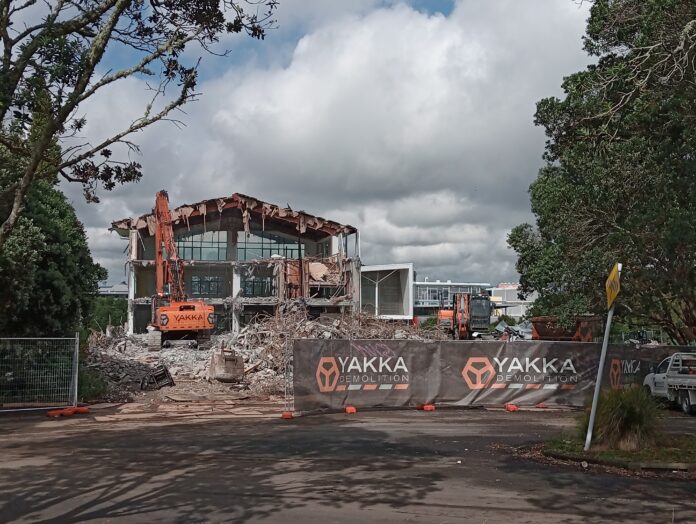
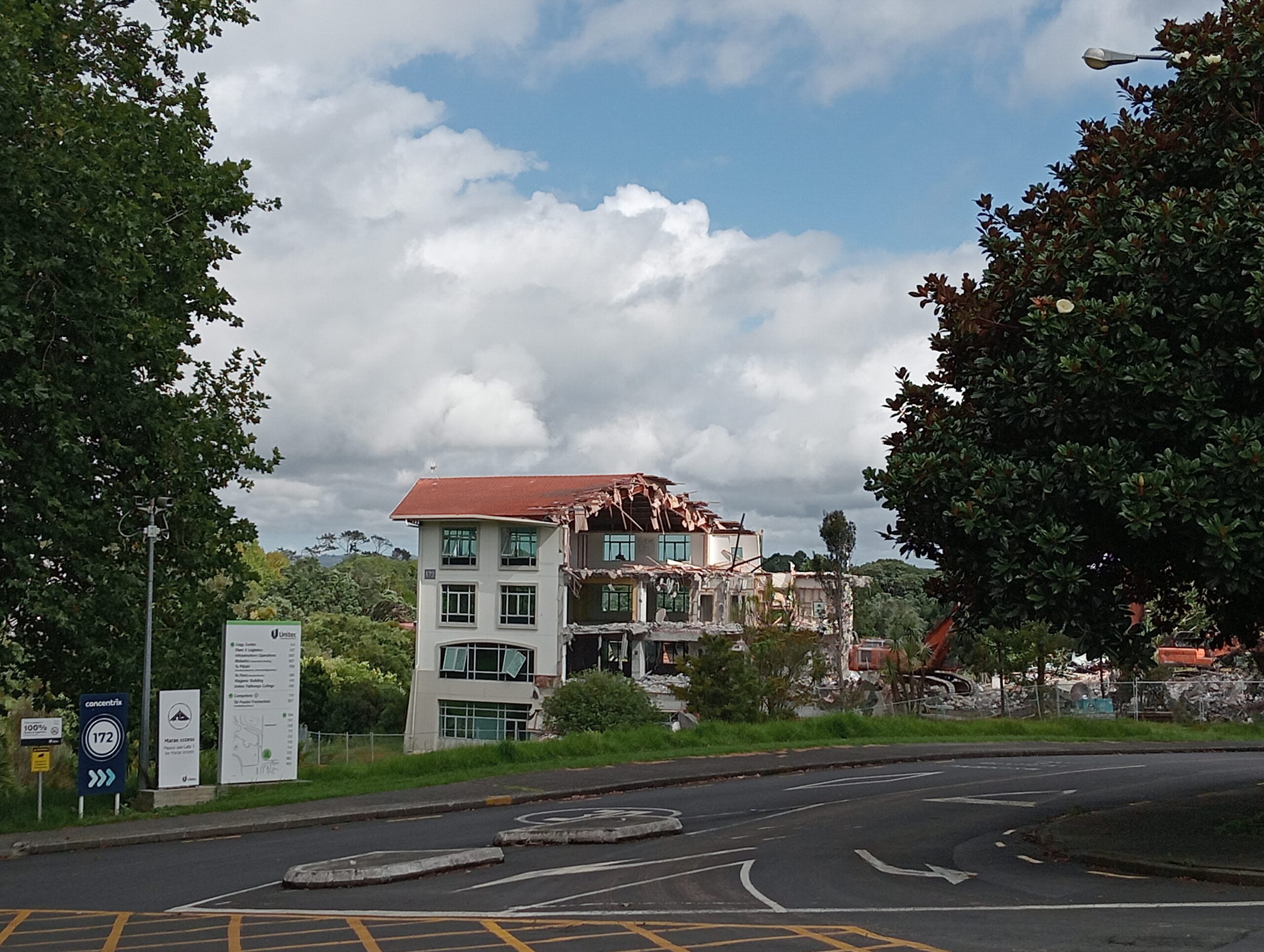
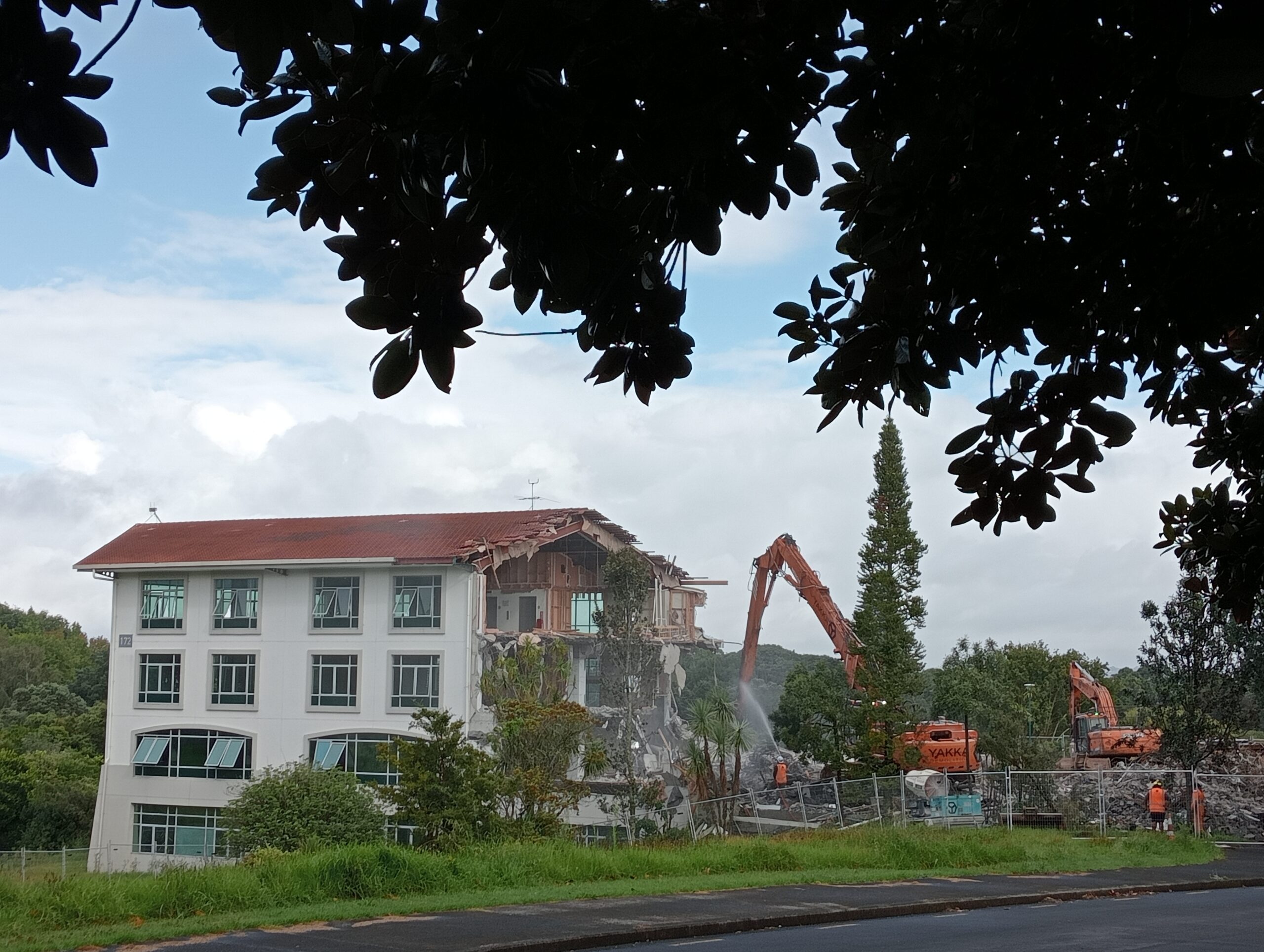



_boven_Rotterdam_-_11028-A-B_-_Museum_Rotterdam.jpg)


