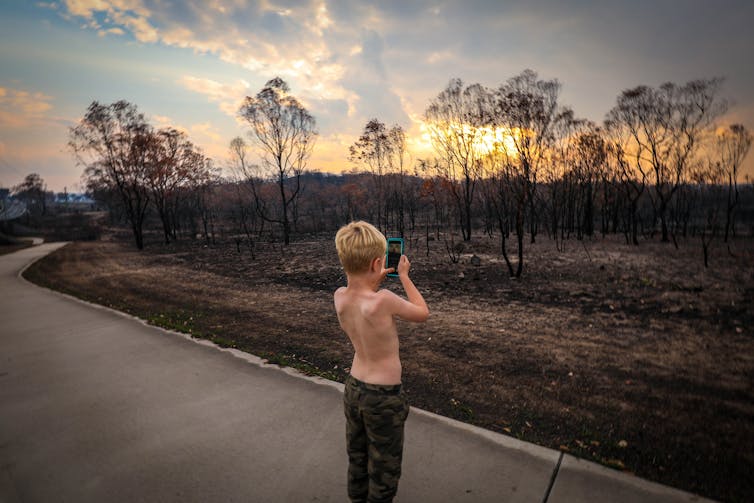
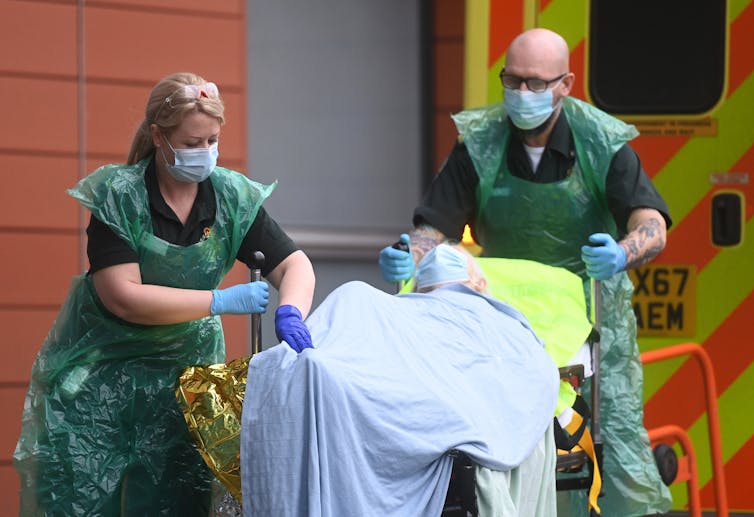
There have been some reports students fell behind during the remote learning period in 2020.
For instance, a report by the NSW education department found NSW students in year 3 were up to four months behind in reading in 2020 compared to their 2019 counterparts. And year 9 students were two to three months behind in numeracy.
Modelling by the Grattan Institute estimated disadvantaged students — including those from low socioeconomic families, Indigenous backgrounds and remote communities — had lost around two months learning during the remote learning period in Victoria.
Our research found only year 3 students from the least advantaged schools fell behind academically during the remote learning period.
But there was no difference in learning progress between 2020 and the year before in all the other year 3 and 4 students in our sample.
We were able to compare 2019 and 2020
We collected data on student achievement in NSW government primary schools during terms 1 and 4 in 2019 and during term 1 in 2020.
Students in year 3 and 4 in 2019 sat progressive achievement tests in maths and reading in term 1 in 2019, and then again in term 4, to see how they had progressed over the year.
We then had year 3 and 4 students sit the same test in term 1 of 2020. But then COVID struck.
So we approached the NSW education department about funding collection of the term 4 data in 2020. We wanted to see if the interruption to normal schooling during the year had affected average student progress from term 1 to term 4.
We were uniquely positioned to compare the annual growth in student achievement in 2020 (where the year was interrupted) with our results from 2019.
Students in years 3 and 4 in 2020 took the same tests as we gave students in 2019. The total of 3,030 students across both years, from 97 schools, allowed us to examine the actual effects of the eight-to-ten week system-wide disruption to schooling in NSW caused by the pandemic.
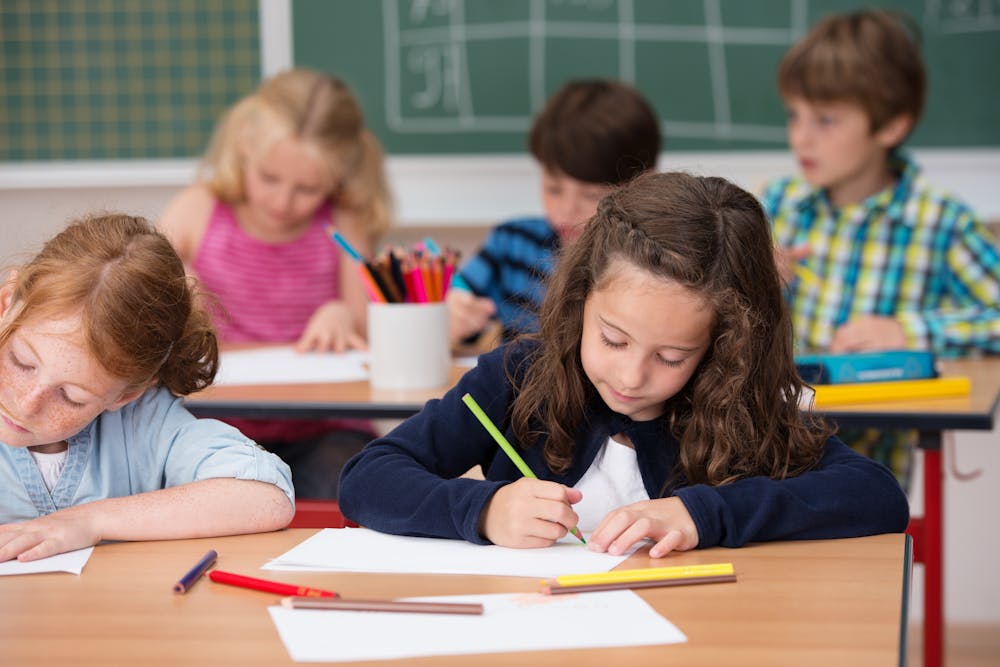
Students sat tests in term 1 and then again in term 4 to monitor their progress.Shutterstock
We made sure to compare the results of students who attended schools with a similar Index of Community Socio-Educational Advantage (ICSEA). This score takes into account factors such as socioeconomic advantage and whether schools are in a rural area, as well as the proportion of Indigenous students in the school.
We also made sure to compare students with similar baseline test results.
Here’s what we found
We found no significant differences, on average, between the 2019 control group and 2020 cohort in student growth in maths or reading.
However, there were some differences when it came to particular groups of students.
Specifically, we looked at the effects for Indigenous students, students in different locations and from different socioeconomic levels (using their school ICSEA).
The average school ICSEA in Australia is 1,000. Schools in our sample ranged from less than 900 to greater than 1,100.
When it came to maths, our results showed:
year 3 students from less advantaged schools (ICSEA less than 950) showed two months less academic progress in 2020, compared with the students in the 2019 group
year 3 students in mid-range schools (ICSEA 950 – 1050) actually showed two months’ additional progress
years 3 students showed no significant difference in the more advantaged schools (ICSEA greater than 1,050)
year 4 students showed no significant difference in progress regardless of school ICSEA.
When it came to reading, we found no significant differences in academic progress between 2019 and 2020, regardless of school ICSEA.
We saw no significant differences in progress in both maths and reading for Indigenous students or those in regional locations. But the smaller sample of students in these groups means these results should be interpreted with caution.
What this means
Our study provides a counter-narrative to widespread concern about how much students fell behind during the remote learning period.
Indeed, the results are cause for celebration. Most students are, academically, where they are expected to be.
However, the lower achievement growth in maths for year 3 students in lower ICSEA schools must be addressed as a matter of urgency to avoid further inequities.
We also interviewed 18 teachers and principals, asking them about things like student progress and well-being during the remote learning period. These interviews echo concerns raised by others about the well-being of both students and teachers.
They described the learning from home period as one of significant stress, anxiety and frustration in many families.
They also expressed concern about student well-being, even after the return to face-to-face schooling.
Supporting student mental health substantially increased the workload of school counsellors, where available, and of teachers and principals in addressing student behaviour.
One principal said:
We’ve got massive amounts of anxiety in our students. From physical behaviour, oppositional behaviours, kids not wanting to come to school. They’re melting down at school … I’m only a primary school, so I have no idea how the high schools are handling it.
They told us the exponential increase in workload during 2020 has taken its toll on teachers, including a significant drop in morale. Teachers and principals described the pressure of supporting remote learning, regardless of students’ access to the internet or a computer, combined with teaching children of essential workers who remained at school.
Their work also included developing and delivering online lessons and providing various forms of support to parents. When schools reopened, staff worked to support student well-being and reestablish relationships with their classes. They did this without the support of parent volunteers or the balance that comes from non-classroom activities like school assemblies and excursions that typically punctuate life in schools.
Our research highlights a need to provide ongoing support to all teachers and students to ensure their well-being as the 2021 school year commences. Let’s start with expressing immense gratitude to teachers for ensuring student learning despite the unprecedented circumstances of 2020.
In a new series, writers pay tribute to fictional detectives on the page and on screen.
I’ve always preferred my fictional detectives on the weirder side.
Like the sour-tempered narrator of Derek Raymond’s Factory Series. Everyone hates the bloke. But not as much as he hates them back. (He calmly addresses an uncooperative desk sergeant as “you cunt”.) Exiled to the Department of Unexplained Deaths he sets about obsessively solving mysteries no one but he cares about. There’s a higher purpose to his misanthropy.
That series was written in the 1980s, shortly before James Elroy came along and put the whole genre into meltdown. I found myself losing interest in the all-too acceptably transgressive detectives who followed.
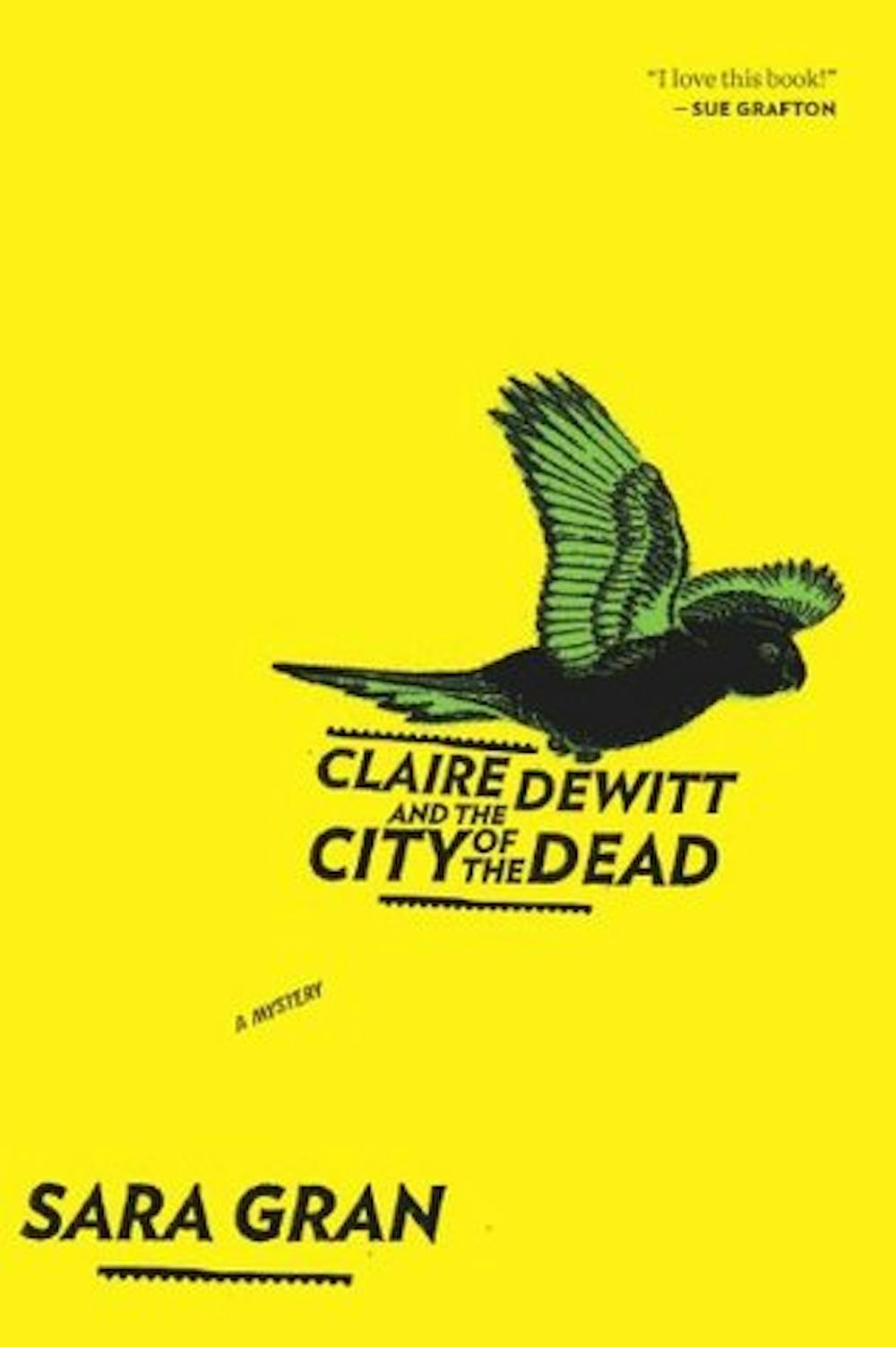
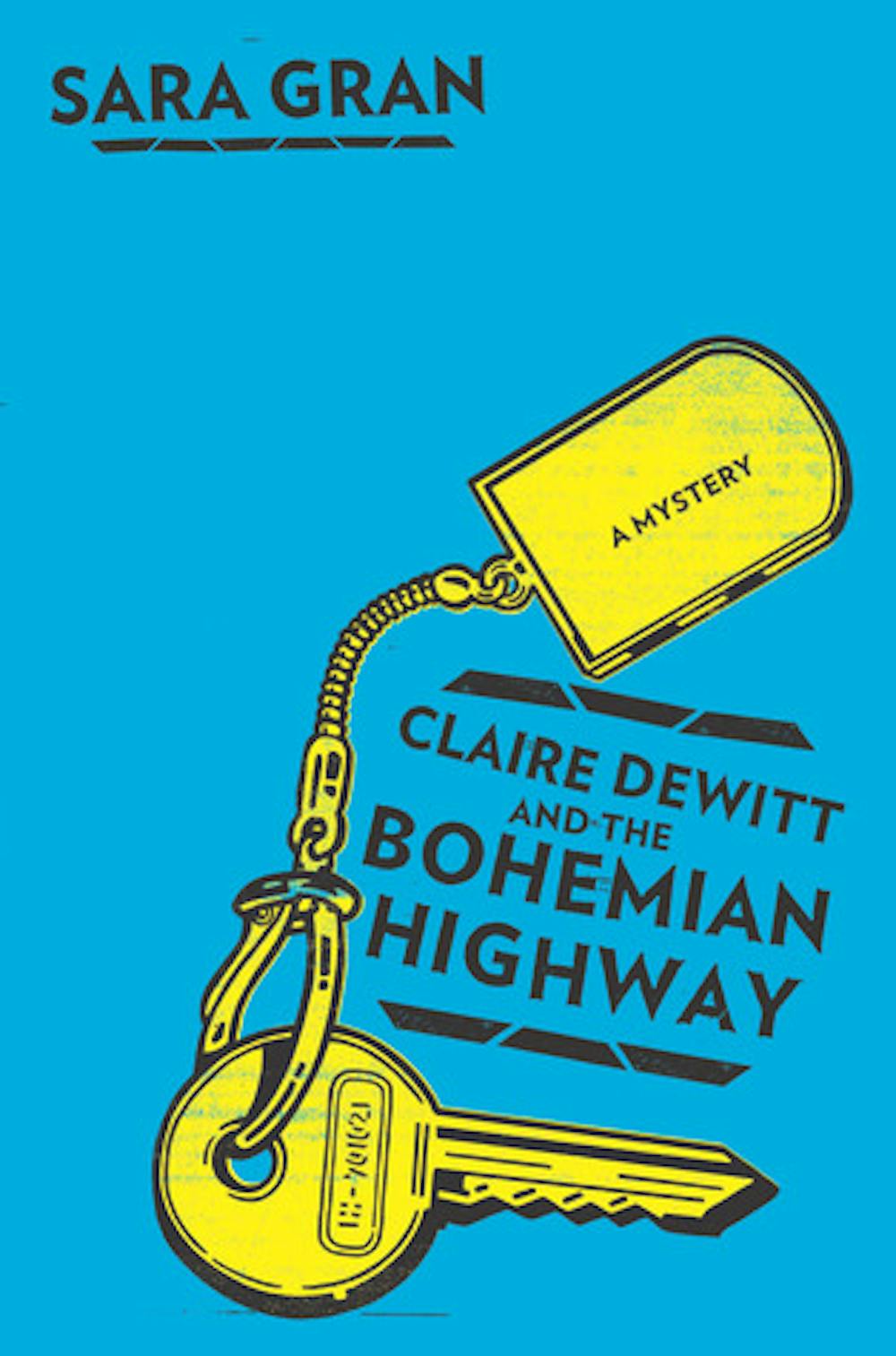
Then a few years ago a writer friend alerted me to authorSara Gran, and her almost-impossible-to-describe detective, Claire DeWitt. From precocious girl sleuth to drugged-up detective, she is complex yet dogged.
Claire’s background (we learn) is as a schoolgirl detective, in the Nancy Drew cosy tradition, one of three brainy Brooklyn teens inflamed by pulp novels, mystery comics and mail-order sleuthing paraphernalia. The girls quickly set about solving actual mysteries. Then one of the trio disappears, never to be seen again. That’s the backstory.
Present day Claire is a “detective”, although what that means is unclear. No office, no business cards, no website. She refers to herself as the unquestioned World’s Greatest Detective, and makes frequent mention of past cases, which have names like The Case of the Silver Pearl, The Case of the Omens of No Tomorrow, The Case of the End of the World, The Case of the Confused Academic — the way Dr Watson might refer to Sherlock Holmes’ famous cases.
Claire is never without her bible, Jacques Silette’s criminological masterwork, Détection. The fictitious Silette (I Googled him, just in case) is forever coming out with naff-deep pronouncements like, “Mysteries never end. We solve them anyway, knowing we are solving both everything and nothing”. Or, “No one is innocent. The question is how will you bear your portion of the guilt?” (Good question!)
Goodreads
Silette could easily have been mates with theory heavies like Jacques Derrida and Jacques Lacan, dropping as he does such whacky bon mots as “Karma is not a sentence already printed. It’s a series of words the author can arrange as he chooses”.
The world of amateur detection, it turns out, is a deeply riven one, with a few beleaguered Silettians duking it out against the ruthless anti-Silettians. (The international detective scene, with its arcane controversies and obsessional characters is a little like the chess world in The Queen’s Gambit, except with murders.)
If this all sounds like a mighty piss-take on the Golden Age detective story, believe me it’s anything but. For one thing, Gran never, ever winks at the audience, never plays cute, never chases laughs. It’s all delivered utterly straight-faced.
For another, Claire is a total dope hog. If she happens upon a white powder or an amber fluid, or a pill, or something to smoke or sniff, she’s into it.
Sometimes the action will skip eight, ten hours or a whole day, then restart when a comatose Claire suddenly comes to with the breaking down of a toilet door by a terrified barman. People see her coming and they call the cops.
If it’s mind-altering, Claire DeWitt is up for it, sometimes creating gaps in the narrative.Unsplash/Artem Ivanchencko, CC BY
She is very “street”. In one classic set piece, two obviously armed teenage boys stand between her and her truck door in the Lower Ninth Ward in post Katrina New Orleans. Attuned to such cues, Claire sees suicidal longing in the beautiful eyes of the boy standing in front of her. She doesn’t oblige him.
Later on she shares a joint soaked in a brown liquid — formaldehyde? — with some anonymous street kid and they both slip into operatic hallucination, gaping in silence at the rising moon. That chemical delirium is kind of like what you feel when reading a Claire DeWitt novel.
Goodreads
The stories race ahead, as tough and beautifully written as any crime fiction. And for all the drug snarfing, Claire remains a very reliable narrator. It’s reality that’s unreliable.
Gran confidently assembles this cosy yet hardboiled grunge-social-realist material-yet-trippily-archetypal world. Into it he adds Claire: its druggy, self-harming, hyper-intellectual, spiritually questing, maybe psychotic but thoroughly unrelenting outsider shamus. It’s a big ask but it works.
By the end of latest novel, the third in the series, the overarching mysteries which thread all three together have joined in a single weave. So maybe Gran has finished with Claire. I hope not.
I let my mind fill with the case. It was only a case. Only another case. Another sentence of words to rearrange. Maybe that was all there was to life. One long case, only you kept switching roles. Detective, witness, client, suspect. Then one day I’d be the victim instead of the detective or the client and it would all be over. Then I’d finally have a fucking day off.
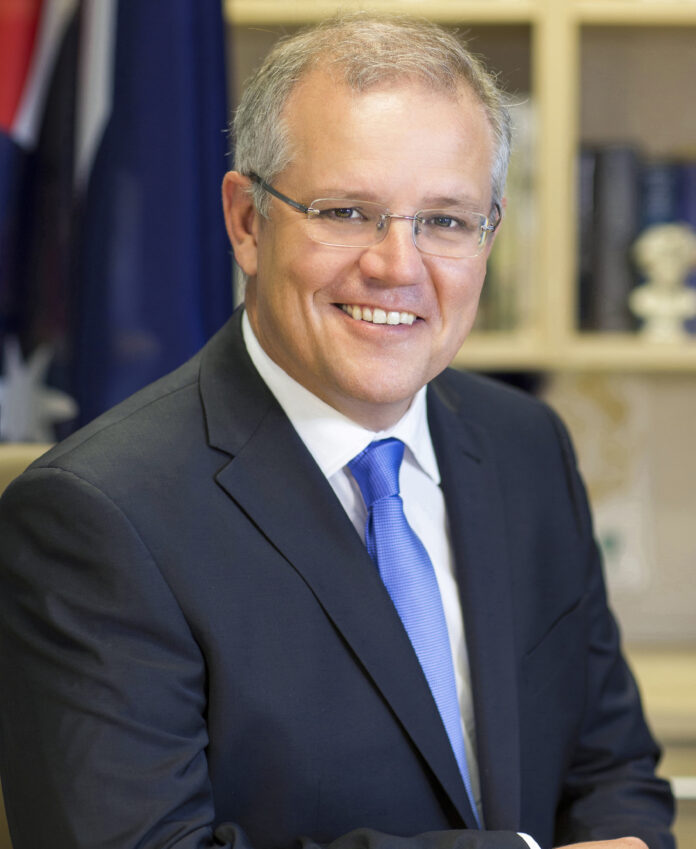
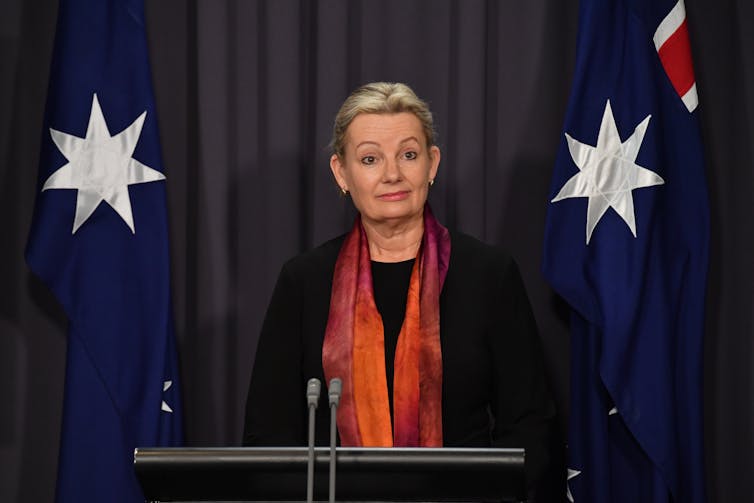
Prime Minister of Australia, Scott Morrison. Image by Kristy Robinson / Commonwealth of Australia - CC BY 4.0, https://commons.wikimedia.org/w/index.php?curid=57753091
Scott Morrison on Monday will announce $1.9 billion initial investment in the massive vaccine rollout which is due to start late this month.
This comes as new economic disruption looms from the Western Australian government’s shock five-day lockdown of Perth and some other areas from Sunday night. The drastic measure has been triggered by a hotel security guard testing positive.
MPs and staffers on a flight from Perth to Canberra late Sunday were told to go to their accommodation – and not to Parliament House – and await further advice from ACT health officials.
The latest Commonwealth money will fund hospitals, the surge workforce required for the rollout, GPs, pharmacists, logistic companies and data systems.
It includes $200 million for pharmacies announced on Sunday. and brings to $6.3 billion the federal government’s total support for COVID vaccines and treatments.
In a Monday address to the National Press Club Morrison will say Australia enters 2021 in “a relatively strong position” in the fight against COVID.
But in the speech, an extract of which were released ahead of delivery, he stresses the vaccine rollout will not allow a let up “in the three vital suppression measures”: border restrictions and quarantine; testing and tracing, and distancing and hygiene.
PMO
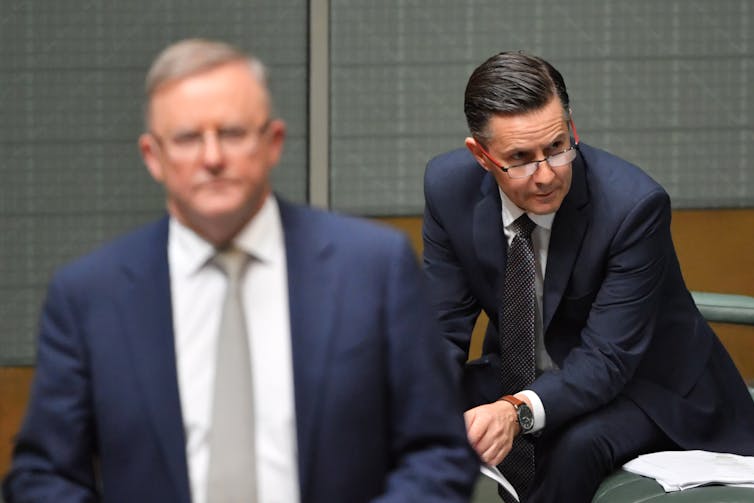
With parliament resuming on Tuesday, Sunday night’s Newspoll showed a tightening, with government and opposition now 50-50. In the last Newspoll of 2020 the Coalition led Labor 51-49%.
Both Morrison and Anthony Albanese lost support in their approval ratings and the “better PM” gap narrowed, although Morrison leads 57-29%. The poll will be a relief to the opposition leader, whose leadership has been under pressure.
Morrison will reiterate in his address that the government aims to offer all Australians the vaccine – which is not compulsory – by October.
“This will be one of the largest logistics exercises ever seen in Australia’s history — we will be vaccinating 26 million people, having secured over 140 million doses, enough to cover the Australian population several times over,” he says in his speech notes.
“Our guidance is that first vaccinations remain on track to be in Australia, ready for distribution to priority groups, from late February.
“However the final commencement date will depend on developments overseas, which we will continue to monitor and update accordingly.”
There will be “thousands of points of presence across Australia – hospitals, GPs, pharmacies, respiratory clinics, Aboriginal Health Services and a specialist surge workforce. This will ensure we get the vaccine to all Australians, including people in rural, remote and very remote areas and others who are hard to reach,” Morrison says.
Australia’s 5,800 community pharmacies will be invited to participate in the rollout.
Morrison will stress the need for vigilance, but also for proportionality, in 2021.
“The pandemic is still raging. It is not petering out. The virus has not gone anywhere. Indeed, it is morphing into new and more virulent strains.
“We have all learned a lot over the past twelve months and in so many areas led the way.
“We must take these lessons into 2021 and continue to make our own way through this crisis. Our Australian way.
“That respects our liberal democratic values, our expert institutions, our business led market economy and the responsibilities and accountabilities of our federal system.
“Where our decisions to protect public health are guided by our respect for science and expert medical advice.
“An economic response driven by clear principles to navigate uncertainty.
“A response that is proportionate, timely, scalable and targeted.”
The government continues to insist that its JobKeeper scheme will end in late March. But it is open to providing specific help which that is needed.
“We are not running a blank cheque budget,” Morrison says.
PMO
“Australians are now voting with their feet to join the economic recovery,” he says.
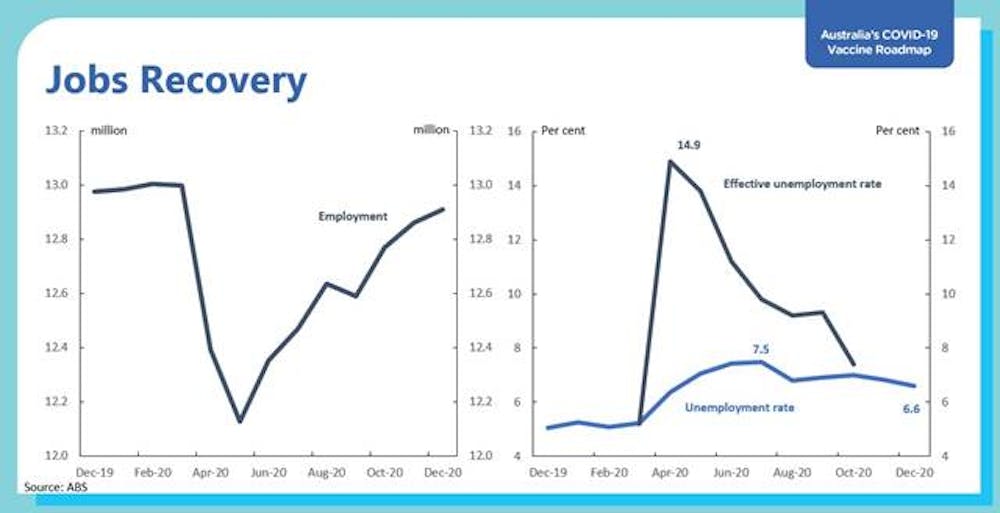
“The unemployment rate has fallen from 7.5% in July last year to 6.6% in December.
“The effective rate of unemployment, that takes into account hours reduced to zero and people leaving the workforce, has also fallen to now be in line with the headline rate after hitting almost 15% at the height of the crisis.
“Almost 800,000 jobs were created in the past seven months and it is very pleasing to see women take up the majority of those jobs. 90% of the jobs lost to COVID-19 had returned by the year’s end.”
Morrison will stress that the $251 billion in direct economic support, “while largely delivered in 2020, has a long tail in providing ongoing support.
“Treasury analysis has shown that our direct economic support measures are expected to result in economic activity being 5% higher in 2020-21 and 4.5% higher in 2021-22 compared to if no support was provided.
“There is now a large sum of money available to be spent across the economy helping to create jobs and maintain the momentum of our economic recovery and that is where it needs to be right now – in Australians’ pockets.
“Indeed in 2021, the government will continue putting more money back into Australian’s pockets to support their families and businesses.”
Fiji’s national curfew enforced by the National Disaster Management Office (NDMO) on Friday evening has been dubbed as thoughtless and the “height of stupidity”.
National Federation Party president Pio Tikoduadua said it showed the government’s “disconnect with reality”.
“When NDMO director announced the imposition of a curfew, she said it was with the concurrence of the Prime Minister,” said Tikoduadua.
The NDMO said a 49-year-old man had drowned and five people were missing, including a three-year-old boy from Lautoka.
Tikoduadua said: “Fiji has never, in 50 years, imposed a curfew before a cyclone because we have always relied on the good sense of our people to look after themselves and each other in natural disasters.
“After the weekend curfew announcement, there was panic buying and selling of goods while hundreds of farmers and market vendors rushed to sell their goods at a loss because their weekend business was destroyed.
“As far as we know, the curfew was not lawful because no legal steps were taken under the NDMO Act to support it and certainly government did not say they had taken any.”
Government ‘completely isolated’ Tikoduadua said the government failed to think strategically because it was completely isolated from the people.
“The people of Fiji are finding it increasingly hard to believe that this disorganised bunch of people, who just make it up as they go along, is really their government,” he said.
“They need to remember these events the next time they go to the polls.”
NDMO director Vasiti Soko apologised to the public over the change to nationwide curfew hours.
The curfew hours have reverted to the daily 11pm to 4am window after a shift in the projected path of TC Ana. On Friday, the hours had been changed by Soko in the Western Division to 12pm Saturday to 6am on Monday, February 1, 2020.
Curfew hours for the Central, Eastern and Northern Divisions, were to have begun from 4pm Saturday until 4am on Monday.
Soko said every decision made by the office was in consultation with the Fiji Meteorological Service and other stakeholders committed to ensure the safety of all citizens.
Apologies for the ‘inconvenience’ “We apologise for the inconvenience caused as the analysis we received yesterday [Friday] entitled that an announcement should be made and due to the revisions made today [yesterday] on the path of the cyclone, the Emergency Committee decided to revert the curfew hours,” she said.
She said there was no way to predict the path and nature of a cyclone and NDMO would continue to make decisions based on the current situation.
“As of when the weather calls for a decision, then it will be made, but as it is, we will continue to update the public about all the restrictions and movements.”
Suva’s iconic Ivi Tree is no more, as shared by @MakaretaKomai. For Suvans especially, the demise of the tree is a very…
Source: The Conversation (Au and NZ) – By Erin Smith, Associate Professor in Disaster and Emergency Response, School of Medical and Health Sciences, Edith Cowan University
Perth and the Peel and South West regions of Western Australia will go into a five-day hard lockdown from 6pm local time on Sunday, after one new local COVID-19 case was detected in the state.
The new case is a male security guard who was working on the same floor as a person in quarantine with the UK coronavirus variant.
Contact tracing is underway, and residents have been asked to get a COVID test if they visited any of several venues listed as potential exposure sites.
The lockdown is currently scheduled to last until 6pm on Friday February 5, although Premier Mark McGowan has not ruled out extending the restrictions if necessary.
What do the restrictions mean?
Residents will only be allowed to leave home for four essential reasons: work or study, exercise, to shop for essentials or to access healthcare.
Schools, many of which were scheduled to begin on February 1, will remain closed for the coming week.
Face masks will be mandatory in the state when leaving home for essential reasons.
The WA state election campaign has been suspended, and Big Bash cricket fixtures and Perth Fringe Festival events cancelled for the duration of the lockdown.
McGowan said the lockdown is “a crucial reaction to keep the community safe”.
Border restrictions likely
McGowan has also recommended that other states suspend travel to WA — a blunt tool for dealing with outbreaks of this size.
Restricting travel from specific hotpots can be a successful circuit-breaker to disease transmission.
But hard border closures — particularly with no evidence of widespread community transmission — seem unnecessary and counterproductive at this stage, and are associated with a host of health and economic consequences.
Face masks, meanwhile, can certainly help reduce the risk of disease transmission, and thereby help keep borders open.
The lockdown will hopefully act as a circuit-breaker, minimising community transmission and allowing health authorities to trace and test anyone who might have been infected.
Disappointingly, meanwhile, Perth supermarkets were hit with a wave of panic-buying, similar to the scenes during previous lockdowns elsewhere.
This behaviour is unnecessary and counterproductive. Shops will remain open, and people will still be able to buy what they need during the lockdown. Crowding into shops (especially without wearing masks) directly before the lockdown begins actually increases the risk of infection.
Shoppers queue at a supermarket in Maylands, one of the exposure sites of the latest outbreak.Richard Wainwright/AAP Image
Is the lockdown an overreaction?
Back on January 13, WA’s chief health officer Andy Robertson suggested the state would likely enter a short, sharp lockdown if a coronavirus outbreak was detected within the community.
Going hard and fast was effective in South Australia, and also seems to have been quite effective in Queensland.
Queensland chief health officer Jeannette Young said the January 2021 lockdown did indeed act as a circuit-breaker, similar to SA’s November 2020 response, to stop the virus spreading out of control.
“I think Adelaide managed their outbreak brilliantly … it was probably one of the best responses in the country,” she said.
Last year, at the height of Melbourne’s second COVID wave, UNSW professor and epidemiologist Mary-Louise McLaws suggested public health officials were likely to be criticised regardless of their strategy.
“If we call it early, then the public thinks that we’re saying the sky is falling in. If we call it late, then you’re said to not be able to handle an outbreak. So you’re not going to win,” she said.
If health authorities are going to cop criticism either way, this suggests the best strategy is to err on the side of overreacting, rather than underreacting, and aim to be safe rather than sorry.
By this logic, Perth’s five-day circuit-breaker is simple common sense.
Right-wing Liberal backbencher Kevin Andrews – the father of the House of Representatives – has lost preselection to a barrister and former special forces veteran who served in Afghanistan.
Keith Wolahan, 43, defeated Andrews, 65, who held a number of portfolios in the Howard and Abbott governments, by 181 to 111 for the blue ribbon Victorian seat of Menzies, which Andrews has occupied since he won it at a byelection in 1991.
This was the first time in decades that a federal member has lost a preselection ballot in Victoria.
His defeat is a blow for the Liberal conservatives, who campaigned hard to shore him up, and will hearten the local Liberal critics of outspoken NSW right winger Craig Kelly, who has been a thorn in the government’s side over COVID and a hardliner on climate issues.
Kelly confirmed to The Conversation on Sunday night that he was seeking another term and was “absolutely confident” he would have Scott Morrison’s support and that of “all my colleagues”.
Andrews has been a strongly conservative voice on issues ranging from euthanasia and abortion to climate change, and also a player in leadership battles. His last ministerial post was in the defence portfolio in the Abbott government, a job he lost when Malcolm Turnbull became leader.
In the Howard years Andrews introduced the private member’s bill that quashed the Northern Territory’s euthanasia law.
Andrews had endorsements from Morrison, John Howard and Tony Abbott, as well as from a raft of ministerial colleagues, including the deputy Liberal leader Josh Frydenberg. In his letter of endorsement Morrison wrote that Andrews “provides wise counsel to ministers and colleagues, including myself”.
But the result shows that high profile endorsements don’t always impress locals – the Menzies preselectors responded to the call for renewal at the centre of Wolahan’s campaign. It is an embarrassment particularly for Assistant Treasurer and Victorian conservative faction leader Michael Sukkar.
Wolahan has a master’s degree in international relations from the University of Cambridge, as well as degrees from Monash and Melbourne universities. He was an army reserve commando – he did not serve in the regular army.
He said after the result: “Today was a vote by the members for the future”.
Frydenberg said: “Today the Liberal Party in the seat of Menzies has started a new chapter”.
Before the ballot Liberal sources had predicted a close result that could go either way – the size of the margin was a surprise.
Six months ago the forecasting team assembled by The Conversation was expecting Australia’s recession to continue into 2021, sending the economy backwards a further 4.6% throughout the year.
This morning, in the survey prepared ahead of the Reserve Bank board’s first meeting for the year and an address by the Reserve Bank governor to the National Press Club on Wednesday, the same forecasting team is upbeat.
It expects the recovery that began in the September quarter of last year to continue, propelling the economy forward by a larger than normal 3.2% throughout 2021, with growth slowing to more sedate 2.1% per year by the middle of the decade, still well above than dismal 1.7% per year expected six months ago.
The unemployment rate is now expected to remain near its present 6.6% throughout 2021, instead of soaring to almost 10% as expected six months ago.
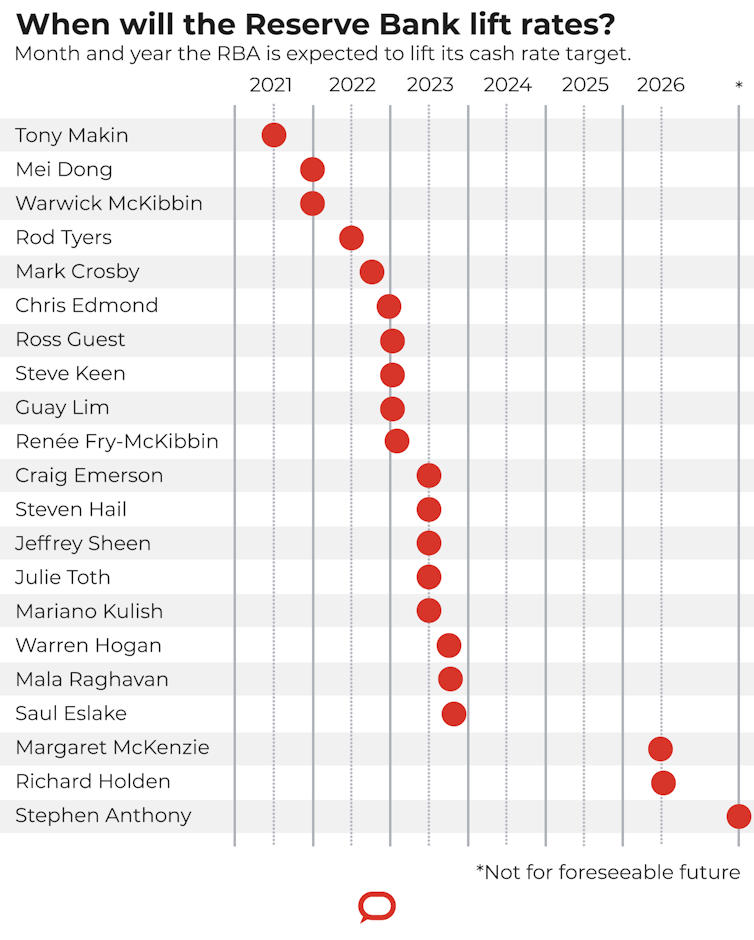
But improvement in the unemployment rate is expected to be slow, and as house prices and share market prices climb, most of the panel expect the Reserve Bank to lose its patience and begin to lift interest rates from their emergency lows before the end of next year, ahead of its published schedule.
The 21-person forecasting panel includes university-based macroeconomists, economic modellers, former Treasury, IMF, OECD, Reserve Bank and financial market economists, and a former member of the Reserve Bank board.
Economic growth
Only two of the panel expect the economy to shrink further in 2021.
The rest expect the economy to grow, two of the panel by at least 5%, something that isn’t out of the question given that the economy shrank by 7% during the worst three months of the 2020 coronavirus restrictions and clawed back only 3.3% in the three months that followed.
Panellist Saul Eslake who forecast growth of 3.5% in 2021 six months ago is now forecasting growth of 5.25%, saying the transition away from JobKeeper and other supports has been going more smoothly and the property market and residential building market have holding up much better than he had expected.
Growth will be constrained by unusually slow population growth, a gradual tightening of government purse strings and anticipation of higher interest rates.
China’s 2021 growth, expected to be 4% six months ago, is now expected to be 6.3% as it reaps the fruits of having recovered early from its coronavirus crisis with its production systems intact. Panellist Warren Hogan cautions that longer term China is likely to place less importance on economic growth and more on military adventurism.
The continuing COVID crisis in the United States is expected to push its recovery out into the second half of the year as vaccination programs and President Biden’s stimulus measures take hold.
Unemployment
Although few on the panel expect unemployment to get much worse, most believe it will be many years before the unemployment rate shrinks to the 4.5% to 5% the Reserve Bank has adopted as a target.
Panellist Julie Toth says the end of JobKeeper in March will reduce the ability of struggling businesses to keep their employees. Closed boarders mean skill mismatches and shortages will grow alongside persistent unemployment and underemployment.
Other panellists warn of a “jobless recovery” as large organisations that held onto labour during the crisis start to shed staff as part of digitisation programs.
Living standards
Annual wage growth, at present a minuscule 1.4% – the lowest in the 23 year history of the index – is not expected to improve at all in the year ahead, ending 2021 at 1.4%.
At the same time annual inflation is expected to climb from last year’s unusually low 0.9% to 1.6%, putting it above wage growth for the first calendar year on record, sending the buying power of wages backwards.
A broader measure of living standards, real net national disposable income per capita, which takes account of the hours worked in each job and other sources of income, is expected to continue to climb in 2021, continuing the recovery begun in last year’s September quarter after the precipitous slide of 8% during the first half of last year.
Household spending is expected to climb a further 3.4% in real terms, continuing the recovery begun in the September quarter after a slide of 13.8% in the first half of last year.
Interest rates
The panel expects the Reserve Bank to lift its cash rate from the present all-time low of 0.10% well ahead of the “at least three years” timeframe set out by the bank.
The bank had promised not increase the cash rate until actual inflation was “sustainably within” its 2% to 3% target range.
And it had moved the three-year bond rate to 0.10% as a sign that it expected the cash rate to stay at 0.10% for at least three years.
Although few on the panel expect inflation to climb back to the Reserve Bank’s target range by the end of next year, most expect the bank to begin to lift its cash rate by then.
Panellist Mark Crosby says rising home and other asset prices will put the bank under pressure to backtrack on its commitment in the knowledge that the economy is in a position to withstand more normal rates.
Long-term interest rates are already higher than they were at the start of this year.
The panel expects the ten-year benchmark used to set the rates at which the government can borrow to gradually climb from last year’s all-time lows.
Asset prices
Sydney home prices are expected to climb 4.9% after climbing 2.7% in COVID-hit 2020. Melbourne prices are expected to climb a lesser 4.4% after slipping 1.3%.
Saul Eslake says Melbourne’s economy has been far more reliant on interstate and international migration than any other part of Australia and has damaged its image as a desirable destination by its handling of the pandemic.
Other panellists draw a distinction between apartment price growth, which should be weak because of lower demand for international student rentals, and freestanding home prices which should be supported by an implicit Reserve Bank guarantee of three years of ultra-low interest rates.
The panel expects housing investment to climb 3.8% after falling 5% during the first nine months of 2020.
The Australian share market collapsed 37% in just over a month in the early weeks of the coronavirus crisis and spent the rest of 2020 recovering.
Although opinion is split about 2021, the panel’s average forecast is for growth of 3.5%
Panellist Mala Raghavan says low interest rates are forcing long term investors to take positions in companies with strong fundamentals. Craig Emerson says he expects the equities bubble to burst at some point, but probably not while low interest rates continue.
At US$160 a tonne, the iron ore price has almost doubled since the start of 2020.
On balance the panel expects it to ease to US$133 throughout 2O21, noting that at some point Brazil is going to return to full production after a series of dam collapses and pandemic-related problems. China is thought to prefer to buy from Brazil.
Business
The panel expects Australian businesses to find any lift in the share market and consumer spending uninspiring.
After collapsing 24% in the first nine months of 2020 the panel expects non-mining business investment to climb by only 2% in 2021 and 3.1% in 2022.
It cites low immigration and uncertainty over COVID and the shape of new business practices as more important in determining investment decisions than the government’s generous tax incentives.
Government
The panel’s central budget deficit forecasts are not too far from the latest government forecasts released in December at A$192 billion in 2020-21 and $114 billion in 2021-22.
Panellists note that the government will have little opportunity to restrain spending in the lead up to the election and will be under pressure to boost the JobSeeker unemployment benefit which is due to sink back to its pre-COVID level on April 1.
Source: The Conversation (Au and NZ) – By James Renwick, Professor, Physical Geography (climate science), Te Herenga Waka — Victoria University of Wellington
New Zealand’s Climate Change Commission today released its long-anticipated advice to the government on how to reshape the economy to meet the country’s domestic and international climate change obligations.
The document sets out three emissions budgets, covering 15 years to 2035 in five-yearly plans. It also provides advice on the direction policy should take to achieve the country’s 2050 net-zero goal.
New Zealand’s net emissions rose by 57% between 1990 and 2018, placing it among the poorest performers in the OECD. As one of New Zealand’s six climate change commissioners I have been part of the process of making a clear case to government that we must take “immediate and decisive action on climate change” across all sectors.
The commission’s priorities include a rapid shift to electric transport, accelerated renewable energy generation, climate-friendly farming practices and more permanent forests, predominantly in native trees. It also says New Zealand must raise its pledge under the Paris Agreement, known as the Nationally Determined Contribution (NDC), because its current commitment is not compatible with the goal of limiting warming to 1.5℃ above pre-industrial levels.
Ambitious but realistic carbon budgets
The good news is the draft carbon budgets are achievable, with technologies that already exist.
The commission’s advice is built around 17 recommendations that cover many sectors of the economy. One of the key messages is that Aotearoa New Zealand cannot plant its way out of trouble but needs to make real cuts in emissions and eliminate the use of fossil fuels.
Most of the solutions are well known. We need to reduce emissions from transport, from energy and industry, from agriculture and from waste.
Recommendations for the transport sector include electrification of the vehicle fleet, improved public transport networks and better integration of active transport (walking and cycling). A rapid increase in electric cars would reduce emissions from private and commercial transport, while supporting low-carbon fuels like “green” hydrogen and biofuels would help the freight sector (including heavy trucks, shipping and aircraft).
Part of the transport story is urban planning — changing how people and goods move around. The commission recommends limiting urban sprawl, making walking and cycling safer and easier and shifting more freight from road to rail or shipping.
The commission also calls for rapid decarbonisation of electricity generation, and energy generally, to phase out the use of coal. Between now and 2035, it estimates New Zealand could cut transport emissions by 47% and those coming from heat and electricity generation by 45%.
Emissions from agriculture
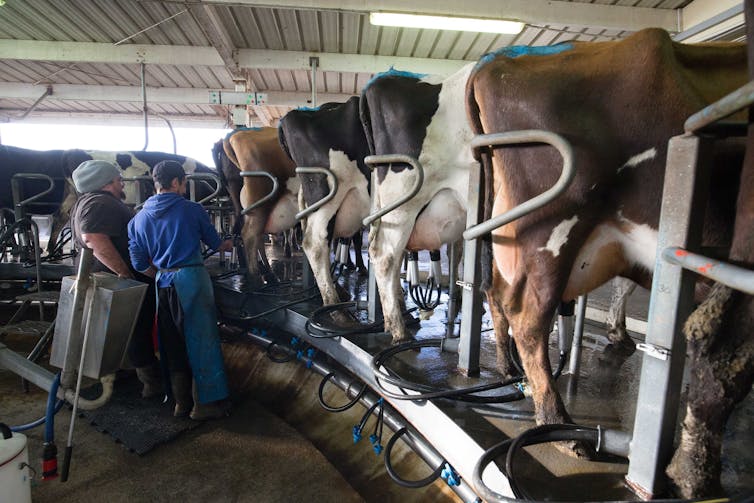
Methane accounts for 43.5% of New Zealand’s greenhouse gas emissions, and more than 80% of total methane comes from cud-chewing farm animals. But the short-lived nature of methane in the atmosphere means we do not need to reduce methane emissions so fast.
The Zero Carbon Act calls for a 24-47% reduction in methane emissions by 2050, compared to net-zero for carbon dioxide.
Emissions from farm animals account for more than 80% of New Zealand’s methane emissions.Brendon O’Hagan/Bloomberg via Getty Images
The commission’s advice is that biogenic methane emissions can be reduced by 19% by 2035 while further improving productivity in the sector through better feed, fewer but more productive animals and continued research into emission-reducing technologies.
The commission calls for real cuts in emissions rather than offsets through tree planting, but argues forestry should continue to play an important role in the long-term storage of carbon, for example if timber is used in buildings or furniture and to provide bioenergy.
It recommends a shift towards more permanent native forests to improve long-term carbon storage, biodiversity and soil retention.
Waste is another sector with significant potential to cut emissions. Per head of population, New Zealanders throw away roughly twice what an average OECD citizen does. The commission recommends moving towards a circular economy, where resources are valued and reused.
In terms of greenhouse gas emissions, the main issue in the waste sector is methane release from decomposing solid waste. Capturing that gas at source could reduce methane emissions by 14% by 2035.
The commission’s draft budgets recommend an overall reduction in total greenhouse gas emissions of 36% by 2035, starting with 2% by 2025 and 17% by 2030. It estimates the cost of achieving this is less than 1% of projected GDP, much lower than was initially thought.
The payoffs for public health, for our environment and biodiversity make this a good investment, let alone the huge avoided costs from unchecked climate change.
The commission’s recommendations will go through a public consultation process until 14 March, and the government has until the end of the year to decide which parts of the advice it takes on board.
An important aspect of the advice is inclusiveness and support for all sectors of society as we move to a low-emissions future. The commission takes a te ao Māori (Māori world view) approach, making it clear that Aotearoa must have an equitable and fair transition.
Fiji villagers of Nacula in Labasa whose homes are under water after the Labasa River broke its banks this morning have been evacuated to the community hall.
Elderly people and children were assisted by men from their homes and were transported on boats to the village hall.
The majority of the homes in the village are now inundated with floodwaters as the high tide came in after 8am today.
Heavy rain and strong winds continue to be experienced here in Labasa.
We will try to bring you more updates from the north when the weather situation eases.
The Fiji Times reports that Tropical Cyclone Ana had intensified into a category 2 system overnight with sustained winds of about 50 knots (95km/hr) gusting to 70 knots (130 km/hr) near the centre along with heavy rainfall and thunderstorms over most places.
According to the Fiji MET Office in Nadi, TC Ana centre is expected to be tracking east-southeastwards at about 15 km/hr and exiting the central part of Viti Levu (from Nausori to Pacific harbor) from midday to late afternoon today and heading towards Kadavu.
The weather office says regardless of where the centre passes or enters, places around and close to where the centre passes such as Yasawa And Mamanuca Group, Viti Levu, the western half of Vanua Levu, Lomaiviti Group, Vatulele, Beqa, Kadavu and nearby smaller islands and Moala group are to expect destructive storm force winds.
Impacts possible Significant damage to trees, weak structures and houses, heavy damage to crops, power failures and small crafts may break moorings due to storms force winds.
Rain and thunderstorms will continue o cause floods to fiji’s roads, villages, towns and communities near streams, rivers and low lying areas.
Expect very high seas and heavy swells with breaking waves reaching the coastal areas that may cause possible coastal inundation and sea flooding especially during high tide.
Poor visibility in areas of heavy rain and thunderstorms.
For the rest of Fiji Expect damaging gale force winds with average speeds of 85km/hr and momentary gusts of upto 120km/hr.
Impacts will be minor damages to weak structures, minor damages to houses of very light materials in exposed communities, damages to crops and vegetation with trees tilting due to gales.
On January 31, 1961, an intrepid chimpanzee called Ham was launched on a rocket from Cape Canaveral in the United States, and returned to Earth alive. In this process, he became the first hominin in space.
In the 1950s, it was unclear whether humans could survive outside Earth – both physically and mentally. The science fiction writer and warfare expert Cordwainer Smith wrote about the psychological pain of being in space.
Plants, insects and animals had been taken to high altitudes in balloons and rockets since the 18th century. The Soviet Union sent the dog Laika into orbit on Sputnik 2 in 1957. She died, but from overheating rather than the effects of space travel itself.
While the USSR focused on dogs, the US turned to chimpanzees as they were the most like humans. The stakes became higher when US President John F. Kennedy promised to land humans on the Moon by the end of the 1960s.
Biography of a non-human astronaut
Ham was born in 1957 in a rainforest in the Central African nation of Cameroon, then a French territory. He was captured and taken to an astronaut school for chimps at Holloman Air Force Base in New Mexico.
The astrochimps were trained to pull levers, with a banana pellet as a reward and an electric shock to the feet for failure. The chosen chimp would test life support systems and demonstrate that equipment could be operated during spaceflight. Ham showed great aptitude, and was selected the day before the flight.
On January 31, 1961, Ham was launched into space, strapped into a capsule inside the nosecone of a Mercury-Redstone rocket. The rocket travelled at 9,000km/h, and reached an altitude of 251km. The whole flight took 16 minutes from launch to return.
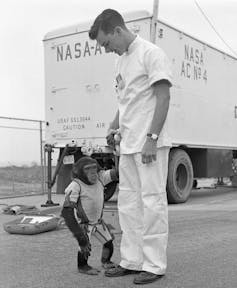
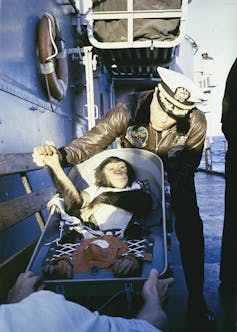
Ham with one of his handlers on the day of the spaceflight.NASA
Throughout the journey Ham was obliged to pull a lever. He received two shocks for not doing this correctly, out of 50 pulls. He achieved this with a 16cm rectal thermometer in place to monitor his temperature.
He experienced 6.6 minutes of free fall and 14.7_g_ of acceleration on descent – much greater than predicted. The biomedical data showed Ham experienced stress during acceleration and deceleration.
Jane Goodall, an expert in primate behaviour, said she had never seen such terror in a chimp’s expression. However, Ham was calm when weightless.
Ham survived the flight itself, but nearly drowned when the capsule started filling with water after its ocean splashdown. Fortunately, the helicopter recovery team reached him in time. Ham’s treat on emerging from the spacecraft was an apple, which he devoured eagerly.
Ham clasps the hand of a member of the recovery team after exit from the capsule.NASA
After his flight, Ham lived for 20 years by himself, in a zoo in Washington DC. People wrote him letters, and some were answered by zoo staff signed with Ham’s fingerprint. In 1980 he was sent to another zoo to live with a group of chimps. He died in 1983 at the age of 26.
A proposal to stuff and display his body was abandoned after an outcry. But he did undergo a postmortem. Ham’s flesh was stripped from his skeleton, cremated, and buried at the Space Hall of Fame in Almogordo, New Mexico. The National Museum of Health and Medicine in Washington DC retains his bones.
Cyborg and simian, man and machine
Ham sits at an interesting intersection of race, gender and species. “Ham” was an acronym for Holloman Aero Medical, but as American philosopher of science Donna Haraway has pointed out, “Ham’s name inevitably recalls Noah’s youngest and only black son”.
While the chimps were in training at the Holloman Airforce Base, women were actively excluded from spaceflight. Pilot Jerrie Cobb said she would take the place of one of the chimps if it meant having a shot at space.
The astronauts of the 1960s Mercury program felt their masculinity threatened by performing the same tasks as chimps. In a scene from the 1983 film The Right Stuff, based on Tom Wolfe’s book for which he did extensive interviews with the astronauts, one says:
Well none of us wants to think that they’re going to send a monkey up to do a man’s work … what they’re trying to do to us is send a man up to do a monkey’s work.
In the I Dream of Jeannie episode “Fly me to the Moon” (1967), astronauts Tony Nelson and Roger Healey train Sam the chimp for spaceflight.
They are envious that Sam gets to go to the Moon before them. “He can’t make any decisions, we might as well have a robot up there,” says Major Nelson.
This refers to an ongoing battle among both Soviet and US astronauts about how much autonomy they would have as pilots. On both sides of the Iron Curtain, being controlled by machines was felt to diminish masculinity.
Chimps in space also threatened the accepted evolutionary order. In some versions of the famous “March of Progress” illustration of human evolution, the first figure is a knuckle-walking ape and the last is an astronaut. Ham was leapfrogging to the front of the evolutionary queue in a Planet of the Apes-style interspecies competition.
Ham’s spaceflight made him more than animal, but still less than human.
A mere 10 weeks after Ham’s feat, Soviet cosmonaut Yuri Gagarin became the first human in space when he orbited Earth on April 12. On November 26, Enos the chimp completed an orbit.
We don’t send animals into orbit any more as proxies for human experience. But there is one chimp still in space. The calls of a wild chimp were recorded on the Voyager Golden Records, now heading out beyond the Solar system.
Solomon Islands’ environmental authorities have highlighted the need to protect the forests from logging following a recent report on new distributional sightings of the blue-faced parrotfinch, or Erythrura trichroa.
The bird revealed its existence on Malaita and Makira islands and the report, published in the Wilson Journal of Ornithology on 4 August 2020, was based on fieldwork done between 2015 and 2018 by a team from the Department of Biology at the University of New Mexico in the United States.
The report expands the known distribution of the species beyond Kolombangara and Guadalcanal, two of the Solomon Islands where it had previously been recorded, and signals the need to protect the country’s rainforests from the threats of commercial logging.
Jenna McCullough, one of the scientists involved in the study, said she hoped this information could contribute to an increased understanding of the evolutionary history and diversity of avian life on the Solomon Island archipelago.
Lead author Lucas DeCicco said he hoped the report would provide information that local communities could use to bolster efforts to conserve land for future generations.
“Many areas of the Solomon Islands are under threat from mining and forestry development, including areas on Malaita and Makira where we found blue-faced parrotfinches,” said DeCicco from the University of Kansas.
However, logging operations has been allowed by the very landowners who had allowed the scientists to study the bird on their land in Malaita Province.
When people do not see a large enough payout from conservation, they are willing to switch to something that is more economically lucrative, hence the support for mining, researchers say.
“Now they have switched to logging,” noted one of the report’s local co-authors, Dr Edgar Pollard.
There is currently a logging operation in Hahorarumu Uru conservation area on Malaita where the parrotfinch was sighted and studied in 2015 that puts its population at risk.
Providing validation Dr Pollard said such scientific research verified and supported the need to protect these areas by showing there were still new species and important findings to be discovered.
It is very difficult to secure support for conservation work if there is no scientific evidence of the existence of biodiversity or different species, he said.
“So, we encourage our young people to engage in scientific studies, and a strength of this particular study was the collaboration of local and international scientists, which I believe is critical,” Dr Pollard added.
“Hopefully in the future we will be able to see more local scientists leading such studies.”
Dr Pollard founded the Mai-Maasina Green Belt (MMGB), which is focused on establishing the necessary infrastructure and supporting research and training activities to encourage rural communities to adopt a green approach to development.
“I want to also note that though these findings may be new to the world of science, they are not new to the local peoples that have stewardship over these species,” he said.
The vital role of birds Birds are important for the environment as they are the key dispersers of seeds and pollinators for plants.
“Therefore, in a country with high deforestation we must look after our birds who play an important role in helping our forests recover,” said Dr Pollard.
Josef Hurutarau, deputy director of conservation at the Ministry of Environment, Climate Change, Disaster Management and Meteorology (MECDM), said the report provided useful information given the need to understand the conservation status of the Solomon Islands’ flora and fauna.
“In conservation programs at the national level, it is our aim to know exactly the distribution and population of species, especially those that are endemic, threatened and near extinction in the Solomon Islands,” Hurutarau said.
Given limited resources and capacity within the government, Hurutarau said the ministry was working to improve its database of such endemic birds and set baselines to help direct its efforts and priorities.
In the case of Malaita and Makira, the MECDM now considers them among the country’s key biodiversity areas (KBAs), and Hurutarau said the ministry wanted to ensure effective conservation programmes were initiated.
The MECDM is also anticipating donor funding will become available to put toward a project for targeted areas, such as terrestrial-integrated forests, to be declared under the Protected Areas Act 2010.
“This would really help maintain key habitats and forest areas for these species and protect them from threats from logging and subsistence farming,” said Hurutarau.
“We will continue to encourage the efforts of researchers who can contribute to understanding our flora and fauna,” he added.
A need for new research The first resident commissioner of the British Solomon Islands Protectorate, C.M. Woodford, first found and collected the blue-faced parrotfinch on Guadalcanal Island in 1887. Then, in 1969, the species was found on other islands within the geographic Solomon Islands – first on Bougainville in 1969 and then on Kolombangara in 1974.
Despite this rich history of exploration focused on the archipelago’s birds, the authors of the recent report said knowledge of the avifauna native to the Solomon Islands was poor.
The scientists engaged in the study were from the University of Kansas, the University of Hawai’i at Manoa, Honolulu, and the University of New Mexico. They partnered with Ecological Solutions Solomon Islands and local guides from Na’ara village on Makira and Waisisi on Malaita.
Biological surveys were conducted on Malaita in 2015 and Makira in 2018.
McCullough said the results of the study suggest there are limited genetic differences between the different parrotfinch populations across the Solomon Islands.
“Other studies have shown that there is genetic differentiation across island populations in many bird species, so this is notable for the lack of genetic differences.”
Much of the research McCullough’s larger lab group has been doing is to compare patterns of genetic similarity or differences of island birds across the Solomon Islands and greater Melanesia.
DeCicco said the report also presents the first information regarding the molecular relationships among the Solomon Island population of this species.
“Our discovery of two new populations of Blue-faced Parrotfinches highlights the need for continued biodiversity work in the region for both conservation and research,” DeCicco noted.
Priestley Habru is a Solomon Islands environmental journalist and contributor to Earth Journalism Network. This article is republished under a Creative Commons licence.
“Mr Richard Daschbach has already received his sentence for the Doctrine of the Faith, with the number 208 / 2018-67069 of November 6, 2018 from Pope Francis: he is no longer a priest, he is now a layman,” said the CET statement.
“Confirmed by the Archdiocese of Dili” and addressed “to priests, religious, deacons, brothers, nuns and all baptised in Timor-Leste”, the statement said.
“According to this decree of the Holy Father, there is nothing more to say about this priest’s priesthood. Priests, deacons, brothers, mothers and all the baptised are asked to respect this decree and not make any further comments ”, it said.
The statement, signed by the president of the Timorese Episcopal Conference (CET), Norberto do Amaral, bishop of Maliana, comes after news and images on Timorese social networks that re-identified Daschbach as a priest, including by some religious, have spread in recent days.
“The Pope’s decision comes from a deep and lengthy process to finally arrive at this final decision. Once again, I ask everyone to respect and accept this decision of the Pope,” wrote Do Amaral.
News of the East Timorese charge against Daschbach, who is accused of child sexual abuse and pornography, and who has already been convicted of these crimes by the Vatican, has sparked criticism of journalists, lawyers and victim support organisations.
Criticism over Gusmão visit The debate over the case reignited this week after former East Timorese President Xanana Gusmão visited Daschbach in the house where he is under house arrest in Dili on the accused’s birthday.
News coverage of this visit drew criticism from the president of the Timorese Press Council, Virgílio Guterres, who said the news in the national press tried to “whitewash” Daschbach.
“This is serious news. This is an attempt to influence public opinion and even people in court to influence the decision,” he said.
“It is very serious because the news does not even make reference to the Vatican’s expulsion decisions or data on the crime he is accused of in East Timorese justice,” he told Lusa.
Although the articles mention that the ex-priest is the subject of an ongoing judicial process, they never explain what are the crimes he is accused of in East Timor or the fact that Daschbach had already been convicted and sacked by the Vatican.
The news presents in great detail a biography of Daschbach without ever referring to data on the crimes of which he is accused.
Daschbach, 84, is accused of abusing at least two dozen children in the orphanage where he worked, Topu Honis, and of the crimes of child pornography, according to the East Timorese prosecutor’s office.
Vatican ‘has no doubt’ In October last year, the representative of the Holy See in Dili told Lusa that the Vatican “has no doubt” that the former priest was guilty of these crimes, expelling him from the priesthood.
“There is no doubt for the Church that he is guilty of sexual abuse against minors, recognised by the Congregation for the Doctrine of the Faith, with an unappealable sentence,” said Marco Sprizzi, interim nuncio and the maximum representative of the Pope and of the Vatican in Timor-Leste.
“Richard Daschbach himself admitted and pleaded guilty before the Church. He looks like he backed down before civil justice, but before the church he never backed down.
“I want to be clear on this, ”said Sprizzi, who is responsible in Timor-Leste for the relationship between the Holy See and the Timorese Catholic Church and for the Holy See’s relationship with the Timorese state.
The archbishop of Dili, Vírgilio do Carmo da Silva, had previously apologised for criticism and accusations to all those who have been involved in the investigation of the former priest accused of pedophilia and child pornography in Timor-Leste, reaffirming his full support for the victims .
“On behalf of the Archdiocese of Dili, I want to apologise for the accusations and allegations that have affected the people involved in the investigation. The church wants to give its support and help the victims declared by the police authorities,” he said.
The ABC reports that Daschbach was regarded as a hero in Timor-Leste for founding children’s shelters that had operated for more than two decades.
He founded the Topu Honis or “Guide To Life” children’s homes in Oekusi Ambeno, an East Timorese enclave in the Indonesian-controlled western half of Timor, in 1992, the broadcaster reported.
Daschbach was also feted for saving children during East Timor’s war for independence from Indonesia.
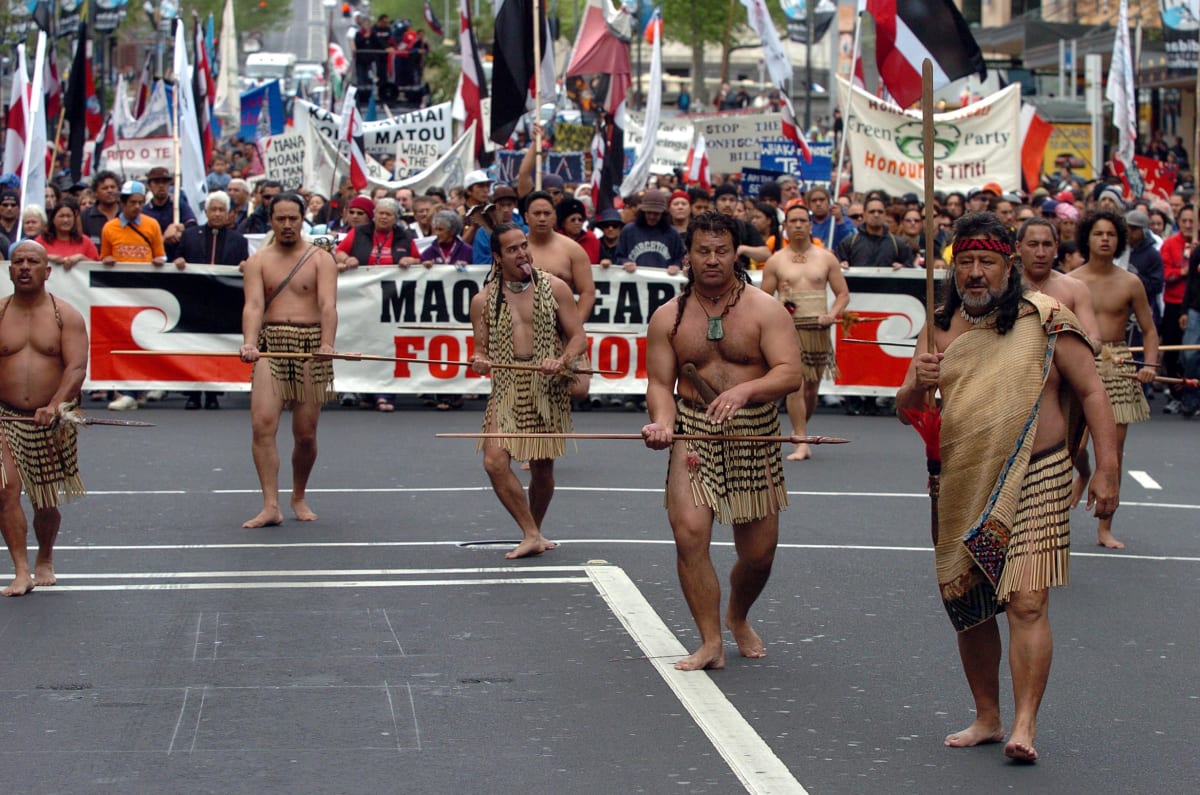
What were you doing during the foreshore and seabed hīkoi in 2004?
I wish I could say I was at the protest, gripping the hem of Nana’s dress while she raised her fist in the air, marching for sovereignty, echoing the cries of our tīpuna who were fighting for the very same thing on the very same whenua all those years ago.
But this wasn’t the reality for me and for so many other urban Māori who grew up disconnected from our culture. I was living in Avondale, Auckland and watched the protest unfold on the news. Mum was still at work and I was eating noodles, my homework spread out on the dinner table.
Sir Pita Sharples leads the 2004 hikoi protesting against the foreshore and seabed legislation. Image: Newsroom/Getty Images
A sea of black and white flags flying in the air came on the TV. I remember a wave of emotion coming over me from seeing the crowds of brown faces who looked like me, who looked like my mum, my nana.
I wish I could say it was a feeling of pride but it wasn’t. I felt whakamā – a word every Māori knows because it is an emotion that has been forced upon us to feel inherently bad for who we are.
The news coverage of the foreshore and seabed told me Māori were greedy, wanted special privileges, were angry over nothing and were trying to ban the public from beaches. It didn’t speak of Māori relationship to the land, the history of land confiscation, the fight for sovereignty or the issues that have come from colonisation and dispossession.
It was a narrative carefully formulated by the media for the intended target audience which was, you guessed it: Pākehā.
Misframing a story just one example Weaponising activism through misframing a story is just one example. We were also sold a narrative that Māori are the criminals, the baby killers, the gang members, the underachievers, the prisoners, the drug and alcohol addicts.
What do you think this does to a person when you are constantly fed a false narrative of your identity? Your mana diminishes every time you switch on the news, open the newspaper, turn on the radio. Even worse, what happens when you are a child?
The media didn’t care how this narrative would impact me or the thousands of other Māori growing up in urban cities, unsure of who we were, no grandparents alive to teach us our identity, busy parents trying to push us into mainstream because that’s what they were told would be “best” for us and so we were forced to learn about who we are through the eyes of the media. And it wasn’t pretty.
Many years have passed since the foreshore and seabed hīkoi, yet in the year 2021 the same racism exists today, instigated by the same institutions that continue to push this same, tired narrative.
Joe Bloggs calls up a radio station well known to be racist to Māori and says “they’re (Māori) victims of their own genetic background. They are genetically predisposed to crime, alcohol, and underperformance educationally” – and the radio host who used to be the Mayor of Auckland doubles down and says something equally, if not more, racist.
This incident is not shocking to Māori, because we have heard this our whole lives. The question we should be asking ourselves is: How have we allowed the media to get away with this for so long? The continual, blatant attacks against Māori from this particular station have been among the biggest contributors to racism in this country.
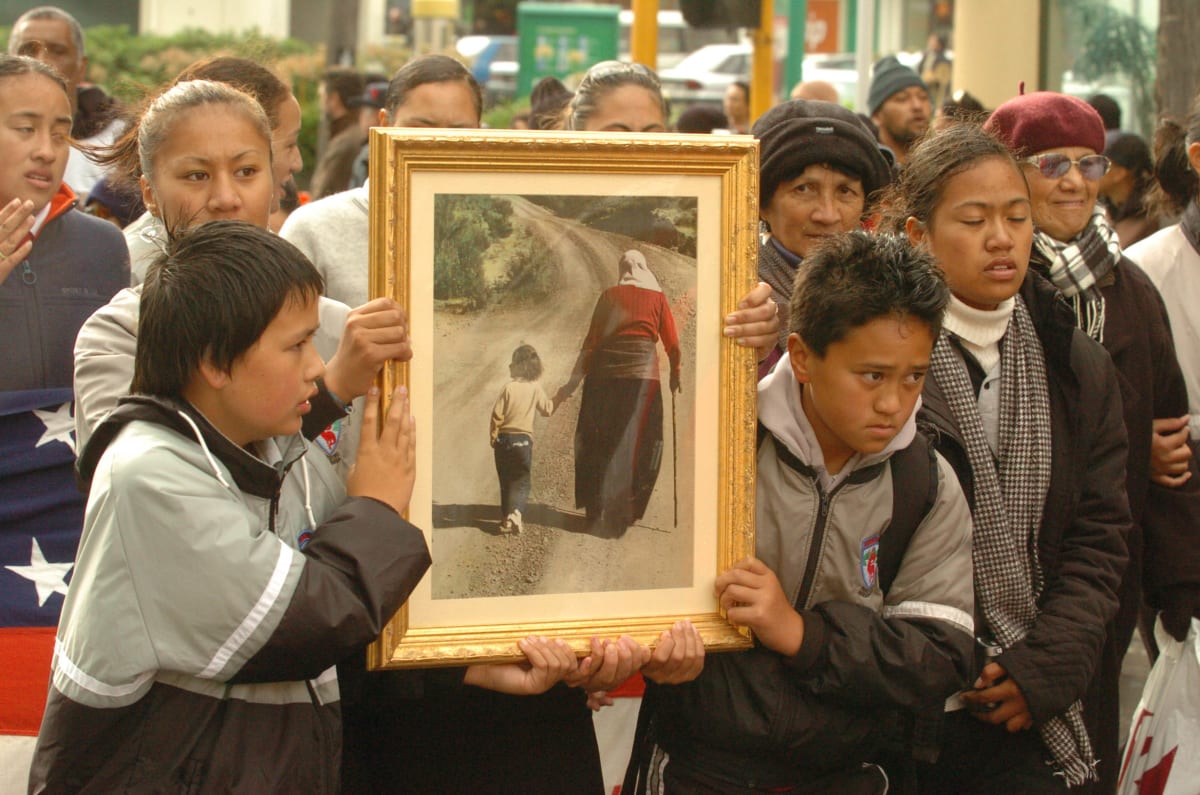
A group of students hold the iconic photo of Dame Whina Cooper taken by Micheal Tubberty at the 1975 land march, the previous big hikoi. Image: Newsroom/Getty Images
There are many examples of racism from this network but I’m not about to dive into its racist history, because I’m tired. We. Are. Tired. Google the radio hosts, look at their Twitter feeds, turn on talkback at any time of the day and the same, racist rhetoric will be there.
Network needs to stop hiding John Banks deserves criticism but the network needs to stop hiding behind the facade of this being an individual problem. There are many John Banks who come in different forms, some working in the media who get to say whatever they want under the guise of “free speech”. Even the Christchurch terrorist attacks, where a white supremacist murdered 51 people could only keep these people quiet for one week before the station went back to regular, racist programming.
So what happens now? I can predict what will happen because this is the same vicious, ugly cycle. The racist outburst goes viral, there is some outrage. Advertisers pull out, there’s a loss of revenue, the network apologises. The person is fired. Then it happens again the next day, the next week, the next month. It seems it is much more convenient to take out the individual rather than address the racist and colonial system that exists within our media and institutions.
It’s good to see the outpouring of support from Pākehā but we need more than empathy. We need action. You get to feel outraged for a day and then go home and forget about it and not think about it again. Māori can’t switch it off. We experience racism in our workplaces, in everyday life and we have to turn on the media and see it there too.
How many more racist outbursts do you need to hear before something is done? How many more articles do you need to read before there is change?
This isn’t a matter of opinion. This is about human rights.
Shilo Kino is a reporter and the author of her new book The Pōrangi Boy, released last month with Huia publishers. She writes about social issues, justice and identity. This article was first published by Newsroom and is republished on Asia Pacific Report with the author’s permission. Twitter: @shilokino
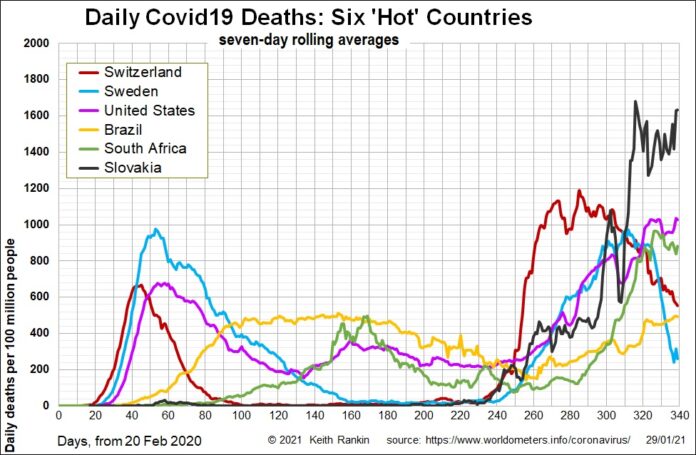
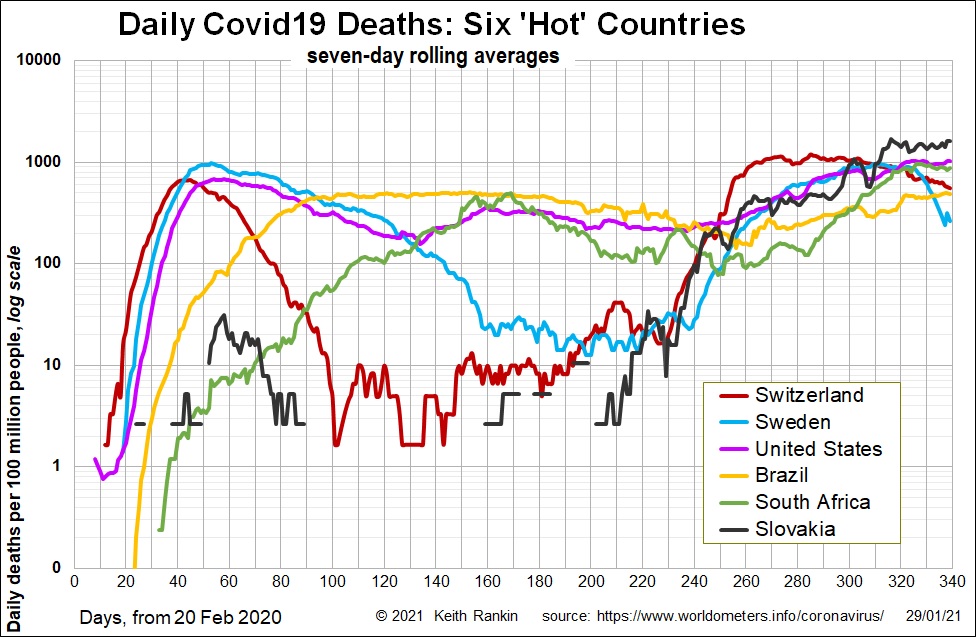
Looking through the Rear-View Mirror. Chart by Keith Rankin.
Analysis by Keith Rankin.
Log Scale is Best For ‘Real-Time’ Analysis. Chart by Keith Rankin.
Here I include three European countries and three others well known for their Covid19 issues. Of the European countries, Switzerland was first to be hit, and did substantially suppress the epidemic. Sweden was hit for a prolonged period, but eventually got the problem down to ‘acceptable’ levels. Slovakia – the only one of the three in the Eurozone of the European Union – had better Covid19 statistics than New Zealand until September 2020, but is now worst of all.
Of the others, United States clearly followed directly from Europe, but did not recover. Brazil followed later, slowly but more surely. South Africa – with its substantial early lockdown – took several months to exceed European death rates. But again, like Brazil and USA, South Africa was never really able to get on top of the disease. Further, in those mid-months of the year, it was winter in South Africa and Brazil.
The European ‘second wave’ really happened in October, and almost certainly contributed to the resurgence of Covid19 in the United States. Also, Switzerland, unlike in its first wave, became virtually helpless; Covid19 has raged there for three months. Sweden indeed did much better than Switzerland this time. Death rates have only just stabilised in USA and South Africa.
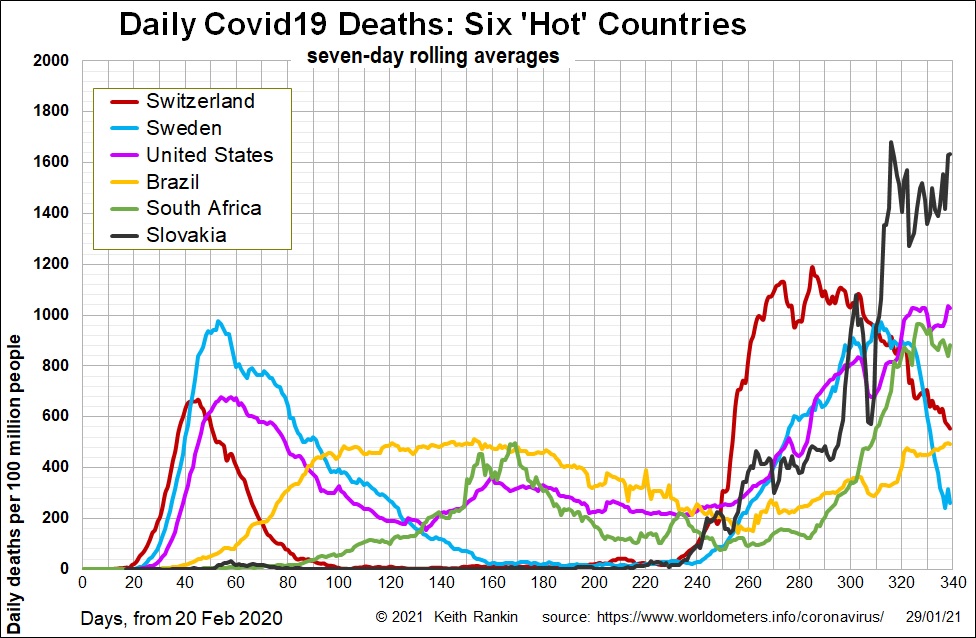
Looking through the Rear-View Mirror. Chart by Keith Rankin.
The arithmetic scale shows the most recent data in a more spectacular way, while making it look as though Europe had solved the Covid problem in the middle of the year. This chart does show – very starkly – the very recent tragedy in Slovakia.
It also shows just how dramatic the resurgence of Covid19 was in Switzerland. In the first chart, the resurgence could be spotted and tracked – and remedied – from day 200. In the second chart, nothing much seems to have happened in Switzerland until day 240.
We love to lampoon the likes of Presidents Trump and Bolsonaro, but many other countries’ political leaders had more spectacular covid outbreaks on their watches. In the case of Slovakia, the bigger political failing may be that of the European Union rather than that of the Slovakian government. I can only presume that Slovakia’s national health system is now completely overwhelmed.
———
In a few days I will do the same charts for another few countries, including Portugal, Spain and the United Kingdom. While Portugal is easily the worst affected ‘proper’ country this year, Gibraltar is even worse affected. Indeed Gibraltar – a British realm country – has now overtaken San Marino for the highest percentage of its population to die from Covid19.
However, Covid-19 Response Minister Chris Hipkins refutes there are slipping standards at the border facilities, where authorities are also investigating the transmission of the coronavirus between Pullman Hotel guests.
The illicit rendezvous with a returnee happened at the Grand Millennium in central Auckland on January 7, and came to light at today’s covid-19 briefing.
Hipkins said the MIQ worker entered a guest’s room to deliver a bottle of wine after exchanging notes, and stayed for 20 minutes.
“I didn’t enquire into specifically, the nature of the encounter, but there was a 20 minute encounter. That was enough for me to know it was unacceptable,” he said.
While the encounter isn’t thought to have put others at risk, it’s been chided as “irresponsible” and “incredibly disappointing” by the head of managed isolation and quarantine Brigadier Jim Bliss, who said the security measures at the hotel meant the incident was detected quickly.
A hotel manager realised the worker had not returned, and a hotel security manager located them in the room.
Formal police warning Brigadier Bliss said they were immediately sent home and instructed to self-isolate and be tested, before being given a formal written warning by police.
Both the worker and the returnee had returned negative test results both before and after the incident.
“We’re not aware of any other reports of situations like this between staff and returnees,” Brigadier Bliss said.
“There is absolutely no room for complacency for those inside our managed isolation and quarantine facilities.”
Hipkins said the staffer had been sanctioned, and he also reassured it was a “one-off”.
“We’re dealing with human beings. We ask everybody to the standards that we put in place. I cannot control the actions of that individual but we absolutely make clear what the rules are and when people breach the rules there are consequences,” he said.
“Obviously I asked for that to be fully investigated and for appropriate action to be taken. I understand that appropriate action has been taken and that person is no longer working for managed isolation.”
No new community cases There were no new community cases of covid-19 today, however, authorities have revealed there are two other people who they believe caught the virus in the Pullman Hotel – rather than overseas.
They were staying on the same floor and have the South African variant strain of the virus.
Hipkins admitted there was “something going on at the Pullman”.
Director-general of health Ashley Bloomfield said stricter measures were in place until more was known.
“No new arrivals are going in… a significant restriction on movement outside of rooms for everybody, and no movement outside of rooms once people have had that final test at day 12,” he said.
In other new rules, those leaving the Pullman Hotel must isolate at home and have a follow up test five days later, while testing of staff is being ramped up and the ventilation systems are being upgraded.
Pullman guests will only be able to exercise in limited numbers, with people who were on their flight.
Curbs have also been put on smoking sessions – which are now capped at 10 minutes and a maximum of two people at a time, who are from the same flight.
No wider restrictions Outside isolation, with no new community cases, today’s 1pm briefing granted the green light to thousands of holidaymakers, and concert-goers with Auckland anniversary weekend plans.
After a frazzling week for organisers, Auckland International Buskers Festival, Chinese New Year Festival and Auckland Folk Festival will continue in the freedom of Alert Level 1.
Next week, the first of more than 200 Auckland Pride events will kick off across the city.
The recent cases of covid-19 in Auckland and Northland have been linked to Managed Isolation and Quarantine (MIQ). There is no evidence so far that suggests community transmission, the Ministry of Health said.
Call Healthline 0800 358 5453 for advice on when and where to get tested, and remain isolated until you have a negative test result.
This article is republished under a community partnership agreement with RNZ.
Manning, who was ordered to vacate his office by noon today, is also the country’s Pandemic Response Controller.
The order was handed down by Justice David Cannings in the National Court last Friday in response to an application for a judicial review of Manning’s appointment filed by former senior police officers Sylvester Kalaut and Fred Yakasa.
Both men had failed in an application for the position of police commissioner in competition with Manning in 2019.
Justice Cannings ruled that Manning’s appointment was wrong because he did not have a tertiary qualification as required for the parallel post of Secretary to the Police Department.
Yesterday, Justice Derek Hartshorn granted the stay order sought by lawyer Troy Mileng of the Solicitor-General’s office representing the state and lawyer Derek Wood representing Manning pending the determination of an appeal against Justice Cannings’ decision.
Justice Hartshorn said there was an arguable case on the separation of the two positions of commissioner and secretary of police which Manning was holding.
Ruling accepted Manning will remain police commissioner in the meantime because of the stay order.
PNG Police Commissioner David Manning … granted a stay of the order to vacate office. Image: EMTV News
Outside court, Kalaut and Yakasa yesterday accepted the decision by Supreme Court judge Justice Hartshorn.
Police Minister Bryan Kramer wrote a strong defence of Manning’s appointment on his Facebook blog this week, saying that due process had been followed and none of the six police commissioners since a law change in 2003 had had a tertiary degree.
NATIONAL COURT RULES MANNING’S APPOINTMENT UNLAWFUL
This afternoon, the National Court handed down its decision on the…
RNZ Pacific reports that in May 2020 Sylvester Kalaut was arrested by anti-fraud detectives within the PNG police force and charged with one count of abuse of office, and one count of attempting to pervert the course of justice.
Karo Jesseis a reporter for The National. Asia Pacific Report republishes The National reports with permission.
The New Zealand government should impose a week-long home quarantine for returnees after they have left managed isolation facilities to reduce the risk of community spread, epidemiologist Professor Michael Baker says.
Three positive cases, a Northland woman and a father and daughter in Auckland, were detected this week after they had left their managed isolation facility – the Pullman Hotel in central Auckland.
More than 36,000 tests have been completed in the last week, 22,000 of those in the community, since the positive cases were confirmed. No new cases have been identified.
University of Otago epidemiologist Professor Michael Baker told RNZ Morning Report this latest scare had renewed his concerns about New Zealand’s border protection process.
“Personally, I think we should be thinking about this whole four-week period that [returnees] have, the week before they get on the flight overseas, their two weeks in MIQ in New Zealand, and their week after they leave these facilities.
“Obviously we need to focus more on that whole journey, but I think the week after they leave MIQ… it’s a really good idea to think about requiring a week of home quarantine. If we look at what is done internationally, say Taiwan for example, has used that approach quite a lot and they really do enforce that period, people are required to stay at home, it’s followed up and there are huge fines if you don’t adhere to that requirement.”
Returnees stay in one place While he admits there are practicality problems associated with that, Professor Baker said the main point was that returnees stayed in one place, reducing the risk of another scenario like the one this week.
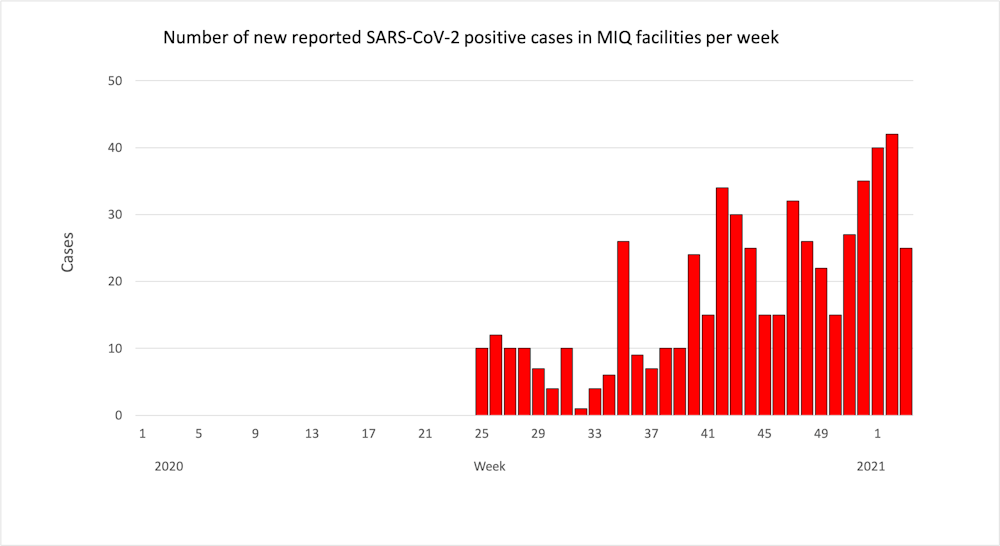
“One of the really concerning numbers is the fact that we’ve increased by about threefold the number of positive being detected in our MIQ facilities over the last few months, this has just crept up steadily and it reflects the fact that the pandemic is getting much more intense overseas, and we’re seeing more transmissible variants.
“So I would say the [government’s] focus really needs to shift offshore and thinking about the ways we can reduce the number of infected people arriving here.”
Despite the scare, Professor Baker said he was confident widespread transmission had been avoided.
“This is not like the Auckland August outbreak, where we had unknown chains of transmission in the community, these are very clearly defined breaches of our MIQ system and we know who they are, their contacts have been followed up, so it’s a different situation.
“So I’m reasonably optimistic, but I guess we just have to see more results.”
Professor Baker said one reason why there had not been widespread transmission could be because only about one in five cases transmit it to other people.
This article is republished under a community partnership agreement with RNZ.
Yesterday in Papua New Guinea, our Port Moresby-Madang flight got cancelled.
Minutes earlier, as we sat in the departure lounge, I was so confident.
No there was no doubt… Cancel that. I wasn’t even thinking about a cancellation.
In my universe, a cancellation was not part of the equation.
I was going to Madang on PX 112.
Seconds before the the announcement began with “This is an advice to passengers traveling to Madang on PX 112…” came on, I had already started packing my Macbook and my phone. (Because I’m psychic like that.)
Then the message continued: “…this flight has been cancelled.” (Not so psychic, huh?)
My mood was audibly echoed by dozens of people in the departure lounge. “Another TANGFU!” someone said beside me. (Note to self: Google TANGFU).
So they said over the PA system, in so many words, go to the PX customer services counter to find out when your flight will take off – and in the same breath, indicating that it sure as hell wasn’t going to be today.
My Macbook … psychic? Image: Scott Waide/My Land, My Country
I walked out with my partner in crime in tow and my very dirty tactical backpack slug over my shoulder. Within seconds of stepping into the security checking area, a small security guard yelled from across the room for us to go through the other door.
His total religious compliance with covid-19 regulations meant that half his face was covered with a face mask making his ability to effectively communicate to customers extremely difficult. All I could make out was that he didn’t want us there.
“Oi! Na yu toktok isi!” I yelled back. He didn’t stop, he kept going on until someone yelled back at him.
We found our way out. PX customer service said the flight was rescheduled to early morning the next day. Wake up at 4am, check in at 5am. They also advised that there would be no accommodation for outbound passengers from Port Moresby.
Getting on board. Image: Scott Waide/My Land, My Country
AAAAAGH! we don’t live here and we checked out 4 hours ago from where we were!
So we ended up looking for accommodation near the airport. But the drama didn’t end there.
In my wisdom, I booked our accommodation online, got the dates wrong and booked for February 11 instead of January 28.
Long story short, I got scolded by my bestie who said, very sternly, “If we travel again, I will make travel arrangements, not you.”
Don’t blame me, blame the security guard and PX.
So, 4am in the morning we are there. Check in opens a bit late. It is manageable. No drama.
And we finally got on the flight. I mean, we are on board!!
Phew!
Finally, we’re on board. Image: Scott Waide/My Land, My Country
Editor’s note: Tang Fu is an “explosive” expression linked to the Chinese inventor and naval caption who invented a superior form of exploding rocket about 1000 AD which was said to be a forerunner of firearms. However, in the PNG context it means something else. Bob Howarth comments: “For those who never experienced it .. Tangfu … typical air nui gini f*** up!”
Asia Pacific Report republishes articles from Lae-based Papua New Guinean television journalist Scott Waide’s blog, My Land, My Country, with permission.
On January 13 the Australian Financial Review reported Google had removed some Australian news content from its search results for some local users.
Speaking to the Guardian, a Google spokesperson confirmed the company was “running a few experiments that will each reach about 1% of Google Search users in Australia to measure the impacts of news businesses and Google Search on each other”.
So what are these “experiments”? And how concerned should we be about Google’s actions?
Engineering our attention
Google’s experiment (which is supposed to run until early February) involves displaying an “alternative” news website ranking for certain Australian users — at least 160,000, according to The Guardian.
A Google spokesperson told The Conversation the experiment didn’t prevent users (being experimented on) from accessing a news story. Rather, they would not discover the story through Search and would have to access it another way, such as directly on a publisher’s website.
Google’s experiment is a form of “A/B testing”, which classically involves dividing a population randomly in half — into groups A and B — and subjecting each group to a different “stimulus”.
For example, in the case of web design, the two groups may be served different web layouts. This could be done to test changes to layout, the colour scheme or any other element.
Performance in A/B testing is judged on a range of factors, such as which links are clicked first, or the average time spent on a page. If group A perused the site longer than group B, the modification tested on group A may be considered favourable.
In Google’s case, we don’t know the motivation behind the tests. But we do know a small subset of users received different results to the majority and were not alerted.
The experiment has resulted in the promotion of dubious news sources over trusted ones, some of which have been known to publish disinformation (which intends to mislead) and misinformation (false claims that are spread regardless of intent).
When asked about this ranking, Google’s spokesperson said it was a “single anecdotal screenshot” and the experiment didn’t “remove results that link to official government departments and agencies”.
Intent to manipulate
A/B testing is a widespread practice. It can range from being fairly benign — such as to determine the best location for an advertisement banner — to much more invasive, such as Facebook’s infamous mood experiment.
In January 2012, Facebook conducted an experiment on 700,000 users without their knowledge or explicit consent. It adjusted users’ feeds to artificially boost either positive or negative news content.
One reported aim, according to Facebook’s own researchers, was to examine whether emotional states could spread from user to user on the platform. Results were reported in the Proceedings of the National Academy of Sciences.
Following the report’s publication, Facebook’s “experiment” was widely condemned by academics, journalists and the public as ethically dubious. It had a specific objective to emotionally manipulate users and didn’t obtain informed consent.
Similarly, it’s unlikely users caught in the midst of Google’s Australian news experiment would realise it.
And while the direct risk to those being tested may seem lower than with Facebook’s mood experiment, tweaking news results on Google Search introduces its own set of risks. As research my colleagues and I has shown, platforms and news media both play a large role in spreading conspiracy theories.
Google tried to downplay the significance of the experiment, noting that it conducts “tens of thousands of experiments in Google Search” each year.
But this doesn’t excuse the company from scrutiny. If anything, it’s even more concerning.
Imagine if a police officer pulled you over for speeding and you said: “Well, I speed thousands of times each year, so why should I pay a fine just this one time I’ve been caught?”
If this is just one experiment among of tens of thousands, as Google has admitted, in what other ways have we been manipulated in the past? Without basic disclosures, it’s difficult to know.
A report from the Australian Financial Review said ‘anecdotal evidence’ suggested Google was ‘experimenting with its algorithm to remove stories from Australian news publishers from its search results’.Shutterstock
A history of non-disclosure
This isn’t the first time Google has been caught experimenting on users without adequate disclosure. In 2018, the company released Google Duplex, a speech-enabled digital assistant that could purportedly make restaurant and other personal service bookings on a user’s behalf.
In the Duplex demos, Google played audio of an AI-enabled speech agent making bookings via conversations with real service workers. What was missing from the calls, however, was a disclosure that the agent opening the call was a bot, not a human.
Google’s controversial dismissal in December of world-leading AI ethics researcher Timnit Gebru (former co-lead of its ethical AI team) cast further shade over the company’s internal culture.
What needs to change?
Digital media platforms including Google, Facebook, Netflix and Amazon (among others) exert enormous power over our lives. They also have vast political influence.
It’s no coincidence Google’s news ranking experiment took place against the backdrop of the escalating news media bargaining code debate, wherein the federal government wants Google and Facebook to negotiate with Australian news providers to pay for using their content.
Google’s spokesperson confirmed the experiment is “directly connected to the need to gather information for use in arbitration proceedings, should the code become law”.
While users benefit from the services big tech provides, we need to appreciate we’re more than mere consumers of these services. The data we forfeit are essential input for the massive algorithmic machinery that runs at the core of enterprises such as Google.
The result is what digital media scholars call an “algorithmic culture”. We feed these machines our data and in the process tune them towards our tastes. Meanwhile, they feed us back more things to consume, in a giant human-machine algorithmic loop.
Large tech enterprises such as Facebook and Google rely on user data to stay afloat.Shutterstock
Until recently, we have been uncritical participants in these algorithmic loops and experiments, willing to use “free” services in exchange for our data. But we need to rethink our relationship with platforms and must hold them to a higher standard of accountability.
Governments should mandate minimum standards of disclosure for platforms’ user testing. A/B testing by platforms can still be conducted properly with adequate disclosures, oversight and opt-in options.
On January 13 the Australian Financial Review reported Google had removed some Australian news content from its search results for some local users.
Speaking to the Guardian, a Google spokesperson confirmed the company was “running a few experiments that will each reach about 1% of Google Search users in Australia to measure the impacts of news businesses and Google Search on each other”.
So what are these “experiments”? And how concerned should we be about Google’s actions?
Engineering our attention
Google’s experiment (which is supposed to run until early February) involves displaying an “alternative” news website ranking for certain Australian users — at least 160,000, according to The Guardian.
A Google spokesperson told The Conversation the experiment didn’t prevent users (being experimented on) from accessing a news story. Rather, they would not discover the story through Search and would have to access it another way, such as directly on a publisher’s website.
Google’s experiment is a form of “A/B testing”, which classically involves dividing a population randomly in half — into groups A and B — and subjecting each group to a different “stimulus”.
For example, in the case of web design, the two groups may be served different web layouts. This could be done to test changes to layout, the colour scheme or any other element.
Performance in A/B testing is judged on a range of factors, such as which links are clicked first, or the average time spent on a page. If group A perused the site longer than group B, the modification tested on group A may be considered favourable.
In Google’s case, we don’t know the motivation behind the tests. But we do know a small subset of users received different results to the majority and were not alerted.
The experiment has resulted in the promotion of dubious news sources over trusted ones, some of which have been known to publish disinformation (which intends to mislead) and misinformation (false claims that are spread regardless of intent).
When asked about this ranking, Google’s spokesperson said it was a “single anecdotal screenshot” and the experiment didn’t “remove results that link to official government departments and agencies”.
Intent to manipulate
A/B testing is a widespread practice. It can range from being fairly benign — such as to determine the best location for an advertisement banner — to much more invasive, such as Facebook’s infamous mood experiment.
In January 2012, Facebook conducted an experiment on 700,000 users without their knowledge or explicit consent. It adjusted users’ feeds to artificially boost either positive or negative news content.
One reported aim, according to Facebook’s own researchers, was to examine whether emotional states could spread from user to user on the platform. Results were reported in the Proceedings of the National Academy of Sciences.
Following the report’s publication, Facebook’s “experiment” was widely condemned by academics, journalists and the public as ethically dubious. It had a specific objective to emotionally manipulate users and didn’t obtain informed consent.
Similarly, it’s unlikely users caught in the midst of Google’s Australian news experiment would realise it.
And while the direct risk to those being tested may seem lower than with Facebook’s mood experiment, tweaking news results on Google Search introduces its own set of risks. As research my colleagues and I has shown, platforms and news media both play a large role in spreading conspiracy theories.
Google tried to downplay the significance of the experiment, noting that it conducts “tens of thousands of experiments in Google Search” each year.
But this doesn’t excuse the company from scrutiny. If anything, it’s even more concerning.
Imagine if a police officer pulled you over for speeding and you said: “Well, I speed thousands of times each year, so why should I pay a fine just this one time I’ve been caught?”
If this is just one experiment among of tens of thousands, as Google has admitted, in what other ways have we been manipulated in the past? Without basic disclosures, it’s difficult to know.
A report from the Australian Financial Review said ‘anecdotal evidence’ suggested Google was ‘experimenting with its algorithm to remove stories from Australian news publishers from its search results’.Shutterstock
A history of non-disclosure
This isn’t the first time Google has been caught experimenting on users without adequate disclosure. In 2018, the company released Google Duplex, a speech-enabled digital assistant that could purportedly make restaurant and other personal service bookings on a user’s behalf.
In the Duplex demos, Google played audio of an AI-enabled speech agent making bookings via conversations with real service workers. What was missing from the calls, however, was a disclosure that the agent opening the call was a bot, not a human.
Google’s controversial dismissal in December of world-leading AI ethics researcher Timnit Gebru (former co-lead of its ethical AI team) cast further shade over the company’s internal culture.
What needs to change?
Digital media platforms including Google, Facebook, Netflix and Amazon (among others) exert enormous power over our lives. They also have vast political influence.
It’s no coincidence Google’s news ranking experiment took place against the backdrop of the escalating news media bargaining code debate, wherein the federal government wants Google and Facebook to negotiate with Australian news providers to pay for using their content.
Google’s spokesperson confirmed the experiment is “directly connected to the need to gather information for use in arbitration proceedings, should the code become law”.
While users benefit from the services big tech provides, we need to appreciate we’re more than mere consumers of these services. The data we forfeit are essential input for the massive algorithmic machinery that runs at the core of enterprises such as Google.
The result is what digital media scholars call an “algorithmic culture”. We feed these machines our data and in the process tune them towards our tastes. Meanwhile, they feed us back more things to consume, in a giant human-machine algorithmic loop.
Large tech enterprises such as Facebook and Google rely on user data to stay afloat.Shutterstock
Until recently, we have been uncritical participants in these algorithmic loops and experiments, willing to use “free” services in exchange for our data. But we need to rethink our relationship with platforms and must hold them to a higher standard of accountability.
Governments should mandate minimum standards of disclosure for platforms’ user testing. A/B testing by platforms can still be conducted properly with adequate disclosures, oversight and opt-in options.
Did you make a New Year’s resolution to run a marathon? Or perhaps you’ve conquered a marathon and want to take on an even longer event?
Your diet is crucial in long-distance running. If you don’t eat the right foods in the right amounts, you might not get enough energy to train and compete properly.
Over time, not having enough energy during training can lead to “relative energy deficiency in sport” (RED-S) syndrome. This condition can cause problems such as poor recovery between training sessions, reduced training capacity, recurring injuries, and a suppressed immune system.
It can also put you at risk of further health complications. The major long-term one is an increased risk of osteoporosis and bone fractures. Depending on the severity, it can also cause heart problems and gastrointestinal issues such as constipation.
To lower your risk of relative energy deficiency, here’s what you should eat if you’re running long distances.
Carbs are your best friend
Carbohydrates provide most of the energy used during any length of exercise.
For a 70kg person, this equates to 420-700g a day. For ultra-endurance athletes (people who train or compete for more than four or five hours per day) it’s 8-12g per kilogram. For a 70kg athlete, that’s 560-840g a day.
About 50g of carbs can be found in each of the following foods: five Weetbix biscuits, four slices of bread, two large bananas, three medium-sized potatoes, 600ml flavoured milk, a cup of rice, or one-and-a-third cups of pasta. As you can see, you would have to eat quite a lot of carbs throughout the day to reach the recommendation!
Eating plenty of carbohydrates is critical for giving your body enough energy to run long distances.Shutterstock
The committee also recommends you eat 1-4g of carbs per kilogram of body weight in the four hours before exercise.
So for a 70kg runner, that means 70-280g of carbs before an event. There’s roughly 70g of carbs in each of the following: two slices of fruit toast with a large banana, one-and-a-half cups of cooked pasta, or 600mls of flavoured milk plus an apple.
You also need to keep up your carb intake during endurance events. You’ll need to consume 30-60g per hour, and during ultra-endurance events up to 90g per hour, regardless of your weight. Ideally, the foods would be high in carbohydrates and low in fibre to minimise gastrointestinal discomfort such as bloating or runner’s diarrhoea.
A total of 60g of carbs would be three slices of white bread with jam, or two energy gels (small packets of high-carbohydrate gel). Sports drinks are also useful if you don’t feel like eating. A 600ml bottle would help with rehydration and provide about 40g of carbs.
These recommendations are only guides. Athletes should consider their current diet along with training intensity, whether they’re meeting training goals, how quickly they tire during training or competition, recovery between training sessions, and weight changes.
If you’re running a marathon, make sure you have 30-60 grams of carbs every hour, which you could find in two energy gels.Shutterstock
Also consider fat and protein
More fat is used as the duration of exercise increases, and if the exercise lasts more than four hours, your body will begin to use small amounts of protein. It’s hard to determine the exact levels of fat and protein used, as this depends on the intensity of exercise and level of training.
Nevertheless, as fat contributes to energy, it’s important to include healthy fat sources such as olive oil, nuts, seeds and dairy products in your diet, although there are no set guidelines for how much fat you need to eat.
Protein is needed for muscle repair. The International Society of Sports Nutrition Guidelines recommend endurance athletes consume 1.4g of protein per kilogram of body weight, every day. This equates to 98g for a 70kg runner. Each of these foods contains about 10g of protein: two small eggs, 30g cheese, 40g lean chicken, 250ml dairy milk, three-quarters of a cup of lentils, 120g tofu, 60g nuts or 300ml soy milk.
Consuming 20g of protein in the 1-2 hours after exercise helps maximise muscle repair and gain. This amount of protein can be found in one small tin of tuna, 600ml of milk, or 80g of chicken.
You can lose a significant amount of water via sweat during endurance training and events. Making sure you’re hydrated is vital for performance and health. One of the easiest ways to know how hydrated you are is by checking your urine colour — it should be clear or hay-coloured. If it’s amber or darker, you need to drink more water.
While dehydration is problematic, you should also be careful not to drink extreme amounts of water, which can cause sodium levels to drop too low. This is rare, but if you gain weight right after an long-distance event, it might mean you’re drinking too much water.
One of the most important nutrients for endurance athletes is iron. Iron loss occurs during heavy sweating, and women are at increased risk of iron deficiency with menstrual losses.
It’s important to include red meat in your diet, or if vegetarian or vegan to consume more beans, lentils and whole grains.
Ultimately, no two athletes have the same requirements to achieve the goals they want from training and competing.
While you may be tempted to buy supplements to improve your performance, this will have little impact unless you get the diet right first. It may be worthwhile talking to an accredited sports dietitian to ensure you’re meeting your energy and fluid requirements and are not at risk of relative energy deficiency syndrome.
It’s official: Australia’s natural environment and iconic places are in deep trouble. They can’t withstand current and future threats, including climate change. And the national laws protecting them are flawed and badly outdated.
You could hardly imagine a worse report on the state of Australia’s environment, and the law’s capacity to protect it, than that released yesterday. The review of the Environmental Protection and Biodiversity (EPBC) Act, by former competition watchdog chair Professor Graeme Samuel, did not mince words. Without urgent changes, most of Australia’s threatened plants, animals and ecosystems will become extinct.
Federal environment minister Sussan Ley released the report yesterday after sitting on it for three months. And she showed little sign of being spurred into action by Samuel’s scathing assessment.
Her response was confusing and contradictory. And the Morrison government seems hellbent on pushing through its preferred reforms without safeguards that Samuel says are crucial.
Environment Minister Sussan Ley appears hellbent on pushing through the government’s agenda.Mick Tsikas/AAP
A bleak assessment
I was a federal environment official for 13 years, and from 2007 to 2012 was responsible for administering and reforming the EPBC Act. I believe Samuel’s report is a very good one.
Samuel has maintained the course laid out in his interim report last July. He found the state of Australia’s natural environment and iconic places is declining and under increasing threat.
Moreover, he says, the EPBC Act is outdated and requires fundamental reform. The current approach results in piecemeal decisions rather than holistic environmental management, which he sees as essential for success. He went on:
The resounding message that I heard throughout the review is that Australians do not trust that the EPBC Act is delivering for the environment, for business or for the community.
Australians feel the EPBC Act is failing the environment.Shutterstock
A proposed way forward
Samuel recommended a suite of reforms, many of which were foreshadowed in his interim report. They include:
national environmental standards, legally binding on the states and others, to guide development decisions and provide the ability to measure outcomes
applying the new standards to existing Regional Forest Agreements (RFAs). Such a move could open up the forest debate in a way not seen since the 1990s
accrediting the regulatory processes and environmental policies of the states and territories, to ensure they can meet the new standards. Accredited regimes would be audited by an Environment Assurance Commissioner
a “quantum shift” in the availability of environmental information, such as accurate mapping of habitat for threatened species
an overhaul of environmental offsets, which compensate for environmental destruction by improving nature elsewhere. Offsets have become a routine development cost applied to proponents, rather than last-resort compensation invested in environmental restoration.
Under-resourcing is a major problem with the EPBC Act, and Samuel’s report reiterates this. For example, as I’ve noted previously, “bioregional plans” of land areas – intended to define the environmental values and objectives of a region – have never been funded.
The system of environmental offsets, which compensates for damage to nature, should be overhauled.Shutterstock
Respecting Indigenous knowledge
One long-overdue reform would require decision-makers to respectfully consider Indigenous views and knowledge. Samuel found the law was failing in this regard.
He recommended national standards for Indigenous engagement and participation in decision-making. This would be developed through an Indigenous-led process and complemented by a comprehensive review of national cultural heritage protections.
The recommendations follow an international outcry last year over mining giant Rio Tinto’s destruction of 46,000-year-old caves at Juukan Gorge in Western Australia. In Samuel’s words:
National-level protection of the cultural heritage of Indigenous Australians is a long way out of step with community expectations. As a nation, we must do better.
Indigenous knowledge should be heard and respected.Richard WainwrightT/AAP
Confusing signals
The government’s position on Samuel’s reforms is confusing. Ley yesterday welcomed the review and said the government was “committed to working through the full detail of the recommendations with stakeholders”.
But she last year ruled out Samuel’s call for an independent regulator to oversee federal environment laws. And her government is still prepared to devolve federal approvals to the states before Samuel’s new national standards are in place.
In July last year, Ley seized on interim reforms proposed by Samuel that suited her government’s agenda – streamlining the environmental approvals process – and started working towards them.
In September, the government pushed the change through parliament’s lower house, denying independent MP Zali Steggall the chance to move amendments to allow national environment standards.
Ley yesterday reiterated the government’s commitment to the standards – yet indicated the government would soon seek to progress the legislation through the Senate, then develop the new standards later.
Samuel did include devolution to the states in his first of three tranches of reform – the first to start by early 2021. But his first tranche also includes important safeguards. These include the new national environmental standards, the Environment Assurance Commissioner, various statutory committees, Indigenous reforms and more.
The government’s proposed unbundling of the reforms doesn’t pass the pub test. It would tempt the states to take accreditation under the existing, discredited rules and resist later attempts to hold them to higher standards. In this, they’d be supported by developers who don’t like the prospect of a higher approvals bar.
Australia’s iconic places and species are headed for extinction.Shutterstock
A big year ahead
Samuel noted “governments should avoid the temptation to cherry pick from a highly interconnected suite of recommendations”. But this is exactly what the Morrison government is doing.
I hope the Senate will force the government to work through the full detail of the recommendations with stakeholders, as Ley says she’d like to.
But at this stage there’s little sign the government plans to embrace the reforms in full, or indeed that it has any vision for Australia’s environment.
All this plays out against still-raw memories of last summer’s bushfires, and expected pressure from the United States, under President Joe Biden, for developed economies such as Australia to lift their climate game.
With the United Nations climate change conference in Glasgow in November, it seems certain the environment will be high on Australia’s national agenda in 2021.
Prime Minister of Australia, Scott Morrison. Image by Kristy Robinson / Commonwealth of Australia - CC BY 4.0, https://commons.wikimedia.org/w/index.php?curid=57753091
The latest global Corruption Perception Index (CPI) rankings places Australia at 11 out of 180 countries.
This is behind countries like New Zealand, Denmark and Germany and on par with Canada, the United Kingdom and Hong Kong.
For almost 20 years, Australia ranked in the top 10 (least corrupt) countries. In 2012, Australia ranked 7th with a score of 85. By 2018, it had fallen to 13th with a score of 77. In the latest 2020 rankings, it has also scored 77.
Being ranked 11th out of 180 is relatively good. But falling by eight points is not good. It is a wake-up call and raises serious questions about the ethical underpinnings of politics in this country.
Australia’s decline should worry us
Unlike citizens in many countries, Australians can go about their daily lives without having to worry they will have to pay a bribe to receive basic services, or that money that should be used for services will find its way into the pockets of politicians.
However, Australia’s decline since 2012 matters because trust in our institutions is fundamental to our functioning as a society. A lower score also sends a note of caution to those likely to invest in Australia.
Australia’s global corruption ranking has fallen since 2012.James Gourley/AAP
It is noted the CPI, organised by Transparency International, measures perceptions of corruption rather than corruption itself. But it is globally used and respected. It uses a rigorous methodology, assessing the perceptions of business leaders and experts, not the general public, to score and rank countries.
Corrupt behaviour occurs across a wide spectrum. It includes the solicitations found in some countries to get a basic service, through to abusing the institutions and support pillars — such as parliaments, electoral bodies and audit commissions — that hold our democracy together.
In Australia, we have seen a significant diminution of standards at the highest levels of government. While these might not match the standard definitions of corruption, it creates a perception that things that are fast and loose.
In other examples of questionable standards, we also have Immigration Minister Alan Tudge defying a federal court order and ex-Finance Minister Mathias Cormann looking for a job in Europe using a government VIP jet.
These are in addition to senior ministers seeking post-politics employment in fields that overlap with their former portfolios, as well as frequent expenses scandals.
Sorry is the hardest word to say
There is no suggestion these incidents amount to corruption.
Nor are they new. Our political history is littered with unsavoury events. What is concerning now, and likely adds to the perception standards have slipped, is that apologies and resignations are so rare. In short, nothing much is done about it.
The standard response is that “no rules have been broken”. Whenever a politician asserts that, a huge red flag unfurls. Occasionally there is an inquiry, such as the investigation into the sports rorts affair. But this cleared the minister of major malfeasance, pinging her for a minor conflict of interest matter instead.
It is also a serious concern that the agency documenting the shortfall in integrity, the Auditor-General, has recently had its budget cut. The Centre for Public Integrity, a body comprising former judges, senior academics and lawyers estimates in the past decade, the Commonwealth government has cut A$1.4 billion from the budgets of accountability agencies that could highlight government deficiencies.
How can we boost our ranking?
We do not have a situation where corruption is out of hand, but one in which integrity seems a low-ranking optional extra in some government processes. There are plans for a Commonwealth integrity agency, but there are also deficiencies in the model proposed.
The House of Representatives’ cross bench has been pushing for a federal anti-corruption watchdog.Mick Tsikas/AAP
Tougher anti-corruption laws and a more formidable anti-corruption agency are not a panacea. With offenders asserting no rules were broken it is unlikely a national integrity commission would prevent, or even pick up, the breaches that have dogged the landscape for the past few years.
What is needed is a better commitment to integrity from the top. Not just codes of conduct within government agencies, but leaders who call out bad behaviour. This is conduct that may not be legally corrupt, but that absolutely does not pass the “pub test”.
The one attempt by Prime Minister Scott Morrision to do this — the Australia Post Cartier watch case — was a feeble example. If anything, it highlighted the inconsistency that abounds.
We must strive for better standards at the highest levels, and a better way of holding our leaders to account. We should have a national integrity agency that is bold, but above all, we must have a demonstrated commitment to raising the bar.
The Australian government’s push to make Google pay news organisations for linking to their content has seen the search giant threaten to pull out of Australia.
Google Australia’s managing director Mel Silva said if the government’s proposal goes ahead, “we would have no real choice but to stop making Google Search available in Australia”.
Prime Minister Scott Morrison pushed back saying he won’t respond to “threats”. Even the Council of Small Business Organisations Australia says Google needs “strong and stringent” regulation because of its monopoly on searching the web.
What if Google pulls out?
Google’s proposal to make Google Search unavailable in Australia means we would need to search the web using other systems and tools. If this really happens, we could no longer go to google.com and google.com.au to search the web.
It is important to note that Google is not just web search. Google’s parent company Alphabet Inc also runs key web portals such as YouTube, and productivity tools such as Gmail, Google Calendar, Google Docs and Google Maps (which actually started in Australia). Those services are not going to be removed from the Australian market, even if web search does get pulled out.
Online advertising is another sector in which Google is the market leader and where it makes money. Pulling Google web search out from Australia does not mean businesses would no longer be able to advertise using Google’s services.
But with no Google Search here, those adverts would no longer appear ahead of any other search results and be visited by Australian users.
Google Search places paid advertising ahead of any search results.Google.com/screenshot
Businesses would still be able to put their adverts on other Australian websites that use the Google Ads service.
The issue with this scenario is that Google’s key competitive advantage is the ability to access data from people using its search services. Pulling web search out from the Australian market would mean Google missing out on that data from people in Australia.
The second most popular search engine in Australia is Bing, developed by Microsoft and often integrated into other Microsoft products such as its Windows operating system and Office tools.
Another less popular search option is Yahoo, which also offers its own news and email service.
Other alternatives include niche search engines that offer unique tools with special features.
For example, DuckDuckGo is a search engine that has recently risen in popularity thanks to a commitment to protecting its users’ privacy.
Contrary to the web search products from Google and Microsoft, DuckDuckGo does not store its users’ search queries or track their interactions with the system.
The quality of DuckDuckGo’s search results has improved over time, and is now comparable to that of the most popular search engines.
It says it now processes a daily average of more than 90 million search queries, up from just over 51 million the same time last year.
Despite not drawing on users’ data to refine its search algorithms, the technology behind DuckDuckGo and other smaller players is based on the same machine-learning methods that others are using.
Search the web, save the planet
Another interesting and recent proposal of an alternative web search engine is Ecosia. This system is unique as it focuses on sustainability and positive climate impact.
Its mission is to reinvest the income generated by search advertisements (the same business model Google Search is using) to plant trees in key areas around the world.
So far, it says it has 15 million users and has contributed to planting more than 100 million trees, about 1.3 every second.
Will Google really abandon Australia?
Tim Berners-Lee, widely regarded as the inventor of the web, has pointed out that the idea of asking web platforms to pay to post links runs counter to his fundamental concept.
That said, it is also unfair for a search engine to make money using content that others have created.
It is also true that most of Google’s revenue already comes from asking others to pay for links on the web. This is how Google’s online advertising works: Google Ads makes advertisers pay for every impression users get or click users make to navigate to the advertised web page.
If users end up buying the advertised product, Google gets an even higher payment.
More likely than Google pulling out of the Australian market, the government and the search giant should diplomatically find a compromise in which Google still provides its web search product in Australia and there will be a return to news organisations for Google making use of their content.
The federal government is talking tough about making Google and Facebook pay Australian news businesses for linking to, or featuring, these publishers’ content.
The code is meant to help alleviate the revenue crisis facing news publishers. Over the past two decades they have made deep cuts to newsrooms. Scores of local print papers have become “digital only” or been shut down completely.
If legislated, the code will require the platforms to negotiate payments to news publishers, as well as disclose changes in algorithms affecting traffic to news sites.
But the code is unlikely to do much to fix the crisis faced by journalism in the internet age. It isn’t even a band-aid on the problem.
The traditional commercial news business model is broken beyond repair. If the government wants to save the social benefit of public-interest journalism, it must look elsewhere.
Newspapers didn’t sell news, but readers
To understand why the commercial news model is so broken, we first need to recognise what the primary business of commercial news media has been: attracting an audience that can be sold to advertisers.
Newspapers attracted readers with news and feature journalism that provided public value, but also information of interest such as weather forecasts, sports scores, stock prices, TV and radio guides and comics. Readers even sought out papers for their advertisements – in particular the “classifieds” for jobs, cars and real estate.
Before the internet the newspaper was the only place to access much of this information. This broad bundle of content attracted a wide range of readers, which the economics of newspapers – particularly the cost of producing the journalism – required.
Why the business model is broken
Internet technologies introduced two changes that have dismantled the newspaper business model.
They offered new and better ways to connect buyers and sellers, pulling advertiser spending away from newspapers. More than 70% of revenue for a typical daily newspaper came from advertising. Before 2000 print media attracted nearly 60% of Australian advertiser dollars, according to an analysis for the Australian Competition and Consumer Commission’s Digital Platforms Inquiry. By 2017 it was just 12%.
Australian advertising expenditure by media format and digital platform
ACCC estimates of spend relating to Australian customers based on data from the Commercial Economic Advisory Service of Australia and information provided by market participants. Amounts are in 2018 Australian dollars.Digital Platforms Inquiry final report, July 2019
Internet technologies also provided better ways to access the non-journalism information that had made the bundled paper valuable to a mass of readers.
Readers also now access news in many other places, through news apps, aggregators and social media feeds such as Twitter, Reddit, Apple News, Flipboard and many others, including Facebook and Google. Research by the University of Canberra’s News and Media Research Centre published in 2019 found just 30% of Australian news consumers accessed online news directly from news publishers’ websites.
The bargaining code doesn’t solve the main problem
If Google and Facebook are “to blame” for news publishers’ malaise, it is not in the way the bargaining code suggests. Separate from their linking to, or featuring, these publishers’ content, the digital platforms are just more effective vehicles for advertisers seeking to buy consumers’ attention. They serve ads based on consumer interests or in relation to a specific search.
The simple fact is news publishers’ core content is not that important to the platforms’ profitability.
Research by the Reuters Institute for the Study of Journalism during the 2019 UK general election – tracking 1,711 people aged 18-65 across mobile and desktop devices for six weeks – found news took up just 3% of their time online (about 16 minutes and 22 visits to news sites a week).
So if stories from Australian news outlets disappeared from Facebook or Google search results, it would barely make a scratch on their appeal to advertisers.
The Australian Competition and Consumer Commission’s Digital Platforms Inquiry has rightly noted the revenue crisis has crippled commercial provision of public-interest journalism “that performs a critical role in the effective functioning of democracy at all levels of government”.
But the core of the problem is that funding such journalism through advertising is no longer viable. Other solutions are needed – locally and nationally – to ensure its survival.
Commercial news organisations no longer offer value to advertisers. Instead of searching for ways to make an obsolete business solvent, efforts should focus on alternative ways to fund public-interest journalism.
More funding for independent public broadcasters is one solution, and incentives for philanthropic funding and non-profit journalism organisations are proving successful in other countries.
It’s a global problem. To solve the crisis in Australia will require focusing on the core problem and thinking bigger than a bargaining code.
For transparency, please note The Conversation has also made a submission to the Senate inquiry regarding the News Media and Digital Platforms Mandatory Bargaining Code.
Review: Maverick Modigliani, directed by Valeria Parisi.
It is not surprising we are fascinated by the story of Amedeo Modigliani, a boy from Livorno who arrived in Paris in his early 20s determined to make a reputation as an artist. His story could well have emerged from an all-night script session on a Hollywood backlot.
In the heady creative cauldron of sin-city, surrounded by artists from all over Europe (now grouped together as the School of Paris), a devastatingly handsome young man flees his family to find fame. Quickly seduced by its licentiousness, he lives life to the full.
Fuelled by alcohol and drugs, he paints furiously. His affairs are legendary, most famously with the poets Anna Akhmatova and Beatrice Hastings.
In a career of 15 years, he painted over 400 pictures, made a handful of stone carvings, and produced an archive of drawings before succumbing to tubercular meningitis at the age of 35 in 1920. Two days later, his pregnant young lover, fellow painter Jeanne Hébuterne, took her own life.
Although her family refused to allow the couple to be buried together, in 1930 they finally relented and they now lie together under his epitaph “Struck down by Death in the moment of glory” and hers “Devoted companion to the extreme sacrifice”.
Life on the screen
To memorialise Modigliani on the centenary of his death, Italian director Valeria Parisi created the documentary Maverick Modigliani, interviewing historians, artists, forgers and curators about his life and his legacy.
Modigliani’s story has been brought to the screen before.
Photograph of Modigliani in his studio rue de la Grande-Chaumière, at Montparnasse, c. 1918.Wikimedia Commons
One of the most visually stunning is Modì (1989) directed by Franco Brogi Taviani in 1989, with Richard Berry in the lead role. Taviani explores the artistic milieu of Paris with relish, detailing the creative exchange that lured artists from around the world.
When Martin Scorsese was planning a movie about Modigliani in the early 1980s, he cast Al Pacino, which sadly never made it to the screen.
Mick Davis’ eponymous film, the 2004 turkey starring Andy Garcia as our hero and Elsa Zylberstein as Jeanne, highlighted the dangers of making the wrong casting choice.
Unfortunately, documentaries don’t provide the same emotional engagement as a good biopic like Modì, and Maverick Modigliani has all the genre’s standard tropes.
A group of talking heads pontificating about the artist and his work interspersed by footage and still images of Parisian life then and now does little to convey the vibrancy and energy of his extraordinary life.
The scripted voice over, delivered in the guise of Jeanne doesn’t work. If Jeanne was more confessional, more probing, even more salacious, it might have drawn us into their world. Instead, her sad story is obscured by her thoughts on events that happened after she was dead and seems strangely disengaged and disingenuous.
The film does little to interrogate Modigliani’s work.
Instead, we are taken on numerous sidetracks to document student pranks about lost sculptures and an interview with a forger who describes how easy he was to copy. While his life is a Greek tragedy, in this film Modigliani remains a rather bland character.
Elegant revision
Modigliani was a stylist who embraced the current interest in the art of other exotic cultures and antiquity to create an elegant revision under the guise of modernism.
Though shocking to the Parisian public of 1917, his nudes are updated versions of his Renaissance precursors, fashionably hip and rendered in bold flat colour. They are the perfect synthesis of what was happening around him. Modì was a sponge, soaking up the influences of African art, Picasso, Matisse, and Constantin Brâncuși. There is no “School of Modigliani.”
Nu couché, Amedeo Modigliani c. 1917.Private Collection/Wikimedia Commons
For Nu couché, painted in 1917, his influence was clearly Édouard Manet’s Olympia. However, his similarly supine model seems much less in control as she lies back exposing herself. Her eyes are empty sockets, she is neatly trimmed, available; she is a pinup.
In so many ways it is an uncomfortable painting with none of the inference, subtlety or sophistication of its precursor. The pose is unconvincing, the face is a mask, yet the message of this “portrait” is clear.
It is undoubtedly why it caused a bidding war at Christie’s in 2015 and set a record price for the artist of US$170.4 million. But as a painting it is a mediocre effort.
That said, there are a few real portraits in his oeuvre, works that do extend the genre. His remarkable images of fellow artists Moïse Kisling, Chaïm Soutine and Jean Cocteau are graphically strong and insightful. It is a pity he didn’t show his female models the same respect.
Jean Cocteau, Amedeo Modigliani c. 1916.The Henry and Rose Pearlman Foundation, on long-term loan to the Princeton University Art Museum.
Obscuring the true man
In the end credits, Parisi adds a text explaining she didn’t take sides in the debates over Modigliani’s legacy: which paintings were considered fakes, which are thought to be overly cute, and which stand among the great portraits of the century.
“We have accepted and reported the opinions and statements made by the historians, experts and curators we interviewed in a neutral way,” she says.
Perhaps this is the problem. We know very little more about the artist or his work than when we started. Parisi doesn’t stake a claim for Modigliani or try to convince us one way or the other. For anyone who knows a little of the back story and has scanned a few art books, there isn’t much more to be gained from Maverick Modigliani. What a shame.
Maverick Modigliani is in limited release this weekend.
Despite a recent best-in-the-world ranking for its handling of COVID-19, New Zealand remains at risk as the pandemic intensifies globally. With more infectious variants of the virus emerging, there are many persisting concerns.
In particular, the number of infected people entering managed isolation and quarantine (MIQ) facilities at the border is increasing. This pressure contributes to the risk of border failures, which are now regular.
There have been at least nine since August 2020, including the most recent issues with the Pullman Hotel in Auckland.
Despite MIQ facilities beginning in April 2020, there was a delay until June before routine testing and reporting began (NZ Ministry of Health data).Author provided
We argue the time has come to “turn down the tap” of infected travellers coming from so-called “red zone” countries where the pandemic is out of control. We have already advocated for a traffic light system to achieve this.
One option is to reduce the risk of infected travellers getting on flights by using brief pre-departure quarantine and COVID-19 testing in carefully designed ways.
For example, an additional low-cost, rapid antigen test prior to boarding, plus clear instructions to passengers about the need for a period of pre-travel self-quarantine to reduce their risk of infection, could be a prerequisite.
Tighter measures available
A more intensive approach could require all red zone travellers to undergo pre-flight quarantine for five days in an approved airport hotel facility, with daily rapid (saliva) testing by New Zealand-certified officials.
The logistics of this could be simplified by having these approved airport hotel facilities located at specific travel hubs — for example, London, Hawaii and Singapore.
Another possibility is simply to further limit the bookings in MIQ facilities available to travellers from red zone countries — say, down to 500 travellers a month — to make the situation more manageable.
Australia has recently reduced the cap on incoming travellers. The New Zealand government could also temporarily suspend approval for any flights originating in red zone countries.
Benefits from limiting red zone arrivals
Of course, political decision-makers need to consider the immediate well-being of travellers coming from red zone countries (150 to 250 people per day on average).
Some are returning for compelling reasons: they have a health condition and genuinely fear dying in the pandemic, they are coming home to care for a sick relative, or they have lost a job overseas and lack financial support.
But these important considerations will apply to a relatively small number of individuals. They do not outweigh the far greater duty to the rest of New Zealand’s citizens to keep the country COVID-free.
The greater good
Turning down the tap is important for maintaining COVID-19 elimination, providing multiple benefits:
Protection from illness and death from COVID-19 outbreaks. Although the outbreak in Victoria, Australia, was eventually controlled, there were still more than 800 deaths. There are also concerning reports of debilitating ongoing symptoms being a feature of COVID-19 infection, and “long COVID” may become a huge public health problem.
Protection from the psychological stress, economic disruption and other hardship caused by lockdowns. For example, Auckland Council’s chief economist estimated the cost of level 3 lockdown at 250 jobs and $NZ60-75 million in GDP each day.
Protection from greater inequalities from outbreaks that hit communities with higher background rates of chronic disease (Māori, Pacific, low-income New Zealanders), as seen in past pandemics. A recent study estimated those existing inequalities could double the risk of death for Māori and Pasifika compared with NZ Europeans. Indeed, Māori leaders are already calling for reduced traveller numbers.
Health authorities have a specific duty of care to protect workers in MIQ facilities from infection. While personal protective equipment (PPE) is provided, we know failures can still occur despite workers using it.
There is a case to be made that health authorities are currently not adequately meeting their duty of care by permitting large numbers of infected people to pass through these MIQ facilities.
There have been no successful legal challenges to New Zealand’s current quarantine requirements, or in Australia with its even tighter systems. Those requirements can logically be extended to include pre-flight quarantine and testing, and further limiting MIQ bookings to make border control safer and more manageable.
The claim that citizens are rendered “stateless” by such measures is a myth.
In summary, the risk of COVID-19 border control failures appears to be increasing. Action is needed to reduce the proportion of infected people boarding flights, or reducing travel from high-risk countries, or both.
There is no legal case against turning down the tap, provided it is clear such measures are time-limited and not absolute.
Anthony Albanese’s sudden change of heart, swapping out Labor’s climate spokesman Mark Butler in favour of the more conservative Chris Bowen, can be read in two ways.
First, as a shrewd chess move: one that sharpens the economic arguments in favour of green jobs, boxes in Bowen’s Right faction behind existing climate ambition, and perhaps constrains Bowen as a potential leadership aspirant.
Alternatively, critics could view Albanese’s decision as more self-serving — the manoeuvring of an opposition leader desperate to shore up his defences.
The NSW Right’s outspoken convener Joel Fitzgibbon had made unusually public attacks on the Left-aligned Butler. Albanese will have a job of convincing people he has not blinked under pressure, throwing an ally under a bus.
That perception could, in turn, be dangerous. It may even trigger existential discussions on his leadership. Not merely because of the loyalty questions it invites, but because of the policy implications in an area of chronic political miscalculation.
Mark Butler, right, is a factional ally of Albanese’s.Lukas Coch/AAP
Judging by his behaviour, Fitzgibbon surrendered his frontbench spot last year to free his arms for the move against Butler, and by proxy, the campaign against Albanese’s leadership.
The Hunter-based MP is trenchantly pro-coal and anti-progressive. He’s made no secret of his antipathy for green-tinged inner-city politics, which he believes has alienated the party’s industrial origins.
Fitzgibbon blames Labor’s obsession with climate change for everything from the 2019 election failure – where it pledged a 45% emissions cut by 2030 – to the party’s dwindling purchase in the outer suburbs and regions.
Albanese’s position, like all opposition leaders, relies on a mixture of support: in his case, a foundation of Left MPs and the crucial backing of key NSW and some Victorian Right figures. Unsurprisingly, these supporters were the main beneficiaries of the reshuffle.
Deputy leader Richard Marles gets a super-portfolio combining national reconstruction, employment, skills, small business and science. Another Victorian Right figure, Clare O’Neill, gets a frontbench promotion as spokeswoman for senior Australians and aged care services – assisting the relocated Butler in health and ageing.
And Ed Husic, also an influential player in the NSW Right, is elevated to shadow cabinet in industry and innovation.
Taken separately, these moves may be justified. Together, however, they might also hint at Albanese’s vulnerability, given his own Left faction’s minority position.
Joel Fitzgibbon is trenchantly pro-coal and anti-progressive.Mick Tsikas/AAP
The bigger concern for progressives in the short-term will be what these personnel changes amount to in policy terms, if anything.
Does Albanese intend to scale back Labor’s climate ambitions? Fitzgibbon has explicitly called on his party to ditch interim targets entirely, and simply adopt the government’s goal of 26% emissions reduction by 2030.
During the 2019 election, then leader Bill Shorten struggled to quantify the negative impact on economic growth arising from Labor’s proposed 45% cut in emissions.
It was a strategic vulnerability on which Prime Minister Scott Morrison capitalised. He argued relentlessly that Labor’s formula would cost Australian jobs and send household and business electricity prices soaring.
Albanese’s decision to defer interim targets until closer to the next election had already invited doubts about whether Labor is truly committed to reaching net-zero emissions by 2050. Butler’s removal is likely to exacerbate those doubts.
The hold-fire approach leaves Labor’s left flank exposed to the Greens’ claims it is equivocating on climate action, just as the rest of the world finds new resolve.
As Albanese put the final touches on his reshuffle, the Climate Targets Panel of scientists and economists released a chastening report. It showed Australia would need to slash emissions by 50% by 2030, and achieve zero emissions by 2045 (rather than 2050) to be in line with the Paris commitment of keeping global warming inside 2℃.
Freshly installed US president Joe Biden has used a series of executive orders to accelerate US restructuring. He hopes to spur global momentum for climate action, calling on developed economies to rapidly increase their commitments.
US President Joe Biden will call for developed economies to act on climate change.Evan Vucci/AP
Albanese, however, denies any diminution. He maintains that Bowen, a former treasurer, is better placed to reframe climate policy in more starkly economic terms, stressing the opportunities for new green jobs against the risks cited by the Coalition.
This may well be sound. Bowen’s established economic standing could allow a “green jobs of the future” rebranding of Labor’s emissions approach.
That would be a breakthrough, given the widening divide between Labor’s professional and blue-collar constituencies, and claims by Fitzgibbon and others on the party’s Right that it has abandoned regional workers through its green emphasis.
There’s little doubt that, as an experienced minister, Bowen has the skills and the policy depth for the job.
But there’s a judgement question. His role in the 2019 election loss – chief advocate of an unwieldy suite of adventurous tax proposals – was arguably more central to Labor’s shock defeat than any perceived overreach on climate.
Not finished yet, Fitzgibbon has described Butler’s removal as a good start but called for further policy change.
Fitzgibbon’s Right-aligned parliamentary colleagues seemed willing to accept his public undermining of Butler. It will be interesting to see whether they allow the same treatment of Bowen.
How does a small retail company that sells video games, worth less than US$400 million in the middle of 2020, become a US$10 billion company in less than six months? How does its share price climb from about US$20 on Jan 12, 2021, to US$347 on January 27 – then fall back to US$193 the very next day?
How is this happening? The simple answer is it’s a power play, magnified by social media, between small retail investors who want some share prices to rise and larger hedge funds who have made big bets that those same prices will fall.
Revenge of the little fish
Melvin Capital is a hedge fund (worth US$12.5 billion until recently) with a “short position” on GameStop. A short position means Melvin was betting GameStop’s share price would fall (a reasonable bet, as the outlook for bricks-and-mortar video game stores is a bit like what happened to Blockbuster and other video rental outlets). This in itself is not at all unusual.
What made the past two weeks so unique was the heavy involvement of small individual investors in driving the action. Through platforms like Reddit (specifically the Wall Street Bets forum, which describes itself as “like 4Chan found a Bloomberg terminal”), these retail investors have worked to together to drive prices so high that hedge funds have had to abandon their short positions.
As a result, the short sellers have lost a lot of money and the retail investors (and anybody else with GameStop shares) have made huge profits. Normally on the stock market, the shark swallows the little fish. Now the little fish are eating the shark.
These individual investors started buying shares (and options to buy shares in the future) in GameStop, and other companies that had significant short positions. In fact, the 50 most shorted companies on the Russell 3000 index have gone up 33% this year.
This increase has become a surge in recent days. GameStop surged in value by 92% on January 26 (US time), leapt another 134% on January 27, and has traded more than 178 million shares. The average volume typically traded for GameStop is roughly 10 million shares per day. This is not normal.
How long can redditors remain irrational?
How is it possible that small retail investors can drive the value of a company up like this?
Two important factors have led to the situation. The first is structural. Investors seized on the fact that Melvin, and another fund called Citron Capital, had significant short positions in GameStop.
When a stock price surges, short sellers must either put in more money to sustain their position or liquidate it. Melvin tried to sustain its short position, because the hedge fund’s managers believe the stock is overvalued, and has suffered massive losses as a result (last week, Melvin announced it was already down 30% on the year). This is a case of the well-known idea that “the market can remain irrational longer than you can remain solvent”.
Melvin may ultimately be right, and GameStop’s price will eventually fall, but retail investors who knew about Melvin’s bet forced it into an untenable position. With the price continually pushed up, Melvin was left with a stark choice: continue to go short, or else realise its losses.
How buying creates more buying
This leads to the second factor, which is mechanical. The retail investors driving the price surge are much smaller than the hedge funds they are battling. By buying the stock and call options (which are effectively rights to buy the stock in future at a certain price), retail investors are causing market makers to also buy shares in GameStop.
Market makers are companies that facilitate share trades by owning stocks and making them available for sale. Market makers don’t care about whether stock prices rise or fall; they just want a cut when people buy or sell.
So when an investor buys a call option from a market maker, the market maker will immediately hedge the position by buying the stock. This way, they are covered whether the price rises or falls.
If there is a big enough surge in speculators buying call options, as we have seen with GameStop, it will be accompanied by a lot of stock buying.
This is a cascading effect, which leads to price runs. In this case, it’s running the price up, but we are just as likely to see the same effect running the price down as well. (This is what happened on a larger scale on October 19, 1987, triggering the Black Monday stock market crash.)
After the surge
These two factors – short sellers getting squeezed and market makers hedging their bets – have led to this situation. You need both for what we are witnessing: an investor with an exposed position (Melvin) and a flurry of investors targeting that position (Redditors and others).
Soon this will be all over. Late on January 27 (US time), Melvin Capital announced it had abandoned its short position. It’s unclear how much money Melvin lost, but it has taken on almost US$3 billion in investment from the Citadel and Point72 funds to cover its losses.
The next morning, GameStop’s price actually continued to rise, reaching almost US$500 for a brief moment. However, at that point several popular retail stockbrokers – including Robinhood, Interactive Brokers and E*Trade – intervened to limit trading in several highly active stocks including GameStop. The price quickly plummeted before rallying and ending the day at $US193.60.
What’s next? With the short sellers removed from the game, the reality of the company’s business prospects may reassert themselves.
The past two weeks have been exciting times for market watchers. But we cannot ignore the apparent ease with which these stocks have been manipulated, and the possibility of more market manipulation in the future.
It seems it doesn’t take much of an economic recovery before people start pressuring policymakers to pull back the very policies that have contributed to the recovery.
The Reserve Bank of Australia wisely (if rather too late) cut short-term interest rates to 0.1% – effectively zero – in November. It also lowered longer-term rates through a bond-buying program (i.e. quantitative easing). Given the economic outlook, said the bank’s governor, Philip Lowe, it did not expect to increase the cash rate for at least three years.
Now it is under pressure to raise rates again. ANZ Bank’s head of Australian economics, David Plank, put it this way:
Because things have rebounded so fast, the challenge for the RBA this year will be managing the evolution of monetary policy away from extraordinarily stimulatory settings to somewhat less stimulatory.
That’s an overly rosy view. The Australian economy is still very fragile, and frankly not in great shape.
The unemployment rate is still at 6.6%. Underemployment is a further 8.5%. Worse still, those figures predate the COVID-19 outbreak on Sydney’s Northern Beaches. We don’t yet know what effect that will have.
With the JobKeeper wage subsidy fading away, the economy needs the Reserve Bank’s support more than ever.
To be fair, we thankfully haven’t seen calls for an increase in the cash rate thus far. The main point of contention seems to be around the RBA’s bond-buying program or “yield-curve control” whereby the central bank buys three-year government bonds in sufficient quantities to keep the yield at 0.1%. This has a flow-on effect to the private lending market, including corporate debt and also fixed-rate mortgages.
While it might be true this fairly extraordinary component of monetary policy cannot go on forever, it would be very premature to start winding it back while we haven’t yet deployed a coronavirus vaccine, we’ve just recovered from a dangerous outbreak in NSW (arguably the best-managed state) and unemployment is 2.5-3% above where it should be in the long run.
Moreover, 2021 still involves considerable uncertainty with respect to the coronavirus.
The new strain that emerged in Britain late last year appears to be both more contagious and between 30% and 90% more deadly. Perhaps Australia will avoid it. But all it would take is another hotel quarantine bungle for this to change.
On top of this, there are issues about the national vaccine strategy. We look set to rely heavily on the Oxford-AstraZeneca vaccine. There are some plausible reasons for the choice. But given AstraZeneca’s efficacy rate of about 70% (compared with 95% for the Pfizer and Moderna vaccines), achieving herd immunity might require almost everyone getting vaccinated. Absent either compulsion or strong incentives, this seems challenging. It will also take time.
The Australian government has agreements in place for 53.8 million doses of the AstraZeneca vaccine, as well as 10 million doses of the Pfizer-BioNTech vaccine.Dominic Lipinski/EPA
All of this suggests business and consumer confidence are unlikely to rebound strongly until this uncertainty is resolved. That could easily take all of 2021. We really don’t want mortgage rates going up in the meantime, which is what would happen if the RBA pulled back on its yield-curve control.
Recoveries are fragile
Not only should the Reserve Bank not be pulling back its economic medicine, if anything, continued fiscal support from the federal government is needed. This month it cut the JobKeeper subsidy to pandemic-hit businesses for employing workers at least 20 hours a week from A$600 to $500. For employing workers less than that the payment was cut from $375 to $325 a week.
It is hard to dispute that JobKeeper has to taper off eventually. The key question is about timing. Deciding to start tapering it off before the roll-out of a vaccine was not ideal. The federal government will need to look for other ways to continue to support business throughout 2021.
Almost all recoveries from economic crises are fragile. That’s certainly true of traditional “demand deficiency” crises such as the 2008 financial crisis. It is crucial for people to believe not just that the economy is going to recover but also to believe that other people believe it will recover – what economists call “higher order beliefs”. Turn off stimulatory measures too quickly and those beliefs unravel.
The “supply deficiency” crisis that has characterised the economic impact of COVID-19 may be even more fragile. We simply don’t know which businesses will be viable and which won’t once JobKeeper completely goes away. If there is a slew of bankruptcies or businesses cutting their workforce, the economic crisis could easily get worse.
In times of great uncertainty it’s a mistake to remove the policy medicine that has been helping manage the recovery. The Reserve Bank should stick to its guns.
Two slippery and elusive phantoms seem to be escaping UK Prime Minister Boris Johnson and his Conservative government. The first is the fiendishly viral and deadly COVID-19 pandemic.
The number of covid-related deaths in the UK has passed 100,000, making it the first nation in Europe to pass this milestone. The UK now has the fifth-highest death toll in the world. The Johnson government has struggled to manage the crisis, and the human cost is higher than the total civilian casualties the UK experienced during the second world war.
As elusive for Johnson, who for so long has played arch-buffoon and joker, is political capital. The concept of “political capital” feels intuitive – popular politicians seem to have a lot of it, and unpopular ones seem to have none of it. Yet, political science has long wrestled with trying to define and understand it.
The notable sociologist Pierre Bourdieu was one of the first to grapple with the idea. The academic Kimberly Casey argues that political capital is analogous to a cake – it requires a number of ingredients and, crucially, not all of them were initially made by the baker. Richard French suggests political capital is made of up of:
[…] mostly intangible assets which politicians use to induce compliance from other power holders [such as business leaders].
A rampaging virus has meant a bleak winter in the UK, which has just passed 100,000 COVID deaths.Facundo Arrizabalaga/EPA/AAP
Johnson has made a number of serious political misjudgements in responding to the pandemic. First, his government has repeatedly been slow off the mark to deal with the crisis. At the outset of the first wave, it played down the risks. In March 2020 he was arguing the UK would “turn the tide” in 12 weeks.
Johnson’s government was slow to handle the second wave, attempting a relaxation of restrictions over the Christmas period. The government’s chief medical officer, Sir Patrick Vallance, asserted an earlier lockdown could have made a difference. More striking was this claim relating to the first wave by one of the scientists advising the government, Professor Neil Ferguson:
Had we introduced lockdown a week earlier we’d have reduced the final death toll by at least half.
Johnson also made of habit of either marginalising or just ignoring scientific advice. In tandem with handling the pandemic, Johnson was under immense pressure to deliver a Brexit deal while also dealing with the “economic emergency” of the crisis.
More damningly, there appears to be no overarching and clear strategy to deal with the COVID-19 crisis. Johnson’s government has had to make numerous and predictable policy U-turns on a range of issues.
Poor communication has also been a hallmark of the period. The government’s “stay alert” campaign last May was met with public bemusement. The belated introduction of a tier system in October also seemed to cause confusion and was followed by further England-wide lockdowns.
Johnson’s approach has been bedevilled by trying to meet the health challenges while simultaneously trying to rebuild the economy and manage the spiralling costs of the pandemic. The government’s “eat out to help out” scheme proved disastrous, with evidence it appears to have contributed to the devastating second wave.
Worse still were the complacency and apparent hypocrisy that are part of Johnson’s political calculus – not least his handling of the damaging trip made by his then-top aide Dominic Cummings to “test his vision”. Johnson’s own father Stanley has seemingly flouted lockdown rules, all while his government hectors the public. The double standards in Johnson’s approach give an impression of “one rule for us” and serve as a reminder of the levels of inequality in the UK.
There are systemic factors, beyond Johnson’s leadership, that help explain the flailing response to the pandemic in the UK. In a considered essay, Ferdinand Mount brutally reminds us of the systemic dismantling of the NHS and neo-liberal reforms under both Conservative and Labour governments, and the austerity measures that have left the system struggling. Mount’s judgment is:
The malign combination of an over-centralised system and a hopelessly narcissistic prime minister has been fatal.
Will Johnson be able to remake his political capital? If he manages to ride out the current crisis, he has a number of available strategies and systemic advantages.
First, he stuffed his cabinet full of loyalists, many owing their political careers to his backing – even when they break ministerial codes. Johnson is now trying to get on the front foot, expressing “deep sorrow” for the mounting death toll, and a change in advisers is resetting his political strategy. He is adept at downplaying criticisms with the “benefit of hindsight” argument.
Crucially, the UK is not scheduled to head to the polls until 2024. If the vaccine strategy works, Johnson knows future elections are not often decided by a government’s record in the early part of a term.
The Productivity Commission yesterday released the health section of its annual Report on Government Services, bringing together a range of data on hospitals, primary care, ambulance services and mental health care in Australia.
Comprising more than 200 spreadsheets, it’s difficult to know where to start any analysis.
With a variety of reports published all the time about Australia’s health system, before delving into the findings it’s worth starting with what this one is all about, and why it’s important.
Australia’s health system is an accountability black hole, despite exabytes of data being collected from hospitals, medical services and the public.
Commonwealth and state governments collectively spend about A$115 billion annually on health services, but we don’t always know exactly what results we get for the money.
Very often the data collected are simply about how many “things” have been produced — how many hospital bed days or patients treated, how many GP attendances — rather than what result was achieved for the patient, how efficiently and how equitably.
And the data can be fragmented and overlapping. It is rarely transformed into useful information the public can understand and use to hold politicians, doctors, and hospitals to account.
The Productivity Commission Report on Government Services aims to help fill the accountability hole, with information going beyond simply counting activity to include information about quality as well. The idea is that public reporting will prompt governments to improve their health systems.
How do we measure health system accountability?
We can think of health sector accountability on four different levels, across three main dimensions of accountability: financial, performance and political.
Grattan Institute, Author provided
The report focuses on system-level and population-level questions: is the system effective, efficient, and providing care for all equally? And as a consequence, is Australia’s health system achieving good health outcomes for the population?
The report helps answer some of these high-level questions, but there are gaps. It doesn’t provide constructive feedback about the effectiveness of different health-care programs.
The data collected also limits the information in the report, meaning some crucial accountability questions cannot be answered.
For example, the Commonwealth government spent about A$580 million on Medicare-funded clinical psychology and psychology services in 2018-19. But we don’t know whether, on average, people who saw a psychologist had poorer, unchanged or better mental health after the treatment sessions, because before and after measures are not collected.
Meanwhile, the report reveals about half the people who needed a hip replacement in a public hospital waited more than 15 weeks for the procedure. But the waiting time is calculated from when they were added to the waiting list, not when a GP first referred them to the hospital. This “hidden” waiting list — between referral and listing — may span several months. So we don’t know what the average total wait is, even though that’s what matters to the patient.
Many people had to wait more than 15 weeks for a hip replacement in a public hospital.Shutterstock
But this report has lots of useful information
The report sheds light, among other things, on potentially preventable deaths. For example, in 2019, more than 28,000 Australians under 75 died from conditions that are potentially avoidable, including “deaths of despair” such as suicide or drug or alcohol abuse; conditions such as breast or skin cancer; falls, fires and burns; heart failure; or asthma.
These deaths occurred at the rate of about 106 people per 100,000 of the population. Aside from an anomalously better year in 2018, that rate has been trending down over the past decade.
Notably, there are significant differences in the rates of potentially avoidable deaths between the states, from 128 per 100,000 in Tasmania to 100 in South Australia (these rates take into account the different age distributions of the population). This should lead Tasmanians to ask their state government: why the big difference?
First Nations people have a much higher rate of potentially avoidable deaths: 313 per 100,000, compared with 102 for non-Indigenous Australians. Underscoring the poor progress in closing the gap, there has been only a minuscule improvement in the First Nations death rate over the past few years.
The report also highlights quite detailed areas of failure. In 2018-19 almost 6,000 people with diabetes had to have a limb amputated — about 20 people per 100,000 population. The figures varied from 40 per 100,000 in the ACT to 17 in NSW. Again, the question for the ACT government is: what preventive services are missing in the ACT?
The report contains a wealth of information. But it doesn’t tell us everything.Shutterstock
The federal government has questions to answer too. For instance, one table in the mental health chapter documents National Disability Insurance Scheme spending in 2019-20 on people with a psychosocial disability as their primary disability. Why was only A$286 million spent in Victoria, compared with almost A$500 million in NSW?
Now what?
This report is an important part of the fabric for our health system. It doesn’t answer every question, but it does help to ensure accountability of Commonwealth and state governments.
That said, right now there’s no requirement for governments to respond to the report’s findings, such as through Parliamentary Public Accounts Committees or, in the case of the Commonwealth, through Senate Committees.
Without this, the investment in bringing all this information together might be wasted, and the accountability black hole as big as ever.
Long heatwaves during entrenched drought often trigger fears of bushfire. It’s easy to imagine rolling days of hot, dry weather desiccating leaves, bark and twigs, transforming them into a potent fuel.
Victoria’s heatwave in 2009, which reached a record temperature of 46.4℃, came during severe, enduring drought and culminated in the Black Saturday bushfire tragedy.
Likewise, the unprecedented Black Summer bushfires marked the end of 2019, Australia’s warmest and driest year on record. It unfolded in episodes of extreme heat combined with dry, windy conditions.
While we know heatwaves and drought make fires worse, the details are poorly understood. This is what our new research investigated.
We found drought and heatwaves intensify the drying of dead bushfire fuel, and can lead to “megafires” like those we saw last summer. However, we were surprised to find the effect varies in nature over different regions. Let’s look at why.
Drought exacerbates the effect of heatwaves on fuel dryness.AAP Image/Dan Himbrechts
Fuelling a megafire
Megafires are mainly defined by their enormous size and the amount of resources required to bring them under control. They can burn for months, and consist of multiple “extreme” bushfires.
Extreme bushfires burn intensely in smaller areas, lasting up to a few hours. They’re also widely known to create their own weather, and in the very worst cases can develop into fire thunderstorms.
Most of the damage wrought by the Black Summer fires was due to recurring extreme bushfire events. These were extraordinarily powerful, with high rates of fire spread, high fire intensity and profuse “spotting” (when embers in the wind start new bushfires).
A notice board in Victoria on January 25, when Melbourne’s temperature cracked 30 degrees at 7.30am.AAP Image/James Ross
One of the most critical factors driving extreme bushfires is the moisture content of bushfire fuel — grass, leaves, sticks, shrubs, logs and trees.
Drier fuels not only burn more readily and with greater intensity, but are more susceptible to mass spotting, which can rapidly drive a fire across the landscape.
Testing the moisture levels of bushfire fuels.
Our study quantified the combined influence of drought and heatwaves on the moisture content of bushfire fuels. We specifically looked at “dead fine fuels”, which consist of dead vegetation less than 25 millimetres in diameter.
Dead fine fuels are specifically considered in fire management due to their capacity to ignite fires and drive the initial spread. They also play an important role in spotting. In fact, when the moisture content of dead fine fuels is critically low, spotting can become the dominant way bushfires propagate.
Heatwaves and fuel moisture
We looked at peak heat and fire seasons in southeast Australia from 1971 to 2020, and investigated the statistical correlation between various heatwave characteristics — frequency, duration, average intensity, and amplitude — and the average dead fine fuel moisture content for this period.
Dried vegetation is one of the most critical factors driving extreme bushfires.Shutterstock
We found the heatwave characteristics of duration and intensity (high average heatwave temperature) had a strong effect on dead fine fuel dryness. But surprisingly the effects were not the same across different regions.
In and around the Australian Capital Territory, lower fuel moisture was driven by long-lasting heatwaves.
Meanwhile, over northeastern New South Wales, southeast Queensland and central Victoria, fuel dryness was driven by heatwave intensity. A clear example of this is when Melbourne endured three consecutive days of temperatures over 43℃ prior to the 2009 Black Saturday bushfires, leading to critically dry fuels.
The enduring drought helped to create the perfect conditions for the Black Summer fires.AAP Image/David Mariuz
We found drought exacerbates the effect of heatwaves on fuel dryness. However, this also depends on the region.
In and around the ACT, a longer heatwave with drought produced critically low fuel moisture. But in central Victoria, extreme temperatures with drought led to the driest fuel.
While our research didn’t look at why these variations occurred, we can speculate that it may be due to the ways “climate drivers” influence the weather in different parts of Australia. These climate drivers are phenomena created by circulation patterns in the atmosphere and ocean, and include La Niña and El Niño (or “ENSO”), and the Southern Annular Mode (SAM).
La Niña or El Niño years are mostly felt in Queensland, northern NSW and the NT, and bring wetter or drier weather. And SAM influences the number of heatwaves in central Victoria.
Improving how we fight fires
Understanding what regions are vulnerable to particular conditions is important, because it can improve how fire danger is assessed.
It will also help better identify which parts of the landscape are most likely to experience catastrophic fires, and provide more detailed information for planning prescribed burning activities across the country.
Continuing research in this area is imperative as we face the challenge of managing the greater risk of bushfires under climate change.
At a time when the world has been in chaos, it’s easy to forget young people might have completely different, yet significant and real, worries. We asked children about their sense of safety and what they worry about in their community.
In July to August 2020 we used anonymous surveys with 176 young people aged between five and 15 from several schools in Darwin, Northern Territory. These data were collected at the time of the COVID-19 pandemic, so it is likely concerns were heightened generally.
Here is what kids want you to know
In the NT, addressing community perceptions of safety and concerns about crime levels has long been a priority. We asked students what they were worried about in their day-to-day lives with some specific questions on their sense of safety in the community.
This was an open question in which students could freely respond with three worries of importance to them.
We put children into two groups: 30 children aged ten and under, and 146 children aged 11 and over. Around 30% who responded were male across both age groups. Overall, the major themes that emerged about their worries were:
personal safety (44%)
crime (16%)
bullying and school behaviours (10%)
mental and physical health (8%)
school performance (8%).
More than half of students under ten (66%) and over 11 (53%) worried about safety in their local community.
Some of what children said about personal safety was:
I worry about drinking and fighting outside on the street.
I am scared walking home by myself.
Another common worry was a fear of being exposed to crime and racial violence:
I worry about getting kidnapped while walking home from school.
I am scared of people breaking into our home and attacking us.
Health was also a worry and reflects the timing of the survey with references to parent mental health, COVID-19 and death of family members.
This community of schools had delivered some campaigns to support children and their families about domestic violence and resilience. Some children said:
I am worried that mum might hurt herself.
I worry about this pandemic throughout the world.
In the consent process for our surveys, we offered access to supports for children who might have disclosed concerning worries.
School performance and behaviour at school were a concern for 10% of young people aged over 11.
Middle-school students told us:
I worry about passing the year.
I’m worried about what people think of me, my grades and schooling.
How students help themselves
We also wanted to understand how emotionally aware the young people in our survey were. So we asked them: “When you get upset at school, can you make yourself feel OK or good again?”
Some children turn to their friends for support.Shutterstock
We also asked where they learnt these strategies and where they sought help.
Only 14% in the over-11 age group reported not being able to feel good again once becoming upset at school. And only 3% of children under ten reported not being able to make themselves feel good again.
Of those who said they were able to calm down in the over-11 group, 58% said they “just know how to do it” and 19% reported “learning it from their family”.
In the under-ten group, 45% “learnt it from a teacher” and 23% “learnt it from their family”.
This suggests young children have greater need for explicit instruction when learning how to self-regulate.
Among children in the under-ten group who said they can’t calm themselves, 42% selected they “get help from a teacher”.
This reinforces the critical role of teachers in these formative years and the time children are likely to be most receptive to help.
Only 3% of students over 11 identified teachers as a source of support. While 39% said they “mostly want to be alone”, 20% “get help from a friend” and another 20% said they “get angry”.
It is reassuring 87% of young people over 11 reported “good” and “very good” family relationships. And 86% said they have three friends they can turn to when in need.
We should appreciate how real children’s concerns are to them and check in with how they are feeling.
Teachers, parents and other adults need to know how to support young people with their worries, and access information to help them develop self-regulation and problem-solving strategies.
A reliable resource for this information is Be You.
This research was conducted by Charles Darwin University
It seems it doesn’t take much of an economic recovery before people start pressuring policymakers to pull back the very policies that have contributed to the recovery.
The Reserve Bank of Australia wisely (if rather too late) cut short-term interest rates to 0.1% – effectively zero – in November. It also lowered longer-term rates through a bond-buying program (i.e. quantitative easing). Given the economic outlook, said the bank’s governor, Philip Lowe, it did not expect to increase the cash rate for at least three years.
Now it is under pressure to raise rates again. ANZ Bank’s head of Australian economics, David Plank, put it this way:
Because things have rebounded so fast, the challenge for the RBA this year will be managing the evolution of monetary policy away from extraordinarily stimulatory settings to somewhat less stimulatory.
That’s an overly rosy view. The Australian economy is still very fragile, and frankly not in great shape.
The unemployment rate is still at 6.6%. Underemployment is a further 8.5%. Worse still, those figures predate the COVID-19 outbreak on Sydney’s Northern Beaches. We don’t yet know what effect that will have.
With the JobKeeper wage subsidy fading away, the economy needs the Reserve Bank’s support more than ever.
To be fair, we thankfully haven’t seen calls for an increase in the cash rate thus far. The main point of contention seems to be around the RBA’s bond-buying program or “yield-curve control” whereby the central bank buys three-year government bonds in sufficient quantities to keep the yield at 0.1%. This has a flow-on effect to the private lending market, including corporate debt and also fixed-rate mortgages.
While it might be true this fairly extraordinary component of monetary policy cannot go on forever, it would be very premature to start winding it back while we haven’t yet deployed a coronavirus vaccine, we’ve just recovered from a dangerous outbreak in NSW (arguably the best-managed state) and unemployment is 2.5-3% above where it should be in the long run.
Moreover, 2021 still involves considerable uncertainty with respect to the coronavirus.
The new strain that emerged in Britain late last year appears to be both more contagious and between 30% and 90% more deadly. Perhaps Australia will avoid it. But all it would take is another hotel quarantine bungle for this to change.
On top of this, there are issues about the national vaccine strategy. We look set to rely heavily on the Oxford-AstraZeneca vaccine. There are some plausible reasons for the choice. But given AstraZeneca’s efficacy rate of about 70% (compared with 95% for the Pfizer and Moderna vaccines), achieving herd immunity might require almost everyone getting vaccinated. Absent either compulsion or strong incentives, this seems challenging. It will also take time.
The Australian government has agreements in place for 53.8 million doses of the AstraZeneca vaccine, as well as 10 million doses of the Pfizer-BioNTech vaccine.Dominic Lipinski/EPA
All of this suggests business and consumer confidence are unlikely to rebound strongly until this uncertainty is resolved. That could easily take all of 2021. We really don’t want mortgage rates going up in the meantime, which is what would happen if the RBA pulled back on its yield-curve control.
Recoveries are fragile
Not only should the Reserve Bank not be pulling back its economic medicine, if anything, continued fiscal support from the federal government is needed. This month it cut the JobKeeper subsidy to pandemic-hit businesses for employing workers at least 20 hours a week from A$600 to $500. For employing workers less than that the payment was cut from $375 to $325 a week.
It is hard to dispute that JobKeeper has to taper off eventually. The key question is about timing. Deciding to start tapering it off before the roll-out of a vaccine was not ideal. The federal government will need to look for other ways to continue to support business throughout 2021.
Almost all recoveries from economic crises are fragile. That’s certainly true of traditional “demand deficiency” crises such as the 2008 financial crisis. It is crucial for people to believe not just that the economy is going to recover but also to believe that other people believe it will recover – what economists call “higher order beliefs”. Turn off stimulatory measures too quickly and those beliefs unravel.
The “supply deficiency” crisis that has characterised the economic impact of COVID-19 may be even more fragile. We simply don’t know which businesses will be viable and which won’t once JobKeeper completely goes away. If there is a slew of bankruptcies or businesses cutting their workforce, the economic crisis could easily get worse.
In times of great uncertainty it’s a mistake to remove the policy medicine that has been helping manage the recovery. The Reserve Bank should stick to its guns.
Aboriginal and Torres Strait Islander readers are advised this article contains images and names of deceased people.
In May 2020, the international mining giant Rio Tinto made a calculated and informed decision to drill 382 blast holes in an area of its Brockman 4 mining lease that encompassed the ancient rock shelter formations at Juukan Gorge in Western Australia’s Pilbara region.
The Puutu Kunti Kurrama Pinikura people, who are the traditional owners of that land, lost their material connection to sacred sites of ceremonial, clan and family life, the basis for their political and social organisation. The Australian people lost a significant chunk of their national estate. For this hefty price we all paid, Rio Tinto lawfully gained access to $135 million dollars of high-grade iron ore.
The Human Rights Law Centre said that the global Corporate Human Rights Benchmark, based in the Netherlands, should strip Rio Tinto of its status as a global human rights leader. Prime Minister Scott Morrison, who three years earlier had lovingly cradled a lump of coal in his hands in parliament, said nothing.
In the devastating wake of Juukan, it is timely to ask: can the extractive frontier be just as important as the military frontline in defining the story of our nation?
Stealing the land but also the value of the land. Protesters rallied outside Rio Tinto’s Perth office in June 2020.AAP/Richard Wainwright
One day, all Australian primary school students might learn about the Juukan Gorge the way generations have studied the 19th-century Victorian goldrush, with its own explosive crescendo, the Eureka Stockade.
To recap: gold was “discovered” in Ballarat in 1851, when the population of Victoria was about 25,000. By 1861, after a tidal wave of immigration from across the globe, that number had risen to over 600,000. Escaping old-world hierarchies, inequality and poverty, polyglot schemers and dreamers dug their way towards a new life of freedom and independence.
When the British rights and liberties of these cosmopolitan miners were threatened by an authoritarian administration and unjust taxation, the disenfranchised diggers rebelled, leading to a short battle and a long legacy: Eureka became known as “the birthplace of Australian democracy”. Recent research, including my own, has demonstrated that women as well as men participated in this mining boom and its economic and political, if not mythological, inheritance.
Similarly little recognised is the fact that the central Victorian goldrush occurred on the lands of the Wathawurrung people, who had made the fertile hunting grounds of the Ballarat basin their ancestral home for tens of thousands of years.
It is estimated that prior to European contact there were up to 3,240 members of the 25 Wathawurrung language groups. By 1861, 255 Aboriginals remained in the Ballarat region.
As historian Fred Cahir has shown in his landmark book Black Gold, some goldseekers were aware of the extensive quarrying, and subsequent commercial transactions, being carried out by Victoria’s Indigenous inhabitants prior to and after British colonisation. Indeed, resource extraction was practised by Indigenous people throughout the continent.
Batjala-Quandamooka-Kalkadoon historian Kal Ellwood has traced the principal mining trade routes of pre-colonial Australia, proving that Aboriginals used sophisticated underground and pit mining techniques, as well as post-extraction treatment processes, as part of complex commercial relationships.
Indigenous Australia had its own stories to explain how minerals were created and where they were deposited. The bronzewing pigeon Marnbi, for example, seeded gold at Broken Hill, copper at Cloncurry, sandstone at Mt Isa and opals at Coober Pedy. The Europeans were novel. The activity they undertook was not.
The Indigenous people of central Victoria might have been dispossessed, but they were not diffident. They installed toll booths on bridges, requested bounties on vessels crossing rivers, took food and goods from domiciles, and demanded financial restitution for revenue extracted from the land, all as a matter of cultural and legal entitlement stemming from prior ownership: “indefeasible title from time immemorial”, as Wathawurrung elder King Jerry put it to the Geelong Council. (Common law title, as we might call it post-Mabo.)
Such insistence, however, fell on deaf ears. In June 1860, by which time the tent city of Ballarat had been replaced by houses, churches and schools, the Victorian government established a system of six reserves to control and administer the affairs of Aboriginal people.
For most Australians, the phrase “the Peninsula campaign” conjures the distant shores of Gallipoli, where ANZACs fought against an alien enemy, apparently for our freedom.
But another battle waged much closer to home — indeed at home — was also referred to as “the Peninsula campaign”. This contest for territorial control occurred on the Gove Peninsula, on the north-east tip of Arnhem Land. The contest was over access to land that contained some of the richest bauxite reserves in the world. It played out over a decade from the late 1950s. The critical year of the campaign was 1963.
Paul Hasluck (in 1960) would later become Governor General.Wikimedia Commons
The Minister for Territories in the Menzies government, Paul Hasluck, commanded the forces of expansion and development of the Top End; the Yolngu people of the Yirrkala region were the defenders of land that had been legally reserved for them in 1931, and to which they claimed ownership in perpetuity.
The Yirrkala Bark Petitions (August 1963) and the subsequent Select Committee on Grievances of Yirrkala Aborigines (October 1963) were key battles in the offensive. Depending on your perspective, the creation of the mining town of Nhulunbuy, built in 1972, was either the spoils of victory or the price of defeat in the Peninsula campaign.
The military metaphors are mine, not germane to the mining vernacular. I’ve deliberately deployed them here to highlight how much of our national historical consciousness is built around war stories. We understand the language of conflict in binary, adversarial terms: enemy and ally; victor and vanquished.
In reality, the story of how resource extraction led to a four-cornered contest over the right to define and control the narrative of nation-building in north-east Arnhem Land is more complex — and compelling.
The Arnhem Land Aboriginal Reserve, some 80,000 square miles of flat ironstone and low-lying stringybark forest, was established in 1931 with the intention of “insulating” the region’s Aboriginal population from the rest of the Northern Territory. Arnhem Land became “exclusively Aboriginal”; only missionaries, NT welfare officers and Yolngu were allowed in.
Fierce and co-ordinated Yolngu resistance, coinciding with drought, repelled pastoralists in the 1880s and early 20th century. It was not the first time that strangers had come to Arnhem Land. The Yolngu people are considered exceptional because they are the first Australian Aboriginals to have had contact with foreign visitors.
For at least 500 years, Yolngu engaged in seasonal trading visits with the Macassans, Indonesian seafarers who came to exploit the trepang beds of the north-east coast in exchange for tobacco, pottery, knives and cloth.
By the time the European visitors arrived overland, Yolngu had experienced centuries of adaptation to new material culture and notions of labour and trade for goods and services. They understood and engaged in economic and political relationships, both inter-tribally and internationally.
The next strangers to arrive were the missionaries who established bases at Roper River in 1908, Goulburn Island in 1916 and Milingimbi Island in 1923. Following violent encounters with Japanese pearlers and Darwin-based police, a Methodist mission was established at Yirrkala in 1935 to provide sanctuary for the more than dozen clans of Yolngu people of this Miwatj region.
Yirrkala, and surrounding Melville Bay, encompassed the traditional lands of the Gumatj and Rirritjingu clans. Yolngu, having long understood the positive use to which outsiders could be put, accepted the newcomers. The Methodists also accepted most cultural beliefs, permitted language and rituals, employed a philosophy of bilateral learning and, in many cases, developed genuine friendships and important alliances.
The first known geological reconnaissance at Gove occurred in 1952, fewer than two decades after the Yirrkala Mission was established, when Hasluck announced a change of policy, opening the NT’s Aboriginal reserves to mineral prospecting.
The time had come, Hasluck argued, to “extract the latent mineral wealth of the Territory”.
In 1958, the Commonwealth Aluminium Corporation (Comalco) was issued Special Mining Lease No. 1 to prospect 21 square metres of land on Melville Bay, abutting the Yirrkala Mission.
According to Hasluck, times had changed since the 1930s, when the system of Aboriginal land reserves had been established “liberally but rather carelessly”. Now, incentivised by the discovery that a blanket of bauxite lined the Gove Peninsula, Hasluck underscored ‘the necessity for developing our national resources’.
By the wet season of 1962, when the Reverend Edgar Wells took over as superintendent of the Yirrkala Mission, it had become commonplace to see prospectors “walk about the country, boring holes, marking off areas, and finally erecting buildings” without, according to Wells, “any attempt at explanation”. The miners, observed Wells, roamed around “with a renewed assurance … in complete optimism … masters of the future.
On 18 February 1963, the federal government ratified an agreement with Nabalco, a joint Swiss–Australian venture, to mine for bauxite. This meeting took place at the Methodist Overseas Mission’s headquarters in Sydney, attended by mining representatives but no Yolngu.
In May 1963, Rirritjingu elder Mawalan Marika put aside tribal rivalries to join with Mungurrawuy Yunupingu, senior elder of the Gumatj clan, and write to Hasluck. They requested 40 houses, “so we can exchange to make us level between you and we natives”.
The lack of consultation was the primary insult, not the idea that they might be asked to share their land. To the Yolngu mind, they were not only custodians of the land – caretakers – but also owners, with the capacity to cede territory.
When Hasluck unilaterally excised reserved land, he effectively stole land from people who understood both the spiritual and commercial value of their assets.
Notice of the excision of the Arnhem Land Reserve was published in the Government Gazette in May 1963. Over the next two months, there was a flurry of correspondence between Yirrkala, Darwin, Canberra and Sydney. Federal Labor MP Kim Beazley Sr, along with Labor MP Gordon Bryant (later Minister for Aboriginal Affairs and Minister for the Capital Territory in the Whitlam Government), made the long trek to Yirrkala in July to ascertain the level of distress.
Standing in the newly opened Methodist Church, Beazley contemplated the extraordinary artworks that flanked the altar: large boards painted by Yolngu elders of each clan and moiety, including Mungurrawuy. Edgar Wells’ wife, Ann, who interviewed each of the artists as they painted, recognised these panels were a “statement of land claims”, delineating language borders, natural features, sacred sites and “the disputes that inevitably arise over boundaries”.
On viewing the panels, Beazley suggested the Yolngu present a petition to the parliament in their own vernacular. Before leaving Yirrkala, he furnished the wording of the preamble required of any petition to the House. Yolngu did the rest.
On 14 August, Beazley presented the House of Representatives with what have become known as the Bark Petitions: two versions of the text, one in English and one in Yolngu Matha, pasted onto bark and framed with traditional paintings.
There were eight points, but this is the crux: a protest against “decisions taken without them and against them” that were “never explained to them beforehand, and were kept secret from them”, as well as a plea to “hear the views of the people of Yirrkala before permitting excision of this land”. Nowhere do the petitions suggest that Yolngu are opposed to mining per se. What they requested was a voice.
Though Hasluck rejected the Bark Petitions on the grounds they didn’t represent the true wishes of the community (only a small group of young rabble-rousers), the Select Committee on Grievances of Yirrkala Aborigines was empowered — the first time in Australia’s history that a petition had directly led to a parliamentary enquiry.
It concluded that the Bark Petitions were “an appeal to the House of Representatives for protection”. It made 11 recommendations pertaining to how best to integrate the Yolngu into the inevitable establishment of a large mining town on the Gove Peninsula, while preserving sacred sites.
In 1963, the average Aboriginal life expectancy was 42 years. In 1968, the federal government signed an agreement with Nabalco for a 42-year lease to mine and process bauxite in Gove, conditional upon the construction of an alumina refinery and a township able to accommodate 4,000 mining workers, administrators, service providers and their families.
To Wells, the injustice of “giving away of ancestral territorial privilege of children’s children” was simply ‘beyond comprehension’.
Wells was sacked as superintendent on 11 November 1963. The mining lease for Juukan Gorge was granted in 1964.
In February 2020, I sat with Galarrwuy Yunupingu at his kitchen table in Gunyangara — the Gumatj homeland on Melville Bay, 15 kilometres from Nhulunbuy, now framed by the rusting carcass of the alumina refinery, mothballed by Rio Tinto in 2013 — and read him the list of recommendations from the Select Committee. How many of these things happened, I asked him? “Bangyu,” he answered: None.
They tricked us. They never gave us anything they promised. I’m afraid I have to come to this conclusion. They asked us but they didn’t listen.
Looking at the foundational moments of Ballarat and Nhulunbuy helps to elucidate patterns and themes that should be central to further exploration of how mining has defined the life of our nation. As Galarrwuy has said elsewhere, land rights are one thing, but ownership means more than a moral prerogative.
“We would like to turn the land into money,” Galarrwuy told a somewhat perplexed progressive audience at the 2013 Garma Festival. “Aborigines have land rights but are still the poorest people on earth.”
Galarrwuy Yunupingu at the Garma Festival in the Northeast Arnhem Land town of Gulkula in 2010.AAP Image/David Sproule
Ultimately, the Peninsula campaign was not only about the market value of the mineral resources themselves, but also the moral, legal and civic status conferred on those who would call themselves miners. Those who would bring the future along with their bores and excavators. Those who could drive the nation and the economy forward.
In her University of Melbourne Narrm Oration of 2015, From Hunting to Contracting, Marcia Langton outlined the history of Aboriginal Australians’ economic exclusion from colonial times to the 21st century. Mining, she argued, offered First Nations peoples “a new paradigm devoted to development”.
To Langton, examples of Indigenous wealth creation demonstrate Indigenous engagement with the private sector economy is the “best way to close the gap”. (Indeed, the Gumatj Corporation launched its own 100% Yolngu-owned mining training facility and bauxite operations in 2017.)
Where mining is concerned, however, economic development is not a “new paradigm” that Indigenous Australians have latterly come to accept as part of the logic of late capitalism or “postcolonialism”. Rather, an economic stake in the land is something that has been perennially contemplated and contested in territories that have come to hold commercial importance to white Australia.
What has changed, perhaps, is that mining companies have recognised the “social capital” of collaborative working relationships with Aboriginal “stakeholders”. Whether this new alliance proves to be a reliable means of “livelihood and independence” for Aboriginal communities remains to be seen.
Juukan Gorge represents the pinnacle of the colonial mining project. It fulfils the Four-F rating that is at the heart of Australia’s relationship to land: Find it. Fuck it. Flog it. Forget it. Let’s hope that Juukan stands as the most broken, defective, shattered and superseded point of the hill.
A group of Papuan students in front of the House of Representatives (DPR) building in Jakarta, who were planning to hold a protest action opposing the extension of Papuan Special Autonomy (Otsus), have been arrested and taken to the Metro Jaya regional police headquarters.
“Around 15 people were taken away and put into a police crowd control vehicle”, one of the participants, Ambrosius Mulait, told Tirto.
Mulait said he did not know the reason for the arrest yesterday because the group had not yet arrived at the rally location when the arrests took place.
Two days ago, said Mulait, the group sent a written notification of the action to police, but the police did not issue a permit for the demonstration.
He suspects that this was the reason for the arrest – as well as the pretext of Covid-19 health protocols which prohibit crowds from gathering.
Although they tried to negotiate with the police to be allowed to demonstrate, this did not succeed.
Mulait and the other participants who were not arrested are still being held in front of the parliament under police guard.
“How can Papuans convey their right to an opinion opposing Otsus, but are always silenced. Today we were silenced,” he said.
A similar incident occurred on 27 October 2020 when demonstrators near the Cenderawasih University in Jayapura, Papua, were dispersed and 13 were arrested.
Action coordinator Mani Iyaba said that based on directives issued by the Jayapura district police, “Any protesters can be beaten, trampled underfoot”.
The two new cases of covid-19 confirmed yesterday in New Zealand are the South African variant and initial results show they are connected to the Northland case at the Pullman Hotel.
This morning the Director-General of Health, Dr Ashley Bloomfield, confirmed to Covid-19 Response Minister Chris Hipkins that preliminary genomic sequencing results showed a link.
They left quarantine at the Pullman Hotel on January 15 and have been living in North Auckland. They will now isolate in the Jet Park quarantine facility.
Hipkins said it was not an exact match but what they call “in the same tree”, so it is highly likely they are connected.
He says someone with the virus was picked up from the Pullman and taken to the Jet Park Hotel which appears to be the source.
Cause of the spread Hipkins says something happened at the Pullman to cause the spread and they are now trying to work out whether it was something like an interaction in the lift or exercise area.
People who visited locations of interest in Auckland or anyone with symptoms, are asked to isolate and call Healthline 0800 611 116 to arrange a test and remain isolated until they receive their result.
Overhype can be a dead giveaway of under-confidence. When Anthony Albanese on Thursday compared his situation to that of Joe Biden, it sounded rather desperate.
Some journalists, he said, had predicted a certain Trump win. But “a bloke who was a former deputy leader and an experienced politician who had held a wide range of portfolios and who was someone who was underestimated by some” was now US president.
“I will be the leader of this country after the next election,” Albanese declared as he ended the news conference where he announced his reshuffled frontbench.
It smacked of a message to himself.
The obvious rejoinder is that Joe Biden was up against an opponent who did everything to invite defeat. Scott Morrison presents a very different challenge.
Albanese has turned his reshuffle, earlier set to be minimal, into an attempt to protect his leadership.
The less serious one is that changes can bring some negative fallout. For instance, shadow treasurer Jim Chalmers might be less than enthusiastic that deputy leader Richard Marles is moving into the economic area as shadow minister for “national reconstruction, employment, skills and small business”. Tanya Plibersek didn’t like losing training (although she was pleased to regain responsibility for women).
More serious is that Albanese’s problems are not driven by the performances of his frontbenchers, but by his own performance.
For the most part, it’s not the shadow ministers who’ve been coming under fire – leaving aside Joel Fitzgibbon’s attacks on climate spokesman Mark Butler. It’s Albanese’s failure to cut through that critics raise within and outside the Labor Party.
The most significant and controversial of the changes is moving Butler out of climate and energy, replacing him with Chris Bowen.
Albanese previously insisted he wouldn’t shift Butler. He casts the Bowen move in terms of greater emphasis on jobs. Bowen, with his treasury background, will bring a strong economic slant to the post. And he might be a better salesman; Butler has been hardly seen lately.
But some may reckon Labor has become spooked on climate policy just when it’s in tune with the times, as the Biden administration, labelling climate change an “existential crisis”, advances very robust policies.
While the change is a slap for Butler, his new job of health and ageing is high-profile. He’s a former minister for ageing and he’ll have plenty of political exposure after the royal commission reports soon.
The government is very vulnerable on aged care, where most of the COVID deaths occurred. Morrison knows this and elevated it to cabinet in his December reshuffle. Labor also needed extra frontbench heft for the coming debate.
Marles will be of more political use in employment and science than he was in defence. On Thursday he impressed with a strong speech at the news conference. Albanese described Marles as “shadow minister for jobs, jobs and more jobs”.
Ed Husic, the most recent recruit to the frontbench and a good retail politician, should go well in industry and innovation.
But attention will continue to focus on Albanese himself. Once colleagues and media have formed negative judgments, it’s very difficult for a leader to reverse them.
Albanese doesn’t have the problem Bill Shorten had – that so many voters intensely disliked him. Indeed people seem quite warm towards Albanese personally. But that doesn’t mean they’ll vote for him, and Labor’s primary vote remains low.
On the back foot, Albanese tries too hard to be visible. His impractical suggestion this week that the January 26 Australia Day holiday could be an appropriate date for a referendum on Indigenous recognition was a case in point.
The discontent with Albanese will continue. Whether it will blow up is impossible to predict.
Fitzgibbon has achieved the shift of Butler but he will go on stirring. Asked about Butler, he said: “A change of jockey alone will not be enough. We really do need to change the policy trajectory and to recalibrate.” Now he’s questioning the rule, product of the Rudd era, that Labor has in place to protect leaders from a challenge.
Plibersek, from the left, is trailing her coat as an alternative to Albanese. She’s very active, recently edited a book of essays (titled Upturn: a better normal after COVID-19), and hers is usually the name first mentioned in leadership speculation.
She is popular and articulate. But, the sceptics say, when Labor needs to broaden its appeal in the middle ground, why would you substitute one inner-city leftie for another inner-city leftie?
Anyway, Plibersek faces a numbers hurdle. She’d need some support from the right, and there’s no sign of that.
The obvious candidate from the right is Chalmers, but it’s said he doesn’t have an interest at this stage.
Some Labor sources see the positioning by frontbenchers not so much in terms of a pre-election putsch as “branding” for the leadership battle after an election loss.
Albanese is an astute numbers man from way back and well aware his biggest protection lies in the arithmetic.
But equally he knows that’s not absolute protection – he must do better. He’ll step on the policy pedal in coming months, but even this is not easy when things remain so COVID-dominated, directly (with the coming vaccine rollout) or indirectly, as the economy recovers. Out-of-the-box fresh ideas are in short supply.
Labor started 2020 optimistic, because of the toll the bushfires took on Morrison’s support. Then the pandemic sucked the politics out of politics, infecting the opposition with a fever of despair.
On present polling Labor wouldn’t win an election, which could be later this year. But perhaps it should remember it did win 2020’s only real-life federal contest (the Eden-Monaro by-election). It should also remember the volatility of politics.
Labor is not in the situation it was in the run-ups to the 1983 and 2007 elections, when the indications were a leadership change would produce a clear advantage.
Making a change in 2021 might involve a good deal of trauma for very little or no gain. Whether that would be the view of nervous holders of marginal seats is another matter.
The federal government’s A$23.9 million COVID-19 vaccination information campaign, launchedyesterday, aims to reassure the public about vaccine safety and effectiveness. It will also provide information about the vaccine rollout.
We’ve only just started to see the campaign materials appearing online, but the government also promises other communication formats, such as print, radio and outdoor advertising.
This 30-second TV commercial is part of the campaign.
Australia has never undertaken a vaccination program of this scale, and effective communication will be crucial to its success.
So here’s the $24 million question: will this communication campaign work? Vaccine and public health communication research provide some useful insights.
Who are the spokespeople?
Research into how best to communicate risk tells us the most trustworthy spokespeople:
are competent and objective
are reliable and transparent
share the values and experiences of the audience
demonstrate empathy and address the audience’s concerns.
This video — which features a deputy chief medical officer (and infectious disease physician), a representative of the Therapeutic Goods Administration and chief nursing and midwifery officer — is a great start.
This video features experts and trusted health-care providers, which is a great start.
These people are widely seen as experts and trusted health-care providers. They’re not controversial or partisan figures who might be seen to have a political agenda.
But do they resonate with every audience? It might be valuable also to include some diverse and more accessible spokespeople who represent particular communities, such as cultural or religious leaders.
To increase engagement on social media, the campaign could also use respected celebrities or sports stars to share messages or act as vaccination role models. In the 1950s, Elvis Presley was used to promote the polio vaccine.
An effective communication campaign should also train and empower health-care workers such as GPs, nurses and pharmacists to discuss COVID-19 vaccines confidently with the public. This is not visible in the public campaign, but may be part of the government’s strategy.
Information for a wide population needs to be designed for people with different levels of health literacy — the ability to understand, access and act on health advice.
The government’s animated explainer videos demonstrate many principles of effective communication. They are relatively simple, use graphics and short bullet-point lists, and repeat their key messages.
They currently focus on passively providing information, but the best kind of public health messages are action-oriented. Hopefully, once the vaccines are actually available, the campaign will focus on behaviours such as visiting a vaccination delivery site, speaking to your GP or demonstrating where to find information.
There’s also an important balance to strike between accessibility and oversimplification. Some people with concerns about vaccines want more detailed information about safety, side-effects and efficacy. This information should also be available as part of the communication campaign.
The new communication campaign plans to specifically target Aboriginal and Torres Strait Islander people, people with disabilities, and culturally and linguistically diverse communities.
Better yet, the government indicates committees representing these groups are informing its campaign. Therefore, communication materials may look very different for different groups.
This would show the government has undertaken a meaningful process of community engagement to design communication to reach everyone and resonate with their values.
From what we know so far, the communication campaign shows promise with its spokespeople, health-literate design and focus on engaging with diverse communities.
However, we don’t know whether the campaign can adapt and respond to changing events, concerns and evidence. This is one of the most important features of an effective vaccination communication campaign.
People concerned about COVID-19 vaccines commonly cite safety as one of their top concerns. So it is paramount the government proactively prepares to communicate about any side-effects or possible safety issues that arise following vaccination, and respond to events quickly. The government also needs to share safety data transparently and regularly with the public to build and maintain trust.
Monitoring social media can also help identify developing rumours and misinformation before they spread widely. This strategy, also called “social listening”, can be used to inform the communication messages and approach.
If rumours are caught soon enough, it’s possible to pre-emptively debunk — or “prebunk” — misinformation before it takes hold.
Finally, the campaign should be actively seeking public feedback and input. It should be informed by regularly measuring how people feel about vaccination and asking about their concerns.
The government could do this by setting up interactive virtual town hall meetings or Q&A sessions for the public to speak directly with spokespeople. This would demonstrate transparency and a willingness to hear and respond to issues as they arise.
There has been extraordinary coordinated effort and investment around the world to develop effective COVID-19 vaccines. Now, we need evidence-based communication about these vaccines that engages people, offers accessible, culturally appropriate information and earns their trust.